window.__IS_SSR__=true
window.__INITIAL_STATE__={
"attachmentsReducer": {
"audio_0": {
"type": "attachments",
"id": "audio_0",
"imgSizes": {
"kqedFullSize": {
"file": "https://ww2.kqed.org/news/wp-content/themes/KQED-unified/img/audio_bgs/background0.jpg"
}
}
},
"audio_1": {
"type": "attachments",
"id": "audio_1",
"imgSizes": {
"kqedFullSize": {
"file": "https://ww2.kqed.org/news/wp-content/themes/KQED-unified/img/audio_bgs/background1.jpg"
}
}
},
"audio_2": {
"type": "attachments",
"id": "audio_2",
"imgSizes": {
"kqedFullSize": {
"file": "https://ww2.kqed.org/news/wp-content/themes/KQED-unified/img/audio_bgs/background2.jpg"
}
}
},
"audio_3": {
"type": "attachments",
"id": "audio_3",
"imgSizes": {
"kqedFullSize": {
"file": "https://ww2.kqed.org/news/wp-content/themes/KQED-unified/img/audio_bgs/background3.jpg"
}
}
},
"audio_4": {
"type": "attachments",
"id": "audio_4",
"imgSizes": {
"kqedFullSize": {
"file": "https://ww2.kqed.org/news/wp-content/themes/KQED-unified/img/audio_bgs/background4.jpg"
}
}
},
"placeholder": {
"type": "attachments",
"id": "placeholder",
"imgSizes": {
"thumbnail": {
"file": "https://cdn.kqed.org/wp-content/uploads/2024/12/KQED-Default-Image-816638274-2000x1333-1-160x107.jpg",
"width": 160,
"height": 107,
"mimeType": "image/jpeg"
},
"medium": {
"file": "https://cdn.kqed.org/wp-content/uploads/2024/12/KQED-Default-Image-816638274-2000x1333-1-800x533.jpg",
"width": 800,
"height": 533,
"mimeType": "image/jpeg"
},
"medium_large": {
"file": "https://cdn.kqed.org/wp-content/uploads/2024/12/KQED-Default-Image-816638274-2000x1333-1-768x512.jpg",
"width": 768,
"height": 512,
"mimeType": "image/jpeg"
},
"large": {
"file": "https://cdn.kqed.org/wp-content/uploads/2024/12/KQED-Default-Image-816638274-2000x1333-1-1020x680.jpg",
"width": 1020,
"height": 680,
"mimeType": "image/jpeg"
},
"1536x1536": {
"file": "https://cdn.kqed.org/wp-content/uploads/2024/12/KQED-Default-Image-816638274-2000x1333-1-1536x1024.jpg",
"width": 1536,
"height": 1024,
"mimeType": "image/jpeg"
},
"fd-lrg": {
"file": "https://cdn.kqed.org/wp-content/uploads/2024/12/KQED-Default-Image-816638274-2000x1333-1-1536x1024.jpg",
"width": 1536,
"height": 1024,
"mimeType": "image/jpeg"
},
"fd-med": {
"file": "https://cdn.kqed.org/wp-content/uploads/2024/12/KQED-Default-Image-816638274-2000x1333-1-1020x680.jpg",
"width": 1020,
"height": 680,
"mimeType": "image/jpeg"
},
"fd-sm": {
"file": "https://cdn.kqed.org/wp-content/uploads/2024/12/KQED-Default-Image-816638274-2000x1333-1-800x533.jpg",
"width": 800,
"height": 533,
"mimeType": "image/jpeg"
},
"post-thumbnail": {
"file": "https://cdn.kqed.org/wp-content/uploads/2024/12/KQED-Default-Image-816638274-2000x1333-1-672x372.jpg",
"width": 672,
"height": 372,
"mimeType": "image/jpeg"
},
"twentyfourteen-full-width": {
"file": "https://cdn.kqed.org/wp-content/uploads/2024/12/KQED-Default-Image-816638274-2000x1333-1-1038x576.jpg",
"width": 1038,
"height": 576,
"mimeType": "image/jpeg"
},
"xxsmall": {
"file": "https://cdn.kqed.org/wp-content/uploads/2024/12/KQED-Default-Image-816638274-2000x1333-1-160x107.jpg",
"width": 160,
"height": 107,
"mimeType": "image/jpeg"
},
"xsmall": {
"file": "https://cdn.kqed.org/wp-content/uploads/2024/12/KQED-Default-Image-816638274-2000x1333-1-672x372.jpg",
"width": 672,
"height": 372,
"mimeType": "image/jpeg"
},
"small": {
"file": "https://cdn.kqed.org/wp-content/uploads/2024/12/KQED-Default-Image-816638274-2000x1333-1-672x372.jpg",
"width": 672,
"height": 372,
"mimeType": "image/jpeg"
},
"xlarge": {
"file": "https://cdn.kqed.org/wp-content/uploads/2024/12/KQED-Default-Image-816638274-2000x1333-1-1020x680.jpg",
"width": 1020,
"height": 680,
"mimeType": "image/jpeg"
},
"full-width": {
"file": "https://cdn.kqed.org/wp-content/uploads/2024/12/KQED-Default-Image-816638274-2000x1333-1-1920x1280.jpg",
"width": 1920,
"height": 1280,
"mimeType": "image/jpeg"
},
"guest-author-32": {
"file": "https://cdn.kqed.org/wp-content/uploads/2025/01/KQED-Default-Image-816638274-1333x1333-1-160x160.jpg",
"width": 32,
"height": 32,
"mimeType": "image/jpeg"
},
"guest-author-50": {
"file": "https://cdn.kqed.org/wp-content/uploads/2025/01/KQED-Default-Image-816638274-1333x1333-1-160x160.jpg",
"width": 50,
"height": 50,
"mimeType": "image/jpeg"
},
"guest-author-64": {
"file": "https://cdn.kqed.org/wp-content/uploads/2025/01/KQED-Default-Image-816638274-1333x1333-1-160x160.jpg",
"width": 64,
"height": 64,
"mimeType": "image/jpeg"
},
"guest-author-96": {
"file": "https://cdn.kqed.org/wp-content/uploads/2025/01/KQED-Default-Image-816638274-1333x1333-1-160x160.jpg",
"width": 96,
"height": 96,
"mimeType": "image/jpeg"
},
"guest-author-128": {
"file": "https://cdn.kqed.org/wp-content/uploads/2025/01/KQED-Default-Image-816638274-1333x1333-1-160x160.jpg",
"width": 128,
"height": 128,
"mimeType": "image/jpeg"
},
"detail": {
"file": "https://cdn.kqed.org/wp-content/uploads/2025/01/KQED-Default-Image-816638274-1333x1333-1-160x160.jpg",
"width": 160,
"height": 160,
"mimeType": "image/jpeg"
},
"kqedFullSize": {
"file": "https://cdn.kqed.org/wp-content/uploads/2024/12/KQED-Default-Image-816638274-2000x1333-1.jpg",
"width": 2000,
"height": 1333
}
}
},
"arts_13953961": {
"type": "attachments",
"id": "arts_13953961",
"meta": {
"index": "attachments_1716263798",
"site": "arts",
"id": "13953961",
"found": true
},
"parent": 13953890,
"imgSizes": {
"twentyfourteen-full-width": {
"file": "https://cdn.kqed.org/wp-content/uploads/sites/2/2024/03/opensfhistory_wnp25.4502-1000x576.jpg",
"width": 1000,
"mimeType": "image/jpeg",
"height": 576
},
"thumbnail": {
"file": "https://cdn.kqed.org/wp-content/uploads/sites/2/2024/03/opensfhistory_wnp25.4502-160x109.jpg",
"width": 160,
"mimeType": "image/jpeg",
"height": 109
},
"post-thumbnail": {
"file": "https://cdn.kqed.org/wp-content/uploads/sites/2/2024/03/opensfhistory_wnp25.4502-672x372.jpg",
"width": 672,
"mimeType": "image/jpeg",
"height": 372
},
"kqedFullSize": {
"file": "https://cdn.kqed.org/wp-content/uploads/sites/2/2024/03/opensfhistory_wnp25.4502.jpg",
"width": 1000,
"height": 683
},
"medium": {
"file": "https://cdn.kqed.org/wp-content/uploads/sites/2/2024/03/opensfhistory_wnp25.4502-800x546.jpg",
"width": 800,
"mimeType": "image/jpeg",
"height": 546
},
"medium_large": {
"file": "https://cdn.kqed.org/wp-content/uploads/sites/2/2024/03/opensfhistory_wnp25.4502-768x525.jpg",
"width": 768,
"mimeType": "image/jpeg",
"height": 525
}
},
"publishDate": 1710287771,
"modified": 1710356627,
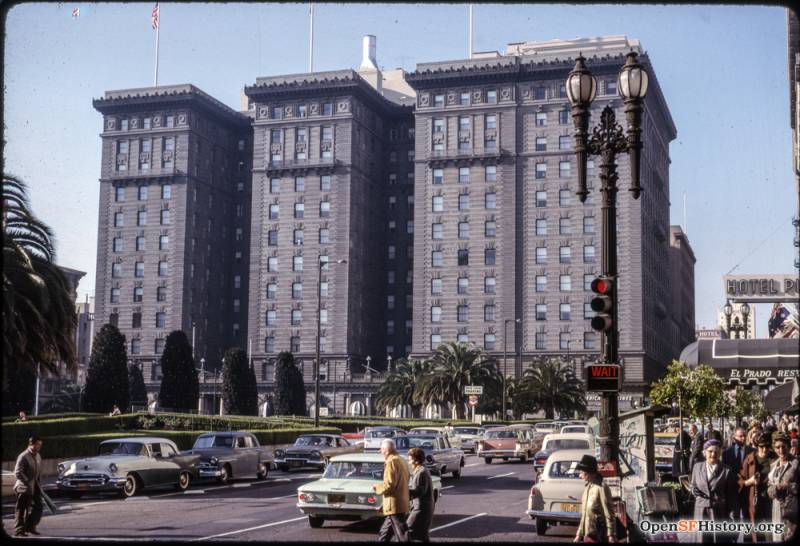
"caption": "The St. Francis Hotel and Union Square as it looked in 1962.",
"description": null,
"title": "The St. Francis Hotel and Union Square as it looked in 1962.",
"credit": "OpenSFHistory/wnp25.4502",
"status": "inherit",
"altTag": null,
"isLoading": false,
"fetchFailed": false
},
"arts_13953252": {
"type": "attachments",
"id": "arts_13953252",
"meta": {
"index": "attachments_1716263798",
"site": "arts",
"id": "13953252",
"found": true
},
"parent": 13953248,
"imgSizes": {
"twentyfourteen-full-width": {
"file": "https://cdn.kqed.org/wp-content/uploads/sites/2/2024/02/Screen-Shot-2024-02-29-at-5.20.14-PM-1038x576.png",
"width": 1038,
"mimeType": "image/png",
"height": 576
},
"thumbnail": {
"file": "https://cdn.kqed.org/wp-content/uploads/sites/2/2024/02/Screen-Shot-2024-02-29-at-5.20.14-PM-160x113.png",
"width": 160,
"mimeType": "image/png",
"height": 113
},
"post-thumbnail": {
"file": "https://cdn.kqed.org/wp-content/uploads/sites/2/2024/02/Screen-Shot-2024-02-29-at-5.20.14-PM-672x372.png",
"width": 672,
"mimeType": "image/png",
"height": 372
},
"kqedFullSize": {
"file": "https://cdn.kqed.org/wp-content/uploads/sites/2/2024/02/Screen-Shot-2024-02-29-at-5.20.14-PM.png",
"width": 1770,
"height": 1254
},
"large": {
"file": "https://cdn.kqed.org/wp-content/uploads/sites/2/2024/02/Screen-Shot-2024-02-29-at-5.20.14-PM-1020x723.png",
"width": 1020,
"mimeType": "image/png",
"height": 723
},
"1536x1536": {
"file": "https://cdn.kqed.org/wp-content/uploads/sites/2/2024/02/Screen-Shot-2024-02-29-at-5.20.14-PM-1536x1088.png",
"width": 1536,
"mimeType": "image/png",
"height": 1088
},
"medium": {
"file": "https://cdn.kqed.org/wp-content/uploads/sites/2/2024/02/Screen-Shot-2024-02-29-at-5.20.14-PM-800x567.png",
"width": 800,
"mimeType": "image/png",
"height": 567
},
"medium_large": {
"file": "https://cdn.kqed.org/wp-content/uploads/sites/2/2024/02/Screen-Shot-2024-02-29-at-5.20.14-PM-768x544.png",
"width": 768,
"mimeType": "image/png",
"height": 544
}
},
"publishDate": 1709256179,
"modified": 1709256251,
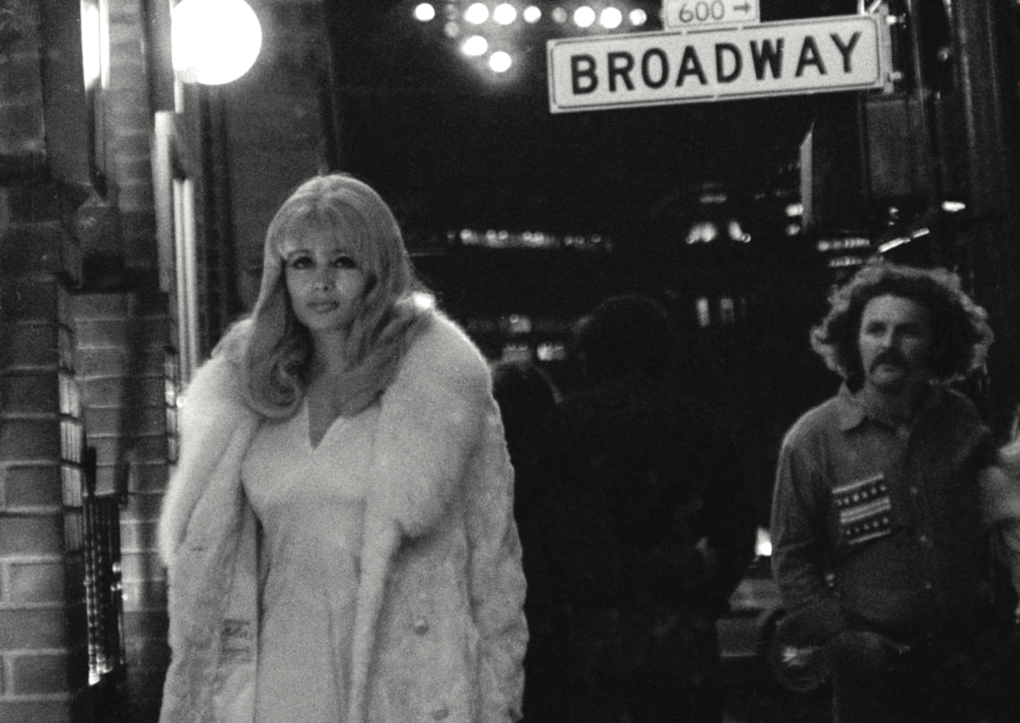
"caption": "Carol Doda poses outside the Condor in the 1970s.",
"description": null,
"title": "Carol Doda poses outside the Condor in the 1970s.",
"credit": "Tim Boxer/ Getty Images",
"status": "inherit",
"altTag": "A beautiful blond woman wearing a white coat, miniskirt and boots under a marquee advertising Carol Doda at the Condor.",
"isLoading": false,
"fetchFailed": false
},
"arts_13954122": {
"type": "attachments",
"id": "arts_13954122",
"meta": {
"index": "attachments_1716263798",
"site": "arts",
"id": "13954122",
"found": true
},
"parent": 13954121,
"imgSizes": {
"twentyfourteen-full-width": {
"file": "https://cdn.kqed.org/wp-content/uploads/sites/2/2024/03/Larry-the-Musical_Rehearsal-1-1038x576.jpg",
"width": 1038,
"mimeType": "image/jpeg",
"height": 576
},
"thumbnail": {
"file": "https://cdn.kqed.org/wp-content/uploads/sites/2/2024/03/Larry-the-Musical_Rehearsal-1-160x107.jpg",
"width": 160,
"mimeType": "image/jpeg",
"height": 107
},
"post-thumbnail": {
"file": "https://cdn.kqed.org/wp-content/uploads/sites/2/2024/03/Larry-the-Musical_Rehearsal-1-672x372.jpg",
"width": 672,
"mimeType": "image/jpeg",
"height": 372
},
"kqedFullSize": {
"file": "https://cdn.kqed.org/wp-content/uploads/sites/2/2024/03/Larry-the-Musical_Rehearsal-1-scaled.jpg",
"width": 2560,
"height": 1708
},
"2048x2048": {
"file": "https://cdn.kqed.org/wp-content/uploads/sites/2/2024/03/Larry-the-Musical_Rehearsal-1-2048x1367.jpg",
"width": 2048,
"mimeType": "image/jpeg",
"height": 1367
},
"large": {
"file": "https://cdn.kqed.org/wp-content/uploads/sites/2/2024/03/Larry-the-Musical_Rehearsal-1-1020x681.jpg",
"width": 1020,
"mimeType": "image/jpeg",
"height": 681
},
"1536x1536": {
"file": "https://cdn.kqed.org/wp-content/uploads/sites/2/2024/03/Larry-the-Musical_Rehearsal-1-1536x1025.jpg",
"width": 1536,
"mimeType": "image/jpeg",
"height": 1025
},
"full-width": {
"file": "https://cdn.kqed.org/wp-content/uploads/sites/2/2024/03/Larry-the-Musical_Rehearsal-1-1920x1281.jpg",
"width": 1920,
"mimeType": "image/jpeg",
"height": 1281
},
"medium": {
"file": "https://cdn.kqed.org/wp-content/uploads/sites/2/2024/03/Larry-the-Musical_Rehearsal-1-800x534.jpg",
"width": 800,
"mimeType": "image/jpeg",
"height": 534
},
"medium_large": {
"file": "https://cdn.kqed.org/wp-content/uploads/sites/2/2024/03/Larry-the-Musical_Rehearsal-1-768x512.jpg",
"width": 768,
"mimeType": "image/jpeg",
"height": 512
}
},
"publishDate": 1710447781,
"modified": 1710456763,
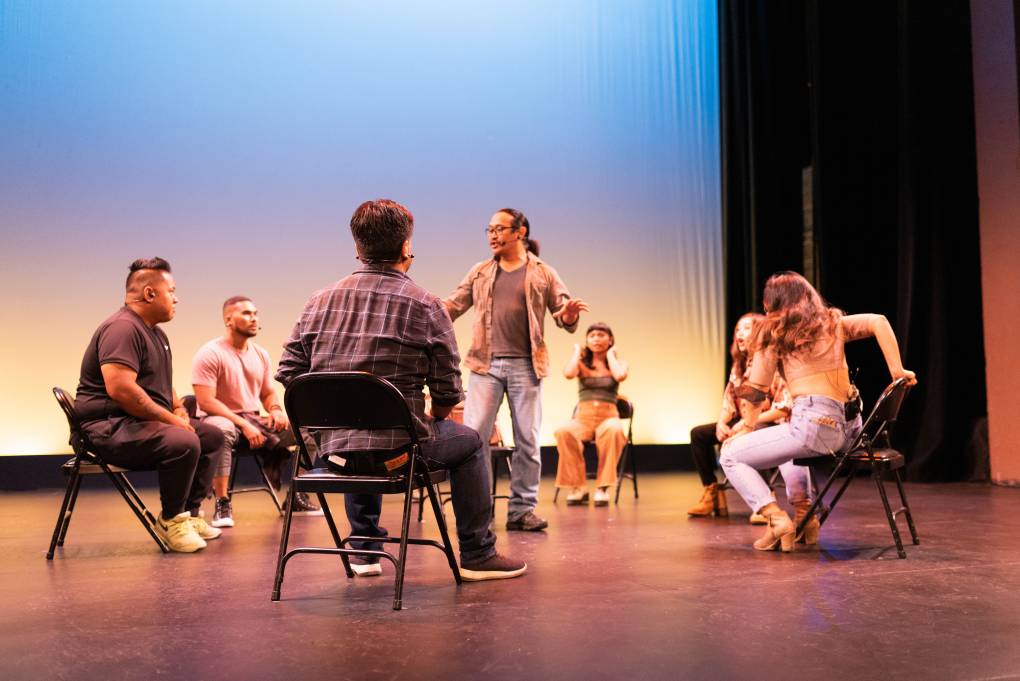
"caption": "Edward Meneses Cablings (center) leads the cast of 'Larry the Musical' as Larry Itliong.",
"description": null,
"title": "Larry the Musical_Rehearsal-1",
"credit": "Joseph Gabriel Ilustrisimo",
"status": "inherit",
"altTag": "A man stands in the middle of circle of people seated in folding charges on a stage.",
"isLoading": false,
"fetchFailed": false
},
"arts_13954157": {
"type": "attachments",
"id": "arts_13954157",
"meta": {
"index": "attachments_1716263798",
"site": "arts",
"id": "13954157",
"found": true
},
"parent": 13954052,
"imgSizes": {
"twentyfourteen-full-width": {
"file": "https://cdn.kqed.org/wp-content/uploads/sites/2/2024/03/Screen-Shot-2024-03-14-at-4.11.43-PM-1038x576.png",
"width": 1038,
"mimeType": "image/png",
"height": 576
},
"thumbnail": {
"file": "https://cdn.kqed.org/wp-content/uploads/sites/2/2024/03/Screen-Shot-2024-03-14-at-4.11.43-PM-160x98.png",
"width": 160,
"mimeType": "image/png",
"height": 98
},
"post-thumbnail": {
"file": "https://cdn.kqed.org/wp-content/uploads/sites/2/2024/03/Screen-Shot-2024-03-14-at-4.11.43-PM-672x372.png",
"width": 672,
"mimeType": "image/png",
"height": 372
},
"kqedFullSize": {
"file": "https://cdn.kqed.org/wp-content/uploads/sites/2/2024/03/Screen-Shot-2024-03-14-at-4.11.43-PM.png",
"width": 1806,
"height": 1104
},
"large": {
"file": "https://cdn.kqed.org/wp-content/uploads/sites/2/2024/03/Screen-Shot-2024-03-14-at-4.11.43-PM-1020x624.png",
"width": 1020,
"mimeType": "image/png",
"height": 624
},
"1536x1536": {
"file": "https://cdn.kqed.org/wp-content/uploads/sites/2/2024/03/Screen-Shot-2024-03-14-at-4.11.43-PM-1536x939.png",
"width": 1536,
"mimeType": "image/png",
"height": 939
},
"medium": {
"file": "https://cdn.kqed.org/wp-content/uploads/sites/2/2024/03/Screen-Shot-2024-03-14-at-4.11.43-PM-800x489.png",
"width": 800,
"mimeType": "image/png",
"height": 489
},
"medium_large": {
"file": "https://cdn.kqed.org/wp-content/uploads/sites/2/2024/03/Screen-Shot-2024-03-14-at-4.11.43-PM-768x469.png",
"width": 768,
"mimeType": "image/png",
"height": 469
}
},
"publishDate": 1710457951,
"modified": 1710458017,
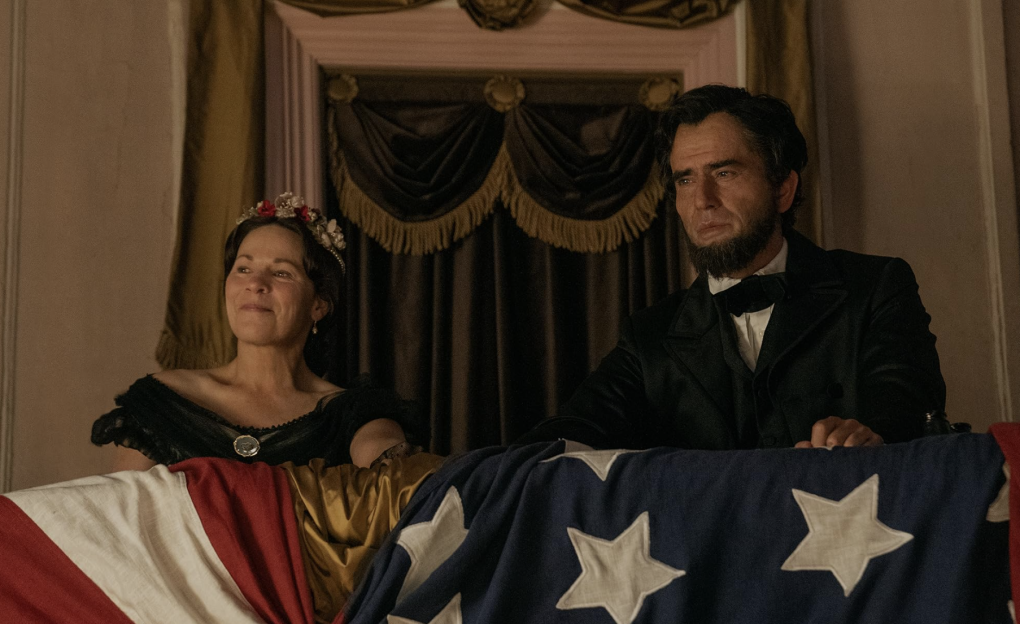
"caption": "Lili Taylor as Mary Todd Lincoln and Hamish Linklater as Abraham Lincoln in ‘Manhunt.’",
"description": null,
"title": "Lili Taylor as Mary Todd Lincoln and Hamish Linklater as Abraham Lincoln in ‘Manhunt.’",
"credit": "Apple TV+",
"status": "inherit",
"altTag": "Actors playing President Lincoln and his wife sit in a theater box, an American flag draped in front of them.",
"isLoading": false,
"fetchFailed": false
},
"arts_13954105": {
"type": "attachments",
"id": "arts_13954105",
"meta": {
"index": "attachments_1716263798",
"site": "arts",
"id": "13954105",
"found": true
},
"parent": 13954104,
"imgSizes": {
"twentyfourteen-full-width": {
"file": "https://cdn.kqed.org/wp-content/uploads/sites/2/2024/03/Screen-Shot-2024-03-14-at-11.48.26-AM-1038x576.png",
"width": 1038,
"mimeType": "image/png",
"height": 576
},
"thumbnail": {
"file": "https://cdn.kqed.org/wp-content/uploads/sites/2/2024/03/Screen-Shot-2024-03-14-at-11.48.26-AM-160x97.png",
"width": 160,
"mimeType": "image/png",
"height": 97
},
"post-thumbnail": {
"file": "https://cdn.kqed.org/wp-content/uploads/sites/2/2024/03/Screen-Shot-2024-03-14-at-11.48.26-AM-672x372.png",
"width": 672,
"mimeType": "image/png",
"height": 372
},
"kqedFullSize": {
"file": "https://cdn.kqed.org/wp-content/uploads/sites/2/2024/03/Screen-Shot-2024-03-14-at-11.48.26-AM.png",
"width": 1970,
"height": 1192
},
"large": {
"file": "https://cdn.kqed.org/wp-content/uploads/sites/2/2024/03/Screen-Shot-2024-03-14-at-11.48.26-AM-1020x617.png",
"width": 1020,
"mimeType": "image/png",
"height": 617
},
"1536x1536": {
"file": "https://cdn.kqed.org/wp-content/uploads/sites/2/2024/03/Screen-Shot-2024-03-14-at-11.48.26-AM-1536x929.png",
"width": 1536,
"mimeType": "image/png",
"height": 929
},
"full-width": {
"file": "https://cdn.kqed.org/wp-content/uploads/sites/2/2024/03/Screen-Shot-2024-03-14-at-11.48.26-AM-1920x1162.png",
"width": 1920,
"mimeType": "image/png",
"height": 1162
},
"medium": {
"file": "https://cdn.kqed.org/wp-content/uploads/sites/2/2024/03/Screen-Shot-2024-03-14-at-11.48.26-AM-800x484.png",
"width": 800,
"mimeType": "image/png",
"height": 484
},
"medium_large": {
"file": "https://cdn.kqed.org/wp-content/uploads/sites/2/2024/03/Screen-Shot-2024-03-14-at-11.48.26-AM-768x465.png",
"width": 768,
"mimeType": "image/png",
"height": 465
}
},
"publishDate": 1710442121,
"modified": 1710442248,
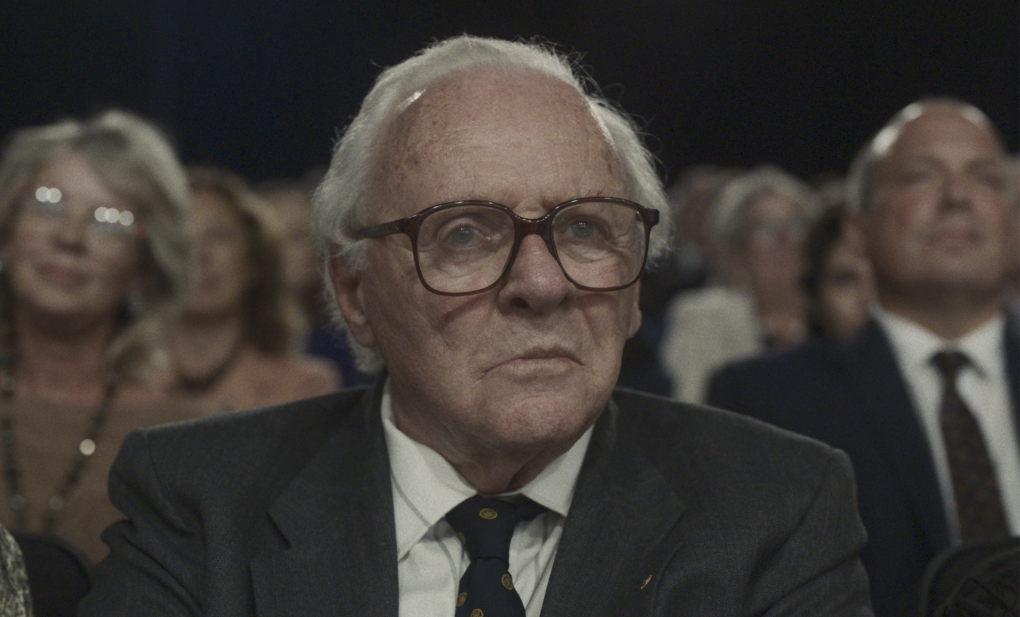
"caption": "Sir Anthony Hopkins as Sir Nicholas Winton in ‘One Life.’",
"description": null,
"title": "Sir Anthony Hopkins as Sir Nicholas Winton in ‘One Life.’",
"credit": "Bleecker Street via AP",
"status": "inherit",
"altTag": "An elderly man with a receding white hairline sits in the front row of an audience wearing a suit and spectacles.",
"isLoading": false,
"fetchFailed": false
},
"arts_13952284": {
"type": "attachments",
"id": "arts_13952284",
"meta": {
"index": "attachments_1716263798",
"site": "arts",
"id": "13952284",
"found": true
},
"parent": 13952258,
"imgSizes": {
"twentyfourteen-full-width": {
"file": "https://cdn.kqed.org/wp-content/uploads/sites/2/2024/02/GettyImages-973895052-1038x576.jpg",
"width": 1038,
"mimeType": "image/jpeg",
"height": 576
},
"thumbnail": {
"file": "https://cdn.kqed.org/wp-content/uploads/sites/2/2024/02/GettyImages-973895052-160x105.jpg",
"width": 160,
"mimeType": "image/jpeg",
"height": 105
},
"post-thumbnail": {
"file": "https://cdn.kqed.org/wp-content/uploads/sites/2/2024/02/GettyImages-973895052-672x372.jpg",
"width": 672,
"mimeType": "image/jpeg",
"height": 372
},
"kqedFullSize": {
"file": "https://cdn.kqed.org/wp-content/uploads/sites/2/2024/02/GettyImages-973895052-scaled-e1707901047824.jpg",
"width": 1920,
"height": 1255
},
"2048x2048": {
"file": "https://cdn.kqed.org/wp-content/uploads/sites/2/2024/02/GettyImages-973895052-2048x1338.jpg",
"width": 2048,
"mimeType": "image/jpeg",
"height": 1338
},
"large": {
"file": "https://cdn.kqed.org/wp-content/uploads/sites/2/2024/02/GettyImages-973895052-1020x666.jpg",
"width": 1020,
"mimeType": "image/jpeg",
"height": 666
},
"1536x1536": {
"file": "https://cdn.kqed.org/wp-content/uploads/sites/2/2024/02/GettyImages-973895052-1536x1004.jpg",
"width": 1536,
"mimeType": "image/jpeg",
"height": 1004
},
"full-width": {
"file": "https://cdn.kqed.org/wp-content/uploads/sites/2/2024/02/GettyImages-973895052-1920x1254.jpg",
"width": 1920,
"mimeType": "image/jpeg",
"height": 1254
},
"medium": {
"file": "https://cdn.kqed.org/wp-content/uploads/sites/2/2024/02/GettyImages-973895052-800x523.jpg",
"width": 800,
"mimeType": "image/jpeg",
"height": 523
},
"medium_large": {
"file": "https://cdn.kqed.org/wp-content/uploads/sites/2/2024/02/GettyImages-973895052-768x502.jpg",
"width": 768,
"mimeType": "image/jpeg",
"height": 502
}
},
"publishDate": 1707900881,
"modified": 1707901058,
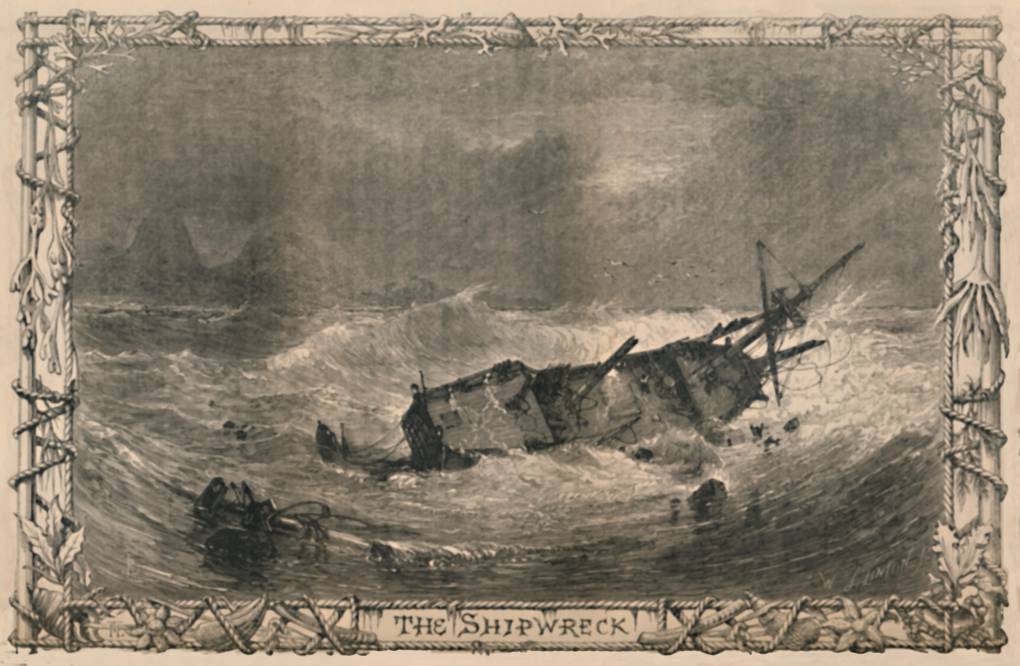
"caption": "‘The Shipwreck’ as seen in ‘The Life and Adventures of Robinson Crusoe’ by Daniel Defoe, circa 1870. ",
"description": null,
"title": "The Shipwreck",
"credit": "Cassell, Petter and Galpin, London/ Artist Unknown/ The Print Collector/ Getty Images",
"status": "inherit",
"altTag": "An illustration of a 19th century shipwreck.",
"isLoading": false,
"fetchFailed": false
},
"arts_13952523": {
"type": "attachments",
"id": "arts_13952523",
"meta": {
"index": "attachments_1716263798",
"site": "arts",
"id": "13952523",
"found": true
},
"parent": 13952433,
"imgSizes": {
"twentyfourteen-full-width": {
"file": "https://cdn.kqed.org/wp-content/uploads/sites/2/2024/02/Niagara-movement-1038x576.png",
"width": 1038,
"mimeType": "image/png",
"height": 576
},
"thumbnail": {
"file": "https://cdn.kqed.org/wp-content/uploads/sites/2/2024/02/Niagara-movement-160x106.png",
"width": 160,
"mimeType": "image/png",
"height": 106
},
"post-thumbnail": {
"file": "https://cdn.kqed.org/wp-content/uploads/sites/2/2024/02/Niagara-movement-672x372.png",
"width": 672,
"mimeType": "image/png",
"height": 372
},
"kqedFullSize": {
"file": "https://cdn.kqed.org/wp-content/uploads/sites/2/2024/02/Niagara-movement-e1708118519184.png",
"width": 1920,
"height": 1274
},
"2048x2048": {
"file": "https://cdn.kqed.org/wp-content/uploads/sites/2/2024/02/Niagara-movement-2048x1359.png",
"width": 2048,
"mimeType": "image/png",
"height": 1359
},
"large": {
"file": "https://cdn.kqed.org/wp-content/uploads/sites/2/2024/02/Niagara-movement-1020x677.png",
"width": 1020,
"mimeType": "image/png",
"height": 677
},
"1536x1536": {
"file": "https://cdn.kqed.org/wp-content/uploads/sites/2/2024/02/Niagara-movement-1536x1019.png",
"width": 1536,
"mimeType": "image/png",
"height": 1019
},
"full-width": {
"file": "https://cdn.kqed.org/wp-content/uploads/sites/2/2024/02/Niagara-movement-1920x1274.png",
"width": 1920,
"mimeType": "image/png",
"height": 1274
},
"medium": {
"file": "https://cdn.kqed.org/wp-content/uploads/sites/2/2024/02/Niagara-movement-800x531.png",
"width": 800,
"mimeType": "image/png",
"height": 531
},
"medium_large": {
"file": "https://cdn.kqed.org/wp-content/uploads/sites/2/2024/02/Niagara-movement-768x510.png",
"width": 768,
"mimeType": "image/png",
"height": 510
}
},
"publishDate": 1708118396,
"modified": 1708449997,
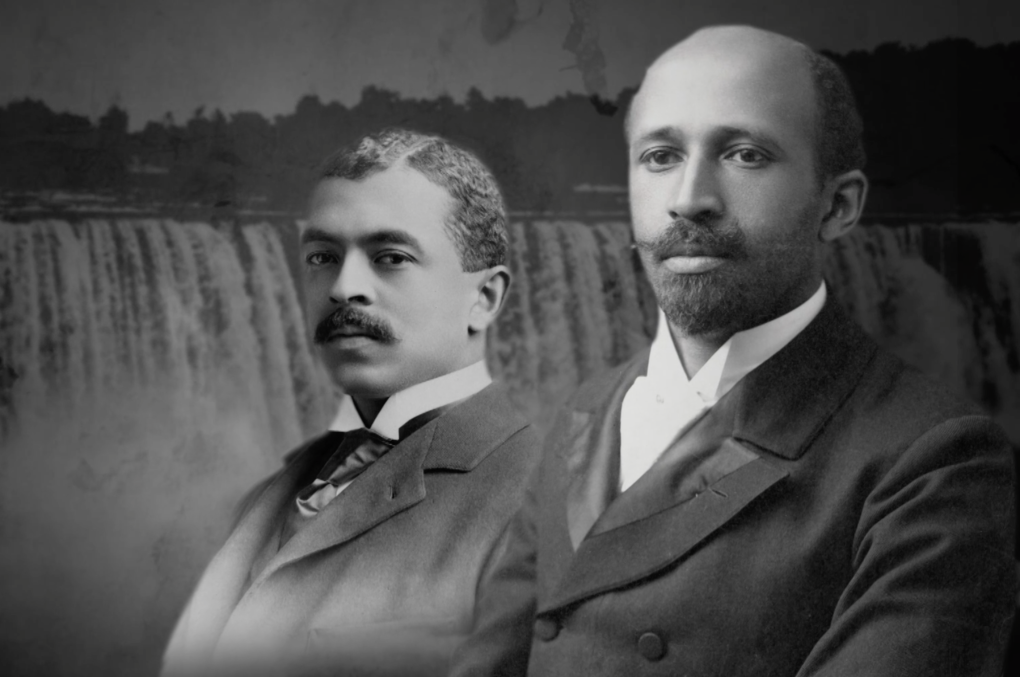
"caption": "William Monroe Trotter and W. E. B. Du Bois founded the Niagara Movement, a turn-of-the-century racial justice organization.",
"description": null,
"title": "William Monroe Trotter and W. E. B. Du Bois, founders of the Niagara Movement, a turn-of-the-century racial justice organization.",
"credit": "PBS/ WNED",
"status": "inherit",
"altTag": "Photographic portraits of two Black men in Victorian suits super-imposed before an image of the Niagara Falls.",
"isLoading": false,
"fetchFailed": false
},
"arts_13951421": {
"type": "attachments",
"id": "arts_13951421",
"meta": {
"index": "attachments_1716263798",
"site": "arts",
"id": "13951421",
"found": true
},
"parent": 13950520,
"imgSizes": {
"twentyfourteen-full-width": {
"file": "https://cdn.kqed.org/wp-content/uploads/sites/2/2024/02/Jan-2024-1-1038x576.jpg",
"width": 1038,
"mimeType": "image/jpeg",
"height": 576
},
"thumbnail": {
"file": "https://cdn.kqed.org/wp-content/uploads/sites/2/2024/02/Jan-2024-1-160x90.jpg",
"width": 160,
"mimeType": "image/jpeg",
"height": 90
},
"post-thumbnail": {
"file": "https://cdn.kqed.org/wp-content/uploads/sites/2/2024/02/Jan-2024-1-672x372.jpg",
"width": 672,
"mimeType": "image/jpeg",
"height": 372
},
"kqedFullSize": {
"file": "https://cdn.kqed.org/wp-content/uploads/sites/2/2024/02/Jan-2024-1.jpg",
"width": 1920,
"height": 1080
},
"large": {
"file": "https://cdn.kqed.org/wp-content/uploads/sites/2/2024/02/Jan-2024-1-1020x574.jpg",
"width": 1020,
"mimeType": "image/jpeg",
"height": 574
},
"1536x1536": {
"file": "https://cdn.kqed.org/wp-content/uploads/sites/2/2024/02/Jan-2024-1-1536x864.jpg",
"width": 1536,
"mimeType": "image/jpeg",
"height": 864
},
"medium": {
"file": "https://cdn.kqed.org/wp-content/uploads/sites/2/2024/02/Jan-2024-1-800x450.jpg",
"width": 800,
"mimeType": "image/jpeg",
"height": 450
},
"medium_large": {
"file": "https://cdn.kqed.org/wp-content/uploads/sites/2/2024/02/Jan-2024-1-768x432.jpg",
"width": 768,
"mimeType": "image/jpeg",
"height": 432
}
},
"publishDate": 1706825208,
"modified": 1706825208,
"caption": null,
"description": null,
"title": "Jan 2024-1",
"credit": null,
"status": "inherit",
"altTag": null,
"isLoading": false,
"fetchFailed": false
},
"arts_13950580": {
"type": "attachments",
"id": "arts_13950580",
"meta": {
"index": "attachments_1716263798",
"site": "arts",
"id": "13950580",
"found": true
},
"parent": 13950526,
"imgSizes": {
"twentyfourteen-full-width": {
"file": "https://cdn.kqed.org/wp-content/uploads/sites/2/2024/01/GettyImages-526307346-1038x576.jpg",
"width": 1038,
"mimeType": "image/jpeg",
"height": 576
},
"thumbnail": {
"file": "https://cdn.kqed.org/wp-content/uploads/sites/2/2024/01/GettyImages-526307346-160x110.jpg",
"width": 160,
"mimeType": "image/jpeg",
"height": 110
},
"post-thumbnail": {
"file": "https://cdn.kqed.org/wp-content/uploads/sites/2/2024/01/GettyImages-526307346-672x372.jpg",
"width": 672,
"mimeType": "image/jpeg",
"height": 372
},
"kqedFullSize": {
"file": "https://cdn.kqed.org/wp-content/uploads/sites/2/2024/01/GettyImages-526307346-scaled-e1705619320196.jpg",
"width": 1920,
"height": 1319
},
"2048x2048": {
"file": "https://cdn.kqed.org/wp-content/uploads/sites/2/2024/01/GettyImages-526307346-2048x1407.jpg",
"width": 2048,
"mimeType": "image/jpeg",
"height": 1407
},
"large": {
"file": "https://cdn.kqed.org/wp-content/uploads/sites/2/2024/01/GettyImages-526307346-1020x701.jpg",
"width": 1020,
"mimeType": "image/jpeg",
"height": 701
},
"1536x1536": {
"file": "https://cdn.kqed.org/wp-content/uploads/sites/2/2024/01/GettyImages-526307346-1536x1056.jpg",
"width": 1536,
"mimeType": "image/jpeg",
"height": 1056
},
"full-width": {
"file": "https://cdn.kqed.org/wp-content/uploads/sites/2/2024/01/GettyImages-526307346-1920x1319.jpg",
"width": 1920,
"mimeType": "image/jpeg",
"height": 1319
},
"medium": {
"file": "https://cdn.kqed.org/wp-content/uploads/sites/2/2024/01/GettyImages-526307346-800x550.jpg",
"width": 800,
"mimeType": "image/jpeg",
"height": 550
},
"medium_large": {
"file": "https://cdn.kqed.org/wp-content/uploads/sites/2/2024/01/GettyImages-526307346-768x528.jpg",
"width": 768,
"mimeType": "image/jpeg",
"height": 528
}
},
"publishDate": 1705619294,
"modified": 1705621678,
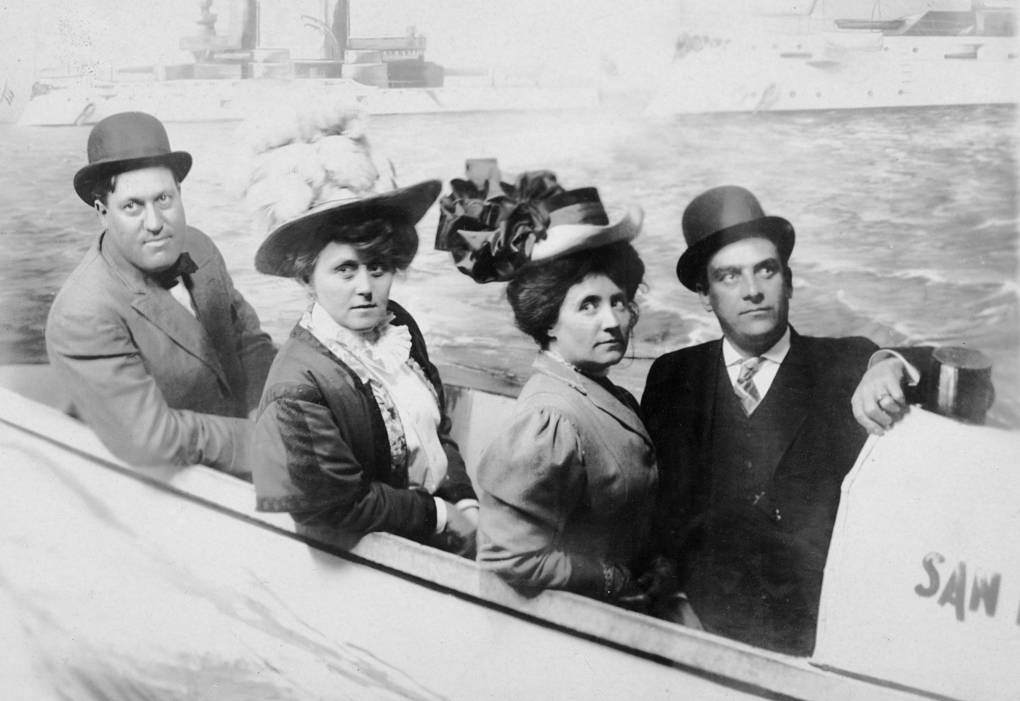
"caption": "Victorian couples living it up like only Victorians could.",
"description": null,
"title": "Victorian couples living it up like only Victorians could.",
"credit": "Kirn Vintage Stock/ Corbis via Getty Images",
"status": "inherit",
"altTag": "Two couples pose in a novelty photo in San Francisco, ca. 1900.",
"isLoading": false,
"fetchFailed": false
},
"arts_13951913": {
"type": "attachments",
"id": "arts_13951913",
"meta": {
"index": "attachments_1716263798",
"site": "arts",
"id": "13951913",
"found": true
},
"parent": 13951888,
"imgSizes": {
"twentyfourteen-full-width": {
"file": "https://cdn.kqed.org/wp-content/uploads/sites/2/2024/02/SFO_1923_Company_NEWcrop_COVER-1038x576.jpg",
"width": 1038,
"mimeType": "image/jpeg",
"height": 576
},
"thumbnail": {
"file": "https://cdn.kqed.org/wp-content/uploads/sites/2/2024/02/SFO_1923_Company_NEWcrop_COVER-160x90.jpg",
"width": 160,
"mimeType": "image/jpeg",
"height": 90
},
"post-thumbnail": {
"file": "https://cdn.kqed.org/wp-content/uploads/sites/2/2024/02/SFO_1923_Company_NEWcrop_COVER-672x372.jpg",
"width": 672,
"mimeType": "image/jpeg",
"height": 372
},
"kqedFullSize": {
"file": "https://cdn.kqed.org/wp-content/uploads/sites/2/2024/02/SFO_1923_Company_NEWcrop_COVER.jpg",
"width": 1738,
"height": 978
},
"large": {
"file": "https://cdn.kqed.org/wp-content/uploads/sites/2/2024/02/SFO_1923_Company_NEWcrop_COVER-1020x574.jpg",
"width": 1020,
"mimeType": "image/jpeg",
"height": 574
},
"1536x1536": {
"file": "https://cdn.kqed.org/wp-content/uploads/sites/2/2024/02/SFO_1923_Company_NEWcrop_COVER-1536x864.jpg",
"width": 1536,
"mimeType": "image/jpeg",
"height": 864
},
"medium": {
"file": "https://cdn.kqed.org/wp-content/uploads/sites/2/2024/02/SFO_1923_Company_NEWcrop_COVER-800x450.jpg",
"width": 800,
"mimeType": "image/jpeg",
"height": 450
},
"medium_large": {
"file": "https://cdn.kqed.org/wp-content/uploads/sites/2/2024/02/SFO_1923_Company_NEWcrop_COVER-768x432.jpg",
"width": 768,
"mimeType": "image/jpeg",
"height": 432
}
},
"publishDate": 1707424628,
"modified": 1707425026,
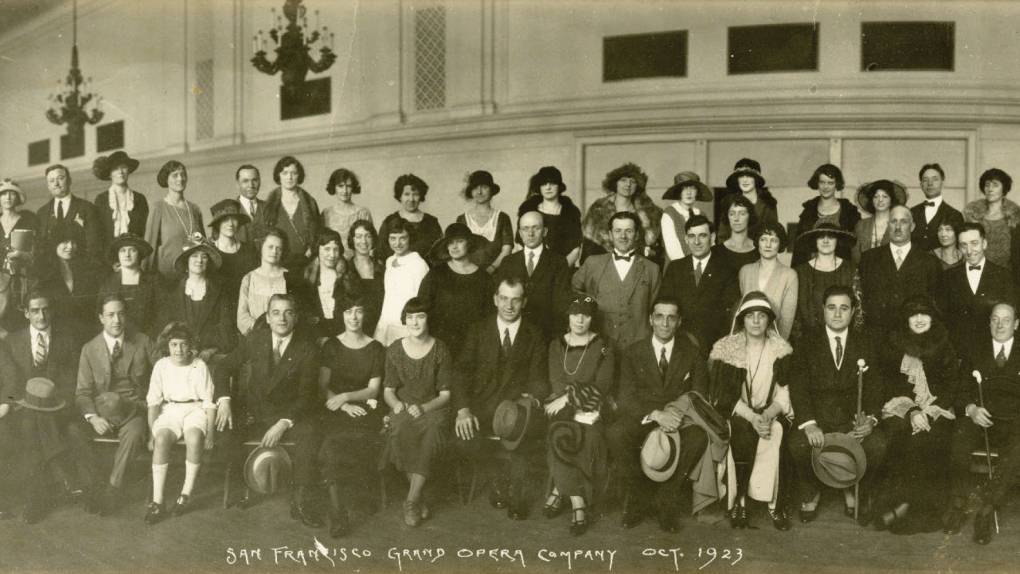
"caption": "A detail from an October 1923 photograph of the San Francisco Opera company in the Civic Auditorium shows performers and family in pre-performance street clothes.",
"description": null,
"title": "SFO_1923_Company_NEWcrop_COVER",
"credit": "San Francisco Opera Archives",
"status": "inherit",
"altTag": "Large sepia-toned group photo of men, women and children on risers inside high-ceilinged space",
"isLoading": false,
"fetchFailed": false
},
"arts_13951719": {
"type": "attachments",
"id": "arts_13951719",
"meta": {
"index": "attachments_1716263798",
"site": "arts",
"id": "13951719",
"found": true
},
"parent": 13951695,
"imgSizes": {
"twentyfourteen-full-width": {
"file": "https://cdn.kqed.org/wp-content/uploads/sites/2/2024/02/SMC-Supervisor-Ray-Mueller-Carolyn-Hoskins-Senator-Josh-Becker-David-Canepa_2000-1038x576.jpg",
"width": 1038,
"mimeType": "image/jpeg",
"height": 576
},
"thumbnail": {
"file": "https://cdn.kqed.org/wp-content/uploads/sites/2/2024/02/SMC-Supervisor-Ray-Mueller-Carolyn-Hoskins-Senator-Josh-Becker-David-Canepa_2000-160x99.jpg",
"width": 160,
"mimeType": "image/jpeg",
"height": 99
},
"post-thumbnail": {
"file": "https://cdn.kqed.org/wp-content/uploads/sites/2/2024/02/SMC-Supervisor-Ray-Mueller-Carolyn-Hoskins-Senator-Josh-Becker-David-Canepa_2000-672x372.jpg",
"width": 672,
"mimeType": "image/jpeg",
"height": 372
},
"kqedFullSize": {
"file": "https://cdn.kqed.org/wp-content/uploads/sites/2/2024/02/SMC-Supervisor-Ray-Mueller-Carolyn-Hoskins-Senator-Josh-Becker-David-Canepa_2000.jpg",
"width": 2000,
"height": 1241
},
"large": {
"file": "https://cdn.kqed.org/wp-content/uploads/sites/2/2024/02/SMC-Supervisor-Ray-Mueller-Carolyn-Hoskins-Senator-Josh-Becker-David-Canepa_2000-1020x633.jpg",
"width": 1020,
"mimeType": "image/jpeg",
"height": 633
},
"1536x1536": {
"file": "https://cdn.kqed.org/wp-content/uploads/sites/2/2024/02/SMC-Supervisor-Ray-Mueller-Carolyn-Hoskins-Senator-Josh-Becker-David-Canepa_2000-1536x953.jpg",
"width": 1536,
"mimeType": "image/jpeg",
"height": 953
},
"full-width": {
"file": "https://cdn.kqed.org/wp-content/uploads/sites/2/2024/02/SMC-Supervisor-Ray-Mueller-Carolyn-Hoskins-Senator-Josh-Becker-David-Canepa_2000-1920x1191.jpg",
"width": 1920,
"mimeType": "image/jpeg",
"height": 1191
},
"medium": {
"file": "https://cdn.kqed.org/wp-content/uploads/sites/2/2024/02/SMC-Supervisor-Ray-Mueller-Carolyn-Hoskins-Senator-Josh-Becker-David-Canepa_2000-800x496.jpg",
"width": 800,
"mimeType": "image/jpeg",
"height": 496
},
"medium_large": {
"file": "https://cdn.kqed.org/wp-content/uploads/sites/2/2024/02/SMC-Supervisor-Ray-Mueller-Carolyn-Hoskins-Senator-Josh-Becker-David-Canepa_2000-768x477.jpg",
"width": 768,
"mimeType": "image/jpeg",
"height": 477
}
},
"publishDate": 1707264138,
"modified": 1707264296,
"caption": "Carolyn Hoskins, third from left, holds a ceremonial check from Senator Josh Becker (center) at the Domini Hoskins Black History Museum.",
"description": null,
"title": "SMC-Supervisor-Ray-Mueller,-Carolyn-Hoskins,-Senator-Josh-Becker,-David-Canepa_2000",
"credit": "Milla Khano/San Mateo County Event Center",
"status": "inherit",
"altTag": "Group of seven people smiling and holding giant check",
"isLoading": false,
"fetchFailed": false
},
"arts_13951674": {
"type": "attachments",
"id": "arts_13951674",
"meta": {
"index": "attachments_1716263798",
"site": "arts",
"id": "13951674",
"found": true
},
"parent": 13950605,
"imgSizes": {
"twentyfourteen-full-width": {
"file": "https://cdn.kqed.org/wp-content/uploads/sites/2/2024/02/GettyImages-1487065977-1038x576.jpg",
"width": 1038,
"mimeType": "image/jpeg",
"height": 576
},
"thumbnail": {
"file": "https://cdn.kqed.org/wp-content/uploads/sites/2/2024/02/GettyImages-1487065977-160x119.jpg",
"width": 160,
"mimeType": "image/jpeg",
"height": 119
},
"post-thumbnail": {
"file": "https://cdn.kqed.org/wp-content/uploads/sites/2/2024/02/GettyImages-1487065977-672x372.jpg",
"width": 672,
"mimeType": "image/jpeg",
"height": 372
},
"kqedFullSize": {
"file": "https://cdn.kqed.org/wp-content/uploads/sites/2/2024/02/GettyImages-1487065977-scaled-e1707250758209.jpg",
"width": 1920,
"height": 1422
},
"2048x2048": {
"file": "https://cdn.kqed.org/wp-content/uploads/sites/2/2024/02/GettyImages-1487065977-2048x1517.jpg",
"width": 2048,
"mimeType": "image/jpeg",
"height": 1517
},
"large": {
"file": "https://cdn.kqed.org/wp-content/uploads/sites/2/2024/02/GettyImages-1487065977-1020x756.jpg",
"width": 1020,
"mimeType": "image/jpeg",
"height": 756
},
"1536x1536": {
"file": "https://cdn.kqed.org/wp-content/uploads/sites/2/2024/02/GettyImages-1487065977-1536x1138.jpg",
"width": 1536,
"mimeType": "image/jpeg",
"height": 1138
},
"full-width": {
"file": "https://cdn.kqed.org/wp-content/uploads/sites/2/2024/02/GettyImages-1487065977-1920x1422.jpg",
"width": 1920,
"mimeType": "image/jpeg",
"height": 1422
},
"medium": {
"file": "https://cdn.kqed.org/wp-content/uploads/sites/2/2024/02/GettyImages-1487065977-800x593.jpg",
"width": 800,
"mimeType": "image/jpeg",
"height": 593
},
"medium_large": {
"file": "https://cdn.kqed.org/wp-content/uploads/sites/2/2024/02/GettyImages-1487065977-768x569.jpg",
"width": 768,
"mimeType": "image/jpeg",
"height": 569
}
},
"publishDate": 1707250734,
"modified": 1707250925,
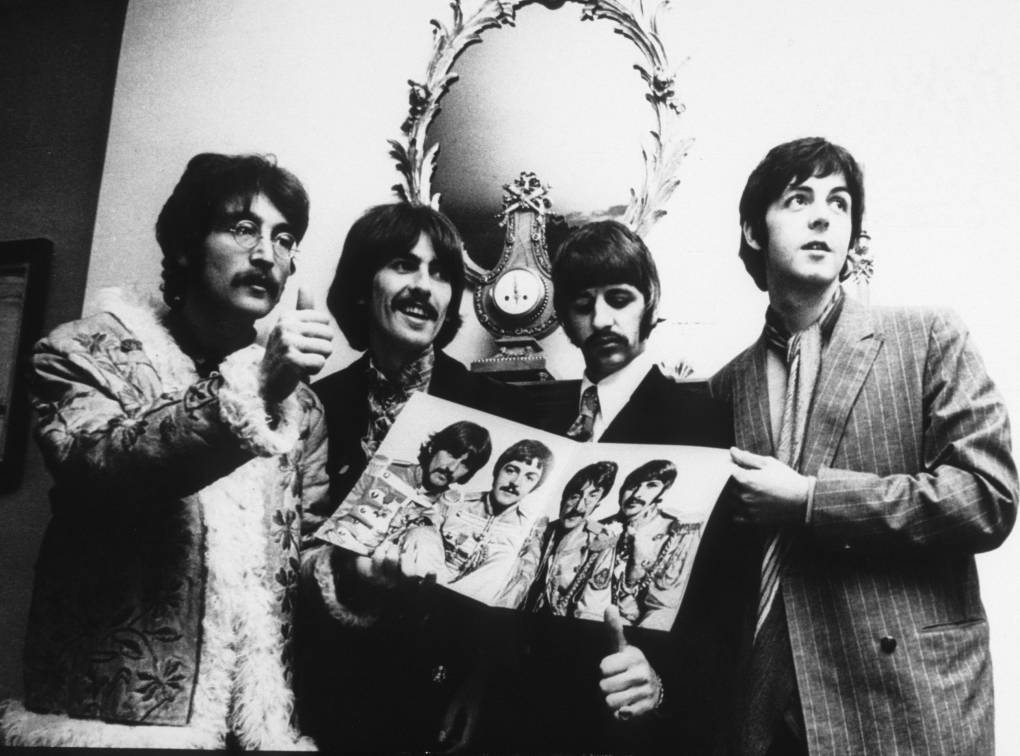
"caption": "The Beatles with a copy of ‘Sgt. Pepper’s Lonely Hearts Club Band,’ circa 1967.",
"description": null,
"title": "The Beatles with a copy of ‘Sgt. Pepper’s Lonely Hearts Club Band,’ circa 1967.",
"credit": "Universal Archive/ Universal Images Group via Getty Images",
"status": "inherit",
"altTag": null,
"isLoading": false,
"fetchFailed": false
}
},
"audioPlayerReducer": {
"postId": "stream_live",
"isPaused": true,
"isPlaying": false,
"pfsActive": false,
"pledgeModalIsOpen": true,
"playerDrawerIsOpen": false,
"liveAudioPlayStartedAt": 0,
"liveAudioPlayContext": ""
},
"authorsReducer": {
"byline_arts_13954104": {
"type": "authors",
"id": "byline_arts_13954104",
"meta": {
"override": true
},
"slug": "byline_arts_13954104",
"name": "Jocelyn Noveck, Associated Press",
"isLoading": false
},
"shotchkiss": {
"type": "authors",
"id": "61",
"meta": {
"index": "authors_1716337520",
"id": "61",
"found": true
},
"name": "Sarah Hotchkiss",
"firstName": "Sarah",
"lastName": "Hotchkiss",
"slug": "shotchkiss",
"email": "shotchkiss@kqed.org",
"display_author_email": true,
"staff_mastheads": [
"arts"
],
"title": "Senior Editor",
"bio": "Sarah Hotchkiss is a San Francisco \u003ca href=\"http://www.sarahhotchkiss.com\">artist\u003c/a> and arts writer. In 2019, she received the Dorothea & Leo Rabkin Foundation grant for visual art journalism and in 2020 she received a Society of Professional Journalists, Northern California award for excellence in arts and culture reporting.",
"avatar": "https://secure.gravatar.com/avatar/bc662df144b3d27fd8b1b6f1c2a420d34e91e53154d411bb7ad353cc8b6cea8d?s=600&d=blank&r=g",
"twitter": null,
"bluesky": null,
"facebook": null,
"instagram": null,
"linkedin": null,
"sites": [
{
"site": "",
"roles": [
"editor"
]
},
{
"site": "arts",
"roles": [
"Contributor",
"administrator"
]
},
{
"site": "artschool",
"roles": [
"administrator"
]
},
{
"site": "news",
"roles": [
"editor"
]
},
{
"site": "pop",
"roles": [
"administrator"
]
},
{
"site": "bayareabites",
"roles": [
"editor"
]
},
{
"site": "spark",
"roles": [
"editor"
]
},
{
"site": "checkplease",
"roles": [
"editor"
]
}
],
"headData": {
"title": "Sarah Hotchkiss | KQED",
"description": "Senior Editor",
"ogImgSrc": "https://secure.gravatar.com/avatar/bc662df144b3d27fd8b1b6f1c2a420d34e91e53154d411bb7ad353cc8b6cea8d?s=600&d=blank&r=g",
"twImgSrc": "https://secure.gravatar.com/avatar/bc662df144b3d27fd8b1b6f1c2a420d34e91e53154d411bb7ad353cc8b6cea8d?s=600&d=blank&r=g"
},
"isLoading": false,
"link": "/author/shotchkiss"
},
"ralexandra": {
"type": "authors",
"id": "11242",
"meta": {
"index": "authors_1716337520",
"id": "11242",
"found": true
},
"name": "Rae Alexandra",
"firstName": "Rae",
"lastName": "Alexandra",
"slug": "ralexandra",
"email": "ralexandra@kqed.org",
"display_author_email": true,
"staff_mastheads": [],
"title": "Reporter/Producer",
"bio": "Rae Alexandra is a Reporter/Producer for KQED Arts & Culture, and the creator/author of the \u003ca href=\"https://www.kqed.org/arts/program/rebel-girls-from-bay-area-history\">Rebel Girls From Bay Area History\u003c/a> and \u003ca href=\"https://www.kqed.org/bizarrebayarea\">Bizarre Bay Area\u003c/a> series. Her debut book, \u003ca href=\"https://citylights.com/politics-current-events-history/unsung-heroines35-women-who-changed/\">Unsung Heroines: 35 Women Who Changed the Bay Area\u003c/a> was published by City Lights in March 2026. In 2023, Rae was awarded an SPJ Excellence in Journalism Award for Arts & Culture. Rae was born and raised in Wales and subsequently — even after two decades in Northern California — still uses phrases that regularly baffle her coworkers.",
"avatar": "https://secure.gravatar.com/avatar/edfee8176c80cc0a382b051190f5341997df378a934a5774dcb0977732dfd401?s=600&d=blank&r=g",
"twitter": null,
"bluesky": null,
"facebook": null,
"instagram": null,
"linkedin": null,
"sites": [
{
"site": "arts",
"roles": [
"subscriber"
]
},
{
"site": "news",
"roles": [
"subscriber"
]
},
{
"site": "pop",
"roles": [
"subscriber"
]
},
{
"site": "bayareabites",
"roles": [
"subscriber"
]
},
{
"site": "science",
"roles": [
"subscriber"
]
}
],
"headData": {
"title": "Rae Alexandra | KQED",
"description": "Reporter/Producer",
"ogImgSrc": "https://secure.gravatar.com/avatar/edfee8176c80cc0a382b051190f5341997df378a934a5774dcb0977732dfd401?s=600&d=blank&r=g",
"twImgSrc": "https://secure.gravatar.com/avatar/edfee8176c80cc0a382b051190f5341997df378a934a5774dcb0977732dfd401?s=600&d=blank&r=g"
},
"isLoading": false,
"link": "/author/ralexandra"
},
"aproehl": {
"type": "authors",
"id": "11296",
"meta": {
"index": "authors_1716337520",
"id": "11296",
"found": true
},
"name": "Ariana Proehl",
"firstName": "Ariana",
"lastName": "Proehl",
"slug": "aproehl",
"email": "aproehl@KQED.org",
"display_author_email": true,
"staff_mastheads": [
"news"
],
"title": "Culture Reporter, KQED",
"bio": "Ariana Proehl is a Culture Reporter and Host.",
"avatar": "https://secure.gravatar.com/avatar/c96b24567eb5bb3a4f8bb295ed53e232?s=600&d=blank&r=g",
"twitter": "ArianaProehl",
"facebook": null,
"instagram": null,
"linkedin": null,
"sites": [
{
"site": "arts",
"roles": []
},
{
"site": "news",
"roles": []
},
{
"site": "education",
"roles": []
},
{
"site": "forum",
"roles": []
}
],
"headData": {
"title": "Ariana Proehl | KQED",
"description": "Culture Reporter, KQED",
"ogImgSrc": "https://secure.gravatar.com/avatar/c96b24567eb5bb3a4f8bb295ed53e232?s=600&d=blank&r=g",
"twImgSrc": "https://secure.gravatar.com/avatar/c96b24567eb5bb3a4f8bb295ed53e232?s=600&d=blank&r=g"
},
"isLoading": false,
"link": "/author/aproehl"
}
},
"pagesReducer": {
"arts_category_history": {
"type": "terms",
"id": "arts_7862",
"meta": {
"index": "terms_1716263798",
"site": "arts",
"id": "7862",
"score": 12.208633
},
"featImg": null,
"name": "History",
"description": null,
"taxonomy": "category",
"headData": {
"twImgId": null,
"twTitle": null,
"ogTitle": null,
"ogImgId": null,
"twDescription": null,
"description": null,
"title": "History Archives | KQED Arts",
"ogDescription": null
},
"ttid": 7874,
"slug": "history",
"isLoading": false,
"title": "History",
"pageMeta": {
"site": "arts",
"WpPageTemplate": "page-topic-editorial",
"currentPage": 13
},
"blocks": [
{
"blockName": "kqed/post-list",
"attrs": {
"layout": "cardArticle2",
"query": "posts/arts?category=history",
"seeMore": false,
"paginated": true,
"page": 13
}
},
{
"blockName": "kqed/ad"
}
]
}
},
"pfsSessionReducer": {},
"postsReducer": {
"stream_live": {
"type": "live",
"id": "stream_live",
"audioUrl": "https://streams.kqed.org/kqedradio",
"title": "Live Stream",
"excerpt": "Live Stream information currently unavailable.",
"link": "/radio",
"featImg": "",
"label": {
"name": "KQED Live",
"link": "/"
}
},
"stream_kqedNewscast": {
"type": "posts",
"id": "stream_kqedNewscast",
"audioUrl": "https://www.kqed.org/.stream/anon/radio/RDnews/newscast.mp3?_=1",
"title": "KQED Newscast",
"featImg": "",
"label": {
"name": "88.5 FM",
"link": "/"
}
},
"arts_13953890": {
"type": "posts",
"id": "arts_13953890",
"meta": {
"index": "posts_1716263798",
"site": "arts",
"id": "13953890",
"score": null,
"sort": [
1710786030000
]
},
"guestAuthors": [],
"slug": "st-francis-hotel-san-francisco-history-arbuckle-jolson-crocker-gerald-ford",
"title": "5 Infamous Moments From the St. Francis Hotel’s 120-Year History",
"publishDate": 1710786030,
"format": "standard",
"headTitle": "5 Infamous Moments From the St. Francis Hotel’s 120-Year History | KQED",
"labelTerm": {
"site": "arts"
},
"content": "\u003cp>There was nothing low key about the opening of the St. Francis Hotel in March 1904. Built directly overlooking San Francisco’s Union Square, the hotel cost $2.5 million to construct (that’s $87 million in 2024 money) and $400,000 to furnish (nearly $14 million now).\u003c/p>\n\u003cp>That year, \u003cem>The San Francisco Call and Post\u003c/em> raved: “Its construction has been so designed that all the suites are light and airy and its interior domestic arrangements are unrivaled in the West.” The hotel celebrated its opening night with a glitzy party for 600 of the most fashionable people in the city, who spent the evening sipping on Moet & Chandon White Seal champagne.\u003c/p>\n\u003cfigure id=\"attachment_13954256\" class=\"wp-caption aligncenter\" style=\"max-width: 1920px\">\u003cimg loading=\"lazy\" decoding=\"async\" class=\"size-full wp-image-13954256\" src=\"https://cdn.kqed.org/wp-content/uploads/sites/2/2024/03/20240315_162322-1-scaled-e1710782681924.jpg\" alt=\"Three mechanized contraptions stand in a line against a white wall.\" width=\"1920\" height=\"1392\">\u003cfigcaption class=\"wp-caption-text\">The coin washing machine, as seen in the new St. Francis Museum. \u003ccite>(Rae Alexandra/KQED)\u003c/cite>\u003c/figcaption>\u003c/figure>\n\u003cp>Since then, the St. Francis has been so married to keeping up appearances that in 1934, it even started washing the coins that passed through its coffers, lest staff and guests get their white gloves sullied. That kind of attention to detail has attracted famous and distinguished guests ever since — including Charlie Chaplin and Queen Elizabeth II. But it hasn’t all been smooth sailing.\u003c/p>\n\u003cp>Here are five infamous incidents from the St. Francis Hotel’s long history.\u003c/p>\n\u003ch2>The Fatty Arbuckle scandal\u003c/h2>\n\u003cp>Easily the most notorious thing to happen at the St. Francis Hotel transpired on Sept. 5, 1921. During a Labor Day party thrown by movie star Roscoe “Fatty” Arbuckle, a young actress named Virginia Rappe suffered a ruptured bladder and died shortly afterwards. Arbuckle was accused of sexual assault and manslaughter, prompting both the rumor mill and Prohibition-era morality police to kick into high gear. His two first trials resulted in hung juries. Arbuckle was found not guilty after a third round in court, but by then his reputation lay in ruins.\u003c/p>\n\u003cfigure id=\"attachment_13953917\" class=\"wp-caption aligncenter\" style=\"max-width: 2560px\">\u003cimg loading=\"lazy\" decoding=\"async\" class=\"wp-image-13953917 size-full\" src=\"https://cdn.kqed.org/wp-content/uploads/sites/2/2024/03/GettyImages-640475679-scaled.jpg\" alt=\"\" width=\"2560\" height=\"1812\" srcset=\"https://cdn.kqed.org/wp-content/uploads/sites/2/2024/03/GettyImages-640475679-scaled.jpg 2560w, https://cdn.kqed.org/wp-content/uploads/sites/2/2024/03/GettyImages-640475679-800x566.jpg 800w, https://cdn.kqed.org/wp-content/uploads/sites/2/2024/03/GettyImages-640475679-1020x722.jpg 1020w, https://cdn.kqed.org/wp-content/uploads/sites/2/2024/03/GettyImages-640475679-160x113.jpg 160w, https://cdn.kqed.org/wp-content/uploads/sites/2/2024/03/GettyImages-640475679-768x544.jpg 768w, https://cdn.kqed.org/wp-content/uploads/sites/2/2024/03/GettyImages-640475679-1536x1087.jpg 1536w, https://cdn.kqed.org/wp-content/uploads/sites/2/2024/03/GettyImages-640475679-2048x1449.jpg 2048w, https://cdn.kqed.org/wp-content/uploads/sites/2/2024/03/GettyImages-640475679-1920x1359.jpg 1920w\" sizes=\"(max-width: 2560px) 100vw, 2560px\">\u003cfigcaption class=\"wp-caption-text\">Roscoe ‘Fatty’ Arbuckle (third from right) in San Francisco at one of his three manslaughter trials. \u003ccite>(Library of Congress/Corbis/ VCG via Getty Images)\u003c/cite>\u003c/figcaption>\u003c/figure>\n\u003cp>Arbuckle had rented adjoining rooms 1219, 1220 and 1221 on Labor Day and there were people moving between all of them. The enduring mystery around what happened to Rappe in room 1219 was caused by a combination of conflicting accounts from witnesses, two different versions of events from Arbuckle himself (he was married at the time), as well as confusion on the part of a gravely ill Rappe. The most detailed and painstakingly analyzed summary can be found in \u003ca href=\"https://www.abebooks.com/servlet/BookDetailsPL?bi=31754040004&cm_sp=rec-_-pd_hw_o_1-_-bdp&ref_=pd_hw_o_1\">Greg Merritt’s book, \u003cem>Room 1219\u003c/em>\u003c/a>. In it, Merritt concludes that Rappe’s bladder injury probably resulted from a combination of preexisting conditions (she lived with chronic cystitis) and an act of intimacy between Arbuckle and Rappe that started consensually.\u003c/p>\n\u003cp>[ad fullwidth]\u003c/p>\n\u003cp>In the four days between the incident and Rappe’s death, Rappe told her nurses that she had already been “suffering for six weeks from internal trouble” at the time of her encounter with Arbuckle and that her pain was the result of “relations with her sweetheart,” Henry Lehrman. Rappe told one nurse that her contact with Arbuckle had been consensual, but she also asked that the nurse determine whether or not she’d been assaulted while unconscious.\u003c/p>\n\u003cp>In the end, Arbuckle’s final jury concluded:\u003c/p>\n\u003cblockquote>\u003cp>Acquittal is not enough for Roscoe Arbuckle. We feel that a great injustice has been done him. We feel also that it was only our plain duty to give him this exoneration, under the evidence, for there was not the slightest proof adduced to connect him in any way with the commission of a crime.\u003c/p>\u003c/blockquote>\n\u003cp>Though blacklisted for years, Arbuckle’s career recovered somewhat in the early 1930s. He didn’t live long enough to enjoy it though. He died of a heart attack, aged 46, in 1933. His last breath was taken inside a room at New York’s Park Central Hotel.\u003c/p>\n\u003cfigure id=\"attachment_13954257\" class=\"wp-caption aligncenter\" style=\"max-width: 1920px\">\u003cimg loading=\"lazy\" decoding=\"async\" class=\"size-full wp-image-13954257\" src=\"https://cdn.kqed.org/wp-content/uploads/sites/2/2024/03/1219-today-scaled-e1710783111622.jpg\" alt=\"A modern hotel room with a queen sized bed.\" width=\"1920\" height=\"1551\">\u003cfigcaption class=\"wp-caption-text\">The infamous room 1219, as it looks today. \u003ccite>(Rae Alexandra/KQED)\u003c/cite>\u003c/figcaption>\u003c/figure>\n\u003ch2>Al Jolson’s death in Arbuckle’s suite\u003c/h2>\n\u003cp>Nearly 30 years after Arbuckle made those three adjoining rooms on the 12th floor famous, Al Jolson — a singer best known today for his performances in blackface — got into trouble in the same suite. On Oct. 17, 1950, after an evening spent dining at \u003ca href=\"https://www.yelp.com/biz/tarantinos-restaurant-san-francisco\">Tarantino’s\u003c/a> in Fisherman’s Wharf, Jolson and two friends returned to his rooms to play cards.\u003c/p>\n\u003cp>Midway through a game of gin rummy in the parlor (1220), Jolson complained of chest pains and put himself to bed in 1221. Minutes later, he called to his friends with the words “Boys, this is it.” When a nurse arrived to check on Jolson, she found him fumbling and moaning. He apparently joked with her, “I must be dead — I can’t find a pulse.” By the time two doctors arrived, Jolson truly was at death’s door. His last words were, “Well boys, I’m going.”\u003c/p>\n\u003cp>[aside postid='arts_13952258']Louis Sobol, Jolson’s cousin-in-law, published a column in the \u003cem>San Francisco Examiner\u003c/em> a week after the 67-year-old’s death, stating that Jolson had been dealing with heart issues recently, but was optimistic about the future. That positivity may have been spurred by his 27-year-old wife, Erle.\u003c/p>\n\u003cp>Sobol wrote that after a recent doctor’s visit: “[Jolson] proudly boasted to pals at the Hillcrest Country Club: ‘Doc examining me said I’ll live to be 90 … I told him I was going to be the first guy in show business to live to be 100.’”\u003c/p>\n\u003ch2>The death of Henry S. Crocker\u003c/h2>\n\u003cp>Long before Rappe and Jolson’s final stays, the first major death to happen at the St. Francis came on July 18, 1904, just four months after the hotel opened. Prominent printing and stationery businessman Henry Crocker was the younger brother of railroad magnate Charles Crocker, whose heirs built the St. Francis.\u003c/p>\n\u003cp>Henry, his wife and son were some of the first permanent residents at the St. Francis and it’s there that Henry died, aged 72, after a short illness. His will and the distribution of his large estate dominated newspapers for weeks after his death.\u003c/p>\n\u003ch2>Gerald Ford’s almost-assassination\u003c/h2>\n\u003cfigure id=\"attachment_13953960\" class=\"wp-caption aligncenter\" style=\"max-width: 1920px\">\u003cimg loading=\"lazy\" decoding=\"async\" class=\"size-full wp-image-13953960\" src=\"https://cdn.kqed.org/wp-content/uploads/sites/2/2024/03/GettyImages-515402780-scaled-e1710285563457.jpg\" alt=\"A white woman in pale blue 1970s-era clothing sits in the rear of a brown car.\" width=\"1920\" height=\"1264\">\u003cfigcaption class=\"wp-caption-text\">Sara Jane Moore leaves San Mateo County Jail for a court appointment in San Francisco after attempting to assassinate President Gerald Ford outside the St. Francis Hotel. \u003ccite>(Bettmann/Getty Images)\u003c/cite>\u003c/figcaption>\u003c/figure>\n\u003cp>On Sept. 22, 1975, Gerald Ford finished a TV interview in the hotel’s MacArthur Suite, made his way six floors down with Secret Service agents and his advisor (Donald Rumsfeld!), and exited onto Post Street. Approximately 40 feet away, Sara Jane Moore was waiting for the president in a crowd of onlookers.\u003c/p>\n\u003cp>[aside postid='arts_13932525']That morning, Moore had purchased a brand new .38 pistol; police confiscated her own revolver the day before. It was 17 days after Manson Family member Squeaky Fromme attempted to kill Ford in Sacramento, and Moore, driven by radical political views and a belief in violent revolution, was determined to get the job done. Moore fired two shots at the president, the first of which narrowly missed his head. The second — fired as a bystander dived on Moore to stop her — hit a 42-year-old taxi driver named John Ludwig, who survived.\u003c/p>\n\u003cp>At her trial, Judge Samuel Conti made it clear that only the gun’s inaccurate sight prevented the 45-year-old from actually shooting the president. Moore stated in court that her actions were “a correct expression of my anger.” She went on to serve 32 years at \u003ca href=\"https://www.latimes.com/california/story/2024-03-12/fbi-raid-warden-ousted-dublin-california-womens-prison\">Dublin’s women’s prison\u003c/a> before she was released in 2007, a year after Ford’s death. On her release, Moore said she was glad she hadn’t succeeded in killing him.\u003c/p>\n\u003ch2>The fire\u003c/h2>\n\u003cfigure id=\"attachment_13953958\" class=\"wp-caption aligncenter\" style=\"max-width: 1000px\">\u003cimg loading=\"lazy\" decoding=\"async\" src=\"https://cdn.kqed.org/wp-content/uploads/sites/2/2024/03/opensfhistory_wnp27.5473.jpg\" alt=\"A sepia-toned photograph of a tall, burned out building with two towers intact and a third under construction.\" width=\"1000\" height=\"758\" class=\"size-full wp-image-13953958\" srcset=\"https://cdn.kqed.org/wp-content/uploads/sites/2/2024/03/opensfhistory_wnp27.5473.jpg 1000w, https://cdn.kqed.org/wp-content/uploads/sites/2/2024/03/opensfhistory_wnp27.5473-800x606.jpg 800w, https://cdn.kqed.org/wp-content/uploads/sites/2/2024/03/opensfhistory_wnp27.5473-160x121.jpg 160w, https://cdn.kqed.org/wp-content/uploads/sites/2/2024/03/opensfhistory_wnp27.5473-768x582.jpg 768w\" sizes=\"(max-width: 1000px) 100vw, 1000px\">\u003cfigcaption class=\"wp-caption-text\">The hotel undergoing reconstruction after the post-earthquake 1906 fire gutted the property. \u003ccite>(OpenSFHistory/wnp27.5473)\u003c/cite>\u003c/figcaption>\u003c/figure>\n\u003cp>On April 18, 1906, the St. Francis survived San Francisco’s 5:12 a.m. earthquake just fine. So much so that opera star \u003ca href=\"https://en.wikipedia.org/wiki/Enrico_Caruso\">Enrico Caruso\u003c/a> was served breakfast at the hotel later that morning. (After experiencing that day, Caruso swore he’d never come back to the city again — and he didn’t.)\u003c/p>\n\u003cp>That morning calm didn’t last, however. The hotel — along with its third tower, not long under construction — was soon engulfed in flames. But in many ways, the St. Francis became a symbol of the city’s tenacious rebuilding efforts. Just three months after the destruction, the annual dinner of the Merchants’ Association was given in the hotel’s banquet hall, even though it remained in terrible, charred shape and was surrounded by rubble.\u003c/p>\n\u003cp>[aside postid='arts_13912438']The St. Francis also carried the distinction of giving San Francisco its very own rebuilding mascot — a fox terrier that belonged to wine cellar manager James Hall. The dog was locked in the cellar when fire overtook the building, and it took five days for the hotel to stop smoldering enough for Hall to find out his pet’s fate.\u003c/p>\n\u003cp>“One of the first things to greet his startled gaze,” the \u003cem>San Francisco Chronicle\u003c/em> reported on May 27, 1906, “was the little fox terrier crouched beneath some machinery. The heat in the wine cellar must have been intense, but the little animal had managed to escape the flames and come out of the ordeal unsinged, although nearly dead from thirst and hunger. With tender care, Hall nursed the dog back to good health and spirits and not many days after his rescue, he was as cheerful and lively as before the fire.”\u003c/p>\n\u003cp>The dog’s survival gave a boost to beleaguered San Franciscans; he was renamed “Francis” in honor of the hotel that trapped yet saved him. Francis remains a fixture — in spirit at least — in the hotel today.\u003c/p>\n\u003cfigure id=\"attachment_13954255\" class=\"wp-caption alignnone\" style=\"max-width: 2560px\">\u003cimg loading=\"lazy\" decoding=\"async\" class=\"size-full wp-image-13954255\" src=\"https://cdn.kqed.org/wp-content/uploads/sites/2/2024/03/francis-scaled.jpg\" alt=\"\" width=\"2560\" height=\"1188\" srcset=\"https://cdn.kqed.org/wp-content/uploads/sites/2/2024/03/francis-scaled.jpg 2560w, https://cdn.kqed.org/wp-content/uploads/sites/2/2024/03/francis-800x371.jpg 800w, https://cdn.kqed.org/wp-content/uploads/sites/2/2024/03/francis-1020x473.jpg 1020w, https://cdn.kqed.org/wp-content/uploads/sites/2/2024/03/francis-160x74.jpg 160w, https://cdn.kqed.org/wp-content/uploads/sites/2/2024/03/francis-768x356.jpg 768w, https://cdn.kqed.org/wp-content/uploads/sites/2/2024/03/francis-1536x713.jpg 1536w, https://cdn.kqed.org/wp-content/uploads/sites/2/2024/03/francis-2048x951.jpg 2048w, https://cdn.kqed.org/wp-content/uploads/sites/2/2024/03/francis-1920x891.jpg 1920w\" sizes=\"(max-width: 2560px) 100vw, 2560px\">\u003cfigcaption class=\"wp-caption-text\">(L-R): A book and soft toy honoring Francis, for sale at the hotel today; a photo of the real-life Francis; a painted depiction of Francis that adorns the wall of a new lounge in the hotel. \u003ccite>(Rae Alexandra)\u003c/cite>\u003c/figcaption>\u003c/figure>\n\u003cp>\u003cimg loading=\"lazy\" decoding=\"async\" class=\"aligncenter size-medium wp-image-12127869\" src=\"https://ww2.kqed.org/arts/wp-content/uploads/sites/2/2016/09/Q.Logo_.Break_-800x78.jpg\" alt=\"\" width=\"800\" height=\"78\" srcset=\"https://cdn.kqed.org/wp-content/uploads/sites/2/2016/09/Q.Logo_.Break_.jpg 800w, https://cdn.kqed.org/wp-content/uploads/sites/2/2016/09/Q.Logo_.Break_-400x39.jpg 400w, https://cdn.kqed.org/wp-content/uploads/sites/2/2016/09/Q.Logo_.Break_-768x75.jpg 768w\" sizes=\"(max-width: 800px) 100vw, 800px\">\u003c/p>\n\u003cp>\u003cem>As part of its 120th anniversary, the Westin St. Francis Hotel is opening a new museum on March 22, 2024, featuring memorabilia, artifacts and the coin-washing machine. \u003c/em>\u003c/p>\n\u003cp>[ad floatright]\u003c/p>\n\u003cp>\u003cem>Hotel historian Howard Mutz leads free tours of the hotel every Saturday, starting under the clock of the Tower Lobby at 11 a.m.\u003c/em>\u003c/p>\n\n",
"blocks": [],
"excerpt": "Since 1904, the San Francisco landmark has experienced its fair share of death, debauchery and ... indestructible dogs?",
"status": "publish",
"parent": 0,
"modified": 1726771014,
"stats": {
"hasAudio": false,
"hasVideo": false,
"hasChartOrMap": false,
"iframeSrcs": [],
"hasGoogleForm": false,
"hasGallery": false,
"hasHearkenModule": false,
"hasPolis": false,
"paragraphCount": 29,
"wordCount": 1790
},
"headData": {
"title": "San Francisco’s Infamous St. Francis Hotel: Dames, Deaths, Dogs | KQED",
"description": "Since 1904, the San Francisco landmark has experienced its fair share of death, debauchery and ... indestructible dogs?",
"ogTitle": "5 Infamous Historical Moments From San Francisco’s St. Francis Hotel",
"ogDescription": "",
"ogImgId": "",
"twTitle": "5 Infamous Historical Moments From San Francisco’s St. Francis Hotel",
"twDescription": "",
"twImgId": "",
"socialTitle": "San Francisco’s Infamous St. Francis Hotel: Dames, Deaths, Dogs%%page%% %%sep%% KQED",
"schema": {
"@context": "https://schema.org",
"@type": "Article",
"headline": "5 Infamous Moments From the St. Francis Hotel’s 120-Year History",
"datePublished": "2024-03-18T11:20:30-07:00",
"dateModified": "2024-09-19T11:36:54-07:00",
"image": "https://cdn.kqed.org/wp-content/uploads/2020/02/KQED-OG-Image@1x.png"
}
},
"sticky": false,
"templateType": "standard",
"featuredImageType": "standard",
"excludeFromSiteSearch": "Include",
"articleAge": "0",
"path": "/arts/13953890/st-francis-hotel-san-francisco-history-arbuckle-jolson-crocker-gerald-ford",
"audioTrackLength": null,
"parsedContent": [
{
"type": "contentString",
"content": "\u003cdiv class=\"post-body\">\u003cp>\u003cp>There was nothing low key about the opening of the St. Francis Hotel in March 1904. Built directly overlooking San Francisco’s Union Square, the hotel cost $2.5 million to construct (that’s $87 million in 2024 money) and $400,000 to furnish (nearly $14 million now).\u003c/p>\n\u003cp>That year, \u003cem>The San Francisco Call and Post\u003c/em> raved: “Its construction has been so designed that all the suites are light and airy and its interior domestic arrangements are unrivaled in the West.” The hotel celebrated its opening night with a glitzy party for 600 of the most fashionable people in the city, who spent the evening sipping on Moet & Chandon White Seal champagne.\u003c/p>\n\u003cfigure id=\"attachment_13954256\" class=\"wp-caption aligncenter\" style=\"max-width: 1920px\">\u003cimg loading=\"lazy\" decoding=\"async\" class=\"size-full wp-image-13954256\" src=\"https://cdn.kqed.org/wp-content/uploads/sites/2/2024/03/20240315_162322-1-scaled-e1710782681924.jpg\" alt=\"Three mechanized contraptions stand in a line against a white wall.\" width=\"1920\" height=\"1392\">\u003cfigcaption class=\"wp-caption-text\">The coin washing machine, as seen in the new St. Francis Museum. \u003ccite>(Rae Alexandra/KQED)\u003c/cite>\u003c/figcaption>\u003c/figure>\n\u003cp>Since then, the St. Francis has been so married to keeping up appearances that in 1934, it even started washing the coins that passed through its coffers, lest staff and guests get their white gloves sullied. That kind of attention to detail has attracted famous and distinguished guests ever since — including Charlie Chaplin and Queen Elizabeth II. But it hasn’t all been smooth sailing.\u003c/p>\n\u003cp>Here are five infamous incidents from the St. Francis Hotel’s long history.\u003c/p>\n\u003ch2>The Fatty Arbuckle scandal\u003c/h2>\n\u003cp>Easily the most notorious thing to happen at the St. Francis Hotel transpired on Sept. 5, 1921. During a Labor Day party thrown by movie star Roscoe “Fatty” Arbuckle, a young actress named Virginia Rappe suffered a ruptured bladder and died shortly afterwards. Arbuckle was accused of sexual assault and manslaughter, prompting both the rumor mill and Prohibition-era morality police to kick into high gear. His two first trials resulted in hung juries. Arbuckle was found not guilty after a third round in court, but by then his reputation lay in ruins.\u003c/p>\n\u003cfigure id=\"attachment_13953917\" class=\"wp-caption aligncenter\" style=\"max-width: 2560px\">\u003cimg loading=\"lazy\" decoding=\"async\" class=\"wp-image-13953917 size-full\" src=\"https://cdn.kqed.org/wp-content/uploads/sites/2/2024/03/GettyImages-640475679-scaled.jpg\" alt=\"\" width=\"2560\" height=\"1812\" srcset=\"https://cdn.kqed.org/wp-content/uploads/sites/2/2024/03/GettyImages-640475679-scaled.jpg 2560w, https://cdn.kqed.org/wp-content/uploads/sites/2/2024/03/GettyImages-640475679-800x566.jpg 800w, https://cdn.kqed.org/wp-content/uploads/sites/2/2024/03/GettyImages-640475679-1020x722.jpg 1020w, https://cdn.kqed.org/wp-content/uploads/sites/2/2024/03/GettyImages-640475679-160x113.jpg 160w, https://cdn.kqed.org/wp-content/uploads/sites/2/2024/03/GettyImages-640475679-768x544.jpg 768w, https://cdn.kqed.org/wp-content/uploads/sites/2/2024/03/GettyImages-640475679-1536x1087.jpg 1536w, https://cdn.kqed.org/wp-content/uploads/sites/2/2024/03/GettyImages-640475679-2048x1449.jpg 2048w, https://cdn.kqed.org/wp-content/uploads/sites/2/2024/03/GettyImages-640475679-1920x1359.jpg 1920w\" sizes=\"(max-width: 2560px) 100vw, 2560px\">\u003cfigcaption class=\"wp-caption-text\">Roscoe ‘Fatty’ Arbuckle (third from right) in San Francisco at one of his three manslaughter trials. \u003ccite>(Library of Congress/Corbis/ VCG via Getty Images)\u003c/cite>\u003c/figcaption>\u003c/figure>\n\u003cp>Arbuckle had rented adjoining rooms 1219, 1220 and 1221 on Labor Day and there were people moving between all of them. The enduring mystery around what happened to Rappe in room 1219 was caused by a combination of conflicting accounts from witnesses, two different versions of events from Arbuckle himself (he was married at the time), as well as confusion on the part of a gravely ill Rappe. The most detailed and painstakingly analyzed summary can be found in \u003ca href=\"https://www.abebooks.com/servlet/BookDetailsPL?bi=31754040004&cm_sp=rec-_-pd_hw_o_1-_-bdp&ref_=pd_hw_o_1\">Greg Merritt’s book, \u003cem>Room 1219\u003c/em>\u003c/a>. In it, Merritt concludes that Rappe’s bladder injury probably resulted from a combination of preexisting conditions (she lived with chronic cystitis) and an act of intimacy between Arbuckle and Rappe that started consensually.\u003c/p>\n\u003cp>\u003c/p>\u003c/div>",
"attributes": {
"named": {},
"numeric": []
}
},
{
"type": "component",
"content": "",
"name": "ad",
"attributes": {
"named": {
"label": "fullwidth"
},
"numeric": [
"fullwidth"
]
}
},
{
"type": "contentString",
"content": "\u003cdiv class=\"post-body\">\u003cp>\u003c/p>\n\u003cp>In the four days between the incident and Rappe’s death, Rappe told her nurses that she had already been “suffering for six weeks from internal trouble” at the time of her encounter with Arbuckle and that her pain was the result of “relations with her sweetheart,” Henry Lehrman. Rappe told one nurse that her contact with Arbuckle had been consensual, but she also asked that the nurse determine whether or not she’d been assaulted while unconscious.\u003c/p>\n\u003cp>In the end, Arbuckle’s final jury concluded:\u003c/p>\n\u003cblockquote>\u003cp>Acquittal is not enough for Roscoe Arbuckle. We feel that a great injustice has been done him. We feel also that it was only our plain duty to give him this exoneration, under the evidence, for there was not the slightest proof adduced to connect him in any way with the commission of a crime.\u003c/p>\u003c/blockquote>\n\u003cp>Though blacklisted for years, Arbuckle’s career recovered somewhat in the early 1930s. He didn’t live long enough to enjoy it though. He died of a heart attack, aged 46, in 1933. His last breath was taken inside a room at New York’s Park Central Hotel.\u003c/p>\n\u003cfigure id=\"attachment_13954257\" class=\"wp-caption aligncenter\" style=\"max-width: 1920px\">\u003cimg loading=\"lazy\" decoding=\"async\" class=\"size-full wp-image-13954257\" src=\"https://cdn.kqed.org/wp-content/uploads/sites/2/2024/03/1219-today-scaled-e1710783111622.jpg\" alt=\"A modern hotel room with a queen sized bed.\" width=\"1920\" height=\"1551\">\u003cfigcaption class=\"wp-caption-text\">The infamous room 1219, as it looks today. \u003ccite>(Rae Alexandra/KQED)\u003c/cite>\u003c/figcaption>\u003c/figure>\n\u003ch2>Al Jolson’s death in Arbuckle’s suite\u003c/h2>\n\u003cp>Nearly 30 years after Arbuckle made those three adjoining rooms on the 12th floor famous, Al Jolson — a singer best known today for his performances in blackface — got into trouble in the same suite. On Oct. 17, 1950, after an evening spent dining at \u003ca href=\"https://www.yelp.com/biz/tarantinos-restaurant-san-francisco\">Tarantino’s\u003c/a> in Fisherman’s Wharf, Jolson and two friends returned to his rooms to play cards.\u003c/p>\n\u003cp>Midway through a game of gin rummy in the parlor (1220), Jolson complained of chest pains and put himself to bed in 1221. Minutes later, he called to his friends with the words “Boys, this is it.” When a nurse arrived to check on Jolson, she found him fumbling and moaning. He apparently joked with her, “I must be dead — I can’t find a pulse.” By the time two doctors arrived, Jolson truly was at death’s door. His last words were, “Well boys, I’m going.”\u003c/p>\n\u003cp>\u003c/p>\u003c/div>",
"attributes": {
"named": {},
"numeric": []
}
},
{
"type": "component",
"content": "",
"name": "aside",
"attributes": {
"named": {
"postid": "arts_13952258",
"label": ""
},
"numeric": []
}
},
{
"type": "contentString",
"content": "\u003cdiv class=\"post-body\">\u003cp>Louis Sobol, Jolson’s cousin-in-law, published a column in the \u003cem>San Francisco Examiner\u003c/em> a week after the 67-year-old’s death, stating that Jolson had been dealing with heart issues recently, but was optimistic about the future. That positivity may have been spurred by his 27-year-old wife, Erle.\u003c/p>\n\u003cp>Sobol wrote that after a recent doctor’s visit: “[Jolson] proudly boasted to pals at the Hillcrest Country Club: ‘Doc examining me said I’ll live to be 90 … I told him I was going to be the first guy in show business to live to be 100.’”\u003c/p>\n\u003ch2>The death of Henry S. Crocker\u003c/h2>\n\u003cp>Long before Rappe and Jolson’s final stays, the first major death to happen at the St. Francis came on July 18, 1904, just four months after the hotel opened. Prominent printing and stationery businessman Henry Crocker was the younger brother of railroad magnate Charles Crocker, whose heirs built the St. Francis.\u003c/p>\n\u003cp>Henry, his wife and son were some of the first permanent residents at the St. Francis and it’s there that Henry died, aged 72, after a short illness. His will and the distribution of his large estate dominated newspapers for weeks after his death.\u003c/p>\n\u003ch2>Gerald Ford’s almost-assassination\u003c/h2>\n\u003cfigure id=\"attachment_13953960\" class=\"wp-caption aligncenter\" style=\"max-width: 1920px\">\u003cimg loading=\"lazy\" decoding=\"async\" class=\"size-full wp-image-13953960\" src=\"https://cdn.kqed.org/wp-content/uploads/sites/2/2024/03/GettyImages-515402780-scaled-e1710285563457.jpg\" alt=\"A white woman in pale blue 1970s-era clothing sits in the rear of a brown car.\" width=\"1920\" height=\"1264\">\u003cfigcaption class=\"wp-caption-text\">Sara Jane Moore leaves San Mateo County Jail for a court appointment in San Francisco after attempting to assassinate President Gerald Ford outside the St. Francis Hotel. \u003ccite>(Bettmann/Getty Images)\u003c/cite>\u003c/figcaption>\u003c/figure>\n\u003cp>On Sept. 22, 1975, Gerald Ford finished a TV interview in the hotel’s MacArthur Suite, made his way six floors down with Secret Service agents and his advisor (Donald Rumsfeld!), and exited onto Post Street. Approximately 40 feet away, Sara Jane Moore was waiting for the president in a crowd of onlookers.\u003c/p>\n\u003cp>\u003c/p>\u003c/div>",
"attributes": {
"named": {},
"numeric": []
}
},
{
"type": "component",
"content": "",
"name": "aside",
"attributes": {
"named": {
"postid": "arts_13932525",
"label": ""
},
"numeric": []
}
},
{
"type": "contentString",
"content": "\u003cdiv class=\"post-body\">\u003cp>That morning, Moore had purchased a brand new .38 pistol; police confiscated her own revolver the day before. It was 17 days after Manson Family member Squeaky Fromme attempted to kill Ford in Sacramento, and Moore, driven by radical political views and a belief in violent revolution, was determined to get the job done. Moore fired two shots at the president, the first of which narrowly missed his head. The second — fired as a bystander dived on Moore to stop her — hit a 42-year-old taxi driver named John Ludwig, who survived.\u003c/p>\n\u003cp>At her trial, Judge Samuel Conti made it clear that only the gun’s inaccurate sight prevented the 45-year-old from actually shooting the president. Moore stated in court that her actions were “a correct expression of my anger.” She went on to serve 32 years at \u003ca href=\"https://www.latimes.com/california/story/2024-03-12/fbi-raid-warden-ousted-dublin-california-womens-prison\">Dublin’s women’s prison\u003c/a> before she was released in 2007, a year after Ford’s death. On her release, Moore said she was glad she hadn’t succeeded in killing him.\u003c/p>\n\u003ch2>The fire\u003c/h2>\n\u003cfigure id=\"attachment_13953958\" class=\"wp-caption aligncenter\" style=\"max-width: 1000px\">\u003cimg loading=\"lazy\" decoding=\"async\" src=\"https://cdn.kqed.org/wp-content/uploads/sites/2/2024/03/opensfhistory_wnp27.5473.jpg\" alt=\"A sepia-toned photograph of a tall, burned out building with two towers intact and a third under construction.\" width=\"1000\" height=\"758\" class=\"size-full wp-image-13953958\" srcset=\"https://cdn.kqed.org/wp-content/uploads/sites/2/2024/03/opensfhistory_wnp27.5473.jpg 1000w, https://cdn.kqed.org/wp-content/uploads/sites/2/2024/03/opensfhistory_wnp27.5473-800x606.jpg 800w, https://cdn.kqed.org/wp-content/uploads/sites/2/2024/03/opensfhistory_wnp27.5473-160x121.jpg 160w, https://cdn.kqed.org/wp-content/uploads/sites/2/2024/03/opensfhistory_wnp27.5473-768x582.jpg 768w\" sizes=\"(max-width: 1000px) 100vw, 1000px\">\u003cfigcaption class=\"wp-caption-text\">The hotel undergoing reconstruction after the post-earthquake 1906 fire gutted the property. \u003ccite>(OpenSFHistory/wnp27.5473)\u003c/cite>\u003c/figcaption>\u003c/figure>\n\u003cp>On April 18, 1906, the St. Francis survived San Francisco’s 5:12 a.m. earthquake just fine. So much so that opera star \u003ca href=\"https://en.wikipedia.org/wiki/Enrico_Caruso\">Enrico Caruso\u003c/a> was served breakfast at the hotel later that morning. (After experiencing that day, Caruso swore he’d never come back to the city again — and he didn’t.)\u003c/p>\n\u003cp>That morning calm didn’t last, however. The hotel — along with its third tower, not long under construction — was soon engulfed in flames. But in many ways, the St. Francis became a symbol of the city’s tenacious rebuilding efforts. Just three months after the destruction, the annual dinner of the Merchants’ Association was given in the hotel’s banquet hall, even though it remained in terrible, charred shape and was surrounded by rubble.\u003c/p>\n\u003cp>\u003c/p>\u003c/div>",
"attributes": {
"named": {},
"numeric": []
}
},
{
"type": "component",
"content": "",
"name": "aside",
"attributes": {
"named": {
"postid": "arts_13912438",
"label": ""
},
"numeric": []
}
},
{
"type": "contentString",
"content": "\u003cdiv class=\"post-body\">\u003cp>The St. Francis also carried the distinction of giving San Francisco its very own rebuilding mascot — a fox terrier that belonged to wine cellar manager James Hall. The dog was locked in the cellar when fire overtook the building, and it took five days for the hotel to stop smoldering enough for Hall to find out his pet’s fate.\u003c/p>\n\u003cp>“One of the first things to greet his startled gaze,” the \u003cem>San Francisco Chronicle\u003c/em> reported on May 27, 1906, “was the little fox terrier crouched beneath some machinery. The heat in the wine cellar must have been intense, but the little animal had managed to escape the flames and come out of the ordeal unsinged, although nearly dead from thirst and hunger. With tender care, Hall nursed the dog back to good health and spirits and not many days after his rescue, he was as cheerful and lively as before the fire.”\u003c/p>\n\u003cp>The dog’s survival gave a boost to beleaguered San Franciscans; he was renamed “Francis” in honor of the hotel that trapped yet saved him. Francis remains a fixture — in spirit at least — in the hotel today.\u003c/p>\n\u003cfigure id=\"attachment_13954255\" class=\"wp-caption alignnone\" style=\"max-width: 2560px\">\u003cimg loading=\"lazy\" decoding=\"async\" class=\"size-full wp-image-13954255\" src=\"https://cdn.kqed.org/wp-content/uploads/sites/2/2024/03/francis-scaled.jpg\" alt=\"\" width=\"2560\" height=\"1188\" srcset=\"https://cdn.kqed.org/wp-content/uploads/sites/2/2024/03/francis-scaled.jpg 2560w, https://cdn.kqed.org/wp-content/uploads/sites/2/2024/03/francis-800x371.jpg 800w, https://cdn.kqed.org/wp-content/uploads/sites/2/2024/03/francis-1020x473.jpg 1020w, https://cdn.kqed.org/wp-content/uploads/sites/2/2024/03/francis-160x74.jpg 160w, https://cdn.kqed.org/wp-content/uploads/sites/2/2024/03/francis-768x356.jpg 768w, https://cdn.kqed.org/wp-content/uploads/sites/2/2024/03/francis-1536x713.jpg 1536w, https://cdn.kqed.org/wp-content/uploads/sites/2/2024/03/francis-2048x951.jpg 2048w, https://cdn.kqed.org/wp-content/uploads/sites/2/2024/03/francis-1920x891.jpg 1920w\" sizes=\"(max-width: 2560px) 100vw, 2560px\">\u003cfigcaption class=\"wp-caption-text\">(L-R): A book and soft toy honoring Francis, for sale at the hotel today; a photo of the real-life Francis; a painted depiction of Francis that adorns the wall of a new lounge in the hotel. \u003ccite>(Rae Alexandra)\u003c/cite>\u003c/figcaption>\u003c/figure>\n\u003cp>\u003cimg loading=\"lazy\" decoding=\"async\" class=\"aligncenter size-medium wp-image-12127869\" src=\"https://ww2.kqed.org/arts/wp-content/uploads/sites/2/2016/09/Q.Logo_.Break_-800x78.jpg\" alt=\"\" width=\"800\" height=\"78\" srcset=\"https://cdn.kqed.org/wp-content/uploads/sites/2/2016/09/Q.Logo_.Break_.jpg 800w, https://cdn.kqed.org/wp-content/uploads/sites/2/2016/09/Q.Logo_.Break_-400x39.jpg 400w, https://cdn.kqed.org/wp-content/uploads/sites/2/2016/09/Q.Logo_.Break_-768x75.jpg 768w\" sizes=\"(max-width: 800px) 100vw, 800px\">\u003c/p>\n\u003cp>\u003cem>As part of its 120th anniversary, the Westin St. Francis Hotel is opening a new museum on March 22, 2024, featuring memorabilia, artifacts and the coin-washing machine. \u003c/em>\u003c/p>\n\u003cp>\u003c/p>\u003c/div>",
"attributes": {
"named": {},
"numeric": []
}
},
{
"type": "component",
"content": "",
"name": "ad",
"attributes": {
"named": {
"label": "floatright"
},
"numeric": [
"floatright"
]
}
},
{
"type": "contentString",
"content": "\u003cdiv class=\"post-body\">\u003cp>\u003c/p>\n\u003cp>\u003cem>Hotel historian Howard Mutz leads free tours of the hotel every Saturday, starting under the clock of the Tower Lobby at 11 a.m.\u003c/em>\u003c/p>\n\n\u003c/div>\u003c/p>",
"attributes": {
"named": {},
"numeric": []
}
}
],
"link": "/arts/13953890/st-francis-hotel-san-francisco-history-arbuckle-jolson-crocker-gerald-ford",
"authors": [
"11242"
],
"categories": [
"arts_1",
"arts_7862"
],
"tags": [
"arts_10278",
"arts_1146",
"arts_8366"
],
"featImg": "arts_13953961",
"label": "arts"
},
"arts_13953248": {
"type": "posts",
"id": "arts_13953248",
"meta": {
"index": "posts_1716263798",
"site": "arts",
"id": "13953248",
"score": null,
"sort": [
1710518428000
]
},
"guestAuthors": [],
"slug": "topless-at-the-condor-movie-review-carol-doda-documentary-north-beach-history",
"title": "‘Topless at the Condor’ Profiles Carol Doda and the Tawdry Raunch of 1960s North Beach",
"publishDate": 1710518428,
"format": "aside",
"headTitle": "‘Topless at the Condor’ Profiles Carol Doda and the Tawdry Raunch of 1960s North Beach | KQED",
"labelTerm": {
"term": 140,
"site": "arts"
},
"content": "\u003cfigure id=\"attachment_13951081\" class=\"wp-caption aligncenter\" style=\"max-width: 1857px\">\u003cimg loading=\"lazy\" decoding=\"async\" class=\"size-full wp-image-13951081\" src=\"https://cdn.kqed.org/wp-content/uploads/sites/2/2024/01/GettyImages-72626589-scaled.jpg\" alt=\"A beautiful blond woman wearing a white coat, miniskirt and boots under a marquee advertising Carol Doda at the Condor.\" width=\"1857\" height=\"2560\" srcset=\"https://cdn.kqed.org/wp-content/uploads/sites/2/2024/01/GettyImages-72626589-scaled.jpg 1857w, https://cdn.kqed.org/wp-content/uploads/sites/2/2024/01/GettyImages-72626589-800x1103.jpg 800w, https://cdn.kqed.org/wp-content/uploads/sites/2/2024/01/GettyImages-72626589-1020x1406.jpg 1020w, https://cdn.kqed.org/wp-content/uploads/sites/2/2024/01/GettyImages-72626589-160x221.jpg 160w, https://cdn.kqed.org/wp-content/uploads/sites/2/2024/01/GettyImages-72626589-768x1059.jpg 768w, https://cdn.kqed.org/wp-content/uploads/sites/2/2024/01/GettyImages-72626589-1114x1536.jpg 1114w, https://cdn.kqed.org/wp-content/uploads/sites/2/2024/01/GettyImages-72626589-1485x2048.jpg 1485w, https://cdn.kqed.org/wp-content/uploads/sites/2/2024/01/GettyImages-72626589-1920x2647.jpg 1920w\" sizes=\"auto, (max-width: 1857px) 100vw, 1857px\">\u003cfigcaption class=\"wp-caption-text\">Carol Doda poses outside the Condor in the 1970s. \u003ccite>(Tim Boxer/ Getty Images)\u003c/cite>\u003c/figcaption>\u003c/figure>\n\u003cp>If you’re familiar with North Beach anecdotes, you might have heard the one about the man who died on the Condor Club’s infamous hydraulic piano. The story goes that in 1983, Jimmy “the Beard” Ferrozzo was having sex with a girlfriend on the piano when he accidentally flipped a switch and wound up crushed against the ceiling.\u003c/p>\n\u003cp>One of the many revelations in the new documentary \u003cem>\u003ca href=\"https://www.kqed.org/arts/13951078/carol-doda-documentary-san-francisco-release-date\">Carol Doda: Topless at the Condor\u003c/a>\u003c/em>, is that Ferrozzo was, more likely, murdered by the mob. Friends confirm that he was in trouble with some very dangerous people at the time, and news footage featured in the film demonstrates that police originally considered the death a homicide. What initially seems like a quirky little legend takes on a much more sinister air.\u003c/p>\n\u003cp>[aside postid='arts_13951126']That, in a nutshell, is the message of \u003cem>Topless at the Condor\u003c/em>: much of what’s been passed down as amusing stories actually belies a much darker underbelly.\u003c/p>\n\u003cp>The documentary follows Doda, the first woman to dance topless in North Beach, who sparked a craze in 1964 that ultimately transformed the neighborhood. Her story here initially seems a lighthearted one. The dainty, energetic, go-go-dancing cocktail waitress first bared her breasts at the Condor by wearing the most preposterous swimsuit in history — designer Rudi Gernreich’s \u003ca href=\"https://us.rudigernreich.com/products/monokini\">monokini\u003c/a>. Prior to that, nightclub dancers always covered their nipples with burlesque-style pasties.\u003c/p>\n\u003cp>Doda was such an instant sensation that topless novelty acts quickly emerged all over North Beach. Other bars scrambled to keep up with the Condor, introducing their own spins on Doda’s act. (The topless band at Tipsy’s is a particular highlight here. As is Judy Mamou, the dancer who incorporated snakes and a monkey into her routine.) Soon the entire neighborhood had topless fever; a menswear store opened with topless assistants, along with a topless shoeshine stand. (Those last two proved to be a step too far for local authorities.)\u003c/p>\n\u003cp>[ad fullwidth]\u003c/p>\n\u003cp>https://www.youtube.com/watch?v=tTITyLpW9nI\u003c/p>\n\u003cp>That, unfortunately, is right about where the fun ends. \u003cem>Topless at the Condor\u003c/em> reveals that Doda was the product of childhood neglect and an abusive early marriage. Doda also apparently had two children during that marriage — a fact that comes up almost as an aside towards the end of the movie. (\u003cem>Topless at the Condor\u003c/em> would have benefited from more on that topic.) Doda spent her life desperately seeking love wherever she could find it — and her audience was the most immediate and consistent source. That emotional reliance on the limelight, paired with a dearth of other job options ultimately left Doda overworked and underpaid. Though her likeness graced the Condor’s sign for decades, the club’s owners cruelly locked her out of any revenue shares.\u003c/p>\n\u003cp>Even bleaker, it was the Condor’s publicist Davey Rosenberg who first encouraged Doda — a naturally very small-chested woman — to get silicon injections. Though she spent her life making jokes about the largeness of her enhanced assets, behind the scenes, the injections caused Doda lifelong pain, as well as \u003ca href=\"https://www.hopkinsmedicine.org/health/conditions-and-diseases/goodpasture-syndrome\">the disease that ultimately killed her\u003c/a> in 2015. (A rival topless dancer interviewed in the film followed Doda’s lead, had her breasts pumped full of silicon and lost both of them at the age of 30 after developing gangrene.)\u003c/p>\n\u003cp>[aside postid='news_10755111']Though \u003cem>Topless at the Condor\u003c/em> does its best to explore whether Doda’s decision to take it all off could be considered a feminist act, the issue is far too complex for the film’s soundbites. Within Doda’s story, there are seeds of joy: bold women exercising the freedom to show off whatever body parts they wanted. The film attempts to draw a parallel between second-wave feminists who burned their bras and Doda’s decision to free her nipples. But this point is a stretch, at best. \u003c/p>\n\u003cp>In another line of argument, the film weighs dancers’ individual financial gains against the collective effects of normalized objectification. Unfortunately, despite some solid input from commentators like Wednesday Martin and Florence Williams, there simply isn’t enough time here to effectively unpack questions of empowerment and exploitation.\u003c/p>\n\u003cp>What the film does more successfully is transport the audience back to the sights, sounds, lights and music of 1960s North Beach. \u003ca href=\"https://www.kqed.org/arts/13936538/sly-stone-memoir-autobiography-thank-you-ben-greenman-questlove-funk\">Sly Stone\u003c/a>’s history in the neighborhood is a welcome addition to the narrative, as is the music of Teddy & George. The documentary is also outstanding when it comes to exploring Doda’s moxie, personal motivations and drive to survive. Some of the nuggets uncovered here about Doda’s later life — like the fact that she performed with a metal band at the DNA Lounge in the 1980s — are captivating. Any time interview footage of Doda is used, her charisma and complexity shine through.\u003c/p>\n\u003cp>Doda was a product of her time and circumstances and she paid dearly for both her boundary-pushing and endearing, devil-may-care attitude. The film works hard over its 100 minutes to pay Doda her dues and immortalize her life and legacy in a meaningful way. But, like so many who flocked to North Beach in the ’60s in search of a good time, viewers of \u003cem>Carol Doda: Topless at the Condor\u003c/em> might be surprised to find out just how much grime was lurking underneath all of that glitz.\u003c/p>\n\u003cp>\u003cimg loading=\"lazy\" decoding=\"async\" class=\"aligncenter size-medium wp-image-12127869\" src=\"https://ww2.kqed.org/arts/wp-content/uploads/sites/2/2016/09/Q.Logo_.Break_-800x78.jpg\" alt=\"\" width=\"800\" height=\"78\" srcset=\"https://cdn.kqed.org/wp-content/uploads/sites/2/2016/09/Q.Logo_.Break_.jpg 800w, https://cdn.kqed.org/wp-content/uploads/sites/2/2016/09/Q.Logo_.Break_-400x39.jpg 400w, https://cdn.kqed.org/wp-content/uploads/sites/2/2016/09/Q.Logo_.Break_-768x75.jpg 768w\" sizes=\"auto, (max-width: 800px) 100vw, 800px\">\u003c/p>\n\u003cp>\u003c/p>\n\u003cp>\u003cem>‘Carol Doda: Topless at the Condor’ opens at San Francisco’s \u003ca href=\"https://roxie.com/film/carol-doda-topless-at-the-condor/\">Roxie Theater\u003c/a> (3117 16th St.) and San Rafael’s \u003ca href=\"https://rafaelfilm.cafilm.org/carol-doda-topless-at-the-condor/\">Smith Rafael Film Center\u003c/a> (1118 4th St.) on March 22, 2024. The documentary expands to screens nationwide on March 29.\u003c/em>\u003c/p>\n\n",
"blocks": [],
"excerpt": "Empowerment and exploitation commingle in an entertaining new documentary about the legendary North Beach dancer.",
"status": "publish",
"parent": 0,
"modified": 1750185788,
"stats": {
"hasAudio": false,
"hasVideo": true,
"hasChartOrMap": false,
"iframeSrcs": [],
"hasGoogleForm": false,
"hasGallery": false,
"hasHearkenModule": false,
"hasPolis": false,
"paragraphCount": 15,
"wordCount": 975
},
"headData": {
"title": "‘Carol Doda: Topless at the Condor’ Review: Glitz, Grime, ’60s SF | KQED",
"description": "Empowerment and exploitation commingle in an entertaining new documentary about the legendary North Beach dancer.",
"ogTitle": "‘Topless at the Condor’ Profiles Carol Doda and the Raunch of 1960s North Beach",
"ogDescription": "",
"ogImgId": "",
"twTitle": "‘Topless at the Condor’ Profiles Carol Doda and the Raunch of 1960s North Beach",
"twDescription": "",
"twImgId": "",
"socialTitle": "‘Carol Doda: Topless at the Condor’ Review: Glitz, Grime, ’60s SF %%page%% %%sep%% KQED",
"schema": {
"@context": "https://schema.org",
"@type": "Article",
"headline": "‘Topless at the Condor’ Profiles Carol Doda and the Tawdry Raunch of 1960s North Beach",
"datePublished": "2024-03-15T09:00:28-07:00",
"dateModified": "2025-06-17T11:43:08-07:00",
"image": "https://cdn.kqed.org/wp-content/uploads/2020/02/KQED-OG-Image@1x.png"
}
},
"sticky": false,
"templateType": "standard",
"featuredImageType": "standard",
"excludeFromSiteSearch": "Include",
"articleAge": "0",
"path": "/arts/13953248/topless-at-the-condor-movie-review-carol-doda-documentary-north-beach-history",
"audioTrackLength": null,
"parsedContent": [
{
"type": "contentString",
"content": "\u003cdiv class=\"post-body\">\u003cp>\u003cfigure id=\"attachment_13951081\" class=\"wp-caption aligncenter\" style=\"max-width: 1857px\">\u003cimg loading=\"lazy\" decoding=\"async\" class=\"size-full wp-image-13951081\" src=\"https://cdn.kqed.org/wp-content/uploads/sites/2/2024/01/GettyImages-72626589-scaled.jpg\" alt=\"A beautiful blond woman wearing a white coat, miniskirt and boots under a marquee advertising Carol Doda at the Condor.\" width=\"1857\" height=\"2560\" srcset=\"https://cdn.kqed.org/wp-content/uploads/sites/2/2024/01/GettyImages-72626589-scaled.jpg 1857w, https://cdn.kqed.org/wp-content/uploads/sites/2/2024/01/GettyImages-72626589-800x1103.jpg 800w, https://cdn.kqed.org/wp-content/uploads/sites/2/2024/01/GettyImages-72626589-1020x1406.jpg 1020w, https://cdn.kqed.org/wp-content/uploads/sites/2/2024/01/GettyImages-72626589-160x221.jpg 160w, https://cdn.kqed.org/wp-content/uploads/sites/2/2024/01/GettyImages-72626589-768x1059.jpg 768w, https://cdn.kqed.org/wp-content/uploads/sites/2/2024/01/GettyImages-72626589-1114x1536.jpg 1114w, https://cdn.kqed.org/wp-content/uploads/sites/2/2024/01/GettyImages-72626589-1485x2048.jpg 1485w, https://cdn.kqed.org/wp-content/uploads/sites/2/2024/01/GettyImages-72626589-1920x2647.jpg 1920w\" sizes=\"auto, (max-width: 1857px) 100vw, 1857px\">\u003cfigcaption class=\"wp-caption-text\">Carol Doda poses outside the Condor in the 1970s. \u003ccite>(Tim Boxer/ Getty Images)\u003c/cite>\u003c/figcaption>\u003c/figure>\n\u003cp>If you’re familiar with North Beach anecdotes, you might have heard the one about the man who died on the Condor Club’s infamous hydraulic piano. The story goes that in 1983, Jimmy “the Beard” Ferrozzo was having sex with a girlfriend on the piano when he accidentally flipped a switch and wound up crushed against the ceiling.\u003c/p>\n\u003cp>One of the many revelations in the new documentary \u003cem>\u003ca href=\"https://www.kqed.org/arts/13951078/carol-doda-documentary-san-francisco-release-date\">Carol Doda: Topless at the Condor\u003c/a>\u003c/em>, is that Ferrozzo was, more likely, murdered by the mob. Friends confirm that he was in trouble with some very dangerous people at the time, and news footage featured in the film demonstrates that police originally considered the death a homicide. What initially seems like a quirky little legend takes on a much more sinister air.\u003c/p>\n\u003cp>\u003c/p>\u003c/div>",
"attributes": {
"named": {},
"numeric": []
}
},
{
"type": "component",
"content": "",
"name": "aside",
"attributes": {
"named": {
"postid": "arts_13951126",
"label": ""
},
"numeric": []
}
},
{
"type": "contentString",
"content": "\u003cdiv class=\"post-body\">\u003cp>That, in a nutshell, is the message of \u003cem>Topless at the Condor\u003c/em>: much of what’s been passed down as amusing stories actually belies a much darker underbelly.\u003c/p>\n\u003cp>The documentary follows Doda, the first woman to dance topless in North Beach, who sparked a craze in 1964 that ultimately transformed the neighborhood. Her story here initially seems a lighthearted one. The dainty, energetic, go-go-dancing cocktail waitress first bared her breasts at the Condor by wearing the most preposterous swimsuit in history — designer Rudi Gernreich’s \u003ca href=\"https://us.rudigernreich.com/products/monokini\">monokini\u003c/a>. Prior to that, nightclub dancers always covered their nipples with burlesque-style pasties.\u003c/p>\n\u003cp>Doda was such an instant sensation that topless novelty acts quickly emerged all over North Beach. Other bars scrambled to keep up with the Condor, introducing their own spins on Doda’s act. (The topless band at Tipsy’s is a particular highlight here. As is Judy Mamou, the dancer who incorporated snakes and a monkey into her routine.) Soon the entire neighborhood had topless fever; a menswear store opened with topless assistants, along with a topless shoeshine stand. (Those last two proved to be a step too far for local authorities.)\u003c/p>\n\u003cp>\u003c/p>\u003c/div>",
"attributes": {
"named": {},
"numeric": []
}
},
{
"type": "component",
"content": "",
"name": "ad",
"attributes": {
"named": {
"label": "fullwidth"
},
"numeric": [
"fullwidth"
]
}
},
{
"type": "contentString",
"content": "\u003cdiv class=\"post-body\">\u003cp>\u003c/p>\u003c/p>\u003cp>\u003cspan class='utils-parseShortcode-shortcodes-__youtubeShortcode__embedYoutube'>\n \u003cspan class='utils-parseShortcode-shortcodes-__youtubeShortcode__embedYoutubeInside'>\n \u003ciframe\n loading='lazy'\n class='utils-parseShortcode-shortcodes-__youtubeShortcode__youtubePlayer'\n type='text/html'\n src='//www.youtube.com/embed/tTITyLpW9nI'\n title='//www.youtube.com/embed/tTITyLpW9nI'\n allowfullscreen='true'\n style='border:0;'>\u003c/iframe>\n \u003c/span>\n \u003c/span>\u003c/p>\u003cp>\u003cp>That, unfortunately, is right about where the fun ends. \u003cem>Topless at the Condor\u003c/em> reveals that Doda was the product of childhood neglect and an abusive early marriage. Doda also apparently had two children during that marriage — a fact that comes up almost as an aside towards the end of the movie. (\u003cem>Topless at the Condor\u003c/em> would have benefited from more on that topic.) Doda spent her life desperately seeking love wherever she could find it — and her audience was the most immediate and consistent source. That emotional reliance on the limelight, paired with a dearth of other job options ultimately left Doda overworked and underpaid. Though her likeness graced the Condor’s sign for decades, the club’s owners cruelly locked her out of any revenue shares.\u003c/p>\n\u003cp>Even bleaker, it was the Condor’s publicist Davey Rosenberg who first encouraged Doda — a naturally very small-chested woman — to get silicon injections. Though she spent her life making jokes about the largeness of her enhanced assets, behind the scenes, the injections caused Doda lifelong pain, as well as \u003ca href=\"https://www.hopkinsmedicine.org/health/conditions-and-diseases/goodpasture-syndrome\">the disease that ultimately killed her\u003c/a> in 2015. (A rival topless dancer interviewed in the film followed Doda’s lead, had her breasts pumped full of silicon and lost both of them at the age of 30 after developing gangrene.)\u003c/p>\n\u003cp>\u003c/p>\u003c/div>",
"attributes": {
"named": {},
"numeric": []
}
},
{
"type": "component",
"content": "",
"name": "aside",
"attributes": {
"named": {
"postid": "news_10755111",
"label": ""
},
"numeric": []
}
},
{
"type": "contentString",
"content": "\u003cdiv class=\"post-body\">\u003cp>Though \u003cem>Topless at the Condor\u003c/em> does its best to explore whether Doda’s decision to take it all off could be considered a feminist act, the issue is far too complex for the film’s soundbites. Within Doda’s story, there are seeds of joy: bold women exercising the freedom to show off whatever body parts they wanted. The film attempts to draw a parallel between second-wave feminists who burned their bras and Doda’s decision to free her nipples. But this point is a stretch, at best. \u003c/p>\n\u003cp>In another line of argument, the film weighs dancers’ individual financial gains against the collective effects of normalized objectification. Unfortunately, despite some solid input from commentators like Wednesday Martin and Florence Williams, there simply isn’t enough time here to effectively unpack questions of empowerment and exploitation.\u003c/p>\n\u003cp>What the film does more successfully is transport the audience back to the sights, sounds, lights and music of 1960s North Beach. \u003ca href=\"https://www.kqed.org/arts/13936538/sly-stone-memoir-autobiography-thank-you-ben-greenman-questlove-funk\">Sly Stone\u003c/a>’s history in the neighborhood is a welcome addition to the narrative, as is the music of Teddy & George. The documentary is also outstanding when it comes to exploring Doda’s moxie, personal motivations and drive to survive. Some of the nuggets uncovered here about Doda’s later life — like the fact that she performed with a metal band at the DNA Lounge in the 1980s — are captivating. Any time interview footage of Doda is used, her charisma and complexity shine through.\u003c/p>\n\u003cp>Doda was a product of her time and circumstances and she paid dearly for both her boundary-pushing and endearing, devil-may-care attitude. The film works hard over its 100 minutes to pay Doda her dues and immortalize her life and legacy in a meaningful way. But, like so many who flocked to North Beach in the ’60s in search of a good time, viewers of \u003cem>Carol Doda: Topless at the Condor\u003c/em> might be surprised to find out just how much grime was lurking underneath all of that glitz.\u003c/p>\n\u003cp>\u003cimg loading=\"lazy\" decoding=\"async\" class=\"aligncenter size-medium wp-image-12127869\" src=\"https://ww2.kqed.org/arts/wp-content/uploads/sites/2/2016/09/Q.Logo_.Break_-800x78.jpg\" alt=\"\" width=\"800\" height=\"78\" srcset=\"https://cdn.kqed.org/wp-content/uploads/sites/2/2016/09/Q.Logo_.Break_.jpg 800w, https://cdn.kqed.org/wp-content/uploads/sites/2/2016/09/Q.Logo_.Break_-400x39.jpg 400w, https://cdn.kqed.org/wp-content/uploads/sites/2/2016/09/Q.Logo_.Break_-768x75.jpg 768w\" sizes=\"auto, (max-width: 800px) 100vw, 800px\">\u003c/p>\n\u003cp>\u003c/p>\n\u003cp>\u003cem>‘Carol Doda: Topless at the Condor’ opens at San Francisco’s \u003ca href=\"https://roxie.com/film/carol-doda-topless-at-the-condor/\">Roxie Theater\u003c/a> (3117 16th St.) and San Rafael’s \u003ca href=\"https://rafaelfilm.cafilm.org/carol-doda-topless-at-the-condor/\">Smith Rafael Film Center\u003c/a> (1118 4th St.) on March 22, 2024. The documentary expands to screens nationwide on March 29.\u003c/em>\u003c/p>\n\n\u003c/div>\u003c/p>",
"attributes": {
"named": {},
"numeric": []
}
}
],
"link": "/arts/13953248/topless-at-the-condor-movie-review-carol-doda-documentary-north-beach-history",
"authors": [
"11242"
],
"programs": [
"arts_140"
],
"categories": [
"arts_1",
"arts_7862",
"arts_74",
"arts_75"
],
"tags": [
"arts_13672",
"arts_10342",
"arts_5732",
"arts_769",
"arts_1146",
"arts_585"
],
"featImg": "arts_13953252",
"label": "arts_140"
},
"arts_13954121": {
"type": "posts",
"id": "arts_13954121",
"meta": {
"index": "posts_1716263798",
"site": "arts",
"id": "13954121",
"score": null,
"sort": [
1710518401000
]
},
"guestAuthors": [],
"slug": "larry-the-musical-brava-theater-larry-itliong-filipino-labor-organizer",
"title": "A Labor Leader’s Legacy Is Set in Song With ‘Larry the Musical’",
"publishDate": 1710518401,
"format": "standard",
"headTitle": "A Labor Leader’s Legacy Is Set in Song With ‘Larry the Musical’ | KQED",
"labelTerm": {
"term": 140,
"site": "arts"
},
"content": "\u003cp>In California labor history lessons, the names Cesar Chavez and Dolores Huerta are well known. Less taught, however, is the name of Larry Itliong, an influential Filipino labor organizer. A new stage production called \u003ca href=\"https://www.larrythemusical.com/\">\u003ci>Larry the Musical: An American Journey\u003c/i>\u003c/a>, which begins previews on March 16 and opens March 23 at the Brava Theater in San Francisco, hopes to change that.\u003c/p>\n\u003cp>“You must talk about the Filipino contribution when you talk about the farm labor movement,” says Gayle Romasanta, writer and executive producer of \u003ci>Larry the Musical\u003c/i> and co-author of the book \u003ca href=\"https://www.bridgedelta.com/purchase/journey-for-justice-the-life-of-larry-itliong\">\u003ci>Journey for Justice: The Life of Larry Itliong\u003c/i>\u003c/a> with late historian Dawn Mabalon.\u003c/p>\n\u003cfigure id=\"attachment_13954123\" class=\"wp-caption aligncenter\" style=\"max-width: 800px\">\u003cimg loading=\"lazy\" decoding=\"async\" class=\"size-medium wp-image-13954123\" src=\"https://cdn.kqed.org/wp-content/uploads/sites/2/2024/03/Larry-the-Musical_Rehearsal_Cast-on-Stage-2-800x534.jpg\" alt=\"Women in casual clothes sit in folder changes in a row.\" width=\"800\" height=\"534\" srcset=\"https://cdn.kqed.org/wp-content/uploads/sites/2/2024/03/Larry-the-Musical_Rehearsal_Cast-on-Stage-2-800x534.jpg 800w, https://cdn.kqed.org/wp-content/uploads/sites/2/2024/03/Larry-the-Musical_Rehearsal_Cast-on-Stage-2-1020x681.jpg 1020w, https://cdn.kqed.org/wp-content/uploads/sites/2/2024/03/Larry-the-Musical_Rehearsal_Cast-on-Stage-2-160x107.jpg 160w, https://cdn.kqed.org/wp-content/uploads/sites/2/2024/03/Larry-the-Musical_Rehearsal_Cast-on-Stage-2-768x512.jpg 768w, https://cdn.kqed.org/wp-content/uploads/sites/2/2024/03/Larry-the-Musical_Rehearsal_Cast-on-Stage-2-1536x1025.jpg 1536w, https://cdn.kqed.org/wp-content/uploads/sites/2/2024/03/Larry-the-Musical_Rehearsal_Cast-on-Stage-2-2048x1367.jpg 2048w, https://cdn.kqed.org/wp-content/uploads/sites/2/2024/03/Larry-the-Musical_Rehearsal_Cast-on-Stage-2-1920x1281.jpg 1920w\" sizes=\"(max-width: 800px) 100vw, 800px\">\u003cfigcaption class=\"wp-caption-text\">Cast members in ‘Larry the Musical’ in a scene for the song ‘Train.’ \u003ccite>(Joseph Gabriel Ilustrisimo)\u003c/cite>\u003c/figcaption>\u003c/figure>\n\u003cp>Most notably, Romasanta says, you must talk about how Itliong and Filipino farm workers initiated the \u003ca href=\"https://www.nps.gov/articles/000/workers-united-the-delano-grape-strike-and-boycott.htm\">Delano Grape Strike\u003c/a> in 1965, which led to the launch of the United Farm Workers coalition, and brought Filipino workers, led by Itliong, and Mexican farm workers, led by Chavez and Huerta, together. But Romasanta says that activism by Filipino Americans during that time – and decades leading up to the strike – was often overlooked, both then and now.\u003c/p>\n\u003cp>“There was an anti-Asian sentiment in the media,” Romasanta says of coalition coverage. “It was a global campaign, but you didn’t see us. And in many of the murals today, you don’t see us.”\u003c/p>\n\u003cp>After publishing \u003ci>Journey for Justice\u003c/i> in 2018, Romasanta knew she wanted to bring Itliong’s story to life in other ways. After attending the Bay Area premiere of \u003ci>Allegiance\u003c/i>, a musical inspired by the life of Japanese American actor George Takei, she was spurred to action.\u003c/p>\n\u003cp>[ad fullwidth]\u003c/p>\n\u003cp>“Most of the actors were Filipino, playing Japanese,” Romasanta says. “And we were thinking like, well, when is it our time? When can we actually do Broadway, but put our story in it? Larry Itliong’s story and the Filipino American community’s story.”\u003c/p>\n\u003cp>One of the Filipino actors in \u003ci>Allegiance\u003c/i> was \u003ca href=\"https://www.bryanpangilinan.com/\">Bryan Pangilinan\u003c/a>, a veteran in the Bay Area musical theater scene and a friend of Romasanta. Together, they started writing and composing the musical just before the pandemic hit. Now the show is hitting the stage, with a groundbreaking all-Filipino cast and creative team.\u003c/p>\n\u003cfigure id=\"attachment_13954124\" class=\"wp-caption aligncenter\" style=\"max-width: 800px\">\u003cimg loading=\"lazy\" decoding=\"async\" class=\"size-medium wp-image-13954124\" src=\"https://cdn.kqed.org/wp-content/uploads/sites/2/2024/03/Larry-the-Musical_Cast-Team-On-Stage-800x479.jpg\" alt=\"A group photos of many Filipino men and women on a stage.\" width=\"800\" height=\"479\" srcset=\"https://cdn.kqed.org/wp-content/uploads/sites/2/2024/03/Larry-the-Musical_Cast-Team-On-Stage-800x479.jpg 800w, https://cdn.kqed.org/wp-content/uploads/sites/2/2024/03/Larry-the-Musical_Cast-Team-On-Stage-1020x610.jpg 1020w, https://cdn.kqed.org/wp-content/uploads/sites/2/2024/03/Larry-the-Musical_Cast-Team-On-Stage-160x96.jpg 160w, https://cdn.kqed.org/wp-content/uploads/sites/2/2024/03/Larry-the-Musical_Cast-Team-On-Stage-768x459.jpg 768w, https://cdn.kqed.org/wp-content/uploads/sites/2/2024/03/Larry-the-Musical_Cast-Team-On-Stage-1536x919.jpg 1536w, https://cdn.kqed.org/wp-content/uploads/sites/2/2024/03/Larry-the-Musical_Cast-Team-On-Stage-1920x1148.jpg 1920w, https://cdn.kqed.org/wp-content/uploads/sites/2/2024/03/Larry-the-Musical_Cast-Team-On-Stage.jpg 1956w\" sizes=\"(max-width: 800px) 100vw, 800px\">\u003cfigcaption class=\"wp-caption-text\">Cast and creative team members for ‘Larry the Musical’ on stage at the Brava Theater in San Francisco. \u003ccite>(Joseph Gabriel Ilustrisimo)\u003c/cite>\u003c/figcaption>\u003c/figure>\n\u003cp>The musical includes songs with titles like “Watsonville & Stockton,” about \u003ca href=\"https://calendar.eji.org/racial-injustice/jan/19\">the violence Filipinos faced\u003c/a> in the 1930s at the hands of white mobs, and “Solidarity Forever, Unity Always,” about the challenge of overcoming efforts from white growers to divide and conquer Filipino and Mexican farm workers fighting for workers’ rights.\u003c/p>\n\u003cp>“I honestly have to pinch myself a lot. Sometimes I can’t believe that we’re doing this,” says Pangilinan, who also executive produced alongside Romasanta. “I’m so excited to have the opportunity to infuse [song elements] that we grew up with and be unapologetically Filipino in the music.”\u003c/p>\n\u003cp>To co-compose the music, Pangilinan collaborated with another longtime Filipino artist in the Bay Area theater scene, \u003ca href=\"https://www.seankana.com/\">Sean Kana\u003c/a>. Kana, who also serves as music director, says audiences can look forward to a lot of musical styles reflecting Filipino culture.\u003c/p>\n\u003cp>“You’re going to hear pop, you’re going to hear jazz, you’re going to hear folk, you’re going to hear tango,” says Kana. “Which is all reminiscent of Filipino pop music. It’s a big mixtape.”\u003c/p>\n\u003cp>Hand in hand, the mixtape-style musical delivers a timely message about the fight for equal rights and the hard work of building solidarity to grow a movement for social change.\u003c/p>\n\u003cp>\u003cimg loading=\"lazy\" decoding=\"async\" class=\"aligncenter size-full wp-image-12127869\" src=\"https://cdn.kqed.org/wp-content/uploads/sites/2/2016/09/Q.Logo_.Break_.jpg\" alt=\"\" width=\"800\" height=\"78\" srcset=\"https://cdn.kqed.org/wp-content/uploads/sites/2/2016/09/Q.Logo_.Break_.jpg 800w, https://cdn.kqed.org/wp-content/uploads/sites/2/2016/09/Q.Logo_.Break_-400x39.jpg 400w, https://cdn.kqed.org/wp-content/uploads/sites/2/2016/09/Q.Logo_.Break_-768x75.jpg 768w\" sizes=\"(max-width: 800px) 100vw, 800px\">\u003c/p>\n\u003cp>\u003c/p>\n\u003cp>\u003ci>‘Larry the Musical: An American Journey’ runs from March 15 to April 14 at the Brava Theater (2781 24th St., San Francisco). \u003ca href=\"https://www.larrythemusical.com/\">Find tickets and more information here\u003c/a>.\u003c/i>\u003c/p>\n\n",
"blocks": [],
"excerpt": "The new musical at Brava Theater, with an all-Filipino cast and creative team, honors organizer Larry Itliong.",
"status": "publish",
"parent": 0,
"modified": 1726700545,
"stats": {
"hasAudio": false,
"hasVideo": false,
"hasChartOrMap": false,
"iframeSrcs": [],
"hasGoogleForm": false,
"hasGallery": false,
"hasHearkenModule": false,
"hasPolis": false,
"paragraphCount": 16,
"wordCount": 685
},
"headData": {
"title": "‘Larry the Musical’ Sets a Labor Leader’s Story to Song | KQED",
"description": "The new musical at Brava Theater, with an all-Filipino cast and creative team, honors organizer Larry Itliong.",
"ogTitle": "A Labor Leader’s Legacy Is Set in Song With ‘Larry the Musical’",
"ogDescription": "",
"ogImgId": "",
"twTitle": "A Labor Leader’s Legacy Is Set in Song With ‘Larry the Musical’",
"twDescription": "",
"twImgId": "",
"socialTitle": "‘Larry the Musical’ Sets a Labor Leader’s Story to Song %%page%% %%sep%% KQED",
"schema": {
"@context": "https://schema.org",
"@type": "Article",
"headline": "A Labor Leader’s Legacy Is Set in Song With ‘Larry the Musical’",
"datePublished": "2024-03-15T09:00:01-07:00",
"dateModified": "2024-09-18T16:02:25-07:00",
"image": "https://cdn.kqed.org/wp-content/uploads/2020/02/KQED-OG-Image@1x.png"
}
},
"audioUrl": "https://traffic.omny.fm/d/clips/0af137ef-751e-4b19-a055-aaef00d2d578/ffca7e9f-6831-41c5-bcaf-aaef00f5a073/069f329f-1876-4340-b7d1-b1340101f5d3/audio.mp3",
"sticky": false,
"templateType": "standard",
"featuredImageType": "standard",
"excludeFromSiteSearch": "Include",
"articleAge": "0",
"path": "/arts/13954121/larry-the-musical-brava-theater-larry-itliong-filipino-labor-organizer",
"audioTrackLength": null,
"parsedContent": [
{
"type": "contentString",
"content": "\u003cdiv class=\"post-body\">\u003cp>\u003cp>In California labor history lessons, the names Cesar Chavez and Dolores Huerta are well known. Less taught, however, is the name of Larry Itliong, an influential Filipino labor organizer. A new stage production called \u003ca href=\"https://www.larrythemusical.com/\">\u003ci>Larry the Musical: An American Journey\u003c/i>\u003c/a>, which begins previews on March 16 and opens March 23 at the Brava Theater in San Francisco, hopes to change that.\u003c/p>\n\u003cp>“You must talk about the Filipino contribution when you talk about the farm labor movement,” says Gayle Romasanta, writer and executive producer of \u003ci>Larry the Musical\u003c/i> and co-author of the book \u003ca href=\"https://www.bridgedelta.com/purchase/journey-for-justice-the-life-of-larry-itliong\">\u003ci>Journey for Justice: The Life of Larry Itliong\u003c/i>\u003c/a> with late historian Dawn Mabalon.\u003c/p>\n\u003cfigure id=\"attachment_13954123\" class=\"wp-caption aligncenter\" style=\"max-width: 800px\">\u003cimg loading=\"lazy\" decoding=\"async\" class=\"size-medium wp-image-13954123\" src=\"https://cdn.kqed.org/wp-content/uploads/sites/2/2024/03/Larry-the-Musical_Rehearsal_Cast-on-Stage-2-800x534.jpg\" alt=\"Women in casual clothes sit in folder changes in a row.\" width=\"800\" height=\"534\" srcset=\"https://cdn.kqed.org/wp-content/uploads/sites/2/2024/03/Larry-the-Musical_Rehearsal_Cast-on-Stage-2-800x534.jpg 800w, https://cdn.kqed.org/wp-content/uploads/sites/2/2024/03/Larry-the-Musical_Rehearsal_Cast-on-Stage-2-1020x681.jpg 1020w, https://cdn.kqed.org/wp-content/uploads/sites/2/2024/03/Larry-the-Musical_Rehearsal_Cast-on-Stage-2-160x107.jpg 160w, https://cdn.kqed.org/wp-content/uploads/sites/2/2024/03/Larry-the-Musical_Rehearsal_Cast-on-Stage-2-768x512.jpg 768w, https://cdn.kqed.org/wp-content/uploads/sites/2/2024/03/Larry-the-Musical_Rehearsal_Cast-on-Stage-2-1536x1025.jpg 1536w, https://cdn.kqed.org/wp-content/uploads/sites/2/2024/03/Larry-the-Musical_Rehearsal_Cast-on-Stage-2-2048x1367.jpg 2048w, https://cdn.kqed.org/wp-content/uploads/sites/2/2024/03/Larry-the-Musical_Rehearsal_Cast-on-Stage-2-1920x1281.jpg 1920w\" sizes=\"(max-width: 800px) 100vw, 800px\">\u003cfigcaption class=\"wp-caption-text\">Cast members in ‘Larry the Musical’ in a scene for the song ‘Train.’ \u003ccite>(Joseph Gabriel Ilustrisimo)\u003c/cite>\u003c/figcaption>\u003c/figure>\n\u003cp>Most notably, Romasanta says, you must talk about how Itliong and Filipino farm workers initiated the \u003ca href=\"https://www.nps.gov/articles/000/workers-united-the-delano-grape-strike-and-boycott.htm\">Delano Grape Strike\u003c/a> in 1965, which led to the launch of the United Farm Workers coalition, and brought Filipino workers, led by Itliong, and Mexican farm workers, led by Chavez and Huerta, together. But Romasanta says that activism by Filipino Americans during that time – and decades leading up to the strike – was often overlooked, both then and now.\u003c/p>\n\u003cp>“There was an anti-Asian sentiment in the media,” Romasanta says of coalition coverage. “It was a global campaign, but you didn’t see us. And in many of the murals today, you don’t see us.”\u003c/p>\n\u003cp>After publishing \u003ci>Journey for Justice\u003c/i> in 2018, Romasanta knew she wanted to bring Itliong’s story to life in other ways. After attending the Bay Area premiere of \u003ci>Allegiance\u003c/i>, a musical inspired by the life of Japanese American actor George Takei, she was spurred to action.\u003c/p>\n\u003cp>\u003c/p>\u003c/div>",
"attributes": {
"named": {},
"numeric": []
}
},
{
"type": "component",
"content": "",
"name": "ad",
"attributes": {
"named": {
"label": "fullwidth"
},
"numeric": [
"fullwidth"
]
}
},
{
"type": "contentString",
"content": "\u003cdiv class=\"post-body\">\u003cp>\u003c/p>\n\u003cp>“Most of the actors were Filipino, playing Japanese,” Romasanta says. “And we were thinking like, well, when is it our time? When can we actually do Broadway, but put our story in it? Larry Itliong’s story and the Filipino American community’s story.”\u003c/p>\n\u003cp>One of the Filipino actors in \u003ci>Allegiance\u003c/i> was \u003ca href=\"https://www.bryanpangilinan.com/\">Bryan Pangilinan\u003c/a>, a veteran in the Bay Area musical theater scene and a friend of Romasanta. Together, they started writing and composing the musical just before the pandemic hit. Now the show is hitting the stage, with a groundbreaking all-Filipino cast and creative team.\u003c/p>\n\u003cfigure id=\"attachment_13954124\" class=\"wp-caption aligncenter\" style=\"max-width: 800px\">\u003cimg loading=\"lazy\" decoding=\"async\" class=\"size-medium wp-image-13954124\" src=\"https://cdn.kqed.org/wp-content/uploads/sites/2/2024/03/Larry-the-Musical_Cast-Team-On-Stage-800x479.jpg\" alt=\"A group photos of many Filipino men and women on a stage.\" width=\"800\" height=\"479\" srcset=\"https://cdn.kqed.org/wp-content/uploads/sites/2/2024/03/Larry-the-Musical_Cast-Team-On-Stage-800x479.jpg 800w, https://cdn.kqed.org/wp-content/uploads/sites/2/2024/03/Larry-the-Musical_Cast-Team-On-Stage-1020x610.jpg 1020w, https://cdn.kqed.org/wp-content/uploads/sites/2/2024/03/Larry-the-Musical_Cast-Team-On-Stage-160x96.jpg 160w, https://cdn.kqed.org/wp-content/uploads/sites/2/2024/03/Larry-the-Musical_Cast-Team-On-Stage-768x459.jpg 768w, https://cdn.kqed.org/wp-content/uploads/sites/2/2024/03/Larry-the-Musical_Cast-Team-On-Stage-1536x919.jpg 1536w, https://cdn.kqed.org/wp-content/uploads/sites/2/2024/03/Larry-the-Musical_Cast-Team-On-Stage-1920x1148.jpg 1920w, https://cdn.kqed.org/wp-content/uploads/sites/2/2024/03/Larry-the-Musical_Cast-Team-On-Stage.jpg 1956w\" sizes=\"(max-width: 800px) 100vw, 800px\">\u003cfigcaption class=\"wp-caption-text\">Cast and creative team members for ‘Larry the Musical’ on stage at the Brava Theater in San Francisco. \u003ccite>(Joseph Gabriel Ilustrisimo)\u003c/cite>\u003c/figcaption>\u003c/figure>\n\u003cp>The musical includes songs with titles like “Watsonville & Stockton,” about \u003ca href=\"https://calendar.eji.org/racial-injustice/jan/19\">the violence Filipinos faced\u003c/a> in the 1930s at the hands of white mobs, and “Solidarity Forever, Unity Always,” about the challenge of overcoming efforts from white growers to divide and conquer Filipino and Mexican farm workers fighting for workers’ rights.\u003c/p>\n\u003cp>“I honestly have to pinch myself a lot. Sometimes I can’t believe that we’re doing this,” says Pangilinan, who also executive produced alongside Romasanta. “I’m so excited to have the opportunity to infuse [song elements] that we grew up with and be unapologetically Filipino in the music.”\u003c/p>\n\u003cp>To co-compose the music, Pangilinan collaborated with another longtime Filipino artist in the Bay Area theater scene, \u003ca href=\"https://www.seankana.com/\">Sean Kana\u003c/a>. Kana, who also serves as music director, says audiences can look forward to a lot of musical styles reflecting Filipino culture.\u003c/p>\n\u003cp>“You’re going to hear pop, you’re going to hear jazz, you’re going to hear folk, you’re going to hear tango,” says Kana. “Which is all reminiscent of Filipino pop music. It’s a big mixtape.”\u003c/p>\n\u003cp>Hand in hand, the mixtape-style musical delivers a timely message about the fight for equal rights and the hard work of building solidarity to grow a movement for social change.\u003c/p>\n\u003cp>\u003cimg loading=\"lazy\" decoding=\"async\" class=\"aligncenter size-full wp-image-12127869\" src=\"https://cdn.kqed.org/wp-content/uploads/sites/2/2016/09/Q.Logo_.Break_.jpg\" alt=\"\" width=\"800\" height=\"78\" srcset=\"https://cdn.kqed.org/wp-content/uploads/sites/2/2016/09/Q.Logo_.Break_.jpg 800w, https://cdn.kqed.org/wp-content/uploads/sites/2/2016/09/Q.Logo_.Break_-400x39.jpg 400w, https://cdn.kqed.org/wp-content/uploads/sites/2/2016/09/Q.Logo_.Break_-768x75.jpg 768w\" sizes=\"(max-width: 800px) 100vw, 800px\">\u003c/p>\n\u003cp>\u003c/p>\n\u003cp>\u003ci>‘Larry the Musical: An American Journey’ runs from March 15 to April 14 at the Brava Theater (2781 24th St., San Francisco). \u003ca href=\"https://www.larrythemusical.com/\">Find tickets and more information here\u003c/a>.\u003c/i>\u003c/p>\n\n\u003c/div>\u003c/p>",
"attributes": {
"named": {},
"numeric": []
}
}
],
"link": "/arts/13954121/larry-the-musical-brava-theater-larry-itliong-filipino-labor-organizer",
"authors": [
"11296"
],
"programs": [
"arts_140"
],
"categories": [
"arts_1",
"arts_7862",
"arts_967"
],
"tags": [
"arts_10278",
"arts_2855",
"arts_2639",
"arts_13825",
"arts_585"
],
"featImg": "arts_13954122",
"label": "arts_140"
},
"arts_13954052": {
"type": "posts",
"id": "arts_13954052",
"meta": {
"index": "posts_1716263798",
"site": "arts",
"id": "13954052",
"score": null,
"sort": [
1710463431000
]
},
"parent": 0,
"labelTerm": {
"site": "arts",
"term": 140
},
"blocks": [],
"publishDate": 1710463431,
"format": "standard",
"title": "‘Manhunt’ Is a Gripping (Albeit Embellished) Take on Lincoln’s Assassination",
"headTitle": "‘Manhunt’ Is a Gripping (Albeit Embellished) Take on Lincoln’s Assassination | KQED",
"content": "\u003cp>We all know the basics of President Abraham Lincoln’s assassination. In a Washington, D.C. theater 159 years ago, Lincoln was shot in the back of the head by actor John Wilkes Booth, while Lincoln was watching \u003cem>Our American Cousin\u003c/em> with his wife. As with so many major events from history the murder has, over time, merely become part of our national story — more and more devoid of emotional heft as time ticks along.\u003c/p>\n\u003cp>A new seven-part series from Apple TV+ now aims to change that, vividly taking us back to the murder, the political chaos that followed and, most importantly, the 12-day-long chase that culminated in the death of Booth and the trial of (some of) his co-conspirators. Despite a winding storyline and an overuse of time jumps, \u003cem>Manhunt\u003c/em> somehow succeeds in being consistently gripping. The series plays out like a crime thriller, only one full of people whose names we might already know.\u003c/p>\n\u003cp>[aside postid='arts_13951349']At the center of the story is Lincoln’s secretary of war, Edwin Stanton (Tobias Menzies). Stanton puts his own health and personal life at risk as he relentlessly pursues Booth (played by a convincingly petulant Anthony Boyle), while also trying to enact Lincoln’s final political wishes. We enter meetings with the likes of Frederick Douglass (Elvis Nolasco) and President Andrew Johnson (Glenn Morshower). We get to know the determined man in charge of the hunt for Booth, detective Lafayette Baker (Patton Oswald). We even see questions raised about \u003ca href=\"https://www.cnn.com/2016/07/06/health/mary-todd-lincoln-pernicious-anemia/index.html\">the mental health of Mary Todd Lincoln\u003c/a> and her ability to look after herself as a widow.\u003c/p>\n\u003cp>\u003cem>Manhunt\u003c/em> offers an engrossing education about American life during the Civil War and after the assassination. That goes for the famous people at the center of the story, and those unknowns operating on the ground around them. However, as with so many dramatizations of true stories (see also: \u003cem>The Crown\u003c/em> — coincidentally also starring Menzies), \u003cem>Manhunt\u003c/em> intermingles true events with some flagrant embellishments.\u003c/p>\n\u003cp>https://www.youtube.com/watch?v=VFT-b8eKdSo&t=7s\u003c/p>\n\u003cp>[ad fullwidth]\u003c/p>\n\u003cp>One particularly troubling scene has Stanton burning pages from Booth’s diary. What happened to the diary’s missing pages has long been the subject of \u003ca href=\"https://en.wikipedia.org/wiki/Otto_Eisenschiml\">conjecture and conspiracy theory\u003c/a>. \u003cem>Manhunt\u003c/em> makes the bold choice to lay the responsibility at Stanton’s feet even though, in reality, the diary changed hands several times and no definitive answer has ever emerged about what really happened to those pages.\u003c/p>\n\u003cp>[aside postid='arts_13952433']Where \u003cem>Manhunt\u003c/em> truly takes on a life of its own is in its depiction of Mary Simms (Lovie Simone). It is true that the real-life Simms and her brother were enslaved by Samuel Mudd — the doctor who briefly housed Booth and treated the assassin’s broken leg. It is also true that Simms, in an extraordinarily brave move, testified against Mudd at his much-publicized trial.\u003c/p>\n\u003cp>Simms is central to some of the show’s most enthralling storylines. We see her kidnapped as a child and enslaved by Mudd. At the end of the war, she escapes Mudd’s home and starts teaching local Black children how to read and write. After the land granted to her at the end of the Civil War is reclaimed by Johnson’s government, she is forced to return to Mudd’s house. Crucially, in the show, we also see her directly interacting with Booth while he’s on the run, and with Stanton before and after the trial.\u003c/p>\n\u003cp>Disappointingly, there is no evidence that any of this actually happened.\u003c/p>\n\u003cfigure id=\"attachment_13954156\" class=\"wp-caption aligncenter\" style=\"max-width: 1606px\">\u003cimg loading=\"lazy\" decoding=\"async\" class=\"size-full wp-image-13954156\" src=\"https://cdn.kqed.org/wp-content/uploads/sites/2/2024/03/Screen-Shot-2024-03-14-at-4.06.39-PM.png\" alt=\"A Black woman wearing a bonnet and carrying a basket walks through the woods with a Black man who is carrying a sack and wearing period clothing from the 1860s.\" width=\"1606\" height=\"1018\" srcset=\"https://cdn.kqed.org/wp-content/uploads/sites/2/2024/03/Screen-Shot-2024-03-14-at-4.06.39-PM.png 1606w, https://cdn.kqed.org/wp-content/uploads/sites/2/2024/03/Screen-Shot-2024-03-14-at-4.06.39-PM-800x507.png 800w, https://cdn.kqed.org/wp-content/uploads/sites/2/2024/03/Screen-Shot-2024-03-14-at-4.06.39-PM-1020x647.png 1020w, https://cdn.kqed.org/wp-content/uploads/sites/2/2024/03/Screen-Shot-2024-03-14-at-4.06.39-PM-160x101.png 160w, https://cdn.kqed.org/wp-content/uploads/sites/2/2024/03/Screen-Shot-2024-03-14-at-4.06.39-PM-768x487.png 768w, https://cdn.kqed.org/wp-content/uploads/sites/2/2024/03/Screen-Shot-2024-03-14-at-4.06.39-PM-1536x974.png 1536w\" sizes=\"(max-width: 1606px) 100vw, 1606px\">\u003cfigcaption class=\"wp-caption-text\">Lovie Simone as Mary Simms and Antonio J. Bell as Milo Simms in ‘Manhunt.’ \u003ccite>(Apple TV+)\u003c/cite>\u003c/figcaption>\u003c/figure>\n\u003cp>As far as I can tell from the scant documentation that exists around Simms, in reality she was enslaved by Mudd for four years and escaped from his home in 1864, before Booth was ever on the property. During his trial, Simms testified that Mudd was a Southern sympathizer, protected Confederate soldiers at his home and was friends with John Surratt (another man accused of being a Booth co-conspirator). Simms also testified that Mudd said “he would have killed” Lincoln, given the opportunity. That’s about all we know about her for sure.\u003c/p>\n\u003cp>[aside postid='arts_13881675']So enamored was I with Simms’ story (as told by \u003cem>Manhunt\u003c/em>) that this entire review was originally going to center on introducing this little-known but important historical figure. Instead, Simms’ storyline is a reflection of the well-intentioned ways that \u003cem>Manhunt\u003c/em> can be misleading. People who worked on the show have since confirmed that Simms “\u003ca href=\"https://apnews.com/article/manhunt-abraham-lincoln-assassination-john-wilkes-booth-8611ad4c3c1029365ab6243cfcfab725\">was written as a composite\u003c/a>” of multiple people involved in the conviction of Booth’s co-conspirators. The version of Simms we see in the show was intended “to bring some of these heroes to light.”\u003c/p>\n\u003cp>Given how little documentation the lives of individual enslaved people inspired at the time, embellishing Simms’ backstory in order to bring her role in the trial to the forefront is an understandable choice. That being said, audiences would benefit from a note about \u003cem>Manhunt\u003c/em>’s use of artistic license at the top of each episode.\u003c/p>\n\u003cp>As an overview of the events and politics of the time, \u003cem>Manhunt\u003c/em> is undoubtedly useful. That a story with so many moving, conflicting, complex parts succeeds in being relatively easy to follow makes it something of a triumph. But it’s also important, in the midst of watching this entertaining, extremely convincing rendition of reality, to not take its word as gospel. Take it instead as a conduit for further investigation. You might be surprised by what you find out.\u003c/p>\n\u003cp>\u003cimg loading=\"lazy\" decoding=\"async\" class=\"aligncenter size-medium wp-image-12127869\" src=\"https://ww2.kqed.org/arts/wp-content/uploads/sites/2/2016/09/Q.Logo_.Break_-800x78.jpg\" alt=\"\" width=\"800\" height=\"78\" srcset=\"https://cdn.kqed.org/wp-content/uploads/sites/2/2016/09/Q.Logo_.Break_.jpg 800w, https://cdn.kqed.org/wp-content/uploads/sites/2/2016/09/Q.Logo_.Break_-400x39.jpg 400w, https://cdn.kqed.org/wp-content/uploads/sites/2/2016/09/Q.Logo_.Break_-768x75.jpg 768w\" sizes=\"(max-width: 800px) 100vw, 800px\">\u003c/p>\n\u003cp>\u003c/p>\n\u003cp>\u003cem>‘Manhunt’ airs on Apple TV+ starting from March 15, 2024.\u003c/em>\u003c/p>\n\n",
"stats": {
"hasVideo": true,
"hasChartOrMap": false,
"hasAudio": false,
"hasPolis": false,
"wordCount": 974,
"hasGoogleForm": false,
"hasGallery": false,
"hasHearkenModule": false,
"iframeSrcs": [],
"paragraphCount": 16
},
"modified": 1710491598,
"excerpt": "Apple TV+’s new seven-episode series turns Abraham Lincoln’s assassination into an enthralling crime thriller. ",
"headData": {
"twImgId": "",
"twTitle": "‘Manhunt’ Is a Gripping (Albeit Embellished) Take on Lincoln’s Assassination",
"socialTitle": "‘Manhunt’ Review: Apple TV+ Series Is Gripping But Not All True%%page%% %%sep%% KQED",
"ogTitle": "‘Manhunt’ Is a Gripping (Albeit Embellished) Take on Lincoln’s Assassination",
"ogImgId": "",
"twDescription": "",
"description": "Apple TV+’s new seven-episode series turns Abraham Lincoln’s assassination into an enthralling crime thriller. ",
"title": "‘Manhunt’ Review: Apple TV+ Series Is Gripping But Not All True | KQED",
"ogDescription": "",
"schema": {
"@context": "https://schema.org",
"@type": "Article",
"headline": "‘Manhunt’ Is a Gripping (Albeit Embellished) Take on Lincoln’s Assassination",
"datePublished": "2024-03-14T17:43:51-07:00",
"dateModified": "2024-03-15T01:33:18-07:00",
"image": "https://cdn.kqed.org/wp-content/uploads/2020/02/KQED-OG-Image@1x.png"
}
},
"guestAuthors": [],
"slug": "abraham-lincoln-assassination-plot-apple-tv-show-review-mary-simms",
"status": "publish",
"templateType": "standard",
"excludeFromSiteSearch": "Include",
"featuredImageType": "standard",
"sticky": false,
"articleAge": "0",
"path": "/arts/13954052/abraham-lincoln-assassination-plot-apple-tv-show-review-mary-simms",
"audioTrackLength": null,
"parsedContent": [
{
"type": "contentString",
"content": "\u003cdiv class=\"post-body\">\u003cp>\u003cp>We all know the basics of President Abraham Lincoln’s assassination. In a Washington, D.C. theater 159 years ago, Lincoln was shot in the back of the head by actor John Wilkes Booth, while Lincoln was watching \u003cem>Our American Cousin\u003c/em> with his wife. As with so many major events from history the murder has, over time, merely become part of our national story — more and more devoid of emotional heft as time ticks along.\u003c/p>\n\u003cp>A new seven-part series from Apple TV+ now aims to change that, vividly taking us back to the murder, the political chaos that followed and, most importantly, the 12-day-long chase that culminated in the death of Booth and the trial of (some of) his co-conspirators. Despite a winding storyline and an overuse of time jumps, \u003cem>Manhunt\u003c/em> somehow succeeds in being consistently gripping. The series plays out like a crime thriller, only one full of people whose names we might already know.\u003c/p>\n\u003cp>\u003c/p>\u003c/div>",
"attributes": {
"named": {},
"numeric": []
}
},
{
"type": "component",
"content": "",
"name": "aside",
"attributes": {
"named": {
"postid": "arts_13951349",
"label": ""
},
"numeric": []
}
},
{
"type": "contentString",
"content": "\u003cdiv class=\"post-body\">\u003cp>At the center of the story is Lincoln’s secretary of war, Edwin Stanton (Tobias Menzies). Stanton puts his own health and personal life at risk as he relentlessly pursues Booth (played by a convincingly petulant Anthony Boyle), while also trying to enact Lincoln’s final political wishes. We enter meetings with the likes of Frederick Douglass (Elvis Nolasco) and President Andrew Johnson (Glenn Morshower). We get to know the determined man in charge of the hunt for Booth, detective Lafayette Baker (Patton Oswald). We even see questions raised about \u003ca href=\"https://www.cnn.com/2016/07/06/health/mary-todd-lincoln-pernicious-anemia/index.html\">the mental health of Mary Todd Lincoln\u003c/a> and her ability to look after herself as a widow.\u003c/p>\n\u003cp>\u003cem>Manhunt\u003c/em> offers an engrossing education about American life during the Civil War and after the assassination. That goes for the famous people at the center of the story, and those unknowns operating on the ground around them. However, as with so many dramatizations of true stories (see also: \u003cem>The Crown\u003c/em> — coincidentally also starring Menzies), \u003cem>Manhunt\u003c/em> intermingles true events with some flagrant embellishments.\u003c/p>\u003c/p>\u003cp>\u003cspan class='utils-parseShortcode-shortcodes-__youtubeShortcode__embedYoutube'>\n \u003cspan class='utils-parseShortcode-shortcodes-__youtubeShortcode__embedYoutubeInside'>\n \u003ciframe\n loading='lazy'\n class='utils-parseShortcode-shortcodes-__youtubeShortcode__youtubePlayer'\n type='text/html'\n src='//www.youtube.com/embed/VFT-b8eKdSo'\n title='//www.youtube.com/embed/VFT-b8eKdSo'\n allowfullscreen='true'\n style='border:0;'>\u003c/iframe>\n \u003c/span>\n \u003c/span>\u003c/p>\u003cp>\u003cp>\u003c/p>\u003c/div>",
"attributes": {
"named": {},
"numeric": []
}
},
{
"type": "component",
"content": "",
"name": "ad",
"attributes": {
"named": {
"label": "fullwidth"
},
"numeric": [
"fullwidth"
]
}
},
{
"type": "contentString",
"content": "\u003cdiv class=\"post-body\">\u003cp>\u003c/p>\n\u003cp>One particularly troubling scene has Stanton burning pages from Booth’s diary. What happened to the diary’s missing pages has long been the subject of \u003ca href=\"https://en.wikipedia.org/wiki/Otto_Eisenschiml\">conjecture and conspiracy theory\u003c/a>. \u003cem>Manhunt\u003c/em> makes the bold choice to lay the responsibility at Stanton’s feet even though, in reality, the diary changed hands several times and no definitive answer has ever emerged about what really happened to those pages.\u003c/p>\n\u003cp>\u003c/p>\u003c/div>",
"attributes": {
"named": {},
"numeric": []
}
},
{
"type": "component",
"content": "",
"name": "aside",
"attributes": {
"named": {
"postid": "arts_13952433",
"label": ""
},
"numeric": []
}
},
{
"type": "contentString",
"content": "\u003cdiv class=\"post-body\">\u003cp>Where \u003cem>Manhunt\u003c/em> truly takes on a life of its own is in its depiction of Mary Simms (Lovie Simone). It is true that the real-life Simms and her brother were enslaved by Samuel Mudd — the doctor who briefly housed Booth and treated the assassin’s broken leg. It is also true that Simms, in an extraordinarily brave move, testified against Mudd at his much-publicized trial.\u003c/p>\n\u003cp>Simms is central to some of the show’s most enthralling storylines. We see her kidnapped as a child and enslaved by Mudd. At the end of the war, she escapes Mudd’s home and starts teaching local Black children how to read and write. After the land granted to her at the end of the Civil War is reclaimed by Johnson’s government, she is forced to return to Mudd’s house. Crucially, in the show, we also see her directly interacting with Booth while he’s on the run, and with Stanton before and after the trial.\u003c/p>\n\u003cp>Disappointingly, there is no evidence that any of this actually happened.\u003c/p>\n\u003cfigure id=\"attachment_13954156\" class=\"wp-caption aligncenter\" style=\"max-width: 1606px\">\u003cimg loading=\"lazy\" decoding=\"async\" class=\"size-full wp-image-13954156\" src=\"https://cdn.kqed.org/wp-content/uploads/sites/2/2024/03/Screen-Shot-2024-03-14-at-4.06.39-PM.png\" alt=\"A Black woman wearing a bonnet and carrying a basket walks through the woods with a Black man who is carrying a sack and wearing period clothing from the 1860s.\" width=\"1606\" height=\"1018\" srcset=\"https://cdn.kqed.org/wp-content/uploads/sites/2/2024/03/Screen-Shot-2024-03-14-at-4.06.39-PM.png 1606w, https://cdn.kqed.org/wp-content/uploads/sites/2/2024/03/Screen-Shot-2024-03-14-at-4.06.39-PM-800x507.png 800w, https://cdn.kqed.org/wp-content/uploads/sites/2/2024/03/Screen-Shot-2024-03-14-at-4.06.39-PM-1020x647.png 1020w, https://cdn.kqed.org/wp-content/uploads/sites/2/2024/03/Screen-Shot-2024-03-14-at-4.06.39-PM-160x101.png 160w, https://cdn.kqed.org/wp-content/uploads/sites/2/2024/03/Screen-Shot-2024-03-14-at-4.06.39-PM-768x487.png 768w, https://cdn.kqed.org/wp-content/uploads/sites/2/2024/03/Screen-Shot-2024-03-14-at-4.06.39-PM-1536x974.png 1536w\" sizes=\"(max-width: 1606px) 100vw, 1606px\">\u003cfigcaption class=\"wp-caption-text\">Lovie Simone as Mary Simms and Antonio J. Bell as Milo Simms in ‘Manhunt.’ \u003ccite>(Apple TV+)\u003c/cite>\u003c/figcaption>\u003c/figure>\n\u003cp>As far as I can tell from the scant documentation that exists around Simms, in reality she was enslaved by Mudd for four years and escaped from his home in 1864, before Booth was ever on the property. During his trial, Simms testified that Mudd was a Southern sympathizer, protected Confederate soldiers at his home and was friends with John Surratt (another man accused of being a Booth co-conspirator). Simms also testified that Mudd said “he would have killed” Lincoln, given the opportunity. That’s about all we know about her for sure.\u003c/p>\n\u003cp>\u003c/p>\u003c/div>",
"attributes": {
"named": {},
"numeric": []
}
},
{
"type": "component",
"content": "",
"name": "aside",
"attributes": {
"named": {
"postid": "arts_13881675",
"label": ""
},
"numeric": []
}
},
{
"type": "contentString",
"content": "\u003cdiv class=\"post-body\">\u003cp>So enamored was I with Simms’ story (as told by \u003cem>Manhunt\u003c/em>) that this entire review was originally going to center on introducing this little-known but important historical figure. Instead, Simms’ storyline is a reflection of the well-intentioned ways that \u003cem>Manhunt\u003c/em> can be misleading. People who worked on the show have since confirmed that Simms “\u003ca href=\"https://apnews.com/article/manhunt-abraham-lincoln-assassination-john-wilkes-booth-8611ad4c3c1029365ab6243cfcfab725\">was written as a composite\u003c/a>” of multiple people involved in the conviction of Booth’s co-conspirators. The version of Simms we see in the show was intended “to bring some of these heroes to light.”\u003c/p>\n\u003cp>Given how little documentation the lives of individual enslaved people inspired at the time, embellishing Simms’ backstory in order to bring her role in the trial to the forefront is an understandable choice. That being said, audiences would benefit from a note about \u003cem>Manhunt\u003c/em>’s use of artistic license at the top of each episode.\u003c/p>\n\u003cp>As an overview of the events and politics of the time, \u003cem>Manhunt\u003c/em> is undoubtedly useful. That a story with so many moving, conflicting, complex parts succeeds in being relatively easy to follow makes it something of a triumph. But it’s also important, in the midst of watching this entertaining, extremely convincing rendition of reality, to not take its word as gospel. Take it instead as a conduit for further investigation. You might be surprised by what you find out.\u003c/p>\n\u003cp>\u003cimg loading=\"lazy\" decoding=\"async\" class=\"aligncenter size-medium wp-image-12127869\" src=\"https://ww2.kqed.org/arts/wp-content/uploads/sites/2/2016/09/Q.Logo_.Break_-800x78.jpg\" alt=\"\" width=\"800\" height=\"78\" srcset=\"https://cdn.kqed.org/wp-content/uploads/sites/2/2016/09/Q.Logo_.Break_.jpg 800w, https://cdn.kqed.org/wp-content/uploads/sites/2/2016/09/Q.Logo_.Break_-400x39.jpg 400w, https://cdn.kqed.org/wp-content/uploads/sites/2/2016/09/Q.Logo_.Break_-768x75.jpg 768w\" sizes=\"(max-width: 800px) 100vw, 800px\">\u003c/p>\n\u003cp>\u003c/p>\n\u003cp>\u003cem>‘Manhunt’ airs on Apple TV+ starting from March 15, 2024.\u003c/em>\u003c/p>\n\n\u003c/div>\u003c/p>",
"attributes": {
"named": {},
"numeric": []
}
}
],
"link": "/arts/13954052/abraham-lincoln-assassination-plot-apple-tv-show-review-mary-simms",
"authors": [
"11242"
],
"programs": [
"arts_140"
],
"categories": [
"arts_1",
"arts_7862",
"arts_75",
"arts_990"
],
"tags": [
"arts_9222",
"arts_22015",
"arts_769",
"arts_585"
],
"featImg": "arts_13954157",
"label": "arts_140"
},
"arts_13954104": {
"type": "posts",
"id": "arts_13954104",
"meta": {
"index": "posts_1716263798",
"site": "arts",
"id": "13954104",
"score": null,
"sort": [
1710442697000
]
},
"parent": 0,
"labelTerm": {
"site": "arts"
},
"blocks": [],
"publishDate": 1710442697,
"format": "standard",
"title": "Anthony Hopkins, Johnny Flynn Find Poignant Synergy in Real-Life War Tale ‘One Life’",
"headTitle": "Anthony Hopkins, Johnny Flynn Find Poignant Synergy in Real-Life War Tale ‘One Life’ | KQED",
"content": "\u003cp>By the time Nicholas Winton died in 2015 at the ripe age of 106, the former London stockbroker and self-proclaimed “ordinary man” had been widely recognized for his extraordinary deeds — rescuing 669 Jewish children from the Nazis, saving them from certain death.\u003c/p>\n\u003cp>But for most of his life, Winton’s rescue of those children from Czechoslovakia on the eve of World War II, bringing them to safety in Britain, was unknown to the public. His story was revealed dramatically on the BBC show \u003cem>That’s Life!\u003c/em> in 1988, which introduced him, in an emotional surprise, to some of the very people he’d saved. Tears were shed and a fuss was made over this unfussy man. He was dubbed the “British Schindler,” and knighted by Queen Elizabeth II in 2003.\u003c/p>\n\u003cp>https://www.youtube.com/watch?v=6_nFuJAF5F0\u003c/p>\n\u003cp>Even if you didn’t know Anthony Hopkins was starring in \u003cem>One Life\u003c/em>, the straightforward yet still moving new drama based on Winton’s tale, you’d be forgiven for assuming it the minute you learned Winton was a modest and quiet elderly man, keeping much to himself. Hopkins can play such a character in his sleep.\u003c/p>\n\u003cp>What he’s truly great at, though, is that moment when he finally lets the wall around him crumble and shows what he’s been feeling all along. Yes, this happens in \u003cem>One Life\u003c/em>, and yes, you’ll likely be wiping tears along with him. The emotional payoff takes a while to arrive, but once it does in the last act of this film, you’ll have a hard time forgetting Hopkins’ face.\u003c/p>\n\u003cp>[ad fullwidth]\u003c/p>\n\u003cp>Holocaust-themed movies are crucial but notoriously tricky ventures. At Sunday’s Oscars, Jonathan Glazer’s \u003cem>The Zone of Interest\u003c/em> was honored for a hugely inventive approach, illustrating the banality of Nazi evil in its chilling portrayal of an Auschwitz commandant’s family life right outside the camp wall. \u003cem>One Life\u003c/em>, directed with efficiency by James Hawes, takes a much more traditional approach, telling its story in flashback with dialogue that sometimes borders on the overly expository, but with a lovely cast and a story that begs to be told.\u003c/p>\n\u003cp>[aside postid='arts_13929913']Hopkins is the key draw, but Johnny Flynn, the talented actor-musician, has the difficult task of channeling Hopkins as a younger man (the filmmakers chose to shoot the Hopkins scenes first, so that Flynn could then build the connective tissue between the two, something he does admirably.) And it’s a lot more than 50 years that separate the two versions of Winton. It’s the war itself. The events with younger Winton took place in 1939, as the Nazis were marching across Europe but two years before they began implementing their so-called Final Solution, the mass murder of European Jews. The elder Winton knew exactly what became of all those children he couldn’t bring to safety, and you can see it in his eyes here.\u003c/p>\n\u003cp>https://www.youtube.com/watch?v=P9G-PA1oMPI\u003c/p>\n\u003cp>We first meet the elder Winton at home in Maidenhead, a town in southeast England. It’s 1987, and he’s staring at faded photos of children from the war. He spends his days involved in local charity work. He can’t seem to get rid of all the clutter in his study, despite the pleadings of his wife, Grete (Lena Olin), who tells him: “You have to let go, for your own sake.” He’s still trying to figure out what to do with a frayed leather briefcase, which contains a precious scrapbook full of war memories.\u003c/p>\n\u003cp>[aside postid='arts_13953524']We flash back to 1939 London, when 29-year-old Nicky, as he’s known, who is of Jewish descent but has been raised as a Christian, resolves to leave the comfortable home he lives in with his mother, Babi (Helena Bonham Carter), to travel to Prague. He aims to help with the growing crisis caused by the influx of refugees from the Sudetenland region just annexed by Germany; he and others fear (correctly) that the Nazis will soon invade and send the Jewish refugees to camps.\u003c/p>\n\u003cp>In Prague, he finds desperate families and starving children, like a 12-year-old girl caring for an infant who has lost its parents. “We have to move the children,” he tells his colleagues. They say the task is too daunting. He persists, convincing a local rabbi to give him lists of children to begin the process (“I’m putting their lives in your hands,” the rabbi tells him.) Upon his return to London, aided by his spirited mother, he embarks on a furious race against time and government bureaucracy to obtain visas for the children and raise awareness in the media. “The process takes time,” an official says. “We don’t have time,” he replies.\u003c/p>\n\u003cp>Somehow, he manages to get the transports going, meeting the trains in London, where children are matched with foster families. (The most moving scenes in the film, until the emotional crescendo at the end, are departure scenes in Prague, with children saying goodbye to parents who must surely sense they’ll never see them again).\u003c/p>\n\u003cp>[aside postid='arts_13953601']As the film toggles between 1939 and 1987-88, we learn that Winton managed to get eight trains of children out but not a ninth, with 250 children who were turned back once the Nazis invaded, a loss he keeps buried inside. That is, until he meets a Holocaust researcher who happens to be married to news magnate Robert Maxwell.\u003c/p>\n\u003cp>That meeting ultimately leads to the climax in the television studio, faithfully recreated by Hawes, who actually once worked on that very BBC show. The scene is doubly poignant given the knowledge that some of the background actors in the studio that day were actual family members of those Winton saved. “There was not a dry eye on the set floor,” the director has said.\u003c/p>\n\u003cp>That’s not difficult to believe.\u003c/p>\n\u003cp>\u003cimg loading=\"lazy\" decoding=\"async\" class=\"aligncenter size-medium wp-image-12127869\" src=\"https://ww2.kqed.org/arts/wp-content/uploads/sites/2/2016/09/Q.Logo_.Break_-800x78.jpg\" alt=\"\" width=\"800\" height=\"78\" srcset=\"https://cdn.kqed.org/wp-content/uploads/sites/2/2016/09/Q.Logo_.Break_.jpg 800w, https://cdn.kqed.org/wp-content/uploads/sites/2/2016/09/Q.Logo_.Break_-400x39.jpg 400w, https://cdn.kqed.org/wp-content/uploads/sites/2/2016/09/Q.Logo_.Break_-768x75.jpg 768w\" sizes=\"(max-width: 800px) 100vw, 800px\">\u003c/p>\n\u003cp>\u003c/p>\n\u003cp>\u003cem>‘One Life’ is released nationwide on March 15, 2024.\u003c/em>\u003c/p>\n\n",
"stats": {
"hasVideo": true,
"hasChartOrMap": false,
"hasAudio": false,
"hasPolis": false,
"wordCount": 1047,
"hasGoogleForm": false,
"hasGallery": false,
"hasHearkenModule": false,
"iframeSrcs": [],
"paragraphCount": 17
},
"modified": 1710442697,
"excerpt": "A new movie memorializes Nicholas Winton, a British man who rescued 669 Jewish children from the Nazis in 1939.",
"headData": {
"twImgId": "",
"twTitle": "",
"socialTitle": "‘One Life’ Review: Anthony Hopkins’ Biopic of Sir Nicholas Winton%%page%% %%sep%% KQED",
"ogTitle": "",
"ogImgId": "",
"twDescription": "",
"description": "A new movie memorializes Nicholas Winton, a British man who rescued 669 Jewish children from the Nazis in 1939.",
"title": "‘One Life’ Review: Anthony Hopkins’ Biopic of Sir Nicholas Winton | KQED",
"ogDescription": "",
"schema": {
"@context": "https://schema.org",
"@type": "Article",
"headline": "Anthony Hopkins, Johnny Flynn Find Poignant Synergy in Real-Life War Tale ‘One Life’",
"datePublished": "2024-03-14T11:58:17-07:00",
"dateModified": "2024-03-14T11:58:17-07:00",
"image": "https://cdn.kqed.org/wp-content/uploads/2020/02/KQED-OG-Image@1x.png"
}
},
"guestAuthors": [],
"slug": "anthony-hopkins-johnny-flynn-find-poignant-synergy-in-real-life-war-tale-one-life",
"status": "publish",
"templateType": "standard",
"nprByline": "Jocelyn Noveck, Associated Press",
"excludeFromSiteSearch": "Include",
"featuredImageType": "standard",
"sticky": false,
"showOnAuthorArchivePages": "No",
"articleAge": "0",
"path": "/arts/13954104/anthony-hopkins-johnny-flynn-find-poignant-synergy-in-real-life-war-tale-one-life",
"audioTrackLength": null,
"parsedContent": [
{
"type": "contentString",
"content": "\u003cdiv class=\"post-body\">\u003cp>\u003cp>By the time Nicholas Winton died in 2015 at the ripe age of 106, the former London stockbroker and self-proclaimed “ordinary man” had been widely recognized for his extraordinary deeds — rescuing 669 Jewish children from the Nazis, saving them from certain death.\u003c/p>\n\u003cp>But for most of his life, Winton’s rescue of those children from Czechoslovakia on the eve of World War II, bringing them to safety in Britain, was unknown to the public. His story was revealed dramatically on the BBC show \u003cem>That’s Life!\u003c/em> in 1988, which introduced him, in an emotional surprise, to some of the very people he’d saved. Tears were shed and a fuss was made over this unfussy man. He was dubbed the “British Schindler,” and knighted by Queen Elizabeth II in 2003.\u003c/p>\u003c/p>\u003cp>\u003cspan class='utils-parseShortcode-shortcodes-__youtubeShortcode__embedYoutube'>\n \u003cspan class='utils-parseShortcode-shortcodes-__youtubeShortcode__embedYoutubeInside'>\n \u003ciframe\n loading='lazy'\n class='utils-parseShortcode-shortcodes-__youtubeShortcode__youtubePlayer'\n type='text/html'\n src='//www.youtube.com/embed/6_nFuJAF5F0'\n title='//www.youtube.com/embed/6_nFuJAF5F0'\n allowfullscreen='true'\n style='border:0;'>\u003c/iframe>\n \u003c/span>\n \u003c/span>\u003c/p>\u003cp>\u003cp>Even if you didn’t know Anthony Hopkins was starring in \u003cem>One Life\u003c/em>, the straightforward yet still moving new drama based on Winton’s tale, you’d be forgiven for assuming it the minute you learned Winton was a modest and quiet elderly man, keeping much to himself. Hopkins can play such a character in his sleep.\u003c/p>\n\u003cp>What he’s truly great at, though, is that moment when he finally lets the wall around him crumble and shows what he’s been feeling all along. Yes, this happens in \u003cem>One Life\u003c/em>, and yes, you’ll likely be wiping tears along with him. The emotional payoff takes a while to arrive, but once it does in the last act of this film, you’ll have a hard time forgetting Hopkins’ face.\u003c/p>\n\u003cp>\u003c/p>\u003c/div>",
"attributes": {
"named": {},
"numeric": []
}
},
{
"type": "component",
"content": "",
"name": "ad",
"attributes": {
"named": {
"label": "fullwidth"
},
"numeric": [
"fullwidth"
]
}
},
{
"type": "contentString",
"content": "\u003cdiv class=\"post-body\">\u003cp>\u003c/p>\n\u003cp>Holocaust-themed movies are crucial but notoriously tricky ventures. At Sunday’s Oscars, Jonathan Glazer’s \u003cem>The Zone of Interest\u003c/em> was honored for a hugely inventive approach, illustrating the banality of Nazi evil in its chilling portrayal of an Auschwitz commandant’s family life right outside the camp wall. \u003cem>One Life\u003c/em>, directed with efficiency by James Hawes, takes a much more traditional approach, telling its story in flashback with dialogue that sometimes borders on the overly expository, but with a lovely cast and a story that begs to be told.\u003c/p>\n\u003cp>\u003c/p>\u003c/div>",
"attributes": {
"named": {},
"numeric": []
}
},
{
"type": "component",
"content": "",
"name": "aside",
"attributes": {
"named": {
"postid": "arts_13929913",
"label": ""
},
"numeric": []
}
},
{
"type": "contentString",
"content": "\u003cdiv class=\"post-body\">\u003cp>Hopkins is the key draw, but Johnny Flynn, the talented actor-musician, has the difficult task of channeling Hopkins as a younger man (the filmmakers chose to shoot the Hopkins scenes first, so that Flynn could then build the connective tissue between the two, something he does admirably.) And it’s a lot more than 50 years that separate the two versions of Winton. It’s the war itself. The events with younger Winton took place in 1939, as the Nazis were marching across Europe but two years before they began implementing their so-called Final Solution, the mass murder of European Jews. The elder Winton knew exactly what became of all those children he couldn’t bring to safety, and you can see it in his eyes here.\u003c/p>\u003c/p>\u003cp>\u003cspan class='utils-parseShortcode-shortcodes-__youtubeShortcode__embedYoutube'>\n \u003cspan class='utils-parseShortcode-shortcodes-__youtubeShortcode__embedYoutubeInside'>\n \u003ciframe\n loading='lazy'\n class='utils-parseShortcode-shortcodes-__youtubeShortcode__youtubePlayer'\n type='text/html'\n src='//www.youtube.com/embed/P9G-PA1oMPI'\n title='//www.youtube.com/embed/P9G-PA1oMPI'\n allowfullscreen='true'\n style='border:0;'>\u003c/iframe>\n \u003c/span>\n \u003c/span>\u003c/p>\u003cp>\u003cp>We first meet the elder Winton at home in Maidenhead, a town in southeast England. It’s 1987, and he’s staring at faded photos of children from the war. He spends his days involved in local charity work. He can’t seem to get rid of all the clutter in his study, despite the pleadings of his wife, Grete (Lena Olin), who tells him: “You have to let go, for your own sake.” He’s still trying to figure out what to do with a frayed leather briefcase, which contains a precious scrapbook full of war memories.\u003c/p>\n\u003cp>\u003c/p>\u003c/div>",
"attributes": {
"named": {},
"numeric": []
}
},
{
"type": "component",
"content": "",
"name": "aside",
"attributes": {
"named": {
"postid": "arts_13953524",
"label": ""
},
"numeric": []
}
},
{
"type": "contentString",
"content": "\u003cdiv class=\"post-body\">\u003cp>We flash back to 1939 London, when 29-year-old Nicky, as he’s known, who is of Jewish descent but has been raised as a Christian, resolves to leave the comfortable home he lives in with his mother, Babi (Helena Bonham Carter), to travel to Prague. He aims to help with the growing crisis caused by the influx of refugees from the Sudetenland region just annexed by Germany; he and others fear (correctly) that the Nazis will soon invade and send the Jewish refugees to camps.\u003c/p>\n\u003cp>In Prague, he finds desperate families and starving children, like a 12-year-old girl caring for an infant who has lost its parents. “We have to move the children,” he tells his colleagues. They say the task is too daunting. He persists, convincing a local rabbi to give him lists of children to begin the process (“I’m putting their lives in your hands,” the rabbi tells him.) Upon his return to London, aided by his spirited mother, he embarks on a furious race against time and government bureaucracy to obtain visas for the children and raise awareness in the media. “The process takes time,” an official says. “We don’t have time,” he replies.\u003c/p>\n\u003cp>Somehow, he manages to get the transports going, meeting the trains in London, where children are matched with foster families. (The most moving scenes in the film, until the emotional crescendo at the end, are departure scenes in Prague, with children saying goodbye to parents who must surely sense they’ll never see them again).\u003c/p>\n\u003cp>\u003c/p>\u003c/div>",
"attributes": {
"named": {},
"numeric": []
}
},
{
"type": "component",
"content": "",
"name": "aside",
"attributes": {
"named": {
"postid": "arts_13953601",
"label": ""
},
"numeric": []
}
},
{
"type": "contentString",
"content": "\u003cdiv class=\"post-body\">\u003cp>As the film toggles between 1939 and 1987-88, we learn that Winton managed to get eight trains of children out but not a ninth, with 250 children who were turned back once the Nazis invaded, a loss he keeps buried inside. That is, until he meets a Holocaust researcher who happens to be married to news magnate Robert Maxwell.\u003c/p>\n\u003cp>That meeting ultimately leads to the climax in the television studio, faithfully recreated by Hawes, who actually once worked on that very BBC show. The scene is doubly poignant given the knowledge that some of the background actors in the studio that day were actual family members of those Winton saved. “There was not a dry eye on the set floor,” the director has said.\u003c/p>\n\u003cp>That’s not difficult to believe.\u003c/p>\n\u003cp>\u003cimg loading=\"lazy\" decoding=\"async\" class=\"aligncenter size-medium wp-image-12127869\" src=\"https://ww2.kqed.org/arts/wp-content/uploads/sites/2/2016/09/Q.Logo_.Break_-800x78.jpg\" alt=\"\" width=\"800\" height=\"78\" srcset=\"https://cdn.kqed.org/wp-content/uploads/sites/2/2016/09/Q.Logo_.Break_.jpg 800w, https://cdn.kqed.org/wp-content/uploads/sites/2/2016/09/Q.Logo_.Break_-400x39.jpg 400w, https://cdn.kqed.org/wp-content/uploads/sites/2/2016/09/Q.Logo_.Break_-768x75.jpg 768w\" sizes=\"(max-width: 800px) 100vw, 800px\">\u003c/p>\n\u003cp>\u003c/p>\n\u003cp>\u003cem>‘One Life’ is released nationwide on March 15, 2024.\u003c/em>\u003c/p>\n\n\u003c/div>\u003c/p>",
"attributes": {
"named": {},
"numeric": []
}
}
],
"link": "/arts/13954104/anthony-hopkins-johnny-flynn-find-poignant-synergy-in-real-life-war-tale-one-life",
"authors": [
"byline_arts_13954104"
],
"categories": [
"arts_1",
"arts_7862",
"arts_74"
],
"tags": [
"arts_769",
"arts_585",
"arts_5292",
"arts_3038"
],
"featImg": "arts_13954105",
"label": "arts"
},
"arts_13952258": {
"type": "posts",
"id": "arts_13952258",
"meta": {
"index": "posts_1716263798",
"site": "arts",
"id": "13952258",
"score": null,
"sort": [
1708544145000
]
},
"guestAuthors": [],
"slug": "pigeon-point-lighthouse-history-1860s-shipwrecks-coya-hellespoint-tragedy",
"title": "The 1866 Tragedy That Inspired the Pigeon Point Lighthouse",
"publishDate": 1708544145,
"format": "standard",
"headTitle": "The 1866 Tragedy That Inspired the Pigeon Point Lighthouse | KQED",
"labelTerm": {
"site": "arts"
},
"content": "\u003cp>[dropcap]O[/dropcap]n Nov. 28, 1866, the Coya — an iron, 515-ton ship from Britain — finally approached the California coastline after months at sea. Bound for San Francisco, it carried 19 sailors and 10 passengers, along with a cargo of coal from Sydney.\u003c/p>\n\u003cp>The journey had begun with a foreboding omen. Twelve days after leaving Sydney Harbor, one of the ship’s crew, a man named Peter Johnson, fell overboard and drowned. No one could have known then that the same fate would meet all but three people on board. Twenty-six men, women and children were killed when the Coya crashed just 50 miles away from its final destination.\u003c/p>\n\u003cp>It was at Pigeon Point, 20 miles south of Half Moon Bay, that the Coya met its end. The ship had made good progress that day, bolstered by strong winds. Shortly after sunset, however, the vessel was engulfed by heavy fog, and the captain and crew were caught off-guard. The Coya struck a reef, and enormous waves repeatedly raised the ship and crashed it back down into the rock. One report from the\u003cem> Santa Cruz Weekly Sentinel\u003c/em> noted that the Coya “almost immediately began to break up.” Panic and chaos erupted on board, where many of the ship’s crew and passengers had been resting below deck.\u003c/p>\n\u003cp>The \u003cem>Sentinel\u003c/em> noted:\u003c/p>\n\u003cblockquote>\u003cp>The fierce breakers passing over the ship carried away by twos and threes the unfortunate beings who, half naked and benumbed with cold, could find no means of saving themselves, or of reaching land through the unbroken line of angry surf that thundered in their ears, adding to the terror of the situation by its awful roar.\u003c/p>\u003c/blockquote>\n\u003cp>The dead included Captain Richard Paige, his wife and young daughter, as well as the ship’s porter, cook, sailmaker, carpenter, steward and cabin boy. One couple aboard, passengers listed as Mr. and Mrs. Jeffreys, were killed along with their baby whom they tried to protect by wrapping the infant in Mrs. Jeffreys’ shawl.\u003c/p>\n\u003cp>[ad fullwidth]\u003c/p>\n\u003cp>The only three to survive the violent wreck were the chief mate Mr. Bairstow, a passenger named Mr. G. Byrnes and a young English seaman named Walter Cooper. Bairstow and Byrnes were wearing cork life belts, while Cooper endured by, in his own words, “clinging to a piece of timber with death’s grip.” Once on shore, the battered trio spent the night partially submerged in a hole they dug in the sand, in an attempt to stay warm.\u003c/p>\n\u003cp>[aside postid='arts_13937270']For days after the tragedy, Bairstow and Byrnes stayed at the site of the wreck. Byrnes, who lost all of his possessions on the Coya, spent his time burying the bodies of his associates that washed up close enough to retrieve. He did this with the assistance of San Mateo County’s Justice of the Peace, a Mr. Knowles. Bairstow was too injured to assist.\u003c/p>\n\u003cp>The Coya was not the first ship wrecked on the reefs and rocks of this particular patch of the Pacific. Less than two years before the accident, the Sir John Franklin sank just a quarter-mile away, killing 12 out of the 20 crew on board. Pigeon Point itself was called Whale Point until 1853, when a Boston clipper ship named the Carrier Pigeon hit the rocks and sank there.\u003c/p>\n\u003cp>Something about the Coya disaster affected locals — and all of the Bay Area — differently, however. “The people of this region have shown all possible kindness to the shipwrecked men who have survived their perils,” the \u003cem>San Francisco Times\u003c/em> reported on Nov. 30, 1866. “[They] have taken care of these poor fellows who are thus thrown out upon the world, penniless and strangers in a strange land.”\u003c/p>\n\u003cp>In that same article, the \u003cem>Times\u003c/em> chastised so-called “wreckers” — opportunists who plundered disaster sites for valuables — and called on them to return items so they may be sent to families of the deceased. “We lay stress upon this suggestion in deference to the feelings of the unfortunate lost,” the paper said.\u003c/p>\n\u003cp>[dropcap]O[/dropcap]n Dec. 15, 1866 — one day after the funeral of Captain Paige, his wife and their daughter at San Francisco’s Trinity Church — the \u003cem>Santa Cruz Weekly Sentinel\u003c/em> printed the findings of an inquest about the destruction of the Coya.\u003c/p>\n\u003cp>“The coast near New Year’s Point is a very dangerous one, on account of its peculiar location, climate and current,” the inquest’s jurors wrote in their final impassioned statement. “It seems to be very evident that it is the duty of the proper authorities to put a light on [the] Point.”\u003c/p>\n\u003cp>Three days later, \u003cem>The Sacramento Bee\u003c/em> published a recommendation for “a light house in the neighborhood of the place where the Carrier Pigeon, the Sir John Franklin and the Coya were wrecked. We … urge it as one of great importance second to no want of our coast.”\u003c/p>\n\u003cp>[aside postid='arts_13931837']Sadly, not even the horrors of the Coya were enough to get Pigeon Point its lighthouse. The final straw came two years later (almost to the day) when the Hellespont — a 750-ton oak vessel, also traveling from Australia to San Francisco and carrying coal — hit the rocks, split in half and sank. Eleven out of the 20 men on board were killed. The catastrophe revived the outrage around the Coya disaster anew.\u003c/p>\n\u003cp>This time, the \u003cem>San Mateo County Gazette\u003c/em> published a passionate plea for a lighthouse from its editor, H.A. Scofield.\u003c/p>\n\u003cp>“The recent terrible wreck of the ship Hellespont, at Pigeon Point, which resulted in the loss of 11 of her crew, including Captain Soule, constitutes another appeal to the government at Washington for the establishment of a lighthouse at Pigeon Point,” Scofield wrote. “Pigeon Point is the most extensive promontory on the coast south of the Golden Gate, and the point seems especially adapted for a lighthouse. No other place on the Pacific Coast has proved so fatal to navigators as this locality.”\u003c/p>\n\u003cp>In 1869, plans for a Pigeon Point lighthouse finally got underway. It was lit for the first time on Nov. 15, 1872.\u003c/p>\n\u003cfigure id=\"attachment_13952285\" class=\"wp-caption aligncenter\" style=\"max-width: 1920px\">\u003cimg loading=\"lazy\" decoding=\"async\" class=\"size-full wp-image-13952285\" src=\"https://cdn.kqed.org/wp-content/uploads/sites/2/2024/02/GettyImages-1918705610-scaled-e1707901565607.jpg\" alt=\"A drone view of a lighthouse on a rugged coastline.\" width=\"1920\" height=\"1244\">\u003cfigcaption class=\"wp-caption-text\">Pigeon Point Lighthouse at the Station State Historic Park in Pescadero. Before its arrival, this section of coastline regularly sank ships. \u003ccite>(Jane Tyska/ Digital First Media/ East Bay Times via Getty Images)\u003c/cite>\u003c/figcaption>\u003c/figure>\n\u003cp>From 1871, starting while the landmark was still under construction, a fog signal — comprised only of a steam whistle — also directed ships away from the land. That stayed in use in tandem with the lighthouse until 1911, when the whistle was replaced by a siren. Variations on the siren could be heard until 1976.\u003c/p>\n\u003cp>[aside postid='arts_13931210']At 115 feet tall, the Pigeon Point lighthouse remains one of the tallest in the United States. Today, it’s a tourist attraction, and \u003ca href=\"https://www.hiusa.org/find-hostels/california/pescadero-210-pigeonpoint-road\">the original lighthouse keeper’s housing is a hostel\u003c/a> for adventurous travelers. Having been closed to the public since 2001 for safety reasons, a $16 million, two-year construction project to restore the lighthouse to its former glory is expected to start in the first half of 2024. Improvements have already begun on the surrounding buildings.\u003c/p>\n\u003cp>Keeping the lighthouse in pristine condition is a fitting way to honor the victims of Pigeon Point’s multiple shipwrecks, many of whom found their final resting place beneath the waters that the lighthouse overlooks.\u003c/p>\n\u003cp>[ad floatright]\u003c/p>\n\u003cp>As the \u003cem>San Francisco Times\u003c/em> wrote in January, 1867:\u003c/p>\n\u003cblockquote>\u003cp>Upon the top of the promontory to which the survivors … climbed, are the graves of those who were drowned from the Sir John Franklin, and now the bodies of … the Coya are added to that number. There they lie entombed … on that lofty cliff, and the waves which lifted them up on its bare rocks roar their eternal requiem below.\u003c/p>\u003c/blockquote>\n\n",
"blocks": [],
"excerpt": "Pigeon Point caused many shipwrecks before its lighthouse was built. None was more heartbreaking than the Coya.",
"status": "publish",
"parent": 0,
"modified": 1768246828,
"stats": {
"hasAudio": false,
"hasVideo": false,
"hasChartOrMap": false,
"iframeSrcs": [],
"hasGoogleForm": false,
"hasGallery": false,
"hasHearkenModule": false,
"hasPolis": false,
"paragraphCount": 25,
"wordCount": 1339
},
"headData": {
"title": "The Tragic History of the Pigeon Point Lighthouse | KQED",
"description": "Pigeon Point caused many shipwrecks before its lighthouse was built. None was more heartbreaking than the Coya.",
"ogTitle": "The 1866 Tragedy That Inspired the Pigeon Point Lighthouse",
"ogDescription": "",
"ogImgId": "",
"twTitle": "The 1866 Tragedy That Inspired the Pigeon Point Lighthouse",
"twDescription": "",
"twImgId": "",
"socialTitle": "The Tragic History of the Pigeon Point Lighthouse %%page%% %%sep%% KQED",
"schema": {
"@context": "https://schema.org",
"@type": "Article",
"headline": "The 1866 Tragedy That Inspired the Pigeon Point Lighthouse",
"datePublished": "2024-02-21T11:35:45-08:00",
"dateModified": "2026-01-12T11:40:28-08:00",
"image": "https://cdn.kqed.org/wp-content/uploads/2020/02/KQED-OG-Image@1x.png"
}
},
"primaryCategory": {
"termId": 7862,
"slug": "history",
"name": "History"
},
"audioUrl": "https://traffic.omny.fm/d/clips/0af137ef-751e-4b19-a055-aaef00d2d578/ffca7e9f-6831-4[…]f-aaef00f5a073/11cb1340-e498-4d2f-86a2-b13300014a5d/audio.mp3",
"sticky": false,
"templateType": "standard",
"featuredImageType": "standard",
"excludeFromSiteSearch": "Include",
"articleAge": "0",
"path": "/arts/13952258/pigeon-point-lighthouse-history-1860s-shipwrecks-coya-hellespoint-tragedy",
"audioTrackLength": null,
"parsedContent": [
{
"type": "contentString",
"content": "\u003cdiv class=\"post-body\">\u003cp>\u003cp>\u003c/p>\u003cp>\u003cspan class=\"utils-parseShortcode-shortcodes-__dropcapShortcode__dropcap\">O\u003c/span>\u003c/p>\u003cp>n Nov. 28, 1866, the Coya — an iron, 515-ton ship from Britain — finally approached the California coastline after months at sea. Bound for San Francisco, it carried 19 sailors and 10 passengers, along with a cargo of coal from Sydney.\u003c/p>\n\u003cp>The journey had begun with a foreboding omen. Twelve days after leaving Sydney Harbor, one of the ship’s crew, a man named Peter Johnson, fell overboard and drowned. No one could have known then that the same fate would meet all but three people on board. Twenty-six men, women and children were killed when the Coya crashed just 50 miles away from its final destination.\u003c/p>\n\u003cp>It was at Pigeon Point, 20 miles south of Half Moon Bay, that the Coya met its end. The ship had made good progress that day, bolstered by strong winds. Shortly after sunset, however, the vessel was engulfed by heavy fog, and the captain and crew were caught off-guard. The Coya struck a reef, and enormous waves repeatedly raised the ship and crashed it back down into the rock. One report from the\u003cem> Santa Cruz Weekly Sentinel\u003c/em> noted that the Coya “almost immediately began to break up.” Panic and chaos erupted on board, where many of the ship’s crew and passengers had been resting below deck.\u003c/p>\n\u003cp>The \u003cem>Sentinel\u003c/em> noted:\u003c/p>\n\u003cblockquote>\u003cp>The fierce breakers passing over the ship carried away by twos and threes the unfortunate beings who, half naked and benumbed with cold, could find no means of saving themselves, or of reaching land through the unbroken line of angry surf that thundered in their ears, adding to the terror of the situation by its awful roar.\u003c/p>\u003c/blockquote>\n\u003cp>The dead included Captain Richard Paige, his wife and young daughter, as well as the ship’s porter, cook, sailmaker, carpenter, steward and cabin boy. One couple aboard, passengers listed as Mr. and Mrs. Jeffreys, were killed along with their baby whom they tried to protect by wrapping the infant in Mrs. Jeffreys’ shawl.\u003c/p>\n\u003cp>\u003c/p>\u003c/div>",
"attributes": {
"named": {},
"numeric": []
}
},
{
"type": "component",
"content": "",
"name": "ad",
"attributes": {
"named": {
"label": "fullwidth"
},
"numeric": [
"fullwidth"
]
}
},
{
"type": "contentString",
"content": "\u003cdiv class=\"post-body\">\u003cp>\u003c/p>\n\u003cp>The only three to survive the violent wreck were the chief mate Mr. Bairstow, a passenger named Mr. G. Byrnes and a young English seaman named Walter Cooper. Bairstow and Byrnes were wearing cork life belts, while Cooper endured by, in his own words, “clinging to a piece of timber with death’s grip.” Once on shore, the battered trio spent the night partially submerged in a hole they dug in the sand, in an attempt to stay warm.\u003c/p>\n\u003cp>\u003c/p>\u003c/div>",
"attributes": {
"named": {},
"numeric": []
}
},
{
"type": "component",
"content": "",
"name": "aside",
"attributes": {
"named": {
"postid": "arts_13937270",
"label": ""
},
"numeric": []
}
},
{
"type": "contentString",
"content": "\u003cdiv class=\"post-body\">\u003cp>For days after the tragedy, Bairstow and Byrnes stayed at the site of the wreck. Byrnes, who lost all of his possessions on the Coya, spent his time burying the bodies of his associates that washed up close enough to retrieve. He did this with the assistance of San Mateo County’s Justice of the Peace, a Mr. Knowles. Bairstow was too injured to assist.\u003c/p>\n\u003cp>The Coya was not the first ship wrecked on the reefs and rocks of this particular patch of the Pacific. Less than two years before the accident, the Sir John Franklin sank just a quarter-mile away, killing 12 out of the 20 crew on board. Pigeon Point itself was called Whale Point until 1853, when a Boston clipper ship named the Carrier Pigeon hit the rocks and sank there.\u003c/p>\n\u003cp>Something about the Coya disaster affected locals — and all of the Bay Area — differently, however. “The people of this region have shown all possible kindness to the shipwrecked men who have survived their perils,” the \u003cem>San Francisco Times\u003c/em> reported on Nov. 30, 1866. “[They] have taken care of these poor fellows who are thus thrown out upon the world, penniless and strangers in a strange land.”\u003c/p>\n\u003cp>In that same article, the \u003cem>Times\u003c/em> chastised so-called “wreckers” — opportunists who plundered disaster sites for valuables — and called on them to return items so they may be sent to families of the deceased. “We lay stress upon this suggestion in deference to the feelings of the unfortunate lost,” the paper said.\u003c/p>\n\u003cp>\u003c/p>\u003cp>\u003cspan class=\"utils-parseShortcode-shortcodes-__dropcapShortcode__dropcap\">O\u003c/span>\u003c/p>\u003cp>n Dec. 15, 1866 — one day after the funeral of Captain Paige, his wife and their daughter at San Francisco’s Trinity Church — the \u003cem>Santa Cruz Weekly Sentinel\u003c/em> printed the findings of an inquest about the destruction of the Coya.\u003c/p>\n\u003cp>“The coast near New Year’s Point is a very dangerous one, on account of its peculiar location, climate and current,” the inquest’s jurors wrote in their final impassioned statement. “It seems to be very evident that it is the duty of the proper authorities to put a light on [the] Point.”\u003c/p>\n\u003cp>Three days later, \u003cem>The Sacramento Bee\u003c/em> published a recommendation for “a light house in the neighborhood of the place where the Carrier Pigeon, the Sir John Franklin and the Coya were wrecked. We … urge it as one of great importance second to no want of our coast.”\u003c/p>\n\u003cp>\u003c/p>\u003c/div>",
"attributes": {
"named": {},
"numeric": []
}
},
{
"type": "component",
"content": "",
"name": "aside",
"attributes": {
"named": {
"postid": "arts_13931837",
"label": ""
},
"numeric": []
}
},
{
"type": "contentString",
"content": "\u003cdiv class=\"post-body\">\u003cp>Sadly, not even the horrors of the Coya were enough to get Pigeon Point its lighthouse. The final straw came two years later (almost to the day) when the Hellespont — a 750-ton oak vessel, also traveling from Australia to San Francisco and carrying coal — hit the rocks, split in half and sank. Eleven out of the 20 men on board were killed. The catastrophe revived the outrage around the Coya disaster anew.\u003c/p>\n\u003cp>This time, the \u003cem>San Mateo County Gazette\u003c/em> published a passionate plea for a lighthouse from its editor, H.A. Scofield.\u003c/p>\n\u003cp>“The recent terrible wreck of the ship Hellespont, at Pigeon Point, which resulted in the loss of 11 of her crew, including Captain Soule, constitutes another appeal to the government at Washington for the establishment of a lighthouse at Pigeon Point,” Scofield wrote. “Pigeon Point is the most extensive promontory on the coast south of the Golden Gate, and the point seems especially adapted for a lighthouse. No other place on the Pacific Coast has proved so fatal to navigators as this locality.”\u003c/p>\n\u003cp>In 1869, plans for a Pigeon Point lighthouse finally got underway. It was lit for the first time on Nov. 15, 1872.\u003c/p>\n\u003cfigure id=\"attachment_13952285\" class=\"wp-caption aligncenter\" style=\"max-width: 1920px\">\u003cimg loading=\"lazy\" decoding=\"async\" class=\"size-full wp-image-13952285\" src=\"https://cdn.kqed.org/wp-content/uploads/sites/2/2024/02/GettyImages-1918705610-scaled-e1707901565607.jpg\" alt=\"A drone view of a lighthouse on a rugged coastline.\" width=\"1920\" height=\"1244\">\u003cfigcaption class=\"wp-caption-text\">Pigeon Point Lighthouse at the Station State Historic Park in Pescadero. Before its arrival, this section of coastline regularly sank ships. \u003ccite>(Jane Tyska/ Digital First Media/ East Bay Times via Getty Images)\u003c/cite>\u003c/figcaption>\u003c/figure>\n\u003cp>From 1871, starting while the landmark was still under construction, a fog signal — comprised only of a steam whistle — also directed ships away from the land. That stayed in use in tandem with the lighthouse until 1911, when the whistle was replaced by a siren. Variations on the siren could be heard until 1976.\u003c/p>\n\u003cp>\u003c/p>\u003c/div>",
"attributes": {
"named": {},
"numeric": []
}
},
{
"type": "component",
"content": "",
"name": "aside",
"attributes": {
"named": {
"postid": "arts_13931210",
"label": ""
},
"numeric": []
}
},
{
"type": "contentString",
"content": "\u003cdiv class=\"post-body\">\u003cp>At 115 feet tall, the Pigeon Point lighthouse remains one of the tallest in the United States. Today, it’s a tourist attraction, and \u003ca href=\"https://www.hiusa.org/find-hostels/california/pescadero-210-pigeonpoint-road\">the original lighthouse keeper’s housing is a hostel\u003c/a> for adventurous travelers. Having been closed to the public since 2001 for safety reasons, a $16 million, two-year construction project to restore the lighthouse to its former glory is expected to start in the first half of 2024. Improvements have already begun on the surrounding buildings.\u003c/p>\n\u003cp>Keeping the lighthouse in pristine condition is a fitting way to honor the victims of Pigeon Point’s multiple shipwrecks, many of whom found their final resting place beneath the waters that the lighthouse overlooks.\u003c/p>\n\u003cp>\u003c/p>\u003c/div>",
"attributes": {
"named": {},
"numeric": []
}
},
{
"type": "component",
"content": "",
"name": "ad",
"attributes": {
"named": {
"label": "floatright"
},
"numeric": [
"floatright"
]
}
},
{
"type": "contentString",
"content": "\u003cdiv class=\"post-body\">\u003cp>\u003c/p>\n\u003cp>As the \u003cem>San Francisco Times\u003c/em> wrote in January, 1867:\u003c/p>\n\u003cblockquote>\u003cp>Upon the top of the promontory to which the survivors … climbed, are the graves of those who were drowned from the Sir John Franklin, and now the bodies of … the Coya are added to that number. There they lie entombed … on that lofty cliff, and the waves which lifted them up on its bare rocks roar their eternal requiem below.\u003c/p>\u003c/blockquote>\n\n\u003c/div>\u003c/p>",
"attributes": {
"named": {},
"numeric": []
}
}
],
"link": "/arts/13952258/pigeon-point-lighthouse-history-1860s-shipwrecks-coya-hellespoint-tragedy",
"authors": [
"11242"
],
"categories": [
"arts_1",
"arts_7862"
],
"tags": [
"arts_10278",
"arts_21967",
"arts_21947"
],
"featImg": "arts_13952284",
"label": "arts"
},
"arts_13952433": {
"type": "posts",
"id": "arts_13952433",
"meta": {
"index": "posts_1716263798",
"site": "arts",
"id": "13952433",
"score": null,
"sort": [
1708452491000
]
},
"parent": 0,
"labelTerm": {
"site": "arts",
"term": 140
},
"blocks": [],
"publishDate": 1708452491,
"format": "standard",
"title": "New PBS Documentary Spotlights the NAACP’s Earliest Incarnation",
"headTitle": "New PBS Documentary Spotlights the NAACP’s Earliest Incarnation | KQED",
"content": "\u003cp>In 1906, a Black writer and teacher named Barbara Pope attempted to sit in the “whites only” section of a train in Virginia. Her protest against the Jim Crow laws of the South got Pope removed and fined $10. Determined to fight, Pope sought out assistance from the Niagara Movement, a short-lived but important civil rights group that pre-dated — and helped establish — the NAACP.\u003c/p>\n\u003cp>Pope, with the Niagara Movement’s assistance, was successful in her bid to get Virginia’s Supreme Court to overturn her fine. The Supreme Court of the District of Columbia also ruled in Pope’s favor in 1907 when she sued the Southern Railway Company, with the Niagara Movement’s backing. Unfortunately, instead of awarding Pope the $20,000 she asked for, the court granted her just one cent in compensation. By the time the cases were over, the Niagara Movement was almost bankrupt and Pope’s reputation was in ruins. She fell out of favor with her family, and her career was over. One year later, she hanged herself in a public park in Virginia.\u003c/p>\n\u003cp>[aside postid='pop_108474']The hard-won victories and tragic consequences of Pope’s legal battles are just one of the fascinating elements in \u003cem>Niagara Movement: The Early Battle for Civil Rights\u003c/em>, a PBS documentary airing on KQED this week. Directed by Oscar-nominated filmmaker Lawrence R. Hott, the hour-long special focuses on the philosophical splits that pitted Black leaders against one another at the turn of the century.\u003c/p>\n\u003cp>On one side was Booker T. Washington, a formerly enslaved man who preached progress for the Black community, but not parity. On the other was W. E. B. Du Bois, a fierce academic and the first Black man to earn a postgraduate degree from Harvard. Du Bois rejected Washington’s teachings after the \u003ca href=\"https://en.wikipedia.org/wiki/Lynching_of_Sam_Hose\">torture and lynching of Sam Hose\u003c/a> in Georgia in 1899. The murder made Du Bois understand that a more radical approach was needed, so he joined forces with writer and editor William Monroe Trotter. Trotter’s publication, \u003cem>The Guardian — \u003c/em>a particularly outspoken Black newspaper in Boston — not only argued for full citizenship, it actively referred to Washington as a hypocrite and even “the Benedict Arnold of the negro race.”\u003c/p>\n\u003cp>Together, Du Bois and Trotter organized the first anti-racism conference — a group of 29 Black men who traveled to Niagara Falls from 14 states to discuss voting rights and new strategies to transform America. That small group was the start of what became known as the Niagara Movement. It was a major departure from the Afro-American Council — an organization that followed the teachings of Washington, of which Trotter and Du Bois had both been members.\u003c/p>\n\u003cfigure id=\"attachment_13952434\" class=\"wp-caption aligncenter\" style=\"max-width: 1920px\">\u003cimg loading=\"lazy\" decoding=\"async\" class=\"size-full wp-image-13952434\" src=\"https://cdn.kqed.org/wp-content/uploads/sites/2/2024/02/Screen-Shot-2024-02-15-at-5.36.15-PM-e1708049249266.png\" alt=\"Twelve Black men and one Black boy, wearing turn-of-the-century clothing, sit in three rows for a photographic portrait.\" width=\"1920\" height=\"978\">\u003cfigcaption class=\"wp-caption-text\">Some of the attendees of the first Niagara Movement meeting in July 1905. \u003ccite>(PBS/ WNED)\u003c/cite>\u003c/figcaption>\u003c/figure>\n\u003cp>\u003cem>Niagara Movement \u003c/em>breaks down the who, what, why and when of the organization, as well as the ways it established the actions and principles on which all future civil rights movements would be built. And the documentary excels by not shying away from the infighting and philosophical conflicts that were ever present within the struggle.\u003c/p>\n\u003cp>[ad fullwidth]\u003c/p>\n\u003cp>\u003cem>Niagara Movement\u003c/em> proudly holds up the strengths of Washington, Du Bois and Trotter, but is unflinching when examining each man’s flaws. We see a petty, insecure side of Washington when we find out he sent spies to the first Niagara conference to report back to him. The film also looks at Trotter’s fervent opposition to women’s involvement in organizing, juxtaposing his illogical reasoning with the fact that the National Association of Colored Women already had 15,000 members during the first year of the Niagara Movement.\u003c/p>\n\u003cp>The documentary strictly focuses on Eastern and Southern states, meaning it doesn’t get into California’s approaches to civil rights during the same period. The fact that Barbara Pope’s court cases came a full 40 years after \u003ca href=\"https://www.kqed.org/news/11701126/how-a-heroine-became-a-demon-in-victorian-san-francisco\">Mary Ellen Pleasant\u003c/a>’s California \u003ca href=\"https://www.aclunc.org/sites/goldchains/explore/mary-ellen-pleasant.html#:~:text=In%201866%2C%20a%20street%20car,streetcars%20was%20illegal%20in%20California.\">Supreme Court victory\u003c/a> is not mentioned. \u003cem>Niagara Movement\u003c/em> also doesn’t explore how Du Bois’ criticism of racist attractions at World’s Fairs around the country probably influenced \u003ca href=\"https://www.kqed.org/arts/13883630/the-suffrage-and-civil-rights-organizer-who-guided-women-to-the-polls\">Alameda County Day\u003c/a> — a demonstration and celebration of local Black culture at San Francisco’s Panama-Pacific International Exposition in 1915.\u003c/p>\n\u003cp>[aside postid='arts_13883630']Still, \u003cem>Niagara Movement \u003c/em>acts as an effective explainer of the machinations and motivations of America’s early civil rights movement. It’s a fascinating jumping off point to see how civil rights on the other side of the country impacted the movement here in California — and vice versa. It is also an inspiring treatise on embracing rebellion, as well as a reminder that no movement is perfectly formed.\u003c/p>\n\u003cp>Ultimately, the Niagara Movement lasted just three years. It imploded under the weight of Du Bois and Trotter’s leadership clashes, financial strains and attacks from Washington. However, as the documentary makes clear, it planted important seeds around how civil rights movements could operate radically even within established legal systems. It also served up lessons on what not to do — instructions Du Bois heartily put into action when co-founding the NAACP in 1908. He did so with two women, \u003ca href=\"https://video.kqed.org/video/ida-b-wells-advocate/\">Ida B. Wells\u003c/a> and \u003ca href=\"https://naacp.org/find-resources/history-explained/civil-rights-leaders/mary-white-ovington\">Mary White Ovington\u003c/a>.\u003c/p>\n\u003cp>\u003cimg loading=\"lazy\" decoding=\"async\" class=\"aligncenter size-medium wp-image-12127869\" src=\"https://ww2.kqed.org/arts/wp-content/uploads/sites/2/2016/09/Q.Logo_.Break_-800x78.jpg\" alt=\"\" width=\"800\" height=\"78\" srcset=\"https://cdn.kqed.org/wp-content/uploads/sites/2/2016/09/Q.Logo_.Break_.jpg 800w, https://cdn.kqed.org/wp-content/uploads/sites/2/2016/09/Q.Logo_.Break_-400x39.jpg 400w, https://cdn.kqed.org/wp-content/uploads/sites/2/2016/09/Q.Logo_.Break_-768x75.jpg 768w\" sizes=\"(max-width: 800px) 100vw, 800px\">\u003c/p>\n\u003cp>\u003c/p>\n\u003cp>\u003cem>‘Niagara Movement: The Early Battle for Civil Rights’ airs on KQED on Feb. 21, 2024 at 11 p.m. and is currently \u003ca href=\"https://www.pbs.org/video/niagara-movement-the-early-battle-for-civil-rights-gigtxp/\">streaming on PBS\u003c/a>.\u003c/em>\u003c/p>\n\n",
"stats": {
"hasVideo": false,
"hasChartOrMap": false,
"hasAudio": false,
"hasPolis": false,
"wordCount": 925,
"hasGoogleForm": false,
"hasGallery": false,
"hasHearkenModule": false,
"iframeSrcs": [],
"paragraphCount": 14
},
"modified": 1710789062,
"excerpt": "‘Niagara Movement: The Early Battle for Civil Rights’ documents the victories and clashes of the 1900s. ",
"headData": {
"twImgId": "",
"twTitle": "New PBS Documentary Spotlights the NAACP’s Earliest Incarnation",
"socialTitle": "Documentary: How the Niagara Movement Became the NAACP %%page%% %%sep%% KQED",
"ogTitle": "New PBS Documentary Spotlights the NAACP’s Earliest Incarnation",
"ogImgId": "",
"twDescription": "",
"description": "‘Niagara Movement: The Early Battle for Civil Rights’ documents the victories and clashes of the 1900s. ",
"title": "Documentary: How the Niagara Movement Became the NAACP | KQED",
"ogDescription": "",
"schema": {
"@context": "https://schema.org",
"@type": "Article",
"headline": "New PBS Documentary Spotlights the NAACP’s Earliest Incarnation",
"datePublished": "2024-02-20T10:08:11-08:00",
"dateModified": "2024-03-18T12:11:02-07:00",
"image": "https://cdn.kqed.org/wp-content/uploads/2020/02/KQED-OG-Image@1x.png"
}
},
"guestAuthors": [],
"slug": "naacp-niagara-movement-pbs-documentary-review-web-dubois",
"status": "publish",
"templateType": "standard",
"excludeFromSiteSearch": "Include",
"featuredImageType": "standard",
"sticky": false,
"articleAge": "0",
"path": "/arts/13952433/naacp-niagara-movement-pbs-documentary-review-web-dubois",
"audioTrackLength": null,
"parsedContent": [
{
"type": "contentString",
"content": "\u003cdiv class=\"post-body\">\u003cp>\u003cp>In 1906, a Black writer and teacher named Barbara Pope attempted to sit in the “whites only” section of a train in Virginia. Her protest against the Jim Crow laws of the South got Pope removed and fined $10. Determined to fight, Pope sought out assistance from the Niagara Movement, a short-lived but important civil rights group that pre-dated — and helped establish — the NAACP.\u003c/p>\n\u003cp>Pope, with the Niagara Movement’s assistance, was successful in her bid to get Virginia’s Supreme Court to overturn her fine. The Supreme Court of the District of Columbia also ruled in Pope’s favor in 1907 when she sued the Southern Railway Company, with the Niagara Movement’s backing. Unfortunately, instead of awarding Pope the $20,000 she asked for, the court granted her just one cent in compensation. By the time the cases were over, the Niagara Movement was almost bankrupt and Pope’s reputation was in ruins. She fell out of favor with her family, and her career was over. One year later, she hanged herself in a public park in Virginia.\u003c/p>\n\u003cp>\u003c/p>\u003c/div>",
"attributes": {
"named": {},
"numeric": []
}
},
{
"type": "component",
"content": "",
"name": "aside",
"attributes": {
"named": {
"postid": "pop_108474",
"label": ""
},
"numeric": []
}
},
{
"type": "contentString",
"content": "\u003cdiv class=\"post-body\">\u003cp>The hard-won victories and tragic consequences of Pope’s legal battles are just one of the fascinating elements in \u003cem>Niagara Movement: The Early Battle for Civil Rights\u003c/em>, a PBS documentary airing on KQED this week. Directed by Oscar-nominated filmmaker Lawrence R. Hott, the hour-long special focuses on the philosophical splits that pitted Black leaders against one another at the turn of the century.\u003c/p>\n\u003cp>On one side was Booker T. Washington, a formerly enslaved man who preached progress for the Black community, but not parity. On the other was W. E. B. Du Bois, a fierce academic and the first Black man to earn a postgraduate degree from Harvard. Du Bois rejected Washington’s teachings after the \u003ca href=\"https://en.wikipedia.org/wiki/Lynching_of_Sam_Hose\">torture and lynching of Sam Hose\u003c/a> in Georgia in 1899. The murder made Du Bois understand that a more radical approach was needed, so he joined forces with writer and editor William Monroe Trotter. Trotter’s publication, \u003cem>The Guardian — \u003c/em>a particularly outspoken Black newspaper in Boston — not only argued for full citizenship, it actively referred to Washington as a hypocrite and even “the Benedict Arnold of the negro race.”\u003c/p>\n\u003cp>Together, Du Bois and Trotter organized the first anti-racism conference — a group of 29 Black men who traveled to Niagara Falls from 14 states to discuss voting rights and new strategies to transform America. That small group was the start of what became known as the Niagara Movement. It was a major departure from the Afro-American Council — an organization that followed the teachings of Washington, of which Trotter and Du Bois had both been members.\u003c/p>\n\u003cfigure id=\"attachment_13952434\" class=\"wp-caption aligncenter\" style=\"max-width: 1920px\">\u003cimg loading=\"lazy\" decoding=\"async\" class=\"size-full wp-image-13952434\" src=\"https://cdn.kqed.org/wp-content/uploads/sites/2/2024/02/Screen-Shot-2024-02-15-at-5.36.15-PM-e1708049249266.png\" alt=\"Twelve Black men and one Black boy, wearing turn-of-the-century clothing, sit in three rows for a photographic portrait.\" width=\"1920\" height=\"978\">\u003cfigcaption class=\"wp-caption-text\">Some of the attendees of the first Niagara Movement meeting in July 1905. \u003ccite>(PBS/ WNED)\u003c/cite>\u003c/figcaption>\u003c/figure>\n\u003cp>\u003cem>Niagara Movement \u003c/em>breaks down the who, what, why and when of the organization, as well as the ways it established the actions and principles on which all future civil rights movements would be built. And the documentary excels by not shying away from the infighting and philosophical conflicts that were ever present within the struggle.\u003c/p>\n\u003cp>\u003c/p>\u003c/div>",
"attributes": {
"named": {},
"numeric": []
}
},
{
"type": "component",
"content": "",
"name": "ad",
"attributes": {
"named": {
"label": "fullwidth"
},
"numeric": [
"fullwidth"
]
}
},
{
"type": "contentString",
"content": "\u003cdiv class=\"post-body\">\u003cp>\u003c/p>\n\u003cp>\u003cem>Niagara Movement\u003c/em> proudly holds up the strengths of Washington, Du Bois and Trotter, but is unflinching when examining each man’s flaws. We see a petty, insecure side of Washington when we find out he sent spies to the first Niagara conference to report back to him. The film also looks at Trotter’s fervent opposition to women’s involvement in organizing, juxtaposing his illogical reasoning with the fact that the National Association of Colored Women already had 15,000 members during the first year of the Niagara Movement.\u003c/p>\n\u003cp>The documentary strictly focuses on Eastern and Southern states, meaning it doesn’t get into California’s approaches to civil rights during the same period. The fact that Barbara Pope’s court cases came a full 40 years after \u003ca href=\"https://www.kqed.org/news/11701126/how-a-heroine-became-a-demon-in-victorian-san-francisco\">Mary Ellen Pleasant\u003c/a>’s California \u003ca href=\"https://www.aclunc.org/sites/goldchains/explore/mary-ellen-pleasant.html#:~:text=In%201866%2C%20a%20street%20car,streetcars%20was%20illegal%20in%20California.\">Supreme Court victory\u003c/a> is not mentioned. \u003cem>Niagara Movement\u003c/em> also doesn’t explore how Du Bois’ criticism of racist attractions at World’s Fairs around the country probably influenced \u003ca href=\"https://www.kqed.org/arts/13883630/the-suffrage-and-civil-rights-organizer-who-guided-women-to-the-polls\">Alameda County Day\u003c/a> — a demonstration and celebration of local Black culture at San Francisco’s Panama-Pacific International Exposition in 1915.\u003c/p>\n\u003cp>\u003c/p>\u003c/div>",
"attributes": {
"named": {},
"numeric": []
}
},
{
"type": "component",
"content": "",
"name": "aside",
"attributes": {
"named": {
"postid": "arts_13883630",
"label": ""
},
"numeric": []
}
},
{
"type": "contentString",
"content": "\u003cdiv class=\"post-body\">\u003cp>Still, \u003cem>Niagara Movement \u003c/em>acts as an effective explainer of the machinations and motivations of America’s early civil rights movement. It’s a fascinating jumping off point to see how civil rights on the other side of the country impacted the movement here in California — and vice versa. It is also an inspiring treatise on embracing rebellion, as well as a reminder that no movement is perfectly formed.\u003c/p>\n\u003cp>Ultimately, the Niagara Movement lasted just three years. It imploded under the weight of Du Bois and Trotter’s leadership clashes, financial strains and attacks from Washington. However, as the documentary makes clear, it planted important seeds around how civil rights movements could operate radically even within established legal systems. It also served up lessons on what not to do — instructions Du Bois heartily put into action when co-founding the NAACP in 1908. He did so with two women, \u003ca href=\"https://video.kqed.org/video/ida-b-wells-advocate/\">Ida B. Wells\u003c/a> and \u003ca href=\"https://naacp.org/find-resources/history-explained/civil-rights-leaders/mary-white-ovington\">Mary White Ovington\u003c/a>.\u003c/p>\n\u003cp>\u003cimg loading=\"lazy\" decoding=\"async\" class=\"aligncenter size-medium wp-image-12127869\" src=\"https://ww2.kqed.org/arts/wp-content/uploads/sites/2/2016/09/Q.Logo_.Break_-800x78.jpg\" alt=\"\" width=\"800\" height=\"78\" srcset=\"https://cdn.kqed.org/wp-content/uploads/sites/2/2016/09/Q.Logo_.Break_.jpg 800w, https://cdn.kqed.org/wp-content/uploads/sites/2/2016/09/Q.Logo_.Break_-400x39.jpg 400w, https://cdn.kqed.org/wp-content/uploads/sites/2/2016/09/Q.Logo_.Break_-768x75.jpg 768w\" sizes=\"(max-width: 800px) 100vw, 800px\">\u003c/p>\n\u003cp>\u003c/p>\n\u003cp>\u003cem>‘Niagara Movement: The Early Battle for Civil Rights’ airs on KQED on Feb. 21, 2024 at 11 p.m. and is currently \u003ca href=\"https://www.pbs.org/video/niagara-movement-the-early-battle-for-civil-rights-gigtxp/\">streaming on PBS\u003c/a>.\u003c/em>\u003c/p>\n\n\u003c/div>\u003c/p>",
"attributes": {
"named": {},
"numeric": []
}
}
],
"link": "/arts/13952433/naacp-niagara-movement-pbs-documentary-review-web-dubois",
"authors": [
"11242"
],
"programs": [
"arts_140"
],
"categories": [
"arts_1",
"arts_7862",
"arts_990"
],
"tags": [
"arts_2733",
"arts_13672",
"arts_10278",
"arts_21950",
"arts_4565",
"arts_585"
],
"featImg": "arts_13952523",
"label": "arts_140"
},
"arts_13950520": {
"type": "posts",
"id": "arts_13950520",
"meta": {
"index": "posts_1716263798",
"site": "arts",
"id": "13950520",
"score": null,
"sort": [
1707948014000
]
},
"guestAuthors": [],
"slug": "ruth-beckford-dance-black-panthers-free-breakfast-program",
"title": "The Dancer Who Helped Start the Black Panthers’ Free Breakfast Program",
"publishDate": 1707948014,
"format": "standard",
"headTitle": "The Dancer Who Helped Start the Black Panthers’ Free Breakfast Program | KQED",
"labelTerm": {},
"content": "\u003cp>[dropcap]I[/dropcap]n the late 1960s, an uncommonly energetic 43-year-old named Ruth Beckford was teaching an Afro-Haitian dance class in Oakland. A dancing pro since the age of eight, Beckford had a habit of taking a close personal interest in her students. She taught the youngest ones a combination of life skills and etiquette to set them up for bright futures. She encouraged teens and young women to love themselves and pursue their dreams. And when one of her students told Beckford about her involvement with the Black Panther Party, Beckford was keen to be of assistance with that, too.\u003c/p>\n\u003cp>The student in question was LaVerne Anderson, who happened to be the girlfriend of Huey P. Newton. Beckford began by accompanying Anderson to some of Newton’s 1968 trial dates. In September of that year, when the idea for the Panthers’ Free Breakfast for School Children Program first came up, it was Beckford who sprang into action and made it happen.\u003c/p>\n\u003cp>[aside postid='arts_13874853']Beckford had long been a parishioner at Oakland’s \u003ca href=\"https://staugepiscopal.org/\">St. Augustine’s Episcopal Church\u003c/a>, then situated at West and 27th Streets. Beckford approached her priest there, Father Earl A. Neil, to find out if St. Augustine’s was willing to host a daily program there to feed neighborhood kids. Father Neil agreed, and he and Beckford went about building a health code-safe kitchen and dining space, as well as a nutritionally balanced menu.\u003c/p>\n\u003cp>On the first day — a Monday in January 1969 — 11 children came to eat. By Friday, that number had swelled to 135. Beckford and Father Neil made such a success of the free breakfasts, the program was soon mandatory in all Black Panther chapters nationwide. It was also a shining example of Beckford’s ability to turn ideas into action, and to plant seeds that would one day create mighty forests. That’s something she had already been doing in her dance classes for 22 years before she got involved with the Panthers.\u003c/p>\n\u003cfigure id=\"attachment_13952106\" class=\"wp-caption aligncenter\" style=\"max-width: 1920px\">\u003cimg loading=\"lazy\" decoding=\"async\" class=\"size-full wp-image-13952106\" src=\"https://cdn.kqed.org/wp-content/uploads/sites/2/2024/02/GettyImages-939585344-scaled-e1707777665615.jpg\" alt=\"Several young Black boys, one of whom is wearing a suit, raise their hands to speak as they sit around a table, paper plates of food in front of them.\" width=\"1920\" height=\"1298\">\u003cfigcaption class=\"wp-caption-text\">The Black Panther Party’s Free Breakfast for Children program — like this one in New York City in 1969 — combined education and good nutrition. \u003ccite>(Bev Grant/ Getty Images)\u003c/cite>\u003c/figcaption>\u003c/figure>\n\u003cp>[dropcap]B[/dropcap]eckford was born on Dec. 7, 1925 in Oakland’s \u003ca href=\"https://localwiki.org/oakland/Providence_Hospital\">Providence Hospital\u003c/a> to a Jamaican father and a mother from Los Angeles. Beckford was the youngest of four — she had a big sister and a pair of twin brothers — and was raised on 38th Avenue and MacArthur Boulevard. She grew up in a household so supportive that, when they saw her kicking along to music in her crib as a baby, her parents pledged to get her into dance class as soon as she was old enough.\u003c/p>\n\u003cp>[ad fullwidth]\u003c/p>\n\u003cp>At three years old, Beckford began training in “every kind of dance,” her dedicated mom sewing all her costumes. It was clear from the beginning that the young girl was naturally gifted, and that dance was indeed her calling. By eight, she was a vaudeville dancer. By 14, she was teaching other children. At 17, she toured with the prestigious \u003ca href=\"https://www.kqed.org/arts/13899186/if-cities-could-dance-east-st-louis\">Katherine Dunham\u003c/a> Company, where she fully embraced African and Caribbean dance for the first time. Beckford loved the work but declined a seven-year contract from Dunham so she could attend UC Berkeley instead. (Dunham remained a mentor and friend for life, and Beckford taught in her New York dance school in 1953.)\u003c/p>\n\u003cp>[aside postID='arts_13926548,pop_102326,arts_13916612']During her studies, Beckford was the only Black dancer in UC Berkeley’s dance club, Orchesis. The experience prepared her for working in majority-white companies later on. In her 20s, as the only Black dancer with the \u003ca href=\"https://calisphere.org/item/8c65bcebbbc335b04faa0cd457e3ebd7/\">Anna Halprin and Welland Lathrop\u003c/a> modern dance company, Beckford said she could sometimes hear the audience gasp as she arrived on San Francisco’s Herbst Theatre stage.\u003c/p>\n\u003cp>Once Beckford had graduated with a modern dance degree, she was keen to serve her community while doing what she loved most. First, she started an annual modern dance showcase that ran for over a decade. Then in 1947, aged just 21, Beckford started the Oakland Recreation Modern Dance Department — the first city-funded dance classes in the United States — and remained project director there for 20 years. Beckford insisted the classes be free so that anyone, no matter their means, would be able to attend. By the time she left in 1967, the department was running 34 modern dance classes for 700 students of all ages and abilities.\u003c/p>\n\u003cp>Of the importance of this program, Beckford later stated: “My philosophy for the young girls was, I would get them in through dance, but my whole goal was to make them be strong, free spirits. The girls got a lot of doses of self-empowerment training, self-esteem training,” she said. “Out of the thousands of girls that I taught, I knew a few would be dancers, but they all had to become women. I wanted them all to be strong young ladies — and it worked.”\u003c/p>\n\u003cp>These relationships were so important to Beckford, she prioritized them over having children of her own. “I feel if I had had children,” she said in 2000, “I would not have been the mentor to the hundreds and hundreds of girls I mentored. I would give them all the attention. I would tell them they were special.”\u003c/p>\n\u003cp>From 1954 on, Beckford was also running her own company, the Ruth Beckford African Haitian Dance Company. Her understanding of traditional styles was so exhaustive, she was invited to choreograph a folk festival in Haiti in 1958. At home, her company’s performances — comprised of six dancers accompanied by three drummers — were unlike anything most dance fans had seen in the Bay Area before. For a start, the company was comprised entirely of Black dancers — a refreshing contrast to the companies Beckford had grown up in.\u003c/p>\n\u003cfigure id=\"attachment_13951198\" class=\"wp-caption aligncenter\" style=\"max-width: 1920px\">\u003cimg loading=\"lazy\" decoding=\"async\" class=\"wp-image-13951198 size-full\" src=\"https://cdn.kqed.org/wp-content/uploads/sites/2/2024/01/GettyImages-576842076-scaled-e1706578196329.jpg\" alt=\"A Black male dancer does the splits in mid-air, while two Black women dance either side of him.\" width=\"1920\" height=\"1516\">\u003cfigcaption class=\"wp-caption-text\">Students and members of Ruth Beckford’s dance group rehearse a number in Oakland. \u003ccite>(Ted Streshinsky/ CORBIS/ Corbis via Getty Images)\u003c/cite>\u003c/figcaption>\u003c/figure>\n\u003cp>[dropcap]A[/dropcap]fter Beckford retired from teaching in 1975, there was still no stopping her. She became an author, writing an autobiography, two cookbooks and a \u003ca href=\"https://www.jstor.org/stable/2784188\">Katherine Dunham biography\u003c/a>. She also co-authored \u003cem>\u003ca href=\"https://www.everand.com/book/502678421/The-Picture-Man-From-the-Collection-of-Bay-Area-Photographer-E-F-Joseph-1927-1979\">The Picture Man\u003c/a>,\u003c/em> about Black Bay Area photographer E.F. Joseph. Her final work, \u003ca href=\"https://www.amazon.com/Still-Groovin-Affirmations-Women-Second/dp/0829813373\">\u003cem>Still Groovin’\u003c/em>\u003c/a>, was a book of spiritual advice and affirmations aimed squarely at mature women. “Women are sort of out there by themselves,” she said, “and women have to mentor each other. My book is a tool to help them become stronger.”\u003c/p>\n\u003cp>\u003cem>Still Groovin’\u003c/em> wasn’t her only means of trying to empower her peers. Between 1984 and 1988, Beckford wrote a trilogy of plays titled \u003cspan style=\"font-weight: 400\">’\u003c/span>\u003cem>Tis the Morning of My Life\u003c/em>, about a woman named Roxie Youngblood who finds herself in a relationship with a much younger man. Beckford admitted the story was inspired by her own life.\u003c/p>\n\u003cp>[aside postid='pop_102855']“I have a different energy, I think, to most men my age,” she once explained. “As long as I have this energy, I’m going to use it and have fun with younger people. Younger men have the energy I have, and I feel mine is worthy of that.” On another occasion, she noted: “Older women are marrying younger men nowadays because they find they have much more in common.”\u003c/p>\n\u003cp>When a New York theater asked permission to stage her first play, Beckford agreed only if the original Bay Area cast could perform it. “It’s time for New York to see what the West Coast can do,” she insisted.\u003c/p>\n\u003cp>For a lot of people, co-founding the Black Panthers’ Free Breakfast program would have been the pinnacle achievement of a lifetime. That Beckford then went on to mentor generations of young Black women was a huge deal. And the sheer number of ways Beckford sought to be of service throughout her life is ultimately breathtaking.\u003c/p>\n\u003cp>She served on the Board of Oakland\u003cspan style=\"font-weight: 400\">’s\u003c/span> African American Museum and Library, where she also founded an oral history program. She counseled homeless people in Berkeley, and women in shelters and prisons around the state. She served on a dance panel at the National Endowment for the Arts and campaigned for better theater facilities in Oakland. She founded a women’s golf club. She even spent Thursday afternoons in the late 1990s volunteering in Jack London Square’s information booth so that she might pass on her passion for all things Oakland.\u003c/p>\n\u003cp>Ruth Beckford remained indefatigable (despite surviving five back surgeries and a hip replacement) until her death at age 93. Shortly before her passing on May 8, 2019, Beckford reflected on a life thoroughly well lived.\u003c/p>\n\u003cp>“I have a joyous life, I have a good time,” she said. “I choreographed my life. Step-by-step, year-by-year.”\u003c/p>\n\u003cp>\u003cimg loading=\"lazy\" decoding=\"async\" class=\"aligncenter size-medium wp-image-12127869\" src=\"https://ww2.kqed.org/arts/wp-content/uploads/sites/2/2016/09/Q.Logo_.Break_-800x78.jpg\" alt=\"\" width=\"800\" height=\"78\" srcset=\"https://cdn.kqed.org/wp-content/uploads/sites/2/2016/09/Q.Logo_.Break_.jpg 800w, https://cdn.kqed.org/wp-content/uploads/sites/2/2016/09/Q.Logo_.Break_-400x39.jpg 400w, https://cdn.kqed.org/wp-content/uploads/sites/2/2016/09/Q.Logo_.Break_-768x75.jpg 768w\" sizes=\"auto, (max-width: 800px) 100vw, 800px\">\u003c/p>\n\u003cp>\u003cem>To learn about other Rebel Girls from Bay Area History, visit the \u003ca href=\"https://www.kqed.org/rebelgirls\" target=\"_blank\" rel=\"noopener noreferrer\">Rebel Girls homepage\u003c/a>.\u003c/em>\u003c/p>\n\u003cp>[ad floatright]\u003c/p>\n\u003cp>\u003cem>A book celebrating women from the Rebel Girls series, \u003ca href=\"https://citylights.com/politics-current-events-history/unsung-heroines35-women-who-changed/\">‘Unsung Heroines: 35 Women Who Changed the Bay Area,’\u003c/a> is available now from City Lights.\u003c/em>\u003c/p>\n\n",
"blocks": [],
"excerpt": "Ruth Beckford used dance as a means to mentor thousands of young women in Oakland. She never stopped serving her community.",
"status": "publish",
"parent": 0,
"modified": 1787684124,
"stats": {
"hasAudio": false,
"hasVideo": false,
"hasChartOrMap": false,
"iframeSrcs": [],
"hasGoogleForm": false,
"hasGallery": false,
"hasHearkenModule": false,
"hasPolis": false,
"paragraphCount": 24,
"wordCount": 1569
},
"headData": {
"title": "The Dancer Who Helped Start the Black Panthers’ Free Breakfast Program | KQED",
"description": "Ruth Beckford used dance as a means to mentor thousands of young women in Oakland. She never stopped serving her community.",
"ogTitle": "",
"ogDescription": "",
"ogImgId": "",
"twTitle": "",
"twDescription": "",
"twImgId": "",
"schema": {
"@context": "https://schema.org",
"@type": "Article",
"headline": "The Dancer Who Helped Start the Black Panthers’ Free Breakfast Program",
"datePublished": "2024-02-14T14:00:14-08:00",
"dateModified": "2026-08-25T11:55:24-07:00",
"image": "https://cdn.kqed.org/wp-content/uploads/2020/02/KQED-OG-Image@1x.png"
}
},
"primaryCategory": {
"termId": 7862,
"slug": "history",
"name": "History"
},
"source": "Rebel Girls",
"sourceUrl": "https://www.kqed.org/rebelgirls",
"audioUrl": "https://traffic.omny.fm/d/clips/0af137ef-751e-4b19-a055-aaef00d2d578/ffca7e9f-6831-4[…]f-aaef00f5a073/6767ea25-cddc-42bd-baac-b12c0136bde8/audio.mp3",
"sticky": false,
"templateType": "standard",
"featuredImageType": "standard",
"excludeFromSiteSearch": "Include",
"articleAge": "0",
"path": "/arts/13950520/ruth-beckford-dance-black-panthers-free-breakfast-program",
"audioTrackLength": null,
"parsedContent": [
{
"type": "contentString",
"content": "\u003cdiv class=\"post-body\">\u003cp>\u003cp>\u003c/p>\u003cp>\u003cspan class=\"utils-parseShortcode-shortcodes-__dropcapShortcode__dropcap\">I\u003c/span>\u003c/p>\u003cp>n the late 1960s, an uncommonly energetic 43-year-old named Ruth Beckford was teaching an Afro-Haitian dance class in Oakland. A dancing pro since the age of eight, Beckford had a habit of taking a close personal interest in her students. She taught the youngest ones a combination of life skills and etiquette to set them up for bright futures. She encouraged teens and young women to love themselves and pursue their dreams. And when one of her students told Beckford about her involvement with the Black Panther Party, Beckford was keen to be of assistance with that, too.\u003c/p>\n\u003cp>The student in question was LaVerne Anderson, who happened to be the girlfriend of Huey P. Newton. Beckford began by accompanying Anderson to some of Newton’s 1968 trial dates. In September of that year, when the idea for the Panthers’ Free Breakfast for School Children Program first came up, it was Beckford who sprang into action and made it happen.\u003c/p>\n\u003cp>\u003c/p>\u003c/div>",
"attributes": {
"named": {},
"numeric": []
}
},
{
"type": "component",
"content": "",
"name": "aside",
"attributes": {
"named": {
"postid": "arts_13874853",
"label": ""
},
"numeric": []
}
},
{
"type": "contentString",
"content": "\u003cdiv class=\"post-body\">\u003cp>Beckford had long been a parishioner at Oakland’s \u003ca href=\"https://staugepiscopal.org/\">St. Augustine’s Episcopal Church\u003c/a>, then situated at West and 27th Streets. Beckford approached her priest there, Father Earl A. Neil, to find out if St. Augustine’s was willing to host a daily program there to feed neighborhood kids. Father Neil agreed, and he and Beckford went about building a health code-safe kitchen and dining space, as well as a nutritionally balanced menu.\u003c/p>\n\u003cp>On the first day — a Monday in January 1969 — 11 children came to eat. By Friday, that number had swelled to 135. Beckford and Father Neil made such a success of the free breakfasts, the program was soon mandatory in all Black Panther chapters nationwide. It was also a shining example of Beckford’s ability to turn ideas into action, and to plant seeds that would one day create mighty forests. That’s something she had already been doing in her dance classes for 22 years before she got involved with the Panthers.\u003c/p>\n\u003cfigure id=\"attachment_13952106\" class=\"wp-caption aligncenter\" style=\"max-width: 1920px\">\u003cimg loading=\"lazy\" decoding=\"async\" class=\"size-full wp-image-13952106\" src=\"https://cdn.kqed.org/wp-content/uploads/sites/2/2024/02/GettyImages-939585344-scaled-e1707777665615.jpg\" alt=\"Several young Black boys, one of whom is wearing a suit, raise their hands to speak as they sit around a table, paper plates of food in front of them.\" width=\"1920\" height=\"1298\">\u003cfigcaption class=\"wp-caption-text\">The Black Panther Party’s Free Breakfast for Children program — like this one in New York City in 1969 — combined education and good nutrition. \u003ccite>(Bev Grant/ Getty Images)\u003c/cite>\u003c/figcaption>\u003c/figure>\n\u003cp>\u003c/p>\u003cp>\u003cspan class=\"utils-parseShortcode-shortcodes-__dropcapShortcode__dropcap\">B\u003c/span>\u003c/p>\u003cp>eckford was born on Dec. 7, 1925 in Oakland’s \u003ca href=\"https://localwiki.org/oakland/Providence_Hospital\">Providence Hospital\u003c/a> to a Jamaican father and a mother from Los Angeles. Beckford was the youngest of four — she had a big sister and a pair of twin brothers — and was raised on 38th Avenue and MacArthur Boulevard. She grew up in a household so supportive that, when they saw her kicking along to music in her crib as a baby, her parents pledged to get her into dance class as soon as she was old enough.\u003c/p>\n\u003cp>\u003c/p>\u003c/div>",
"attributes": {
"named": {},
"numeric": []
}
},
{
"type": "component",
"content": "",
"name": "ad",
"attributes": {
"named": {
"label": "fullwidth"
},
"numeric": [
"fullwidth"
]
}
},
{
"type": "contentString",
"content": "\u003cdiv class=\"post-body\">\u003cp>\u003c/p>\n\u003cp>At three years old, Beckford began training in “every kind of dance,” her dedicated mom sewing all her costumes. It was clear from the beginning that the young girl was naturally gifted, and that dance was indeed her calling. By eight, she was a vaudeville dancer. By 14, she was teaching other children. At 17, she toured with the prestigious \u003ca href=\"https://www.kqed.org/arts/13899186/if-cities-could-dance-east-st-louis\">Katherine Dunham\u003c/a> Company, where she fully embraced African and Caribbean dance for the first time. Beckford loved the work but declined a seven-year contract from Dunham so she could attend UC Berkeley instead. (Dunham remained a mentor and friend for life, and Beckford taught in her New York dance school in 1953.)\u003c/p>\n\u003cp>\u003c/p>\u003c/div>",
"attributes": {
"named": {},
"numeric": []
}
},
{
"type": "component",
"content": "",
"name": "aside",
"attributes": {
"named": {
"postid": "arts_13926548,pop_102326,arts_13916612",
"label": ""
},
"numeric": []
}
},
{
"type": "contentString",
"content": "\u003cdiv class=\"post-body\">\u003cp>During her studies, Beckford was the only Black dancer in UC Berkeley’s dance club, Orchesis. The experience prepared her for working in majority-white companies later on. In her 20s, as the only Black dancer with the \u003ca href=\"https://calisphere.org/item/8c65bcebbbc335b04faa0cd457e3ebd7/\">Anna Halprin and Welland Lathrop\u003c/a> modern dance company, Beckford said she could sometimes hear the audience gasp as she arrived on San Francisco’s Herbst Theatre stage.\u003c/p>\n\u003cp>Once Beckford had graduated with a modern dance degree, she was keen to serve her community while doing what she loved most. First, she started an annual modern dance showcase that ran for over a decade. Then in 1947, aged just 21, Beckford started the Oakland Recreation Modern Dance Department — the first city-funded dance classes in the United States — and remained project director there for 20 years. Beckford insisted the classes be free so that anyone, no matter their means, would be able to attend. By the time she left in 1967, the department was running 34 modern dance classes for 700 students of all ages and abilities.\u003c/p>\n\u003cp>Of the importance of this program, Beckford later stated: “My philosophy for the young girls was, I would get them in through dance, but my whole goal was to make them be strong, free spirits. The girls got a lot of doses of self-empowerment training, self-esteem training,” she said. “Out of the thousands of girls that I taught, I knew a few would be dancers, but they all had to become women. I wanted them all to be strong young ladies — and it worked.”\u003c/p>\n\u003cp>These relationships were so important to Beckford, she prioritized them over having children of her own. “I feel if I had had children,” she said in 2000, “I would not have been the mentor to the hundreds and hundreds of girls I mentored. I would give them all the attention. I would tell them they were special.”\u003c/p>\n\u003cp>From 1954 on, Beckford was also running her own company, the Ruth Beckford African Haitian Dance Company. Her understanding of traditional styles was so exhaustive, she was invited to choreograph a folk festival in Haiti in 1958. At home, her company’s performances — comprised of six dancers accompanied by three drummers — were unlike anything most dance fans had seen in the Bay Area before. For a start, the company was comprised entirely of Black dancers — a refreshing contrast to the companies Beckford had grown up in.\u003c/p>\n\u003cfigure id=\"attachment_13951198\" class=\"wp-caption aligncenter\" style=\"max-width: 1920px\">\u003cimg loading=\"lazy\" decoding=\"async\" class=\"wp-image-13951198 size-full\" src=\"https://cdn.kqed.org/wp-content/uploads/sites/2/2024/01/GettyImages-576842076-scaled-e1706578196329.jpg\" alt=\"A Black male dancer does the splits in mid-air, while two Black women dance either side of him.\" width=\"1920\" height=\"1516\">\u003cfigcaption class=\"wp-caption-text\">Students and members of Ruth Beckford’s dance group rehearse a number in Oakland. \u003ccite>(Ted Streshinsky/ CORBIS/ Corbis via Getty Images)\u003c/cite>\u003c/figcaption>\u003c/figure>\n\u003cp>\u003c/p>\u003cp>\u003cspan class=\"utils-parseShortcode-shortcodes-__dropcapShortcode__dropcap\">A\u003c/span>\u003c/p>\u003cp>fter Beckford retired from teaching in 1975, there was still no stopping her. She became an author, writing an autobiography, two cookbooks and a \u003ca href=\"https://www.jstor.org/stable/2784188\">Katherine Dunham biography\u003c/a>. She also co-authored \u003cem>\u003ca href=\"https://www.everand.com/book/502678421/The-Picture-Man-From-the-Collection-of-Bay-Area-Photographer-E-F-Joseph-1927-1979\">The Picture Man\u003c/a>,\u003c/em> about Black Bay Area photographer E.F. Joseph. Her final work, \u003ca href=\"https://www.amazon.com/Still-Groovin-Affirmations-Women-Second/dp/0829813373\">\u003cem>Still Groovin’\u003c/em>\u003c/a>, was a book of spiritual advice and affirmations aimed squarely at mature women. “Women are sort of out there by themselves,” she said, “and women have to mentor each other. My book is a tool to help them become stronger.”\u003c/p>\n\u003cp>\u003cem>Still Groovin’\u003c/em> wasn’t her only means of trying to empower her peers. Between 1984 and 1988, Beckford wrote a trilogy of plays titled \u003cspan style=\"font-weight: 400\">’\u003c/span>\u003cem>Tis the Morning of My Life\u003c/em>, about a woman named Roxie Youngblood who finds herself in a relationship with a much younger man. Beckford admitted the story was inspired by her own life.\u003c/p>\n\u003cp>\u003c/p>\u003c/div>",
"attributes": {
"named": {},
"numeric": []
}
},
{
"type": "component",
"content": "",
"name": "aside",
"attributes": {
"named": {
"postid": "pop_102855",
"label": ""
},
"numeric": []
}
},
{
"type": "contentString",
"content": "\u003cdiv class=\"post-body\">\u003cp>“I have a different energy, I think, to most men my age,” she once explained. “As long as I have this energy, I’m going to use it and have fun with younger people. Younger men have the energy I have, and I feel mine is worthy of that.” On another occasion, she noted: “Older women are marrying younger men nowadays because they find they have much more in common.”\u003c/p>\n\u003cp>When a New York theater asked permission to stage her first play, Beckford agreed only if the original Bay Area cast could perform it. “It’s time for New York to see what the West Coast can do,” she insisted.\u003c/p>\n\u003cp>For a lot of people, co-founding the Black Panthers’ Free Breakfast program would have been the pinnacle achievement of a lifetime. That Beckford then went on to mentor generations of young Black women was a huge deal. And the sheer number of ways Beckford sought to be of service throughout her life is ultimately breathtaking.\u003c/p>\n\u003cp>She served on the Board of Oakland\u003cspan style=\"font-weight: 400\">’s\u003c/span> African American Museum and Library, where she also founded an oral history program. She counseled homeless people in Berkeley, and women in shelters and prisons around the state. She served on a dance panel at the National Endowment for the Arts and campaigned for better theater facilities in Oakland. She founded a women’s golf club. She even spent Thursday afternoons in the late 1990s volunteering in Jack London Square’s information booth so that she might pass on her passion for all things Oakland.\u003c/p>\n\u003cp>Ruth Beckford remained indefatigable (despite surviving five back surgeries and a hip replacement) until her death at age 93. Shortly before her passing on May 8, 2019, Beckford reflected on a life thoroughly well lived.\u003c/p>\n\u003cp>“I have a joyous life, I have a good time,” she said. “I choreographed my life. Step-by-step, year-by-year.”\u003c/p>\n\u003cp>\u003cimg loading=\"lazy\" decoding=\"async\" class=\"aligncenter size-medium wp-image-12127869\" src=\"https://ww2.kqed.org/arts/wp-content/uploads/sites/2/2016/09/Q.Logo_.Break_-800x78.jpg\" alt=\"\" width=\"800\" height=\"78\" srcset=\"https://cdn.kqed.org/wp-content/uploads/sites/2/2016/09/Q.Logo_.Break_.jpg 800w, https://cdn.kqed.org/wp-content/uploads/sites/2/2016/09/Q.Logo_.Break_-400x39.jpg 400w, https://cdn.kqed.org/wp-content/uploads/sites/2/2016/09/Q.Logo_.Break_-768x75.jpg 768w\" sizes=\"auto, (max-width: 800px) 100vw, 800px\">\u003c/p>\n\u003cp>\u003cem>To learn about other Rebel Girls from Bay Area History, visit the \u003ca href=\"https://www.kqed.org/rebelgirls\" target=\"_blank\" rel=\"noopener noreferrer\">Rebel Girls homepage\u003c/a>.\u003c/em>\u003c/p>\n\u003cp>\u003c/p>\u003c/div>",
"attributes": {
"named": {},
"numeric": []
}
},
{
"type": "component",
"content": "",
"name": "ad",
"attributes": {
"named": {
"label": "floatright"
},
"numeric": [
"floatright"
]
}
},
{
"type": "contentString",
"content": "\u003cdiv class=\"post-body\">\u003cp>\u003c/p>\n\u003cp>\u003cem>A book celebrating women from the Rebel Girls series, \u003ca href=\"https://citylights.com/politics-current-events-history/unsung-heroines35-women-who-changed/\">‘Unsung Heroines: 35 Women Who Changed the Bay Area,’\u003c/a> is available now from City Lights.\u003c/em>\u003c/p>\n\n\u003c/div>\u003c/p>",
"attributes": {
"named": {},
"numeric": []
}
}
],
"link": "/arts/13950520/ruth-beckford-dance-black-panthers-free-breakfast-program",
"authors": [
"11242"
],
"series": [
"arts_22303"
],
"categories": [
"arts_1",
"arts_966",
"arts_7862"
],
"tags": [
"arts_6775",
"arts_1346",
"arts_10278",
"arts_7408",
"arts_1143",
"arts_21841"
],
"featImg": "arts_13951421",
"label": "source_arts_13950520"
},
"arts_13950526": {
"type": "posts",
"id": "arts_13950526",
"meta": {
"index": "posts_1716263798",
"site": "arts",
"id": "13950526",
"score": null,
"sort": [
1707498042000
]
},
"guestAuthors": [],
"slug": "san-francisco-couples-victorian-valentines-day-history-bay-area-portraits",
"title": "Photos of Weird Victorian Couples to Ruin Your Valentine’s Day",
"publishDate": 1707498042,
"format": "standard",
"headTitle": "Photos of Weird Victorian Couples to Ruin Your Valentine’s Day | KQED",
"labelTerm": {
"site": "arts"
},
"content": "\u003cp>Ah, love. Eternal. Binding. Great when you’re in it. Often supremely irritating to look at when you’re not. If you find yourself lacking relationship inspiration as we approach this year’s \u003ca href=\"https://www.kqed.org/pop/20463/the-dark-and-twisted-history-of-valentines-day\">Valentine’s Day\u003c/a>, please consider this a heart-shaped candy box from us to you. Ten couples from San Francisco history who just can’t help but remind us that relationships aren’t all they’re cracked up to be.\u003c/p>\n\u003cp>[aside postid='arts_13874348']Please now gaze upon their perplexed, dejected faces and imagine the stilted conversations that occurred before and after these portraits were taken. May they stand as a reminder that sometimes, being alone is better than being saddled with someone else…\u003c/p>\n\u003cp>Up first! Look at this duo from 1890. Gaze deep into their eyes and ponder the souls within. An abyss of darkness.\u003c/p>\n\u003cfigure id=\"attachment_13950574\" class=\"wp-caption aligncenter\" style=\"max-width: 637px\">\u003cimg loading=\"lazy\" decoding=\"async\" class=\"size-full wp-image-13950574\" src=\"https://cdn.kqed.org/wp-content/uploads/sites/2/2024/01/opensfhistory_wnp37.02417.jpg\" alt=\"A Victorian era couple pose in a studio, she sitting, he standing. They both look confused and perhaps a little angry.\" width=\"637\" height=\"1000\" srcset=\"https://cdn.kqed.org/wp-content/uploads/sites/2/2024/01/opensfhistory_wnp37.02417.jpg 637w, https://cdn.kqed.org/wp-content/uploads/sites/2/2024/01/opensfhistory_wnp37.02417-160x251.jpg 160w\" sizes=\"(max-width: 637px) 100vw, 637px\">\u003cfigcaption class=\"wp-caption-text\">‘You talkin’ to us? You talkin’ to us?! Then who the hell else are you talkin’ to? We’re the only ones here…’ etc. \u003ccite>(OpenSFHistory / wnp37.02417)\u003c/cite>\u003c/figcaption>\u003c/figure>\n\u003cp>Ah, to be visiting the Cliff House with this cheery couple from 1900.\u003c/p>\n\u003cfigure id=\"attachment_13950531\" class=\"wp-caption aligncenter\" style=\"max-width: 1000px\">\u003cimg loading=\"lazy\" decoding=\"async\" class=\"size-full wp-image-13950531\" src=\"https://cdn.kqed.org/wp-content/uploads/sites/2/2024/01/opensfhistory_wnp70.0172.jpg\" alt=\"A Victorian woman in a hat and a large man in a suit pose on a bench in front of an image of the Cliff House in San Francisco.\" width=\"1000\" height=\"706\" srcset=\"https://cdn.kqed.org/wp-content/uploads/sites/2/2024/01/opensfhistory_wnp70.0172.jpg 1000w, https://cdn.kqed.org/wp-content/uploads/sites/2/2024/01/opensfhistory_wnp70.0172-800x565.jpg 800w, https://cdn.kqed.org/wp-content/uploads/sites/2/2024/01/opensfhistory_wnp70.0172-160x113.jpg 160w, https://cdn.kqed.org/wp-content/uploads/sites/2/2024/01/opensfhistory_wnp70.0172-768x542.jpg 768w\" sizes=\"(max-width: 1000px) 100vw, 1000px\">\u003cfigcaption class=\"wp-caption-text\">‘The thing that really drew me to Malcolm was that really special way he does his jackets up.’ \u003ccite>(OpenSFHistory / wnp70.0172)\u003c/cite>\u003c/figcaption>\u003c/figure>\n\u003cp>Then there are these two from 1900, in the middle of paying a visit to \u003ca href=\"https://www.kqed.org/arts/13909983/victorian-attractions-san-francisco-chutes-gravity-railroad-woodwards-gardens-bonet-tower-auditorium-skating\">the Haight Street Chutes\u003c/a> (a giant waterslide, ridden in a flat-bottomed boat that existed between 1895 and 1902). What a barrel of laughs they’re having!\u003c/p>\n\u003cfigure id=\"attachment_13950537\" class=\"wp-caption aligncenter\" style=\"max-width: 740px\">\u003cimg loading=\"lazy\" decoding=\"async\" class=\"size-full wp-image-13950537\" src=\"https://cdn.kqed.org/wp-content/uploads/sites/2/2024/01/opensfhistory_wnp27.7774.jpg\" alt=\"A man and a woman sit very straight-faced in front of an image depicting a giant water slide.\" width=\"740\" height=\"1000\" srcset=\"https://cdn.kqed.org/wp-content/uploads/sites/2/2024/01/opensfhistory_wnp27.7774.jpg 740w, https://cdn.kqed.org/wp-content/uploads/sites/2/2024/01/opensfhistory_wnp27.7774-160x216.jpg 160w\" sizes=\"(max-width: 740px) 100vw, 740px\">\u003cfigcaption class=\"wp-caption-text\">Fairly certain that Amanda Knox is a reincarnation of this woman. \u003ccite>(OpenSFHistory / wnp27.7774)\u003c/cite>\u003c/figcaption>\u003c/figure>\n\u003cp>Our next couple is clearly having the time of their lives, yes, but look where they’re doing it — all over the rubble of the 1906 earthquake. Like raging, fork-stealing psychopaths.\u003c/p>\n\u003cfigure id=\"attachment_13950530\" class=\"wp-caption aligncenter\" style=\"max-width: 1000px\">\u003cimg loading=\"lazy\" decoding=\"async\" class=\"size-full wp-image-13950530\" src=\"https://cdn.kqed.org/wp-content/uploads/sites/2/2024/01/earthqua.jpg\" alt=\"A Victorian couple gazes at each other and smiles while walking across piles of bricks and ruins.\" width=\"1000\" height=\"862\" srcset=\"https://cdn.kqed.org/wp-content/uploads/sites/2/2024/01/earthqua.jpg 1000w, https://cdn.kqed.org/wp-content/uploads/sites/2/2024/01/earthqua-800x690.jpg 800w, https://cdn.kqed.org/wp-content/uploads/sites/2/2024/01/earthqua-160x138.jpg 160w, https://cdn.kqed.org/wp-content/uploads/sites/2/2024/01/earthqua-768x662.jpg 768w\" sizes=\"(max-width: 1000px) 100vw, 1000px\">\u003cfigcaption class=\"wp-caption-text\">‘Babe, you’re so damn sexy that when I’m with you it feels, like, totally fine to dance on the rubble of other people’s hopes and dreams.’ ‘Same, Arnold. Same.’ \u003ccite>(OpenSFHistory / wnp37.01299)\u003c/cite>\u003c/figcaption>\u003c/figure>\n\u003cp>I don’t want to make groundless accusations or anything but these two look like they’ve got a body hidden in their basement.\u003c/p>\n\u003cfigure id=\"attachment_13950586\" class=\"wp-caption aligncenter\" style=\"max-width: 590px\">\u003cimg loading=\"lazy\" decoding=\"async\" class=\"size-full wp-image-13950586\" src=\"https://cdn.kqed.org/wp-content/uploads/sites/2/2024/01/opensfhistory_wnp14.11172.jpg\" alt=\"A Victorian couple stands on the side of a road. \" width=\"590\" height=\"1000\" srcset=\"https://cdn.kqed.org/wp-content/uploads/sites/2/2024/01/opensfhistory_wnp14.11172.jpg 590w, https://cdn.kqed.org/wp-content/uploads/sites/2/2024/01/opensfhistory_wnp14.11172-160x271.jpg 160w\" sizes=\"(max-width: 590px) 100vw, 590px\">\u003cfigcaption class=\"wp-caption-text\">This was taken on the Great Highway circa 1910 — an excellent location to plot an escape strategy. Coincidence? \u003ccite>(OpenSFHistory / wnp14.11172)\u003c/cite>\u003c/figcaption>\u003c/figure>\n\u003cp>Don’t have a date this year? Please find comfort in this super-awkward double date that took place at the Premium Postal Studio at 1311 Fillmore Street in the 1910s.\u003c/p>\n\u003cfigure id=\"attachment_13950534\" class=\"wp-caption aligncenter\" style=\"max-width: 1000px\">\u003cimg loading=\"lazy\" decoding=\"async\" class=\"size-full wp-image-13950534\" src=\"https://cdn.kqed.org/wp-content/uploads/sites/2/2024/01/opensfhistory_wnp70.1005.jpg\" alt=\"Two men and two women stand within a prop cutout that resembles a hot air balloon.\" width=\"1000\" height=\"740\" srcset=\"https://cdn.kqed.org/wp-content/uploads/sites/2/2024/01/opensfhistory_wnp70.1005.jpg 1000w, https://cdn.kqed.org/wp-content/uploads/sites/2/2024/01/opensfhistory_wnp70.1005-800x592.jpg 800w, https://cdn.kqed.org/wp-content/uploads/sites/2/2024/01/opensfhistory_wnp70.1005-160x118.jpg 160w, https://cdn.kqed.org/wp-content/uploads/sites/2/2024/01/opensfhistory_wnp70.1005-768x568.jpg 768w\" sizes=\"(max-width: 1000px) 100vw, 1000px\">\u003cfigcaption class=\"wp-caption-text\">This whole thing was masterminded by the guy on the left. You can just tell. \u003ccite>(OpenSFHistory / wnp70.1005)\u003c/cite>\u003c/figcaption>\u003c/figure>\n\u003cp>These two are basically just in training for the haunting they’re going to do after they’ve crashed that car into the side of the house.\u003c/p>\n\u003cfigure id=\"attachment_13950575\" class=\"wp-caption aligncenter\" style=\"max-width: 1000px\">\u003cimg loading=\"lazy\" decoding=\"async\" class=\"size-full wp-image-13950575\" src=\"https://cdn.kqed.org/wp-content/uploads/sites/2/2024/01/opensfhistory_wnp37.03219.jpg\" alt=\"A Victorian couple sitting in an early automobile outside a large house.\" width=\"1000\" height=\"722\" srcset=\"https://cdn.kqed.org/wp-content/uploads/sites/2/2024/01/opensfhistory_wnp37.03219.jpg 1000w, https://cdn.kqed.org/wp-content/uploads/sites/2/2024/01/opensfhistory_wnp37.03219-800x578.jpg 800w, https://cdn.kqed.org/wp-content/uploads/sites/2/2024/01/opensfhistory_wnp37.03219-160x116.jpg 160w, https://cdn.kqed.org/wp-content/uploads/sites/2/2024/01/opensfhistory_wnp37.03219-768x554.jpg 768w\" sizes=\"(max-width: 1000px) 100vw, 1000px\">\u003cfigcaption class=\"wp-caption-text\">Here we see a couple outside the McLaren Lodge on Stanyan Street in the 1910s. Ten bucks says they’re still there. \u003ccite>(OpenSFHistory / wnp37.03219)\u003c/cite>\u003c/figcaption>\u003c/figure>\n\u003cp>The photographer for this one really captured the unfiltered joy and unabashed closeness of this couple, didn’t he? Perfection!\u003c/p>\n\u003cfigure id=\"attachment_13950576\" class=\"wp-caption aligncenter\" style=\"max-width: 1000px\">\u003cimg loading=\"lazy\" decoding=\"async\" class=\"size-full wp-image-13950576\" src=\"https://cdn.kqed.org/wp-content/uploads/sites/2/2024/01/opensfhistory_wnp70.0174.jpg\" alt=\"A man and a woman pose inside a prop car in a photo studio. Turn of the century.\" width=\"1000\" height=\"667\" srcset=\"https://cdn.kqed.org/wp-content/uploads/sites/2/2024/01/opensfhistory_wnp70.0174.jpg 1000w, https://cdn.kqed.org/wp-content/uploads/sites/2/2024/01/opensfhistory_wnp70.0174-800x534.jpg 800w, https://cdn.kqed.org/wp-content/uploads/sites/2/2024/01/opensfhistory_wnp70.0174-160x107.jpg 160w, https://cdn.kqed.org/wp-content/uploads/sites/2/2024/01/opensfhistory_wnp70.0174-768x512.jpg 768w\" sizes=\"(max-width: 1000px) 100vw, 1000px\">\u003cfigcaption class=\"wp-caption-text\">I don’t know. Something about it just screams ‘I make her walk behind me in the street.’ \u003ccite>(OpenSFHistory / wnp70.0174)\u003c/cite>\u003c/figcaption>\u003c/figure>\n\u003cp>Look. \u003ca href=\"https://www.kqed.org/arts/13866892/an-exhibit-explores-victorian-mourning-customs-ahead-of-halloween\">Victorian mourning garb\u003c/a> was weird and all, but letting anyone leave the house with half an emu on their head is just downright cruel and unusual. Bad husbanding, bro.\u003c/p>\n\u003cfigure id=\"attachment_13950533\" class=\"wp-caption aligncenter\" style=\"max-width: 1000px\">\u003cimg loading=\"lazy\" decoding=\"async\" class=\"size-full wp-image-13950533\" src=\"https://cdn.kqed.org/wp-content/uploads/sites/2/2024/01/opensfhistory_wnp70.0977.jpg\" alt=\"A Victorian couple sits in front of an image of San Francisco's Cliff House. \" width=\"1000\" height=\"753\" srcset=\"https://cdn.kqed.org/wp-content/uploads/sites/2/2024/01/opensfhistory_wnp70.0977.jpg 1000w, https://cdn.kqed.org/wp-content/uploads/sites/2/2024/01/opensfhistory_wnp70.0977-800x602.jpg 800w, https://cdn.kqed.org/wp-content/uploads/sites/2/2024/01/opensfhistory_wnp70.0977-160x120.jpg 160w, https://cdn.kqed.org/wp-content/uploads/sites/2/2024/01/opensfhistory_wnp70.0977-768x578.jpg 768w\" sizes=\"(max-width: 1000px) 100vw, 1000px\">\u003cfigcaption class=\"wp-caption-text\">‘What’s the secret to a good marriage? Being really, really into unfathomable hats.’ \u003ccite>(OpenSFHistory / wnp70.0977)\u003c/cite>\u003c/figcaption>\u003c/figure>\n\u003cp>Finally, there’s this wild and wacky couple from 1911. Bob’s letting his lady friend sit at the wheel of the car, sure, but you can practically hear the sound of his ego breaking under the weight of it. Clench that jaw a little tighter, my man!\u003c/p>\n\u003cfigure id=\"attachment_13950539\" class=\"wp-caption aligncenter\" style=\"max-width: 1000px\">\u003cimg loading=\"lazy\" decoding=\"async\" class=\"size-full wp-image-13950539\" src=\"https://cdn.kqed.org/wp-content/uploads/sites/2/2024/01/opensfhistory_wnp70.1012.jpg\" alt=\"A man and woman pose inside a car in front of a backdrop featuring San Francisco’s Cliff House.\" width=\"1000\" height=\"755\" srcset=\"https://cdn.kqed.org/wp-content/uploads/sites/2/2024/01/opensfhistory_wnp70.1012.jpg 1000w, https://cdn.kqed.org/wp-content/uploads/sites/2/2024/01/opensfhistory_wnp70.1012-800x604.jpg 800w, https://cdn.kqed.org/wp-content/uploads/sites/2/2024/01/opensfhistory_wnp70.1012-160x121.jpg 160w, https://cdn.kqed.org/wp-content/uploads/sites/2/2024/01/opensfhistory_wnp70.1012-768x580.jpg 768w\" sizes=\"(max-width: 1000px) 100vw, 1000px\">\u003cfigcaption class=\"wp-caption-text\">‘Our marriage was in real trouble for a while, but now, every two weeks or so, I let Meredith pretend-drive this prop car. Really gives her a sense of independence, you know?’ \u003ccite>(OpenSFHistory / wnp70.1012)\u003c/cite>\u003c/figcaption>\u003c/figure>\n\u003cp>Happy Valentine’s Day, everyone! May you ignore everything that just happened and go find a wooden rendition of a donkey to have a cuddle on — just like these cutie pies.\u003c/p>\n\u003cfigure id=\"attachment_13950535\" class=\"wp-caption aligncenter\" style=\"max-width: 1000px\">\u003cimg loading=\"lazy\" decoding=\"async\" class=\"size-full wp-image-13950535\" src=\"https://cdn.kqed.org/wp-content/uploads/sites/2/2024/01/opensfhistory_wnp70.1026.jpg\" alt=\"A 1920s-era couple sits on a prop donkey in front of a backdrop of San Francisco's cliff house.\" width=\"1000\" height=\"783\" srcset=\"https://cdn.kqed.org/wp-content/uploads/sites/2/2024/01/opensfhistory_wnp70.1026.jpg 1000w, https://cdn.kqed.org/wp-content/uploads/sites/2/2024/01/opensfhistory_wnp70.1026-800x626.jpg 800w, https://cdn.kqed.org/wp-content/uploads/sites/2/2024/01/opensfhistory_wnp70.1026-160x125.jpg 160w, https://cdn.kqed.org/wp-content/uploads/sites/2/2024/01/opensfhistory_wnp70.1026-768x601.jpg 768w\" sizes=\"(max-width: 1000px) 100vw, 1000px\">\u003cfigcaption class=\"wp-caption-text\">Relationship goals. \u003ccite>(OpenSFHistory / wnp70.1026)\u003c/cite>\u003c/figcaption>\u003c/figure>\n\u003cp>[ad fullwidth]\u003c/p>\u003cp>\u003c/p>\n",
"blocks": [],
"excerpt": "May your Feb. 14 not involve sitting in a prop car with half an emu on your head.",
"status": "publish",
"parent": 0,
"modified": 1726771030,
"stats": {
"hasAudio": false,
"hasVideo": false,
"hasChartOrMap": false,
"iframeSrcs": [],
"hasGoogleForm": false,
"hasGallery": false,
"hasHearkenModule": false,
"hasPolis": false,
"paragraphCount": 15,
"wordCount": 725
},
"headData": {
"title": "Victorian Portraits of Uncomfortable Couples for Valentine's Day | KQED",
"description": "May your Feb. 14 not involve sitting in a prop car with half an emu on your head.",
"ogTitle": "Photos of Weird Victorian San Francisco Couples to Inspire Your Valentine’s Day",
"ogDescription": "",
"ogImgId": "",
"twTitle": "Photos of Weird Victorian San Francisco Couples to Inspire Your Valentine’s Day",
"twDescription": "",
"twImgId": "",
"socialTitle": "Victorian Portraits of Uncomfortable Couples for Valentine's Day %%page%% %%sep%% KQED",
"schema": {
"@context": "https://schema.org",
"@type": "Article",
"headline": "Photos of Weird Victorian Couples to Ruin Your Valentine’s Day",
"datePublished": "2024-02-09T09:00:42-08:00",
"dateModified": "2024-09-19T11:37:10-07:00",
"image": "https://cdn.kqed.org/wp-content/uploads/2020/02/KQED-OG-Image@1x.png"
}
},
"sticky": false,
"templateType": "standard",
"featuredImageType": "standard",
"excludeFromSiteSearch": "Include",
"articleAge": "0",
"path": "/arts/13950526/san-francisco-couples-victorian-valentines-day-history-bay-area-portraits",
"audioTrackLength": null,
"parsedContent": [
{
"type": "contentString",
"content": "\u003cdiv class=\"post-body\">\u003cp>\u003cp>Ah, love. Eternal. Binding. Great when you’re in it. Often supremely irritating to look at when you’re not. If you find yourself lacking relationship inspiration as we approach this year’s \u003ca href=\"https://www.kqed.org/pop/20463/the-dark-and-twisted-history-of-valentines-day\">Valentine’s Day\u003c/a>, please consider this a heart-shaped candy box from us to you. Ten couples from San Francisco history who just can’t help but remind us that relationships aren’t all they’re cracked up to be.\u003c/p>\n\u003cp>\u003c/p>\u003c/div>",
"attributes": {
"named": {},
"numeric": []
}
},
{
"type": "component",
"content": "",
"name": "aside",
"attributes": {
"named": {
"postid": "arts_13874348",
"label": ""
},
"numeric": []
}
},
{
"type": "contentString",
"content": "\u003cdiv class=\"post-body\">\u003cp>Please now gaze upon their perplexed, dejected faces and imagine the stilted conversations that occurred before and after these portraits were taken. May they stand as a reminder that sometimes, being alone is better than being saddled with someone else…\u003c/p>\n\u003cp>Up first! Look at this duo from 1890. Gaze deep into their eyes and ponder the souls within. An abyss of darkness.\u003c/p>\n\u003cfigure id=\"attachment_13950574\" class=\"wp-caption aligncenter\" style=\"max-width: 637px\">\u003cimg loading=\"lazy\" decoding=\"async\" class=\"size-full wp-image-13950574\" src=\"https://cdn.kqed.org/wp-content/uploads/sites/2/2024/01/opensfhistory_wnp37.02417.jpg\" alt=\"A Victorian era couple pose in a studio, she sitting, he standing. They both look confused and perhaps a little angry.\" width=\"637\" height=\"1000\" srcset=\"https://cdn.kqed.org/wp-content/uploads/sites/2/2024/01/opensfhistory_wnp37.02417.jpg 637w, https://cdn.kqed.org/wp-content/uploads/sites/2/2024/01/opensfhistory_wnp37.02417-160x251.jpg 160w\" sizes=\"(max-width: 637px) 100vw, 637px\">\u003cfigcaption class=\"wp-caption-text\">‘You talkin’ to us? You talkin’ to us?! Then who the hell else are you talkin’ to? We’re the only ones here…’ etc. \u003ccite>(OpenSFHistory / wnp37.02417)\u003c/cite>\u003c/figcaption>\u003c/figure>\n\u003cp>Ah, to be visiting the Cliff House with this cheery couple from 1900.\u003c/p>\n\u003cfigure id=\"attachment_13950531\" class=\"wp-caption aligncenter\" style=\"max-width: 1000px\">\u003cimg loading=\"lazy\" decoding=\"async\" class=\"size-full wp-image-13950531\" src=\"https://cdn.kqed.org/wp-content/uploads/sites/2/2024/01/opensfhistory_wnp70.0172.jpg\" alt=\"A Victorian woman in a hat and a large man in a suit pose on a bench in front of an image of the Cliff House in San Francisco.\" width=\"1000\" height=\"706\" srcset=\"https://cdn.kqed.org/wp-content/uploads/sites/2/2024/01/opensfhistory_wnp70.0172.jpg 1000w, https://cdn.kqed.org/wp-content/uploads/sites/2/2024/01/opensfhistory_wnp70.0172-800x565.jpg 800w, https://cdn.kqed.org/wp-content/uploads/sites/2/2024/01/opensfhistory_wnp70.0172-160x113.jpg 160w, https://cdn.kqed.org/wp-content/uploads/sites/2/2024/01/opensfhistory_wnp70.0172-768x542.jpg 768w\" sizes=\"(max-width: 1000px) 100vw, 1000px\">\u003cfigcaption class=\"wp-caption-text\">‘The thing that really drew me to Malcolm was that really special way he does his jackets up.’ \u003ccite>(OpenSFHistory / wnp70.0172)\u003c/cite>\u003c/figcaption>\u003c/figure>\n\u003cp>Then there are these two from 1900, in the middle of paying a visit to \u003ca href=\"https://www.kqed.org/arts/13909983/victorian-attractions-san-francisco-chutes-gravity-railroad-woodwards-gardens-bonet-tower-auditorium-skating\">the Haight Street Chutes\u003c/a> (a giant waterslide, ridden in a flat-bottomed boat that existed between 1895 and 1902). What a barrel of laughs they’re having!\u003c/p>\n\u003cfigure id=\"attachment_13950537\" class=\"wp-caption aligncenter\" style=\"max-width: 740px\">\u003cimg loading=\"lazy\" decoding=\"async\" class=\"size-full wp-image-13950537\" src=\"https://cdn.kqed.org/wp-content/uploads/sites/2/2024/01/opensfhistory_wnp27.7774.jpg\" alt=\"A man and a woman sit very straight-faced in front of an image depicting a giant water slide.\" width=\"740\" height=\"1000\" srcset=\"https://cdn.kqed.org/wp-content/uploads/sites/2/2024/01/opensfhistory_wnp27.7774.jpg 740w, https://cdn.kqed.org/wp-content/uploads/sites/2/2024/01/opensfhistory_wnp27.7774-160x216.jpg 160w\" sizes=\"(max-width: 740px) 100vw, 740px\">\u003cfigcaption class=\"wp-caption-text\">Fairly certain that Amanda Knox is a reincarnation of this woman. \u003ccite>(OpenSFHistory / wnp27.7774)\u003c/cite>\u003c/figcaption>\u003c/figure>\n\u003cp>Our next couple is clearly having the time of their lives, yes, but look where they’re doing it — all over the rubble of the 1906 earthquake. Like raging, fork-stealing psychopaths.\u003c/p>\n\u003cfigure id=\"attachment_13950530\" class=\"wp-caption aligncenter\" style=\"max-width: 1000px\">\u003cimg loading=\"lazy\" decoding=\"async\" class=\"size-full wp-image-13950530\" src=\"https://cdn.kqed.org/wp-content/uploads/sites/2/2024/01/earthqua.jpg\" alt=\"A Victorian couple gazes at each other and smiles while walking across piles of bricks and ruins.\" width=\"1000\" height=\"862\" srcset=\"https://cdn.kqed.org/wp-content/uploads/sites/2/2024/01/earthqua.jpg 1000w, https://cdn.kqed.org/wp-content/uploads/sites/2/2024/01/earthqua-800x690.jpg 800w, https://cdn.kqed.org/wp-content/uploads/sites/2/2024/01/earthqua-160x138.jpg 160w, https://cdn.kqed.org/wp-content/uploads/sites/2/2024/01/earthqua-768x662.jpg 768w\" sizes=\"(max-width: 1000px) 100vw, 1000px\">\u003cfigcaption class=\"wp-caption-text\">‘Babe, you’re so damn sexy that when I’m with you it feels, like, totally fine to dance on the rubble of other people’s hopes and dreams.’ ‘Same, Arnold. Same.’ \u003ccite>(OpenSFHistory / wnp37.01299)\u003c/cite>\u003c/figcaption>\u003c/figure>\n\u003cp>I don’t want to make groundless accusations or anything but these two look like they’ve got a body hidden in their basement.\u003c/p>\n\u003cfigure id=\"attachment_13950586\" class=\"wp-caption aligncenter\" style=\"max-width: 590px\">\u003cimg loading=\"lazy\" decoding=\"async\" class=\"size-full wp-image-13950586\" src=\"https://cdn.kqed.org/wp-content/uploads/sites/2/2024/01/opensfhistory_wnp14.11172.jpg\" alt=\"A Victorian couple stands on the side of a road. \" width=\"590\" height=\"1000\" srcset=\"https://cdn.kqed.org/wp-content/uploads/sites/2/2024/01/opensfhistory_wnp14.11172.jpg 590w, https://cdn.kqed.org/wp-content/uploads/sites/2/2024/01/opensfhistory_wnp14.11172-160x271.jpg 160w\" sizes=\"(max-width: 590px) 100vw, 590px\">\u003cfigcaption class=\"wp-caption-text\">This was taken on the Great Highway circa 1910 — an excellent location to plot an escape strategy. Coincidence? \u003ccite>(OpenSFHistory / wnp14.11172)\u003c/cite>\u003c/figcaption>\u003c/figure>\n\u003cp>Don’t have a date this year? Please find comfort in this super-awkward double date that took place at the Premium Postal Studio at 1311 Fillmore Street in the 1910s.\u003c/p>\n\u003cfigure id=\"attachment_13950534\" class=\"wp-caption aligncenter\" style=\"max-width: 1000px\">\u003cimg loading=\"lazy\" decoding=\"async\" class=\"size-full wp-image-13950534\" src=\"https://cdn.kqed.org/wp-content/uploads/sites/2/2024/01/opensfhistory_wnp70.1005.jpg\" alt=\"Two men and two women stand within a prop cutout that resembles a hot air balloon.\" width=\"1000\" height=\"740\" srcset=\"https://cdn.kqed.org/wp-content/uploads/sites/2/2024/01/opensfhistory_wnp70.1005.jpg 1000w, https://cdn.kqed.org/wp-content/uploads/sites/2/2024/01/opensfhistory_wnp70.1005-800x592.jpg 800w, https://cdn.kqed.org/wp-content/uploads/sites/2/2024/01/opensfhistory_wnp70.1005-160x118.jpg 160w, https://cdn.kqed.org/wp-content/uploads/sites/2/2024/01/opensfhistory_wnp70.1005-768x568.jpg 768w\" sizes=\"(max-width: 1000px) 100vw, 1000px\">\u003cfigcaption class=\"wp-caption-text\">This whole thing was masterminded by the guy on the left. You can just tell. \u003ccite>(OpenSFHistory / wnp70.1005)\u003c/cite>\u003c/figcaption>\u003c/figure>\n\u003cp>These two are basically just in training for the haunting they’re going to do after they’ve crashed that car into the side of the house.\u003c/p>\n\u003cfigure id=\"attachment_13950575\" class=\"wp-caption aligncenter\" style=\"max-width: 1000px\">\u003cimg loading=\"lazy\" decoding=\"async\" class=\"size-full wp-image-13950575\" src=\"https://cdn.kqed.org/wp-content/uploads/sites/2/2024/01/opensfhistory_wnp37.03219.jpg\" alt=\"A Victorian couple sitting in an early automobile outside a large house.\" width=\"1000\" height=\"722\" srcset=\"https://cdn.kqed.org/wp-content/uploads/sites/2/2024/01/opensfhistory_wnp37.03219.jpg 1000w, https://cdn.kqed.org/wp-content/uploads/sites/2/2024/01/opensfhistory_wnp37.03219-800x578.jpg 800w, https://cdn.kqed.org/wp-content/uploads/sites/2/2024/01/opensfhistory_wnp37.03219-160x116.jpg 160w, https://cdn.kqed.org/wp-content/uploads/sites/2/2024/01/opensfhistory_wnp37.03219-768x554.jpg 768w\" sizes=\"(max-width: 1000px) 100vw, 1000px\">\u003cfigcaption class=\"wp-caption-text\">Here we see a couple outside the McLaren Lodge on Stanyan Street in the 1910s. Ten bucks says they’re still there. \u003ccite>(OpenSFHistory / wnp37.03219)\u003c/cite>\u003c/figcaption>\u003c/figure>\n\u003cp>The photographer for this one really captured the unfiltered joy and unabashed closeness of this couple, didn’t he? Perfection!\u003c/p>\n\u003cfigure id=\"attachment_13950576\" class=\"wp-caption aligncenter\" style=\"max-width: 1000px\">\u003cimg loading=\"lazy\" decoding=\"async\" class=\"size-full wp-image-13950576\" src=\"https://cdn.kqed.org/wp-content/uploads/sites/2/2024/01/opensfhistory_wnp70.0174.jpg\" alt=\"A man and a woman pose inside a prop car in a photo studio. Turn of the century.\" width=\"1000\" height=\"667\" srcset=\"https://cdn.kqed.org/wp-content/uploads/sites/2/2024/01/opensfhistory_wnp70.0174.jpg 1000w, https://cdn.kqed.org/wp-content/uploads/sites/2/2024/01/opensfhistory_wnp70.0174-800x534.jpg 800w, https://cdn.kqed.org/wp-content/uploads/sites/2/2024/01/opensfhistory_wnp70.0174-160x107.jpg 160w, https://cdn.kqed.org/wp-content/uploads/sites/2/2024/01/opensfhistory_wnp70.0174-768x512.jpg 768w\" sizes=\"(max-width: 1000px) 100vw, 1000px\">\u003cfigcaption class=\"wp-caption-text\">I don’t know. Something about it just screams ‘I make her walk behind me in the street.’ \u003ccite>(OpenSFHistory / wnp70.0174)\u003c/cite>\u003c/figcaption>\u003c/figure>\n\u003cp>Look. \u003ca href=\"https://www.kqed.org/arts/13866892/an-exhibit-explores-victorian-mourning-customs-ahead-of-halloween\">Victorian mourning garb\u003c/a> was weird and all, but letting anyone leave the house with half an emu on their head is just downright cruel and unusual. Bad husbanding, bro.\u003c/p>\n\u003cfigure id=\"attachment_13950533\" class=\"wp-caption aligncenter\" style=\"max-width: 1000px\">\u003cimg loading=\"lazy\" decoding=\"async\" class=\"size-full wp-image-13950533\" src=\"https://cdn.kqed.org/wp-content/uploads/sites/2/2024/01/opensfhistory_wnp70.0977.jpg\" alt=\"A Victorian couple sits in front of an image of San Francisco's Cliff House. \" width=\"1000\" height=\"753\" srcset=\"https://cdn.kqed.org/wp-content/uploads/sites/2/2024/01/opensfhistory_wnp70.0977.jpg 1000w, https://cdn.kqed.org/wp-content/uploads/sites/2/2024/01/opensfhistory_wnp70.0977-800x602.jpg 800w, https://cdn.kqed.org/wp-content/uploads/sites/2/2024/01/opensfhistory_wnp70.0977-160x120.jpg 160w, https://cdn.kqed.org/wp-content/uploads/sites/2/2024/01/opensfhistory_wnp70.0977-768x578.jpg 768w\" sizes=\"(max-width: 1000px) 100vw, 1000px\">\u003cfigcaption class=\"wp-caption-text\">‘What’s the secret to a good marriage? Being really, really into unfathomable hats.’ \u003ccite>(OpenSFHistory / wnp70.0977)\u003c/cite>\u003c/figcaption>\u003c/figure>\n\u003cp>Finally, there’s this wild and wacky couple from 1911. Bob’s letting his lady friend sit at the wheel of the car, sure, but you can practically hear the sound of his ego breaking under the weight of it. Clench that jaw a little tighter, my man!\u003c/p>\n\u003cfigure id=\"attachment_13950539\" class=\"wp-caption aligncenter\" style=\"max-width: 1000px\">\u003cimg loading=\"lazy\" decoding=\"async\" class=\"size-full wp-image-13950539\" src=\"https://cdn.kqed.org/wp-content/uploads/sites/2/2024/01/opensfhistory_wnp70.1012.jpg\" alt=\"A man and woman pose inside a car in front of a backdrop featuring San Francisco’s Cliff House.\" width=\"1000\" height=\"755\" srcset=\"https://cdn.kqed.org/wp-content/uploads/sites/2/2024/01/opensfhistory_wnp70.1012.jpg 1000w, https://cdn.kqed.org/wp-content/uploads/sites/2/2024/01/opensfhistory_wnp70.1012-800x604.jpg 800w, https://cdn.kqed.org/wp-content/uploads/sites/2/2024/01/opensfhistory_wnp70.1012-160x121.jpg 160w, https://cdn.kqed.org/wp-content/uploads/sites/2/2024/01/opensfhistory_wnp70.1012-768x580.jpg 768w\" sizes=\"(max-width: 1000px) 100vw, 1000px\">\u003cfigcaption class=\"wp-caption-text\">‘Our marriage was in real trouble for a while, but now, every two weeks or so, I let Meredith pretend-drive this prop car. Really gives her a sense of independence, you know?’ \u003ccite>(OpenSFHistory / wnp70.1012)\u003c/cite>\u003c/figcaption>\u003c/figure>\n\u003cp>Happy Valentine’s Day, everyone! May you ignore everything that just happened and go find a wooden rendition of a donkey to have a cuddle on — just like these cutie pies.\u003c/p>\n\u003cfigure id=\"attachment_13950535\" class=\"wp-caption aligncenter\" style=\"max-width: 1000px\">\u003cimg loading=\"lazy\" decoding=\"async\" class=\"size-full wp-image-13950535\" src=\"https://cdn.kqed.org/wp-content/uploads/sites/2/2024/01/opensfhistory_wnp70.1026.jpg\" alt=\"A 1920s-era couple sits on a prop donkey in front of a backdrop of San Francisco's cliff house.\" width=\"1000\" height=\"783\" srcset=\"https://cdn.kqed.org/wp-content/uploads/sites/2/2024/01/opensfhistory_wnp70.1026.jpg 1000w, https://cdn.kqed.org/wp-content/uploads/sites/2/2024/01/opensfhistory_wnp70.1026-800x626.jpg 800w, https://cdn.kqed.org/wp-content/uploads/sites/2/2024/01/opensfhistory_wnp70.1026-160x125.jpg 160w, https://cdn.kqed.org/wp-content/uploads/sites/2/2024/01/opensfhistory_wnp70.1026-768x601.jpg 768w\" sizes=\"(max-width: 1000px) 100vw, 1000px\">\u003cfigcaption class=\"wp-caption-text\">Relationship goals. \u003ccite>(OpenSFHistory / wnp70.1026)\u003c/cite>\u003c/figcaption>\u003c/figure>\n\u003cp>\u003c/p>\u003c/div>",
"attributes": {
"named": {},
"numeric": []
}
},
{
"type": "component",
"content": "",
"name": "ad",
"attributes": {
"named": {
"label": "fullwidth"
},
"numeric": [
"fullwidth"
]
}
},
{
"type": "contentString",
"content": "\u003cdiv class=\"post-body\">\u003cp>\u003c/p>\u003cp>\u003c/p>\n\u003c/div>\u003c/p>",
"attributes": {
"named": {},
"numeric": []
}
}
],
"link": "/arts/13950526/san-francisco-couples-victorian-valentines-day-history-bay-area-portraits",
"authors": [
"11242"
],
"categories": [
"arts_1",
"arts_7862"
],
"tags": [
"arts_3931",
"arts_1146",
"arts_3923"
],
"featImg": "arts_13950580",
"label": "arts"
},
"arts_13951888": {
"type": "posts",
"id": "arts_13951888",
"meta": {
"index": "posts_1716263798",
"site": "arts",
"id": "13951888",
"score": null,
"sort": [
1707426018000
]
},
"guestAuthors": [],
"slug": "fist-san-francisco-opera-photograph-disovered",
"title": "Newly Unearthed: The First Known Photograph of the San Francisco Opera",
"publishDate": 1707426018,
"format": "standard",
"headTitle": "Newly Unearthed: The First Known Photograph of the San Francisco Opera | KQED",
"labelTerm": {
"site": "arts"
},
"content": "\u003cp>For over a decade, the oldest known image of the \u003ca href=\"https://www.sfopera.com/\">San Francisco Opera\u003c/a> was a panoramic group photograph taken on Oct. 6, 1923 with a cryptic “Picture #2” inscribed on its lower left-hand corner. Pictured inside the Civic (now Bill Graham) Auditorium, founder and conductor Gaetano Merola, star tenor Beniamino Gigli, chorus members and orchestra musicians pose in costume and tuxes, ready for the night’s performance of \u003cem>Andrea Chénier\u003c/em>.\u003c/p>\n\u003cfigure id=\"attachment_13951908\" class=\"wp-caption alignright\" style=\"max-width: 1817px\">\u003cimg loading=\"lazy\" decoding=\"async\" src=\"https://cdn.kqed.org/wp-content/uploads/sites/2/2024/02/SOONG-Chung-Wai-2022_credit_Vero-Kherian2.jpg\" alt=\"\" width=\"1817\" height=\"2229\" class=\"size-full wp-image-13951908\" srcset=\"https://cdn.kqed.org/wp-content/uploads/sites/2/2024/02/SOONG-Chung-Wai-2022_credit_Vero-Kherian2.jpg 1817w, https://cdn.kqed.org/wp-content/uploads/sites/2/2024/02/SOONG-Chung-Wai-2022_credit_Vero-Kherian2-800x981.jpg 800w, https://cdn.kqed.org/wp-content/uploads/sites/2/2024/02/SOONG-Chung-Wai-2022_credit_Vero-Kherian2-1020x1251.jpg 1020w, https://cdn.kqed.org/wp-content/uploads/sites/2/2024/02/SOONG-Chung-Wai-2022_credit_Vero-Kherian2-160x196.jpg 160w, https://cdn.kqed.org/wp-content/uploads/sites/2/2024/02/SOONG-Chung-Wai-2022_credit_Vero-Kherian2-768x942.jpg 768w, https://cdn.kqed.org/wp-content/uploads/sites/2/2024/02/SOONG-Chung-Wai-2022_credit_Vero-Kherian2-1252x1536.jpg 1252w, https://cdn.kqed.org/wp-content/uploads/sites/2/2024/02/SOONG-Chung-Wai-2022_credit_Vero-Kherian2-1669x2048.jpg 1669w\" sizes=\"(max-width: 1817px) 100vw, 1817px\">\u003cfigcaption class=\"wp-caption-text\">Singer Chung-Wai Soong performs with a number of Bay Area choirs and companies, including the SF Opera’s extra chorus. \u003ccite>(Courtesy of San Francisco Opera)\u003c/cite>\u003c/figcaption>\u003c/figure>\n\u003cp>But we now have what the opera believes to be a \u003ci>new\u003c/i> oldest photograph, showing members of the fledgling company earlier on the same day, in their pre-performance street clothes. \u003c/p>\n\u003cp>Credit for its discovery goes to Chung-Wai Soong, a professional opera singer who is also a member of SF Opera’s extra chorus. Soong purchased the print on a bit of a whim at the Antiquarian Book Fair “at least 10, 15, maybe even 20 years ago,” he says. “I’m not a collector, but it’s always fun to have these sort of talismanic articles.”\u003c/p>\n\u003cp>The 6-by-24-inch print Soong purchased was already mounted to cardboard, slightly warped and bent — and it remained in that state for years, sitting on top of a mirror in his home. It was always in the back of his mind, he says, that he should show it to the folks at the opera.\u003c/p>\n\u003cp>Barbara Rominski, director of the \u003ca href=\"https://www.sfopera.com/about/san-francisco-opera-archives/\">opera archives\u003c/a> since 2016, remembers the day Soong brought the photograph to her attention. “He just sort of whipped it out of his canvas grocery bag,” she says, laughing, “and he said, ‘Have you ever seen this?’”\u003c/p>\n\u003cp>Rominski initially thought it was the same image the opera proudly displays on the fourth floor of the Veterans Building — that Oct. 6, 1923 photograph from the \u003cem>Andrea Chénier\u003c/em> performance. \u003c/p>\n\u003cfigure id=\"attachment_13951907\" class=\"wp-caption aligncenter\" style=\"max-width: 2000px\">\u003cimg loading=\"lazy\" decoding=\"async\" src=\"https://cdn.kqed.org/wp-content/uploads/sites/2/2024/02/1923_San_Francisco_OperaCompany_nformal-NEW-PHOTO.jpg\" alt=\"Large sepia-toned group photo of men, women and children on risers inside high-ceilinged space\" width=\"2000\" height=\"488\" class=\"size-full wp-image-13951907\" srcset=\"https://cdn.kqed.org/wp-content/uploads/sites/2/2024/02/1923_San_Francisco_OperaCompany_nformal-NEW-PHOTO.jpg 2000w, https://cdn.kqed.org/wp-content/uploads/sites/2/2024/02/1923_San_Francisco_OperaCompany_nformal-NEW-PHOTO-800x195.jpg 800w, https://cdn.kqed.org/wp-content/uploads/sites/2/2024/02/1923_San_Francisco_OperaCompany_nformal-NEW-PHOTO-1020x249.jpg 1020w, https://cdn.kqed.org/wp-content/uploads/sites/2/2024/02/1923_San_Francisco_OperaCompany_nformal-NEW-PHOTO-160x39.jpg 160w, https://cdn.kqed.org/wp-content/uploads/sites/2/2024/02/1923_San_Francisco_OperaCompany_nformal-NEW-PHOTO-768x187.jpg 768w, https://cdn.kqed.org/wp-content/uploads/sites/2/2024/02/1923_San_Francisco_OperaCompany_nformal-NEW-PHOTO-1536x375.jpg 1536w, https://cdn.kqed.org/wp-content/uploads/sites/2/2024/02/1923_San_Francisco_OperaCompany_nformal-NEW-PHOTO-1920x468.jpg 1920w\" sizes=\"(max-width: 2000px) 100vw, 2000px\">\u003cfigcaption class=\"wp-caption-text\">An October 1923 photograph of the San Francisco Opera company in the Civic Auditorium, discovered by opera singer Chung-Wai Soong and recently donated to the archives. \u003ccite>(San Francisco Opera Archives)\u003c/cite>\u003c/figcaption>\u003c/figure>\n\u003cfigure id=\"attachment_13951909\" class=\"wp-caption aligncenter\" style=\"max-width: 2000px\">\u003cimg loading=\"lazy\" decoding=\"async\" src=\"https://cdn.kqed.org/wp-content/uploads/sites/2/2024/02/1923_SanFranciscoOpera_AndreaChenier_cast_and_company.jpg\" alt=\"Large black-and-white group photo of people in costumes and tuxes on risers inside high-ceilinged space\" width=\"2000\" height=\"518\" class=\"size-full wp-image-13951909\" srcset=\"https://cdn.kqed.org/wp-content/uploads/sites/2/2024/02/1923_SanFranciscoOpera_AndreaChenier_cast_and_company.jpg 2000w, https://cdn.kqed.org/wp-content/uploads/sites/2/2024/02/1923_SanFranciscoOpera_AndreaChenier_cast_and_company-800x207.jpg 800w, https://cdn.kqed.org/wp-content/uploads/sites/2/2024/02/1923_SanFranciscoOpera_AndreaChenier_cast_and_company-1020x264.jpg 1020w, https://cdn.kqed.org/wp-content/uploads/sites/2/2024/02/1923_SanFranciscoOpera_AndreaChenier_cast_and_company-160x41.jpg 160w, https://cdn.kqed.org/wp-content/uploads/sites/2/2024/02/1923_SanFranciscoOpera_AndreaChenier_cast_and_company-768x199.jpg 768w, https://cdn.kqed.org/wp-content/uploads/sites/2/2024/02/1923_SanFranciscoOpera_AndreaChenier_cast_and_company-1536x398.jpg 1536w, https://cdn.kqed.org/wp-content/uploads/sites/2/2024/02/1923_SanFranciscoOpera_AndreaChenier_cast_and_company-1920x497.jpg 1920w\" sizes=\"(max-width: 2000px) 100vw, 2000px\">\u003cfigcaption class=\"wp-caption-text\">The opera’s ‘Picture #2’ photograph was long thought to be the earliest image of the company’s inaugural season in 1923. \u003ccite>(San Francisco Opera Archives)\u003c/cite>\u003c/figcaption>\u003c/figure>\n\u003cp>“Then I took a closer look at it and went ‘Oh — swear words — in fact, no Chung-Wai, I have \u003ci>never\u003c/i> seen this photograph \u003ci>ever\u003c/i>,’” she remembers. “It was a total surprise to everybody in the room.” \u003c/p>\n\u003cp>[ad fullwidth]\u003c/p>\n\u003cp>The print was in ill repair. With Soong’s permission, Rominski sent it off to Berkeley art conservator Heida Shoemaker. It returned, restored and no longer attached to cardboard, just a few weeks ago; Soong has officially donated the photograph to the SF Opera archives.\u003c/p>\n\u003cp>The singer says he’s of two minds about his unexpected discovery. “[I’m] gleefully thrilled it’s finally going to a proper home, and it’s been properly taken care of,” he says. “But also slightly horrified that it’s spent all these years sitting on top of my mirror. I mean, it could have fallen down and my cat could have chewed it. Anything could have happened!”\u003c/p>\n\u003cp>To Rominski, Soong’s relationship with the photograph, its place in his home, is a testament to its special power. “You sort of think, wow, that was a 100-year-old photograph that you were fairly nonchalantly carrying it around, but it also just shows the beauty of a photograph, right? It’s just this wonderful object that we feel very close to.”\u003c/p>\n\u003cfigure id=\"attachment_13951915\" class=\"wp-caption aligncenter\" style=\"max-width: 2000px\">\u003cimg loading=\"lazy\" decoding=\"async\" src=\"https://cdn.kqed.org/wp-content/uploads/sites/2/2024/02/1926_MOPD-SFO143001.jpg\" alt=\"Large crowd in auditorium facing stage\" width=\"2000\" height=\"903\" class=\"size-full wp-image-13951915\" srcset=\"https://cdn.kqed.org/wp-content/uploads/sites/2/2024/02/1926_MOPD-SFO143001.jpg 2000w, https://cdn.kqed.org/wp-content/uploads/sites/2/2024/02/1926_MOPD-SFO143001-800x361.jpg 800w, https://cdn.kqed.org/wp-content/uploads/sites/2/2024/02/1926_MOPD-SFO143001-1020x461.jpg 1020w, https://cdn.kqed.org/wp-content/uploads/sites/2/2024/02/1926_MOPD-SFO143001-160x72.jpg 160w, https://cdn.kqed.org/wp-content/uploads/sites/2/2024/02/1926_MOPD-SFO143001-768x347.jpg 768w, https://cdn.kqed.org/wp-content/uploads/sites/2/2024/02/1926_MOPD-SFO143001-1536x694.jpg 1536w, https://cdn.kqed.org/wp-content/uploads/sites/2/2024/02/1926_MOPD-SFO143001-1920x867.jpg 1920w\" sizes=\"(max-width: 2000px) 100vw, 2000px\">\u003cfigcaption class=\"wp-caption-text\">A view of a packed Civic Auditorium during an SF Opera performance in 1926. \u003ccite>(San Francisco Opera Archives)\u003c/cite>\u003c/figcaption>\u003c/figure>\n\u003cp>The image comes from SF Opera’s first season, when the company performed in the vast expanse of what is now the Bill Graham Civic Auditorium. Tickets were $1; box seats were $5. \u003c/p>\n\u003cp>The Civic Auditorium was not an ideal venue for opera: it seated around 5,000 people, but it had no backstage, fly galleries or dressing rooms. The company moved to its current home in the War Memorial Opera House in 1932. \u003c/p>\n\u003cp>For Soong, who is currently in rehearsals for Pocket Opera’s production of \u003ci>\u003ca href=\"https://pocketopera.org/2024-season/la-cenerentola/\">La Cenerentola\u003c/a>\u003c/i>, the group photograph captures the true community endeavor of starting an opera company from scratch. “I look at all these faces, these sort of progenitors to what I do, and some of these are well-known singers,” he says, “but some of these people … some of their grandkids probably still live in North Beach, you know?”\u003c/p>\n\u003cp>Gaetano Merola trained up his early chorus (seen in dirndl costumes in the group photograph) from local amateur singers.\u003c/p>\n\u003cp>As an archivist, Rominski gets excited about possibilities this photograph represents. “You never know what’s going to come out of the woodwork,” she says. “Now there are two photographs that we know of. Is there a third or fourth and a fifth?”\u003c/p>\n\u003cp>If this photograph managed to remain relatively unknown for over 100 years, other objects significant to the opera’s early days are out there. Rominski is certain of it: “I am going to be delighted and surprised and super happy, because there’s going to be more stuff that’s coming out of the woodwork.”\u003c/p>\n\u003cp>\u003c/p>\n",
"blocks": [],
"excerpt": "A 101-year-old photograph from the opera’s first season captures performers in street clothes.",
"status": "publish",
"parent": 0,
"modified": 1726771032,
"stats": {
"hasAudio": false,
"hasVideo": false,
"hasChartOrMap": false,
"iframeSrcs": [],
"hasGoogleForm": false,
"hasGallery": false,
"hasHearkenModule": false,
"hasPolis": false,
"paragraphCount": 18,
"wordCount": 942
},
"headData": {
"title": "The First Known Photograph of the San Francisco Opera | KQED",
"description": "A 101-year-old photograph from the opera’s first season captures performers in street clothes.",
"ogTitle": "Newly Unearthed: The First Known Photograph of the San Francisco Opera",
"ogDescription": "",
"ogImgId": "",
"twTitle": "Newly Unearthed: The First Known Photograph of the San Francisco Opera",
"twDescription": "",
"twImgId": "",
"socialTitle": "The First Known Photograph of the San Francisco Opera %%page%% %%sep%% KQED",
"schema": {
"@context": "https://schema.org",
"@type": "Article",
"headline": "Newly Unearthed: The First Known Photograph of the San Francisco Opera",
"datePublished": "2024-02-08T13:00:18-08:00",
"dateModified": "2024-09-19T11:37:12-07:00",
"image": "https://cdn.kqed.org/wp-content/uploads/2020/02/KQED-OG-Image@1x.png"
}
},
"sticky": false,
"templateType": "standard",
"featuredImageType": "standard",
"excludeFromSiteSearch": "Include",
"articleAge": "0",
"path": "/arts/13951888/fist-san-francisco-opera-photograph-disovered",
"audioTrackLength": null,
"parsedContent": [
{
"type": "contentString",
"content": "\u003cdiv class=\"post-body\">\u003cp>\u003cp>For over a decade, the oldest known image of the \u003ca href=\"https://www.sfopera.com/\">San Francisco Opera\u003c/a> was a panoramic group photograph taken on Oct. 6, 1923 with a cryptic “Picture #2” inscribed on its lower left-hand corner. Pictured inside the Civic (now Bill Graham) Auditorium, founder and conductor Gaetano Merola, star tenor Beniamino Gigli, chorus members and orchestra musicians pose in costume and tuxes, ready for the night’s performance of \u003cem>Andrea Chénier\u003c/em>.\u003c/p>\n\u003cfigure id=\"attachment_13951908\" class=\"wp-caption alignright\" style=\"max-width: 1817px\">\u003cimg loading=\"lazy\" decoding=\"async\" src=\"https://cdn.kqed.org/wp-content/uploads/sites/2/2024/02/SOONG-Chung-Wai-2022_credit_Vero-Kherian2.jpg\" alt=\"\" width=\"1817\" height=\"2229\" class=\"size-full wp-image-13951908\" srcset=\"https://cdn.kqed.org/wp-content/uploads/sites/2/2024/02/SOONG-Chung-Wai-2022_credit_Vero-Kherian2.jpg 1817w, https://cdn.kqed.org/wp-content/uploads/sites/2/2024/02/SOONG-Chung-Wai-2022_credit_Vero-Kherian2-800x981.jpg 800w, https://cdn.kqed.org/wp-content/uploads/sites/2/2024/02/SOONG-Chung-Wai-2022_credit_Vero-Kherian2-1020x1251.jpg 1020w, https://cdn.kqed.org/wp-content/uploads/sites/2/2024/02/SOONG-Chung-Wai-2022_credit_Vero-Kherian2-160x196.jpg 160w, https://cdn.kqed.org/wp-content/uploads/sites/2/2024/02/SOONG-Chung-Wai-2022_credit_Vero-Kherian2-768x942.jpg 768w, https://cdn.kqed.org/wp-content/uploads/sites/2/2024/02/SOONG-Chung-Wai-2022_credit_Vero-Kherian2-1252x1536.jpg 1252w, https://cdn.kqed.org/wp-content/uploads/sites/2/2024/02/SOONG-Chung-Wai-2022_credit_Vero-Kherian2-1669x2048.jpg 1669w\" sizes=\"(max-width: 1817px) 100vw, 1817px\">\u003cfigcaption class=\"wp-caption-text\">Singer Chung-Wai Soong performs with a number of Bay Area choirs and companies, including the SF Opera’s extra chorus. \u003ccite>(Courtesy of San Francisco Opera)\u003c/cite>\u003c/figcaption>\u003c/figure>\n\u003cp>But we now have what the opera believes to be a \u003ci>new\u003c/i> oldest photograph, showing members of the fledgling company earlier on the same day, in their pre-performance street clothes. \u003c/p>\n\u003cp>Credit for its discovery goes to Chung-Wai Soong, a professional opera singer who is also a member of SF Opera’s extra chorus. Soong purchased the print on a bit of a whim at the Antiquarian Book Fair “at least 10, 15, maybe even 20 years ago,” he says. “I’m not a collector, but it’s always fun to have these sort of talismanic articles.”\u003c/p>\n\u003cp>The 6-by-24-inch print Soong purchased was already mounted to cardboard, slightly warped and bent — and it remained in that state for years, sitting on top of a mirror in his home. It was always in the back of his mind, he says, that he should show it to the folks at the opera.\u003c/p>\n\u003cp>Barbara Rominski, director of the \u003ca href=\"https://www.sfopera.com/about/san-francisco-opera-archives/\">opera archives\u003c/a> since 2016, remembers the day Soong brought the photograph to her attention. “He just sort of whipped it out of his canvas grocery bag,” she says, laughing, “and he said, ‘Have you ever seen this?’”\u003c/p>\n\u003cp>Rominski initially thought it was the same image the opera proudly displays on the fourth floor of the Veterans Building — that Oct. 6, 1923 photograph from the \u003cem>Andrea Chénier\u003c/em> performance. \u003c/p>\n\u003cfigure id=\"attachment_13951907\" class=\"wp-caption aligncenter\" style=\"max-width: 2000px\">\u003cimg loading=\"lazy\" decoding=\"async\" src=\"https://cdn.kqed.org/wp-content/uploads/sites/2/2024/02/1923_San_Francisco_OperaCompany_nformal-NEW-PHOTO.jpg\" alt=\"Large sepia-toned group photo of men, women and children on risers inside high-ceilinged space\" width=\"2000\" height=\"488\" class=\"size-full wp-image-13951907\" srcset=\"https://cdn.kqed.org/wp-content/uploads/sites/2/2024/02/1923_San_Francisco_OperaCompany_nformal-NEW-PHOTO.jpg 2000w, https://cdn.kqed.org/wp-content/uploads/sites/2/2024/02/1923_San_Francisco_OperaCompany_nformal-NEW-PHOTO-800x195.jpg 800w, https://cdn.kqed.org/wp-content/uploads/sites/2/2024/02/1923_San_Francisco_OperaCompany_nformal-NEW-PHOTO-1020x249.jpg 1020w, https://cdn.kqed.org/wp-content/uploads/sites/2/2024/02/1923_San_Francisco_OperaCompany_nformal-NEW-PHOTO-160x39.jpg 160w, https://cdn.kqed.org/wp-content/uploads/sites/2/2024/02/1923_San_Francisco_OperaCompany_nformal-NEW-PHOTO-768x187.jpg 768w, https://cdn.kqed.org/wp-content/uploads/sites/2/2024/02/1923_San_Francisco_OperaCompany_nformal-NEW-PHOTO-1536x375.jpg 1536w, https://cdn.kqed.org/wp-content/uploads/sites/2/2024/02/1923_San_Francisco_OperaCompany_nformal-NEW-PHOTO-1920x468.jpg 1920w\" sizes=\"(max-width: 2000px) 100vw, 2000px\">\u003cfigcaption class=\"wp-caption-text\">An October 1923 photograph of the San Francisco Opera company in the Civic Auditorium, discovered by opera singer Chung-Wai Soong and recently donated to the archives. \u003ccite>(San Francisco Opera Archives)\u003c/cite>\u003c/figcaption>\u003c/figure>\n\u003cfigure id=\"attachment_13951909\" class=\"wp-caption aligncenter\" style=\"max-width: 2000px\">\u003cimg loading=\"lazy\" decoding=\"async\" src=\"https://cdn.kqed.org/wp-content/uploads/sites/2/2024/02/1923_SanFranciscoOpera_AndreaChenier_cast_and_company.jpg\" alt=\"Large black-and-white group photo of people in costumes and tuxes on risers inside high-ceilinged space\" width=\"2000\" height=\"518\" class=\"size-full wp-image-13951909\" srcset=\"https://cdn.kqed.org/wp-content/uploads/sites/2/2024/02/1923_SanFranciscoOpera_AndreaChenier_cast_and_company.jpg 2000w, https://cdn.kqed.org/wp-content/uploads/sites/2/2024/02/1923_SanFranciscoOpera_AndreaChenier_cast_and_company-800x207.jpg 800w, https://cdn.kqed.org/wp-content/uploads/sites/2/2024/02/1923_SanFranciscoOpera_AndreaChenier_cast_and_company-1020x264.jpg 1020w, https://cdn.kqed.org/wp-content/uploads/sites/2/2024/02/1923_SanFranciscoOpera_AndreaChenier_cast_and_company-160x41.jpg 160w, https://cdn.kqed.org/wp-content/uploads/sites/2/2024/02/1923_SanFranciscoOpera_AndreaChenier_cast_and_company-768x199.jpg 768w, https://cdn.kqed.org/wp-content/uploads/sites/2/2024/02/1923_SanFranciscoOpera_AndreaChenier_cast_and_company-1536x398.jpg 1536w, https://cdn.kqed.org/wp-content/uploads/sites/2/2024/02/1923_SanFranciscoOpera_AndreaChenier_cast_and_company-1920x497.jpg 1920w\" sizes=\"(max-width: 2000px) 100vw, 2000px\">\u003cfigcaption class=\"wp-caption-text\">The opera’s ‘Picture #2’ photograph was long thought to be the earliest image of the company’s inaugural season in 1923. \u003ccite>(San Francisco Opera Archives)\u003c/cite>\u003c/figcaption>\u003c/figure>\n\u003cp>“Then I took a closer look at it and went ‘Oh — swear words — in fact, no Chung-Wai, I have \u003ci>never\u003c/i> seen this photograph \u003ci>ever\u003c/i>,’” she remembers. “It was a total surprise to everybody in the room.” \u003c/p>\n\u003cp>\u003c/p>\u003c/div>",
"attributes": {
"named": {},
"numeric": []
}
},
{
"type": "component",
"content": "",
"name": "ad",
"attributes": {
"named": {
"label": "fullwidth"
},
"numeric": [
"fullwidth"
]
}
},
{
"type": "contentString",
"content": "\u003cdiv class=\"post-body\">\u003cp>\u003c/p>\n\u003cp>The print was in ill repair. With Soong’s permission, Rominski sent it off to Berkeley art conservator Heida Shoemaker. It returned, restored and no longer attached to cardboard, just a few weeks ago; Soong has officially donated the photograph to the SF Opera archives.\u003c/p>\n\u003cp>The singer says he’s of two minds about his unexpected discovery. “[I’m] gleefully thrilled it’s finally going to a proper home, and it’s been properly taken care of,” he says. “But also slightly horrified that it’s spent all these years sitting on top of my mirror. I mean, it could have fallen down and my cat could have chewed it. Anything could have happened!”\u003c/p>\n\u003cp>To Rominski, Soong’s relationship with the photograph, its place in his home, is a testament to its special power. “You sort of think, wow, that was a 100-year-old photograph that you were fairly nonchalantly carrying it around, but it also just shows the beauty of a photograph, right? It’s just this wonderful object that we feel very close to.”\u003c/p>\n\u003cfigure id=\"attachment_13951915\" class=\"wp-caption aligncenter\" style=\"max-width: 2000px\">\u003cimg loading=\"lazy\" decoding=\"async\" src=\"https://cdn.kqed.org/wp-content/uploads/sites/2/2024/02/1926_MOPD-SFO143001.jpg\" alt=\"Large crowd in auditorium facing stage\" width=\"2000\" height=\"903\" class=\"size-full wp-image-13951915\" srcset=\"https://cdn.kqed.org/wp-content/uploads/sites/2/2024/02/1926_MOPD-SFO143001.jpg 2000w, https://cdn.kqed.org/wp-content/uploads/sites/2/2024/02/1926_MOPD-SFO143001-800x361.jpg 800w, https://cdn.kqed.org/wp-content/uploads/sites/2/2024/02/1926_MOPD-SFO143001-1020x461.jpg 1020w, https://cdn.kqed.org/wp-content/uploads/sites/2/2024/02/1926_MOPD-SFO143001-160x72.jpg 160w, https://cdn.kqed.org/wp-content/uploads/sites/2/2024/02/1926_MOPD-SFO143001-768x347.jpg 768w, https://cdn.kqed.org/wp-content/uploads/sites/2/2024/02/1926_MOPD-SFO143001-1536x694.jpg 1536w, https://cdn.kqed.org/wp-content/uploads/sites/2/2024/02/1926_MOPD-SFO143001-1920x867.jpg 1920w\" sizes=\"(max-width: 2000px) 100vw, 2000px\">\u003cfigcaption class=\"wp-caption-text\">A view of a packed Civic Auditorium during an SF Opera performance in 1926. \u003ccite>(San Francisco Opera Archives)\u003c/cite>\u003c/figcaption>\u003c/figure>\n\u003cp>The image comes from SF Opera’s first season, when the company performed in the vast expanse of what is now the Bill Graham Civic Auditorium. Tickets were $1; box seats were $5. \u003c/p>\n\u003cp>The Civic Auditorium was not an ideal venue for opera: it seated around 5,000 people, but it had no backstage, fly galleries or dressing rooms. The company moved to its current home in the War Memorial Opera House in 1932. \u003c/p>\n\u003cp>For Soong, who is currently in rehearsals for Pocket Opera’s production of \u003ci>\u003ca href=\"https://pocketopera.org/2024-season/la-cenerentola/\">La Cenerentola\u003c/a>\u003c/i>, the group photograph captures the true community endeavor of starting an opera company from scratch. “I look at all these faces, these sort of progenitors to what I do, and some of these are well-known singers,” he says, “but some of these people … some of their grandkids probably still live in North Beach, you know?”\u003c/p>\n\u003cp>Gaetano Merola trained up his early chorus (seen in dirndl costumes in the group photograph) from local amateur singers.\u003c/p>\n\u003cp>As an archivist, Rominski gets excited about possibilities this photograph represents. “You never know what’s going to come out of the woodwork,” she says. “Now there are two photographs that we know of. Is there a third or fourth and a fifth?”\u003c/p>\n\u003cp>If this photograph managed to remain relatively unknown for over 100 years, other objects significant to the opera’s early days are out there. Rominski is certain of it: “I am going to be delighted and surprised and super happy, because there’s going to be more stuff that’s coming out of the woodwork.”\u003c/p>\n\u003cp>\u003c/p>\n\u003c/div>\u003c/p>",
"attributes": {
"named": {},
"numeric": []
}
}
],
"link": "/arts/13951888/fist-san-francisco-opera-photograph-disovered",
"authors": [
"61"
],
"categories": [
"arts_1",
"arts_7862",
"arts_235",
"arts_967"
],
"tags": [
"arts_10278",
"arts_1146",
"arts_3316"
],
"featImg": "arts_13951913",
"label": "arts"
},
"arts_13951695": {
"type": "posts",
"id": "arts_13951695",
"meta": {
"index": "posts_1716263798",
"site": "arts",
"id": "13951695",
"score": null,
"sort": [
1707265066000
]
},
"guestAuthors": [],
"slug": "domini-hoskins-black-history-museum-redwood-city-funding",
"title": "A Pop-Up Black History Museum Receives $2 Million to Find a Home in Redwood City",
"publishDate": 1707265066,
"format": "standard",
"headTitle": "A Pop-Up Black History Museum Receives $2 Million to Find a Home in Redwood City | KQED",
"labelTerm": {
"site": "arts"
},
"content": "\u003cp>Senator Josh Becker of Menlo Park presented a symbolic $2 million check to Carolyn Hoskins on Feb. 2, kicking off Black History Month at the \u003ca href=\"https://hoskinsblackhistorymuseum.org/\">Domini Hoskins Black History Museum\u003c/a> and setting the traveling collection on a path towards a permanent home.\u003c/p>\n\u003cp>As reported in \u003ci>\u003ca href=\"https://www.almanacnews.com/news/2024/02/05/domini-hoskins-black-history-museum-in-redwood-city-receives-2m-from-state/\">The Almanac\u003c/a>\u003c/i>, Becker negotiated for the funding in the state Senate last year. “These funds will ensure that this revered pillar of our community remains accessible and the lessons that it provides will continue to be taught,” Becker said in his office’s \u003ca href=\"https://sd13.senate.ca.gov/index.php/news/press-release/february-2-2024/senator-becker-invests-2-million-to-make-dream-black-history\">press release\u003c/a>.\u003c/p>\n\u003cp>The San Mateo County Event Center, which serves as the fiscal agent for the museum, announced its hope of turning the pop-up museum’s current location, Redwood City’s 890 Jefferson Ave., into a year-round learning center.\u003c/p>\n\u003cp>“The Domini Hoskins Black History Museum and Learning Center is a testament to the power of community-driven initiatives and the importance of preserving and sharing Black history all year, not just for a designated month,” said CEO Dana Stoehr in a San Mateo County Event Center press release.\u003c/p>\n\u003cfigure id=\"attachment_13951720\" class=\"wp-caption aligncenter\" style=\"max-width: 2000px\">\u003cimg loading=\"lazy\" decoding=\"async\" src=\"https://cdn.kqed.org/wp-content/uploads/sites/2/2024/02/HoskinsDisplay_2000.jpg\" alt=\"\" width=\"2000\" height=\"1263\" class=\"size-full wp-image-13951720\" srcset=\"https://cdn.kqed.org/wp-content/uploads/sites/2/2024/02/HoskinsDisplay_2000.jpg 2000w, https://cdn.kqed.org/wp-content/uploads/sites/2/2024/02/HoskinsDisplay_2000-800x505.jpg 800w, https://cdn.kqed.org/wp-content/uploads/sites/2/2024/02/HoskinsDisplay_2000-1020x644.jpg 1020w, https://cdn.kqed.org/wp-content/uploads/sites/2/2024/02/HoskinsDisplay_2000-160x101.jpg 160w, https://cdn.kqed.org/wp-content/uploads/sites/2/2024/02/HoskinsDisplay_2000-768x485.jpg 768w, https://cdn.kqed.org/wp-content/uploads/sites/2/2024/02/HoskinsDisplay_2000-1536x970.jpg 1536w, https://cdn.kqed.org/wp-content/uploads/sites/2/2024/02/HoskinsDisplay_2000-1920x1212.jpg 1920w\" sizes=\"(max-width: 2000px) 100vw, 2000px\">\u003cfigcaption class=\"wp-caption-text\">The music display at the Domini Hoskins Black History Museum. \u003ccite>(Milla Khano/San Mateo County Event Center)\u003c/cite>\u003c/figcaption>\u003c/figure>\n\u003cp>The idea for the museum came to Hoskins in 1997, while helping her grandson Domini with a Black History Month assignment. After two years of reports on Dr. Martin Luther King Jr., young Domini was fed up. \u003c/p>\n\u003cp>[ad fullwidth]\u003c/p>\n\u003cp>“His powerful question to me was, ‘Weren’t there any other famous Black people that did anything?’” Hoskins remembers in \u003ca href=\"https://youtu.be/RTsv4F9RchY?feature=shared\">a 2023 video\u003c/a>. “In answer to his question, you are going to see 22,000 square feet of African American history.”\u003c/p>\n\u003cp>The Domini Hoskins Black History Museum holds objects that represent Black experience in America from slavery to the present day, objects Hoskins and her family have painstakingly collected themselves. Sections include inventions (“Thank you George Crum for the potato chips!” says Hoskins), sports memorabilia, music, politics and toys. For years, the museum has been packed away at the end of February, appearing in different locations, or in fragments, as Hoskins visits classrooms and community events. \u003c/p>\n\u003cp>The museum has a slate of programming and special events planned for February, including a Super Bowl tailgate party (Hoskins’ late husband, \u003ca href=\"https://en.wikipedia.org/wiki/Bob_Hoskins_(American_football)\">Robert “Bob” Hoskins\u003c/a>, played for the 49ers in the ’60s and ’70s), a day of book giveaways and a Sunday Best Gospel Day, with a prize for best hat. \u003c/p>\n\u003cp>\u003c/p>\n\u003cp>“The whole point is education,” Hoskins said at the Feb. 2 ceremony. “I am here to toil and tell my story about my history, which is so rich, and to let people know that African Americans have contributed so much to this great country.”\u003c/p>\n\n",
"blocks": [],
"excerpt": "The itinerant Domini Hoskins Black History Museum will use the funds to help secure a permanent location.",
"status": "publish",
"parent": 0,
"modified": 1726757294,
"stats": {
"hasAudio": false,
"hasVideo": false,
"hasChartOrMap": false,
"iframeSrcs": [],
"hasGoogleForm": false,
"hasGallery": false,
"hasHearkenModule": false,
"hasPolis": false,
"paragraphCount": 11,
"wordCount": 470
},
"headData": {
"title": "A Pop-Up Black History Museum Receives $2 Million to Find a Home in Redwood City | KQED",
"description": "The itinerant Domini Hoskins Black History Museum will use the funds to help secure a permanent location.",
"ogTitle": "",
"ogDescription": "",
"ogImgId": "",
"twTitle": "",
"twDescription": "",
"twImgId": "",
"schema": {
"@context": "https://schema.org",
"@type": "Article",
"headline": "A Pop-Up Black History Museum Receives $2 Million to Find a Home in Redwood City",
"datePublished": "2024-02-06T16:17:46-08:00",
"dateModified": "2024-09-19T07:48:14-07:00",
"image": "https://cdn.kqed.org/wp-content/uploads/2020/02/KQED-OG-Image@1x.png"
}
},
"sticky": false,
"templateType": "standard",
"featuredImageType": "standard",
"excludeFromSiteSearch": "Include",
"articleAge": "0",
"path": "/arts/13951695/domini-hoskins-black-history-museum-redwood-city-funding",
"audioTrackLength": null,
"parsedContent": [
{
"type": "contentString",
"content": "\u003cdiv class=\"post-body\">\u003cp>\u003cp>Senator Josh Becker of Menlo Park presented a symbolic $2 million check to Carolyn Hoskins on Feb. 2, kicking off Black History Month at the \u003ca href=\"https://hoskinsblackhistorymuseum.org/\">Domini Hoskins Black History Museum\u003c/a> and setting the traveling collection on a path towards a permanent home.\u003c/p>\n\u003cp>As reported in \u003ci>\u003ca href=\"https://www.almanacnews.com/news/2024/02/05/domini-hoskins-black-history-museum-in-redwood-city-receives-2m-from-state/\">The Almanac\u003c/a>\u003c/i>, Becker negotiated for the funding in the state Senate last year. “These funds will ensure that this revered pillar of our community remains accessible and the lessons that it provides will continue to be taught,” Becker said in his office’s \u003ca href=\"https://sd13.senate.ca.gov/index.php/news/press-release/february-2-2024/senator-becker-invests-2-million-to-make-dream-black-history\">press release\u003c/a>.\u003c/p>\n\u003cp>The San Mateo County Event Center, which serves as the fiscal agent for the museum, announced its hope of turning the pop-up museum’s current location, Redwood City’s 890 Jefferson Ave., into a year-round learning center.\u003c/p>\n\u003cp>“The Domini Hoskins Black History Museum and Learning Center is a testament to the power of community-driven initiatives and the importance of preserving and sharing Black history all year, not just for a designated month,” said CEO Dana Stoehr in a San Mateo County Event Center press release.\u003c/p>\n\u003cfigure id=\"attachment_13951720\" class=\"wp-caption aligncenter\" style=\"max-width: 2000px\">\u003cimg loading=\"lazy\" decoding=\"async\" src=\"https://cdn.kqed.org/wp-content/uploads/sites/2/2024/02/HoskinsDisplay_2000.jpg\" alt=\"\" width=\"2000\" height=\"1263\" class=\"size-full wp-image-13951720\" srcset=\"https://cdn.kqed.org/wp-content/uploads/sites/2/2024/02/HoskinsDisplay_2000.jpg 2000w, https://cdn.kqed.org/wp-content/uploads/sites/2/2024/02/HoskinsDisplay_2000-800x505.jpg 800w, https://cdn.kqed.org/wp-content/uploads/sites/2/2024/02/HoskinsDisplay_2000-1020x644.jpg 1020w, https://cdn.kqed.org/wp-content/uploads/sites/2/2024/02/HoskinsDisplay_2000-160x101.jpg 160w, https://cdn.kqed.org/wp-content/uploads/sites/2/2024/02/HoskinsDisplay_2000-768x485.jpg 768w, https://cdn.kqed.org/wp-content/uploads/sites/2/2024/02/HoskinsDisplay_2000-1536x970.jpg 1536w, https://cdn.kqed.org/wp-content/uploads/sites/2/2024/02/HoskinsDisplay_2000-1920x1212.jpg 1920w\" sizes=\"(max-width: 2000px) 100vw, 2000px\">\u003cfigcaption class=\"wp-caption-text\">The music display at the Domini Hoskins Black History Museum. \u003ccite>(Milla Khano/San Mateo County Event Center)\u003c/cite>\u003c/figcaption>\u003c/figure>\n\u003cp>The idea for the museum came to Hoskins in 1997, while helping her grandson Domini with a Black History Month assignment. After two years of reports on Dr. Martin Luther King Jr., young Domini was fed up. \u003c/p>\n\u003cp>\u003c/p>\u003c/div>",
"attributes": {
"named": {},
"numeric": []
}
},
{
"type": "component",
"content": "",
"name": "ad",
"attributes": {
"named": {
"label": "fullwidth"
},
"numeric": [
"fullwidth"
]
}
},
{
"type": "contentString",
"content": "\u003cdiv class=\"post-body\">\u003cp>\u003c/p>\n\u003cp>“His powerful question to me was, ‘Weren’t there any other famous Black people that did anything?’” Hoskins remembers in \u003ca href=\"https://youtu.be/RTsv4F9RchY?feature=shared\">a 2023 video\u003c/a>. “In answer to his question, you are going to see 22,000 square feet of African American history.”\u003c/p>\n\u003cp>The Domini Hoskins Black History Museum holds objects that represent Black experience in America from slavery to the present day, objects Hoskins and her family have painstakingly collected themselves. Sections include inventions (“Thank you George Crum for the potato chips!” says Hoskins), sports memorabilia, music, politics and toys. For years, the museum has been packed away at the end of February, appearing in different locations, or in fragments, as Hoskins visits classrooms and community events. \u003c/p>\n\u003cp>The museum has a slate of programming and special events planned for February, including a Super Bowl tailgate party (Hoskins’ late husband, \u003ca href=\"https://en.wikipedia.org/wiki/Bob_Hoskins_(American_football)\">Robert “Bob” Hoskins\u003c/a>, played for the 49ers in the ’60s and ’70s), a day of book giveaways and a Sunday Best Gospel Day, with a prize for best hat. \u003c/p>\n\u003cp>\u003c/p>\n\u003cp>“The whole point is education,” Hoskins said at the Feb. 2 ceremony. “I am here to toil and tell my story about my history, which is so rich, and to let people know that African Americans have contributed so much to this great country.”\u003c/p>\n\n\u003c/div>\u003c/p>",
"attributes": {
"named": {},
"numeric": []
}
}
],
"link": "/arts/13951695/domini-hoskins-black-history-museum-redwood-city-funding",
"authors": [
"61"
],
"categories": [
"arts_1",
"arts_7862"
],
"tags": [
"arts_4096",
"arts_21920",
"arts_3648"
],
"featImg": "arts_13951719",
"label": "arts"
},
"arts_13950605": {
"type": "posts",
"id": "arts_13950605",
"meta": {
"index": "posts_1716263798",
"site": "arts",
"id": "13950605",
"score": null,
"sort": [
1707260502000
]
},
"guestAuthors": [],
"slug": "beatles-memorabilia-antiquarian-book-fair-san-francisco",
"title": "This Year’s Antiquarian Book Fair Is a Little More Rock ‘N’ Roll Than Usual",
"publishDate": 1707260502,
"format": "standard",
"headTitle": "This Year’s Antiquarian Book Fair Is a Little More Rock ‘N’ Roll Than Usual | KQED",
"labelTerm": {
"term": 140,
"site": "arts"
},
"content": "\u003cp>It’s already a favorite annual event of Bay Area bibliophiles, but this year’s \u003ca href=\"https://www.abaa.org/cabookfair\">Antiquarian Book Fair\u003c/a> promises to be a little more rock ‘n’ roll than usual. Among this year’s collection of rare books, maps and historical documents is a wealth of music memorabilia, including two major pieces by the Beatles.\u003c/p>\n\u003cp>The first: original Beatles lyrics that were handwritten by Paul McCartney. The framed scrap of paper can be purchased from \u003ca href=\"https://www.biblioctopus.com/\">Biblioctopus\u003c/a> for a whopping $650,000. Not a bad little price tag considering the song in question isn’t even for a big hit. Rather, it’s for “\u003ca href=\"https://www.youtube.com/watch?v=ysDwR5SIR1Q\">Lovely Rita\u003c/a>,” a jaunty ode to a “lovely meter maid” that appeared on 1967’s \u003cem>Sgt. Pepper’s Lonely Hearts Club Band.\u003c/em>\u003c/p>\n\u003cfigure id=\"attachment_13950616\" class=\"wp-caption aligncenter\" style=\"max-width: 1920px\">\u003cimg loading=\"lazy\" decoding=\"async\" class=\"size-full wp-image-13950616\" src=\"https://cdn.kqed.org/wp-content/uploads/sites/2/2024/01/Photo-12a_-Beatles-lyrics-framed-e1705626643203.jpg\" alt=\"A frame containing a Beatles album cover and a piece of paper with handwriting on it.\" width=\"1920\" height=\"1413\">\u003cfigcaption class=\"wp-caption-text\">Handwritten lyrics by Paul McCartney for 1967 Beatles track, ‘Lovely Rita.’ The memorabilia will be available to buy at this year’s California International Antiquarian Book Fair. \u003ccite>(Courtesy of Biblioctopus/ The California International Antiquarian Book Fair)\u003c/cite>\u003c/figcaption>\u003c/figure>\n\u003cp>Another rare book dealer hailing all the way from Austria has \u003ca href=\"https://inlibris.com/item/bn63198/\">a copy of the Fab Four’s debut album\u003c/a>, \u003cem>Please Please Me \u003c/em>on offer, signed by the whole band. The Vienna-based dealer, \u003ca href=\"https://inlibris.com/\">Antiquariat Inlibris\u003c/a>, also has signed Polaroids of David Bowie, Freddy Mercury and Mick Jagger on offer as well as \u003ca href=\"https://inlibris.com/item/bn61538/\">a copy of \u003cem>Dick Clark’s American Bandstand\u003c/em>\u003c/a> (by Dick Clark and Fred Bronson) that’s signed by over 100 musicians. Artists including Aretha Franklin, Little Richard, Diana Ross, Billy Joel, Cher, Donna Summer, Elton John, Cyndi Lauper, Sting and Jerry Lee Lewis all had their mitts on this book at some point, making it a truly rare treasure.\u003c/p>\n\u003cp>[aside postid='arts_13951425']Elsewhere, New York’s \u003ca href=\"https://www.appledorebookshop.com/\">Appledore Books\u003c/a> has a wealth of vintage Fillmore posters and a collection of 1968 issues of \u003cem>Rolling Stone.\u003c/em> \u003ca href=\"https://www.janetteray.co.uk/browse/\">Janette Ray Rare and Out of Print Books\u003c/a> has Stanley Mouse artwork and some UK books about ’70s subcultures. \u003ca href=\"https://www.capitolhillbooks-dc.com/\">Capitol Hill Books\u003c/a> has singer-songwriter \u003ca href=\"https://en.wikipedia.org/wiki/Tom_Verlaine\">Tom Verlaine\u003c/a>‘s music book collection on display — including a personally inscribed copy of\u003ca href=\"https://www.ndbooks.com/book/woolgathering/\"> Patti Smith’s \u003cem>Woolgathering\u003c/em>\u003c/a>. And \u003ca href=\"https://www.jhbooks.com/\">Jeff Hirsch Books\u003c/a> has signed copies of Bob Dylan’s \u003cem>Lyrics 1962-1985\u003c/em> and \u003cem>Organic Trains\u003c/em> by Jim Carroll.\u003c/p>\n\u003cp>Autograph lovers might also wish to seek out Germany’s \u003ca href=\"https://www.kotte-autographs.com/en/service/contact/\">Kotte Autographs\u003c/a> amongst the fair’s 120 sellers, as well as Berkeley’s own \u003ca href=\"https://padaweb.myshopify.com/blogs/members/141041159-j-b-muns-fine-arts-books-musical-autographs\">J.B. Muns Fine Arts Books & Musical Autographs\u003c/a> — both of whom will have much more music memorabilia on hand. J.B. Muns, though primarily focused on classical music swag, has promised to bring an album of pop, country and jazz autographs. \u003ca href=\"https://www.kensandersbooks.com/\">Ken Sanders Rare Books\u003c/a> also has a giant collection of signed photographs by British Invasion bands that were lovingly gathered by a teen fan in the 1960s.\u003c/p>\n\u003cp>[ad fullwidth]\u003c/p>\n\u003cp>Exhibitors are flocking to the Bay for the prestigious event from countries as far flung as Australia, Argentina and Denmark. Over 5,000 people are expected to attend — if you look at that in musical terms, that’s more than two sold-out Warfields.\u003c/p>\n\u003cp>What a way to celebrate the fair’s 75th anniversary.\u003c/p>\n\u003cp>\u003cimg loading=\"lazy\" decoding=\"async\" class=\"aligncenter size-medium wp-image-12127869\" src=\"https://ww2.kqed.org/arts/wp-content/uploads/sites/2/2016/09/Q.Logo_.Break_-800x78.jpg\" alt=\"\" width=\"800\" height=\"78\" srcset=\"https://cdn.kqed.org/wp-content/uploads/sites/2/2016/09/Q.Logo_.Break_.jpg 800w, https://cdn.kqed.org/wp-content/uploads/sites/2/2016/09/Q.Logo_.Break_-400x39.jpg 400w, https://cdn.kqed.org/wp-content/uploads/sites/2/2016/09/Q.Logo_.Break_-768x75.jpg 768w\" sizes=\"(max-width: 800px) 100vw, 800px\">\u003c/p>\n\u003cp>\u003cem>The 56th California International Antiquarian Book Fair takes place at Pier 27 (the Embarcadero) in San Francisco, Feb. 9-11. \u003ca href=\"https://www.abaa.org/cabookfair\">Details here\u003c/a>.\u003c/em>\u003c/p>\n\u003cp>\u003c/p>\n\u003cp>\u003ci data-stringify-type=\"italic\">A note to our readers: KQED is a sponsor of the Antiquarian Book Fair. Newsroom staff decide editorial coverage independently of sponsorships.\u003c/i>\u003c/p>\n\n",
"blocks": [],
"excerpt": "If you've got $650,000 lying around, you can get your hands on Beatles lyrics handwritten by Paul McCartney.",
"status": "publish",
"parent": 0,
"modified": 1726771033,
"stats": {
"hasAudio": false,
"hasVideo": false,
"hasChartOrMap": false,
"iframeSrcs": [],
"hasGoogleForm": false,
"hasGallery": false,
"hasHearkenModule": false,
"hasPolis": false,
"paragraphCount": 12,
"wordCount": 586
},
"headData": {
"title": "Beatles Memorabilia on Sale at SF’s Antiquarian Book Fair 2024 | KQED",
"description": "If you've got $650,000 lying around, you can get your hands on Beatles lyrics handwritten by Paul McCartney.",
"ogTitle": "This Year’s Antiquarian Book Fair Is a Little More Rock ’N’ Roll Than Usual",
"ogDescription": "",
"ogImgId": "",
"twTitle": "This Year’s Antiquarian Book Fair Is a Little More Rock ’N’ Roll Than Usual",
"twDescription": "",
"twImgId": "",
"socialTitle": "Beatles Memorabilia on Sale at SF’s Antiquarian Book Fair 2024%%page%% %%sep%% KQED",
"schema": {
"@context": "https://schema.org",
"@type": "Article",
"headline": "This Year’s Antiquarian Book Fair Is a Little More Rock ‘N’ Roll Than Usual",
"datePublished": "2024-02-06T15:01:42-08:00",
"dateModified": "2024-09-19T11:37:13-07:00",
"image": "https://cdn.kqed.org/wp-content/uploads/2020/02/KQED-OG-Image@1x.png"
}
},
"sticky": false,
"templateType": "standard",
"featuredImageType": "standard",
"excludeFromSiteSearch": "Include",
"articleAge": "0",
"path": "/arts/13950605/beatles-memorabilia-antiquarian-book-fair-san-francisco",
"audioTrackLength": null,
"parsedContent": [
{
"type": "contentString",
"content": "\u003cdiv class=\"post-body\">\u003cp>\u003cp>It’s already a favorite annual event of Bay Area bibliophiles, but this year’s \u003ca href=\"https://www.abaa.org/cabookfair\">Antiquarian Book Fair\u003c/a> promises to be a little more rock ‘n’ roll than usual. Among this year’s collection of rare books, maps and historical documents is a wealth of music memorabilia, including two major pieces by the Beatles.\u003c/p>\n\u003cp>The first: original Beatles lyrics that were handwritten by Paul McCartney. The framed scrap of paper can be purchased from \u003ca href=\"https://www.biblioctopus.com/\">Biblioctopus\u003c/a> for a whopping $650,000. Not a bad little price tag considering the song in question isn’t even for a big hit. Rather, it’s for “\u003ca href=\"https://www.youtube.com/watch?v=ysDwR5SIR1Q\">Lovely Rita\u003c/a>,” a jaunty ode to a “lovely meter maid” that appeared on 1967’s \u003cem>Sgt. Pepper’s Lonely Hearts Club Band.\u003c/em>\u003c/p>\n\u003cfigure id=\"attachment_13950616\" class=\"wp-caption aligncenter\" style=\"max-width: 1920px\">\u003cimg loading=\"lazy\" decoding=\"async\" class=\"size-full wp-image-13950616\" src=\"https://cdn.kqed.org/wp-content/uploads/sites/2/2024/01/Photo-12a_-Beatles-lyrics-framed-e1705626643203.jpg\" alt=\"A frame containing a Beatles album cover and a piece of paper with handwriting on it.\" width=\"1920\" height=\"1413\">\u003cfigcaption class=\"wp-caption-text\">Handwritten lyrics by Paul McCartney for 1967 Beatles track, ‘Lovely Rita.’ The memorabilia will be available to buy at this year’s California International Antiquarian Book Fair. \u003ccite>(Courtesy of Biblioctopus/ The California International Antiquarian Book Fair)\u003c/cite>\u003c/figcaption>\u003c/figure>\n\u003cp>Another rare book dealer hailing all the way from Austria has \u003ca href=\"https://inlibris.com/item/bn63198/\">a copy of the Fab Four’s debut album\u003c/a>, \u003cem>Please Please Me \u003c/em>on offer, signed by the whole band. The Vienna-based dealer, \u003ca href=\"https://inlibris.com/\">Antiquariat Inlibris\u003c/a>, also has signed Polaroids of David Bowie, Freddy Mercury and Mick Jagger on offer as well as \u003ca href=\"https://inlibris.com/item/bn61538/\">a copy of \u003cem>Dick Clark’s American Bandstand\u003c/em>\u003c/a> (by Dick Clark and Fred Bronson) that’s signed by over 100 musicians. Artists including Aretha Franklin, Little Richard, Diana Ross, Billy Joel, Cher, Donna Summer, Elton John, Cyndi Lauper, Sting and Jerry Lee Lewis all had their mitts on this book at some point, making it a truly rare treasure.\u003c/p>\n\u003cp>\u003c/p>\u003c/div>",
"attributes": {
"named": {},
"numeric": []
}
},
{
"type": "component",
"content": "",
"name": "aside",
"attributes": {
"named": {
"postid": "arts_13951425",
"label": ""
},
"numeric": []
}
},
{
"type": "contentString",
"content": "\u003cdiv class=\"post-body\">\u003cp>Elsewhere, New York’s \u003ca href=\"https://www.appledorebookshop.com/\">Appledore Books\u003c/a> has a wealth of vintage Fillmore posters and a collection of 1968 issues of \u003cem>Rolling Stone.\u003c/em> \u003ca href=\"https://www.janetteray.co.uk/browse/\">Janette Ray Rare and Out of Print Books\u003c/a> has Stanley Mouse artwork and some UK books about ’70s subcultures. \u003ca href=\"https://www.capitolhillbooks-dc.com/\">Capitol Hill Books\u003c/a> has singer-songwriter \u003ca href=\"https://en.wikipedia.org/wiki/Tom_Verlaine\">Tom Verlaine\u003c/a>‘s music book collection on display — including a personally inscribed copy of\u003ca href=\"https://www.ndbooks.com/book/woolgathering/\"> Patti Smith’s \u003cem>Woolgathering\u003c/em>\u003c/a>. And \u003ca href=\"https://www.jhbooks.com/\">Jeff Hirsch Books\u003c/a> has signed copies of Bob Dylan’s \u003cem>Lyrics 1962-1985\u003c/em> and \u003cem>Organic Trains\u003c/em> by Jim Carroll.\u003c/p>\n\u003cp>Autograph lovers might also wish to seek out Germany’s \u003ca href=\"https://www.kotte-autographs.com/en/service/contact/\">Kotte Autographs\u003c/a> amongst the fair’s 120 sellers, as well as Berkeley’s own \u003ca href=\"https://padaweb.myshopify.com/blogs/members/141041159-j-b-muns-fine-arts-books-musical-autographs\">J.B. Muns Fine Arts Books & Musical Autographs\u003c/a> — both of whom will have much more music memorabilia on hand. J.B. Muns, though primarily focused on classical music swag, has promised to bring an album of pop, country and jazz autographs. \u003ca href=\"https://www.kensandersbooks.com/\">Ken Sanders Rare Books\u003c/a> also has a giant collection of signed photographs by British Invasion bands that were lovingly gathered by a teen fan in the 1960s.\u003c/p>\n\u003cp>\u003c/p>\u003c/div>",
"attributes": {
"named": {},
"numeric": []
}
},
{
"type": "component",
"content": "",
"name": "ad",
"attributes": {
"named": {
"label": "fullwidth"
},
"numeric": [
"fullwidth"
]
}
},
{
"type": "contentString",
"content": "\u003cdiv class=\"post-body\">\u003cp>\u003c/p>\n\u003cp>Exhibitors are flocking to the Bay for the prestigious event from countries as far flung as Australia, Argentina and Denmark. Over 5,000 people are expected to attend — if you look at that in musical terms, that’s more than two sold-out Warfields.\u003c/p>\n\u003cp>What a way to celebrate the fair’s 75th anniversary.\u003c/p>\n\u003cp>\u003cimg loading=\"lazy\" decoding=\"async\" class=\"aligncenter size-medium wp-image-12127869\" src=\"https://ww2.kqed.org/arts/wp-content/uploads/sites/2/2016/09/Q.Logo_.Break_-800x78.jpg\" alt=\"\" width=\"800\" height=\"78\" srcset=\"https://cdn.kqed.org/wp-content/uploads/sites/2/2016/09/Q.Logo_.Break_.jpg 800w, https://cdn.kqed.org/wp-content/uploads/sites/2/2016/09/Q.Logo_.Break_-400x39.jpg 400w, https://cdn.kqed.org/wp-content/uploads/sites/2/2016/09/Q.Logo_.Break_-768x75.jpg 768w\" sizes=\"(max-width: 800px) 100vw, 800px\">\u003c/p>\n\u003cp>\u003cem>The 56th California International Antiquarian Book Fair takes place at Pier 27 (the Embarcadero) in San Francisco, Feb. 9-11. \u003ca href=\"https://www.abaa.org/cabookfair\">Details here\u003c/a>.\u003c/em>\u003c/p>\n\u003cp>\u003c/p>\n\u003cp>\u003ci data-stringify-type=\"italic\">A note to our readers: KQED is a sponsor of the Antiquarian Book Fair. Newsroom staff decide editorial coverage independently of sponsorships.\u003c/i>\u003c/p>\n\n\u003c/div>\u003c/p>",
"attributes": {
"named": {},
"numeric": []
}
}
],
"link": "/arts/13950605/beatles-memorabilia-antiquarian-book-fair-san-francisco",
"authors": [
"11242"
],
"programs": [
"arts_140"
],
"categories": [
"arts_1",
"arts_73",
"arts_7862"
],
"tags": [
"arts_928",
"arts_21800",
"arts_10278",
"arts_585"
],
"featImg": "arts_13951674",
"label": "arts_140"
}
},
"podcastsReducer": {
"isFetching": false,
"fetchFailed": false,
"hasFetched": false,
"podcasts": {}
},
"radioProgramsReducer": {
"isFetching": false,
"fetchFailed": false,
"hasFetched": false,
"radioPrograms": {}
},
"radioSearchSegmentsReducer": {},
"programsReducer": {
"all-things-considered": {
"id": "all-things-considered",
"title": "All Things Considered",
"info": "Every weekday, \u003cem>All Things Considered\u003c/em> hosts Robert Siegel, Audie Cornish, Ari Shapiro, and Kelly McEvers present the program's trademark mix of news, interviews, commentaries, reviews, and offbeat features. Michel Martin hosts on the weekends.",
"airtime": "MON-FRI 1pm-2pm, 4:30pm-6:30pm\u003cbr />SAT-SUN 5pm-6pm",
"imageSrc": "https://cdn.kqed.org/wp-content/uploads/2024/04/All-Things-Considered-Podcast-Tile-360x360-1.jpg",
"officialWebsiteLink": "https://www.npr.org/programs/all-things-considered/",
"meta": {
"site": "news",
"source": "npr"
},
"link": "/radio/program/all-things-considered"
},
"american-suburb-podcast": {
"id": "american-suburb-podcast",
"title": "American Suburb: The Podcast",
"tagline": "The flip side of gentrification, told through one town",
"info": "Gentrification is changing cities across America, forcing people from neighborhoods they have long called home. Call them the displaced. Now those priced out of the Bay Area are looking for a better life in an unlikely place. American Suburb follows this migration to one California town along the Delta, 45 miles from San Francisco. But is this once sleepy suburb ready for them?",
"imageSrc": "https://cdn.kqed.org/wp-content/uploads/2024/04/American-Suburb-Podcast-Tile-703x703-1.jpg",
"officialWebsiteLink": "/news/series/american-suburb-podcast",
"meta": {
"site": "news",
"source": "kqed",
"order": 19
},
"link": "/news/series/american-suburb-podcast/",
"subscribe": {
"npr": "https://rpb3r.app.goo.gl/RBrW",
"apple": "https://itunes.apple.com/WebObjects/MZStore.woa/wa/viewPodcast?mt=2&id=1287748328",
"tuneIn": "https://tunein.com/radio/American-Suburb-p1086805/",
"rss": "https://ww2.kqed.org/news/series/american-suburb-podcast/feed/podcast",
"google": "https://podcasts.google.com/feed/aHR0cHM6Ly9mZWVkcy5tZWdhcGhvbmUuZm0vS1FJTkMzMDExODgxNjA5"
}
},
"baycurious": {
"id": "baycurious",
"title": "Bay Curious",
"tagline": "Exploring the Bay Area, one question at a time",
"info": "KQED’s new podcast, Bay Curious, gets to the bottom of the mysteries — both profound and peculiar — that give the Bay Area its unique identity. And we’ll do it with your help! You ask the questions. You decide what Bay Curious investigates. And you join us on the journey to find the answers.",
"imageSrc": "https://cdn.kqed.org/wp-content/uploads/2024/04/Bay-Curious-Podcast-Tile-703x703-1.jpg",
"imageAlt": "KQED Bay Curious",
"officialWebsiteLink": "/news/series/baycurious",
"meta": {
"site": "news",
"source": "kqed",
"order": 3
},
"link": "/podcasts/baycurious",
"subscribe": {
"apple": "https://podcasts.apple.com/us/podcast/bay-curious/id1172473406",
"npr": "https://www.npr.org/podcasts/500557090/bay-curious",
"rss": "https://ww2.kqed.org/news/category/bay-curious-podcast/feed/podcast",
"amazon": "https://music.amazon.com/podcasts/9a90d476-aa04-455d-9a4c-0871ed6216d4/bay-curious",
"stitcher": "https://www.stitcher.com/podcast/kqed/bay-curious",
"spotify": "https://open.spotify.com/show/6O76IdmhixfijmhTZLIJ8k"
}
},
"bbc-world-service": {
"id": "bbc-world-service",
"title": "BBC World Service",
"info": "The day's top stories from BBC News compiled twice daily in the week, once at weekends.",
"airtime": "MON-FRI 9pm-10pm, TUE-FRI 1am-2am",
"imageSrc": "https://cdn.kqed.org/wp-content/uploads/2024/04/BBC-World-Service-Podcast-Tile-360x360-1.jpg",
"officialWebsiteLink": "https://www.bbc.co.uk/sounds/play/live:bbc_world_service",
"meta": {
"site": "news",
"source": "BBC World Service"
},
"link": "/radio/program/bbc-world-service",
"subscribe": {
"apple": "https://itunes.apple.com/us/podcast/global-news-podcast/id135067274?mt=2",
"tuneIn": "https://tunein.com/radio/BBC-World-Service-p455581/",
"rss": "https://podcasts.files.bbci.co.uk/p02nq0gn.rss"
}
},
"californiareport": {
"id": "californiareport",
"title": "The California Report",
"tagline": "California, day by day",
"info": "KQED’s statewide radio news program providing daily coverage of issues, trends and public policy decisions.",
"imageSrc": "https://cdn.kqed.org/wp-content/uploads/2024/04/The-California-Report-Podcast-Tile-703x703-1.jpg",
"imageAlt": "KQED The California Report",
"officialWebsiteLink": "/californiareport",
"meta": {
"site": "news",
"source": "kqed",
"order": 8
},
"link": "/californiareport",
"subscribe": {
"apple": "https://podcasts.apple.com/us/podcast/kqeds-the-california-report/id79681292",
"amazon": "https://music.amazon.com/podcasts/26099305-72af-4542-9dde-ac1807fe36d5/kqed-s-the-california-report",
"npr": "https://www.npr.org/podcasts/432285393/the-california-report",
"stitcher": "https://www.stitcher.com/podcast/kqedfm-kqeds-the-california-report-podcast-8838",
"rss": "https://ww2.kqed.org/news/tag/tcram/feed/podcast"
}
},
"californiareportmagazine": {
"id": "californiareportmagazine",
"title": "The California Report Magazine",
"tagline": "Your state, your stories",
"info": "Every week, The California Report Magazine takes you on a road trip for the ears: to visit the places and meet the people who make California unique. The in-depth storytelling podcast from the California Report.",
"airtime": "FRI 4:30pm-5pm, 6:30pm-7pm, 11pm-11:30pm",
"imageSrc": "https://cdn.kqed.org/wp-content/uploads/2024/04/The-California-Report-Magazine-Podcast-Tile-703x703-1.jpg",
"imageAlt": "KQED The California Report Magazine",
"officialWebsiteLink": "/californiareportmagazine",
"meta": {
"site": "news",
"source": "kqed",
"order": 10
},
"link": "/californiareportmagazine",
"subscribe": {
"apple": "https://podcasts.apple.com/us/podcast/the-california-report-magazine/id1314750545",
"google": "https://podcasts.google.com/feed/aHR0cHM6Ly9mZWVkcy5tZWdhcGhvbmUuZm0vS1FJTkM3NjkwNjk1OTAz",
"npr": "https://www.npr.org/podcasts/564733126/the-california-report-magazine",
"stitcher": "https://www.stitcher.com/podcast/kqed/the-california-report-magazine",
"rss": "https://ww2.kqed.org/news/tag/tcrmag/feed/podcast"
}
},
"city-arts": {
"id": "city-arts",
"title": "City Arts & Lectures",
"info": "A one-hour radio program to hear celebrated writers, artists and thinkers address contemporary ideas and values, often discussing the creative process. Please note: tapes or transcripts are not available",
"imageSrc": "https://ww2.kqed.org/radio/wp-content/uploads/sites/50/2018/05/cityartsandlecture-300x300.jpg",
"officialWebsiteLink": "https://www.cityarts.net/",
"airtime": "SUN 1pm-2pm, TUE 10pm, WED 1am",
"meta": {
"site": "news",
"source": "City Arts & Lectures"
},
"link": "https://www.cityarts.net",
"subscribe": {
"tuneIn": "https://tunein.com/radio/City-Arts-and-Lectures-p692/",
"rss": "https://www.cityarts.net/feed/"
}
},
"closealltabs": {
"id": "closealltabs",
"title": "Close All Tabs",
"tagline": "Your irreverent guide to the trends redefining our world",
"info": "Close All Tabs breaks down how digital culture shapes our world through thoughtful insights and irreverent humor.",
"imageSrc": "https://cdn.kqed.org/wp-content/uploads/2025/02/CAT_2_Tile-scaled.jpg",
"imageAlt": "KQED Close All Tabs",
"officialWebsiteLink": "/podcasts/closealltabs",
"meta": {
"site": "news",
"source": "kqed",
"order": 1
},
"link": "/podcasts/closealltabs",
"subscribe": {
"apple": "https://podcasts.apple.com/us/podcast/close-all-tabs/id214663465",
"rss": "https://feeds.megaphone.fm/KQINC6993880386",
"amazon": "https://music.amazon.com/podcasts/92d9d4ac-67a3-4eed-b10a-fb45d45b1ef2/close-all-tabs",
"spotify": "https://open.spotify.com/show/6LAJFHnGK1pYXYzv6SIol6?si=deb0cae19813417c"
}
},
"code-switch-life-kit": {
"id": "code-switch-life-kit",
"title": "Code Switch / Life Kit",
"info": "\u003cem>Code Switch\u003c/em>, which listeners will hear in the first part of the hour, has fearless and much-needed conversations about race. Hosted by journalists of color, the show tackles the subject of race head-on, exploring how it impacts every part of society — from politics and pop culture to history, sports and more.\u003cbr />\u003cbr />\u003cem>Life Kit\u003c/em>, which will be in the second part of the hour, guides you through spaces and feelings no one prepares you for — from finances to mental health, from workplace microaggressions to imposter syndrome, from relationships to parenting. The show features experts with real world experience and shares their knowledge. Because everyone needs a little help being human.\u003cbr />\u003cbr />\u003ca href=\"https://www.npr.org/podcasts/510312/codeswitch\">\u003cem>Code Switch\u003c/em> offical site and podcast\u003c/a>\u003cbr />\u003ca href=\"https://www.npr.org/lifekit\">\u003cem>Life Kit\u003c/em> offical site and podcast\u003c/a>\u003cbr />",
"airtime": "SUN 9pm-10pm",
"imageSrc": "https://cdn.kqed.org/wp-content/uploads/2024/04/Code-Switch-Life-Kit-Podcast-Tile-360x360-1.jpg",
"meta": {
"site": "radio",
"source": "npr"
},
"link": "/radio/program/code-switch-life-kit",
"subscribe": {
"apple": "https://podcasts.apple.com/podcast/1112190608?mt=2&at=11l79Y&ct=nprdirectory",
"google": "https://podcasts.google.com/feed/aHR0cHM6Ly93d3cubnByLm9yZy9yc3MvcG9kY2FzdC5waHA_aWQ9NTEwMzEy",
"spotify": "https://open.spotify.com/show/3bExJ9JQpkwNhoHvaIIuyV",
"rss": "https://feeds.npr.org/510312/podcast.xml"
}
},
"commonwealth-club": {
"id": "commonwealth-club",
"title": "Commonwealth Club of California Podcast",
"info": "The Commonwealth Club of California is the nation's oldest and largest public affairs forum. As a non-partisan forum, The Club brings to the public airwaves diverse viewpoints on important topics. The Club's weekly radio broadcast - the oldest in the U.S., dating back to 1924 - is carried across the nation on public radio stations and is now podcasting. Our website archive features audio of our recent programs, as well as selected speeches from our long and distinguished history. This podcast feed is usually updated twice a week and is always un-edited.",
"airtime": "THU 10pm, FRI 1am",
"imageSrc": "https://cdn.kqed.org/wp-content/uploads/2024/04/Commonwealth-Club-Podcast-Tile-360x360-1.jpg",
"officialWebsiteLink": "https://www.commonwealthclub.org/podcasts",
"meta": {
"site": "news",
"source": "Commonwealth Club of California"
},
"link": "/radio/program/commonwealth-club",
"subscribe": {
"apple": "https://itunes.apple.com/us/podcast/commonwealth-club-of-california-podcast/id976334034?mt=2",
"google": "https://podcasts.google.com/feed/aHR0cDovL3d3dy5jb21tb253ZWFsdGhjbHViLm9yZy9hdWRpby9wb2RjYXN0L3dlZWtseS54bWw",
"tuneIn": "https://tunein.com/radio/Commonwealth-Club-of-California-p1060/"
}
},
"forum": {
"id": "forum",
"title": "Forum",
"tagline": "The conversation starts here",
"info": "KQED’s live call-in program discussing local, state, national and international issues, as well as in-depth interviews.",
"airtime": "MON-FRI 9am-11am, 10pm-11pm",
"imageSrc": "https://cdn.kqed.org/wp-content/uploads/2024/04/Forum-Podcast-Tile-703x703-1.jpg",
"imageAlt": "KQED Forum with Mina Kim and Alexis Madrigal",
"officialWebsiteLink": "/forum",
"meta": {
"site": "news",
"source": "kqed",
"order": 9
},
"link": "/forum",
"subscribe": {
"apple": "https://podcasts.apple.com/us/podcast/kqeds-forum/id73329719",
"google": "https://podcasts.google.com/feed/aHR0cHM6Ly9mZWVkcy5tZWdhcGhvbmUuZm0vS1FJTkM5NTU3MzgxNjMz",
"npr": "https://www.npr.org/podcasts/432307980/forum",
"stitcher": "https://www.stitcher.com/podcast/kqedfm-kqeds-forum-podcast",
"rss": "https://feeds.megaphone.fm/KQINC9557381633"
}
},
"freakonomics-radio": {
"id": "freakonomics-radio",
"title": "Freakonomics Radio",
"info": "Freakonomics Radio is a one-hour award-winning podcast and public-radio project hosted by Stephen Dubner, with co-author Steve Levitt as a regular guest. It is produced in partnership with WNYC.",
"imageSrc": "https://ww2.kqed.org/news/wp-content/uploads/sites/10/2018/05/freakonomicsRadio.png",
"officialWebsiteLink": "http://freakonomics.com/",
"airtime": "SUN 1am-2am, SAT 3pm-4pm",
"meta": {
"site": "radio",
"source": "WNYC"
},
"link": "/radio/program/freakonomics-radio",
"subscribe": {
"npr": "https://rpb3r.app.goo.gl/4s8b",
"apple": "https://itunes.apple.com/us/podcast/freakonomics-radio/id354668519",
"tuneIn": "https://tunein.com/podcasts/WNYC-Podcasts/Freakonomics-Radio-p272293/",
"rss": "https://feeds.feedburner.com/freakonomicsradio"
}
},
"fresh-air": {
"id": "fresh-air",
"title": "Fresh Air",
"info": "Hosted by Terry Gross, \u003cem>Fresh Air from WHYY\u003c/em> is the Peabody Award-winning weekday magazine of contemporary arts and issues. One of public radio's most popular programs, Fresh Air features intimate conversations with today's biggest luminaries.",
"airtime": "MON-FRI 7pm-8pm",
"imageSrc": "https://cdn.kqed.org/wp-content/uploads/2024/04/Fresh-Air-Podcast-Tile-360x360-1.jpg",
"officialWebsiteLink": "https://www.npr.org/programs/fresh-air/",
"meta": {
"site": "radio",
"source": "npr"
},
"link": "/radio/program/fresh-air",
"subscribe": {
"npr": "https://rpb3r.app.goo.gl/4s8b",
"apple": "https://itunes.apple.com/WebObjects/MZStore.woa/wa/viewPodcast?s=143441&mt=2&id=214089682&at=11l79Y&ct=nprdirectory",
"tuneIn": "https://tunein.com/radio/Fresh-Air-p17/",
"rss": "https://feeds.npr.org/381444908/podcast.xml"
}
},
"here-and-now": {
"id": "here-and-now",
"title": "Here & Now",
"info": "A live production of NPR and WBUR Boston, in collaboration with stations across the country, Here & Now reflects the fluid world of news as it's happening in the middle of the day, with timely, in-depth news, interviews and conversation. Hosted by Robin Young, Jeremy Hobson and Tonya Mosley.",
"airtime": "MON-THU 11am-12pm",
"imageSrc": "https://cdn.kqed.org/wp-content/uploads/2024/04/Here-And-Now-Podcast-Tile-360x360-1.jpg",
"officialWebsiteLink": "http://www.wbur.org/hereandnow",
"meta": {
"site": "news",
"source": "npr"
},
"link": "/radio/program/here-and-now",
"subsdcribe": {
"apple": "https://itunes.apple.com/WebObjects/MZStore.woa/wa/viewPodcast?mt=2&id=426698661",
"tuneIn": "https://tunein.com/radio/Here--Now-p211/",
"rss": "https://feeds.npr.org/510051/podcast.xml"
}
},
"hidden-brain": {
"id": "hidden-brain",
"title": "Hidden Brain",
"info": "Shankar Vedantam uses science and storytelling to reveal the unconscious patterns that drive human behavior, shape our choices and direct our relationships.",
"imageSrc": "https://ww2.kqed.org/radio/wp-content/uploads/sites/50/2018/05/hiddenbrain.jpg",
"officialWebsiteLink": "https://www.npr.org/series/423302056/hidden-brain",
"airtime": "SUN 7pm-8pm",
"meta": {
"site": "news",
"source": "NPR"
},
"link": "/radio/program/hidden-brain",
"subscribe": {
"apple": "https://itunes.apple.com/us/podcast/hidden-brain/id1028908750?mt=2",
"tuneIn": "https://tunein.com/podcasts/Science-Podcasts/Hidden-Brain-p787503/",
"rss": "https://feeds.npr.org/510308/podcast.xml"
}
},
"how-i-built-this": {
"id": "how-i-built-this",
"title": "How I Built This with Guy Raz",
"info": "Guy Raz dives into the stories behind some of the world's best known companies. How I Built This weaves a narrative journey about innovators, entrepreneurs and idealists—and the movements they built.",
"imageSrc": "https://ww2.kqed.org/news/wp-content/uploads/sites/10/2018/05/howIBuiltThis.png",
"officialWebsiteLink": "https://www.npr.org/podcasts/510313/how-i-built-this",
"airtime": "SUN 7:30pm-8pm",
"meta": {
"site": "news",
"source": "npr"
},
"link": "/radio/program/how-i-built-this",
"subscribe": {
"npr": "https://rpb3r.app.goo.gl/3zxy",
"apple": "https://itunes.apple.com/us/podcast/how-i-built-this-with-guy-raz/id1150510297?mt=2",
"tuneIn": "https://tunein.com/podcasts/Arts--Culture-Podcasts/How-I-Built-This-p910896/",
"rss": "https://feeds.npr.org/510313/podcast.xml"
}
},
"hyphenacion": {
"id": "hyphenacion",
"title": "Hyphenación",
"tagline": "Where conversation and cultura meet",
"info": "What kind of no sabo word is Hyphenación? For us, it’s about living within a hyphenation. Like being a third-gen Mexican-American from the Texas border now living that Bay Area Chicano life. Like Xorje! Each week we bring together a couple of hyphenated Latinos to talk all about personal life choices: family, careers, relationships, belonging … everything is on the table. ",
"imageSrc": "https://cdn.kqed.org/wp-content/uploads/2025/03/Hyphenacion_FinalAssets_PodcastTile.png",
"imageAlt": "KQED Hyphenación",
"officialWebsiteLink": "/podcasts/hyphenacion",
"meta": {
"site": "news",
"source": "kqed",
"order": 15
},
"link": "/podcasts/hyphenacion",
"subscribe": {
"apple": "https://podcasts.apple.com/us/podcast/hyphenaci%C3%B3n/id1191591838",
"spotify": "https://open.spotify.com/show/2p3Fifq96nw9BPcmFdIq0o?si=39209f7b25774f38",
"youtube": "https://www.youtube.com/c/kqedarts",
"amazon": "https://music.amazon.com/podcasts/6c3dd23c-93fb-4aab-97ba-1725fa6315f1/hyphenaci%C3%B3n",
"rss": "https://feeds.megaphone.fm/KQINC2275451163"
}
},
"jerrybrown": {
"id": "jerrybrown",
"title": "The Political Mind of Jerry Brown",
"tagline": "Lessons from a lifetime in politics",
"info": "The Political Mind of Jerry Brown brings listeners the wisdom of the former Governor, Mayor, and presidential candidate. Scott Shafer interviewed Brown for more than 40 hours, covering the former governor's life and half-century in the political game – and Brown has some lessons he'd like to share. ",
"imageSrc": "https://cdn.kqed.org/wp-content/uploads/2024/04/The-Political-Mind-of-Jerry-Brown-Podcast-Tile-703x703-1.jpg",
"imageAlt": "KQED The Political Mind of Jerry Brown",
"officialWebsiteLink": "/podcasts/jerrybrown",
"meta": {
"site": "news",
"source": "kqed",
"order": 18
},
"link": "/podcasts/jerrybrown",
"subscribe": {
"npr": "https://www.npr.org/podcasts/790253322/the-political-mind-of-jerry-brown",
"apple": "https://itunes.apple.com/us/podcast/id1492194549",
"rss": "https://ww2.kqed.org/news/series/jerrybrown/feed/podcast/",
"tuneIn": "http://tun.in/pjGcK",
"stitcher": "https://www.stitcher.com/podcast/kqed/the-political-mind-of-jerry-brown",
"spotify": "https://open.spotify.com/show/54C1dmuyFyKMFttY6X2j6r?si=K8SgRCoISNK6ZbjpXrX5-w",
"amazon": "https://music.amazon.com/podcasts/44420f75-3b0e-4301-ab3b-16da6b09e543/the-political-mind-of-jerry-brown"
}
},
"latino-usa": {
"id": "latino-usa",
"title": "Latino USA",
"airtime": "MON 1am-2am, SUN 6pm-7pm",
"info": "Latino USA, the radio journal of news and culture, is the only national, English-language radio program produced from a Latino perspective.",
"imageSrc": "https://ww2.kqed.org/radio/wp-content/uploads/sites/50/2018/04/latinoUsa.jpg",
"officialWebsiteLink": "http://latinousa.org/",
"meta": {
"site": "news",
"source": "npr"
},
"link": "/radio/program/latino-usa",
"subscribe": {
"npr": "https://rpb3r.app.goo.gl/xtTd",
"apple": "https://itunes.apple.com/WebObjects/MZStore.woa/wa/viewPodcast?s=143441&mt=2&id=79681317&at=11l79Y&ct=nprdirectory",
"tuneIn": "https://tunein.com/radio/Latino-USA-p621/",
"rss": "https://feeds.npr.org/510016/podcast.xml"
}
},
"marketplace": {
"id": "marketplace",
"title": "Marketplace",
"info": "Our flagship program, helmed by Kai Ryssdal, examines what the day in money delivered, through stories, conversations, newsworthy numbers and more. Updated Monday through Friday at about 3:30 p.m. PT.",
"airtime": "MON-FRI 4pm-4:30pm, MON-WED 6:30pm-7pm",
"imageSrc": "https://cdn.kqed.org/wp-content/uploads/2024/04/Marketplace-Podcast-Tile-360x360-1.jpg",
"officialWebsiteLink": "https://www.marketplace.org/",
"meta": {
"site": "news",
"source": "American Public Media"
},
"link": "/radio/program/marketplace",
"subscribe": {
"apple": "https://itunes.apple.com/WebObjects/MZStore.woa/wa/viewPodcast?s=143441&mt=2&id=201853034&at=11l79Y&ct=nprdirectory",
"tuneIn": "https://tunein.com/radio/APM-Marketplace-p88/",
"rss": "https://feeds.publicradio.org/public_feeds/marketplace-pm/rss/rss"
}
},
"masters-of-scale": {
"id": "masters-of-scale",
"title": "Masters of Scale",
"info": "Masters of Scale is an original podcast in which LinkedIn co-founder and Greylock Partner Reid Hoffman sets out to describe and prove theories that explain how great entrepreneurs take their companies from zero to a gazillion in ingenious fashion.",
"airtime": "Every other Wednesday June 12 through October 16 at 8pm (repeats Thursdays at 2am)",
"imageSrc": "https://cdn.kqed.org/wp-content/uploads/2024/04/Masters-of-Scale-Podcast-Tile-360x360-1.jpg",
"officialWebsiteLink": "https://mastersofscale.com/",
"meta": {
"site": "radio",
"source": "WaitWhat"
},
"link": "/radio/program/masters-of-scale",
"subscribe": {
"apple": "http://mastersofscale.app.link/",
"rss": "https://rss.art19.com/masters-of-scale"
}
},
"mindshift": {
"id": "mindshift",
"title": "MindShift",
"tagline": "A podcast about the future of learning and how we raise our kids",
"info": "The MindShift podcast explores the innovations in education that are shaping how kids learn. Hosts Ki Sung and Katrina Schwartz introduce listeners to educators, researchers, parents and students who are developing effective ways to improve how kids learn. We cover topics like how fed-up administrators are developing surprising tactics to deal with classroom disruptions; how listening to podcasts are helping kids develop reading skills; the consequences of overparenting; and why interdisciplinary learning can engage students on all ends of the traditional achievement spectrum. This podcast is part of the MindShift education site, a division of KQED News. KQED is an NPR/PBS member station based in San Francisco. You can also visit the MindShift website for episodes and supplemental blog posts or tweet us \u003ca href=\"https://twitter.com/MindShiftKQED\">@MindShiftKQED\u003c/a> or visit us at \u003ca href=\"/mindshift\">MindShift.KQED.org\u003c/a>",
"imageSrc": "https://cdn.kqed.org/wp-content/uploads/2024/04/Mindshift-Podcast-Tile-703x703-1.jpg",
"imageAlt": "KQED MindShift: How We Will Learn",
"officialWebsiteLink": "/mindshift/",
"meta": {
"site": "news",
"source": "kqed",
"order": 12
},
"link": "/podcasts/mindshift",
"subscribe": {
"apple": "https://podcasts.apple.com/us/podcast/mindshift-podcast/id1078765985",
"google": "https://podcasts.google.com/feed/aHR0cHM6Ly9mZWVkcy5tZWdhcGhvbmUuZm0vS1FJTkM1NzY0NjAwNDI5",
"npr": "https://www.npr.org/podcasts/464615685/mind-shift-podcast",
"stitcher": "https://www.stitcher.com/podcast/kqed/stories-teachers-share",
"spotify": "https://open.spotify.com/show/0MxSpNYZKNprFLCl7eEtyx"
}
},
"morning-edition": {
"id": "morning-edition",
"title": "Morning Edition",
"info": "\u003cem>Morning Edition\u003c/em> takes listeners around the country and the world with multi-faceted stories and commentaries every weekday. Hosts Steve Inskeep, David Greene and Rachel Martin bring you the latest breaking news and features to prepare you for the day.",
"airtime": "MON-FRI 3am-9am",
"imageSrc": "https://cdn.kqed.org/wp-content/uploads/2024/04/Morning-Edition-Podcast-Tile-360x360-1.jpg",
"officialWebsiteLink": "https://www.npr.org/programs/morning-edition/",
"meta": {
"site": "news",
"source": "npr"
},
"link": "/radio/program/morning-edition"
},
"onourwatch": {
"id": "onourwatch",
"title": "On Our Watch",
"tagline": "Deeply-reported investigative journalism",
"info": "For decades, the process for how police police themselves has been inconsistent – if not opaque. In some states, like California, these proceedings were completely hidden. After a new police transparency law unsealed scores of internal affairs files, our reporters set out to examine these cases and the shadow world of police discipline. On Our Watch brings listeners into the rooms where officers are questioned and witnesses are interrogated to find out who this system is really protecting. Is it the officers, or the public they've sworn to serve?",
"imageSrc": "https://cdn.kqed.org/wp-content/uploads/2024/04/On-Our-Watch-Podcast-Tile-703x703-1.jpg",
"imageAlt": "On Our Watch from NPR and KQED",
"officialWebsiteLink": "/podcasts/onourwatch",
"meta": {
"site": "news",
"source": "kqed",
"order": 11
},
"link": "/podcasts/onourwatch",
"subscribe": {
"apple": "https://podcasts.apple.com/podcast/id1567098962",
"google": "https://podcasts.google.com/feed/aHR0cHM6Ly9mZWVkcy5ucHIub3JnLzUxMDM2MC9wb2RjYXN0LnhtbD9zYz1nb29nbGVwb2RjYXN0cw",
"npr": "https://rpb3r.app.goo.gl/onourwatch",
"spotify": "https://open.spotify.com/show/0OLWoyizopu6tY1XiuX70x",
"tuneIn": "https://tunein.com/radio/On-Our-Watch-p1436229/",
"stitcher": "https://www.stitcher.com/show/on-our-watch",
"rss": "https://feeds.npr.org/510360/podcast.xml"
}
},
"on-the-media": {
"id": "on-the-media",
"title": "On The Media",
"info": "Our weekly podcast explores how the media 'sausage' is made, casts an incisive eye on fluctuations in the marketplace of ideas, and examines threats to the freedom of information and expression in America and abroad. For one hour a week, the show tries to lift the veil from the process of \"making media,\" especially news media, because it's through that lens that we see the world and the world sees us",
"airtime": "SUN 2pm-3pm, MON 12am-1am",
"imageSrc": "https://ww2.kqed.org/radio/wp-content/uploads/sites/50/2018/04/onTheMedia.png",
"officialWebsiteLink": "https://www.wnycstudios.org/shows/otm",
"meta": {
"site": "news",
"source": "wnyc"
},
"link": "/radio/program/on-the-media",
"subscribe": {
"apple": "https://itunes.apple.com/us/podcast/on-the-media/id73330715?mt=2",
"tuneIn": "https://tunein.com/radio/On-the-Media-p69/",
"rss": "http://feeds.wnyc.org/onthemedia"
}
},
"pbs-newshour": {
"id": "pbs-newshour",
"title": "PBS NewsHour",
"info": "Analysis, background reports and updates from the PBS NewsHour putting today's news in context.",
"airtime": "MON-FRI 3pm-4pm",
"imageSrc": "https://cdn.kqed.org/wp-content/uploads/2024/04/PBS-News-Hour-Podcast-Tile-360x360-1.jpg",
"officialWebsiteLink": "https://www.pbs.org/newshour/",
"meta": {
"site": "news",
"source": "pbs"
},
"link": "/radio/program/pbs-newshour",
"subscribe": {
"apple": "https://itunes.apple.com/us/podcast/pbs-newshour-full-show/id394432287?mt=2",
"tuneIn": "https://tunein.com/radio/PBS-NewsHour---Full-Show-p425698/",
"rss": "https://www.pbs.org/newshour/feeds/rss/podcasts/show"
}
},
"perspectives": {
"id": "perspectives",
"title": "Perspectives",
"tagline": "KQED's series of daily listener commentaries since 1991",
"info": "KQED's series of daily listener commentaries since 1991.",
"imageSrc": "https://cdn.kqed.org/wp-content/uploads/2025/01/Perspectives_Tile_Final.jpg",
"imageAlt": "KQED Perspectives",
"officialWebsiteLink": "/perspectives/",
"meta": {
"site": "radio",
"source": "kqed",
"order": 14
},
"link": "/perspectives",
"subscribe": {
"apple": "https://podcasts.apple.com/us/podcast/id73801135",
"npr": "https://www.npr.org/podcasts/432309616/perspectives",
"rss": "https://ww2.kqed.org/perspectives/category/perspectives/feed/",
"google": "https://podcasts.google.com/feed/aHR0cHM6Ly93dzIua3FlZC5vcmcvcGVyc3BlY3RpdmVzL2NhdGVnb3J5L3BlcnNwZWN0aXZlcy9mZWVkLw"
}
},
"planet-money": {
"id": "planet-money",
"title": "Planet Money",
"info": "The economy explained. Imagine you could call up a friend and say, Meet me at the bar and tell me what's going on with the economy. Now imagine that's actually a fun evening.",
"airtime": "SUN 3pm-4pm",
"imageSrc": "https://ww2.kqed.org/radio/wp-content/uploads/sites/50/2018/04/planetmoney.jpg",
"officialWebsiteLink": "https://www.npr.org/sections/money/",
"meta": {
"site": "news",
"source": "npr"
},
"link": "/radio/program/planet-money",
"subscribe": {
"npr": "https://rpb3r.app.goo.gl/M4f5",
"apple": "https://itunes.apple.com/us/podcast/planet-money/id290783428?mt=2",
"tuneIn": "https://tunein.com/podcasts/Business--Economics-Podcasts/Planet-Money-p164680/",
"rss": "https://feeds.npr.org/510289/podcast.xml"
}
},
"politicalbreakdown": {
"id": "politicalbreakdown",
"title": "Political Breakdown",
"tagline": "Politics from a personal perspective",
"info": "Political Breakdown is a new series that explores the political intersection of California and the nation. Each week hosts Scott Shafer and Marisa Lagos are joined with a new special guest to unpack politics -- with personality — and offer an insider’s glimpse at how politics happens.",
"airtime": "THU 6:30pm-7pm",
"imageSrc": "https://cdn.kqed.org/wp-content/uploads/2024/04/Political-Breakdown-2024-Podcast-Tile-703x703-1.jpg",
"imageAlt": "KQED Political Breakdown",
"officialWebsiteLink": "/podcasts/politicalbreakdown",
"meta": {
"site": "radio",
"source": "kqed",
"order": 5
},
"link": "/podcasts/politicalbreakdown",
"subscribe": {
"apple": "https://podcasts.apple.com/us/podcast/political-breakdown/id1327641087",
"amazon": "https://music.amazon.com/podcasts/e0c2d153-ad36-4c8d-901d-f1da6a724824/political-breakdown",
"npr": "https://www.npr.org/podcasts/572155894/political-breakdown",
"stitcher": "https://www.stitcher.com/podcast/kqed/political-breakdown",
"spotify": "https://open.spotify.com/show/07RVyIjIdk2WDuVehvBMoN",
"rss": "https://ww2.kqed.org/news/tag/political-breakdown/feed/podcast"
}
},
"possible": {
"id": "possible",
"title": "Possible",
"info": "Possible is hosted by entrepreneur Reid Hoffman and writer Aria Finger. Together in Possible, Hoffman and Finger lead enlightening discussions about building a brighter collective future. The show features interviews with visionary guests like Trevor Noah, Sam Altman and Janette Sadik-Khan. Possible paints an optimistic portrait of the world we can create through science, policy, business, art and our shared humanity. It asks: What if everything goes right for once? How can we get there? Each episode also includes a short fiction story generated by advanced AI GPT-4, serving as a thought-provoking springboard to speculate how humanity could leverage technology for good.",
"airtime": "SUN 2pm",
"imageSrc": "https://cdn.kqed.org/wp-content/uploads/2024/04/Possible-Podcast-Tile-360x360-1.jpg",
"officialWebsiteLink": "https://www.possible.fm/",
"meta": {
"site": "news",
"source": "Possible"
},
"link": "/radio/program/possible",
"subscribe": {
"apple": "https://podcasts.apple.com/us/podcast/possible/id1677184070",
"spotify": "https://open.spotify.com/show/730YpdUSNlMyPQwNnyjp4k"
}
},
"pri-the-world": {
"id": "pri-the-world",
"title": "PRI's The World: Latest Edition",
"info": "Each weekday, host Marco Werman and his team of producers bring you the world's most interesting stories in an hour of radio that reminds us just how small our planet really is.",
"airtime": "MON-FRI 2pm-3pm",
"imageSrc": "https://cdn.kqed.org/wp-content/uploads/2024/04/The-World-Podcast-Tile-360x360-1.jpg",
"officialWebsiteLink": "https://www.pri.org/programs/the-world",
"meta": {
"site": "news",
"source": "PRI"
},
"link": "/radio/program/pri-the-world",
"subscribe": {
"apple": "https://itunes.apple.com/us/podcast/pris-the-world-latest-edition/id278196007?mt=2",
"tuneIn": "https://tunein.com/podcasts/News--Politics-Podcasts/PRIs-The-World-p24/",
"rss": "http://feeds.feedburner.com/pri/theworld"
}
},
"radiolab": {
"id": "radiolab",
"title": "Radiolab",
"info": "A two-time Peabody Award-winner, Radiolab is an investigation told through sounds and stories, and centered around one big idea. In the Radiolab world, information sounds like music and science and culture collide. Hosted by Jad Abumrad and Robert Krulwich, the show is designed for listeners who demand skepticism, but appreciate wonder. WNYC Studios is the producer of other leading podcasts including Freakonomics Radio, Death, Sex & Money, On the Media and many more.",
"airtime": "SUN 12am-1am, SAT 2pm-3pm",
"imageSrc": "https://ww2.kqed.org/radio/wp-content/uploads/sites/50/2018/04/radiolab1400.png",
"officialWebsiteLink": "https://www.wnycstudios.org/shows/radiolab/",
"meta": {
"site": "science",
"source": "WNYC"
},
"link": "/radio/program/radiolab",
"subscribe": {
"apple": "https://itunes.apple.com/us/podcast/radiolab/id152249110?mt=2",
"tuneIn": "https://tunein.com/radio/RadioLab-p68032/",
"rss": "https://feeds.wnyc.org/radiolab"
}
},
"reveal": {
"id": "reveal",
"title": "Reveal",
"info": "Created by The Center for Investigative Reporting and PRX, Reveal is public radios first one-hour weekly radio show and podcast dedicated to investigative reporting. Credible, fact based and without a partisan agenda, Reveal combines the power and artistry of driveway moment storytelling with data-rich reporting on critically important issues. The result is stories that inform and inspire, arming our listeners with information to right injustices, hold the powerful accountable and improve lives.Reveal is hosted by Al Letson and showcases the award-winning work of CIR and newsrooms large and small across the nation. In a radio and podcast market crowded with choices, Reveal focuses on important and often surprising stories that illuminate the world for our listeners.",
"airtime": "SAT 4pm-5pm",
"imageSrc": "https://ww2.kqed.org/radio/wp-content/uploads/sites/50/2018/04/reveal300px.png",
"officialWebsiteLink": "https://www.revealnews.org/episodes/",
"meta": {
"site": "news",
"source": "npr"
},
"link": "/radio/program/reveal",
"subscribe": {
"apple": "https://itunes.apple.com/us/podcast/reveal/id886009669",
"tuneIn": "https://tunein.com/radio/Reveal-p679597/",
"rss": "http://feeds.revealradio.org/revealpodcast"
}
},
"rightnowish": {
"id": "rightnowish",
"title": "Rightnowish",
"tagline": "Art is where you find it",
"info": "Rightnowish digs into life in the Bay Area right now… ish. Journalist Pendarvis Harshaw takes us to galleries painted on the sides of liquor stores in West Oakland. We'll dance in warehouses in the Bayview, make smoothies with kids in South Berkeley, and listen to classical music in a 1984 Cutlass Supreme in Richmond. Every week, Pen talks to movers and shakers about how the Bay Area shapes what they create, and how they shape the place we call home.",
"imageSrc": "https://cdn.kqed.org/wp-content/uploads/2024/04/Rightnowish-Podcast-Tile-500x500-1.jpg",
"imageAlt": "KQED Rightnowish with Pendarvis Harshaw",
"officialWebsiteLink": "/podcasts/rightnowish",
"meta": {
"site": "arts",
"source": "kqed",
"order": 16
},
"link": "/podcasts/rightnowish",
"subscribe": {
"npr": "https://www.npr.org/podcasts/721590300/rightnowish",
"rss": "https://ww2.kqed.org/arts/programs/rightnowish/feed/podcast",
"apple": "https://podcasts.apple.com/us/podcast/rightnowish/id1482187648",
"stitcher": "https://www.stitcher.com/podcast/kqed/rightnowish",
"google": "https://podcasts.google.com/feed/aHR0cHM6Ly9mZWVkcy5tZWdhcGhvbmUuZm0vS1FJTkMxMjU5MTY3NDc4",
"spotify": "https://open.spotify.com/show/7kEJuafTzTVan7B78ttz1I"
}
},
"science-friday": {
"id": "science-friday",
"title": "Science Friday",
"info": "Science Friday is a weekly science talk show, broadcast live over public radio stations nationwide. Each week, the show focuses on science topics that are in the news and tries to bring an educated, balanced discussion to bear on the scientific issues at hand. Panels of expert guests join host Ira Flatow, a veteran science journalist, to discuss science and to take questions from listeners during the call-in portion of the program.",
"airtime": "FRI 11am-1pm",
"imageSrc": "https://cdn.kqed.org/wp-content/uploads/2024/04/Science-Friday-Podcast-Tile-360x360-1.jpg",
"officialWebsiteLink": "https://www.wnycstudios.org/shows/science-friday",
"meta": {
"site": "news",
"source": "npr"
},
"link": "/radio/program/science-friday",
"subscribe": {
"apple": "https://itunes.apple.com/WebObjects/MZStore.woa/wa/viewPodcast?s=143441&mt=2&id=73329284&at=11l79Y&ct=nprdirectory",
"tuneIn": "https://tunein.com/radio/Science-Friday-p394/",
"rss": "http://feeds.wnyc.org/science-friday"
}
},
"snap-judgment": {
"id": "snap-judgment",
"title": "Snap Judgment",
"tagline": "Real stories with killer beats",
"info": "The Snap Judgment radio show and podcast mixes real stories with killer beats to produce cinematic, dramatic radio. Snap's musical brand of storytelling dares listeners to see the world through the eyes of another. This is storytelling... with a BEAT!! Snap first aired on public radio stations nationwide in July 2010. Today, Snap Judgment airs on over 450 public radio stations and is brought to the airwaves by KQED & PRX.",
"airtime": "SAT 1pm-2pm, 9pm-10pm",
"imageSrc": "https://cdn.kqed.org/wp-content/uploads/2024/05/Snap-Judgment-Podcast-Tile-703x703-1.jpg",
"imageAlt": "KQED Snap Judgment",
"officialWebsiteLink": "https://snapjudgment.org",
"meta": {
"site": "arts",
"source": "kqed",
"order": 4
},
"link": "https://snapjudgment.org",
"subscribe": {
"apple": "https://podcasts.apple.com/us/podcast/snap-judgment/id283657561",
"npr": "https://www.npr.org/podcasts/449018144/snap-judgment",
"stitcher": "https://www.pandora.com/podcast/snap-judgment/PC:241?source=stitcher-sunset",
"spotify": "https://open.spotify.com/show/3Cct7ZWmxHNAtLgBTqjC5v",
"rss": "https://snap.feed.snapjudgment.org/"
}
},
"soldout": {
"id": "soldout",
"title": "SOLD OUT: Rethinking Housing in America",
"tagline": "A new future for housing",
"info": "Sold Out: Rethinking Housing in America",
"imageSrc": "https://cdn.kqed.org/wp-content/uploads/2024/04/Sold-Out-Podcast-Tile-703x703-1.jpg",
"imageAlt": "KQED Sold Out: Rethinking Housing in America",
"officialWebsiteLink": "/podcasts/soldout",
"meta": {
"site": "news",
"source": "kqed",
"order": 13
},
"link": "/podcasts/soldout",
"subscribe": {
"npr": "https://www.npr.org/podcasts/911586047/s-o-l-d-o-u-t-a-new-future-for-housing",
"apple": "https://podcasts.apple.com/us/podcast/introducing-sold-out-rethinking-housing-in-america/id1531354937",
"rss": "https://feeds.megaphone.fm/soldout",
"spotify": "https://open.spotify.com/show/38dTBSk2ISFoPiyYNoKn1X",
"stitcher": "https://www.stitcher.com/podcast/kqed/sold-out-rethinking-housing-in-america",
"tunein": "https://tunein.com/radio/SOLD-OUT-Rethinking-Housing-in-America-p1365871/"
}
},
"spooked": {
"id": "spooked",
"title": "Spooked",
"tagline": "True-life supernatural stories",
"info": "",
"imageSrc": "https://cdn.kqed.org/wp-content/uploads/2024/10/Spooked-Podcast-Tile-703x703-1.jpg",
"imageAlt": "KQED Spooked",
"officialWebsiteLink": "https://spookedpodcast.org/",
"meta": {
"site": "news",
"source": "kqed",
"order": 7
},
"link": "https://spookedpodcast.org/",
"subscribe": {
"apple": "https://podcasts.apple.com/us/podcast/spooked/id1279361017",
"npr": "https://www.npr.org/podcasts/549547848/snap-judgment-presents-spooked",
"spotify": "https://open.spotify.com/show/76571Rfl3m7PLJQZKQIGCT",
"rss": "https://feeds.simplecast.com/TBotaapn"
}
},
"tech-nation": {
"id": "tech-nation",
"title": "Tech Nation Radio Podcast",
"info": "Tech Nation is a weekly public radio program, hosted by Dr. Moira Gunn. Founded in 1993, it has grown from a simple interview show to a multi-faceted production, featuring conversations with noted technology and science leaders, and a weekly science and technology-related commentary.",
"airtime": "FRI 10pm",
"imageSrc": "https://cdn.kqed.org/wp-content/uploads/2024/04/Tech-Nation-Radio-Podcast-Tile-360x360-1.jpg",
"officialWebsiteLink": "http://technation.podomatic.com/",
"meta": {
"site": "science",
"source": "Tech Nation Media"
},
"link": "/radio/program/tech-nation",
"subscribe": {
"rss": "https://technation.podomatic.com/rss2.xml"
}
},
"ted-radio-hour": {
"id": "ted-radio-hour",
"title": "TED Radio Hour",
"info": "The TED Radio Hour is a journey through fascinating ideas, astonishing inventions, fresh approaches to old problems, and new ways to think and create.",
"airtime": "SUN 3pm-4pm, SAT 10pm-11pm",
"imageSrc": "https://ww2.kqed.org/radio/wp-content/uploads/sites/50/2018/04/tedRadioHour.jpg",
"officialWebsiteLink": "https://www.npr.org/programs/ted-radio-hour/?showDate=2018-06-22",
"meta": {
"site": "news",
"source": "npr"
},
"link": "/radio/program/ted-radio-hour",
"subscribe": {
"npr": "https://rpb3r.app.goo.gl/8vsS",
"apple": "https://itunes.apple.com/WebObjects/MZStore.woa/wa/viewPodcast?s=143441&mt=2&id=523121474&at=11l79Y&ct=nprdirectory",
"tuneIn": "https://tunein.com/radio/TED-Radio-Hour-p418021/",
"rss": "https://feeds.npr.org/510298/podcast.xml"
}
},
"thebay": {
"id": "thebay",
"title": "The Bay",
"tagline": "Local news to keep you rooted",
"info": "Host Devin Katayama walks you through the biggest story of the day with reporters and newsmakers.",
"imageSrc": "https://cdn.kqed.org/wp-content/uploads/2024/04/The-Bay-Podcast-Tile-703x703-1.jpg",
"imageAlt": "KQED The Bay",
"officialWebsiteLink": "/podcasts/thebay",
"meta": {
"site": "radio",
"source": "kqed",
"order": 2
},
"link": "/podcasts/thebay",
"subscribe": {
"apple": "https://podcasts.apple.com/us/podcast/the-bay/id1350043452",
"amazon": "https://music.amazon.com/podcasts/d800ea4c-7a2c-42f2-b861-edaf78a5db0b/the-bay",
"npr": "https://www.npr.org/podcasts/586725995/the-bay",
"stitcher": "https://www.stitcher.com/podcast/kqed/the-bay",
"spotify": "https://open.spotify.com/show/4BIKBKIujizLHlIlBNaAqQ",
"rss": "https://feeds.megaphone.fm/KQINC8259786327"
}
},
"thelatest": {
"id": "thelatest",
"title": "The Latest",
"tagline": "Trusted local news in real time",
"info": "",
"imageSrc": "https://cdn.kqed.org/wp-content/uploads/2025/05/The-Latest-2025-Podcast-Tile-703x703-1.jpg",
"imageAlt": "KQED The Latest",
"officialWebsiteLink": "/thelatest",
"meta": {
"site": "news",
"source": "kqed",
"order": 6
},
"link": "/thelatest",
"subscribe": {
"apple": "https://podcasts.apple.com/us/podcast/the-latest-from-kqed/id1197721799",
"npr": "https://www.npr.org/podcasts/1257949365/the-latest-from-k-q-e-d",
"spotify": "https://open.spotify.com/show/5KIIXMgM9GTi5AepwOYvIZ?si=bd3053fec7244dba",
"rss": "https://feeds.megaphone.fm/KQINC9137121918"
}
},
"theleap": {
"id": "theleap",
"title": "The Leap",
"tagline": "What if you closed your eyes, and jumped?",
"info": "Stories about people making dramatic, risky changes, told by award-winning public radio reporter Judy Campbell.",
"imageSrc": "https://cdn.kqed.org/wp-content/uploads/2024/04/The-Leap-Podcast-Tile-703x703-1.jpg",
"imageAlt": "KQED The Leap",
"officialWebsiteLink": "/podcasts/theleap",
"meta": {
"site": "news",
"source": "kqed",
"order": 17
},
"link": "/podcasts/theleap",
"subscribe": {
"apple": "https://podcasts.apple.com/us/podcast/the-leap/id1046668171",
"npr": "https://www.npr.org/podcasts/447248267/the-leap",
"stitcher": "https://www.stitcher.com/podcast/kqed/the-leap",
"spotify": "https://open.spotify.com/show/3sSlVHHzU0ytLwuGs1SD1U",
"rss": "https://ww2.kqed.org/news/programs/the-leap/feed/podcast"
}
},
"the-moth-radio-hour": {
"id": "the-moth-radio-hour",
"title": "The Moth Radio Hour",
"info": "Since its launch in 1997, The Moth has presented thousands of true stories, told live and without notes, to standing-room-only crowds worldwide. Moth storytellers stand alone, under a spotlight, with only a microphone and a roomful of strangers. The storyteller and the audience embark on a high-wire act of shared experience which is both terrifying and exhilarating. Since 2008, The Moth podcast has featured many of our favorite stories told live on Moth stages around the country. For information on all of our programs and live events, visit themoth.org.",
"airtime": "SAT 8pm-9pm and SUN 11am-12pm",
"imageSrc": "https://ww2.kqed.org/radio/wp-content/uploads/sites/50/2018/04/theMoth.jpg",
"officialWebsiteLink": "https://themoth.org/",
"meta": {
"site": "arts",
"source": "prx"
},
"link": "/radio/program/the-moth-radio-hour",
"subscribe": {
"apple": "https://itunes.apple.com/us/podcast/the-moth-podcast/id275699983?mt=2",
"tuneIn": "https://tunein.com/radio/The-Moth-p273888/",
"rss": "http://feeds.themoth.org/themothpodcast"
}
},
"the-new-yorker-radio-hour": {
"id": "the-new-yorker-radio-hour",
"title": "The New Yorker Radio Hour",
"info": "The New Yorker Radio Hour is a weekly program presented by the magazine's editor, David Remnick, and produced by WNYC Studios and The New Yorker. Each episode features a diverse mix of interviews, profiles, storytelling, and an occasional burst of humor inspired by the magazine, and shaped by its writers, artists, and editors. This isn't a radio version of a magazine, but something all its own, reflecting the rich possibilities of audio storytelling and conversation. Theme music for the show was composed and performed by Merrill Garbus of tUnE-YArDs.",
"airtime": "SAT 10am-11am",
"imageSrc": "https://cdn.kqed.org/wp-content/uploads/2024/04/The-New-Yorker-Podcast-Tile-360x360-1.jpg",
"officialWebsiteLink": "https://www.wnycstudios.org/shows/tnyradiohour",
"meta": {
"site": "arts",
"source": "WNYC"
},
"link": "/radio/program/the-new-yorker-radio-hour",
"subscribe": {
"apple": "https://itunes.apple.com/us/podcast/id1050430296",
"tuneIn": "https://tunein.com/podcasts/WNYC-Podcasts/New-Yorker-Radio-Hour-p803804/",
"rss": "https://feeds.feedburner.com/newyorkerradiohour"
}
},
"the-sam-sanders-show": {
"id": "the-sam-sanders-show",
"title": "The Sam Sanders Show",
"info": "One of public radio's most dynamic voices, Sam Sanders helped launch The NPR Politics Podcast and hosted NPR's hit show It's Been A Minute. Now, the award-winning host returns with something brand new, The Sam Sanders Show. Every week, Sam Sanders and friends dig into the culture that shapes our lives: what's driving the biggest trends, how artists really think, and even the memes you can't stop scrolling past. Sam is beloved for his way of unpacking the world and bringing you up close to fresh currents and engaging conversations. The Sam Sanders Show is smart, funny and always a good time.",
"airtime": "FRI 12-1pm AND SAT 11am-12pm",
"imageSrc": "https://cdn.kqed.org/wp-content/uploads/2025/11/The-Sam-Sanders-Show-Podcast-Tile-400x400-1.jpg",
"officialWebsiteLink": "https://www.kcrw.com/shows/the-sam-sanders-show/latest",
"meta": {
"site": "arts",
"source": "KCRW"
},
"link": "https://www.kcrw.com/shows/the-sam-sanders-show/latest",
"subscribe": {
"rss": "https://feed.cdnstream1.com/zjb/feed/download/ac/28/59/ac28594c-e1d0-4231-8728-61865cdc80e8.xml"
}
},
"the-splendid-table": {
"id": "the-splendid-table",
"title": "The Splendid Table",
"info": "\u003cem>The Splendid Table\u003c/em> hosts our nation's conversations about cooking, sustainability and food culture.",
"imageSrc": "https://cdn.kqed.org/wp-content/uploads/2024/04/The-Splendid-Table-Podcast-Tile-360x360-1.jpg",
"officialWebsiteLink": "https://www.splendidtable.org/",
"airtime": "SUN 10-11 pm",
"meta": {
"site": "radio",
"source": "npr"
},
"link": "/radio/program/the-splendid-table"
},
"this-american-life": {
"id": "this-american-life",
"title": "This American Life",
"info": "This American Life is a weekly public radio show, heard by 2.2 million people on more than 500 stations. Another 2.5 million people download the weekly podcast. It is hosted by Ira Glass, produced in collaboration with Chicago Public Media, delivered to stations by PRX The Public Radio Exchange, and has won all of the major broadcasting awards.",
"airtime": "SAT 12pm-1pm, 7pm-8pm",
"imageSrc": "https://ww2.kqed.org/radio/wp-content/uploads/sites/50/2018/04/thisAmericanLife.png",
"officialWebsiteLink": "https://www.thisamericanlife.org/",
"meta": {
"site": "news",
"source": "wbez"
},
"link": "/radio/program/this-american-life",
"subscribe": {
"apple": "https://itunes.apple.com/WebObjects/MZStore.woa/wa/viewPodcast?s=143441&mt=2&id=201671138&at=11l79Y&ct=nprdirectory",
"rss": "https://www.thisamericanlife.org/podcast/rss.xml"
}
},
"tinydeskradio": {
"id": "tinydeskradio",
"title": "Tiny Desk Radio",
"info": "We're bringing the best of Tiny Desk to the airwaves, only on public radio.",
"airtime": "SUN 8pm and SAT 9pm",
"imageSrc": "https://cdn.kqed.org/wp-content/uploads/2025/04/300x300-For-Member-Station-Logo-Tiny-Desk-Radio-@2x.png",
"officialWebsiteLink": "https://www.npr.org/series/g-s1-52030/tiny-desk-radio",
"meta": {
"site": "news",
"source": "npr"
},
"link": "/radio/program/tinydeskradio",
"subscribe": {
"rss": "https://feeds.npr.org/g-s1-52030/rss.xml"
}
},
"wait-wait-dont-tell-me": {
"id": "wait-wait-dont-tell-me",
"title": "Wait Wait... Don't Tell Me!",
"info": "Peter Sagal and Bill Kurtis host the weekly NPR News quiz show alongside some of the best and brightest news and entertainment personalities.",
"airtime": "SUN 10am-11am, SAT 11am-12pm, SAT 6pm-7pm",
"imageSrc": "https://cdn.kqed.org/wp-content/uploads/2024/04/Wait-Wait-Podcast-Tile-300x300-1.jpg",
"officialWebsiteLink": "https://www.npr.org/programs/wait-wait-dont-tell-me/",
"meta": {
"site": "news",
"source": "npr"
},
"link": "/radio/program/wait-wait-dont-tell-me",
"subscribe": {
"npr": "https://rpb3r.app.goo.gl/Xogv",
"apple": "https://itunes.apple.com/WebObjects/MZStore.woa/wa/viewPodcast?s=143441&mt=2&id=121493804&at=11l79Y&ct=nprdirectory",
"tuneIn": "https://tunein.com/radio/Wait-Wait-Dont-Tell-Me-p46/",
"rss": "https://feeds.npr.org/344098539/podcast.xml"
}
},
"weekend-edition-saturday": {
"id": "weekend-edition-saturday",
"title": "Weekend Edition Saturday",
"info": "Weekend Edition Saturday wraps up the week's news and offers a mix of analysis and features on a wide range of topics, including arts, sports, entertainment, and human interest stories. The two-hour program is hosted by NPR's Peabody Award-winning Scott Simon.",
"airtime": "SAT 5am-10am",
"imageSrc": "https://cdn.kqed.org/wp-content/uploads/2024/04/Weekend-Edition-Podcast-Tile-360x360-1.jpg",
"officialWebsiteLink": "https://www.npr.org/programs/weekend-edition-saturday/",
"meta": {
"site": "news",
"source": "npr"
},
"link": "/radio/program/weekend-edition-saturday"
},
"weekend-edition-sunday": {
"id": "weekend-edition-sunday",
"title": "Weekend Edition Sunday",
"info": "Weekend Edition Sunday features interviews with newsmakers, artists, scientists, politicians, musicians, writers, theologians and historians. The program has covered news events from Nelson Mandela's 1990 release from a South African prison to the capture of Saddam Hussein.",
"airtime": "SUN 5am-10am",
"imageSrc": "https://cdn.kqed.org/wp-content/uploads/2024/04/Weekend-Edition-Podcast-Tile-360x360-1.jpg",
"officialWebsiteLink": "https://www.npr.org/programs/weekend-edition-sunday/",
"meta": {
"site": "news",
"source": "npr"
},
"link": "/radio/program/weekend-edition-sunday"
}
},
"racesReducer": {},
"racesGenElectionReducer": {},
"racesGenElection2026Reducer": {},
"radioSchedulesReducer": {},
"listsReducer": {
"posts/arts?category=history": {
"isFetching": false,
"latestQuery": {
"from": 144,
"size": 12
},
"vitalsOnly": false,
"totalRequested": 12,
"isLoading": false,
"isLoadingMore": true,
"total": {
"value": 397,
"relation": "eq"
},
"items": [
"arts_13953890",
"arts_13953248",
"arts_13954121",
"arts_13954052",
"arts_13954104",
"arts_13952258",
"arts_13952433",
"arts_13950520",
"arts_13950526",
"arts_13951888",
"arts_13951695",
"arts_13950605"
],
"complete": true
}
},
"recallGuideReducer": {
"intros": {},
"policy": {},
"candidates": {}
},
"savedArticleReducer": {
"articles": [],
"status": {}
},
"newslettersReducer": {
"isFetching": false,
"fetchFailed": false,
"hasFetched": false,
"newsletters": {},
"isSubscribing": false,
"isUnsubscribing": false,
"subscribedNewsletters": {}
},
"termsReducer": {
"about": {
"name": "About",
"type": "terms",
"id": "about",
"slug": "about",
"link": "/about",
"taxonomy": "site"
},
"arts": {
"name": "Arts & Culture",
"grouping": [
"arts",
"pop",
"trulyca"
],
"description": "KQED Arts provides daily in-depth coverage of the Bay Area's music, art, film, performing arts, literature and arts news, as well as cultural commentary and criticism.",
"type": "terms",
"id": "arts",
"slug": "arts",
"link": "/arts",
"taxonomy": "site"
},
"artschool": {
"name": "Art School",
"parent": "arts",
"type": "terms",
"id": "artschool",
"slug": "artschool",
"link": "/artschool",
"taxonomy": "site"
},
"bayareabites": {
"name": "KQED food",
"grouping": [
"food",
"bayareabites",
"checkplease"
],
"parent": "food",
"type": "terms",
"id": "bayareabites",
"slug": "bayareabites",
"link": "/food",
"taxonomy": "site"
},
"bayareahiphop": {
"name": "Bay Area Hiphop",
"type": "terms",
"id": "bayareahiphop",
"slug": "bayareahiphop",
"link": "/bayareahiphop",
"taxonomy": "site"
},
"campaign21": {
"name": "Campaign 21",
"type": "terms",
"id": "campaign21",
"slug": "campaign21",
"link": "/campaign21",
"taxonomy": "site"
},
"careers": {
"name": "Careers",
"type": "terms",
"id": "careers",
"slug": "careers",
"link": "/careers",
"taxonomy": "site"
},
"checkplease": {
"name": "KQED food",
"grouping": [
"food",
"bayareabites",
"checkplease"
],
"parent": "food",
"type": "terms",
"id": "checkplease",
"slug": "checkplease",
"link": "/food",
"taxonomy": "site"
},
"education": {
"name": "Education",
"grouping": [
"education"
],
"type": "terms",
"id": "education",
"slug": "education",
"link": "/education",
"taxonomy": "site"
},
"elections": {
"name": "Elections",
"type": "terms",
"id": "elections",
"slug": "elections",
"link": "/elections",
"taxonomy": "site"
},
"events": {
"name": "Events",
"type": "terms",
"id": "events",
"slug": "events",
"link": "/events",
"taxonomy": "site"
},
"event": {
"name": "Event",
"alias": "events",
"type": "terms",
"id": "event",
"slug": "event",
"link": "/event",
"taxonomy": "site"
},
"filmschoolshorts": {
"name": "Film School Shorts",
"type": "terms",
"id": "filmschoolshorts",
"slug": "filmschoolshorts",
"link": "/filmschoolshorts",
"taxonomy": "site"
},
"food": {
"name": "KQED food",
"grouping": [
"food",
"bayareabites",
"checkplease"
],
"type": "terms",
"id": "food",
"slug": "food",
"link": "/food",
"taxonomy": "site"
},
"forum": {
"name": "Forum",
"relatedContentQuery": "posts/forum?",
"parent": "news",
"type": "terms",
"id": "forum",
"slug": "forum",
"link": "/forum",
"taxonomy": "site"
},
"futureofyou": {
"name": "Future of You",
"grouping": [
"science",
"futureofyou"
],
"parent": "science",
"type": "terms",
"id": "futureofyou",
"slug": "futureofyou",
"link": "/futureofyou",
"taxonomy": "site"
},
"jpepinheart": {
"name": "KQED food",
"relatedContentQuery": "posts/food,bayareabites,checkplease",
"parent": "food",
"type": "terms",
"id": "jpepinheart",
"slug": "jpepinheart",
"link": "/food",
"taxonomy": "site"
},
"liveblog": {
"name": "Live Blog",
"type": "terms",
"id": "liveblog",
"slug": "liveblog",
"link": "/liveblog",
"taxonomy": "site"
},
"livetv": {
"name": "Live TV",
"parent": "tv",
"type": "terms",
"id": "livetv",
"slug": "livetv",
"link": "/livetv",
"taxonomy": "site"
},
"lowdown": {
"name": "The Lowdown",
"relatedContentQuery": "posts/lowdown?",
"parent": "news",
"type": "terms",
"id": "lowdown",
"slug": "lowdown",
"link": "/lowdown",
"taxonomy": "site"
},
"mindshift": {
"name": "Mindshift",
"parent": "news",
"description": "MindShift explores the future of education by highlighting the innovative – and sometimes counterintuitive – ways educators and parents are helping all children succeed.",
"type": "terms",
"id": "mindshift",
"slug": "mindshift",
"link": "/mindshift",
"taxonomy": "site"
},
"news": {
"name": "News",
"grouping": [
"news",
"forum"
],
"type": "terms",
"id": "news",
"slug": "news",
"link": "/news",
"taxonomy": "site"
},
"newsletters": {
"name": "newsletters",
"type": "terms",
"id": "newsletters",
"slug": "newsletters",
"link": "/newsletters",
"taxonomy": "site"
},
"perspectives": {
"name": "Perspectives",
"parent": "radio",
"type": "terms",
"id": "perspectives",
"slug": "perspectives",
"link": "/perspectives",
"taxonomy": "site"
},
"podcasts": {
"name": "Podcasts",
"type": "terms",
"id": "podcasts",
"slug": "podcasts",
"link": "/podcasts",
"taxonomy": "site"
},
"pop": {
"name": "Pop",
"parent": "arts",
"type": "terms",
"id": "pop",
"slug": "pop",
"link": "/pop",
"taxonomy": "site"
},
"pressroom": {
"name": "Pressroom",
"type": "terms",
"id": "pressroom",
"slug": "pressroom",
"link": "/pressroom",
"taxonomy": "site"
},
"quest": {
"name": "Quest",
"parent": "science",
"type": "terms",
"id": "quest",
"slug": "quest",
"link": "/quest",
"taxonomy": "site"
},
"radio": {
"name": "Radio",
"grouping": [
"forum",
"perspectives"
],
"description": "Listen to KQED Public Radio – home of Forum and The California Report – on 88.5 FM in San Francisco, 89.3 FM in Sacramento, 88.3 FM in Santa Rosa and 88.1 FM in Martinez.",
"type": "terms",
"id": "radio",
"slug": "radio",
"link": "/radio",
"taxonomy": "site"
},
"root": {
"name": "KQED",
"image": "https://ww2.kqed.org/app/uploads/2020/02/KQED-OG-Image@1x.png",
"imageWidth": 1200,
"imageHeight": 630,
"headData": {
"title": "KQED | News, Radio, Podcasts, TV | Public Media for Northern California",
"description": "KQED provides public radio, television, and independent reporting on issues that matter to the Bay Area. We’re the NPR and PBS member station for Northern California."
},
"type": "terms",
"id": "root",
"slug": "root",
"link": "/root",
"taxonomy": "site"
},
"science": {
"name": "Science",
"grouping": [
"science",
"futureofyou"
],
"description": "KQED Science brings you award-winning science and environment coverage from the Bay Area and beyond.",
"type": "terms",
"id": "science",
"slug": "science",
"link": "/science",
"taxonomy": "site"
},
"stateofhealth": {
"name": "State of Health",
"parent": "science",
"type": "terms",
"id": "stateofhealth",
"slug": "stateofhealth",
"link": "/stateofhealth",
"taxonomy": "site"
},
"support": {
"name": "Support",
"type": "terms",
"id": "support",
"slug": "support",
"link": "/support",
"taxonomy": "site"
},
"thedolist": {
"name": "The Do List",
"parent": "arts",
"type": "terms",
"id": "thedolist",
"slug": "thedolist",
"link": "/thedolist",
"taxonomy": "site"
},
"trulyca": {
"name": "Truly CA",
"grouping": [
"arts",
"pop",
"trulyca"
],
"parent": "arts",
"type": "terms",
"id": "trulyca",
"slug": "trulyca",
"link": "/trulyca",
"taxonomy": "site"
},
"tv": {
"name": "TV",
"type": "terms",
"id": "tv",
"slug": "tv",
"link": "/tv",
"taxonomy": "site"
},
"voterguide": {
"name": "Voter Guide",
"parent": "elections",
"alias": "elections",
"type": "terms",
"id": "voterguide",
"slug": "voterguide",
"link": "/voterguide",
"taxonomy": "site"
},
"guiaelectoral": {
"name": "Guia Electoral",
"parent": "elections",
"alias": "elections",
"type": "terms",
"id": "guiaelectoral",
"slug": "guiaelectoral",
"link": "/guiaelectoral",
"taxonomy": "site"
},
"arts_category_history": {
"isLoading": true
},
"arts_7862": {
"type": "terms",
"id": "arts_7862",
"meta": {
"index": "terms_1716263798",
"site": "arts",
"id": "7862",
"found": true
},
"relationships": {},
"featImg": null,
"name": "History",
"description": null,
"taxonomy": "category",
"headData": {
"twImgId": null,
"twTitle": null,
"ogTitle": null,
"ogImgId": null,
"twDescription": null,
"description": null,
"title": "History Archives | KQED Arts",
"ogDescription": null
},
"ttid": 7874,
"slug": "history",
"isLoading": false,
"link": "/arts/category/history"
},
"source_arts_13950520": {
"type": "terms",
"id": "source_arts_13950520",
"meta": {
"override": true
},
"name": "Rebel Girls",
"link": "https://www.kqed.org/rebelgirls",
"isLoading": false
},
"arts_1": {
"type": "terms",
"id": "arts_1",
"meta": {
"index": "terms_1716263798",
"site": "arts",
"id": "1",
"found": true
},
"relationships": {},
"featImg": null,
"name": "Arts",
"description": null,
"taxonomy": "category",
"headData": {
"twImgId": null,
"twTitle": null,
"ogTitle": null,
"ogImgId": null,
"twDescription": null,
"description": null,
"title": "Arts Archives | KQED Arts",
"ogDescription": null
},
"ttid": 1,
"slug": "arts",
"isLoading": false,
"link": "/arts/category/arts"
},
"arts_10278": {
"type": "terms",
"id": "arts_10278",
"meta": {
"index": "terms_1716263798",
"site": "arts",
"id": "10278",
"found": true
},
"relationships": {},
"featImg": null,
"name": "featured-arts",
"description": null,
"taxonomy": "tag",
"headData": {
"twImgId": null,
"twTitle": null,
"ogTitle": null,
"ogImgId": null,
"twDescription": null,
"description": null,
"title": "featured-arts Archives | KQED Arts",
"ogDescription": null
},
"ttid": 10290,
"slug": "featured-arts",
"isLoading": false,
"link": "/arts/tag/featured-arts"
},
"arts_1146": {
"type": "terms",
"id": "arts_1146",
"meta": {
"index": "terms_1716263798",
"site": "arts",
"id": "1146",
"found": true
},
"relationships": {},
"featImg": null,
"name": "San Francisco",
"description": null,
"taxonomy": "tag",
"headData": {
"twImgId": null,
"twTitle": null,
"ogTitle": null,
"ogImgId": null,
"twDescription": null,
"description": null,
"title": "San Francisco Archives | KQED Arts",
"ogDescription": null
},
"ttid": 701,
"slug": "san-francisco",
"isLoading": false,
"link": "/arts/tag/san-francisco"
},
"arts_8366": {
"type": "terms",
"id": "arts_8366",
"meta": {
"index": "terms_1716263798",
"site": "arts",
"id": "8366",
"found": true
},
"relationships": {},
"featImg": null,
"name": "true crime",
"description": null,
"taxonomy": "tag",
"headData": {
"twImgId": null,
"twTitle": null,
"ogTitle": null,
"ogImgId": null,
"twDescription": null,
"description": null,
"title": "true crime Archives | KQED Arts",
"ogDescription": null
},
"ttid": 8378,
"slug": "true-crime",
"isLoading": false,
"link": "/arts/tag/true-crime"
},
"arts_140": {
"type": "terms",
"id": "arts_140",
"meta": {
"index": "terms_1716263798",
"site": "arts",
"id": "140",
"found": true
},
"relationships": {},
"name": "The Do List",
"slug": "the-do-list",
"taxonomy": "program",
"description": null,
"featImg": "https://cdn.kqed.org/wp-content/uploads/sites/2/2015/11/The-Do-LIst-logo-2014-horizontal-015.png",
"headData": {
"title": "The Do List Archives | KQED Arts",
"description": null,
"ogTitle": null,
"ogDescription": null,
"ogImgId": null,
"twTitle": null,
"twDescription": null,
"twImgId": null
},
"ttid": 141,
"isLoading": false,
"link": "/arts/program/the-do-list"
},
"arts_74": {
"type": "terms",
"id": "arts_74",
"meta": {
"index": "terms_1716263798",
"site": "arts",
"id": "74",
"found": true
},
"relationships": {},
"featImg": null,
"name": "Movies",
"description": null,
"taxonomy": "category",
"headData": {
"twImgId": null,
"twTitle": null,
"ogTitle": null,
"ogImgId": null,
"twDescription": null,
"description": null,
"title": "Movies Archives | KQED Arts",
"ogDescription": null
},
"ttid": 75,
"slug": "movies",
"isLoading": false,
"link": "/arts/category/movies"
},
"arts_75": {
"type": "terms",
"id": "arts_75",
"meta": {
"index": "terms_1716263798",
"site": "arts",
"id": "75",
"found": true
},
"relationships": {},
"featImg": null,
"name": "Pop Culture",
"description": null,
"taxonomy": "category",
"headData": {
"twImgId": null,
"twTitle": null,
"ogTitle": null,
"ogImgId": null,
"twDescription": null,
"description": null,
"title": "Pop Culture Archives | KQED Arts",
"ogDescription": null
},
"ttid": 76,
"slug": "popculture",
"isLoading": false,
"link": "/arts/category/popculture"
},
"arts_13672": {
"type": "terms",
"id": "arts_13672",
"meta": {
"index": "terms_1716263798",
"site": "arts",
"id": "13672",
"found": true
},
"relationships": {},
"name": "Documentaries",
"slug": "documentaries",
"taxonomy": "tag",
"description": null,
"featImg": null,
"headData": {
"title": "Documentaries | KQED Arts",
"description": null,
"ogTitle": null,
"ogDescription": null,
"ogImgId": null,
"twTitle": null,
"twDescription": null,
"twImgId": null
},
"ttid": 13684,
"isLoading": false,
"link": "/arts/tag/documentaries"
},
"arts_10342": {
"type": "terms",
"id": "arts_10342",
"meta": {
"index": "terms_1716263798",
"site": "arts",
"id": "10342",
"found": true
},
"relationships": {},
"featImg": null,
"name": "editorspick",
"description": null,
"taxonomy": "tag",
"headData": {
"twImgId": null,
"twTitle": null,
"ogTitle": null,
"ogImgId": null,
"twDescription": null,
"description": null,
"title": "editorspick Archives | KQED Arts",
"ogDescription": null
},
"ttid": 10354,
"slug": "editorspick",
"isLoading": false,
"link": "/arts/tag/editorspick"
},
"arts_5732": {
"type": "terms",
"id": "arts_5732",
"meta": {
"index": "terms_1716263798",
"site": "arts",
"id": "5732",
"found": true
},
"relationships": {},
"featImg": null,
"name": "north beach",
"description": null,
"taxonomy": "tag",
"headData": {
"twImgId": null,
"twTitle": null,
"ogTitle": null,
"ogImgId": null,
"twDescription": null,
"description": null,
"title": "north beach Archives | KQED Arts",
"ogDescription": null
},
"ttid": 5744,
"slug": "north-beach",
"isLoading": false,
"link": "/arts/tag/north-beach"
},
"arts_769": {
"type": "terms",
"id": "arts_769",
"meta": {
"index": "terms_1716263798",
"site": "arts",
"id": "769",
"found": true
},
"relationships": {},
"featImg": null,
"name": "review",
"description": null,
"taxonomy": "tag",
"headData": {
"twImgId": null,
"twTitle": null,
"ogTitle": null,
"ogImgId": null,
"twDescription": null,
"description": null,
"title": "review Archives | KQED Arts",
"ogDescription": null
},
"ttid": 787,
"slug": "review",
"isLoading": false,
"link": "/arts/tag/review"
},
"arts_585": {
"type": "terms",
"id": "arts_585",
"meta": {
"index": "terms_1716263798",
"site": "arts",
"id": "585",
"found": true
},
"relationships": {},
"featImg": null,
"name": "thedolist",
"description": null,
"taxonomy": "tag",
"headData": {
"twImgId": null,
"twTitle": null,
"ogTitle": null,
"ogImgId": null,
"twDescription": null,
"description": null,
"title": "thedolist Archives | KQED Arts",
"ogDescription": null
},
"ttid": 590,
"slug": "thedolist",
"isLoading": false,
"link": "/arts/tag/thedolist"
},
"arts_967": {
"type": "terms",
"id": "arts_967",
"meta": {
"index": "terms_1716263798",
"site": "arts",
"id": "967",
"found": true
},
"relationships": {},
"featImg": null,
"name": "Theater",
"description": null,
"taxonomy": "category",
"headData": {
"twImgId": null,
"twTitle": null,
"ogTitle": null,
"ogImgId": null,
"twDescription": null,
"description": null,
"title": "Theater Archives | KQED Arts",
"ogDescription": null
},
"ttid": 985,
"slug": "theater",
"isLoading": false,
"link": "/arts/category/theater"
},
"arts_2855": {
"type": "terms",
"id": "arts_2855",
"meta": {
"index": "terms_1716263798",
"site": "arts",
"id": "2855",
"found": true
},
"relationships": {},
"featImg": null,
"name": "Filipino",
"description": null,
"taxonomy": "tag",
"headData": {
"twImgId": null,
"twTitle": null,
"ogTitle": null,
"ogImgId": null,
"twDescription": null,
"description": null,
"title": "Filipino Archives | KQED Arts",
"ogDescription": null
},
"ttid": 2867,
"slug": "filipino",
"isLoading": false,
"link": "/arts/tag/filipino"
},
"arts_2639": {
"type": "terms",
"id": "arts_2639",
"meta": {
"index": "terms_1716263798",
"site": "arts",
"id": "2639",
"found": true
},
"relationships": {},
"featImg": null,
"name": "labor",
"description": null,
"taxonomy": "tag",
"headData": {
"twImgId": null,
"twTitle": null,
"ogTitle": null,
"ogImgId": null,
"twDescription": null,
"description": null,
"title": "labor Archives | KQED Arts",
"ogDescription": null
},
"ttid": 2651,
"slug": "labor",
"isLoading": false,
"link": "/arts/tag/labor"
},
"arts_13825": {
"type": "terms",
"id": "arts_13825",
"meta": {
"index": "terms_1716263798",
"site": "arts",
"id": "13825",
"found": true
},
"relationships": {},
"featImg": null,
"name": "musicals",
"description": null,
"taxonomy": "tag",
"headData": {
"twImgId": null,
"twTitle": null,
"ogTitle": null,
"ogImgId": null,
"twDescription": null,
"description": null,
"title": "musicals Archives | KQED Arts",
"ogDescription": null
},
"ttid": 13837,
"slug": "musicals",
"isLoading": false,
"link": "/arts/tag/musicals"
},
"arts_990": {
"type": "terms",
"id": "arts_990",
"meta": {
"index": "terms_1716263798",
"site": "arts",
"id": "990",
"found": true
},
"relationships": {},
"featImg": null,
"name": "TV",
"description": null,
"taxonomy": "category",
"headData": {
"twImgId": null,
"twTitle": null,
"ogTitle": null,
"ogImgId": null,
"twDescription": null,
"description": null,
"title": "TV Archives | KQED Arts",
"ogDescription": null
},
"ttid": 1008,
"slug": "tv",
"isLoading": false,
"link": "/arts/category/tv"
},
"arts_9222": {
"type": "terms",
"id": "arts_9222",
"meta": {
"index": "terms_1716263798",
"site": "arts",
"id": "9222",
"found": true
},
"relationships": {},
"featImg": null,
"name": "Apple TV+",
"description": null,
"taxonomy": "tag",
"headData": {
"twImgId": null,
"twTitle": null,
"ogTitle": null,
"ogImgId": null,
"twDescription": null,
"description": null,
"title": "Apple TV+ Archives | KQED Arts",
"ogDescription": null
},
"ttid": 9234,
"slug": "apple-tv",
"isLoading": false,
"link": "/arts/tag/apple-tv"
},
"arts_22015": {
"type": "terms",
"id": "arts_22015",
"meta": {
"index": "terms_1716263798",
"site": "arts",
"id": "22015",
"found": true
},
"relationships": {},
"featImg": null,
"name": "presidents",
"description": null,
"taxonomy": "tag",
"headData": {
"twImgId": null,
"twTitle": null,
"ogTitle": null,
"ogImgId": null,
"twDescription": null,
"description": null,
"title": "presidents Archives | KQED Arts",
"ogDescription": null
},
"ttid": 22027,
"slug": "presidents",
"isLoading": false,
"link": "/arts/tag/presidents"
},
"arts_5292": {
"type": "terms",
"id": "arts_5292",
"meta": {
"index": "terms_1716263798",
"site": "arts",
"id": "5292",
"found": true
},
"relationships": {},
"featImg": null,
"name": "uk",
"description": null,
"taxonomy": "tag",
"headData": {
"twImgId": null,
"twTitle": null,
"ogTitle": null,
"ogImgId": null,
"twDescription": null,
"description": null,
"title": "uk Archives | KQED Arts",
"ogDescription": null
},
"ttid": 5304,
"slug": "uk",
"isLoading": false,
"link": "/arts/tag/uk"
},
"arts_3038": {
"type": "terms",
"id": "arts_3038",
"meta": {
"index": "terms_1716263798",
"site": "arts",
"id": "3038",
"found": true
},
"relationships": {},
"featImg": null,
"name": "World War II",
"description": null,
"taxonomy": "tag",
"headData": {
"twImgId": null,
"twTitle": null,
"ogTitle": null,
"ogImgId": null,
"twDescription": null,
"description": null,
"title": "World War II Archives | KQED Arts",
"ogDescription": null
},
"ttid": 3050,
"slug": "world-war-ii",
"isLoading": false,
"link": "/arts/tag/world-war-ii"
},
"arts_21967": {
"type": "terms",
"id": "arts_21967",
"meta": {
"index": "terms_1716263798",
"site": "arts",
"id": "21967",
"found": true
},
"relationships": {},
"featImg": null,
"name": "half moon bay",
"description": null,
"taxonomy": "tag",
"headData": {
"twImgId": null,
"twTitle": null,
"ogTitle": null,
"ogImgId": null,
"twDescription": null,
"description": null,
"title": "half moon bay Archives | KQED Arts",
"ogDescription": null
},
"ttid": 21979,
"slug": "half-moon-bay",
"isLoading": false,
"link": "/arts/tag/half-moon-bay"
},
"arts_21947": {
"type": "terms",
"id": "arts_21947",
"meta": {
"index": "terms_1716263798",
"site": "arts",
"id": "21947",
"found": true
},
"relationships": {},
"featImg": null,
"name": "shipwrecks",
"description": null,
"taxonomy": "tag",
"headData": {
"twImgId": null,
"twTitle": null,
"ogTitle": null,
"ogImgId": null,
"twDescription": null,
"description": null,
"title": "shipwrecks Archives | KQED Arts",
"ogDescription": null
},
"ttid": 21959,
"slug": "shipwrecks",
"isLoading": false,
"link": "/arts/tag/shipwrecks"
},
"arts_2733": {
"type": "terms",
"id": "arts_2733",
"meta": {
"index": "terms_1716263798",
"site": "arts",
"id": "2733",
"found": true
},
"relationships": {},
"featImg": null,
"name": "civil rights",
"description": null,
"taxonomy": "tag",
"headData": {
"twImgId": null,
"twTitle": null,
"ogTitle": null,
"ogImgId": null,
"twDescription": null,
"description": null,
"title": "civil rights Archives | KQED Arts",
"ogDescription": null
},
"ttid": 2745,
"slug": "civil-rights",
"isLoading": false,
"link": "/arts/tag/civil-rights"
},
"arts_21950": {
"type": "terms",
"id": "arts_21950",
"meta": {
"index": "terms_1716263798",
"site": "arts",
"id": "21950",
"found": true
},
"relationships": {},
"featImg": null,
"name": "NAACP",
"description": null,
"taxonomy": "tag",
"headData": {
"twImgId": null,
"twTitle": null,
"ogTitle": null,
"ogImgId": null,
"twDescription": null,
"description": null,
"title": "NAACP Archives | KQED Arts",
"ogDescription": null
},
"ttid": 21962,
"slug": "naacp",
"isLoading": false,
"link": "/arts/tag/naacp"
},
"arts_4565": {
"type": "terms",
"id": "arts_4565",
"meta": {
"index": "terms_1716263798",
"site": "arts",
"id": "4565",
"found": true
},
"relationships": {},
"featImg": null,
"name": "pbs",
"description": null,
"taxonomy": "tag",
"headData": {
"twImgId": null,
"twTitle": null,
"ogTitle": null,
"ogImgId": null,
"twDescription": null,
"description": null,
"title": "pbs Archives | KQED Arts",
"ogDescription": null
},
"ttid": 4577,
"slug": "pbs",
"isLoading": false,
"link": "/arts/tag/pbs"
},
"arts_22303": {
"type": "terms",
"id": "arts_22303",
"meta": {
"index": "terms_1716263798",
"site": "arts",
"id": "22303",
"found": true
},
"relationships": {},
"name": "Rebel Girls from Bay Area History",
"slug": "rebelgirls",
"taxonomy": "series",
"description": null,
"featImg": null,
"headData": {
"title": "Rebel Girls from Bay Area History | KQED Arts",
"description": null,
"ogTitle": null,
"ogDescription": null,
"ogImgId": null,
"twTitle": null,
"twDescription": null,
"twImgId": null
},
"ttid": 22315,
"isLoading": false,
"link": "/arts/series/rebelgirls"
},
"arts_966": {
"type": "terms",
"id": "arts_966",
"meta": {
"index": "terms_1716263798",
"site": "arts",
"id": "966",
"found": true
},
"relationships": {},
"featImg": null,
"name": "Dance",
"description": null,
"taxonomy": "category",
"headData": {
"twImgId": null,
"twTitle": null,
"ogTitle": null,
"ogImgId": null,
"twDescription": null,
"description": null,
"title": "Dance Archives | KQED Arts",
"ogDescription": null
},
"ttid": 984,
"slug": "dance",
"isLoading": false,
"link": "/arts/category/dance"
},
"arts_6775": {
"type": "terms",
"id": "arts_6775",
"meta": {
"index": "terms_1716263798",
"site": "arts",
"id": "6775",
"found": true
},
"relationships": {},
"featImg": null,
"name": "black panther party",
"description": null,
"taxonomy": "tag",
"headData": {
"twImgId": null,
"twTitle": null,
"ogTitle": null,
"ogImgId": null,
"twDescription": null,
"description": null,
"title": "black panther party Archives | KQED Arts",
"ogDescription": null
},
"ttid": 6787,
"slug": "black-panther-party",
"isLoading": false,
"link": "/arts/tag/black-panther-party"
},
"arts_1346": {
"type": "terms",
"id": "arts_1346",
"meta": {
"index": "terms_1716263798",
"site": "arts",
"id": "1346",
"found": true
},
"relationships": {},
"featImg": null,
"name": "Black Panthers",
"description": null,
"taxonomy": "tag",
"headData": {
"twImgId": null,
"twTitle": null,
"ogTitle": null,
"ogImgId": null,
"twDescription": null,
"description": null,
"title": "Black Panthers Archives | KQED Arts",
"ogDescription": null
},
"ttid": 1358,
"slug": "black-panthers",
"isLoading": false,
"link": "/arts/tag/black-panthers"
},
"arts_7408": {
"type": "terms",
"id": "arts_7408",
"meta": {
"index": "terms_1716263798",
"site": "arts",
"id": "7408",
"found": true
},
"relationships": {},
"featImg": null,
"name": "modern dance",
"description": null,
"taxonomy": "tag",
"headData": {
"twImgId": null,
"twTitle": null,
"ogTitle": null,
"ogImgId": null,
"twDescription": null,
"description": null,
"title": "modern dance Archives | KQED Arts",
"ogDescription": null
},
"ttid": 7420,
"slug": "modern-dance",
"isLoading": false,
"link": "/arts/tag/modern-dance"
},
"arts_1143": {
"type": "terms",
"id": "arts_1143",
"meta": {
"index": "terms_1716263798",
"site": "arts",
"id": "1143",
"found": true
},
"relationships": {},
"featImg": null,
"name": "Oakland",
"description": null,
"taxonomy": "tag",
"headData": {
"twImgId": null,
"twTitle": null,
"ogTitle": null,
"ogImgId": null,
"twDescription": null,
"description": null,
"title": "Oakland Archives | KQED Arts",
"ogDescription": null
},
"ttid": 692,
"slug": "oakland",
"isLoading": false,
"link": "/arts/tag/oakland"
},
"arts_21841": {
"type": "terms",
"id": "arts_21841",
"meta": {
"index": "terms_1716263798",
"site": "arts",
"id": "21841",
"found": true
},
"relationships": {},
"featImg": null,
"name": "rebelgirls",
"description": null,
"taxonomy": "tag",
"headData": {
"twImgId": null,
"twTitle": null,
"ogTitle": null,
"ogImgId": null,
"twDescription": null,
"description": null,
"title": "rebelgirls Archives | KQED Arts",
"ogDescription": null
},
"ttid": 21853,
"slug": "rebelgirls",
"isLoading": false,
"link": "/arts/tag/rebelgirls"
},
"arts_3931": {
"type": "terms",
"id": "arts_3931",
"meta": {
"index": "terms_1716263798",
"site": "arts",
"id": "3931",
"found": true
},
"relationships": {},
"featImg": null,
"name": "love",
"description": null,
"taxonomy": "tag",
"headData": {
"twImgId": null,
"twTitle": null,
"ogTitle": null,
"ogImgId": null,
"twDescription": null,
"description": null,
"title": "love Archives | KQED Arts",
"ogDescription": null
},
"ttid": 3943,
"slug": "love",
"isLoading": false,
"link": "/arts/tag/love"
},
"arts_3923": {
"type": "terms",
"id": "arts_3923",
"meta": {
"index": "terms_1716263798",
"site": "arts",
"id": "3923",
"found": true
},
"relationships": {},
"featImg": null,
"name": "valentines day",
"description": null,
"taxonomy": "tag",
"headData": {
"twImgId": null,
"twTitle": null,
"ogTitle": null,
"ogImgId": null,
"twDescription": null,
"description": null,
"title": "valentines day Archives | KQED Arts",
"ogDescription": null
},
"ttid": 3935,
"slug": "valentines-day",
"isLoading": false,
"link": "/arts/tag/valentines-day"
},
"arts_235": {
"type": "terms",
"id": "arts_235",
"meta": {
"index": "terms_1716263798",
"site": "arts",
"id": "235",
"found": true
},
"relationships": {},
"featImg": null,
"name": "News",
"description": null,
"taxonomy": "category",
"headData": {
"twImgId": null,
"twTitle": null,
"ogTitle": null,
"ogImgId": null,
"twDescription": null,
"description": null,
"title": "News Archives | KQED Arts",
"ogDescription": null
},
"ttid": 236,
"slug": "news",
"isLoading": false,
"link": "/arts/category/news"
},
"arts_3316": {
"type": "terms",
"id": "arts_3316",
"meta": {
"index": "terms_1716263798",
"site": "arts",
"id": "3316",
"found": true
},
"relationships": {},
"featImg": null,
"name": "SF Opera",
"description": null,
"taxonomy": "tag",
"headData": {
"twImgId": null,
"twTitle": null,
"ogTitle": null,
"ogImgId": null,
"twDescription": null,
"description": null,
"title": "SF Opera Archives | KQED Arts",
"ogDescription": null
},
"ttid": 3328,
"slug": "sf-opera",
"isLoading": false,
"link": "/arts/tag/sf-opera"
},
"arts_4096": {
"type": "terms",
"id": "arts_4096",
"meta": {
"index": "terms_1716263798",
"site": "arts",
"id": "4096",
"found": true
},
"relationships": {},
"featImg": null,
"name": "black history month",
"description": null,
"taxonomy": "tag",
"headData": {
"twImgId": null,
"twTitle": null,
"ogTitle": null,
"ogImgId": null,
"twDescription": null,
"description": null,
"title": "black history month Archives | KQED Arts",
"ogDescription": null
},
"ttid": 4108,
"slug": "black-history-month",
"isLoading": false,
"link": "/arts/tag/black-history-month"
},
"arts_21920": {
"type": "terms",
"id": "arts_21920",
"meta": {
"index": "terms_1716263798",
"site": "arts",
"id": "21920",
"found": true
},
"relationships": {},
"featImg": null,
"name": "menlo park",
"description": null,
"taxonomy": "tag",
"headData": {
"twImgId": null,
"twTitle": null,
"ogTitle": null,
"ogImgId": null,
"twDescription": null,
"description": null,
"title": "menlo park Archives | KQED Arts",
"ogDescription": null
},
"ttid": 21932,
"slug": "menlo-park",
"isLoading": false,
"link": "/arts/tag/menlo-park"
},
"arts_3648": {
"type": "terms",
"id": "arts_3648",
"meta": {
"index": "terms_1716263798",
"site": "arts",
"id": "3648",
"found": true
},
"relationships": {},
"featImg": null,
"name": "museums",
"description": null,
"taxonomy": "tag",
"headData": {
"twImgId": null,
"twTitle": null,
"ogTitle": null,
"ogImgId": null,
"twDescription": null,
"description": null,
"title": "museums Archives | KQED Arts",
"ogDescription": null
},
"ttid": 3660,
"slug": "museums",
"isLoading": false,
"link": "/arts/tag/museums"
},
"arts_73": {
"type": "terms",
"id": "arts_73",
"meta": {
"index": "terms_1716263798",
"site": "arts",
"id": "73",
"found": true
},
"relationships": {},
"featImg": null,
"name": "Books",
"description": null,
"taxonomy": "category",
"headData": {
"twImgId": null,
"twTitle": null,
"ogTitle": null,
"ogImgId": null,
"twDescription": null,
"description": null,
"title": "Books Archives | KQED Arts",
"ogDescription": null
},
"ttid": 74,
"slug": "literature",
"isLoading": false,
"link": "/arts/category/literature"
},
"arts_928": {
"type": "terms",
"id": "arts_928",
"meta": {
"index": "terms_1716263798",
"site": "arts",
"id": "928",
"found": true
},
"relationships": {},
"featImg": null,
"name": "books",
"description": null,
"taxonomy": "tag",
"headData": {
"twImgId": null,
"twTitle": null,
"ogTitle": null,
"ogImgId": null,
"twDescription": null,
"description": null,
"title": "books Archives | KQED Arts",
"ogDescription": null
},
"ttid": 946,
"slug": "books",
"isLoading": false,
"link": "/arts/tag/books"
},
"arts_21800": {
"type": "terms",
"id": "arts_21800",
"meta": {
"index": "terms_1716263798",
"site": "arts",
"id": "21800",
"found": true
},
"relationships": {},
"featImg": null,
"name": "bookstores",
"description": null,
"taxonomy": "tag",
"headData": {
"twImgId": null,
"twTitle": null,
"ogTitle": null,
"ogImgId": null,
"twDescription": null,
"description": null,
"title": "bookstores Archives | KQED Arts",
"ogDescription": null
},
"ttid": 21812,
"slug": "bookstores",
"isLoading": false,
"link": "/arts/tag/bookstores"
}
},
"userPermissionsReducer": {
"wpLoggedIn": false
},
"eventsReducer": {},
"fssReducer": {},
"tvDailyScheduleReducer": {},
"tvWeeklyScheduleReducer": {},
"tvPrimetimeScheduleReducer": {},
"tvMonthlyScheduleReducer": {},
"userAccountReducer": {
"user": {
"email": null,
"emailStatus": "EMAIL_UNVALIDATED",
"loggedStatus": "LOGGED_OUT",
"loggingChecked": false,
"articles": [],
"firstName": null,
"lastName": null,
"phoneNumber": null,
"fetchingMembership": false,
"membershipError": false,
"memberships": [
{
"id": null,
"startDate": null,
"firstName": null,
"lastName": null,
"familyNumber": null,
"memberNumber": null,
"memberSince": null,
"expirationDate": null,
"pfsEligible": false,
"isSustaining": false,
"membershipLevel": "Prospect",
"membershipStatus": "Non Member",
"lastGiftDate": null,
"renewalDate": null,
"lastDonationAmount": null
}
]
},
"authModal": {
"isOpen": false,
"view": "LANDING_VIEW"
},
"error": null
},
"youthMediaReducer": {},
"checkPleaseReducer": {
"filterData": {
"region": {
"key": "Restaurant Region",
"filters": [
"Any Region"
]
},
"cuisine": {
"key": "Restaurant Cuisine",
"filters": [
"Any Cuisine"
]
}
},
"restaurantDataById": {},
"restaurantIdsSorted": [],
"error": null
},
"userAgentReducer": {
"userAgent": "Mozilla/5.0 AppleWebKit/537.36 (KHTML, like Gecko; compatible; ClaudeBot/1.0; +claudebot@anthropic.com)",
"isBot": true
},
"requestOutcomesReducer": {
"notFound": []
}
}