window.__IS_SSR__=true
window.__INITIAL_STATE__={
"attachmentsReducer": {
"audio_0": {
"type": "attachments",
"id": "audio_0",
"imgSizes": {
"kqedFullSize": {
"file": "https://ww2.kqed.org/news/wp-content/themes/KQED-unified/img/audio_bgs/background0.jpg"
}
}
},
"audio_1": {
"type": "attachments",
"id": "audio_1",
"imgSizes": {
"kqedFullSize": {
"file": "https://ww2.kqed.org/news/wp-content/themes/KQED-unified/img/audio_bgs/background1.jpg"
}
}
},
"audio_2": {
"type": "attachments",
"id": "audio_2",
"imgSizes": {
"kqedFullSize": {
"file": "https://ww2.kqed.org/news/wp-content/themes/KQED-unified/img/audio_bgs/background2.jpg"
}
}
},
"audio_3": {
"type": "attachments",
"id": "audio_3",
"imgSizes": {
"kqedFullSize": {
"file": "https://ww2.kqed.org/news/wp-content/themes/KQED-unified/img/audio_bgs/background3.jpg"
}
}
},
"audio_4": {
"type": "attachments",
"id": "audio_4",
"imgSizes": {
"kqedFullSize": {
"file": "https://ww2.kqed.org/news/wp-content/themes/KQED-unified/img/audio_bgs/background4.jpg"
}
}
},
"placeholder": {
"type": "attachments",
"id": "placeholder",
"imgSizes": {
"thumbnail": {
"file": "https://cdn.kqed.org/wp-content/uploads/2024/12/KQED-Default-Image-816638274-2000x1333-1-160x107.jpg",
"width": 160,
"height": 107,
"mimeType": "image/jpeg"
},
"medium": {
"file": "https://cdn.kqed.org/wp-content/uploads/2024/12/KQED-Default-Image-816638274-2000x1333-1-800x533.jpg",
"width": 800,
"height": 533,
"mimeType": "image/jpeg"
},
"medium_large": {
"file": "https://cdn.kqed.org/wp-content/uploads/2024/12/KQED-Default-Image-816638274-2000x1333-1-768x512.jpg",
"width": 768,
"height": 512,
"mimeType": "image/jpeg"
},
"large": {
"file": "https://cdn.kqed.org/wp-content/uploads/2024/12/KQED-Default-Image-816638274-2000x1333-1-1020x680.jpg",
"width": 1020,
"height": 680,
"mimeType": "image/jpeg"
},
"1536x1536": {
"file": "https://cdn.kqed.org/wp-content/uploads/2024/12/KQED-Default-Image-816638274-2000x1333-1-1536x1024.jpg",
"width": 1536,
"height": 1024,
"mimeType": "image/jpeg"
},
"fd-lrg": {
"file": "https://cdn.kqed.org/wp-content/uploads/2024/12/KQED-Default-Image-816638274-2000x1333-1-1536x1024.jpg",
"width": 1536,
"height": 1024,
"mimeType": "image/jpeg"
},
"fd-med": {
"file": "https://cdn.kqed.org/wp-content/uploads/2024/12/KQED-Default-Image-816638274-2000x1333-1-1020x680.jpg",
"width": 1020,
"height": 680,
"mimeType": "image/jpeg"
},
"fd-sm": {
"file": "https://cdn.kqed.org/wp-content/uploads/2024/12/KQED-Default-Image-816638274-2000x1333-1-800x533.jpg",
"width": 800,
"height": 533,
"mimeType": "image/jpeg"
},
"post-thumbnail": {
"file": "https://cdn.kqed.org/wp-content/uploads/2024/12/KQED-Default-Image-816638274-2000x1333-1-672x372.jpg",
"width": 672,
"height": 372,
"mimeType": "image/jpeg"
},
"twentyfourteen-full-width": {
"file": "https://cdn.kqed.org/wp-content/uploads/2024/12/KQED-Default-Image-816638274-2000x1333-1-1038x576.jpg",
"width": 1038,
"height": 576,
"mimeType": "image/jpeg"
},
"xxsmall": {
"file": "https://cdn.kqed.org/wp-content/uploads/2024/12/KQED-Default-Image-816638274-2000x1333-1-160x107.jpg",
"width": 160,
"height": 107,
"mimeType": "image/jpeg"
},
"xsmall": {
"file": "https://cdn.kqed.org/wp-content/uploads/2024/12/KQED-Default-Image-816638274-2000x1333-1-672x372.jpg",
"width": 672,
"height": 372,
"mimeType": "image/jpeg"
},
"small": {
"file": "https://cdn.kqed.org/wp-content/uploads/2024/12/KQED-Default-Image-816638274-2000x1333-1-672x372.jpg",
"width": 672,
"height": 372,
"mimeType": "image/jpeg"
},
"xlarge": {
"file": "https://cdn.kqed.org/wp-content/uploads/2024/12/KQED-Default-Image-816638274-2000x1333-1-1020x680.jpg",
"width": 1020,
"height": 680,
"mimeType": "image/jpeg"
},
"full-width": {
"file": "https://cdn.kqed.org/wp-content/uploads/2024/12/KQED-Default-Image-816638274-2000x1333-1-1920x1280.jpg",
"width": 1920,
"height": 1280,
"mimeType": "image/jpeg"
},
"guest-author-32": {
"file": "https://cdn.kqed.org/wp-content/uploads/2025/01/KQED-Default-Image-816638274-1333x1333-1-160x160.jpg",
"width": 32,
"height": 32,
"mimeType": "image/jpeg"
},
"guest-author-50": {
"file": "https://cdn.kqed.org/wp-content/uploads/2025/01/KQED-Default-Image-816638274-1333x1333-1-160x160.jpg",
"width": 50,
"height": 50,
"mimeType": "image/jpeg"
},
"guest-author-64": {
"file": "https://cdn.kqed.org/wp-content/uploads/2025/01/KQED-Default-Image-816638274-1333x1333-1-160x160.jpg",
"width": 64,
"height": 64,
"mimeType": "image/jpeg"
},
"guest-author-96": {
"file": "https://cdn.kqed.org/wp-content/uploads/2025/01/KQED-Default-Image-816638274-1333x1333-1-160x160.jpg",
"width": 96,
"height": 96,
"mimeType": "image/jpeg"
},
"guest-author-128": {
"file": "https://cdn.kqed.org/wp-content/uploads/2025/01/KQED-Default-Image-816638274-1333x1333-1-160x160.jpg",
"width": 128,
"height": 128,
"mimeType": "image/jpeg"
},
"detail": {
"file": "https://cdn.kqed.org/wp-content/uploads/2025/01/KQED-Default-Image-816638274-1333x1333-1-160x160.jpg",
"width": 160,
"height": 160,
"mimeType": "image/jpeg"
},
"kqedFullSize": {
"file": "https://cdn.kqed.org/wp-content/uploads/2024/12/KQED-Default-Image-816638274-2000x1333-1.jpg",
"width": 2000,
"height": 1333
}
}
},
"arts_13959629": {
"type": "attachments",
"id": "arts_13959629",
"meta": {
"index": "attachments_1716263798",
"site": "arts",
"id": "13959629",
"found": true
},
"title": "Isis Rodriguez — the self-described \"Zapatista Stripper\" — in 1998.",
"publishDate": 1718145594,
"status": "inherit",
"parent": 13959375,
"modified": 1718145625,
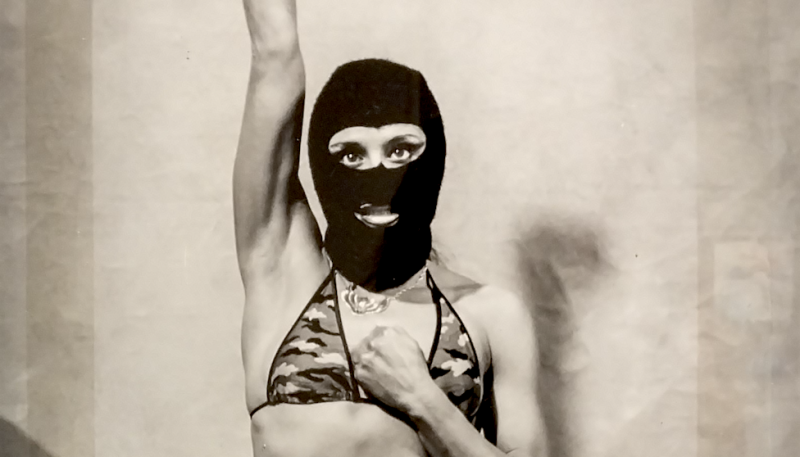
"caption": "Isis Rodriguez — the self-described \"Zapatista Stripper\" — in 1998.",
"credit": "Eugenio Castro/Courtesy of the GLBT Historical Museum",
"altTag": "A woman wearing a ski mask and a bikini kneels of the floor, one fist raised in defiance.",
"description": null,
"imgSizes": {
"medium": {
"file": "https://cdn.kqed.org/wp-content/uploads/sites/2/2024/06/Screen-Shot-2024-06-11-at-2.39.25-PM-800x457.png",
"width": 800,
"height": 457,
"mimeType": "image/png"
},
"thumbnail": {
"file": "https://cdn.kqed.org/wp-content/uploads/sites/2/2024/06/Screen-Shot-2024-06-11-at-2.39.25-PM-160x91.png",
"width": 160,
"height": 91,
"mimeType": "image/png"
},
"medium_large": {
"file": "https://cdn.kqed.org/wp-content/uploads/sites/2/2024/06/Screen-Shot-2024-06-11-at-2.39.25-PM-768x439.png",
"width": 768,
"height": 439,
"mimeType": "image/png"
},
"post-thumbnail": {
"file": "https://cdn.kqed.org/wp-content/uploads/sites/2/2024/06/Screen-Shot-2024-06-11-at-2.39.25-PM-672x372.png",
"width": 672,
"height": 372,
"mimeType": "image/png"
},
"kqedFullSize": {
"file": "https://cdn.kqed.org/wp-content/uploads/sites/2/2024/06/Screen-Shot-2024-06-11-at-2.39.25-PM.png",
"width": 976,
"height": 558
}
},
"isLoading": false,
"fetchFailed": false
},
"arts_13959241": {
"type": "attachments",
"id": "arts_13959241",
"meta": {
"index": "attachments_1716263798",
"site": "arts",
"id": "13959241",
"found": true
},
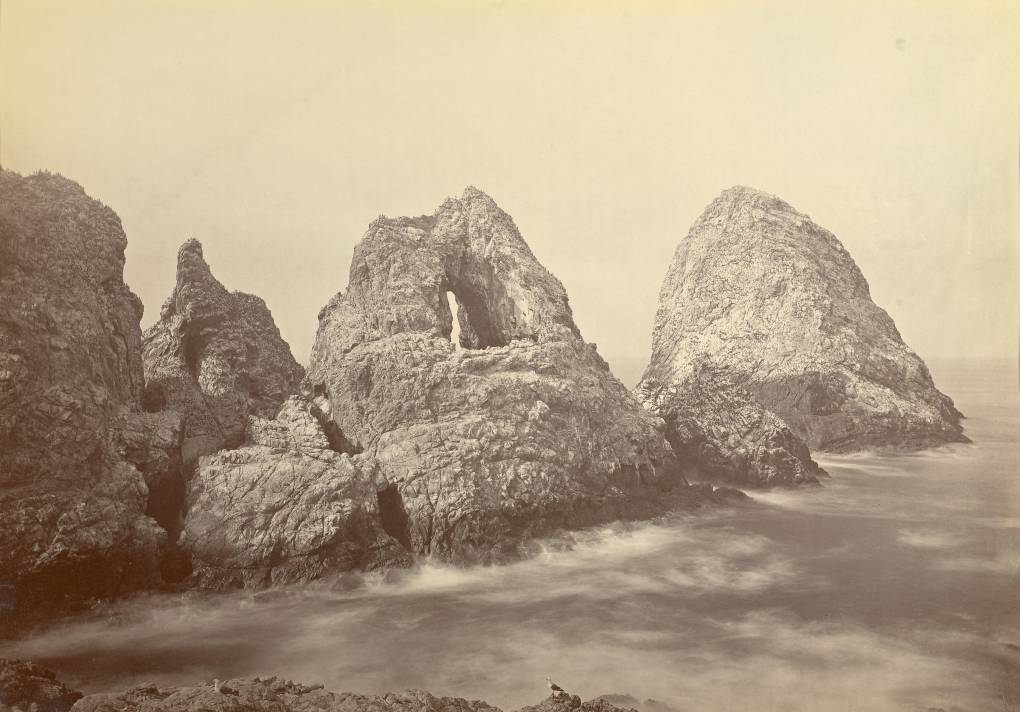
"title": "The Sugarloaf Islands of the Farallons, as they were seen by Carleton Watkins in 1869.",
"publishDate": 1717552602,
"status": "inherit",
"parent": 13959142,
"modified": 1717634537,
"caption": "The Sugarloaf Islands of the Farallons, as they were seen by Carleton Watkins in 1869. ",
"credit": "Sepia Times/ Universal Images Group via Getty Images",
"altTag": "A sepia toned photo of tall rocky land masses surrounded by foamy sea water.",
"description": null,
"imgSizes": {
"medium": {
"file": "https://cdn.kqed.org/wp-content/uploads/sites/2/2024/06/GettyImages-1157997959-800x559.jpg",
"width": 800,
"height": 559,
"mimeType": "image/jpeg"
},
"large": {
"file": "https://cdn.kqed.org/wp-content/uploads/sites/2/2024/06/GettyImages-1157997959-1020x712.jpg",
"width": 1020,
"height": 712,
"mimeType": "image/jpeg"
},
"thumbnail": {
"file": "https://cdn.kqed.org/wp-content/uploads/sites/2/2024/06/GettyImages-1157997959-160x112.jpg",
"width": 160,
"height": 112,
"mimeType": "image/jpeg"
},
"medium_large": {
"file": "https://cdn.kqed.org/wp-content/uploads/sites/2/2024/06/GettyImages-1157997959-768x536.jpg",
"width": 768,
"height": 536,
"mimeType": "image/jpeg"
},
"1536x1536": {
"file": "https://cdn.kqed.org/wp-content/uploads/sites/2/2024/06/GettyImages-1157997959-1536x1072.jpg",
"width": 1536,
"height": 1072,
"mimeType": "image/jpeg"
},
"2048x2048": {
"file": "https://cdn.kqed.org/wp-content/uploads/sites/2/2024/06/GettyImages-1157997959-2048x1430.jpg",
"width": 2048,
"height": 1430,
"mimeType": "image/jpeg"
},
"post-thumbnail": {
"file": "https://cdn.kqed.org/wp-content/uploads/sites/2/2024/06/GettyImages-1157997959-672x372.jpg",
"width": 672,
"height": 372,
"mimeType": "image/jpeg"
},
"twentyfourteen-full-width": {
"file": "https://cdn.kqed.org/wp-content/uploads/sites/2/2024/06/GettyImages-1157997959-1038x576.jpg",
"width": 1038,
"height": 576,
"mimeType": "image/jpeg"
},
"full-width": {
"file": "https://cdn.kqed.org/wp-content/uploads/sites/2/2024/06/GettyImages-1157997959-1920x1341.jpg",
"width": 1920,
"height": 1341,
"mimeType": "image/jpeg"
},
"kqedFullSize": {
"file": "https://cdn.kqed.org/wp-content/uploads/sites/2/2024/06/GettyImages-1157997959-scaled-e1717552749442.jpg",
"width": 1920,
"height": 1340
}
},
"isLoading": false,
"fetchFailed": false
},
"arts_13959417": {
"type": "attachments",
"id": "arts_13959417",
"meta": {
"index": "attachments_1716263798",
"site": "arts",
"id": "13959417",
"found": true
},
"title": "‘When The Sea Came Alive: An Oral History of D-Day’ by Garrett M. Graff.",
"publishDate": 1717710639,
"status": "inherit",
"parent": 13959414,
"modified": 1717710788,
"caption": "‘When The Sea Came Alive: An Oral History of D-Day’ by Garrett M. Graff.",
"credit": "Blackstone",
"altTag": "A book cover showing soldiers crowded into the back of a boat during World War II.",
"description": null,
"imgSizes": {
"medium": {
"file": "https://cdn.kqed.org/wp-content/uploads/sites/2/2024/06/Screen-Shot-2024-06-06-at-2.50.00-PM-800x1097.png",
"width": 800,
"height": 1097,
"mimeType": "image/png"
},
"thumbnail": {
"file": "https://cdn.kqed.org/wp-content/uploads/sites/2/2024/06/Screen-Shot-2024-06-06-at-2.50.00-PM-160x219.png",
"width": 160,
"height": 219,
"mimeType": "image/png"
},
"medium_large": {
"file": "https://cdn.kqed.org/wp-content/uploads/sites/2/2024/06/Screen-Shot-2024-06-06-at-2.50.00-PM-768x1053.png",
"width": 768,
"height": 1053,
"mimeType": "image/png"
},
"post-thumbnail": {
"file": "https://cdn.kqed.org/wp-content/uploads/sites/2/2024/06/Screen-Shot-2024-06-06-at-2.50.00-PM-672x372.png",
"width": 672,
"height": 372,
"mimeType": "image/png"
},
"twentyfourteen-full-width": {
"file": "https://cdn.kqed.org/wp-content/uploads/sites/2/2024/06/Screen-Shot-2024-06-06-at-2.50.00-PM-884x576.png",
"width": 884,
"height": 576,
"mimeType": "image/png"
},
"kqedFullSize": {
"file": "https://cdn.kqed.org/wp-content/uploads/sites/2/2024/06/Screen-Shot-2024-06-06-at-2.50.00-PM.png",
"width": 884,
"height": 1212
}
},
"isLoading": false,
"fetchFailed": false
},
"arts_13958725": {
"type": "attachments",
"id": "arts_13958725",
"meta": {
"index": "attachments_1716263798",
"site": "arts",
"id": "13958725",
"found": true
},
"title": "Yvonne D'Angers in November 1966.",
"publishDate": 1716931052,
"status": "inherit",
"parent": 13958719,
"modified": 1717521374,
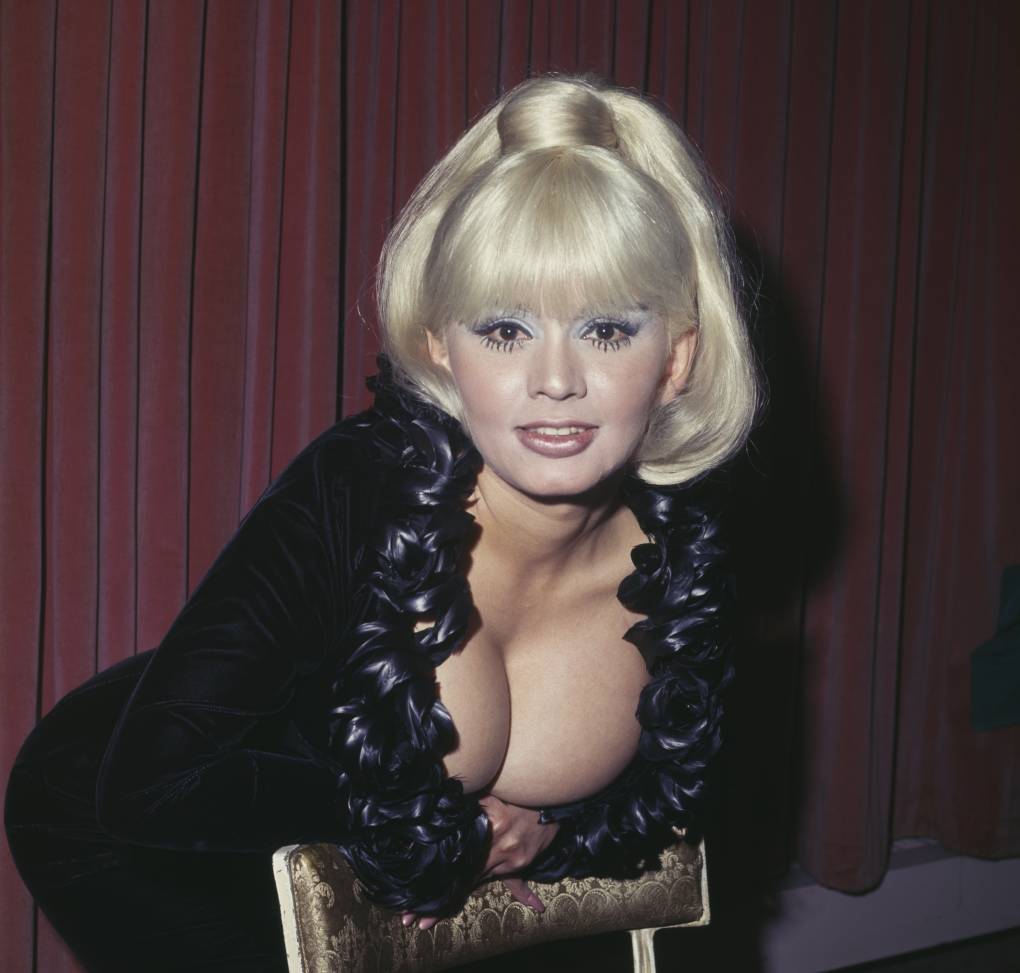
"caption": "Yvonne D'Angers in November 1966.",
"credit": "UPI/Bettmann Archive/Getty Images",
"altTag": "A glamorous woman with fake eyelashes leaning over a chair wearing a low cut top and her platinum blond hair high in a ponytail.",
"description": null,
"imgSizes": {
"medium": {
"file": "https://cdn.kqed.org/wp-content/uploads/sites/2/2024/05/GettyImages-2007662369-800x763.jpg",
"width": 800,
"height": 763,
"mimeType": "image/jpeg"
},
"large": {
"file": "https://cdn.kqed.org/wp-content/uploads/sites/2/2024/05/GettyImages-2007662369-1020x973.jpg",
"width": 1020,
"height": 973,
"mimeType": "image/jpeg"
},
"thumbnail": {
"file": "https://cdn.kqed.org/wp-content/uploads/sites/2/2024/05/GettyImages-2007662369-160x153.jpg",
"width": 160,
"height": 153,
"mimeType": "image/jpeg"
},
"medium_large": {
"file": "https://cdn.kqed.org/wp-content/uploads/sites/2/2024/05/GettyImages-2007662369-768x733.jpg",
"width": 768,
"height": 733,
"mimeType": "image/jpeg"
},
"1536x1536": {
"file": "https://cdn.kqed.org/wp-content/uploads/sites/2/2024/05/GettyImages-2007662369-1536x1466.jpg",
"width": 1536,
"height": 1466,
"mimeType": "image/jpeg"
},
"2048x2048": {
"file": "https://cdn.kqed.org/wp-content/uploads/sites/2/2024/05/GettyImages-2007662369-2048x1954.jpg",
"width": 2048,
"height": 1954,
"mimeType": "image/jpeg"
},
"post-thumbnail": {
"file": "https://cdn.kqed.org/wp-content/uploads/sites/2/2024/05/GettyImages-2007662369-672x372.jpg",
"width": 672,
"height": 372,
"mimeType": "image/jpeg"
},
"twentyfourteen-full-width": {
"file": "https://cdn.kqed.org/wp-content/uploads/sites/2/2024/05/GettyImages-2007662369-1038x576.jpg",
"width": 1038,
"height": 576,
"mimeType": "image/jpeg"
},
"full-width": {
"file": "https://cdn.kqed.org/wp-content/uploads/sites/2/2024/05/GettyImages-2007662369-1920x1832.jpg",
"width": 1920,
"height": 1832,
"mimeType": "image/jpeg"
},
"kqedFullSize": {
"file": "https://cdn.kqed.org/wp-content/uploads/sites/2/2024/05/GettyImages-2007662369-scaled-e1716931190943.jpg",
"width": 1920,
"height": 1832
}
},
"isLoading": false,
"fetchFailed": false
},
"arts_13959170": {
"type": "attachments",
"id": "arts_13959170",
"meta": {
"index": "attachments_1716263798",
"site": "arts",
"id": "13959170",
"found": true
},
"title": "Francesco Di Rauso, portraying combat medic Waverly Woodson Jr. who served with the 320th Barrage Balloon Battalion on D-Day.",
"publishDate": 1717457555,
"status": "inherit",
"parent": 13959163,
"modified": 1717457632,
"caption": "Francesco Di Rauso, portraying combat medic Waverly Woodson Jr. who served with the 320th Barrage Balloon Battalion on D-Day. ",
"credit": "National Geographic via AP",
"altTag": "A Black man wearing World War II army fatiques and a medic helmet crouched over a body on a chaotic beach.",
"description": null,
"imgSizes": {
"medium": {
"file": "https://cdn.kqed.org/wp-content/uploads/sites/2/2024/06/Screen-Shot-2024-06-03-at-4.30.46-PM-800x514.png",
"width": 800,
"height": 514,
"mimeType": "image/png"
},
"large": {
"file": "https://cdn.kqed.org/wp-content/uploads/sites/2/2024/06/Screen-Shot-2024-06-03-at-4.30.46-PM-1020x655.png",
"width": 1020,
"height": 655,
"mimeType": "image/png"
},
"thumbnail": {
"file": "https://cdn.kqed.org/wp-content/uploads/sites/2/2024/06/Screen-Shot-2024-06-03-at-4.30.46-PM-160x103.png",
"width": 160,
"height": 103,
"mimeType": "image/png"
},
"medium_large": {
"file": "https://cdn.kqed.org/wp-content/uploads/sites/2/2024/06/Screen-Shot-2024-06-03-at-4.30.46-PM-768x493.png",
"width": 768,
"height": 493,
"mimeType": "image/png"
},
"1536x1536": {
"file": "https://cdn.kqed.org/wp-content/uploads/sites/2/2024/06/Screen-Shot-2024-06-03-at-4.30.46-PM-1536x987.png",
"width": 1536,
"height": 987,
"mimeType": "image/png"
},
"post-thumbnail": {
"file": "https://cdn.kqed.org/wp-content/uploads/sites/2/2024/06/Screen-Shot-2024-06-03-at-4.30.46-PM-672x372.png",
"width": 672,
"height": 372,
"mimeType": "image/png"
},
"twentyfourteen-full-width": {
"file": "https://cdn.kqed.org/wp-content/uploads/sites/2/2024/06/Screen-Shot-2024-06-03-at-4.30.46-PM-1038x576.png",
"width": 1038,
"height": 576,
"mimeType": "image/png"
},
"kqedFullSize": {
"file": "https://cdn.kqed.org/wp-content/uploads/sites/2/2024/06/Screen-Shot-2024-06-03-at-4.30.46-PM.png",
"width": 1678,
"height": 1078
}
},
"isLoading": false,
"fetchFailed": false
},
"arts_13959080": {
"type": "attachments",
"id": "arts_13959080",
"meta": {
"index": "attachments_1716263798",
"site": "arts",
"id": "13959080",
"found": true
},
"title": "HitchcockStewart_COVER",
"publishDate": 1717434327,
"status": "inherit",
"parent": 13958891,
"modified": 1717434810,
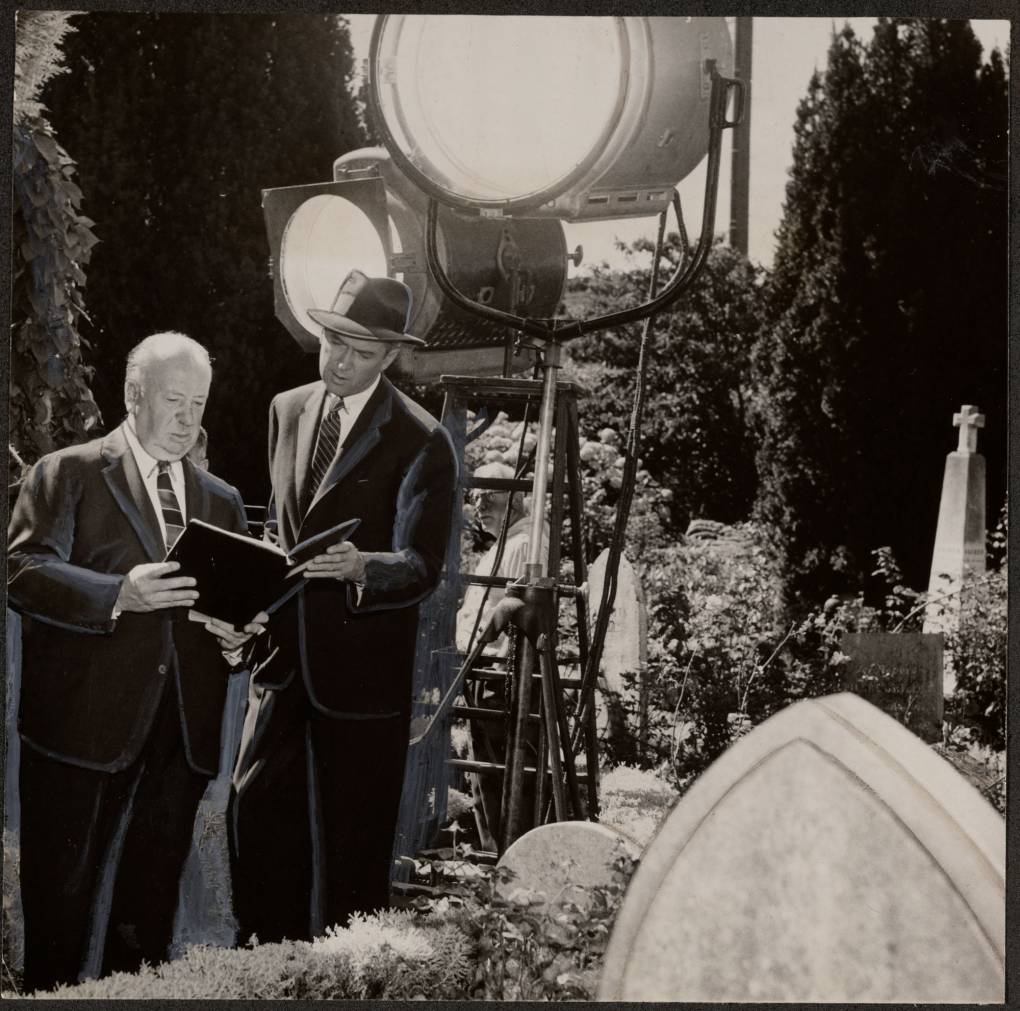
"caption": "A photograph of Alfred Hitchcock and Jimmy Stewart in the Mission Dolores cemetery during the filming of 'Vertigo.'",
"credit": "Bob Klein/San Francisco News; Courtesy the San Francisco History Center",
"altTag": "Black-and-white photo of two men looking at book with big spotlights behind them",
"description": null,
"imgSizes": {
"medium": {
"file": "https://cdn.kqed.org/wp-content/uploads/sites/2/2024/05/HitchcockStewart_COVER-800x793.jpg",
"width": 800,
"height": 793,
"mimeType": "image/jpeg"
},
"large": {
"file": "https://cdn.kqed.org/wp-content/uploads/sites/2/2024/05/HitchcockStewart_COVER-1020x1011.jpg",
"width": 1020,
"height": 1011,
"mimeType": "image/jpeg"
},
"thumbnail": {
"file": "https://cdn.kqed.org/wp-content/uploads/sites/2/2024/05/HitchcockStewart_COVER-160x159.jpg",
"width": 160,
"height": 159,
"mimeType": "image/jpeg"
},
"medium_large": {
"file": "https://cdn.kqed.org/wp-content/uploads/sites/2/2024/05/HitchcockStewart_COVER-768x761.jpg",
"width": 768,
"height": 761,
"mimeType": "image/jpeg"
},
"1536x1536": {
"file": "https://cdn.kqed.org/wp-content/uploads/sites/2/2024/05/HitchcockStewart_COVER-1536x1522.jpg",
"width": 1536,
"height": 1522,
"mimeType": "image/jpeg"
},
"post-thumbnail": {
"file": "https://cdn.kqed.org/wp-content/uploads/sites/2/2024/05/HitchcockStewart_COVER-672x372.jpg",
"width": 672,
"height": 372,
"mimeType": "image/jpeg"
},
"twentyfourteen-full-width": {
"file": "https://cdn.kqed.org/wp-content/uploads/sites/2/2024/05/HitchcockStewart_COVER-1038x576.jpg",
"width": 1038,
"height": 576,
"mimeType": "image/jpeg"
},
"full-width": {
"file": "https://cdn.kqed.org/wp-content/uploads/sites/2/2024/05/HitchcockStewart_COVER-1920x1903.jpg",
"width": 1920,
"height": 1903,
"mimeType": "image/jpeg"
},
"kqedFullSize": {
"file": "https://cdn.kqed.org/wp-content/uploads/sites/2/2024/05/HitchcockStewart_COVER.jpg",
"width": 2000,
"height": 1982
}
},
"isLoading": false,
"fetchFailed": false
},
"arts_13958534": {
"type": "attachments",
"id": "arts_13958534",
"meta": {
"index": "attachments_1716263798",
"site": "arts",
"id": "13958534",
"found": true
},
"title": "An advertisement for Pettit's Eye Salve, circa 1885.",
"publishDate": 1716594077,
"status": "inherit",
"parent": 13958468,
"modified": 1716594164,
"caption": "An advertisement for Pettit's Eye Salve, circa 1885.",
"credit": "Courtesy of the Museum of the Eye",
"altTag": "A Victorian illustration of a small boy grinning and holding one of his eyelids closed with his forefinger.",
"description": null,
"imgSizes": {
"thumbnail": {
"file": "https://cdn.kqed.org/wp-content/uploads/sites/2/2024/05/museumexhibit3-160x103.jpg",
"width": 160,
"height": 103,
"mimeType": "image/jpeg"
},
"kqedFullSize": {
"file": "https://cdn.kqed.org/wp-content/uploads/sites/2/2024/05/museumexhibit3.jpg",
"width": 446,
"height": 287
}
},
"isLoading": false,
"fetchFailed": false
},
"arts_13958497": {
"type": "attachments",
"id": "arts_13958497",
"meta": {
"index": "attachments_1716263798",
"site": "arts",
"id": "13958497",
"found": true
},
"title": "rchesse_drawing_2000",
"publishDate": 1716570089,
"status": "inherit",
"parent": 13958493,
"modified": 1716570143,
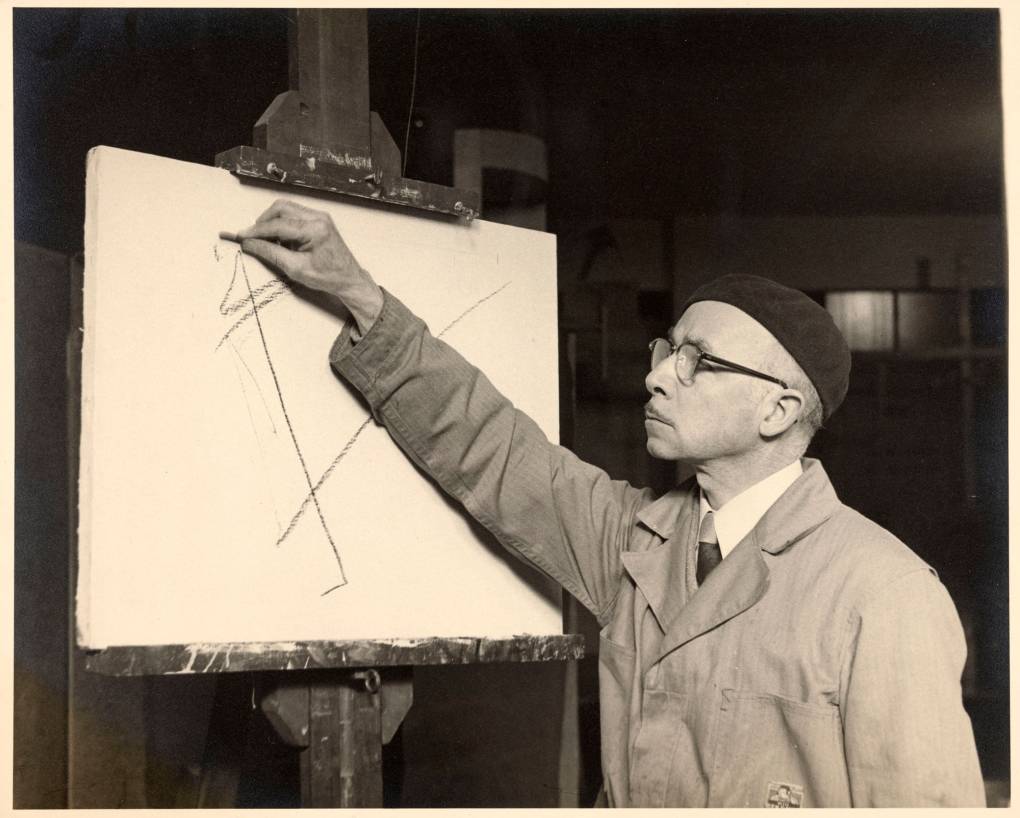
"caption": "Ralph Chessé drawing, year unknown.",
"credit": "Courtesy of the Chessé family",
"altTag": "Black and white photo of man in glasses drawing lines on a canvas",
"description": null,
"imgSizes": {
"medium": {
"file": "https://cdn.kqed.org/wp-content/uploads/sites/2/2024/05/rchesse_drawing_2000-800x641.jpg",
"width": 800,
"height": 641,
"mimeType": "image/jpeg"
},
"large": {
"file": "https://cdn.kqed.org/wp-content/uploads/sites/2/2024/05/rchesse_drawing_2000-1020x818.jpg",
"width": 1020,
"height": 818,
"mimeType": "image/jpeg"
},
"thumbnail": {
"file": "https://cdn.kqed.org/wp-content/uploads/sites/2/2024/05/rchesse_drawing_2000-160x128.jpg",
"width": 160,
"height": 128,
"mimeType": "image/jpeg"
},
"medium_large": {
"file": "https://cdn.kqed.org/wp-content/uploads/sites/2/2024/05/rchesse_drawing_2000-768x616.jpg",
"width": 768,
"height": 616,
"mimeType": "image/jpeg"
},
"1536x1536": {
"file": "https://cdn.kqed.org/wp-content/uploads/sites/2/2024/05/rchesse_drawing_2000-1536x1231.jpg",
"width": 1536,
"height": 1231,
"mimeType": "image/jpeg"
},
"post-thumbnail": {
"file": "https://cdn.kqed.org/wp-content/uploads/sites/2/2024/05/rchesse_drawing_2000-672x372.jpg",
"width": 672,
"height": 372,
"mimeType": "image/jpeg"
},
"twentyfourteen-full-width": {
"file": "https://cdn.kqed.org/wp-content/uploads/sites/2/2024/05/rchesse_drawing_2000-1038x576.jpg",
"width": 1038,
"height": 576,
"mimeType": "image/jpeg"
},
"full-width": {
"file": "https://cdn.kqed.org/wp-content/uploads/sites/2/2024/05/rchesse_drawing_2000-1920x1539.jpg",
"width": 1920,
"height": 1539,
"mimeType": "image/jpeg"
},
"kqedFullSize": {
"file": "https://cdn.kqed.org/wp-content/uploads/sites/2/2024/05/rchesse_drawing_2000.jpg",
"width": 2000,
"height": 1603
}
},
"isLoading": false,
"fetchFailed": false
},
"arts_13955067": {
"type": "attachments",
"id": "arts_13955067",
"meta": {
"index": "attachments_1716263798",
"site": "arts",
"id": "13955067",
"found": true
},
"parent": 13955066,
"imgSizes": {
"twentyfourteen-full-width": {
"file": "https://cdn.kqed.org/wp-content/uploads/sites/2/2024/03/April-2024-1038x576.jpg",
"width": 1038,
"mimeType": "image/jpeg",
"height": 576
},
"thumbnail": {
"file": "https://cdn.kqed.org/wp-content/uploads/sites/2/2024/03/April-2024-160x90.jpg",
"width": 160,
"mimeType": "image/jpeg",
"height": 90
},
"post-thumbnail": {
"file": "https://cdn.kqed.org/wp-content/uploads/sites/2/2024/03/April-2024-672x372.jpg",
"width": 672,
"mimeType": "image/jpeg",
"height": 372
},
"kqedFullSize": {
"file": "https://cdn.kqed.org/wp-content/uploads/sites/2/2024/03/April-2024.jpg",
"width": 1920,
"height": 1080
},
"large": {
"file": "https://cdn.kqed.org/wp-content/uploads/sites/2/2024/03/April-2024-1020x574.jpg",
"width": 1020,
"mimeType": "image/jpeg",
"height": 574
},
"1536x1536": {
"file": "https://cdn.kqed.org/wp-content/uploads/sites/2/2024/03/April-2024-1536x864.jpg",
"width": 1536,
"mimeType": "image/jpeg",
"height": 864
},
"medium": {
"file": "https://cdn.kqed.org/wp-content/uploads/sites/2/2024/03/April-2024-800x450.jpg",
"width": 800,
"mimeType": "image/jpeg",
"height": 450
},
"medium_large": {
"file": "https://cdn.kqed.org/wp-content/uploads/sites/2/2024/03/April-2024-768x432.jpg",
"width": 768,
"mimeType": "image/jpeg",
"height": 432
}
},
"publishDate": 1711791057,
"modified": 1711791236,
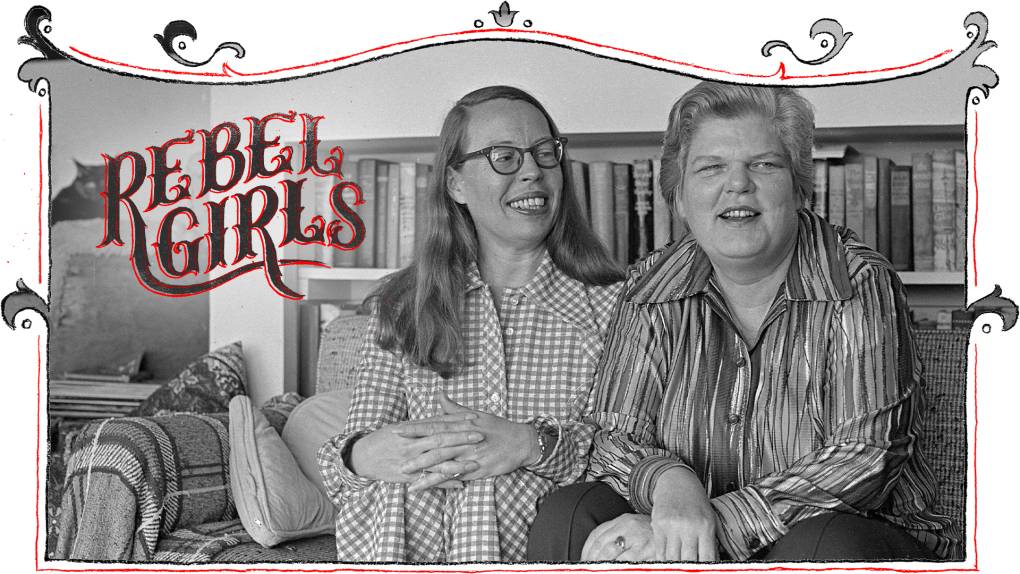
"caption": "(L) Phyllis Lyon and (R) Del Martin at home in San Francisco in July 1972.",
"description": null,
"title": "(L) Phyllis Lyon and (R) Del Martin at home in San Francisco in July 1972.",
"credit": "Clem Albers/ San Francisco Chronicle via Getty Images",
"status": "inherit",
"altTag": "A white bespectacled woman wearing a checked dress smiles warmly at another white woman as they sit close together on a couch. A wall lined with books is behind them.",
"isLoading": false,
"fetchFailed": false
},
"arts_13957664": {
"type": "attachments",
"id": "arts_13957664",
"meta": {
"index": "attachments_1716263798",
"site": "arts",
"id": "13957664",
"found": true
},
"parent": 13957514,
"imgSizes": {
"twentyfourteen-full-width": {
"file": "https://cdn.kqed.org/wp-content/uploads/sites/2/2024/05/Screen-Shot-2024-05-10-at-2.40.57-PM-1038x576.png",
"width": 1038,
"mimeType": "image/png",
"height": 576
},
"thumbnail": {
"file": "https://cdn.kqed.org/wp-content/uploads/sites/2/2024/05/Screen-Shot-2024-05-10-at-2.40.57-PM-160x93.png",
"width": 160,
"mimeType": "image/png",
"height": 93
},
"post-thumbnail": {
"file": "https://cdn.kqed.org/wp-content/uploads/sites/2/2024/05/Screen-Shot-2024-05-10-at-2.40.57-PM-672x372.png",
"width": 672,
"mimeType": "image/png",
"height": 372
},
"kqedFullSize": {
"file": "https://cdn.kqed.org/wp-content/uploads/sites/2/2024/05/Screen-Shot-2024-05-10-at-2.40.57-PM.png",
"width": 1584,
"height": 916
},
"large": {
"file": "https://cdn.kqed.org/wp-content/uploads/sites/2/2024/05/Screen-Shot-2024-05-10-at-2.40.57-PM-1020x590.png",
"width": 1020,
"mimeType": "image/png",
"height": 590
},
"1536x1536": {
"file": "https://cdn.kqed.org/wp-content/uploads/sites/2/2024/05/Screen-Shot-2024-05-10-at-2.40.57-PM-1536x888.png",
"width": 1536,
"mimeType": "image/png",
"height": 888
},
"medium": {
"file": "https://cdn.kqed.org/wp-content/uploads/sites/2/2024/05/Screen-Shot-2024-05-10-at-2.40.57-PM-800x463.png",
"width": 800,
"mimeType": "image/png",
"height": 463
},
"medium_large": {
"file": "https://cdn.kqed.org/wp-content/uploads/sites/2/2024/05/Screen-Shot-2024-05-10-at-2.40.57-PM-768x444.png",
"width": 768,
"mimeType": "image/png",
"height": 444
}
},
"publishDate": 1715377288,
"modified": 1715377334,
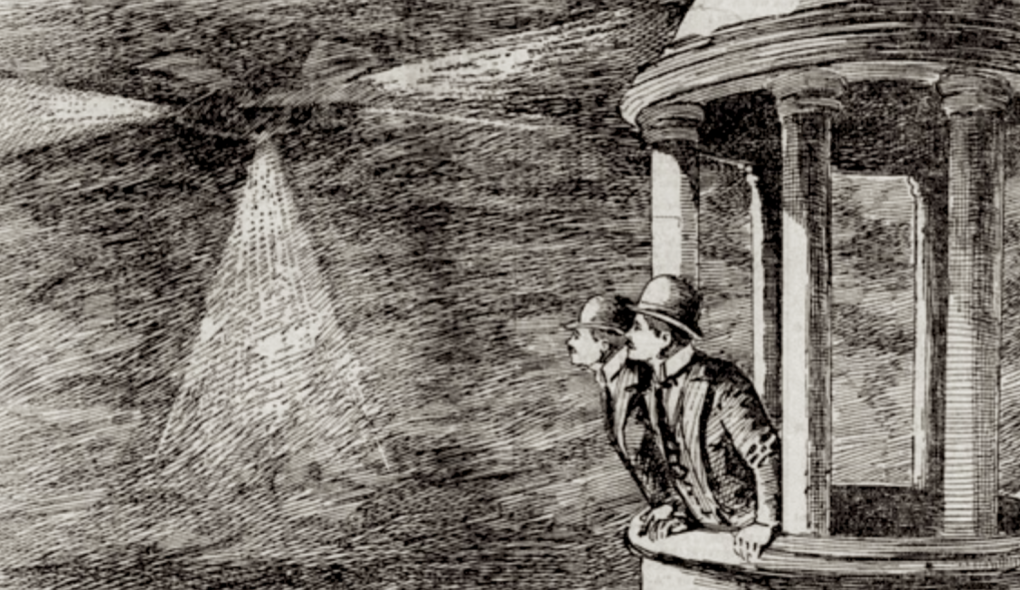
"caption": "A rendition of the airship seen in the skies above Sacramento, as illustrated in ‘The San Francisco Call and Post’ on Nov. 29, 1896.",
"description": null,
"title": "A rendition of the airship seen in the skies above Sacramento, as illustrated in ‘The San Francisco Call and Post’ on Nov. 29, 1896.",
"credit": "The San Francisco Call and Post",
"status": "inherit",
"altTag": "A Victorian illustration of two men watching an airship with wings and spotlights flying near the top of the Capitol building.",
"isLoading": false,
"fetchFailed": false
},
"arts_13956207": {
"type": "attachments",
"id": "arts_13956207",
"meta": {
"index": "attachments_1716263798",
"site": "arts",
"id": "13956207",
"found": true
},
"parent": 13956202,
"imgSizes": {
"twentyfourteen-full-width": {
"file": "https://cdn.kqed.org/wp-content/uploads/sites/2/2024/04/IMG_6472-1038x576.jpg",
"width": 1038,
"mimeType": "image/jpeg",
"height": 576
},
"thumbnail": {
"file": "https://cdn.kqed.org/wp-content/uploads/sites/2/2024/04/IMG_6472-160x90.jpg",
"width": 160,
"mimeType": "image/jpeg",
"height": 90
},
"post-thumbnail": {
"file": "https://cdn.kqed.org/wp-content/uploads/sites/2/2024/04/IMG_6472-672x372.jpg",
"width": 672,
"mimeType": "image/jpeg",
"height": 372
},
"kqedFullSize": {
"file": "https://cdn.kqed.org/wp-content/uploads/sites/2/2024/04/IMG_6472.jpg",
"width": 1920,
"height": 1080
},
"large": {
"file": "https://cdn.kqed.org/wp-content/uploads/sites/2/2024/04/IMG_6472-1020x574.jpg",
"width": 1020,
"mimeType": "image/jpeg",
"height": 574
},
"1536x1536": {
"file": "https://cdn.kqed.org/wp-content/uploads/sites/2/2024/04/IMG_6472-1536x864.jpg",
"width": 1536,
"mimeType": "image/jpeg",
"height": 864
},
"medium": {
"file": "https://cdn.kqed.org/wp-content/uploads/sites/2/2024/04/IMG_6472-800x450.jpg",
"width": 800,
"mimeType": "image/jpeg",
"height": 450
},
"medium_large": {
"file": "https://cdn.kqed.org/wp-content/uploads/sites/2/2024/04/IMG_6472-768x432.jpg",
"width": 768,
"mimeType": "image/jpeg",
"height": 432
}
},
"publishDate": 1713480198,
"modified": 1713482372,
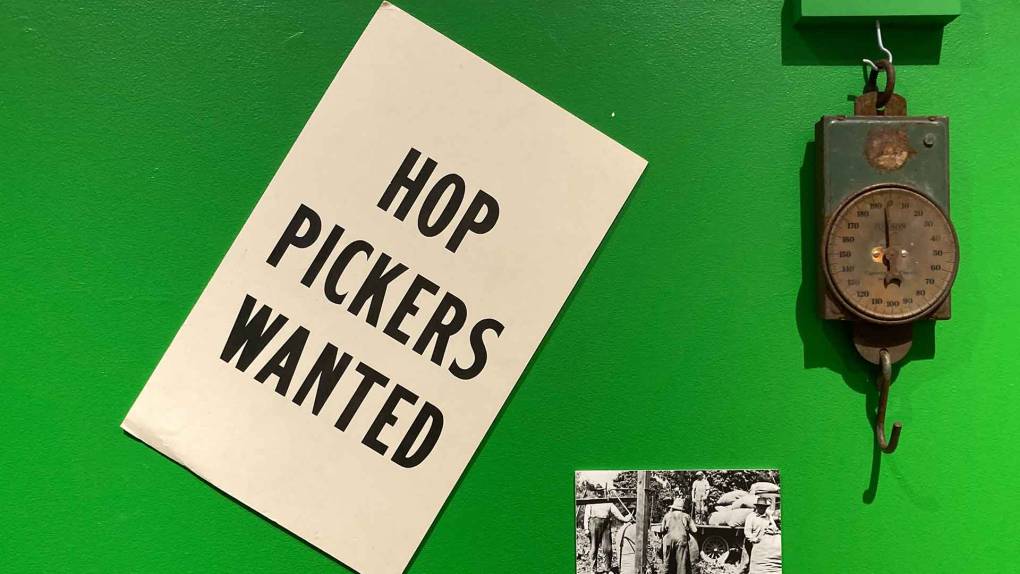
"caption": "An installation view of 'On Tap: Sonoma County Hops & The Beer Revolution.' The clashes between underpaid migrant laborers and the hop-growing industry in Sonoma County resulted in a mechanized picking machine — and a notorious tarring and feathering incident.",
"description": null,
"title": "IMG_6472",
"credit": "Gabe Meline/KQED",
"status": "inherit",
"altTag": "A rusty scale sits against a green background, next to a sign that reads \"Hop Pickers Wanted\"",
"isLoading": false,
"fetchFailed": false
},
"arts_13954767": {
"type": "attachments",
"id": "arts_13954767",
"meta": {
"index": "attachments_1716263798",
"site": "arts",
"id": "13954767",
"found": true
},
"parent": 13954766,
"imgSizes": {
"twentyfourteen-full-width": {
"file": "https://cdn.kqed.org/wp-content/uploads/sites/2/2024/03/418799190_241307629011087_1178658261652047605_n-1038x576.jpg",
"width": 1038,
"mimeType": "image/jpeg",
"height": 576
},
"thumbnail": {
"file": "https://cdn.kqed.org/wp-content/uploads/sites/2/2024/03/418799190_241307629011087_1178658261652047605_n-160x106.jpg",
"width": 160,
"mimeType": "image/jpeg",
"height": 106
},
"post-thumbnail": {
"file": "https://cdn.kqed.org/wp-content/uploads/sites/2/2024/03/418799190_241307629011087_1178658261652047605_n-672x372.jpg",
"width": 672,
"mimeType": "image/jpeg",
"height": 372
},
"kqedFullSize": {
"file": "https://cdn.kqed.org/wp-content/uploads/sites/2/2024/03/418799190_241307629011087_1178658261652047605_n.jpg",
"width": 1080,
"height": 717
},
"large": {
"file": "https://cdn.kqed.org/wp-content/uploads/sites/2/2024/03/418799190_241307629011087_1178658261652047605_n-1020x677.jpg",
"width": 1020,
"mimeType": "image/jpeg",
"height": 677
},
"medium": {
"file": "https://cdn.kqed.org/wp-content/uploads/sites/2/2024/03/418799190_241307629011087_1178658261652047605_n-800x531.jpg",
"width": 800,
"mimeType": "image/jpeg",
"height": 531
},
"medium_large": {
"file": "https://cdn.kqed.org/wp-content/uploads/sites/2/2024/03/418799190_241307629011087_1178658261652047605_n-768x510.jpg",
"width": 768,
"mimeType": "image/jpeg",
"height": 510
}
},
"publishDate": 1711487875,
"modified": 1711488129,
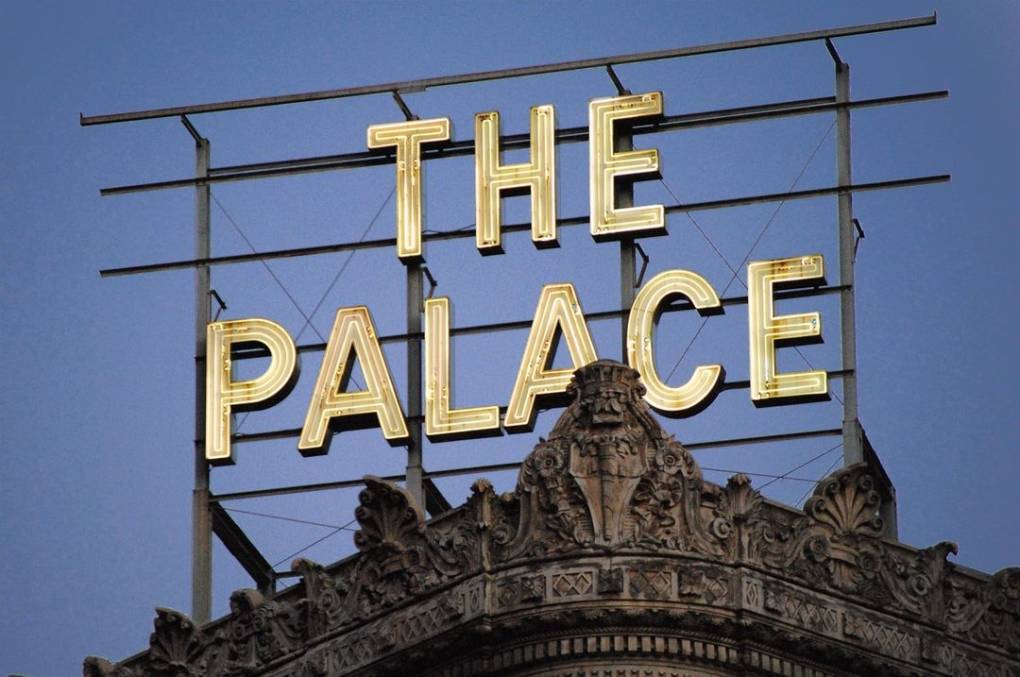
"caption": "A photograph by Al Barna of 'The Palace' sign on the roof of the Palace Hotel, before work began to replace the neon with LED lighting.",
"description": null,
"title": "418799190_241307629011087_1178658261652047605_n",
"credit": "Al Barna/SF Neon",
"status": "inherit",
"altTag": "White illuminated letters of 'THE PALACE' on a rooftop",
"isLoading": false,
"fetchFailed": false
}
},
"audioPlayerReducer": {
"postId": "stream_live",
"isPaused": true,
"isPlaying": false,
"pfsActive": false,
"pledgeModalIsOpen": true,
"playerDrawerIsOpen": false,
"liveAudioPlayStartedAt": 0,
"liveAudioPlayContext": ""
},
"authorsReducer": {
"byline_arts_13959414": {
"type": "authors",
"id": "byline_arts_13959414",
"meta": {
"override": true
},
"slug": "byline_arts_13959414",
"name": "Andrew DeMillo, Associated Press",
"isLoading": false
},
"byline_arts_13959163": {
"type": "authors",
"id": "byline_arts_13959163",
"meta": {
"override": true
},
"slug": "byline_arts_13959163",
"name": "Mark Kennedy, Associated Press",
"isLoading": false
},
"shotchkiss": {
"type": "authors",
"id": "61",
"meta": {
"index": "authors_1716337520",
"id": "61",
"found": true
},
"name": "Sarah Hotchkiss",
"firstName": "Sarah",
"lastName": "Hotchkiss",
"slug": "shotchkiss",
"email": "shotchkiss@kqed.org",
"display_author_email": true,
"staff_mastheads": [
"arts"
],
"title": "Senior Editor",
"bio": "Sarah Hotchkiss is a San Francisco \u003ca href=\"http://www.sarahhotchkiss.com\">artist\u003c/a> and arts writer. In 2019, she received the Dorothea & Leo Rabkin Foundation grant for visual art journalism and in 2020 she received a Society of Professional Journalists, Northern California award for excellence in arts and culture reporting.",
"avatar": "https://secure.gravatar.com/avatar/bc662df144b3d27fd8b1b6f1c2a420d34e91e53154d411bb7ad353cc8b6cea8d?s=600&d=blank&r=g",
"twitter": null,
"bluesky": null,
"facebook": null,
"instagram": null,
"linkedin": null,
"sites": [
{
"site": "",
"roles": [
"editor"
]
},
{
"site": "arts",
"roles": [
"Contributor",
"administrator"
]
},
{
"site": "artschool",
"roles": [
"administrator"
]
},
{
"site": "news",
"roles": [
"editor"
]
},
{
"site": "pop",
"roles": [
"administrator"
]
},
{
"site": "bayareabites",
"roles": [
"editor"
]
},
{
"site": "spark",
"roles": [
"editor"
]
},
{
"site": "checkplease",
"roles": [
"editor"
]
}
],
"headData": {
"title": "Sarah Hotchkiss | KQED",
"description": "Senior Editor",
"ogImgSrc": "https://secure.gravatar.com/avatar/bc662df144b3d27fd8b1b6f1c2a420d34e91e53154d411bb7ad353cc8b6cea8d?s=600&d=blank&r=g",
"twImgSrc": "https://secure.gravatar.com/avatar/bc662df144b3d27fd8b1b6f1c2a420d34e91e53154d411bb7ad353cc8b6cea8d?s=600&d=blank&r=g"
},
"isLoading": false,
"link": "/author/shotchkiss"
},
"gmeline": {
"type": "authors",
"id": "185",
"meta": {
"index": "authors_1716337520",
"id": "185",
"found": true
},
"name": "Gabe Meline",
"firstName": "Gabe",
"lastName": "Meline",
"slug": "gmeline",
"email": "gmeline@kqed.org",
"display_author_email": true,
"staff_mastheads": [
"arts"
],
"title": "Senior Editor, KQED Arts & Culture",
"bio": "Gabe Meline entered journalism at age 15 making photocopied zines, and has since earned awards from the Edward R. Murrow Awards, the Society for Professional Journalists, the Online Journalism Awards, the Association of Alternative Newsweeklies and the California Newspaper Publishers Association. Prior to KQED, he was the editor of the \u003cem>North Bay Bohemian\u003c/em> and a touring musician. He lives with his wife and daughter in his hometown of Santa Rosa, CA.",
"avatar": "https://secure.gravatar.com/avatar/5bebe57be0d8bc2dd318934feb47299e2d2d10cba28d09d8d7afb389a2ce2bdd?s=600&d=blank&r=g",
"twitter": null,
"bluesky": null,
"facebook": null,
"instagram": null,
"linkedin": null,
"sites": [
{
"site": "",
"roles": [
"editor"
]
},
{
"site": "arts",
"roles": [
"administrator"
]
},
{
"site": "artschool",
"roles": [
"editor"
]
},
{
"site": "news",
"roles": [
"author"
]
},
{
"site": "pop",
"roles": [
"editor"
]
},
{
"site": "bayareabites",
"roles": [
"editor"
]
},
{
"site": "food",
"roles": [
"editor"
]
},
{
"site": "forum",
"roles": [
"administrator"
]
},
{
"site": "liveblog",
"roles": [
"editor"
]
},
{
"site": "hiphop",
"roles": [
"editor"
]
}
],
"headData": {
"title": "Gabe Meline | KQED",
"description": "Senior Editor, KQED Arts & Culture",
"ogImgSrc": "https://secure.gravatar.com/avatar/5bebe57be0d8bc2dd318934feb47299e2d2d10cba28d09d8d7afb389a2ce2bdd?s=600&d=blank&r=g",
"twImgSrc": "https://secure.gravatar.com/avatar/5bebe57be0d8bc2dd318934feb47299e2d2d10cba28d09d8d7afb389a2ce2bdd?s=600&d=blank&r=g"
},
"isLoading": false,
"link": "/author/gmeline"
},
"ralexandra": {
"type": "authors",
"id": "11242",
"meta": {
"index": "authors_1716337520",
"id": "11242",
"found": true
},
"name": "Rae Alexandra",
"firstName": "Rae",
"lastName": "Alexandra",
"slug": "ralexandra",
"email": "ralexandra@kqed.org",
"display_author_email": true,
"staff_mastheads": [],
"title": "Reporter/Producer",
"bio": "Rae Alexandra is a Reporter/Producer for KQED Arts & Culture, and the creator/author of the \u003ca href=\"https://www.kqed.org/arts/program/rebel-girls-from-bay-area-history\">Rebel Girls From Bay Area History\u003c/a> and \u003ca href=\"https://www.kqed.org/bizarrebayarea\">Bizarre Bay Area\u003c/a> series. Her debut book, \u003ca href=\"https://citylights.com/politics-current-events-history/unsung-heroines35-women-who-changed/\">Unsung Heroines: 35 Women Who Changed the Bay Area\u003c/a> was published by City Lights in March 2026. In 2023, Rae was awarded an SPJ Excellence in Journalism Award for Arts & Culture. Rae was born and raised in Wales and subsequently — even after two decades in Northern California — still uses phrases that regularly baffle her coworkers.",
"avatar": "https://secure.gravatar.com/avatar/edfee8176c80cc0a382b051190f5341997df378a934a5774dcb0977732dfd401?s=600&d=blank&r=g",
"twitter": null,
"bluesky": null,
"facebook": null,
"instagram": null,
"linkedin": null,
"sites": [
{
"site": "arts",
"roles": [
"subscriber"
]
},
{
"site": "news",
"roles": [
"subscriber"
]
},
{
"site": "pop",
"roles": [
"subscriber"
]
},
{
"site": "bayareabites",
"roles": [
"subscriber"
]
},
{
"site": "science",
"roles": [
"subscriber"
]
}
],
"headData": {
"title": "Rae Alexandra | KQED",
"description": "Reporter/Producer",
"ogImgSrc": "https://secure.gravatar.com/avatar/edfee8176c80cc0a382b051190f5341997df378a934a5774dcb0977732dfd401?s=600&d=blank&r=g",
"twImgSrc": "https://secure.gravatar.com/avatar/edfee8176c80cc0a382b051190f5341997df378a934a5774dcb0977732dfd401?s=600&d=blank&r=g"
},
"isLoading": false,
"link": "/author/ralexandra"
}
},
"pagesReducer": {
"arts_category_history": {
"type": "terms",
"id": "arts_7862",
"meta": {
"index": "terms_1716263798",
"site": "arts",
"id": "7862",
"score": 12.208633
},
"featImg": null,
"name": "History",
"description": null,
"taxonomy": "category",
"headData": {
"twImgId": null,
"twTitle": null,
"ogTitle": null,
"ogImgId": null,
"twDescription": null,
"description": null,
"title": "History Archives | KQED Arts",
"ogDescription": null
},
"ttid": 7874,
"slug": "history",
"isLoading": false,
"title": "History",
"pageMeta": {
"site": "arts",
"WpPageTemplate": "page-topic-editorial",
"currentPage": 12
},
"blocks": [
{
"blockName": "kqed/post-list",
"attrs": {
"layout": "cardArticle2",
"query": "posts/arts?category=history",
"seeMore": false,
"paginated": true,
"page": 12
}
},
{
"blockName": "kqed/ad"
}
]
}
},
"pfsSessionReducer": {},
"postsReducer": {
"stream_live": {
"type": "live",
"id": "stream_live",
"audioUrl": "https://streams.kqed.org/kqedradio",
"title": "Live Stream",
"excerpt": "Live Stream information currently unavailable.",
"link": "/radio",
"featImg": "",
"label": {
"name": "KQED Live",
"link": "/"
}
},
"stream_kqedNewscast": {
"type": "posts",
"id": "stream_kqedNewscast",
"audioUrl": "https://www.kqed.org/.stream/anon/radio/RDnews/newscast.mp3?_=1",
"title": "KQED Newscast",
"featImg": "",
"label": {
"name": "88.5 FM",
"link": "/"
}
},
"arts_13959375": {
"type": "posts",
"id": "arts_13959375",
"meta": {
"index": "posts_1716263798",
"site": "arts",
"id": "13959375",
"score": null,
"sort": [
1718148848000
]
},
"guestAuthors": [],
"slug": "erotic-resistance-glbt-historical-society-sex-work-exhibit",
"title": "‘Erotic Resistance’ Reveals the Historical Defiance of San Francisco Sex Workers",
"publishDate": 1718148848,
"format": "aside",
"headTitle": "‘Erotic Resistance’ Reveals the Historical Defiance of San Francisco Sex Workers | KQED",
"labelTerm": {
"term": 140,
"site": "arts"
},
"content": "\u003cfigure id=\"attachment_13959624\" class=\"wp-caption aligncenter\" style=\"max-width: 1295px\">\u003cimg loading=\"lazy\" decoding=\"async\" class=\"size-full wp-image-13959624\" src=\"https://cdn.kqed.org/wp-content/uploads/sites/2/2024/06/20240606_135010-e1718141927212.jpg\" alt=\"A woman wearing a ski mask and a bikini kneels of the floor, one fist raised in defiance.\" width=\"1295\" height=\"1920\">\u003cfigcaption class=\"wp-caption-text\">Isis Rodriguez — the self-described “Zapatista Stripper” — in 1998. \u003ccite>(Eugenio Castro/Courtesy of the GLBT Historical Museum)\u003c/cite>\u003c/figcaption>\u003c/figure>\n\u003cp>In 1967, Roxanne Alegria wrote an essay about her life as a topless dancer in San Francisco for \u003cem>Confidential\u003c/em> — a scandalous magazine that covered unabashedly taboo topics of the time.\u003c/p>\n\u003cp>[aside postid='arts_13958719']“The rage in San Francisco today is topless dancers,” Alegria wrote. “There are dozens of them, and \u003ca href=\"https://www.kqed.org/arts/13953248/topless-at-the-condor-movie-review-carol-doda-documentary-north-beach-history\">each one tries to be different\u003c/a> to the next … I do not have to worry about any of this, for I know I am truly different. I am the only topless dancer who was born a boy … If you come to the Off Broadway Club and watch me perform in the Topless Fashion Revue, you will find it hard to believe that I was ever anything but a girl.”\u003c/p>\n\u003cp>Between 1863 and 1974, it was illegal in California to wear clothing that didn’t belong to the gender you were assigned at birth. To be openly transgender in the 1960s didn’t just carry personal risks, it came with potential legal pitfalls as well. The frankness and openness with which Alegria talked about her gender was quite revolutionary — even if the exploitive framing of her story within the magazine would never fly today.\u003c/p>\n\u003cfigure id=\"attachment_13959626\" class=\"wp-caption aligncenter\" style=\"max-width: 2560px\">\u003cimg loading=\"lazy\" decoding=\"async\" class=\"size-full wp-image-13959626\" src=\"https://cdn.kqed.org/wp-content/uploads/sites/2/2024/06/20240606_134553-scaled.jpg\" alt=\"A tabloid spread featuring a topless person, a person in a suit and copies of a birth certificate.\" width=\"2560\" height=\"1793\" srcset=\"https://cdn.kqed.org/wp-content/uploads/sites/2/2024/06/20240606_134553-scaled.jpg 2560w, https://cdn.kqed.org/wp-content/uploads/sites/2/2024/06/20240606_134553-800x560.jpg 800w, https://cdn.kqed.org/wp-content/uploads/sites/2/2024/06/20240606_134553-1020x715.jpg 1020w, https://cdn.kqed.org/wp-content/uploads/sites/2/2024/06/20240606_134553-160x112.jpg 160w, https://cdn.kqed.org/wp-content/uploads/sites/2/2024/06/20240606_134553-768x538.jpg 768w, https://cdn.kqed.org/wp-content/uploads/sites/2/2024/06/20240606_134553-1536x1076.jpg 1536w, https://cdn.kqed.org/wp-content/uploads/sites/2/2024/06/20240606_134553-2048x1435.jpg 2048w, https://cdn.kqed.org/wp-content/uploads/sites/2/2024/06/20240606_134553-1920x1345.jpg 1920w\" sizes=\"(max-width: 2560px) 100vw, 2560px\">\u003cfigcaption class=\"wp-caption-text\">Roxanne Alegria tells her story in a 1967 issue of ‘Confidential,’ as seen in the ‘Erotic Resistance’ exhibit currently on display at San Francisco’s GLBT Historical Society. \u003ccite>(Courtesy of the GLBT Historical Museum)\u003c/cite>\u003c/figcaption>\u003c/figure>\n\u003cp>Alegria’s is just one of the stories featured in a new exhibit at the GLBT Historical Society in San Francisco’s Castro District. \u003cem>\u003ca href=\"https://www.glbthistory.org/events/2024/6/7/erotic-resistance-opening\">Erotic Resistance: Performance, Art, and Activism in San Francisco Strip Clubs (1960s–1990s)\u003c/a>\u003c/em> tracks LGBTQ+ performers around the city whose work — even if not respected by mainstream America — helped to educate the public in myriad ways.\u003c/p>\n\u003cp>[aside postid='arts_13894842']Items on display include personal photos, magazine clippings and even official paperwork. The exhibit begins with drag performers at the legendary Finnochio’s, covers trans dancers like Alegria and her close friend Vicki Starr, and gives an overview of the \u003ca href=\"https://www.kqed.org/news/109654/the-lusty-ladys-last-dance\">Lusty Lady dancers\u003c/a> who successfully unionized in the 1990s. The ephemera on view also gives props to Arlene Elster, one-time owner of the Sutter Street Cinema and a pornographer in her own right. Elster fought obscenity charges all the way to the Supreme Court in the 1970s before retiring with her girlfriend to Sonoma.\u003c/p>\n\u003cp>[ad fullwidth]\u003c/p>\n\u003cp>Curated by \u003ca href=\"https://www.gigiotalvaro.org/bio-cv/\">Gigi Otálvaro-Hormillosa\u003c/a>, and based on her new book \u003ca href=\"https://www.ucpress.edu/book/9780520398955/erotic-resistance\">\u003cem>Erotic Resistance: The Struggle for the Soul of San Francisco\u003c/em>\u003c/a>, the \u003cem>Erotic Resistance\u003c/em> exhibit is a testament to the ways in which folks living on society’s fringes can defiantly forge paths towards both wider recognition and better compensation. When they successfully do so, it’s a victory not just for them, but for future generations of sex workers. \u003cem>Erotic Resistance\u003c/em> allows us the privilege to spend some time in their gorgeously righteous company — a true and genuine pleasure.\u003c/p>\n\u003chr>\n\u003cp>\u003c/p>\n\u003cp>\u003cem>‘\u003ca href=\"https://www.glbthistory.org/events/2024/6/7/erotic-resistance-opening\">Erotic Resistance: Performance, Art, and Activism in San Francisco Strip Clubs (1960s–1990s)\u003c/a>’ is on display now at the GLBT Historical Society (4127 18th St., San Francisco).\u003c/em>\u003c/p>\n\n",
"blocks": [],
"excerpt": "An exhibit at the GLBT Historical Society shows how San Francisco’s topless performers fought for their rights.",
"status": "publish",
"parent": 0,
"modified": 1726770909,
"stats": {
"hasAudio": false,
"hasVideo": false,
"hasChartOrMap": false,
"iframeSrcs": [],
"hasGoogleForm": false,
"hasGallery": false,
"hasHearkenModule": false,
"hasPolis": false,
"paragraphCount": 9,
"wordCount": 555
},
"headData": {
"title": "‘Erotic Resistance’ Is a Thrill at SF’s GLBT Historical Society | KQED",
"description": "An exhibit at the GLBT Historical Society shows how San Francisco’s topless performers fought for their rights.",
"ogTitle": "‘Erotic Resistance’ Reveals the Historical Defiance of San Francisco Sex Workers",
"ogDescription": "",
"ogImgId": "",
"twTitle": "‘Erotic Resistance’ Reveals the Historical Defiance of San Francisco Sex Workers",
"twDescription": "",
"twImgId": "",
"socialTitle": "‘Erotic Resistance’ Is a Thrill at SF’s GLBT Historical Society %%page%% %%sep%% KQED",
"schema": {
"@context": "https://schema.org",
"@type": "Article",
"headline": "‘Erotic Resistance’ Reveals the Historical Defiance of San Francisco Sex Workers",
"datePublished": "2024-06-11T16:34:08-07:00",
"dateModified": "2024-09-19T11:35:09-07:00",
"image": "https://cdn.kqed.org/wp-content/uploads/2020/02/KQED-OG-Image@1x.png"
}
},
"sticky": false,
"nprStoryId": "kqed-13959375",
"templateType": "standard",
"featuredImageType": "standard",
"excludeFromSiteSearch": "Include",
"articleAge": "0",
"path": "/arts/13959375/erotic-resistance-glbt-historical-society-sex-work-exhibit",
"audioTrackLength": null,
"parsedContent": [
{
"type": "contentString",
"content": "\u003cdiv class=\"post-body\">\u003cp>\u003cfigure id=\"attachment_13959624\" class=\"wp-caption aligncenter\" style=\"max-width: 1295px\">\u003cimg loading=\"lazy\" decoding=\"async\" class=\"size-full wp-image-13959624\" src=\"https://cdn.kqed.org/wp-content/uploads/sites/2/2024/06/20240606_135010-e1718141927212.jpg\" alt=\"A woman wearing a ski mask and a bikini kneels of the floor, one fist raised in defiance.\" width=\"1295\" height=\"1920\">\u003cfigcaption class=\"wp-caption-text\">Isis Rodriguez — the self-described “Zapatista Stripper” — in 1998. \u003ccite>(Eugenio Castro/Courtesy of the GLBT Historical Museum)\u003c/cite>\u003c/figcaption>\u003c/figure>\n\u003cp>In 1967, Roxanne Alegria wrote an essay about her life as a topless dancer in San Francisco for \u003cem>Confidential\u003c/em> — a scandalous magazine that covered unabashedly taboo topics of the time.\u003c/p>\n\u003cp>\u003c/p>\u003c/div>",
"attributes": {
"named": {},
"numeric": []
}
},
{
"type": "component",
"content": "",
"name": "aside",
"attributes": {
"named": {
"postid": "arts_13958719",
"label": ""
},
"numeric": []
}
},
{
"type": "contentString",
"content": "\u003cdiv class=\"post-body\">\u003cp>“The rage in San Francisco today is topless dancers,” Alegria wrote. “There are dozens of them, and \u003ca href=\"https://www.kqed.org/arts/13953248/topless-at-the-condor-movie-review-carol-doda-documentary-north-beach-history\">each one tries to be different\u003c/a> to the next … I do not have to worry about any of this, for I know I am truly different. I am the only topless dancer who was born a boy … If you come to the Off Broadway Club and watch me perform in the Topless Fashion Revue, you will find it hard to believe that I was ever anything but a girl.”\u003c/p>\n\u003cp>Between 1863 and 1974, it was illegal in California to wear clothing that didn’t belong to the gender you were assigned at birth. To be openly transgender in the 1960s didn’t just carry personal risks, it came with potential legal pitfalls as well. The frankness and openness with which Alegria talked about her gender was quite revolutionary — even if the exploitive framing of her story within the magazine would never fly today.\u003c/p>\n\u003cfigure id=\"attachment_13959626\" class=\"wp-caption aligncenter\" style=\"max-width: 2560px\">\u003cimg loading=\"lazy\" decoding=\"async\" class=\"size-full wp-image-13959626\" src=\"https://cdn.kqed.org/wp-content/uploads/sites/2/2024/06/20240606_134553-scaled.jpg\" alt=\"A tabloid spread featuring a topless person, a person in a suit and copies of a birth certificate.\" width=\"2560\" height=\"1793\" srcset=\"https://cdn.kqed.org/wp-content/uploads/sites/2/2024/06/20240606_134553-scaled.jpg 2560w, https://cdn.kqed.org/wp-content/uploads/sites/2/2024/06/20240606_134553-800x560.jpg 800w, https://cdn.kqed.org/wp-content/uploads/sites/2/2024/06/20240606_134553-1020x715.jpg 1020w, https://cdn.kqed.org/wp-content/uploads/sites/2/2024/06/20240606_134553-160x112.jpg 160w, https://cdn.kqed.org/wp-content/uploads/sites/2/2024/06/20240606_134553-768x538.jpg 768w, https://cdn.kqed.org/wp-content/uploads/sites/2/2024/06/20240606_134553-1536x1076.jpg 1536w, https://cdn.kqed.org/wp-content/uploads/sites/2/2024/06/20240606_134553-2048x1435.jpg 2048w, https://cdn.kqed.org/wp-content/uploads/sites/2/2024/06/20240606_134553-1920x1345.jpg 1920w\" sizes=\"(max-width: 2560px) 100vw, 2560px\">\u003cfigcaption class=\"wp-caption-text\">Roxanne Alegria tells her story in a 1967 issue of ‘Confidential,’ as seen in the ‘Erotic Resistance’ exhibit currently on display at San Francisco’s GLBT Historical Society. \u003ccite>(Courtesy of the GLBT Historical Museum)\u003c/cite>\u003c/figcaption>\u003c/figure>\n\u003cp>Alegria’s is just one of the stories featured in a new exhibit at the GLBT Historical Society in San Francisco’s Castro District. \u003cem>\u003ca href=\"https://www.glbthistory.org/events/2024/6/7/erotic-resistance-opening\">Erotic Resistance: Performance, Art, and Activism in San Francisco Strip Clubs (1960s–1990s)\u003c/a>\u003c/em> tracks LGBTQ+ performers around the city whose work — even if not respected by mainstream America — helped to educate the public in myriad ways.\u003c/p>\n\u003cp>\u003c/p>\u003c/div>",
"attributes": {
"named": {},
"numeric": []
}
},
{
"type": "component",
"content": "",
"name": "aside",
"attributes": {
"named": {
"postid": "arts_13894842",
"label": ""
},
"numeric": []
}
},
{
"type": "contentString",
"content": "\u003cdiv class=\"post-body\">\u003cp>Items on display include personal photos, magazine clippings and even official paperwork. The exhibit begins with drag performers at the legendary Finnochio’s, covers trans dancers like Alegria and her close friend Vicki Starr, and gives an overview of the \u003ca href=\"https://www.kqed.org/news/109654/the-lusty-ladys-last-dance\">Lusty Lady dancers\u003c/a> who successfully unionized in the 1990s. The ephemera on view also gives props to Arlene Elster, one-time owner of the Sutter Street Cinema and a pornographer in her own right. Elster fought obscenity charges all the way to the Supreme Court in the 1970s before retiring with her girlfriend to Sonoma.\u003c/p>\n\u003cp>\u003c/p>\u003c/div>",
"attributes": {
"named": {},
"numeric": []
}
},
{
"type": "component",
"content": "",
"name": "ad",
"attributes": {
"named": {
"label": "fullwidth"
},
"numeric": [
"fullwidth"
]
}
},
{
"type": "contentString",
"content": "\u003cdiv class=\"post-body\">\u003cp>\u003c/p>\n\u003cp>Curated by \u003ca href=\"https://www.gigiotalvaro.org/bio-cv/\">Gigi Otálvaro-Hormillosa\u003c/a>, and based on her new book \u003ca href=\"https://www.ucpress.edu/book/9780520398955/erotic-resistance\">\u003cem>Erotic Resistance: The Struggle for the Soul of San Francisco\u003c/em>\u003c/a>, the \u003cem>Erotic Resistance\u003c/em> exhibit is a testament to the ways in which folks living on society’s fringes can defiantly forge paths towards both wider recognition and better compensation. When they successfully do so, it’s a victory not just for them, but for future generations of sex workers. \u003cem>Erotic Resistance\u003c/em> allows us the privilege to spend some time in their gorgeously righteous company — a true and genuine pleasure.\u003c/p>\n\u003chr>\n\u003cp>\u003c/p>\n\u003cp>\u003cem>‘\u003ca href=\"https://www.glbthistory.org/events/2024/6/7/erotic-resistance-opening\">Erotic Resistance: Performance, Art, and Activism in San Francisco Strip Clubs (1960s–1990s)\u003c/a>’ is on display now at the GLBT Historical Society (4127 18th St., San Francisco).\u003c/em>\u003c/p>\n\n\u003c/div>\u003c/p>",
"attributes": {
"named": {},
"numeric": []
}
}
],
"link": "/arts/13959375/erotic-resistance-glbt-historical-society-sex-work-exhibit",
"authors": [
"11242"
],
"programs": [
"arts_140"
],
"categories": [
"arts_1",
"arts_7862"
],
"tags": [
"arts_10278",
"arts_3226",
"arts_769",
"arts_4330",
"arts_585"
],
"featImg": "arts_13959629",
"label": "arts_140"
},
"arts_13959142": {
"type": "posts",
"id": "arts_13959142",
"meta": {
"index": "posts_1716263798",
"site": "arts",
"id": "13959142",
"score": null,
"sort": [
1717776023000
]
},
"guestAuthors": [],
"slug": "the-bleak-and-menacing-history-of-san-franciscos-farallon-islands",
"title": "The Bleak and Menacing History of San Francisco’s Farallon Islands",
"publishDate": 1717776023,
"format": "standard",
"headTitle": "The Bleak and Menacing History of San Francisco’s Farallon Islands | KQED",
"labelTerm": {
"site": "arts"
},
"content": "\u003cp>The Farallon Islands have always had proverbial dark clouds hanging over them. The rocky outcrops 28 miles west of San Francisco have long held ominous nicknames, including “Islands of the Dead” and “the Devil’s Teeth.” Take even a passing glimpse at the islands’ history and both of those titles feel perfectly justified — and not just because of the more than \u003ca href=\"https://farallones.noaa.gov/heritage/shipwrecks.html\">400 shipwrecks\u003c/a> they’ve caused.\u003c/p>\n\u003cp>Today, the Farallons are only accessible to birds, animals and biologists. This is undoubtedly a good thing — any time humans get close to the islands, terrible things seem to occur.\u003c/p>\n\u003cp>Some examples of note:\u003c/p>\n\u003cdiv class=\"mceTemp\">\u003c/div>\n\u003cfigure id=\"attachment_13959242\" class=\"wp-caption aligncenter\" style=\"max-width: 2560px\">\u003cimg loading=\"lazy\" decoding=\"async\" class=\"size-full wp-image-13959242\" src=\"https://cdn.kqed.org/wp-content/uploads/sites/2/2024/06/GettyImages-1303665858-scaled.jpg\" alt=\"A large rabbit with thin legs and very large ears faces forward. It has very wide eyes.\" width=\"2560\" height=\"1672\" srcset=\"https://cdn.kqed.org/wp-content/uploads/sites/2/2024/06/GettyImages-1303665858-scaled.jpg 2560w, https://cdn.kqed.org/wp-content/uploads/sites/2/2024/06/GettyImages-1303665858-800x523.jpg 800w, https://cdn.kqed.org/wp-content/uploads/sites/2/2024/06/GettyImages-1303665858-1020x666.jpg 1020w, https://cdn.kqed.org/wp-content/uploads/sites/2/2024/06/GettyImages-1303665858-160x105.jpg 160w, https://cdn.kqed.org/wp-content/uploads/sites/2/2024/06/GettyImages-1303665858-768x502.jpg 768w, https://cdn.kqed.org/wp-content/uploads/sites/2/2024/06/GettyImages-1303665858-1536x1003.jpg 1536w, https://cdn.kqed.org/wp-content/uploads/sites/2/2024/06/GettyImages-1303665858-2048x1338.jpg 2048w, https://cdn.kqed.org/wp-content/uploads/sites/2/2024/06/GettyImages-1303665858-1920x1254.jpg 1920w\" sizes=\"(max-width: 2560px) 100vw, 2560px\">\u003cfigcaption class=\"wp-caption-text\">Russians brought rabbits to the Farallon Islands in the early 1800s. \u003ccite>(Getty Images Plus/ Darren415)\u003c/cite>\u003c/figcaption>\u003c/figure>\n\u003ch2>Furious rabbits\u003c/h2>\n\u003cp>A party of Russian seal hunters landed on South Farallon in the early 1800s, bringing with them a handful of rabbits. Nothing good came of it.\u003c/p>\n\u003cp>Occupying stone houses they built along Fort Ross, the hunters went about systematically annihilating the local populations of fur seals, sea lions and sea otters for their pelts. Elephant seals were killed for their blubber. As the hunters were busy focusing on murdering the sea-life, their rabbits multiplied unimpeded and took shelter in a large, 20-foot-high cave on the southeast slope of Lighthouse Hill. The ragtag army of bunnies eventually overran the island.\u003c/p>\n\u003cp>[ad fullwidth]\u003c/p>\n\u003cp>“[The rabbits of South Farallon] devoured what meager vegetation there once was,” one 1960 \u003cem>Examiner\u003c/em> article reported. “[They] ate dead fish, seaweed and each other … According to reports, they were the meanest, ugliest rabbits in the world.”\u003c/p>\n\u003cp>Once the settlers had destroyed the local animal communities to the point that hunting was no longer profitable, they abandoned the Farallons in 1840. The rabbits, however, stuck around. Several attempts were made to thin their numbers over the years, but the efforts came to naught. That is, until 1972, when biologists from Point Reyes Bird Observatory arrived to assess avian numbers and concluded that the rabbits, as an invasive species, were negatively impacting the bird population.\u003c/p>\n\u003cp>The scientists subsequently spent years killing off the rabbits. The population was eventually wiped out in 1975. Today, a similar mass slaughter is being considered for house mice thriving on the islands. Apparently, everyone who sets foot on the Farallons wants to immediately kill anything with fur.\u003c/p>\n\u003cfigure id=\"attachment_13959240\" class=\"wp-caption aligncenter\" style=\"max-width: 750px\">\u003cimg loading=\"lazy\" decoding=\"async\" class=\"wp-image-13959240 size-full\" src=\"https://cdn.kqed.org/wp-content/uploads/sites/2/2024/06/opensfhistory_wnp4_wnp4.1097.jpg\" alt=\"A black and white image showing men walking along a rocky island, each holding a large basket.\" width=\"750\" height=\"633\" srcset=\"https://cdn.kqed.org/wp-content/uploads/sites/2/2024/06/opensfhistory_wnp4_wnp4.1097.jpg 750w, https://cdn.kqed.org/wp-content/uploads/sites/2/2024/06/opensfhistory_wnp4_wnp4.1097-160x135.jpg 160w\" sizes=\"(max-width: 750px) 100vw, 750px\">\u003cfigcaption class=\"wp-caption-text\">Egg gatherers in the 1870s, spread out and keen to steal the offspring of every murre bird on the island. \u003ccite>(OpenSFHistory/ wnp4/wnp4.1097)\u003c/cite>\u003c/figcaption>\u003c/figure>\n\u003ch2>Egg wars\u003c/h2>\n\u003cp>Turns out animals with feathers haven’t always fared well on the islands either. In the late 1840s and throughout the 1850s, the influx of gold-seekers to San Francisco caused a population boom that put a massive strain on local agriculture.\u003c/p>\n\u003cp>In 1949, the food scarcity inspired a pharmacist named Doc Robinson to sail to the Farallons with his brother-in-law and raid the eggs of the murre birds that nested on the islands. After their first egg haul netted them $3,000 (about $122,000 in 2024 money), crews of other egg hunters quickly followed suit. In the four decades that followed, approximately 14 million murre eggs were stolen and sent to San Francisco, and rival crews of poachers went to war with each other. Guns and even canons were fired as the egg thieves fought. Several were shot and killed. Tensions were so high that even the local lighthouse keepers were assaulted.\u003c/p>\n\u003cp>The egg wars continued until the end of the 19th century, and were ultimately brought to an end not by the authorities, but by the establishment of Petaluma as an egg farming hub. By then, the murre population had been decimated. Despite the Farallons’ current status as a bird sanctuary, murre numbers have never recovered. Their population remains only a quarter of its pre-Gold Rush size.\u003c/p>\n\u003cfigure id=\"attachment_13959243\" class=\"wp-caption aligncenter\" style=\"max-width: 1920px\">\u003cimg loading=\"lazy\" decoding=\"async\" class=\"size-full wp-image-13959243\" src=\"https://cdn.kqed.org/wp-content/uploads/sites/2/2024/06/GettyImages-615317046-scaled-e1717554138747.jpg\" alt=\"A war ship in unrecognizable, blackened ruins.\" width=\"1920\" height=\"1496\">\u003cfigcaption class=\"wp-caption-text\">The USS Independence (CVL 22) on July 2, 1946 after it was hit with an atomic explosion, and before its radioactive scrap was buried in the Bay near the Farallons. \u003ccite>(CORBIS/ Corbis via Getty Images)\u003c/cite>\u003c/figcaption>\u003c/figure>\n\u003ch2>Nuclear waste\u003c/h2>\n\u003cp>Back in 1951, the Farallons were chosen as the final resting place for an aircraft carrier called USS Independence (CVL-22). At the time it was sunk with torpedos, the vessel was extremely radioactive, having been used in the now-infamous \u003ca href=\"https://en.wikipedia.org/wiki/Nuclear_testing_at_Bikini_Atoll\">1946 nuclear tests at Bikini Atoll\u003c/a>.\u003c/p>\n\u003cp>To make matters even more toxic, between 1946 and 1970, at least 47,500 barrels of radioactive waste were ditched in a 540-square-mile area, starting just south of the Farallons. Those barrels were notoriously unstable and by 1990, investigators reported that many of them had broken open. A multitude more could not even be located. By then, the problem was well-established. In 1982, Governor Jerry Brown made a statement to the House Subcommittee on Oceanography to point out the dangers of dumping nuclear waste in the ocean.\u003c/p>\n\u003cp>“In California,” he wrote, “we have learned from our experience with the Farallon Islands nuclear dumpsite that remedial action is virtually impossible when unforeseen problems arise. The specter of leaking barrels of plutonium now lurks on the ocean bottom less than 50 miles from the Golden Gate.”\u003c/p>\n\u003cdiv class=\"mceTemp\">\u003c/div>\n\u003cfigure id=\"attachment_13959338\" class=\"wp-caption aligncenter\" style=\"max-width: 2560px\">\u003cimg loading=\"lazy\" decoding=\"async\" class=\"size-full wp-image-13959338\" src=\"https://cdn.kqed.org/wp-content/uploads/sites/2/2024/06/GettyImages-515553802-1-scaled.jpg\" alt=\"\" width=\"2560\" height=\"2533\" srcset=\"https://cdn.kqed.org/wp-content/uploads/sites/2/2024/06/GettyImages-515553802-1-scaled.jpg 2560w, https://cdn.kqed.org/wp-content/uploads/sites/2/2024/06/GettyImages-515553802-1-800x792.jpg 800w, https://cdn.kqed.org/wp-content/uploads/sites/2/2024/06/GettyImages-515553802-1-1020x1009.jpg 1020w, https://cdn.kqed.org/wp-content/uploads/sites/2/2024/06/GettyImages-515553802-1-160x158.jpg 160w, https://cdn.kqed.org/wp-content/uploads/sites/2/2024/06/GettyImages-515553802-1-768x760.jpg 768w, https://cdn.kqed.org/wp-content/uploads/sites/2/2024/06/GettyImages-515553802-1-1536x1520.jpg 1536w, https://cdn.kqed.org/wp-content/uploads/sites/2/2024/06/GettyImages-515553802-1-2048x2027.jpg 2048w, https://cdn.kqed.org/wp-content/uploads/sites/2/2024/06/GettyImages-515553802-1-1920x1900.jpg 1920w\" sizes=\"(max-width: 2560px) 100vw, 2560px\">\u003cfigcaption class=\"wp-caption-text\">A 21-year-old man from Burlingame named John Rochette is wheeled away from a coast guard rescue helicopter after being attacked by “a huge shark” while diving near the Farallon Islands in 1963. Both his legs sustained very serious injuries. \u003ccite>(Bettmann/ Getty Images)\u003c/cite>\u003c/figcaption>\u003c/figure>\n\u003ch2>Shark attacks\u003c/h2>\n\u003cp>In 1990, a headline in the \u003cem>Examiner\u003c/em> declared: “Bay Area Becoming Shark Attack Capital.” The story followed a series of attacks in which humans had near misses with gigantic sharks — some reportedly 18 feet long.\u003c/p>\n\u003cp>The attacks near the Farallons during that period were plentiful: Concord scuba diver LeRoy French was saved from serious injury when the attacking shark was scared off by his oxygen tank. Mark Tiserand from San Francisco wound up with teeth embedded in his leg that had to be removed by doctors. A paddle boarder named Rodney Orr was flipped off his board and immediately found his head in the mouth of a shark. He escaped with “bite gashes around his left eye and neck” after clubbing the animal with a spear gun.\u003c/p>\n\u003cp>At the time, Steinhart Aquarium scientist John McCosker said that attacks were most likely to happen in what he called “The Red Triangle” — a patch of water 25 miles west of the islands where sharks\u003ca href=\"https://www.youtube.com/watch?v=jpuTQzjfpB0\"> hunt sea lions and harbor seals\u003c/a>.\u003c/p>\n\u003cfigure id=\"attachment_13959244\" class=\"wp-caption aligncenter\" style=\"max-width: 1196px\">\u003cimg loading=\"lazy\" decoding=\"async\" class=\"wp-image-13959244 size-full\" src=\"https://cdn.kqed.org/wp-content/uploads/sites/2/2024/06/Ted-swims.png\" alt=\"A man in 1960s-era swimming cap and goggles swims aggressively in the ocean.\" width=\"1196\" height=\"1070\" srcset=\"https://cdn.kqed.org/wp-content/uploads/sites/2/2024/06/Ted-swims.png 1196w, https://cdn.kqed.org/wp-content/uploads/sites/2/2024/06/Ted-swims-800x716.png 800w, https://cdn.kqed.org/wp-content/uploads/sites/2/2024/06/Ted-swims-1020x913.png 1020w, https://cdn.kqed.org/wp-content/uploads/sites/2/2024/06/Ted-swims-160x143.png 160w, https://cdn.kqed.org/wp-content/uploads/sites/2/2024/06/Ted-swims-768x687.png 768w\" sizes=\"(max-width: 1196px) 100vw, 1196px\">\u003cfigcaption class=\"wp-caption-text\">It took Ted Erikson three attempts to swim from the Farallones to Marin. He finally succeeded in 1967. \u003ccite>(San Francisco Examiner/ Newspapers.com)\u003c/cite>\u003c/figcaption>\u003c/figure>\n\u003ch2>The worst swimming on Earth\u003c/h2>\n\u003cp>In 1965, Ted Erikson took it upon himself to swim the English channel between France and the U.K., and then turn around and go right back again. The roundtrip took him 30 hours and three minutes and set a record. And yet, when it came to swimming the span from the Farallon Islands to Marin, he struggled, succeeding only on his third attempt.\u003c/p>\n\u003cp>His first jaunt from the Farallons was an outright failure. His second in 1966 ended 17 hours in, with him being pulled from the water in the middle of the night, almost unconscious and “swimming in all directions.” A multitude of swimmers before him — including a 15-year-old girl named Myra Thompson — had suffered similar endings on their masochistic swim journeys.\u003c/p>\n\u003cp>Bizarrely, before his third swim, Erikson had contacted “various marine life keepers” and asked them to donate a dolphin to swim alongside him. According to the \u003cem>Examiner\u003c/em>, he believed this would “discourage the sharks.” In the end, he was forced to make the journey sans dolphin. Sharks were discouraged the good old-fashioned way — gunshots.\u003c/p>\n\u003cp>Erikson, a 38-year-old research chemist from Chicago, finally completed his journey on Sept. 17, 1967, boosted by mild weather and “relatively warm water.” After successfully finishing his 14-hour, 38-minute swim, Erikson — like an absolute maniac — referred to his victory as “a lark.”\u003c/p>\n\u003cp>[ad floatright]\u003c/p>\n\u003cp>More than a half-century later, it’s clear very little about the Farallons should be described in such a way.\u003c/p>\n\n",
"blocks": [],
"excerpt": "Radioactive warships. Furious rabbits. Murders for eggs. The Farallons aren't nicknamed the Islands of the Dead for nothin'...",
"status": "publish",
"parent": 0,
"modified": 1726770919,
"stats": {
"hasAudio": false,
"hasVideo": false,
"hasChartOrMap": false,
"iframeSrcs": [],
"hasGoogleForm": false,
"hasGallery": false,
"hasHearkenModule": false,
"hasPolis": false,
"paragraphCount": 24,
"wordCount": 1390
},
"headData": {
"title": "The Bleak and Menacing History of San Francisco’s Farallon Islands | KQED",
"description": "Radioactive warships. Furious rabbits. Murders for eggs. The Farallons aren't nicknamed the Islands of the Dead for nothin'...",
"ogTitle": "",
"ogDescription": "",
"ogImgId": "",
"twTitle": "",
"twDescription": "",
"twImgId": "",
"schema": {
"@context": "https://schema.org",
"@type": "Article",
"headline": "The Bleak and Menacing History of San Francisco’s Farallon Islands",
"datePublished": "2024-06-07T09:00:23-07:00",
"dateModified": "2024-09-19T11:35:19-07:00",
"image": "https://cdn.kqed.org/wp-content/uploads/2020/02/KQED-OG-Image@1x.png"
}
},
"audioUrl": "https://traffic.omny.fm/d/clips/0af137ef-751e-4b19-a055-aaef00d2d578/ffca7e9f-6831-4[…]f-aaef00f5a073/eac01fe8-a175-4a45-9cc1-b18d016901cc/audio.mp3",
"sticky": false,
"nprStoryId": "kqed-13959142",
"templateType": "standard",
"featuredImageType": "standard",
"excludeFromSiteSearch": "Include",
"articleAge": "0",
"path": "/arts/13959142/the-bleak-and-menacing-history-of-san-franciscos-farallon-islands",
"audioTrackLength": null,
"parsedContent": [
{
"type": "contentString",
"content": "\u003cdiv class=\"post-body\">\u003cp>\u003cp>The Farallon Islands have always had proverbial dark clouds hanging over them. The rocky outcrops 28 miles west of San Francisco have long held ominous nicknames, including “Islands of the Dead” and “the Devil’s Teeth.” Take even a passing glimpse at the islands’ history and both of those titles feel perfectly justified — and not just because of the more than \u003ca href=\"https://farallones.noaa.gov/heritage/shipwrecks.html\">400 shipwrecks\u003c/a> they’ve caused.\u003c/p>\n\u003cp>Today, the Farallons are only accessible to birds, animals and biologists. This is undoubtedly a good thing — any time humans get close to the islands, terrible things seem to occur.\u003c/p>\n\u003cp>Some examples of note:\u003c/p>\n\u003cdiv class=\"mceTemp\">\u003c/div>\n\u003cfigure id=\"attachment_13959242\" class=\"wp-caption aligncenter\" style=\"max-width: 2560px\">\u003cimg loading=\"lazy\" decoding=\"async\" class=\"size-full wp-image-13959242\" src=\"https://cdn.kqed.org/wp-content/uploads/sites/2/2024/06/GettyImages-1303665858-scaled.jpg\" alt=\"A large rabbit with thin legs and very large ears faces forward. It has very wide eyes.\" width=\"2560\" height=\"1672\" srcset=\"https://cdn.kqed.org/wp-content/uploads/sites/2/2024/06/GettyImages-1303665858-scaled.jpg 2560w, https://cdn.kqed.org/wp-content/uploads/sites/2/2024/06/GettyImages-1303665858-800x523.jpg 800w, https://cdn.kqed.org/wp-content/uploads/sites/2/2024/06/GettyImages-1303665858-1020x666.jpg 1020w, https://cdn.kqed.org/wp-content/uploads/sites/2/2024/06/GettyImages-1303665858-160x105.jpg 160w, https://cdn.kqed.org/wp-content/uploads/sites/2/2024/06/GettyImages-1303665858-768x502.jpg 768w, https://cdn.kqed.org/wp-content/uploads/sites/2/2024/06/GettyImages-1303665858-1536x1003.jpg 1536w, https://cdn.kqed.org/wp-content/uploads/sites/2/2024/06/GettyImages-1303665858-2048x1338.jpg 2048w, https://cdn.kqed.org/wp-content/uploads/sites/2/2024/06/GettyImages-1303665858-1920x1254.jpg 1920w\" sizes=\"(max-width: 2560px) 100vw, 2560px\">\u003cfigcaption class=\"wp-caption-text\">Russians brought rabbits to the Farallon Islands in the early 1800s. \u003ccite>(Getty Images Plus/ Darren415)\u003c/cite>\u003c/figcaption>\u003c/figure>\n\u003ch2>Furious rabbits\u003c/h2>\n\u003cp>A party of Russian seal hunters landed on South Farallon in the early 1800s, bringing with them a handful of rabbits. Nothing good came of it.\u003c/p>\n\u003cp>Occupying stone houses they built along Fort Ross, the hunters went about systematically annihilating the local populations of fur seals, sea lions and sea otters for their pelts. Elephant seals were killed for their blubber. As the hunters were busy focusing on murdering the sea-life, their rabbits multiplied unimpeded and took shelter in a large, 20-foot-high cave on the southeast slope of Lighthouse Hill. The ragtag army of bunnies eventually overran the island.\u003c/p>\n\u003cp>\u003c/p>\u003c/div>",
"attributes": {
"named": {},
"numeric": []
}
},
{
"type": "component",
"content": "",
"name": "ad",
"attributes": {
"named": {
"label": "fullwidth"
},
"numeric": [
"fullwidth"
]
}
},
{
"type": "contentString",
"content": "\u003cdiv class=\"post-body\">\u003cp>\u003c/p>\n\u003cp>“[The rabbits of South Farallon] devoured what meager vegetation there once was,” one 1960 \u003cem>Examiner\u003c/em> article reported. “[They] ate dead fish, seaweed and each other … According to reports, they were the meanest, ugliest rabbits in the world.”\u003c/p>\n\u003cp>Once the settlers had destroyed the local animal communities to the point that hunting was no longer profitable, they abandoned the Farallons in 1840. The rabbits, however, stuck around. Several attempts were made to thin their numbers over the years, but the efforts came to naught. That is, until 1972, when biologists from Point Reyes Bird Observatory arrived to assess avian numbers and concluded that the rabbits, as an invasive species, were negatively impacting the bird population.\u003c/p>\n\u003cp>The scientists subsequently spent years killing off the rabbits. The population was eventually wiped out in 1975. Today, a similar mass slaughter is being considered for house mice thriving on the islands. Apparently, everyone who sets foot on the Farallons wants to immediately kill anything with fur.\u003c/p>\n\u003cfigure id=\"attachment_13959240\" class=\"wp-caption aligncenter\" style=\"max-width: 750px\">\u003cimg loading=\"lazy\" decoding=\"async\" class=\"wp-image-13959240 size-full\" src=\"https://cdn.kqed.org/wp-content/uploads/sites/2/2024/06/opensfhistory_wnp4_wnp4.1097.jpg\" alt=\"A black and white image showing men walking along a rocky island, each holding a large basket.\" width=\"750\" height=\"633\" srcset=\"https://cdn.kqed.org/wp-content/uploads/sites/2/2024/06/opensfhistory_wnp4_wnp4.1097.jpg 750w, https://cdn.kqed.org/wp-content/uploads/sites/2/2024/06/opensfhistory_wnp4_wnp4.1097-160x135.jpg 160w\" sizes=\"(max-width: 750px) 100vw, 750px\">\u003cfigcaption class=\"wp-caption-text\">Egg gatherers in the 1870s, spread out and keen to steal the offspring of every murre bird on the island. \u003ccite>(OpenSFHistory/ wnp4/wnp4.1097)\u003c/cite>\u003c/figcaption>\u003c/figure>\n\u003ch2>Egg wars\u003c/h2>\n\u003cp>Turns out animals with feathers haven’t always fared well on the islands either. In the late 1840s and throughout the 1850s, the influx of gold-seekers to San Francisco caused a population boom that put a massive strain on local agriculture.\u003c/p>\n\u003cp>In 1949, the food scarcity inspired a pharmacist named Doc Robinson to sail to the Farallons with his brother-in-law and raid the eggs of the murre birds that nested on the islands. After their first egg haul netted them $3,000 (about $122,000 in 2024 money), crews of other egg hunters quickly followed suit. In the four decades that followed, approximately 14 million murre eggs were stolen and sent to San Francisco, and rival crews of poachers went to war with each other. Guns and even canons were fired as the egg thieves fought. Several were shot and killed. Tensions were so high that even the local lighthouse keepers were assaulted.\u003c/p>\n\u003cp>The egg wars continued until the end of the 19th century, and were ultimately brought to an end not by the authorities, but by the establishment of Petaluma as an egg farming hub. By then, the murre population had been decimated. Despite the Farallons’ current status as a bird sanctuary, murre numbers have never recovered. Their population remains only a quarter of its pre-Gold Rush size.\u003c/p>\n\u003cfigure id=\"attachment_13959243\" class=\"wp-caption aligncenter\" style=\"max-width: 1920px\">\u003cimg loading=\"lazy\" decoding=\"async\" class=\"size-full wp-image-13959243\" src=\"https://cdn.kqed.org/wp-content/uploads/sites/2/2024/06/GettyImages-615317046-scaled-e1717554138747.jpg\" alt=\"A war ship in unrecognizable, blackened ruins.\" width=\"1920\" height=\"1496\">\u003cfigcaption class=\"wp-caption-text\">The USS Independence (CVL 22) on July 2, 1946 after it was hit with an atomic explosion, and before its radioactive scrap was buried in the Bay near the Farallons. \u003ccite>(CORBIS/ Corbis via Getty Images)\u003c/cite>\u003c/figcaption>\u003c/figure>\n\u003ch2>Nuclear waste\u003c/h2>\n\u003cp>Back in 1951, the Farallons were chosen as the final resting place for an aircraft carrier called USS Independence (CVL-22). At the time it was sunk with torpedos, the vessel was extremely radioactive, having been used in the now-infamous \u003ca href=\"https://en.wikipedia.org/wiki/Nuclear_testing_at_Bikini_Atoll\">1946 nuclear tests at Bikini Atoll\u003c/a>.\u003c/p>\n\u003cp>To make matters even more toxic, between 1946 and 1970, at least 47,500 barrels of radioactive waste were ditched in a 540-square-mile area, starting just south of the Farallons. Those barrels were notoriously unstable and by 1990, investigators reported that many of them had broken open. A multitude more could not even be located. By then, the problem was well-established. In 1982, Governor Jerry Brown made a statement to the House Subcommittee on Oceanography to point out the dangers of dumping nuclear waste in the ocean.\u003c/p>\n\u003cp>“In California,” he wrote, “we have learned from our experience with the Farallon Islands nuclear dumpsite that remedial action is virtually impossible when unforeseen problems arise. The specter of leaking barrels of plutonium now lurks on the ocean bottom less than 50 miles from the Golden Gate.”\u003c/p>\n\u003cdiv class=\"mceTemp\">\u003c/div>\n\u003cfigure id=\"attachment_13959338\" class=\"wp-caption aligncenter\" style=\"max-width: 2560px\">\u003cimg loading=\"lazy\" decoding=\"async\" class=\"size-full wp-image-13959338\" src=\"https://cdn.kqed.org/wp-content/uploads/sites/2/2024/06/GettyImages-515553802-1-scaled.jpg\" alt=\"\" width=\"2560\" height=\"2533\" srcset=\"https://cdn.kqed.org/wp-content/uploads/sites/2/2024/06/GettyImages-515553802-1-scaled.jpg 2560w, https://cdn.kqed.org/wp-content/uploads/sites/2/2024/06/GettyImages-515553802-1-800x792.jpg 800w, https://cdn.kqed.org/wp-content/uploads/sites/2/2024/06/GettyImages-515553802-1-1020x1009.jpg 1020w, https://cdn.kqed.org/wp-content/uploads/sites/2/2024/06/GettyImages-515553802-1-160x158.jpg 160w, https://cdn.kqed.org/wp-content/uploads/sites/2/2024/06/GettyImages-515553802-1-768x760.jpg 768w, https://cdn.kqed.org/wp-content/uploads/sites/2/2024/06/GettyImages-515553802-1-1536x1520.jpg 1536w, https://cdn.kqed.org/wp-content/uploads/sites/2/2024/06/GettyImages-515553802-1-2048x2027.jpg 2048w, https://cdn.kqed.org/wp-content/uploads/sites/2/2024/06/GettyImages-515553802-1-1920x1900.jpg 1920w\" sizes=\"(max-width: 2560px) 100vw, 2560px\">\u003cfigcaption class=\"wp-caption-text\">A 21-year-old man from Burlingame named John Rochette is wheeled away from a coast guard rescue helicopter after being attacked by “a huge shark” while diving near the Farallon Islands in 1963. Both his legs sustained very serious injuries. \u003ccite>(Bettmann/ Getty Images)\u003c/cite>\u003c/figcaption>\u003c/figure>\n\u003ch2>Shark attacks\u003c/h2>\n\u003cp>In 1990, a headline in the \u003cem>Examiner\u003c/em> declared: “Bay Area Becoming Shark Attack Capital.” The story followed a series of attacks in which humans had near misses with gigantic sharks — some reportedly 18 feet long.\u003c/p>\n\u003cp>The attacks near the Farallons during that period were plentiful: Concord scuba diver LeRoy French was saved from serious injury when the attacking shark was scared off by his oxygen tank. Mark Tiserand from San Francisco wound up with teeth embedded in his leg that had to be removed by doctors. A paddle boarder named Rodney Orr was flipped off his board and immediately found his head in the mouth of a shark. He escaped with “bite gashes around his left eye and neck” after clubbing the animal with a spear gun.\u003c/p>\n\u003cp>At the time, Steinhart Aquarium scientist John McCosker said that attacks were most likely to happen in what he called “The Red Triangle” — a patch of water 25 miles west of the islands where sharks\u003ca href=\"https://www.youtube.com/watch?v=jpuTQzjfpB0\"> hunt sea lions and harbor seals\u003c/a>.\u003c/p>\n\u003cfigure id=\"attachment_13959244\" class=\"wp-caption aligncenter\" style=\"max-width: 1196px\">\u003cimg loading=\"lazy\" decoding=\"async\" class=\"wp-image-13959244 size-full\" src=\"https://cdn.kqed.org/wp-content/uploads/sites/2/2024/06/Ted-swims.png\" alt=\"A man in 1960s-era swimming cap and goggles swims aggressively in the ocean.\" width=\"1196\" height=\"1070\" srcset=\"https://cdn.kqed.org/wp-content/uploads/sites/2/2024/06/Ted-swims.png 1196w, https://cdn.kqed.org/wp-content/uploads/sites/2/2024/06/Ted-swims-800x716.png 800w, https://cdn.kqed.org/wp-content/uploads/sites/2/2024/06/Ted-swims-1020x913.png 1020w, https://cdn.kqed.org/wp-content/uploads/sites/2/2024/06/Ted-swims-160x143.png 160w, https://cdn.kqed.org/wp-content/uploads/sites/2/2024/06/Ted-swims-768x687.png 768w\" sizes=\"(max-width: 1196px) 100vw, 1196px\">\u003cfigcaption class=\"wp-caption-text\">It took Ted Erikson three attempts to swim from the Farallones to Marin. He finally succeeded in 1967. \u003ccite>(San Francisco Examiner/ Newspapers.com)\u003c/cite>\u003c/figcaption>\u003c/figure>\n\u003ch2>The worst swimming on Earth\u003c/h2>\n\u003cp>In 1965, Ted Erikson took it upon himself to swim the English channel between France and the U.K., and then turn around and go right back again. The roundtrip took him 30 hours and three minutes and set a record. And yet, when it came to swimming the span from the Farallon Islands to Marin, he struggled, succeeding only on his third attempt.\u003c/p>\n\u003cp>His first jaunt from the Farallons was an outright failure. His second in 1966 ended 17 hours in, with him being pulled from the water in the middle of the night, almost unconscious and “swimming in all directions.” A multitude of swimmers before him — including a 15-year-old girl named Myra Thompson — had suffered similar endings on their masochistic swim journeys.\u003c/p>\n\u003cp>Bizarrely, before his third swim, Erikson had contacted “various marine life keepers” and asked them to donate a dolphin to swim alongside him. According to the \u003cem>Examiner\u003c/em>, he believed this would “discourage the sharks.” In the end, he was forced to make the journey sans dolphin. Sharks were discouraged the good old-fashioned way — gunshots.\u003c/p>\n\u003cp>Erikson, a 38-year-old research chemist from Chicago, finally completed his journey on Sept. 17, 1967, boosted by mild weather and “relatively warm water.” After successfully finishing his 14-hour, 38-minute swim, Erikson — like an absolute maniac — referred to his victory as “a lark.”\u003c/p>\n\u003cp>\u003c/p>\u003c/div>",
"attributes": {
"named": {},
"numeric": []
}
},
{
"type": "component",
"content": "",
"name": "ad",
"attributes": {
"named": {
"label": "floatright"
},
"numeric": [
"floatright"
]
}
},
{
"type": "contentString",
"content": "\u003cdiv class=\"post-body\">\u003cp>\u003c/p>\n\u003cp>More than a half-century later, it’s clear very little about the Farallons should be described in such a way.\u003c/p>\n\n\u003c/div>\u003c/p>",
"attributes": {
"named": {},
"numeric": []
}
}
],
"link": "/arts/13959142/the-bleak-and-menacing-history-of-san-franciscos-farallon-islands",
"authors": [
"11242"
],
"categories": [
"arts_1",
"arts_7862"
],
"tags": [
"arts_14353",
"arts_10278",
"arts_9695"
],
"featImg": "arts_13959241",
"label": "arts"
},
"arts_13959414": {
"type": "posts",
"id": "arts_13959414",
"meta": {
"index": "posts_1716263798",
"site": "arts",
"id": "13959414",
"score": null,
"sort": [
1717711048000
]
},
"guestAuthors": [],
"slug": "d-day-new-book-when-the-sea-came-alive-review-wwii",
"title": "‘When the Sea Came Alive’ Expands Understanding of D-Day Invasion",
"publishDate": 1717711048,
"format": "aside",
"headTitle": "‘When the Sea Came Alive’ Expands Understanding of D-Day Invasion | KQED",
"labelTerm": {
"term": 140,
"site": "arts"
},
"content": "\u003cfigure id=\"attachment_13959417\" class=\"wp-caption aligncenter\" style=\"max-width: 884px\">\u003cimg loading=\"lazy\" decoding=\"async\" class=\"size-full wp-image-13959417\" src=\"https://cdn.kqed.org/wp-content/uploads/sites/2/2024/06/Screen-Shot-2024-06-06-at-2.50.00-PM.png\" alt=\"A book cover showing soldiers crowded into the back of a boat during World War II.\" width=\"884\" height=\"1212\" srcset=\"https://cdn.kqed.org/wp-content/uploads/sites/2/2024/06/Screen-Shot-2024-06-06-at-2.50.00-PM.png 884w, https://cdn.kqed.org/wp-content/uploads/sites/2/2024/06/Screen-Shot-2024-06-06-at-2.50.00-PM-800x1097.png 800w, https://cdn.kqed.org/wp-content/uploads/sites/2/2024/06/Screen-Shot-2024-06-06-at-2.50.00-PM-160x219.png 160w, https://cdn.kqed.org/wp-content/uploads/sites/2/2024/06/Screen-Shot-2024-06-06-at-2.50.00-PM-768x1053.png 768w\" sizes=\"auto, (max-width: 884px) 100vw, 884px\">\u003cfigcaption class=\"wp-caption-text\">‘When The Sea Came Alive: An Oral History of D-Day’ by Garrett M. Graff. \u003ccite>(Blackstone)\u003c/cite>\u003c/figcaption>\u003c/figure>\n\u003cp>Writing about the Allied invasion of Normandy, Garrett M. Graff is treading onto familiar history with his latest book.\u003c/p>\n\u003cp>From books by historian Stephen Ambrose to films like Steven Spielberg’s \u003cem>Saving Private Ryan\u003c/em>, there’s ample works chronicling the June 6, 1944, landing during World War II that ultimately led to the downfall of Nazi Germany.\u003c/p>\n\u003cp>[aside postid='arts_13959163']But in \u003cem>When The Sea Came Alive: An Oral History of D-Day\u003c/em>, Graff weaves together hundreds of eyewitness accounts to create a history that stands alongside those works, expanding readers’ understanding of D-Day and offering a new, complete portrait in time for the 80th anniversary commemorations.\u003c/p>\n\u003cp>The oral history begins with a look at the planning of the operation, going back to 1943, and the buildup of personnel and equipment in the months leading up to the operation.\u003c/p>\n\u003cp>Graff uses a wide array and diversity of voices that give a fuller picture of the lead-up to the invasion, as well as the fighting itself. The book excels in highlighting the experiences of Black soldiers who landed on D-Day beaches and women who were part of the story, such as correspondent Martha Gellhorn.\u003c/p>\n\u003cp>[ad fullwidth]\u003c/p>\n\u003cp>But it should come as no surprise that the most harrowing portions of the book remain the landing and the battles that occurred on D-Day itself, with vivid first-hand accounts. Graff skills at sifting through the accounts and documents propel the action throughout the book.\u003c/p>\n\u003cp>Graff’s book is a testimony to the value in preserving memories from grand historical events, demonstrating how much can be unearthed from even the most familiar stories.\u003c/p>\n\u003chr>\n\u003cp>\u003c/p>\n\u003cp>\u003cem>‘When The Sea Came Alive: An Oral History of D-Day’ by Garrett M. Graff is out now, via Blackstone.\u003c/em>\u003c/p>\n\n",
"blocks": [],
"excerpt": "Garrett M. Graff's new book offers a new, complete portrait just in time for the 80th anniversary commemorations.",
"status": "publish",
"parent": 0,
"modified": 1741715547,
"stats": {
"hasAudio": false,
"hasVideo": false,
"hasChartOrMap": false,
"iframeSrcs": [],
"hasGoogleForm": false,
"hasGallery": false,
"hasHearkenModule": false,
"hasPolis": false,
"paragraphCount": 10,
"wordCount": 317
},
"headData": {
"title": "Book Review: ‘When The Sea Came Alive’ by Garrett M. Graff | KQED",
"description": "Garrett M. Graff's new book offers a new, complete portrait just in time for the 80th anniversary commemorations.",
"ogTitle": "‘When the Sea Came Alive’ Expands Understanding of D-Day Invasion",
"ogDescription": "",
"ogImgId": "",
"twTitle": "‘When the Sea Came Alive’ Expands Understanding of D-Day Invasion",
"twDescription": "",
"twImgId": "",
"socialTitle": "Book Review: ‘When The Sea Came Alive’ by Garrett M. Graff%%page%% %%sep%% KQED",
"schema": {
"@context": "https://schema.org",
"@type": "Article",
"headline": "‘When the Sea Came Alive’ Expands Understanding of D-Day Invasion",
"datePublished": "2024-06-06T14:57:28-07:00",
"dateModified": "2025-03-11T10:52:27-07:00",
"image": "https://cdn.kqed.org/wp-content/uploads/2020/02/KQED-OG-Image@1x.png"
}
},
"sticky": false,
"nprByline": "Andrew DeMillo, Associated Press",
"nprStoryId": "kqed-13959414",
"templateType": "standard",
"featuredImageType": "standard",
"excludeFromSiteSearch": "Include",
"showOnAuthorArchivePages": "No",
"articleAge": "0",
"path": "/arts/13959414/d-day-new-book-when-the-sea-came-alive-review-wwii",
"audioTrackLength": null,
"parsedContent": [
{
"type": "contentString",
"content": "\u003cdiv class=\"post-body\">\u003cp>\u003cfigure id=\"attachment_13959417\" class=\"wp-caption aligncenter\" style=\"max-width: 884px\">\u003cimg loading=\"lazy\" decoding=\"async\" class=\"size-full wp-image-13959417\" src=\"https://cdn.kqed.org/wp-content/uploads/sites/2/2024/06/Screen-Shot-2024-06-06-at-2.50.00-PM.png\" alt=\"A book cover showing soldiers crowded into the back of a boat during World War II.\" width=\"884\" height=\"1212\" srcset=\"https://cdn.kqed.org/wp-content/uploads/sites/2/2024/06/Screen-Shot-2024-06-06-at-2.50.00-PM.png 884w, https://cdn.kqed.org/wp-content/uploads/sites/2/2024/06/Screen-Shot-2024-06-06-at-2.50.00-PM-800x1097.png 800w, https://cdn.kqed.org/wp-content/uploads/sites/2/2024/06/Screen-Shot-2024-06-06-at-2.50.00-PM-160x219.png 160w, https://cdn.kqed.org/wp-content/uploads/sites/2/2024/06/Screen-Shot-2024-06-06-at-2.50.00-PM-768x1053.png 768w\" sizes=\"auto, (max-width: 884px) 100vw, 884px\">\u003cfigcaption class=\"wp-caption-text\">‘When The Sea Came Alive: An Oral History of D-Day’ by Garrett M. Graff. \u003ccite>(Blackstone)\u003c/cite>\u003c/figcaption>\u003c/figure>\n\u003cp>Writing about the Allied invasion of Normandy, Garrett M. Graff is treading onto familiar history with his latest book.\u003c/p>\n\u003cp>From books by historian Stephen Ambrose to films like Steven Spielberg’s \u003cem>Saving Private Ryan\u003c/em>, there’s ample works chronicling the June 6, 1944, landing during World War II that ultimately led to the downfall of Nazi Germany.\u003c/p>\n\u003cp>\u003c/p>\u003c/div>",
"attributes": {
"named": {},
"numeric": []
}
},
{
"type": "component",
"content": "",
"name": "aside",
"attributes": {
"named": {
"postid": "arts_13959163",
"label": ""
},
"numeric": []
}
},
{
"type": "contentString",
"content": "\u003cdiv class=\"post-body\">\u003cp>But in \u003cem>When The Sea Came Alive: An Oral History of D-Day\u003c/em>, Graff weaves together hundreds of eyewitness accounts to create a history that stands alongside those works, expanding readers’ understanding of D-Day and offering a new, complete portrait in time for the 80th anniversary commemorations.\u003c/p>\n\u003cp>The oral history begins with a look at the planning of the operation, going back to 1943, and the buildup of personnel and equipment in the months leading up to the operation.\u003c/p>\n\u003cp>Graff uses a wide array and diversity of voices that give a fuller picture of the lead-up to the invasion, as well as the fighting itself. The book excels in highlighting the experiences of Black soldiers who landed on D-Day beaches and women who were part of the story, such as correspondent Martha Gellhorn.\u003c/p>\n\u003cp>\u003c/p>\u003c/div>",
"attributes": {
"named": {},
"numeric": []
}
},
{
"type": "component",
"content": "",
"name": "ad",
"attributes": {
"named": {
"label": "fullwidth"
},
"numeric": [
"fullwidth"
]
}
},
{
"type": "contentString",
"content": "\u003cdiv class=\"post-body\">\u003cp>\u003c/p>\n\u003cp>But it should come as no surprise that the most harrowing portions of the book remain the landing and the battles that occurred on D-Day itself, with vivid first-hand accounts. Graff skills at sifting through the accounts and documents propel the action throughout the book.\u003c/p>\n\u003cp>Graff’s book is a testimony to the value in preserving memories from grand historical events, demonstrating how much can be unearthed from even the most familiar stories.\u003c/p>\n\u003chr>\n\u003cp>\u003c/p>\n\u003cp>\u003cem>‘When The Sea Came Alive: An Oral History of D-Day’ by Garrett M. Graff is out now, via Blackstone.\u003c/em>\u003c/p>\n\n\u003c/div>\u003c/p>",
"attributes": {
"named": {},
"numeric": []
}
}
],
"link": "/arts/13959414/d-day-new-book-when-the-sea-came-alive-review-wwii",
"authors": [
"byline_arts_13959414"
],
"programs": [
"arts_140"
],
"categories": [
"arts_1",
"arts_73",
"arts_7862",
"arts_1564"
],
"tags": [
"arts_22296",
"arts_769",
"arts_585",
"arts_3038"
],
"featImg": "arts_13959417",
"label": "arts_140"
},
"arts_13958719": {
"type": "posts",
"id": "arts_13958719",
"meta": {
"index": "posts_1716263798",
"site": "arts",
"id": "13958719",
"score": null,
"sort": [
1717603252000
]
},
"guestAuthors": [],
"slug": "who-was-yvonne-dangers-1960s-topless-north-beach-star-deportation",
"title": "The Mysterious Life of 1960s North Beach Starlet Yvonne D’Angers",
"publishDate": 1717603252,
"format": "standard",
"headTitle": "The Mysterious Life of 1960s North Beach Starlet Yvonne D’Angers | KQED",
"labelTerm": {
"site": "arts"
},
"content": "\u003cp>This is the story of a young woman who routinely bared her body, but never revealed much about her true identity.\u003c/p>\n\u003cp>Her name was Yvonne D’Angers — sometimes. Her birth name was rumored to be Mahviz Daneshforouz. Sometimes she went by Yvonne Donjay. Others knew her as Carmella Ettlinger when she worked as a cocktail waitress at bars around North Beach. Later, she adopted her second husband’s last name and became Yvonne Boreta. But at the peak of her fame in San Francisco, she was most affectionately referred to as “The Persian Lamb.”\u003c/p>\n\u003cp>D’Angers graduated from waitress to stage talent shortly after Carol Doda first went topless at the Condor. As North Beach venues scrambled to compete with Doda, the Off Broadway (located at 1024 Kearny) employed D’Angers — a large-breasted beauty who was rumored to be one of the reasons Doda first enhanced her chest with silicone. In 1966, at the peak of her fame, D’Angers posed for \u003cem>Playboy\u003c/em> and played Cleopatra at the month-long opening party for Caesar’s Palace in Las Vegas.\u003c/p>\n\u003cp>[aside postid='arts_13953248']D’Angers’ performances were not as strenuous as Doda’s. At the Off Broadway, she posed nude on stage while an artist named Nick Galin sketched her. She participated in topless “fashion shows.” She undressed behind a screen and then emerged for cheering audiences. Some of her performances lasted only five minutes. It mattered not. Newspaper ads for the Off Broadway promoted D’Angers as being in possession of “two of San Francisco’s three most famous landmarks.” During this same period, she was \u003ca href=\"https://www.christies.com/en/lot/lot-1591387\">photographed topless in her dressing room by Diane Arbus\u003c/a>. The image later appeared in Arbus’ posthumous monograph, published by Aperture.\u003c/p>\n\u003cp>During one 1966 interview, D’Angers spoke proudly of her job and the atmosphere at the Off Broadway. “I don’t see anything wrong with it,” she said. “I have never heard a nasty remark. I hear nothing but compliments. Lots of nice people come to this club. Businessmen, family men, married couples, office workers. They don’t bother me. I have dedicated myself to being a show business person.”\u003c/p>\n\u003cfigure id=\"attachment_13958875\" class=\"wp-caption aligncenter\" style=\"max-width: 840px\">\u003cimg loading=\"lazy\" decoding=\"async\" class=\"size-full wp-image-13958875\" src=\"https://cdn.kqed.org/wp-content/uploads/sites/2/2024/05/Screen-Shot-2024-05-30-at-1.36.12-PM.png\" alt=\"A blond woman in a white bikini poses, sideways on next to a headline that read 'virginity should be against the law.’\" width=\"840\" height=\"1170\" srcset=\"https://cdn.kqed.org/wp-content/uploads/sites/2/2024/05/Screen-Shot-2024-05-30-at-1.36.12-PM.png 840w, https://cdn.kqed.org/wp-content/uploads/sites/2/2024/05/Screen-Shot-2024-05-30-at-1.36.12-PM-800x1114.png 800w, https://cdn.kqed.org/wp-content/uploads/sites/2/2024/05/Screen-Shot-2024-05-30-at-1.36.12-PM-160x223.png 160w, https://cdn.kqed.org/wp-content/uploads/sites/2/2024/05/Screen-Shot-2024-05-30-at-1.36.12-PM-768x1070.png 768w\" sizes=\"(max-width: 840px) 100vw, 840px\">\u003cfigcaption class=\"wp-caption-text\">D’Angers gracing the cover of ‘Midnight’ magazine in 1967. \u003ccite>(Midnight: A Parliament Publication)\u003c/cite>\u003c/figcaption>\u003c/figure>\n\u003cp>D’Angers was born in either Tehran or Paris, the second of nine children. She became a model at the age of 14, and later studied — some say architecture, others say art — at UC Berkeley. She admitted to doctoring her birth certificate “any time it was necessary,” including when she got married at the age of 16 to a man named Howard S. Ettlinger who later claimed D’Angers paid him $200 to do so.\u003c/p>\n\u003cp>[ad fullwidth]\u003c/p>\n\u003cp>Throughout the 1960s and ’70s, in multiple courts across the land, D’Angers waged war with the United States Immigration and Naturalization Service as it tried desperately to deport her. D’Angers responded to this with a series of stunts. On Aug. 30, 1966, she chained herself, while clad in a hot pink catsuit, to the Golden Gate Bridge in protest, noting that she “felt like Joan of Arc.” Her antics attracted fascinated reporters who made a point to provide D’Angers’ measurements (“44-21-36!”) in almost every story.\u003c/p>\n\u003cfigure id=\"attachment_13958872\" class=\"wp-caption aligncenter\" style=\"max-width: 2499px\">\u003cimg loading=\"lazy\" decoding=\"async\" class=\"size-full wp-image-13958872\" src=\"https://cdn.kqed.org/wp-content/uploads/sites/2/2024/05/GettyImages-1206296094-scaled.jpg\" alt=\"A black and white image of a slender blonde woman in full make-up chained to a bridge railing.\" width=\"2499\" height=\"2560\" srcset=\"https://cdn.kqed.org/wp-content/uploads/sites/2/2024/05/GettyImages-1206296094-scaled.jpg 2499w, https://cdn.kqed.org/wp-content/uploads/sites/2/2024/05/GettyImages-1206296094-800x819.jpg 800w, https://cdn.kqed.org/wp-content/uploads/sites/2/2024/05/GettyImages-1206296094-1020x1045.jpg 1020w, https://cdn.kqed.org/wp-content/uploads/sites/2/2024/05/GettyImages-1206296094-160x164.jpg 160w, https://cdn.kqed.org/wp-content/uploads/sites/2/2024/05/GettyImages-1206296094-768x787.jpg 768w, https://cdn.kqed.org/wp-content/uploads/sites/2/2024/05/GettyImages-1206296094-1499x1536.jpg 1499w, https://cdn.kqed.org/wp-content/uploads/sites/2/2024/05/GettyImages-1206296094-1999x2048.jpg 1999w, https://cdn.kqed.org/wp-content/uploads/sites/2/2024/05/GettyImages-1206296094-1920x1967.jpg 1920w\" sizes=\"(max-width: 2499px) 100vw, 2499px\">\u003cfigcaption class=\"wp-caption-text\">On August 6, 1966, D’Angers chained herself to Golden Gate Bridge and tossed the keys into the water. The bolt cutters of a bridge worker were quickly employed to free her. \u003ccite>(Bill Young/San Francisco Chronicle via Getty Images)\u003c/cite>\u003c/figcaption>\u003c/figure>\n\u003cp>More than two years later, D’Angers arrived at the Immigration Service building at 630 Sansome with her attorney Melvin Belli and her husband \u003ca href=\"https://www.legacy.com/us/obituaries/lvrj/name/voss-boreta-obituary?id=19784478\">Voss Boreta\u003c/a>. Trailing behind them were 21 dancers, waitresses and supporters from Off Broadway and other North Beach clubs carrying protest signs that demanded: “Save Our National Monument,” “Don’t Bust the Bust” and “Keep America Beautiful — Save Yvonne.”\u003c/p>\n\u003cp>[aside postid='arts_13902628']In 1965, D’Angers was also obliged to go to court to defend her right to be topless in public. This followed an arrest at the Off Broadway as she, in \u003cem>Life\u003c/em> magazine’s words, “strut[ted] down the aisle modeling a topless parody of an evening gown.” \u003cem>Life\u003c/em> quoted D’Angers as saying: “Being arrested does not bother me. San Francisco is so much like Paris. And I know that in Paris nothing will happen to a girl for doing this or more or less.”\u003c/p>\n\u003cp>She was right. D’Angers — alongside Doda and fellow topless performers, Kay Star and Euraine Heimberg — was acquitted of obscenity charges on May 8, 1965. D’Angers showed up to court wearing an electric-blue sequined dress.\u003c/p>\n\u003cp>D’Angers truly had a canny knack for getting herself out of trouble. Nowhere was this more evident than in June 1967 when she was stalked by a violent criminal from Oakland named James Reece. Reece, who had recently escaped from the Alameda County Jail and was wanted in five cities for a long list of felonies (including rape, kidnapping, burglary, assault with a deadly weapon and possession of a firearm), followed D’Angers in a stolen car one night after she left her shift at the Off Broadway.\u003c/p>\n\u003cp>“Following a high speed chase,” the \u003cem>Oakland Tribune\u003c/em> later reported, “Miss D’Angers cut into a dead end street and skidded to a stop, her four-day-old Cadillac half over a creek embankment. Reece careened into a tree and his car flipped 100 feet to the opposite bank.”\u003c/p>\n\u003cp>Reece survived the accident on the quiet Marin County road, was quickly apprehended and transferred to the San Quentin prison hospital. D’Angers was unscathed, her love of the spotlight undiluted by the terrifying incident. A year later, the aspiring actress made her big screen debut in \u003cem>Sappho Darling\u003c/em>, a lesbian exploitation flick that has since found a cult following. At the time of its release, however, the \u003cem>San Francisco Examiner\u003c/em> issued a scathing review:\u003c/p>\n\u003cp>[aside postid='arts_13958101']“[D’Angers] has been totally victimized by the glaring vulgarity of director Gunnar Steel’s sleazy little effort,” the review said. “Even her spectacular figure has been photographed disadvantageously and her voice (either her own or an inept dubbing job) sounds like a strident Betty Boop … When [a co-star] tremulously asks Miss D’Angers after a night of love: ‘Do you think I’m a lesbian?’ Yvonne smilingly recites quotations from Krafft-Ebing, Dr. Kinsey and Sigmund Freud … The scene is unintentionally hilarious.”\u003c/p>\n\u003cp>Following \u003cem>Sappho Darling\u003c/em>, D’Angers worked with Russ Meyer on \u003cem>The Seven Minutes\u003c/em> and \u003cem>Move\u003c/em>, alongside Elliot Gould and Paula Prentiss. A few years later came \u003cem>Ground Zero\u003c/em>, a thriller about a terrorist organization that plants a nuclear device on the Golden Gate Bridge.\u003c/p>\n\u003cfigure id=\"attachment_13958874\" class=\"wp-caption aligncenter\" style=\"max-width: 712px\">\u003cimg loading=\"lazy\" decoding=\"async\" class=\"size-full wp-image-13958874\" src=\"https://cdn.kqed.org/wp-content/uploads/sites/2/2024/05/Screen-Shot-2024-05-30-at-12.55.53-PM.png\" alt=\"A VHS cover featuring a fiery Golden Gate Bridge, close up of a man's face holding a gun and a woman in a bikini.\" width=\"712\" height=\"1270\" srcset=\"https://cdn.kqed.org/wp-content/uploads/sites/2/2024/05/Screen-Shot-2024-05-30-at-12.55.53-PM.png 712w, https://cdn.kqed.org/wp-content/uploads/sites/2/2024/05/Screen-Shot-2024-05-30-at-12.55.53-PM-160x285.png 160w\" sizes=\"(max-width: 712px) 100vw, 712px\">\u003cfigcaption class=\"wp-caption-text\">The home video cover of 1973’s ‘Ground Zero,’ which credits D’Angers as: ‘Ivonne D’Angiers.’ \u003ccite>(Genesis Home Video)\u003c/cite>\u003c/figcaption>\u003c/figure>\n\u003cp>By the time \u003cem>Ground Zero\u003c/em> came out, D’Angers was living a much quieter life. In August 1973, the \u003cem>Oakland Tribune\u003c/em> reported that she could be regularly found hanging out at her husband’s Plaka Taverna club in North Beach. “The D’Angers charm is contagious as ever,” the newspaper said, “though … she prefers to stay in the background and let husband Voss run things.” She was quoted as saying “I’m enjoying being a wife very much.”\u003c/p>\n\u003cp>D’Angers died on June 10, 2009 in Las Vegas; she moved there with Boreta in 1974, and the couple subsequently raised three children. How she managed to stay in the United States after multiple deportation orders — including two, in 1967 and 1970, from Washington, D.C.’s Immigration Appeals Board — remains a mystery.\u003c/p>\n\u003cp>[ad floatright]\u003c/p>\n\u003cp>By the time of her death, D’Angers’ notoriety had been largely forgotten. In its obituary, the \u003cem>San Francisco Chronicle\u003c/em> referred to D’Angers only as “an accomplished painter, model and college graduate.”\u003c/p>\n\n",
"blocks": [],
"excerpt": "The topless performer had multiple pseudonyms and legal troubles, and once escaped a violent stalker.",
"status": "publish",
"parent": 0,
"modified": 1726770923,
"stats": {
"hasAudio": false,
"hasVideo": false,
"hasChartOrMap": false,
"iframeSrcs": [],
"hasGoogleForm": false,
"hasGallery": false,
"hasHearkenModule": false,
"hasPolis": false,
"paragraphCount": 20,
"wordCount": 1413
},
"headData": {
"title": "Remembering Yvonne D’Angers, 1960s North Beach Sensation | KQED",
"description": "The topless performer had multiple pseudonyms and legal troubles, and once escaped a violent stalker.",
"ogTitle": "The Mysterious Life of 1960s North Beach Starlet, Yvonne D'Angers",
"ogDescription": "",
"ogImgId": "",
"twTitle": "The Mysterious Life of 1960s North Beach Starlet, Yvonne D'Angers",
"twDescription": "",
"twImgId": "",
"socialTitle": "Remembering Yvonne D’Angers, 1960s North Beach Sensation %%page%% %%sep%% KQED",
"schema": {
"@context": "https://schema.org",
"@type": "Article",
"headline": "The Mysterious Life of 1960s North Beach Starlet Yvonne D’Angers",
"datePublished": "2024-06-05T09:00:52-07:00",
"dateModified": "2024-09-19T11:35:23-07:00",
"image": "https://cdn.kqed.org/wp-content/uploads/2020/02/KQED-OG-Image@1x.png"
}
},
"audioUrl": "https://traffic.omny.fm/d/clips/0af137ef-751e-4b19-a055-aaef00d2d578/ffca7e9f-6831-4[…]f-aaef00f5a073/76e08d50-d0e8-4432-947f-b18d016583ea/audio.mp3",
"sticky": false,
"nprStoryId": "kqed-13958719",
"templateType": "standard",
"featuredImageType": "standard",
"excludeFromSiteSearch": "Include",
"articleAge": "0",
"path": "/arts/13958719/who-was-yvonne-dangers-1960s-topless-north-beach-star-deportation",
"audioTrackLength": null,
"parsedContent": [
{
"type": "contentString",
"content": "\u003cdiv class=\"post-body\">\u003cp>\u003cp>This is the story of a young woman who routinely bared her body, but never revealed much about her true identity.\u003c/p>\n\u003cp>Her name was Yvonne D’Angers — sometimes. Her birth name was rumored to be Mahviz Daneshforouz. Sometimes she went by Yvonne Donjay. Others knew her as Carmella Ettlinger when she worked as a cocktail waitress at bars around North Beach. Later, she adopted her second husband’s last name and became Yvonne Boreta. But at the peak of her fame in San Francisco, she was most affectionately referred to as “The Persian Lamb.”\u003c/p>\n\u003cp>D’Angers graduated from waitress to stage talent shortly after Carol Doda first went topless at the Condor. As North Beach venues scrambled to compete with Doda, the Off Broadway (located at 1024 Kearny) employed D’Angers — a large-breasted beauty who was rumored to be one of the reasons Doda first enhanced her chest with silicone. In 1966, at the peak of her fame, D’Angers posed for \u003cem>Playboy\u003c/em> and played Cleopatra at the month-long opening party for Caesar’s Palace in Las Vegas.\u003c/p>\n\u003cp>\u003c/p>\u003c/div>",
"attributes": {
"named": {},
"numeric": []
}
},
{
"type": "component",
"content": "",
"name": "aside",
"attributes": {
"named": {
"postid": "arts_13953248",
"label": ""
},
"numeric": []
}
},
{
"type": "contentString",
"content": "\u003cdiv class=\"post-body\">\u003cp>D’Angers’ performances were not as strenuous as Doda’s. At the Off Broadway, she posed nude on stage while an artist named Nick Galin sketched her. She participated in topless “fashion shows.” She undressed behind a screen and then emerged for cheering audiences. Some of her performances lasted only five minutes. It mattered not. Newspaper ads for the Off Broadway promoted D’Angers as being in possession of “two of San Francisco’s three most famous landmarks.” During this same period, she was \u003ca href=\"https://www.christies.com/en/lot/lot-1591387\">photographed topless in her dressing room by Diane Arbus\u003c/a>. The image later appeared in Arbus’ posthumous monograph, published by Aperture.\u003c/p>\n\u003cp>During one 1966 interview, D’Angers spoke proudly of her job and the atmosphere at the Off Broadway. “I don’t see anything wrong with it,” she said. “I have never heard a nasty remark. I hear nothing but compliments. Lots of nice people come to this club. Businessmen, family men, married couples, office workers. They don’t bother me. I have dedicated myself to being a show business person.”\u003c/p>\n\u003cfigure id=\"attachment_13958875\" class=\"wp-caption aligncenter\" style=\"max-width: 840px\">\u003cimg loading=\"lazy\" decoding=\"async\" class=\"size-full wp-image-13958875\" src=\"https://cdn.kqed.org/wp-content/uploads/sites/2/2024/05/Screen-Shot-2024-05-30-at-1.36.12-PM.png\" alt=\"A blond woman in a white bikini poses, sideways on next to a headline that read 'virginity should be against the law.’\" width=\"840\" height=\"1170\" srcset=\"https://cdn.kqed.org/wp-content/uploads/sites/2/2024/05/Screen-Shot-2024-05-30-at-1.36.12-PM.png 840w, https://cdn.kqed.org/wp-content/uploads/sites/2/2024/05/Screen-Shot-2024-05-30-at-1.36.12-PM-800x1114.png 800w, https://cdn.kqed.org/wp-content/uploads/sites/2/2024/05/Screen-Shot-2024-05-30-at-1.36.12-PM-160x223.png 160w, https://cdn.kqed.org/wp-content/uploads/sites/2/2024/05/Screen-Shot-2024-05-30-at-1.36.12-PM-768x1070.png 768w\" sizes=\"(max-width: 840px) 100vw, 840px\">\u003cfigcaption class=\"wp-caption-text\">D’Angers gracing the cover of ‘Midnight’ magazine in 1967. \u003ccite>(Midnight: A Parliament Publication)\u003c/cite>\u003c/figcaption>\u003c/figure>\n\u003cp>D’Angers was born in either Tehran or Paris, the second of nine children. She became a model at the age of 14, and later studied — some say architecture, others say art — at UC Berkeley. She admitted to doctoring her birth certificate “any time it was necessary,” including when she got married at the age of 16 to a man named Howard S. Ettlinger who later claimed D’Angers paid him $200 to do so.\u003c/p>\n\u003cp>\u003c/p>\u003c/div>",
"attributes": {
"named": {},
"numeric": []
}
},
{
"type": "component",
"content": "",
"name": "ad",
"attributes": {
"named": {
"label": "fullwidth"
},
"numeric": [
"fullwidth"
]
}
},
{
"type": "contentString",
"content": "\u003cdiv class=\"post-body\">\u003cp>\u003c/p>\n\u003cp>Throughout the 1960s and ’70s, in multiple courts across the land, D’Angers waged war with the United States Immigration and Naturalization Service as it tried desperately to deport her. D’Angers responded to this with a series of stunts. On Aug. 30, 1966, she chained herself, while clad in a hot pink catsuit, to the Golden Gate Bridge in protest, noting that she “felt like Joan of Arc.” Her antics attracted fascinated reporters who made a point to provide D’Angers’ measurements (“44-21-36!”) in almost every story.\u003c/p>\n\u003cfigure id=\"attachment_13958872\" class=\"wp-caption aligncenter\" style=\"max-width: 2499px\">\u003cimg loading=\"lazy\" decoding=\"async\" class=\"size-full wp-image-13958872\" src=\"https://cdn.kqed.org/wp-content/uploads/sites/2/2024/05/GettyImages-1206296094-scaled.jpg\" alt=\"A black and white image of a slender blonde woman in full make-up chained to a bridge railing.\" width=\"2499\" height=\"2560\" srcset=\"https://cdn.kqed.org/wp-content/uploads/sites/2/2024/05/GettyImages-1206296094-scaled.jpg 2499w, https://cdn.kqed.org/wp-content/uploads/sites/2/2024/05/GettyImages-1206296094-800x819.jpg 800w, https://cdn.kqed.org/wp-content/uploads/sites/2/2024/05/GettyImages-1206296094-1020x1045.jpg 1020w, https://cdn.kqed.org/wp-content/uploads/sites/2/2024/05/GettyImages-1206296094-160x164.jpg 160w, https://cdn.kqed.org/wp-content/uploads/sites/2/2024/05/GettyImages-1206296094-768x787.jpg 768w, https://cdn.kqed.org/wp-content/uploads/sites/2/2024/05/GettyImages-1206296094-1499x1536.jpg 1499w, https://cdn.kqed.org/wp-content/uploads/sites/2/2024/05/GettyImages-1206296094-1999x2048.jpg 1999w, https://cdn.kqed.org/wp-content/uploads/sites/2/2024/05/GettyImages-1206296094-1920x1967.jpg 1920w\" sizes=\"(max-width: 2499px) 100vw, 2499px\">\u003cfigcaption class=\"wp-caption-text\">On August 6, 1966, D’Angers chained herself to Golden Gate Bridge and tossed the keys into the water. The bolt cutters of a bridge worker were quickly employed to free her. \u003ccite>(Bill Young/San Francisco Chronicle via Getty Images)\u003c/cite>\u003c/figcaption>\u003c/figure>\n\u003cp>More than two years later, D’Angers arrived at the Immigration Service building at 630 Sansome with her attorney Melvin Belli and her husband \u003ca href=\"https://www.legacy.com/us/obituaries/lvrj/name/voss-boreta-obituary?id=19784478\">Voss Boreta\u003c/a>. Trailing behind them were 21 dancers, waitresses and supporters from Off Broadway and other North Beach clubs carrying protest signs that demanded: “Save Our National Monument,” “Don’t Bust the Bust” and “Keep America Beautiful — Save Yvonne.”\u003c/p>\n\u003cp>\u003c/p>\u003c/div>",
"attributes": {
"named": {},
"numeric": []
}
},
{
"type": "component",
"content": "",
"name": "aside",
"attributes": {
"named": {
"postid": "arts_13902628",
"label": ""
},
"numeric": []
}
},
{
"type": "contentString",
"content": "\u003cdiv class=\"post-body\">\u003cp>In 1965, D’Angers was also obliged to go to court to defend her right to be topless in public. This followed an arrest at the Off Broadway as she, in \u003cem>Life\u003c/em> magazine’s words, “strut[ted] down the aisle modeling a topless parody of an evening gown.” \u003cem>Life\u003c/em> quoted D’Angers as saying: “Being arrested does not bother me. San Francisco is so much like Paris. And I know that in Paris nothing will happen to a girl for doing this or more or less.”\u003c/p>\n\u003cp>She was right. D’Angers — alongside Doda and fellow topless performers, Kay Star and Euraine Heimberg — was acquitted of obscenity charges on May 8, 1965. D’Angers showed up to court wearing an electric-blue sequined dress.\u003c/p>\n\u003cp>D’Angers truly had a canny knack for getting herself out of trouble. Nowhere was this more evident than in June 1967 when she was stalked by a violent criminal from Oakland named James Reece. Reece, who had recently escaped from the Alameda County Jail and was wanted in five cities for a long list of felonies (including rape, kidnapping, burglary, assault with a deadly weapon and possession of a firearm), followed D’Angers in a stolen car one night after she left her shift at the Off Broadway.\u003c/p>\n\u003cp>“Following a high speed chase,” the \u003cem>Oakland Tribune\u003c/em> later reported, “Miss D’Angers cut into a dead end street and skidded to a stop, her four-day-old Cadillac half over a creek embankment. Reece careened into a tree and his car flipped 100 feet to the opposite bank.”\u003c/p>\n\u003cp>Reece survived the accident on the quiet Marin County road, was quickly apprehended and transferred to the San Quentin prison hospital. D’Angers was unscathed, her love of the spotlight undiluted by the terrifying incident. A year later, the aspiring actress made her big screen debut in \u003cem>Sappho Darling\u003c/em>, a lesbian exploitation flick that has since found a cult following. At the time of its release, however, the \u003cem>San Francisco Examiner\u003c/em> issued a scathing review:\u003c/p>\n\u003cp>\u003c/p>\u003c/div>",
"attributes": {
"named": {},
"numeric": []
}
},
{
"type": "component",
"content": "",
"name": "aside",
"attributes": {
"named": {
"postid": "arts_13958101",
"label": ""
},
"numeric": []
}
},
{
"type": "contentString",
"content": "\u003cdiv class=\"post-body\">\u003cp>“[D’Angers] has been totally victimized by the glaring vulgarity of director Gunnar Steel’s sleazy little effort,” the review said. “Even her spectacular figure has been photographed disadvantageously and her voice (either her own or an inept dubbing job) sounds like a strident Betty Boop … When [a co-star] tremulously asks Miss D’Angers after a night of love: ‘Do you think I’m a lesbian?’ Yvonne smilingly recites quotations from Krafft-Ebing, Dr. Kinsey and Sigmund Freud … The scene is unintentionally hilarious.”\u003c/p>\n\u003cp>Following \u003cem>Sappho Darling\u003c/em>, D’Angers worked with Russ Meyer on \u003cem>The Seven Minutes\u003c/em> and \u003cem>Move\u003c/em>, alongside Elliot Gould and Paula Prentiss. A few years later came \u003cem>Ground Zero\u003c/em>, a thriller about a terrorist organization that plants a nuclear device on the Golden Gate Bridge.\u003c/p>\n\u003cfigure id=\"attachment_13958874\" class=\"wp-caption aligncenter\" style=\"max-width: 712px\">\u003cimg loading=\"lazy\" decoding=\"async\" class=\"size-full wp-image-13958874\" src=\"https://cdn.kqed.org/wp-content/uploads/sites/2/2024/05/Screen-Shot-2024-05-30-at-12.55.53-PM.png\" alt=\"A VHS cover featuring a fiery Golden Gate Bridge, close up of a man's face holding a gun and a woman in a bikini.\" width=\"712\" height=\"1270\" srcset=\"https://cdn.kqed.org/wp-content/uploads/sites/2/2024/05/Screen-Shot-2024-05-30-at-12.55.53-PM.png 712w, https://cdn.kqed.org/wp-content/uploads/sites/2/2024/05/Screen-Shot-2024-05-30-at-12.55.53-PM-160x285.png 160w\" sizes=\"(max-width: 712px) 100vw, 712px\">\u003cfigcaption class=\"wp-caption-text\">The home video cover of 1973’s ‘Ground Zero,’ which credits D’Angers as: ‘Ivonne D’Angiers.’ \u003ccite>(Genesis Home Video)\u003c/cite>\u003c/figcaption>\u003c/figure>\n\u003cp>By the time \u003cem>Ground Zero\u003c/em> came out, D’Angers was living a much quieter life. In August 1973, the \u003cem>Oakland Tribune\u003c/em> reported that she could be regularly found hanging out at her husband’s Plaka Taverna club in North Beach. “The D’Angers charm is contagious as ever,” the newspaper said, “though … she prefers to stay in the background and let husband Voss run things.” She was quoted as saying “I’m enjoying being a wife very much.”\u003c/p>\n\u003cp>D’Angers died on June 10, 2009 in Las Vegas; she moved there with Boreta in 1974, and the couple subsequently raised three children. How she managed to stay in the United States after multiple deportation orders — including two, in 1967 and 1970, from Washington, D.C.’s Immigration Appeals Board — remains a mystery.\u003c/p>\n\u003cp>\u003c/p>\u003c/div>",
"attributes": {
"named": {},
"numeric": []
}
},
{
"type": "component",
"content": "",
"name": "ad",
"attributes": {
"named": {
"label": "floatright"
},
"numeric": [
"floatright"
]
}
},
{
"type": "contentString",
"content": "\u003cdiv class=\"post-body\">\u003cp>\u003c/p>\n\u003cp>By the time of her death, D’Angers’ notoriety had been largely forgotten. In its obituary, the \u003cem>San Francisco Chronicle\u003c/em> referred to D’Angers only as “an accomplished painter, model and college graduate.”\u003c/p>\n\n\u003c/div>\u003c/p>",
"attributes": {
"named": {},
"numeric": []
}
}
],
"link": "/arts/13958719/who-was-yvonne-dangers-1960s-topless-north-beach-star-deportation",
"authors": [
"11242"
],
"categories": [
"arts_1",
"arts_7862",
"arts_75"
],
"tags": [
"arts_5426",
"arts_5351",
"arts_5732"
],
"featImg": "arts_13958725",
"label": "arts"
},
"arts_13959163": {
"type": "posts",
"id": "arts_13959163",
"meta": {
"index": "posts_1716263798",
"site": "arts",
"id": "13959163",
"score": null,
"sort": [
1717512155000
]
},
"guestAuthors": [],
"slug": "idris-elba-world-war-ii-documentary-erased-heroes-of-color-hulu",
"title": "Idris Elba Helps Uncover the WWII Soldiers of Color Who Never Got Their Due",
"publishDate": 1717512155,
"format": "standard",
"headTitle": "Idris Elba Helps Uncover the WWII Soldiers of Color Who Never Got Their Due | KQED",
"labelTerm": {
"term": 140,
"site": "arts"
},
"content": "\u003cp>One of Idris Elba’s grandfathers fought in World War II, but he doesn’t know what he endured. No pictures or stories survive. “That part of my family’s history has been erased somewhat,” says Elba.\u003c/p>\n\u003cp>That helped fuel the actor’s push to narrate and executive produce the four-part National Geographic docuseries \u003cem>Erased: WW2’s Heroes of Color\u003c/em>, which premieres days ahead of the 80th anniversary of D-Day, when the Allies landed on the coast of France, on June 6. Episodes will also later be available on Disney+ and Hulu.\u003c/p>\n\u003cp>[aside postid='arts_13957545']More than 8 million people of color served with the Allies, and the series digs deep to focus on how some fared at D-Day, Dunkirk, Pearl Harbor and the Battle of the Bulge.\u003c/p>\n\u003cp>It tells the story of the 320th Barrage Balloon Battalion, the only all-Black combat unit to fight on the D-Day beaches, and Force K6, a little-known Indian regiment of mule handlers from the British army trying to evacuate at Dunkirk.\u003c/p>\n\u003cp>The series uses archival footage, descendant interviews, soldier journals and actor portrayals — a mix that Elba says he found visceral and moving.\u003c/p>\n\u003cp>[ad fullwidth]\u003c/p>\n\u003cp>“It really did actually impact me just in the narration booth, watching the imagery, looking at the faces, wondering about my own personal connect. Could my grandfather be one of the people in one of the pieces? That was what I thought about. So, it did definitely resonate with me.\u003c/p>\n\u003cp>The series also highlights stories like that of Doris Miller, a mess attendant aboard the USS West Virginia who after the Japanese attack at Pearl Harbor raced to an unattended anti-aircraft gun and fired at the planes until forced to abandon ship.\u003c/p>\n\u003cp>He had never been trained to use the gun because Black sailors serving in the segregated steward’s branch of the Navy were not given the gunnery training received by white sailors. Miller’s bravery earned him the Navy Cross.\u003c/p>\n\u003cp>[aside postid='arts_13929913']“It just feels like a privilege and an honor to be able to shed some light on their stories,” says director Shianne Brown, who helmed the D-Day episode.\u003c/p>\n\u003cp>Her episode highlighted Waverly Woodson, Jr., a medic who was wounded by shrapnel during the landing but nevertheless spent the next 30 hours treating the wounded and the dying on Omaha Beach. He would note: “There’s no such thing as a color barrier in action.”\u003c/p>\n\u003cp>Brown says that observation proved so powerful. “If your leg has just been blown off, you need a medic to help you. At that moment, you’re not going to say to Waverly, ‘No, I don’t want you to treat me.’”\u003c/p>\n\u003cp>Woodson is being posthumously awarded the Distinguished Service Cross. The announcement was made Monday by Sen. Chris Van Hollen of Maryland. Woodson died in 2005.\u003c/p>\n\u003cp>The series points out that many soldiers of color who fought the Nazis in Europe went home — the Indians back to British colonization and Black Americans to bitter racism — and began agitating for change because of what they’d witnessed and earned. Civil rights icon Medgar Evers, after all, was at D-Day.\u003c/p>\n\u003cp>“A lot of these men and women never felt like they were human before going to Europe and then being treated like a normal human being by the white population,” says Brown. “I can’t even imagine how that would have felt for them. You’ve been fighting against Hitler and the Nazis and against fascism and hate, and you go home and you experience racial terror.”\u003c/p>\n\u003cp>https://www.youtube.com/watch?v=InQMoBvzQeY\u003c/p>\n\u003cp>The filmmakers found very little footage of non-white soldiers in the archives and so were moved when they finally came across images of a Black unit marching in central England before D-Day or Black soldiers cheering the fall of the Nazis. “It was just very odd to see a Black man in Nazi Germany,” says Elba.\u003c/p>\n\u003cp>Elba urged the directors and editors to try to put the audience into the action, like the films \u003cem>Saving Private Ryan\u003c/em> or \u003cem>Dunkirk\u003c/em>. That meant filming recreations of bombings in villages in France, wading into the ocean with heavy gear and soldiers enduring beach strafing.\u003c/p>\n\u003cp>[aside postid='arts_13931436']“I was really encouraging of the filmmakers to really go for it,” he says. “Giving you a little glimpse of, from a fictional perspective, what it might have looked like and how heroic these soldiers were.”\u003c/p>\n\u003cp>At the same time, the filmmakers wanted to show how horrible and frightening combat can be, the randomness of casualties and the agonizing wait before deployment.\u003c/p>\n\u003cp>“We don’t want to glorify what’s going on, but we actually wanted to paint the heroism in a way that was relatable to the way we’ve seen films of this nature,” Elba says.\u003c/p>\n\u003chr>\n\u003cp>\u003c/p>\n\u003cp>\u003cem>Erased: WW2’s Heroes of Color is streaming now on National Geographic, Hulu and Disney+.\u003c/em>\u003c/p>\n\n",
"blocks": [],
"excerpt": "‘Erased: WW2’s Heroes of Color’ honors the 8 million people of color who fought in D-Day, Dunkirk, Battle of the Bulge and more.",
"status": "publish",
"parent": 0,
"modified": 1717458187,
"stats": {
"hasAudio": false,
"hasVideo": true,
"hasChartOrMap": false,
"iframeSrcs": [],
"hasGoogleForm": false,
"hasGallery": false,
"hasHearkenModule": false,
"hasPolis": false,
"paragraphCount": 22,
"wordCount": 865
},
"headData": {
"title": "TV Review: Idris Elba’s ‘Erased: WW2’s Heroes of Color’ | KQED",
"description": "‘Erased: WW2’s Heroes of Color’ honors the 8 million people of color who fought in D-Day, Dunkirk, Battle of the Bulge and more.",
"ogTitle": "Idris Elba Helps Uncover the WWII Soldiers of Color Who Never Got Their Due",
"ogDescription": "",
"ogImgId": "",
"twTitle": "Idris Elba Helps Uncover the WWII Soldiers of Color Who Never Got Their Due",
"twDescription": "",
"twImgId": "",
"socialTitle": "TV Review: Idris Elba’s ‘Erased: WW2’s Heroes of Color’ %%page%% %%sep%% KQED",
"schema": {
"@context": "https://schema.org",
"@type": "Article",
"headline": "Idris Elba Helps Uncover the WWII Soldiers of Color Who Never Got Their Due",
"datePublished": "2024-06-04T07:42:35-07:00",
"dateModified": "2024-06-03T16:43:07-07:00",
"image": "https://cdn.kqed.org/wp-content/uploads/2020/02/KQED-OG-Image@1x.png"
}
},
"sticky": false,
"nprByline": "Mark Kennedy, Associated Press",
"templateType": "standard",
"featuredImageType": "standard",
"excludeFromSiteSearch": "Include",
"showOnAuthorArchivePages": "No",
"articleAge": "0",
"path": "/arts/13959163/idris-elba-world-war-ii-documentary-erased-heroes-of-color-hulu",
"audioTrackLength": null,
"parsedContent": [
{
"type": "contentString",
"content": "\u003cdiv class=\"post-body\">\u003cp>\u003cp>One of Idris Elba’s grandfathers fought in World War II, but he doesn’t know what he endured. No pictures or stories survive. “That part of my family’s history has been erased somewhat,” says Elba.\u003c/p>\n\u003cp>That helped fuel the actor’s push to narrate and executive produce the four-part National Geographic docuseries \u003cem>Erased: WW2’s Heroes of Color\u003c/em>, which premieres days ahead of the 80th anniversary of D-Day, when the Allies landed on the coast of France, on June 6. Episodes will also later be available on Disney+ and Hulu.\u003c/p>\n\u003cp>\u003c/p>\u003c/div>",
"attributes": {
"named": {},
"numeric": []
}
},
{
"type": "component",
"content": "",
"name": "aside",
"attributes": {
"named": {
"postid": "arts_13957545",
"label": ""
},
"numeric": []
}
},
{
"type": "contentString",
"content": "\u003cdiv class=\"post-body\">\u003cp>More than 8 million people of color served with the Allies, and the series digs deep to focus on how some fared at D-Day, Dunkirk, Pearl Harbor and the Battle of the Bulge.\u003c/p>\n\u003cp>It tells the story of the 320th Barrage Balloon Battalion, the only all-Black combat unit to fight on the D-Day beaches, and Force K6, a little-known Indian regiment of mule handlers from the British army trying to evacuate at Dunkirk.\u003c/p>\n\u003cp>The series uses archival footage, descendant interviews, soldier journals and actor portrayals — a mix that Elba says he found visceral and moving.\u003c/p>\n\u003cp>\u003c/p>\u003c/div>",
"attributes": {
"named": {},
"numeric": []
}
},
{
"type": "component",
"content": "",
"name": "ad",
"attributes": {
"named": {
"label": "fullwidth"
},
"numeric": [
"fullwidth"
]
}
},
{
"type": "contentString",
"content": "\u003cdiv class=\"post-body\">\u003cp>\u003c/p>\n\u003cp>“It really did actually impact me just in the narration booth, watching the imagery, looking at the faces, wondering about my own personal connect. Could my grandfather be one of the people in one of the pieces? That was what I thought about. So, it did definitely resonate with me.\u003c/p>\n\u003cp>The series also highlights stories like that of Doris Miller, a mess attendant aboard the USS West Virginia who after the Japanese attack at Pearl Harbor raced to an unattended anti-aircraft gun and fired at the planes until forced to abandon ship.\u003c/p>\n\u003cp>He had never been trained to use the gun because Black sailors serving in the segregated steward’s branch of the Navy were not given the gunnery training received by white sailors. Miller’s bravery earned him the Navy Cross.\u003c/p>\n\u003cp>\u003c/p>\u003c/div>",
"attributes": {
"named": {},
"numeric": []
}
},
{
"type": "component",
"content": "",
"name": "aside",
"attributes": {
"named": {
"postid": "arts_13929913",
"label": ""
},
"numeric": []
}
},
{
"type": "contentString",
"content": "\u003cdiv class=\"post-body\">\u003cp>“It just feels like a privilege and an honor to be able to shed some light on their stories,” says director Shianne Brown, who helmed the D-Day episode.\u003c/p>\n\u003cp>Her episode highlighted Waverly Woodson, Jr., a medic who was wounded by shrapnel during the landing but nevertheless spent the next 30 hours treating the wounded and the dying on Omaha Beach. He would note: “There’s no such thing as a color barrier in action.”\u003c/p>\n\u003cp>Brown says that observation proved so powerful. “If your leg has just been blown off, you need a medic to help you. At that moment, you’re not going to say to Waverly, ‘No, I don’t want you to treat me.’”\u003c/p>\n\u003cp>Woodson is being posthumously awarded the Distinguished Service Cross. The announcement was made Monday by Sen. Chris Van Hollen of Maryland. Woodson died in 2005.\u003c/p>\n\u003cp>The series points out that many soldiers of color who fought the Nazis in Europe went home — the Indians back to British colonization and Black Americans to bitter racism — and began agitating for change because of what they’d witnessed and earned. Civil rights icon Medgar Evers, after all, was at D-Day.\u003c/p>\n\u003cp>“A lot of these men and women never felt like they were human before going to Europe and then being treated like a normal human being by the white population,” says Brown. “I can’t even imagine how that would have felt for them. You’ve been fighting against Hitler and the Nazis and against fascism and hate, and you go home and you experience racial terror.”\u003c/p>\u003c/p>\u003cp>\u003cspan class='utils-parseShortcode-shortcodes-__youtubeShortcode__embedYoutube'>\n \u003cspan class='utils-parseShortcode-shortcodes-__youtubeShortcode__embedYoutubeInside'>\n \u003ciframe\n loading='lazy'\n class='utils-parseShortcode-shortcodes-__youtubeShortcode__youtubePlayer'\n type='text/html'\n src='//www.youtube.com/embed/InQMoBvzQeY'\n title='//www.youtube.com/embed/InQMoBvzQeY'\n allowfullscreen='true'\n style='border:0;'>\u003c/iframe>\n \u003c/span>\n \u003c/span>\u003c/p>\u003cp>\u003cp>The filmmakers found very little footage of non-white soldiers in the archives and so were moved when they finally came across images of a Black unit marching in central England before D-Day or Black soldiers cheering the fall of the Nazis. “It was just very odd to see a Black man in Nazi Germany,” says Elba.\u003c/p>\n\u003cp>Elba urged the directors and editors to try to put the audience into the action, like the films \u003cem>Saving Private Ryan\u003c/em> or \u003cem>Dunkirk\u003c/em>. That meant filming recreations of bombings in villages in France, wading into the ocean with heavy gear and soldiers enduring beach strafing.\u003c/p>\n\u003cp>\u003c/p>\u003c/div>",
"attributes": {
"named": {},
"numeric": []
}
},
{
"type": "component",
"content": "",
"name": "aside",
"attributes": {
"named": {
"postid": "arts_13931436",
"label": ""
},
"numeric": []
}
},
{
"type": "contentString",
"content": "\u003cdiv class=\"post-body\">\u003cp>“I was really encouraging of the filmmakers to really go for it,” he says. “Giving you a little glimpse of, from a fictional perspective, what it might have looked like and how heroic these soldiers were.”\u003c/p>\n\u003cp>At the same time, the filmmakers wanted to show how horrible and frightening combat can be, the randomness of casualties and the agonizing wait before deployment.\u003c/p>\n\u003cp>“We don’t want to glorify what’s going on, but we actually wanted to paint the heroism in a way that was relatable to the way we’ve seen films of this nature,” Elba says.\u003c/p>\n\u003chr>\n\u003cp>\u003c/p>\n\u003cp>\u003cem>Erased: WW2’s Heroes of Color is streaming now on National Geographic, Hulu and Disney+.\u003c/em>\u003c/p>\n\n\u003c/div>\u003c/p>",
"attributes": {
"named": {},
"numeric": []
}
}
],
"link": "/arts/13959163/idris-elba-world-war-ii-documentary-erased-heroes-of-color-hulu",
"authors": [
"byline_arts_13959163"
],
"programs": [
"arts_140"
],
"categories": [
"arts_1",
"arts_7862",
"arts_990"
],
"tags": [
"arts_4097",
"arts_13672",
"arts_1050",
"arts_22173",
"arts_585",
"arts_3038"
],
"featImg": "arts_13959170",
"label": "arts_140"
},
"arts_13958891": {
"type": "posts",
"id": "arts_13958891",
"meta": {
"index": "posts_1716263798",
"site": "arts",
"id": "13958891",
"score": null,
"sort": [
1717442103000
]
},
"guestAuthors": [],
"slug": "film-talks-sfpl-san-francisco-jim-van-buskirk",
"title": "A Fresh Look at San Francisco’s Starring Hollywood Roles",
"publishDate": 1717442103,
"format": "standard",
"headTitle": "A Fresh Look at San Francisco’s Starring Hollywood Roles | KQED",
"labelTerm": {
"term": 140,
"site": "arts"
},
"content": "\u003cp>San Francisco has long captured the imagination of filmmakers, who love shooting establishing shots of the Golden Gate Bridge almost as much as destroying it. For over a century, the city’s downtown skyline, distinctive neighborhoods and dramatic history have provided iconic backdrops for cinematic imaginings. \u003c/p>\n\u003cp>Local writer and historian (and former librarian) Jim Van Buskirk, co-author of the 2006 book \u003ci>Celluloid San Francisco: The Film Lover’s Guide to Bay Area Movie Locations\u003c/i>, knows this well. Now, in a series of lively Tuesday night talks in the San Francisco Public Library’s Koret Auditorium, he’ll share some of that knowledge, along with clips and still photographs related to movie-making in the Bay. \u003c/p>\n\u003cp>The program kicks off on June 4 with “\u003ca href=\"https://sfpl.org/events/2024/06/18/film-cinematic-san-francisco\">San Francisco on the Silver Screen\u003c/a>,” a broad survey of the region’s role in movies and television shows. Christina Moretta, photo curator of the library’s San Francisco History Center, worked with Van Buskirk to pull images from the \u003ca href=\"https://sfpl.org/locations/main-library/historical-photographs/photo-collections/san-francisco-news-call-bulletin\">\u003cem>San Francisco News-Call Bulletin\u003c/em> Photo Morgue\u003c/a>, a collection of over 2 million photographs donated to the library in the 1960s.\u003c/p>\n\u003cfigure id=\"attachment_13959081\" class=\"wp-caption aligncenter\" style=\"max-width: 1406px\">\u003cimg loading=\"lazy\" decoding=\"async\" src=\"https://cdn.kqed.org/wp-content/uploads/sites/2/2024/05/Novak_comp.jpg\" alt=\"Black-and-white image of man in old diving gear, back of photo with news clipping and writing\" width=\"1406\" height=\"1110\" class=\"size-full wp-image-13959081\" srcset=\"https://cdn.kqed.org/wp-content/uploads/sites/2/2024/05/Novak_comp.jpg 1406w, https://cdn.kqed.org/wp-content/uploads/sites/2/2024/05/Novak_comp-800x632.jpg 800w, https://cdn.kqed.org/wp-content/uploads/sites/2/2024/05/Novak_comp-1020x805.jpg 1020w, https://cdn.kqed.org/wp-content/uploads/sites/2/2024/05/Novak_comp-160x126.jpg 160w, https://cdn.kqed.org/wp-content/uploads/sites/2/2024/05/Novak_comp-768x606.jpg 768w\" sizes=\"(max-width: 1406px) 100vw, 1406px\">\u003cfigcaption class=\"wp-caption-text\">Photo of Kim Novak taken while filming ‘Vertigo’ in San Francisco, 1957. \u003ccite>(United Press Telephoto; Courtesy of San Francisco History Center)\u003c/cite>\u003c/figcaption>\u003c/figure>\n\u003cp>“We actually went through the photo morgue identifying all the movie stars and found original photographs of [them] on set here in San Francisco,” says Moretta. “For example, one is Alfred Hitchcock and James Stewart in the cemetery of Mission Dolores, with the lights in the background and them talking over a script.”\u003c/p>\n\u003cp>In addition to glimpses of behind-the-scenes action, the photographs tell a story of the studio publicity machine, Moretta notes: “For Bette Davis, they had like two cartons of photographs of her.” (Orson Welles? “Maybe five folders.”)\u003c/p>\n\u003cp>[ad fullwidth]\u003c/p>\n\u003cp>On June 11, Van Buskirk turns his focus to depictions of the 1906 earthquake and fire for “Hollywood Shakes San Francisco.” Alongside newsreels, the program includes clips from the silent film \u003ci>When the Earth Trembled\u003c/i> (1913), possibly the first drama to depict the disaster via early 20th-century special effects. In the ’30s, \u003ci>Frisco Jenny\u003c/i>, \u003ci>San Francisco\u003c/i> and \u003ci>The Sisters\u003c/i> all included the earthquake in their mix of political, romantic and musical drama, the devastation bringing characters together or temporarily forcing them apart. \u003c/p>\n\u003cp>A note here on the format of these Tuesday nights: Moretta implies that “talk” is a bit dry for what Van Buskirk has in store. “He does encourage audience participation and there’s kind of a camp element to it,” she says. (Van Buskirk has previously given presentations for San Francisco Neon on Market Street movie marquees and gay bar signs.)\u003c/p>\n\u003cfigure id=\"attachment_13959084\" class=\"wp-caption aligncenter\" style=\"max-width: 2000px\">\u003cimg loading=\"lazy\" decoding=\"async\" src=\"https://cdn.kqed.org/wp-content/uploads/sites/2/2024/06/Cobb_GGB_2000.jpg\" alt=\"Photo of man and woman looking up under the Golden Gate Bridge, verso to right with news clipping and writing\" width=\"2000\" height=\"1233\" class=\"size-full wp-image-13959084\" srcset=\"https://cdn.kqed.org/wp-content/uploads/sites/2/2024/06/Cobb_GGB_2000.jpg 2000w, https://cdn.kqed.org/wp-content/uploads/sites/2/2024/06/Cobb_GGB_2000-800x493.jpg 800w, https://cdn.kqed.org/wp-content/uploads/sites/2/2024/06/Cobb_GGB_2000-1020x629.jpg 1020w, https://cdn.kqed.org/wp-content/uploads/sites/2/2024/06/Cobb_GGB_2000-160x99.jpg 160w, https://cdn.kqed.org/wp-content/uploads/sites/2/2024/06/Cobb_GGB_2000-768x473.jpg 768w, https://cdn.kqed.org/wp-content/uploads/sites/2/2024/06/Cobb_GGB_2000-1536x947.jpg 1536w, https://cdn.kqed.org/wp-content/uploads/sites/2/2024/06/Cobb_GGB_2000-1920x1184.jpg 1920w\" sizes=\"(max-width: 2000px) 100vw, 2000px\">\u003cfigcaption class=\"wp-caption-text\">Lee J. Cobb and Jane Wyatt during filming of ‘The Man Who Cheated Himself,’ 1950. \u003ccite>(Call Bulletin; Courtesy of San Francisco History Center)\u003c/cite>\u003c/figcaption>\u003c/figure>\n\u003cp>In the final two events of the series, he’ll turn his attention to the Golden Gate Bridge and Alcatraz (June 18 and 25, respectively). The bridge isn’t just a recognizable backdrop, Van Buskirk argues, but a character in its own right — one that has withstood sea monsters, natural disasters and villains of all stripes, in movies like \u003ci>Superman\u003c/i> (1978), \u003ci>A View to a Kill\u003c/i> (1985) and \u003ci>Rise of the Planet of the Apes\u003c/i> (2011). \u003c/p>\n\u003cp>[aside postID='arts_13958881,arts_13957326']Alcatraz, rocky and removed, was depicted \u003ca href=\"https://en.wikipedia.org/wiki/Alcatraz_Island_(film)\">on film in 1937\u003c/a>, just three years after it opened as a federal prison. Its role shifted in film as it did in real life: in 1967 the by-then deserted site was the setting of an ambush in \u003ci>Point Blank\u003c/i>; a criminal organization hides out on the island in 1976’s \u003ci>The Enforcer\u003c/i>, the third \u003ci>Dirty Harry\u003c/i> film. Van Buskirk, of course, will not overlook \u003ci>The Rock\u003c/i>. \u003c/p>\n\u003cp>(For those seeking a deeper dive on any of the above, the library has compiled \u003ca href=\"https://sfpl.bibliocommons.com/list/share/379727478_sfpl_artmusiclibrarians/2539869619_cinematic_san_francisco\">a list of recommendations\u003c/a> for further reading, and all the titles discussed are available to library patrons via \u003ca href=\"https://www.kanopy.com/en\">Kanopy\u003c/a> or on DVD.)\u003c/p>\n\u003cp>Moretta says the talks, peppered throughout with short clips, are for anyone interested in film and learning more about San Francisco. “And then also for anyone who thinks they know everything,” she says. “I think everyone will have a discovery in the moment.”\u003c/p>\n\u003chr>\n\u003cp>\u003c/p>\n\u003cp>\u003ci>Jim Van Buskirk’s series of ‘\u003ca href=\"https://sfpl.org/events/2024/06/18/film-cinematic-san-francisco\">Film: Cinematic San Francisco\u003c/a>’ talks take place June 4, 11, 18 and 25 in the San Francisco Public Library’s Koret Auditorium (100 Larkin St.). All events begin at 6:00 p.m. and are free to attend.\u003c/i>\u003c/p>\n\n",
"blocks": [],
"excerpt": "On Tuesday nights in June, Jim Van Buskirk mines the city’s celluloid history, with clips and stills galore. ",
"status": "publish",
"parent": 0,
"modified": 1726770927,
"stats": {
"hasAudio": false,
"hasVideo": false,
"hasChartOrMap": false,
"iframeSrcs": [],
"hasGoogleForm": false,
"hasGallery": false,
"hasHearkenModule": false,
"hasPolis": false,
"paragraphCount": 14,
"wordCount": 784
},
"headData": {
"title": "A Fresh Look at San Francisco’s Starring Hollywood Roles | KQED",
"description": "On Tuesday nights in June, Jim Van Buskirk mines the city’s celluloid history, with clips and stills galore. ",
"ogTitle": "",
"ogDescription": "",
"ogImgId": "",
"twTitle": "",
"twDescription": "",
"twImgId": "",
"schema": {
"@context": "https://schema.org",
"@type": "Article",
"headline": "A Fresh Look at San Francisco’s Starring Hollywood Roles",
"datePublished": "2024-06-03T12:15:03-07:00",
"dateModified": "2024-09-19T11:35:27-07:00",
"image": "https://cdn.kqed.org/wp-content/uploads/2020/02/KQED-OG-Image@1x.png"
}
},
"sticky": false,
"nprStoryId": "kqed-13958891",
"templateType": "standard",
"featuredImageType": "standard",
"excludeFromSiteSearch": "Include",
"articleAge": "0",
"path": "/arts/13958891/film-talks-sfpl-san-francisco-jim-van-buskirk",
"audioTrackLength": null,
"parsedContent": [
{
"type": "contentString",
"content": "\u003cdiv class=\"post-body\">\u003cp>\u003cp>San Francisco has long captured the imagination of filmmakers, who love shooting establishing shots of the Golden Gate Bridge almost as much as destroying it. For over a century, the city’s downtown skyline, distinctive neighborhoods and dramatic history have provided iconic backdrops for cinematic imaginings. \u003c/p>\n\u003cp>Local writer and historian (and former librarian) Jim Van Buskirk, co-author of the 2006 book \u003ci>Celluloid San Francisco: The Film Lover’s Guide to Bay Area Movie Locations\u003c/i>, knows this well. Now, in a series of lively Tuesday night talks in the San Francisco Public Library’s Koret Auditorium, he’ll share some of that knowledge, along with clips and still photographs related to movie-making in the Bay. \u003c/p>\n\u003cp>The program kicks off on June 4 with “\u003ca href=\"https://sfpl.org/events/2024/06/18/film-cinematic-san-francisco\">San Francisco on the Silver Screen\u003c/a>,” a broad survey of the region’s role in movies and television shows. Christina Moretta, photo curator of the library’s San Francisco History Center, worked with Van Buskirk to pull images from the \u003ca href=\"https://sfpl.org/locations/main-library/historical-photographs/photo-collections/san-francisco-news-call-bulletin\">\u003cem>San Francisco News-Call Bulletin\u003c/em> Photo Morgue\u003c/a>, a collection of over 2 million photographs donated to the library in the 1960s.\u003c/p>\n\u003cfigure id=\"attachment_13959081\" class=\"wp-caption aligncenter\" style=\"max-width: 1406px\">\u003cimg loading=\"lazy\" decoding=\"async\" src=\"https://cdn.kqed.org/wp-content/uploads/sites/2/2024/05/Novak_comp.jpg\" alt=\"Black-and-white image of man in old diving gear, back of photo with news clipping and writing\" width=\"1406\" height=\"1110\" class=\"size-full wp-image-13959081\" srcset=\"https://cdn.kqed.org/wp-content/uploads/sites/2/2024/05/Novak_comp.jpg 1406w, https://cdn.kqed.org/wp-content/uploads/sites/2/2024/05/Novak_comp-800x632.jpg 800w, https://cdn.kqed.org/wp-content/uploads/sites/2/2024/05/Novak_comp-1020x805.jpg 1020w, https://cdn.kqed.org/wp-content/uploads/sites/2/2024/05/Novak_comp-160x126.jpg 160w, https://cdn.kqed.org/wp-content/uploads/sites/2/2024/05/Novak_comp-768x606.jpg 768w\" sizes=\"(max-width: 1406px) 100vw, 1406px\">\u003cfigcaption class=\"wp-caption-text\">Photo of Kim Novak taken while filming ‘Vertigo’ in San Francisco, 1957. \u003ccite>(United Press Telephoto; Courtesy of San Francisco History Center)\u003c/cite>\u003c/figcaption>\u003c/figure>\n\u003cp>“We actually went through the photo morgue identifying all the movie stars and found original photographs of [them] on set here in San Francisco,” says Moretta. “For example, one is Alfred Hitchcock and James Stewart in the cemetery of Mission Dolores, with the lights in the background and them talking over a script.”\u003c/p>\n\u003cp>In addition to glimpses of behind-the-scenes action, the photographs tell a story of the studio publicity machine, Moretta notes: “For Bette Davis, they had like two cartons of photographs of her.” (Orson Welles? “Maybe five folders.”)\u003c/p>\n\u003cp>\u003c/p>\u003c/div>",
"attributes": {
"named": {},
"numeric": []
}
},
{
"type": "component",
"content": "",
"name": "ad",
"attributes": {
"named": {
"label": "fullwidth"
},
"numeric": [
"fullwidth"
]
}
},
{
"type": "contentString",
"content": "\u003cdiv class=\"post-body\">\u003cp>\u003c/p>\n\u003cp>On June 11, Van Buskirk turns his focus to depictions of the 1906 earthquake and fire for “Hollywood Shakes San Francisco.” Alongside newsreels, the program includes clips from the silent film \u003ci>When the Earth Trembled\u003c/i> (1913), possibly the first drama to depict the disaster via early 20th-century special effects. In the ’30s, \u003ci>Frisco Jenny\u003c/i>, \u003ci>San Francisco\u003c/i> and \u003ci>The Sisters\u003c/i> all included the earthquake in their mix of political, romantic and musical drama, the devastation bringing characters together or temporarily forcing them apart. \u003c/p>\n\u003cp>A note here on the format of these Tuesday nights: Moretta implies that “talk” is a bit dry for what Van Buskirk has in store. “He does encourage audience participation and there’s kind of a camp element to it,” she says. (Van Buskirk has previously given presentations for San Francisco Neon on Market Street movie marquees and gay bar signs.)\u003c/p>\n\u003cfigure id=\"attachment_13959084\" class=\"wp-caption aligncenter\" style=\"max-width: 2000px\">\u003cimg loading=\"lazy\" decoding=\"async\" src=\"https://cdn.kqed.org/wp-content/uploads/sites/2/2024/06/Cobb_GGB_2000.jpg\" alt=\"Photo of man and woman looking up under the Golden Gate Bridge, verso to right with news clipping and writing\" width=\"2000\" height=\"1233\" class=\"size-full wp-image-13959084\" srcset=\"https://cdn.kqed.org/wp-content/uploads/sites/2/2024/06/Cobb_GGB_2000.jpg 2000w, https://cdn.kqed.org/wp-content/uploads/sites/2/2024/06/Cobb_GGB_2000-800x493.jpg 800w, https://cdn.kqed.org/wp-content/uploads/sites/2/2024/06/Cobb_GGB_2000-1020x629.jpg 1020w, https://cdn.kqed.org/wp-content/uploads/sites/2/2024/06/Cobb_GGB_2000-160x99.jpg 160w, https://cdn.kqed.org/wp-content/uploads/sites/2/2024/06/Cobb_GGB_2000-768x473.jpg 768w, https://cdn.kqed.org/wp-content/uploads/sites/2/2024/06/Cobb_GGB_2000-1536x947.jpg 1536w, https://cdn.kqed.org/wp-content/uploads/sites/2/2024/06/Cobb_GGB_2000-1920x1184.jpg 1920w\" sizes=\"(max-width: 2000px) 100vw, 2000px\">\u003cfigcaption class=\"wp-caption-text\">Lee J. Cobb and Jane Wyatt during filming of ‘The Man Who Cheated Himself,’ 1950. \u003ccite>(Call Bulletin; Courtesy of San Francisco History Center)\u003c/cite>\u003c/figcaption>\u003c/figure>\n\u003cp>In the final two events of the series, he’ll turn his attention to the Golden Gate Bridge and Alcatraz (June 18 and 25, respectively). The bridge isn’t just a recognizable backdrop, Van Buskirk argues, but a character in its own right — one that has withstood sea monsters, natural disasters and villains of all stripes, in movies like \u003ci>Superman\u003c/i> (1978), \u003ci>A View to a Kill\u003c/i> (1985) and \u003ci>Rise of the Planet of the Apes\u003c/i> (2011). \u003c/p>\n\u003cp>\u003c/p>\u003c/div>",
"attributes": {
"named": {},
"numeric": []
}
},
{
"type": "component",
"content": "",
"name": "aside",
"attributes": {
"named": {
"postid": "arts_13958881,arts_13957326",
"label": ""
},
"numeric": []
}
},
{
"type": "contentString",
"content": "\u003cdiv class=\"post-body\">\u003cp>Alcatraz, rocky and removed, was depicted \u003ca href=\"https://en.wikipedia.org/wiki/Alcatraz_Island_(film)\">on film in 1937\u003c/a>, just three years after it opened as a federal prison. Its role shifted in film as it did in real life: in 1967 the by-then deserted site was the setting of an ambush in \u003ci>Point Blank\u003c/i>; a criminal organization hides out on the island in 1976’s \u003ci>The Enforcer\u003c/i>, the third \u003ci>Dirty Harry\u003c/i> film. Van Buskirk, of course, will not overlook \u003ci>The Rock\u003c/i>. \u003c/p>\n\u003cp>(For those seeking a deeper dive on any of the above, the library has compiled \u003ca href=\"https://sfpl.bibliocommons.com/list/share/379727478_sfpl_artmusiclibrarians/2539869619_cinematic_san_francisco\">a list of recommendations\u003c/a> for further reading, and all the titles discussed are available to library patrons via \u003ca href=\"https://www.kanopy.com/en\">Kanopy\u003c/a> or on DVD.)\u003c/p>\n\u003cp>Moretta says the talks, peppered throughout with short clips, are for anyone interested in film and learning more about San Francisco. “And then also for anyone who thinks they know everything,” she says. “I think everyone will have a discovery in the moment.”\u003c/p>\n\u003chr>\n\u003cp>\u003c/p>\n\u003cp>\u003ci>Jim Van Buskirk’s series of ‘\u003ca href=\"https://sfpl.org/events/2024/06/18/film-cinematic-san-francisco\">Film: Cinematic San Francisco\u003c/a>’ talks take place June 4, 11, 18 and 25 in the San Francisco Public Library’s Koret Auditorium (100 Larkin St.). All events begin at 6:00 p.m. and are free to attend.\u003c/i>\u003c/p>\n\n\u003c/div>\u003c/p>",
"attributes": {
"named": {},
"numeric": []
}
}
],
"link": "/arts/13958891/film-talks-sfpl-san-francisco-jim-van-buskirk",
"authors": [
"61"
],
"programs": [
"arts_140"
],
"categories": [
"arts_1",
"arts_7862",
"arts_74"
],
"tags": [
"arts_10278",
"arts_977",
"arts_7221",
"arts_585"
],
"featImg": "arts_13959080",
"label": "arts_140"
},
"arts_13958468": {
"type": "posts",
"id": "arts_13958468",
"meta": {
"index": "posts_1716263798",
"site": "arts",
"id": "13958468",
"score": null,
"sort": [
1716919249000
]
},
"guestAuthors": [],
"slug": "hoodwinked-offers-a-strange-glimpse-into-awful-victorian-eye-care",
"title": "‘Hoodwinked’ Offers a Strange Glimpse Into (Awful) Victorian Eye Care",
"publishDate": 1716919249,
"format": "aside",
"headTitle": "‘Hoodwinked’ Offers a Strange Glimpse Into (Awful) Victorian Eye Care | KQED",
"labelTerm": {
"term": 140,
"site": "arts"
},
"content": "\u003cfigure id=\"attachment_13958538\" class=\"wp-caption aligncenter\" style=\"max-width: 1634px\">\u003cimg loading=\"lazy\" decoding=\"async\" class=\"size-full wp-image-13958538\" src=\"https://cdn.kqed.org/wp-content/uploads/sites/2/2024/05/museumofeye.jpg\" alt=\"A Victorian illustration of two men seated in chairs, holding a cylinder up to their faces.\" width=\"1634\" height=\"889\" srcset=\"https://cdn.kqed.org/wp-content/uploads/sites/2/2024/05/museumofeye.jpg 1634w, https://cdn.kqed.org/wp-content/uploads/sites/2/2024/05/museumofeye-800x435.jpg 800w, https://cdn.kqed.org/wp-content/uploads/sites/2/2024/05/museumofeye-1020x555.jpg 1020w, https://cdn.kqed.org/wp-content/uploads/sites/2/2024/05/museumofeye-160x87.jpg 160w, https://cdn.kqed.org/wp-content/uploads/sites/2/2024/05/museumofeye-768x418.jpg 768w, https://cdn.kqed.org/wp-content/uploads/sites/2/2024/05/museumofeye-1536x836.jpg 1536w\" sizes=\"(max-width: 1634px) 100vw, 1634px\">\u003cfigcaption class=\"wp-caption-text\">The Actina was manufactured by Professor* William C. Wilson [*not a real professor] and was advertised as a cure-all for deafness, loss of sight and loss of smell. \u003ccite>(Courtesy of the Museum of the Eye)\u003c/cite>\u003c/figcaption>\u003c/figure>\n\u003cp>If you’ve heard of Paul Bragg, it’s likely because you’re a fan of \u003ca href=\"https://www.bragg.com/products/liquid-aminos?variant=39960770248800\">Bragg Liquid Aminos\u003c/a>, the soy-based flavoring favored by vegans. Back in the 1920s, though, Bragg was a traveling salesman shilling holistic cures for human ailments. One such item was the Better Sight Vibrator: a wooden stick with spiral ridges down its length and a small cup on top. Bragg instructed people to hold the cup over their eyes and run a piece of wood along the length of the stick to create vibrations.\u003c/p>\n\u003cp>Promotional materials for the vibrator asserted:\u003c/p>\n\u003cblockquote>\u003cp>The inventor of the Better Sight Vibrator at one time did aerial and juggling acts … From these, he learned when his eyes tired from reading or deciphering intricate drawings, doing some juggling tricks would relieve his eye strain. After much research and experimenting, the Better Sight Vibrator and a set of exercises were developed.\u003c/p>\u003c/blockquote>\n\u003cp>[aside postid='arts_13957514']Needless to say, the object was entirely useless and, in 1935, Bragg was arrested and charged with practicing medicine without a license. (His pivot into vegan condiments was clearly much more successful.)\u003c/p>\n\u003cp>The Better Sight Vibrator is just one of the antique ophthalmology-related objects currently on display at San Francisco’s Museum of the Eye. Its new exhibit \u003cem>\u003ca href=\"https://www.aao.org/museum/special-exhibitions\">Hoodwinked: 19th Century Quack Medicine\u003c/a>\u003c/em> gathers other such devices, some of which made the preposterous claim to correct poor eyesight entirely.\u003c/p>\n\u003cfigure id=\"attachment_13958532\" class=\"wp-caption aligncenter\" style=\"max-width: 1779px\">\u003cimg loading=\"lazy\" decoding=\"async\" class=\"size-full wp-image-13958532\" src=\"https://cdn.kqed.org/wp-content/uploads/sites/2/2024/05/eye-suction-scaled-e1716593605170.jpg\" alt=\"A rubber contraption resembling theater binoculars with a rotating device on the handle.\" width=\"1779\" height=\"1920\">\u003cfigcaption class=\"wp-caption-text\">An ‘Ideal Sight Restorer’ from 1920, made by Professor* Charles A. Tyrell [*not a professor]. \u003ccite>(Rae Alexandra)\u003c/cite>\u003c/figcaption>\u003c/figure>\n\u003cp>One 1920 pamphlet by Doctor* Wesley M. Barrett [*not a doctor] declared that his specific system of eye training could cure every eye condition known to man as long as it wasn’t related to a specific disease. These included “such eye troubles as nearsightedness, farsightedness, astigmatism, old-age eyes, weak eyes, undeveloped eyes, eyestrain, squint and various eye muscle troubles, including cross-eyes.”\u003c/p>\n\u003cp>[ad fullwidth]\u003c/p>\n\u003cp>The pamphlet went on to state:\u003c/p>\n\u003cblockquote>\u003cp>The greatest crime of this age, against old and young alike, is the wholesale fitting of glasses for functional disorders and inharmonies of the eyes. The generation that witnesses the adoption of the principles and practice of the Natural Eyesight System in the schools of the land will also witness the passing of ‘The Age of Spectacles.’\u003c/p>\u003c/blockquote>\n\u003cp>The contraptions on display at the museum include suction cups, massagers, eye-rinsers that resemble tiny goblets and one so-called “coagulating” machine that claimed to use electricity to infuse eyes with oxygen and ozone. One small, metal, cylindrical object manufactured by William C. Wilson was advertised as a cure-all for deafness, loss of sight \u003ci>and\u003c/i> loss of smell. In reality, the “Actina” was a cone filled with oil of mustard and sassafras that would irritate the senses to no objective end.\u003c/p>\n\u003cfigure id=\"attachment_13958530\" class=\"wp-caption aligncenter\" style=\"max-width: 2110px\">\u003cimg loading=\"lazy\" decoding=\"async\" class=\"size-full wp-image-13958530\" src=\"https://cdn.kqed.org/wp-content/uploads/sites/2/2024/05/doctress.jpg\" alt=\"A turn-of-the-century postcard featuring an illustration of a stern woman under the title ‘The Blind May See.’\" width=\"2110\" height=\"1244\" srcset=\"https://cdn.kqed.org/wp-content/uploads/sites/2/2024/05/doctress.jpg 2110w, https://cdn.kqed.org/wp-content/uploads/sites/2/2024/05/doctress-800x472.jpg 800w, https://cdn.kqed.org/wp-content/uploads/sites/2/2024/05/doctress-1020x601.jpg 1020w, https://cdn.kqed.org/wp-content/uploads/sites/2/2024/05/doctress-160x94.jpg 160w, https://cdn.kqed.org/wp-content/uploads/sites/2/2024/05/doctress-768x453.jpg 768w, https://cdn.kqed.org/wp-content/uploads/sites/2/2024/05/doctress-1536x906.jpg 1536w, https://cdn.kqed.org/wp-content/uploads/sites/2/2024/05/doctress-2048x1207.jpg 2048w, https://cdn.kqed.org/wp-content/uploads/sites/2/2024/05/doctress-1920x1132.jpg 1920w\" sizes=\"(max-width: 2110px) 100vw, 2110px\">\u003cfigcaption class=\"wp-caption-text\">Doctress* Narcissa Waterman [*not a doctor] sold an ‘eye water’ between 1872 and 1927. She often used mail order advertisements like this one from 1897 to sell her product. \u003ccite>(Rae Alexandra)\u003c/cite>\u003c/figcaption>\u003c/figure>\n\u003cp>You might be wondering how and why people were willing to give such devices the time of day at all. And the answers lie elsewhere in the museum. Eye doctors at the turn of the century used some brutal instruments on people’s eyeballs in the course of their treatments. One “artificial leech” on display, dating from 1890, is a silver instrument that ends in a series of small spikes. Faced with the prospect of a supposed professional sticking multiple needles in their eyes, it’s no wonder people turned to quacks instead.\u003c/p>\n\u003cp>One of the more delightful elements of \u003cem>Hoodwinked\u003c/em> is the art on display. Beautifully rendered, hand-painted anatomical diagrams can be seen in books dating all the way back to 1838. The Victorian artwork used to promote fraudulent “sight restorers” is also a marvel — the 19th-century equivalent of girls in movies who suddenly become desirable the second they take their glasses off.\u003c/p>\n\u003cfigure id=\"attachment_13958533\" class=\"wp-caption aligncenter\" style=\"max-width: 1552px\">\u003cimg loading=\"lazy\" decoding=\"async\" class=\"size-full wp-image-13958533\" src=\"https://cdn.kqed.org/wp-content/uploads/sites/2/2024/05/museumexhibit.jpg\" alt=\"A Victorian advertisement featuring illustrations of a girl clutching her forehead, then holding small cups against her eyes, then looking brighter and happier.\" width=\"1552\" height=\"1150\" srcset=\"https://cdn.kqed.org/wp-content/uploads/sites/2/2024/05/museumexhibit.jpg 1552w, https://cdn.kqed.org/wp-content/uploads/sites/2/2024/05/museumexhibit-800x593.jpg 800w, https://cdn.kqed.org/wp-content/uploads/sites/2/2024/05/museumexhibit-1020x756.jpg 1020w, https://cdn.kqed.org/wp-content/uploads/sites/2/2024/05/museumexhibit-160x119.jpg 160w, https://cdn.kqed.org/wp-content/uploads/sites/2/2024/05/museumexhibit-768x569.jpg 768w, https://cdn.kqed.org/wp-content/uploads/sites/2/2024/05/museumexhibit-1536x1138.jpg 1536w\" sizes=\"(max-width: 1552px) 100vw, 1552px\">\u003cfigcaption class=\"wp-caption-text\">Many of the solutions sold to Victorians for use with eye cups were about as useful as water. \u003ccite>(Courtesy of the Museum of the Eye)\u003c/cite>\u003c/figcaption>\u003c/figure>\n\u003cp>\u003cem>Hoodwinked\u003c/em> as an exhibition is small but mighty, though I do wish there were even more artifacts on display. What is here will make you feel nothing but gratitude for modern medicine. And the Better Sight Vibrator? Well, that’s something that has to be seen to be believed.\u003c/p>\n\u003chr>\n\u003cp>\u003c/p>\n\u003cp>\u003cem>‘\u003ca href=\"https://www.aao.org/museum/special-exhibitions\">Hoodwinked: 19th Century Quack Medicine\u003c/a>’ is on view at San Francisco’s \u003ca href=\"https://www.aao.org/museum-of-the-eye\">Museum of the Eye\u003c/a> (645 Beach St.) through spring 2025. Entry is free.\u003c/em>\u003c/p>\n\n",
"blocks": [],
"excerpt": "An entertaining exhibit at the Museum of the Eye documents 19th-century quack medicine in all its bizarre glory.",
"status": "publish",
"parent": 0,
"modified": 1726701396,
"stats": {
"hasAudio": false,
"hasVideo": false,
"hasChartOrMap": false,
"iframeSrcs": [],
"hasGoogleForm": false,
"hasGallery": false,
"hasHearkenModule": false,
"hasPolis": false,
"paragraphCount": 15,
"wordCount": 813
},
"headData": {
"title": "Victorians Tried to Cure Blindess Using Eye Rinses, Suction Cups | KQED",
"description": "An entertaining exhibit at the Museum of the Eye documents 19th-century quack medicine in all its bizarre glory.",
"ogTitle": "‘Hoodwinked’ Offers a Strange Glimpse Into Awful Victorian Eye Care",
"ogDescription": "",
"ogImgId": "",
"twTitle": "‘Hoodwinked’ Offers a Strange Glimpse Into Awful Victorian Eye Care",
"twDescription": "",
"twImgId": "",
"socialTitle": "Victorians Tried to Cure Blindess Using Eye Rinses, Suction Cups %%page%% %%sep%% KQED",
"schema": {
"@context": "https://schema.org",
"@type": "Article",
"headline": "‘Hoodwinked’ Offers a Strange Glimpse Into (Awful) Victorian Eye Care",
"datePublished": "2024-05-28T11:00:49-07:00",
"dateModified": "2024-09-18T16:16:36-07:00",
"image": "https://cdn.kqed.org/wp-content/uploads/2020/02/KQED-OG-Image@1x.png"
}
},
"sticky": false,
"templateType": "standard",
"featuredImageType": "standard",
"excludeFromSiteSearch": "Include",
"articleAge": "0",
"path": "/arts/13958468/hoodwinked-offers-a-strange-glimpse-into-awful-victorian-eye-care",
"audioTrackLength": null,
"parsedContent": [
{
"type": "contentString",
"content": "\u003cdiv class=\"post-body\">\u003cp>\u003cfigure id=\"attachment_13958538\" class=\"wp-caption aligncenter\" style=\"max-width: 1634px\">\u003cimg loading=\"lazy\" decoding=\"async\" class=\"size-full wp-image-13958538\" src=\"https://cdn.kqed.org/wp-content/uploads/sites/2/2024/05/museumofeye.jpg\" alt=\"A Victorian illustration of two men seated in chairs, holding a cylinder up to their faces.\" width=\"1634\" height=\"889\" srcset=\"https://cdn.kqed.org/wp-content/uploads/sites/2/2024/05/museumofeye.jpg 1634w, https://cdn.kqed.org/wp-content/uploads/sites/2/2024/05/museumofeye-800x435.jpg 800w, https://cdn.kqed.org/wp-content/uploads/sites/2/2024/05/museumofeye-1020x555.jpg 1020w, https://cdn.kqed.org/wp-content/uploads/sites/2/2024/05/museumofeye-160x87.jpg 160w, https://cdn.kqed.org/wp-content/uploads/sites/2/2024/05/museumofeye-768x418.jpg 768w, https://cdn.kqed.org/wp-content/uploads/sites/2/2024/05/museumofeye-1536x836.jpg 1536w\" sizes=\"(max-width: 1634px) 100vw, 1634px\">\u003cfigcaption class=\"wp-caption-text\">The Actina was manufactured by Professor* William C. Wilson [*not a real professor] and was advertised as a cure-all for deafness, loss of sight and loss of smell. \u003ccite>(Courtesy of the Museum of the Eye)\u003c/cite>\u003c/figcaption>\u003c/figure>\n\u003cp>If you’ve heard of Paul Bragg, it’s likely because you’re a fan of \u003ca href=\"https://www.bragg.com/products/liquid-aminos?variant=39960770248800\">Bragg Liquid Aminos\u003c/a>, the soy-based flavoring favored by vegans. Back in the 1920s, though, Bragg was a traveling salesman shilling holistic cures for human ailments. One such item was the Better Sight Vibrator: a wooden stick with spiral ridges down its length and a small cup on top. Bragg instructed people to hold the cup over their eyes and run a piece of wood along the length of the stick to create vibrations.\u003c/p>\n\u003cp>Promotional materials for the vibrator asserted:\u003c/p>\n\u003cblockquote>\u003cp>The inventor of the Better Sight Vibrator at one time did aerial and juggling acts … From these, he learned when his eyes tired from reading or deciphering intricate drawings, doing some juggling tricks would relieve his eye strain. After much research and experimenting, the Better Sight Vibrator and a set of exercises were developed.\u003c/p>\u003c/blockquote>\n\u003cp>\u003c/p>\u003c/div>",
"attributes": {
"named": {},
"numeric": []
}
},
{
"type": "component",
"content": "",
"name": "aside",
"attributes": {
"named": {
"postid": "arts_13957514",
"label": ""
},
"numeric": []
}
},
{
"type": "contentString",
"content": "\u003cdiv class=\"post-body\">\u003cp>Needless to say, the object was entirely useless and, in 1935, Bragg was arrested and charged with practicing medicine without a license. (His pivot into vegan condiments was clearly much more successful.)\u003c/p>\n\u003cp>The Better Sight Vibrator is just one of the antique ophthalmology-related objects currently on display at San Francisco’s Museum of the Eye. Its new exhibit \u003cem>\u003ca href=\"https://www.aao.org/museum/special-exhibitions\">Hoodwinked: 19th Century Quack Medicine\u003c/a>\u003c/em> gathers other such devices, some of which made the preposterous claim to correct poor eyesight entirely.\u003c/p>\n\u003cfigure id=\"attachment_13958532\" class=\"wp-caption aligncenter\" style=\"max-width: 1779px\">\u003cimg loading=\"lazy\" decoding=\"async\" class=\"size-full wp-image-13958532\" src=\"https://cdn.kqed.org/wp-content/uploads/sites/2/2024/05/eye-suction-scaled-e1716593605170.jpg\" alt=\"A rubber contraption resembling theater binoculars with a rotating device on the handle.\" width=\"1779\" height=\"1920\">\u003cfigcaption class=\"wp-caption-text\">An ‘Ideal Sight Restorer’ from 1920, made by Professor* Charles A. Tyrell [*not a professor]. \u003ccite>(Rae Alexandra)\u003c/cite>\u003c/figcaption>\u003c/figure>\n\u003cp>One 1920 pamphlet by Doctor* Wesley M. Barrett [*not a doctor] declared that his specific system of eye training could cure every eye condition known to man as long as it wasn’t related to a specific disease. These included “such eye troubles as nearsightedness, farsightedness, astigmatism, old-age eyes, weak eyes, undeveloped eyes, eyestrain, squint and various eye muscle troubles, including cross-eyes.”\u003c/p>\n\u003cp>\u003c/p>\u003c/div>",
"attributes": {
"named": {},
"numeric": []
}
},
{
"type": "component",
"content": "",
"name": "ad",
"attributes": {
"named": {
"label": "fullwidth"
},
"numeric": [
"fullwidth"
]
}
},
{
"type": "contentString",
"content": "\u003cdiv class=\"post-body\">\u003cp>\u003c/p>\n\u003cp>The pamphlet went on to state:\u003c/p>\n\u003cblockquote>\u003cp>The greatest crime of this age, against old and young alike, is the wholesale fitting of glasses for functional disorders and inharmonies of the eyes. The generation that witnesses the adoption of the principles and practice of the Natural Eyesight System in the schools of the land will also witness the passing of ‘The Age of Spectacles.’\u003c/p>\u003c/blockquote>\n\u003cp>The contraptions on display at the museum include suction cups, massagers, eye-rinsers that resemble tiny goblets and one so-called “coagulating” machine that claimed to use electricity to infuse eyes with oxygen and ozone. One small, metal, cylindrical object manufactured by William C. Wilson was advertised as a cure-all for deafness, loss of sight \u003ci>and\u003c/i> loss of smell. In reality, the “Actina” was a cone filled with oil of mustard and sassafras that would irritate the senses to no objective end.\u003c/p>\n\u003cfigure id=\"attachment_13958530\" class=\"wp-caption aligncenter\" style=\"max-width: 2110px\">\u003cimg loading=\"lazy\" decoding=\"async\" class=\"size-full wp-image-13958530\" src=\"https://cdn.kqed.org/wp-content/uploads/sites/2/2024/05/doctress.jpg\" alt=\"A turn-of-the-century postcard featuring an illustration of a stern woman under the title ‘The Blind May See.’\" width=\"2110\" height=\"1244\" srcset=\"https://cdn.kqed.org/wp-content/uploads/sites/2/2024/05/doctress.jpg 2110w, https://cdn.kqed.org/wp-content/uploads/sites/2/2024/05/doctress-800x472.jpg 800w, https://cdn.kqed.org/wp-content/uploads/sites/2/2024/05/doctress-1020x601.jpg 1020w, https://cdn.kqed.org/wp-content/uploads/sites/2/2024/05/doctress-160x94.jpg 160w, https://cdn.kqed.org/wp-content/uploads/sites/2/2024/05/doctress-768x453.jpg 768w, https://cdn.kqed.org/wp-content/uploads/sites/2/2024/05/doctress-1536x906.jpg 1536w, https://cdn.kqed.org/wp-content/uploads/sites/2/2024/05/doctress-2048x1207.jpg 2048w, https://cdn.kqed.org/wp-content/uploads/sites/2/2024/05/doctress-1920x1132.jpg 1920w\" sizes=\"(max-width: 2110px) 100vw, 2110px\">\u003cfigcaption class=\"wp-caption-text\">Doctress* Narcissa Waterman [*not a doctor] sold an ‘eye water’ between 1872 and 1927. She often used mail order advertisements like this one from 1897 to sell her product. \u003ccite>(Rae Alexandra)\u003c/cite>\u003c/figcaption>\u003c/figure>\n\u003cp>You might be wondering how and why people were willing to give such devices the time of day at all. And the answers lie elsewhere in the museum. Eye doctors at the turn of the century used some brutal instruments on people’s eyeballs in the course of their treatments. One “artificial leech” on display, dating from 1890, is a silver instrument that ends in a series of small spikes. Faced with the prospect of a supposed professional sticking multiple needles in their eyes, it’s no wonder people turned to quacks instead.\u003c/p>\n\u003cp>One of the more delightful elements of \u003cem>Hoodwinked\u003c/em> is the art on display. Beautifully rendered, hand-painted anatomical diagrams can be seen in books dating all the way back to 1838. The Victorian artwork used to promote fraudulent “sight restorers” is also a marvel — the 19th-century equivalent of girls in movies who suddenly become desirable the second they take their glasses off.\u003c/p>\n\u003cfigure id=\"attachment_13958533\" class=\"wp-caption aligncenter\" style=\"max-width: 1552px\">\u003cimg loading=\"lazy\" decoding=\"async\" class=\"size-full wp-image-13958533\" src=\"https://cdn.kqed.org/wp-content/uploads/sites/2/2024/05/museumexhibit.jpg\" alt=\"A Victorian advertisement featuring illustrations of a girl clutching her forehead, then holding small cups against her eyes, then looking brighter and happier.\" width=\"1552\" height=\"1150\" srcset=\"https://cdn.kqed.org/wp-content/uploads/sites/2/2024/05/museumexhibit.jpg 1552w, https://cdn.kqed.org/wp-content/uploads/sites/2/2024/05/museumexhibit-800x593.jpg 800w, https://cdn.kqed.org/wp-content/uploads/sites/2/2024/05/museumexhibit-1020x756.jpg 1020w, https://cdn.kqed.org/wp-content/uploads/sites/2/2024/05/museumexhibit-160x119.jpg 160w, https://cdn.kqed.org/wp-content/uploads/sites/2/2024/05/museumexhibit-768x569.jpg 768w, https://cdn.kqed.org/wp-content/uploads/sites/2/2024/05/museumexhibit-1536x1138.jpg 1536w\" sizes=\"(max-width: 1552px) 100vw, 1552px\">\u003cfigcaption class=\"wp-caption-text\">Many of the solutions sold to Victorians for use with eye cups were about as useful as water. \u003ccite>(Courtesy of the Museum of the Eye)\u003c/cite>\u003c/figcaption>\u003c/figure>\n\u003cp>\u003cem>Hoodwinked\u003c/em> as an exhibition is small but mighty, though I do wish there were even more artifacts on display. What is here will make you feel nothing but gratitude for modern medicine. And the Better Sight Vibrator? Well, that’s something that has to be seen to be believed.\u003c/p>\n\u003chr>\n\u003cp>\u003c/p>\n\u003cp>\u003cem>‘\u003ca href=\"https://www.aao.org/museum/special-exhibitions\">Hoodwinked: 19th Century Quack Medicine\u003c/a>’ is on view at San Francisco’s \u003ca href=\"https://www.aao.org/museum-of-the-eye\">Museum of the Eye\u003c/a> (645 Beach St.) through spring 2025. Entry is free.\u003c/em>\u003c/p>\n\n\u003c/div>\u003c/p>",
"attributes": {
"named": {},
"numeric": []
}
}
],
"link": "/arts/13958468/hoodwinked-offers-a-strange-glimpse-into-awful-victorian-eye-care",
"authors": [
"11242"
],
"programs": [
"arts_140"
],
"categories": [
"arts_1",
"arts_7862"
],
"tags": [
"arts_10278",
"arts_769",
"arts_585"
],
"featImg": "arts_13958534",
"label": "arts_140"
},
"arts_13958493": {
"type": "posts",
"id": "arts_13958493",
"meta": {
"index": "posts_1716263798",
"site": "arts",
"id": "13958493",
"score": null,
"sort": [
1716583385000
]
},
"guestAuthors": [],
"slug": "ralph-chesse-sfpl-library-exhibition-review-art-marionettes-brother-buzz",
"title": "Library Exhibit Honors the Prolific Output of an SF Artist and Puppeteer",
"publishDate": 1716583385,
"format": "aside",
"headTitle": "Library Exhibit Honors the Prolific Output of an SF Artist and Puppeteer | KQED",
"labelTerm": {
"term": 140,
"site": "arts"
},
"content": "\u003cfigure id=\"attachment_13958495\" class=\"wp-caption aligncenter\" style=\"max-width: 2089px\">\u003cimg loading=\"lazy\" decoding=\"async\" src=\"https://cdn.kqed.org/wp-content/uploads/sites/2/2024/05/chesse_withbrbuzz_7x7_300dpi_53676981320_o.jpg\" alt=\"Man in glasses and bowtie holds puppet controls above small bee puppet\" width=\"2089\" height=\"2060\" class=\"size-full wp-image-13958495\" srcset=\"https://cdn.kqed.org/wp-content/uploads/sites/2/2024/05/chesse_withbrbuzz_7x7_300dpi_53676981320_o.jpg 2089w, https://cdn.kqed.org/wp-content/uploads/sites/2/2024/05/chesse_withbrbuzz_7x7_300dpi_53676981320_o-800x789.jpg 800w, https://cdn.kqed.org/wp-content/uploads/sites/2/2024/05/chesse_withbrbuzz_7x7_300dpi_53676981320_o-1020x1006.jpg 1020w, https://cdn.kqed.org/wp-content/uploads/sites/2/2024/05/chesse_withbrbuzz_7x7_300dpi_53676981320_o-160x158.jpg 160w, https://cdn.kqed.org/wp-content/uploads/sites/2/2024/05/chesse_withbrbuzz_7x7_300dpi_53676981320_o-768x757.jpg 768w, https://cdn.kqed.org/wp-content/uploads/sites/2/2024/05/chesse_withbrbuzz_7x7_300dpi_53676981320_o-1536x1515.jpg 1536w, https://cdn.kqed.org/wp-content/uploads/sites/2/2024/05/chesse_withbrbuzz_7x7_300dpi_53676981320_o-2048x2020.jpg 2048w, https://cdn.kqed.org/wp-content/uploads/sites/2/2024/05/chesse_withbrbuzz_7x7_300dpi_53676981320_o-1920x1893.jpg 1920w\" sizes=\"(max-width: 2089px) 100vw, 2089px\">\u003cfigcaption class=\"wp-caption-text\">Ralph Chessé with his Brother Buzz puppet, year unknown. \u003ccite>(Courtesy of the Chessé family)\u003c/cite>\u003c/figcaption>\u003c/figure>\n\u003cp>As a library evangelist, it’s rather embarrassing for me to discover an area of San Francisco’s main branch that I have not visited before. Yet I have a feeling I’m not the only one who’s missed this particular corner of the building. Just inside the Larkin Street doors, down the first stairs on the right, is the 1,500-square-foot Jewett Gallery, offering rotating special exhibitions. \u003c/p>\n\u003cp>For the next three months, that exhibition is well worth seeking out. \u003ci>\u003ca href=\"https://sfpl.org/exhibits/2024/05/16/ralph-chesse-san-francisco-century\">Ralph Chessé: A San Francisco Century\u003c/a>\u003c/i> is a delightful and unexpected local history lesson on the prolific output of an artist, actor, puppeteer and creator of the long-running KPIX television show, \u003ci>The Wonderful World of Brother Buzz\u003c/i>. \u003c/p>\n\u003cp>Born in 1900 in New Orleans, Chessé moved to California in the 1920s to pursue the arts, plural. The library’s show, curated by Glen Helfand, contains evidence of this multi-hyphenate life: paintings, drawings, prints, marionettes and video documentation of performances. On top of that are family photographs, a reproduction of Chessé’s Coit Tower mural and a 1966 article that calls the Chessé family “a full-fledged theatrical dynasty.”\u003c/p>\n\u003cfigure id=\"attachment_13958499\" class=\"wp-caption aligncenter\" style=\"max-width: 1827px\">\u003cimg loading=\"lazy\" decoding=\"async\" src=\"https://cdn.kqed.org/wp-content/uploads/sites/2/2024/05/rc_linocut_emperorjones_8x11_300dpi_53676527411_o-scaled.jpg\" alt=\"Black text on off-white paper advertising marionette performances\" width=\"1827\" height=\"2560\" class=\"size-full wp-image-13958499\" srcset=\"https://cdn.kqed.org/wp-content/uploads/sites/2/2024/05/rc_linocut_emperorjones_8x11_300dpi_53676527411_o-scaled.jpg 1827w, https://cdn.kqed.org/wp-content/uploads/sites/2/2024/05/rc_linocut_emperorjones_8x11_300dpi_53676527411_o-800x1121.jpg 800w, https://cdn.kqed.org/wp-content/uploads/sites/2/2024/05/rc_linocut_emperorjones_8x11_300dpi_53676527411_o-1020x1429.jpg 1020w, https://cdn.kqed.org/wp-content/uploads/sites/2/2024/05/rc_linocut_emperorjones_8x11_300dpi_53676527411_o-160x224.jpg 160w, https://cdn.kqed.org/wp-content/uploads/sites/2/2024/05/rc_linocut_emperorjones_8x11_300dpi_53676527411_o-768x1076.jpg 768w, https://cdn.kqed.org/wp-content/uploads/sites/2/2024/05/rc_linocut_emperorjones_8x11_300dpi_53676527411_o-1096x1536.jpg 1096w, https://cdn.kqed.org/wp-content/uploads/sites/2/2024/05/rc_linocut_emperorjones_8x11_300dpi_53676527411_o-1462x2048.jpg 1462w, https://cdn.kqed.org/wp-content/uploads/sites/2/2024/05/rc_linocut_emperorjones_8x11_300dpi_53676527411_o-1920x2690.jpg 1920w\" sizes=\"(max-width: 1827px) 100vw, 1827px\">\u003cfigcaption class=\"wp-caption-text\">‘Emperor Jones’ linocut print by Ralph Chessé, year unknown. \u003ccite>(Courtesy of the Chessé family)\u003c/cite>\u003c/figcaption>\u003c/figure>\n\u003cp>It’s a lot, to be sure — Chessé lived to the age of 91. But the challenge of concisely presenting his long career is aided by snippets of QR-code-activated audio from Bruce and Matt Chessé, his son and grandson. Here we get a more personal understanding of Chessé’s racial identity, which was mixed race, a fact that went unacknowledged during his life in San Francisco. The show posits that his two favorite roles, Hamlet and \u003ca href=\"https://en.wikipedia.org/wiki/The_Emperor_Jones\">Emperor Jones\u003c/a>, were his artistic way of exploring his Black and white heritage.\u003c/p>\n\u003cp>In a spread of black-and-white photographs capturing Chessé in different costumes and roles, detailing his height (5’ 4 ½”), weight (125 lbs) and membership in the Screen Actors Guild, we get a first hint at his versatility. With a switch of posture and overcoat, he slips between serious detective and shrugging goof. He ponders, he listens, he stands distinguished with a long beard.\u003c/p>\n\u003cp>[ad fullwidth]\u003c/p>\n\u003cp>Entranced from an early age by Shakespeare (picture a 13-year-old chasing down audiences to recite monologues from \u003ci>The Merchant of Venice\u003c/i>), Chessé didn’t have the height to win stage roles. And so he transferred his love for the Bard into marionette productions. The exhibition takes care to note that these stagings were “true theater, not shows for kids.”\u003c/p>\n\u003cfigure id=\"attachment_13958497\" class=\"wp-caption aligncenter\" style=\"max-width: 2000px\">\u003cimg loading=\"lazy\" decoding=\"async\" src=\"https://cdn.kqed.org/wp-content/uploads/sites/2/2024/05/rchesse_drawing_2000.jpg\" alt=\"Black and white photo of man in glasses drawing lines on a canvas\" width=\"2000\" height=\"1603\" class=\"size-full wp-image-13958497\" srcset=\"https://cdn.kqed.org/wp-content/uploads/sites/2/2024/05/rchesse_drawing_2000.jpg 2000w, https://cdn.kqed.org/wp-content/uploads/sites/2/2024/05/rchesse_drawing_2000-800x641.jpg 800w, https://cdn.kqed.org/wp-content/uploads/sites/2/2024/05/rchesse_drawing_2000-1020x818.jpg 1020w, https://cdn.kqed.org/wp-content/uploads/sites/2/2024/05/rchesse_drawing_2000-160x128.jpg 160w, https://cdn.kqed.org/wp-content/uploads/sites/2/2024/05/rchesse_drawing_2000-768x616.jpg 768w, https://cdn.kqed.org/wp-content/uploads/sites/2/2024/05/rchesse_drawing_2000-1536x1231.jpg 1536w, https://cdn.kqed.org/wp-content/uploads/sites/2/2024/05/rchesse_drawing_2000-1920x1539.jpg 1920w\" sizes=\"(max-width: 2000px) 100vw, 2000px\">\u003cfigcaption class=\"wp-caption-text\">Ralph Chessé drawing, year unknown. \u003ccite>(Courtesy of the Chessé family)\u003c/cite>\u003c/figcaption>\u003c/figure>\n\u003cp>A display of linocut posters, designed by Chessé and printed by his wife Jo on a laundry-wringer, shows both his sense of graphic design (punchy, lively) and the breadth of his theatrical material, which included \u003ci>Hamlet\u003c/i>, \u003ci>Hansel and Gretel\u003c/i> and \u003ci>H.M.S. Pinafore\u003c/i>. \u003c/p>\n\u003cp>Such ephemera shows Chessé moving his operations across the city, from the Yerba Buena Gardens neighborhood (long before it was Yerba Buena Gardens) to the bohemian hotbed that surrounded 628 Montgomery St. (aka the Monkey Block), before that building was demolished to make way for the Transamerica Pyramid.\u003c/p>\n\u003cfigure id=\"attachment_13958498\" class=\"wp-caption aligncenter\" style=\"max-width: 2000px\">\u003cimg loading=\"lazy\" decoding=\"async\" src=\"https://cdn.kqed.org/wp-content/uploads/sites/2/2024/05/buss_busy_transparency_2000.jpg\" alt=\"Two bee puppets dressed in clothes on a rocky set\" width=\"2000\" height=\"2291\" class=\"size-full wp-image-13958498\" srcset=\"https://cdn.kqed.org/wp-content/uploads/sites/2/2024/05/buss_busy_transparency_2000.jpg 2000w, https://cdn.kqed.org/wp-content/uploads/sites/2/2024/05/buss_busy_transparency_2000-800x916.jpg 800w, https://cdn.kqed.org/wp-content/uploads/sites/2/2024/05/buss_busy_transparency_2000-1020x1168.jpg 1020w, https://cdn.kqed.org/wp-content/uploads/sites/2/2024/05/buss_busy_transparency_2000-160x183.jpg 160w, https://cdn.kqed.org/wp-content/uploads/sites/2/2024/05/buss_busy_transparency_2000-768x880.jpg 768w, https://cdn.kqed.org/wp-content/uploads/sites/2/2024/05/buss_busy_transparency_2000-1341x1536.jpg 1341w, https://cdn.kqed.org/wp-content/uploads/sites/2/2024/05/buss_busy_transparency_2000-1788x2048.jpg 1788w, https://cdn.kqed.org/wp-content/uploads/sites/2/2024/05/buss_busy_transparency_2000-1920x2199.jpg 1920w\" sizes=\"(max-width: 2000px) 100vw, 2000px\">\u003cfigcaption class=\"wp-caption-text\">A still from the set of ‘Brother Buzz’ showing Brother Buzz and Busy Bee, year unknown. \u003ccite>(Courtesy of the Chessé family)\u003c/cite>\u003c/figcaption>\u003c/figure>\n\u003cp>These often hand-printed advertisements are also evidence of Chessé’s serious hustle. While he may have painted a mural in Coit Tower (children at play, strangely unsmiling in protest of the city’s response to the 1934 longshoremen’s strike) and served, in the ’30s, as the director of puppetry for the state of California for the Federal Theater Project, during WWII he worked in a Bay Area shipyard. As his son Bruce says in an audio clip, “He did not have a steady income until he was 56 years old.” \u003c/p>\n\u003cp>That was when the \u003ca href=\"https://www.latham.org/\">Latham Foundation for the Promotion of Humane Education\u003c/a> approached Chessé about a children’s television show to encourage kindness to animals. \u003ci>The Wonderful World of Brother Buzz\u003c/i> was on the air from 1953 to 1969, and saw Chessé creating a new animal marionette each week to illustrate those lessons. Just a few of these presumably hundreds of characters are on display in the Jewett Gallery, including dapper Brother Buzz (he wears a top hat) and a bat wearing a sharp tan suit.\u003c/p>\n\u003cp>It’s yet another tantalizing display of a smidgen of Chessé’s output (you can catch clips of the show the \u003ca href=\"https://vimeo.com/showcase/5048493\">Latham Foundation’s website\u003c/a>) in a show that might send you home Googling things like “unsmiling Coit Tower” and “City of Paris department store” — parts of San Francisco history graced by the seemingly inexhaustible talent of Ralph Chessé.\u003c/p>\n\u003chr>\n\u003cp>\u003c/p>\n\u003cp>\u003ci>‘\u003ca href=\"https://sfpl.org/exhibits/2024/05/16/ralph-chesse-san-francisco-century\">Ralph Chessé: A San Francisco Century\u003c/a>’ is on view at the San Francisco Public Library’s Jewett Gallery (100 Larkin St., Lower Level) through Aug. 18, 2024.\u003c/i>\u003c/p>\n\n",
"blocks": [],
"excerpt": "Ralph Chessé’s career included a Coit Tower mural, a groundbreaking children’s TV show and marionettes galore.",
"status": "publish",
"parent": 0,
"modified": 1726770935,
"stats": {
"hasAudio": false,
"hasVideo": false,
"hasChartOrMap": false,
"iframeSrcs": [],
"hasGoogleForm": false,
"hasGallery": false,
"hasHearkenModule": false,
"hasPolis": false,
"paragraphCount": 14,
"wordCount": 889
},
"headData": {
"title": "Ralph Chessé’s Long Career as an Artist, Actor and Puppeteer | KQED",
"description": "Ralph Chessé’s career included a Coit Tower mural, a groundbreaking children’s TV show and marionettes galore.",
"ogTitle": "Library Exhibit Honors the Prolific Output of an SF Artist and Puppeteer",
"ogDescription": "",
"ogImgId": "",
"twTitle": "Library Exhibit Honors the Prolific Output of an SF Artist and Puppeteer",
"twDescription": "",
"twImgId": "",
"socialTitle": "Ralph Chessé’s Long Career as an Artist, Actor and Puppeteer %%page%% %%sep%% KQED",
"schema": {
"@context": "https://schema.org",
"@type": "Article",
"headline": "Library Exhibit Honors the Prolific Output of an SF Artist and Puppeteer",
"datePublished": "2024-05-24T13:43:05-07:00",
"dateModified": "2024-09-19T11:35:35-07:00",
"image": "https://cdn.kqed.org/wp-content/uploads/2020/02/KQED-OG-Image@1x.png"
}
},
"sticky": false,
"nprStoryId": "kqed-13958493",
"templateType": "standard",
"featuredImageType": "standard",
"excludeFromSiteSearch": "Include",
"articleAge": "0",
"path": "/arts/13958493/ralph-chesse-sfpl-library-exhibition-review-art-marionettes-brother-buzz",
"audioTrackLength": null,
"parsedContent": [
{
"type": "contentString",
"content": "\u003cdiv class=\"post-body\">\u003cp>\u003cfigure id=\"attachment_13958495\" class=\"wp-caption aligncenter\" style=\"max-width: 2089px\">\u003cimg loading=\"lazy\" decoding=\"async\" src=\"https://cdn.kqed.org/wp-content/uploads/sites/2/2024/05/chesse_withbrbuzz_7x7_300dpi_53676981320_o.jpg\" alt=\"Man in glasses and bowtie holds puppet controls above small bee puppet\" width=\"2089\" height=\"2060\" class=\"size-full wp-image-13958495\" srcset=\"https://cdn.kqed.org/wp-content/uploads/sites/2/2024/05/chesse_withbrbuzz_7x7_300dpi_53676981320_o.jpg 2089w, https://cdn.kqed.org/wp-content/uploads/sites/2/2024/05/chesse_withbrbuzz_7x7_300dpi_53676981320_o-800x789.jpg 800w, https://cdn.kqed.org/wp-content/uploads/sites/2/2024/05/chesse_withbrbuzz_7x7_300dpi_53676981320_o-1020x1006.jpg 1020w, https://cdn.kqed.org/wp-content/uploads/sites/2/2024/05/chesse_withbrbuzz_7x7_300dpi_53676981320_o-160x158.jpg 160w, https://cdn.kqed.org/wp-content/uploads/sites/2/2024/05/chesse_withbrbuzz_7x7_300dpi_53676981320_o-768x757.jpg 768w, https://cdn.kqed.org/wp-content/uploads/sites/2/2024/05/chesse_withbrbuzz_7x7_300dpi_53676981320_o-1536x1515.jpg 1536w, https://cdn.kqed.org/wp-content/uploads/sites/2/2024/05/chesse_withbrbuzz_7x7_300dpi_53676981320_o-2048x2020.jpg 2048w, https://cdn.kqed.org/wp-content/uploads/sites/2/2024/05/chesse_withbrbuzz_7x7_300dpi_53676981320_o-1920x1893.jpg 1920w\" sizes=\"(max-width: 2089px) 100vw, 2089px\">\u003cfigcaption class=\"wp-caption-text\">Ralph Chessé with his Brother Buzz puppet, year unknown. \u003ccite>(Courtesy of the Chessé family)\u003c/cite>\u003c/figcaption>\u003c/figure>\n\u003cp>As a library evangelist, it’s rather embarrassing for me to discover an area of San Francisco’s main branch that I have not visited before. Yet I have a feeling I’m not the only one who’s missed this particular corner of the building. Just inside the Larkin Street doors, down the first stairs on the right, is the 1,500-square-foot Jewett Gallery, offering rotating special exhibitions. \u003c/p>\n\u003cp>For the next three months, that exhibition is well worth seeking out. \u003ci>\u003ca href=\"https://sfpl.org/exhibits/2024/05/16/ralph-chesse-san-francisco-century\">Ralph Chessé: A San Francisco Century\u003c/a>\u003c/i> is a delightful and unexpected local history lesson on the prolific output of an artist, actor, puppeteer and creator of the long-running KPIX television show, \u003ci>The Wonderful World of Brother Buzz\u003c/i>. \u003c/p>\n\u003cp>Born in 1900 in New Orleans, Chessé moved to California in the 1920s to pursue the arts, plural. The library’s show, curated by Glen Helfand, contains evidence of this multi-hyphenate life: paintings, drawings, prints, marionettes and video documentation of performances. On top of that are family photographs, a reproduction of Chessé’s Coit Tower mural and a 1966 article that calls the Chessé family “a full-fledged theatrical dynasty.”\u003c/p>\n\u003cfigure id=\"attachment_13958499\" class=\"wp-caption aligncenter\" style=\"max-width: 1827px\">\u003cimg loading=\"lazy\" decoding=\"async\" src=\"https://cdn.kqed.org/wp-content/uploads/sites/2/2024/05/rc_linocut_emperorjones_8x11_300dpi_53676527411_o-scaled.jpg\" alt=\"Black text on off-white paper advertising marionette performances\" width=\"1827\" height=\"2560\" class=\"size-full wp-image-13958499\" srcset=\"https://cdn.kqed.org/wp-content/uploads/sites/2/2024/05/rc_linocut_emperorjones_8x11_300dpi_53676527411_o-scaled.jpg 1827w, https://cdn.kqed.org/wp-content/uploads/sites/2/2024/05/rc_linocut_emperorjones_8x11_300dpi_53676527411_o-800x1121.jpg 800w, https://cdn.kqed.org/wp-content/uploads/sites/2/2024/05/rc_linocut_emperorjones_8x11_300dpi_53676527411_o-1020x1429.jpg 1020w, https://cdn.kqed.org/wp-content/uploads/sites/2/2024/05/rc_linocut_emperorjones_8x11_300dpi_53676527411_o-160x224.jpg 160w, https://cdn.kqed.org/wp-content/uploads/sites/2/2024/05/rc_linocut_emperorjones_8x11_300dpi_53676527411_o-768x1076.jpg 768w, https://cdn.kqed.org/wp-content/uploads/sites/2/2024/05/rc_linocut_emperorjones_8x11_300dpi_53676527411_o-1096x1536.jpg 1096w, https://cdn.kqed.org/wp-content/uploads/sites/2/2024/05/rc_linocut_emperorjones_8x11_300dpi_53676527411_o-1462x2048.jpg 1462w, https://cdn.kqed.org/wp-content/uploads/sites/2/2024/05/rc_linocut_emperorjones_8x11_300dpi_53676527411_o-1920x2690.jpg 1920w\" sizes=\"(max-width: 1827px) 100vw, 1827px\">\u003cfigcaption class=\"wp-caption-text\">‘Emperor Jones’ linocut print by Ralph Chessé, year unknown. \u003ccite>(Courtesy of the Chessé family)\u003c/cite>\u003c/figcaption>\u003c/figure>\n\u003cp>It’s a lot, to be sure — Chessé lived to the age of 91. But the challenge of concisely presenting his long career is aided by snippets of QR-code-activated audio from Bruce and Matt Chessé, his son and grandson. Here we get a more personal understanding of Chessé’s racial identity, which was mixed race, a fact that went unacknowledged during his life in San Francisco. The show posits that his two favorite roles, Hamlet and \u003ca href=\"https://en.wikipedia.org/wiki/The_Emperor_Jones\">Emperor Jones\u003c/a>, were his artistic way of exploring his Black and white heritage.\u003c/p>\n\u003cp>In a spread of black-and-white photographs capturing Chessé in different costumes and roles, detailing his height (5’ 4 ½”), weight (125 lbs) and membership in the Screen Actors Guild, we get a first hint at his versatility. With a switch of posture and overcoat, he slips between serious detective and shrugging goof. He ponders, he listens, he stands distinguished with a long beard.\u003c/p>\n\u003cp>\u003c/p>\u003c/div>",
"attributes": {
"named": {},
"numeric": []
}
},
{
"type": "component",
"content": "",
"name": "ad",
"attributes": {
"named": {
"label": "fullwidth"
},
"numeric": [
"fullwidth"
]
}
},
{
"type": "contentString",
"content": "\u003cdiv class=\"post-body\">\u003cp>\u003c/p>\n\u003cp>Entranced from an early age by Shakespeare (picture a 13-year-old chasing down audiences to recite monologues from \u003ci>The Merchant of Venice\u003c/i>), Chessé didn’t have the height to win stage roles. And so he transferred his love for the Bard into marionette productions. The exhibition takes care to note that these stagings were “true theater, not shows for kids.”\u003c/p>\n\u003cfigure id=\"attachment_13958497\" class=\"wp-caption aligncenter\" style=\"max-width: 2000px\">\u003cimg loading=\"lazy\" decoding=\"async\" src=\"https://cdn.kqed.org/wp-content/uploads/sites/2/2024/05/rchesse_drawing_2000.jpg\" alt=\"Black and white photo of man in glasses drawing lines on a canvas\" width=\"2000\" height=\"1603\" class=\"size-full wp-image-13958497\" srcset=\"https://cdn.kqed.org/wp-content/uploads/sites/2/2024/05/rchesse_drawing_2000.jpg 2000w, https://cdn.kqed.org/wp-content/uploads/sites/2/2024/05/rchesse_drawing_2000-800x641.jpg 800w, https://cdn.kqed.org/wp-content/uploads/sites/2/2024/05/rchesse_drawing_2000-1020x818.jpg 1020w, https://cdn.kqed.org/wp-content/uploads/sites/2/2024/05/rchesse_drawing_2000-160x128.jpg 160w, https://cdn.kqed.org/wp-content/uploads/sites/2/2024/05/rchesse_drawing_2000-768x616.jpg 768w, https://cdn.kqed.org/wp-content/uploads/sites/2/2024/05/rchesse_drawing_2000-1536x1231.jpg 1536w, https://cdn.kqed.org/wp-content/uploads/sites/2/2024/05/rchesse_drawing_2000-1920x1539.jpg 1920w\" sizes=\"(max-width: 2000px) 100vw, 2000px\">\u003cfigcaption class=\"wp-caption-text\">Ralph Chessé drawing, year unknown. \u003ccite>(Courtesy of the Chessé family)\u003c/cite>\u003c/figcaption>\u003c/figure>\n\u003cp>A display of linocut posters, designed by Chessé and printed by his wife Jo on a laundry-wringer, shows both his sense of graphic design (punchy, lively) and the breadth of his theatrical material, which included \u003ci>Hamlet\u003c/i>, \u003ci>Hansel and Gretel\u003c/i> and \u003ci>H.M.S. Pinafore\u003c/i>. \u003c/p>\n\u003cp>Such ephemera shows Chessé moving his operations across the city, from the Yerba Buena Gardens neighborhood (long before it was Yerba Buena Gardens) to the bohemian hotbed that surrounded 628 Montgomery St. (aka the Monkey Block), before that building was demolished to make way for the Transamerica Pyramid.\u003c/p>\n\u003cfigure id=\"attachment_13958498\" class=\"wp-caption aligncenter\" style=\"max-width: 2000px\">\u003cimg loading=\"lazy\" decoding=\"async\" src=\"https://cdn.kqed.org/wp-content/uploads/sites/2/2024/05/buss_busy_transparency_2000.jpg\" alt=\"Two bee puppets dressed in clothes on a rocky set\" width=\"2000\" height=\"2291\" class=\"size-full wp-image-13958498\" srcset=\"https://cdn.kqed.org/wp-content/uploads/sites/2/2024/05/buss_busy_transparency_2000.jpg 2000w, https://cdn.kqed.org/wp-content/uploads/sites/2/2024/05/buss_busy_transparency_2000-800x916.jpg 800w, https://cdn.kqed.org/wp-content/uploads/sites/2/2024/05/buss_busy_transparency_2000-1020x1168.jpg 1020w, https://cdn.kqed.org/wp-content/uploads/sites/2/2024/05/buss_busy_transparency_2000-160x183.jpg 160w, https://cdn.kqed.org/wp-content/uploads/sites/2/2024/05/buss_busy_transparency_2000-768x880.jpg 768w, https://cdn.kqed.org/wp-content/uploads/sites/2/2024/05/buss_busy_transparency_2000-1341x1536.jpg 1341w, https://cdn.kqed.org/wp-content/uploads/sites/2/2024/05/buss_busy_transparency_2000-1788x2048.jpg 1788w, https://cdn.kqed.org/wp-content/uploads/sites/2/2024/05/buss_busy_transparency_2000-1920x2199.jpg 1920w\" sizes=\"(max-width: 2000px) 100vw, 2000px\">\u003cfigcaption class=\"wp-caption-text\">A still from the set of ‘Brother Buzz’ showing Brother Buzz and Busy Bee, year unknown. \u003ccite>(Courtesy of the Chessé family)\u003c/cite>\u003c/figcaption>\u003c/figure>\n\u003cp>These often hand-printed advertisements are also evidence of Chessé’s serious hustle. While he may have painted a mural in Coit Tower (children at play, strangely unsmiling in protest of the city’s response to the 1934 longshoremen’s strike) and served, in the ’30s, as the director of puppetry for the state of California for the Federal Theater Project, during WWII he worked in a Bay Area shipyard. As his son Bruce says in an audio clip, “He did not have a steady income until he was 56 years old.” \u003c/p>\n\u003cp>That was when the \u003ca href=\"https://www.latham.org/\">Latham Foundation for the Promotion of Humane Education\u003c/a> approached Chessé about a children’s television show to encourage kindness to animals. \u003ci>The Wonderful World of Brother Buzz\u003c/i> was on the air from 1953 to 1969, and saw Chessé creating a new animal marionette each week to illustrate those lessons. Just a few of these presumably hundreds of characters are on display in the Jewett Gallery, including dapper Brother Buzz (he wears a top hat) and a bat wearing a sharp tan suit.\u003c/p>\n\u003cp>It’s yet another tantalizing display of a smidgen of Chessé’s output (you can catch clips of the show the \u003ca href=\"https://vimeo.com/showcase/5048493\">Latham Foundation’s website\u003c/a>) in a show that might send you home Googling things like “unsmiling Coit Tower” and “City of Paris department store” — parts of San Francisco history graced by the seemingly inexhaustible talent of Ralph Chessé.\u003c/p>\n\u003chr>\n\u003cp>\u003c/p>\n\u003cp>\u003ci>‘\u003ca href=\"https://sfpl.org/exhibits/2024/05/16/ralph-chesse-san-francisco-century\">Ralph Chessé: A San Francisco Century\u003c/a>’ is on view at the San Francisco Public Library’s Jewett Gallery (100 Larkin St., Lower Level) through Aug. 18, 2024.\u003c/i>\u003c/p>\n\n\u003c/div>\u003c/p>",
"attributes": {
"named": {},
"numeric": []
}
}
],
"link": "/arts/13958493/ralph-chesse-sfpl-library-exhibition-review-art-marionettes-brother-buzz",
"authors": [
"61"
],
"programs": [
"arts_140"
],
"categories": [
"arts_1",
"arts_7862",
"arts_990",
"arts_70"
],
"tags": [
"arts_769",
"arts_7221",
"arts_5422",
"arts_585"
],
"featImg": "arts_13958497",
"label": "arts_140"
},
"arts_13955066": {
"type": "posts",
"id": "arts_13955066",
"meta": {
"index": "posts_1716263798",
"site": "arts",
"id": "13955066",
"score": null,
"sort": [
1715978902000
]
},
"guestAuthors": [],
"slug": "del-martin-phyllis-lyon-lesbian-icons-lgbt-daughters-of-bilitis",
"title": "The San Francisco Couple Whose Lifelong Love Changed America",
"publishDate": 1715978902,
"format": "standard",
"headTitle": "The San Francisco Couple Whose Lifelong Love Changed America | KQED",
"labelTerm": {},
"content": "\u003cp>[dropcap]W[/dropcap]hen Del Martin and Phyllis Lyon co-authored \u003cem>Lesbian/Woman\u003c/em> in 1972, the effect was seismic. Dedicated to “daughters throughout the world who are struggling with their identity,” the book began with a clear, unequivocal explanation:\u003c/p>\n\u003cblockquote>\u003cp>A Lesbian is a woman whose primary erotic, psychological, emotional and social interest is in a member of her own sex.\u003c/p>\u003c/blockquote>\n\u003cp>That a book about lesbian culture would even require such a definition feels bizarre today. But the lifelong work of San Francisco couple Martin and Lyon is one of the reasons that so few people require such annotations now. \u003cem>Lesbian/Woman\u003c/em> didn’t just demystify same-sex female relationships — it calmly and clearly sought to normalize them. At the time, few representations of lesbians existed outside of lurid pulp fiction or psychology textbooks. \u003cem>Lesbian/Woman\u003c/em> changed the conversation and reassured queer women everywhere that there was nothing wrong with them.\u003c/p>\n\u003cp>[aside postid='arts_13889944']When Martin and Lyon began their relationship in 1952, after two years of friendship, America was a terrifying place to be LGBTQ. Looking back in 1995, the couple wrote an essay recalling the “climate of fear, rejection and oppression” that marked the earliest days of their 56-year romance. “Lesbians and gay men, if found out,” the pair wrote, “were subject to reprisals from all quarters of society: employers, police, military, government, family and friends.”\u003c/p>\n\u003cp>With that in mind — after moving into a Castro District apartment together on Valentine’s Day in 1953 — Martin and Lyon sought friendships with fellow lesbians outside of the oft-raided gay bars. That led to the establishment in 1955 of the \u003ca href=\"https://guides.loc.gov/lgbtq-studies/before-stonewall/daughters-of-bilitis\">Daughters of Bilitis\u003c/a> (DOB), the first lesbian-rights organization in the U.S.\u003c/p>\n\u003cp>Originally the idea of \u003ca href=\"https://www.instagram.com/queeriodicals/p/CFaBsyuAVGF/?img_index=1\">Rosalie Bamberger\u003c/a>, a local Filipina factory worker, the nonprofit started with just four couples. Martin was the club’s first president, and by the end of its first year, DOB had 15 official members. From there, the group expanded their ranks via the Daughters of Bilitis newsletter and, starting in October 1956, \u003ca href=\"https://archive.org/details/pub_ladder\">\u003cem>The Ladder\u003c/em>\u003c/a>, a groundbreaking lesbian magazine edited by Lyon. She held a degree in journalism from UC Berkeley, and had worked in magazines and newspapers since the ’40s — but here, she published under the pseudonym Ann Ferguson.\u003c/p>\n\u003cfigure id=\"attachment_13958039\" class=\"wp-caption aligncenter\" style=\"max-width: 1920px\">\u003cimg loading=\"lazy\" decoding=\"async\" class=\"size-full wp-image-13958039\" src=\"https://cdn.kqed.org/wp-content/uploads/sites/2/2024/05/the-ladder-scaled-e1715901912416.jpg\" alt=\"Three black and white covers of magazines. The first shows an androgynous person, the second features two cats, and the third is a sketch of a couple, viewed from behind, watching a sunset.\" width=\"1920\" height=\"891\">\u003cfigcaption class=\"wp-caption-text\">Issues of ‘The Ladder,’ a magazine for lesbians that began publishing in 1956. \u003ccite>(The Internet Archive)\u003c/cite>\u003c/figcaption>\u003c/figure>\n\u003cp>Lyon’s pen name wasn’t the only reflection of the fear-of-being-found-out that marked the era: Daughters of Bilitis’ name came from \u003cem>\u003ca href=\"https://en.wikipedia.org/wiki/The_Songs_of_Bilitis#:~:text=The%20Songs%20of%20Bilitis%20(%2Fb,work%20is%20considered%20a%20pseudotranslation.\">Songs of Bilitis\u003c/a>, \u003c/em>a collection of lesbian love poems published in 1894 by Pierre Louÿs, who claimed the text was based on ancient Greek scripts. If anyone asked, the women could say that DOB was merely a club for women who were passionate about Greek poetry.\u003c/p>\n\u003cp>[ad fullwidth]\u003c/p>\n\u003cp>And in 1960, when the organization’s first conference was held in the penthouse of San Francisco’s \u003ca href=\"https://en.wikipedia.org/wiki/Hotel_Whitcomb\">Hotel Whitcomb\u003c/a>, all attendees were careful to wear skirts and dresses, lest they be accused of cross-dressing. (They were right to do so: SFPD’s “homosexual detail” showed up to see if anything nefarious was going on.) At one point, Martin and Lyon were so concerned about their office being raided and the DOB mailing list being exposed, they hid the document in the back of their station wagon.\u003c/p>\n\u003cp>Still, DOB persisted, acting as a support and social group, and as a source of information for its members. Even in the organization’s earliest days, Martin carried herself with an unrivaled fortitude. In 1959, she attended a Mattachine Society convention in Denver to voice her dissatisfaction with the gay organization’s attitude towards women. Pointing out that the group was 99% male, Martin announced from the stage: “Lesbians are not satisfied to be auxiliary members or second-class homosexuals. One of Mattachine’s aims is that of sexual equality. May I suggest that you start with the lesbian?”\u003c/p>\n\u003cp>Martin channeled that energy into her writing as well. Her first solo book, \u003ca href=\"https://www.goodreads.com/en/book/show/1142351\">\u003cem>Battered Wives\u003c/em>\u003c/a>, was published in 1976, becoming the first American book to discuss domestic violence in depth. By then, Martin was also the first out lesbian to have served on the National Organization of Women’s board of directors. Lyon was a fellow NOW member, which made them the first out lesbian couple to join.\u003c/p>\n\u003cp>[dropcap]T[/dropcap]he ’70s were a time of great change for Martin and Lyon. Daughters of Bilitis and \u003cem>The Ladder\u003c/em> both came to an unceremonious halt in 1970 because of intragroup politics and a couple of bad actors. Without either entity to pour their energy into, Martin and Lyon instead focused on writing \u003cem>Lesbian/Woman —\u003c/em> and this time, with incredible bravery, they used their real names. A year later came \u003cem>Lesbian Love and Liberation: The Yes Book of Sex, \u003c/em>a sex-positive guide that Martin and Lyon wrote to encourage tolerance, consent and frankness in the bedroom. The very first page came out guns blazing:\u003c/p>\n\u003cblockquote>\u003cp>Yes, everyone has a right to a good sex life — including persons who have physical disabilities. Yes, sexuality is the most individualistic part of a person’s life. It is up to each individual to determine and then to assume responsibility for her or his own sexuality. Yes, sex is okay in its varying modes of expression — if people know what they are doing, feel good about it and don’t harm others.\u003c/p>\u003c/blockquote>\n\u003cp>Less than two years after \u003cem>Lesbian/Woman’\u003c/em>s release, and just months after \u003cem>Lesbian Love and Liberation\u003c/em> came out, the Diagnostic and Statistical Manual of Mental Disorders finally stopped defining homosexuality as a mental illness.\u003c/p>\n\u003cp>By 1979, the couple had established the \u003ca href=\"https://lyon-martin.org/\">Lyon-Martin Women’s Health Center\u003c/a> in San Francisco — a safe space for lesbian couples to receive healthcare. “We were trying to help lesbians find themselves,” Lyon said in 1989. “I mean, you can’t have a movement if you don’t have people that see that they’re worthwhile.” (Today, the clinic is also focused on serving trans, non-binary, gender non-conforming and intersex people.)\u003c/p>\n\u003cp>[aside postid='arts_13870056']Throughout the ’90s, as LGBTQ people increasingly found acceptance in America, Martin and Lyon celebrated how far they had come in a series of interviews and essays. While the \u003cem>San Francisco Examiner\u003c/em> referred to them as “the mothers of lesbian visibility,” the couple remained hilariously open about how long it took them to figure themselves out. In one 1992 interview, Martin joked about Lyon being a “straight lesbian for a while,” even after they were living together as a couple. Lyon laughed at the memory, admitting, “I was a little slow…”\u003c/p>\n\u003cp>In 2004, Martin and Lyon became the first same-sex couple to marry in San Francisco. At a mass wedding reception for 600 newlyweds on Feb. 23, 2004, Lyon said: “I think it’s important for a lot of the people that got married … but also for our friends who didn’t get married.”\u003c/p>\n\u003cfigure id=\"attachment_13958064\" class=\"wp-caption aligncenter\" style=\"max-width: 2560px\">\u003cimg loading=\"lazy\" decoding=\"async\" class=\"size-full wp-image-13958064\" src=\"https://cdn.kqed.org/wp-content/uploads/sites/2/2024/05/20240402_161657-scaled.jpg\" alt=\"A 2004 San Francisco marriage license.\" width=\"2560\" height=\"2362\" srcset=\"https://cdn.kqed.org/wp-content/uploads/sites/2/2024/05/20240402_161657-scaled.jpg 2560w, https://cdn.kqed.org/wp-content/uploads/sites/2/2024/05/20240402_161657-800x738.jpg 800w, https://cdn.kqed.org/wp-content/uploads/sites/2/2024/05/20240402_161657-1020x941.jpg 1020w, https://cdn.kqed.org/wp-content/uploads/sites/2/2024/05/20240402_161657-160x148.jpg 160w, https://cdn.kqed.org/wp-content/uploads/sites/2/2024/05/20240402_161657-768x709.jpg 768w, https://cdn.kqed.org/wp-content/uploads/sites/2/2024/05/20240402_161657-1536x1417.jpg 1536w, https://cdn.kqed.org/wp-content/uploads/sites/2/2024/05/20240402_161657-2048x1890.jpg 2048w, https://cdn.kqed.org/wp-content/uploads/sites/2/2024/05/20240402_161657-1920x1771.jpg 1920w\" sizes=\"auto, (max-width: 2560px) 100vw, 2560px\">\u003cfigcaption class=\"wp-caption-text\">Del Martin and Phyllis Lyon’s first marriage certificate. \u003ccite>(Courtesy of the San Francisco History Center)\u003c/cite>\u003c/figcaption>\u003c/figure>\n\u003cp>The unions were frustratingly short-lived — within a month, the California Supreme Court had declared every same-sex marriage that had just taken place in San Francisco invalid.\u003c/p>\n\u003cp>But four years later, Lyon and Martin proudly returned to City Hall and made things official once more, after the California Supreme Court’s landmark decision on marriage equality. The couple were literally first in line, just as they had been in 2004, and were married by then-Mayor Gavin Newsom — the man who had sanctioned their first wedding. They even wore the same \u003ca href=\"https://en.wikipedia.org/wiki/GLBT_Historical_Society#/media/File:GLBTHistoryMuseum.WeddingPantsuits12_10.jpg\">mauve and turquoise suits\u003c/a> they had worn for their first ceremony. (Those outfits are now held in San Francisco’s GLBT Historical Society’s permanent collection.)\u003c/p>\n\u003cp>[aside postid='pop_102855']It was an enormously meaningful day for the couple. When Martin died at the age of 87, less than three months after their wedding, Lyon said: “I am devastated, but I take some solace in knowing we were able to enjoy the ultimate rite of love and commitment before she passed.” Castro’s Pride flag and the flags at City Hall flew at half-mast in Martin’s honor.\u003c/p>\n\u003cp>Lyon soldiered on without her love for another 12 years. She died in 2020, aged 95, at home in San Francisco. On learning of the news, Gavin Newsom tweeted: “Phyllis — It was the honor of a lifetime to marry you & Del. Your courage changed the course of history.”\u003c/p>\n\u003cp>It would be a gross understatement to say that Del Martin and Phyllis Lyon’s love, and their willingness to speak openly and often about it, impacted America’s view of same-sex unions. The couple spent their whole lives putting themselves in the spotlight — and sometimes grave danger — to raise awareness, and to help women still struggling with their own sexualities.\u003c/p>\n\u003cp>In 2017, Lyon reminded the world why she and Martin had lived their lives in service. “If you’ve got stuff you want to change, you have to get out and work on it,” she said. “You can’t just sit around and say ‘I wish this or that was different.’ You have to fight for it.”\u003c/p>\n\u003chr>\n\u003cp>\u003cem>To learn about other Rebel Girls from Bay Area History, visit the \u003ca href=\"https://www.kqed.org/rebelgirls\" target=\"_blank\" rel=\"noopener noreferrer\">Rebel Girls homepage\u003c/a>.\u003c/em>\u003c/p>\n\u003cp>[ad floatright]\u003c/p>\n\u003cp>\u003cem>A book celebrating women from the Rebel Girls series, \u003ca href=\"https://citylights.com/politics-current-events-history/unsung-heroines35-women-who-changed/\">‘Unsung Heroines: 35 Women Who Changed the Bay Area,’\u003c/a> is available now from City Lights.\u003c/em>\u003c/p>\n\n",
"blocks": [],
"excerpt": "Del Martin and Phyllis Lyon, 'mothers of lesbian visibility,' spent their lives writing, organizing and celebrating their relationship.",
"status": "publish",
"parent": 0,
"modified": 1769719265,
"stats": {
"hasAudio": false,
"hasVideo": false,
"hasChartOrMap": false,
"iframeSrcs": [],
"hasGoogleForm": false,
"hasGallery": false,
"hasHearkenModule": false,
"hasPolis": false,
"paragraphCount": 26,
"wordCount": 1665
},
"headData": {
"title": "Honoring Lesbian Icons Del Martin and Phyllis Lyon | KQED",
"description": "Del Martin and Phyllis Lyon, 'mothers of lesbian visibility,' spent their lives writing, organizing and celebrating their relationship.",
"ogTitle": "The San Francisco Couple Whose Lifelong Love Changed America",
"ogDescription": "",
"ogImgId": "",
"twTitle": "The San Francisco Couple Whose Lifelong Love Changed America",
"twDescription": "",
"twImgId": "",
"socialTitle": "Honoring Lesbian Icons Del Martin and Phyllis Lyon%%page%% %%sep%% KQED",
"schema": {
"@context": "https://schema.org",
"@type": "Article",
"headline": "The San Francisco Couple Whose Lifelong Love Changed America",
"datePublished": "2024-05-17T13:48:22-07:00",
"dateModified": "2026-01-29T12:41:05-08:00",
"image": "https://cdn.kqed.org/wp-content/uploads/2020/02/KQED-OG-Image@1x.png"
}
},
"primaryCategory": {
"termId": 7862,
"slug": "history",
"name": "History"
},
"source": "Rebel Girls",
"sourceUrl": "https://www.kqed.org/rebelgirls",
"audioUrl": "https://traffic.omny.fm/d/clips/0af137ef-751e-4b19-a055-aaef00d2d578/ffca7e9f-6831-4[…]f-aaef00f5a073/77276f4e-2bed-4bec-b939-b2090145cb10/audio.mp3",
"sticky": false,
"templateType": "standard",
"featuredImageType": "standard",
"excludeFromSiteSearch": "Include",
"articleAge": "0",
"path": "/arts/13955066/del-martin-phyllis-lyon-lesbian-icons-lgbt-daughters-of-bilitis",
"audioTrackLength": null,
"parsedContent": [
{
"type": "contentString",
"content": "\u003cdiv class=\"post-body\">\u003cp>\u003cp>\u003c/p>\u003cp>\u003cspan class=\"utils-parseShortcode-shortcodes-__dropcapShortcode__dropcap\">W\u003c/span>\u003c/p>\u003cp>hen Del Martin and Phyllis Lyon co-authored \u003cem>Lesbian/Woman\u003c/em> in 1972, the effect was seismic. Dedicated to “daughters throughout the world who are struggling with their identity,” the book began with a clear, unequivocal explanation:\u003c/p>\n\u003cblockquote>\u003cp>A Lesbian is a woman whose primary erotic, psychological, emotional and social interest is in a member of her own sex.\u003c/p>\u003c/blockquote>\n\u003cp>That a book about lesbian culture would even require such a definition feels bizarre today. But the lifelong work of San Francisco couple Martin and Lyon is one of the reasons that so few people require such annotations now. \u003cem>Lesbian/Woman\u003c/em> didn’t just demystify same-sex female relationships — it calmly and clearly sought to normalize them. At the time, few representations of lesbians existed outside of lurid pulp fiction or psychology textbooks. \u003cem>Lesbian/Woman\u003c/em> changed the conversation and reassured queer women everywhere that there was nothing wrong with them.\u003c/p>\n\u003cp>\u003c/p>\u003c/div>",
"attributes": {
"named": {},
"numeric": []
}
},
{
"type": "component",
"content": "",
"name": "aside",
"attributes": {
"named": {
"postid": "arts_13889944",
"label": ""
},
"numeric": []
}
},
{
"type": "contentString",
"content": "\u003cdiv class=\"post-body\">\u003cp>When Martin and Lyon began their relationship in 1952, after two years of friendship, America was a terrifying place to be LGBTQ. Looking back in 1995, the couple wrote an essay recalling the “climate of fear, rejection and oppression” that marked the earliest days of their 56-year romance. “Lesbians and gay men, if found out,” the pair wrote, “were subject to reprisals from all quarters of society: employers, police, military, government, family and friends.”\u003c/p>\n\u003cp>With that in mind — after moving into a Castro District apartment together on Valentine’s Day in 1953 — Martin and Lyon sought friendships with fellow lesbians outside of the oft-raided gay bars. That led to the establishment in 1955 of the \u003ca href=\"https://guides.loc.gov/lgbtq-studies/before-stonewall/daughters-of-bilitis\">Daughters of Bilitis\u003c/a> (DOB), the first lesbian-rights organization in the U.S.\u003c/p>\n\u003cp>Originally the idea of \u003ca href=\"https://www.instagram.com/queeriodicals/p/CFaBsyuAVGF/?img_index=1\">Rosalie Bamberger\u003c/a>, a local Filipina factory worker, the nonprofit started with just four couples. Martin was the club’s first president, and by the end of its first year, DOB had 15 official members. From there, the group expanded their ranks via the Daughters of Bilitis newsletter and, starting in October 1956, \u003ca href=\"https://archive.org/details/pub_ladder\">\u003cem>The Ladder\u003c/em>\u003c/a>, a groundbreaking lesbian magazine edited by Lyon. She held a degree in journalism from UC Berkeley, and had worked in magazines and newspapers since the ’40s — but here, she published under the pseudonym Ann Ferguson.\u003c/p>\n\u003cfigure id=\"attachment_13958039\" class=\"wp-caption aligncenter\" style=\"max-width: 1920px\">\u003cimg loading=\"lazy\" decoding=\"async\" class=\"size-full wp-image-13958039\" src=\"https://cdn.kqed.org/wp-content/uploads/sites/2/2024/05/the-ladder-scaled-e1715901912416.jpg\" alt=\"Three black and white covers of magazines. The first shows an androgynous person, the second features two cats, and the third is a sketch of a couple, viewed from behind, watching a sunset.\" width=\"1920\" height=\"891\">\u003cfigcaption class=\"wp-caption-text\">Issues of ‘The Ladder,’ a magazine for lesbians that began publishing in 1956. \u003ccite>(The Internet Archive)\u003c/cite>\u003c/figcaption>\u003c/figure>\n\u003cp>Lyon’s pen name wasn’t the only reflection of the fear-of-being-found-out that marked the era: Daughters of Bilitis’ name came from \u003cem>\u003ca href=\"https://en.wikipedia.org/wiki/The_Songs_of_Bilitis#:~:text=The%20Songs%20of%20Bilitis%20(%2Fb,work%20is%20considered%20a%20pseudotranslation.\">Songs of Bilitis\u003c/a>, \u003c/em>a collection of lesbian love poems published in 1894 by Pierre Louÿs, who claimed the text was based on ancient Greek scripts. If anyone asked, the women could say that DOB was merely a club for women who were passionate about Greek poetry.\u003c/p>\n\u003cp>\u003c/p>\u003c/div>",
"attributes": {
"named": {},
"numeric": []
}
},
{
"type": "component",
"content": "",
"name": "ad",
"attributes": {
"named": {
"label": "fullwidth"
},
"numeric": [
"fullwidth"
]
}
},
{
"type": "contentString",
"content": "\u003cdiv class=\"post-body\">\u003cp>\u003c/p>\n\u003cp>And in 1960, when the organization’s first conference was held in the penthouse of San Francisco’s \u003ca href=\"https://en.wikipedia.org/wiki/Hotel_Whitcomb\">Hotel Whitcomb\u003c/a>, all attendees were careful to wear skirts and dresses, lest they be accused of cross-dressing. (They were right to do so: SFPD’s “homosexual detail” showed up to see if anything nefarious was going on.) At one point, Martin and Lyon were so concerned about their office being raided and the DOB mailing list being exposed, they hid the document in the back of their station wagon.\u003c/p>\n\u003cp>Still, DOB persisted, acting as a support and social group, and as a source of information for its members. Even in the organization’s earliest days, Martin carried herself with an unrivaled fortitude. In 1959, she attended a Mattachine Society convention in Denver to voice her dissatisfaction with the gay organization’s attitude towards women. Pointing out that the group was 99% male, Martin announced from the stage: “Lesbians are not satisfied to be auxiliary members or second-class homosexuals. One of Mattachine’s aims is that of sexual equality. May I suggest that you start with the lesbian?”\u003c/p>\n\u003cp>Martin channeled that energy into her writing as well. Her first solo book, \u003ca href=\"https://www.goodreads.com/en/book/show/1142351\">\u003cem>Battered Wives\u003c/em>\u003c/a>, was published in 1976, becoming the first American book to discuss domestic violence in depth. By then, Martin was also the first out lesbian to have served on the National Organization of Women’s board of directors. Lyon was a fellow NOW member, which made them the first out lesbian couple to join.\u003c/p>\n\u003cp>\u003c/p>\u003cp>\u003cspan class=\"utils-parseShortcode-shortcodes-__dropcapShortcode__dropcap\">T\u003c/span>\u003c/p>\u003cp>he ’70s were a time of great change for Martin and Lyon. Daughters of Bilitis and \u003cem>The Ladder\u003c/em> both came to an unceremonious halt in 1970 because of intragroup politics and a couple of bad actors. Without either entity to pour their energy into, Martin and Lyon instead focused on writing \u003cem>Lesbian/Woman —\u003c/em> and this time, with incredible bravery, they used their real names. A year later came \u003cem>Lesbian Love and Liberation: The Yes Book of Sex, \u003c/em>a sex-positive guide that Martin and Lyon wrote to encourage tolerance, consent and frankness in the bedroom. The very first page came out guns blazing:\u003c/p>\n\u003cblockquote>\u003cp>Yes, everyone has a right to a good sex life — including persons who have physical disabilities. Yes, sexuality is the most individualistic part of a person’s life. It is up to each individual to determine and then to assume responsibility for her or his own sexuality. Yes, sex is okay in its varying modes of expression — if people know what they are doing, feel good about it and don’t harm others.\u003c/p>\u003c/blockquote>\n\u003cp>Less than two years after \u003cem>Lesbian/Woman’\u003c/em>s release, and just months after \u003cem>Lesbian Love and Liberation\u003c/em> came out, the Diagnostic and Statistical Manual of Mental Disorders finally stopped defining homosexuality as a mental illness.\u003c/p>\n\u003cp>By 1979, the couple had established the \u003ca href=\"https://lyon-martin.org/\">Lyon-Martin Women’s Health Center\u003c/a> in San Francisco — a safe space for lesbian couples to receive healthcare. “We were trying to help lesbians find themselves,” Lyon said in 1989. “I mean, you can’t have a movement if you don’t have people that see that they’re worthwhile.” (Today, the clinic is also focused on serving trans, non-binary, gender non-conforming and intersex people.)\u003c/p>\n\u003cp>\u003c/p>\u003c/div>",
"attributes": {
"named": {},
"numeric": []
}
},
{
"type": "component",
"content": "",
"name": "aside",
"attributes": {
"named": {
"postid": "arts_13870056",
"label": ""
},
"numeric": []
}
},
{
"type": "contentString",
"content": "\u003cdiv class=\"post-body\">\u003cp>Throughout the ’90s, as LGBTQ people increasingly found acceptance in America, Martin and Lyon celebrated how far they had come in a series of interviews and essays. While the \u003cem>San Francisco Examiner\u003c/em> referred to them as “the mothers of lesbian visibility,” the couple remained hilariously open about how long it took them to figure themselves out. In one 1992 interview, Martin joked about Lyon being a “straight lesbian for a while,” even after they were living together as a couple. Lyon laughed at the memory, admitting, “I was a little slow…”\u003c/p>\n\u003cp>In 2004, Martin and Lyon became the first same-sex couple to marry in San Francisco. At a mass wedding reception for 600 newlyweds on Feb. 23, 2004, Lyon said: “I think it’s important for a lot of the people that got married … but also for our friends who didn’t get married.”\u003c/p>\n\u003cfigure id=\"attachment_13958064\" class=\"wp-caption aligncenter\" style=\"max-width: 2560px\">\u003cimg loading=\"lazy\" decoding=\"async\" class=\"size-full wp-image-13958064\" src=\"https://cdn.kqed.org/wp-content/uploads/sites/2/2024/05/20240402_161657-scaled.jpg\" alt=\"A 2004 San Francisco marriage license.\" width=\"2560\" height=\"2362\" srcset=\"https://cdn.kqed.org/wp-content/uploads/sites/2/2024/05/20240402_161657-scaled.jpg 2560w, https://cdn.kqed.org/wp-content/uploads/sites/2/2024/05/20240402_161657-800x738.jpg 800w, https://cdn.kqed.org/wp-content/uploads/sites/2/2024/05/20240402_161657-1020x941.jpg 1020w, https://cdn.kqed.org/wp-content/uploads/sites/2/2024/05/20240402_161657-160x148.jpg 160w, https://cdn.kqed.org/wp-content/uploads/sites/2/2024/05/20240402_161657-768x709.jpg 768w, https://cdn.kqed.org/wp-content/uploads/sites/2/2024/05/20240402_161657-1536x1417.jpg 1536w, https://cdn.kqed.org/wp-content/uploads/sites/2/2024/05/20240402_161657-2048x1890.jpg 2048w, https://cdn.kqed.org/wp-content/uploads/sites/2/2024/05/20240402_161657-1920x1771.jpg 1920w\" sizes=\"auto, (max-width: 2560px) 100vw, 2560px\">\u003cfigcaption class=\"wp-caption-text\">Del Martin and Phyllis Lyon’s first marriage certificate. \u003ccite>(Courtesy of the San Francisco History Center)\u003c/cite>\u003c/figcaption>\u003c/figure>\n\u003cp>The unions were frustratingly short-lived — within a month, the California Supreme Court had declared every same-sex marriage that had just taken place in San Francisco invalid.\u003c/p>\n\u003cp>But four years later, Lyon and Martin proudly returned to City Hall and made things official once more, after the California Supreme Court’s landmark decision on marriage equality. The couple were literally first in line, just as they had been in 2004, and were married by then-Mayor Gavin Newsom — the man who had sanctioned their first wedding. They even wore the same \u003ca href=\"https://en.wikipedia.org/wiki/GLBT_Historical_Society#/media/File:GLBTHistoryMuseum.WeddingPantsuits12_10.jpg\">mauve and turquoise suits\u003c/a> they had worn for their first ceremony. (Those outfits are now held in San Francisco’s GLBT Historical Society’s permanent collection.)\u003c/p>\n\u003cp>\u003c/p>\u003c/div>",
"attributes": {
"named": {},
"numeric": []
}
},
{
"type": "component",
"content": "",
"name": "aside",
"attributes": {
"named": {
"postid": "pop_102855",
"label": ""
},
"numeric": []
}
},
{
"type": "contentString",
"content": "\u003cdiv class=\"post-body\">\u003cp>It was an enormously meaningful day for the couple. When Martin died at the age of 87, less than three months after their wedding, Lyon said: “I am devastated, but I take some solace in knowing we were able to enjoy the ultimate rite of love and commitment before she passed.” Castro’s Pride flag and the flags at City Hall flew at half-mast in Martin’s honor.\u003c/p>\n\u003cp>Lyon soldiered on without her love for another 12 years. She died in 2020, aged 95, at home in San Francisco. On learning of the news, Gavin Newsom tweeted: “Phyllis — It was the honor of a lifetime to marry you & Del. Your courage changed the course of history.”\u003c/p>\n\u003cp>It would be a gross understatement to say that Del Martin and Phyllis Lyon’s love, and their willingness to speak openly and often about it, impacted America’s view of same-sex unions. The couple spent their whole lives putting themselves in the spotlight — and sometimes grave danger — to raise awareness, and to help women still struggling with their own sexualities.\u003c/p>\n\u003cp>In 2017, Lyon reminded the world why she and Martin had lived their lives in service. “If you’ve got stuff you want to change, you have to get out and work on it,” she said. “You can’t just sit around and say ‘I wish this or that was different.’ You have to fight for it.”\u003c/p>\n\u003chr>\n\u003cp>\u003cem>To learn about other Rebel Girls from Bay Area History, visit the \u003ca href=\"https://www.kqed.org/rebelgirls\" target=\"_blank\" rel=\"noopener noreferrer\">Rebel Girls homepage\u003c/a>.\u003c/em>\u003c/p>\n\u003cp>\u003c/p>\u003c/div>",
"attributes": {
"named": {},
"numeric": []
}
},
{
"type": "component",
"content": "",
"name": "ad",
"attributes": {
"named": {
"label": "floatright"
},
"numeric": [
"floatright"
]
}
},
{
"type": "contentString",
"content": "\u003cdiv class=\"post-body\">\u003cp>\u003c/p>\n\u003cp>\u003cem>A book celebrating women from the Rebel Girls series, \u003ca href=\"https://citylights.com/politics-current-events-history/unsung-heroines35-women-who-changed/\">‘Unsung Heroines: 35 Women Who Changed the Bay Area,’\u003c/a> is available now from City Lights.\u003c/em>\u003c/p>\n\n\u003c/div>\u003c/p>",
"attributes": {
"named": {},
"numeric": []
}
}
],
"link": "/arts/13955066/del-martin-phyllis-lyon-lesbian-icons-lgbt-daughters-of-bilitis",
"authors": [
"11242"
],
"series": [
"arts_22303"
],
"categories": [
"arts_1",
"arts_7862"
],
"tags": [
"arts_10278",
"arts_3226",
"arts_22180",
"arts_21841",
"arts_8263"
],
"featImg": "arts_13955067",
"label": "source_arts_13955066"
},
"arts_13957514": {
"type": "posts",
"id": "arts_13957514",
"meta": {
"index": "posts_1716263798",
"site": "arts",
"id": "13957514",
"score": null,
"sort": [
1715374318000
]
},
"guestAuthors": [],
"slug": "1896-mystery-airship-bay-area-ufo-history-victorian-aliens",
"title": "In 1896, a Mysterious UFO Brought Northern California to a Mesmerized Halt",
"publishDate": 1715374318,
"format": "aside",
"headTitle": "In 1896, a Mysterious UFO Brought Northern California to a Mesmerized Halt | KQED",
"labelTerm": {
"site": "arts"
},
"content": "\u003cfigure id=\"attachment_13957590\" class=\"wp-caption aligncenter\" style=\"max-width: 1130px\">\u003cimg loading=\"lazy\" decoding=\"async\" class=\"size-full wp-image-13957590\" src=\"https://cdn.kqed.org/wp-content/uploads/sites/2/2024/05/Screen-Shot-2024-05-09-at-4.30.03-PM.png\" alt=\"A Victorian illustration of two men watching an airship with wings and spotlights flying near the top of the Capitol building.\" width=\"1130\" height=\"994\">\u003cfigcaption class=\"wp-caption-text\">A rendition of the airship seen in the skies above Sacramento, as illustrated in ‘The San Francisco Call and Post’ on Nov. 29, 1896.\u003c/figcaption>\u003c/figure>\n\u003cp>In the 1890s, Northern California was in flux — living with Victorian sensibilities, but surrounded by remnants of the gold rush. \u003ca href=\"https://www.kqed.org/arts/13912657/gum-girls-midwinter-fair-san-francisco-history-golden-gate-park\">San Francisco’s Midwinter Fair\u003c/a> in 1894 had ushered in an age of electricity-fueled modernity, but \u003ca href=\"https://www.kqed.org/arts/13932525/mother-thompson-san-francisco-tavern-owner-bay-area-history\">sailors were still brawling\u003c/a> it out down on the Embarcadero. New-fangled ways to have fun — like the \u003ca href=\"https://www.kqed.org/arts/13909983/victorian-attractions-san-francisco-chutes-gravity-railroad-woodwards-gardens-bonet-tower-auditorium-skating\">Haight Street Chutes\u003c/a> and home \u003ca href=\"https://www.kqed.org/arts/13924208/uc-santa-barbara-edison-phonograph-audio-cylinder-archive-vaudeville-racism\">phonographs\u003c/a> — were all the rage, but, for most, life revolved around basic necessities.\u003c/p>\n\u003cp>In November 1896, however, the entire region was excited and united by one thing: a mysterious “airship” that was spotted repeatedly in the skies over San Francisco, Oakland and Sacramento. At the time, airships had been invented but they were flown primarily in Europe and had yet to make a West Coast debut. To see an airship over the Bay Area in 1896 wasn’t just unusual, it was entirely unheard of — and yet, suddenly, hundreds of witnesses began reporting just that.\u003c/p>\n\u003cp>[aside postid='arts_13917340']Making these sightings all the more perplexing was the fact that they only happened at night, and the aircraft in question reportedly had wings, making it unlike any airship that existed at the time. Multiple passengers on an Oakland streetcar one November night described the craft hovering over Fruitvale as “resembling a huge bird in its outlines … which seemed to rise and fall in its course.”\u003c/p>\n\u003cp>That night, the streetcar’s conductor said the ship had one powerful headlight and several smaller lights on board. This was a welcome elaboration, as many witnesses around the Bay had reported seeing only bright lights in the sky. The day after the sighting on the streetcar, \u003cem>The San Francisco Call and Post\u003c/em> reported that:\u003c/p>\n\u003cblockquote>\u003cp>[The airship] was high in the heavens and appeared to be of huge size. When first seen, it seemed to be floating over San Leandro. It moved rapidly, going at least twenty miles an hour. It shot across the skies in the northwest, then turned quickly and disappeared in the direction of Hayward.\u003c/p>\u003c/blockquote>\n\u003cp>The newspaper was particularly invested in the story, since its very own advertising manager, Samuel Foltz, had seen the craft from his Parnassus Heights home in San Francisco. He wasn’t the only one. Colonel W. H. Menton of the Southern Pacific Railroad Company saw the airship from the Supreme Court building at Larkin and McAllister. “The light was far brighter than any of the electric lights I saw just below, in and about the park,” he also told \u003cem>The Call\u003c/em>.\u003c/p>\n\u003cp>[ad fullwidth]\u003c/p>\n\u003cp>Another witness cited in the newspaper that day was Mayor Adolph Sutro, who had several employees who’d seen the craft days before newspapers had even begun reporting the sightings. “I certainly think that some shrewd inventor has solved the problem of aerial navigation,” Sutro said, “and that we will hear all about it within a short time.”\u003c/p>\n\u003cp>[aside postid='arts_13919589']Here, then, is where the mystery deepens.\u003c/p>\n\u003cp>No such inventor ever came forward. And no winged airship was ever patented and produced. In fact, the first gas-powered Zeppelin didn’t fly until July 1900, and its maiden voyage was in Germany. Airships weren’t even used by the US Army until 1908. So what were so many people seeing in the skies around the Bay in 1896?\u003c/p>\n\u003cfigure id=\"attachment_13957579\" class=\"wp-caption aligncenter\" style=\"max-width: 1598px\">\u003cimg loading=\"lazy\" decoding=\"async\" class=\"size-full wp-image-13957579\" src=\"https://cdn.kqed.org/wp-content/uploads/sites/2/2024/05/Screen-Shot-2024-05-09-at-2.01.52-PM.png\" alt=\"A Victorian illustration of a man gazing up at dark skies, astonished to see a clipper ship there.\" width=\"1598\" height=\"1246\" srcset=\"https://cdn.kqed.org/wp-content/uploads/sites/2/2024/05/Screen-Shot-2024-05-09-at-2.01.52-PM.png 1598w, https://cdn.kqed.org/wp-content/uploads/sites/2/2024/05/Screen-Shot-2024-05-09-at-2.01.52-PM-800x624.png 800w, https://cdn.kqed.org/wp-content/uploads/sites/2/2024/05/Screen-Shot-2024-05-09-at-2.01.52-PM-1020x795.png 1020w, https://cdn.kqed.org/wp-content/uploads/sites/2/2024/05/Screen-Shot-2024-05-09-at-2.01.52-PM-160x125.png 160w, https://cdn.kqed.org/wp-content/uploads/sites/2/2024/05/Screen-Shot-2024-05-09-at-2.01.52-PM-768x599.png 768w, https://cdn.kqed.org/wp-content/uploads/sites/2/2024/05/Screen-Shot-2024-05-09-at-2.01.52-PM-1536x1198.png 1536w\" sizes=\"(max-width: 1598px) 100vw, 1598px\">\u003cfigcaption class=\"wp-caption-text\">This cartoon, referencing renowned ship builder and inventor Irving M. Scott, appeared in ‘The San Francisco Call’ in Nov. 1896, during the peak of the UFO sightings. \u003ccite>(The San Francisco Call and Post/ Newspapers.com)\u003c/cite>\u003c/figcaption>\u003c/figure>\n\u003cp>At the time, newspapers swirled with conjecture about whether or not a patent attorney named George Collins knew who the inventor of the mysterious craft was. Collins publicly spoke of being visited by a man who was seeking a patent for a new airship that he claimed had been spotted over Sacramento. Collins told the man he could not provide a patent without first seeing a model of the aircraft. With that, Collins told reporters, the client was gone, never to be seen again. “I know nothing about the airship,” the attorney said. “I do not know what it is made of, what power propels it, nor where its inventor now is.”\u003c/p>\n\u003cp>Frustrated by Collins’ lack of information, rumors began swirling around San Francisco that the mysterious inventor was a 34-year-old dentist named E. H. Benjamin. Dr. Benjamin had patented a variety of dental equipment through Collins and also acted as his dentist. But when a \u003cem>Call\u003c/em> reporter tracked him down, the dentist simply said: “I only wish I was the inventor. But I am inclined to think I would be afraid to go up in it.”\u003c/p>\n\u003cp>[aside postid='arts_13935838']By the end of 1896, Bay Area airship sightings had stopped altogether. The confounding thing is, they quickly started up in other parts of the country — first Nebraska in Feb. 1897, followed by Illinois, Michigan, Wisconsin, Iowa, Missouri and Kansas. The craft seen in Marshfield, Wisconsin was described as “cone-shaped with glaring headlights,” moving up to 70 mph — very similar to what had been seen in California.\u003c/p>\n\u003cp>Many newspapers of the era described credible sightings, alongside hoax attempts. Fake photos of a flying airship — made using images of a painted canvas on wires — were reported in Rogers Park, Illinois. Groups of men in Omaha, Nebraska and Burlington, Iowa confessed to sending up huge balloons to confuse people actively looking for the airship. And on April 2, 1897, the K\u003cem>ansas City Journal, \u003c/em>mindful that what it was describing may have been an April Fool’s prank, nevertheless reported a:\u003c/p>\n\u003cp>“Flying machine in view for more than an hour … [Witnesses] assert that the floating power seemed to be in a mammoth bag, supposedly filled with gas. To this were attached four light wings of triangular form, two on either side and from the great bag was suspended a cage or car. This car was canoe-shaped and appeared to be from twenty-five to thirty feet long. A few declared that the ship had red lights hung over the edges of the car.”\u003c/p>\n\u003cp>No one was quite sure what to believe, as is evidenced by the following words gingerly printed in Pennsylvania newspaper \u003cem>The York Dispatch\u003c/em> in May 1897:\u003c/p>\n\u003cblockquote>\u003cp>Recently, the newspapers of the whole country have been exploiting stories of airships seen hovering over various towns and country places in districts very far apart. The testimony seems unimpeachable, especially in the face of so many witnesses, but certain details are always lacking to complete the evidence.\u003c/p>\u003c/blockquote>\n\u003cp>[ad floatright]\u003c/p>\n\u003cp>In the end, the origins of 1896’s unidentified flying airship were never revealed. Theories posited in the century since have included: a mass media hoax, actual bonafide aliens visiting Earth and delusional witnesses (perhaps inspired by the recent publication of H. G. Wells’ \u003cem>The Time Machine\u003c/em>) confusing the planet Venus for an aircraft. The fact that no one ever took ownership of the aircraft leaves its existence tantalizingly open to interpretation. It all just depends on how much you want to believe.\u003c/p>\n\n",
"blocks": [],
"excerpt": "For weeks, witnesses in San Francisco, Oakland and Sacramento saw a mysterious \"airship.\" Then it disappeared.",
"status": "publish",
"parent": 0,
"modified": 1726770947,
"stats": {
"hasAudio": false,
"hasVideo": false,
"hasChartOrMap": false,
"iframeSrcs": [],
"hasGoogleForm": false,
"hasGallery": false,
"hasHearkenModule": false,
"hasPolis": false,
"paragraphCount": 19,
"wordCount": 1231
},
"headData": {
"title": "The 1896 UFO That Stunned Bay Area Victorians | KQED",
"description": "For weeks, witnesses in San Francisco, Oakland and Sacramento saw a mysterious "airship." Then it disappeared.",
"ogTitle": "In 1896, a Mysterious UFO Brought Northern California to a Mesmerized Halt",
"ogDescription": "",
"ogImgId": "",
"twTitle": "In 1896, a Mysterious UFO Brought Northern California to a Mesmerized Halt",
"twDescription": "",
"twImgId": "",
"socialTitle": "The 1896 UFO That Stunned Bay Area Victorians%%page%% %%sep%% KQED",
"schema": {
"@context": "https://schema.org",
"@type": "Article",
"headline": "In 1896, a Mysterious UFO Brought Northern California to a Mesmerized Halt",
"datePublished": "2024-05-10T13:51:58-07:00",
"dateModified": "2024-09-19T11:35:47-07:00",
"image": "https://cdn.kqed.org/wp-content/uploads/2020/02/KQED-OG-Image@1x.png"
}
},
"audioUrl": "https://traffic.omny.fm/d/clips/0af137ef-751e-4b19-a055-aaef00d2d578/ffca7e9f-6831-4[…]f-aaef00f5a073/96fcc9c3-c4fd-4ac9-a9f1-b178014e6444/audio.mp3",
"sticky": false,
"nprStoryId": "kqed-13957514",
"templateType": "standard",
"featuredImageType": "standard",
"excludeFromSiteSearch": "Include",
"articleAge": "0",
"path": "/arts/13957514/1896-mystery-airship-bay-area-ufo-history-victorian-aliens",
"audioTrackLength": null,
"parsedContent": [
{
"type": "contentString",
"content": "\u003cdiv class=\"post-body\">\u003cp>\u003cfigure id=\"attachment_13957590\" class=\"wp-caption aligncenter\" style=\"max-width: 1130px\">\u003cimg loading=\"lazy\" decoding=\"async\" class=\"size-full wp-image-13957590\" src=\"https://cdn.kqed.org/wp-content/uploads/sites/2/2024/05/Screen-Shot-2024-05-09-at-4.30.03-PM.png\" alt=\"A Victorian illustration of two men watching an airship with wings and spotlights flying near the top of the Capitol building.\" width=\"1130\" height=\"994\">\u003cfigcaption class=\"wp-caption-text\">A rendition of the airship seen in the skies above Sacramento, as illustrated in ‘The San Francisco Call and Post’ on Nov. 29, 1896.\u003c/figcaption>\u003c/figure>\n\u003cp>In the 1890s, Northern California was in flux — living with Victorian sensibilities, but surrounded by remnants of the gold rush. \u003ca href=\"https://www.kqed.org/arts/13912657/gum-girls-midwinter-fair-san-francisco-history-golden-gate-park\">San Francisco’s Midwinter Fair\u003c/a> in 1894 had ushered in an age of electricity-fueled modernity, but \u003ca href=\"https://www.kqed.org/arts/13932525/mother-thompson-san-francisco-tavern-owner-bay-area-history\">sailors were still brawling\u003c/a> it out down on the Embarcadero. New-fangled ways to have fun — like the \u003ca href=\"https://www.kqed.org/arts/13909983/victorian-attractions-san-francisco-chutes-gravity-railroad-woodwards-gardens-bonet-tower-auditorium-skating\">Haight Street Chutes\u003c/a> and home \u003ca href=\"https://www.kqed.org/arts/13924208/uc-santa-barbara-edison-phonograph-audio-cylinder-archive-vaudeville-racism\">phonographs\u003c/a> — were all the rage, but, for most, life revolved around basic necessities.\u003c/p>\n\u003cp>In November 1896, however, the entire region was excited and united by one thing: a mysterious “airship” that was spotted repeatedly in the skies over San Francisco, Oakland and Sacramento. At the time, airships had been invented but they were flown primarily in Europe and had yet to make a West Coast debut. To see an airship over the Bay Area in 1896 wasn’t just unusual, it was entirely unheard of — and yet, suddenly, hundreds of witnesses began reporting just that.\u003c/p>\n\u003cp>\u003c/p>\u003c/div>",
"attributes": {
"named": {},
"numeric": []
}
},
{
"type": "component",
"content": "",
"name": "aside",
"attributes": {
"named": {
"postid": "arts_13917340",
"label": ""
},
"numeric": []
}
},
{
"type": "contentString",
"content": "\u003cdiv class=\"post-body\">\u003cp>Making these sightings all the more perplexing was the fact that they only happened at night, and the aircraft in question reportedly had wings, making it unlike any airship that existed at the time. Multiple passengers on an Oakland streetcar one November night described the craft hovering over Fruitvale as “resembling a huge bird in its outlines … which seemed to rise and fall in its course.”\u003c/p>\n\u003cp>That night, the streetcar’s conductor said the ship had one powerful headlight and several smaller lights on board. This was a welcome elaboration, as many witnesses around the Bay had reported seeing only bright lights in the sky. The day after the sighting on the streetcar, \u003cem>The San Francisco Call and Post\u003c/em> reported that:\u003c/p>\n\u003cblockquote>\u003cp>[The airship] was high in the heavens and appeared to be of huge size. When first seen, it seemed to be floating over San Leandro. It moved rapidly, going at least twenty miles an hour. It shot across the skies in the northwest, then turned quickly and disappeared in the direction of Hayward.\u003c/p>\u003c/blockquote>\n\u003cp>The newspaper was particularly invested in the story, since its very own advertising manager, Samuel Foltz, had seen the craft from his Parnassus Heights home in San Francisco. He wasn’t the only one. Colonel W. H. Menton of the Southern Pacific Railroad Company saw the airship from the Supreme Court building at Larkin and McAllister. “The light was far brighter than any of the electric lights I saw just below, in and about the park,” he also told \u003cem>The Call\u003c/em>.\u003c/p>\n\u003cp>\u003c/p>\u003c/div>",
"attributes": {
"named": {},
"numeric": []
}
},
{
"type": "component",
"content": "",
"name": "ad",
"attributes": {
"named": {
"label": "fullwidth"
},
"numeric": [
"fullwidth"
]
}
},
{
"type": "contentString",
"content": "\u003cdiv class=\"post-body\">\u003cp>\u003c/p>\n\u003cp>Another witness cited in the newspaper that day was Mayor Adolph Sutro, who had several employees who’d seen the craft days before newspapers had even begun reporting the sightings. “I certainly think that some shrewd inventor has solved the problem of aerial navigation,” Sutro said, “and that we will hear all about it within a short time.”\u003c/p>\n\u003cp>\u003c/p>\u003c/div>",
"attributes": {
"named": {},
"numeric": []
}
},
{
"type": "component",
"content": "",
"name": "aside",
"attributes": {
"named": {
"postid": "arts_13919589",
"label": ""
},
"numeric": []
}
},
{
"type": "contentString",
"content": "\u003cdiv class=\"post-body\">\u003cp>Here, then, is where the mystery deepens.\u003c/p>\n\u003cp>No such inventor ever came forward. And no winged airship was ever patented and produced. In fact, the first gas-powered Zeppelin didn’t fly until July 1900, and its maiden voyage was in Germany. Airships weren’t even used by the US Army until 1908. So what were so many people seeing in the skies around the Bay in 1896?\u003c/p>\n\u003cfigure id=\"attachment_13957579\" class=\"wp-caption aligncenter\" style=\"max-width: 1598px\">\u003cimg loading=\"lazy\" decoding=\"async\" class=\"size-full wp-image-13957579\" src=\"https://cdn.kqed.org/wp-content/uploads/sites/2/2024/05/Screen-Shot-2024-05-09-at-2.01.52-PM.png\" alt=\"A Victorian illustration of a man gazing up at dark skies, astonished to see a clipper ship there.\" width=\"1598\" height=\"1246\" srcset=\"https://cdn.kqed.org/wp-content/uploads/sites/2/2024/05/Screen-Shot-2024-05-09-at-2.01.52-PM.png 1598w, https://cdn.kqed.org/wp-content/uploads/sites/2/2024/05/Screen-Shot-2024-05-09-at-2.01.52-PM-800x624.png 800w, https://cdn.kqed.org/wp-content/uploads/sites/2/2024/05/Screen-Shot-2024-05-09-at-2.01.52-PM-1020x795.png 1020w, https://cdn.kqed.org/wp-content/uploads/sites/2/2024/05/Screen-Shot-2024-05-09-at-2.01.52-PM-160x125.png 160w, https://cdn.kqed.org/wp-content/uploads/sites/2/2024/05/Screen-Shot-2024-05-09-at-2.01.52-PM-768x599.png 768w, https://cdn.kqed.org/wp-content/uploads/sites/2/2024/05/Screen-Shot-2024-05-09-at-2.01.52-PM-1536x1198.png 1536w\" sizes=\"(max-width: 1598px) 100vw, 1598px\">\u003cfigcaption class=\"wp-caption-text\">This cartoon, referencing renowned ship builder and inventor Irving M. Scott, appeared in ‘The San Francisco Call’ in Nov. 1896, during the peak of the UFO sightings. \u003ccite>(The San Francisco Call and Post/ Newspapers.com)\u003c/cite>\u003c/figcaption>\u003c/figure>\n\u003cp>At the time, newspapers swirled with conjecture about whether or not a patent attorney named George Collins knew who the inventor of the mysterious craft was. Collins publicly spoke of being visited by a man who was seeking a patent for a new airship that he claimed had been spotted over Sacramento. Collins told the man he could not provide a patent without first seeing a model of the aircraft. With that, Collins told reporters, the client was gone, never to be seen again. “I know nothing about the airship,” the attorney said. “I do not know what it is made of, what power propels it, nor where its inventor now is.”\u003c/p>\n\u003cp>Frustrated by Collins’ lack of information, rumors began swirling around San Francisco that the mysterious inventor was a 34-year-old dentist named E. H. Benjamin. Dr. Benjamin had patented a variety of dental equipment through Collins and also acted as his dentist. But when a \u003cem>Call\u003c/em> reporter tracked him down, the dentist simply said: “I only wish I was the inventor. But I am inclined to think I would be afraid to go up in it.”\u003c/p>\n\u003cp>\u003c/p>\u003c/div>",
"attributes": {
"named": {},
"numeric": []
}
},
{
"type": "component",
"content": "",
"name": "aside",
"attributes": {
"named": {
"postid": "arts_13935838",
"label": ""
},
"numeric": []
}
},
{
"type": "contentString",
"content": "\u003cdiv class=\"post-body\">\u003cp>By the end of 1896, Bay Area airship sightings had stopped altogether. The confounding thing is, they quickly started up in other parts of the country — first Nebraska in Feb. 1897, followed by Illinois, Michigan, Wisconsin, Iowa, Missouri and Kansas. The craft seen in Marshfield, Wisconsin was described as “cone-shaped with glaring headlights,” moving up to 70 mph — very similar to what had been seen in California.\u003c/p>\n\u003cp>Many newspapers of the era described credible sightings, alongside hoax attempts. Fake photos of a flying airship — made using images of a painted canvas on wires — were reported in Rogers Park, Illinois. Groups of men in Omaha, Nebraska and Burlington, Iowa confessed to sending up huge balloons to confuse people actively looking for the airship. And on April 2, 1897, the K\u003cem>ansas City Journal, \u003c/em>mindful that what it was describing may have been an April Fool’s prank, nevertheless reported a:\u003c/p>\n\u003cp>“Flying machine in view for more than an hour … [Witnesses] assert that the floating power seemed to be in a mammoth bag, supposedly filled with gas. To this were attached four light wings of triangular form, two on either side and from the great bag was suspended a cage or car. This car was canoe-shaped and appeared to be from twenty-five to thirty feet long. A few declared that the ship had red lights hung over the edges of the car.”\u003c/p>\n\u003cp>No one was quite sure what to believe, as is evidenced by the following words gingerly printed in Pennsylvania newspaper \u003cem>The York Dispatch\u003c/em> in May 1897:\u003c/p>\n\u003cblockquote>\u003cp>Recently, the newspapers of the whole country have been exploiting stories of airships seen hovering over various towns and country places in districts very far apart. The testimony seems unimpeachable, especially in the face of so many witnesses, but certain details are always lacking to complete the evidence.\u003c/p>\u003c/blockquote>\n\u003cp>\u003c/p>\u003c/div>",
"attributes": {
"named": {},
"numeric": []
}
},
{
"type": "component",
"content": "",
"name": "ad",
"attributes": {
"named": {
"label": "floatright"
},
"numeric": [
"floatright"
]
}
},
{
"type": "contentString",
"content": "\u003cdiv class=\"post-body\">\u003cp>\u003c/p>\n\u003cp>In the end, the origins of 1896’s unidentified flying airship were never revealed. Theories posited in the century since have included: a mass media hoax, actual bonafide aliens visiting Earth and delusional witnesses (perhaps inspired by the recent publication of H. G. Wells’ \u003cem>The Time Machine\u003c/em>) confusing the planet Venus for an aircraft. The fact that no one ever took ownership of the aircraft leaves its existence tantalizingly open to interpretation. It all just depends on how much you want to believe.\u003c/p>\n\n\u003c/div>\u003c/p>",
"attributes": {
"named": {},
"numeric": []
}
}
],
"link": "/arts/13957514/1896-mystery-airship-bay-area-ufo-history-victorian-aliens",
"authors": [
"11242"
],
"categories": [
"arts_1",
"arts_7862"
],
"tags": [
"arts_14353",
"arts_1143",
"arts_5779",
"arts_1146"
],
"featImg": "arts_13957664",
"label": "arts"
},
"arts_13956202": {
"type": "posts",
"id": "arts_13956202",
"meta": {
"index": "posts_1716263798",
"site": "arts",
"id": "13956202",
"score": null,
"sort": [
1713482463000
]
},
"parent": 0,
"labelTerm": {
"site": "arts",
"term": 140
},
"blocks": [],
"publishDate": 1713482463,
"format": "standard",
"title": "Looking Back to When Hops, Not Wine, Ruled Sonoma County",
"headTitle": "Looking Back to When Hops, Not Wine, Ruled Sonoma County | KQED",
"content": "\u003cp>Ask any random old-timer in Sonoma County about their summer job as a teenager, and it’s not likely to have been working as a lifeguard at Ridgeway Pool or driving the train at Howarth Park. \u003c/p>\n\u003cp>Many locals of a certain age will tell you they picked hops. \u003c/p>\n\u003cp>These days, wine grapes are Sonoma County’s dominant, near-monoculture crop. But for many years in the early- to mid-20th century, the region’s most popular crop was hops: those funny-looking pinecone-shaped buds used in making beer. \u003c/p>\n\u003cp>\u003cem>\u003ca href=\"https://museumsc.org/ontap/\">On Tap: Sonoma County Hops and the Beer Revolution\u003c/a>\u003c/em>, a new exhibition at the Museum of Sonoma County, chronicles the rise, fall and recent renaissance of hop growing in the county. It also documents the breweries, both fledgling and nationally known, that loom large in Sonoma County’s beermaking history. \u003c/p>\n\u003cfigure id=\"attachment_13956206\" class=\"wp-caption aligncenter\" style=\"max-width: 1920px\">\u003cimg loading=\"lazy\" decoding=\"async\" src=\"https://cdn.kqed.org/wp-content/uploads/sites/2/2024/04/IMG_6478.jpg\" alt=\"\" width=\"1920\" height=\"1920\" class=\"size-full wp-image-13956206\" srcset=\"https://cdn.kqed.org/wp-content/uploads/sites/2/2024/04/IMG_6478.jpg 1920w, https://cdn.kqed.org/wp-content/uploads/sites/2/2024/04/IMG_6478-800x800.jpg 800w, https://cdn.kqed.org/wp-content/uploads/sites/2/2024/04/IMG_6478-1020x1020.jpg 1020w, https://cdn.kqed.org/wp-content/uploads/sites/2/2024/04/IMG_6478-160x160.jpg 160w, https://cdn.kqed.org/wp-content/uploads/sites/2/2024/04/IMG_6478-768x768.jpg 768w, https://cdn.kqed.org/wp-content/uploads/sites/2/2024/04/IMG_6478-1536x1536.jpg 1536w\" sizes=\"(max-width: 1920px) 100vw, 1920px\">\u003cfigcaption class=\"wp-caption-text\">‘On Tap: Sonoma County Hops & The Beer Revolution’ at the Museum of Sonoma County includes stories of the migrants and Dust Bowl refugees who worked as hop pickers in the early 20th century. \u003ccite>(Museum of Sonoma County)\u003c/cite>\u003c/figcaption>\u003c/figure>\n\u003cp>The exhibition includes scenes of early hop picking, done mainly by poor families, Chinese immigrants, Indigenous people and young students. It covers these underpaid workers’ 1935 hop strike, and the \u003ca href=\"https://www.pressdemocrat.com/article/news/gaye-lebaron-remembering-aclu-awards-namesake-jack-green/?artslide=1\">infamous tarring and feathering of two labor organizers\u003c/a> that resulted.\u003c/p>\n\u003cp>[ad fullwidth]\u003c/p>\n\u003cp>It was a farmworker strike, in fact, that inspired one local hop grower, Florian Dauenhauer, to invent a mechanized hop harvester. Dauenhauer’s company is still active in Santa Rosa, and his invention remains in use today as the industry standard. His original patents are on view in the exhibition, as well as a modern version of his hop harvester. \u003c/p>\n\u003cp>Also on view is a wide-ranging collection of bottles, cans and other artifacts from \u003ca href=\"https://gracebrosbrewing.com/\">Grace Brothers Brewing\u003c/a>, one of the rare breweries to survive Prohibition. Grace Brothers, which operated for decades in central Santa Rosa, distributed its beer all over the country and has \u003ca href=\"https://www.pressdemocrat.com/article/news/benefield-grace-bros-beer-makes-a-treasured-and-temporary-return/\">since attracted a cult following\u003c/a> among beer fans. \u003c/p>\n\u003cp>[aside postID='news_11969212']By the 1945 harvest, Sonoma County hit its peak hop production, which generated $2.6 million from 25,000 bales. But mildew, aphids and cold weather soon set in.\u003c/p>\n\u003cp>“It faded away so fast,” said the museum’s curator of history Eric Stanley. “Literally within a couple of years, it nosedived.” By 1961, Sonoma County’s hop production was so low that the Farm Bureau stopped including it in its annual reports.\u003c/p>\n\u003cfigure id=\"attachment_13956205\" class=\"wp-caption aligncenter\" style=\"max-width: 1920px\">\u003cimg loading=\"lazy\" decoding=\"async\" src=\"https://cdn.kqed.org/wp-content/uploads/sites/2/2024/04/IMG_6485.jpg\" alt=\"\" width=\"1920\" height=\"1080\" class=\"size-full wp-image-13956205\" srcset=\"https://cdn.kqed.org/wp-content/uploads/sites/2/2024/04/IMG_6485.jpg 1920w, https://cdn.kqed.org/wp-content/uploads/sites/2/2024/04/IMG_6485-800x450.jpg 800w, https://cdn.kqed.org/wp-content/uploads/sites/2/2024/04/IMG_6485-1020x574.jpg 1020w, https://cdn.kqed.org/wp-content/uploads/sites/2/2024/04/IMG_6485-160x90.jpg 160w, https://cdn.kqed.org/wp-content/uploads/sites/2/2024/04/IMG_6485-768x432.jpg 768w, https://cdn.kqed.org/wp-content/uploads/sites/2/2024/04/IMG_6485-1536x864.jpg 1536w\" sizes=\"(max-width: 1920px) 100vw, 1920px\">\u003cfigcaption class=\"wp-caption-text\">‘On Tap: Sonoma County Hops & The Beer Revolution’ shows the machinery, packaging and distribution of legendary breweries such as Santa Rosa’s Grace Brothers Brewing, as well as early microbreweries like New Albion Brewing Co. in Sonoma. \u003ccite>(Gabe Meline/KQED)\u003c/cite>\u003c/figcaption>\u003c/figure>\n\u003cp>Later, in 1976, New Albion Brewery started making beer in the town of Sonoma, becoming what’s now recognized as the first modern microbrewery in the United States. The exhibition includes photos, boxes and other ephemera from New Albion, a spiritual godfather to the county’s explosion of craft beer, and outfits like Mendocino Brewing Co., Moonlight Brewing Co., Russian River Brewing Co. and Henhouse Brewing. \u003c/p>\n\u003cp>When you have that much brewing going on, you need hops. Enter the new breed of Sonoma County hop growers, small in scale but dedicated to quality and innovation. The exhibition’s large photos show their new operations scattered around the county, tended to with care and innovation.\u003c/p>\n\u003cp>And who knows? In Sonoma County, there may yet be a victorious future for the small but mighty hop.\u003c/p>\n\u003chr>\n\u003cp>\u003c/p>\n\u003cp>\u003cem>‘On Tap: Sonoma County Hops and the Beer Revolution’ is on view from April 20–Sept. 1, 2024, at the Museum of Sonoma County (425 Seventh St., Santa Rosa). \u003ca href=\"https://museumsc.org/ontap/\">Details here\u003c/a>. \u003c/em>\u003c/p>\n\n",
"stats": {
"hasVideo": false,
"hasChartOrMap": false,
"hasAudio": false,
"hasPolis": false,
"wordCount": 636,
"hasGoogleForm": false,
"hasGallery": false,
"hasHearkenModule": false,
"iframeSrcs": [],
"paragraphCount": 15
},
"modified": 1713482463,
"excerpt": "A new exhibit in Santa Rosa chronicles the rise, fall and recent renaissance of hop growing in the region.",
"headData": {
"twImgId": "",
"twTitle": "",
"ogTitle": "",
"ogImgId": "",
"twDescription": "",
"description": "A new exhibit in Santa Rosa chronicles the rise, fall and recent renaissance of hop growing in the region.",
"title": "Looking Back to When Hops, Not Wine, Ruled Sonoma County | KQED",
"ogDescription": "",
"schema": {
"@context": "https://schema.org",
"@type": "Article",
"headline": "Looking Back to When Hops, Not Wine, Ruled Sonoma County",
"datePublished": "2024-04-18T16:21:03-07:00",
"dateModified": "2024-04-18T16:21:03-07:00",
"image": "https://cdn.kqed.org/wp-content/uploads/2020/02/KQED-OG-Image@1x.png"
}
},
"guestAuthors": [],
"slug": "museum-of-sonoma-county-on-tap-hops-beer-exhibition-review",
"status": "publish",
"templateType": "standard",
"excludeFromSiteSearch": "Include",
"featuredImageType": "standard",
"sticky": false,
"WpOldSlug": "museum-of-sonoma-county-on-tap-hops-beer-review",
"articleAge": "0",
"path": "/arts/13956202/museum-of-sonoma-county-on-tap-hops-beer-exhibition-review",
"audioTrackLength": null,
"parsedContent": [
{
"type": "contentString",
"content": "\u003cdiv class=\"post-body\">\u003cp>\u003cp>Ask any random old-timer in Sonoma County about their summer job as a teenager, and it’s not likely to have been working as a lifeguard at Ridgeway Pool or driving the train at Howarth Park. \u003c/p>\n\u003cp>Many locals of a certain age will tell you they picked hops. \u003c/p>\n\u003cp>These days, wine grapes are Sonoma County’s dominant, near-monoculture crop. But for many years in the early- to mid-20th century, the region’s most popular crop was hops: those funny-looking pinecone-shaped buds used in making beer. \u003c/p>\n\u003cp>\u003cem>\u003ca href=\"https://museumsc.org/ontap/\">On Tap: Sonoma County Hops and the Beer Revolution\u003c/a>\u003c/em>, a new exhibition at the Museum of Sonoma County, chronicles the rise, fall and recent renaissance of hop growing in the county. It also documents the breweries, both fledgling and nationally known, that loom large in Sonoma County’s beermaking history. \u003c/p>\n\u003cfigure id=\"attachment_13956206\" class=\"wp-caption aligncenter\" style=\"max-width: 1920px\">\u003cimg loading=\"lazy\" decoding=\"async\" src=\"https://cdn.kqed.org/wp-content/uploads/sites/2/2024/04/IMG_6478.jpg\" alt=\"\" width=\"1920\" height=\"1920\" class=\"size-full wp-image-13956206\" srcset=\"https://cdn.kqed.org/wp-content/uploads/sites/2/2024/04/IMG_6478.jpg 1920w, https://cdn.kqed.org/wp-content/uploads/sites/2/2024/04/IMG_6478-800x800.jpg 800w, https://cdn.kqed.org/wp-content/uploads/sites/2/2024/04/IMG_6478-1020x1020.jpg 1020w, https://cdn.kqed.org/wp-content/uploads/sites/2/2024/04/IMG_6478-160x160.jpg 160w, https://cdn.kqed.org/wp-content/uploads/sites/2/2024/04/IMG_6478-768x768.jpg 768w, https://cdn.kqed.org/wp-content/uploads/sites/2/2024/04/IMG_6478-1536x1536.jpg 1536w\" sizes=\"(max-width: 1920px) 100vw, 1920px\">\u003cfigcaption class=\"wp-caption-text\">‘On Tap: Sonoma County Hops & The Beer Revolution’ at the Museum of Sonoma County includes stories of the migrants and Dust Bowl refugees who worked as hop pickers in the early 20th century. \u003ccite>(Museum of Sonoma County)\u003c/cite>\u003c/figcaption>\u003c/figure>\n\u003cp>The exhibition includes scenes of early hop picking, done mainly by poor families, Chinese immigrants, Indigenous people and young students. It covers these underpaid workers’ 1935 hop strike, and the \u003ca href=\"https://www.pressdemocrat.com/article/news/gaye-lebaron-remembering-aclu-awards-namesake-jack-green/?artslide=1\">infamous tarring and feathering of two labor organizers\u003c/a> that resulted.\u003c/p>\n\u003cp>\u003c/p>\u003c/div>",
"attributes": {
"named": {},
"numeric": []
}
},
{
"type": "component",
"content": "",
"name": "ad",
"attributes": {
"named": {
"label": "fullwidth"
},
"numeric": [
"fullwidth"
]
}
},
{
"type": "contentString",
"content": "\u003cdiv class=\"post-body\">\u003cp>\u003c/p>\n\u003cp>It was a farmworker strike, in fact, that inspired one local hop grower, Florian Dauenhauer, to invent a mechanized hop harvester. Dauenhauer’s company is still active in Santa Rosa, and his invention remains in use today as the industry standard. His original patents are on view in the exhibition, as well as a modern version of his hop harvester. \u003c/p>\n\u003cp>Also on view is a wide-ranging collection of bottles, cans and other artifacts from \u003ca href=\"https://gracebrosbrewing.com/\">Grace Brothers Brewing\u003c/a>, one of the rare breweries to survive Prohibition. Grace Brothers, which operated for decades in central Santa Rosa, distributed its beer all over the country and has \u003ca href=\"https://www.pressdemocrat.com/article/news/benefield-grace-bros-beer-makes-a-treasured-and-temporary-return/\">since attracted a cult following\u003c/a> among beer fans. \u003c/p>\n\u003cp>\u003c/p>\u003c/div>",
"attributes": {
"named": {},
"numeric": []
}
},
{
"type": "component",
"content": "",
"name": "aside",
"attributes": {
"named": {
"postid": "news_11969212",
"label": ""
},
"numeric": []
}
},
{
"type": "contentString",
"content": "\u003cdiv class=\"post-body\">\u003cp>By the 1945 harvest, Sonoma County hit its peak hop production, which generated $2.6 million from 25,000 bales. But mildew, aphids and cold weather soon set in.\u003c/p>\n\u003cp>“It faded away so fast,” said the museum’s curator of history Eric Stanley. “Literally within a couple of years, it nosedived.” By 1961, Sonoma County’s hop production was so low that the Farm Bureau stopped including it in its annual reports.\u003c/p>\n\u003cfigure id=\"attachment_13956205\" class=\"wp-caption aligncenter\" style=\"max-width: 1920px\">\u003cimg loading=\"lazy\" decoding=\"async\" src=\"https://cdn.kqed.org/wp-content/uploads/sites/2/2024/04/IMG_6485.jpg\" alt=\"\" width=\"1920\" height=\"1080\" class=\"size-full wp-image-13956205\" srcset=\"https://cdn.kqed.org/wp-content/uploads/sites/2/2024/04/IMG_6485.jpg 1920w, https://cdn.kqed.org/wp-content/uploads/sites/2/2024/04/IMG_6485-800x450.jpg 800w, https://cdn.kqed.org/wp-content/uploads/sites/2/2024/04/IMG_6485-1020x574.jpg 1020w, https://cdn.kqed.org/wp-content/uploads/sites/2/2024/04/IMG_6485-160x90.jpg 160w, https://cdn.kqed.org/wp-content/uploads/sites/2/2024/04/IMG_6485-768x432.jpg 768w, https://cdn.kqed.org/wp-content/uploads/sites/2/2024/04/IMG_6485-1536x864.jpg 1536w\" sizes=\"(max-width: 1920px) 100vw, 1920px\">\u003cfigcaption class=\"wp-caption-text\">‘On Tap: Sonoma County Hops & The Beer Revolution’ shows the machinery, packaging and distribution of legendary breweries such as Santa Rosa’s Grace Brothers Brewing, as well as early microbreweries like New Albion Brewing Co. in Sonoma. \u003ccite>(Gabe Meline/KQED)\u003c/cite>\u003c/figcaption>\u003c/figure>\n\u003cp>Later, in 1976, New Albion Brewery started making beer in the town of Sonoma, becoming what’s now recognized as the first modern microbrewery in the United States. The exhibition includes photos, boxes and other ephemera from New Albion, a spiritual godfather to the county’s explosion of craft beer, and outfits like Mendocino Brewing Co., Moonlight Brewing Co., Russian River Brewing Co. and Henhouse Brewing. \u003c/p>\n\u003cp>When you have that much brewing going on, you need hops. Enter the new breed of Sonoma County hop growers, small in scale but dedicated to quality and innovation. The exhibition’s large photos show their new operations scattered around the county, tended to with care and innovation.\u003c/p>\n\u003cp>And who knows? In Sonoma County, there may yet be a victorious future for the small but mighty hop.\u003c/p>\n\u003chr>\n\u003cp>\u003c/p>\n\u003cp>\u003cem>‘On Tap: Sonoma County Hops and the Beer Revolution’ is on view from April 20–Sept. 1, 2024, at the Museum of Sonoma County (425 Seventh St., Santa Rosa). \u003ca href=\"https://museumsc.org/ontap/\">Details here\u003c/a>. \u003c/em>\u003c/p>\n\n\u003c/div>\u003c/p>",
"attributes": {
"named": {},
"numeric": []
}
}
],
"link": "/arts/13956202/museum-of-sonoma-county-on-tap-hops-beer-exhibition-review",
"authors": [
"185"
],
"programs": [
"arts_140"
],
"categories": [
"arts_1",
"arts_7862"
],
"tags": [
"arts_15443",
"arts_10278",
"arts_2721",
"arts_3217",
"arts_585"
],
"featImg": "arts_13956207",
"label": "arts_140"
},
"arts_13954766": {
"type": "posts",
"id": "arts_13954766",
"meta": {
"index": "posts_1716263798",
"site": "arts",
"id": "13954766",
"score": null,
"sort": [
1711491761000
]
},
"parent": 0,
"labelTerm": {
"site": "arts"
},
"blocks": [],
"publishDate": 1711491761,
"format": "standard",
"title": "SF Historic Preservation Commission to Vote on Palace Hotel’s Neon Signs",
"headTitle": "SF Historic Preservation Commission to Vote on Palace Hotel’s Neon Signs | KQED",
"content": "\u003cp>After arguing their case at the end of a marathon five-hour hearing on March 20, neon aficionados will have to wait until April 3 for San Francisco’s Historic Preservation Commission to vote on the future of the Palace Hotel’s iconic neon signs. \u003c/p>\n\u003cp>The hotel received approval in November 2023 to replace the glass tubes of its two “The Palace” signs with “simulated neon” LED lighting, \u003ca href=\"https://www.sfchronicle.com/sf/article/palace-hotel-sign-18601434.php\">as noted in January\u003c/a> by \u003ci>San Francisco Chronicle\u003c/i> urban design critic John Knight. But Randall Ann Homan and Al Barna of \u003ca href=\"https://sfneon.org/\">San Francisco Neon\u003c/a>, a nonprofit that leads neon walking tours, questioned why the building’s owner had seemingly received an over-the-counter permit without a hearing.\u003c/p>\n\u003cp>They raised the point with Supervisor Aaron Peskin, and on March 20, the matter came before the Historic Preservation Commission, along with 211 letters from the public urging the city to prevent the removal of the sign’s neon elements. Barna and four others spoke at the hearing against the LED replacements.\u003c/p>\n\u003cp>The commission did not hear any in-person comment or receive any letters in favor of the proposed LED lighting. With time running short, the vote was delayed until the next meeting. \u003c/p>\n\u003cp>“It’s not only San Franciscans,” Barna says. “We know that people wrote in from Chicago and Denver, Los Angeles, New York City. If you’re interested in neon, this has made national news.”\u003c/p>\n\u003cfigure id=\"attachment_13954789\" class=\"wp-caption aligncenter\" style=\"max-width: 1950px\">\u003cimg loading=\"lazy\" decoding=\"async\" src=\"https://cdn.kqed.org/wp-content/uploads/sites/2/2024/03/Palace-Hotel_Before-After.jpeg\" alt=\"Glowing lettering against sky and scaffolding covering lettering\" width=\"1950\" height=\"960\" class=\"size-full wp-image-13954789\" srcset=\"https://cdn.kqed.org/wp-content/uploads/sites/2/2024/03/Palace-Hotel_Before-After.jpeg 1950w, https://cdn.kqed.org/wp-content/uploads/sites/2/2024/03/Palace-Hotel_Before-After-800x394.jpeg 800w, https://cdn.kqed.org/wp-content/uploads/sites/2/2024/03/Palace-Hotel_Before-After-1020x502.jpeg 1020w, https://cdn.kqed.org/wp-content/uploads/sites/2/2024/03/Palace-Hotel_Before-After-160x79.jpeg 160w, https://cdn.kqed.org/wp-content/uploads/sites/2/2024/03/Palace-Hotel_Before-After-768x378.jpeg 768w, https://cdn.kqed.org/wp-content/uploads/sites/2/2024/03/Palace-Hotel_Before-After-1536x756.jpeg 1536w, https://cdn.kqed.org/wp-content/uploads/sites/2/2024/03/Palace-Hotel_Before-After-1920x945.jpeg 1920w\" sizes=\"(max-width: 1950px) 100vw, 1950px\">\u003cfigcaption class=\"wp-caption-text\">The Palace Hotel’s signs before and after work began to replace the neon tubes with LED lighting. \u003ccite>(Al Barna/SF Neon)\u003c/cite>\u003c/figcaption>\u003c/figure>\n\u003cp>The hotel sits outside the \u003ca href=\"https://sfplanning.s3.amazonaws.com/default/files/publications_reports/Tenderloin+Neon+Signs+Standards.pdf\">Tenderloin Neon Special Sign District\u003c/a>, which was established in 2022 to make it easier to erect new neon signs and repair existing ones. Appreciation of the value of historical signs seems to be on the rise — \u003ca href=\"https://blockclubchicago.org/2023/07/20/chicagos-vintage-signs-have-stronger-protections-under-new-city-ordinance/\">Chicago passed an ordinance\u003c/a> last summer to help preserve signs and murals that are at least 30 years old.\u003c/p>\n\u003cp>[ad fullwidth]\u003c/p>\n\u003cp>“What was so disconcerting in the presentation by the sign company, is they were saying that at that height, you can’t tell the difference,” Homan says. “Why are other building materials considered historic and neon isn’t?”\u003c/p>\n\u003cp>Neon’s glass tubes are bent by hand, she points out, and made of recyclable materials, unlike the plastic in LEDs.\u003c/p>\n\u003cp>The hotel, built in 1878 and rebuilt after the 1906 earthquake and fire, stands at the corner of Market and New Montgomery Streets. Barna says the neon signs, which once read “Sheraton Palace,” have been on top of the seven-story building since 1954. \u003c/p>\n\u003cp>Homan calls the six-foot-tall porcelain enamel letters “the Cadillac of signs.” \u003c/p>\n\u003cp>“LED has its uses, definitely replacing incandescent bulbs, because it is lower-cost,” she says. “But the [electric] draw of the neon sign is much closer to LED.”\u003c/p>\n\u003cp>\u003c/p>\n\u003cp>And LED lighting is, Barna adds, “aesthetically, nowhere near as pleasing.”\u003c/p>\n\n",
"stats": {
"hasVideo": false,
"hasChartOrMap": false,
"hasAudio": false,
"hasPolis": false,
"wordCount": 506,
"hasGoogleForm": false,
"hasGallery": false,
"hasHearkenModule": false,
"iframeSrcs": [],
"paragraphCount": 14
},
"modified": 1711500697,
"excerpt": "The city will decide on April 3 whether the Palace may replace its neon tubes with LED lighting.",
"headData": {
"twImgId": "",
"twTitle": "",
"ogTitle": "",
"ogImgId": "",
"twDescription": "",
"description": "The city will decide on April 3 whether the Palace may replace its neon tubes with LED lighting.",
"title": "SF Historic Preservation Commission to Vote on Palace Hotel’s Neon Signs | KQED",
"ogDescription": "",
"schema": {
"@context": "https://schema.org",
"@type": "Article",
"headline": "SF Historic Preservation Commission to Vote on Palace Hotel’s Neon Signs",
"datePublished": "2024-03-26T15:22:41-07:00",
"dateModified": "2024-03-26T17:51:37-07:00",
"image": "https://cdn.kqed.org/wp-content/uploads/2020/02/KQED-OG-Image@1x.png"
}
},
"guestAuthors": [],
"slug": "palace-hotel-neon-sign-leds-historic-commission",
"status": "publish",
"templateType": "standard",
"excludeFromSiteSearch": "Include",
"featuredImageType": "standard",
"sticky": false,
"articleAge": "0",
"path": "/arts/13954766/palace-hotel-neon-sign-leds-historic-commission",
"audioTrackLength": null,
"parsedContent": [
{
"type": "contentString",
"content": "\u003cdiv class=\"post-body\">\u003cp>\u003cp>After arguing their case at the end of a marathon five-hour hearing on March 20, neon aficionados will have to wait until April 3 for San Francisco’s Historic Preservation Commission to vote on the future of the Palace Hotel’s iconic neon signs. \u003c/p>\n\u003cp>The hotel received approval in November 2023 to replace the glass tubes of its two “The Palace” signs with “simulated neon” LED lighting, \u003ca href=\"https://www.sfchronicle.com/sf/article/palace-hotel-sign-18601434.php\">as noted in January\u003c/a> by \u003ci>San Francisco Chronicle\u003c/i> urban design critic John Knight. But Randall Ann Homan and Al Barna of \u003ca href=\"https://sfneon.org/\">San Francisco Neon\u003c/a>, a nonprofit that leads neon walking tours, questioned why the building’s owner had seemingly received an over-the-counter permit without a hearing.\u003c/p>\n\u003cp>They raised the point with Supervisor Aaron Peskin, and on March 20, the matter came before the Historic Preservation Commission, along with 211 letters from the public urging the city to prevent the removal of the sign’s neon elements. Barna and four others spoke at the hearing against the LED replacements.\u003c/p>\n\u003cp>The commission did not hear any in-person comment or receive any letters in favor of the proposed LED lighting. With time running short, the vote was delayed until the next meeting. \u003c/p>\n\u003cp>“It’s not only San Franciscans,” Barna says. “We know that people wrote in from Chicago and Denver, Los Angeles, New York City. If you’re interested in neon, this has made national news.”\u003c/p>\n\u003cfigure id=\"attachment_13954789\" class=\"wp-caption aligncenter\" style=\"max-width: 1950px\">\u003cimg loading=\"lazy\" decoding=\"async\" src=\"https://cdn.kqed.org/wp-content/uploads/sites/2/2024/03/Palace-Hotel_Before-After.jpeg\" alt=\"Glowing lettering against sky and scaffolding covering lettering\" width=\"1950\" height=\"960\" class=\"size-full wp-image-13954789\" srcset=\"https://cdn.kqed.org/wp-content/uploads/sites/2/2024/03/Palace-Hotel_Before-After.jpeg 1950w, https://cdn.kqed.org/wp-content/uploads/sites/2/2024/03/Palace-Hotel_Before-After-800x394.jpeg 800w, https://cdn.kqed.org/wp-content/uploads/sites/2/2024/03/Palace-Hotel_Before-After-1020x502.jpeg 1020w, https://cdn.kqed.org/wp-content/uploads/sites/2/2024/03/Palace-Hotel_Before-After-160x79.jpeg 160w, https://cdn.kqed.org/wp-content/uploads/sites/2/2024/03/Palace-Hotel_Before-After-768x378.jpeg 768w, https://cdn.kqed.org/wp-content/uploads/sites/2/2024/03/Palace-Hotel_Before-After-1536x756.jpeg 1536w, https://cdn.kqed.org/wp-content/uploads/sites/2/2024/03/Palace-Hotel_Before-After-1920x945.jpeg 1920w\" sizes=\"(max-width: 1950px) 100vw, 1950px\">\u003cfigcaption class=\"wp-caption-text\">The Palace Hotel’s signs before and after work began to replace the neon tubes with LED lighting. \u003ccite>(Al Barna/SF Neon)\u003c/cite>\u003c/figcaption>\u003c/figure>\n\u003cp>The hotel sits outside the \u003ca href=\"https://sfplanning.s3.amazonaws.com/default/files/publications_reports/Tenderloin+Neon+Signs+Standards.pdf\">Tenderloin Neon Special Sign District\u003c/a>, which was established in 2022 to make it easier to erect new neon signs and repair existing ones. Appreciation of the value of historical signs seems to be on the rise — \u003ca href=\"https://blockclubchicago.org/2023/07/20/chicagos-vintage-signs-have-stronger-protections-under-new-city-ordinance/\">Chicago passed an ordinance\u003c/a> last summer to help preserve signs and murals that are at least 30 years old.\u003c/p>\n\u003cp>\u003c/p>\u003c/div>",
"attributes": {
"named": {},
"numeric": []
}
},
{
"type": "component",
"content": "",
"name": "ad",
"attributes": {
"named": {
"label": "fullwidth"
},
"numeric": [
"fullwidth"
]
}
},
{
"type": "contentString",
"content": "\u003cdiv class=\"post-body\">\u003cp>\u003c/p>\n\u003cp>“What was so disconcerting in the presentation by the sign company, is they were saying that at that height, you can’t tell the difference,” Homan says. “Why are other building materials considered historic and neon isn’t?”\u003c/p>\n\u003cp>Neon’s glass tubes are bent by hand, she points out, and made of recyclable materials, unlike the plastic in LEDs.\u003c/p>\n\u003cp>The hotel, built in 1878 and rebuilt after the 1906 earthquake and fire, stands at the corner of Market and New Montgomery Streets. Barna says the neon signs, which once read “Sheraton Palace,” have been on top of the seven-story building since 1954. \u003c/p>\n\u003cp>Homan calls the six-foot-tall porcelain enamel letters “the Cadillac of signs.” \u003c/p>\n\u003cp>“LED has its uses, definitely replacing incandescent bulbs, because it is lower-cost,” she says. “But the [electric] draw of the neon sign is much closer to LED.”\u003c/p>\n\u003cp>\u003c/p>\n\u003cp>And LED lighting is, Barna adds, “aesthetically, nowhere near as pleasing.”\u003c/p>\n\n\u003c/div>\u003c/p>",
"attributes": {
"named": {},
"numeric": []
}
}
],
"link": "/arts/13954766/palace-hotel-neon-sign-leds-historic-commission",
"authors": [
"61"
],
"categories": [
"arts_1",
"arts_7862",
"arts_235"
],
"tags": [
"arts_22042",
"arts_1146",
"arts_1020"
],
"featImg": "arts_13954767",
"label": "arts"
}
},
"podcastsReducer": {
"isFetching": false,
"fetchFailed": false,
"hasFetched": false,
"podcasts": {}
},
"radioProgramsReducer": {
"isFetching": false,
"fetchFailed": false,
"hasFetched": false,
"radioPrograms": {}
},
"radioSearchSegmentsReducer": {},
"programsReducer": {
"all-things-considered": {
"id": "all-things-considered",
"title": "All Things Considered",
"info": "Every weekday, \u003cem>All Things Considered\u003c/em> hosts Robert Siegel, Audie Cornish, Ari Shapiro, and Kelly McEvers present the program's trademark mix of news, interviews, commentaries, reviews, and offbeat features. Michel Martin hosts on the weekends.",
"airtime": "MON-FRI 1pm-2pm, 4:30pm-6:30pm\u003cbr />SAT-SUN 5pm-6pm",
"imageSrc": "https://cdn.kqed.org/wp-content/uploads/2024/04/All-Things-Considered-Podcast-Tile-360x360-1.jpg",
"officialWebsiteLink": "https://www.npr.org/programs/all-things-considered/",
"meta": {
"site": "news",
"source": "npr"
},
"link": "/radio/program/all-things-considered"
},
"american-suburb-podcast": {
"id": "american-suburb-podcast",
"title": "American Suburb: The Podcast",
"tagline": "The flip side of gentrification, told through one town",
"info": "Gentrification is changing cities across America, forcing people from neighborhoods they have long called home. Call them the displaced. Now those priced out of the Bay Area are looking for a better life in an unlikely place. American Suburb follows this migration to one California town along the Delta, 45 miles from San Francisco. But is this once sleepy suburb ready for them?",
"imageSrc": "https://cdn.kqed.org/wp-content/uploads/2024/04/American-Suburb-Podcast-Tile-703x703-1.jpg",
"officialWebsiteLink": "/news/series/american-suburb-podcast",
"meta": {
"site": "news",
"source": "kqed",
"order": 19
},
"link": "/news/series/american-suburb-podcast/",
"subscribe": {
"npr": "https://rpb3r.app.goo.gl/RBrW",
"apple": "https://itunes.apple.com/WebObjects/MZStore.woa/wa/viewPodcast?mt=2&id=1287748328",
"tuneIn": "https://tunein.com/radio/American-Suburb-p1086805/",
"rss": "https://ww2.kqed.org/news/series/american-suburb-podcast/feed/podcast",
"google": "https://podcasts.google.com/feed/aHR0cHM6Ly9mZWVkcy5tZWdhcGhvbmUuZm0vS1FJTkMzMDExODgxNjA5"
}
},
"baycurious": {
"id": "baycurious",
"title": "Bay Curious",
"tagline": "Exploring the Bay Area, one question at a time",
"info": "KQED’s new podcast, Bay Curious, gets to the bottom of the mysteries — both profound and peculiar — that give the Bay Area its unique identity. And we’ll do it with your help! You ask the questions. You decide what Bay Curious investigates. And you join us on the journey to find the answers.",
"imageSrc": "https://cdn.kqed.org/wp-content/uploads/2024/04/Bay-Curious-Podcast-Tile-703x703-1.jpg",
"imageAlt": "KQED Bay Curious",
"officialWebsiteLink": "/news/series/baycurious",
"meta": {
"site": "news",
"source": "kqed",
"order": 3
},
"link": "/podcasts/baycurious",
"subscribe": {
"apple": "https://podcasts.apple.com/us/podcast/bay-curious/id1172473406",
"npr": "https://www.npr.org/podcasts/500557090/bay-curious",
"rss": "https://ww2.kqed.org/news/category/bay-curious-podcast/feed/podcast",
"amazon": "https://music.amazon.com/podcasts/9a90d476-aa04-455d-9a4c-0871ed6216d4/bay-curious",
"stitcher": "https://www.stitcher.com/podcast/kqed/bay-curious",
"spotify": "https://open.spotify.com/show/6O76IdmhixfijmhTZLIJ8k"
}
},
"bbc-world-service": {
"id": "bbc-world-service",
"title": "BBC World Service",
"info": "The day's top stories from BBC News compiled twice daily in the week, once at weekends.",
"airtime": "MON-FRI 9pm-10pm, TUE-FRI 1am-2am",
"imageSrc": "https://cdn.kqed.org/wp-content/uploads/2024/04/BBC-World-Service-Podcast-Tile-360x360-1.jpg",
"officialWebsiteLink": "https://www.bbc.co.uk/sounds/play/live:bbc_world_service",
"meta": {
"site": "news",
"source": "BBC World Service"
},
"link": "/radio/program/bbc-world-service",
"subscribe": {
"apple": "https://itunes.apple.com/us/podcast/global-news-podcast/id135067274?mt=2",
"tuneIn": "https://tunein.com/radio/BBC-World-Service-p455581/",
"rss": "https://podcasts.files.bbci.co.uk/p02nq0gn.rss"
}
},
"californiareport": {
"id": "californiareport",
"title": "The California Report",
"tagline": "California, day by day",
"info": "KQED’s statewide radio news program providing daily coverage of issues, trends and public policy decisions.",
"imageSrc": "https://cdn.kqed.org/wp-content/uploads/2024/04/The-California-Report-Podcast-Tile-703x703-1.jpg",
"imageAlt": "KQED The California Report",
"officialWebsiteLink": "/californiareport",
"meta": {
"site": "news",
"source": "kqed",
"order": 8
},
"link": "/californiareport",
"subscribe": {
"apple": "https://podcasts.apple.com/us/podcast/kqeds-the-california-report/id79681292",
"amazon": "https://music.amazon.com/podcasts/26099305-72af-4542-9dde-ac1807fe36d5/kqed-s-the-california-report",
"npr": "https://www.npr.org/podcasts/432285393/the-california-report",
"stitcher": "https://www.stitcher.com/podcast/kqedfm-kqeds-the-california-report-podcast-8838",
"rss": "https://ww2.kqed.org/news/tag/tcram/feed/podcast"
}
},
"californiareportmagazine": {
"id": "californiareportmagazine",
"title": "The California Report Magazine",
"tagline": "Your state, your stories",
"info": "Every week, The California Report Magazine takes you on a road trip for the ears: to visit the places and meet the people who make California unique. The in-depth storytelling podcast from the California Report.",
"airtime": "FRI 4:30pm-5pm, 6:30pm-7pm, 11pm-11:30pm",
"imageSrc": "https://cdn.kqed.org/wp-content/uploads/2024/04/The-California-Report-Magazine-Podcast-Tile-703x703-1.jpg",
"imageAlt": "KQED The California Report Magazine",
"officialWebsiteLink": "/californiareportmagazine",
"meta": {
"site": "news",
"source": "kqed",
"order": 10
},
"link": "/californiareportmagazine",
"subscribe": {
"apple": "https://podcasts.apple.com/us/podcast/the-california-report-magazine/id1314750545",
"google": "https://podcasts.google.com/feed/aHR0cHM6Ly9mZWVkcy5tZWdhcGhvbmUuZm0vS1FJTkM3NjkwNjk1OTAz",
"npr": "https://www.npr.org/podcasts/564733126/the-california-report-magazine",
"stitcher": "https://www.stitcher.com/podcast/kqed/the-california-report-magazine",
"rss": "https://ww2.kqed.org/news/tag/tcrmag/feed/podcast"
}
},
"city-arts": {
"id": "city-arts",
"title": "City Arts & Lectures",
"info": "A one-hour radio program to hear celebrated writers, artists and thinkers address contemporary ideas and values, often discussing the creative process. Please note: tapes or transcripts are not available",
"imageSrc": "https://ww2.kqed.org/radio/wp-content/uploads/sites/50/2018/05/cityartsandlecture-300x300.jpg",
"officialWebsiteLink": "https://www.cityarts.net/",
"airtime": "SUN 1pm-2pm, TUE 10pm, WED 1am",
"meta": {
"site": "news",
"source": "City Arts & Lectures"
},
"link": "https://www.cityarts.net",
"subscribe": {
"tuneIn": "https://tunein.com/radio/City-Arts-and-Lectures-p692/",
"rss": "https://www.cityarts.net/feed/"
}
},
"closealltabs": {
"id": "closealltabs",
"title": "Close All Tabs",
"tagline": "Your irreverent guide to the trends redefining our world",
"info": "Close All Tabs breaks down how digital culture shapes our world through thoughtful insights and irreverent humor.",
"imageSrc": "https://cdn.kqed.org/wp-content/uploads/2025/02/CAT_2_Tile-scaled.jpg",
"imageAlt": "KQED Close All Tabs",
"officialWebsiteLink": "/podcasts/closealltabs",
"meta": {
"site": "news",
"source": "kqed",
"order": 1
},
"link": "/podcasts/closealltabs",
"subscribe": {
"apple": "https://podcasts.apple.com/us/podcast/close-all-tabs/id214663465",
"rss": "https://feeds.megaphone.fm/KQINC6993880386",
"amazon": "https://music.amazon.com/podcasts/92d9d4ac-67a3-4eed-b10a-fb45d45b1ef2/close-all-tabs",
"spotify": "https://open.spotify.com/show/6LAJFHnGK1pYXYzv6SIol6?si=deb0cae19813417c"
}
},
"code-switch-life-kit": {
"id": "code-switch-life-kit",
"title": "Code Switch / Life Kit",
"info": "\u003cem>Code Switch\u003c/em>, which listeners will hear in the first part of the hour, has fearless and much-needed conversations about race. Hosted by journalists of color, the show tackles the subject of race head-on, exploring how it impacts every part of society — from politics and pop culture to history, sports and more.\u003cbr />\u003cbr />\u003cem>Life Kit\u003c/em>, which will be in the second part of the hour, guides you through spaces and feelings no one prepares you for — from finances to mental health, from workplace microaggressions to imposter syndrome, from relationships to parenting. The show features experts with real world experience and shares their knowledge. Because everyone needs a little help being human.\u003cbr />\u003cbr />\u003ca href=\"https://www.npr.org/podcasts/510312/codeswitch\">\u003cem>Code Switch\u003c/em> offical site and podcast\u003c/a>\u003cbr />\u003ca href=\"https://www.npr.org/lifekit\">\u003cem>Life Kit\u003c/em> offical site and podcast\u003c/a>\u003cbr />",
"airtime": "SUN 9pm-10pm",
"imageSrc": "https://cdn.kqed.org/wp-content/uploads/2024/04/Code-Switch-Life-Kit-Podcast-Tile-360x360-1.jpg",
"meta": {
"site": "radio",
"source": "npr"
},
"link": "/radio/program/code-switch-life-kit",
"subscribe": {
"apple": "https://podcasts.apple.com/podcast/1112190608?mt=2&at=11l79Y&ct=nprdirectory",
"google": "https://podcasts.google.com/feed/aHR0cHM6Ly93d3cubnByLm9yZy9yc3MvcG9kY2FzdC5waHA_aWQ9NTEwMzEy",
"spotify": "https://open.spotify.com/show/3bExJ9JQpkwNhoHvaIIuyV",
"rss": "https://feeds.npr.org/510312/podcast.xml"
}
},
"commonwealth-club": {
"id": "commonwealth-club",
"title": "Commonwealth Club of California Podcast",
"info": "The Commonwealth Club of California is the nation's oldest and largest public affairs forum. As a non-partisan forum, The Club brings to the public airwaves diverse viewpoints on important topics. The Club's weekly radio broadcast - the oldest in the U.S., dating back to 1924 - is carried across the nation on public radio stations and is now podcasting. Our website archive features audio of our recent programs, as well as selected speeches from our long and distinguished history. This podcast feed is usually updated twice a week and is always un-edited.",
"airtime": "THU 10pm, FRI 1am",
"imageSrc": "https://cdn.kqed.org/wp-content/uploads/2024/04/Commonwealth-Club-Podcast-Tile-360x360-1.jpg",
"officialWebsiteLink": "https://www.commonwealthclub.org/podcasts",
"meta": {
"site": "news",
"source": "Commonwealth Club of California"
},
"link": "/radio/program/commonwealth-club",
"subscribe": {
"apple": "https://itunes.apple.com/us/podcast/commonwealth-club-of-california-podcast/id976334034?mt=2",
"google": "https://podcasts.google.com/feed/aHR0cDovL3d3dy5jb21tb253ZWFsdGhjbHViLm9yZy9hdWRpby9wb2RjYXN0L3dlZWtseS54bWw",
"tuneIn": "https://tunein.com/radio/Commonwealth-Club-of-California-p1060/"
}
},
"forum": {
"id": "forum",
"title": "Forum",
"tagline": "The conversation starts here",
"info": "KQED’s live call-in program discussing local, state, national and international issues, as well as in-depth interviews.",
"airtime": "MON-FRI 9am-11am, 10pm-11pm",
"imageSrc": "https://cdn.kqed.org/wp-content/uploads/2024/04/Forum-Podcast-Tile-703x703-1.jpg",
"imageAlt": "KQED Forum with Mina Kim and Alexis Madrigal",
"officialWebsiteLink": "/forum",
"meta": {
"site": "news",
"source": "kqed",
"order": 9
},
"link": "/forum",
"subscribe": {
"apple": "https://podcasts.apple.com/us/podcast/kqeds-forum/id73329719",
"google": "https://podcasts.google.com/feed/aHR0cHM6Ly9mZWVkcy5tZWdhcGhvbmUuZm0vS1FJTkM5NTU3MzgxNjMz",
"npr": "https://www.npr.org/podcasts/432307980/forum",
"stitcher": "https://www.stitcher.com/podcast/kqedfm-kqeds-forum-podcast",
"rss": "https://feeds.megaphone.fm/KQINC9557381633"
}
},
"freakonomics-radio": {
"id": "freakonomics-radio",
"title": "Freakonomics Radio",
"info": "Freakonomics Radio is a one-hour award-winning podcast and public-radio project hosted by Stephen Dubner, with co-author Steve Levitt as a regular guest. It is produced in partnership with WNYC.",
"imageSrc": "https://ww2.kqed.org/news/wp-content/uploads/sites/10/2018/05/freakonomicsRadio.png",
"officialWebsiteLink": "http://freakonomics.com/",
"airtime": "SUN 1am-2am, SAT 3pm-4pm",
"meta": {
"site": "radio",
"source": "WNYC"
},
"link": "/radio/program/freakonomics-radio",
"subscribe": {
"npr": "https://rpb3r.app.goo.gl/4s8b",
"apple": "https://itunes.apple.com/us/podcast/freakonomics-radio/id354668519",
"tuneIn": "https://tunein.com/podcasts/WNYC-Podcasts/Freakonomics-Radio-p272293/",
"rss": "https://feeds.feedburner.com/freakonomicsradio"
}
},
"fresh-air": {
"id": "fresh-air",
"title": "Fresh Air",
"info": "Hosted by Terry Gross, \u003cem>Fresh Air from WHYY\u003c/em> is the Peabody Award-winning weekday magazine of contemporary arts and issues. One of public radio's most popular programs, Fresh Air features intimate conversations with today's biggest luminaries.",
"airtime": "MON-FRI 7pm-8pm",
"imageSrc": "https://cdn.kqed.org/wp-content/uploads/2024/04/Fresh-Air-Podcast-Tile-360x360-1.jpg",
"officialWebsiteLink": "https://www.npr.org/programs/fresh-air/",
"meta": {
"site": "radio",
"source": "npr"
},
"link": "/radio/program/fresh-air",
"subscribe": {
"npr": "https://rpb3r.app.goo.gl/4s8b",
"apple": "https://itunes.apple.com/WebObjects/MZStore.woa/wa/viewPodcast?s=143441&mt=2&id=214089682&at=11l79Y&ct=nprdirectory",
"tuneIn": "https://tunein.com/radio/Fresh-Air-p17/",
"rss": "https://feeds.npr.org/381444908/podcast.xml"
}
},
"here-and-now": {
"id": "here-and-now",
"title": "Here & Now",
"info": "A live production of NPR and WBUR Boston, in collaboration with stations across the country, Here & Now reflects the fluid world of news as it's happening in the middle of the day, with timely, in-depth news, interviews and conversation. Hosted by Robin Young, Jeremy Hobson and Tonya Mosley.",
"airtime": "MON-THU 11am-12pm",
"imageSrc": "https://cdn.kqed.org/wp-content/uploads/2024/04/Here-And-Now-Podcast-Tile-360x360-1.jpg",
"officialWebsiteLink": "http://www.wbur.org/hereandnow",
"meta": {
"site": "news",
"source": "npr"
},
"link": "/radio/program/here-and-now",
"subsdcribe": {
"apple": "https://itunes.apple.com/WebObjects/MZStore.woa/wa/viewPodcast?mt=2&id=426698661",
"tuneIn": "https://tunein.com/radio/Here--Now-p211/",
"rss": "https://feeds.npr.org/510051/podcast.xml"
}
},
"hidden-brain": {
"id": "hidden-brain",
"title": "Hidden Brain",
"info": "Shankar Vedantam uses science and storytelling to reveal the unconscious patterns that drive human behavior, shape our choices and direct our relationships.",
"imageSrc": "https://ww2.kqed.org/radio/wp-content/uploads/sites/50/2018/05/hiddenbrain.jpg",
"officialWebsiteLink": "https://www.npr.org/series/423302056/hidden-brain",
"airtime": "SUN 7pm-8pm",
"meta": {
"site": "news",
"source": "NPR"
},
"link": "/radio/program/hidden-brain",
"subscribe": {
"apple": "https://itunes.apple.com/us/podcast/hidden-brain/id1028908750?mt=2",
"tuneIn": "https://tunein.com/podcasts/Science-Podcasts/Hidden-Brain-p787503/",
"rss": "https://feeds.npr.org/510308/podcast.xml"
}
},
"how-i-built-this": {
"id": "how-i-built-this",
"title": "How I Built This with Guy Raz",
"info": "Guy Raz dives into the stories behind some of the world's best known companies. How I Built This weaves a narrative journey about innovators, entrepreneurs and idealists—and the movements they built.",
"imageSrc": "https://ww2.kqed.org/news/wp-content/uploads/sites/10/2018/05/howIBuiltThis.png",
"officialWebsiteLink": "https://www.npr.org/podcasts/510313/how-i-built-this",
"airtime": "SUN 7:30pm-8pm",
"meta": {
"site": "news",
"source": "npr"
},
"link": "/radio/program/how-i-built-this",
"subscribe": {
"npr": "https://rpb3r.app.goo.gl/3zxy",
"apple": "https://itunes.apple.com/us/podcast/how-i-built-this-with-guy-raz/id1150510297?mt=2",
"tuneIn": "https://tunein.com/podcasts/Arts--Culture-Podcasts/How-I-Built-This-p910896/",
"rss": "https://feeds.npr.org/510313/podcast.xml"
}
},
"hyphenacion": {
"id": "hyphenacion",
"title": "Hyphenación",
"tagline": "Where conversation and cultura meet",
"info": "What kind of no sabo word is Hyphenación? For us, it’s about living within a hyphenation. Like being a third-gen Mexican-American from the Texas border now living that Bay Area Chicano life. Like Xorje! Each week we bring together a couple of hyphenated Latinos to talk all about personal life choices: family, careers, relationships, belonging … everything is on the table. ",
"imageSrc": "https://cdn.kqed.org/wp-content/uploads/2025/03/Hyphenacion_FinalAssets_PodcastTile.png",
"imageAlt": "KQED Hyphenación",
"officialWebsiteLink": "/podcasts/hyphenacion",
"meta": {
"site": "news",
"source": "kqed",
"order": 15
},
"link": "/podcasts/hyphenacion",
"subscribe": {
"apple": "https://podcasts.apple.com/us/podcast/hyphenaci%C3%B3n/id1191591838",
"spotify": "https://open.spotify.com/show/2p3Fifq96nw9BPcmFdIq0o?si=39209f7b25774f38",
"youtube": "https://www.youtube.com/c/kqedarts",
"amazon": "https://music.amazon.com/podcasts/6c3dd23c-93fb-4aab-97ba-1725fa6315f1/hyphenaci%C3%B3n",
"rss": "https://feeds.megaphone.fm/KQINC2275451163"
}
},
"jerrybrown": {
"id": "jerrybrown",
"title": "The Political Mind of Jerry Brown",
"tagline": "Lessons from a lifetime in politics",
"info": "The Political Mind of Jerry Brown brings listeners the wisdom of the former Governor, Mayor, and presidential candidate. Scott Shafer interviewed Brown for more than 40 hours, covering the former governor's life and half-century in the political game – and Brown has some lessons he'd like to share. ",
"imageSrc": "https://cdn.kqed.org/wp-content/uploads/2024/04/The-Political-Mind-of-Jerry-Brown-Podcast-Tile-703x703-1.jpg",
"imageAlt": "KQED The Political Mind of Jerry Brown",
"officialWebsiteLink": "/podcasts/jerrybrown",
"meta": {
"site": "news",
"source": "kqed",
"order": 18
},
"link": "/podcasts/jerrybrown",
"subscribe": {
"npr": "https://www.npr.org/podcasts/790253322/the-political-mind-of-jerry-brown",
"apple": "https://itunes.apple.com/us/podcast/id1492194549",
"rss": "https://ww2.kqed.org/news/series/jerrybrown/feed/podcast/",
"tuneIn": "http://tun.in/pjGcK",
"stitcher": "https://www.stitcher.com/podcast/kqed/the-political-mind-of-jerry-brown",
"spotify": "https://open.spotify.com/show/54C1dmuyFyKMFttY6X2j6r?si=K8SgRCoISNK6ZbjpXrX5-w",
"amazon": "https://music.amazon.com/podcasts/44420f75-3b0e-4301-ab3b-16da6b09e543/the-political-mind-of-jerry-brown"
}
},
"latino-usa": {
"id": "latino-usa",
"title": "Latino USA",
"airtime": "MON 1am-2am, SUN 6pm-7pm",
"info": "Latino USA, the radio journal of news and culture, is the only national, English-language radio program produced from a Latino perspective.",
"imageSrc": "https://ww2.kqed.org/radio/wp-content/uploads/sites/50/2018/04/latinoUsa.jpg",
"officialWebsiteLink": "http://latinousa.org/",
"meta": {
"site": "news",
"source": "npr"
},
"link": "/radio/program/latino-usa",
"subscribe": {
"npr": "https://rpb3r.app.goo.gl/xtTd",
"apple": "https://itunes.apple.com/WebObjects/MZStore.woa/wa/viewPodcast?s=143441&mt=2&id=79681317&at=11l79Y&ct=nprdirectory",
"tuneIn": "https://tunein.com/radio/Latino-USA-p621/",
"rss": "https://feeds.npr.org/510016/podcast.xml"
}
},
"marketplace": {
"id": "marketplace",
"title": "Marketplace",
"info": "Our flagship program, helmed by Kai Ryssdal, examines what the day in money delivered, through stories, conversations, newsworthy numbers and more. Updated Monday through Friday at about 3:30 p.m. PT.",
"airtime": "MON-FRI 4pm-4:30pm, MON-WED 6:30pm-7pm",
"imageSrc": "https://cdn.kqed.org/wp-content/uploads/2024/04/Marketplace-Podcast-Tile-360x360-1.jpg",
"officialWebsiteLink": "https://www.marketplace.org/",
"meta": {
"site": "news",
"source": "American Public Media"
},
"link": "/radio/program/marketplace",
"subscribe": {
"apple": "https://itunes.apple.com/WebObjects/MZStore.woa/wa/viewPodcast?s=143441&mt=2&id=201853034&at=11l79Y&ct=nprdirectory",
"tuneIn": "https://tunein.com/radio/APM-Marketplace-p88/",
"rss": "https://feeds.publicradio.org/public_feeds/marketplace-pm/rss/rss"
}
},
"masters-of-scale": {
"id": "masters-of-scale",
"title": "Masters of Scale",
"info": "Masters of Scale is an original podcast in which LinkedIn co-founder and Greylock Partner Reid Hoffman sets out to describe and prove theories that explain how great entrepreneurs take their companies from zero to a gazillion in ingenious fashion.",
"airtime": "Every other Wednesday June 12 through October 16 at 8pm (repeats Thursdays at 2am)",
"imageSrc": "https://cdn.kqed.org/wp-content/uploads/2024/04/Masters-of-Scale-Podcast-Tile-360x360-1.jpg",
"officialWebsiteLink": "https://mastersofscale.com/",
"meta": {
"site": "radio",
"source": "WaitWhat"
},
"link": "/radio/program/masters-of-scale",
"subscribe": {
"apple": "http://mastersofscale.app.link/",
"rss": "https://rss.art19.com/masters-of-scale"
}
},
"mindshift": {
"id": "mindshift",
"title": "MindShift",
"tagline": "A podcast about the future of learning and how we raise our kids",
"info": "The MindShift podcast explores the innovations in education that are shaping how kids learn. Hosts Ki Sung and Katrina Schwartz introduce listeners to educators, researchers, parents and students who are developing effective ways to improve how kids learn. We cover topics like how fed-up administrators are developing surprising tactics to deal with classroom disruptions; how listening to podcasts are helping kids develop reading skills; the consequences of overparenting; and why interdisciplinary learning can engage students on all ends of the traditional achievement spectrum. This podcast is part of the MindShift education site, a division of KQED News. KQED is an NPR/PBS member station based in San Francisco. You can also visit the MindShift website for episodes and supplemental blog posts or tweet us \u003ca href=\"https://twitter.com/MindShiftKQED\">@MindShiftKQED\u003c/a> or visit us at \u003ca href=\"/mindshift\">MindShift.KQED.org\u003c/a>",
"imageSrc": "https://cdn.kqed.org/wp-content/uploads/2024/04/Mindshift-Podcast-Tile-703x703-1.jpg",
"imageAlt": "KQED MindShift: How We Will Learn",
"officialWebsiteLink": "/mindshift/",
"meta": {
"site": "news",
"source": "kqed",
"order": 12
},
"link": "/podcasts/mindshift",
"subscribe": {
"apple": "https://podcasts.apple.com/us/podcast/mindshift-podcast/id1078765985",
"google": "https://podcasts.google.com/feed/aHR0cHM6Ly9mZWVkcy5tZWdhcGhvbmUuZm0vS1FJTkM1NzY0NjAwNDI5",
"npr": "https://www.npr.org/podcasts/464615685/mind-shift-podcast",
"stitcher": "https://www.stitcher.com/podcast/kqed/stories-teachers-share",
"spotify": "https://open.spotify.com/show/0MxSpNYZKNprFLCl7eEtyx"
}
},
"morning-edition": {
"id": "morning-edition",
"title": "Morning Edition",
"info": "\u003cem>Morning Edition\u003c/em> takes listeners around the country and the world with multi-faceted stories and commentaries every weekday. Hosts Steve Inskeep, David Greene and Rachel Martin bring you the latest breaking news and features to prepare you for the day.",
"airtime": "MON-FRI 3am-9am",
"imageSrc": "https://cdn.kqed.org/wp-content/uploads/2024/04/Morning-Edition-Podcast-Tile-360x360-1.jpg",
"officialWebsiteLink": "https://www.npr.org/programs/morning-edition/",
"meta": {
"site": "news",
"source": "npr"
},
"link": "/radio/program/morning-edition"
},
"onourwatch": {
"id": "onourwatch",
"title": "On Our Watch",
"tagline": "Deeply-reported investigative journalism",
"info": "For decades, the process for how police police themselves has been inconsistent – if not opaque. In some states, like California, these proceedings were completely hidden. After a new police transparency law unsealed scores of internal affairs files, our reporters set out to examine these cases and the shadow world of police discipline. On Our Watch brings listeners into the rooms where officers are questioned and witnesses are interrogated to find out who this system is really protecting. Is it the officers, or the public they've sworn to serve?",
"imageSrc": "https://cdn.kqed.org/wp-content/uploads/2024/04/On-Our-Watch-Podcast-Tile-703x703-1.jpg",
"imageAlt": "On Our Watch from NPR and KQED",
"officialWebsiteLink": "/podcasts/onourwatch",
"meta": {
"site": "news",
"source": "kqed",
"order": 11
},
"link": "/podcasts/onourwatch",
"subscribe": {
"apple": "https://podcasts.apple.com/podcast/id1567098962",
"google": "https://podcasts.google.com/feed/aHR0cHM6Ly9mZWVkcy5ucHIub3JnLzUxMDM2MC9wb2RjYXN0LnhtbD9zYz1nb29nbGVwb2RjYXN0cw",
"npr": "https://rpb3r.app.goo.gl/onourwatch",
"spotify": "https://open.spotify.com/show/0OLWoyizopu6tY1XiuX70x",
"tuneIn": "https://tunein.com/radio/On-Our-Watch-p1436229/",
"stitcher": "https://www.stitcher.com/show/on-our-watch",
"rss": "https://feeds.npr.org/510360/podcast.xml"
}
},
"on-the-media": {
"id": "on-the-media",
"title": "On The Media",
"info": "Our weekly podcast explores how the media 'sausage' is made, casts an incisive eye on fluctuations in the marketplace of ideas, and examines threats to the freedom of information and expression in America and abroad. For one hour a week, the show tries to lift the veil from the process of \"making media,\" especially news media, because it's through that lens that we see the world and the world sees us",
"airtime": "SUN 2pm-3pm, MON 12am-1am",
"imageSrc": "https://ww2.kqed.org/radio/wp-content/uploads/sites/50/2018/04/onTheMedia.png",
"officialWebsiteLink": "https://www.wnycstudios.org/shows/otm",
"meta": {
"site": "news",
"source": "wnyc"
},
"link": "/radio/program/on-the-media",
"subscribe": {
"apple": "https://itunes.apple.com/us/podcast/on-the-media/id73330715?mt=2",
"tuneIn": "https://tunein.com/radio/On-the-Media-p69/",
"rss": "http://feeds.wnyc.org/onthemedia"
}
},
"pbs-newshour": {
"id": "pbs-newshour",
"title": "PBS NewsHour",
"info": "Analysis, background reports and updates from the PBS NewsHour putting today's news in context.",
"airtime": "MON-FRI 3pm-4pm",
"imageSrc": "https://cdn.kqed.org/wp-content/uploads/2024/04/PBS-News-Hour-Podcast-Tile-360x360-1.jpg",
"officialWebsiteLink": "https://www.pbs.org/newshour/",
"meta": {
"site": "news",
"source": "pbs"
},
"link": "/radio/program/pbs-newshour",
"subscribe": {
"apple": "https://itunes.apple.com/us/podcast/pbs-newshour-full-show/id394432287?mt=2",
"tuneIn": "https://tunein.com/radio/PBS-NewsHour---Full-Show-p425698/",
"rss": "https://www.pbs.org/newshour/feeds/rss/podcasts/show"
}
},
"perspectives": {
"id": "perspectives",
"title": "Perspectives",
"tagline": "KQED's series of daily listener commentaries since 1991",
"info": "KQED's series of daily listener commentaries since 1991.",
"imageSrc": "https://cdn.kqed.org/wp-content/uploads/2025/01/Perspectives_Tile_Final.jpg",
"imageAlt": "KQED Perspectives",
"officialWebsiteLink": "/perspectives/",
"meta": {
"site": "radio",
"source": "kqed",
"order": 14
},
"link": "/perspectives",
"subscribe": {
"apple": "https://podcasts.apple.com/us/podcast/id73801135",
"npr": "https://www.npr.org/podcasts/432309616/perspectives",
"rss": "https://ww2.kqed.org/perspectives/category/perspectives/feed/",
"google": "https://podcasts.google.com/feed/aHR0cHM6Ly93dzIua3FlZC5vcmcvcGVyc3BlY3RpdmVzL2NhdGVnb3J5L3BlcnNwZWN0aXZlcy9mZWVkLw"
}
},
"planet-money": {
"id": "planet-money",
"title": "Planet Money",
"info": "The economy explained. Imagine you could call up a friend and say, Meet me at the bar and tell me what's going on with the economy. Now imagine that's actually a fun evening.",
"airtime": "SUN 3pm-4pm",
"imageSrc": "https://ww2.kqed.org/radio/wp-content/uploads/sites/50/2018/04/planetmoney.jpg",
"officialWebsiteLink": "https://www.npr.org/sections/money/",
"meta": {
"site": "news",
"source": "npr"
},
"link": "/radio/program/planet-money",
"subscribe": {
"npr": "https://rpb3r.app.goo.gl/M4f5",
"apple": "https://itunes.apple.com/us/podcast/planet-money/id290783428?mt=2",
"tuneIn": "https://tunein.com/podcasts/Business--Economics-Podcasts/Planet-Money-p164680/",
"rss": "https://feeds.npr.org/510289/podcast.xml"
}
},
"politicalbreakdown": {
"id": "politicalbreakdown",
"title": "Political Breakdown",
"tagline": "Politics from a personal perspective",
"info": "Political Breakdown is a new series that explores the political intersection of California and the nation. Each week hosts Scott Shafer and Marisa Lagos are joined with a new special guest to unpack politics -- with personality — and offer an insider’s glimpse at how politics happens.",
"airtime": "THU 6:30pm-7pm",
"imageSrc": "https://cdn.kqed.org/wp-content/uploads/2024/04/Political-Breakdown-2024-Podcast-Tile-703x703-1.jpg",
"imageAlt": "KQED Political Breakdown",
"officialWebsiteLink": "/podcasts/politicalbreakdown",
"meta": {
"site": "radio",
"source": "kqed",
"order": 5
},
"link": "/podcasts/politicalbreakdown",
"subscribe": {
"apple": "https://podcasts.apple.com/us/podcast/political-breakdown/id1327641087",
"amazon": "https://music.amazon.com/podcasts/e0c2d153-ad36-4c8d-901d-f1da6a724824/political-breakdown",
"npr": "https://www.npr.org/podcasts/572155894/political-breakdown",
"stitcher": "https://www.stitcher.com/podcast/kqed/political-breakdown",
"spotify": "https://open.spotify.com/show/07RVyIjIdk2WDuVehvBMoN",
"rss": "https://ww2.kqed.org/news/tag/political-breakdown/feed/podcast"
}
},
"possible": {
"id": "possible",
"title": "Possible",
"info": "Possible is hosted by entrepreneur Reid Hoffman and writer Aria Finger. Together in Possible, Hoffman and Finger lead enlightening discussions about building a brighter collective future. The show features interviews with visionary guests like Trevor Noah, Sam Altman and Janette Sadik-Khan. Possible paints an optimistic portrait of the world we can create through science, policy, business, art and our shared humanity. It asks: What if everything goes right for once? How can we get there? Each episode also includes a short fiction story generated by advanced AI GPT-4, serving as a thought-provoking springboard to speculate how humanity could leverage technology for good.",
"airtime": "SUN 2pm",
"imageSrc": "https://cdn.kqed.org/wp-content/uploads/2024/04/Possible-Podcast-Tile-360x360-1.jpg",
"officialWebsiteLink": "https://www.possible.fm/",
"meta": {
"site": "news",
"source": "Possible"
},
"link": "/radio/program/possible",
"subscribe": {
"apple": "https://podcasts.apple.com/us/podcast/possible/id1677184070",
"spotify": "https://open.spotify.com/show/730YpdUSNlMyPQwNnyjp4k"
}
},
"pri-the-world": {
"id": "pri-the-world",
"title": "PRI's The World: Latest Edition",
"info": "Each weekday, host Marco Werman and his team of producers bring you the world's most interesting stories in an hour of radio that reminds us just how small our planet really is.",
"airtime": "MON-FRI 2pm-3pm",
"imageSrc": "https://cdn.kqed.org/wp-content/uploads/2024/04/The-World-Podcast-Tile-360x360-1.jpg",
"officialWebsiteLink": "https://www.pri.org/programs/the-world",
"meta": {
"site": "news",
"source": "PRI"
},
"link": "/radio/program/pri-the-world",
"subscribe": {
"apple": "https://itunes.apple.com/us/podcast/pris-the-world-latest-edition/id278196007?mt=2",
"tuneIn": "https://tunein.com/podcasts/News--Politics-Podcasts/PRIs-The-World-p24/",
"rss": "http://feeds.feedburner.com/pri/theworld"
}
},
"radiolab": {
"id": "radiolab",
"title": "Radiolab",
"info": "A two-time Peabody Award-winner, Radiolab is an investigation told through sounds and stories, and centered around one big idea. In the Radiolab world, information sounds like music and science and culture collide. Hosted by Jad Abumrad and Robert Krulwich, the show is designed for listeners who demand skepticism, but appreciate wonder. WNYC Studios is the producer of other leading podcasts including Freakonomics Radio, Death, Sex & Money, On the Media and many more.",
"airtime": "SUN 12am-1am, SAT 2pm-3pm",
"imageSrc": "https://ww2.kqed.org/radio/wp-content/uploads/sites/50/2018/04/radiolab1400.png",
"officialWebsiteLink": "https://www.wnycstudios.org/shows/radiolab/",
"meta": {
"site": "science",
"source": "WNYC"
},
"link": "/radio/program/radiolab",
"subscribe": {
"apple": "https://itunes.apple.com/us/podcast/radiolab/id152249110?mt=2",
"tuneIn": "https://tunein.com/radio/RadioLab-p68032/",
"rss": "https://feeds.wnyc.org/radiolab"
}
},
"reveal": {
"id": "reveal",
"title": "Reveal",
"info": "Created by The Center for Investigative Reporting and PRX, Reveal is public radios first one-hour weekly radio show and podcast dedicated to investigative reporting. Credible, fact based and without a partisan agenda, Reveal combines the power and artistry of driveway moment storytelling with data-rich reporting on critically important issues. The result is stories that inform and inspire, arming our listeners with information to right injustices, hold the powerful accountable and improve lives.Reveal is hosted by Al Letson and showcases the award-winning work of CIR and newsrooms large and small across the nation. In a radio and podcast market crowded with choices, Reveal focuses on important and often surprising stories that illuminate the world for our listeners.",
"airtime": "SAT 4pm-5pm",
"imageSrc": "https://ww2.kqed.org/radio/wp-content/uploads/sites/50/2018/04/reveal300px.png",
"officialWebsiteLink": "https://www.revealnews.org/episodes/",
"meta": {
"site": "news",
"source": "npr"
},
"link": "/radio/program/reveal",
"subscribe": {
"apple": "https://itunes.apple.com/us/podcast/reveal/id886009669",
"tuneIn": "https://tunein.com/radio/Reveal-p679597/",
"rss": "http://feeds.revealradio.org/revealpodcast"
}
},
"rightnowish": {
"id": "rightnowish",
"title": "Rightnowish",
"tagline": "Art is where you find it",
"info": "Rightnowish digs into life in the Bay Area right now… ish. Journalist Pendarvis Harshaw takes us to galleries painted on the sides of liquor stores in West Oakland. We'll dance in warehouses in the Bayview, make smoothies with kids in South Berkeley, and listen to classical music in a 1984 Cutlass Supreme in Richmond. Every week, Pen talks to movers and shakers about how the Bay Area shapes what they create, and how they shape the place we call home.",
"imageSrc": "https://cdn.kqed.org/wp-content/uploads/2024/04/Rightnowish-Podcast-Tile-500x500-1.jpg",
"imageAlt": "KQED Rightnowish with Pendarvis Harshaw",
"officialWebsiteLink": "/podcasts/rightnowish",
"meta": {
"site": "arts",
"source": "kqed",
"order": 16
},
"link": "/podcasts/rightnowish",
"subscribe": {
"npr": "https://www.npr.org/podcasts/721590300/rightnowish",
"rss": "https://ww2.kqed.org/arts/programs/rightnowish/feed/podcast",
"apple": "https://podcasts.apple.com/us/podcast/rightnowish/id1482187648",
"stitcher": "https://www.stitcher.com/podcast/kqed/rightnowish",
"google": "https://podcasts.google.com/feed/aHR0cHM6Ly9mZWVkcy5tZWdhcGhvbmUuZm0vS1FJTkMxMjU5MTY3NDc4",
"spotify": "https://open.spotify.com/show/7kEJuafTzTVan7B78ttz1I"
}
},
"science-friday": {
"id": "science-friday",
"title": "Science Friday",
"info": "Science Friday is a weekly science talk show, broadcast live over public radio stations nationwide. Each week, the show focuses on science topics that are in the news and tries to bring an educated, balanced discussion to bear on the scientific issues at hand. Panels of expert guests join host Ira Flatow, a veteran science journalist, to discuss science and to take questions from listeners during the call-in portion of the program.",
"airtime": "FRI 11am-1pm",
"imageSrc": "https://cdn.kqed.org/wp-content/uploads/2024/04/Science-Friday-Podcast-Tile-360x360-1.jpg",
"officialWebsiteLink": "https://www.wnycstudios.org/shows/science-friday",
"meta": {
"site": "news",
"source": "npr"
},
"link": "/radio/program/science-friday",
"subscribe": {
"apple": "https://itunes.apple.com/WebObjects/MZStore.woa/wa/viewPodcast?s=143441&mt=2&id=73329284&at=11l79Y&ct=nprdirectory",
"tuneIn": "https://tunein.com/radio/Science-Friday-p394/",
"rss": "http://feeds.wnyc.org/science-friday"
}
},
"snap-judgment": {
"id": "snap-judgment",
"title": "Snap Judgment",
"tagline": "Real stories with killer beats",
"info": "The Snap Judgment radio show and podcast mixes real stories with killer beats to produce cinematic, dramatic radio. Snap's musical brand of storytelling dares listeners to see the world through the eyes of another. This is storytelling... with a BEAT!! Snap first aired on public radio stations nationwide in July 2010. Today, Snap Judgment airs on over 450 public radio stations and is brought to the airwaves by KQED & PRX.",
"airtime": "SAT 1pm-2pm, 9pm-10pm",
"imageSrc": "https://cdn.kqed.org/wp-content/uploads/2024/05/Snap-Judgment-Podcast-Tile-703x703-1.jpg",
"imageAlt": "KQED Snap Judgment",
"officialWebsiteLink": "https://snapjudgment.org",
"meta": {
"site": "arts",
"source": "kqed",
"order": 4
},
"link": "https://snapjudgment.org",
"subscribe": {
"apple": "https://podcasts.apple.com/us/podcast/snap-judgment/id283657561",
"npr": "https://www.npr.org/podcasts/449018144/snap-judgment",
"stitcher": "https://www.pandora.com/podcast/snap-judgment/PC:241?source=stitcher-sunset",
"spotify": "https://open.spotify.com/show/3Cct7ZWmxHNAtLgBTqjC5v",
"rss": "https://snap.feed.snapjudgment.org/"
}
},
"soldout": {
"id": "soldout",
"title": "SOLD OUT: Rethinking Housing in America",
"tagline": "A new future for housing",
"info": "Sold Out: Rethinking Housing in America",
"imageSrc": "https://cdn.kqed.org/wp-content/uploads/2024/04/Sold-Out-Podcast-Tile-703x703-1.jpg",
"imageAlt": "KQED Sold Out: Rethinking Housing in America",
"officialWebsiteLink": "/podcasts/soldout",
"meta": {
"site": "news",
"source": "kqed",
"order": 13
},
"link": "/podcasts/soldout",
"subscribe": {
"npr": "https://www.npr.org/podcasts/911586047/s-o-l-d-o-u-t-a-new-future-for-housing",
"apple": "https://podcasts.apple.com/us/podcast/introducing-sold-out-rethinking-housing-in-america/id1531354937",
"rss": "https://feeds.megaphone.fm/soldout",
"spotify": "https://open.spotify.com/show/38dTBSk2ISFoPiyYNoKn1X",
"stitcher": "https://www.stitcher.com/podcast/kqed/sold-out-rethinking-housing-in-america",
"tunein": "https://tunein.com/radio/SOLD-OUT-Rethinking-Housing-in-America-p1365871/"
}
},
"spooked": {
"id": "spooked",
"title": "Spooked",
"tagline": "True-life supernatural stories",
"info": "",
"imageSrc": "https://cdn.kqed.org/wp-content/uploads/2024/10/Spooked-Podcast-Tile-703x703-1.jpg",
"imageAlt": "KQED Spooked",
"officialWebsiteLink": "https://spookedpodcast.org/",
"meta": {
"site": "news",
"source": "kqed",
"order": 7
},
"link": "https://spookedpodcast.org/",
"subscribe": {
"apple": "https://podcasts.apple.com/us/podcast/spooked/id1279361017",
"npr": "https://www.npr.org/podcasts/549547848/snap-judgment-presents-spooked",
"spotify": "https://open.spotify.com/show/76571Rfl3m7PLJQZKQIGCT",
"rss": "https://feeds.simplecast.com/TBotaapn"
}
},
"tech-nation": {
"id": "tech-nation",
"title": "Tech Nation Radio Podcast",
"info": "Tech Nation is a weekly public radio program, hosted by Dr. Moira Gunn. Founded in 1993, it has grown from a simple interview show to a multi-faceted production, featuring conversations with noted technology and science leaders, and a weekly science and technology-related commentary.",
"airtime": "FRI 10pm",
"imageSrc": "https://cdn.kqed.org/wp-content/uploads/2024/04/Tech-Nation-Radio-Podcast-Tile-360x360-1.jpg",
"officialWebsiteLink": "http://technation.podomatic.com/",
"meta": {
"site": "science",
"source": "Tech Nation Media"
},
"link": "/radio/program/tech-nation",
"subscribe": {
"rss": "https://technation.podomatic.com/rss2.xml"
}
},
"ted-radio-hour": {
"id": "ted-radio-hour",
"title": "TED Radio Hour",
"info": "The TED Radio Hour is a journey through fascinating ideas, astonishing inventions, fresh approaches to old problems, and new ways to think and create.",
"airtime": "SUN 3pm-4pm, SAT 10pm-11pm",
"imageSrc": "https://ww2.kqed.org/radio/wp-content/uploads/sites/50/2018/04/tedRadioHour.jpg",
"officialWebsiteLink": "https://www.npr.org/programs/ted-radio-hour/?showDate=2018-06-22",
"meta": {
"site": "news",
"source": "npr"
},
"link": "/radio/program/ted-radio-hour",
"subscribe": {
"npr": "https://rpb3r.app.goo.gl/8vsS",
"apple": "https://itunes.apple.com/WebObjects/MZStore.woa/wa/viewPodcast?s=143441&mt=2&id=523121474&at=11l79Y&ct=nprdirectory",
"tuneIn": "https://tunein.com/radio/TED-Radio-Hour-p418021/",
"rss": "https://feeds.npr.org/510298/podcast.xml"
}
},
"thebay": {
"id": "thebay",
"title": "The Bay",
"tagline": "Local news to keep you rooted",
"info": "Host Devin Katayama walks you through the biggest story of the day with reporters and newsmakers.",
"imageSrc": "https://cdn.kqed.org/wp-content/uploads/2024/04/The-Bay-Podcast-Tile-703x703-1.jpg",
"imageAlt": "KQED The Bay",
"officialWebsiteLink": "/podcasts/thebay",
"meta": {
"site": "radio",
"source": "kqed",
"order": 2
},
"link": "/podcasts/thebay",
"subscribe": {
"apple": "https://podcasts.apple.com/us/podcast/the-bay/id1350043452",
"amazon": "https://music.amazon.com/podcasts/d800ea4c-7a2c-42f2-b861-edaf78a5db0b/the-bay",
"npr": "https://www.npr.org/podcasts/586725995/the-bay",
"stitcher": "https://www.stitcher.com/podcast/kqed/the-bay",
"spotify": "https://open.spotify.com/show/4BIKBKIujizLHlIlBNaAqQ",
"rss": "https://feeds.megaphone.fm/KQINC8259786327"
}
},
"thelatest": {
"id": "thelatest",
"title": "The Latest",
"tagline": "Trusted local news in real time",
"info": "",
"imageSrc": "https://cdn.kqed.org/wp-content/uploads/2025/05/The-Latest-2025-Podcast-Tile-703x703-1.jpg",
"imageAlt": "KQED The Latest",
"officialWebsiteLink": "/thelatest",
"meta": {
"site": "news",
"source": "kqed",
"order": 6
},
"link": "/thelatest",
"subscribe": {
"apple": "https://podcasts.apple.com/us/podcast/the-latest-from-kqed/id1197721799",
"npr": "https://www.npr.org/podcasts/1257949365/the-latest-from-k-q-e-d",
"spotify": "https://open.spotify.com/show/5KIIXMgM9GTi5AepwOYvIZ?si=bd3053fec7244dba",
"rss": "https://feeds.megaphone.fm/KQINC9137121918"
}
},
"theleap": {
"id": "theleap",
"title": "The Leap",
"tagline": "What if you closed your eyes, and jumped?",
"info": "Stories about people making dramatic, risky changes, told by award-winning public radio reporter Judy Campbell.",
"imageSrc": "https://cdn.kqed.org/wp-content/uploads/2024/04/The-Leap-Podcast-Tile-703x703-1.jpg",
"imageAlt": "KQED The Leap",
"officialWebsiteLink": "/podcasts/theleap",
"meta": {
"site": "news",
"source": "kqed",
"order": 17
},
"link": "/podcasts/theleap",
"subscribe": {
"apple": "https://podcasts.apple.com/us/podcast/the-leap/id1046668171",
"npr": "https://www.npr.org/podcasts/447248267/the-leap",
"stitcher": "https://www.stitcher.com/podcast/kqed/the-leap",
"spotify": "https://open.spotify.com/show/3sSlVHHzU0ytLwuGs1SD1U",
"rss": "https://ww2.kqed.org/news/programs/the-leap/feed/podcast"
}
},
"the-moth-radio-hour": {
"id": "the-moth-radio-hour",
"title": "The Moth Radio Hour",
"info": "Since its launch in 1997, The Moth has presented thousands of true stories, told live and without notes, to standing-room-only crowds worldwide. Moth storytellers stand alone, under a spotlight, with only a microphone and a roomful of strangers. The storyteller and the audience embark on a high-wire act of shared experience which is both terrifying and exhilarating. Since 2008, The Moth podcast has featured many of our favorite stories told live on Moth stages around the country. For information on all of our programs and live events, visit themoth.org.",
"airtime": "SAT 8pm-9pm and SUN 11am-12pm",
"imageSrc": "https://ww2.kqed.org/radio/wp-content/uploads/sites/50/2018/04/theMoth.jpg",
"officialWebsiteLink": "https://themoth.org/",
"meta": {
"site": "arts",
"source": "prx"
},
"link": "/radio/program/the-moth-radio-hour",
"subscribe": {
"apple": "https://itunes.apple.com/us/podcast/the-moth-podcast/id275699983?mt=2",
"tuneIn": "https://tunein.com/radio/The-Moth-p273888/",
"rss": "http://feeds.themoth.org/themothpodcast"
}
},
"the-new-yorker-radio-hour": {
"id": "the-new-yorker-radio-hour",
"title": "The New Yorker Radio Hour",
"info": "The New Yorker Radio Hour is a weekly program presented by the magazine's editor, David Remnick, and produced by WNYC Studios and The New Yorker. Each episode features a diverse mix of interviews, profiles, storytelling, and an occasional burst of humor inspired by the magazine, and shaped by its writers, artists, and editors. This isn't a radio version of a magazine, but something all its own, reflecting the rich possibilities of audio storytelling and conversation. Theme music for the show was composed and performed by Merrill Garbus of tUnE-YArDs.",
"airtime": "SAT 10am-11am",
"imageSrc": "https://cdn.kqed.org/wp-content/uploads/2024/04/The-New-Yorker-Podcast-Tile-360x360-1.jpg",
"officialWebsiteLink": "https://www.wnycstudios.org/shows/tnyradiohour",
"meta": {
"site": "arts",
"source": "WNYC"
},
"link": "/radio/program/the-new-yorker-radio-hour",
"subscribe": {
"apple": "https://itunes.apple.com/us/podcast/id1050430296",
"tuneIn": "https://tunein.com/podcasts/WNYC-Podcasts/New-Yorker-Radio-Hour-p803804/",
"rss": "https://feeds.feedburner.com/newyorkerradiohour"
}
},
"the-sam-sanders-show": {
"id": "the-sam-sanders-show",
"title": "The Sam Sanders Show",
"info": "One of public radio's most dynamic voices, Sam Sanders helped launch The NPR Politics Podcast and hosted NPR's hit show It's Been A Minute. Now, the award-winning host returns with something brand new, The Sam Sanders Show. Every week, Sam Sanders and friends dig into the culture that shapes our lives: what's driving the biggest trends, how artists really think, and even the memes you can't stop scrolling past. Sam is beloved for his way of unpacking the world and bringing you up close to fresh currents and engaging conversations. The Sam Sanders Show is smart, funny and always a good time.",
"airtime": "FRI 12-1pm AND SAT 11am-12pm",
"imageSrc": "https://cdn.kqed.org/wp-content/uploads/2025/11/The-Sam-Sanders-Show-Podcast-Tile-400x400-1.jpg",
"officialWebsiteLink": "https://www.kcrw.com/shows/the-sam-sanders-show/latest",
"meta": {
"site": "arts",
"source": "KCRW"
},
"link": "https://www.kcrw.com/shows/the-sam-sanders-show/latest",
"subscribe": {
"rss": "https://feed.cdnstream1.com/zjb/feed/download/ac/28/59/ac28594c-e1d0-4231-8728-61865cdc80e8.xml"
}
},
"the-splendid-table": {
"id": "the-splendid-table",
"title": "The Splendid Table",
"info": "\u003cem>The Splendid Table\u003c/em> hosts our nation's conversations about cooking, sustainability and food culture.",
"imageSrc": "https://cdn.kqed.org/wp-content/uploads/2024/04/The-Splendid-Table-Podcast-Tile-360x360-1.jpg",
"officialWebsiteLink": "https://www.splendidtable.org/",
"airtime": "SUN 10-11 pm",
"meta": {
"site": "radio",
"source": "npr"
},
"link": "/radio/program/the-splendid-table"
},
"this-american-life": {
"id": "this-american-life",
"title": "This American Life",
"info": "This American Life is a weekly public radio show, heard by 2.2 million people on more than 500 stations. Another 2.5 million people download the weekly podcast. It is hosted by Ira Glass, produced in collaboration with Chicago Public Media, delivered to stations by PRX The Public Radio Exchange, and has won all of the major broadcasting awards.",
"airtime": "SAT 12pm-1pm, 7pm-8pm",
"imageSrc": "https://ww2.kqed.org/radio/wp-content/uploads/sites/50/2018/04/thisAmericanLife.png",
"officialWebsiteLink": "https://www.thisamericanlife.org/",
"meta": {
"site": "news",
"source": "wbez"
},
"link": "/radio/program/this-american-life",
"subscribe": {
"apple": "https://itunes.apple.com/WebObjects/MZStore.woa/wa/viewPodcast?s=143441&mt=2&id=201671138&at=11l79Y&ct=nprdirectory",
"rss": "https://www.thisamericanlife.org/podcast/rss.xml"
}
},
"tinydeskradio": {
"id": "tinydeskradio",
"title": "Tiny Desk Radio",
"info": "We're bringing the best of Tiny Desk to the airwaves, only on public radio.",
"airtime": "SUN 8pm and SAT 9pm",
"imageSrc": "https://cdn.kqed.org/wp-content/uploads/2025/04/300x300-For-Member-Station-Logo-Tiny-Desk-Radio-@2x.png",
"officialWebsiteLink": "https://www.npr.org/series/g-s1-52030/tiny-desk-radio",
"meta": {
"site": "news",
"source": "npr"
},
"link": "/radio/program/tinydeskradio",
"subscribe": {
"rss": "https://feeds.npr.org/g-s1-52030/rss.xml"
}
},
"wait-wait-dont-tell-me": {
"id": "wait-wait-dont-tell-me",
"title": "Wait Wait... Don't Tell Me!",
"info": "Peter Sagal and Bill Kurtis host the weekly NPR News quiz show alongside some of the best and brightest news and entertainment personalities.",
"airtime": "SUN 10am-11am, SAT 11am-12pm, SAT 6pm-7pm",
"imageSrc": "https://cdn.kqed.org/wp-content/uploads/2024/04/Wait-Wait-Podcast-Tile-300x300-1.jpg",
"officialWebsiteLink": "https://www.npr.org/programs/wait-wait-dont-tell-me/",
"meta": {
"site": "news",
"source": "npr"
},
"link": "/radio/program/wait-wait-dont-tell-me",
"subscribe": {
"npr": "https://rpb3r.app.goo.gl/Xogv",
"apple": "https://itunes.apple.com/WebObjects/MZStore.woa/wa/viewPodcast?s=143441&mt=2&id=121493804&at=11l79Y&ct=nprdirectory",
"tuneIn": "https://tunein.com/radio/Wait-Wait-Dont-Tell-Me-p46/",
"rss": "https://feeds.npr.org/344098539/podcast.xml"
}
},
"weekend-edition-saturday": {
"id": "weekend-edition-saturday",
"title": "Weekend Edition Saturday",
"info": "Weekend Edition Saturday wraps up the week's news and offers a mix of analysis and features on a wide range of topics, including arts, sports, entertainment, and human interest stories. The two-hour program is hosted by NPR's Peabody Award-winning Scott Simon.",
"airtime": "SAT 5am-10am",
"imageSrc": "https://cdn.kqed.org/wp-content/uploads/2024/04/Weekend-Edition-Podcast-Tile-360x360-1.jpg",
"officialWebsiteLink": "https://www.npr.org/programs/weekend-edition-saturday/",
"meta": {
"site": "news",
"source": "npr"
},
"link": "/radio/program/weekend-edition-saturday"
},
"weekend-edition-sunday": {
"id": "weekend-edition-sunday",
"title": "Weekend Edition Sunday",
"info": "Weekend Edition Sunday features interviews with newsmakers, artists, scientists, politicians, musicians, writers, theologians and historians. The program has covered news events from Nelson Mandela's 1990 release from a South African prison to the capture of Saddam Hussein.",
"airtime": "SUN 5am-10am",
"imageSrc": "https://cdn.kqed.org/wp-content/uploads/2024/04/Weekend-Edition-Podcast-Tile-360x360-1.jpg",
"officialWebsiteLink": "https://www.npr.org/programs/weekend-edition-sunday/",
"meta": {
"site": "news",
"source": "npr"
},
"link": "/radio/program/weekend-edition-sunday"
}
},
"racesReducer": {},
"racesGenElectionReducer": {},
"racesGenElection2026Reducer": {},
"radioSchedulesReducer": {},
"listsReducer": {
"posts/arts?category=history": {
"isFetching": false,
"latestQuery": {
"from": 132,
"size": 12
},
"vitalsOnly": false,
"totalRequested": 12,
"isLoading": false,
"isLoadingMore": true,
"total": {
"value": 397,
"relation": "eq"
},
"items": [
"arts_13959375",
"arts_13959142",
"arts_13959414",
"arts_13958719",
"arts_13959163",
"arts_13958891",
"arts_13958468",
"arts_13958493",
"arts_13955066",
"arts_13957514",
"arts_13956202",
"arts_13954766"
],
"complete": true
}
},
"recallGuideReducer": {
"intros": {},
"policy": {},
"candidates": {}
},
"savedArticleReducer": {
"articles": [],
"status": {}
},
"newslettersReducer": {
"isFetching": false,
"fetchFailed": false,
"hasFetched": false,
"newsletters": {},
"isSubscribing": false,
"isUnsubscribing": false,
"subscribedNewsletters": {}
},
"termsReducer": {
"about": {
"name": "About",
"type": "terms",
"id": "about",
"slug": "about",
"link": "/about",
"taxonomy": "site"
},
"arts": {
"name": "Arts & Culture",
"grouping": [
"arts",
"pop",
"trulyca"
],
"description": "KQED Arts provides daily in-depth coverage of the Bay Area's music, art, film, performing arts, literature and arts news, as well as cultural commentary and criticism.",
"type": "terms",
"id": "arts",
"slug": "arts",
"link": "/arts",
"taxonomy": "site"
},
"artschool": {
"name": "Art School",
"parent": "arts",
"type": "terms",
"id": "artschool",
"slug": "artschool",
"link": "/artschool",
"taxonomy": "site"
},
"bayareabites": {
"name": "KQED food",
"grouping": [
"food",
"bayareabites",
"checkplease"
],
"parent": "food",
"type": "terms",
"id": "bayareabites",
"slug": "bayareabites",
"link": "/food",
"taxonomy": "site"
},
"bayareahiphop": {
"name": "Bay Area Hiphop",
"type": "terms",
"id": "bayareahiphop",
"slug": "bayareahiphop",
"link": "/bayareahiphop",
"taxonomy": "site"
},
"campaign21": {
"name": "Campaign 21",
"type": "terms",
"id": "campaign21",
"slug": "campaign21",
"link": "/campaign21",
"taxonomy": "site"
},
"careers": {
"name": "Careers",
"type": "terms",
"id": "careers",
"slug": "careers",
"link": "/careers",
"taxonomy": "site"
},
"checkplease": {
"name": "KQED food",
"grouping": [
"food",
"bayareabites",
"checkplease"
],
"parent": "food",
"type": "terms",
"id": "checkplease",
"slug": "checkplease",
"link": "/food",
"taxonomy": "site"
},
"education": {
"name": "Education",
"grouping": [
"education"
],
"type": "terms",
"id": "education",
"slug": "education",
"link": "/education",
"taxonomy": "site"
},
"elections": {
"name": "Elections",
"type": "terms",
"id": "elections",
"slug": "elections",
"link": "/elections",
"taxonomy": "site"
},
"events": {
"name": "Events",
"type": "terms",
"id": "events",
"slug": "events",
"link": "/events",
"taxonomy": "site"
},
"event": {
"name": "Event",
"alias": "events",
"type": "terms",
"id": "event",
"slug": "event",
"link": "/event",
"taxonomy": "site"
},
"filmschoolshorts": {
"name": "Film School Shorts",
"type": "terms",
"id": "filmschoolshorts",
"slug": "filmschoolshorts",
"link": "/filmschoolshorts",
"taxonomy": "site"
},
"food": {
"name": "KQED food",
"grouping": [
"food",
"bayareabites",
"checkplease"
],
"type": "terms",
"id": "food",
"slug": "food",
"link": "/food",
"taxonomy": "site"
},
"forum": {
"name": "Forum",
"relatedContentQuery": "posts/forum?",
"parent": "news",
"type": "terms",
"id": "forum",
"slug": "forum",
"link": "/forum",
"taxonomy": "site"
},
"futureofyou": {
"name": "Future of You",
"grouping": [
"science",
"futureofyou"
],
"parent": "science",
"type": "terms",
"id": "futureofyou",
"slug": "futureofyou",
"link": "/futureofyou",
"taxonomy": "site"
},
"jpepinheart": {
"name": "KQED food",
"relatedContentQuery": "posts/food,bayareabites,checkplease",
"parent": "food",
"type": "terms",
"id": "jpepinheart",
"slug": "jpepinheart",
"link": "/food",
"taxonomy": "site"
},
"liveblog": {
"name": "Live Blog",
"type": "terms",
"id": "liveblog",
"slug": "liveblog",
"link": "/liveblog",
"taxonomy": "site"
},
"livetv": {
"name": "Live TV",
"parent": "tv",
"type": "terms",
"id": "livetv",
"slug": "livetv",
"link": "/livetv",
"taxonomy": "site"
},
"lowdown": {
"name": "The Lowdown",
"relatedContentQuery": "posts/lowdown?",
"parent": "news",
"type": "terms",
"id": "lowdown",
"slug": "lowdown",
"link": "/lowdown",
"taxonomy": "site"
},
"mindshift": {
"name": "Mindshift",
"parent": "news",
"description": "MindShift explores the future of education by highlighting the innovative – and sometimes counterintuitive – ways educators and parents are helping all children succeed.",
"type": "terms",
"id": "mindshift",
"slug": "mindshift",
"link": "/mindshift",
"taxonomy": "site"
},
"news": {
"name": "News",
"grouping": [
"news",
"forum"
],
"type": "terms",
"id": "news",
"slug": "news",
"link": "/news",
"taxonomy": "site"
},
"newsletters": {
"name": "newsletters",
"type": "terms",
"id": "newsletters",
"slug": "newsletters",
"link": "/newsletters",
"taxonomy": "site"
},
"perspectives": {
"name": "Perspectives",
"parent": "radio",
"type": "terms",
"id": "perspectives",
"slug": "perspectives",
"link": "/perspectives",
"taxonomy": "site"
},
"podcasts": {
"name": "Podcasts",
"type": "terms",
"id": "podcasts",
"slug": "podcasts",
"link": "/podcasts",
"taxonomy": "site"
},
"pop": {
"name": "Pop",
"parent": "arts",
"type": "terms",
"id": "pop",
"slug": "pop",
"link": "/pop",
"taxonomy": "site"
},
"pressroom": {
"name": "Pressroom",
"type": "terms",
"id": "pressroom",
"slug": "pressroom",
"link": "/pressroom",
"taxonomy": "site"
},
"quest": {
"name": "Quest",
"parent": "science",
"type": "terms",
"id": "quest",
"slug": "quest",
"link": "/quest",
"taxonomy": "site"
},
"radio": {
"name": "Radio",
"grouping": [
"forum",
"perspectives"
],
"description": "Listen to KQED Public Radio – home of Forum and The California Report – on 88.5 FM in San Francisco, 89.3 FM in Sacramento, 88.3 FM in Santa Rosa and 88.1 FM in Martinez.",
"type": "terms",
"id": "radio",
"slug": "radio",
"link": "/radio",
"taxonomy": "site"
},
"root": {
"name": "KQED",
"image": "https://ww2.kqed.org/app/uploads/2020/02/KQED-OG-Image@1x.png",
"imageWidth": 1200,
"imageHeight": 630,
"headData": {
"title": "KQED | News, Radio, Podcasts, TV | Public Media for Northern California",
"description": "KQED provides public radio, television, and independent reporting on issues that matter to the Bay Area. We’re the NPR and PBS member station for Northern California."
},
"type": "terms",
"id": "root",
"slug": "root",
"link": "/root",
"taxonomy": "site"
},
"science": {
"name": "Science",
"grouping": [
"science",
"futureofyou"
],
"description": "KQED Science brings you award-winning science and environment coverage from the Bay Area and beyond.",
"type": "terms",
"id": "science",
"slug": "science",
"link": "/science",
"taxonomy": "site"
},
"stateofhealth": {
"name": "State of Health",
"parent": "science",
"type": "terms",
"id": "stateofhealth",
"slug": "stateofhealth",
"link": "/stateofhealth",
"taxonomy": "site"
},
"support": {
"name": "Support",
"type": "terms",
"id": "support",
"slug": "support",
"link": "/support",
"taxonomy": "site"
},
"thedolist": {
"name": "The Do List",
"parent": "arts",
"type": "terms",
"id": "thedolist",
"slug": "thedolist",
"link": "/thedolist",
"taxonomy": "site"
},
"trulyca": {
"name": "Truly CA",
"grouping": [
"arts",
"pop",
"trulyca"
],
"parent": "arts",
"type": "terms",
"id": "trulyca",
"slug": "trulyca",
"link": "/trulyca",
"taxonomy": "site"
},
"tv": {
"name": "TV",
"type": "terms",
"id": "tv",
"slug": "tv",
"link": "/tv",
"taxonomy": "site"
},
"voterguide": {
"name": "Voter Guide",
"parent": "elections",
"alias": "elections",
"type": "terms",
"id": "voterguide",
"slug": "voterguide",
"link": "/voterguide",
"taxonomy": "site"
},
"guiaelectoral": {
"name": "Guia Electoral",
"parent": "elections",
"alias": "elections",
"type": "terms",
"id": "guiaelectoral",
"slug": "guiaelectoral",
"link": "/guiaelectoral",
"taxonomy": "site"
},
"arts_category_history": {
"isLoading": true
},
"arts_7862": {
"type": "terms",
"id": "arts_7862",
"meta": {
"index": "terms_1716263798",
"site": "arts",
"id": "7862",
"found": true
},
"relationships": {},
"featImg": null,
"name": "History",
"description": null,
"taxonomy": "category",
"headData": {
"twImgId": null,
"twTitle": null,
"ogTitle": null,
"ogImgId": null,
"twDescription": null,
"description": null,
"title": "History Archives | KQED Arts",
"ogDescription": null
},
"ttid": 7874,
"slug": "history",
"isLoading": false,
"link": "/arts/category/history"
},
"source_arts_13955066": {
"type": "terms",
"id": "source_arts_13955066",
"meta": {
"override": true
},
"name": "Rebel Girls",
"link": "https://www.kqed.org/rebelgirls",
"isLoading": false
},
"arts_140": {
"type": "terms",
"id": "arts_140",
"meta": {
"index": "terms_1716263798",
"site": "arts",
"id": "140",
"found": true
},
"relationships": {},
"name": "The Do List",
"slug": "the-do-list",
"taxonomy": "program",
"description": null,
"featImg": "https://cdn.kqed.org/wp-content/uploads/sites/2/2015/11/The-Do-LIst-logo-2014-horizontal-015.png",
"headData": {
"title": "The Do List Archives | KQED Arts",
"description": null,
"ogTitle": null,
"ogDescription": null,
"ogImgId": null,
"twTitle": null,
"twDescription": null,
"twImgId": null
},
"ttid": 141,
"isLoading": false,
"link": "/arts/program/the-do-list"
},
"arts_1": {
"type": "terms",
"id": "arts_1",
"meta": {
"index": "terms_1716263798",
"site": "arts",
"id": "1",
"found": true
},
"relationships": {},
"featImg": null,
"name": "Arts",
"description": null,
"taxonomy": "category",
"headData": {
"twImgId": null,
"twTitle": null,
"ogTitle": null,
"ogImgId": null,
"twDescription": null,
"description": null,
"title": "Arts Archives | KQED Arts",
"ogDescription": null
},
"ttid": 1,
"slug": "arts",
"isLoading": false,
"link": "/arts/category/arts"
},
"arts_10278": {
"type": "terms",
"id": "arts_10278",
"meta": {
"index": "terms_1716263798",
"site": "arts",
"id": "10278",
"found": true
},
"relationships": {},
"featImg": null,
"name": "featured-arts",
"description": null,
"taxonomy": "tag",
"headData": {
"twImgId": null,
"twTitle": null,
"ogTitle": null,
"ogImgId": null,
"twDescription": null,
"description": null,
"title": "featured-arts Archives | KQED Arts",
"ogDescription": null
},
"ttid": 10290,
"slug": "featured-arts",
"isLoading": false,
"link": "/arts/tag/featured-arts"
},
"arts_3226": {
"type": "terms",
"id": "arts_3226",
"meta": {
"index": "terms_1716263798",
"site": "arts",
"id": "3226",
"found": true
},
"relationships": {},
"name": "LGBTQ+",
"slug": "lgbtq",
"taxonomy": "tag",
"description": null,
"featImg": null,
"headData": {
"title": "LGBTQ+ | KQED Arts",
"description": null,
"ogTitle": null,
"ogDescription": null,
"ogImgId": null,
"twTitle": null,
"twDescription": null,
"twImgId": null
},
"ttid": 3238,
"isLoading": false,
"link": "/arts/tag/lgbtq"
},
"arts_769": {
"type": "terms",
"id": "arts_769",
"meta": {
"index": "terms_1716263798",
"site": "arts",
"id": "769",
"found": true
},
"relationships": {},
"featImg": null,
"name": "review",
"description": null,
"taxonomy": "tag",
"headData": {
"twImgId": null,
"twTitle": null,
"ogTitle": null,
"ogImgId": null,
"twDescription": null,
"description": null,
"title": "review Archives | KQED Arts",
"ogDescription": null
},
"ttid": 787,
"slug": "review",
"isLoading": false,
"link": "/arts/tag/review"
},
"arts_4330": {
"type": "terms",
"id": "arts_4330",
"meta": {
"index": "terms_1716263798",
"site": "arts",
"id": "4330",
"found": true
},
"relationships": {},
"featImg": null,
"name": "sex work",
"description": null,
"taxonomy": "tag",
"headData": {
"twImgId": null,
"twTitle": null,
"ogTitle": null,
"ogImgId": null,
"twDescription": null,
"description": null,
"title": "sex work Archives | KQED Arts",
"ogDescription": null
},
"ttid": 4342,
"slug": "sex-work",
"isLoading": false,
"link": "/arts/tag/sex-work"
},
"arts_585": {
"type": "terms",
"id": "arts_585",
"meta": {
"index": "terms_1716263798",
"site": "arts",
"id": "585",
"found": true
},
"relationships": {},
"featImg": null,
"name": "thedolist",
"description": null,
"taxonomy": "tag",
"headData": {
"twImgId": null,
"twTitle": null,
"ogTitle": null,
"ogImgId": null,
"twDescription": null,
"description": null,
"title": "thedolist Archives | KQED Arts",
"ogDescription": null
},
"ttid": 590,
"slug": "thedolist",
"isLoading": false,
"link": "/arts/tag/thedolist"
},
"arts_21866": {
"type": "terms",
"id": "arts_21866",
"meta": {
"index": "terms_1716263798",
"site": "arts",
"id": "21866",
"found": true
},
"relationships": {},
"featImg": null,
"name": "Arts and Culture",
"description": null,
"taxonomy": "interest",
"headData": {
"twImgId": null,
"twTitle": null,
"ogTitle": null,
"ogImgId": null,
"twDescription": null,
"description": null,
"title": "Arts and Culture Archives | KQED Arts",
"ogDescription": null
},
"ttid": 21878,
"slug": "arts-and-culture",
"isLoading": false,
"link": "/arts/interest/arts-and-culture"
},
"arts_21879": {
"type": "terms",
"id": "arts_21879",
"meta": {
"index": "terms_1716263798",
"site": "arts",
"id": "21879",
"found": true
},
"relationships": {},
"featImg": null,
"name": "Entertainment",
"description": null,
"taxonomy": "interest",
"headData": {
"twImgId": null,
"twTitle": null,
"ogTitle": null,
"ogImgId": null,
"twDescription": null,
"description": null,
"title": "Entertainment Archives | KQED Arts",
"ogDescription": null
},
"ttid": 21891,
"slug": "entertainment",
"isLoading": false,
"link": "/arts/interest/entertainment"
},
"arts_21870": {
"type": "terms",
"id": "arts_21870",
"meta": {
"index": "terms_1716263798",
"site": "arts",
"id": "21870",
"found": true
},
"relationships": {},
"featImg": null,
"name": "Events",
"description": null,
"taxonomy": "interest",
"headData": {
"twImgId": null,
"twTitle": null,
"ogTitle": null,
"ogImgId": null,
"twDescription": null,
"description": null,
"title": "Events Archives | KQED Arts",
"ogDescription": null
},
"ttid": 21882,
"slug": "events",
"isLoading": false,
"link": "/arts/interest/events"
},
"arts_21859": {
"type": "terms",
"id": "arts_21859",
"meta": {
"index": "terms_1716263798",
"site": "arts",
"id": "21859",
"found": true
},
"relationships": {},
"featImg": null,
"name": "San Francisco",
"description": null,
"taxonomy": "interest",
"headData": {
"twImgId": null,
"twTitle": null,
"ogTitle": null,
"ogImgId": null,
"twDescription": null,
"description": null,
"title": "San Francisco Archives | KQED Arts",
"ogDescription": null
},
"ttid": 21871,
"slug": "san-francisco",
"isLoading": false,
"link": "/arts/interest/san-francisco"
},
"arts_14353": {
"type": "terms",
"id": "arts_14353",
"meta": {
"index": "terms_1716263798",
"site": "arts",
"id": "14353",
"found": true
},
"relationships": {},
"featImg": null,
"name": "bizarrebayarea",
"description": null,
"taxonomy": "tag",
"headData": {
"twImgId": null,
"twTitle": null,
"ogTitle": null,
"ogImgId": null,
"twDescription": null,
"description": null,
"title": "bizarrebayarea Archives | KQED Arts",
"ogDescription": null
},
"ttid": 14365,
"slug": "bizarrebayarea",
"isLoading": false,
"link": "/arts/tag/bizarrebayarea"
},
"arts_9695": {
"type": "terms",
"id": "arts_9695",
"meta": {
"index": "terms_1716263798",
"site": "arts",
"id": "9695",
"found": true
},
"relationships": {},
"featImg": null,
"name": "geography",
"description": null,
"taxonomy": "tag",
"headData": {
"twImgId": null,
"twTitle": null,
"ogTitle": null,
"ogImgId": null,
"twDescription": null,
"description": null,
"title": "geography Archives | KQED Arts",
"ogDescription": null
},
"ttid": 9707,
"slug": "geography",
"isLoading": false,
"link": "/arts/tag/geography"
},
"arts_21868": {
"type": "terms",
"id": "arts_21868",
"meta": {
"index": "terms_1716263798",
"site": "arts",
"id": "21868",
"found": true
},
"relationships": {},
"featImg": null,
"name": "California",
"description": null,
"taxonomy": "interest",
"headData": {
"twImgId": null,
"twTitle": null,
"ogTitle": null,
"ogImgId": null,
"twDescription": null,
"description": null,
"title": "California Archives | KQED Arts",
"ogDescription": null
},
"ttid": 21880,
"slug": "california",
"isLoading": false,
"link": "/arts/interest/california"
},
"arts_73": {
"type": "terms",
"id": "arts_73",
"meta": {
"index": "terms_1716263798",
"site": "arts",
"id": "73",
"found": true
},
"relationships": {},
"featImg": null,
"name": "Books",
"description": null,
"taxonomy": "category",
"headData": {
"twImgId": null,
"twTitle": null,
"ogTitle": null,
"ogImgId": null,
"twDescription": null,
"description": null,
"title": "Books Archives | KQED Arts",
"ogDescription": null
},
"ttid": 74,
"slug": "literature",
"isLoading": false,
"link": "/arts/category/literature"
},
"arts_1564": {
"type": "terms",
"id": "arts_1564",
"meta": {
"index": "terms_1716263798",
"site": "arts",
"id": "1564",
"found": true
},
"relationships": {},
"featImg": null,
"name": "Remembrance",
"description": null,
"taxonomy": "category",
"headData": {
"twImgId": null,
"twTitle": null,
"ogTitle": null,
"ogImgId": null,
"twDescription": null,
"description": null,
"title": "Remembrance Archives | KQED Arts",
"ogDescription": null
},
"ttid": 1576,
"slug": "remembrance",
"isLoading": false,
"link": "/arts/category/remembrance"
},
"arts_22296": {
"type": "terms",
"id": "arts_22296",
"meta": {
"index": "terms_1716263798",
"site": "arts",
"id": "22296",
"found": true
},
"relationships": {},
"name": "nonfiction",
"slug": "nonfiction",
"taxonomy": "tag",
"description": null,
"featImg": null,
"headData": {
"title": "nonfiction | KQED Arts",
"description": null,
"ogTitle": null,
"ogDescription": null,
"ogImgId": null,
"twTitle": null,
"twDescription": null,
"twImgId": null
},
"ttid": 22308,
"isLoading": false,
"link": "/arts/tag/nonfiction"
},
"arts_3038": {
"type": "terms",
"id": "arts_3038",
"meta": {
"index": "terms_1716263798",
"site": "arts",
"id": "3038",
"found": true
},
"relationships": {},
"featImg": null,
"name": "World War II",
"description": null,
"taxonomy": "tag",
"headData": {
"twImgId": null,
"twTitle": null,
"ogTitle": null,
"ogImgId": null,
"twDescription": null,
"description": null,
"title": "World War II Archives | KQED Arts",
"ogDescription": null
},
"ttid": 3050,
"slug": "world-war-ii",
"isLoading": false,
"link": "/arts/tag/world-war-ii"
},
"arts_75": {
"type": "terms",
"id": "arts_75",
"meta": {
"index": "terms_1716263798",
"site": "arts",
"id": "75",
"found": true
},
"relationships": {},
"featImg": null,
"name": "Pop Culture",
"description": null,
"taxonomy": "category",
"headData": {
"twImgId": null,
"twTitle": null,
"ogTitle": null,
"ogImgId": null,
"twDescription": null,
"description": null,
"title": "Pop Culture Archives | KQED Arts",
"ogDescription": null
},
"ttid": 76,
"slug": "popculture",
"isLoading": false,
"link": "/arts/category/popculture"
},
"arts_5426": {
"type": "terms",
"id": "arts_5426",
"meta": {
"index": "terms_1716263798",
"site": "arts",
"id": "5426",
"found": true
},
"relationships": {},
"name": "1960s",
"slug": "1960s",
"taxonomy": "tag",
"description": null,
"featImg": null,
"headData": {
"title": "1960s | KQED Arts",
"description": null,
"ogTitle": null,
"ogDescription": null,
"ogImgId": null,
"twTitle": null,
"twDescription": null,
"twImgId": null
},
"ttid": 5438,
"isLoading": false,
"link": "/arts/tag/1960s"
},
"arts_5351": {
"type": "terms",
"id": "arts_5351",
"meta": {
"index": "terms_1716263798",
"site": "arts",
"id": "5351",
"found": true
},
"relationships": {},
"featImg": null,
"name": "nightlife",
"description": null,
"taxonomy": "tag",
"headData": {
"twImgId": null,
"twTitle": null,
"ogTitle": null,
"ogImgId": null,
"twDescription": null,
"description": null,
"title": "nightlife Archives | KQED Arts",
"ogDescription": null
},
"ttid": 5363,
"slug": "nightlife",
"isLoading": false,
"link": "/arts/tag/nightlife"
},
"arts_5732": {
"type": "terms",
"id": "arts_5732",
"meta": {
"index": "terms_1716263798",
"site": "arts",
"id": "5732",
"found": true
},
"relationships": {},
"featImg": null,
"name": "north beach",
"description": null,
"taxonomy": "tag",
"headData": {
"twImgId": null,
"twTitle": null,
"ogTitle": null,
"ogImgId": null,
"twDescription": null,
"description": null,
"title": "north beach Archives | KQED Arts",
"ogDescription": null
},
"ttid": 5744,
"slug": "north-beach",
"isLoading": false,
"link": "/arts/tag/north-beach"
},
"arts_990": {
"type": "terms",
"id": "arts_990",
"meta": {
"index": "terms_1716263798",
"site": "arts",
"id": "990",
"found": true
},
"relationships": {},
"featImg": null,
"name": "TV",
"description": null,
"taxonomy": "category",
"headData": {
"twImgId": null,
"twTitle": null,
"ogTitle": null,
"ogImgId": null,
"twDescription": null,
"description": null,
"title": "TV Archives | KQED Arts",
"ogDescription": null
},
"ttid": 1008,
"slug": "tv",
"isLoading": false,
"link": "/arts/category/tv"
},
"arts_4097": {
"type": "terms",
"id": "arts_4097",
"meta": {
"index": "terms_1716263798",
"site": "arts",
"id": "4097",
"found": true
},
"relationships": {},
"featImg": null,
"name": "black history",
"description": null,
"taxonomy": "tag",
"headData": {
"twImgId": null,
"twTitle": null,
"ogTitle": null,
"ogImgId": null,
"twDescription": null,
"description": null,
"title": "black history Archives | KQED Arts",
"ogDescription": null
},
"ttid": 4109,
"slug": "black-history",
"isLoading": false,
"link": "/arts/tag/black-history"
},
"arts_13672": {
"type": "terms",
"id": "arts_13672",
"meta": {
"index": "terms_1716263798",
"site": "arts",
"id": "13672",
"found": true
},
"relationships": {},
"name": "Documentaries",
"slug": "documentaries",
"taxonomy": "tag",
"description": null,
"featImg": null,
"headData": {
"title": "Documentaries | KQED Arts",
"description": null,
"ogTitle": null,
"ogDescription": null,
"ogImgId": null,
"twTitle": null,
"twDescription": null,
"twImgId": null
},
"ttid": 13684,
"isLoading": false,
"link": "/arts/tag/documentaries"
},
"arts_1050": {
"type": "terms",
"id": "arts_1050",
"meta": {
"index": "terms_1716263798",
"site": "arts",
"id": "1050",
"found": true
},
"relationships": {},
"featImg": null,
"name": "interview",
"description": null,
"taxonomy": "tag",
"headData": {
"twImgId": null,
"twTitle": null,
"ogTitle": null,
"ogImgId": null,
"twDescription": null,
"description": null,
"title": "interview Archives | KQED Arts",
"ogDescription": null
},
"ttid": 1067,
"slug": "interview",
"isLoading": false,
"link": "/arts/tag/interview"
},
"arts_22173": {
"type": "terms",
"id": "arts_22173",
"meta": {
"index": "terms_1716263798",
"site": "arts",
"id": "22173",
"found": true
},
"relationships": {},
"name": "national geographic",
"slug": "national-geographic",
"taxonomy": "tag",
"description": null,
"featImg": null,
"headData": {
"title": "national geographic Archives | KQED Arts",
"description": null,
"ogTitle": null,
"ogDescription": null,
"ogImgId": null,
"twTitle": null,
"twDescription": null,
"twImgId": null
},
"ttid": 22185,
"isLoading": false,
"link": "/arts/tag/national-geographic"
},
"arts_74": {
"type": "terms",
"id": "arts_74",
"meta": {
"index": "terms_1716263798",
"site": "arts",
"id": "74",
"found": true
},
"relationships": {},
"featImg": null,
"name": "Movies",
"description": null,
"taxonomy": "category",
"headData": {
"twImgId": null,
"twTitle": null,
"ogTitle": null,
"ogImgId": null,
"twDescription": null,
"description": null,
"title": "Movies Archives | KQED Arts",
"ogDescription": null
},
"ttid": 75,
"slug": "movies",
"isLoading": false,
"link": "/arts/category/movies"
},
"arts_977": {
"type": "terms",
"id": "arts_977",
"meta": {
"index": "terms_1716263798",
"site": "arts",
"id": "977",
"found": true
},
"relationships": {},
"name": "Film",
"slug": "film",
"taxonomy": "tag",
"description": null,
"featImg": null,
"headData": {
"title": "Film Archives | KQED Arts",
"description": null,
"ogTitle": null,
"ogDescription": null,
"ogImgId": null,
"twTitle": null,
"twDescription": null,
"twImgId": null
},
"ttid": 995,
"isLoading": false,
"link": "/arts/tag/film"
},
"arts_7221": {
"type": "terms",
"id": "arts_7221",
"meta": {
"index": "terms_1716263798",
"site": "arts",
"id": "7221",
"found": true
},
"relationships": {},
"featImg": null,
"name": "sfpl",
"description": null,
"taxonomy": "tag",
"headData": {
"twImgId": null,
"twTitle": null,
"ogTitle": null,
"ogImgId": null,
"twDescription": null,
"description": null,
"title": "sfpl Archives | KQED Arts",
"ogDescription": null
},
"ttid": 7233,
"slug": "sfpl",
"isLoading": false,
"link": "/arts/tag/sfpl"
},
"arts_70": {
"type": "terms",
"id": "arts_70",
"meta": {
"index": "terms_1716263798",
"site": "arts",
"id": "70",
"found": true
},
"relationships": {},
"featImg": null,
"name": "Visual Arts",
"description": null,
"taxonomy": "category",
"headData": {
"twImgId": null,
"twTitle": null,
"ogTitle": null,
"ogImgId": null,
"twDescription": null,
"description": null,
"title": "Visual Arts Archives | KQED Arts",
"ogDescription": null
},
"ttid": 71,
"slug": "visualarts",
"isLoading": false,
"link": "/arts/category/visualarts"
},
"arts_5422": {
"type": "terms",
"id": "arts_5422",
"meta": {
"index": "terms_1716263798",
"site": "arts",
"id": "5422",
"found": true
},
"relationships": {},
"featImg": null,
"name": "television",
"description": null,
"taxonomy": "tag",
"headData": {
"twImgId": null,
"twTitle": null,
"ogTitle": null,
"ogImgId": null,
"twDescription": null,
"description": null,
"title": "television Archives | KQED Arts",
"ogDescription": null
},
"ttid": 5434,
"slug": "television",
"isLoading": false,
"link": "/arts/tag/television"
},
"arts_22303": {
"type": "terms",
"id": "arts_22303",
"meta": {
"index": "terms_1716263798",
"site": "arts",
"id": "22303",
"found": true
},
"relationships": {},
"name": "Rebel Girls from Bay Area History",
"slug": "rebelgirls",
"taxonomy": "series",
"description": null,
"featImg": null,
"headData": {
"title": "Rebel Girls from Bay Area History | KQED Arts",
"description": null,
"ogTitle": null,
"ogDescription": null,
"ogImgId": null,
"twTitle": null,
"twDescription": null,
"twImgId": null
},
"ttid": 22315,
"isLoading": false,
"link": "/arts/series/rebelgirls"
},
"arts_22180": {
"type": "terms",
"id": "arts_22180",
"meta": {
"index": "terms_1716263798",
"site": "arts",
"id": "22180",
"found": true
},
"relationships": {},
"name": "pride resources",
"slug": "pride-resources",
"taxonomy": "tag",
"description": null,
"featImg": null,
"headData": {
"title": "pride resources Archives | KQED Arts",
"description": null,
"ogTitle": null,
"ogDescription": null,
"ogImgId": null,
"twTitle": null,
"twDescription": null,
"twImgId": null
},
"ttid": 22192,
"isLoading": false,
"link": "/arts/tag/pride-resources"
},
"arts_21841": {
"type": "terms",
"id": "arts_21841",
"meta": {
"index": "terms_1716263798",
"site": "arts",
"id": "21841",
"found": true
},
"relationships": {},
"featImg": null,
"name": "rebelgirls",
"description": null,
"taxonomy": "tag",
"headData": {
"twImgId": null,
"twTitle": null,
"ogTitle": null,
"ogImgId": null,
"twDescription": null,
"description": null,
"title": "rebelgirls Archives | KQED Arts",
"ogDescription": null
},
"ttid": 21853,
"slug": "rebelgirls",
"isLoading": false,
"link": "/arts/tag/rebelgirls"
},
"arts_8263": {
"type": "terms",
"id": "arts_8263",
"meta": {
"index": "terms_1716263798",
"site": "arts",
"id": "8263",
"found": true
},
"relationships": {},
"featImg": null,
"name": "women's rights",
"description": null,
"taxonomy": "tag",
"headData": {
"twImgId": null,
"twTitle": null,
"ogTitle": null,
"ogImgId": null,
"twDescription": null,
"description": null,
"title": "women's rights Archives | KQED Arts",
"ogDescription": null
},
"ttid": 8275,
"slug": "womens-rights",
"isLoading": false,
"link": "/arts/tag/womens-rights"
},
"arts_1143": {
"type": "terms",
"id": "arts_1143",
"meta": {
"index": "terms_1716263798",
"site": "arts",
"id": "1143",
"found": true
},
"relationships": {},
"featImg": null,
"name": "Oakland",
"description": null,
"taxonomy": "tag",
"headData": {
"twImgId": null,
"twTitle": null,
"ogTitle": null,
"ogImgId": null,
"twDescription": null,
"description": null,
"title": "Oakland Archives | KQED Arts",
"ogDescription": null
},
"ttid": 692,
"slug": "oakland",
"isLoading": false,
"link": "/arts/tag/oakland"
},
"arts_5779": {
"type": "terms",
"id": "arts_5779",
"meta": {
"index": "terms_1716263798",
"site": "arts",
"id": "5779",
"found": true
},
"relationships": {},
"featImg": null,
"name": "sacramento",
"description": null,
"taxonomy": "tag",
"headData": {
"twImgId": null,
"twTitle": null,
"ogTitle": null,
"ogImgId": null,
"twDescription": null,
"description": null,
"title": "sacramento Archives | KQED Arts",
"ogDescription": null
},
"ttid": 5791,
"slug": "sacramento",
"isLoading": false,
"link": "/arts/tag/sacramento"
},
"arts_1146": {
"type": "terms",
"id": "arts_1146",
"meta": {
"index": "terms_1716263798",
"site": "arts",
"id": "1146",
"found": true
},
"relationships": {},
"featImg": null,
"name": "San Francisco",
"description": null,
"taxonomy": "tag",
"headData": {
"twImgId": null,
"twTitle": null,
"ogTitle": null,
"ogImgId": null,
"twDescription": null,
"description": null,
"title": "San Francisco Archives | KQED Arts",
"ogDescription": null
},
"ttid": 701,
"slug": "san-francisco",
"isLoading": false,
"link": "/arts/tag/san-francisco"
},
"arts_21860": {
"type": "terms",
"id": "arts_21860",
"meta": {
"index": "terms_1716263798",
"site": "arts",
"id": "21860",
"found": true
},
"relationships": {},
"featImg": null,
"name": "Oakland",
"description": null,
"taxonomy": "interest",
"headData": {
"twImgId": null,
"twTitle": null,
"ogTitle": null,
"ogImgId": null,
"twDescription": null,
"description": null,
"title": "Oakland Archives | KQED Arts",
"ogDescription": null
},
"ttid": 21872,
"slug": "oakland",
"isLoading": false,
"link": "/arts/interest/oakland"
},
"arts_15443": {
"type": "terms",
"id": "arts_15443",
"meta": {
"index": "terms_1716263798",
"site": "arts",
"id": "15443",
"found": true
},
"relationships": {},
"featImg": null,
"name": "beer",
"description": null,
"taxonomy": "tag",
"headData": {
"twImgId": null,
"twTitle": null,
"ogTitle": null,
"ogImgId": null,
"twDescription": null,
"description": null,
"title": "beer Archives | KQED Arts",
"ogDescription": null
},
"ttid": 15455,
"slug": "beer",
"isLoading": false,
"link": "/arts/tag/beer"
},
"arts_2721": {
"type": "terms",
"id": "arts_2721",
"meta": {
"index": "terms_1716263798",
"site": "arts",
"id": "2721",
"found": true
},
"relationships": {},
"featImg": null,
"name": "Santa Rosa",
"description": null,
"taxonomy": "tag",
"headData": {
"twImgId": null,
"twTitle": null,
"ogTitle": null,
"ogImgId": null,
"twDescription": null,
"description": null,
"title": "Santa Rosa Archives | KQED Arts",
"ogDescription": null
},
"ttid": 2733,
"slug": "santa-rosa",
"isLoading": false,
"link": "/arts/tag/santa-rosa"
},
"arts_3217": {
"type": "terms",
"id": "arts_3217",
"meta": {
"index": "terms_1716263798",
"site": "arts",
"id": "3217",
"found": true
},
"relationships": {},
"featImg": null,
"name": "sonoma county",
"description": null,
"taxonomy": "tag",
"headData": {
"twImgId": null,
"twTitle": null,
"ogTitle": null,
"ogImgId": null,
"twDescription": null,
"description": null,
"title": "sonoma county Archives | KQED Arts",
"ogDescription": null
},
"ttid": 3229,
"slug": "sonoma-county",
"isLoading": false,
"link": "/arts/tag/sonoma-county"
},
"arts_21873": {
"type": "terms",
"id": "arts_21873",
"meta": {
"index": "terms_1716263798",
"site": "arts",
"id": "21873",
"found": true
},
"relationships": {},
"featImg": null,
"name": "North Bay",
"description": null,
"taxonomy": "interest",
"headData": {
"twImgId": null,
"twTitle": null,
"ogTitle": null,
"ogImgId": null,
"twDescription": null,
"description": null,
"title": "North Bay Archives | KQED Arts",
"ogDescription": null
},
"ttid": 21885,
"slug": "north-bay",
"isLoading": false,
"link": "/arts/interest/north-bay"
},
"arts_235": {
"type": "terms",
"id": "arts_235",
"meta": {
"index": "terms_1716263798",
"site": "arts",
"id": "235",
"found": true
},
"relationships": {},
"featImg": null,
"name": "News",
"description": null,
"taxonomy": "category",
"headData": {
"twImgId": null,
"twTitle": null,
"ogTitle": null,
"ogImgId": null,
"twDescription": null,
"description": null,
"title": "News Archives | KQED Arts",
"ogDescription": null
},
"ttid": 236,
"slug": "news",
"isLoading": false,
"link": "/arts/category/news"
},
"arts_22042": {
"type": "terms",
"id": "arts_22042",
"meta": {
"index": "terms_1716263798",
"site": "arts",
"id": "22042",
"found": true
},
"relationships": {},
"featImg": null,
"name": "neon",
"description": null,
"taxonomy": "tag",
"headData": {
"twImgId": null,
"twTitle": null,
"ogTitle": null,
"ogImgId": null,
"twDescription": null,
"description": null,
"title": "neon Archives | KQED Arts",
"ogDescription": null
},
"ttid": 22054,
"slug": "neon",
"isLoading": false,
"link": "/arts/tag/neon"
},
"arts_1020": {
"type": "terms",
"id": "arts_1020",
"meta": {
"index": "terms_1716263798",
"site": "arts",
"id": "1020",
"found": true
},
"relationships": {},
"featImg": null,
"name": "Tenderloin",
"description": null,
"taxonomy": "tag",
"headData": {
"twImgId": null,
"twTitle": null,
"ogTitle": null,
"ogImgId": null,
"twDescription": null,
"description": null,
"title": "Tenderloin Archives | KQED Arts",
"ogDescription": null
},
"ttid": 1037,
"slug": "tenderloin",
"isLoading": false,
"link": "/arts/tag/tenderloin"
},
"arts_21863": {
"type": "terms",
"id": "arts_21863",
"meta": {
"index": "terms_1716263798",
"site": "arts",
"id": "21863",
"found": true
},
"relationships": {},
"featImg": null,
"name": "News",
"description": null,
"taxonomy": "interest",
"headData": {
"twImgId": null,
"twTitle": null,
"ogTitle": null,
"ogImgId": null,
"twDescription": null,
"description": null,
"title": "News Archives | KQED Arts",
"ogDescription": null
},
"ttid": 21875,
"slug": "news",
"isLoading": false,
"link": "/arts/interest/news"
}
},
"userPermissionsReducer": {
"wpLoggedIn": false
},
"eventsReducer": {},
"fssReducer": {},
"tvDailyScheduleReducer": {},
"tvWeeklyScheduleReducer": {},
"tvPrimetimeScheduleReducer": {},
"tvMonthlyScheduleReducer": {},
"userAccountReducer": {
"user": {
"email": null,
"emailStatus": "EMAIL_UNVALIDATED",
"loggedStatus": "LOGGED_OUT",
"loggingChecked": false,
"articles": [],
"firstName": null,
"lastName": null,
"phoneNumber": null,
"fetchingMembership": false,
"membershipError": false,
"memberships": [
{
"id": null,
"startDate": null,
"firstName": null,
"lastName": null,
"familyNumber": null,
"memberNumber": null,
"memberSince": null,
"expirationDate": null,
"pfsEligible": false,
"isSustaining": false,
"membershipLevel": "Prospect",
"membershipStatus": "Non Member",
"lastGiftDate": null,
"renewalDate": null,
"lastDonationAmount": null
}
]
},
"authModal": {
"isOpen": false,
"view": "LANDING_VIEW"
},
"error": null
},
"youthMediaReducer": {},
"checkPleaseReducer": {
"filterData": {
"region": {
"key": "Restaurant Region",
"filters": [
"Any Region"
]
},
"cuisine": {
"key": "Restaurant Cuisine",
"filters": [
"Any Cuisine"
]
}
},
"restaurantDataById": {},
"restaurantIdsSorted": [],
"error": null
},
"userAgentReducer": {
"userAgent": "Mozilla/5.0 AppleWebKit/537.36 (KHTML, like Gecko; compatible; ClaudeBot/1.0; +claudebot@anthropic.com)",
"isBot": true
},
"requestOutcomesReducer": {
"notFound": []
}
}