window.__IS_SSR__=true
window.__INITIAL_STATE__={
"attachmentsReducer": {
"audio_0": {
"type": "attachments",
"id": "audio_0",
"imgSizes": {
"kqedFullSize": {
"file": "https://ww2.kqed.org/news/wp-content/themes/KQED-unified/img/audio_bgs/background0.jpg"
}
}
},
"audio_1": {
"type": "attachments",
"id": "audio_1",
"imgSizes": {
"kqedFullSize": {
"file": "https://ww2.kqed.org/news/wp-content/themes/KQED-unified/img/audio_bgs/background1.jpg"
}
}
},
"audio_2": {
"type": "attachments",
"id": "audio_2",
"imgSizes": {
"kqedFullSize": {
"file": "https://ww2.kqed.org/news/wp-content/themes/KQED-unified/img/audio_bgs/background2.jpg"
}
}
},
"audio_3": {
"type": "attachments",
"id": "audio_3",
"imgSizes": {
"kqedFullSize": {
"file": "https://ww2.kqed.org/news/wp-content/themes/KQED-unified/img/audio_bgs/background3.jpg"
}
}
},
"audio_4": {
"type": "attachments",
"id": "audio_4",
"imgSizes": {
"kqedFullSize": {
"file": "https://ww2.kqed.org/news/wp-content/themes/KQED-unified/img/audio_bgs/background4.jpg"
}
}
},
"placeholder": {
"type": "attachments",
"id": "placeholder",
"imgSizes": {
"thumbnail": {
"file": "https://cdn.kqed.org/wp-content/uploads/2024/12/KQED-Default-Image-816638274-2000x1333-1-160x107.jpg",
"width": 160,
"height": 107,
"mimeType": "image/jpeg"
},
"medium": {
"file": "https://cdn.kqed.org/wp-content/uploads/2024/12/KQED-Default-Image-816638274-2000x1333-1-800x533.jpg",
"width": 800,
"height": 533,
"mimeType": "image/jpeg"
},
"medium_large": {
"file": "https://cdn.kqed.org/wp-content/uploads/2024/12/KQED-Default-Image-816638274-2000x1333-1-768x512.jpg",
"width": 768,
"height": 512,
"mimeType": "image/jpeg"
},
"large": {
"file": "https://cdn.kqed.org/wp-content/uploads/2024/12/KQED-Default-Image-816638274-2000x1333-1-1020x680.jpg",
"width": 1020,
"height": 680,
"mimeType": "image/jpeg"
},
"1536x1536": {
"file": "https://cdn.kqed.org/wp-content/uploads/2024/12/KQED-Default-Image-816638274-2000x1333-1-1536x1024.jpg",
"width": 1536,
"height": 1024,
"mimeType": "image/jpeg"
},
"fd-lrg": {
"file": "https://cdn.kqed.org/wp-content/uploads/2024/12/KQED-Default-Image-816638274-2000x1333-1-1536x1024.jpg",
"width": 1536,
"height": 1024,
"mimeType": "image/jpeg"
},
"fd-med": {
"file": "https://cdn.kqed.org/wp-content/uploads/2024/12/KQED-Default-Image-816638274-2000x1333-1-1020x680.jpg",
"width": 1020,
"height": 680,
"mimeType": "image/jpeg"
},
"fd-sm": {
"file": "https://cdn.kqed.org/wp-content/uploads/2024/12/KQED-Default-Image-816638274-2000x1333-1-800x533.jpg",
"width": 800,
"height": 533,
"mimeType": "image/jpeg"
},
"post-thumbnail": {
"file": "https://cdn.kqed.org/wp-content/uploads/2024/12/KQED-Default-Image-816638274-2000x1333-1-672x372.jpg",
"width": 672,
"height": 372,
"mimeType": "image/jpeg"
},
"twentyfourteen-full-width": {
"file": "https://cdn.kqed.org/wp-content/uploads/2024/12/KQED-Default-Image-816638274-2000x1333-1-1038x576.jpg",
"width": 1038,
"height": 576,
"mimeType": "image/jpeg"
},
"xxsmall": {
"file": "https://cdn.kqed.org/wp-content/uploads/2024/12/KQED-Default-Image-816638274-2000x1333-1-160x107.jpg",
"width": 160,
"height": 107,
"mimeType": "image/jpeg"
},
"xsmall": {
"file": "https://cdn.kqed.org/wp-content/uploads/2024/12/KQED-Default-Image-816638274-2000x1333-1-672x372.jpg",
"width": 672,
"height": 372,
"mimeType": "image/jpeg"
},
"small": {
"file": "https://cdn.kqed.org/wp-content/uploads/2024/12/KQED-Default-Image-816638274-2000x1333-1-672x372.jpg",
"width": 672,
"height": 372,
"mimeType": "image/jpeg"
},
"xlarge": {
"file": "https://cdn.kqed.org/wp-content/uploads/2024/12/KQED-Default-Image-816638274-2000x1333-1-1020x680.jpg",
"width": 1020,
"height": 680,
"mimeType": "image/jpeg"
},
"full-width": {
"file": "https://cdn.kqed.org/wp-content/uploads/2024/12/KQED-Default-Image-816638274-2000x1333-1-1920x1280.jpg",
"width": 1920,
"height": 1280,
"mimeType": "image/jpeg"
},
"guest-author-32": {
"file": "https://cdn.kqed.org/wp-content/uploads/2025/01/KQED-Default-Image-816638274-1333x1333-1-160x160.jpg",
"width": 32,
"height": 32,
"mimeType": "image/jpeg"
},
"guest-author-50": {
"file": "https://cdn.kqed.org/wp-content/uploads/2025/01/KQED-Default-Image-816638274-1333x1333-1-160x160.jpg",
"width": 50,
"height": 50,
"mimeType": "image/jpeg"
},
"guest-author-64": {
"file": "https://cdn.kqed.org/wp-content/uploads/2025/01/KQED-Default-Image-816638274-1333x1333-1-160x160.jpg",
"width": 64,
"height": 64,
"mimeType": "image/jpeg"
},
"guest-author-96": {
"file": "https://cdn.kqed.org/wp-content/uploads/2025/01/KQED-Default-Image-816638274-1333x1333-1-160x160.jpg",
"width": 96,
"height": 96,
"mimeType": "image/jpeg"
},
"guest-author-128": {
"file": "https://cdn.kqed.org/wp-content/uploads/2025/01/KQED-Default-Image-816638274-1333x1333-1-160x160.jpg",
"width": 128,
"height": 128,
"mimeType": "image/jpeg"
},
"detail": {
"file": "https://cdn.kqed.org/wp-content/uploads/2025/01/KQED-Default-Image-816638274-1333x1333-1-160x160.jpg",
"width": 160,
"height": 160,
"mimeType": "image/jpeg"
},
"kqedFullSize": {
"file": "https://cdn.kqed.org/wp-content/uploads/2024/12/KQED-Default-Image-816638274-2000x1333-1.jpg",
"width": 2000,
"height": 1333
}
}
},
"arts_13925141": {
"type": "attachments",
"id": "arts_13925141",
"meta": {
"index": "attachments_1716263798",
"site": "arts",
"id": "13925141",
"found": true
},
"parent": 13925139,
"imgSizes": {
"twentyfourteen-full-width": {
"file": "https://ww2.kqed.org/app/uploads/sites/2/2023/02/GettyImages-1245071888-scaled-e1676408601414-1038x576.jpg",
"width": 1038,
"mimeType": "image/jpeg",
"height": 576
},
"thumbnail": {
"file": "https://ww2.kqed.org/app/uploads/sites/2/2023/02/GettyImages-1245071888-scaled-e1676408601414-160x107.jpg",
"width": 160,
"mimeType": "image/jpeg",
"height": 107
},
"post-thumbnail": {
"file": "https://ww2.kqed.org/app/uploads/sites/2/2023/02/GettyImages-1245071888-scaled-e1676408601414-672x372.jpg",
"width": 672,
"mimeType": "image/jpeg",
"height": 372
},
"kqedFullSize": {
"file": "https://ww2.kqed.org/app/uploads/sites/2/2023/02/GettyImages-1245071888-scaled-e1676408601414.jpg",
"width": 1920,
"height": 1282
},
"2048x2048": {
"file": "https://ww2.kqed.org/app/uploads/sites/2/2023/02/GettyImages-1245071888-2048x1367.jpg",
"width": 2048,
"mimeType": "image/jpeg",
"height": 1367
},
"large": {
"file": "https://ww2.kqed.org/app/uploads/sites/2/2023/02/GettyImages-1245071888-scaled-e1676408601414-1020x681.jpg",
"width": 1020,
"mimeType": "image/jpeg",
"height": 681
},
"1536x1536": {
"file": "https://ww2.kqed.org/app/uploads/sites/2/2023/02/GettyImages-1245071888-scaled-e1676408601414-1536x1026.jpg",
"width": 1536,
"mimeType": "image/jpeg",
"height": 1026
},
"full-width": {
"file": "https://ww2.kqed.org/app/uploads/sites/2/2023/02/GettyImages-1245071888-1920x1281.jpg",
"width": 1920,
"mimeType": "image/jpeg",
"height": 1281
},
"medium": {
"file": "https://ww2.kqed.org/app/uploads/sites/2/2023/02/GettyImages-1245071888-scaled-e1676408601414-800x534.jpg",
"width": 800,
"mimeType": "image/jpeg",
"height": 534
},
"medium_large": {
"file": "https://ww2.kqed.org/app/uploads/sites/2/2023/02/GettyImages-1245071888-scaled-e1676408601414-768x513.jpg",
"width": 768,
"mimeType": "image/jpeg",
"height": 513
}
},
"publishDate": 1676408551,
"modified": 1676408752,
"caption": "Pharrell Williams launches his Humanrace brand in November 2022 at London’s Selfridges department store.",
"description": null,
"title": "Pharrell Williams launches his Humanrace brand in November 2022 at London’s Selfridges department store.",
"credit": "Nicky J Sims/ Getty Images",
"status": "inherit",
"altTag": null,
"isLoading": false,
"fetchFailed": false
},
"arts_13925125": {
"type": "attachments",
"id": "arts_13925125",
"meta": {
"index": "attachments_1716263798",
"site": "arts",
"id": "13925125",
"found": true
},
"parent": 13925119,
"imgSizes": {
"twentyfourteen-full-width": {
"file": "https://ww2.kqed.org/app/uploads/sites/2/2023/02/GettyImages-1465584733-scaled-e1676399973610-1038x576.jpg",
"width": 1038,
"mimeType": "image/jpeg",
"height": 576
},
"thumbnail": {
"file": "https://ww2.kqed.org/app/uploads/sites/2/2023/02/GettyImages-1465584733-scaled-e1676399973610-160x99.jpg",
"width": 160,
"mimeType": "image/jpeg",
"height": 99
},
"post-thumbnail": {
"file": "https://ww2.kqed.org/app/uploads/sites/2/2023/02/GettyImages-1465584733-scaled-e1676399973610-672x372.jpg",
"width": 672,
"mimeType": "image/jpeg",
"height": 372
},
"kqedFullSize": {
"file": "https://ww2.kqed.org/app/uploads/sites/2/2023/02/GettyImages-1465584733-scaled-e1676399973610.jpg",
"width": 1920,
"height": 1182
},
"2048x2048": {
"file": "https://ww2.kqed.org/app/uploads/sites/2/2023/02/GettyImages-1465584733-2048x1261.jpg",
"width": 2048,
"mimeType": "image/jpeg",
"height": 1261
},
"large": {
"file": "https://ww2.kqed.org/app/uploads/sites/2/2023/02/GettyImages-1465584733-scaled-e1676399973610-1020x628.jpg",
"width": 1020,
"mimeType": "image/jpeg",
"height": 628
},
"1536x1536": {
"file": "https://ww2.kqed.org/app/uploads/sites/2/2023/02/GettyImages-1465584733-scaled-e1676399973610-1536x946.jpg",
"width": 1536,
"mimeType": "image/jpeg",
"height": 946
},
"full-width": {
"file": "https://ww2.kqed.org/app/uploads/sites/2/2023/02/GettyImages-1465584733-1920x1182.jpg",
"width": 1920,
"mimeType": "image/jpeg",
"height": 1182
},
"medium": {
"file": "https://ww2.kqed.org/app/uploads/sites/2/2023/02/GettyImages-1465584733-scaled-e1676399973610-800x493.jpg",
"width": 800,
"mimeType": "image/jpeg",
"height": 493
},
"medium_large": {
"file": "https://ww2.kqed.org/app/uploads/sites/2/2023/02/GettyImages-1465584733-scaled-e1676399973610-768x473.jpg",
"width": 768,
"mimeType": "image/jpeg",
"height": 473
}
},
"publishDate": 1676399950,
"modified": 1676400110,
"caption": "Rihanna performs during Apple Music Super Bowl LVII Halftime Show at State Farm Stadium on February 12, 2023 in Glendale, Arizona.",
"description": null,
"title": "Rihanna performs during Apple Music Super Bowl LVII Halftime Show at State Farm Stadium on February 12, 2023 in Glendale, Arizona.",
"credit": "Kevin Mazur/ Getty Images for Roc Nation",
"status": "inherit",
"altTag": null,
"isLoading": false,
"fetchFailed": false
},
"arts_13924881": {
"type": "attachments",
"id": "arts_13924881",
"meta": {
"index": "attachments_1716263798",
"site": "arts",
"id": "13924881",
"found": true
},
"parent": 13924879,
"imgSizes": {
"twentyfourteen-full-width": {
"file": "https://ww2.kqed.org/app/uploads/sites/2/2023/02/GettyImages-458186284-scaled-e1675884206527-1038x576.jpg",
"width": 1038,
"mimeType": "image/jpeg",
"height": 576
},
"thumbnail": {
"file": "https://ww2.kqed.org/app/uploads/sites/2/2023/02/GettyImages-458186284-scaled-e1675884206527-160x107.jpg",
"width": 160,
"mimeType": "image/jpeg",
"height": 107
},
"post-thumbnail": {
"file": "https://ww2.kqed.org/app/uploads/sites/2/2023/02/GettyImages-458186284-scaled-e1675884206527-672x372.jpg",
"width": 672,
"mimeType": "image/jpeg",
"height": 372
},
"kqedFullSize": {
"file": "https://ww2.kqed.org/app/uploads/sites/2/2023/02/GettyImages-458186284-scaled-e1675884206527.jpg",
"width": 1920,
"height": 1278
},
"2048x2048": {
"file": "https://ww2.kqed.org/app/uploads/sites/2/2023/02/GettyImages-458186284-2048x1363.jpg",
"width": 2048,
"mimeType": "image/jpeg",
"height": 1363
},
"large": {
"file": "https://ww2.kqed.org/app/uploads/sites/2/2023/02/GettyImages-458186284-scaled-e1675884206527-1020x679.jpg",
"width": 1020,
"mimeType": "image/jpeg",
"height": 679
},
"1536x1536": {
"file": "https://ww2.kqed.org/app/uploads/sites/2/2023/02/GettyImages-458186284-scaled-e1675884206527-1536x1022.jpg",
"width": 1536,
"mimeType": "image/jpeg",
"height": 1022
},
"full-width": {
"file": "https://ww2.kqed.org/app/uploads/sites/2/2023/02/GettyImages-458186284-1920x1278.jpg",
"width": 1920,
"mimeType": "image/jpeg",
"height": 1278
},
"medium": {
"file": "https://ww2.kqed.org/app/uploads/sites/2/2023/02/GettyImages-458186284-scaled-e1675884206527-800x533.jpg",
"width": 800,
"mimeType": "image/jpeg",
"height": 533
},
"medium_large": {
"file": "https://ww2.kqed.org/app/uploads/sites/2/2023/02/GettyImages-458186284-scaled-e1675884206527-768x511.jpg",
"width": 768,
"mimeType": "image/jpeg",
"height": 511
}
},
"publishDate": 1675884017,
"modified": 1675884536,
"caption": "Stella Jean at the Vogue Fashion Dubai Experience in October 2014. ",
"description": null,
"title": "Stella Jean at the Vogue Fashion Dubai Experience in October 2014.",
"credit": "Gareth Cattermole/Getty Images for Vogue & The Dubai Mall",
"status": "inherit",
"altTag": "A Black woman with hair pulled back into a tight bun, stands, arms folded, wearing a white shirt tucked into a colorful voluminous skirt depicting a tropical street scene. She is wearing heavy Black rimmed spectacles.",
"isLoading": false,
"fetchFailed": false
},
"arts_13924128": {
"type": "attachments",
"id": "arts_13924128",
"meta": {
"index": "attachments_1716263798",
"site": "arts",
"id": "13924128",
"found": true
},
"parent": 13924126,
"imgSizes": {
"twentyfourteen-full-width": {
"file": "https://ww2.kqed.org/app/uploads/sites/2/2023/01/HipHopPreschool.SQ_-1038x576.jpg",
"width": 1038,
"mimeType": "image/jpeg",
"height": 576
},
"thumbnail": {
"file": "https://ww2.kqed.org/app/uploads/sites/2/2023/01/HipHopPreschool.SQ_-160x160.jpg",
"width": 160,
"mimeType": "image/jpeg",
"height": 160
},
"post-thumbnail": {
"file": "https://ww2.kqed.org/app/uploads/sites/2/2023/01/HipHopPreschool.SQ_-672x372.jpg",
"width": 672,
"mimeType": "image/jpeg",
"height": 372
},
"kqedFullSize": {
"file": "https://ww2.kqed.org/app/uploads/sites/2/2023/01/HipHopPreschool.SQ_.jpg",
"width": 1920,
"height": 1920
},
"large": {
"file": "https://ww2.kqed.org/app/uploads/sites/2/2023/01/HipHopPreschool.SQ_-1020x1020.jpg",
"width": 1020,
"mimeType": "image/jpeg",
"height": 1020
},
"1536x1536": {
"file": "https://ww2.kqed.org/app/uploads/sites/2/2023/01/HipHopPreschool.SQ_-1536x1536.jpg",
"width": 1536,
"mimeType": "image/jpeg",
"height": 1536
},
"medium": {
"file": "https://ww2.kqed.org/app/uploads/sites/2/2023/01/HipHopPreschool.SQ_-800x800.jpg",
"width": 800,
"mimeType": "image/jpeg",
"height": 800
},
"medium_large": {
"file": "https://ww2.kqed.org/app/uploads/sites/2/2023/01/HipHopPreschool.SQ_-768x768.jpg",
"width": 768,
"mimeType": "image/jpeg",
"height": 768
}
},
"publishDate": 1674596688,
"modified": 1674596688,
"caption": null,
"description": null,
"title": "HipHopPreschool.SQ",
"credit": null,
"status": "inherit",
"altTag": null,
"isLoading": false,
"fetchFailed": false
},
"arts_13923951": {
"type": "attachments",
"id": "arts_13923951",
"meta": {
"index": "attachments_1716263798",
"site": "arts",
"id": "13923951",
"found": true
},
"parent": 13923938,
"imgSizes": {
"twentyfourteen-full-width": {
"file": "https://ww2.kqed.org/app/uploads/sites/2/2023/01/e-40.SQUARE-1038x576.jpg",
"width": 1038,
"mimeType": "image/jpeg",
"height": 576
},
"thumbnail": {
"file": "https://ww2.kqed.org/app/uploads/sites/2/2023/01/e-40.SQUARE-160x160.jpg",
"width": 160,
"mimeType": "image/jpeg",
"height": 160
},
"post-thumbnail": {
"file": "https://ww2.kqed.org/app/uploads/sites/2/2023/01/e-40.SQUARE-672x372.jpg",
"width": 672,
"mimeType": "image/jpeg",
"height": 372
},
"kqedFullSize": {
"file": "https://ww2.kqed.org/app/uploads/sites/2/2023/01/e-40.SQUARE.jpg",
"width": 1888,
"height": 1888
},
"large": {
"file": "https://ww2.kqed.org/app/uploads/sites/2/2023/01/e-40.SQUARE-1020x1020.jpg",
"width": 1020,
"mimeType": "image/jpeg",
"height": 1020
},
"1536x1536": {
"file": "https://ww2.kqed.org/app/uploads/sites/2/2023/01/e-40.SQUARE-1536x1536.jpg",
"width": 1536,
"mimeType": "image/jpeg",
"height": 1536
},
"medium": {
"file": "https://ww2.kqed.org/app/uploads/sites/2/2023/01/e-40.SQUARE-800x800.jpg",
"width": 800,
"mimeType": "image/jpeg",
"height": 800
},
"medium_large": {
"file": "https://ww2.kqed.org/app/uploads/sites/2/2023/01/e-40.SQUARE-768x768.jpg",
"width": 768,
"mimeType": "image/jpeg",
"height": 768
}
},
"publishDate": 1674275798,
"modified": 1674275842,
"caption": null,
"description": null,
"title": "e-40.SQUARE",
"credit": "Shomari Smith",
"status": "inherit",
"altTag": "an illustration of e-40 from my ghetto report card",
"isLoading": false,
"fetchFailed": false
},
"arts_13923952": {
"type": "attachments",
"id": "arts_13923952",
"meta": {
"index": "attachments_1716263798",
"site": "arts",
"id": "13923952",
"found": true
},
"parent": 13923938,
"imgSizes": {
"twentyfourteen-full-width": {
"file": "https://ww2.kqed.org/app/uploads/sites/2/2023/01/e-40.web_-1038x576.jpg",
"width": 1038,
"mimeType": "image/jpeg",
"height": 576
},
"thumbnail": {
"file": "https://ww2.kqed.org/app/uploads/sites/2/2023/01/e-40.web_-160x121.jpg",
"width": 160,
"mimeType": "image/jpeg",
"height": 121
},
"post-thumbnail": {
"file": "https://ww2.kqed.org/app/uploads/sites/2/2023/01/e-40.web_-672x372.jpg",
"width": 672,
"mimeType": "image/jpeg",
"height": 372
},
"kqedFullSize": {
"file": "https://ww2.kqed.org/app/uploads/sites/2/2023/01/e-40.web_.jpg",
"width": 1920,
"height": 1450
},
"large": {
"file": "https://ww2.kqed.org/app/uploads/sites/2/2023/01/e-40.web_-1020x770.jpg",
"width": 1020,
"mimeType": "image/jpeg",
"height": 770
},
"1536x1536": {
"file": "https://ww2.kqed.org/app/uploads/sites/2/2023/01/e-40.web_-1536x1160.jpg",
"width": 1536,
"mimeType": "image/jpeg",
"height": 1160
},
"medium": {
"file": "https://ww2.kqed.org/app/uploads/sites/2/2023/01/e-40.web_-800x604.jpg",
"width": 800,
"mimeType": "image/jpeg",
"height": 604
},
"medium_large": {
"file": "https://ww2.kqed.org/app/uploads/sites/2/2023/01/e-40.web_-768x580.jpg",
"width": 768,
"mimeType": "image/jpeg",
"height": 580
}
},
"publishDate": 1674275874,
"modified": 1675229005,
"caption": "'That's My Word' drops new stories each week throughout 2023.",
"description": null,
"title": "e-40.web",
"credit": "Illustration by Shomari Smith",
"status": "inherit",
"altTag": "An illustration of the rapper e-40, holding his glasses, based on the cover to the album 'my ghetto report card'",
"isLoading": false,
"fetchFailed": false
},
"arts_13923143": {
"type": "attachments",
"id": "arts_13923143",
"meta": {
"index": "attachments_1716263798",
"site": "arts",
"id": "13923143",
"found": true
},
"parent": 13923138,
"imgSizes": {
"twentyfourteen-full-width": {
"file": "https://ww2.kqed.org/app/uploads/sites/2/2022/12/GettyImages-1257366767_COVER-1038x576.jpg",
"width": 1038,
"mimeType": "image/jpeg",
"height": 576
},
"thumbnail": {
"file": "https://ww2.kqed.org/app/uploads/sites/2/2022/12/GettyImages-1257366767_COVER-160x90.jpg",
"width": 160,
"mimeType": "image/jpeg",
"height": 90
},
"post-thumbnail": {
"file": "https://ww2.kqed.org/app/uploads/sites/2/2022/12/GettyImages-1257366767_COVER-672x372.jpg",
"width": 672,
"mimeType": "image/jpeg",
"height": 372
},
"kqedFullSize": {
"file": "https://ww2.kqed.org/app/uploads/sites/2/2022/12/GettyImages-1257366767_COVER.jpg",
"width": 1920,
"height": 1080
},
"large": {
"file": "https://ww2.kqed.org/app/uploads/sites/2/2022/12/GettyImages-1257366767_COVER-1020x574.jpg",
"width": 1020,
"mimeType": "image/jpeg",
"height": 574
},
"1536x1536": {
"file": "https://ww2.kqed.org/app/uploads/sites/2/2022/12/GettyImages-1257366767_COVER-1536x864.jpg",
"width": 1536,
"mimeType": "image/jpeg",
"height": 864
},
"medium": {
"file": "https://ww2.kqed.org/app/uploads/sites/2/2022/12/GettyImages-1257366767_COVER-800x450.jpg",
"width": 800,
"mimeType": "image/jpeg",
"height": 450
},
"medium_large": {
"file": "https://ww2.kqed.org/app/uploads/sites/2/2022/12/GettyImages-1257366767_COVER-768x432.jpg",
"width": 768,
"mimeType": "image/jpeg",
"height": 432
}
},
"publishDate": 1672353386,
"modified": 1672353756,
"caption": "Dame Vivienne Westwood on July 21, 2020 during a protest for Julian Assange at Old Bailey in London.",
"description": null,
"title": "GettyImages-1257366767_COVER",
"credit": "Mike Marsland/WireImage",
"status": "inherit",
"altTag": "Older white woman in colorful baseball cap and yellow blazer smiles open-mouthed",
"isLoading": false,
"fetchFailed": false
},
"arts_13920977": {
"type": "attachments",
"id": "arts_13920977",
"meta": {
"index": "attachments_1716263798",
"site": "arts",
"id": "13920977",
"found": true
},
"parent": 13920956,
"imgSizes": {
"thumbnail": {
"file": "https://ww2.kqed.org/app/uploads/sites/2/2022/10/LAT_Tommy_Bogo_0609-instagram-160x90.jpg",
"width": 160,
"mimeType": "image/jpeg",
"height": 90
},
"post-thumbnail": {
"file": "https://ww2.kqed.org/app/uploads/sites/2/2022/10/LAT_Tommy_Bogo_0609-instagram-672x372.jpg",
"width": 672,
"mimeType": "image/jpeg",
"height": 372
},
"kqedFullSize": {
"file": "https://ww2.kqed.org/app/uploads/sites/2/2022/10/LAT_Tommy_Bogo_0609-instagram.jpg",
"width": 996,
"height": 560
},
"medium": {
"file": "https://ww2.kqed.org/app/uploads/sites/2/2022/10/LAT_Tommy_Bogo_0609-instagram-800x450.jpg",
"width": 800,
"mimeType": "image/jpeg",
"height": 450
},
"medium_large": {
"file": "https://ww2.kqed.org/app/uploads/sites/2/2022/10/LAT_Tommy_Bogo_0609-instagram-768x432.jpg",
"width": 768,
"mimeType": "image/jpeg",
"height": 432
}
},
"publishDate": 1666906009,
"modified": 1666906339,
"caption": "Oakland native Tommy Bogo launched TOMBOGO in 2020. His workwear-inspired fashion brand is a favorite among up-and-coming musicians and global superstars alike. ",
"description": null,
"title": "LAT_Tommy_Bogo_0609-instagram",
"credit": "Darren Vargas",
"status": "inherit",
"altTag": null,
"isLoading": false,
"fetchFailed": false
},
"arts_13919576": {
"type": "attachments",
"id": "arts_13919576",
"meta": {
"index": "attachments_1716263798",
"site": "arts",
"id": "13919576",
"found": true
},
"parent": 13919544,
"imgSizes": {
"twentyfourteen-full-width": {
"file": "https://ww2.kqed.org/app/uploads/sites/2/2022/09/EternalNow_COVERb-1038x576.jpg",
"width": 1038,
"mimeType": "image/jpeg",
"height": 576
},
"thumbnail": {
"file": "https://ww2.kqed.org/app/uploads/sites/2/2022/09/EternalNow_COVERb-160x90.jpg",
"width": 160,
"mimeType": "image/jpeg",
"height": 90
},
"post-thumbnail": {
"file": "https://ww2.kqed.org/app/uploads/sites/2/2022/09/EternalNow_COVERb-672x372.jpg",
"width": 672,
"mimeType": "image/jpeg",
"height": 372
},
"kqedFullSize": {
"file": "https://ww2.kqed.org/app/uploads/sites/2/2022/09/EternalNow_COVERb.jpg",
"width": 1920,
"height": 1080
},
"large": {
"file": "https://ww2.kqed.org/app/uploads/sites/2/2022/09/EternalNow_COVERb-1020x574.jpg",
"width": 1020,
"mimeType": "image/jpeg",
"height": 574
},
"1536x1536": {
"file": "https://ww2.kqed.org/app/uploads/sites/2/2022/09/EternalNow_COVERb-1536x864.jpg",
"width": 1536,
"mimeType": "image/jpeg",
"height": 864
},
"medium": {
"file": "https://ww2.kqed.org/app/uploads/sites/2/2022/09/EternalNow_COVERb-800x450.jpg",
"width": 800,
"mimeType": "image/jpeg",
"height": 450
},
"medium_large": {
"file": "https://ww2.kqed.org/app/uploads/sites/2/2022/09/EternalNow_COVERb-768x432.jpg",
"width": 768,
"mimeType": "image/jpeg",
"height": 432
}
},
"publishDate": 1663957673,
"modified": 1663957732,
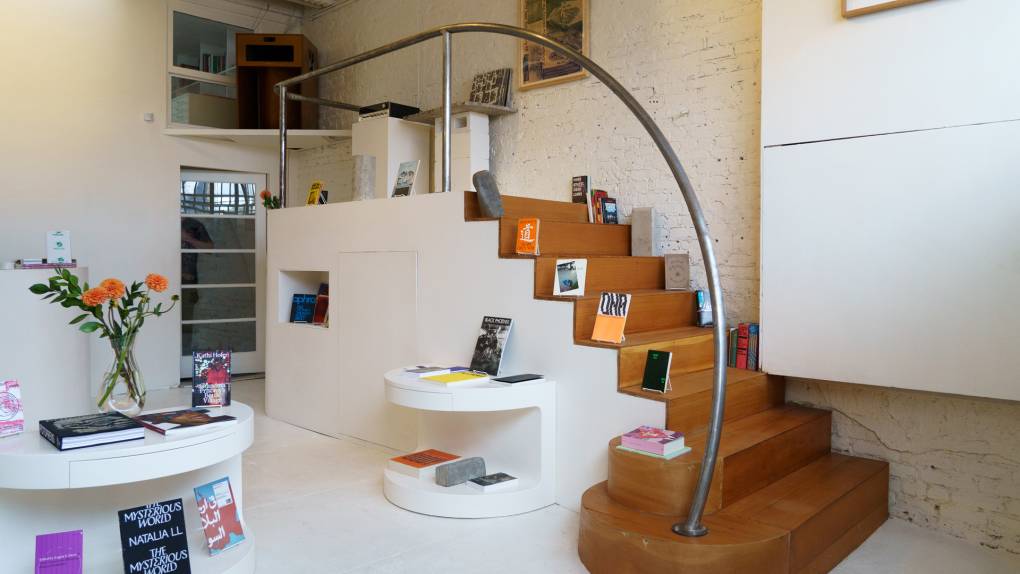
"caption": "Eternal Now offers a careful selection of books, records, cassettes and VHS.",
"description": null,
"title": "EternalNow_COVERb",
"credit": "Aryk Copley",
"status": "inherit",
"altTag": "Interior view of wooden stairs lined with books, small display tables",
"isLoading": false,
"fetchFailed": false
},
"arts_13902885": {
"type": "attachments",
"id": "arts_13902885",
"meta": {
"index": "attachments_1716263798",
"site": "arts",
"id": "13902885",
"found": true
},
"parent": 13902915,
"imgSizes": {
"thumbnail": {
"file": "https://ww2.kqed.org/app/uploads/sites/2/2021/09/D7A3965-160x107.jpg",
"width": 160,
"mimeType": "image/jpeg",
"height": 107
},
"post-thumbnail": {
"file": "https://ww2.kqed.org/app/uploads/sites/2/2021/09/D7A3965-672x372.jpg",
"width": 672,
"mimeType": "image/jpeg",
"height": 372
},
"kqedFullSize": {
"file": "https://ww2.kqed.org/app/uploads/sites/2/2021/09/D7A3965.jpg",
"width": 800,
"height": 533
},
"medium_large": {
"file": "https://ww2.kqed.org/app/uploads/sites/2/2021/09/D7A3965-768x512.jpg",
"width": 768,
"mimeType": "image/jpeg",
"height": 512
}
},
"publishDate": 1631505950,
"modified": 1660711720,
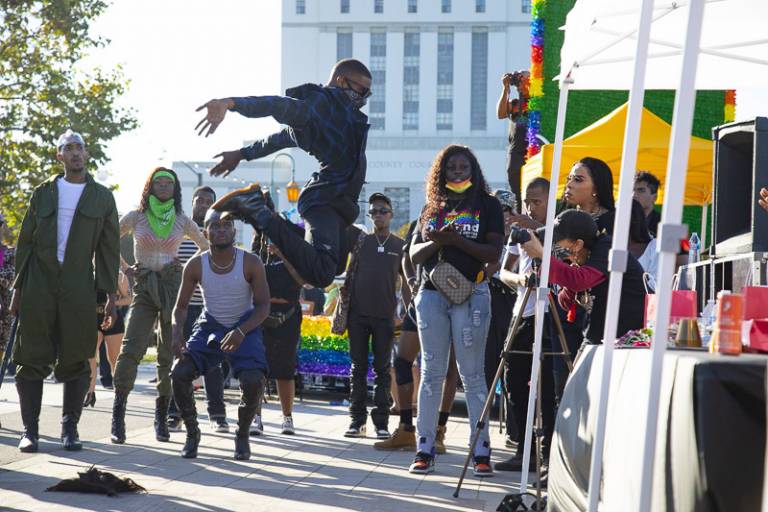
"caption": "\"Set it off\" OTA Performance contest at the Back with a Vengeance Ball at Lake Merritt Amphitheater on Saturday, Sept. 11, 2021. ",
"description": "\"Set it off\" OTA Performance contest at Back with a Vengeance Ball at Lake Merritt Amphitheater on Saturday, Sept. 11, 2021. ",
"title": "\"Set it off\" OTA Performance contest at Back with a Vengeance Ball at Lake Merritt Amphitheater on Saturday, Sept. 11, 2021.",
"credit": "Estefany Gonzalez ",
"status": "inherit",
"altTag": null,
"isLoading": false,
"fetchFailed": false
},
"arts_13916571": {
"type": "attachments",
"id": "arts_13916571",
"meta": {
"index": "attachments_1716263798",
"site": "arts",
"id": "13916571",
"found": true
},
"parent": 13916547,
"imgSizes": {
"twentyfourteen-full-width": {
"file": "https://ww2.kqed.org/app/uploads/sites/2/2022/07/EOYDC-gala-2-1024x576.jpg",
"width": 1024,
"mimeType": "image/jpeg",
"height": 576
},
"thumbnail": {
"file": "https://ww2.kqed.org/app/uploads/sites/2/2022/07/EOYDC-gala-2-160x107.jpg",
"width": 160,
"mimeType": "image/jpeg",
"height": 107
},
"post-thumbnail": {
"file": "https://ww2.kqed.org/app/uploads/sites/2/2022/07/EOYDC-gala-2-672x372.jpg",
"width": 672,
"mimeType": "image/jpeg",
"height": 372
},
"kqedFullSize": {
"file": "https://ww2.kqed.org/app/uploads/sites/2/2022/07/EOYDC-gala-2.jpg",
"width": 1024,
"height": 683
},
"large": {
"file": "https://ww2.kqed.org/app/uploads/sites/2/2022/07/EOYDC-gala-2-1020x680.jpg",
"width": 1020,
"mimeType": "image/jpeg",
"height": 680
},
"medium": {
"file": "https://ww2.kqed.org/app/uploads/sites/2/2022/07/EOYDC-gala-2-800x534.jpg",
"width": 800,
"mimeType": "image/jpeg",
"height": 534
},
"medium_large": {
"file": "https://ww2.kqed.org/app/uploads/sites/2/2022/07/EOYDC-gala-2-768x512.jpg",
"width": 768,
"mimeType": "image/jpeg",
"height": 512
}
},
"publishDate": 1658515224,
"modified": 1658792433,
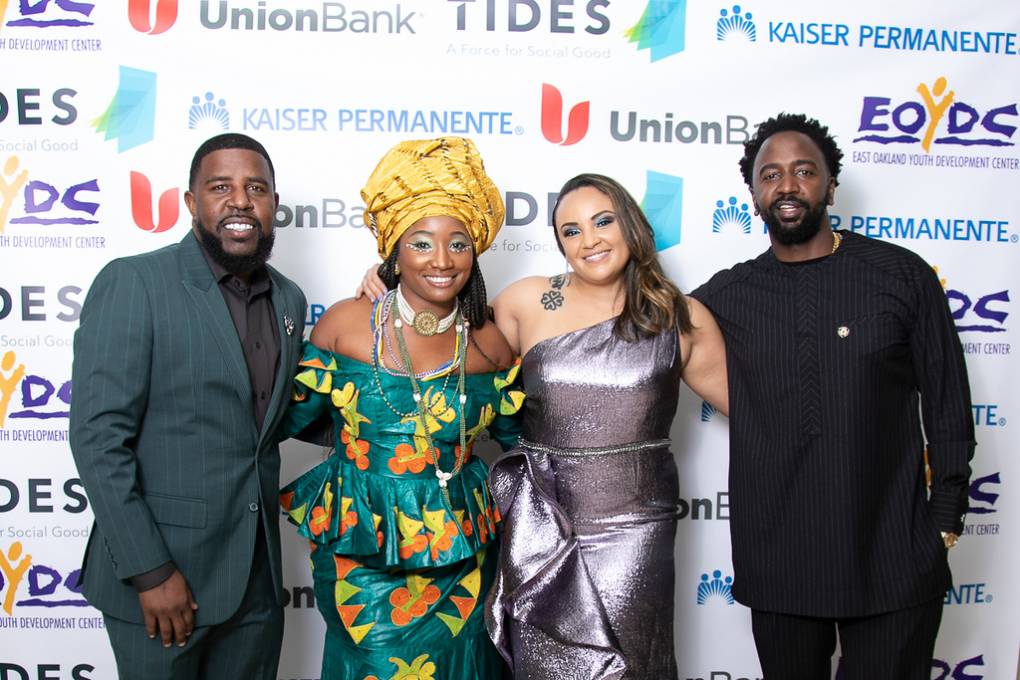
"caption": "Adante Pointer, Queen Imïnah, Selena Wilson and Akintunde Ahmad stand shoulder to shoulder at a prior EOYDC gala. ",
"description": "Adante Pointer, Queen Imïnah, Selena Wilson and Akintunde Ahmad stand shoulder to shoulder at a prior EOYDC gala. ",
"title": "Adante Pointer, Queen Imïnah, Selena Wilson and Akintunde Ahmad stand shoulder to shoulder at a prior EOYDC gala.",
"credit": "Via EOYDC",
"status": "inherit",
"altTag": "Adante Pointer, Queen Imïnah, Selena Wilson and Akintunde Ahmad stand shoulder to shoulder at a prior EOYDC gala.",
"isLoading": false,
"fetchFailed": false
},
"arts_13914246": {
"type": "attachments",
"id": "arts_13914246",
"meta": {
"index": "attachments_1716263798",
"site": "arts",
"id": "13914246",
"found": true
},
"parent": 13914214,
"imgSizes": {
"twentyfourteen-full-width": {
"file": "https://ww2.kqed.org/app/uploads/sites/2/2022/05/023_KQEDArts_WarriorsFinalsTShirts_05272022-1038x576.jpg",
"width": 1038,
"mimeType": "image/jpeg",
"height": 576
},
"thumbnail": {
"file": "https://ww2.kqed.org/app/uploads/sites/2/2022/05/023_KQEDArts_WarriorsFinalsTShirts_05272022-160x107.jpg",
"width": 160,
"mimeType": "image/jpeg",
"height": 107
},
"post-thumbnail": {
"file": "https://ww2.kqed.org/app/uploads/sites/2/2022/05/023_KQEDArts_WarriorsFinalsTShirts_05272022-672x372.jpg",
"width": 672,
"mimeType": "image/jpeg",
"height": 372
},
"kqedFullSize": {
"file": "https://ww2.kqed.org/app/uploads/sites/2/2022/05/023_KQEDArts_WarriorsFinalsTShirts_05272022.jpg",
"width": 1920,
"height": 1280
},
"large": {
"file": "https://ww2.kqed.org/app/uploads/sites/2/2022/05/023_KQEDArts_WarriorsFinalsTShirts_05272022-1020x680.jpg",
"width": 1020,
"mimeType": "image/jpeg",
"height": 680
},
"1536x1536": {
"file": "https://ww2.kqed.org/app/uploads/sites/2/2022/05/023_KQEDArts_WarriorsFinalsTShirts_05272022-1536x1024.jpg",
"width": 1536,
"mimeType": "image/jpeg",
"height": 1024
},
"medium": {
"file": "https://ww2.kqed.org/app/uploads/sites/2/2022/05/023_KQEDArts_WarriorsFinalsTShirts_05272022-800x533.jpg",
"width": 800,
"mimeType": "image/jpeg",
"height": 533
},
"medium_large": {
"file": "https://ww2.kqed.org/app/uploads/sites/2/2022/05/023_KQEDArts_WarriorsFinalsTShirts_05272022-768x512.jpg",
"width": 768,
"mimeType": "image/jpeg",
"height": 512
}
},
"publishDate": 1654037578,
"modified": 1654038543,
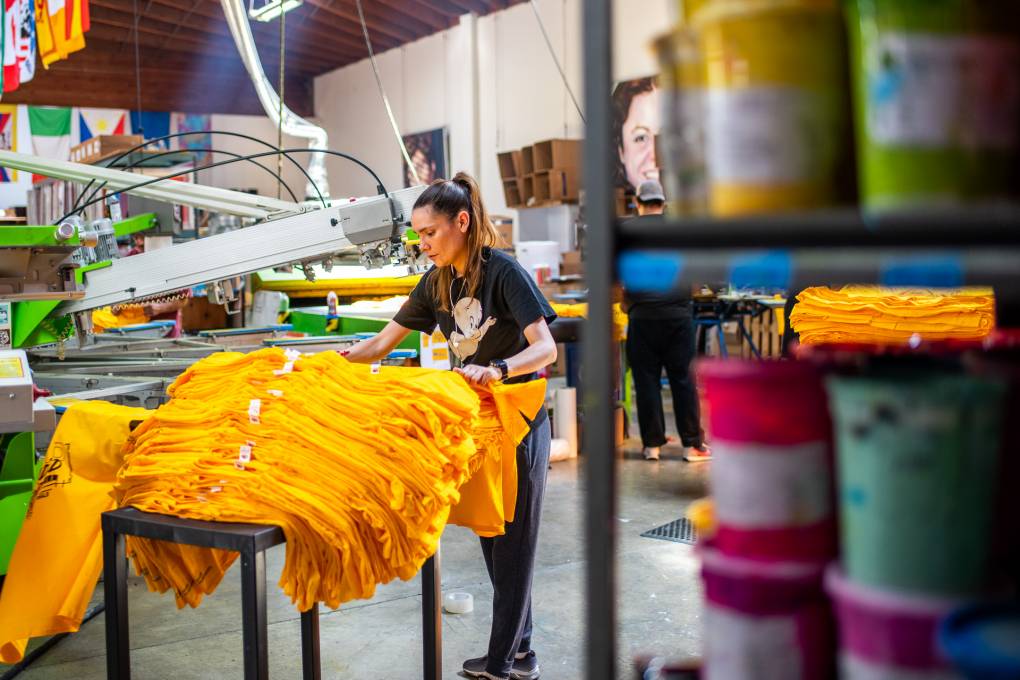
"caption": "Elva Arreola prints Warriors finals t-shirts at Brand Marinade screen printing shop in San Leandro on May 27, 2022.",
"description": null,
"title": "023_KQEDArts_WarriorsFinalsTShirts_05272022",
"credit": "Beth LaBerge/KQED",
"status": "inherit",
"altTag": null,
"isLoading": false,
"fetchFailed": false
},
"arts_13912835": {
"type": "attachments",
"id": "arts_13912835",
"meta": {
"index": "attachments_1716263798",
"site": "arts",
"id": "13912835",
"found": true
},
"parent": 13912817,
"imgSizes": {
"twentyfourteen-full-width": {
"file": "https://ww2.kqed.org/app/uploads/sites/2/2022/05/GettyImages-1395063288-1038x576.jpg",
"width": 1038,
"mimeType": "image/jpeg",
"height": 576
},
"thumbnail": {
"file": "https://ww2.kqed.org/app/uploads/sites/2/2022/05/GettyImages-1395063288-160x107.jpg",
"width": 160,
"mimeType": "image/jpeg",
"height": 107
},
"post-thumbnail": {
"file": "https://ww2.kqed.org/app/uploads/sites/2/2022/05/GettyImages-1395063288-672x372.jpg",
"width": 672,
"mimeType": "image/jpeg",
"height": 372
},
"kqedFullSize": {
"file": "https://ww2.kqed.org/app/uploads/sites/2/2022/05/GettyImages-1395063288-scaled-e1651545846880.jpg",
"width": 1920,
"height": 1280
},
"2048x2048": {
"file": "https://ww2.kqed.org/app/uploads/sites/2/2022/05/GettyImages-1395063288-2048x1365.jpg",
"width": 2048,
"mimeType": "image/jpeg",
"height": 1365
},
"large": {
"file": "https://ww2.kqed.org/app/uploads/sites/2/2022/05/GettyImages-1395063288-1020x680.jpg",
"width": 1020,
"mimeType": "image/jpeg",
"height": 680
},
"1536x1536": {
"file": "https://ww2.kqed.org/app/uploads/sites/2/2022/05/GettyImages-1395063288-1536x1024.jpg",
"width": 1536,
"mimeType": "image/jpeg",
"height": 1024
},
"full-width": {
"file": "https://ww2.kqed.org/app/uploads/sites/2/2022/05/GettyImages-1395063288-1920x1280.jpg",
"width": 1920,
"mimeType": "image/jpeg",
"height": 1280
},
"medium": {
"file": "https://ww2.kqed.org/app/uploads/sites/2/2022/05/GettyImages-1395063288-800x533.jpg",
"width": 800,
"mimeType": "image/jpeg",
"height": 533
},
"medium_large": {
"file": "https://ww2.kqed.org/app/uploads/sites/2/2022/05/GettyImages-1395063288-768x512.jpg",
"width": 768,
"mimeType": "image/jpeg",
"height": 512
}
},
"publishDate": 1651545698,
"modified": 1651546066,
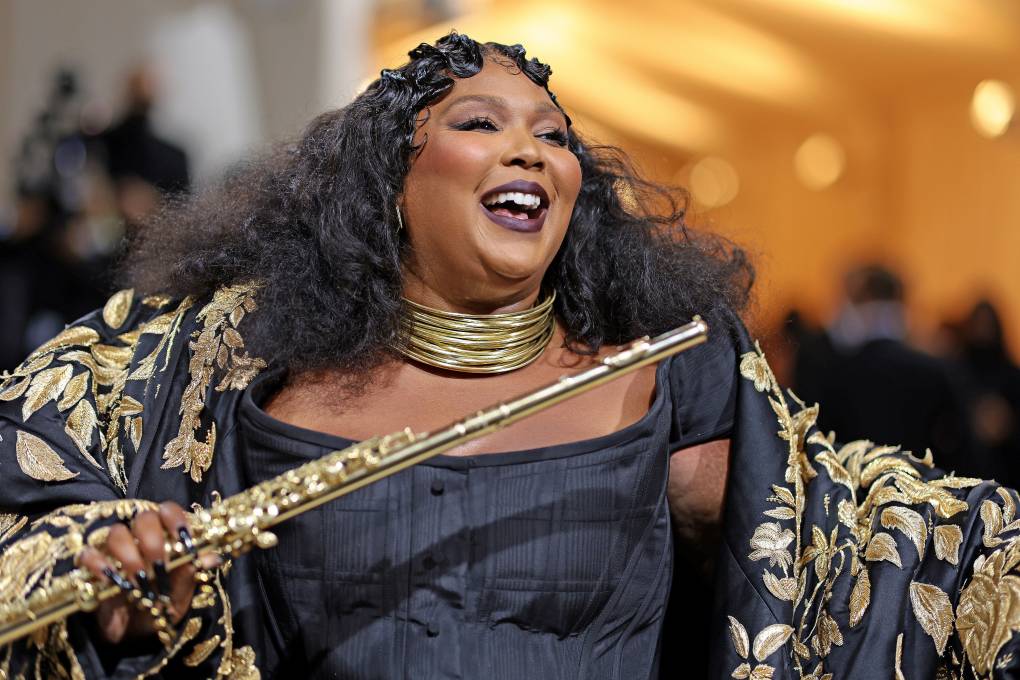
"caption": "Lizzo walks the red carpet at the 2022 Met Gala, celebrating the new \"In America: An Anthology of Fashion\" exhibit at The Metropolitan Museum of Art.",
"description": null,
"title": "Lizzo walks the red carpet at the 2022 Met Gala, celebrating the new \"In America: An Anthology of Fashion\" exhibit at The Metropolitan Museum of Art.",
"credit": "Dimitrios Kambouris/Getty Images for The Met Museum/Vogue",
"status": "inherit",
"altTag": "Lizzo smiles broadly, while wearing gold hoop necklaces, a black bodice and ornate black and gold coat. He is clutching a gold flute.",
"isLoading": false,
"fetchFailed": false
}
},
"audioPlayerReducer": {
"postId": "stream_live",
"isPaused": true,
"isPlaying": false,
"pfsActive": false,
"pledgeModalIsOpen": true,
"playerDrawerIsOpen": false,
"liveAudioPlayStartedAt": 0,
"liveAudioPlayContext": ""
},
"authorsReducer": {
"byline_arts_13925139": {
"type": "authors",
"id": "byline_arts_13925139",
"meta": {
"override": true
},
"slug": "byline_arts_13925139",
"name": "Leanne Italie",
"isLoading": false
},
"byline_arts_13925119": {
"type": "authors",
"id": "byline_arts_13925119",
"meta": {
"override": true
},
"slug": "byline_arts_13925119",
"name": "Rachel Treisman",
"isLoading": false
},
"byline_arts_13924879": {
"type": "authors",
"id": "byline_arts_13924879",
"meta": {
"override": true
},
"slug": "byline_arts_13924879",
"name": "Colleen Barry",
"isLoading": false
},
"byline_arts_13923138": {
"type": "authors",
"id": "byline_arts_13923138",
"meta": {
"override": true
},
"slug": "byline_arts_13923138",
"name": "Gregory Katz\u003cbr />Associated Press",
"isLoading": false
},
"byline_arts_13914214": {
"type": "authors",
"id": "byline_arts_13914214",
"meta": {
"override": true
},
"slug": "byline_arts_13914214",
"name": "Nick Lozito",
"isLoading": false
},
"gmeline": {
"type": "authors",
"id": "185",
"meta": {
"index": "authors_1716337520",
"id": "185",
"found": true
},
"name": "Gabe Meline",
"firstName": "Gabe",
"lastName": "Meline",
"slug": "gmeline",
"email": "gmeline@kqed.org",
"display_author_email": true,
"staff_mastheads": [
"arts"
],
"title": "Senior Editor, KQED Arts & Culture",
"bio": "Gabe Meline entered journalism at age 15 making photocopied zines, and has since earned awards from the Edward R. Murrow Awards, the Society for Professional Journalists, the Online Journalism Awards, the Association of Alternative Newsweeklies and the California Newspaper Publishers Association. Prior to KQED, he was the editor of the \u003cem>North Bay Bohemian\u003c/em> and a touring musician. He lives with his wife and daughter in his hometown of Santa Rosa, CA.",
"avatar": "https://secure.gravatar.com/avatar/5bebe57be0d8bc2dd318934feb47299e2d2d10cba28d09d8d7afb389a2ce2bdd?s=600&d=blank&r=g",
"twitter": null,
"bluesky": null,
"facebook": null,
"instagram": null,
"linkedin": null,
"sites": [
{
"site": "",
"roles": [
"editor"
]
},
{
"site": "arts",
"roles": [
"administrator"
]
},
{
"site": "artschool",
"roles": [
"editor"
]
},
{
"site": "news",
"roles": [
"author"
]
},
{
"site": "pop",
"roles": [
"editor"
]
},
{
"site": "bayareabites",
"roles": [
"editor"
]
},
{
"site": "food",
"roles": [
"editor"
]
},
{
"site": "forum",
"roles": [
"administrator"
]
},
{
"site": "liveblog",
"roles": [
"editor"
]
},
{
"site": "hiphop",
"roles": [
"editor"
]
}
],
"headData": {
"title": "Gabe Meline | KQED",
"description": "Senior Editor, KQED Arts & Culture",
"ogImgSrc": "https://secure.gravatar.com/avatar/5bebe57be0d8bc2dd318934feb47299e2d2d10cba28d09d8d7afb389a2ce2bdd?s=600&d=blank&r=g",
"twImgSrc": "https://secure.gravatar.com/avatar/5bebe57be0d8bc2dd318934feb47299e2d2d10cba28d09d8d7afb389a2ce2bdd?s=600&d=blank&r=g"
},
"isLoading": false,
"link": "/author/gmeline"
},
"ralexandra": {
"type": "authors",
"id": "11242",
"meta": {
"index": "authors_1716337520",
"id": "11242",
"found": true
},
"name": "Rae Alexandra",
"firstName": "Rae",
"lastName": "Alexandra",
"slug": "ralexandra",
"email": "ralexandra@kqed.org",
"display_author_email": true,
"staff_mastheads": [],
"title": "Reporter/Producer",
"bio": "Rae Alexandra is a Reporter/Producer for KQED Arts & Culture, and the creator/author of the \u003ca href=\"https://www.kqed.org/arts/program/rebel-girls-from-bay-area-history\">Rebel Girls From Bay Area History\u003c/a> and \u003ca href=\"https://www.kqed.org/bizarrebayarea\">Bizarre Bay Area\u003c/a> series. Her debut book, \u003ca href=\"https://citylights.com/politics-current-events-history/unsung-heroines35-women-who-changed/\">Unsung Heroines: 35 Women Who Changed the Bay Area\u003c/a> was published by City Lights in March 2026. In 2023, Rae was awarded an SPJ Excellence in Journalism Award for Arts & Culture. Rae was born and raised in Wales and subsequently — even after two decades in Northern California — still uses phrases that regularly baffle her coworkers.",
"avatar": "https://secure.gravatar.com/avatar/edfee8176c80cc0a382b051190f5341997df378a934a5774dcb0977732dfd401?s=600&d=blank&r=g",
"twitter": null,
"bluesky": null,
"facebook": null,
"instagram": null,
"linkedin": null,
"sites": [
{
"site": "arts",
"roles": [
"subscriber"
]
},
{
"site": "news",
"roles": [
"subscriber"
]
},
{
"site": "pop",
"roles": [
"subscriber"
]
},
{
"site": "bayareabites",
"roles": [
"subscriber"
]
},
{
"site": "science",
"roles": [
"subscriber"
]
}
],
"headData": {
"title": "Rae Alexandra | KQED",
"description": "Reporter/Producer",
"ogImgSrc": "https://secure.gravatar.com/avatar/edfee8176c80cc0a382b051190f5341997df378a934a5774dcb0977732dfd401?s=600&d=blank&r=g",
"twImgSrc": "https://secure.gravatar.com/avatar/edfee8176c80cc0a382b051190f5341997df378a934a5774dcb0977732dfd401?s=600&d=blank&r=g"
},
"isLoading": false,
"link": "/author/ralexandra"
},
"nvoynovskaya": {
"type": "authors",
"id": "11387",
"meta": {
"index": "authors_1716337520",
"id": "11387",
"found": true
},
"name": "Nastia Voynovskaya",
"firstName": "Nastia",
"lastName": "Voynovskaya",
"slug": "nvoynovskaya",
"email": "nvoynovskaya@kqed.org",
"display_author_email": false,
"staff_mastheads": [
"arts"
],
"title": "Editor and reporter",
"bio": "Nastia Voynovskaya is a reporter, editor and host at KQED Arts & Culture. She's been covering the arts in the Bay Area for over a decade, with a focus on music, queer culture, labor issues and grassroots organizing. She has edited KQED story series such as Trans Bay: A History of San Francisco's Gender-Diverse Community, and co-created KQED's Bay Area hip-hop history project, That's My Word. Nastia's work has been recognized by the Society of Professional Journalists and San Francisco Press Club. She regularly appears on podcasts and radio programs, including NPR's All Songs Considered, and hosts live events where music, culture and conversation meet.",
"avatar": "https://secure.gravatar.com/avatar/5025ee460e5a85d69ca20ea6c6f2f80d7e17795c828f61ea3aecfcd924e9042e?s=600&d=blank&r=g",
"twitter": null,
"bluesky": null,
"facebook": null,
"instagram": "https://www.instagram.com/nananastia/",
"linkedin": null,
"sites": [
{
"site": "",
"roles": [
"editor"
]
},
{
"site": "arts",
"roles": [
"administrator"
]
},
{
"site": "news",
"roles": [
"editor"
]
},
{
"site": "pop",
"roles": [
"administrator"
]
},
{
"site": "bayareabites",
"roles": [
"editor"
]
},
{
"site": "podcasts",
"roles": [
"editor"
]
},
{
"site": "hiphop",
"roles": [
"editor"
]
}
],
"headData": {
"title": "Nastia Voynovskaya | KQED",
"description": "Editor and reporter",
"ogImgSrc": "https://secure.gravatar.com/avatar/5025ee460e5a85d69ca20ea6c6f2f80d7e17795c828f61ea3aecfcd924e9042e?s=600&d=blank&r=g",
"twImgSrc": "https://secure.gravatar.com/avatar/5025ee460e5a85d69ca20ea6c6f2f80d7e17795c828f61ea3aecfcd924e9042e?s=600&d=blank&r=g"
},
"isLoading": false,
"link": "/author/nvoynovskaya"
},
"ogpenn": {
"type": "authors",
"id": "11491",
"meta": {
"index": "authors_1716337520",
"id": "11491",
"found": true
},
"name": "Pendarvis Harshaw",
"firstName": "Pendarvis",
"lastName": "Harshaw",
"slug": "ogpenn",
"email": "ogpenn@gmail.com",
"display_author_email": false,
"staff_mastheads": [
"arts"
],
"title": "Community Engagement Reporter",
"bio": "Pendarvis Harshaw is an educator, host and writer with KQED Arts.",
"avatar": "https://secure.gravatar.com/avatar/972b77ee8e3f346ae2b00622661187fbfabd059b5693bbdc1475ea7a722fd4cd?s=600&d=blank&r=g",
"twitter": null,
"bluesky": null,
"facebook": null,
"instagram": "ogpenn",
"linkedin": null,
"sites": [
{
"site": "arts",
"roles": [
"administrator"
]
},
{
"site": "news",
"roles": [
"editor"
]
},
{
"site": "bayareabites",
"roles": [
"author"
]
},
{
"site": "hiphop",
"roles": [
"editor"
]
}
],
"headData": {
"title": "Pendarvis Harshaw | KQED",
"description": "Community Engagement Reporter",
"ogImgSrc": "https://secure.gravatar.com/avatar/972b77ee8e3f346ae2b00622661187fbfabd059b5693bbdc1475ea7a722fd4cd?s=600&d=blank&r=g",
"twImgSrc": "https://secure.gravatar.com/avatar/972b77ee8e3f346ae2b00622661187fbfabd059b5693bbdc1475ea7a722fd4cd?s=600&d=blank&r=g"
},
"isLoading": false,
"link": "/author/ogpenn"
},
"earnold": {
"type": "authors",
"id": "11839",
"meta": {
"index": "authors_1716337520",
"id": "11839",
"found": true
},
"name": "Eric Arnold",
"firstName": "Eric",
"lastName": "Arnold",
"slug": "earnold",
"email": "earnold@kqed.org",
"display_author_email": false,
"staff_mastheads": [],
"title": "Contributing Editor, 'That's My Word'",
"bio": "Eric Arnold has covered hip-hop locally and nationally for over 30 years. Formerly the managing editor of \u003cem>4080\u003c/em> and columnist for \u003cem>The Source\u003c/em>, he chronicled hyphy’s rise and fall, co-curated the Oakland Museum of California’s first hip-hop exhibit in 2018 and won a 2022 Northern California Emmy Award for a mini-documentary on Oakland’s Boogaloo dance culture. He is a contributing editor for \u003cem>That’s My Word\u003c/em>, KQED's series on the history of Bay Area hip-hop.",
"avatar": "https://secure.gravatar.com/avatar/ede45b04898456ad0893a2811e78b0a2?s=600&d=blank&r=g",
"twitter": null,
"facebook": null,
"instagram": null,
"linkedin": null,
"sites": [
{
"site": "arts",
"roles": [
"contributor"
]
},
{
"site": "news",
"roles": [
"contributor"
]
},
{
"site": "hiphop",
"roles": [
"contributor"
]
}
],
"headData": {
"title": "Eric Arnold | KQED",
"description": "Contributing Editor, 'That's My Word'",
"ogImgSrc": "https://secure.gravatar.com/avatar/ede45b04898456ad0893a2811e78b0a2?s=600&d=blank&r=g",
"twImgSrc": "https://secure.gravatar.com/avatar/ede45b04898456ad0893a2811e78b0a2?s=600&d=blank&r=g"
},
"isLoading": false,
"link": "/author/earnold"
},
"ncoats": {
"type": "authors",
"id": "12013",
"meta": {
"index": "authors_1716337520",
"id": "12013",
"found": true
},
"name": "Nia Coats",
"firstName": "Nia",
"lastName": "Coats",
"slug": "ncoats",
"email": "ncoats@kqed.org",
"display_author_email": false,
"staff_mastheads": [],
"title": "Intern, KQED Arts & Culture",
"bio": "Nia Coats is KQED Arts & Culture's editorial intern. As a recent Berkeley School of Journalism graduate, she has covered arts and culture in the Bay Area and nationwide since 2021. She has a great love for music and the ways it soundtracks our lives. When she isn't reporting or writing, Nia is going to concerts, watching movies and working on her magazine, \u003cem>Lucky 7\u003c/em>.",
"avatar": "https://secure.gravatar.com/avatar/5603dfcf7b25a681fd9fcc1f691ee510bd6a2fdbb37b425d337245b9e330e449?s=600&d=blank&r=g",
"twitter": null,
"bluesky": null,
"facebook": null,
"instagram": null,
"linkedin": null,
"sites": [
{
"site": "arts",
"roles": [
"contributor"
]
}
],
"headData": {
"title": "Nia Coats | KQED",
"description": "Intern, KQED Arts & Culture",
"ogImgSrc": "https://secure.gravatar.com/avatar/5603dfcf7b25a681fd9fcc1f691ee510bd6a2fdbb37b425d337245b9e330e449?s=600&d=blank&r=g",
"twImgSrc": "https://secure.gravatar.com/avatar/5603dfcf7b25a681fd9fcc1f691ee510bd6a2fdbb37b425d337245b9e330e449?s=600&d=blank&r=g"
},
"isLoading": false,
"link": "/author/ncoats"
}
},
"pagesReducer": {
"arts_category_design": {
"type": "terms",
"id": "arts_76",
"meta": {
"index": "terms_1716263798",
"site": "arts",
"id": "76",
"score": 12.560116
},
"featImg": null,
"name": "Fashion/Design",
"description": null,
"taxonomy": "category",
"headData": {
"twImgId": null,
"twTitle": null,
"ogTitle": null,
"ogImgId": null,
"twDescription": null,
"description": null,
"title": "Fashion/Design Archives | KQED Arts",
"ogDescription": null
},
"ttid": 77,
"slug": "design",
"isLoading": false,
"title": "Fashion/Design",
"pageMeta": {
"site": "arts",
"WpPageTemplate": "page-topic-editorial",
"currentPage": 8
},
"blocks": [
{
"blockName": "kqed/post-list",
"attrs": {
"layout": "cardArticle2",
"query": "posts/arts?category=design",
"seeMore": false,
"paginated": true,
"page": 8
}
},
{
"blockName": "kqed/ad"
}
]
}
},
"pfsSessionReducer": {},
"postsReducer": {
"stream_live": {
"type": "live",
"id": "stream_live",
"audioUrl": "https://streams.kqed.org/kqedradio",
"title": "Live Stream",
"excerpt": "Live Stream information currently unavailable.",
"link": "/radio",
"featImg": "",
"label": {
"name": "KQED Live",
"link": "/"
}
},
"stream_kqedNewscast": {
"type": "posts",
"id": "stream_kqedNewscast",
"audioUrl": "https://www.kqed.org/.stream/anon/radio/RDnews/newscast.mp3?_=1",
"title": "KQED Newscast",
"featImg": "",
"label": {
"name": "88.5 FM",
"link": "/"
}
},
"arts_13925139": {
"type": "posts",
"id": "arts_13925139",
"meta": {
"index": "posts_1716263798",
"site": "arts",
"id": "13925139",
"score": null,
"sort": [
1676409014000
]
},
"parent": 0,
"labelTerm": {
"site": "arts"
},
"blocks": [],
"publishDate": 1676409014,
"format": "standard",
"title": "Pharrell Named New Louis Vuitton Menswear Creative Director",
"headTitle": "Pharrell Named New Louis Vuitton Menswear Creative Director | KQED",
"content": "\u003cp>Louis Vuitton has named multitalented singer-songwriter-philanthropist Pharrell Williams creative director of its menswear division, replacing the late Virgil Abloh, the company said Tuesday.\u003c/p>\n\u003cp>[aside postid='arts_13925110']“Pharrell Williams is a visionary whose creative universes expand from music, to art and to fashion — establishing himself as a cultural, global icon over the past 20 years,” the luxury house said in a statement.\u003c/p>\n\u003cp>Word on the appointment first broke in\u003cem> The Wall Street Journal\u003c/em> and \u003cem>Le Figaro\u003c/em>.\u003c/p>\n\u003cp>The “Happy” singer is a 13-time Grammy winner and two-time Oscar nominee with experience working with luxury brands and designers like the late Karl Lagerfeld.\u003c/p>\n\u003cp>The appointment is effective immediately. Williams’ first collection is scheduled to be shown during Paris Men’s Fashion Week in June.\u003c/p>\n\u003cfigure id=\"attachment_13925140\" class=\"wp-caption aligncenter\" style=\"max-width: 800px\">\u003cimg loading=\"lazy\" decoding=\"async\" class=\"size-medium wp-image-13925140\" src=\"https://ww2.kqed.org/app/uploads/sites/2/2023/02/GettyImages-1463596849-800x533.jpg\" alt=\"A slender Black man wearing a red leather tracksuit and full length fur coat stands on the red carpet wearing bejeweled sunglasses. At his side is a beautiful mixed race woman with long dark hair. She is wearing a black version of the red tracksuit.\" width=\"800\" height=\"533\" srcset=\"https://cdn.kqed.org/wp-content/uploads/sites/2/2023/02/GettyImages-1463596849-800x533.jpg 800w, https://cdn.kqed.org/wp-content/uploads/sites/2/2023/02/GettyImages-1463596849-1020x680.jpg 1020w, https://cdn.kqed.org/wp-content/uploads/sites/2/2023/02/GettyImages-1463596849-160x107.jpg 160w, https://cdn.kqed.org/wp-content/uploads/sites/2/2023/02/GettyImages-1463596849-768x512.jpg 768w, https://cdn.kqed.org/wp-content/uploads/sites/2/2023/02/GettyImages-1463596849-1536x1024.jpg 1536w, https://cdn.kqed.org/wp-content/uploads/sites/2/2023/02/GettyImages-1463596849-2048x1365.jpg 2048w, https://cdn.kqed.org/wp-content/uploads/sites/2/2023/02/GettyImages-1463596849-1920x1280.jpg 1920w\" sizes=\"(max-width: 800px) 100vw, 800px\">\u003cfigcaption class=\"wp-caption-text\">Pharrell Williams and Helen Lasichanh attend the 65th GRAMMY Awards, February 2023 in LA. \u003ccite>(Jeff Kravitz/FilmMagic)\u003c/cite>\u003c/figcaption>\u003c/figure>\n\u003cp>The position had been left vacant since November 2021, when Abloh died of cancer at age 41. He was a groundbreaking designer and tastemaker known for merging streetwear and high fashion.\u003c/p>\n\u003cp>[ad fullwidth]\u003c/p>\n\u003cp>Abloh’s ubiquitous, consumer-friendly presence in culture was wide-ranging and dynamic. Some compared him to Jeff Koons. Others hailed him as his generation’s Lagerfeld, Chanel’s longtime creative director who died in 2019. Abloh was the first Black director of menswear at Louis Vuitton, one of France’s most storied fashion houses.\u003c/p>\n\u003cp>[aside postid='arts_13925119']After Abloh’s death, the brand carried on with splashy men’s shows, largely without a creative director. Abloh, a DJ and founder of the brand Off-White, turned the job at Louis Vuitton into that of “curator,” rather than simply “designer,” as he expanded his interests into housewares, art, jewelry, industrial design and architecture.\u003c/p>\n\u003cp>Williams collaborated with the luxury group LVMH (Louis Vuitton Moët Hennessy) in 2004 and 2008. He had a massively popular sneaker collaboration with Chanel in 2017 and a unisex clothing collection in 2019 that he designed with Lagerfeld. He also has his own fashion brands, including Billionaire Boys Club and Icecream.\u003c/p>\n\u003cp>“His creative vision beyond fashion will undoubtedly lead Louis Vuitton towards a new and very exciting chapter,” the brand’s new chairman and CEO, Pietro Beccari, said in the statement.\u003c/p>\n\u003cp>\u003c/p>\n\u003cp>\u003cem>Copyright 2023 AP. To see more, visit \u003ca href=\"https://apnews.com/\" target=\"_blank\" rel=\"noopener\">the AP\u003c/a>.\u003c/em>\u003c/p>\n\n",
"stats": {
"hasVideo": false,
"hasChartOrMap": false,
"hasAudio": false,
"hasPolis": false,
"wordCount": 401,
"hasGoogleForm": false,
"hasGallery": false,
"hasHearkenModule": false,
"iframeSrcs": [],
"paragraphCount": 13
},
"modified": 1705005842,
"excerpt": "Williams’ first collection is scheduled to be shown during Paris Men’s Fashion Week in June.",
"headData": {
"twImgId": "",
"twTitle": "",
"ogTitle": "",
"ogImgId": "",
"twDescription": "",
"description": "Williams’ first collection is scheduled to be shown during Paris Men’s Fashion Week in June.",
"title": "Pharrell Named New Louis Vuitton Menswear Creative Director | KQED",
"ogDescription": "",
"schema": {
"@context": "https://schema.org",
"@type": "Article",
"headline": "Pharrell Named New Louis Vuitton Menswear Creative Director",
"datePublished": "2023-02-14T13:10:14-08:00",
"dateModified": "2024-01-11T12:44:02-08:00",
"image": "https://cdn.kqed.org/wp-content/uploads/2020/02/KQED-OG-Image@1x.png"
}
},
"guestAuthors": [],
"slug": "pharrell-named-new-louis-vuitton-menswear-creative-director",
"status": "publish",
"templateType": "standard",
"nprByline": "Leanne Italie",
"excludeFromSiteSearch": "Include",
"featuredImageType": "standard",
"sticky": false,
"showOnAuthorArchivePages": "No",
"articleAge": "0",
"path": "/arts/13925139/pharrell-named-new-louis-vuitton-menswear-creative-director",
"audioTrackLength": null,
"parsedContent": [
{
"type": "contentString",
"content": "\u003cdiv class=\"post-body\">\u003cp>\u003cp>Louis Vuitton has named multitalented singer-songwriter-philanthropist Pharrell Williams creative director of its menswear division, replacing the late Virgil Abloh, the company said Tuesday.\u003c/p>\n\u003cp>\u003c/p>\u003c/div>",
"attributes": {
"named": {},
"numeric": []
}
},
{
"type": "component",
"content": "",
"name": "aside",
"attributes": {
"named": {
"postid": "arts_13925110",
"label": ""
},
"numeric": []
}
},
{
"type": "contentString",
"content": "\u003cdiv class=\"post-body\">\u003cp>“Pharrell Williams is a visionary whose creative universes expand from music, to art and to fashion — establishing himself as a cultural, global icon over the past 20 years,” the luxury house said in a statement.\u003c/p>\n\u003cp>Word on the appointment first broke in\u003cem> The Wall Street Journal\u003c/em> and \u003cem>Le Figaro\u003c/em>.\u003c/p>\n\u003cp>The “Happy” singer is a 13-time Grammy winner and two-time Oscar nominee with experience working with luxury brands and designers like the late Karl Lagerfeld.\u003c/p>\n\u003cp>The appointment is effective immediately. Williams’ first collection is scheduled to be shown during Paris Men’s Fashion Week in June.\u003c/p>\n\u003cfigure id=\"attachment_13925140\" class=\"wp-caption aligncenter\" style=\"max-width: 800px\">\u003cimg loading=\"lazy\" decoding=\"async\" class=\"size-medium wp-image-13925140\" src=\"https://ww2.kqed.org/app/uploads/sites/2/2023/02/GettyImages-1463596849-800x533.jpg\" alt=\"A slender Black man wearing a red leather tracksuit and full length fur coat stands on the red carpet wearing bejeweled sunglasses. At his side is a beautiful mixed race woman with long dark hair. She is wearing a black version of the red tracksuit.\" width=\"800\" height=\"533\" srcset=\"https://cdn.kqed.org/wp-content/uploads/sites/2/2023/02/GettyImages-1463596849-800x533.jpg 800w, https://cdn.kqed.org/wp-content/uploads/sites/2/2023/02/GettyImages-1463596849-1020x680.jpg 1020w, https://cdn.kqed.org/wp-content/uploads/sites/2/2023/02/GettyImages-1463596849-160x107.jpg 160w, https://cdn.kqed.org/wp-content/uploads/sites/2/2023/02/GettyImages-1463596849-768x512.jpg 768w, https://cdn.kqed.org/wp-content/uploads/sites/2/2023/02/GettyImages-1463596849-1536x1024.jpg 1536w, https://cdn.kqed.org/wp-content/uploads/sites/2/2023/02/GettyImages-1463596849-2048x1365.jpg 2048w, https://cdn.kqed.org/wp-content/uploads/sites/2/2023/02/GettyImages-1463596849-1920x1280.jpg 1920w\" sizes=\"(max-width: 800px) 100vw, 800px\">\u003cfigcaption class=\"wp-caption-text\">Pharrell Williams and Helen Lasichanh attend the 65th GRAMMY Awards, February 2023 in LA. \u003ccite>(Jeff Kravitz/FilmMagic)\u003c/cite>\u003c/figcaption>\u003c/figure>\n\u003cp>The position had been left vacant since November 2021, when Abloh died of cancer at age 41. He was a groundbreaking designer and tastemaker known for merging streetwear and high fashion.\u003c/p>\n\u003cp>\u003c/p>\u003c/div>",
"attributes": {
"named": {},
"numeric": []
}
},
{
"type": "component",
"content": "",
"name": "ad",
"attributes": {
"named": {
"label": "fullwidth"
},
"numeric": [
"fullwidth"
]
}
},
{
"type": "contentString",
"content": "\u003cdiv class=\"post-body\">\u003cp>\u003c/p>\n\u003cp>Abloh’s ubiquitous, consumer-friendly presence in culture was wide-ranging and dynamic. Some compared him to Jeff Koons. Others hailed him as his generation’s Lagerfeld, Chanel’s longtime creative director who died in 2019. Abloh was the first Black director of menswear at Louis Vuitton, one of France’s most storied fashion houses.\u003c/p>\n\u003cp>\u003c/p>\u003c/div>",
"attributes": {
"named": {},
"numeric": []
}
},
{
"type": "component",
"content": "",
"name": "aside",
"attributes": {
"named": {
"postid": "arts_13925119",
"label": ""
},
"numeric": []
}
},
{
"type": "contentString",
"content": "\u003cdiv class=\"post-body\">\u003cp>After Abloh’s death, the brand carried on with splashy men’s shows, largely without a creative director. Abloh, a DJ and founder of the brand Off-White, turned the job at Louis Vuitton into that of “curator,” rather than simply “designer,” as he expanded his interests into housewares, art, jewelry, industrial design and architecture.\u003c/p>\n\u003cp>Williams collaborated with the luxury group LVMH (Louis Vuitton Moët Hennessy) in 2004 and 2008. He had a massively popular sneaker collaboration with Chanel in 2017 and a unisex clothing collection in 2019 that he designed with Lagerfeld. He also has his own fashion brands, including Billionaire Boys Club and Icecream.\u003c/p>\n\u003cp>“His creative vision beyond fashion will undoubtedly lead Louis Vuitton towards a new and very exciting chapter,” the brand’s new chairman and CEO, Pietro Beccari, said in the statement.\u003c/p>\n\u003cp>\u003c/p>\n\u003cp>\u003cem>Copyright 2023 AP. To see more, visit \u003ca href=\"https://apnews.com/\" target=\"_blank\" rel=\"noopener\">the AP\u003c/a>.\u003c/em>\u003c/p>\n\n\u003c/div>\u003c/p>",
"attributes": {
"named": {},
"numeric": []
}
}
],
"link": "/arts/13925139/pharrell-named-new-louis-vuitton-menswear-creative-director",
"authors": [
"byline_arts_13925139"
],
"categories": [
"arts_1",
"arts_76",
"arts_69",
"arts_75"
],
"tags": [
"arts_831"
],
"featImg": "arts_13925141",
"label": "arts"
},
"arts_13925119": {
"type": "posts",
"id": "arts_13925119",
"meta": {
"index": "posts_1716263798",
"site": "arts",
"id": "13925119",
"score": null,
"sort": [
1676401176000
]
},
"parent": 0,
"labelTerm": {
"site": "arts",
"term": 137
},
"blocks": [],
"publishDate": 1676401176,
"format": "standard",
"title": "Rihanna’s Maternity Style Isn’t Just Fashionable. It’s Revolutionary, Experts Say",
"headTitle": "Rihanna’s Maternity Style Isn’t Just Fashionable. It’s Revolutionary, Experts Say | KQED",
"content": "\u003cp>Rihanna has already been praised for redefining maternity fashion, having rocked crop tops, low-rise pants and \u003ca href=\"https://www.glamour.com/story/rihanna-pregnancy-style-lingerie-dior\">lingerie\u003c/a> during her first pregnancy last year.\u003c/p>\n\u003cp>So after the singer-slash-business-mogul-slash-fashion-icon revealed her baby bump at Sunday’s Super Bowl halftime show, fans were quick to share their excitement — not just for her growing family, but about her future outfits.\u003c/p>\n\u003cp>https://twitter.com/allurequinn/status/1624960758911213568\u003c/p>\n\u003cp>Rihanna has described her maternity style as “rebellious,” \u003ca href=\"https://www.bustle.com/style/rihanna-pregnancy-style\">telling \u003cem>Bustle \u003c/em>\u003c/a>last year that she had challenged herself to be creative and didn’t want to buy maternity clothes or do “whatever society told me to do before.”\u003c/p>\n\u003cp>“I’m hoping that we were able to redefine what’s considered ‘decent’ for pregnant women,” \u003ca href=\"https://www.vogue.com/article/rihanna-cover-may-2022\">Rihanna told \u003cem>Vogue\u003c/em>\u003c/a> in April. “My body is doing incredible things right now, and I’m not going to be ashamed of that. This time should feel celebratory. Because why should you be hiding your pregnancy?”\u003c/p>\n\u003cp>[ad fullwidth]\u003c/p>\n\u003cp>And pregnancy No. 2 appears to be off to a similar start, given that she announced it in an all-red flight suit/breastplate/puffer coat ensemble while suspended on a glass platform high in the air.\u003c/p>\n\u003cp>[aside postid='arts_13847561']Rihanna’s influence as an “executive and visual mastermind” makes her pregnancy style “impactful and worth discussing,” Solange Franklin, a stylist and consultant, told NPR via email.\u003c/p>\n\u003cp>“Her unabashed style is a flair to the world that says ‘look at me, look at us’ and to be seen on your own terms is powerful and thrilling,” Franklin added.\u003c/p>\n\u003cp>Rihanna isn’t the first celebrity to show off her pregnancy, or the only pregnant person to have worn a mesh top.\u003c/p>\n\u003cp>But she has a massive platform, and design experts and historians tell NPR that what she’s doing is significant: By challenging society’s long-held notion that pregnant people should dress or look a certain way, she’s sparking a conversation about their role and rights — and one that advocates hope will lead to substantive change.\u003c/p>\n\u003ch3>A brief history of maternity fashion\u003c/h3>\n\u003cp>Maternity wear as we know it has only been around since the 19th century, explains Serena Dyer, \u003ca href=\"https://www.dmu.ac.uk/about-dmu/academic-staff/art-design-humanities/serena-dyer/serena-dyer.aspx\">a historian of design\u003c/a> and material culture at De Montfort University in England.\u003c/p>\n\u003cp>Before that, there wasn’t a clear distinction between maternity and regular fashion, in part because it was the norm for women to be married and spend a lot of their lives pregnant.\u003c/p>\n\u003cp>Clothes were made to be adaptable, with waistlines and other elements that could be added or removed as women’s sizes changed. (Dyer notes that stays, the precursor to corsets, weren’t actually as rigid as we tend to think nowadays.)\u003c/p>\n\u003cp>[aside postid='arts_13874517']The 19th century saw the commercialization of fashion and the emergence of distinct maternity clothes — as well as more “moralizing” around pregnancy as something to be concealed rather than celebrated, Dyer explains.\u003c/p>\n\u003cp>“And then as we go into the 20th century, it becomes even more commercialized,” she adds. “And the invention of things like lycra, spandex, elastane allow for these more specifically kind of stretchy maternity garments that are separate from the more kind of figure-revealing garments of a normal everyday fashion.”\u003c/p>\n\u003cfigure id=\"attachment_13925121\" class=\"wp-caption aligncenter\" style=\"max-width: 800px\">\u003cimg loading=\"lazy\" decoding=\"async\" class=\"size-medium wp-image-13925121\" src=\"https://ww2.kqed.org/app/uploads/sites/2/2023/02/gettyimages-1372824237-b7ad1946ad16aae8891719989edb4b9561ca8c82-scaled-e1676399084962-800x600.jpg\" alt=\"A Black man wearing an all black outfit of jeans, t-shirt and denim jacket sits next to a heavily pregnant Black woman. She is wearing black pants, a black lace fitted crop top and a lilac fake fur stole.\" width=\"800\" height=\"600\" srcset=\"https://cdn.kqed.org/wp-content/uploads/sites/2/2023/02/gettyimages-1372824237-b7ad1946ad16aae8891719989edb4b9561ca8c82-scaled-e1676399084962-800x600.jpg 800w, https://cdn.kqed.org/wp-content/uploads/sites/2/2023/02/gettyimages-1372824237-b7ad1946ad16aae8891719989edb4b9561ca8c82-scaled-e1676399084962-1020x765.jpg 1020w, https://cdn.kqed.org/wp-content/uploads/sites/2/2023/02/gettyimages-1372824237-b7ad1946ad16aae8891719989edb4b9561ca8c82-scaled-e1676399084962-160x120.jpg 160w, https://cdn.kqed.org/wp-content/uploads/sites/2/2023/02/gettyimages-1372824237-b7ad1946ad16aae8891719989edb4b9561ca8c82-scaled-e1676399084962-768x576.jpg 768w, https://cdn.kqed.org/wp-content/uploads/sites/2/2023/02/gettyimages-1372824237-b7ad1946ad16aae8891719989edb4b9561ca8c82-scaled-e1676399084962-1536x1152.jpg 1536w, https://cdn.kqed.org/wp-content/uploads/sites/2/2023/02/gettyimages-1372824237-b7ad1946ad16aae8891719989edb4b9561ca8c82-scaled-e1676399084962.jpg 1920w\" sizes=\"(max-width: 800px) 100vw, 800px\">\u003cfigcaption class=\"wp-caption-text\">Rihanna and her partner A$AP Rocky pictured at Milan Fashion Week in February 2022. \u003ccite>(Victor Boyko/Getty Images for Gucci)\u003c/cite>\u003c/figcaption>\u003c/figure>\n\u003cp>While there has been a recent push towards more “fashion-centered” lines, most modern maternity wear caters to comfort, Dyer says. Of course, there’s absolutely nothing wrong with sticking to stretchy, lose clothes during pregnancy.\u003c/p>\n\u003cp>But, she says, there should be more options for pregnant people who want to show their identity through fashion — and that goes hand-in-hand with cultural acceptance. Dyer says we’re not quite there yet, but getting closer as stars \u003ca href=\"https://www.nme.com/news/music/beyonces-pregnancy-photo-named-instagrams-liked-2017-2166729\">like Beyoncé\u003c/a> and Rihanna have challenged the assumption that pregnant women need to dress modestly.\u003c/p>\n\u003cp>“We’re seeing more of a resistance to that and more women wanting to celebrate that changing body, show off that changing body and not necessarily feel like they have to cover themselves up or change who they are as women because they’re going through this process,” she adds.\u003c/p>\n\u003ch3>Rihanna isn’t the first or only person to challenge the norm\u003c/h3>\n\u003cp>Rihanna stands on the shoulders of other women who have fought to make their pregnancies more visible, says \u003ca href=\"https://michellemillarfisher.com/\">Michelle Millar Fisher\u003c/a>, a curator at the Museum of Fine Arts in Boston and co-author of \u003cem>Designing Motherhood: Things That Make and Break Our Births\u003c/em> (she also leads an art and education program by the same name).\u003c/p>\n\u003cp>The 20th century saw several pivotal moments in maternity fashion, she explains.\u003c/p>\n\u003cp>One of them came in 1952, when Lucille Ball convinced her producers to let her keep acting on \u003cem>I Love Lucy \u003c/em>during her pregnancy. She used maternity fashion — most notably, \u003ca href=\"https://slate.com/news-and-politics/2021/10/invention-tie-waist-skirt-history-maternity-wear.html\">the tie-waist skirt\u003c/a> — to keep doing her job, and became the first pregnant person to be seen by a major TV audience.\u003c/p>\n\u003cfigure id=\"attachment_13925122\" class=\"wp-caption aligncenter\" style=\"max-width: 800px\">\u003cimg loading=\"lazy\" decoding=\"async\" class=\"size-medium wp-image-13925122\" src=\"https://ww2.kqed.org/app/uploads/sites/2/2023/02/gettyimages-1238884308-c2a45ccececf3e7c7d832c24b1c141621332dcc2-scaled-e1676398933282-800x600.jpg\" alt=\"A black and white image of a suave man in 1950s-era suit, holding the hand of a pregnant woman sitting on a couch. She is wearing a billowing pregnancy shirt. \" width=\"800\" height=\"600\" srcset=\"https://cdn.kqed.org/wp-content/uploads/sites/2/2023/02/gettyimages-1238884308-c2a45ccececf3e7c7d832c24b1c141621332dcc2-scaled-e1676398933282-800x600.jpg 800w, https://cdn.kqed.org/wp-content/uploads/sites/2/2023/02/gettyimages-1238884308-c2a45ccececf3e7c7d832c24b1c141621332dcc2-scaled-e1676398933282-1020x765.jpg 1020w, https://cdn.kqed.org/wp-content/uploads/sites/2/2023/02/gettyimages-1238884308-c2a45ccececf3e7c7d832c24b1c141621332dcc2-scaled-e1676398933282-160x120.jpg 160w, https://cdn.kqed.org/wp-content/uploads/sites/2/2023/02/gettyimages-1238884308-c2a45ccececf3e7c7d832c24b1c141621332dcc2-scaled-e1676398933282-768x576.jpg 768w, https://cdn.kqed.org/wp-content/uploads/sites/2/2023/02/gettyimages-1238884308-c2a45ccececf3e7c7d832c24b1c141621332dcc2-scaled-e1676398933282-1536x1152.jpg 1536w, https://cdn.kqed.org/wp-content/uploads/sites/2/2023/02/gettyimages-1238884308-c2a45ccececf3e7c7d832c24b1c141621332dcc2-scaled-e1676398933282.jpg 1920w\" sizes=\"(max-width: 800px) 100vw, 800px\">\u003cfigcaption class=\"wp-caption-text\">In 1953, Lucille Ball became the first pregnant person to be seen by a major TV audience, on the ‘I Love Lucy’ show. \u003ccite>(CBS Photo Archive/CBS via Getty Images)\u003c/cite>\u003c/figcaption>\u003c/figure>\n\u003cp>In 1988, Afro-Swedish singer Neneh Cherry performed on the BBC series \u003cem>Top of The Pops \u003c/em>\u003ca href=\"https://ig.ft.com/life-of-a-song/buffalo-stance.html\">while eight months pregnant\u003c/a>.\u003c/p>\n\u003cp>“And she was asked then, ‘Are you going to hurt the baby? Is this a worry for you?’ And she very bluntly and shortly said, ‘I’m not sick. I’m just pregnant. Get over it, basically,’ ” Fisher says.\u003c/p>\n\u003cp>https://www.youtube.com/watch?v=gVVTTXGQNJo&t=1s\u003c/p>\n\u003cp>Several years later, a pregnant Demi Moore posed nude for the August 1991 \u003ca href=\"https://www.yahoo.com/video/demi-moore-pregnant-vanity-fair-cover-223924088.html\">cover of \u003cem>Vanity Fair\u003c/em>\u003c/a> magazine, which is considered one of photographer Annie Leibovitz’s most iconic and (at least at the time) controversial shoots.\u003c/p>\n\u003cp>It helped change cultural perceptions around pregnancy, with Moore reflecting decades later on the impact it had on “on our permission to embrace ourselves in a pregnant state.” It also popularized the pregnancy photoshoot — though Dyer, the historian, says posing for “pregnancy portraits” was a trend back in the 16th and 17th centuries, before pregnancy became something to hide.\u003c/p>\n\u003cp>More recently, Beyoncé broke the internet in 2017 with her Instagram pregnancy announcement — and Rihanna broke her news with a photoshoot in \u003ca href=\"https://www.npr.org/2022/01/31/1077002465/rihanna-pregnant\">Jan. 2022 too\u003c/a>.\u003c/p>\n\u003cp>https://www.instagram.com/p/BP-rXUGBPJa/?hl=en\u003c/p>\n\u003cp>What Rihanna is doing with her wardrobe isn’t new, but it’s on a level that many non-celebrities can’t access, says Gabriella Nelson, a member of the Designing Motherhood collective who works in maternal health policy.\u003c/p>\n\u003cp>She says throughout her life she’s seen women of color wearing mesh or crop tops while pregnant, but getting shamed instead of praised for it. Black women have been at the forefront of style and innovation for a long time, she adds.\u003c/p>\n\u003cp>“Imma stan Rihanna because I can,” Nelson says. “But I’m going to also stan the girls … that maybe will never see a Super Bowl stage or a runway fashion show or be in \u003cem>Vogue \u003c/em>or have their names mentioned in an article, because I know that they are also the vanguards of all of this.”\u003c/p>\n\u003ch3>How clothes could lead to change\u003c/h3>\n\u003cp>All of the experts interviewed for this story say the point isn’t that pregnant people should all be donning red bodysuits or striving to dress like Rihanna (who happens to be \u003ca href=\"https://www.forbes.com/sites/maddieberg/2021/08/04/fentys-fortune-rihanna-is-now-officially-a-billionaire/\">one of the richest women\u003c/a> in the world).\u003c/p>\n\u003cp>[aside postid='pop_88718']It’s that pregnant people — and all people, really — should feel comfortable doing whatever is right for their own bodies.\u003c/p>\n\u003cp>“Whether we’re pregnant or not, whether we gained weight or lost weight or had surgery or whatever it is — however, our bodies change — we have the opportunity to express ourselves through what we adorn our bodies with,” Nelson says. “And so I want folks to get that from what Rihanna has done: Just be yourself. Do what you want to do, make your own lane and just have fun with it.”\u003c/p>\n\u003cp>And part of the conversation should be about more than just fashion, Fisher says.\u003c/p>\n\u003cp>She would like to see the celebration of Rihanna’s pregnancy spark more discussion of Black maternal mortality in the U.S. — which spends more money per capita on healthcare than any developed country in the world but has worse maternal and infant health outcomes.\u003c/p>\n\u003cp>The U.S. maternal mortality rate for Black women is \u003ca href=\"https://www.commonwealthfund.org/blog/2022/us-maternal-mortality-crisis-continues-worsen-international-comparison\">nearly three times higher\u003c/a> than the rate for white women. A recent \u003ca href=\"https://www.nytimes.com/interactive/2023/02/12/upshot/child-maternal-mortality-rich-poor.html\">\u003cem>New York Times \u003c/em>investigation\u003c/a> found that the risk remains disproportionately higher regardless of socioeconomic status: Even the richest Black mothers and their babies are twice as likely to die as the richest white mothers and babies.\u003c/p>\n\u003cp>“It’s very easy for us to celebrate these moments when we have a ‘win’ for being able to see pregnancy in public,” Fisher says. “But they are often at the expense of real substantive policy change and real understanding of the ways in which it’s incredibly not just difficult, but dangerous, to be a birthing person — but specifically a birthing person of color — in the United States today.”\u003c/p>\n\u003cp>Substantial changes could include making medicine accessible to more Black doctors, investing more in doulas and passing a nationwide family leave policy. Fisher says she’d love it if every time someone reposted the picture of Rihanna’s Super Bowl outfit, they’d include some of those statistics and solutions too.\u003c/p>\n\u003cp>[ad floatright]\u003c/p>\n\u003cp>“That’s what I would like to see people really get a handle on,” she says. “Because otherwise it’s really just dressing up the issue in some very fancy clothes and not really getting to the heart of it.”\u003c/p>\n\u003cdiv class=\"fullattribution\">\u003cem>Copyright 2023 NPR. To see more, \u003ca href=\"https://www.npr.org\" target=\"_blank\" rel=\"noopener\">visit NPR\u003c/a>.\u003cimg decoding=\"async\" src=\"https://www.google-analytics.com/__utm.gif?utmac=UA-5828686-4&utmdt=Rihanna%27s+maternity+style+isn%27t+just+fashionable.+It%27s+revolutionary%2C+experts+say&utme=8(APIKey)9(MDAxOTAwOTE4MDEyMTkxMDAzNjczZDljZA004)\">\u003c/em>\u003c/div>\n\n",
"stats": {
"hasVideo": true,
"hasChartOrMap": false,
"hasAudio": false,
"hasPolis": false,
"wordCount": 1738,
"hasGoogleForm": false,
"hasGallery": false,
"hasHearkenModule": false,
"iframeSrcs": [],
"paragraphCount": 39
},
"modified": 1705005846,
"excerpt": "Rihanna’s not the first celebrity to redefine maternity fashion, but she’s reigniting a conversation that could spark change.",
"headData": {
"twImgId": "",
"twTitle": "",
"ogTitle": "",
"ogImgId": "",
"twDescription": "",
"description": "Rihanna’s not the first celebrity to redefine maternity fashion, but she’s reigniting a conversation that could spark change.",
"title": "Rihanna’s Maternity Style Isn’t Just Fashionable. It’s Revolutionary, Experts Say | KQED",
"ogDescription": "",
"schema": {
"@context": "https://schema.org",
"@type": "Article",
"headline": "Rihanna’s Maternity Style Isn’t Just Fashionable. It’s Revolutionary, Experts Say",
"datePublished": "2023-02-14T10:59:36-08:00",
"dateModified": "2024-01-11T12:44:06-08:00",
"image": "https://cdn.kqed.org/wp-content/uploads/2020/02/KQED-OG-Image@1x.png"
}
},
"guestAuthors": [],
"slug": "rihannas-maternity-style-isnt-just-fashionable-its-revolutionary-experts-say",
"status": "publish",
"nprApiLink": "http://api.npr.org/query?id=1156614106&apiKey=MDAxOTAwOTE4MDEyMTkxMDAzNjczZDljZA004",
"templateType": "standard",
"nprStoryDate": "Mon, 13 Feb 2023 17:22:10 -0500",
"excludeFromSiteSearch": "Include",
"nprLastModifiedDate": "Tue, 14 Feb 2023 11:35:23 -0500",
"featuredImageType": "standard",
"nprHtmlLink": "https://www.npr.org/2023/02/13/1156614106/rihanna-pregnant-maternity-fashion?ft=nprml&f=1156614106",
"nprAudio": "https://ondemand.npr.org/anon.npr-mp3/npr/atc/2023/02/20230213_atc_rihanna_and_her_bright_red_halftime_outfit_may_be_revolutionizing_maternity_fashion.mp3?orgId=1&topicId=1008&d=165&p=2&story=1156614106&ft=nprml&f=1156614106",
"nprImageAgency": "Getty Images",
"nprAudioM3u": "http://api.npr.org/m3u/11156614107-2be186.m3u?orgId=1&topicId=1008&d=165&p=2&story=1156614106&ft=nprml&f=1156614106",
"nprStoryId": "1156614106",
"nprByline": "Rachel Treisman",
"sticky": false,
"nprImageCredit": "Gregory Shamus",
"showOnAuthorArchivePages": "No",
"articleAge": "0",
"nprRetrievedStory": "1",
"nprPubDate": "Tue, 14 Feb 2023 11:35:00 -0500",
"path": "/arts/13925119/rihannas-maternity-style-isnt-just-fashionable-its-revolutionary-experts-say",
"audioUrl": "https://ondemand.npr.org/anon.npr-mp3/npr/atc/2023/02/20230213_atc_rihanna_and_her_bright_red_halftime_outfit_may_be_revolutionizing_maternity_fashion.mp3?orgId=1&topicId=1008&d=165&p=2&story=1156614106&ft=nprml&f=1156614106",
"audioTrackLength": null,
"parsedContent": [
{
"type": "contentString",
"content": "\u003cdiv class=\"post-body\">\u003cp>\u003cp>Rihanna has already been praised for redefining maternity fashion, having rocked crop tops, low-rise pants and \u003ca href=\"https://www.glamour.com/story/rihanna-pregnancy-style-lingerie-dior\">lingerie\u003c/a> during her first pregnancy last year.\u003c/p>\n\u003cp>So after the singer-slash-business-mogul-slash-fashion-icon revealed her baby bump at Sunday’s Super Bowl halftime show, fans were quick to share their excitement — not just for her growing family, but about her future outfits.\u003c/p>\u003c/p>\u003c/div>",
"attributes": {
"named": {},
"numeric": []
}
},
{
"type": "component",
"content": "",
"name": "singleTwitterStatus",
"attributes": {
"named": {
"id": "1624960758911213568"
},
"numeric": []
}
},
{
"type": "contentString",
"content": "\u003cdiv class=\"post-body\">\u003cp>\n\u003cp>Rihanna has described her maternity style as “rebellious,” \u003ca href=\"https://www.bustle.com/style/rihanna-pregnancy-style\">telling \u003cem>Bustle \u003c/em>\u003c/a>last year that she had challenged herself to be creative and didn’t want to buy maternity clothes or do “whatever society told me to do before.”\u003c/p>\n\u003cp>“I’m hoping that we were able to redefine what’s considered ‘decent’ for pregnant women,” \u003ca href=\"https://www.vogue.com/article/rihanna-cover-may-2022\">Rihanna told \u003cem>Vogue\u003c/em>\u003c/a> in April. “My body is doing incredible things right now, and I’m not going to be ashamed of that. This time should feel celebratory. Because why should you be hiding your pregnancy?”\u003c/p>\n\u003cp>\u003c/p>\u003c/div>",
"attributes": {
"named": {},
"numeric": []
}
},
{
"type": "component",
"content": "",
"name": "ad",
"attributes": {
"named": {
"label": "fullwidth"
},
"numeric": [
"fullwidth"
]
}
},
{
"type": "contentString",
"content": "\u003cdiv class=\"post-body\">\u003cp>\u003c/p>\n\u003cp>And pregnancy No. 2 appears to be off to a similar start, given that she announced it in an all-red flight suit/breastplate/puffer coat ensemble while suspended on a glass platform high in the air.\u003c/p>\n\u003cp>\u003c/p>\u003c/div>",
"attributes": {
"named": {},
"numeric": []
}
},
{
"type": "component",
"content": "",
"name": "aside",
"attributes": {
"named": {
"postid": "arts_13847561",
"label": ""
},
"numeric": []
}
},
{
"type": "contentString",
"content": "\u003cdiv class=\"post-body\">\u003cp>Rihanna’s influence as an “executive and visual mastermind” makes her pregnancy style “impactful and worth discussing,” Solange Franklin, a stylist and consultant, told NPR via email.\u003c/p>\n\u003cp>“Her unabashed style is a flair to the world that says ‘look at me, look at us’ and to be seen on your own terms is powerful and thrilling,” Franklin added.\u003c/p>\n\u003cp>Rihanna isn’t the first celebrity to show off her pregnancy, or the only pregnant person to have worn a mesh top.\u003c/p>\n\u003cp>But she has a massive platform, and design experts and historians tell NPR that what she’s doing is significant: By challenging society’s long-held notion that pregnant people should dress or look a certain way, she’s sparking a conversation about their role and rights — and one that advocates hope will lead to substantive change.\u003c/p>\n\u003ch3>A brief history of maternity fashion\u003c/h3>\n\u003cp>Maternity wear as we know it has only been around since the 19th century, explains Serena Dyer, \u003ca href=\"https://www.dmu.ac.uk/about-dmu/academic-staff/art-design-humanities/serena-dyer/serena-dyer.aspx\">a historian of design\u003c/a> and material culture at De Montfort University in England.\u003c/p>\n\u003cp>Before that, there wasn’t a clear distinction between maternity and regular fashion, in part because it was the norm for women to be married and spend a lot of their lives pregnant.\u003c/p>\n\u003cp>Clothes were made to be adaptable, with waistlines and other elements that could be added or removed as women’s sizes changed. (Dyer notes that stays, the precursor to corsets, weren’t actually as rigid as we tend to think nowadays.)\u003c/p>\n\u003cp>\u003c/p>\u003c/div>",
"attributes": {
"named": {},
"numeric": []
}
},
{
"type": "component",
"content": "",
"name": "aside",
"attributes": {
"named": {
"postid": "arts_13874517",
"label": ""
},
"numeric": []
}
},
{
"type": "contentString",
"content": "\u003cdiv class=\"post-body\">\u003cp>The 19th century saw the commercialization of fashion and the emergence of distinct maternity clothes — as well as more “moralizing” around pregnancy as something to be concealed rather than celebrated, Dyer explains.\u003c/p>\n\u003cp>“And then as we go into the 20th century, it becomes even more commercialized,” she adds. “And the invention of things like lycra, spandex, elastane allow for these more specifically kind of stretchy maternity garments that are separate from the more kind of figure-revealing garments of a normal everyday fashion.”\u003c/p>\n\u003cfigure id=\"attachment_13925121\" class=\"wp-caption aligncenter\" style=\"max-width: 800px\">\u003cimg loading=\"lazy\" decoding=\"async\" class=\"size-medium wp-image-13925121\" src=\"https://ww2.kqed.org/app/uploads/sites/2/2023/02/gettyimages-1372824237-b7ad1946ad16aae8891719989edb4b9561ca8c82-scaled-e1676399084962-800x600.jpg\" alt=\"A Black man wearing an all black outfit of jeans, t-shirt and denim jacket sits next to a heavily pregnant Black woman. She is wearing black pants, a black lace fitted crop top and a lilac fake fur stole.\" width=\"800\" height=\"600\" srcset=\"https://cdn.kqed.org/wp-content/uploads/sites/2/2023/02/gettyimages-1372824237-b7ad1946ad16aae8891719989edb4b9561ca8c82-scaled-e1676399084962-800x600.jpg 800w, https://cdn.kqed.org/wp-content/uploads/sites/2/2023/02/gettyimages-1372824237-b7ad1946ad16aae8891719989edb4b9561ca8c82-scaled-e1676399084962-1020x765.jpg 1020w, https://cdn.kqed.org/wp-content/uploads/sites/2/2023/02/gettyimages-1372824237-b7ad1946ad16aae8891719989edb4b9561ca8c82-scaled-e1676399084962-160x120.jpg 160w, https://cdn.kqed.org/wp-content/uploads/sites/2/2023/02/gettyimages-1372824237-b7ad1946ad16aae8891719989edb4b9561ca8c82-scaled-e1676399084962-768x576.jpg 768w, https://cdn.kqed.org/wp-content/uploads/sites/2/2023/02/gettyimages-1372824237-b7ad1946ad16aae8891719989edb4b9561ca8c82-scaled-e1676399084962-1536x1152.jpg 1536w, https://cdn.kqed.org/wp-content/uploads/sites/2/2023/02/gettyimages-1372824237-b7ad1946ad16aae8891719989edb4b9561ca8c82-scaled-e1676399084962.jpg 1920w\" sizes=\"(max-width: 800px) 100vw, 800px\">\u003cfigcaption class=\"wp-caption-text\">Rihanna and her partner A$AP Rocky pictured at Milan Fashion Week in February 2022. \u003ccite>(Victor Boyko/Getty Images for Gucci)\u003c/cite>\u003c/figcaption>\u003c/figure>\n\u003cp>While there has been a recent push towards more “fashion-centered” lines, most modern maternity wear caters to comfort, Dyer says. Of course, there’s absolutely nothing wrong with sticking to stretchy, lose clothes during pregnancy.\u003c/p>\n\u003cp>But, she says, there should be more options for pregnant people who want to show their identity through fashion — and that goes hand-in-hand with cultural acceptance. Dyer says we’re not quite there yet, but getting closer as stars \u003ca href=\"https://www.nme.com/news/music/beyonces-pregnancy-photo-named-instagrams-liked-2017-2166729\">like Beyoncé\u003c/a> and Rihanna have challenged the assumption that pregnant women need to dress modestly.\u003c/p>\n\u003cp>“We’re seeing more of a resistance to that and more women wanting to celebrate that changing body, show off that changing body and not necessarily feel like they have to cover themselves up or change who they are as women because they’re going through this process,” she adds.\u003c/p>\n\u003ch3>Rihanna isn’t the first or only person to challenge the norm\u003c/h3>\n\u003cp>Rihanna stands on the shoulders of other women who have fought to make their pregnancies more visible, says \u003ca href=\"https://michellemillarfisher.com/\">Michelle Millar Fisher\u003c/a>, a curator at the Museum of Fine Arts in Boston and co-author of \u003cem>Designing Motherhood: Things That Make and Break Our Births\u003c/em> (she also leads an art and education program by the same name).\u003c/p>\n\u003cp>The 20th century saw several pivotal moments in maternity fashion, she explains.\u003c/p>\n\u003cp>One of them came in 1952, when Lucille Ball convinced her producers to let her keep acting on \u003cem>I Love Lucy \u003c/em>during her pregnancy. She used maternity fashion — most notably, \u003ca href=\"https://slate.com/news-and-politics/2021/10/invention-tie-waist-skirt-history-maternity-wear.html\">the tie-waist skirt\u003c/a> — to keep doing her job, and became the first pregnant person to be seen by a major TV audience.\u003c/p>\n\u003cfigure id=\"attachment_13925122\" class=\"wp-caption aligncenter\" style=\"max-width: 800px\">\u003cimg loading=\"lazy\" decoding=\"async\" class=\"size-medium wp-image-13925122\" src=\"https://ww2.kqed.org/app/uploads/sites/2/2023/02/gettyimages-1238884308-c2a45ccececf3e7c7d832c24b1c141621332dcc2-scaled-e1676398933282-800x600.jpg\" alt=\"A black and white image of a suave man in 1950s-era suit, holding the hand of a pregnant woman sitting on a couch. She is wearing a billowing pregnancy shirt. \" width=\"800\" height=\"600\" srcset=\"https://cdn.kqed.org/wp-content/uploads/sites/2/2023/02/gettyimages-1238884308-c2a45ccececf3e7c7d832c24b1c141621332dcc2-scaled-e1676398933282-800x600.jpg 800w, https://cdn.kqed.org/wp-content/uploads/sites/2/2023/02/gettyimages-1238884308-c2a45ccececf3e7c7d832c24b1c141621332dcc2-scaled-e1676398933282-1020x765.jpg 1020w, https://cdn.kqed.org/wp-content/uploads/sites/2/2023/02/gettyimages-1238884308-c2a45ccececf3e7c7d832c24b1c141621332dcc2-scaled-e1676398933282-160x120.jpg 160w, https://cdn.kqed.org/wp-content/uploads/sites/2/2023/02/gettyimages-1238884308-c2a45ccececf3e7c7d832c24b1c141621332dcc2-scaled-e1676398933282-768x576.jpg 768w, https://cdn.kqed.org/wp-content/uploads/sites/2/2023/02/gettyimages-1238884308-c2a45ccececf3e7c7d832c24b1c141621332dcc2-scaled-e1676398933282-1536x1152.jpg 1536w, https://cdn.kqed.org/wp-content/uploads/sites/2/2023/02/gettyimages-1238884308-c2a45ccececf3e7c7d832c24b1c141621332dcc2-scaled-e1676398933282.jpg 1920w\" sizes=\"(max-width: 800px) 100vw, 800px\">\u003cfigcaption class=\"wp-caption-text\">In 1953, Lucille Ball became the first pregnant person to be seen by a major TV audience, on the ‘I Love Lucy’ show. \u003ccite>(CBS Photo Archive/CBS via Getty Images)\u003c/cite>\u003c/figcaption>\u003c/figure>\n\u003cp>In 1988, Afro-Swedish singer Neneh Cherry performed on the BBC series \u003cem>Top of The Pops \u003c/em>\u003ca href=\"https://ig.ft.com/life-of-a-song/buffalo-stance.html\">while eight months pregnant\u003c/a>.\u003c/p>\n\u003cp>“And she was asked then, ‘Are you going to hurt the baby? Is this a worry for you?’ And she very bluntly and shortly said, ‘I’m not sick. I’m just pregnant. Get over it, basically,’ ” Fisher says.\u003c/p>\u003c/p>\u003cp>\u003cspan class='utils-parseShortcode-shortcodes-__youtubeShortcode__embedYoutube'>\n \u003cspan class='utils-parseShortcode-shortcodes-__youtubeShortcode__embedYoutubeInside'>\n \u003ciframe\n loading='lazy'\n class='utils-parseShortcode-shortcodes-__youtubeShortcode__youtubePlayer'\n type='text/html'\n src='//www.youtube.com/embed/gVVTTXGQNJo'\n title='//www.youtube.com/embed/gVVTTXGQNJo'\n allowfullscreen='true'\n style='border:0;'>\u003c/iframe>\n \u003c/span>\n \u003c/span>\u003c/p>\u003cp>\u003cp>Several years later, a pregnant Demi Moore posed nude for the August 1991 \u003ca href=\"https://www.yahoo.com/video/demi-moore-pregnant-vanity-fair-cover-223924088.html\">cover of \u003cem>Vanity Fair\u003c/em>\u003c/a> magazine, which is considered one of photographer Annie Leibovitz’s most iconic and (at least at the time) controversial shoots.\u003c/p>\n\u003cp>It helped change cultural perceptions around pregnancy, with Moore reflecting decades later on the impact it had on “on our permission to embrace ourselves in a pregnant state.” It also popularized the pregnancy photoshoot — though Dyer, the historian, says posing for “pregnancy portraits” was a trend back in the 16th and 17th centuries, before pregnancy became something to hide.\u003c/p>\n\u003cp>More recently, Beyoncé broke the internet in 2017 with her Instagram pregnancy announcement — and Rihanna broke her news with a photoshoot in \u003ca href=\"https://www.npr.org/2022/01/31/1077002465/rihanna-pregnant\">Jan. 2022 too\u003c/a>.\u003c/p>\u003c/p>\u003c/div>",
"attributes": {
"named": {},
"numeric": []
}
},
{
"type": "component",
"content": "",
"name": "instagramLink",
"attributes": {
"named": {
"instagramUrl": "https://www.instagram.com/p/BP-rXUGBPJa/?hl=en"
},
"numeric": []
}
},
{
"type": "contentString",
"content": "\u003cdiv class=\"post-body\">\u003cp>\u003cp>What Rihanna is doing with her wardrobe isn’t new, but it’s on a level that many non-celebrities can’t access, says Gabriella Nelson, a member of the Designing Motherhood collective who works in maternal health policy.\u003c/p>\n\u003cp>She says throughout her life she’s seen women of color wearing mesh or crop tops while pregnant, but getting shamed instead of praised for it. Black women have been at the forefront of style and innovation for a long time, she adds.\u003c/p>\n\u003cp>“Imma stan Rihanna because I can,” Nelson says. “But I’m going to also stan the girls … that maybe will never see a Super Bowl stage or a runway fashion show or be in \u003cem>Vogue \u003c/em>or have their names mentioned in an article, because I know that they are also the vanguards of all of this.”\u003c/p>\n\u003ch3>How clothes could lead to change\u003c/h3>\n\u003cp>All of the experts interviewed for this story say the point isn’t that pregnant people should all be donning red bodysuits or striving to dress like Rihanna (who happens to be \u003ca href=\"https://www.forbes.com/sites/maddieberg/2021/08/04/fentys-fortune-rihanna-is-now-officially-a-billionaire/\">one of the richest women\u003c/a> in the world).\u003c/p>\n\u003cp>\u003c/p>\u003c/div>",
"attributes": {
"named": {},
"numeric": []
}
},
{
"type": "component",
"content": "",
"name": "aside",
"attributes": {
"named": {
"postid": "pop_88718",
"label": ""
},
"numeric": []
}
},
{
"type": "contentString",
"content": "\u003cdiv class=\"post-body\">\u003cp>It’s that pregnant people — and all people, really — should feel comfortable doing whatever is right for their own bodies.\u003c/p>\n\u003cp>“Whether we’re pregnant or not, whether we gained weight or lost weight or had surgery or whatever it is — however, our bodies change — we have the opportunity to express ourselves through what we adorn our bodies with,” Nelson says. “And so I want folks to get that from what Rihanna has done: Just be yourself. Do what you want to do, make your own lane and just have fun with it.”\u003c/p>\n\u003cp>And part of the conversation should be about more than just fashion, Fisher says.\u003c/p>\n\u003cp>She would like to see the celebration of Rihanna’s pregnancy spark more discussion of Black maternal mortality in the U.S. — which spends more money per capita on healthcare than any developed country in the world but has worse maternal and infant health outcomes.\u003c/p>\n\u003cp>The U.S. maternal mortality rate for Black women is \u003ca href=\"https://www.commonwealthfund.org/blog/2022/us-maternal-mortality-crisis-continues-worsen-international-comparison\">nearly three times higher\u003c/a> than the rate for white women. A recent \u003ca href=\"https://www.nytimes.com/interactive/2023/02/12/upshot/child-maternal-mortality-rich-poor.html\">\u003cem>New York Times \u003c/em>investigation\u003c/a> found that the risk remains disproportionately higher regardless of socioeconomic status: Even the richest Black mothers and their babies are twice as likely to die as the richest white mothers and babies.\u003c/p>\n\u003cp>“It’s very easy for us to celebrate these moments when we have a ‘win’ for being able to see pregnancy in public,” Fisher says. “But they are often at the expense of real substantive policy change and real understanding of the ways in which it’s incredibly not just difficult, but dangerous, to be a birthing person — but specifically a birthing person of color — in the United States today.”\u003c/p>\n\u003cp>Substantial changes could include making medicine accessible to more Black doctors, investing more in doulas and passing a nationwide family leave policy. Fisher says she’d love it if every time someone reposted the picture of Rihanna’s Super Bowl outfit, they’d include some of those statistics and solutions too.\u003c/p>\n\u003cp>\u003c/p>\u003c/div>",
"attributes": {
"named": {},
"numeric": []
}
},
{
"type": "component",
"content": "",
"name": "ad",
"attributes": {
"named": {
"label": "floatright"
},
"numeric": [
"floatright"
]
}
},
{
"type": "contentString",
"content": "\u003cdiv class=\"post-body\">\u003cp>\u003c/p>\n\u003cp>“That’s what I would like to see people really get a handle on,” she says. “Because otherwise it’s really just dressing up the issue in some very fancy clothes and not really getting to the heart of it.”\u003c/p>\n\u003cdiv class=\"fullattribution\">\u003cem>Copyright 2023 NPR. To see more, \u003ca href=\"https://www.npr.org\" target=\"_blank\" rel=\"noopener\">visit NPR\u003c/a>.\u003cimg decoding=\"async\" src=\"https://www.google-analytics.com/__utm.gif?utmac=UA-5828686-4&utmdt=Rihanna%27s+maternity+style+isn%27t+just+fashionable.+It%27s+revolutionary%2C+experts+say&utme=8(APIKey)9(MDAxOTAwOTE4MDEyMTkxMDAzNjczZDljZA004)\">\u003c/em>\u003c/div>\n\n\u003c/div>\u003c/p>",
"attributes": {
"named": {},
"numeric": []
}
}
],
"link": "/arts/13925119/rihannas-maternity-style-isnt-just-fashionable-its-revolutionary-experts-say",
"authors": [
"byline_arts_13925119"
],
"categories": [
"arts_1",
"arts_76"
],
"tags": [
"arts_549",
"arts_6298",
"arts_4291",
"arts_5422"
],
"affiliates": [
"arts_137"
],
"featImg": "arts_13925125",
"label": "arts_137"
},
"arts_13924879": {
"type": "posts",
"id": "arts_13924879",
"meta": {
"index": "posts_1716263798",
"site": "arts",
"id": "13924879",
"score": null,
"sort": [
1675884803000
]
},
"parent": 0,
"labelTerm": {
"site": "arts"
},
"blocks": [],
"publishDate": 1675884803,
"format": "standard",
"title": "Black Designer Stella Jean Quits Milan Fashion Week Over Lack of Inclusion",
"headTitle": "Black Designer Stella Jean Quits Milan Fashion Week Over Lack of Inclusion | KQED",
"content": "\u003cp>The only Black designer belonging to Italy’s fashion council is withdrawing from this month’s Milan Fashion Week citing a lack of commitment to diversity and inclusion, and on Wednesday announced a hunger strike out of concern that other minority designers associated with her will suffer a backlash.\u003c/p>\n\u003cp>Stella Jean told The Associated Press that the Italian National Fashion Chamber had significantly cut back support for the We Are Made in Italy collective of young designers of color working in Italy after she made an impassioned speech about the personal price she had paid for highlighting racial injustice in Italy during a runway show last September.\u003c/p>\n\u003cp>[aside postid='arts_13920956']Along with Stella Jean, the WAMI collective is withdrawing from fashion week, which they were to open with a digital presentation.\u003c/p>\n\u003cp>Italian Fashion Chamber President Carlo Capasa told the AP that he regretted Stella Jean’s decision, adding that the final fashion week calendar being presented Wednesday is “full of diversity.”\u003c/p>\n\u003cp>“In the calendar that we are presenting today, you will see all that we are doing for people of color who are working in Italy,″ Capasa told the AP. A news conference was scheduled for later Wednesday.\u003c/p>\n\u003cp>[ad fullwidth]\u003c/p>\n\u003cp>Jean sent a letter to Capasa informing him of her hunger strike, which she said would be revoked only with his written assurance that no professional harm would come to the WAMI designers and supports “as a result of our history of misunderstanding.”\u003c/p>\n\u003cp>“This admittedly extreme measure of mine stems from having heard several voices from the collective worried about ‘soft’ or ‘hard’ repercussions, including difficulty in securing funding and services from sponsors and partners, given the power wielded by you as president of the chamber in the industry,” she wrote in a letter obtained by the AP.\u003c/p>\n\u003cp>[aside postid='arts_13916547']Capasa said he hadn’t yet read the letter and was unaware of the hunger strike and WAMI’s withdrawal. Both Stella Jean and WAMI appeared on a draft of the Milan Fashion Week calendar of mostly womenswear previews for next winter released last month.\u003c/p>\n\u003cp>WAMI was launched on the heels of the Black Lives Matters movement in 2020 by Jean, African-American designer Edward Buchanan and the head of Afro Fashion Week Milano, Michelle Ngonmo, to draw attention to the lack of minority representation in the Italian fashion world. It followed some racial gaffes by major fashion houses that made global headlines.\u003c/p>\n\u003cp>Ngonmo told the AP that financial support for the project from the chamber had dwindled over the three years it has run so far, and that Afro Fashion Week Milano wasn’t able to come up with the 20,000 euros ($21,000) it would have cost to support the five young designers in making solid looks to present, plus a video.\u003c/p>\n\u003cp>The Italian fashion chamber fully supported the collections for the two WAMI classes, each with five designers, but that the third generation hasn’t received any funding from the chamber, Ngonmo and Jean said. The September show featuring Jean, Buchanan and WAMI was financed through other allies and their own contributions.\u003c/p>\n\u003cp>“Maybe the message is the whole industry needs to open their eyes and say what can we do to make that happen?” Ngonmo told the AP.\u003c/p>\n\u003cp>[aside postid='arts_13905720']A WAMI designer, Joy Meribe, opened Milan Fashion Week previews for spring-summer 2022, in a major milestone for the movement.\u003c/p>\n\u003cp>But Jean said that such moves had turned out to be “performative.”\u003c/p>\n\u003cp>“They used WAMI as a free pass of safe conduct for diversity,” Jean told the AP. She said she was withdrawing out of fatigue with the “continual fight” for recognition for designers of color in Italy.\u003c/p>\n\u003cp>“I am a fighter by nature, but I cannot be this way all the time,” she said.\u003c/p>\n\u003cp>\u003c/p>\n\u003cp>\u003cem>Copyright 2023 AP. To see more, visit \u003ca href=\"https://apnews.com/\" target=\"_blank\" rel=\"noopener\">the AP\u003c/a>.\u003c/em>\u003c/p>\n\n",
"stats": {
"hasVideo": false,
"hasChartOrMap": false,
"hasAudio": false,
"hasPolis": false,
"wordCount": 670,
"hasGoogleForm": false,
"hasGallery": false,
"hasHearkenModule": false,
"iframeSrcs": [],
"paragraphCount": 19
},
"modified": 1705005869,
"excerpt": "Jean charges that Milan Fashion Week’s DEI efforts have so far amounted to performative gestures and tokenism.",
"headData": {
"twImgId": "",
"twTitle": "",
"ogTitle": "",
"ogImgId": "",
"twDescription": "",
"description": "Jean charges that Milan Fashion Week’s DEI efforts have so far amounted to performative gestures and tokenism.",
"title": "Black Designer Stella Jean Quits Milan Fashion Week Over Lack of Inclusion | KQED",
"ogDescription": "",
"schema": {
"@context": "https://schema.org",
"@type": "Article",
"headline": "Black Designer Stella Jean Quits Milan Fashion Week Over Lack of Inclusion",
"datePublished": "2023-02-08T11:33:23-08:00",
"dateModified": "2024-01-11T12:44:29-08:00",
"image": "https://cdn.kqed.org/wp-content/uploads/2020/02/KQED-OG-Image@1x.png"
}
},
"guestAuthors": [],
"slug": "black-designer-stella-jean-quits-milan-fashion-week-over-lack-of-inclusion",
"status": "publish",
"templateType": "standard",
"nprByline": "Colleen Barry",
"excludeFromSiteSearch": "Include",
"featuredImageType": "standard",
"sticky": false,
"showOnAuthorArchivePages": "No",
"articleAge": "0",
"path": "/arts/13924879/black-designer-stella-jean-quits-milan-fashion-week-over-lack-of-inclusion",
"audioTrackLength": null,
"parsedContent": [
{
"type": "contentString",
"content": "\u003cdiv class=\"post-body\">\u003cp>\u003cp>The only Black designer belonging to Italy’s fashion council is withdrawing from this month’s Milan Fashion Week citing a lack of commitment to diversity and inclusion, and on Wednesday announced a hunger strike out of concern that other minority designers associated with her will suffer a backlash.\u003c/p>\n\u003cp>Stella Jean told The Associated Press that the Italian National Fashion Chamber had significantly cut back support for the We Are Made in Italy collective of young designers of color working in Italy after she made an impassioned speech about the personal price she had paid for highlighting racial injustice in Italy during a runway show last September.\u003c/p>\n\u003cp>\u003c/p>\u003c/div>",
"attributes": {
"named": {},
"numeric": []
}
},
{
"type": "component",
"content": "",
"name": "aside",
"attributes": {
"named": {
"postid": "arts_13920956",
"label": ""
},
"numeric": []
}
},
{
"type": "contentString",
"content": "\u003cdiv class=\"post-body\">\u003cp>Along with Stella Jean, the WAMI collective is withdrawing from fashion week, which they were to open with a digital presentation.\u003c/p>\n\u003cp>Italian Fashion Chamber President Carlo Capasa told the AP that he regretted Stella Jean’s decision, adding that the final fashion week calendar being presented Wednesday is “full of diversity.”\u003c/p>\n\u003cp>“In the calendar that we are presenting today, you will see all that we are doing for people of color who are working in Italy,″ Capasa told the AP. A news conference was scheduled for later Wednesday.\u003c/p>\n\u003cp>\u003c/p>\u003c/div>",
"attributes": {
"named": {},
"numeric": []
}
},
{
"type": "component",
"content": "",
"name": "ad",
"attributes": {
"named": {
"label": "fullwidth"
},
"numeric": [
"fullwidth"
]
}
},
{
"type": "contentString",
"content": "\u003cdiv class=\"post-body\">\u003cp>\u003c/p>\n\u003cp>Jean sent a letter to Capasa informing him of her hunger strike, which she said would be revoked only with his written assurance that no professional harm would come to the WAMI designers and supports “as a result of our history of misunderstanding.”\u003c/p>\n\u003cp>“This admittedly extreme measure of mine stems from having heard several voices from the collective worried about ‘soft’ or ‘hard’ repercussions, including difficulty in securing funding and services from sponsors and partners, given the power wielded by you as president of the chamber in the industry,” she wrote in a letter obtained by the AP.\u003c/p>\n\u003cp>\u003c/p>\u003c/div>",
"attributes": {
"named": {},
"numeric": []
}
},
{
"type": "component",
"content": "",
"name": "aside",
"attributes": {
"named": {
"postid": "arts_13916547",
"label": ""
},
"numeric": []
}
},
{
"type": "contentString",
"content": "\u003cdiv class=\"post-body\">\u003cp>Capasa said he hadn’t yet read the letter and was unaware of the hunger strike and WAMI’s withdrawal. Both Stella Jean and WAMI appeared on a draft of the Milan Fashion Week calendar of mostly womenswear previews for next winter released last month.\u003c/p>\n\u003cp>WAMI was launched on the heels of the Black Lives Matters movement in 2020 by Jean, African-American designer Edward Buchanan and the head of Afro Fashion Week Milano, Michelle Ngonmo, to draw attention to the lack of minority representation in the Italian fashion world. It followed some racial gaffes by major fashion houses that made global headlines.\u003c/p>\n\u003cp>Ngonmo told the AP that financial support for the project from the chamber had dwindled over the three years it has run so far, and that Afro Fashion Week Milano wasn’t able to come up with the 20,000 euros ($21,000) it would have cost to support the five young designers in making solid looks to present, plus a video.\u003c/p>\n\u003cp>The Italian fashion chamber fully supported the collections for the two WAMI classes, each with five designers, but that the third generation hasn’t received any funding from the chamber, Ngonmo and Jean said. The September show featuring Jean, Buchanan and WAMI was financed through other allies and their own contributions.\u003c/p>\n\u003cp>“Maybe the message is the whole industry needs to open their eyes and say what can we do to make that happen?” Ngonmo told the AP.\u003c/p>\n\u003cp>\u003c/p>\u003c/div>",
"attributes": {
"named": {},
"numeric": []
}
},
{
"type": "component",
"content": "",
"name": "aside",
"attributes": {
"named": {
"postid": "arts_13905720",
"label": ""
},
"numeric": []
}
},
{
"type": "contentString",
"content": "\u003cdiv class=\"post-body\">\u003cp>A WAMI designer, Joy Meribe, opened Milan Fashion Week previews for spring-summer 2022, in a major milestone for the movement.\u003c/p>\n\u003cp>But Jean said that such moves had turned out to be “performative.”\u003c/p>\n\u003cp>“They used WAMI as a free pass of safe conduct for diversity,” Jean told the AP. She said she was withdrawing out of fatigue with the “continual fight” for recognition for designers of color in Italy.\u003c/p>\n\u003cp>“I am a fighter by nature, but I cannot be this way all the time,” she said.\u003c/p>\n\u003cp>\u003c/p>\n\u003cp>\u003cem>Copyright 2023 AP. To see more, visit \u003ca href=\"https://apnews.com/\" target=\"_blank\" rel=\"noopener\">the AP\u003c/a>.\u003c/em>\u003c/p>\n\n\u003c/div>\u003c/p>",
"attributes": {
"named": {},
"numeric": []
}
}
],
"link": "/arts/13924879/black-designer-stella-jean-quits-milan-fashion-week-over-lack-of-inclusion",
"authors": [
"byline_arts_13924879"
],
"categories": [
"arts_1",
"arts_76"
],
"tags": [
"arts_3156",
"arts_11272"
],
"featImg": "arts_13924881",
"label": "arts"
},
"arts_13924126": {
"type": "posts",
"id": "arts_13924126",
"meta": {
"index": "posts_1716263798",
"site": "arts",
"id": "13924126",
"score": null,
"sort": [
1675282142000
]
},
"guestAuthors": [],
"slug": "the-bay-area-was-hip-hop-before-there-was-hip-hop",
"title": "The Bay Area Was Hip-Hop Before There Was Hip-Hop",
"publishDate": 1675282142,
"format": "aside",
"headTitle": "The Bay Area Was Hip-Hop Before There Was Hip-Hop | KQED",
"labelTerm": {},
"content": "\u003cfigure id=\"attachment_13924127\" class=\"wp-caption aligncenter\" style=\"max-width: 800px\">\u003cimg loading=\"lazy\" decoding=\"async\" class=\"size-medium wp-image-13924127\" src=\"https://ww2.kqed.org/app/uploads/sites/2/2023/01/HipHopPreschool.16.9-800x450.jpg\" alt=\"\" width=\"800\" height=\"450\" srcset=\"https://cdn.kqed.org/wp-content/uploads/sites/2/2023/01/HipHopPreschool.16.9-800x450.jpg 800w, https://cdn.kqed.org/wp-content/uploads/sites/2/2023/01/HipHopPreschool.16.9-1020x574.jpg 1020w, https://cdn.kqed.org/wp-content/uploads/sites/2/2023/01/HipHopPreschool.16.9-160x90.jpg 160w, https://cdn.kqed.org/wp-content/uploads/sites/2/2023/01/HipHopPreschool.16.9-768x432.jpg 768w, https://cdn.kqed.org/wp-content/uploads/sites/2/2023/01/HipHopPreschool.16.9-1536x864.jpg 1536w, https://cdn.kqed.org/wp-content/uploads/sites/2/2023/01/HipHopPreschool.16.9.jpg 1920w\" sizes=\"auto, (max-width: 800px) 100vw, 800px\">\u003cfigcaption class=\"wp-caption-text\">Clockwise from upper left: Women of the Black Panther Party (BAMPFA/Pirkle Jones Foundation); the Black Resurgents (artist photo); Ntozake Shange (John Kisch Archive/Getty Images); Sun Ra in ‘Space is the Place’ (Harte Recordings); Sly Stone (CBS Records).\u003c/figcaption>\u003c/figure>\n\u003cp>\u003cb>\u003ci>Editor’s note:\u003c/i>\u003c/b>\u003ci>\u003cspan style=\"font-weight: 400\"> This story is part of\u003c/span>\u003c/i>\u003ca href=\"http://kqed.org/bayareahiphop\"> \u003cspan style=\"font-weight: 400\">That’s My Word\u003c/span>\u003c/a>\u003ci>\u003cspan style=\"font-weight: 400\">, KQED’s year-long exploration of \u003ca href=\"https://www.kqed.org/bayareahiphop\">Bay Area hip-hop\u003c/a> history, with new content dropping all throughout 2023.\u003c/span>\u003c/i>\u003c/p>\n\u003cp>\u003cem>“People in the house, this is just for you/ A little rap to make you boogaloo”\u003c/em>\u003cbr>\n—The Sugarhill Gang, 1979\u003c/p>\n\u003cp>Grandmaster Caz, the Bronx pioneer who ghostwrote the Sugarhill Gang’s groundbreaking 1979 single “\u003ca href=\"https://www.youtube.com/watch?v=rKTUAESacQM\">Rapper’s Delight\u003c/a>,” once said, “Hip-hop didn’t invent anything. Hop-hop reinvented everything.”\u003c/p>\n\u003cp>That statement rings truer than ever as we approach the 50th anniversary of Kool Herc’s first party in the Bronx, where the globally influential music and culture were born. And it especially rings true here in the Bay Area.\u003c/p>\n\u003cp>Hip-hop wasn’t fully formed in 1973. In fact, it didn’t have an official name until 1982, the year the \u003ci>Village Voice\u003c/i> published a \u003ca href=\"https://digital.library.cornell.edu/catalog/ss:16057641\">profile of Zulu Nation founder Afrika Bambaataa\u003c/a>. Before Bambaataa joined the Black Spades street gang as a teenager, he hung out at the local Black Panther Information Center, and “his political leanings were encouraged by the appearance of songs like ‘Say It Loud, I’m Black and I’m Proud’ by James Brown and ‘Stand!’ by Sly and the Family Stone,” Steven Hager wrote.\u003c/p>\n\u003cp>[ad fullwidth]\u003c/p>\n\u003cp>In other words, two of the three cultural influences cited in one of the earliest known print references to hip-hop are from the Bay Area. Oh word? Say that then.\u003c/p>\n\u003cp>No one would dispute that hip-hop emerged from the Bronx, or that James Brown was one of its godfathers. But the impact the Bay Area had on hip-hop’s early sound, aesthetic and ideology is less widely recognized. A thorough exploration of the Bay’s cultural and political movements of the 1960s and ’70s strongly suggests the Bay was hip-hop before there was hip-hop.\u003c/p>\n\u003cfigure id=\"attachment_13924550\" class=\"wp-caption aligncenter\" style=\"max-width: 800px\">\u003cimg loading=\"lazy\" decoding=\"async\" class=\"size-medium wp-image-13924550\" src=\"https://ww2.kqed.org/app/uploads/sites/2/2023/01/HueyNewton.SlyStone.ShomariSmith-800x426.jpg\" alt=\"illustrations of huey newton and sly stone\" width=\"800\" height=\"426\" srcset=\"https://cdn.kqed.org/wp-content/uploads/sites/2/2023/01/HueyNewton.SlyStone.ShomariSmith-800x426.jpg 800w, https://cdn.kqed.org/wp-content/uploads/sites/2/2023/01/HueyNewton.SlyStone.ShomariSmith-1020x543.jpg 1020w, https://cdn.kqed.org/wp-content/uploads/sites/2/2023/01/HueyNewton.SlyStone.ShomariSmith-160x85.jpg 160w, https://cdn.kqed.org/wp-content/uploads/sites/2/2023/01/HueyNewton.SlyStone.ShomariSmith-768x409.jpg 768w, https://cdn.kqed.org/wp-content/uploads/sites/2/2023/01/HueyNewton.SlyStone.ShomariSmith-1536x818.jpg 1536w, https://cdn.kqed.org/wp-content/uploads/sites/2/2023/01/HueyNewton.SlyStone.ShomariSmith.jpg 1920w\" sizes=\"auto, (max-width: 800px) 100vw, 800px\">\u003cfigcaption class=\"wp-caption-text\">In the Bay Area, both Huey Newton and Sly Stone (L–R) helped sow the seeds of what would later be referred to as hip-hop. \u003ccite>(Illustrations by Shomari Smith)\u003c/cite>\u003c/figcaption>\u003c/figure>\n\u003cp>Consider this: Before he became a funk superstar, Sly Stone was a fast-talking radio personality whose \u003ca href=\"https://soundcloud.com/djstef415/sly-stone-on-ksol-1967\">on-air patter\u003c/a>, laden with hep phrases, took the form of rapping before rap music. When it came to dance, the Bay Area had boogaloo, robotting and strutting, whose innovative moves preceded b-boying by almost 10 years. (There’s even evidence of breakdancing crews at local talent shows prior to nationwide releases of \u003cem>Breakin’\u003c/em> and \u003cem>Beat Street\u003c/em>.)\u003c/p>\n\u003cp>The \u003ca href=\"https://en.wikipedia.org/wiki/Wall_of_Respect\">community mural movement\u003c/a>, which parallels the \u003ca href=\"https://blogs.cuit.columbia.edu/ijt2106/moment-of-departure/the-emergence-of-modern-graffiti/\">modern graffiti movement\u003c/a>, took root in the Bay before wildstyle frescoes appeared on New York subway trains. The Bay Area’s \u003ca href=\"https://legionsofboom.com/\">Filipino American mobile DJ scene\u003c/a> dates back to garage parties in the 1970s in South San Francisco and Daly City.\u003c/p>\n\u003cp>Consider also that the iconography of hip-hop was shaped by Bay Area activists, as well as street-level archetypes of badmen and tricksters whose legend became \u003ca href=\"https://www.youtube.com/watch?v=CsXK4_D6ByA\">urban folklore\u003c/a>. A key reason the Bay Area became an early adopter of hip-hop was because its culture not only anticipated its arrival, but contributed to its essence during its developmental stages.\u003c/p>\n\u003cfigure id=\"attachment_13924289\" class=\"wp-caption aligncenter\" style=\"max-width: 615px\">\u003cimg loading=\"lazy\" decoding=\"async\" class=\"size-full wp-image-13924289\" src=\"https://ww2.kqed.org/app/uploads/sites/2/2023/01/BPP2.png\" alt=\"\" width=\"615\" height=\"829\" srcset=\"https://cdn.kqed.org/wp-content/uploads/sites/2/2023/01/BPP2.png 615w, https://cdn.kqed.org/wp-content/uploads/sites/2/2023/01/BPP2-160x216.png 160w\" sizes=\"auto, (max-width: 615px) 100vw, 615px\">\u003cfigcaption class=\"wp-caption-text\">A 1971 flyer for a Black Panther Party rally calling for Bobby Seale, Ericka Huggins, Angela Davis and Ruchell Magee to be freed from prison. \u003ccite>(Courtesy of Black Panther Party Alumni Legacy Network)\u003c/cite>\u003c/figcaption>\u003c/figure>\n\u003ch2>The Black Panthers lay hip-hop’s ideological foundation\u003c/h2>\n\u003cp>Hip-hop began as an underground artform created by inner city youth with few resources, who were dynamic in how they expressed their style and identity. Much of its ideology and political viewpoints were shaped by the Black Panthers, who were founded in Oakland in 1966 and grew to 38 national chapters within two years.\u003c/p>\n\u003cp>The Black Panthers had a distinct influence on people like dancer Will “Mr. Penguin” Randolph, an early practitioner of boogaloo and co-founder of the dance crew the \u003ca href=\"https://www.blackresurgents.com/\">Black Resurgents.\u003c/a> Randolph, who grew up in East Oakland, remembers how the Panthers used culture to engage young people and push their revolutionary message.\u003c/p>\n\u003cp>“They had all these rallies with Elaine Brown and different people, and the Black Resurgents were the unofficial official dance group,” Randolph says. “And they would use us to draw the adults in to talk about the city’s plight politically. It was just phenomenal.” [aside postid='arts_13923938']\u003c/p>\n\u003cp>\u003ca href=\"https://www.kqed.org/arts/13851531/a-brief-history-of-the-lumpen-the-black-panthers-revolutionary-funk-band\" target=\"_blank\" rel=\"noopener\">The Lumpen\u003c/a>, a Black Panther-affiliated touring funk band, spread the party’s message around the country. It’s no coincidence that groups like the Chi-Lites, the O’Jays and the Isley Brothers began to reference Panther talking points on songs like “\u003ca href=\"https://youtu.be/qEwMaeN2x-c\" target=\"_blank\" rel=\"noopener\">Give More Power to the People\u003c/a>,” “\u003ca href=\"https://youtu.be/uebYua_vdPc\" target=\"_blank\" rel=\"noopener\">Give the People What They Want\u003c/a>” and “\u003ca href=\"https://youtu.be/8QZvoOqUkqw\" target=\"_blank\" rel=\"noopener\">Fight the Power\u003c/a>.”\u003c/p>\n\u003cp>“You have to consider that the Black Panther ideology was steeped in, as are most cultural ideas, in the music of the day,” Randolph says. “The grittiness of the blue collar town of Oakland, and the rise of the ideology of the Black Panther Party, and the rise of the funk music of the town all came together.”\u003c/p>\n\u003cp>In the hip-hop era, children of Black Panthers like Tupac Shakur and Digital Underground’s Money B — known as “Panther cubs” — would be the ones to carry the Panthers’ vision for Black liberation forward. There’s no “\u003ca href=\"https://youtu.be/zfuF2jOeUx8\" target=\"_blank\" rel=\"noopener\">Rebel of the Underground\u003c/a>,” an early agitprop Tupac song, without the Black Panthers. No “Break the Grip of Shame,” the classic 1990 single by San Francisco rapper Paris, either.\u003c/p>\n\u003cp>https://youtu.be/HJ96GPtnH70\u003c/p>\n\u003cp>Hip-hop activism’s cornerstone issues, police reform and the prison-industrial complex, contain obvious through-lines back to the Black Panthers. In 1966, the Panthers’ manifesto, the Ten-Point Program, stated, “We Want An Immediate End to Police Brutality and the Murder of Black People,” followed by a call for “all Black People (to) be released from the many jails and prisons.”\u003c/p>\n\u003cp>N.W.A’s “Fuck Tha Police” seemed outrageous in 1989, but became prescient three years later, when LAPD officers were caught on video beating Rodney King. Political rappers like Public Enemy and KRS-One often harbored strong anti-police views, which were shared by such less-likely sources as New York’s L.L. Cool J and Houston’s UGK, on down to Vallejo’s The Mac.\u003c/p>\n\u003cp>Before the NYPD killing of Amadou Diallo inspired the Hip Hop for Respect project in 2000, the 1995 death of Aaron Williams in SFPD custody led to hip-hop activist organization Third Eye Movement protesting the SF Police Commission, and later resisting California’s Juvenile Crime initiative, Prop. 21. In 2009, Mistah F.A.B., Boots Riley and other local hip-hop artists took part in \u003ca href=\"https://www.kqed.org/arts/13847704/after-oscar-grant-oakland-artists-inspired-a-new-generation-of-activists\" target=\"_blank\" rel=\"noopener\">protests against Oscar Grant’s killing\u003c/a> by BART police.\u003c/p>\n\u003cp>More recently, the 2016 \u003ca href=\"https://www.kqed.org/arts/11537324/equiptos-hunger-strike-the-importance-of-art-in-social-change\" target=\"_blank\" rel=\"noopener\">Frisco Five\u003c/a> hunger strike, spearheaded by rapper Equipto, resulted in SFPD reform. In 2020, \u003ca href=\"https://www.kqed.org/arts/13881529/photos-black-lives-matter-murals-call-for-justice-on-oaklands-walls\" target=\"_blank\" rel=\"noopener\">graffiti artists and muralists took to the Oakland streets\u003c/a> in response to George Floyd’s murder.\u003c/p>\n\u003cp>Over the past decade, activists have rallied around the Black Lives Matter movement, and it’s no coincidence that the phrase was first coined by Black Lives Matter cofounder Alicia Garza, in Oakland, the home of the Panthers.\u003c/p>\n\u003cfigure id=\"attachment_12159957\" class=\"wp-caption aligncenter\" style=\"max-width: 398px\">\u003cimg loading=\"lazy\" decoding=\"async\" class=\"size-medium wp-image-12159957\" src=\"https://ww2.kqed.org/app/uploads/sites/2/2016/10/H95.18.802-398x600.jpg\" alt=\"Lonnie Wilson, untitled (Black Panthers at Alameda County Courthouse), July 14, 1968. Gelatin silver photograph, 14 x 9.5 in. The Oakland Tribune Collection, the Oakland Museum of California, Gift of ANG Newspapers\" width=\"398\" height=\"600\" srcset=\"https://cdn.kqed.org/wp-content/uploads/sites/2/2016/10/H95.18.802-398x600.jpg 398w, https://cdn.kqed.org/wp-content/uploads/sites/2/2016/10/H95.18.802-400x602.jpg 400w, https://cdn.kqed.org/wp-content/uploads/sites/2/2016/10/H95.18.802-768x1156.jpg 768w, https://cdn.kqed.org/wp-content/uploads/sites/2/2016/10/H95.18.802-784x1180.jpg 784w, https://cdn.kqed.org/wp-content/uploads/sites/2/2016/10/H95.18.802-1180x1777.jpg 1180w, https://cdn.kqed.org/wp-content/uploads/sites/2/2016/10/H95.18.802-960x1446.jpg 960w, https://cdn.kqed.org/wp-content/uploads/sites/2/2016/10/H95.18.802.jpg 1793w\" sizes=\"auto, (max-width: 398px) 100vw, 398px\">\u003cfigcaption class=\"wp-caption-text\">Lonnie Wilson, untitled (Black Panthers at Alameda County Courthouse), July 14, 1968. Gelatin silver photograph, 14 x 9.5 in. The Oakland Tribune Collection, the Oakland Museum of California, Gift of ANG Newspapers. \u003ccite>(Courtesy of the Oakland Museum of California)\u003c/cite>\u003c/figcaption>\u003c/figure>\n\u003ch2>Before conscious rap, funk brought the message\u003c/h2>\n\u003cp>In the Bay Area, funk music was inextricably linked to the revolutionary movements of the 1960s. Beyond the Black Panthers were the Brown Berets, the Third World Liberation Front and the anti-Vietnam War movement, all animating young people to fight against an oppressive social order. One artist that emerged from this climate and eventually became one of hip-hop’s major influences was Sly Stone. A Vallejo-raised champion of multiculturalism and progressive social values, Sly transformed Black music during the ’60s and ’70s.\u003c/p>\n\u003cp>\u003c!-- iframe plugin v.4.3 wordpress.org/plugins/iframe/ -->\u003cbr>\n\u003ciframe style=\"border-radius:12px\" src=\"https://open.spotify.com/embed/playlist/6QO0SJgNdiPaDRpwHMPySi?utm_source=generator\" width=\"100%\" height=\"352\" frameborder=\"0\" allowfullscreen allow=\"autoplay; clipboard-write; encrypted-media; fullscreen; picture-in-picture\" loading=\"lazy\" scrolling=\"yes\" class=\"iframe-class\">\u003c/iframe>\u003c/p>\n\u003cp>Sly’s records often contained social commentary that mixed the personal with the political. “Stand!” is an anthem of self-determination positing that freedom is attainable “at least in your mind if you want to be”; Sly released similarly-themed songs like “\u003ca href=\"https://youtu.be/l8sz_7TPWE0\" target=\"_blank\" rel=\"noopener\">You Can Make It If You Try\u003c/a>,” “\u003ca href=\"https://youtu.be/HMQQcniF2Bg\" target=\"_blank\" rel=\"noopener\">Underdog\u003c/a>” and “\u003ca href=\"https://youtu.be/Ruq2HJGs31g\" target=\"_blank\" rel=\"noopener\">Skin I’m In\u003c/a>.”\u003c/p>\n\u003cp>In addition to his contributions to hip-hop’s lexicon — Sly and the Family Stone’s album \u003ci>Fresh\u003c/i> predates hip-hop’s popularizing of the term by at least a decade — there’s the music itself, which has become part of hip-hop’s genetic code. According to online sample databases, Sly and The Family Stone’s music has been sampled an astounding 967 times — up there with James Brown and the Meters.\u003c/p>\n\u003cp>Greg Errico’s drums on “\u003ca href=\"https://youtu.be/42YGprrAOj0\" target=\"_blank\" rel=\"noopener\">Sing A Simple Song\u003c/a>” alone have resurfaced in gangsta, alternative and even international rap songs, including Digital Underground’s “\u003ca href=\"https://youtu.be/PBsjggc5jHM\" target=\"_blank\" rel=\"noopener\">The Humpty Dance\u003c/a>,” Tupac’s “\u003ca href=\"https://youtu.be/skg0w8DpEe4\" target=\"_blank\" rel=\"noopener\">Temptations\u003c/a>,” Public Enemy’s “\u003ca href=\"https://youtu.be/mmo3HFa2vjg\" target=\"_blank\" rel=\"noopener\">Fight the Power\u003c/a>,” KRS-One’s “\u003ca href=\"https://youtu.be/9ZrAYxWPN6c\" target=\"_blank\" rel=\"noopener\">Sound of Da Police\u003c/a>,” A Tribe Called Quest’s “\u003ca href=\"https://youtu.be/cxN4nKk2cfk\" target=\"_blank\" rel=\"noopener\">Jazz\u003c/a>” and countless others.\u003c/p>\n\u003cp>Family Stone bassist and Oakland native Larry Graham’s slap-bass technique, prominently displayed on 1968’s “\u003ca href=\"https://youtu.be/N5BP2KlPD4U\" target=\"_blank\" rel=\"noopener\">Thank You (Falettinme Be Mice Elf Again)\u003c/a>,” became a defining characteristic of funk, later used by musicians like Bootsy Collins as well as Chic’s Bernard Edwards, whose “Good Times” bassline would later drive “Rapper’s Delight.” [pullquote size='large']No one would dispute that hip-hop emerged from the Bronx, or that James Brown was one of its godfathers. But the impact the Bay Area had on hip-hop’s early sound, aesthetic and ideology is less widely recognized.[/pullquote]\u003c/p>\n\u003cp>Sly also created a template for the artist-producer and independent label entrepreneur. He produced other artists for his short-lived Stone Flower label, often playing every musical instrument. His production of Little Sister’s “Somebody’s Watching You” became the first Top 40 hit to use electronic drums — a staple of nearly all hip-hop production.\u003c/p>\n\u003cp>“I feel like particularly with Sly, [he’s] part of the whole kind of mashup of the streets and the church,” says Lateef Daumont, a Panther cub best known as hip-hop artist Lateef the Truthspeaker of the Quannum collective. “They just had all of the things that would be blueprints for hip-hop later on — even business-wise, in a lot of ways.”\u003c/p>\n\u003cp>“Sly was the integrationist,” says author and educator Cecil Brown, a Berkeley resident during the ’70s who taught at Merritt College’s former campus on Grove Street (now Martin Luther King Jr. Way) in Oakland. “Also, Sly had an element of militancy in him, too, that was \u003cem>not\u003c/em> flower power, you know? It was like, ‘We got something that is going to make us feel better, and that belongs to us.’”\u003c/p>\n\u003cfigure id=\"attachment_13898274\" class=\"wp-caption aligncenter\" style=\"max-width: 800px\">\u003cimg loading=\"lazy\" decoding=\"async\" class=\"size-medium wp-image-13898274\" src=\"https://ww2.kqed.org/app/uploads/sites/2/2021/06/0SUMMER_OF_SOUL_-_Sly_Stone._Courtesy_of_Mass_Distraction_Media_1-800x450.jpg\" alt=\"\" width=\"800\" height=\"450\" srcset=\"https://cdn.kqed.org/wp-content/uploads/sites/2/2021/06/0SUMMER_OF_SOUL_-_Sly_Stone._Courtesy_of_Mass_Distraction_Media_1-800x450.jpg 800w, https://cdn.kqed.org/wp-content/uploads/sites/2/2021/06/0SUMMER_OF_SOUL_-_Sly_Stone._Courtesy_of_Mass_Distraction_Media_1-1020x574.jpg 1020w, https://cdn.kqed.org/wp-content/uploads/sites/2/2021/06/0SUMMER_OF_SOUL_-_Sly_Stone._Courtesy_of_Mass_Distraction_Media_1-160x90.jpg 160w, https://cdn.kqed.org/wp-content/uploads/sites/2/2021/06/0SUMMER_OF_SOUL_-_Sly_Stone._Courtesy_of_Mass_Distraction_Media_1-768x432.jpg 768w, https://cdn.kqed.org/wp-content/uploads/sites/2/2021/06/0SUMMER_OF_SOUL_-_Sly_Stone._Courtesy_of_Mass_Distraction_Media_1-1536x864.jpg 1536w, https://cdn.kqed.org/wp-content/uploads/sites/2/2021/06/0SUMMER_OF_SOUL_-_Sly_Stone._Courtesy_of_Mass_Distraction_Media_1-2048x1152.jpg 2048w, https://cdn.kqed.org/wp-content/uploads/sites/2/2021/06/0SUMMER_OF_SOUL_-_Sly_Stone._Courtesy_of_Mass_Distraction_Media_1-1920x1080.jpg 1920w\" sizes=\"auto, (max-width: 800px) 100vw, 800px\">\u003cfigcaption class=\"wp-caption-text\">Sly Stone in a still from Questlove’s new film ‘Summer of Soul.’ \u003ccite>(Courtesy of Mass Distraction Media)\u003c/cite>\u003c/figcaption>\u003c/figure>\n\u003cp>Remarkably, Stone was able to cross over to the pop charts while maintaining an unapologetically Black identity. In a \u003ca href=\"https://www.youtube.com/watch?v=zDOyaGvOyPk\">1974 clip from \u003ci>The Mike Douglas Show\u003c/i>\u003c/a>, Sly is asked if his young, white middle-class fans know what he’s singing about. “Yeah, they know,” he says. Hip-hop exemplifies the same paradigm: It appeals to white youth precisely because it offers entry into a different cultural space, with its own reference points and vernacular.\u003c/p>\n\u003cp>Just as The Coup’s Boots Riley performed his song “\u003ca href=\"https://youtu.be/_2bkG0wwdXc\" target=\"_blank\" rel=\"noopener\">Underdogs\u003c/a>” during the Occupy Oakland demonstrations of 2011, Sly occasionally performed at Black Panther rallies while living in Oakland. His ear-to-the-street perspective, containing equal parts optimism and cynicism, is evidenced by the No. 1 album \u003ci>There’s A Riot Goin’ On\u003c/i>, released in 1971. As cultural critic Okla Jones wrote on the occasion of the album’s 50th anniversary, “America was a nation in transition, feeling the effects of the previous decade. The shadow of Dr. King’s assassination loomed over the Black community, and the Vietnam War divided an entire country. What Sly and the Family Stone’s fifth album did was give a voice to a new generation yearning to be heard.”\u003c/p>\n\u003cp>This dynamic — young people speaking their minds and determining their own identities through cultural expression — not only defined the early ’70s but connected the funk era to the rap era. Once you depart from the New York-centric breakbeat aesthetic, funk becomes \u003cem>the\u003c/em> defining element of hip-hop’s sound, particularly in the Southern United States and parts of the Midwest, and especially in the Bay Area.\u003c/p>\n\u003cfigure id=\"attachment_13851562\" class=\"wp-caption aligncenter\" style=\"max-width: 800px\">\u003cimg loading=\"lazy\" decoding=\"async\" class=\"size-medium wp-image-13851562\" src=\"https://ww2.kqed.org/app/uploads/sites/2/2019/02/lumpen_stage-800x523.jpg\" alt=\"The Lumpen performed between 1970 and 1972; afterwards, Black Panther Party leadership assigned its members to other roles within the organization.\" width=\"800\" height=\"523\" srcset=\"https://cdn.kqed.org/wp-content/uploads/sites/2/2019/02/lumpen_stage.jpg 800w, https://cdn.kqed.org/wp-content/uploads/sites/2/2019/02/lumpen_stage-160x105.jpg 160w, https://cdn.kqed.org/wp-content/uploads/sites/2/2019/02/lumpen_stage-768x502.jpg 768w\" sizes=\"auto, (max-width: 800px) 100vw, 800px\">\u003cfigcaption class=\"wp-caption-text\">The Black Panther funk band The Lumpen performed between 1970 and 1972; afterwards, party leadership assigned its members to other roles within the organization. \u003ccite>(Courtesy of itsabouttime.com)\u003c/cite>\u003c/figcaption>\u003c/figure>\n\u003ch2>Before breaking, the Bay had boogaloo\u003c/h2>\n\u003cp>The dance style known as Oakland boogaloo began in the 1960s with R&B and soul as its soundtrack, but the emergence of funk raised the bar for creative expression. “The thumping of the bass and the snapping of the snare drum and the thumping of the bass drum, you started to see people doing this free-form movement, with a hit and with body contortions,” says Will Randolph, whose group the Black Resurgents once performed during a 1977 Parliament concert at the Oakland Coliseum Arena, where they emerged from the iconic mothership in front of more than 10,000 fans.\u003c/p>\n\u003cp>“When you talk about hip-hop dance, primarily people think of breaking and popping,” Randolph says. “When you talk about street dance on a nationwide level prior to hip-hop dance coming out of primarily New York, you have this whole West Coast sea of dance and street dance. The Bay Area in particular is really the debut for hip-hop.”\u003c/p>\n\u003cp>https://youtu.be/IUdS6kxw2aI\u003c/p>\n\u003cp>From the mid-1960s to the early ’70s, years before hip-hop had a name, Oakland groups like the Black Resurgents, One Plus One, the Black Messengers and Pirate and the Easy Walkers perfected moves that would become part of the hip-hop dance vernacular.\u003c/p>\n\u003cp>“What I’m saying is that boogaloo, robotting, and strutting dance styles predate hip-hop as a culture, as a name, and even hip-hop dance as an artform,” says Randolph. (In 1990’s “\u003ca href=\"https://www.youtube.com/watch?v=QDApdzFa3OI\">U Make Me Want Some\u003c/a>,” Mac Dre’s mentor and namesake The Mac even raps: “You can do the boogaloo / Like they used to do in 1972.”)\u003c/p>\n\u003cp>As boogaloo branched off into Richmond robotting and San Francisco strutting in the mid-1970s to become the predominant form of urban youth culture in the Bay Area, dancers adopted the sartorial flamboyance associated with pimps, incorporating top hats, canes and pointy-toed shoes into their aesthetic. White gloves created a mesmerizing effect under blacklight during performances in dark halls.\u003c/p>\n\u003cp>Fueled by talent show competitions, which brought local fame and popularity, the artform continued to develop into the early ’80s. Synchronized group routines, costumes, and stage props all became part of the mix. Most routines developed for competitions were performed just once. Some groups practiced in secret so no one could steal their moves. (The Black Resurgents were an exception; they were known to practice in front of an open window, often drawing crowds from their neighborhood.)\u003c/p>\n\u003cp>Coded signals between dancers would indicate they were participants in the same culture and ready to battle at a moment’s notice, such as popping one’s collar — which later became a signature hallmark of Bay Area hip-hop expression. Being known as a boogaloo, strutter or robotter also conferred social status, and could give practitioners a ghetto pass through hostile territory or nullify threats of violence altogether.\u003c/p>\n\u003cp>As boogaloo spread in the latter half of the ’70s to San Jose, Sacramento, Fresno and Los Angeles, a move originally known as “The Oakland Hit” became the “pop,” and blended with the locking style indigenous to Southern California. Pop-locking was born.\u003c/p>\n\u003cfigure id=\"attachment_13924302\" class=\"wp-caption aligncenter\" style=\"max-width: 800px\">\u003cimg loading=\"lazy\" decoding=\"async\" class=\"size-medium wp-image-13924302\" src=\"https://ww2.kqed.org/app/uploads/sites/2/2023/01/n5cCK1s8-800x609.jpg\" alt=\"\" width=\"800\" height=\"609\" srcset=\"https://cdn.kqed.org/wp-content/uploads/sites/2/2023/01/n5cCK1s8-800x609.jpg 800w, https://cdn.kqed.org/wp-content/uploads/sites/2/2023/01/n5cCK1s8-160x122.jpg 160w, https://cdn.kqed.org/wp-content/uploads/sites/2/2023/01/n5cCK1s8-768x584.jpg 768w, https://cdn.kqed.org/wp-content/uploads/sites/2/2023/01/n5cCK1s8.jpg 924w\" sizes=\"auto, (max-width: 800px) 100vw, 800px\">\u003cfigcaption class=\"wp-caption-text\">The Black Resurgents on ‘The Jay Payton Show,’ July 18, 1976. \u003ccite>(Courtesy AAMLO)\u003c/cite>\u003c/figcaption>\u003c/figure>\n\u003cp>But the Bay Area’s contributions didn’t make the history books. In 1979, the Electric Boogaloos \u003ca href=\"https://www.youtube.com/watch?v=rkejPbx9zSI\">appeared on \u003ci>Soul Train\u003c/i>\u003c/a> and were erroneously announced as the originators of boogaloo by host Don Cornelius. Boogaloo also spread to New York through Bay Area dancers like Jerry Rentie, who served active military duty there, but wasn’t recognized as a distinct style by New York rappers like Run-DMC, who said “let the poppers pop and the breakers break” on 1984’s “Rock Box.”\u003c/p>\n\u003cp>The Northern California origins of popping became further obscured when breakdancing arrived on the West Coast in the early ’80s, and boogaloo, strutting, robotting, popping and breaking were all subsumed into the amalgamation of hip-hop dance. In “\u003ca href=\"https://youtu.be/HshF2AOx4VM\" target=\"_blank\" rel=\"noopener\">West Coast Pop Lock\u003c/a>,” a 1982 hit for Ronnie Hudson that most know as the hook of Tupac’s “California Love,” Hudson shouts out Los Angeles, Watts and Compton — with no mention of Oakland at all.\u003c/p>\n\u003ch2>Pimp culture becomes pop culture\u003c/h2>\n\u003cp>Another key influence on hip-hop was Richard Pryor, who moved to Berkeley in 1969 and soaked up the city’s counterculture vibe. Pryor performed locally at venues like Laney College, and, similar to Tupac, key parts of his development came from the Bay Area before he moved to L.A. and became a superstar.\u003c/p>\n\u003cp>Pryor has been sampled in rap more than 400 times, which speaks to his street-level Black cultural perspective that placed more emphasis on barbershops, juke joints and strip clubs than churches and schools. And it was Pryor’s involvement in a 1973 movie, filmed in Oakland, that would cement his relationship to Bay Area hip-hop.\u003c/p>\n\u003cfigure id=\"attachment_13924297\" class=\"wp-caption aligncenter\" style=\"max-width: 800px\">\u003cimg loading=\"lazy\" decoding=\"async\" class=\"size-medium wp-image-13924297\" src=\"https://ww2.kqed.org/app/uploads/sites/2/2023/01/GettyImages-1137109661-800x1217.jpg\" alt=\"\" width=\"800\" height=\"1217\" srcset=\"https://cdn.kqed.org/wp-content/uploads/sites/2/2023/01/GettyImages-1137109661-800x1217.jpg 800w, https://cdn.kqed.org/wp-content/uploads/sites/2/2023/01/GettyImages-1137109661-1020x1551.jpg 1020w, https://cdn.kqed.org/wp-content/uploads/sites/2/2023/01/GettyImages-1137109661-160x243.jpg 160w, https://cdn.kqed.org/wp-content/uploads/sites/2/2023/01/GettyImages-1137109661-768x1168.jpg 768w, https://cdn.kqed.org/wp-content/uploads/sites/2/2023/01/GettyImages-1137109661-1010x1536.jpg 1010w, https://cdn.kqed.org/wp-content/uploads/sites/2/2023/01/GettyImages-1137109661-1347x2048.jpg 1347w, https://cdn.kqed.org/wp-content/uploads/sites/2/2023/01/GettyImages-1137109661-1920x2920.jpg 1920w, https://cdn.kqed.org/wp-content/uploads/sites/2/2023/01/GettyImages-1137109661-scaled.jpg 1683w\" sizes=\"auto, (max-width: 800px) 100vw, 800px\">\u003cfigcaption class=\"wp-caption-text\">The Mack, US poster, top from left: Max Julien, Richard Pryor, from a 1977 re-release of the film. \u003ccite>(Photo by LMPC via Getty Images)\u003c/cite>\u003c/figcaption>\u003c/figure>\n\u003cp>\u003ci>The Mack\u003c/i> is ostensibly a cautionary tale about the rise and fall of a pimp named Goldie (Max Julien), yet it glorified the illegal sex trade and the flamboyant pimp lifestyle. The movie’s lead was based directly on the notorious Oakland pimp and drug dealer Frank Ward, and infamously featured several real-life pimps and sex workers, in exchange for cameo roles for Ward and his brothers.\u003c/p>\n\u003cp>In \u003cem>The Mack\u003c/em>, Pryor played Slim, Goldie’s partner. Another character, Fat Man, coincidentally had the same initials as infamous Oakland drug kingpin Felix Mitchell. With Goldie’s brother Olinga as a Panther-esque Black nationalist, the film’s subtext hints at the real-life tension between the Black Panthers and Oakland’s gangster underworld. It’s a dynamic that foreshadowed the divisions between conscious and gangsta rap, and predated the way Tupac and many Bay Area rappers mixed elements of both.\u003c/p>\n\u003cp>When Melvin Van Peebles’ directorial debut \u003ci>Sweet Sweetback’s Baadasssss Song\u003c/i> was released in 1971, Panther leaders used their widely circulated newspaper to encourage Party members to see the film, which also featured the all-Black East Bay Dragons motorcycle club. “No distributors were supporting it,” says the Lumpen’s Dr. Saturu Ned, who worked in the Party’s newspaper office before he became a musician. “Because of the Black Panther Party, millions of people went to see the movie.”\u003c/p>\n\u003cp>\u003ci>Sweet Sweetback\u003c/i> birthed the so-called blaxploitation films of this era, championing a gritty view of street life with an undercurrent of anti-authoritarianism. The genre became a key reference point for hip-hop, along with the Panthers’ messages of Black power and resistance. [aside postid='arts_13923766']\u003c/p>\n\u003ch2>Hip-hop’s inspiration from the criminal underworld\u003c/h2>\n\u003cp>Without a doubt, one of hip-hop’s overarching themes has been the criminal underworld and the archetype of the pimp/player/hustler as hero and ghetto superstar. This, too, has significant ties to the Bay Area, and especially Oakland, which counts among its rap classics MC Pooh’s \u003ci>Life of a Criminal\u003c/i> and Too Short’s \u003ci>Born to Mack\u003c/i>.\u003c/p>\n\u003cp>In the Bay Area, a systemic devastation of Black neighborhoods created a formula for poverty. Blue-collar industrial jobs left after World War II, and the “urban renewal” of the ’60s and ’70s demolished homes and businesses in San Francisco as well as Oakland. For some, the underground economy became an appealing means of upward mobility.\u003c/p>\n\u003cp>Felix Mitchell operated out of the San Antonio Villa, a.k.a. 6-9 Ville, in East Oakland, which became the headquarters for the “69 Mob,” a criminal organization that established a nationwide heroin distribution network and employed young children as lookouts. The housing project’s notoriety extended well beyond Mitchell’s death in 1986: in 1992, the rapper Seagram released the single “The Ville,” which references “the M.O.B.” — an acronym for My Other Brother, the “official” name of Mitchell’s gang.\u003c/p>\n\u003cp>In the ’70s, the Black Panthers operated a school and community center just a few blocks from 6-9 Ville. This led to conflict over control of the neighborhood. Ned recalls that intakes at the community center for heroin overdoses were common, while the Black Resurgents’ Randolph, who lived nearby on Sunnyside and 82nd Avenue, remembers gun battles sometimes erupting between the two factions.\u003c/p>\n\u003cp>In the post-Felix Mitchell crack cocaine era, rapping about pimping, drug dealing, drive-by shootings and sideshows all became part of Oakland’s hip-hop lexicon — see Dru Down and the Luniz’ “Ice Cream Man,” Richie Rich’s “Sideshow” and “Half Thang,” or Dru Down’s “Pimp of the Year,” which stayed on the Billboard charts for 24 weeks and would often evoke boisterous sing-alongs when played in local clubs.\u003c/p>\n\u003cp>https://youtu.be/qnVtwzaw6lM\u003c/p>\n\u003cp>Mitchell himself had reportedly popularized drive-by shootings, becoming one of the inspirations for the Nino Brown character in the 1991 movie \u003ci>New Jack City\u003c/i>, which featured a hip-hop soundtrack.. And Mitchell’s rival, Milton “Mickey Mo” Moore, financed the first rap record to come out of the Bay Area: Motorcycle Mike’s “Super Rat.”\u003c/p>\n\u003cp>So while Philadelphia’s Schooly-D and L.A.’s Ice-T are often credited as the first gangsta rap artists, the genre has been heavily influenced by Bay Area criminal icons like Moore, Ward, Mitchell and San Francisco’s Fillmore Slim. Just like the Panthers predated conscious rap and progressive politics, the Bay basically been gangsta for years.\u003c/p>\n\u003ch2>Afrofuturism is at the heart of hip-hop’s imagination\u003c/h2>\n\u003cp>Not all hip-hop artists follow a street playbook. Nearly as influential as \u003ci>The Mack\u003c/i> was Sun Ra’s 1974 cult classic \u003ci>Space is the Place\u003c/i>, filmed at locations in Oakland, including the current Merritt College campus. Its origins date back to a 1971 \u003ca href=\"https://www.openculture.com/2014/07/full-lecture-and-reading-list-from-sun-ras-1971-uc-berkeley-course.html\">lecture course\u003c/a> given by Sun Ra at UC Berkeley, titled “The Black Man in the Cosmos.” The film’s convoluted plot depicts Ra as a time-traveling jazz musician who engages in a game of tarot with an “overseer” to decide the fate of the Black race. Ra eventually wins the contest thanks to his use of sound vibrations during a free jazz concert, boards a spaceship joined by young African Americans he’s recruited from Oakland, and travels to a better world.\u003c/p>\n\u003cp>Afrofuturistic themes in \u003ci>Space is the Place\u003c/i> not only preceded Parliament’s \u003ci>Clones of Dr. Funkenstein\u003c/i> and \u003ci>Mothership Connection\u003c/i> albums, but established a cultural precedent for those themes to be revisited by hip-hop, first in the electro-funk era, and subsequently through abstract, esoteric, spiritually and conceptually minded rappers and producers. In the Bay Area, Hieroglyphics’ Del the Funky Homosapien would imagine dystopian futures worthy of anime treatments; Blackalicious’ work would contain themes of technology as a means of liberation; and Zion I’s lyrics would reach towards spiritual enlightenment.\u003c/p>\n\u003cfigure id=\"attachment_13924298\" class=\"wp-caption aligncenter\" style=\"max-width: 800px\">\u003cimg loading=\"lazy\" decoding=\"async\" class=\"size-medium wp-image-13924298\" src=\"https://ww2.kqed.org/app/uploads/sites/2/2023/01/GettyImages-486166770-800x516.jpg\" alt=\"\" width=\"800\" height=\"516\" srcset=\"https://cdn.kqed.org/wp-content/uploads/sites/2/2023/01/GettyImages-486166770-800x516.jpg 800w, https://cdn.kqed.org/wp-content/uploads/sites/2/2023/01/GettyImages-486166770-1020x657.jpg 1020w, https://cdn.kqed.org/wp-content/uploads/sites/2/2023/01/GettyImages-486166770-160x103.jpg 160w, https://cdn.kqed.org/wp-content/uploads/sites/2/2023/01/GettyImages-486166770-768x495.jpg 768w, https://cdn.kqed.org/wp-content/uploads/sites/2/2023/01/GettyImages-486166770.jpg 1024w\" sizes=\"auto, (max-width: 800px) 100vw, 800px\">\u003cfigcaption class=\"wp-caption-text\">Sun Ra and his Sun Ra Archestra perform with a steel sculpture on September 23, 1978, at Hill Auditorium in Ann Arbor, Michigan. \u003ccite>(Leni Sinclair/Getty Images)\u003c/cite>\u003c/figcaption>\u003c/figure>\n\u003cp>Sun Ra was part of the Black Arts Movement (BAM) of the 1960s, which began in Harlem but was grounded in the Bay Area. Influential author, writer and BAM co-founder Amiri Bakara moved from New York in 1962 to teach at San Francisco State University; in 1964, he worked with a young graphic designer named Emory Douglas on set design for a play in San Francisco. Three years later, Douglas met Bobby Seale and Huey Newton at the Black Door, a Black-operated theater known for presenting avant-garde productions, and became the Black Panther’s minister of culture.\u003c/p>\n\u003cp>Douglas’ revolutionary illustrations were featured in the Panther newspaper, and went on to influence politically-minded graffiti artists and muralists worldwide, including in San Francisco’s famed Clarion Alley. The Coup’s logo, depicting a mother carrying a child in a sling while holding a rifle, is a \u003ca href=\"http://american-studies-uea.blogspot.com/2021/05/the-art-of-emory-douglas-and-asali.html\">direct descendant of Douglas’ work\u003c/a>. And during the late ’80s, a flourishing of political graffiti around the anti-apartheid movement crested into bold statements against police brutality and Christopher Columbus by Bay Area aerosol legends Mike Dream, Spie and the TDK collective in the early ’90s.\u003c/p>\n\u003cp>Baraka later became a founding board member of Oakland’s Eastside Arts Alliance, whose annual Malcolm X Jazz Arts Festival in San Antonio Park has featured hip-hop freestyle rhyme and dance cyphers, live painting in honor of Mike Dream, tributes to boogaloo, and performances by The Coup and the Last Poets’ Umar Bin Hassan. Meanwhile, Baraka’s daughter Dominique DiPrima would become the KRON-TV host of the popular Bay Area hip-hop show \u003cem>Home Turf\u003c/em>. [aside postid='arts_13906176']\u003c/p>\n\u003ch2>Spoken word, feminism\u003c/h2>\n\u003cp>From the Black Arts Movement lineage comes a local emphasis on spoken word poetry and alternative theater. This legacy of artistic expression ultimately connects pioneering poet/playwright Ntozake Shange to the hip-hop inspired Oakland poet Chinaka Hodge, and to the field of hip-hop theater explored by Marc Bamuthi Joseph in the Bay.\u003c/p>\n\u003cp>In her 1976 choreopoem \u003cem>for colored girls who’ve considered suicide/when the rainbow is enuf\u003c/em>, first performed at a lesbian bar on Solano Avenue in Albany, Shange foreshadowed women in hip-hop’s existential struggle with sexuality, self-affirmation and self-love while dealing with misogyny, toxic relationships and Black female identity. In “No More Love Poems pt 1,” Shange’s Lady in Orange describes “being left screaming in a street full of lunatics whispering slut, \u003cem>beeitch\u003c/em>…” — pronouncing the word with the same drawn-out intonation as Too Short would a decade later.\u003c/p>\n\u003cfigure id=\"attachment_13924299\" class=\"wp-caption aligncenter\" style=\"max-width: 801px\">\u003cimg loading=\"lazy\" decoding=\"async\" class=\"size-full wp-image-13924299\" src=\"https://ww2.kqed.org/app/uploads/sites/2/2023/01/801px-Ntozake_Shange_Reid_Lecture_Women_Issues_Luncheon_Womens_Center_November_1978_Crisco_edit.jpg\" alt=\"\" width=\"801\" height=\"1023\" srcset=\"https://cdn.kqed.org/wp-content/uploads/sites/2/2023/01/801px-Ntozake_Shange_Reid_Lecture_Women_Issues_Luncheon_Womens_Center_November_1978_Crisco_edit.jpg 801w, https://cdn.kqed.org/wp-content/uploads/sites/2/2023/01/801px-Ntozake_Shange_Reid_Lecture_Women_Issues_Luncheon_Womens_Center_November_1978_Crisco_edit-160x204.jpg 160w, https://cdn.kqed.org/wp-content/uploads/sites/2/2023/01/801px-Ntozake_Shange_Reid_Lecture_Women_Issues_Luncheon_Womens_Center_November_1978_Crisco_edit-768x981.jpg 768w\" sizes=\"auto, (max-width: 801px) 100vw, 801px\">\u003cfigcaption class=\"wp-caption-text\">Ntozake Shange in 1978. \u003ccite>(Barnard College/Wikimedia Commons)\u003c/cite>\u003c/figcaption>\u003c/figure>\n\u003cp>These same themes are present to some degree in the music of Bay Area women in funk — a list that includes Little Sister, Sugar Pie DeSanto, the Brides of Funkenstein, and Betty Davis (who recorded her first two albums in San Francisco with Bay Area musicians). The Pointer Sisters, the Oakland group whose career began with the self-affirming hit “\u003ca href=\"https://youtu.be/F2U1OUxXSMM\" target=\"_blank\" rel=\"noopener\">Yes We Can Can\u003c/a>,” would later be referenced by Ice Cube, the Treacherous Three and Salt-n-Pepa.\u003c/p>\n\u003cp>As SF State professor and cultural anthropologist Dawn-Elissa Fischer points out, the tradition extends even further back. “Some of the ideas that Angela Davis and Patricia Collins write about in terms of the impact of blues women — when we talk about the Panthers, we want to remember, while there are obvious ties, there’s this longer tradition of posting, boasting and rapping in the work of blues women in the Bay Area and elsewhere.” The same ideas and themes of the blues era, she says, were magnified and amplified during the funk era, and again in the hip-hop era.\u003c/p>\n\u003cp>Fischer, a contributor to \u003cem>The Smithsonian Anthology of Hip-Hop and Rap\u003c/em> and an advisor on KQED’s \u003ci>That’s My Word\u003c/i>, regularly studies funk music as well as contemporary rap in her work, connecting dots between generational movements. She maintains the funky divas of the 1970s provided not only an artistic blueprint for rappers like the Conscious Daughters to talk about gender, sexuality and reproductive rights, but an aesthetic influence as well. Local emcee Coco Peila, she says, is an example of both, along with Mystic, Suga-T and Ryan Nicole.\u003c/p>\n\u003cp>In looking critically at the intersection of funk, boogaloo, and the Black Panthers, Fischer says, “There was a lot of labor, gender and sexuality components of all of these movements, and specifically various forms of Black power. And \u003ca href=\"https://www.kqed.org/news/11858928/west-oakland-mural-honors-women-of-black-panther-party\" target=\"_blank\" rel=\"noopener\">Black women are a critical part of this paradigm\u003c/a>.”\u003c/p>\n\u003cp>The legacy of these movements is not only part of hip-hop history and American history, but Bay Area history specifically. What made these movements so significant and generational in their influence was their intersectional longevity. Funk, boogaloo, and social movements all spoke to each other throughout their existence. That dialogue has become a longer discussion with the advent of hip-hop, which, as it’s evolved, has carried along with it the aesthetics of past movements \u003cspan style=\"font-weight: 400\">—\u003c/span> be they Afros and boots, Black Power salutes, or tick-tocking robot moves over bass grooves.\u003c/p>\n\u003cp>[ad floatright]\u003c/p>\n\u003cp>\u003cimg loading=\"lazy\" decoding=\"async\" class=\"aligncenter size-medium wp-image-11687704\" src=\"https://ww2.kqed.org/app/uploads/sites/2/2016/06/Turntable.Break_-800x60.jpg\" alt=\"\" width=\"800\" height=\"60\" srcset=\"https://cdn.kqed.org/wp-content/uploads/sites/2/2016/06/Turntable.Break_.jpg 800w, https://cdn.kqed.org/wp-content/uploads/sites/2/2016/06/Turntable.Break_-400x30.jpg 400w, https://cdn.kqed.org/wp-content/uploads/sites/2/2016/06/Turntable.Break_-768x58.jpg 768w\" sizes=\"auto, (max-width: 800px) 100vw, 800px\">\u003c/p>\n\n",
"blocks": [],
"excerpt": "In the ’60s and ’70s, the Black Panthers, boogaloo dancers and Sly Stone anticipated the arrival of hip-hop.",
"status": "publish",
"parent": 0,
"modified": 1759872897,
"stats": {
"hasAudio": false,
"hasVideo": false,
"hasChartOrMap": false,
"iframeSrcs": [],
"hasGoogleForm": false,
"hasGallery": false,
"hasHearkenModule": false,
"hasPolis": false,
"paragraphCount": 71,
"wordCount": 5145
},
"headData": {
"title": "The Bay Area Was Hip-Hop Before There Was Hip-Hop | KQED",
"description": "In the ’60s and ’70s, the Black Panthers, boogaloo dancers and Sly Stone anticipated the arrival of hip-hop.",
"ogTitle": "",
"ogDescription": "",
"ogImgId": "",
"twTitle": "",
"twDescription": "",
"twImgId": "",
"schema": {
"@context": "https://schema.org",
"@type": "Article",
"headline": "The Bay Area Was Hip-Hop Before There Was Hip-Hop",
"datePublished": "2023-02-01T12:09:02-08:00",
"dateModified": "2025-10-07T14:34:57-07:00",
"image": "https://cdn.kqed.org/wp-content/uploads/2020/02/KQED-OG-Image@1x.png"
}
},
"primaryCategory": {
"termId": 1,
"slug": "arts",
"name": "Arts"
},
"source": "That's My Word",
"sourceUrl": "http://kqed.org/bayareahiphop",
"sticky": false,
"templateType": "standard",
"featuredImageType": "standard",
"excludeFromSiteSearch": "Include",
"articleAge": "0",
"path": "/arts/13924126/the-bay-area-was-hip-hop-before-there-was-hip-hop",
"audioTrackLength": null,
"parsedContent": [
{
"type": "contentString",
"content": "\u003cdiv class=\"post-body\">\u003cp>\u003cfigure id=\"attachment_13924127\" class=\"wp-caption aligncenter\" style=\"max-width: 800px\">\u003cimg loading=\"lazy\" decoding=\"async\" class=\"size-medium wp-image-13924127\" src=\"https://ww2.kqed.org/app/uploads/sites/2/2023/01/HipHopPreschool.16.9-800x450.jpg\" alt=\"\" width=\"800\" height=\"450\" srcset=\"https://cdn.kqed.org/wp-content/uploads/sites/2/2023/01/HipHopPreschool.16.9-800x450.jpg 800w, https://cdn.kqed.org/wp-content/uploads/sites/2/2023/01/HipHopPreschool.16.9-1020x574.jpg 1020w, https://cdn.kqed.org/wp-content/uploads/sites/2/2023/01/HipHopPreschool.16.9-160x90.jpg 160w, https://cdn.kqed.org/wp-content/uploads/sites/2/2023/01/HipHopPreschool.16.9-768x432.jpg 768w, https://cdn.kqed.org/wp-content/uploads/sites/2/2023/01/HipHopPreschool.16.9-1536x864.jpg 1536w, https://cdn.kqed.org/wp-content/uploads/sites/2/2023/01/HipHopPreschool.16.9.jpg 1920w\" sizes=\"auto, (max-width: 800px) 100vw, 800px\">\u003cfigcaption class=\"wp-caption-text\">Clockwise from upper left: Women of the Black Panther Party (BAMPFA/Pirkle Jones Foundation); the Black Resurgents (artist photo); Ntozake Shange (John Kisch Archive/Getty Images); Sun Ra in ‘Space is the Place’ (Harte Recordings); Sly Stone (CBS Records).\u003c/figcaption>\u003c/figure>\n\u003cp>\u003cb>\u003ci>Editor’s note:\u003c/i>\u003c/b>\u003ci>\u003cspan style=\"font-weight: 400\"> This story is part of\u003c/span>\u003c/i>\u003ca href=\"http://kqed.org/bayareahiphop\"> \u003cspan style=\"font-weight: 400\">That’s My Word\u003c/span>\u003c/a>\u003ci>\u003cspan style=\"font-weight: 400\">, KQED’s year-long exploration of \u003ca href=\"https://www.kqed.org/bayareahiphop\">Bay Area hip-hop\u003c/a> history, with new content dropping all throughout 2023.\u003c/span>\u003c/i>\u003c/p>\n\u003cp>\u003cem>“People in the house, this is just for you/ A little rap to make you boogaloo”\u003c/em>\u003cbr>\n—The Sugarhill Gang, 1979\u003c/p>\n\u003cp>Grandmaster Caz, the Bronx pioneer who ghostwrote the Sugarhill Gang’s groundbreaking 1979 single “\u003ca href=\"https://www.youtube.com/watch?v=rKTUAESacQM\">Rapper’s Delight\u003c/a>,” once said, “Hip-hop didn’t invent anything. Hop-hop reinvented everything.”\u003c/p>\n\u003cp>That statement rings truer than ever as we approach the 50th anniversary of Kool Herc’s first party in the Bronx, where the globally influential music and culture were born. And it especially rings true here in the Bay Area.\u003c/p>\n\u003cp>Hip-hop wasn’t fully formed in 1973. In fact, it didn’t have an official name until 1982, the year the \u003ci>Village Voice\u003c/i> published a \u003ca href=\"https://digital.library.cornell.edu/catalog/ss:16057641\">profile of Zulu Nation founder Afrika Bambaataa\u003c/a>. Before Bambaataa joined the Black Spades street gang as a teenager, he hung out at the local Black Panther Information Center, and “his political leanings were encouraged by the appearance of songs like ‘Say It Loud, I’m Black and I’m Proud’ by James Brown and ‘Stand!’ by Sly and the Family Stone,” Steven Hager wrote.\u003c/p>\n\u003cp>\u003c/p>\u003c/div>",
"attributes": {
"named": {},
"numeric": []
}
},
{
"type": "component",
"content": "",
"name": "ad",
"attributes": {
"named": {
"label": "fullwidth"
},
"numeric": [
"fullwidth"
]
}
},
{
"type": "contentString",
"content": "\u003cdiv class=\"post-body\">\u003cp>\u003c/p>\n\u003cp>In other words, two of the three cultural influences cited in one of the earliest known print references to hip-hop are from the Bay Area. Oh word? Say that then.\u003c/p>\n\u003cp>No one would dispute that hip-hop emerged from the Bronx, or that James Brown was one of its godfathers. But the impact the Bay Area had on hip-hop’s early sound, aesthetic and ideology is less widely recognized. A thorough exploration of the Bay’s cultural and political movements of the 1960s and ’70s strongly suggests the Bay was hip-hop before there was hip-hop.\u003c/p>\n\u003cfigure id=\"attachment_13924550\" class=\"wp-caption aligncenter\" style=\"max-width: 800px\">\u003cimg loading=\"lazy\" decoding=\"async\" class=\"size-medium wp-image-13924550\" src=\"https://ww2.kqed.org/app/uploads/sites/2/2023/01/HueyNewton.SlyStone.ShomariSmith-800x426.jpg\" alt=\"illustrations of huey newton and sly stone\" width=\"800\" height=\"426\" srcset=\"https://cdn.kqed.org/wp-content/uploads/sites/2/2023/01/HueyNewton.SlyStone.ShomariSmith-800x426.jpg 800w, https://cdn.kqed.org/wp-content/uploads/sites/2/2023/01/HueyNewton.SlyStone.ShomariSmith-1020x543.jpg 1020w, https://cdn.kqed.org/wp-content/uploads/sites/2/2023/01/HueyNewton.SlyStone.ShomariSmith-160x85.jpg 160w, https://cdn.kqed.org/wp-content/uploads/sites/2/2023/01/HueyNewton.SlyStone.ShomariSmith-768x409.jpg 768w, https://cdn.kqed.org/wp-content/uploads/sites/2/2023/01/HueyNewton.SlyStone.ShomariSmith-1536x818.jpg 1536w, https://cdn.kqed.org/wp-content/uploads/sites/2/2023/01/HueyNewton.SlyStone.ShomariSmith.jpg 1920w\" sizes=\"auto, (max-width: 800px) 100vw, 800px\">\u003cfigcaption class=\"wp-caption-text\">In the Bay Area, both Huey Newton and Sly Stone (L–R) helped sow the seeds of what would later be referred to as hip-hop. \u003ccite>(Illustrations by Shomari Smith)\u003c/cite>\u003c/figcaption>\u003c/figure>\n\u003cp>Consider this: Before he became a funk superstar, Sly Stone was a fast-talking radio personality whose \u003ca href=\"https://soundcloud.com/djstef415/sly-stone-on-ksol-1967\">on-air patter\u003c/a>, laden with hep phrases, took the form of rapping before rap music. When it came to dance, the Bay Area had boogaloo, robotting and strutting, whose innovative moves preceded b-boying by almost 10 years. (There’s even evidence of breakdancing crews at local talent shows prior to nationwide releases of \u003cem>Breakin’\u003c/em> and \u003cem>Beat Street\u003c/em>.)\u003c/p>\n\u003cp>The \u003ca href=\"https://en.wikipedia.org/wiki/Wall_of_Respect\">community mural movement\u003c/a>, which parallels the \u003ca href=\"https://blogs.cuit.columbia.edu/ijt2106/moment-of-departure/the-emergence-of-modern-graffiti/\">modern graffiti movement\u003c/a>, took root in the Bay before wildstyle frescoes appeared on New York subway trains. The Bay Area’s \u003ca href=\"https://legionsofboom.com/\">Filipino American mobile DJ scene\u003c/a> dates back to garage parties in the 1970s in South San Francisco and Daly City.\u003c/p>\n\u003cp>Consider also that the iconography of hip-hop was shaped by Bay Area activists, as well as street-level archetypes of badmen and tricksters whose legend became \u003ca href=\"https://www.youtube.com/watch?v=CsXK4_D6ByA\">urban folklore\u003c/a>. A key reason the Bay Area became an early adopter of hip-hop was because its culture not only anticipated its arrival, but contributed to its essence during its developmental stages.\u003c/p>\n\u003cfigure id=\"attachment_13924289\" class=\"wp-caption aligncenter\" style=\"max-width: 615px\">\u003cimg loading=\"lazy\" decoding=\"async\" class=\"size-full wp-image-13924289\" src=\"https://ww2.kqed.org/app/uploads/sites/2/2023/01/BPP2.png\" alt=\"\" width=\"615\" height=\"829\" srcset=\"https://cdn.kqed.org/wp-content/uploads/sites/2/2023/01/BPP2.png 615w, https://cdn.kqed.org/wp-content/uploads/sites/2/2023/01/BPP2-160x216.png 160w\" sizes=\"auto, (max-width: 615px) 100vw, 615px\">\u003cfigcaption class=\"wp-caption-text\">A 1971 flyer for a Black Panther Party rally calling for Bobby Seale, Ericka Huggins, Angela Davis and Ruchell Magee to be freed from prison. \u003ccite>(Courtesy of Black Panther Party Alumni Legacy Network)\u003c/cite>\u003c/figcaption>\u003c/figure>\n\u003ch2>The Black Panthers lay hip-hop’s ideological foundation\u003c/h2>\n\u003cp>Hip-hop began as an underground artform created by inner city youth with few resources, who were dynamic in how they expressed their style and identity. Much of its ideology and political viewpoints were shaped by the Black Panthers, who were founded in Oakland in 1966 and grew to 38 national chapters within two years.\u003c/p>\n\u003cp>The Black Panthers had a distinct influence on people like dancer Will “Mr. Penguin” Randolph, an early practitioner of boogaloo and co-founder of the dance crew the \u003ca href=\"https://www.blackresurgents.com/\">Black Resurgents.\u003c/a> Randolph, who grew up in East Oakland, remembers how the Panthers used culture to engage young people and push their revolutionary message.\u003c/p>\n\u003cp>“They had all these rallies with Elaine Brown and different people, and the Black Resurgents were the unofficial official dance group,” Randolph says. “And they would use us to draw the adults in to talk about the city’s plight politically. It was just phenomenal.” \u003c/p>\u003c/div>",
"attributes": {
"named": {},
"numeric": []
}
},
{
"type": "component",
"content": "",
"name": "aside",
"attributes": {
"named": {
"postid": "arts_13923938",
"label": ""
},
"numeric": []
}
},
{
"type": "contentString",
"content": "\u003cdiv class=\"post-body\">\u003cp>\u003c/p>\n\u003cp>\u003ca href=\"https://www.kqed.org/arts/13851531/a-brief-history-of-the-lumpen-the-black-panthers-revolutionary-funk-band\" target=\"_blank\" rel=\"noopener\">The Lumpen\u003c/a>, a Black Panther-affiliated touring funk band, spread the party’s message around the country. It’s no coincidence that groups like the Chi-Lites, the O’Jays and the Isley Brothers began to reference Panther talking points on songs like “\u003ca href=\"https://youtu.be/qEwMaeN2x-c\" target=\"_blank\" rel=\"noopener\">Give More Power to the People\u003c/a>,” “\u003ca href=\"https://youtu.be/uebYua_vdPc\" target=\"_blank\" rel=\"noopener\">Give the People What They Want\u003c/a>” and “\u003ca href=\"https://youtu.be/8QZvoOqUkqw\" target=\"_blank\" rel=\"noopener\">Fight the Power\u003c/a>.”\u003c/p>\n\u003cp>“You have to consider that the Black Panther ideology was steeped in, as are most cultural ideas, in the music of the day,” Randolph says. “The grittiness of the blue collar town of Oakland, and the rise of the ideology of the Black Panther Party, and the rise of the funk music of the town all came together.”\u003c/p>\n\u003cp>In the hip-hop era, children of Black Panthers like Tupac Shakur and Digital Underground’s Money B — known as “Panther cubs” — would be the ones to carry the Panthers’ vision for Black liberation forward. There’s no “\u003ca href=\"https://youtu.be/zfuF2jOeUx8\" target=\"_blank\" rel=\"noopener\">Rebel of the Underground\u003c/a>,” an early agitprop Tupac song, without the Black Panthers. No “Break the Grip of Shame,” the classic 1990 single by San Francisco rapper Paris, either.\u003c/p>\u003c/p>\u003cp>\u003cspan class='utils-parseShortcode-shortcodes-__youtubeShortcode__embedYoutube'>\n \u003cspan class='utils-parseShortcode-shortcodes-__youtubeShortcode__embedYoutubeInside'>\n \u003ciframe\n loading='lazy'\n class='utils-parseShortcode-shortcodes-__youtubeShortcode__youtubePlayer'\n type='text/html'\n src='//www.youtube.com/embed/HJ96GPtnH70'\n title='//www.youtube.com/embed/HJ96GPtnH70'\n allowfullscreen='true'\n style='border:0;'>\u003c/iframe>\n \u003c/span>\n \u003c/span>\u003c/p>\u003cp>\u003cp>Hip-hop activism’s cornerstone issues, police reform and the prison-industrial complex, contain obvious through-lines back to the Black Panthers. In 1966, the Panthers’ manifesto, the Ten-Point Program, stated, “We Want An Immediate End to Police Brutality and the Murder of Black People,” followed by a call for “all Black People (to) be released from the many jails and prisons.”\u003c/p>\n\u003cp>N.W.A’s “Fuck Tha Police” seemed outrageous in 1989, but became prescient three years later, when LAPD officers were caught on video beating Rodney King. Political rappers like Public Enemy and KRS-One often harbored strong anti-police views, which were shared by such less-likely sources as New York’s L.L. Cool J and Houston’s UGK, on down to Vallejo’s The Mac.\u003c/p>\n\u003cp>Before the NYPD killing of Amadou Diallo inspired the Hip Hop for Respect project in 2000, the 1995 death of Aaron Williams in SFPD custody led to hip-hop activist organization Third Eye Movement protesting the SF Police Commission, and later resisting California’s Juvenile Crime initiative, Prop. 21. In 2009, Mistah F.A.B., Boots Riley and other local hip-hop artists took part in \u003ca href=\"https://www.kqed.org/arts/13847704/after-oscar-grant-oakland-artists-inspired-a-new-generation-of-activists\" target=\"_blank\" rel=\"noopener\">protests against Oscar Grant’s killing\u003c/a> by BART police.\u003c/p>\n\u003cp>More recently, the 2016 \u003ca href=\"https://www.kqed.org/arts/11537324/equiptos-hunger-strike-the-importance-of-art-in-social-change\" target=\"_blank\" rel=\"noopener\">Frisco Five\u003c/a> hunger strike, spearheaded by rapper Equipto, resulted in SFPD reform. In 2020, \u003ca href=\"https://www.kqed.org/arts/13881529/photos-black-lives-matter-murals-call-for-justice-on-oaklands-walls\" target=\"_blank\" rel=\"noopener\">graffiti artists and muralists took to the Oakland streets\u003c/a> in response to George Floyd’s murder.\u003c/p>\n\u003cp>Over the past decade, activists have rallied around the Black Lives Matter movement, and it’s no coincidence that the phrase was first coined by Black Lives Matter cofounder Alicia Garza, in Oakland, the home of the Panthers.\u003c/p>\n\u003cfigure id=\"attachment_12159957\" class=\"wp-caption aligncenter\" style=\"max-width: 398px\">\u003cimg loading=\"lazy\" decoding=\"async\" class=\"size-medium wp-image-12159957\" src=\"https://ww2.kqed.org/app/uploads/sites/2/2016/10/H95.18.802-398x600.jpg\" alt=\"Lonnie Wilson, untitled (Black Panthers at Alameda County Courthouse), July 14, 1968. Gelatin silver photograph, 14 x 9.5 in. The Oakland Tribune Collection, the Oakland Museum of California, Gift of ANG Newspapers\" width=\"398\" height=\"600\" srcset=\"https://cdn.kqed.org/wp-content/uploads/sites/2/2016/10/H95.18.802-398x600.jpg 398w, https://cdn.kqed.org/wp-content/uploads/sites/2/2016/10/H95.18.802-400x602.jpg 400w, https://cdn.kqed.org/wp-content/uploads/sites/2/2016/10/H95.18.802-768x1156.jpg 768w, https://cdn.kqed.org/wp-content/uploads/sites/2/2016/10/H95.18.802-784x1180.jpg 784w, https://cdn.kqed.org/wp-content/uploads/sites/2/2016/10/H95.18.802-1180x1777.jpg 1180w, https://cdn.kqed.org/wp-content/uploads/sites/2/2016/10/H95.18.802-960x1446.jpg 960w, https://cdn.kqed.org/wp-content/uploads/sites/2/2016/10/H95.18.802.jpg 1793w\" sizes=\"auto, (max-width: 398px) 100vw, 398px\">\u003cfigcaption class=\"wp-caption-text\">Lonnie Wilson, untitled (Black Panthers at Alameda County Courthouse), July 14, 1968. Gelatin silver photograph, 14 x 9.5 in. The Oakland Tribune Collection, the Oakland Museum of California, Gift of ANG Newspapers. \u003ccite>(Courtesy of the Oakland Museum of California)\u003c/cite>\u003c/figcaption>\u003c/figure>\n\u003ch2>Before conscious rap, funk brought the message\u003c/h2>\n\u003cp>In the Bay Area, funk music was inextricably linked to the revolutionary movements of the 1960s. Beyond the Black Panthers were the Brown Berets, the Third World Liberation Front and the anti-Vietnam War movement, all animating young people to fight against an oppressive social order. One artist that emerged from this climate and eventually became one of hip-hop’s major influences was Sly Stone. A Vallejo-raised champion of multiculturalism and progressive social values, Sly transformed Black music during the ’60s and ’70s.\u003c/p>\n\u003cp>\u003c!-- iframe plugin v.4.3 wordpress.org/plugins/iframe/ -->\u003cbr>\n\u003ciframe style=\"border-radius:12px\" src=\"https://open.spotify.com/embed/playlist/6QO0SJgNdiPaDRpwHMPySi?utm_source=generator\" width=\"100%\" height=\"352\" frameborder=\"0\" allowfullscreen allow=\"autoplay; clipboard-write; encrypted-media; fullscreen; picture-in-picture\" loading=\"lazy\" scrolling=\"yes\" class=\"iframe-class\">\u003c/iframe>\u003c/p>\n\u003cp>Sly’s records often contained social commentary that mixed the personal with the political. “Stand!” is an anthem of self-determination positing that freedom is attainable “at least in your mind if you want to be”; Sly released similarly-themed songs like “\u003ca href=\"https://youtu.be/l8sz_7TPWE0\" target=\"_blank\" rel=\"noopener\">You Can Make It If You Try\u003c/a>,” “\u003ca href=\"https://youtu.be/HMQQcniF2Bg\" target=\"_blank\" rel=\"noopener\">Underdog\u003c/a>” and “\u003ca href=\"https://youtu.be/Ruq2HJGs31g\" target=\"_blank\" rel=\"noopener\">Skin I’m In\u003c/a>.”\u003c/p>\n\u003cp>In addition to his contributions to hip-hop’s lexicon — Sly and the Family Stone’s album \u003ci>Fresh\u003c/i> predates hip-hop’s popularizing of the term by at least a decade — there’s the music itself, which has become part of hip-hop’s genetic code. According to online sample databases, Sly and The Family Stone’s music has been sampled an astounding 967 times — up there with James Brown and the Meters.\u003c/p>\n\u003cp>Greg Errico’s drums on “\u003ca href=\"https://youtu.be/42YGprrAOj0\" target=\"_blank\" rel=\"noopener\">Sing A Simple Song\u003c/a>” alone have resurfaced in gangsta, alternative and even international rap songs, including Digital Underground’s “\u003ca href=\"https://youtu.be/PBsjggc5jHM\" target=\"_blank\" rel=\"noopener\">The Humpty Dance\u003c/a>,” Tupac’s “\u003ca href=\"https://youtu.be/skg0w8DpEe4\" target=\"_blank\" rel=\"noopener\">Temptations\u003c/a>,” Public Enemy’s “\u003ca href=\"https://youtu.be/mmo3HFa2vjg\" target=\"_blank\" rel=\"noopener\">Fight the Power\u003c/a>,” KRS-One’s “\u003ca href=\"https://youtu.be/9ZrAYxWPN6c\" target=\"_blank\" rel=\"noopener\">Sound of Da Police\u003c/a>,” A Tribe Called Quest’s “\u003ca href=\"https://youtu.be/cxN4nKk2cfk\" target=\"_blank\" rel=\"noopener\">Jazz\u003c/a>” and countless others.\u003c/p>\n\u003cp>Family Stone bassist and Oakland native Larry Graham’s slap-bass technique, prominently displayed on 1968’s “\u003ca href=\"https://youtu.be/N5BP2KlPD4U\" target=\"_blank\" rel=\"noopener\">Thank You (Falettinme Be Mice Elf Again)\u003c/a>,” became a defining characteristic of funk, later used by musicians like Bootsy Collins as well as Chic’s Bernard Edwards, whose “Good Times” bassline would later drive “Rapper’s Delight.” \u003c/p>\u003c/div>",
"attributes": {
"named": {},
"numeric": []
}
},
{
"type": "component",
"content": "No one would dispute that hip-hop emerged from the Bronx, or that James Brown was one of its godfathers. But the impact the Bay Area had on hip-hop’s early sound, aesthetic and ideology is less widely recognized.",
"name": "pullquote",
"attributes": {
"named": {
"size": "large",
"label": ""
},
"numeric": []
}
},
{
"type": "contentString",
"content": "\u003cdiv class=\"post-body\">\u003cp>\u003c/p>\n\u003cp>Sly also created a template for the artist-producer and independent label entrepreneur. He produced other artists for his short-lived Stone Flower label, often playing every musical instrument. His production of Little Sister’s “Somebody’s Watching You” became the first Top 40 hit to use electronic drums — a staple of nearly all hip-hop production.\u003c/p>\n\u003cp>“I feel like particularly with Sly, [he’s] part of the whole kind of mashup of the streets and the church,” says Lateef Daumont, a Panther cub best known as hip-hop artist Lateef the Truthspeaker of the Quannum collective. “They just had all of the things that would be blueprints for hip-hop later on — even business-wise, in a lot of ways.”\u003c/p>\n\u003cp>“Sly was the integrationist,” says author and educator Cecil Brown, a Berkeley resident during the ’70s who taught at Merritt College’s former campus on Grove Street (now Martin Luther King Jr. Way) in Oakland. “Also, Sly had an element of militancy in him, too, that was \u003cem>not\u003c/em> flower power, you know? It was like, ‘We got something that is going to make us feel better, and that belongs to us.’”\u003c/p>\n\u003cfigure id=\"attachment_13898274\" class=\"wp-caption aligncenter\" style=\"max-width: 800px\">\u003cimg loading=\"lazy\" decoding=\"async\" class=\"size-medium wp-image-13898274\" src=\"https://ww2.kqed.org/app/uploads/sites/2/2021/06/0SUMMER_OF_SOUL_-_Sly_Stone._Courtesy_of_Mass_Distraction_Media_1-800x450.jpg\" alt=\"\" width=\"800\" height=\"450\" srcset=\"https://cdn.kqed.org/wp-content/uploads/sites/2/2021/06/0SUMMER_OF_SOUL_-_Sly_Stone._Courtesy_of_Mass_Distraction_Media_1-800x450.jpg 800w, https://cdn.kqed.org/wp-content/uploads/sites/2/2021/06/0SUMMER_OF_SOUL_-_Sly_Stone._Courtesy_of_Mass_Distraction_Media_1-1020x574.jpg 1020w, https://cdn.kqed.org/wp-content/uploads/sites/2/2021/06/0SUMMER_OF_SOUL_-_Sly_Stone._Courtesy_of_Mass_Distraction_Media_1-160x90.jpg 160w, https://cdn.kqed.org/wp-content/uploads/sites/2/2021/06/0SUMMER_OF_SOUL_-_Sly_Stone._Courtesy_of_Mass_Distraction_Media_1-768x432.jpg 768w, https://cdn.kqed.org/wp-content/uploads/sites/2/2021/06/0SUMMER_OF_SOUL_-_Sly_Stone._Courtesy_of_Mass_Distraction_Media_1-1536x864.jpg 1536w, https://cdn.kqed.org/wp-content/uploads/sites/2/2021/06/0SUMMER_OF_SOUL_-_Sly_Stone._Courtesy_of_Mass_Distraction_Media_1-2048x1152.jpg 2048w, https://cdn.kqed.org/wp-content/uploads/sites/2/2021/06/0SUMMER_OF_SOUL_-_Sly_Stone._Courtesy_of_Mass_Distraction_Media_1-1920x1080.jpg 1920w\" sizes=\"auto, (max-width: 800px) 100vw, 800px\">\u003cfigcaption class=\"wp-caption-text\">Sly Stone in a still from Questlove’s new film ‘Summer of Soul.’ \u003ccite>(Courtesy of Mass Distraction Media)\u003c/cite>\u003c/figcaption>\u003c/figure>\n\u003cp>Remarkably, Stone was able to cross over to the pop charts while maintaining an unapologetically Black identity. In a \u003ca href=\"https://www.youtube.com/watch?v=zDOyaGvOyPk\">1974 clip from \u003ci>The Mike Douglas Show\u003c/i>\u003c/a>, Sly is asked if his young, white middle-class fans know what he’s singing about. “Yeah, they know,” he says. Hip-hop exemplifies the same paradigm: It appeals to white youth precisely because it offers entry into a different cultural space, with its own reference points and vernacular.\u003c/p>\n\u003cp>Just as The Coup’s Boots Riley performed his song “\u003ca href=\"https://youtu.be/_2bkG0wwdXc\" target=\"_blank\" rel=\"noopener\">Underdogs\u003c/a>” during the Occupy Oakland demonstrations of 2011, Sly occasionally performed at Black Panther rallies while living in Oakland. His ear-to-the-street perspective, containing equal parts optimism and cynicism, is evidenced by the No. 1 album \u003ci>There’s A Riot Goin’ On\u003c/i>, released in 1971. As cultural critic Okla Jones wrote on the occasion of the album’s 50th anniversary, “America was a nation in transition, feeling the effects of the previous decade. The shadow of Dr. King’s assassination loomed over the Black community, and the Vietnam War divided an entire country. What Sly and the Family Stone’s fifth album did was give a voice to a new generation yearning to be heard.”\u003c/p>\n\u003cp>This dynamic — young people speaking their minds and determining their own identities through cultural expression — not only defined the early ’70s but connected the funk era to the rap era. Once you depart from the New York-centric breakbeat aesthetic, funk becomes \u003cem>the\u003c/em> defining element of hip-hop’s sound, particularly in the Southern United States and parts of the Midwest, and especially in the Bay Area.\u003c/p>\n\u003cfigure id=\"attachment_13851562\" class=\"wp-caption aligncenter\" style=\"max-width: 800px\">\u003cimg loading=\"lazy\" decoding=\"async\" class=\"size-medium wp-image-13851562\" src=\"https://ww2.kqed.org/app/uploads/sites/2/2019/02/lumpen_stage-800x523.jpg\" alt=\"The Lumpen performed between 1970 and 1972; afterwards, Black Panther Party leadership assigned its members to other roles within the organization.\" width=\"800\" height=\"523\" srcset=\"https://cdn.kqed.org/wp-content/uploads/sites/2/2019/02/lumpen_stage.jpg 800w, https://cdn.kqed.org/wp-content/uploads/sites/2/2019/02/lumpen_stage-160x105.jpg 160w, https://cdn.kqed.org/wp-content/uploads/sites/2/2019/02/lumpen_stage-768x502.jpg 768w\" sizes=\"auto, (max-width: 800px) 100vw, 800px\">\u003cfigcaption class=\"wp-caption-text\">The Black Panther funk band The Lumpen performed between 1970 and 1972; afterwards, party leadership assigned its members to other roles within the organization. \u003ccite>(Courtesy of itsabouttime.com)\u003c/cite>\u003c/figcaption>\u003c/figure>\n\u003ch2>Before breaking, the Bay had boogaloo\u003c/h2>\n\u003cp>The dance style known as Oakland boogaloo began in the 1960s with R&B and soul as its soundtrack, but the emergence of funk raised the bar for creative expression. “The thumping of the bass and the snapping of the snare drum and the thumping of the bass drum, you started to see people doing this free-form movement, with a hit and with body contortions,” says Will Randolph, whose group the Black Resurgents once performed during a 1977 Parliament concert at the Oakland Coliseum Arena, where they emerged from the iconic mothership in front of more than 10,000 fans.\u003c/p>\n\u003cp>“When you talk about hip-hop dance, primarily people think of breaking and popping,” Randolph says. “When you talk about street dance on a nationwide level prior to hip-hop dance coming out of primarily New York, you have this whole West Coast sea of dance and street dance. The Bay Area in particular is really the debut for hip-hop.”\u003c/p>\u003c/p>\u003cp>\u003cspan class='utils-parseShortcode-shortcodes-__youtubeShortcode__embedYoutube'>\n \u003cspan class='utils-parseShortcode-shortcodes-__youtubeShortcode__embedYoutubeInside'>\n \u003ciframe\n loading='lazy'\n class='utils-parseShortcode-shortcodes-__youtubeShortcode__youtubePlayer'\n type='text/html'\n src='//www.youtube.com/embed/IUdS6kxw2aI'\n title='//www.youtube.com/embed/IUdS6kxw2aI'\n allowfullscreen='true'\n style='border:0;'>\u003c/iframe>\n \u003c/span>\n \u003c/span>\u003c/p>\u003cp>\u003cp>From the mid-1960s to the early ’70s, years before hip-hop had a name, Oakland groups like the Black Resurgents, One Plus One, the Black Messengers and Pirate and the Easy Walkers perfected moves that would become part of the hip-hop dance vernacular.\u003c/p>\n\u003cp>“What I’m saying is that boogaloo, robotting, and strutting dance styles predate hip-hop as a culture, as a name, and even hip-hop dance as an artform,” says Randolph. (In 1990’s “\u003ca href=\"https://www.youtube.com/watch?v=QDApdzFa3OI\">U Make Me Want Some\u003c/a>,” Mac Dre’s mentor and namesake The Mac even raps: “You can do the boogaloo / Like they used to do in 1972.”)\u003c/p>\n\u003cp>As boogaloo branched off into Richmond robotting and San Francisco strutting in the mid-1970s to become the predominant form of urban youth culture in the Bay Area, dancers adopted the sartorial flamboyance associated with pimps, incorporating top hats, canes and pointy-toed shoes into their aesthetic. White gloves created a mesmerizing effect under blacklight during performances in dark halls.\u003c/p>\n\u003cp>Fueled by talent show competitions, which brought local fame and popularity, the artform continued to develop into the early ’80s. Synchronized group routines, costumes, and stage props all became part of the mix. Most routines developed for competitions were performed just once. Some groups practiced in secret so no one could steal their moves. (The Black Resurgents were an exception; they were known to practice in front of an open window, often drawing crowds from their neighborhood.)\u003c/p>\n\u003cp>Coded signals between dancers would indicate they were participants in the same culture and ready to battle at a moment’s notice, such as popping one’s collar — which later became a signature hallmark of Bay Area hip-hop expression. Being known as a boogaloo, strutter or robotter also conferred social status, and could give practitioners a ghetto pass through hostile territory or nullify threats of violence altogether.\u003c/p>\n\u003cp>As boogaloo spread in the latter half of the ’70s to San Jose, Sacramento, Fresno and Los Angeles, a move originally known as “The Oakland Hit” became the “pop,” and blended with the locking style indigenous to Southern California. Pop-locking was born.\u003c/p>\n\u003cfigure id=\"attachment_13924302\" class=\"wp-caption aligncenter\" style=\"max-width: 800px\">\u003cimg loading=\"lazy\" decoding=\"async\" class=\"size-medium wp-image-13924302\" src=\"https://ww2.kqed.org/app/uploads/sites/2/2023/01/n5cCK1s8-800x609.jpg\" alt=\"\" width=\"800\" height=\"609\" srcset=\"https://cdn.kqed.org/wp-content/uploads/sites/2/2023/01/n5cCK1s8-800x609.jpg 800w, https://cdn.kqed.org/wp-content/uploads/sites/2/2023/01/n5cCK1s8-160x122.jpg 160w, https://cdn.kqed.org/wp-content/uploads/sites/2/2023/01/n5cCK1s8-768x584.jpg 768w, https://cdn.kqed.org/wp-content/uploads/sites/2/2023/01/n5cCK1s8.jpg 924w\" sizes=\"auto, (max-width: 800px) 100vw, 800px\">\u003cfigcaption class=\"wp-caption-text\">The Black Resurgents on ‘The Jay Payton Show,’ July 18, 1976. \u003ccite>(Courtesy AAMLO)\u003c/cite>\u003c/figcaption>\u003c/figure>\n\u003cp>But the Bay Area’s contributions didn’t make the history books. In 1979, the Electric Boogaloos \u003ca href=\"https://www.youtube.com/watch?v=rkejPbx9zSI\">appeared on \u003ci>Soul Train\u003c/i>\u003c/a> and were erroneously announced as the originators of boogaloo by host Don Cornelius. Boogaloo also spread to New York through Bay Area dancers like Jerry Rentie, who served active military duty there, but wasn’t recognized as a distinct style by New York rappers like Run-DMC, who said “let the poppers pop and the breakers break” on 1984’s “Rock Box.”\u003c/p>\n\u003cp>The Northern California origins of popping became further obscured when breakdancing arrived on the West Coast in the early ’80s, and boogaloo, strutting, robotting, popping and breaking were all subsumed into the amalgamation of hip-hop dance. In “\u003ca href=\"https://youtu.be/HshF2AOx4VM\" target=\"_blank\" rel=\"noopener\">West Coast Pop Lock\u003c/a>,” a 1982 hit for Ronnie Hudson that most know as the hook of Tupac’s “California Love,” Hudson shouts out Los Angeles, Watts and Compton — with no mention of Oakland at all.\u003c/p>\n\u003ch2>Pimp culture becomes pop culture\u003c/h2>\n\u003cp>Another key influence on hip-hop was Richard Pryor, who moved to Berkeley in 1969 and soaked up the city’s counterculture vibe. Pryor performed locally at venues like Laney College, and, similar to Tupac, key parts of his development came from the Bay Area before he moved to L.A. and became a superstar.\u003c/p>\n\u003cp>Pryor has been sampled in rap more than 400 times, which speaks to his street-level Black cultural perspective that placed more emphasis on barbershops, juke joints and strip clubs than churches and schools. And it was Pryor’s involvement in a 1973 movie, filmed in Oakland, that would cement his relationship to Bay Area hip-hop.\u003c/p>\n\u003cfigure id=\"attachment_13924297\" class=\"wp-caption aligncenter\" style=\"max-width: 800px\">\u003cimg loading=\"lazy\" decoding=\"async\" class=\"size-medium wp-image-13924297\" src=\"https://ww2.kqed.org/app/uploads/sites/2/2023/01/GettyImages-1137109661-800x1217.jpg\" alt=\"\" width=\"800\" height=\"1217\" srcset=\"https://cdn.kqed.org/wp-content/uploads/sites/2/2023/01/GettyImages-1137109661-800x1217.jpg 800w, https://cdn.kqed.org/wp-content/uploads/sites/2/2023/01/GettyImages-1137109661-1020x1551.jpg 1020w, https://cdn.kqed.org/wp-content/uploads/sites/2/2023/01/GettyImages-1137109661-160x243.jpg 160w, https://cdn.kqed.org/wp-content/uploads/sites/2/2023/01/GettyImages-1137109661-768x1168.jpg 768w, https://cdn.kqed.org/wp-content/uploads/sites/2/2023/01/GettyImages-1137109661-1010x1536.jpg 1010w, https://cdn.kqed.org/wp-content/uploads/sites/2/2023/01/GettyImages-1137109661-1347x2048.jpg 1347w, https://cdn.kqed.org/wp-content/uploads/sites/2/2023/01/GettyImages-1137109661-1920x2920.jpg 1920w, https://cdn.kqed.org/wp-content/uploads/sites/2/2023/01/GettyImages-1137109661-scaled.jpg 1683w\" sizes=\"auto, (max-width: 800px) 100vw, 800px\">\u003cfigcaption class=\"wp-caption-text\">The Mack, US poster, top from left: Max Julien, Richard Pryor, from a 1977 re-release of the film. \u003ccite>(Photo by LMPC via Getty Images)\u003c/cite>\u003c/figcaption>\u003c/figure>\n\u003cp>\u003ci>The Mack\u003c/i> is ostensibly a cautionary tale about the rise and fall of a pimp named Goldie (Max Julien), yet it glorified the illegal sex trade and the flamboyant pimp lifestyle. The movie’s lead was based directly on the notorious Oakland pimp and drug dealer Frank Ward, and infamously featured several real-life pimps and sex workers, in exchange for cameo roles for Ward and his brothers.\u003c/p>\n\u003cp>In \u003cem>The Mack\u003c/em>, Pryor played Slim, Goldie’s partner. Another character, Fat Man, coincidentally had the same initials as infamous Oakland drug kingpin Felix Mitchell. With Goldie’s brother Olinga as a Panther-esque Black nationalist, the film’s subtext hints at the real-life tension between the Black Panthers and Oakland’s gangster underworld. It’s a dynamic that foreshadowed the divisions between conscious and gangsta rap, and predated the way Tupac and many Bay Area rappers mixed elements of both.\u003c/p>\n\u003cp>When Melvin Van Peebles’ directorial debut \u003ci>Sweet Sweetback’s Baadasssss Song\u003c/i> was released in 1971, Panther leaders used their widely circulated newspaper to encourage Party members to see the film, which also featured the all-Black East Bay Dragons motorcycle club. “No distributors were supporting it,” says the Lumpen’s Dr. Saturu Ned, who worked in the Party’s newspaper office before he became a musician. “Because of the Black Panther Party, millions of people went to see the movie.”\u003c/p>\n\u003cp>\u003ci>Sweet Sweetback\u003c/i> birthed the so-called blaxploitation films of this era, championing a gritty view of street life with an undercurrent of anti-authoritarianism. The genre became a key reference point for hip-hop, along with the Panthers’ messages of Black power and resistance. \u003c/p>\u003c/div>",
"attributes": {
"named": {},
"numeric": []
}
},
{
"type": "component",
"content": "",
"name": "aside",
"attributes": {
"named": {
"postid": "arts_13923766",
"label": ""
},
"numeric": []
}
},
{
"type": "contentString",
"content": "\u003cdiv class=\"post-body\">\u003cp>\u003c/p>\n\u003ch2>Hip-hop’s inspiration from the criminal underworld\u003c/h2>\n\u003cp>Without a doubt, one of hip-hop’s overarching themes has been the criminal underworld and the archetype of the pimp/player/hustler as hero and ghetto superstar. This, too, has significant ties to the Bay Area, and especially Oakland, which counts among its rap classics MC Pooh’s \u003ci>Life of a Criminal\u003c/i> and Too Short’s \u003ci>Born to Mack\u003c/i>.\u003c/p>\n\u003cp>In the Bay Area, a systemic devastation of Black neighborhoods created a formula for poverty. Blue-collar industrial jobs left after World War II, and the “urban renewal” of the ’60s and ’70s demolished homes and businesses in San Francisco as well as Oakland. For some, the underground economy became an appealing means of upward mobility.\u003c/p>\n\u003cp>Felix Mitchell operated out of the San Antonio Villa, a.k.a. 6-9 Ville, in East Oakland, which became the headquarters for the “69 Mob,” a criminal organization that established a nationwide heroin distribution network and employed young children as lookouts. The housing project’s notoriety extended well beyond Mitchell’s death in 1986: in 1992, the rapper Seagram released the single “The Ville,” which references “the M.O.B.” — an acronym for My Other Brother, the “official” name of Mitchell’s gang.\u003c/p>\n\u003cp>In the ’70s, the Black Panthers operated a school and community center just a few blocks from 6-9 Ville. This led to conflict over control of the neighborhood. Ned recalls that intakes at the community center for heroin overdoses were common, while the Black Resurgents’ Randolph, who lived nearby on Sunnyside and 82nd Avenue, remembers gun battles sometimes erupting between the two factions.\u003c/p>\n\u003cp>In the post-Felix Mitchell crack cocaine era, rapping about pimping, drug dealing, drive-by shootings and sideshows all became part of Oakland’s hip-hop lexicon — see Dru Down and the Luniz’ “Ice Cream Man,” Richie Rich’s “Sideshow” and “Half Thang,” or Dru Down’s “Pimp of the Year,” which stayed on the Billboard charts for 24 weeks and would often evoke boisterous sing-alongs when played in local clubs.\u003c/p>\u003c/p>\u003cp>\u003cspan class='utils-parseShortcode-shortcodes-__youtubeShortcode__embedYoutube'>\n \u003cspan class='utils-parseShortcode-shortcodes-__youtubeShortcode__embedYoutubeInside'>\n \u003ciframe\n loading='lazy'\n class='utils-parseShortcode-shortcodes-__youtubeShortcode__youtubePlayer'\n type='text/html'\n src='//www.youtube.com/embed/qnVtwzaw6lM'\n title='//www.youtube.com/embed/qnVtwzaw6lM'\n allowfullscreen='true'\n style='border:0;'>\u003c/iframe>\n \u003c/span>\n \u003c/span>\u003c/p>\u003cp>\u003cp>Mitchell himself had reportedly popularized drive-by shootings, becoming one of the inspirations for the Nino Brown character in the 1991 movie \u003ci>New Jack City\u003c/i>, which featured a hip-hop soundtrack.. And Mitchell’s rival, Milton “Mickey Mo” Moore, financed the first rap record to come out of the Bay Area: Motorcycle Mike’s “Super Rat.”\u003c/p>\n\u003cp>So while Philadelphia’s Schooly-D and L.A.’s Ice-T are often credited as the first gangsta rap artists, the genre has been heavily influenced by Bay Area criminal icons like Moore, Ward, Mitchell and San Francisco’s Fillmore Slim. Just like the Panthers predated conscious rap and progressive politics, the Bay basically been gangsta for years.\u003c/p>\n\u003ch2>Afrofuturism is at the heart of hip-hop’s imagination\u003c/h2>\n\u003cp>Not all hip-hop artists follow a street playbook. Nearly as influential as \u003ci>The Mack\u003c/i> was Sun Ra’s 1974 cult classic \u003ci>Space is the Place\u003c/i>, filmed at locations in Oakland, including the current Merritt College campus. Its origins date back to a 1971 \u003ca href=\"https://www.openculture.com/2014/07/full-lecture-and-reading-list-from-sun-ras-1971-uc-berkeley-course.html\">lecture course\u003c/a> given by Sun Ra at UC Berkeley, titled “The Black Man in the Cosmos.” The film’s convoluted plot depicts Ra as a time-traveling jazz musician who engages in a game of tarot with an “overseer” to decide the fate of the Black race. Ra eventually wins the contest thanks to his use of sound vibrations during a free jazz concert, boards a spaceship joined by young African Americans he’s recruited from Oakland, and travels to a better world.\u003c/p>\n\u003cp>Afrofuturistic themes in \u003ci>Space is the Place\u003c/i> not only preceded Parliament’s \u003ci>Clones of Dr. Funkenstein\u003c/i> and \u003ci>Mothership Connection\u003c/i> albums, but established a cultural precedent for those themes to be revisited by hip-hop, first in the electro-funk era, and subsequently through abstract, esoteric, spiritually and conceptually minded rappers and producers. In the Bay Area, Hieroglyphics’ Del the Funky Homosapien would imagine dystopian futures worthy of anime treatments; Blackalicious’ work would contain themes of technology as a means of liberation; and Zion I’s lyrics would reach towards spiritual enlightenment.\u003c/p>\n\u003cfigure id=\"attachment_13924298\" class=\"wp-caption aligncenter\" style=\"max-width: 800px\">\u003cimg loading=\"lazy\" decoding=\"async\" class=\"size-medium wp-image-13924298\" src=\"https://ww2.kqed.org/app/uploads/sites/2/2023/01/GettyImages-486166770-800x516.jpg\" alt=\"\" width=\"800\" height=\"516\" srcset=\"https://cdn.kqed.org/wp-content/uploads/sites/2/2023/01/GettyImages-486166770-800x516.jpg 800w, https://cdn.kqed.org/wp-content/uploads/sites/2/2023/01/GettyImages-486166770-1020x657.jpg 1020w, https://cdn.kqed.org/wp-content/uploads/sites/2/2023/01/GettyImages-486166770-160x103.jpg 160w, https://cdn.kqed.org/wp-content/uploads/sites/2/2023/01/GettyImages-486166770-768x495.jpg 768w, https://cdn.kqed.org/wp-content/uploads/sites/2/2023/01/GettyImages-486166770.jpg 1024w\" sizes=\"auto, (max-width: 800px) 100vw, 800px\">\u003cfigcaption class=\"wp-caption-text\">Sun Ra and his Sun Ra Archestra perform with a steel sculpture on September 23, 1978, at Hill Auditorium in Ann Arbor, Michigan. \u003ccite>(Leni Sinclair/Getty Images)\u003c/cite>\u003c/figcaption>\u003c/figure>\n\u003cp>Sun Ra was part of the Black Arts Movement (BAM) of the 1960s, which began in Harlem but was grounded in the Bay Area. Influential author, writer and BAM co-founder Amiri Bakara moved from New York in 1962 to teach at San Francisco State University; in 1964, he worked with a young graphic designer named Emory Douglas on set design for a play in San Francisco. Three years later, Douglas met Bobby Seale and Huey Newton at the Black Door, a Black-operated theater known for presenting avant-garde productions, and became the Black Panther’s minister of culture.\u003c/p>\n\u003cp>Douglas’ revolutionary illustrations were featured in the Panther newspaper, and went on to influence politically-minded graffiti artists and muralists worldwide, including in San Francisco’s famed Clarion Alley. The Coup’s logo, depicting a mother carrying a child in a sling while holding a rifle, is a \u003ca href=\"http://american-studies-uea.blogspot.com/2021/05/the-art-of-emory-douglas-and-asali.html\">direct descendant of Douglas’ work\u003c/a>. And during the late ’80s, a flourishing of political graffiti around the anti-apartheid movement crested into bold statements against police brutality and Christopher Columbus by Bay Area aerosol legends Mike Dream, Spie and the TDK collective in the early ’90s.\u003c/p>\n\u003cp>Baraka later became a founding board member of Oakland’s Eastside Arts Alliance, whose annual Malcolm X Jazz Arts Festival in San Antonio Park has featured hip-hop freestyle rhyme and dance cyphers, live painting in honor of Mike Dream, tributes to boogaloo, and performances by The Coup and the Last Poets’ Umar Bin Hassan. Meanwhile, Baraka’s daughter Dominique DiPrima would become the KRON-TV host of the popular Bay Area hip-hop show \u003cem>Home Turf\u003c/em>. \u003c/p>\u003c/div>",
"attributes": {
"named": {},
"numeric": []
}
},
{
"type": "component",
"content": "",
"name": "aside",
"attributes": {
"named": {
"postid": "arts_13906176",
"label": ""
},
"numeric": []
}
},
{
"type": "contentString",
"content": "\u003cdiv class=\"post-body\">\u003cp>\u003c/p>\n\u003ch2>Spoken word, feminism\u003c/h2>\n\u003cp>From the Black Arts Movement lineage comes a local emphasis on spoken word poetry and alternative theater. This legacy of artistic expression ultimately connects pioneering poet/playwright Ntozake Shange to the hip-hop inspired Oakland poet Chinaka Hodge, and to the field of hip-hop theater explored by Marc Bamuthi Joseph in the Bay.\u003c/p>\n\u003cp>In her 1976 choreopoem \u003cem>for colored girls who’ve considered suicide/when the rainbow is enuf\u003c/em>, first performed at a lesbian bar on Solano Avenue in Albany, Shange foreshadowed women in hip-hop’s existential struggle with sexuality, self-affirmation and self-love while dealing with misogyny, toxic relationships and Black female identity. In “No More Love Poems pt 1,” Shange’s Lady in Orange describes “being left screaming in a street full of lunatics whispering slut, \u003cem>beeitch\u003c/em>…” — pronouncing the word with the same drawn-out intonation as Too Short would a decade later.\u003c/p>\n\u003cfigure id=\"attachment_13924299\" class=\"wp-caption aligncenter\" style=\"max-width: 801px\">\u003cimg loading=\"lazy\" decoding=\"async\" class=\"size-full wp-image-13924299\" src=\"https://ww2.kqed.org/app/uploads/sites/2/2023/01/801px-Ntozake_Shange_Reid_Lecture_Women_Issues_Luncheon_Womens_Center_November_1978_Crisco_edit.jpg\" alt=\"\" width=\"801\" height=\"1023\" srcset=\"https://cdn.kqed.org/wp-content/uploads/sites/2/2023/01/801px-Ntozake_Shange_Reid_Lecture_Women_Issues_Luncheon_Womens_Center_November_1978_Crisco_edit.jpg 801w, https://cdn.kqed.org/wp-content/uploads/sites/2/2023/01/801px-Ntozake_Shange_Reid_Lecture_Women_Issues_Luncheon_Womens_Center_November_1978_Crisco_edit-160x204.jpg 160w, https://cdn.kqed.org/wp-content/uploads/sites/2/2023/01/801px-Ntozake_Shange_Reid_Lecture_Women_Issues_Luncheon_Womens_Center_November_1978_Crisco_edit-768x981.jpg 768w\" sizes=\"auto, (max-width: 801px) 100vw, 801px\">\u003cfigcaption class=\"wp-caption-text\">Ntozake Shange in 1978. \u003ccite>(Barnard College/Wikimedia Commons)\u003c/cite>\u003c/figcaption>\u003c/figure>\n\u003cp>These same themes are present to some degree in the music of Bay Area women in funk — a list that includes Little Sister, Sugar Pie DeSanto, the Brides of Funkenstein, and Betty Davis (who recorded her first two albums in San Francisco with Bay Area musicians). The Pointer Sisters, the Oakland group whose career began with the self-affirming hit “\u003ca href=\"https://youtu.be/F2U1OUxXSMM\" target=\"_blank\" rel=\"noopener\">Yes We Can Can\u003c/a>,” would later be referenced by Ice Cube, the Treacherous Three and Salt-n-Pepa.\u003c/p>\n\u003cp>As SF State professor and cultural anthropologist Dawn-Elissa Fischer points out, the tradition extends even further back. “Some of the ideas that Angela Davis and Patricia Collins write about in terms of the impact of blues women — when we talk about the Panthers, we want to remember, while there are obvious ties, there’s this longer tradition of posting, boasting and rapping in the work of blues women in the Bay Area and elsewhere.” The same ideas and themes of the blues era, she says, were magnified and amplified during the funk era, and again in the hip-hop era.\u003c/p>\n\u003cp>Fischer, a contributor to \u003cem>The Smithsonian Anthology of Hip-Hop and Rap\u003c/em> and an advisor on KQED’s \u003ci>That’s My Word\u003c/i>, regularly studies funk music as well as contemporary rap in her work, connecting dots between generational movements. She maintains the funky divas of the 1970s provided not only an artistic blueprint for rappers like the Conscious Daughters to talk about gender, sexuality and reproductive rights, but an aesthetic influence as well. Local emcee Coco Peila, she says, is an example of both, along with Mystic, Suga-T and Ryan Nicole.\u003c/p>\n\u003cp>In looking critically at the intersection of funk, boogaloo, and the Black Panthers, Fischer says, “There was a lot of labor, gender and sexuality components of all of these movements, and specifically various forms of Black power. And \u003ca href=\"https://www.kqed.org/news/11858928/west-oakland-mural-honors-women-of-black-panther-party\" target=\"_blank\" rel=\"noopener\">Black women are a critical part of this paradigm\u003c/a>.”\u003c/p>\n\u003cp>The legacy of these movements is not only part of hip-hop history and American history, but Bay Area history specifically. What made these movements so significant and generational in their influence was their intersectional longevity. Funk, boogaloo, and social movements all spoke to each other throughout their existence. That dialogue has become a longer discussion with the advent of hip-hop, which, as it’s evolved, has carried along with it the aesthetics of past movements \u003cspan style=\"font-weight: 400\">—\u003c/span> be they Afros and boots, Black Power salutes, or tick-tocking robot moves over bass grooves.\u003c/p>\n\u003cp>\u003c/p>\u003c/div>",
"attributes": {
"named": {},
"numeric": []
}
},
{
"type": "component",
"content": "",
"name": "ad",
"attributes": {
"named": {
"label": "floatright"
},
"numeric": [
"floatright"
]
}
},
{
"type": "contentString",
"content": "\u003cdiv class=\"post-body\">\u003cp>\u003c/p>\n\u003cp>\u003cimg loading=\"lazy\" decoding=\"async\" class=\"aligncenter size-medium wp-image-11687704\" src=\"https://ww2.kqed.org/app/uploads/sites/2/2016/06/Turntable.Break_-800x60.jpg\" alt=\"\" width=\"800\" height=\"60\" srcset=\"https://cdn.kqed.org/wp-content/uploads/sites/2/2016/06/Turntable.Break_.jpg 800w, https://cdn.kqed.org/wp-content/uploads/sites/2/2016/06/Turntable.Break_-400x30.jpg 400w, https://cdn.kqed.org/wp-content/uploads/sites/2/2016/06/Turntable.Break_-768x58.jpg 768w\" sizes=\"auto, (max-width: 800px) 100vw, 800px\">\u003c/p>\n\n\u003c/div>\u003c/p>",
"attributes": {
"named": {},
"numeric": []
}
}
],
"link": "/arts/13924126/the-bay-area-was-hip-hop-before-there-was-hip-hop",
"authors": [
"11839"
],
"series": [
"arts_22314"
],
"categories": [
"arts_1",
"arts_966",
"arts_76",
"arts_7862",
"arts_74",
"arts_69",
"arts_75",
"arts_967",
"arts_990",
"arts_70"
],
"tags": [
"arts_1346",
"arts_879",
"arts_14230",
"arts_10278",
"arts_10422",
"arts_831",
"arts_1420",
"arts_19579",
"arts_4730",
"arts_19347",
"arts_4269"
],
"featImg": "arts_13924128",
"label": "source_arts_13924126"
},
"arts_13923938": {
"type": "posts",
"id": "arts_13923938",
"meta": {
"index": "posts_1716263798",
"site": "arts",
"id": "13923938",
"score": null,
"sort": [
1675282024000
]
},
"guestAuthors": [],
"slug": "thats-my-word-intro",
"title": "Why We’re Spending a Year Covering Bay Area Hip-Hop History",
"publishDate": 1675282024,
"format": "aside",
"headTitle": "Why We’re Spending a Year Covering Bay Area Hip-Hop History | KQED",
"labelTerm": {},
"content": "\u003cfigure id=\"attachment_13923952\" class=\"wp-caption aligncenter\" style=\"max-width: 800px\">\u003cimg loading=\"lazy\" decoding=\"async\" class=\"size-medium wp-image-13923952\" src=\"https://ww2.kqed.org/app/uploads/sites/2/2023/01/e-40.web_-800x604.jpg\" alt=\"An illustration of the rapper e-40, holding his glasses, based on the cover to the album 'my ghetto report card'\" width=\"800\" height=\"604\" srcset=\"https://cdn.kqed.org/wp-content/uploads/sites/2/2023/01/e-40.web_-800x604.jpg 800w, https://cdn.kqed.org/wp-content/uploads/sites/2/2023/01/e-40.web_-1020x770.jpg 1020w, https://cdn.kqed.org/wp-content/uploads/sites/2/2023/01/e-40.web_-160x121.jpg 160w, https://cdn.kqed.org/wp-content/uploads/sites/2/2023/01/e-40.web_-768x580.jpg 768w, https://cdn.kqed.org/wp-content/uploads/sites/2/2023/01/e-40.web_-1536x1160.jpg 1536w, https://cdn.kqed.org/wp-content/uploads/sites/2/2023/01/e-40.web_.jpg 1920w\" sizes=\"(max-width: 800px) 100vw, 800px\">\u003cfigcaption class=\"wp-caption-text\">‘That’s My Word’ drops new stories each week throughout 2023. \u003ccite>(Illustration by Shomari Smith)\u003c/cite>\u003c/figcaption>\u003c/figure>\n\u003cp>There is nothing in the world like Bay Area hip-hop.\u003c/p>\n\u003cp>Our hip-hop is multicultural, flamboyant, political, diverse, high-energy. It’s staunchly independent and doesn’t ask for approval. It’s the product of pimps and hustlers just as much as activists and intellectuals. In the Bay — \u003cem>rewind that Mac Dre song\u003c/em> — we dance a little different. [aside postID='arts_13924126']\u003c/p>\n\u003cp>It’s no secret that hip-hop in the Bay has been overlooked. But something else has happened. The rest of the country, befuddled but fascinated, has hijacked our production, slang and dance styles as their own. Our DJs have inspired the world; our graffiti artists too. Spend a little time in hip-hop, and you’ll quickly notice just how much the Bay has influenced without recognition.\u003c/p>\n\u003cp>As the year 2023 marks what’s widely accepted as the 50th anniversary of the birth of hip-hop, it’s time to give the Bay its shine. That’s why we’re spending the whole year telling the story of this culture, piece by piece.\u003c/p>\n\u003cfigure id=\"attachment_13924235\" class=\"wp-caption aligncenter\" style=\"max-width: 800px\">\u003cimg loading=\"lazy\" decoding=\"async\" src=\"https://ww2.kqed.org/app/uploads/sites/2/2023/01/NoahHaytin.FourPortraits.2-800x295.jpg\" alt=\"\" width=\"800\" height=\"295\" class=\"size-medium wp-image-13924235\" srcset=\"https://cdn.kqed.org/wp-content/uploads/sites/2/2023/01/NoahHaytin.FourPortraits.2-800x295.jpg 800w, https://cdn.kqed.org/wp-content/uploads/sites/2/2023/01/NoahHaytin.FourPortraits.2-1020x376.jpg 1020w, https://cdn.kqed.org/wp-content/uploads/sites/2/2023/01/NoahHaytin.FourPortraits.2-160x59.jpg 160w, https://cdn.kqed.org/wp-content/uploads/sites/2/2023/01/NoahHaytin.FourPortraits.2-768x283.jpg 768w, https://cdn.kqed.org/wp-content/uploads/sites/2/2023/01/NoahHaytin.FourPortraits.2-1536x566.jpg 1536w, https://cdn.kqed.org/wp-content/uploads/sites/2/2023/01/NoahHaytin.FourPortraits.2.jpg 1920w\" sizes=\"(max-width: 800px) 100vw, 800px\">\u003cfigcaption class=\"wp-caption-text\">Sly Stone, E_40, Mistah F.A.B. and Kamaiyah. \u003ccite>(Illustration by Noah Haytin/NOH8TIN )\u003c/cite>\u003c/figcaption>\u003c/figure>\n\u003cp>We’ll give you inside stories of hit records and deep cuts. We’ll break down how our innovative social, political and cultural movements contributed to hip-hop’s DNA. We’ll also go well beyond the music, and show how artists like Boots Riley and Tupac Shakur forced direct action for police accountability; how trailblazing women like Pam the Funkstress and the Conscious Daughters pushed hip-hop forward; and how Too Short, E-40, JT the Bigga Figga, Hieroglyphics and other entrepreneurs created the blueprint for independent artists.\u003c/p>\n\u003cp>Through regular feature stories, interviews, playlists, photo galleries, podcast episodes and live events throughout 2023, we’re here to backcue the record and make sure the Bay gets its due. [aside postid='arts_13923978']\u003c/p>\n\u003cp>We’ve also embarked on an ambitious endeavor, one that’s collaborative by design: a searchable, filterable \u003ca href=\"http://kqed.org/bayareahiphop/timeline\">timeline of important moments in Bay Area hip-hop history\u003c/a>. It’s already over 200 entries long, and we’ll be adding to it as the year goes on for future generations to explore.\u003c/p>\n\u003cp>No single person can tell the entire story of Bay Area hip-hop. It’s too huge, too variegated. That’s why we’re working with contributors — journalists, visual artists, rappers, academics, turntablists — to capture as much of this history before it dissipates. We’re also working with an advisory panel consisting of \u003ca href=\"https://jeffchang.net/\" target=\"_blank\" rel=\"noopener\">Jeff Chang\u003c/a>, \u003ca href=\"https://www.daveyd.com/\" target=\"_blank\" rel=\"noopener\">Davey D Cook\u003c/a> and \u003ca href=\"https://anthropology.sfsu.edu/people/dawn-elissa-fischer\" target=\"_blank\" rel=\"noopener\">Dawn-Elissa Fischer\u003c/a>, all three of whom live and breathe hip-hop history. [aside postid='arts_13924042']\u003c/p>\n\u003cp>But importantly, we want to hear from you. Tap in and talk to us \u003ca href=\"http://www.kqed.org/bayareahiphop/about\">here\u003c/a>. Fact-check us when needed. Tell us what you’ve seen and where you’ve been. The permanent record needs you.\u003c/p>\n\u003cp>If you’re alive in 2023, you’ve been affected by hip-hop. For decades, it’s transformed not just music but art, politics, education and culture. So this series isn’t just for the old heads — it’s for young fans wanting to connect to the lineage; for those eager to learn about the Bay Area’s social, political and cultural history; for any of the millions across the globe whose life soundtrack spans the music of Mac Dre, The Jacka, Blackalicious, Keak Da Sneak, Kamaiyah, Digital Underground, DJ Shadow, MC Hammer, The Coup, Mystic, I.M.P., Saafir, Mistah F.A.B., the Invisibl Skratch Piklz and… you know what? If we listed everyone, we’d be here ’til infinity. [aside postid='arts_13924170']\u003c/p>\n\u003cp>Hip-hop history is so much more than New York, L.A. and Atlanta. For the foreseeable future here in the Bay, it’s all eyez on us.\u003c/p>\n\u003cp>\u003cem>— Gabe Meline, Eric Arnold, Nastia Voynovskaya and Pendarvis Harshaw \u003c/em>\u003cbr>\n[ad fullwidth]\u003c/p>\n\u003cp>\u003c/p>\n",
"blocks": [],
"excerpt": "Welcome to ‘That’s My Word,’ a series on the influential, underrecognized history of Bay Area hip-hop.\r\n",
"status": "publish",
"parent": 0,
"modified": 1726790283,
"stats": {
"hasAudio": false,
"hasVideo": false,
"hasChartOrMap": false,
"iframeSrcs": [],
"hasGoogleForm": false,
"hasGallery": false,
"hasHearkenModule": false,
"hasPolis": false,
"paragraphCount": 13,
"wordCount": 696
},
"headData": {
"title": "Why We’re Spending a Year Covering Bay Area Hip-Hop History | KQED",
"description": "Welcome to ‘That’s My Word,’ a series on the influential, underrecognized history of Bay Area hip-hop.",
"ogTitle": "Why We’re Spending a Year Covering Bay Area Hip-Hop History",
"ogDescription": "Welcome to ‘That’s My Word,’ a series on the influential, underrecognized history of Bay Area hip-hop.",
"ogImgId": "arts_13923952",
"twTitle": "Why We’re Spending a Year Covering Bay Area Hip-Hop History",
"twDescription": "Welcome to ‘That’s My Word,’ a series on the influential, underrecognized history of Bay Area hip-hop.",
"twImgId": "arts_13923952",
"socialDescription": "Welcome to ‘That’s My Word,’ a series on the influential, underrecognized history of Bay Area hip-hop.",
"schema": {
"@context": "https://schema.org",
"@type": "Article",
"headline": "Why We’re Spending a Year Covering Bay Area Hip-Hop History",
"datePublished": "2023-02-01T12:07:04-08:00",
"dateModified": "2024-09-19T16:58:03-07:00",
"image": "https://cdn.kqed.org/wp-content/uploads/2020/02/KQED-OG-Image@1x.png"
}
},
"source": "That's My Word",
"sourceUrl": "/bayareahiphop",
"sticky": false,
"templateType": "standard",
"featuredImageType": "standard",
"excludeFromSiteSearch": "Include",
"articleAge": "0",
"path": "/arts/13923938/thats-my-word-intro",
"audioTrackLength": null,
"parsedContent": [
{
"type": "contentString",
"content": "\u003cdiv class=\"post-body\">\u003cp>\u003cfigure id=\"attachment_13923952\" class=\"wp-caption aligncenter\" style=\"max-width: 800px\">\u003cimg loading=\"lazy\" decoding=\"async\" class=\"size-medium wp-image-13923952\" src=\"https://ww2.kqed.org/app/uploads/sites/2/2023/01/e-40.web_-800x604.jpg\" alt=\"An illustration of the rapper e-40, holding his glasses, based on the cover to the album 'my ghetto report card'\" width=\"800\" height=\"604\" srcset=\"https://cdn.kqed.org/wp-content/uploads/sites/2/2023/01/e-40.web_-800x604.jpg 800w, https://cdn.kqed.org/wp-content/uploads/sites/2/2023/01/e-40.web_-1020x770.jpg 1020w, https://cdn.kqed.org/wp-content/uploads/sites/2/2023/01/e-40.web_-160x121.jpg 160w, https://cdn.kqed.org/wp-content/uploads/sites/2/2023/01/e-40.web_-768x580.jpg 768w, https://cdn.kqed.org/wp-content/uploads/sites/2/2023/01/e-40.web_-1536x1160.jpg 1536w, https://cdn.kqed.org/wp-content/uploads/sites/2/2023/01/e-40.web_.jpg 1920w\" sizes=\"(max-width: 800px) 100vw, 800px\">\u003cfigcaption class=\"wp-caption-text\">‘That’s My Word’ drops new stories each week throughout 2023. \u003ccite>(Illustration by Shomari Smith)\u003c/cite>\u003c/figcaption>\u003c/figure>\n\u003cp>There is nothing in the world like Bay Area hip-hop.\u003c/p>\n\u003cp>Our hip-hop is multicultural, flamboyant, political, diverse, high-energy. It’s staunchly independent and doesn’t ask for approval. It’s the product of pimps and hustlers just as much as activists and intellectuals. In the Bay — \u003cem>rewind that Mac Dre song\u003c/em> — we dance a little different. \u003c/p>\u003c/div>",
"attributes": {
"named": {},
"numeric": []
}
},
{
"type": "component",
"content": "",
"name": "aside",
"attributes": {
"named": {
"postid": "arts_13924126",
"label": ""
},
"numeric": []
}
},
{
"type": "contentString",
"content": "\u003cdiv class=\"post-body\">\u003cp>\u003c/p>\n\u003cp>It’s no secret that hip-hop in the Bay has been overlooked. But something else has happened. The rest of the country, befuddled but fascinated, has hijacked our production, slang and dance styles as their own. Our DJs have inspired the world; our graffiti artists too. Spend a little time in hip-hop, and you’ll quickly notice just how much the Bay has influenced without recognition.\u003c/p>\n\u003cp>As the year 2023 marks what’s widely accepted as the 50th anniversary of the birth of hip-hop, it’s time to give the Bay its shine. That’s why we’re spending the whole year telling the story of this culture, piece by piece.\u003c/p>\n\u003cfigure id=\"attachment_13924235\" class=\"wp-caption aligncenter\" style=\"max-width: 800px\">\u003cimg loading=\"lazy\" decoding=\"async\" src=\"https://ww2.kqed.org/app/uploads/sites/2/2023/01/NoahHaytin.FourPortraits.2-800x295.jpg\" alt=\"\" width=\"800\" height=\"295\" class=\"size-medium wp-image-13924235\" srcset=\"https://cdn.kqed.org/wp-content/uploads/sites/2/2023/01/NoahHaytin.FourPortraits.2-800x295.jpg 800w, https://cdn.kqed.org/wp-content/uploads/sites/2/2023/01/NoahHaytin.FourPortraits.2-1020x376.jpg 1020w, https://cdn.kqed.org/wp-content/uploads/sites/2/2023/01/NoahHaytin.FourPortraits.2-160x59.jpg 160w, https://cdn.kqed.org/wp-content/uploads/sites/2/2023/01/NoahHaytin.FourPortraits.2-768x283.jpg 768w, https://cdn.kqed.org/wp-content/uploads/sites/2/2023/01/NoahHaytin.FourPortraits.2-1536x566.jpg 1536w, https://cdn.kqed.org/wp-content/uploads/sites/2/2023/01/NoahHaytin.FourPortraits.2.jpg 1920w\" sizes=\"(max-width: 800px) 100vw, 800px\">\u003cfigcaption class=\"wp-caption-text\">Sly Stone, E_40, Mistah F.A.B. and Kamaiyah. \u003ccite>(Illustration by Noah Haytin/NOH8TIN )\u003c/cite>\u003c/figcaption>\u003c/figure>\n\u003cp>We’ll give you inside stories of hit records and deep cuts. We’ll break down how our innovative social, political and cultural movements contributed to hip-hop’s DNA. We’ll also go well beyond the music, and show how artists like Boots Riley and Tupac Shakur forced direct action for police accountability; how trailblazing women like Pam the Funkstress and the Conscious Daughters pushed hip-hop forward; and how Too Short, E-40, JT the Bigga Figga, Hieroglyphics and other entrepreneurs created the blueprint for independent artists.\u003c/p>\n\u003cp>Through regular feature stories, interviews, playlists, photo galleries, podcast episodes and live events throughout 2023, we’re here to backcue the record and make sure the Bay gets its due. \u003c/p>\u003c/div>",
"attributes": {
"named": {},
"numeric": []
}
},
{
"type": "component",
"content": "",
"name": "aside",
"attributes": {
"named": {
"postid": "arts_13923978",
"label": ""
},
"numeric": []
}
},
{
"type": "contentString",
"content": "\u003cdiv class=\"post-body\">\u003cp>\u003c/p>\n\u003cp>We’ve also embarked on an ambitious endeavor, one that’s collaborative by design: a searchable, filterable \u003ca href=\"http://kqed.org/bayareahiphop/timeline\">timeline of important moments in Bay Area hip-hop history\u003c/a>. It’s already over 200 entries long, and we’ll be adding to it as the year goes on for future generations to explore.\u003c/p>\n\u003cp>No single person can tell the entire story of Bay Area hip-hop. It’s too huge, too variegated. That’s why we’re working with contributors — journalists, visual artists, rappers, academics, turntablists — to capture as much of this history before it dissipates. We’re also working with an advisory panel consisting of \u003ca href=\"https://jeffchang.net/\" target=\"_blank\" rel=\"noopener\">Jeff Chang\u003c/a>, \u003ca href=\"https://www.daveyd.com/\" target=\"_blank\" rel=\"noopener\">Davey D Cook\u003c/a> and \u003ca href=\"https://anthropology.sfsu.edu/people/dawn-elissa-fischer\" target=\"_blank\" rel=\"noopener\">Dawn-Elissa Fischer\u003c/a>, all three of whom live and breathe hip-hop history. \u003c/p>\u003c/div>",
"attributes": {
"named": {},
"numeric": []
}
},
{
"type": "component",
"content": "",
"name": "aside",
"attributes": {
"named": {
"postid": "arts_13924042",
"label": ""
},
"numeric": []
}
},
{
"type": "contentString",
"content": "\u003cdiv class=\"post-body\">\u003cp>\u003c/p>\n\u003cp>But importantly, we want to hear from you. Tap in and talk to us \u003ca href=\"http://www.kqed.org/bayareahiphop/about\">here\u003c/a>. Fact-check us when needed. Tell us what you’ve seen and where you’ve been. The permanent record needs you.\u003c/p>\n\u003cp>If you’re alive in 2023, you’ve been affected by hip-hop. For decades, it’s transformed not just music but art, politics, education and culture. So this series isn’t just for the old heads — it’s for young fans wanting to connect to the lineage; for those eager to learn about the Bay Area’s social, political and cultural history; for any of the millions across the globe whose life soundtrack spans the music of Mac Dre, The Jacka, Blackalicious, Keak Da Sneak, Kamaiyah, Digital Underground, DJ Shadow, MC Hammer, The Coup, Mystic, I.M.P., Saafir, Mistah F.A.B., the Invisibl Skratch Piklz and… you know what? If we listed everyone, we’d be here ’til infinity. \u003c/p>\u003c/div>",
"attributes": {
"named": {},
"numeric": []
}
},
{
"type": "component",
"content": "",
"name": "aside",
"attributes": {
"named": {
"postid": "arts_13924170",
"label": ""
},
"numeric": []
}
},
{
"type": "contentString",
"content": "\u003cdiv class=\"post-body\">\u003cp>\u003c/p>\n\u003cp>Hip-hop history is so much more than New York, L.A. and Atlanta. For the foreseeable future here in the Bay, it’s all eyez on us.\u003c/p>\n\u003cp>\u003cem>— Gabe Meline, Eric Arnold, Nastia Voynovskaya and Pendarvis Harshaw \u003c/em>\u003cbr>\n\u003c/p>\u003c/div>",
"attributes": {
"named": {},
"numeric": []
}
},
{
"type": "component",
"content": "",
"name": "ad",
"attributes": {
"named": {
"label": "fullwidth"
},
"numeric": [
"fullwidth"
]
}
},
{
"type": "contentString",
"content": "\u003cdiv class=\"post-body\">\u003cp>\u003c/p>\n\u003cp>\u003c/p>\n\u003c/div>\u003c/p>",
"attributes": {
"named": {},
"numeric": []
}
}
],
"link": "/arts/13923938/thats-my-word-intro",
"authors": [
"185",
"11491",
"11387",
"11839"
],
"series": [
"arts_22314"
],
"categories": [
"arts_1",
"arts_966",
"arts_76",
"arts_7862",
"arts_69",
"arts_75",
"arts_70"
],
"tags": [
"arts_8505",
"arts_10342",
"arts_831",
"arts_19346"
],
"featImg": "arts_13923951",
"label": "source_arts_13923938"
},
"arts_13923138": {
"type": "posts",
"id": "arts_13923138",
"meta": {
"index": "posts_1716263798",
"site": "arts",
"id": "13923138",
"score": null,
"sort": [
1672354832000
]
},
"parent": 0,
"labelTerm": {
"site": "arts"
},
"blocks": [],
"publishDate": 1672354832,
"format": "standard",
"title": "Vivienne Westwood, Influential Fashion Maverick and Punk Icon, Dies at 81",
"headTitle": "Vivienne Westwood, Influential Fashion Maverick and Punk Icon, Dies at 81 | KQED",
"content": "\u003cp>Vivienne Westwood, an influential fashion maverick who played a key role in the punk movement, died Thursday at 81.\u003c/p>\n\u003cp>Westwood’s eponymous fashion house announced her death on social media platforms, saying she died peacefully. A cause of death was not disclosed.\u003c/p>\n\u003cp>“Vivienne continued to do the things she loved, up until the last moment, designing, working on her art, writing her book, and changing the world for the better,” the statement said. “She led an amazing life. Her innovation and impact over the last 60 years has been immense and will continue into the future.”\u003c/p>\n\u003cp>Westwood’s fashion career began in the 1970s with the punk explosion, when her radical approach to urban street style took the world by storm. But she went on to enjoy a long career highlighted by a string of triumphant runway shows in London, Paris, Milan and New York.\u003c/p>\n\u003cp>The name Westwood became synonymous with style and attitude even as she shifted focus from year to year. Her range was vast and her work was never predictable.\u003c/p>\n\u003cp>[ad fullwidth]\u003c/p>\n\u003cp>As her stature grew, she seemed to transcend fashion, with her designs shown in museum collections throughout the world. The young woman who had scorned the British establishment eventually became one of its leading lights, and she used her elite position to lobby for environmental reforms even as she kept her hair dyed the bright shade of orange that became her trademark.\u003c/p>\n\u003cfigure id=\"attachment_13923142\" class=\"wp-caption aligncenter\" style=\"max-width: 1200px\">\u003cimg loading=\"lazy\" decoding=\"async\" src=\"https://ww2.kqed.org/app/uploads/sites/2/2022/12/GettyImages-1200810788_crap.jpg\" alt='Older white woman with finger in mouth and other hand pointing to \"I love crap\" button' width=\"1200\" height=\"794\" class=\"size-full wp-image-13923142\" srcset=\"https://cdn.kqed.org/wp-content/uploads/sites/2/2022/12/GettyImages-1200810788_crap.jpg 1200w, https://cdn.kqed.org/wp-content/uploads/sites/2/2022/12/GettyImages-1200810788_crap-800x529.jpg 800w, https://cdn.kqed.org/wp-content/uploads/sites/2/2022/12/GettyImages-1200810788_crap-1020x675.jpg 1020w, https://cdn.kqed.org/wp-content/uploads/sites/2/2022/12/GettyImages-1200810788_crap-160x106.jpg 160w, https://cdn.kqed.org/wp-content/uploads/sites/2/2022/12/GettyImages-1200810788_crap-768x508.jpg 768w\" sizes=\"(max-width: 1200px) 100vw, 1200px\">\u003cfigcaption class=\"wp-caption-text\">Dame Vivienne Westwood attends the Vivienne Westwood AW20/21 presentation and exhibition during London Fashion Week, February 2020 at London’s Serpentine Gallery. \u003ccite>(Dave Benett/Getty Images)\u003c/cite>\u003c/figcaption>\u003c/figure>\n\u003cp>Andrew Bolton, curator of the Costume Institute at the Metropolitan Museum of New York, said Westwood would be celebrated for pioneering the punk look, pairing a radical fashion approach with the anarchic punk sounds developed by the Sex Pistols, managed by her then-partner, Malcolm McLaren.\u003c/p>\n\u003cp>“They gave the punk movement a look, a style, and it was so radical it broke from anything in the past,” he said. “The ripped shirts, the safety pins, the provocative slogans. She introduced postmodernism. It was so influential from the mid-70s. The punk movement has never dissipated — it’s become part of our fashion vocabulary. It’s mainstream now.”\u003c/p>\n\u003cp>Westwood’s long career was full of contradictions: She was a lifelong rebel who was honored several times by Queen Elizabeth II. She dressed like a teenager even in her 60s and became an outspoken advocate of fighting global warming, warning of planetary doom if climate change was not controlled.\u003c/p>\n\u003cp>In her punk days, Westwood’s clothes were often intentionally shocking: T-shirts decorated with drawings of naked boys, and “bondage pants” with sadomasochistic overtones were standard fare in her popular London shops. But Westwood was able to make the transition from punk to haute couture without missing a beat, keeping her career going without stooping to self-caricature.\u003c/p>\n\u003cp>“She was always trying to reinvent fashion. Her work is provocative, it’s transgressive. It’s very much rooted in the English tradition of pastiche and irony and satire. She is very proud of her Englishness, and still she sends it up,” Bolton said.\u003c/p>\n\u003cp>One of those transgressive and contentious designs featured a swastika, an inverted image of Jesus Christ on the cross and the word “Destroy.” In an autobiography written with Ian Kelly, she said it was meant as part of a statement against politicians torturing people, citing Chile’s Augusto Pinochet. When asked if she regretted the swastika design in a 2009 interview with Time magazine, Westwood said no.\u003c/p>\n\u003cp>“I don’t, because we were just saying to the older generation, ‘We don’t accept your values or your taboos, and you’re all fascists,’” she responded.\u003c/p>\n\u003cfigure id=\"attachment_13923141\" class=\"wp-caption aligncenter\" style=\"max-width: 1200px\">\u003cimg loading=\"lazy\" decoding=\"async\" src=\"https://ww2.kqed.org/app/uploads/sites/2/2022/12/GettyImages-1181802149_1200.jpg\" alt=\"Group of people walking, talking, carrying flags and two men wearing headdresses\" width=\"1200\" height=\"798\" class=\"size-full wp-image-13923141\" srcset=\"https://cdn.kqed.org/wp-content/uploads/sites/2/2022/12/GettyImages-1181802149_1200.jpg 1200w, https://cdn.kqed.org/wp-content/uploads/sites/2/2022/12/GettyImages-1181802149_1200-800x532.jpg 800w, https://cdn.kqed.org/wp-content/uploads/sites/2/2022/12/GettyImages-1181802149_1200-1020x678.jpg 1020w, https://cdn.kqed.org/wp-content/uploads/sites/2/2022/12/GettyImages-1181802149_1200-160x106.jpg 160w, https://cdn.kqed.org/wp-content/uploads/sites/2/2022/12/GettyImages-1181802149_1200-768x511.jpg 768w\" sizes=\"(max-width: 1200px) 100vw, 1200px\">\u003cfigcaption class=\"wp-caption-text\">Benny Wenda, the founder of the Free West Papua Campaign and Chairman of the United Liberation Movement for West Papua politically exiled in the UK, Dame Vivienne Westwood and Joe Corré and Extinction Rebellion on their way to a protest action. \u003ccite>(Ollie Millington/Getty Images)\u003c/cite>\u003c/figcaption>\u003c/figure>\n\u003cp>She approached her work with gusto in her early years, but over time seemed to tire of the clamor and buzz. After decades of designing, she sometimes spoke wistfully of moving beyond fashion so she could concentrate on environmental matters and educational projects.\u003c/p>\n\u003cp>“Fashion can be so boring,” she told The Associated Press after unveiling one of her new collections at a 2010 show. “I’m trying to find something else to do.” At the time, she was talking up plans to start a television series about art and science.\u003c/p>\n\u003cp>Her runway shows were always the most chic events, drawing stars from the glittery world of film, music, and television who wanted to bask in Westwood’s reflected glory. But still she spoke out against consumerism and conspicuous consumption, even urging people not to buy her expensive, beautifully made clothes.\u003c/p>\n\u003cp>“I just tell people, stop buying clothes,” she said. “Why not protect this gift of life while we have it? I don’t take the attitude that destruction is inevitable. Some of us would like to stop that and help people survive.”\u003c/p>\n\u003cp>Westwood was a self-taught designer with no formal fashion training. She told \u003cem>Marie Claire\u003c/em> that she learned how to make her own clothes as a teenager by following patterns. When she wanted to sell 1950s-style clothes at her first shop, she found old clothes in markets and took them apart to understand the cut and construction.\u003c/p>\n\u003cp>“It was not a very efficient way of making clothes, but it was a great way for me to build up my technique,” she told the magazine.\u003c/p>\n\u003cp>Westwood was born in the Derbyshire village of Glossop on April 8, 1941. Her family moved to London in 1957 and she attended art school for one term.\u003c/p>\n\u003cp>She met McLaren in the 1960s while working as a primary school teacher after separating from her first husband, Derek Westwood. She and McLaren opened a small shop on the King’s Road in Chelsea in 1971, the tail end of the “Swinging London” era ushered in by the Beatles and the Rolling Stones.\u003c/p>\n\u003cfigure id=\"attachment_13923140\" class=\"wp-caption aligncenter\" style=\"max-width: 1200px\">\u003cimg loading=\"lazy\" decoding=\"async\" src=\"https://ww2.kqed.org/app/uploads/sites/2/2022/12/GettyImages-592334364_1200.jpg\" alt=\"White man holds up peace sign, white woman drapes arm over his neck\" width=\"1200\" height=\"803\" class=\"size-full wp-image-13923140\" srcset=\"https://cdn.kqed.org/wp-content/uploads/sites/2/2022/12/GettyImages-592334364_1200.jpg 1200w, https://cdn.kqed.org/wp-content/uploads/sites/2/2022/12/GettyImages-592334364_1200-800x535.jpg 800w, https://cdn.kqed.org/wp-content/uploads/sites/2/2022/12/GettyImages-592334364_1200-1020x683.jpg 1020w, https://cdn.kqed.org/wp-content/uploads/sites/2/2022/12/GettyImages-592334364_1200-160x107.jpg 160w, https://cdn.kqed.org/wp-content/uploads/sites/2/2022/12/GettyImages-592334364_1200-768x514.jpg 768w\" sizes=\"(max-width: 1200px) 100vw, 1200px\">\u003cfigcaption class=\"wp-caption-text\">Malcolm McLaren and Vivienne Westwood outside Bow Street Magistrate Court after being remanded on bail for fighting in 1977. \u003ccite>(Bill Kennedy/Mirrorpix/Mirrorpix via Getty Images)\u003c/cite>\u003c/figcaption>\u003c/figure>\n\u003cp>The shop changed its name and focus several times, operating as “SEX” — Westwood and McLaren were fined in 1975 for an “indecent exhibition” there — and “World’s End” and “Seditionaries.”\u003c/p>\n\u003cp>“Vivienne is gone and the world is already a less interesting place. Love you Viv,” \u003ca href=\"https://twitter.com/ChrissieHynde/status/1608579881528623104\">tweeted Chrissie Hynde\u003c/a>, the frontwoman of the Pretenders and a former worker at the couple’s store.\u003c/p>\n\u003cp>Westwood moved into a fresh type of designing with her “Pirates” collection, exhibited in her first catwalk show in 1981. That breakthrough is credited with taking Westwood in a more traditional direction, showing her interest in incorporating historical British designs into contemporary clothes.\u003c/p>\n\u003cp>It was also an important step in an ongoing rapprochement between Westwood and the fashion world. The rebel eventually became one of its most celebrated stars, known for reinterpreting opulent dresses from the past and often finding inspiration in 18th century paintings.\u003c/p>\n\u003cp>But she still found ways to shock: Her Statue of Liberty corset in 1987 is remembered as the start of “underwear as outerwear” trend.\u003c/p>\n\u003cp>She eventually branched out into a range of business activities, including an alliance with Italian designer Giorgio Armani, and developed her ready-to-wear Red Label line, her more exclusive Gold Label line, a menswear collection and fragrances called Boudoir and Libertine. Westwood shops opened in New York, Hong Kong, Milan and several other major cities.\u003c/p>\n\u003cp>She was named designer of the year by the British Fashion Council in 1990 and 1991.\u003c/p>\n\u003cp>Her uneasy relationship with the British establishment is perhaps best exemplified by her 1992 trip to Buckingham Palace to receive an Order of the British Empire medal from Queen Elizabeth II: She wore no underwear, and posed for photographers in a way that made that abundantly clear.\u003c/p>\n\u003cp>Apparently the queen was not offended: Westwood was invited back to receive the even more auspicious designation of Dame Commander of the British Empire — the female equivalent of a knighthood — in 2006.\u003c/p>\n\u003cp>Westwood is survived by her second husband, Austrian-born Andreas Kronthaler, and her two sons.\u003c/p>\n\u003cp>The first, fashion photographer Ben Westwood, was her son with Derek Westwood. The second, Joe Corré — her son with McLaren — co-founded the upscale Agent Provocateur lingerie line.\u003c/p>\n\u003cp>[ad floatright]\u003c/p>\n\u003cp>\u003ci>Katz, a longtime correspondent for The Associated Press who died in 2020, was the principal writer of this obituary.\u003c/i>\u003c/p>\n\n",
"stats": {
"hasVideo": false,
"hasChartOrMap": false,
"hasAudio": false,
"hasPolis": false,
"wordCount": 1497,
"hasGoogleForm": false,
"hasGallery": false,
"hasHearkenModule": false,
"iframeSrcs": [],
"paragraphCount": 35
},
"modified": 1705006024,
"excerpt": "Westwood’s fashion career began in the 1970s with the punk explosion, when her radical approach to urban street style took the world by storm.",
"headData": {
"twImgId": "",
"twTitle": "",
"socialTitle": "Vivienne Westwood, Fashion Designer and Activist, Dies at 81 %%page%% %%sep%% KQED",
"ogTitle": "",
"ogImgId": "",
"twDescription": "",
"description": "Westwood’s fashion career began in the 1970s with the punk explosion, when her radical approach to urban street style took the world by storm.",
"title": "Vivienne Westwood, Fashion Designer and Activist, Dies at 81 | KQED",
"ogDescription": "",
"schema": {
"@context": "https://schema.org",
"@type": "Article",
"headline": "Vivienne Westwood, Influential Fashion Maverick and Punk Icon, Dies at 81",
"datePublished": "2022-12-29T15:00:32-08:00",
"dateModified": "2024-01-11T12:47:04-08:00",
"image": "https://cdn.kqed.org/wp-content/uploads/2020/02/KQED-OG-Image@1x.png"
}
},
"guestAuthors": [],
"slug": "vivienne-westwood-fashion-designer-punk-icon-obituary",
"status": "publish",
"templateType": "standard",
"nprByline": "Gregory Katz\u003cbr />Associated Press",
"excludeFromSiteSearch": "Include",
"featuredImageType": "standard",
"sticky": false,
"showOnAuthorArchivePages": "No",
"articleAge": "0",
"path": "/arts/13923138/vivienne-westwood-fashion-designer-punk-icon-obituary",
"audioTrackLength": null,
"parsedContent": [
{
"type": "contentString",
"content": "\u003cdiv class=\"post-body\">\u003cp>\u003cp>Vivienne Westwood, an influential fashion maverick who played a key role in the punk movement, died Thursday at 81.\u003c/p>\n\u003cp>Westwood’s eponymous fashion house announced her death on social media platforms, saying she died peacefully. A cause of death was not disclosed.\u003c/p>\n\u003cp>“Vivienne continued to do the things she loved, up until the last moment, designing, working on her art, writing her book, and changing the world for the better,” the statement said. “She led an amazing life. Her innovation and impact over the last 60 years has been immense and will continue into the future.”\u003c/p>\n\u003cp>Westwood’s fashion career began in the 1970s with the punk explosion, when her radical approach to urban street style took the world by storm. But she went on to enjoy a long career highlighted by a string of triumphant runway shows in London, Paris, Milan and New York.\u003c/p>\n\u003cp>The name Westwood became synonymous with style and attitude even as she shifted focus from year to year. Her range was vast and her work was never predictable.\u003c/p>\n\u003cp>\u003c/p>\u003c/div>",
"attributes": {
"named": {},
"numeric": []
}
},
{
"type": "component",
"content": "",
"name": "ad",
"attributes": {
"named": {
"label": "fullwidth"
},
"numeric": [
"fullwidth"
]
}
},
{
"type": "contentString",
"content": "\u003cdiv class=\"post-body\">\u003cp>\u003c/p>\n\u003cp>As her stature grew, she seemed to transcend fashion, with her designs shown in museum collections throughout the world. The young woman who had scorned the British establishment eventually became one of its leading lights, and she used her elite position to lobby for environmental reforms even as she kept her hair dyed the bright shade of orange that became her trademark.\u003c/p>\n\u003cfigure id=\"attachment_13923142\" class=\"wp-caption aligncenter\" style=\"max-width: 1200px\">\u003cimg loading=\"lazy\" decoding=\"async\" src=\"https://ww2.kqed.org/app/uploads/sites/2/2022/12/GettyImages-1200810788_crap.jpg\" alt='Older white woman with finger in mouth and other hand pointing to \"I love crap\" button' width=\"1200\" height=\"794\" class=\"size-full wp-image-13923142\" srcset=\"https://cdn.kqed.org/wp-content/uploads/sites/2/2022/12/GettyImages-1200810788_crap.jpg 1200w, https://cdn.kqed.org/wp-content/uploads/sites/2/2022/12/GettyImages-1200810788_crap-800x529.jpg 800w, https://cdn.kqed.org/wp-content/uploads/sites/2/2022/12/GettyImages-1200810788_crap-1020x675.jpg 1020w, https://cdn.kqed.org/wp-content/uploads/sites/2/2022/12/GettyImages-1200810788_crap-160x106.jpg 160w, https://cdn.kqed.org/wp-content/uploads/sites/2/2022/12/GettyImages-1200810788_crap-768x508.jpg 768w\" sizes=\"(max-width: 1200px) 100vw, 1200px\">\u003cfigcaption class=\"wp-caption-text\">Dame Vivienne Westwood attends the Vivienne Westwood AW20/21 presentation and exhibition during London Fashion Week, February 2020 at London’s Serpentine Gallery. \u003ccite>(Dave Benett/Getty Images)\u003c/cite>\u003c/figcaption>\u003c/figure>\n\u003cp>Andrew Bolton, curator of the Costume Institute at the Metropolitan Museum of New York, said Westwood would be celebrated for pioneering the punk look, pairing a radical fashion approach with the anarchic punk sounds developed by the Sex Pistols, managed by her then-partner, Malcolm McLaren.\u003c/p>\n\u003cp>“They gave the punk movement a look, a style, and it was so radical it broke from anything in the past,” he said. “The ripped shirts, the safety pins, the provocative slogans. She introduced postmodernism. It was so influential from the mid-70s. The punk movement has never dissipated — it’s become part of our fashion vocabulary. It’s mainstream now.”\u003c/p>\n\u003cp>Westwood’s long career was full of contradictions: She was a lifelong rebel who was honored several times by Queen Elizabeth II. She dressed like a teenager even in her 60s and became an outspoken advocate of fighting global warming, warning of planetary doom if climate change was not controlled.\u003c/p>\n\u003cp>In her punk days, Westwood’s clothes were often intentionally shocking: T-shirts decorated with drawings of naked boys, and “bondage pants” with sadomasochistic overtones were standard fare in her popular London shops. But Westwood was able to make the transition from punk to haute couture without missing a beat, keeping her career going without stooping to self-caricature.\u003c/p>\n\u003cp>“She was always trying to reinvent fashion. Her work is provocative, it’s transgressive. It’s very much rooted in the English tradition of pastiche and irony and satire. She is very proud of her Englishness, and still she sends it up,” Bolton said.\u003c/p>\n\u003cp>One of those transgressive and contentious designs featured a swastika, an inverted image of Jesus Christ on the cross and the word “Destroy.” In an autobiography written with Ian Kelly, she said it was meant as part of a statement against politicians torturing people, citing Chile’s Augusto Pinochet. When asked if she regretted the swastika design in a 2009 interview with Time magazine, Westwood said no.\u003c/p>\n\u003cp>“I don’t, because we were just saying to the older generation, ‘We don’t accept your values or your taboos, and you’re all fascists,’” she responded.\u003c/p>\n\u003cfigure id=\"attachment_13923141\" class=\"wp-caption aligncenter\" style=\"max-width: 1200px\">\u003cimg loading=\"lazy\" decoding=\"async\" src=\"https://ww2.kqed.org/app/uploads/sites/2/2022/12/GettyImages-1181802149_1200.jpg\" alt=\"Group of people walking, talking, carrying flags and two men wearing headdresses\" width=\"1200\" height=\"798\" class=\"size-full wp-image-13923141\" srcset=\"https://cdn.kqed.org/wp-content/uploads/sites/2/2022/12/GettyImages-1181802149_1200.jpg 1200w, https://cdn.kqed.org/wp-content/uploads/sites/2/2022/12/GettyImages-1181802149_1200-800x532.jpg 800w, https://cdn.kqed.org/wp-content/uploads/sites/2/2022/12/GettyImages-1181802149_1200-1020x678.jpg 1020w, https://cdn.kqed.org/wp-content/uploads/sites/2/2022/12/GettyImages-1181802149_1200-160x106.jpg 160w, https://cdn.kqed.org/wp-content/uploads/sites/2/2022/12/GettyImages-1181802149_1200-768x511.jpg 768w\" sizes=\"(max-width: 1200px) 100vw, 1200px\">\u003cfigcaption class=\"wp-caption-text\">Benny Wenda, the founder of the Free West Papua Campaign and Chairman of the United Liberation Movement for West Papua politically exiled in the UK, Dame Vivienne Westwood and Joe Corré and Extinction Rebellion on their way to a protest action. \u003ccite>(Ollie Millington/Getty Images)\u003c/cite>\u003c/figcaption>\u003c/figure>\n\u003cp>She approached her work with gusto in her early years, but over time seemed to tire of the clamor and buzz. After decades of designing, she sometimes spoke wistfully of moving beyond fashion so she could concentrate on environmental matters and educational projects.\u003c/p>\n\u003cp>“Fashion can be so boring,” she told The Associated Press after unveiling one of her new collections at a 2010 show. “I’m trying to find something else to do.” At the time, she was talking up plans to start a television series about art and science.\u003c/p>\n\u003cp>Her runway shows were always the most chic events, drawing stars from the glittery world of film, music, and television who wanted to bask in Westwood’s reflected glory. But still she spoke out against consumerism and conspicuous consumption, even urging people not to buy her expensive, beautifully made clothes.\u003c/p>\n\u003cp>“I just tell people, stop buying clothes,” she said. “Why not protect this gift of life while we have it? I don’t take the attitude that destruction is inevitable. Some of us would like to stop that and help people survive.”\u003c/p>\n\u003cp>Westwood was a self-taught designer with no formal fashion training. She told \u003cem>Marie Claire\u003c/em> that she learned how to make her own clothes as a teenager by following patterns. When she wanted to sell 1950s-style clothes at her first shop, she found old clothes in markets and took them apart to understand the cut and construction.\u003c/p>\n\u003cp>“It was not a very efficient way of making clothes, but it was a great way for me to build up my technique,” she told the magazine.\u003c/p>\n\u003cp>Westwood was born in the Derbyshire village of Glossop on April 8, 1941. Her family moved to London in 1957 and she attended art school for one term.\u003c/p>\n\u003cp>She met McLaren in the 1960s while working as a primary school teacher after separating from her first husband, Derek Westwood. She and McLaren opened a small shop on the King’s Road in Chelsea in 1971, the tail end of the “Swinging London” era ushered in by the Beatles and the Rolling Stones.\u003c/p>\n\u003cfigure id=\"attachment_13923140\" class=\"wp-caption aligncenter\" style=\"max-width: 1200px\">\u003cimg loading=\"lazy\" decoding=\"async\" src=\"https://ww2.kqed.org/app/uploads/sites/2/2022/12/GettyImages-592334364_1200.jpg\" alt=\"White man holds up peace sign, white woman drapes arm over his neck\" width=\"1200\" height=\"803\" class=\"size-full wp-image-13923140\" srcset=\"https://cdn.kqed.org/wp-content/uploads/sites/2/2022/12/GettyImages-592334364_1200.jpg 1200w, https://cdn.kqed.org/wp-content/uploads/sites/2/2022/12/GettyImages-592334364_1200-800x535.jpg 800w, https://cdn.kqed.org/wp-content/uploads/sites/2/2022/12/GettyImages-592334364_1200-1020x683.jpg 1020w, https://cdn.kqed.org/wp-content/uploads/sites/2/2022/12/GettyImages-592334364_1200-160x107.jpg 160w, https://cdn.kqed.org/wp-content/uploads/sites/2/2022/12/GettyImages-592334364_1200-768x514.jpg 768w\" sizes=\"(max-width: 1200px) 100vw, 1200px\">\u003cfigcaption class=\"wp-caption-text\">Malcolm McLaren and Vivienne Westwood outside Bow Street Magistrate Court after being remanded on bail for fighting in 1977. \u003ccite>(Bill Kennedy/Mirrorpix/Mirrorpix via Getty Images)\u003c/cite>\u003c/figcaption>\u003c/figure>\n\u003cp>The shop changed its name and focus several times, operating as “SEX” — Westwood and McLaren were fined in 1975 for an “indecent exhibition” there — and “World’s End” and “Seditionaries.”\u003c/p>\n\u003cp>“Vivienne is gone and the world is already a less interesting place. Love you Viv,” \u003ca href=\"https://twitter.com/ChrissieHynde/status/1608579881528623104\">tweeted Chrissie Hynde\u003c/a>, the frontwoman of the Pretenders and a former worker at the couple’s store.\u003c/p>\n\u003cp>Westwood moved into a fresh type of designing with her “Pirates” collection, exhibited in her first catwalk show in 1981. That breakthrough is credited with taking Westwood in a more traditional direction, showing her interest in incorporating historical British designs into contemporary clothes.\u003c/p>\n\u003cp>It was also an important step in an ongoing rapprochement between Westwood and the fashion world. The rebel eventually became one of its most celebrated stars, known for reinterpreting opulent dresses from the past and often finding inspiration in 18th century paintings.\u003c/p>\n\u003cp>But she still found ways to shock: Her Statue of Liberty corset in 1987 is remembered as the start of “underwear as outerwear” trend.\u003c/p>\n\u003cp>She eventually branched out into a range of business activities, including an alliance with Italian designer Giorgio Armani, and developed her ready-to-wear Red Label line, her more exclusive Gold Label line, a menswear collection and fragrances called Boudoir and Libertine. Westwood shops opened in New York, Hong Kong, Milan and several other major cities.\u003c/p>\n\u003cp>She was named designer of the year by the British Fashion Council in 1990 and 1991.\u003c/p>\n\u003cp>Her uneasy relationship with the British establishment is perhaps best exemplified by her 1992 trip to Buckingham Palace to receive an Order of the British Empire medal from Queen Elizabeth II: She wore no underwear, and posed for photographers in a way that made that abundantly clear.\u003c/p>\n\u003cp>Apparently the queen was not offended: Westwood was invited back to receive the even more auspicious designation of Dame Commander of the British Empire — the female equivalent of a knighthood — in 2006.\u003c/p>\n\u003cp>Westwood is survived by her second husband, Austrian-born Andreas Kronthaler, and her two sons.\u003c/p>\n\u003cp>The first, fashion photographer Ben Westwood, was her son with Derek Westwood. The second, Joe Corré — her son with McLaren — co-founded the upscale Agent Provocateur lingerie line.\u003c/p>\n\u003cp>\u003c/p>\u003c/div>",
"attributes": {
"named": {},
"numeric": []
}
},
{
"type": "component",
"content": "",
"name": "ad",
"attributes": {
"named": {
"label": "floatright"
},
"numeric": [
"floatright"
]
}
},
{
"type": "contentString",
"content": "\u003cdiv class=\"post-body\">\u003cp>\u003c/p>\n\u003cp>\u003ci>Katz, a longtime correspondent for The Associated Press who died in 2020, was the principal writer of this obituary.\u003c/i>\u003c/p>\n\n\u003c/div>\u003c/p>",
"attributes": {
"named": {},
"numeric": []
}
}
],
"link": "/arts/13923138/vivienne-westwood-fashion-designer-punk-icon-obituary",
"authors": [
"byline_arts_13923138"
],
"categories": [
"arts_1",
"arts_76",
"arts_1564"
],
"tags": [
"arts_1696",
"arts_1091",
"arts_913"
],
"featImg": "arts_13923143",
"label": "arts"
},
"arts_13920956": {
"type": "posts",
"id": "arts_13920956",
"meta": {
"index": "posts_1716263798",
"site": "arts",
"id": "13920956",
"score": null,
"sort": [
1666907163000
]
},
"guestAuthors": [],
"slug": "oaklands-tombogo-tommy-bogo-truant-fluent-nyfw",
"title": "Oakland’s TOMBOGO is Designing the Future of Functional Fashion",
"publishDate": 1666907163,
"format": "standard",
"headTitle": "Oakland’s TOMBOGO is Designing the Future of Functional Fashion | KQED",
"labelTerm": {
"site": "arts"
},
"content": "\u003cp>An empty classroom can feel like a jarring setting to return to. No one wants to relive the anxiety of not knowing any classmates or showing up unprepared for a big test. But Tommy Bogo made the high school experience something to celebrate at New York Fashion Week last month. With his spring/summer 2023 collection, “For the Truant & the Fluent,” the Oakland-raised fashion and industrial designer returned to the beginnings of \u003ca href=\"https://www.tombogo.com/\" target=\"_blank\" rel=\"noopener noreferrer\">TOMBOGO\u003c/a>.\u003c/p>\n\u003cp>“It kind of felt like a senior year moment,” Bogo says. “That, to me, was really special. It made me think about where I started and where I’m at now.”\u003c/p>\n\u003cp>The show opened with playful pieces that elevated traditional casualwear, like the bungee-cord skirt modeled by singer Teezo Touchdown. Vallejo producer Hokage Simon walked down the runway — a clearing between rows of desks — with a windmill-shaped leather backpack. Finally, the collection tied back to a piece of clothing integral to adolescence for Bay Area millennials: the oversized Girbaud jeans of the hyphy era, which Bogo reimagined as Girbogos worn by rapper Guap, a.k.a. Guapdad 4000.\u003c/p>\n\u003cp>https://youtu.be/4ITDAEU6d6A\u003c/p>\n\u003cp>TOMBOGO was officially founded in 2020, but Bogo got his start selling screen-printed T-shirts out of his locker at Oakland Technical High School. Today, his products can be seen on global superstars like J Balvin, who lent his name to TOMBOGO’s \u003ca href=\"https://shop.jbalvinmerch.com/products/tombogo-x-j-balvin-led-scouter-glasses-black-lava\" target=\"_blank\" rel=\"noopener noreferrer\">safety-goggle shades with LED flashlights\u003c/a>. Bogo’s futuristic, workwear-inspired pieces often teeter on the edge of practical and illogically elaborate, and signal a confident, comfy cool. Big brands like Saucony and Dr. Martens have tapped him to put new spins on their classic designs. And although Bogo isn’t a household name quite yet, the 28-year-old has become a trendsetter with a growing global impact.\u003c/p>\n\u003cp>[ad fullwidth]\u003c/p>\n\u003cp>“In high school, I had never imagined I’d be doing a New York Fashion week or going to Paris to debut a sneaker,” Bogo says of his success. “When we did our Paris debut of the Saucony shoe, I actually had a second to take a step back and was like, ‘Woah, I never thought I’d be here because of this.’”\u003c/p>\n\u003cp>While creating his latest collection, Bogo found an opportunity to reflect on his beginnings. At Oakland tech, he took his studies seriously but sometimes skipped classes. He was a skateboarder and played saxophone in the jazz band, and he immersed himself in Oakland’s do-it-yourself creative culture. [aside postid='arts_13920746']\u003c/p>\n\u003cp>“I heard \u003ca href=\"https://www.kqed.org/arts/13908484/mistah-fab-week-dope-era-academy-dezis-oakland\" target=\"_blank\" rel=\"noopener noreferrer\">Mistah F.A.B.\u003c/a> saying he started Dope Era selling shirts out the trunk,” Bogo says of his early inspirations.\u003c/p>\n\u003cp>That outside-the-box mentality extends to the way Bogo approaches his designs, which he strives to make functional and eco-friendly. “If you can make things more utilitarian and multifunctional, then that’s one step closer to these products helping you solve problems on the everyday basis, or at least making your life easier,” Bogo explains.\u003c/p>\n\u003cfigure id=\"attachment_13920983\" class=\"wp-caption aligncenter\" style=\"max-width: 615px\">\u003cimg loading=\"lazy\" decoding=\"async\" class=\"size-full wp-image-13920983\" src=\"https://ww2.kqed.org/app/uploads/sites/2/2022/10/Screenshot-25.png\" alt=\"\" width=\"615\" height=\"750\" srcset=\"https://cdn.kqed.org/wp-content/uploads/sites/2/2022/10/Screenshot-25.png 615w, https://cdn.kqed.org/wp-content/uploads/sites/2/2022/10/Screenshot-25-160x195.png 160w\" sizes=\"auto, (max-width: 615px) 100vw, 615px\">\u003cfigcaption class=\"wp-caption-text\">Rapper Guap models TOMBOGO’s Saucony shoe. \u003ccite>(Courtesy of TOMBOGO)\u003c/cite>\u003c/figcaption>\u003c/figure>\n\u003cp>Whether it was adding pockets to Dr. Martens boots or incorporating recycled materials into his designs, Bogo is conscious of how his industry creates waste and wants to curb it as much as possible.\u003c/p>\n\u003cp>“Being able to purchase a garment that can serve different purposes can hopefully eliminate certain overconsumption,” Bogo says. “My hope is that it really allows people to hold onto these pieces instead of going the fast fashion route and cycling through a bunch of different garments all the time.”\u003c/p>\n\u003cp>As Bogo’s ambitions for his brand grew, he realized he needed to leave home — a harsh reality for many Bay Area creatives. He moved to New York right before the turn of the decade, and took everything he learned at home with him. Today he is based in Los Angeles, and he still continues working with Bay Area artists who came up alongside him. “I think there is something behind Bay Area creative culture that if you have made it out the Bay, there’s some sort of unspoken pact … to really stick together in terms of collaborating,” Bogo says.\u003c/p>\n\u003cp>One of those collaborators is singer \u003ca href=\"https://www.kqed.org/arts/13908331/elujays-bright-rb-emerges-from-two-of-the-hardest-years-of-his-life\" target=\"_blank\" rel=\"noopener noreferrer\">Elujay\u003c/a>, who modeled and created the soundtrack for the “For the Truant & the Fluent” runway show. He’s known Bogo since their days at Oakland Tech, and both have grown into prolific artists who turn to each other for mutual support.\u003c/p>\n\u003cp>https://www.instagram.com/p/CiamyzZABWV/\u003c/p>\n\u003cp>“He’s blossomed in the way he’s blossomed, and I was supporting what Tommy was doing, and he was supporting what I was doing,” Elujay says.\u003c/p>\n\u003cp>As his career progresses, Bogo continues to bring the Bay with him no matter where he goes, whether he’s collaborating with local artists or incorporating his hometown influences in his designs. TOMBOGO shows that it’s possible to come out of Oakland and create something monumental.\u003c/p>\n\u003cp>\u003c/p>\n\u003cp>“I think it is important to leave home for a little and get the perspectives and community network, whatever opportunities there may be,” he says, “and then bring that home eventually.”\u003c/p>\n\n",
"blocks": [],
"excerpt": "The 28-year-old Town native is dressing rising hip-hop artists and global superstars like J Balvin.",
"status": "publish",
"parent": 0,
"modified": 1785519624,
"stats": {
"hasAudio": false,
"hasVideo": false,
"hasChartOrMap": false,
"iframeSrcs": [],
"hasGoogleForm": false,
"hasGallery": false,
"hasHearkenModule": false,
"hasPolis": false,
"paragraphCount": 17,
"wordCount": 901
},
"headData": {
"title": "Oakland’s TOMBOGO is Designing the Future of Functional Fashion | KQED",
"description": "The 28-year-old Town native is dressing rising hip-hop artists and global superstars like J Balvin.",
"ogTitle": "",
"ogDescription": "",
"ogImgId": "",
"twTitle": "",
"twDescription": "",
"twImgId": "",
"schema": {
"@context": "https://schema.org",
"@type": "Article",
"headline": "Oakland’s TOMBOGO is Designing the Future of Functional Fashion",
"datePublished": "2022-10-27T14:46:03-07:00",
"dateModified": "2026-07-31T10:40:24-07:00",
"image": "https://cdn.kqed.org/wp-content/uploads/2020/02/KQED-OG-Image@1x.png"
}
},
"primaryCategory": {
"termId": 1,
"slug": "arts",
"name": "Arts"
},
"sticky": false,
"WpOldSlug": "oaklands-tombogo-is-designing-the-future-of-functional-fashion",
"templateType": "standard",
"featuredImageType": "standard",
"excludeFromSiteSearch": "Include",
"showOnAuthorArchivePages": "No",
"articleAge": "0",
"path": "/arts/13920956/oaklands-tombogo-tommy-bogo-truant-fluent-nyfw",
"audioTrackLength": null,
"parsedContent": [
{
"type": "contentString",
"content": "\u003cdiv class=\"post-body\">\u003cp>\u003cp>An empty classroom can feel like a jarring setting to return to. No one wants to relive the anxiety of not knowing any classmates or showing up unprepared for a big test. But Tommy Bogo made the high school experience something to celebrate at New York Fashion Week last month. With his spring/summer 2023 collection, “For the Truant & the Fluent,” the Oakland-raised fashion and industrial designer returned to the beginnings of \u003ca href=\"https://www.tombogo.com/\" target=\"_blank\" rel=\"noopener noreferrer\">TOMBOGO\u003c/a>.\u003c/p>\n\u003cp>“It kind of felt like a senior year moment,” Bogo says. “That, to me, was really special. It made me think about where I started and where I’m at now.”\u003c/p>\n\u003cp>The show opened with playful pieces that elevated traditional casualwear, like the bungee-cord skirt modeled by singer Teezo Touchdown. Vallejo producer Hokage Simon walked down the runway — a clearing between rows of desks — with a windmill-shaped leather backpack. Finally, the collection tied back to a piece of clothing integral to adolescence for Bay Area millennials: the oversized Girbaud jeans of the hyphy era, which Bogo reimagined as Girbogos worn by rapper Guap, a.k.a. Guapdad 4000.\u003c/p>\u003c/p>\u003cp>\u003cspan class='utils-parseShortcode-shortcodes-__youtubeShortcode__embedYoutube'>\n \u003cspan class='utils-parseShortcode-shortcodes-__youtubeShortcode__embedYoutubeInside'>\n \u003ciframe\n loading='lazy'\n class='utils-parseShortcode-shortcodes-__youtubeShortcode__youtubePlayer'\n type='text/html'\n src='//www.youtube.com/embed/4ITDAEU6d6A'\n title='//www.youtube.com/embed/4ITDAEU6d6A'\n allowfullscreen='true'\n style='border:0;'>\u003c/iframe>\n \u003c/span>\n \u003c/span>\u003c/p>\u003cp>\u003cp>TOMBOGO was officially founded in 2020, but Bogo got his start selling screen-printed T-shirts out of his locker at Oakland Technical High School. Today, his products can be seen on global superstars like J Balvin, who lent his name to TOMBOGO’s \u003ca href=\"https://shop.jbalvinmerch.com/products/tombogo-x-j-balvin-led-scouter-glasses-black-lava\" target=\"_blank\" rel=\"noopener noreferrer\">safety-goggle shades with LED flashlights\u003c/a>. Bogo’s futuristic, workwear-inspired pieces often teeter on the edge of practical and illogically elaborate, and signal a confident, comfy cool. Big brands like Saucony and Dr. Martens have tapped him to put new spins on their classic designs. And although Bogo isn’t a household name quite yet, the 28-year-old has become a trendsetter with a growing global impact.\u003c/p>\n\u003cp>\u003c/p>\u003c/div>",
"attributes": {
"named": {},
"numeric": []
}
},
{
"type": "component",
"content": "",
"name": "ad",
"attributes": {
"named": {
"label": "fullwidth"
},
"numeric": [
"fullwidth"
]
}
},
{
"type": "contentString",
"content": "\u003cdiv class=\"post-body\">\u003cp>\u003c/p>\n\u003cp>“In high school, I had never imagined I’d be doing a New York Fashion week or going to Paris to debut a sneaker,” Bogo says of his success. “When we did our Paris debut of the Saucony shoe, I actually had a second to take a step back and was like, ‘Woah, I never thought I’d be here because of this.’”\u003c/p>\n\u003cp>While creating his latest collection, Bogo found an opportunity to reflect on his beginnings. At Oakland tech, he took his studies seriously but sometimes skipped classes. He was a skateboarder and played saxophone in the jazz band, and he immersed himself in Oakland’s do-it-yourself creative culture. \u003c/p>\u003c/div>",
"attributes": {
"named": {},
"numeric": []
}
},
{
"type": "component",
"content": "",
"name": "aside",
"attributes": {
"named": {
"postid": "arts_13920746",
"label": ""
},
"numeric": []
}
},
{
"type": "contentString",
"content": "\u003cdiv class=\"post-body\">\u003cp>\u003c/p>\n\u003cp>“I heard \u003ca href=\"https://www.kqed.org/arts/13908484/mistah-fab-week-dope-era-academy-dezis-oakland\" target=\"_blank\" rel=\"noopener noreferrer\">Mistah F.A.B.\u003c/a> saying he started Dope Era selling shirts out the trunk,” Bogo says of his early inspirations.\u003c/p>\n\u003cp>That outside-the-box mentality extends to the way Bogo approaches his designs, which he strives to make functional and eco-friendly. “If you can make things more utilitarian and multifunctional, then that’s one step closer to these products helping you solve problems on the everyday basis, or at least making your life easier,” Bogo explains.\u003c/p>\n\u003cfigure id=\"attachment_13920983\" class=\"wp-caption aligncenter\" style=\"max-width: 615px\">\u003cimg loading=\"lazy\" decoding=\"async\" class=\"size-full wp-image-13920983\" src=\"https://ww2.kqed.org/app/uploads/sites/2/2022/10/Screenshot-25.png\" alt=\"\" width=\"615\" height=\"750\" srcset=\"https://cdn.kqed.org/wp-content/uploads/sites/2/2022/10/Screenshot-25.png 615w, https://cdn.kqed.org/wp-content/uploads/sites/2/2022/10/Screenshot-25-160x195.png 160w\" sizes=\"auto, (max-width: 615px) 100vw, 615px\">\u003cfigcaption class=\"wp-caption-text\">Rapper Guap models TOMBOGO’s Saucony shoe. \u003ccite>(Courtesy of TOMBOGO)\u003c/cite>\u003c/figcaption>\u003c/figure>\n\u003cp>Whether it was adding pockets to Dr. Martens boots or incorporating recycled materials into his designs, Bogo is conscious of how his industry creates waste and wants to curb it as much as possible.\u003c/p>\n\u003cp>“Being able to purchase a garment that can serve different purposes can hopefully eliminate certain overconsumption,” Bogo says. “My hope is that it really allows people to hold onto these pieces instead of going the fast fashion route and cycling through a bunch of different garments all the time.”\u003c/p>\n\u003cp>As Bogo’s ambitions for his brand grew, he realized he needed to leave home — a harsh reality for many Bay Area creatives. He moved to New York right before the turn of the decade, and took everything he learned at home with him. Today he is based in Los Angeles, and he still continues working with Bay Area artists who came up alongside him. “I think there is something behind Bay Area creative culture that if you have made it out the Bay, there’s some sort of unspoken pact … to really stick together in terms of collaborating,” Bogo says.\u003c/p>\n\u003cp>One of those collaborators is singer \u003ca href=\"https://www.kqed.org/arts/13908331/elujays-bright-rb-emerges-from-two-of-the-hardest-years-of-his-life\" target=\"_blank\" rel=\"noopener noreferrer\">Elujay\u003c/a>, who modeled and created the soundtrack for the “For the Truant & the Fluent” runway show. He’s known Bogo since their days at Oakland Tech, and both have grown into prolific artists who turn to each other for mutual support.\u003c/p>\u003c/p>\u003c/div>",
"attributes": {
"named": {},
"numeric": []
}
},
{
"type": "component",
"content": "",
"name": "instagramLink",
"attributes": {
"named": {
"instagramUrl": "https://www.instagram.com/p/CiamyzZABWV/"
},
"numeric": []
}
},
{
"type": "contentString",
"content": "\u003cdiv class=\"post-body\">\u003cp>\u003cp>“He’s blossomed in the way he’s blossomed, and I was supporting what Tommy was doing, and he was supporting what I was doing,” Elujay says.\u003c/p>\n\u003cp>As his career progresses, Bogo continues to bring the Bay with him no matter where he goes, whether he’s collaborating with local artists or incorporating his hometown influences in his designs. TOMBOGO shows that it’s possible to come out of Oakland and create something monumental.\u003c/p>\n\u003cp>\u003c/p>\n\u003cp>“I think it is important to leave home for a little and get the perspectives and community network, whatever opportunities there may be,” he says, “and then bring that home eventually.”\u003c/p>\n\n\u003c/div>\u003c/p>",
"attributes": {
"named": {},
"numeric": []
}
}
],
"link": "/arts/13920956/oaklands-tombogo-tommy-bogo-truant-fluent-nyfw",
"authors": [
"12013"
],
"categories": [
"arts_1",
"arts_76"
],
"tags": [
"arts_1696",
"arts_10278",
"arts_831",
"arts_2519"
],
"featImg": "arts_13920977",
"label": "arts"
},
"arts_13919544": {
"type": "posts",
"id": "arts_13919544",
"meta": {
"index": "posts_1716263798",
"site": "arts",
"id": "13919544",
"score": null,
"sort": [
1663948811000
]
},
"guestAuthors": [],
"slug": "eternal-now-west-oakland-store-will-bundy-ali-madigan",
"title": "At West Oakland’s Eternal Now, an Artistic Oasis is Open for Business",
"publishDate": 1663948811,
"format": "standard",
"headTitle": "At West Oakland’s Eternal Now, an Artistic Oasis is Open for Business | KQED",
"labelTerm": {
"site": "arts"
},
"content": "\u003cp>Stepping into \u003ca href=\"https://www.instagram.com/eternalnow.space/\" target=\"_blank\" rel=\"noopener noreferrer\">Eternal Now\u003c/a> feels like entering another country. On Friday, Aug. 26, the combination bookstore and record shop, housed within an inconspicuous black building on West Oakland’s San Pablo Avenue, was packed almost to the brim to see rappers and producers Alexander Spit and Ovrkast. Will Bundy, one of the shop owners (and former director of the mini-festival \u003ca href=\"https://www.kqed.org/arts/13829045/feels-returns-from-hiatus-with-stacked-lineup-and-impressive-venue\" target=\"_blank\" rel=\"noopener noreferrer\">Feels\u003c/a>), was handling purchases and drinks while Spit made beats live.\u003c/p>\n\u003cp>When it’s not acting as a show venue, the shop, which opened its doors at the start of June, is a calming escape. Light bounces off the white walls; the vibe is a beachside villa. Bundy, along with Ali Madigan, the lead designer on the space, and Jared (Stretch) Schwartz, Bundy’s business partner, make up the Eternal Now team. Bundy and Schwartz handle the inner workings of running the store, including the customer-facing day-to-day activities, and Madigan manages the design duties.\u003c/p>\n\u003cfigure id=\"attachment_13919551\" class=\"wp-caption aligncenter\" style=\"max-width: 1200px\">\u003cimg loading=\"lazy\" decoding=\"async\" src=\"https://ww2.kqed.org/app/uploads/sites/2/2022/09/EternalNow_ext_1200.jpg\" alt=\"Door open on sidewalk in black-painted facade.\" width=\"1200\" height=\"800\" class=\"size-full wp-image-13919551\" srcset=\"https://cdn.kqed.org/wp-content/uploads/sites/2/2022/09/EternalNow_ext_1200.jpg 1200w, https://cdn.kqed.org/wp-content/uploads/sites/2/2022/09/EternalNow_ext_1200-800x533.jpg 800w, https://cdn.kqed.org/wp-content/uploads/sites/2/2022/09/EternalNow_ext_1200-1020x680.jpg 1020w, https://cdn.kqed.org/wp-content/uploads/sites/2/2022/09/EternalNow_ext_1200-160x107.jpg 160w, https://cdn.kqed.org/wp-content/uploads/sites/2/2022/09/EternalNow_ext_1200-768x512.jpg 768w\" sizes=\"auto, (max-width: 1200px) 100vw, 1200px\">\u003cfigcaption class=\"wp-caption-text\">Eternal Now’s unassuming storefront on San Pablo Avenue. \u003ccite>(Aryk Copley)\u003c/cite>\u003c/figcaption>\u003c/figure>\n\u003cp>“I want people to feel like they’ve entered a portal into something new, or an oasis, or into a space where they can really get lost in a book, or into the music they’re listening to,” Bundy explains. The store’s hours are limited (Saturdays and Sundays, 1–6pm and by appointment) simply because this is not only a storefront for Bundy. He lives there too.\u003c/p>\n\u003cp>Behind the Eternal Now storefront lies “The Palace,” the space Bundy and Madigan have called home for the last five years. The storefront and living space have morphed dramatically over time. In the 1930s, it was a bar; 30 years later, it briefly became a laundromat. When Bundy and Madigan moved in, they used what is now the store as Madigan’s workshop, where she would work on set and clothing designs.\u003c/p>\n\u003cp>“When we came, it was a lot of windowless rooms and old drywall, and we just basically ripped everything out,” Madigan says.\u003c/p>\n\u003cp>[ad fullwidth]\u003c/p>\n\u003cp>That empty space was a blank canvas for Madigan’s approach to interior design: The Palace was where she tested out ideas with mirrors, curved white planes, small seating areas, geometric shapes and exposed brick. For Eternal Now, Madigan used wooden stairs, metal railings and a lofted platform to create a listening station. “We really played that up, sort of this idea of this secret palace in the back,” she says. (It makes for a great Instagram backdrop too.)\u003c/p>\n\u003cfigure id=\"attachment_13919559\" class=\"wp-caption aligncenter\" style=\"max-width: 1200px\">\u003cimg loading=\"lazy\" decoding=\"async\" src=\"https://ww2.kqed.org/app/uploads/sites/2/2022/09/EternalNow_tapes_1200.jpg\" alt=\"Close-up view of rack of cassettes\" width=\"1200\" height=\"800\" class=\"size-full wp-image-13919559\" srcset=\"https://cdn.kqed.org/wp-content/uploads/sites/2/2022/09/EternalNow_tapes_1200.jpg 1200w, https://cdn.kqed.org/wp-content/uploads/sites/2/2022/09/EternalNow_tapes_1200-800x533.jpg 800w, https://cdn.kqed.org/wp-content/uploads/sites/2/2022/09/EternalNow_tapes_1200-1020x680.jpg 1020w, https://cdn.kqed.org/wp-content/uploads/sites/2/2022/09/EternalNow_tapes_1200-160x107.jpg 160w, https://cdn.kqed.org/wp-content/uploads/sites/2/2022/09/EternalNow_tapes_1200-768x512.jpg 768w\" sizes=\"auto, (max-width: 1200px) 100vw, 1200px\">\u003cfigcaption class=\"wp-caption-text\">Cassette tapes for sale at Eternal Now. \u003ccite>(Aryk Copley)\u003c/cite>\u003c/figcaption>\u003c/figure>\n\u003cp>“This was our space together, so when Will started to put together the concept of the shop, it was really a no-brainer to design the shop as an extension of the design back here in The Palace,” Madigan explains.\u003c/p>\n\u003cp>Building out the shop took them six months. At the beginning of 2022, Madigan was in a severe car accident that impacted her ability to walk, let alone physically work on creating a new world. So while she began the store construction, she also started the recovery process, and it became a part of the story of Eternal Now.\u003c/p>\n\u003cp>“It kept me still and kept me here in the space 24/7 for months, and that was unexpected,” she says. “A silver lining there was that I was able to be in the space all the time, and I connected to it in a completely different way.”\u003c/p>\n\u003cp>Opening Eternal Now up to others and watching people relate to a space the co-owners poured so much time and energy has been astonishing for the team. Schwartz describes seeing people inside the store as a surreal experience. No many people get to see their hopes manifest as precisely as planned. “It’s a little bit of a trip, opening up your home in this way,” Bundy says. “Mostly, it feels really good. People have said such kind things about the space and are just really here for it.”\u003c/p>\n\u003cfigure id=\"attachment_13919552\" class=\"wp-caption aligncenter\" style=\"max-width: 1200px\">\u003cimg loading=\"lazy\" decoding=\"async\" class=\"size-full wp-image-13919552\" src=\"https://ww2.kqed.org/app/uploads/sites/2/2022/09/EternalNow_overhead_1200.jpg\" alt=\"Colorful books and records in a white wallled and floored space \" width=\"1200\" height=\"800\" srcset=\"https://cdn.kqed.org/wp-content/uploads/sites/2/2022/09/EternalNow_overhead_1200.jpg 1200w, https://cdn.kqed.org/wp-content/uploads/sites/2/2022/09/EternalNow_overhead_1200-800x533.jpg 800w, https://cdn.kqed.org/wp-content/uploads/sites/2/2022/09/EternalNow_overhead_1200-1020x680.jpg 1020w, https://cdn.kqed.org/wp-content/uploads/sites/2/2022/09/EternalNow_overhead_1200-160x107.jpg 160w, https://cdn.kqed.org/wp-content/uploads/sites/2/2022/09/EternalNow_overhead_1200-768x512.jpg 768w\" sizes=\"auto, (max-width: 1200px) 100vw, 1200px\">\u003cfigcaption class=\"wp-caption-text\">Looking down at the store from the lofted listening station. \u003ccite>(Aryk Copley)\u003c/cite>\u003c/figcaption>\u003c/figure>\n\u003cp>Since opening, the co-owners have felt the support of the local community. “I feel like it’s making Oakland feel both bigger and smaller at the same,” Bundy explains. He describes the store as a home for beautiful objects. And though the shop is clean and serene, Eternal Now isn’t sterile. The books, cassette tapes, vinyl records, and magazines add color to the decor. Bundy encourages people to explore the store and the things in it. Visitors can read the books on the shelves, take the records out of the plastic and listen to them, or just relax and take in the atmosphere.\u003c/p>\n\u003cp>In this space, Bundy, Madigan and Schwartz can support the art of the people they love in the Bay Area. Soon, they will partner with the San Francisco nonprofit Southern Exposure to present artwork by local artists.\u003c/p>\n\u003cp>\u003c/p>\n\u003cp>“It has been more fulfilling than I even anticipated or could’ve even imagined,” Madigan says after the long months of work. “Having the space open to the public, and seeing that happen.”\u003c/p>\n\n",
"blocks": [],
"excerpt": "The combination bookstore and record shop was a labor of love for the team behind its creation.",
"status": "publish",
"parent": 0,
"modified": 1785519507,
"stats": {
"hasAudio": false,
"hasVideo": false,
"hasChartOrMap": false,
"iframeSrcs": [],
"hasGoogleForm": false,
"hasGallery": false,
"hasHearkenModule": false,
"hasPolis": false,
"paragraphCount": 15,
"wordCount": 884
},
"headData": {
"title": "Eternal Now, a West Oakland Artistic Oasis, is Open for Business | KQED",
"description": "The combination bookstore and record shop was a labor of love for the team behind its creation.",
"ogTitle": "At West Oakland’s Eternal Now, an Artistic Oasis is Open for Business",
"ogDescription": "",
"ogImgId": "",
"twTitle": "At West Oakland’s Eternal Now, an Artistic Oasis is Open for Business",
"twDescription": "",
"twImgId": "",
"socialTitle": "Eternal Now, a West Oakland Artistic Oasis, is Open for Business %%page%% %%sep%% KQED",
"schema": {
"@context": "https://schema.org",
"@type": "Article",
"headline": "At West Oakland’s Eternal Now, an Artistic Oasis is Open for Business",
"datePublished": "2022-09-23T09:00:11-07:00",
"dateModified": "2026-07-31T10:38:27-07:00",
"image": "https://cdn.kqed.org/wp-content/uploads/2020/02/KQED-OG-Image@1x.png"
}
},
"primaryCategory": {
"termId": 1,
"slug": "arts",
"name": "Arts"
},
"sticky": false,
"templateType": "standard",
"featuredImageType": "standard",
"excludeFromSiteSearch": "Include",
"showOnAuthorArchivePages": "No",
"articleAge": "0",
"path": "/arts/13919544/eternal-now-west-oakland-store-will-bundy-ali-madigan",
"audioTrackLength": null,
"parsedContent": [
{
"type": "contentString",
"content": "\u003cdiv class=\"post-body\">\u003cp>\u003cp>Stepping into \u003ca href=\"https://www.instagram.com/eternalnow.space/\" target=\"_blank\" rel=\"noopener noreferrer\">Eternal Now\u003c/a> feels like entering another country. On Friday, Aug. 26, the combination bookstore and record shop, housed within an inconspicuous black building on West Oakland’s San Pablo Avenue, was packed almost to the brim to see rappers and producers Alexander Spit and Ovrkast. Will Bundy, one of the shop owners (and former director of the mini-festival \u003ca href=\"https://www.kqed.org/arts/13829045/feels-returns-from-hiatus-with-stacked-lineup-and-impressive-venue\" target=\"_blank\" rel=\"noopener noreferrer\">Feels\u003c/a>), was handling purchases and drinks while Spit made beats live.\u003c/p>\n\u003cp>When it’s not acting as a show venue, the shop, which opened its doors at the start of June, is a calming escape. Light bounces off the white walls; the vibe is a beachside villa. Bundy, along with Ali Madigan, the lead designer on the space, and Jared (Stretch) Schwartz, Bundy’s business partner, make up the Eternal Now team. Bundy and Schwartz handle the inner workings of running the store, including the customer-facing day-to-day activities, and Madigan manages the design duties.\u003c/p>\n\u003cfigure id=\"attachment_13919551\" class=\"wp-caption aligncenter\" style=\"max-width: 1200px\">\u003cimg loading=\"lazy\" decoding=\"async\" src=\"https://ww2.kqed.org/app/uploads/sites/2/2022/09/EternalNow_ext_1200.jpg\" alt=\"Door open on sidewalk in black-painted facade.\" width=\"1200\" height=\"800\" class=\"size-full wp-image-13919551\" srcset=\"https://cdn.kqed.org/wp-content/uploads/sites/2/2022/09/EternalNow_ext_1200.jpg 1200w, https://cdn.kqed.org/wp-content/uploads/sites/2/2022/09/EternalNow_ext_1200-800x533.jpg 800w, https://cdn.kqed.org/wp-content/uploads/sites/2/2022/09/EternalNow_ext_1200-1020x680.jpg 1020w, https://cdn.kqed.org/wp-content/uploads/sites/2/2022/09/EternalNow_ext_1200-160x107.jpg 160w, https://cdn.kqed.org/wp-content/uploads/sites/2/2022/09/EternalNow_ext_1200-768x512.jpg 768w\" sizes=\"auto, (max-width: 1200px) 100vw, 1200px\">\u003cfigcaption class=\"wp-caption-text\">Eternal Now’s unassuming storefront on San Pablo Avenue. \u003ccite>(Aryk Copley)\u003c/cite>\u003c/figcaption>\u003c/figure>\n\u003cp>“I want people to feel like they’ve entered a portal into something new, or an oasis, or into a space where they can really get lost in a book, or into the music they’re listening to,” Bundy explains. The store’s hours are limited (Saturdays and Sundays, 1–6pm and by appointment) simply because this is not only a storefront for Bundy. He lives there too.\u003c/p>\n\u003cp>Behind the Eternal Now storefront lies “The Palace,” the space Bundy and Madigan have called home for the last five years. The storefront and living space have morphed dramatically over time. In the 1930s, it was a bar; 30 years later, it briefly became a laundromat. When Bundy and Madigan moved in, they used what is now the store as Madigan’s workshop, where she would work on set and clothing designs.\u003c/p>\n\u003cp>“When we came, it was a lot of windowless rooms and old drywall, and we just basically ripped everything out,” Madigan says.\u003c/p>\n\u003cp>\u003c/p>\u003c/div>",
"attributes": {
"named": {},
"numeric": []
}
},
{
"type": "component",
"content": "",
"name": "ad",
"attributes": {
"named": {
"label": "fullwidth"
},
"numeric": [
"fullwidth"
]
}
},
{
"type": "contentString",
"content": "\u003cdiv class=\"post-body\">\u003cp>\u003c/p>\n\u003cp>That empty space was a blank canvas for Madigan’s approach to interior design: The Palace was where she tested out ideas with mirrors, curved white planes, small seating areas, geometric shapes and exposed brick. For Eternal Now, Madigan used wooden stairs, metal railings and a lofted platform to create a listening station. “We really played that up, sort of this idea of this secret palace in the back,” she says. (It makes for a great Instagram backdrop too.)\u003c/p>\n\u003cfigure id=\"attachment_13919559\" class=\"wp-caption aligncenter\" style=\"max-width: 1200px\">\u003cimg loading=\"lazy\" decoding=\"async\" src=\"https://ww2.kqed.org/app/uploads/sites/2/2022/09/EternalNow_tapes_1200.jpg\" alt=\"Close-up view of rack of cassettes\" width=\"1200\" height=\"800\" class=\"size-full wp-image-13919559\" srcset=\"https://cdn.kqed.org/wp-content/uploads/sites/2/2022/09/EternalNow_tapes_1200.jpg 1200w, https://cdn.kqed.org/wp-content/uploads/sites/2/2022/09/EternalNow_tapes_1200-800x533.jpg 800w, https://cdn.kqed.org/wp-content/uploads/sites/2/2022/09/EternalNow_tapes_1200-1020x680.jpg 1020w, https://cdn.kqed.org/wp-content/uploads/sites/2/2022/09/EternalNow_tapes_1200-160x107.jpg 160w, https://cdn.kqed.org/wp-content/uploads/sites/2/2022/09/EternalNow_tapes_1200-768x512.jpg 768w\" sizes=\"auto, (max-width: 1200px) 100vw, 1200px\">\u003cfigcaption class=\"wp-caption-text\">Cassette tapes for sale at Eternal Now. \u003ccite>(Aryk Copley)\u003c/cite>\u003c/figcaption>\u003c/figure>\n\u003cp>“This was our space together, so when Will started to put together the concept of the shop, it was really a no-brainer to design the shop as an extension of the design back here in The Palace,” Madigan explains.\u003c/p>\n\u003cp>Building out the shop took them six months. At the beginning of 2022, Madigan was in a severe car accident that impacted her ability to walk, let alone physically work on creating a new world. So while she began the store construction, she also started the recovery process, and it became a part of the story of Eternal Now.\u003c/p>\n\u003cp>“It kept me still and kept me here in the space 24/7 for months, and that was unexpected,” she says. “A silver lining there was that I was able to be in the space all the time, and I connected to it in a completely different way.”\u003c/p>\n\u003cp>Opening Eternal Now up to others and watching people relate to a space the co-owners poured so much time and energy has been astonishing for the team. Schwartz describes seeing people inside the store as a surreal experience. No many people get to see their hopes manifest as precisely as planned. “It’s a little bit of a trip, opening up your home in this way,” Bundy says. “Mostly, it feels really good. People have said such kind things about the space and are just really here for it.”\u003c/p>\n\u003cfigure id=\"attachment_13919552\" class=\"wp-caption aligncenter\" style=\"max-width: 1200px\">\u003cimg loading=\"lazy\" decoding=\"async\" class=\"size-full wp-image-13919552\" src=\"https://ww2.kqed.org/app/uploads/sites/2/2022/09/EternalNow_overhead_1200.jpg\" alt=\"Colorful books and records in a white wallled and floored space \" width=\"1200\" height=\"800\" srcset=\"https://cdn.kqed.org/wp-content/uploads/sites/2/2022/09/EternalNow_overhead_1200.jpg 1200w, https://cdn.kqed.org/wp-content/uploads/sites/2/2022/09/EternalNow_overhead_1200-800x533.jpg 800w, https://cdn.kqed.org/wp-content/uploads/sites/2/2022/09/EternalNow_overhead_1200-1020x680.jpg 1020w, https://cdn.kqed.org/wp-content/uploads/sites/2/2022/09/EternalNow_overhead_1200-160x107.jpg 160w, https://cdn.kqed.org/wp-content/uploads/sites/2/2022/09/EternalNow_overhead_1200-768x512.jpg 768w\" sizes=\"auto, (max-width: 1200px) 100vw, 1200px\">\u003cfigcaption class=\"wp-caption-text\">Looking down at the store from the lofted listening station. \u003ccite>(Aryk Copley)\u003c/cite>\u003c/figcaption>\u003c/figure>\n\u003cp>Since opening, the co-owners have felt the support of the local community. “I feel like it’s making Oakland feel both bigger and smaller at the same,” Bundy explains. He describes the store as a home for beautiful objects. And though the shop is clean and serene, Eternal Now isn’t sterile. The books, cassette tapes, vinyl records, and magazines add color to the decor. Bundy encourages people to explore the store and the things in it. Visitors can read the books on the shelves, take the records out of the plastic and listen to them, or just relax and take in the atmosphere.\u003c/p>\n\u003cp>In this space, Bundy, Madigan and Schwartz can support the art of the people they love in the Bay Area. Soon, they will partner with the San Francisco nonprofit Southern Exposure to present artwork by local artists.\u003c/p>\n\u003cp>\u003c/p>\n\u003cp>“It has been more fulfilling than I even anticipated or could’ve even imagined,” Madigan says after the long months of work. “Having the space open to the public, and seeing that happen.”\u003c/p>\n\n\u003c/div>\u003c/p>",
"attributes": {
"named": {},
"numeric": []
}
}
],
"link": "/arts/13919544/eternal-now-west-oakland-store-will-bundy-ali-madigan",
"authors": [
"12013"
],
"categories": [
"arts_1",
"arts_76",
"arts_69",
"arts_70"
],
"tags": [
"arts_928",
"arts_10278",
"arts_1143"
],
"featImg": "arts_13919576",
"label": "arts"
},
"arts_13916390": {
"type": "posts",
"id": "arts_13916390",
"meta": {
"index": "posts_1716263798",
"site": "arts",
"id": "13916390",
"score": null,
"sort": [
1661888225000
]
},
"guestAuthors": [],
"slug": "fall-guide-free-events-bay-area-2022",
"title": "Fun on a Budget: 8 Free Fall Events in the Bay Area",
"publishDate": 1661888225,
"format": "standard",
"headTitle": "Fun on a Budget: 8 Free Fall Events in the Bay Area | KQED",
"labelTerm": {},
"content": "\u003cp>\u003ca href=\"https://www.kqed.org/fallarts2022\" target=\"_blank\" rel=\"noopener noreferrer\">\u003cem>\u003cstrong>Find more of KQED’s picks for the best Fall 2022 events here\u003c/strong>\u003c/em>\u003c/a>.\u003c/p>\n\u003cp>Gas prices. Sky-high inflation. The Millennial inability to stop buying lattes and avocado toast. (\u003cem>I kid!\u003c/em>)\u003c/p>\n\u003cp>The year 2022 has been rough on wallets across the country, and our wallets also happen to be sitting (half-empty) in one of its most expensive regions. (San Francisco, Oakland and San Jose all made the list of top-10 most expensive American cities.)\u003c/p>\n\u003cp>What does that mean? It means we all need as much free stuff as possible. And luckily for us, there are a lot of great events coming up that won’t cost you a dime to attend. Movies, art, dance, live music, parties, theater—we’ve got you covered. Bay Area rents may break the bank, but there’s a wealth of fun things to do that won’t.\u003c/p>\n\u003cdiv class=\"mceTemp\">\u003c/div>\n\u003cfigure id=\"attachment_13917591\" class=\"wp-caption aligncenter\" style=\"max-width: 800px\">\u003cimg loading=\"lazy\" decoding=\"async\" class=\"size-medium wp-image-13917591\" src=\"https://ww2.kqed.org/app/uploads/sites/2/2022/08/Screen-Shot-2022-08-12-at-12.31.28-PM-800x530.png\" alt=\"A Black dancer in open black shirt and tight black shorts, lays on a wooden platform, arms outstretched dramatically, with one leg kicked upwards and pointed out. Crowds watch on from the sidelines.\" width=\"800\" height=\"530\" srcset=\"https://cdn.kqed.org/wp-content/uploads/sites/2/2022/08/Screen-Shot-2022-08-12-at-12.31.28-PM-800x530.png 800w, https://cdn.kqed.org/wp-content/uploads/sites/2/2022/08/Screen-Shot-2022-08-12-at-12.31.28-PM-1020x675.png 1020w, https://cdn.kqed.org/wp-content/uploads/sites/2/2022/08/Screen-Shot-2022-08-12-at-12.31.28-PM-160x106.png 160w, https://cdn.kqed.org/wp-content/uploads/sites/2/2022/08/Screen-Shot-2022-08-12-at-12.31.28-PM-768x508.png 768w, https://cdn.kqed.org/wp-content/uploads/sites/2/2022/08/Screen-Shot-2022-08-12-at-12.31.28-PM-1536x1017.png 1536w, https://cdn.kqed.org/wp-content/uploads/sites/2/2022/08/Screen-Shot-2022-08-12-at-12.31.28-PM.png 1592w\" sizes=\"(max-width: 800px) 100vw, 800px\">\u003cfigcaption class=\"wp-caption-text\">A performer strikes a pose at 2021’s Open To All Ball at Lake Merritt Amphitheater. \u003ccite>(Estefany Gonzalez)\u003c/cite>\u003c/figcaption>\u003c/figure>\n\u003ch2>\u003ca href=\"https://www.facebook.com/events/1198327271019474/\" target=\"_blank\" rel=\"noopener noreferrer\">Hella Hyphy Ball\u003c/a>\u003c/h2>\n\u003cp>\u003cem>Lake Merritt Amphitheater, Oakland\u003c/em>\u003cbr>\n\u003cem>Sept. 10, 1pm–7pm\u003c/em>\u003c/p>\n\u003cp>[ad fullwidth]\u003c/p>\n\u003cp>The follow-up to 2021’s dazzling \u003ca href=\"https://www.kqed.org/arts/13902915/photos-lgbtq-oakland-shows-out-at-the-open-to-all-vogue-ball\" target=\"_blank\" rel=\"noopener noreferrer\">Open to All Ball\u003c/a> is set to transform the shores of Lake Merritt once more into ballroom bliss. This year’s ball carries the same ethos as the last one: everyone—and they do mean absolutely everyone—is welcome. The 2022 theme, however, is brand new, and hella Oakland: hyphy. That will influence every category in this year’s contests, from performance soundtracks to the all-important runway fashions.\u003c/p>\n\u003cp>As usual, there are big prizes to be won, including $1,000 cash awards for categories including Realness, Face and Runway, and a $4,000 prize for the Tag Team performance. This year’s grand finale promises to be next-level thanks to the caveat that teams must include at least one hyphy move in their presentation. So … serve and turf?\u003c/p>\n\u003cfigure id=\"attachment_13917640\" class=\"wp-caption aligncenter\" style=\"max-width: 800px\">\u003cimg loading=\"lazy\" decoding=\"async\" class=\"size-medium wp-image-13917640\" src=\"https://ww2.kqed.org/app/uploads/sites/2/2022/08/Screen-Shot-2022-08-15-at-2.29.48-PM-1-800x517.png\" alt=\"A Black woman in black and white striped dress, sits on a stool with her feet up, laughing as she holds an acoustic guitar on her lap.\" width=\"800\" height=\"517\">\u003cfigcaption class=\"wp-caption-text\">Meklit, an Ethiopia-born, Bay Area-dwelling singer, blends African and American blues, jazz and folk sounds with a constantly surprising level of grace and magnetism. And she’s on the Hardly Strictly lineup this year. \u003ccite>(NPR)\u003c/cite>\u003c/figcaption>\u003c/figure>\n\u003ch2>\u003ca href=\"https://www.hardlystrictlybluegrass.com/\" target=\"_blank\" rel=\"noopener noreferrer\">Hardly Strictly Bluegrass\u003c/a>\u003c/h2>\n\u003cp>\u003cem>Golden Gate Park, San Francisco\u003c/em>\u003cbr>\n\u003cem>Sept. 30-Oct. 2\u003c/em>\u003c/p>\n\u003cp>After a two-year absence from Golden Gate Park, Hardly Strictly is set for a triumphant return this October with a lineup that offers something for nearly every mood and taste.\u003c/p>\n\u003cp>Festival veterans like Emmylou Harris (in her 22nd HSB appearance!) and Buddy Miller (in his 17th!) will be present, accounted for and offering warm fuzzy feelings to fend off the fog. Marcus Mumford and Talking Heads’ Jerry Harrison and Adrian Belew check the mainstream-appeal boxes. And local flavor comes in the form of Tré Burt (Sacramento), Meklit (San Francisco), Brothers Comatose (North Bay) and A.J. Lee and Blue Summit (South Bay).\u003c/p>\n\u003cp>But as usual, HSB will also be serving up fantastic artists from around the country. So far, this year’s must-not-miss list includes: the heart-wrenching but always uplifting Allison Russell, the retro-soul stylings of Lucius and the bluegrass-rooted Afrofuturism of Jake Blount. In a lineup that has long been proud to stray beyond the confines of traditional bluegrass, Blount is a one-man example of why it’s so exciting to do just that.\u003c/p>\n\u003cfigure id=\"attachment_13917608\" class=\"wp-caption aligncenter\" style=\"max-width: 800px\">\u003cimg loading=\"lazy\" decoding=\"async\" class=\"size-medium wp-image-13917608\" src=\"https://ww2.kqed.org/app/uploads/sites/2/2022/08/Screen-Shot-2022-08-12-at-3.08.11-PM-800x542.png\" alt=\"A father and son walk hand-in-hand towards a group of parents and children playing with bubbles. Behind them, various stalls can be seen lining the street.\" width=\"800\" height=\"542\">\u003cfigcaption class=\"wp-caption-text\">Noise Pop’s 20th Street Block Party will take place on Valencia St. this year. \u003ccite>(Instagram/ @noisepop)\u003c/cite>\u003c/figcaption>\u003c/figure>\n\u003ch2>\u003ca href=\"http://www.20thstreetblockparty.com/\" target=\"_blank\" rel=\"noopener noreferrer\">Noise Pop’s 20th Street Block Party\u003c/a>\u003c/h2>\n\u003cp>\u003cem>Valencia Street between 18th and 21st Streets, San Francisco\u003c/em>\u003cbr>\n\u003cem>Oct. 15, 12pm-6pm\u003c/em>\u003c/p>\n\u003cp>This family-friendly free-for-all will take over three whole blocks of Valencia Street to bring live music, food, local arts and crafts, and a whole lot of fun, to the Mission. The location may be slightly different in 2022, but the vibe will remain the same as the prior eight years: a love letter to the diversity and creativity of the Mission District.\u003c/p>\n\u003cp>Proceeds collected at this year’s community gathering will assist two great nonprofits in continuing their work in the neighborhood. \u003ca href=\"https://826valencia.org/\" target=\"_blank\" rel=\"noopener noreferrer\">826 Valencia\u003c/a> (a.k.a. the Pirate Supply Store) will use all donations to further their mission of making sure under-resourced kids get a tutoring boost so they can become great writers. And \u003ca href=\"https://lacocinasf.org/\" target=\"_blank\" rel=\"noopener noreferrer\">La Cocina\u003c/a> will keep working toward equity in business ownership, providing mentorship and affordable kitchen space to female and BIPOC entrepreneurs.\u003c/p>\n\u003cfigure id=\"attachment_13917609\" class=\"wp-caption aligncenter\" style=\"max-width: 800px\">\u003cimg loading=\"lazy\" decoding=\"async\" class=\"size-medium wp-image-13917609\" src=\"https://ww2.kqed.org/app/uploads/sites/2/2022/08/Screen-Shot-2022-08-12-at-3.37.26-PM-800x486.png\" alt=\"Three South Asian women sitting in a row laughing.\" width=\"800\" height=\"486\">\u003cfigcaption class=\"wp-caption-text\">Attendees taking in a show at Cupertino’s Diwali: Festival of Lights. \u003ccite>(Cupertino Chamber of Commerce)\u003c/cite>\u003c/figcaption>\u003c/figure>\n\u003ch2>\u003ca href=\"https://www.facebook.com/bayareadiwalifestival\" target=\"_blank\" rel=\"noopener noreferrer\">Diwali Festival of Lights\u003c/a>\u003c/h2>\n\u003cp>\u003cem>Memorial Park, Cupertino\u003c/em>\u003cbr>\n\u003cem>Oct. 8, 11am-6pm\u003c/em>\u003c/p>\n\u003cp>Sure, this festival is happening a full 15 days before Diwali’s five-day celebration even starts, but it’s never too soon to get excited about light triumphing over darkness.\u003c/p>\n\u003cp>Beyond honoring the holiday itself, Cupertino’s Festival of Lights is a celebration of all things Desi. The plethora of colorful dance displays—a journey through classical \u003ca href=\"https://en.wikipedia.org/wiki/Bharatanatyam\" target=\"_blank\" rel=\"noopener noreferrer\">Bharatanatyam\u003c/a> to modern \u003ca href=\"https://en.wikipedia.org/wiki/Bhangra_(dance)#Bhangra_today\" target=\"_blank\" rel=\"noopener noreferrer\">Bhangra\u003c/a>—are worth the journey alone. But the spicy and aromatic street food on hand also satisfies rumbling stomachs, the stalls have plenty to keep dedicated shoppers busy and the \u003ca href=\"https://en.wikipedia.org/wiki/Rangoli\" target=\"_blank\" rel=\"noopener noreferrer\">Rangoli\u003c/a> art displays are just mesmerizing. Plus, there’s even a Kids Zone that usually includes some pretty ridiculous physical challenges. (If you’ve ever wanted to stick your child in a giant hamster ball, this is the place to do it.)\u003c/p>\n\u003cp>To cap it all, there’s even free parking. Just head to De Anza College’s A and B lots.\u003c/p>\n\u003cfigure id=\"attachment_13917731\" class=\"wp-caption aligncenter\" style=\"max-width: 800px\">\u003cimg loading=\"lazy\" decoding=\"async\" class=\"size-medium wp-image-13917731\" src=\"https://ww2.kqed.org/app/uploads/sites/2/2022/08/Screen-Shot-2022-08-16-at-2.07.55-PM-800x601.png\" alt=\"A grid of 12 squares showing different styles of paintings and crafts.\" width=\"800\" height=\"601\">\u003cfigcaption class=\"wp-caption-text\">A tiny portion of the artists showing at San Francisco Open Studios. \u003ccite>(Courtesy of SFOS)\u003c/cite>\u003c/figcaption>\u003c/figure>\n\u003ch2>\u003ca href=\"https://www.artspan.org/sfos-schedule\" target=\"_blank\" rel=\"noopener noreferrer\">San Francisco\u003c/a> / \u003ca href=\"https://eastbayopenstudios.com/\" target=\"_blank\" rel=\"noopener noreferrer\">East Bay Open Studios\u003c/a>\u003c/h2>\n\u003cp>\u003cem>Locations TBD. (Check \u003ca href=\"https://www.artspan.org/visit-sf-open-studios/navigating-sfos\" target=\"_blank\" rel=\"noopener noreferrer\">SFOS\u003c/a> and \u003ca href=\"https://eastbayopenstudios.com/2022-event-schedule/\" target=\"_blank\" rel=\"noopener noreferrer\">EBOS\u003c/a> websites for directories.)\u003c/em>\u003cbr>\n\u003cem>San Francisco: Oct. 23-Nov. 13\u003cbr>\nEast Bay: Nov. 5-13\u003c/em>\u003c/p>\n\u003cp>Whether you approach them as casual neighborhood strolls or regimented exercises complete with maps and schedules, the Open Studios events on both sides of the Bay are worthy of your attention. Taking place across four weekends in San Francisco and two in the East Bay, Open Studios is a chance to get to know the artists in your area, support them and see some truly great work. (There’s usually a surprising amount of free cookies involved too…)\u003c/p>\n\u003cp>Wandering between home studios, artist collective spaces, back yards and garages doesn’t just feel like a treasure hunt—it also offers a glimpse into how Bay Area artists live and survive. It’s inspiring to witness not just the eclectic array of talent on display, but the resourcefulness of many of our local creators. And if you can’t make it out to meet them in person, the SFOS website offers \u003ca href=\"https://www.artspan.org/vast\" target=\"_blank\" rel=\"noopener noreferrer\">virtual tours of selected artists’ studios\u003c/a>.\u003c/p>\n\u003cp>While the Open Studios events themselves are free, don’t expect to come home empty-handed.\u003c/p>\n\u003cfigure id=\"attachment_13917656\" class=\"wp-caption aligncenter\" style=\"max-width: 800px\">\u003cimg loading=\"lazy\" decoding=\"async\" class=\"size-medium wp-image-13917656\" src=\"https://ww2.kqed.org/app/uploads/sites/2/2022/08/Screen-Shot-2022-08-15-at-7.58.18-PM-800x557.png\" alt=\"A woman in her twenties with black hair, wearing midriff-baring punky clothes, throws her arms above her head and sticks her tongue out in a rebellious gesture.\" width=\"800\" height=\"557\" srcset=\"https://cdn.kqed.org/wp-content/uploads/sites/2/2022/08/Screen-Shot-2022-08-15-at-7.58.18-PM-800x557.png 800w, https://cdn.kqed.org/wp-content/uploads/sites/2/2022/08/Screen-Shot-2022-08-15-at-7.58.18-PM-1020x710.png 1020w, https://cdn.kqed.org/wp-content/uploads/sites/2/2022/08/Screen-Shot-2022-08-15-at-7.58.18-PM-160x111.png 160w, https://cdn.kqed.org/wp-content/uploads/sites/2/2022/08/Screen-Shot-2022-08-15-at-7.58.18-PM-768x535.png 768w, https://cdn.kqed.org/wp-content/uploads/sites/2/2022/08/Screen-Shot-2022-08-15-at-7.58.18-PM-1536x1070.png 1536w, https://cdn.kqed.org/wp-content/uploads/sites/2/2022/08/Screen-Shot-2022-08-15-at-7.58.18-PM.png 1700w\" sizes=\"(max-width: 800px) 100vw, 800px\">\u003cfigcaption class=\"wp-caption-text\">Livia Gomes Demarchi as Beatrice in San Francisco Shakespeare Festival’s 40th Anniversary production of ‘Much Ado About Nothing.’ \u003ccite>(Jay Yamada)\u003c/cite>\u003c/figcaption>\u003c/figure>\n\u003ch2>\u003ca href=\"https://www.sfshakes.org/?fbclid=IwAR3OD5c8Cx3CbwJ02gSUOBcfQYf8GDYCLFp5fKvmK-wulGkee84ucXcZF_c\" target=\"_blank\" rel=\"noopener noreferrer\">Shakespeare in the Park\u003c/a>\u003c/h2>\n\u003cp>\u003cem>Jerry Garcia Amphitheater, MacLaren Park, San Francisco\u003c/em>\u003cbr>\n\u003cem>Sept. 3-11, 2pm\u003c/em>\u003c/p>\n\u003cp>\u003cem>Much Ado About Nothing\u003c/em> can be quite the challenging prospect for modern audiences—particularly the women watching. After all, it’s difficult to glean much enjoyment from watching female characters getting treated terribly by the men in their midst for 160 minutes, only to have everything wrapped up in a neat little bow in the end.\u003c/p>\n\u003cp>This year’s production by the San Francisco Shakespeare Festival however, promises to be a more palatable take on a dated classic. With a distinctly ’90s aesthetic, a run time of just 90 minutes (no intermission) and modernized versions of familiar characters, this \u003cem>Much Ado\u003c/em> promises something a little different from more traditional productions. Think: Beatrice in lip-liner and a dog collar, a grunge rendition of “Sigh No More” and Benedick out participating in protest marches. No, really.\u003c/p>\n\u003cp>If you missed this \u003cem>Much Ado About Nothing\u003c/em> in Cupertino and Redwood City and can’t make it to McLaren Park either, don’t worry. A version of the production will be made \u003ca href=\"https://www.youtube.com/watch?v=cB1obsLLZe8\" target=\"_blank\" rel=\"noopener noreferrer\">available online\u003c/a> at a later date, complete with closed captions.\u003c/p>\n\u003cfigure id=\"attachment_13917732\" class=\"wp-caption aligncenter\" style=\"max-width: 800px\">\u003cimg loading=\"lazy\" decoding=\"async\" class=\"size-medium wp-image-13917732\" src=\"https://ww2.kqed.org/app/uploads/sites/2/2022/08/Screen-Shot-2022-08-16-at-2.12.16-PM-800x520.png\" alt=\"Dancers - three female, one male - wearing traditional Mexican clothes smile as they perform on a small stage.\" width=\"800\" height=\"520\" srcset=\"https://cdn.kqed.org/wp-content/uploads/sites/2/2022/08/Screen-Shot-2022-08-16-at-2.12.16-PM-800x520.png 800w, https://cdn.kqed.org/wp-content/uploads/sites/2/2022/08/Screen-Shot-2022-08-16-at-2.12.16-PM-1020x663.png 1020w, https://cdn.kqed.org/wp-content/uploads/sites/2/2022/08/Screen-Shot-2022-08-16-at-2.12.16-PM-160x104.png 160w, https://cdn.kqed.org/wp-content/uploads/sites/2/2022/08/Screen-Shot-2022-08-16-at-2.12.16-PM-768x499.png 768w, https://cdn.kqed.org/wp-content/uploads/sites/2/2022/08/Screen-Shot-2022-08-16-at-2.12.16-PM.png 1458w\" sizes=\"(max-width: 800px) 100vw, 800px\">\u003cfigcaption class=\"wp-caption-text\">Dancers performing the Jarabe Tapatío at the Solano Avenue Stroll. \u003ccite>(Courtesy of Solano Avenue Stroll)\u003c/cite>\u003c/figcaption>\u003c/figure>\n\u003ch2>\u003ca href=\"https://www.solanoavenueassn.org/\" target=\"_blank\" rel=\"noopener noreferrer\">Solano Avenue Stroll\u003c/a>\u003c/h2>\n\u003cp>\u003cem>Solano Avenue, Albany and Berkeley\u003c/em>\u003cbr>\n\u003cem>Sept. 11, 10am-5pm\u003c/em>\u003c/p>\n\u003cp>Finally! The Stroll is back after a two-year absence, and it promises to be just as huge as it always was. It will still occupy an entire, fully pedestrianized mile of Solano Avenue in a colorful celebration of both Albany and Berkeley that starts with an opening ceremony and mini-parade. The day-long celebration fills the street with music, dancing and scores of local businesses, artists and makers selling their wares—including, of course, enough food booths to feed the thousands of people who usually attend.\u003c/p>\n\u003cp>Because of its scale, the Solano Avenue Stroll can be a little overwhelming at peak times, but it’s worth getting there early so you can take your time with it all. A free shuttle from North Berkeley BART will get you there without parking hassles.\u003c/p>\n\u003cfigure id=\"attachment_13917733\" class=\"wp-caption aligncenter\" style=\"max-width: 800px\">\u003cimg loading=\"lazy\" decoding=\"async\" class=\"size-medium wp-image-13917733\" src=\"https://ww2.kqed.org/app/uploads/sites/2/2022/08/Screen-Shot-2022-08-16-at-4.53.09-PM-800x512.png\" alt=\"Many people gather on the slanted lawn in front of a large screen surrounded on all sides with trees.\" width=\"800\" height=\"512\" srcset=\"https://cdn.kqed.org/wp-content/uploads/sites/2/2022/08/Screen-Shot-2022-08-16-at-4.53.09-PM-800x512.png 800w, https://cdn.kqed.org/wp-content/uploads/sites/2/2022/08/Screen-Shot-2022-08-16-at-4.53.09-PM-1020x653.png 1020w, https://cdn.kqed.org/wp-content/uploads/sites/2/2022/08/Screen-Shot-2022-08-16-at-4.53.09-PM-160x102.png 160w, https://cdn.kqed.org/wp-content/uploads/sites/2/2022/08/Screen-Shot-2022-08-16-at-4.53.09-PM-768x492.png 768w, https://cdn.kqed.org/wp-content/uploads/sites/2/2022/08/Screen-Shot-2022-08-16-at-4.53.09-PM-1536x984.png 1536w, https://cdn.kqed.org/wp-content/uploads/sites/2/2022/08/Screen-Shot-2022-08-16-at-4.53.09-PM.png 1568w\" sizes=\"(max-width: 800px) 100vw, 800px\">\u003cfigcaption class=\"wp-caption-text\">Sundown Cinema at Jerry Garcia Amphitheater at McLaren Park. \u003ccite>(Instagram/ @dothebay)\u003c/cite>\u003c/figcaption>\u003c/figure>\n\u003ch2>\u003ca href=\"https://secure.sfparksalliance.org/event/sundown-cinema-member-seating-sister-act-2/e405348\" target=\"_blank\" rel=\"noopener noreferrer\">Sundown Cinema\u003c/a>\u003c/h2>\n\u003cp>\u003cem>Alamo Square, Crane Cove, Jerry Garcia Amphitheater, San Francisco\u003c/em>\u003cbr>\n\u003cem>Sept. 9-Oct.21, 5pm\u003c/em>\u003c/p>\n\u003cp>The Bay Area is awash with unique little movie theaters; we are truly blessed in this regard. But for a few weeks every fall, big screens pop up around San Francisco that give even our cutest theaters a run for their money. (If you’ve ever watched a movie in Alamo Square Park with the sun setting behind the Painted Ladies, you already know what’s up.)\u003c/p>\n\u003cp>[ad floatright]\u003c/p>\n\u003cp>This rest of this season’s Sundown Cinema will feature \u003cem>Raiders of the Lost Ark\u003c/em> at Alamo Square (Sept. 9), \u003cem>Shang Chi & The Legend of the Ten Rings\u003c/em> at Crane Cove (Sept. 30) and \u003cem>Addams Family Values\u003c/em> at the Jerry Garcia Amphitheater (Oct. 21). Perfect for family picnics, date night and people who love wearing their Patagonias to chilly park excursions.\u003c/p>\n\n",
"blocks": [],
"excerpt": "Who needs free movies, art, dance, live music, parties and theater? All of us, that's who.",
"status": "publish",
"parent": 0,
"modified": 1726771177,
"stats": {
"hasAudio": false,
"hasVideo": false,
"hasChartOrMap": false,
"iframeSrcs": [],
"hasGoogleForm": false,
"hasGallery": false,
"hasHearkenModule": false,
"hasPolis": false,
"paragraphCount": 34,
"wordCount": 1708
},
"headData": {
"title": "Fun on a Budget: 8 Free Fall Events in the Bay Area | KQED",
"description": "Who needs free movies, art, dance, live music, parties and theater? All of us, that's who.",
"ogTitle": "",
"ogDescription": "",
"ogImgId": "",
"twTitle": "",
"twDescription": "",
"twImgId": "",
"schema": {
"@context": "https://schema.org",
"@type": "Article",
"headline": "Fun on a Budget: 8 Free Fall Events in the Bay Area",
"datePublished": "2022-08-30T12:37:05-07:00",
"dateModified": "2024-09-19T11:39:37-07:00",
"image": "https://cdn.kqed.org/wp-content/uploads/2020/02/KQED-OG-Image@1x.png"
}
},
"source": "Fall Arts Guide 2022",
"sourceUrl": "https://www.kqed.org/fallarts2022",
"sticky": false,
"templateType": "standard",
"featuredImageType": "standard",
"excludeFromSiteSearch": "Include",
"path": "/arts/13916390/fall-guide-free-events-bay-area-2022",
"audioTrackLength": null,
"parsedContent": [
{
"type": "contentString",
"content": "\u003cdiv class=\"post-body\">\u003cp>\u003cp>\u003ca href=\"https://www.kqed.org/fallarts2022\" target=\"_blank\" rel=\"noopener noreferrer\">\u003cem>\u003cstrong>Find more of KQED’s picks for the best Fall 2022 events here\u003c/strong>\u003c/em>\u003c/a>.\u003c/p>\n\u003cp>Gas prices. Sky-high inflation. The Millennial inability to stop buying lattes and avocado toast. (\u003cem>I kid!\u003c/em>)\u003c/p>\n\u003cp>The year 2022 has been rough on wallets across the country, and our wallets also happen to be sitting (half-empty) in one of its most expensive regions. (San Francisco, Oakland and San Jose all made the list of top-10 most expensive American cities.)\u003c/p>\n\u003cp>What does that mean? It means we all need as much free stuff as possible. And luckily for us, there are a lot of great events coming up that won’t cost you a dime to attend. Movies, art, dance, live music, parties, theater—we’ve got you covered. Bay Area rents may break the bank, but there’s a wealth of fun things to do that won’t.\u003c/p>\n\u003cdiv class=\"mceTemp\">\u003c/div>\n\u003cfigure id=\"attachment_13917591\" class=\"wp-caption aligncenter\" style=\"max-width: 800px\">\u003cimg loading=\"lazy\" decoding=\"async\" class=\"size-medium wp-image-13917591\" src=\"https://ww2.kqed.org/app/uploads/sites/2/2022/08/Screen-Shot-2022-08-12-at-12.31.28-PM-800x530.png\" alt=\"A Black dancer in open black shirt and tight black shorts, lays on a wooden platform, arms outstretched dramatically, with one leg kicked upwards and pointed out. Crowds watch on from the sidelines.\" width=\"800\" height=\"530\" srcset=\"https://cdn.kqed.org/wp-content/uploads/sites/2/2022/08/Screen-Shot-2022-08-12-at-12.31.28-PM-800x530.png 800w, https://cdn.kqed.org/wp-content/uploads/sites/2/2022/08/Screen-Shot-2022-08-12-at-12.31.28-PM-1020x675.png 1020w, https://cdn.kqed.org/wp-content/uploads/sites/2/2022/08/Screen-Shot-2022-08-12-at-12.31.28-PM-160x106.png 160w, https://cdn.kqed.org/wp-content/uploads/sites/2/2022/08/Screen-Shot-2022-08-12-at-12.31.28-PM-768x508.png 768w, https://cdn.kqed.org/wp-content/uploads/sites/2/2022/08/Screen-Shot-2022-08-12-at-12.31.28-PM-1536x1017.png 1536w, https://cdn.kqed.org/wp-content/uploads/sites/2/2022/08/Screen-Shot-2022-08-12-at-12.31.28-PM.png 1592w\" sizes=\"(max-width: 800px) 100vw, 800px\">\u003cfigcaption class=\"wp-caption-text\">A performer strikes a pose at 2021’s Open To All Ball at Lake Merritt Amphitheater. \u003ccite>(Estefany Gonzalez)\u003c/cite>\u003c/figcaption>\u003c/figure>\n\u003ch2>\u003ca href=\"https://www.facebook.com/events/1198327271019474/\" target=\"_blank\" rel=\"noopener noreferrer\">Hella Hyphy Ball\u003c/a>\u003c/h2>\n\u003cp>\u003cem>Lake Merritt Amphitheater, Oakland\u003c/em>\u003cbr>\n\u003cem>Sept. 10, 1pm–7pm\u003c/em>\u003c/p>\n\u003cp>\u003c/p>\u003c/div>",
"attributes": {
"named": {},
"numeric": []
}
},
{
"type": "component",
"content": "",
"name": "ad",
"attributes": {
"named": {
"label": "fullwidth"
},
"numeric": [
"fullwidth"
]
}
},
{
"type": "contentString",
"content": "\u003cdiv class=\"post-body\">\u003cp>\u003c/p>\n\u003cp>The follow-up to 2021’s dazzling \u003ca href=\"https://www.kqed.org/arts/13902915/photos-lgbtq-oakland-shows-out-at-the-open-to-all-vogue-ball\" target=\"_blank\" rel=\"noopener noreferrer\">Open to All Ball\u003c/a> is set to transform the shores of Lake Merritt once more into ballroom bliss. This year’s ball carries the same ethos as the last one: everyone—and they do mean absolutely everyone—is welcome. The 2022 theme, however, is brand new, and hella Oakland: hyphy. That will influence every category in this year’s contests, from performance soundtracks to the all-important runway fashions.\u003c/p>\n\u003cp>As usual, there are big prizes to be won, including $1,000 cash awards for categories including Realness, Face and Runway, and a $4,000 prize for the Tag Team performance. This year’s grand finale promises to be next-level thanks to the caveat that teams must include at least one hyphy move in their presentation. So … serve and turf?\u003c/p>\n\u003cfigure id=\"attachment_13917640\" class=\"wp-caption aligncenter\" style=\"max-width: 800px\">\u003cimg loading=\"lazy\" decoding=\"async\" class=\"size-medium wp-image-13917640\" src=\"https://ww2.kqed.org/app/uploads/sites/2/2022/08/Screen-Shot-2022-08-15-at-2.29.48-PM-1-800x517.png\" alt=\"A Black woman in black and white striped dress, sits on a stool with her feet up, laughing as she holds an acoustic guitar on her lap.\" width=\"800\" height=\"517\">\u003cfigcaption class=\"wp-caption-text\">Meklit, an Ethiopia-born, Bay Area-dwelling singer, blends African and American blues, jazz and folk sounds with a constantly surprising level of grace and magnetism. And she’s on the Hardly Strictly lineup this year. \u003ccite>(NPR)\u003c/cite>\u003c/figcaption>\u003c/figure>\n\u003ch2>\u003ca href=\"https://www.hardlystrictlybluegrass.com/\" target=\"_blank\" rel=\"noopener noreferrer\">Hardly Strictly Bluegrass\u003c/a>\u003c/h2>\n\u003cp>\u003cem>Golden Gate Park, San Francisco\u003c/em>\u003cbr>\n\u003cem>Sept. 30-Oct. 2\u003c/em>\u003c/p>\n\u003cp>After a two-year absence from Golden Gate Park, Hardly Strictly is set for a triumphant return this October with a lineup that offers something for nearly every mood and taste.\u003c/p>\n\u003cp>Festival veterans like Emmylou Harris (in her 22nd HSB appearance!) and Buddy Miller (in his 17th!) will be present, accounted for and offering warm fuzzy feelings to fend off the fog. Marcus Mumford and Talking Heads’ Jerry Harrison and Adrian Belew check the mainstream-appeal boxes. And local flavor comes in the form of Tré Burt (Sacramento), Meklit (San Francisco), Brothers Comatose (North Bay) and A.J. Lee and Blue Summit (South Bay).\u003c/p>\n\u003cp>But as usual, HSB will also be serving up fantastic artists from around the country. So far, this year’s must-not-miss list includes: the heart-wrenching but always uplifting Allison Russell, the retro-soul stylings of Lucius and the bluegrass-rooted Afrofuturism of Jake Blount. In a lineup that has long been proud to stray beyond the confines of traditional bluegrass, Blount is a one-man example of why it’s so exciting to do just that.\u003c/p>\n\u003cfigure id=\"attachment_13917608\" class=\"wp-caption aligncenter\" style=\"max-width: 800px\">\u003cimg loading=\"lazy\" decoding=\"async\" class=\"size-medium wp-image-13917608\" src=\"https://ww2.kqed.org/app/uploads/sites/2/2022/08/Screen-Shot-2022-08-12-at-3.08.11-PM-800x542.png\" alt=\"A father and son walk hand-in-hand towards a group of parents and children playing with bubbles. Behind them, various stalls can be seen lining the street.\" width=\"800\" height=\"542\">\u003cfigcaption class=\"wp-caption-text\">Noise Pop’s 20th Street Block Party will take place on Valencia St. this year. \u003ccite>(Instagram/ @noisepop)\u003c/cite>\u003c/figcaption>\u003c/figure>\n\u003ch2>\u003ca href=\"http://www.20thstreetblockparty.com/\" target=\"_blank\" rel=\"noopener noreferrer\">Noise Pop’s 20th Street Block Party\u003c/a>\u003c/h2>\n\u003cp>\u003cem>Valencia Street between 18th and 21st Streets, San Francisco\u003c/em>\u003cbr>\n\u003cem>Oct. 15, 12pm-6pm\u003c/em>\u003c/p>\n\u003cp>This family-friendly free-for-all will take over three whole blocks of Valencia Street to bring live music, food, local arts and crafts, and a whole lot of fun, to the Mission. The location may be slightly different in 2022, but the vibe will remain the same as the prior eight years: a love letter to the diversity and creativity of the Mission District.\u003c/p>\n\u003cp>Proceeds collected at this year’s community gathering will assist two great nonprofits in continuing their work in the neighborhood. \u003ca href=\"https://826valencia.org/\" target=\"_blank\" rel=\"noopener noreferrer\">826 Valencia\u003c/a> (a.k.a. the Pirate Supply Store) will use all donations to further their mission of making sure under-resourced kids get a tutoring boost so they can become great writers. And \u003ca href=\"https://lacocinasf.org/\" target=\"_blank\" rel=\"noopener noreferrer\">La Cocina\u003c/a> will keep working toward equity in business ownership, providing mentorship and affordable kitchen space to female and BIPOC entrepreneurs.\u003c/p>\n\u003cfigure id=\"attachment_13917609\" class=\"wp-caption aligncenter\" style=\"max-width: 800px\">\u003cimg loading=\"lazy\" decoding=\"async\" class=\"size-medium wp-image-13917609\" src=\"https://ww2.kqed.org/app/uploads/sites/2/2022/08/Screen-Shot-2022-08-12-at-3.37.26-PM-800x486.png\" alt=\"Three South Asian women sitting in a row laughing.\" width=\"800\" height=\"486\">\u003cfigcaption class=\"wp-caption-text\">Attendees taking in a show at Cupertino’s Diwali: Festival of Lights. \u003ccite>(Cupertino Chamber of Commerce)\u003c/cite>\u003c/figcaption>\u003c/figure>\n\u003ch2>\u003ca href=\"https://www.facebook.com/bayareadiwalifestival\" target=\"_blank\" rel=\"noopener noreferrer\">Diwali Festival of Lights\u003c/a>\u003c/h2>\n\u003cp>\u003cem>Memorial Park, Cupertino\u003c/em>\u003cbr>\n\u003cem>Oct. 8, 11am-6pm\u003c/em>\u003c/p>\n\u003cp>Sure, this festival is happening a full 15 days before Diwali’s five-day celebration even starts, but it’s never too soon to get excited about light triumphing over darkness.\u003c/p>\n\u003cp>Beyond honoring the holiday itself, Cupertino’s Festival of Lights is a celebration of all things Desi. The plethora of colorful dance displays—a journey through classical \u003ca href=\"https://en.wikipedia.org/wiki/Bharatanatyam\" target=\"_blank\" rel=\"noopener noreferrer\">Bharatanatyam\u003c/a> to modern \u003ca href=\"https://en.wikipedia.org/wiki/Bhangra_(dance)#Bhangra_today\" target=\"_blank\" rel=\"noopener noreferrer\">Bhangra\u003c/a>—are worth the journey alone. But the spicy and aromatic street food on hand also satisfies rumbling stomachs, the stalls have plenty to keep dedicated shoppers busy and the \u003ca href=\"https://en.wikipedia.org/wiki/Rangoli\" target=\"_blank\" rel=\"noopener noreferrer\">Rangoli\u003c/a> art displays are just mesmerizing. Plus, there’s even a Kids Zone that usually includes some pretty ridiculous physical challenges. (If you’ve ever wanted to stick your child in a giant hamster ball, this is the place to do it.)\u003c/p>\n\u003cp>To cap it all, there’s even free parking. Just head to De Anza College’s A and B lots.\u003c/p>\n\u003cfigure id=\"attachment_13917731\" class=\"wp-caption aligncenter\" style=\"max-width: 800px\">\u003cimg loading=\"lazy\" decoding=\"async\" class=\"size-medium wp-image-13917731\" src=\"https://ww2.kqed.org/app/uploads/sites/2/2022/08/Screen-Shot-2022-08-16-at-2.07.55-PM-800x601.png\" alt=\"A grid of 12 squares showing different styles of paintings and crafts.\" width=\"800\" height=\"601\">\u003cfigcaption class=\"wp-caption-text\">A tiny portion of the artists showing at San Francisco Open Studios. \u003ccite>(Courtesy of SFOS)\u003c/cite>\u003c/figcaption>\u003c/figure>\n\u003ch2>\u003ca href=\"https://www.artspan.org/sfos-schedule\" target=\"_blank\" rel=\"noopener noreferrer\">San Francisco\u003c/a> / \u003ca href=\"https://eastbayopenstudios.com/\" target=\"_blank\" rel=\"noopener noreferrer\">East Bay Open Studios\u003c/a>\u003c/h2>\n\u003cp>\u003cem>Locations TBD. (Check \u003ca href=\"https://www.artspan.org/visit-sf-open-studios/navigating-sfos\" target=\"_blank\" rel=\"noopener noreferrer\">SFOS\u003c/a> and \u003ca href=\"https://eastbayopenstudios.com/2022-event-schedule/\" target=\"_blank\" rel=\"noopener noreferrer\">EBOS\u003c/a> websites for directories.)\u003c/em>\u003cbr>\n\u003cem>San Francisco: Oct. 23-Nov. 13\u003cbr>\nEast Bay: Nov. 5-13\u003c/em>\u003c/p>\n\u003cp>Whether you approach them as casual neighborhood strolls or regimented exercises complete with maps and schedules, the Open Studios events on both sides of the Bay are worthy of your attention. Taking place across four weekends in San Francisco and two in the East Bay, Open Studios is a chance to get to know the artists in your area, support them and see some truly great work. (There’s usually a surprising amount of free cookies involved too…)\u003c/p>\n\u003cp>Wandering between home studios, artist collective spaces, back yards and garages doesn’t just feel like a treasure hunt—it also offers a glimpse into how Bay Area artists live and survive. It’s inspiring to witness not just the eclectic array of talent on display, but the resourcefulness of many of our local creators. And if you can’t make it out to meet them in person, the SFOS website offers \u003ca href=\"https://www.artspan.org/vast\" target=\"_blank\" rel=\"noopener noreferrer\">virtual tours of selected artists’ studios\u003c/a>.\u003c/p>\n\u003cp>While the Open Studios events themselves are free, don’t expect to come home empty-handed.\u003c/p>\n\u003cfigure id=\"attachment_13917656\" class=\"wp-caption aligncenter\" style=\"max-width: 800px\">\u003cimg loading=\"lazy\" decoding=\"async\" class=\"size-medium wp-image-13917656\" src=\"https://ww2.kqed.org/app/uploads/sites/2/2022/08/Screen-Shot-2022-08-15-at-7.58.18-PM-800x557.png\" alt=\"A woman in her twenties with black hair, wearing midriff-baring punky clothes, throws her arms above her head and sticks her tongue out in a rebellious gesture.\" width=\"800\" height=\"557\" srcset=\"https://cdn.kqed.org/wp-content/uploads/sites/2/2022/08/Screen-Shot-2022-08-15-at-7.58.18-PM-800x557.png 800w, https://cdn.kqed.org/wp-content/uploads/sites/2/2022/08/Screen-Shot-2022-08-15-at-7.58.18-PM-1020x710.png 1020w, https://cdn.kqed.org/wp-content/uploads/sites/2/2022/08/Screen-Shot-2022-08-15-at-7.58.18-PM-160x111.png 160w, https://cdn.kqed.org/wp-content/uploads/sites/2/2022/08/Screen-Shot-2022-08-15-at-7.58.18-PM-768x535.png 768w, https://cdn.kqed.org/wp-content/uploads/sites/2/2022/08/Screen-Shot-2022-08-15-at-7.58.18-PM-1536x1070.png 1536w, https://cdn.kqed.org/wp-content/uploads/sites/2/2022/08/Screen-Shot-2022-08-15-at-7.58.18-PM.png 1700w\" sizes=\"(max-width: 800px) 100vw, 800px\">\u003cfigcaption class=\"wp-caption-text\">Livia Gomes Demarchi as Beatrice in San Francisco Shakespeare Festival’s 40th Anniversary production of ‘Much Ado About Nothing.’ \u003ccite>(Jay Yamada)\u003c/cite>\u003c/figcaption>\u003c/figure>\n\u003ch2>\u003ca href=\"https://www.sfshakes.org/?fbclid=IwAR3OD5c8Cx3CbwJ02gSUOBcfQYf8GDYCLFp5fKvmK-wulGkee84ucXcZF_c\" target=\"_blank\" rel=\"noopener noreferrer\">Shakespeare in the Park\u003c/a>\u003c/h2>\n\u003cp>\u003cem>Jerry Garcia Amphitheater, MacLaren Park, San Francisco\u003c/em>\u003cbr>\n\u003cem>Sept. 3-11, 2pm\u003c/em>\u003c/p>\n\u003cp>\u003cem>Much Ado About Nothing\u003c/em> can be quite the challenging prospect for modern audiences—particularly the women watching. After all, it’s difficult to glean much enjoyment from watching female characters getting treated terribly by the men in their midst for 160 minutes, only to have everything wrapped up in a neat little bow in the end.\u003c/p>\n\u003cp>This year’s production by the San Francisco Shakespeare Festival however, promises to be a more palatable take on a dated classic. With a distinctly ’90s aesthetic, a run time of just 90 minutes (no intermission) and modernized versions of familiar characters, this \u003cem>Much Ado\u003c/em> promises something a little different from more traditional productions. Think: Beatrice in lip-liner and a dog collar, a grunge rendition of “Sigh No More” and Benedick out participating in protest marches. No, really.\u003c/p>\n\u003cp>If you missed this \u003cem>Much Ado About Nothing\u003c/em> in Cupertino and Redwood City and can’t make it to McLaren Park either, don’t worry. A version of the production will be made \u003ca href=\"https://www.youtube.com/watch?v=cB1obsLLZe8\" target=\"_blank\" rel=\"noopener noreferrer\">available online\u003c/a> at a later date, complete with closed captions.\u003c/p>\n\u003cfigure id=\"attachment_13917732\" class=\"wp-caption aligncenter\" style=\"max-width: 800px\">\u003cimg loading=\"lazy\" decoding=\"async\" class=\"size-medium wp-image-13917732\" src=\"https://ww2.kqed.org/app/uploads/sites/2/2022/08/Screen-Shot-2022-08-16-at-2.12.16-PM-800x520.png\" alt=\"Dancers - three female, one male - wearing traditional Mexican clothes smile as they perform on a small stage.\" width=\"800\" height=\"520\" srcset=\"https://cdn.kqed.org/wp-content/uploads/sites/2/2022/08/Screen-Shot-2022-08-16-at-2.12.16-PM-800x520.png 800w, https://cdn.kqed.org/wp-content/uploads/sites/2/2022/08/Screen-Shot-2022-08-16-at-2.12.16-PM-1020x663.png 1020w, https://cdn.kqed.org/wp-content/uploads/sites/2/2022/08/Screen-Shot-2022-08-16-at-2.12.16-PM-160x104.png 160w, https://cdn.kqed.org/wp-content/uploads/sites/2/2022/08/Screen-Shot-2022-08-16-at-2.12.16-PM-768x499.png 768w, https://cdn.kqed.org/wp-content/uploads/sites/2/2022/08/Screen-Shot-2022-08-16-at-2.12.16-PM.png 1458w\" sizes=\"(max-width: 800px) 100vw, 800px\">\u003cfigcaption class=\"wp-caption-text\">Dancers performing the Jarabe Tapatío at the Solano Avenue Stroll. \u003ccite>(Courtesy of Solano Avenue Stroll)\u003c/cite>\u003c/figcaption>\u003c/figure>\n\u003ch2>\u003ca href=\"https://www.solanoavenueassn.org/\" target=\"_blank\" rel=\"noopener noreferrer\">Solano Avenue Stroll\u003c/a>\u003c/h2>\n\u003cp>\u003cem>Solano Avenue, Albany and Berkeley\u003c/em>\u003cbr>\n\u003cem>Sept. 11, 10am-5pm\u003c/em>\u003c/p>\n\u003cp>Finally! The Stroll is back after a two-year absence, and it promises to be just as huge as it always was. It will still occupy an entire, fully pedestrianized mile of Solano Avenue in a colorful celebration of both Albany and Berkeley that starts with an opening ceremony and mini-parade. The day-long celebration fills the street with music, dancing and scores of local businesses, artists and makers selling their wares—including, of course, enough food booths to feed the thousands of people who usually attend.\u003c/p>\n\u003cp>Because of its scale, the Solano Avenue Stroll can be a little overwhelming at peak times, but it’s worth getting there early so you can take your time with it all. A free shuttle from North Berkeley BART will get you there without parking hassles.\u003c/p>\n\u003cfigure id=\"attachment_13917733\" class=\"wp-caption aligncenter\" style=\"max-width: 800px\">\u003cimg loading=\"lazy\" decoding=\"async\" class=\"size-medium wp-image-13917733\" src=\"https://ww2.kqed.org/app/uploads/sites/2/2022/08/Screen-Shot-2022-08-16-at-4.53.09-PM-800x512.png\" alt=\"Many people gather on the slanted lawn in front of a large screen surrounded on all sides with trees.\" width=\"800\" height=\"512\" srcset=\"https://cdn.kqed.org/wp-content/uploads/sites/2/2022/08/Screen-Shot-2022-08-16-at-4.53.09-PM-800x512.png 800w, https://cdn.kqed.org/wp-content/uploads/sites/2/2022/08/Screen-Shot-2022-08-16-at-4.53.09-PM-1020x653.png 1020w, https://cdn.kqed.org/wp-content/uploads/sites/2/2022/08/Screen-Shot-2022-08-16-at-4.53.09-PM-160x102.png 160w, https://cdn.kqed.org/wp-content/uploads/sites/2/2022/08/Screen-Shot-2022-08-16-at-4.53.09-PM-768x492.png 768w, https://cdn.kqed.org/wp-content/uploads/sites/2/2022/08/Screen-Shot-2022-08-16-at-4.53.09-PM-1536x984.png 1536w, https://cdn.kqed.org/wp-content/uploads/sites/2/2022/08/Screen-Shot-2022-08-16-at-4.53.09-PM.png 1568w\" sizes=\"(max-width: 800px) 100vw, 800px\">\u003cfigcaption class=\"wp-caption-text\">Sundown Cinema at Jerry Garcia Amphitheater at McLaren Park. \u003ccite>(Instagram/ @dothebay)\u003c/cite>\u003c/figcaption>\u003c/figure>\n\u003ch2>\u003ca href=\"https://secure.sfparksalliance.org/event/sundown-cinema-member-seating-sister-act-2/e405348\" target=\"_blank\" rel=\"noopener noreferrer\">Sundown Cinema\u003c/a>\u003c/h2>\n\u003cp>\u003cem>Alamo Square, Crane Cove, Jerry Garcia Amphitheater, San Francisco\u003c/em>\u003cbr>\n\u003cem>Sept. 9-Oct.21, 5pm\u003c/em>\u003c/p>\n\u003cp>The Bay Area is awash with unique little movie theaters; we are truly blessed in this regard. But for a few weeks every fall, big screens pop up around San Francisco that give even our cutest theaters a run for their money. (If you’ve ever watched a movie in Alamo Square Park with the sun setting behind the Painted Ladies, you already know what’s up.)\u003c/p>\n\u003cp>\u003c/p>\u003c/div>",
"attributes": {
"named": {},
"numeric": []
}
},
{
"type": "component",
"content": "",
"name": "ad",
"attributes": {
"named": {
"label": "floatright"
},
"numeric": [
"floatright"
]
}
},
{
"type": "contentString",
"content": "\u003cdiv class=\"post-body\">\u003cp>\u003c/p>\n\u003cp>This rest of this season’s Sundown Cinema will feature \u003cem>Raiders of the Lost Ark\u003c/em> at Alamo Square (Sept. 9), \u003cem>Shang Chi & The Legend of the Ten Rings\u003c/em> at Crane Cove (Sept. 30) and \u003cem>Addams Family Values\u003c/em> at the Jerry Garcia Amphitheater (Oct. 21). Perfect for family picnics, date night and people who love wearing their Patagonias to chilly park excursions.\u003c/p>\n\n\u003c/div>\u003c/p>",
"attributes": {
"named": {},
"numeric": []
}
}
],
"link": "/arts/13916390/fall-guide-free-events-bay-area-2022",
"authors": [
"11242"
],
"categories": [
"arts_1",
"arts_966",
"arts_76",
"arts_74",
"arts_69",
"arts_967"
],
"tags": [
"arts_18294",
"arts_18457",
"arts_10278",
"arts_2688",
"arts_1143",
"arts_8501",
"arts_585"
],
"featImg": "arts_13902885",
"label": "source_arts_13916390"
},
"arts_13916547": {
"type": "posts",
"id": "arts_13916547",
"meta": {
"index": "posts_1716263798",
"site": "arts",
"id": "13916547",
"score": null,
"sort": [
1658778332000
]
},
"guestAuthors": [],
"slug": "black-futures-ball-oakland",
"title": "Imagining New Black Futures for a Good Cause",
"publishDate": 1658778332,
"format": "standard",
"headTitle": "Imagining New Black Futures for a Good Cause | KQED",
"labelTerm": {
"term": 140,
"site": "arts"
},
"content": "\u003cp>Not only are there Black folks in the future—they’re fly, too.\u003c/p>\n\u003cp>At the \u003ca href=\"https://www.eventbrite.com/e/eoydc-fundraiser-the-black-futures-ball-tickets-350040379197\" target=\"_blank\" rel=\"noopener noreferrer\">Black Futures Ball\u003c/a> at the Bridge Yard on Aug. 6, you’ll see a blend of Comic-Con with a traditional gala and Town culture, says Selena Wilson, CEO of the East Oakland Youth Development Center (\u003ca href=\"https://eoydc.org/\" target=\"_blank\" rel=\"noopener noreferrer\">EOYDC\u003c/a>), which is hosting the event.\u003c/p>\n\u003cp>“Folks can expect to see people in straight-up cosplay. They can expect to see people in grills and Jordans. They’ll see folks in heels and cocktail dresses, in gowns, and in beautiful traditional African clothing mixed with futuristic pieces,” Wilson tells me. “There will be something for everybody.”\u003c/p>\n\u003cp>Both celebration and fundraiser, attendees of the Black Futures Ball are invited to contribute to EOYDC’s annual college fund. A staple for over two decades, the Deep East Oakland-based center’s fund donated $150,000 to Black and brown Bay Area students last year alone. Wilson hopes to keep that momentum: “We’re celebrating the theme of Afrofuturism,” she says. “We’re also legit investing in Black futures.”\u003c/p>\n\u003cp>That investment is more important than ever. When Black students take out student loans to attend college, a recent Brookings Institute report concluded, they \u003ca href=\"https://www.brookings.edu/research/student-loans-the-racial-wealth-divide-and-why-we-need-full-student-debt-cancellation/\" target=\"_blank\" rel=\"noopener noreferrer\">borrow more on average\u003c/a> than their white classmates. What’s more, the \u003ca href=\"https://www.brookings.edu/research/black-white-disparity-in-student-loan-debt-more-than-triples-after-graduation/\" target=\"_blank\" rel=\"noopener noreferrer\">debt disparity between Black graduates and white graduates more than triples\u003c/a> after graduation.\u003c/p>\n\u003cfigure id=\"attachment_13916573\" class=\"wp-caption aligncenter\" style=\"max-width: 800px\">\u003cimg loading=\"lazy\" decoding=\"async\" class=\"size-medium wp-image-13916573\" src=\"https://ww2.kqed.org/app/uploads/sites/2/2022/07/College-Tour-2-800x600.jpg\" alt=\"EOYDC students on a college tour at Rice University.\" width=\"800\" height=\"600\" srcset=\"https://cdn.kqed.org/wp-content/uploads/sites/2/2022/07/College-Tour-2-800x600.jpg 800w, https://cdn.kqed.org/wp-content/uploads/sites/2/2022/07/College-Tour-2-1020x765.jpg 1020w, https://cdn.kqed.org/wp-content/uploads/sites/2/2022/07/College-Tour-2-160x120.jpg 160w, https://cdn.kqed.org/wp-content/uploads/sites/2/2022/07/College-Tour-2-768x576.jpg 768w, https://cdn.kqed.org/wp-content/uploads/sites/2/2022/07/College-Tour-2.jpg 1280w\" sizes=\"(max-width: 800px) 100vw, 800px\">\u003cfigcaption class=\"wp-caption-text\">EOYDC students on a college tour at Rice University. \u003ccite>(Via EOYDC)\u003c/cite>\u003c/figcaption>\u003c/figure>\n\u003cp>Backed by \u003ca href=\"https://www.instagram.com/thetownexperience/?hl=en\" target=\"_blank\" rel=\"noopener noreferrer\">The Town Experience\u003c/a>, \u003ca href=\"https://instagram.com/marketing_kings?igshid=YmMyMTA2M2Y=\" target=\"_blank\" rel=\"noopener noreferrer\">Marketing Kings\u003c/a> and \u003ca href=\"https://www.thesubversal.com/\" target=\"_blank\" rel=\"noopener noreferrer\">The Subversal\u003c/a> group, the event will be filled with visual arts, music and food. Performances include renowned Oakland vocalist \u003ca href=\"https://www.instagram.com/goapele/?hl=en\" target=\"_blank\" rel=\"noopener noreferrer\">Goapele\u003c/a> and emerging lyricist \u003ca href=\"https://www.instagram.com/official.jwalt/?hl=en\" target=\"_blank\" rel=\"noopener noreferrer\">J-Walt\u003c/a>. Installations of visual art will come from \u003ca href=\"http://www.aerosoulart.com/\" target=\"_blank\" rel=\"noopener noreferrer\">Aerosoul\u003c/a>, \u003ca href=\"https://www.blackterminus.com/\" target=\"_blank\" rel=\"noopener noreferrer\">Black Terminus\u003c/a>, \u003ca href=\"https://afrocomiccon.org/\" target=\"_blank\" rel=\"noopener noreferrer\">AfroComicCon\u003c/a>, \u003ca href=\"https://www.runtheworldclothing.com/\" target=\"_blank\" rel=\"noopener noreferrer\">Run The World Clothing\u003c/a> and \u003ca href=\"https://www.darkstaruniverse.com/about.html#/\" target=\"_blank\" rel=\"noopener noreferrer\">Dark Star Universe\u003c/a>, as well as an Afrofuturism-themed exhibit hosted by the \u003ca href=\"https://www.mocha.org/\" target=\"_blank\" rel=\"noopener noreferrer\">Oakland’s Museum of Children’s Art\u003c/a>.\u003c/p>\n\u003cp>[ad fullwidth]\u003c/p>\n\u003cp>Music from all throughout the diaspora will be spun by \u003ca href=\"https://www.instagram.com/dcischillin/?hl=en\" target=\"_blank\" rel=\"noopener noreferrer\">DC is Chillin\u003c/a> and \u003ca href=\"https://www.instagram.com/mrdaveyd/?hl=en\" target=\"_blank\" rel=\"noopener noreferrer\">Davey D\u003c/a>, and the \u003ca href=\"https://www.instagram.com/theturffeinz/?hl=en\" target=\"_blank\" rel=\"noopener noreferrer\">Turffeinz\u003c/a> will deliver a dance performance.\u003c/p>\n\u003cp>Hosted by Oakland’s own multitalented Grammy-nominated artist \u003ca href=\"https://www.msryannicole.com/\" target=\"_blank\" rel=\"noopener noreferrer\">RyanNicole\u003c/a>, there will be a formal segment of the evening where Champion for Youth Awards will be given to entertainer and community advocate Mistah F.A.B., activist and BART Board Director Lateefah Simon, organizer and educator Nehanda Imara, and the South Bay’s André Chapman, founder of Unity Care.\u003c/p>\n\u003cp>This all-star lineup comes together for a good cause in the face of the ever-increasing challenges in our world—a global pandemic, rising gun violence and more, says Wilson. “To solve the problems of today, it’s going to take radical imagination,” Wilson tells me. “And when I think about Afrofuturism, it inspires radical imagination for me.”\u003c/p>\n\u003cp>Motivated by the idea of the fictional utopia of Wakanda from the movie \u003cem>Black Panther\u003c/em>—and in the wake of the \u003ca href=\"https://www.youtube.com/watch?v=RlOB3UALvrQ\" target=\"_blank\" rel=\"noopener noreferrer\">recently dropped trailed for \u003cem>Wakanda Forever\u003c/em>\u003c/a>—this year’s theme is “Oakanda.”\u003c/p>\n\u003cp>Wilson asks rhetorically, “What if we could build the Oakanda of our dreams? What if we did engage in that radical imagination?”\u003c/p>\n\u003cp>Wilson, a firm believer that the key to liberation is joy, adds, “That’s why we wanted to make sure that we have so many different elements of joy in this event, so many things that are celebrating \u003cem>the culture\u003c/em>.”\u003c/p>\n\u003cp>\u003cimg loading=\"lazy\" decoding=\"async\" class=\"aligncenter size-full wp-image-12904247\" src=\"https://ww2.kqed.org/app/uploads/sites/2/2017/03/Q.Logo_.Break_-400x39.jpg\" alt=\"\" width=\"400\" height=\"39\" srcset=\"https://cdn.kqed.org/wp-content/uploads/sites/2/2017/03/Q.Logo_.Break_-400x39.jpg 400w, https://cdn.kqed.org/wp-content/uploads/sites/2/2017/03/Q.Logo_.Break_-400x39-160x16.jpg 160w, https://cdn.kqed.org/wp-content/uploads/sites/2/2017/03/Q.Logo_.Break_-400x39-240x23.jpg 240w, https://cdn.kqed.org/wp-content/uploads/sites/2/2017/03/Q.Logo_.Break_-400x39-375x37.jpg 375w\" sizes=\"(max-width: 400px) 100vw, 400px\">\u003c/p>\n\u003cp>\u003c/p>\n\u003cp>\u003cem>The Black Futures Ball gets underway on Saturday, Aug. 6, at the Bridge Yard in Oakland. \u003ca href=\"https://www.eventbrite.com/e/eoydc-fundraiser-the-black-futures-ball-tickets-350040379197\" target=\"_blank\" rel=\"noopener noreferrer\">Details here\u003c/a>.\u003c/em>\u003c/p>\n\n",
"blocks": [],
"excerpt": "The Black Futures Ball puts Afrofuturism into action, raising college money for young students. ",
"status": "publish",
"parent": 0,
"modified": 1726759370,
"stats": {
"hasAudio": false,
"hasVideo": false,
"hasChartOrMap": false,
"iframeSrcs": [],
"hasGoogleForm": false,
"hasGallery": false,
"hasHearkenModule": false,
"hasPolis": false,
"paragraphCount": 16,
"wordCount": 603
},
"headData": {
"title": "Oakland's Black Futures Ball: Music and Style for a Good Cause | KQED",
"description": "The Black Futures Ball puts Afrofuturism into action, raising college money for young students. ",
"ogTitle": "",
"ogDescription": "",
"ogImgId": "",
"twTitle": "",
"twDescription": "",
"twImgId": "",
"socialTitle": "Oakland's Black Futures Ball: Music and Style for a Good Cause %%page%% %%sep%% KQED",
"schema": {
"@context": "https://schema.org",
"@type": "Article",
"headline": "Imagining New Black Futures for a Good Cause",
"datePublished": "2022-07-25T12:45:32-07:00",
"dateModified": "2024-09-19T08:22:50-07:00",
"image": "https://cdn.kqed.org/wp-content/uploads/2020/02/KQED-OG-Image@1x.png"
}
},
"sticky": false,
"templateType": "standard",
"featuredImageType": "standard",
"excludeFromSiteSearch": "Include",
"path": "/arts/13916547/black-futures-ball-oakland",
"audioTrackLength": null,
"parsedContent": [
{
"type": "contentString",
"content": "\u003cdiv class=\"post-body\">\u003cp>\u003cp>Not only are there Black folks in the future—they’re fly, too.\u003c/p>\n\u003cp>At the \u003ca href=\"https://www.eventbrite.com/e/eoydc-fundraiser-the-black-futures-ball-tickets-350040379197\" target=\"_blank\" rel=\"noopener noreferrer\">Black Futures Ball\u003c/a> at the Bridge Yard on Aug. 6, you’ll see a blend of Comic-Con with a traditional gala and Town culture, says Selena Wilson, CEO of the East Oakland Youth Development Center (\u003ca href=\"https://eoydc.org/\" target=\"_blank\" rel=\"noopener noreferrer\">EOYDC\u003c/a>), which is hosting the event.\u003c/p>\n\u003cp>“Folks can expect to see people in straight-up cosplay. They can expect to see people in grills and Jordans. They’ll see folks in heels and cocktail dresses, in gowns, and in beautiful traditional African clothing mixed with futuristic pieces,” Wilson tells me. “There will be something for everybody.”\u003c/p>\n\u003cp>Both celebration and fundraiser, attendees of the Black Futures Ball are invited to contribute to EOYDC’s annual college fund. A staple for over two decades, the Deep East Oakland-based center’s fund donated $150,000 to Black and brown Bay Area students last year alone. Wilson hopes to keep that momentum: “We’re celebrating the theme of Afrofuturism,” she says. “We’re also legit investing in Black futures.”\u003c/p>\n\u003cp>That investment is more important than ever. When Black students take out student loans to attend college, a recent Brookings Institute report concluded, they \u003ca href=\"https://www.brookings.edu/research/student-loans-the-racial-wealth-divide-and-why-we-need-full-student-debt-cancellation/\" target=\"_blank\" rel=\"noopener noreferrer\">borrow more on average\u003c/a> than their white classmates. What’s more, the \u003ca href=\"https://www.brookings.edu/research/black-white-disparity-in-student-loan-debt-more-than-triples-after-graduation/\" target=\"_blank\" rel=\"noopener noreferrer\">debt disparity between Black graduates and white graduates more than triples\u003c/a> after graduation.\u003c/p>\n\u003cfigure id=\"attachment_13916573\" class=\"wp-caption aligncenter\" style=\"max-width: 800px\">\u003cimg loading=\"lazy\" decoding=\"async\" class=\"size-medium wp-image-13916573\" src=\"https://ww2.kqed.org/app/uploads/sites/2/2022/07/College-Tour-2-800x600.jpg\" alt=\"EOYDC students on a college tour at Rice University.\" width=\"800\" height=\"600\" srcset=\"https://cdn.kqed.org/wp-content/uploads/sites/2/2022/07/College-Tour-2-800x600.jpg 800w, https://cdn.kqed.org/wp-content/uploads/sites/2/2022/07/College-Tour-2-1020x765.jpg 1020w, https://cdn.kqed.org/wp-content/uploads/sites/2/2022/07/College-Tour-2-160x120.jpg 160w, https://cdn.kqed.org/wp-content/uploads/sites/2/2022/07/College-Tour-2-768x576.jpg 768w, https://cdn.kqed.org/wp-content/uploads/sites/2/2022/07/College-Tour-2.jpg 1280w\" sizes=\"(max-width: 800px) 100vw, 800px\">\u003cfigcaption class=\"wp-caption-text\">EOYDC students on a college tour at Rice University. \u003ccite>(Via EOYDC)\u003c/cite>\u003c/figcaption>\u003c/figure>\n\u003cp>Backed by \u003ca href=\"https://www.instagram.com/thetownexperience/?hl=en\" target=\"_blank\" rel=\"noopener noreferrer\">The Town Experience\u003c/a>, \u003ca href=\"https://instagram.com/marketing_kings?igshid=YmMyMTA2M2Y=\" target=\"_blank\" rel=\"noopener noreferrer\">Marketing Kings\u003c/a> and \u003ca href=\"https://www.thesubversal.com/\" target=\"_blank\" rel=\"noopener noreferrer\">The Subversal\u003c/a> group, the event will be filled with visual arts, music and food. Performances include renowned Oakland vocalist \u003ca href=\"https://www.instagram.com/goapele/?hl=en\" target=\"_blank\" rel=\"noopener noreferrer\">Goapele\u003c/a> and emerging lyricist \u003ca href=\"https://www.instagram.com/official.jwalt/?hl=en\" target=\"_blank\" rel=\"noopener noreferrer\">J-Walt\u003c/a>. Installations of visual art will come from \u003ca href=\"http://www.aerosoulart.com/\" target=\"_blank\" rel=\"noopener noreferrer\">Aerosoul\u003c/a>, \u003ca href=\"https://www.blackterminus.com/\" target=\"_blank\" rel=\"noopener noreferrer\">Black Terminus\u003c/a>, \u003ca href=\"https://afrocomiccon.org/\" target=\"_blank\" rel=\"noopener noreferrer\">AfroComicCon\u003c/a>, \u003ca href=\"https://www.runtheworldclothing.com/\" target=\"_blank\" rel=\"noopener noreferrer\">Run The World Clothing\u003c/a> and \u003ca href=\"https://www.darkstaruniverse.com/about.html#/\" target=\"_blank\" rel=\"noopener noreferrer\">Dark Star Universe\u003c/a>, as well as an Afrofuturism-themed exhibit hosted by the \u003ca href=\"https://www.mocha.org/\" target=\"_blank\" rel=\"noopener noreferrer\">Oakland’s Museum of Children’s Art\u003c/a>.\u003c/p>\n\u003cp>\u003c/p>\u003c/div>",
"attributes": {
"named": {},
"numeric": []
}
},
{
"type": "component",
"content": "",
"name": "ad",
"attributes": {
"named": {
"label": "fullwidth"
},
"numeric": [
"fullwidth"
]
}
},
{
"type": "contentString",
"content": "\u003cdiv class=\"post-body\">\u003cp>\u003c/p>\n\u003cp>Music from all throughout the diaspora will be spun by \u003ca href=\"https://www.instagram.com/dcischillin/?hl=en\" target=\"_blank\" rel=\"noopener noreferrer\">DC is Chillin\u003c/a> and \u003ca href=\"https://www.instagram.com/mrdaveyd/?hl=en\" target=\"_blank\" rel=\"noopener noreferrer\">Davey D\u003c/a>, and the \u003ca href=\"https://www.instagram.com/theturffeinz/?hl=en\" target=\"_blank\" rel=\"noopener noreferrer\">Turffeinz\u003c/a> will deliver a dance performance.\u003c/p>\n\u003cp>Hosted by Oakland’s own multitalented Grammy-nominated artist \u003ca href=\"https://www.msryannicole.com/\" target=\"_blank\" rel=\"noopener noreferrer\">RyanNicole\u003c/a>, there will be a formal segment of the evening where Champion for Youth Awards will be given to entertainer and community advocate Mistah F.A.B., activist and BART Board Director Lateefah Simon, organizer and educator Nehanda Imara, and the South Bay’s André Chapman, founder of Unity Care.\u003c/p>\n\u003cp>This all-star lineup comes together for a good cause in the face of the ever-increasing challenges in our world—a global pandemic, rising gun violence and more, says Wilson. “To solve the problems of today, it’s going to take radical imagination,” Wilson tells me. “And when I think about Afrofuturism, it inspires radical imagination for me.”\u003c/p>\n\u003cp>Motivated by the idea of the fictional utopia of Wakanda from the movie \u003cem>Black Panther\u003c/em>—and in the wake of the \u003ca href=\"https://www.youtube.com/watch?v=RlOB3UALvrQ\" target=\"_blank\" rel=\"noopener noreferrer\">recently dropped trailed for \u003cem>Wakanda Forever\u003c/em>\u003c/a>—this year’s theme is “Oakanda.”\u003c/p>\n\u003cp>Wilson asks rhetorically, “What if we could build the Oakanda of our dreams? What if we did engage in that radical imagination?”\u003c/p>\n\u003cp>Wilson, a firm believer that the key to liberation is joy, adds, “That’s why we wanted to make sure that we have so many different elements of joy in this event, so many things that are celebrating \u003cem>the culture\u003c/em>.”\u003c/p>\n\u003cp>\u003cimg loading=\"lazy\" decoding=\"async\" class=\"aligncenter size-full wp-image-12904247\" src=\"https://ww2.kqed.org/app/uploads/sites/2/2017/03/Q.Logo_.Break_-400x39.jpg\" alt=\"\" width=\"400\" height=\"39\" srcset=\"https://cdn.kqed.org/wp-content/uploads/sites/2/2017/03/Q.Logo_.Break_-400x39.jpg 400w, https://cdn.kqed.org/wp-content/uploads/sites/2/2017/03/Q.Logo_.Break_-400x39-160x16.jpg 160w, https://cdn.kqed.org/wp-content/uploads/sites/2/2017/03/Q.Logo_.Break_-400x39-240x23.jpg 240w, https://cdn.kqed.org/wp-content/uploads/sites/2/2017/03/Q.Logo_.Break_-400x39-375x37.jpg 375w\" sizes=\"(max-width: 400px) 100vw, 400px\">\u003c/p>\n\u003cp>\u003c/p>\n\u003cp>\u003cem>The Black Futures Ball gets underway on Saturday, Aug. 6, at the Bridge Yard in Oakland. \u003ca href=\"https://www.eventbrite.com/e/eoydc-fundraiser-the-black-futures-ball-tickets-350040379197\" target=\"_blank\" rel=\"noopener noreferrer\">Details here\u003c/a>.\u003c/em>\u003c/p>\n\n\u003c/div>\u003c/p>",
"attributes": {
"named": {},
"numeric": []
}
}
],
"link": "/arts/13916547/black-futures-ball-oakland",
"authors": [
"11491"
],
"programs": [
"arts_140"
],
"categories": [
"arts_1",
"arts_76",
"arts_69"
],
"tags": [
"arts_4003",
"arts_977",
"arts_1828",
"arts_831",
"arts_1143",
"arts_585"
],
"featImg": "arts_13916571",
"label": "arts_140"
},
"arts_13914214": {
"type": "posts",
"id": "arts_13914214",
"meta": {
"index": "posts_1716263798",
"site": "arts",
"id": "13914214",
"score": null,
"sort": [
1654095647000
]
},
"parent": 0,
"labelTerm": {
"site": "arts"
},
"blocks": [],
"publishDate": 1654095647,
"format": "standard",
"title": "Meet the East Bay Shop Cranking Out Warriors T-Shirts for the Finals",
"headTitle": "Meet the East Bay Shop Cranking Out Warriors T-Shirts for the Finals | KQED",
"content": "\u003cp>Jeremy Castro couldn’t stand watching Warriors fans \u003ca href=\"https://www.youtube.com/watch?v=g6NbSFIH7tU\" rel=\"noopener noreferrer\" target=\"_blank\">throw their gold promotional shirts\u003c/a> at NBA analyst and noted Warriors hater Charles Barkley on national TV. After all, he’s trying to cut waste from his San Leandro screen printing shop.\u003c/p>\n\u003cp>“That’s not what they’re for,” says Castro, a day after the Warriors eliminated the Dallas Mavericks and fans unleashed on Barkley outside of San Francisco’s Chase Center.\u003c/p>\n\u003cp>It’s a Friday afternoon, and in the humming warehouse of Castro’s shop \u003ca href=\"https://www.instagram.com/brandmarinade/?hl=en\" rel=\"noopener noreferrer\" target=\"_blank\">Brand Marinade\u003c/a>, production has started on the NBA Finals variation of “Gold Blooded” shirts that will be draped over 18,000 seats before each Warriors home game. Golden State faces the Boston Celtics in search of its fourth title in eight seasons, with Game 1 on Thursday, June 2, at Chase Center.\u003c/p>\n\u003cp>In the world of sports merchandising, Brand Marinade is a relatively small, local operation working around the clock to meet demand for its largest contract yet. Rooted in the Bay Area with a hip-hop background, the company is a natural fit with the Warriors—even while navigating supply issues and reacting quickly to wins and losses. \u003c/p>\n\u003cfigure id=\"attachment_13914243\" class=\"wp-caption aligncenter\" style=\"max-width: 800px\">\u003cimg loading=\"lazy\" decoding=\"async\" src=\"https://ww2.kqed.org/app/uploads/sites/2/2022/05/006_KQEDArts_WarriorsFinalsTShirts_05272022-800x533.jpg\" alt=\"\" width=\"800\" height=\"533\" class=\"size-medium wp-image-13914243\" srcset=\"https://cdn.kqed.org/wp-content/uploads/sites/2/2022/05/006_KQEDArts_WarriorsFinalsTShirts_05272022-800x533.jpg 800w, https://cdn.kqed.org/wp-content/uploads/sites/2/2022/05/006_KQEDArts_WarriorsFinalsTShirts_05272022-1020x680.jpg 1020w, https://cdn.kqed.org/wp-content/uploads/sites/2/2022/05/006_KQEDArts_WarriorsFinalsTShirts_05272022-160x107.jpg 160w, https://cdn.kqed.org/wp-content/uploads/sites/2/2022/05/006_KQEDArts_WarriorsFinalsTShirts_05272022-768x512.jpg 768w, https://cdn.kqed.org/wp-content/uploads/sites/2/2022/05/006_KQEDArts_WarriorsFinalsTShirts_05272022-1536x1024.jpg 1536w, https://cdn.kqed.org/wp-content/uploads/sites/2/2022/05/006_KQEDArts_WarriorsFinalsTShirts_05272022.jpg 1920w\" sizes=\"(max-width: 800px) 100vw, 800px\">\u003cfigcaption class=\"wp-caption-text\">Rich Diaz prepares Warriors finals t-shirts to print on the sleeve at Brand Marinade screen printing shop in San Leandro on May 27, 2022. \u003ccite>(Beth LaBerge/KQED)\u003c/cite>\u003c/figcaption>\u003c/figure>\n\u003cp>“Having people wear something with pride is my passion,” says Castro, 45, who believes an arena flooded in gold can provide a home-court advantage. He may be right: the Warriors are 9-0 at home this postseason.\u003c/p>\n\u003cp>[ad fullwidth]\u003c/p>\n\u003cp>It takes five days for Castro’s team to print 20,000 shirts—two-plus days if they work through the night, rotating shifts. But, as he puts it, “The energy from the shirts is exponential.”\u003c/p>\n\u003ch2>Predicting Wins and Losses\u003c/h2>\n\u003cp>If you’re struggling to find an extra-large gold shirt this summer, Todd Schneiderman is to blame. His Nashville-based company, Something Inked, is the Warriors’ promotions partner. In January, the vice president of sales evaluated the national sports landscape and purchased large quantities of color shirts. The Warriors’ gold shirts could have easily been gold Michigan Wolverines championship shirts, or gold Nashville Predators playoff shirts, or gold Indiana Pacers… (actually, never mind). This year, blue shirts expected to be printed for the Los Angeles Clippers, who missed the playoffs, ended up with Mavericks fans for the series against the Warriors.\u003c/p>\n\u003cp>The promotional shirts are extra large because, as Castro explains, “A fat guy can squeeze into it, a small person can swear it into a dress or to bed, women can cut it up as a halter top. Then you don’t have to deal with the size issue, which is the biggest challenge with T-shirts.”\u003c/p>\n\u003cfigure id=\"attachment_13914238\" class=\"wp-caption aligncenter\" style=\"max-width: 800px\">\u003cimg loading=\"lazy\" decoding=\"async\" src=\"https://ww2.kqed.org/app/uploads/sites/2/2022/05/003_KQEDArts_WarriorsFinalsTShirts_05272022-800x533.jpg\" alt=\"\" width=\"800\" height=\"533\" class=\"size-medium wp-image-13914238\" srcset=\"https://cdn.kqed.org/wp-content/uploads/sites/2/2022/05/003_KQEDArts_WarriorsFinalsTShirts_05272022-800x533.jpg 800w, https://cdn.kqed.org/wp-content/uploads/sites/2/2022/05/003_KQEDArts_WarriorsFinalsTShirts_05272022-1020x680.jpg 1020w, https://cdn.kqed.org/wp-content/uploads/sites/2/2022/05/003_KQEDArts_WarriorsFinalsTShirts_05272022-160x107.jpg 160w, https://cdn.kqed.org/wp-content/uploads/sites/2/2022/05/003_KQEDArts_WarriorsFinalsTShirts_05272022-768x512.jpg 768w, https://cdn.kqed.org/wp-content/uploads/sites/2/2022/05/003_KQEDArts_WarriorsFinalsTShirts_05272022-1536x1024.jpg 1536w, https://cdn.kqed.org/wp-content/uploads/sites/2/2022/05/003_KQEDArts_WarriorsFinalsTShirts_05272022.jpg 1920w\" sizes=\"(max-width: 800px) 100vw, 800px\">\u003cfigcaption class=\"wp-caption-text\">An employee folds Warriors finals t-shirts at Brand Marinade screen printing shop in San Leandro on May 27, 2022. \u003ccite>(Beth LaBerge/KQED)\u003c/cite>\u003c/figcaption>\u003c/figure>\n\u003cp>Like a Las Vegas odds-maker, Schneiderman projects game outcomes to help printers have enough time to produce inventory while limiting waste. During the West finals, after the Warriors took a 3-0 series lead, Castro printed a “pre-buy” batch of shirts in case the Warriors lost Game 4—they did—and the series returned to Chase Center for Game 5. The risk is that if the Warriors had won Game 4 to end the series, shirts made for Game 5 would likely have been given away at Finals watch parties. The biggest risk, of course, is printing championship apparel in advance for a team that loses the title. Those shirts are trashed or shipped to other countries.\u003c/p>\n\u003cp>“I am kind of numb to it at this point,” says Schneiderman of having production determined by a Stephen Curry three-pointer or Draymond Green blocked shot. “It’s more of a sick-to-the-stomach feeling. The same thing happened with the Grizzlies, when the Warriors had that crap game (prompting a Game 6 at Chase Center).”\u003c/p>\n\u003cp>Schneiderman couldn’t procure enough gold shirts for the entire playoffs, so fans received black “Gold Blooded” shirts for the first two rounds. “It didn’t have the same effect,” he admits. \u003c/p>\n\u003cp>For Warriors shirt orders, Schneiderman typically works with Blue Frog, a shop in San Leandro. When Blue Frog had a backlog of orders, the print company outsourced much of the Warriors project to Brand Marinade. Castro, who founded Brand Marinade in 2009 and had never received an order this large, put less time-sensitive orders on hold and jumped at the chance.\u003c/p>\n\u003cfigure id=\"attachment_13914241\" class=\"wp-caption aligncenter\" style=\"max-width: 800px\">\u003cimg loading=\"lazy\" decoding=\"async\" src=\"https://ww2.kqed.org/app/uploads/sites/2/2022/05/027_KQEDArts_WarriorsFinalsTShirts_05272022-800x533.jpg\" alt=\"\" width=\"800\" height=\"533\" class=\"size-medium wp-image-13914241\" srcset=\"https://cdn.kqed.org/wp-content/uploads/sites/2/2022/05/027_KQEDArts_WarriorsFinalsTShirts_05272022-800x533.jpg 800w, https://cdn.kqed.org/wp-content/uploads/sites/2/2022/05/027_KQEDArts_WarriorsFinalsTShirts_05272022-1020x680.jpg 1020w, https://cdn.kqed.org/wp-content/uploads/sites/2/2022/05/027_KQEDArts_WarriorsFinalsTShirts_05272022-160x107.jpg 160w, https://cdn.kqed.org/wp-content/uploads/sites/2/2022/05/027_KQEDArts_WarriorsFinalsTShirts_05272022-768x512.jpg 768w, https://cdn.kqed.org/wp-content/uploads/sites/2/2022/05/027_KQEDArts_WarriorsFinalsTShirts_05272022-1536x1024.jpg 1536w, https://cdn.kqed.org/wp-content/uploads/sites/2/2022/05/027_KQEDArts_WarriorsFinalsTShirts_05272022.jpg 1920w\" sizes=\"(max-width: 800px) 100vw, 800px\">\u003cfigcaption class=\"wp-caption-text\">Jeremy Castro, the owner of Brand Marinade, poses for a portrait at the screen printing shop in San Leandro on May 27, 2022. \u003ccite>(Beth LaBerge/KQED)\u003c/cite>\u003c/figcaption>\u003c/figure>\n\u003ch2>An East Bay Operation\u003c/h2>\n\u003cp>Over the past decade, Castro estimates 50% of local print shops have closed or left the Bay Area for cheaper rent. Supply-chain bottlenecks, compounded by the coronavirus shutdown and subsequent restrictions, have put a premium on printing locally to reduce delivery time.\u003c/p>\n\u003cp>On Friday in San Leandro, an eight-color, 10-station press prints the new “Gold Blooded” design—provided by the Warriors—to the front of the gold shirts. The freshly printed logo is then cured with a dryer, after which the shirts are stacked and moved to another press that prints a shoulder sleeve logo of that round’s playoff sponsor. Before the shirts leave the warehouse, they’re folded and boxed for distribution at Chase Center, where they’re neatly placed on seats before fans enter the arena. \u003c/p>\n\u003cp>On a high shelf in the warehouse, Castro points to a small screen printer once used by his uncle to teach inmates at San Quentin State Prison. Castro was gifted the printer, and as an Alameda High School math teacher in 2003, he used it to make spirit week shirts for the campus.\u003c/p>\n\u003cp>The Alameda native has been hooked by the power of apparel ever since.\u003c/p>\n\u003cfigure id=\"attachment_13914239\" class=\"wp-caption aligncenter\" style=\"max-width: 800px\">\u003cimg loading=\"lazy\" decoding=\"async\" src=\"https://ww2.kqed.org/app/uploads/sites/2/2022/05/018_KQEDArts_WarriorsFinalsTShirts_05272022-800x533.jpg\" alt=\"\" width=\"800\" height=\"533\" class=\"size-medium wp-image-13914239\" srcset=\"https://cdn.kqed.org/wp-content/uploads/sites/2/2022/05/018_KQEDArts_WarriorsFinalsTShirts_05272022-800x533.jpg 800w, https://cdn.kqed.org/wp-content/uploads/sites/2/2022/05/018_KQEDArts_WarriorsFinalsTShirts_05272022-1020x680.jpg 1020w, https://cdn.kqed.org/wp-content/uploads/sites/2/2022/05/018_KQEDArts_WarriorsFinalsTShirts_05272022-160x107.jpg 160w, https://cdn.kqed.org/wp-content/uploads/sites/2/2022/05/018_KQEDArts_WarriorsFinalsTShirts_05272022-768x512.jpg 768w, https://cdn.kqed.org/wp-content/uploads/sites/2/2022/05/018_KQEDArts_WarriorsFinalsTShirts_05272022-1536x1024.jpg 1536w, https://cdn.kqed.org/wp-content/uploads/sites/2/2022/05/018_KQEDArts_WarriorsFinalsTShirts_05272022.jpg 1920w\" sizes=\"(max-width: 800px) 100vw, 800px\">\u003cfigcaption class=\"wp-caption-text\">Screens for Too Short line a shelf at Brand Marinade screen printing shop in San Leandro on May 27, 2022. \u003ccite>(Beth LaBerge/KQED)\u003c/cite>\u003c/figcaption>\u003c/figure>\n\u003cp>In 2020, when Mali Watkins, a Black man, was wrestled to the ground and arrested by Alameda police for dancing in the street, Castro printed “Dancing In The Street For Justice” shirts in protest. During the coronavirus quarantine that same year, he converted shirt inventory to masks and donated them throughout Oakland with NFL star Marshawn Lynch. When wildfires ravaged the state, Castro donated color-coded shirts to help organize volunteers.\u003c/p>\n\u003cp>Brand Marinade’s high-profile clients include Lynch, whose Beast Mode apparel is synonymous with Oakland culture; Oakland rapper Too Short; and Ruff Ryders, the label of the late East Coast rapper DMX. An influx of prospective corporate contracts gives Castro hope that he’ll reach a goal of 50 employees, and move out of the 15,000-square-foot warehouse.\u003c/p>\n\u003ch2>The Championship Grind\u003c/h2>\n\u003cp>If Golden State reaches a potential title-clinching game, Castro plans to hold a staff viewing party in the warehouse. Should the Warriors prevail, Brand Marinade would start 36 consecutive hours of printing to meet the demands of retail, as well as a victory parade.\u003c/p>\n\u003cfigure id=\"attachment_13914240\" class=\"wp-caption aligncenter\" style=\"max-width: 800px\">\u003cimg loading=\"lazy\" decoding=\"async\" src=\"https://ww2.kqed.org/app/uploads/sites/2/2022/05/021_KQEDArts_WarriorsFinalsTShirts_05272022-800x533.jpg\" alt=\"\" width=\"800\" height=\"533\" class=\"size-medium wp-image-13914240\" srcset=\"https://cdn.kqed.org/wp-content/uploads/sites/2/2022/05/021_KQEDArts_WarriorsFinalsTShirts_05272022-800x533.jpg 800w, https://cdn.kqed.org/wp-content/uploads/sites/2/2022/05/021_KQEDArts_WarriorsFinalsTShirts_05272022-1020x680.jpg 1020w, https://cdn.kqed.org/wp-content/uploads/sites/2/2022/05/021_KQEDArts_WarriorsFinalsTShirts_05272022-160x107.jpg 160w, https://cdn.kqed.org/wp-content/uploads/sites/2/2022/05/021_KQEDArts_WarriorsFinalsTShirts_05272022-768x512.jpg 768w, https://cdn.kqed.org/wp-content/uploads/sites/2/2022/05/021_KQEDArts_WarriorsFinalsTShirts_05272022-1536x1024.jpg 1536w, https://cdn.kqed.org/wp-content/uploads/sites/2/2022/05/021_KQEDArts_WarriorsFinalsTShirts_05272022.jpg 1920w\" sizes=\"(max-width: 800px) 100vw, 800px\">\u003cfigcaption class=\"wp-caption-text\">Employees fold piles of Warriors finals t-shirts at Brand Marinade screen printing shop in San Leandro on May 27, 2022. \u003ccite>(Beth LaBerge/KQED)\u003c/cite>\u003c/figcaption>\u003c/figure>\n\u003cp>Manager Nick Hankins is one of the few Brand Marinade employees who has experienced the championship grind, having worked for a Sacramento shop that produced postseason gear during the San Francisco Giants’ 2012 championship run.\u003c/p>\n\u003cp>As for keeping a positive attitude through the arduous and often monotonous process, workers rely on “jokes, music and snacks,” Hankins says.\u003c/p>\n\u003cp>[ad floatright]\u003c/p>\n\u003cp>“It can be physically challenging on the production side,” he adds. “This is one of the biggest projects anyone has seen here.”\u003c/p>\n\n",
"stats": {
"hasVideo": false,
"hasChartOrMap": false,
"hasAudio": false,
"hasPolis": false,
"wordCount": 1346,
"hasGoogleForm": false,
"hasGallery": false,
"hasHearkenModule": false,
"iframeSrcs": [],
"paragraphCount": 24
},
"modified": 1705006779,
"excerpt": "Rooted in the Bay, Brand Marinade works around the clock to make Warriors T-shirts for the NBA Finals.",
"headData": {
"twImgId": "",
"twTitle": "As the Warriors Win, This East Bay T-Shirt Shop Goes Into Overtime",
"socialTitle": "As the Warriors Win, This East Bay T-Shirt Shop Goes Into Overtime %%page%% %%sep%% KQED",
"ogTitle": "As the Warriors Win, This East Bay T-Shirt Shop Goes Into Overtime",
"ogImgId": "",
"twDescription": "",
"description": "Rooted in the Bay, Brand Marinade works around the clock to make Warriors T-shirts for the NBA Finals.",
"title": "As the Warriors Win, This East Bay T-Shirt Shop Goes Into Overtime | KQED",
"ogDescription": "",
"schema": {
"@context": "https://schema.org",
"@type": "Article",
"headline": "Meet the East Bay Shop Cranking Out Warriors T-Shirts for the Finals",
"datePublished": "2022-06-01T08:00:47-07:00",
"dateModified": "2024-01-11T12:59:39-08:00",
"image": "https://cdn.kqed.org/wp-content/uploads/2020/02/KQED-OG-Image@1x.png"
}
},
"guestAuthors": [],
"slug": "warriors-t-shirts-nba-finals-brand-marinade",
"status": "publish",
"templateType": "standard",
"nprByline": "Nick Lozito",
"excludeFromSiteSearch": "Include",
"featuredImageType": "standard",
"sticky": false,
"showOnAuthorArchivePages": "No",
"WpOldSlug": "meet-the-hayward-shop-cranking-out-warriors-t-shirts-for-the-finals",
"path": "/arts/13914214/warriors-t-shirts-nba-finals-brand-marinade",
"audioTrackLength": null,
"parsedContent": [
{
"type": "contentString",
"content": "\u003cdiv class=\"post-body\">\u003cp>\u003cp>Jeremy Castro couldn’t stand watching Warriors fans \u003ca href=\"https://www.youtube.com/watch?v=g6NbSFIH7tU\" rel=\"noopener noreferrer\" target=\"_blank\">throw their gold promotional shirts\u003c/a> at NBA analyst and noted Warriors hater Charles Barkley on national TV. After all, he’s trying to cut waste from his San Leandro screen printing shop.\u003c/p>\n\u003cp>“That’s not what they’re for,” says Castro, a day after the Warriors eliminated the Dallas Mavericks and fans unleashed on Barkley outside of San Francisco’s Chase Center.\u003c/p>\n\u003cp>It’s a Friday afternoon, and in the humming warehouse of Castro’s shop \u003ca href=\"https://www.instagram.com/brandmarinade/?hl=en\" rel=\"noopener noreferrer\" target=\"_blank\">Brand Marinade\u003c/a>, production has started on the NBA Finals variation of “Gold Blooded” shirts that will be draped over 18,000 seats before each Warriors home game. Golden State faces the Boston Celtics in search of its fourth title in eight seasons, with Game 1 on Thursday, June 2, at Chase Center.\u003c/p>\n\u003cp>In the world of sports merchandising, Brand Marinade is a relatively small, local operation working around the clock to meet demand for its largest contract yet. Rooted in the Bay Area with a hip-hop background, the company is a natural fit with the Warriors—even while navigating supply issues and reacting quickly to wins and losses. \u003c/p>\n\u003cfigure id=\"attachment_13914243\" class=\"wp-caption aligncenter\" style=\"max-width: 800px\">\u003cimg loading=\"lazy\" decoding=\"async\" src=\"https://ww2.kqed.org/app/uploads/sites/2/2022/05/006_KQEDArts_WarriorsFinalsTShirts_05272022-800x533.jpg\" alt=\"\" width=\"800\" height=\"533\" class=\"size-medium wp-image-13914243\" srcset=\"https://cdn.kqed.org/wp-content/uploads/sites/2/2022/05/006_KQEDArts_WarriorsFinalsTShirts_05272022-800x533.jpg 800w, https://cdn.kqed.org/wp-content/uploads/sites/2/2022/05/006_KQEDArts_WarriorsFinalsTShirts_05272022-1020x680.jpg 1020w, https://cdn.kqed.org/wp-content/uploads/sites/2/2022/05/006_KQEDArts_WarriorsFinalsTShirts_05272022-160x107.jpg 160w, https://cdn.kqed.org/wp-content/uploads/sites/2/2022/05/006_KQEDArts_WarriorsFinalsTShirts_05272022-768x512.jpg 768w, https://cdn.kqed.org/wp-content/uploads/sites/2/2022/05/006_KQEDArts_WarriorsFinalsTShirts_05272022-1536x1024.jpg 1536w, https://cdn.kqed.org/wp-content/uploads/sites/2/2022/05/006_KQEDArts_WarriorsFinalsTShirts_05272022.jpg 1920w\" sizes=\"(max-width: 800px) 100vw, 800px\">\u003cfigcaption class=\"wp-caption-text\">Rich Diaz prepares Warriors finals t-shirts to print on the sleeve at Brand Marinade screen printing shop in San Leandro on May 27, 2022. \u003ccite>(Beth LaBerge/KQED)\u003c/cite>\u003c/figcaption>\u003c/figure>\n\u003cp>“Having people wear something with pride is my passion,” says Castro, 45, who believes an arena flooded in gold can provide a home-court advantage. He may be right: the Warriors are 9-0 at home this postseason.\u003c/p>\n\u003cp>\u003c/p>\u003c/div>",
"attributes": {
"named": {},
"numeric": []
}
},
{
"type": "component",
"content": "",
"name": "ad",
"attributes": {
"named": {
"label": "fullwidth"
},
"numeric": [
"fullwidth"
]
}
},
{
"type": "contentString",
"content": "\u003cdiv class=\"post-body\">\u003cp>\u003c/p>\n\u003cp>It takes five days for Castro’s team to print 20,000 shirts—two-plus days if they work through the night, rotating shifts. But, as he puts it, “The energy from the shirts is exponential.”\u003c/p>\n\u003ch2>Predicting Wins and Losses\u003c/h2>\n\u003cp>If you’re struggling to find an extra-large gold shirt this summer, Todd Schneiderman is to blame. His Nashville-based company, Something Inked, is the Warriors’ promotions partner. In January, the vice president of sales evaluated the national sports landscape and purchased large quantities of color shirts. The Warriors’ gold shirts could have easily been gold Michigan Wolverines championship shirts, or gold Nashville Predators playoff shirts, or gold Indiana Pacers… (actually, never mind). This year, blue shirts expected to be printed for the Los Angeles Clippers, who missed the playoffs, ended up with Mavericks fans for the series against the Warriors.\u003c/p>\n\u003cp>The promotional shirts are extra large because, as Castro explains, “A fat guy can squeeze into it, a small person can swear it into a dress or to bed, women can cut it up as a halter top. Then you don’t have to deal with the size issue, which is the biggest challenge with T-shirts.”\u003c/p>\n\u003cfigure id=\"attachment_13914238\" class=\"wp-caption aligncenter\" style=\"max-width: 800px\">\u003cimg loading=\"lazy\" decoding=\"async\" src=\"https://ww2.kqed.org/app/uploads/sites/2/2022/05/003_KQEDArts_WarriorsFinalsTShirts_05272022-800x533.jpg\" alt=\"\" width=\"800\" height=\"533\" class=\"size-medium wp-image-13914238\" srcset=\"https://cdn.kqed.org/wp-content/uploads/sites/2/2022/05/003_KQEDArts_WarriorsFinalsTShirts_05272022-800x533.jpg 800w, https://cdn.kqed.org/wp-content/uploads/sites/2/2022/05/003_KQEDArts_WarriorsFinalsTShirts_05272022-1020x680.jpg 1020w, https://cdn.kqed.org/wp-content/uploads/sites/2/2022/05/003_KQEDArts_WarriorsFinalsTShirts_05272022-160x107.jpg 160w, https://cdn.kqed.org/wp-content/uploads/sites/2/2022/05/003_KQEDArts_WarriorsFinalsTShirts_05272022-768x512.jpg 768w, https://cdn.kqed.org/wp-content/uploads/sites/2/2022/05/003_KQEDArts_WarriorsFinalsTShirts_05272022-1536x1024.jpg 1536w, https://cdn.kqed.org/wp-content/uploads/sites/2/2022/05/003_KQEDArts_WarriorsFinalsTShirts_05272022.jpg 1920w\" sizes=\"(max-width: 800px) 100vw, 800px\">\u003cfigcaption class=\"wp-caption-text\">An employee folds Warriors finals t-shirts at Brand Marinade screen printing shop in San Leandro on May 27, 2022. \u003ccite>(Beth LaBerge/KQED)\u003c/cite>\u003c/figcaption>\u003c/figure>\n\u003cp>Like a Las Vegas odds-maker, Schneiderman projects game outcomes to help printers have enough time to produce inventory while limiting waste. During the West finals, after the Warriors took a 3-0 series lead, Castro printed a “pre-buy” batch of shirts in case the Warriors lost Game 4—they did—and the series returned to Chase Center for Game 5. The risk is that if the Warriors had won Game 4 to end the series, shirts made for Game 5 would likely have been given away at Finals watch parties. The biggest risk, of course, is printing championship apparel in advance for a team that loses the title. Those shirts are trashed or shipped to other countries.\u003c/p>\n\u003cp>“I am kind of numb to it at this point,” says Schneiderman of having production determined by a Stephen Curry three-pointer or Draymond Green blocked shot. “It’s more of a sick-to-the-stomach feeling. The same thing happened with the Grizzlies, when the Warriors had that crap game (prompting a Game 6 at Chase Center).”\u003c/p>\n\u003cp>Schneiderman couldn’t procure enough gold shirts for the entire playoffs, so fans received black “Gold Blooded” shirts for the first two rounds. “It didn’t have the same effect,” he admits. \u003c/p>\n\u003cp>For Warriors shirt orders, Schneiderman typically works with Blue Frog, a shop in San Leandro. When Blue Frog had a backlog of orders, the print company outsourced much of the Warriors project to Brand Marinade. Castro, who founded Brand Marinade in 2009 and had never received an order this large, put less time-sensitive orders on hold and jumped at the chance.\u003c/p>\n\u003cfigure id=\"attachment_13914241\" class=\"wp-caption aligncenter\" style=\"max-width: 800px\">\u003cimg loading=\"lazy\" decoding=\"async\" src=\"https://ww2.kqed.org/app/uploads/sites/2/2022/05/027_KQEDArts_WarriorsFinalsTShirts_05272022-800x533.jpg\" alt=\"\" width=\"800\" height=\"533\" class=\"size-medium wp-image-13914241\" srcset=\"https://cdn.kqed.org/wp-content/uploads/sites/2/2022/05/027_KQEDArts_WarriorsFinalsTShirts_05272022-800x533.jpg 800w, https://cdn.kqed.org/wp-content/uploads/sites/2/2022/05/027_KQEDArts_WarriorsFinalsTShirts_05272022-1020x680.jpg 1020w, https://cdn.kqed.org/wp-content/uploads/sites/2/2022/05/027_KQEDArts_WarriorsFinalsTShirts_05272022-160x107.jpg 160w, https://cdn.kqed.org/wp-content/uploads/sites/2/2022/05/027_KQEDArts_WarriorsFinalsTShirts_05272022-768x512.jpg 768w, https://cdn.kqed.org/wp-content/uploads/sites/2/2022/05/027_KQEDArts_WarriorsFinalsTShirts_05272022-1536x1024.jpg 1536w, https://cdn.kqed.org/wp-content/uploads/sites/2/2022/05/027_KQEDArts_WarriorsFinalsTShirts_05272022.jpg 1920w\" sizes=\"(max-width: 800px) 100vw, 800px\">\u003cfigcaption class=\"wp-caption-text\">Jeremy Castro, the owner of Brand Marinade, poses for a portrait at the screen printing shop in San Leandro on May 27, 2022. \u003ccite>(Beth LaBerge/KQED)\u003c/cite>\u003c/figcaption>\u003c/figure>\n\u003ch2>An East Bay Operation\u003c/h2>\n\u003cp>Over the past decade, Castro estimates 50% of local print shops have closed or left the Bay Area for cheaper rent. Supply-chain bottlenecks, compounded by the coronavirus shutdown and subsequent restrictions, have put a premium on printing locally to reduce delivery time.\u003c/p>\n\u003cp>On Friday in San Leandro, an eight-color, 10-station press prints the new “Gold Blooded” design—provided by the Warriors—to the front of the gold shirts. The freshly printed logo is then cured with a dryer, after which the shirts are stacked and moved to another press that prints a shoulder sleeve logo of that round’s playoff sponsor. Before the shirts leave the warehouse, they’re folded and boxed for distribution at Chase Center, where they’re neatly placed on seats before fans enter the arena. \u003c/p>\n\u003cp>On a high shelf in the warehouse, Castro points to a small screen printer once used by his uncle to teach inmates at San Quentin State Prison. Castro was gifted the printer, and as an Alameda High School math teacher in 2003, he used it to make spirit week shirts for the campus.\u003c/p>\n\u003cp>The Alameda native has been hooked by the power of apparel ever since.\u003c/p>\n\u003cfigure id=\"attachment_13914239\" class=\"wp-caption aligncenter\" style=\"max-width: 800px\">\u003cimg loading=\"lazy\" decoding=\"async\" src=\"https://ww2.kqed.org/app/uploads/sites/2/2022/05/018_KQEDArts_WarriorsFinalsTShirts_05272022-800x533.jpg\" alt=\"\" width=\"800\" height=\"533\" class=\"size-medium wp-image-13914239\" srcset=\"https://cdn.kqed.org/wp-content/uploads/sites/2/2022/05/018_KQEDArts_WarriorsFinalsTShirts_05272022-800x533.jpg 800w, https://cdn.kqed.org/wp-content/uploads/sites/2/2022/05/018_KQEDArts_WarriorsFinalsTShirts_05272022-1020x680.jpg 1020w, https://cdn.kqed.org/wp-content/uploads/sites/2/2022/05/018_KQEDArts_WarriorsFinalsTShirts_05272022-160x107.jpg 160w, https://cdn.kqed.org/wp-content/uploads/sites/2/2022/05/018_KQEDArts_WarriorsFinalsTShirts_05272022-768x512.jpg 768w, https://cdn.kqed.org/wp-content/uploads/sites/2/2022/05/018_KQEDArts_WarriorsFinalsTShirts_05272022-1536x1024.jpg 1536w, https://cdn.kqed.org/wp-content/uploads/sites/2/2022/05/018_KQEDArts_WarriorsFinalsTShirts_05272022.jpg 1920w\" sizes=\"(max-width: 800px) 100vw, 800px\">\u003cfigcaption class=\"wp-caption-text\">Screens for Too Short line a shelf at Brand Marinade screen printing shop in San Leandro on May 27, 2022. \u003ccite>(Beth LaBerge/KQED)\u003c/cite>\u003c/figcaption>\u003c/figure>\n\u003cp>In 2020, when Mali Watkins, a Black man, was wrestled to the ground and arrested by Alameda police for dancing in the street, Castro printed “Dancing In The Street For Justice” shirts in protest. During the coronavirus quarantine that same year, he converted shirt inventory to masks and donated them throughout Oakland with NFL star Marshawn Lynch. When wildfires ravaged the state, Castro donated color-coded shirts to help organize volunteers.\u003c/p>\n\u003cp>Brand Marinade’s high-profile clients include Lynch, whose Beast Mode apparel is synonymous with Oakland culture; Oakland rapper Too Short; and Ruff Ryders, the label of the late East Coast rapper DMX. An influx of prospective corporate contracts gives Castro hope that he’ll reach a goal of 50 employees, and move out of the 15,000-square-foot warehouse.\u003c/p>\n\u003ch2>The Championship Grind\u003c/h2>\n\u003cp>If Golden State reaches a potential title-clinching game, Castro plans to hold a staff viewing party in the warehouse. Should the Warriors prevail, Brand Marinade would start 36 consecutive hours of printing to meet the demands of retail, as well as a victory parade.\u003c/p>\n\u003cfigure id=\"attachment_13914240\" class=\"wp-caption aligncenter\" style=\"max-width: 800px\">\u003cimg loading=\"lazy\" decoding=\"async\" src=\"https://ww2.kqed.org/app/uploads/sites/2/2022/05/021_KQEDArts_WarriorsFinalsTShirts_05272022-800x533.jpg\" alt=\"\" width=\"800\" height=\"533\" class=\"size-medium wp-image-13914240\" srcset=\"https://cdn.kqed.org/wp-content/uploads/sites/2/2022/05/021_KQEDArts_WarriorsFinalsTShirts_05272022-800x533.jpg 800w, https://cdn.kqed.org/wp-content/uploads/sites/2/2022/05/021_KQEDArts_WarriorsFinalsTShirts_05272022-1020x680.jpg 1020w, https://cdn.kqed.org/wp-content/uploads/sites/2/2022/05/021_KQEDArts_WarriorsFinalsTShirts_05272022-160x107.jpg 160w, https://cdn.kqed.org/wp-content/uploads/sites/2/2022/05/021_KQEDArts_WarriorsFinalsTShirts_05272022-768x512.jpg 768w, https://cdn.kqed.org/wp-content/uploads/sites/2/2022/05/021_KQEDArts_WarriorsFinalsTShirts_05272022-1536x1024.jpg 1536w, https://cdn.kqed.org/wp-content/uploads/sites/2/2022/05/021_KQEDArts_WarriorsFinalsTShirts_05272022.jpg 1920w\" sizes=\"(max-width: 800px) 100vw, 800px\">\u003cfigcaption class=\"wp-caption-text\">Employees fold piles of Warriors finals t-shirts at Brand Marinade screen printing shop in San Leandro on May 27, 2022. \u003ccite>(Beth LaBerge/KQED)\u003c/cite>\u003c/figcaption>\u003c/figure>\n\u003cp>Manager Nick Hankins is one of the few Brand Marinade employees who has experienced the championship grind, having worked for a Sacramento shop that produced postseason gear during the San Francisco Giants’ 2012 championship run.\u003c/p>\n\u003cp>As for keeping a positive attitude through the arduous and often monotonous process, workers rely on “jokes, music and snacks,” Hankins says.\u003c/p>\n\u003cp>\u003c/p>\u003c/div>",
"attributes": {
"named": {},
"numeric": []
}
},
{
"type": "component",
"content": "",
"name": "ad",
"attributes": {
"named": {
"label": "floatright"
},
"numeric": [
"floatright"
]
}
},
{
"type": "contentString",
"content": "\u003cdiv class=\"post-body\">\u003cp>\u003c/p>\n\u003cp>“It can be physically challenging on the production side,” he adds. “This is one of the biggest projects anyone has seen here.”\u003c/p>\n\n\u003c/div>\u003c/p>",
"attributes": {
"named": {},
"numeric": []
}
}
],
"link": "/arts/13914214/warriors-t-shirts-nba-finals-brand-marinade",
"authors": [
"byline_arts_13914214"
],
"categories": [
"arts_1",
"arts_76",
"arts_13238"
],
"tags": [
"arts_5786",
"arts_10342",
"arts_10278",
"arts_9346",
"arts_1635",
"arts_4506",
"arts_3298"
],
"featImg": "arts_13914246",
"label": "arts"
},
"arts_13912817": {
"type": "posts",
"id": "arts_13912817",
"meta": {
"index": "posts_1716263798",
"site": "arts",
"id": "13912817",
"score": null,
"sort": [
1651551900000
]
},
"parent": 0,
"labelTerm": {
"site": "arts"
},
"blocks": [],
"publishDate": 1651551900,
"format": "standard",
"title": "The ‘Gilded Glamour’ (and Unchecked Folly) of the 2022 Met Gala",
"headTitle": "The ‘Gilded Glamour’ (and Unchecked Folly) of the 2022 Met Gala | KQED",
"content": "\u003cp>If you, like me, feel as if the 2021 Met Gala only just happened, give yourself a hearty pat on the back for your instincts are correct. The last one was all of six and a half months ago, which is easy to remember because everyone showed up wearing tents. (September in New York, eh?)\u003c/p>\n\u003cp>[aside postid='arts_13902995']Initially, due to the “Gilded Glamour” theme, it seemed like MG’22 was simply going to be a chic affair that made everyone not in attendance feel like gross, poverty-stricken plebeians. (Which it kind of does every year once you realize that it costs $35,000 per person to attend. Meaning a single table costs between $200,000 and $300,000.)\u003c/p>\n\u003cp>Indeed, the theme did lend itself to attracting many elegant and enviable gowns. Like Janelle Monáe’s, which took her established android vibe to an even more stunning place than usual:\u003c/p>\n\u003cfigure id=\"attachment_13912820\" class=\"wp-caption aligncenter\" style=\"max-width: 800px\">\u003cimg loading=\"lazy\" decoding=\"async\" class=\"size-medium wp-image-13912820\" src=\"https://ww2.kqed.org/app/uploads/sites/2/2022/05/GettyImages-1395043602-800x573.jpg\" alt=\"Janeelle Monae in a sleek black gown with short train, low back and a silver hood and chest embellishment.\" width=\"800\" height=\"573\">\u003cfigcaption class=\"wp-caption-text\">Janelle Monáe in an outfit that immediately made me think of that one Beastie Boys song where Ad-Rock shouts, “Don’t touch me ’cause I’m electric! And if you touch me, you’ll get shocked!” … In a good way. \u003ccite>(Cindy Ord/MG22/Getty Images for The Met Museum/Vogue)\u003c/cite>\u003c/figcaption>\u003c/figure>\n\u003cp>Then there was Tessa Thompson looking like an actual dream:\u003c/p>\n\u003cfigure id=\"attachment_13912821\" class=\"wp-caption aligncenter\" style=\"max-width: 800px\">\u003cimg loading=\"lazy\" decoding=\"async\" class=\"size-medium wp-image-13912821\" src=\"https://ww2.kqed.org/app/uploads/sites/2/2022/05/GettyImages-1395044573-800x534.jpg\" alt=\"Tessa Thompson wearing a pale pink dress with sculpted bodice and skirt and layered train.\" width=\"800\" height=\"534\">\u003cfigcaption class=\"wp-caption-text\">Tessa Thompson in that one dress every girly girl has been dreaming about since they were 4 years old. \u003ccite>(John Shearer/Getty Images)\u003c/cite>\u003c/figcaption>\u003c/figure>\n\u003cp>Sabrina Carpenter somehow made a belly-dancing-costume-inspired ensemble seem effortlessly cool:\u003c/p>\n\u003cfigure id=\"attachment_13912823\" class=\"wp-caption aligncenter\" style=\"max-width: 800px\">\u003cimg loading=\"lazy\" decoding=\"async\" class=\"size-medium wp-image-13912823\" src=\"https://ww2.kqed.org/app/uploads/sites/2/2022/05/GettyImages-1395045841-800x533.jpg\" alt=\"\" width=\"800\" height=\"533\">\u003cfigcaption class=\"wp-caption-text\">A gold bra, bare midriff and flowing gold skirt shouldn’t work in this particular context, but holy crap, it so does on Sabrina. \u003ccite>(Kevin Mazur/MG22/Getty Images for The Met Museum/Vogue)\u003c/cite>\u003c/figcaption>\u003c/figure>\n\u003cp>Lizzo showed up looking like royalty, stopping only to play the flute (\u003cem>a goddamn gold flute!\u003c/em>) on the red carpet:\u003c/p>\n\u003cfigure id=\"attachment_13912831\" class=\"wp-caption aligncenter\" style=\"max-width: 800px\">\u003cimg loading=\"lazy\" decoding=\"async\" class=\"size-medium wp-image-13912831\" src=\"https://ww2.kqed.org/app/uploads/sites/2/2022/05/GettyImages-1395052911-800x533.jpg\" alt=\"Lizzo wearing a black ensemble with gold embroidery plays a gold flute on the red carpet, hair cascading over her shoulders.\" width=\"800\" height=\"533\">\u003cfigcaption class=\"wp-caption-text\">We must protect this woman at all costs. \u003ccite>(Mike Coppola/Getty Images)\u003c/cite>\u003c/figcaption>\u003c/figure>\n\u003cp>While Kid Cudi demonstrated how you Man Fashion without making a sorry spectacle of yourself:\u003c/p>\n\u003cfigure id=\"attachment_13912833\" class=\"wp-caption aligncenter\" style=\"max-width: 800px\">\u003cimg loading=\"lazy\" decoding=\"async\" class=\"size-medium wp-image-13912833\" src=\"https://ww2.kqed.org/app/uploads/sites/2/2022/05/GettyImages-1395053339-800x1200.jpg\" alt=\"Kid Cudi wearing a white shirt with frilled cuffs, black bow tie, bold blue suit and a matching blue cape.\" width=\"800\" height=\"1200\" srcset=\"https://cdn.kqed.org/wp-content/uploads/sites/2/2022/05/GettyImages-1395053339-800x1200.jpg 800w, https://cdn.kqed.org/wp-content/uploads/sites/2/2022/05/GettyImages-1395053339-1020x1530.jpg 1020w, https://cdn.kqed.org/wp-content/uploads/sites/2/2022/05/GettyImages-1395053339-160x240.jpg 160w, https://cdn.kqed.org/wp-content/uploads/sites/2/2022/05/GettyImages-1395053339-768x1152.jpg 768w, https://cdn.kqed.org/wp-content/uploads/sites/2/2022/05/GettyImages-1395053339-1024x1536.jpg 1024w, https://cdn.kqed.org/wp-content/uploads/sites/2/2022/05/GettyImages-1395053339-1365x2048.jpg 1365w, https://cdn.kqed.org/wp-content/uploads/sites/2/2022/05/GettyImages-1395053339-1920x2880.jpg 1920w, https://cdn.kqed.org/wp-content/uploads/sites/2/2022/05/GettyImages-1395053339-scaled.jpg 1706w\" sizes=\"(max-width: 800px) 100vw, 800px\">\u003cfigcaption class=\"wp-caption-text\">Yes-yes. Yes-yes-yes. \u003ccite>(Theo Wargo/WireImage)\u003c/cite>\u003c/figcaption>\u003c/figure>\n\u003cp>Which is kind of the opposite of what Bad Bunny did in this butcher paper moment and matronly up-do:\u003c/p>\n\u003cfigure id=\"attachment_13912825\" class=\"wp-caption aligncenter\" style=\"max-width: 800px\">\u003cimg loading=\"lazy\" decoding=\"async\" class=\"size-medium wp-image-13912825\" src=\"https://ww2.kqed.org/app/uploads/sites/2/2022/05/GettyImages-1395048721-800x1200.jpg\" alt=\"Bad Bunny in a slender, full-length beige coat with puffy sleeves and a white shirt and black tie underneath.\" width=\"800\" height=\"1200\" srcset=\"https://cdn.kqed.org/wp-content/uploads/sites/2/2022/05/GettyImages-1395048721-800x1200.jpg 800w, https://cdn.kqed.org/wp-content/uploads/sites/2/2022/05/GettyImages-1395048721-1020x1530.jpg 1020w, https://cdn.kqed.org/wp-content/uploads/sites/2/2022/05/GettyImages-1395048721-160x240.jpg 160w, https://cdn.kqed.org/wp-content/uploads/sites/2/2022/05/GettyImages-1395048721-768x1152.jpg 768w, https://cdn.kqed.org/wp-content/uploads/sites/2/2022/05/GettyImages-1395048721-1024x1536.jpg 1024w, https://cdn.kqed.org/wp-content/uploads/sites/2/2022/05/GettyImages-1395048721-1365x2048.jpg 1365w, https://cdn.kqed.org/wp-content/uploads/sites/2/2022/05/GettyImages-1395048721-1920x2881.jpg 1920w, https://cdn.kqed.org/wp-content/uploads/sites/2/2022/05/GettyImages-1395048721-scaled.jpg 1706w\" sizes=\"(max-width: 800px) 100vw, 800px\">\u003cfigcaption class=\"wp-caption-text\">Bad Bunny wearing a face that suggests he’s having a really hard time trusting this process. And frankly, who can blame him? \u003ccite>(Kevin Mazur/MG22/Getty Images for The Met Museum/Vogue )\u003c/cite>\u003c/figcaption>\u003c/figure>\n\u003cp>Also cringe was the kid from \u003cem>The Power of the Dog\u003c/em> who showed up looking like he slept through his alarm, rolled out of bed and, in a panic, made a quick stop at grandma’s to grab a brooch and her best dishwashing gloves. (\u003cem>Who did this to you, Kodi Smit-McPhee?\u003c/em>)\u003c/p>\n\u003cfigure id=\"attachment_13912818\" class=\"wp-caption aligncenter\" style=\"max-width: 800px\">\u003cimg loading=\"lazy\" decoding=\"async\" class=\"size-medium wp-image-13912818\" src=\"https://ww2.kqed.org/app/uploads/sites/2/2022/05/GettyImages-1395042146-800x1200.jpg\" alt=\"Kodi Smit-McPhee wearing a white shirt, tucked into casual blue jeans with no belt. A brooch sits at his collar where a tie would ordinarily be, and his hands and forearms are covered by bright red gloves.\" width=\"800\" height=\"1200\" srcset=\"https://cdn.kqed.org/wp-content/uploads/sites/2/2022/05/GettyImages-1395042146-800x1200.jpg 800w, https://cdn.kqed.org/wp-content/uploads/sites/2/2022/05/GettyImages-1395042146-1020x1529.jpg 1020w, https://cdn.kqed.org/wp-content/uploads/sites/2/2022/05/GettyImages-1395042146-160x240.jpg 160w, https://cdn.kqed.org/wp-content/uploads/sites/2/2022/05/GettyImages-1395042146-768x1152.jpg 768w, https://cdn.kqed.org/wp-content/uploads/sites/2/2022/05/GettyImages-1395042146-1024x1536.jpg 1024w, https://cdn.kqed.org/wp-content/uploads/sites/2/2022/05/GettyImages-1395042146-1366x2048.jpg 1366w, https://cdn.kqed.org/wp-content/uploads/sites/2/2022/05/GettyImages-1395042146-1920x2879.jpg 1920w, https://cdn.kqed.org/wp-content/uploads/sites/2/2022/05/GettyImages-1395042146-scaled.jpg 1707w\" sizes=\"(max-width: 800px) 100vw, 800px\">\u003cfigcaption class=\"wp-caption-text\">Kodi Smit-McPhee’s stylist heard the words “Gilded Glamour” and came up with … this. \u003ccite>(Mike Coppola/Getty Images)\u003c/cite>\u003c/figcaption>\u003c/figure>\n\u003cp>At the opposite end of the effort scale was fashion entrepreneur (whatever that means), Fredrik Robertsson. Robertsson showed up in an ensemble so patently ridiculous, people thought he was Jared Leto for a full 10 minutes. (I mean… the self-satisfied glare \u003cem>does\u003c/em> bear an incredible similarity…)\u003c/p>\n\u003cfigure id=\"attachment_13912826\" class=\"wp-caption aligncenter\" style=\"max-width: 800px\">\u003cimg loading=\"lazy\" decoding=\"async\" class=\"size-medium wp-image-13912826\" src=\"https://ww2.kqed.org/app/uploads/sites/2/2022/05/GettyImages-1395048660-800x1200.jpg\" alt=\"A white man wearing a silver ensemble with layers of tendrils stretching up and around from his body.\" width=\"800\" height=\"1200\" srcset=\"https://cdn.kqed.org/wp-content/uploads/sites/2/2022/05/GettyImages-1395048660-800x1200.jpg 800w, https://cdn.kqed.org/wp-content/uploads/sites/2/2022/05/GettyImages-1395048660-1020x1530.jpg 1020w, https://cdn.kqed.org/wp-content/uploads/sites/2/2022/05/GettyImages-1395048660-160x240.jpg 160w, https://cdn.kqed.org/wp-content/uploads/sites/2/2022/05/GettyImages-1395048660-768x1152.jpg 768w, https://cdn.kqed.org/wp-content/uploads/sites/2/2022/05/GettyImages-1395048660-1024x1536.jpg 1024w, https://cdn.kqed.org/wp-content/uploads/sites/2/2022/05/GettyImages-1395048660-1365x2048.jpg 1365w, https://cdn.kqed.org/wp-content/uploads/sites/2/2022/05/GettyImages-1395048660-1920x2880.jpg 1920w, https://cdn.kqed.org/wp-content/uploads/sites/2/2022/05/GettyImages-1395048660-scaled.jpg 1706w\" sizes=\"(max-width: 800px) 100vw, 800px\">\u003cfigcaption class=\"wp-caption-text\">Somebody at some point looked at this ensemble and went: “You know what this needs? Bell bottoms.” \u003ccite>(Jeff Kravitz/FilmMagic)\u003c/cite>\u003c/figcaption>\u003c/figure>\n\u003cp>All of which managed to make \u003ca href=\"https://www.kqed.org/arts/13865555/thirty-seconds-to-mars-jared-leto-started-a-cult-because-of-course-he-did\" target=\"_blank\" rel=\"noopener noreferrer\">Jared Leto look less like a cult leader\u003c/a> for a spell. And—who knew?—all he had to do was arrive wearing … not a be-tendrilled silver skin suit from a 1970s roller disco movie in space.\u003c/p>\n\u003cfigure id=\"attachment_13912828\" class=\"wp-caption aligncenter\" style=\"max-width: 800px\">\u003cimg loading=\"lazy\" decoding=\"async\" class=\"size-medium wp-image-13912828\" src=\"https://ww2.kqed.org/app/uploads/sites/2/2022/05/GettyImages-1395048467-800x533.jpg\" alt=\"Jared Leto in a cream double breasted suit with black collar and button and red bow tie. He also wears dark sunglasses and black leather gloves.\" width=\"800\" height=\"533\" srcset=\"https://cdn.kqed.org/wp-content/uploads/sites/2/2022/05/GettyImages-1395048467-800x533.jpg 800w, https://cdn.kqed.org/wp-content/uploads/sites/2/2022/05/GettyImages-1395048467-1020x680.jpg 1020w, https://cdn.kqed.org/wp-content/uploads/sites/2/2022/05/GettyImages-1395048467-160x107.jpg 160w, https://cdn.kqed.org/wp-content/uploads/sites/2/2022/05/GettyImages-1395048467-768x512.jpg 768w, https://cdn.kqed.org/wp-content/uploads/sites/2/2022/05/GettyImages-1395048467-1536x1024.jpg 1536w, https://cdn.kqed.org/wp-content/uploads/sites/2/2022/05/GettyImages-1395048467-2048x1366.jpg 2048w, https://cdn.kqed.org/wp-content/uploads/sites/2/2022/05/GettyImages-1395048467-1920x1280.jpg 1920w\" sizes=\"(max-width: 800px) 100vw, 800px\">\u003cfigcaption class=\"wp-caption-text\">Is Jared Leto, like, normal now? Or did that Fred guy just mess with my perspective? \u003ccite>(Jamie McCarthy/Getty Images)\u003c/cite>\u003c/figcaption>\u003c/figure>\n\u003cp>Wait! No! There it is!\u003c/p>\n\u003cfigure id=\"attachment_13912830\" class=\"wp-caption aligncenter\" style=\"max-width: 800px\">\u003cimg loading=\"lazy\" decoding=\"async\" class=\"size-medium wp-image-13912830\" src=\"https://ww2.kqed.org/app/uploads/sites/2/2022/05/GettyImages-1395047845-800x533.jpg\" alt=\"Allesandro Michele and Jared Leto stand on the Met Gala red carpet in head-to-toe matching outfits.\" width=\"800\" height=\"533\">\u003cfigcaption class=\"wp-caption-text\">Jared brought a twin with him, in the form of Italian designer Alessandro Michele. That’s more like it, Jared, you insufferable fool! \u003ccite>(Jamie McCarthy/Getty Images)\u003c/cite>\u003c/figcaption>\u003c/figure>\n\u003cp>Still, even as some of the kook on display took itself to a trying-too-hard place, some stars got weird in the best way possible.\u003c/p>\n\u003cp>[ad fullwidth]\u003c/p>\n\u003cp>Like Winnie Harlow, who took a \u003cem>Flash Gordon\u003c/em> headpiece and some taffeta and made it frickin’ fabulous:\u003c/p>\n\u003cfigure id=\"attachment_13912822\" class=\"wp-caption aligncenter\" style=\"max-width: 800px\">\u003cimg loading=\"lazy\" decoding=\"async\" class=\"size-medium wp-image-13912822\" src=\"https://ww2.kqed.org/app/uploads/sites/2/2022/05/GettyImages-1395045583-800x1200.jpg\" alt=\"Winnie Harlow in an ethereal short white, lily-like dress with silver embellishments, plus white headdress with tiers of wings either side of her face.\" width=\"800\" height=\"1200\" srcset=\"https://cdn.kqed.org/wp-content/uploads/sites/2/2022/05/GettyImages-1395045583-800x1200.jpg 800w, https://cdn.kqed.org/wp-content/uploads/sites/2/2022/05/GettyImages-1395045583-1020x1530.jpg 1020w, https://cdn.kqed.org/wp-content/uploads/sites/2/2022/05/GettyImages-1395045583-160x240.jpg 160w, https://cdn.kqed.org/wp-content/uploads/sites/2/2022/05/GettyImages-1395045583-768x1152.jpg 768w, https://cdn.kqed.org/wp-content/uploads/sites/2/2022/05/GettyImages-1395045583-1024x1536.jpg 1024w, https://cdn.kqed.org/wp-content/uploads/sites/2/2022/05/GettyImages-1395045583-1366x2048.jpg 1366w, https://cdn.kqed.org/wp-content/uploads/sites/2/2022/05/GettyImages-1395045583-1920x2880.jpg 1920w, https://cdn.kqed.org/wp-content/uploads/sites/2/2022/05/GettyImages-1395045583-scaled.jpg 1707w\" sizes=\"(max-width: 800px) 100vw, 800px\">\u003cfigcaption class=\"wp-caption-text\">Now THIS is how you headdress. \u003ccite>(Kevin Mazur/MG22/Getty Images for The Met Museum/Vogue)\u003c/cite>\u003c/figcaption>\u003c/figure>\n\u003cp>And Emma Corrin, who somehow made ‘Pageboy From A Haunted Painting In Tilda Swinton’s Country Mansion’ work:\u003c/p>\n\u003cfigure id=\"attachment_13912834\" class=\"wp-caption aligncenter\" style=\"max-width: 800px\">\u003cimg loading=\"lazy\" decoding=\"async\" class=\"size-medium wp-image-13912834\" src=\"https://ww2.kqed.org/app/uploads/sites/2/2022/05/GettyImages-1395055983-800x1200.jpg\" alt=\"Emma Corrin, wearing white tights, a sleeveless black military coat, black oversized shorts, pocket watch and black top hat, with tartan coat slung over her shoulder. \" width=\"800\" height=\"1200\" srcset=\"https://cdn.kqed.org/wp-content/uploads/sites/2/2022/05/GettyImages-1395055983-800x1200.jpg 800w, https://cdn.kqed.org/wp-content/uploads/sites/2/2022/05/GettyImages-1395055983-1020x1530.jpg 1020w, https://cdn.kqed.org/wp-content/uploads/sites/2/2022/05/GettyImages-1395055983-160x240.jpg 160w, https://cdn.kqed.org/wp-content/uploads/sites/2/2022/05/GettyImages-1395055983-768x1152.jpg 768w, https://cdn.kqed.org/wp-content/uploads/sites/2/2022/05/GettyImages-1395055983-1024x1536.jpg 1024w, https://cdn.kqed.org/wp-content/uploads/sites/2/2022/05/GettyImages-1395055983-1366x2048.jpg 1366w, https://cdn.kqed.org/wp-content/uploads/sites/2/2022/05/GettyImages-1395055983-1920x2880.jpg 1920w, https://cdn.kqed.org/wp-content/uploads/sites/2/2022/05/GettyImages-1395055983-scaled.jpg 1707w\" sizes=\"(max-width: 800px) 100vw, 800px\">\u003cfigcaption class=\"wp-caption-text\">If you say “Princess Diana” three times into a mirror during a full moon, this is what appears behind you. \u003ccite>(Jamie McCarthy/Getty Images)\u003c/cite>\u003c/figcaption>\u003c/figure>\n\u003cp>Kendall Jenner also deserves an honorary mention for having faith that she would look dope with with no eyebrows. Because, it turns out, she looks dope with no eyebrows:\u003c/p>\n\u003cfigure id=\"attachment_13912832\" class=\"wp-caption aligncenter\" style=\"max-width: 800px\">\u003cimg loading=\"lazy\" decoding=\"async\" class=\"size-medium wp-image-13912832\" src=\"https://ww2.kqed.org/app/uploads/sites/2/2022/05/GettyImages-1395053012-800x533.jpg\" alt=\"Kendall Jenner wears her long brown hair in a center part with simple teardrop earrings. Her eyebrows have been bleached and are now almost invisible.\" width=\"800\" height=\"533\">\u003cfigcaption class=\"wp-caption-text\">Like the vast majority of women who were alive in the late-1990s, Kendall Jenner no longer has any eyebrows. \u003ccite>(Theo Wargo/WireImage)\u003c/cite>\u003c/figcaption>\u003c/figure>\n\u003cp>Other things to note that no one actually wants to see here:\u003c/p>\n\u003cul>\n\u003cli>Elon Musk showed up looking like the haunted mannequin from Kodi Smit-McPhee’s grandma’s attic.\u003c/li>\n\u003cli>Bella Hadid arrived like the shadow person from Kodi Smit-McPhee’s grandma’s basement.\u003c/li>\n\u003cli>Gigi Hadid came dressed as an inflatable red slide from \u003cem>The Fifth Element\u003c/em>, thereby bringing the ’90s revival to its natural conclusion.\u003c/li>\n\u003cli>Dakota Johnson was dressed like an updated version of Zuul from \u003cem>Ghostbusters\u003c/em>, but it was kinda-sorta okay (even though a Rottweiler accessory would really have completed the look).\u003c/li>\n\u003cli>Kim Kardashian and Pete Davidson looked actually very cute together and I can’t talk about it while I’m still processing.\u003c/li>\n\u003cli>Travis Barker decided he simply must put his tongue in Kourtney Kardashian’s mouth on the red carpet, lest there was a person left on Earth that hadn’t seen him do that yet.\u003c/li>\n\u003cli>Kylie Jenner wore a wedding-veil-attached-to-a-white-baseball-cap and no one cares if you married Travis Scott dude.\u003c/li>\n\u003cli>I don’t want to say anything bad about the wonder that is Chloe Bailey, so I’m just going to leave this photo here, back out of the room slowly like Homer Simpson into that hedge, and glare at her stylist from afar.\u003c/li>\n\u003c/ul>\n\u003cfigure id=\"attachment_13912827\" class=\"wp-caption aligncenter\" style=\"max-width: 800px\">\u003cimg loading=\"lazy\" decoding=\"async\" class=\"size-medium wp-image-13912827\" src=\"https://ww2.kqed.org/app/uploads/sites/2/2022/05/GettyImages-1395048650-800x1200.jpg\" alt=\"Chloe Bailey wears a gold gown with high leg slit that appears at first to be form fitting, but features strange angles and lumps protruding from the bodice at strange angles.\" width=\"800\" height=\"1200\" srcset=\"https://cdn.kqed.org/wp-content/uploads/sites/2/2022/05/GettyImages-1395048650-800x1200.jpg 800w, https://cdn.kqed.org/wp-content/uploads/sites/2/2022/05/GettyImages-1395048650-1020x1530.jpg 1020w, https://cdn.kqed.org/wp-content/uploads/sites/2/2022/05/GettyImages-1395048650-160x240.jpg 160w, https://cdn.kqed.org/wp-content/uploads/sites/2/2022/05/GettyImages-1395048650-768x1152.jpg 768w, https://cdn.kqed.org/wp-content/uploads/sites/2/2022/05/GettyImages-1395048650-1024x1536.jpg 1024w, https://cdn.kqed.org/wp-content/uploads/sites/2/2022/05/GettyImages-1395048650-1366x2048.jpg 1366w, https://cdn.kqed.org/wp-content/uploads/sites/2/2022/05/GettyImages-1395048650-1920x2880.jpg 1920w, https://cdn.kqed.org/wp-content/uploads/sites/2/2022/05/GettyImages-1395048650-scaled.jpg 1707w\" sizes=\"(max-width: 800px) 100vw, 800px\">\u003cfigcaption class=\"wp-caption-text\">Is that the shape of your dress, or are you just hiding giant Easter eggs from me? \u003ccite>(Arturo Holmes/MG22/Getty Images for The Met Museum/Vogue)\u003c/cite>\u003c/figcaption>\u003c/figure>\n\u003cp>This year’s Met Gala was hosted by Regina King, Lin-Manuel Miranda, Blake Lively and Ryan Reynolds—all of whom looked lovely in a forgettable sort of way. Probably because they were paid to be there and don’t need the column inches.\u003c/p>\n\u003cp>[ad floatright]\u003c/p>\n\u003cp>Until next year! (Or… you know… six and a half months—pandemic conditions permitting.)\u003c/p>\n\n",
"stats": {
"hasVideo": false,
"hasChartOrMap": false,
"hasAudio": false,
"hasPolis": false,
"wordCount": 1136,
"hasGoogleForm": false,
"hasGallery": false,
"hasHearkenModule": false,
"iframeSrcs": [],
"paragraphCount": 21
},
"modified": 1714693027,
"excerpt": "Spoiler alert: Kendall Jenner’s got no eyebrows and Emma Corrin somehow made ‘Pageboy From A Haunted Painting’ work.",
"headData": {
"twImgId": "",
"twTitle": "The ‘Gilded Glamour’ (and Unchecked Folly) of the 2022 Met Gala",
"socialTitle": "Met Gala 2022: ‘Gilded Glamor’ and Unchecked Folly %%page%% %%sep%% KQED",
"ogTitle": "The ‘Gilded Glamour’ (and Unchecked Folly) of the 2022 Met Gala",
"ogImgId": "",
"twDescription": "",
"description": "Spoiler alert: Kendall Jenner’s got no eyebrows and Emma Corrin somehow made ‘Pageboy From A Haunted Painting’ work.",
"title": "Met Gala 2022: ‘Gilded Glamor’ and Unchecked Folly | KQED",
"ogDescription": "",
"schema": {
"@context": "https://schema.org",
"@type": "Article",
"headline": "The ‘Gilded Glamour’ (and Unchecked Folly) of the 2022 Met Gala",
"datePublished": "2022-05-02T21:25:00-07:00",
"dateModified": "2024-05-02T16:37:07-07:00",
"image": "https://cdn.kqed.org/wp-content/uploads/2020/02/KQED-OG-Image@1x.png"
}
},
"guestAuthors": [],
"slug": "met-gala-2022-gilded-glamor-best-worst-bizarre-fashions",
"status": "publish",
"templateType": "standard",
"excludeFromSiteSearch": "Include",
"featuredImageType": "standard",
"sticky": false,
"articleAge": "0",
"nprStoryId": "kqed-13912817",
"path": "/arts/13912817/met-gala-2022-gilded-glamor-best-worst-bizarre-fashions",
"audioTrackLength": null,
"parsedContent": [
{
"type": "contentString",
"content": "\u003cdiv class=\"post-body\">\u003cp>\u003cp>If you, like me, feel as if the 2021 Met Gala only just happened, give yourself a hearty pat on the back for your instincts are correct. The last one was all of six and a half months ago, which is easy to remember because everyone showed up wearing tents. (September in New York, eh?)\u003c/p>\n\u003cp>\u003c/p>\u003c/div>",
"attributes": {
"named": {},
"numeric": []
}
},
{
"type": "component",
"content": "",
"name": "aside",
"attributes": {
"named": {
"postid": "arts_13902995",
"label": ""
},
"numeric": []
}
},
{
"type": "contentString",
"content": "\u003cdiv class=\"post-body\">\u003cp>Initially, due to the “Gilded Glamour” theme, it seemed like MG’22 was simply going to be a chic affair that made everyone not in attendance feel like gross, poverty-stricken plebeians. (Which it kind of does every year once you realize that it costs $35,000 per person to attend. Meaning a single table costs between $200,000 and $300,000.)\u003c/p>\n\u003cp>Indeed, the theme did lend itself to attracting many elegant and enviable gowns. Like Janelle Monáe’s, which took her established android vibe to an even more stunning place than usual:\u003c/p>\n\u003cfigure id=\"attachment_13912820\" class=\"wp-caption aligncenter\" style=\"max-width: 800px\">\u003cimg loading=\"lazy\" decoding=\"async\" class=\"size-medium wp-image-13912820\" src=\"https://ww2.kqed.org/app/uploads/sites/2/2022/05/GettyImages-1395043602-800x573.jpg\" alt=\"Janeelle Monae in a sleek black gown with short train, low back and a silver hood and chest embellishment.\" width=\"800\" height=\"573\">\u003cfigcaption class=\"wp-caption-text\">Janelle Monáe in an outfit that immediately made me think of that one Beastie Boys song where Ad-Rock shouts, “Don’t touch me ’cause I’m electric! And if you touch me, you’ll get shocked!” … In a good way. \u003ccite>(Cindy Ord/MG22/Getty Images for The Met Museum/Vogue)\u003c/cite>\u003c/figcaption>\u003c/figure>\n\u003cp>Then there was Tessa Thompson looking like an actual dream:\u003c/p>\n\u003cfigure id=\"attachment_13912821\" class=\"wp-caption aligncenter\" style=\"max-width: 800px\">\u003cimg loading=\"lazy\" decoding=\"async\" class=\"size-medium wp-image-13912821\" src=\"https://ww2.kqed.org/app/uploads/sites/2/2022/05/GettyImages-1395044573-800x534.jpg\" alt=\"Tessa Thompson wearing a pale pink dress with sculpted bodice and skirt and layered train.\" width=\"800\" height=\"534\">\u003cfigcaption class=\"wp-caption-text\">Tessa Thompson in that one dress every girly girl has been dreaming about since they were 4 years old. \u003ccite>(John Shearer/Getty Images)\u003c/cite>\u003c/figcaption>\u003c/figure>\n\u003cp>Sabrina Carpenter somehow made a belly-dancing-costume-inspired ensemble seem effortlessly cool:\u003c/p>\n\u003cfigure id=\"attachment_13912823\" class=\"wp-caption aligncenter\" style=\"max-width: 800px\">\u003cimg loading=\"lazy\" decoding=\"async\" class=\"size-medium wp-image-13912823\" src=\"https://ww2.kqed.org/app/uploads/sites/2/2022/05/GettyImages-1395045841-800x533.jpg\" alt=\"\" width=\"800\" height=\"533\">\u003cfigcaption class=\"wp-caption-text\">A gold bra, bare midriff and flowing gold skirt shouldn’t work in this particular context, but holy crap, it so does on Sabrina. \u003ccite>(Kevin Mazur/MG22/Getty Images for The Met Museum/Vogue)\u003c/cite>\u003c/figcaption>\u003c/figure>\n\u003cp>Lizzo showed up looking like royalty, stopping only to play the flute (\u003cem>a goddamn gold flute!\u003c/em>) on the red carpet:\u003c/p>\n\u003cfigure id=\"attachment_13912831\" class=\"wp-caption aligncenter\" style=\"max-width: 800px\">\u003cimg loading=\"lazy\" decoding=\"async\" class=\"size-medium wp-image-13912831\" src=\"https://ww2.kqed.org/app/uploads/sites/2/2022/05/GettyImages-1395052911-800x533.jpg\" alt=\"Lizzo wearing a black ensemble with gold embroidery plays a gold flute on the red carpet, hair cascading over her shoulders.\" width=\"800\" height=\"533\">\u003cfigcaption class=\"wp-caption-text\">We must protect this woman at all costs. \u003ccite>(Mike Coppola/Getty Images)\u003c/cite>\u003c/figcaption>\u003c/figure>\n\u003cp>While Kid Cudi demonstrated how you Man Fashion without making a sorry spectacle of yourself:\u003c/p>\n\u003cfigure id=\"attachment_13912833\" class=\"wp-caption aligncenter\" style=\"max-width: 800px\">\u003cimg loading=\"lazy\" decoding=\"async\" class=\"size-medium wp-image-13912833\" src=\"https://ww2.kqed.org/app/uploads/sites/2/2022/05/GettyImages-1395053339-800x1200.jpg\" alt=\"Kid Cudi wearing a white shirt with frilled cuffs, black bow tie, bold blue suit and a matching blue cape.\" width=\"800\" height=\"1200\" srcset=\"https://cdn.kqed.org/wp-content/uploads/sites/2/2022/05/GettyImages-1395053339-800x1200.jpg 800w, https://cdn.kqed.org/wp-content/uploads/sites/2/2022/05/GettyImages-1395053339-1020x1530.jpg 1020w, https://cdn.kqed.org/wp-content/uploads/sites/2/2022/05/GettyImages-1395053339-160x240.jpg 160w, https://cdn.kqed.org/wp-content/uploads/sites/2/2022/05/GettyImages-1395053339-768x1152.jpg 768w, https://cdn.kqed.org/wp-content/uploads/sites/2/2022/05/GettyImages-1395053339-1024x1536.jpg 1024w, https://cdn.kqed.org/wp-content/uploads/sites/2/2022/05/GettyImages-1395053339-1365x2048.jpg 1365w, https://cdn.kqed.org/wp-content/uploads/sites/2/2022/05/GettyImages-1395053339-1920x2880.jpg 1920w, https://cdn.kqed.org/wp-content/uploads/sites/2/2022/05/GettyImages-1395053339-scaled.jpg 1706w\" sizes=\"(max-width: 800px) 100vw, 800px\">\u003cfigcaption class=\"wp-caption-text\">Yes-yes. Yes-yes-yes. \u003ccite>(Theo Wargo/WireImage)\u003c/cite>\u003c/figcaption>\u003c/figure>\n\u003cp>Which is kind of the opposite of what Bad Bunny did in this butcher paper moment and matronly up-do:\u003c/p>\n\u003cfigure id=\"attachment_13912825\" class=\"wp-caption aligncenter\" style=\"max-width: 800px\">\u003cimg loading=\"lazy\" decoding=\"async\" class=\"size-medium wp-image-13912825\" src=\"https://ww2.kqed.org/app/uploads/sites/2/2022/05/GettyImages-1395048721-800x1200.jpg\" alt=\"Bad Bunny in a slender, full-length beige coat with puffy sleeves and a white shirt and black tie underneath.\" width=\"800\" height=\"1200\" srcset=\"https://cdn.kqed.org/wp-content/uploads/sites/2/2022/05/GettyImages-1395048721-800x1200.jpg 800w, https://cdn.kqed.org/wp-content/uploads/sites/2/2022/05/GettyImages-1395048721-1020x1530.jpg 1020w, https://cdn.kqed.org/wp-content/uploads/sites/2/2022/05/GettyImages-1395048721-160x240.jpg 160w, https://cdn.kqed.org/wp-content/uploads/sites/2/2022/05/GettyImages-1395048721-768x1152.jpg 768w, https://cdn.kqed.org/wp-content/uploads/sites/2/2022/05/GettyImages-1395048721-1024x1536.jpg 1024w, https://cdn.kqed.org/wp-content/uploads/sites/2/2022/05/GettyImages-1395048721-1365x2048.jpg 1365w, https://cdn.kqed.org/wp-content/uploads/sites/2/2022/05/GettyImages-1395048721-1920x2881.jpg 1920w, https://cdn.kqed.org/wp-content/uploads/sites/2/2022/05/GettyImages-1395048721-scaled.jpg 1706w\" sizes=\"(max-width: 800px) 100vw, 800px\">\u003cfigcaption class=\"wp-caption-text\">Bad Bunny wearing a face that suggests he’s having a really hard time trusting this process. And frankly, who can blame him? \u003ccite>(Kevin Mazur/MG22/Getty Images for The Met Museum/Vogue )\u003c/cite>\u003c/figcaption>\u003c/figure>\n\u003cp>Also cringe was the kid from \u003cem>The Power of the Dog\u003c/em> who showed up looking like he slept through his alarm, rolled out of bed and, in a panic, made a quick stop at grandma’s to grab a brooch and her best dishwashing gloves. (\u003cem>Who did this to you, Kodi Smit-McPhee?\u003c/em>)\u003c/p>\n\u003cfigure id=\"attachment_13912818\" class=\"wp-caption aligncenter\" style=\"max-width: 800px\">\u003cimg loading=\"lazy\" decoding=\"async\" class=\"size-medium wp-image-13912818\" src=\"https://ww2.kqed.org/app/uploads/sites/2/2022/05/GettyImages-1395042146-800x1200.jpg\" alt=\"Kodi Smit-McPhee wearing a white shirt, tucked into casual blue jeans with no belt. A brooch sits at his collar where a tie would ordinarily be, and his hands and forearms are covered by bright red gloves.\" width=\"800\" height=\"1200\" srcset=\"https://cdn.kqed.org/wp-content/uploads/sites/2/2022/05/GettyImages-1395042146-800x1200.jpg 800w, https://cdn.kqed.org/wp-content/uploads/sites/2/2022/05/GettyImages-1395042146-1020x1529.jpg 1020w, https://cdn.kqed.org/wp-content/uploads/sites/2/2022/05/GettyImages-1395042146-160x240.jpg 160w, https://cdn.kqed.org/wp-content/uploads/sites/2/2022/05/GettyImages-1395042146-768x1152.jpg 768w, https://cdn.kqed.org/wp-content/uploads/sites/2/2022/05/GettyImages-1395042146-1024x1536.jpg 1024w, https://cdn.kqed.org/wp-content/uploads/sites/2/2022/05/GettyImages-1395042146-1366x2048.jpg 1366w, https://cdn.kqed.org/wp-content/uploads/sites/2/2022/05/GettyImages-1395042146-1920x2879.jpg 1920w, https://cdn.kqed.org/wp-content/uploads/sites/2/2022/05/GettyImages-1395042146-scaled.jpg 1707w\" sizes=\"(max-width: 800px) 100vw, 800px\">\u003cfigcaption class=\"wp-caption-text\">Kodi Smit-McPhee’s stylist heard the words “Gilded Glamour” and came up with … this. \u003ccite>(Mike Coppola/Getty Images)\u003c/cite>\u003c/figcaption>\u003c/figure>\n\u003cp>At the opposite end of the effort scale was fashion entrepreneur (whatever that means), Fredrik Robertsson. Robertsson showed up in an ensemble so patently ridiculous, people thought he was Jared Leto for a full 10 minutes. (I mean… the self-satisfied glare \u003cem>does\u003c/em> bear an incredible similarity…)\u003c/p>\n\u003cfigure id=\"attachment_13912826\" class=\"wp-caption aligncenter\" style=\"max-width: 800px\">\u003cimg loading=\"lazy\" decoding=\"async\" class=\"size-medium wp-image-13912826\" src=\"https://ww2.kqed.org/app/uploads/sites/2/2022/05/GettyImages-1395048660-800x1200.jpg\" alt=\"A white man wearing a silver ensemble with layers of tendrils stretching up and around from his body.\" width=\"800\" height=\"1200\" srcset=\"https://cdn.kqed.org/wp-content/uploads/sites/2/2022/05/GettyImages-1395048660-800x1200.jpg 800w, https://cdn.kqed.org/wp-content/uploads/sites/2/2022/05/GettyImages-1395048660-1020x1530.jpg 1020w, https://cdn.kqed.org/wp-content/uploads/sites/2/2022/05/GettyImages-1395048660-160x240.jpg 160w, https://cdn.kqed.org/wp-content/uploads/sites/2/2022/05/GettyImages-1395048660-768x1152.jpg 768w, https://cdn.kqed.org/wp-content/uploads/sites/2/2022/05/GettyImages-1395048660-1024x1536.jpg 1024w, https://cdn.kqed.org/wp-content/uploads/sites/2/2022/05/GettyImages-1395048660-1365x2048.jpg 1365w, https://cdn.kqed.org/wp-content/uploads/sites/2/2022/05/GettyImages-1395048660-1920x2880.jpg 1920w, https://cdn.kqed.org/wp-content/uploads/sites/2/2022/05/GettyImages-1395048660-scaled.jpg 1706w\" sizes=\"(max-width: 800px) 100vw, 800px\">\u003cfigcaption class=\"wp-caption-text\">Somebody at some point looked at this ensemble and went: “You know what this needs? Bell bottoms.” \u003ccite>(Jeff Kravitz/FilmMagic)\u003c/cite>\u003c/figcaption>\u003c/figure>\n\u003cp>All of which managed to make \u003ca href=\"https://www.kqed.org/arts/13865555/thirty-seconds-to-mars-jared-leto-started-a-cult-because-of-course-he-did\" target=\"_blank\" rel=\"noopener noreferrer\">Jared Leto look less like a cult leader\u003c/a> for a spell. And—who knew?—all he had to do was arrive wearing … not a be-tendrilled silver skin suit from a 1970s roller disco movie in space.\u003c/p>\n\u003cfigure id=\"attachment_13912828\" class=\"wp-caption aligncenter\" style=\"max-width: 800px\">\u003cimg loading=\"lazy\" decoding=\"async\" class=\"size-medium wp-image-13912828\" src=\"https://ww2.kqed.org/app/uploads/sites/2/2022/05/GettyImages-1395048467-800x533.jpg\" alt=\"Jared Leto in a cream double breasted suit with black collar and button and red bow tie. He also wears dark sunglasses and black leather gloves.\" width=\"800\" height=\"533\" srcset=\"https://cdn.kqed.org/wp-content/uploads/sites/2/2022/05/GettyImages-1395048467-800x533.jpg 800w, https://cdn.kqed.org/wp-content/uploads/sites/2/2022/05/GettyImages-1395048467-1020x680.jpg 1020w, https://cdn.kqed.org/wp-content/uploads/sites/2/2022/05/GettyImages-1395048467-160x107.jpg 160w, https://cdn.kqed.org/wp-content/uploads/sites/2/2022/05/GettyImages-1395048467-768x512.jpg 768w, https://cdn.kqed.org/wp-content/uploads/sites/2/2022/05/GettyImages-1395048467-1536x1024.jpg 1536w, https://cdn.kqed.org/wp-content/uploads/sites/2/2022/05/GettyImages-1395048467-2048x1366.jpg 2048w, https://cdn.kqed.org/wp-content/uploads/sites/2/2022/05/GettyImages-1395048467-1920x1280.jpg 1920w\" sizes=\"(max-width: 800px) 100vw, 800px\">\u003cfigcaption class=\"wp-caption-text\">Is Jared Leto, like, normal now? Or did that Fred guy just mess with my perspective? \u003ccite>(Jamie McCarthy/Getty Images)\u003c/cite>\u003c/figcaption>\u003c/figure>\n\u003cp>Wait! No! There it is!\u003c/p>\n\u003cfigure id=\"attachment_13912830\" class=\"wp-caption aligncenter\" style=\"max-width: 800px\">\u003cimg loading=\"lazy\" decoding=\"async\" class=\"size-medium wp-image-13912830\" src=\"https://ww2.kqed.org/app/uploads/sites/2/2022/05/GettyImages-1395047845-800x533.jpg\" alt=\"Allesandro Michele and Jared Leto stand on the Met Gala red carpet in head-to-toe matching outfits.\" width=\"800\" height=\"533\">\u003cfigcaption class=\"wp-caption-text\">Jared brought a twin with him, in the form of Italian designer Alessandro Michele. That’s more like it, Jared, you insufferable fool! \u003ccite>(Jamie McCarthy/Getty Images)\u003c/cite>\u003c/figcaption>\u003c/figure>\n\u003cp>Still, even as some of the kook on display took itself to a trying-too-hard place, some stars got weird in the best way possible.\u003c/p>\n\u003cp>\u003c/p>\u003c/div>",
"attributes": {
"named": {},
"numeric": []
}
},
{
"type": "component",
"content": "",
"name": "ad",
"attributes": {
"named": {
"label": "fullwidth"
},
"numeric": [
"fullwidth"
]
}
},
{
"type": "contentString",
"content": "\u003cdiv class=\"post-body\">\u003cp>\u003c/p>\n\u003cp>Like Winnie Harlow, who took a \u003cem>Flash Gordon\u003c/em> headpiece and some taffeta and made it frickin’ fabulous:\u003c/p>\n\u003cfigure id=\"attachment_13912822\" class=\"wp-caption aligncenter\" style=\"max-width: 800px\">\u003cimg loading=\"lazy\" decoding=\"async\" class=\"size-medium wp-image-13912822\" src=\"https://ww2.kqed.org/app/uploads/sites/2/2022/05/GettyImages-1395045583-800x1200.jpg\" alt=\"Winnie Harlow in an ethereal short white, lily-like dress with silver embellishments, plus white headdress with tiers of wings either side of her face.\" width=\"800\" height=\"1200\" srcset=\"https://cdn.kqed.org/wp-content/uploads/sites/2/2022/05/GettyImages-1395045583-800x1200.jpg 800w, https://cdn.kqed.org/wp-content/uploads/sites/2/2022/05/GettyImages-1395045583-1020x1530.jpg 1020w, https://cdn.kqed.org/wp-content/uploads/sites/2/2022/05/GettyImages-1395045583-160x240.jpg 160w, https://cdn.kqed.org/wp-content/uploads/sites/2/2022/05/GettyImages-1395045583-768x1152.jpg 768w, https://cdn.kqed.org/wp-content/uploads/sites/2/2022/05/GettyImages-1395045583-1024x1536.jpg 1024w, https://cdn.kqed.org/wp-content/uploads/sites/2/2022/05/GettyImages-1395045583-1366x2048.jpg 1366w, https://cdn.kqed.org/wp-content/uploads/sites/2/2022/05/GettyImages-1395045583-1920x2880.jpg 1920w, https://cdn.kqed.org/wp-content/uploads/sites/2/2022/05/GettyImages-1395045583-scaled.jpg 1707w\" sizes=\"(max-width: 800px) 100vw, 800px\">\u003cfigcaption class=\"wp-caption-text\">Now THIS is how you headdress. \u003ccite>(Kevin Mazur/MG22/Getty Images for The Met Museum/Vogue)\u003c/cite>\u003c/figcaption>\u003c/figure>\n\u003cp>And Emma Corrin, who somehow made ‘Pageboy From A Haunted Painting In Tilda Swinton’s Country Mansion’ work:\u003c/p>\n\u003cfigure id=\"attachment_13912834\" class=\"wp-caption aligncenter\" style=\"max-width: 800px\">\u003cimg loading=\"lazy\" decoding=\"async\" class=\"size-medium wp-image-13912834\" src=\"https://ww2.kqed.org/app/uploads/sites/2/2022/05/GettyImages-1395055983-800x1200.jpg\" alt=\"Emma Corrin, wearing white tights, a sleeveless black military coat, black oversized shorts, pocket watch and black top hat, with tartan coat slung over her shoulder. \" width=\"800\" height=\"1200\" srcset=\"https://cdn.kqed.org/wp-content/uploads/sites/2/2022/05/GettyImages-1395055983-800x1200.jpg 800w, https://cdn.kqed.org/wp-content/uploads/sites/2/2022/05/GettyImages-1395055983-1020x1530.jpg 1020w, https://cdn.kqed.org/wp-content/uploads/sites/2/2022/05/GettyImages-1395055983-160x240.jpg 160w, https://cdn.kqed.org/wp-content/uploads/sites/2/2022/05/GettyImages-1395055983-768x1152.jpg 768w, https://cdn.kqed.org/wp-content/uploads/sites/2/2022/05/GettyImages-1395055983-1024x1536.jpg 1024w, https://cdn.kqed.org/wp-content/uploads/sites/2/2022/05/GettyImages-1395055983-1366x2048.jpg 1366w, https://cdn.kqed.org/wp-content/uploads/sites/2/2022/05/GettyImages-1395055983-1920x2880.jpg 1920w, https://cdn.kqed.org/wp-content/uploads/sites/2/2022/05/GettyImages-1395055983-scaled.jpg 1707w\" sizes=\"(max-width: 800px) 100vw, 800px\">\u003cfigcaption class=\"wp-caption-text\">If you say “Princess Diana” three times into a mirror during a full moon, this is what appears behind you. \u003ccite>(Jamie McCarthy/Getty Images)\u003c/cite>\u003c/figcaption>\u003c/figure>\n\u003cp>Kendall Jenner also deserves an honorary mention for having faith that she would look dope with with no eyebrows. Because, it turns out, she looks dope with no eyebrows:\u003c/p>\n\u003cfigure id=\"attachment_13912832\" class=\"wp-caption aligncenter\" style=\"max-width: 800px\">\u003cimg loading=\"lazy\" decoding=\"async\" class=\"size-medium wp-image-13912832\" src=\"https://ww2.kqed.org/app/uploads/sites/2/2022/05/GettyImages-1395053012-800x533.jpg\" alt=\"Kendall Jenner wears her long brown hair in a center part with simple teardrop earrings. Her eyebrows have been bleached and are now almost invisible.\" width=\"800\" height=\"533\">\u003cfigcaption class=\"wp-caption-text\">Like the vast majority of women who were alive in the late-1990s, Kendall Jenner no longer has any eyebrows. \u003ccite>(Theo Wargo/WireImage)\u003c/cite>\u003c/figcaption>\u003c/figure>\n\u003cp>Other things to note that no one actually wants to see here:\u003c/p>\n\u003cul>\n\u003cli>Elon Musk showed up looking like the haunted mannequin from Kodi Smit-McPhee’s grandma’s attic.\u003c/li>\n\u003cli>Bella Hadid arrived like the shadow person from Kodi Smit-McPhee’s grandma’s basement.\u003c/li>\n\u003cli>Gigi Hadid came dressed as an inflatable red slide from \u003cem>The Fifth Element\u003c/em>, thereby bringing the ’90s revival to its natural conclusion.\u003c/li>\n\u003cli>Dakota Johnson was dressed like an updated version of Zuul from \u003cem>Ghostbusters\u003c/em>, but it was kinda-sorta okay (even though a Rottweiler accessory would really have completed the look).\u003c/li>\n\u003cli>Kim Kardashian and Pete Davidson looked actually very cute together and I can’t talk about it while I’m still processing.\u003c/li>\n\u003cli>Travis Barker decided he simply must put his tongue in Kourtney Kardashian’s mouth on the red carpet, lest there was a person left on Earth that hadn’t seen him do that yet.\u003c/li>\n\u003cli>Kylie Jenner wore a wedding-veil-attached-to-a-white-baseball-cap and no one cares if you married Travis Scott dude.\u003c/li>\n\u003cli>I don’t want to say anything bad about the wonder that is Chloe Bailey, so I’m just going to leave this photo here, back out of the room slowly like Homer Simpson into that hedge, and glare at her stylist from afar.\u003c/li>\n\u003c/ul>\n\u003cfigure id=\"attachment_13912827\" class=\"wp-caption aligncenter\" style=\"max-width: 800px\">\u003cimg loading=\"lazy\" decoding=\"async\" class=\"size-medium wp-image-13912827\" src=\"https://ww2.kqed.org/app/uploads/sites/2/2022/05/GettyImages-1395048650-800x1200.jpg\" alt=\"Chloe Bailey wears a gold gown with high leg slit that appears at first to be form fitting, but features strange angles and lumps protruding from the bodice at strange angles.\" width=\"800\" height=\"1200\" srcset=\"https://cdn.kqed.org/wp-content/uploads/sites/2/2022/05/GettyImages-1395048650-800x1200.jpg 800w, https://cdn.kqed.org/wp-content/uploads/sites/2/2022/05/GettyImages-1395048650-1020x1530.jpg 1020w, https://cdn.kqed.org/wp-content/uploads/sites/2/2022/05/GettyImages-1395048650-160x240.jpg 160w, https://cdn.kqed.org/wp-content/uploads/sites/2/2022/05/GettyImages-1395048650-768x1152.jpg 768w, https://cdn.kqed.org/wp-content/uploads/sites/2/2022/05/GettyImages-1395048650-1024x1536.jpg 1024w, https://cdn.kqed.org/wp-content/uploads/sites/2/2022/05/GettyImages-1395048650-1366x2048.jpg 1366w, https://cdn.kqed.org/wp-content/uploads/sites/2/2022/05/GettyImages-1395048650-1920x2880.jpg 1920w, https://cdn.kqed.org/wp-content/uploads/sites/2/2022/05/GettyImages-1395048650-scaled.jpg 1707w\" sizes=\"(max-width: 800px) 100vw, 800px\">\u003cfigcaption class=\"wp-caption-text\">Is that the shape of your dress, or are you just hiding giant Easter eggs from me? \u003ccite>(Arturo Holmes/MG22/Getty Images for The Met Museum/Vogue)\u003c/cite>\u003c/figcaption>\u003c/figure>\n\u003cp>This year’s Met Gala was hosted by Regina King, Lin-Manuel Miranda, Blake Lively and Ryan Reynolds—all of whom looked lovely in a forgettable sort of way. Probably because they were paid to be there and don’t need the column inches.\u003c/p>\n\u003cp>\u003c/p>\u003c/div>",
"attributes": {
"named": {},
"numeric": []
}
},
{
"type": "component",
"content": "",
"name": "ad",
"attributes": {
"named": {
"label": "floatright"
},
"numeric": [
"floatright"
]
}
},
{
"type": "contentString",
"content": "\u003cdiv class=\"post-body\">\u003cp>\u003c/p>\n\u003cp>Until next year! (Or… you know… six and a half months—pandemic conditions permitting.)\u003c/p>\n\n\u003c/div>\u003c/p>",
"attributes": {
"named": {},
"numeric": []
}
}
],
"link": "/arts/13912817/met-gala-2022-gilded-glamor-best-worst-bizarre-fashions",
"authors": [
"11242"
],
"categories": [
"arts_1",
"arts_76",
"arts_75"
],
"tags": [
"arts_11323",
"arts_10278",
"arts_22131",
"arts_12201"
],
"featImg": "arts_13912835",
"label": "arts"
}
},
"podcastsReducer": {
"isFetching": false,
"fetchFailed": false,
"hasFetched": false,
"podcasts": {}
},
"radioProgramsReducer": {
"isFetching": false,
"fetchFailed": false,
"hasFetched": false,
"radioPrograms": {}
},
"radioSearchSegmentsReducer": {},
"programsReducer": {
"all-things-considered": {
"id": "all-things-considered",
"title": "All Things Considered",
"info": "Every weekday, \u003cem>All Things Considered\u003c/em> hosts Robert Siegel, Audie Cornish, Ari Shapiro, and Kelly McEvers present the program's trademark mix of news, interviews, commentaries, reviews, and offbeat features. Michel Martin hosts on the weekends.",
"airtime": "MON-FRI 1pm-2pm, 4:30pm-6:30pm\u003cbr />SAT-SUN 5pm-6pm",
"imageSrc": "https://cdn.kqed.org/wp-content/uploads/2024/04/All-Things-Considered-Podcast-Tile-360x360-1.jpg",
"officialWebsiteLink": "https://www.npr.org/programs/all-things-considered/",
"meta": {
"site": "news",
"source": "npr"
},
"link": "/radio/program/all-things-considered"
},
"american-suburb-podcast": {
"id": "american-suburb-podcast",
"title": "American Suburb: The Podcast",
"tagline": "The flip side of gentrification, told through one town",
"info": "Gentrification is changing cities across America, forcing people from neighborhoods they have long called home. Call them the displaced. Now those priced out of the Bay Area are looking for a better life in an unlikely place. American Suburb follows this migration to one California town along the Delta, 45 miles from San Francisco. But is this once sleepy suburb ready for them?",
"imageSrc": "https://cdn.kqed.org/wp-content/uploads/2024/04/American-Suburb-Podcast-Tile-703x703-1.jpg",
"officialWebsiteLink": "/news/series/american-suburb-podcast",
"meta": {
"site": "news",
"source": "kqed",
"order": 19
},
"link": "/news/series/american-suburb-podcast/",
"subscribe": {
"npr": "https://rpb3r.app.goo.gl/RBrW",
"apple": "https://itunes.apple.com/WebObjects/MZStore.woa/wa/viewPodcast?mt=2&id=1287748328",
"tuneIn": "https://tunein.com/radio/American-Suburb-p1086805/",
"rss": "https://ww2.kqed.org/news/series/american-suburb-podcast/feed/podcast",
"google": "https://podcasts.google.com/feed/aHR0cHM6Ly9mZWVkcy5tZWdhcGhvbmUuZm0vS1FJTkMzMDExODgxNjA5"
}
},
"baycurious": {
"id": "baycurious",
"title": "Bay Curious",
"tagline": "Exploring the Bay Area, one question at a time",
"info": "KQED’s new podcast, Bay Curious, gets to the bottom of the mysteries — both profound and peculiar — that give the Bay Area its unique identity. And we’ll do it with your help! You ask the questions. You decide what Bay Curious investigates. And you join us on the journey to find the answers.",
"imageSrc": "https://cdn.kqed.org/wp-content/uploads/2024/04/Bay-Curious-Podcast-Tile-703x703-1.jpg",
"imageAlt": "KQED Bay Curious",
"officialWebsiteLink": "/news/series/baycurious",
"meta": {
"site": "news",
"source": "kqed",
"order": 3
},
"link": "/podcasts/baycurious",
"subscribe": {
"apple": "https://podcasts.apple.com/us/podcast/bay-curious/id1172473406",
"npr": "https://www.npr.org/podcasts/500557090/bay-curious",
"rss": "https://ww2.kqed.org/news/category/bay-curious-podcast/feed/podcast",
"amazon": "https://music.amazon.com/podcasts/9a90d476-aa04-455d-9a4c-0871ed6216d4/bay-curious",
"stitcher": "https://www.stitcher.com/podcast/kqed/bay-curious",
"spotify": "https://open.spotify.com/show/6O76IdmhixfijmhTZLIJ8k"
}
},
"bbc-world-service": {
"id": "bbc-world-service",
"title": "BBC World Service",
"info": "The day's top stories from BBC News compiled twice daily in the week, once at weekends.",
"airtime": "MON-FRI 9pm-10pm, TUE-FRI 1am-2am",
"imageSrc": "https://cdn.kqed.org/wp-content/uploads/2024/04/BBC-World-Service-Podcast-Tile-360x360-1.jpg",
"officialWebsiteLink": "https://www.bbc.co.uk/sounds/play/live:bbc_world_service",
"meta": {
"site": "news",
"source": "BBC World Service"
},
"link": "/radio/program/bbc-world-service",
"subscribe": {
"apple": "https://itunes.apple.com/us/podcast/global-news-podcast/id135067274?mt=2",
"tuneIn": "https://tunein.com/radio/BBC-World-Service-p455581/",
"rss": "https://podcasts.files.bbci.co.uk/p02nq0gn.rss"
}
},
"californiareport": {
"id": "californiareport",
"title": "The California Report",
"tagline": "California, day by day",
"info": "KQED’s statewide radio news program providing daily coverage of issues, trends and public policy decisions.",
"imageSrc": "https://cdn.kqed.org/wp-content/uploads/2024/04/The-California-Report-Podcast-Tile-703x703-1.jpg",
"imageAlt": "KQED The California Report",
"officialWebsiteLink": "/californiareport",
"meta": {
"site": "news",
"source": "kqed",
"order": 8
},
"link": "/californiareport",
"subscribe": {
"apple": "https://podcasts.apple.com/us/podcast/kqeds-the-california-report/id79681292",
"amazon": "https://music.amazon.com/podcasts/26099305-72af-4542-9dde-ac1807fe36d5/kqed-s-the-california-report",
"npr": "https://www.npr.org/podcasts/432285393/the-california-report",
"stitcher": "https://www.stitcher.com/podcast/kqedfm-kqeds-the-california-report-podcast-8838",
"rss": "https://ww2.kqed.org/news/tag/tcram/feed/podcast"
}
},
"californiareportmagazine": {
"id": "californiareportmagazine",
"title": "The California Report Magazine",
"tagline": "Your state, your stories",
"info": "Every week, The California Report Magazine takes you on a road trip for the ears: to visit the places and meet the people who make California unique. The in-depth storytelling podcast from the California Report.",
"airtime": "FRI 4:30pm-5pm, 6:30pm-7pm, 11pm-11:30pm",
"imageSrc": "https://cdn.kqed.org/wp-content/uploads/2024/04/The-California-Report-Magazine-Podcast-Tile-703x703-1.jpg",
"imageAlt": "KQED The California Report Magazine",
"officialWebsiteLink": "/californiareportmagazine",
"meta": {
"site": "news",
"source": "kqed",
"order": 10
},
"link": "/californiareportmagazine",
"subscribe": {
"apple": "https://podcasts.apple.com/us/podcast/the-california-report-magazine/id1314750545",
"google": "https://podcasts.google.com/feed/aHR0cHM6Ly9mZWVkcy5tZWdhcGhvbmUuZm0vS1FJTkM3NjkwNjk1OTAz",
"npr": "https://www.npr.org/podcasts/564733126/the-california-report-magazine",
"stitcher": "https://www.stitcher.com/podcast/kqed/the-california-report-magazine",
"rss": "https://ww2.kqed.org/news/tag/tcrmag/feed/podcast"
}
},
"city-arts": {
"id": "city-arts",
"title": "City Arts & Lectures",
"info": "A one-hour radio program to hear celebrated writers, artists and thinkers address contemporary ideas and values, often discussing the creative process. Please note: tapes or transcripts are not available",
"imageSrc": "https://ww2.kqed.org/radio/wp-content/uploads/sites/50/2018/05/cityartsandlecture-300x300.jpg",
"officialWebsiteLink": "https://www.cityarts.net/",
"airtime": "SUN 1pm-2pm, TUE 10pm, WED 1am",
"meta": {
"site": "news",
"source": "City Arts & Lectures"
},
"link": "https://www.cityarts.net",
"subscribe": {
"tuneIn": "https://tunein.com/radio/City-Arts-and-Lectures-p692/",
"rss": "https://www.cityarts.net/feed/"
}
},
"closealltabs": {
"id": "closealltabs",
"title": "Close All Tabs",
"tagline": "Your irreverent guide to the trends redefining our world",
"info": "Close All Tabs breaks down how digital culture shapes our world through thoughtful insights and irreverent humor.",
"imageSrc": "https://cdn.kqed.org/wp-content/uploads/2025/02/CAT_2_Tile-scaled.jpg",
"imageAlt": "KQED Close All Tabs",
"officialWebsiteLink": "/podcasts/closealltabs",
"meta": {
"site": "news",
"source": "kqed",
"order": 1
},
"link": "/podcasts/closealltabs",
"subscribe": {
"apple": "https://podcasts.apple.com/us/podcast/close-all-tabs/id214663465",
"rss": "https://feeds.megaphone.fm/KQINC6993880386",
"amazon": "https://music.amazon.com/podcasts/92d9d4ac-67a3-4eed-b10a-fb45d45b1ef2/close-all-tabs",
"spotify": "https://open.spotify.com/show/6LAJFHnGK1pYXYzv6SIol6?si=deb0cae19813417c"
}
},
"code-switch-life-kit": {
"id": "code-switch-life-kit",
"title": "Code Switch / Life Kit",
"info": "\u003cem>Code Switch\u003c/em>, which listeners will hear in the first part of the hour, has fearless and much-needed conversations about race. Hosted by journalists of color, the show tackles the subject of race head-on, exploring how it impacts every part of society — from politics and pop culture to history, sports and more.\u003cbr />\u003cbr />\u003cem>Life Kit\u003c/em>, which will be in the second part of the hour, guides you through spaces and feelings no one prepares you for — from finances to mental health, from workplace microaggressions to imposter syndrome, from relationships to parenting. The show features experts with real world experience and shares their knowledge. Because everyone needs a little help being human.\u003cbr />\u003cbr />\u003ca href=\"https://www.npr.org/podcasts/510312/codeswitch\">\u003cem>Code Switch\u003c/em> offical site and podcast\u003c/a>\u003cbr />\u003ca href=\"https://www.npr.org/lifekit\">\u003cem>Life Kit\u003c/em> offical site and podcast\u003c/a>\u003cbr />",
"airtime": "SUN 9pm-10pm",
"imageSrc": "https://cdn.kqed.org/wp-content/uploads/2024/04/Code-Switch-Life-Kit-Podcast-Tile-360x360-1.jpg",
"meta": {
"site": "radio",
"source": "npr"
},
"link": "/radio/program/code-switch-life-kit",
"subscribe": {
"apple": "https://podcasts.apple.com/podcast/1112190608?mt=2&at=11l79Y&ct=nprdirectory",
"google": "https://podcasts.google.com/feed/aHR0cHM6Ly93d3cubnByLm9yZy9yc3MvcG9kY2FzdC5waHA_aWQ9NTEwMzEy",
"spotify": "https://open.spotify.com/show/3bExJ9JQpkwNhoHvaIIuyV",
"rss": "https://feeds.npr.org/510312/podcast.xml"
}
},
"commonwealth-club": {
"id": "commonwealth-club",
"title": "Commonwealth Club of California Podcast",
"info": "The Commonwealth Club of California is the nation's oldest and largest public affairs forum. As a non-partisan forum, The Club brings to the public airwaves diverse viewpoints on important topics. The Club's weekly radio broadcast - the oldest in the U.S., dating back to 1924 - is carried across the nation on public radio stations and is now podcasting. Our website archive features audio of our recent programs, as well as selected speeches from our long and distinguished history. This podcast feed is usually updated twice a week and is always un-edited.",
"airtime": "THU 10pm, FRI 1am",
"imageSrc": "https://cdn.kqed.org/wp-content/uploads/2024/04/Commonwealth-Club-Podcast-Tile-360x360-1.jpg",
"officialWebsiteLink": "https://www.commonwealthclub.org/podcasts",
"meta": {
"site": "news",
"source": "Commonwealth Club of California"
},
"link": "/radio/program/commonwealth-club",
"subscribe": {
"apple": "https://itunes.apple.com/us/podcast/commonwealth-club-of-california-podcast/id976334034?mt=2",
"google": "https://podcasts.google.com/feed/aHR0cDovL3d3dy5jb21tb253ZWFsdGhjbHViLm9yZy9hdWRpby9wb2RjYXN0L3dlZWtseS54bWw",
"tuneIn": "https://tunein.com/radio/Commonwealth-Club-of-California-p1060/"
}
},
"forum": {
"id": "forum",
"title": "Forum",
"tagline": "The conversation starts here",
"info": "KQED’s live call-in program discussing local, state, national and international issues, as well as in-depth interviews.",
"airtime": "MON-FRI 9am-11am, 10pm-11pm",
"imageSrc": "https://cdn.kqed.org/wp-content/uploads/2024/04/Forum-Podcast-Tile-703x703-1.jpg",
"imageAlt": "KQED Forum with Mina Kim and Alexis Madrigal",
"officialWebsiteLink": "/forum",
"meta": {
"site": "news",
"source": "kqed",
"order": 9
},
"link": "/forum",
"subscribe": {
"apple": "https://podcasts.apple.com/us/podcast/kqeds-forum/id73329719",
"google": "https://podcasts.google.com/feed/aHR0cHM6Ly9mZWVkcy5tZWdhcGhvbmUuZm0vS1FJTkM5NTU3MzgxNjMz",
"npr": "https://www.npr.org/podcasts/432307980/forum",
"stitcher": "https://www.stitcher.com/podcast/kqedfm-kqeds-forum-podcast",
"rss": "https://feeds.megaphone.fm/KQINC9557381633"
}
},
"freakonomics-radio": {
"id": "freakonomics-radio",
"title": "Freakonomics Radio",
"info": "Freakonomics Radio is a one-hour award-winning podcast and public-radio project hosted by Stephen Dubner, with co-author Steve Levitt as a regular guest. It is produced in partnership with WNYC.",
"imageSrc": "https://ww2.kqed.org/news/wp-content/uploads/sites/10/2018/05/freakonomicsRadio.png",
"officialWebsiteLink": "http://freakonomics.com/",
"airtime": "SUN 1am-2am, SAT 3pm-4pm",
"meta": {
"site": "radio",
"source": "WNYC"
},
"link": "/radio/program/freakonomics-radio",
"subscribe": {
"npr": "https://rpb3r.app.goo.gl/4s8b",
"apple": "https://itunes.apple.com/us/podcast/freakonomics-radio/id354668519",
"tuneIn": "https://tunein.com/podcasts/WNYC-Podcasts/Freakonomics-Radio-p272293/",
"rss": "https://feeds.feedburner.com/freakonomicsradio"
}
},
"fresh-air": {
"id": "fresh-air",
"title": "Fresh Air",
"info": "Hosted by Terry Gross, \u003cem>Fresh Air from WHYY\u003c/em> is the Peabody Award-winning weekday magazine of contemporary arts and issues. One of public radio's most popular programs, Fresh Air features intimate conversations with today's biggest luminaries.",
"airtime": "MON-FRI 7pm-8pm",
"imageSrc": "https://cdn.kqed.org/wp-content/uploads/2024/04/Fresh-Air-Podcast-Tile-360x360-1.jpg",
"officialWebsiteLink": "https://www.npr.org/programs/fresh-air/",
"meta": {
"site": "radio",
"source": "npr"
},
"link": "/radio/program/fresh-air",
"subscribe": {
"npr": "https://rpb3r.app.goo.gl/4s8b",
"apple": "https://itunes.apple.com/WebObjects/MZStore.woa/wa/viewPodcast?s=143441&mt=2&id=214089682&at=11l79Y&ct=nprdirectory",
"tuneIn": "https://tunein.com/radio/Fresh-Air-p17/",
"rss": "https://feeds.npr.org/381444908/podcast.xml"
}
},
"here-and-now": {
"id": "here-and-now",
"title": "Here & Now",
"info": "A live production of NPR and WBUR Boston, in collaboration with stations across the country, Here & Now reflects the fluid world of news as it's happening in the middle of the day, with timely, in-depth news, interviews and conversation. Hosted by Robin Young, Jeremy Hobson and Tonya Mosley.",
"airtime": "MON-THU 11am-12pm",
"imageSrc": "https://cdn.kqed.org/wp-content/uploads/2024/04/Here-And-Now-Podcast-Tile-360x360-1.jpg",
"officialWebsiteLink": "http://www.wbur.org/hereandnow",
"meta": {
"site": "news",
"source": "npr"
},
"link": "/radio/program/here-and-now",
"subsdcribe": {
"apple": "https://itunes.apple.com/WebObjects/MZStore.woa/wa/viewPodcast?mt=2&id=426698661",
"tuneIn": "https://tunein.com/radio/Here--Now-p211/",
"rss": "https://feeds.npr.org/510051/podcast.xml"
}
},
"hidden-brain": {
"id": "hidden-brain",
"title": "Hidden Brain",
"info": "Shankar Vedantam uses science and storytelling to reveal the unconscious patterns that drive human behavior, shape our choices and direct our relationships.",
"imageSrc": "https://ww2.kqed.org/radio/wp-content/uploads/sites/50/2018/05/hiddenbrain.jpg",
"officialWebsiteLink": "https://www.npr.org/series/423302056/hidden-brain",
"airtime": "SUN 7pm-8pm",
"meta": {
"site": "news",
"source": "NPR"
},
"link": "/radio/program/hidden-brain",
"subscribe": {
"apple": "https://itunes.apple.com/us/podcast/hidden-brain/id1028908750?mt=2",
"tuneIn": "https://tunein.com/podcasts/Science-Podcasts/Hidden-Brain-p787503/",
"rss": "https://feeds.npr.org/510308/podcast.xml"
}
},
"how-i-built-this": {
"id": "how-i-built-this",
"title": "How I Built This with Guy Raz",
"info": "Guy Raz dives into the stories behind some of the world's best known companies. How I Built This weaves a narrative journey about innovators, entrepreneurs and idealists—and the movements they built.",
"imageSrc": "https://ww2.kqed.org/news/wp-content/uploads/sites/10/2018/05/howIBuiltThis.png",
"officialWebsiteLink": "https://www.npr.org/podcasts/510313/how-i-built-this",
"airtime": "SUN 7:30pm-8pm",
"meta": {
"site": "news",
"source": "npr"
},
"link": "/radio/program/how-i-built-this",
"subscribe": {
"npr": "https://rpb3r.app.goo.gl/3zxy",
"apple": "https://itunes.apple.com/us/podcast/how-i-built-this-with-guy-raz/id1150510297?mt=2",
"tuneIn": "https://tunein.com/podcasts/Arts--Culture-Podcasts/How-I-Built-This-p910896/",
"rss": "https://feeds.npr.org/510313/podcast.xml"
}
},
"hyphenacion": {
"id": "hyphenacion",
"title": "Hyphenación",
"tagline": "Where conversation and cultura meet",
"info": "What kind of no sabo word is Hyphenación? For us, it’s about living within a hyphenation. Like being a third-gen Mexican-American from the Texas border now living that Bay Area Chicano life. Like Xorje! Each week we bring together a couple of hyphenated Latinos to talk all about personal life choices: family, careers, relationships, belonging … everything is on the table. ",
"imageSrc": "https://cdn.kqed.org/wp-content/uploads/2025/03/Hyphenacion_FinalAssets_PodcastTile.png",
"imageAlt": "KQED Hyphenación",
"officialWebsiteLink": "/podcasts/hyphenacion",
"meta": {
"site": "news",
"source": "kqed",
"order": 15
},
"link": "/podcasts/hyphenacion",
"subscribe": {
"apple": "https://podcasts.apple.com/us/podcast/hyphenaci%C3%B3n/id1191591838",
"spotify": "https://open.spotify.com/show/2p3Fifq96nw9BPcmFdIq0o?si=39209f7b25774f38",
"youtube": "https://www.youtube.com/c/kqedarts",
"amazon": "https://music.amazon.com/podcasts/6c3dd23c-93fb-4aab-97ba-1725fa6315f1/hyphenaci%C3%B3n",
"rss": "https://feeds.megaphone.fm/KQINC2275451163"
}
},
"jerrybrown": {
"id": "jerrybrown",
"title": "The Political Mind of Jerry Brown",
"tagline": "Lessons from a lifetime in politics",
"info": "The Political Mind of Jerry Brown brings listeners the wisdom of the former Governor, Mayor, and presidential candidate. Scott Shafer interviewed Brown for more than 40 hours, covering the former governor's life and half-century in the political game – and Brown has some lessons he'd like to share. ",
"imageSrc": "https://cdn.kqed.org/wp-content/uploads/2024/04/The-Political-Mind-of-Jerry-Brown-Podcast-Tile-703x703-1.jpg",
"imageAlt": "KQED The Political Mind of Jerry Brown",
"officialWebsiteLink": "/podcasts/jerrybrown",
"meta": {
"site": "news",
"source": "kqed",
"order": 18
},
"link": "/podcasts/jerrybrown",
"subscribe": {
"npr": "https://www.npr.org/podcasts/790253322/the-political-mind-of-jerry-brown",
"apple": "https://itunes.apple.com/us/podcast/id1492194549",
"rss": "https://ww2.kqed.org/news/series/jerrybrown/feed/podcast/",
"tuneIn": "http://tun.in/pjGcK",
"stitcher": "https://www.stitcher.com/podcast/kqed/the-political-mind-of-jerry-brown",
"spotify": "https://open.spotify.com/show/54C1dmuyFyKMFttY6X2j6r?si=K8SgRCoISNK6ZbjpXrX5-w",
"amazon": "https://music.amazon.com/podcasts/44420f75-3b0e-4301-ab3b-16da6b09e543/the-political-mind-of-jerry-brown"
}
},
"latino-usa": {
"id": "latino-usa",
"title": "Latino USA",
"airtime": "MON 1am-2am, SUN 6pm-7pm",
"info": "Latino USA, the radio journal of news and culture, is the only national, English-language radio program produced from a Latino perspective.",
"imageSrc": "https://ww2.kqed.org/radio/wp-content/uploads/sites/50/2018/04/latinoUsa.jpg",
"officialWebsiteLink": "http://latinousa.org/",
"meta": {
"site": "news",
"source": "npr"
},
"link": "/radio/program/latino-usa",
"subscribe": {
"npr": "https://rpb3r.app.goo.gl/xtTd",
"apple": "https://itunes.apple.com/WebObjects/MZStore.woa/wa/viewPodcast?s=143441&mt=2&id=79681317&at=11l79Y&ct=nprdirectory",
"tuneIn": "https://tunein.com/radio/Latino-USA-p621/",
"rss": "https://feeds.npr.org/510016/podcast.xml"
}
},
"marketplace": {
"id": "marketplace",
"title": "Marketplace",
"info": "Our flagship program, helmed by Kai Ryssdal, examines what the day in money delivered, through stories, conversations, newsworthy numbers and more. Updated Monday through Friday at about 3:30 p.m. PT.",
"airtime": "MON-FRI 4pm-4:30pm, MON-WED 6:30pm-7pm",
"imageSrc": "https://cdn.kqed.org/wp-content/uploads/2024/04/Marketplace-Podcast-Tile-360x360-1.jpg",
"officialWebsiteLink": "https://www.marketplace.org/",
"meta": {
"site": "news",
"source": "American Public Media"
},
"link": "/radio/program/marketplace",
"subscribe": {
"apple": "https://itunes.apple.com/WebObjects/MZStore.woa/wa/viewPodcast?s=143441&mt=2&id=201853034&at=11l79Y&ct=nprdirectory",
"tuneIn": "https://tunein.com/radio/APM-Marketplace-p88/",
"rss": "https://feeds.publicradio.org/public_feeds/marketplace-pm/rss/rss"
}
},
"masters-of-scale": {
"id": "masters-of-scale",
"title": "Masters of Scale",
"info": "Masters of Scale is an original podcast in which LinkedIn co-founder and Greylock Partner Reid Hoffman sets out to describe and prove theories that explain how great entrepreneurs take their companies from zero to a gazillion in ingenious fashion.",
"airtime": "Every other Wednesday June 12 through October 16 at 8pm (repeats Thursdays at 2am)",
"imageSrc": "https://cdn.kqed.org/wp-content/uploads/2024/04/Masters-of-Scale-Podcast-Tile-360x360-1.jpg",
"officialWebsiteLink": "https://mastersofscale.com/",
"meta": {
"site": "radio",
"source": "WaitWhat"
},
"link": "/radio/program/masters-of-scale",
"subscribe": {
"apple": "http://mastersofscale.app.link/",
"rss": "https://rss.art19.com/masters-of-scale"
}
},
"mindshift": {
"id": "mindshift",
"title": "MindShift",
"tagline": "A podcast about the future of learning and how we raise our kids",
"info": "The MindShift podcast explores the innovations in education that are shaping how kids learn. Hosts Ki Sung and Katrina Schwartz introduce listeners to educators, researchers, parents and students who are developing effective ways to improve how kids learn. We cover topics like how fed-up administrators are developing surprising tactics to deal with classroom disruptions; how listening to podcasts are helping kids develop reading skills; the consequences of overparenting; and why interdisciplinary learning can engage students on all ends of the traditional achievement spectrum. This podcast is part of the MindShift education site, a division of KQED News. KQED is an NPR/PBS member station based in San Francisco. You can also visit the MindShift website for episodes and supplemental blog posts or tweet us \u003ca href=\"https://twitter.com/MindShiftKQED\">@MindShiftKQED\u003c/a> or visit us at \u003ca href=\"/mindshift\">MindShift.KQED.org\u003c/a>",
"imageSrc": "https://cdn.kqed.org/wp-content/uploads/2024/04/Mindshift-Podcast-Tile-703x703-1.jpg",
"imageAlt": "KQED MindShift: How We Will Learn",
"officialWebsiteLink": "/mindshift/",
"meta": {
"site": "news",
"source": "kqed",
"order": 12
},
"link": "/podcasts/mindshift",
"subscribe": {
"apple": "https://podcasts.apple.com/us/podcast/mindshift-podcast/id1078765985",
"google": "https://podcasts.google.com/feed/aHR0cHM6Ly9mZWVkcy5tZWdhcGhvbmUuZm0vS1FJTkM1NzY0NjAwNDI5",
"npr": "https://www.npr.org/podcasts/464615685/mind-shift-podcast",
"stitcher": "https://www.stitcher.com/podcast/kqed/stories-teachers-share",
"spotify": "https://open.spotify.com/show/0MxSpNYZKNprFLCl7eEtyx"
}
},
"morning-edition": {
"id": "morning-edition",
"title": "Morning Edition",
"info": "\u003cem>Morning Edition\u003c/em> takes listeners around the country and the world with multi-faceted stories and commentaries every weekday. Hosts Steve Inskeep, David Greene and Rachel Martin bring you the latest breaking news and features to prepare you for the day.",
"airtime": "MON-FRI 3am-9am",
"imageSrc": "https://cdn.kqed.org/wp-content/uploads/2024/04/Morning-Edition-Podcast-Tile-360x360-1.jpg",
"officialWebsiteLink": "https://www.npr.org/programs/morning-edition/",
"meta": {
"site": "news",
"source": "npr"
},
"link": "/radio/program/morning-edition"
},
"onourwatch": {
"id": "onourwatch",
"title": "On Our Watch",
"tagline": "Deeply-reported investigative journalism",
"info": "For decades, the process for how police police themselves has been inconsistent – if not opaque. In some states, like California, these proceedings were completely hidden. After a new police transparency law unsealed scores of internal affairs files, our reporters set out to examine these cases and the shadow world of police discipline. On Our Watch brings listeners into the rooms where officers are questioned and witnesses are interrogated to find out who this system is really protecting. Is it the officers, or the public they've sworn to serve?",
"imageSrc": "https://cdn.kqed.org/wp-content/uploads/2024/04/On-Our-Watch-Podcast-Tile-703x703-1.jpg",
"imageAlt": "On Our Watch from NPR and KQED",
"officialWebsiteLink": "/podcasts/onourwatch",
"meta": {
"site": "news",
"source": "kqed",
"order": 11
},
"link": "/podcasts/onourwatch",
"subscribe": {
"apple": "https://podcasts.apple.com/podcast/id1567098962",
"google": "https://podcasts.google.com/feed/aHR0cHM6Ly9mZWVkcy5ucHIub3JnLzUxMDM2MC9wb2RjYXN0LnhtbD9zYz1nb29nbGVwb2RjYXN0cw",
"npr": "https://rpb3r.app.goo.gl/onourwatch",
"spotify": "https://open.spotify.com/show/0OLWoyizopu6tY1XiuX70x",
"tuneIn": "https://tunein.com/radio/On-Our-Watch-p1436229/",
"stitcher": "https://www.stitcher.com/show/on-our-watch",
"rss": "https://feeds.npr.org/510360/podcast.xml"
}
},
"on-the-media": {
"id": "on-the-media",
"title": "On The Media",
"info": "Our weekly podcast explores how the media 'sausage' is made, casts an incisive eye on fluctuations in the marketplace of ideas, and examines threats to the freedom of information and expression in America and abroad. For one hour a week, the show tries to lift the veil from the process of \"making media,\" especially news media, because it's through that lens that we see the world and the world sees us",
"airtime": "SUN 2pm-3pm, MON 12am-1am",
"imageSrc": "https://ww2.kqed.org/radio/wp-content/uploads/sites/50/2018/04/onTheMedia.png",
"officialWebsiteLink": "https://www.wnycstudios.org/shows/otm",
"meta": {
"site": "news",
"source": "wnyc"
},
"link": "/radio/program/on-the-media",
"subscribe": {
"apple": "https://itunes.apple.com/us/podcast/on-the-media/id73330715?mt=2",
"tuneIn": "https://tunein.com/radio/On-the-Media-p69/",
"rss": "http://feeds.wnyc.org/onthemedia"
}
},
"pbs-newshour": {
"id": "pbs-newshour",
"title": "PBS NewsHour",
"info": "Analysis, background reports and updates from the PBS NewsHour putting today's news in context.",
"airtime": "MON-FRI 3pm-4pm",
"imageSrc": "https://cdn.kqed.org/wp-content/uploads/2024/04/PBS-News-Hour-Podcast-Tile-360x360-1.jpg",
"officialWebsiteLink": "https://www.pbs.org/newshour/",
"meta": {
"site": "news",
"source": "pbs"
},
"link": "/radio/program/pbs-newshour",
"subscribe": {
"apple": "https://itunes.apple.com/us/podcast/pbs-newshour-full-show/id394432287?mt=2",
"tuneIn": "https://tunein.com/radio/PBS-NewsHour---Full-Show-p425698/",
"rss": "https://www.pbs.org/newshour/feeds/rss/podcasts/show"
}
},
"perspectives": {
"id": "perspectives",
"title": "Perspectives",
"tagline": "KQED's series of daily listener commentaries since 1991",
"info": "KQED's series of daily listener commentaries since 1991.",
"imageSrc": "https://cdn.kqed.org/wp-content/uploads/2025/01/Perspectives_Tile_Final.jpg",
"imageAlt": "KQED Perspectives",
"officialWebsiteLink": "/perspectives/",
"meta": {
"site": "radio",
"source": "kqed",
"order": 14
},
"link": "/perspectives",
"subscribe": {
"apple": "https://podcasts.apple.com/us/podcast/id73801135",
"npr": "https://www.npr.org/podcasts/432309616/perspectives",
"rss": "https://ww2.kqed.org/perspectives/category/perspectives/feed/",
"google": "https://podcasts.google.com/feed/aHR0cHM6Ly93dzIua3FlZC5vcmcvcGVyc3BlY3RpdmVzL2NhdGVnb3J5L3BlcnNwZWN0aXZlcy9mZWVkLw"
}
},
"planet-money": {
"id": "planet-money",
"title": "Planet Money",
"info": "The economy explained. Imagine you could call up a friend and say, Meet me at the bar and tell me what's going on with the economy. Now imagine that's actually a fun evening.",
"airtime": "SUN 3pm-4pm",
"imageSrc": "https://ww2.kqed.org/radio/wp-content/uploads/sites/50/2018/04/planetmoney.jpg",
"officialWebsiteLink": "https://www.npr.org/sections/money/",
"meta": {
"site": "news",
"source": "npr"
},
"link": "/radio/program/planet-money",
"subscribe": {
"npr": "https://rpb3r.app.goo.gl/M4f5",
"apple": "https://itunes.apple.com/us/podcast/planet-money/id290783428?mt=2",
"tuneIn": "https://tunein.com/podcasts/Business--Economics-Podcasts/Planet-Money-p164680/",
"rss": "https://feeds.npr.org/510289/podcast.xml"
}
},
"politicalbreakdown": {
"id": "politicalbreakdown",
"title": "Political Breakdown",
"tagline": "Politics from a personal perspective",
"info": "Political Breakdown is a new series that explores the political intersection of California and the nation. Each week hosts Scott Shafer and Marisa Lagos are joined with a new special guest to unpack politics -- with personality — and offer an insider’s glimpse at how politics happens.",
"airtime": "THU 6:30pm-7pm",
"imageSrc": "https://cdn.kqed.org/wp-content/uploads/2024/04/Political-Breakdown-2024-Podcast-Tile-703x703-1.jpg",
"imageAlt": "KQED Political Breakdown",
"officialWebsiteLink": "/podcasts/politicalbreakdown",
"meta": {
"site": "radio",
"source": "kqed",
"order": 5
},
"link": "/podcasts/politicalbreakdown",
"subscribe": {
"apple": "https://podcasts.apple.com/us/podcast/political-breakdown/id1327641087",
"amazon": "https://music.amazon.com/podcasts/e0c2d153-ad36-4c8d-901d-f1da6a724824/political-breakdown",
"npr": "https://www.npr.org/podcasts/572155894/political-breakdown",
"stitcher": "https://www.stitcher.com/podcast/kqed/political-breakdown",
"spotify": "https://open.spotify.com/show/07RVyIjIdk2WDuVehvBMoN",
"rss": "https://ww2.kqed.org/news/tag/political-breakdown/feed/podcast"
}
},
"possible": {
"id": "possible",
"title": "Possible",
"info": "Possible is hosted by entrepreneur Reid Hoffman and writer Aria Finger. Together in Possible, Hoffman and Finger lead enlightening discussions about building a brighter collective future. The show features interviews with visionary guests like Trevor Noah, Sam Altman and Janette Sadik-Khan. Possible paints an optimistic portrait of the world we can create through science, policy, business, art and our shared humanity. It asks: What if everything goes right for once? How can we get there? Each episode also includes a short fiction story generated by advanced AI GPT-4, serving as a thought-provoking springboard to speculate how humanity could leverage technology for good.",
"airtime": "SUN 2pm",
"imageSrc": "https://cdn.kqed.org/wp-content/uploads/2024/04/Possible-Podcast-Tile-360x360-1.jpg",
"officialWebsiteLink": "https://www.possible.fm/",
"meta": {
"site": "news",
"source": "Possible"
},
"link": "/radio/program/possible",
"subscribe": {
"apple": "https://podcasts.apple.com/us/podcast/possible/id1677184070",
"spotify": "https://open.spotify.com/show/730YpdUSNlMyPQwNnyjp4k"
}
},
"pri-the-world": {
"id": "pri-the-world",
"title": "PRI's The World: Latest Edition",
"info": "Each weekday, host Marco Werman and his team of producers bring you the world's most interesting stories in an hour of radio that reminds us just how small our planet really is.",
"airtime": "MON-FRI 2pm-3pm",
"imageSrc": "https://cdn.kqed.org/wp-content/uploads/2024/04/The-World-Podcast-Tile-360x360-1.jpg",
"officialWebsiteLink": "https://www.pri.org/programs/the-world",
"meta": {
"site": "news",
"source": "PRI"
},
"link": "/radio/program/pri-the-world",
"subscribe": {
"apple": "https://itunes.apple.com/us/podcast/pris-the-world-latest-edition/id278196007?mt=2",
"tuneIn": "https://tunein.com/podcasts/News--Politics-Podcasts/PRIs-The-World-p24/",
"rss": "http://feeds.feedburner.com/pri/theworld"
}
},
"radiolab": {
"id": "radiolab",
"title": "Radiolab",
"info": "A two-time Peabody Award-winner, Radiolab is an investigation told through sounds and stories, and centered around one big idea. In the Radiolab world, information sounds like music and science and culture collide. Hosted by Jad Abumrad and Robert Krulwich, the show is designed for listeners who demand skepticism, but appreciate wonder. WNYC Studios is the producer of other leading podcasts including Freakonomics Radio, Death, Sex & Money, On the Media and many more.",
"airtime": "SUN 12am-1am, SAT 2pm-3pm",
"imageSrc": "https://ww2.kqed.org/radio/wp-content/uploads/sites/50/2018/04/radiolab1400.png",
"officialWebsiteLink": "https://www.wnycstudios.org/shows/radiolab/",
"meta": {
"site": "science",
"source": "WNYC"
},
"link": "/radio/program/radiolab",
"subscribe": {
"apple": "https://itunes.apple.com/us/podcast/radiolab/id152249110?mt=2",
"tuneIn": "https://tunein.com/radio/RadioLab-p68032/",
"rss": "https://feeds.wnyc.org/radiolab"
}
},
"reveal": {
"id": "reveal",
"title": "Reveal",
"info": "Created by The Center for Investigative Reporting and PRX, Reveal is public radios first one-hour weekly radio show and podcast dedicated to investigative reporting. Credible, fact based and without a partisan agenda, Reveal combines the power and artistry of driveway moment storytelling with data-rich reporting on critically important issues. The result is stories that inform and inspire, arming our listeners with information to right injustices, hold the powerful accountable and improve lives.Reveal is hosted by Al Letson and showcases the award-winning work of CIR and newsrooms large and small across the nation. In a radio and podcast market crowded with choices, Reveal focuses on important and often surprising stories that illuminate the world for our listeners.",
"airtime": "SAT 4pm-5pm",
"imageSrc": "https://ww2.kqed.org/radio/wp-content/uploads/sites/50/2018/04/reveal300px.png",
"officialWebsiteLink": "https://www.revealnews.org/episodes/",
"meta": {
"site": "news",
"source": "npr"
},
"link": "/radio/program/reveal",
"subscribe": {
"apple": "https://itunes.apple.com/us/podcast/reveal/id886009669",
"tuneIn": "https://tunein.com/radio/Reveal-p679597/",
"rss": "http://feeds.revealradio.org/revealpodcast"
}
},
"rightnowish": {
"id": "rightnowish",
"title": "Rightnowish",
"tagline": "Art is where you find it",
"info": "Rightnowish digs into life in the Bay Area right now… ish. Journalist Pendarvis Harshaw takes us to galleries painted on the sides of liquor stores in West Oakland. We'll dance in warehouses in the Bayview, make smoothies with kids in South Berkeley, and listen to classical music in a 1984 Cutlass Supreme in Richmond. Every week, Pen talks to movers and shakers about how the Bay Area shapes what they create, and how they shape the place we call home.",
"imageSrc": "https://cdn.kqed.org/wp-content/uploads/2024/04/Rightnowish-Podcast-Tile-500x500-1.jpg",
"imageAlt": "KQED Rightnowish with Pendarvis Harshaw",
"officialWebsiteLink": "/podcasts/rightnowish",
"meta": {
"site": "arts",
"source": "kqed",
"order": 16
},
"link": "/podcasts/rightnowish",
"subscribe": {
"npr": "https://www.npr.org/podcasts/721590300/rightnowish",
"rss": "https://ww2.kqed.org/arts/programs/rightnowish/feed/podcast",
"apple": "https://podcasts.apple.com/us/podcast/rightnowish/id1482187648",
"stitcher": "https://www.stitcher.com/podcast/kqed/rightnowish",
"google": "https://podcasts.google.com/feed/aHR0cHM6Ly9mZWVkcy5tZWdhcGhvbmUuZm0vS1FJTkMxMjU5MTY3NDc4",
"spotify": "https://open.spotify.com/show/7kEJuafTzTVan7B78ttz1I"
}
},
"science-friday": {
"id": "science-friday",
"title": "Science Friday",
"info": "Science Friday is a weekly science talk show, broadcast live over public radio stations nationwide. Each week, the show focuses on science topics that are in the news and tries to bring an educated, balanced discussion to bear on the scientific issues at hand. Panels of expert guests join host Ira Flatow, a veteran science journalist, to discuss science and to take questions from listeners during the call-in portion of the program.",
"airtime": "FRI 11am-1pm",
"imageSrc": "https://cdn.kqed.org/wp-content/uploads/2024/04/Science-Friday-Podcast-Tile-360x360-1.jpg",
"officialWebsiteLink": "https://www.wnycstudios.org/shows/science-friday",
"meta": {
"site": "news",
"source": "npr"
},
"link": "/radio/program/science-friday",
"subscribe": {
"apple": "https://itunes.apple.com/WebObjects/MZStore.woa/wa/viewPodcast?s=143441&mt=2&id=73329284&at=11l79Y&ct=nprdirectory",
"tuneIn": "https://tunein.com/radio/Science-Friday-p394/",
"rss": "http://feeds.wnyc.org/science-friday"
}
},
"snap-judgment": {
"id": "snap-judgment",
"title": "Snap Judgment",
"tagline": "Real stories with killer beats",
"info": "The Snap Judgment radio show and podcast mixes real stories with killer beats to produce cinematic, dramatic radio. Snap's musical brand of storytelling dares listeners to see the world through the eyes of another. This is storytelling... with a BEAT!! Snap first aired on public radio stations nationwide in July 2010. Today, Snap Judgment airs on over 450 public radio stations and is brought to the airwaves by KQED & PRX.",
"airtime": "SAT 1pm-2pm, 9pm-10pm",
"imageSrc": "https://cdn.kqed.org/wp-content/uploads/2024/05/Snap-Judgment-Podcast-Tile-703x703-1.jpg",
"imageAlt": "KQED Snap Judgment",
"officialWebsiteLink": "https://snapjudgment.org",
"meta": {
"site": "arts",
"source": "kqed",
"order": 4
},
"link": "https://snapjudgment.org",
"subscribe": {
"apple": "https://podcasts.apple.com/us/podcast/snap-judgment/id283657561",
"npr": "https://www.npr.org/podcasts/449018144/snap-judgment",
"stitcher": "https://www.pandora.com/podcast/snap-judgment/PC:241?source=stitcher-sunset",
"spotify": "https://open.spotify.com/show/3Cct7ZWmxHNAtLgBTqjC5v",
"rss": "https://snap.feed.snapjudgment.org/"
}
},
"soldout": {
"id": "soldout",
"title": "SOLD OUT: Rethinking Housing in America",
"tagline": "A new future for housing",
"info": "Sold Out: Rethinking Housing in America",
"imageSrc": "https://cdn.kqed.org/wp-content/uploads/2024/04/Sold-Out-Podcast-Tile-703x703-1.jpg",
"imageAlt": "KQED Sold Out: Rethinking Housing in America",
"officialWebsiteLink": "/podcasts/soldout",
"meta": {
"site": "news",
"source": "kqed",
"order": 13
},
"link": "/podcasts/soldout",
"subscribe": {
"npr": "https://www.npr.org/podcasts/911586047/s-o-l-d-o-u-t-a-new-future-for-housing",
"apple": "https://podcasts.apple.com/us/podcast/introducing-sold-out-rethinking-housing-in-america/id1531354937",
"rss": "https://feeds.megaphone.fm/soldout",
"spotify": "https://open.spotify.com/show/38dTBSk2ISFoPiyYNoKn1X",
"stitcher": "https://www.stitcher.com/podcast/kqed/sold-out-rethinking-housing-in-america",
"tunein": "https://tunein.com/radio/SOLD-OUT-Rethinking-Housing-in-America-p1365871/"
}
},
"spooked": {
"id": "spooked",
"title": "Spooked",
"tagline": "True-life supernatural stories",
"info": "",
"imageSrc": "https://cdn.kqed.org/wp-content/uploads/2024/10/Spooked-Podcast-Tile-703x703-1.jpg",
"imageAlt": "KQED Spooked",
"officialWebsiteLink": "https://spookedpodcast.org/",
"meta": {
"site": "news",
"source": "kqed",
"order": 7
},
"link": "https://spookedpodcast.org/",
"subscribe": {
"apple": "https://podcasts.apple.com/us/podcast/spooked/id1279361017",
"npr": "https://www.npr.org/podcasts/549547848/snap-judgment-presents-spooked",
"spotify": "https://open.spotify.com/show/76571Rfl3m7PLJQZKQIGCT",
"rss": "https://feeds.simplecast.com/TBotaapn"
}
},
"tech-nation": {
"id": "tech-nation",
"title": "Tech Nation Radio Podcast",
"info": "Tech Nation is a weekly public radio program, hosted by Dr. Moira Gunn. Founded in 1993, it has grown from a simple interview show to a multi-faceted production, featuring conversations with noted technology and science leaders, and a weekly science and technology-related commentary.",
"airtime": "FRI 10pm",
"imageSrc": "https://cdn.kqed.org/wp-content/uploads/2024/04/Tech-Nation-Radio-Podcast-Tile-360x360-1.jpg",
"officialWebsiteLink": "http://technation.podomatic.com/",
"meta": {
"site": "science",
"source": "Tech Nation Media"
},
"link": "/radio/program/tech-nation",
"subscribe": {
"rss": "https://technation.podomatic.com/rss2.xml"
}
},
"ted-radio-hour": {
"id": "ted-radio-hour",
"title": "TED Radio Hour",
"info": "The TED Radio Hour is a journey through fascinating ideas, astonishing inventions, fresh approaches to old problems, and new ways to think and create.",
"airtime": "SUN 3pm-4pm, SAT 10pm-11pm",
"imageSrc": "https://ww2.kqed.org/radio/wp-content/uploads/sites/50/2018/04/tedRadioHour.jpg",
"officialWebsiteLink": "https://www.npr.org/programs/ted-radio-hour/?showDate=2018-06-22",
"meta": {
"site": "news",
"source": "npr"
},
"link": "/radio/program/ted-radio-hour",
"subscribe": {
"npr": "https://rpb3r.app.goo.gl/8vsS",
"apple": "https://itunes.apple.com/WebObjects/MZStore.woa/wa/viewPodcast?s=143441&mt=2&id=523121474&at=11l79Y&ct=nprdirectory",
"tuneIn": "https://tunein.com/radio/TED-Radio-Hour-p418021/",
"rss": "https://feeds.npr.org/510298/podcast.xml"
}
},
"thebay": {
"id": "thebay",
"title": "The Bay",
"tagline": "Local news to keep you rooted",
"info": "Host Devin Katayama walks you through the biggest story of the day with reporters and newsmakers.",
"imageSrc": "https://cdn.kqed.org/wp-content/uploads/2024/04/The-Bay-Podcast-Tile-703x703-1.jpg",
"imageAlt": "KQED The Bay",
"officialWebsiteLink": "/podcasts/thebay",
"meta": {
"site": "radio",
"source": "kqed",
"order": 2
},
"link": "/podcasts/thebay",
"subscribe": {
"apple": "https://podcasts.apple.com/us/podcast/the-bay/id1350043452",
"amazon": "https://music.amazon.com/podcasts/d800ea4c-7a2c-42f2-b861-edaf78a5db0b/the-bay",
"npr": "https://www.npr.org/podcasts/586725995/the-bay",
"stitcher": "https://www.stitcher.com/podcast/kqed/the-bay",
"spotify": "https://open.spotify.com/show/4BIKBKIujizLHlIlBNaAqQ",
"rss": "https://feeds.megaphone.fm/KQINC8259786327"
}
},
"thelatest": {
"id": "thelatest",
"title": "The Latest",
"tagline": "Trusted local news in real time",
"info": "",
"imageSrc": "https://cdn.kqed.org/wp-content/uploads/2025/05/The-Latest-2025-Podcast-Tile-703x703-1.jpg",
"imageAlt": "KQED The Latest",
"officialWebsiteLink": "/thelatest",
"meta": {
"site": "news",
"source": "kqed",
"order": 6
},
"link": "/thelatest",
"subscribe": {
"apple": "https://podcasts.apple.com/us/podcast/the-latest-from-kqed/id1197721799",
"npr": "https://www.npr.org/podcasts/1257949365/the-latest-from-k-q-e-d",
"spotify": "https://open.spotify.com/show/5KIIXMgM9GTi5AepwOYvIZ?si=bd3053fec7244dba",
"rss": "https://feeds.megaphone.fm/KQINC9137121918"
}
},
"theleap": {
"id": "theleap",
"title": "The Leap",
"tagline": "What if you closed your eyes, and jumped?",
"info": "Stories about people making dramatic, risky changes, told by award-winning public radio reporter Judy Campbell.",
"imageSrc": "https://cdn.kqed.org/wp-content/uploads/2024/04/The-Leap-Podcast-Tile-703x703-1.jpg",
"imageAlt": "KQED The Leap",
"officialWebsiteLink": "/podcasts/theleap",
"meta": {
"site": "news",
"source": "kqed",
"order": 17
},
"link": "/podcasts/theleap",
"subscribe": {
"apple": "https://podcasts.apple.com/us/podcast/the-leap/id1046668171",
"npr": "https://www.npr.org/podcasts/447248267/the-leap",
"stitcher": "https://www.stitcher.com/podcast/kqed/the-leap",
"spotify": "https://open.spotify.com/show/3sSlVHHzU0ytLwuGs1SD1U",
"rss": "https://ww2.kqed.org/news/programs/the-leap/feed/podcast"
}
},
"the-moth-radio-hour": {
"id": "the-moth-radio-hour",
"title": "The Moth Radio Hour",
"info": "Since its launch in 1997, The Moth has presented thousands of true stories, told live and without notes, to standing-room-only crowds worldwide. Moth storytellers stand alone, under a spotlight, with only a microphone and a roomful of strangers. The storyteller and the audience embark on a high-wire act of shared experience which is both terrifying and exhilarating. Since 2008, The Moth podcast has featured many of our favorite stories told live on Moth stages around the country. For information on all of our programs and live events, visit themoth.org.",
"airtime": "SAT 8pm-9pm and SUN 11am-12pm",
"imageSrc": "https://ww2.kqed.org/radio/wp-content/uploads/sites/50/2018/04/theMoth.jpg",
"officialWebsiteLink": "https://themoth.org/",
"meta": {
"site": "arts",
"source": "prx"
},
"link": "/radio/program/the-moth-radio-hour",
"subscribe": {
"apple": "https://itunes.apple.com/us/podcast/the-moth-podcast/id275699983?mt=2",
"tuneIn": "https://tunein.com/radio/The-Moth-p273888/",
"rss": "http://feeds.themoth.org/themothpodcast"
}
},
"the-new-yorker-radio-hour": {
"id": "the-new-yorker-radio-hour",
"title": "The New Yorker Radio Hour",
"info": "The New Yorker Radio Hour is a weekly program presented by the magazine's editor, David Remnick, and produced by WNYC Studios and The New Yorker. Each episode features a diverse mix of interviews, profiles, storytelling, and an occasional burst of humor inspired by the magazine, and shaped by its writers, artists, and editors. This isn't a radio version of a magazine, but something all its own, reflecting the rich possibilities of audio storytelling and conversation. Theme music for the show was composed and performed by Merrill Garbus of tUnE-YArDs.",
"airtime": "SAT 10am-11am",
"imageSrc": "https://cdn.kqed.org/wp-content/uploads/2024/04/The-New-Yorker-Podcast-Tile-360x360-1.jpg",
"officialWebsiteLink": "https://www.wnycstudios.org/shows/tnyradiohour",
"meta": {
"site": "arts",
"source": "WNYC"
},
"link": "/radio/program/the-new-yorker-radio-hour",
"subscribe": {
"apple": "https://itunes.apple.com/us/podcast/id1050430296",
"tuneIn": "https://tunein.com/podcasts/WNYC-Podcasts/New-Yorker-Radio-Hour-p803804/",
"rss": "https://feeds.feedburner.com/newyorkerradiohour"
}
},
"the-sam-sanders-show": {
"id": "the-sam-sanders-show",
"title": "The Sam Sanders Show",
"info": "One of public radio's most dynamic voices, Sam Sanders helped launch The NPR Politics Podcast and hosted NPR's hit show It's Been A Minute. Now, the award-winning host returns with something brand new, The Sam Sanders Show. Every week, Sam Sanders and friends dig into the culture that shapes our lives: what's driving the biggest trends, how artists really think, and even the memes you can't stop scrolling past. Sam is beloved for his way of unpacking the world and bringing you up close to fresh currents and engaging conversations. The Sam Sanders Show is smart, funny and always a good time.",
"airtime": "FRI 12-1pm AND SAT 11am-12pm",
"imageSrc": "https://cdn.kqed.org/wp-content/uploads/2025/11/The-Sam-Sanders-Show-Podcast-Tile-400x400-1.jpg",
"officialWebsiteLink": "https://www.kcrw.com/shows/the-sam-sanders-show/latest",
"meta": {
"site": "arts",
"source": "KCRW"
},
"link": "https://www.kcrw.com/shows/the-sam-sanders-show/latest",
"subscribe": {
"rss": "https://feed.cdnstream1.com/zjb/feed/download/ac/28/59/ac28594c-e1d0-4231-8728-61865cdc80e8.xml"
}
},
"the-splendid-table": {
"id": "the-splendid-table",
"title": "The Splendid Table",
"info": "\u003cem>The Splendid Table\u003c/em> hosts our nation's conversations about cooking, sustainability and food culture.",
"imageSrc": "https://cdn.kqed.org/wp-content/uploads/2024/04/The-Splendid-Table-Podcast-Tile-360x360-1.jpg",
"officialWebsiteLink": "https://www.splendidtable.org/",
"airtime": "SUN 10-11 pm",
"meta": {
"site": "radio",
"source": "npr"
},
"link": "/radio/program/the-splendid-table"
},
"this-american-life": {
"id": "this-american-life",
"title": "This American Life",
"info": "This American Life is a weekly public radio show, heard by 2.2 million people on more than 500 stations. Another 2.5 million people download the weekly podcast. It is hosted by Ira Glass, produced in collaboration with Chicago Public Media, delivered to stations by PRX The Public Radio Exchange, and has won all of the major broadcasting awards.",
"airtime": "SAT 12pm-1pm, 7pm-8pm",
"imageSrc": "https://ww2.kqed.org/radio/wp-content/uploads/sites/50/2018/04/thisAmericanLife.png",
"officialWebsiteLink": "https://www.thisamericanlife.org/",
"meta": {
"site": "news",
"source": "wbez"
},
"link": "/radio/program/this-american-life",
"subscribe": {
"apple": "https://itunes.apple.com/WebObjects/MZStore.woa/wa/viewPodcast?s=143441&mt=2&id=201671138&at=11l79Y&ct=nprdirectory",
"rss": "https://www.thisamericanlife.org/podcast/rss.xml"
}
},
"tinydeskradio": {
"id": "tinydeskradio",
"title": "Tiny Desk Radio",
"info": "We're bringing the best of Tiny Desk to the airwaves, only on public radio.",
"airtime": "SUN 8pm and SAT 9pm",
"imageSrc": "https://cdn.kqed.org/wp-content/uploads/2025/04/300x300-For-Member-Station-Logo-Tiny-Desk-Radio-@2x.png",
"officialWebsiteLink": "https://www.npr.org/series/g-s1-52030/tiny-desk-radio",
"meta": {
"site": "news",
"source": "npr"
},
"link": "/radio/program/tinydeskradio",
"subscribe": {
"rss": "https://feeds.npr.org/g-s1-52030/rss.xml"
}
},
"wait-wait-dont-tell-me": {
"id": "wait-wait-dont-tell-me",
"title": "Wait Wait... Don't Tell Me!",
"info": "Peter Sagal and Bill Kurtis host the weekly NPR News quiz show alongside some of the best and brightest news and entertainment personalities.",
"airtime": "SUN 10am-11am, SAT 11am-12pm, SAT 6pm-7pm",
"imageSrc": "https://cdn.kqed.org/wp-content/uploads/2024/04/Wait-Wait-Podcast-Tile-300x300-1.jpg",
"officialWebsiteLink": "https://www.npr.org/programs/wait-wait-dont-tell-me/",
"meta": {
"site": "news",
"source": "npr"
},
"link": "/radio/program/wait-wait-dont-tell-me",
"subscribe": {
"npr": "https://rpb3r.app.goo.gl/Xogv",
"apple": "https://itunes.apple.com/WebObjects/MZStore.woa/wa/viewPodcast?s=143441&mt=2&id=121493804&at=11l79Y&ct=nprdirectory",
"tuneIn": "https://tunein.com/radio/Wait-Wait-Dont-Tell-Me-p46/",
"rss": "https://feeds.npr.org/344098539/podcast.xml"
}
},
"weekend-edition-saturday": {
"id": "weekend-edition-saturday",
"title": "Weekend Edition Saturday",
"info": "Weekend Edition Saturday wraps up the week's news and offers a mix of analysis and features on a wide range of topics, including arts, sports, entertainment, and human interest stories. The two-hour program is hosted by NPR's Peabody Award-winning Scott Simon.",
"airtime": "SAT 5am-10am",
"imageSrc": "https://cdn.kqed.org/wp-content/uploads/2024/04/Weekend-Edition-Podcast-Tile-360x360-1.jpg",
"officialWebsiteLink": "https://www.npr.org/programs/weekend-edition-saturday/",
"meta": {
"site": "news",
"source": "npr"
},
"link": "/radio/program/weekend-edition-saturday"
},
"weekend-edition-sunday": {
"id": "weekend-edition-sunday",
"title": "Weekend Edition Sunday",
"info": "Weekend Edition Sunday features interviews with newsmakers, artists, scientists, politicians, musicians, writers, theologians and historians. The program has covered news events from Nelson Mandela's 1990 release from a South African prison to the capture of Saddam Hussein.",
"airtime": "SUN 5am-10am",
"imageSrc": "https://cdn.kqed.org/wp-content/uploads/2024/04/Weekend-Edition-Podcast-Tile-360x360-1.jpg",
"officialWebsiteLink": "https://www.npr.org/programs/weekend-edition-sunday/",
"meta": {
"site": "news",
"source": "npr"
},
"link": "/radio/program/weekend-edition-sunday"
}
},
"racesReducer": {},
"racesGenElectionReducer": {},
"racesGenElection2026Reducer": {},
"radioSchedulesReducer": {},
"listsReducer": {
"posts/arts?category=design": {
"isFetching": false,
"latestQuery": {
"from": 84,
"size": 12
},
"vitalsOnly": false,
"totalRequested": 12,
"isLoading": false,
"isLoadingMore": true,
"total": {
"value": 226,
"relation": "eq"
},
"items": [
"arts_13925139",
"arts_13925119",
"arts_13924879",
"arts_13924126",
"arts_13923938",
"arts_13923138",
"arts_13920956",
"arts_13919544",
"arts_13916390",
"arts_13916547",
"arts_13914214",
"arts_13912817"
],
"complete": true
}
},
"recallGuideReducer": {
"intros": {},
"policy": {},
"candidates": {}
},
"savedArticleReducer": {
"articles": [],
"status": {}
},
"newslettersReducer": {
"isFetching": false,
"fetchFailed": false,
"hasFetched": false,
"newsletters": {},
"isSubscribing": false,
"isUnsubscribing": false,
"subscribedNewsletters": {}
},
"termsReducer": {
"about": {
"name": "About",
"type": "terms",
"id": "about",
"slug": "about",
"link": "/about",
"taxonomy": "site"
},
"arts": {
"name": "Arts & Culture",
"grouping": [
"arts",
"pop",
"trulyca"
],
"description": "KQED Arts provides daily in-depth coverage of the Bay Area's music, art, film, performing arts, literature and arts news, as well as cultural commentary and criticism.",
"type": "terms",
"id": "arts",
"slug": "arts",
"link": "/arts",
"taxonomy": "site"
},
"artschool": {
"name": "Art School",
"parent": "arts",
"type": "terms",
"id": "artschool",
"slug": "artschool",
"link": "/artschool",
"taxonomy": "site"
},
"bayareabites": {
"name": "KQED food",
"grouping": [
"food",
"bayareabites",
"checkplease"
],
"parent": "food",
"type": "terms",
"id": "bayareabites",
"slug": "bayareabites",
"link": "/food",
"taxonomy": "site"
},
"bayareahiphop": {
"name": "Bay Area Hiphop",
"type": "terms",
"id": "bayareahiphop",
"slug": "bayareahiphop",
"link": "/bayareahiphop",
"taxonomy": "site"
},
"campaign21": {
"name": "Campaign 21",
"type": "terms",
"id": "campaign21",
"slug": "campaign21",
"link": "/campaign21",
"taxonomy": "site"
},
"careers": {
"name": "Careers",
"type": "terms",
"id": "careers",
"slug": "careers",
"link": "/careers",
"taxonomy": "site"
},
"checkplease": {
"name": "KQED food",
"grouping": [
"food",
"bayareabites",
"checkplease"
],
"parent": "food",
"type": "terms",
"id": "checkplease",
"slug": "checkplease",
"link": "/food",
"taxonomy": "site"
},
"education": {
"name": "Education",
"grouping": [
"education"
],
"type": "terms",
"id": "education",
"slug": "education",
"link": "/education",
"taxonomy": "site"
},
"elections": {
"name": "Elections",
"type": "terms",
"id": "elections",
"slug": "elections",
"link": "/elections",
"taxonomy": "site"
},
"events": {
"name": "Events",
"type": "terms",
"id": "events",
"slug": "events",
"link": "/events",
"taxonomy": "site"
},
"event": {
"name": "Event",
"alias": "events",
"type": "terms",
"id": "event",
"slug": "event",
"link": "/event",
"taxonomy": "site"
},
"filmschoolshorts": {
"name": "Film School Shorts",
"type": "terms",
"id": "filmschoolshorts",
"slug": "filmschoolshorts",
"link": "/filmschoolshorts",
"taxonomy": "site"
},
"food": {
"name": "KQED food",
"grouping": [
"food",
"bayareabites",
"checkplease"
],
"type": "terms",
"id": "food",
"slug": "food",
"link": "/food",
"taxonomy": "site"
},
"forum": {
"name": "Forum",
"relatedContentQuery": "posts/forum?",
"parent": "news",
"type": "terms",
"id": "forum",
"slug": "forum",
"link": "/forum",
"taxonomy": "site"
},
"futureofyou": {
"name": "Future of You",
"grouping": [
"science",
"futureofyou"
],
"parent": "science",
"type": "terms",
"id": "futureofyou",
"slug": "futureofyou",
"link": "/futureofyou",
"taxonomy": "site"
},
"jpepinheart": {
"name": "KQED food",
"relatedContentQuery": "posts/food,bayareabites,checkplease",
"parent": "food",
"type": "terms",
"id": "jpepinheart",
"slug": "jpepinheart",
"link": "/food",
"taxonomy": "site"
},
"liveblog": {
"name": "Live Blog",
"type": "terms",
"id": "liveblog",
"slug": "liveblog",
"link": "/liveblog",
"taxonomy": "site"
},
"livetv": {
"name": "Live TV",
"parent": "tv",
"type": "terms",
"id": "livetv",
"slug": "livetv",
"link": "/livetv",
"taxonomy": "site"
},
"lowdown": {
"name": "The Lowdown",
"relatedContentQuery": "posts/lowdown?",
"parent": "news",
"type": "terms",
"id": "lowdown",
"slug": "lowdown",
"link": "/lowdown",
"taxonomy": "site"
},
"mindshift": {
"name": "Mindshift",
"parent": "news",
"description": "MindShift explores the future of education by highlighting the innovative – and sometimes counterintuitive – ways educators and parents are helping all children succeed.",
"type": "terms",
"id": "mindshift",
"slug": "mindshift",
"link": "/mindshift",
"taxonomy": "site"
},
"news": {
"name": "News",
"grouping": [
"news",
"forum"
],
"type": "terms",
"id": "news",
"slug": "news",
"link": "/news",
"taxonomy": "site"
},
"newsletters": {
"name": "newsletters",
"type": "terms",
"id": "newsletters",
"slug": "newsletters",
"link": "/newsletters",
"taxonomy": "site"
},
"perspectives": {
"name": "Perspectives",
"parent": "radio",
"type": "terms",
"id": "perspectives",
"slug": "perspectives",
"link": "/perspectives",
"taxonomy": "site"
},
"podcasts": {
"name": "Podcasts",
"type": "terms",
"id": "podcasts",
"slug": "podcasts",
"link": "/podcasts",
"taxonomy": "site"
},
"pop": {
"name": "Pop",
"parent": "arts",
"type": "terms",
"id": "pop",
"slug": "pop",
"link": "/pop",
"taxonomy": "site"
},
"pressroom": {
"name": "Pressroom",
"type": "terms",
"id": "pressroom",
"slug": "pressroom",
"link": "/pressroom",
"taxonomy": "site"
},
"quest": {
"name": "Quest",
"parent": "science",
"type": "terms",
"id": "quest",
"slug": "quest",
"link": "/quest",
"taxonomy": "site"
},
"radio": {
"name": "Radio",
"grouping": [
"forum",
"perspectives"
],
"description": "Listen to KQED Public Radio – home of Forum and The California Report – on 88.5 FM in San Francisco, 89.3 FM in Sacramento, 88.3 FM in Santa Rosa and 88.1 FM in Martinez.",
"type": "terms",
"id": "radio",
"slug": "radio",
"link": "/radio",
"taxonomy": "site"
},
"root": {
"name": "KQED",
"image": "https://ww2.kqed.org/app/uploads/2020/02/KQED-OG-Image@1x.png",
"imageWidth": 1200,
"imageHeight": 630,
"headData": {
"title": "KQED | News, Radio, Podcasts, TV | Public Media for Northern California",
"description": "KQED provides public radio, television, and independent reporting on issues that matter to the Bay Area. We’re the NPR and PBS member station for Northern California."
},
"type": "terms",
"id": "root",
"slug": "root",
"link": "/root",
"taxonomy": "site"
},
"science": {
"name": "Science",
"grouping": [
"science",
"futureofyou"
],
"description": "KQED Science brings you award-winning science and environment coverage from the Bay Area and beyond.",
"type": "terms",
"id": "science",
"slug": "science",
"link": "/science",
"taxonomy": "site"
},
"stateofhealth": {
"name": "State of Health",
"parent": "science",
"type": "terms",
"id": "stateofhealth",
"slug": "stateofhealth",
"link": "/stateofhealth",
"taxonomy": "site"
},
"support": {
"name": "Support",
"type": "terms",
"id": "support",
"slug": "support",
"link": "/support",
"taxonomy": "site"
},
"thedolist": {
"name": "The Do List",
"parent": "arts",
"type": "terms",
"id": "thedolist",
"slug": "thedolist",
"link": "/thedolist",
"taxonomy": "site"
},
"trulyca": {
"name": "Truly CA",
"grouping": [
"arts",
"pop",
"trulyca"
],
"parent": "arts",
"type": "terms",
"id": "trulyca",
"slug": "trulyca",
"link": "/trulyca",
"taxonomy": "site"
},
"tv": {
"name": "TV",
"type": "terms",
"id": "tv",
"slug": "tv",
"link": "/tv",
"taxonomy": "site"
},
"voterguide": {
"name": "Voter Guide",
"parent": "elections",
"alias": "elections",
"type": "terms",
"id": "voterguide",
"slug": "voterguide",
"link": "/voterguide",
"taxonomy": "site"
},
"guiaelectoral": {
"name": "Guia Electoral",
"parent": "elections",
"alias": "elections",
"type": "terms",
"id": "guiaelectoral",
"slug": "guiaelectoral",
"link": "/guiaelectoral",
"taxonomy": "site"
},
"arts_category_design": {
"isLoading": true
},
"arts_76": {
"type": "terms",
"id": "arts_76",
"meta": {
"index": "terms_1716263798",
"site": "arts",
"id": "76",
"found": true
},
"relationships": {},
"featImg": null,
"name": "Fashion/Design",
"description": null,
"taxonomy": "category",
"headData": {
"twImgId": null,
"twTitle": null,
"ogTitle": null,
"ogImgId": null,
"twDescription": null,
"description": null,
"title": "Fashion/Design Archives | KQED Arts",
"ogDescription": null
},
"ttid": 77,
"slug": "design",
"isLoading": false,
"link": "/arts/category/design"
},
"source_arts_13924126": {
"type": "terms",
"id": "source_arts_13924126",
"meta": {
"override": true
},
"name": "That's My Word",
"link": "http://kqed.org/bayareahiphop",
"isLoading": false
},
"source_arts_13923938": {
"type": "terms",
"id": "source_arts_13923938",
"meta": {
"override": true
},
"name": "That's My Word",
"link": "/bayareahiphop",
"isLoading": false
},
"source_arts_13916390": {
"type": "terms",
"id": "source_arts_13916390",
"meta": {
"override": true
},
"name": "Fall Arts Guide 2022",
"link": "https://www.kqed.org/fallarts2022",
"isLoading": false
},
"arts_1": {
"type": "terms",
"id": "arts_1",
"meta": {
"index": "terms_1716263798",
"site": "arts",
"id": "1",
"found": true
},
"relationships": {},
"featImg": null,
"name": "Arts",
"description": null,
"taxonomy": "category",
"headData": {
"twImgId": null,
"twTitle": null,
"ogTitle": null,
"ogImgId": null,
"twDescription": null,
"description": null,
"title": "Arts Archives | KQED Arts",
"ogDescription": null
},
"ttid": 1,
"slug": "arts",
"isLoading": false,
"link": "/arts/category/arts"
},
"arts_69": {
"type": "terms",
"id": "arts_69",
"meta": {
"index": "terms_1716263798",
"site": "arts",
"id": "69",
"found": true
},
"relationships": {},
"featImg": null,
"name": "Music",
"description": null,
"taxonomy": "category",
"headData": {
"twImgId": null,
"twTitle": null,
"ogTitle": null,
"ogImgId": null,
"twDescription": null,
"description": null,
"title": "Music Archives | KQED Arts",
"ogDescription": null
},
"ttid": 70,
"slug": "music",
"isLoading": false,
"link": "/arts/category/music"
},
"arts_75": {
"type": "terms",
"id": "arts_75",
"meta": {
"index": "terms_1716263798",
"site": "arts",
"id": "75",
"found": true
},
"relationships": {},
"featImg": null,
"name": "Pop Culture",
"description": null,
"taxonomy": "category",
"headData": {
"twImgId": null,
"twTitle": null,
"ogTitle": null,
"ogImgId": null,
"twDescription": null,
"description": null,
"title": "Pop Culture Archives | KQED Arts",
"ogDescription": null
},
"ttid": 76,
"slug": "popculture",
"isLoading": false,
"link": "/arts/category/popculture"
},
"arts_831": {
"type": "terms",
"id": "arts_831",
"meta": {
"index": "terms_1716263798",
"site": "arts",
"id": "831",
"found": true
},
"relationships": {},
"featImg": null,
"name": "Hip Hop",
"description": null,
"taxonomy": "tag",
"headData": {
"twImgId": null,
"twTitle": null,
"socialTitle": "Fresh Off the Streets: Get Amped by the Bay's Hottest Hip-Hop Stories",
"ogTitle": null,
"ogImgId": null,
"twDescription": null,
"description": "Discover rising stars, hidden gems, and live events that'll keep your head nodding. Find your next favorite local hip hop artist right here.",
"metaRobotsNoIndex": "index",
"title": "Fresh Off the Streets: Get Amped by the Bay's Hottest Hip-Hop Stories",
"ogDescription": null
},
"ttid": 849,
"slug": "hip-hop",
"isLoading": false,
"link": "/arts/tag/hip-hop"
},
"arts_549": {
"type": "terms",
"id": "arts_549",
"meta": {
"index": "terms_1716263798",
"site": "arts",
"id": "549",
"found": true
},
"relationships": {},
"featImg": null,
"name": "comedy",
"description": null,
"taxonomy": "tag",
"headData": {
"twImgId": null,
"twTitle": null,
"ogTitle": null,
"ogImgId": null,
"twDescription": null,
"description": null,
"title": "comedy Archives | KQED Arts",
"ogDescription": null
},
"ttid": 550,
"slug": "comedy",
"isLoading": false,
"link": "/arts/tag/comedy"
},
"arts_6298": {
"type": "terms",
"id": "arts_6298",
"meta": {
"index": "terms_1716263798",
"site": "arts",
"id": "6298",
"found": true
},
"relationships": {},
"featImg": null,
"name": "motherhood",
"description": null,
"taxonomy": "tag",
"headData": {
"twImgId": null,
"twTitle": null,
"ogTitle": null,
"ogImgId": null,
"twDescription": null,
"description": null,
"title": "motherhood Archives | KQED Arts",
"ogDescription": null
},
"ttid": 6310,
"slug": "motherhood",
"isLoading": false,
"link": "/arts/tag/motherhood"
},
"arts_4291": {
"type": "terms",
"id": "arts_4291",
"meta": {
"index": "terms_1716263798",
"site": "arts",
"id": "4291",
"found": true
},
"relationships": {},
"featImg": null,
"name": "Rihanna",
"description": null,
"taxonomy": "tag",
"headData": {
"twImgId": null,
"twTitle": null,
"ogTitle": null,
"ogImgId": null,
"twDescription": null,
"description": null,
"title": "Rihanna Archives | KQED Arts",
"ogDescription": null
},
"ttid": 4303,
"slug": "rihanna",
"isLoading": false,
"link": "/arts/tag/rihanna"
},
"arts_5422": {
"type": "terms",
"id": "arts_5422",
"meta": {
"index": "terms_1716263798",
"site": "arts",
"id": "5422",
"found": true
},
"relationships": {},
"featImg": null,
"name": "television",
"description": null,
"taxonomy": "tag",
"headData": {
"twImgId": null,
"twTitle": null,
"ogTitle": null,
"ogImgId": null,
"twDescription": null,
"description": null,
"title": "television Archives | KQED Arts",
"ogDescription": null
},
"ttid": 5434,
"slug": "television",
"isLoading": false,
"link": "/arts/tag/television"
},
"arts_137": {
"type": "terms",
"id": "arts_137",
"meta": {
"index": "terms_1716263798",
"site": "arts",
"id": "137",
"found": true
},
"relationships": {},
"featImg": "https://ww2.kqed.org/app/uploads/sites/2/2014/04/logo-npr-lg1.png",
"name": "NPR",
"description": null,
"taxonomy": "affiliate",
"headData": {
"twImgId": null,
"twTitle": null,
"ogTitle": null,
"ogImgId": null,
"twDescription": null,
"description": null,
"title": "NPR Archives | KQED Arts",
"ogDescription": null
},
"ttid": 138,
"slug": "npr",
"isLoading": false,
"link": "/arts/affiliate/npr"
},
"arts_3156": {
"type": "terms",
"id": "arts_3156",
"meta": {
"index": "terms_1716263798",
"site": "arts",
"id": "3156",
"found": true
},
"relationships": {},
"featImg": null,
"name": "Black Lives Matter",
"description": null,
"taxonomy": "tag",
"headData": {
"twImgId": null,
"twTitle": null,
"ogTitle": null,
"ogImgId": null,
"twDescription": null,
"description": null,
"title": "Black Lives Matter Archives | KQED Arts",
"ogDescription": null
},
"ttid": 3168,
"slug": "black-lives-matter",
"isLoading": false,
"link": "/arts/tag/black-lives-matter"
},
"arts_11272": {
"type": "terms",
"id": "arts_11272",
"meta": {
"index": "terms_1716263798",
"site": "arts",
"id": "11272",
"found": true
},
"relationships": {},
"featImg": null,
"name": "BLM",
"description": null,
"taxonomy": "tag",
"headData": {
"twImgId": null,
"twTitle": null,
"ogTitle": null,
"ogImgId": null,
"twDescription": null,
"description": null,
"title": "BLM Archives | KQED Arts",
"ogDescription": null
},
"ttid": 11284,
"slug": "blm",
"isLoading": false,
"link": "/arts/tag/blm"
},
"arts_22314": {
"type": "terms",
"id": "arts_22314",
"meta": {
"index": "terms_1716263798",
"site": "arts",
"id": "22314",
"found": true
},
"relationships": {},
"name": "That’s My Word",
"slug": "thats-my-word",
"taxonomy": "series",
"description": null,
"featImg": null,
"headData": {
"title": "That’s My Word | KQED Arts",
"description": null,
"ogTitle": null,
"ogDescription": null,
"ogImgId": null,
"twTitle": null,
"twDescription": null,
"twImgId": null
},
"ttid": 22326,
"isLoading": false,
"link": "/arts/series/thats-my-word"
},
"arts_966": {
"type": "terms",
"id": "arts_966",
"meta": {
"index": "terms_1716263798",
"site": "arts",
"id": "966",
"found": true
},
"relationships": {},
"featImg": null,
"name": "Dance",
"description": null,
"taxonomy": "category",
"headData": {
"twImgId": null,
"twTitle": null,
"ogTitle": null,
"ogImgId": null,
"twDescription": null,
"description": null,
"title": "Dance Archives | KQED Arts",
"ogDescription": null
},
"ttid": 984,
"slug": "dance",
"isLoading": false,
"link": "/arts/category/dance"
},
"arts_7862": {
"type": "terms",
"id": "arts_7862",
"meta": {
"index": "terms_1716263798",
"site": "arts",
"id": "7862",
"found": true
},
"relationships": {},
"featImg": null,
"name": "History",
"description": null,
"taxonomy": "category",
"headData": {
"twImgId": null,
"twTitle": null,
"ogTitle": null,
"ogImgId": null,
"twDescription": null,
"description": null,
"title": "History Archives | KQED Arts",
"ogDescription": null
},
"ttid": 7874,
"slug": "history",
"isLoading": false,
"link": "/arts/category/history"
},
"arts_74": {
"type": "terms",
"id": "arts_74",
"meta": {
"index": "terms_1716263798",
"site": "arts",
"id": "74",
"found": true
},
"relationships": {},
"featImg": null,
"name": "Movies",
"description": null,
"taxonomy": "category",
"headData": {
"twImgId": null,
"twTitle": null,
"ogTitle": null,
"ogImgId": null,
"twDescription": null,
"description": null,
"title": "Movies Archives | KQED Arts",
"ogDescription": null
},
"ttid": 75,
"slug": "movies",
"isLoading": false,
"link": "/arts/category/movies"
},
"arts_967": {
"type": "terms",
"id": "arts_967",
"meta": {
"index": "terms_1716263798",
"site": "arts",
"id": "967",
"found": true
},
"relationships": {},
"featImg": null,
"name": "Theater",
"description": null,
"taxonomy": "category",
"headData": {
"twImgId": null,
"twTitle": null,
"ogTitle": null,
"ogImgId": null,
"twDescription": null,
"description": null,
"title": "Theater Archives | KQED Arts",
"ogDescription": null
},
"ttid": 985,
"slug": "theater",
"isLoading": false,
"link": "/arts/category/theater"
},
"arts_990": {
"type": "terms",
"id": "arts_990",
"meta": {
"index": "terms_1716263798",
"site": "arts",
"id": "990",
"found": true
},
"relationships": {},
"featImg": null,
"name": "TV",
"description": null,
"taxonomy": "category",
"headData": {
"twImgId": null,
"twTitle": null,
"ogTitle": null,
"ogImgId": null,
"twDescription": null,
"description": null,
"title": "TV Archives | KQED Arts",
"ogDescription": null
},
"ttid": 1008,
"slug": "tv",
"isLoading": false,
"link": "/arts/category/tv"
},
"arts_70": {
"type": "terms",
"id": "arts_70",
"meta": {
"index": "terms_1716263798",
"site": "arts",
"id": "70",
"found": true
},
"relationships": {},
"featImg": null,
"name": "Visual Arts",
"description": null,
"taxonomy": "category",
"headData": {
"twImgId": null,
"twTitle": null,
"ogTitle": null,
"ogImgId": null,
"twDescription": null,
"description": null,
"title": "Visual Arts Archives | KQED Arts",
"ogDescription": null
},
"ttid": 71,
"slug": "visualarts",
"isLoading": false,
"link": "/arts/category/visualarts"
},
"arts_1346": {
"type": "terms",
"id": "arts_1346",
"meta": {
"index": "terms_1716263798",
"site": "arts",
"id": "1346",
"found": true
},
"relationships": {},
"featImg": null,
"name": "Black Panthers",
"description": null,
"taxonomy": "tag",
"headData": {
"twImgId": null,
"twTitle": null,
"ogTitle": null,
"ogImgId": null,
"twDescription": null,
"description": null,
"title": "Black Panthers Archives | KQED Arts",
"ogDescription": null
},
"ttid": 1358,
"slug": "black-panthers",
"isLoading": false,
"link": "/arts/tag/black-panthers"
},
"arts_879": {
"type": "terms",
"id": "arts_879",
"meta": {
"index": "terms_1716263798",
"site": "arts",
"id": "879",
"found": true
},
"relationships": {},
"featImg": null,
"name": "dance",
"description": "Covering dance events in the Bay Area and more.",
"taxonomy": "tag",
"headData": {
"twImgId": null,
"twTitle": null,
"ogTitle": null,
"ogImgId": null,
"twDescription": null,
"description": "Covering dance events in the Bay Area and more.",
"title": "dance Archives | KQED Arts",
"ogDescription": null
},
"ttid": 897,
"slug": "dance",
"isLoading": false,
"link": "/arts/tag/dance"
},
"arts_14230": {
"type": "terms",
"id": "arts_14230",
"meta": {
"index": "terms_1716263798",
"site": "arts",
"id": "14230",
"found": true
},
"relationships": {},
"featImg": null,
"name": "digital underground",
"description": null,
"taxonomy": "tag",
"headData": {
"twImgId": null,
"twTitle": null,
"ogTitle": null,
"ogImgId": null,
"twDescription": null,
"description": null,
"title": "digital underground Archives | KQED Arts",
"ogDescription": null
},
"ttid": 14242,
"slug": "digital-underground",
"isLoading": false,
"link": "/arts/tag/digital-underground"
},
"arts_10278": {
"type": "terms",
"id": "arts_10278",
"meta": {
"index": "terms_1716263798",
"site": "arts",
"id": "10278",
"found": true
},
"relationships": {},
"featImg": null,
"name": "featured-arts",
"description": null,
"taxonomy": "tag",
"headData": {
"twImgId": null,
"twTitle": null,
"ogTitle": null,
"ogImgId": null,
"twDescription": null,
"description": null,
"title": "featured-arts Archives | KQED Arts",
"ogDescription": null
},
"ttid": 10290,
"slug": "featured-arts",
"isLoading": false,
"link": "/arts/tag/featured-arts"
},
"arts_10422": {
"type": "terms",
"id": "arts_10422",
"meta": {
"index": "terms_1716263798",
"site": "arts",
"id": "10422",
"found": true
},
"relationships": {},
"featImg": null,
"name": "featured-news",
"description": null,
"taxonomy": "tag",
"headData": {
"twImgId": null,
"twTitle": null,
"ogTitle": null,
"ogImgId": null,
"twDescription": null,
"description": null,
"title": "featured-news Archives | KQED Arts",
"ogDescription": null
},
"ttid": 10434,
"slug": "featured-news",
"isLoading": false,
"link": "/arts/tag/featured-news"
},
"arts_1420": {
"type": "terms",
"id": "arts_1420",
"meta": {
"index": "terms_1716263798",
"site": "arts",
"id": "1420",
"found": true
},
"relationships": {},
"featImg": null,
"name": "jazz",
"description": null,
"taxonomy": "tag",
"headData": {
"twImgId": null,
"twTitle": null,
"ogTitle": null,
"ogImgId": null,
"twDescription": null,
"description": null,
"title": "jazz Archives | KQED Arts",
"ogDescription": null
},
"ttid": 1432,
"slug": "jazz",
"isLoading": false,
"link": "/arts/tag/jazz"
},
"arts_19579": {
"type": "terms",
"id": "arts_19579",
"meta": {
"index": "terms_1716263798",
"site": "arts",
"id": "19579",
"found": true
},
"relationships": {},
"featImg": null,
"name": "pimp culture",
"description": null,
"taxonomy": "tag",
"headData": {
"twImgId": null,
"twTitle": null,
"ogTitle": null,
"ogImgId": null,
"twDescription": null,
"description": null,
"title": "pimp culture Archives | KQED Arts",
"ogDescription": null
},
"ttid": 19591,
"slug": "pimp-culture",
"isLoading": false,
"link": "/arts/tag/pimp-culture"
},
"arts_4730": {
"type": "terms",
"id": "arts_4730",
"meta": {
"index": "terms_1716263798",
"site": "arts",
"id": "4730",
"found": true
},
"relationships": {},
"featImg": null,
"name": "police",
"description": null,
"taxonomy": "tag",
"headData": {
"twImgId": null,
"twTitle": null,
"ogTitle": null,
"ogImgId": null,
"twDescription": null,
"description": null,
"title": "police Archives | KQED Arts",
"ogDescription": null
},
"ttid": 4742,
"slug": "police",
"isLoading": false,
"link": "/arts/tag/police"
},
"arts_19347": {
"type": "terms",
"id": "arts_19347",
"meta": {
"index": "terms_1716263798",
"site": "arts",
"id": "19347",
"found": true
},
"relationships": {},
"featImg": null,
"name": "tmw-latest",
"description": null,
"taxonomy": "tag",
"headData": {
"twImgId": null,
"twTitle": null,
"ogTitle": null,
"ogImgId": null,
"twDescription": null,
"description": null,
"title": "tmw-latest Archives | KQED Arts",
"ogDescription": null
},
"ttid": 19359,
"slug": "tmw-latest",
"isLoading": false,
"link": "/arts/tag/tmw-latest"
},
"arts_4269": {
"type": "terms",
"id": "arts_4269",
"meta": {
"index": "terms_1716263798",
"site": "arts",
"id": "4269",
"found": true
},
"relationships": {},
"featImg": null,
"name": "tupac shakur",
"description": null,
"taxonomy": "tag",
"headData": {
"twImgId": null,
"twTitle": null,
"ogTitle": null,
"ogImgId": null,
"twDescription": null,
"description": null,
"title": "tupac shakur Archives | KQED Arts",
"ogDescription": null
},
"ttid": 4281,
"slug": "tupac-shakur",
"isLoading": false,
"link": "/arts/tag/tupac-shakur"
},
"arts_8505": {
"type": "terms",
"id": "arts_8505",
"meta": {
"index": "terms_1716263798",
"site": "arts",
"id": "8505",
"found": true
},
"relationships": {},
"featImg": null,
"name": "bay area hip-hop",
"description": null,
"taxonomy": "tag",
"headData": {
"twImgId": null,
"twTitle": null,
"ogTitle": null,
"ogImgId": null,
"twDescription": null,
"description": null,
"title": "bay area hip-hop Archives | KQED Arts",
"ogDescription": null
},
"ttid": 8517,
"slug": "bay-area-hip-hop",
"isLoading": false,
"link": "/arts/tag/bay-area-hip-hop"
},
"arts_10342": {
"type": "terms",
"id": "arts_10342",
"meta": {
"index": "terms_1716263798",
"site": "arts",
"id": "10342",
"found": true
},
"relationships": {},
"featImg": null,
"name": "editorspick",
"description": null,
"taxonomy": "tag",
"headData": {
"twImgId": null,
"twTitle": null,
"ogTitle": null,
"ogImgId": null,
"twDescription": null,
"description": null,
"title": "editorspick Archives | KQED Arts",
"ogDescription": null
},
"ttid": 10354,
"slug": "editorspick",
"isLoading": false,
"link": "/arts/tag/editorspick"
},
"arts_19346": {
"type": "terms",
"id": "arts_19346",
"meta": {
"index": "terms_1716263798",
"site": "arts",
"id": "19346",
"found": true
},
"relationships": {},
"featImg": null,
"name": "tmw-featured",
"description": null,
"taxonomy": "tag",
"headData": {
"twImgId": null,
"twTitle": null,
"ogTitle": null,
"ogImgId": null,
"twDescription": null,
"description": null,
"title": "tmw-featured Archives | KQED Arts",
"ogDescription": null
},
"ttid": 19358,
"slug": "tmw-featured",
"isLoading": false,
"link": "/arts/tag/tmw-featured"
},
"arts_1564": {
"type": "terms",
"id": "arts_1564",
"meta": {
"index": "terms_1716263798",
"site": "arts",
"id": "1564",
"found": true
},
"relationships": {},
"featImg": null,
"name": "Remembrance",
"description": null,
"taxonomy": "category",
"headData": {
"twImgId": null,
"twTitle": null,
"ogTitle": null,
"ogImgId": null,
"twDescription": null,
"description": null,
"title": "Remembrance Archives | KQED Arts",
"ogDescription": null
},
"ttid": 1576,
"slug": "remembrance",
"isLoading": false,
"link": "/arts/category/remembrance"
},
"arts_1696": {
"type": "terms",
"id": "arts_1696",
"meta": {
"index": "terms_1716263798",
"site": "arts",
"id": "1696",
"found": true
},
"relationships": {},
"featImg": null,
"name": "fashion",
"description": null,
"taxonomy": "tag",
"headData": {
"twImgId": null,
"twTitle": null,
"ogTitle": null,
"ogImgId": null,
"twDescription": null,
"description": null,
"title": "fashion Archives | KQED Arts",
"ogDescription": null
},
"ttid": 1708,
"slug": "fashion",
"isLoading": false,
"link": "/arts/tag/fashion"
},
"arts_1091": {
"type": "terms",
"id": "arts_1091",
"meta": {
"index": "terms_1716263798",
"site": "arts",
"id": "1091",
"found": true
},
"relationships": {},
"featImg": null,
"name": "obit",
"description": null,
"taxonomy": "tag",
"headData": {
"twImgId": null,
"twTitle": null,
"ogTitle": null,
"ogImgId": null,
"twDescription": null,
"description": null,
"title": "obit Archives | KQED Arts",
"ogDescription": null
},
"ttid": 1108,
"slug": "obit",
"isLoading": false,
"link": "/arts/tag/obit"
},
"arts_913": {
"type": "terms",
"id": "arts_913",
"meta": {
"index": "terms_1716263798",
"site": "arts",
"id": "913",
"found": true
},
"relationships": {},
"featImg": null,
"name": "punk",
"description": null,
"taxonomy": "tag",
"headData": {
"twImgId": null,
"twTitle": null,
"ogTitle": null,
"ogImgId": null,
"twDescription": null,
"description": null,
"title": "punk Archives | KQED Arts",
"ogDescription": null
},
"ttid": 931,
"slug": "punk",
"isLoading": false,
"link": "/arts/tag/punk"
},
"arts_2519": {
"type": "terms",
"id": "arts_2519",
"meta": {
"index": "terms_1716263798",
"site": "arts",
"id": "2519",
"found": true
},
"relationships": {},
"featImg": null,
"name": "Latin music",
"description": null,
"taxonomy": "tag",
"headData": {
"twImgId": null,
"twTitle": null,
"ogTitle": null,
"ogImgId": null,
"twDescription": null,
"description": null,
"title": "Latin music Archives | KQED Arts",
"ogDescription": null
},
"ttid": 2531,
"slug": "latin-music",
"isLoading": false,
"link": "/arts/tag/latin-music"
},
"arts_928": {
"type": "terms",
"id": "arts_928",
"meta": {
"index": "terms_1716263798",
"site": "arts",
"id": "928",
"found": true
},
"relationships": {},
"featImg": null,
"name": "books",
"description": null,
"taxonomy": "tag",
"headData": {
"twImgId": null,
"twTitle": null,
"ogTitle": null,
"ogImgId": null,
"twDescription": null,
"description": null,
"title": "books Archives | KQED Arts",
"ogDescription": null
},
"ttid": 946,
"slug": "books",
"isLoading": false,
"link": "/arts/tag/books"
},
"arts_1143": {
"type": "terms",
"id": "arts_1143",
"meta": {
"index": "terms_1716263798",
"site": "arts",
"id": "1143",
"found": true
},
"relationships": {},
"featImg": null,
"name": "Oakland",
"description": null,
"taxonomy": "tag",
"headData": {
"twImgId": null,
"twTitle": null,
"ogTitle": null,
"ogImgId": null,
"twDescription": null,
"description": null,
"title": "Oakland Archives | KQED Arts",
"ogDescription": null
},
"ttid": 692,
"slug": "oakland",
"isLoading": false,
"link": "/arts/tag/oakland"
},
"arts_18294": {
"type": "terms",
"id": "arts_18294",
"meta": {
"index": "terms_1716263798",
"site": "arts",
"id": "18294",
"found": true
},
"relationships": {},
"featImg": null,
"name": "fall arts 2022",
"description": null,
"taxonomy": "tag",
"headData": {
"twImgId": null,
"twTitle": null,
"ogTitle": null,
"ogImgId": null,
"twDescription": null,
"description": null,
"title": "fall arts 2022 Archives | KQED Arts",
"ogDescription": null
},
"ttid": 18306,
"slug": "fall-arts-2022",
"isLoading": false,
"link": "/arts/tag/fall-arts-2022"
},
"arts_18457": {
"type": "terms",
"id": "arts_18457",
"meta": {
"index": "terms_1716263798",
"site": "arts",
"id": "18457",
"found": true
},
"relationships": {},
"featImg": null,
"name": "fallarts2022",
"description": null,
"taxonomy": "tag",
"headData": {
"twImgId": null,
"twTitle": null,
"ogTitle": null,
"ogImgId": null,
"twDescription": null,
"description": null,
"title": "fallarts2022 Archives | KQED Arts",
"ogDescription": null
},
"ttid": 18469,
"slug": "fallarts2022",
"isLoading": false,
"link": "/arts/tag/fallarts2022"
},
"arts_2688": {
"type": "terms",
"id": "arts_2688",
"meta": {
"index": "terms_1716263798",
"site": "arts",
"id": "2688",
"found": true
},
"relationships": {},
"featImg": null,
"name": "Hardly Strictly Bluegrass",
"description": null,
"taxonomy": "tag",
"headData": {
"twImgId": null,
"twTitle": null,
"ogTitle": null,
"ogImgId": null,
"twDescription": null,
"description": null,
"title": "Hardly Strictly Bluegrass Archives | KQED Arts",
"ogDescription": null
},
"ttid": 2700,
"slug": "hardly-strictly-bluegrass",
"isLoading": false,
"link": "/arts/tag/hardly-strictly-bluegrass"
},
"arts_8501": {
"type": "terms",
"id": "arts_8501",
"meta": {
"index": "terms_1716263798",
"site": "arts",
"id": "8501",
"found": true
},
"relationships": {},
"featImg": null,
"name": "religion",
"description": null,
"taxonomy": "tag",
"headData": {
"twImgId": null,
"twTitle": null,
"ogTitle": null,
"ogImgId": null,
"twDescription": null,
"description": null,
"title": "religion Archives | KQED Arts",
"ogDescription": null
},
"ttid": 8513,
"slug": "religion",
"isLoading": false,
"link": "/arts/tag/religion"
},
"arts_585": {
"type": "terms",
"id": "arts_585",
"meta": {
"index": "terms_1716263798",
"site": "arts",
"id": "585",
"found": true
},
"relationships": {},
"featImg": null,
"name": "thedolist",
"description": null,
"taxonomy": "tag",
"headData": {
"twImgId": null,
"twTitle": null,
"ogTitle": null,
"ogImgId": null,
"twDescription": null,
"description": null,
"title": "thedolist Archives | KQED Arts",
"ogDescription": null
},
"ttid": 590,
"slug": "thedolist",
"isLoading": false,
"link": "/arts/tag/thedolist"
},
"arts_140": {
"type": "terms",
"id": "arts_140",
"meta": {
"index": "terms_1716263798",
"site": "arts",
"id": "140",
"found": true
},
"relationships": {},
"name": "The Do List",
"slug": "the-do-list",
"taxonomy": "program",
"description": null,
"featImg": "https://cdn.kqed.org/wp-content/uploads/sites/2/2015/11/The-Do-LIst-logo-2014-horizontal-015.png",
"headData": {
"title": "The Do List Archives | KQED Arts",
"description": null,
"ogTitle": null,
"ogDescription": null,
"ogImgId": null,
"twTitle": null,
"twDescription": null,
"twImgId": null
},
"ttid": 141,
"isLoading": false,
"link": "/arts/program/the-do-list"
},
"arts_4003": {
"type": "terms",
"id": "arts_4003",
"meta": {
"index": "terms_1716263798",
"site": "arts",
"id": "4003",
"found": true
},
"relationships": {},
"featImg": null,
"name": "afrofuturism",
"description": null,
"taxonomy": "tag",
"headData": {
"twImgId": null,
"twTitle": null,
"ogTitle": null,
"ogImgId": null,
"twDescription": null,
"description": null,
"title": "afrofuturism Archives | KQED Arts",
"ogDescription": null
},
"ttid": 4015,
"slug": "afrofuturism",
"isLoading": false,
"link": "/arts/tag/afrofuturism"
},
"arts_977": {
"type": "terms",
"id": "arts_977",
"meta": {
"index": "terms_1716263798",
"site": "arts",
"id": "977",
"found": true
},
"relationships": {},
"name": "Film",
"slug": "film",
"taxonomy": "tag",
"description": null,
"featImg": null,
"headData": {
"title": "Film Archives | KQED Arts",
"description": null,
"ogTitle": null,
"ogDescription": null,
"ogImgId": null,
"twTitle": null,
"twDescription": null,
"twImgId": null
},
"ttid": 995,
"isLoading": false,
"link": "/arts/tag/film"
},
"arts_1828": {
"type": "terms",
"id": "arts_1828",
"meta": {
"index": "terms_1716263798",
"site": "arts",
"id": "1828",
"found": true
},
"relationships": {},
"featImg": null,
"name": "goapele",
"description": null,
"taxonomy": "tag",
"headData": {
"twImgId": null,
"twTitle": null,
"ogTitle": null,
"ogImgId": null,
"twDescription": null,
"description": null,
"title": "goapele Archives | KQED Arts",
"ogDescription": null
},
"ttid": 1840,
"slug": "goapele",
"isLoading": false,
"link": "/arts/tag/goapele"
},
"arts_13238": {
"type": "terms",
"id": "arts_13238",
"meta": {
"index": "terms_1716263798",
"site": "arts",
"id": "13238",
"found": true
},
"relationships": {},
"featImg": null,
"name": "Sports",
"description": null,
"taxonomy": "category",
"headData": {
"twImgId": null,
"twTitle": null,
"ogTitle": null,
"ogImgId": null,
"twDescription": null,
"description": null,
"title": "Sports Archives | KQED Arts",
"ogDescription": null
},
"ttid": 13250,
"slug": "sports",
"isLoading": false,
"link": "/arts/category/sports"
},
"arts_5786": {
"type": "terms",
"id": "arts_5786",
"meta": {
"index": "terms_1716263798",
"site": "arts",
"id": "5786",
"found": true
},
"relationships": {},
"featImg": null,
"name": "Basketball",
"description": null,
"taxonomy": "tag",
"headData": {
"twImgId": null,
"twTitle": null,
"ogTitle": null,
"ogImgId": null,
"twDescription": null,
"description": null,
"title": "Basketball Archives | KQED Arts",
"ogDescription": null
},
"ttid": 5798,
"slug": "basketball",
"isLoading": false,
"link": "/arts/tag/basketball"
},
"arts_9346": {
"type": "terms",
"id": "arts_9346",
"meta": {
"index": "terms_1716263798",
"site": "arts",
"id": "9346",
"found": true
},
"relationships": {},
"featImg": null,
"name": "golden state warriors",
"description": null,
"taxonomy": "tag",
"headData": {
"twImgId": null,
"twTitle": null,
"ogTitle": null,
"ogImgId": null,
"twDescription": null,
"description": null,
"title": "golden state warriors Archives | KQED Arts",
"ogDescription": null
},
"ttid": 9358,
"slug": "golden-state-warriors",
"isLoading": false,
"link": "/arts/tag/golden-state-warriors"
},
"arts_1635": {
"type": "terms",
"id": "arts_1635",
"meta": {
"index": "terms_1716263798",
"site": "arts",
"id": "1635",
"found": true
},
"relationships": {},
"featImg": null,
"name": "San Leandro",
"description": null,
"taxonomy": "tag",
"headData": {
"twImgId": null,
"twTitle": null,
"ogTitle": null,
"ogImgId": null,
"twDescription": null,
"description": null,
"title": "San Leandro Archives | KQED Arts",
"ogDescription": null
},
"ttid": 1647,
"slug": "san-leandro",
"isLoading": false,
"link": "/arts/tag/san-leandro"
},
"arts_4506": {
"type": "terms",
"id": "arts_4506",
"meta": {
"index": "terms_1716263798",
"site": "arts",
"id": "4506",
"found": true
},
"relationships": {},
"featImg": null,
"name": "Sports",
"description": null,
"taxonomy": "tag",
"headData": {
"twImgId": null,
"twTitle": null,
"ogTitle": null,
"ogImgId": null,
"twDescription": null,
"description": null,
"title": "Sports Archives | KQED Arts",
"ogDescription": null
},
"ttid": 4518,
"slug": "sports",
"isLoading": false,
"link": "/arts/tag/sports"
},
"arts_3298": {
"type": "terms",
"id": "arts_3298",
"meta": {
"index": "terms_1716263798",
"site": "arts",
"id": "3298",
"found": true
},
"relationships": {},
"featImg": null,
"name": "warriors",
"description": null,
"taxonomy": "tag",
"headData": {
"twImgId": null,
"twTitle": null,
"ogTitle": null,
"ogImgId": null,
"twDescription": null,
"description": null,
"title": "warriors Archives | KQED Arts",
"ogDescription": null
},
"ttid": 3310,
"slug": "warriors",
"isLoading": false,
"link": "/arts/tag/warriors"
},
"arts_11323": {
"type": "terms",
"id": "arts_11323",
"meta": {
"index": "terms_1716263798",
"site": "arts",
"id": "11323",
"found": true
},
"relationships": {},
"featImg": null,
"name": "celebrities",
"description": null,
"taxonomy": "tag",
"headData": {
"twImgId": null,
"twTitle": null,
"ogTitle": null,
"ogImgId": null,
"twDescription": null,
"description": null,
"title": "celebrities Archives | KQED Arts",
"ogDescription": null
},
"ttid": 11335,
"slug": "celebrities",
"isLoading": false,
"link": "/arts/tag/celebrities"
},
"arts_22131": {
"type": "terms",
"id": "arts_22131",
"meta": {
"index": "terms_1716263798",
"site": "arts",
"id": "22131",
"found": true
},
"relationships": {},
"featImg": null,
"name": "Met Gala",
"description": null,
"taxonomy": "tag",
"headData": {
"twImgId": null,
"twTitle": null,
"ogTitle": null,
"ogImgId": null,
"twDescription": null,
"description": null,
"title": "Met Gala Archives | KQED Arts",
"ogDescription": null
},
"ttid": 22143,
"slug": "met-gala",
"isLoading": false,
"link": "/arts/tag/met-gala"
},
"arts_12201": {
"type": "terms",
"id": "arts_12201",
"meta": {
"index": "terms_1716263798",
"site": "arts",
"id": "12201",
"found": true
},
"relationships": {},
"featImg": null,
"name": "the Metropolitan Museum",
"description": null,
"taxonomy": "tag",
"headData": {
"twImgId": null,
"twTitle": null,
"ogTitle": null,
"ogImgId": null,
"twDescription": null,
"description": null,
"title": "the Metropolitan Museum Archives | KQED Arts",
"ogDescription": null
},
"ttid": 12213,
"slug": "the-metropolitan-museum",
"isLoading": false,
"link": "/arts/tag/the-metropolitan-museum"
}
},
"userPermissionsReducer": {
"wpLoggedIn": false
},
"eventsReducer": {},
"fssReducer": {},
"tvDailyScheduleReducer": {},
"tvWeeklyScheduleReducer": {},
"tvPrimetimeScheduleReducer": {},
"tvMonthlyScheduleReducer": {},
"userAccountReducer": {
"user": {
"email": null,
"emailStatus": "EMAIL_UNVALIDATED",
"loggedStatus": "LOGGED_OUT",
"loggingChecked": false,
"articles": [],
"firstName": null,
"lastName": null,
"phoneNumber": null,
"fetchingMembership": false,
"membershipError": false,
"memberships": [
{
"id": null,
"startDate": null,
"firstName": null,
"lastName": null,
"familyNumber": null,
"memberNumber": null,
"memberSince": null,
"expirationDate": null,
"pfsEligible": false,
"isSustaining": false,
"membershipLevel": "Prospect",
"membershipStatus": "Non Member",
"lastGiftDate": null,
"renewalDate": null,
"lastDonationAmount": null
}
]
},
"authModal": {
"isOpen": false,
"view": "LANDING_VIEW"
},
"error": null
},
"youthMediaReducer": {},
"checkPleaseReducer": {
"filterData": {
"region": {
"key": "Restaurant Region",
"filters": [
"Any Region"
]
},
"cuisine": {
"key": "Restaurant Cuisine",
"filters": [
"Any Cuisine"
]
}
},
"restaurantDataById": {},
"restaurantIdsSorted": [],
"error": null
},
"userAgentReducer": {
"userAgent": "Mozilla/5.0 AppleWebKit/537.36 (KHTML, like Gecko; compatible; ClaudeBot/1.0; +claudebot@anthropic.com)",
"isBot": true
},
"requestOutcomesReducer": {
"notFound": []
}
}