window.__IS_SSR__=true
window.__INITIAL_STATE__={
"attachmentsReducer": {
"audio_0": {
"type": "attachments",
"id": "audio_0",
"imgSizes": {
"kqedFullSize": {
"file": "https://ww2.kqed.org/news/wp-content/themes/KQED-unified/img/audio_bgs/background0.jpg"
}
}
},
"audio_1": {
"type": "attachments",
"id": "audio_1",
"imgSizes": {
"kqedFullSize": {
"file": "https://ww2.kqed.org/news/wp-content/themes/KQED-unified/img/audio_bgs/background1.jpg"
}
}
},
"audio_2": {
"type": "attachments",
"id": "audio_2",
"imgSizes": {
"kqedFullSize": {
"file": "https://ww2.kqed.org/news/wp-content/themes/KQED-unified/img/audio_bgs/background2.jpg"
}
}
},
"audio_3": {
"type": "attachments",
"id": "audio_3",
"imgSizes": {
"kqedFullSize": {
"file": "https://ww2.kqed.org/news/wp-content/themes/KQED-unified/img/audio_bgs/background3.jpg"
}
}
},
"audio_4": {
"type": "attachments",
"id": "audio_4",
"imgSizes": {
"kqedFullSize": {
"file": "https://ww2.kqed.org/news/wp-content/themes/KQED-unified/img/audio_bgs/background4.jpg"
}
}
},
"placeholder": {
"type": "attachments",
"id": "placeholder",
"imgSizes": {
"thumbnail": {
"file": "https://cdn.kqed.org/wp-content/uploads/2024/12/KQED-Default-Image-816638274-2000x1333-1-160x107.jpg",
"width": 160,
"height": 107,
"mimeType": "image/jpeg"
},
"medium": {
"file": "https://cdn.kqed.org/wp-content/uploads/2024/12/KQED-Default-Image-816638274-2000x1333-1-800x533.jpg",
"width": 800,
"height": 533,
"mimeType": "image/jpeg"
},
"medium_large": {
"file": "https://cdn.kqed.org/wp-content/uploads/2024/12/KQED-Default-Image-816638274-2000x1333-1-768x512.jpg",
"width": 768,
"height": 512,
"mimeType": "image/jpeg"
},
"large": {
"file": "https://cdn.kqed.org/wp-content/uploads/2024/12/KQED-Default-Image-816638274-2000x1333-1-1020x680.jpg",
"width": 1020,
"height": 680,
"mimeType": "image/jpeg"
},
"1536x1536": {
"file": "https://cdn.kqed.org/wp-content/uploads/2024/12/KQED-Default-Image-816638274-2000x1333-1-1536x1024.jpg",
"width": 1536,
"height": 1024,
"mimeType": "image/jpeg"
},
"fd-lrg": {
"file": "https://cdn.kqed.org/wp-content/uploads/2024/12/KQED-Default-Image-816638274-2000x1333-1-1536x1024.jpg",
"width": 1536,
"height": 1024,
"mimeType": "image/jpeg"
},
"fd-med": {
"file": "https://cdn.kqed.org/wp-content/uploads/2024/12/KQED-Default-Image-816638274-2000x1333-1-1020x680.jpg",
"width": 1020,
"height": 680,
"mimeType": "image/jpeg"
},
"fd-sm": {
"file": "https://cdn.kqed.org/wp-content/uploads/2024/12/KQED-Default-Image-816638274-2000x1333-1-800x533.jpg",
"width": 800,
"height": 533,
"mimeType": "image/jpeg"
},
"post-thumbnail": {
"file": "https://cdn.kqed.org/wp-content/uploads/2024/12/KQED-Default-Image-816638274-2000x1333-1-672x372.jpg",
"width": 672,
"height": 372,
"mimeType": "image/jpeg"
},
"twentyfourteen-full-width": {
"file": "https://cdn.kqed.org/wp-content/uploads/2024/12/KQED-Default-Image-816638274-2000x1333-1-1038x576.jpg",
"width": 1038,
"height": 576,
"mimeType": "image/jpeg"
},
"xxsmall": {
"file": "https://cdn.kqed.org/wp-content/uploads/2024/12/KQED-Default-Image-816638274-2000x1333-1-160x107.jpg",
"width": 160,
"height": 107,
"mimeType": "image/jpeg"
},
"xsmall": {
"file": "https://cdn.kqed.org/wp-content/uploads/2024/12/KQED-Default-Image-816638274-2000x1333-1-672x372.jpg",
"width": 672,
"height": 372,
"mimeType": "image/jpeg"
},
"small": {
"file": "https://cdn.kqed.org/wp-content/uploads/2024/12/KQED-Default-Image-816638274-2000x1333-1-672x372.jpg",
"width": 672,
"height": 372,
"mimeType": "image/jpeg"
},
"xlarge": {
"file": "https://cdn.kqed.org/wp-content/uploads/2024/12/KQED-Default-Image-816638274-2000x1333-1-1020x680.jpg",
"width": 1020,
"height": 680,
"mimeType": "image/jpeg"
},
"full-width": {
"file": "https://cdn.kqed.org/wp-content/uploads/2024/12/KQED-Default-Image-816638274-2000x1333-1-1920x1280.jpg",
"width": 1920,
"height": 1280,
"mimeType": "image/jpeg"
},
"guest-author-32": {
"file": "https://cdn.kqed.org/wp-content/uploads/2025/01/KQED-Default-Image-816638274-1333x1333-1-160x160.jpg",
"width": 32,
"height": 32,
"mimeType": "image/jpeg"
},
"guest-author-50": {
"file": "https://cdn.kqed.org/wp-content/uploads/2025/01/KQED-Default-Image-816638274-1333x1333-1-160x160.jpg",
"width": 50,
"height": 50,
"mimeType": "image/jpeg"
},
"guest-author-64": {
"file": "https://cdn.kqed.org/wp-content/uploads/2025/01/KQED-Default-Image-816638274-1333x1333-1-160x160.jpg",
"width": 64,
"height": 64,
"mimeType": "image/jpeg"
},
"guest-author-96": {
"file": "https://cdn.kqed.org/wp-content/uploads/2025/01/KQED-Default-Image-816638274-1333x1333-1-160x160.jpg",
"width": 96,
"height": 96,
"mimeType": "image/jpeg"
},
"guest-author-128": {
"file": "https://cdn.kqed.org/wp-content/uploads/2025/01/KQED-Default-Image-816638274-1333x1333-1-160x160.jpg",
"width": 128,
"height": 128,
"mimeType": "image/jpeg"
},
"detail": {
"file": "https://cdn.kqed.org/wp-content/uploads/2025/01/KQED-Default-Image-816638274-1333x1333-1-160x160.jpg",
"width": 160,
"height": 160,
"mimeType": "image/jpeg"
},
"kqedFullSize": {
"file": "https://cdn.kqed.org/wp-content/uploads/2024/12/KQED-Default-Image-816638274-2000x1333-1.jpg",
"width": 2000,
"height": 1333
}
}
},
"arts_13897267": {
"type": "attachments",
"id": "arts_13897267",
"meta": {
"index": "attachments_1716263798",
"site": "arts",
"id": "13897267",
"found": true
},
"parent": 13897261,
"imgSizes": {
"twentyfourteen-full-width": {
"file": "https://ww2.kqed.org/app/uploads/sites/2/2021/05/Screen-Shot-2021-05-17-at-3.36.53-PM-1038x576.png",
"width": 1038,
"mimeType": "image/png",
"height": 576
},
"thumbnail": {
"file": "https://ww2.kqed.org/app/uploads/sites/2/2021/05/Screen-Shot-2021-05-17-at-3.36.53-PM-160x101.png",
"width": 160,
"mimeType": "image/png",
"height": 101
},
"post-thumbnail": {
"file": "https://ww2.kqed.org/app/uploads/sites/2/2021/05/Screen-Shot-2021-05-17-at-3.36.53-PM-672x372.png",
"width": 672,
"mimeType": "image/png",
"height": 372
},
"kqedFullSize": {
"file": "https://ww2.kqed.org/app/uploads/sites/2/2021/05/Screen-Shot-2021-05-17-at-3.36.53-PM-e1621291284198.png",
"width": 1920,
"height": 1207
},
"2048x2048": {
"file": "https://ww2.kqed.org/app/uploads/sites/2/2021/05/Screen-Shot-2021-05-17-at-3.36.53-PM-2048x1288.png",
"width": 2048,
"mimeType": "image/png",
"height": 1288
},
"large": {
"file": "https://ww2.kqed.org/app/uploads/sites/2/2021/05/Screen-Shot-2021-05-17-at-3.36.53-PM-1020x641.png",
"width": 1020,
"mimeType": "image/png",
"height": 641
},
"1536x1536": {
"file": "https://ww2.kqed.org/app/uploads/sites/2/2021/05/Screen-Shot-2021-05-17-at-3.36.53-PM-1536x966.png",
"width": 1536,
"mimeType": "image/png",
"height": 966
},
"full-width": {
"file": "https://ww2.kqed.org/app/uploads/sites/2/2021/05/Screen-Shot-2021-05-17-at-3.36.53-PM-1920x1207.png",
"width": 1920,
"mimeType": "image/png",
"height": 1207
},
"medium": {
"file": "https://ww2.kqed.org/app/uploads/sites/2/2021/05/Screen-Shot-2021-05-17-at-3.36.53-PM-800x503.png",
"width": 800,
"mimeType": "image/png",
"height": 503
},
"medium_large": {
"file": "https://ww2.kqed.org/app/uploads/sites/2/2021/05/Screen-Shot-2021-05-17-at-3.36.53-PM-768x483.png",
"width": 768,
"mimeType": "image/png",
"height": 483
}
},
"publishDate": 1621291263,
"modified": 1621291359,
"caption": "Andrew McCarthy in a moment from 1987's'Mannequin'. ",
"description": "Andrew McCarthy in a moment from 1987's'Mannequin'. ",
"title": "Andrew McCarthy in a moment from 1987's'Mannequin'.",
"credit": "YouTube/ @MovieClips",
"status": "inherit",
"altTag": "Andrew McCarthy in a moment from 1987's'Mannequin'.",
"isLoading": false,
"fetchFailed": false
},
"arts_13897167": {
"type": "attachments",
"id": "arts_13897167",
"meta": {
"index": "attachments_1716263798",
"site": "arts",
"id": "13897167",
"found": true
},
"parent": 13897166,
"imgSizes": {
"twentyfourteen-full-width": {
"file": "https://ww2.kqed.org/app/uploads/sites/2/2021/05/methode_sundaytimes_prod_web_bin_d5559658-acc9-11eb-b6c0-5386bb38660a_wide-72ace49fb366209646a2996f44be29ae128f5514-1-1038x576.jpg",
"width": 1038,
"mimeType": "image/jpeg",
"height": 576
},
"thumbnail": {
"file": "https://ww2.kqed.org/app/uploads/sites/2/2021/05/methode_sundaytimes_prod_web_bin_d5559658-acc9-11eb-b6c0-5386bb38660a_wide-72ace49fb366209646a2996f44be29ae128f5514-1-160x90.jpg",
"width": 160,
"mimeType": "image/jpeg",
"height": 90
},
"post-thumbnail": {
"file": "https://ww2.kqed.org/app/uploads/sites/2/2021/05/methode_sundaytimes_prod_web_bin_d5559658-acc9-11eb-b6c0-5386bb38660a_wide-72ace49fb366209646a2996f44be29ae128f5514-1-672x372.jpg",
"width": 672,
"mimeType": "image/jpeg",
"height": 372
},
"kqedFullSize": {
"file": "https://ww2.kqed.org/app/uploads/sites/2/2021/05/methode_sundaytimes_prod_web_bin_d5559658-acc9-11eb-b6c0-5386bb38660a_wide-72ace49fb366209646a2996f44be29ae128f5514-1.jpg",
"width": 1502,
"height": 845
},
"large": {
"file": "https://ww2.kqed.org/app/uploads/sites/2/2021/05/methode_sundaytimes_prod_web_bin_d5559658-acc9-11eb-b6c0-5386bb38660a_wide-72ace49fb366209646a2996f44be29ae128f5514-1-1020x574.jpg",
"width": 1020,
"mimeType": "image/jpeg",
"height": 574
},
"medium": {
"file": "https://ww2.kqed.org/app/uploads/sites/2/2021/05/methode_sundaytimes_prod_web_bin_d5559658-acc9-11eb-b6c0-5386bb38660a_wide-72ace49fb366209646a2996f44be29ae128f5514-1-800x450.jpg",
"width": 800,
"mimeType": "image/jpeg",
"height": 450
},
"medium_large": {
"file": "https://ww2.kqed.org/app/uploads/sites/2/2021/05/methode_sundaytimes_prod_web_bin_d5559658-acc9-11eb-b6c0-5386bb38660a_wide-72ace49fb366209646a2996f44be29ae128f5514-1-768x432.jpg",
"width": 768,
"mimeType": "image/jpeg",
"height": 432
}
},
"publishDate": 1621013568,
"modified": 1621016179,
"caption": "Barry Jenkins served as showrunner, executive producer, writer and director to the 10-part Amazon series, 'The Underground Railroad.'",
"description": "Barry Jenkins served as showrunner, executive producer, writer and director to the 10-part Amazon series, 'The Underground Railroad.'",
"title": "Barry Jenkins served as showrunner, executive producer, writer and director to the 10-part Amazon series, 'The Underground Railroad.'",
"credit": "Atsushi Nishijima/Amazon Studios",
"status": "inherit",
"altTag": "Barry Jenkins served as showrunner, executive producer, writer and director to the 10-part Amazon series, 'The Underground Railroad.'",
"isLoading": false,
"fetchFailed": false
},
"arts_13897145": {
"type": "attachments",
"id": "arts_13897145",
"meta": {
"index": "attachments_1716263798",
"site": "arts",
"id": "13897145",
"found": true
},
"parent": 13897144,
"imgSizes": {
"twentyfourteen-full-width": {
"file": "https://ww2.kqed.org/app/uploads/sites/2/2021/05/screenshot-7-_wide-8be9e49ee21dc79032fc1737111d18aa0f87362d-1038x576.png",
"width": 1038,
"mimeType": "image/png",
"height": 576
},
"thumbnail": {
"file": "https://ww2.kqed.org/app/uploads/sites/2/2021/05/screenshot-7-_wide-8be9e49ee21dc79032fc1737111d18aa0f87362d-160x90.png",
"width": 160,
"mimeType": "image/png",
"height": 90
},
"post-thumbnail": {
"file": "https://ww2.kqed.org/app/uploads/sites/2/2021/05/screenshot-7-_wide-8be9e49ee21dc79032fc1737111d18aa0f87362d-672x372.png",
"width": 672,
"mimeType": "image/png",
"height": 372
},
"kqedFullSize": {
"file": "https://ww2.kqed.org/app/uploads/sites/2/2021/05/screenshot-7-_wide-8be9e49ee21dc79032fc1737111d18aa0f87362d.png",
"width": 1525,
"height": 858
},
"large": {
"file": "https://ww2.kqed.org/app/uploads/sites/2/2021/05/screenshot-7-_wide-8be9e49ee21dc79032fc1737111d18aa0f87362d-1020x574.png",
"width": 1020,
"mimeType": "image/png",
"height": 574
},
"medium": {
"file": "https://ww2.kqed.org/app/uploads/sites/2/2021/05/screenshot-7-_wide-8be9e49ee21dc79032fc1737111d18aa0f87362d-800x450.png",
"width": 800,
"mimeType": "image/png",
"height": 450
},
"medium_large": {
"file": "https://ww2.kqed.org/app/uploads/sites/2/2021/05/screenshot-7-_wide-8be9e49ee21dc79032fc1737111d18aa0f87362d-768x432.png",
"width": 768,
"mimeType": "image/png",
"height": 432
}
},
"publishDate": 1620936651,
"modified": 1620936651,
"caption": null,
"description": null,
"title": "Screenshot from Marvel's trailer for it's slate of movies on the horizon.",
"credit": null,
"status": "inherit",
"altTag": null,
"isLoading": false,
"fetchFailed": false
},
"arts_13897120": {
"type": "attachments",
"id": "arts_13897120",
"meta": {
"index": "attachments_1716263798",
"site": "arts",
"id": "13897120",
"found": true
},
"parent": 13897119,
"imgSizes": {
"twentyfourteen-full-width": {
"file": "https://ww2.kqed.org/app/uploads/sites/2/2021/05/102-hacks_jean_smart-and-hannah_einbinderep102_crbomax_f_wide-ac181f1630a3d0ee97ec18c13ac041a077f93958-1038x576.jpg",
"width": 1038,
"mimeType": "image/jpeg",
"height": 576
},
"thumbnail": {
"file": "https://ww2.kqed.org/app/uploads/sites/2/2021/05/102-hacks_jean_smart-and-hannah_einbinderep102_crbomax_f_wide-ac181f1630a3d0ee97ec18c13ac041a077f93958-160x90.jpg",
"width": 160,
"mimeType": "image/jpeg",
"height": 90
},
"post-thumbnail": {
"file": "https://ww2.kqed.org/app/uploads/sites/2/2021/05/102-hacks_jean_smart-and-hannah_einbinderep102_crbomax_f_wide-ac181f1630a3d0ee97ec18c13ac041a077f93958-672x372.jpg",
"width": 672,
"mimeType": "image/jpeg",
"height": 372
},
"kqedFullSize": {
"file": "https://ww2.kqed.org/app/uploads/sites/2/2021/05/102-hacks_jean_smart-and-hannah_einbinderep102_crbomax_f_wide-ac181f1630a3d0ee97ec18c13ac041a077f93958.jpg",
"width": 1733,
"height": 975
},
"large": {
"file": "https://ww2.kqed.org/app/uploads/sites/2/2021/05/102-hacks_jean_smart-and-hannah_einbinderep102_crbomax_f_wide-ac181f1630a3d0ee97ec18c13ac041a077f93958-1020x574.jpg",
"width": 1020,
"mimeType": "image/jpeg",
"height": 574
},
"1536x1536": {
"file": "https://ww2.kqed.org/app/uploads/sites/2/2021/05/102-hacks_jean_smart-and-hannah_einbinderep102_crbomax_f_wide-ac181f1630a3d0ee97ec18c13ac041a077f93958-1536x864.jpg",
"width": 1536,
"mimeType": "image/jpeg",
"height": 864
},
"medium": {
"file": "https://ww2.kqed.org/app/uploads/sites/2/2021/05/102-hacks_jean_smart-and-hannah_einbinderep102_crbomax_f_wide-ac181f1630a3d0ee97ec18c13ac041a077f93958-800x450.jpg",
"width": 800,
"mimeType": "image/jpeg",
"height": 450
},
"medium_large": {
"file": "https://ww2.kqed.org/app/uploads/sites/2/2021/05/102-hacks_jean_smart-and-hannah_einbinderep102_crbomax_f_wide-ac181f1630a3d0ee97ec18c13ac041a077f93958-768x432.jpg",
"width": 768,
"mimeType": "image/jpeg",
"height": 432
}
},
"publishDate": 1620929373,
"modified": 1620930337,
"caption": "L to R: Legendary comic Deborah Vance (Jean Smart) performs while her reluctant assistant Ava (Hannah Einbinder) literally waits in the wings on 'Hacks.'",
"description": "L to R: Legendary comic Deborah Vance (Jean Smart) performs while her reluctant assistant Ava (Hannah Einbinder) literally waits in the wings on 'Hacks.'",
"title": "L to R: Legendary comic Deborah Vance (Jean Smart) performs while her reluctant assistant Ava (Hannah Einbinder) literally waits in the wings on 'Hacks.'",
"credit": "Jake Niles Getter/HBO Max",
"status": "inherit",
"altTag": "L to R: Legendary comic Deborah Vance (Jean Smart) performs while her reluctant assistant Ava (Hannah Einbinder) literally waits in the wings on 'Hacks.'",
"isLoading": false,
"fetchFailed": false
},
"arts_13897085": {
"type": "attachments",
"id": "arts_13897085",
"meta": {
"index": "attachments_1716263798",
"site": "arts",
"id": "13897085",
"found": true
},
"parent": 13897078,
"imgSizes": {
"twentyfourteen-full-width": {
"file": "https://ww2.kqed.org/app/uploads/sites/2/2021/05/GettyImages-632027996-1038x576.jpg",
"width": 1038,
"mimeType": "image/jpeg",
"height": 576
},
"thumbnail": {
"file": "https://ww2.kqed.org/app/uploads/sites/2/2021/05/GettyImages-632027996-160x107.jpg",
"width": 160,
"mimeType": "image/jpeg",
"height": 107
},
"post-thumbnail": {
"file": "https://ww2.kqed.org/app/uploads/sites/2/2021/05/GettyImages-632027996-672x372.jpg",
"width": 672,
"mimeType": "image/jpeg",
"height": 372
},
"kqedFullSize": {
"file": "https://ww2.kqed.org/app/uploads/sites/2/2021/05/GettyImages-632027996-scaled-e1620848397102.jpg",
"width": 1920,
"height": 1280
},
"2048x2048": {
"file": "https://ww2.kqed.org/app/uploads/sites/2/2021/05/GettyImages-632027996-2048x1365.jpg",
"width": 2048,
"mimeType": "image/jpeg",
"height": 1365
},
"large": {
"file": "https://ww2.kqed.org/app/uploads/sites/2/2021/05/GettyImages-632027996-1020x680.jpg",
"width": 1020,
"mimeType": "image/jpeg",
"height": 680
},
"1536x1536": {
"file": "https://ww2.kqed.org/app/uploads/sites/2/2021/05/GettyImages-632027996-1536x1024.jpg",
"width": 1536,
"mimeType": "image/jpeg",
"height": 1024
},
"full-width": {
"file": "https://ww2.kqed.org/app/uploads/sites/2/2021/05/GettyImages-632027996-1920x1280.jpg",
"width": 1920,
"mimeType": "image/jpeg",
"height": 1280
},
"medium": {
"file": "https://ww2.kqed.org/app/uploads/sites/2/2021/05/GettyImages-632027996-800x533.jpg",
"width": 800,
"mimeType": "image/jpeg",
"height": 533
},
"medium_large": {
"file": "https://ww2.kqed.org/app/uploads/sites/2/2021/05/GettyImages-632027996-768x512.jpg",
"width": 768,
"mimeType": "image/jpeg",
"height": 512
}
},
"publishDate": 1620848369,
"modified": 1620848478,
"caption": "Ellen Degeneres at the People's Choice Awards in 2017. ",
"description": "Ellen Degeneres at the People's Choice Awards in 2017. ",
"title": "Ellen Degeneres at the People's Choice Awards in 2017.",
"credit": "Kevork Djansezian/Getty Images",
"status": "inherit",
"altTag": "Ellen Degeneres at the People's Choice Awards in 2017.",
"isLoading": false,
"fetchFailed": false
},
"arts_13897022": {
"type": "attachments",
"id": "arts_13897022",
"meta": {
"index": "attachments_1716263798",
"site": "arts",
"id": "13897022",
"found": true
},
"parent": 13897017,
"imgSizes": {
"twentyfourteen-full-width": {
"file": "https://ww2.kqed.org/app/uploads/sites/2/2021/05/GettyImages-909740306-1038x576.jpg",
"width": 1038,
"mimeType": "image/jpeg",
"height": 576
},
"thumbnail": {
"file": "https://ww2.kqed.org/app/uploads/sites/2/2021/05/GettyImages-909740306-160x109.jpg",
"width": 160,
"mimeType": "image/jpeg",
"height": 109
},
"post-thumbnail": {
"file": "https://ww2.kqed.org/app/uploads/sites/2/2021/05/GettyImages-909740306-672x372.jpg",
"width": 672,
"mimeType": "image/jpeg",
"height": 372
},
"kqedFullSize": {
"file": "https://ww2.kqed.org/app/uploads/sites/2/2021/05/GettyImages-909740306-scaled-e1620758939244.jpg",
"width": 1920,
"height": 1308
},
"2048x2048": {
"file": "https://ww2.kqed.org/app/uploads/sites/2/2021/05/GettyImages-909740306-2048x1395.jpg",
"width": 2048,
"mimeType": "image/jpeg",
"height": 1395
},
"large": {
"file": "https://ww2.kqed.org/app/uploads/sites/2/2021/05/GettyImages-909740306-1020x695.jpg",
"width": 1020,
"mimeType": "image/jpeg",
"height": 695
},
"1536x1536": {
"file": "https://ww2.kqed.org/app/uploads/sites/2/2021/05/GettyImages-909740306-1536x1046.jpg",
"width": 1536,
"mimeType": "image/jpeg",
"height": 1046
},
"full-width": {
"file": "https://ww2.kqed.org/app/uploads/sites/2/2021/05/GettyImages-909740306-1920x1308.jpg",
"width": 1920,
"mimeType": "image/jpeg",
"height": 1308
},
"medium": {
"file": "https://ww2.kqed.org/app/uploads/sites/2/2021/05/GettyImages-909740306-800x545.jpg",
"width": 800,
"mimeType": "image/jpeg",
"height": 545
},
"medium_large": {
"file": "https://ww2.kqed.org/app/uploads/sites/2/2021/05/GettyImages-909740306-768x523.jpg",
"width": 768,
"mimeType": "image/jpeg",
"height": 523
}
},
"publishDate": 1620758842,
"modified": 1620758953,
"caption": "Chimamanda Ngozi Adichie in Paris, January 2018.",
"description": "Chimamanda Ngozi Adichie in Paris, January 2018.",
"title": "Chimamanda Ngozi Adichie in Paris, January 2018.",
"credit": "STEPHANE DE SAKUTIN/AFP via Getty Images",
"status": "inherit",
"altTag": null,
"isLoading": false,
"fetchFailed": false
},
"arts_13897004": {
"type": "attachments",
"id": "arts_13897004",
"meta": {
"index": "attachments_1716263798",
"site": "arts",
"id": "13897004",
"found": true
},
"parent": 13897003,
"imgSizes": {
"twentyfourteen-full-width": {
"file": "https://ww2.kqed.org/app/uploads/sites/2/2021/05/gettyimages-1304641400-83af9164959ae79fe206b0af86b7646259533fe4-1038x576.jpg",
"width": 1038,
"mimeType": "image/jpeg",
"height": 576
},
"thumbnail": {
"file": "https://ww2.kqed.org/app/uploads/sites/2/2021/05/gettyimages-1304641400-83af9164959ae79fe206b0af86b7646259533fe4-160x120.jpg",
"width": 160,
"mimeType": "image/jpeg",
"height": 120
},
"post-thumbnail": {
"file": "https://ww2.kqed.org/app/uploads/sites/2/2021/05/gettyimages-1304641400-83af9164959ae79fe206b0af86b7646259533fe4-672x372.jpg",
"width": 672,
"mimeType": "image/jpeg",
"height": 372
},
"kqedFullSize": {
"file": "https://ww2.kqed.org/app/uploads/sites/2/2021/05/gettyimages-1304641400-83af9164959ae79fe206b0af86b7646259533fe4-scaled-e1620692306651.jpg",
"width": 1920,
"height": 1440
},
"2048x2048": {
"file": "https://ww2.kqed.org/app/uploads/sites/2/2021/05/gettyimages-1304641400-83af9164959ae79fe206b0af86b7646259533fe4-2048x1536.jpg",
"width": 2048,
"mimeType": "image/jpeg",
"height": 1536
},
"large": {
"file": "https://ww2.kqed.org/app/uploads/sites/2/2021/05/gettyimages-1304641400-83af9164959ae79fe206b0af86b7646259533fe4-1020x765.jpg",
"width": 1020,
"mimeType": "image/jpeg",
"height": 765
},
"1536x1536": {
"file": "https://ww2.kqed.org/app/uploads/sites/2/2021/05/gettyimages-1304641400-83af9164959ae79fe206b0af86b7646259533fe4-1536x1152.jpg",
"width": 1536,
"mimeType": "image/jpeg",
"height": 1152
},
"full-width": {
"file": "https://ww2.kqed.org/app/uploads/sites/2/2021/05/gettyimages-1304641400-83af9164959ae79fe206b0af86b7646259533fe4-1920x1440.jpg",
"width": 1920,
"mimeType": "image/jpeg",
"height": 1440
},
"medium": {
"file": "https://ww2.kqed.org/app/uploads/sites/2/2021/05/gettyimages-1304641400-83af9164959ae79fe206b0af86b7646259533fe4-800x600.jpg",
"width": 800,
"mimeType": "image/jpeg",
"height": 600
},
"medium_large": {
"file": "https://ww2.kqed.org/app/uploads/sites/2/2021/05/gettyimages-1304641400-83af9164959ae79fe206b0af86b7646259533fe4-768x576.jpg",
"width": 768,
"mimeType": "image/jpeg",
"height": 576
}
},
"publishDate": 1620691915,
"modified": 1620692366,
"caption": "The Hollywood Foreign Press Association voted last week to approve an overhaul proposal. But the group's pledges of transformation have done little to reassure entertainment companies.",
"description": "The Hollywood Foreign Press Association voted last week to approve an overhaul proposal. But the group's pledges of transformation have done little to reassure entertainment companies.",
"title": "The Hollywood Foreign Press Association voted last week to approve an overhaul proposal. But the group's pledges of transformation have done little to reassure entertainment companies.",
"credit": "Kevin Mazur/Getty Images for Hollywood Forei",
"status": "inherit",
"altTag": "The Hollywood Foreign Press Association voted last week to approve an overhaul proposal. But the group's pledges of transformation have done little to reassure entertainment companies.",
"isLoading": false,
"fetchFailed": false
},
"arts_13896993": {
"type": "attachments",
"id": "arts_13896993",
"meta": {
"index": "attachments_1716263798",
"site": "arts",
"id": "13896993",
"found": true
},
"parent": 13896989,
"imgSizes": {
"twentyfourteen-full-width": {
"file": "https://ww2.kqed.org/app/uploads/sites/2/2021/05/gettyimages-469470395-708604a3afbf351303e370bdfcbc69abc611128d-1038x576.jpg",
"width": 1038,
"mimeType": "image/jpeg",
"height": 576
},
"thumbnail": {
"file": "https://ww2.kqed.org/app/uploads/sites/2/2021/05/gettyimages-469470395-708604a3afbf351303e370bdfcbc69abc611128d-160x120.jpg",
"width": 160,
"mimeType": "image/jpeg",
"height": 120
},
"post-thumbnail": {
"file": "https://ww2.kqed.org/app/uploads/sites/2/2021/05/gettyimages-469470395-708604a3afbf351303e370bdfcbc69abc611128d-672x372.jpg",
"width": 672,
"mimeType": "image/jpeg",
"height": 372
},
"kqedFullSize": {
"file": "https://ww2.kqed.org/app/uploads/sites/2/2021/05/gettyimages-469470395-708604a3afbf351303e370bdfcbc69abc611128d-scaled-e1620679086475.jpg",
"width": 1920,
"height": 1440
},
"2048x2048": {
"file": "https://ww2.kqed.org/app/uploads/sites/2/2021/05/gettyimages-469470395-708604a3afbf351303e370bdfcbc69abc611128d-2048x1536.jpg",
"width": 2048,
"mimeType": "image/jpeg",
"height": 1536
},
"large": {
"file": "https://ww2.kqed.org/app/uploads/sites/2/2021/05/gettyimages-469470395-708604a3afbf351303e370bdfcbc69abc611128d-1020x765.jpg",
"width": 1020,
"mimeType": "image/jpeg",
"height": 765
},
"1536x1536": {
"file": "https://ww2.kqed.org/app/uploads/sites/2/2021/05/gettyimages-469470395-708604a3afbf351303e370bdfcbc69abc611128d-1536x1152.jpg",
"width": 1536,
"mimeType": "image/jpeg",
"height": 1152
},
"full-width": {
"file": "https://ww2.kqed.org/app/uploads/sites/2/2021/05/gettyimages-469470395-708604a3afbf351303e370bdfcbc69abc611128d-1920x1440.jpg",
"width": 1920,
"mimeType": "image/jpeg",
"height": 1440
},
"medium": {
"file": "https://ww2.kqed.org/app/uploads/sites/2/2021/05/gettyimages-469470395-708604a3afbf351303e370bdfcbc69abc611128d-800x600.jpg",
"width": 800,
"mimeType": "image/jpeg",
"height": 600
},
"medium_large": {
"file": "https://ww2.kqed.org/app/uploads/sites/2/2021/05/gettyimages-469470395-708604a3afbf351303e370bdfcbc69abc611128d-768x576.jpg",
"width": 768,
"mimeType": "image/jpeg",
"height": 576
}
},
"publishDate": 1620677976,
"modified": 1620679286,
"caption": "James Earl Jones guest stars on 'Sesame Street' with regular cast members Big Bird, Mr. Hooper (played by actor Will Lee) and Maria (actor Sonia Manzano).",
"description": "James Earl Jones guest stars on 'Sesame Street' with regular cast members Big Bird, Mr. Hooper (played by actor Will Lee) and Maria (actor Sonia Manzano).",
"title": "James Earl Jones guest stars on 'Sesame Street' with regular cast members Big Bird, Mr. Hooper (played by actor Will Lee) and Maria (actor Sonia Manzano).",
"credit": "Afro Newspaper/Gado/Getty Images",
"status": "inherit",
"altTag": "James Earl Jones guest stars on 'Sesame Street' with regular cast members Big Bird, Mr. Hooper (played by actor Will Lee) and Maria (actor Sonia Manzano).",
"isLoading": false,
"fetchFailed": false
},
"arts_13896822": {
"type": "attachments",
"id": "arts_13896822",
"meta": {
"index": "attachments_1716263798",
"site": "arts",
"id": "13896822",
"found": true
},
"parent": 13896815,
"imgSizes": {
"twentyfourteen-full-width": {
"file": "https://ww2.kqed.org/app/uploads/sites/2/2021/05/Girls5eva-Season-1-billboard-1548-1620319377-compressed-1038x576.jpg",
"width": 1038,
"mimeType": "image/jpeg",
"height": 576
},
"thumbnail": {
"file": "https://ww2.kqed.org/app/uploads/sites/2/2021/05/Girls5eva-Season-1-billboard-1548-1620319377-compressed-160x106.jpg",
"width": 160,
"mimeType": "image/jpeg",
"height": 106
},
"post-thumbnail": {
"file": "https://ww2.kqed.org/app/uploads/sites/2/2021/05/Girls5eva-Season-1-billboard-1548-1620319377-compressed-672x372.jpg",
"width": 672,
"mimeType": "image/jpeg",
"height": 372
},
"kqedFullSize": {
"file": "https://ww2.kqed.org/app/uploads/sites/2/2021/05/Girls5eva-Season-1-billboard-1548-1620319377-compressed.jpg",
"width": 1548,
"height": 1024
},
"large": {
"file": "https://ww2.kqed.org/app/uploads/sites/2/2021/05/Girls5eva-Season-1-billboard-1548-1620319377-compressed-1020x675.jpg",
"width": 1020,
"mimeType": "image/jpeg",
"height": 675
},
"1536x1536": {
"file": "https://ww2.kqed.org/app/uploads/sites/2/2021/05/Girls5eva-Season-1-billboard-1548-1620319377-compressed-1536x1016.jpg",
"width": 1536,
"mimeType": "image/jpeg",
"height": 1016
},
"medium": {
"file": "https://ww2.kqed.org/app/uploads/sites/2/2021/05/Girls5eva-Season-1-billboard-1548-1620319377-compressed-800x529.jpg",
"width": 800,
"mimeType": "image/jpeg",
"height": 529
},
"medium_large": {
"file": "https://ww2.kqed.org/app/uploads/sites/2/2021/05/Girls5eva-Season-1-billboard-1548-1620319377-compressed-768x508.jpg",
"width": 768,
"mimeType": "image/jpeg",
"height": 508
}
},
"publishDate": 1620329741,
"modified": 1620329783,
"caption": "The ladies of Girls5eva: Gloria (Paula Pell), Dawn (Sara Bareilles), Wickie (Renée Elise Goldsberry), and Summer (Busy Philipps).",
"description": "The ladies of Girls5eva: Gloria (Paula Pell), Dawn (Sara Bareilles), Wickie (Renée Elise Goldsberry), and Summer (Busy Philipps).",
"title": "The ladies of Girls5eva: Gloria (Paula Pell), Dawn (Sara Bareilles), Wickie (Renée Elise Goldsberry), and Summer (Busy Philipps).",
"credit": "Heidi Gutman/Peacock",
"status": "inherit",
"altTag": "The ladies of Girls5eva: Gloria (Paula Pell), Dawn (Sara Bareilles), Wickie (Renée Elise Goldsberry), and Summer (Busy Philipps).",
"isLoading": false,
"fetchFailed": false
},
"arts_13896739": {
"type": "attachments",
"id": "arts_13896739",
"meta": {
"index": "attachments_1716263798",
"site": "arts",
"id": "13896739",
"found": true
},
"parent": 13896736,
"imgSizes": {
"twentyfourteen-full-width": {
"file": "https://ww2.kqed.org/app/uploads/sites/2/2021/05/GettyImages-1193351586-1038x576.jpg",
"width": 1038,
"mimeType": "image/jpeg",
"height": 576
},
"thumbnail": {
"file": "https://ww2.kqed.org/app/uploads/sites/2/2021/05/GettyImages-1193351586-160x106.jpg",
"width": 160,
"mimeType": "image/jpeg",
"height": 106
},
"post-thumbnail": {
"file": "https://ww2.kqed.org/app/uploads/sites/2/2021/05/GettyImages-1193351586-672x372.jpg",
"width": 672,
"mimeType": "image/jpeg",
"height": 372
},
"kqedFullSize": {
"file": "https://ww2.kqed.org/app/uploads/sites/2/2021/05/GettyImages-1193351586-scaled.jpg",
"width": 2560,
"height": 1696
},
"2048x2048": {
"file": "https://ww2.kqed.org/app/uploads/sites/2/2021/05/GettyImages-1193351586-2048x1357.jpg",
"width": 2048,
"mimeType": "image/jpeg",
"height": 1357
},
"large": {
"file": "https://ww2.kqed.org/app/uploads/sites/2/2021/05/GettyImages-1193351586-1020x676.jpg",
"width": 1020,
"mimeType": "image/jpeg",
"height": 676
},
"1536x1536": {
"file": "https://ww2.kqed.org/app/uploads/sites/2/2021/05/GettyImages-1193351586-1536x1018.jpg",
"width": 1536,
"mimeType": "image/jpeg",
"height": 1018
},
"full-width": {
"file": "https://ww2.kqed.org/app/uploads/sites/2/2021/05/GettyImages-1193351586-1920x1272.jpg",
"width": 1920,
"mimeType": "image/jpeg",
"height": 1272
},
"medium": {
"file": "https://ww2.kqed.org/app/uploads/sites/2/2021/05/GettyImages-1193351586-800x530.jpg",
"width": 800,
"mimeType": "image/jpeg",
"height": 530
},
"medium_large": {
"file": "https://ww2.kqed.org/app/uploads/sites/2/2021/05/GettyImages-1193351586-768x509.jpg",
"width": 768,
"mimeType": "image/jpeg",
"height": 509
}
},
"publishDate": 1620239879,
"modified": 1620240020,
"caption": "Stacey Abrams at a 'Hollywood Reporter' event, 2019. ",
"description": "Stacey Abrams at a 'Hollywood Reporter' event, 2019. ",
"title": "Stacey Abrams at a 'Hollywood Reporter' event, 2019.",
"credit": "Alberto E. Rodriguez/Getty Images for The Hollywood Reporter",
"status": "inherit",
"altTag": "Stacey Abrams smiles at a 'Hollywood Reporter' event, 2019.",
"isLoading": false,
"fetchFailed": false
},
"arts_13896666": {
"type": "attachments",
"id": "arts_13896666",
"meta": {
"index": "attachments_1716263798",
"site": "arts",
"id": "13896666",
"found": true
},
"parent": 13896658,
"imgSizes": {
"twentyfourteen-full-width": {
"file": "https://ww2.kqed.org/app/uploads/sites/2/2021/05/GettyImages-1228670670-1038x576.jpg",
"width": 1038,
"mimeType": "image/jpeg",
"height": 576
},
"thumbnail": {
"file": "https://ww2.kqed.org/app/uploads/sites/2/2021/05/GettyImages-1228670670-160x107.jpg",
"width": 160,
"mimeType": "image/jpeg",
"height": 107
},
"post-thumbnail": {
"file": "https://ww2.kqed.org/app/uploads/sites/2/2021/05/GettyImages-1228670670-672x372.jpg",
"width": 672,
"mimeType": "image/jpeg",
"height": 372
},
"kqedFullSize": {
"file": "https://ww2.kqed.org/app/uploads/sites/2/2021/05/GettyImages-1228670670-scaled.jpg",
"width": 2560,
"height": 1707
},
"2048x2048": {
"file": "https://ww2.kqed.org/app/uploads/sites/2/2021/05/GettyImages-1228670670-2048x1366.jpg",
"width": 2048,
"mimeType": "image/jpeg",
"height": 1366
},
"large": {
"file": "https://ww2.kqed.org/app/uploads/sites/2/2021/05/GettyImages-1228670670-1020x680.jpg",
"width": 1020,
"mimeType": "image/jpeg",
"height": 680
},
"1536x1536": {
"file": "https://ww2.kqed.org/app/uploads/sites/2/2021/05/GettyImages-1228670670-1536x1024.jpg",
"width": 1536,
"mimeType": "image/jpeg",
"height": 1024
},
"full-width": {
"file": "https://ww2.kqed.org/app/uploads/sites/2/2021/05/GettyImages-1228670670-1920x1280.jpg",
"width": 1920,
"mimeType": "image/jpeg",
"height": 1280
},
"medium": {
"file": "https://ww2.kqed.org/app/uploads/sites/2/2021/05/GettyImages-1228670670-800x533.jpg",
"width": 800,
"mimeType": "image/jpeg",
"height": 533
},
"medium_large": {
"file": "https://ww2.kqed.org/app/uploads/sites/2/2021/05/GettyImages-1228670670-768x512.jpg",
"width": 768,
"mimeType": "image/jpeg",
"height": 512
}
},
"publishDate": 1620072971,
"modified": 1620073030,
"caption": "CDC Director, Dr. Robert Redfield, testifies during a US Senate Senate Health, Education, Labor, and Pensions Committee hearing to examine Covid-19, focusing on an update on the federal response in Washington, DC, on September 23, 2020.",
"description": "CDC Director, Dr. Robert Redfield, testifies during a US Senate Senate Health, Education, Labor, and Pensions Committee hearing to examine Covid-19, focusing on an update on the federal response in Washington, DC, on September 23, 2020.",
"title": "CDC Director, Dr. Robert Redfield, testifies during a US Senate Senate Health, Education, Labor, and Pensions Committee hearing to examine Covid-19, focusing on an update on the federal response in Washington, DC, on September 23, 2020.",
"credit": "ALEX EDELMAN/POOL/AFP via Getty Images",
"status": "inherit",
"altTag": "CDC Director, Dr. Robert Redfield, testifies during a US Senate Senate Health, Education, Labor, and Pensions Committee hearing to examine Covid-19, focusing on an update on the federal response in Washington, DC, on September 23, 2020.",
"isLoading": false,
"fetchFailed": false
},
"arts_13896608": {
"type": "attachments",
"id": "arts_13896608",
"meta": {
"index": "attachments_1716263798",
"site": "arts",
"id": "13896608",
"found": true
},
"parent": 13896607,
"imgSizes": {
"twentyfourteen-full-width": {
"file": "https://ww2.kqed.org/app/uploads/sites/2/2021/04/disaster-girl-d0192b5c144c22b754a9a26e2b27540ed105385d-1038x576.jpg",
"width": 1038,
"mimeType": "image/jpeg",
"height": 576
},
"thumbnail": {
"file": "https://ww2.kqed.org/app/uploads/sites/2/2021/04/disaster-girl-d0192b5c144c22b754a9a26e2b27540ed105385d-160x120.jpg",
"width": 160,
"mimeType": "image/jpeg",
"height": 120
},
"post-thumbnail": {
"file": "https://ww2.kqed.org/app/uploads/sites/2/2021/04/disaster-girl-d0192b5c144c22b754a9a26e2b27540ed105385d-672x372.jpg",
"width": 672,
"mimeType": "image/jpeg",
"height": 372
},
"kqedFullSize": {
"file": "https://ww2.kqed.org/app/uploads/sites/2/2021/04/disaster-girl-d0192b5c144c22b754a9a26e2b27540ed105385d-e1619809443507.jpg",
"width": 1920,
"height": 1440
},
"large": {
"file": "https://ww2.kqed.org/app/uploads/sites/2/2021/04/disaster-girl-d0192b5c144c22b754a9a26e2b27540ed105385d-1020x765.jpg",
"width": 1020,
"mimeType": "image/jpeg",
"height": 765
},
"1536x1536": {
"file": "https://ww2.kqed.org/app/uploads/sites/2/2021/04/disaster-girl-d0192b5c144c22b754a9a26e2b27540ed105385d-1536x1152.jpg",
"width": 1536,
"mimeType": "image/jpeg",
"height": 1152
},
"full-width": {
"file": "https://ww2.kqed.org/app/uploads/sites/2/2021/04/disaster-girl-d0192b5c144c22b754a9a26e2b27540ed105385d-1920x1440.jpg",
"width": 1920,
"mimeType": "image/jpeg",
"height": 1440
},
"medium": {
"file": "https://ww2.kqed.org/app/uploads/sites/2/2021/04/disaster-girl-d0192b5c144c22b754a9a26e2b27540ed105385d-800x600.jpg",
"width": 800,
"mimeType": "image/jpeg",
"height": 600
},
"medium_large": {
"file": "https://ww2.kqed.org/app/uploads/sites/2/2021/04/disaster-girl-d0192b5c144c22b754a9a26e2b27540ed105385d-768x576.jpg",
"width": 768,
"mimeType": "image/jpeg",
"height": 576
}
},
"publishDate": 1619809123,
"modified": 1619809525,
"caption": "Disaster Girl.",
"description": "Disaster Girl.",
"title": "Disaster Girl.",
"credit": "Dave Roth",
"status": "inherit",
"altTag": "A 4-year-old Zoë Roth in front of a burning building. The photo became a popular meme.",
"isLoading": false,
"fetchFailed": false
}
},
"audioPlayerReducer": {
"postId": "stream_live",
"isPaused": true,
"isPlaying": false,
"pfsActive": false,
"pledgeModalIsOpen": true,
"playerDrawerIsOpen": false,
"liveAudioPlayStartedAt": 0,
"liveAudioPlayContext": ""
},
"authorsReducer": {
"byline_arts_13897261": {
"type": "authors",
"id": "byline_arts_13897261",
"meta": {
"override": true
},
"slug": "byline_arts_13897261",
"name": "Lulu Garcia-Navarro",
"isLoading": false
},
"byline_arts_13897166": {
"type": "authors",
"id": "byline_arts_13897166",
"meta": {
"override": true
},
"slug": "byline_arts_13897166",
"name": "Eric Deggans",
"isLoading": false
},
"byline_arts_13897144": {
"type": "authors",
"id": "byline_arts_13897144",
"meta": {
"override": true
},
"slug": "byline_arts_13897144",
"name": "Bob Mondello",
"isLoading": false
},
"byline_arts_13897119": {
"type": "authors",
"id": "byline_arts_13897119",
"meta": {
"override": true
},
"slug": "byline_arts_13897119",
"name": "Glen Weldon",
"isLoading": false
},
"byline_arts_13897078": {
"type": "authors",
"id": "byline_arts_13897078",
"meta": {
"override": true
},
"slug": "byline_arts_13897078",
"name": "Mandalit del Barco",
"isLoading": false
},
"byline_arts_13897017": {
"type": "authors",
"id": "byline_arts_13897017",
"meta": {
"override": true
},
"slug": "byline_arts_13897017",
"name": "Hope Wabuke",
"isLoading": false
},
"byline_arts_13897003": {
"type": "authors",
"id": "byline_arts_13897003",
"meta": {
"override": true
},
"slug": "byline_arts_13897003",
"name": "Vanessa Romo",
"isLoading": false
},
"byline_arts_13896989": {
"type": "authors",
"id": "byline_arts_13896989",
"meta": {
"override": true
},
"slug": "byline_arts_13896989",
"name": "Sam Gringlas",
"isLoading": false
},
"byline_arts_13896815": {
"type": "authors",
"id": "byline_arts_13896815",
"meta": {
"override": true
},
"slug": "byline_arts_13896815",
"name": "Aisha Harris",
"isLoading": false
},
"byline_arts_13896736": {
"type": "authors",
"id": "byline_arts_13896736",
"meta": {
"override": true
},
"slug": "byline_arts_13896736",
"name": "Becky Sullivan",
"isLoading": false
},
"byline_arts_13896658": {
"type": "authors",
"id": "byline_arts_13896658",
"meta": {
"override": true
},
"slug": "byline_arts_13896658",
"name": "Rachel Martin",
"isLoading": false
},
"byline_arts_13896607": {
"type": "authors",
"id": "byline_arts_13896607",
"meta": {
"override": true
},
"slug": "byline_arts_13896607",
"name": "Avie Schneider",
"isLoading": false
}
},
"pagesReducer": {
"arts_affiliate_npr": {
"type": "terms",
"id": "arts_137",
"meta": {
"index": "terms_1716263798",
"site": "arts",
"id": "137",
"score": 14.258051
},
"featImg": "https://ww2.kqed.org/app/uploads/sites/2/2014/04/logo-npr-lg1.png",
"name": "NPR",
"description": null,
"taxonomy": "affiliate",
"headData": {
"twImgId": null,
"twTitle": null,
"ogTitle": null,
"ogImgId": null,
"twDescription": null,
"description": null,
"title": "NPR Archives | KQED Arts",
"ogDescription": null
},
"ttid": 138,
"slug": "npr",
"isLoading": false,
"title": "NPR",
"pageMeta": {
"site": "arts",
"WpPageTemplate": "page-topic-editorial",
"currentPage": 80
},
"blocks": [
{
"blockName": "kqed/post-list",
"attrs": {
"layout": "cardArticle2",
"query": "posts/arts?affiliate=npr",
"seeMore": false,
"paginated": true,
"page": 80
}
},
{
"blockName": "kqed/ad"
}
]
}
},
"pfsSessionReducer": {},
"postsReducer": {
"stream_live": {
"type": "live",
"id": "stream_live",
"audioUrl": "https://streams.kqed.org/kqedradio",
"title": "Live Stream",
"excerpt": "Live Stream information currently unavailable.",
"link": "/radio",
"featImg": "",
"label": {
"name": "KQED Live",
"link": "/"
}
},
"stream_kqedNewscast": {
"type": "posts",
"id": "stream_kqedNewscast",
"audioUrl": "https://www.kqed.org/.stream/anon/radio/RDnews/newscast.mp3?_=1",
"title": "KQED Newscast",
"featImg": "",
"label": {
"name": "88.5 FM",
"link": "/"
}
},
"arts_13897261": {
"type": "posts",
"id": "arts_13897261",
"meta": {
"index": "posts_1716263798",
"site": "arts",
"id": "13897261",
"score": null,
"sort": [
1621291515000
]
},
"parent": 0,
"labelTerm": {
"site": "arts",
"term": 137
},
"blocks": [],
"publishDate": 1621291515,
"format": "standard",
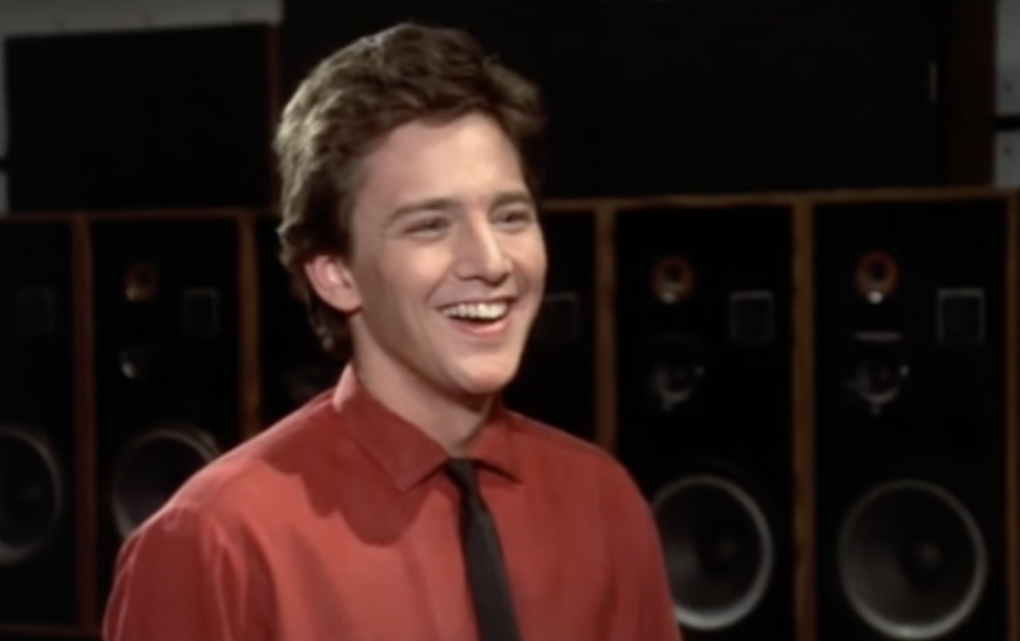
"title": "Andrew McCarthy Recalls His Brat Pack Years in a New Memoir",
"headTitle": "Andrew McCarthy Recalls His Brat Pack Years in a New Memoir | KQED",
"content": "\u003cp>We’re going to go back now to the ’80s—you remember that era: big hair, big shoulder pads, Walkmans and a new kind of film star.\u003c/p>\n\u003cp>Andrew McCarthy starred in iconic movies like \u003cem>St. Elmo’s Fire\u003c/em>, \u003cem>Pretty in Pink\u003c/em> and \u003cem>Weekend at Bernie’s\u003c/em>. He’s considered one of the so-called Brat Pack—think Emilio Estevez, Demi Moore, Judd Nelson, young stars with swagger who were in all the hot movies that catered to the desires and dreams of young people for the first time.\u003c/p>\n\u003cp>McCarthy has spent a lot of his adult life running away from that label. But in his new memoir, \u003cem>Brat: An ’80s Story\u003c/em>, he takes a look back at his tumultuous 20s, when he first became famous.\u003c/p>\n\u003cfigure id=\"attachment_13897262\" class=\"wp-caption aligncenter\" style=\"max-width: 800px\">\u003cimg loading=\"lazy\" decoding=\"async\" class=\"size-medium wp-image-13897262\" src=\"https://ww2.kqed.org/app/uploads/sites/2/2021/05/brat_custom-d5a97c7652fe7e4ec38ca0f3c858a6035ae67613-800x1208.jpg\" alt=\"'Brat' by Andrew McCarthy.\" width=\"800\" height=\"1208\" srcset=\"https://cdn.kqed.org/wp-content/uploads/sites/2/2021/05/brat_custom-d5a97c7652fe7e4ec38ca0f3c858a6035ae67613-800x1208.jpg 800w, https://cdn.kqed.org/wp-content/uploads/sites/2/2021/05/brat_custom-d5a97c7652fe7e4ec38ca0f3c858a6035ae67613-1020x1541.jpg 1020w, https://cdn.kqed.org/wp-content/uploads/sites/2/2021/05/brat_custom-d5a97c7652fe7e4ec38ca0f3c858a6035ae67613-160x242.jpg 160w, https://cdn.kqed.org/wp-content/uploads/sites/2/2021/05/brat_custom-d5a97c7652fe7e4ec38ca0f3c858a6035ae67613-768x1160.jpg 768w, https://cdn.kqed.org/wp-content/uploads/sites/2/2021/05/brat_custom-d5a97c7652fe7e4ec38ca0f3c858a6035ae67613-1017x1536.jpg 1017w, https://cdn.kqed.org/wp-content/uploads/sites/2/2021/05/brat_custom-d5a97c7652fe7e4ec38ca0f3c858a6035ae67613-1356x2048.jpg 1356w, https://cdn.kqed.org/wp-content/uploads/sites/2/2021/05/brat_custom-d5a97c7652fe7e4ec38ca0f3c858a6035ae67613-scaled.jpg 1695w\" sizes=\"(max-width: 800px) 100vw, 800px\">\u003cfigcaption class=\"wp-caption-text\">‘Brat’ by Andrew McCarthy. \u003ccite>(Grand Central Publishing)\u003c/cite>\u003c/figcaption>\u003c/figure>\n\u003chr>\n\u003ch3>Interview Highlights\u003c/h3>\n\u003cp>\u003cstrong>On the name “Brat Pack,” which came from a 1985 \u003cem>New York Magazine\u003c/em> article\u003c/strong>\u003c/p>\n\u003cp>Well, it was a shock I think, to all of us, because it was on the cover of the magazine. I think it was supposed to be originally a small feature on Emilio. And then he invited the writer out with some of his buddies to go drinking at the Hard Rock Cafe one night. The writer turned off to his subject and it evolved into this cover story called “The Brat Pack.” And it’s interesting because the photo on the cover was a still shot from \u003cem>St. Elmo’s Fire\u003c/em>, which I was in. And then I was removed, cut out of it, for the cover shot. And when I saw the cover I went, ‘Oh my God, they cut me out.’ And then I read the article and I went, ‘Oh my God, thank God they cut me out.’ And then soon enough, I was swept up into it anyway.\u003c/p>\n\u003cp>[ad fullwidth]\u003c/p>\n\u003cp>\u003cstrong>On how Molly Ringwald picked him for \u003cem>Pretty in Pink\u003c/em>\u003c/strong>\u003c/p>\n\u003cp>They were looking for a square-jawed, broad-shouldered quarterback type to play her boyfriend; to play the guy from the other side of the tracks. The right side of the tracks, as it were. And I had just been in \u003cem>St. Elmo’s Fire\u003c/em>, which hadn’t come out yet, but there was some buzz about the movie. And you’re never hotter than when nobody’s seen anything you’ve done. And so I was granted this sort of courtesy audition, because I was not the square-jawed, broad-shouldered quarterback type.\u003c/p>\n\u003cp>[aside postid='pop_107900']And anyway, I walked in and Molly was in there reading with people, and Molly and I read the scene together and John Hughes kind of went, ‘Okay, thank you.’ And he couldn’t have really cared less. And when I left the room, apparently Molly turned to John, said, ‘Well, that’s the guy.’ And John was like, ‘That wimpy guy?’ She’s like, ‘Yeah, he’s poetic and sensitive. That’s the kind of guy I’d fall for, not some jocky idiot.’ And John, to his credit, not only gave lip service to sort of respecting young people in his movies, he [actually] did. And he said, ‘Okay, I don’t really see it. But if you say he’s the guy, you got him.’\u003c/p>\n\u003cp>\u003cstrong>On the John Hughes movies\u003c/strong>\u003c/p>\n\u003cp>They were … about, you know, respecting young people and honoring that their emotions that they feel are bigger and deeper and fuller and more all-encompassing than yours or mine. You know, as adults, we kind of go, ‘He’s just a kid.’ And no. Like, my son is 19 years old and he’s in love for the first time. And he is the first person to ever be in love. And it is powerful and it is beautiful and it is all-encompassing in his life. And we were all that way at one point. And John honored that in a way that other grown-ups had not. And so kids saw that and went, ‘Yeah, that’s me, that’s my world, and latched onto us in a very deep way.’ And that’s all to John’s credit.\u003c/p>\n\u003cp>\u003cstrong>On his relationship with alcohol\u003c/strong>\u003c/p>\n\u003cp>The first thing I always say in discussing this is that I did not drink in any way as a reaction to my success. I didn’t feel, ‘Oh, he’s too young to handle it, so I turned to drink.’ Not at all. I started drinking sort of parallel—simultaneously. And my drinking was very much about drinking. I drank because I had an affinity to alcohol, and a tendency toward it, and an alcoholic temperament and neurobiology, you know. And it happened to coincide with the movies. And it certainly was detrimental to my career—in the later stages of it, for sure. But it wasn’t a reaction to my career. You know, I drank better vodka because I was in the movies—it didn’t cause me to start drinking.\u003c/p>\n\u003cp>\u003cstrong>On how fame affected him\u003c/strong>\u003c/p>\n\u003cp>Oh, I think fame changes you on a cellular level … As you’re growing up, you’re the center of the world and the center of the universe. And then as you grow up, you kind of get out into the world and you realize your mom was probably wrong. You’re not really the center of the world. And then you become famous and suddenly, no, no, no, no, you \u003cem>are\u003c/em> the center of the world. And so you stop growing in a certain way. And developmentally, it’s probably not the best thing for one’s being a well-rounded adult to be treated in such a way. You know, I always want to be treated special. Who doesn’t? But is that the best thing for me? And, you know, when you’re young—when you’re 20, 22, 23—like I was when I was starting to get successful in that way, you don’t even know who you are in a certain way yet. So stepping out on the hollow ground of fame is precarious when you’re not even sure who you are yet. So I found that a lot to navigate, for sure.\u003c/p>\n\u003cp>\u003cstrong>On the longevity of the Brat Pack-era movies\u003c/strong>\u003c/p>\n\u003cp>I think that’s lovely, you know. I think those kids who find them that way are really responding to their parents who were so invested. And you know what I represent now—I’m like an avatar to that generation’s youth. They’re not only looking back at the movies, they’re looking back at themselves when they were young. And at that moment when they were 20, whenever, they were just bursting out into the world when their life is an empty canvas to be painted on.\u003c/p>\n\u003cp>[aside postid='pop_97337']And there’s no more thrilling, exciting moment in our lives than when we are young and just—get out of my way! I’m coming out, world! And those movies represented that to a lot of people. And so I, in a certain way, kind of represent that to people. And I’ve grown to find that very satisfying, whereas I ran from that for so long. But I’ve come to really think of that as a gift. And that said, the emotions are true in those movies—I think they’re pretty truthful. However dated they may be as movies, the emotions underneath are timeless in that way. And so kids can relate to that. Maybe not the hair, but, you know, the emotions.\u003c/p>\n\u003cp>\u003cem>This story was edited for radio by Isabella Gomez and Melissa Gray, and adapted for the web by Petra Mayer.\u003c/em>\u003c/p>\n\u003cp>[ad floatright]\u003c/p>\n\u003cp>Copyright 2021 \u003ca href=\"http://npr.org\" target=\"_blank\" rel=\"noopener noreferrer\">NPR\u003c/a>.\u003c/p>\n\n",
"stats": {
"hasVideo": false,
"hasChartOrMap": false,
"hasAudio": false,
"hasPolis": false,
"wordCount": 1372,
"hasGoogleForm": false,
"hasGallery": false,
"hasHearkenModule": false,
"iframeSrcs": [],
"paragraphCount": 21
},
"modified": 1705008372,
"excerpt": "The star of movies like ‘St. Elmo’s Fire’ and ‘Pretty in Pink’ writes about his tumultuous 20s in ‘Brat: An ’80s Story.’",
"headData": {
"twImgId": "",
"twTitle": "",
"ogTitle": "",
"ogImgId": "",
"twDescription": "",
"description": "The star of movies like ‘St. Elmo’s Fire’ and ‘Pretty in Pink’ writes about his tumultuous 20s in ‘Brat: An ’80s Story.’",
"title": "Andrew McCarthy Recalls His Brat Pack Years in a New Memoir | KQED",
"ogDescription": "",
"schema": {
"@context": "https://schema.org",
"@type": "Article",
"headline": "Andrew McCarthy Recalls His Brat Pack Years in a New Memoir",
"datePublished": "2021-05-17T15:45:15-07:00",
"dateModified": "2024-01-11T13:26:12-08:00",
"image": "https://cdn.kqed.org/wp-content/uploads/2020/02/KQED-OG-Image@1x.png"
}
},
"guestAuthors": [],
"slug": "andrew-mccarthy-recalls-his-brat-pack-years-in-a-new-memoir",
"status": "publish",
"nprApiLink": "http://api.npr.org/query?id=996894100&apiKey=MDAxOTAwOTE4MDEyMTkxMDAzNjczZDljZA004",
"templateType": "standard",
"nprStoryDate": "Sun, 16 May 2021 07:53:00 -0400",
"nprLastModifiedDate": "Sun, 16 May 2021 11:50:38 -0400",
"featuredImageType": "standard",
"nprHtmlLink": "https://www.npr.org/2021/05/16/996894100/andrew-mccarthy-recalls-his-brat-pack-years-in-a-new-memoir?ft=nprml&f=996894100",
"nprAudio": "https://ondemand.npr.org/anon.npr-mp3/npr/wesun/2021/05/20210516_wesun_andrew_mccarthy_recalls_his_brat_pack_years_in_a_new_memoir.mp3?orgId=1&topicId=1033&d=475&p=10&story=996894100&ft=nprml&f=996894100",
"nprImageAgency": "Grand Central Publishing",
"nprAudioM3u": "http://api.npr.org/m3u/1997259492-867d06.m3u?orgId=1&topicId=1033&d=475&p=10&story=996894100&ft=nprml&f=996894100",
"nprStoryId": "996894100",
"nprByline": "Lulu Garcia-Navarro",
"sticky": false,
"nprRetrievedStory": "1",
"nprPubDate": "Sun, 16 May 2021 11:50:00 -0400",
"path": "/arts/13897261/andrew-mccarthy-recalls-his-brat-pack-years-in-a-new-memoir",
"audioUrl": "https://ondemand.npr.org/anon.npr-mp3/npr/wesun/2021/05/20210516_wesun_andrew_mccarthy_recalls_his_brat_pack_years_in_a_new_memoir.mp3?orgId=1&topicId=1033&d=475&p=10&story=996894100&ft=nprml&f=996894100",
"audioTrackLength": null,
"parsedContent": [
{
"type": "contentString",
"content": "\u003cdiv class=\"post-body\">\u003cp>\u003cp>We’re going to go back now to the ’80s—you remember that era: big hair, big shoulder pads, Walkmans and a new kind of film star.\u003c/p>\n\u003cp>Andrew McCarthy starred in iconic movies like \u003cem>St. Elmo’s Fire\u003c/em>, \u003cem>Pretty in Pink\u003c/em> and \u003cem>Weekend at Bernie’s\u003c/em>. He’s considered one of the so-called Brat Pack—think Emilio Estevez, Demi Moore, Judd Nelson, young stars with swagger who were in all the hot movies that catered to the desires and dreams of young people for the first time.\u003c/p>\n\u003cp>McCarthy has spent a lot of his adult life running away from that label. But in his new memoir, \u003cem>Brat: An ’80s Story\u003c/em>, he takes a look back at his tumultuous 20s, when he first became famous.\u003c/p>\n\u003cfigure id=\"attachment_13897262\" class=\"wp-caption aligncenter\" style=\"max-width: 800px\">\u003cimg loading=\"lazy\" decoding=\"async\" class=\"size-medium wp-image-13897262\" src=\"https://ww2.kqed.org/app/uploads/sites/2/2021/05/brat_custom-d5a97c7652fe7e4ec38ca0f3c858a6035ae67613-800x1208.jpg\" alt=\"'Brat' by Andrew McCarthy.\" width=\"800\" height=\"1208\" srcset=\"https://cdn.kqed.org/wp-content/uploads/sites/2/2021/05/brat_custom-d5a97c7652fe7e4ec38ca0f3c858a6035ae67613-800x1208.jpg 800w, https://cdn.kqed.org/wp-content/uploads/sites/2/2021/05/brat_custom-d5a97c7652fe7e4ec38ca0f3c858a6035ae67613-1020x1541.jpg 1020w, https://cdn.kqed.org/wp-content/uploads/sites/2/2021/05/brat_custom-d5a97c7652fe7e4ec38ca0f3c858a6035ae67613-160x242.jpg 160w, https://cdn.kqed.org/wp-content/uploads/sites/2/2021/05/brat_custom-d5a97c7652fe7e4ec38ca0f3c858a6035ae67613-768x1160.jpg 768w, https://cdn.kqed.org/wp-content/uploads/sites/2/2021/05/brat_custom-d5a97c7652fe7e4ec38ca0f3c858a6035ae67613-1017x1536.jpg 1017w, https://cdn.kqed.org/wp-content/uploads/sites/2/2021/05/brat_custom-d5a97c7652fe7e4ec38ca0f3c858a6035ae67613-1356x2048.jpg 1356w, https://cdn.kqed.org/wp-content/uploads/sites/2/2021/05/brat_custom-d5a97c7652fe7e4ec38ca0f3c858a6035ae67613-scaled.jpg 1695w\" sizes=\"(max-width: 800px) 100vw, 800px\">\u003cfigcaption class=\"wp-caption-text\">‘Brat’ by Andrew McCarthy. \u003ccite>(Grand Central Publishing)\u003c/cite>\u003c/figcaption>\u003c/figure>\n\u003chr>\n\u003ch3>Interview Highlights\u003c/h3>\n\u003cp>\u003cstrong>On the name “Brat Pack,” which came from a 1985 \u003cem>New York Magazine\u003c/em> article\u003c/strong>\u003c/p>\n\u003cp>Well, it was a shock I think, to all of us, because it was on the cover of the magazine. I think it was supposed to be originally a small feature on Emilio. And then he invited the writer out with some of his buddies to go drinking at the Hard Rock Cafe one night. The writer turned off to his subject and it evolved into this cover story called “The Brat Pack.” And it’s interesting because the photo on the cover was a still shot from \u003cem>St. Elmo’s Fire\u003c/em>, which I was in. And then I was removed, cut out of it, for the cover shot. And when I saw the cover I went, ‘Oh my God, they cut me out.’ And then I read the article and I went, ‘Oh my God, thank God they cut me out.’ And then soon enough, I was swept up into it anyway.\u003c/p>\n\u003cp>\u003c/p>\u003c/div>",
"attributes": {
"named": {},
"numeric": []
}
},
{
"type": "component",
"content": "",
"name": "ad",
"attributes": {
"named": {
"label": "fullwidth"
},
"numeric": [
"fullwidth"
]
}
},
{
"type": "contentString",
"content": "\u003cdiv class=\"post-body\">\u003cp>\u003c/p>\n\u003cp>\u003cstrong>On how Molly Ringwald picked him for \u003cem>Pretty in Pink\u003c/em>\u003c/strong>\u003c/p>\n\u003cp>They were looking for a square-jawed, broad-shouldered quarterback type to play her boyfriend; to play the guy from the other side of the tracks. The right side of the tracks, as it were. And I had just been in \u003cem>St. Elmo’s Fire\u003c/em>, which hadn’t come out yet, but there was some buzz about the movie. And you’re never hotter than when nobody’s seen anything you’ve done. And so I was granted this sort of courtesy audition, because I was not the square-jawed, broad-shouldered quarterback type.\u003c/p>\n\u003cp>\u003c/p>\u003c/div>",
"attributes": {
"named": {},
"numeric": []
}
},
{
"type": "component",
"content": "",
"name": "aside",
"attributes": {
"named": {
"postid": "pop_107900",
"label": ""
},
"numeric": []
}
},
{
"type": "contentString",
"content": "\u003cdiv class=\"post-body\">\u003cp>And anyway, I walked in and Molly was in there reading with people, and Molly and I read the scene together and John Hughes kind of went, ‘Okay, thank you.’ And he couldn’t have really cared less. And when I left the room, apparently Molly turned to John, said, ‘Well, that’s the guy.’ And John was like, ‘That wimpy guy?’ She’s like, ‘Yeah, he’s poetic and sensitive. That’s the kind of guy I’d fall for, not some jocky idiot.’ And John, to his credit, not only gave lip service to sort of respecting young people in his movies, he [actually] did. And he said, ‘Okay, I don’t really see it. But if you say he’s the guy, you got him.’\u003c/p>\n\u003cp>\u003cstrong>On the John Hughes movies\u003c/strong>\u003c/p>\n\u003cp>They were … about, you know, respecting young people and honoring that their emotions that they feel are bigger and deeper and fuller and more all-encompassing than yours or mine. You know, as adults, we kind of go, ‘He’s just a kid.’ And no. Like, my son is 19 years old and he’s in love for the first time. And he is the first person to ever be in love. And it is powerful and it is beautiful and it is all-encompassing in his life. And we were all that way at one point. And John honored that in a way that other grown-ups had not. And so kids saw that and went, ‘Yeah, that’s me, that’s my world, and latched onto us in a very deep way.’ And that’s all to John’s credit.\u003c/p>\n\u003cp>\u003cstrong>On his relationship with alcohol\u003c/strong>\u003c/p>\n\u003cp>The first thing I always say in discussing this is that I did not drink in any way as a reaction to my success. I didn’t feel, ‘Oh, he’s too young to handle it, so I turned to drink.’ Not at all. I started drinking sort of parallel—simultaneously. And my drinking was very much about drinking. I drank because I had an affinity to alcohol, and a tendency toward it, and an alcoholic temperament and neurobiology, you know. And it happened to coincide with the movies. And it certainly was detrimental to my career—in the later stages of it, for sure. But it wasn’t a reaction to my career. You know, I drank better vodka because I was in the movies—it didn’t cause me to start drinking.\u003c/p>\n\u003cp>\u003cstrong>On how fame affected him\u003c/strong>\u003c/p>\n\u003cp>Oh, I think fame changes you on a cellular level … As you’re growing up, you’re the center of the world and the center of the universe. And then as you grow up, you kind of get out into the world and you realize your mom was probably wrong. You’re not really the center of the world. And then you become famous and suddenly, no, no, no, no, you \u003cem>are\u003c/em> the center of the world. And so you stop growing in a certain way. And developmentally, it’s probably not the best thing for one’s being a well-rounded adult to be treated in such a way. You know, I always want to be treated special. Who doesn’t? But is that the best thing for me? And, you know, when you’re young—when you’re 20, 22, 23—like I was when I was starting to get successful in that way, you don’t even know who you are in a certain way yet. So stepping out on the hollow ground of fame is precarious when you’re not even sure who you are yet. So I found that a lot to navigate, for sure.\u003c/p>\n\u003cp>\u003cstrong>On the longevity of the Brat Pack-era movies\u003c/strong>\u003c/p>\n\u003cp>I think that’s lovely, you know. I think those kids who find them that way are really responding to their parents who were so invested. And you know what I represent now—I’m like an avatar to that generation’s youth. They’re not only looking back at the movies, they’re looking back at themselves when they were young. And at that moment when they were 20, whenever, they were just bursting out into the world when their life is an empty canvas to be painted on.\u003c/p>\n\u003cp>\u003c/p>\u003c/div>",
"attributes": {
"named": {},
"numeric": []
}
},
{
"type": "component",
"content": "",
"name": "aside",
"attributes": {
"named": {
"postid": "pop_97337",
"label": ""
},
"numeric": []
}
},
{
"type": "contentString",
"content": "\u003cdiv class=\"post-body\">\u003cp>And there’s no more thrilling, exciting moment in our lives than when we are young and just—get out of my way! I’m coming out, world! And those movies represented that to a lot of people. And so I, in a certain way, kind of represent that to people. And I’ve grown to find that very satisfying, whereas I ran from that for so long. But I’ve come to really think of that as a gift. And that said, the emotions are true in those movies—I think they’re pretty truthful. However dated they may be as movies, the emotions underneath are timeless in that way. And so kids can relate to that. Maybe not the hair, but, you know, the emotions.\u003c/p>\n\u003cp>\u003cem>This story was edited for radio by Isabella Gomez and Melissa Gray, and adapted for the web by Petra Mayer.\u003c/em>\u003c/p>\n\u003cp>\u003c/p>\u003c/div>",
"attributes": {
"named": {},
"numeric": []
}
},
{
"type": "component",
"content": "",
"name": "ad",
"attributes": {
"named": {
"label": "floatright"
},
"numeric": [
"floatright"
]
}
},
{
"type": "contentString",
"content": "\u003cdiv class=\"post-body\">\u003cp>\u003c/p>\n\u003cp>Copyright 2021 \u003ca href=\"http://npr.org\" target=\"_blank\" rel=\"noopener noreferrer\">NPR\u003c/a>.\u003c/p>\n\n\u003c/div>\u003c/p>",
"attributes": {
"named": {},
"numeric": []
}
}
],
"link": "/arts/13897261/andrew-mccarthy-recalls-his-brat-pack-years-in-a-new-memoir",
"authors": [
"byline_arts_13897261"
],
"categories": [
"arts_1",
"arts_73",
"arts_74"
],
"affiliates": [
"arts_137"
],
"featImg": "arts_13897267",
"label": "arts_137"
},
"arts_13897166": {
"type": "posts",
"id": "arts_13897166",
"meta": {
"index": "posts_1716263798",
"site": "arts",
"id": "13897166",
"score": null,
"sort": [
1621017211000
]
},
"parent": 0,
"labelTerm": {
"site": "arts",
"term": 137
},
"blocks": [],
"publishDate": 1621017211,
"format": "standard",
"title": "'Underground Railroad' is a Hard But Beautiful Reflection on Black Pain",
"headTitle": "‘Underground Railroad’ is a Hard But Beautiful Reflection on Black Pain | KQED",
"content": "\u003cp>\u003cem>(Warning: This column contains descriptions of racialized violence and discusses some plot points in ‘The Underground Railroad’ series.)\u003c/em>\u003c/p>\n\u003cp>For this Black TV critic, completing \u003ca href=\"https://www.npr.org/2021/05/10/994616279/underground-railroad-director-barry-jenkins-sees-film-as-an-empathy-machine\" target=\"_blank\" rel=\"noopener noreferrer\">Barry Jenkins’ \u003c/a>ambitious, beautifully brutal, 10-episode adaptation of \u003ca href=\"https://www.npr.org/2016/08/08/489168232/colson-whiteheads-underground-railroad-is-a-literal-train-to-freedom\" target=\"_blank\" rel=\"noopener noreferrer\">Colson Whitehead’s \u003cem>The Underground Railroad\u003c/em> \u003c/a>was an emotional journey that touched every nerve of what it feels like to be a person of color striving to matter in America.\u003c/p>\n\u003cp>There has been a lot of discussion in pop culture circles about the depictions of Black pain in recent films and TV shows; I’ll engage that debate more fully later. But, for me\u003cem>, The Underground Railroad\u003c/em> mostly earns the right to deploy such terrible, emotionally devastating moments. These depictions enable this talented Black director/producer/writer to tell an epic story about Black people—building a TV masterpiece in the process.\u003c/p>\n\u003cp>[aside postid='arts_13873526']On the surface, it’s a story about an orphan slave, Cora Randall (Thuso Mbedu), who uses the underground railroad to escape a brutal, 19th century-era Georgia plantation. But Jenkins’ limited series for Amazon Prime Video adopts Whitehead’s use of magical realism to conjure a tale rooted in painful authenticity, guided by poetic fantasy.\u003c/p>\n\u003cp>The reality: Cora flees a plantation where a recaptured slave is burned alive during a party held by the plantation owner—a punishment all the slaves watch as a horrifying lesson/deterrent. This master also insists on watching his slaves copulate to supervise their breeding, like prized racehorses.\u003c/p>\n\u003cp>[ad fullwidth]\u003c/p>\n\u003cp>But when Cora and another slave—the blue-eyed, stalwart Caesar (Aaron Pierre)—make it to the underground railroad, they find it actually \u003cem>is\u003c/em> a railroad: a winding set of tracks deep beneath the earth used to ferry Black people away from the horrors of the slave-owning South. Accepting that the train track, locomotives, conductors and station stops are real for the characters focuses your mind on the \u003cem>meaning\u003c/em> of their travels more than the circumstances of their escape, allowing the gauntlet of travails Cora faces to serve as pungent examples of larger ideas.\u003c/p>\n\u003cp>And make no mistake: The litany of nightmares Cora endures while traveling north is an onslaught of Black pain. In one South Carolina city, Black people are allowed to attend schools, taught to read by white teachers. But Cora also works in a museum that seems like a living zoo, where white people gather to watch her recreate her past life as a slave picking cotton inside a glass-windowed display case. It will be no surprise to learn she uncovers darker revelations there, as well.\u003c/p>\n\u003cp>[aside postid='arts_13844783']Later, Cora is smuggled to a North Carolina community where lynched Black people hang from trees lining both sides of the road into town, as a sign that they are not tolerated. She is hidden by a white couple who seem to have little but contempt and anger for her. That is a constant theme in \u003cem>The Underground Railroad\u003c/em>; most white characters have damaging, callous intentions for Black people, even if they seem initially benign.\u003c/p>\n\u003cp>The cast is exceptional, led by Thuso Mbedu’s intense, emotional work as Cora. She often whipsaws between open, uninhibited anguish and a guarded, emotionally shut-down wariness. Affable \u003cem>The Good Place\u003c/em> alum, William Jackson Harper, gives the performance of his career as Royal, a free man with whom she builds a complicated, loving relationship.\u003c/p>\n\u003cp>Joel Edgerton is compelling as Arnold Ridgeway, the white slave-hunter who dogs her trail. He travels with a whip-smart Black boy named Homer (Chase W. Dillon), who does most of the work and exposes Cora’s hiding places most often. Homer seems an embodiment of both the hypocrisy of white exceptionalism and the ways Black folk shackle themselves to serve white masters (this is literal; Ridgeway’s young companion can’t sleep unless he puts his wrist in a chain at night).\u003c/p>\n\u003cp>https://www.youtube.com/watch?v=_Pq5Usc_JDA\u003c/p>\n\u003cp>Jenkins, best-known for the \u003ca href=\"https://www.npr.org/2016/10/18/498358778/moonlight-coming-of-age-in-miami-during-the-war-on-drugs-era\" target=\"_blank\" rel=\"noopener noreferrer\">Oscar-winning film \u003cem>Moonlight\u003c/em>\u003c/a>\u003cem>,\u003c/em> is a director who makes Black folks look beautiful, even in the midst of crushing hardship and pain. His eye for color and majestic images transforms everything from burned-out swaths of Kentucky forest to the endless fields of cotton plantations into arresting tableaus.\u003c/p>\n\u003cp>But he is also a filmmaker who takes his time in telling stories. Which means viewers must sit in the pain of traumatic moments, waiting for Jenkins to fully reveal the awfulness you know is coming. It’s difficult to endure, especially if you already know the hard truths these moments are engineered to convey.\u003c/p>\n\u003cp>[aside postid='arts_13875290']Many of the more harrowing scenes in \u003cem>The Underground Railroad\u003c/em> communicate familiar ideas. The role white jealousy plays in the drive to oppress Black people. The insidious way white culture convinces Black people to work toward their own oppression and the oppression of others. The many ways Black folks struggle to process and transcend trauma. The ways in which Black joy and peace can feel like the briefest of respites from a seemingly eternal struggle.\u003c/p>\n\u003cp>That’s why, in addition to feeling sorrow and disgust in watching those horrors realized onscreen, I also felt anger. Not just over the unfairness of it all, but for the way Black people have been forced, generation after generation, to expose our wounds from systemic racism, just to prove to the wider—often white—world that it exists at all.\u003c/p>\n\u003cp>One reason why projects like \u003cem>The Underground Railroad\u003c/em> feel so necessary, is because white America has tried so hard to deny, diminish or erase the shame of its racist past—refusing to acknowledge the connection between centuries of oppression and ongoing, current problems.\u003c/p>\n\u003cp>This version of \u003cem>The Underground Railroad\u003c/em> reaches us at a time when we are most prepared for its message, but severely challenged by its delivery system. We are nearly one year past the date of George Floyd’s death; 12 months in which video capturing the brutality of this Black man’s slow murder beneath the knee of white policeman Derek Chauvin has been played and replayed on screens large and small.\u003c/p>\n\u003cp>Another wound, repeatedly ripped open. And even as footage of Floyd’s death builds sympathy for the victims of systemic racism, it leaves many of us unable to stomach more images of Black lives snuffed out by prejudice and fear.\u003c/p>\n\u003cp>But Jenkins’ \u003cem>The Underground Railroad \u003c/em>demands we endure another look. Because when Cora finally reaches a community led by free Black people, the Indiana winery called the Valentine Farm, we viewers understand why the director brought us through hell to find this oasis. Our relief is as palpable as hers.\u003c/p>\n\u003cp>[aside postid='arts_13895452']There are problems here: great gobs of time spent telling the white slave hunter Ridgeway’s story—and because he’s the most loquacious character, he often tells us his story again, even after the series shows it. The unfortunate drawback is that we learn more about his interior thoughts and motivations than those of many of the Black characters here, even Cora.\u003c/p>\n\u003cp>And some of the messaging is delivered with the subtlety of a steamroller, as when a Black character at Valentine Farm declares: “America, too is a delusion. Its very foundations are murder, theft and cruelty. Yet here WE are.”\u003c/p>\n\u003cp>Still, that line sums up the enduring, transformative message of Jenkins’ epic masterpiece. Black folks are here, ready to survive and thrive, our lives filled with poetry, magic and joy, no matter what an unjust world throws at us.\u003c/p>\n\u003cp>[ad floatright]\u003c/p>\n\u003cp>And that’s always something worth watching.\u003c/p>\n\u003cdiv class=\"fullattribution\">\u003cem>Copyright 2021 NPR. To see more, visit \u003ca href=\"https://www.npr.org\" target=\"_blank\" rel=\"noopener noreferrer\">NPR\u003c/a>.\u003cimg decoding=\"async\" src=\"https://www.google-analytics.com/__utm.gif?utmac=UA-5828686-4&utmdt=%27Underground+Railroad%27+Is+A+Hard+But+Beautiful+Reflection+On+Black+Pain&utme=8(APIKey)9(MDAxOTAwOTE4MDEyMTkxMDAzNjczZDljZA004)\">\u003c/em>\u003c/div>\n\n",
"stats": {
"hasVideo": true,
"hasChartOrMap": false,
"hasAudio": false,
"hasPolis": false,
"wordCount": 1294,
"hasGoogleForm": false,
"hasGallery": false,
"hasHearkenModule": false,
"iframeSrcs": [],
"paragraphCount": 24
},
"modified": 1705008380,
"excerpt": "Barry Jenkins' adaptation of Colson Whitehead's book is a TV masterpiece arriving when we're most prepared for its message.",
"headData": {
"twImgId": "",
"twTitle": "",
"ogTitle": "",
"ogImgId": "",
"twDescription": "",
"description": "Barry Jenkins' adaptation of Colson Whitehead's book is a TV masterpiece arriving when we're most prepared for its message.",
"title": "'Underground Railroad' is a Hard But Beautiful Reflection on Black Pain | KQED",
"ogDescription": "",
"schema": {
"@context": "https://schema.org",
"@type": "Article",
"headline": "'Underground Railroad' is a Hard But Beautiful Reflection on Black Pain",
"datePublished": "2021-05-14T11:33:31-07:00",
"dateModified": "2024-01-11T13:26:20-08:00",
"image": "https://cdn.kqed.org/wp-content/uploads/2020/02/KQED-OG-Image@1x.png"
}
},
"guestAuthors": [],
"slug": "underground-railroad-is-a-hard-but-beautiful-reflection-on-black-pain",
"status": "publish",
"nprApiLink": "http://api.npr.org/query?id=996680203&apiKey=MDAxOTAwOTE4MDEyMTkxMDAzNjczZDljZA004",
"templateType": "standard",
"nprStoryDate": "Fri, 14 May 2021 06:51:56 -0400",
"nprLastModifiedDate": "Fri, 14 May 2021 06:51:56 -0400",
"featuredImageType": "standard",
"nprHtmlLink": "https://www.npr.org/2021/05/14/996680203/underground-railroad-is-a-hard-but-beautiful-reflection-on-black-pain?ft=nprml&f=996680203",
"nprImageAgency": "Amazon Studios",
"nprStoryId": "996680203",
"nprByline": "Eric Deggans",
"sticky": false,
"nprImageCredit": "Atsushi Nishijima",
"nprRetrievedStory": "1",
"nprPubDate": "Fri, 14 May 2021 06:51:00 -0400",
"path": "/arts/13897166/underground-railroad-is-a-hard-but-beautiful-reflection-on-black-pain",
"audioTrackLength": null,
"parsedContent": [
{
"type": "contentString",
"content": "\u003cdiv class=\"post-body\">\u003cp>\u003cp>\u003cem>(Warning: This column contains descriptions of racialized violence and discusses some plot points in ‘The Underground Railroad’ series.)\u003c/em>\u003c/p>\n\u003cp>For this Black TV critic, completing \u003ca href=\"https://www.npr.org/2021/05/10/994616279/underground-railroad-director-barry-jenkins-sees-film-as-an-empathy-machine\" target=\"_blank\" rel=\"noopener noreferrer\">Barry Jenkins’ \u003c/a>ambitious, beautifully brutal, 10-episode adaptation of \u003ca href=\"https://www.npr.org/2016/08/08/489168232/colson-whiteheads-underground-railroad-is-a-literal-train-to-freedom\" target=\"_blank\" rel=\"noopener noreferrer\">Colson Whitehead’s \u003cem>The Underground Railroad\u003c/em> \u003c/a>was an emotional journey that touched every nerve of what it feels like to be a person of color striving to matter in America.\u003c/p>\n\u003cp>There has been a lot of discussion in pop culture circles about the depictions of Black pain in recent films and TV shows; I’ll engage that debate more fully later. But, for me\u003cem>, The Underground Railroad\u003c/em> mostly earns the right to deploy such terrible, emotionally devastating moments. These depictions enable this talented Black director/producer/writer to tell an epic story about Black people—building a TV masterpiece in the process.\u003c/p>\n\u003cp>\u003c/p>\u003c/div>",
"attributes": {
"named": {},
"numeric": []
}
},
{
"type": "component",
"content": "",
"name": "aside",
"attributes": {
"named": {
"postid": "arts_13873526",
"label": ""
},
"numeric": []
}
},
{
"type": "contentString",
"content": "\u003cdiv class=\"post-body\">\u003cp>On the surface, it’s a story about an orphan slave, Cora Randall (Thuso Mbedu), who uses the underground railroad to escape a brutal, 19th century-era Georgia plantation. But Jenkins’ limited series for Amazon Prime Video adopts Whitehead’s use of magical realism to conjure a tale rooted in painful authenticity, guided by poetic fantasy.\u003c/p>\n\u003cp>The reality: Cora flees a plantation where a recaptured slave is burned alive during a party held by the plantation owner—a punishment all the slaves watch as a horrifying lesson/deterrent. This master also insists on watching his slaves copulate to supervise their breeding, like prized racehorses.\u003c/p>\n\u003cp>\u003c/p>\u003c/div>",
"attributes": {
"named": {},
"numeric": []
}
},
{
"type": "component",
"content": "",
"name": "ad",
"attributes": {
"named": {
"label": "fullwidth"
},
"numeric": [
"fullwidth"
]
}
},
{
"type": "contentString",
"content": "\u003cdiv class=\"post-body\">\u003cp>\u003c/p>\n\u003cp>But when Cora and another slave—the blue-eyed, stalwart Caesar (Aaron Pierre)—make it to the underground railroad, they find it actually \u003cem>is\u003c/em> a railroad: a winding set of tracks deep beneath the earth used to ferry Black people away from the horrors of the slave-owning South. Accepting that the train track, locomotives, conductors and station stops are real for the characters focuses your mind on the \u003cem>meaning\u003c/em> of their travels more than the circumstances of their escape, allowing the gauntlet of travails Cora faces to serve as pungent examples of larger ideas.\u003c/p>\n\u003cp>And make no mistake: The litany of nightmares Cora endures while traveling north is an onslaught of Black pain. In one South Carolina city, Black people are allowed to attend schools, taught to read by white teachers. But Cora also works in a museum that seems like a living zoo, where white people gather to watch her recreate her past life as a slave picking cotton inside a glass-windowed display case. It will be no surprise to learn she uncovers darker revelations there, as well.\u003c/p>\n\u003cp>\u003c/p>\u003c/div>",
"attributes": {
"named": {},
"numeric": []
}
},
{
"type": "component",
"content": "",
"name": "aside",
"attributes": {
"named": {
"postid": "arts_13844783",
"label": ""
},
"numeric": []
}
},
{
"type": "contentString",
"content": "\u003cdiv class=\"post-body\">\u003cp>Later, Cora is smuggled to a North Carolina community where lynched Black people hang from trees lining both sides of the road into town, as a sign that they are not tolerated. She is hidden by a white couple who seem to have little but contempt and anger for her. That is a constant theme in \u003cem>The Underground Railroad\u003c/em>; most white characters have damaging, callous intentions for Black people, even if they seem initially benign.\u003c/p>\n\u003cp>The cast is exceptional, led by Thuso Mbedu’s intense, emotional work as Cora. She often whipsaws between open, uninhibited anguish and a guarded, emotionally shut-down wariness. Affable \u003cem>The Good Place\u003c/em> alum, William Jackson Harper, gives the performance of his career as Royal, a free man with whom she builds a complicated, loving relationship.\u003c/p>\n\u003cp>Joel Edgerton is compelling as Arnold Ridgeway, the white slave-hunter who dogs her trail. He travels with a whip-smart Black boy named Homer (Chase W. Dillon), who does most of the work and exposes Cora’s hiding places most often. Homer seems an embodiment of both the hypocrisy of white exceptionalism and the ways Black folk shackle themselves to serve white masters (this is literal; Ridgeway’s young companion can’t sleep unless he puts his wrist in a chain at night).\u003c/p>\u003c/p>\u003cp>\u003cspan class='utils-parseShortcode-shortcodes-__youtubeShortcode__embedYoutube'>\n \u003cspan class='utils-parseShortcode-shortcodes-__youtubeShortcode__embedYoutubeInside'>\n \u003ciframe\n loading='lazy'\n class='utils-parseShortcode-shortcodes-__youtubeShortcode__youtubePlayer'\n type='text/html'\n src='//www.youtube.com/embed/_Pq5Usc_JDA'\n title='//www.youtube.com/embed/_Pq5Usc_JDA'\n allowfullscreen='true'\n style='border:0;'>\u003c/iframe>\n \u003c/span>\n \u003c/span>\u003c/p>\u003cp>\u003cp>Jenkins, best-known for the \u003ca href=\"https://www.npr.org/2016/10/18/498358778/moonlight-coming-of-age-in-miami-during-the-war-on-drugs-era\" target=\"_blank\" rel=\"noopener noreferrer\">Oscar-winning film \u003cem>Moonlight\u003c/em>\u003c/a>\u003cem>,\u003c/em> is a director who makes Black folks look beautiful, even in the midst of crushing hardship and pain. His eye for color and majestic images transforms everything from burned-out swaths of Kentucky forest to the endless fields of cotton plantations into arresting tableaus.\u003c/p>\n\u003cp>But he is also a filmmaker who takes his time in telling stories. Which means viewers must sit in the pain of traumatic moments, waiting for Jenkins to fully reveal the awfulness you know is coming. It’s difficult to endure, especially if you already know the hard truths these moments are engineered to convey.\u003c/p>\n\u003cp>\u003c/p>\u003c/div>",
"attributes": {
"named": {},
"numeric": []
}
},
{
"type": "component",
"content": "",
"name": "aside",
"attributes": {
"named": {
"postid": "arts_13875290",
"label": ""
},
"numeric": []
}
},
{
"type": "contentString",
"content": "\u003cdiv class=\"post-body\">\u003cp>Many of the more harrowing scenes in \u003cem>The Underground Railroad\u003c/em> communicate familiar ideas. The role white jealousy plays in the drive to oppress Black people. The insidious way white culture convinces Black people to work toward their own oppression and the oppression of others. The many ways Black folks struggle to process and transcend trauma. The ways in which Black joy and peace can feel like the briefest of respites from a seemingly eternal struggle.\u003c/p>\n\u003cp>That’s why, in addition to feeling sorrow and disgust in watching those horrors realized onscreen, I also felt anger. Not just over the unfairness of it all, but for the way Black people have been forced, generation after generation, to expose our wounds from systemic racism, just to prove to the wider—often white—world that it exists at all.\u003c/p>\n\u003cp>One reason why projects like \u003cem>The Underground Railroad\u003c/em> feel so necessary, is because white America has tried so hard to deny, diminish or erase the shame of its racist past—refusing to acknowledge the connection between centuries of oppression and ongoing, current problems.\u003c/p>\n\u003cp>This version of \u003cem>The Underground Railroad\u003c/em> reaches us at a time when we are most prepared for its message, but severely challenged by its delivery system. We are nearly one year past the date of George Floyd’s death; 12 months in which video capturing the brutality of this Black man’s slow murder beneath the knee of white policeman Derek Chauvin has been played and replayed on screens large and small.\u003c/p>\n\u003cp>Another wound, repeatedly ripped open. And even as footage of Floyd’s death builds sympathy for the victims of systemic racism, it leaves many of us unable to stomach more images of Black lives snuffed out by prejudice and fear.\u003c/p>\n\u003cp>But Jenkins’ \u003cem>The Underground Railroad \u003c/em>demands we endure another look. Because when Cora finally reaches a community led by free Black people, the Indiana winery called the Valentine Farm, we viewers understand why the director brought us through hell to find this oasis. Our relief is as palpable as hers.\u003c/p>\n\u003cp>\u003c/p>\u003c/div>",
"attributes": {
"named": {},
"numeric": []
}
},
{
"type": "component",
"content": "",
"name": "aside",
"attributes": {
"named": {
"postid": "arts_13895452",
"label": ""
},
"numeric": []
}
},
{
"type": "contentString",
"content": "\u003cdiv class=\"post-body\">\u003cp>There are problems here: great gobs of time spent telling the white slave hunter Ridgeway’s story—and because he’s the most loquacious character, he often tells us his story again, even after the series shows it. The unfortunate drawback is that we learn more about his interior thoughts and motivations than those of many of the Black characters here, even Cora.\u003c/p>\n\u003cp>And some of the messaging is delivered with the subtlety of a steamroller, as when a Black character at Valentine Farm declares: “America, too is a delusion. Its very foundations are murder, theft and cruelty. Yet here WE are.”\u003c/p>\n\u003cp>Still, that line sums up the enduring, transformative message of Jenkins’ epic masterpiece. Black folks are here, ready to survive and thrive, our lives filled with poetry, magic and joy, no matter what an unjust world throws at us.\u003c/p>\n\u003cp>\u003c/p>\u003c/div>",
"attributes": {
"named": {},
"numeric": []
}
},
{
"type": "component",
"content": "",
"name": "ad",
"attributes": {
"named": {
"label": "floatright"
},
"numeric": [
"floatright"
]
}
},
{
"type": "contentString",
"content": "\u003cdiv class=\"post-body\">\u003cp>\u003c/p>\n\u003cp>And that’s always something worth watching.\u003c/p>\n\u003cdiv class=\"fullattribution\">\u003cem>Copyright 2021 NPR. To see more, visit \u003ca href=\"https://www.npr.org\" target=\"_blank\" rel=\"noopener noreferrer\">NPR\u003c/a>.\u003cimg decoding=\"async\" src=\"https://www.google-analytics.com/__utm.gif?utmac=UA-5828686-4&utmdt=%27Underground+Railroad%27+Is+A+Hard+But+Beautiful+Reflection+On+Black+Pain&utme=8(APIKey)9(MDAxOTAwOTE4MDEyMTkxMDAzNjczZDljZA004)\">\u003c/em>\u003c/div>\n\n\u003c/div>\u003c/p>",
"attributes": {
"named": {},
"numeric": []
}
}
],
"link": "/arts/13897166/underground-railroad-is-a-hard-but-beautiful-reflection-on-black-pain",
"authors": [
"byline_arts_13897166"
],
"categories": [
"arts_1",
"arts_990"
],
"tags": [
"arts_928",
"arts_977"
],
"affiliates": [
"arts_137"
],
"featImg": "arts_13897167",
"label": "arts_137"
},
"arts_13897144": {
"type": "posts",
"id": "arts_13897144",
"meta": {
"index": "posts_1716263798",
"site": "arts",
"id": "13897144",
"score": null,
"sort": [
1620937706000
]
},
"parent": 0,
"labelTerm": {
"site": "arts",
"term": 137
},
"blocks": [],
"publishDate": 1620937706,
"format": "standard",
"title": "As Many Entertainment Venues Start to Reopen, Nobody Does a Comeback Like the Movies",
"headTitle": "As Many Entertainment Venues Start to Reopen, Nobody Does a Comeback Like the Movies | KQED",
"content": "\u003cp>With just two weeks to go before \u003cem>A Quiet Place Part II\u003c/em> makes your local multiplex a less quiet place, Hollywood has started the back-to-cinemas drumroll.\u003c/p>\n\u003cp>“There’s nothing like that moment when the lights go down,” growls Vin Diesel, channeling his inner Richard Attenborough in \u003ca href=\"https://www.youtube.com/watch?v=5eblKqTZ-0Q\" target=\"_blank\" rel=\"noopener noreferrer\">a trailer for \u003cem>F9\u003c/em>\u003c/a>, the latest \u003cem>Fast & Furious\u003c/em> installment. “The projector ignites, and we believe.”\u003c/p>\n\u003cp>As he says this, a jeep explodes in flames, somersaulting over his car, and the implication is inescapable—you pretty much have to see this on the biggest possible screen.\u003c/p>\n\u003cp>“Nobody does a comeback like the movies,” Diesel continues. And he should know. This online appeal arrived just hours before the Oscars telecast, as Universal was preparing to release all eight of the previous F&F films in theaters, one per week to build excitement for \u003cem>F9\u003c/em>‘s opening at the end of June.\u003c/p>\n\u003cp>Then came a spot from Matthew McConaughey during the Oscars, singing the praises of the more than 150,000 cinema employees who’ve suffered through “the longest intermission they could’ve ever imagined”—a reference to the closure of theaters due to the COVID-19 pandemic—and are now eager to welcome patrons back.\u003c/p>\n\u003cp>[ad fullwidth]\u003c/p>\n\u003cp>https://www.youtube.com/watch?v=faoUct00qec\u003c/p>\n\u003cp>That these are plugs not just for a movie, but for the movies, is the point. It’s not easy to jump-start a whole industry from a full stop. \u003cem>Tenet\u003c/em> tried back in September and fizzled when audiences weren’t ready (though it did decently overseas). Double-oh-seven’s been announcing and then cancelling premieres. Wonder Woman stuck to her Christmas opening date, but streamed the same day. Surveys indicate plenty of interest, but patrons haven’t been showing up.\u003c/p>\n\u003cp>So nothing’s being left to chance this time. Memorial Day weekend will have a couple of medium-size genre prequels to prime the pump—Disney’s live-action \u003cem>Cruella,\u003c/em> and the thriller \u003cem>A Quiet Place Part II\u003c/em>—with the big guns \u003cem>F9\u003c/em> and Marvel’s \u003cem>Black Widow\u003c/em> holding off until closer to July 4. That gives Hollywood studios time to sell the summer’s sizzle, and pandemic-weary patrons time to get comfortable with the idea of gathering in enclosed spaces.\u003c/p>\n\u003cp>Theater operators, meanwhile, are \u003ca href=\"https://touch.facebook.com/LandmarkCinemas10Kingston/videos/welcome-back-preview-your-movie-going-experience/3091348557622093/\" target=\"_blank\" rel=\"noopener noreferrer\">leaning hard\u003c/a> on safety with social distancing protocols and new ventilation systems, \u003ca href=\"https://www.youtube.com/watch?v=B-4feoqrLlM\" target=\"_blank\" rel=\"noopener noreferrer\">reassurance\u003c/a> from epidemiologists, and “safe-and-clean” \u003ca href=\"https://www.facebook.com/amctheatres/videos/were-excited-to-welcome-you-back-to-amc-theatres-heres-what-you-need-to-know-abo/667956943819398/\" target=\"_blank\" rel=\"noopener noreferrer\">initiatives\u003c/a>.\u003c/p>\n\u003cp>[aside postid='arts_13894499']And perhaps even more attentive than the big chains are art-houses, which cater to older audiences, so they’re especially conscious of risk and the need to make auditoriums safe. Their patrons will be coming back for more specialized fare. “Come on back,” says Nashville’s non-profit film center, The Belcourt, with plugs for \u003cem>Cinema Paradiso\u003c/em>, and \u003cem>Hollywood Shuffle\u003c/em>.\u003c/p>\n\u003cp>But nobody does a “You Reeeally Want This” sales pitch quite like Marvel. Theirs starts with the voice of the late Stan Lee extolling togetherness over images of a crowded city street, then cuts to Iron Man pulling Spider-Man in for a hug, followed by more scenes of cinematic togetherness from a 23-film “Infinity Saga.” It all builds to a moment of shared movie excitement that was experienced by literally hundreds of millions of people worldwide: the climax of \u003cem>Avengers Endgame\u003c/em>, when all appears hopeless, defeat inevitable—until the movie music swells, and at the last possible second, reinforcements arrive.\u003c/p>\n\u003cp>And the theater audience erupts. The image on screen is of multiplex patrons leaping to their feet at an \u003cem>Endgame\u003c/em> showing—arguably the ideal argument for returning to cinemas—but not, it turns out, the real grabber in Marvel’s “Welcome Back.”\u003c/p>\n\u003cp>https://www.youtube.com/watch?v=QdpxoFcdORI\u003c/p>\n\u003cp>The trailer reserves that prime spot for the thing besides audiences that Hollywood hasn’t had for more than a year—the thing that is finally making it possible for cinemas to re-open—hard opening dates. As music thunders, they glisten and flare defiantly beneath titles: July 9 for the much delayed \u003cem>Black Widow; \u003c/em>Sept. 3 for \u003cem>Shang Chi\u003c/em> and the \u003cem>Legend of the Ten Rings;\u003c/em> Nov. 5 for \u003cem>The Eternals;\u003c/em> Dec. 17 for \u003cem>Spider-Man No Way Home\u003c/em>, and on and on through May of 2023.\u003c/p>\n\u003cp>You don’t even have to like superhero movies to find the sheer “we’ve got you” bravado comforting when Gemma Chan’s Sersi gazes into a middle distance and declares, “We’re the ones who changed everything.”\u003c/p>\n\u003cp>Different universe, of course. The pandemic changed everything in ours.\u003c/p>\n\u003cp>\u003c/p>\n\u003cp>But superheroes are still decent role models for audiences heading back to cinemas. Long before the rest of us, remember, quite a few of them were perfectly comfortable wearing masks.\u003c/p>\n\u003cdiv class=\"fullattribution\">\u003cem>Copyright 2021 NPR. To see more, visit \u003ca href=\"https://www.npr.org\" target=\"_blank\" rel=\"noopener noreferrer\">NPR\u003c/a>.\u003cimg decoding=\"async\" src=\"https://www.google-analytics.com/__utm.gif?utmac=UA-5828686-4&utmdt=As+Many+Entertainment+Venues+Start+To+Reopen%2C+Nobody+Does+A+Comeback+Like+The+Movies&utme=8(APIKey)9(MDAxOTAwOTE4MDEyMTkxMDAzNjczZDljZA004)\">\u003c/em>\u003c/div>\n\n",
"stats": {
"hasVideo": true,
"hasChartOrMap": false,
"hasAudio": false,
"hasPolis": false,
"wordCount": 841,
"hasGoogleForm": false,
"hasGallery": false,
"hasHearkenModule": false,
"iframeSrcs": [],
"paragraphCount": 17
},
"modified": 1705008383,
"excerpt": "Hollywood has started the back-to-cinemas drumroll—with Vin Diesel, Matthew McConaughey and Marvel superheroes leading the way.",
"headData": {
"twImgId": "",
"twTitle": "",
"ogTitle": "",
"ogImgId": "",
"twDescription": "",
"description": "Hollywood has started the back-to-cinemas drumroll—with Vin Diesel, Matthew McConaughey and Marvel superheroes leading the way.",
"title": "As Many Entertainment Venues Start to Reopen, Nobody Does a Comeback Like the Movies | KQED",
"ogDescription": "",
"schema": {
"@context": "https://schema.org",
"@type": "Article",
"headline": "As Many Entertainment Venues Start to Reopen, Nobody Does a Comeback Like the Movies",
"datePublished": "2021-05-13T13:28:26-07:00",
"dateModified": "2024-01-11T13:26:23-08:00",
"image": "https://cdn.kqed.org/wp-content/uploads/2020/02/KQED-OG-Image@1x.png"
}
},
"guestAuthors": [],
"slug": "as-many-entertainment-venues-start-to-reopen-nobody-does-a-comeback-like-the-movies",
"status": "publish",
"nprApiLink": "http://api.npr.org/query?id=996473419&apiKey=MDAxOTAwOTE4MDEyMTkxMDAzNjczZDljZA004",
"templateType": "standard",
"nprByline": "Bob Mondello",
"nprStoryDate": "Thu, 13 May 2021 13:03:00 -0400",
"nprLastModifiedDate": "Thu, 13 May 2021 13:05:00 -0400",
"featuredImageType": "standard",
"sticky": false,
"nprHtmlLink": "https://www.npr.org/2021/05/13/996473419/as-entertainment-venues-start-to-reopen-nobody-does-a-comeback-like-the-movies?ft=nprml&f=996473419",
"nprImageAgency": "YouTube",
"nprStoryId": "996473419",
"nprRetrievedStory": "1",
"nprPubDate": "Thu, 13 May 2021 13:05:00 -0400",
"path": "/arts/13897144/as-many-entertainment-venues-start-to-reopen-nobody-does-a-comeback-like-the-movies",
"audioTrackLength": null,
"parsedContent": [
{
"type": "contentString",
"content": "\u003cdiv class=\"post-body\">\u003cp>\u003cp>With just two weeks to go before \u003cem>A Quiet Place Part II\u003c/em> makes your local multiplex a less quiet place, Hollywood has started the back-to-cinemas drumroll.\u003c/p>\n\u003cp>“There’s nothing like that moment when the lights go down,” growls Vin Diesel, channeling his inner Richard Attenborough in \u003ca href=\"https://www.youtube.com/watch?v=5eblKqTZ-0Q\" target=\"_blank\" rel=\"noopener noreferrer\">a trailer for \u003cem>F9\u003c/em>\u003c/a>, the latest \u003cem>Fast & Furious\u003c/em> installment. “The projector ignites, and we believe.”\u003c/p>\n\u003cp>As he says this, a jeep explodes in flames, somersaulting over his car, and the implication is inescapable—you pretty much have to see this on the biggest possible screen.\u003c/p>\n\u003cp>“Nobody does a comeback like the movies,” Diesel continues. And he should know. This online appeal arrived just hours before the Oscars telecast, as Universal was preparing to release all eight of the previous F&F films in theaters, one per week to build excitement for \u003cem>F9\u003c/em>‘s opening at the end of June.\u003c/p>\n\u003cp>Then came a spot from Matthew McConaughey during the Oscars, singing the praises of the more than 150,000 cinema employees who’ve suffered through “the longest intermission they could’ve ever imagined”—a reference to the closure of theaters due to the COVID-19 pandemic—and are now eager to welcome patrons back.\u003c/p>\n\u003cp>\u003c/p>\u003c/div>",
"attributes": {
"named": {},
"numeric": []
}
},
{
"type": "component",
"content": "",
"name": "ad",
"attributes": {
"named": {
"label": "fullwidth"
},
"numeric": [
"fullwidth"
]
}
},
{
"type": "contentString",
"content": "\u003cdiv class=\"post-body\">\u003cp>\u003c/p>\u003c/p>\u003cp>\u003cspan class='utils-parseShortcode-shortcodes-__youtubeShortcode__embedYoutube'>\n \u003cspan class='utils-parseShortcode-shortcodes-__youtubeShortcode__embedYoutubeInside'>\n \u003ciframe\n loading='lazy'\n class='utils-parseShortcode-shortcodes-__youtubeShortcode__youtubePlayer'\n type='text/html'\n src='//www.youtube.com/embed/faoUct00qec'\n title='//www.youtube.com/embed/faoUct00qec'\n allowfullscreen='true'\n style='border:0;'>\u003c/iframe>\n \u003c/span>\n \u003c/span>\u003c/p>\u003cp>\u003cp>That these are plugs not just for a movie, but for the movies, is the point. It’s not easy to jump-start a whole industry from a full stop. \u003cem>Tenet\u003c/em> tried back in September and fizzled when audiences weren’t ready (though it did decently overseas). Double-oh-seven’s been announcing and then cancelling premieres. Wonder Woman stuck to her Christmas opening date, but streamed the same day. Surveys indicate plenty of interest, but patrons haven’t been showing up.\u003c/p>\n\u003cp>So nothing’s being left to chance this time. Memorial Day weekend will have a couple of medium-size genre prequels to prime the pump—Disney’s live-action \u003cem>Cruella,\u003c/em> and the thriller \u003cem>A Quiet Place Part II\u003c/em>—with the big guns \u003cem>F9\u003c/em> and Marvel’s \u003cem>Black Widow\u003c/em> holding off until closer to July 4. That gives Hollywood studios time to sell the summer’s sizzle, and pandemic-weary patrons time to get comfortable with the idea of gathering in enclosed spaces.\u003c/p>\n\u003cp>Theater operators, meanwhile, are \u003ca href=\"https://touch.facebook.com/LandmarkCinemas10Kingston/videos/welcome-back-preview-your-movie-going-experience/3091348557622093/\" target=\"_blank\" rel=\"noopener noreferrer\">leaning hard\u003c/a> on safety with social distancing protocols and new ventilation systems, \u003ca href=\"https://www.youtube.com/watch?v=B-4feoqrLlM\" target=\"_blank\" rel=\"noopener noreferrer\">reassurance\u003c/a> from epidemiologists, and “safe-and-clean” \u003ca href=\"https://www.facebook.com/amctheatres/videos/were-excited-to-welcome-you-back-to-amc-theatres-heres-what-you-need-to-know-abo/667956943819398/\" target=\"_blank\" rel=\"noopener noreferrer\">initiatives\u003c/a>.\u003c/p>\n\u003cp>\u003c/p>\u003c/div>",
"attributes": {
"named": {},
"numeric": []
}
},
{
"type": "component",
"content": "",
"name": "aside",
"attributes": {
"named": {
"postid": "arts_13894499",
"label": ""
},
"numeric": []
}
},
{
"type": "contentString",
"content": "\u003cdiv class=\"post-body\">\u003cp>And perhaps even more attentive than the big chains are art-houses, which cater to older audiences, so they’re especially conscious of risk and the need to make auditoriums safe. Their patrons will be coming back for more specialized fare. “Come on back,” says Nashville’s non-profit film center, The Belcourt, with plugs for \u003cem>Cinema Paradiso\u003c/em>, and \u003cem>Hollywood Shuffle\u003c/em>.\u003c/p>\n\u003cp>But nobody does a “You Reeeally Want This” sales pitch quite like Marvel. Theirs starts with the voice of the late Stan Lee extolling togetherness over images of a crowded city street, then cuts to Iron Man pulling Spider-Man in for a hug, followed by more scenes of cinematic togetherness from a 23-film “Infinity Saga.” It all builds to a moment of shared movie excitement that was experienced by literally hundreds of millions of people worldwide: the climax of \u003cem>Avengers Endgame\u003c/em>, when all appears hopeless, defeat inevitable—until the movie music swells, and at the last possible second, reinforcements arrive.\u003c/p>\n\u003cp>And the theater audience erupts. The image on screen is of multiplex patrons leaping to their feet at an \u003cem>Endgame\u003c/em> showing—arguably the ideal argument for returning to cinemas—but not, it turns out, the real grabber in Marvel’s “Welcome Back.”\u003c/p>\u003c/p>\u003cp>\u003cspan class='utils-parseShortcode-shortcodes-__youtubeShortcode__embedYoutube'>\n \u003cspan class='utils-parseShortcode-shortcodes-__youtubeShortcode__embedYoutubeInside'>\n \u003ciframe\n loading='lazy'\n class='utils-parseShortcode-shortcodes-__youtubeShortcode__youtubePlayer'\n type='text/html'\n src='//www.youtube.com/embed/QdpxoFcdORI'\n title='//www.youtube.com/embed/QdpxoFcdORI'\n allowfullscreen='true'\n style='border:0;'>\u003c/iframe>\n \u003c/span>\n \u003c/span>\u003c/p>\u003cp>\u003cp>The trailer reserves that prime spot for the thing besides audiences that Hollywood hasn’t had for more than a year—the thing that is finally making it possible for cinemas to re-open—hard opening dates. As music thunders, they glisten and flare defiantly beneath titles: July 9 for the much delayed \u003cem>Black Widow; \u003c/em>Sept. 3 for \u003cem>Shang Chi\u003c/em> and the \u003cem>Legend of the Ten Rings;\u003c/em> Nov. 5 for \u003cem>The Eternals;\u003c/em> Dec. 17 for \u003cem>Spider-Man No Way Home\u003c/em>, and on and on through May of 2023.\u003c/p>\n\u003cp>You don’t even have to like superhero movies to find the sheer “we’ve got you” bravado comforting when Gemma Chan’s Sersi gazes into a middle distance and declares, “We’re the ones who changed everything.”\u003c/p>\n\u003cp>Different universe, of course. The pandemic changed everything in ours.\u003c/p>\n\u003cp>\u003c/p>\n\u003cp>But superheroes are still decent role models for audiences heading back to cinemas. Long before the rest of us, remember, quite a few of them were perfectly comfortable wearing masks.\u003c/p>\n\u003cdiv class=\"fullattribution\">\u003cem>Copyright 2021 NPR. To see more, visit \u003ca href=\"https://www.npr.org\" target=\"_blank\" rel=\"noopener noreferrer\">NPR\u003c/a>.\u003cimg decoding=\"async\" src=\"https://www.google-analytics.com/__utm.gif?utmac=UA-5828686-4&utmdt=As+Many+Entertainment+Venues+Start+To+Reopen%2C+Nobody+Does+A+Comeback+Like+The+Movies&utme=8(APIKey)9(MDAxOTAwOTE4MDEyMTkxMDAzNjczZDljZA004)\">\u003c/em>\u003c/div>\n\n\u003c/div>\u003c/p>",
"attributes": {
"named": {},
"numeric": []
}
}
],
"link": "/arts/13897144/as-many-entertainment-venues-start-to-reopen-nobody-does-a-comeback-like-the-movies",
"authors": [
"byline_arts_13897144"
],
"categories": [
"arts_1",
"arts_74",
"arts_75"
],
"tags": [
"arts_977",
"arts_3570",
"arts_6494",
"arts_10416"
],
"affiliates": [
"arts_137"
],
"featImg": "arts_13897145",
"label": "arts_137"
},
"arts_13897119": {
"type": "posts",
"id": "arts_13897119",
"meta": {
"index": "posts_1716263798",
"site": "arts",
"id": "13897119",
"score": null,
"sort": [
1620930715000
]
},
"parent": 0,
"labelTerm": {
"site": "arts",
"term": 137
},
"blocks": [],
"publishDate": 1620930715,
"format": "standard",
"title": "A Comedic Generational Divide Gets Bridged in HBO's 'Hacks'",
"headTitle": "A Comedic Generational Divide Gets Bridged in HBO’s ‘Hacks’ | KQED",
"content": "\u003cp>There exists, in some alternate universe, a version of the new HBO Max series \u003cem>Hacks \u003c/em>that is spikier, faster, meaner—and as a result, considerably thinner, less generous and less rewarding—than the one that premieres today.\u003c/p>\n\u003cp>Happily, this one’s pretty great, because it achieves and maintains a delicate balance born out of: 1. Knowing its subject and 2. A determination to treat its two lead characters fairly.\u003c/p>\n\u003cp>There’s a make-or-break moment in the pilot that establishes that balance, that confidence and that generosity all at once: Ava (Hannah Einbinder), a successful young comedy writer fallen on hard times, has been forced by her manager (co-creator Paul W. Downs) to meet legendary standup comic Deborah Vance (Jean Smart) at her Vegas home. Deborah’s Vegas residency is threatened by a casino owner looking to reach a younger audience than Deborah draws, so she reluctantly agrees to the meet.\u003c/p>\n\u003cp>[aside postid='arts_13895500']The battle lines are drawn: Deborah is a comic of the Joan Rivers generation and mindset—her act is full of bawdy zingers at her ex-husband and winking self-deprecation at the prospect of aging. Every joke builds to a punchline that’s been honed to practiced perfection over the years. She’s a consummate pro, even if her references are getting rusty (she’s still going to the Anna Nicole Smith well, for example). There’s an edge to her comedy, sure, but it’s not one so sharp that it threatens to cut any of the thousands of tourists that show up to see her shows between hitting the nickel slots.\u003c/p>\n\u003cp>Ava’s comedy is weirder, more conceptual. Younger. Birthed and fueled by social media, she sees traditional punchlines as a marker of hackdom; they are things to be fled, in favor of, say, “a 25-tweet thread from the perspective of my Lexapro.” She’s also got a set of hackles that get dependably raised by Deborah’s coarser, less enlightened jokes.\u003c/p>\n\u003cp>[ad fullwidth]\u003c/p>\n\u003cp>The show is teetering on knife-edge, in this scene. You can imagine it going one of two ways: Either it adopts Ava’s point of view and proceeds to depict Deborah as a cartoon of an out-of-touch comedy relic with a fossilized understanding of race and gender whose wealth and station have turned her into a pampered diva. Or it takes Deborah’s side, and becomes a thin excuse for an endless string of exasperated jokes about Millennials, vaping, sexting and “cancel culture.”\u003c/p>\n\u003cp>We then learn that Ava’s lost her cushy gig writing for a show in L.A. because of a joke she tweeted about a US Senator. And we think: That’s it then, the die is cast. The show’s an excuse to whine about “cancel culture” and vape pens and avocado toast. Whee.\u003c/p>\n\u003cp>And then, soon after the Ava-Deborah meeting goes south, we learn what exactly the tweet in question was, and we deflate even more.\u003c/p>\n\u003cp>Because we’ve seen comedy written about the comedy business before, countless times, and it rarely works. It’s come to be called the \u003cem>Studio 60 \u003c/em>phenomenon, named for Aaron Sorkin’s \u003cem>Studio 60 on the Sunset Strip\u003c/em>, his attempt to offer a behind-the-scenes peek at the makings of an \u003cem>SNL\u003c/em>-like sketch comedy show. The behind-the-scenes stuff was full of the kind of comedic dialogue Sorkin could write in his sleep. But the \u003cem>scenes\u003c/em>? The actual sketches? Upon which the conceit of the series entirely depended? Were so woefully, painfully unfunny they represented a serial assault on the audience’s suspension of disbelief, from which the show could never recover.\u003c/p>\n\u003cp>We think that’s what’s going on, here, too, at first. Because Ava’s tweet 1. Would never, on the face of it, result in anything approaching “cancellation” and 2. …\u003c/p>\n\u003cp>Well, that’s the thing. That’s when the show firmly establishes that it knows whereof it speaks. Because that’s when Deborah rolls her eyes at Ava, and tells her exactly what we the audience is thinking: “It’s just not funny,” she says. (They proceed to workshop the joke, and they make it better. Better, not good. This seems important.)\u003c/p>\n\u003cp>https://www.youtube.com/watch?v=wE51pzVpwBg\u003c/p>\n\u003cp>From that moment on, \u003cem>Hacks \u003c/em>lets the hard, caricature-like outlines of both Ava and Deborah proceed to abrade away as the two women are allowed to become rounded, real characters. They still clash, often, over the course of the season (the first six episodes out of the season’s ten were released to press), because that’s where the show’s humor is chiefly located. But those clashes tend to be small, smartly observed and specific, not cartoonishly broad. That they will both grudgingly come to acknowledge and validate each other’s comedic sensibilities is a foregone conclusion, given the series’ odd-couple setup; the delight resides in the unforced chemistry between Smart and Einbeinder, and in how that mutual respect evolves.\u003c/p>\n\u003cp>I don’t know if the role of Deborah Vance was written for Smart, but she certainly makes it seem like it was. Moments that could be played for unkind laughs—a Sally-Field-in-\u003cem>Soapdish \u003c/em>moment when Deborah boards a Hollywood tour bus in search of validation, say—are instead played for their humanity and vulnerability. As a result, the payoffs prove infinitely more satisfying. Smart’s also convincing as a standup, performing Deborah’s vaguely hokey routines with a naturalistic flair as if she was born to it.\u003c/p>\n\u003cp>[aside postid='arts_13891872']Einbinder’s role is arguably trickier, as she’s tasked with playing someone the audience is inclined to empathize with, even as she continually evinces behavior that’s self-involved or self-destructive. But again: \u003cem>Hacks \u003c/em>isn’t interested in painting either of its leads with a broad brush, and Ava is given several moments of self-awareness and selflessness that add layers of nuance, and understanding.\u003c/p>\n\u003cp>[ad floatright]\u003c/p>\n\u003cp>To say that \u003cem>Hacks \u003c/em>is refreshingly and surprisingly generous to its two leads—and to its supporting characters, like Carl Clemons-Hopkins’ gently sardonic C.O.O. Marcus and Kaitlin Olson as Deborah’s messy daughter—isn’t to slot it into the warm-fuzziness of a show like say, \u003cem>Ted Lasso\u003c/em>. It’s both sharper and (not for nothing) queerer than that. But like that hugely engaging series, \u003cem>Hacks \u003c/em>creates a world of characters and dialogue and situations you want to spend as much time with as possible.\u003c/p>\n\u003cdiv class=\"fullattribution\">\u003cem>Copyright 2021 NPR. To see more, visit \u003ca href=\"https://www.npr.org\" target=\"_blank\" rel=\"noopener noreferrer\">NPR\u003c/a>.\u003cimg decoding=\"async\" src=\"https://www.google-analytics.com/__utm.gif?utmac=UA-5828686-4&utmdt=%27Hacks%27%3A+A+Comedic+Generational+Divide+Gets+Bridged%2C+%28Jean%29+Smartly&utme=8(APIKey)9(MDAxOTAwOTE4MDEyMTkxMDAzNjczZDljZA004)\">\u003c/em>\u003c/div>\n\n",
"stats": {
"hasVideo": true,
"hasChartOrMap": false,
"hasAudio": false,
"hasPolis": false,
"wordCount": 1157,
"hasGoogleForm": false,
"hasGallery": false,
"hasHearkenModule": false,
"iframeSrcs": [],
"paragraphCount": 17
},
"modified": 1705008387,
"excerpt": "Two women attempt to reconcile their respective approaches to comedy in HBO Max's smart, sharp and surprisingly warm series.",
"headData": {
"twImgId": "",
"twTitle": "",
"ogTitle": "",
"ogImgId": "",
"twDescription": "",
"description": "Two women attempt to reconcile their respective approaches to comedy in HBO Max's smart, sharp and surprisingly warm series.",
"title": "A Comedic Generational Divide Gets Bridged in HBO's 'Hacks' | KQED",
"ogDescription": "",
"schema": {
"@context": "https://schema.org",
"@type": "Article",
"headline": "A Comedic Generational Divide Gets Bridged in HBO's 'Hacks'",
"datePublished": "2021-05-13T11:31:55-07:00",
"dateModified": "2024-01-11T13:26:27-08:00",
"image": "https://cdn.kqed.org/wp-content/uploads/2020/02/KQED-OG-Image@1x.png"
}
},
"guestAuthors": [],
"slug": "a-comedic-generational-divide-gets-bridged-in-hbos-hacks",
"status": "publish",
"nprApiLink": "http://api.npr.org/query?id=996117911&apiKey=MDAxOTAwOTE4MDEyMTkxMDAzNjczZDljZA004",
"templateType": "standard",
"nprStoryDate": "Thu, 13 May 2021 05:00:00 -0400",
"nprLastModifiedDate": "Thu, 13 May 2021 06:46:29 -0400",
"featuredImageType": "standard",
"nprHtmlLink": "https://www.npr.org/2021/05/13/996117911/hacks-a-comedic-generational-divide-gets-bridged-jean-smartly?ft=nprml&f=996117911",
"nprImageAgency": "HBO Max",
"nprStoryId": "996117911",
"nprByline": "Glen Weldon",
"sticky": false,
"nprImageCredit": "Jake Niles Getter",
"nprRetrievedStory": "1",
"nprPubDate": "Thu, 13 May 2021 06:46:00 -0400",
"path": "/arts/13897119/a-comedic-generational-divide-gets-bridged-in-hbos-hacks",
"audioTrackLength": null,
"parsedContent": [
{
"type": "contentString",
"content": "\u003cdiv class=\"post-body\">\u003cp>\u003cp>There exists, in some alternate universe, a version of the new HBO Max series \u003cem>Hacks \u003c/em>that is spikier, faster, meaner—and as a result, considerably thinner, less generous and less rewarding—than the one that premieres today.\u003c/p>\n\u003cp>Happily, this one’s pretty great, because it achieves and maintains a delicate balance born out of: 1. Knowing its subject and 2. A determination to treat its two lead characters fairly.\u003c/p>\n\u003cp>There’s a make-or-break moment in the pilot that establishes that balance, that confidence and that generosity all at once: Ava (Hannah Einbinder), a successful young comedy writer fallen on hard times, has been forced by her manager (co-creator Paul W. Downs) to meet legendary standup comic Deborah Vance (Jean Smart) at her Vegas home. Deborah’s Vegas residency is threatened by a casino owner looking to reach a younger audience than Deborah draws, so she reluctantly agrees to the meet.\u003c/p>\n\u003cp>\u003c/p>\u003c/div>",
"attributes": {
"named": {},
"numeric": []
}
},
{
"type": "component",
"content": "",
"name": "aside",
"attributes": {
"named": {
"postid": "arts_13895500",
"label": ""
},
"numeric": []
}
},
{
"type": "contentString",
"content": "\u003cdiv class=\"post-body\">\u003cp>The battle lines are drawn: Deborah is a comic of the Joan Rivers generation and mindset—her act is full of bawdy zingers at her ex-husband and winking self-deprecation at the prospect of aging. Every joke builds to a punchline that’s been honed to practiced perfection over the years. She’s a consummate pro, even if her references are getting rusty (she’s still going to the Anna Nicole Smith well, for example). There’s an edge to her comedy, sure, but it’s not one so sharp that it threatens to cut any of the thousands of tourists that show up to see her shows between hitting the nickel slots.\u003c/p>\n\u003cp>Ava’s comedy is weirder, more conceptual. Younger. Birthed and fueled by social media, she sees traditional punchlines as a marker of hackdom; they are things to be fled, in favor of, say, “a 25-tweet thread from the perspective of my Lexapro.” She’s also got a set of hackles that get dependably raised by Deborah’s coarser, less enlightened jokes.\u003c/p>\n\u003cp>\u003c/p>\u003c/div>",
"attributes": {
"named": {},
"numeric": []
}
},
{
"type": "component",
"content": "",
"name": "ad",
"attributes": {
"named": {
"label": "fullwidth"
},
"numeric": [
"fullwidth"
]
}
},
{
"type": "contentString",
"content": "\u003cdiv class=\"post-body\">\u003cp>\u003c/p>\n\u003cp>The show is teetering on knife-edge, in this scene. You can imagine it going one of two ways: Either it adopts Ava’s point of view and proceeds to depict Deborah as a cartoon of an out-of-touch comedy relic with a fossilized understanding of race and gender whose wealth and station have turned her into a pampered diva. Or it takes Deborah’s side, and becomes a thin excuse for an endless string of exasperated jokes about Millennials, vaping, sexting and “cancel culture.”\u003c/p>\n\u003cp>We then learn that Ava’s lost her cushy gig writing for a show in L.A. because of a joke she tweeted about a US Senator. And we think: That’s it then, the die is cast. The show’s an excuse to whine about “cancel culture” and vape pens and avocado toast. Whee.\u003c/p>\n\u003cp>And then, soon after the Ava-Deborah meeting goes south, we learn what exactly the tweet in question was, and we deflate even more.\u003c/p>\n\u003cp>Because we’ve seen comedy written about the comedy business before, countless times, and it rarely works. It’s come to be called the \u003cem>Studio 60 \u003c/em>phenomenon, named for Aaron Sorkin’s \u003cem>Studio 60 on the Sunset Strip\u003c/em>, his attempt to offer a behind-the-scenes peek at the makings of an \u003cem>SNL\u003c/em>-like sketch comedy show. The behind-the-scenes stuff was full of the kind of comedic dialogue Sorkin could write in his sleep. But the \u003cem>scenes\u003c/em>? The actual sketches? Upon which the conceit of the series entirely depended? Were so woefully, painfully unfunny they represented a serial assault on the audience’s suspension of disbelief, from which the show could never recover.\u003c/p>\n\u003cp>We think that’s what’s going on, here, too, at first. Because Ava’s tweet 1. Would never, on the face of it, result in anything approaching “cancellation” and 2. …\u003c/p>\n\u003cp>Well, that’s the thing. That’s when the show firmly establishes that it knows whereof it speaks. Because that’s when Deborah rolls her eyes at Ava, and tells her exactly what we the audience is thinking: “It’s just not funny,” she says. (They proceed to workshop the joke, and they make it better. Better, not good. This seems important.)\u003c/p>\u003c/p>\u003cp>\u003cspan class='utils-parseShortcode-shortcodes-__youtubeShortcode__embedYoutube'>\n \u003cspan class='utils-parseShortcode-shortcodes-__youtubeShortcode__embedYoutubeInside'>\n \u003ciframe\n loading='lazy'\n class='utils-parseShortcode-shortcodes-__youtubeShortcode__youtubePlayer'\n type='text/html'\n src='//www.youtube.com/embed/wE51pzVpwBg'\n title='//www.youtube.com/embed/wE51pzVpwBg'\n allowfullscreen='true'\n style='border:0;'>\u003c/iframe>\n \u003c/span>\n \u003c/span>\u003c/p>\u003cp>\u003cp>From that moment on, \u003cem>Hacks \u003c/em>lets the hard, caricature-like outlines of both Ava and Deborah proceed to abrade away as the two women are allowed to become rounded, real characters. They still clash, often, over the course of the season (the first six episodes out of the season’s ten were released to press), because that’s where the show’s humor is chiefly located. But those clashes tend to be small, smartly observed and specific, not cartoonishly broad. That they will both grudgingly come to acknowledge and validate each other’s comedic sensibilities is a foregone conclusion, given the series’ odd-couple setup; the delight resides in the unforced chemistry between Smart and Einbeinder, and in how that mutual respect evolves.\u003c/p>\n\u003cp>I don’t know if the role of Deborah Vance was written for Smart, but she certainly makes it seem like it was. Moments that could be played for unkind laughs—a Sally-Field-in-\u003cem>Soapdish \u003c/em>moment when Deborah boards a Hollywood tour bus in search of validation, say—are instead played for their humanity and vulnerability. As a result, the payoffs prove infinitely more satisfying. Smart’s also convincing as a standup, performing Deborah’s vaguely hokey routines with a naturalistic flair as if she was born to it.\u003c/p>\n\u003cp>\u003c/p>\u003c/div>",
"attributes": {
"named": {},
"numeric": []
}
},
{
"type": "component",
"content": "",
"name": "aside",
"attributes": {
"named": {
"postid": "arts_13891872",
"label": ""
},
"numeric": []
}
},
{
"type": "contentString",
"content": "\u003cdiv class=\"post-body\">\u003cp>Einbinder’s role is arguably trickier, as she’s tasked with playing someone the audience is inclined to empathize with, even as she continually evinces behavior that’s self-involved or self-destructive. But again: \u003cem>Hacks \u003c/em>isn’t interested in painting either of its leads with a broad brush, and Ava is given several moments of self-awareness and selflessness that add layers of nuance, and understanding.\u003c/p>\n\u003cp>\u003c/p>\u003c/div>",
"attributes": {
"named": {},
"numeric": []
}
},
{
"type": "component",
"content": "",
"name": "ad",
"attributes": {
"named": {
"label": "floatright"
},
"numeric": [
"floatright"
]
}
},
{
"type": "contentString",
"content": "\u003cdiv class=\"post-body\">\u003cp>\u003c/p>\n\u003cp>To say that \u003cem>Hacks \u003c/em>is refreshingly and surprisingly generous to its two leads—and to its supporting characters, like Carl Clemons-Hopkins’ gently sardonic C.O.O. Marcus and Kaitlin Olson as Deborah’s messy daughter—isn’t to slot it into the warm-fuzziness of a show like say, \u003cem>Ted Lasso\u003c/em>. It’s both sharper and (not for nothing) queerer than that. But like that hugely engaging series, \u003cem>Hacks \u003c/em>creates a world of characters and dialogue and situations you want to spend as much time with as possible.\u003c/p>\n\u003cdiv class=\"fullattribution\">\u003cem>Copyright 2021 NPR. To see more, visit \u003ca href=\"https://www.npr.org\" target=\"_blank\" rel=\"noopener noreferrer\">NPR\u003c/a>.\u003cimg decoding=\"async\" src=\"https://www.google-analytics.com/__utm.gif?utmac=UA-5828686-4&utmdt=%27Hacks%27%3A+A+Comedic+Generational+Divide+Gets+Bridged%2C+%28Jean%29+Smartly&utme=8(APIKey)9(MDAxOTAwOTE4MDEyMTkxMDAzNjczZDljZA004)\">\u003c/em>\u003c/div>\n\n\u003c/div>\u003c/p>",
"attributes": {
"named": {},
"numeric": []
}
}
],
"link": "/arts/13897119/a-comedic-generational-divide-gets-bridged-in-hbos-hacks",
"authors": [
"byline_arts_13897119"
],
"categories": [
"arts_1",
"arts_968",
"arts_990"
],
"tags": [
"arts_8350",
"arts_8104"
],
"affiliates": [
"arts_137"
],
"featImg": "arts_13897120",
"label": "arts_137"
},
"arts_13897078": {
"type": "posts",
"id": "arts_13897078",
"meta": {
"index": "posts_1716263798",
"site": "arts",
"id": "13897078",
"score": null,
"sort": [
1620848843000
]
},
"parent": 0,
"labelTerm": {
"site": "arts",
"term": 137
},
"blocks": [],
"publishDate": 1620848843,
"format": "standard",
"title": "Ellen DeGeneres Will End Her Daytime Talk Show in 2022",
"headTitle": "Ellen DeGeneres Will End Her Daytime Talk Show in 2022 | KQED",
"content": "\u003cp>TV host Ellen DeGeneres is pulling the plug on her successful daytime TV variety/comedy/talk show at the end of this season. For more than 18 years, she has famously danced with her guests and the audience, played games and pranks with them and given away prizes. She has interviewed everyone from Hollywood A-listers to precocious children. But now, she and Warner Brothers Television have said \u003ca href=\"https://www.ellentube.com/\" target=\"_blank\" rel=\"noopener noreferrer\">\u003cem>The Ellen DeGeneres Show\u003c/em>\u003c/a> will end in 2022.\u003c/p>\n\u003cp>“When you’re a creative person, you constantly need to be challenged,” DeGeneres told \u003cem>The Hollywood Reporter \u003c/em>in an exclusive interview, “and as great as this show is, and as fun as it is, it’s just not a challenge anymore.”\u003c/p>\n\u003cp>She’ll be talking about her decision on her show today. And tomorrow, she’ll sit down with friend and guest Oprah Winfrey to talk some more.\u003c/p>\n\u003cp>[aside postid='arts_13878678']“Although all good things must come to an end, you still have hope that the truly great things never will,” said Mike Darnell, the president of Warner Brothers Unscripted Television, in a statement. He said DeGeneres’ show “started as the little program that could and became an absolute phenomenon. Over the years, it established itself as the premiere destination for both superstars and incredible heartfelt human interest stories. The show and Ellen brought comedy, joy, happiness, comfort (and dancing!) to countless millions every day for 18 years. It was and is an indelible piece of the television landscape, and it will be sorely missed.”\u003c/p>\n\u003cp>The standup comedian began her talk show in 2003, five years after coming out on her sitcom, \u003cem>Ellen,\u003c/em> and \u003ca href=\"https://time.com/4728994/ellen-degeneres-1997-coming-out-cover/\" target=\"_blank\" rel=\"noopener noreferrer\">announcing on the cover of \u003cem>Time \u003c/em>Magazine\u003c/a>: “Yep, I’m Gay.” For that, President Barack Obama bestowed on her the Presidential Medal of Freedom. She’s won the Kennedy Center’s Mark Twain Prize for American Humor, and her television show has earned daytime Emmy awards.\u003c/p>\n\u003cp>[ad fullwidth]\u003c/p>\n\u003cp>“In sharp contrast to her public image as everyone’s good friend, happy to listen, she presents herself—with tongue in cheek—as cartoonishly aloof and indifferent, stuck in a privileged bubble, cracking several jokes, for instance, about her fabulous wealth,” \u003cem>The New York Times\u003c/em> wrote in a profile of DeGeneres. In the article, her wife, actress Portia de Rossi, encouraged her to move away from her talk show. “I just think she’s such a brilliant actress and stand-up that it doesn’t have to be this talk show for her creativity,” de Rossi said. “There are other things she could tackle.” But DeGeneres said her brother, and Warner Brothers executives, urged her to stay on, saying the audience needed her positivity on TV every day. She signed a new contract.\u003c/p>\n\u003cp>But last year, former and current staffers who remained anonymous claimed that the show was a toxic workplace. They told \u003ca href=\"https://www.buzzfeednews.com/article/krystieyandoli/ellen-employees-allege-toxic-workplace-culture\" target=\"_blank\" rel=\"noopener noreferrer\">\u003cem>Buzzfeed \u003c/em>\u003c/a>they experienced racist comments, fear and intimidation on set, and some alleged they were sexually harassed by the show’s producers. WarnerMedia investigated, and fired three of the show’s executive producers and the head writer. DeGeneres, who based her persona on urging people to “be kind,” \u003ca href=\"https://www.nbcnews.com/news/all/ellen-degeneres-apologizes-staff-after-reports-toxic-workplace-i-take-n1235443\" target=\"_blank\" rel=\"noopener noreferrer\">apologized to her staff\u003c/a>. In a memo, she wrote that “she intended for her show to be a place where ‘no one would ever raise their voice, and everyone would be treated with respect.”\u003c/p>\n\u003cp>https://www.youtube.com/watch?v=Egn3CuQRHW8\u003c/p>\n\u003cp>She opened her 18th season in September with an apology to her audience. “I learned that things happened here that never should have happened. I take that very seriously,” she said. “I know that I’m in a position of privilege and power, and I realize that with that comes responsibility, and I take responsibility for what happens at my show.”\u003c/p>\n\u003cp>[aside postid='arts_13884094']DeGeneres said the show was starting a new chapter. “My intention is to always be the best person I can be. And if I’ve ever let someone down, if I’ve ever hurt their feelings, I am so sorry for that. If that’s the case, I have let myself down and I’ve hurt myself as well because I always try to grow as a person. I look at everything that comes into my life is an opportunity to learn. I got into this business to make people laugh and feel good. That’s my favorite thing to do. That, and Jenga.”\u003c/p>\n\u003cp>\u003c/p>\n\u003cp>Warner Brothers says DeGeneres will still continue on Fox’s \u003cem>The Masked Dancer\u003c/em>, NBC’s \u003cem>Ellen’s Game of Games\u003c/em> and HBO Max’s \u003cem>Ellen’s Next Great Designer\u003c/em>. Her Ellen Digital Ventures includes more than 60 original series, including \u003cem>Momsplaining With Kristin Bell\u003c/em>. She is also producing documentaries and specials for Discovery, and according to \u003cem>The Hollywood Reporter,\u003c/em> she is hoping for more acting roles and time for her conservation efforts.\u003c/p>\n\u003cdiv class=\"fullattribution\">\u003cem>Copyright 2021 NPR. To see more, visit \u003ca href=\"https://www.npr.org\" target=\"_blank\" rel=\"noopener noreferrer\">NPR\u003c/a>.\u003cimg decoding=\"async\" src=\"https://www.google-analytics.com/__utm.gif?utmac=UA-5828686-4&utmdt=Ellen+DeGeneres+Will+End+Her+Daytime+Talk+Show+In+2022&utme=8(APIKey)9(MDAxOTAwOTE4MDEyMTkxMDAzNjczZDljZA004)\">\u003c/em>\u003c/div>\n\n",
"stats": {
"hasVideo": true,
"hasChartOrMap": false,
"hasAudio": false,
"hasPolis": false,
"wordCount": 861,
"hasGoogleForm": false,
"hasGallery": false,
"hasHearkenModule": false,
"iframeSrcs": [],
"paragraphCount": 12
},
"modified": 1705008390,
"excerpt": "In the midst of toxic workplace allegations, the host announced her show would end, citing a desire for new challenges.",
"headData": {
"twImgId": "",
"twTitle": "",
"ogTitle": "",
"ogImgId": "",
"twDescription": "",
"description": "In the midst of toxic workplace allegations, the host announced her show would end, citing a desire for new challenges.",
"title": "Ellen DeGeneres Will End Her Daytime Talk Show in 2022 | KQED",
"ogDescription": "",
"schema": {
"@context": "https://schema.org",
"@type": "Article",
"headline": "Ellen DeGeneres Will End Her Daytime Talk Show in 2022",
"datePublished": "2021-05-12T12:47:23-07:00",
"dateModified": "2024-01-11T13:26:30-08:00",
"image": "https://cdn.kqed.org/wp-content/uploads/2020/02/KQED-OG-Image@1x.png"
}
},
"guestAuthors": [],
"slug": "ellen-degeneres-will-end-her-daytime-talk-show-in-2022",
"status": "publish",
"nprApiLink": "http://api.npr.org/query?id=996209438&apiKey=MDAxOTAwOTE4MDEyMTkxMDAzNjczZDljZA004",
"templateType": "standard",
"nprStoryDate": "Wed, 12 May 2021 13:35:55 -0400",
"nprLastModifiedDate": "Wed, 12 May 2021 13:37:51 -0400",
"featuredImageType": "standard",
"nprHtmlLink": "https://www.npr.org/2021/05/12/996209438/ellen-degeneres-will-end-her-daytime-talk-show-in-2022?ft=nprml&f=996209438",
"nprImageAgency": "Getty Images",
"nprStoryId": "996209438",
"nprByline": "Mandalit del Barco",
"sticky": false,
"nprImageCredit": "Kevork Djansezian",
"nprRetrievedStory": "1",
"nprPubDate": "Wed, 12 May 2021 13:35:00 -0400",
"path": "/arts/13897078/ellen-degeneres-will-end-her-daytime-talk-show-in-2022",
"audioTrackLength": null,
"parsedContent": [
{
"type": "contentString",
"content": "\u003cdiv class=\"post-body\">\u003cp>\u003cp>TV host Ellen DeGeneres is pulling the plug on her successful daytime TV variety/comedy/talk show at the end of this season. For more than 18 years, she has famously danced with her guests and the audience, played games and pranks with them and given away prizes. She has interviewed everyone from Hollywood A-listers to precocious children. But now, she and Warner Brothers Television have said \u003ca href=\"https://www.ellentube.com/\" target=\"_blank\" rel=\"noopener noreferrer\">\u003cem>The Ellen DeGeneres Show\u003c/em>\u003c/a> will end in 2022.\u003c/p>\n\u003cp>“When you’re a creative person, you constantly need to be challenged,” DeGeneres told \u003cem>The Hollywood Reporter \u003c/em>in an exclusive interview, “and as great as this show is, and as fun as it is, it’s just not a challenge anymore.”\u003c/p>\n\u003cp>She’ll be talking about her decision on her show today. And tomorrow, she’ll sit down with friend and guest Oprah Winfrey to talk some more.\u003c/p>\n\u003cp>\u003c/p>\u003c/div>",
"attributes": {
"named": {},
"numeric": []
}
},
{
"type": "component",
"content": "",
"name": "aside",
"attributes": {
"named": {
"postid": "arts_13878678",
"label": ""
},
"numeric": []
}
},
{
"type": "contentString",
"content": "\u003cdiv class=\"post-body\">\u003cp>“Although all good things must come to an end, you still have hope that the truly great things never will,” said Mike Darnell, the president of Warner Brothers Unscripted Television, in a statement. He said DeGeneres’ show “started as the little program that could and became an absolute phenomenon. Over the years, it established itself as the premiere destination for both superstars and incredible heartfelt human interest stories. The show and Ellen brought comedy, joy, happiness, comfort (and dancing!) to countless millions every day for 18 years. It was and is an indelible piece of the television landscape, and it will be sorely missed.”\u003c/p>\n\u003cp>The standup comedian began her talk show in 2003, five years after coming out on her sitcom, \u003cem>Ellen,\u003c/em> and \u003ca href=\"https://time.com/4728994/ellen-degeneres-1997-coming-out-cover/\" target=\"_blank\" rel=\"noopener noreferrer\">announcing on the cover of \u003cem>Time \u003c/em>Magazine\u003c/a>: “Yep, I’m Gay.” For that, President Barack Obama bestowed on her the Presidential Medal of Freedom. She’s won the Kennedy Center’s Mark Twain Prize for American Humor, and her television show has earned daytime Emmy awards.\u003c/p>\n\u003cp>\u003c/p>\u003c/div>",
"attributes": {
"named": {},
"numeric": []
}
},
{
"type": "component",
"content": "",
"name": "ad",
"attributes": {
"named": {
"label": "fullwidth"
},
"numeric": [
"fullwidth"
]
}
},
{
"type": "contentString",
"content": "\u003cdiv class=\"post-body\">\u003cp>\u003c/p>\n\u003cp>“In sharp contrast to her public image as everyone’s good friend, happy to listen, she presents herself—with tongue in cheek—as cartoonishly aloof and indifferent, stuck in a privileged bubble, cracking several jokes, for instance, about her fabulous wealth,” \u003cem>The New York Times\u003c/em> wrote in a profile of DeGeneres. In the article, her wife, actress Portia de Rossi, encouraged her to move away from her talk show. “I just think she’s such a brilliant actress and stand-up that it doesn’t have to be this talk show for her creativity,” de Rossi said. “There are other things she could tackle.” But DeGeneres said her brother, and Warner Brothers executives, urged her to stay on, saying the audience needed her positivity on TV every day. She signed a new contract.\u003c/p>\n\u003cp>But last year, former and current staffers who remained anonymous claimed that the show was a toxic workplace. They told \u003ca href=\"https://www.buzzfeednews.com/article/krystieyandoli/ellen-employees-allege-toxic-workplace-culture\" target=\"_blank\" rel=\"noopener noreferrer\">\u003cem>Buzzfeed \u003c/em>\u003c/a>they experienced racist comments, fear and intimidation on set, and some alleged they were sexually harassed by the show’s producers. WarnerMedia investigated, and fired three of the show’s executive producers and the head writer. DeGeneres, who based her persona on urging people to “be kind,” \u003ca href=\"https://www.nbcnews.com/news/all/ellen-degeneres-apologizes-staff-after-reports-toxic-workplace-i-take-n1235443\" target=\"_blank\" rel=\"noopener noreferrer\">apologized to her staff\u003c/a>. In a memo, she wrote that “she intended for her show to be a place where ‘no one would ever raise their voice, and everyone would be treated with respect.”\u003c/p>\u003c/p>\u003cp>\u003cspan class='utils-parseShortcode-shortcodes-__youtubeShortcode__embedYoutube'>\n \u003cspan class='utils-parseShortcode-shortcodes-__youtubeShortcode__embedYoutubeInside'>\n \u003ciframe\n loading='lazy'\n class='utils-parseShortcode-shortcodes-__youtubeShortcode__youtubePlayer'\n type='text/html'\n src='//www.youtube.com/embed/Egn3CuQRHW8'\n title='//www.youtube.com/embed/Egn3CuQRHW8'\n allowfullscreen='true'\n style='border:0;'>\u003c/iframe>\n \u003c/span>\n \u003c/span>\u003c/p>\u003cp>\u003cp>She opened her 18th season in September with an apology to her audience. “I learned that things happened here that never should have happened. I take that very seriously,” she said. “I know that I’m in a position of privilege and power, and I realize that with that comes responsibility, and I take responsibility for what happens at my show.”\u003c/p>\n\u003cp>\u003c/p>\u003c/div>",
"attributes": {
"named": {},
"numeric": []
}
},
{
"type": "component",
"content": "",
"name": "aside",
"attributes": {
"named": {
"postid": "arts_13884094",
"label": ""
},
"numeric": []
}
},
{
"type": "contentString",
"content": "\u003cdiv class=\"post-body\">\u003cp>DeGeneres said the show was starting a new chapter. “My intention is to always be the best person I can be. And if I’ve ever let someone down, if I’ve ever hurt their feelings, I am so sorry for that. If that’s the case, I have let myself down and I’ve hurt myself as well because I always try to grow as a person. I look at everything that comes into my life is an opportunity to learn. I got into this business to make people laugh and feel good. That’s my favorite thing to do. That, and Jenga.”\u003c/p>\n\u003cp>\u003c/p>\n\u003cp>Warner Brothers says DeGeneres will still continue on Fox’s \u003cem>The Masked Dancer\u003c/em>, NBC’s \u003cem>Ellen’s Game of Games\u003c/em> and HBO Max’s \u003cem>Ellen’s Next Great Designer\u003c/em>. Her Ellen Digital Ventures includes more than 60 original series, including \u003cem>Momsplaining With Kristin Bell\u003c/em>. She is also producing documentaries and specials for Discovery, and according to \u003cem>The Hollywood Reporter,\u003c/em> she is hoping for more acting roles and time for her conservation efforts.\u003c/p>\n\u003cdiv class=\"fullattribution\">\u003cem>Copyright 2021 NPR. To see more, visit \u003ca href=\"https://www.npr.org\" target=\"_blank\" rel=\"noopener noreferrer\">NPR\u003c/a>.\u003cimg decoding=\"async\" src=\"https://www.google-analytics.com/__utm.gif?utmac=UA-5828686-4&utmdt=Ellen+DeGeneres+Will+End+Her+Daytime+Talk+Show+In+2022&utme=8(APIKey)9(MDAxOTAwOTE4MDEyMTkxMDAzNjczZDljZA004)\">\u003c/em>\u003c/div>\n\n\u003c/div>\u003c/p>",
"attributes": {
"named": {},
"numeric": []
}
}
],
"link": "/arts/13897078/ellen-degeneres-will-end-her-daytime-talk-show-in-2022",
"authors": [
"byline_arts_13897078"
],
"categories": [
"arts_1",
"arts_75",
"arts_990"
],
"tags": [
"arts_10772"
],
"affiliates": [
"arts_137"
],
"featImg": "arts_13897085",
"label": "arts_137"
},
"arts_13897017": {
"type": "posts",
"id": "arts_13897017",
"meta": {
"index": "posts_1716263798",
"site": "arts",
"id": "13897017",
"score": null,
"sort": [
1620759263000
]
},
"parent": 0,
"labelTerm": {
"site": "arts",
"term": 137
},
"blocks": [],
"publishDate": 1620759263,
"format": "standard",
"title": "'Notes on Grief' Makes Visceral the Experience of Death and Grieving",
"headTitle": "‘Notes on Grief’ Makes Visceral the Experience of Death and Grieving | KQED",
"content": "\u003cp>The lament, a lyrical outpouring of sorrow, is one of the oldest and most universal art forms, with \u003cem>The Lament for Sumer and Ur \u003c/em>dating back 4,000 years to ancient Sumer.\u003c/p>\n\u003cp>Across time and cultures, the lament has been seen in \u003cem>The Illiad \u003c/em>and \u003cem>t\u003c/em>he Hindu \u003cem>Vedas,\u003c/em> \u003cem>Beowulf\u003c/em> and the \u003cem>Christian Bible. \u003c/em>It has been seen in the operas of Monteverdi and Purcell, the music of Mozart and Rossini. The lament permeates the piobaireachd music of Scotland. And for millenia, the lament has characterized African mourning traditions, from the Bantu in the East to the Igbo in the West.\u003c/p>\n\u003cp>In Chimamanda Ngozi Adichie’s \u003cem>Notes on Grief, \u003c/em>the lament composed to honor and process the death of her father during the early days of the global COVID-19 pandemic, one of our century’s most gifted artists of language makes visceral the experience of death and grieving. In poetic bursts of imagistic prose that mirror the fracturing of self after the death of a beloved parent, Adichie constructs a narrative of mourning—of haunting and of love.\u003c/p>\n\u003cfigure id=\"attachment_13897018\" class=\"wp-caption aligncenter\" style=\"max-width: 800px\">\u003cimg loading=\"lazy\" decoding=\"async\" class=\"size-medium wp-image-13897018\" src=\"https://ww2.kqed.org/app/uploads/sites/2/2021/05/notes_custom-662aa5e0465d980b562621a5ba400a56d4083e0a-800x1156.jpg\" alt=\"'Notes On Grief,' by Chimamanda Ngozi Adichie.\" width=\"800\" height=\"1156\" srcset=\"https://cdn.kqed.org/wp-content/uploads/sites/2/2021/05/notes_custom-662aa5e0465d980b562621a5ba400a56d4083e0a-800x1156.jpg 800w, https://cdn.kqed.org/wp-content/uploads/sites/2/2021/05/notes_custom-662aa5e0465d980b562621a5ba400a56d4083e0a-1020x1474.jpg 1020w, https://cdn.kqed.org/wp-content/uploads/sites/2/2021/05/notes_custom-662aa5e0465d980b562621a5ba400a56d4083e0a-160x231.jpg 160w, https://cdn.kqed.org/wp-content/uploads/sites/2/2021/05/notes_custom-662aa5e0465d980b562621a5ba400a56d4083e0a-768x1110.jpg 768w, https://cdn.kqed.org/wp-content/uploads/sites/2/2021/05/notes_custom-662aa5e0465d980b562621a5ba400a56d4083e0a-1063x1536.jpg 1063w, https://cdn.kqed.org/wp-content/uploads/sites/2/2021/05/notes_custom-662aa5e0465d980b562621a5ba400a56d4083e0a-1417x2048.jpg 1417w, https://cdn.kqed.org/wp-content/uploads/sites/2/2021/05/notes_custom-662aa5e0465d980b562621a5ba400a56d4083e0a.jpg 1495w\" sizes=\"(max-width: 800px) 100vw, 800px\">\u003cfigcaption class=\"wp-caption-text\">‘Notes On Grief,’ by Chimamanda Ngozi Adichie. \u003ccite>(Knopf)\u003c/cite>\u003c/figcaption>\u003c/figure>\n\u003cp>Adichie begins with her understanding of how grief is a raw physical thing, as uncontrollable as the urge to expel bile when sick, as the need to push during childbirth. Perhaps this is because grief is not a choice—nor is the depth of grief one feels. It is all consuming; it overtakes one like the pounding of the monsoon during the rainy season and all one can do is hold on and hope not to be swept underneath by the intensity of its force. Writes Adichie:\u003c/p>\n\u003cblockquote>\u003cp>“My four year old daughter says I scared her. She got down on her knees to demonstrate, her small clenched fist rising and falling, and her mimicry makes me see myself as I was: utterly unraveling, screaming and pounding the floor. The news is like a vicious uprooting.”\u003c/p>\u003c/blockquote>\n\u003cp>Even here, even in the retrospective lament, to look directly at the grief is too much to bear. Adichie must construct the frame of her daughter’s seeing in order to look at the manifestation of her own pain. Grief, Adichie tells us, is grounded in the body memory. “The pain is not surprising, but its physicality is,” she writes early on, her sides achy from crying, her arms heavy with sorrow; understanding that mourning is an act of the whole body.\u003c/p>\n\u003cp>[ad fullwidth]\u003c/p>\n\u003cp>Moving across past and present, Adichie details the familiar—the pandemic-driven Zoom calls with family across three different countries—and then the horrific—her father’s sudden death when he seemed fine—followed by the family’s shock and numbness as they process what has happened, as they wonder what could have been done differently in order for their father not to die. The \u003cem>if onlys \u003c/em>become a familiar refrain, turning over and over in the mind. “Did my spirit know—the way anxiety sat sharp in my stomach once I heard he was unwell; my sleeplessness for two days; and the hovering, darkening pall I could neither name nor shake off?” she writes.\u003c/p>\n\u003cp>And always, the lament that death came too soon, the wishing for more time.\u003c/p>\n\u003cp>[aside postid='arts_13893843']Reflecting upon moments of her father’s life in vivid, richly saturated details allows some comfort. Adichie details her last trip to Nigeria to see her father, the stories of his courtship of her mother and other memories. Carefully, lovingly, she touches upon the objects that are all that are left, now, to mark her father’s life that both comfort and haunt—the piles of stones in the driveway to mark his daily exercise, home videos from trips to Lagos, old sudoku books, old photographs and letters. But even she, the writer, knows these words are not enough to stem the rising waters of grief: “You learn how much grief is about language, the failure of language and the grasping for language,” Adichie writes.\u003c/p>\n\u003cp>A daughter’s love and respect for a father who was pivotal in her formation of self saturates these pages. Equally present is the need to create something out of that grief to honor the father so he will be remembered. But the question is how. As the pandemic rages on, the funeral is delayed; instead, mourners from their community come to sit and tell stories over and over. Adichie reckons with her discomfort with these aspects of Igbo mourning traditions:\u003c/p>\n\u003cblockquote>\u003cp>“There is value in that Igbo way, that African way, of grappling with grief: that performative, expressive mourning, where you take every call and you tell and retell the story of what happened, where isolation is anathema and ‘stop crying’ a refrain. But I am not ready.”\u003c/p>\u003c/blockquote>\n\u003cp>For Adichie, this communal mourning is too much. While her mother must shave her head and sit and bear the grief of the community come to honor her dead husband with their words, both spoken and signed into the death notebook, Adichie thinks: “Who are you coming into our house to write in that alien notebook? How dare you make this thing true?” She is troubled over the platitudes uttered that echo meaningless and empty, and humbly regrets times in the past when she too had uttered those same platitudes to friends who had lost a loved one, unaware of the painful banality of such language in the midst of the sharp haunting of grieving.\u003c/p>\n\u003cp>For Adichie, grief is private, held close. She does not want to speak to others. She wants to wrap herself in grief like a baby in a swaddled blanket and imagine it is her father’s hands, still present, soothing her to sleep. It is only in the stillness of her own lament that she can understand grief. To Adichie, the only word that makes sense is the simple, authentic \u003cem>Ndo,\u003c/em> the Igbo word for sorry.\u003c/p>\n\u003cp>In the closing pages, the body still looms large over the understanding of grief. Adichie, thinking of how to adorn the body for grief, is making T-shirts for her father’s funeral. “I don’t particularly like T-shirts, but I spend hours on a customization website, designing T-shirts to memorialize my father, trying out fonts and colors and images,” she writes.\u003c/p>\n\u003cp>[aside postid='arts_13879768']It is primal and universal, the need to create something to honor the dead; to say “I am my father’s daughter.” First the marking of grief on the body, then the marking of grief on the page.\u003c/p>\n\u003cp>In this way, \u003cem>Notes on Grief \u003c/em>becomes a work larger than its slim size, universal in the experience of the loss of a parent, and the struggle to mourn that loss, during a pandemic when airport closures and social distancing push funerals months and months past their scheduled dates. Of not knowing when the funeral will be, the delaying again, and then again. “‘After the burial we can begin to heal,'” Adichie’s mother says. Perhaps, in the reading of this book, in this personal lament made universal, so too will the rest of us who have lost so much over this past year of loss and grieving.\u003c/p>\n\u003cp>[ad floatright]\u003c/p>\n\u003cp>\u003cem>Hope Wabuke is a poet, writer and assistant professor at the University of Nebraska-Lincoln.\u003c/em>\u003c/p>\n\u003cdiv class=\"fullattribution\">\u003cem>Copyright 2021 NPR. To see more, visit \u003ca href=\"https://www.npr.org\" target=\"_blank\" rel=\"noopener noreferrer\">NPR\u003c/a>.\u003cimg decoding=\"async\" src=\"https://www.google-analytics.com/__utm.gif?utmac=UA-5828686-4&utmdt=%27Notes+On+Grief%27+Makes+Visceral+The+Experience+Of+Death+And+Grieving&utme=8(APIKey)9(MDAxOTAwOTE4MDEyMTkxMDAzNjczZDljZA004)\">\u003c/em>\u003c/div>\n\n",
"stats": {
"hasVideo": false,
"hasChartOrMap": false,
"hasAudio": false,
"hasPolis": false,
"wordCount": 1263,
"hasGoogleForm": false,
"hasGallery": false,
"hasHearkenModule": false,
"iframeSrcs": [],
"paragraphCount": 19
},
"modified": 1705008395,
"excerpt": "Chimamanda Ngozi Adichie explores the primal and universal elements of grief, after a year in which millions experienced it. ",
"headData": {
"twImgId": "",
"twTitle": "",
"ogTitle": "",
"ogImgId": "",
"twDescription": "",
"description": "Chimamanda Ngozi Adichie explores the primal and universal elements of grief, after a year in which millions experienced it. ",
"title": "'Notes on Grief' Makes Visceral the Experience of Death and Grieving | KQED",
"ogDescription": "",
"schema": {
"@context": "https://schema.org",
"@type": "Article",
"headline": "'Notes on Grief' Makes Visceral the Experience of Death and Grieving",
"datePublished": "2021-05-11T11:54:23-07:00",
"dateModified": "2024-01-11T13:26:35-08:00",
"image": "https://cdn.kqed.org/wp-content/uploads/2020/02/KQED-OG-Image@1x.png"
}
},
"guestAuthors": [],
"slug": "notes-on-grief-makes-visceral-the-experience-of-death-and-grieving",
"status": "publish",
"nprApiLink": "http://api.npr.org/query?id=995744328&apiKey=MDAxOTAwOTE4MDEyMTkxMDAzNjczZDljZA004",
"templateType": "standard",
"nprByline": "Hope Wabuke",
"nprStoryDate": "Tue, 11 May 2021 07:12:34 -0400",
"nprLastModifiedDate": "Tue, 11 May 2021 07:12:34 -0400",
"featuredImageType": "standard",
"sticky": false,
"nprHtmlLink": "https://www.npr.org/2021/05/11/995744328/notes-on-grief-makes-visceral-the-experience-of-death-and-grieving?ft=nprml&f=995744328",
"nprImageAgency": "Knopf",
"nprStoryId": "995744328",
"nprRetrievedStory": "1",
"nprPubDate": "Tue, 11 May 2021 07:12:00 -0400",
"path": "/arts/13897017/notes-on-grief-makes-visceral-the-experience-of-death-and-grieving",
"audioTrackLength": null,
"parsedContent": [
{
"type": "contentString",
"content": "\u003cdiv class=\"post-body\">\u003cp>\u003cp>The lament, a lyrical outpouring of sorrow, is one of the oldest and most universal art forms, with \u003cem>The Lament for Sumer and Ur \u003c/em>dating back 4,000 years to ancient Sumer.\u003c/p>\n\u003cp>Across time and cultures, the lament has been seen in \u003cem>The Illiad \u003c/em>and \u003cem>t\u003c/em>he Hindu \u003cem>Vedas,\u003c/em> \u003cem>Beowulf\u003c/em> and the \u003cem>Christian Bible. \u003c/em>It has been seen in the operas of Monteverdi and Purcell, the music of Mozart and Rossini. The lament permeates the piobaireachd music of Scotland. And for millenia, the lament has characterized African mourning traditions, from the Bantu in the East to the Igbo in the West.\u003c/p>\n\u003cp>In Chimamanda Ngozi Adichie’s \u003cem>Notes on Grief, \u003c/em>the lament composed to honor and process the death of her father during the early days of the global COVID-19 pandemic, one of our century’s most gifted artists of language makes visceral the experience of death and grieving. In poetic bursts of imagistic prose that mirror the fracturing of self after the death of a beloved parent, Adichie constructs a narrative of mourning—of haunting and of love.\u003c/p>\n\u003cfigure id=\"attachment_13897018\" class=\"wp-caption aligncenter\" style=\"max-width: 800px\">\u003cimg loading=\"lazy\" decoding=\"async\" class=\"size-medium wp-image-13897018\" src=\"https://ww2.kqed.org/app/uploads/sites/2/2021/05/notes_custom-662aa5e0465d980b562621a5ba400a56d4083e0a-800x1156.jpg\" alt=\"'Notes On Grief,' by Chimamanda Ngozi Adichie.\" width=\"800\" height=\"1156\" srcset=\"https://cdn.kqed.org/wp-content/uploads/sites/2/2021/05/notes_custom-662aa5e0465d980b562621a5ba400a56d4083e0a-800x1156.jpg 800w, https://cdn.kqed.org/wp-content/uploads/sites/2/2021/05/notes_custom-662aa5e0465d980b562621a5ba400a56d4083e0a-1020x1474.jpg 1020w, https://cdn.kqed.org/wp-content/uploads/sites/2/2021/05/notes_custom-662aa5e0465d980b562621a5ba400a56d4083e0a-160x231.jpg 160w, https://cdn.kqed.org/wp-content/uploads/sites/2/2021/05/notes_custom-662aa5e0465d980b562621a5ba400a56d4083e0a-768x1110.jpg 768w, https://cdn.kqed.org/wp-content/uploads/sites/2/2021/05/notes_custom-662aa5e0465d980b562621a5ba400a56d4083e0a-1063x1536.jpg 1063w, https://cdn.kqed.org/wp-content/uploads/sites/2/2021/05/notes_custom-662aa5e0465d980b562621a5ba400a56d4083e0a-1417x2048.jpg 1417w, https://cdn.kqed.org/wp-content/uploads/sites/2/2021/05/notes_custom-662aa5e0465d980b562621a5ba400a56d4083e0a.jpg 1495w\" sizes=\"(max-width: 800px) 100vw, 800px\">\u003cfigcaption class=\"wp-caption-text\">‘Notes On Grief,’ by Chimamanda Ngozi Adichie. \u003ccite>(Knopf)\u003c/cite>\u003c/figcaption>\u003c/figure>\n\u003cp>Adichie begins with her understanding of how grief is a raw physical thing, as uncontrollable as the urge to expel bile when sick, as the need to push during childbirth. Perhaps this is because grief is not a choice—nor is the depth of grief one feels. It is all consuming; it overtakes one like the pounding of the monsoon during the rainy season and all one can do is hold on and hope not to be swept underneath by the intensity of its force. Writes Adichie:\u003c/p>\n\u003cblockquote>\u003cp>“My four year old daughter says I scared her. She got down on her knees to demonstrate, her small clenched fist rising and falling, and her mimicry makes me see myself as I was: utterly unraveling, screaming and pounding the floor. The news is like a vicious uprooting.”\u003c/p>\u003c/blockquote>\n\u003cp>Even here, even in the retrospective lament, to look directly at the grief is too much to bear. Adichie must construct the frame of her daughter’s seeing in order to look at the manifestation of her own pain. Grief, Adichie tells us, is grounded in the body memory. “The pain is not surprising, but its physicality is,” she writes early on, her sides achy from crying, her arms heavy with sorrow; understanding that mourning is an act of the whole body.\u003c/p>\n\u003cp>\u003c/p>\u003c/div>",
"attributes": {
"named": {},
"numeric": []
}
},
{
"type": "component",
"content": "",
"name": "ad",
"attributes": {
"named": {
"label": "fullwidth"
},
"numeric": [
"fullwidth"
]
}
},
{
"type": "contentString",
"content": "\u003cdiv class=\"post-body\">\u003cp>\u003c/p>\n\u003cp>Moving across past and present, Adichie details the familiar—the pandemic-driven Zoom calls with family across three different countries—and then the horrific—her father’s sudden death when he seemed fine—followed by the family’s shock and numbness as they process what has happened, as they wonder what could have been done differently in order for their father not to die. The \u003cem>if onlys \u003c/em>become a familiar refrain, turning over and over in the mind. “Did my spirit know—the way anxiety sat sharp in my stomach once I heard he was unwell; my sleeplessness for two days; and the hovering, darkening pall I could neither name nor shake off?” she writes.\u003c/p>\n\u003cp>And always, the lament that death came too soon, the wishing for more time.\u003c/p>\n\u003cp>\u003c/p>\u003c/div>",
"attributes": {
"named": {},
"numeric": []
}
},
{
"type": "component",
"content": "",
"name": "aside",
"attributes": {
"named": {
"postid": "arts_13893843",
"label": ""
},
"numeric": []
}
},
{
"type": "contentString",
"content": "\u003cdiv class=\"post-body\">\u003cp>Reflecting upon moments of her father’s life in vivid, richly saturated details allows some comfort. Adichie details her last trip to Nigeria to see her father, the stories of his courtship of her mother and other memories. Carefully, lovingly, she touches upon the objects that are all that are left, now, to mark her father’s life that both comfort and haunt—the piles of stones in the driveway to mark his daily exercise, home videos from trips to Lagos, old sudoku books, old photographs and letters. But even she, the writer, knows these words are not enough to stem the rising waters of grief: “You learn how much grief is about language, the failure of language and the grasping for language,” Adichie writes.\u003c/p>\n\u003cp>A daughter’s love and respect for a father who was pivotal in her formation of self saturates these pages. Equally present is the need to create something out of that grief to honor the father so he will be remembered. But the question is how. As the pandemic rages on, the funeral is delayed; instead, mourners from their community come to sit and tell stories over and over. Adichie reckons with her discomfort with these aspects of Igbo mourning traditions:\u003c/p>\n\u003cblockquote>\u003cp>“There is value in that Igbo way, that African way, of grappling with grief: that performative, expressive mourning, where you take every call and you tell and retell the story of what happened, where isolation is anathema and ‘stop crying’ a refrain. But I am not ready.”\u003c/p>\u003c/blockquote>\n\u003cp>For Adichie, this communal mourning is too much. While her mother must shave her head and sit and bear the grief of the community come to honor her dead husband with their words, both spoken and signed into the death notebook, Adichie thinks: “Who are you coming into our house to write in that alien notebook? How dare you make this thing true?” She is troubled over the platitudes uttered that echo meaningless and empty, and humbly regrets times in the past when she too had uttered those same platitudes to friends who had lost a loved one, unaware of the painful banality of such language in the midst of the sharp haunting of grieving.\u003c/p>\n\u003cp>For Adichie, grief is private, held close. She does not want to speak to others. She wants to wrap herself in grief like a baby in a swaddled blanket and imagine it is her father’s hands, still present, soothing her to sleep. It is only in the stillness of her own lament that she can understand grief. To Adichie, the only word that makes sense is the simple, authentic \u003cem>Ndo,\u003c/em> the Igbo word for sorry.\u003c/p>\n\u003cp>In the closing pages, the body still looms large over the understanding of grief. Adichie, thinking of how to adorn the body for grief, is making T-shirts for her father’s funeral. “I don’t particularly like T-shirts, but I spend hours on a customization website, designing T-shirts to memorialize my father, trying out fonts and colors and images,” she writes.\u003c/p>\n\u003cp>\u003c/p>\u003c/div>",
"attributes": {
"named": {},
"numeric": []
}
},
{
"type": "component",
"content": "",
"name": "aside",
"attributes": {
"named": {
"postid": "arts_13879768",
"label": ""
},
"numeric": []
}
},
{
"type": "contentString",
"content": "\u003cdiv class=\"post-body\">\u003cp>It is primal and universal, the need to create something to honor the dead; to say “I am my father’s daughter.” First the marking of grief on the body, then the marking of grief on the page.\u003c/p>\n\u003cp>In this way, \u003cem>Notes on Grief \u003c/em>becomes a work larger than its slim size, universal in the experience of the loss of a parent, and the struggle to mourn that loss, during a pandemic when airport closures and social distancing push funerals months and months past their scheduled dates. Of not knowing when the funeral will be, the delaying again, and then again. “‘After the burial we can begin to heal,'” Adichie’s mother says. Perhaps, in the reading of this book, in this personal lament made universal, so too will the rest of us who have lost so much over this past year of loss and grieving.\u003c/p>\n\u003cp>\u003c/p>\u003c/div>",
"attributes": {
"named": {},
"numeric": []
}
},
{
"type": "component",
"content": "",
"name": "ad",
"attributes": {
"named": {
"label": "floatright"
},
"numeric": [
"floatright"
]
}
},
{
"type": "contentString",
"content": "\u003cdiv class=\"post-body\">\u003cp>\u003c/p>\n\u003cp>\u003cem>Hope Wabuke is a poet, writer and assistant professor at the University of Nebraska-Lincoln.\u003c/em>\u003c/p>\n\u003cdiv class=\"fullattribution\">\u003cem>Copyright 2021 NPR. To see more, visit \u003ca href=\"https://www.npr.org\" target=\"_blank\" rel=\"noopener noreferrer\">NPR\u003c/a>.\u003cimg decoding=\"async\" src=\"https://www.google-analytics.com/__utm.gif?utmac=UA-5828686-4&utmdt=%27Notes+On+Grief%27+Makes+Visceral+The+Experience+Of+Death+And+Grieving&utme=8(APIKey)9(MDAxOTAwOTE4MDEyMTkxMDAzNjczZDljZA004)\">\u003c/em>\u003c/div>\n\n\u003c/div>\u003c/p>",
"attributes": {
"named": {},
"numeric": []
}
}
],
"link": "/arts/13897017/notes-on-grief-makes-visceral-the-experience-of-death-and-grieving",
"authors": [
"byline_arts_13897017"
],
"categories": [
"arts_1",
"arts_73"
],
"tags": [
"arts_10127",
"arts_2838"
],
"affiliates": [
"arts_137"
],
"featImg": "arts_13897022",
"label": "arts_137"
},
"arts_13897003": {
"type": "posts",
"id": "arts_13897003",
"meta": {
"index": "posts_1716263798",
"site": "arts",
"id": "13897003",
"score": null,
"sort": [
1620692522000
]
},
"parent": 0,
"labelTerm": {
"site": "arts",
"term": 137
},
"blocks": [],
"publishDate": 1620692522,
"format": "standard",
"title": "NBC Won't Air 2022 Golden Globes in Rebuke to Hollywood Foreign Press Association",
"headTitle": "NBC Won’t Air 2022 Golden Globes in Rebuke to Hollywood Foreign Press Association | KQED",
"content": "\u003cp>NBC has said “no, thanks” to the Golden Globes next year, telling the Hollywood Foreign Press Association it needs to get its act together on lack of diversity and other problems recently uncovered.\u003c/p>\n\u003cp>The network is the latest company to distance itself from the press group which has been \u003ca href=\"https://www.latimes.com/entertainment-arts/business/story/2021-02-21/hfpa-golden-globes-2021\" target=\"_blank\" rel=\"noopener noreferrer\">accused \u003c/a>of self-dealing, corruption and conflicts of interest.\u003c/p>\n\u003cp>[aside postid='arts_13893446']“We continue to believe that the HFPA is committed to meaningful reform,” NBC said in a statement on Monday. “However, change of this magnitude takes time and work, and we feel strongly that the HFPA needs time to do it right. As such, NBC will not air the 2022 Golden Globes. Assuming the organization executes on its plan, we are hopeful we will be in a position to air the show in January 2023.”\u003c/p>\n\u003cp>The 86-member organization has been scrambling to clean up its reputation and voted last week for an \u003ca href=\"https://deadline.com/2021/05/hfpa-reform-vote-inclusion-ali-sar-golden-globes-1234751269/\" target=\"_blank\" rel=\"noopener noreferrer\">overhaul proposal\u003c/a> that includes finding a new CEO, a Chief Diversity, Equity & Inclusion Officer, and a hotline to report conduct violations. It also kick-starts a search for new members, which at the moment includes zero Black people.\u003c/p>\n\u003cp>But the pledges of transformation have done little to assuage entertainment companies. On the same day that the HFPA approved the new plan, Netflix co-CEO Ted Sarandos announced the streaming company is cutting ties with the Golden Globes.\u003c/p>\n\u003cp>[ad fullwidth]\u003c/p>\n\u003cp>“We don’t believe these proposed new policies—particularly around the size and speed of membership growth—will tackle the HFPA’s systemic diversity and inclusion challenges, or the lack of clear standards for how your members should operate,” Sarandos said in a letter to the HFPA’s Leadership Committee obtained by NPR.\u003c/p>\n\u003cp>“So we’re stopping any activities with your organization until more meaningful changes are made.”\u003c/p>\n\u003cp>Amazon Studios has also given the HFPA the change-or-else ultimatum.\u003c/p>\n\u003cp>“We have not been working with the HFPA since these issues were first raised, and like the rest of the industry, we are awaiting a sincere and significant resolution before moving forward,” Jennifer Salke, who heads the studio, said in a statement \u003ca href=\"https://www.hollywoodreporter.com/tv/tv-news/nbc-will-not-air-2022-golden-globes-1234950687/\" target=\"_blank\" rel=\"noopener noreferrer\">according \u003c/a>to \u003cem>The Hollywood Reporter. \u003c/em>\u003c/p>\n\u003cp>And in another devastating blow to the beleaguered organization, WarnerMedia on Sunday said it too is no longer engaging with the HFPA.\u003c/p>\n\u003cp>[aside postid='arts_13892207']“While we commend the HFPA membership’s approval of the plan to move towards radical reform, we don’t believe the plan goes far enough in addressing the breadth of our concerns, nor does your timeline capture the immediate need by which these issues should be addressed,” WarnerMedia president Ali Sar wrote in a letter.\u003c/p>\n\u003cp>He continued: “WarnerMedia Studios and Networks will continue to refrain from direct engagement with the HFPA, including sanctioned press conferences and invitations to cover other industry events with talent, until these changes are implemented.”\u003c/p>\n\u003cp>\u003c/p>\n\u003cp>Sar added that the boycott “includes work with HBO, HBO Max, Warner Bros. Pictures Group, Warner Bros. Television, TNT and TBS.”\u003c/p>\n\u003cdiv class=\"fullattribution\">\u003cem>Copyright 2021 NPR. To see more, visit \u003ca href=\"https://www.npr.org\" target=\"_blank\" rel=\"noopener noreferrer\">NPR\u003c/a>.\u003cimg decoding=\"async\" src=\"https://www.google-analytics.com/__utm.gif?utmac=UA-5828686-4&utmdt=NBC+Won%27t+Air+2022+Golden+Globes+In+Rebuke+To+Hollywood+Foreign+Press+Association&utme=8(APIKey)9(MDAxOTAwOTE4MDEyMTkxMDAzNjczZDljZA004)\">\u003c/em>\u003c/div>\n\n",
"stats": {
"hasVideo": false,
"hasChartOrMap": false,
"hasAudio": false,
"hasPolis": false,
"wordCount": 529,
"hasGoogleForm": false,
"hasGallery": false,
"hasHearkenModule": false,
"iframeSrcs": [],
"paragraphCount": 15
},
"modified": 1705008398,
"excerpt": "The press association promised to improve diversity and other factors. NBC said it hopes to see enough change to run the show in 2023.",
"headData": {
"twImgId": "",
"twTitle": "",
"ogTitle": "",
"ogImgId": "",
"twDescription": "",
"description": "The press association promised to improve diversity and other factors. NBC said it hopes to see enough change to run the show in 2023.",
"title": "NBC Won't Air 2022 Golden Globes in Rebuke to Hollywood Foreign Press Association | KQED",
"ogDescription": "",
"schema": {
"@context": "https://schema.org",
"@type": "Article",
"headline": "NBC Won't Air 2022 Golden Globes in Rebuke to Hollywood Foreign Press Association",
"datePublished": "2021-05-10T17:22:02-07:00",
"dateModified": "2024-01-11T13:26:38-08:00",
"image": "https://cdn.kqed.org/wp-content/uploads/2020/02/KQED-OG-Image@1x.png"
}
},
"guestAuthors": [],
"slug": "nbc-wont-air-2022-golden-globes-in-rebuke-to-hollywood-foreign-press-association",
"status": "publish",
"nprApiLink": "http://api.npr.org/query?id=995668540&apiKey=MDAxOTAwOTE4MDEyMTkxMDAzNjczZDljZA004",
"templateType": "standard",
"nprStoryDate": "Mon, 10 May 2021 18:44:09 -0400",
"nprLastModifiedDate": "Mon, 10 May 2021 18:46:51 -0400",
"featuredImageType": "standard",
"nprHtmlLink": "https://www.npr.org/2021/05/10/995668540/nbc-warnermedia-join-companies-turning-away-from-hollywood-foreign-press-associa?ft=nprml&f=995668540",
"nprImageAgency": "Getty Images for Hollywood Forei",
"nprStoryId": "995668540",
"nprByline": "Vanessa Romo",
"sticky": false,
"nprImageCredit": "Kevin Mazur",
"nprRetrievedStory": "1",
"nprPubDate": "Mon, 10 May 2021 18:46:00 -0400",
"path": "/arts/13897003/nbc-wont-air-2022-golden-globes-in-rebuke-to-hollywood-foreign-press-association",
"audioTrackLength": null,
"parsedContent": [
{
"type": "contentString",
"content": "\u003cdiv class=\"post-body\">\u003cp>\u003cp>NBC has said “no, thanks” to the Golden Globes next year, telling the Hollywood Foreign Press Association it needs to get its act together on lack of diversity and other problems recently uncovered.\u003c/p>\n\u003cp>The network is the latest company to distance itself from the press group which has been \u003ca href=\"https://www.latimes.com/entertainment-arts/business/story/2021-02-21/hfpa-golden-globes-2021\" target=\"_blank\" rel=\"noopener noreferrer\">accused \u003c/a>of self-dealing, corruption and conflicts of interest.\u003c/p>\n\u003cp>\u003c/p>\u003c/div>",
"attributes": {
"named": {},
"numeric": []
}
},
{
"type": "component",
"content": "",
"name": "aside",
"attributes": {
"named": {
"postid": "arts_13893446",
"label": ""
},
"numeric": []
}
},
{
"type": "contentString",
"content": "\u003cdiv class=\"post-body\">\u003cp>“We continue to believe that the HFPA is committed to meaningful reform,” NBC said in a statement on Monday. “However, change of this magnitude takes time and work, and we feel strongly that the HFPA needs time to do it right. As such, NBC will not air the 2022 Golden Globes. Assuming the organization executes on its plan, we are hopeful we will be in a position to air the show in January 2023.”\u003c/p>\n\u003cp>The 86-member organization has been scrambling to clean up its reputation and voted last week for an \u003ca href=\"https://deadline.com/2021/05/hfpa-reform-vote-inclusion-ali-sar-golden-globes-1234751269/\" target=\"_blank\" rel=\"noopener noreferrer\">overhaul proposal\u003c/a> that includes finding a new CEO, a Chief Diversity, Equity & Inclusion Officer, and a hotline to report conduct violations. It also kick-starts a search for new members, which at the moment includes zero Black people.\u003c/p>\n\u003cp>But the pledges of transformation have done little to assuage entertainment companies. On the same day that the HFPA approved the new plan, Netflix co-CEO Ted Sarandos announced the streaming company is cutting ties with the Golden Globes.\u003c/p>\n\u003cp>\u003c/p>\u003c/div>",
"attributes": {
"named": {},
"numeric": []
}
},
{
"type": "component",
"content": "",
"name": "ad",
"attributes": {
"named": {
"label": "fullwidth"
},
"numeric": [
"fullwidth"
]
}
},
{
"type": "contentString",
"content": "\u003cdiv class=\"post-body\">\u003cp>\u003c/p>\n\u003cp>“We don’t believe these proposed new policies—particularly around the size and speed of membership growth—will tackle the HFPA’s systemic diversity and inclusion challenges, or the lack of clear standards for how your members should operate,” Sarandos said in a letter to the HFPA’s Leadership Committee obtained by NPR.\u003c/p>\n\u003cp>“So we’re stopping any activities with your organization until more meaningful changes are made.”\u003c/p>\n\u003cp>Amazon Studios has also given the HFPA the change-or-else ultimatum.\u003c/p>\n\u003cp>“We have not been working with the HFPA since these issues were first raised, and like the rest of the industry, we are awaiting a sincere and significant resolution before moving forward,” Jennifer Salke, who heads the studio, said in a statement \u003ca href=\"https://www.hollywoodreporter.com/tv/tv-news/nbc-will-not-air-2022-golden-globes-1234950687/\" target=\"_blank\" rel=\"noopener noreferrer\">according \u003c/a>to \u003cem>The Hollywood Reporter. \u003c/em>\u003c/p>\n\u003cp>And in another devastating blow to the beleaguered organization, WarnerMedia on Sunday said it too is no longer engaging with the HFPA.\u003c/p>\n\u003cp>\u003c/p>\u003c/div>",
"attributes": {
"named": {},
"numeric": []
}
},
{
"type": "component",
"content": "",
"name": "aside",
"attributes": {
"named": {
"postid": "arts_13892207",
"label": ""
},
"numeric": []
}
},
{
"type": "contentString",
"content": "\u003cdiv class=\"post-body\">\u003cp>“While we commend the HFPA membership’s approval of the plan to move towards radical reform, we don’t believe the plan goes far enough in addressing the breadth of our concerns, nor does your timeline capture the immediate need by which these issues should be addressed,” WarnerMedia president Ali Sar wrote in a letter.\u003c/p>\n\u003cp>He continued: “WarnerMedia Studios and Networks will continue to refrain from direct engagement with the HFPA, including sanctioned press conferences and invitations to cover other industry events with talent, until these changes are implemented.”\u003c/p>\n\u003cp>\u003c/p>\n\u003cp>Sar added that the boycott “includes work with HBO, HBO Max, Warner Bros. Pictures Group, Warner Bros. Television, TNT and TBS.”\u003c/p>\n\u003cdiv class=\"fullattribution\">\u003cem>Copyright 2021 NPR. To see more, visit \u003ca href=\"https://www.npr.org\" target=\"_blank\" rel=\"noopener noreferrer\">NPR\u003c/a>.\u003cimg decoding=\"async\" src=\"https://www.google-analytics.com/__utm.gif?utmac=UA-5828686-4&utmdt=NBC+Won%27t+Air+2022+Golden+Globes+In+Rebuke+To+Hollywood+Foreign+Press+Association&utme=8(APIKey)9(MDAxOTAwOTE4MDEyMTkxMDAzNjczZDljZA004)\">\u003c/em>\u003c/div>\n\n\u003c/div>\u003c/p>",
"attributes": {
"named": {},
"numeric": []
}
}
],
"link": "/arts/13897003/nbc-wont-air-2022-golden-globes-in-rebuke-to-hollywood-foreign-press-association",
"authors": [
"byline_arts_13897003"
],
"categories": [
"arts_1",
"arts_74",
"arts_990"
],
"tags": [
"arts_14347",
"arts_9943",
"arts_6174",
"arts_8480",
"arts_3324"
],
"affiliates": [
"arts_137"
],
"featImg": "arts_13897004",
"label": "arts_137"
},
"arts_13896989": {
"type": "posts",
"id": "arts_13896989",
"meta": {
"index": "posts_1716263798",
"site": "arts",
"id": "13896989",
"score": null,
"sort": [
1620679411000
]
},
"parent": 0,
"labelTerm": {
"site": "arts",
"term": 137
},
"blocks": [],
"publishDate": 1620679411,
"format": "standard",
"title": "The Story of 'Sesame Street': From Radical Experiment to Beloved TV Mainstay",
"headTitle": "The Story of ‘Sesame Street’: From Radical Experiment to Beloved TV Mainstay | KQED",
"content": "\u003cp>For generations, \u003cem>Sesame Street\u003c/em> has been a mainstay of American children’s television. But when the show premiered more than 50 years ago on Nov. 10, 1969, it was considered controversial, even radical.\u003c/p>\n\u003cp>“In 1969, what was on TV for kids was a very dire landscape,” says Marilyn Agrelo, the director of a new documentary called \u003cem>Street Gang: How We Got to Sesame Street\u003c/em>.\u003c/p>\n\u003cp>“Basically, the programming was geared to sell children toys, Tootsie Rolls and breakfast cereals, and there was no thought of educating them in any way,” she says.\u003c/p>\n\u003cp>\u003cem>Sesame Street\u003c/em> debuted on the airwaves in a tumultuous moment in U.S. history, and the bigger forces upending American life played a big part in shaping how and what the show came to be.\u003c/p>\n\u003cp>[aside postid='arts_13895138']“The people that started the show were intent on harnessing all of the energy that was around the protests of the Vietnam War, the civil rights movement,” Agrelo says. “They wanted to explain the world to children, but their bigger goal was to reach inner city children of color who were not getting the same educational opportunities as white children in the suburbs were getting.”\u003c/p>\n\u003cp>[ad fullwidth]\u003c/p>\n\u003cp>Based on the book \u003cem>Street Gang: The Complete History of Sesame Street \u003c/em>by Michael Davis, the film weaves archival footage and interviews with the show’s longtime cast and crew. \u003cem>Street Gang\u003c/em> follows the show’s creators—Joan Ganz Cooney, Jon Stone and Jim Henson—as they craft a new way to bring educational programming into the homes of kids in all parts of the country.\u003c/p>\n\u003cp>Agrelo and actor Sonia Manzano, who played \u003cem>Sesame Street\u003c/em> resident Maria for 44 years, spoke with NPR’s \u003cem>All Things Considered\u003c/em> about why the show was so groundbreaking, why audiences connected with Muppets like Big Bird and Oscar the Grouch and its staying power, five decades on. Listen in the audio player above, and read on for a transcript of the interview.\u003c/p>\n\u003cp>https://www.youtube.com/watch?v=rHtU7ZkTLyo\u003c/p>\n\u003cp>\u003cem>This interview has been edited for length and clarity.\u003c/em>\u003c/p>\n\u003chr>\n\u003cp>\u003cstrong>Mary Louise Kelly: Going back and watching the early episodes of the show, it is so striking. The whole idea was: This is going to look like a realistic city street. Oscar the Grouch is going to totally, plausibly live in a trash can because there’s like trash blowing down the street.\u003c/strong>\u003c/p>\n\u003cp>\u003cstrong>Sonia Manzano:\u003c/strong> I remember being stunned when I saw the show for the first time. I was a college student at Carnegie Mellon University and there was James Earl Jones reciting the alphabet. And then they cut to Susan, the African American actress Loretta Long, on this urban street. And I was stunned because I am a Puerto Rican, from the Bronx, and I was raised in the ’50s, loved television, [but] never saw anybody who looked like me. And I began to feel on some level that I was invisible. I didn’t know what I would contribute to a society that was determined not to see me. So when I saw that show, I was absolutely thrilled.\u003c/p>\n\u003cp>\u003cstrong>And how did that inform how you played Maria?\u003c/strong>\u003c/p>\n\u003cp>\u003cstrong>Manzano:\u003c/strong> I became Maria and never lost sight of myself as a little kid watching television. I watched television to find comfort and order in, what seemed to me, a tumultuous world. So when I became Maria, I never forgot that. And I always assumed that some kid was out there watching me, looking for the same comfort that I looked to find on \u003cem>Leave It to Beaver\u003c/em>. Except this is going to be better because I was one of them.\u003c/p>\n\u003cfigure id=\"attachment_13896990\" class=\"wp-caption aligncenter\" style=\"max-width: 649px\">\u003cimg loading=\"lazy\" decoding=\"async\" class=\"size-full wp-image-13896990\" src=\"https://ww2.kqed.org/app/uploads/sites/2/2021/05/streetgang04-002-1-be1e709891abf6d059f3a6ac2428ae83af3160be.png\" alt=\"Jim Henson, the puppeteer behind Ernie, and Frank Oz, the longtime voice of Bert, on the set of 'Sesame Street.'\" width=\"649\" height=\"486\" srcset=\"https://cdn.kqed.org/wp-content/uploads/sites/2/2021/05/streetgang04-002-1-be1e709891abf6d059f3a6ac2428ae83af3160be.png 649w, https://cdn.kqed.org/wp-content/uploads/sites/2/2021/05/streetgang04-002-1-be1e709891abf6d059f3a6ac2428ae83af3160be-160x120.png 160w\" sizes=\"(max-width: 649px) 100vw, 649px\">\u003cfigcaption class=\"wp-caption-text\">Jim Henson, the puppeteer behind Ernie, and Frank Oz, the longtime voice of Bert, on the set of ‘Sesame Street.’ \u003ccite>(Robert Fuhring/Courtesy Sesame Workshop)\u003c/cite>\u003c/figcaption>\u003c/figure>\n\u003cp>\u003cstrong>You have this show that set out to intentionally feature a diverse cast of kids and adults. Marilyn, talk about how that went down. There was some pushback.\u003c/strong>\u003c/p>\n\u003cp>\u003cstrong>Marilyn Agrelo:\u003c/strong> So in 1969, \u003cem>Sesame Street\u003c/em> unveils and there is a African American couple who live in the same neighborhood with their white neighbors—yes, with Big Bird and several other Muppets—but it’s a very integrated cast. The first time this [was] ever seen on television in Jackson, Miss., the public television station received a lot of complaints and they stopped airing the show. Miraculously, a commercial station in Jackson said, “If the public station won’t air it, then we will.” This is just an example of how groundbreaking this was.\u003c/p>\n\u003cp>\u003cstrong>Muppets, the nonhuman characters on the show, connected so much with people. I know as a kid, I was not remotely aware of a lot of the nobler advancement of social justice and racial equity that you all were grappling with, I just thought, “This is really funny.” The Count and Oscar the Grouch had me rolling on the floor.\u003c/strong>\u003c/p>\n\u003cp>\u003cstrong>Agrelo:\u003c/strong> There were other shows with puppets on television, but there was something about the writing on \u003cem>Sesame Street.\u003c/em> You know, some of those Muppet skits had really sophisticated social satire, and this was all geared to bring the adults in. A perfect example of that is Alistair Cookie, the host of “Monsterpiece Theater.”\u003c/p>\n\u003cp>\u003cstrong>Manzano:\u003c/strong> Certainly another example of how the show worked on two levels was “\u003ca href=\"https://www.youtube.com/watch?v=51BQfPeSK8k\" target=\"_blank\" rel=\"noopener noreferrer\">It’s Not Easy Being Green\u003c/a>,” Kermit the Frog singing that wonderful song with Lena Horne, the great jazz singer-activist. And I walked into the studio that day and I said, “Gee, are they singing about what I think they’re singing about? Are they singing about race?”\u003c/p>\n\u003cp>Well, to me, they were. And that’s an example where it works on so many levels. If that’s what’s in your head, in your mind, in your experience, you would imbue that piece with that sensibility. And certainly kids did, or they just thought it was about what a drag it was to be a green Muppet. It worked on that level as well.\u003c/p>\n\u003cp>\u003cstrong>So a show that started out radical, political: Is it still, do you think? Where have we landed five decades later?\u003c/strong>\u003c/p>\n\u003cp>\u003cstrong>Agrelo:\u003c/strong> I think \u003cem>Sesame Street\u003c/em> is addressing the world as it is in the same way that they did then. I know that they have started writing moments where they’re explaining what a protest is. Certainly every child in America has seen the Black Lives Matter protests in the streets and sort of the upheaval that’s happening in our society again, like it did in 1969. So \u003cem>Sesame Street\u003c/em> continues to try to interpret the world with authenticity to really help explain to them what is happening around them.\u003c/p>\n\u003cp>\u003cem>Street Gang: How We Got To Sesame Street\u003c/em> is in theaters and streaming now.\u003c/p>\n\u003cfigure id=\"attachment_13896991\" class=\"wp-caption aligncenter\" style=\"max-width: 800px\">\u003cimg loading=\"lazy\" decoding=\"async\" class=\"size-medium wp-image-13896991\" src=\"https://ww2.kqed.org/app/uploads/sites/2/2021/05/gettyimages-3438411-b8620ea8316de07f3635107e5f81e9d344cd3ef1-800x600.jpg\" alt=\"Cast members of the television show, 'Sesame Street' on the set in 1969, the year the show debuted.\" width=\"800\" height=\"600\">\u003cfigcaption class=\"wp-caption-text\">Cast members of the television show, ‘Sesame Street’ on the set in 1969, the year the show debuted. \u003ccite>(Hulton Archive/Getty Images)\u003c/cite>\u003c/figcaption>\u003c/figure>\n\u003cp>[ad floatright]\u003c/p>\n\u003cp>\u003cem>Sam Gringlas produced and Sarah Handel edited this story for broadcast.\u003c/em>\u003c/p>\n\u003cdiv class=\"fullattribution\">\u003cem>Copyright 2021 NPR. To see more, visit \u003ca href=\"https://www.npr.org\" target=\"_blank\" rel=\"noopener noreferrer\">NPR\u003c/a>.\u003cimg decoding=\"async\" src=\"https://www.google-analytics.com/__utm.gif?utmac=UA-5828686-4&utmdt=The+Story+Of+%27Sesame+Street%27%3A+From+Radical+Experiment+To+Beloved+TV+Mainstay&utme=8(APIKey)9(MDAxOTAwOTE4MDEyMTkxMDAzNjczZDljZA004)\">\u003c/em>\u003c/div>\n\n",
"stats": {
"hasVideo": true,
"hasChartOrMap": false,
"hasAudio": false,
"hasPolis": false,
"wordCount": 1204,
"hasGoogleForm": false,
"hasGallery": false,
"hasHearkenModule": false,
"iframeSrcs": [],
"paragraphCount": 24
},
"modified": 1705008400,
"excerpt": "A new documentary, 'Street Gang: How We Got to Sesame Street' recounts how the classic program reinvented children's television.",
"headData": {
"twImgId": "",
"twTitle": "",
"ogTitle": "",
"ogImgId": "",
"twDescription": "",
"description": "A new documentary, 'Street Gang: How We Got to Sesame Street' recounts how the classic program reinvented children's television.",
"title": "The Story of 'Sesame Street': From Radical Experiment to Beloved TV Mainstay | KQED",
"ogDescription": "",
"schema": {
"@context": "https://schema.org",
"@type": "Article",
"headline": "The Story of 'Sesame Street': From Radical Experiment to Beloved TV Mainstay",
"datePublished": "2021-05-10T13:43:31-07:00",
"dateModified": "2024-01-11T13:26:40-08:00",
"image": "https://cdn.kqed.org/wp-content/uploads/2020/02/KQED-OG-Image@1x.png"
}
},
"guestAuthors": [],
"slug": "the-story-of-sesame-street-from-radical-experiment-to-beloved-tv-mainstay",
"status": "publish",
"nprApiLink": "http://api.npr.org/query?id=994738544&apiKey=MDAxOTAwOTE4MDEyMTkxMDAzNjczZDljZA004",
"templateType": "standard",
"nprStoryDate": "Sat, 08 May 2021 08:00:00 -0400",
"nprLastModifiedDate": "Mon, 10 May 2021 00:43:15 -0400",
"featuredImageType": "standard",
"nprHtmlLink": "https://www.npr.org/2021/05/08/994738544/the-story-of-sesame-street-from-radical-experiment-to-beloved-tv-mainstay?ft=nprml&f=994738544",
"nprImageAgency": "Courtesy Sesame Workshop ",
"nprStoryId": "994738544",
"nprByline": "Sam Gringlas",
"sticky": false,
"nprImageCredit": "Robert Fuhring",
"nprRetrievedStory": "1",
"nprPubDate": "Mon, 10 May 2021 00:43:00 -0400",
"path": "/arts/13896989/the-story-of-sesame-street-from-radical-experiment-to-beloved-tv-mainstay",
"audioTrackLength": null,
"parsedContent": [
{
"type": "contentString",
"content": "\u003cdiv class=\"post-body\">\u003cp>\u003cp>For generations, \u003cem>Sesame Street\u003c/em> has been a mainstay of American children’s television. But when the show premiered more than 50 years ago on Nov. 10, 1969, it was considered controversial, even radical.\u003c/p>\n\u003cp>“In 1969, what was on TV for kids was a very dire landscape,” says Marilyn Agrelo, the director of a new documentary called \u003cem>Street Gang: How We Got to Sesame Street\u003c/em>.\u003c/p>\n\u003cp>“Basically, the programming was geared to sell children toys, Tootsie Rolls and breakfast cereals, and there was no thought of educating them in any way,” she says.\u003c/p>\n\u003cp>\u003cem>Sesame Street\u003c/em> debuted on the airwaves in a tumultuous moment in U.S. history, and the bigger forces upending American life played a big part in shaping how and what the show came to be.\u003c/p>\n\u003cp>\u003c/p>\u003c/div>",
"attributes": {
"named": {},
"numeric": []
}
},
{
"type": "component",
"content": "",
"name": "aside",
"attributes": {
"named": {
"postid": "arts_13895138",
"label": ""
},
"numeric": []
}
},
{
"type": "contentString",
"content": "\u003cdiv class=\"post-body\">\u003cp>“The people that started the show were intent on harnessing all of the energy that was around the protests of the Vietnam War, the civil rights movement,” Agrelo says. “They wanted to explain the world to children, but their bigger goal was to reach inner city children of color who were not getting the same educational opportunities as white children in the suburbs were getting.”\u003c/p>\n\u003cp>\u003c/p>\u003c/div>",
"attributes": {
"named": {},
"numeric": []
}
},
{
"type": "component",
"content": "",
"name": "ad",
"attributes": {
"named": {
"label": "fullwidth"
},
"numeric": [
"fullwidth"
]
}
},
{
"type": "contentString",
"content": "\u003cdiv class=\"post-body\">\u003cp>\u003c/p>\n\u003cp>Based on the book \u003cem>Street Gang: The Complete History of Sesame Street \u003c/em>by Michael Davis, the film weaves archival footage and interviews with the show’s longtime cast and crew. \u003cem>Street Gang\u003c/em> follows the show’s creators—Joan Ganz Cooney, Jon Stone and Jim Henson—as they craft a new way to bring educational programming into the homes of kids in all parts of the country.\u003c/p>\n\u003cp>Agrelo and actor Sonia Manzano, who played \u003cem>Sesame Street\u003c/em> resident Maria for 44 years, spoke with NPR’s \u003cem>All Things Considered\u003c/em> about why the show was so groundbreaking, why audiences connected with Muppets like Big Bird and Oscar the Grouch and its staying power, five decades on. Listen in the audio player above, and read on for a transcript of the interview.\u003c/p>\u003c/p>\u003cp>\u003cspan class='utils-parseShortcode-shortcodes-__youtubeShortcode__embedYoutube'>\n \u003cspan class='utils-parseShortcode-shortcodes-__youtubeShortcode__embedYoutubeInside'>\n \u003ciframe\n loading='lazy'\n class='utils-parseShortcode-shortcodes-__youtubeShortcode__youtubePlayer'\n type='text/html'\n src='//www.youtube.com/embed/rHtU7ZkTLyo'\n title='//www.youtube.com/embed/rHtU7ZkTLyo'\n allowfullscreen='true'\n style='border:0;'>\u003c/iframe>\n \u003c/span>\n \u003c/span>\u003c/p>\u003cp>\u003cp>\u003cem>This interview has been edited for length and clarity.\u003c/em>\u003c/p>\n\u003chr>\n\u003cp>\u003cstrong>Mary Louise Kelly: Going back and watching the early episodes of the show, it is so striking. The whole idea was: This is going to look like a realistic city street. Oscar the Grouch is going to totally, plausibly live in a trash can because there’s like trash blowing down the street.\u003c/strong>\u003c/p>\n\u003cp>\u003cstrong>Sonia Manzano:\u003c/strong> I remember being stunned when I saw the show for the first time. I was a college student at Carnegie Mellon University and there was James Earl Jones reciting the alphabet. And then they cut to Susan, the African American actress Loretta Long, on this urban street. And I was stunned because I am a Puerto Rican, from the Bronx, and I was raised in the ’50s, loved television, [but] never saw anybody who looked like me. And I began to feel on some level that I was invisible. I didn’t know what I would contribute to a society that was determined not to see me. So when I saw that show, I was absolutely thrilled.\u003c/p>\n\u003cp>\u003cstrong>And how did that inform how you played Maria?\u003c/strong>\u003c/p>\n\u003cp>\u003cstrong>Manzano:\u003c/strong> I became Maria and never lost sight of myself as a little kid watching television. I watched television to find comfort and order in, what seemed to me, a tumultuous world. So when I became Maria, I never forgot that. And I always assumed that some kid was out there watching me, looking for the same comfort that I looked to find on \u003cem>Leave It to Beaver\u003c/em>. Except this is going to be better because I was one of them.\u003c/p>\n\u003cfigure id=\"attachment_13896990\" class=\"wp-caption aligncenter\" style=\"max-width: 649px\">\u003cimg loading=\"lazy\" decoding=\"async\" class=\"size-full wp-image-13896990\" src=\"https://ww2.kqed.org/app/uploads/sites/2/2021/05/streetgang04-002-1-be1e709891abf6d059f3a6ac2428ae83af3160be.png\" alt=\"Jim Henson, the puppeteer behind Ernie, and Frank Oz, the longtime voice of Bert, on the set of 'Sesame Street.'\" width=\"649\" height=\"486\" srcset=\"https://cdn.kqed.org/wp-content/uploads/sites/2/2021/05/streetgang04-002-1-be1e709891abf6d059f3a6ac2428ae83af3160be.png 649w, https://cdn.kqed.org/wp-content/uploads/sites/2/2021/05/streetgang04-002-1-be1e709891abf6d059f3a6ac2428ae83af3160be-160x120.png 160w\" sizes=\"(max-width: 649px) 100vw, 649px\">\u003cfigcaption class=\"wp-caption-text\">Jim Henson, the puppeteer behind Ernie, and Frank Oz, the longtime voice of Bert, on the set of ‘Sesame Street.’ \u003ccite>(Robert Fuhring/Courtesy Sesame Workshop)\u003c/cite>\u003c/figcaption>\u003c/figure>\n\u003cp>\u003cstrong>You have this show that set out to intentionally feature a diverse cast of kids and adults. Marilyn, talk about how that went down. There was some pushback.\u003c/strong>\u003c/p>\n\u003cp>\u003cstrong>Marilyn Agrelo:\u003c/strong> So in 1969, \u003cem>Sesame Street\u003c/em> unveils and there is a African American couple who live in the same neighborhood with their white neighbors—yes, with Big Bird and several other Muppets—but it’s a very integrated cast. The first time this [was] ever seen on television in Jackson, Miss., the public television station received a lot of complaints and they stopped airing the show. Miraculously, a commercial station in Jackson said, “If the public station won’t air it, then we will.” This is just an example of how groundbreaking this was.\u003c/p>\n\u003cp>\u003cstrong>Muppets, the nonhuman characters on the show, connected so much with people. I know as a kid, I was not remotely aware of a lot of the nobler advancement of social justice and racial equity that you all were grappling with, I just thought, “This is really funny.” The Count and Oscar the Grouch had me rolling on the floor.\u003c/strong>\u003c/p>\n\u003cp>\u003cstrong>Agrelo:\u003c/strong> There were other shows with puppets on television, but there was something about the writing on \u003cem>Sesame Street.\u003c/em> You know, some of those Muppet skits had really sophisticated social satire, and this was all geared to bring the adults in. A perfect example of that is Alistair Cookie, the host of “Monsterpiece Theater.”\u003c/p>\n\u003cp>\u003cstrong>Manzano:\u003c/strong> Certainly another example of how the show worked on two levels was “\u003ca href=\"https://www.youtube.com/watch?v=51BQfPeSK8k\" target=\"_blank\" rel=\"noopener noreferrer\">It’s Not Easy Being Green\u003c/a>,” Kermit the Frog singing that wonderful song with Lena Horne, the great jazz singer-activist. And I walked into the studio that day and I said, “Gee, are they singing about what I think they’re singing about? Are they singing about race?”\u003c/p>\n\u003cp>Well, to me, they were. And that’s an example where it works on so many levels. If that’s what’s in your head, in your mind, in your experience, you would imbue that piece with that sensibility. And certainly kids did, or they just thought it was about what a drag it was to be a green Muppet. It worked on that level as well.\u003c/p>\n\u003cp>\u003cstrong>So a show that started out radical, political: Is it still, do you think? Where have we landed five decades later?\u003c/strong>\u003c/p>\n\u003cp>\u003cstrong>Agrelo:\u003c/strong> I think \u003cem>Sesame Street\u003c/em> is addressing the world as it is in the same way that they did then. I know that they have started writing moments where they’re explaining what a protest is. Certainly every child in America has seen the Black Lives Matter protests in the streets and sort of the upheaval that’s happening in our society again, like it did in 1969. So \u003cem>Sesame Street\u003c/em> continues to try to interpret the world with authenticity to really help explain to them what is happening around them.\u003c/p>\n\u003cp>\u003cem>Street Gang: How We Got To Sesame Street\u003c/em> is in theaters and streaming now.\u003c/p>\n\u003cfigure id=\"attachment_13896991\" class=\"wp-caption aligncenter\" style=\"max-width: 800px\">\u003cimg loading=\"lazy\" decoding=\"async\" class=\"size-medium wp-image-13896991\" src=\"https://ww2.kqed.org/app/uploads/sites/2/2021/05/gettyimages-3438411-b8620ea8316de07f3635107e5f81e9d344cd3ef1-800x600.jpg\" alt=\"Cast members of the television show, 'Sesame Street' on the set in 1969, the year the show debuted.\" width=\"800\" height=\"600\">\u003cfigcaption class=\"wp-caption-text\">Cast members of the television show, ‘Sesame Street’ on the set in 1969, the year the show debuted. \u003ccite>(Hulton Archive/Getty Images)\u003c/cite>\u003c/figcaption>\u003c/figure>\n\u003cp>\u003c/p>\u003c/div>",
"attributes": {
"named": {},
"numeric": []
}
},
{
"type": "component",
"content": "",
"name": "ad",
"attributes": {
"named": {
"label": "floatright"
},
"numeric": [
"floatright"
]
}
},
{
"type": "contentString",
"content": "\u003cdiv class=\"post-body\">\u003cp>\u003c/p>\n\u003cp>\u003cem>Sam Gringlas produced and Sarah Handel edited this story for broadcast.\u003c/em>\u003c/p>\n\u003cdiv class=\"fullattribution\">\u003cem>Copyright 2021 NPR. To see more, visit \u003ca href=\"https://www.npr.org\" target=\"_blank\" rel=\"noopener noreferrer\">NPR\u003c/a>.\u003cimg decoding=\"async\" src=\"https://www.google-analytics.com/__utm.gif?utmac=UA-5828686-4&utmdt=The+Story+Of+%27Sesame+Street%27%3A+From+Radical+Experiment+To+Beloved+TV+Mainstay&utme=8(APIKey)9(MDAxOTAwOTE4MDEyMTkxMDAzNjczZDljZA004)\">\u003c/em>\u003c/div>\n\n\u003c/div>\u003c/p>",
"attributes": {
"named": {},
"numeric": []
}
}
],
"link": "/arts/13896989/the-story-of-sesame-street-from-radical-experiment-to-beloved-tv-mainstay",
"authors": [
"byline_arts_13896989"
],
"categories": [
"arts_1",
"arts_74",
"arts_75",
"arts_990"
],
"tags": [
"arts_2640",
"arts_7955"
],
"affiliates": [
"arts_137"
],
"featImg": "arts_13896993",
"label": "arts_137"
},
"arts_13896815": {
"type": "posts",
"id": "arts_13896815",
"meta": {
"index": "posts_1716263798",
"site": "arts",
"id": "13896815",
"score": null,
"sort": [
1620330220000
]
},
"parent": 0,
"labelTerm": {
"site": "arts",
"term": 137
},
"blocks": [],
"publishDate": 1620330220,
"format": "standard",
"title": "Peacock's 'Girls5eva' is Breezy, Sharp and Just Catchy Enough",
"headTitle": "Peacock’s ‘Girls5eva’ is Breezy, Sharp and Just Catchy Enough | KQED",
"content": "\u003cp>In 2000, MTV dropped the made-for-TV movie \u003cem>2Gether\u003c/em>, a parody about a fictional boy band of the same name and its rival, Whoa. 2Gether consisted of five members, each cast to fit a very specific type, including “the bad boy” and “the heartthrob.” The not-a-real-boy-band boy band eventually became real enough—or rather, popular enough—to spawn a short-lived TV series spin-off and a second album, \u003cem>2Gether Again\u003c/em>. They even did a stint \u003ca href=\"https://ew.com/article/2000/08/15/2gether-talk-about-touring-britney-spears/\" target=\"_blank\" rel=\"noopener noreferrer\">opening for Britney Spears\u003c/a>.\u003c/p>\n\u003cp>It seems doubtful the ladies of Girls5eva, the fictional late-’90s girl group in the new Peacock series \u003cem>Girls5eva\u003c/em>, will be touring with Olivia Rodrigo anytime soon, but they nevertheless share quite a bit of DNA with 2Gether. Created by Meredith Scardino (\u003cem>Unbreakable Kimmy Schmidt\u003c/em>) and starring Sara Bareilles, Renèe Elise Goldsberry, Busy Philipps, and Paula Pell, the comedy follows the group members as they attempt to stage a comeback and rekindle the magic of their heyday 20 years later. It’s steeped in flashbacks poking fun at the same transparently manufactured bubblegum pop scene as that MTV predecessor, and the bonkers Girls5eva song lyrics are kindred spirits of 2Gether—compare “Gonna be famous five-ever/ ‘Cause for-ever’s too short” to, say, “\u003ca href=\"https://www.youtube.com/watch?v=pMWxnjgvUQM#t=00m50s\" target=\"_blank\" rel=\"noopener noreferrer\">I know my calculus/ It says you + me = us.\u003c/a>”\u003c/p>\n\u003cp>https://www.youtube.com/watch?v=WlUYv_EtEAg\u003c/p>\n\u003cp>The first of eight episodes kicks off when a young rapper named Lil’ Stinker (Jeremiah Craft) samples an old Girls5eva song and invites the defunct group to perform with him on \u003cem>The Tonight Show Starring Jimmy Fallon\u003c/em>. The reunion comes at a time when the four remaining members—we learn that fifth member Ashley (Ashley Park), who appears in flashbacks, died in a freak accident involving an Infinity Pool—are in various states of mid-life crises. Dawn (Bareilles) is feeling unfulfilled working in her brother’s restaurant; Gloria (Paula Pell) is a dentist reeling from divorce; Summer (Philipps) is a brand influencer trapped in a one-sided marriage; and Wickie (Goldsberry) has tried desperately to keep up the façade of a glam diva despite secretly being broke and out of work.\u003c/p>\n\u003cp>At first, \u003cem>Girls5eva \u003c/em>relies too heavily on well-worn fodder; unlike \u003cem>2gether—\u003c/em>and later, \u003cem>Josie and the Pussycats \u003c/em>and \u003cem>Popstar: Never Stop Never Stopping—\u003c/em>this satire is 20 years removed from the music genre it’s parodying, and sometimes, that’s more of a flaw than an asset. If silly bits about 9/11, \u003cem>Total Request Live\u003c/em>, and eccentric Swedish music hitmakers were the only things \u003cem>Girls5eva \u003c/em>served up, the enterprise would seem unnecessary, like a sophomore album arriving two decades too late.\u003c/p>\n\u003cp>[ad fullwidth]\u003c/p>\n\u003cp>Yet as the season carries on and the writers really latch on to the comedic tension between the past and the present, \u003cem>Girls5eva \u003c/em>blossoms into something beyond a blatant tool for nostalgia aimed squarely at millennials and Gen-Xers raised on a diet of Tina Fey and Fey-adjacent humor. (She and her husband/ frequent collaborator Jeff Richmond serve as two of the executive producers, and \u003cem>their \u003c/em>DNA is all over this, too, from the extremely high joke density to the quirky interstitial music to the very New York City-centric observations.)\u003c/p>\n\u003cp>[aside postid='arts_13890831']The \u003cem>Fallon \u003c/em>appearance inspires the group to give music another go, but they quickly realize their former manager Larry (Jonathan Hadary) was a controlling, exploitative sleazeball cut from \u003ca href=\"https://www.npr.org/sections/thetwo-way/2016/08/21/490826928/lou-pearlman-backstreet-boys-nsync-boy-bands-dies-in-prison\" target=\"_blank\" rel=\"noopener noreferrer\">Lou Pearlman\u003c/a> cloth, and they don’t own the rights to any of their old songs. They’re also forced to reflect on the content of those songs—which, the show emphasizes, were written by men—and how they may have helped promote misogynistic ideals. One song we hear a brief snippet of is a sexy anthem about being jailbait.\u003c/p>\n\u003cp>And so they set off on their own to write and record a new song, with the goal of performing it at the iHeartRadio Jingle Ball (because why not?), going viral, and putting Girls5eva back on the map.\u003c/p>\n\u003cp>As the women embark on their quest, it’s easy to hop along for the ride. There’s an oddly specific yet accurate running gag in one episode about boys who grow up as only children in New York City, and it gets more ridiculous with every repeated instance. Much of the soundtrack packs a comedic punch and is convincingly catchy, particularly the theme song, which you will not be able to stop singing if you binge multiple episodes in a row.\u003c/p>\n\u003cp>Between the earworms and an array of pitch-perfect guest stars and cameos including Vanessa Williams and Bowen Yang, the central performances by the Girls5eva actresses are the glue. Each character is calibrated to just the right levels of wacky and sincere, and they play off of one another fluidly, embodying their individual “types”—Dawn as the plucky de facto leader, Summer as the group’s clueless Posh Spice whose only job is to “end songs with a sultry feminasty phrase,” Gloria as the uptight workaholic who is openly gay now but was firmly in the closet during Girls5eva’s peak—while finding notes and beats far surpassing shtick.\u003c/p>\n\u003cp>[aside postid='pop_96840']This is especially true of Wickie, the show’s scene-stealer who possesses all of the vanity of \u003cem>30 Rock\u003c/em>‘s Jenna Maroney, but with a bit more heart and warmth. Goldsberry delivers gold anytime she belts out her sentences rather than speaks, which is often; or opines about her celebrity encounters and grand adventures, which is often; or dates a much younger guy, which is brief, but a delight to witness.\u003c/p>\n\u003cp>\u003c/p>\n\u003cp>In the end, \u003cem>Girls5eva \u003c/em>will feel familiar in ways both underwhelming and comforting, but the good outweighs the clichèd here. It’s just breezy enough, just sharp enough, and just catchy enough to have you rooting for a comeback.\u003c/p>\n\u003cdiv class=\"fullattribution\">\u003cem>Copyright 2021 NPR. To see more, visit \u003ca href=\"https://www.npr.org\" target=\"_blank\" rel=\"noopener noreferrer\">NPR\u003c/a>.\u003cimg decoding=\"async\" src=\"https://www.google-analytics.com/__utm.gif?utmac=UA-5828686-4&utmdt=%27Girls5eva%27+Is+Just+Catchy+Enough&utme=8(APIKey)9(MDAxOTAwOTE4MDEyMTkxMDAzNjczZDljZA004)\">\u003c/em>\u003c/div>\n\n",
"stats": {
"hasVideo": true,
"hasChartOrMap": false,
"hasAudio": false,
"hasPolis": false,
"wordCount": 1022,
"hasGoogleForm": false,
"hasGallery": false,
"hasHearkenModule": false,
"iframeSrcs": [],
"paragraphCount": 13
},
"modified": 1705008418,
"excerpt": "The comedy series about a has-been fictional girl group from the '90s has great, big performances and a lot of nostalgia.",
"headData": {
"twImgId": "",
"twTitle": "",
"ogTitle": "",
"ogImgId": "",
"twDescription": "",
"description": "The comedy series about a has-been fictional girl group from the '90s has great, big performances and a lot of nostalgia.",
"title": "Peacock's 'Girls5eva' is Breezy, Sharp and Just Catchy Enough | KQED",
"ogDescription": "",
"schema": {
"@context": "https://schema.org",
"@type": "Article",
"headline": "Peacock's 'Girls5eva' is Breezy, Sharp and Just Catchy Enough",
"datePublished": "2021-05-06T12:43:40-07:00",
"dateModified": "2024-01-11T13:26:58-08:00",
"image": "https://cdn.kqed.org/wp-content/uploads/2020/02/KQED-OG-Image@1x.png"
}
},
"guestAuthors": [],
"slug": "peacocks-girls5eva-is-breezy-sharp-and-just-catchy-enough",
"status": "publish",
"nprApiLink": "http://api.npr.org/query?id=993725841&apiKey=MDAxOTAwOTE4MDEyMTkxMDAzNjczZDljZA004",
"templateType": "standard",
"nprStoryDate": "Thu, 06 May 2021 05:00:21 -0400",
"nprLastModifiedDate": "Thu, 06 May 2021 05:34:56 -0400",
"featuredImageType": "standard",
"nprHtmlLink": "https://www.npr.org/2021/05/06/993725841/girls5eva-is-just-catchy-enough?ft=nprml&f=993725841",
"nprImageAgency": "Peacock",
"nprStoryId": "993725841",
"nprByline": "Aisha Harris",
"sticky": false,
"nprImageCredit": "Heidi Gutman",
"nprRetrievedStory": "1",
"nprPubDate": "Thu, 06 May 2021 05:34:00 -0400",
"path": "/arts/13896815/peacocks-girls5eva-is-breezy-sharp-and-just-catchy-enough",
"audioTrackLength": null,
"parsedContent": [
{
"type": "contentString",
"content": "\u003cdiv class=\"post-body\">\u003cp>\u003cp>In 2000, MTV dropped the made-for-TV movie \u003cem>2Gether\u003c/em>, a parody about a fictional boy band of the same name and its rival, Whoa. 2Gether consisted of five members, each cast to fit a very specific type, including “the bad boy” and “the heartthrob.” The not-a-real-boy-band boy band eventually became real enough—or rather, popular enough—to spawn a short-lived TV series spin-off and a second album, \u003cem>2Gether Again\u003c/em>. They even did a stint \u003ca href=\"https://ew.com/article/2000/08/15/2gether-talk-about-touring-britney-spears/\" target=\"_blank\" rel=\"noopener noreferrer\">opening for Britney Spears\u003c/a>.\u003c/p>\n\u003cp>It seems doubtful the ladies of Girls5eva, the fictional late-’90s girl group in the new Peacock series \u003cem>Girls5eva\u003c/em>, will be touring with Olivia Rodrigo anytime soon, but they nevertheless share quite a bit of DNA with 2Gether. Created by Meredith Scardino (\u003cem>Unbreakable Kimmy Schmidt\u003c/em>) and starring Sara Bareilles, Renèe Elise Goldsberry, Busy Philipps, and Paula Pell, the comedy follows the group members as they attempt to stage a comeback and rekindle the magic of their heyday 20 years later. It’s steeped in flashbacks poking fun at the same transparently manufactured bubblegum pop scene as that MTV predecessor, and the bonkers Girls5eva song lyrics are kindred spirits of 2Gether—compare “Gonna be famous five-ever/ ‘Cause for-ever’s too short” to, say, “\u003ca href=\"https://www.youtube.com/watch?v=pMWxnjgvUQM#t=00m50s\" target=\"_blank\" rel=\"noopener noreferrer\">I know my calculus/ It says you + me = us.\u003c/a>”\u003c/p>\u003c/p>\u003cp>\u003cspan class='utils-parseShortcode-shortcodes-__youtubeShortcode__embedYoutube'>\n \u003cspan class='utils-parseShortcode-shortcodes-__youtubeShortcode__embedYoutubeInside'>\n \u003ciframe\n loading='lazy'\n class='utils-parseShortcode-shortcodes-__youtubeShortcode__youtubePlayer'\n type='text/html'\n src='//www.youtube.com/embed/WlUYv_EtEAg'\n title='//www.youtube.com/embed/WlUYv_EtEAg'\n allowfullscreen='true'\n style='border:0;'>\u003c/iframe>\n \u003c/span>\n \u003c/span>\u003c/p>\u003cp>\u003cp>The first of eight episodes kicks off when a young rapper named Lil’ Stinker (Jeremiah Craft) samples an old Girls5eva song and invites the defunct group to perform with him on \u003cem>The Tonight Show Starring Jimmy Fallon\u003c/em>. The reunion comes at a time when the four remaining members—we learn that fifth member Ashley (Ashley Park), who appears in flashbacks, died in a freak accident involving an Infinity Pool—are in various states of mid-life crises. Dawn (Bareilles) is feeling unfulfilled working in her brother’s restaurant; Gloria (Paula Pell) is a dentist reeling from divorce; Summer (Philipps) is a brand influencer trapped in a one-sided marriage; and Wickie (Goldsberry) has tried desperately to keep up the façade of a glam diva despite secretly being broke and out of work.\u003c/p>\n\u003cp>At first, \u003cem>Girls5eva \u003c/em>relies too heavily on well-worn fodder; unlike \u003cem>2gether—\u003c/em>and later, \u003cem>Josie and the Pussycats \u003c/em>and \u003cem>Popstar: Never Stop Never Stopping—\u003c/em>this satire is 20 years removed from the music genre it’s parodying, and sometimes, that’s more of a flaw than an asset. If silly bits about 9/11, \u003cem>Total Request Live\u003c/em>, and eccentric Swedish music hitmakers were the only things \u003cem>Girls5eva \u003c/em>served up, the enterprise would seem unnecessary, like a sophomore album arriving two decades too late.\u003c/p>\n\u003cp>\u003c/p>\u003c/div>",
"attributes": {
"named": {},
"numeric": []
}
},
{
"type": "component",
"content": "",
"name": "ad",
"attributes": {
"named": {
"label": "fullwidth"
},
"numeric": [
"fullwidth"
]
}
},
{
"type": "contentString",
"content": "\u003cdiv class=\"post-body\">\u003cp>\u003c/p>\n\u003cp>Yet as the season carries on and the writers really latch on to the comedic tension between the past and the present, \u003cem>Girls5eva \u003c/em>blossoms into something beyond a blatant tool for nostalgia aimed squarely at millennials and Gen-Xers raised on a diet of Tina Fey and Fey-adjacent humor. (She and her husband/ frequent collaborator Jeff Richmond serve as two of the executive producers, and \u003cem>their \u003c/em>DNA is all over this, too, from the extremely high joke density to the quirky interstitial music to the very New York City-centric observations.)\u003c/p>\n\u003cp>\u003c/p>\u003c/div>",
"attributes": {
"named": {},
"numeric": []
}
},
{
"type": "component",
"content": "",
"name": "aside",
"attributes": {
"named": {
"postid": "arts_13890831",
"label": ""
},
"numeric": []
}
},
{
"type": "contentString",
"content": "\u003cdiv class=\"post-body\">\u003cp>The \u003cem>Fallon \u003c/em>appearance inspires the group to give music another go, but they quickly realize their former manager Larry (Jonathan Hadary) was a controlling, exploitative sleazeball cut from \u003ca href=\"https://www.npr.org/sections/thetwo-way/2016/08/21/490826928/lou-pearlman-backstreet-boys-nsync-boy-bands-dies-in-prison\" target=\"_blank\" rel=\"noopener noreferrer\">Lou Pearlman\u003c/a> cloth, and they don’t own the rights to any of their old songs. They’re also forced to reflect on the content of those songs—which, the show emphasizes, were written by men—and how they may have helped promote misogynistic ideals. One song we hear a brief snippet of is a sexy anthem about being jailbait.\u003c/p>\n\u003cp>And so they set off on their own to write and record a new song, with the goal of performing it at the iHeartRadio Jingle Ball (because why not?), going viral, and putting Girls5eva back on the map.\u003c/p>\n\u003cp>As the women embark on their quest, it’s easy to hop along for the ride. There’s an oddly specific yet accurate running gag in one episode about boys who grow up as only children in New York City, and it gets more ridiculous with every repeated instance. Much of the soundtrack packs a comedic punch and is convincingly catchy, particularly the theme song, which you will not be able to stop singing if you binge multiple episodes in a row.\u003c/p>\n\u003cp>Between the earworms and an array of pitch-perfect guest stars and cameos including Vanessa Williams and Bowen Yang, the central performances by the Girls5eva actresses are the glue. Each character is calibrated to just the right levels of wacky and sincere, and they play off of one another fluidly, embodying their individual “types”—Dawn as the plucky de facto leader, Summer as the group’s clueless Posh Spice whose only job is to “end songs with a sultry feminasty phrase,” Gloria as the uptight workaholic who is openly gay now but was firmly in the closet during Girls5eva’s peak—while finding notes and beats far surpassing shtick.\u003c/p>\n\u003cp>\u003c/p>\u003c/div>",
"attributes": {
"named": {},
"numeric": []
}
},
{
"type": "component",
"content": "",
"name": "aside",
"attributes": {
"named": {
"postid": "pop_96840",
"label": ""
},
"numeric": []
}
},
{
"type": "contentString",
"content": "\u003cdiv class=\"post-body\">\u003cp>This is especially true of Wickie, the show’s scene-stealer who possesses all of the vanity of \u003cem>30 Rock\u003c/em>‘s Jenna Maroney, but with a bit more heart and warmth. Goldsberry delivers gold anytime she belts out her sentences rather than speaks, which is often; or opines about her celebrity encounters and grand adventures, which is often; or dates a much younger guy, which is brief, but a delight to witness.\u003c/p>\n\u003cp>\u003c/p>\n\u003cp>In the end, \u003cem>Girls5eva \u003c/em>will feel familiar in ways both underwhelming and comforting, but the good outweighs the clichèd here. It’s just breezy enough, just sharp enough, and just catchy enough to have you rooting for a comeback.\u003c/p>\n\u003cdiv class=\"fullattribution\">\u003cem>Copyright 2021 NPR. To see more, visit \u003ca href=\"https://www.npr.org\" target=\"_blank\" rel=\"noopener noreferrer\">NPR\u003c/a>.\u003cimg decoding=\"async\" src=\"https://www.google-analytics.com/__utm.gif?utmac=UA-5828686-4&utmdt=%27Girls5eva%27+Is+Just+Catchy+Enough&utme=8(APIKey)9(MDAxOTAwOTE4MDEyMTkxMDAzNjczZDljZA004)\">\u003c/em>\u003c/div>\n\n\u003c/div>\u003c/p>",
"attributes": {
"named": {},
"numeric": []
}
}
],
"link": "/arts/13896815/peacocks-girls5eva-is-breezy-sharp-and-just-catchy-enough",
"authors": [
"byline_arts_13896815"
],
"categories": [
"arts_1",
"arts_75",
"arts_990"
],
"tags": [
"arts_549",
"arts_5422"
],
"affiliates": [
"arts_137"
],
"featImg": "arts_13896822",
"label": "arts_137"
},
"arts_13896736": {
"type": "posts",
"id": "arts_13896736",
"meta": {
"index": "posts_1716263798",
"site": "arts",
"id": "13896736",
"score": null,
"sort": [
1620240295000
]
},
"parent": 0,
"labelTerm": {
"site": "arts",
"term": 137
},
"blocks": [],
"publishDate": 1620240295,
"format": "standard",
"title": "3 Romance Novels Written By Stacey Abrams Will Be Reissued in 2022",
"headTitle": "3 Romance Novels Written By Stacey Abrams Will Be Reissued in 2022 | KQED",
"content": "\u003cp>Before she ran for governor of Georgia, before she registered 800,000 new voters with her organization Fair Fight, before she became a Democratic power broker with her name perennially in the mix for high-level political positions, Stacey Abrams wrote romance novels.\u003c/p>\n\u003cp>Now, her first three books, originally printed about 20 years ago under the nom de plume Selena Montgomery, will be reissued in 2022 by the publisher Berkley, an imprint of Penguin Random House.\u003c/p>\n\u003cp>[aside postid='arts_13886654']“As my first novels, they remain incredibly special to me,” said Abrams in a statement. “The characters and their adventures are what I’d wished to read as a young Black woman—stories that showcase women of color as nuanced, determined, and exciting.”\u003c/p>\n\u003cp>The three books—\u003cem>Rules of Engagement\u003c/em>, \u003cem>The Art of Desire\u003c/em> and \u003cem>Power of Persuasion\u003c/em>, a trilogy—have been out of print for years. Abrams wrote the first book while she was in her final year at Yale Law School.\u003c/p>\n\u003cp>They are romantic suspense novels, all starring a diverse cast of characters who work for an espionage organization in the U.S. government. Each novel features a different pair of Black lead characters, and an overarching storyline connects all three books.\u003c/p>\n\u003cp>[ad fullwidth]\u003c/p>\n\u003cp>“You can definitely see Stacey Abrams, the political leader, in these books, in terms of how everyone is very eager and willing to serve their country in whatever capacity they can, but not without personal sacrifice,” said Cindy Hwang, Abrams’ editor at Berkley and the imprint’s editorial director.\u003c/p>\n\u003cp>As Abrams’ political star has risen, interest in her romance novels has grown.\u003c/p>\n\u003cp>Between her final year of law school and her earliest years as a state representative in Georgia, Abrams wrote eight romance novels, all under the Selena Montgomery pen name. According to an archived version of her personal website, the eight books have sold more than 100,000 copies in total.\u003c/p>\n\u003cp>[aside postid='arts_13892784']Though her latter five novels have been regularly reissued, her first three are harder to come by. Originally published by Arabesque, an imprint that focused on Black romance writers, used copies now regularly sell for $100 or more. Abrams did not control the rights until recently and sold them to Berkley at a private auction, according to the publisher.\u003c/p>\n\u003cp>Berkley will republish them in hardcover, a rarity for romance novels. The new versions will feature both Abrams’ real name and her nom de plume.\u003c/p>\n\u003cp>“As Selena and as Stacey, I am proud to be a part of the romance writing community and excited that Berkley is reintroducing these stories for new readers and faithful fans,” Abrams said in the release.\u003c/p>\n\u003cp>\u003c/p>\n\u003cp>Abrams has also written two nonfiction books, \u003ca href=\"https://www.npr.org/2018/11/20/669280353/stacey-abrams-says-she-was-almost-blocked-from-voting-in-georgia-election\" target=\"_blank\" rel=\"noopener noreferrer\">\u003cem>Minority Leader\u003c/em>\u003c/a> and \u003cem>Our Time Is Now\u003c/em>. Her first novel to be published under her real name, a political thriller set at the U.S. Supreme Court called \u003cem>While Justice Sleeps\u003c/em>, is set to be released next week.\u003c/p>\n\u003cdiv class=\"fullattribution\">\u003cem>Copyright 2021 NPR. To see more, visit \u003ca href=\"https://www.npr.org\" target=\"_blank\" rel=\"noopener noreferrer\">NPR\u003c/a>.\u003cimg decoding=\"async\" src=\"https://www.google-analytics.com/__utm.gif?utmac=UA-5828686-4&utmdt=3+Romance+Novels+Written+By+Stacey+Abrams+Will+Be+Reissued&utme=8(APIKey)9(MDAxOTAwOTE4MDEyMTkxMDAzNjczZDljZA004)\">\u003c/em>\u003c/div>\n\n",
"stats": {
"hasVideo": false,
"hasChartOrMap": false,
"hasAudio": false,
"hasPolis": false,
"wordCount": 508,
"hasGoogleForm": false,
"hasGallery": false,
"hasHearkenModule": false,
"iframeSrcs": [],
"paragraphCount": 14
},
"modified": 1705019077,
"excerpt": "Between her final year of law school and her start as a state representative in Georgia, Abrams wrote eight romance novels.",
"headData": {
"twImgId": "",
"twTitle": "",
"ogTitle": "",
"ogImgId": "",
"twDescription": "",
"description": "Between her final year of law school and her start as a state representative in Georgia, Abrams wrote eight romance novels.",
"title": "3 Romance Novels Written By Stacey Abrams Will Be Reissued in 2022 | KQED",
"ogDescription": "",
"schema": {
"@context": "https://schema.org",
"@type": "Article",
"headline": "3 Romance Novels Written By Stacey Abrams Will Be Reissued in 2022",
"datePublished": "2021-05-05T11:44:55-07:00",
"dateModified": "2024-01-11T16:24:37-08:00",
"image": "https://cdn.kqed.org/wp-content/uploads/2020/02/KQED-OG-Image@1x.png"
}
},
"guestAuthors": [],
"slug": "3-romance-novels-written-by-stacey-abrams-will-be-reissued-in-2022",
"status": "publish",
"nprApiLink": "http://api.npr.org/query?id=993498186&apiKey=MDAxOTAwOTE4MDEyMTkxMDAzNjczZDljZA004",
"templateType": "standard",
"nprStoryDate": "Tue, 04 May 2021 11:25:00 -0400",
"nprLastModifiedDate": "Tue, 04 May 2021 13:00:18 -0400",
"featuredImageType": "standard",
"nprHtmlLink": "https://www.npr.org/2021/05/04/993498186/3-romance-novels-written-by-stacey-abrams-will-be-reissued?ft=nprml&f=993498186",
"nprImageAgency": "Getty Images",
"nprStoryId": "993498186",
"nprByline": "Becky Sullivan",
"sticky": false,
"nprImageCredit": "Drew Angerer",
"nprRetrievedStory": "1",
"nprPubDate": "Tue, 04 May 2021 13:00:00 -0400",
"path": "/arts/13896736/3-romance-novels-written-by-stacey-abrams-will-be-reissued-in-2022",
"audioTrackLength": null,
"parsedContent": [
{
"type": "contentString",
"content": "\u003cdiv class=\"post-body\">\u003cp>\u003cp>Before she ran for governor of Georgia, before she registered 800,000 new voters with her organization Fair Fight, before she became a Democratic power broker with her name perennially in the mix for high-level political positions, Stacey Abrams wrote romance novels.\u003c/p>\n\u003cp>Now, her first three books, originally printed about 20 years ago under the nom de plume Selena Montgomery, will be reissued in 2022 by the publisher Berkley, an imprint of Penguin Random House.\u003c/p>\n\u003cp>\u003c/p>\u003c/div>",
"attributes": {
"named": {},
"numeric": []
}
},
{
"type": "component",
"content": "",
"name": "aside",
"attributes": {
"named": {
"postid": "arts_13886654",
"label": ""
},
"numeric": []
}
},
{
"type": "contentString",
"content": "\u003cdiv class=\"post-body\">\u003cp>“As my first novels, they remain incredibly special to me,” said Abrams in a statement. “The characters and their adventures are what I’d wished to read as a young Black woman—stories that showcase women of color as nuanced, determined, and exciting.”\u003c/p>\n\u003cp>The three books—\u003cem>Rules of Engagement\u003c/em>, \u003cem>The Art of Desire\u003c/em> and \u003cem>Power of Persuasion\u003c/em>, a trilogy—have been out of print for years. Abrams wrote the first book while she was in her final year at Yale Law School.\u003c/p>\n\u003cp>They are romantic suspense novels, all starring a diverse cast of characters who work for an espionage organization in the U.S. government. Each novel features a different pair of Black lead characters, and an overarching storyline connects all three books.\u003c/p>\n\u003cp>\u003c/p>\u003c/div>",
"attributes": {
"named": {},
"numeric": []
}
},
{
"type": "component",
"content": "",
"name": "ad",
"attributes": {
"named": {
"label": "fullwidth"
},
"numeric": [
"fullwidth"
]
}
},
{
"type": "contentString",
"content": "\u003cdiv class=\"post-body\">\u003cp>\u003c/p>\n\u003cp>“You can definitely see Stacey Abrams, the political leader, in these books, in terms of how everyone is very eager and willing to serve their country in whatever capacity they can, but not without personal sacrifice,” said Cindy Hwang, Abrams’ editor at Berkley and the imprint’s editorial director.\u003c/p>\n\u003cp>As Abrams’ political star has risen, interest in her romance novels has grown.\u003c/p>\n\u003cp>Between her final year of law school and her earliest years as a state representative in Georgia, Abrams wrote eight romance novels, all under the Selena Montgomery pen name. According to an archived version of her personal website, the eight books have sold more than 100,000 copies in total.\u003c/p>\n\u003cp>\u003c/p>\u003c/div>",
"attributes": {
"named": {},
"numeric": []
}
},
{
"type": "component",
"content": "",
"name": "aside",
"attributes": {
"named": {
"postid": "arts_13892784",
"label": ""
},
"numeric": []
}
},
{
"type": "contentString",
"content": "\u003cdiv class=\"post-body\">\u003cp>Though her latter five novels have been regularly reissued, her first three are harder to come by. Originally published by Arabesque, an imprint that focused on Black romance writers, used copies now regularly sell for $100 or more. Abrams did not control the rights until recently and sold them to Berkley at a private auction, according to the publisher.\u003c/p>\n\u003cp>Berkley will republish them in hardcover, a rarity for romance novels. The new versions will feature both Abrams’ real name and her nom de plume.\u003c/p>\n\u003cp>“As Selena and as Stacey, I am proud to be a part of the romance writing community and excited that Berkley is reintroducing these stories for new readers and faithful fans,” Abrams said in the release.\u003c/p>\n\u003cp>\u003c/p>\n\u003cp>Abrams has also written two nonfiction books, \u003ca href=\"https://www.npr.org/2018/11/20/669280353/stacey-abrams-says-she-was-almost-blocked-from-voting-in-georgia-election\" target=\"_blank\" rel=\"noopener noreferrer\">\u003cem>Minority Leader\u003c/em>\u003c/a> and \u003cem>Our Time Is Now\u003c/em>. Her first novel to be published under her real name, a political thriller set at the U.S. Supreme Court called \u003cem>While Justice Sleeps\u003c/em>, is set to be released next week.\u003c/p>\n\u003cdiv class=\"fullattribution\">\u003cem>Copyright 2021 NPR. To see more, visit \u003ca href=\"https://www.npr.org\" target=\"_blank\" rel=\"noopener noreferrer\">NPR\u003c/a>.\u003cimg decoding=\"async\" src=\"https://www.google-analytics.com/__utm.gif?utmac=UA-5828686-4&utmdt=3+Romance+Novels+Written+By+Stacey+Abrams+Will+Be+Reissued&utme=8(APIKey)9(MDAxOTAwOTE4MDEyMTkxMDAzNjczZDljZA004)\">\u003c/em>\u003c/div>\n\n\u003c/div>\u003c/p>",
"attributes": {
"named": {},
"numeric": []
}
}
],
"link": "/arts/13896736/3-romance-novels-written-by-stacey-abrams-will-be-reissued-in-2022",
"authors": [
"byline_arts_13896736"
],
"categories": [
"arts_1",
"arts_73"
],
"tags": [
"arts_928"
],
"affiliates": [
"arts_137"
],
"featImg": "arts_13896739",
"label": "arts_137"
},
"arts_13896658": {
"type": "posts",
"id": "arts_13896658",
"meta": {
"index": "posts_1716263798",
"site": "arts",
"id": "13896658",
"score": null,
"sort": [
1620073400000
]
},
"parent": 0,
"labelTerm": {
"site": "arts",
"term": 137
},
"blocks": [],
"publishDate": 1620073400,
"format": "standard",
"title": "Michael Lewis' 'The Premonition' is a Sweeping Indictment of the CDC",
"headTitle": "Michael Lewis’ ‘The Premonition’ is a Sweeping Indictment of the CDC | KQED",
"content": "\u003cp>Much has been written about how the pandemic came to be, but not so well known are the details about how it was able to spread so quickly in the United States.\u003c/p>\n\u003cp>Author Michael Lewis has written a new book, \u003cem>The Premonition\u003c/em>, that fills in those blanks. And it is a sweeping indictment of the Centers for Disease Control and Prevention.\u003c/p>\n\u003cp>Lewis, also author of \u003cem>Liar’s Poker, Moneyball, The Blind Side \u003c/em>and \u003cem>The Big Short,\u003c/em> says a public health doctor in California named Charity Dean is one of the people who saw the real danger of the virus before the rest of the country did.\u003c/p>\n\u003cp>[aside postid='arts_13883590']“No one should have to be as brave as Charity Dean was as a local public health officer. To do her job, she had to be brave in a way that brought tears to my eyes,” Lewis tell NPR. “And when I first met her, I realized I had a character because all over her house were like these Post-it notes reminding her to be brave, like … ‘courage is a muscle memory’ or ‘the tallest oak in the forest was once just a little nut.’ She had all these kind of inspirational things. And when you get into the story of what Charity Dean … had to do on the ground, your hair stands up on the back of your neck.”\u003c/p>\n\u003cp>Lewis writes about how Dean tried and tried to get the state officials around her to look at the data and act to make sure the virus didn’t spread. She put it all on the line, her reputation, her job. And across the country, there was another group of doctors led by Carter Mescher trying to do the same thing at the federal level.\u003c/p>\n\u003cp>[ad fullwidth]\u003c/p>\n\u003cp>“It was incredible to me that there was this kind of secret group of seven doctors—they called themselves the Wolverines—who were positioned in interesting places in and around the federal government, who had been together for the better part of 15 years and who had come together whenever there was a threat of a disease outbreak to help organize the country’s response,” Lewis says.\u003c/p>\n\u003cp>But by 2020, the Trump administration had disbanded the pandemic response unit and these doctors were forced to go rogue. A mutual acquaintance put Charity Dean in touch with Carter Mescher.\u003c/p>\n\u003cp>“And Charity picked up all of Carter Mescher’s analysis. And she said it was like pouring water on a dying plant, that it was the first person she met who was thinking about this threat the way she was thinking about it,” Lewis says. “And so she’s very soon on the private calls. … Think of her as an actual battlefield commander. She’s in the war, in the trenches, as if she’s figured out in the course of her career in public health that there are no generals or the generals don’t understand how the battle’s fought. And she’s going to have to kind of organize the strategy on the field.”\u003c/p>\n\u003cp>[aside postid='arts_13876716']In January and February of 2020, hundreds of Americans in Wuhan, China, were flown back to the U.S. Considering how many people had died of COVID-19 in China at that point, it would have made sense to test those Americans who were coming back. But according to Lewis and his sources, then-CDC Director Robert Redfield refused to test them, saying it would amount to doing research on imprisoned persons.\u003c/p>\n\u003cp>“Redfield is a particularly egregious example, but he’s an expression of a much bigger problem. And if you just say, ‘Oh, it’s the Trump administration’ or ‘Oh, it’s Robert Redfield,’ you’re missing the bigger picture,” Lewis says. “And the bigger picture is we as a society have allowed institutions like the CDC to become very politicized. And this is a larger pattern in the U.S. government. More and more jobs being politicized, more and more people in these jobs being on shorter, tighter leashes. More the kind of person who ends up in the job being someone who is politically pleasing to whoever happens to be in the White House. And so … the conditions for Robert Redfield being in that job were created long ago.”\u003c/p>\n\u003cfigure id=\"attachment_13896659\" class=\"wp-caption aligncenter\" style=\"max-width: 780px\">\u003cimg loading=\"lazy\" decoding=\"async\" class=\"size-full wp-image-13896659\" src=\"https://ww2.kqed.org/app/uploads/sites/2/2021/05/premonition_custom-433cde87cd8ef03af2d69255f4f21b7409e24d87.jpg\" alt=\"'The Premonition: A Pandemic Story' by Michael Lewis.\" width=\"780\" height=\"1185\" srcset=\"https://cdn.kqed.org/wp-content/uploads/sites/2/2021/05/premonition_custom-433cde87cd8ef03af2d69255f4f21b7409e24d87.jpg 780w, https://cdn.kqed.org/wp-content/uploads/sites/2/2021/05/premonition_custom-433cde87cd8ef03af2d69255f4f21b7409e24d87-160x243.jpg 160w, https://cdn.kqed.org/wp-content/uploads/sites/2/2021/05/premonition_custom-433cde87cd8ef03af2d69255f4f21b7409e24d87-768x1167.jpg 768w\" sizes=\"(max-width: 780px) 100vw, 780px\">\u003cfigcaption class=\"wp-caption-text\">‘The Premonition: A Pandemic Story’ by Michael Lewis. \u003ccite>(W. W. Norton & Co.)\u003c/cite>\u003c/figcaption>\u003c/figure>\n\u003cp>Lewis says he reached out to the CDC for comment, but the CDC wouldn’t speak to him.\u003c/p>\n\u003cp>“So what I did was guerilla journalism,” he says. “I interviewed individuals who were willing to talk to me either on background or off the record. And a couple people were on the record. But the CDC itself, I was told would not—didn’t want to talk to me.”\u003c/p>\n\u003cp>According to Lewis’ reporting, the CDC basically had two positions on the pandemic early on. Early on, it was that there was nothing to see here—that this is not a big deal. It’s being overblown. And then there was this very quick pivot when it started spreading in the U.S. and the position became, ‘It’s too late and there’s nothing we can do.’\u003c/p>\n\u003cp>[aside postid='arts_13879415']“Charity Dean said the great shame of their behavior was they waited so long that we were never in a position to contain it,” Lewis says. “They pretended it wasn’t important until it was too late. That it could have been contained the way it was contained, say, by Australia. There were things we could do [if] they’d been more aggressive right up front. Many, many thousands of Americans would be alive today who are not.”\u003c/p>\n\u003cp>According to Lewis, the tragedy that became the American coronavirus pandemic was a perfect storm of the reaction of the president at the time, Donald Trump, the long history of politicization of the CDC, and the lack of a public health care system all coming together.\u003c/p>\n\u003cp>“I think all my characters would say that because of the way we fail to govern ourselves, the way we fail to create a system, this would have been pretty bad under almost any administration and that it would have exposed the holes in the system and the weaknesses in the system—the absence of the system,” Lewis says.\u003c/p>\n\u003cp>Lewis followed these doctors inside and outside the federal government for many months as they tried to raise alarm bells and demand the kind of interventions that would have saved lives. But for him, Charity Dean stands apart for what she was willing to risk.\u003c/p>\n\u003cp>[aside postid='arts_13874757']“You can’t believe what we are requiring of these people,” Lewis says. “And to me, there was something just unbelievably moving about this woman who had decided that even though she herself was full of fears for all kinds of good reasons, had willed herself to be brave for the sake of other people’s lives. And that had saved all these lives because she’d insisted on this trait in herself.”\u003c/p>\n\u003cp>It’s a trait that the system not only didn’t reward, it punished.\u003c/p>\n\u003cp>[ad floatright]\u003c/p>\n\u003cp>“In the pandemic, you saw this. Charity would tell you—and I think it’s true—that the pandemic has created a kind of selective pressure on our public health officers,” Lewis says. “And it’s removed the brave ones. The brave ones have all got their heads chopped off. So it’s sort of institutionalized a cowardice that we’re going to need to face up to, so that this business of punishing people who are doing their damnedest to try to save us from ourselves has got to stop.”\u003c/p>\n\u003cdiv class=\"fullattribution\">\u003cem>Copyright 2021 NPR. To see more, visit \u003ca href=\"https://www.npr.org\" target=\"_blank\" rel=\"noopener noreferrer\">NPR\u003c/a>.\u003cimg decoding=\"async\" src=\"https://www.google-analytics.com/__utm.gif?utmac=UA-5828686-4&utmdt=Michael+Lewis%27+%27The+Premonition%27+Is+A+Sweeping+Indictment+Of+The+CDC&utme=8(APIKey)9(MDAxOTAwOTE4MDEyMTkxMDAzNjczZDljZA004)\">\u003c/em>\u003c/div>\n\n",
"stats": {
"hasVideo": false,
"hasChartOrMap": false,
"hasAudio": false,
"hasPolis": false,
"wordCount": 1374,
"hasGoogleForm": false,
"hasGallery": false,
"hasHearkenModule": false,
"iframeSrcs": [],
"paragraphCount": 22
},
"modified": 1705019084,
"excerpt": "Public health officers tried desperately to get others to look at data on COVID-19 and act to make sure the virus didn't spread.",
"headData": {
"twImgId": "",
"twTitle": "",
"ogTitle": "",
"ogImgId": "",
"twDescription": "",
"description": "Public health officers tried desperately to get others to look at data on COVID-19 and act to make sure the virus didn't spread.",
"title": "Michael Lewis' 'The Premonition' is a Sweeping Indictment of the CDC | KQED",
"ogDescription": "",
"schema": {
"@context": "https://schema.org",
"@type": "Article",
"headline": "Michael Lewis' 'The Premonition' is a Sweeping Indictment of the CDC",
"datePublished": "2021-05-03T13:23:20-07:00",
"dateModified": "2024-01-11T16:24:44-08:00",
"image": "https://cdn.kqed.org/wp-content/uploads/2020/02/KQED-OG-Image@1x.png"
}
},
"guestAuthors": [],
"slug": "michael-lewis-the-premonition-is-a-sweeping-indictment-of-the-cdc",
"status": "publish",
"nprApiLink": "http://api.npr.org/query?id=991570372&apiKey=MDAxOTAwOTE4MDEyMTkxMDAzNjczZDljZA004",
"templateType": "standard",
"nprStoryDate": "Mon, 03 May 2021 05:10:00 -0400",
"nprLastModifiedDate": "Mon, 03 May 2021 09:05:25 -0400",
"featuredImageType": "standard",
"nprHtmlLink": "https://www.npr.org/2021/05/03/991570372/michael-lewis-the-premonition-is-a-sweeping-indictment-of-the-cdc?ft=nprml&f=991570372",
"nprAudio": "https://ondemand.npr.org/anon.npr-mp3/npr/me/2021/05/20210503_me_michael_lewis_the_premonition_is_a_sweeping_indictment_of_the_cdc.mp3?orgId=1&topicId=1033&d=443&p=3&story=991570372&ft=nprml&f=991570372",
"nprImageAgency": "W. W. Norton & Co.",
"nprAudioM3u": "http://api.npr.org/m3u/1992993680-417d57.m3u?orgId=1&topicId=1033&d=443&p=3&story=991570372&ft=nprml&f=991570372",
"nprStoryId": "991570372",
"nprByline": "Rachel Martin",
"sticky": false,
"nprRetrievedStory": "1",
"nprPubDate": "Mon, 03 May 2021 09:05:00 -0400",
"path": "/arts/13896658/michael-lewis-the-premonition-is-a-sweeping-indictment-of-the-cdc",
"audioUrl": "https://ondemand.npr.org/anon.npr-mp3/npr/me/2021/05/20210503_me_michael_lewis_the_premonition_is_a_sweeping_indictment_of_the_cdc.mp3?orgId=1&topicId=1033&d=443&p=3&story=991570372&ft=nprml&f=991570372",
"audioTrackLength": null,
"parsedContent": [
{
"type": "contentString",
"content": "\u003cdiv class=\"post-body\">\u003cp>\u003cp>Much has been written about how the pandemic came to be, but not so well known are the details about how it was able to spread so quickly in the United States.\u003c/p>\n\u003cp>Author Michael Lewis has written a new book, \u003cem>The Premonition\u003c/em>, that fills in those blanks. And it is a sweeping indictment of the Centers for Disease Control and Prevention.\u003c/p>\n\u003cp>Lewis, also author of \u003cem>Liar’s Poker, Moneyball, The Blind Side \u003c/em>and \u003cem>The Big Short,\u003c/em> says a public health doctor in California named Charity Dean is one of the people who saw the real danger of the virus before the rest of the country did.\u003c/p>\n\u003cp>\u003c/p>\u003c/div>",
"attributes": {
"named": {},
"numeric": []
}
},
{
"type": "component",
"content": "",
"name": "aside",
"attributes": {
"named": {
"postid": "arts_13883590",
"label": ""
},
"numeric": []
}
},
{
"type": "contentString",
"content": "\u003cdiv class=\"post-body\">\u003cp>“No one should have to be as brave as Charity Dean was as a local public health officer. To do her job, she had to be brave in a way that brought tears to my eyes,” Lewis tell NPR. “And when I first met her, I realized I had a character because all over her house were like these Post-it notes reminding her to be brave, like … ‘courage is a muscle memory’ or ‘the tallest oak in the forest was once just a little nut.’ She had all these kind of inspirational things. And when you get into the story of what Charity Dean … had to do on the ground, your hair stands up on the back of your neck.”\u003c/p>\n\u003cp>Lewis writes about how Dean tried and tried to get the state officials around her to look at the data and act to make sure the virus didn’t spread. She put it all on the line, her reputation, her job. And across the country, there was another group of doctors led by Carter Mescher trying to do the same thing at the federal level.\u003c/p>\n\u003cp>\u003c/p>\u003c/div>",
"attributes": {
"named": {},
"numeric": []
}
},
{
"type": "component",
"content": "",
"name": "ad",
"attributes": {
"named": {
"label": "fullwidth"
},
"numeric": [
"fullwidth"
]
}
},
{
"type": "contentString",
"content": "\u003cdiv class=\"post-body\">\u003cp>\u003c/p>\n\u003cp>“It was incredible to me that there was this kind of secret group of seven doctors—they called themselves the Wolverines—who were positioned in interesting places in and around the federal government, who had been together for the better part of 15 years and who had come together whenever there was a threat of a disease outbreak to help organize the country’s response,” Lewis says.\u003c/p>\n\u003cp>But by 2020, the Trump administration had disbanded the pandemic response unit and these doctors were forced to go rogue. A mutual acquaintance put Charity Dean in touch with Carter Mescher.\u003c/p>\n\u003cp>“And Charity picked up all of Carter Mescher’s analysis. And she said it was like pouring water on a dying plant, that it was the first person she met who was thinking about this threat the way she was thinking about it,” Lewis says. “And so she’s very soon on the private calls. … Think of her as an actual battlefield commander. She’s in the war, in the trenches, as if she’s figured out in the course of her career in public health that there are no generals or the generals don’t understand how the battle’s fought. And she’s going to have to kind of organize the strategy on the field.”\u003c/p>\n\u003cp>\u003c/p>\u003c/div>",
"attributes": {
"named": {},
"numeric": []
}
},
{
"type": "component",
"content": "",
"name": "aside",
"attributes": {
"named": {
"postid": "arts_13876716",
"label": ""
},
"numeric": []
}
},
{
"type": "contentString",
"content": "\u003cdiv class=\"post-body\">\u003cp>In January and February of 2020, hundreds of Americans in Wuhan, China, were flown back to the U.S. Considering how many people had died of COVID-19 in China at that point, it would have made sense to test those Americans who were coming back. But according to Lewis and his sources, then-CDC Director Robert Redfield refused to test them, saying it would amount to doing research on imprisoned persons.\u003c/p>\n\u003cp>“Redfield is a particularly egregious example, but he’s an expression of a much bigger problem. And if you just say, ‘Oh, it’s the Trump administration’ or ‘Oh, it’s Robert Redfield,’ you’re missing the bigger picture,” Lewis says. “And the bigger picture is we as a society have allowed institutions like the CDC to become very politicized. And this is a larger pattern in the U.S. government. More and more jobs being politicized, more and more people in these jobs being on shorter, tighter leashes. More the kind of person who ends up in the job being someone who is politically pleasing to whoever happens to be in the White House. And so … the conditions for Robert Redfield being in that job were created long ago.”\u003c/p>\n\u003cfigure id=\"attachment_13896659\" class=\"wp-caption aligncenter\" style=\"max-width: 780px\">\u003cimg loading=\"lazy\" decoding=\"async\" class=\"size-full wp-image-13896659\" src=\"https://ww2.kqed.org/app/uploads/sites/2/2021/05/premonition_custom-433cde87cd8ef03af2d69255f4f21b7409e24d87.jpg\" alt=\"'The Premonition: A Pandemic Story' by Michael Lewis.\" width=\"780\" height=\"1185\" srcset=\"https://cdn.kqed.org/wp-content/uploads/sites/2/2021/05/premonition_custom-433cde87cd8ef03af2d69255f4f21b7409e24d87.jpg 780w, https://cdn.kqed.org/wp-content/uploads/sites/2/2021/05/premonition_custom-433cde87cd8ef03af2d69255f4f21b7409e24d87-160x243.jpg 160w, https://cdn.kqed.org/wp-content/uploads/sites/2/2021/05/premonition_custom-433cde87cd8ef03af2d69255f4f21b7409e24d87-768x1167.jpg 768w\" sizes=\"(max-width: 780px) 100vw, 780px\">\u003cfigcaption class=\"wp-caption-text\">‘The Premonition: A Pandemic Story’ by Michael Lewis. \u003ccite>(W. W. Norton & Co.)\u003c/cite>\u003c/figcaption>\u003c/figure>\n\u003cp>Lewis says he reached out to the CDC for comment, but the CDC wouldn’t speak to him.\u003c/p>\n\u003cp>“So what I did was guerilla journalism,” he says. “I interviewed individuals who were willing to talk to me either on background or off the record. And a couple people were on the record. But the CDC itself, I was told would not—didn’t want to talk to me.”\u003c/p>\n\u003cp>According to Lewis’ reporting, the CDC basically had two positions on the pandemic early on. Early on, it was that there was nothing to see here—that this is not a big deal. It’s being overblown. And then there was this very quick pivot when it started spreading in the U.S. and the position became, ‘It’s too late and there’s nothing we can do.’\u003c/p>\n\u003cp>\u003c/p>\u003c/div>",
"attributes": {
"named": {},
"numeric": []
}
},
{
"type": "component",
"content": "",
"name": "aside",
"attributes": {
"named": {
"postid": "arts_13879415",
"label": ""
},
"numeric": []
}
},
{
"type": "contentString",
"content": "\u003cdiv class=\"post-body\">\u003cp>“Charity Dean said the great shame of their behavior was they waited so long that we were never in a position to contain it,” Lewis says. “They pretended it wasn’t important until it was too late. That it could have been contained the way it was contained, say, by Australia. There were things we could do [if] they’d been more aggressive right up front. Many, many thousands of Americans would be alive today who are not.”\u003c/p>\n\u003cp>According to Lewis, the tragedy that became the American coronavirus pandemic was a perfect storm of the reaction of the president at the time, Donald Trump, the long history of politicization of the CDC, and the lack of a public health care system all coming together.\u003c/p>\n\u003cp>“I think all my characters would say that because of the way we fail to govern ourselves, the way we fail to create a system, this would have been pretty bad under almost any administration and that it would have exposed the holes in the system and the weaknesses in the system—the absence of the system,” Lewis says.\u003c/p>\n\u003cp>Lewis followed these doctors inside and outside the federal government for many months as they tried to raise alarm bells and demand the kind of interventions that would have saved lives. But for him, Charity Dean stands apart for what she was willing to risk.\u003c/p>\n\u003cp>\u003c/p>\u003c/div>",
"attributes": {
"named": {},
"numeric": []
}
},
{
"type": "component",
"content": "",
"name": "aside",
"attributes": {
"named": {
"postid": "arts_13874757",
"label": ""
},
"numeric": []
}
},
{
"type": "contentString",
"content": "\u003cdiv class=\"post-body\">\u003cp>“You can’t believe what we are requiring of these people,” Lewis says. “And to me, there was something just unbelievably moving about this woman who had decided that even though she herself was full of fears for all kinds of good reasons, had willed herself to be brave for the sake of other people’s lives. And that had saved all these lives because she’d insisted on this trait in herself.”\u003c/p>\n\u003cp>It’s a trait that the system not only didn’t reward, it punished.\u003c/p>\n\u003cp>\u003c/p>\u003c/div>",
"attributes": {
"named": {},
"numeric": []
}
},
{
"type": "component",
"content": "",
"name": "ad",
"attributes": {
"named": {
"label": "floatright"
},
"numeric": [
"floatright"
]
}
},
{
"type": "contentString",
"content": "\u003cdiv class=\"post-body\">\u003cp>\u003c/p>\n\u003cp>“In the pandemic, you saw this. Charity would tell you—and I think it’s true—that the pandemic has created a kind of selective pressure on our public health officers,” Lewis says. “And it’s removed the brave ones. The brave ones have all got their heads chopped off. So it’s sort of institutionalized a cowardice that we’re going to need to face up to, so that this business of punishing people who are doing their damnedest to try to save us from ourselves has got to stop.”\u003c/p>\n\u003cdiv class=\"fullattribution\">\u003cem>Copyright 2021 NPR. To see more, visit \u003ca href=\"https://www.npr.org\" target=\"_blank\" rel=\"noopener noreferrer\">NPR\u003c/a>.\u003cimg decoding=\"async\" src=\"https://www.google-analytics.com/__utm.gif?utmac=UA-5828686-4&utmdt=Michael+Lewis%27+%27The+Premonition%27+Is+A+Sweeping+Indictment+Of+The+CDC&utme=8(APIKey)9(MDAxOTAwOTE4MDEyMTkxMDAzNjczZDljZA004)\">\u003c/em>\u003c/div>\n\n\u003c/div>\u003c/p>",
"attributes": {
"named": {},
"numeric": []
}
}
],
"link": "/arts/13896658/michael-lewis-the-premonition-is-a-sweeping-indictment-of-the-cdc",
"authors": [
"byline_arts_13896658"
],
"categories": [
"arts_1",
"arts_73"
],
"tags": [
"arts_1753",
"arts_9598"
],
"affiliates": [
"arts_137"
],
"featImg": "arts_13896666",
"label": "arts_137"
},
"arts_13896607": {
"type": "posts",
"id": "arts_13896607",
"meta": {
"index": "posts_1716263798",
"site": "arts",
"id": "13896607",
"score": null,
"sort": [
1619809598000
]
},
"parent": 0,
"labelTerm": {
"site": "arts",
"term": 137
},
"blocks": [],
"publishDate": 1619809598,
"format": "standard",
"title": "'Disaster Girl,' the Stuff of Memes, Sells For Nearly $500,000 as NFT",
"headTitle": "‘Disaster Girl,’ the Stuff of Memes, Sells For Nearly $500,000 as NFT | KQED",
"content": "\u003cp>Zoë Roth was internet famous before many of us knew what that was.\u003c/p>\n\u003cp>When she was 4, her dad \u003ca href=\"https://www.flickr.com/photos/travelingroths/2518727675/\" target=\"_blank\" rel=\"noopener noreferrer\">took a picture\u003c/a> of her standing in front of a burning house and a firetruck. She’s looking back at the camera knowingly, leaving the viewer to suspect she had something to do with this disaster.\u003c/p>\n\u003cp>But in reality, the fire scene was part of a training exercise for firefighters in Mebane, N.C., near where Zoë and her father, Dave Roth, lived.\u003c/p>\n\u003cp>After he entered it in a photo contest in 2007, it soon became the stuff of internet legend, \u003ca href=\"https://knowyourmeme.com/memes/disaster-girl\" target=\"_blank\" rel=\"noopener noreferrer\">launching “disaster girl” memes\u003c/a> around the world: Zoë looking back as the Titanic sinks, Zoë looking back as a mushroom cloud rises, Zoë looking back from the burning house saying, “She Should Of Made Me Cookies!!!!”\u003c/p>\n\u003cp>Now, Zoë is a \u003ca href=\"https://www.newsobserver.com/article250944639.html\" target=\"_blank\" rel=\"noopener noreferrer\">21-year-old senior\u003c/a> at the University of North Carolina at Chapel Hill who works at an Italian restaurant. Earlier this month came a big payoff for all this fame: A “nonfungible token,” or NFT, of the original copy of the iconic photo sold at auction for \u003ca href=\"https://foundation.app/DisasterGirl/disaster-girl-25046\" target=\"_blank\" rel=\"noopener noreferrer\">nearly $500,000\u003c/a>. The buyer is 3F Music, a music studio based in Dubai, United Arab Emirates, which has collected \u003ca href=\"https://foundation.app/3FMusic\" target=\"_blank\" rel=\"noopener noreferrer\">several other NFTs\u003c/a>.\u003c/p>\n\u003cp>[ad fullwidth]\u003c/p>\n\u003cp>NFTs are part of the latest internet craze.\u003c/p>\n\u003cp>As NPR’s Bobby Allyn \u003ca href=\"https://www.npr.org/2021/03/05/974089381/whats-an-nft-and-why-are-people-paying-millions-to-buy-them\" target=\"_blank\" rel=\"noopener noreferrer\">explained\u003c/a>: Nonfungible means “you can’t exchange it for another thing of equal value. A $10 bill can be exchanged for two $5 bills. One bar of gold can be swapped for another bar of gold of the same size. Those things are fungible. An NFT, though, is one of a kind. The token refers to a unit of currency on the blockchain. It’s how cryptocurrency like \u003ca href=\"https://www.npr.org/2021/03/02/971745290/bitcoin-revolutionary-breakthrough-or-mother-of-all-bubbles\" target=\"_blank\" rel=\"noopener noreferrer\">Bitcoin is bought and sold\u003c/a>.”\u003c/p>\n\u003cp>An NFT of \u003ca href=\"https://www.npr.org/2021/03/09/975450173/the-200k-nba-nft\" target=\"_blank\" rel=\"noopener noreferrer\">a video clip of LeBron James\u003c/a> dunking recently sold for more than $200,000. Nyan Cat, a popular meme from 2011 that features an animated flying cat, sold for \u003ca href=\"https://news.artnet.com/market/nyan-cat-nft-sells-for-560000-1945679\" target=\"_blank\" rel=\"noopener noreferrer\">nearly $600,000\u003c/a>. That’s relatively small potatoes. Last month, a JPG file made by a digital artist known as Beeple sold for nearly \u003ca href=\"https://www.npr.org/2021/03/11/976141522/beeple-jpg-file-sells-for-69-million-setting-crypto-art-record\" target=\"_blank\" rel=\"noopener noreferrer\">$70 million\u003c/a>.\u003c/p>\n\u003cp>As for Zoë Roth, all that internet fame has continued to puzzle her.\u003c/p>\n\u003cp>\u003c/p>\n\u003cp>“As long as I’ve been on social media, it’s also been there doing its own thing,” she recently told \u003ca href=\"https://www.newsobserver.com/news/local/article250391541.html\" target=\"_blank\" rel=\"noopener noreferrer\">\u003cem>The News & Observer\u003c/em>\u003c/a> in Raleigh, N.C. “So I’ve never been able to separate myself from it.”\u003c/p>\n\u003cdiv class=\"fullattribution\">\u003cem>Copyright 2021 NPR. To see more, visit \u003ca href=\"https://www.npr.org\" target=\"_blank\" rel=\"noopener noreferrer\">NPR\u003c/a>.\u003cimg decoding=\"async\" src=\"https://www.google-analytics.com/__utm.gif?utmac=UA-5828686-4&utmdt=%27Disaster+Girl%2C%27+The+Stuff+Of+Memes%2C+Sells+For+Nearly+%24500%2C000+As+NFT&utme=8(APIKey)9(MDAxOTAwOTE4MDEyMTkxMDAzNjczZDljZA004)\">\u003c/em>\u003c/div>\n\n",
"stats": {
"hasVideo": false,
"hasChartOrMap": false,
"hasAudio": false,
"hasPolis": false,
"wordCount": 444,
"hasGoogleForm": false,
"hasGallery": false,
"hasHearkenModule": false,
"iframeSrcs": [],
"paragraphCount": 12
},
"modified": 1705019091,
"excerpt": "Zoë Roth was just 4 when her dad took a picture of her standing in front a burning house. That photo launched uncounted memes, and now the original copy has sold at auction as a nonfungible token.",
"headData": {
"twImgId": "",
"twTitle": "",
"ogTitle": "",
"ogImgId": "",
"twDescription": "",
"description": "Zoë Roth was just 4 when her dad took a picture of her standing in front a burning house. That photo launched uncounted memes, and now the original copy has sold at auction as a nonfungible token.",
"title": "'Disaster Girl,' the Stuff of Memes, Sells For Nearly $500,000 as NFT | KQED",
"ogDescription": "",
"schema": {
"@context": "https://schema.org",
"@type": "Article",
"headline": "'Disaster Girl,' the Stuff of Memes, Sells For Nearly $500,000 as NFT",
"datePublished": "2021-04-30T12:06:38-07:00",
"dateModified": "2024-01-11T16:24:51-08:00",
"image": "https://cdn.kqed.org/wp-content/uploads/2020/02/KQED-OG-Image@1x.png"
}
},
"guestAuthors": [],
"slug": "disaster-girl-the-stuff-of-memes-sells-for-nearly-500000-as-nft",
"status": "publish",
"nprApiLink": "http://api.npr.org/query?id=992383825&apiKey=MDAxOTAwOTE4MDEyMTkxMDAzNjczZDljZA004",
"templateType": "standard",
"nprByline": "Avie Schneider",
"nprStoryDate": "Fri, 30 Apr 2021 10:00:00 -0400",
"nprLastModifiedDate": "Fri, 30 Apr 2021 13:17:43 -0400",
"featuredImageType": "standard",
"sticky": false,
"nprHtmlLink": "https://www.npr.org/2021/04/30/992383825/disaster-girl-the-stuff-of-memes-sells-for-nearly-500-000-as-nft?ft=nprml&f=992383825",
"nprImageAgency": "Dave Roth",
"nprStoryId": "992383825",
"nprRetrievedStory": "1",
"nprPubDate": "Fri, 30 Apr 2021 13:17:00 -0400",
"path": "/arts/13896607/disaster-girl-the-stuff-of-memes-sells-for-nearly-500000-as-nft",
"audioTrackLength": null,
"parsedContent": [
{
"type": "contentString",
"content": "\u003cdiv class=\"post-body\">\u003cp>\u003cp>Zoë Roth was internet famous before many of us knew what that was.\u003c/p>\n\u003cp>When she was 4, her dad \u003ca href=\"https://www.flickr.com/photos/travelingroths/2518727675/\" target=\"_blank\" rel=\"noopener noreferrer\">took a picture\u003c/a> of her standing in front of a burning house and a firetruck. She’s looking back at the camera knowingly, leaving the viewer to suspect she had something to do with this disaster.\u003c/p>\n\u003cp>But in reality, the fire scene was part of a training exercise for firefighters in Mebane, N.C., near where Zoë and her father, Dave Roth, lived.\u003c/p>\n\u003cp>After he entered it in a photo contest in 2007, it soon became the stuff of internet legend, \u003ca href=\"https://knowyourmeme.com/memes/disaster-girl\" target=\"_blank\" rel=\"noopener noreferrer\">launching “disaster girl” memes\u003c/a> around the world: Zoë looking back as the Titanic sinks, Zoë looking back as a mushroom cloud rises, Zoë looking back from the burning house saying, “She Should Of Made Me Cookies!!!!”\u003c/p>\n\u003cp>Now, Zoë is a \u003ca href=\"https://www.newsobserver.com/article250944639.html\" target=\"_blank\" rel=\"noopener noreferrer\">21-year-old senior\u003c/a> at the University of North Carolina at Chapel Hill who works at an Italian restaurant. Earlier this month came a big payoff for all this fame: A “nonfungible token,” or NFT, of the original copy of the iconic photo sold at auction for \u003ca href=\"https://foundation.app/DisasterGirl/disaster-girl-25046\" target=\"_blank\" rel=\"noopener noreferrer\">nearly $500,000\u003c/a>. The buyer is 3F Music, a music studio based in Dubai, United Arab Emirates, which has collected \u003ca href=\"https://foundation.app/3FMusic\" target=\"_blank\" rel=\"noopener noreferrer\">several other NFTs\u003c/a>.\u003c/p>\n\u003cp>\u003c/p>\u003c/div>",
"attributes": {
"named": {},
"numeric": []
}
},
{
"type": "component",
"content": "",
"name": "ad",
"attributes": {
"named": {
"label": "fullwidth"
},
"numeric": [
"fullwidth"
]
}
},
{
"type": "contentString",
"content": "\u003cdiv class=\"post-body\">\u003cp>\u003c/p>\n\u003cp>NFTs are part of the latest internet craze.\u003c/p>\n\u003cp>As NPR’s Bobby Allyn \u003ca href=\"https://www.npr.org/2021/03/05/974089381/whats-an-nft-and-why-are-people-paying-millions-to-buy-them\" target=\"_blank\" rel=\"noopener noreferrer\">explained\u003c/a>: Nonfungible means “you can’t exchange it for another thing of equal value. A $10 bill can be exchanged for two $5 bills. One bar of gold can be swapped for another bar of gold of the same size. Those things are fungible. An NFT, though, is one of a kind. The token refers to a unit of currency on the blockchain. It’s how cryptocurrency like \u003ca href=\"https://www.npr.org/2021/03/02/971745290/bitcoin-revolutionary-breakthrough-or-mother-of-all-bubbles\" target=\"_blank\" rel=\"noopener noreferrer\">Bitcoin is bought and sold\u003c/a>.”\u003c/p>\n\u003cp>An NFT of \u003ca href=\"https://www.npr.org/2021/03/09/975450173/the-200k-nba-nft\" target=\"_blank\" rel=\"noopener noreferrer\">a video clip of LeBron James\u003c/a> dunking recently sold for more than $200,000. Nyan Cat, a popular meme from 2011 that features an animated flying cat, sold for \u003ca href=\"https://news.artnet.com/market/nyan-cat-nft-sells-for-560000-1945679\" target=\"_blank\" rel=\"noopener noreferrer\">nearly $600,000\u003c/a>. That’s relatively small potatoes. Last month, a JPG file made by a digital artist known as Beeple sold for nearly \u003ca href=\"https://www.npr.org/2021/03/11/976141522/beeple-jpg-file-sells-for-69-million-setting-crypto-art-record\" target=\"_blank\" rel=\"noopener noreferrer\">$70 million\u003c/a>.\u003c/p>\n\u003cp>As for Zoë Roth, all that internet fame has continued to puzzle her.\u003c/p>\n\u003cp>\u003c/p>\n\u003cp>“As long as I’ve been on social media, it’s also been there doing its own thing,” she recently told \u003ca href=\"https://www.newsobserver.com/news/local/article250391541.html\" target=\"_blank\" rel=\"noopener noreferrer\">\u003cem>The News & Observer\u003c/em>\u003c/a> in Raleigh, N.C. “So I’ve never been able to separate myself from it.”\u003c/p>\n\u003cdiv class=\"fullattribution\">\u003cem>Copyright 2021 NPR. To see more, visit \u003ca href=\"https://www.npr.org\" target=\"_blank\" rel=\"noopener noreferrer\">NPR\u003c/a>.\u003cimg decoding=\"async\" src=\"https://www.google-analytics.com/__utm.gif?utmac=UA-5828686-4&utmdt=%27Disaster+Girl%2C%27+The+Stuff+Of+Memes%2C+Sells+For+Nearly+%24500%2C000+As+NFT&utme=8(APIKey)9(MDAxOTAwOTE4MDEyMTkxMDAzNjczZDljZA004)\">\u003c/em>\u003c/div>\n\n\u003c/div>\u003c/p>",
"attributes": {
"named": {},
"numeric": []
}
}
],
"link": "/arts/13896607/disaster-girl-the-stuff-of-memes-sells-for-nearly-500000-as-nft",
"authors": [
"byline_arts_13896607"
],
"categories": [
"arts_1",
"arts_75"
],
"tags": [
"arts_2305",
"arts_1935"
],
"affiliates": [
"arts_137"
],
"featImg": "arts_13896608",
"label": "arts_137"
}
},
"podcastsReducer": {
"isFetching": false,
"fetchFailed": false,
"hasFetched": false,
"podcasts": {}
},
"radioProgramsReducer": {
"isFetching": false,
"fetchFailed": false,
"hasFetched": false,
"radioPrograms": {}
},
"radioSearchSegmentsReducer": {},
"programsReducer": {
"all-things-considered": {
"id": "all-things-considered",
"title": "All Things Considered",
"info": "Every weekday, \u003cem>All Things Considered\u003c/em> hosts Robert Siegel, Audie Cornish, Ari Shapiro, and Kelly McEvers present the program's trademark mix of news, interviews, commentaries, reviews, and offbeat features. Michel Martin hosts on the weekends.",
"airtime": "MON-FRI 1pm-2pm, 4:30pm-6:30pm\u003cbr />SAT-SUN 5pm-6pm",
"imageSrc": "https://cdn.kqed.org/wp-content/uploads/2024/04/All-Things-Considered-Podcast-Tile-360x360-1.jpg",
"officialWebsiteLink": "https://www.npr.org/programs/all-things-considered/",
"meta": {
"site": "news",
"source": "npr"
},
"link": "/radio/program/all-things-considered"
},
"american-suburb-podcast": {
"id": "american-suburb-podcast",
"title": "American Suburb: The Podcast",
"tagline": "The flip side of gentrification, told through one town",
"info": "Gentrification is changing cities across America, forcing people from neighborhoods they have long called home. Call them the displaced. Now those priced out of the Bay Area are looking for a better life in an unlikely place. American Suburb follows this migration to one California town along the Delta, 45 miles from San Francisco. But is this once sleepy suburb ready for them?",
"imageSrc": "https://cdn.kqed.org/wp-content/uploads/2024/04/American-Suburb-Podcast-Tile-703x703-1.jpg",
"officialWebsiteLink": "/news/series/american-suburb-podcast",
"meta": {
"site": "news",
"source": "kqed",
"order": 19
},
"link": "/news/series/american-suburb-podcast/",
"subscribe": {
"npr": "https://rpb3r.app.goo.gl/RBrW",
"apple": "https://itunes.apple.com/WebObjects/MZStore.woa/wa/viewPodcast?mt=2&id=1287748328",
"tuneIn": "https://tunein.com/radio/American-Suburb-p1086805/",
"rss": "https://ww2.kqed.org/news/series/american-suburb-podcast/feed/podcast",
"google": "https://podcasts.google.com/feed/aHR0cHM6Ly9mZWVkcy5tZWdhcGhvbmUuZm0vS1FJTkMzMDExODgxNjA5"
}
},
"baycurious": {
"id": "baycurious",
"title": "Bay Curious",
"tagline": "Exploring the Bay Area, one question at a time",
"info": "KQED’s new podcast, Bay Curious, gets to the bottom of the mysteries — both profound and peculiar — that give the Bay Area its unique identity. And we’ll do it with your help! You ask the questions. You decide what Bay Curious investigates. And you join us on the journey to find the answers.",
"imageSrc": "https://cdn.kqed.org/wp-content/uploads/2024/04/Bay-Curious-Podcast-Tile-703x703-1.jpg",
"imageAlt": "KQED Bay Curious",
"officialWebsiteLink": "/news/series/baycurious",
"meta": {
"site": "news",
"source": "kqed",
"order": 3
},
"link": "/podcasts/baycurious",
"subscribe": {
"apple": "https://podcasts.apple.com/us/podcast/bay-curious/id1172473406",
"npr": "https://www.npr.org/podcasts/500557090/bay-curious",
"rss": "https://ww2.kqed.org/news/category/bay-curious-podcast/feed/podcast",
"amazon": "https://music.amazon.com/podcasts/9a90d476-aa04-455d-9a4c-0871ed6216d4/bay-curious",
"stitcher": "https://www.stitcher.com/podcast/kqed/bay-curious",
"spotify": "https://open.spotify.com/show/6O76IdmhixfijmhTZLIJ8k"
}
},
"bbc-world-service": {
"id": "bbc-world-service",
"title": "BBC World Service",
"info": "The day's top stories from BBC News compiled twice daily in the week, once at weekends.",
"airtime": "MON-FRI 9pm-10pm, TUE-FRI 1am-2am",
"imageSrc": "https://cdn.kqed.org/wp-content/uploads/2024/04/BBC-World-Service-Podcast-Tile-360x360-1.jpg",
"officialWebsiteLink": "https://www.bbc.co.uk/sounds/play/live:bbc_world_service",
"meta": {
"site": "news",
"source": "BBC World Service"
},
"link": "/radio/program/bbc-world-service",
"subscribe": {
"apple": "https://itunes.apple.com/us/podcast/global-news-podcast/id135067274?mt=2",
"tuneIn": "https://tunein.com/radio/BBC-World-Service-p455581/",
"rss": "https://podcasts.files.bbci.co.uk/p02nq0gn.rss"
}
},
"californiareport": {
"id": "californiareport",
"title": "The California Report",
"tagline": "California, day by day",
"info": "KQED’s statewide radio news program providing daily coverage of issues, trends and public policy decisions.",
"imageSrc": "https://cdn.kqed.org/wp-content/uploads/2024/04/The-California-Report-Podcast-Tile-703x703-1.jpg",
"imageAlt": "KQED The California Report",
"officialWebsiteLink": "/californiareport",
"meta": {
"site": "news",
"source": "kqed",
"order": 8
},
"link": "/californiareport",
"subscribe": {
"apple": "https://podcasts.apple.com/us/podcast/kqeds-the-california-report/id79681292",
"amazon": "https://music.amazon.com/podcasts/26099305-72af-4542-9dde-ac1807fe36d5/kqed-s-the-california-report",
"npr": "https://www.npr.org/podcasts/432285393/the-california-report",
"stitcher": "https://www.stitcher.com/podcast/kqedfm-kqeds-the-california-report-podcast-8838",
"rss": "https://ww2.kqed.org/news/tag/tcram/feed/podcast"
}
},
"californiareportmagazine": {
"id": "californiareportmagazine",
"title": "The California Report Magazine",
"tagline": "Your state, your stories",
"info": "Every week, The California Report Magazine takes you on a road trip for the ears: to visit the places and meet the people who make California unique. The in-depth storytelling podcast from the California Report.",
"airtime": "FRI 4:30pm-5pm, 6:30pm-7pm, 11pm-11:30pm",
"imageSrc": "https://cdn.kqed.org/wp-content/uploads/2024/04/The-California-Report-Magazine-Podcast-Tile-703x703-1.jpg",
"imageAlt": "KQED The California Report Magazine",
"officialWebsiteLink": "/californiareportmagazine",
"meta": {
"site": "news",
"source": "kqed",
"order": 10
},
"link": "/californiareportmagazine",
"subscribe": {
"apple": "https://podcasts.apple.com/us/podcast/the-california-report-magazine/id1314750545",
"google": "https://podcasts.google.com/feed/aHR0cHM6Ly9mZWVkcy5tZWdhcGhvbmUuZm0vS1FJTkM3NjkwNjk1OTAz",
"npr": "https://www.npr.org/podcasts/564733126/the-california-report-magazine",
"stitcher": "https://www.stitcher.com/podcast/kqed/the-california-report-magazine",
"rss": "https://ww2.kqed.org/news/tag/tcrmag/feed/podcast"
}
},
"city-arts": {
"id": "city-arts",
"title": "City Arts & Lectures",
"info": "A one-hour radio program to hear celebrated writers, artists and thinkers address contemporary ideas and values, often discussing the creative process. Please note: tapes or transcripts are not available",
"imageSrc": "https://ww2.kqed.org/radio/wp-content/uploads/sites/50/2018/05/cityartsandlecture-300x300.jpg",
"officialWebsiteLink": "https://www.cityarts.net/",
"airtime": "SUN 1pm-2pm, TUE 10pm, WED 1am",
"meta": {
"site": "news",
"source": "City Arts & Lectures"
},
"link": "https://www.cityarts.net",
"subscribe": {
"tuneIn": "https://tunein.com/radio/City-Arts-and-Lectures-p692/",
"rss": "https://www.cityarts.net/feed/"
}
},
"closealltabs": {
"id": "closealltabs",
"title": "Close All Tabs",
"tagline": "Your irreverent guide to the trends redefining our world",
"info": "Close All Tabs breaks down how digital culture shapes our world through thoughtful insights and irreverent humor.",
"imageSrc": "https://cdn.kqed.org/wp-content/uploads/2025/02/CAT_2_Tile-scaled.jpg",
"imageAlt": "KQED Close All Tabs",
"officialWebsiteLink": "/podcasts/closealltabs",
"meta": {
"site": "news",
"source": "kqed",
"order": 1
},
"link": "/podcasts/closealltabs",
"subscribe": {
"apple": "https://podcasts.apple.com/us/podcast/close-all-tabs/id214663465",
"rss": "https://feeds.megaphone.fm/KQINC6993880386",
"amazon": "https://music.amazon.com/podcasts/92d9d4ac-67a3-4eed-b10a-fb45d45b1ef2/close-all-tabs",
"spotify": "https://open.spotify.com/show/6LAJFHnGK1pYXYzv6SIol6?si=deb0cae19813417c"
}
},
"code-switch-life-kit": {
"id": "code-switch-life-kit",
"title": "Code Switch / Life Kit",
"info": "\u003cem>Code Switch\u003c/em>, which listeners will hear in the first part of the hour, has fearless and much-needed conversations about race. Hosted by journalists of color, the show tackles the subject of race head-on, exploring how it impacts every part of society — from politics and pop culture to history, sports and more.\u003cbr />\u003cbr />\u003cem>Life Kit\u003c/em>, which will be in the second part of the hour, guides you through spaces and feelings no one prepares you for — from finances to mental health, from workplace microaggressions to imposter syndrome, from relationships to parenting. The show features experts with real world experience and shares their knowledge. Because everyone needs a little help being human.\u003cbr />\u003cbr />\u003ca href=\"https://www.npr.org/podcasts/510312/codeswitch\">\u003cem>Code Switch\u003c/em> offical site and podcast\u003c/a>\u003cbr />\u003ca href=\"https://www.npr.org/lifekit\">\u003cem>Life Kit\u003c/em> offical site and podcast\u003c/a>\u003cbr />",
"airtime": "SUN 9pm-10pm",
"imageSrc": "https://cdn.kqed.org/wp-content/uploads/2024/04/Code-Switch-Life-Kit-Podcast-Tile-360x360-1.jpg",
"meta": {
"site": "radio",
"source": "npr"
},
"link": "/radio/program/code-switch-life-kit",
"subscribe": {
"apple": "https://podcasts.apple.com/podcast/1112190608?mt=2&at=11l79Y&ct=nprdirectory",
"google": "https://podcasts.google.com/feed/aHR0cHM6Ly93d3cubnByLm9yZy9yc3MvcG9kY2FzdC5waHA_aWQ9NTEwMzEy",
"spotify": "https://open.spotify.com/show/3bExJ9JQpkwNhoHvaIIuyV",
"rss": "https://feeds.npr.org/510312/podcast.xml"
}
},
"commonwealth-club": {
"id": "commonwealth-club",
"title": "Commonwealth Club of California Podcast",
"info": "The Commonwealth Club of California is the nation's oldest and largest public affairs forum. As a non-partisan forum, The Club brings to the public airwaves diverse viewpoints on important topics. The Club's weekly radio broadcast - the oldest in the U.S., dating back to 1924 - is carried across the nation on public radio stations and is now podcasting. Our website archive features audio of our recent programs, as well as selected speeches from our long and distinguished history. This podcast feed is usually updated twice a week and is always un-edited.",
"airtime": "THU 10pm, FRI 1am",
"imageSrc": "https://cdn.kqed.org/wp-content/uploads/2024/04/Commonwealth-Club-Podcast-Tile-360x360-1.jpg",
"officialWebsiteLink": "https://www.commonwealthclub.org/podcasts",
"meta": {
"site": "news",
"source": "Commonwealth Club of California"
},
"link": "/radio/program/commonwealth-club",
"subscribe": {
"apple": "https://itunes.apple.com/us/podcast/commonwealth-club-of-california-podcast/id976334034?mt=2",
"google": "https://podcasts.google.com/feed/aHR0cDovL3d3dy5jb21tb253ZWFsdGhjbHViLm9yZy9hdWRpby9wb2RjYXN0L3dlZWtseS54bWw",
"tuneIn": "https://tunein.com/radio/Commonwealth-Club-of-California-p1060/"
}
},
"forum": {
"id": "forum",
"title": "Forum",
"tagline": "The conversation starts here",
"info": "KQED’s live call-in program discussing local, state, national and international issues, as well as in-depth interviews.",
"airtime": "MON-FRI 9am-11am, 10pm-11pm",
"imageSrc": "https://cdn.kqed.org/wp-content/uploads/2024/04/Forum-Podcast-Tile-703x703-1.jpg",
"imageAlt": "KQED Forum with Mina Kim and Alexis Madrigal",
"officialWebsiteLink": "/forum",
"meta": {
"site": "news",
"source": "kqed",
"order": 9
},
"link": "/forum",
"subscribe": {
"apple": "https://podcasts.apple.com/us/podcast/kqeds-forum/id73329719",
"google": "https://podcasts.google.com/feed/aHR0cHM6Ly9mZWVkcy5tZWdhcGhvbmUuZm0vS1FJTkM5NTU3MzgxNjMz",
"npr": "https://www.npr.org/podcasts/432307980/forum",
"stitcher": "https://www.stitcher.com/podcast/kqedfm-kqeds-forum-podcast",
"rss": "https://feeds.megaphone.fm/KQINC9557381633"
}
},
"freakonomics-radio": {
"id": "freakonomics-radio",
"title": "Freakonomics Radio",
"info": "Freakonomics Radio is a one-hour award-winning podcast and public-radio project hosted by Stephen Dubner, with co-author Steve Levitt as a regular guest. It is produced in partnership with WNYC.",
"imageSrc": "https://ww2.kqed.org/news/wp-content/uploads/sites/10/2018/05/freakonomicsRadio.png",
"officialWebsiteLink": "http://freakonomics.com/",
"airtime": "SUN 1am-2am, SAT 3pm-4pm",
"meta": {
"site": "radio",
"source": "WNYC"
},
"link": "/radio/program/freakonomics-radio",
"subscribe": {
"npr": "https://rpb3r.app.goo.gl/4s8b",
"apple": "https://itunes.apple.com/us/podcast/freakonomics-radio/id354668519",
"tuneIn": "https://tunein.com/podcasts/WNYC-Podcasts/Freakonomics-Radio-p272293/",
"rss": "https://feeds.feedburner.com/freakonomicsradio"
}
},
"fresh-air": {
"id": "fresh-air",
"title": "Fresh Air",
"info": "Hosted by Terry Gross, \u003cem>Fresh Air from WHYY\u003c/em> is the Peabody Award-winning weekday magazine of contemporary arts and issues. One of public radio's most popular programs, Fresh Air features intimate conversations with today's biggest luminaries.",
"airtime": "MON-FRI 7pm-8pm",
"imageSrc": "https://cdn.kqed.org/wp-content/uploads/2024/04/Fresh-Air-Podcast-Tile-360x360-1.jpg",
"officialWebsiteLink": "https://www.npr.org/programs/fresh-air/",
"meta": {
"site": "radio",
"source": "npr"
},
"link": "/radio/program/fresh-air",
"subscribe": {
"npr": "https://rpb3r.app.goo.gl/4s8b",
"apple": "https://itunes.apple.com/WebObjects/MZStore.woa/wa/viewPodcast?s=143441&mt=2&id=214089682&at=11l79Y&ct=nprdirectory",
"tuneIn": "https://tunein.com/radio/Fresh-Air-p17/",
"rss": "https://feeds.npr.org/381444908/podcast.xml"
}
},
"here-and-now": {
"id": "here-and-now",
"title": "Here & Now",
"info": "A live production of NPR and WBUR Boston, in collaboration with stations across the country, Here & Now reflects the fluid world of news as it's happening in the middle of the day, with timely, in-depth news, interviews and conversation. Hosted by Robin Young, Jeremy Hobson and Tonya Mosley.",
"airtime": "MON-THU 11am-12pm",
"imageSrc": "https://cdn.kqed.org/wp-content/uploads/2024/04/Here-And-Now-Podcast-Tile-360x360-1.jpg",
"officialWebsiteLink": "http://www.wbur.org/hereandnow",
"meta": {
"site": "news",
"source": "npr"
},
"link": "/radio/program/here-and-now",
"subsdcribe": {
"apple": "https://itunes.apple.com/WebObjects/MZStore.woa/wa/viewPodcast?mt=2&id=426698661",
"tuneIn": "https://tunein.com/radio/Here--Now-p211/",
"rss": "https://feeds.npr.org/510051/podcast.xml"
}
},
"hidden-brain": {
"id": "hidden-brain",
"title": "Hidden Brain",
"info": "Shankar Vedantam uses science and storytelling to reveal the unconscious patterns that drive human behavior, shape our choices and direct our relationships.",
"imageSrc": "https://ww2.kqed.org/radio/wp-content/uploads/sites/50/2018/05/hiddenbrain.jpg",
"officialWebsiteLink": "https://www.npr.org/series/423302056/hidden-brain",
"airtime": "SUN 7pm-8pm",
"meta": {
"site": "news",
"source": "NPR"
},
"link": "/radio/program/hidden-brain",
"subscribe": {
"apple": "https://itunes.apple.com/us/podcast/hidden-brain/id1028908750?mt=2",
"tuneIn": "https://tunein.com/podcasts/Science-Podcasts/Hidden-Brain-p787503/",
"rss": "https://feeds.npr.org/510308/podcast.xml"
}
},
"how-i-built-this": {
"id": "how-i-built-this",
"title": "How I Built This with Guy Raz",
"info": "Guy Raz dives into the stories behind some of the world's best known companies. How I Built This weaves a narrative journey about innovators, entrepreneurs and idealists—and the movements they built.",
"imageSrc": "https://ww2.kqed.org/news/wp-content/uploads/sites/10/2018/05/howIBuiltThis.png",
"officialWebsiteLink": "https://www.npr.org/podcasts/510313/how-i-built-this",
"airtime": "SUN 7:30pm-8pm",
"meta": {
"site": "news",
"source": "npr"
},
"link": "/radio/program/how-i-built-this",
"subscribe": {
"npr": "https://rpb3r.app.goo.gl/3zxy",
"apple": "https://itunes.apple.com/us/podcast/how-i-built-this-with-guy-raz/id1150510297?mt=2",
"tuneIn": "https://tunein.com/podcasts/Arts--Culture-Podcasts/How-I-Built-This-p910896/",
"rss": "https://feeds.npr.org/510313/podcast.xml"
}
},
"hyphenacion": {
"id": "hyphenacion",
"title": "Hyphenación",
"tagline": "Where conversation and cultura meet",
"info": "What kind of no sabo word is Hyphenación? For us, it’s about living within a hyphenation. Like being a third-gen Mexican-American from the Texas border now living that Bay Area Chicano life. Like Xorje! Each week we bring together a couple of hyphenated Latinos to talk all about personal life choices: family, careers, relationships, belonging … everything is on the table. ",
"imageSrc": "https://cdn.kqed.org/wp-content/uploads/2025/03/Hyphenacion_FinalAssets_PodcastTile.png",
"imageAlt": "KQED Hyphenación",
"officialWebsiteLink": "/podcasts/hyphenacion",
"meta": {
"site": "news",
"source": "kqed",
"order": 15
},
"link": "/podcasts/hyphenacion",
"subscribe": {
"apple": "https://podcasts.apple.com/us/podcast/hyphenaci%C3%B3n/id1191591838",
"spotify": "https://open.spotify.com/show/2p3Fifq96nw9BPcmFdIq0o?si=39209f7b25774f38",
"youtube": "https://www.youtube.com/c/kqedarts",
"amazon": "https://music.amazon.com/podcasts/6c3dd23c-93fb-4aab-97ba-1725fa6315f1/hyphenaci%C3%B3n",
"rss": "https://feeds.megaphone.fm/KQINC2275451163"
}
},
"jerrybrown": {
"id": "jerrybrown",
"title": "The Political Mind of Jerry Brown",
"tagline": "Lessons from a lifetime in politics",
"info": "The Political Mind of Jerry Brown brings listeners the wisdom of the former Governor, Mayor, and presidential candidate. Scott Shafer interviewed Brown for more than 40 hours, covering the former governor's life and half-century in the political game – and Brown has some lessons he'd like to share. ",
"imageSrc": "https://cdn.kqed.org/wp-content/uploads/2024/04/The-Political-Mind-of-Jerry-Brown-Podcast-Tile-703x703-1.jpg",
"imageAlt": "KQED The Political Mind of Jerry Brown",
"officialWebsiteLink": "/podcasts/jerrybrown",
"meta": {
"site": "news",
"source": "kqed",
"order": 18
},
"link": "/podcasts/jerrybrown",
"subscribe": {
"npr": "https://www.npr.org/podcasts/790253322/the-political-mind-of-jerry-brown",
"apple": "https://itunes.apple.com/us/podcast/id1492194549",
"rss": "https://ww2.kqed.org/news/series/jerrybrown/feed/podcast/",
"tuneIn": "http://tun.in/pjGcK",
"stitcher": "https://www.stitcher.com/podcast/kqed/the-political-mind-of-jerry-brown",
"spotify": "https://open.spotify.com/show/54C1dmuyFyKMFttY6X2j6r?si=K8SgRCoISNK6ZbjpXrX5-w",
"amazon": "https://music.amazon.com/podcasts/44420f75-3b0e-4301-ab3b-16da6b09e543/the-political-mind-of-jerry-brown"
}
},
"latino-usa": {
"id": "latino-usa",
"title": "Latino USA",
"airtime": "MON 1am-2am, SUN 6pm-7pm",
"info": "Latino USA, the radio journal of news and culture, is the only national, English-language radio program produced from a Latino perspective.",
"imageSrc": "https://ww2.kqed.org/radio/wp-content/uploads/sites/50/2018/04/latinoUsa.jpg",
"officialWebsiteLink": "http://latinousa.org/",
"meta": {
"site": "news",
"source": "npr"
},
"link": "/radio/program/latino-usa",
"subscribe": {
"npr": "https://rpb3r.app.goo.gl/xtTd",
"apple": "https://itunes.apple.com/WebObjects/MZStore.woa/wa/viewPodcast?s=143441&mt=2&id=79681317&at=11l79Y&ct=nprdirectory",
"tuneIn": "https://tunein.com/radio/Latino-USA-p621/",
"rss": "https://feeds.npr.org/510016/podcast.xml"
}
},
"marketplace": {
"id": "marketplace",
"title": "Marketplace",
"info": "Our flagship program, helmed by Kai Ryssdal, examines what the day in money delivered, through stories, conversations, newsworthy numbers and more. Updated Monday through Friday at about 3:30 p.m. PT.",
"airtime": "MON-FRI 4pm-4:30pm, MON-WED 6:30pm-7pm",
"imageSrc": "https://cdn.kqed.org/wp-content/uploads/2024/04/Marketplace-Podcast-Tile-360x360-1.jpg",
"officialWebsiteLink": "https://www.marketplace.org/",
"meta": {
"site": "news",
"source": "American Public Media"
},
"link": "/radio/program/marketplace",
"subscribe": {
"apple": "https://itunes.apple.com/WebObjects/MZStore.woa/wa/viewPodcast?s=143441&mt=2&id=201853034&at=11l79Y&ct=nprdirectory",
"tuneIn": "https://tunein.com/radio/APM-Marketplace-p88/",
"rss": "https://feeds.publicradio.org/public_feeds/marketplace-pm/rss/rss"
}
},
"masters-of-scale": {
"id": "masters-of-scale",
"title": "Masters of Scale",
"info": "Masters of Scale is an original podcast in which LinkedIn co-founder and Greylock Partner Reid Hoffman sets out to describe and prove theories that explain how great entrepreneurs take their companies from zero to a gazillion in ingenious fashion.",
"airtime": "Every other Wednesday June 12 through October 16 at 8pm (repeats Thursdays at 2am)",
"imageSrc": "https://cdn.kqed.org/wp-content/uploads/2024/04/Masters-of-Scale-Podcast-Tile-360x360-1.jpg",
"officialWebsiteLink": "https://mastersofscale.com/",
"meta": {
"site": "radio",
"source": "WaitWhat"
},
"link": "/radio/program/masters-of-scale",
"subscribe": {
"apple": "http://mastersofscale.app.link/",
"rss": "https://rss.art19.com/masters-of-scale"
}
},
"mindshift": {
"id": "mindshift",
"title": "MindShift",
"tagline": "A podcast about the future of learning and how we raise our kids",
"info": "The MindShift podcast explores the innovations in education that are shaping how kids learn. Hosts Ki Sung and Katrina Schwartz introduce listeners to educators, researchers, parents and students who are developing effective ways to improve how kids learn. We cover topics like how fed-up administrators are developing surprising tactics to deal with classroom disruptions; how listening to podcasts are helping kids develop reading skills; the consequences of overparenting; and why interdisciplinary learning can engage students on all ends of the traditional achievement spectrum. This podcast is part of the MindShift education site, a division of KQED News. KQED is an NPR/PBS member station based in San Francisco. You can also visit the MindShift website for episodes and supplemental blog posts or tweet us \u003ca href=\"https://twitter.com/MindShiftKQED\">@MindShiftKQED\u003c/a> or visit us at \u003ca href=\"/mindshift\">MindShift.KQED.org\u003c/a>",
"imageSrc": "https://cdn.kqed.org/wp-content/uploads/2024/04/Mindshift-Podcast-Tile-703x703-1.jpg",
"imageAlt": "KQED MindShift: How We Will Learn",
"officialWebsiteLink": "/mindshift/",
"meta": {
"site": "news",
"source": "kqed",
"order": 12
},
"link": "/podcasts/mindshift",
"subscribe": {
"apple": "https://podcasts.apple.com/us/podcast/mindshift-podcast/id1078765985",
"google": "https://podcasts.google.com/feed/aHR0cHM6Ly9mZWVkcy5tZWdhcGhvbmUuZm0vS1FJTkM1NzY0NjAwNDI5",
"npr": "https://www.npr.org/podcasts/464615685/mind-shift-podcast",
"stitcher": "https://www.stitcher.com/podcast/kqed/stories-teachers-share",
"spotify": "https://open.spotify.com/show/0MxSpNYZKNprFLCl7eEtyx"
}
},
"morning-edition": {
"id": "morning-edition",
"title": "Morning Edition",
"info": "\u003cem>Morning Edition\u003c/em> takes listeners around the country and the world with multi-faceted stories and commentaries every weekday. Hosts Steve Inskeep, David Greene and Rachel Martin bring you the latest breaking news and features to prepare you for the day.",
"airtime": "MON-FRI 3am-9am",
"imageSrc": "https://cdn.kqed.org/wp-content/uploads/2024/04/Morning-Edition-Podcast-Tile-360x360-1.jpg",
"officialWebsiteLink": "https://www.npr.org/programs/morning-edition/",
"meta": {
"site": "news",
"source": "npr"
},
"link": "/radio/program/morning-edition"
},
"onourwatch": {
"id": "onourwatch",
"title": "On Our Watch",
"tagline": "Deeply-reported investigative journalism",
"info": "For decades, the process for how police police themselves has been inconsistent – if not opaque. In some states, like California, these proceedings were completely hidden. After a new police transparency law unsealed scores of internal affairs files, our reporters set out to examine these cases and the shadow world of police discipline. On Our Watch brings listeners into the rooms where officers are questioned and witnesses are interrogated to find out who this system is really protecting. Is it the officers, or the public they've sworn to serve?",
"imageSrc": "https://cdn.kqed.org/wp-content/uploads/2024/04/On-Our-Watch-Podcast-Tile-703x703-1.jpg",
"imageAlt": "On Our Watch from NPR and KQED",
"officialWebsiteLink": "/podcasts/onourwatch",
"meta": {
"site": "news",
"source": "kqed",
"order": 11
},
"link": "/podcasts/onourwatch",
"subscribe": {
"apple": "https://podcasts.apple.com/podcast/id1567098962",
"google": "https://podcasts.google.com/feed/aHR0cHM6Ly9mZWVkcy5ucHIub3JnLzUxMDM2MC9wb2RjYXN0LnhtbD9zYz1nb29nbGVwb2RjYXN0cw",
"npr": "https://rpb3r.app.goo.gl/onourwatch",
"spotify": "https://open.spotify.com/show/0OLWoyizopu6tY1XiuX70x",
"tuneIn": "https://tunein.com/radio/On-Our-Watch-p1436229/",
"stitcher": "https://www.stitcher.com/show/on-our-watch",
"rss": "https://feeds.npr.org/510360/podcast.xml"
}
},
"on-the-media": {
"id": "on-the-media",
"title": "On The Media",
"info": "Our weekly podcast explores how the media 'sausage' is made, casts an incisive eye on fluctuations in the marketplace of ideas, and examines threats to the freedom of information and expression in America and abroad. For one hour a week, the show tries to lift the veil from the process of \"making media,\" especially news media, because it's through that lens that we see the world and the world sees us",
"airtime": "SUN 2pm-3pm, MON 12am-1am",
"imageSrc": "https://ww2.kqed.org/radio/wp-content/uploads/sites/50/2018/04/onTheMedia.png",
"officialWebsiteLink": "https://www.wnycstudios.org/shows/otm",
"meta": {
"site": "news",
"source": "wnyc"
},
"link": "/radio/program/on-the-media",
"subscribe": {
"apple": "https://itunes.apple.com/us/podcast/on-the-media/id73330715?mt=2",
"tuneIn": "https://tunein.com/radio/On-the-Media-p69/",
"rss": "http://feeds.wnyc.org/onthemedia"
}
},
"pbs-newshour": {
"id": "pbs-newshour",
"title": "PBS NewsHour",
"info": "Analysis, background reports and updates from the PBS NewsHour putting today's news in context.",
"airtime": "MON-FRI 3pm-4pm",
"imageSrc": "https://cdn.kqed.org/wp-content/uploads/2024/04/PBS-News-Hour-Podcast-Tile-360x360-1.jpg",
"officialWebsiteLink": "https://www.pbs.org/newshour/",
"meta": {
"site": "news",
"source": "pbs"
},
"link": "/radio/program/pbs-newshour",
"subscribe": {
"apple": "https://itunes.apple.com/us/podcast/pbs-newshour-full-show/id394432287?mt=2",
"tuneIn": "https://tunein.com/radio/PBS-NewsHour---Full-Show-p425698/",
"rss": "https://www.pbs.org/newshour/feeds/rss/podcasts/show"
}
},
"perspectives": {
"id": "perspectives",
"title": "Perspectives",
"tagline": "KQED's series of daily listener commentaries since 1991",
"info": "KQED's series of daily listener commentaries since 1991.",
"imageSrc": "https://cdn.kqed.org/wp-content/uploads/2025/01/Perspectives_Tile_Final.jpg",
"imageAlt": "KQED Perspectives",
"officialWebsiteLink": "/perspectives/",
"meta": {
"site": "radio",
"source": "kqed",
"order": 14
},
"link": "/perspectives",
"subscribe": {
"apple": "https://podcasts.apple.com/us/podcast/id73801135",
"npr": "https://www.npr.org/podcasts/432309616/perspectives",
"rss": "https://ww2.kqed.org/perspectives/category/perspectives/feed/",
"google": "https://podcasts.google.com/feed/aHR0cHM6Ly93dzIua3FlZC5vcmcvcGVyc3BlY3RpdmVzL2NhdGVnb3J5L3BlcnNwZWN0aXZlcy9mZWVkLw"
}
},
"planet-money": {
"id": "planet-money",
"title": "Planet Money",
"info": "The economy explained. Imagine you could call up a friend and say, Meet me at the bar and tell me what's going on with the economy. Now imagine that's actually a fun evening.",
"airtime": "SUN 3pm-4pm",
"imageSrc": "https://ww2.kqed.org/radio/wp-content/uploads/sites/50/2018/04/planetmoney.jpg",
"officialWebsiteLink": "https://www.npr.org/sections/money/",
"meta": {
"site": "news",
"source": "npr"
},
"link": "/radio/program/planet-money",
"subscribe": {
"npr": "https://rpb3r.app.goo.gl/M4f5",
"apple": "https://itunes.apple.com/us/podcast/planet-money/id290783428?mt=2",
"tuneIn": "https://tunein.com/podcasts/Business--Economics-Podcasts/Planet-Money-p164680/",
"rss": "https://feeds.npr.org/510289/podcast.xml"
}
},
"politicalbreakdown": {
"id": "politicalbreakdown",
"title": "Political Breakdown",
"tagline": "Politics from a personal perspective",
"info": "Political Breakdown is a new series that explores the political intersection of California and the nation. Each week hosts Scott Shafer and Marisa Lagos are joined with a new special guest to unpack politics -- with personality — and offer an insider’s glimpse at how politics happens.",
"airtime": "THU 6:30pm-7pm",
"imageSrc": "https://cdn.kqed.org/wp-content/uploads/2024/04/Political-Breakdown-2024-Podcast-Tile-703x703-1.jpg",
"imageAlt": "KQED Political Breakdown",
"officialWebsiteLink": "/podcasts/politicalbreakdown",
"meta": {
"site": "radio",
"source": "kqed",
"order": 5
},
"link": "/podcasts/politicalbreakdown",
"subscribe": {
"apple": "https://podcasts.apple.com/us/podcast/political-breakdown/id1327641087",
"amazon": "https://music.amazon.com/podcasts/e0c2d153-ad36-4c8d-901d-f1da6a724824/political-breakdown",
"npr": "https://www.npr.org/podcasts/572155894/political-breakdown",
"stitcher": "https://www.stitcher.com/podcast/kqed/political-breakdown",
"spotify": "https://open.spotify.com/show/07RVyIjIdk2WDuVehvBMoN",
"rss": "https://ww2.kqed.org/news/tag/political-breakdown/feed/podcast"
}
},
"possible": {
"id": "possible",
"title": "Possible",
"info": "Possible is hosted by entrepreneur Reid Hoffman and writer Aria Finger. Together in Possible, Hoffman and Finger lead enlightening discussions about building a brighter collective future. The show features interviews with visionary guests like Trevor Noah, Sam Altman and Janette Sadik-Khan. Possible paints an optimistic portrait of the world we can create through science, policy, business, art and our shared humanity. It asks: What if everything goes right for once? How can we get there? Each episode also includes a short fiction story generated by advanced AI GPT-4, serving as a thought-provoking springboard to speculate how humanity could leverage technology for good.",
"airtime": "SUN 2pm",
"imageSrc": "https://cdn.kqed.org/wp-content/uploads/2024/04/Possible-Podcast-Tile-360x360-1.jpg",
"officialWebsiteLink": "https://www.possible.fm/",
"meta": {
"site": "news",
"source": "Possible"
},
"link": "/radio/program/possible",
"subscribe": {
"apple": "https://podcasts.apple.com/us/podcast/possible/id1677184070",
"spotify": "https://open.spotify.com/show/730YpdUSNlMyPQwNnyjp4k"
}
},
"pri-the-world": {
"id": "pri-the-world",
"title": "PRI's The World: Latest Edition",
"info": "Each weekday, host Marco Werman and his team of producers bring you the world's most interesting stories in an hour of radio that reminds us just how small our planet really is.",
"airtime": "MON-FRI 2pm-3pm",
"imageSrc": "https://cdn.kqed.org/wp-content/uploads/2024/04/The-World-Podcast-Tile-360x360-1.jpg",
"officialWebsiteLink": "https://www.pri.org/programs/the-world",
"meta": {
"site": "news",
"source": "PRI"
},
"link": "/radio/program/pri-the-world",
"subscribe": {
"apple": "https://itunes.apple.com/us/podcast/pris-the-world-latest-edition/id278196007?mt=2",
"tuneIn": "https://tunein.com/podcasts/News--Politics-Podcasts/PRIs-The-World-p24/",
"rss": "http://feeds.feedburner.com/pri/theworld"
}
},
"radiolab": {
"id": "radiolab",
"title": "Radiolab",
"info": "A two-time Peabody Award-winner, Radiolab is an investigation told through sounds and stories, and centered around one big idea. In the Radiolab world, information sounds like music and science and culture collide. Hosted by Jad Abumrad and Robert Krulwich, the show is designed for listeners who demand skepticism, but appreciate wonder. WNYC Studios is the producer of other leading podcasts including Freakonomics Radio, Death, Sex & Money, On the Media and many more.",
"airtime": "SUN 12am-1am, SAT 2pm-3pm",
"imageSrc": "https://ww2.kqed.org/radio/wp-content/uploads/sites/50/2018/04/radiolab1400.png",
"officialWebsiteLink": "https://www.wnycstudios.org/shows/radiolab/",
"meta": {
"site": "science",
"source": "WNYC"
},
"link": "/radio/program/radiolab",
"subscribe": {
"apple": "https://itunes.apple.com/us/podcast/radiolab/id152249110?mt=2",
"tuneIn": "https://tunein.com/radio/RadioLab-p68032/",
"rss": "https://feeds.wnyc.org/radiolab"
}
},
"reveal": {
"id": "reveal",
"title": "Reveal",
"info": "Created by The Center for Investigative Reporting and PRX, Reveal is public radios first one-hour weekly radio show and podcast dedicated to investigative reporting. Credible, fact based and without a partisan agenda, Reveal combines the power and artistry of driveway moment storytelling with data-rich reporting on critically important issues. The result is stories that inform and inspire, arming our listeners with information to right injustices, hold the powerful accountable and improve lives.Reveal is hosted by Al Letson and showcases the award-winning work of CIR and newsrooms large and small across the nation. In a radio and podcast market crowded with choices, Reveal focuses on important and often surprising stories that illuminate the world for our listeners.",
"airtime": "SAT 4pm-5pm",
"imageSrc": "https://ww2.kqed.org/radio/wp-content/uploads/sites/50/2018/04/reveal300px.png",
"officialWebsiteLink": "https://www.revealnews.org/episodes/",
"meta": {
"site": "news",
"source": "npr"
},
"link": "/radio/program/reveal",
"subscribe": {
"apple": "https://itunes.apple.com/us/podcast/reveal/id886009669",
"tuneIn": "https://tunein.com/radio/Reveal-p679597/",
"rss": "http://feeds.revealradio.org/revealpodcast"
}
},
"rightnowish": {
"id": "rightnowish",
"title": "Rightnowish",
"tagline": "Art is where you find it",
"info": "Rightnowish digs into life in the Bay Area right now… ish. Journalist Pendarvis Harshaw takes us to galleries painted on the sides of liquor stores in West Oakland. We'll dance in warehouses in the Bayview, make smoothies with kids in South Berkeley, and listen to classical music in a 1984 Cutlass Supreme in Richmond. Every week, Pen talks to movers and shakers about how the Bay Area shapes what they create, and how they shape the place we call home.",
"imageSrc": "https://cdn.kqed.org/wp-content/uploads/2024/04/Rightnowish-Podcast-Tile-500x500-1.jpg",
"imageAlt": "KQED Rightnowish with Pendarvis Harshaw",
"officialWebsiteLink": "/podcasts/rightnowish",
"meta": {
"site": "arts",
"source": "kqed",
"order": 16
},
"link": "/podcasts/rightnowish",
"subscribe": {
"npr": "https://www.npr.org/podcasts/721590300/rightnowish",
"rss": "https://ww2.kqed.org/arts/programs/rightnowish/feed/podcast",
"apple": "https://podcasts.apple.com/us/podcast/rightnowish/id1482187648",
"stitcher": "https://www.stitcher.com/podcast/kqed/rightnowish",
"google": "https://podcasts.google.com/feed/aHR0cHM6Ly9mZWVkcy5tZWdhcGhvbmUuZm0vS1FJTkMxMjU5MTY3NDc4",
"spotify": "https://open.spotify.com/show/7kEJuafTzTVan7B78ttz1I"
}
},
"science-friday": {
"id": "science-friday",
"title": "Science Friday",
"info": "Science Friday is a weekly science talk show, broadcast live over public radio stations nationwide. Each week, the show focuses on science topics that are in the news and tries to bring an educated, balanced discussion to bear on the scientific issues at hand. Panels of expert guests join host Ira Flatow, a veteran science journalist, to discuss science and to take questions from listeners during the call-in portion of the program.",
"airtime": "FRI 11am-1pm",
"imageSrc": "https://cdn.kqed.org/wp-content/uploads/2024/04/Science-Friday-Podcast-Tile-360x360-1.jpg",
"officialWebsiteLink": "https://www.wnycstudios.org/shows/science-friday",
"meta": {
"site": "news",
"source": "npr"
},
"link": "/radio/program/science-friday",
"subscribe": {
"apple": "https://itunes.apple.com/WebObjects/MZStore.woa/wa/viewPodcast?s=143441&mt=2&id=73329284&at=11l79Y&ct=nprdirectory",
"tuneIn": "https://tunein.com/radio/Science-Friday-p394/",
"rss": "http://feeds.wnyc.org/science-friday"
}
},
"snap-judgment": {
"id": "snap-judgment",
"title": "Snap Judgment",
"tagline": "Real stories with killer beats",
"info": "The Snap Judgment radio show and podcast mixes real stories with killer beats to produce cinematic, dramatic radio. Snap's musical brand of storytelling dares listeners to see the world through the eyes of another. This is storytelling... with a BEAT!! Snap first aired on public radio stations nationwide in July 2010. Today, Snap Judgment airs on over 450 public radio stations and is brought to the airwaves by KQED & PRX.",
"airtime": "SAT 1pm-2pm, 9pm-10pm",
"imageSrc": "https://cdn.kqed.org/wp-content/uploads/2024/05/Snap-Judgment-Podcast-Tile-703x703-1.jpg",
"imageAlt": "KQED Snap Judgment",
"officialWebsiteLink": "https://snapjudgment.org",
"meta": {
"site": "arts",
"source": "kqed",
"order": 4
},
"link": "https://snapjudgment.org",
"subscribe": {
"apple": "https://podcasts.apple.com/us/podcast/snap-judgment/id283657561",
"npr": "https://www.npr.org/podcasts/449018144/snap-judgment",
"stitcher": "https://www.pandora.com/podcast/snap-judgment/PC:241?source=stitcher-sunset",
"spotify": "https://open.spotify.com/show/3Cct7ZWmxHNAtLgBTqjC5v",
"rss": "https://snap.feed.snapjudgment.org/"
}
},
"soldout": {
"id": "soldout",
"title": "SOLD OUT: Rethinking Housing in America",
"tagline": "A new future for housing",
"info": "Sold Out: Rethinking Housing in America",
"imageSrc": "https://cdn.kqed.org/wp-content/uploads/2024/04/Sold-Out-Podcast-Tile-703x703-1.jpg",
"imageAlt": "KQED Sold Out: Rethinking Housing in America",
"officialWebsiteLink": "/podcasts/soldout",
"meta": {
"site": "news",
"source": "kqed",
"order": 13
},
"link": "/podcasts/soldout",
"subscribe": {
"npr": "https://www.npr.org/podcasts/911586047/s-o-l-d-o-u-t-a-new-future-for-housing",
"apple": "https://podcasts.apple.com/us/podcast/introducing-sold-out-rethinking-housing-in-america/id1531354937",
"rss": "https://feeds.megaphone.fm/soldout",
"spotify": "https://open.spotify.com/show/38dTBSk2ISFoPiyYNoKn1X",
"stitcher": "https://www.stitcher.com/podcast/kqed/sold-out-rethinking-housing-in-america",
"tunein": "https://tunein.com/radio/SOLD-OUT-Rethinking-Housing-in-America-p1365871/"
}
},
"spooked": {
"id": "spooked",
"title": "Spooked",
"tagline": "True-life supernatural stories",
"info": "",
"imageSrc": "https://cdn.kqed.org/wp-content/uploads/2024/10/Spooked-Podcast-Tile-703x703-1.jpg",
"imageAlt": "KQED Spooked",
"officialWebsiteLink": "https://spookedpodcast.org/",
"meta": {
"site": "news",
"source": "kqed",
"order": 7
},
"link": "https://spookedpodcast.org/",
"subscribe": {
"apple": "https://podcasts.apple.com/us/podcast/spooked/id1279361017",
"npr": "https://www.npr.org/podcasts/549547848/snap-judgment-presents-spooked",
"spotify": "https://open.spotify.com/show/76571Rfl3m7PLJQZKQIGCT",
"rss": "https://feeds.simplecast.com/TBotaapn"
}
},
"tech-nation": {
"id": "tech-nation",
"title": "Tech Nation Radio Podcast",
"info": "Tech Nation is a weekly public radio program, hosted by Dr. Moira Gunn. Founded in 1993, it has grown from a simple interview show to a multi-faceted production, featuring conversations with noted technology and science leaders, and a weekly science and technology-related commentary.",
"airtime": "FRI 10pm",
"imageSrc": "https://cdn.kqed.org/wp-content/uploads/2024/04/Tech-Nation-Radio-Podcast-Tile-360x360-1.jpg",
"officialWebsiteLink": "http://technation.podomatic.com/",
"meta": {
"site": "science",
"source": "Tech Nation Media"
},
"link": "/radio/program/tech-nation",
"subscribe": {
"rss": "https://technation.podomatic.com/rss2.xml"
}
},
"ted-radio-hour": {
"id": "ted-radio-hour",
"title": "TED Radio Hour",
"info": "The TED Radio Hour is a journey through fascinating ideas, astonishing inventions, fresh approaches to old problems, and new ways to think and create.",
"airtime": "SUN 3pm-4pm, SAT 10pm-11pm",
"imageSrc": "https://ww2.kqed.org/radio/wp-content/uploads/sites/50/2018/04/tedRadioHour.jpg",
"officialWebsiteLink": "https://www.npr.org/programs/ted-radio-hour/?showDate=2018-06-22",
"meta": {
"site": "news",
"source": "npr"
},
"link": "/radio/program/ted-radio-hour",
"subscribe": {
"npr": "https://rpb3r.app.goo.gl/8vsS",
"apple": "https://itunes.apple.com/WebObjects/MZStore.woa/wa/viewPodcast?s=143441&mt=2&id=523121474&at=11l79Y&ct=nprdirectory",
"tuneIn": "https://tunein.com/radio/TED-Radio-Hour-p418021/",
"rss": "https://feeds.npr.org/510298/podcast.xml"
}
},
"thebay": {
"id": "thebay",
"title": "The Bay",
"tagline": "Local news to keep you rooted",
"info": "Host Devin Katayama walks you through the biggest story of the day with reporters and newsmakers.",
"imageSrc": "https://cdn.kqed.org/wp-content/uploads/2024/04/The-Bay-Podcast-Tile-703x703-1.jpg",
"imageAlt": "KQED The Bay",
"officialWebsiteLink": "/podcasts/thebay",
"meta": {
"site": "radio",
"source": "kqed",
"order": 2
},
"link": "/podcasts/thebay",
"subscribe": {
"apple": "https://podcasts.apple.com/us/podcast/the-bay/id1350043452",
"amazon": "https://music.amazon.com/podcasts/d800ea4c-7a2c-42f2-b861-edaf78a5db0b/the-bay",
"npr": "https://www.npr.org/podcasts/586725995/the-bay",
"stitcher": "https://www.stitcher.com/podcast/kqed/the-bay",
"spotify": "https://open.spotify.com/show/4BIKBKIujizLHlIlBNaAqQ",
"rss": "https://feeds.megaphone.fm/KQINC8259786327"
}
},
"thelatest": {
"id": "thelatest",
"title": "The Latest",
"tagline": "Trusted local news in real time",
"info": "",
"imageSrc": "https://cdn.kqed.org/wp-content/uploads/2025/05/The-Latest-2025-Podcast-Tile-703x703-1.jpg",
"imageAlt": "KQED The Latest",
"officialWebsiteLink": "/thelatest",
"meta": {
"site": "news",
"source": "kqed",
"order": 6
},
"link": "/thelatest",
"subscribe": {
"apple": "https://podcasts.apple.com/us/podcast/the-latest-from-kqed/id1197721799",
"npr": "https://www.npr.org/podcasts/1257949365/the-latest-from-k-q-e-d",
"spotify": "https://open.spotify.com/show/5KIIXMgM9GTi5AepwOYvIZ?si=bd3053fec7244dba",
"rss": "https://feeds.megaphone.fm/KQINC9137121918"
}
},
"theleap": {
"id": "theleap",
"title": "The Leap",
"tagline": "What if you closed your eyes, and jumped?",
"info": "Stories about people making dramatic, risky changes, told by award-winning public radio reporter Judy Campbell.",
"imageSrc": "https://cdn.kqed.org/wp-content/uploads/2024/04/The-Leap-Podcast-Tile-703x703-1.jpg",
"imageAlt": "KQED The Leap",
"officialWebsiteLink": "/podcasts/theleap",
"meta": {
"site": "news",
"source": "kqed",
"order": 17
},
"link": "/podcasts/theleap",
"subscribe": {
"apple": "https://podcasts.apple.com/us/podcast/the-leap/id1046668171",
"npr": "https://www.npr.org/podcasts/447248267/the-leap",
"stitcher": "https://www.stitcher.com/podcast/kqed/the-leap",
"spotify": "https://open.spotify.com/show/3sSlVHHzU0ytLwuGs1SD1U",
"rss": "https://ww2.kqed.org/news/programs/the-leap/feed/podcast"
}
},
"the-moth-radio-hour": {
"id": "the-moth-radio-hour",
"title": "The Moth Radio Hour",
"info": "Since its launch in 1997, The Moth has presented thousands of true stories, told live and without notes, to standing-room-only crowds worldwide. Moth storytellers stand alone, under a spotlight, with only a microphone and a roomful of strangers. The storyteller and the audience embark on a high-wire act of shared experience which is both terrifying and exhilarating. Since 2008, The Moth podcast has featured many of our favorite stories told live on Moth stages around the country. For information on all of our programs and live events, visit themoth.org.",
"airtime": "SAT 8pm-9pm and SUN 11am-12pm",
"imageSrc": "https://ww2.kqed.org/radio/wp-content/uploads/sites/50/2018/04/theMoth.jpg",
"officialWebsiteLink": "https://themoth.org/",
"meta": {
"site": "arts",
"source": "prx"
},
"link": "/radio/program/the-moth-radio-hour",
"subscribe": {
"apple": "https://itunes.apple.com/us/podcast/the-moth-podcast/id275699983?mt=2",
"tuneIn": "https://tunein.com/radio/The-Moth-p273888/",
"rss": "http://feeds.themoth.org/themothpodcast"
}
},
"the-new-yorker-radio-hour": {
"id": "the-new-yorker-radio-hour",
"title": "The New Yorker Radio Hour",
"info": "The New Yorker Radio Hour is a weekly program presented by the magazine's editor, David Remnick, and produced by WNYC Studios and The New Yorker. Each episode features a diverse mix of interviews, profiles, storytelling, and an occasional burst of humor inspired by the magazine, and shaped by its writers, artists, and editors. This isn't a radio version of a magazine, but something all its own, reflecting the rich possibilities of audio storytelling and conversation. Theme music for the show was composed and performed by Merrill Garbus of tUnE-YArDs.",
"airtime": "SAT 10am-11am",
"imageSrc": "https://cdn.kqed.org/wp-content/uploads/2024/04/The-New-Yorker-Podcast-Tile-360x360-1.jpg",
"officialWebsiteLink": "https://www.wnycstudios.org/shows/tnyradiohour",
"meta": {
"site": "arts",
"source": "WNYC"
},
"link": "/radio/program/the-new-yorker-radio-hour",
"subscribe": {
"apple": "https://itunes.apple.com/us/podcast/id1050430296",
"tuneIn": "https://tunein.com/podcasts/WNYC-Podcasts/New-Yorker-Radio-Hour-p803804/",
"rss": "https://feeds.feedburner.com/newyorkerradiohour"
}
},
"the-sam-sanders-show": {
"id": "the-sam-sanders-show",
"title": "The Sam Sanders Show",
"info": "One of public radio's most dynamic voices, Sam Sanders helped launch The NPR Politics Podcast and hosted NPR's hit show It's Been A Minute. Now, the award-winning host returns with something brand new, The Sam Sanders Show. Every week, Sam Sanders and friends dig into the culture that shapes our lives: what's driving the biggest trends, how artists really think, and even the memes you can't stop scrolling past. Sam is beloved for his way of unpacking the world and bringing you up close to fresh currents and engaging conversations. The Sam Sanders Show is smart, funny and always a good time.",
"airtime": "FRI 12-1pm AND SAT 11am-12pm",
"imageSrc": "https://cdn.kqed.org/wp-content/uploads/2025/11/The-Sam-Sanders-Show-Podcast-Tile-400x400-1.jpg",
"officialWebsiteLink": "https://www.kcrw.com/shows/the-sam-sanders-show/latest",
"meta": {
"site": "arts",
"source": "KCRW"
},
"link": "https://www.kcrw.com/shows/the-sam-sanders-show/latest",
"subscribe": {
"rss": "https://feed.cdnstream1.com/zjb/feed/download/ac/28/59/ac28594c-e1d0-4231-8728-61865cdc80e8.xml"
}
},
"the-splendid-table": {
"id": "the-splendid-table",
"title": "The Splendid Table",
"info": "\u003cem>The Splendid Table\u003c/em> hosts our nation's conversations about cooking, sustainability and food culture.",
"imageSrc": "https://cdn.kqed.org/wp-content/uploads/2024/04/The-Splendid-Table-Podcast-Tile-360x360-1.jpg",
"officialWebsiteLink": "https://www.splendidtable.org/",
"airtime": "SUN 10-11 pm",
"meta": {
"site": "radio",
"source": "npr"
},
"link": "/radio/program/the-splendid-table"
},
"this-american-life": {
"id": "this-american-life",
"title": "This American Life",
"info": "This American Life is a weekly public radio show, heard by 2.2 million people on more than 500 stations. Another 2.5 million people download the weekly podcast. It is hosted by Ira Glass, produced in collaboration with Chicago Public Media, delivered to stations by PRX The Public Radio Exchange, and has won all of the major broadcasting awards.",
"airtime": "SAT 12pm-1pm, 7pm-8pm",
"imageSrc": "https://ww2.kqed.org/radio/wp-content/uploads/sites/50/2018/04/thisAmericanLife.png",
"officialWebsiteLink": "https://www.thisamericanlife.org/",
"meta": {
"site": "news",
"source": "wbez"
},
"link": "/radio/program/this-american-life",
"subscribe": {
"apple": "https://itunes.apple.com/WebObjects/MZStore.woa/wa/viewPodcast?s=143441&mt=2&id=201671138&at=11l79Y&ct=nprdirectory",
"rss": "https://www.thisamericanlife.org/podcast/rss.xml"
}
},
"tinydeskradio": {
"id": "tinydeskradio",
"title": "Tiny Desk Radio",
"info": "We're bringing the best of Tiny Desk to the airwaves, only on public radio.",
"airtime": "SUN 8pm and SAT 9pm",
"imageSrc": "https://cdn.kqed.org/wp-content/uploads/2025/04/300x300-For-Member-Station-Logo-Tiny-Desk-Radio-@2x.png",
"officialWebsiteLink": "https://www.npr.org/series/g-s1-52030/tiny-desk-radio",
"meta": {
"site": "news",
"source": "npr"
},
"link": "/radio/program/tinydeskradio",
"subscribe": {
"rss": "https://feeds.npr.org/g-s1-52030/rss.xml"
}
},
"wait-wait-dont-tell-me": {
"id": "wait-wait-dont-tell-me",
"title": "Wait Wait... Don't Tell Me!",
"info": "Peter Sagal and Bill Kurtis host the weekly NPR News quiz show alongside some of the best and brightest news and entertainment personalities.",
"airtime": "SUN 10am-11am, SAT 11am-12pm, SAT 6pm-7pm",
"imageSrc": "https://cdn.kqed.org/wp-content/uploads/2024/04/Wait-Wait-Podcast-Tile-300x300-1.jpg",
"officialWebsiteLink": "https://www.npr.org/programs/wait-wait-dont-tell-me/",
"meta": {
"site": "news",
"source": "npr"
},
"link": "/radio/program/wait-wait-dont-tell-me",
"subscribe": {
"npr": "https://rpb3r.app.goo.gl/Xogv",
"apple": "https://itunes.apple.com/WebObjects/MZStore.woa/wa/viewPodcast?s=143441&mt=2&id=121493804&at=11l79Y&ct=nprdirectory",
"tuneIn": "https://tunein.com/radio/Wait-Wait-Dont-Tell-Me-p46/",
"rss": "https://feeds.npr.org/344098539/podcast.xml"
}
},
"weekend-edition-saturday": {
"id": "weekend-edition-saturday",
"title": "Weekend Edition Saturday",
"info": "Weekend Edition Saturday wraps up the week's news and offers a mix of analysis and features on a wide range of topics, including arts, sports, entertainment, and human interest stories. The two-hour program is hosted by NPR's Peabody Award-winning Scott Simon.",
"airtime": "SAT 5am-10am",
"imageSrc": "https://cdn.kqed.org/wp-content/uploads/2024/04/Weekend-Edition-Podcast-Tile-360x360-1.jpg",
"officialWebsiteLink": "https://www.npr.org/programs/weekend-edition-saturday/",
"meta": {
"site": "news",
"source": "npr"
},
"link": "/radio/program/weekend-edition-saturday"
},
"weekend-edition-sunday": {
"id": "weekend-edition-sunday",
"title": "Weekend Edition Sunday",
"info": "Weekend Edition Sunday features interviews with newsmakers, artists, scientists, politicians, musicians, writers, theologians and historians. The program has covered news events from Nelson Mandela's 1990 release from a South African prison to the capture of Saddam Hussein.",
"airtime": "SUN 5am-10am",
"imageSrc": "https://cdn.kqed.org/wp-content/uploads/2024/04/Weekend-Edition-Podcast-Tile-360x360-1.jpg",
"officialWebsiteLink": "https://www.npr.org/programs/weekend-edition-sunday/",
"meta": {
"site": "news",
"source": "npr"
},
"link": "/radio/program/weekend-edition-sunday"
}
},
"racesReducer": {},
"racesGenElectionReducer": {},
"racesGenElection2026Reducer": {},
"racesGenElection2026PresidentialReducer": {},
"radioSchedulesReducer": {},
"listsReducer": {
"posts/arts?affiliate=npr": {
"isFetching": false,
"latestQuery": {
"from": 948,
"size": 12
},
"vitalsOnly": false,
"totalRequested": 12,
"isLoading": false,
"isLoadingMore": true,
"total": {
"value": 2513,
"relation": "eq"
},
"items": [
"arts_13897261",
"arts_13897166",
"arts_13897144",
"arts_13897119",
"arts_13897078",
"arts_13897017",
"arts_13897003",
"arts_13896989",
"arts_13896815",
"arts_13896736",
"arts_13896658",
"arts_13896607"
],
"complete": true
}
},
"recallGuideReducer": {
"intros": {},
"policy": {},
"candidates": {}
},
"savedArticleReducer": {
"articles": [],
"status": {}
},
"newslettersReducer": {
"isFetching": false,
"fetchFailed": false,
"hasFetched": false,
"newsletters": {},
"isSubscribing": false,
"isUnsubscribing": false,
"subscribedNewsletters": {}
},
"termsReducer": {
"about": {
"name": "About",
"type": "terms",
"id": "about",
"slug": "about",
"link": "/about",
"taxonomy": "site"
},
"arts": {
"name": "Arts & Culture",
"grouping": [
"arts",
"pop",
"trulyca"
],
"description": "KQED Arts provides daily in-depth coverage of the Bay Area's music, art, film, performing arts, literature and arts news, as well as cultural commentary and criticism.",
"type": "terms",
"id": "arts",
"slug": "arts",
"link": "/arts",
"taxonomy": "site"
},
"artschool": {
"name": "Art School",
"parent": "arts",
"type": "terms",
"id": "artschool",
"slug": "artschool",
"link": "/artschool",
"taxonomy": "site"
},
"bayareabites": {
"name": "KQED food",
"grouping": [
"food",
"bayareabites",
"checkplease"
],
"parent": "food",
"type": "terms",
"id": "bayareabites",
"slug": "bayareabites",
"link": "/food",
"taxonomy": "site"
},
"bayareahiphop": {
"name": "Bay Area Hiphop",
"type": "terms",
"id": "bayareahiphop",
"slug": "bayareahiphop",
"link": "/bayareahiphop",
"taxonomy": "site"
},
"campaign21": {
"name": "Campaign 21",
"type": "terms",
"id": "campaign21",
"slug": "campaign21",
"link": "/campaign21",
"taxonomy": "site"
},
"careers": {
"name": "Careers",
"type": "terms",
"id": "careers",
"slug": "careers",
"link": "/careers",
"taxonomy": "site"
},
"checkplease": {
"name": "KQED food",
"grouping": [
"food",
"bayareabites",
"checkplease"
],
"parent": "food",
"type": "terms",
"id": "checkplease",
"slug": "checkplease",
"link": "/food",
"taxonomy": "site"
},
"education": {
"name": "Education",
"grouping": [
"education"
],
"type": "terms",
"id": "education",
"slug": "education",
"link": "/education",
"taxonomy": "site"
},
"elections": {
"name": "Elections",
"type": "terms",
"id": "elections",
"slug": "elections",
"link": "/elections",
"taxonomy": "site"
},
"events": {
"name": "Events",
"type": "terms",
"id": "events",
"slug": "events",
"link": "/events",
"taxonomy": "site"
},
"event": {
"name": "Event",
"alias": "events",
"type": "terms",
"id": "event",
"slug": "event",
"link": "/event",
"taxonomy": "site"
},
"filmschoolshorts": {
"name": "Film School Shorts",
"type": "terms",
"id": "filmschoolshorts",
"slug": "filmschoolshorts",
"link": "/filmschoolshorts",
"taxonomy": "site"
},
"food": {
"name": "KQED food",
"grouping": [
"food",
"bayareabites",
"checkplease"
],
"type": "terms",
"id": "food",
"slug": "food",
"link": "/food",
"taxonomy": "site"
},
"forum": {
"name": "Forum",
"relatedContentQuery": "posts/forum?",
"parent": "news",
"type": "terms",
"id": "forum",
"slug": "forum",
"link": "/forum",
"taxonomy": "site"
},
"futureofyou": {
"name": "Future of You",
"grouping": [
"science",
"futureofyou"
],
"parent": "science",
"type": "terms",
"id": "futureofyou",
"slug": "futureofyou",
"link": "/futureofyou",
"taxonomy": "site"
},
"jpepinheart": {
"name": "KQED food",
"relatedContentQuery": "posts/food,bayareabites,checkplease",
"parent": "food",
"type": "terms",
"id": "jpepinheart",
"slug": "jpepinheart",
"link": "/food",
"taxonomy": "site"
},
"liveblog": {
"name": "Live Blog",
"type": "terms",
"id": "liveblog",
"slug": "liveblog",
"link": "/liveblog",
"taxonomy": "site"
},
"livetv": {
"name": "Live TV",
"parent": "tv",
"type": "terms",
"id": "livetv",
"slug": "livetv",
"link": "/livetv",
"taxonomy": "site"
},
"lowdown": {
"name": "The Lowdown",
"relatedContentQuery": "posts/lowdown?",
"parent": "news",
"type": "terms",
"id": "lowdown",
"slug": "lowdown",
"link": "/lowdown",
"taxonomy": "site"
},
"mindshift": {
"name": "Mindshift",
"parent": "news",
"description": "MindShift explores the future of education by highlighting the innovative – and sometimes counterintuitive – ways educators and parents are helping all children succeed.",
"type": "terms",
"id": "mindshift",
"slug": "mindshift",
"link": "/mindshift",
"taxonomy": "site"
},
"news": {
"name": "News",
"grouping": [
"news",
"forum"
],
"type": "terms",
"id": "news",
"slug": "news",
"link": "/news",
"taxonomy": "site"
},
"newsletters": {
"name": "newsletters",
"type": "terms",
"id": "newsletters",
"slug": "newsletters",
"link": "/newsletters",
"taxonomy": "site"
},
"perspectives": {
"name": "Perspectives",
"parent": "radio",
"type": "terms",
"id": "perspectives",
"slug": "perspectives",
"link": "/perspectives",
"taxonomy": "site"
},
"podcasts": {
"name": "Podcasts",
"type": "terms",
"id": "podcasts",
"slug": "podcasts",
"link": "/podcasts",
"taxonomy": "site"
},
"pop": {
"name": "Pop",
"parent": "arts",
"type": "terms",
"id": "pop",
"slug": "pop",
"link": "/pop",
"taxonomy": "site"
},
"pressroom": {
"name": "Pressroom",
"type": "terms",
"id": "pressroom",
"slug": "pressroom",
"link": "/pressroom",
"taxonomy": "site"
},
"quest": {
"name": "Quest",
"parent": "science",
"type": "terms",
"id": "quest",
"slug": "quest",
"link": "/quest",
"taxonomy": "site"
},
"radio": {
"name": "Radio",
"grouping": [
"forum",
"perspectives"
],
"description": "Listen to KQED Public Radio – home of Forum and The California Report – on 88.5 FM in San Francisco, 89.3 FM in Sacramento, 88.3 FM in Santa Rosa and 88.1 FM in Martinez.",
"type": "terms",
"id": "radio",
"slug": "radio",
"link": "/radio",
"taxonomy": "site"
},
"root": {
"name": "KQED",
"image": "https://ww2.kqed.org/app/uploads/2020/02/KQED-OG-Image@1x.png",
"imageWidth": 1200,
"imageHeight": 630,
"headData": {
"title": "KQED | News, Radio, Podcasts, TV | Public Media for Northern California",
"description": "KQED provides public radio, television, and independent reporting on issues that matter to the Bay Area. We’re the NPR and PBS member station for Northern California."
},
"type": "terms",
"id": "root",
"slug": "root",
"link": "/root",
"taxonomy": "site"
},
"science": {
"name": "Science",
"grouping": [
"science",
"futureofyou"
],
"description": "KQED Science brings you award-winning science and environment coverage from the Bay Area and beyond.",
"type": "terms",
"id": "science",
"slug": "science",
"link": "/science",
"taxonomy": "site"
},
"stateofhealth": {
"name": "State of Health",
"parent": "science",
"type": "terms",
"id": "stateofhealth",
"slug": "stateofhealth",
"link": "/stateofhealth",
"taxonomy": "site"
},
"support": {
"name": "Support",
"type": "terms",
"id": "support",
"slug": "support",
"link": "/support",
"taxonomy": "site"
},
"thedolist": {
"name": "The Do List",
"parent": "arts",
"type": "terms",
"id": "thedolist",
"slug": "thedolist",
"link": "/thedolist",
"taxonomy": "site"
},
"trulyca": {
"name": "Truly CA",
"grouping": [
"arts",
"pop",
"trulyca"
],
"parent": "arts",
"type": "terms",
"id": "trulyca",
"slug": "trulyca",
"link": "/trulyca",
"taxonomy": "site"
},
"tv": {
"name": "TV",
"type": "terms",
"id": "tv",
"slug": "tv",
"link": "/tv",
"taxonomy": "site"
},
"voterguide": {
"name": "Voter Guide",
"parent": "elections",
"alias": "elections",
"type": "terms",
"id": "voterguide",
"slug": "voterguide",
"link": "/voterguide",
"taxonomy": "site"
},
"guiaelectoral": {
"name": "Guia Electoral",
"parent": "elections",
"alias": "elections",
"type": "terms",
"id": "guiaelectoral",
"slug": "guiaelectoral",
"link": "/guiaelectoral",
"taxonomy": "site"
},
"arts_affiliate_npr": {
"isLoading": true
},
"arts_137": {
"type": "terms",
"id": "arts_137",
"meta": {
"index": "terms_1716263798",
"site": "arts",
"id": "137",
"found": true
},
"relationships": {},
"featImg": "https://ww2.kqed.org/app/uploads/sites/2/2014/04/logo-npr-lg1.png",
"name": "NPR",
"description": null,
"taxonomy": "affiliate",
"headData": {
"twImgId": null,
"twTitle": null,
"ogTitle": null,
"ogImgId": null,
"twDescription": null,
"description": null,
"title": "NPR Archives | KQED Arts",
"ogDescription": null
},
"ttid": 138,
"slug": "npr",
"isLoading": false,
"link": "/arts/affiliate/npr"
},
"arts_1": {
"type": "terms",
"id": "arts_1",
"meta": {
"index": "terms_1716263798",
"site": "arts",
"id": "1",
"found": true
},
"relationships": {},
"featImg": null,
"name": "Arts",
"description": null,
"taxonomy": "category",
"headData": {
"twImgId": null,
"twTitle": null,
"ogTitle": null,
"ogImgId": null,
"twDescription": null,
"description": null,
"title": "Arts Archives | KQED Arts",
"ogDescription": null
},
"ttid": 1,
"slug": "arts",
"isLoading": false,
"link": "/arts/category/arts"
},
"arts_73": {
"type": "terms",
"id": "arts_73",
"meta": {
"index": "terms_1716263798",
"site": "arts",
"id": "73",
"found": true
},
"relationships": {},
"featImg": null,
"name": "Books",
"description": null,
"taxonomy": "category",
"headData": {
"twImgId": null,
"twTitle": null,
"ogTitle": null,
"ogImgId": null,
"twDescription": null,
"description": null,
"title": "Books Archives | KQED Arts",
"ogDescription": null
},
"ttid": 74,
"slug": "literature",
"isLoading": false,
"link": "/arts/category/literature"
},
"arts_74": {
"type": "terms",
"id": "arts_74",
"meta": {
"index": "terms_1716263798",
"site": "arts",
"id": "74",
"found": true
},
"relationships": {},
"featImg": null,
"name": "Movies",
"description": null,
"taxonomy": "category",
"headData": {
"twImgId": null,
"twTitle": null,
"ogTitle": null,
"ogImgId": null,
"twDescription": null,
"description": null,
"title": "Movies Archives | KQED Arts",
"ogDescription": null
},
"ttid": 75,
"slug": "movies",
"isLoading": false,
"link": "/arts/category/movies"
},
"arts_990": {
"type": "terms",
"id": "arts_990",
"meta": {
"index": "terms_1716263798",
"site": "arts",
"id": "990",
"found": true
},
"relationships": {},
"featImg": null,
"name": "TV",
"description": null,
"taxonomy": "category",
"headData": {
"twImgId": null,
"twTitle": null,
"ogTitle": null,
"ogImgId": null,
"twDescription": null,
"description": null,
"title": "TV Archives | KQED Arts",
"ogDescription": null
},
"ttid": 1008,
"slug": "tv",
"isLoading": false,
"link": "/arts/category/tv"
},
"arts_928": {
"type": "terms",
"id": "arts_928",
"meta": {
"index": "terms_1716263798",
"site": "arts",
"id": "928",
"found": true
},
"relationships": {},
"featImg": null,
"name": "books",
"description": null,
"taxonomy": "tag",
"headData": {
"twImgId": null,
"twTitle": null,
"ogTitle": null,
"ogImgId": null,
"twDescription": null,
"description": null,
"title": "books Archives | KQED Arts",
"ogDescription": null
},
"ttid": 946,
"slug": "books",
"isLoading": false,
"link": "/arts/tag/books"
},
"arts_977": {
"type": "terms",
"id": "arts_977",
"meta": {
"index": "terms_1716263798",
"site": "arts",
"id": "977",
"found": true
},
"relationships": {},
"name": "Film",
"slug": "film",
"taxonomy": "tag",
"description": null,
"featImg": null,
"headData": {
"title": "Film Archives | KQED Arts",
"description": null,
"ogTitle": null,
"ogDescription": null,
"ogImgId": null,
"twTitle": null,
"twDescription": null,
"twImgId": null
},
"ttid": 995,
"isLoading": false,
"link": "/arts/tag/film"
},
"arts_75": {
"type": "terms",
"id": "arts_75",
"meta": {
"index": "terms_1716263798",
"site": "arts",
"id": "75",
"found": true
},
"relationships": {},
"featImg": null,
"name": "Pop Culture",
"description": null,
"taxonomy": "category",
"headData": {
"twImgId": null,
"twTitle": null,
"ogTitle": null,
"ogImgId": null,
"twDescription": null,
"description": null,
"title": "Pop Culture Archives | KQED Arts",
"ogDescription": null
},
"ttid": 76,
"slug": "popculture",
"isLoading": false,
"link": "/arts/category/popculture"
},
"arts_3570": {
"type": "terms",
"id": "arts_3570",
"meta": {
"index": "terms_1716263798",
"site": "arts",
"id": "3570",
"found": true
},
"relationships": {},
"featImg": null,
"name": "Marvel",
"description": null,
"taxonomy": "tag",
"headData": {
"twImgId": null,
"twTitle": null,
"ogTitle": null,
"ogImgId": null,
"twDescription": null,
"description": null,
"title": "Marvel Archives | KQED Arts",
"ogDescription": null
},
"ttid": 3582,
"slug": "marvel",
"isLoading": false,
"link": "/arts/tag/marvel"
},
"arts_6494": {
"type": "terms",
"id": "arts_6494",
"meta": {
"index": "terms_1716263798",
"site": "arts",
"id": "6494",
"found": true
},
"relationships": {},
"featImg": null,
"name": "matthew mcconaughey",
"description": null,
"taxonomy": "tag",
"headData": {
"twImgId": null,
"twTitle": null,
"ogTitle": null,
"ogImgId": null,
"twDescription": null,
"description": null,
"title": "matthew mcconaughey Archives | KQED Arts",
"ogDescription": null
},
"ttid": 6506,
"slug": "matthew-mcconaughey",
"isLoading": false,
"link": "/arts/tag/matthew-mcconaughey"
},
"arts_10416": {
"type": "terms",
"id": "arts_10416",
"meta": {
"index": "terms_1716263798",
"site": "arts",
"id": "10416",
"found": true
},
"relationships": {},
"featImg": null,
"name": "shelter in place",
"description": null,
"taxonomy": "tag",
"headData": {
"twImgId": null,
"twTitle": null,
"ogTitle": null,
"ogImgId": null,
"twDescription": null,
"description": null,
"title": "shelter in place Archives | KQED Arts",
"ogDescription": null
},
"ttid": 10428,
"slug": "shelter-in-place",
"isLoading": false,
"link": "/arts/tag/shelter-in-place"
},
"arts_968": {
"type": "terms",
"id": "arts_968",
"meta": {
"index": "terms_1716263798",
"site": "arts",
"id": "968",
"found": true
},
"relationships": {},
"featImg": null,
"name": "Comedy",
"description": null,
"taxonomy": "category",
"headData": {
"twImgId": null,
"twTitle": null,
"ogTitle": null,
"ogImgId": null,
"twDescription": null,
"description": null,
"title": "Comedy Archives | KQED Arts",
"ogDescription": null
},
"ttid": 986,
"slug": "comedy",
"isLoading": false,
"link": "/arts/category/comedy"
},
"arts_8350": {
"type": "terms",
"id": "arts_8350",
"meta": {
"index": "terms_1716263798",
"site": "arts",
"id": "8350",
"found": true
},
"relationships": {},
"featImg": null,
"name": "HBO",
"description": null,
"taxonomy": "tag",
"headData": {
"twImgId": null,
"twTitle": null,
"ogTitle": null,
"ogImgId": null,
"twDescription": null,
"description": null,
"title": "HBO Archives | KQED Arts",
"ogDescription": null
},
"ttid": 8362,
"slug": "hbo",
"isLoading": false,
"link": "/arts/tag/hbo"
},
"arts_8104": {
"type": "terms",
"id": "arts_8104",
"meta": {
"index": "terms_1716263798",
"site": "arts",
"id": "8104",
"found": true
},
"relationships": {},
"featImg": null,
"name": "stand up",
"description": null,
"taxonomy": "tag",
"headData": {
"twImgId": null,
"twTitle": null,
"ogTitle": null,
"ogImgId": null,
"twDescription": null,
"description": null,
"title": "stand up Archives | KQED Arts",
"ogDescription": null
},
"ttid": 8116,
"slug": "stand-up",
"isLoading": false,
"link": "/arts/tag/stand-up"
},
"arts_10772": {
"type": "terms",
"id": "arts_10772",
"meta": {
"index": "terms_1716263798",
"site": "arts",
"id": "10772",
"found": true
},
"relationships": {},
"name": "1950s",
"slug": "1950s",
"taxonomy": "tag",
"description": null,
"featImg": null,
"headData": {
"title": "1950s | KQED Arts",
"description": null,
"ogTitle": null,
"ogDescription": null,
"ogImgId": null,
"twTitle": null,
"twDescription": null,
"twImgId": null
},
"ttid": 10784,
"isLoading": false,
"link": "/arts/tag/1950s"
},
"arts_10127": {
"type": "terms",
"id": "arts_10127",
"meta": {
"index": "terms_1716263798",
"site": "arts",
"id": "10127",
"found": true
},
"relationships": {},
"featImg": null,
"name": "covid-19",
"description": null,
"taxonomy": "tag",
"headData": {
"twImgId": null,
"twTitle": null,
"ogTitle": null,
"ogImgId": null,
"twDescription": null,
"description": null,
"title": "covid-19 Archives | KQED Arts",
"ogDescription": null
},
"ttid": 10139,
"slug": "covid-19",
"isLoading": false,
"link": "/arts/tag/covid-19"
},
"arts_2838": {
"type": "terms",
"id": "arts_2838",
"meta": {
"index": "terms_1716263798",
"site": "arts",
"id": "2838",
"found": true
},
"relationships": {},
"featImg": null,
"name": "grief",
"description": null,
"taxonomy": "tag",
"headData": {
"twImgId": null,
"twTitle": null,
"ogTitle": null,
"ogImgId": null,
"twDescription": null,
"description": null,
"title": "grief Archives | KQED Arts",
"ogDescription": null
},
"ttid": 2850,
"slug": "grief",
"isLoading": false,
"link": "/arts/tag/grief"
},
"arts_14347": {
"type": "terms",
"id": "arts_14347",
"meta": {
"index": "terms_1716263798",
"site": "arts",
"id": "14347",
"found": true
},
"relationships": {},
"featImg": null,
"name": "Amazon Studios",
"description": null,
"taxonomy": "tag",
"headData": {
"twImgId": null,
"twTitle": null,
"ogTitle": null,
"ogImgId": null,
"twDescription": null,
"description": null,
"title": "Amazon Studios Archives | KQED Arts",
"ogDescription": null
},
"ttid": 14359,
"slug": "amazon-studios",
"isLoading": false,
"link": "/arts/tag/amazon-studios"
},
"arts_9943": {
"type": "terms",
"id": "arts_9943",
"meta": {
"index": "terms_1716263798",
"site": "arts",
"id": "9943",
"found": true
},
"relationships": {},
"featImg": null,
"name": "Awards",
"description": null,
"taxonomy": "tag",
"headData": {
"twImgId": null,
"twTitle": null,
"ogTitle": null,
"ogImgId": null,
"twDescription": null,
"description": null,
"title": "Awards Archives | KQED Arts",
"ogDescription": null
},
"ttid": 9955,
"slug": "awards",
"isLoading": false,
"link": "/arts/tag/awards"
},
"arts_6174": {
"type": "terms",
"id": "arts_6174",
"meta": {
"index": "terms_1716263798",
"site": "arts",
"id": "6174",
"found": true
},
"relationships": {},
"featImg": null,
"name": "golden globes",
"description": null,
"taxonomy": "tag",
"headData": {
"twImgId": null,
"twTitle": null,
"ogTitle": null,
"ogImgId": null,
"twDescription": null,
"description": null,
"title": "golden globes Archives | KQED Arts",
"ogDescription": null
},
"ttid": 6186,
"slug": "golden-globes",
"isLoading": false,
"link": "/arts/tag/golden-globes"
},
"arts_8480": {
"type": "terms",
"id": "arts_8480",
"meta": {
"index": "terms_1716263798",
"site": "arts",
"id": "8480",
"found": true
},
"relationships": {},
"featImg": null,
"name": "NBC",
"description": null,
"taxonomy": "tag",
"headData": {
"twImgId": null,
"twTitle": null,
"ogTitle": null,
"ogImgId": null,
"twDescription": null,
"description": null,
"title": "NBC Archives | KQED Arts",
"ogDescription": null
},
"ttid": 8492,
"slug": "nbc",
"isLoading": false,
"link": "/arts/tag/nbc"
},
"arts_3324": {
"type": "terms",
"id": "arts_3324",
"meta": {
"index": "terms_1716263798",
"site": "arts",
"id": "3324",
"found": true
},
"relationships": {},
"featImg": null,
"name": "Netflix",
"description": null,
"taxonomy": "tag",
"headData": {
"twImgId": null,
"twTitle": null,
"ogTitle": null,
"ogImgId": null,
"twDescription": null,
"description": null,
"title": "Netflix Archives | KQED Arts",
"ogDescription": null
},
"ttid": 3336,
"slug": "netflix",
"isLoading": false,
"link": "/arts/tag/netflix"
},
"arts_2640": {
"type": "terms",
"id": "arts_2640",
"meta": {
"index": "terms_1716263798",
"site": "arts",
"id": "2640",
"found": true
},
"relationships": {},
"featImg": null,
"name": "history",
"description": null,
"taxonomy": "tag",
"headData": {
"twImgId": null,
"twTitle": null,
"ogTitle": null,
"ogImgId": null,
"twDescription": null,
"description": null,
"title": "history Archives | KQED Arts",
"ogDescription": null
},
"ttid": 2652,
"slug": "history",
"isLoading": false,
"link": "/arts/tag/history"
},
"arts_7955": {
"type": "terms",
"id": "arts_7955",
"meta": {
"index": "terms_1716263798",
"site": "arts",
"id": "7955",
"found": true
},
"relationships": {},
"featImg": null,
"name": "Jim Henson",
"description": null,
"taxonomy": "tag",
"headData": {
"twImgId": null,
"twTitle": null,
"ogTitle": null,
"ogImgId": null,
"twDescription": null,
"description": null,
"title": "Jim Henson Archives | KQED Arts",
"ogDescription": null
},
"ttid": 7967,
"slug": "jim-henson",
"isLoading": false,
"link": "/arts/tag/jim-henson"
},
"arts_549": {
"type": "terms",
"id": "arts_549",
"meta": {
"index": "terms_1716263798",
"site": "arts",
"id": "549",
"found": true
},
"relationships": {},
"featImg": null,
"name": "comedy",
"description": null,
"taxonomy": "tag",
"headData": {
"twImgId": null,
"twTitle": null,
"ogTitle": null,
"ogImgId": null,
"twDescription": null,
"description": null,
"title": "comedy Archives | KQED Arts",
"ogDescription": null
},
"ttid": 550,
"slug": "comedy",
"isLoading": false,
"link": "/arts/tag/comedy"
},
"arts_5422": {
"type": "terms",
"id": "arts_5422",
"meta": {
"index": "terms_1716263798",
"site": "arts",
"id": "5422",
"found": true
},
"relationships": {},
"featImg": null,
"name": "television",
"description": null,
"taxonomy": "tag",
"headData": {
"twImgId": null,
"twTitle": null,
"ogTitle": null,
"ogImgId": null,
"twDescription": null,
"description": null,
"title": "television Archives | KQED Arts",
"ogDescription": null
},
"ttid": 5434,
"slug": "television",
"isLoading": false,
"link": "/arts/tag/television"
},
"arts_1753": {
"type": "terms",
"id": "arts_1753",
"meta": {
"index": "terms_1716263798",
"site": "arts",
"id": "1753",
"found": true
},
"relationships": {},
"featImg": null,
"name": "Donald Trump",
"description": null,
"taxonomy": "tag",
"headData": {
"twImgId": null,
"twTitle": null,
"ogTitle": null,
"ogImgId": null,
"twDescription": null,
"description": null,
"title": "Donald Trump Archives | KQED Arts",
"ogDescription": null
},
"ttid": 1765,
"slug": "donald-trump",
"isLoading": false,
"link": "/arts/tag/donald-trump"
},
"arts_9598": {
"type": "terms",
"id": "arts_9598",
"meta": {
"index": "terms_1716263798",
"site": "arts",
"id": "9598",
"found": true
},
"relationships": {},
"featImg": null,
"name": "health",
"description": null,
"taxonomy": "tag",
"headData": {
"twImgId": null,
"twTitle": null,
"ogTitle": null,
"ogImgId": null,
"twDescription": null,
"description": null,
"title": "health Archives | KQED Arts",
"ogDescription": null
},
"ttid": 9610,
"slug": "health",
"isLoading": false,
"link": "/arts/tag/health"
},
"arts_2305": {
"type": "terms",
"id": "arts_2305",
"meta": {
"index": "terms_1716263798",
"site": "arts",
"id": "2305",
"found": true
},
"relationships": {},
"featImg": null,
"name": "internet",
"description": null,
"taxonomy": "tag",
"headData": {
"twImgId": null,
"twTitle": null,
"ogTitle": null,
"ogImgId": null,
"twDescription": null,
"description": null,
"title": "internet Archives | KQED Arts",
"ogDescription": null
},
"ttid": 2317,
"slug": "internet",
"isLoading": false,
"link": "/arts/tag/internet"
},
"arts_1935": {
"type": "terms",
"id": "arts_1935",
"meta": {
"index": "terms_1716263798",
"site": "arts",
"id": "1935",
"found": true
},
"relationships": {},
"featImg": null,
"name": "tech",
"description": null,
"taxonomy": "tag",
"headData": {
"twImgId": null,
"twTitle": null,
"ogTitle": null,
"ogImgId": null,
"twDescription": null,
"description": null,
"title": "tech Archives | KQED Arts",
"ogDescription": null
},
"ttid": 1947,
"slug": "tech",
"isLoading": false,
"link": "/arts/tag/tech"
}
},
"userPermissionsReducer": {
"wpLoggedIn": false
},
"eventsReducer": {},
"fssReducer": {},
"tvDailyScheduleReducer": {},
"tvWeeklyScheduleReducer": {},
"tvPrimetimeScheduleReducer": {},
"tvMonthlyScheduleReducer": {},
"userAccountReducer": {
"user": {
"email": null,
"emailStatus": "EMAIL_UNVALIDATED",
"loggedStatus": "LOGGED_OUT",
"loggingChecked": false,
"articles": [],
"firstName": null,
"lastName": null,
"phoneNumber": null,
"fetchingMembership": false,
"membershipError": false,
"memberships": [
{
"id": null,
"startDate": null,
"firstName": null,
"lastName": null,
"familyNumber": null,
"memberNumber": null,
"memberSince": null,
"expirationDate": null,
"pfsEligible": false,
"isSustaining": false,
"membershipLevel": "Prospect",
"membershipStatus": "Non Member",
"lastGiftDate": null,
"renewalDate": null,
"lastDonationAmount": null
}
]
},
"authModal": {
"isOpen": false,
"view": "LANDING_VIEW"
},
"error": null
},
"youthMediaReducer": {},
"checkPleaseReducer": {
"filterData": {
"region": {
"key": "Restaurant Region",
"filters": [
"Any Region"
]
},
"cuisine": {
"key": "Restaurant Cuisine",
"filters": [
"Any Cuisine"
]
}
},
"restaurantDataById": {},
"restaurantIdsSorted": [],
"error": null
},
"userAgentReducer": {
"userAgent": "Mozilla/5.0 AppleWebKit/537.36 (KHTML, like Gecko; compatible; ClaudeBot/1.0; +claudebot@anthropic.com)",
"isBot": true
},
"requestOutcomesReducer": {
"notFound": []
}
}