window.__IS_SSR__=true
window.__INITIAL_STATE__={
"attachmentsReducer": {
"audio_0": {
"type": "attachments",
"id": "audio_0",
"imgSizes": {
"kqedFullSize": {
"file": "https://ww2.kqed.org/news/wp-content/themes/KQED-unified/img/audio_bgs/background0.jpg"
}
}
},
"audio_1": {
"type": "attachments",
"id": "audio_1",
"imgSizes": {
"kqedFullSize": {
"file": "https://ww2.kqed.org/news/wp-content/themes/KQED-unified/img/audio_bgs/background1.jpg"
}
}
},
"audio_2": {
"type": "attachments",
"id": "audio_2",
"imgSizes": {
"kqedFullSize": {
"file": "https://ww2.kqed.org/news/wp-content/themes/KQED-unified/img/audio_bgs/background2.jpg"
}
}
},
"audio_3": {
"type": "attachments",
"id": "audio_3",
"imgSizes": {
"kqedFullSize": {
"file": "https://ww2.kqed.org/news/wp-content/themes/KQED-unified/img/audio_bgs/background3.jpg"
}
}
},
"audio_4": {
"type": "attachments",
"id": "audio_4",
"imgSizes": {
"kqedFullSize": {
"file": "https://ww2.kqed.org/news/wp-content/themes/KQED-unified/img/audio_bgs/background4.jpg"
}
}
},
"placeholder": {
"type": "attachments",
"id": "placeholder",
"imgSizes": {
"thumbnail": {
"file": "https://cdn.kqed.org/wp-content/uploads/2024/12/KQED-Default-Image-816638274-2000x1333-1-160x107.jpg",
"width": 160,
"height": 107,
"mimeType": "image/jpeg"
},
"medium": {
"file": "https://cdn.kqed.org/wp-content/uploads/2024/12/KQED-Default-Image-816638274-2000x1333-1-800x533.jpg",
"width": 800,
"height": 533,
"mimeType": "image/jpeg"
},
"medium_large": {
"file": "https://cdn.kqed.org/wp-content/uploads/2024/12/KQED-Default-Image-816638274-2000x1333-1-768x512.jpg",
"width": 768,
"height": 512,
"mimeType": "image/jpeg"
},
"large": {
"file": "https://cdn.kqed.org/wp-content/uploads/2024/12/KQED-Default-Image-816638274-2000x1333-1-1020x680.jpg",
"width": 1020,
"height": 680,
"mimeType": "image/jpeg"
},
"1536x1536": {
"file": "https://cdn.kqed.org/wp-content/uploads/2024/12/KQED-Default-Image-816638274-2000x1333-1-1536x1024.jpg",
"width": 1536,
"height": 1024,
"mimeType": "image/jpeg"
},
"fd-lrg": {
"file": "https://cdn.kqed.org/wp-content/uploads/2024/12/KQED-Default-Image-816638274-2000x1333-1-1536x1024.jpg",
"width": 1536,
"height": 1024,
"mimeType": "image/jpeg"
},
"fd-med": {
"file": "https://cdn.kqed.org/wp-content/uploads/2024/12/KQED-Default-Image-816638274-2000x1333-1-1020x680.jpg",
"width": 1020,
"height": 680,
"mimeType": "image/jpeg"
},
"fd-sm": {
"file": "https://cdn.kqed.org/wp-content/uploads/2024/12/KQED-Default-Image-816638274-2000x1333-1-800x533.jpg",
"width": 800,
"height": 533,
"mimeType": "image/jpeg"
},
"post-thumbnail": {
"file": "https://cdn.kqed.org/wp-content/uploads/2024/12/KQED-Default-Image-816638274-2000x1333-1-672x372.jpg",
"width": 672,
"height": 372,
"mimeType": "image/jpeg"
},
"twentyfourteen-full-width": {
"file": "https://cdn.kqed.org/wp-content/uploads/2024/12/KQED-Default-Image-816638274-2000x1333-1-1038x576.jpg",
"width": 1038,
"height": 576,
"mimeType": "image/jpeg"
},
"xxsmall": {
"file": "https://cdn.kqed.org/wp-content/uploads/2024/12/KQED-Default-Image-816638274-2000x1333-1-160x107.jpg",
"width": 160,
"height": 107,
"mimeType": "image/jpeg"
},
"xsmall": {
"file": "https://cdn.kqed.org/wp-content/uploads/2024/12/KQED-Default-Image-816638274-2000x1333-1-672x372.jpg",
"width": 672,
"height": 372,
"mimeType": "image/jpeg"
},
"small": {
"file": "https://cdn.kqed.org/wp-content/uploads/2024/12/KQED-Default-Image-816638274-2000x1333-1-672x372.jpg",
"width": 672,
"height": 372,
"mimeType": "image/jpeg"
},
"xlarge": {
"file": "https://cdn.kqed.org/wp-content/uploads/2024/12/KQED-Default-Image-816638274-2000x1333-1-1020x680.jpg",
"width": 1020,
"height": 680,
"mimeType": "image/jpeg"
},
"full-width": {
"file": "https://cdn.kqed.org/wp-content/uploads/2024/12/KQED-Default-Image-816638274-2000x1333-1-1920x1280.jpg",
"width": 1920,
"height": 1280,
"mimeType": "image/jpeg"
},
"guest-author-32": {
"file": "https://cdn.kqed.org/wp-content/uploads/2025/01/KQED-Default-Image-816638274-1333x1333-1-160x160.jpg",
"width": 32,
"height": 32,
"mimeType": "image/jpeg"
},
"guest-author-50": {
"file": "https://cdn.kqed.org/wp-content/uploads/2025/01/KQED-Default-Image-816638274-1333x1333-1-160x160.jpg",
"width": 50,
"height": 50,
"mimeType": "image/jpeg"
},
"guest-author-64": {
"file": "https://cdn.kqed.org/wp-content/uploads/2025/01/KQED-Default-Image-816638274-1333x1333-1-160x160.jpg",
"width": 64,
"height": 64,
"mimeType": "image/jpeg"
},
"guest-author-96": {
"file": "https://cdn.kqed.org/wp-content/uploads/2025/01/KQED-Default-Image-816638274-1333x1333-1-160x160.jpg",
"width": 96,
"height": 96,
"mimeType": "image/jpeg"
},
"guest-author-128": {
"file": "https://cdn.kqed.org/wp-content/uploads/2025/01/KQED-Default-Image-816638274-1333x1333-1-160x160.jpg",
"width": 128,
"height": 128,
"mimeType": "image/jpeg"
},
"detail": {
"file": "https://cdn.kqed.org/wp-content/uploads/2025/01/KQED-Default-Image-816638274-1333x1333-1-160x160.jpg",
"width": 160,
"height": 160,
"mimeType": "image/jpeg"
},
"kqedFullSize": {
"file": "https://cdn.kqed.org/wp-content/uploads/2024/12/KQED-Default-Image-816638274-2000x1333-1.jpg",
"width": 2000,
"height": 1333
}
}
},
"science_1957476": {
"type": "attachments",
"id": "science_1957476",
"meta": {
"index": "attachments_1716263798",
"site": "science",
"id": "1957476",
"found": true
},
"parent": 1957472,
"imgSizes": {
"twentyfourteen-full-width": {
"file": "https://ww2.kqed.org/app/uploads/sites/35/2020/02/RS41568_GettyImages-1197113021-qut-1038x576.jpg",
"width": 1038,
"mimeType": "image/jpeg",
"height": 576
},
"thumbnail": {
"file": "https://ww2.kqed.org/app/uploads/sites/35/2020/02/RS41568_GettyImages-1197113021-qut-160x107.jpg",
"width": 160,
"mimeType": "image/jpeg",
"height": 107
},
"post-thumbnail": {
"file": "https://ww2.kqed.org/app/uploads/sites/35/2020/02/RS41568_GettyImages-1197113021-qut-672x372.jpg",
"width": 672,
"mimeType": "image/jpeg",
"height": 372
},
"kqedFullSize": {
"file": "https://ww2.kqed.org/app/uploads/sites/35/2020/02/RS41568_GettyImages-1197113021-qut.jpg",
"width": 1920,
"height": 1280
},
"large": {
"file": "https://ww2.kqed.org/app/uploads/sites/35/2020/02/RS41568_GettyImages-1197113021-qut-1020x680.jpg",
"width": 1020,
"mimeType": "image/jpeg",
"height": 680
},
"full-width": {
"file": "https://ww2.kqed.org/app/uploads/sites/35/2020/02/RS41568_GettyImages-1197113021-qut-1920x1280.jpg",
"width": 1920,
"mimeType": "image/jpeg",
"height": 1280
},
"medium": {
"file": "https://ww2.kqed.org/app/uploads/sites/35/2020/02/RS41568_GettyImages-1197113021-qut-800x533.jpg",
"width": 800,
"mimeType": "image/jpeg",
"height": 533
},
"medium_large": {
"file": "https://ww2.kqed.org/app/uploads/sites/35/2020/02/RS41568_GettyImages-1197113021-qut-768x512.jpg",
"width": 768,
"mimeType": "image/jpeg",
"height": 512
}
},
"publishDate": 1582659216,
"modified": 1583791691,
"caption": "National Center for Immunization and Respiratory Diseases Director Nancy Messonnier speaks during a press conference at the Department of Health and Human Services on the coordinated public health response to the 2019 coronavirus (2019-nCoV) as Centers for Disease Control and Prevention Director Robert Redfield looks on Jan. 28, 2020, in Washington, DC. ",
"description": null,
"title": null,
"credit": "Samuel Corum/Getty Images",
"status": "inherit",
"isLoading": false,
"fetchFailed": false
},
"science_1957360": {
"type": "attachments",
"id": "science_1957360",
"meta": {
"index": "attachments_1716263798",
"site": "science",
"id": "1957360",
"found": true
},
"parent": 1957359,
"imgSizes": {
"twentyfourteen-full-width": {
"file": "https://ww2.kqed.org/app/uploads/sites/35/2020/02/GettyImages-bats_med-1038x576.jpg",
"width": 1038,
"mimeType": "image/jpeg",
"height": 576
},
"thumbnail": {
"file": "https://ww2.kqed.org/app/uploads/sites/35/2020/02/GettyImages-bats_med-160x107.jpg",
"width": 160,
"mimeType": "image/jpeg",
"height": 107
},
"post-thumbnail": {
"file": "https://ww2.kqed.org/app/uploads/sites/35/2020/02/GettyImages-bats_med-672x372.jpg",
"width": 672,
"mimeType": "image/jpeg",
"height": 372
},
"kqedFullSize": {
"file": "https://ww2.kqed.org/app/uploads/sites/35/2020/02/GettyImages-bats_med.jpg",
"width": 1920,
"height": 1280
},
"large": {
"file": "https://ww2.kqed.org/app/uploads/sites/35/2020/02/GettyImages-bats_med-1020x680.jpg",
"width": 1020,
"mimeType": "image/jpeg",
"height": 680
},
"full-width": {
"file": "https://ww2.kqed.org/app/uploads/sites/35/2020/02/GettyImages-bats_med-1920x1280.jpg",
"width": 1920,
"mimeType": "image/jpeg",
"height": 1280
},
"medium": {
"file": "https://ww2.kqed.org/app/uploads/sites/35/2020/02/GettyImages-bats_med-800x533.jpg",
"width": 800,
"mimeType": "image/jpeg",
"height": 533
},
"medium_large": {
"file": "https://ww2.kqed.org/app/uploads/sites/35/2020/02/GettyImages-bats_med-768x512.jpg",
"width": 768,
"mimeType": "image/jpeg",
"height": 512
}
},
"publishDate": 1582308508,
"modified": 1582333458,
"caption": "A vendor selling bats at the Tomohon Extreme Meat market on Sulawesi island, Indonesia, on Feb. 8, 2020.",
"description": "This photo taken on February 8, 2020 shows a vendor selling bats at the Tomohon Extreme Meat market on Sulawesi island, as business is booming and curious tourists keep arriving to check out exotic fare that enrages animal rights activists. - Bats, rats and snakes are still being sold at an Indonesian market known for its 'extreme' wildlife offerings, despite calls to take them off the menu over fears of COVID-19 coronavirus link. (Photo by Ronny Adolof Buol / AFP) (Photo by RONNY ADOLOF BUOL/AFP via Getty Images)",
"title": "GettyImages-bats_med",
"credit": "RONNY ADOLOF BUOL/AFP via Getty Images",
"status": "inherit",
"isLoading": false,
"fetchFailed": false
},
"science_1957032": {
"type": "attachments",
"id": "science_1957032",
"meta": {
"index": "attachments_1716263798",
"site": "science",
"id": "1957032",
"found": true
},
"parent": 1956946,
"imgSizes": {
"twentyfourteen-full-width": {
"file": "https://ww2.kqed.org/app/uploads/sites/35/2020/02/Wuhan-United-Image-3-1038x576.jpg",
"width": 1038,
"mimeType": "image/jpeg",
"height": 576
},
"thumbnail": {
"file": "https://ww2.kqed.org/app/uploads/sites/35/2020/02/Wuhan-United-Image-3-160x120.jpg",
"width": 160,
"mimeType": "image/jpeg",
"height": 120
},
"post-thumbnail": {
"file": "https://ww2.kqed.org/app/uploads/sites/35/2020/02/Wuhan-United-Image-3-672x372.jpg",
"width": 672,
"mimeType": "image/jpeg",
"height": 372
},
"kqedFullSize": {
"file": "https://ww2.kqed.org/app/uploads/sites/35/2020/02/Wuhan-United-Image-3.jpg",
"width": 1440,
"height": 1080
},
"large": {
"file": "https://ww2.kqed.org/app/uploads/sites/35/2020/02/Wuhan-United-Image-3-1020x765.jpg",
"width": 1020,
"mimeType": "image/jpeg",
"height": 765
},
"medium": {
"file": "https://ww2.kqed.org/app/uploads/sites/35/2020/02/Wuhan-United-Image-3-800x600.jpg",
"width": 800,
"mimeType": "image/jpeg",
"height": 600
},
"medium_large": {
"file": "https://ww2.kqed.org/app/uploads/sites/35/2020/02/Wuhan-United-Image-3-768x576.jpg",
"width": 768,
"mimeType": "image/jpeg",
"height": 576
}
},
"publishDate": 1581697132,
"modified": 1581708722,
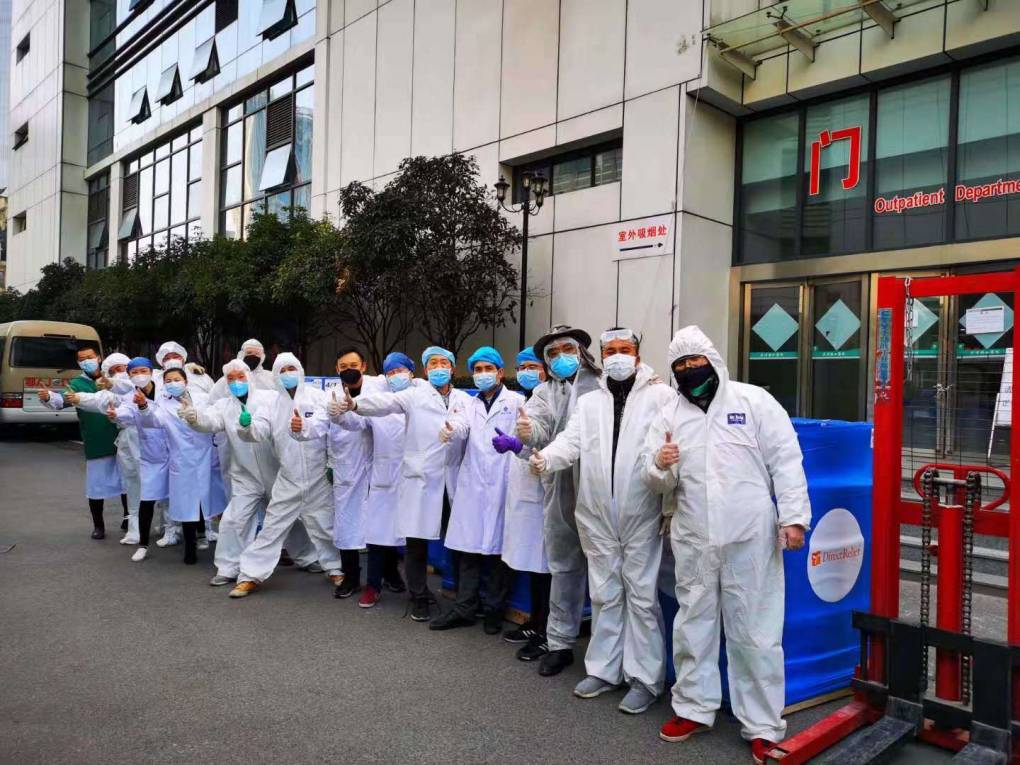
"caption": "Doctors, nurses and volunteers pictured after receiving a delivery of supplies at Wuhan Union Hospital on Jan. 31, 2020. The shipment included 200,000 surgical masks, 27,500 medical gloves, and 4,000 protective suits.",
"description": null,
"title": "Wuhan United Image 3",
"credit": "Courtesy of Wuhan United",
"status": "inherit",
"isLoading": false,
"fetchFailed": false
},
"science_1956941": {
"type": "attachments",
"id": "science_1956941",
"meta": {
"index": "attachments_1716263798",
"site": "science",
"id": "1956941",
"found": true
},
"parent": 1956936,
"imgSizes": {
"twentyfourteen-full-width": {
"file": "https://ww2.kqed.org/app/uploads/sites/35/2020/02/IMG_6156-1038x576.jpg",
"width": 1038,
"mimeType": "image/jpeg",
"height": 576
},
"thumbnail": {
"file": "https://ww2.kqed.org/app/uploads/sites/35/2020/02/IMG_6156-160x120.jpg",
"width": 160,
"mimeType": "image/jpeg",
"height": 120
},
"post-thumbnail": {
"file": "https://ww2.kqed.org/app/uploads/sites/35/2020/02/IMG_6156-672x372.jpg",
"width": 672,
"mimeType": "image/jpeg",
"height": 372
},
"kqedFullSize": {
"file": "https://ww2.kqed.org/app/uploads/sites/35/2020/02/IMG_6156.jpg",
"width": 2016,
"height": 1512
},
"large": {
"file": "https://ww2.kqed.org/app/uploads/sites/35/2020/02/IMG_6156-1020x765.jpg",
"width": 1020,
"mimeType": "image/jpeg",
"height": 765
},
"full-width": {
"file": "https://ww2.kqed.org/app/uploads/sites/35/2020/02/IMG_6156-1920x1440.jpg",
"width": 1920,
"mimeType": "image/jpeg",
"height": 1440
},
"medium": {
"file": "https://ww2.kqed.org/app/uploads/sites/35/2020/02/IMG_6156-800x600.jpg",
"width": 800,
"mimeType": "image/jpeg",
"height": 600
},
"medium_large": {
"file": "https://ww2.kqed.org/app/uploads/sites/35/2020/02/IMG_6156-768x576.jpg",
"width": 768,
"mimeType": "image/jpeg",
"height": 576
}
},
"publishDate": 1581632567,
"modified": 1581632769,
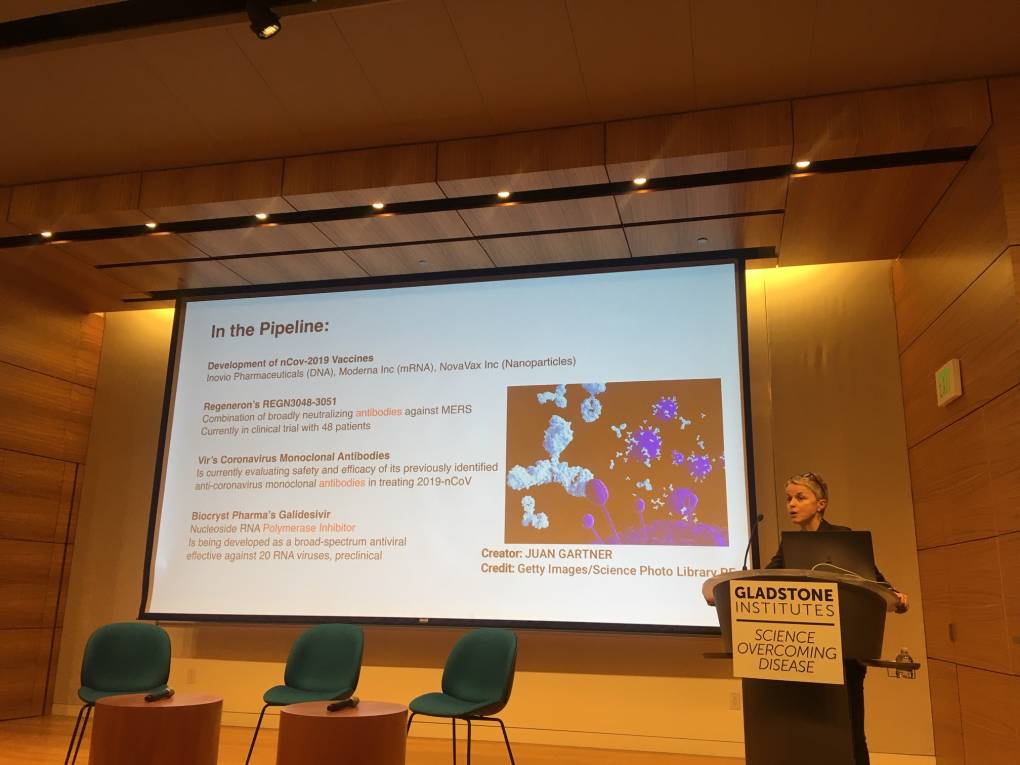
"caption": "Dr. Melanie Ott, senior investigator with the Gladstone Institutes, speaks at a panel on the 2019 novel coronavirus on Feb. 6, 2020.",
"description": null,
"title": "IMG_6156",
"credit": "Peter Arcuni/KQED Science",
"status": "inherit",
"isLoading": false,
"fetchFailed": false
},
"science_1956856": {
"type": "attachments",
"id": "science_1956856",
"meta": {
"index": "attachments_1716263798",
"site": "science",
"id": "1956856",
"found": true
},
"parent": 1956855,
"imgSizes": {
"twentyfourteen-full-width": {
"file": "https://ww2.kqed.org/app/uploads/sites/35/2020/02/RS41317_GettyImages-512019574-qut-1038x576.jpg",
"width": 1038,
"mimeType": "image/jpeg",
"height": 576
},
"thumbnail": {
"file": "https://ww2.kqed.org/app/uploads/sites/35/2020/02/RS41317_GettyImages-512019574-qut-160x112.jpg",
"width": 160,
"mimeType": "image/jpeg",
"height": 112
},
"post-thumbnail": {
"file": "https://ww2.kqed.org/app/uploads/sites/35/2020/02/RS41317_GettyImages-512019574-qut-672x372.jpg",
"width": 672,
"mimeType": "image/jpeg",
"height": 372
},
"kqedFullSize": {
"file": "https://ww2.kqed.org/app/uploads/sites/35/2020/02/RS41317_GettyImages-512019574-qut.jpg",
"width": 1920,
"height": 1344
},
"large": {
"file": "https://ww2.kqed.org/app/uploads/sites/35/2020/02/RS41317_GettyImages-512019574-qut-1020x714.jpg",
"width": 1020,
"mimeType": "image/jpeg",
"height": 714
},
"full-width": {
"file": "https://ww2.kqed.org/app/uploads/sites/35/2020/02/RS41317_GettyImages-512019574-qut-1920x1344.jpg",
"width": 1920,
"mimeType": "image/jpeg",
"height": 1344
},
"medium": {
"file": "https://ww2.kqed.org/app/uploads/sites/35/2020/02/RS41317_GettyImages-512019574-qut-800x560.jpg",
"width": 800,
"mimeType": "image/jpeg",
"height": 560
},
"medium_large": {
"file": "https://ww2.kqed.org/app/uploads/sites/35/2020/02/RS41317_GettyImages-512019574-qut-768x538.jpg",
"width": 768,
"mimeType": "image/jpeg",
"height": 538
}
},
"publishDate": 1581539693,
"modified": 1594426179,
"caption": "Dr. Anthony Fauci. ",
"description": null,
"title": "US-POLITICS-HEALTH-ZIKA",
"credit": "Saul Loeb/AFP via Getty Images",
"status": "inherit",
"isLoading": false,
"fetchFailed": false
},
"science_1956607": {
"type": "attachments",
"id": "science_1956607",
"meta": {
"index": "attachments_1716263798",
"site": "science",
"id": "1956607",
"found": true
},
"parent": 1956560,
"imgSizes": {
"twentyfourteen-full-width": {
"file": "https://ww2.kqed.org/app/uploads/sites/35/2020/02/iStock-509850436-1038x576.jpg",
"width": 1038,
"mimeType": "image/jpeg",
"height": 576
},
"thumbnail": {
"file": "https://ww2.kqed.org/app/uploads/sites/35/2020/02/iStock-509850436-160x106.jpg",
"width": 160,
"mimeType": "image/jpeg",
"height": 106
},
"post-thumbnail": {
"file": "https://ww2.kqed.org/app/uploads/sites/35/2020/02/iStock-509850436-672x372.jpg",
"width": 672,
"mimeType": "image/jpeg",
"height": 372
},
"kqedFullSize": {
"file": "https://ww2.kqed.org/app/uploads/sites/35/2020/02/iStock-509850436.jpg",
"width": 1258,
"height": 833
},
"large": {
"file": "https://ww2.kqed.org/app/uploads/sites/35/2020/02/iStock-509850436-1020x675.jpg",
"width": 1020,
"mimeType": "image/jpeg",
"height": 675
},
"medium": {
"file": "https://ww2.kqed.org/app/uploads/sites/35/2020/02/iStock-509850436-800x530.jpg",
"width": 800,
"mimeType": "image/jpeg",
"height": 530
},
"medium_large": {
"file": "https://ww2.kqed.org/app/uploads/sites/35/2020/02/iStock-509850436-768x509.jpg",
"width": 768,
"mimeType": "image/jpeg",
"height": 509
}
},
"publishDate": 1581015595,
"modified": 1581015762,
"caption": "San Francisco's Chinatown district is one of the oldest Chinatowns in the United States.",
"description": null,
"title": "Oakland bay bridge from Chinatown, San Francisco",
"credit": "iStock",
"status": "inherit",
"isLoading": false,
"fetchFailed": false
},
"science_1956329": {
"type": "attachments",
"id": "science_1956329",
"meta": {
"index": "attachments_1716263798",
"site": "science",
"id": "1956329",
"found": true
},
"parent": 1956289,
"imgSizes": {
"twentyfourteen-full-width": {
"file": "https://ww2.kqed.org/app/uploads/sites/35/2020/01/GettyImages-159249318-1038x576.jpg",
"width": 1038,
"mimeType": "image/jpeg",
"height": 576
},
"thumbnail": {
"file": "https://ww2.kqed.org/app/uploads/sites/35/2020/01/GettyImages-159249318-160x126.jpg",
"width": 160,
"mimeType": "image/jpeg",
"height": 126
},
"post-thumbnail": {
"file": "https://ww2.kqed.org/app/uploads/sites/35/2020/01/GettyImages-159249318-672x372.jpg",
"width": 672,
"mimeType": "image/jpeg",
"height": 372
},
"kqedFullSize": {
"file": "https://ww2.kqed.org/app/uploads/sites/35/2020/01/GettyImages-159249318.jpg",
"width": 3100,
"height": 2446
},
"large": {
"file": "https://ww2.kqed.org/app/uploads/sites/35/2020/01/GettyImages-159249318-1020x805.jpg",
"width": 1020,
"mimeType": "image/jpeg",
"height": 805
},
"full-width": {
"file": "https://ww2.kqed.org/app/uploads/sites/35/2020/01/GettyImages-159249318-1920x1515.jpg",
"width": 1920,
"mimeType": "image/jpeg",
"height": 1515
},
"medium": {
"file": "https://ww2.kqed.org/app/uploads/sites/35/2020/01/GettyImages-159249318-800x631.jpg",
"width": 800,
"mimeType": "image/jpeg",
"height": 631
},
"medium_large": {
"file": "https://ww2.kqed.org/app/uploads/sites/35/2020/01/GettyImages-159249318-768x606.jpg",
"width": 768,
"mimeType": "image/jpeg",
"height": 606
}
},
"publishDate": 1580413286,
"modified": 1580413620,
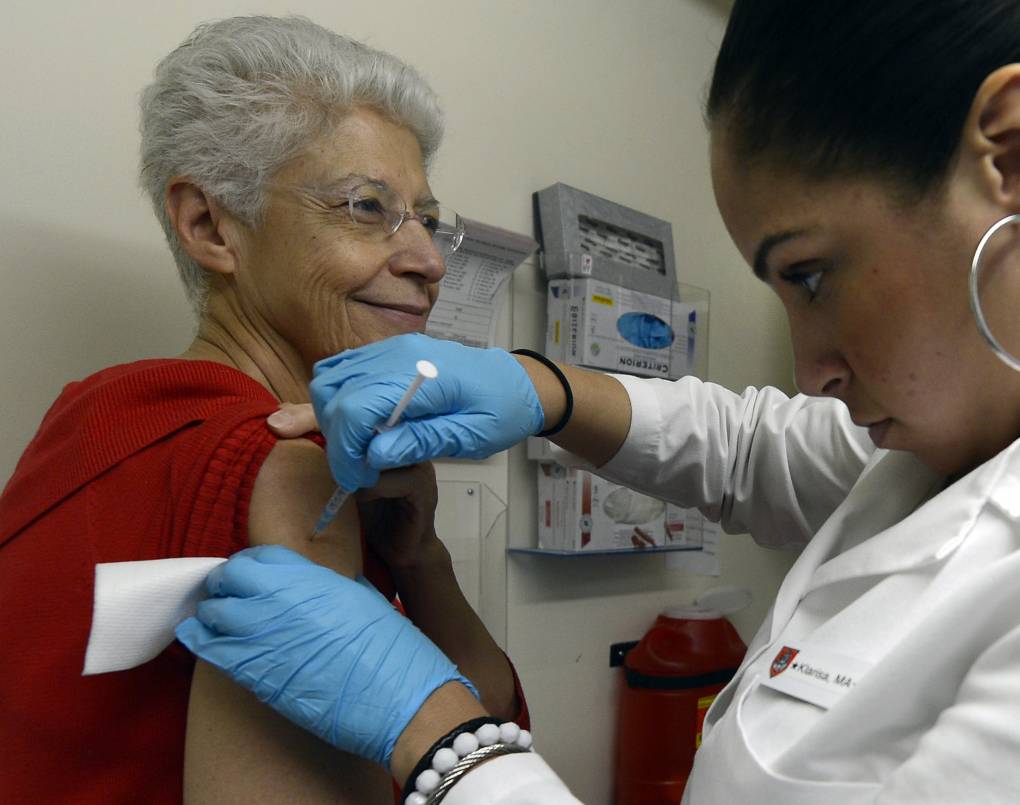
"caption": "The federal Centers for Disease Control and Prevention has said that for now, it's smart to take precautions against this year's flu strain.",
"description": null,
"title": "US-HEALTH-FLU OUTBREAK-NYC",
"credit": "Timothy A. Clary/AFP via Getty Images",
"status": "inherit",
"isLoading": false,
"fetchFailed": false
},
"science_1956228": {
"type": "attachments",
"id": "science_1956228",
"meta": {
"index": "attachments_1716263798",
"site": "science",
"id": "1956228",
"found": true
},
"parent": 1956225,
"imgSizes": {
"twentyfourteen-full-width": {
"file": "https://ww2.kqed.org/app/uploads/sites/35/2020/01/RS40936_GettyImages-1196684248-qut-1038x576.jpg",
"width": 1038,
"mimeType": "image/jpeg",
"height": 576
},
"thumbnail": {
"file": "https://ww2.kqed.org/app/uploads/sites/35/2020/01/RS40936_GettyImages-1196684248-qut-160x107.jpg",
"width": 160,
"mimeType": "image/jpeg",
"height": 107
},
"post-thumbnail": {
"file": "https://ww2.kqed.org/app/uploads/sites/35/2020/01/RS40936_GettyImages-1196684248-qut-672x372.jpg",
"width": 672,
"mimeType": "image/jpeg",
"height": 372
},
"kqedFullSize": {
"file": "https://ww2.kqed.org/app/uploads/sites/35/2020/01/RS40936_GettyImages-1196684248-qut.jpg",
"width": 1920,
"height": 1280
},
"large": {
"file": "https://ww2.kqed.org/app/uploads/sites/35/2020/01/RS40936_GettyImages-1196684248-qut-1020x680.jpg",
"width": 1020,
"mimeType": "image/jpeg",
"height": 680
},
"full-width": {
"file": "https://ww2.kqed.org/app/uploads/sites/35/2020/01/RS40936_GettyImages-1196684248-qut-1920x1280.jpg",
"width": 1920,
"mimeType": "image/jpeg",
"height": 1280
},
"medium": {
"file": "https://ww2.kqed.org/app/uploads/sites/35/2020/01/RS40936_GettyImages-1196684248-qut-800x533.jpg",
"width": 800,
"mimeType": "image/jpeg",
"height": 533
},
"medium_large": {
"file": "https://ww2.kqed.org/app/uploads/sites/35/2020/01/RS40936_GettyImages-1196684248-qut-768x512.jpg",
"width": 768,
"mimeType": "image/jpeg",
"height": 512
}
},
"publishDate": 1580149448,
"modified": 1580149479,
"caption": "Pedestrians wearing face masks cross a road during a Lunar New Year of the Rat public holiday in Hong Kong on January 27, 2020, as a preventative measure following a coronavirus outbreak which began in the Chinese city of Wuhan.",
"description": null,
"title": "RS40936_GettyImages-1196684248-qut",
"credit": " ANTHONY WALLACE/AFP via Getty Images",
"status": "inherit",
"isLoading": false,
"fetchFailed": false
},
"science_1956154": {
"type": "attachments",
"id": "science_1956154",
"meta": {
"index": "attachments_1716263798",
"site": "science",
"id": "1956154",
"found": true
},
"parent": 1956142,
"imgSizes": {
"thumbnail": {
"file": "https://ww2.kqed.org/app/uploads/sites/35/2020/01/Wuhan-coronavirus-160x90.jpg",
"width": 160,
"mimeType": "image/jpeg",
"height": 90
},
"post-thumbnail": {
"file": "https://ww2.kqed.org/app/uploads/sites/35/2020/01/Wuhan-coronavirus-672x372.jpg",
"width": 672,
"mimeType": "image/jpeg",
"height": 372
},
"kqedFullSize": {
"file": "https://ww2.kqed.org/app/uploads/sites/35/2020/01/Wuhan-coronavirus.jpg",
"width": 768,
"height": 432
},
"medium_large": {
"file": "https://ww2.kqed.org/app/uploads/sites/35/2020/01/Wuhan-coronavirus-768x432.jpg",
"width": 768,
"mimeType": "image/jpeg",
"height": 432
}
},
"publishDate": 1579908011,
"modified": 1579908046,
"caption": "A man wears a mask on the subway in Wuhan, China.",
"description": null,
"title": "Wuhan coronavirus",
"credit": "Getty Images",
"status": "inherit",
"isLoading": false,
"fetchFailed": false
},
"science_1956069": {
"type": "attachments",
"id": "science_1956069",
"meta": {
"index": "attachments_1716263798",
"site": "science",
"id": "1956069",
"found": true
},
"parent": 1956068,
"imgSizes": {
"twentyfourteen-full-width": {
"file": "https://ww2.kqed.org/app/uploads/sites/35/2020/01/sciencesource_ss2413465-bd5e295079f203794a6d35a99a4db82fa5615d4d-1038x576.jpg",
"width": 1038,
"mimeType": "image/jpeg",
"height": 576
},
"thumbnail": {
"file": "https://ww2.kqed.org/app/uploads/sites/35/2020/01/sciencesource_ss2413465-bd5e295079f203794a6d35a99a4db82fa5615d4d-160x120.jpg",
"width": 160,
"mimeType": "image/jpeg",
"height": 120
},
"post-thumbnail": {
"file": "https://ww2.kqed.org/app/uploads/sites/35/2020/01/sciencesource_ss2413465-bd5e295079f203794a6d35a99a4db82fa5615d4d-672x372.jpg",
"width": 672,
"mimeType": "image/jpeg",
"height": 372
},
"kqedFullSize": {
"file": "https://ww2.kqed.org/app/uploads/sites/35/2020/01/sciencesource_ss2413465-bd5e295079f203794a6d35a99a4db82fa5615d4d-e1579815683322.jpg",
"width": 1920,
"height": 1440
},
"large": {
"file": "https://ww2.kqed.org/app/uploads/sites/35/2020/01/sciencesource_ss2413465-bd5e295079f203794a6d35a99a4db82fa5615d4d-1020x765.jpg",
"width": 1020,
"mimeType": "image/jpeg",
"height": 765
},
"complete_open_graph": {
"file": "https://ww2.kqed.org/app/uploads/sites/35/2020/01/sciencesource_ss2413465-bd5e295079f203794a6d35a99a4db82fa5615d4d-1200x900.jpg",
"width": 1200,
"mimeType": "image/jpeg",
"height": 900
},
"full-width": {
"file": "https://ww2.kqed.org/app/uploads/sites/35/2020/01/sciencesource_ss2413465-bd5e295079f203794a6d35a99a4db82fa5615d4d-1920x1440.jpg",
"width": 1920,
"mimeType": "image/jpeg",
"height": 1440
},
"medium": {
"file": "https://ww2.kqed.org/app/uploads/sites/35/2020/01/sciencesource_ss2413465-bd5e295079f203794a6d35a99a4db82fa5615d4d-800x600.jpg",
"width": 800,
"mimeType": "image/jpeg",
"height": 600
},
"medium_large": {
"file": "https://ww2.kqed.org/app/uploads/sites/35/2020/01/sciencesource_ss2413465-bd5e295079f203794a6d35a99a4db82fa5615d4d-768x576.jpg",
"width": 768,
"mimeType": "image/jpeg",
"height": 576
}
},
"publishDate": 1579813925,
"modified": 1579814132,
"caption": "A visualization of the SARS virus. It is a type of coronavirus and displays the coronavirus' signature crownlike appearance under a microscope.\n",
"description": null,
"title": "A visualization of the SARS virus. It is a type of coronavirus and displays the coronavirus' signature crownlike appearance under a microscope.",
"credit": "3D4MEDICAL/3D4MEDICAL",
"status": "inherit",
"isLoading": false,
"fetchFailed": false
},
"science_1956032": {
"type": "attachments",
"id": "science_1956032",
"meta": {
"index": "attachments_1716263798",
"site": "science",
"id": "1956032",
"found": true
},
"parent": 1956030,
"imgSizes": {
"twentyfourteen-full-width": {
"file": "https://ww2.kqed.org/app/uploads/sites/35/2020/01/IMG_3599-1038x576.jpg",
"width": 1038,
"mimeType": "image/jpeg",
"height": 576
},
"thumbnail": {
"file": "https://ww2.kqed.org/app/uploads/sites/35/2020/01/IMG_3599-160x120.jpg",
"width": 160,
"mimeType": "image/jpeg",
"height": 120
},
"post-thumbnail": {
"file": "https://ww2.kqed.org/app/uploads/sites/35/2020/01/IMG_3599-672x372.jpg",
"width": 672,
"mimeType": "image/jpeg",
"height": 372
},
"kqedFullSize": {
"file": "https://ww2.kqed.org/app/uploads/sites/35/2020/01/IMG_3599-e1579739212230.jpg",
"width": 1920,
"height": 1440
},
"large": {
"file": "https://ww2.kqed.org/app/uploads/sites/35/2020/01/IMG_3599-1020x765.jpg",
"width": 1020,
"mimeType": "image/jpeg",
"height": 765
},
"complete_open_graph": {
"file": "https://ww2.kqed.org/app/uploads/sites/35/2020/01/IMG_3599-1200x900.jpg",
"width": 1200,
"mimeType": "image/jpeg",
"height": 900
},
"full-width": {
"file": "https://ww2.kqed.org/app/uploads/sites/35/2020/01/IMG_3599-1920x1440.jpg",
"width": 1920,
"mimeType": "image/jpeg",
"height": 1440
},
"medium": {
"file": "https://ww2.kqed.org/app/uploads/sites/35/2020/01/IMG_3599-800x600.jpg",
"width": 800,
"mimeType": "image/jpeg",
"height": 600
},
"medium_large": {
"file": "https://ww2.kqed.org/app/uploads/sites/35/2020/01/IMG_3599-768x576.jpg",
"width": 768,
"mimeType": "image/jpeg",
"height": 576
}
},
"publishDate": 1579739158,
"modified": 1617315232,
"caption": "A woman arrives at San Francisco International Airport from Wuhan, China, on Jan. 21, 2020.",
"description": null,
"title": "IMG_3599",
"credit": "Lesley McClurg/ KQED",
"status": "inherit",
"altTag": null,
"isLoading": false,
"fetchFailed": false
}
},
"audioPlayerReducer": {
"postId": "stream_live",
"isPaused": true,
"isPlaying": false,
"pfsActive": false,
"pledgeModalIsOpen": true,
"playerDrawerIsOpen": false,
"liveAudioPlayStartedAt": 0,
"liveAudioPlayContext": ""
},
"authorsReducer": {
"byline_science_1957472": {
"type": "authors",
"id": "byline_science_1957472",
"meta": {
"override": true
},
"slug": "byline_science_1957472",
"name": "Richard Harris\u003cbr />NPR",
"isLoading": false
},
"byline_science_1956855": {
"type": "authors",
"id": "byline_science_1956855",
"meta": {
"override": true
},
"slug": "byline_science_1956855",
"name": "Nicholas Florko \u003cbr />STAT\u003cBR>",
"isLoading": false
},
"byline_science_1956225": {
"type": "authors",
"id": "byline_science_1956225",
"meta": {
"override": true
},
"slug": "byline_science_1956225",
"name": "Helen Branswell \u003cbr />STAT News\u003cbr>",
"isLoading": false
},
"byline_science_1956142": {
"type": "authors",
"id": "byline_science_1956142",
"meta": {
"override": true
},
"slug": "byline_science_1956142",
"name": "Andrew Joseph\u003cbr />STAT",
"isLoading": false
},
"byline_science_1956068": {
"type": "authors",
"id": "byline_science_1956068",
"meta": {
"override": true
},
"slug": "byline_science_1956068",
"name": "Pien Huang\u003cbr />NPR",
"isLoading": false
},
"dventon": {
"type": "authors",
"id": "11088",
"meta": {
"index": "authors_1716337520",
"id": "11088",
"found": true
},
"name": "Danielle Venton",
"firstName": "Danielle",
"lastName": "Venton",
"slug": "dventon",
"email": "dventon@kqed.org",
"display_author_email": true,
"staff_mastheads": [
"science"
],
"title": "Science reporter",
"bio": "Danielle Venton is a reporter for KQED Science. She covers wildfires, space and oceans (though she is prone to sea sickness).\r\n\r\nBefore joining KQED in 2015, Danielle was a staff reporter at KRCB in Sonoma County and a freelancer. She studied science communication at UC Santa Cruz and formerly worked at CERN in Geneva, Switzerland where she wrote about computing. She lives in Sonoma County and enjoys backpacking.",
"avatar": "https://secure.gravatar.com/avatar/37b292b5c40c8d93959c4f48d73b5286f41b7abd8588277e941905a3ed4c801c?s=600&d=blank&r=g",
"twitter": "DanielleVenton",
"bluesky": null,
"facebook": null,
"instagram": null,
"linkedin": null,
"sites": [
{
"site": "arts",
"roles": [
"contributor"
]
},
{
"site": "news",
"roles": [
"editor"
]
},
{
"site": "futureofyou",
"roles": [
"editor"
]
},
{
"site": "science",
"roles": [
"editor"
]
},
{
"site": "liveblog",
"roles": [
"contributor"
]
}
],
"headData": {
"title": "Danielle Venton | KQED",
"description": "Science reporter",
"ogImgSrc": "https://secure.gravatar.com/avatar/37b292b5c40c8d93959c4f48d73b5286f41b7abd8588277e941905a3ed4c801c?s=600&d=blank&r=g",
"twImgSrc": "https://secure.gravatar.com/avatar/37b292b5c40c8d93959c4f48d73b5286f41b7abd8588277e941905a3ed4c801c?s=600&d=blank&r=g"
},
"isLoading": false,
"link": "/author/dventon"
},
"lesleymcclurg": {
"type": "authors",
"id": "11229",
"meta": {
"index": "authors_1716337520",
"id": "11229",
"found": true
},
"name": "Lesley McClurg",
"firstName": "Lesley",
"lastName": "McClurg",
"slug": "lesleymcclurg",
"email": "lmcclurg@KQED.org",
"display_author_email": false,
"staff_mastheads": [
"news",
"science"
],
"title": "KQED Health Correspondent",
"bio": "Lesley McClurg is a health correspondent and fill-in host whose work is regularly rebroadcast on NPR and PBS programs. She’s earned multiple regional Emmy awards, a national and a regional Edward R. Murrow award, and was named Best Beat Reporter by the Association of Health Care Journalists. The Society of Professional Journalists has recognized her work several times, and the Society of Environmental Journalists spotlighted her coverage of California’s historic drought.\r\n\r\nBefore joining KQED in 2016, Lesley covered food and sustainability for Capital Public Radio, environmental issues for Colorado Public Radio, and reported for KUOW and KCTS 9 in Seattle. Away from the newsroom, she loves skiing with her daughter, mountain biking with her partner, and playing with Ollie, the family’s goldendoodle. On deadline, she runs almost entirely on chocolate chips.\r\n\r\n ",
"avatar": "https://secure.gravatar.com/avatar/bab49e972ea10c774fe0f5e29dba1722b158f7c0d58a360923d1389d380b2978?s=600&d=blank&r=g",
"twitter": "lesleywmcclurg",
"bluesky": null,
"facebook": null,
"instagram": null,
"linkedin": null,
"sites": [
{
"site": "arts",
"roles": [
"author"
]
},
{
"site": "news",
"roles": [
"editor"
]
},
{
"site": "futureofyou",
"roles": [
"editor"
]
},
{
"site": "stateofhealth",
"roles": [
"author"
]
},
{
"site": "science",
"roles": [
"editor"
]
},
{
"site": "quest",
"roles": [
"subscriber"
]
},
{
"site": "forum",
"roles": [
"administrator"
]
},
{
"site": "liveblog",
"roles": [
"author"
]
}
],
"headData": {
"title": "Lesley McClurg | KQED",
"description": "KQED Health Correspondent",
"ogImgSrc": "https://secure.gravatar.com/avatar/bab49e972ea10c774fe0f5e29dba1722b158f7c0d58a360923d1389d380b2978?s=600&d=blank&r=g",
"twImgSrc": "https://secure.gravatar.com/avatar/bab49e972ea10c774fe0f5e29dba1722b158f7c0d58a360923d1389d380b2978?s=600&d=blank&r=g"
},
"isLoading": false,
"link": "/author/lesleymcclurg"
},
"parcuni": {
"type": "authors",
"id": "11368",
"meta": {
"index": "authors_1716337520",
"id": "11368",
"found": true
},
"name": "Peter Arcuni",
"firstName": "Peter",
"lastName": "Arcuni",
"slug": "parcuni",
"email": "parcuni@KQED.org",
"display_author_email": false,
"staff_mastheads": [
"science"
],
"title": "Reporter",
"bio": "Peter reports radio and online stories for \u003cem>KQED Science\u003c/em>. His work has also appeared on the \u003cem>The California Report\u003c/em> morning show and \u003cem>KQED News\u003c/em>. His production credits include \u003cem>The California Report, The California Report Magazine\u003c/em> and KQED's local news podcast \u003cem>The Bay\u003c/em>. Other credits include NPR's \u003cem>All Things Considered\u003c/em>, WNYC's \u003cem>Science Friday\u003c/em>, WBUR's \u003cem>Here & Now\u003c/em>, WIRED and SFGate. Peter graduated from Brown University and earned a master's degree in journalism from Stanford. He's covered everything from homelessness to wildfires, health, the environment, arts and Thanksgiving in San Quentin prison. In other lives, he played rock n roll music and studied neuroscience. You can email him at: parcuni@kqed.org",
"avatar": "https://secure.gravatar.com/avatar/d5032f6f27199d478af34ad2e1d98732?s=600&d=blank&r=g",
"twitter": "peterarcuni",
"facebook": null,
"instagram": null,
"linkedin": null,
"sites": [
{
"site": "news",
"roles": [
"editor"
]
},
{
"site": "science",
"roles": [
"editor"
]
}
],
"headData": {
"title": "Peter Arcuni | KQED",
"description": "Reporter",
"ogImgSrc": "https://secure.gravatar.com/avatar/d5032f6f27199d478af34ad2e1d98732?s=600&d=blank&r=g",
"twImgSrc": "https://secure.gravatar.com/avatar/d5032f6f27199d478af34ad2e1d98732?s=600&d=blank&r=g"
},
"isLoading": false,
"link": "/author/parcuni"
},
"rdillon": {
"type": "authors",
"id": "11495",
"meta": {
"index": "authors_1716337520",
"id": "11495",
"found": true
},
"name": "Raquel Maria Dillon",
"firstName": "Raquel Maria",
"lastName": "Dillon",
"slug": "rdillon",
"email": "rdillon@kqed.org",
"display_author_email": false,
"staff_mastheads": [],
"title": null,
"bio": "Raquel Maria Dillon was a reporter and host for KQED News. Previously, she produced the daily statewide California Report, edited newscasts, and covered health and education stories. Before returning to the Bay Area in 2016, she worked in Los Angeles as a wire reporter and one-woman-band video journalist for the Associated Press, where she shot, edited and reported breaking news and features across the West. Her work has appeared online and in print around the globe, and also on NPR’s Morning Edition, All Things Considered, Here and Now, Marketplace, On The Media, and Studio 360. She previously edited and mentored up-and-coming reporters at KALW, produced social videos for Timeline.com, and was a local TV news videographer for KTVU and digital producer for KNTV. She got her start as a Radio News Trainee at KQED, produced a weekly public affairs roundtable show for OPB, and covered health and politics at New Hampshire Public Radio. She has a BA in political science from Barnard College and a MA in video journalism from UC Berkeley, where she was awarded the Faith Fancher Scholarship and a Student Emmy. She has received numerous local awards from the Associated Press and the Society of Professional Journalists.",
"avatar": "https://secure.gravatar.com/avatar/b8e02ae982913d0950df605910267c1b?s=600&d=blank&r=g",
"twitter": "RaquelMDillon",
"facebook": null,
"instagram": null,
"linkedin": null,
"sites": [
{
"site": "news",
"roles": [
"subscriber"
]
},
{
"site": "stateofhealth",
"roles": [
"editor"
]
},
{
"site": "science",
"roles": [
"editor"
]
},
{
"site": "forum",
"roles": [
"editor"
]
}
],
"headData": {
"title": "Raquel Maria Dillon | KQED",
"description": null,
"ogImgSrc": "https://secure.gravatar.com/avatar/b8e02ae982913d0950df605910267c1b?s=600&d=blank&r=g",
"twImgSrc": "https://secure.gravatar.com/avatar/b8e02ae982913d0950df605910267c1b?s=600&d=blank&r=g"
},
"isLoading": false,
"link": "/author/rdillon"
}
},
"pagesReducer": {
"science_tag_coronavirus": {
"type": "terms",
"id": "science_4329",
"meta": {
"index": "terms_1716263798",
"site": "science",
"id": "4329",
"score": 8.457257
},
"featImg": null,
"name": "Coronavirus",
"description": null,
"taxonomy": "tag",
"headData": {
"twImgId": null,
"twTitle": null,
"ogTitle": null,
"ogImgId": null,
"twDescription": null,
"description": null,
"title": "Coronavirus Archives | KQED Science",
"ogDescription": null
},
"ttid": 4329,
"slug": "coronavirus",
"isLoading": false,
"title": "Coronavirus",
"pageMeta": {
"site": "science",
"WpPageTemplate": "page-topic-editorial",
"currentPage": 23
},
"blocks": [
{
"blockName": "kqed/post-list",
"attrs": {
"layout": "cardArticle2",
"query": "posts/science?tag=coronavirus",
"seeMore": false,
"paginated": true,
"page": 23
}
},
{
"blockName": "kqed/ad"
}
]
}
},
"pfsSessionReducer": {},
"postsReducer": {
"stream_live": {
"type": "live",
"id": "stream_live",
"audioUrl": "https://streams.kqed.org/kqedradio",
"title": "Live Stream",
"excerpt": "Live Stream information currently unavailable.",
"link": "/radio",
"featImg": "",
"label": {
"name": "KQED Live",
"link": "/"
}
},
"stream_kqedNewscast": {
"type": "posts",
"id": "stream_kqedNewscast",
"audioUrl": "https://www.kqed.org/.stream/anon/radio/RDnews/newscast.mp3?_=1",
"title": "KQED Newscast",
"featImg": "",
"label": {
"name": "88.5 FM",
"link": "/"
}
},
"science_1957472": {
"type": "posts",
"id": "science_1957472",
"meta": {
"index": "posts_1716263798",
"site": "science",
"id": "1957472",
"score": null,
"sort": [
1582661498000
]
},
"parent": 0,
"labelTerm": {},
"blocks": [],
"publishDate": 1582661498,
"format": "standard",
"title": "CDC Says Americans Should Prepare for Spread of Coronavirus",
"headTitle": "CDC Says Americans Should Prepare for Spread of Coronavirus | KQED",
"content": "\u003cp>\u003cstrong>Updated 12:10 p.m. \u003c/strong>\u003c/p>\n\u003cp>Federal health officials issued a blunt message Tuesday: Americans need to start preparing now for the possibility that more aggressive, disruptive measures might be needed to stop the spread of the new coronavirus in the U.S.\u003c/p>\n\u003cp>The strongly worded warning came in response to outbreaks of the virus outside China, including in Iran, Japan, South Korea and Italy, which officials say have raised the likelihood of outbreaks occurring stateside.\u003c/p>\n\u003cp>“It’s not so much a question of if this will happen anymore, but more really a question of when it will happen — and how many people in this country will have severe illness,” Dr. Nancy Messonnier of the Centers for Disease Control and Prevention told reporters during a briefing.\u003c/p>\n\u003cp>While aggressive measures such as travel restrictions and the first federal quarantine in a half century have probably slowed the arrival of the coronavirus in the U.S., Messonnier said even more intrusive steps likely will be needed.\u003c/p>\n\u003cp>[ad fullwidth]\u003c/p>\n\u003cp>“We are asking the American public to work with us to prepare with the expectation that this could be bad,” Messonnier said.\u003c/p>\n\u003cp>“I had a conversation with my family over breakfast this morning. And I told my children that while I didn’t think that they were at risk right now, we, as a family, need to be preparing for significant disruption of our lives,” she said.\u003c/p>\n\u003cp>Those measures could include school closings, workplace shutdowns and canceling large gatherings and public events, she warned.\u003c/p>\n\u003cp>“I understand this whole situation may seem overwhelming and that disruption to everyday life may be severe, but these are things that people need to start thinking about now,” Messonnier said.\u003c/p>\n\u003cp>So Americans need to do things like start making plans to care for their children should schools and day care centers close, she said. They should talk to their employers about how they could work from home. And they should find out if there might be a way to get medical care remotely, such as through telemedicine, Messonnier said.\u003c/p>\n\u003cp>She stressed that the current risk remains low. Almost all the cases that have occurred in the United States have been among travelers who got infected overseas. In addition, there’s always the chance that the coronavirus could begin to subside as the spring and summer arrive.\u003c/p>\n\u003cp>Infectious disease experts say that \u003ca href=\"https://www.npr.org/sections/goatsandsoda/2020/02/20/807483553/coronavirus-is-contagious-but-kids-seem-less-vulnerable-so-far\">80% of infections are mild\u003c/a>, no more severe than the common cold.\u003c/p>\n\u003cp>So far, there have been 14 confirmed cases of the coronavirus illness COVID-19 in the U.S. and 40 other cases among people who were repatriated to the U.S. after being on the Diamond Princess cruise ship. An additional three cases are among people who were repatriated from Hubei province in China, where the respiratory virus emerged months ago.\u003c/p>\n\u003cp>Hand-washing with soap and water continues to be a top recommendation to protect against the virus, since the abrasiveness of soap helps remove infectious particles from the hands. Experts say that commonly worn surgical masks \u003ca href=\"https://www.npr.org/sections/goatsandsoda/2020/01/29/800531753/face-masks-what-doctors-say-about-their-role-in-containing-coronavirus\">aren’t very effective protection\u003c/a>. A heavy-duty mask called an N95 respirator is considerably better protection, but it is uncomfortable to wear and can make breathing more difficult.\u003c/p>\n\u003cp>The CDC has \u003ca href=\"https://www.cdc.gov/coronavirus/2019-ncov/travelers/index.html\">advised\u003c/a> against nonessential travel to China and South Korea, countries that have seen the highest numbers of cases.\u003c/p>\n\u003cp>But because there are so many unknowns, state and local officials and average Americans need to be prepared, Messonnier said.\u003c/p>\n\u003cp>“I continue to hope that in the end we’ll look back and feel like we were overprepared. But that is a better place to be in than being underprepared,” she said.\u003c/p>\n\u003cp>\u003cstrong>World Health Organization Sees Progress\u003c/strong>\u003c/p>\n\u003cp>Meanwhile, despite worrisome new outbreaks in Iran, Italy and South Korea, the coronavirus disease called COVID-19 is not currently a pandemic, the World Health Organization said Monday.\u003c/p>\n\u003cp>In fact, there are some encouraging trends, especially in Hubei province, where most of the cases have been reported.\u003c/p>\n\u003cp>The epidemic there appears to have plateaued in late January and is continuing on a good trajectory. Dr. Bruce Aylward led a WHO trip to China with a scientific delegation that just concluded. On Sunday, he told reporters in Beijing that trend is real.\u003c/p>\n\u003cp>Aylward said that he’d spoken to a researcher in Wuhan who is testing potential drugs to treat COVID-19, “and when I asked him what challenge they’re finding in trying to implement the trial, he said the single biggest one is recruiting new patients … because of the drop in cases.”\u003c/p>\n\u003cp>That’s a good kind of problem. The message from China is that it’s not hopeless, he says. It is possible to control this disease.\u003c/p>\n\u003cp>“Now we’re starting to see countries like Italy take extremely aggressive actions,” Aylward said. “What China has demonstrated is you have to do this, and if you do it you can save lives and prevent thousands of cases of what is a very difficult disease.”\u003c/p>\n\u003cp>Getting the public’s full cooperation to do the simplest tasks is a reason for the success.\u003c/p>\n\u003cp>“Believe it or not, the most valuable thing the whole population can do is wash its hands, continually,” he said. Other useful measures include avoiding crowds, as you’d find in schools and large gatherings.\u003c/p>\n\u003cp>But restricting travel is not on Aylward’s list of useful actions.\u003c/p>\n\u003cp>“You don’t have to lock down cities is the big message from China, in fact,” he said.\u003c/p>\n\u003cp>The WHO scientific delegation’s task was to learn what worked in China and to spread the word. But even during their brief trip, the disease was making serious inroads in South Korea, Iran and Italy. As of Monday morning, South Korea \u003ca href=\"https://www.who.int/docs/default-source/coronaviruse/situation-reports/20200224-sitrep-35-covid-19.pdf?sfvrsn=1ac4218d_2\">had reported\u003c/a> 763 cases, Iran had reported 43 cases — including eight deaths — and Italy added 48 cases to bring its national total to 124.\u003c/p>\n\u003cp>“There is a lot of speculation about whether this increase means that this epidemic has now become a pandemic,” said WHO Director General Tedros Adhanom Ghebreyesus at a news conference in Geneva.\u003c/p>\n\u003cp>There have been 14 cases of the virus diagnosed in the U.S., all in people who traveled recently to China or their close contacts, according to STAT. Another 39 U.S. residents have been infected in other parts of the world before being repatriated and quarantined.\u003c/p>\n\u003cp>Assigning that label isn’t simply a matter of whether a disease is on multiple continents, but whether it’s out of control and doing significant damage. Those are decisions that WHO makes before declaring that a disease is a pandemic. The term was last used for the H1N1 flu virus that struck in 2009, sickening more than 60 million in the U.S. alone and killing some half a million worldwide.\u003c/p>\n\u003cp>“Does this virus [that causes COVID-19] have pandemic potential?” Tedros asked rhetorically. “Absolutely it has. Are we there yet? From our assessment, not yet.”\u003c/p>\n\u003cp>There’s still time for countries to get in front of it. The WHO’s top priorities are to protect health care workers, to protect vulnerable people such as those who are sick and elderly, and to protect vulnerable countries.\u003c/p>\n\u003cp>Even the advanced nations of Europe have work to do, since their hospitals are pretty full these days with flu patients. Those beds might be needed for coronavirus patients.\u003c/p>\n\u003cp>If the spread of the coronavirus in Europe can be slowed until the end of flu season, that “will free up significant capacity of the health system,” said Dr. Michael Ryan, executive director for the WHO’s Health Emergency Program. “So even slowing down the virus by a month or six weeks has a massive positive benefit.”\u003c/p>\n\u003cp>[ad floatright]\u003c/p>\n\u003cp>Health officials in the United States know they can’t count indefinitely on their current strategy — identifying every new case immediately and isolating those patients. So they’re considering containment measures akin to what worked in China, such as school closings.\u003c/p>\n\u003cdiv class=\"fullattribution\">Copyright 2020 NPR. To see more, visit https://www.npr.org.\u003cimg decoding=\"async\" src=\"https://www.google-analytics.com/__utm.gif?utmac=UA-5828686-4&utmdt=H1N1+Was+The+Last+Pandemic.+Here%27s+Why+COVID-19+Isn%27t+Yet+In+That+Category&utme=8(APIKey)9(MDAxOTAwOTE4MDEyMTkxMDAzNjczZDljZA004)\">\u003c/div>\n\n",
"stats": {
"hasVideo": false,
"hasChartOrMap": false,
"hasAudio": false,
"hasPolis": false,
"wordCount": 1388,
"hasGoogleForm": false,
"hasGallery": false,
"hasHearkenModule": false,
"iframeSrcs": [],
"paragraphCount": 39
},
"modified": 1704847744,
"excerpt": "Federal health officials said Americans need to start preparing now for the possibility that more aggressive, disruptive measures might be needed to stop the spread of the new coronavirus in the U.S.",
"headData": {
"twImgId": "",
"twTitle": "",
"ogTitle": "",
"ogImgId": "",
"twDescription": "",
"description": "Federal health officials said Americans need to start preparing now for the possibility that more aggressive, disruptive measures might be needed to stop the spread of the new coronavirus in the U.S.",
"title": "CDC Says Americans Should Prepare for Spread of Coronavirus | KQED",
"ogDescription": "",
"schema": {
"@context": "https://schema.org",
"@type": "Article",
"headline": "CDC Says Americans Should Prepare for Spread of Coronavirus",
"datePublished": "2020-02-25T12:11:38-08:00",
"dateModified": "2024-01-09T16:49:04-08:00",
"image": "https://cdn.kqed.org/wp-content/uploads/2020/02/KQED-OG-Image@1x.png"
}
},
"guestAuthors": [],
"slug": "cdc-expects-coronavirus-to-spread-in-u-s-communities",
"status": "publish",
"nprApiLink": "http://api.npr.org/query?id=808957041&apiKey=MDAxOTAwOTE4MDEyMTkxMDAzNjczZDljZA004",
"nprStoryDate": "Mon, 24 Feb 2020 16:42:00 -0500",
"nprLastModifiedDate": "Tue, 25 Feb 2020 12:07:22 -0500",
"nprHtmlLink": "https://www.npr.org/sections/goatsandsoda/2020/02/24/808957041/h1n1-was-the-last-pandemic-heres-why-covid-19-isn-t-yet-in-that-category?ft=nprml&f=808957041",
"nprAudio": "https://ondemand.npr.org/anon.npr-mp3/npr/atc/2020/02/20200224_atc_world_health_organization_does_not_declare_covid-19_a_pandemic_yet.mp3?orgId=1&topicId=1031&d=222&p=2&story=808957041&ft=nprml&f=808957041",
"nprImageAgency": "AP",
"source": "Coronavirus",
"nprAudioM3u": "http://api.npr.org/m3u/1808995314-88a794.m3u?orgId=1&topicId=1031&d=222&p=2&story=808957041&ft=nprml&f=808957041",
"nprStoryId": "808957041",
"nprByline": "Richard Harris\u003cbr />NPR",
"sticky": false,
"nprImageCredit": "Pete Souza",
"nprRetrievedStory": "1",
"nprPubDate": "Tue, 25 Feb 2020 12:07:00 -0500",
"path": "/science/1957472/cdc-expects-coronavirus-to-spread-in-u-s-communities",
"audioUrl": "https://ondemand.npr.org/anon.npr-mp3/npr/atc/2020/02/20200224_atc_world_health_organization_does_not_declare_covid-19_a_pandemic_yet.mp3?orgId=1&topicId=1031&d=222&p=2&story=808957041&ft=nprml&f=808957041",
"audioTrackLength": null,
"parsedContent": [
{
"type": "contentString",
"content": "\u003cdiv class=\"post-body\">\u003cp>\u003cp>\u003cstrong>Updated 12:10 p.m. \u003c/strong>\u003c/p>\n\u003cp>Federal health officials issued a blunt message Tuesday: Americans need to start preparing now for the possibility that more aggressive, disruptive measures might be needed to stop the spread of the new coronavirus in the U.S.\u003c/p>\n\u003cp>The strongly worded warning came in response to outbreaks of the virus outside China, including in Iran, Japan, South Korea and Italy, which officials say have raised the likelihood of outbreaks occurring stateside.\u003c/p>\n\u003cp>“It’s not so much a question of if this will happen anymore, but more really a question of when it will happen — and how many people in this country will have severe illness,” Dr. Nancy Messonnier of the Centers for Disease Control and Prevention told reporters during a briefing.\u003c/p>\n\u003cp>While aggressive measures such as travel restrictions and the first federal quarantine in a half century have probably slowed the arrival of the coronavirus in the U.S., Messonnier said even more intrusive steps likely will be needed.\u003c/p>\n\u003cp>\u003c/p>\u003c/div>",
"attributes": {
"named": {},
"numeric": []
}
},
{
"type": "component",
"content": "",
"name": "ad",
"attributes": {
"named": {
"label": "fullwidth"
},
"numeric": [
"fullwidth"
]
}
},
{
"type": "contentString",
"content": "\u003cdiv class=\"post-body\">\u003cp>\u003c/p>\n\u003cp>“We are asking the American public to work with us to prepare with the expectation that this could be bad,” Messonnier said.\u003c/p>\n\u003cp>“I had a conversation with my family over breakfast this morning. And I told my children that while I didn’t think that they were at risk right now, we, as a family, need to be preparing for significant disruption of our lives,” she said.\u003c/p>\n\u003cp>Those measures could include school closings, workplace shutdowns and canceling large gatherings and public events, she warned.\u003c/p>\n\u003cp>“I understand this whole situation may seem overwhelming and that disruption to everyday life may be severe, but these are things that people need to start thinking about now,” Messonnier said.\u003c/p>\n\u003cp>So Americans need to do things like start making plans to care for their children should schools and day care centers close, she said. They should talk to their employers about how they could work from home. And they should find out if there might be a way to get medical care remotely, such as through telemedicine, Messonnier said.\u003c/p>\n\u003cp>She stressed that the current risk remains low. Almost all the cases that have occurred in the United States have been among travelers who got infected overseas. In addition, there’s always the chance that the coronavirus could begin to subside as the spring and summer arrive.\u003c/p>\n\u003cp>Infectious disease experts say that \u003ca href=\"https://www.npr.org/sections/goatsandsoda/2020/02/20/807483553/coronavirus-is-contagious-but-kids-seem-less-vulnerable-so-far\">80% of infections are mild\u003c/a>, no more severe than the common cold.\u003c/p>\n\u003cp>So far, there have been 14 confirmed cases of the coronavirus illness COVID-19 in the U.S. and 40 other cases among people who were repatriated to the U.S. after being on the Diamond Princess cruise ship. An additional three cases are among people who were repatriated from Hubei province in China, where the respiratory virus emerged months ago.\u003c/p>\n\u003cp>Hand-washing with soap and water continues to be a top recommendation to protect against the virus, since the abrasiveness of soap helps remove infectious particles from the hands. Experts say that commonly worn surgical masks \u003ca href=\"https://www.npr.org/sections/goatsandsoda/2020/01/29/800531753/face-masks-what-doctors-say-about-their-role-in-containing-coronavirus\">aren’t very effective protection\u003c/a>. A heavy-duty mask called an N95 respirator is considerably better protection, but it is uncomfortable to wear and can make breathing more difficult.\u003c/p>\n\u003cp>The CDC has \u003ca href=\"https://www.cdc.gov/coronavirus/2019-ncov/travelers/index.html\">advised\u003c/a> against nonessential travel to China and South Korea, countries that have seen the highest numbers of cases.\u003c/p>\n\u003cp>But because there are so many unknowns, state and local officials and average Americans need to be prepared, Messonnier said.\u003c/p>\n\u003cp>“I continue to hope that in the end we’ll look back and feel like we were overprepared. But that is a better place to be in than being underprepared,” she said.\u003c/p>\n\u003cp>\u003cstrong>World Health Organization Sees Progress\u003c/strong>\u003c/p>\n\u003cp>Meanwhile, despite worrisome new outbreaks in Iran, Italy and South Korea, the coronavirus disease called COVID-19 is not currently a pandemic, the World Health Organization said Monday.\u003c/p>\n\u003cp>In fact, there are some encouraging trends, especially in Hubei province, where most of the cases have been reported.\u003c/p>\n\u003cp>The epidemic there appears to have plateaued in late January and is continuing on a good trajectory. Dr. Bruce Aylward led a WHO trip to China with a scientific delegation that just concluded. On Sunday, he told reporters in Beijing that trend is real.\u003c/p>\n\u003cp>Aylward said that he’d spoken to a researcher in Wuhan who is testing potential drugs to treat COVID-19, “and when I asked him what challenge they’re finding in trying to implement the trial, he said the single biggest one is recruiting new patients … because of the drop in cases.”\u003c/p>\n\u003cp>That’s a good kind of problem. The message from China is that it’s not hopeless, he says. It is possible to control this disease.\u003c/p>\n\u003cp>“Now we’re starting to see countries like Italy take extremely aggressive actions,” Aylward said. “What China has demonstrated is you have to do this, and if you do it you can save lives and prevent thousands of cases of what is a very difficult disease.”\u003c/p>\n\u003cp>Getting the public’s full cooperation to do the simplest tasks is a reason for the success.\u003c/p>\n\u003cp>“Believe it or not, the most valuable thing the whole population can do is wash its hands, continually,” he said. Other useful measures include avoiding crowds, as you’d find in schools and large gatherings.\u003c/p>\n\u003cp>But restricting travel is not on Aylward’s list of useful actions.\u003c/p>\n\u003cp>“You don’t have to lock down cities is the big message from China, in fact,” he said.\u003c/p>\n\u003cp>The WHO scientific delegation’s task was to learn what worked in China and to spread the word. But even during their brief trip, the disease was making serious inroads in South Korea, Iran and Italy. As of Monday morning, South Korea \u003ca href=\"https://www.who.int/docs/default-source/coronaviruse/situation-reports/20200224-sitrep-35-covid-19.pdf?sfvrsn=1ac4218d_2\">had reported\u003c/a> 763 cases, Iran had reported 43 cases — including eight deaths — and Italy added 48 cases to bring its national total to 124.\u003c/p>\n\u003cp>“There is a lot of speculation about whether this increase means that this epidemic has now become a pandemic,” said WHO Director General Tedros Adhanom Ghebreyesus at a news conference in Geneva.\u003c/p>\n\u003cp>There have been 14 cases of the virus diagnosed in the U.S., all in people who traveled recently to China or their close contacts, according to STAT. Another 39 U.S. residents have been infected in other parts of the world before being repatriated and quarantined.\u003c/p>\n\u003cp>Assigning that label isn’t simply a matter of whether a disease is on multiple continents, but whether it’s out of control and doing significant damage. Those are decisions that WHO makes before declaring that a disease is a pandemic. The term was last used for the H1N1 flu virus that struck in 2009, sickening more than 60 million in the U.S. alone and killing some half a million worldwide.\u003c/p>\n\u003cp>“Does this virus [that causes COVID-19] have pandemic potential?” Tedros asked rhetorically. “Absolutely it has. Are we there yet? From our assessment, not yet.”\u003c/p>\n\u003cp>There’s still time for countries to get in front of it. The WHO’s top priorities are to protect health care workers, to protect vulnerable people such as those who are sick and elderly, and to protect vulnerable countries.\u003c/p>\n\u003cp>Even the advanced nations of Europe have work to do, since their hospitals are pretty full these days with flu patients. Those beds might be needed for coronavirus patients.\u003c/p>\n\u003cp>If the spread of the coronavirus in Europe can be slowed until the end of flu season, that “will free up significant capacity of the health system,” said Dr. Michael Ryan, executive director for the WHO’s Health Emergency Program. “So even slowing down the virus by a month or six weeks has a massive positive benefit.”\u003c/p>\n\u003cp>\u003c/p>\u003c/div>",
"attributes": {
"named": {},
"numeric": []
}
},
{
"type": "component",
"content": "",
"name": "ad",
"attributes": {
"named": {
"label": "floatright"
},
"numeric": [
"floatright"
]
}
},
{
"type": "contentString",
"content": "\u003cdiv class=\"post-body\">\u003cp>\u003c/p>\n\u003cp>Health officials in the United States know they can’t count indefinitely on their current strategy — identifying every new case immediately and isolating those patients. So they’re considering containment measures akin to what worked in China, such as school closings.\u003c/p>\n\u003cdiv class=\"fullattribution\">Copyright 2020 NPR. To see more, visit https://www.npr.org.\u003cimg decoding=\"async\" src=\"https://www.google-analytics.com/__utm.gif?utmac=UA-5828686-4&utmdt=H1N1+Was+The+Last+Pandemic.+Here%27s+Why+COVID-19+Isn%27t+Yet+In+That+Category&utme=8(APIKey)9(MDAxOTAwOTE4MDEyMTkxMDAzNjczZDljZA004)\">\u003c/div>\n\n\u003c/div>\u003c/p>",
"attributes": {
"named": {},
"numeric": []
}
}
],
"link": "/science/1957472/cdc-expects-coronavirus-to-spread-in-u-s-communities",
"authors": [
"byline_science_1957472"
],
"categories": [
"science_39",
"science_3890",
"science_40"
],
"tags": [
"science_4329",
"science_3370",
"science_5181",
"science_2936",
"science_3977"
],
"featImg": "science_1957476",
"label": "source_science_1957472"
},
"science_1957359": {
"type": "posts",
"id": "science_1957359",
"meta": {
"index": "posts_1716263798",
"site": "science",
"id": "1957359",
"score": null,
"sort": [
1582531292000
]
},
"guestAuthors": [],
"slug": "how-new-diseases-find-their-way-into-humans",
"title": "How New Diseases Find Their Way Into Humans",
"publishDate": 1582531292,
"format": "image",
"headTitle": "How New Diseases Find Their Way Into Humans | KQED",
"labelTerm": {},
"content": "\u003cp>The idea that human, animal and ecosystem health are interconnected is relatively new, but in the last decade or so it has taken hold. The federal Centers for Disease Control and Prevention even has a \u003ca href=\"https://www.cdc.gov/onehealth/index.html\" target=\"_blank\" rel=\"noopener noreferrer\">“One Health” office\u003c/a>, “with the goal of achieving optimal health outcomes” recognizing those links.\u003c/p>\n\u003cp>“There is this recognition that we cannot protect, and even less improve, human health if we don’t really protect the health of the environment that underpins human well-being,” said \u003ca href=\"https://woods.stanford.edu/people/giulio-de-leo\" target=\"_blank\" rel=\"noopener noreferrer\">Giulio De Leo\u003c/a> of Stanford’s Woods Institute for the Environment.\u003c/p>\n\u003cp>Many researchers currently think that bats were the source of the coronavirus (now officially called COVID-19), and that it may have moved through \u003ca href=\"https://www.google.com/search?source=hp&ei=CXZQXs7HJdTK-gSPtK_oBg&q=pangolins\" target=\"_blank\" rel=\"noopener noreferrer\">pangolins\u003c/a> — the world’s most highly trafficked animal — as an intermediate host before moving into humans through the wildlife trade.\u003c/p>\n\u003cp>There are three key ways new diseases find their way into human populations, De Leo says.\u003c/p>\n\u003cp>• Land-use change and habitat disruption, especially deforestation, brings humans, livestock and wildlife into new contact and can give novel diseases the introduction they need to make it into the human population.\u003c/p>\n\u003cp>• The illegal wildlife trade transports an estimated 5,600 species from wildlands to markets, zoos, shops and pharmacies around the world. It can be especially dangerous because the animals are often transported and sold live. China is the center of this global trade.\u003c/p>\n\u003cp>• In the current outbreak, live meat markets are suspected as the likely point at which sick animals infected a group of humans. These so called “wet markets” crowd a host of caged animals and humans together and are ideal environments for introducing and spreading disease.\u003c/p>\n\u003cp>\u003cstrong>What Can Be Done?\u003c/strong>\u003c/p>\n\u003cp>China has temporarily banned trade in wild animals and their sale in markets, restaurants and online. Many conservationists and disease ecologists have for years called for a permanent ban, saying it would be a win for conservation and global health. \u003ca href=\"https://www.nature.com/articles/d41586-020-00499-2?utm_source=feedburner&utm_medium=feed&utm_campaign=Feed%3A+nature%2Frss%2Fcurrent+%28Nature+-+Issue%29\" target=\"_blank\" rel=\"noopener noreferrer\">News reports\u003c/a> indicate Chinese lawmakers may adopt permanent restrictions on the wildlife trade.\u003c/p>\n\u003cp>In the longer term, many disease ecologists would like deforestation hot spots to be more closely monitored, and for habitat disruption to slow or cease altogether.\u003c/p>\n\u003cp>Researchers also \u003ca href=\"https://www.pnas.org/content/112/6/1647\" target=\"_blank\" rel=\"noopener noreferrer\">study outbreaks and manipulate model disease systems\u003c/a> to search for the mechanisms behind how infections spread. The hope is that one day land managers may be better able to make decisions that promote the health of the ecosystem and the people and animals that depend on it.\u003c/p>\n\u003cp>“Studying these linkages can show us the levers we can use to protect human health while at the same time protecting the integrity of the environment we live in,” said De Leo.\u003c/p>\n\u003cp>[ad fullwidth]\u003c/p>\n\u003cp>\u003c/p>\n",
"blocks": [],
"excerpt": "The novel coronavirus is a reminder that diseases from wild animals can move into humans. Animals get sick, just like us. And ecologists tell us that the health of animals, humans, ecosystems and the planet is interconnected. ",
"status": "publish",
"parent": 0,
"modified": 1727135507,
"stats": {
"hasAudio": false,
"hasVideo": false,
"hasChartOrMap": false,
"iframeSrcs": [],
"hasGoogleForm": false,
"hasGallery": false,
"hasHearkenModule": false,
"hasPolis": false,
"paragraphCount": 14,
"wordCount": 463
},
"headData": {
"title": "How New Diseases Find Their Way Into Humans | KQED",
"description": "The novel coronavirus is a reminder that diseases from wild animals can move into humans. Animals get sick, just like us. And ecologists tell us that the health of animals, humans, ecosystems and the planet is interconnected. ",
"ogTitle": "",
"ogDescription": "",
"ogImgId": "",
"twTitle": "",
"twDescription": "",
"twImgId": "",
"schema": {
"@context": "https://schema.org",
"@type": "Article",
"headline": "How New Diseases Find Their Way Into Humans",
"datePublished": "2020-02-24T00:01:32-08:00",
"dateModified": "2024-09-23T16:51:47-07:00",
"image": "https://cdn.kqed.org/wp-content/uploads/2020/02/KQED-OG-Image@1x.png"
}
},
"source": "Health",
"audioUrl": "https://traffic.omny.fm/d/clips/0af137ef-751e-4b19-a055-aaef00d2d578/ffca7e9f-6831-41c5-bcaf-aaef00f5a073/a517f7e5-ef66-42e1-b246-ab6b01311e73/audio.mp3",
"sticky": false,
"path": "/science/1957359/how-new-diseases-find-their-way-into-humans",
"audioTrackLength": null,
"parsedContent": [
{
"type": "contentString",
"content": "\u003cdiv class=\"post-body\">\u003cp>\u003cp>The idea that human, animal and ecosystem health are interconnected is relatively new, but in the last decade or so it has taken hold. The federal Centers for Disease Control and Prevention even has a \u003ca href=\"https://www.cdc.gov/onehealth/index.html\" target=\"_blank\" rel=\"noopener noreferrer\">“One Health” office\u003c/a>, “with the goal of achieving optimal health outcomes” recognizing those links.\u003c/p>\n\u003cp>“There is this recognition that we cannot protect, and even less improve, human health if we don’t really protect the health of the environment that underpins human well-being,” said \u003ca href=\"https://woods.stanford.edu/people/giulio-de-leo\" target=\"_blank\" rel=\"noopener noreferrer\">Giulio De Leo\u003c/a> of Stanford’s Woods Institute for the Environment.\u003c/p>\n\u003cp>Many researchers currently think that bats were the source of the coronavirus (now officially called COVID-19), and that it may have moved through \u003ca href=\"https://www.google.com/search?source=hp&ei=CXZQXs7HJdTK-gSPtK_oBg&q=pangolins\" target=\"_blank\" rel=\"noopener noreferrer\">pangolins\u003c/a> — the world’s most highly trafficked animal — as an intermediate host before moving into humans through the wildlife trade.\u003c/p>\n\u003cp>There are three key ways new diseases find their way into human populations, De Leo says.\u003c/p>\n\u003cp>• Land-use change and habitat disruption, especially deforestation, brings humans, livestock and wildlife into new contact and can give novel diseases the introduction they need to make it into the human population.\u003c/p>\n\u003cp>• The illegal wildlife trade transports an estimated 5,600 species from wildlands to markets, zoos, shops and pharmacies around the world. It can be especially dangerous because the animals are often transported and sold live. China is the center of this global trade.\u003c/p>\n\u003cp>• In the current outbreak, live meat markets are suspected as the likely point at which sick animals infected a group of humans. These so called “wet markets” crowd a host of caged animals and humans together and are ideal environments for introducing and spreading disease.\u003c/p>\n\u003cp>\u003cstrong>What Can Be Done?\u003c/strong>\u003c/p>\n\u003cp>China has temporarily banned trade in wild animals and their sale in markets, restaurants and online. Many conservationists and disease ecologists have for years called for a permanent ban, saying it would be a win for conservation and global health. \u003ca href=\"https://www.nature.com/articles/d41586-020-00499-2?utm_source=feedburner&utm_medium=feed&utm_campaign=Feed%3A+nature%2Frss%2Fcurrent+%28Nature+-+Issue%29\" target=\"_blank\" rel=\"noopener noreferrer\">News reports\u003c/a> indicate Chinese lawmakers may adopt permanent restrictions on the wildlife trade.\u003c/p>\n\u003cp>In the longer term, many disease ecologists would like deforestation hot spots to be more closely monitored, and for habitat disruption to slow or cease altogether.\u003c/p>\n\u003cp>Researchers also \u003ca href=\"https://www.pnas.org/content/112/6/1647\" target=\"_blank\" rel=\"noopener noreferrer\">study outbreaks and manipulate model disease systems\u003c/a> to search for the mechanisms behind how infections spread. The hope is that one day land managers may be better able to make decisions that promote the health of the ecosystem and the people and animals that depend on it.\u003c/p>\n\u003cp>“Studying these linkages can show us the levers we can use to protect human health while at the same time protecting the integrity of the environment we live in,” said De Leo.\u003c/p>\n\u003cp>\u003c/p>\u003c/div>",
"attributes": {
"named": {},
"numeric": []
}
},
{
"type": "component",
"content": "",
"name": "ad",
"attributes": {
"named": {
"label": "fullwidth"
},
"numeric": [
"fullwidth"
]
}
},
{
"type": "contentString",
"content": "\u003cdiv class=\"post-body\">\u003cp>\u003c/p>\n\u003cp>\u003c/p>\n\u003c/div>\u003c/p>",
"attributes": {
"named": {},
"numeric": []
}
}
],
"link": "/science/1957359/how-new-diseases-find-their-way-into-humans",
"authors": [
"11088"
],
"programs": [
"science_5376"
],
"categories": [
"science_2874",
"science_35",
"science_39",
"science_40",
"science_5141",
"science_3423"
],
"tags": [
"science_4329",
"science_3370",
"science_5181"
],
"featImg": "science_1957360",
"label": "source_science_1957359"
},
"science_1956946": {
"type": "posts",
"id": "science_1956946",
"meta": {
"index": "posts_1716263798",
"site": "science",
"id": "1956946",
"score": null,
"sort": [
1581712778000
]
},
"parent": 0,
"labelTerm": {},
"blocks": [],
"publishDate": 1581712778,
"format": "standard",
"title": "Wuhan Natives Living in the Bay Area Organize Long-Distance Coronavirus Relief",
"headTitle": "Wuhan Natives Living in the Bay Area Organize Long-Distance Coronavirus Relief | KQED",
"content": "\u003cp>There are 15 confirmed cases of the \u003ca href=\"https://www.who.int/emergencies/diseases/novel-coronavirus-2019/\" target=\"_blank\" rel=\"noopener noreferrer\">new coronavirus\u003c/a> in the United States, compared with more than 40,000 in China, where the virus first surfaced in Wuhan City. There are also thousands of graduates from Wuhan-based universities who call the Bay Area home.\u003c/p>\n\u003cp>So on January 23, when Chinese officials locked down the city in an effort to contain the COVID-19 virus, Tom Gong sprung into action in the South Bay.\u003c/p>\n\u003cp>Gong, who attended university in Wuhan and now lives in San Jose, connected online with fellow alumni and others with ties to the city of 11 million people to figure out how to help.\u003c/p>\n\u003cp>“The lockdown really sent a signal to us that [the] situation is very, very bad,” Gong said, “So we acted quickly.”\u003c/p>\n\u003cp>Gong says the the group, now called \u003ca href=\"https://wuhanunited.org/\" target=\"_blank\" rel=\"noopener noreferrer\">Wuhan United\u003c/a>, began as four or five individuals and expanded to more than 30 people in a week.[pullquote citation='Zongchao Li, of Wuhan United']“It’s our hometown. You know, we care. And we just want to do what we can to help them.” [/pullquote]\u003c/p>\n\u003cp>“We need to work together to send much needed medical supplies from [the] U.S. to China to help the hospitals in Wuhan,” he said.\u003c/p>\n\u003cp>The team, which often discusses plans over WeChat or Zoom video, mostly includes graduates from two universities: \u003ca class=\"name-subtitle\" href=\"http://www.hust.edu.cn\" target=\"_blank\" rel=\"noopener noreferrer\">Huazhong University of Science and Technology,\u003c/a> where Gong studied, and \u003ca href=\"https://en.whu.edu.cn/\" target=\"_blank\" rel=\"noopener noreferrer\">Wuhan University\u003c/a>.\u003c/p>\n\u003cp>Zongchao Li, who handles communications for Wuhan United, said the group kept hearing reports from family and friends in Wuhan about nurses and doctors working around the clock with little rest and dwindling supplies.\u003c/p>\n\u003cp>“It gets very emotional for everybody,” Li said. “And it’s our hometown. You know, we care. And we just want to do what we can to help them.”\u003c/p>\n\u003cfigure id=\"attachment_1957053\" class=\"wp-caption alignright\" style=\"max-width: 800px\">\u003cimg loading=\"lazy\" decoding=\"async\" class=\"size-medium wp-image-1957053\" src=\"https://ww2.kqed.org/app/uploads/sites/35/2020/02/Wuhan-United-Image-4-copy-800x600.jpg\" alt=\"\" width=\"800\" height=\"600\" srcset=\"https://cdn.kqed.org/wp-content/uploads/sites/35/2020/02/Wuhan-United-Image-4-copy-800x600.jpg 800w, https://cdn.kqed.org/wp-content/uploads/sites/35/2020/02/Wuhan-United-Image-4-copy-160x120.jpg 160w, https://cdn.kqed.org/wp-content/uploads/sites/35/2020/02/Wuhan-United-Image-4-copy-768x576.jpg 768w, https://cdn.kqed.org/wp-content/uploads/sites/35/2020/02/Wuhan-United-Image-4-copy-1020x765.jpg 1020w, https://cdn.kqed.org/wp-content/uploads/sites/35/2020/02/Wuhan-United-Image-4-copy-1920x1440.jpg 1920w\" sizes=\"(max-width: 800px) 100vw, 800px\">\u003cfigcaption class=\"wp-caption-text\">29 pallets of medical supplies, weighing more than three tons, were delivered to Wuhan’s Tongji Hospital on Feb. 11, 2020. \u003ccite>(Courtesy of Wuhan United)\u003c/cite>\u003c/figcaption>\u003c/figure>\n\u003cp>Wuhan United partners with nonprofits like \u003ca href=\"https://www.directrelief.org/\" target=\"_blank\" rel=\"noopener noreferrer\">Direct Relief\u003c/a> to deliver protective gear like gloves and masks to hospitals treating patients and working to containing the outbreak.\u003c/p>\n\u003cp>Gong said these relief organizations have the supplies, but need help navigating the logistics of making sure these shipments from the U.S. get into the hands of health workers in Wuhan.\u003c/p>\n\u003cp>That’s where Wuhan United comes in.\u003c/p>\n\u003cp>The group helps with paperwork like customs forms and legal documents that donors need to sign in order for hospitals to receive the supplies.\u003c/p>\n\u003cp>Gong said his experience doing business in China, along with the group’s contacts in Wuhan’s government, industry and health care sectors, has helped make their work possible.\u003c/p>\n\u003cp>Once the shipments arrive in China via FedEx, Li said, the group’s network of family and friends in Wuhan help coordinate delivery to hospitals in the area.\u003c/p>\n\u003cp>The first shipment arranged by Wuhan United contained 17 pallets of medical supplies that weighed about about 2.5 tons. It arrived at Wuhan Union Hospital on January 31, just over a week after the group first rallied online.\u003c/p>\n\u003cp>In several shipments, Gong estimated they’ve delivered more than 1 million items of protective equipment. The team is preparing another scheduled to depart on Monday.\u003c/p>\n\u003cp>Gong, who was born in Wuhan, said the effects of the Wuhan coronavirus will likely “trickle down to all corners of society.” He has brothers still living in the city and his wife has sisters working in hospitals there.\u003c/p>\n\u003cp>“No one is prepared to handle this kind of situation,” he said. “People in Wuhan are suffering. We really appreciate [if] you can understand more about their life and help them as much as you can.”\u003c/p>\n\u003cp>[ad fullwidth]\u003c/p>\n\u003cp>\u003c/p>\n",
"stats": {
"hasVideo": false,
"hasChartOrMap": false,
"hasAudio": false,
"hasPolis": false,
"wordCount": 640,
"hasGoogleForm": false,
"hasGallery": false,
"hasHearkenModule": false,
"iframeSrcs": [],
"paragraphCount": 21
},
"modified": 1704847772,
"excerpt": "A group of Wuhan natives living in the Bay Area have rallied to help deliver medical supplies to hospitals in China.",
"headData": {
"twImgId": "",
"twTitle": "",
"ogTitle": "",
"ogImgId": "",
"twDescription": "",
"description": "A group of Wuhan natives living in the Bay Area have rallied to help deliver medical supplies to hospitals in China.",
"title": "Wuhan Natives Living in the Bay Area Organize Long-Distance Coronavirus Relief | KQED",
"ogDescription": "",
"schema": {
"@context": "https://schema.org",
"@type": "Article",
"headline": "Wuhan Natives Living in the Bay Area Organize Long-Distance Coronavirus Relief",
"datePublished": "2020-02-14T12:39:38-08:00",
"dateModified": "2024-01-09T16:49:32-08:00",
"image": "https://cdn.kqed.org/wp-content/uploads/2020/02/KQED-OG-Image@1x.png"
}
},
"guestAuthors": [],
"slug": "wuhan-natives-living-in-the-bay-area-organize-long-distance-coronavirus-relief",
"status": "publish",
"audioUrl": "https://traffic.omny.fm/d/clips/0af137ef-751e-4b19-a055-aaef00d2d578/ffca7e9f-6831-41c5-bcaf-aaef00f5a073/561375e7-3c19-45ab-9d11-ab610144af88/audio.mp3",
"sticky": false,
"source": "Public Health",
"path": "/science/1956946/wuhan-natives-living-in-the-bay-area-organize-long-distance-coronavirus-relief",
"audioTrackLength": null,
"parsedContent": [
{
"type": "contentString",
"content": "\u003cdiv class=\"post-body\">\u003cp>\u003cp>There are 15 confirmed cases of the \u003ca href=\"https://www.who.int/emergencies/diseases/novel-coronavirus-2019/\" target=\"_blank\" rel=\"noopener noreferrer\">new coronavirus\u003c/a> in the United States, compared with more than 40,000 in China, where the virus first surfaced in Wuhan City. There are also thousands of graduates from Wuhan-based universities who call the Bay Area home.\u003c/p>\n\u003cp>So on January 23, when Chinese officials locked down the city in an effort to contain the COVID-19 virus, Tom Gong sprung into action in the South Bay.\u003c/p>\n\u003cp>Gong, who attended university in Wuhan and now lives in San Jose, connected online with fellow alumni and others with ties to the city of 11 million people to figure out how to help.\u003c/p>\n\u003cp>“The lockdown really sent a signal to us that [the] situation is very, very bad,” Gong said, “So we acted quickly.”\u003c/p>\n\u003cp>Gong says the the group, now called \u003ca href=\"https://wuhanunited.org/\" target=\"_blank\" rel=\"noopener noreferrer\">Wuhan United\u003c/a>, began as four or five individuals and expanded to more than 30 people in a week.\u003c/p>\u003c/div>",
"attributes": {
"named": {},
"numeric": []
}
},
{
"type": "component",
"content": "“It’s our hometown. You know, we care. And we just want to do what we can to help them.” ",
"name": "pullquote",
"attributes": {
"named": {
"citation": "Zongchao Li, of Wuhan United",
"label": ""
},
"numeric": []
}
},
{
"type": "contentString",
"content": "\u003cdiv class=\"post-body\">\u003cp>\u003c/p>\n\u003cp>“We need to work together to send much needed medical supplies from [the] U.S. to China to help the hospitals in Wuhan,” he said.\u003c/p>\n\u003cp>The team, which often discusses plans over WeChat or Zoom video, mostly includes graduates from two universities: \u003ca class=\"name-subtitle\" href=\"http://www.hust.edu.cn\" target=\"_blank\" rel=\"noopener noreferrer\">Huazhong University of Science and Technology,\u003c/a> where Gong studied, and \u003ca href=\"https://en.whu.edu.cn/\" target=\"_blank\" rel=\"noopener noreferrer\">Wuhan University\u003c/a>.\u003c/p>\n\u003cp>Zongchao Li, who handles communications for Wuhan United, said the group kept hearing reports from family and friends in Wuhan about nurses and doctors working around the clock with little rest and dwindling supplies.\u003c/p>\n\u003cp>“It gets very emotional for everybody,” Li said. “And it’s our hometown. You know, we care. And we just want to do what we can to help them.”\u003c/p>\n\u003cfigure id=\"attachment_1957053\" class=\"wp-caption alignright\" style=\"max-width: 800px\">\u003cimg loading=\"lazy\" decoding=\"async\" class=\"size-medium wp-image-1957053\" src=\"https://ww2.kqed.org/app/uploads/sites/35/2020/02/Wuhan-United-Image-4-copy-800x600.jpg\" alt=\"\" width=\"800\" height=\"600\" srcset=\"https://cdn.kqed.org/wp-content/uploads/sites/35/2020/02/Wuhan-United-Image-4-copy-800x600.jpg 800w, https://cdn.kqed.org/wp-content/uploads/sites/35/2020/02/Wuhan-United-Image-4-copy-160x120.jpg 160w, https://cdn.kqed.org/wp-content/uploads/sites/35/2020/02/Wuhan-United-Image-4-copy-768x576.jpg 768w, https://cdn.kqed.org/wp-content/uploads/sites/35/2020/02/Wuhan-United-Image-4-copy-1020x765.jpg 1020w, https://cdn.kqed.org/wp-content/uploads/sites/35/2020/02/Wuhan-United-Image-4-copy-1920x1440.jpg 1920w\" sizes=\"(max-width: 800px) 100vw, 800px\">\u003cfigcaption class=\"wp-caption-text\">29 pallets of medical supplies, weighing more than three tons, were delivered to Wuhan’s Tongji Hospital on Feb. 11, 2020. \u003ccite>(Courtesy of Wuhan United)\u003c/cite>\u003c/figcaption>\u003c/figure>\n\u003cp>Wuhan United partners with nonprofits like \u003ca href=\"https://www.directrelief.org/\" target=\"_blank\" rel=\"noopener noreferrer\">Direct Relief\u003c/a> to deliver protective gear like gloves and masks to hospitals treating patients and working to containing the outbreak.\u003c/p>\n\u003cp>Gong said these relief organizations have the supplies, but need help navigating the logistics of making sure these shipments from the U.S. get into the hands of health workers in Wuhan.\u003c/p>\n\u003cp>That’s where Wuhan United comes in.\u003c/p>\n\u003cp>The group helps with paperwork like customs forms and legal documents that donors need to sign in order for hospitals to receive the supplies.\u003c/p>\n\u003cp>Gong said his experience doing business in China, along with the group’s contacts in Wuhan’s government, industry and health care sectors, has helped make their work possible.\u003c/p>\n\u003cp>Once the shipments arrive in China via FedEx, Li said, the group’s network of family and friends in Wuhan help coordinate delivery to hospitals in the area.\u003c/p>\n\u003cp>The first shipment arranged by Wuhan United contained 17 pallets of medical supplies that weighed about about 2.5 tons. It arrived at Wuhan Union Hospital on January 31, just over a week after the group first rallied online.\u003c/p>\n\u003cp>In several shipments, Gong estimated they’ve delivered more than 1 million items of protective equipment. The team is preparing another scheduled to depart on Monday.\u003c/p>\n\u003cp>Gong, who was born in Wuhan, said the effects of the Wuhan coronavirus will likely “trickle down to all corners of society.” He has brothers still living in the city and his wife has sisters working in hospitals there.\u003c/p>\n\u003cp>“No one is prepared to handle this kind of situation,” he said. “People in Wuhan are suffering. We really appreciate [if] you can understand more about their life and help them as much as you can.”\u003c/p>\n\u003cp>\u003c/p>\u003c/div>",
"attributes": {
"named": {},
"numeric": []
}
},
{
"type": "component",
"content": "",
"name": "ad",
"attributes": {
"named": {
"label": "fullwidth"
},
"numeric": [
"fullwidth"
]
}
},
{
"type": "contentString",
"content": "\u003cdiv class=\"post-body\">\u003cp>\u003c/p>\n\u003cp>\u003c/p>\n\u003c/div>\u003c/p>",
"attributes": {
"named": {},
"numeric": []
}
}
],
"link": "/science/1956946/wuhan-natives-living-in-the-bay-area-organize-long-distance-coronavirus-relief",
"authors": [
"11368",
"11495"
],
"categories": [
"science_39",
"science_3890",
"science_40"
],
"tags": [
"science_4329",
"science_4368"
],
"featImg": "science_1957032",
"label": "source_science_1956946"
},
"science_1956936": {
"type": "posts",
"id": "science_1956936",
"meta": {
"index": "posts_1716263798",
"site": "science",
"id": "1956936",
"score": null,
"sort": [
1581634200000
]
},
"parent": 0,
"labelTerm": {},
"blocks": [],
"publishDate": 1581634200,
"format": "aside",
"title": "Bay Area Doctors Talk Coronavirus Risks and Prevention",
"headTitle": "Bay Area Doctors Talk Coronavirus Risks and Prevention | KQED",
"content": "\u003cfigure id=\"attachment_1956941\" class=\"wp-caption alignright\" style=\"max-width: 800px\">\u003cimg loading=\"lazy\" decoding=\"async\" class=\"size-medium wp-image-1956941\" src=\"https://ww2.kqed.org/app/uploads/sites/35/2020/02/IMG_6156-800x600.jpg\" alt=\"\" width=\"800\" height=\"600\" srcset=\"https://cdn.kqed.org/wp-content/uploads/sites/35/2020/02/IMG_6156-800x600.jpg 800w, https://cdn.kqed.org/wp-content/uploads/sites/35/2020/02/IMG_6156-160x120.jpg 160w, https://cdn.kqed.org/wp-content/uploads/sites/35/2020/02/IMG_6156-768x576.jpg 768w, https://cdn.kqed.org/wp-content/uploads/sites/35/2020/02/IMG_6156-1020x765.jpg 1020w, https://cdn.kqed.org/wp-content/uploads/sites/35/2020/02/IMG_6156-1920x1440.jpg 1920w, https://cdn.kqed.org/wp-content/uploads/sites/35/2020/02/IMG_6156.jpg 2016w\" sizes=\"(max-width: 800px) 100vw, 800px\">\u003cfigcaption class=\"wp-caption-text\">Dr. Melanie Ott, senior investigator with the Gladstone Institutes, speaks at a panel on the 2019 novel coronavirus on Feb. 6, 2020. \u003ccite>(Peter Arcuni/KQED Science)\u003c/cite>\u003c/figcaption>\u003c/figure>\n\u003cp>\u003ci>Virus experts from the University of California, San Francisco and the Gladstone Institutes research organization gathered recently to update the public about the risks associated with the \u003c/i>\u003ca href=\"https://www.cdc.gov/coronavirus/2019-nCoV/summary.html\" target=\"_blank\" rel=\"noopener noreferrer\">\u003ci>2019 novel coronavirus\u003c/i>\u003c/a>\u003ci> that first surfaced in Wuhan City, China and has infected tens of thousands of people worldwide.\u003c/i>\u003c/p>\n\u003cp>\u003ci>The panel discussion, called “Understanding the Wuhan Coronavirus,” was held Thursday, Feb. 6 at Gladstone’s San Francisco headquarters. Here are some the COVID-19 basics the panelists addressed at the event.\u003c/i>\u003c/p>\n\u003cp>\u003cb>Part of a Large Family of Viruses\u003c/b>\u003c/p>\n\u003cp>While the term “coronavirus” may be new to people in the United States, this strain belongs to a large family of viruses that include the common cold and more serious diseases like \u003ca href=\"https://www.who.int/emergencies/mers-cov/en/\" target=\"_blank\" rel=\"noopener noreferrer\">Middle East Respiratory Syndrome (MERS)\u003c/a> and\u003ca href=\"https://www.who.int/csr/sars/en/\" target=\"_blank\" rel=\"noopener noreferrer\"> Severe Acute Respiratory Syndrome (SARS)\u003c/a>.\u003c/p>\n\u003cp>Dr. Warner Greene, director of Gladstone’s Center for HIV Cure Research, said, “10 to 30 percent of colds are caused by one form or another of a coronavirus\u003ci>.\u003c/i>”\u003c/p>\n\u003cp>[ad fullwidth]\u003c/p>\n\u003cp>He said the preliminary research shows that this virus may spread more easily among humans than SARS or MERS, but it appears to be less lethal. Researchers estimate the mortality rate of COVID-19 at about 2 percent, compared with about 9 percent for SARS and more than 30 percent for MERS.\u003c/p>\n\u003cp>Greene added that it’s still too early to know this for sure because the data are “rapidly evolving.”\u003c/p>\n\u003cp>\u003ci>“\u003c/i>My message,” he said, “is that this is an outbreak. It’s not an epidemic.”\u003c/p>\n\u003cp>He and other panelists said \u003ca href=\"https://www.cdc.gov/flu/about/viruses/index.htm\" target=\"_blank\" rel=\"noopener noreferrer\">influenza\u003c/a> poses a greater threat to public health compared to this novel coronavirus.\u003c/p>\n\u003cp>“In general, around 35,000 people die every year of the seasonal flu,” Greene said.\u003c/p>\n\u003cp>So far this flu season, the federal \u003ca href=\"https://www.cdc.gov/flu/about/burden/preliminary-in-season-estimates.htm\" target=\"_blank\" rel=\"noopener noreferrer\">Centers for Disease Control and Prevention estimates\u003c/a> that more than 20 million people in the United States have contracted influenza, and more than 10,000 have died.\u003c/p>\n\u003cp>Only 15 people in the U.S. have so far tested positive for COVID-19.\u003c/p>\n\u003cp>\u003cb>Tracking the Virus\u003c/b>\u003c/p>\n\u003cp>Researchers have traced COVID-19, and viruses like it, to bats. Animal-to-human transmission, however, typically occurs through a secondary host. Scientists have traced the MERS outbreak to palm civets (a cat-like mammal), and SARS to camels.\u003c/p>\n\u003cp>Greene said public health experts don’t yet know the secondary host for this strain of coronavirus, but they believe the outbreak began at a seafood market.\u003c/p>\n\u003cp>Dr. Charles Chiu, director of the UCSF-Abbott Viral Diagnostics and Discovery Center, said the initial animal-to-human transmission likely occurred in late November or early December of 2019.\u003c/p>\n\u003cp>“Since then, there’s been no evidence of ongoing animal-to-human transmission events. All of the outbreak has essentially been sustained by human to human transmission,” Chiu said.\u003c/p>\n\u003cp>Panelists said a shortage of samples has limited their research. Chiu said scientists do have access to at least 60 genome sequences of the strain from different patients. From these sequences, scientists have discovered only seven mutations.\u003c/p>\n\u003cp>“The virus, in general, is not regarded as a very fast mutating virus. This is unlike other viruses that we have that can adapt very fast,” said Dr. Melanie Ott, a senior investigator with the Gladstone Institutes.\u003c/p>\n\u003cp>That may be a boon to researchers working on vaccines and treatments.\u003c/p>\n\u003cp>\u003cb>Containing the Outbreak\u003c/b>\u003c/p>\n\u003cp>At present there is no cure or vaccine specific to COVID-19.\u003c/p>\n\u003cp>Ott said at least three companies have publicly announced the development of a vaccine.\u003c/p>\n\u003cp>“Interest in making a vaccine is very high currently,” she said, “… either with a DNA and RNA, or with a nanoparticle vaccine.”\u003c/p>\n\u003cp>Ott added that physicians are in the process of testing antiviral drugs for the flu, HIV, MERS and ebola in patients with COVID-19.\u003c/p>\n\u003cp>Researchers with the National Institutes of Health’s \u003ca href=\"https://www.nih.gov/news-events/news-releases/nih-officials-discuss-novel-coronavirus-recently-emerged-china\" target=\"_blank\" rel=\"noopener noreferrer\">National Institute of Allergy and Infectious Diseases\u003c/a> say vaccine candidates could be available for human testing in about three months. But it will likely take about a year to complete validation and safety evaluations.\u003c/p>\n\u003cp>Greene said public health measures hold the key to containing the outbreak.\u003c/p>\n\u003cp>“SARS was not controlled by medicines or a vaccine. It was controlled by public health interventions, tracking infections, limiting contact of infected individuals with others. And certainly in the absence of appropriate vaccines and and highly active drugs, that’s exactly what will be undertaken here,” Greene said.\u003c/p>\n\u003cp>He added that a strain on resources is the big challenge for health officials in China.\u003c/p>\n\u003cp>“We now see or are hearing reports that in Wuhan that there are sick individuals who are wandering from hospital to hospital trying to get care. They’re running out of supplies. The medical system is completely stressed,” Greene said.\u003c/p>\n\u003cp>But unlike the the more pervasive flu, he said, this novel coronavirus doesn’t have “the same type of seasonality,” meaning, once contained, it likely won’t resurface each year.\u003c/p>\n\u003cp>\u003cb>Masks Not Generally Recommended\u003c/b>\u003c/p>\n\u003cp>The CDC doesn’t recommend masks for most people.\u003c/p>\n\u003cp>“Medical personnel in close contact caring for patients with chronic viruses should take all precautions. But in terms of day-to-day interactions, hand-washing is far more effective,” Greene said.\u003c/p>\n\u003cp>The CDC does recommend masks for patients with the virus, people in their households and hospital staff treating them.\u003c/p>\n\u003cp>\u003c/p>\n\u003cp>\u003ci>“\u003c/i>The final message I think we want,” Greene said, “is we should be watchful…we should follow this outbreak, but we should be secure in the fact that the apocalypse is not upon us. This is a viral outbreak that is running its course now.”\u003c/p>\n\n",
"stats": {
"hasVideo": false,
"hasChartOrMap": false,
"hasAudio": false,
"hasPolis": false,
"wordCount": 986,
"hasGoogleForm": false,
"hasGallery": false,
"hasHearkenModule": false,
"iframeSrcs": [],
"paragraphCount": 38
},
"modified": 1704847777,
"excerpt": "Virus experts from the University of California, San Francisco and the Gladstone Institutes gathered recently to update the public about the risks associated with the 2019 novel coronavirus.",
"headData": {
"twImgId": "",
"twTitle": "",
"ogTitle": "",
"ogImgId": "",
"twDescription": "",
"description": "Virus experts from the University of California, San Francisco and the Gladstone Institutes gathered recently to update the public about the risks associated with the 2019 novel coronavirus.",
"title": "Bay Area Doctors Talk Coronavirus Risks and Prevention | KQED",
"ogDescription": "",
"schema": {
"@context": "https://schema.org",
"@type": "Article",
"headline": "Bay Area Doctors Talk Coronavirus Risks and Prevention",
"datePublished": "2020-02-13T14:50:00-08:00",
"dateModified": "2024-01-09T16:49:37-08:00",
"image": "https://cdn.kqed.org/wp-content/uploads/2020/02/KQED-OG-Image@1x.png"
}
},
"guestAuthors": [],
"slug": "an-outbreak-not-an-epidemic-bay-area-doctors-talk-coronavirus-risks-and-prevention",
"status": "publish",
"sticky": false,
"source": "Public Health",
"path": "/science/1956936/an-outbreak-not-an-epidemic-bay-area-doctors-talk-coronavirus-risks-and-prevention",
"audioTrackLength": null,
"parsedContent": [
{
"type": "contentString",
"content": "\u003cdiv class=\"post-body\">\u003cp>\u003cfigure id=\"attachment_1956941\" class=\"wp-caption alignright\" style=\"max-width: 800px\">\u003cimg loading=\"lazy\" decoding=\"async\" class=\"size-medium wp-image-1956941\" src=\"https://ww2.kqed.org/app/uploads/sites/35/2020/02/IMG_6156-800x600.jpg\" alt=\"\" width=\"800\" height=\"600\" srcset=\"https://cdn.kqed.org/wp-content/uploads/sites/35/2020/02/IMG_6156-800x600.jpg 800w, https://cdn.kqed.org/wp-content/uploads/sites/35/2020/02/IMG_6156-160x120.jpg 160w, https://cdn.kqed.org/wp-content/uploads/sites/35/2020/02/IMG_6156-768x576.jpg 768w, https://cdn.kqed.org/wp-content/uploads/sites/35/2020/02/IMG_6156-1020x765.jpg 1020w, https://cdn.kqed.org/wp-content/uploads/sites/35/2020/02/IMG_6156-1920x1440.jpg 1920w, https://cdn.kqed.org/wp-content/uploads/sites/35/2020/02/IMG_6156.jpg 2016w\" sizes=\"(max-width: 800px) 100vw, 800px\">\u003cfigcaption class=\"wp-caption-text\">Dr. Melanie Ott, senior investigator with the Gladstone Institutes, speaks at a panel on the 2019 novel coronavirus on Feb. 6, 2020. \u003ccite>(Peter Arcuni/KQED Science)\u003c/cite>\u003c/figcaption>\u003c/figure>\n\u003cp>\u003ci>Virus experts from the University of California, San Francisco and the Gladstone Institutes research organization gathered recently to update the public about the risks associated with the \u003c/i>\u003ca href=\"https://www.cdc.gov/coronavirus/2019-nCoV/summary.html\" target=\"_blank\" rel=\"noopener noreferrer\">\u003ci>2019 novel coronavirus\u003c/i>\u003c/a>\u003ci> that first surfaced in Wuhan City, China and has infected tens of thousands of people worldwide.\u003c/i>\u003c/p>\n\u003cp>\u003ci>The panel discussion, called “Understanding the Wuhan Coronavirus,” was held Thursday, Feb. 6 at Gladstone’s San Francisco headquarters. Here are some the COVID-19 basics the panelists addressed at the event.\u003c/i>\u003c/p>\n\u003cp>\u003cb>Part of a Large Family of Viruses\u003c/b>\u003c/p>\n\u003cp>While the term “coronavirus” may be new to people in the United States, this strain belongs to a large family of viruses that include the common cold and more serious diseases like \u003ca href=\"https://www.who.int/emergencies/mers-cov/en/\" target=\"_blank\" rel=\"noopener noreferrer\">Middle East Respiratory Syndrome (MERS)\u003c/a> and\u003ca href=\"https://www.who.int/csr/sars/en/\" target=\"_blank\" rel=\"noopener noreferrer\"> Severe Acute Respiratory Syndrome (SARS)\u003c/a>.\u003c/p>\n\u003cp>Dr. Warner Greene, director of Gladstone’s Center for HIV Cure Research, said, “10 to 30 percent of colds are caused by one form or another of a coronavirus\u003ci>.\u003c/i>”\u003c/p>\n\u003cp>\u003c/p>\u003c/div>",
"attributes": {
"named": {},
"numeric": []
}
},
{
"type": "component",
"content": "",
"name": "ad",
"attributes": {
"named": {
"label": "fullwidth"
},
"numeric": [
"fullwidth"
]
}
},
{
"type": "contentString",
"content": "\u003cdiv class=\"post-body\">\u003cp>\u003c/p>\n\u003cp>He said the preliminary research shows that this virus may spread more easily among humans than SARS or MERS, but it appears to be less lethal. Researchers estimate the mortality rate of COVID-19 at about 2 percent, compared with about 9 percent for SARS and more than 30 percent for MERS.\u003c/p>\n\u003cp>Greene added that it’s still too early to know this for sure because the data are “rapidly evolving.”\u003c/p>\n\u003cp>\u003ci>“\u003c/i>My message,” he said, “is that this is an outbreak. It’s not an epidemic.”\u003c/p>\n\u003cp>He and other panelists said \u003ca href=\"https://www.cdc.gov/flu/about/viruses/index.htm\" target=\"_blank\" rel=\"noopener noreferrer\">influenza\u003c/a> poses a greater threat to public health compared to this novel coronavirus.\u003c/p>\n\u003cp>“In general, around 35,000 people die every year of the seasonal flu,” Greene said.\u003c/p>\n\u003cp>So far this flu season, the federal \u003ca href=\"https://www.cdc.gov/flu/about/burden/preliminary-in-season-estimates.htm\" target=\"_blank\" rel=\"noopener noreferrer\">Centers for Disease Control and Prevention estimates\u003c/a> that more than 20 million people in the United States have contracted influenza, and more than 10,000 have died.\u003c/p>\n\u003cp>Only 15 people in the U.S. have so far tested positive for COVID-19.\u003c/p>\n\u003cp>\u003cb>Tracking the Virus\u003c/b>\u003c/p>\n\u003cp>Researchers have traced COVID-19, and viruses like it, to bats. Animal-to-human transmission, however, typically occurs through a secondary host. Scientists have traced the MERS outbreak to palm civets (a cat-like mammal), and SARS to camels.\u003c/p>\n\u003cp>Greene said public health experts don’t yet know the secondary host for this strain of coronavirus, but they believe the outbreak began at a seafood market.\u003c/p>\n\u003cp>Dr. Charles Chiu, director of the UCSF-Abbott Viral Diagnostics and Discovery Center, said the initial animal-to-human transmission likely occurred in late November or early December of 2019.\u003c/p>\n\u003cp>“Since then, there’s been no evidence of ongoing animal-to-human transmission events. All of the outbreak has essentially been sustained by human to human transmission,” Chiu said.\u003c/p>\n\u003cp>Panelists said a shortage of samples has limited their research. Chiu said scientists do have access to at least 60 genome sequences of the strain from different patients. From these sequences, scientists have discovered only seven mutations.\u003c/p>\n\u003cp>“The virus, in general, is not regarded as a very fast mutating virus. This is unlike other viruses that we have that can adapt very fast,” said Dr. Melanie Ott, a senior investigator with the Gladstone Institutes.\u003c/p>\n\u003cp>That may be a boon to researchers working on vaccines and treatments.\u003c/p>\n\u003cp>\u003cb>Containing the Outbreak\u003c/b>\u003c/p>\n\u003cp>At present there is no cure or vaccine specific to COVID-19.\u003c/p>\n\u003cp>Ott said at least three companies have publicly announced the development of a vaccine.\u003c/p>\n\u003cp>“Interest in making a vaccine is very high currently,” she said, “… either with a DNA and RNA, or with a nanoparticle vaccine.”\u003c/p>\n\u003cp>Ott added that physicians are in the process of testing antiviral drugs for the flu, HIV, MERS and ebola in patients with COVID-19.\u003c/p>\n\u003cp>Researchers with the National Institutes of Health’s \u003ca href=\"https://www.nih.gov/news-events/news-releases/nih-officials-discuss-novel-coronavirus-recently-emerged-china\" target=\"_blank\" rel=\"noopener noreferrer\">National Institute of Allergy and Infectious Diseases\u003c/a> say vaccine candidates could be available for human testing in about three months. But it will likely take about a year to complete validation and safety evaluations.\u003c/p>\n\u003cp>Greene said public health measures hold the key to containing the outbreak.\u003c/p>\n\u003cp>“SARS was not controlled by medicines or a vaccine. It was controlled by public health interventions, tracking infections, limiting contact of infected individuals with others. And certainly in the absence of appropriate vaccines and and highly active drugs, that’s exactly what will be undertaken here,” Greene said.\u003c/p>\n\u003cp>He added that a strain on resources is the big challenge for health officials in China.\u003c/p>\n\u003cp>“We now see or are hearing reports that in Wuhan that there are sick individuals who are wandering from hospital to hospital trying to get care. They’re running out of supplies. The medical system is completely stressed,” Greene said.\u003c/p>\n\u003cp>But unlike the the more pervasive flu, he said, this novel coronavirus doesn’t have “the same type of seasonality,” meaning, once contained, it likely won’t resurface each year.\u003c/p>\n\u003cp>\u003cb>Masks Not Generally Recommended\u003c/b>\u003c/p>\n\u003cp>The CDC doesn’t recommend masks for most people.\u003c/p>\n\u003cp>“Medical personnel in close contact caring for patients with chronic viruses should take all precautions. But in terms of day-to-day interactions, hand-washing is far more effective,” Greene said.\u003c/p>\n\u003cp>The CDC does recommend masks for patients with the virus, people in their households and hospital staff treating them.\u003c/p>\n\u003cp>\u003c/p>\n\u003cp>\u003ci>“\u003c/i>The final message I think we want,” Greene said, “is we should be watchful…we should follow this outbreak, but we should be secure in the fact that the apocalypse is not upon us. This is a viral outbreak that is running its course now.”\u003c/p>\n\n\u003c/div>\u003c/p>",
"attributes": {
"named": {},
"numeric": []
}
}
],
"link": "/science/1956936/an-outbreak-not-an-epidemic-bay-area-doctors-talk-coronavirus-risks-and-prevention",
"authors": [
"11368"
],
"categories": [
"science_30",
"science_39",
"science_3890",
"science_40"
],
"tags": [
"science_4329",
"science_4368",
"science_3370",
"science_4277",
"science_5155"
],
"featImg": "science_1956941",
"label": "source_science_1956936"
},
"science_1956855": {
"type": "posts",
"id": "science_1956855",
"meta": {
"index": "posts_1716263798",
"site": "science",
"id": "1956855",
"score": null,
"sort": [
1581553449000
]
},
"parent": 0,
"labelTerm": {},
"blocks": [],
"publishDate": 1581553449,
"format": "standard",
"title": "Coronavirus Vaccine at Least a Year Away: NIH Official",
"headTitle": "Coronavirus Vaccine at Least a Year Away: NIH Official | KQED",
"content": "\u003cp>No major pharmaceutical company has come forward to say it would manufacture a novel coronavirus vaccine, currently being developed by the National Institutes of Health, a top U.S. official acknowledged Tuesday, a reality that he called “very difficult and very frustrating.”\u003c/p>\n\u003cp>The comments by Dr. Anthony Fauci, director of the National Institute of Allergy and Infectious Diseases, highlight how challenging it could be to translate the NIH’s work, being undertaken in partnership with the biotech company Moderna Therapeutics, into a vaccine that could be marketed. Fauci described the circumstances as challenging. “Companies that have the skill to be able to do it are not going to just sit around and have a warm facility, ready to go for when you need it,” Fauci said, speaking on a panel Tuesday hosted by the Aspen Institute and moderated by STAT’s Helen Branswell.\u003c/p>\n\u003cp>Fauci said it would be at least a year before a coronavirus vaccine would be available. However, that timeline assumes a large pharmaceutical manufacturer does step up to help make the product.\u003c/p>\n\u003cp>The vaccine being developed by the NIH and Moderna uses mRNA technology and is being funded by the Oslo, Norway-based Coalition for Epidemic Preparedness Innovations. CEPI is funding three other efforts to develop a vaccine for the novel coronavirus. None of those partners, however, have the kind of commercial facilities that major pharmaceutical makers have and that would be capable of making the product in bulk.\u003c/p>\n\u003cp>Johnson & Johnson has announced it is interested in developing its own coronavirus vaccine. On Tuesday, the company’s vaccine division, Janssen, said it would partner with the Biomedical Advanced Research and Development Authority, an agency of the Department of Health and Human Services to develop that vaccine.\u003c/p>\n\u003cp>[ad fullwidth]\u003c/p>\n\u003cp>In a statement, the agency’s director, Rick Bright, said “speed is crucial to saving lives and reducing further spread of the virus. Janssen is a proven partner with a flexible, rapid, vaccine platform.”\u003c/p>\n\u003cp>Major drug makers, including Merck and GlaxoSmithKline, have stepped in to manufacture vaccines for previous public health emergencies. The vaccine against Ebola recently approved by the Food and Drug Administration and European regulators was manufactured by Merck.\u003c/p>\n\u003cp>At other times, however, companies have responded in public health crises to develop vaccines, only to have those crises fade and to \u003ca href=\"https://www.statnews.com/2018/01/11/vaccines-drug-makers/\">be left with the enormous sunk costs\u003c/a> of having to develop products for which there was no longer a market.\u003c/p>\n\u003cp>“When we were doing this with Ebola, it was a major vaccine company that got burned who’s now pulling out of that,” Fauci added, without naming the company. “It is going to be a challenge to be able to get a major company to do that.”\u003c/p>\n\u003cp>https://www.youtube.com/watch?v=5faOFdMfti8&feature=youtu.be\u003c/p>\n\u003cp>Speaking alongside Fauci at the event was Ron Klain, who served as Ebola czar in the Obama administration and who echoed concerns that drug makers may be wary of getting involved again.\u003c/p>\n\u003cp>“I don’t work for the companies, I’m not like a drug company fan,” Klain said, “but there’s no question that a lot of them lost a lot of money trying to produce an Ebola vaccine.”\u003c/p>\n\u003cp>\u003c/p>\n\u003cp>\u003cem>This story was originally published by STAT, an online publication of Boston Globe Media that covers health, medicine, and scientific discovery.\u003c/em>\u003c/p>\n\n",
"stats": {
"hasVideo": true,
"hasChartOrMap": false,
"hasAudio": false,
"hasPolis": false,
"wordCount": 578,
"hasGoogleForm": false,
"hasGallery": false,
"hasHearkenModule": false,
"iframeSrcs": [],
"paragraphCount": 14
},
"modified": 1704847779,
"excerpt": "U.S. officials are frustrated with the pharmaceutical industry, which is not stepping up to manufacture a vaccine for the novel coronavirus. ",
"headData": {
"twImgId": "",
"twTitle": "",
"ogTitle": "",
"ogImgId": "",
"twDescription": "",
"description": "U.S. officials are frustrated with the pharmaceutical industry, which is not stepping up to manufacture a vaccine for the novel coronavirus. ",
"title": "Coronavirus Vaccine at Least a Year Away: NIH Official | KQED",
"ogDescription": "",
"schema": {
"@context": "https://schema.org",
"@type": "Article",
"headline": "Coronavirus Vaccine at Least a Year Away: NIH Official",
"datePublished": "2020-02-12T16:24:09-08:00",
"dateModified": "2024-01-09T16:49:39-08:00",
"image": "https://cdn.kqed.org/wp-content/uploads/2020/02/KQED-OG-Image@1x.png"
}
},
"guestAuthors": [],
"slug": "corona-virus-vaccine-at-least-a-year-away-says-nih-official",
"status": "publish",
"nprByline": "Nicholas Florko \u003cbr />STAT\u003cBR>",
"sticky": false,
"source": "STAT",
"path": "/science/1956855/corona-virus-vaccine-at-least-a-year-away-says-nih-official",
"audioTrackLength": null,
"parsedContent": [
{
"type": "contentString",
"content": "\u003cdiv class=\"post-body\">\u003cp>\u003cp>No major pharmaceutical company has come forward to say it would manufacture a novel coronavirus vaccine, currently being developed by the National Institutes of Health, a top U.S. official acknowledged Tuesday, a reality that he called “very difficult and very frustrating.”\u003c/p>\n\u003cp>The comments by Dr. Anthony Fauci, director of the National Institute of Allergy and Infectious Diseases, highlight how challenging it could be to translate the NIH’s work, being undertaken in partnership with the biotech company Moderna Therapeutics, into a vaccine that could be marketed. Fauci described the circumstances as challenging. “Companies that have the skill to be able to do it are not going to just sit around and have a warm facility, ready to go for when you need it,” Fauci said, speaking on a panel Tuesday hosted by the Aspen Institute and moderated by STAT’s Helen Branswell.\u003c/p>\n\u003cp>Fauci said it would be at least a year before a coronavirus vaccine would be available. However, that timeline assumes a large pharmaceutical manufacturer does step up to help make the product.\u003c/p>\n\u003cp>The vaccine being developed by the NIH and Moderna uses mRNA technology and is being funded by the Oslo, Norway-based Coalition for Epidemic Preparedness Innovations. CEPI is funding three other efforts to develop a vaccine for the novel coronavirus. None of those partners, however, have the kind of commercial facilities that major pharmaceutical makers have and that would be capable of making the product in bulk.\u003c/p>\n\u003cp>Johnson & Johnson has announced it is interested in developing its own coronavirus vaccine. On Tuesday, the company’s vaccine division, Janssen, said it would partner with the Biomedical Advanced Research and Development Authority, an agency of the Department of Health and Human Services to develop that vaccine.\u003c/p>\n\u003cp>\u003c/p>\u003c/div>",
"attributes": {
"named": {},
"numeric": []
}
},
{
"type": "component",
"content": "",
"name": "ad",
"attributes": {
"named": {
"label": "fullwidth"
},
"numeric": [
"fullwidth"
]
}
},
{
"type": "contentString",
"content": "\u003cdiv class=\"post-body\">\u003cp>\u003c/p>\n\u003cp>In a statement, the agency’s director, Rick Bright, said “speed is crucial to saving lives and reducing further spread of the virus. Janssen is a proven partner with a flexible, rapid, vaccine platform.”\u003c/p>\n\u003cp>Major drug makers, including Merck and GlaxoSmithKline, have stepped in to manufacture vaccines for previous public health emergencies. The vaccine against Ebola recently approved by the Food and Drug Administration and European regulators was manufactured by Merck.\u003c/p>\n\u003cp>At other times, however, companies have responded in public health crises to develop vaccines, only to have those crises fade and to \u003ca href=\"https://www.statnews.com/2018/01/11/vaccines-drug-makers/\">be left with the enormous sunk costs\u003c/a> of having to develop products for which there was no longer a market.\u003c/p>\n\u003cp>“When we were doing this with Ebola, it was a major vaccine company that got burned who’s now pulling out of that,” Fauci added, without naming the company. “It is going to be a challenge to be able to get a major company to do that.”\u003c/p>\u003c/p>\u003cp>\u003cspan class='utils-parseShortcode-shortcodes-__youtubeShortcode__embedYoutube'>\n \u003cspan class='utils-parseShortcode-shortcodes-__youtubeShortcode__embedYoutubeInside'>\n \u003ciframe\n loading='lazy'\n class='utils-parseShortcode-shortcodes-__youtubeShortcode__youtubePlayer'\n type='text/html'\n src='//www.youtube.com/embed/5faOFdMfti8'\n title='//www.youtube.com/embed/5faOFdMfti8'\n allowfullscreen='true'\n style='border:0;'>\u003c/iframe>\n \u003c/span>\n \u003c/span>\u003c/p>\u003cp>\u003cp>Speaking alongside Fauci at the event was Ron Klain, who served as Ebola czar in the Obama administration and who echoed concerns that drug makers may be wary of getting involved again.\u003c/p>\n\u003cp>“I don’t work for the companies, I’m not like a drug company fan,” Klain said, “but there’s no question that a lot of them lost a lot of money trying to produce an Ebola vaccine.”\u003c/p>\n\u003cp>\u003c/p>\n\u003cp>\u003cem>This story was originally published by STAT, an online publication of Boston Globe Media that covers health, medicine, and scientific discovery.\u003c/em>\u003c/p>\n\n\u003c/div>\u003c/p>",
"attributes": {
"named": {},
"numeric": []
}
}
],
"link": "/science/1956855/corona-virus-vaccine-at-least-a-year-away-says-nih-official",
"authors": [
"byline_science_1956855"
],
"categories": [
"science_39",
"science_40"
],
"tags": [
"science_4329",
"science_3838",
"science_3977"
],
"featImg": "science_1956856",
"label": "source_science_1956855"
},
"science_1956816": {
"type": "posts",
"id": "science_1956816",
"meta": {
"index": "posts_1716263798",
"site": "science",
"id": "1956816",
"score": null,
"sort": [
1581471214000
]
},
"parent": 0,
"labelTerm": {},
"blocks": [],
"publishDate": 1581471214,
"format": "standard",
"title": "Faulty Kits Cause Delays in Local Coronavirus Testing",
"headTitle": "Faulty Kits Cause Delays in Local Coronavirus Testing | KQED",
"content": "\u003cp>\u003cstrong>Update, Wednesday, Feb. 12: \u003c/strong>The federal Centers for Disease Control and Prevention announced at a news conference today that preliminary trials of the COVID-19 diagnostic testing kits it sent to some states produced inconclusive results.\u003c/p>\n\u003cp>The California Department of Public Health had previously stated that diagnostic testing for COVID-19 at California labs could begin as early as Wednesday, Feb. 12. The agency will delay that testing until the state receives new materials from the CDC.\u003c/p>\n\u003cp>In an email to KQED Science, CDPH representatives said:\u003c/p>\n\u003cp>\u003cem>“The California Department of Public Health has been informed that after consultation and agreement with the FDA, the CDC is manufacturing a replacement component of the test kit to better ensure quality control. The California Department of Public Health remains poised to start testing for 2019 novel coronavirus upon receiving those materials.”\u003c/em>\u003c/p>\n\u003cp>\u003cstrong>Original Post, Tuesday, Feb. 11:\u003c/strong> State health officials say labs throughout California will soon begin testing for the 2019 novel coronavirus the World Health Organization recently named COVID-19. So far, seven people in California have been diagnosed with the flu-like disease.\u003c/p>\n\u003cp>[ad fullwidth]\u003c/p>\n\u003cp>The \u003ca href=\"https://www.cdph.ca.gov/Programs/OPA/Pages/NR20-004.aspx\" target=\"_blank\" rel=\"noopener noreferrer\">California Department of Public Health\u003c/a> announced that 16 labs are receiving the testing kits developed by the federal \u003ca href=\"https://www.cdc.gov/coronavirus/2019-nCoV/summary.html\" target=\"_blank\" rel=\"noopener noreferrer\">Centers for Disease Control and Prevention\u003c/a>.\u003c/p>\n\u003cp>Until now, hospitals throughout the U.S., in collaboration with state and local health departments, shipped samples to the CDC’s laboratory in Atlanta for testing. Results could take up to a week to confirm.\u003c/p>\n\u003cp>The CDPH says it expects results from local testing within two days.\u003c/p>\n\u003cp>“Testing here will allow us to get results faster for patient care and protecting public health,” Dr. Sonia Angell, California Department of Public Health Director, said in a video posted online Friday.\u003c/p>\n\u003cp>https://twitter.com/CAPublicHealth/status/1225968747246043143\u003c/p>\n\u003cp>CDPH’s \u003ca href=\"https://www.cdph.ca.gov/Programs/CID/DCDC/Pages/VRDL.aspx\" target=\"_blank\" rel=\"noopener noreferrer\">Viral and Rickettsial Disease Laboratory\u003c/a> in Richmond, California is one of the labs getting ready to begin testing. A spokesperson confirmed that the Richmond lab will have the capacity to run about 40 to 50 COVID-19 diagnostic tests a day.\u003c/p>\n\u003cp>The CDC-developed test is a real-time reverse transcription polymerase chain reaction, or RRT-PCR, test that’s similar to others performed in the state’s labs.\u003c/p>\n\u003cp>\u003c/p>\n\u003cp>In a \u003ca href=\"https://www.cdph.ca.gov/Programs/OPA/Pages/NR20-004.aspx\" target=\"_blank\" rel=\"noopener noreferrer\">press release\u003c/a>, CDPH said the agency’s local partners expect to start testing within a couple of weeks.\u003c/p>\n\n",
"stats": {
"hasVideo": false,
"hasChartOrMap": false,
"hasAudio": false,
"hasPolis": false,
"wordCount": 393,
"hasGoogleForm": false,
"hasGallery": false,
"hasHearkenModule": false,
"iframeSrcs": [],
"paragraphCount": 14
},
"modified": 1704847781,
"excerpt": "Preliminary trials of the COVID-19 diagnostic testing kits have produced inconclusive results.",
"headData": {
"twImgId": "",
"twTitle": "",
"ogTitle": "",
"ogImgId": "",
"twDescription": "",
"description": "Preliminary trials of the COVID-19 diagnostic testing kits have produced inconclusive results.",
"title": "Faulty Kits Cause Delays in Local Coronavirus Testing | KQED",
"ogDescription": "",
"schema": {
"@context": "https://schema.org",
"@type": "Article",
"headline": "Faulty Kits Cause Delays in Local Coronavirus Testing",
"datePublished": "2020-02-11T17:33:34-08:00",
"dateModified": "2024-01-09T16:49:41-08:00",
"image": "https://cdn.kqed.org/wp-content/uploads/2020/02/KQED-OG-Image@1x.png"
}
},
"guestAuthors": [],
"slug": "california-labs-will-begin-testing-for-novel-coronavirus",
"status": "publish",
"sticky": false,
"source": "Public Health",
"path": "/science/1956816/california-labs-will-begin-testing-for-novel-coronavirus",
"audioTrackLength": null,
"parsedContent": [
{
"type": "contentString",
"content": "\u003cdiv class=\"post-body\">\u003cp>\u003cp>\u003cstrong>Update, Wednesday, Feb. 12: \u003c/strong>The federal Centers for Disease Control and Prevention announced at a news conference today that preliminary trials of the COVID-19 diagnostic testing kits it sent to some states produced inconclusive results.\u003c/p>\n\u003cp>The California Department of Public Health had previously stated that diagnostic testing for COVID-19 at California labs could begin as early as Wednesday, Feb. 12. The agency will delay that testing until the state receives new materials from the CDC.\u003c/p>\n\u003cp>In an email to KQED Science, CDPH representatives said:\u003c/p>\n\u003cp>\u003cem>“The California Department of Public Health has been informed that after consultation and agreement with the FDA, the CDC is manufacturing a replacement component of the test kit to better ensure quality control. The California Department of Public Health remains poised to start testing for 2019 novel coronavirus upon receiving those materials.”\u003c/em>\u003c/p>\n\u003cp>\u003cstrong>Original Post, Tuesday, Feb. 11:\u003c/strong> State health officials say labs throughout California will soon begin testing for the 2019 novel coronavirus the World Health Organization recently named COVID-19. So far, seven people in California have been diagnosed with the flu-like disease.\u003c/p>\n\u003cp>\u003c/p>\u003c/div>",
"attributes": {
"named": {},
"numeric": []
}
},
{
"type": "component",
"content": "",
"name": "ad",
"attributes": {
"named": {
"label": "fullwidth"
},
"numeric": [
"fullwidth"
]
}
},
{
"type": "contentString",
"content": "\u003cdiv class=\"post-body\">\u003cp>\u003c/p>\n\u003cp>The \u003ca href=\"https://www.cdph.ca.gov/Programs/OPA/Pages/NR20-004.aspx\" target=\"_blank\" rel=\"noopener noreferrer\">California Department of Public Health\u003c/a> announced that 16 labs are receiving the testing kits developed by the federal \u003ca href=\"https://www.cdc.gov/coronavirus/2019-nCoV/summary.html\" target=\"_blank\" rel=\"noopener noreferrer\">Centers for Disease Control and Prevention\u003c/a>.\u003c/p>\n\u003cp>Until now, hospitals throughout the U.S., in collaboration with state and local health departments, shipped samples to the CDC’s laboratory in Atlanta for testing. Results could take up to a week to confirm.\u003c/p>\n\u003cp>The CDPH says it expects results from local testing within two days.\u003c/p>\n\u003cp>“Testing here will allow us to get results faster for patient care and protecting public health,” Dr. Sonia Angell, California Department of Public Health Director, said in a video posted online Friday.\u003c/p>\u003c/p>\u003c/div>",
"attributes": {
"named": {},
"numeric": []
}
},
{
"type": "component",
"content": "",
"name": "singleTwitterStatus",
"attributes": {
"named": {
"id": "1225968747246043143"
},
"numeric": []
}
},
{
"type": "contentString",
"content": "\u003cdiv class=\"post-body\">\u003cp>\n\u003cp>CDPH’s \u003ca href=\"https://www.cdph.ca.gov/Programs/CID/DCDC/Pages/VRDL.aspx\" target=\"_blank\" rel=\"noopener noreferrer\">Viral and Rickettsial Disease Laboratory\u003c/a> in Richmond, California is one of the labs getting ready to begin testing. A spokesperson confirmed that the Richmond lab will have the capacity to run about 40 to 50 COVID-19 diagnostic tests a day.\u003c/p>\n\u003cp>The CDC-developed test is a real-time reverse transcription polymerase chain reaction, or RRT-PCR, test that’s similar to others performed in the state’s labs.\u003c/p>\n\u003cp>\u003c/p>\n\u003cp>In a \u003ca href=\"https://www.cdph.ca.gov/Programs/OPA/Pages/NR20-004.aspx\" target=\"_blank\" rel=\"noopener noreferrer\">press release\u003c/a>, CDPH said the agency’s local partners expect to start testing within a couple of weeks.\u003c/p>\n\n\u003c/div>\u003c/p>",
"attributes": {
"named": {},
"numeric": []
}
}
],
"link": "/science/1956816/california-labs-will-begin-testing-for-novel-coronavirus",
"authors": [
"11368"
],
"categories": [
"science_39",
"science_3890",
"science_40"
],
"tags": [
"science_4329",
"science_3370",
"science_5181"
],
"label": "source_science_1956816"
},
"science_1956560": {
"type": "posts",
"id": "science_1956560",
"meta": {
"index": "posts_1716263798",
"site": "science",
"id": "1956560",
"score": null,
"sort": [
1581016773000
]
},
"parent": 0,
"labelTerm": {},
"blocks": [],
"publishDate": 1581016773,
"format": "standard",
"title": "SF Public Health Officials, Chinese-Language Media Try to Ease Coronavirus Fears",
"headTitle": "SF Public Health Officials, Chinese-Language Media Try to Ease Coronavirus Fears | KQED",
"content": "\u003cp>Public health officials say people in the Bay Area run a low risk of falling ill from the novel coronavirus. Fewer than five people in the nine-county region are being treated for the flu-like disease.\u003c/p>\n\u003cp>The \u003ca href=\"https://www.sfdph.org/dph/default.asp\" target=\"_blank\" rel=\"noopener noreferrer\">San Francisco Department of Public Health\u003c/a> is working to spread that message to Cantonese and Mandarin speakers.\u003c/p>\n\u003cp>Dr. Sunny Pak, acting medical director of the \u003ca href=\"https://www.sfdph.org/dph/comupg/oservices/medSvs/hlthCtrs/ChinatownHlthCtr.asp\" target=\"_blank\" rel=\"noopener noreferrer\">Chinatown Public Health Center\u003c/a>, said many of his patients rely on social media apps for news about the outbreaks.\u003c/p>\n\u003cp>“Unlike what happened with SARS 17 years ago, right now the spreading of information, whether true or false, is even faster,” Pak said.\u003c/p>\n\u003cp>That, Pak said, can lead to panic, especially among people with family and friends in China and other countries more directly affected by the virus.\u003c/p>\n\u003cp>[ad fullwidth]\u003c/p>\n\u003cp>“Because they’re getting a lot of information via WeChat and/or WhatsApp, they’re literally instantaneously getting information that hasn’t been vetted and it’s unfortunate,” he said.\u003c/p>\n\u003cp>The federal \u003ca href=\"https://www.cdc.gov/coronavirus/2019-ncov/summary.html#situation-in-us\" target=\"_blank\" rel=\"noopener noreferrer\">Centers for Disease Control and Prevention\u003c/a> reports that China has confirmed tens of thousands of cases, compared with a dozen in the United States.\u003c/p>\n\u003cp>Last week, Pak and other San Francisco public health officials met with reporters from local ethnic-language media outlets — including \u003ca href=\"https://www.ktsf.com/\" target=\"_blank\" rel=\"noopener noreferrer\">KTSF\u003c/a> Channel 26 television, the Sing Tao \u003ca href=\"https://www.singtaousa.com/\" target=\"_blank\" rel=\"noopener noreferrer\">newspaper \u003c/a>and \u003ca href=\"http://www.chineseradio.com/main/\" target=\"_blank\" rel=\"noopener noreferrer\">radio station\u003c/a> and the \u003ca href=\"https://www.worldjournal.com/\" target=\"_blank\" rel=\"noopener noreferrer\">World Journal\u003c/a> — to help convey the most accurate information from the CDC. That effort includes informational packets translated into Chinese.\u003c/p>\n\u003cp>Chinese-language radio and television stations in the Bay Area are broadcasting reports in Cantonese and Mandarin, depending on the program.\u003c/p>\n\u003cp>Flora Xu, a senior reporter with Sing Tao Daily, said the Chinatown-based paper is committed to sharing trustworthy news about the outbreak.\u003c/p>\n\u003cp>She said the paper urges readers “to believe the city’s information, the accurate information, and don’t believe the rumors.”\u003c/p>\n\u003cp>“I also just encourage the Chinese community, believe the government [about] how to protect yourself,” Xu said.\u003c/p>\n\u003cp>She added that many Chinese Americans are less panicked about getting the disease than they are concerned about loved ones in China dealing with the virus and its economic fallout there.\u003c/p>\n\u003cp>https://twitter.com/SF_emergency/status/1225123524857094145\u003c/p>\n\u003cp>Pak said he hopes accurate, up-to-date information can help Chinese Americans stay calm.\u003c/p>\n\u003cp>“At this point in the United States and definitely in San Francisco since there are no confirmed cases of any novel coronavirus, the risk of transmission or contracting the virus is still low,” Pak said. “But at the same time we still should be vigilant.”\u003c/p>\n\u003cp>The level of concern, he noted, should be similar to the flu — a much more present virus in this area.\u003c/p>\n\u003cp>San Francisco’s public health agency offers this message on its website:\u003c/p>\n\u003cp>\u003ci>“There are zero confirmed cases of novel coronavirus in San Francisco, and the risk to the general public is low. If a case is confirmed in San Francisco we will announce it right here. … Proper handwashing is the most effective way to prevent illness. This means washing your hands often with soap and water for at least 20 seconds.”\u003c/i>\u003c/p>\n\u003cp>In addition to handwashing, Pak said that covering your mouth when coughing and staying isolated if you’re feeling sick (you can call your health provider from home), are two important ways to protect against the potential spread of coronavirus or other illness.\u003c/p>\n\u003cp>San Francisco public health and emergency management officials met with neighborhood leaders at City College’s Chinatown/North Beach Center campus to address concerns and provide information on how to protect against the potential spread of novel coronavirus.\u003c/p>\n\u003cp>\u003c/p>\n\u003cp>Pak said that outreach to other San Francisco neighborhoods with large Chinese American populations, like the Richmond, Sunset and the Excelsior District, is also a priority for public health officials.\u003c/p>\n\n",
"stats": {
"hasVideo": false,
"hasChartOrMap": false,
"hasAudio": false,
"hasPolis": false,
"wordCount": 651,
"hasGoogleForm": false,
"hasGallery": false,
"hasHearkenModule": false,
"iframeSrcs": [],
"paragraphCount": 23
},
"modified": 1704847815,
"excerpt": "Public health officials say the risk of contracting coronavirus in the Bay Area is still low. They are working to spread that message to local Chinese American communities.",
"headData": {
"twImgId": "",
"twTitle": "",
"ogTitle": "",
"ogImgId": "",
"twDescription": "",
"description": "Public health officials say the risk of contracting coronavirus in the Bay Area is still low. They are working to spread that message to local Chinese American communities.",
"title": "SF Public Health Officials, Chinese-Language Media Try to Ease Coronavirus Fears | KQED",
"ogDescription": "",
"schema": {
"@context": "https://schema.org",
"@type": "Article",
"headline": "SF Public Health Officials, Chinese-Language Media Try to Ease Coronavirus Fears",
"datePublished": "2020-02-06T11:19:33-08:00",
"dateModified": "2024-01-09T16:50:15-08:00",
"image": "https://cdn.kqed.org/wp-content/uploads/2020/02/KQED-OG-Image@1x.png"
}
},
"guestAuthors": [],
"slug": "sf-public-health-officials-chinese-language-media-try-to-ease-coronavirus-fears",
"status": "publish",
"audioUrl": "https://www.kqed.org/.stream/anon/radio/forum/2020/02/ArcuniVirusRumorControl.mp3",
"sticky": false,
"source": "Public Health",
"path": "/science/1956560/sf-public-health-officials-chinese-language-media-try-to-ease-coronavirus-fears",
"audioTrackLength": null,
"parsedContent": [
{
"type": "contentString",
"content": "\u003cdiv class=\"post-body\">\u003cp>\u003cp>Public health officials say people in the Bay Area run a low risk of falling ill from the novel coronavirus. Fewer than five people in the nine-county region are being treated for the flu-like disease.\u003c/p>\n\u003cp>The \u003ca href=\"https://www.sfdph.org/dph/default.asp\" target=\"_blank\" rel=\"noopener noreferrer\">San Francisco Department of Public Health\u003c/a> is working to spread that message to Cantonese and Mandarin speakers.\u003c/p>\n\u003cp>Dr. Sunny Pak, acting medical director of the \u003ca href=\"https://www.sfdph.org/dph/comupg/oservices/medSvs/hlthCtrs/ChinatownHlthCtr.asp\" target=\"_blank\" rel=\"noopener noreferrer\">Chinatown Public Health Center\u003c/a>, said many of his patients rely on social media apps for news about the outbreaks.\u003c/p>\n\u003cp>“Unlike what happened with SARS 17 years ago, right now the spreading of information, whether true or false, is even faster,” Pak said.\u003c/p>\n\u003cp>That, Pak said, can lead to panic, especially among people with family and friends in China and other countries more directly affected by the virus.\u003c/p>\n\u003cp>\u003c/p>\u003c/div>",
"attributes": {
"named": {},
"numeric": []
}
},
{
"type": "component",
"content": "",
"name": "ad",
"attributes": {
"named": {
"label": "fullwidth"
},
"numeric": [
"fullwidth"
]
}
},
{
"type": "contentString",
"content": "\u003cdiv class=\"post-body\">\u003cp>\u003c/p>\n\u003cp>“Because they’re getting a lot of information via WeChat and/or WhatsApp, they’re literally instantaneously getting information that hasn’t been vetted and it’s unfortunate,” he said.\u003c/p>\n\u003cp>The federal \u003ca href=\"https://www.cdc.gov/coronavirus/2019-ncov/summary.html#situation-in-us\" target=\"_blank\" rel=\"noopener noreferrer\">Centers for Disease Control and Prevention\u003c/a> reports that China has confirmed tens of thousands of cases, compared with a dozen in the United States.\u003c/p>\n\u003cp>Last week, Pak and other San Francisco public health officials met with reporters from local ethnic-language media outlets — including \u003ca href=\"https://www.ktsf.com/\" target=\"_blank\" rel=\"noopener noreferrer\">KTSF\u003c/a> Channel 26 television, the Sing Tao \u003ca href=\"https://www.singtaousa.com/\" target=\"_blank\" rel=\"noopener noreferrer\">newspaper \u003c/a>and \u003ca href=\"http://www.chineseradio.com/main/\" target=\"_blank\" rel=\"noopener noreferrer\">radio station\u003c/a> and the \u003ca href=\"https://www.worldjournal.com/\" target=\"_blank\" rel=\"noopener noreferrer\">World Journal\u003c/a> — to help convey the most accurate information from the CDC. That effort includes informational packets translated into Chinese.\u003c/p>\n\u003cp>Chinese-language radio and television stations in the Bay Area are broadcasting reports in Cantonese and Mandarin, depending on the program.\u003c/p>\n\u003cp>Flora Xu, a senior reporter with Sing Tao Daily, said the Chinatown-based paper is committed to sharing trustworthy news about the outbreak.\u003c/p>\n\u003cp>She said the paper urges readers “to believe the city’s information, the accurate information, and don’t believe the rumors.”\u003c/p>\n\u003cp>“I also just encourage the Chinese community, believe the government [about] how to protect yourself,” Xu said.\u003c/p>\n\u003cp>She added that many Chinese Americans are less panicked about getting the disease than they are concerned about loved ones in China dealing with the virus and its economic fallout there.\u003c/p>\u003c/p>\u003c/div>",
"attributes": {
"named": {},
"numeric": []
}
},
{
"type": "component",
"content": "",
"name": "singleTwitterStatus",
"attributes": {
"named": {
"id": "1225123524857094145"
},
"numeric": []
}
},
{
"type": "contentString",
"content": "\u003cdiv class=\"post-body\">\u003cp>\n\u003cp>Pak said he hopes accurate, up-to-date information can help Chinese Americans stay calm.\u003c/p>\n\u003cp>“At this point in the United States and definitely in San Francisco since there are no confirmed cases of any novel coronavirus, the risk of transmission or contracting the virus is still low,” Pak said. “But at the same time we still should be vigilant.”\u003c/p>\n\u003cp>The level of concern, he noted, should be similar to the flu — a much more present virus in this area.\u003c/p>\n\u003cp>San Francisco’s public health agency offers this message on its website:\u003c/p>\n\u003cp>\u003ci>“There are zero confirmed cases of novel coronavirus in San Francisco, and the risk to the general public is low. If a case is confirmed in San Francisco we will announce it right here. … Proper handwashing is the most effective way to prevent illness. This means washing your hands often with soap and water for at least 20 seconds.”\u003c/i>\u003c/p>\n\u003cp>In addition to handwashing, Pak said that covering your mouth when coughing and staying isolated if you’re feeling sick (you can call your health provider from home), are two important ways to protect against the potential spread of coronavirus or other illness.\u003c/p>\n\u003cp>San Francisco public health and emergency management officials met with neighborhood leaders at City College’s Chinatown/North Beach Center campus to address concerns and provide information on how to protect against the potential spread of novel coronavirus.\u003c/p>\n\u003cp>\u003c/p>\n\u003cp>Pak said that outreach to other San Francisco neighborhoods with large Chinese American populations, like the Richmond, Sunset and the Excelsior District, is also a priority for public health officials.\u003c/p>\n\n\u003c/div>\u003c/p>",
"attributes": {
"named": {},
"numeric": []
}
}
],
"link": "/science/1956560/sf-public-health-officials-chinese-language-media-try-to-ease-coronavirus-fears",
"authors": [
"11368"
],
"categories": [
"science_39",
"science_3890",
"science_40",
"science_43"
],
"tags": [
"science_3643",
"science_4329",
"science_4277"
],
"featImg": "science_1956607",
"label": "source_science_1956560"
},
"science_1956289": {
"type": "posts",
"id": "science_1956289",
"meta": {
"index": "posts_1716263798",
"site": "science",
"id": "1956289",
"score": null,
"sort": [
1580339654000
]
},
"guestAuthors": [],
"slug": "the-flu-is-a-bigger-health-threat-in-the-u-s-than-novel-coronavirus",
"title": "The Flu Is Still a Bigger Health Threat in the U.S. than Novel Coronavirus",
"publishDate": 1580339654,
"format": "standard",
"headTitle": "The Flu Is Still a Bigger Health Threat in the U.S. than Novel Coronavirus | KQED",
"labelTerm": {
"term": 5376,
"site": "science"
},
"content": "\u003cp>\u003cem>\u003cspan style=\"font-weight: 400\">Editor’s Note: Story updated February 27, 2020. \u003c/span>\u003c/em>\u003c/p>\n\u003cp>\u003cspan style=\"font-weight: 400\">I’m worried that coronavirus caused the tickle in my throat. I’ve wondered whether I have reason to be. \u003c/span>\u003c/p>\n\u003cp>\u003cspan style=\"font-weight: 400\">Last week I talked with more than a dozen people who had just left the epicenter of the Chinese outbreak. They were passengers on the last direct flight between Wuhan, China and San Francisco International Airport. \u003c/span>\u003cspan style=\"font-weight: 400\">Fortunately, public health workers screened all of them to ensure they were not infected. \u003c/span>\u003c/p>\n\u003cp>\u003cspan style=\"font-weight: 400\">The disease (2019-nCoV), thought to originate in Wuhan, has sickened more than 80,000 people in 46 countries and killed 2,794 people. \u003c/span>\u003c/p>\n\u003cp>\u003cspan style=\"font-weight: 400\">That sounds terrifying, and it is. \u003cem>In China\u003c/em>. \u003c/span>\u003c/p>\n\u003cp>[ad fullwidth]\u003c/p>\n\u003cp>\u003cspan style=\"font-weight: 400\">In the U.S., the real threat to my health and yours is this year’s flu. \u003c/span>\u003c/p>\n\u003cp>\u003cspan style=\"font-weight: 400\">The federal Centers for Disease Control and Prevention \u003ca href=\"https://www.cdc.gov/flu/weekly/index.htm\" target=\"_blank\" rel=\"noopener noreferrer\">estimates\u003c/a> influenza has caused hospitalizations and 16,000 deaths in the U.S. this season. The fatalities include 105 children.\u003c/span>\u003c/p>\n\u003cp>\u003cb>\u003c/b>“This new coronavirus is mysterious,” said Dr. William Schaffner, \u003cspan style=\"font-weight: 400\"> infectious disease specialist at Vanderbilt University.\u003c/span>\u003cb>\u003c/b>\u003cem> “\u003c/em>\u003cspan data-pm-slice='1 1 [\"paragraph-wrapper\",null,\"paragraph\",null]'>The experts don’t know very much about this virus yet and what it does. An\u003c/span>d so it’s it’s not surprising that here in the United States we have an outbreak of coronavirus anxiety.”\u003c/p>\n\u003cp>\u003cspan style=\"font-weight: 400\">As of this writing, health authorities have confirmed 60 cases of novel coronavirus in the U.S. \u003c/span>\u003c/p>\n\u003cp>\u003cb>How Deadly is the Flu?\u003c/b>\u003c/p>\n\u003cp>\u003cspan style=\"font-weight: 400\">The \u003ca href=\"https://www.cdc.gov/flu/pandemic-resources/1918-pandemic-h1n1.html\" target=\"_blank\" rel=\"noopener noreferrer\">1918 influenza pandemic\u003c/a> infected one-third of the world’s population and killed close to 50 million people. A century ago, public health was very different. These days the flu kills, on average, 10-40,000 Americans a year. Usually the risk is greatest for older people or anyone with a preexisting condition. Kids appear to be especially sensitive to this year’s flu.\u003c/span>\u003c/p>\n\u003cp>“We in infectious diseases regard influenza with great seriousness,” Schaffner said. “And that’s why, of course, we urge vaccination.”\u003c/p>\n\u003cp>\u003cspan style=\"font-weight: 400\">He highly recommends regular hand washing. Public health experts do not recommend wearing a mask to ward off either the flu or the coronavirus. \u003c/span>\u003c/p>\n\u003cp>\u003cstrong>How Contagious is the Novel Coronavirus?\u003c/strong>\u003c/p>\n\u003cp>The novel coronavirus is thought to have originated in a seafood market in Wuhan, the political, cultural and economic hub of central China. Scientists have not yet identified the animal host, or the way the virus spread to humans. Now it passes from \u003ca href=\"https://www.thelancet.com/journals/lancet/article/PIIS0140-6736(20)30183-5/fulltext\" target=\"_blank\" rel=\"noopener noreferrer\">person to person\u003c/a> through respiratory droplets from coughs or sneezes, pretty much like the flu and the common cold.\u003c/p>\n\u003cp>\u003cspan style=\"font-weight: 400\">There are no confirmed cases in northern California. If that changes, public health officials in the region say they’re ready. \u003c/span>\u003c/p>\n\u003cp>“We have physicians staffing call lines 24 hours a day all week,” said \u003cspan style=\"font-weight: 400\">Dr. Susan Philip at the San Francisco Department of Public Health’s emergency command center. “\u003c/span>And we are able to communicate and advise providers and emergency departments about how to proceed.”\u003c/p>\n\u003cp>\u003cspan style=\"font-weight: 400\">Philip urges anyone who has recently traveled to China to see a doctor if they experience flu-like symptoms like a cough, shortness of breath, or fever. \u003c/span>\u003c/p>\n\u003cp>\u003cb>How Lethal is the Novel Coronavirus?\u003c/b>\u003c/p>\n\u003cp>\u003cspan style=\"font-weight: 400\">It’s very difficult to know how deadly the novel coronavirus is because it’s still very early in the outbreak. According to statistics published Feb 24 in \u003cem>JAMA, \u003c/em>2.3% of infected patients have died. Half of the fatalities have occurred in patients 70 and older. That’s worse than the seasonal flu, and better than two earlier coronaviruses you may have heard about. \u003c/span>\u003c/p>\n\u003cp>\u003cspan style=\"font-weight: 400\">In 2003 \u003c/span>\u003ca href=\"https://www.cdc.gov/sars/index.html\" target=\"_blank\" rel=\"noopener noreferrer\">Severe Acute Respiratory Syndrome\u003c/a> (SARS)\u003cspan style=\"font-weight: 400\"> killed 774 people. That virus originated in civets, a mammal native to tropical Asia and Africa. It killed about one in ten people who were infected. The \u003ca href=\"https://www.who.int/emergencies/mers-cov/en/\" target=\"_blank\" rel=\"noopener noreferrer\">Middle East Respiratory Syndrome\u003c/a> (MERS), which originated in camels, has killed 858 people since 2012. About one in three people who contract MERS die. \u003c/span>\u003c/p>\n\u003cp>\u003cspan style=\"font-weight: 400\">Dr. Charles Chiu, an infectious disease specialist at UCSF, said the novel coronavirus will change as it evolves in humans. \u003c/span>\u003cb>\u003c/b>“It will continue to mutate and continue to circulate as long as there are infections ongoing. There is a potential that the virus could mutate into a form that may be more or less transmissible, or more or less virulent.\u003ci>“\u003c/i>\u003c/p>\n\u003cp> \u003c/p>\n\u003cp> \u003c/p>\n\u003cp> \u003c/p>\n\u003cp>\u003c/p>\n\u003cp> \u003c/p>\n\n",
"blocks": [],
"excerpt": "This season the flu has killed more 8,200 people in the U.S., including 54 children. ",
"status": "publish",
"parent": 0,
"modified": 1727135518,
"stats": {
"hasAudio": false,
"hasVideo": false,
"hasChartOrMap": false,
"iframeSrcs": [],
"hasGoogleForm": false,
"hasGallery": false,
"hasHearkenModule": false,
"hasPolis": false,
"paragraphCount": 24,
"wordCount": 740
},
"headData": {
"title": "The Flu Is Still a Bigger Health Threat in the U.S. than Novel Coronavirus | KQED",
"description": "This season the flu has killed more 8,200 people in the U.S., including 54 children. ",
"ogTitle": "",
"ogDescription": "",
"ogImgId": "",
"twTitle": "",
"twDescription": "",
"twImgId": "",
"schema": {
"@context": "https://schema.org",
"@type": "Article",
"headline": "The Flu Is Still a Bigger Health Threat in the U.S. than Novel Coronavirus",
"datePublished": "2020-01-29T15:14:14-08:00",
"dateModified": "2024-09-23T16:51:58-07:00",
"image": "https://cdn.kqed.org/wp-content/uploads/2020/02/KQED-OG-Image@1x.png"
}
},
"audioUrl": "https://traffic.omny.fm/d/clips/0af137ef-751e-4b19-a055-aaef00d2d578/ffca7e9f-6831-41c5-bcaf-aaef00f5a073/4b7e34bf-b496-4398-8e0d-ab5201312d69/audio.mp3",
"sticky": false,
"templateType": "standard",
"featuredImageType": "standard",
"path": "/science/1956289/the-flu-is-a-bigger-health-threat-in-the-u-s-than-novel-coronavirus",
"audioTrackLength": null,
"parsedContent": [
{
"type": "contentString",
"content": "\u003cdiv class=\"post-body\">\u003cp>\u003cp>\u003cem>\u003cspan style=\"font-weight: 400\">Editor’s Note: Story updated February 27, 2020. \u003c/span>\u003c/em>\u003c/p>\n\u003cp>\u003cspan style=\"font-weight: 400\">I’m worried that coronavirus caused the tickle in my throat. I’ve wondered whether I have reason to be. \u003c/span>\u003c/p>\n\u003cp>\u003cspan style=\"font-weight: 400\">Last week I talked with more than a dozen people who had just left the epicenter of the Chinese outbreak. They were passengers on the last direct flight between Wuhan, China and San Francisco International Airport. \u003c/span>\u003cspan style=\"font-weight: 400\">Fortunately, public health workers screened all of them to ensure they were not infected. \u003c/span>\u003c/p>\n\u003cp>\u003cspan style=\"font-weight: 400\">The disease (2019-nCoV), thought to originate in Wuhan, has sickened more than 80,000 people in 46 countries and killed 2,794 people. \u003c/span>\u003c/p>\n\u003cp>\u003cspan style=\"font-weight: 400\">That sounds terrifying, and it is. \u003cem>In China\u003c/em>. \u003c/span>\u003c/p>\n\u003cp>\u003c/p>\u003c/div>",
"attributes": {
"named": {},
"numeric": []
}
},
{
"type": "component",
"content": "",
"name": "ad",
"attributes": {
"named": {
"label": "fullwidth"
},
"numeric": [
"fullwidth"
]
}
},
{
"type": "contentString",
"content": "\u003cdiv class=\"post-body\">\u003cp>\u003c/p>\n\u003cp>\u003cspan style=\"font-weight: 400\">In the U.S., the real threat to my health and yours is this year’s flu. \u003c/span>\u003c/p>\n\u003cp>\u003cspan style=\"font-weight: 400\">The federal Centers for Disease Control and Prevention \u003ca href=\"https://www.cdc.gov/flu/weekly/index.htm\" target=\"_blank\" rel=\"noopener noreferrer\">estimates\u003c/a> influenza has caused hospitalizations and 16,000 deaths in the U.S. this season. The fatalities include 105 children.\u003c/span>\u003c/p>\n\u003cp>\u003cb>\u003c/b>“This new coronavirus is mysterious,” said Dr. William Schaffner, \u003cspan style=\"font-weight: 400\"> infectious disease specialist at Vanderbilt University.\u003c/span>\u003cb>\u003c/b>\u003cem> “\u003c/em>\u003cspan data-pm-slice='1 1 [\"paragraph-wrapper\",null,\"paragraph\",null]'>The experts don’t know very much about this virus yet and what it does. An\u003c/span>d so it’s it’s not surprising that here in the United States we have an outbreak of coronavirus anxiety.”\u003c/p>\n\u003cp>\u003cspan style=\"font-weight: 400\">As of this writing, health authorities have confirmed 60 cases of novel coronavirus in the U.S. \u003c/span>\u003c/p>\n\u003cp>\u003cb>How Deadly is the Flu?\u003c/b>\u003c/p>\n\u003cp>\u003cspan style=\"font-weight: 400\">The \u003ca href=\"https://www.cdc.gov/flu/pandemic-resources/1918-pandemic-h1n1.html\" target=\"_blank\" rel=\"noopener noreferrer\">1918 influenza pandemic\u003c/a> infected one-third of the world’s population and killed close to 50 million people. A century ago, public health was very different. These days the flu kills, on average, 10-40,000 Americans a year. Usually the risk is greatest for older people or anyone with a preexisting condition. Kids appear to be especially sensitive to this year’s flu.\u003c/span>\u003c/p>\n\u003cp>“We in infectious diseases regard influenza with great seriousness,” Schaffner said. “And that’s why, of course, we urge vaccination.”\u003c/p>\n\u003cp>\u003cspan style=\"font-weight: 400\">He highly recommends regular hand washing. Public health experts do not recommend wearing a mask to ward off either the flu or the coronavirus. \u003c/span>\u003c/p>\n\u003cp>\u003cstrong>How Contagious is the Novel Coronavirus?\u003c/strong>\u003c/p>\n\u003cp>The novel coronavirus is thought to have originated in a seafood market in Wuhan, the political, cultural and economic hub of central China. Scientists have not yet identified the animal host, or the way the virus spread to humans. Now it passes from \u003ca href=\"https://www.thelancet.com/journals/lancet/article/PIIS0140-6736(20)30183-5/fulltext\" target=\"_blank\" rel=\"noopener noreferrer\">person to person\u003c/a> through respiratory droplets from coughs or sneezes, pretty much like the flu and the common cold.\u003c/p>\n\u003cp>\u003cspan style=\"font-weight: 400\">There are no confirmed cases in northern California. If that changes, public health officials in the region say they’re ready. \u003c/span>\u003c/p>\n\u003cp>“We have physicians staffing call lines 24 hours a day all week,” said \u003cspan style=\"font-weight: 400\">Dr. Susan Philip at the San Francisco Department of Public Health’s emergency command center. “\u003c/span>And we are able to communicate and advise providers and emergency departments about how to proceed.”\u003c/p>\n\u003cp>\u003cspan style=\"font-weight: 400\">Philip urges anyone who has recently traveled to China to see a doctor if they experience flu-like symptoms like a cough, shortness of breath, or fever. \u003c/span>\u003c/p>\n\u003cp>\u003cb>How Lethal is the Novel Coronavirus?\u003c/b>\u003c/p>\n\u003cp>\u003cspan style=\"font-weight: 400\">It’s very difficult to know how deadly the novel coronavirus is because it’s still very early in the outbreak. According to statistics published Feb 24 in \u003cem>JAMA, \u003c/em>2.3% of infected patients have died. Half of the fatalities have occurred in patients 70 and older. That’s worse than the seasonal flu, and better than two earlier coronaviruses you may have heard about. \u003c/span>\u003c/p>\n\u003cp>\u003cspan style=\"font-weight: 400\">In 2003 \u003c/span>\u003ca href=\"https://www.cdc.gov/sars/index.html\" target=\"_blank\" rel=\"noopener noreferrer\">Severe Acute Respiratory Syndrome\u003c/a> (SARS)\u003cspan style=\"font-weight: 400\"> killed 774 people. That virus originated in civets, a mammal native to tropical Asia and Africa. It killed about one in ten people who were infected. The \u003ca href=\"https://www.who.int/emergencies/mers-cov/en/\" target=\"_blank\" rel=\"noopener noreferrer\">Middle East Respiratory Syndrome\u003c/a> (MERS), which originated in camels, has killed 858 people since 2012. About one in three people who contract MERS die. \u003c/span>\u003c/p>\n\u003cp>\u003cspan style=\"font-weight: 400\">Dr. Charles Chiu, an infectious disease specialist at UCSF, said the novel coronavirus will change as it evolves in humans. \u003c/span>\u003cb>\u003c/b>“It will continue to mutate and continue to circulate as long as there are infections ongoing. There is a potential that the virus could mutate into a form that may be more or less transmissible, or more or less virulent.\u003ci>“\u003c/i>\u003c/p>\n\u003cp> \u003c/p>\n\u003cp> \u003c/p>\n\u003cp> \u003c/p>\n\u003cp>\u003c/p>\n\u003cp> \u003c/p>\n\n\u003c/div>\u003c/p>",
"attributes": {
"named": {},
"numeric": []
}
}
],
"link": "/science/1956289/the-flu-is-a-bigger-health-threat-in-the-u-s-than-novel-coronavirus",
"authors": [
"11229"
],
"programs": [
"science_5376"
],
"categories": [
"science_30",
"science_39",
"science_40",
"science_5141",
"science_3423"
],
"tags": [
"science_4329",
"science_664",
"science_3370",
"science_4277"
],
"featImg": "science_1956329",
"label": "science_5376"
},
"science_1956225": {
"type": "posts",
"id": "science_1956225",
"meta": {
"index": "posts_1716263798",
"site": "science",
"id": "1956225",
"score": null,
"sort": [
1580150511000
]
},
"parent": 0,
"labelTerm": {},
"blocks": [],
"publishDate": 1580150511,
"format": "standard",
"title": "Experts Warn Containing Global Spread of Coronavirus May No Longer Be Feasible",
"headTitle": "Experts Warn Containing Global Spread of Coronavirus May No Longer Be Feasible | KQED",
"content": "\u003cp>Some infectious disease experts are warning that it may no longer be feasible to contain the \u003ca href=\"https://www.statnews.com/2020/01/24/dna-sleuths-read-coronavirus-genome-tracing-origins-and-mutations/\">new coronavirus circulating in China\u003c/a>. Failure to stop it there could see the virus spread in a sustained way around the world and even perhaps join the ranks of respiratory viruses that regularly infect people.\u003c/p>\n\u003cp>“The more we learn about it, the greater the possibility is that transmission will not be able to be controlled with public health measures,” said Dr. Allison McGeer, a Toronto-based infectious disease specialist who contracted SARS in 2003 and who helped Saudi Arabia control several hospital-based outbreaks of MERS.\u003c/p>\n\u003cp>If that’s the case, she said, “we’re living with a new human virus, and we’re going to find out if it will spread around the globe.” McGeer cautioned that because the true severity of the outbreak isn’t yet known, it’s impossible to predict what the impact of that spread would be, though she noted it would likely pose significant challenges to health care facilities.\u003cstrong> \u003c/strong>\u003c/p>\n\u003cp>The pessimistic assessment comes from both researchers studying the dynamics of the outbreak — the rate at which cases are rising in and emerging from China — and infectious diseases experts who are parsing the first published studies describing cases to see if public health tools such as isolation and quarantine could as effective in this outbreak as they were in the 2003 SARS epidemic.\u003c/p>\n\u003cp>And the warnings come as the United States reported over the weekend finding three more cases, the country’s third, fourth, and fifth. Two were diagnosed in California. One is a traveler from Wuhan, where the outbreak is believed to have started, who was diagnosed in Orange County. The other is someone who visited Wuhan who was diagnosed in Los Angeles County. The fifth case was diagnosed in Arizona and is a student at Arizona State University; the person had also traveled to Wuhan.\u003c/p>\n\u003cp>[ad fullwidth]\u003c/p>\n\u003cp>Confirmed infections within China climbed to nearly 2,750 and the death toll rose to 80.\u003c/p>\n\u003cp>China’s health minister, Ma Xiaowei, warned Sunday that the virus seems to be becoming more transmissible and the country — which has taken unprecedentedly draconian steps to control the virus — was entering a “crucial stage.”\u003c/p>\n\u003cp>China’s actions — which include shutting off flights and trains from some affected cities and effectively putting tens of millions of people into quarantine — may not be enough to stop the virus, experts said.\u003c/p>\n\u003cp>“Despite the enormous and admirable efforts in China and around the world, we need to plan for the possibility containment of this epidemic isn’t possible,” said Neil Ferguson, an infectious diseases epidemiology at Imperial College London who has issued \u003ca href=\"https://www.imperial.ac.uk/mrc-global-infectious-disease-analysis/news--wuhan-coronavirus/\" target=\"_blank\" rel=\"noopener noreferrer\">a series of modeling studies\u003c/a> on the outbreak.\u003c/p>\n\u003cp>There may be as many as 100,000 cases already in China, Ferguson \u003ca href=\"https://www.theguardian.com/science/2020/jan/26/coronavirus-could-infect-100000-globally-experts-warn\" target=\"_blank\" rel=\"noopener noreferrer\">told The Guardian newspaper\u003c/a> on Sunday, adding the model suggests the number could be between 30,000 and 200,000 cases. “Almost certainly many tens of thousands of people are infected,” he told the British newspaper.\u003c/p>\n\u003cp>The Bill and Melinda Gates Foundation announced Sunday it is donating $10 million to the response to the virus. Half the money will be given to Chinese groups to help them in containment efforts. The other half will be given to the African Center for Disease Control to fund its efforts to help African countries prepare to have to cope with the new infection.\u003c/p>\n\u003cp>Also on Sunday, World Health Organization Director-General Tedros Adhanom Ghebreyesus \u003ca href=\"https://twitter.com/DrTedros/status/1221479565043912705\" target=\"_blank\" rel=\"noopener noreferrer\">tweeted\u003c/a> that he is traveling to Beijing to meet with Chinese authorities to offer support and to learn more about the outbreak.\u003c/p>\n\u003cp>The WHO so far has not declared the outbreak a global health emergency, though Tedros, as he is know, has said the spread of the new virus is a crisis for China and a risk to countries beyond it. The WHO declined to label the outbreak a global health emergency of international concern on the advice of a panel of experts who met Wednesday and Thursday, though those experts were split on whether a PHEIC should be declared.\u003c/p>\n\u003cp>This outbreak is caused by a virus — \u003ca href=\"https://www.statnews.com/2020/01/23/its-been-sequenced-its-spread-across-borders-now-the-new-pneumonia-causing-virus-needs-a-name/\">currently known as 2019-nCoV\u003c/a> — that belongs to the same family as the viruses that caused the SARS outbreak and which cause sporadic flare-ups of cases of MERS on the Arabian Peninsula.\u003c/p>\n\u003cp>The SARS virus caused an explosive outbreak in late 2002 and early 2003, infecting more than 8,000 people around the globe and killing nearly 800 before it was contained. MERS has never caused a sustain global outbreak, though a number of large hospital-based outbreaks — including one in South Korea sparked by a businessman who contracted the virus in the Middle East — have been recorded.\u003c/p>\n\u003cp>One of the luckiest breaks the world got with the SARS outbreak was the fact that the virus did not transmit before people developed symptoms.\u003c/p>\n\u003cp>With some diseases, like influenza and measles, people who are infected but who are not yet feeling sick — people who are still going to work or school, taking public transit, shopping in malls, or going to movies — can pass the viruses to others.\u003c/p>\n\u003cp>Tools like quarantine and isolation — which were key to controlling SARS — are unlikely stop spread of a virus that can transmit during the period from infection to symptoms, experts say.\u003c/p>\n\u003cp>Dr. Nancy Messonnier, director of National Center for Immunization and Respiratory Diseases at the Centers for Disease Control and Prevention, said the agency knows transmission of the virus within the United States may be on the horizon.\u003c/p>\n\u003cp>“We’re leaning far forward. And we have been every step of the way with an aggressive stance to everything we can do in the U.S.,” she told STAT. “And yet those of us who have been around long enough know that everything we do might not be enough to stop this from spreading in the U.S.”\u003c/p>\n\u003cp>To date, at least 14 countries and territories outside of mainland China have reported nearly 60 cases. There have been no reports yet of unchecked spreading from those imported cases to others.\u003c/p>\n\u003cp>“In hours where I’m feeling optimistic I think about the fact that none of the other countries, including the U.S., have seen significant sustained chains of transmission,” Messonnier said. “But that doesn’t mean that it’s not coming.”\u003c/p>\n\u003cp>It also appears that the incubation time — the time from infection to the development of symptoms — may be a bit shorter than that of SARS, McGeer said, citing a \u003ca href=\"https://www.thelancet.com/journals/lancet/article/PIIS0140-6736(20)30154-9/fulltext\" target=\"_blank\" rel=\"noopener noreferrer\">paper published Friday\u003c/a> that described transmission within a family in Hong Kong. With SARS, most people developed symptoms about four or five days after infection, she said.\u003c/p>\n\u003cp>A short incubation period gives health authorities less time to track down and quarantine people who have been exposed to the virus and who are en route to becoming infectious.\u003c/p>\n\u003cp>Scientists who have been studying the \u003ca href=\"https://www.statnews.com/2020/01/24/dna-sleuths-read-coronavirus-genome-tracing-origins-and-mutations/\">genetic sequences\u003c/a> of viruses from China and a few other of the countries that have recorded cases have calculated what is known as the reproductive rate of this outbreak — the number of people, on average, that each case will infect.\u003c/p>\n\u003cp>An outbreak with a reproductive number of below 1 will peter out. But a number of groups have calculated a reproductive rate for this current outbreak — known by the term R-naught or R0 — in the range of 2 to 3 or beyond.\u003c/p>\n\u003cp>Trevor Bedford, a computational biologist at the Fred Hutchinson Cancer Research Center in Seattle, suggested the estimates are sobering and point to continued spread.\u003c/p>\n\u003cp>“If it’s not contained shortly, I think we are looking at a pandemic,” Bedford said, though he cautioned that it’s impossible to know at this point how severe that type of event would be.\u003c/p>\n\u003cp>Dr. Tom Inglesby, director of the Center for Health Security at Johns Hopkins School of Public Health, \u003ca href=\"https://twitter.com/T_Inglesby/status/1221434570714669056?s=20\" target=\"_blank\" rel=\"noopener noreferrer\">urged countries\u003c/a> to start planning to deal with global spread of the new virus. Such plans need to include far more aggressive efforts to develop a vaccine than have already been announced, he suggested.\u003c/p>\n\u003cp>“I’m not making a prediction that it’s going to happen,” Inglesby said, though he noted the mathematical modeling, the statements from Chinese authorities, and the sharply rising infection numbers make a case for this possible outcome. “I think just based on those pieces of limited information, it’s important for us to begin some planning around the possibility that this won’t be contained.”\u003c/p>\n\u003cp>[ad floatright]\u003c/p>\n\u003cp>\u003cem>This \u003ca href=\"https://www.statnews.com/2020/01/26/containing-new-coronavirus-may-not-be-feasible-experts-say/?utm_source=STAT+Newsletters&utm_campaign=b4213b1d3b-MR_COPY_02&utm_medium=email&utm_term=0_8cab1d7961-b4213b1d3b-149648249\" target=\"_blank\" rel=\"noopener noreferrer\">story\u003c/a> was originally published by \u003ca href=\"https://www.statnews.com/\">STAT\u003c/a>, an online publication of Boston Globe Media that covers health, medicine, and scientific discovery.\u003c/em>\u003c/p>\n\n",
"stats": {
"hasVideo": false,
"hasChartOrMap": false,
"hasAudio": false,
"hasPolis": false,
"wordCount": 1507,
"hasGoogleForm": false,
"hasGallery": false,
"hasHearkenModule": false,
"iframeSrcs": [],
"paragraphCount": 33
},
"modified": 1704847858,
"excerpt": "\"We’re living with a new human virus,\" one expert said. ",
"headData": {
"twImgId": "",
"twTitle": "",
"ogTitle": "",
"ogImgId": "",
"twDescription": "",
"description": ""We’re living with a new human virus," one expert said. ",
"title": "Experts Warn Containing Global Spread of Coronavirus May No Longer Be Feasible | KQED",
"ogDescription": "",
"schema": {
"@context": "https://schema.org",
"@type": "Article",
"headline": "Experts Warn Containing Global Spread of Coronavirus May No Longer Be Feasible",
"datePublished": "2020-01-27T10:41:51-08:00",
"dateModified": "2024-01-09T16:50:58-08:00",
"image": "https://cdn.kqed.org/wp-content/uploads/2020/02/KQED-OG-Image@1x.png"
}
},
"guestAuthors": [],
"slug": "experts-warn-containing-global-spread-of-coronavirus-may-no-longer-be-feasible",
"status": "publish",
"nprByline": "Helen Branswell \u003cbr />STAT News\u003cbr>",
"sticky": false,
"source": "STAT ",
"path": "/science/1956225/experts-warn-containing-global-spread-of-coronavirus-may-no-longer-be-feasible",
"audioTrackLength": null,
"parsedContent": [
{
"type": "contentString",
"content": "\u003cdiv class=\"post-body\">\u003cp>\u003cp>Some infectious disease experts are warning that it may no longer be feasible to contain the \u003ca href=\"https://www.statnews.com/2020/01/24/dna-sleuths-read-coronavirus-genome-tracing-origins-and-mutations/\">new coronavirus circulating in China\u003c/a>. Failure to stop it there could see the virus spread in a sustained way around the world and even perhaps join the ranks of respiratory viruses that regularly infect people.\u003c/p>\n\u003cp>“The more we learn about it, the greater the possibility is that transmission will not be able to be controlled with public health measures,” said Dr. Allison McGeer, a Toronto-based infectious disease specialist who contracted SARS in 2003 and who helped Saudi Arabia control several hospital-based outbreaks of MERS.\u003c/p>\n\u003cp>If that’s the case, she said, “we’re living with a new human virus, and we’re going to find out if it will spread around the globe.” McGeer cautioned that because the true severity of the outbreak isn’t yet known, it’s impossible to predict what the impact of that spread would be, though she noted it would likely pose significant challenges to health care facilities.\u003cstrong> \u003c/strong>\u003c/p>\n\u003cp>The pessimistic assessment comes from both researchers studying the dynamics of the outbreak — the rate at which cases are rising in and emerging from China — and infectious diseases experts who are parsing the first published studies describing cases to see if public health tools such as isolation and quarantine could as effective in this outbreak as they were in the 2003 SARS epidemic.\u003c/p>\n\u003cp>And the warnings come as the United States reported over the weekend finding three more cases, the country’s third, fourth, and fifth. Two were diagnosed in California. One is a traveler from Wuhan, where the outbreak is believed to have started, who was diagnosed in Orange County. The other is someone who visited Wuhan who was diagnosed in Los Angeles County. The fifth case was diagnosed in Arizona and is a student at Arizona State University; the person had also traveled to Wuhan.\u003c/p>\n\u003cp>\u003c/p>\u003c/div>",
"attributes": {
"named": {},
"numeric": []
}
},
{
"type": "component",
"content": "",
"name": "ad",
"attributes": {
"named": {
"label": "fullwidth"
},
"numeric": [
"fullwidth"
]
}
},
{
"type": "contentString",
"content": "\u003cdiv class=\"post-body\">\u003cp>\u003c/p>\n\u003cp>Confirmed infections within China climbed to nearly 2,750 and the death toll rose to 80.\u003c/p>\n\u003cp>China’s health minister, Ma Xiaowei, warned Sunday that the virus seems to be becoming more transmissible and the country — which has taken unprecedentedly draconian steps to control the virus — was entering a “crucial stage.”\u003c/p>\n\u003cp>China’s actions — which include shutting off flights and trains from some affected cities and effectively putting tens of millions of people into quarantine — may not be enough to stop the virus, experts said.\u003c/p>\n\u003cp>“Despite the enormous and admirable efforts in China and around the world, we need to plan for the possibility containment of this epidemic isn’t possible,” said Neil Ferguson, an infectious diseases epidemiology at Imperial College London who has issued \u003ca href=\"https://www.imperial.ac.uk/mrc-global-infectious-disease-analysis/news--wuhan-coronavirus/\" target=\"_blank\" rel=\"noopener noreferrer\">a series of modeling studies\u003c/a> on the outbreak.\u003c/p>\n\u003cp>There may be as many as 100,000 cases already in China, Ferguson \u003ca href=\"https://www.theguardian.com/science/2020/jan/26/coronavirus-could-infect-100000-globally-experts-warn\" target=\"_blank\" rel=\"noopener noreferrer\">told The Guardian newspaper\u003c/a> on Sunday, adding the model suggests the number could be between 30,000 and 200,000 cases. “Almost certainly many tens of thousands of people are infected,” he told the British newspaper.\u003c/p>\n\u003cp>The Bill and Melinda Gates Foundation announced Sunday it is donating $10 million to the response to the virus. Half the money will be given to Chinese groups to help them in containment efforts. The other half will be given to the African Center for Disease Control to fund its efforts to help African countries prepare to have to cope with the new infection.\u003c/p>\n\u003cp>Also on Sunday, World Health Organization Director-General Tedros Adhanom Ghebreyesus \u003ca href=\"https://twitter.com/DrTedros/status/1221479565043912705\" target=\"_blank\" rel=\"noopener noreferrer\">tweeted\u003c/a> that he is traveling to Beijing to meet with Chinese authorities to offer support and to learn more about the outbreak.\u003c/p>\n\u003cp>The WHO so far has not declared the outbreak a global health emergency, though Tedros, as he is know, has said the spread of the new virus is a crisis for China and a risk to countries beyond it. The WHO declined to label the outbreak a global health emergency of international concern on the advice of a panel of experts who met Wednesday and Thursday, though those experts were split on whether a PHEIC should be declared.\u003c/p>\n\u003cp>This outbreak is caused by a virus — \u003ca href=\"https://www.statnews.com/2020/01/23/its-been-sequenced-its-spread-across-borders-now-the-new-pneumonia-causing-virus-needs-a-name/\">currently known as 2019-nCoV\u003c/a> — that belongs to the same family as the viruses that caused the SARS outbreak and which cause sporadic flare-ups of cases of MERS on the Arabian Peninsula.\u003c/p>\n\u003cp>The SARS virus caused an explosive outbreak in late 2002 and early 2003, infecting more than 8,000 people around the globe and killing nearly 800 before it was contained. MERS has never caused a sustain global outbreak, though a number of large hospital-based outbreaks — including one in South Korea sparked by a businessman who contracted the virus in the Middle East — have been recorded.\u003c/p>\n\u003cp>One of the luckiest breaks the world got with the SARS outbreak was the fact that the virus did not transmit before people developed symptoms.\u003c/p>\n\u003cp>With some diseases, like influenza and measles, people who are infected but who are not yet feeling sick — people who are still going to work or school, taking public transit, shopping in malls, or going to movies — can pass the viruses to others.\u003c/p>\n\u003cp>Tools like quarantine and isolation — which were key to controlling SARS — are unlikely stop spread of a virus that can transmit during the period from infection to symptoms, experts say.\u003c/p>\n\u003cp>Dr. Nancy Messonnier, director of National Center for Immunization and Respiratory Diseases at the Centers for Disease Control and Prevention, said the agency knows transmission of the virus within the United States may be on the horizon.\u003c/p>\n\u003cp>“We’re leaning far forward. And we have been every step of the way with an aggressive stance to everything we can do in the U.S.,” she told STAT. “And yet those of us who have been around long enough know that everything we do might not be enough to stop this from spreading in the U.S.”\u003c/p>\n\u003cp>To date, at least 14 countries and territories outside of mainland China have reported nearly 60 cases. There have been no reports yet of unchecked spreading from those imported cases to others.\u003c/p>\n\u003cp>“In hours where I’m feeling optimistic I think about the fact that none of the other countries, including the U.S., have seen significant sustained chains of transmission,” Messonnier said. “But that doesn’t mean that it’s not coming.”\u003c/p>\n\u003cp>It also appears that the incubation time — the time from infection to the development of symptoms — may be a bit shorter than that of SARS, McGeer said, citing a \u003ca href=\"https://www.thelancet.com/journals/lancet/article/PIIS0140-6736(20)30154-9/fulltext\" target=\"_blank\" rel=\"noopener noreferrer\">paper published Friday\u003c/a> that described transmission within a family in Hong Kong. With SARS, most people developed symptoms about four or five days after infection, she said.\u003c/p>\n\u003cp>A short incubation period gives health authorities less time to track down and quarantine people who have been exposed to the virus and who are en route to becoming infectious.\u003c/p>\n\u003cp>Scientists who have been studying the \u003ca href=\"https://www.statnews.com/2020/01/24/dna-sleuths-read-coronavirus-genome-tracing-origins-and-mutations/\">genetic sequences\u003c/a> of viruses from China and a few other of the countries that have recorded cases have calculated what is known as the reproductive rate of this outbreak — the number of people, on average, that each case will infect.\u003c/p>\n\u003cp>An outbreak with a reproductive number of below 1 will peter out. But a number of groups have calculated a reproductive rate for this current outbreak — known by the term R-naught or R0 — in the range of 2 to 3 or beyond.\u003c/p>\n\u003cp>Trevor Bedford, a computational biologist at the Fred Hutchinson Cancer Research Center in Seattle, suggested the estimates are sobering and point to continued spread.\u003c/p>\n\u003cp>“If it’s not contained shortly, I think we are looking at a pandemic,” Bedford said, though he cautioned that it’s impossible to know at this point how severe that type of event would be.\u003c/p>\n\u003cp>Dr. Tom Inglesby, director of the Center for Health Security at Johns Hopkins School of Public Health, \u003ca href=\"https://twitter.com/T_Inglesby/status/1221434570714669056?s=20\" target=\"_blank\" rel=\"noopener noreferrer\">urged countries\u003c/a> to start planning to deal with global spread of the new virus. Such plans need to include far more aggressive efforts to develop a vaccine than have already been announced, he suggested.\u003c/p>\n\u003cp>“I’m not making a prediction that it’s going to happen,” Inglesby said, though he noted the mathematical modeling, the statements from Chinese authorities, and the sharply rising infection numbers make a case for this possible outcome. “I think just based on those pieces of limited information, it’s important for us to begin some planning around the possibility that this won’t be contained.”\u003c/p>\n\u003cp>\u003c/p>\u003c/div>",
"attributes": {
"named": {},
"numeric": []
}
},
{
"type": "component",
"content": "",
"name": "ad",
"attributes": {
"named": {
"label": "floatright"
},
"numeric": [
"floatright"
]
}
},
{
"type": "contentString",
"content": "\u003cdiv class=\"post-body\">\u003cp>\u003c/p>\n\u003cp>\u003cem>This \u003ca href=\"https://www.statnews.com/2020/01/26/containing-new-coronavirus-may-not-be-feasible-experts-say/?utm_source=STAT+Newsletters&utm_campaign=b4213b1d3b-MR_COPY_02&utm_medium=email&utm_term=0_8cab1d7961-b4213b1d3b-149648249\" target=\"_blank\" rel=\"noopener noreferrer\">story\u003c/a> was originally published by \u003ca href=\"https://www.statnews.com/\">STAT\u003c/a>, an online publication of Boston Globe Media that covers health, medicine, and scientific discovery.\u003c/em>\u003c/p>\n\n\u003c/div>\u003c/p>",
"attributes": {
"named": {},
"numeric": []
}
}
],
"link": "/science/1956225/experts-warn-containing-global-spread-of-coronavirus-may-no-longer-be-feasible",
"authors": [
"byline_science_1956225"
],
"categories": [
"science_39",
"science_3890",
"science_40"
],
"tags": [
"science_3591",
"science_4329",
"science_3838",
"science_4277"
],
"featImg": "science_1956228",
"label": "source_science_1956225"
},
"science_1956142": {
"type": "posts",
"id": "science_1956142",
"meta": {
"index": "posts_1716263798",
"site": "science",
"id": "1956142",
"score": null,
"sort": [
1579908311000
]
},
"parent": 0,
"labelTerm": {},
"blocks": [],
"publishDate": 1579908311,
"format": "standard",
"title": "Those Infected With Coronavirus May Not Have Symptoms and Be Otherwise Healthy",
"headTitle": "Those Infected With Coronavirus May Not Have Symptoms and Be Otherwise Healthy | KQED",
"content": "\u003cp>Two papers published Friday in the journal the Lancet offer some of the first rigorous analyses of patients who contracted \u003ca href=\"https://www.statnews.com/2020/01/22/the-basics-what-we-know-and-dont-know-about-the-virus-spreading-in-china/\" rel=\"\">a novel coronavirus that has broken out in China\u003c/a> and spread to other countries. Among their discoveries: The virus does not only affect people with other, underlying health conditions, and people who are not showing symptoms can still be carrying the virus.\u003c/p>\n\u003cp>In \u003ca href=\"https://www.thelancet.com/pb-assets/Lancet/pdfs/S0140673620301835.pdf\" target=\"_blank\" rel=\"noopener noreferrer\">one study\u003c/a>, researchers analyzed data from the first 41 patients who were admitted to hospitals with confirmed cases of the infection in the central Chinese city of Wuhan, where the outbreak is believed to have originated last month. Two-thirds had been to a large seafood market that also sold wild animals for meat and is thought to be where the virus jumped from an animal source to people. The median age of the patients was 49.\u003c/p>\n\u003cp>The patients displayed a wide range of symptoms, many of which were similar to those caused by SARS, another coronavirus, which caused a global outbreak in 2002-2003 that started in China. All of them had pneumonia, and most had fever and cough. Some people had fatigue; rarer symptoms included headache and diarrhea. The researchers noted that patients with SARS more frequently had runny noses, sore throats, and diarrhea than those with the novel coronavirus, which is \u003ca href=\"https://www.statnews.com/2020/01/23/its-been-sequenced-its-spread-across-borders-now-the-new-pneumonia-causing-virus-needs-a-name/\">provisionally being called 2019-nCoV\u003c/a>.\u003c/p>\n\u003cp>One key finding: It’s not only people with other health conditions that are getting sick, the researchers reported. Some of the fatal cases caused by the virus have been among people with underlying diseases like diabetes, liver disease, and hypertension, but the majority of the first 41 patients infected with the disease in Wuhan were healthy. The researchers noted that SARS infections similarly did not only affect people with other conditions.\u003c/p>\n\u003cp>About a third of the 41 patients needed intensive care, and six of them died. Some of the patients with more serious illnesses suffered from a dangerous immune system overreaction called a cytokine storm, but the researchers said they still did not have a good understanding of how the virus affects the immune system.\u003c/p>\n\u003cp>[ad fullwidth]\u003c/p>\n\u003cp>As of Friday, there were more than 830 cases of the coronavirus infection in China, with 25 deaths, and a handful of cases in places — including Thailand, Japan, South Korea, and the United States — that were in people who traveled to those countries from China.\u003c/p>\n\u003cp>The second paper focused on one family who came down with pneumonia in Shenzhen. Five family members had recently traveled to Wuhan and had the virus, as did one relative who had not traveled to Wuhan.\u003c/p>\n\u003cp>So far, authorities have only confirmed human-to-human transmission of the virus among families and in health care clinics — settings where people are likely to be in close contact with each other, according to the World Health Organization. This appears to be the case with the family that was studied. Still, health officials do not know exactly how efficiently the virus can pass among people.\u003c/p>\n\u003cp>One child with the virus did not show any symptoms. Health authorities have said that people with the virus have shown a range of symptoms, from very mild to very severe. But an asymptomatic infection raises the question of whether people have to be showing signs of the disease to pass it to people, a question that experts are rushing to answer.\u003c/p>\n\u003cp>“Because asymptomatic infection appears possible, controlling the epidemic will also rely on isolating patients, tracing and quarantining contacts as early as possible, educating the public on both food and personal hygiene, and ensuring health care workers comply with infection control,” Dr. Kwok-Yung Yuen from the University of Hong Kong-Shenzhen Hospital, who led the research, said in a statement.\u003c/p>\n\u003cp>In a commentary piece also published Friday by the Lancet, Dr. David Heymann, an infectious disease epidemiologist at the London School of Hygiene and Tropical Medicine, wrote that “the picture these two manuscripts paint is of a disease with a 3-6 day incubation period and insidious onset.”\u003c/p>\n\u003cp>The researchers who wrote the two papers and other experts cautioned that these were small studies with limited numbers of patients in a rapidly evolving outbreak. But they noted that sharing information like this as quickly and rigorously as possible can help shape the response.\u003c/p>\n\u003cp>\u003c/p>\n\u003cp>“The information in these articles are pieces of the jigsaw puzzle that are being fit together by WHO as it continues to collect official reports and informal information from its virtual groups of national clinicians, epidemiologists, and virologists working at outbreak sites and brought together from around the world,” Heymann wrote. “When pieced together, these emerging data will permit regular refinement of the risk assessment, and real-time guidance to countries for patient management and outbreak control, including the best case definition for use in surveillance around outbreak sites and elsewhere.”\u003c/p>\n\n",
"stats": {
"hasVideo": false,
"hasChartOrMap": false,
"hasAudio": false,
"hasPolis": false,
"wordCount": 819,
"hasGoogleForm": false,
"hasGallery": false,
"hasHearkenModule": false,
"iframeSrcs": [],
"paragraphCount": 15
},
"modified": 1704847863,
"excerpt": "A paper in the journal \u003ci>Lancet\u003c/i> show the novel coronavirus does not only affect people with other, underlying health conditions. Another paper in the journal says that those not showing symptoms may still be infected.",
"headData": {
"twImgId": "",
"twTitle": "",
"ogTitle": "",
"ogImgId": "",
"twDescription": "",
"description": "A paper in the journal Lancet show the novel coronavirus does not only affect people with other, underlying health conditions. Another paper in the journal says that those not showing symptoms may still be infected.",
"title": "Those Infected With Coronavirus May Not Have Symptoms and Be Otherwise Healthy | KQED",
"ogDescription": "",
"schema": {
"@context": "https://schema.org",
"@type": "Article",
"headline": "Those Infected With Coronavirus May Not Have Symptoms and Be Otherwise Healthy",
"datePublished": "2020-01-24T15:25:11-08:00",
"dateModified": "2024-01-09T16:51:03-08:00",
"image": "https://cdn.kqed.org/wp-content/uploads/2020/02/KQED-OG-Image@1x.png"
}
},
"guestAuthors": [],
"slug": "those-infected-with-coronavirus-may-not-have-symptoms-and-be-otherwise-healthy",
"status": "publish",
"nprByline": "Andrew Joseph\u003cbr />STAT",
"sticky": false,
"source": "STAT",
"path": "/science/1956142/those-infected-with-coronavirus-may-not-have-symptoms-and-be-otherwise-healthy",
"audioTrackLength": null,
"parsedContent": [
{
"type": "contentString",
"content": "\u003cdiv class=\"post-body\">\u003cp>\u003cp>Two papers published Friday in the journal the Lancet offer some of the first rigorous analyses of patients who contracted \u003ca href=\"https://www.statnews.com/2020/01/22/the-basics-what-we-know-and-dont-know-about-the-virus-spreading-in-china/\" rel=\"\">a novel coronavirus that has broken out in China\u003c/a> and spread to other countries. Among their discoveries: The virus does not only affect people with other, underlying health conditions, and people who are not showing symptoms can still be carrying the virus.\u003c/p>\n\u003cp>In \u003ca href=\"https://www.thelancet.com/pb-assets/Lancet/pdfs/S0140673620301835.pdf\" target=\"_blank\" rel=\"noopener noreferrer\">one study\u003c/a>, researchers analyzed data from the first 41 patients who were admitted to hospitals with confirmed cases of the infection in the central Chinese city of Wuhan, where the outbreak is believed to have originated last month. Two-thirds had been to a large seafood market that also sold wild animals for meat and is thought to be where the virus jumped from an animal source to people. The median age of the patients was 49.\u003c/p>\n\u003cp>The patients displayed a wide range of symptoms, many of which were similar to those caused by SARS, another coronavirus, which caused a global outbreak in 2002-2003 that started in China. All of them had pneumonia, and most had fever and cough. Some people had fatigue; rarer symptoms included headache and diarrhea. The researchers noted that patients with SARS more frequently had runny noses, sore throats, and diarrhea than those with the novel coronavirus, which is \u003ca href=\"https://www.statnews.com/2020/01/23/its-been-sequenced-its-spread-across-borders-now-the-new-pneumonia-causing-virus-needs-a-name/\">provisionally being called 2019-nCoV\u003c/a>.\u003c/p>\n\u003cp>One key finding: It’s not only people with other health conditions that are getting sick, the researchers reported. Some of the fatal cases caused by the virus have been among people with underlying diseases like diabetes, liver disease, and hypertension, but the majority of the first 41 patients infected with the disease in Wuhan were healthy. The researchers noted that SARS infections similarly did not only affect people with other conditions.\u003c/p>\n\u003cp>About a third of the 41 patients needed intensive care, and six of them died. Some of the patients with more serious illnesses suffered from a dangerous immune system overreaction called a cytokine storm, but the researchers said they still did not have a good understanding of how the virus affects the immune system.\u003c/p>\n\u003cp>\u003c/p>\u003c/div>",
"attributes": {
"named": {},
"numeric": []
}
},
{
"type": "component",
"content": "",
"name": "ad",
"attributes": {
"named": {
"label": "fullwidth"
},
"numeric": [
"fullwidth"
]
}
},
{
"type": "contentString",
"content": "\u003cdiv class=\"post-body\">\u003cp>\u003c/p>\n\u003cp>As of Friday, there were more than 830 cases of the coronavirus infection in China, with 25 deaths, and a handful of cases in places — including Thailand, Japan, South Korea, and the United States — that were in people who traveled to those countries from China.\u003c/p>\n\u003cp>The second paper focused on one family who came down with pneumonia in Shenzhen. Five family members had recently traveled to Wuhan and had the virus, as did one relative who had not traveled to Wuhan.\u003c/p>\n\u003cp>So far, authorities have only confirmed human-to-human transmission of the virus among families and in health care clinics — settings where people are likely to be in close contact with each other, according to the World Health Organization. This appears to be the case with the family that was studied. Still, health officials do not know exactly how efficiently the virus can pass among people.\u003c/p>\n\u003cp>One child with the virus did not show any symptoms. Health authorities have said that people with the virus have shown a range of symptoms, from very mild to very severe. But an asymptomatic infection raises the question of whether people have to be showing signs of the disease to pass it to people, a question that experts are rushing to answer.\u003c/p>\n\u003cp>“Because asymptomatic infection appears possible, controlling the epidemic will also rely on isolating patients, tracing and quarantining contacts as early as possible, educating the public on both food and personal hygiene, and ensuring health care workers comply with infection control,” Dr. Kwok-Yung Yuen from the University of Hong Kong-Shenzhen Hospital, who led the research, said in a statement.\u003c/p>\n\u003cp>In a commentary piece also published Friday by the Lancet, Dr. David Heymann, an infectious disease epidemiologist at the London School of Hygiene and Tropical Medicine, wrote that “the picture these two manuscripts paint is of a disease with a 3-6 day incubation period and insidious onset.”\u003c/p>\n\u003cp>The researchers who wrote the two papers and other experts cautioned that these were small studies with limited numbers of patients in a rapidly evolving outbreak. But they noted that sharing information like this as quickly and rigorously as possible can help shape the response.\u003c/p>\n\u003cp>\u003c/p>\n\u003cp>“The information in these articles are pieces of the jigsaw puzzle that are being fit together by WHO as it continues to collect official reports and informal information from its virtual groups of national clinicians, epidemiologists, and virologists working at outbreak sites and brought together from around the world,” Heymann wrote. “When pieced together, these emerging data will permit regular refinement of the risk assessment, and real-time guidance to countries for patient management and outbreak control, including the best case definition for use in surveillance around outbreak sites and elsewhere.”\u003c/p>\n\n\u003c/div>\u003c/p>",
"attributes": {
"named": {},
"numeric": []
}
}
],
"link": "/science/1956142/those-infected-with-coronavirus-may-not-have-symptoms-and-be-otherwise-healthy",
"authors": [
"byline_science_1956142"
],
"categories": [
"science_39",
"science_40"
],
"tags": [
"science_4329"
],
"featImg": "science_1956154",
"label": "source_science_1956142"
},
"science_1956068": {
"type": "posts",
"id": "science_1956068",
"meta": {
"index": "posts_1716263798",
"site": "science",
"id": "1956068",
"score": null,
"sort": [
1579814547000
]
},
"parent": 0,
"labelTerm": {},
"blocks": [],
"publishDate": 1579814547,
"format": "aside",
"title": "Chart: Wuhan Coronavirus Compared With MERS, SARS and Common Cold",
"headTitle": "Chart: Wuhan Coronavirus Compared With MERS, SARS and Common Cold | KQED",
"content": "\u003cp>A new strain of coronavirus — named 2019-nCoV — has been discovered in China. Viruses in the coronavirus category can cause fever, breathing difficulties, pneumonia and diarrhea. Some are potentially fatal. Others can cause the relatively mild common cold.\u003c/p>\n\u003cp>Here is a look at the most well-known coronaviruses: what they have in common and how they differ.\u003c/p>\n\u003cp>\u003cimg loading=\"lazy\" decoding=\"async\" class=\"aligncenter size-full wp-image-1956072\" src=\"https://ww2.kqed.org/app/uploads/sites/35/2020/01/coronavirus-compared.jpg\" alt=\"\" width=\"812\" height=\"625\" srcset=\"https://cdn.kqed.org/wp-content/uploads/sites/35/2020/01/coronavirus-compared.jpg 812w, https://cdn.kqed.org/wp-content/uploads/sites/35/2020/01/coronavirus-compared-160x123.jpg 160w, https://cdn.kqed.org/wp-content/uploads/sites/35/2020/01/coronavirus-compared-800x616.jpg 800w, https://cdn.kqed.org/wp-content/uploads/sites/35/2020/01/coronavirus-compared-768x591.jpg 768w\" sizes=\"(max-width: 812px) 100vw, 812px\">\u003c/p>\n\u003cp>\u003ca href=\"https://apps.npr.org/dailygraphics/graphics/coronavirus-20200121?mode=childlink&utm_source=nprnews&utm_medium=app&utm_campaign=storyredirect\" target=\"_blank\" rel=\"noopener noreferrer\">\u003cem>\u003cstrong>Don’t see the graphic above? Click here.\u003c/strong>\u003c/em>\u003c/a>\u003c/p>\n\u003cp>The word “corona” is Latin for crown. Under a microscope, these viruses look like a circle with spikes ending in little blobs coming off the surface. Treatment for the more severe coronaviruses typically consists of rest, quarantine and/or hospitalization. There are no approved vaccines at this time.\u003c/p>\n\u003cp>Currently, there are many unknowns about what is informally referred to as “Wuhan coronavirus,” for the city where cases were first diagnosed. Among the questions being investigated: how the disease is transmitted and how lethal it is.\u003c/p>\n\u003cp>“Whenever a virus enters the human population from animals, we don’t know its full potential at that time,” says \u003ca href=\"https://www.lshtm.ac.uk/aboutus/people/heymann.david\">David Heymann\u003c/a>, an epidemiologist at the London School of Hygiene & Tropical Medicine.\u003c/p>\n\u003cp>And different viruses in this category have different impacts. “SARS [severe acute respiratory syndrome] killed people of all ages. It was a very vicious and very violent virus infection,” says Heymann. “MERS [Middle East respiratory syndrome], however, doesn’t appear to be so virulent in younger people.”\u003c/p>\n\u003cp>[ad fullwidth]\u003c/p>\n\u003cdiv class=\"fullattribution\">Copyright 2020 NPR. To see more, visit https://www.npr.org.\u003cimg decoding=\"async\" src=\"https://www.google-analytics.com/__utm.gif?utmac=UA-5828686-4&utmdt=How+Does+Wuhan+Coronavirus+Compare+With+MERS%2C+SARS+And+The+Common+Cold%3F&utme=8(APIKey)9(MDAxOTAwOTE4MDEyMTkxMDAzNjczZDljZA004)\">\u003c/div>\n\u003cp>\u003c/p>\n",
"stats": {
"hasVideo": false,
"hasChartOrMap": false,
"hasAudio": false,
"hasPolis": false,
"wordCount": 258,
"hasGoogleForm": false,
"hasGallery": false,
"hasHearkenModule": false,
"iframeSrcs": [],
"paragraphCount": 10
},
"modified": 1704847876,
"excerpt": "The virus that has emerged in China is part of a family known as coronaviruses. Here's how some of the best-known coronaviruses compare with this newly identified member of the viral family.",
"headData": {
"twImgId": "",
"twTitle": "",
"ogTitle": "",
"ogImgId": "",
"twDescription": "",
"description": "The virus that has emerged in China is part of a family known as coronaviruses. Here's how some of the best-known coronaviruses compare with this newly identified member of the viral family.",
"title": "Chart: Wuhan Coronavirus Compared With MERS, SARS and Common Cold | KQED",
"ogDescription": "",
"schema": {
"@context": "https://schema.org",
"@type": "Article",
"headline": "Chart: Wuhan Coronavirus Compared With MERS, SARS and Common Cold",
"datePublished": "2020-01-23T13:22:27-08:00",
"dateModified": "2024-01-09T16:51:16-08:00",
"image": "https://cdn.kqed.org/wp-content/uploads/2020/02/KQED-OG-Image@1x.png"
}
},
"guestAuthors": [],
"slug": "chart-wuhan-coronavirus-compared-with-mers-sars-and-common-cold",
"status": "publish",
"nprApiLink": "http://api.npr.org/query?id=798277557&apiKey=MDAxOTAwOTE4MDEyMTkxMDAzNjczZDljZA004",
"templateType": "standard",
"nprStoryDate": "Wed, 22 Jan 2020 15:31:00 -0500",
"nprLastModifiedDate": "Thu, 23 Jan 2020 11:27:46 -0500",
"featuredImageType": "standard",
"nprHtmlLink": "https://www.npr.org/sections/goatsandsoda/2020/01/22/798277557/how-does-wuhan-coronavirus-compare-to-mers-sars-and-the-common-cold?ft=nprml&f=798277557",
"nprImageAgency": "3D4MEDICAL",
"source": "NPR",
"nprStoryId": "798277557",
"nprByline": "Pien Huang\u003cbr />NPR",
"sticky": false,
"nprImageCredit": "3D4MEDICAL",
"nprRetrievedStory": "1",
"nprPubDate": "Thu, 23 Jan 2020 11:27:00 -0500",
"path": "/science/1956068/chart-wuhan-coronavirus-compared-with-mers-sars-and-common-cold",
"audioTrackLength": null,
"parsedContent": [
{
"type": "contentString",
"content": "\u003cdiv class=\"post-body\">\u003cp>\u003cp>A new strain of coronavirus — named 2019-nCoV — has been discovered in China. Viruses in the coronavirus category can cause fever, breathing difficulties, pneumonia and diarrhea. Some are potentially fatal. Others can cause the relatively mild common cold.\u003c/p>\n\u003cp>Here is a look at the most well-known coronaviruses: what they have in common and how they differ.\u003c/p>\n\u003cp>\u003cimg loading=\"lazy\" decoding=\"async\" class=\"aligncenter size-full wp-image-1956072\" src=\"https://ww2.kqed.org/app/uploads/sites/35/2020/01/coronavirus-compared.jpg\" alt=\"\" width=\"812\" height=\"625\" srcset=\"https://cdn.kqed.org/wp-content/uploads/sites/35/2020/01/coronavirus-compared.jpg 812w, https://cdn.kqed.org/wp-content/uploads/sites/35/2020/01/coronavirus-compared-160x123.jpg 160w, https://cdn.kqed.org/wp-content/uploads/sites/35/2020/01/coronavirus-compared-800x616.jpg 800w, https://cdn.kqed.org/wp-content/uploads/sites/35/2020/01/coronavirus-compared-768x591.jpg 768w\" sizes=\"(max-width: 812px) 100vw, 812px\">\u003c/p>\n\u003cp>\u003ca href=\"https://apps.npr.org/dailygraphics/graphics/coronavirus-20200121?mode=childlink&utm_source=nprnews&utm_medium=app&utm_campaign=storyredirect\" target=\"_blank\" rel=\"noopener noreferrer\">\u003cem>\u003cstrong>Don’t see the graphic above? Click here.\u003c/strong>\u003c/em>\u003c/a>\u003c/p>\n\u003cp>The word “corona” is Latin for crown. Under a microscope, these viruses look like a circle with spikes ending in little blobs coming off the surface. Treatment for the more severe coronaviruses typically consists of rest, quarantine and/or hospitalization. There are no approved vaccines at this time.\u003c/p>\n\u003cp>Currently, there are many unknowns about what is informally referred to as “Wuhan coronavirus,” for the city where cases were first diagnosed. Among the questions being investigated: how the disease is transmitted and how lethal it is.\u003c/p>\n\u003cp>“Whenever a virus enters the human population from animals, we don’t know its full potential at that time,” says \u003ca href=\"https://www.lshtm.ac.uk/aboutus/people/heymann.david\">David Heymann\u003c/a>, an epidemiologist at the London School of Hygiene & Tropical Medicine.\u003c/p>\n\u003cp>And different viruses in this category have different impacts. “SARS [severe acute respiratory syndrome] killed people of all ages. It was a very vicious and very violent virus infection,” says Heymann. “MERS [Middle East respiratory syndrome], however, doesn’t appear to be so virulent in younger people.”\u003c/p>\n\u003cp>\u003c/p>\u003c/div>",
"attributes": {
"named": {},
"numeric": []
}
},
{
"type": "component",
"content": "",
"name": "ad",
"attributes": {
"named": {
"label": "fullwidth"
},
"numeric": [
"fullwidth"
]
}
},
{
"type": "contentString",
"content": "\u003cdiv class=\"post-body\">\u003cp>\u003c/p>\n\u003cdiv class=\"fullattribution\">Copyright 2020 NPR. To see more, visit https://www.npr.org.\u003cimg decoding=\"async\" src=\"https://www.google-analytics.com/__utm.gif?utmac=UA-5828686-4&utmdt=How+Does+Wuhan+Coronavirus+Compare+With+MERS%2C+SARS+And+The+Common+Cold%3F&utme=8(APIKey)9(MDAxOTAwOTE4MDEyMTkxMDAzNjczZDljZA004)\">\u003c/div>\n\u003cp>\u003c/p>\n\u003c/div>\u003c/p>",
"attributes": {
"named": {},
"numeric": []
}
}
],
"link": "/science/1956068/chart-wuhan-coronavirus-compared-with-mers-sars-and-common-cold",
"authors": [
"byline_science_1956068"
],
"categories": [
"science_39",
"science_40"
],
"tags": [
"science_4329"
],
"featImg": "science_1956069",
"label": "source_science_1956068"
},
"science_1956030": {
"type": "posts",
"id": "science_1956030",
"meta": {
"index": "posts_1716263798",
"site": "science",
"id": "1956030",
"score": null,
"sort": [
1579742344000
]
},
"parent": 0,
"labelTerm": {},
"blocks": [],
"publishDate": 1579742344,
"format": "standard",
"title": "Screening for Virus at Airports Is Ineffective, Some Experts Say",
"headTitle": "Screening for Virus at Airports Is Ineffective, Some Experts Say | KQED",
"content": "\u003cp>\u003cspan style=\"font-weight: 400\">Chinese state media is reporting that flights leaving Wuhan, China will be canceled starting Thursday morning, in response to the virus thought to have originated in that city. The goal is to stop the spread of the bug, a newly discovered coronavirus that has sickened more than 500 people and killed at least 17 in China. Public health officials are calling it the novel coronavirus. \u003c/span>\u003c/p>\n\u003cp>\u003cspan style=\"font-weight: 400\">On Tuesday, U.S. authorities announced the first domestic case in Washington state, and \u003c/span>\u003cspan style=\"font-weight: 400\">officials \u003c/span>\u003cspan style=\"font-weight: 400\">are still conducting \u003c/span>\u003ca href=\"https://www.flysfo.com/passengers-arriving-wuhan-china-are-being-screened-novel-coronavirus\">\u003cspan style=\"font-weight: 400\">health screenings\u003c/span>\u003c/a> \u003cspan style=\"font-weight: 400\">for passengers flying to the U.S. from Wuhan. The screenings began during the weekend at San Francisco International Airport, Los Angeles International Airport and New York City’s John F. Kennedy\u003c/span>\u003cspan style=\"font-weight: 400\">. \u003c/span>\u003cspan style=\"font-weight: 400\">On Wednesday, airport screening began at Chicago’s O’Hare airport and Hartsfield-Jackson Atlanta International Airport. \u003c/span>\u003c/p>\n\u003cp>\u003cspan style=\"font-weight: 400\">The illness which triggers coughing, fever, respiratory struggles and pneumonia has spread to regions of China, South Korea, Japan, Thailand and Taiwan. \u003c/span>\u003c/p>\n\u003cp>\u003cspan style=\"font-weight: 400\">Dr. Martin Cetron, director for the Division of Global Migration and Quarantine for the federal Centers for Disease Control and Prevention, says entry screening is a good precautionary measure to identify and target sick passengers potentially infected with the new virus. At the same time, he acknowledged that “no system is foolproof.” \u003c/span>\u003c/p>\n\u003cp>\u003cspan style=\"font-weight: 400\">The World Health Organization, by contrast, recommends against traveler screening. “\u003c/span>\u003cspan style=\"font-weight: 400\">It is generally considered that entry screening offers little benefit, while requiring considerable resources,” WHO officials said in a Jan. 10 \u003c/span>\u003ca href=\"https://www.who.int/ith/2020-0901_outbreak_of_Pneumonia_caused_by_a_new_coronavirus_in_C/en/\">\u003cspan style=\"font-weight: 400\">release\u003c/span>\u003c/a>\u003cspan style=\"font-weight: 400\"> .\u003c/span>\u003c/p>\n\u003cp>[ad fullwidth]\u003c/p>\n\u003cp>\u003cspan style=\"font-weight: 400\">Josh Michaud, associate director for Global Health Policy at the Kaiser Family Foundation, compares airport screening to seeking a needle in a haystack. \u003c/span>\u003c/p>\n\u003cp>\u003cspan style=\"font-weight: 400\">“If the goal is to identify new cases of an emerging disease like the novel coronavirus, then airport screenings have been historically poor methods to identify new cases based off of studies,” Michaud said. \u003c/span>\u003c/p>\n\u003cp>\u003cspan style=\"font-weight: 400\">He points to a \u003c/span>\u003ca href=\"https://www.ncbi.nlm.nih.gov/pmc/articles/PMC3294328/\">\u003cspan style=\"font-weight: 400\">report\u003c/span>\u003c/a>\u003cspan style=\"font-weight: 400\"> noting the failure of airport screenings in Canada to detect a single case of severe acute respiratory syndrome, or SARS. In 2003 that disease killed 774 people, including 43 Canadians. Both SARS and the new Chinese bug are coronaviruses.\u003c/span>\u003c/p>\n\u003cp>\u003cspan style=\"font-weight: 400\">Michaud also referred to a \u003c/span>\u003ca href=\"https://www.ncbi.nlm.nih.gov/pubmed/19215720\">\u003cspan style=\"font-weight: 400\">study\u003c/span>\u003c/a>\u003cspan style=\"font-weight: 400\"> criticizing the effectiveness of using temperature scanners at U.S. airports to detect infectious disease. The study’s authors say thermometers offer passengers emotional reassurance, a signal that government is doing \u003c/span>\u003ci>\u003cspan style=\"font-weight: 400\">something\u003c/span>\u003c/i>\u003cspan style=\"font-weight: 400\"> in response to the outbreak, even if they don’t provide medically sound information. \u003c/span>\u003c/p>\n\u003cp>\u003cspan style=\"font-weight: 400\">Detecting a rare disease among thousands or potentially millions of passengers is very difficult, Michaud said. For example, the screening could easily miss infected people without symptoms. He would rather see more resources allocated to places like \u003ca href=\"https://www.cdc.gov.tw/En/Bulletin/Detail/pVg_jRVvtHhp94C6GShRkQ?typeid=158\">Taiwan\u003c/a> or \u003ca href=\"https://www.who.int/news-room/detail/13-01-2020-who-statement-on-novel-coronavirus-in-thailand\">Thailand\u003c/a> that are experiencing new cases. \u003c/span>\u003c/p>\n\u003cp>\u003cspan style=\"font-weight: 400\">“Make sure that those systems are functioning well,” Michaud said, “that the providers are well-educated, that they know what to do and how to report those cases.”\u003c/span>\u003c/p>\n\u003cp>\u003cspan style=\"font-weight: 400\">This view has not dissuaded authorities from checking people where they can. \u003c/span>\u003cspan style=\"font-weight: 400\">Bei Bei Tong, \u003c/span>\u003cspan style=\"font-weight: 400\">a young woman wearing gold spectacles and bright red lipstick,\u003c/span>\u003cspan style=\"font-weight: 400\"> arrived recently at SFO from Wuhan.\u003c/span>\u003cspan style=\"font-weight: 400\"> Like most of the arriving passengers, she’s visiting the Bay Area for the Lunar New Year celebrations that begin this weekend.\u003c/span>\u003c/p>\n\u003cp>\u003cspan style=\"font-weight: 400\">Tong says Chinese health officials checked her temperature before she boarded the plane in Wuhan. When she landed, U.S. health officials checked her temperature again and scanned a health questionnaire that asked if she’d coughed, felt feverish or experienced other signs of illness. If a passenger’s temperature is above 100 F, screeners will pull that person aside for extra tests like a chest x-ray beyond the airport. As of Wednesday evening, public health screeners at SFO had not flagged any passengers for more testing. \u003c/span>\u003c/p>\n\u003cp>\u003cspan style=\"font-weight: 400\">Despite multiple screenings before she cleared U.S. Customs, Tong said she’s too excited \u003c/span>\u003cspan style=\"font-weight: 400\">to worry about getting sick. She was on her first trip outside of China, and she believes her home country has its citizens’ best interests in mind. \u003c/span>\u003c/p>\n\u003cp>\u003cspan style=\"font-weight: 400\">“I believe my government,” Tong said. “They do many things to protect ourselves.”\u003c/span>\u003c/p>\n\u003cp>\u003c/p>\n\u003cp> \u003c/p>\n\n",
"stats": {
"hasVideo": false,
"hasChartOrMap": false,
"hasAudio": false,
"hasPolis": false,
"wordCount": 698,
"hasGoogleForm": false,
"hasGallery": false,
"hasHearkenModule": false,
"iframeSrcs": [],
"paragraphCount": 17
},
"modified": 1704847882,
"excerpt": "Authorities have been taking the temperatures of passengers from Wuhan, China in hopes of detecting the potentially fatal novel coronavirus. But the World Health Organization says such screenings offer 'little benefit.'",
"headData": {
"twImgId": "",
"twTitle": "",
"ogTitle": "",
"ogImgId": "",
"twDescription": "",
"description": "Authorities have been taking the temperatures of passengers from Wuhan, China in hopes of detecting the potentially fatal novel coronavirus. But the World Health Organization says such screenings offer 'little benefit.'",
"title": "Screening for Virus at Airports Is Ineffective, Some Experts Say | KQED",
"ogDescription": "",
"schema": {
"@context": "https://schema.org",
"@type": "Article",
"headline": "Screening for Virus at Airports Is Ineffective, Some Experts Say",
"datePublished": "2020-01-22T17:19:04-08:00",
"dateModified": "2024-01-09T16:51:22-08:00",
"image": "https://cdn.kqed.org/wp-content/uploads/2020/02/KQED-OG-Image@1x.png"
}
},
"guestAuthors": [],
"slug": "efficacy-of-sfo-screenings-for-new-virus-questioned",
"status": "publish",
"sticky": false,
"audioTrackLength": 73,
"source": "Health",
"path": "/science/1956030/efficacy-of-sfo-screenings-for-new-virus-questioned",
"audioUrl": "https://www.kqed.org/.stream/anon/radio/tcr/2020/01/McClurgCoronavirus.mp3",
"audioDuration": 69000,
"parsedContent": [
{
"type": "contentString",
"content": "\u003cdiv class=\"post-body\">\u003cp>\u003cp>\u003cspan style=\"font-weight: 400\">Chinese state media is reporting that flights leaving Wuhan, China will be canceled starting Thursday morning, in response to the virus thought to have originated in that city. The goal is to stop the spread of the bug, a newly discovered coronavirus that has sickened more than 500 people and killed at least 17 in China. Public health officials are calling it the novel coronavirus. \u003c/span>\u003c/p>\n\u003cp>\u003cspan style=\"font-weight: 400\">On Tuesday, U.S. authorities announced the first domestic case in Washington state, and \u003c/span>\u003cspan style=\"font-weight: 400\">officials \u003c/span>\u003cspan style=\"font-weight: 400\">are still conducting \u003c/span>\u003ca href=\"https://www.flysfo.com/passengers-arriving-wuhan-china-are-being-screened-novel-coronavirus\">\u003cspan style=\"font-weight: 400\">health screenings\u003c/span>\u003c/a> \u003cspan style=\"font-weight: 400\">for passengers flying to the U.S. from Wuhan. The screenings began during the weekend at San Francisco International Airport, Los Angeles International Airport and New York City’s John F. Kennedy\u003c/span>\u003cspan style=\"font-weight: 400\">. \u003c/span>\u003cspan style=\"font-weight: 400\">On Wednesday, airport screening began at Chicago’s O’Hare airport and Hartsfield-Jackson Atlanta International Airport. \u003c/span>\u003c/p>\n\u003cp>\u003cspan style=\"font-weight: 400\">The illness which triggers coughing, fever, respiratory struggles and pneumonia has spread to regions of China, South Korea, Japan, Thailand and Taiwan. \u003c/span>\u003c/p>\n\u003cp>\u003cspan style=\"font-weight: 400\">Dr. Martin Cetron, director for the Division of Global Migration and Quarantine for the federal Centers for Disease Control and Prevention, says entry screening is a good precautionary measure to identify and target sick passengers potentially infected with the new virus. At the same time, he acknowledged that “no system is foolproof.” \u003c/span>\u003c/p>\n\u003cp>\u003cspan style=\"font-weight: 400\">The World Health Organization, by contrast, recommends against traveler screening. “\u003c/span>\u003cspan style=\"font-weight: 400\">It is generally considered that entry screening offers little benefit, while requiring considerable resources,” WHO officials said in a Jan. 10 \u003c/span>\u003ca href=\"https://www.who.int/ith/2020-0901_outbreak_of_Pneumonia_caused_by_a_new_coronavirus_in_C/en/\">\u003cspan style=\"font-weight: 400\">release\u003c/span>\u003c/a>\u003cspan style=\"font-weight: 400\"> .\u003c/span>\u003c/p>\n\u003cp>\u003c/p>\u003c/div>",
"attributes": {
"named": {},
"numeric": []
}
},
{
"type": "component",
"content": "",
"name": "ad",
"attributes": {
"named": {
"label": "fullwidth"
},
"numeric": [
"fullwidth"
]
}
},
{
"type": "contentString",
"content": "\u003cdiv class=\"post-body\">\u003cp>\u003c/p>\n\u003cp>\u003cspan style=\"font-weight: 400\">Josh Michaud, associate director for Global Health Policy at the Kaiser Family Foundation, compares airport screening to seeking a needle in a haystack. \u003c/span>\u003c/p>\n\u003cp>\u003cspan style=\"font-weight: 400\">“If the goal is to identify new cases of an emerging disease like the novel coronavirus, then airport screenings have been historically poor methods to identify new cases based off of studies,” Michaud said. \u003c/span>\u003c/p>\n\u003cp>\u003cspan style=\"font-weight: 400\">He points to a \u003c/span>\u003ca href=\"https://www.ncbi.nlm.nih.gov/pmc/articles/PMC3294328/\">\u003cspan style=\"font-weight: 400\">report\u003c/span>\u003c/a>\u003cspan style=\"font-weight: 400\"> noting the failure of airport screenings in Canada to detect a single case of severe acute respiratory syndrome, or SARS. In 2003 that disease killed 774 people, including 43 Canadians. Both SARS and the new Chinese bug are coronaviruses.\u003c/span>\u003c/p>\n\u003cp>\u003cspan style=\"font-weight: 400\">Michaud also referred to a \u003c/span>\u003ca href=\"https://www.ncbi.nlm.nih.gov/pubmed/19215720\">\u003cspan style=\"font-weight: 400\">study\u003c/span>\u003c/a>\u003cspan style=\"font-weight: 400\"> criticizing the effectiveness of using temperature scanners at U.S. airports to detect infectious disease. The study’s authors say thermometers offer passengers emotional reassurance, a signal that government is doing \u003c/span>\u003ci>\u003cspan style=\"font-weight: 400\">something\u003c/span>\u003c/i>\u003cspan style=\"font-weight: 400\"> in response to the outbreak, even if they don’t provide medically sound information. \u003c/span>\u003c/p>\n\u003cp>\u003cspan style=\"font-weight: 400\">Detecting a rare disease among thousands or potentially millions of passengers is very difficult, Michaud said. For example, the screening could easily miss infected people without symptoms. He would rather see more resources allocated to places like \u003ca href=\"https://www.cdc.gov.tw/En/Bulletin/Detail/pVg_jRVvtHhp94C6GShRkQ?typeid=158\">Taiwan\u003c/a> or \u003ca href=\"https://www.who.int/news-room/detail/13-01-2020-who-statement-on-novel-coronavirus-in-thailand\">Thailand\u003c/a> that are experiencing new cases. \u003c/span>\u003c/p>\n\u003cp>\u003cspan style=\"font-weight: 400\">“Make sure that those systems are functioning well,” Michaud said, “that the providers are well-educated, that they know what to do and how to report those cases.”\u003c/span>\u003c/p>\n\u003cp>\u003cspan style=\"font-weight: 400\">This view has not dissuaded authorities from checking people where they can. \u003c/span>\u003cspan style=\"font-weight: 400\">Bei Bei Tong, \u003c/span>\u003cspan style=\"font-weight: 400\">a young woman wearing gold spectacles and bright red lipstick,\u003c/span>\u003cspan style=\"font-weight: 400\"> arrived recently at SFO from Wuhan.\u003c/span>\u003cspan style=\"font-weight: 400\"> Like most of the arriving passengers, she’s visiting the Bay Area for the Lunar New Year celebrations that begin this weekend.\u003c/span>\u003c/p>\n\u003cp>\u003cspan style=\"font-weight: 400\">Tong says Chinese health officials checked her temperature before she boarded the plane in Wuhan. When she landed, U.S. health officials checked her temperature again and scanned a health questionnaire that asked if she’d coughed, felt feverish or experienced other signs of illness. If a passenger’s temperature is above 100 F, screeners will pull that person aside for extra tests like a chest x-ray beyond the airport. As of Wednesday evening, public health screeners at SFO had not flagged any passengers for more testing. \u003c/span>\u003c/p>\n\u003cp>\u003cspan style=\"font-weight: 400\">Despite multiple screenings before she cleared U.S. Customs, Tong said she’s too excited \u003c/span>\u003cspan style=\"font-weight: 400\">to worry about getting sick. She was on her first trip outside of China, and she believes her home country has its citizens’ best interests in mind. \u003c/span>\u003c/p>\n\u003cp>\u003cspan style=\"font-weight: 400\">“I believe my government,” Tong said. “They do many things to protect ourselves.”\u003c/span>\u003c/p>\n\u003cp>\u003c/p>\n\u003cp> \u003c/p>\n\n\u003c/div>\u003c/p>",
"attributes": {
"named": {},
"numeric": []
}
}
],
"link": "/science/1956030/efficacy-of-sfo-screenings-for-new-virus-questioned",
"authors": [
"11229"
],
"categories": [
"science_39",
"science_40"
],
"tags": [
"science_3643",
"science_4329",
"science_3370",
"science_1520"
],
"featImg": "science_1956032",
"label": "source_science_1956030"
}
},
"podcastsReducer": {
"isFetching": false,
"fetchFailed": false,
"hasFetched": false,
"podcasts": {}
},
"radioProgramsReducer": {
"isFetching": false,
"fetchFailed": false,
"hasFetched": false,
"radioPrograms": {}
},
"radioSearchSegmentsReducer": {},
"programsReducer": {
"all-things-considered": {
"id": "all-things-considered",
"title": "All Things Considered",
"info": "Every weekday, \u003cem>All Things Considered\u003c/em> hosts Robert Siegel, Audie Cornish, Ari Shapiro, and Kelly McEvers present the program's trademark mix of news, interviews, commentaries, reviews, and offbeat features. Michel Martin hosts on the weekends.",
"airtime": "MON-FRI 1pm-2pm, 4:30pm-6:30pm\u003cbr />SAT-SUN 5pm-6pm",
"imageSrc": "https://cdn.kqed.org/wp-content/uploads/2024/04/All-Things-Considered-Podcast-Tile-360x360-1.jpg",
"officialWebsiteLink": "https://www.npr.org/programs/all-things-considered/",
"meta": {
"site": "news",
"source": "npr"
},
"link": "/radio/program/all-things-considered"
},
"american-suburb-podcast": {
"id": "american-suburb-podcast",
"title": "American Suburb: The Podcast",
"tagline": "The flip side of gentrification, told through one town",
"info": "Gentrification is changing cities across America, forcing people from neighborhoods they have long called home. Call them the displaced. Now those priced out of the Bay Area are looking for a better life in an unlikely place. American Suburb follows this migration to one California town along the Delta, 45 miles from San Francisco. But is this once sleepy suburb ready for them?",
"imageSrc": "https://cdn.kqed.org/wp-content/uploads/2024/04/American-Suburb-Podcast-Tile-703x703-1.jpg",
"officialWebsiteLink": "/news/series/american-suburb-podcast",
"meta": {
"site": "news",
"source": "kqed",
"order": 19
},
"link": "/news/series/american-suburb-podcast/",
"subscribe": {
"npr": "https://rpb3r.app.goo.gl/RBrW",
"apple": "https://itunes.apple.com/WebObjects/MZStore.woa/wa/viewPodcast?mt=2&id=1287748328",
"tuneIn": "https://tunein.com/radio/American-Suburb-p1086805/",
"rss": "https://ww2.kqed.org/news/series/american-suburb-podcast/feed/podcast",
"google": "https://podcasts.google.com/feed/aHR0cHM6Ly9mZWVkcy5tZWdhcGhvbmUuZm0vS1FJTkMzMDExODgxNjA5"
}
},
"baycurious": {
"id": "baycurious",
"title": "Bay Curious",
"tagline": "Exploring the Bay Area, one question at a time",
"info": "KQED’s new podcast, Bay Curious, gets to the bottom of the mysteries — both profound and peculiar — that give the Bay Area its unique identity. And we’ll do it with your help! You ask the questions. You decide what Bay Curious investigates. And you join us on the journey to find the answers.",
"imageSrc": "https://cdn.kqed.org/wp-content/uploads/2024/04/Bay-Curious-Podcast-Tile-703x703-1.jpg",
"imageAlt": "KQED Bay Curious",
"officialWebsiteLink": "/news/series/baycurious",
"meta": {
"site": "news",
"source": "kqed",
"order": 3
},
"link": "/podcasts/baycurious",
"subscribe": {
"apple": "https://podcasts.apple.com/us/podcast/bay-curious/id1172473406",
"npr": "https://www.npr.org/podcasts/500557090/bay-curious",
"rss": "https://ww2.kqed.org/news/category/bay-curious-podcast/feed/podcast",
"amazon": "https://music.amazon.com/podcasts/9a90d476-aa04-455d-9a4c-0871ed6216d4/bay-curious",
"stitcher": "https://www.stitcher.com/podcast/kqed/bay-curious",
"spotify": "https://open.spotify.com/show/6O76IdmhixfijmhTZLIJ8k"
}
},
"bbc-world-service": {
"id": "bbc-world-service",
"title": "BBC World Service",
"info": "The day's top stories from BBC News compiled twice daily in the week, once at weekends.",
"airtime": "MON-FRI 9pm-10pm, TUE-FRI 1am-2am",
"imageSrc": "https://cdn.kqed.org/wp-content/uploads/2024/04/BBC-World-Service-Podcast-Tile-360x360-1.jpg",
"officialWebsiteLink": "https://www.bbc.co.uk/sounds/play/live:bbc_world_service",
"meta": {
"site": "news",
"source": "BBC World Service"
},
"link": "/radio/program/bbc-world-service",
"subscribe": {
"apple": "https://itunes.apple.com/us/podcast/global-news-podcast/id135067274?mt=2",
"tuneIn": "https://tunein.com/radio/BBC-World-Service-p455581/",
"rss": "https://podcasts.files.bbci.co.uk/p02nq0gn.rss"
}
},
"californiareport": {
"id": "californiareport",
"title": "The California Report",
"tagline": "California, day by day",
"info": "KQED’s statewide radio news program providing daily coverage of issues, trends and public policy decisions.",
"imageSrc": "https://cdn.kqed.org/wp-content/uploads/2024/04/The-California-Report-Podcast-Tile-703x703-1.jpg",
"imageAlt": "KQED The California Report",
"officialWebsiteLink": "/californiareport",
"meta": {
"site": "news",
"source": "kqed",
"order": 8
},
"link": "/californiareport",
"subscribe": {
"apple": "https://podcasts.apple.com/us/podcast/kqeds-the-california-report/id79681292",
"amazon": "https://music.amazon.com/podcasts/26099305-72af-4542-9dde-ac1807fe36d5/kqed-s-the-california-report",
"npr": "https://www.npr.org/podcasts/432285393/the-california-report",
"stitcher": "https://www.stitcher.com/podcast/kqedfm-kqeds-the-california-report-podcast-8838",
"rss": "https://ww2.kqed.org/news/tag/tcram/feed/podcast"
}
},
"californiareportmagazine": {
"id": "californiareportmagazine",
"title": "The California Report Magazine",
"tagline": "Your state, your stories",
"info": "Every week, The California Report Magazine takes you on a road trip for the ears: to visit the places and meet the people who make California unique. The in-depth storytelling podcast from the California Report.",
"airtime": "FRI 4:30pm-5pm, 6:30pm-7pm, 11pm-11:30pm",
"imageSrc": "https://cdn.kqed.org/wp-content/uploads/2024/04/The-California-Report-Magazine-Podcast-Tile-703x703-1.jpg",
"imageAlt": "KQED The California Report Magazine",
"officialWebsiteLink": "/californiareportmagazine",
"meta": {
"site": "news",
"source": "kqed",
"order": 10
},
"link": "/californiareportmagazine",
"subscribe": {
"apple": "https://podcasts.apple.com/us/podcast/the-california-report-magazine/id1314750545",
"google": "https://podcasts.google.com/feed/aHR0cHM6Ly9mZWVkcy5tZWdhcGhvbmUuZm0vS1FJTkM3NjkwNjk1OTAz",
"npr": "https://www.npr.org/podcasts/564733126/the-california-report-magazine",
"stitcher": "https://www.stitcher.com/podcast/kqed/the-california-report-magazine",
"rss": "https://ww2.kqed.org/news/tag/tcrmag/feed/podcast"
}
},
"city-arts": {
"id": "city-arts",
"title": "City Arts & Lectures",
"info": "A one-hour radio program to hear celebrated writers, artists and thinkers address contemporary ideas and values, often discussing the creative process. Please note: tapes or transcripts are not available",
"imageSrc": "https://ww2.kqed.org/radio/wp-content/uploads/sites/50/2018/05/cityartsandlecture-300x300.jpg",
"officialWebsiteLink": "https://www.cityarts.net/",
"airtime": "SUN 1pm-2pm, TUE 10pm, WED 1am",
"meta": {
"site": "news",
"source": "City Arts & Lectures"
},
"link": "https://www.cityarts.net",
"subscribe": {
"tuneIn": "https://tunein.com/radio/City-Arts-and-Lectures-p692/",
"rss": "https://www.cityarts.net/feed/"
}
},
"closealltabs": {
"id": "closealltabs",
"title": "Close All Tabs",
"tagline": "Your irreverent guide to the trends redefining our world",
"info": "Close All Tabs breaks down how digital culture shapes our world through thoughtful insights and irreverent humor.",
"imageSrc": "https://cdn.kqed.org/wp-content/uploads/2025/02/CAT_2_Tile-scaled.jpg",
"imageAlt": "KQED Close All Tabs",
"officialWebsiteLink": "/podcasts/closealltabs",
"meta": {
"site": "news",
"source": "kqed",
"order": 1
},
"link": "/podcasts/closealltabs",
"subscribe": {
"apple": "https://podcasts.apple.com/us/podcast/close-all-tabs/id214663465",
"rss": "https://feeds.megaphone.fm/KQINC6993880386",
"amazon": "https://music.amazon.com/podcasts/92d9d4ac-67a3-4eed-b10a-fb45d45b1ef2/close-all-tabs",
"spotify": "https://open.spotify.com/show/6LAJFHnGK1pYXYzv6SIol6?si=deb0cae19813417c"
}
},
"code-switch-life-kit": {
"id": "code-switch-life-kit",
"title": "Code Switch / Life Kit",
"info": "\u003cem>Code Switch\u003c/em>, which listeners will hear in the first part of the hour, has fearless and much-needed conversations about race. Hosted by journalists of color, the show tackles the subject of race head-on, exploring how it impacts every part of society — from politics and pop culture to history, sports and more.\u003cbr />\u003cbr />\u003cem>Life Kit\u003c/em>, which will be in the second part of the hour, guides you through spaces and feelings no one prepares you for — from finances to mental health, from workplace microaggressions to imposter syndrome, from relationships to parenting. The show features experts with real world experience and shares their knowledge. Because everyone needs a little help being human.\u003cbr />\u003cbr />\u003ca href=\"https://www.npr.org/podcasts/510312/codeswitch\">\u003cem>Code Switch\u003c/em> offical site and podcast\u003c/a>\u003cbr />\u003ca href=\"https://www.npr.org/lifekit\">\u003cem>Life Kit\u003c/em> offical site and podcast\u003c/a>\u003cbr />",
"airtime": "SUN 9pm-10pm",
"imageSrc": "https://cdn.kqed.org/wp-content/uploads/2024/04/Code-Switch-Life-Kit-Podcast-Tile-360x360-1.jpg",
"meta": {
"site": "radio",
"source": "npr"
},
"link": "/radio/program/code-switch-life-kit",
"subscribe": {
"apple": "https://podcasts.apple.com/podcast/1112190608?mt=2&at=11l79Y&ct=nprdirectory",
"google": "https://podcasts.google.com/feed/aHR0cHM6Ly93d3cubnByLm9yZy9yc3MvcG9kY2FzdC5waHA_aWQ9NTEwMzEy",
"spotify": "https://open.spotify.com/show/3bExJ9JQpkwNhoHvaIIuyV",
"rss": "https://feeds.npr.org/510312/podcast.xml"
}
},
"commonwealth-club": {
"id": "commonwealth-club",
"title": "Commonwealth Club of California Podcast",
"info": "The Commonwealth Club of California is the nation's oldest and largest public affairs forum. As a non-partisan forum, The Club brings to the public airwaves diverse viewpoints on important topics. The Club's weekly radio broadcast - the oldest in the U.S., dating back to 1924 - is carried across the nation on public radio stations and is now podcasting. Our website archive features audio of our recent programs, as well as selected speeches from our long and distinguished history. This podcast feed is usually updated twice a week and is always un-edited.",
"airtime": "THU 10pm, FRI 1am",
"imageSrc": "https://cdn.kqed.org/wp-content/uploads/2024/04/Commonwealth-Club-Podcast-Tile-360x360-1.jpg",
"officialWebsiteLink": "https://www.commonwealthclub.org/podcasts",
"meta": {
"site": "news",
"source": "Commonwealth Club of California"
},
"link": "/radio/program/commonwealth-club",
"subscribe": {
"apple": "https://itunes.apple.com/us/podcast/commonwealth-club-of-california-podcast/id976334034?mt=2",
"google": "https://podcasts.google.com/feed/aHR0cDovL3d3dy5jb21tb253ZWFsdGhjbHViLm9yZy9hdWRpby9wb2RjYXN0L3dlZWtseS54bWw",
"tuneIn": "https://tunein.com/radio/Commonwealth-Club-of-California-p1060/"
}
},
"forum": {
"id": "forum",
"title": "Forum",
"tagline": "The conversation starts here",
"info": "KQED’s live call-in program discussing local, state, national and international issues, as well as in-depth interviews.",
"airtime": "MON-FRI 9am-11am, 10pm-11pm",
"imageSrc": "https://cdn.kqed.org/wp-content/uploads/2024/04/Forum-Podcast-Tile-703x703-1.jpg",
"imageAlt": "KQED Forum with Mina Kim and Alexis Madrigal",
"officialWebsiteLink": "/forum",
"meta": {
"site": "news",
"source": "kqed",
"order": 9
},
"link": "/forum",
"subscribe": {
"apple": "https://podcasts.apple.com/us/podcast/kqeds-forum/id73329719",
"google": "https://podcasts.google.com/feed/aHR0cHM6Ly9mZWVkcy5tZWdhcGhvbmUuZm0vS1FJTkM5NTU3MzgxNjMz",
"npr": "https://www.npr.org/podcasts/432307980/forum",
"stitcher": "https://www.stitcher.com/podcast/kqedfm-kqeds-forum-podcast",
"rss": "https://feeds.megaphone.fm/KQINC9557381633"
}
},
"freakonomics-radio": {
"id": "freakonomics-radio",
"title": "Freakonomics Radio",
"info": "Freakonomics Radio is a one-hour award-winning podcast and public-radio project hosted by Stephen Dubner, with co-author Steve Levitt as a regular guest. It is produced in partnership with WNYC.",
"imageSrc": "https://ww2.kqed.org/news/wp-content/uploads/sites/10/2018/05/freakonomicsRadio.png",
"officialWebsiteLink": "http://freakonomics.com/",
"airtime": "SUN 1am-2am, SAT 3pm-4pm",
"meta": {
"site": "radio",
"source": "WNYC"
},
"link": "/radio/program/freakonomics-radio",
"subscribe": {
"npr": "https://rpb3r.app.goo.gl/4s8b",
"apple": "https://itunes.apple.com/us/podcast/freakonomics-radio/id354668519",
"tuneIn": "https://tunein.com/podcasts/WNYC-Podcasts/Freakonomics-Radio-p272293/",
"rss": "https://feeds.feedburner.com/freakonomicsradio"
}
},
"fresh-air": {
"id": "fresh-air",
"title": "Fresh Air",
"info": "Hosted by Terry Gross, \u003cem>Fresh Air from WHYY\u003c/em> is the Peabody Award-winning weekday magazine of contemporary arts and issues. One of public radio's most popular programs, Fresh Air features intimate conversations with today's biggest luminaries.",
"airtime": "MON-FRI 7pm-8pm",
"imageSrc": "https://cdn.kqed.org/wp-content/uploads/2024/04/Fresh-Air-Podcast-Tile-360x360-1.jpg",
"officialWebsiteLink": "https://www.npr.org/programs/fresh-air/",
"meta": {
"site": "radio",
"source": "npr"
},
"link": "/radio/program/fresh-air",
"subscribe": {
"npr": "https://rpb3r.app.goo.gl/4s8b",
"apple": "https://itunes.apple.com/WebObjects/MZStore.woa/wa/viewPodcast?s=143441&mt=2&id=214089682&at=11l79Y&ct=nprdirectory",
"tuneIn": "https://tunein.com/radio/Fresh-Air-p17/",
"rss": "https://feeds.npr.org/381444908/podcast.xml"
}
},
"here-and-now": {
"id": "here-and-now",
"title": "Here & Now",
"info": "A live production of NPR and WBUR Boston, in collaboration with stations across the country, Here & Now reflects the fluid world of news as it's happening in the middle of the day, with timely, in-depth news, interviews and conversation. Hosted by Robin Young, Jeremy Hobson and Tonya Mosley.",
"airtime": "MON-THU 11am-12pm",
"imageSrc": "https://cdn.kqed.org/wp-content/uploads/2024/04/Here-And-Now-Podcast-Tile-360x360-1.jpg",
"officialWebsiteLink": "http://www.wbur.org/hereandnow",
"meta": {
"site": "news",
"source": "npr"
},
"link": "/radio/program/here-and-now",
"subsdcribe": {
"apple": "https://itunes.apple.com/WebObjects/MZStore.woa/wa/viewPodcast?mt=2&id=426698661",
"tuneIn": "https://tunein.com/radio/Here--Now-p211/",
"rss": "https://feeds.npr.org/510051/podcast.xml"
}
},
"hidden-brain": {
"id": "hidden-brain",
"title": "Hidden Brain",
"info": "Shankar Vedantam uses science and storytelling to reveal the unconscious patterns that drive human behavior, shape our choices and direct our relationships.",
"imageSrc": "https://ww2.kqed.org/radio/wp-content/uploads/sites/50/2018/05/hiddenbrain.jpg",
"officialWebsiteLink": "https://www.npr.org/series/423302056/hidden-brain",
"airtime": "SUN 7pm-8pm",
"meta": {
"site": "news",
"source": "NPR"
},
"link": "/radio/program/hidden-brain",
"subscribe": {
"apple": "https://itunes.apple.com/us/podcast/hidden-brain/id1028908750?mt=2",
"tuneIn": "https://tunein.com/podcasts/Science-Podcasts/Hidden-Brain-p787503/",
"rss": "https://feeds.npr.org/510308/podcast.xml"
}
},
"how-i-built-this": {
"id": "how-i-built-this",
"title": "How I Built This with Guy Raz",
"info": "Guy Raz dives into the stories behind some of the world's best known companies. How I Built This weaves a narrative journey about innovators, entrepreneurs and idealists—and the movements they built.",
"imageSrc": "https://ww2.kqed.org/news/wp-content/uploads/sites/10/2018/05/howIBuiltThis.png",
"officialWebsiteLink": "https://www.npr.org/podcasts/510313/how-i-built-this",
"airtime": "SUN 7:30pm-8pm",
"meta": {
"site": "news",
"source": "npr"
},
"link": "/radio/program/how-i-built-this",
"subscribe": {
"npr": "https://rpb3r.app.goo.gl/3zxy",
"apple": "https://itunes.apple.com/us/podcast/how-i-built-this-with-guy-raz/id1150510297?mt=2",
"tuneIn": "https://tunein.com/podcasts/Arts--Culture-Podcasts/How-I-Built-This-p910896/",
"rss": "https://feeds.npr.org/510313/podcast.xml"
}
},
"hyphenacion": {
"id": "hyphenacion",
"title": "Hyphenación",
"tagline": "Where conversation and cultura meet",
"info": "What kind of no sabo word is Hyphenación? For us, it’s about living within a hyphenation. Like being a third-gen Mexican-American from the Texas border now living that Bay Area Chicano life. Like Xorje! Each week we bring together a couple of hyphenated Latinos to talk all about personal life choices: family, careers, relationships, belonging … everything is on the table. ",
"imageSrc": "https://cdn.kqed.org/wp-content/uploads/2025/03/Hyphenacion_FinalAssets_PodcastTile.png",
"imageAlt": "KQED Hyphenación",
"officialWebsiteLink": "/podcasts/hyphenacion",
"meta": {
"site": "news",
"source": "kqed",
"order": 15
},
"link": "/podcasts/hyphenacion",
"subscribe": {
"apple": "https://podcasts.apple.com/us/podcast/hyphenaci%C3%B3n/id1191591838",
"spotify": "https://open.spotify.com/show/2p3Fifq96nw9BPcmFdIq0o?si=39209f7b25774f38",
"youtube": "https://www.youtube.com/c/kqedarts",
"amazon": "https://music.amazon.com/podcasts/6c3dd23c-93fb-4aab-97ba-1725fa6315f1/hyphenaci%C3%B3n",
"rss": "https://feeds.megaphone.fm/KQINC2275451163"
}
},
"jerrybrown": {
"id": "jerrybrown",
"title": "The Political Mind of Jerry Brown",
"tagline": "Lessons from a lifetime in politics",
"info": "The Political Mind of Jerry Brown brings listeners the wisdom of the former Governor, Mayor, and presidential candidate. Scott Shafer interviewed Brown for more than 40 hours, covering the former governor's life and half-century in the political game – and Brown has some lessons he'd like to share. ",
"imageSrc": "https://cdn.kqed.org/wp-content/uploads/2024/04/The-Political-Mind-of-Jerry-Brown-Podcast-Tile-703x703-1.jpg",
"imageAlt": "KQED The Political Mind of Jerry Brown",
"officialWebsiteLink": "/podcasts/jerrybrown",
"meta": {
"site": "news",
"source": "kqed",
"order": 18
},
"link": "/podcasts/jerrybrown",
"subscribe": {
"npr": "https://www.npr.org/podcasts/790253322/the-political-mind-of-jerry-brown",
"apple": "https://itunes.apple.com/us/podcast/id1492194549",
"rss": "https://ww2.kqed.org/news/series/jerrybrown/feed/podcast/",
"tuneIn": "http://tun.in/pjGcK",
"stitcher": "https://www.stitcher.com/podcast/kqed/the-political-mind-of-jerry-brown",
"spotify": "https://open.spotify.com/show/54C1dmuyFyKMFttY6X2j6r?si=K8SgRCoISNK6ZbjpXrX5-w",
"amazon": "https://music.amazon.com/podcasts/44420f75-3b0e-4301-ab3b-16da6b09e543/the-political-mind-of-jerry-brown"
}
},
"latino-usa": {
"id": "latino-usa",
"title": "Latino USA",
"airtime": "MON 1am-2am, SUN 6pm-7pm",
"info": "Latino USA, the radio journal of news and culture, is the only national, English-language radio program produced from a Latino perspective.",
"imageSrc": "https://ww2.kqed.org/radio/wp-content/uploads/sites/50/2018/04/latinoUsa.jpg",
"officialWebsiteLink": "http://latinousa.org/",
"meta": {
"site": "news",
"source": "npr"
},
"link": "/radio/program/latino-usa",
"subscribe": {
"npr": "https://rpb3r.app.goo.gl/xtTd",
"apple": "https://itunes.apple.com/WebObjects/MZStore.woa/wa/viewPodcast?s=143441&mt=2&id=79681317&at=11l79Y&ct=nprdirectory",
"tuneIn": "https://tunein.com/radio/Latino-USA-p621/",
"rss": "https://feeds.npr.org/510016/podcast.xml"
}
},
"marketplace": {
"id": "marketplace",
"title": "Marketplace",
"info": "Our flagship program, helmed by Kai Ryssdal, examines what the day in money delivered, through stories, conversations, newsworthy numbers and more. Updated Monday through Friday at about 3:30 p.m. PT.",
"airtime": "MON-FRI 4pm-4:30pm, MON-WED 6:30pm-7pm",
"imageSrc": "https://cdn.kqed.org/wp-content/uploads/2024/04/Marketplace-Podcast-Tile-360x360-1.jpg",
"officialWebsiteLink": "https://www.marketplace.org/",
"meta": {
"site": "news",
"source": "American Public Media"
},
"link": "/radio/program/marketplace",
"subscribe": {
"apple": "https://itunes.apple.com/WebObjects/MZStore.woa/wa/viewPodcast?s=143441&mt=2&id=201853034&at=11l79Y&ct=nprdirectory",
"tuneIn": "https://tunein.com/radio/APM-Marketplace-p88/",
"rss": "https://feeds.publicradio.org/public_feeds/marketplace-pm/rss/rss"
}
},
"masters-of-scale": {
"id": "masters-of-scale",
"title": "Masters of Scale",
"info": "Masters of Scale is an original podcast in which LinkedIn co-founder and Greylock Partner Reid Hoffman sets out to describe and prove theories that explain how great entrepreneurs take their companies from zero to a gazillion in ingenious fashion.",
"airtime": "Every other Wednesday June 12 through October 16 at 8pm (repeats Thursdays at 2am)",
"imageSrc": "https://cdn.kqed.org/wp-content/uploads/2024/04/Masters-of-Scale-Podcast-Tile-360x360-1.jpg",
"officialWebsiteLink": "https://mastersofscale.com/",
"meta": {
"site": "radio",
"source": "WaitWhat"
},
"link": "/radio/program/masters-of-scale",
"subscribe": {
"apple": "http://mastersofscale.app.link/",
"rss": "https://rss.art19.com/masters-of-scale"
}
},
"mindshift": {
"id": "mindshift",
"title": "MindShift",
"tagline": "A podcast about the future of learning and how we raise our kids",
"info": "The MindShift podcast explores the innovations in education that are shaping how kids learn. Hosts Ki Sung and Katrina Schwartz introduce listeners to educators, researchers, parents and students who are developing effective ways to improve how kids learn. We cover topics like how fed-up administrators are developing surprising tactics to deal with classroom disruptions; how listening to podcasts are helping kids develop reading skills; the consequences of overparenting; and why interdisciplinary learning can engage students on all ends of the traditional achievement spectrum. This podcast is part of the MindShift education site, a division of KQED News. KQED is an NPR/PBS member station based in San Francisco. You can also visit the MindShift website for episodes and supplemental blog posts or tweet us \u003ca href=\"https://twitter.com/MindShiftKQED\">@MindShiftKQED\u003c/a> or visit us at \u003ca href=\"/mindshift\">MindShift.KQED.org\u003c/a>",
"imageSrc": "https://cdn.kqed.org/wp-content/uploads/2024/04/Mindshift-Podcast-Tile-703x703-1.jpg",
"imageAlt": "KQED MindShift: How We Will Learn",
"officialWebsiteLink": "/mindshift/",
"meta": {
"site": "news",
"source": "kqed",
"order": 12
},
"link": "/podcasts/mindshift",
"subscribe": {
"apple": "https://podcasts.apple.com/us/podcast/mindshift-podcast/id1078765985",
"google": "https://podcasts.google.com/feed/aHR0cHM6Ly9mZWVkcy5tZWdhcGhvbmUuZm0vS1FJTkM1NzY0NjAwNDI5",
"npr": "https://www.npr.org/podcasts/464615685/mind-shift-podcast",
"stitcher": "https://www.stitcher.com/podcast/kqed/stories-teachers-share",
"spotify": "https://open.spotify.com/show/0MxSpNYZKNprFLCl7eEtyx"
}
},
"morning-edition": {
"id": "morning-edition",
"title": "Morning Edition",
"info": "\u003cem>Morning Edition\u003c/em> takes listeners around the country and the world with multi-faceted stories and commentaries every weekday. Hosts Steve Inskeep, David Greene and Rachel Martin bring you the latest breaking news and features to prepare you for the day.",
"airtime": "MON-FRI 3am-9am",
"imageSrc": "https://cdn.kqed.org/wp-content/uploads/2024/04/Morning-Edition-Podcast-Tile-360x360-1.jpg",
"officialWebsiteLink": "https://www.npr.org/programs/morning-edition/",
"meta": {
"site": "news",
"source": "npr"
},
"link": "/radio/program/morning-edition"
},
"onourwatch": {
"id": "onourwatch",
"title": "On Our Watch",
"tagline": "Deeply-reported investigative journalism",
"info": "For decades, the process for how police police themselves has been inconsistent – if not opaque. In some states, like California, these proceedings were completely hidden. After a new police transparency law unsealed scores of internal affairs files, our reporters set out to examine these cases and the shadow world of police discipline. On Our Watch brings listeners into the rooms where officers are questioned and witnesses are interrogated to find out who this system is really protecting. Is it the officers, or the public they've sworn to serve?",
"imageSrc": "https://cdn.kqed.org/wp-content/uploads/2024/04/On-Our-Watch-Podcast-Tile-703x703-1.jpg",
"imageAlt": "On Our Watch from NPR and KQED",
"officialWebsiteLink": "/podcasts/onourwatch",
"meta": {
"site": "news",
"source": "kqed",
"order": 11
},
"link": "/podcasts/onourwatch",
"subscribe": {
"apple": "https://podcasts.apple.com/podcast/id1567098962",
"google": "https://podcasts.google.com/feed/aHR0cHM6Ly9mZWVkcy5ucHIub3JnLzUxMDM2MC9wb2RjYXN0LnhtbD9zYz1nb29nbGVwb2RjYXN0cw",
"npr": "https://rpb3r.app.goo.gl/onourwatch",
"spotify": "https://open.spotify.com/show/0OLWoyizopu6tY1XiuX70x",
"tuneIn": "https://tunein.com/radio/On-Our-Watch-p1436229/",
"stitcher": "https://www.stitcher.com/show/on-our-watch",
"rss": "https://feeds.npr.org/510360/podcast.xml"
}
},
"on-the-media": {
"id": "on-the-media",
"title": "On The Media",
"info": "Our weekly podcast explores how the media 'sausage' is made, casts an incisive eye on fluctuations in the marketplace of ideas, and examines threats to the freedom of information and expression in America and abroad. For one hour a week, the show tries to lift the veil from the process of \"making media,\" especially news media, because it's through that lens that we see the world and the world sees us",
"airtime": "SUN 2pm-3pm, MON 12am-1am",
"imageSrc": "https://ww2.kqed.org/radio/wp-content/uploads/sites/50/2018/04/onTheMedia.png",
"officialWebsiteLink": "https://www.wnycstudios.org/shows/otm",
"meta": {
"site": "news",
"source": "wnyc"
},
"link": "/radio/program/on-the-media",
"subscribe": {
"apple": "https://itunes.apple.com/us/podcast/on-the-media/id73330715?mt=2",
"tuneIn": "https://tunein.com/radio/On-the-Media-p69/",
"rss": "http://feeds.wnyc.org/onthemedia"
}
},
"pbs-newshour": {
"id": "pbs-newshour",
"title": "PBS NewsHour",
"info": "Analysis, background reports and updates from the PBS NewsHour putting today's news in context.",
"airtime": "MON-FRI 3pm-4pm",
"imageSrc": "https://cdn.kqed.org/wp-content/uploads/2024/04/PBS-News-Hour-Podcast-Tile-360x360-1.jpg",
"officialWebsiteLink": "https://www.pbs.org/newshour/",
"meta": {
"site": "news",
"source": "pbs"
},
"link": "/radio/program/pbs-newshour",
"subscribe": {
"apple": "https://itunes.apple.com/us/podcast/pbs-newshour-full-show/id394432287?mt=2",
"tuneIn": "https://tunein.com/radio/PBS-NewsHour---Full-Show-p425698/",
"rss": "https://www.pbs.org/newshour/feeds/rss/podcasts/show"
}
},
"perspectives": {
"id": "perspectives",
"title": "Perspectives",
"tagline": "KQED's series of daily listener commentaries since 1991",
"info": "KQED's series of daily listener commentaries since 1991.",
"imageSrc": "https://cdn.kqed.org/wp-content/uploads/2025/01/Perspectives_Tile_Final.jpg",
"imageAlt": "KQED Perspectives",
"officialWebsiteLink": "/perspectives/",
"meta": {
"site": "radio",
"source": "kqed",
"order": 14
},
"link": "/perspectives",
"subscribe": {
"apple": "https://podcasts.apple.com/us/podcast/id73801135",
"npr": "https://www.npr.org/podcasts/432309616/perspectives",
"rss": "https://ww2.kqed.org/perspectives/category/perspectives/feed/",
"google": "https://podcasts.google.com/feed/aHR0cHM6Ly93dzIua3FlZC5vcmcvcGVyc3BlY3RpdmVzL2NhdGVnb3J5L3BlcnNwZWN0aXZlcy9mZWVkLw"
}
},
"planet-money": {
"id": "planet-money",
"title": "Planet Money",
"info": "The economy explained. Imagine you could call up a friend and say, Meet me at the bar and tell me what's going on with the economy. Now imagine that's actually a fun evening.",
"airtime": "SUN 3pm-4pm",
"imageSrc": "https://ww2.kqed.org/radio/wp-content/uploads/sites/50/2018/04/planetmoney.jpg",
"officialWebsiteLink": "https://www.npr.org/sections/money/",
"meta": {
"site": "news",
"source": "npr"
},
"link": "/radio/program/planet-money",
"subscribe": {
"npr": "https://rpb3r.app.goo.gl/M4f5",
"apple": "https://itunes.apple.com/us/podcast/planet-money/id290783428?mt=2",
"tuneIn": "https://tunein.com/podcasts/Business--Economics-Podcasts/Planet-Money-p164680/",
"rss": "https://feeds.npr.org/510289/podcast.xml"
}
},
"politicalbreakdown": {
"id": "politicalbreakdown",
"title": "Political Breakdown",
"tagline": "Politics from a personal perspective",
"info": "Political Breakdown is a new series that explores the political intersection of California and the nation. Each week hosts Scott Shafer and Marisa Lagos are joined with a new special guest to unpack politics -- with personality — and offer an insider’s glimpse at how politics happens.",
"airtime": "THU 6:30pm-7pm",
"imageSrc": "https://cdn.kqed.org/wp-content/uploads/2024/04/Political-Breakdown-2024-Podcast-Tile-703x703-1.jpg",
"imageAlt": "KQED Political Breakdown",
"officialWebsiteLink": "/podcasts/politicalbreakdown",
"meta": {
"site": "radio",
"source": "kqed",
"order": 5
},
"link": "/podcasts/politicalbreakdown",
"subscribe": {
"apple": "https://podcasts.apple.com/us/podcast/political-breakdown/id1327641087",
"amazon": "https://music.amazon.com/podcasts/e0c2d153-ad36-4c8d-901d-f1da6a724824/political-breakdown",
"npr": "https://www.npr.org/podcasts/572155894/political-breakdown",
"stitcher": "https://www.stitcher.com/podcast/kqed/political-breakdown",
"spotify": "https://open.spotify.com/show/07RVyIjIdk2WDuVehvBMoN",
"rss": "https://ww2.kqed.org/news/tag/political-breakdown/feed/podcast"
}
},
"possible": {
"id": "possible",
"title": "Possible",
"info": "Possible is hosted by entrepreneur Reid Hoffman and writer Aria Finger. Together in Possible, Hoffman and Finger lead enlightening discussions about building a brighter collective future. The show features interviews with visionary guests like Trevor Noah, Sam Altman and Janette Sadik-Khan. Possible paints an optimistic portrait of the world we can create through science, policy, business, art and our shared humanity. It asks: What if everything goes right for once? How can we get there? Each episode also includes a short fiction story generated by advanced AI GPT-4, serving as a thought-provoking springboard to speculate how humanity could leverage technology for good.",
"airtime": "SUN 2pm",
"imageSrc": "https://cdn.kqed.org/wp-content/uploads/2024/04/Possible-Podcast-Tile-360x360-1.jpg",
"officialWebsiteLink": "https://www.possible.fm/",
"meta": {
"site": "news",
"source": "Possible"
},
"link": "/radio/program/possible",
"subscribe": {
"apple": "https://podcasts.apple.com/us/podcast/possible/id1677184070",
"spotify": "https://open.spotify.com/show/730YpdUSNlMyPQwNnyjp4k"
}
},
"pri-the-world": {
"id": "pri-the-world",
"title": "PRI's The World: Latest Edition",
"info": "Each weekday, host Marco Werman and his team of producers bring you the world's most interesting stories in an hour of radio that reminds us just how small our planet really is.",
"airtime": "MON-FRI 2pm-3pm",
"imageSrc": "https://cdn.kqed.org/wp-content/uploads/2024/04/The-World-Podcast-Tile-360x360-1.jpg",
"officialWebsiteLink": "https://www.pri.org/programs/the-world",
"meta": {
"site": "news",
"source": "PRI"
},
"link": "/radio/program/pri-the-world",
"subscribe": {
"apple": "https://itunes.apple.com/us/podcast/pris-the-world-latest-edition/id278196007?mt=2",
"tuneIn": "https://tunein.com/podcasts/News--Politics-Podcasts/PRIs-The-World-p24/",
"rss": "http://feeds.feedburner.com/pri/theworld"
}
},
"radiolab": {
"id": "radiolab",
"title": "Radiolab",
"info": "A two-time Peabody Award-winner, Radiolab is an investigation told through sounds and stories, and centered around one big idea. In the Radiolab world, information sounds like music and science and culture collide. Hosted by Jad Abumrad and Robert Krulwich, the show is designed for listeners who demand skepticism, but appreciate wonder. WNYC Studios is the producer of other leading podcasts including Freakonomics Radio, Death, Sex & Money, On the Media and many more.",
"airtime": "SUN 12am-1am, SAT 2pm-3pm",
"imageSrc": "https://ww2.kqed.org/radio/wp-content/uploads/sites/50/2018/04/radiolab1400.png",
"officialWebsiteLink": "https://www.wnycstudios.org/shows/radiolab/",
"meta": {
"site": "science",
"source": "WNYC"
},
"link": "/radio/program/radiolab",
"subscribe": {
"apple": "https://itunes.apple.com/us/podcast/radiolab/id152249110?mt=2",
"tuneIn": "https://tunein.com/radio/RadioLab-p68032/",
"rss": "https://feeds.wnyc.org/radiolab"
}
},
"reveal": {
"id": "reveal",
"title": "Reveal",
"info": "Created by The Center for Investigative Reporting and PRX, Reveal is public radios first one-hour weekly radio show and podcast dedicated to investigative reporting. Credible, fact based and without a partisan agenda, Reveal combines the power and artistry of driveway moment storytelling with data-rich reporting on critically important issues. The result is stories that inform and inspire, arming our listeners with information to right injustices, hold the powerful accountable and improve lives.Reveal is hosted by Al Letson and showcases the award-winning work of CIR and newsrooms large and small across the nation. In a radio and podcast market crowded with choices, Reveal focuses on important and often surprising stories that illuminate the world for our listeners.",
"airtime": "SAT 4pm-5pm",
"imageSrc": "https://ww2.kqed.org/radio/wp-content/uploads/sites/50/2018/04/reveal300px.png",
"officialWebsiteLink": "https://www.revealnews.org/episodes/",
"meta": {
"site": "news",
"source": "npr"
},
"link": "/radio/program/reveal",
"subscribe": {
"apple": "https://itunes.apple.com/us/podcast/reveal/id886009669",
"tuneIn": "https://tunein.com/radio/Reveal-p679597/",
"rss": "http://feeds.revealradio.org/revealpodcast"
}
},
"rightnowish": {
"id": "rightnowish",
"title": "Rightnowish",
"tagline": "Art is where you find it",
"info": "Rightnowish digs into life in the Bay Area right now… ish. Journalist Pendarvis Harshaw takes us to galleries painted on the sides of liquor stores in West Oakland. We'll dance in warehouses in the Bayview, make smoothies with kids in South Berkeley, and listen to classical music in a 1984 Cutlass Supreme in Richmond. Every week, Pen talks to movers and shakers about how the Bay Area shapes what they create, and how they shape the place we call home.",
"imageSrc": "https://cdn.kqed.org/wp-content/uploads/2024/04/Rightnowish-Podcast-Tile-500x500-1.jpg",
"imageAlt": "KQED Rightnowish with Pendarvis Harshaw",
"officialWebsiteLink": "/podcasts/rightnowish",
"meta": {
"site": "arts",
"source": "kqed",
"order": 16
},
"link": "/podcasts/rightnowish",
"subscribe": {
"npr": "https://www.npr.org/podcasts/721590300/rightnowish",
"rss": "https://ww2.kqed.org/arts/programs/rightnowish/feed/podcast",
"apple": "https://podcasts.apple.com/us/podcast/rightnowish/id1482187648",
"stitcher": "https://www.stitcher.com/podcast/kqed/rightnowish",
"google": "https://podcasts.google.com/feed/aHR0cHM6Ly9mZWVkcy5tZWdhcGhvbmUuZm0vS1FJTkMxMjU5MTY3NDc4",
"spotify": "https://open.spotify.com/show/7kEJuafTzTVan7B78ttz1I"
}
},
"science-friday": {
"id": "science-friday",
"title": "Science Friday",
"info": "Science Friday is a weekly science talk show, broadcast live over public radio stations nationwide. Each week, the show focuses on science topics that are in the news and tries to bring an educated, balanced discussion to bear on the scientific issues at hand. Panels of expert guests join host Ira Flatow, a veteran science journalist, to discuss science and to take questions from listeners during the call-in portion of the program.",
"airtime": "FRI 11am-1pm",
"imageSrc": "https://cdn.kqed.org/wp-content/uploads/2024/04/Science-Friday-Podcast-Tile-360x360-1.jpg",
"officialWebsiteLink": "https://www.wnycstudios.org/shows/science-friday",
"meta": {
"site": "news",
"source": "npr"
},
"link": "/radio/program/science-friday",
"subscribe": {
"apple": "https://itunes.apple.com/WebObjects/MZStore.woa/wa/viewPodcast?s=143441&mt=2&id=73329284&at=11l79Y&ct=nprdirectory",
"tuneIn": "https://tunein.com/radio/Science-Friday-p394/",
"rss": "http://feeds.wnyc.org/science-friday"
}
},
"snap-judgment": {
"id": "snap-judgment",
"title": "Snap Judgment",
"tagline": "Real stories with killer beats",
"info": "The Snap Judgment radio show and podcast mixes real stories with killer beats to produce cinematic, dramatic radio. Snap's musical brand of storytelling dares listeners to see the world through the eyes of another. This is storytelling... with a BEAT!! Snap first aired on public radio stations nationwide in July 2010. Today, Snap Judgment airs on over 450 public radio stations and is brought to the airwaves by KQED & PRX.",
"airtime": "SAT 1pm-2pm, 9pm-10pm",
"imageSrc": "https://cdn.kqed.org/wp-content/uploads/2024/05/Snap-Judgment-Podcast-Tile-703x703-1.jpg",
"imageAlt": "KQED Snap Judgment",
"officialWebsiteLink": "https://snapjudgment.org",
"meta": {
"site": "arts",
"source": "kqed",
"order": 4
},
"link": "https://snapjudgment.org",
"subscribe": {
"apple": "https://podcasts.apple.com/us/podcast/snap-judgment/id283657561",
"npr": "https://www.npr.org/podcasts/449018144/snap-judgment",
"stitcher": "https://www.pandora.com/podcast/snap-judgment/PC:241?source=stitcher-sunset",
"spotify": "https://open.spotify.com/show/3Cct7ZWmxHNAtLgBTqjC5v",
"rss": "https://snap.feed.snapjudgment.org/"
}
},
"soldout": {
"id": "soldout",
"title": "SOLD OUT: Rethinking Housing in America",
"tagline": "A new future for housing",
"info": "Sold Out: Rethinking Housing in America",
"imageSrc": "https://cdn.kqed.org/wp-content/uploads/2024/04/Sold-Out-Podcast-Tile-703x703-1.jpg",
"imageAlt": "KQED Sold Out: Rethinking Housing in America",
"officialWebsiteLink": "/podcasts/soldout",
"meta": {
"site": "news",
"source": "kqed",
"order": 13
},
"link": "/podcasts/soldout",
"subscribe": {
"npr": "https://www.npr.org/podcasts/911586047/s-o-l-d-o-u-t-a-new-future-for-housing",
"apple": "https://podcasts.apple.com/us/podcast/introducing-sold-out-rethinking-housing-in-america/id1531354937",
"rss": "https://feeds.megaphone.fm/soldout",
"spotify": "https://open.spotify.com/show/38dTBSk2ISFoPiyYNoKn1X",
"stitcher": "https://www.stitcher.com/podcast/kqed/sold-out-rethinking-housing-in-america",
"tunein": "https://tunein.com/radio/SOLD-OUT-Rethinking-Housing-in-America-p1365871/"
}
},
"spooked": {
"id": "spooked",
"title": "Spooked",
"tagline": "True-life supernatural stories",
"info": "",
"imageSrc": "https://cdn.kqed.org/wp-content/uploads/2024/10/Spooked-Podcast-Tile-703x703-1.jpg",
"imageAlt": "KQED Spooked",
"officialWebsiteLink": "https://spookedpodcast.org/",
"meta": {
"site": "news",
"source": "kqed",
"order": 7
},
"link": "https://spookedpodcast.org/",
"subscribe": {
"apple": "https://podcasts.apple.com/us/podcast/spooked/id1279361017",
"npr": "https://www.npr.org/podcasts/549547848/snap-judgment-presents-spooked",
"spotify": "https://open.spotify.com/show/76571Rfl3m7PLJQZKQIGCT",
"rss": "https://feeds.simplecast.com/TBotaapn"
}
},
"tech-nation": {
"id": "tech-nation",
"title": "Tech Nation Radio Podcast",
"info": "Tech Nation is a weekly public radio program, hosted by Dr. Moira Gunn. Founded in 1993, it has grown from a simple interview show to a multi-faceted production, featuring conversations with noted technology and science leaders, and a weekly science and technology-related commentary.",
"airtime": "FRI 10pm",
"imageSrc": "https://cdn.kqed.org/wp-content/uploads/2024/04/Tech-Nation-Radio-Podcast-Tile-360x360-1.jpg",
"officialWebsiteLink": "http://technation.podomatic.com/",
"meta": {
"site": "science",
"source": "Tech Nation Media"
},
"link": "/radio/program/tech-nation",
"subscribe": {
"rss": "https://technation.podomatic.com/rss2.xml"
}
},
"ted-radio-hour": {
"id": "ted-radio-hour",
"title": "TED Radio Hour",
"info": "The TED Radio Hour is a journey through fascinating ideas, astonishing inventions, fresh approaches to old problems, and new ways to think and create.",
"airtime": "SUN 3pm-4pm, SAT 10pm-11pm",
"imageSrc": "https://ww2.kqed.org/radio/wp-content/uploads/sites/50/2018/04/tedRadioHour.jpg",
"officialWebsiteLink": "https://www.npr.org/programs/ted-radio-hour/?showDate=2018-06-22",
"meta": {
"site": "news",
"source": "npr"
},
"link": "/radio/program/ted-radio-hour",
"subscribe": {
"npr": "https://rpb3r.app.goo.gl/8vsS",
"apple": "https://itunes.apple.com/WebObjects/MZStore.woa/wa/viewPodcast?s=143441&mt=2&id=523121474&at=11l79Y&ct=nprdirectory",
"tuneIn": "https://tunein.com/radio/TED-Radio-Hour-p418021/",
"rss": "https://feeds.npr.org/510298/podcast.xml"
}
},
"thebay": {
"id": "thebay",
"title": "The Bay",
"tagline": "Local news to keep you rooted",
"info": "Host Devin Katayama walks you through the biggest story of the day with reporters and newsmakers.",
"imageSrc": "https://cdn.kqed.org/wp-content/uploads/2024/04/The-Bay-Podcast-Tile-703x703-1.jpg",
"imageAlt": "KQED The Bay",
"officialWebsiteLink": "/podcasts/thebay",
"meta": {
"site": "radio",
"source": "kqed",
"order": 2
},
"link": "/podcasts/thebay",
"subscribe": {
"apple": "https://podcasts.apple.com/us/podcast/the-bay/id1350043452",
"amazon": "https://music.amazon.com/podcasts/d800ea4c-7a2c-42f2-b861-edaf78a5db0b/the-bay",
"npr": "https://www.npr.org/podcasts/586725995/the-bay",
"stitcher": "https://www.stitcher.com/podcast/kqed/the-bay",
"spotify": "https://open.spotify.com/show/4BIKBKIujizLHlIlBNaAqQ",
"rss": "https://feeds.megaphone.fm/KQINC8259786327"
}
},
"thelatest": {
"id": "thelatest",
"title": "The Latest",
"tagline": "Trusted local news in real time",
"info": "",
"imageSrc": "https://cdn.kqed.org/wp-content/uploads/2025/05/The-Latest-2025-Podcast-Tile-703x703-1.jpg",
"imageAlt": "KQED The Latest",
"officialWebsiteLink": "/thelatest",
"meta": {
"site": "news",
"source": "kqed",
"order": 6
},
"link": "/thelatest",
"subscribe": {
"apple": "https://podcasts.apple.com/us/podcast/the-latest-from-kqed/id1197721799",
"npr": "https://www.npr.org/podcasts/1257949365/the-latest-from-k-q-e-d",
"spotify": "https://open.spotify.com/show/5KIIXMgM9GTi5AepwOYvIZ?si=bd3053fec7244dba",
"rss": "https://feeds.megaphone.fm/KQINC9137121918"
}
},
"theleap": {
"id": "theleap",
"title": "The Leap",
"tagline": "What if you closed your eyes, and jumped?",
"info": "Stories about people making dramatic, risky changes, told by award-winning public radio reporter Judy Campbell.",
"imageSrc": "https://cdn.kqed.org/wp-content/uploads/2024/04/The-Leap-Podcast-Tile-703x703-1.jpg",
"imageAlt": "KQED The Leap",
"officialWebsiteLink": "/podcasts/theleap",
"meta": {
"site": "news",
"source": "kqed",
"order": 17
},
"link": "/podcasts/theleap",
"subscribe": {
"apple": "https://podcasts.apple.com/us/podcast/the-leap/id1046668171",
"npr": "https://www.npr.org/podcasts/447248267/the-leap",
"stitcher": "https://www.stitcher.com/podcast/kqed/the-leap",
"spotify": "https://open.spotify.com/show/3sSlVHHzU0ytLwuGs1SD1U",
"rss": "https://ww2.kqed.org/news/programs/the-leap/feed/podcast"
}
},
"the-moth-radio-hour": {
"id": "the-moth-radio-hour",
"title": "The Moth Radio Hour",
"info": "Since its launch in 1997, The Moth has presented thousands of true stories, told live and without notes, to standing-room-only crowds worldwide. Moth storytellers stand alone, under a spotlight, with only a microphone and a roomful of strangers. The storyteller and the audience embark on a high-wire act of shared experience which is both terrifying and exhilarating. Since 2008, The Moth podcast has featured many of our favorite stories told live on Moth stages around the country. For information on all of our programs and live events, visit themoth.org.",
"airtime": "SAT 8pm-9pm and SUN 11am-12pm",
"imageSrc": "https://ww2.kqed.org/radio/wp-content/uploads/sites/50/2018/04/theMoth.jpg",
"officialWebsiteLink": "https://themoth.org/",
"meta": {
"site": "arts",
"source": "prx"
},
"link": "/radio/program/the-moth-radio-hour",
"subscribe": {
"apple": "https://itunes.apple.com/us/podcast/the-moth-podcast/id275699983?mt=2",
"tuneIn": "https://tunein.com/radio/The-Moth-p273888/",
"rss": "http://feeds.themoth.org/themothpodcast"
}
},
"the-new-yorker-radio-hour": {
"id": "the-new-yorker-radio-hour",
"title": "The New Yorker Radio Hour",
"info": "The New Yorker Radio Hour is a weekly program presented by the magazine's editor, David Remnick, and produced by WNYC Studios and The New Yorker. Each episode features a diverse mix of interviews, profiles, storytelling, and an occasional burst of humor inspired by the magazine, and shaped by its writers, artists, and editors. This isn't a radio version of a magazine, but something all its own, reflecting the rich possibilities of audio storytelling and conversation. Theme music for the show was composed and performed by Merrill Garbus of tUnE-YArDs.",
"airtime": "SAT 10am-11am",
"imageSrc": "https://cdn.kqed.org/wp-content/uploads/2024/04/The-New-Yorker-Podcast-Tile-360x360-1.jpg",
"officialWebsiteLink": "https://www.wnycstudios.org/shows/tnyradiohour",
"meta": {
"site": "arts",
"source": "WNYC"
},
"link": "/radio/program/the-new-yorker-radio-hour",
"subscribe": {
"apple": "https://itunes.apple.com/us/podcast/id1050430296",
"tuneIn": "https://tunein.com/podcasts/WNYC-Podcasts/New-Yorker-Radio-Hour-p803804/",
"rss": "https://feeds.feedburner.com/newyorkerradiohour"
}
},
"the-sam-sanders-show": {
"id": "the-sam-sanders-show",
"title": "The Sam Sanders Show",
"info": "One of public radio's most dynamic voices, Sam Sanders helped launch The NPR Politics Podcast and hosted NPR's hit show It's Been A Minute. Now, the award-winning host returns with something brand new, The Sam Sanders Show. Every week, Sam Sanders and friends dig into the culture that shapes our lives: what's driving the biggest trends, how artists really think, and even the memes you can't stop scrolling past. Sam is beloved for his way of unpacking the world and bringing you up close to fresh currents and engaging conversations. The Sam Sanders Show is smart, funny and always a good time.",
"airtime": "FRI 12-1pm AND SAT 11am-12pm",
"imageSrc": "https://cdn.kqed.org/wp-content/uploads/2025/11/The-Sam-Sanders-Show-Podcast-Tile-400x400-1.jpg",
"officialWebsiteLink": "https://www.kcrw.com/shows/the-sam-sanders-show/latest",
"meta": {
"site": "arts",
"source": "KCRW"
},
"link": "https://www.kcrw.com/shows/the-sam-sanders-show/latest",
"subscribe": {
"rss": "https://feed.cdnstream1.com/zjb/feed/download/ac/28/59/ac28594c-e1d0-4231-8728-61865cdc80e8.xml"
}
},
"the-splendid-table": {
"id": "the-splendid-table",
"title": "The Splendid Table",
"info": "\u003cem>The Splendid Table\u003c/em> hosts our nation's conversations about cooking, sustainability and food culture.",
"imageSrc": "https://cdn.kqed.org/wp-content/uploads/2024/04/The-Splendid-Table-Podcast-Tile-360x360-1.jpg",
"officialWebsiteLink": "https://www.splendidtable.org/",
"airtime": "SUN 10-11 pm",
"meta": {
"site": "radio",
"source": "npr"
},
"link": "/radio/program/the-splendid-table"
},
"this-american-life": {
"id": "this-american-life",
"title": "This American Life",
"info": "This American Life is a weekly public radio show, heard by 2.2 million people on more than 500 stations. Another 2.5 million people download the weekly podcast. It is hosted by Ira Glass, produced in collaboration with Chicago Public Media, delivered to stations by PRX The Public Radio Exchange, and has won all of the major broadcasting awards.",
"airtime": "SAT 12pm-1pm, 7pm-8pm",
"imageSrc": "https://ww2.kqed.org/radio/wp-content/uploads/sites/50/2018/04/thisAmericanLife.png",
"officialWebsiteLink": "https://www.thisamericanlife.org/",
"meta": {
"site": "news",
"source": "wbez"
},
"link": "/radio/program/this-american-life",
"subscribe": {
"apple": "https://itunes.apple.com/WebObjects/MZStore.woa/wa/viewPodcast?s=143441&mt=2&id=201671138&at=11l79Y&ct=nprdirectory",
"rss": "https://www.thisamericanlife.org/podcast/rss.xml"
}
},
"tinydeskradio": {
"id": "tinydeskradio",
"title": "Tiny Desk Radio",
"info": "We're bringing the best of Tiny Desk to the airwaves, only on public radio.",
"airtime": "SUN 8pm and SAT 9pm",
"imageSrc": "https://cdn.kqed.org/wp-content/uploads/2025/04/300x300-For-Member-Station-Logo-Tiny-Desk-Radio-@2x.png",
"officialWebsiteLink": "https://www.npr.org/series/g-s1-52030/tiny-desk-radio",
"meta": {
"site": "news",
"source": "npr"
},
"link": "/radio/program/tinydeskradio",
"subscribe": {
"rss": "https://feeds.npr.org/g-s1-52030/rss.xml"
}
},
"wait-wait-dont-tell-me": {
"id": "wait-wait-dont-tell-me",
"title": "Wait Wait... Don't Tell Me!",
"info": "Peter Sagal and Bill Kurtis host the weekly NPR News quiz show alongside some of the best and brightest news and entertainment personalities.",
"airtime": "SUN 10am-11am, SAT 11am-12pm, SAT 6pm-7pm",
"imageSrc": "https://cdn.kqed.org/wp-content/uploads/2024/04/Wait-Wait-Podcast-Tile-300x300-1.jpg",
"officialWebsiteLink": "https://www.npr.org/programs/wait-wait-dont-tell-me/",
"meta": {
"site": "news",
"source": "npr"
},
"link": "/radio/program/wait-wait-dont-tell-me",
"subscribe": {
"npr": "https://rpb3r.app.goo.gl/Xogv",
"apple": "https://itunes.apple.com/WebObjects/MZStore.woa/wa/viewPodcast?s=143441&mt=2&id=121493804&at=11l79Y&ct=nprdirectory",
"tuneIn": "https://tunein.com/radio/Wait-Wait-Dont-Tell-Me-p46/",
"rss": "https://feeds.npr.org/344098539/podcast.xml"
}
},
"weekend-edition-saturday": {
"id": "weekend-edition-saturday",
"title": "Weekend Edition Saturday",
"info": "Weekend Edition Saturday wraps up the week's news and offers a mix of analysis and features on a wide range of topics, including arts, sports, entertainment, and human interest stories. The two-hour program is hosted by NPR's Peabody Award-winning Scott Simon.",
"airtime": "SAT 5am-10am",
"imageSrc": "https://cdn.kqed.org/wp-content/uploads/2024/04/Weekend-Edition-Podcast-Tile-360x360-1.jpg",
"officialWebsiteLink": "https://www.npr.org/programs/weekend-edition-saturday/",
"meta": {
"site": "news",
"source": "npr"
},
"link": "/radio/program/weekend-edition-saturday"
},
"weekend-edition-sunday": {
"id": "weekend-edition-sunday",
"title": "Weekend Edition Sunday",
"info": "Weekend Edition Sunday features interviews with newsmakers, artists, scientists, politicians, musicians, writers, theologians and historians. The program has covered news events from Nelson Mandela's 1990 release from a South African prison to the capture of Saddam Hussein.",
"airtime": "SUN 5am-10am",
"imageSrc": "https://cdn.kqed.org/wp-content/uploads/2024/04/Weekend-Edition-Podcast-Tile-360x360-1.jpg",
"officialWebsiteLink": "https://www.npr.org/programs/weekend-edition-sunday/",
"meta": {
"site": "news",
"source": "npr"
},
"link": "/radio/program/weekend-edition-sunday"
}
},
"racesReducer": {},
"racesGenElectionReducer": {},
"racesGenElection2026Reducer": {},
"radioSchedulesReducer": {},
"listsReducer": {
"posts/science?tag=coronavirus": {
"isFetching": false,
"latestQuery": {
"from": 264,
"size": 12
},
"vitalsOnly": false,
"totalRequested": 12,
"isLoading": false,
"isLoadingMore": true,
"total": {
"value": 277,
"relation": "eq"
},
"items": [
"science_1957472",
"science_1957359",
"science_1956946",
"science_1956936",
"science_1956855",
"science_1956816",
"science_1956560",
"science_1956289",
"science_1956225",
"science_1956142",
"science_1956068",
"science_1956030"
],
"complete": true
}
},
"recallGuideReducer": {
"intros": {},
"policy": {},
"candidates": {}
},
"savedArticleReducer": {
"articles": [],
"status": {}
},
"newslettersReducer": {
"isFetching": false,
"fetchFailed": false,
"hasFetched": false,
"newsletters": {},
"isSubscribing": false,
"isUnsubscribing": false,
"subscribedNewsletters": {}
},
"termsReducer": {
"about": {
"name": "About",
"type": "terms",
"id": "about",
"slug": "about",
"link": "/about",
"taxonomy": "site"
},
"arts": {
"name": "Arts & Culture",
"grouping": [
"arts",
"pop",
"trulyca"
],
"description": "KQED Arts provides daily in-depth coverage of the Bay Area's music, art, film, performing arts, literature and arts news, as well as cultural commentary and criticism.",
"type": "terms",
"id": "arts",
"slug": "arts",
"link": "/arts",
"taxonomy": "site"
},
"artschool": {
"name": "Art School",
"parent": "arts",
"type": "terms",
"id": "artschool",
"slug": "artschool",
"link": "/artschool",
"taxonomy": "site"
},
"bayareabites": {
"name": "KQED food",
"grouping": [
"food",
"bayareabites",
"checkplease"
],
"parent": "food",
"type": "terms",
"id": "bayareabites",
"slug": "bayareabites",
"link": "/food",
"taxonomy": "site"
},
"bayareahiphop": {
"name": "Bay Area Hiphop",
"type": "terms",
"id": "bayareahiphop",
"slug": "bayareahiphop",
"link": "/bayareahiphop",
"taxonomy": "site"
},
"campaign21": {
"name": "Campaign 21",
"type": "terms",
"id": "campaign21",
"slug": "campaign21",
"link": "/campaign21",
"taxonomy": "site"
},
"careers": {
"name": "Careers",
"type": "terms",
"id": "careers",
"slug": "careers",
"link": "/careers",
"taxonomy": "site"
},
"checkplease": {
"name": "KQED food",
"grouping": [
"food",
"bayareabites",
"checkplease"
],
"parent": "food",
"type": "terms",
"id": "checkplease",
"slug": "checkplease",
"link": "/food",
"taxonomy": "site"
},
"education": {
"name": "Education",
"grouping": [
"education"
],
"type": "terms",
"id": "education",
"slug": "education",
"link": "/education",
"taxonomy": "site"
},
"elections": {
"name": "Elections",
"type": "terms",
"id": "elections",
"slug": "elections",
"link": "/elections",
"taxonomy": "site"
},
"events": {
"name": "Events",
"type": "terms",
"id": "events",
"slug": "events",
"link": "/events",
"taxonomy": "site"
},
"event": {
"name": "Event",
"alias": "events",
"type": "terms",
"id": "event",
"slug": "event",
"link": "/event",
"taxonomy": "site"
},
"filmschoolshorts": {
"name": "Film School Shorts",
"type": "terms",
"id": "filmschoolshorts",
"slug": "filmschoolshorts",
"link": "/filmschoolshorts",
"taxonomy": "site"
},
"food": {
"name": "KQED food",
"grouping": [
"food",
"bayareabites",
"checkplease"
],
"type": "terms",
"id": "food",
"slug": "food",
"link": "/food",
"taxonomy": "site"
},
"forum": {
"name": "Forum",
"relatedContentQuery": "posts/forum?",
"parent": "news",
"type": "terms",
"id": "forum",
"slug": "forum",
"link": "/forum",
"taxonomy": "site"
},
"futureofyou": {
"name": "Future of You",
"grouping": [
"science",
"futureofyou"
],
"parent": "science",
"type": "terms",
"id": "futureofyou",
"slug": "futureofyou",
"link": "/futureofyou",
"taxonomy": "site"
},
"jpepinheart": {
"name": "KQED food",
"relatedContentQuery": "posts/food,bayareabites,checkplease",
"parent": "food",
"type": "terms",
"id": "jpepinheart",
"slug": "jpepinheart",
"link": "/food",
"taxonomy": "site"
},
"liveblog": {
"name": "Live Blog",
"type": "terms",
"id": "liveblog",
"slug": "liveblog",
"link": "/liveblog",
"taxonomy": "site"
},
"livetv": {
"name": "Live TV",
"parent": "tv",
"type": "terms",
"id": "livetv",
"slug": "livetv",
"link": "/livetv",
"taxonomy": "site"
},
"lowdown": {
"name": "The Lowdown",
"relatedContentQuery": "posts/lowdown?",
"parent": "news",
"type": "terms",
"id": "lowdown",
"slug": "lowdown",
"link": "/lowdown",
"taxonomy": "site"
},
"mindshift": {
"name": "Mindshift",
"parent": "news",
"description": "MindShift explores the future of education by highlighting the innovative – and sometimes counterintuitive – ways educators and parents are helping all children succeed.",
"type": "terms",
"id": "mindshift",
"slug": "mindshift",
"link": "/mindshift",
"taxonomy": "site"
},
"news": {
"name": "News",
"grouping": [
"news",
"forum"
],
"type": "terms",
"id": "news",
"slug": "news",
"link": "/news",
"taxonomy": "site"
},
"newsletters": {
"name": "newsletters",
"type": "terms",
"id": "newsletters",
"slug": "newsletters",
"link": "/newsletters",
"taxonomy": "site"
},
"perspectives": {
"name": "Perspectives",
"parent": "radio",
"type": "terms",
"id": "perspectives",
"slug": "perspectives",
"link": "/perspectives",
"taxonomy": "site"
},
"podcasts": {
"name": "Podcasts",
"type": "terms",
"id": "podcasts",
"slug": "podcasts",
"link": "/podcasts",
"taxonomy": "site"
},
"pop": {
"name": "Pop",
"parent": "arts",
"type": "terms",
"id": "pop",
"slug": "pop",
"link": "/pop",
"taxonomy": "site"
},
"pressroom": {
"name": "Pressroom",
"type": "terms",
"id": "pressroom",
"slug": "pressroom",
"link": "/pressroom",
"taxonomy": "site"
},
"quest": {
"name": "Quest",
"parent": "science",
"type": "terms",
"id": "quest",
"slug": "quest",
"link": "/quest",
"taxonomy": "site"
},
"radio": {
"name": "Radio",
"grouping": [
"forum",
"perspectives"
],
"description": "Listen to KQED Public Radio – home of Forum and The California Report – on 88.5 FM in San Francisco, 89.3 FM in Sacramento, 88.3 FM in Santa Rosa and 88.1 FM in Martinez.",
"type": "terms",
"id": "radio",
"slug": "radio",
"link": "/radio",
"taxonomy": "site"
},
"root": {
"name": "KQED",
"image": "https://ww2.kqed.org/app/uploads/2020/02/KQED-OG-Image@1x.png",
"imageWidth": 1200,
"imageHeight": 630,
"headData": {
"title": "KQED | News, Radio, Podcasts, TV | Public Media for Northern California",
"description": "KQED provides public radio, television, and independent reporting on issues that matter to the Bay Area. We’re the NPR and PBS member station for Northern California."
},
"type": "terms",
"id": "root",
"slug": "root",
"link": "/root",
"taxonomy": "site"
},
"science": {
"name": "Science",
"grouping": [
"science",
"futureofyou"
],
"description": "KQED Science brings you award-winning science and environment coverage from the Bay Area and beyond.",
"type": "terms",
"id": "science",
"slug": "science",
"link": "/science",
"taxonomy": "site"
},
"stateofhealth": {
"name": "State of Health",
"parent": "science",
"type": "terms",
"id": "stateofhealth",
"slug": "stateofhealth",
"link": "/stateofhealth",
"taxonomy": "site"
},
"support": {
"name": "Support",
"type": "terms",
"id": "support",
"slug": "support",
"link": "/support",
"taxonomy": "site"
},
"thedolist": {
"name": "The Do List",
"parent": "arts",
"type": "terms",
"id": "thedolist",
"slug": "thedolist",
"link": "/thedolist",
"taxonomy": "site"
},
"trulyca": {
"name": "Truly CA",
"grouping": [
"arts",
"pop",
"trulyca"
],
"parent": "arts",
"type": "terms",
"id": "trulyca",
"slug": "trulyca",
"link": "/trulyca",
"taxonomy": "site"
},
"tv": {
"name": "TV",
"type": "terms",
"id": "tv",
"slug": "tv",
"link": "/tv",
"taxonomy": "site"
},
"voterguide": {
"name": "Voter Guide",
"parent": "elections",
"alias": "elections",
"type": "terms",
"id": "voterguide",
"slug": "voterguide",
"link": "/voterguide",
"taxonomy": "site"
},
"guiaelectoral": {
"name": "Guia Electoral",
"parent": "elections",
"alias": "elections",
"type": "terms",
"id": "guiaelectoral",
"slug": "guiaelectoral",
"link": "/guiaelectoral",
"taxonomy": "site"
},
"science_tag_coronavirus": {
"isLoading": true
},
"science_4329": {
"type": "terms",
"id": "science_4329",
"meta": {
"index": "terms_1716263798",
"site": "science",
"id": "4329",
"found": true
},
"relationships": {},
"featImg": null,
"name": "Coronavirus",
"description": null,
"taxonomy": "tag",
"headData": {
"twImgId": null,
"twTitle": null,
"ogTitle": null,
"ogImgId": null,
"twDescription": null,
"description": null,
"title": "Coronavirus Archives | KQED Science",
"ogDescription": null
},
"ttid": 4329,
"slug": "coronavirus",
"isLoading": false,
"link": "/science/tag/coronavirus"
},
"source_science_1957472": {
"type": "terms",
"id": "source_science_1957472",
"meta": {
"override": true
},
"name": "Coronavirus",
"isLoading": false
},
"source_science_1957359": {
"type": "terms",
"id": "source_science_1957359",
"meta": {
"override": true
},
"name": "Health",
"isLoading": false
},
"source_science_1956946": {
"type": "terms",
"id": "source_science_1956946",
"meta": {
"override": true
},
"name": "Public Health",
"isLoading": false
},
"source_science_1956936": {
"type": "terms",
"id": "source_science_1956936",
"meta": {
"override": true
},
"name": "Public Health",
"isLoading": false
},
"source_science_1956855": {
"type": "terms",
"id": "source_science_1956855",
"meta": {
"override": true
},
"name": "STAT",
"isLoading": false
},
"source_science_1956816": {
"type": "terms",
"id": "source_science_1956816",
"meta": {
"override": true
},
"name": "Public Health",
"isLoading": false
},
"source_science_1956560": {
"type": "terms",
"id": "source_science_1956560",
"meta": {
"override": true
},
"name": "Public Health",
"isLoading": false
},
"source_science_1956225": {
"type": "terms",
"id": "source_science_1956225",
"meta": {
"override": true
},
"name": "STAT ",
"isLoading": false
},
"source_science_1956142": {
"type": "terms",
"id": "source_science_1956142",
"meta": {
"override": true
},
"name": "STAT",
"isLoading": false
},
"source_science_1956068": {
"type": "terms",
"id": "source_science_1956068",
"meta": {
"override": true
},
"name": "NPR",
"isLoading": false
},
"source_science_1956030": {
"type": "terms",
"id": "source_science_1956030",
"meta": {
"override": true
},
"name": "Health",
"isLoading": false
},
"science_39": {
"type": "terms",
"id": "science_39",
"meta": {
"index": "terms_1716263798",
"site": "science",
"id": "39",
"found": true
},
"relationships": {},
"featImg": null,
"name": "Health",
"description": null,
"taxonomy": "category",
"headData": {
"twImgId": null,
"twTitle": null,
"ogTitle": null,
"ogImgId": null,
"twDescription": null,
"description": null,
"title": "Health Archives | KQED Science",
"ogDescription": null
},
"ttid": 41,
"slug": "health",
"isLoading": false,
"link": "/science/category/health"
},
"science_3890": {
"type": "terms",
"id": "science_3890",
"meta": {
"index": "terms_1716263798",
"site": "science",
"id": "3890",
"found": true
},
"relationships": {},
"featImg": null,
"name": "Medical Science",
"description": null,
"taxonomy": "category",
"headData": {
"twImgId": null,
"twTitle": null,
"ogTitle": null,
"ogImgId": null,
"twDescription": null,
"description": null,
"title": "Medical Science Archives | KQED Science",
"ogDescription": null
},
"ttid": 3890,
"slug": "medical-science",
"isLoading": false,
"link": "/science/category/medical-science"
},
"science_40": {
"type": "terms",
"id": "science_40",
"meta": {
"index": "terms_1716263798",
"site": "science",
"id": "40",
"found": true
},
"relationships": {},
"featImg": null,
"name": "News",
"description": null,
"taxonomy": "category",
"headData": {
"twImgId": null,
"twTitle": null,
"ogTitle": null,
"ogImgId": null,
"twDescription": null,
"description": null,
"title": "News Archives | KQED Science",
"ogDescription": null
},
"ttid": 42,
"slug": "news",
"isLoading": false,
"link": "/science/category/news"
},
"science_3370": {
"type": "terms",
"id": "science_3370",
"meta": {
"index": "terms_1716263798",
"site": "science",
"id": "3370",
"found": true
},
"relationships": {},
"featImg": null,
"name": "featured",
"description": null,
"taxonomy": "tag",
"headData": {
"twImgId": null,
"twTitle": null,
"ogTitle": null,
"ogImgId": null,
"twDescription": null,
"description": null,
"title": "featured Archives | KQED Science",
"ogDescription": null
},
"ttid": 3370,
"slug": "featured",
"isLoading": false,
"link": "/science/tag/featured"
},
"science_5181": {
"type": "terms",
"id": "science_5181",
"meta": {
"index": "terms_1716263798",
"site": "science",
"id": "5181",
"found": true
},
"relationships": {},
"featImg": null,
"name": "health",
"description": null,
"taxonomy": "tag",
"headData": {
"twImgId": null,
"twTitle": null,
"ogTitle": null,
"ogImgId": null,
"twDescription": null,
"description": null,
"title": "health Archives | KQED Science",
"ogDescription": null
},
"ttid": 5181,
"slug": "health",
"isLoading": false,
"link": "/science/tag/health"
},
"science_2936": {
"type": "terms",
"id": "science_2936",
"meta": {
"index": "terms_1716263798",
"site": "science",
"id": "2936",
"found": true
},
"relationships": {},
"featImg": null,
"name": "NPR",
"description": null,
"taxonomy": "tag",
"headData": {
"twImgId": null,
"twTitle": null,
"ogTitle": null,
"ogImgId": null,
"twDescription": null,
"description": null,
"title": "NPR Archives | KQED Science",
"ogDescription": null
},
"ttid": 2936,
"slug": "npr",
"isLoading": false,
"link": "/science/tag/npr"
},
"science_3977": {
"type": "terms",
"id": "science_3977",
"meta": {
"index": "terms_1716263798",
"site": "science",
"id": "3977",
"found": true
},
"relationships": {},
"featImg": null,
"name": "STAT",
"description": null,
"taxonomy": "tag",
"headData": {
"twImgId": null,
"twTitle": null,
"ogTitle": null,
"ogImgId": null,
"twDescription": null,
"description": null,
"title": "STAT Archives | KQED Science",
"ogDescription": null
},
"ttid": 3977,
"slug": "stat",
"isLoading": false,
"link": "/science/tag/stat"
},
"science_5376": {
"type": "terms",
"id": "science_5376",
"meta": {
"index": "terms_1716263798",
"site": "science",
"id": "5376",
"found": true
},
"relationships": {},
"name": "Science Podcast",
"slug": "science-podcast",
"taxonomy": "program",
"description": null,
"featImg": null,
"headData": {
"title": "Science Podcast | KQED Science",
"description": null,
"ogTitle": null,
"ogDescription": null,
"ogImgId": null,
"twTitle": null,
"twDescription": null,
"twImgId": null
},
"ttid": 5376,
"isLoading": false,
"link": "/science/program/science-podcast"
},
"science_2874": {
"type": "terms",
"id": "science_2874",
"meta": {
"index": "terms_1716263798",
"site": "science",
"id": "2874",
"found": true
},
"relationships": {},
"featImg": null,
"name": "Animals",
"description": null,
"taxonomy": "category",
"headData": {
"twImgId": null,
"twTitle": null,
"ogTitle": null,
"ogImgId": null,
"twDescription": null,
"description": null,
"title": "Animals Archives | KQED Science",
"ogDescription": null
},
"ttid": 2874,
"slug": "animals",
"isLoading": false,
"link": "/science/category/animals"
},
"science_35": {
"type": "terms",
"id": "science_35",
"meta": {
"index": "terms_1716263798",
"site": "science",
"id": "35",
"found": true
},
"relationships": {},
"featImg": null,
"name": "Environment",
"description": null,
"taxonomy": "category",
"headData": {
"twImgId": null,
"twTitle": null,
"ogTitle": null,
"ogImgId": null,
"twDescription": null,
"description": null,
"title": "Environment Archives | KQED Science",
"ogDescription": null
},
"ttid": 37,
"slug": "environment",
"isLoading": false,
"link": "/science/category/environment"
},
"science_5141": {
"type": "terms",
"id": "science_5141",
"meta": {
"index": "terms_1716263798",
"site": "science",
"id": "5141",
"found": true
},
"relationships": {},
"featImg": null,
"name": "Podcast",
"description": null,
"taxonomy": "category",
"headData": {
"twImgId": null,
"twTitle": null,
"ogTitle": null,
"ogImgId": null,
"twDescription": null,
"description": null,
"title": "Podcast Archives | KQED Science",
"ogDescription": null
},
"ttid": 5141,
"slug": "podcast",
"isLoading": false,
"link": "/science/category/podcast"
},
"science_3423": {
"type": "terms",
"id": "science_3423",
"meta": {
"index": "terms_1716263798",
"site": "science",
"id": "3423",
"found": true
},
"relationships": {},
"featImg": null,
"name": "Science Podcast",
"description": null,
"taxonomy": "category",
"headData": {
"twImgId": null,
"twTitle": null,
"socialTitle": "Bay Area Science: Stories & Insights with KQED's Science Podcasts",
"ogTitle": null,
"ogImgId": null,
"twDescription": null,
"description": "Our captivating podcasts take you on a journey through the Bay Area's vibrant scientific landscape. Discover groundbreaking research & hear expert insights.",
"title": "Bay Area Science: Stories & Insights with KQED's Science Podcasts",
"ogDescription": null
},
"ttid": 3423,
"slug": "science-podcast",
"isLoading": false,
"link": "/science/category/science-podcast"
},
"science_4368": {
"type": "terms",
"id": "science_4368",
"meta": {
"index": "terms_1716263798",
"site": "science",
"id": "4368",
"found": true
},
"relationships": {},
"featImg": null,
"name": "COVID-19",
"description": null,
"taxonomy": "tag",
"headData": {
"twImgId": null,
"twTitle": null,
"ogTitle": null,
"ogImgId": null,
"twDescription": null,
"description": null,
"title": "COVID-19 Archives | KQED Science",
"ogDescription": null
},
"ttid": 4368,
"slug": "covid-19",
"isLoading": false,
"link": "/science/tag/covid-19"
},
"science_30": {
"type": "terms",
"id": "science_30",
"meta": {
"index": "terms_1716263798",
"site": "science",
"id": "30",
"found": true
},
"relationships": {},
"featImg": null,
"name": "Biology",
"description": null,
"taxonomy": "category",
"headData": {
"twImgId": null,
"twTitle": null,
"ogTitle": null,
"ogImgId": null,
"twDescription": null,
"description": null,
"title": "Biology Archives | KQED Science",
"ogDescription": null
},
"ttid": 32,
"slug": "biology",
"isLoading": false,
"link": "/science/category/biology"
},
"science_4277": {
"type": "terms",
"id": "science_4277",
"meta": {
"index": "terms_1716263798",
"site": "science",
"id": "4277",
"found": true
},
"relationships": {},
"featImg": null,
"name": "Public health",
"description": null,
"taxonomy": "tag",
"headData": {
"twImgId": null,
"twTitle": null,
"ogTitle": null,
"ogImgId": null,
"twDescription": null,
"description": null,
"title": "Public health Archives | KQED Science",
"ogDescription": null
},
"ttid": 4277,
"slug": "public-health",
"isLoading": false,
"link": "/science/tag/public-health"
},
"science_5155": {
"type": "terms",
"id": "science_5155",
"meta": {
"index": "terms_1716263798",
"site": "science",
"id": "5155",
"found": true
},
"relationships": {},
"featImg": null,
"name": "UCSF",
"description": null,
"taxonomy": "tag",
"headData": {
"twImgId": null,
"twTitle": null,
"ogTitle": null,
"ogImgId": null,
"twDescription": null,
"description": null,
"title": "UCSF Archives | KQED Science",
"ogDescription": null
},
"ttid": 5155,
"slug": "ucsf",
"isLoading": false,
"link": "/science/tag/ucsf"
},
"science_3838": {
"type": "terms",
"id": "science_3838",
"meta": {
"index": "terms_1716263798",
"site": "science",
"id": "3838",
"found": true
},
"relationships": {},
"featImg": null,
"name": "ingest",
"description": null,
"taxonomy": "tag",
"headData": {
"twImgId": null,
"twTitle": null,
"ogTitle": null,
"ogImgId": null,
"twDescription": null,
"description": null,
"title": "ingest Archives | KQED Science",
"ogDescription": null
},
"ttid": 3838,
"slug": "ingest",
"isLoading": false,
"link": "/science/tag/ingest"
},
"science_43": {
"type": "terms",
"id": "science_43",
"meta": {
"index": "terms_1716263798",
"site": "science",
"id": "43",
"found": true
},
"relationships": {},
"featImg": null,
"name": "Radio",
"description": null,
"taxonomy": "category",
"headData": {
"twImgId": null,
"twTitle": null,
"ogTitle": null,
"ogImgId": null,
"twDescription": null,
"description": null,
"title": "Radio Archives | KQED Science",
"ogDescription": null
},
"ttid": 45,
"slug": "radio",
"isLoading": false,
"link": "/science/category/radio"
},
"science_3643": {
"type": "terms",
"id": "science_3643",
"meta": {
"index": "terms_1716263798",
"site": "science",
"id": "3643",
"found": true
},
"relationships": {},
"featImg": null,
"name": "CDC",
"description": null,
"taxonomy": "tag",
"headData": {
"twImgId": null,
"twTitle": null,
"ogTitle": null,
"ogImgId": null,
"twDescription": null,
"description": null,
"title": "CDC Archives | KQED Science",
"ogDescription": null
},
"ttid": 3643,
"slug": "cdc",
"isLoading": false,
"link": "/science/tag/cdc"
},
"science_664": {
"type": "terms",
"id": "science_664",
"meta": {
"index": "terms_1716263798",
"site": "science",
"id": "664",
"found": true
},
"relationships": {},
"featImg": null,
"name": "disease",
"description": null,
"taxonomy": "tag",
"headData": {
"twImgId": null,
"twTitle": null,
"ogTitle": null,
"ogImgId": null,
"twDescription": null,
"description": null,
"title": "disease Archives | KQED Science",
"ogDescription": null
},
"ttid": 670,
"slug": "disease",
"isLoading": false,
"link": "/science/tag/disease"
},
"science_3591": {
"type": "terms",
"id": "science_3591",
"meta": {
"index": "terms_1716263798",
"site": "science",
"id": "3591",
"found": true
},
"relationships": {},
"featImg": null,
"name": "china",
"description": null,
"taxonomy": "tag",
"headData": {
"twImgId": null,
"twTitle": null,
"ogTitle": null,
"ogImgId": null,
"twDescription": null,
"description": null,
"title": "china Archives | KQED Science",
"ogDescription": null
},
"ttid": 3591,
"slug": "china",
"isLoading": false,
"link": "/science/tag/china"
},
"science_1520": {
"type": "terms",
"id": "science_1520",
"meta": {
"index": "terms_1716263798",
"site": "science",
"id": "1520",
"found": true
},
"relationships": {},
"featImg": null,
"name": "pandemic",
"description": null,
"taxonomy": "tag",
"headData": {
"twImgId": null,
"twTitle": null,
"ogTitle": null,
"ogImgId": null,
"twDescription": null,
"description": null,
"title": "pandemic Archives | KQED Science",
"ogDescription": null
},
"ttid": 1529,
"slug": "pandemic",
"isLoading": false,
"link": "/science/tag/pandemic"
}
},
"userPermissionsReducer": {
"wpLoggedIn": false
},
"eventsReducer": {},
"fssReducer": {},
"tvDailyScheduleReducer": {},
"tvWeeklyScheduleReducer": {},
"tvPrimetimeScheduleReducer": {},
"tvMonthlyScheduleReducer": {},
"userAccountReducer": {
"user": {
"email": null,
"emailStatus": "EMAIL_UNVALIDATED",
"loggedStatus": "LOGGED_OUT",
"loggingChecked": false,
"articles": [],
"firstName": null,
"lastName": null,
"phoneNumber": null,
"fetchingMembership": false,
"membershipError": false,
"memberships": [
{
"id": null,
"startDate": null,
"firstName": null,
"lastName": null,
"familyNumber": null,
"memberNumber": null,
"memberSince": null,
"expirationDate": null,
"pfsEligible": false,
"isSustaining": false,
"membershipLevel": "Prospect",
"membershipStatus": "Non Member",
"lastGiftDate": null,
"renewalDate": null,
"lastDonationAmount": null
}
]
},
"authModal": {
"isOpen": false,
"view": "LANDING_VIEW"
},
"error": null
},
"youthMediaReducer": {},
"checkPleaseReducer": {
"filterData": {
"region": {
"key": "Restaurant Region",
"filters": [
"Any Region"
]
},
"cuisine": {
"key": "Restaurant Cuisine",
"filters": [
"Any Cuisine"
]
}
},
"restaurantDataById": {},
"restaurantIdsSorted": [],
"error": null
},
"userAgentReducer": {
"userAgent": "Mozilla/5.0 AppleWebKit/537.36 (KHTML, like Gecko; compatible; ClaudeBot/1.0; +claudebot@anthropic.com)",
"isBot": true
},
"requestOutcomesReducer": {
"notFound": []
}
}