window.__IS_SSR__=true
window.__INITIAL_STATE__={
"attachmentsReducer": {
"audio_0": {
"type": "attachments",
"id": "audio_0",
"imgSizes": {
"kqedFullSize": {
"file": "https://ww2.kqed.org/news/wp-content/themes/KQED-unified/img/audio_bgs/background0.jpg"
}
}
},
"audio_1": {
"type": "attachments",
"id": "audio_1",
"imgSizes": {
"kqedFullSize": {
"file": "https://ww2.kqed.org/news/wp-content/themes/KQED-unified/img/audio_bgs/background1.jpg"
}
}
},
"audio_2": {
"type": "attachments",
"id": "audio_2",
"imgSizes": {
"kqedFullSize": {
"file": "https://ww2.kqed.org/news/wp-content/themes/KQED-unified/img/audio_bgs/background2.jpg"
}
}
},
"audio_3": {
"type": "attachments",
"id": "audio_3",
"imgSizes": {
"kqedFullSize": {
"file": "https://ww2.kqed.org/news/wp-content/themes/KQED-unified/img/audio_bgs/background3.jpg"
}
}
},
"audio_4": {
"type": "attachments",
"id": "audio_4",
"imgSizes": {
"kqedFullSize": {
"file": "https://ww2.kqed.org/news/wp-content/themes/KQED-unified/img/audio_bgs/background4.jpg"
}
}
},
"placeholder": {
"type": "attachments",
"id": "placeholder",
"imgSizes": {
"thumbnail": {
"file": "https://cdn.kqed.org/wp-content/uploads/2024/12/KQED-Default-Image-816638274-2000x1333-1-160x107.jpg",
"width": 160,
"height": 107,
"mimeType": "image/jpeg"
},
"medium": {
"file": "https://cdn.kqed.org/wp-content/uploads/2024/12/KQED-Default-Image-816638274-2000x1333-1-800x533.jpg",
"width": 800,
"height": 533,
"mimeType": "image/jpeg"
},
"medium_large": {
"file": "https://cdn.kqed.org/wp-content/uploads/2024/12/KQED-Default-Image-816638274-2000x1333-1-768x512.jpg",
"width": 768,
"height": 512,
"mimeType": "image/jpeg"
},
"large": {
"file": "https://cdn.kqed.org/wp-content/uploads/2024/12/KQED-Default-Image-816638274-2000x1333-1-1020x680.jpg",
"width": 1020,
"height": 680,
"mimeType": "image/jpeg"
},
"1536x1536": {
"file": "https://cdn.kqed.org/wp-content/uploads/2024/12/KQED-Default-Image-816638274-2000x1333-1-1536x1024.jpg",
"width": 1536,
"height": 1024,
"mimeType": "image/jpeg"
},
"fd-lrg": {
"file": "https://cdn.kqed.org/wp-content/uploads/2024/12/KQED-Default-Image-816638274-2000x1333-1-1536x1024.jpg",
"width": 1536,
"height": 1024,
"mimeType": "image/jpeg"
},
"fd-med": {
"file": "https://cdn.kqed.org/wp-content/uploads/2024/12/KQED-Default-Image-816638274-2000x1333-1-1020x680.jpg",
"width": 1020,
"height": 680,
"mimeType": "image/jpeg"
},
"fd-sm": {
"file": "https://cdn.kqed.org/wp-content/uploads/2024/12/KQED-Default-Image-816638274-2000x1333-1-800x533.jpg",
"width": 800,
"height": 533,
"mimeType": "image/jpeg"
},
"post-thumbnail": {
"file": "https://cdn.kqed.org/wp-content/uploads/2024/12/KQED-Default-Image-816638274-2000x1333-1-672x372.jpg",
"width": 672,
"height": 372,
"mimeType": "image/jpeg"
},
"twentyfourteen-full-width": {
"file": "https://cdn.kqed.org/wp-content/uploads/2024/12/KQED-Default-Image-816638274-2000x1333-1-1038x576.jpg",
"width": 1038,
"height": 576,
"mimeType": "image/jpeg"
},
"xxsmall": {
"file": "https://cdn.kqed.org/wp-content/uploads/2024/12/KQED-Default-Image-816638274-2000x1333-1-160x107.jpg",
"width": 160,
"height": 107,
"mimeType": "image/jpeg"
},
"xsmall": {
"file": "https://cdn.kqed.org/wp-content/uploads/2024/12/KQED-Default-Image-816638274-2000x1333-1-672x372.jpg",
"width": 672,
"height": 372,
"mimeType": "image/jpeg"
},
"small": {
"file": "https://cdn.kqed.org/wp-content/uploads/2024/12/KQED-Default-Image-816638274-2000x1333-1-672x372.jpg",
"width": 672,
"height": 372,
"mimeType": "image/jpeg"
},
"xlarge": {
"file": "https://cdn.kqed.org/wp-content/uploads/2024/12/KQED-Default-Image-816638274-2000x1333-1-1020x680.jpg",
"width": 1020,
"height": 680,
"mimeType": "image/jpeg"
},
"full-width": {
"file": "https://cdn.kqed.org/wp-content/uploads/2024/12/KQED-Default-Image-816638274-2000x1333-1-1920x1280.jpg",
"width": 1920,
"height": 1280,
"mimeType": "image/jpeg"
},
"guest-author-32": {
"file": "https://cdn.kqed.org/wp-content/uploads/2025/01/KQED-Default-Image-816638274-1333x1333-1-160x160.jpg",
"width": 32,
"height": 32,
"mimeType": "image/jpeg"
},
"guest-author-50": {
"file": "https://cdn.kqed.org/wp-content/uploads/2025/01/KQED-Default-Image-816638274-1333x1333-1-160x160.jpg",
"width": 50,
"height": 50,
"mimeType": "image/jpeg"
},
"guest-author-64": {
"file": "https://cdn.kqed.org/wp-content/uploads/2025/01/KQED-Default-Image-816638274-1333x1333-1-160x160.jpg",
"width": 64,
"height": 64,
"mimeType": "image/jpeg"
},
"guest-author-96": {
"file": "https://cdn.kqed.org/wp-content/uploads/2025/01/KQED-Default-Image-816638274-1333x1333-1-160x160.jpg",
"width": 96,
"height": 96,
"mimeType": "image/jpeg"
},
"guest-author-128": {
"file": "https://cdn.kqed.org/wp-content/uploads/2025/01/KQED-Default-Image-816638274-1333x1333-1-160x160.jpg",
"width": 128,
"height": 128,
"mimeType": "image/jpeg"
},
"detail": {
"file": "https://cdn.kqed.org/wp-content/uploads/2025/01/KQED-Default-Image-816638274-1333x1333-1-160x160.jpg",
"width": 160,
"height": 160,
"mimeType": "image/jpeg"
},
"kqedFullSize": {
"file": "https://cdn.kqed.org/wp-content/uploads/2024/12/KQED-Default-Image-816638274-2000x1333-1.jpg",
"width": 2000,
"height": 1333
}
}
},
"science_1916928": {
"type": "attachments",
"id": "science_1916928",
"meta": {
"index": "attachments_1716263798",
"site": "science",
"id": "1916928",
"found": true
},
"parent": 1916913,
"imgSizes": {
"small": {
"file": "https://ww2.kqed.org/app/uploads/sites/35/2017/10/iStock-491337834-520x344.jpg",
"width": 520,
"mimeType": "image/jpeg",
"height": 344
},
"twentyfourteen-full-width": {
"file": "https://ww2.kqed.org/app/uploads/sites/35/2017/10/iStock-491337834-1038x576.jpg",
"width": 1038,
"mimeType": "image/jpeg",
"height": 576
},
"thumbnail": {
"file": "https://ww2.kqed.org/app/uploads/sites/35/2017/10/iStock-491337834-160x106.jpg",
"width": 160,
"mimeType": "image/jpeg",
"height": 106
},
"fd-sm": {
"file": "https://ww2.kqed.org/app/uploads/sites/35/2017/10/iStock-491337834-960x636.jpg",
"width": 960,
"mimeType": "image/jpeg",
"height": 636
},
"post-thumbnail": {
"file": "https://ww2.kqed.org/app/uploads/sites/35/2017/10/iStock-491337834-672x372.jpg",
"width": 672,
"mimeType": "image/jpeg",
"height": 372
},
"xsmall": {
"file": "https://ww2.kqed.org/app/uploads/sites/35/2017/10/iStock-491337834-375x248.jpg",
"width": 375,
"mimeType": "image/jpeg",
"height": 248
},
"kqedFullSize": {
"file": "https://ww2.kqed.org/app/uploads/sites/35/2017/10/iStock-491337834.jpg",
"width": 4827,
"height": 3197
},
"large": {
"file": "https://ww2.kqed.org/app/uploads/sites/35/2017/10/iStock-491337834-1020x676.jpg",
"width": 1020,
"mimeType": "image/jpeg",
"height": 676
},
"xlarge": {
"file": "https://ww2.kqed.org/app/uploads/sites/35/2017/10/iStock-491337834-1180x782.jpg",
"width": 1180,
"mimeType": "image/jpeg",
"height": 782
},
"guest-author-50": {
"file": "https://ww2.kqed.org/app/uploads/sites/35/2017/10/iStock-491337834-50x50.jpg",
"width": 50,
"mimeType": "image/jpeg",
"height": 50
},
"guest-author-96": {
"file": "https://ww2.kqed.org/app/uploads/sites/35/2017/10/iStock-491337834-96x96.jpg",
"width": 96,
"mimeType": "image/jpeg",
"height": 96
},
"medium": {
"file": "https://ww2.kqed.org/app/uploads/sites/35/2017/10/iStock-491337834-800x530.jpg",
"width": 800,
"mimeType": "image/jpeg",
"height": 530
},
"guest-author-64": {
"file": "https://ww2.kqed.org/app/uploads/sites/35/2017/10/iStock-491337834-64x64.jpg",
"width": 64,
"mimeType": "image/jpeg",
"height": 64
},
"guest-author-32": {
"file": "https://ww2.kqed.org/app/uploads/sites/35/2017/10/iStock-491337834-32x32.jpg",
"width": 32,
"mimeType": "image/jpeg",
"height": 32
},
"fd-lrg": {
"file": "https://ww2.kqed.org/app/uploads/sites/35/2017/10/iStock-491337834-1920x1272.jpg",
"width": 1920,
"mimeType": "image/jpeg",
"height": 1272
},
"fd-med": {
"file": "https://ww2.kqed.org/app/uploads/sites/35/2017/10/iStock-491337834-1180x782.jpg",
"width": 1180,
"mimeType": "image/jpeg",
"height": 782
},
"full-width": {
"file": "https://ww2.kqed.org/app/uploads/sites/35/2017/10/iStock-491337834-1920x1272.jpg",
"width": 1920,
"mimeType": "image/jpeg",
"height": 1272
},
"detail": {
"file": "https://ww2.kqed.org/app/uploads/sites/35/2017/10/iStock-491337834-150x150.jpg",
"width": 150,
"mimeType": "image/jpeg",
"height": 150
},
"medium_large": {
"file": "https://ww2.kqed.org/app/uploads/sites/35/2017/10/iStock-491337834-768x509.jpg",
"width": 768,
"mimeType": "image/jpeg",
"height": 509
},
"guest-author-128": {
"file": "https://ww2.kqed.org/app/uploads/sites/35/2017/10/iStock-491337834-128x128.jpg",
"width": 128,
"mimeType": "image/jpeg",
"height": 128
},
"xxsmall": {
"file": "https://ww2.kqed.org/app/uploads/sites/35/2017/10/iStock-491337834-240x159.jpg",
"width": 240,
"mimeType": "image/jpeg",
"height": 159
}
},
"publishDate": 1508357078,
"modified": 1530854651,
"caption": null,
"description": null,
"title": "Shelter Dog",
"credit": "\u003ca href=\"http://www.istockphoto.com/portfolio/mexitographer?mediatype=photography&excludenudity=true&sort=best\">David Baileys\u003c/a>",
"status": "inherit",
"isLoading": false,
"fetchFailed": false
},
"science_1915924": {
"type": "attachments",
"id": "science_1915924",
"meta": {
"index": "attachments_1716263798",
"site": "science",
"id": "1915924",
"found": true
},
"parent": 1915923,
"imgSizes": {
"small": {
"file": "https://ww2.kqed.org/app/uploads/sites/35/2017/09/DL418-phead-520x293.jpg",
"width": 520,
"mimeType": "image/jpeg",
"height": 293
},
"twentyfourteen-full-width": {
"file": "https://ww2.kqed.org/app/uploads/sites/35/2017/09/DL418-phead-1038x576.jpg",
"width": 1038,
"mimeType": "image/jpeg",
"height": 576
},
"thumbnail": {
"file": "https://ww2.kqed.org/app/uploads/sites/35/2017/09/DL418-phead-160x90.jpg",
"width": 160,
"mimeType": "image/jpeg",
"height": 90
},
"fd-sm": {
"file": "https://ww2.kqed.org/app/uploads/sites/35/2017/09/DL418-phead-960x540.jpg",
"width": 960,
"mimeType": "image/jpeg",
"height": 540
},
"post-thumbnail": {
"file": "https://ww2.kqed.org/app/uploads/sites/35/2017/09/DL418-phead-672x372.jpg",
"width": 672,
"mimeType": "image/jpeg",
"height": 372
},
"xsmall": {
"file": "https://ww2.kqed.org/app/uploads/sites/35/2017/09/DL418-phead-375x211.jpg",
"width": 375,
"mimeType": "image/jpeg",
"height": 211
},
"kqedFullSize": {
"file": "https://ww2.kqed.org/app/uploads/sites/35/2017/09/DL418-phead.jpg",
"width": 1920,
"height": 1080
},
"large": {
"file": "https://ww2.kqed.org/app/uploads/sites/35/2017/09/DL418-phead-1020x574.jpg",
"width": 1020,
"mimeType": "image/jpeg",
"height": 574
},
"xlarge": {
"file": "https://ww2.kqed.org/app/uploads/sites/35/2017/09/DL418-phead-1180x664.jpg",
"width": 1180,
"mimeType": "image/jpeg",
"height": 664
},
"guest-author-50": {
"file": "https://ww2.kqed.org/app/uploads/sites/35/2017/09/DL418-phead-50x50.jpg",
"width": 50,
"mimeType": "image/jpeg",
"height": 50
},
"guest-author-96": {
"file": "https://ww2.kqed.org/app/uploads/sites/35/2017/09/DL418-phead-96x96.jpg",
"width": 96,
"mimeType": "image/jpeg",
"height": 96
},
"medium": {
"file": "https://ww2.kqed.org/app/uploads/sites/35/2017/09/DL418-phead-800x450.jpg",
"width": 800,
"mimeType": "image/jpeg",
"height": 450
},
"guest-author-64": {
"file": "https://ww2.kqed.org/app/uploads/sites/35/2017/09/DL418-phead-64x64.jpg",
"width": 64,
"mimeType": "image/jpeg",
"height": 64
},
"guest-author-32": {
"file": "https://ww2.kqed.org/app/uploads/sites/35/2017/09/DL418-phead-32x32.jpg",
"width": 32,
"mimeType": "image/jpeg",
"height": 32
},
"fd-lrg": {
"file": "https://ww2.kqed.org/app/uploads/sites/35/2017/09/DL418-phead-1920x1080.jpg",
"width": 1920,
"mimeType": "image/jpeg",
"height": 1080
},
"fd-med": {
"file": "https://ww2.kqed.org/app/uploads/sites/35/2017/09/DL418-phead-1180x664.jpg",
"width": 1180,
"mimeType": "image/jpeg",
"height": 664
},
"full-width": {
"file": "https://ww2.kqed.org/app/uploads/sites/35/2017/09/DL418-phead-1920x1080.jpg",
"width": 1920,
"mimeType": "image/jpeg",
"height": 1080
},
"detail": {
"file": "https://ww2.kqed.org/app/uploads/sites/35/2017/09/DL418-phead-150x150.jpg",
"width": 150,
"mimeType": "image/jpeg",
"height": 150
},
"medium_large": {
"file": "https://ww2.kqed.org/app/uploads/sites/35/2017/09/DL418-phead-768x432.jpg",
"width": 768,
"mimeType": "image/jpeg",
"height": 432
},
"guest-author-128": {
"file": "https://ww2.kqed.org/app/uploads/sites/35/2017/09/DL418-phead-128x128.jpg",
"width": 128,
"mimeType": "image/jpeg",
"height": 128
},
"xxsmall": {
"file": "https://ww2.kqed.org/app/uploads/sites/35/2017/09/DL418-phead-240x135.jpg",
"width": 240,
"mimeType": "image/jpeg",
"height": 135
}
},
"publishDate": 1506118080,
"modified": 1506118080,
"caption": null,
"description": null,
"title": "DL418 phead",
"credit": null,
"status": "inherit",
"isLoading": false,
"fetchFailed": false
},
"science_1126299": {
"type": "attachments",
"id": "science_1126299",
"meta": {
"index": "attachments_1716263798",
"site": "science",
"id": "1126299",
"found": true
},
"parent": 1109305,
"imgSizes": {
"small": {
"file": "https://ww2.kqed.org/app/uploads/sites/35/2016/11/DL320-mantis-phead-left-520x293.jpg",
"width": 520,
"mimeType": "image/jpeg",
"height": 293
},
"twentyfourteen-full-width": {
"file": "https://ww2.kqed.org/app/uploads/sites/35/2016/11/DL320-mantis-phead-left-1038x576.jpg",
"width": 1038,
"mimeType": "image/jpeg",
"height": 576
},
"thumbnail": {
"file": "https://ww2.kqed.org/app/uploads/sites/35/2016/11/DL320-mantis-phead-left-160x90.jpg",
"width": 160,
"mimeType": "image/jpeg",
"height": 90
},
"fd-sm": {
"file": "https://ww2.kqed.org/app/uploads/sites/35/2016/11/DL320-mantis-phead-left-960x540.jpg",
"width": 960,
"mimeType": "image/jpeg",
"height": 540
},
"post-thumbnail": {
"file": "https://ww2.kqed.org/app/uploads/sites/35/2016/11/DL320-mantis-phead-left-672x372.jpg",
"width": 672,
"mimeType": "image/jpeg",
"height": 372
},
"xsmall": {
"file": "https://ww2.kqed.org/app/uploads/sites/35/2016/11/DL320-mantis-phead-left-375x211.jpg",
"width": 375,
"mimeType": "image/jpeg",
"height": 211
},
"kqedFullSize": {
"file": "https://ww2.kqed.org/app/uploads/sites/35/2016/11/DL320-mantis-phead-left.jpg",
"width": 1920,
"height": 1080
},
"large": {
"file": "https://ww2.kqed.org/app/uploads/sites/35/2016/11/DL320-mantis-phead-left-1020x574.jpg",
"width": 1020,
"mimeType": "image/jpeg",
"height": 574
},
"xlarge": {
"file": "https://ww2.kqed.org/app/uploads/sites/35/2016/11/DL320-mantis-phead-left-1180x664.jpg",
"width": 1180,
"mimeType": "image/jpeg",
"height": 664
},
"guest-author-50": {
"file": "https://ww2.kqed.org/app/uploads/sites/35/2016/11/DL320-mantis-phead-left-50x50.jpg",
"width": 50,
"mimeType": "image/jpeg",
"height": 50
},
"guest-author-96": {
"file": "https://ww2.kqed.org/app/uploads/sites/35/2016/11/DL320-mantis-phead-left-96x96.jpg",
"width": 96,
"mimeType": "image/jpeg",
"height": 96
},
"medium": {
"file": "https://ww2.kqed.org/app/uploads/sites/35/2016/11/DL320-mantis-phead-left-800x450.jpg",
"width": 800,
"mimeType": "image/jpeg",
"height": 450
},
"guest-author-64": {
"file": "https://ww2.kqed.org/app/uploads/sites/35/2016/11/DL320-mantis-phead-left-64x64.jpg",
"width": 64,
"mimeType": "image/jpeg",
"height": 64
},
"guest-author-32": {
"file": "https://ww2.kqed.org/app/uploads/sites/35/2016/11/DL320-mantis-phead-left-32x32.jpg",
"width": 32,
"mimeType": "image/jpeg",
"height": 32
},
"fd-lrg": {
"file": "https://ww2.kqed.org/app/uploads/sites/35/2016/11/DL320-mantis-phead-left-1920x1080.jpg",
"width": 1920,
"mimeType": "image/jpeg",
"height": 1080
},
"fd-med": {
"file": "https://ww2.kqed.org/app/uploads/sites/35/2016/11/DL320-mantis-phead-left-1180x664.jpg",
"width": 1180,
"mimeType": "image/jpeg",
"height": 664
},
"full-width": {
"file": "https://ww2.kqed.org/app/uploads/sites/35/2016/11/DL320-mantis-phead-left-1920x1080.jpg",
"width": 1920,
"mimeType": "image/jpeg",
"height": 1080
},
"detail": {
"file": "https://ww2.kqed.org/app/uploads/sites/35/2016/11/DL320-mantis-phead-left-150x150.jpg",
"width": 150,
"mimeType": "image/jpeg",
"height": 150
},
"medium_large": {
"file": "https://ww2.kqed.org/app/uploads/sites/35/2016/11/DL320-mantis-phead-left-768x432.jpg",
"width": 768,
"mimeType": "image/jpeg",
"height": 432
},
"guest-author-128": {
"file": "https://ww2.kqed.org/app/uploads/sites/35/2016/11/DL320-mantis-phead-left-128x128.jpg",
"width": 128,
"mimeType": "image/jpeg",
"height": 128
},
"xxsmall": {
"file": "https://ww2.kqed.org/app/uploads/sites/35/2016/11/DL320-mantis-phead-left-240x135.jpg",
"width": 240,
"mimeType": "image/jpeg",
"height": 135
}
},
"publishDate": 1478039769,
"modified": 1478039769,
"caption": null,
"description": null,
"title": "dl320-mantis-phead-left",
"credit": null,
"status": "inherit",
"isLoading": false,
"fetchFailed": false
},
"science_681278": {
"type": "attachments",
"id": "science_681278",
"meta": {
"index": "attachments_1716263798",
"site": "science",
"id": "681278",
"found": true
},
"parent": 681180,
"imgSizes": {
"twentyfourteen-full-width": {
"file": "https://ww2.kqed.org/app/uploads/sites/35/2016/05/River-Otter-Swim-Cuddle-1038x576.png",
"width": 1038,
"mimeType": "image/png",
"height": 576
},
"thumbnail": {
"file": "https://ww2.kqed.org/app/uploads/sites/35/2016/05/River-Otter-Swim-Cuddle-400x219.png",
"width": 400,
"mimeType": "image/png",
"height": 219
},
"fd-sm": {
"file": "https://ww2.kqed.org/app/uploads/sites/35/2016/05/River-Otter-Swim-Cuddle-960x527.png",
"width": 960,
"mimeType": "image/png",
"height": 527
},
"post-thumbnail": {
"file": "https://ww2.kqed.org/app/uploads/sites/35/2016/05/River-Otter-Swim-Cuddle-672x372.png",
"width": 672,
"mimeType": "image/png",
"height": 372
},
"kqedFullSize": {
"file": "https://ww2.kqed.org/app/uploads/sites/35/2016/05/River-Otter-Swim-Cuddle.png",
"width": 2118,
"height": 1162
},
"large": {
"file": "https://ww2.kqed.org/app/uploads/sites/35/2016/05/River-Otter-Swim-Cuddle-1440x790.png",
"width": 1440,
"mimeType": "image/png",
"height": 790
},
"guest-author-96": {
"file": "https://ww2.kqed.org/app/uploads/sites/35/2016/05/River-Otter-Swim-Cuddle-96x96.png",
"width": 96,
"mimeType": "image/png",
"height": 96
},
"medium": {
"file": "https://ww2.kqed.org/app/uploads/sites/35/2016/05/River-Otter-Swim-Cuddle-800x439.png",
"width": 800,
"mimeType": "image/png",
"height": 439
},
"guest-author-64": {
"file": "https://ww2.kqed.org/app/uploads/sites/35/2016/05/River-Otter-Swim-Cuddle-64x64.png",
"width": 64,
"mimeType": "image/png",
"height": 64
},
"guest-author-32": {
"file": "https://ww2.kqed.org/app/uploads/sites/35/2016/05/River-Otter-Swim-Cuddle-32x32.png",
"width": 32,
"mimeType": "image/png",
"height": 32
},
"fd-lrg": {
"file": "https://ww2.kqed.org/app/uploads/sites/35/2016/05/River-Otter-Swim-Cuddle-1920x1053.png",
"width": 1920,
"mimeType": "image/png",
"height": 1053
},
"fd-med": {
"file": "https://ww2.kqed.org/app/uploads/sites/35/2016/05/River-Otter-Swim-Cuddle-1180x647.png",
"width": 1180,
"mimeType": "image/png",
"height": 647
},
"detail": {
"file": "https://ww2.kqed.org/app/uploads/sites/35/2016/05/River-Otter-Swim-Cuddle-150x150.png",
"width": 150,
"mimeType": "image/png",
"height": 150
},
"medium_large": {
"file": "https://ww2.kqed.org/app/uploads/sites/35/2016/05/River-Otter-Swim-Cuddle-768x421.png",
"width": 768,
"mimeType": "image/png",
"height": 421
},
"guest-author-128": {
"file": "https://ww2.kqed.org/app/uploads/sites/35/2016/05/River-Otter-Swim-Cuddle-128x128.png",
"width": 128,
"mimeType": "image/png",
"height": 128
}
},
"publishDate": 1462560604,
"modified": 1462561232,
"caption": "Oakland Zoo's newest river otter pups cuddle with mom.",
"description": null,
"title": "River Otter Swim Cuddle",
"credit": "Oakland Zoo",
"status": "inherit",
"isLoading": false,
"fetchFailed": false
},
"science_171307": {
"type": "attachments",
"id": "science_171307",
"meta": {
"index": "attachments_1716263798",
"site": "science",
"id": "171307",
"found": true
},
"parent": 171303,
"imgSizes": {
"twentyfourteen-full-width": {
"file": "https://ww2.kqed.org/app/uploads/sites/35/2015/08/11825987_10205876376781307_2683770652596744268_n-960x576.jpg",
"width": 960,
"mimeType": "image/jpeg",
"height": 576
},
"thumbnail": {
"file": "https://ww2.kqed.org/app/uploads/sites/35/2015/08/11825987_10205876376781307_2683770652596744268_n-400x285.jpg",
"width": 400,
"mimeType": "image/jpeg",
"height": 285
},
"fd-sm": {
"file": "https://ww2.kqed.org/app/uploads/sites/35/2015/08/11825987_10205876376781307_2683770652596744268_n-960x685.jpg",
"width": 960,
"mimeType": "image/jpeg",
"height": 685
},
"post-thumbnail": {
"file": "https://ww2.kqed.org/app/uploads/sites/35/2015/08/11825987_10205876376781307_2683770652596744268_n-672x372.jpg",
"width": 672,
"mimeType": "image/jpeg",
"height": 372
},
"kqedFullSize": {
"file": "https://ww2.kqed.org/app/uploads/sites/35/2015/08/11825987_10205876376781307_2683770652596744268_n.jpg",
"width": 960,
"height": 685
},
"guest-author-96": {
"file": "https://ww2.kqed.org/app/uploads/sites/35/2015/08/11825987_10205876376781307_2683770652596744268_n-96x96.jpg",
"width": 96,
"mimeType": "image/jpeg",
"height": 96
},
"medium": {
"file": "https://ww2.kqed.org/app/uploads/sites/35/2015/08/11825987_10205876376781307_2683770652596744268_n-800x571.jpg",
"width": 800,
"mimeType": "image/jpeg",
"height": 571
},
"guest-author-64": {
"file": "https://ww2.kqed.org/app/uploads/sites/35/2015/08/11825987_10205876376781307_2683770652596744268_n-64x64.jpg",
"width": 64,
"mimeType": "image/jpeg",
"height": 64
},
"detail": {
"file": "https://ww2.kqed.org/app/uploads/sites/35/2015/08/11825987_10205876376781307_2683770652596744268_n-75x75.jpg",
"width": 75,
"mimeType": "image/jpeg",
"height": 75
},
"guest-author-32": {
"file": "https://ww2.kqed.org/app/uploads/sites/35/2015/08/11825987_10205876376781307_2683770652596744268_n-32x32.jpg",
"width": 32,
"mimeType": "image/jpeg",
"height": 32
},
"guest-author-128": {
"file": "https://ww2.kqed.org/app/uploads/sites/35/2015/08/11825987_10205876376781307_2683770652596744268_n-128x128.jpg",
"width": 128,
"mimeType": "image/jpeg",
"height": 128
}
},
"publishDate": 1438907652,
"modified": 1438907708,
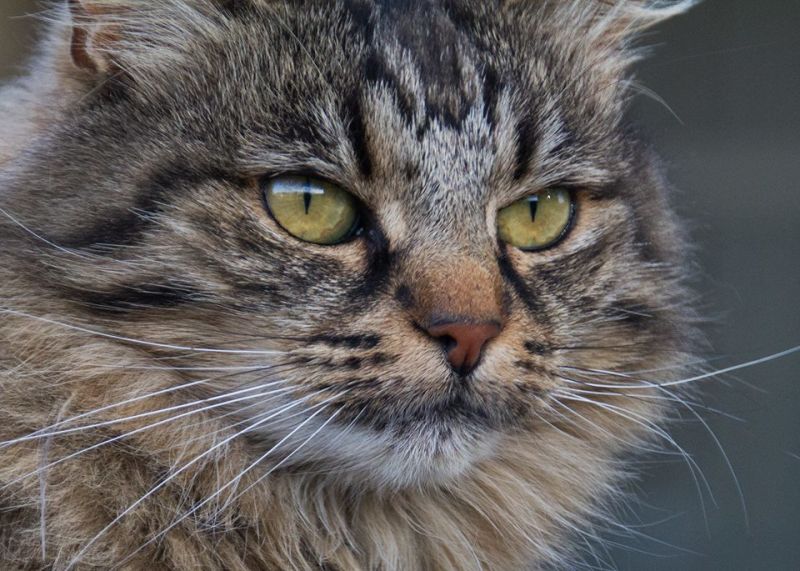
"caption": "New research suggests that vertical pupils provide ambush predators like cats with better depth perception cues.",
"description": null,
"title": "11825987_10205876376781307_2683770652596744268_n",
"credit": "Jared White",
"status": "inherit",
"isLoading": false,
"fetchFailed": false
},
"science_17811": {
"type": "attachments",
"id": "science_17811",
"meta": {
"index": "attachments_1716263798",
"site": "science",
"id": "17811",
"found": true
},
"parent": 17809,
"imgSizes": {
"kqedFullSize": {
"file": "https://ww2.kqed.org/app/uploads/sites/35/2014/05/SeaWalnut.jpg",
"width": 639,
"height": 356
}
},
"publishDate": 1401305160,
"modified": 1401305160,
"caption": "Comb jellies like this sea walnut are rocking the world of evolution. (Wikimedia Commons/Bruno C. Vellutini)",
"description": null,
"title": "SeaWalnut",
"credit": null,
"status": "inherit",
"isLoading": false,
"fetchFailed": false
},
"science_15280": {
"type": "attachments",
"id": "science_15280",
"meta": {
"index": "attachments_1716263798",
"site": "science",
"id": "15280",
"found": true
},
"parent": 15279,
"imgSizes": {
"kqedFullSize": {
"file": "https://ww2.kqed.org/app/uploads/sites/35/2014/03/640px-HumpbackWhaleBreaching.jpg",
"width": 640,
"height": 416
}
},
"publishDate": 1394684616,
"modified": 1394684616,
"caption": "Known for their acrobatics, breaching humpbacks are impressive. Wanetta Ayers/Wikimedia Commons.",
"description": "Humpback whale launches from the sea to crash on its back in the water.",
"title": "640px-HumpbackWhaleBreaching",
"credit": null,
"status": "inherit",
"isLoading": false,
"fetchFailed": false
},
"science_12565": {
"type": "attachments",
"id": "science_12565",
"meta": {
"index": "attachments_1716263798",
"site": "science",
"id": "12565",
"found": true
},
"parent": 12465,
"imgSizes": {
"kqedFullSize": {
"file": "https://ww2.kqed.org/app/uploads/sites/35/2013/12/wolf-esa.jpg",
"width": 640,
"height": 360
}
},
"publishDate": 1388185137,
"modified": 1565115071,
"caption": "The gray wolf is currently protected under both the California and federal Endangered Species Acts. The U.S. Fish and Wildlife Service is proposing to delist the gray wolf under federal law. It would remain protected in California.",
"description": "The gray wolf is currently protected under both the California and federal Endangered Species Acts. The U.S. Fish and Wildlife Service is proposing to delist the gray wolf under federal law. It would remain protected in California.",
"title": "wolf-esa",
"credit": "John and Karen Hollingsworth/USFWS",
"status": "inherit",
"isLoading": false,
"fetchFailed": false
}
},
"audioPlayerReducer": {
"postId": "stream_live",
"isPaused": true,
"isPlaying": false,
"pfsActive": false,
"pledgeModalIsOpen": true,
"playerDrawerIsOpen": false,
"liveAudioPlayStartedAt": 0,
"liveAudioPlayContext": ""
},
"authorsReducer": {
"mollysamuel": {
"type": "authors",
"id": "200",
"meta": {
"index": "authors_1716337520",
"id": "200",
"found": true
},
"name": "Molly Samuel",
"firstName": "Molly",
"lastName": "Samuel",
"slug": "mollysamuel",
"email": "msamuel@kqed.org",
"display_author_email": false,
"staff_mastheads": [],
"title": null,
"bio": "Molly Samuel joined KQED as an intern in 2007, and since then has worked here as a reporter, producer, director and blogger. Before becoming KQED Science’s Multimedia Producer, she was a producer for Climate Watch. Molly has also reported for NPR, KALW and High Country News, and has produced audio stories for The Encyclopedia of Life and the Oakland Museum of California. She was a fellow with the Middlebury Fellowships in Environmental Journalism and a journalist-in-residence at the National Evolutionary Synthesis Center. Molly has a degree in Ancient Greek from Oberlin College and is a co-founder of the record label True Panther Sounds.",
"avatar": "https://secure.gravatar.com/avatar/a6abd3b949a89fe5109fa9917631d0b6?s=600&d=blank&r=g",
"twitter": null,
"facebook": null,
"instagram": null,
"linkedin": null,
"sites": [
{
"site": "news",
"roles": [
"subscriber"
]
},
{
"site": "stateofhealth",
"roles": [
"subscriber"
]
},
{
"site": "science",
"roles": [
"subscriber"
]
},
{
"site": "quest",
"roles": [
"edit_users",
"subscriber"
]
}
],
"headData": {
"title": "Molly Samuel | KQED",
"description": null,
"ogImgSrc": "https://secure.gravatar.com/avatar/a6abd3b949a89fe5109fa9917631d0b6?s=600&d=blank&r=g",
"twImgSrc": "https://secure.gravatar.com/avatar/a6abd3b949a89fe5109fa9917631d0b6?s=600&d=blank&r=g"
},
"isLoading": false,
"link": "/author/mollysamuel"
},
"lindseyhoshaw": {
"type": "authors",
"id": "5432",
"meta": {
"index": "authors_1716337520",
"id": "5432",
"found": true
},
"name": "Lindsey Hoshaw",
"firstName": "Lindsey",
"lastName": "Hoshaw",
"slug": "lindseyhoshaw",
"email": "lhoshaw@kqed.org",
"display_author_email": false,
"staff_mastheads": [],
"title": "KQED Contributor",
"bio": "Lindsey Hoshaw is a former interactive producer for KQED Science. Before joining KQED, Lindsey was a science correspondent for The New York Times, The Boston Globe, Forbes and Scientific American. On Twitter @lindseyhoshaw",
"avatar": "https://secure.gravatar.com/avatar/274b07694c998eaa8f26cfabaa941186?s=600&d=mm&r=g",
"twitter": "lindseyhoshaw",
"facebook": "lindsey.hoshaw.9",
"instagram": null,
"linkedin": null,
"sites": [
{
"site": "arts",
"roles": [
"author"
]
},
{
"site": "news",
"roles": [
"subscriber"
]
},
{
"site": "futureofyou",
"roles": [
"editor"
]
},
{
"site": "bayareabites",
"roles": [
"contributor"
]
},
{
"site": "stateofhealth",
"roles": [
"author"
]
},
{
"site": "science",
"roles": [
"edit_theme_options",
"subscriber"
]
},
{
"site": "quest",
"roles": [
"edit_post_subscriptions",
"edit_usergroups",
"unfiltered_html",
"unfiltered_upload",
"leadcoordinator",
"editor"
]
},
{
"site": "food",
"roles": []
}
],
"headData": {
"title": "Lindsey Hoshaw | KQED",
"description": "KQED Contributor",
"ogImgSrc": "https://secure.gravatar.com/avatar/274b07694c998eaa8f26cfabaa941186?s=600&d=mm&r=g",
"twImgSrc": "https://secure.gravatar.com/avatar/274b07694c998eaa8f26cfabaa941186?s=600&d=mm&r=g"
},
"isLoading": false,
"link": "/author/lindseyhoshaw"
},
"dr-barry-starr": {
"type": "authors",
"id": "6177",
"meta": {
"index": "authors_1716337520",
"id": "6177",
"found": true
},
"name": "Dr. Barry Starr",
"firstName": "Dr. Barry",
"lastName": "Starr",
"slug": "dr-barry-starr",
"email": "bstarr@thetech.org",
"display_author_email": false,
"staff_mastheads": [],
"title": "KQED Contributor",
"bio": "Dr. Barry Starr (\u003ca href=\"https://twitter.com/geneticsboy\">@geneticsboy\u003c/a>) is a Geneticist-in-Residence at The Tech Museum of Innovation in San Jose, CA and runs their Stanford at The Tech program. The program is part of an ongoing collaboration between the \u003ca href=\"http://genetics.stanford.edu/\">Stanford Department of Genetics\u003c/a> and \u003ca href=\"http://www.thetech.org/\">The Tech Museum of Innovation\u003c/a>. Together these two partners created the \u003ca href=\"http://www.thetech.org/exhibits/permanent/index.php?sGalKey=gtwt&galKey=lt\">Genetics: Technology with a Twist\u003c/a> exhibition.\r\n\r\nYou can also see \u003ca href=\"https://ww2.kqed.org/science/author/dr-barry-starr/\">additional posts by Barry at KQED Science\u003c/a>, and read his \u003ca href=\"http://science.kqed.org/quest/author/dr-barry-starr/\">previous contributions\u003c/a> to \u003ca href=\"http://science.kqed.org/quest/\">QUEST\u003c/a>, a project dedicated to exploring the Science of Sustainability.",
"avatar": "https://secure.gravatar.com/avatar/4a5680e4c642ea0f0f3041af16018969?s=600&d=blank&r=g",
"twitter": "geneticsboy",
"facebook": null,
"instagram": null,
"linkedin": null,
"sites": [
{
"site": "futureofyou",
"roles": []
},
{
"site": "science",
"roles": [
"author"
]
},
{
"site": "quest",
"roles": [
"subscriber"
]
}
],
"headData": {
"title": "Dr. Barry Starr | KQED",
"description": "KQED Contributor",
"ogImgSrc": "https://secure.gravatar.com/avatar/4a5680e4c642ea0f0f3041af16018969?s=600&d=blank&r=g",
"twImgSrc": "https://secure.gravatar.com/avatar/4a5680e4c642ea0f0f3041af16018969?s=600&d=blank&r=g"
},
"isLoading": false,
"link": "/author/dr-barry-starr"
},
"sharolembry": {
"type": "authors",
"id": "6328",
"meta": {
"index": "authors_1716337520",
"id": "6328",
"found": true
},
"name": "Sharol Nelson-Embry",
"firstName": "Sharol",
"lastName": "Nelson-Embry",
"slug": "sharolembry",
"email": "bobsharol@gmail.com",
"display_author_email": false,
"staff_mastheads": [],
"title": "KQED Contributor",
"bio": "Sharol Nelson-Embry is the Supervising Naturalist at the Crab Cove Visitor Center & Aquarium on San Francisco Bay in Alameda. Crab Cove is part of the East Bay Regional Park District, one of the largest and oldest regional park agencies in the nation. She graduated from Cal Poly, San Luis Obispo with a degree in Natural Resources Management and an epiphany that connecting kids with nature was her destiny. She's been rooted in the Bay Area since 1991 after working at nature centers and outdoor science schools around our fair state. She loves the great variety of habitats stretching from the Bay shoreline to the redwoods, lakes, and hills. Sharol enjoys connecting people to nature with articles in local newspapers and online forums.\r\n\r\nRead her \u003ca href=\"http://science.kqed.org/quest/author/sharolembry/\">previous contributions\u003c/a> to \u003ca href=\"http://http://science.kqed.org/quest/\">QUEST\u003c/a>, a project dedicated to exploring the Science of Sustainability.",
"avatar": "https://secure.gravatar.com/avatar/7d0ffaf107f228c8293464f98d8aeecdc95cf55410e3481c2f4e9f5d0e415cec?s=600&d=blank&r=g",
"twitter": null,
"bluesky": null,
"facebook": null,
"instagram": null,
"linkedin": null,
"sites": [
{
"site": "science",
"roles": [
"subscriber"
]
},
{
"site": "quest",
"roles": [
"subscriber"
]
}
],
"headData": {
"title": "Sharol Nelson-Embry | KQED",
"description": "KQED Contributor",
"ogImgSrc": "https://secure.gravatar.com/avatar/7d0ffaf107f228c8293464f98d8aeecdc95cf55410e3481c2f4e9f5d0e415cec?s=600&d=blank&r=g",
"twImgSrc": "https://secure.gravatar.com/avatar/7d0ffaf107f228c8293464f98d8aeecdc95cf55410e3481c2f4e9f5d0e415cec?s=600&d=blank&r=g"
},
"isLoading": false,
"link": "/author/sharolembry"
},
"jvarner": {
"type": "authors",
"id": "8639",
"meta": {
"index": "authors_1716337520",
"id": "8639",
"found": true
},
"name": "Johanna Varner",
"firstName": "Johanna",
"lastName": "Varner",
"slug": "jvarner",
"email": "jvarner@kqed.org",
"display_author_email": false,
"staff_mastheads": [],
"title": null,
"bio": "Johanna Varner is excited to join KQED Science as a 2015 AAAS Mass Media Fellow. She recently finished her PhD in Biology from University of Utah, where she studied how small mammals are responding to climate change. She also has past lives as an engineer, a blueberry farmer, and a baker. Outside of the lab, Johanna has been active in designing authentic field research experiences for K-12 students and giving interactive public presentations about local mammals. You can find her on twitter at @johannavarner",
"avatar": "https://secure.gravatar.com/avatar/35ae0c7a361af670964ce707e56c052c?s=600&d=blank&r=g",
"twitter": null,
"facebook": null,
"instagram": null,
"linkedin": null,
"sites": [
{
"site": "news",
"roles": [
"author"
]
},
{
"site": "science",
"roles": [
"editor"
]
}
],
"headData": {
"title": "Johanna Varner | KQED",
"description": null,
"ogImgSrc": "https://secure.gravatar.com/avatar/35ae0c7a361af670964ce707e56c052c?s=600&d=blank&r=g",
"twImgSrc": "https://secure.gravatar.com/avatar/35ae0c7a361af670964ce707e56c052c?s=600&d=blank&r=g"
},
"isLoading": false,
"link": "/author/jvarner"
},
"ekennerson": {
"type": "authors",
"id": "11090",
"meta": {
"index": "authors_1716337520",
"id": "11090",
"found": true
},
"name": "Elliott Kennerson",
"firstName": "Elliott",
"lastName": "Kennerson",
"slug": "ekennerson",
"email": "ekennerson@kqed.org",
"display_author_email": false,
"staff_mastheads": [],
"title": null,
"bio": "Elliott Kennerson joined KQED Science as a Digital Media Producer in 2015. Before joining KQED, he produced the Kickstarter-funded series “Animal R&R” for KPBS in San Diego. Elliott received his M.F.A. training in wildlife documentary at Montana State in Bozeman and holds a B.A. from Yale in archaeology. In his former life as an actor, he was an associate artist with LightBox Theater Company in New York. Elliott is the recipient of a 2017 Regional Emmy for his work as a producer on “Deep Look.\"",
"avatar": "https://secure.gravatar.com/avatar/90ebfa58055409e54c8f8a4c120ecf91?s=600&d=blank&r=g",
"twitter": "edorank",
"facebook": null,
"instagram": null,
"linkedin": null,
"sites": [
{
"site": "science",
"roles": [
"editor"
]
}
],
"headData": {
"title": "Elliott Kennerson | KQED",
"description": null,
"ogImgSrc": "https://secure.gravatar.com/avatar/90ebfa58055409e54c8f8a4c120ecf91?s=600&d=blank&r=g",
"twImgSrc": "https://secure.gravatar.com/avatar/90ebfa58055409e54c8f8a4c120ecf91?s=600&d=blank&r=g"
},
"isLoading": false,
"link": "/author/ekennerson"
},
"lisapotter": {
"type": "authors",
"id": "11210",
"meta": {
"index": "authors_1716337520",
"id": "11210",
"found": true
},
"name": "Lisa Marie Potter",
"firstName": "Lisa Marie",
"lastName": "Potter",
"slug": "lisapotter",
"email": "lpotter@kqed.org",
"display_author_email": false,
"staff_mastheads": [],
"title": null,
"bio": null,
"avatar": "https://secure.gravatar.com/avatar/5c784e5994b32cdf18d3ffc9990f44a8?s=600&d=blank&r=g",
"twitter": null,
"facebook": null,
"instagram": null,
"linkedin": null,
"sites": [
{
"site": "science",
"roles": [
"author"
]
}
],
"headData": {
"title": "Lisa Marie Potter | KQED",
"description": null,
"ogImgSrc": "https://secure.gravatar.com/avatar/5c784e5994b32cdf18d3ffc9990f44a8?s=600&d=blank&r=g",
"twImgSrc": "https://secure.gravatar.com/avatar/5c784e5994b32cdf18d3ffc9990f44a8?s=600&d=blank&r=g"
},
"isLoading": false,
"link": "/author/lisapotter"
},
"cboyle": {
"type": "authors",
"id": "11254",
"meta": {
"index": "authors_1716337520",
"id": "11254",
"found": true
},
"name": "Carrie Boyle",
"firstName": "Carrie",
"lastName": "Boyle",
"slug": "cboyle",
"email": "cboyle@kqed.org",
"display_author_email": false,
"staff_mastheads": [],
"title": "KQED Contributor",
"bio": "Carrie is a KQED Science intern, joining the team as the 2016 recipient of the Dr. and Mrs. Allen Fuhs CSU Monterey Bay-KQED Scholarship. After receiving a B.S. in Environmental Biology at UC Berkeley, she worked as a science educator in San Diego and at the California Academy of Sciences. She loves just about anything that involves the ocean, and is currently working towards her M.S. in Applied Marine and Watershed Science at CSU Monterey Bay.",
"avatar": "https://secure.gravatar.com/avatar/9fed749c83a121dd06b72d2c0b436841?s=600&d=blank&r=g",
"twitter": null,
"facebook": null,
"instagram": null,
"linkedin": null,
"sites": [
{
"site": "science",
"roles": []
}
],
"headData": {
"title": "Carrie Boyle | KQED",
"description": "KQED Contributor",
"ogImgSrc": "https://secure.gravatar.com/avatar/9fed749c83a121dd06b72d2c0b436841?s=600&d=blank&r=g",
"twImgSrc": "https://secure.gravatar.com/avatar/9fed749c83a121dd06b72d2c0b436841?s=600&d=blank&r=g"
},
"isLoading": false,
"link": "/author/cboyle"
}
},
"pagesReducer": {
"science_tag_animals": {
"type": "terms",
"id": "science_1120",
"meta": {
"index": "terms_1716263798",
"site": "science",
"id": "1120",
"score": 8.284223
},
"featImg": null,
"name": "animals",
"description": null,
"taxonomy": "tag",
"headData": {
"twImgId": null,
"twTitle": null,
"ogTitle": null,
"ogImgId": null,
"twDescription": null,
"description": null,
"title": "animals Archives | KQED Science",
"ogDescription": null
},
"ttid": 1128,
"slug": "animals",
"isLoading": false,
"title": "animals",
"pageMeta": {
"site": "science",
"WpPageTemplate": "page-topic-editorial",
"currentPage": 7
},
"blocks": [
{
"blockName": "kqed/post-list",
"attrs": {
"layout": "cardArticle2",
"query": "posts/science?tag=animals",
"seeMore": false,
"paginated": true,
"page": 7
}
},
{
"blockName": "kqed/ad"
}
]
}
},
"pfsSessionReducer": {},
"postsReducer": {
"stream_live": {
"type": "live",
"id": "stream_live",
"audioUrl": "https://streams.kqed.org/kqedradio",
"title": "Live Stream",
"excerpt": "Live Stream information currently unavailable.",
"link": "/radio",
"featImg": "",
"label": {
"name": "KQED Live",
"link": "/"
}
},
"stream_kqedNewscast": {
"type": "posts",
"id": "stream_kqedNewscast",
"audioUrl": "https://www.kqed.org/.stream/anon/radio/RDnews/newscast.mp3?_=1",
"title": "KQED Newscast",
"featImg": "",
"label": {
"name": "88.5 FM",
"link": "/"
}
},
"science_1916913": {
"type": "posts",
"id": "science_1916913",
"meta": {
"index": "posts_1716263798",
"site": "science",
"id": "1916913",
"score": null,
"sort": [
1508444468000
]
},
"parent": 0,
"labelTerm": {
"site": "science"
},
"blocks": [],
"publishDate": 1508444468,
"format": "standard",
"title": "California Just Became First State to Ban 'Puppy Mill' Sales",
"headTitle": "California Just Became First State to Ban ‘Puppy Mill’ Sales | KQED",
"content": "\u003cp>A radical change is coming to California’s pet industry. On Friday\u003cem>, \u003c/em>the state became the first requiring pet stores to sell animals from shelter and rescue centers.\u003c/p>\n\u003cp>Governor Jerry Brown signed \u003ca href=\"https://leginfo.legislature.ca.gov/faces/billStatusClient.xhtml?bill_id=201720180AB485\" target=\"_blank\" rel=\"noopener\">Assembly Bill 485\u003c/a>, which says dogs, cats and rabbits sold in California can’t come from large commercial breeding facilities. These operations, dubbed “puppy mills” and “kitten factories,” are often unsafe and inhumane, according to activists.\u003c/p>\n\u003cp>“Puppy mill” owners over-breed females in order to provide a steady and inexpensive supply of puppies to pet stores, says Brandy Kuentzel from the \u003ca href=\"https://www.sfspca.org/\" target=\"_blank\" rel=\"noopener\">San Francisco Society for the Prevention of Cruelty to Animals\u003c/a>. Diseases, mass breeding and inbreeding that lead to genetic defects and behavioral problems are also common.\u003c/p>\n\u003caside class=\"pullquote alignright\">Many California pet stores sell animals from out-of-state “puppy mills,” which are targeted under the new law.\u003c/aside>\n\u003cp>Though California has fewer ‘puppy mills’ than other states, according to \u003ca href=\"https://www.aspca.org/\" target=\"_blank\" rel=\"noopener\">American Society for the Prevention of Cruelty to Animals\u003c/a> Senior Director of State Legislation Susan Riggs, store owners still buy puppy mills from other states. Puppy mill pets raised in the Midwest often end up in California, Riggs says.\u003c/p>\n\u003cp>The \u003ca href=\"http://www.thepuppymillproject.org/about-puppy-mills/\" target=\"_blank\" rel=\"noopener\">Puppy Mill Project\u003c/a>, a non-profit animal rights group, says more than two\u003cstrong> \u003c/strong>million puppies are bred in mills each year. Most pet store puppies come from puppy mills and pet stores are the main point of sale for puppy mills, helping the operations stay in business, according to the Puppy Mill Project.\u003c/p>\n\u003cp>[ad fullwidth]\u003c/p>\n\u003cp>Riggs says the new law will stop the flow of out-of-state pets into California outlets.\u003c/p>\n\u003cp>“Research and investigations time and time again have demonstrated that the source of those animals are from out-of-state puppy mill breeders,” says Riggs.\u003c/p>\n\u003cp>But it’s not just dogs and cats that will benefit.\u003c/p>\n\u003cfigure id=\"attachment_1916929\" class=\"wp-caption alignleft\" style=\"max-width: 393px\">\u003ca href=\"https://ww2.kqed.org/science/wp-content/uploads/sites/35/2017/10/2015.10.27-629-1.jpg\">\u003cimg loading=\"lazy\" decoding=\"async\" class=\"wp-image-1916929 \" src=\"https://ww2.kqed.org/science/wp-content/uploads/sites/35/2017/10/2015.10.27-629-1-e1508375312766.jpg\" alt=\"\" width=\"393\" height=\"474\" srcset=\"https://cdn.kqed.org/wp-content/uploads/sites/35/2017/10/2015.10.27-629-1-e1508375312766.jpg 576w, https://cdn.kqed.org/wp-content/uploads/sites/35/2017/10/2015.10.27-629-1-e1508375312766-160x193.jpg 160w, https://cdn.kqed.org/wp-content/uploads/sites/35/2017/10/2015.10.27-629-1-e1508375312766-240x290.jpg 240w, https://cdn.kqed.org/wp-content/uploads/sites/35/2017/10/2015.10.27-629-1-e1508375312766-375x452.jpg 375w, https://cdn.kqed.org/wp-content/uploads/sites/35/2017/10/2015.10.27-629-1-e1508375312766-520x627.jpg 520w\" sizes=\"(max-width: 393px) 100vw, 393px\">\u003c/a>\u003cfigcaption class=\"wp-caption-text\">San Francisco SPCA volunteer Kat Soong walks a pit bull mix around the Mission neighborhood. \u003ccite>(SF SPCA)\u003c/cite>\u003c/figcaption>\u003c/figure>\n\u003cp>“This is a super game changer for the rabbit industry,” says Kuentzel. “They’re animals that are often over-looked.”\u003c/p>\n\u003cp>Kuentzel says customers buy the pets without knowing how to care for them or how much they’ll cost.\u003c/p>\n\u003cp>“So a lot of people decide they don’t want them and they end up in shelters; it can be really hard to re-home them.”\u003c/p>\n\u003cp>Jade Lehmkuhl has bunnies at her Sacramento store, \u003ca href=\"http://www.incredpets.com/\" target=\"_blank\" rel=\"noopener\">Incredible Pets\u003c/a>. She’ll have to stop selling them, but says she doesn’t mind.\u003c/p>\n\u003cp>“When you look at the big picture, it ’s the right thing to do,” says Lehmkuhl. “There are too many homeless rabbits, there are too many homeless animals in general for people to just be going out and buying baby animals.”\u003c/p>\n\u003cp>Before the law went into place, 36 jurisdictions including San Francisco banned the sale of animals from “puppy mills.” The legislation expands the rule statewide.\u003c/p>\n\u003cp>Bill opponents, including the \u003ca href=\"http://www.akc.org/\" target=\"_blank\" rel=\"noopener\">American Kennel Club\u003c/a>, say the ban will reduce access to new pets from professionally licensed breeders. But the ban only applies to stores. Individuals will still be able to buy direct from breeders or buy pets online.\u003c/p>\n\u003cp>\u003c/p>\n\u003cp>The new law takes effect in 2019 and violators will receive a $500 fine.\u003c/p>\n\n",
"stats": {
"hasVideo": false,
"hasChartOrMap": false,
"hasAudio": false,
"hasPolis": false,
"wordCount": 571,
"hasGoogleForm": false,
"hasGallery": false,
"hasHearkenModule": false,
"iframeSrcs": [],
"paragraphCount": 18
},
"modified": 1704928332,
"excerpt": "California is the first state banning the sale of animals from \"puppy mills\" and \"kitten farms\" which are often unsafe and inhumane, according to animal rights activists.",
"headData": {
"twImgId": "",
"twTitle": "",
"ogTitle": "",
"ogImgId": "",
"twDescription": "",
"description": "California is the first state banning the sale of animals from "puppy mills" and "kitten farms" which are often unsafe and inhumane, according to animal rights activists.",
"title": "California Just Became First State to Ban 'Puppy Mill' Sales | KQED",
"ogDescription": "",
"schema": {
"@context": "https://schema.org",
"@type": "Article",
"headline": "California Just Became First State to Ban 'Puppy Mill' Sales",
"datePublished": "2017-10-19T13:21:08-07:00",
"dateModified": "2024-01-10T15:12:12-08:00",
"image": "https://cdn.kqed.org/wp-content/uploads/2020/02/KQED-OG-Image@1x.png"
}
},
"guestAuthors": [],
"slug": "california-just-became-first-state-to-ban-puppy-mill-sales",
"status": "publish",
"sticky": false,
"path": "/science/1916913/california-just-became-first-state-to-ban-puppy-mill-sales",
"audioTrackLength": null,
"parsedContent": [
{
"type": "contentString",
"content": "\u003cdiv class=\"post-body\">\u003cp>\u003cp>A radical change is coming to California’s pet industry. On Friday\u003cem>, \u003c/em>the state became the first requiring pet stores to sell animals from shelter and rescue centers.\u003c/p>\n\u003cp>Governor Jerry Brown signed \u003ca href=\"https://leginfo.legislature.ca.gov/faces/billStatusClient.xhtml?bill_id=201720180AB485\" target=\"_blank\" rel=\"noopener\">Assembly Bill 485\u003c/a>, which says dogs, cats and rabbits sold in California can’t come from large commercial breeding facilities. These operations, dubbed “puppy mills” and “kitten factories,” are often unsafe and inhumane, according to activists.\u003c/p>\n\u003cp>“Puppy mill” owners over-breed females in order to provide a steady and inexpensive supply of puppies to pet stores, says Brandy Kuentzel from the \u003ca href=\"https://www.sfspca.org/\" target=\"_blank\" rel=\"noopener\">San Francisco Society for the Prevention of Cruelty to Animals\u003c/a>. Diseases, mass breeding and inbreeding that lead to genetic defects and behavioral problems are also common.\u003c/p>\n\u003caside class=\"pullquote alignright\">Many California pet stores sell animals from out-of-state “puppy mills,” which are targeted under the new law.\u003c/aside>\n\u003cp>Though California has fewer ‘puppy mills’ than other states, according to \u003ca href=\"https://www.aspca.org/\" target=\"_blank\" rel=\"noopener\">American Society for the Prevention of Cruelty to Animals\u003c/a> Senior Director of State Legislation Susan Riggs, store owners still buy puppy mills from other states. Puppy mill pets raised in the Midwest often end up in California, Riggs says.\u003c/p>\n\u003cp>The \u003ca href=\"http://www.thepuppymillproject.org/about-puppy-mills/\" target=\"_blank\" rel=\"noopener\">Puppy Mill Project\u003c/a>, a non-profit animal rights group, says more than two\u003cstrong> \u003c/strong>million puppies are bred in mills each year. Most pet store puppies come from puppy mills and pet stores are the main point of sale for puppy mills, helping the operations stay in business, according to the Puppy Mill Project.\u003c/p>\n\u003cp>\u003c/p>\u003c/div>",
"attributes": {
"named": {},
"numeric": []
}
},
{
"type": "component",
"content": "",
"name": "ad",
"attributes": {
"named": {
"label": "fullwidth"
},
"numeric": [
"fullwidth"
]
}
},
{
"type": "contentString",
"content": "\u003cdiv class=\"post-body\">\u003cp>\u003c/p>\n\u003cp>Riggs says the new law will stop the flow of out-of-state pets into California outlets.\u003c/p>\n\u003cp>“Research and investigations time and time again have demonstrated that the source of those animals are from out-of-state puppy mill breeders,” says Riggs.\u003c/p>\n\u003cp>But it’s not just dogs and cats that will benefit.\u003c/p>\n\u003cfigure id=\"attachment_1916929\" class=\"wp-caption alignleft\" style=\"max-width: 393px\">\u003ca href=\"https://ww2.kqed.org/science/wp-content/uploads/sites/35/2017/10/2015.10.27-629-1.jpg\">\u003cimg loading=\"lazy\" decoding=\"async\" class=\"wp-image-1916929 \" src=\"https://ww2.kqed.org/science/wp-content/uploads/sites/35/2017/10/2015.10.27-629-1-e1508375312766.jpg\" alt=\"\" width=\"393\" height=\"474\" srcset=\"https://cdn.kqed.org/wp-content/uploads/sites/35/2017/10/2015.10.27-629-1-e1508375312766.jpg 576w, https://cdn.kqed.org/wp-content/uploads/sites/35/2017/10/2015.10.27-629-1-e1508375312766-160x193.jpg 160w, https://cdn.kqed.org/wp-content/uploads/sites/35/2017/10/2015.10.27-629-1-e1508375312766-240x290.jpg 240w, https://cdn.kqed.org/wp-content/uploads/sites/35/2017/10/2015.10.27-629-1-e1508375312766-375x452.jpg 375w, https://cdn.kqed.org/wp-content/uploads/sites/35/2017/10/2015.10.27-629-1-e1508375312766-520x627.jpg 520w\" sizes=\"(max-width: 393px) 100vw, 393px\">\u003c/a>\u003cfigcaption class=\"wp-caption-text\">San Francisco SPCA volunteer Kat Soong walks a pit bull mix around the Mission neighborhood. \u003ccite>(SF SPCA)\u003c/cite>\u003c/figcaption>\u003c/figure>\n\u003cp>“This is a super game changer for the rabbit industry,” says Kuentzel. “They’re animals that are often over-looked.”\u003c/p>\n\u003cp>Kuentzel says customers buy the pets without knowing how to care for them or how much they’ll cost.\u003c/p>\n\u003cp>“So a lot of people decide they don’t want them and they end up in shelters; it can be really hard to re-home them.”\u003c/p>\n\u003cp>Jade Lehmkuhl has bunnies at her Sacramento store, \u003ca href=\"http://www.incredpets.com/\" target=\"_blank\" rel=\"noopener\">Incredible Pets\u003c/a>. She’ll have to stop selling them, but says she doesn’t mind.\u003c/p>\n\u003cp>“When you look at the big picture, it ’s the right thing to do,” says Lehmkuhl. “There are too many homeless rabbits, there are too many homeless animals in general for people to just be going out and buying baby animals.”\u003c/p>\n\u003cp>Before the law went into place, 36 jurisdictions including San Francisco banned the sale of animals from “puppy mills.” The legislation expands the rule statewide.\u003c/p>\n\u003cp>Bill opponents, including the \u003ca href=\"http://www.akc.org/\" target=\"_blank\" rel=\"noopener\">American Kennel Club\u003c/a>, say the ban will reduce access to new pets from professionally licensed breeders. But the ban only applies to stores. Individuals will still be able to buy direct from breeders or buy pets online.\u003c/p>\n\u003cp>\u003c/p>\n\u003cp>The new law takes effect in 2019 and violators will receive a $500 fine.\u003c/p>\n\n\u003c/div>\u003c/p>",
"attributes": {
"named": {},
"numeric": []
}
}
],
"link": "/science/1916913/california-just-became-first-state-to-ban-puppy-mill-sales",
"authors": [
"5432"
],
"categories": [
"science_2874",
"science_40"
],
"tags": [
"science_1120",
"science_2266"
],
"featImg": "science_1916928",
"label": "science"
},
"science_1915923": {
"type": "posts",
"id": "science_1915923",
"meta": {
"index": "posts_1716263798",
"site": "science",
"id": "1915923",
"score": null,
"sort": [
1507640421000
]
},
"guestAuthors": [],
"slug": "these-whispering-walking-bats-are-onto-something",
"title": "These Whispering, Walking Bats Are Onto Something",
"publishDate": 1507640421,
"format": "video",
"headTitle": "These Whispering, Walking Bats Are Onto Something | KQED",
"labelTerm": {
"term": 1935,
"site": "science"
},
"content": "\u003cp>[dl_subscribe]It’s October. Seen any bats yet?\u003c/p>\n\u003cp>If you plan on going to a costume party or out trick-or-treating this year, you will. Vampire bats are everywhere during Halloween. But unlike so many other other icons of our spookiest holiday, vampire bats are not all make-believe. They definitely exist, and they do feed on blood. In parts of Latin America, they regularly prey on calves, pigs, and even children.\u003c/p>\n\u003cp>(Deep Look’s friends at \u003ca href=\"https://www.youtube.com/watch?v=m0YB6_7Kync\" target=\"_blank\" rel=\"noopener noreferrer\">NPR’s Skunk Bear\u003c/a> visited the front lines of bat-human interaction in Panama.)\u003c/p>\n\u003cfigure id=\"attachment_1915981\" class=\"wp-caption aligncenter\" style=\"max-width: 800px\">\u003ca href=\"https://ww2.kqed.org/science/wp-content/uploads/sites/35/2017/10/DL418_bat_bat-thumb-CC.jpg\">\u003cimg loading=\"lazy\" decoding=\"async\" class=\"size-medium wp-image-1915981\" src=\"https://ww2.kqed.org/science/wp-content/uploads/sites/35/2017/10/DL418_bat_bat-thumb-CC-800x450.jpg\" alt=\"\" width=\"800\" height=\"450\" srcset=\"https://cdn.kqed.org/wp-content/uploads/sites/35/2017/10/DL418_bat_bat-thumb-CC-800x450.jpg 800w, https://cdn.kqed.org/wp-content/uploads/sites/35/2017/10/DL418_bat_bat-thumb-CC-160x90.jpg 160w, https://cdn.kqed.org/wp-content/uploads/sites/35/2017/10/DL418_bat_bat-thumb-CC-768x432.jpg 768w, https://cdn.kqed.org/wp-content/uploads/sites/35/2017/10/DL418_bat_bat-thumb-CC-1020x574.jpg 1020w, https://cdn.kqed.org/wp-content/uploads/sites/35/2017/10/DL418_bat_bat-thumb-CC-1920x1080.jpg 1920w, https://cdn.kqed.org/wp-content/uploads/sites/35/2017/10/DL418_bat_bat-thumb-CC-1180x664.jpg 1180w, https://cdn.kqed.org/wp-content/uploads/sites/35/2017/10/DL418_bat_bat-thumb-CC-960x540.jpg 960w, https://cdn.kqed.org/wp-content/uploads/sites/35/2017/10/DL418_bat_bat-thumb-CC-240x135.jpg 240w, https://cdn.kqed.org/wp-content/uploads/sites/35/2017/10/DL418_bat_bat-thumb-CC-375x211.jpg 375w, https://cdn.kqed.org/wp-content/uploads/sites/35/2017/10/DL418_bat_bat-thumb-CC-520x293.jpg 520w\" sizes=\"auto, (max-width: 800px) 100vw, 800px\">\u003c/a>\u003cfigcaption class=\"wp-caption-text\">A bat’s hand bones form the framework of its wing. \u003ccite>(Josh Cassidy / KQED)\u003c/cite>\u003c/figcaption>\u003c/figure>\n\u003cp>Luckily, only three of the more than 950 species of bats worldwide are exclusive “hemovores” (blood-eaters). Most bats are harmless, even helpful, to humans. Only one, the common vampire bat, seems to prefer mammals.\u003c/p>\n\u003cp>Vampire bats are unusual, even among bats, for more than just \u003cem>what\u003c/em> they eat. They’re also unusual for \u003cem>how\u003c/em> they find their food.\u003c/p>\n\u003cp>[ad fullwidth]\u003c/p>\n\u003cp>Bats have been the only flying mammals for about 50 million years, and most species, with the exception of the fruit bats, use echolocation, their built-in sonar, to detect prey and snatch it from the air.\u003c/p>\n\u003cfigure id=\"attachment_1915986\" class=\"wp-caption aligncenter\" style=\"max-width: 720px\">\u003ca href=\"https://ww2.kqed.org/science/wp-content/uploads/sites/35/2017/10/DL418_bat_attack1_720.gif\">\u003cimg loading=\"lazy\" decoding=\"async\" class=\"size-full wp-image-1915986\" src=\"https://ww2.kqed.org/science/wp-content/uploads/sites/35/2017/10/DL418_bat_attack1_720.gif\" alt=\"\" width=\"720\" height=\"405\">\u003c/a>\u003cfigcaption class=\"wp-caption-text\">Bats’ combination of flight and echolocation have made them formidable predators. \u003ccite>(Aaron Corcoran, Nick Dowdy, Nickolay Histov, William E. Conner)\u003c/cite>\u003c/figcaption>\u003c/figure>\n\u003cp>But vampire bats don’t use their sonar to hunt like that. Instead, they use it only to find their way in the dark. On the hunt, they stalk victims with another sense: hearing.\u003c/p>\n\u003cp>When vampire bats pick up on a potential victim’s breathing with their super-sensitive ears, they land nearby to scout out a blood vessel.\u003c/p>\n\u003cp>“They are very good on the ground,” said \u003ca href=\"http://www.psychology.ucr.edu/faculty/razak/index.html\" target=\"_blank\" rel=\"noopener noreferrer\">Khaleel Razak\u003c/a>, a neuropsychologist who studies bat sensory patterns at the University of California, Riverside. “Once they get close, the vampires use heat sensors near their noses to detect blood vessels near the surface.”\u003c/p>\n\u003cp>Collectively, bat species that employ their in-born sonar for navigation more than for hunting are called “whispering bats,” because the wayfinding echolocation is much quieter.\u003c/p>\n\u003cp>No echolocation is in the human hearing range – it’s too high pitched – but to animals that can hear it, bat hunting signals can be as loud as a plane taking off. The navigation variety is more like a dishwasher.\u003c/p>\n\u003cfigure id=\"attachment_1915992\" class=\"wp-caption aligncenter\" style=\"max-width: 800px\">\u003ca href=\"https://ww2.kqed.org/science/wp-content/uploads/sites/35/2017/10/DL418_bat_ears_warm-CC.jpg\">\u003cimg loading=\"lazy\" decoding=\"async\" class=\"size-medium wp-image-1915992\" src=\"https://ww2.kqed.org/science/wp-content/uploads/sites/35/2017/10/DL418_bat_ears_warm-CC-800x450.jpg\" alt=\"\" width=\"800\" height=\"450\" srcset=\"https://cdn.kqed.org/wp-content/uploads/sites/35/2017/10/DL418_bat_ears_warm-CC-800x450.jpg 800w, https://cdn.kqed.org/wp-content/uploads/sites/35/2017/10/DL418_bat_ears_warm-CC-160x90.jpg 160w, https://cdn.kqed.org/wp-content/uploads/sites/35/2017/10/DL418_bat_ears_warm-CC-768x432.jpg 768w, https://cdn.kqed.org/wp-content/uploads/sites/35/2017/10/DL418_bat_ears_warm-CC-1020x574.jpg 1020w, https://cdn.kqed.org/wp-content/uploads/sites/35/2017/10/DL418_bat_ears_warm-CC.jpg 1920w, https://cdn.kqed.org/wp-content/uploads/sites/35/2017/10/DL418_bat_ears_warm-CC-1180x664.jpg 1180w, https://cdn.kqed.org/wp-content/uploads/sites/35/2017/10/DL418_bat_ears_warm-CC-960x540.jpg 960w, https://cdn.kqed.org/wp-content/uploads/sites/35/2017/10/DL418_bat_ears_warm-CC-240x135.jpg 240w, https://cdn.kqed.org/wp-content/uploads/sites/35/2017/10/DL418_bat_ears_warm-CC-375x211.jpg 375w, https://cdn.kqed.org/wp-content/uploads/sites/35/2017/10/DL418_bat_ears_warm-CC-520x293.jpg 520w\" sizes=\"auto, (max-width: 800px) 100vw, 800px\">\u003c/a>\u003cfigcaption class=\"wp-caption-text\">Pallid bats’ outsized ears are an essential part of their hunting strategy. \u003ccite>(Josh Cassidy / KQED)\u003c/cite>\u003c/figcaption>\u003c/figure>\n\u003cp>The pallid bat – one of these quieter, whispering species – is common throughout the West. They hunt insects and arachnids that live on the ground from the air. Just as the vampire bat’s ears are highly attuned to the sound of mammals breathing, the pallid bat can track the soft, low-pitched sounds of scorpions and crickets as they rustle in the earth.\u003c/p>\n\u003cp>Like vampires, pallid bats land in the final moments of their attack, when they pluck their prey from the ground, a behavior called gleaning.\u003c/p>\n\u003cp>According to Razak, the species still has the capacity to hunt with sonar and take prey from the air. “It just prefers not to,” he said of the ability.\u003c/p>\n\u003cp>It took millions of years for bats to develop the lethal pairing of flight and echolocation. Why would a bat “go back” to a more primitive hunting style?\u003c/p>\n\u003cfigure id=\"attachment_1915988\" class=\"wp-caption aligncenter\" style=\"max-width: 720px\">\u003ca href=\"https://ww2.kqed.org/science/wp-content/uploads/sites/35/2017/10/DL418_bat_lands-hunts_720.gif\">\u003cimg loading=\"lazy\" decoding=\"async\" class=\"size-full wp-image-1915988\" src=\"https://ww2.kqed.org/science/wp-content/uploads/sites/35/2017/10/DL418_bat_lands-hunts_720.gif\" alt=\"\" width=\"720\" height=\"405\">\u003c/a>\u003cfigcaption class=\"wp-caption-text\">Pallid bats land to hunt scorpions on the ground. \u003ccite>(Josh Cassidy / KQED)\u003c/cite>\u003c/figcaption>\u003c/figure>\n\u003cp>Many scientists, including Razak and \u003ca href=\"https://biology.boisestate.edu/faculty-and-staff/faculty/jesse-barber/\" target=\"_blank\" rel=\"noopener noreferrer\">Jesse Barber\u003c/a>, who studies the predatory habits of bats at Boise State University, believe the answer may have less to do with the bats alone than with moths, their principal food.\u003c/p>\n\u003cp>In what these scientists describe as an “arms race” of evolution, many moth species have adapted to hear when they’re being tracked and to deploy counter-measures to bat echolocation. “Moths were caught with their pants down,” said Barber, “and had to figure out a way to hear the bats coming.”\u003c/p>\n\u003cp>Two types of evasions predominate among moths. The hawk moth family can jam bat sonar by emitting clicks from their genitals. The clicks disrupt the echolocation signal as it returns to the bat, causing the predator to miss its target in the air.\u003c/p>\n\u003cp>The second approach is a longer game. As caterpillars, tiger moths ingest toxic plants that become embedded in their scales, making them unpalatable to bats. The moths advertise their bitter taste with warning clicks, the auditory equivalent of a warning color, like the red stripe on a venomous snake.\u003c/p>\n\u003cfigure id=\"attachment_1915989\" class=\"wp-caption aligncenter\" style=\"max-width: 800px\">\u003ca href=\"https://ww2.kqed.org/science/wp-content/uploads/sites/35/2017/10/DL418_bat_moth-genitals-CC.jpg\">\u003cimg loading=\"lazy\" decoding=\"async\" class=\"size-medium wp-image-1915989\" src=\"https://ww2.kqed.org/science/wp-content/uploads/sites/35/2017/10/DL418_bat_moth-genitals-CC-800x450.jpg\" alt=\"\" width=\"800\" height=\"450\" srcset=\"https://cdn.kqed.org/wp-content/uploads/sites/35/2017/10/DL418_bat_moth-genitals-CC-800x450.jpg 800w, https://cdn.kqed.org/wp-content/uploads/sites/35/2017/10/DL418_bat_moth-genitals-CC-160x90.jpg 160w, https://cdn.kqed.org/wp-content/uploads/sites/35/2017/10/DL418_bat_moth-genitals-CC-768x432.jpg 768w, https://cdn.kqed.org/wp-content/uploads/sites/35/2017/10/DL418_bat_moth-genitals-CC-1020x574.jpg 1020w, https://cdn.kqed.org/wp-content/uploads/sites/35/2017/10/DL418_bat_moth-genitals-CC-1920x1080.jpg 1920w, https://cdn.kqed.org/wp-content/uploads/sites/35/2017/10/DL418_bat_moth-genitals-CC-1180x664.jpg 1180w, https://cdn.kqed.org/wp-content/uploads/sites/35/2017/10/DL418_bat_moth-genitals-CC-960x540.jpg 960w, https://cdn.kqed.org/wp-content/uploads/sites/35/2017/10/DL418_bat_moth-genitals-CC-240x135.jpg 240w, https://cdn.kqed.org/wp-content/uploads/sites/35/2017/10/DL418_bat_moth-genitals-CC-375x211.jpg 375w, https://cdn.kqed.org/wp-content/uploads/sites/35/2017/10/DL418_bat_moth-genitals-CC-520x293.jpg 520w\" sizes=\"auto, (max-width: 800px) 100vw, 800px\">\u003c/a>\u003cfigcaption class=\"wp-caption-text\">Some moths emit signals from their genitals to scramble bat sonar. \u003ccite>(Jesse Barber)\u003c/cite>\u003c/figcaption>\u003c/figure>\n\u003cp>“Bats do listen, and they change their behavior when they hear these sounds,” said \u003ca href=\"https://www.mpm.edu/research-collections/zoology/invertebrate-zoology/staff\" target=\"_blank\" rel=\"noopener noreferrer\">Nick Dowdy\u003c/a>, a post-doc at the Milwaukee Public Museum who has conducted numerous experiments on bat-moth interactions at Purdue and Wake Forest Universities.\u003c/p>\n\u003cp>These developments have driven some bats to seek alternate means of catching a meal – in part by keeping their sonar volume down.\u003c/p>\n\u003cp>“They discovered that they can drop their echolocation intensity and listen to what else is out there,” said Razak, describing one possible model for the pallid bat’s evolutionary development. “It gives them a new niche to occupy.”\u003c/p>\n\u003cp>For the pallid bat, part of occupying that niche has also meant evolving immunity to scorpion venom, \u003ca href=\"http://journals.plos.org/plosone/article?id=10.1371/journal.pone.0183215\" target=\"_blank\" rel=\"noopener noreferrer\">according to a paper recently published by Razak and Bradley Hopp.\u003c/a> Another arms race.\u003c/p>\n\u003cp>Between whispering, gleaning, echolocation and flight, the great variety of bats make their living with a combination of techniques. The question now for scientists is which developments came first, and what’s currently driving evolutionary change.\u003c/p>\n\u003cp>From the standpoint of neuroscience, bats’ highly complex auditory toolkit makes them an excellent research subject to study hearing, with potential long-term applications for understanding human hearing loss.\u003c/p>\n\u003cp>\u003c/p>\n\u003cp>“We have a bat whose life depends on recognizing very soft sounds and localizing them precisely,” Razak said, “and studies of animals can provide us insights into mechanisms in humans.”\u003c/p>\n\n",
"blocks": [],
"excerpt": "Bats have a brilliant way to find prey in the dark: echolocation. But some have a sneakier way to hunt.",
"status": "publish",
"parent": 0,
"modified": 1738875479,
"stats": {
"hasAudio": false,
"hasVideo": false,
"hasChartOrMap": false,
"iframeSrcs": [],
"hasGoogleForm": false,
"hasGallery": false,
"hasHearkenModule": false,
"hasPolis": false,
"paragraphCount": 28,
"wordCount": 1041
},
"headData": {
"title": "These Whispering, Walking Bats Are Onto Something | KQED",
"description": "Bats have a brilliant way to find prey in the dark: echolocation. But some have a sneakier way to hunt.",
"ogTitle": "",
"ogDescription": "",
"ogImgId": "",
"twTitle": "",
"twDescription": "",
"twImgId": "",
"schema": {
"@context": "https://schema.org",
"@type": "Article",
"headline": "These Whispering, Walking Bats Are Onto Something",
"datePublished": "2017-10-10T06:00:21-07:00",
"dateModified": "2025-02-06T12:57:59-08:00",
"image": "https://cdn.kqed.org/wp-content/uploads/2020/02/KQED-OG-Image@1x.png"
}
},
"videoEmbed": "https://youtu.be/l2py029bwhA",
"pbsMediaId": "3015708616",
"sticky": false,
"excludeFromSiteSearch": "Include",
"articleAge": "0",
"path": "/science/1915923/these-whispering-walking-bats-are-onto-something",
"audioTrackLength": null,
"parsedContent": [
{
"type": "contentString",
"content": "\u003cdiv class=\"post-body\">\u003cp>\u003cp>\u003c/p>\u003c/div>",
"attributes": {
"named": {},
"numeric": []
}
},
{
"type": "component",
"content": "",
"name": "dl_subscribe",
"attributes": {
"named": {
"label": ""
},
"numeric": []
}
},
{
"type": "contentString",
"content": "\u003cdiv class=\"post-body\">\u003cp>It’s October. Seen any bats yet?\u003c/p>\n\u003cp>If you plan on going to a costume party or out trick-or-treating this year, you will. Vampire bats are everywhere during Halloween. But unlike so many other other icons of our spookiest holiday, vampire bats are not all make-believe. They definitely exist, and they do feed on blood. In parts of Latin America, they regularly prey on calves, pigs, and even children.\u003c/p>\n\u003cp>(Deep Look’s friends at \u003ca href=\"https://www.youtube.com/watch?v=m0YB6_7Kync\" target=\"_blank\" rel=\"noopener noreferrer\">NPR’s Skunk Bear\u003c/a> visited the front lines of bat-human interaction in Panama.)\u003c/p>\n\u003cfigure id=\"attachment_1915981\" class=\"wp-caption aligncenter\" style=\"max-width: 800px\">\u003ca href=\"https://ww2.kqed.org/science/wp-content/uploads/sites/35/2017/10/DL418_bat_bat-thumb-CC.jpg\">\u003cimg loading=\"lazy\" decoding=\"async\" class=\"size-medium wp-image-1915981\" src=\"https://ww2.kqed.org/science/wp-content/uploads/sites/35/2017/10/DL418_bat_bat-thumb-CC-800x450.jpg\" alt=\"\" width=\"800\" height=\"450\" srcset=\"https://cdn.kqed.org/wp-content/uploads/sites/35/2017/10/DL418_bat_bat-thumb-CC-800x450.jpg 800w, https://cdn.kqed.org/wp-content/uploads/sites/35/2017/10/DL418_bat_bat-thumb-CC-160x90.jpg 160w, https://cdn.kqed.org/wp-content/uploads/sites/35/2017/10/DL418_bat_bat-thumb-CC-768x432.jpg 768w, https://cdn.kqed.org/wp-content/uploads/sites/35/2017/10/DL418_bat_bat-thumb-CC-1020x574.jpg 1020w, https://cdn.kqed.org/wp-content/uploads/sites/35/2017/10/DL418_bat_bat-thumb-CC-1920x1080.jpg 1920w, https://cdn.kqed.org/wp-content/uploads/sites/35/2017/10/DL418_bat_bat-thumb-CC-1180x664.jpg 1180w, https://cdn.kqed.org/wp-content/uploads/sites/35/2017/10/DL418_bat_bat-thumb-CC-960x540.jpg 960w, https://cdn.kqed.org/wp-content/uploads/sites/35/2017/10/DL418_bat_bat-thumb-CC-240x135.jpg 240w, https://cdn.kqed.org/wp-content/uploads/sites/35/2017/10/DL418_bat_bat-thumb-CC-375x211.jpg 375w, https://cdn.kqed.org/wp-content/uploads/sites/35/2017/10/DL418_bat_bat-thumb-CC-520x293.jpg 520w\" sizes=\"auto, (max-width: 800px) 100vw, 800px\">\u003c/a>\u003cfigcaption class=\"wp-caption-text\">A bat’s hand bones form the framework of its wing. \u003ccite>(Josh Cassidy / KQED)\u003c/cite>\u003c/figcaption>\u003c/figure>\n\u003cp>Luckily, only three of the more than 950 species of bats worldwide are exclusive “hemovores” (blood-eaters). Most bats are harmless, even helpful, to humans. Only one, the common vampire bat, seems to prefer mammals.\u003c/p>\n\u003cp>Vampire bats are unusual, even among bats, for more than just \u003cem>what\u003c/em> they eat. They’re also unusual for \u003cem>how\u003c/em> they find their food.\u003c/p>\n\u003cp>\u003c/p>\u003c/div>",
"attributes": {
"named": {},
"numeric": []
}
},
{
"type": "component",
"content": "",
"name": "ad",
"attributes": {
"named": {
"label": "fullwidth"
},
"numeric": [
"fullwidth"
]
}
},
{
"type": "contentString",
"content": "\u003cdiv class=\"post-body\">\u003cp>\u003c/p>\n\u003cp>Bats have been the only flying mammals for about 50 million years, and most species, with the exception of the fruit bats, use echolocation, their built-in sonar, to detect prey and snatch it from the air.\u003c/p>\n\u003cfigure id=\"attachment_1915986\" class=\"wp-caption aligncenter\" style=\"max-width: 720px\">\u003ca href=\"https://ww2.kqed.org/science/wp-content/uploads/sites/35/2017/10/DL418_bat_attack1_720.gif\">\u003cimg loading=\"lazy\" decoding=\"async\" class=\"size-full wp-image-1915986\" src=\"https://ww2.kqed.org/science/wp-content/uploads/sites/35/2017/10/DL418_bat_attack1_720.gif\" alt=\"\" width=\"720\" height=\"405\">\u003c/a>\u003cfigcaption class=\"wp-caption-text\">Bats’ combination of flight and echolocation have made them formidable predators. \u003ccite>(Aaron Corcoran, Nick Dowdy, Nickolay Histov, William E. Conner)\u003c/cite>\u003c/figcaption>\u003c/figure>\n\u003cp>But vampire bats don’t use their sonar to hunt like that. Instead, they use it only to find their way in the dark. On the hunt, they stalk victims with another sense: hearing.\u003c/p>\n\u003cp>When vampire bats pick up on a potential victim’s breathing with their super-sensitive ears, they land nearby to scout out a blood vessel.\u003c/p>\n\u003cp>“They are very good on the ground,” said \u003ca href=\"http://www.psychology.ucr.edu/faculty/razak/index.html\" target=\"_blank\" rel=\"noopener noreferrer\">Khaleel Razak\u003c/a>, a neuropsychologist who studies bat sensory patterns at the University of California, Riverside. “Once they get close, the vampires use heat sensors near their noses to detect blood vessels near the surface.”\u003c/p>\n\u003cp>Collectively, bat species that employ their in-born sonar for navigation more than for hunting are called “whispering bats,” because the wayfinding echolocation is much quieter.\u003c/p>\n\u003cp>No echolocation is in the human hearing range – it’s too high pitched – but to animals that can hear it, bat hunting signals can be as loud as a plane taking off. The navigation variety is more like a dishwasher.\u003c/p>\n\u003cfigure id=\"attachment_1915992\" class=\"wp-caption aligncenter\" style=\"max-width: 800px\">\u003ca href=\"https://ww2.kqed.org/science/wp-content/uploads/sites/35/2017/10/DL418_bat_ears_warm-CC.jpg\">\u003cimg loading=\"lazy\" decoding=\"async\" class=\"size-medium wp-image-1915992\" src=\"https://ww2.kqed.org/science/wp-content/uploads/sites/35/2017/10/DL418_bat_ears_warm-CC-800x450.jpg\" alt=\"\" width=\"800\" height=\"450\" srcset=\"https://cdn.kqed.org/wp-content/uploads/sites/35/2017/10/DL418_bat_ears_warm-CC-800x450.jpg 800w, https://cdn.kqed.org/wp-content/uploads/sites/35/2017/10/DL418_bat_ears_warm-CC-160x90.jpg 160w, https://cdn.kqed.org/wp-content/uploads/sites/35/2017/10/DL418_bat_ears_warm-CC-768x432.jpg 768w, https://cdn.kqed.org/wp-content/uploads/sites/35/2017/10/DL418_bat_ears_warm-CC-1020x574.jpg 1020w, https://cdn.kqed.org/wp-content/uploads/sites/35/2017/10/DL418_bat_ears_warm-CC.jpg 1920w, https://cdn.kqed.org/wp-content/uploads/sites/35/2017/10/DL418_bat_ears_warm-CC-1180x664.jpg 1180w, https://cdn.kqed.org/wp-content/uploads/sites/35/2017/10/DL418_bat_ears_warm-CC-960x540.jpg 960w, https://cdn.kqed.org/wp-content/uploads/sites/35/2017/10/DL418_bat_ears_warm-CC-240x135.jpg 240w, https://cdn.kqed.org/wp-content/uploads/sites/35/2017/10/DL418_bat_ears_warm-CC-375x211.jpg 375w, https://cdn.kqed.org/wp-content/uploads/sites/35/2017/10/DL418_bat_ears_warm-CC-520x293.jpg 520w\" sizes=\"auto, (max-width: 800px) 100vw, 800px\">\u003c/a>\u003cfigcaption class=\"wp-caption-text\">Pallid bats’ outsized ears are an essential part of their hunting strategy. \u003ccite>(Josh Cassidy / KQED)\u003c/cite>\u003c/figcaption>\u003c/figure>\n\u003cp>The pallid bat – one of these quieter, whispering species – is common throughout the West. They hunt insects and arachnids that live on the ground from the air. Just as the vampire bat’s ears are highly attuned to the sound of mammals breathing, the pallid bat can track the soft, low-pitched sounds of scorpions and crickets as they rustle in the earth.\u003c/p>\n\u003cp>Like vampires, pallid bats land in the final moments of their attack, when they pluck their prey from the ground, a behavior called gleaning.\u003c/p>\n\u003cp>According to Razak, the species still has the capacity to hunt with sonar and take prey from the air. “It just prefers not to,” he said of the ability.\u003c/p>\n\u003cp>It took millions of years for bats to develop the lethal pairing of flight and echolocation. Why would a bat “go back” to a more primitive hunting style?\u003c/p>\n\u003cfigure id=\"attachment_1915988\" class=\"wp-caption aligncenter\" style=\"max-width: 720px\">\u003ca href=\"https://ww2.kqed.org/science/wp-content/uploads/sites/35/2017/10/DL418_bat_lands-hunts_720.gif\">\u003cimg loading=\"lazy\" decoding=\"async\" class=\"size-full wp-image-1915988\" src=\"https://ww2.kqed.org/science/wp-content/uploads/sites/35/2017/10/DL418_bat_lands-hunts_720.gif\" alt=\"\" width=\"720\" height=\"405\">\u003c/a>\u003cfigcaption class=\"wp-caption-text\">Pallid bats land to hunt scorpions on the ground. \u003ccite>(Josh Cassidy / KQED)\u003c/cite>\u003c/figcaption>\u003c/figure>\n\u003cp>Many scientists, including Razak and \u003ca href=\"https://biology.boisestate.edu/faculty-and-staff/faculty/jesse-barber/\" target=\"_blank\" rel=\"noopener noreferrer\">Jesse Barber\u003c/a>, who studies the predatory habits of bats at Boise State University, believe the answer may have less to do with the bats alone than with moths, their principal food.\u003c/p>\n\u003cp>In what these scientists describe as an “arms race” of evolution, many moth species have adapted to hear when they’re being tracked and to deploy counter-measures to bat echolocation. “Moths were caught with their pants down,” said Barber, “and had to figure out a way to hear the bats coming.”\u003c/p>\n\u003cp>Two types of evasions predominate among moths. The hawk moth family can jam bat sonar by emitting clicks from their genitals. The clicks disrupt the echolocation signal as it returns to the bat, causing the predator to miss its target in the air.\u003c/p>\n\u003cp>The second approach is a longer game. As caterpillars, tiger moths ingest toxic plants that become embedded in their scales, making them unpalatable to bats. The moths advertise their bitter taste with warning clicks, the auditory equivalent of a warning color, like the red stripe on a venomous snake.\u003c/p>\n\u003cfigure id=\"attachment_1915989\" class=\"wp-caption aligncenter\" style=\"max-width: 800px\">\u003ca href=\"https://ww2.kqed.org/science/wp-content/uploads/sites/35/2017/10/DL418_bat_moth-genitals-CC.jpg\">\u003cimg loading=\"lazy\" decoding=\"async\" class=\"size-medium wp-image-1915989\" src=\"https://ww2.kqed.org/science/wp-content/uploads/sites/35/2017/10/DL418_bat_moth-genitals-CC-800x450.jpg\" alt=\"\" width=\"800\" height=\"450\" srcset=\"https://cdn.kqed.org/wp-content/uploads/sites/35/2017/10/DL418_bat_moth-genitals-CC-800x450.jpg 800w, https://cdn.kqed.org/wp-content/uploads/sites/35/2017/10/DL418_bat_moth-genitals-CC-160x90.jpg 160w, https://cdn.kqed.org/wp-content/uploads/sites/35/2017/10/DL418_bat_moth-genitals-CC-768x432.jpg 768w, https://cdn.kqed.org/wp-content/uploads/sites/35/2017/10/DL418_bat_moth-genitals-CC-1020x574.jpg 1020w, https://cdn.kqed.org/wp-content/uploads/sites/35/2017/10/DL418_bat_moth-genitals-CC-1920x1080.jpg 1920w, https://cdn.kqed.org/wp-content/uploads/sites/35/2017/10/DL418_bat_moth-genitals-CC-1180x664.jpg 1180w, https://cdn.kqed.org/wp-content/uploads/sites/35/2017/10/DL418_bat_moth-genitals-CC-960x540.jpg 960w, https://cdn.kqed.org/wp-content/uploads/sites/35/2017/10/DL418_bat_moth-genitals-CC-240x135.jpg 240w, https://cdn.kqed.org/wp-content/uploads/sites/35/2017/10/DL418_bat_moth-genitals-CC-375x211.jpg 375w, https://cdn.kqed.org/wp-content/uploads/sites/35/2017/10/DL418_bat_moth-genitals-CC-520x293.jpg 520w\" sizes=\"auto, (max-width: 800px) 100vw, 800px\">\u003c/a>\u003cfigcaption class=\"wp-caption-text\">Some moths emit signals from their genitals to scramble bat sonar. \u003ccite>(Jesse Barber)\u003c/cite>\u003c/figcaption>\u003c/figure>\n\u003cp>“Bats do listen, and they change their behavior when they hear these sounds,” said \u003ca href=\"https://www.mpm.edu/research-collections/zoology/invertebrate-zoology/staff\" target=\"_blank\" rel=\"noopener noreferrer\">Nick Dowdy\u003c/a>, a post-doc at the Milwaukee Public Museum who has conducted numerous experiments on bat-moth interactions at Purdue and Wake Forest Universities.\u003c/p>\n\u003cp>These developments have driven some bats to seek alternate means of catching a meal – in part by keeping their sonar volume down.\u003c/p>\n\u003cp>“They discovered that they can drop their echolocation intensity and listen to what else is out there,” said Razak, describing one possible model for the pallid bat’s evolutionary development. “It gives them a new niche to occupy.”\u003c/p>\n\u003cp>For the pallid bat, part of occupying that niche has also meant evolving immunity to scorpion venom, \u003ca href=\"http://journals.plos.org/plosone/article?id=10.1371/journal.pone.0183215\" target=\"_blank\" rel=\"noopener noreferrer\">according to a paper recently published by Razak and Bradley Hopp.\u003c/a> Another arms race.\u003c/p>\n\u003cp>Between whispering, gleaning, echolocation and flight, the great variety of bats make their living with a combination of techniques. The question now for scientists is which developments came first, and what’s currently driving evolutionary change.\u003c/p>\n\u003cp>From the standpoint of neuroscience, bats’ highly complex auditory toolkit makes them an excellent research subject to study hearing, with potential long-term applications for understanding human hearing loss.\u003c/p>\n\u003cp>\u003c/p>\n\u003cp>“We have a bat whose life depends on recognizing very soft sounds and localizing them precisely,” Razak said, “and studies of animals can provide us insights into mechanisms in humans.”\u003c/p>\n\n\u003c/div>\u003c/p>",
"attributes": {
"named": {},
"numeric": []
}
}
],
"link": "/science/1915923/these-whispering-walking-bats-are-onto-something",
"authors": [
"11090"
],
"series": [
"science_1935"
],
"categories": [
"science_2874",
"science_30",
"science_86"
],
"tags": [
"science_1120",
"science_5196"
],
"featImg": "science_1915924",
"label": "science_1935"
},
"science_1109305": {
"type": "posts",
"id": "science_1109305",
"meta": {
"index": "posts_1716263798",
"site": "science",
"id": "1109305",
"score": null,
"sort": [
1479218411000
]
},
"guestAuthors": [],
"slug": "the-snail-smashing-fish-spearing-eye-popping-mantis-shrimp",
"title": "The Snail-Smashing, Fish-Spearing, Eye-Popping Mantis Shrimp",
"publishDate": 1479218411,
"format": "video",
"headTitle": "The Snail-Smashing, Fish-Spearing, Eye-Popping Mantis Shrimp | KQED",
"labelTerm": {
"term": 1935,
"site": "science"
},
"content": "\u003cp>[dl_subscribe]Mantis shrimp, a group of aggressive, reef-dwelling crustaceans, take more than one first-place ribbon in the animal kingdom. Outwardly, they resemble their lobster cousins, but their colorful shells contain an impressive set of superpowers.\u003c/p>\n\u003cp>Now, scientists are finding that one of those abilities — incredible eyesight — has potential life-saving implications for people with cancer.\u003c/p>\n\u003cp>“They have these ridiculous eyes that sense so many things at once,” said Sam Powell, a doctoral student in computer science and engineering at Washington University in St. Louis. “It’s been very interesting figuring out what we can do with that that helps out humans.”\u003c/p>\n\u003cfigure id=\"attachment_1109421\" class=\"wp-caption aligncenter\" style=\"max-width: 800px\">\u003ca href=\"http://ww2.kqed.org/science/wp-content/uploads/sites/35/2016/10/DL320-peacock-mantis-eye-closeup-CRX.jpg\">\u003cimg loading=\"lazy\" decoding=\"async\" class=\"wp-image-1109421 size-medium\" src=\"http://ww2.kqed.org/science/wp-content/uploads/sites/35/2016/10/DL320-peacock-mantis-eye-closeup-CRX-800x450.jpg\" alt=\"The eyes of the mantis shrimp are some of the most powerful in the animal kingdom.\" width=\"800\" height=\"450\" srcset=\"https://cdn.kqed.org/wp-content/uploads/sites/35/2016/10/DL320-peacock-mantis-eye-closeup-CRX-800x450.jpg 800w, https://cdn.kqed.org/wp-content/uploads/sites/35/2016/10/DL320-peacock-mantis-eye-closeup-CRX-160x90.jpg 160w, https://cdn.kqed.org/wp-content/uploads/sites/35/2016/10/DL320-peacock-mantis-eye-closeup-CRX-768x432.jpg 768w, https://cdn.kqed.org/wp-content/uploads/sites/35/2016/10/DL320-peacock-mantis-eye-closeup-CRX-1020x574.jpg 1020w, https://cdn.kqed.org/wp-content/uploads/sites/35/2016/10/DL320-peacock-mantis-eye-closeup-CRX-1920x1080.jpg 1920w, https://cdn.kqed.org/wp-content/uploads/sites/35/2016/10/DL320-peacock-mantis-eye-closeup-CRX-1180x664.jpg 1180w, https://cdn.kqed.org/wp-content/uploads/sites/35/2016/10/DL320-peacock-mantis-eye-closeup-CRX-960x540.jpg 960w, https://cdn.kqed.org/wp-content/uploads/sites/35/2016/10/DL320-peacock-mantis-eye-closeup-CRX-240x135.jpg 240w, https://cdn.kqed.org/wp-content/uploads/sites/35/2016/10/DL320-peacock-mantis-eye-closeup-CRX-375x211.jpg 375w, https://cdn.kqed.org/wp-content/uploads/sites/35/2016/10/DL320-peacock-mantis-eye-closeup-CRX-520x293.jpg 520w\" sizes=\"auto, (max-width: 800px) 100vw, 800px\">\u003c/a>\u003cfigcaption class=\"wp-caption-text\">The eyes of the mantis shrimp are some of the most powerful in the animal kingdom. \u003ccite>(Josh Cassidy/KQED)\u003c/cite>\u003c/figcaption>\u003c/figure>\n\u003cp>Powell is part of a \u003ca href=\"http://biosensors.web.engr.illinois.edu/\">collaboration of engineers and wildlife biologists, \u003c/a>co-led by Viktor Gruev at the University of Illinois at Urbana-Champaign, working on a set of mantis shrimp-inspired imaging technologies that could, among other applications, improve how doctors detect and treat certain cancers.\u003c/p>\n\u003cp>Mantis shrimp come in two varieties. There are the “smashers” and the “spearers,” named for their attack modes when hunting prey. With their spring-loaded, weaponized legs, these predators can crack a snail shell or harpoon a passing fish in a single punch.\u003c/p>\n\u003cp>[ad fullwidth]\u003c/p>\n\u003cp>The speed of these attacks has earned the mantis shrimp a world record: fastest strike in the animal kingdom. At 30 times faster than the blink of an eye, the attack is so swift that it can vaporize nearby water molecules, producing bubbles where no bubbles should be.\u003c/p>\n\u003cfigure id=\"attachment_1109422\" class=\"wp-caption aligncenter\" style=\"max-width: 720px\">\u003ca href=\"http://ww2.kqed.org/science/wp-content/uploads/sites/35/2016/10/DL320_mantis_whackingsnail2_720.gif\">\u003cimg loading=\"lazy\" decoding=\"async\" class=\"wp-image-1109422 size-full\" src=\"http://ww2.kqed.org/science/wp-content/uploads/sites/35/2016/10/DL320_mantis_whackingsnail2_720.gif\" alt=\"The mantis shrimp attacks its prey, in this case a snail, with blinding speed.\" width=\"720\" height=\"405\">\u003c/a>\u003cfigcaption class=\"wp-caption-text\">The mantis shrimp attacks its prey, in this case a snail, with blinding speed. \u003ccite>(Josh Cassidy/KQED)\u003c/cite>\u003c/figcaption>\u003c/figure>\n\u003cp>The mantis shrimp’s powerful punch seems to go hand in hand with its world-class eyesight. Like most crustaceans and insects, the mantis shrimp’s eyes are made up of thousands of light-trapping facets — picture a fly’s eye — known as ommatidia. In many species, ommatidial eyes are marked by black spots, called pseudopupils, that permit depth perception, much the way human pupils do.\u003c/p>\n\u003cp>What’s unique to the mantis shrimp is the way the ommatidia of each eye are divided into three sections, each moving independently. That means mantis shrimp vision is able to triangulate distance using up to six images in the brain.\u003c/p>\n\u003cp>“That’s important for an animal that makes its living smashing and spearing things,” said \u003ca href=\"http://ib.berkeley.edu/labs/caldwell/\">Roy Caldwell, a mantis shrimp expert at UC Berkeley.\u003c/a>\u003c/p>\n\u003cfigure id=\"attachment_1109424\" class=\"wp-caption aligncenter\" style=\"max-width: 800px\">\u003ca href=\"http://ww2.kqed.org/science/wp-content/uploads/sites/35/2016/10/DL320-zebra-mantis-buried-eyeball-CRX.jpg\">\u003cimg loading=\"lazy\" decoding=\"async\" class=\"wp-image-1109424 size-medium\" src=\"http://ww2.kqed.org/science/wp-content/uploads/sites/35/2016/10/DL320-zebra-mantis-buried-eyeball-CRX-800x450.jpg\" alt=\"Submerged in sand, a spearing mantis shrimp waits for a meal to pass.\" width=\"800\" height=\"450\" srcset=\"https://cdn.kqed.org/wp-content/uploads/sites/35/2016/10/DL320-zebra-mantis-buried-eyeball-CRX-800x450.jpg 800w, https://cdn.kqed.org/wp-content/uploads/sites/35/2016/10/DL320-zebra-mantis-buried-eyeball-CRX-160x90.jpg 160w, https://cdn.kqed.org/wp-content/uploads/sites/35/2016/10/DL320-zebra-mantis-buried-eyeball-CRX-768x432.jpg 768w, https://cdn.kqed.org/wp-content/uploads/sites/35/2016/10/DL320-zebra-mantis-buried-eyeball-CRX-1020x574.jpg 1020w, https://cdn.kqed.org/wp-content/uploads/sites/35/2016/10/DL320-zebra-mantis-buried-eyeball-CRX-1920x1080.jpg 1920w, https://cdn.kqed.org/wp-content/uploads/sites/35/2016/10/DL320-zebra-mantis-buried-eyeball-CRX-1180x664.jpg 1180w, https://cdn.kqed.org/wp-content/uploads/sites/35/2016/10/DL320-zebra-mantis-buried-eyeball-CRX-960x540.jpg 960w, https://cdn.kqed.org/wp-content/uploads/sites/35/2016/10/DL320-zebra-mantis-buried-eyeball-CRX-240x135.jpg 240w, https://cdn.kqed.org/wp-content/uploads/sites/35/2016/10/DL320-zebra-mantis-buried-eyeball-CRX-375x211.jpg 375w, https://cdn.kqed.org/wp-content/uploads/sites/35/2016/10/DL320-zebra-mantis-buried-eyeball-CRX-520x293.jpg 520w\" sizes=\"auto, (max-width: 800px) 100vw, 800px\">\u003c/a>\u003cfigcaption class=\"wp-caption-text\">Submerged in sand, a spearing mantis shrimp waits for a meal to pass. \u003ccite>(Josh Cassidy/KQED)\u003c/cite>\u003c/figcaption>\u003c/figure>\n\u003cp>But the power of the mantis shrimp eye doesn’t end there. Mantis shrimp can perceive the most elusive attribute of light from the human standpoint: polarization.\u003c/p>\n\u003cp>Polarization refers to the angle that light travels through space. When light from the sun enters the earth’s atmosphere, it comes in waves moving in all directions. Sometimes, it bounces off a surface that restricts, or polarizes, the shape of its movement.\u003c/p>\n\u003cp>Polarized light sometimes appears as glare, such as when light reflects off the ocean or a wet highway. Polarized eyeglasses can filter out these blinding reflections by blocking light from entering the eye at certain angles.\u003c/p>\n\u003cfigure id=\"attachment_1109426\" class=\"wp-caption aligncenter\" style=\"max-width: 800px\">\u003ca href=\"http://ww2.kqed.org/science/wp-content/uploads/sites/35/2016/10/DL320-polarized-light-explainer-1.jpg\">\u003cimg loading=\"lazy\" decoding=\"async\" class=\"size-medium wp-image-1109426\" src=\"http://ww2.kqed.org/science/wp-content/uploads/sites/35/2016/10/DL320-polarized-light-explainer-1-800x450.jpg\" alt=\"When light strikes certain surfaces in the environment, it becomes polarized and begins to move in a single plane.\" width=\"800\" height=\"450\" srcset=\"https://cdn.kqed.org/wp-content/uploads/sites/35/2016/10/DL320-polarized-light-explainer-1-800x450.jpg 800w, https://cdn.kqed.org/wp-content/uploads/sites/35/2016/10/DL320-polarized-light-explainer-1-160x90.jpg 160w, https://cdn.kqed.org/wp-content/uploads/sites/35/2016/10/DL320-polarized-light-explainer-1-768x432.jpg 768w, https://cdn.kqed.org/wp-content/uploads/sites/35/2016/10/DL320-polarized-light-explainer-1-1020x574.jpg 1020w, https://cdn.kqed.org/wp-content/uploads/sites/35/2016/10/DL320-polarized-light-explainer-1-1920x1080.jpg 1920w, https://cdn.kqed.org/wp-content/uploads/sites/35/2016/10/DL320-polarized-light-explainer-1-1180x664.jpg 1180w, https://cdn.kqed.org/wp-content/uploads/sites/35/2016/10/DL320-polarized-light-explainer-1-960x540.jpg 960w, https://cdn.kqed.org/wp-content/uploads/sites/35/2016/10/DL320-polarized-light-explainer-1-240x135.jpg 240w, https://cdn.kqed.org/wp-content/uploads/sites/35/2016/10/DL320-polarized-light-explainer-1-375x211.jpg 375w, https://cdn.kqed.org/wp-content/uploads/sites/35/2016/10/DL320-polarized-light-explainer-1-520x293.jpg 520w\" sizes=\"auto, (max-width: 800px) 100vw, 800px\">\u003c/a>\u003cfigcaption class=\"wp-caption-text\">When light strikes certain surfaces in the environment, it becomes polarized and begins to move in a single plane. \u003ccite>(Teodros Hailye/KQED)\u003c/cite>\u003c/figcaption>\u003c/figure>\n\u003cp>The mantis shrimp eye, however, contains extra sensors that can analyze the angle that the light wave is traveling. In other words, it \u003cem>knows\u003c/em> when light is polarized.\u003c/p>\n\u003cp>Other underwater predators, including cuttlefish and octopuses, have the same ability, and they use the polarizing surfaces of fish, crabs, and other potential prey to make them pop against the less polarized backdrop of water.\u003c/p>\n\u003cp>“It’s very common in animals,” said\u003ca href=\"http://biology.umbc.edu/directory/faculty/cronin/\"> Thomas Cronin, a professor of Biological Sciences at the University of Maryland, Baltimore County.\u003c/a> “In fact, we’re are among the few that don’t use polarized light very much, if at all. “\u003c/p>\n\u003cp>What’s unique to some mantis shrimp is their ability to perceive another, much more rare, variety of polarized light. This “circular” polarized light moves not in a flat plane, but in a twisted one, like a helix.\u003c/p>\n\u003cp>Circular polarized light is used in some 3-D glasses and DVD technology. Mantis shrimp not only see this kind of polarization, they broadcast it. Parts of the males’ bodies function as circular-polarizing surfaces, flashing a secret code only visible within the species.\u003c/p>\n\u003cp>“It gives them an incredibly private channel of communication that no other animal can see,” said Caldwell.\u003c/p>\n\u003cfigure id=\"attachment_1109427\" class=\"wp-caption aligncenter\" style=\"max-width: 800px\">\u003ca href=\"http://ww2.kqed.org/science/wp-content/uploads/sites/35/2016/10/DL320-splitscreen-p-mantis-and-polarizer-camera.jpg\">\u003cimg loading=\"lazy\" decoding=\"async\" class=\"size-medium wp-image-1109427\" src=\"http://ww2.kqed.org/science/wp-content/uploads/sites/35/2016/10/DL320-splitscreen-p-mantis-and-polarizer-camera-800x450.jpg\" alt=\"A false color image (right) approximates how fish pop underwater to animals that perceive light polarization, including the mantis shrimp (left).\" width=\"800\" height=\"450\" srcset=\"https://cdn.kqed.org/wp-content/uploads/sites/35/2016/10/DL320-splitscreen-p-mantis-and-polarizer-camera-800x450.jpg 800w, https://cdn.kqed.org/wp-content/uploads/sites/35/2016/10/DL320-splitscreen-p-mantis-and-polarizer-camera-160x90.jpg 160w, https://cdn.kqed.org/wp-content/uploads/sites/35/2016/10/DL320-splitscreen-p-mantis-and-polarizer-camera-768x432.jpg 768w, https://cdn.kqed.org/wp-content/uploads/sites/35/2016/10/DL320-splitscreen-p-mantis-and-polarizer-camera-1020x574.jpg 1020w, https://cdn.kqed.org/wp-content/uploads/sites/35/2016/10/DL320-splitscreen-p-mantis-and-polarizer-camera-1920x1080.jpg 1920w, https://cdn.kqed.org/wp-content/uploads/sites/35/2016/10/DL320-splitscreen-p-mantis-and-polarizer-camera-1180x664.jpg 1180w, https://cdn.kqed.org/wp-content/uploads/sites/35/2016/10/DL320-splitscreen-p-mantis-and-polarizer-camera-960x540.jpg 960w, https://cdn.kqed.org/wp-content/uploads/sites/35/2016/10/DL320-splitscreen-p-mantis-and-polarizer-camera-240x135.jpg 240w, https://cdn.kqed.org/wp-content/uploads/sites/35/2016/10/DL320-splitscreen-p-mantis-and-polarizer-camera-375x211.jpg 375w, https://cdn.kqed.org/wp-content/uploads/sites/35/2016/10/DL320-splitscreen-p-mantis-and-polarizer-camera-520x293.jpg 520w\" sizes=\"auto, (max-width: 800px) 100vw, 800px\">\u003c/a>\u003cfigcaption class=\"wp-caption-text\">A false color image (right) approximates how fish pop underwater to animals that perceive light polarization, including the mantis shrimp (left). \u003ccite>(Josh Cassidy/KQED; Courtesy Viktor Gruev)\u003c/cite>\u003c/figcaption>\u003c/figure>\n\u003cp>Males display these body parts during courtship to attract females. Other research has shown that adult males flash their polarized parts to alert other males to their presence inside a burrow, a warning that the homeowner is armed and dangerous.\u003c/p>\n\u003cp>Inspired by the mantis shrimp’s superlative eyesight, the group of researchers is collaborating to build polarization cameras that would constitute a giant leap for early cancer detection.\u003c/p>\n\u003cp>“Looking at nature can help us design better and more sensitive imaging techniques,” Gruev said.\u003c/p>\n\u003cp>The cameras, which are small enough for endoscopic use, can see polarization patterns on the surfaces of human and animal tissue. At the cellular level, fast-growing cancer cells are disorganized compared to healthy cells like skin and muscle. Because of the structural differences, healthy and diseased tissues react differently to polarized light.\u003c/p>\n\u003cp>These signs show up early with cancer, before cues that typically alert doctors. Current colonoscopy techniques, for example, employ black and white images to look for abnormal shapes, such as polyps. But sometimes, cancerous tissue in the colon is flat, blending in with healthy tissue.\u003c/p>\n\u003cfigure id=\"attachment_1109429\" class=\"wp-caption aligncenter\" style=\"max-width: 720px\">\u003ca href=\"http://ww2.kqed.org/science/wp-content/uploads/sites/35/2016/10/DL320_mantis_tendon_720.gif\">\u003cimg loading=\"lazy\" decoding=\"async\" class=\"size-full wp-image-1109429\" src=\"http://ww2.kqed.org/science/wp-content/uploads/sites/35/2016/10/DL320_mantis_tendon_720.gif\" alt=\"In this false color image, a mouse tendon shows a different polarization profile, in red, when stressed.\" width=\"720\" height=\"405\">\u003c/a>\u003cfigcaption class=\"wp-caption-text\">In this false color image, a mouse tendon shows a different polarization profile, in red, when stressed. \u003ccite>(Courtesy Viktor Gruev)\u003c/cite>\u003c/figcaption>\u003c/figure>\n\u003cp>In one study, Gruev and his team tested polarization cameras for colon cancer diagnosis in mice. The camera successfully converted polarization data into color images in real-time, revealing where the healthy tissues ended and the diseased ones began.\u003c/p>\n\u003cp>Different types of cancer cells have different polarization signatures, while healthy tissues have a consistent profile. “The polarization structure makes the cancer apparent,” Gruev said.\u003c/p>\n\u003cp>Clinical trials with human breast cancer patients are currently underway. One day, according to Gruev, polarization imaging will be part of every cancer surgeon’s toolkit, where it will help spot the extent of cancer spread, known as its positive margin, during live surgery. Currently, doctors have no way to confirm whether a tumor has been fully removed until after surgery, when they can send extracted tissues to the lab.\u003c/p>\n\u003cp>[ad floatright]\u003c/p>\n\u003cp>“It’s kind of the cancer moonshot,” Gruev said, “Right now, we are still detecting cancer way too late in the game.”\u003c/p>\n\u003cfigure id=\"attachment_1109430\" class=\"wp-caption aligncenter\" style=\"max-width: 800px\">\u003ca href=\"http://ww2.kqed.org/science/wp-content/uploads/sites/35/2016/10/DL320-credit-Roy-Caldwell-CRX.jpg\">\u003cimg loading=\"lazy\" decoding=\"async\" class=\"size-medium wp-image-1109430\" src=\"http://ww2.kqed.org/science/wp-content/uploads/sites/35/2016/10/DL320-credit-Roy-Caldwell-CRX-800x450.jpg\" alt=\"A damsel in distress: A spearing mantis shrimp captures its next meal, a damselfish.\" width=\"800\" height=\"450\" srcset=\"https://cdn.kqed.org/wp-content/uploads/sites/35/2016/10/DL320-credit-Roy-Caldwell-CRX-800x450.jpg 800w, https://cdn.kqed.org/wp-content/uploads/sites/35/2016/10/DL320-credit-Roy-Caldwell-CRX-160x90.jpg 160w, https://cdn.kqed.org/wp-content/uploads/sites/35/2016/10/DL320-credit-Roy-Caldwell-CRX-768x432.jpg 768w, https://cdn.kqed.org/wp-content/uploads/sites/35/2016/10/DL320-credit-Roy-Caldwell-CRX-1020x574.jpg 1020w, https://cdn.kqed.org/wp-content/uploads/sites/35/2016/10/DL320-credit-Roy-Caldwell-CRX-1920x1080.jpg 1920w, https://cdn.kqed.org/wp-content/uploads/sites/35/2016/10/DL320-credit-Roy-Caldwell-CRX-1180x664.jpg 1180w, https://cdn.kqed.org/wp-content/uploads/sites/35/2016/10/DL320-credit-Roy-Caldwell-CRX-960x540.jpg 960w, https://cdn.kqed.org/wp-content/uploads/sites/35/2016/10/DL320-credit-Roy-Caldwell-CRX-240x135.jpg 240w, https://cdn.kqed.org/wp-content/uploads/sites/35/2016/10/DL320-credit-Roy-Caldwell-CRX-375x211.jpg 375w, https://cdn.kqed.org/wp-content/uploads/sites/35/2016/10/DL320-credit-Roy-Caldwell-CRX-520x293.jpg 520w\" sizes=\"auto, (max-width: 800px) 100vw, 800px\">\u003c/a>\u003cfigcaption class=\"wp-caption-text\">A damsel in distress: A spearing mantis shrimp captures its next meal, a damselfish. \u003ccite>(Roy Caldwell)\u003c/cite>\u003c/figcaption>\u003c/figure>\n\n",
"blocks": [],
"excerpt": "The mantis shrimp's world-class punch goes hand in hand with its extraordinary eyesight.",
"status": "publish",
"parent": 0,
"modified": 1738723907,
"stats": {
"hasAudio": false,
"hasVideo": false,
"hasChartOrMap": false,
"iframeSrcs": [],
"hasGoogleForm": false,
"hasGallery": false,
"hasHearkenModule": false,
"hasPolis": false,
"paragraphCount": 29,
"wordCount": 1204
},
"headData": {
"title": "The Snail-Smashing, Fish-Spearing, Eye-Popping Mantis Shrimp | KQED",
"description": "The mantis shrimp's world-class punch goes hand in hand with its extraordinary eyesight.",
"ogTitle": "",
"ogDescription": "",
"ogImgId": "",
"twTitle": "",
"twDescription": "",
"twImgId": "",
"schema": {
"@context": "https://schema.org",
"@type": "Article",
"headline": "The Snail-Smashing, Fish-Spearing, Eye-Popping Mantis Shrimp",
"datePublished": "2016-11-15T06:00:11-08:00",
"dateModified": "2025-02-04T18:51:47-08:00",
"image": "https://cdn.kqed.org/wp-content/uploads/2020/02/KQED-OG-Image@1x.png"
}
},
"videoEmbed": "https://youtu.be/Lm1ChtK9QDU",
"pbsMediaId": "2365917607",
"sticky": false,
"excludeFromSiteSearch": "Include",
"articleAge": "0",
"path": "/science/1109305/the-snail-smashing-fish-spearing-eye-popping-mantis-shrimp",
"audioTrackLength": null,
"parsedContent": [
{
"type": "contentString",
"content": "\u003cdiv class=\"post-body\">\u003cp>\u003cp>\u003c/p>\u003c/div>",
"attributes": {
"named": {},
"numeric": []
}
},
{
"type": "component",
"content": "",
"name": "dl_subscribe",
"attributes": {
"named": {
"label": ""
},
"numeric": []
}
},
{
"type": "contentString",
"content": "\u003cdiv class=\"post-body\">\u003cp>Mantis shrimp, a group of aggressive, reef-dwelling crustaceans, take more than one first-place ribbon in the animal kingdom. Outwardly, they resemble their lobster cousins, but their colorful shells contain an impressive set of superpowers.\u003c/p>\n\u003cp>Now, scientists are finding that one of those abilities — incredible eyesight — has potential life-saving implications for people with cancer.\u003c/p>\n\u003cp>“They have these ridiculous eyes that sense so many things at once,” said Sam Powell, a doctoral student in computer science and engineering at Washington University in St. Louis. “It’s been very interesting figuring out what we can do with that that helps out humans.”\u003c/p>\n\u003cfigure id=\"attachment_1109421\" class=\"wp-caption aligncenter\" style=\"max-width: 800px\">\u003ca href=\"http://ww2.kqed.org/science/wp-content/uploads/sites/35/2016/10/DL320-peacock-mantis-eye-closeup-CRX.jpg\">\u003cimg loading=\"lazy\" decoding=\"async\" class=\"wp-image-1109421 size-medium\" src=\"http://ww2.kqed.org/science/wp-content/uploads/sites/35/2016/10/DL320-peacock-mantis-eye-closeup-CRX-800x450.jpg\" alt=\"The eyes of the mantis shrimp are some of the most powerful in the animal kingdom.\" width=\"800\" height=\"450\" srcset=\"https://cdn.kqed.org/wp-content/uploads/sites/35/2016/10/DL320-peacock-mantis-eye-closeup-CRX-800x450.jpg 800w, https://cdn.kqed.org/wp-content/uploads/sites/35/2016/10/DL320-peacock-mantis-eye-closeup-CRX-160x90.jpg 160w, https://cdn.kqed.org/wp-content/uploads/sites/35/2016/10/DL320-peacock-mantis-eye-closeup-CRX-768x432.jpg 768w, https://cdn.kqed.org/wp-content/uploads/sites/35/2016/10/DL320-peacock-mantis-eye-closeup-CRX-1020x574.jpg 1020w, https://cdn.kqed.org/wp-content/uploads/sites/35/2016/10/DL320-peacock-mantis-eye-closeup-CRX-1920x1080.jpg 1920w, https://cdn.kqed.org/wp-content/uploads/sites/35/2016/10/DL320-peacock-mantis-eye-closeup-CRX-1180x664.jpg 1180w, https://cdn.kqed.org/wp-content/uploads/sites/35/2016/10/DL320-peacock-mantis-eye-closeup-CRX-960x540.jpg 960w, https://cdn.kqed.org/wp-content/uploads/sites/35/2016/10/DL320-peacock-mantis-eye-closeup-CRX-240x135.jpg 240w, https://cdn.kqed.org/wp-content/uploads/sites/35/2016/10/DL320-peacock-mantis-eye-closeup-CRX-375x211.jpg 375w, https://cdn.kqed.org/wp-content/uploads/sites/35/2016/10/DL320-peacock-mantis-eye-closeup-CRX-520x293.jpg 520w\" sizes=\"auto, (max-width: 800px) 100vw, 800px\">\u003c/a>\u003cfigcaption class=\"wp-caption-text\">The eyes of the mantis shrimp are some of the most powerful in the animal kingdom. \u003ccite>(Josh Cassidy/KQED)\u003c/cite>\u003c/figcaption>\u003c/figure>\n\u003cp>Powell is part of a \u003ca href=\"http://biosensors.web.engr.illinois.edu/\">collaboration of engineers and wildlife biologists, \u003c/a>co-led by Viktor Gruev at the University of Illinois at Urbana-Champaign, working on a set of mantis shrimp-inspired imaging technologies that could, among other applications, improve how doctors detect and treat certain cancers.\u003c/p>\n\u003cp>Mantis shrimp come in two varieties. There are the “smashers” and the “spearers,” named for their attack modes when hunting prey. With their spring-loaded, weaponized legs, these predators can crack a snail shell or harpoon a passing fish in a single punch.\u003c/p>\n\u003cp>\u003c/p>\u003c/div>",
"attributes": {
"named": {},
"numeric": []
}
},
{
"type": "component",
"content": "",
"name": "ad",
"attributes": {
"named": {
"label": "fullwidth"
},
"numeric": [
"fullwidth"
]
}
},
{
"type": "contentString",
"content": "\u003cdiv class=\"post-body\">\u003cp>\u003c/p>\n\u003cp>The speed of these attacks has earned the mantis shrimp a world record: fastest strike in the animal kingdom. At 30 times faster than the blink of an eye, the attack is so swift that it can vaporize nearby water molecules, producing bubbles where no bubbles should be.\u003c/p>\n\u003cfigure id=\"attachment_1109422\" class=\"wp-caption aligncenter\" style=\"max-width: 720px\">\u003ca href=\"http://ww2.kqed.org/science/wp-content/uploads/sites/35/2016/10/DL320_mantis_whackingsnail2_720.gif\">\u003cimg loading=\"lazy\" decoding=\"async\" class=\"wp-image-1109422 size-full\" src=\"http://ww2.kqed.org/science/wp-content/uploads/sites/35/2016/10/DL320_mantis_whackingsnail2_720.gif\" alt=\"The mantis shrimp attacks its prey, in this case a snail, with blinding speed.\" width=\"720\" height=\"405\">\u003c/a>\u003cfigcaption class=\"wp-caption-text\">The mantis shrimp attacks its prey, in this case a snail, with blinding speed. \u003ccite>(Josh Cassidy/KQED)\u003c/cite>\u003c/figcaption>\u003c/figure>\n\u003cp>The mantis shrimp’s powerful punch seems to go hand in hand with its world-class eyesight. Like most crustaceans and insects, the mantis shrimp’s eyes are made up of thousands of light-trapping facets — picture a fly’s eye — known as ommatidia. In many species, ommatidial eyes are marked by black spots, called pseudopupils, that permit depth perception, much the way human pupils do.\u003c/p>\n\u003cp>What’s unique to the mantis shrimp is the way the ommatidia of each eye are divided into three sections, each moving independently. That means mantis shrimp vision is able to triangulate distance using up to six images in the brain.\u003c/p>\n\u003cp>“That’s important for an animal that makes its living smashing and spearing things,” said \u003ca href=\"http://ib.berkeley.edu/labs/caldwell/\">Roy Caldwell, a mantis shrimp expert at UC Berkeley.\u003c/a>\u003c/p>\n\u003cfigure id=\"attachment_1109424\" class=\"wp-caption aligncenter\" style=\"max-width: 800px\">\u003ca href=\"http://ww2.kqed.org/science/wp-content/uploads/sites/35/2016/10/DL320-zebra-mantis-buried-eyeball-CRX.jpg\">\u003cimg loading=\"lazy\" decoding=\"async\" class=\"wp-image-1109424 size-medium\" src=\"http://ww2.kqed.org/science/wp-content/uploads/sites/35/2016/10/DL320-zebra-mantis-buried-eyeball-CRX-800x450.jpg\" alt=\"Submerged in sand, a spearing mantis shrimp waits for a meal to pass.\" width=\"800\" height=\"450\" srcset=\"https://cdn.kqed.org/wp-content/uploads/sites/35/2016/10/DL320-zebra-mantis-buried-eyeball-CRX-800x450.jpg 800w, https://cdn.kqed.org/wp-content/uploads/sites/35/2016/10/DL320-zebra-mantis-buried-eyeball-CRX-160x90.jpg 160w, https://cdn.kqed.org/wp-content/uploads/sites/35/2016/10/DL320-zebra-mantis-buried-eyeball-CRX-768x432.jpg 768w, https://cdn.kqed.org/wp-content/uploads/sites/35/2016/10/DL320-zebra-mantis-buried-eyeball-CRX-1020x574.jpg 1020w, https://cdn.kqed.org/wp-content/uploads/sites/35/2016/10/DL320-zebra-mantis-buried-eyeball-CRX-1920x1080.jpg 1920w, https://cdn.kqed.org/wp-content/uploads/sites/35/2016/10/DL320-zebra-mantis-buried-eyeball-CRX-1180x664.jpg 1180w, https://cdn.kqed.org/wp-content/uploads/sites/35/2016/10/DL320-zebra-mantis-buried-eyeball-CRX-960x540.jpg 960w, https://cdn.kqed.org/wp-content/uploads/sites/35/2016/10/DL320-zebra-mantis-buried-eyeball-CRX-240x135.jpg 240w, https://cdn.kqed.org/wp-content/uploads/sites/35/2016/10/DL320-zebra-mantis-buried-eyeball-CRX-375x211.jpg 375w, https://cdn.kqed.org/wp-content/uploads/sites/35/2016/10/DL320-zebra-mantis-buried-eyeball-CRX-520x293.jpg 520w\" sizes=\"auto, (max-width: 800px) 100vw, 800px\">\u003c/a>\u003cfigcaption class=\"wp-caption-text\">Submerged in sand, a spearing mantis shrimp waits for a meal to pass. \u003ccite>(Josh Cassidy/KQED)\u003c/cite>\u003c/figcaption>\u003c/figure>\n\u003cp>But the power of the mantis shrimp eye doesn’t end there. Mantis shrimp can perceive the most elusive attribute of light from the human standpoint: polarization.\u003c/p>\n\u003cp>Polarization refers to the angle that light travels through space. When light from the sun enters the earth’s atmosphere, it comes in waves moving in all directions. Sometimes, it bounces off a surface that restricts, or polarizes, the shape of its movement.\u003c/p>\n\u003cp>Polarized light sometimes appears as glare, such as when light reflects off the ocean or a wet highway. Polarized eyeglasses can filter out these blinding reflections by blocking light from entering the eye at certain angles.\u003c/p>\n\u003cfigure id=\"attachment_1109426\" class=\"wp-caption aligncenter\" style=\"max-width: 800px\">\u003ca href=\"http://ww2.kqed.org/science/wp-content/uploads/sites/35/2016/10/DL320-polarized-light-explainer-1.jpg\">\u003cimg loading=\"lazy\" decoding=\"async\" class=\"size-medium wp-image-1109426\" src=\"http://ww2.kqed.org/science/wp-content/uploads/sites/35/2016/10/DL320-polarized-light-explainer-1-800x450.jpg\" alt=\"When light strikes certain surfaces in the environment, it becomes polarized and begins to move in a single plane.\" width=\"800\" height=\"450\" srcset=\"https://cdn.kqed.org/wp-content/uploads/sites/35/2016/10/DL320-polarized-light-explainer-1-800x450.jpg 800w, https://cdn.kqed.org/wp-content/uploads/sites/35/2016/10/DL320-polarized-light-explainer-1-160x90.jpg 160w, https://cdn.kqed.org/wp-content/uploads/sites/35/2016/10/DL320-polarized-light-explainer-1-768x432.jpg 768w, https://cdn.kqed.org/wp-content/uploads/sites/35/2016/10/DL320-polarized-light-explainer-1-1020x574.jpg 1020w, https://cdn.kqed.org/wp-content/uploads/sites/35/2016/10/DL320-polarized-light-explainer-1-1920x1080.jpg 1920w, https://cdn.kqed.org/wp-content/uploads/sites/35/2016/10/DL320-polarized-light-explainer-1-1180x664.jpg 1180w, https://cdn.kqed.org/wp-content/uploads/sites/35/2016/10/DL320-polarized-light-explainer-1-960x540.jpg 960w, https://cdn.kqed.org/wp-content/uploads/sites/35/2016/10/DL320-polarized-light-explainer-1-240x135.jpg 240w, https://cdn.kqed.org/wp-content/uploads/sites/35/2016/10/DL320-polarized-light-explainer-1-375x211.jpg 375w, https://cdn.kqed.org/wp-content/uploads/sites/35/2016/10/DL320-polarized-light-explainer-1-520x293.jpg 520w\" sizes=\"auto, (max-width: 800px) 100vw, 800px\">\u003c/a>\u003cfigcaption class=\"wp-caption-text\">When light strikes certain surfaces in the environment, it becomes polarized and begins to move in a single plane. \u003ccite>(Teodros Hailye/KQED)\u003c/cite>\u003c/figcaption>\u003c/figure>\n\u003cp>The mantis shrimp eye, however, contains extra sensors that can analyze the angle that the light wave is traveling. In other words, it \u003cem>knows\u003c/em> when light is polarized.\u003c/p>\n\u003cp>Other underwater predators, including cuttlefish and octopuses, have the same ability, and they use the polarizing surfaces of fish, crabs, and other potential prey to make them pop against the less polarized backdrop of water.\u003c/p>\n\u003cp>“It’s very common in animals,” said\u003ca href=\"http://biology.umbc.edu/directory/faculty/cronin/\"> Thomas Cronin, a professor of Biological Sciences at the University of Maryland, Baltimore County.\u003c/a> “In fact, we’re are among the few that don’t use polarized light very much, if at all. “\u003c/p>\n\u003cp>What’s unique to some mantis shrimp is their ability to perceive another, much more rare, variety of polarized light. This “circular” polarized light moves not in a flat plane, but in a twisted one, like a helix.\u003c/p>\n\u003cp>Circular polarized light is used in some 3-D glasses and DVD technology. Mantis shrimp not only see this kind of polarization, they broadcast it. Parts of the males’ bodies function as circular-polarizing surfaces, flashing a secret code only visible within the species.\u003c/p>\n\u003cp>“It gives them an incredibly private channel of communication that no other animal can see,” said Caldwell.\u003c/p>\n\u003cfigure id=\"attachment_1109427\" class=\"wp-caption aligncenter\" style=\"max-width: 800px\">\u003ca href=\"http://ww2.kqed.org/science/wp-content/uploads/sites/35/2016/10/DL320-splitscreen-p-mantis-and-polarizer-camera.jpg\">\u003cimg loading=\"lazy\" decoding=\"async\" class=\"size-medium wp-image-1109427\" src=\"http://ww2.kqed.org/science/wp-content/uploads/sites/35/2016/10/DL320-splitscreen-p-mantis-and-polarizer-camera-800x450.jpg\" alt=\"A false color image (right) approximates how fish pop underwater to animals that perceive light polarization, including the mantis shrimp (left).\" width=\"800\" height=\"450\" srcset=\"https://cdn.kqed.org/wp-content/uploads/sites/35/2016/10/DL320-splitscreen-p-mantis-and-polarizer-camera-800x450.jpg 800w, https://cdn.kqed.org/wp-content/uploads/sites/35/2016/10/DL320-splitscreen-p-mantis-and-polarizer-camera-160x90.jpg 160w, https://cdn.kqed.org/wp-content/uploads/sites/35/2016/10/DL320-splitscreen-p-mantis-and-polarizer-camera-768x432.jpg 768w, https://cdn.kqed.org/wp-content/uploads/sites/35/2016/10/DL320-splitscreen-p-mantis-and-polarizer-camera-1020x574.jpg 1020w, https://cdn.kqed.org/wp-content/uploads/sites/35/2016/10/DL320-splitscreen-p-mantis-and-polarizer-camera-1920x1080.jpg 1920w, https://cdn.kqed.org/wp-content/uploads/sites/35/2016/10/DL320-splitscreen-p-mantis-and-polarizer-camera-1180x664.jpg 1180w, https://cdn.kqed.org/wp-content/uploads/sites/35/2016/10/DL320-splitscreen-p-mantis-and-polarizer-camera-960x540.jpg 960w, https://cdn.kqed.org/wp-content/uploads/sites/35/2016/10/DL320-splitscreen-p-mantis-and-polarizer-camera-240x135.jpg 240w, https://cdn.kqed.org/wp-content/uploads/sites/35/2016/10/DL320-splitscreen-p-mantis-and-polarizer-camera-375x211.jpg 375w, https://cdn.kqed.org/wp-content/uploads/sites/35/2016/10/DL320-splitscreen-p-mantis-and-polarizer-camera-520x293.jpg 520w\" sizes=\"auto, (max-width: 800px) 100vw, 800px\">\u003c/a>\u003cfigcaption class=\"wp-caption-text\">A false color image (right) approximates how fish pop underwater to animals that perceive light polarization, including the mantis shrimp (left). \u003ccite>(Josh Cassidy/KQED; Courtesy Viktor Gruev)\u003c/cite>\u003c/figcaption>\u003c/figure>\n\u003cp>Males display these body parts during courtship to attract females. Other research has shown that adult males flash their polarized parts to alert other males to their presence inside a burrow, a warning that the homeowner is armed and dangerous.\u003c/p>\n\u003cp>Inspired by the mantis shrimp’s superlative eyesight, the group of researchers is collaborating to build polarization cameras that would constitute a giant leap for early cancer detection.\u003c/p>\n\u003cp>“Looking at nature can help us design better and more sensitive imaging techniques,” Gruev said.\u003c/p>\n\u003cp>The cameras, which are small enough for endoscopic use, can see polarization patterns on the surfaces of human and animal tissue. At the cellular level, fast-growing cancer cells are disorganized compared to healthy cells like skin and muscle. Because of the structural differences, healthy and diseased tissues react differently to polarized light.\u003c/p>\n\u003cp>These signs show up early with cancer, before cues that typically alert doctors. Current colonoscopy techniques, for example, employ black and white images to look for abnormal shapes, such as polyps. But sometimes, cancerous tissue in the colon is flat, blending in with healthy tissue.\u003c/p>\n\u003cfigure id=\"attachment_1109429\" class=\"wp-caption aligncenter\" style=\"max-width: 720px\">\u003ca href=\"http://ww2.kqed.org/science/wp-content/uploads/sites/35/2016/10/DL320_mantis_tendon_720.gif\">\u003cimg loading=\"lazy\" decoding=\"async\" class=\"size-full wp-image-1109429\" src=\"http://ww2.kqed.org/science/wp-content/uploads/sites/35/2016/10/DL320_mantis_tendon_720.gif\" alt=\"In this false color image, a mouse tendon shows a different polarization profile, in red, when stressed.\" width=\"720\" height=\"405\">\u003c/a>\u003cfigcaption class=\"wp-caption-text\">In this false color image, a mouse tendon shows a different polarization profile, in red, when stressed. \u003ccite>(Courtesy Viktor Gruev)\u003c/cite>\u003c/figcaption>\u003c/figure>\n\u003cp>In one study, Gruev and his team tested polarization cameras for colon cancer diagnosis in mice. The camera successfully converted polarization data into color images in real-time, revealing where the healthy tissues ended and the diseased ones began.\u003c/p>\n\u003cp>Different types of cancer cells have different polarization signatures, while healthy tissues have a consistent profile. “The polarization structure makes the cancer apparent,” Gruev said.\u003c/p>\n\u003cp>Clinical trials with human breast cancer patients are currently underway. One day, according to Gruev, polarization imaging will be part of every cancer surgeon’s toolkit, where it will help spot the extent of cancer spread, known as its positive margin, during live surgery. Currently, doctors have no way to confirm whether a tumor has been fully removed until after surgery, when they can send extracted tissues to the lab.\u003c/p>\n\u003cp>\u003c/p>\u003c/div>",
"attributes": {
"named": {},
"numeric": []
}
},
{
"type": "component",
"content": "",
"name": "ad",
"attributes": {
"named": {
"label": "floatright"
},
"numeric": [
"floatright"
]
}
},
{
"type": "contentString",
"content": "\u003cdiv class=\"post-body\">\u003cp>\u003c/p>\n\u003cp>“It’s kind of the cancer moonshot,” Gruev said, “Right now, we are still detecting cancer way too late in the game.”\u003c/p>\n\u003cfigure id=\"attachment_1109430\" class=\"wp-caption aligncenter\" style=\"max-width: 800px\">\u003ca href=\"http://ww2.kqed.org/science/wp-content/uploads/sites/35/2016/10/DL320-credit-Roy-Caldwell-CRX.jpg\">\u003cimg loading=\"lazy\" decoding=\"async\" class=\"size-medium wp-image-1109430\" src=\"http://ww2.kqed.org/science/wp-content/uploads/sites/35/2016/10/DL320-credit-Roy-Caldwell-CRX-800x450.jpg\" alt=\"A damsel in distress: A spearing mantis shrimp captures its next meal, a damselfish.\" width=\"800\" height=\"450\" srcset=\"https://cdn.kqed.org/wp-content/uploads/sites/35/2016/10/DL320-credit-Roy-Caldwell-CRX-800x450.jpg 800w, https://cdn.kqed.org/wp-content/uploads/sites/35/2016/10/DL320-credit-Roy-Caldwell-CRX-160x90.jpg 160w, https://cdn.kqed.org/wp-content/uploads/sites/35/2016/10/DL320-credit-Roy-Caldwell-CRX-768x432.jpg 768w, https://cdn.kqed.org/wp-content/uploads/sites/35/2016/10/DL320-credit-Roy-Caldwell-CRX-1020x574.jpg 1020w, https://cdn.kqed.org/wp-content/uploads/sites/35/2016/10/DL320-credit-Roy-Caldwell-CRX-1920x1080.jpg 1920w, https://cdn.kqed.org/wp-content/uploads/sites/35/2016/10/DL320-credit-Roy-Caldwell-CRX-1180x664.jpg 1180w, https://cdn.kqed.org/wp-content/uploads/sites/35/2016/10/DL320-credit-Roy-Caldwell-CRX-960x540.jpg 960w, https://cdn.kqed.org/wp-content/uploads/sites/35/2016/10/DL320-credit-Roy-Caldwell-CRX-240x135.jpg 240w, https://cdn.kqed.org/wp-content/uploads/sites/35/2016/10/DL320-credit-Roy-Caldwell-CRX-375x211.jpg 375w, https://cdn.kqed.org/wp-content/uploads/sites/35/2016/10/DL320-credit-Roy-Caldwell-CRX-520x293.jpg 520w\" sizes=\"auto, (max-width: 800px) 100vw, 800px\">\u003c/a>\u003cfigcaption class=\"wp-caption-text\">A damsel in distress: A spearing mantis shrimp captures its next meal, a damselfish. \u003ccite>(Roy Caldwell)\u003c/cite>\u003c/figcaption>\u003c/figure>\n\n\u003c/div>\u003c/p>",
"attributes": {
"named": {},
"numeric": []
}
}
],
"link": "/science/1109305/the-snail-smashing-fish-spearing-eye-popping-mantis-shrimp",
"authors": [
"11090",
"11254"
],
"series": [
"science_1935"
],
"categories": [
"science_2874",
"science_30",
"science_39",
"science_86"
],
"tags": [
"science_1120",
"science_374",
"science_804"
],
"featImg": "science_1126299",
"label": "science_1935"
},
"science_681180": {
"type": "posts",
"id": "science_681180",
"meta": {
"index": "posts_1716263798",
"site": "science",
"id": "681180",
"score": null,
"sort": [
1462564110000
]
},
"parent": 0,
"labelTerm": {
"site": "science"
},
"blocks": [],
"publishDate": 1462564110,
"format": "standard",
"title": "What if You Could Put Your Pregnancy on Hold? These Animals Can.",
"headTitle": "What if You Could Put Your Pregnancy on Hold? These Animals Can. | KQED",
"content": "\u003cp>Rose, an Oakland resident, will celebrate her first Mother’s Day this weekend. She’ll probably start with breakfast and a morning swim. She’ll dunk her babies underwater and wrestle them for awhile, then perhaps an afternoon nap.\u003c/p>\n\u003cp>Rose, a river otter at the Oakland Zoo, gave birth to three fuzzy pups in January. Her mother, Ginger, welcomed her fourth litter of pups in December. The proud father of both, resident Oakland Zoo stud Wyatt, completes the river otter family exhibit at the Wayne and Gladys Valley Children’s Zoo.\u003c/p>\n\u003cp>As your own mother can attest (and maybe she’s reminded you on a few occasions) babies are demanding little miracles. Newborns are nearly helpless and need constant attention. River otters are no different.\u003c/p>\n\u003cp>“They literally can’t do much besides find the teet and nurse,” says Margaret Rousser, zoological manager at the Oakland Zoo.\u003c/p>\n\u003cp>Rose doesn’t have to worry about predators, but wild river otters are \u003ca href=\"http://ww2.kqed.org/news/2016/03/11/river-otters-stage-a-comeback-in-bay-area\">making a comeback\u003c/a> in the Bay Area, and wild otter moms have a lot to worry about. Raccoons and dogs can dig up their natal dens. And a mom needs to be sure she can get food and keep her pups warm.\u003c/p>\n\u003cp>[ad fullwidth]\u003c/p>\n\u003cp>In order to give their young ones the best chance at survival, river otters and other mammals have evolved a way to time their pregnancies so babies come when the habitat has ample resources for the new family.\u003c/p>\n\u003cfigure id=\"attachment_681281\" class=\"wp-caption alignnone\" style=\"max-width: 800px\">\u003cimg loading=\"lazy\" decoding=\"async\" class=\"size-medium wp-image-681281\" src=\"http://ww2.kqed.org/science/wp-content/uploads/sites/35/2016/05/Newborn-river-otter--800x500.jpg\" alt=\"Newborn river otters at the Oakland Zoo get weekly checkups the staff calls 'pupdates\" width=\"800\" height=\"500\" srcset=\"https://cdn.kqed.org/wp-content/uploads/sites/35/2016/05/Newborn-river-otter--800x500.jpg 800w, https://cdn.kqed.org/wp-content/uploads/sites/35/2016/05/Newborn-river-otter--400x250.jpg 400w, https://cdn.kqed.org/wp-content/uploads/sites/35/2016/05/Newborn-river-otter--768x480.jpg 768w, https://cdn.kqed.org/wp-content/uploads/sites/35/2016/05/Newborn-river-otter--1440x900.jpg 1440w, https://cdn.kqed.org/wp-content/uploads/sites/35/2016/05/Newborn-river-otter--1920x1200.jpg 1920w, https://cdn.kqed.org/wp-content/uploads/sites/35/2016/05/Newborn-river-otter--1180x738.jpg 1180w, https://cdn.kqed.org/wp-content/uploads/sites/35/2016/05/Newborn-river-otter--960x600.jpg 960w\" sizes=\"(max-width: 800px) 100vw, 800px\">\u003cfigcaption class=\"wp-caption-text\">Newborn river otters at the Oakland Zoo get weekly checkups the staff calls “pupdates.” \u003ccite>(Reuben Maness/Oakland Zoo)\u003c/cite>\u003c/figcaption>\u003c/figure>\n\u003cp>\u003cstrong>Pregnancy’s Pause Button\u003c/strong>\u003c/p>\n\u003cp>Some mammal mothers can press the pause button on an embryo’s development—it’s a process called delayed implantation.\u003c/p>\n\u003cp>Unlike the choice human females can make to use birth control or freeze eggs to time a pregnancy, delayed implantation is unconscious. The animal mamma’s body responds to environmental cues that tell her the habitat will support her young ones. A physiological call to action: It’s go time!\u003c/p>\n\u003cp>Delayed implantation has some obvious benefits. Babies literally suck up tons of energy by breastfeeding. Waiting until conditions are ripe gives the baby and the mother a better chance at survival.\u003c/p>\n\u003cp>It helps mate selection, too. Some animals are alone most of the year; a female can go long stretches without seeing a desirable male. Delayed implantation allows her to mate when she finds a good one, and then hold onto the embryo, perhaps for months, until the timing is right for birth. If only humans were so lucky.\u003c/p>\n\u003cp>\u003cstrong>What Is Delayed Implantation?\u003c/strong>\u003c/p>\n\u003cp>Rose’s and Ginger’s pregnancies began just like your own mother’s did. The male’s sperm fused with their eggs to form a single-celled zygote. The zygote divided into a bundle of cells called a blastocyst. Here’s where human and otters diverge.\u003c/p>\n\u003cp>At this stage, otter development just stops. In river otters, the blastocyst can hang out in the uterus for seven to 10 months until just the right time… BOOM. An environmental signal triggers a spike in hormones that jolts the embryo back into action to implant into the uterine wall.\u003c/p>\n\u003cp>Rose and Ginger both mated with Wyatt last spring. About 9 months later, the handlers noticed Rose acting strange. In the wild, female otters only tolerate males during mating season. At the zoo, Wyatt, Rose and Ginger are the best of buddies but during pregnancy, instinct kicks in.\u003c/p>\n\u003cp>“Rose started being cranky with Wyatt,” says Rousser. “She didn’t want anything to do with him.”\u003c/p>\n\u003cp>Zoo staff, ready to monitor Rose’s pregnancy, wanted to be sure her embryo had actually implanted.\u003c/p>\n\u003cp>So they shipped Rose’s frozen poop to Cincinnati.\u003c/p>\n\u003cp>\u003cstrong>Reading Hormones in Otter Poop\u003c/strong>\u003c/p>\n\u003cp>If you’re Helen Bateman’s mail carrier, you really hope those packages are frozen, because you’re delivering a lot of poop to her lab.\u003c/p>\n\u003cp>Every winter, zoos from all over the country send frozen otter feces to Bateman — she’s a research associate at the Center for Conservation and Research of Endangered Wildlife at the Cincinnati Zoo & Botanical Garden. Bateman ‘reads’ the poop for a spike in progesterone, the hormone that tells her when implantation occurred.\u003c/p>\n\u003cp>“For a lot of carnivores, it’s in the poop,” she says, adding that it’s difficult to get urine samples from water-loving otters. “They’re not so good at peeing on cue.”\u003c/p>\n\u003cp>Bateman gives the zoos a 10-day window for the birth. River otters are predictable— they give birth 63 to 74 days after implantation.\u003cbr>\n\u003c!-- iframe plugin v.4.3 wordpress.org/plugins/iframe/ -->\u003cbr>\n\u003ciframe loading=\"lazy\" src=\"//giphy.com/embed/DwnjlKzICUYtG\" width=\"100%\" frameborder=\"0\" class=\"giphy-embed\" height=\"500\" scrolling=\"yes\">\u003c/iframe>\u003cbr>\n\u003cstrong>A Scientific Mystery\u003c/strong>\u003c/p>\n\u003cp>Delayed implantation pops up across the mammal spectrum, including in species of marsupials, rodents, and mustelids, like river otters. But we still don’t know exactly how it works.\u003c/p>\n\u003cp>Most of what we do know is from experiments on the mink, courtesy of the fur coat industry, Bateman says. These experiments show that seasonal light cues trigger implantation. This makes sense—at high latitudes, longer days signal the passing of winter. As the snow melts, a mink mother has access to the nutrition she needs to grow a healthy pup.\u003c/p>\n\u003cp>Day length also seems to be a trigger for polar bears. For some bats and seals, rainfall and temperature seem to be other factors in implantation. There’s also a genetic component. Probably, it’s a mix of all of these.\u003c/p>\n\u003cp>For endangered species populations researchers are trying to breed in captivity such as polar bears and giant pandas, delayed implantation makes the process complicated, Bateman says.\u003c/p>\n\u003cp>She points out that scientists can’t manipulate endangered species to test what works best.\u003c/p>\n\u003cp>Scientists think that the widespread existence of delayed implantation in mammals is evidence that a common ancestor of all mammals was probably a delayed implanter. As evolutionary branches diverged over millions of years, groups dropped the trait.\u003c/p>\n\u003cp>\u003c/p>\n\u003cp>So actually, humans might be the strange ones. Our ancestor lost the ability long ago.\u003c/p>\n\n",
"stats": {
"hasVideo": false,
"hasChartOrMap": true,
"hasAudio": false,
"hasPolis": false,
"wordCount": 1033,
"hasGoogleForm": false,
"hasGallery": false,
"hasHearkenModule": false,
"iframeSrcs": [
"//giphy.com/embed/DwnjlKzICUYtG"
],
"paragraphCount": 32
},
"modified": 1704930211,
"excerpt": "The Oakland Zoo's river otter moms can time their pregnancy to give the pups the best chance at survival.",
"headData": {
"twImgId": "",
"twTitle": "",
"ogTitle": "",
"ogImgId": "",
"twDescription": "",
"description": "The Oakland Zoo's river otter moms can time their pregnancy to give the pups the best chance at survival.",
"title": "What if You Could Put Your Pregnancy on Hold? These Animals Can. | KQED",
"ogDescription": "",
"schema": {
"@context": "https://schema.org",
"@type": "Article",
"headline": "What if You Could Put Your Pregnancy on Hold? These Animals Can.",
"datePublished": "2016-05-06T12:48:30-07:00",
"dateModified": "2024-01-10T15:43:31-08:00",
"image": "https://cdn.kqed.org/wp-content/uploads/2020/02/KQED-OG-Image@1x.png"
}
},
"guestAuthors": [],
"slug": "what-if-you-could-put-your-pregnancy-on-hold-these-animals-can",
"status": "publish",
"sticky": false,
"path": "/science/681180/what-if-you-could-put-your-pregnancy-on-hold-these-animals-can",
"audioTrackLength": null,
"parsedContent": [
{
"type": "contentString",
"content": "\u003cdiv class=\"post-body\">\u003cp>\u003cp>Rose, an Oakland resident, will celebrate her first Mother’s Day this weekend. She’ll probably start with breakfast and a morning swim. She’ll dunk her babies underwater and wrestle them for awhile, then perhaps an afternoon nap.\u003c/p>\n\u003cp>Rose, a river otter at the Oakland Zoo, gave birth to three fuzzy pups in January. Her mother, Ginger, welcomed her fourth litter of pups in December. The proud father of both, resident Oakland Zoo stud Wyatt, completes the river otter family exhibit at the Wayne and Gladys Valley Children’s Zoo.\u003c/p>\n\u003cp>As your own mother can attest (and maybe she’s reminded you on a few occasions) babies are demanding little miracles. Newborns are nearly helpless and need constant attention. River otters are no different.\u003c/p>\n\u003cp>“They literally can’t do much besides find the teet and nurse,” says Margaret Rousser, zoological manager at the Oakland Zoo.\u003c/p>\n\u003cp>Rose doesn’t have to worry about predators, but wild river otters are \u003ca href=\"http://ww2.kqed.org/news/2016/03/11/river-otters-stage-a-comeback-in-bay-area\">making a comeback\u003c/a> in the Bay Area, and wild otter moms have a lot to worry about. Raccoons and dogs can dig up their natal dens. And a mom needs to be sure she can get food and keep her pups warm.\u003c/p>\n\u003cp>\u003c/p>\u003c/div>",
"attributes": {
"named": {},
"numeric": []
}
},
{
"type": "component",
"content": "",
"name": "ad",
"attributes": {
"named": {
"label": "fullwidth"
},
"numeric": [
"fullwidth"
]
}
},
{
"type": "contentString",
"content": "\u003cdiv class=\"post-body\">\u003cp>\u003c/p>\n\u003cp>In order to give their young ones the best chance at survival, river otters and other mammals have evolved a way to time their pregnancies so babies come when the habitat has ample resources for the new family.\u003c/p>\n\u003cfigure id=\"attachment_681281\" class=\"wp-caption alignnone\" style=\"max-width: 800px\">\u003cimg loading=\"lazy\" decoding=\"async\" class=\"size-medium wp-image-681281\" src=\"http://ww2.kqed.org/science/wp-content/uploads/sites/35/2016/05/Newborn-river-otter--800x500.jpg\" alt=\"Newborn river otters at the Oakland Zoo get weekly checkups the staff calls 'pupdates\" width=\"800\" height=\"500\" srcset=\"https://cdn.kqed.org/wp-content/uploads/sites/35/2016/05/Newborn-river-otter--800x500.jpg 800w, https://cdn.kqed.org/wp-content/uploads/sites/35/2016/05/Newborn-river-otter--400x250.jpg 400w, https://cdn.kqed.org/wp-content/uploads/sites/35/2016/05/Newborn-river-otter--768x480.jpg 768w, https://cdn.kqed.org/wp-content/uploads/sites/35/2016/05/Newborn-river-otter--1440x900.jpg 1440w, https://cdn.kqed.org/wp-content/uploads/sites/35/2016/05/Newborn-river-otter--1920x1200.jpg 1920w, https://cdn.kqed.org/wp-content/uploads/sites/35/2016/05/Newborn-river-otter--1180x738.jpg 1180w, https://cdn.kqed.org/wp-content/uploads/sites/35/2016/05/Newborn-river-otter--960x600.jpg 960w\" sizes=\"(max-width: 800px) 100vw, 800px\">\u003cfigcaption class=\"wp-caption-text\">Newborn river otters at the Oakland Zoo get weekly checkups the staff calls “pupdates.” \u003ccite>(Reuben Maness/Oakland Zoo)\u003c/cite>\u003c/figcaption>\u003c/figure>\n\u003cp>\u003cstrong>Pregnancy’s Pause Button\u003c/strong>\u003c/p>\n\u003cp>Some mammal mothers can press the pause button on an embryo’s development—it’s a process called delayed implantation.\u003c/p>\n\u003cp>Unlike the choice human females can make to use birth control or freeze eggs to time a pregnancy, delayed implantation is unconscious. The animal mamma’s body responds to environmental cues that tell her the habitat will support her young ones. A physiological call to action: It’s go time!\u003c/p>\n\u003cp>Delayed implantation has some obvious benefits. Babies literally suck up tons of energy by breastfeeding. Waiting until conditions are ripe gives the baby and the mother a better chance at survival.\u003c/p>\n\u003cp>It helps mate selection, too. Some animals are alone most of the year; a female can go long stretches without seeing a desirable male. Delayed implantation allows her to mate when she finds a good one, and then hold onto the embryo, perhaps for months, until the timing is right for birth. If only humans were so lucky.\u003c/p>\n\u003cp>\u003cstrong>What Is Delayed Implantation?\u003c/strong>\u003c/p>\n\u003cp>Rose’s and Ginger’s pregnancies began just like your own mother’s did. The male’s sperm fused with their eggs to form a single-celled zygote. The zygote divided into a bundle of cells called a blastocyst. Here’s where human and otters diverge.\u003c/p>\n\u003cp>At this stage, otter development just stops. In river otters, the blastocyst can hang out in the uterus for seven to 10 months until just the right time… BOOM. An environmental signal triggers a spike in hormones that jolts the embryo back into action to implant into the uterine wall.\u003c/p>\n\u003cp>Rose and Ginger both mated with Wyatt last spring. About 9 months later, the handlers noticed Rose acting strange. In the wild, female otters only tolerate males during mating season. At the zoo, Wyatt, Rose and Ginger are the best of buddies but during pregnancy, instinct kicks in.\u003c/p>\n\u003cp>“Rose started being cranky with Wyatt,” says Rousser. “She didn’t want anything to do with him.”\u003c/p>\n\u003cp>Zoo staff, ready to monitor Rose’s pregnancy, wanted to be sure her embryo had actually implanted.\u003c/p>\n\u003cp>So they shipped Rose’s frozen poop to Cincinnati.\u003c/p>\n\u003cp>\u003cstrong>Reading Hormones in Otter Poop\u003c/strong>\u003c/p>\n\u003cp>If you’re Helen Bateman’s mail carrier, you really hope those packages are frozen, because you’re delivering a lot of poop to her lab.\u003c/p>\n\u003cp>Every winter, zoos from all over the country send frozen otter feces to Bateman — she’s a research associate at the Center for Conservation and Research of Endangered Wildlife at the Cincinnati Zoo & Botanical Garden. Bateman ‘reads’ the poop for a spike in progesterone, the hormone that tells her when implantation occurred.\u003c/p>\n\u003cp>“For a lot of carnivores, it’s in the poop,” she says, adding that it’s difficult to get urine samples from water-loving otters. “They’re not so good at peeing on cue.”\u003c/p>\n\u003cp>Bateman gives the zoos a 10-day window for the birth. River otters are predictable— they give birth 63 to 74 days after implantation.\u003cbr>\n\u003c!-- iframe plugin v.4.3 wordpress.org/plugins/iframe/ -->\u003cbr>\n\u003ciframe loading=\"lazy\" src=\"//giphy.com/embed/DwnjlKzICUYtG\" width=\"100%\" frameborder=\"0\" class=\"giphy-embed\" height=\"500\" scrolling=\"yes\">\u003c/iframe>\u003cbr>\n\u003cstrong>A Scientific Mystery\u003c/strong>\u003c/p>\n\u003cp>Delayed implantation pops up across the mammal spectrum, including in species of marsupials, rodents, and mustelids, like river otters. But we still don’t know exactly how it works.\u003c/p>\n\u003cp>Most of what we do know is from experiments on the mink, courtesy of the fur coat industry, Bateman says. These experiments show that seasonal light cues trigger implantation. This makes sense—at high latitudes, longer days signal the passing of winter. As the snow melts, a mink mother has access to the nutrition she needs to grow a healthy pup.\u003c/p>\n\u003cp>Day length also seems to be a trigger for polar bears. For some bats and seals, rainfall and temperature seem to be other factors in implantation. There’s also a genetic component. Probably, it’s a mix of all of these.\u003c/p>\n\u003cp>For endangered species populations researchers are trying to breed in captivity such as polar bears and giant pandas, delayed implantation makes the process complicated, Bateman says.\u003c/p>\n\u003cp>She points out that scientists can’t manipulate endangered species to test what works best.\u003c/p>\n\u003cp>Scientists think that the widespread existence of delayed implantation in mammals is evidence that a common ancestor of all mammals was probably a delayed implanter. As evolutionary branches diverged over millions of years, groups dropped the trait.\u003c/p>\n\u003cp>\u003c/p>\n\u003cp>So actually, humans might be the strange ones. Our ancestor lost the ability long ago.\u003c/p>\n\n\u003c/div>\u003c/p>",
"attributes": {
"named": {},
"numeric": []
}
}
],
"link": "/science/681180/what-if-you-could-put-your-pregnancy-on-hold-these-animals-can",
"authors": [
"11210"
],
"categories": [
"science_2874",
"science_30",
"science_40"
],
"tags": [
"science_1120",
"science_5192"
],
"featImg": "science_681278",
"label": "science"
},
"science_171303": {
"type": "posts",
"id": "science_171303",
"meta": {
"index": "posts_1716263798",
"site": "science",
"id": "171303",
"score": null,
"sort": [
1439298015000
]
},
"parent": 0,
"labelTerm": {
"site": "science"
},
"blocks": [],
"publishDate": 1439298015,
"format": "standard",
"title": "Hunter or Hunted: Why Animals Have Differently Shaped Pupils",
"headTitle": "Hunter or Hunted: Why Animals Have Differently Shaped Pupils | KQED",
"content": "\u003cp>Have you ever looked at a cat and wondered why on earth they have such creepy slits for pupils?\u003c/p>\n\u003cp>Scientists previously thought slit pupils were an advantage for being active both day and night because they can change so much in area, giving cats more control over how much light enters their eyes.\u003c/p>\n\u003cp>But \u003ca href=\"http://advances.sciencemag.org/content/1/7/e1500391\">a new study\u003c/a> published this week in \u003ca href=\"http://advances.sciencemag.org/\">Science Advances\u003c/a> shows vertical slits provide other visual benefits that help cats and other predators to find food. And horizontal slits help their prey escape becoming a meal.\u003c/p>\n\u003cp>“It turns out, slit orientation matters,” says Martin Banks, lead researcher of the study and a professor of optometry at the University of California, Berkeley.\u003c/p>\n\u003cp>\u003cstrong>Consider a Cat Eye \u003c/strong>\u003c/p>\n\u003cp>[ad fullwidth]\u003c/p>\n\u003cp>Cats are ambush predators. And like cats, the vast majority of ambush hunters also have vertical pupils.\u003c/p>\n\u003cp>These predators hide patiently, and then strike suddenly. That means they need to estimate the distance to their food accurately.\u003c/p>\n\u003cfigure id=\"attachment_171312\" class=\"wp-caption aligncenter\" style=\"max-width: 1283px\">\u003cimg loading=\"lazy\" decoding=\"async\" class=\"wp-image-171312 size-full\" src=\"http://ww2.kqed.org/science/wp-content/uploads/sites/35/2015/08/5955648171_6296da4579_o.jpg\" alt=\"Although domestic dogs have round pupils, some species of canids have vertical pupils. \" width=\"1283\" height=\"657\" srcset=\"https://cdn.kqed.org/wp-content/uploads/sites/35/2015/08/5955648171_6296da4579_o.jpg 1283w, https://cdn.kqed.org/wp-content/uploads/sites/35/2015/08/5955648171_6296da4579_o-400x205.jpg 400w, https://cdn.kqed.org/wp-content/uploads/sites/35/2015/08/5955648171_6296da4579_o-800x410.jpg 800w, https://cdn.kqed.org/wp-content/uploads/sites/35/2015/08/5955648171_6296da4579_o-1180x604.jpg 1180w, https://cdn.kqed.org/wp-content/uploads/sites/35/2015/08/5955648171_6296da4579_o-960x492.jpg 960w\" sizes=\"(max-width: 1283px) 100vw, 1283px\">\u003cfigcaption class=\"wp-caption-text\">Although domestic dogs have round pupils, smaller canine species like red foxes have vertical pupils. \u003ccite>(Normalityrelief/flickr)\u003c/cite>\u003c/figcaption>\u003c/figure>\n\u003cp>Turns out, vertical slit pupils are ideal for this job.\u003c/p>\n\u003cp>Pupils work just like a camera aperture. When a camera is focused on an object, things that are closer or farther away appear blurry. The range that’s in focus is called \u003ca href=\"http://www.digitalcameraworld.com/2013/07/17/what-is-depth-of-field-how-aperture-focal-length-and-focus-control-whats-sharp/\">depth of field\u003c/a>.\u003c/p>\n\u003cp>Photographers control depth of field by changing the size of the opening. Smaller aperture, wider depth of field.\u003c/p>\n\u003cfigure id=\"attachment_171304\" class=\"wp-caption alignright\" style=\"max-width: 317px\">\u003cimg loading=\"lazy\" decoding=\"async\" class=\"wp-image-171304 size-full\" src=\"http://ww2.kqed.org/science/wp-content/uploads/sites/35/2015/08/cateye.jpg\" alt=\"This image demonstrates how an asymmetric depth of field might look to an animal with a vertical slit pupil. Three crosses are placed at different distances from the camera, which is focused on the nearest cross. The vertical lines of all three crosses are relatively sharp,whereas the horizontal lines of the two farther crosses are quite blurred.\" width=\"317\" height=\"288\">\u003cfigcaption class=\"wp-caption-text\">This image demonstrates how an image might look to an animal with an asymmetric depth of field. Three white crosses are placed at different distances from the camera, which is focused on the nearest cross. The vertical lines of all three crosses are relatively sharp, whereas the horizontal lines of the two farther crosses are quite blurred. \u003ccite>(Martin Banks)\u003c/cite>\u003c/figcaption>\u003c/figure>\n\u003cp>But the aperture of a slit pupil is smaller in one direction than the other. So the depth of field is also asymmetrical.\u003c/p>\n\u003cp>For cats, this means vertical lines behind the focal point stay relatively sharp, but horizontal lines at the same distance are completely blurry.\u003c/p>\n\u003cp>And that gives the hunters more precise cues to pinpoint their food. The ability to see sharper vertical lines improves the predator’s ability to estimate distance. And the blurry horizontal lines are also a distance cue themselves.\u003c/p>\n\u003cp>But Banks found that these benefits only hold for smaller animals that are closer to the ground. Taller animals can’t use that extra distance information from blur.\u003c/p>\n\u003cp>That’s why big cats like lions and tigers have round pupils, whereas smaller cats have slit pupils.\u003c/p>\n\u003cp>\u003cstrong>How to Not Become Cat Food\u003c/strong>\u003c/p>\n\u003cp>Animals that are likely to be prey also tend to have slit pupils, but they are oriented horizontally. Their eyes are also usually on the sides of their head: an adaptation to scan for predators in all directions.\u003c/p>\n\u003cp>And when they detect a predator, they run.\u003c/p>\n\u003cp>“Now that’s an interesting problem, because their eyes aren’t facing the way they’re running,” Banks explains. “They need to see clearly ahead of them, which is kind of out of the corner of their eye.”\u003c/p>\n\u003cfigure id=\"attachment_171305\" class=\"wp-caption aligncenter\" style=\"max-width: 2000px\">\u003cimg loading=\"lazy\" decoding=\"async\" class=\"wp-image-171305 size-full\" src=\"http://ww2.kqed.org/science/wp-content/uploads/sites/35/2015/08/17843637119_68670e6bca_o.jpg\" alt=\"Barbary sheep, like many other grazing prey animals, have horizontal pupils and eyes on the side of their heads.\" width=\"2000\" height=\"1451\" srcset=\"https://cdn.kqed.org/wp-content/uploads/sites/35/2015/08/17843637119_68670e6bca_o.jpg 2000w, https://cdn.kqed.org/wp-content/uploads/sites/35/2015/08/17843637119_68670e6bca_o-400x290.jpg 400w, https://cdn.kqed.org/wp-content/uploads/sites/35/2015/08/17843637119_68670e6bca_o-800x580.jpg 800w, https://cdn.kqed.org/wp-content/uploads/sites/35/2015/08/17843637119_68670e6bca_o-1440x1045.jpg 1440w, https://cdn.kqed.org/wp-content/uploads/sites/35/2015/08/17843637119_68670e6bca_o-1920x1393.jpg 1920w, https://cdn.kqed.org/wp-content/uploads/sites/35/2015/08/17843637119_68670e6bca_o-1180x856.jpg 1180w, https://cdn.kqed.org/wp-content/uploads/sites/35/2015/08/17843637119_68670e6bca_o-960x696.jpg 960w\" sizes=\"(max-width: 2000px) 100vw, 2000px\">\u003cfigcaption class=\"wp-caption-text\">Like many other grazing prey animals, Barbary sheep have horizontal pupils and eyes on the side of their heads. \u003ccite>(Hans De Bisschop/flickr)\u003c/cite>\u003c/figcaption>\u003c/figure>\n\u003cp>In a prey animal, a horizontal slit pupil gives the eye the most light from the sides and less from above. And that’s a good thing because it means the animal is getting more light from what’s basically in front or behind it and less dazzling sunshine from above.\u003c/p>\n\u003cp>\u003cstrong>This Will Make Your Head Spin\u003c/strong>\u003c/p>\n\u003cp>But what happens when grazers lower their heads to feed? Do their horizontal pupils become vertical? Can they still see panoramically? To find out, Banks spent several hours at the Oakland Zoo, photographing sheep and goats with their heads up and down.\u003c/p>\n\u003cp>“And by golly, when they pitch their heads down, the eyes rotate so the pupils stay parallel to the ground,” he says excitedly.\u003c/p>\n\u003cfigure id=\"attachment_171306\" class=\"wp-caption aligncenter\" style=\"max-width: 1657px\">\u003cimg loading=\"lazy\" decoding=\"async\" class=\"wp-image-171306 size-full\" src=\"http://ww2.kqed.org/science/wp-content/uploads/sites/35/2015/08/3580241884_989b76a550_o-e1438908508631.jpg\" alt=\"When they lower their heads to graze, prey animals rotate their eyes to maintain horizontal pupils.\" width=\"1657\" height=\"1310\" srcset=\"https://cdn.kqed.org/wp-content/uploads/sites/35/2015/08/3580241884_989b76a550_o-e1438908508631.jpg 1657w, https://cdn.kqed.org/wp-content/uploads/sites/35/2015/08/3580241884_989b76a550_o-e1438908508631-400x316.jpg 400w, https://cdn.kqed.org/wp-content/uploads/sites/35/2015/08/3580241884_989b76a550_o-e1438908508631-800x632.jpg 800w, https://cdn.kqed.org/wp-content/uploads/sites/35/2015/08/3580241884_989b76a550_o-e1438908508631-1440x1138.jpg 1440w, https://cdn.kqed.org/wp-content/uploads/sites/35/2015/08/3580241884_989b76a550_o-e1438908508631-1180x933.jpg 1180w, https://cdn.kqed.org/wp-content/uploads/sites/35/2015/08/3580241884_989b76a550_o-e1438908508631-960x759.jpg 960w\" sizes=\"(max-width: 1657px) 100vw, 1657px\">\u003cfigcaption class=\"wp-caption-text\">When they lower their heads to graze, prey animals rotate their eyes to maintain horizontal pupils. \u003ccite>(Chuck Redden/flickr)\u003c/cite>\u003c/figcaption>\u003c/figure>\n\u003cp>In fact, sheep can rotate their eyes up to 50 degrees to maintain horizontal pupils. And the eyes have to rotate in different directions — one clockwise, the other counterclockwise.\u003c/p>\n\u003cp>“It’s wild!” he exclaims.\u003c/p>\n\u003cp>\u003cstrong>More Mammals Needed\u003c/strong>\u003c/p>\n\u003cp>“It’s a fun study,” says Chris Heesy, a professor of anatomy at Midwestern University in Arizona. “They’re trying to explain a lot. And that’s always interesting.”\u003c/p>\n\u003cp>Heesy suggested that analyzing mammals separately and including a wider range of species like rodents, primates and marsupials would give a stronger test of the authors’ theories.\u003c/p>\n\u003cp>He would also like to see more discussion of the animals that buck the trends. Like the mongoose. It’s an ambush predator, but it has horizontal slit pupils.\u003c/p>\n\u003cp>“The most interesting cases, of course, are the counter examples that don’t fit the pattern,” he says.\u003c/p>\n\u003cfigure id=\"attachment_171309\" class=\"wp-caption aligncenter\" style=\"max-width: 960px\">\u003cimg loading=\"lazy\" decoding=\"async\" class=\"wp-image-171309 size-full\" src=\"http://ww2.kqed.org/science/wp-content/uploads/sites/35/2015/08/11855712_10103308715429560_8816993721573882774_n.jpg\" alt=\"Vertically oriented pupils may give ambush predators an edge on pouncing their prey. Or toys.\" width=\"960\" height=\"638\" srcset=\"https://cdn.kqed.org/wp-content/uploads/sites/35/2015/08/11855712_10103308715429560_8816993721573882774_n.jpg 960w, https://cdn.kqed.org/wp-content/uploads/sites/35/2015/08/11855712_10103308715429560_8816993721573882774_n-400x266.jpg 400w, https://cdn.kqed.org/wp-content/uploads/sites/35/2015/08/11855712_10103308715429560_8816993721573882774_n-800x532.jpg 800w\" sizes=\"(max-width: 960px) 100vw, 960px\">\u003cfigcaption class=\"wp-caption-text\">Vertically oriented pupils may give ambush predators an edge on pouncing their prey. Or toys. \u003ccite>(Kimberly Morgan)\u003c/cite>\u003c/figcaption>\u003c/figure>\n\u003cp>\u003c/p>\n\u003cp>So, the next time you find yourself face to face with a cat, remember this: it knows exactly how far away you are.\u003c/p>\n\n",
"stats": {
"hasVideo": false,
"hasChartOrMap": false,
"hasAudio": false,
"hasPolis": false,
"wordCount": 893,
"hasGoogleForm": false,
"hasGallery": false,
"hasHearkenModule": false,
"iframeSrcs": [],
"paragraphCount": 33
},
"modified": 1704931456,
"excerpt": "New research suggests that pupil shapes help animals with different ecological niches to find food -- or escape becoming it.",
"headData": {
"twImgId": "",
"twTitle": "",
"ogTitle": "",
"ogImgId": "",
"twDescription": "",
"description": "New research suggests that pupil shapes help animals with different ecological niches to find food -- or escape becoming it.",
"title": "Hunter or Hunted: Why Animals Have Differently Shaped Pupils | KQED",
"ogDescription": "",
"schema": {
"@context": "https://schema.org",
"@type": "Article",
"headline": "Hunter or Hunted: Why Animals Have Differently Shaped Pupils",
"datePublished": "2015-08-11T06:00:15-07:00",
"dateModified": "2024-01-10T16:04:16-08:00",
"image": "https://cdn.kqed.org/wp-content/uploads/2020/02/KQED-OG-Image@1x.png"
}
},
"guestAuthors": [],
"slug": "hunter-or-hunted-why-animals-have-differently-shaped-pupils",
"status": "publish",
"sticky": false,
"path": "/science/171303/hunter-or-hunted-why-animals-have-differently-shaped-pupils",
"audioTrackLength": null,
"parsedContent": [
{
"type": "contentString",
"content": "\u003cdiv class=\"post-body\">\u003cp>\u003cp>Have you ever looked at a cat and wondered why on earth they have such creepy slits for pupils?\u003c/p>\n\u003cp>Scientists previously thought slit pupils were an advantage for being active both day and night because they can change so much in area, giving cats more control over how much light enters their eyes.\u003c/p>\n\u003cp>But \u003ca href=\"http://advances.sciencemag.org/content/1/7/e1500391\">a new study\u003c/a> published this week in \u003ca href=\"http://advances.sciencemag.org/\">Science Advances\u003c/a> shows vertical slits provide other visual benefits that help cats and other predators to find food. And horizontal slits help their prey escape becoming a meal.\u003c/p>\n\u003cp>“It turns out, slit orientation matters,” says Martin Banks, lead researcher of the study and a professor of optometry at the University of California, Berkeley.\u003c/p>\n\u003cp>\u003cstrong>Consider a Cat Eye \u003c/strong>\u003c/p>\n\u003cp>\u003c/p>\u003c/div>",
"attributes": {
"named": {},
"numeric": []
}
},
{
"type": "component",
"content": "",
"name": "ad",
"attributes": {
"named": {
"label": "fullwidth"
},
"numeric": [
"fullwidth"
]
}
},
{
"type": "contentString",
"content": "\u003cdiv class=\"post-body\">\u003cp>\u003c/p>\n\u003cp>Cats are ambush predators. And like cats, the vast majority of ambush hunters also have vertical pupils.\u003c/p>\n\u003cp>These predators hide patiently, and then strike suddenly. That means they need to estimate the distance to their food accurately.\u003c/p>\n\u003cfigure id=\"attachment_171312\" class=\"wp-caption aligncenter\" style=\"max-width: 1283px\">\u003cimg loading=\"lazy\" decoding=\"async\" class=\"wp-image-171312 size-full\" src=\"http://ww2.kqed.org/science/wp-content/uploads/sites/35/2015/08/5955648171_6296da4579_o.jpg\" alt=\"Although domestic dogs have round pupils, some species of canids have vertical pupils. \" width=\"1283\" height=\"657\" srcset=\"https://cdn.kqed.org/wp-content/uploads/sites/35/2015/08/5955648171_6296da4579_o.jpg 1283w, https://cdn.kqed.org/wp-content/uploads/sites/35/2015/08/5955648171_6296da4579_o-400x205.jpg 400w, https://cdn.kqed.org/wp-content/uploads/sites/35/2015/08/5955648171_6296da4579_o-800x410.jpg 800w, https://cdn.kqed.org/wp-content/uploads/sites/35/2015/08/5955648171_6296da4579_o-1180x604.jpg 1180w, https://cdn.kqed.org/wp-content/uploads/sites/35/2015/08/5955648171_6296da4579_o-960x492.jpg 960w\" sizes=\"(max-width: 1283px) 100vw, 1283px\">\u003cfigcaption class=\"wp-caption-text\">Although domestic dogs have round pupils, smaller canine species like red foxes have vertical pupils. \u003ccite>(Normalityrelief/flickr)\u003c/cite>\u003c/figcaption>\u003c/figure>\n\u003cp>Turns out, vertical slit pupils are ideal for this job.\u003c/p>\n\u003cp>Pupils work just like a camera aperture. When a camera is focused on an object, things that are closer or farther away appear blurry. The range that’s in focus is called \u003ca href=\"http://www.digitalcameraworld.com/2013/07/17/what-is-depth-of-field-how-aperture-focal-length-and-focus-control-whats-sharp/\">depth of field\u003c/a>.\u003c/p>\n\u003cp>Photographers control depth of field by changing the size of the opening. Smaller aperture, wider depth of field.\u003c/p>\n\u003cfigure id=\"attachment_171304\" class=\"wp-caption alignright\" style=\"max-width: 317px\">\u003cimg loading=\"lazy\" decoding=\"async\" class=\"wp-image-171304 size-full\" src=\"http://ww2.kqed.org/science/wp-content/uploads/sites/35/2015/08/cateye.jpg\" alt=\"This image demonstrates how an asymmetric depth of field might look to an animal with a vertical slit pupil. Three crosses are placed at different distances from the camera, which is focused on the nearest cross. The vertical lines of all three crosses are relatively sharp,whereas the horizontal lines of the two farther crosses are quite blurred.\" width=\"317\" height=\"288\">\u003cfigcaption class=\"wp-caption-text\">This image demonstrates how an image might look to an animal with an asymmetric depth of field. Three white crosses are placed at different distances from the camera, which is focused on the nearest cross. The vertical lines of all three crosses are relatively sharp, whereas the horizontal lines of the two farther crosses are quite blurred. \u003ccite>(Martin Banks)\u003c/cite>\u003c/figcaption>\u003c/figure>\n\u003cp>But the aperture of a slit pupil is smaller in one direction than the other. So the depth of field is also asymmetrical.\u003c/p>\n\u003cp>For cats, this means vertical lines behind the focal point stay relatively sharp, but horizontal lines at the same distance are completely blurry.\u003c/p>\n\u003cp>And that gives the hunters more precise cues to pinpoint their food. The ability to see sharper vertical lines improves the predator’s ability to estimate distance. And the blurry horizontal lines are also a distance cue themselves.\u003c/p>\n\u003cp>But Banks found that these benefits only hold for smaller animals that are closer to the ground. Taller animals can’t use that extra distance information from blur.\u003c/p>\n\u003cp>That’s why big cats like lions and tigers have round pupils, whereas smaller cats have slit pupils.\u003c/p>\n\u003cp>\u003cstrong>How to Not Become Cat Food\u003c/strong>\u003c/p>\n\u003cp>Animals that are likely to be prey also tend to have slit pupils, but they are oriented horizontally. Their eyes are also usually on the sides of their head: an adaptation to scan for predators in all directions.\u003c/p>\n\u003cp>And when they detect a predator, they run.\u003c/p>\n\u003cp>“Now that’s an interesting problem, because their eyes aren’t facing the way they’re running,” Banks explains. “They need to see clearly ahead of them, which is kind of out of the corner of their eye.”\u003c/p>\n\u003cfigure id=\"attachment_171305\" class=\"wp-caption aligncenter\" style=\"max-width: 2000px\">\u003cimg loading=\"lazy\" decoding=\"async\" class=\"wp-image-171305 size-full\" src=\"http://ww2.kqed.org/science/wp-content/uploads/sites/35/2015/08/17843637119_68670e6bca_o.jpg\" alt=\"Barbary sheep, like many other grazing prey animals, have horizontal pupils and eyes on the side of their heads.\" width=\"2000\" height=\"1451\" srcset=\"https://cdn.kqed.org/wp-content/uploads/sites/35/2015/08/17843637119_68670e6bca_o.jpg 2000w, https://cdn.kqed.org/wp-content/uploads/sites/35/2015/08/17843637119_68670e6bca_o-400x290.jpg 400w, https://cdn.kqed.org/wp-content/uploads/sites/35/2015/08/17843637119_68670e6bca_o-800x580.jpg 800w, https://cdn.kqed.org/wp-content/uploads/sites/35/2015/08/17843637119_68670e6bca_o-1440x1045.jpg 1440w, https://cdn.kqed.org/wp-content/uploads/sites/35/2015/08/17843637119_68670e6bca_o-1920x1393.jpg 1920w, https://cdn.kqed.org/wp-content/uploads/sites/35/2015/08/17843637119_68670e6bca_o-1180x856.jpg 1180w, https://cdn.kqed.org/wp-content/uploads/sites/35/2015/08/17843637119_68670e6bca_o-960x696.jpg 960w\" sizes=\"(max-width: 2000px) 100vw, 2000px\">\u003cfigcaption class=\"wp-caption-text\">Like many other grazing prey animals, Barbary sheep have horizontal pupils and eyes on the side of their heads. \u003ccite>(Hans De Bisschop/flickr)\u003c/cite>\u003c/figcaption>\u003c/figure>\n\u003cp>In a prey animal, a horizontal slit pupil gives the eye the most light from the sides and less from above. And that’s a good thing because it means the animal is getting more light from what’s basically in front or behind it and less dazzling sunshine from above.\u003c/p>\n\u003cp>\u003cstrong>This Will Make Your Head Spin\u003c/strong>\u003c/p>\n\u003cp>But what happens when grazers lower their heads to feed? Do their horizontal pupils become vertical? Can they still see panoramically? To find out, Banks spent several hours at the Oakland Zoo, photographing sheep and goats with their heads up and down.\u003c/p>\n\u003cp>“And by golly, when they pitch their heads down, the eyes rotate so the pupils stay parallel to the ground,” he says excitedly.\u003c/p>\n\u003cfigure id=\"attachment_171306\" class=\"wp-caption aligncenter\" style=\"max-width: 1657px\">\u003cimg loading=\"lazy\" decoding=\"async\" class=\"wp-image-171306 size-full\" src=\"http://ww2.kqed.org/science/wp-content/uploads/sites/35/2015/08/3580241884_989b76a550_o-e1438908508631.jpg\" alt=\"When they lower their heads to graze, prey animals rotate their eyes to maintain horizontal pupils.\" width=\"1657\" height=\"1310\" srcset=\"https://cdn.kqed.org/wp-content/uploads/sites/35/2015/08/3580241884_989b76a550_o-e1438908508631.jpg 1657w, https://cdn.kqed.org/wp-content/uploads/sites/35/2015/08/3580241884_989b76a550_o-e1438908508631-400x316.jpg 400w, https://cdn.kqed.org/wp-content/uploads/sites/35/2015/08/3580241884_989b76a550_o-e1438908508631-800x632.jpg 800w, https://cdn.kqed.org/wp-content/uploads/sites/35/2015/08/3580241884_989b76a550_o-e1438908508631-1440x1138.jpg 1440w, https://cdn.kqed.org/wp-content/uploads/sites/35/2015/08/3580241884_989b76a550_o-e1438908508631-1180x933.jpg 1180w, https://cdn.kqed.org/wp-content/uploads/sites/35/2015/08/3580241884_989b76a550_o-e1438908508631-960x759.jpg 960w\" sizes=\"(max-width: 1657px) 100vw, 1657px\">\u003cfigcaption class=\"wp-caption-text\">When they lower their heads to graze, prey animals rotate their eyes to maintain horizontal pupils. \u003ccite>(Chuck Redden/flickr)\u003c/cite>\u003c/figcaption>\u003c/figure>\n\u003cp>In fact, sheep can rotate their eyes up to 50 degrees to maintain horizontal pupils. And the eyes have to rotate in different directions — one clockwise, the other counterclockwise.\u003c/p>\n\u003cp>“It’s wild!” he exclaims.\u003c/p>\n\u003cp>\u003cstrong>More Mammals Needed\u003c/strong>\u003c/p>\n\u003cp>“It’s a fun study,” says Chris Heesy, a professor of anatomy at Midwestern University in Arizona. “They’re trying to explain a lot. And that’s always interesting.”\u003c/p>\n\u003cp>Heesy suggested that analyzing mammals separately and including a wider range of species like rodents, primates and marsupials would give a stronger test of the authors’ theories.\u003c/p>\n\u003cp>He would also like to see more discussion of the animals that buck the trends. Like the mongoose. It’s an ambush predator, but it has horizontal slit pupils.\u003c/p>\n\u003cp>“The most interesting cases, of course, are the counter examples that don’t fit the pattern,” he says.\u003c/p>\n\u003cfigure id=\"attachment_171309\" class=\"wp-caption aligncenter\" style=\"max-width: 960px\">\u003cimg loading=\"lazy\" decoding=\"async\" class=\"wp-image-171309 size-full\" src=\"http://ww2.kqed.org/science/wp-content/uploads/sites/35/2015/08/11855712_10103308715429560_8816993721573882774_n.jpg\" alt=\"Vertically oriented pupils may give ambush predators an edge on pouncing their prey. Or toys.\" width=\"960\" height=\"638\" srcset=\"https://cdn.kqed.org/wp-content/uploads/sites/35/2015/08/11855712_10103308715429560_8816993721573882774_n.jpg 960w, https://cdn.kqed.org/wp-content/uploads/sites/35/2015/08/11855712_10103308715429560_8816993721573882774_n-400x266.jpg 400w, https://cdn.kqed.org/wp-content/uploads/sites/35/2015/08/11855712_10103308715429560_8816993721573882774_n-800x532.jpg 800w\" sizes=\"(max-width: 960px) 100vw, 960px\">\u003cfigcaption class=\"wp-caption-text\">Vertically oriented pupils may give ambush predators an edge on pouncing their prey. Or toys. \u003ccite>(Kimberly Morgan)\u003c/cite>\u003c/figcaption>\u003c/figure>\n\u003cp>\u003c/p>\n\u003cp>So, the next time you find yourself face to face with a cat, remember this: it knows exactly how far away you are.\u003c/p>\n\n\u003c/div>\u003c/p>",
"attributes": {
"named": {},
"numeric": []
}
}
],
"link": "/science/171303/hunter-or-hunted-why-animals-have-differently-shaped-pupils",
"authors": [
"8639"
],
"categories": [
"science_30"
],
"tags": [
"science_1120"
],
"featImg": "science_171307",
"label": "science"
},
"science_17809": {
"type": "posts",
"id": "science_17809",
"meta": {
"index": "posts_1716263798",
"site": "science",
"id": "17809",
"score": null,
"sort": [
1401717605000
]
},
"parent": 0,
"labelTerm": {
"site": "science"
},
"blocks": [],
"publishDate": 1401717605,
"format": "aside",
"title": "Comb Jelly DNA Studies Are Changing How Scientists Think Animals Evolved",
"headTitle": "Comb Jelly DNA Studies Are Changing How Scientists Think Animals Evolved | KQED",
"content": "\u003cfigure id=\"attachment_17811\" class=\"wp-caption alignleft\" style=\"max-width: 639px\">\u003ca href=\"http://ww2.kqed.org/science/wp-content/uploads/sites/35/2014/05/SeaWalnut.jpg\">\u003cimg loading=\"lazy\" decoding=\"async\" src=\"http://ww2.kqed.org/science/wp-content/uploads/sites/35/2014/05/SeaWalnut.jpg\" alt=\"Comb jellies like this sea walnut are rocking the world of evolution. (Wikimedia Commons/Bruno C. Vellutini)\" width=\"639\" height=\"356\" class=\"size-full wp-image-17811\">\u003c/a>\u003cfigcaption class=\"wp-caption-text\">Comb jellies like this sea walnut are rocking the world of evolution. (\u003ca href=\"http://commons.wikimedia.org/wiki/File:Sea_Walnut.tif\">Wikimedia Commons\u003c/a>/\u003ca href=\"http://commons.wikimedia.org/wiki/User:NeLaS\">Bruno C. Vellutini\u003c/a>)\u003c/figcaption>\u003c/figure>\n\u003cp>Comb jellies are these beautiful, otherworldly creatures that sparkle gently in the sea. And now, if a \u003ca href=\"http://www.ncbi.nlm.nih.gov/pubmed/24337300\">study \u003c/a>in the journal Science and another \u003ca href=\"http://www.ncbi.nlm.nih.gov/pubmed/24847885\">one \u003c/a>in the journal Nature hold up, they may not be so gentle on evolution or the tree of life. These “aliens of the sea” are fundamentally changing how we think about both.\u003c/p>\n\u003cp>The standard line for evolution has been that all the complicated stuff evolved once. Way back when some common ancestor evolved a nervous system, muscles and so on and all of our systems are built on those first ones.\u003c/p>\n\u003cp>Seems reasonable given how hard it probably was to cobble together all the components to get these systems to work. And there was a lot of evidence to support this idea too. For example, it looked like a subset of parts of the nervous system were shared by all the animals that have a nervous system.\u003c/p>\n\u003cp>This no longer seems to be the case. Back in December, a group of researchers took a close look at the DNA of the sea walnut (Mnemiopsis leidyi) and found that it lacked the usual set of genes animals have to make a nervous system. They also found that this comb jelly lacked almost all of the genes needed to make muscles. This was even though this comb jelly has both muscles and a nervous system.\u003c/p>\n\u003caside class=\"pullquote alignleft\">This is mind blowing stuff that reshapes how we think about evolution.\u003c/aside>\n\u003cp>This result has now been confirmed in a study out on May 21 on a second comb jelly, the Pacific sea gooseberry (Pleurobrachia bachei). The researchers not only found that this comb jelly lacks the same set of genes, but they also showed that its nervous system works in a unique way too.\u003c/p>\n\u003cp>[ad fullwidth]\u003c/p>\n\u003cp>Most animals use a very similar set of chemicals to communicate from one nerve cell to another. The authors found that the Pacific sea gooseberry uses hardly any of these shared neurotransmitters. No dopamine, serotonin or any of the other common ones you may have heard of.\u003c/p>\n\u003cp>Instead, this comb jelly appears to have its own unique set of neurotransmitters. And because these signaling chemicals are captured by their own specific set of receptors, this means that the Pacific sea gooseberry has its own set of unique receptors too. The DNA confirms this result.\u003c/p>\n\u003cp>The easiest explanation for this is that the comb jelly nervous system evolved independently of every other animal’s nervous system. The other explanation that it had one like ours, lost it, and then invented a new one seems way less likely. Something similar probably happened with comb jelly muscles too.\u003c/p>\n\u003cfigure id=\"attachment_17817\" class=\"wp-caption alignleft\" style=\"max-width: 350px\">\u003ca href=\"http://ww2.kqed.org/science/wp-content/uploads/sites/35/2014/05/TreeOfLife350.jpg\">\u003cimg loading=\"lazy\" decoding=\"async\" src=\"http://ww2.kqed.org/science/wp-content/uploads/sites/35/2014/05/TreeOfLife350.jpg\" alt=\"New work puts comb jellies closer to the base of the tree. (Wikimedia Commons)\" width=\"350\" height=\"445\" class=\"size-full wp-image-17817\">\u003c/a>\u003cfigcaption class=\"wp-caption-text\">New work puts comb jellies closer to the base of the tree. (\u003ca href=\"http://commons.wikimedia.org/wiki/File:Metazoan_Phylogenetic_Tree.png\">Wikimedia Commons\u003c/a>)\u003c/figcaption>\u003c/figure>\n\u003cp>All animals to date that have muscles use the same subset of genes to make them. As these studies show, comb jelly (or ctenophore) DNA has almost none of these genes. It looks like these beautiful sea creatures have reinvented the wheel on this one as well. They have their own set of genes that cause their muscles to develop.\u003c/p>\n\u003cp>So complicated systems can evolve more than once. This is mind blowing stuff that reshapes how we think about evolution.\u003c/p>\n\u003cp>Apparently evolving a nervous system isn’t so hard that there is only one way to do it. It also isn’t so hard that once something does it, that animal outcompetes everyone else before they can make their own nervous system. There is (or was) room in nature for many paths to complicated systems.\u003c/p>\n\u003cp>These findings have also caused scientists to remake the tree of life. Comb jellies now have their own branch, separate from all other animals. In other words, our common ancestor split into a group that led to comb jellies and another group that led to all other animals.\u003c/p>\n\u003cp>\u003c/p>\n\u003cp>Looking at the DNA of lots of different beasts is causing us to rethink how evolution happens. Results like this make it imperative that we sequence as many living things as we can get our hands on especially since looking at DNA has become so cheap and easy. Of course this all depends on the government giving scientists the money they need to do these studies.\u003c/p>\n\n",
"stats": {
"hasVideo": false,
"hasChartOrMap": false,
"hasAudio": false,
"hasPolis": false,
"wordCount": 731,
"hasGoogleForm": false,
"hasGallery": false,
"hasHearkenModule": false,
"iframeSrcs": [],
"paragraphCount": 15
},
"modified": 1704933558,
"excerpt": "Comb jellies are these beautiful, otherworldly creatures that sparkle gently in the sea. And now, if a study in the journal Science and another one in the journal Nature hold up, they may not be so gentle on evolution or the tree of life. These “aliens of the sea” are fundamentally changing how we think about both.",
"headData": {
"twImgId": "",
"twTitle": "",
"ogTitle": "",
"ogImgId": "",
"twDescription": "",
"description": "Comb jellies are these beautiful, otherworldly creatures that sparkle gently in the sea. And now, if a study in the journal Science and another one in the journal Nature hold up, they may not be so gentle on evolution or the tree of life. These “aliens of the sea” are fundamentally changing how we think about both.",
"title": "Comb Jelly DNA Studies Are Changing How Scientists Think Animals Evolved | KQED",
"ogDescription": "",
"schema": {
"@context": "https://schema.org",
"@type": "Article",
"headline": "Comb Jelly DNA Studies Are Changing How Scientists Think Animals Evolved",
"datePublished": "2014-06-02T07:00:05-07:00",
"dateModified": "2024-01-10T16:39:18-08:00",
"image": "https://cdn.kqed.org/wp-content/uploads/2020/02/KQED-OG-Image@1x.png"
}
},
"guestAuthors": [],
"slug": "comb-jelly-dna-studies-are-changing-how-scientists-think-animals-evolved",
"status": "publish",
"sticky": false,
"path": "/science/17809/comb-jelly-dna-studies-are-changing-how-scientists-think-animals-evolved",
"audioTrackLength": null,
"parsedContent": [
{
"type": "contentString",
"content": "\u003cdiv class=\"post-body\">\u003cp>\u003cfigure id=\"attachment_17811\" class=\"wp-caption alignleft\" style=\"max-width: 639px\">\u003ca href=\"http://ww2.kqed.org/science/wp-content/uploads/sites/35/2014/05/SeaWalnut.jpg\">\u003cimg loading=\"lazy\" decoding=\"async\" src=\"http://ww2.kqed.org/science/wp-content/uploads/sites/35/2014/05/SeaWalnut.jpg\" alt=\"Comb jellies like this sea walnut are rocking the world of evolution. (Wikimedia Commons/Bruno C. Vellutini)\" width=\"639\" height=\"356\" class=\"size-full wp-image-17811\">\u003c/a>\u003cfigcaption class=\"wp-caption-text\">Comb jellies like this sea walnut are rocking the world of evolution. (\u003ca href=\"http://commons.wikimedia.org/wiki/File:Sea_Walnut.tif\">Wikimedia Commons\u003c/a>/\u003ca href=\"http://commons.wikimedia.org/wiki/User:NeLaS\">Bruno C. Vellutini\u003c/a>)\u003c/figcaption>\u003c/figure>\n\u003cp>Comb jellies are these beautiful, otherworldly creatures that sparkle gently in the sea. And now, if a \u003ca href=\"http://www.ncbi.nlm.nih.gov/pubmed/24337300\">study \u003c/a>in the journal Science and another \u003ca href=\"http://www.ncbi.nlm.nih.gov/pubmed/24847885\">one \u003c/a>in the journal Nature hold up, they may not be so gentle on evolution or the tree of life. These “aliens of the sea” are fundamentally changing how we think about both.\u003c/p>\n\u003cp>The standard line for evolution has been that all the complicated stuff evolved once. Way back when some common ancestor evolved a nervous system, muscles and so on and all of our systems are built on those first ones.\u003c/p>\n\u003cp>Seems reasonable given how hard it probably was to cobble together all the components to get these systems to work. And there was a lot of evidence to support this idea too. For example, it looked like a subset of parts of the nervous system were shared by all the animals that have a nervous system.\u003c/p>\n\u003cp>This no longer seems to be the case. Back in December, a group of researchers took a close look at the DNA of the sea walnut (Mnemiopsis leidyi) and found that it lacked the usual set of genes animals have to make a nervous system. They also found that this comb jelly lacked almost all of the genes needed to make muscles. This was even though this comb jelly has both muscles and a nervous system.\u003c/p>\n\u003caside class=\"pullquote alignleft\">This is mind blowing stuff that reshapes how we think about evolution.\u003c/aside>\n\u003cp>This result has now been confirmed in a study out on May 21 on a second comb jelly, the Pacific sea gooseberry (Pleurobrachia bachei). The researchers not only found that this comb jelly lacks the same set of genes, but they also showed that its nervous system works in a unique way too.\u003c/p>\n\u003cp>\u003c/p>\u003c/div>",
"attributes": {
"named": {},
"numeric": []
}
},
{
"type": "component",
"content": "",
"name": "ad",
"attributes": {
"named": {
"label": "fullwidth"
},
"numeric": [
"fullwidth"
]
}
},
{
"type": "contentString",
"content": "\u003cdiv class=\"post-body\">\u003cp>\u003c/p>\n\u003cp>Most animals use a very similar set of chemicals to communicate from one nerve cell to another. The authors found that the Pacific sea gooseberry uses hardly any of these shared neurotransmitters. No dopamine, serotonin or any of the other common ones you may have heard of.\u003c/p>\n\u003cp>Instead, this comb jelly appears to have its own unique set of neurotransmitters. And because these signaling chemicals are captured by their own specific set of receptors, this means that the Pacific sea gooseberry has its own set of unique receptors too. The DNA confirms this result.\u003c/p>\n\u003cp>The easiest explanation for this is that the comb jelly nervous system evolved independently of every other animal’s nervous system. The other explanation that it had one like ours, lost it, and then invented a new one seems way less likely. Something similar probably happened with comb jelly muscles too.\u003c/p>\n\u003cfigure id=\"attachment_17817\" class=\"wp-caption alignleft\" style=\"max-width: 350px\">\u003ca href=\"http://ww2.kqed.org/science/wp-content/uploads/sites/35/2014/05/TreeOfLife350.jpg\">\u003cimg loading=\"lazy\" decoding=\"async\" src=\"http://ww2.kqed.org/science/wp-content/uploads/sites/35/2014/05/TreeOfLife350.jpg\" alt=\"New work puts comb jellies closer to the base of the tree. (Wikimedia Commons)\" width=\"350\" height=\"445\" class=\"size-full wp-image-17817\">\u003c/a>\u003cfigcaption class=\"wp-caption-text\">New work puts comb jellies closer to the base of the tree. (\u003ca href=\"http://commons.wikimedia.org/wiki/File:Metazoan_Phylogenetic_Tree.png\">Wikimedia Commons\u003c/a>)\u003c/figcaption>\u003c/figure>\n\u003cp>All animals to date that have muscles use the same subset of genes to make them. As these studies show, comb jelly (or ctenophore) DNA has almost none of these genes. It looks like these beautiful sea creatures have reinvented the wheel on this one as well. They have their own set of genes that cause their muscles to develop.\u003c/p>\n\u003cp>So complicated systems can evolve more than once. This is mind blowing stuff that reshapes how we think about evolution.\u003c/p>\n\u003cp>Apparently evolving a nervous system isn’t so hard that there is only one way to do it. It also isn’t so hard that once something does it, that animal outcompetes everyone else before they can make their own nervous system. There is (or was) room in nature for many paths to complicated systems.\u003c/p>\n\u003cp>These findings have also caused scientists to remake the tree of life. Comb jellies now have their own branch, separate from all other animals. In other words, our common ancestor split into a group that led to comb jellies and another group that led to all other animals.\u003c/p>\n\u003cp>\u003c/p>\n\u003cp>Looking at the DNA of lots of different beasts is causing us to rethink how evolution happens. Results like this make it imperative that we sequence as many living things as we can get our hands on especially since looking at DNA has become so cheap and easy. Of course this all depends on the government giving scientists the money they need to do these studies.\u003c/p>\n\n\u003c/div>\u003c/p>",
"attributes": {
"named": {},
"numeric": []
}
}
],
"link": "/science/17809/comb-jelly-dna-studies-are-changing-how-scientists-think-animals-evolved",
"authors": [
"6177"
],
"categories": [
"science_30"
],
"tags": [
"science_1120",
"science_116"
],
"featImg": "science_17811",
"label": "science"
},
"science_15279": {
"type": "posts",
"id": "science_15279",
"meta": {
"index": "posts_1716263798",
"site": "science",
"id": "15279",
"score": null,
"sort": [
1394805609000
]
},
"parent": 0,
"labelTerm": {},
"blocks": [],
"publishDate": 1394805609,
"format": "aside",
"title": "With Humpback Whales' Baby Boom, Scientists May Revoke Endangered Species Status",
"headTitle": "With Humpback Whales’ Baby Boom, Scientists May Revoke Endangered Species Status | KQED",
"content": "\u003cfigure id=\"attachment_15280\" class=\"wp-caption aligncenter\" style=\"max-width: 640px\">\u003ca href=\"http://ww2.kqed.org/science/wp-content/uploads/sites/35/2014/03/640px-HumpbackWhaleBreaching.jpg\" rel=\"attachment wp-att-15280\">\u003cimg loading=\"lazy\" decoding=\"async\" class=\"size-full wp-image-15280\" src=\"http://ww2.kqed.org/science/wp-content/uploads/sites/35/2014/03/640px-HumpbackWhaleBreaching.jpg\" alt=\"Known for their acrobatics, breaching humpbacks are impressive. Wanetta Ayers/Wikimedia Commons.\" width=\"640\" height=\"416\">\u003c/a>\u003cfigcaption class=\"wp-caption-text\">Known for their acrobatics, breaching humpbacks launch out of the water. Scientists speculate this behavior may be a form of communication, dislodges external parasites or is just for fun. (\u003ca title=\"Wanetta Ayers, breaching humpback photo\" href=\"http://commons.wikimedia.org/wiki/File:Sanc0602.jpg\" target=\"_blank\" rel=\"noopener\">Wanetta Ayers/Wikimedia Commons)\u003c/a>\u003c/figcaption>\u003c/figure>\n\u003cp>The boat slowed as we watched a 40-ton whale launch itself skyward and crash back into the sea. It’s primetime for migrating humpback whales in the North Pacific breeding ground as they frolic, mate and raise their young while living off their blubber. The good news is that humpback populations have rebounded significantly since they were first protected as an endangered species in 1966. From an estimated low of about 5,000 animals worldwide, humpbacks in the North Pacific are now estimated at near their pre-whaling population of 22,000.\u003c/p>\n\u003cp>New research from a \u003ca title=\"Humpback Whales Research Press Release\" href=\"http://www.eurekalert.org/pub_releases/2013-12/osu-nsi120313.php\" target=\"_blank\" rel=\"noopener\">December 2013 press release\u003c/a> states scientists examined “nearly 2,200 tissue biopsy samples collected from humpback whales in 10 feeding regions and eight winter breeding regions during a three-year international study, known as SPLASH (Structure of Populations, Levels of Abundance and Status of Humpbacks). They used sequences of maternally inherited mitochondrial DNA and ‘microsatellite genotypes,’ or DNA profiles, to both describe the genetic differences and outline migratory connections between both breeding and feeding grounds.”\u003c/p>\n\u003cfigure id=\"attachment_15281\" class=\"wp-caption alignright\" style=\"max-width: 244px\">\u003ca href=\"http://ww2.kqed.org/science/wp-content/uploads/sites/35/2014/03/800px-Sanc0604-244x162.jpg\" rel=\"attachment wp-att-15281\">\u003cimg loading=\"lazy\" decoding=\"async\" class=\"size-medium wp-image-15281 \" src=\"http://ww2.kqed.org/science/wp-content/uploads/sites/35/2014/03/800px-Sanc0604-244x162.jpg\" alt=\"Humpback calves are born in the warm waters of Mexico and Hawaii, staying with their mothers for one year. Dave Glickman/Wikimedia Commons\" width=\"244\" height=\"162\">\u003c/a>\u003cfigcaption class=\"wp-caption-text\">Humpback calves are born in warm waters then migrate after a few months, staying with their mothers for one year. (\u003ca title=\"Dave Glickman, Humpback cow-calf pair\" href=\"http://commons.wikimedia.org/wiki/File:Sanc0604.jpg\" target=\"_blank\" rel=\"noopener\">Dave Glickman/Wikimedia Commons)\u003c/a>\u003c/figcaption>\u003c/figure>\n\u003cp>“Though humpback whales are found in all oceans of the world, the North Pacific humpback whales should probably be considered a sub-species at an ocean-basin level – based on genetic isolation of these populations on an evolutionary time scale,” said Scott Baker, associate director of the Marine Mammal Institute at Oregon State University’s Hatfield Marine Science Center and lead author on the paper.\u003c/p>\n\u003cp>“Within this North Pacific sub-species, however, our results support the recognition of multiple distinct populations,” Baker added. “They differ based on geographic distribution and with genetic differentiations as well, and they have strong fidelity to their own breeding and feeding areas.”\u003c/p>\n\u003cp>The study identifies five distinct populations of humpback whales in the North Pacific based on their breeding grounds: Okinawa and the Philippines; a second West Pacific population with unknown breeding grounds; Hawaii, Mexico and Central America.\u003c/p>\n\u003cfigure id=\"attachment_15282\" class=\"wp-caption alignleft\" style=\"max-width: 240px\">\u003ca href=\"http://ww2.kqed.org/science/wp-content/uploads/sites/35/2014/03/800px-Sanc0602-240x162.jpg\" rel=\"attachment wp-att-15282\">\u003cimg loading=\"lazy\" decoding=\"async\" class=\"size-medium wp-image-15282\" src=\"http://ww2.kqed.org/science/wp-content/uploads/sites/35/2014/03/800px-Sanc0602-240x162.jpg\" alt=\"Male humpbacks sing intricate songs to attract a mate in their breeding grounds. Dr. Louis M. Herman/Wikimedia Commons\" width=\"240\" height=\"162\">\u003c/a>\u003cfigcaption class=\"wp-caption-text\">Male humpbacks sing underwater to attract a mate in their breeding grounds. (\u003ca title=\"Dr. Louis M. Herman, male humpback singing position\" href=\"http://commons.wikimedia.org/wiki/File:Sanc0602.jpg\" target=\"_blank\" rel=\"noopener\">Dr. Louis M.\u003c/a>\u003cbr>\u003ca title=\"Dr. Louis M. Herman, male humpback singing position\" href=\"http://commons.wikimedia.org/wiki/File:Sanc0602.jpg\" target=\"_blank\" rel=\"noopener\">Herman/Wikimedia Commons\u003c/a>)\u003c/figcaption>\u003c/figure>\n\u003cp>These new population distinctions could provide vital information in \u003ca title=\"NOAA findings to delist north pacific humpback whales\" href=\"https://www.federalregister.gov/articles/2013/08/29/2013-21066/endangered-and-threatened-wildlife-90-day-finding-on-a-petition-to-delist-the-north-pacific\" target=\"_blank\" rel=\"noopener\">NOAAs current one-year study\u003c/a> to determine whether humpback whales in the North Pacific should be taken off of the Endangered Species list. The petition to delist humpbacks was brought forward on April 17, 2013, by the Hawai’i Fishermen’s Alliance for Conservation and Tradition, Inc. In February 2014. the \u003ca title=\"Alaska Dept. of Fish and Game petition to delist humpbacks\" href=\"http://www.ktuu.com/news/news/state-agency-petitions-removal-of-species-from-endangered-list/24768216\" target=\"_blank\" rel=\"noopener\">Alaska Department of Fish and Game\u003c/a> submitted their own petition to delist the humpbacks.\u003c/p>\n\u003cp>[ad fullwidth]\u003c/p>\n\u003cp>\u003c/p>\n\u003cp>For more about humpbacks and our own California gray whales, check out my \u003ca title=\"Gigantic Journeys, KQED QUEST\" href=\"http://science.kqed.org/quest/2012/03/16/gigantic-journey-humpback-migration/\" target=\"_blank\" rel=\"noopener\">“Gigantic Journeys”\u003c/a> blog.\u003c/p>\n\n",
"stats": {
"hasVideo": false,
"hasChartOrMap": false,
"hasAudio": false,
"hasPolis": false,
"wordCount": 505,
"hasGoogleForm": false,
"hasGallery": false,
"hasHearkenModule": false,
"iframeSrcs": [],
"paragraphCount": 9
},
"modified": 1704934016,
"excerpt": "Humpbacks in the North Pacific have five new populations determined by genetics and breeding locations. They may also be removed from the Endangered Species list since their overall population has rebounded. ",
"headData": {
"twImgId": "",
"twTitle": "",
"ogTitle": "",
"ogImgId": "",
"twDescription": "",
"description": "Humpbacks in the North Pacific have five new populations determined by genetics and breeding locations. They may also be removed from the Endangered Species list since their overall population has rebounded. ",
"title": "With Humpback Whales' Baby Boom, Scientists May Revoke Endangered Species Status | KQED",
"ogDescription": "",
"schema": {
"@context": "https://schema.org",
"@type": "Article",
"headline": "With Humpback Whales' Baby Boom, Scientists May Revoke Endangered Species Status",
"datePublished": "2014-03-14T07:00:09-07:00",
"dateModified": "2024-01-10T16:46:56-08:00",
"image": "https://cdn.kqed.org/wp-content/uploads/2020/02/KQED-OG-Image@1x.png"
}
},
"guestAuthors": [],
"slug": "with-humpback-whales-baby-boom-scientists-may-revoke-endangered-species-status",
"status": "publish",
"sourceUrl": "https://ww2.kqed.org/science/",
"sticky": false,
"source": "KQED Science",
"path": "/science/15279/with-humpback-whales-baby-boom-scientists-may-revoke-endangered-species-status",
"audioTrackLength": null,
"parsedContent": [
{
"type": "contentString",
"content": "\u003cdiv class=\"post-body\">\u003cp>\u003cfigure id=\"attachment_15280\" class=\"wp-caption aligncenter\" style=\"max-width: 640px\">\u003ca href=\"http://ww2.kqed.org/science/wp-content/uploads/sites/35/2014/03/640px-HumpbackWhaleBreaching.jpg\" rel=\"attachment wp-att-15280\">\u003cimg loading=\"lazy\" decoding=\"async\" class=\"size-full wp-image-15280\" src=\"http://ww2.kqed.org/science/wp-content/uploads/sites/35/2014/03/640px-HumpbackWhaleBreaching.jpg\" alt=\"Known for their acrobatics, breaching humpbacks are impressive. Wanetta Ayers/Wikimedia Commons.\" width=\"640\" height=\"416\">\u003c/a>\u003cfigcaption class=\"wp-caption-text\">Known for their acrobatics, breaching humpbacks launch out of the water. Scientists speculate this behavior may be a form of communication, dislodges external parasites or is just for fun. (\u003ca title=\"Wanetta Ayers, breaching humpback photo\" href=\"http://commons.wikimedia.org/wiki/File:Sanc0602.jpg\" target=\"_blank\" rel=\"noopener\">Wanetta Ayers/Wikimedia Commons)\u003c/a>\u003c/figcaption>\u003c/figure>\n\u003cp>The boat slowed as we watched a 40-ton whale launch itself skyward and crash back into the sea. It’s primetime for migrating humpback whales in the North Pacific breeding ground as they frolic, mate and raise their young while living off their blubber. The good news is that humpback populations have rebounded significantly since they were first protected as an endangered species in 1966. From an estimated low of about 5,000 animals worldwide, humpbacks in the North Pacific are now estimated at near their pre-whaling population of 22,000.\u003c/p>\n\u003cp>New research from a \u003ca title=\"Humpback Whales Research Press Release\" href=\"http://www.eurekalert.org/pub_releases/2013-12/osu-nsi120313.php\" target=\"_blank\" rel=\"noopener\">December 2013 press release\u003c/a> states scientists examined “nearly 2,200 tissue biopsy samples collected from humpback whales in 10 feeding regions and eight winter breeding regions during a three-year international study, known as SPLASH (Structure of Populations, Levels of Abundance and Status of Humpbacks). They used sequences of maternally inherited mitochondrial DNA and ‘microsatellite genotypes,’ or DNA profiles, to both describe the genetic differences and outline migratory connections between both breeding and feeding grounds.”\u003c/p>\n\u003cfigure id=\"attachment_15281\" class=\"wp-caption alignright\" style=\"max-width: 244px\">\u003ca href=\"http://ww2.kqed.org/science/wp-content/uploads/sites/35/2014/03/800px-Sanc0604-244x162.jpg\" rel=\"attachment wp-att-15281\">\u003cimg loading=\"lazy\" decoding=\"async\" class=\"size-medium wp-image-15281 \" src=\"http://ww2.kqed.org/science/wp-content/uploads/sites/35/2014/03/800px-Sanc0604-244x162.jpg\" alt=\"Humpback calves are born in the warm waters of Mexico and Hawaii, staying with their mothers for one year. Dave Glickman/Wikimedia Commons\" width=\"244\" height=\"162\">\u003c/a>\u003cfigcaption class=\"wp-caption-text\">Humpback calves are born in warm waters then migrate after a few months, staying with their mothers for one year. (\u003ca title=\"Dave Glickman, Humpback cow-calf pair\" href=\"http://commons.wikimedia.org/wiki/File:Sanc0604.jpg\" target=\"_blank\" rel=\"noopener\">Dave Glickman/Wikimedia Commons)\u003c/a>\u003c/figcaption>\u003c/figure>\n\u003cp>“Though humpback whales are found in all oceans of the world, the North Pacific humpback whales should probably be considered a sub-species at an ocean-basin level – based on genetic isolation of these populations on an evolutionary time scale,” said Scott Baker, associate director of the Marine Mammal Institute at Oregon State University’s Hatfield Marine Science Center and lead author on the paper.\u003c/p>\n\u003cp>“Within this North Pacific sub-species, however, our results support the recognition of multiple distinct populations,” Baker added. “They differ based on geographic distribution and with genetic differentiations as well, and they have strong fidelity to their own breeding and feeding areas.”\u003c/p>\n\u003cp>The study identifies five distinct populations of humpback whales in the North Pacific based on their breeding grounds: Okinawa and the Philippines; a second West Pacific population with unknown breeding grounds; Hawaii, Mexico and Central America.\u003c/p>\n\u003cfigure id=\"attachment_15282\" class=\"wp-caption alignleft\" style=\"max-width: 240px\">\u003ca href=\"http://ww2.kqed.org/science/wp-content/uploads/sites/35/2014/03/800px-Sanc0602-240x162.jpg\" rel=\"attachment wp-att-15282\">\u003cimg loading=\"lazy\" decoding=\"async\" class=\"size-medium wp-image-15282\" src=\"http://ww2.kqed.org/science/wp-content/uploads/sites/35/2014/03/800px-Sanc0602-240x162.jpg\" alt=\"Male humpbacks sing intricate songs to attract a mate in their breeding grounds. Dr. Louis M. Herman/Wikimedia Commons\" width=\"240\" height=\"162\">\u003c/a>\u003cfigcaption class=\"wp-caption-text\">Male humpbacks sing underwater to attract a mate in their breeding grounds. (\u003ca title=\"Dr. Louis M. Herman, male humpback singing position\" href=\"http://commons.wikimedia.org/wiki/File:Sanc0602.jpg\" target=\"_blank\" rel=\"noopener\">Dr. Louis M.\u003c/a>\u003cbr>\u003ca title=\"Dr. Louis M. Herman, male humpback singing position\" href=\"http://commons.wikimedia.org/wiki/File:Sanc0602.jpg\" target=\"_blank\" rel=\"noopener\">Herman/Wikimedia Commons\u003c/a>)\u003c/figcaption>\u003c/figure>\n\u003cp>These new population distinctions could provide vital information in \u003ca title=\"NOAA findings to delist north pacific humpback whales\" href=\"https://www.federalregister.gov/articles/2013/08/29/2013-21066/endangered-and-threatened-wildlife-90-day-finding-on-a-petition-to-delist-the-north-pacific\" target=\"_blank\" rel=\"noopener\">NOAAs current one-year study\u003c/a> to determine whether humpback whales in the North Pacific should be taken off of the Endangered Species list. The petition to delist humpbacks was brought forward on April 17, 2013, by the Hawai’i Fishermen’s Alliance for Conservation and Tradition, Inc. In February 2014. the \u003ca title=\"Alaska Dept. of Fish and Game petition to delist humpbacks\" href=\"http://www.ktuu.com/news/news/state-agency-petitions-removal-of-species-from-endangered-list/24768216\" target=\"_blank\" rel=\"noopener\">Alaska Department of Fish and Game\u003c/a> submitted their own petition to delist the humpbacks.\u003c/p>\n\u003cp>\u003c/p>\u003c/div>",
"attributes": {
"named": {},
"numeric": []
}
},
{
"type": "component",
"content": "",
"name": "ad",
"attributes": {
"named": {
"label": "fullwidth"
},
"numeric": [
"fullwidth"
]
}
},
{
"type": "contentString",
"content": "\u003cdiv class=\"post-body\">\u003cp>\u003c/p>\n\u003cp>\u003c/p>\n\u003cp>For more about humpbacks and our own California gray whales, check out my \u003ca title=\"Gigantic Journeys, KQED QUEST\" href=\"http://science.kqed.org/quest/2012/03/16/gigantic-journey-humpback-migration/\" target=\"_blank\" rel=\"noopener\">“Gigantic Journeys”\u003c/a> blog.\u003c/p>\n\n\u003c/div>\u003c/p>",
"attributes": {
"named": {},
"numeric": []
}
}
],
"link": "/science/15279/with-humpback-whales-baby-boom-scientists-may-revoke-endangered-species-status",
"authors": [
"6328"
],
"series": [
"science_2625"
],
"categories": [
"science_30"
],
"tags": [
"science_1120",
"science_179"
],
"featImg": "science_15280",
"label": "source_science_15279"
},
"science_12465": {
"type": "posts",
"id": "science_12465",
"meta": {
"index": "posts_1716263798",
"site": "science",
"id": "12465",
"score": null,
"sort": [
1388188936000
]
},
"parent": 0,
"labelTerm": {
"site": "science"
},
"blocks": [],
"publishDate": 1388188936,
"format": "aside",
"title": "The Endangered Species Act Turns 40",
"headTitle": "The Endangered Species Act Turns 40 | KQED",
"content": "\u003cp>Saturday is the 40th anniversary of the creation of the Endangered Species Act. President Richard Nixon signed it into law on December 28, 1973, \u003ca href=\"http://www.presidency.ucsb.edu/ws/?pid=4090\">saying\u003c/a>, “Nothing is more priceless and more worthy of preservation than the rich array of animal life with which our country has been blessed.”\u003c/p>\n\u003cfigure id=\"attachment_12565\" class=\"wp-caption aligncenter\" style=\"max-width: 640px\">\u003cimg loading=\"lazy\" decoding=\"async\" class=\"size-full wp-image-12565\" src=\"http://ww2.kqed.org/science/wp-content/uploads/sites/35/2013/12/wolf-esa.jpg\" alt=\"The gray wolf is currently protected under the Endangered Species Act. (John & Karen Hollingsworth/USFWS)\" width=\"640\" height=\"360\">\u003cfigcaption class=\"wp-caption-text\">The gray wolf is currently protected under the Endangered Species Act. (\u003ca href=\"http://www.flickr.com/photos/usfwspacific/4907620335/in/photostream/\">John & Karen Hollingsworth/USFWS\u003c/a>) \u003ccite>(John and Karen Hollingsworth/USFWS)\u003c/cite>\u003c/figcaption>\u003c/figure>\n\u003cp>There are now \u003ca href=\"http://ecos.fws.gov/tess_public/pub/Boxscore.do\">2,145 plants and animals\u003c/a> on the list. There have been \u003ca href=\"http://ecos.fws.gov/tess_public/pub/delistingReport.jsp\">58 de-listed\u003c/a>: 30 that recovered, 10 that went extinct and the balance removed for data errors or changes. Its \u003ca href=\"http://www.baltimoresun.com/news/opinion/readersrespond/bs-ed-cardin-wildlife-20131227,0,6554781.story\">supporters\u003c/a> credit it with protecting species like bald eagles, alligators and California condors. Its \u003ca href=\"http://perc.org/articles/endangered-species-act-1\">detractors\u003c/a> criticize it for impinging on private property rights.\u003c/p>\n\u003cp>Here in California, 317 species are protected by the federal \u003ca href=\"http://www.fws.gov/endangered/\">Endangered Species Act\u003c/a>. (We have a \u003ca href=\"http://www.dfg.ca.gov/wildlife/nongame/t_e_spp/\">state list\u003c/a>, too.) That’s second only to Hawaii in number of species.\u003c/p>\n\u003ch3>Endangered Species By State\u003c/h3>\n\u003cp>\u003c!-- iframe plugin v.4.3 wordpress.org/plugins/iframe/ -->\u003cbr>\n\u003ciframe loading=\"lazy\" src=\"https://www.google.com/fusiontables/embedviz?q=select+col3%3E%3E1+from+1yENQqCfAqjx5jLFAaugqVpI1WFPRyrG1UzLjA1U&viz=MAP&h=false&lat=39.23482505238709&lng=-98.48722187499999&t=1&z=4&l=col3%3E%3E1&y=2&tmplt=2&hml=KML\" frameborder=\"no\" scrolling=\"no\" width=\"640\" height=\"420\" class=\"iframe-class\">\u003c/iframe>\u003c/p>\n\u003cp>\u003cimg loading=\"lazy\" decoding=\"async\" class=\"alignleft size-full wp-image-12540\" src=\"http://ww2.kqed.org/science/wp-content/uploads/sites/35/2013/12/esamaplegend.png\" alt=\"esamaplegend\" width=\"336\" height=\"141\">\u003cem>Zoom out to see Alaska, Hawaii and Puerto Rico. Hawaii is an outlier with 431 listed species. Data come from The U.S. Fish and Wildlife Service’s \u003ca href=\"http://ecos.fws.gov/tess_public/pub/stateListing.jsp\">list of species in each state based on the published historic range and population data\u003c/a> for the species. That means the list includes species that no longer live in a state, but once did (grizzlies in California, for instance).\u003c/em>\u003c/p>\n\u003cp>[ad fullwidth]\u003c/p>\n\u003cp>“California has a blessing and a curse in that we have an incredibly diverse set of ecosystems,” said \u003ca href=\"http://www.earthisland.org/journal/index.php/elist/eListRead/happy_birthday_dear_endangered_species_act\">Kim Delfino\u003c/a>, the California program director at the environmental group, Defenders of Wildlife. “But unfortunately California has also had a lot of activity. Farming and mining, urban development, forestry practices. We’ve impacted the landscape a lot.”\u003c/p>\n\u003cp>The ESA, though imperfect, has done a good job, according to Delfino. “I think that it will continue to be controversial,” she said, “but I don’t think people will walk away from the underlying idea of why we have an Endangered Species Act.”\u003c/p>\n\u003cp>That controversy isn’t necessarily over whether or not endangered species should be protected, but rather, what the best way is to protect them.\u003c/p>\n\u003cp>“I think the Endangered Species Act has been a disaster,” said \u003ca href=\"http://reason.org/news/show/inconvenient-eagle-truths\">Brian Seasholes\u003c/a>, a policy analyst with the Reason Foundation, a libertarian think tank. The ESA makes endangered species a financial liability, he explained, because it penalizes private property owners if they harm a protected species or its habitat. “Instead of punishing landowners, let’s work with them. Because there’s a lot of goodwill out there.”\u003c/p>\n\u003cp>Seasholes said he prefers the approach taken by the \u003ca href=\"http://www.fsa.usda.gov/FSA/webapp?area=home&subject=copr&topic=crp\">Conservation Reserve Program\u003c/a> run by the U.S. Department of Agriculture, which pays farmers to conserve environmentally sensitive land.\u003c/p>\n\u003cp>The ESA was written in an era when Americans were coming to grips with the effect they had on their environment. \u003cem>\u003ca href=\"http://www.nytimes.com/2012/09/23/magazine/how-silent-spring-ignited-the-environmental-movement.html?_r=0\">Silent Spring\u003c/a>\u003c/em> had been published in 1962, 11 years earlier. The \u003ca href=\"http://clevelandhistorical.org/items/show/63#.Ur3-urQSjyA\">Cuyahoga River caught fire\u003c/a> in 1969. Nixon created the Environmental Protection Agency and signed the Clean Air Act in 1970. The Clean Water Act passed in 1972.\u003c/p>\n\u003cp>Today, it’s dawning on many Americans that despite our conservation efforts humans have created an age of extinction, that perhaps we’ve left the Holocene and entered the “\u003ca href=\"http://www.smithsonianmag.com/science-nature/What-is-the-Anthropocene-and-Are-We-in-It-183828201.html\">Anthropocene\u003c/a>,” an epoch shaped by human beings.\u003c/p>\n\u003cp>\u003c/p>\n\u003cp>“I think that for the most part we’ve done a pretty atrocious job (protecting species),” said \u003ca href=\"http://www.calacademy.org/science/heroes/jdumbacher/\">Jack Dumbacher\u003c/a>, the curator of birds and mammals at the California Academy of Sciences. “It’s a real challenge for us to live in harmony with nature. And I think without these kinds of laws we’d be in even worse trouble.”\u003c/p>\n\n",
"stats": {
"hasVideo": false,
"hasChartOrMap": true,
"hasAudio": false,
"hasPolis": false,
"wordCount": 633,
"hasGoogleForm": false,
"hasGallery": false,
"hasHearkenModule": false,
"iframeSrcs": [
"https://www.google.com/fusiontables/embedviz"
],
"paragraphCount": 15
},
"modified": 1704934477,
"excerpt": "President Richard Nixon signed the Endangered Species Act into law in 1973, saying, \"Nothing is more priceless and more worthy of preservation than the rich array of animal life with which our country has been blessed.\" Opponents criticize it for punishing private landowners. Some supporters say it doesn't do enough to protect whole ecosystems.",
"headData": {
"twImgId": "",
"twTitle": "",
"ogTitle": "",
"ogImgId": "",
"twDescription": "",
"description": "President Richard Nixon signed the Endangered Species Act into law in 1973, saying, "Nothing is more priceless and more worthy of preservation than the rich array of animal life with which our country has been blessed." Opponents criticize it for punishing private landowners. Some supporters say it doesn't do enough to protect whole ecosystems.",
"title": "The Endangered Species Act Turns 40 | KQED",
"ogDescription": "",
"schema": {
"@context": "https://schema.org",
"@type": "Article",
"headline": "The Endangered Species Act Turns 40",
"datePublished": "2013-12-27T16:02:16-08:00",
"dateModified": "2024-01-10T16:54:37-08:00",
"image": "https://cdn.kqed.org/wp-content/uploads/2020/02/KQED-OG-Image@1x.png"
}
},
"guestAuthors": [],
"slug": "the-endangered-species-act-turns-40",
"status": "publish",
"sticky": false,
"path": "/science/12465/the-endangered-species-act-turns-40",
"audioTrackLength": null,
"parsedContent": [
{
"type": "contentString",
"content": "\u003cdiv class=\"post-body\">\u003cp>\u003cp>Saturday is the 40th anniversary of the creation of the Endangered Species Act. President Richard Nixon signed it into law on December 28, 1973, \u003ca href=\"http://www.presidency.ucsb.edu/ws/?pid=4090\">saying\u003c/a>, “Nothing is more priceless and more worthy of preservation than the rich array of animal life with which our country has been blessed.”\u003c/p>\n\u003cfigure id=\"attachment_12565\" class=\"wp-caption aligncenter\" style=\"max-width: 640px\">\u003cimg loading=\"lazy\" decoding=\"async\" class=\"size-full wp-image-12565\" src=\"http://ww2.kqed.org/science/wp-content/uploads/sites/35/2013/12/wolf-esa.jpg\" alt=\"The gray wolf is currently protected under the Endangered Species Act. (John & Karen Hollingsworth/USFWS)\" width=\"640\" height=\"360\">\u003cfigcaption class=\"wp-caption-text\">The gray wolf is currently protected under the Endangered Species Act. (\u003ca href=\"http://www.flickr.com/photos/usfwspacific/4907620335/in/photostream/\">John & Karen Hollingsworth/USFWS\u003c/a>) \u003ccite>(John and Karen Hollingsworth/USFWS)\u003c/cite>\u003c/figcaption>\u003c/figure>\n\u003cp>There are now \u003ca href=\"http://ecos.fws.gov/tess_public/pub/Boxscore.do\">2,145 plants and animals\u003c/a> on the list. There have been \u003ca href=\"http://ecos.fws.gov/tess_public/pub/delistingReport.jsp\">58 de-listed\u003c/a>: 30 that recovered, 10 that went extinct and the balance removed for data errors or changes. Its \u003ca href=\"http://www.baltimoresun.com/news/opinion/readersrespond/bs-ed-cardin-wildlife-20131227,0,6554781.story\">supporters\u003c/a> credit it with protecting species like bald eagles, alligators and California condors. Its \u003ca href=\"http://perc.org/articles/endangered-species-act-1\">detractors\u003c/a> criticize it for impinging on private property rights.\u003c/p>\n\u003cp>Here in California, 317 species are protected by the federal \u003ca href=\"http://www.fws.gov/endangered/\">Endangered Species Act\u003c/a>. (We have a \u003ca href=\"http://www.dfg.ca.gov/wildlife/nongame/t_e_spp/\">state list\u003c/a>, too.) That’s second only to Hawaii in number of species.\u003c/p>\n\u003ch3>Endangered Species By State\u003c/h3>\n\u003cp>\u003c!-- iframe plugin v.4.3 wordpress.org/plugins/iframe/ -->\u003cbr>\n\u003ciframe loading=\"lazy\" src=\"https://www.google.com/fusiontables/embedviz?q=select+col3%3E%3E1+from+1yENQqCfAqjx5jLFAaugqVpI1WFPRyrG1UzLjA1U&viz=MAP&h=false&lat=39.23482505238709&lng=-98.48722187499999&t=1&z=4&l=col3%3E%3E1&y=2&tmplt=2&hml=KML\" frameborder=\"no\" scrolling=\"no\" width=\"640\" height=\"420\" class=\"iframe-class\">\u003c/iframe>\u003c/p>\n\u003cp>\u003cimg loading=\"lazy\" decoding=\"async\" class=\"alignleft size-full wp-image-12540\" src=\"http://ww2.kqed.org/science/wp-content/uploads/sites/35/2013/12/esamaplegend.png\" alt=\"esamaplegend\" width=\"336\" height=\"141\">\u003cem>Zoom out to see Alaska, Hawaii and Puerto Rico. Hawaii is an outlier with 431 listed species. Data come from The U.S. Fish and Wildlife Service’s \u003ca href=\"http://ecos.fws.gov/tess_public/pub/stateListing.jsp\">list of species in each state based on the published historic range and population data\u003c/a> for the species. That means the list includes species that no longer live in a state, but once did (grizzlies in California, for instance).\u003c/em>\u003c/p>\n\u003cp>\u003c/p>\u003c/div>",
"attributes": {
"named": {},
"numeric": []
}
},
{
"type": "component",
"content": "",
"name": "ad",
"attributes": {
"named": {
"label": "fullwidth"
},
"numeric": [
"fullwidth"
]
}
},
{
"type": "contentString",
"content": "\u003cdiv class=\"post-body\">\u003cp>\u003c/p>\n\u003cp>“California has a blessing and a curse in that we have an incredibly diverse set of ecosystems,” said \u003ca href=\"http://www.earthisland.org/journal/index.php/elist/eListRead/happy_birthday_dear_endangered_species_act\">Kim Delfino\u003c/a>, the California program director at the environmental group, Defenders of Wildlife. “But unfortunately California has also had a lot of activity. Farming and mining, urban development, forestry practices. We’ve impacted the landscape a lot.”\u003c/p>\n\u003cp>The ESA, though imperfect, has done a good job, according to Delfino. “I think that it will continue to be controversial,” she said, “but I don’t think people will walk away from the underlying idea of why we have an Endangered Species Act.”\u003c/p>\n\u003cp>That controversy isn’t necessarily over whether or not endangered species should be protected, but rather, what the best way is to protect them.\u003c/p>\n\u003cp>“I think the Endangered Species Act has been a disaster,” said \u003ca href=\"http://reason.org/news/show/inconvenient-eagle-truths\">Brian Seasholes\u003c/a>, a policy analyst with the Reason Foundation, a libertarian think tank. The ESA makes endangered species a financial liability, he explained, because it penalizes private property owners if they harm a protected species or its habitat. “Instead of punishing landowners, let’s work with them. Because there’s a lot of goodwill out there.”\u003c/p>\n\u003cp>Seasholes said he prefers the approach taken by the \u003ca href=\"http://www.fsa.usda.gov/FSA/webapp?area=home&subject=copr&topic=crp\">Conservation Reserve Program\u003c/a> run by the U.S. Department of Agriculture, which pays farmers to conserve environmentally sensitive land.\u003c/p>\n\u003cp>The ESA was written in an era when Americans were coming to grips with the effect they had on their environment. \u003cem>\u003ca href=\"http://www.nytimes.com/2012/09/23/magazine/how-silent-spring-ignited-the-environmental-movement.html?_r=0\">Silent Spring\u003c/a>\u003c/em> had been published in 1962, 11 years earlier. The \u003ca href=\"http://clevelandhistorical.org/items/show/63#.Ur3-urQSjyA\">Cuyahoga River caught fire\u003c/a> in 1969. Nixon created the Environmental Protection Agency and signed the Clean Air Act in 1970. The Clean Water Act passed in 1972.\u003c/p>\n\u003cp>Today, it’s dawning on many Americans that despite our conservation efforts humans have created an age of extinction, that perhaps we’ve left the Holocene and entered the “\u003ca href=\"http://www.smithsonianmag.com/science-nature/What-is-the-Anthropocene-and-Are-We-in-It-183828201.html\">Anthropocene\u003c/a>,” an epoch shaped by human beings.\u003c/p>\n\u003cp>\u003c/p>\n\u003cp>“I think that for the most part we’ve done a pretty atrocious job (protecting species),” said \u003ca href=\"http://www.calacademy.org/science/heroes/jdumbacher/\">Jack Dumbacher\u003c/a>, the curator of birds and mammals at the California Academy of Sciences. “It’s a real challenge for us to live in harmony with nature. And I think without these kinds of laws we’d be in even worse trouble.”\u003c/p>\n\n\u003c/div>\u003c/p>",
"attributes": {
"named": {},
"numeric": []
}
}
],
"link": "/science/12465/the-endangered-species-act-turns-40",
"authors": [
"200"
],
"categories": [
"science_35",
"science_40"
],
"tags": [
"science_1120",
"science_205",
"science_261",
"science_1119"
],
"featImg": "science_12565",
"label": "science"
}
},
"podcastsReducer": {
"isFetching": false,
"fetchFailed": false,
"hasFetched": false,
"podcasts": {}
},
"radioProgramsReducer": {
"isFetching": false,
"fetchFailed": false,
"hasFetched": false,
"radioPrograms": {}
},
"radioSearchSegmentsReducer": {},
"programsReducer": {
"all-things-considered": {
"id": "all-things-considered",
"title": "All Things Considered",
"info": "Every weekday, \u003cem>All Things Considered\u003c/em> hosts Robert Siegel, Audie Cornish, Ari Shapiro, and Kelly McEvers present the program's trademark mix of news, interviews, commentaries, reviews, and offbeat features. Michel Martin hosts on the weekends.",
"airtime": "MON-FRI 1pm-2pm, 4:30pm-6:30pm\u003cbr />SAT-SUN 5pm-6pm",
"imageSrc": "https://cdn.kqed.org/wp-content/uploads/2024/04/All-Things-Considered-Podcast-Tile-360x360-1.jpg",
"officialWebsiteLink": "https://www.npr.org/programs/all-things-considered/",
"meta": {
"site": "news",
"source": "npr"
},
"link": "/radio/program/all-things-considered"
},
"american-suburb-podcast": {
"id": "american-suburb-podcast",
"title": "American Suburb: The Podcast",
"tagline": "The flip side of gentrification, told through one town",
"info": "Gentrification is changing cities across America, forcing people from neighborhoods they have long called home. Call them the displaced. Now those priced out of the Bay Area are looking for a better life in an unlikely place. American Suburb follows this migration to one California town along the Delta, 45 miles from San Francisco. But is this once sleepy suburb ready for them?",
"imageSrc": "https://cdn.kqed.org/wp-content/uploads/2024/04/American-Suburb-Podcast-Tile-703x703-1.jpg",
"officialWebsiteLink": "/news/series/american-suburb-podcast",
"meta": {
"site": "news",
"source": "kqed",
"order": 19
},
"link": "/news/series/american-suburb-podcast/",
"subscribe": {
"npr": "https://rpb3r.app.goo.gl/RBrW",
"apple": "https://itunes.apple.com/WebObjects/MZStore.woa/wa/viewPodcast?mt=2&id=1287748328",
"tuneIn": "https://tunein.com/radio/American-Suburb-p1086805/",
"rss": "https://ww2.kqed.org/news/series/american-suburb-podcast/feed/podcast",
"google": "https://podcasts.google.com/feed/aHR0cHM6Ly9mZWVkcy5tZWdhcGhvbmUuZm0vS1FJTkMzMDExODgxNjA5"
}
},
"baycurious": {
"id": "baycurious",
"title": "Bay Curious",
"tagline": "Exploring the Bay Area, one question at a time",
"info": "KQED’s new podcast, Bay Curious, gets to the bottom of the mysteries — both profound and peculiar — that give the Bay Area its unique identity. And we’ll do it with your help! You ask the questions. You decide what Bay Curious investigates. And you join us on the journey to find the answers.",
"imageSrc": "https://cdn.kqed.org/wp-content/uploads/2024/04/Bay-Curious-Podcast-Tile-703x703-1.jpg",
"imageAlt": "KQED Bay Curious",
"officialWebsiteLink": "/news/series/baycurious",
"meta": {
"site": "news",
"source": "kqed",
"order": 3
},
"link": "/podcasts/baycurious",
"subscribe": {
"apple": "https://podcasts.apple.com/us/podcast/bay-curious/id1172473406",
"npr": "https://www.npr.org/podcasts/500557090/bay-curious",
"rss": "https://ww2.kqed.org/news/category/bay-curious-podcast/feed/podcast",
"amazon": "https://music.amazon.com/podcasts/9a90d476-aa04-455d-9a4c-0871ed6216d4/bay-curious",
"stitcher": "https://www.stitcher.com/podcast/kqed/bay-curious",
"spotify": "https://open.spotify.com/show/6O76IdmhixfijmhTZLIJ8k"
}
},
"bbc-world-service": {
"id": "bbc-world-service",
"title": "BBC World Service",
"info": "The day's top stories from BBC News compiled twice daily in the week, once at weekends.",
"airtime": "MON-FRI 9pm-10pm, TUE-FRI 1am-2am",
"imageSrc": "https://cdn.kqed.org/wp-content/uploads/2024/04/BBC-World-Service-Podcast-Tile-360x360-1.jpg",
"officialWebsiteLink": "https://www.bbc.co.uk/sounds/play/live:bbc_world_service",
"meta": {
"site": "news",
"source": "BBC World Service"
},
"link": "/radio/program/bbc-world-service",
"subscribe": {
"apple": "https://itunes.apple.com/us/podcast/global-news-podcast/id135067274?mt=2",
"tuneIn": "https://tunein.com/radio/BBC-World-Service-p455581/",
"rss": "https://podcasts.files.bbci.co.uk/p02nq0gn.rss"
}
},
"californiareport": {
"id": "californiareport",
"title": "The California Report",
"tagline": "California, day by day",
"info": "KQED’s statewide radio news program providing daily coverage of issues, trends and public policy decisions.",
"imageSrc": "https://cdn.kqed.org/wp-content/uploads/2024/04/The-California-Report-Podcast-Tile-703x703-1.jpg",
"imageAlt": "KQED The California Report",
"officialWebsiteLink": "/californiareport",
"meta": {
"site": "news",
"source": "kqed",
"order": 8
},
"link": "/californiareport",
"subscribe": {
"apple": "https://podcasts.apple.com/us/podcast/kqeds-the-california-report/id79681292",
"amazon": "https://music.amazon.com/podcasts/26099305-72af-4542-9dde-ac1807fe36d5/kqed-s-the-california-report",
"npr": "https://www.npr.org/podcasts/432285393/the-california-report",
"stitcher": "https://www.stitcher.com/podcast/kqedfm-kqeds-the-california-report-podcast-8838",
"rss": "https://ww2.kqed.org/news/tag/tcram/feed/podcast"
}
},
"californiareportmagazine": {
"id": "californiareportmagazine",
"title": "The California Report Magazine",
"tagline": "Your state, your stories",
"info": "Every week, The California Report Magazine takes you on a road trip for the ears: to visit the places and meet the people who make California unique. The in-depth storytelling podcast from the California Report.",
"airtime": "FRI 4:30pm-5pm, 6:30pm-7pm, 11pm-11:30pm",
"imageSrc": "https://cdn.kqed.org/wp-content/uploads/2024/04/The-California-Report-Magazine-Podcast-Tile-703x703-1.jpg",
"imageAlt": "KQED The California Report Magazine",
"officialWebsiteLink": "/californiareportmagazine",
"meta": {
"site": "news",
"source": "kqed",
"order": 10
},
"link": "/californiareportmagazine",
"subscribe": {
"apple": "https://podcasts.apple.com/us/podcast/the-california-report-magazine/id1314750545",
"google": "https://podcasts.google.com/feed/aHR0cHM6Ly9mZWVkcy5tZWdhcGhvbmUuZm0vS1FJTkM3NjkwNjk1OTAz",
"npr": "https://www.npr.org/podcasts/564733126/the-california-report-magazine",
"stitcher": "https://www.stitcher.com/podcast/kqed/the-california-report-magazine",
"rss": "https://ww2.kqed.org/news/tag/tcrmag/feed/podcast"
}
},
"city-arts": {
"id": "city-arts",
"title": "City Arts & Lectures",
"info": "A one-hour radio program to hear celebrated writers, artists and thinkers address contemporary ideas and values, often discussing the creative process. Please note: tapes or transcripts are not available",
"imageSrc": "https://ww2.kqed.org/radio/wp-content/uploads/sites/50/2018/05/cityartsandlecture-300x300.jpg",
"officialWebsiteLink": "https://www.cityarts.net/",
"airtime": "SUN 1pm-2pm, TUE 10pm, WED 1am",
"meta": {
"site": "news",
"source": "City Arts & Lectures"
},
"link": "https://www.cityarts.net",
"subscribe": {
"tuneIn": "https://tunein.com/radio/City-Arts-and-Lectures-p692/",
"rss": "https://www.cityarts.net/feed/"
}
},
"closealltabs": {
"id": "closealltabs",
"title": "Close All Tabs",
"tagline": "Your irreverent guide to the trends redefining our world",
"info": "Close All Tabs breaks down how digital culture shapes our world through thoughtful insights and irreverent humor.",
"imageSrc": "https://cdn.kqed.org/wp-content/uploads/2025/02/CAT_2_Tile-scaled.jpg",
"imageAlt": "KQED Close All Tabs",
"officialWebsiteLink": "/podcasts/closealltabs",
"meta": {
"site": "news",
"source": "kqed",
"order": 1
},
"link": "/podcasts/closealltabs",
"subscribe": {
"apple": "https://podcasts.apple.com/us/podcast/close-all-tabs/id214663465",
"rss": "https://feeds.megaphone.fm/KQINC6993880386",
"amazon": "https://music.amazon.com/podcasts/92d9d4ac-67a3-4eed-b10a-fb45d45b1ef2/close-all-tabs",
"spotify": "https://open.spotify.com/show/6LAJFHnGK1pYXYzv6SIol6?si=deb0cae19813417c"
}
},
"code-switch-life-kit": {
"id": "code-switch-life-kit",
"title": "Code Switch / Life Kit",
"info": "\u003cem>Code Switch\u003c/em>, which listeners will hear in the first part of the hour, has fearless and much-needed conversations about race. Hosted by journalists of color, the show tackles the subject of race head-on, exploring how it impacts every part of society — from politics and pop culture to history, sports and more.\u003cbr />\u003cbr />\u003cem>Life Kit\u003c/em>, which will be in the second part of the hour, guides you through spaces and feelings no one prepares you for — from finances to mental health, from workplace microaggressions to imposter syndrome, from relationships to parenting. The show features experts with real world experience and shares their knowledge. Because everyone needs a little help being human.\u003cbr />\u003cbr />\u003ca href=\"https://www.npr.org/podcasts/510312/codeswitch\">\u003cem>Code Switch\u003c/em> offical site and podcast\u003c/a>\u003cbr />\u003ca href=\"https://www.npr.org/lifekit\">\u003cem>Life Kit\u003c/em> offical site and podcast\u003c/a>\u003cbr />",
"airtime": "SUN 9pm-10pm",
"imageSrc": "https://cdn.kqed.org/wp-content/uploads/2024/04/Code-Switch-Life-Kit-Podcast-Tile-360x360-1.jpg",
"meta": {
"site": "radio",
"source": "npr"
},
"link": "/radio/program/code-switch-life-kit",
"subscribe": {
"apple": "https://podcasts.apple.com/podcast/1112190608?mt=2&at=11l79Y&ct=nprdirectory",
"google": "https://podcasts.google.com/feed/aHR0cHM6Ly93d3cubnByLm9yZy9yc3MvcG9kY2FzdC5waHA_aWQ9NTEwMzEy",
"spotify": "https://open.spotify.com/show/3bExJ9JQpkwNhoHvaIIuyV",
"rss": "https://feeds.npr.org/510312/podcast.xml"
}
},
"commonwealth-club": {
"id": "commonwealth-club",
"title": "Commonwealth Club of California Podcast",
"info": "The Commonwealth Club of California is the nation's oldest and largest public affairs forum. As a non-partisan forum, The Club brings to the public airwaves diverse viewpoints on important topics. The Club's weekly radio broadcast - the oldest in the U.S., dating back to 1924 - is carried across the nation on public radio stations and is now podcasting. Our website archive features audio of our recent programs, as well as selected speeches from our long and distinguished history. This podcast feed is usually updated twice a week and is always un-edited.",
"airtime": "THU 10pm, FRI 1am",
"imageSrc": "https://cdn.kqed.org/wp-content/uploads/2024/04/Commonwealth-Club-Podcast-Tile-360x360-1.jpg",
"officialWebsiteLink": "https://www.commonwealthclub.org/podcasts",
"meta": {
"site": "news",
"source": "Commonwealth Club of California"
},
"link": "/radio/program/commonwealth-club",
"subscribe": {
"apple": "https://itunes.apple.com/us/podcast/commonwealth-club-of-california-podcast/id976334034?mt=2",
"google": "https://podcasts.google.com/feed/aHR0cDovL3d3dy5jb21tb253ZWFsdGhjbHViLm9yZy9hdWRpby9wb2RjYXN0L3dlZWtseS54bWw",
"tuneIn": "https://tunein.com/radio/Commonwealth-Club-of-California-p1060/"
}
},
"forum": {
"id": "forum",
"title": "Forum",
"tagline": "The conversation starts here",
"info": "KQED’s live call-in program discussing local, state, national and international issues, as well as in-depth interviews.",
"airtime": "MON-FRI 9am-11am, 10pm-11pm",
"imageSrc": "https://cdn.kqed.org/wp-content/uploads/2024/04/Forum-Podcast-Tile-703x703-1.jpg",
"imageAlt": "KQED Forum with Mina Kim and Alexis Madrigal",
"officialWebsiteLink": "/forum",
"meta": {
"site": "news",
"source": "kqed",
"order": 9
},
"link": "/forum",
"subscribe": {
"apple": "https://podcasts.apple.com/us/podcast/kqeds-forum/id73329719",
"google": "https://podcasts.google.com/feed/aHR0cHM6Ly9mZWVkcy5tZWdhcGhvbmUuZm0vS1FJTkM5NTU3MzgxNjMz",
"npr": "https://www.npr.org/podcasts/432307980/forum",
"stitcher": "https://www.stitcher.com/podcast/kqedfm-kqeds-forum-podcast",
"rss": "https://feeds.megaphone.fm/KQINC9557381633"
}
},
"freakonomics-radio": {
"id": "freakonomics-radio",
"title": "Freakonomics Radio",
"info": "Freakonomics Radio is a one-hour award-winning podcast and public-radio project hosted by Stephen Dubner, with co-author Steve Levitt as a regular guest. It is produced in partnership with WNYC.",
"imageSrc": "https://ww2.kqed.org/news/wp-content/uploads/sites/10/2018/05/freakonomicsRadio.png",
"officialWebsiteLink": "http://freakonomics.com/",
"airtime": "SUN 1am-2am, SAT 3pm-4pm",
"meta": {
"site": "radio",
"source": "WNYC"
},
"link": "/radio/program/freakonomics-radio",
"subscribe": {
"npr": "https://rpb3r.app.goo.gl/4s8b",
"apple": "https://itunes.apple.com/us/podcast/freakonomics-radio/id354668519",
"tuneIn": "https://tunein.com/podcasts/WNYC-Podcasts/Freakonomics-Radio-p272293/",
"rss": "https://feeds.feedburner.com/freakonomicsradio"
}
},
"fresh-air": {
"id": "fresh-air",
"title": "Fresh Air",
"info": "Hosted by Terry Gross, \u003cem>Fresh Air from WHYY\u003c/em> is the Peabody Award-winning weekday magazine of contemporary arts and issues. One of public radio's most popular programs, Fresh Air features intimate conversations with today's biggest luminaries.",
"airtime": "MON-FRI 7pm-8pm",
"imageSrc": "https://cdn.kqed.org/wp-content/uploads/2024/04/Fresh-Air-Podcast-Tile-360x360-1.jpg",
"officialWebsiteLink": "https://www.npr.org/programs/fresh-air/",
"meta": {
"site": "radio",
"source": "npr"
},
"link": "/radio/program/fresh-air",
"subscribe": {
"npr": "https://rpb3r.app.goo.gl/4s8b",
"apple": "https://itunes.apple.com/WebObjects/MZStore.woa/wa/viewPodcast?s=143441&mt=2&id=214089682&at=11l79Y&ct=nprdirectory",
"tuneIn": "https://tunein.com/radio/Fresh-Air-p17/",
"rss": "https://feeds.npr.org/381444908/podcast.xml"
}
},
"here-and-now": {
"id": "here-and-now",
"title": "Here & Now",
"info": "A live production of NPR and WBUR Boston, in collaboration with stations across the country, Here & Now reflects the fluid world of news as it's happening in the middle of the day, with timely, in-depth news, interviews and conversation. Hosted by Robin Young, Jeremy Hobson and Tonya Mosley.",
"airtime": "MON-THU 11am-12pm",
"imageSrc": "https://cdn.kqed.org/wp-content/uploads/2024/04/Here-And-Now-Podcast-Tile-360x360-1.jpg",
"officialWebsiteLink": "http://www.wbur.org/hereandnow",
"meta": {
"site": "news",
"source": "npr"
},
"link": "/radio/program/here-and-now",
"subsdcribe": {
"apple": "https://itunes.apple.com/WebObjects/MZStore.woa/wa/viewPodcast?mt=2&id=426698661",
"tuneIn": "https://tunein.com/radio/Here--Now-p211/",
"rss": "https://feeds.npr.org/510051/podcast.xml"
}
},
"hidden-brain": {
"id": "hidden-brain",
"title": "Hidden Brain",
"info": "Shankar Vedantam uses science and storytelling to reveal the unconscious patterns that drive human behavior, shape our choices and direct our relationships.",
"imageSrc": "https://ww2.kqed.org/radio/wp-content/uploads/sites/50/2018/05/hiddenbrain.jpg",
"officialWebsiteLink": "https://www.npr.org/series/423302056/hidden-brain",
"airtime": "SUN 7pm-8pm",
"meta": {
"site": "news",
"source": "NPR"
},
"link": "/radio/program/hidden-brain",
"subscribe": {
"apple": "https://itunes.apple.com/us/podcast/hidden-brain/id1028908750?mt=2",
"tuneIn": "https://tunein.com/podcasts/Science-Podcasts/Hidden-Brain-p787503/",
"rss": "https://feeds.npr.org/510308/podcast.xml"
}
},
"how-i-built-this": {
"id": "how-i-built-this",
"title": "How I Built This with Guy Raz",
"info": "Guy Raz dives into the stories behind some of the world's best known companies. How I Built This weaves a narrative journey about innovators, entrepreneurs and idealists—and the movements they built.",
"imageSrc": "https://ww2.kqed.org/news/wp-content/uploads/sites/10/2018/05/howIBuiltThis.png",
"officialWebsiteLink": "https://www.npr.org/podcasts/510313/how-i-built-this",
"airtime": "SUN 7:30pm-8pm",
"meta": {
"site": "news",
"source": "npr"
},
"link": "/radio/program/how-i-built-this",
"subscribe": {
"npr": "https://rpb3r.app.goo.gl/3zxy",
"apple": "https://itunes.apple.com/us/podcast/how-i-built-this-with-guy-raz/id1150510297?mt=2",
"tuneIn": "https://tunein.com/podcasts/Arts--Culture-Podcasts/How-I-Built-This-p910896/",
"rss": "https://feeds.npr.org/510313/podcast.xml"
}
},
"hyphenacion": {
"id": "hyphenacion",
"title": "Hyphenación",
"tagline": "Where conversation and cultura meet",
"info": "What kind of no sabo word is Hyphenación? For us, it’s about living within a hyphenation. Like being a third-gen Mexican-American from the Texas border now living that Bay Area Chicano life. Like Xorje! Each week we bring together a couple of hyphenated Latinos to talk all about personal life choices: family, careers, relationships, belonging … everything is on the table. ",
"imageSrc": "https://cdn.kqed.org/wp-content/uploads/2025/03/Hyphenacion_FinalAssets_PodcastTile.png",
"imageAlt": "KQED Hyphenación",
"officialWebsiteLink": "/podcasts/hyphenacion",
"meta": {
"site": "news",
"source": "kqed",
"order": 15
},
"link": "/podcasts/hyphenacion",
"subscribe": {
"apple": "https://podcasts.apple.com/us/podcast/hyphenaci%C3%B3n/id1191591838",
"spotify": "https://open.spotify.com/show/2p3Fifq96nw9BPcmFdIq0o?si=39209f7b25774f38",
"youtube": "https://www.youtube.com/c/kqedarts",
"amazon": "https://music.amazon.com/podcasts/6c3dd23c-93fb-4aab-97ba-1725fa6315f1/hyphenaci%C3%B3n",
"rss": "https://feeds.megaphone.fm/KQINC2275451163"
}
},
"jerrybrown": {
"id": "jerrybrown",
"title": "The Political Mind of Jerry Brown",
"tagline": "Lessons from a lifetime in politics",
"info": "The Political Mind of Jerry Brown brings listeners the wisdom of the former Governor, Mayor, and presidential candidate. Scott Shafer interviewed Brown for more than 40 hours, covering the former governor's life and half-century in the political game – and Brown has some lessons he'd like to share. ",
"imageSrc": "https://cdn.kqed.org/wp-content/uploads/2024/04/The-Political-Mind-of-Jerry-Brown-Podcast-Tile-703x703-1.jpg",
"imageAlt": "KQED The Political Mind of Jerry Brown",
"officialWebsiteLink": "/podcasts/jerrybrown",
"meta": {
"site": "news",
"source": "kqed",
"order": 18
},
"link": "/podcasts/jerrybrown",
"subscribe": {
"npr": "https://www.npr.org/podcasts/790253322/the-political-mind-of-jerry-brown",
"apple": "https://itunes.apple.com/us/podcast/id1492194549",
"rss": "https://ww2.kqed.org/news/series/jerrybrown/feed/podcast/",
"tuneIn": "http://tun.in/pjGcK",
"stitcher": "https://www.stitcher.com/podcast/kqed/the-political-mind-of-jerry-brown",
"spotify": "https://open.spotify.com/show/54C1dmuyFyKMFttY6X2j6r?si=K8SgRCoISNK6ZbjpXrX5-w",
"amazon": "https://music.amazon.com/podcasts/44420f75-3b0e-4301-ab3b-16da6b09e543/the-political-mind-of-jerry-brown"
}
},
"latino-usa": {
"id": "latino-usa",
"title": "Latino USA",
"airtime": "MON 1am-2am, SUN 6pm-7pm",
"info": "Latino USA, the radio journal of news and culture, is the only national, English-language radio program produced from a Latino perspective.",
"imageSrc": "https://ww2.kqed.org/radio/wp-content/uploads/sites/50/2018/04/latinoUsa.jpg",
"officialWebsiteLink": "http://latinousa.org/",
"meta": {
"site": "news",
"source": "npr"
},
"link": "/radio/program/latino-usa",
"subscribe": {
"npr": "https://rpb3r.app.goo.gl/xtTd",
"apple": "https://itunes.apple.com/WebObjects/MZStore.woa/wa/viewPodcast?s=143441&mt=2&id=79681317&at=11l79Y&ct=nprdirectory",
"tuneIn": "https://tunein.com/radio/Latino-USA-p621/",
"rss": "https://feeds.npr.org/510016/podcast.xml"
}
},
"marketplace": {
"id": "marketplace",
"title": "Marketplace",
"info": "Our flagship program, helmed by Kai Ryssdal, examines what the day in money delivered, through stories, conversations, newsworthy numbers and more. Updated Monday through Friday at about 3:30 p.m. PT.",
"airtime": "MON-FRI 4pm-4:30pm, MON-WED 6:30pm-7pm",
"imageSrc": "https://cdn.kqed.org/wp-content/uploads/2024/04/Marketplace-Podcast-Tile-360x360-1.jpg",
"officialWebsiteLink": "https://www.marketplace.org/",
"meta": {
"site": "news",
"source": "American Public Media"
},
"link": "/radio/program/marketplace",
"subscribe": {
"apple": "https://itunes.apple.com/WebObjects/MZStore.woa/wa/viewPodcast?s=143441&mt=2&id=201853034&at=11l79Y&ct=nprdirectory",
"tuneIn": "https://tunein.com/radio/APM-Marketplace-p88/",
"rss": "https://feeds.publicradio.org/public_feeds/marketplace-pm/rss/rss"
}
},
"masters-of-scale": {
"id": "masters-of-scale",
"title": "Masters of Scale",
"info": "Masters of Scale is an original podcast in which LinkedIn co-founder and Greylock Partner Reid Hoffman sets out to describe and prove theories that explain how great entrepreneurs take their companies from zero to a gazillion in ingenious fashion.",
"airtime": "Every other Wednesday June 12 through October 16 at 8pm (repeats Thursdays at 2am)",
"imageSrc": "https://cdn.kqed.org/wp-content/uploads/2024/04/Masters-of-Scale-Podcast-Tile-360x360-1.jpg",
"officialWebsiteLink": "https://mastersofscale.com/",
"meta": {
"site": "radio",
"source": "WaitWhat"
},
"link": "/radio/program/masters-of-scale",
"subscribe": {
"apple": "http://mastersofscale.app.link/",
"rss": "https://rss.art19.com/masters-of-scale"
}
},
"mindshift": {
"id": "mindshift",
"title": "MindShift",
"tagline": "A podcast about the future of learning and how we raise our kids",
"info": "The MindShift podcast explores the innovations in education that are shaping how kids learn. Hosts Ki Sung and Katrina Schwartz introduce listeners to educators, researchers, parents and students who are developing effective ways to improve how kids learn. We cover topics like how fed-up administrators are developing surprising tactics to deal with classroom disruptions; how listening to podcasts are helping kids develop reading skills; the consequences of overparenting; and why interdisciplinary learning can engage students on all ends of the traditional achievement spectrum. This podcast is part of the MindShift education site, a division of KQED News. KQED is an NPR/PBS member station based in San Francisco. You can also visit the MindShift website for episodes and supplemental blog posts or tweet us \u003ca href=\"https://twitter.com/MindShiftKQED\">@MindShiftKQED\u003c/a> or visit us at \u003ca href=\"/mindshift\">MindShift.KQED.org\u003c/a>",
"imageSrc": "https://cdn.kqed.org/wp-content/uploads/2024/04/Mindshift-Podcast-Tile-703x703-1.jpg",
"imageAlt": "KQED MindShift: How We Will Learn",
"officialWebsiteLink": "/mindshift/",
"meta": {
"site": "news",
"source": "kqed",
"order": 12
},
"link": "/podcasts/mindshift",
"subscribe": {
"apple": "https://podcasts.apple.com/us/podcast/mindshift-podcast/id1078765985",
"google": "https://podcasts.google.com/feed/aHR0cHM6Ly9mZWVkcy5tZWdhcGhvbmUuZm0vS1FJTkM1NzY0NjAwNDI5",
"npr": "https://www.npr.org/podcasts/464615685/mind-shift-podcast",
"stitcher": "https://www.stitcher.com/podcast/kqed/stories-teachers-share",
"spotify": "https://open.spotify.com/show/0MxSpNYZKNprFLCl7eEtyx"
}
},
"morning-edition": {
"id": "morning-edition",
"title": "Morning Edition",
"info": "\u003cem>Morning Edition\u003c/em> takes listeners around the country and the world with multi-faceted stories and commentaries every weekday. Hosts Steve Inskeep, David Greene and Rachel Martin bring you the latest breaking news and features to prepare you for the day.",
"airtime": "MON-FRI 3am-9am",
"imageSrc": "https://cdn.kqed.org/wp-content/uploads/2024/04/Morning-Edition-Podcast-Tile-360x360-1.jpg",
"officialWebsiteLink": "https://www.npr.org/programs/morning-edition/",
"meta": {
"site": "news",
"source": "npr"
},
"link": "/radio/program/morning-edition"
},
"onourwatch": {
"id": "onourwatch",
"title": "On Our Watch",
"tagline": "Deeply-reported investigative journalism",
"info": "For decades, the process for how police police themselves has been inconsistent – if not opaque. In some states, like California, these proceedings were completely hidden. After a new police transparency law unsealed scores of internal affairs files, our reporters set out to examine these cases and the shadow world of police discipline. On Our Watch brings listeners into the rooms where officers are questioned and witnesses are interrogated to find out who this system is really protecting. Is it the officers, or the public they've sworn to serve?",
"imageSrc": "https://cdn.kqed.org/wp-content/uploads/2024/04/On-Our-Watch-Podcast-Tile-703x703-1.jpg",
"imageAlt": "On Our Watch from NPR and KQED",
"officialWebsiteLink": "/podcasts/onourwatch",
"meta": {
"site": "news",
"source": "kqed",
"order": 11
},
"link": "/podcasts/onourwatch",
"subscribe": {
"apple": "https://podcasts.apple.com/podcast/id1567098962",
"google": "https://podcasts.google.com/feed/aHR0cHM6Ly9mZWVkcy5ucHIub3JnLzUxMDM2MC9wb2RjYXN0LnhtbD9zYz1nb29nbGVwb2RjYXN0cw",
"npr": "https://rpb3r.app.goo.gl/onourwatch",
"spotify": "https://open.spotify.com/show/0OLWoyizopu6tY1XiuX70x",
"tuneIn": "https://tunein.com/radio/On-Our-Watch-p1436229/",
"stitcher": "https://www.stitcher.com/show/on-our-watch",
"rss": "https://feeds.npr.org/510360/podcast.xml"
}
},
"on-the-media": {
"id": "on-the-media",
"title": "On The Media",
"info": "Our weekly podcast explores how the media 'sausage' is made, casts an incisive eye on fluctuations in the marketplace of ideas, and examines threats to the freedom of information and expression in America and abroad. For one hour a week, the show tries to lift the veil from the process of \"making media,\" especially news media, because it's through that lens that we see the world and the world sees us",
"airtime": "SUN 2pm-3pm, MON 12am-1am",
"imageSrc": "https://ww2.kqed.org/radio/wp-content/uploads/sites/50/2018/04/onTheMedia.png",
"officialWebsiteLink": "https://www.wnycstudios.org/shows/otm",
"meta": {
"site": "news",
"source": "wnyc"
},
"link": "/radio/program/on-the-media",
"subscribe": {
"apple": "https://itunes.apple.com/us/podcast/on-the-media/id73330715?mt=2",
"tuneIn": "https://tunein.com/radio/On-the-Media-p69/",
"rss": "http://feeds.wnyc.org/onthemedia"
}
},
"pbs-newshour": {
"id": "pbs-newshour",
"title": "PBS NewsHour",
"info": "Analysis, background reports and updates from the PBS NewsHour putting today's news in context.",
"airtime": "MON-FRI 3pm-4pm",
"imageSrc": "https://cdn.kqed.org/wp-content/uploads/2024/04/PBS-News-Hour-Podcast-Tile-360x360-1.jpg",
"officialWebsiteLink": "https://www.pbs.org/newshour/",
"meta": {
"site": "news",
"source": "pbs"
},
"link": "/radio/program/pbs-newshour",
"subscribe": {
"apple": "https://itunes.apple.com/us/podcast/pbs-newshour-full-show/id394432287?mt=2",
"tuneIn": "https://tunein.com/radio/PBS-NewsHour---Full-Show-p425698/",
"rss": "https://www.pbs.org/newshour/feeds/rss/podcasts/show"
}
},
"perspectives": {
"id": "perspectives",
"title": "Perspectives",
"tagline": "KQED's series of daily listener commentaries since 1991",
"info": "KQED's series of daily listener commentaries since 1991.",
"imageSrc": "https://cdn.kqed.org/wp-content/uploads/2025/01/Perspectives_Tile_Final.jpg",
"imageAlt": "KQED Perspectives",
"officialWebsiteLink": "/perspectives/",
"meta": {
"site": "radio",
"source": "kqed",
"order": 14
},
"link": "/perspectives",
"subscribe": {
"apple": "https://podcasts.apple.com/us/podcast/id73801135",
"npr": "https://www.npr.org/podcasts/432309616/perspectives",
"rss": "https://ww2.kqed.org/perspectives/category/perspectives/feed/",
"google": "https://podcasts.google.com/feed/aHR0cHM6Ly93dzIua3FlZC5vcmcvcGVyc3BlY3RpdmVzL2NhdGVnb3J5L3BlcnNwZWN0aXZlcy9mZWVkLw"
}
},
"planet-money": {
"id": "planet-money",
"title": "Planet Money",
"info": "The economy explained. Imagine you could call up a friend and say, Meet me at the bar and tell me what's going on with the economy. Now imagine that's actually a fun evening.",
"airtime": "SUN 3pm-4pm",
"imageSrc": "https://ww2.kqed.org/radio/wp-content/uploads/sites/50/2018/04/planetmoney.jpg",
"officialWebsiteLink": "https://www.npr.org/sections/money/",
"meta": {
"site": "news",
"source": "npr"
},
"link": "/radio/program/planet-money",
"subscribe": {
"npr": "https://rpb3r.app.goo.gl/M4f5",
"apple": "https://itunes.apple.com/us/podcast/planet-money/id290783428?mt=2",
"tuneIn": "https://tunein.com/podcasts/Business--Economics-Podcasts/Planet-Money-p164680/",
"rss": "https://feeds.npr.org/510289/podcast.xml"
}
},
"politicalbreakdown": {
"id": "politicalbreakdown",
"title": "Political Breakdown",
"tagline": "Politics from a personal perspective",
"info": "Political Breakdown is a new series that explores the political intersection of California and the nation. Each week hosts Scott Shafer and Marisa Lagos are joined with a new special guest to unpack politics -- with personality — and offer an insider’s glimpse at how politics happens.",
"airtime": "THU 6:30pm-7pm",
"imageSrc": "https://cdn.kqed.org/wp-content/uploads/2024/04/Political-Breakdown-2024-Podcast-Tile-703x703-1.jpg",
"imageAlt": "KQED Political Breakdown",
"officialWebsiteLink": "/podcasts/politicalbreakdown",
"meta": {
"site": "radio",
"source": "kqed",
"order": 5
},
"link": "/podcasts/politicalbreakdown",
"subscribe": {
"apple": "https://podcasts.apple.com/us/podcast/political-breakdown/id1327641087",
"amazon": "https://music.amazon.com/podcasts/e0c2d153-ad36-4c8d-901d-f1da6a724824/political-breakdown",
"npr": "https://www.npr.org/podcasts/572155894/political-breakdown",
"stitcher": "https://www.stitcher.com/podcast/kqed/political-breakdown",
"spotify": "https://open.spotify.com/show/07RVyIjIdk2WDuVehvBMoN",
"rss": "https://ww2.kqed.org/news/tag/political-breakdown/feed/podcast"
}
},
"possible": {
"id": "possible",
"title": "Possible",
"info": "Possible is hosted by entrepreneur Reid Hoffman and writer Aria Finger. Together in Possible, Hoffman and Finger lead enlightening discussions about building a brighter collective future. The show features interviews with visionary guests like Trevor Noah, Sam Altman and Janette Sadik-Khan. Possible paints an optimistic portrait of the world we can create through science, policy, business, art and our shared humanity. It asks: What if everything goes right for once? How can we get there? Each episode also includes a short fiction story generated by advanced AI GPT-4, serving as a thought-provoking springboard to speculate how humanity could leverage technology for good.",
"airtime": "SUN 2pm",
"imageSrc": "https://cdn.kqed.org/wp-content/uploads/2024/04/Possible-Podcast-Tile-360x360-1.jpg",
"officialWebsiteLink": "https://www.possible.fm/",
"meta": {
"site": "news",
"source": "Possible"
},
"link": "/radio/program/possible",
"subscribe": {
"apple": "https://podcasts.apple.com/us/podcast/possible/id1677184070",
"spotify": "https://open.spotify.com/show/730YpdUSNlMyPQwNnyjp4k"
}
},
"pri-the-world": {
"id": "pri-the-world",
"title": "PRI's The World: Latest Edition",
"info": "Each weekday, host Marco Werman and his team of producers bring you the world's most interesting stories in an hour of radio that reminds us just how small our planet really is.",
"airtime": "MON-FRI 2pm-3pm",
"imageSrc": "https://cdn.kqed.org/wp-content/uploads/2024/04/The-World-Podcast-Tile-360x360-1.jpg",
"officialWebsiteLink": "https://www.pri.org/programs/the-world",
"meta": {
"site": "news",
"source": "PRI"
},
"link": "/radio/program/pri-the-world",
"subscribe": {
"apple": "https://itunes.apple.com/us/podcast/pris-the-world-latest-edition/id278196007?mt=2",
"tuneIn": "https://tunein.com/podcasts/News--Politics-Podcasts/PRIs-The-World-p24/",
"rss": "http://feeds.feedburner.com/pri/theworld"
}
},
"radiolab": {
"id": "radiolab",
"title": "Radiolab",
"info": "A two-time Peabody Award-winner, Radiolab is an investigation told through sounds and stories, and centered around one big idea. In the Radiolab world, information sounds like music and science and culture collide. Hosted by Jad Abumrad and Robert Krulwich, the show is designed for listeners who demand skepticism, but appreciate wonder. WNYC Studios is the producer of other leading podcasts including Freakonomics Radio, Death, Sex & Money, On the Media and many more.",
"airtime": "SUN 12am-1am, SAT 2pm-3pm",
"imageSrc": "https://ww2.kqed.org/radio/wp-content/uploads/sites/50/2018/04/radiolab1400.png",
"officialWebsiteLink": "https://www.wnycstudios.org/shows/radiolab/",
"meta": {
"site": "science",
"source": "WNYC"
},
"link": "/radio/program/radiolab",
"subscribe": {
"apple": "https://itunes.apple.com/us/podcast/radiolab/id152249110?mt=2",
"tuneIn": "https://tunein.com/radio/RadioLab-p68032/",
"rss": "https://feeds.wnyc.org/radiolab"
}
},
"reveal": {
"id": "reveal",
"title": "Reveal",
"info": "Created by The Center for Investigative Reporting and PRX, Reveal is public radios first one-hour weekly radio show and podcast dedicated to investigative reporting. Credible, fact based and without a partisan agenda, Reveal combines the power and artistry of driveway moment storytelling with data-rich reporting on critically important issues. The result is stories that inform and inspire, arming our listeners with information to right injustices, hold the powerful accountable and improve lives.Reveal is hosted by Al Letson and showcases the award-winning work of CIR and newsrooms large and small across the nation. In a radio and podcast market crowded with choices, Reveal focuses on important and often surprising stories that illuminate the world for our listeners.",
"airtime": "SAT 4pm-5pm",
"imageSrc": "https://ww2.kqed.org/radio/wp-content/uploads/sites/50/2018/04/reveal300px.png",
"officialWebsiteLink": "https://www.revealnews.org/episodes/",
"meta": {
"site": "news",
"source": "npr"
},
"link": "/radio/program/reveal",
"subscribe": {
"apple": "https://itunes.apple.com/us/podcast/reveal/id886009669",
"tuneIn": "https://tunein.com/radio/Reveal-p679597/",
"rss": "http://feeds.revealradio.org/revealpodcast"
}
},
"rightnowish": {
"id": "rightnowish",
"title": "Rightnowish",
"tagline": "Art is where you find it",
"info": "Rightnowish digs into life in the Bay Area right now… ish. Journalist Pendarvis Harshaw takes us to galleries painted on the sides of liquor stores in West Oakland. We'll dance in warehouses in the Bayview, make smoothies with kids in South Berkeley, and listen to classical music in a 1984 Cutlass Supreme in Richmond. Every week, Pen talks to movers and shakers about how the Bay Area shapes what they create, and how they shape the place we call home.",
"imageSrc": "https://cdn.kqed.org/wp-content/uploads/2024/04/Rightnowish-Podcast-Tile-500x500-1.jpg",
"imageAlt": "KQED Rightnowish with Pendarvis Harshaw",
"officialWebsiteLink": "/podcasts/rightnowish",
"meta": {
"site": "arts",
"source": "kqed",
"order": 16
},
"link": "/podcasts/rightnowish",
"subscribe": {
"npr": "https://www.npr.org/podcasts/721590300/rightnowish",
"rss": "https://ww2.kqed.org/arts/programs/rightnowish/feed/podcast",
"apple": "https://podcasts.apple.com/us/podcast/rightnowish/id1482187648",
"stitcher": "https://www.stitcher.com/podcast/kqed/rightnowish",
"google": "https://podcasts.google.com/feed/aHR0cHM6Ly9mZWVkcy5tZWdhcGhvbmUuZm0vS1FJTkMxMjU5MTY3NDc4",
"spotify": "https://open.spotify.com/show/7kEJuafTzTVan7B78ttz1I"
}
},
"science-friday": {
"id": "science-friday",
"title": "Science Friday",
"info": "Science Friday is a weekly science talk show, broadcast live over public radio stations nationwide. Each week, the show focuses on science topics that are in the news and tries to bring an educated, balanced discussion to bear on the scientific issues at hand. Panels of expert guests join host Ira Flatow, a veteran science journalist, to discuss science and to take questions from listeners during the call-in portion of the program.",
"airtime": "FRI 11am-1pm",
"imageSrc": "https://cdn.kqed.org/wp-content/uploads/2024/04/Science-Friday-Podcast-Tile-360x360-1.jpg",
"officialWebsiteLink": "https://www.wnycstudios.org/shows/science-friday",
"meta": {
"site": "news",
"source": "npr"
},
"link": "/radio/program/science-friday",
"subscribe": {
"apple": "https://itunes.apple.com/WebObjects/MZStore.woa/wa/viewPodcast?s=143441&mt=2&id=73329284&at=11l79Y&ct=nprdirectory",
"tuneIn": "https://tunein.com/radio/Science-Friday-p394/",
"rss": "http://feeds.wnyc.org/science-friday"
}
},
"snap-judgment": {
"id": "snap-judgment",
"title": "Snap Judgment",
"tagline": "Real stories with killer beats",
"info": "The Snap Judgment radio show and podcast mixes real stories with killer beats to produce cinematic, dramatic radio. Snap's musical brand of storytelling dares listeners to see the world through the eyes of another. This is storytelling... with a BEAT!! Snap first aired on public radio stations nationwide in July 2010. Today, Snap Judgment airs on over 450 public radio stations and is brought to the airwaves by KQED & PRX.",
"airtime": "SAT 1pm-2pm, 9pm-10pm",
"imageSrc": "https://cdn.kqed.org/wp-content/uploads/2024/05/Snap-Judgment-Podcast-Tile-703x703-1.jpg",
"imageAlt": "KQED Snap Judgment",
"officialWebsiteLink": "https://snapjudgment.org",
"meta": {
"site": "arts",
"source": "kqed",
"order": 4
},
"link": "https://snapjudgment.org",
"subscribe": {
"apple": "https://podcasts.apple.com/us/podcast/snap-judgment/id283657561",
"npr": "https://www.npr.org/podcasts/449018144/snap-judgment",
"stitcher": "https://www.pandora.com/podcast/snap-judgment/PC:241?source=stitcher-sunset",
"spotify": "https://open.spotify.com/show/3Cct7ZWmxHNAtLgBTqjC5v",
"rss": "https://snap.feed.snapjudgment.org/"
}
},
"soldout": {
"id": "soldout",
"title": "SOLD OUT: Rethinking Housing in America",
"tagline": "A new future for housing",
"info": "Sold Out: Rethinking Housing in America",
"imageSrc": "https://cdn.kqed.org/wp-content/uploads/2024/04/Sold-Out-Podcast-Tile-703x703-1.jpg",
"imageAlt": "KQED Sold Out: Rethinking Housing in America",
"officialWebsiteLink": "/podcasts/soldout",
"meta": {
"site": "news",
"source": "kqed",
"order": 13
},
"link": "/podcasts/soldout",
"subscribe": {
"npr": "https://www.npr.org/podcasts/911586047/s-o-l-d-o-u-t-a-new-future-for-housing",
"apple": "https://podcasts.apple.com/us/podcast/introducing-sold-out-rethinking-housing-in-america/id1531354937",
"rss": "https://feeds.megaphone.fm/soldout",
"spotify": "https://open.spotify.com/show/38dTBSk2ISFoPiyYNoKn1X",
"stitcher": "https://www.stitcher.com/podcast/kqed/sold-out-rethinking-housing-in-america",
"tunein": "https://tunein.com/radio/SOLD-OUT-Rethinking-Housing-in-America-p1365871/"
}
},
"spooked": {
"id": "spooked",
"title": "Spooked",
"tagline": "True-life supernatural stories",
"info": "",
"imageSrc": "https://cdn.kqed.org/wp-content/uploads/2024/10/Spooked-Podcast-Tile-703x703-1.jpg",
"imageAlt": "KQED Spooked",
"officialWebsiteLink": "https://spookedpodcast.org/",
"meta": {
"site": "news",
"source": "kqed",
"order": 7
},
"link": "https://spookedpodcast.org/",
"subscribe": {
"apple": "https://podcasts.apple.com/us/podcast/spooked/id1279361017",
"npr": "https://www.npr.org/podcasts/549547848/snap-judgment-presents-spooked",
"spotify": "https://open.spotify.com/show/76571Rfl3m7PLJQZKQIGCT",
"rss": "https://feeds.simplecast.com/TBotaapn"
}
},
"tech-nation": {
"id": "tech-nation",
"title": "Tech Nation Radio Podcast",
"info": "Tech Nation is a weekly public radio program, hosted by Dr. Moira Gunn. Founded in 1993, it has grown from a simple interview show to a multi-faceted production, featuring conversations with noted technology and science leaders, and a weekly science and technology-related commentary.",
"airtime": "FRI 10pm",
"imageSrc": "https://cdn.kqed.org/wp-content/uploads/2024/04/Tech-Nation-Radio-Podcast-Tile-360x360-1.jpg",
"officialWebsiteLink": "http://technation.podomatic.com/",
"meta": {
"site": "science",
"source": "Tech Nation Media"
},
"link": "/radio/program/tech-nation",
"subscribe": {
"rss": "https://technation.podomatic.com/rss2.xml"
}
},
"ted-radio-hour": {
"id": "ted-radio-hour",
"title": "TED Radio Hour",
"info": "The TED Radio Hour is a journey through fascinating ideas, astonishing inventions, fresh approaches to old problems, and new ways to think and create.",
"airtime": "SUN 3pm-4pm, SAT 10pm-11pm",
"imageSrc": "https://ww2.kqed.org/radio/wp-content/uploads/sites/50/2018/04/tedRadioHour.jpg",
"officialWebsiteLink": "https://www.npr.org/programs/ted-radio-hour/?showDate=2018-06-22",
"meta": {
"site": "news",
"source": "npr"
},
"link": "/radio/program/ted-radio-hour",
"subscribe": {
"npr": "https://rpb3r.app.goo.gl/8vsS",
"apple": "https://itunes.apple.com/WebObjects/MZStore.woa/wa/viewPodcast?s=143441&mt=2&id=523121474&at=11l79Y&ct=nprdirectory",
"tuneIn": "https://tunein.com/radio/TED-Radio-Hour-p418021/",
"rss": "https://feeds.npr.org/510298/podcast.xml"
}
},
"thebay": {
"id": "thebay",
"title": "The Bay",
"tagline": "Local news to keep you rooted",
"info": "Host Devin Katayama walks you through the biggest story of the day with reporters and newsmakers.",
"imageSrc": "https://cdn.kqed.org/wp-content/uploads/2024/04/The-Bay-Podcast-Tile-703x703-1.jpg",
"imageAlt": "KQED The Bay",
"officialWebsiteLink": "/podcasts/thebay",
"meta": {
"site": "radio",
"source": "kqed",
"order": 2
},
"link": "/podcasts/thebay",
"subscribe": {
"apple": "https://podcasts.apple.com/us/podcast/the-bay/id1350043452",
"amazon": "https://music.amazon.com/podcasts/d800ea4c-7a2c-42f2-b861-edaf78a5db0b/the-bay",
"npr": "https://www.npr.org/podcasts/586725995/the-bay",
"stitcher": "https://www.stitcher.com/podcast/kqed/the-bay",
"spotify": "https://open.spotify.com/show/4BIKBKIujizLHlIlBNaAqQ",
"rss": "https://feeds.megaphone.fm/KQINC8259786327"
}
},
"thelatest": {
"id": "thelatest",
"title": "The Latest",
"tagline": "Trusted local news in real time",
"info": "",
"imageSrc": "https://cdn.kqed.org/wp-content/uploads/2025/05/The-Latest-2025-Podcast-Tile-703x703-1.jpg",
"imageAlt": "KQED The Latest",
"officialWebsiteLink": "/thelatest",
"meta": {
"site": "news",
"source": "kqed",
"order": 6
},
"link": "/thelatest",
"subscribe": {
"apple": "https://podcasts.apple.com/us/podcast/the-latest-from-kqed/id1197721799",
"npr": "https://www.npr.org/podcasts/1257949365/the-latest-from-k-q-e-d",
"spotify": "https://open.spotify.com/show/5KIIXMgM9GTi5AepwOYvIZ?si=bd3053fec7244dba",
"rss": "https://feeds.megaphone.fm/KQINC9137121918"
}
},
"theleap": {
"id": "theleap",
"title": "The Leap",
"tagline": "What if you closed your eyes, and jumped?",
"info": "Stories about people making dramatic, risky changes, told by award-winning public radio reporter Judy Campbell.",
"imageSrc": "https://cdn.kqed.org/wp-content/uploads/2024/04/The-Leap-Podcast-Tile-703x703-1.jpg",
"imageAlt": "KQED The Leap",
"officialWebsiteLink": "/podcasts/theleap",
"meta": {
"site": "news",
"source": "kqed",
"order": 17
},
"link": "/podcasts/theleap",
"subscribe": {
"apple": "https://podcasts.apple.com/us/podcast/the-leap/id1046668171",
"npr": "https://www.npr.org/podcasts/447248267/the-leap",
"stitcher": "https://www.stitcher.com/podcast/kqed/the-leap",
"spotify": "https://open.spotify.com/show/3sSlVHHzU0ytLwuGs1SD1U",
"rss": "https://ww2.kqed.org/news/programs/the-leap/feed/podcast"
}
},
"the-moth-radio-hour": {
"id": "the-moth-radio-hour",
"title": "The Moth Radio Hour",
"info": "Since its launch in 1997, The Moth has presented thousands of true stories, told live and without notes, to standing-room-only crowds worldwide. Moth storytellers stand alone, under a spotlight, with only a microphone and a roomful of strangers. The storyteller and the audience embark on a high-wire act of shared experience which is both terrifying and exhilarating. Since 2008, The Moth podcast has featured many of our favorite stories told live on Moth stages around the country. For information on all of our programs and live events, visit themoth.org.",
"airtime": "SAT 8pm-9pm and SUN 11am-12pm",
"imageSrc": "https://ww2.kqed.org/radio/wp-content/uploads/sites/50/2018/04/theMoth.jpg",
"officialWebsiteLink": "https://themoth.org/",
"meta": {
"site": "arts",
"source": "prx"
},
"link": "/radio/program/the-moth-radio-hour",
"subscribe": {
"apple": "https://itunes.apple.com/us/podcast/the-moth-podcast/id275699983?mt=2",
"tuneIn": "https://tunein.com/radio/The-Moth-p273888/",
"rss": "http://feeds.themoth.org/themothpodcast"
}
},
"the-new-yorker-radio-hour": {
"id": "the-new-yorker-radio-hour",
"title": "The New Yorker Radio Hour",
"info": "The New Yorker Radio Hour is a weekly program presented by the magazine's editor, David Remnick, and produced by WNYC Studios and The New Yorker. Each episode features a diverse mix of interviews, profiles, storytelling, and an occasional burst of humor inspired by the magazine, and shaped by its writers, artists, and editors. This isn't a radio version of a magazine, but something all its own, reflecting the rich possibilities of audio storytelling and conversation. Theme music for the show was composed and performed by Merrill Garbus of tUnE-YArDs.",
"airtime": "SAT 10am-11am",
"imageSrc": "https://cdn.kqed.org/wp-content/uploads/2024/04/The-New-Yorker-Podcast-Tile-360x360-1.jpg",
"officialWebsiteLink": "https://www.wnycstudios.org/shows/tnyradiohour",
"meta": {
"site": "arts",
"source": "WNYC"
},
"link": "/radio/program/the-new-yorker-radio-hour",
"subscribe": {
"apple": "https://itunes.apple.com/us/podcast/id1050430296",
"tuneIn": "https://tunein.com/podcasts/WNYC-Podcasts/New-Yorker-Radio-Hour-p803804/",
"rss": "https://feeds.feedburner.com/newyorkerradiohour"
}
},
"the-sam-sanders-show": {
"id": "the-sam-sanders-show",
"title": "The Sam Sanders Show",
"info": "One of public radio's most dynamic voices, Sam Sanders helped launch The NPR Politics Podcast and hosted NPR's hit show It's Been A Minute. Now, the award-winning host returns with something brand new, The Sam Sanders Show. Every week, Sam Sanders and friends dig into the culture that shapes our lives: what's driving the biggest trends, how artists really think, and even the memes you can't stop scrolling past. Sam is beloved for his way of unpacking the world and bringing you up close to fresh currents and engaging conversations. The Sam Sanders Show is smart, funny and always a good time.",
"airtime": "FRI 12-1pm AND SAT 11am-12pm",
"imageSrc": "https://cdn.kqed.org/wp-content/uploads/2025/11/The-Sam-Sanders-Show-Podcast-Tile-400x400-1.jpg",
"officialWebsiteLink": "https://www.kcrw.com/shows/the-sam-sanders-show/latest",
"meta": {
"site": "arts",
"source": "KCRW"
},
"link": "https://www.kcrw.com/shows/the-sam-sanders-show/latest",
"subscribe": {
"rss": "https://feed.cdnstream1.com/zjb/feed/download/ac/28/59/ac28594c-e1d0-4231-8728-61865cdc80e8.xml"
}
},
"the-splendid-table": {
"id": "the-splendid-table",
"title": "The Splendid Table",
"info": "\u003cem>The Splendid Table\u003c/em> hosts our nation's conversations about cooking, sustainability and food culture.",
"imageSrc": "https://cdn.kqed.org/wp-content/uploads/2024/04/The-Splendid-Table-Podcast-Tile-360x360-1.jpg",
"officialWebsiteLink": "https://www.splendidtable.org/",
"airtime": "SUN 10-11 pm",
"meta": {
"site": "radio",
"source": "npr"
},
"link": "/radio/program/the-splendid-table"
},
"this-american-life": {
"id": "this-american-life",
"title": "This American Life",
"info": "This American Life is a weekly public radio show, heard by 2.2 million people on more than 500 stations. Another 2.5 million people download the weekly podcast. It is hosted by Ira Glass, produced in collaboration with Chicago Public Media, delivered to stations by PRX The Public Radio Exchange, and has won all of the major broadcasting awards.",
"airtime": "SAT 12pm-1pm, 7pm-8pm",
"imageSrc": "https://ww2.kqed.org/radio/wp-content/uploads/sites/50/2018/04/thisAmericanLife.png",
"officialWebsiteLink": "https://www.thisamericanlife.org/",
"meta": {
"site": "news",
"source": "wbez"
},
"link": "/radio/program/this-american-life",
"subscribe": {
"apple": "https://itunes.apple.com/WebObjects/MZStore.woa/wa/viewPodcast?s=143441&mt=2&id=201671138&at=11l79Y&ct=nprdirectory",
"rss": "https://www.thisamericanlife.org/podcast/rss.xml"
}
},
"tinydeskradio": {
"id": "tinydeskradio",
"title": "Tiny Desk Radio",
"info": "We're bringing the best of Tiny Desk to the airwaves, only on public radio.",
"airtime": "SUN 8pm and SAT 9pm",
"imageSrc": "https://cdn.kqed.org/wp-content/uploads/2025/04/300x300-For-Member-Station-Logo-Tiny-Desk-Radio-@2x.png",
"officialWebsiteLink": "https://www.npr.org/series/g-s1-52030/tiny-desk-radio",
"meta": {
"site": "news",
"source": "npr"
},
"link": "/radio/program/tinydeskradio",
"subscribe": {
"rss": "https://feeds.npr.org/g-s1-52030/rss.xml"
}
},
"wait-wait-dont-tell-me": {
"id": "wait-wait-dont-tell-me",
"title": "Wait Wait... Don't Tell Me!",
"info": "Peter Sagal and Bill Kurtis host the weekly NPR News quiz show alongside some of the best and brightest news and entertainment personalities.",
"airtime": "SUN 10am-11am, SAT 11am-12pm, SAT 6pm-7pm",
"imageSrc": "https://cdn.kqed.org/wp-content/uploads/2024/04/Wait-Wait-Podcast-Tile-300x300-1.jpg",
"officialWebsiteLink": "https://www.npr.org/programs/wait-wait-dont-tell-me/",
"meta": {
"site": "news",
"source": "npr"
},
"link": "/radio/program/wait-wait-dont-tell-me",
"subscribe": {
"npr": "https://rpb3r.app.goo.gl/Xogv",
"apple": "https://itunes.apple.com/WebObjects/MZStore.woa/wa/viewPodcast?s=143441&mt=2&id=121493804&at=11l79Y&ct=nprdirectory",
"tuneIn": "https://tunein.com/radio/Wait-Wait-Dont-Tell-Me-p46/",
"rss": "https://feeds.npr.org/344098539/podcast.xml"
}
},
"weekend-edition-saturday": {
"id": "weekend-edition-saturday",
"title": "Weekend Edition Saturday",
"info": "Weekend Edition Saturday wraps up the week's news and offers a mix of analysis and features on a wide range of topics, including arts, sports, entertainment, and human interest stories. The two-hour program is hosted by NPR's Peabody Award-winning Scott Simon.",
"airtime": "SAT 5am-10am",
"imageSrc": "https://cdn.kqed.org/wp-content/uploads/2024/04/Weekend-Edition-Podcast-Tile-360x360-1.jpg",
"officialWebsiteLink": "https://www.npr.org/programs/weekend-edition-saturday/",
"meta": {
"site": "news",
"source": "npr"
},
"link": "/radio/program/weekend-edition-saturday"
},
"weekend-edition-sunday": {
"id": "weekend-edition-sunday",
"title": "Weekend Edition Sunday",
"info": "Weekend Edition Sunday features interviews with newsmakers, artists, scientists, politicians, musicians, writers, theologians and historians. The program has covered news events from Nelson Mandela's 1990 release from a South African prison to the capture of Saddam Hussein.",
"airtime": "SUN 5am-10am",
"imageSrc": "https://cdn.kqed.org/wp-content/uploads/2024/04/Weekend-Edition-Podcast-Tile-360x360-1.jpg",
"officialWebsiteLink": "https://www.npr.org/programs/weekend-edition-sunday/",
"meta": {
"site": "news",
"source": "npr"
},
"link": "/radio/program/weekend-edition-sunday"
}
},
"racesReducer": {},
"racesGenElectionReducer": {},
"racesGenElection2026Reducer": {},
"racesGenElection2026PresidentialReducer": {},
"radioSchedulesReducer": {},
"listsReducer": {
"posts/science?tag=animals": {
"isFetching": false,
"latestQuery": {
"from": 72,
"size": 12
},
"vitalsOnly": false,
"totalRequested": 8,
"isLoading": false,
"isLoadingMore": true,
"total": {
"value": 80,
"relation": "eq"
},
"items": [
"science_1916913",
"science_1915923",
"science_1109305",
"science_681180",
"science_171303",
"science_17809",
"science_15279",
"science_12465"
],
"complete": true
}
},
"recallGuideReducer": {
"intros": {},
"policy": {},
"candidates": {}
},
"savedArticleReducer": {
"articles": [],
"status": {}
},
"newslettersReducer": {
"isFetching": false,
"fetchFailed": false,
"hasFetched": false,
"newsletters": {},
"isSubscribing": false,
"isUnsubscribing": false,
"subscribedNewsletters": {}
},
"termsReducer": {
"about": {
"name": "About",
"type": "terms",
"id": "about",
"slug": "about",
"link": "/about",
"taxonomy": "site"
},
"arts": {
"name": "Arts & Culture",
"grouping": [
"arts",
"pop",
"trulyca"
],
"description": "KQED Arts provides daily in-depth coverage of the Bay Area's music, art, film, performing arts, literature and arts news, as well as cultural commentary and criticism.",
"type": "terms",
"id": "arts",
"slug": "arts",
"link": "/arts",
"taxonomy": "site"
},
"artschool": {
"name": "Art School",
"parent": "arts",
"type": "terms",
"id": "artschool",
"slug": "artschool",
"link": "/artschool",
"taxonomy": "site"
},
"bayareabites": {
"name": "KQED food",
"grouping": [
"food",
"bayareabites",
"checkplease"
],
"parent": "food",
"type": "terms",
"id": "bayareabites",
"slug": "bayareabites",
"link": "/food",
"taxonomy": "site"
},
"bayareahiphop": {
"name": "Bay Area Hiphop",
"type": "terms",
"id": "bayareahiphop",
"slug": "bayareahiphop",
"link": "/bayareahiphop",
"taxonomy": "site"
},
"campaign21": {
"name": "Campaign 21",
"type": "terms",
"id": "campaign21",
"slug": "campaign21",
"link": "/campaign21",
"taxonomy": "site"
},
"careers": {
"name": "Careers",
"type": "terms",
"id": "careers",
"slug": "careers",
"link": "/careers",
"taxonomy": "site"
},
"checkplease": {
"name": "KQED food",
"grouping": [
"food",
"bayareabites",
"checkplease"
],
"parent": "food",
"type": "terms",
"id": "checkplease",
"slug": "checkplease",
"link": "/food",
"taxonomy": "site"
},
"education": {
"name": "Education",
"grouping": [
"education"
],
"type": "terms",
"id": "education",
"slug": "education",
"link": "/education",
"taxonomy": "site"
},
"elections": {
"name": "Elections",
"type": "terms",
"id": "elections",
"slug": "elections",
"link": "/elections",
"taxonomy": "site"
},
"events": {
"name": "Events",
"type": "terms",
"id": "events",
"slug": "events",
"link": "/events",
"taxonomy": "site"
},
"event": {
"name": "Event",
"alias": "events",
"type": "terms",
"id": "event",
"slug": "event",
"link": "/event",
"taxonomy": "site"
},
"filmschoolshorts": {
"name": "Film School Shorts",
"type": "terms",
"id": "filmschoolshorts",
"slug": "filmschoolshorts",
"link": "/filmschoolshorts",
"taxonomy": "site"
},
"food": {
"name": "KQED food",
"grouping": [
"food",
"bayareabites",
"checkplease"
],
"type": "terms",
"id": "food",
"slug": "food",
"link": "/food",
"taxonomy": "site"
},
"forum": {
"name": "Forum",
"relatedContentQuery": "posts/forum?",
"parent": "news",
"type": "terms",
"id": "forum",
"slug": "forum",
"link": "/forum",
"taxonomy": "site"
},
"futureofyou": {
"name": "Future of You",
"grouping": [
"science",
"futureofyou"
],
"parent": "science",
"type": "terms",
"id": "futureofyou",
"slug": "futureofyou",
"link": "/futureofyou",
"taxonomy": "site"
},
"jpepinheart": {
"name": "KQED food",
"relatedContentQuery": "posts/food,bayareabites,checkplease",
"parent": "food",
"type": "terms",
"id": "jpepinheart",
"slug": "jpepinheart",
"link": "/food",
"taxonomy": "site"
},
"liveblog": {
"name": "Live Blog",
"type": "terms",
"id": "liveblog",
"slug": "liveblog",
"link": "/liveblog",
"taxonomy": "site"
},
"livetv": {
"name": "Live TV",
"parent": "tv",
"type": "terms",
"id": "livetv",
"slug": "livetv",
"link": "/livetv",
"taxonomy": "site"
},
"lowdown": {
"name": "The Lowdown",
"relatedContentQuery": "posts/lowdown?",
"parent": "news",
"type": "terms",
"id": "lowdown",
"slug": "lowdown",
"link": "/lowdown",
"taxonomy": "site"
},
"mindshift": {
"name": "Mindshift",
"parent": "news",
"description": "MindShift explores the future of education by highlighting the innovative – and sometimes counterintuitive – ways educators and parents are helping all children succeed.",
"type": "terms",
"id": "mindshift",
"slug": "mindshift",
"link": "/mindshift",
"taxonomy": "site"
},
"news": {
"name": "News",
"grouping": [
"news",
"forum"
],
"type": "terms",
"id": "news",
"slug": "news",
"link": "/news",
"taxonomy": "site"
},
"newsletters": {
"name": "newsletters",
"type": "terms",
"id": "newsletters",
"slug": "newsletters",
"link": "/newsletters",
"taxonomy": "site"
},
"perspectives": {
"name": "Perspectives",
"parent": "radio",
"type": "terms",
"id": "perspectives",
"slug": "perspectives",
"link": "/perspectives",
"taxonomy": "site"
},
"podcasts": {
"name": "Podcasts",
"type": "terms",
"id": "podcasts",
"slug": "podcasts",
"link": "/podcasts",
"taxonomy": "site"
},
"pop": {
"name": "Pop",
"parent": "arts",
"type": "terms",
"id": "pop",
"slug": "pop",
"link": "/pop",
"taxonomy": "site"
},
"pressroom": {
"name": "Pressroom",
"type": "terms",
"id": "pressroom",
"slug": "pressroom",
"link": "/pressroom",
"taxonomy": "site"
},
"quest": {
"name": "Quest",
"parent": "science",
"type": "terms",
"id": "quest",
"slug": "quest",
"link": "/quest",
"taxonomy": "site"
},
"radio": {
"name": "Radio",
"grouping": [
"forum",
"perspectives"
],
"description": "Listen to KQED Public Radio – home of Forum and The California Report – on 88.5 FM in San Francisco, 89.3 FM in Sacramento, 88.3 FM in Santa Rosa and 88.1 FM in Martinez.",
"type": "terms",
"id": "radio",
"slug": "radio",
"link": "/radio",
"taxonomy": "site"
},
"root": {
"name": "KQED",
"image": "https://ww2.kqed.org/app/uploads/2020/02/KQED-OG-Image@1x.png",
"imageWidth": 1200,
"imageHeight": 630,
"headData": {
"title": "KQED | News, Radio, Podcasts, TV | Public Media for Northern California",
"description": "KQED provides public radio, television, and independent reporting on issues that matter to the Bay Area. We’re the NPR and PBS member station for Northern California."
},
"type": "terms",
"id": "root",
"slug": "root",
"link": "/root",
"taxonomy": "site"
},
"science": {
"name": "Science",
"grouping": [
"science",
"futureofyou"
],
"description": "KQED Science brings you award-winning science and environment coverage from the Bay Area and beyond.",
"type": "terms",
"id": "science",
"slug": "science",
"link": "/science",
"taxonomy": "site"
},
"stateofhealth": {
"name": "State of Health",
"parent": "science",
"type": "terms",
"id": "stateofhealth",
"slug": "stateofhealth",
"link": "/stateofhealth",
"taxonomy": "site"
},
"support": {
"name": "Support",
"type": "terms",
"id": "support",
"slug": "support",
"link": "/support",
"taxonomy": "site"
},
"thedolist": {
"name": "The Do List",
"parent": "arts",
"type": "terms",
"id": "thedolist",
"slug": "thedolist",
"link": "/thedolist",
"taxonomy": "site"
},
"trulyca": {
"name": "Truly CA",
"grouping": [
"arts",
"pop",
"trulyca"
],
"parent": "arts",
"type": "terms",
"id": "trulyca",
"slug": "trulyca",
"link": "/trulyca",
"taxonomy": "site"
},
"tv": {
"name": "TV",
"type": "terms",
"id": "tv",
"slug": "tv",
"link": "/tv",
"taxonomy": "site"
},
"voterguide": {
"name": "Voter Guide",
"parent": "elections",
"alias": "elections",
"type": "terms",
"id": "voterguide",
"slug": "voterguide",
"link": "/voterguide",
"taxonomy": "site"
},
"guiaelectoral": {
"name": "Guia Electoral",
"parent": "elections",
"alias": "elections",
"type": "terms",
"id": "guiaelectoral",
"slug": "guiaelectoral",
"link": "/guiaelectoral",
"taxonomy": "site"
},
"science_tag_animals": {
"isLoading": true
},
"science_1120": {
"type": "terms",
"id": "science_1120",
"meta": {
"index": "terms_1716263798",
"site": "science",
"id": "1120",
"found": true
},
"relationships": {},
"featImg": null,
"name": "animals",
"description": null,
"taxonomy": "tag",
"headData": {
"twImgId": null,
"twTitle": null,
"ogTitle": null,
"ogImgId": null,
"twDescription": null,
"description": null,
"title": "animals Archives | KQED Science",
"ogDescription": null
},
"ttid": 1128,
"slug": "animals",
"isLoading": false,
"link": "/science/tag/animals"
},
"source_science_15279": {
"type": "terms",
"id": "source_science_15279",
"meta": {
"override": true
},
"name": "KQED Science",
"link": "https://ww2.kqed.org/science/",
"isLoading": false
},
"science_2874": {
"type": "terms",
"id": "science_2874",
"meta": {
"index": "terms_1716263798",
"site": "science",
"id": "2874",
"found": true
},
"relationships": {},
"featImg": null,
"name": "Animals",
"description": null,
"taxonomy": "category",
"headData": {
"twImgId": null,
"twTitle": null,
"ogTitle": null,
"ogImgId": null,
"twDescription": null,
"description": null,
"title": "Animals Archives | KQED Science",
"ogDescription": null
},
"ttid": 2874,
"slug": "animals",
"isLoading": false,
"link": "/science/category/animals"
},
"science_40": {
"type": "terms",
"id": "science_40",
"meta": {
"index": "terms_1716263798",
"site": "science",
"id": "40",
"found": true
},
"relationships": {},
"featImg": null,
"name": "News",
"description": null,
"taxonomy": "category",
"headData": {
"twImgId": null,
"twTitle": null,
"ogTitle": null,
"ogImgId": null,
"twDescription": null,
"description": null,
"title": "News Archives | KQED Science",
"ogDescription": null
},
"ttid": 42,
"slug": "news",
"isLoading": false,
"link": "/science/category/news"
},
"science_2266": {
"type": "terms",
"id": "science_2266",
"meta": {
"index": "terms_1716263798",
"site": "science",
"id": "2266",
"found": true
},
"relationships": {},
"featImg": null,
"name": "dogs",
"description": null,
"taxonomy": "tag",
"headData": {
"twImgId": null,
"twTitle": null,
"ogTitle": null,
"ogImgId": null,
"twDescription": null,
"description": null,
"title": "dogs Archives | KQED Science",
"ogDescription": null
},
"ttid": 2278,
"slug": "dogs",
"isLoading": false,
"link": "/science/tag/dogs"
},
"science_1935": {
"type": "terms",
"id": "science_1935",
"meta": {
"index": "terms_1716263798",
"site": "science",
"id": "1935",
"found": true
},
"relationships": {},
"featImg": null,
"name": "Deep Look",
"description": "[youtube https://www.youtube.com/watch?v=mpAc7SyETD4?rel=0&w=640&h=360]\r\n\r\n\u003cbr/>\r\n\r\n\u003ch2>About Deep Look\u003c/h2>\r\n\r\n[dl_subscribe]\r\n\r\n\u003cp>See the unseen at the very edge of our visible world. Get a new perspective on our place in the universe and meet extraordinary new friends. Explore big scientific mysteries by going incredibly small with Deep Look, a new ultra-HD (4K) short video series created by KQED San Francisco and presented by PBS Digital Studios.\u003c/p>\r\n\r\n\u003cp>Don't miss an episode! \u003ca href=\"http://goo.gl/8NwXqt\">SUBSCRIBE to Deep Look on YouTube.\u003c/a>\u003c/p>\r\n",
"taxonomy": "series",
"headData": {
"twImgId": null,
"twTitle": null,
"ogTitle": null,
"ogImgId": null,
"twDescription": null,
"description": "[youtube https://www.youtube.com/watch?v=mpAc7SyETD4?rel=0&w=640&h=360] About Deep Look [dl_subscribe] See the unseen at the very edge of our visible world. Get a new perspective on our place in the universe and meet extraordinary new friends. Explore big scientific mysteries by going incredibly small with Deep Look, a new ultra-HD (4K) short video series created by KQED San Francisco and presented by PBS Digital Studios. Don't miss an episode! SUBSCRIBE to Deep Look on YouTube.",
"title": "Deep Look Archives | KQED Science",
"ogDescription": null
},
"ttid": 1946,
"slug": "deep-look",
"isLoading": false,
"link": "/science/series/deep-look"
},
"science_30": {
"type": "terms",
"id": "science_30",
"meta": {
"index": "terms_1716263798",
"site": "science",
"id": "30",
"found": true
},
"relationships": {},
"featImg": null,
"name": "Biology",
"description": null,
"taxonomy": "category",
"headData": {
"twImgId": null,
"twTitle": null,
"ogTitle": null,
"ogImgId": null,
"twDescription": null,
"description": null,
"title": "Biology Archives | KQED Science",
"ogDescription": null
},
"ttid": 32,
"slug": "biology",
"isLoading": false,
"link": "/science/category/biology"
},
"science_86": {
"type": "terms",
"id": "science_86",
"meta": {
"index": "terms_1716263798",
"site": "science",
"id": "86",
"found": true
},
"relationships": {},
"featImg": null,
"name": "Video",
"description": null,
"taxonomy": "category",
"headData": {
"twImgId": null,
"twTitle": null,
"ogTitle": null,
"ogImgId": null,
"twDescription": null,
"description": null,
"title": "Video Archives | KQED Science",
"ogDescription": null
},
"ttid": 89,
"slug": "video",
"isLoading": false,
"link": "/science/category/video"
},
"science_5196": {
"type": "terms",
"id": "science_5196",
"meta": {
"index": "terms_1716263798",
"site": "science",
"id": "5196",
"found": true
},
"relationships": {},
"featImg": null,
"name": "biology",
"description": null,
"taxonomy": "tag",
"headData": {
"twImgId": null,
"twTitle": null,
"ogTitle": null,
"ogImgId": null,
"twDescription": null,
"description": null,
"title": "biology Archives | KQED Science",
"ogDescription": null
},
"ttid": 5196,
"slug": "biology",
"isLoading": false,
"link": "/science/tag/biology"
},
"science_39": {
"type": "terms",
"id": "science_39",
"meta": {
"index": "terms_1716263798",
"site": "science",
"id": "39",
"found": true
},
"relationships": {},
"featImg": null,
"name": "Health",
"description": null,
"taxonomy": "category",
"headData": {
"twImgId": null,
"twTitle": null,
"ogTitle": null,
"ogImgId": null,
"twDescription": null,
"description": null,
"title": "Health Archives | KQED Science",
"ogDescription": null
},
"ttid": 41,
"slug": "health",
"isLoading": false,
"link": "/science/category/health"
},
"science_374": {
"type": "terms",
"id": "science_374",
"meta": {
"index": "terms_1716263798",
"site": "science",
"id": "374",
"found": true
},
"relationships": {},
"featImg": null,
"name": "cancer",
"description": null,
"taxonomy": "tag",
"headData": {
"twImgId": null,
"twTitle": null,
"ogTitle": null,
"ogImgId": null,
"twDescription": null,
"description": null,
"title": "cancer Archives | KQED Science",
"ogDescription": null
},
"ttid": 380,
"slug": "cancer",
"isLoading": false,
"link": "/science/tag/cancer"
},
"science_804": {
"type": "terms",
"id": "science_804",
"meta": {
"index": "terms_1716263798",
"site": "science",
"id": "804",
"found": true
},
"relationships": {},
"featImg": null,
"name": "wildlife",
"description": null,
"taxonomy": "tag",
"headData": {
"twImgId": null,
"twTitle": null,
"ogTitle": null,
"ogImgId": null,
"twDescription": null,
"description": null,
"title": "wildlife Archives | KQED Science",
"ogDescription": null
},
"ttid": 811,
"slug": "wildlife",
"isLoading": false,
"link": "/science/tag/wildlife"
},
"science_5192": {
"type": "terms",
"id": "science_5192",
"meta": {
"index": "terms_1716263798",
"site": "science",
"id": "5192",
"found": true
},
"relationships": {},
"featImg": null,
"name": "Oakland Zoo",
"description": null,
"taxonomy": "tag",
"headData": {
"twImgId": null,
"twTitle": null,
"ogTitle": null,
"ogImgId": null,
"twDescription": null,
"description": null,
"title": "Oakland Zoo Archives | KQED Science",
"ogDescription": null
},
"ttid": 5192,
"slug": "oakland-zoo",
"isLoading": false,
"link": "/science/tag/oakland-zoo"
},
"science_116": {
"type": "terms",
"id": "science_116",
"meta": {
"index": "terms_1716263798",
"site": "science",
"id": "116",
"found": true
},
"relationships": {},
"featImg": null,
"name": "evolution",
"description": null,
"taxonomy": "tag",
"headData": {
"twImgId": null,
"twTitle": null,
"ogTitle": null,
"ogImgId": null,
"twDescription": null,
"description": null,
"title": "evolution Archives | KQED Science",
"ogDescription": null
},
"ttid": 120,
"slug": "evolution",
"isLoading": false,
"link": "/science/tag/evolution"
},
"science_2625": {
"type": "terms",
"id": "science_2625",
"meta": {
"index": "terms_1716263798",
"site": "science",
"id": "2625",
"found": true
},
"relationships": {},
"featImg": null,
"name": "PBS and the BBC present 'Big Blue Live'",
"description": "[caption id=\"attachment_149123\" align=\"aligncenter\" width=\"800\"] (Craig Miller/KQED)[/caption]\r\n\r\nFrom breaching humpback whales to fuzzy sea otters, great white sharks, kelp forests and an underwater canyon deeper than the Grand Canyon, Monterey Bay is one of the world's most amazing ocean destinations. In an unprecedented collaboration, PBS and the BBC presented \"\u003ca href=\"http://www.pbs.org/big-blue-live/home/\">Big Blue Live\u003c/a>,\" a three-night live broadcast that aired on KQED 9 at 8 pm Aug. 31 to Sept. 2, 2015 and featured the majestic marine life of Monterey Bay. \r\n\r\nAnchored from open-air studios at the Monterey Bay Aquarium and aboard research ships on the bay, scientists, filmmakers and other experts came together to document the extraordinary rejuvenation of the once-endangered and now thriving ecosystem of the Monterey Bay National Marine Sanctuary for viewers in the United States and Europe. Over the past decade, KQED has told many of the stories of this remarkable area on television, radio and the web.\r\n\r\nAlthough the Big Blue Live event is now over, you can \u003ca href=\"http://video.kqed.org/program/big-blue-live/\">watch all 3 episodes online through the entire month of September\u003c/a>:\r\n\r\nFeatured Stories",
"taxonomy": "series",
"headData": {
"twImgId": null,
"twTitle": null,
"ogTitle": null,
"ogImgId": null,
"twDescription": null,
"description": "[caption id=\"attachment_149123\" align=\"aligncenter\" width=\"800\"] (Craig Miller/KQED)[/caption] From breaching humpback whales to fuzzy sea otters, great white sharks, kelp forests and an underwater canyon deeper than the Grand Canyon, Monterey Bay is one of the world's most amazing ocean destinations. In an unprecedented collaboration, PBS and the BBC presented \"Big Blue Live,\" a three-night live broadcast that aired on KQED 9 at 8 pm Aug. 31 to Sept. 2, 2015 and featured the majestic marine life of Monterey Bay. Anchored from open-air studios at the Monterey Bay Aquarium and aboard research ships on the bay, scientists, filmmakers and other experts came together to document the extraordinary rejuvenation of the once-endangered and now thriving ecosystem of the Monterey Bay National Marine Sanctuary for viewers in the United States and Europe. Over the past decade, KQED has told many of the stories of this remarkable area on television, radio and the web. Although the Big Blue Live event is now over, you can watch all 3 episodes online through the entire month of September: Featured Stories",
"title": "PBS and the BBC present 'Big Blue Live' Archives | KQED Science",
"ogDescription": null
},
"ttid": 2637,
"slug": "big-blue-live",
"isLoading": false,
"link": "/science/series/big-blue-live"
},
"science_179": {
"type": "terms",
"id": "science_179",
"meta": {
"index": "terms_1716263798",
"site": "science",
"id": "179",
"found": true
},
"relationships": {},
"featImg": null,
"name": "nature",
"description": null,
"taxonomy": "tag",
"headData": {
"twImgId": null,
"twTitle": null,
"ogTitle": null,
"ogImgId": null,
"twDescription": null,
"description": null,
"title": "nature Archives | KQED Science",
"ogDescription": null
},
"ttid": 183,
"slug": "nature",
"isLoading": false,
"link": "/science/tag/nature"
},
"science_35": {
"type": "terms",
"id": "science_35",
"meta": {
"index": "terms_1716263798",
"site": "science",
"id": "35",
"found": true
},
"relationships": {},
"featImg": null,
"name": "Environment",
"description": null,
"taxonomy": "category",
"headData": {
"twImgId": null,
"twTitle": null,
"ogTitle": null,
"ogImgId": null,
"twDescription": null,
"description": null,
"title": "Environment Archives | KQED Science",
"ogDescription": null
},
"ttid": 37,
"slug": "environment",
"isLoading": false,
"link": "/science/category/environment"
},
"science_205": {
"type": "terms",
"id": "science_205",
"meta": {
"index": "terms_1716263798",
"site": "science",
"id": "205",
"found": true
},
"relationships": {},
"featImg": null,
"name": "conservation",
"description": null,
"taxonomy": "tag",
"headData": {
"twImgId": null,
"twTitle": null,
"ogTitle": null,
"ogImgId": null,
"twDescription": null,
"description": null,
"title": "conservation Archives | KQED Science",
"ogDescription": null
},
"ttid": 209,
"slug": "conservation",
"isLoading": false,
"link": "/science/tag/conservation"
},
"science_261": {
"type": "terms",
"id": "science_261",
"meta": {
"index": "terms_1716263798",
"site": "science",
"id": "261",
"found": true
},
"relationships": {},
"featImg": null,
"name": "endangered species",
"description": null,
"taxonomy": "tag",
"headData": {
"twImgId": null,
"twTitle": null,
"ogTitle": null,
"ogImgId": null,
"twDescription": null,
"description": null,
"title": "endangered species Archives | KQED Science",
"ogDescription": null
},
"ttid": 265,
"slug": "endangered-species",
"isLoading": false,
"link": "/science/tag/endangered-species"
},
"science_1119": {
"type": "terms",
"id": "science_1119",
"meta": {
"index": "terms_1716263798",
"site": "science",
"id": "1119",
"found": true
},
"relationships": {},
"featImg": null,
"name": "endangered species act",
"description": null,
"taxonomy": "tag",
"headData": {
"twImgId": null,
"twTitle": null,
"ogTitle": null,
"ogImgId": null,
"twDescription": null,
"description": null,
"title": "endangered species act Archives | KQED Science",
"ogDescription": null
},
"ttid": 1127,
"slug": "endangered-species-act",
"isLoading": false,
"link": "/science/tag/endangered-species-act"
}
},
"userPermissionsReducer": {
"wpLoggedIn": false
},
"eventsReducer": {},
"fssReducer": {},
"tvDailyScheduleReducer": {},
"tvWeeklyScheduleReducer": {},
"tvPrimetimeScheduleReducer": {},
"tvMonthlyScheduleReducer": {},
"userAccountReducer": {
"user": {
"email": null,
"emailStatus": "EMAIL_UNVALIDATED",
"loggedStatus": "LOGGED_OUT",
"loggingChecked": false,
"articles": [],
"firstName": null,
"lastName": null,
"phoneNumber": null,
"fetchingMembership": false,
"membershipError": false,
"memberships": [
{
"id": null,
"startDate": null,
"firstName": null,
"lastName": null,
"familyNumber": null,
"memberNumber": null,
"memberSince": null,
"expirationDate": null,
"pfsEligible": false,
"isSustaining": false,
"membershipLevel": "Prospect",
"membershipStatus": "Non Member",
"lastGiftDate": null,
"renewalDate": null,
"lastDonationAmount": null
}
]
},
"authModal": {
"isOpen": false,
"view": "LANDING_VIEW"
},
"error": null
},
"youthMediaReducer": {},
"checkPleaseReducer": {
"filterData": {
"region": {
"key": "Restaurant Region",
"filters": [
"Any Region"
]
},
"cuisine": {
"key": "Restaurant Cuisine",
"filters": [
"Any Cuisine"
]
}
},
"restaurantDataById": {},
"restaurantIdsSorted": [],
"error": null
},
"userAgentReducer": {
"userAgent": "Mozilla/5.0 AppleWebKit/537.36 (KHTML, like Gecko; compatible; ClaudeBot/1.0; +claudebot@anthropic.com)",
"isBot": true
},
"requestOutcomesReducer": {
"notFound": []
}
}