window.__IS_SSR__=true
window.__INITIAL_STATE__={
"attachmentsReducer": {
"audio_0": {
"type": "attachments",
"id": "audio_0",
"imgSizes": {
"kqedFullSize": {
"file": "https://ww2.kqed.org/news/wp-content/themes/KQED-unified/img/audio_bgs/background0.jpg"
}
}
},
"audio_1": {
"type": "attachments",
"id": "audio_1",
"imgSizes": {
"kqedFullSize": {
"file": "https://ww2.kqed.org/news/wp-content/themes/KQED-unified/img/audio_bgs/background1.jpg"
}
}
},
"audio_2": {
"type": "attachments",
"id": "audio_2",
"imgSizes": {
"kqedFullSize": {
"file": "https://ww2.kqed.org/news/wp-content/themes/KQED-unified/img/audio_bgs/background2.jpg"
}
}
},
"audio_3": {
"type": "attachments",
"id": "audio_3",
"imgSizes": {
"kqedFullSize": {
"file": "https://ww2.kqed.org/news/wp-content/themes/KQED-unified/img/audio_bgs/background3.jpg"
}
}
},
"audio_4": {
"type": "attachments",
"id": "audio_4",
"imgSizes": {
"kqedFullSize": {
"file": "https://ww2.kqed.org/news/wp-content/themes/KQED-unified/img/audio_bgs/background4.jpg"
}
}
},
"placeholder": {
"type": "attachments",
"id": "placeholder",
"imgSizes": {
"thumbnail": {
"file": "https://cdn.kqed.org/wp-content/uploads/2024/12/KQED-Default-Image-816638274-2000x1333-1-160x107.jpg",
"width": 160,
"height": 107,
"mimeType": "image/jpeg"
},
"medium": {
"file": "https://cdn.kqed.org/wp-content/uploads/2024/12/KQED-Default-Image-816638274-2000x1333-1-800x533.jpg",
"width": 800,
"height": 533,
"mimeType": "image/jpeg"
},
"medium_large": {
"file": "https://cdn.kqed.org/wp-content/uploads/2024/12/KQED-Default-Image-816638274-2000x1333-1-768x512.jpg",
"width": 768,
"height": 512,
"mimeType": "image/jpeg"
},
"large": {
"file": "https://cdn.kqed.org/wp-content/uploads/2024/12/KQED-Default-Image-816638274-2000x1333-1-1020x680.jpg",
"width": 1020,
"height": 680,
"mimeType": "image/jpeg"
},
"1536x1536": {
"file": "https://cdn.kqed.org/wp-content/uploads/2024/12/KQED-Default-Image-816638274-2000x1333-1-1536x1024.jpg",
"width": 1536,
"height": 1024,
"mimeType": "image/jpeg"
},
"fd-lrg": {
"file": "https://cdn.kqed.org/wp-content/uploads/2024/12/KQED-Default-Image-816638274-2000x1333-1-1536x1024.jpg",
"width": 1536,
"height": 1024,
"mimeType": "image/jpeg"
},
"fd-med": {
"file": "https://cdn.kqed.org/wp-content/uploads/2024/12/KQED-Default-Image-816638274-2000x1333-1-1020x680.jpg",
"width": 1020,
"height": 680,
"mimeType": "image/jpeg"
},
"fd-sm": {
"file": "https://cdn.kqed.org/wp-content/uploads/2024/12/KQED-Default-Image-816638274-2000x1333-1-800x533.jpg",
"width": 800,
"height": 533,
"mimeType": "image/jpeg"
},
"post-thumbnail": {
"file": "https://cdn.kqed.org/wp-content/uploads/2024/12/KQED-Default-Image-816638274-2000x1333-1-672x372.jpg",
"width": 672,
"height": 372,
"mimeType": "image/jpeg"
},
"twentyfourteen-full-width": {
"file": "https://cdn.kqed.org/wp-content/uploads/2024/12/KQED-Default-Image-816638274-2000x1333-1-1038x576.jpg",
"width": 1038,
"height": 576,
"mimeType": "image/jpeg"
},
"xxsmall": {
"file": "https://cdn.kqed.org/wp-content/uploads/2024/12/KQED-Default-Image-816638274-2000x1333-1-160x107.jpg",
"width": 160,
"height": 107,
"mimeType": "image/jpeg"
},
"xsmall": {
"file": "https://cdn.kqed.org/wp-content/uploads/2024/12/KQED-Default-Image-816638274-2000x1333-1-672x372.jpg",
"width": 672,
"height": 372,
"mimeType": "image/jpeg"
},
"small": {
"file": "https://cdn.kqed.org/wp-content/uploads/2024/12/KQED-Default-Image-816638274-2000x1333-1-672x372.jpg",
"width": 672,
"height": 372,
"mimeType": "image/jpeg"
},
"xlarge": {
"file": "https://cdn.kqed.org/wp-content/uploads/2024/12/KQED-Default-Image-816638274-2000x1333-1-1020x680.jpg",
"width": 1020,
"height": 680,
"mimeType": "image/jpeg"
},
"full-width": {
"file": "https://cdn.kqed.org/wp-content/uploads/2024/12/KQED-Default-Image-816638274-2000x1333-1-1920x1280.jpg",
"width": 1920,
"height": 1280,
"mimeType": "image/jpeg"
},
"guest-author-32": {
"file": "https://cdn.kqed.org/wp-content/uploads/2025/01/KQED-Default-Image-816638274-1333x1333-1-160x160.jpg",
"width": 32,
"height": 32,
"mimeType": "image/jpeg"
},
"guest-author-50": {
"file": "https://cdn.kqed.org/wp-content/uploads/2025/01/KQED-Default-Image-816638274-1333x1333-1-160x160.jpg",
"width": 50,
"height": 50,
"mimeType": "image/jpeg"
},
"guest-author-64": {
"file": "https://cdn.kqed.org/wp-content/uploads/2025/01/KQED-Default-Image-816638274-1333x1333-1-160x160.jpg",
"width": 64,
"height": 64,
"mimeType": "image/jpeg"
},
"guest-author-96": {
"file": "https://cdn.kqed.org/wp-content/uploads/2025/01/KQED-Default-Image-816638274-1333x1333-1-160x160.jpg",
"width": 96,
"height": 96,
"mimeType": "image/jpeg"
},
"guest-author-128": {
"file": "https://cdn.kqed.org/wp-content/uploads/2025/01/KQED-Default-Image-816638274-1333x1333-1-160x160.jpg",
"width": 128,
"height": 128,
"mimeType": "image/jpeg"
},
"detail": {
"file": "https://cdn.kqed.org/wp-content/uploads/2025/01/KQED-Default-Image-816638274-1333x1333-1-160x160.jpg",
"width": 160,
"height": 160,
"mimeType": "image/jpeg"
},
"kqedFullSize": {
"file": "https://cdn.kqed.org/wp-content/uploads/2024/12/KQED-Default-Image-816638274-2000x1333-1.jpg",
"width": 2000,
"height": 1333
}
}
},
"science_1974827": {
"type": "attachments",
"id": "science_1974827",
"meta": {
"index": "attachments_1716263798",
"site": "science",
"id": "1974827",
"found": true
},
"parent": 1974825,
"imgSizes": {
"twentyfourteen-full-width": {
"file": "https://ww2.kqed.org/app/uploads/sites/35/2021/05/RS49119_GettyImages-51155319-qut-1038x576.jpg",
"width": 1038,
"mimeType": "image/jpeg",
"height": 576
},
"thumbnail": {
"file": "https://ww2.kqed.org/app/uploads/sites/35/2021/05/RS49119_GettyImages-51155319-qut-160x107.jpg",
"width": 160,
"mimeType": "image/jpeg",
"height": 107
},
"post-thumbnail": {
"file": "https://ww2.kqed.org/app/uploads/sites/35/2021/05/RS49119_GettyImages-51155319-qut-672x372.jpg",
"width": 672,
"mimeType": "image/jpeg",
"height": 372
},
"kqedFullSize": {
"file": "https://ww2.kqed.org/app/uploads/sites/35/2021/05/RS49119_GettyImages-51155319-qut.jpg",
"width": 1920,
"height": 1284
},
"large": {
"file": "https://ww2.kqed.org/app/uploads/sites/35/2021/05/RS49119_GettyImages-51155319-qut-1020x682.jpg",
"width": 1020,
"mimeType": "image/jpeg",
"height": 682
},
"1536x1536": {
"file": "https://ww2.kqed.org/app/uploads/sites/35/2021/05/RS49119_GettyImages-51155319-qut-1536x1027.jpg",
"width": 1536,
"mimeType": "image/jpeg",
"height": 1027
},
"medium": {
"file": "https://ww2.kqed.org/app/uploads/sites/35/2021/05/RS49119_GettyImages-51155319-qut-800x535.jpg",
"width": 800,
"mimeType": "image/jpeg",
"height": 535
},
"medium_large": {
"file": "https://ww2.kqed.org/app/uploads/sites/35/2021/05/RS49119_GettyImages-51155319-qut-768x514.jpg",
"width": 768,
"mimeType": "image/jpeg",
"height": 514
}
},
"publishDate": 1621449692,
"modified": 1621533607,
"caption": "Energy scheduler Tom Halverson helps manage the flow of electricity in the control center of the California Independent System Operator (Cal-ISO) as hot weather threatens to break state electricity consumption records on Aug. 9, 2004, in the Alhambra sector of Los Angeles, California. ",
"description": null,
"title": "RS49119_GettyImages-51155319-qut",
"credit": "David McNew/Getty Images",
"status": "inherit",
"altTag": null,
"isLoading": false,
"fetchFailed": false
},
"science_1974779": {
"type": "attachments",
"id": "science_1974779",
"meta": {
"index": "attachments_1716263798",
"site": "science",
"id": "1974779",
"found": true
},
"parent": 1974648,
"imgSizes": {
"twentyfourteen-full-width": {
"file": "https://ww2.kqed.org/app/uploads/sites/35/2021/05/KQED_BigBasin_Fire_09102020-qut-1038x576.jpg",
"width": 1038,
"mimeType": "image/jpeg",
"height": 576
},
"thumbnail": {
"file": "https://ww2.kqed.org/app/uploads/sites/35/2021/05/KQED_BigBasin_Fire_09102020-qut-160x107.jpg",
"width": 160,
"mimeType": "image/jpeg",
"height": 107
},
"post-thumbnail": {
"file": "https://ww2.kqed.org/app/uploads/sites/35/2021/05/KQED_BigBasin_Fire_09102020-qut-672x372.jpg",
"width": 672,
"mimeType": "image/jpeg",
"height": 372
},
"kqedFullSize": {
"file": "https://ww2.kqed.org/app/uploads/sites/35/2021/05/KQED_BigBasin_Fire_09102020-qut.jpg",
"width": 1920,
"height": 1278
},
"large": {
"file": "https://ww2.kqed.org/app/uploads/sites/35/2021/05/KQED_BigBasin_Fire_09102020-qut-1020x679.jpg",
"width": 1020,
"mimeType": "image/jpeg",
"height": 679
},
"1536x1536": {
"file": "https://ww2.kqed.org/app/uploads/sites/35/2021/05/KQED_BigBasin_Fire_09102020-qut-1536x1022.jpg",
"width": 1536,
"mimeType": "image/jpeg",
"height": 1022
},
"medium": {
"file": "https://ww2.kqed.org/app/uploads/sites/35/2021/05/KQED_BigBasin_Fire_09102020-qut-800x533.jpg",
"width": 800,
"mimeType": "image/jpeg",
"height": 533
},
"medium_large": {
"file": "https://ww2.kqed.org/app/uploads/sites/35/2021/05/KQED_BigBasin_Fire_09102020-qut-768x511.jpg",
"width": 768,
"mimeType": "image/jpeg",
"height": 511
}
},
"publishDate": 1620944350,
"modified": 1620946848,
"caption": "Redwood trees after the CZU Lightning Complex wildfires burned much of the area at Big Basin Redwoods State Park on Sept. 10, 2020.",
"description": null,
"title": "KQED_BigBasin_Fire_09102020-qut",
"credit": "Beth LaBerge/KQED",
"status": "inherit",
"altTag": null,
"isLoading": false,
"fetchFailed": false
},
"science_1973151": {
"type": "attachments",
"id": "science_1973151",
"meta": {
"index": "attachments_1716263798",
"site": "science",
"id": "1973151",
"found": true
},
"parent": 1973149,
"imgSizes": {
"twentyfourteen-full-width": {
"file": "https://ww2.kqed.org/app/uploads/sites/35/2021/03/IMG_1606-1038x576.jpg",
"width": 1038,
"mimeType": "image/jpeg",
"height": 576
},
"thumbnail": {
"file": "https://ww2.kqed.org/app/uploads/sites/35/2021/03/IMG_1606-160x107.jpg",
"width": 160,
"mimeType": "image/jpeg",
"height": 107
},
"post-thumbnail": {
"file": "https://ww2.kqed.org/app/uploads/sites/35/2021/03/IMG_1606-672x372.jpg",
"width": 672,
"mimeType": "image/jpeg",
"height": 372
},
"kqedFullSize": {
"file": "https://ww2.kqed.org/app/uploads/sites/35/2021/03/IMG_1606-scaled.jpg",
"width": 2560,
"height": 1707
},
"2048x2048": {
"file": "https://ww2.kqed.org/app/uploads/sites/35/2021/03/IMG_1606-2048x1365.jpg",
"width": 2048,
"mimeType": "image/jpeg",
"height": 1365
},
"large": {
"file": "https://ww2.kqed.org/app/uploads/sites/35/2021/03/IMG_1606-1020x680.jpg",
"width": 1020,
"mimeType": "image/jpeg",
"height": 680
},
"1536x1536": {
"file": "https://ww2.kqed.org/app/uploads/sites/35/2021/03/IMG_1606-1536x1024.jpg",
"width": 1536,
"mimeType": "image/jpeg",
"height": 1024
},
"full-width": {
"file": "https://ww2.kqed.org/app/uploads/sites/35/2021/03/IMG_1606-1920x1280.jpg",
"width": 1920,
"mimeType": "image/jpeg",
"height": 1280
},
"medium": {
"file": "https://ww2.kqed.org/app/uploads/sites/35/2021/03/IMG_1606-800x533.jpg",
"width": 800,
"mimeType": "image/jpeg",
"height": 533
},
"medium_large": {
"file": "https://ww2.kqed.org/app/uploads/sites/35/2021/03/IMG_1606-768x512.jpg",
"width": 768,
"mimeType": "image/jpeg",
"height": 512
}
},
"publishDate": 1615335948,
"modified": 1615335987,
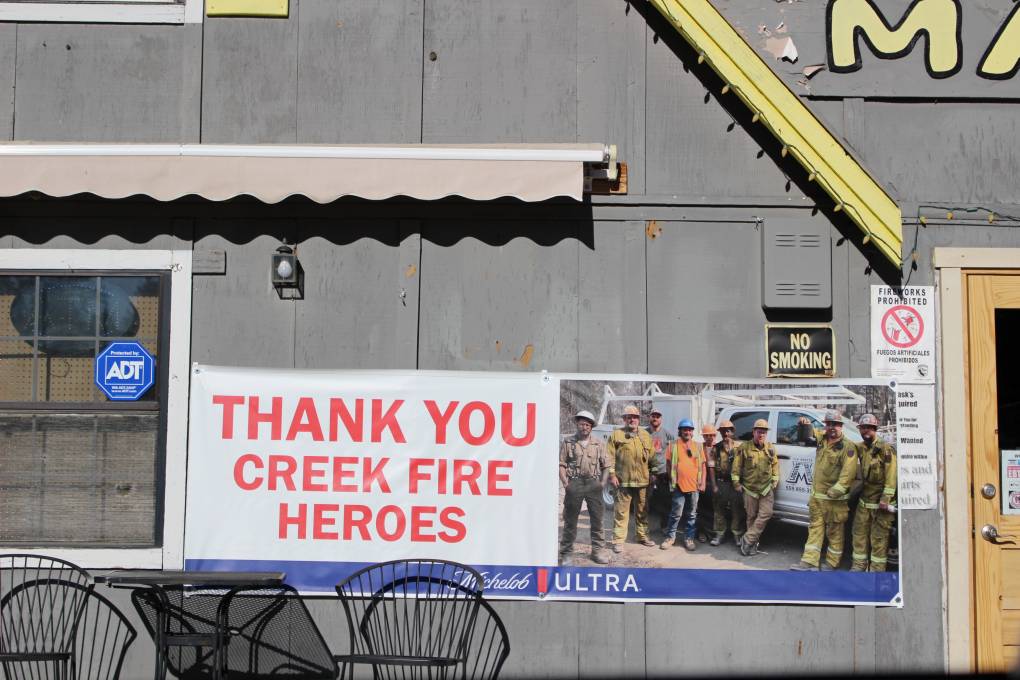
"caption": "A sign thanking firefighters outside Bob's Market in Shaver Lake.",
"description": null,
"title": "IMG_1606",
"credit": "Danielle Venton/KQED",
"status": "inherit",
"altTag": null,
"isLoading": false,
"fetchFailed": false
},
"science_1973140": {
"type": "attachments",
"id": "science_1973140",
"meta": {
"index": "attachments_1716263798",
"site": "science",
"id": "1973140",
"found": true
},
"parent": 1973138,
"imgSizes": {
"twentyfourteen-full-width": {
"file": "https://ww2.kqed.org/app/uploads/sites/35/2029/03/IMG_1557-1038x576.jpg",
"width": 1038,
"mimeType": "image/jpeg",
"height": 576
},
"thumbnail": {
"file": "https://ww2.kqed.org/app/uploads/sites/35/2029/03/IMG_1557-160x107.jpg",
"width": 160,
"mimeType": "image/jpeg",
"height": 107
},
"post-thumbnail": {
"file": "https://ww2.kqed.org/app/uploads/sites/35/2029/03/IMG_1557-672x372.jpg",
"width": 672,
"mimeType": "image/jpeg",
"height": 372
},
"kqedFullSize": {
"file": "https://ww2.kqed.org/app/uploads/sites/35/2029/03/IMG_1557-scaled-e1620777613325.jpg",
"width": 1920,
"height": 1280
},
"2048x2048": {
"file": "https://ww2.kqed.org/app/uploads/sites/35/2029/03/IMG_1557-2048x1365.jpg",
"width": 2048,
"mimeType": "image/jpeg",
"height": 1365
},
"large": {
"file": "https://ww2.kqed.org/app/uploads/sites/35/2029/03/IMG_1557-1020x680.jpg",
"width": 1020,
"mimeType": "image/jpeg",
"height": 680
},
"1536x1536": {
"file": "https://ww2.kqed.org/app/uploads/sites/35/2029/03/IMG_1557-1536x1024.jpg",
"width": 1536,
"mimeType": "image/jpeg",
"height": 1024
},
"full-width": {
"file": "https://ww2.kqed.org/app/uploads/sites/35/2029/03/IMG_1557-1920x1280.jpg",
"width": 1920,
"mimeType": "image/jpeg",
"height": 1280
},
"medium": {
"file": "https://ww2.kqed.org/app/uploads/sites/35/2029/03/IMG_1557-800x533.jpg",
"width": 800,
"mimeType": "image/jpeg",
"height": 533
},
"medium_large": {
"file": "https://ww2.kqed.org/app/uploads/sites/35/2029/03/IMG_1557-768x512.jpg",
"width": 768,
"mimeType": "image/jpeg",
"height": 512
}
},
"publishDate": 1615333634,
"modified": 1620777629,
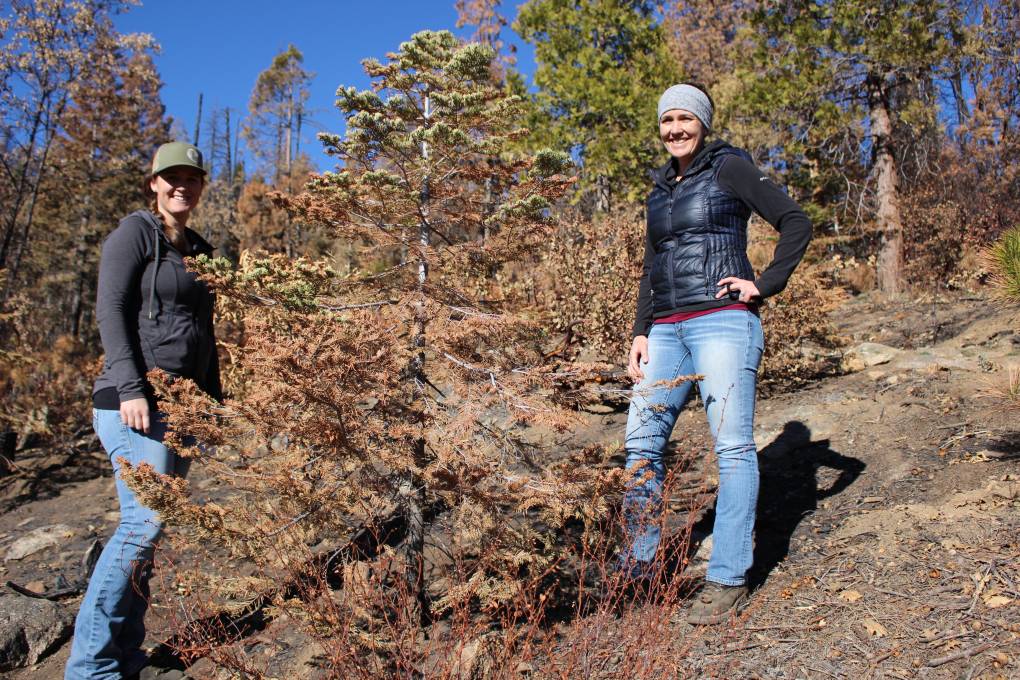
"caption": "Meghan Breniman, left, and Julianne Stewart stand to either side of a fir tree that survived the Creek Fire. ",
"description": "Two women stand on either side of a tree that is green on top, but the lower branches are brown",
"title": "IMG_1557",
"credit": "Danielle Venton/KQED",
"status": "inherit",
"altTag": null,
"isLoading": false,
"fetchFailed": false
},
"science_1974537": {
"type": "attachments",
"id": "science_1974537",
"meta": {
"index": "attachments_1716263798",
"site": "science",
"id": "1974537",
"found": true
},
"parent": 1974535,
"imgSizes": {
"twentyfourteen-full-width": {
"file": "https://ww2.kqed.org/app/uploads/sites/35/2021/05/RS48866_004_SanCarlos_KatinkaLennemann_04302021-qut-1038x576.jpg",
"width": 1038,
"mimeType": "image/jpeg",
"height": 576
},
"thumbnail": {
"file": "https://ww2.kqed.org/app/uploads/sites/35/2021/05/RS48866_004_SanCarlos_KatinkaLennemann_04302021-qut-160x107.jpg",
"width": 160,
"mimeType": "image/jpeg",
"height": 107
},
"post-thumbnail": {
"file": "https://ww2.kqed.org/app/uploads/sites/35/2021/05/RS48866_004_SanCarlos_KatinkaLennemann_04302021-qut-672x372.jpg",
"width": 672,
"mimeType": "image/jpeg",
"height": 372
},
"kqedFullSize": {
"file": "https://ww2.kqed.org/app/uploads/sites/35/2021/05/RS48866_004_SanCarlos_KatinkaLennemann_04302021-qut.jpg",
"width": 1920,
"height": 1280
},
"large": {
"file": "https://ww2.kqed.org/app/uploads/sites/35/2021/05/RS48866_004_SanCarlos_KatinkaLennemann_04302021-qut-1020x680.jpg",
"width": 1020,
"mimeType": "image/jpeg",
"height": 680
},
"1536x1536": {
"file": "https://ww2.kqed.org/app/uploads/sites/35/2021/05/RS48866_004_SanCarlos_KatinkaLennemann_04302021-qut-1536x1024.jpg",
"width": 1536,
"mimeType": "image/jpeg",
"height": 1024
},
"medium": {
"file": "https://ww2.kqed.org/app/uploads/sites/35/2021/05/RS48866_004_SanCarlos_KatinkaLennemann_04302021-qut-800x533.jpg",
"width": 800,
"mimeType": "image/jpeg",
"height": 533
},
"medium_large": {
"file": "https://ww2.kqed.org/app/uploads/sites/35/2021/05/RS48866_004_SanCarlos_KatinkaLennemann_04302021-qut-768x512.jpg",
"width": 768,
"mimeType": "image/jpeg",
"height": 512
}
},
"publishDate": 1620160837,
"modified": 1620160879,
"caption": "Sequoia Union High School junior Katinka Lennemann at Highlands Park in San Carlos on April 30, 2021.",
"description": null,
"title": "RS48866_004_SanCarlos_KatinkaLennemann_04302021-qut",
"credit": "Beth LaBerge/KQED",
"status": "inherit",
"altTag": null,
"isLoading": false,
"fetchFailed": false
},
"science_1974549": {
"type": "attachments",
"id": "science_1974549",
"meta": {
"index": "attachments_1716263798",
"site": "science",
"id": "1974549",
"found": true
},
"parent": 1974544,
"imgSizes": {
"twentyfourteen-full-width": {
"file": "https://ww2.kqed.org/app/uploads/sites/35/2021/05/RS48888_GettyImages-1232098529-qut-1038x576.jpg",
"width": 1038,
"mimeType": "image/jpeg",
"height": 576
},
"thumbnail": {
"file": "https://ww2.kqed.org/app/uploads/sites/35/2021/05/RS48888_GettyImages-1232098529-qut-160x94.jpg",
"width": 160,
"mimeType": "image/jpeg",
"height": 94
},
"post-thumbnail": {
"file": "https://ww2.kqed.org/app/uploads/sites/35/2021/05/RS48888_GettyImages-1232098529-qut-672x372.jpg",
"width": 672,
"mimeType": "image/jpeg",
"height": 372
},
"kqedFullSize": {
"file": "https://ww2.kqed.org/app/uploads/sites/35/2021/05/RS48888_GettyImages-1232098529-qut.jpg",
"width": 1920,
"height": 1131
},
"large": {
"file": "https://ww2.kqed.org/app/uploads/sites/35/2021/05/RS48888_GettyImages-1232098529-qut-1020x601.jpg",
"width": 1020,
"mimeType": "image/jpeg",
"height": 601
},
"1536x1536": {
"file": "https://ww2.kqed.org/app/uploads/sites/35/2021/05/RS48888_GettyImages-1232098529-qut-1536x905.jpg",
"width": 1536,
"mimeType": "image/jpeg",
"height": 905
},
"medium": {
"file": "https://ww2.kqed.org/app/uploads/sites/35/2021/05/RS48888_GettyImages-1232098529-qut-800x471.jpg",
"width": 800,
"mimeType": "image/jpeg",
"height": 471
},
"medium_large": {
"file": "https://ww2.kqed.org/app/uploads/sites/35/2021/05/RS48888_GettyImages-1232098529-qut-768x452.jpg",
"width": 768,
"mimeType": "image/jpeg",
"height": 452
}
},
"publishDate": 1620165896,
"modified": 1620170377,
"caption": "An orchard is seen on the outskirts of Kettleman City in California's San Joaquin Valley on April 2, 2021, one of the top agriculture producing counties in the San Joaquin Valley where dairy, grapes, almonds, strawberries, and pistachios contribute billions to the economy each year. ",
"description": null,
"title": "US-ENVIRONMENT-DROUGHT-AGRICULTURE",
"credit": "Frederic J. Brown/AFP via Getty Images",
"status": "inherit",
"altTag": null,
"isLoading": false,
"fetchFailed": false
},
"science_1974371": {
"type": "attachments",
"id": "science_1974371",
"meta": {
"index": "attachments_1716263798",
"site": "science",
"id": "1974371",
"found": true
},
"parent": 1974354,
"imgSizes": {
"twentyfourteen-full-width": {
"file": "https://ww2.kqed.org/app/uploads/sites/35/2021/04/Arizona-Conservation-Corps-1-1038x576.jpeg",
"width": 1038,
"mimeType": "image/jpeg",
"height": 576
},
"thumbnail": {
"file": "https://ww2.kqed.org/app/uploads/sites/35/2021/04/Arizona-Conservation-Corps-1-160x107.jpeg",
"width": 160,
"mimeType": "image/jpeg",
"height": 107
},
"post-thumbnail": {
"file": "https://ww2.kqed.org/app/uploads/sites/35/2021/04/Arizona-Conservation-Corps-1-672x372.jpeg",
"width": 672,
"mimeType": "image/jpeg",
"height": 372
},
"kqedFullSize": {
"file": "https://ww2.kqed.org/app/uploads/sites/35/2021/04/Arizona-Conservation-Corps-1.jpeg",
"width": 2048,
"height": 1365
},
"large": {
"file": "https://ww2.kqed.org/app/uploads/sites/35/2021/04/Arizona-Conservation-Corps-1-1020x680.jpeg",
"width": 1020,
"mimeType": "image/jpeg",
"height": 680
},
"1536x1536": {
"file": "https://ww2.kqed.org/app/uploads/sites/35/2021/04/Arizona-Conservation-Corps-1-1536x1024.jpeg",
"width": 1536,
"mimeType": "image/jpeg",
"height": 1024
},
"full-width": {
"file": "https://ww2.kqed.org/app/uploads/sites/35/2021/04/Arizona-Conservation-Corps-1-1920x1280.jpeg",
"width": 1920,
"mimeType": "image/jpeg",
"height": 1280
},
"medium": {
"file": "https://ww2.kqed.org/app/uploads/sites/35/2021/04/Arizona-Conservation-Corps-1-800x533.jpeg",
"width": 800,
"mimeType": "image/jpeg",
"height": 533
},
"medium_large": {
"file": "https://ww2.kqed.org/app/uploads/sites/35/2021/04/Arizona-Conservation-Corps-1-768x512.jpeg",
"width": 768,
"mimeType": "image/jpeg",
"height": 512
}
},
"publishDate": 1619722099,
"modified": 1619722130,
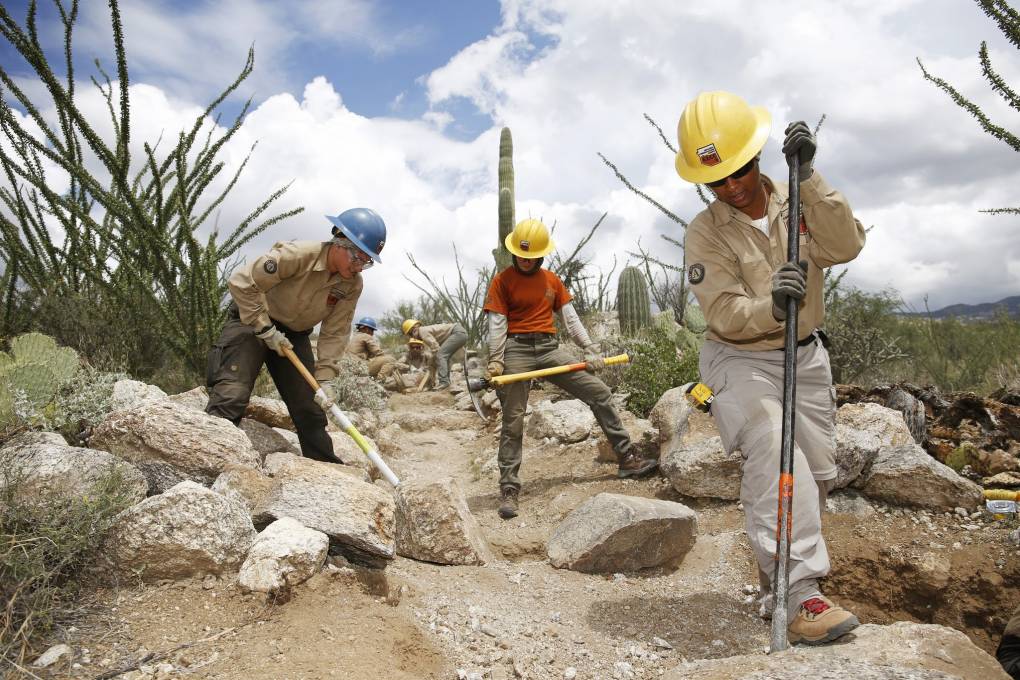
"caption": "AmeriCorps members with Arizona Conservation Corps, a program of Conservation Legacy, make improvements on the Manning Camp Trail at Saguaro National Park. ",
"description": null,
"title": "Arizona-Conservation-Corps-1",
"credit": "Photo courtesy of the Corps Network/InsideClimate News",
"status": "inherit",
"altTag": null,
"isLoading": false,
"fetchFailed": false
},
"science_1974109": {
"type": "attachments",
"id": "science_1974109",
"meta": {
"index": "attachments_1716263798",
"site": "science",
"id": "1974109",
"found": true
},
"parent": 1974108,
"imgSizes": {
"twentyfourteen-full-width": {
"file": "https://ww2.kqed.org/app/uploads/sites/35/2021/04/GettyImages-1059700988-1038x576.jpg",
"width": 1038,
"mimeType": "image/jpeg",
"height": 576
},
"thumbnail": {
"file": "https://ww2.kqed.org/app/uploads/sites/35/2021/04/GettyImages-1059700988-160x107.jpg",
"width": 160,
"mimeType": "image/jpeg",
"height": 107
},
"post-thumbnail": {
"file": "https://ww2.kqed.org/app/uploads/sites/35/2021/04/GettyImages-1059700988-672x372.jpg",
"width": 672,
"mimeType": "image/jpeg",
"height": 372
},
"kqedFullSize": {
"file": "https://ww2.kqed.org/app/uploads/sites/35/2021/04/GettyImages-1059700988-scaled.jpg",
"width": 2560,
"height": 1706
},
"2048x2048": {
"file": "https://ww2.kqed.org/app/uploads/sites/35/2021/04/GettyImages-1059700988-2048x1365.jpg",
"width": 2048,
"mimeType": "image/jpeg",
"height": 1365
},
"large": {
"file": "https://ww2.kqed.org/app/uploads/sites/35/2021/04/GettyImages-1059700988-1020x680.jpg",
"width": 1020,
"mimeType": "image/jpeg",
"height": 680
},
"1536x1536": {
"file": "https://ww2.kqed.org/app/uploads/sites/35/2021/04/GettyImages-1059700988-1536x1024.jpg",
"width": 1536,
"mimeType": "image/jpeg",
"height": 1024
},
"full-width": {
"file": "https://ww2.kqed.org/app/uploads/sites/35/2021/04/GettyImages-1059700988-1920x1280.jpg",
"width": 1920,
"mimeType": "image/jpeg",
"height": 1280
},
"medium": {
"file": "https://ww2.kqed.org/app/uploads/sites/35/2021/04/GettyImages-1059700988-800x533.jpg",
"width": 800,
"mimeType": "image/jpeg",
"height": 533
},
"medium_large": {
"file": "https://ww2.kqed.org/app/uploads/sites/35/2021/04/GettyImages-1059700988-768x512.jpg",
"width": 768,
"mimeType": "image/jpeg",
"height": 512
}
},
"publishDate": 1619100728,
"modified": 1619100780,
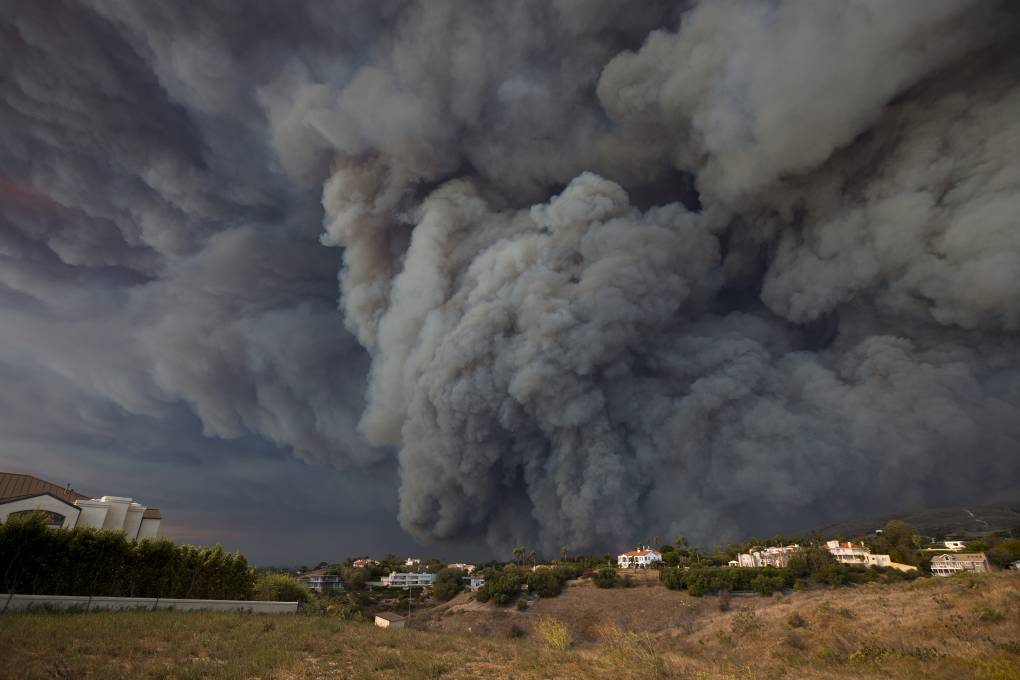
"caption": "A massive smoke plume, powered by strong winds, rises above the the Woolsey Fire on November 9, 2018 in Malibu, California. ",
"description": null,
"title": "Fast-Spreading Hill and Woolsey Fires Force Evacuations In California's Ventura County",
"credit": "David McNew/Getty Images",
"status": "inherit",
"altTag": null,
"isLoading": false,
"fetchFailed": false
},
"science_1969740": {
"type": "attachments",
"id": "science_1969740",
"meta": {
"index": "attachments_1716263798",
"site": "science",
"id": "1969740",
"found": true
},
"parent": 1969739,
"imgSizes": {
"twentyfourteen-full-width": {
"file": "https://ww2.kqed.org/app/uploads/sites/35/2020/09/RS44992_GettyImages-1228427177-qut-1038x576.jpg",
"width": 1038,
"mimeType": "image/jpeg",
"height": 576
},
"thumbnail": {
"file": "https://ww2.kqed.org/app/uploads/sites/35/2020/09/RS44992_GettyImages-1228427177-qut-160x107.jpg",
"width": 160,
"mimeType": "image/jpeg",
"height": 107
},
"post-thumbnail": {
"file": "https://ww2.kqed.org/app/uploads/sites/35/2020/09/RS44992_GettyImages-1228427177-qut-672x372.jpg",
"width": 672,
"mimeType": "image/jpeg",
"height": 372
},
"kqedFullSize": {
"file": "https://ww2.kqed.org/app/uploads/sites/35/2020/09/RS44992_GettyImages-1228427177-qut.jpg",
"width": 1920,
"height": 1280
},
"large": {
"file": "https://ww2.kqed.org/app/uploads/sites/35/2020/09/RS44992_GettyImages-1228427177-qut-1020x680.jpg",
"width": 1020,
"mimeType": "image/jpeg",
"height": 680
},
"1536x1536": {
"file": "https://ww2.kqed.org/app/uploads/sites/35/2020/09/RS44992_GettyImages-1228427177-qut-1536x1024.jpg",
"width": 1536,
"mimeType": "image/jpeg",
"height": 1024
},
"medium": {
"file": "https://ww2.kqed.org/app/uploads/sites/35/2020/09/RS44992_GettyImages-1228427177-qut-800x533.jpg",
"width": 800,
"mimeType": "image/jpeg",
"height": 533
},
"medium_large": {
"file": "https://ww2.kqed.org/app/uploads/sites/35/2020/09/RS44992_GettyImages-1228427177-qut-768x512.jpg",
"width": 768,
"mimeType": "image/jpeg",
"height": 512
}
},
"publishDate": 1600731807,
"modified": 1600811275,
"caption": "An orange sky filled with wildfire smoke hangs above hiking trails at the Limeridge Open Space in Concord, Calif., on Sept. 9, 2020. ",
"description": null,
"title": "RS44992_GettyImages-1228427177-qut",
"credit": "Brittany Hosea-Small/AFP via Getty Images",
"status": "inherit",
"isLoading": false,
"fetchFailed": false
},
"science_1972728": {
"type": "attachments",
"id": "science_1972728",
"meta": {
"index": "attachments_1716263798",
"site": "science",
"id": "1972728",
"found": true
},
"parent": 1972725,
"imgSizes": {
"twentyfourteen-full-width": {
"file": "https://ww2.kqed.org/app/uploads/sites/35/2021/02/RS47192_GettyImages-1228427838-qut-1038x576.jpg",
"width": 1038,
"mimeType": "image/jpeg",
"height": 576
},
"thumbnail": {
"file": "https://ww2.kqed.org/app/uploads/sites/35/2021/02/RS47192_GettyImages-1228427838-qut-160x107.jpg",
"width": 160,
"mimeType": "image/jpeg",
"height": 107
},
"post-thumbnail": {
"file": "https://ww2.kqed.org/app/uploads/sites/35/2021/02/RS47192_GettyImages-1228427838-qut-672x372.jpg",
"width": 672,
"mimeType": "image/jpeg",
"height": 372
},
"kqedFullSize": {
"file": "https://ww2.kqed.org/app/uploads/sites/35/2021/02/RS47192_GettyImages-1228427838-qut.jpg",
"width": 1920,
"height": 1280
},
"large": {
"file": "https://ww2.kqed.org/app/uploads/sites/35/2021/02/RS47192_GettyImages-1228427838-qut-1020x680.jpg",
"width": 1020,
"mimeType": "image/jpeg",
"height": 680
},
"1536x1536": {
"file": "https://ww2.kqed.org/app/uploads/sites/35/2021/02/RS47192_GettyImages-1228427838-qut-1536x1024.jpg",
"width": 1536,
"mimeType": "image/jpeg",
"height": 1024
},
"medium": {
"file": "https://ww2.kqed.org/app/uploads/sites/35/2021/02/RS47192_GettyImages-1228427838-qut-800x533.jpg",
"width": 800,
"mimeType": "image/jpeg",
"height": 533
},
"medium_large": {
"file": "https://ww2.kqed.org/app/uploads/sites/35/2021/02/RS47192_GettyImages-1228427838-qut-768x512.jpg",
"width": 768,
"mimeType": "image/jpeg",
"height": 512
}
},
"publishDate": 1613073825,
"modified": 1613512574,
"caption": "An orange glow is seen over a darkened Howard Street as smoke from various wildfires burning across Northern California mixes with the marine layer on Sept. 9, 2020 in San Francisco, California. ",
"description": null,
"title": "wildfire smoke",
"credit": "Philip Pacheco/Getty Images",
"status": "inherit",
"altTag": null,
"isLoading": false,
"fetchFailed": false
},
"science_1972610": {
"type": "attachments",
"id": "science_1972610",
"meta": {
"index": "attachments_1716263798",
"site": "science",
"id": "1972610",
"found": true
},
"parent": 1972607,
"imgSizes": {
"twentyfourteen-full-width": {
"file": "https://ww2.kqed.org/app/uploads/sites/35/2021/02/RS47029_2021_02-03_AI_Snow_Survey-11-qut-1038x576.jpg",
"width": 1038,
"mimeType": "image/jpeg",
"height": 576
},
"thumbnail": {
"file": "https://ww2.kqed.org/app/uploads/sites/35/2021/02/RS47029_2021_02-03_AI_Snow_Survey-11-qut-160x106.jpg",
"width": 160,
"mimeType": "image/jpeg",
"height": 106
},
"post-thumbnail": {
"file": "https://ww2.kqed.org/app/uploads/sites/35/2021/02/RS47029_2021_02-03_AI_Snow_Survey-11-qut-672x372.jpg",
"width": 672,
"mimeType": "image/jpeg",
"height": 372
},
"kqedFullSize": {
"file": "https://ww2.kqed.org/app/uploads/sites/35/2021/02/RS47029_2021_02-03_AI_Snow_Survey-11-qut.jpg",
"width": 1920,
"height": 1270
},
"large": {
"file": "https://ww2.kqed.org/app/uploads/sites/35/2021/02/RS47029_2021_02-03_AI_Snow_Survey-11-qut-1020x675.jpg",
"width": 1020,
"mimeType": "image/jpeg",
"height": 675
},
"1536x1536": {
"file": "https://ww2.kqed.org/app/uploads/sites/35/2021/02/RS47029_2021_02-03_AI_Snow_Survey-11-qut-1536x1016.jpg",
"width": 1536,
"mimeType": "image/jpeg",
"height": 1016
},
"medium": {
"file": "https://ww2.kqed.org/app/uploads/sites/35/2021/02/RS47029_2021_02-03_AI_Snow_Survey-11-qut-800x529.jpg",
"width": 800,
"mimeType": "image/jpeg",
"height": 529
},
"medium_large": {
"file": "https://ww2.kqed.org/app/uploads/sites/35/2021/02/RS47029_2021_02-03_AI_Snow_Survey-11-qut-768x508.jpg",
"width": 768,
"mimeType": "image/jpeg",
"height": 508
}
},
"publishDate": 1612396101,
"modified": 1612404391,
"caption": "Nick Ellis, left, an electrical engineer for Statewide Monitoring Network Section, assists Sean de Guzman, chief of DWR's Snow Surveys and Water Supply Forecasting Section, as they evaluate a measurement during a snow survey at Phillips Station in the Sierra Nevada Mountains, about 90 miles east of Sacramento off Highway 50 in El Dorado County, on Feb. 3, 2021.\n\n",
"description": null,
"title": "RS47029_2021_02-03_AI_Snow_Survey-11-qut",
"credit": "Andrew Innerarity/California Department of Water Resources ",
"status": "inherit",
"altTag": null,
"isLoading": false,
"fetchFailed": false
},
"science_1972442": {
"type": "attachments",
"id": "science_1972442",
"meta": {
"index": "attachments_1716263798",
"site": "science",
"id": "1972442",
"found": true
},
"parent": 1972437,
"imgSizes": {
"twentyfourteen-full-width": {
"file": "https://ww2.kqed.org/app/uploads/sites/35/2021/01/RS46896_GettyImages-1230821142-qut-1038x576.jpg",
"width": 1038,
"mimeType": "image/jpeg",
"height": 576
},
"thumbnail": {
"file": "https://ww2.kqed.org/app/uploads/sites/35/2021/01/RS46896_GettyImages-1230821142-qut-160x107.jpg",
"width": 160,
"mimeType": "image/jpeg",
"height": 107
},
"post-thumbnail": {
"file": "https://ww2.kqed.org/app/uploads/sites/35/2021/01/RS46896_GettyImages-1230821142-qut-672x372.jpg",
"width": 672,
"mimeType": "image/jpeg",
"height": 372
},
"kqedFullSize": {
"file": "https://ww2.kqed.org/app/uploads/sites/35/2021/01/RS46896_GettyImages-1230821142-qut.jpg",
"width": 1920,
"height": 1280
},
"large": {
"file": "https://ww2.kqed.org/app/uploads/sites/35/2021/01/RS46896_GettyImages-1230821142-qut-1020x680.jpg",
"width": 1020,
"mimeType": "image/jpeg",
"height": 680
},
"1536x1536": {
"file": "https://ww2.kqed.org/app/uploads/sites/35/2021/01/RS46896_GettyImages-1230821142-qut-1536x1024.jpg",
"width": 1536,
"mimeType": "image/jpeg",
"height": 1024
},
"medium": {
"file": "https://ww2.kqed.org/app/uploads/sites/35/2021/01/RS46896_GettyImages-1230821142-qut-800x533.jpg",
"width": 800,
"mimeType": "image/jpeg",
"height": 533
},
"medium_large": {
"file": "https://ww2.kqed.org/app/uploads/sites/35/2021/01/RS46896_GettyImages-1230821142-qut-768x512.jpg",
"width": 768,
"mimeType": "image/jpeg",
"height": 512
}
},
"publishDate": 1611780876,
"modified": 1619566396,
"caption": "Vice President Kamala Harris and Special Presidential Envoy for Climate John Kerry watch as President Joe Biden signs executive orders after speaking about tackling climate change, creating jobs and restoring scientific integrity on Jan. 27, 2021, in Washington, D.C.",
"description": null,
"title": "RS46896_GettyImages-1230821142-qut",
"credit": "Mandel Ngan/AFP via Getty Images",
"status": "inherit",
"altTag": null,
"isLoading": false,
"fetchFailed": false
}
},
"audioPlayerReducer": {
"postId": "stream_live",
"isPaused": true,
"isPlaying": false,
"pfsActive": false,
"pledgeModalIsOpen": true,
"playerDrawerIsOpen": false,
"liveAudioPlayStartedAt": 0,
"liveAudioPlayContext": ""
},
"authorsReducer": {
"byline_science_1974825": {
"type": "authors",
"id": "byline_science_1974825",
"meta": {
"override": true
},
"slug": "byline_science_1974825",
"name": "Adam Beam \u003cbr />AP\u003cbr>",
"isLoading": false
},
"byline_science_1974544": {
"type": "authors",
"id": "byline_science_1974544",
"meta": {
"override": true
},
"slug": "byline_science_1974544",
"name": "Seth Borenstein \u003cbr />AP\u003cbr>",
"isLoading": false
},
"byline_science_1974354": {
"type": "authors",
"id": "byline_science_1974354",
"meta": {
"override": true
},
"slug": "byline_science_1974354",
"name": "Judy Fahys \u003cbr />InsideClimate News\u003cbr>",
"isLoading": false
},
"byline_science_1972437": {
"type": "authors",
"id": "byline_science_1972437",
"meta": {
"override": true
},
"slug": "byline_science_1972437",
"name": "Matthew Daly and Ellen Knickmeyer \u003cbr />AP\u003cbr>",
"isLoading": false
},
"kqedscience": {
"type": "authors",
"id": "6387",
"meta": {
"index": "authors_1716337520",
"id": "6387",
"found": true
},
"name": "KQED Science",
"firstName": "KQED",
"lastName": "Science",
"slug": "kqedscience",
"email": "kqedscience@gmail.com",
"display_author_email": false,
"staff_mastheads": [],
"title": null,
"bio": "KQED Science brings you award-winning science and environment coverage from the Bay Area and beyond by the flagship Northern California PBS and NPR affiliate.",
"avatar": "https://secure.gravatar.com/avatar/5a295ff49cf82a8c0f30937d3f788b2f?s=600&d=blank&r=g",
"twitter": null,
"facebook": null,
"instagram": null,
"linkedin": null,
"sites": [
{
"site": "science",
"roles": [
"contributor"
]
},
{
"site": "quest",
"roles": [
"editor"
]
},
{
"site": "food",
"roles": [
"contributor"
]
}
],
"headData": {
"title": "KQED Science | KQED",
"description": null,
"ogImgSrc": "https://secure.gravatar.com/avatar/5a295ff49cf82a8c0f30937d3f788b2f?s=600&d=blank&r=g",
"twImgSrc": "https://secure.gravatar.com/avatar/5a295ff49cf82a8c0f30937d3f788b2f?s=600&d=blank&r=g"
},
"isLoading": false,
"link": "/author/kqedscience"
},
"dventon": {
"type": "authors",
"id": "11088",
"meta": {
"index": "authors_1716337520",
"id": "11088",
"found": true
},
"name": "Danielle Venton",
"firstName": "Danielle",
"lastName": "Venton",
"slug": "dventon",
"email": "dventon@kqed.org",
"display_author_email": true,
"staff_mastheads": [
"science"
],
"title": "Science reporter",
"bio": "Danielle Venton is a reporter for KQED Science. She covers wildfires, space and oceans (though she is prone to sea sickness).\r\n\r\nBefore joining KQED in 2015, Danielle was a staff reporter at KRCB in Sonoma County and a freelancer. She studied science communication at UC Santa Cruz and formerly worked at CERN in Geneva, Switzerland where she wrote about computing. She lives in Sonoma County and enjoys backpacking.",
"avatar": "https://secure.gravatar.com/avatar/37b292b5c40c8d93959c4f48d73b5286f41b7abd8588277e941905a3ed4c801c?s=600&d=blank&r=g",
"twitter": "DanielleVenton",
"bluesky": null,
"facebook": null,
"instagram": null,
"linkedin": null,
"sites": [
{
"site": "arts",
"roles": [
"contributor"
]
},
{
"site": "news",
"roles": [
"editor"
]
},
{
"site": "futureofyou",
"roles": [
"editor"
]
},
{
"site": "science",
"roles": [
"editor"
]
},
{
"site": "liveblog",
"roles": [
"contributor"
]
}
],
"headData": {
"title": "Danielle Venton | KQED",
"description": "Science reporter",
"ogImgSrc": "https://secure.gravatar.com/avatar/37b292b5c40c8d93959c4f48d73b5286f41b7abd8588277e941905a3ed4c801c?s=600&d=blank&r=g",
"twImgSrc": "https://secure.gravatar.com/avatar/37b292b5c40c8d93959c4f48d73b5286f41b7abd8588277e941905a3ed4c801c?s=600&d=blank&r=g"
},
"isLoading": false,
"link": "/author/dventon"
},
"lesleymcclurg": {
"type": "authors",
"id": "11229",
"meta": {
"index": "authors_1716337520",
"id": "11229",
"found": true
},
"name": "Lesley McClurg",
"firstName": "Lesley",
"lastName": "McClurg",
"slug": "lesleymcclurg",
"email": "lmcclurg@KQED.org",
"display_author_email": false,
"staff_mastheads": [
"news",
"science"
],
"title": "KQED Health Correspondent",
"bio": "Lesley McClurg is a health correspondent and fill-in host whose work is regularly rebroadcast on NPR and PBS programs. She’s earned multiple regional Emmy awards, a national and a regional Edward R. Murrow award, and was named Best Beat Reporter by the Association of Health Care Journalists. The Society of Professional Journalists has recognized her work several times, and the Society of Environmental Journalists spotlighted her coverage of California’s historic drought.\r\n\r\nBefore joining KQED in 2016, Lesley covered food and sustainability for Capital Public Radio, environmental issues for Colorado Public Radio, and reported for KUOW and KCTS 9 in Seattle. Away from the newsroom, she loves skiing with her daughter, mountain biking with her partner, and playing with Ollie, the family’s goldendoodle. On deadline, she runs almost entirely on chocolate chips.\r\n\r\n ",
"avatar": "https://secure.gravatar.com/avatar/bab49e972ea10c774fe0f5e29dba1722b158f7c0d58a360923d1389d380b2978?s=600&d=blank&r=g",
"twitter": "lesleywmcclurg",
"bluesky": null,
"facebook": null,
"instagram": null,
"linkedin": null,
"sites": [
{
"site": "arts",
"roles": [
"author"
]
},
{
"site": "news",
"roles": [
"editor"
]
},
{
"site": "futureofyou",
"roles": [
"editor"
]
},
{
"site": "stateofhealth",
"roles": [
"author"
]
},
{
"site": "science",
"roles": [
"editor"
]
},
{
"site": "quest",
"roles": [
"subscriber"
]
},
{
"site": "forum",
"roles": [
"administrator"
]
},
{
"site": "liveblog",
"roles": [
"author"
]
}
],
"headData": {
"title": "Lesley McClurg | KQED",
"description": "KQED Health Correspondent",
"ogImgSrc": "https://secure.gravatar.com/avatar/bab49e972ea10c774fe0f5e29dba1722b158f7c0d58a360923d1389d380b2978?s=600&d=blank&r=g",
"twImgSrc": "https://secure.gravatar.com/avatar/bab49e972ea10c774fe0f5e29dba1722b158f7c0d58a360923d1389d380b2978?s=600&d=blank&r=g"
},
"isLoading": false,
"link": "/author/lesleymcclurg"
},
"kevinstark": {
"type": "authors",
"id": "11608",
"meta": {
"index": "authors_1716337520",
"id": "11608",
"found": true
},
"name": "Kevin Stark",
"firstName": "Kevin",
"lastName": "Stark",
"slug": "kevinstark",
"email": "kstark@kqed.org",
"display_author_email": true,
"staff_mastheads": [
"science"
],
"title": "Senior Editor",
"bio": "Kevin is a senior editor for KQED Science, managing the station's health and climate desks. His journalism career began in the Pacific Northwest, and he later became a lead reporter for the San Francisco Public Press. His work has appeared in Pacific Standard magazine, the Energy News Network, the Center for Investigative Reporting's Reveal and WBEZ in Chicago. Kevin joined KQED in 2019, and has covered issues related to energy, wildfire, climate change and the environment.",
"avatar": "https://secure.gravatar.com/avatar/365aaa4b597d3a8374f67504ff0facd323d7906e8eb4be0a7efd2427408e802c?s=600&d=blank&r=g",
"twitter": "starkkev",
"bluesky": null,
"facebook": null,
"instagram": null,
"linkedin": null,
"sites": [
{
"site": "",
"roles": [
"editor"
]
},
{
"site": "news",
"roles": [
"editor"
]
},
{
"site": "science",
"roles": [
"administrator"
]
}
],
"headData": {
"title": "Kevin Stark | KQED",
"description": "Senior Editor",
"ogImgSrc": "https://secure.gravatar.com/avatar/365aaa4b597d3a8374f67504ff0facd323d7906e8eb4be0a7efd2427408e802c?s=600&d=blank&r=g",
"twImgSrc": "https://secure.gravatar.com/avatar/365aaa4b597d3a8374f67504ff0facd323d7906e8eb4be0a7efd2427408e802c?s=600&d=blank&r=g"
},
"isLoading": false,
"link": "/author/kevinstark"
}
},
"pagesReducer": {
"science_category_wildfires": {
"type": "terms",
"id": "science_3730",
"meta": {
"index": "terms_1716263798",
"site": "science",
"id": "3730",
"score": 12.461045
},
"featImg": null,
"name": "Wildfires",
"description": null,
"taxonomy": "category",
"headData": {
"twImgId": null,
"twTitle": null,
"ogTitle": null,
"ogImgId": null,
"twDescription": null,
"description": null,
"title": "Wildfires Archives | KQED Science",
"ogDescription": null
},
"ttid": 3730,
"slug": "wildfires",
"isLoading": false,
"title": "Wildfires",
"pageMeta": {
"site": "science",
"WpPageTemplate": "page-topic-editorial",
"currentPage": 7
},
"blocks": [
{
"blockName": "kqed/post-list",
"attrs": {
"layout": "cardArticle2",
"query": "posts/science?category=wildfires",
"seeMore": false,
"paginated": true,
"page": 7
}
},
{
"blockName": "kqed/ad"
}
]
}
},
"pfsSessionReducer": {},
"postsReducer": {
"stream_live": {
"type": "live",
"id": "stream_live",
"audioUrl": "https://streams.kqed.org/kqedradio",
"title": "Live Stream",
"excerpt": "Live Stream information currently unavailable.",
"link": "/radio",
"featImg": "",
"label": {
"name": "KQED Live",
"link": "/"
}
},
"stream_kqedNewscast": {
"type": "posts",
"id": "stream_kqedNewscast",
"audioUrl": "https://www.kqed.org/.stream/anon/radio/RDnews/newscast.mp3?_=1",
"title": "KQED Newscast",
"featImg": "",
"label": {
"name": "88.5 FM",
"link": "/"
}
},
"science_1974825": {
"type": "posts",
"id": "science_1974825",
"meta": {
"index": "posts_1716263798",
"site": "science",
"id": "1974825",
"score": null,
"sort": [
1621451005000
]
},
"parent": 0,
"labelTerm": {},
"blocks": [],
"publishDate": 1621451005,
"format": "standard",
"title": "A Scorching Summer Looms as California Girds Against Power Outages",
"headTitle": "A Scorching Summer Looms as California Girds Against Power Outages | KQED",
"content": "\u003cp class=\"Component-root-0-2-85 Component-p-0-2-76\">California’s top energy regulators on Tuesday said the state is better prepared to avoid last summer’s rotating blackouts, but they cautioned the power grid of the nation’s most populous state is still vulnerable to extreme heat waves that could force more outages later this year.\u003c/p>\n\u003cp class=\"Component-root-0-2-85 Component-p-0-2-76\">State officials say they have acquired an additional 3,500 megawatts of capacity ahead of a likely scorching summer that threatens to increase demand beyond what the grid can handle. That includes an additional 2,000 megawatts of batteries designed to store energy generated from renewable sources — like solar — that stop working when it gets dark.\u003c/p>\n\u003cul>\n\u003cli>\u003ca href=\"https://www.kqed.org/news/11836990/pge-shutoffs-are-here-again-what-to-know-about-power-outages-today\">\u003cstrong>Related: How to Prepare for Power Outages in Your Area\u003c/strong>\u003c/a>\u003c/li>\n\u003c/ul>\n\u003cp class=\"Component-root-0-2-85 Component-p-0-2-76\">In general, 1 megawatt of energy is enough to power hundreds of homes, depending on how it is generated.\u003c/p>\n\u003cp class=\"Component-root-0-2-85 Component-p-0-2-76\">“Does that mean we are in the clear? Not necessarily,” Elliot Mainzer, president and CEO of the California Independent System Operator, told state lawmakers during an oversight hearing Tuesday. “The most significant risk factor for grid reliability remains extreme heat, particularly heat that spreads across the wider western United States. And it continues to get hotter every year.”\u003c/p>\n\u003cp class=\"Component-root-0-2-85 Component-p-0-2-76\">More than an inconvenience, power outages during a major heat wave can also be deadly for vulnerable people while causing a host of other problems in a digital age that relies on electricity for everything from business transactions to Facebook posts.\u003c/p>\n\u003cp>[ad fullwidth]\u003c/p>\n\u003cp class=\"Component-root-0-2-85 Component-p-0-2-76\">Blackouts have become more common in California as utility companies will often intentionally turn off the power when it gets too windy in the dry summer months to prevent toppled power lines from starting wildfires — like the one that killed 85 people and mostly destroyed the town of Paradise in 2018.\u003c/p>\n\u003cp class=\"Component-root-0-2-85 Component-p-0-2-76\">But the blackouts in August were the first in nearly 20 years because of an energy shortage, putting California’s quest to have 100% of its energy come from renewable sources under more scrutiny.\u003c/p>\n\u003cp class=\"Component-root-0-2-85 Component-p-0-2-76\">“This summer will be an important test for the state,” said Assemblyman Chris Holden, a Democrat from Pasadena and chair of the Assembly Utilities and Energy Committee. “California is at the vanguard of renewable energy policy. The nation and the world are watching to see how we integrate renewables but also that we can ensure reliability while doing so.”\u003c/p>\n\u003cp class=\"Component-root-0-2-85 Component-p-0-2-76\">California’s plan to survive the summer includes buying power from places “that are not clean resources,” Marybel Batjer, president of the California Public Utilities Commission, told lawmakers on Tuesday. She did not say what those sources were, but she said regulators chose to buy them because they wanted to do everything they could to prevent blackouts this summer out of “health and safety concerns.”\u003c/p>\n\u003cp class=\"Component-root-0-2-85 Component-p-0-2-76\">“I want to be clear that our planning and implementation of our clean energy future progresses forward and will only accelerate in the months and years to come,” Batjer said.\u003c/p>\n\u003cp class=\"Component-root-0-2-85 Component-p-0-2-76\">Another round of blackouts could pose political concerns for Gov. Gavin Newsom, who will likely face a recall election later this year. In 2003, former Democratic Gov. Gray Davis was removed from office in a recall election largely driven by his handling of rolling blackouts, which were prompted by the deregulation of the energy sector and market manipulation by Enron and other companies.\u003c/p>\n\u003cp class=\"Component-root-0-2-85 Component-p-0-2-76\">Newsom’s recall election is driven largely by anger over his handling of the pandemic. But rolling blackouts, however brief, could hurt him as he seeks to inspire confidence in voters that he deserves to keep his job.\u003c/p>\n\u003cp class=\"Component-root-0-2-85 Component-p-0-2-76\">Energy demand typically peaks in the late afternoon as air conditioners work to cool homes during the hottest part of the day. Demand usually subsides at night as temperatures cool. But that didn’t happen in August, when temperatures were up to 20 degrees above normal for much of the western United States.\u003c/p>\n\u003cp class=\"Component-root-0-2-85 Component-p-0-2-76\">Demand was so high the weekend of Aug. 14 and 15 that state regulators ordered utility companies to intentionally turn off the power for some people to prevent more widespread outages across the grid, with outages lasting between 8 minutes and two-and-a-half hours.\u003c/p>\n\u003cp class=\"Component-root-0-2-85 Component-p-0-2-76\">Newsom declared a state emergency as state officials took drastic actions to find more power. That included David Hochschild, chair of the California Energy Commission, asking the U.S. Navy to use their diesel engines to power their ships instead of relying from on-shore power.\u003c/p>\n\u003cp>\u003c/p>\n\u003cp class=\"Component-root-0-2-85 Component-p-0-2-76\">“There was a lot of things we had to do that none of us wants to do again,” Batjer said.\u003c/p>\n\n",
"stats": {
"hasVideo": false,
"hasChartOrMap": false,
"hasAudio": false,
"hasPolis": false,
"wordCount": 765,
"hasGoogleForm": false,
"hasGallery": false,
"hasHearkenModule": false,
"iframeSrcs": [],
"paragraphCount": 2
},
"modified": 1704846598,
"excerpt": "California power regulators say the state is better prepared to avoid rotating blackouts, but the power grid is still vulnerable to extreme heat waves. ",
"headData": {
"twImgId": "",
"twTitle": "",
"ogTitle": "",
"ogImgId": "",
"twDescription": "",
"description": "California power regulators say the state is better prepared to avoid rotating blackouts, but the power grid is still vulnerable to extreme heat waves. ",
"title": "A Scorching Summer Looms as California Girds Against Power Outages | KQED",
"ogDescription": "",
"schema": {
"@context": "https://schema.org",
"@type": "Article",
"headline": "A Scorching Summer Looms as California Girds Against Power Outages",
"datePublished": "2021-05-19T12:03:25-07:00",
"dateModified": "2024-01-09T16:29:58-08:00",
"image": "https://cdn.kqed.org/wp-content/uploads/2020/02/KQED-OG-Image@1x.png"
}
},
"guestAuthors": [],
"slug": "a-scorching-summer-looms-ahead-as-california-girds-against-power-outages",
"status": "publish",
"nprByline": "Adam Beam \u003cbr />AP\u003cbr>",
"sticky": false,
"source": "Associated Press",
"path": "/science/1974825/a-scorching-summer-looms-ahead-as-california-girds-against-power-outages",
"audioTrackLength": null,
"parsedContent": [
{
"type": "contentString",
"content": "\u003cdiv class=\"post-body\">\u003cp>\u003cp class=\"Component-root-0-2-85 Component-p-0-2-76\">California’s top energy regulators on Tuesday said the state is better prepared to avoid last summer’s rotating blackouts, but they cautioned the power grid of the nation’s most populous state is still vulnerable to extreme heat waves that could force more outages later this year.\u003c/p>\n\u003cp class=\"Component-root-0-2-85 Component-p-0-2-76\">State officials say they have acquired an additional 3,500 megawatts of capacity ahead of a likely scorching summer that threatens to increase demand beyond what the grid can handle. That includes an additional 2,000 megawatts of batteries designed to store energy generated from renewable sources — like solar — that stop working when it gets dark.\u003c/p>\n\u003cul>\n\u003cli>\u003ca href=\"https://www.kqed.org/news/11836990/pge-shutoffs-are-here-again-what-to-know-about-power-outages-today\">\u003cstrong>Related: How to Prepare for Power Outages in Your Area\u003c/strong>\u003c/a>\u003c/li>\n\u003c/ul>\n\u003cp class=\"Component-root-0-2-85 Component-p-0-2-76\">In general, 1 megawatt of energy is enough to power hundreds of homes, depending on how it is generated.\u003c/p>\n\u003cp class=\"Component-root-0-2-85 Component-p-0-2-76\">“Does that mean we are in the clear? Not necessarily,” Elliot Mainzer, president and CEO of the California Independent System Operator, told state lawmakers during an oversight hearing Tuesday. “The most significant risk factor for grid reliability remains extreme heat, particularly heat that spreads across the wider western United States. And it continues to get hotter every year.”\u003c/p>\n\u003cp class=\"Component-root-0-2-85 Component-p-0-2-76\">More than an inconvenience, power outages during a major heat wave can also be deadly for vulnerable people while causing a host of other problems in a digital age that relies on electricity for everything from business transactions to Facebook posts.\u003c/p>\n\u003cp>\u003c/p>\u003c/div>",
"attributes": {
"named": {},
"numeric": []
}
},
{
"type": "component",
"content": "",
"name": "ad",
"attributes": {
"named": {
"label": "fullwidth"
},
"numeric": [
"fullwidth"
]
}
},
{
"type": "contentString",
"content": "\u003cdiv class=\"post-body\">\u003cp>\u003c/p>\n\u003cp class=\"Component-root-0-2-85 Component-p-0-2-76\">Blackouts have become more common in California as utility companies will often intentionally turn off the power when it gets too windy in the dry summer months to prevent toppled power lines from starting wildfires — like the one that killed 85 people and mostly destroyed the town of Paradise in 2018.\u003c/p>\n\u003cp class=\"Component-root-0-2-85 Component-p-0-2-76\">But the blackouts in August were the first in nearly 20 years because of an energy shortage, putting California’s quest to have 100% of its energy come from renewable sources under more scrutiny.\u003c/p>\n\u003cp class=\"Component-root-0-2-85 Component-p-0-2-76\">“This summer will be an important test for the state,” said Assemblyman Chris Holden, a Democrat from Pasadena and chair of the Assembly Utilities and Energy Committee. “California is at the vanguard of renewable energy policy. The nation and the world are watching to see how we integrate renewables but also that we can ensure reliability while doing so.”\u003c/p>\n\u003cp class=\"Component-root-0-2-85 Component-p-0-2-76\">California’s plan to survive the summer includes buying power from places “that are not clean resources,” Marybel Batjer, president of the California Public Utilities Commission, told lawmakers on Tuesday. She did not say what those sources were, but she said regulators chose to buy them because they wanted to do everything they could to prevent blackouts this summer out of “health and safety concerns.”\u003c/p>\n\u003cp class=\"Component-root-0-2-85 Component-p-0-2-76\">“I want to be clear that our planning and implementation of our clean energy future progresses forward and will only accelerate in the months and years to come,” Batjer said.\u003c/p>\n\u003cp class=\"Component-root-0-2-85 Component-p-0-2-76\">Another round of blackouts could pose political concerns for Gov. Gavin Newsom, who will likely face a recall election later this year. In 2003, former Democratic Gov. Gray Davis was removed from office in a recall election largely driven by his handling of rolling blackouts, which were prompted by the deregulation of the energy sector and market manipulation by Enron and other companies.\u003c/p>\n\u003cp class=\"Component-root-0-2-85 Component-p-0-2-76\">Newsom’s recall election is driven largely by anger over his handling of the pandemic. But rolling blackouts, however brief, could hurt him as he seeks to inspire confidence in voters that he deserves to keep his job.\u003c/p>\n\u003cp class=\"Component-root-0-2-85 Component-p-0-2-76\">Energy demand typically peaks in the late afternoon as air conditioners work to cool homes during the hottest part of the day. Demand usually subsides at night as temperatures cool. But that didn’t happen in August, when temperatures were up to 20 degrees above normal for much of the western United States.\u003c/p>\n\u003cp class=\"Component-root-0-2-85 Component-p-0-2-76\">Demand was so high the weekend of Aug. 14 and 15 that state regulators ordered utility companies to intentionally turn off the power for some people to prevent more widespread outages across the grid, with outages lasting between 8 minutes and two-and-a-half hours.\u003c/p>\n\u003cp class=\"Component-root-0-2-85 Component-p-0-2-76\">Newsom declared a state emergency as state officials took drastic actions to find more power. That included David Hochschild, chair of the California Energy Commission, asking the U.S. Navy to use their diesel engines to power their ships instead of relying from on-shore power.\u003c/p>\n\u003cp>\u003c/p>\n\u003cp class=\"Component-root-0-2-85 Component-p-0-2-76\">“There was a lot of things we had to do that none of us wants to do again,” Batjer said.\u003c/p>\n\n\u003c/div>\u003c/p>",
"attributes": {
"named": {},
"numeric": []
}
}
],
"link": "/science/1974825/a-scorching-summer-looms-ahead-as-california-girds-against-power-outages",
"authors": [
"byline_science_1974825"
],
"categories": [
"science_33",
"science_35",
"science_40",
"science_4450",
"science_3730"
],
"tags": [
"science_4209",
"science_383"
],
"featImg": "science_1974827",
"label": "source_science_1974825"
},
"science_1974648": {
"type": "posts",
"id": "science_1974648",
"meta": {
"index": "posts_1716263798",
"site": "science",
"id": "1974648",
"score": null,
"sort": [
1620944467000
]
},
"guestAuthors": [],
"slug": "last-years-santa-cruz-lightning-fires-still-causing-trouble",
"title": "Last Year's Santa Cruz Lightning Fires Still Causing Trouble",
"publishDate": 1620944467,
"format": "standard",
"headTitle": "Last Year’s Santa Cruz Lightning Fires Still Causing Trouble | KQED",
"labelTerm": {},
"content": "\u003cp>A small fire in the Santa Cruz Mountains started on May 2 because of a flare-up inside a tree that had burned in last year’s CZU Lightning Complex fires. Those fires raged for more than 40 days, consumed over 85,000 acres and destroyed about 7,000 buildings.\u003c/p>\n\u003cp>Sunday’s Basin Fire ignited from embers that had smoldered for roughly eight months inside a 30-foot tree with a 6-foot diameter. The fire burned through about 7 acres and was quickly contained by Cal Fire.\u003c/p>\n\u003cp>On Monday, the fire agency conducted an infrared-mapping flight that identified several similar hot spots within the CZU burn scar.\u003c/p>\n\u003cp>“Our crews have been hiking into each identified location,” said Jonathan Cox, deputy chief of the agency’s San Mateo division, in an email.\u003c/p>\n\u003cp>Coastal California around the Bay Area received less than half its average rainfall this past winter. “When you have that type of setup, these fuels can smolder,” said Scott Stephens, a fire scientist at UC Berkeley. “And they could smolder for many months.”\u003c/p>\n\u003cp>[ad fullwidth]\u003c/p>\n\u003cp>The incident is not the only flare-up this year. Last week, scientists with Sequoia National Park \u003ca href=\"https://www.usatoday.com/story/news/nation/2021/05/06/sequoia-national-park-tree-still-burning-after-2020-castle-fire/4973223001/\">\u003cspan class=\"s1\">found\u003c/span>\u003c/a> a giant tree still beset by flameless burning in the remote Board Camp Grove, nine months after it was scorched during last summer’s Castle Fire.\u003c/p>\n\u003cp>Flare-ups are not uncommon in thickly forested places after wildfires have ripped through areas with heavy fuels. Coals remain warm and deep within big logs, root balls, and rotten material buried underground.\u003c/p>\n\u003cp>When the weather warms up and trees, brush and grasses dry out, these embers can flare up and ignite new fires. At times, they spread and burn dangerously out of control. That’s how the 1991 \u003ca href=\"https://www.ebparks.org/about/history/the_oakland_hills_firestorm___forward.htm\">\u003cspan class=\"s1\">Oakland Hills Firestorm \u003c/span>\u003c/a>began, Stephens says, which eventually spread to consume 2.5 square miles of neighborhoods off Grizzly Peak Boulevard and Claremont Canyon, killing 25 people.\u003c/p>\n\u003cp>“Generally, agencies will go around the edges of big fires and do a mop-up operation, trying to get rid of all of those smoldering areas,” Stephens said. “Maybe 200 feet, 300 feet from the fire line. But the interior of those big giant fires are not going to be mopped up. They’re just too large.”\u003c/p>\n\u003cp>A lack of substantial winter rain has left much of the state parched in drought conditions, especially in the Bay Area.\u003c/p>\n\u003cp>Last weekend the National Weather Service issued a rare spring red flag warning across the inland hills of the Bay Area.\u003c/p>\n\u003cp>UCLA climate scientist Daniel Swain says California is drier than it was at “any point during the last drought, which is kind of shocking, because things got pretty bad then.”\u003c/p>\n\u003cp>He says the dry conditions are a “very alarming signal” in terms of the health of forests and wildfire risk.\u003c/p>\n\u003cp>“You’re going to see increased forest mortality, and we’re going to reap the wildfire impacts, unfortunately, later in the season,” he said.\u003cspan class=\"Apple-converted-space\"> \u003c/span>\u003c/p>\n\u003cp>More fires have ignited earlier this year than last year in the state, but spring fires tend to be smaller and less dangerous. Swain says conditions are primed for a particularly severe fire season, once again, in most of the state.\u003c/p>\n\u003cp>https://twitter.com/CALFIRE_PIO/status/1390000487018209280?s=20\u003c/p>\n\u003cp>Last year’s season was so bad due to extreme heat and dryness, but it was August’s dry lightning storms that sparked hundreds of fires, including the summer’s largest and most catastrophic wildfires.\u003c/p>\n\u003cp>\u003c/p>\n\u003cp>“I’m hopeful that we won’t have that simultaneous ignition of hundreds of fires in August coupled with one of the hottest heat waves on record,” Swain said. “My fingers are crossed. Statistically, we should be able to avoid it. The odds aren’t high. But that doesn’t mean we won’t see something similar.”\u003c/p>\n\n",
"blocks": [],
"excerpt": "The Basin Fire began when embers from the CZU fire that had smoldered for roughly eight months inside a tree ignited.",
"status": "publish",
"parent": 0,
"modified": 1725577052,
"stats": {
"hasAudio": false,
"hasVideo": false,
"hasChartOrMap": false,
"iframeSrcs": [],
"hasGoogleForm": false,
"hasGallery": false,
"hasHearkenModule": false,
"hasPolis": false,
"paragraphCount": 19,
"wordCount": 670
},
"headData": {
"title": "Last Year's Santa Cruz Lightning Fires Still Causing Trouble | KQED",
"description": "The Basin Fire began when embers from the CZU fire that had smoldered for roughly eight months inside a tree ignited.",
"ogTitle": "",
"ogDescription": "",
"ogImgId": "",
"twTitle": "",
"twDescription": "",
"twImgId": "",
"schema": {
"@context": "https://schema.org",
"@type": "Article",
"headline": "Last Year's Santa Cruz Lightning Fires Still Causing Trouble",
"datePublished": "2021-05-13T15:21:07-07:00",
"dateModified": "2024-09-05T15:57:32-07:00",
"image": "https://cdn.kqed.org/wp-content/uploads/2020/02/KQED-OG-Image@1x.png"
}
},
"source": "Wildfire",
"sticky": false,
"path": "/science/1974648/last-years-santa-cruz-lightning-fires-still-causing-trouble",
"audioTrackLength": null,
"parsedContent": [
{
"type": "contentString",
"content": "\u003cdiv class=\"post-body\">\u003cp>\u003cp>A small fire in the Santa Cruz Mountains started on May 2 because of a flare-up inside a tree that had burned in last year’s CZU Lightning Complex fires. Those fires raged for more than 40 days, consumed over 85,000 acres and destroyed about 7,000 buildings.\u003c/p>\n\u003cp>Sunday’s Basin Fire ignited from embers that had smoldered for roughly eight months inside a 30-foot tree with a 6-foot diameter. The fire burned through about 7 acres and was quickly contained by Cal Fire.\u003c/p>\n\u003cp>On Monday, the fire agency conducted an infrared-mapping flight that identified several similar hot spots within the CZU burn scar.\u003c/p>\n\u003cp>“Our crews have been hiking into each identified location,” said Jonathan Cox, deputy chief of the agency’s San Mateo division, in an email.\u003c/p>\n\u003cp>Coastal California around the Bay Area received less than half its average rainfall this past winter. “When you have that type of setup, these fuels can smolder,” said Scott Stephens, a fire scientist at UC Berkeley. “And they could smolder for many months.”\u003c/p>\n\u003cp>\u003c/p>\u003c/div>",
"attributes": {
"named": {},
"numeric": []
}
},
{
"type": "component",
"content": "",
"name": "ad",
"attributes": {
"named": {
"label": "fullwidth"
},
"numeric": [
"fullwidth"
]
}
},
{
"type": "contentString",
"content": "\u003cdiv class=\"post-body\">\u003cp>\u003c/p>\n\u003cp>The incident is not the only flare-up this year. Last week, scientists with Sequoia National Park \u003ca href=\"https://www.usatoday.com/story/news/nation/2021/05/06/sequoia-national-park-tree-still-burning-after-2020-castle-fire/4973223001/\">\u003cspan class=\"s1\">found\u003c/span>\u003c/a> a giant tree still beset by flameless burning in the remote Board Camp Grove, nine months after it was scorched during last summer’s Castle Fire.\u003c/p>\n\u003cp>Flare-ups are not uncommon in thickly forested places after wildfires have ripped through areas with heavy fuels. Coals remain warm and deep within big logs, root balls, and rotten material buried underground.\u003c/p>\n\u003cp>When the weather warms up and trees, brush and grasses dry out, these embers can flare up and ignite new fires. At times, they spread and burn dangerously out of control. That’s how the 1991 \u003ca href=\"https://www.ebparks.org/about/history/the_oakland_hills_firestorm___forward.htm\">\u003cspan class=\"s1\">Oakland Hills Firestorm \u003c/span>\u003c/a>began, Stephens says, which eventually spread to consume 2.5 square miles of neighborhoods off Grizzly Peak Boulevard and Claremont Canyon, killing 25 people.\u003c/p>\n\u003cp>“Generally, agencies will go around the edges of big fires and do a mop-up operation, trying to get rid of all of those smoldering areas,” Stephens said. “Maybe 200 feet, 300 feet from the fire line. But the interior of those big giant fires are not going to be mopped up. They’re just too large.”\u003c/p>\n\u003cp>A lack of substantial winter rain has left much of the state parched in drought conditions, especially in the Bay Area.\u003c/p>\n\u003cp>Last weekend the National Weather Service issued a rare spring red flag warning across the inland hills of the Bay Area.\u003c/p>\n\u003cp>UCLA climate scientist Daniel Swain says California is drier than it was at “any point during the last drought, which is kind of shocking, because things got pretty bad then.”\u003c/p>\n\u003cp>He says the dry conditions are a “very alarming signal” in terms of the health of forests and wildfire risk.\u003c/p>\n\u003cp>“You’re going to see increased forest mortality, and we’re going to reap the wildfire impacts, unfortunately, later in the season,” he said.\u003cspan class=\"Apple-converted-space\"> \u003c/span>\u003c/p>\n\u003cp>More fires have ignited earlier this year than last year in the state, but spring fires tend to be smaller and less dangerous. Swain says conditions are primed for a particularly severe fire season, once again, in most of the state.\u003c/p>\u003c/p>\u003c/div>",
"attributes": {
"named": {},
"numeric": []
}
},
{
"type": "component",
"content": "",
"name": "singleTwitterStatus",
"attributes": {
"named": {
"id": "1390000487018209280"
},
"numeric": []
}
},
{
"type": "contentString",
"content": "\u003cdiv class=\"post-body\">\u003cp>\n\u003cp>Last year’s season was so bad due to extreme heat and dryness, but it was August’s dry lightning storms that sparked hundreds of fires, including the summer’s largest and most catastrophic wildfires.\u003c/p>\n\u003cp>\u003c/p>\n\u003cp>“I’m hopeful that we won’t have that simultaneous ignition of hundreds of fires in August coupled with one of the hottest heat waves on record,” Swain said. “My fingers are crossed. Statistically, we should be able to avoid it. The odds aren’t high. But that doesn’t mean we won’t see something similar.”\u003c/p>\n\n\u003c/div>\u003c/p>",
"attributes": {
"named": {},
"numeric": []
}
}
],
"link": "/science/1974648/last-years-santa-cruz-lightning-fires-still-causing-trouble",
"authors": [
"11608"
],
"categories": [
"science_31",
"science_40",
"science_4450",
"science_98",
"science_3730"
],
"tags": [
"science_194",
"science_572",
"science_113"
],
"featImg": "science_1974779",
"label": "source_science_1974648"
},
"science_1973159": {
"type": "posts",
"id": "science_1973159",
"meta": {
"index": "posts_1716263798",
"site": "science",
"id": "1973159",
"score": null,
"sort": [
1620889267000
]
},
"guestAuthors": [],
"slug": "how-to-save-a-california-town-from-wildfire-plentyy-of-advance-work-and-agency-cooperation",
"title": "The Very Unsexy Solution to California's Wildfire Woes: Interagency Cooperation and Controlled Burns",
"publishDate": 1620889267,
"format": "standard",
"headTitle": "The Very Unsexy Solution to California’s Wildfire Woes: Interagency Cooperation and Controlled Burns | KQED",
"labelTerm": {},
"content": "\u003cp>Signs of gratitude, literally, adorn the Fresno County mountain town of Shaver Lake, population 500 plus a collection of cabins, restaurants and real estate offices.\u003c/p>\n\u003cp>Outside of Bob’s Market, the message is: “Thank you, Creek Fire Heroes,” adjacent to a photo of firefighters.\u003c/p>\n\u003cp>The town today is an island of green pines, surrounded by charred hills and the burnt remains of trees. Yet the signs of gratitude, while well-deserved, could also rightly extend to a mostly unheralded group of workers who labored in advance of flames bearing down on the area from the raging Creek Fire.\u003c/p>\n\u003cp>[aside label=\"Saved by Fire\" postID=\"science_1973138,science_1973196\"]That fire started on Sept. 4, 2020, the Friday before Labor Day. After a hot, dry summer, all it took was a spark in a steep, overgrown canyon to ignite what turned into an explosive blaze.\u003c/p>\n\u003cp>“Having a fire in this canyon was kind of a nightmare,” said Ryan Stewart, a forester for the utility Southern California Edison, looking down a steep hillside, which as of September was overgrown with thick brush. “You look at it and you go: ‘I don’t know how they’re going to stop that fire.’”\u003c/p>\n\u003cp>SoCal Edison owns a lot of property to the south of the canyon, around Shaver Lake.\u003c/p>\n\u003cp>When the Creek Fire started, Stewart “was kind of just thinking in the back of my mind, ‘I wonder what they’re doing over there, because I got it over here. But over there it’s a different story.'”\u003c/p>\n\u003cp>\u003cimg loading=\"lazy\" decoding=\"async\" class=\"alignright size-full wp-image-1971660\" src=\"https://ww2.kqed.org/app/uploads/sites/35/2021/05/KQEDSCIENCE_CRKFR-1.gif\" alt=\"Groundwater Rise\" width=\"400\" height=\"720\">Over “there” are the forests around Big Creek, where half the homes burned. The “here” Stewart referred to is the forest where he and his colleagues have treated the landscape for years, cutting crowded and dead trees, clearing brush and lighting prescribed fires. All that work, performed in preparation for the next big wildfire.\u003c/p>\n\u003cp>When the fire struck, Cal Fire Assistant Chief Jim McDougald, who’d just returned home from fighting fires in Sonoma County, had been forced to head out in the middle of the night to do yet more battle with a conflagration. While driving he spotted the glow from miles away.\u003c/p>\n\u003cp>“And that was a clue to me it had the potential to become a major fire,” he said.\u003c/p>\n\u003cp>Stewart says he got the call from McDougald around 2 a.m., telling him the fire was headed up the hill toward SoCal Edison property. “I knew that, OK, well, we’ve got a good chance of stopping it once it gets on Edison lands,” he said.\u003c/p>\n\u003cp>McDougald also thought the fire could be stopped there. “The best tool at that time was to try to get dozers in there and open up some of the fuel breaks.”\u003c/p>\n\u003cp>Stewart arrived at the property in the dead of night and began tying pink flags to trees, marking spots where fire breaks should be widened. Many of the pink flags are still in place.\u003c/p>\n\u003cp>And that line is where crews held it during the first hours of the Creek Fire incident. Once the flames crossed over into the treated lands, the fire’s behavior rapidly changed.\u003c/p>\n\u003cp>“The intensity of the fire was reduced to a ground fire, and we didn’t get into the crowns, didn’t kill any of the trees,” said Stewart, surveying the land last winter. “Looks pretty good. It’s actually pretty much a controlled burn.”\u003c/p>\n\u003cp>The diminution rapidly halted one flank of the fire. And, McDougald says, it bought time to complete evacuations and prepare to defend Shaver Lake.\u003c/p>\n\u003cp>“No question about it … that work bought the direct impact of the fire hitting Shaver at least 24 to 48 hours,” he said.\u003c/p>\n\u003cp>Meanwhile, the fire continued to spread in other directions, drawing McDougald’s attention elsewhere. He knew he needed help.\u003c/p>\n\u003cp>As the Creek Fire surged, Clint Wade, a fuels specialist for the High Sierra Ranger District of the Sierra National Forest, was working a different fire in the Los Padres National Forest. He and McDougald had worked closely together on getting a system of fuel breaks installed in the Sierra.\u003c/p>\n\u003cp>“Jim made a special request, like, ‘Hey, we need Clint back. He understands this fuel break system,’” recalls Wade.\u003c/p>\n\u003cfigure id=\"attachment_1973154\" class=\"wp-caption alignright\" style=\"max-width: 800px\">\u003cimg loading=\"lazy\" decoding=\"async\" class=\"wp-image-1973154 size-medium\" src=\"https://ww2.kqed.org/app/uploads/sites/35/2021/03/119A5277-800x533.jpg\" alt=\"\" width=\"800\" height=\"533\" srcset=\"https://cdn.kqed.org/wp-content/uploads/sites/35/2021/03/119A5277-800x533.jpg 800w, https://cdn.kqed.org/wp-content/uploads/sites/35/2021/03/119A5277-1020x680.jpg 1020w, https://cdn.kqed.org/wp-content/uploads/sites/35/2021/03/119A5277-160x107.jpg 160w, https://cdn.kqed.org/wp-content/uploads/sites/35/2021/03/119A5277-768x512.jpg 768w, https://cdn.kqed.org/wp-content/uploads/sites/35/2021/03/119A5277-1536x1024.jpg 1536w, https://cdn.kqed.org/wp-content/uploads/sites/35/2021/03/119A5277-2048x1365.jpg 2048w, https://cdn.kqed.org/wp-content/uploads/sites/35/2021/03/119A5277-1920x1280.jpg 1920w\" sizes=\"(max-width: 800px) 100vw, 800px\">\u003cfigcaption class=\"wp-caption-text\">Ryan Stewart stands on the edge of a parcel of land he helped prepare for fire. To his left is untreated Forest Service land, to his right Southern California Edison land. \u003ccite>(Ryan Tamborski)\u003c/cite>\u003c/figcaption>\u003c/figure>\n\u003cp>That system helped provide protection in part because Wade, McDougald and others made a conscious effort to put breaks in place where they were needed most, regardless of whether the land was federal, state or the private parcels dotting the land within the national forest.\u003c/p>\n\u003cp>“You know, the Forest Service doesn’t treat private land, typically,” Wade said. “So Cal Fire came to us, said, ‘Hey, we have some money. Where do you have holes?’ And we got out the maps [and saw], ‘Hey, Twin Brooks has got some patches. Can we glue that together? You know, there’s stuff over here off the back side of Cressman’s, there’s patches. Let’s glue that together.’ And we started designing projects.”\u003c/p>\n\u003cp>Some of these fuel breaks and controlled burns were funded because of Gov. Gavin Newsom’s 2019 executive order fast-tracking 35 high-priority projects to protect vulnerable communities. Five of these were on lands in and around Shaver Lake.\u003c/p>\n\u003cp>At a California Assembly hearing last fall, Cal Fire director Thom Porter told lawmakers, “The centerpiece of Shaver Lake would have been completely consumed like Paradise, had we not done those projects and had we not had those prescribed fires that occurred in that area.”\u003c/p>\n\u003cp>\u003cstrong>Breaking Down Jurisdictional Barriers\u003c/strong>\u003c/p>\n\u003cp>Although the Creek Fire, the fourth largest on record in the state, destroyed 900 structures and injured 26 people, the preventive treatments around Shaver Lake are a success story, albeit one that’s not common. Even though vegetation treatments and planned fires can make wildfires less catastrophic and smoke less toxic, they are not easy to get done in California.\u003c/p>\n\u003cp>Questions of jurisdiction, for instance, can get in the way.\u003c/p>\n\u003cp>“It shouldn’t matter whose ground it is if that’s where the fuel break needs to go and both agencies agree,” Cal Fire’s McDougald said.\u003c/p>\n\u003cp>Yet, it often does. Agencies like the Forest Service or Cal Fire have individual mandates to care for land and protect communities, but not necessarily to work together smoothly. So success can depend on the goodwill efforts of individuals with the power to make decisions.\u003c/p>\n\u003cp>“We’ve spent a lot of time fostering the professional and personal relationship that needs to be in place so that you can implement work,” Wade said.\u003c/p>\n\u003cp>A host of other barriers exist, such as questions of who has liability if the controlled burn escapes or what animals can’t be disturbed because they’re in mating season. There’s also a firefighting culture at work: People who extinguish flames are called heroes. People who trim brush and light prescribed fires aren’t thought of that way.\u003c/p>\n\u003cfigure id=\"attachment_1973155\" class=\"wp-caption aligncenter\" style=\"max-width: 800px\">\u003cimg loading=\"lazy\" decoding=\"async\" class=\"wp-image-1973155 size-medium\" src=\"https://ww2.kqed.org/app/uploads/sites/35/2021/03/IMG_1585-800x533.jpg\" alt=\"\" width=\"800\" height=\"533\" srcset=\"https://cdn.kqed.org/wp-content/uploads/sites/35/2021/03/IMG_1585-800x533.jpg 800w, https://cdn.kqed.org/wp-content/uploads/sites/35/2021/03/IMG_1585-1020x680.jpg 1020w, https://cdn.kqed.org/wp-content/uploads/sites/35/2021/03/IMG_1585-160x107.jpg 160w, https://cdn.kqed.org/wp-content/uploads/sites/35/2021/03/IMG_1585-768x512.jpg 768w, https://cdn.kqed.org/wp-content/uploads/sites/35/2021/03/IMG_1585-1536x1024.jpg 1536w, https://cdn.kqed.org/wp-content/uploads/sites/35/2021/03/IMG_1585-2048x1365.jpg 2048w, https://cdn.kqed.org/wp-content/uploads/sites/35/2021/03/IMG_1585-1920x1280.jpg 1920w\" sizes=\"(max-width: 800px) 100vw, 800px\">\u003cfigcaption class=\"wp-caption-text\">Looking toward Musick Mountain through a fire-destroyed forest. \u003ccite>(Danielle Venton/KQED)\u003c/cite>\u003c/figcaption>\u003c/figure>\n\u003cp>One approved project wasn’t completed before fire season because of limited staff, time and money. So when wildfire tore over Musick Mountain, it ruined habitat and blazed a path to where people lived.\u003c/p>\n\u003cp>“(T)he regret is, you know, could we have gotten that done a year sooner?” said Wade. “We probably would’ve had fuel-breaks in [which] would have surrounded that ignition, and there could have been opportunity to slow this down.”\u003c/p>\n\u003cp>The sheer magnitude of all the treatments that need to be done is intense in a forest where fires have been suppressed for more than a century.\u003c/p>\n\u003cfigure id=\"attachment_1973156\" class=\"wp-caption alignright\" style=\"max-width: 800px\">\u003cimg loading=\"lazy\" decoding=\"async\" class=\"size-medium wp-image-1973156\" src=\"https://ww2.kqed.org/app/uploads/sites/35/2021/03/IMG_1610-800x533.jpg\" alt=\"\" width=\"800\" height=\"533\" srcset=\"https://cdn.kqed.org/wp-content/uploads/sites/35/2021/03/IMG_1610-800x533.jpg 800w, https://cdn.kqed.org/wp-content/uploads/sites/35/2021/03/IMG_1610-1020x680.jpg 1020w, https://cdn.kqed.org/wp-content/uploads/sites/35/2021/03/IMG_1610-160x107.jpg 160w, https://cdn.kqed.org/wp-content/uploads/sites/35/2021/03/IMG_1610-768x512.jpg 768w, https://cdn.kqed.org/wp-content/uploads/sites/35/2021/03/IMG_1610-1536x1024.jpg 1536w, https://cdn.kqed.org/wp-content/uploads/sites/35/2021/03/IMG_1610-2048x1365.jpg 2048w, https://cdn.kqed.org/wp-content/uploads/sites/35/2021/03/IMG_1610-1920x1280.jpg 1920w\" sizes=\"(max-width: 800px) 100vw, 800px\">\u003cfigcaption class=\"wp-caption-text\">Cal Fire’s Jim McDougald says what he and others do in the next few decades will determine if Shaver Lake will survive future fires. \u003ccite>(Danielle Venton/KQED)\u003c/cite>\u003c/figcaption>\u003c/figure>\n\u003cp>“You’re always behind, you’re working hard, you’re building fuel breaks, you’re doing the right thing,” McDougald said. “You’re getting some prescribed fire done. But there’s no light at the end of the tunnel for a while.”\u003c/p>\n\u003cp>McDougald says what he and others do in the next years to decades will determine whether Shaver Lake has healthy forests — and healthy fires.\u003c/p>\n\u003cp>“Hopefully the story you’re talking about next time is: ‘This is now a resilient landscape. And how did you do it?’ It’s work we haven’t done yet.”\u003c/p>\n\u003cp>[ad fullwidth]\u003c/p>\n\u003cp>[ad floatright]\u003c/p>\n",
"blocks": [],
"excerpt": "A small group of workers who labored in the forests surrounding Shaver Lake ahead of last year's Creek Fire aren't typically talked about as wildfire heroes. But their work made it possible to save the town.",
"status": "publish",
"parent": 0,
"modified": 1727135412,
"stats": {
"hasAudio": false,
"hasVideo": false,
"hasChartOrMap": false,
"iframeSrcs": [],
"hasGoogleForm": false,
"hasGallery": false,
"hasHearkenModule": false,
"hasPolis": false,
"paragraphCount": 39,
"wordCount": 1510
},
"headData": {
"title": "The Very Unsexy Solution to California's Wildfire Woes: Interagency Cooperation and Controlled Burns | KQED",
"description": "A small group of workers who labored in the forests surrounding Shaver Lake ahead of last year's Creek Fire aren't typically talked about as wildfire heroes. But their work made it possible to save the town.",
"ogTitle": "",
"ogDescription": "",
"ogImgId": "",
"twTitle": "",
"twDescription": "",
"twImgId": "",
"schema": {
"@context": "https://schema.org",
"@type": "Article",
"headline": "The Very Unsexy Solution to California's Wildfire Woes: Interagency Cooperation and Controlled Burns",
"datePublished": "2021-05-13T00:01:07-07:00",
"dateModified": "2024-09-23T16:50:12-07:00",
"image": "https://cdn.kqed.org/wp-content/uploads/2020/02/KQED-OG-Image@1x.png"
}
},
"source": "Wildfire",
"audioUrl": "https://www.kqed.org/.stream/anon/radio/science/2021/05/ShaverLakewithLede.mp3",
"sticky": false,
"path": "/science/1973159/how-to-save-a-california-town-from-wildfire-plentyy-of-advance-work-and-agency-cooperation",
"audioTrackLength": null,
"parsedContent": [
{
"type": "contentString",
"content": "\u003cdiv class=\"post-body\">\u003cp>\u003cp>Signs of gratitude, literally, adorn the Fresno County mountain town of Shaver Lake, population 500 plus a collection of cabins, restaurants and real estate offices.\u003c/p>\n\u003cp>Outside of Bob’s Market, the message is: “Thank you, Creek Fire Heroes,” adjacent to a photo of firefighters.\u003c/p>\n\u003cp>The town today is an island of green pines, surrounded by charred hills and the burnt remains of trees. Yet the signs of gratitude, while well-deserved, could also rightly extend to a mostly unheralded group of workers who labored in advance of flames bearing down on the area from the raging Creek Fire.\u003c/p>\n\u003cp>\u003c/p>\u003c/div>",
"attributes": {
"named": {},
"numeric": []
}
},
{
"type": "component",
"content": "",
"name": "aside",
"attributes": {
"named": {
"label": "Saved by Fire ",
"postid": "science_1973138,science_1973196"
},
"numeric": []
}
},
{
"type": "contentString",
"content": "\u003cdiv class=\"post-body\">\u003cp>That fire started on Sept. 4, 2020, the Friday before Labor Day. After a hot, dry summer, all it took was a spark in a steep, overgrown canyon to ignite what turned into an explosive blaze.\u003c/p>\n\u003cp>“Having a fire in this canyon was kind of a nightmare,” said Ryan Stewart, a forester for the utility Southern California Edison, looking down a steep hillside, which as of September was overgrown with thick brush. “You look at it and you go: ‘I don’t know how they’re going to stop that fire.’”\u003c/p>\n\u003cp>SoCal Edison owns a lot of property to the south of the canyon, around Shaver Lake.\u003c/p>\n\u003cp>When the Creek Fire started, Stewart “was kind of just thinking in the back of my mind, ‘I wonder what they’re doing over there, because I got it over here. But over there it’s a different story.'”\u003c/p>\n\u003cp>\u003cimg loading=\"lazy\" decoding=\"async\" class=\"alignright size-full wp-image-1971660\" src=\"https://ww2.kqed.org/app/uploads/sites/35/2021/05/KQEDSCIENCE_CRKFR-1.gif\" alt=\"Groundwater Rise\" width=\"400\" height=\"720\">Over “there” are the forests around Big Creek, where half the homes burned. The “here” Stewart referred to is the forest where he and his colleagues have treated the landscape for years, cutting crowded and dead trees, clearing brush and lighting prescribed fires. All that work, performed in preparation for the next big wildfire.\u003c/p>\n\u003cp>When the fire struck, Cal Fire Assistant Chief Jim McDougald, who’d just returned home from fighting fires in Sonoma County, had been forced to head out in the middle of the night to do yet more battle with a conflagration. While driving he spotted the glow from miles away.\u003c/p>\n\u003cp>“And that was a clue to me it had the potential to become a major fire,” he said.\u003c/p>\n\u003cp>Stewart says he got the call from McDougald around 2 a.m., telling him the fire was headed up the hill toward SoCal Edison property. “I knew that, OK, well, we’ve got a good chance of stopping it once it gets on Edison lands,” he said.\u003c/p>\n\u003cp>McDougald also thought the fire could be stopped there. “The best tool at that time was to try to get dozers in there and open up some of the fuel breaks.”\u003c/p>\n\u003cp>Stewart arrived at the property in the dead of night and began tying pink flags to trees, marking spots where fire breaks should be widened. Many of the pink flags are still in place.\u003c/p>\n\u003cp>And that line is where crews held it during the first hours of the Creek Fire incident. Once the flames crossed over into the treated lands, the fire’s behavior rapidly changed.\u003c/p>\n\u003cp>“The intensity of the fire was reduced to a ground fire, and we didn’t get into the crowns, didn’t kill any of the trees,” said Stewart, surveying the land last winter. “Looks pretty good. It’s actually pretty much a controlled burn.”\u003c/p>\n\u003cp>The diminution rapidly halted one flank of the fire. And, McDougald says, it bought time to complete evacuations and prepare to defend Shaver Lake.\u003c/p>\n\u003cp>“No question about it … that work bought the direct impact of the fire hitting Shaver at least 24 to 48 hours,” he said.\u003c/p>\n\u003cp>Meanwhile, the fire continued to spread in other directions, drawing McDougald’s attention elsewhere. He knew he needed help.\u003c/p>\n\u003cp>As the Creek Fire surged, Clint Wade, a fuels specialist for the High Sierra Ranger District of the Sierra National Forest, was working a different fire in the Los Padres National Forest. He and McDougald had worked closely together on getting a system of fuel breaks installed in the Sierra.\u003c/p>\n\u003cp>“Jim made a special request, like, ‘Hey, we need Clint back. He understands this fuel break system,’” recalls Wade.\u003c/p>\n\u003cfigure id=\"attachment_1973154\" class=\"wp-caption alignright\" style=\"max-width: 800px\">\u003cimg loading=\"lazy\" decoding=\"async\" class=\"wp-image-1973154 size-medium\" src=\"https://ww2.kqed.org/app/uploads/sites/35/2021/03/119A5277-800x533.jpg\" alt=\"\" width=\"800\" height=\"533\" srcset=\"https://cdn.kqed.org/wp-content/uploads/sites/35/2021/03/119A5277-800x533.jpg 800w, https://cdn.kqed.org/wp-content/uploads/sites/35/2021/03/119A5277-1020x680.jpg 1020w, https://cdn.kqed.org/wp-content/uploads/sites/35/2021/03/119A5277-160x107.jpg 160w, https://cdn.kqed.org/wp-content/uploads/sites/35/2021/03/119A5277-768x512.jpg 768w, https://cdn.kqed.org/wp-content/uploads/sites/35/2021/03/119A5277-1536x1024.jpg 1536w, https://cdn.kqed.org/wp-content/uploads/sites/35/2021/03/119A5277-2048x1365.jpg 2048w, https://cdn.kqed.org/wp-content/uploads/sites/35/2021/03/119A5277-1920x1280.jpg 1920w\" sizes=\"(max-width: 800px) 100vw, 800px\">\u003cfigcaption class=\"wp-caption-text\">Ryan Stewart stands on the edge of a parcel of land he helped prepare for fire. To his left is untreated Forest Service land, to his right Southern California Edison land. \u003ccite>(Ryan Tamborski)\u003c/cite>\u003c/figcaption>\u003c/figure>\n\u003cp>That system helped provide protection in part because Wade, McDougald and others made a conscious effort to put breaks in place where they were needed most, regardless of whether the land was federal, state or the private parcels dotting the land within the national forest.\u003c/p>\n\u003cp>“You know, the Forest Service doesn’t treat private land, typically,” Wade said. “So Cal Fire came to us, said, ‘Hey, we have some money. Where do you have holes?’ And we got out the maps [and saw], ‘Hey, Twin Brooks has got some patches. Can we glue that together? You know, there’s stuff over here off the back side of Cressman’s, there’s patches. Let’s glue that together.’ And we started designing projects.”\u003c/p>\n\u003cp>Some of these fuel breaks and controlled burns were funded because of Gov. Gavin Newsom’s 2019 executive order fast-tracking 35 high-priority projects to protect vulnerable communities. Five of these were on lands in and around Shaver Lake.\u003c/p>\n\u003cp>At a California Assembly hearing last fall, Cal Fire director Thom Porter told lawmakers, “The centerpiece of Shaver Lake would have been completely consumed like Paradise, had we not done those projects and had we not had those prescribed fires that occurred in that area.”\u003c/p>\n\u003cp>\u003cstrong>Breaking Down Jurisdictional Barriers\u003c/strong>\u003c/p>\n\u003cp>Although the Creek Fire, the fourth largest on record in the state, destroyed 900 structures and injured 26 people, the preventive treatments around Shaver Lake are a success story, albeit one that’s not common. Even though vegetation treatments and planned fires can make wildfires less catastrophic and smoke less toxic, they are not easy to get done in California.\u003c/p>\n\u003cp>Questions of jurisdiction, for instance, can get in the way.\u003c/p>\n\u003cp>“It shouldn’t matter whose ground it is if that’s where the fuel break needs to go and both agencies agree,” Cal Fire’s McDougald said.\u003c/p>\n\u003cp>Yet, it often does. Agencies like the Forest Service or Cal Fire have individual mandates to care for land and protect communities, but not necessarily to work together smoothly. So success can depend on the goodwill efforts of individuals with the power to make decisions.\u003c/p>\n\u003cp>“We’ve spent a lot of time fostering the professional and personal relationship that needs to be in place so that you can implement work,” Wade said.\u003c/p>\n\u003cp>A host of other barriers exist, such as questions of who has liability if the controlled burn escapes or what animals can’t be disturbed because they’re in mating season. There’s also a firefighting culture at work: People who extinguish flames are called heroes. People who trim brush and light prescribed fires aren’t thought of that way.\u003c/p>\n\u003cfigure id=\"attachment_1973155\" class=\"wp-caption aligncenter\" style=\"max-width: 800px\">\u003cimg loading=\"lazy\" decoding=\"async\" class=\"wp-image-1973155 size-medium\" src=\"https://ww2.kqed.org/app/uploads/sites/35/2021/03/IMG_1585-800x533.jpg\" alt=\"\" width=\"800\" height=\"533\" srcset=\"https://cdn.kqed.org/wp-content/uploads/sites/35/2021/03/IMG_1585-800x533.jpg 800w, https://cdn.kqed.org/wp-content/uploads/sites/35/2021/03/IMG_1585-1020x680.jpg 1020w, https://cdn.kqed.org/wp-content/uploads/sites/35/2021/03/IMG_1585-160x107.jpg 160w, https://cdn.kqed.org/wp-content/uploads/sites/35/2021/03/IMG_1585-768x512.jpg 768w, https://cdn.kqed.org/wp-content/uploads/sites/35/2021/03/IMG_1585-1536x1024.jpg 1536w, https://cdn.kqed.org/wp-content/uploads/sites/35/2021/03/IMG_1585-2048x1365.jpg 2048w, https://cdn.kqed.org/wp-content/uploads/sites/35/2021/03/IMG_1585-1920x1280.jpg 1920w\" sizes=\"(max-width: 800px) 100vw, 800px\">\u003cfigcaption class=\"wp-caption-text\">Looking toward Musick Mountain through a fire-destroyed forest. \u003ccite>(Danielle Venton/KQED)\u003c/cite>\u003c/figcaption>\u003c/figure>\n\u003cp>One approved project wasn’t completed before fire season because of limited staff, time and money. So when wildfire tore over Musick Mountain, it ruined habitat and blazed a path to where people lived.\u003c/p>\n\u003cp>“(T)he regret is, you know, could we have gotten that done a year sooner?” said Wade. “We probably would’ve had fuel-breaks in [which] would have surrounded that ignition, and there could have been opportunity to slow this down.”\u003c/p>\n\u003cp>The sheer magnitude of all the treatments that need to be done is intense in a forest where fires have been suppressed for more than a century.\u003c/p>\n\u003cfigure id=\"attachment_1973156\" class=\"wp-caption alignright\" style=\"max-width: 800px\">\u003cimg loading=\"lazy\" decoding=\"async\" class=\"size-medium wp-image-1973156\" src=\"https://ww2.kqed.org/app/uploads/sites/35/2021/03/IMG_1610-800x533.jpg\" alt=\"\" width=\"800\" height=\"533\" srcset=\"https://cdn.kqed.org/wp-content/uploads/sites/35/2021/03/IMG_1610-800x533.jpg 800w, https://cdn.kqed.org/wp-content/uploads/sites/35/2021/03/IMG_1610-1020x680.jpg 1020w, https://cdn.kqed.org/wp-content/uploads/sites/35/2021/03/IMG_1610-160x107.jpg 160w, https://cdn.kqed.org/wp-content/uploads/sites/35/2021/03/IMG_1610-768x512.jpg 768w, https://cdn.kqed.org/wp-content/uploads/sites/35/2021/03/IMG_1610-1536x1024.jpg 1536w, https://cdn.kqed.org/wp-content/uploads/sites/35/2021/03/IMG_1610-2048x1365.jpg 2048w, https://cdn.kqed.org/wp-content/uploads/sites/35/2021/03/IMG_1610-1920x1280.jpg 1920w\" sizes=\"(max-width: 800px) 100vw, 800px\">\u003cfigcaption class=\"wp-caption-text\">Cal Fire’s Jim McDougald says what he and others do in the next few decades will determine if Shaver Lake will survive future fires. \u003ccite>(Danielle Venton/KQED)\u003c/cite>\u003c/figcaption>\u003c/figure>\n\u003cp>“You’re always behind, you’re working hard, you’re building fuel breaks, you’re doing the right thing,” McDougald said. “You’re getting some prescribed fire done. But there’s no light at the end of the tunnel for a while.”\u003c/p>\n\u003cp>McDougald says what he and others do in the next years to decades will determine whether Shaver Lake has healthy forests — and healthy fires.\u003c/p>\n\u003cp>“Hopefully the story you’re talking about next time is: ‘This is now a resilient landscape. And how did you do it?’ It’s work we haven’t done yet.”\u003c/p>\n\u003cp>\u003c/p>\u003c/div>",
"attributes": {
"named": {},
"numeric": []
}
},
{
"type": "component",
"content": "",
"name": "ad",
"attributes": {
"named": {
"label": "fullwidth"
},
"numeric": [
"fullwidth"
]
}
},
{
"type": "contentString",
"content": "\u003cdiv class=\"post-body\">\u003cp>\u003c/p>\n\u003cp>\u003c/p>\u003c/div>",
"attributes": {
"named": {},
"numeric": []
}
},
{
"type": "component",
"content": "",
"name": "ad",
"attributes": {
"named": {
"label": "floatright"
},
"numeric": [
"floatright"
]
}
},
{
"type": "contentString",
"content": "\u003cdiv class=\"post-body\">\u003cp>\u003c/p>\n\u003c/div>\u003c/p>",
"attributes": {
"named": {},
"numeric": []
}
}
],
"link": "/science/1973159/how-to-save-a-california-town-from-wildfire-plentyy-of-advance-work-and-agency-cooperation",
"authors": [
"11088"
],
"programs": [
"science_5376"
],
"categories": [
"science_31",
"science_35",
"science_40",
"science_5141",
"science_4450",
"science_3423",
"science_3730"
],
"tags": [
"science_182",
"science_4417",
"science_4414",
"science_113"
],
"featImg": "science_1973151",
"label": "source_science_1973159"
},
"science_1973138": {
"type": "posts",
"id": "science_1973138",
"meta": {
"index": "posts_1716263798",
"site": "science",
"id": "1973138",
"score": null,
"sort": [
1620802904000
]
},
"guestAuthors": [],
"slug": "how-a-small-forest-community-saved-itself-from-fire",
"title": "Amid Devastating California Fire Season, One Small Community Saved Itself. Here's How",
"publishDate": 1620802904,
"format": "image",
"headTitle": "Amid Devastating California Fire Season, One Small Community Saved Itself. Here’s How | KQED",
"labelTerm": {},
"content": "\u003cp>Foresters Julianne Stewart and Meghan Breniman are inspecting a white fir tree. The top branches are green and the bottom singed, probably dead.\u003c/p>\n\u003cp>That’s a good thing.\u003c/p>\n\u003cp>“I mean, really, that’s ideal,” said Stewart. “That tree, as it grows, it’s eventually going to drop those lower branches because they were killed during the fire.”\u003c/p>\n\u003cp>By virtue of this self-pruning, she says, the tree is making itself more resilient when the next fire comes looking for fuel.\u003c/p>\n\u003cp>California is preparing for another fire season, with last year’s record 4 million acres burned still fresh in the state’s memory. But anyone looking for silver linings amid that devastation might consider one community that had appeared primed to burn but prepared for the worst and survived, offering a lesson in withstanding even a ferocious conflagration if residents have committed to adapting.\u003c/p>\n\u003cp>[aside label=\"Saved by Fire\" postID=\"science_1973159,science_1973196\"]Last September, the Creek Fire, the state’s fourth largest on record, roared toward that white fir and its neighboring trees, located near a community called Rock Haven, a community of 16 cabins surrounded by the Sierra National Forest, about an hour east of Fresno and close to the shores of Shaver Lake. But instead of consuming everything in its path, the fire suddenly dropped and calmly burned along the forest floor. Now the fir sits smack in the middle of a transition zone, where just a few feet away the landscape is very different, and “there’s literally nothing alive,” Stewart said.\u003c/p>\n\u003cp>Before the fire, the slope was dense with pines, firs and cedars. The understory of manzanita and white thorn was so thick you could barely walk through. Now it looks like a sand dune punctured by spent matchsticks.\u003c/p>\n\u003cp>“When we were here right after the fire, this really burnt-up guy, he was smoking like a chimney,” Breniman said, pointing to one charred tree. “He essentially looked like a cigar. It was burning up through the inside of him and just, like, smoking out the top.”\u003c/p>\n\u003cfigure id=\"attachment_1973142\" class=\"wp-caption alignleft\" style=\"max-width: 800px\">\u003cimg loading=\"lazy\" decoding=\"async\" class=\"wp-image-1973142 size-medium\" src=\"https://ww2.kqed.org/app/uploads/sites/35/2029/03/IMG_1567-scaled-e1615334165235-800x1200.jpg\" alt=\"\" width=\"800\" height=\"1200\" srcset=\"https://cdn.kqed.org/wp-content/uploads/sites/35/2029/03/IMG_1567-scaled-e1615334165235-800x1200.jpg 800w, https://cdn.kqed.org/wp-content/uploads/sites/35/2029/03/IMG_1567-scaled-e1615334165235-1020x1530.jpg 1020w, https://cdn.kqed.org/wp-content/uploads/sites/35/2029/03/IMG_1567-scaled-e1615334165235-160x240.jpg 160w, https://cdn.kqed.org/wp-content/uploads/sites/35/2029/03/IMG_1567-scaled-e1615334165235-768x1152.jpg 768w, https://cdn.kqed.org/wp-content/uploads/sites/35/2029/03/IMG_1567-scaled-e1615334165235-1024x1536.jpg 1024w, https://cdn.kqed.org/wp-content/uploads/sites/35/2029/03/IMG_1567-scaled-e1615334165235-1366x2048.jpg 1366w, https://cdn.kqed.org/wp-content/uploads/sites/35/2029/03/IMG_1567-scaled-e1615334165235.jpg 1707w\" sizes=\"(max-width: 800px) 100vw, 800px\">\u003cfigcaption class=\"wp-caption-text\">Dead and burned trees in the area of Rock Haven that was not treated prior to the Creek Fire of September 2020. \u003ccite>(Danielle Venton/KQED)\u003c/cite>\u003c/figcaption>\u003c/figure>\n\u003cp>Breniman and Stewart own a forestry consulting company, and they managed the project that cleared brush and removed dead and crowded trees at Rock Haven.\u003c/p>\n\u003cp>The private, 160-acre parcel is collectively owned by more than a dozen families. Stewart has worked with the community since 2014, when bark beetles, induced by a long, punishing drought, were killing entire stands, turning the dead trees into ticking time bombs before the next wildfire struck.\u003c/p>\n\u003cp>“What’s kind of neat about Rock Haven is it’s almost like a small miniature model of California,” said Stewart, “with a pretty diverse set of people with generally the same goals,” all revolving around maintaining a healthy forest. “But everyone might have a slightly different view of what they want done right around their cabin or what they want done here or there.”\u003c/p>\n\u003cp>East Bay resident Jennifer Meux-White is the fourth generation of her family to use a cabin at Rock Haven. She and her husband had to work to convince their neighbors they had to do something about the fire risk.\u003c/p>\n\u003cp>That took a long time. “We’ve been talking to our members for maybe almost 20 years,” she said.\u003c/p>\n\u003cp>Part of the community’s reluctance was connected to the area’s history. In the late 1800s, a lumber company built a small millpond in the area that’s now Shaver Lake, harvesting an enormous number of trees in the basin.\u003c/p>\n\u003cp>Demand for lumber was high. Wood from the area was used in crates to hold California produce, as well as the frames and walls of San Joaquin Valley houses. By the 1920s, most of the trees were gone.\u003c/p>\n\u003cp>“It looked like a sparse haircut with a few trees here and there,” Stewart said.\u003c/p>\n\u003cp>As lumber jobs dried up, many left the aream but some, including Mrs. Shaver, wife of the lumber mill’s owner, remained. After he died she sold the mill and her land to Southern California Edison\u003cstrong>;\u003c/strong> the utility company was looking for a place to build a hydroelectric dam. But she kept 160 acres with a view of the lake.\u003c/p>\n\u003cp>“She basically invited 15 of her friends from Fresno to build cabins there,” said Meux-White. “My great-grandparents were friends of the Shavers, and they were among the first to build a cabin up there with her.”\u003c/p>\n\u003cfigure id=\"attachment_1973141\" class=\"wp-caption aligncenter\" style=\"max-width: 800px\">\u003cimg loading=\"lazy\" decoding=\"async\" class=\"size-medium wp-image-1973141\" src=\"https://ww2.kqed.org/app/uploads/sites/35/2029/03/IMG_1562-800x533.jpg\" alt=\"\" width=\"800\" height=\"533\" srcset=\"https://cdn.kqed.org/wp-content/uploads/sites/35/2029/03/IMG_1562-800x533.jpg 800w, https://cdn.kqed.org/wp-content/uploads/sites/35/2029/03/IMG_1562-1020x680.jpg 1020w, https://cdn.kqed.org/wp-content/uploads/sites/35/2029/03/IMG_1562-160x107.jpg 160w, https://cdn.kqed.org/wp-content/uploads/sites/35/2029/03/IMG_1562-768x512.jpg 768w, https://cdn.kqed.org/wp-content/uploads/sites/35/2029/03/IMG_1562-1536x1024.jpg 1536w, https://cdn.kqed.org/wp-content/uploads/sites/35/2029/03/IMG_1562-2048x1365.jpg 2048w, https://cdn.kqed.org/wp-content/uploads/sites/35/2029/03/IMG_1562-1920x1280.jpg 1920w\" sizes=\"(max-width: 800px) 100vw, 800px\">\u003cfigcaption class=\"wp-caption-text\">View from a cabin at Rock Haven looking toward Shaver Lake. \u003ccite>(Danielle Venton/KQED )\u003c/cite>\u003c/figcaption>\u003c/figure>\n\u003cp>\u003cb>Finding Consensus\u003c/b>\u003c/p>\n\u003cp>Meux-White says that when the cabins were built, the families had a great desire to see the forest come back.\u003c/p>\n\u003cp>“We had rules in our association: You will not cut a tree, and you know, trees are sacred and blah, blah, blah. Well, after 100 years, you have a lot of scraggly trees.”\u003c/p>\n\u003cp>A study of the property showed the situation was dire in terms of fire risk.\u003c/p>\n\u003cp>“We had at Rock Haven six times as much fire fuel on the ground as the average for California,” Meux-White said. “Well, you could imagine that’s a hell of a lot of stuff that can burn.”\u003c/p>\n\u003cp>She and her husband held meeting after meeting at her cabin, inviting expert speakers and passing out reading material. The education was continual.\u003c/p>\n\u003cp>“You’ve got all the generations,” she said, “You may have the grandparents or the parents who say, ‘Yeah, we’ve got to do something.’ But about then the kids come along, the 20-year-olds are pretty soon 30-year-olds, and you have to educate them, too.”\u003c/p>\n\u003cp>But Stewart said the process was effective, and residents realized that, “We’re on the precipice. We have an emergency, our trees are dying.\u003c/p>\n\u003cp>“And so everyone kind of grouped together and said, ‘OK, we’re going to figure out something,” she said. “And it might not be exactly what everyone wants, but we’re going to move forward because we’d rather have our forest than lose it.'”\u003c/p>\n\u003cp>But there was also the question of money.\u003c/p>\n\u003cp>The price of cleaning up, recovering and maintaining a forest can run up to $5,000 an acre, which at Rock Haven prices out to almost $1 million. Less intensive treatments would have still cost in the hundreds of thousands, and while the cabins are beautiful, that doesn’t necessarily mean the families who’ve inherited them have a lot of money.\u003c/p>\n\u003cp>“We never would have been able to pay for all of that in a timely manner,” said Meux-White.\u003c/p>\n\u003cp>But help came from the state.\u003c/p>\n\u003cp>“The one shining beacon of light was the California Forest Improvement Program,” Stewart said.\u003c/p>\n\u003cp>The program, run by Cal Fire, the state’s fire agency, picked up 90% of the costs.\u003c/p>\n\u003cp>Breniman and Stewart say that by funding the program, California acknowledged that a well-managed forest is in the public’s best interest.\u003c/p>\n\u003cp>“It reduces wildfire risk. It provides wildlife habitat,” Stewart said. “It’s kind of a win all across the board.”\u003c/p>\n\u003cp>(The program was not funded for the current fiscal year, ending June 30.)\u003c/p>\n\u003cp>Still, even paying a fraction of the cost can be a big investment for landowners, so foresters Stewart and Breniman first focused on the half of the property where the cabins are, near the lake.\u003c/p>\n\u003cp>\u003cb>Trial by Fire\u003c/b>\u003c/p>\n\u003cp>The treatments — removing crowded trees and thick brush — were finished just months before the Creek Fire. The other half of the property was supposed to be done this year, but the fire killed almost all of the trees there, so new ones will have to be planted.\u003c/p>\n\u003cfigure id=\"attachment_1973145\" class=\"wp-caption alignright\" style=\"max-width: 800px\">\u003cimg loading=\"lazy\" decoding=\"async\" class=\"wp-image-1973145 size-medium\" src=\"https://ww2.kqed.org/app/uploads/sites/35/2029/03/IMG_1575-800x533.jpg\" alt=\"\" width=\"800\" height=\"533\" srcset=\"https://cdn.kqed.org/wp-content/uploads/sites/35/2029/03/IMG_1575-800x533.jpg 800w, https://cdn.kqed.org/wp-content/uploads/sites/35/2029/03/IMG_1575-1020x680.jpg 1020w, https://cdn.kqed.org/wp-content/uploads/sites/35/2029/03/IMG_1575-160x107.jpg 160w, https://cdn.kqed.org/wp-content/uploads/sites/35/2029/03/IMG_1575-768x512.jpg 768w, https://cdn.kqed.org/wp-content/uploads/sites/35/2029/03/IMG_1575-1536x1024.jpg 1536w, https://cdn.kqed.org/wp-content/uploads/sites/35/2029/03/IMG_1575-2048x1365.jpg 2048w, https://cdn.kqed.org/wp-content/uploads/sites/35/2029/03/IMG_1575-1920x1280.jpg 1920w\" sizes=\"(max-width: 800px) 100vw, 800px\">\u003cfigcaption class=\"wp-caption-text\">The entrance to Rock Haven, near the shores of Shaver Lake. Firefighters used treated land at Rock Haven to bulldoze the fire line and fight the Creek Fire. \u003ccite>(Danielle Venton/KQED)\u003c/cite>\u003c/figcaption>\u003c/figure>\n\u003cp>Still, without the preventive work they managed to complete, “I think all these cabins would have burned to the ground,” Stewart said.\u003c/p>\n\u003cp>In the end, the cabins escaped without even getting singed. That’s in part because of another benefit of forest treatment: Cal Fire’s Jim McDougald, an assistant chief in Fresno County, says the advance labor at Rock Haven made the work of firefighters safer, quicker and more effective during the fire.\u003c/p>\n\u003cp>“If that work hadn’t been done,” he said, “we may not have been as successful protecting homes and people’s property in those areas.”\u003c/p>\n\u003cp>The stand firefighters mounted at Rock Haven also halted the fire’s progress toward the rest of Shaver Lake.\u003c/p>\n\u003cp>For foresters Breniman and Stewart, the loss of the trees in the untreated portion of the Rock Haven property is regrettable. Just another year and maybe they could have been saved, too.\u003c/p>\n\u003cp>But the preserved green half gives them hope. It’s now ecologically healthier than before the fire, residents have noticed more wildlife, and it shows what can be done, in a state with millions of overgrown acres, to reduce wildfire risk.\u003c/p>\n\u003cp>[ad fullwidth]\u003c/p>\n\u003cp>[ad floatright]\u003c/p>\n",
"blocks": [],
"excerpt": "Amid the devastation of last year's fire season, Rock Haven appeared primed to burn but prepared for the worst and survived, showing it's possible to withstand even a ferocious conflagration if residents have committed to adapting.",
"status": "publish",
"parent": 0,
"modified": 1727135419,
"stats": {
"hasAudio": false,
"hasVideo": false,
"hasChartOrMap": false,
"iframeSrcs": [],
"hasGoogleForm": false,
"hasGallery": false,
"hasHearkenModule": false,
"hasPolis": false,
"paragraphCount": 47,
"wordCount": 1606
},
"headData": {
"title": "Amid Devastating California Fire Season, One Small Community Saved Itself. Here's How | KQED",
"description": "Amid the devastation of last year's fire season, Rock Haven appeared primed to burn but prepared for the worst and survived, showing it's possible to withstand even a ferocious conflagration if residents have committed to adapting.",
"ogTitle": "",
"ogDescription": "",
"ogImgId": "",
"twTitle": "",
"twDescription": "",
"twImgId": "",
"schema": {
"@context": "https://schema.org",
"@type": "Article",
"headline": "Amid Devastating California Fire Season, One Small Community Saved Itself. Here's How",
"datePublished": "2021-05-12T00:01:44-07:00",
"dateModified": "2024-09-23T16:50:19-07:00",
"image": "https://cdn.kqed.org/wp-content/uploads/2020/02/KQED-OG-Image@1x.png"
}
},
"source": "Wildfire",
"audioUrl": "https://www.kqed.org/.stream/anon/radio/science/2021/05/RockHavenwithLede.mp3",
"sticky": false,
"path": "/science/1973138/how-a-small-forest-community-saved-itself-from-fire",
"audioTrackLength": null,
"parsedContent": [
{
"type": "contentString",
"content": "\u003cdiv class=\"post-body\">\u003cp>\u003cp>Foresters Julianne Stewart and Meghan Breniman are inspecting a white fir tree. The top branches are green and the bottom singed, probably dead.\u003c/p>\n\u003cp>That’s a good thing.\u003c/p>\n\u003cp>“I mean, really, that’s ideal,” said Stewart. “That tree, as it grows, it’s eventually going to drop those lower branches because they were killed during the fire.”\u003c/p>\n\u003cp>By virtue of this self-pruning, she says, the tree is making itself more resilient when the next fire comes looking for fuel.\u003c/p>\n\u003cp>California is preparing for another fire season, with last year’s record 4 million acres burned still fresh in the state’s memory. But anyone looking for silver linings amid that devastation might consider one community that had appeared primed to burn but prepared for the worst and survived, offering a lesson in withstanding even a ferocious conflagration if residents have committed to adapting.\u003c/p>\n\u003cp>\u003c/p>\u003c/div>",
"attributes": {
"named": {},
"numeric": []
}
},
{
"type": "component",
"content": "",
"name": "aside",
"attributes": {
"named": {
"label": "Saved by Fire ",
"postid": "science_1973159,science_1973196"
},
"numeric": []
}
},
{
"type": "contentString",
"content": "\u003cdiv class=\"post-body\">\u003cp>Last September, the Creek Fire, the state’s fourth largest on record, roared toward that white fir and its neighboring trees, located near a community called Rock Haven, a community of 16 cabins surrounded by the Sierra National Forest, about an hour east of Fresno and close to the shores of Shaver Lake. But instead of consuming everything in its path, the fire suddenly dropped and calmly burned along the forest floor. Now the fir sits smack in the middle of a transition zone, where just a few feet away the landscape is very different, and “there’s literally nothing alive,” Stewart said.\u003c/p>\n\u003cp>Before the fire, the slope was dense with pines, firs and cedars. The understory of manzanita and white thorn was so thick you could barely walk through. Now it looks like a sand dune punctured by spent matchsticks.\u003c/p>\n\u003cp>“When we were here right after the fire, this really burnt-up guy, he was smoking like a chimney,” Breniman said, pointing to one charred tree. “He essentially looked like a cigar. It was burning up through the inside of him and just, like, smoking out the top.”\u003c/p>\n\u003cfigure id=\"attachment_1973142\" class=\"wp-caption alignleft\" style=\"max-width: 800px\">\u003cimg loading=\"lazy\" decoding=\"async\" class=\"wp-image-1973142 size-medium\" src=\"https://ww2.kqed.org/app/uploads/sites/35/2029/03/IMG_1567-scaled-e1615334165235-800x1200.jpg\" alt=\"\" width=\"800\" height=\"1200\" srcset=\"https://cdn.kqed.org/wp-content/uploads/sites/35/2029/03/IMG_1567-scaled-e1615334165235-800x1200.jpg 800w, https://cdn.kqed.org/wp-content/uploads/sites/35/2029/03/IMG_1567-scaled-e1615334165235-1020x1530.jpg 1020w, https://cdn.kqed.org/wp-content/uploads/sites/35/2029/03/IMG_1567-scaled-e1615334165235-160x240.jpg 160w, https://cdn.kqed.org/wp-content/uploads/sites/35/2029/03/IMG_1567-scaled-e1615334165235-768x1152.jpg 768w, https://cdn.kqed.org/wp-content/uploads/sites/35/2029/03/IMG_1567-scaled-e1615334165235-1024x1536.jpg 1024w, https://cdn.kqed.org/wp-content/uploads/sites/35/2029/03/IMG_1567-scaled-e1615334165235-1366x2048.jpg 1366w, https://cdn.kqed.org/wp-content/uploads/sites/35/2029/03/IMG_1567-scaled-e1615334165235.jpg 1707w\" sizes=\"(max-width: 800px) 100vw, 800px\">\u003cfigcaption class=\"wp-caption-text\">Dead and burned trees in the area of Rock Haven that was not treated prior to the Creek Fire of September 2020. \u003ccite>(Danielle Venton/KQED)\u003c/cite>\u003c/figcaption>\u003c/figure>\n\u003cp>Breniman and Stewart own a forestry consulting company, and they managed the project that cleared brush and removed dead and crowded trees at Rock Haven.\u003c/p>\n\u003cp>The private, 160-acre parcel is collectively owned by more than a dozen families. Stewart has worked with the community since 2014, when bark beetles, induced by a long, punishing drought, were killing entire stands, turning the dead trees into ticking time bombs before the next wildfire struck.\u003c/p>\n\u003cp>“What’s kind of neat about Rock Haven is it’s almost like a small miniature model of California,” said Stewart, “with a pretty diverse set of people with generally the same goals,” all revolving around maintaining a healthy forest. “But everyone might have a slightly different view of what they want done right around their cabin or what they want done here or there.”\u003c/p>\n\u003cp>East Bay resident Jennifer Meux-White is the fourth generation of her family to use a cabin at Rock Haven. She and her husband had to work to convince their neighbors they had to do something about the fire risk.\u003c/p>\n\u003cp>That took a long time. “We’ve been talking to our members for maybe almost 20 years,” she said.\u003c/p>\n\u003cp>Part of the community’s reluctance was connected to the area’s history. In the late 1800s, a lumber company built a small millpond in the area that’s now Shaver Lake, harvesting an enormous number of trees in the basin.\u003c/p>\n\u003cp>Demand for lumber was high. Wood from the area was used in crates to hold California produce, as well as the frames and walls of San Joaquin Valley houses. By the 1920s, most of the trees were gone.\u003c/p>\n\u003cp>“It looked like a sparse haircut with a few trees here and there,” Stewart said.\u003c/p>\n\u003cp>As lumber jobs dried up, many left the aream but some, including Mrs. Shaver, wife of the lumber mill’s owner, remained. After he died she sold the mill and her land to Southern California Edison\u003cstrong>;\u003c/strong> the utility company was looking for a place to build a hydroelectric dam. But she kept 160 acres with a view of the lake.\u003c/p>\n\u003cp>“She basically invited 15 of her friends from Fresno to build cabins there,” said Meux-White. “My great-grandparents were friends of the Shavers, and they were among the first to build a cabin up there with her.”\u003c/p>\n\u003cfigure id=\"attachment_1973141\" class=\"wp-caption aligncenter\" style=\"max-width: 800px\">\u003cimg loading=\"lazy\" decoding=\"async\" class=\"size-medium wp-image-1973141\" src=\"https://ww2.kqed.org/app/uploads/sites/35/2029/03/IMG_1562-800x533.jpg\" alt=\"\" width=\"800\" height=\"533\" srcset=\"https://cdn.kqed.org/wp-content/uploads/sites/35/2029/03/IMG_1562-800x533.jpg 800w, https://cdn.kqed.org/wp-content/uploads/sites/35/2029/03/IMG_1562-1020x680.jpg 1020w, https://cdn.kqed.org/wp-content/uploads/sites/35/2029/03/IMG_1562-160x107.jpg 160w, https://cdn.kqed.org/wp-content/uploads/sites/35/2029/03/IMG_1562-768x512.jpg 768w, https://cdn.kqed.org/wp-content/uploads/sites/35/2029/03/IMG_1562-1536x1024.jpg 1536w, https://cdn.kqed.org/wp-content/uploads/sites/35/2029/03/IMG_1562-2048x1365.jpg 2048w, https://cdn.kqed.org/wp-content/uploads/sites/35/2029/03/IMG_1562-1920x1280.jpg 1920w\" sizes=\"(max-width: 800px) 100vw, 800px\">\u003cfigcaption class=\"wp-caption-text\">View from a cabin at Rock Haven looking toward Shaver Lake. \u003ccite>(Danielle Venton/KQED )\u003c/cite>\u003c/figcaption>\u003c/figure>\n\u003cp>\u003cb>Finding Consensus\u003c/b>\u003c/p>\n\u003cp>Meux-White says that when the cabins were built, the families had a great desire to see the forest come back.\u003c/p>\n\u003cp>“We had rules in our association: You will not cut a tree, and you know, trees are sacred and blah, blah, blah. Well, after 100 years, you have a lot of scraggly trees.”\u003c/p>\n\u003cp>A study of the property showed the situation was dire in terms of fire risk.\u003c/p>\n\u003cp>“We had at Rock Haven six times as much fire fuel on the ground as the average for California,” Meux-White said. “Well, you could imagine that’s a hell of a lot of stuff that can burn.”\u003c/p>\n\u003cp>She and her husband held meeting after meeting at her cabin, inviting expert speakers and passing out reading material. The education was continual.\u003c/p>\n\u003cp>“You’ve got all the generations,” she said, “You may have the grandparents or the parents who say, ‘Yeah, we’ve got to do something.’ But about then the kids come along, the 20-year-olds are pretty soon 30-year-olds, and you have to educate them, too.”\u003c/p>\n\u003cp>But Stewart said the process was effective, and residents realized that, “We’re on the precipice. We have an emergency, our trees are dying.\u003c/p>\n\u003cp>“And so everyone kind of grouped together and said, ‘OK, we’re going to figure out something,” she said. “And it might not be exactly what everyone wants, but we’re going to move forward because we’d rather have our forest than lose it.'”\u003c/p>\n\u003cp>But there was also the question of money.\u003c/p>\n\u003cp>The price of cleaning up, recovering and maintaining a forest can run up to $5,000 an acre, which at Rock Haven prices out to almost $1 million. Less intensive treatments would have still cost in the hundreds of thousands, and while the cabins are beautiful, that doesn’t necessarily mean the families who’ve inherited them have a lot of money.\u003c/p>\n\u003cp>“We never would have been able to pay for all of that in a timely manner,” said Meux-White.\u003c/p>\n\u003cp>But help came from the state.\u003c/p>\n\u003cp>“The one shining beacon of light was the California Forest Improvement Program,” Stewart said.\u003c/p>\n\u003cp>The program, run by Cal Fire, the state’s fire agency, picked up 90% of the costs.\u003c/p>\n\u003cp>Breniman and Stewart say that by funding the program, California acknowledged that a well-managed forest is in the public’s best interest.\u003c/p>\n\u003cp>“It reduces wildfire risk. It provides wildlife habitat,” Stewart said. “It’s kind of a win all across the board.”\u003c/p>\n\u003cp>(The program was not funded for the current fiscal year, ending June 30.)\u003c/p>\n\u003cp>Still, even paying a fraction of the cost can be a big investment for landowners, so foresters Stewart and Breniman first focused on the half of the property where the cabins are, near the lake.\u003c/p>\n\u003cp>\u003cb>Trial by Fire\u003c/b>\u003c/p>\n\u003cp>The treatments — removing crowded trees and thick brush — were finished just months before the Creek Fire. The other half of the property was supposed to be done this year, but the fire killed almost all of the trees there, so new ones will have to be planted.\u003c/p>\n\u003cfigure id=\"attachment_1973145\" class=\"wp-caption alignright\" style=\"max-width: 800px\">\u003cimg loading=\"lazy\" decoding=\"async\" class=\"wp-image-1973145 size-medium\" src=\"https://ww2.kqed.org/app/uploads/sites/35/2029/03/IMG_1575-800x533.jpg\" alt=\"\" width=\"800\" height=\"533\" srcset=\"https://cdn.kqed.org/wp-content/uploads/sites/35/2029/03/IMG_1575-800x533.jpg 800w, https://cdn.kqed.org/wp-content/uploads/sites/35/2029/03/IMG_1575-1020x680.jpg 1020w, https://cdn.kqed.org/wp-content/uploads/sites/35/2029/03/IMG_1575-160x107.jpg 160w, https://cdn.kqed.org/wp-content/uploads/sites/35/2029/03/IMG_1575-768x512.jpg 768w, https://cdn.kqed.org/wp-content/uploads/sites/35/2029/03/IMG_1575-1536x1024.jpg 1536w, https://cdn.kqed.org/wp-content/uploads/sites/35/2029/03/IMG_1575-2048x1365.jpg 2048w, https://cdn.kqed.org/wp-content/uploads/sites/35/2029/03/IMG_1575-1920x1280.jpg 1920w\" sizes=\"(max-width: 800px) 100vw, 800px\">\u003cfigcaption class=\"wp-caption-text\">The entrance to Rock Haven, near the shores of Shaver Lake. Firefighters used treated land at Rock Haven to bulldoze the fire line and fight the Creek Fire. \u003ccite>(Danielle Venton/KQED)\u003c/cite>\u003c/figcaption>\u003c/figure>\n\u003cp>Still, without the preventive work they managed to complete, “I think all these cabins would have burned to the ground,” Stewart said.\u003c/p>\n\u003cp>In the end, the cabins escaped without even getting singed. That’s in part because of another benefit of forest treatment: Cal Fire’s Jim McDougald, an assistant chief in Fresno County, says the advance labor at Rock Haven made the work of firefighters safer, quicker and more effective during the fire.\u003c/p>\n\u003cp>“If that work hadn’t been done,” he said, “we may not have been as successful protecting homes and people’s property in those areas.”\u003c/p>\n\u003cp>The stand firefighters mounted at Rock Haven also halted the fire’s progress toward the rest of Shaver Lake.\u003c/p>\n\u003cp>For foresters Breniman and Stewart, the loss of the trees in the untreated portion of the Rock Haven property is regrettable. Just another year and maybe they could have been saved, too.\u003c/p>\n\u003cp>But the preserved green half gives them hope. It’s now ecologically healthier than before the fire, residents have noticed more wildlife, and it shows what can be done, in a state with millions of overgrown acres, to reduce wildfire risk.\u003c/p>\n\u003cp>\u003c/p>\u003c/div>",
"attributes": {
"named": {},
"numeric": []
}
},
{
"type": "component",
"content": "",
"name": "ad",
"attributes": {
"named": {
"label": "fullwidth"
},
"numeric": [
"fullwidth"
]
}
},
{
"type": "contentString",
"content": "\u003cdiv class=\"post-body\">\u003cp>\u003c/p>\n\u003cp>\u003c/p>\u003c/div>",
"attributes": {
"named": {},
"numeric": []
}
},
{
"type": "component",
"content": "",
"name": "ad",
"attributes": {
"named": {
"label": "floatright"
},
"numeric": [
"floatright"
]
}
},
{
"type": "contentString",
"content": "\u003cdiv class=\"post-body\">\u003cp>\u003c/p>\n\u003c/div>\u003c/p>",
"attributes": {
"named": {},
"numeric": []
}
}
],
"link": "/science/1973138/how-a-small-forest-community-saved-itself-from-fire",
"authors": [
"11088"
],
"programs": [
"science_5376"
],
"categories": [
"science_31",
"science_5141",
"science_4450",
"science_3423",
"science_3730"
],
"tags": [
"science_182",
"science_4414",
"science_113"
],
"featImg": "science_1973140",
"label": "source_science_1973138"
},
"science_1974535": {
"type": "posts",
"id": "science_1974535",
"meta": {
"index": "posts_1716263798",
"site": "science",
"id": "1974535",
"score": null,
"sort": [
1620169236000
]
},
"parent": 0,
"labelTerm": {},
"blocks": [],
"publishDate": 1620169236,
"format": "aside",
"title": "Meet the Students Who Got San Mateo County High Schools to Declare a Climate Emergency",
"headTitle": "Meet the Students Who Got San Mateo County High Schools to Declare a Climate Emergency | KQED",
"content": "\u003cp>Frightened by a warming world, frustrated by inaction and armed with science, teenagers in San Mateo County have successfully convinced two of the county’s three high school districts to declare a climate emergency.\u003c/p>\n\u003cp>The students got district leadership to adopt language from their \u003ca href=\"https://docs.google.com/document/d/1giAwTCo3h1h3qN0V63zWgCm23-SzRRozJ7ebbCg8z8w/edit\" target=\"_blank\" rel=\"noopener noreferrer\">\u003cspan class=\"s1\">template\u003c/span>\u003c/a>, which calls for firm commitments to implement climate action plans.\u003c/p>\n\u003cp>Energized by \u003ca href=\"https://www.kqed.org/science/1947584/live-blog-bay-area-climate-strike\" target=\"_blank\" rel=\"noopener noreferrer\">\u003cspan class=\"s1\">youth-led climate movements around the Bay Area\u003c/span>\u003c/a>, the students, many of whom are part of the \u003ca href=\"https://cmo.smcgov.org/smcyc\" target=\"_blank\" rel=\"noopener noreferrer\">San Mateo County Youth Commission\u003c/a>’s Environmental Justice Committee, spoke at school board sessions, met with superintendents, petitioned hundreds of students, and sat on districtwide sustainability committees.\u003c/p>\n\u003cfigure id=\"attachment_1974537\" class=\"wp-caption alignright\" style=\"max-width: 800px\">\u003cimg loading=\"lazy\" decoding=\"async\" class=\"wp-image-1974537 size-medium\" src=\"https://ww2.kqed.org/app/uploads/sites/35/2021/05/RS48866_004_SanCarlos_KatinkaLennemann_04302021-qut-800x533.jpg\" alt=\"\" width=\"800\" height=\"533\" srcset=\"https://cdn.kqed.org/wp-content/uploads/sites/35/2021/05/RS48866_004_SanCarlos_KatinkaLennemann_04302021-qut-800x533.jpg 800w, https://cdn.kqed.org/wp-content/uploads/sites/35/2021/05/RS48866_004_SanCarlos_KatinkaLennemann_04302021-qut-1020x680.jpg 1020w, https://cdn.kqed.org/wp-content/uploads/sites/35/2021/05/RS48866_004_SanCarlos_KatinkaLennemann_04302021-qut-160x107.jpg 160w, https://cdn.kqed.org/wp-content/uploads/sites/35/2021/05/RS48866_004_SanCarlos_KatinkaLennemann_04302021-qut-768x512.jpg 768w, https://cdn.kqed.org/wp-content/uploads/sites/35/2021/05/RS48866_004_SanCarlos_KatinkaLennemann_04302021-qut-1536x1024.jpg 1536w, https://cdn.kqed.org/wp-content/uploads/sites/35/2021/05/RS48866_004_SanCarlos_KatinkaLennemann_04302021-qut.jpg 1920w\" sizes=\"(max-width: 800px) 100vw, 800px\">\u003cfigcaption class=\"wp-caption-text\">Sequoia Union High School junior Katinka Lennemann at Highlands Park in San Carlos on April 30, 2021. \u003ccite>(Beth LaBerge/KQED)\u003c/cite>\u003c/figcaption>\u003c/figure>\n\u003cp>“Time is of the essence; the actions we do or do not take now and in the next few years will determine the intensity of climate change and its consequences for generations to come,” one of the declarations begins.\u003c/p>\n\u003cp>The document goes on to call for an evaluation of all district operations; a commitment to create best practices for powering buildings with clean energy; the identification of areas within the curriculum to discuss climate change; and providing students with workforce training in green jobs.\u003cspan class=\"Apple-converted-space\"> \u003c/span>\u003c/p>\n\u003cp>Last week, the governing board of the Sequoia Union High School District voted 5-0 to adopt a version of the declaration and call on other school boards “to adopt strong efforts to reduce greenhouse emissions.”\u003c/p>\n\u003cp>“My group and I are thrilled and thankful that the SUHSD board passed this resolution unanimously,” said Katinka Lennemann, 16, who led the campaign. “It’s important that schools follow this trend of increasing climate action, because every single aspect of our society needs to turn toward more sustainable practices as an overall way to combat climate change.”\u003c/p>\n\u003cp>Atiya Shah, a senior at San Mateo High School and chair of the youth commission’s Environmental Justice Committee, lives in Foster City, where residents in 2018 \u003ca href=\"https://www.kqed.org/science/1924576/measure-p-foster-citys-90-million-tax-to-defend-against-rising-seas\" target=\"_blank\" rel=\"noopener noreferrer\">\u003cspan class=\"s1\">voted\u003c/span>\u003c/a> to tax themselves in order to reengineer an eight-mile earthen wall, the only thing standing between them and San Francisco Bay.\u003c/p>\n\u003cp>Shah says she was motivated by the threat. “This is how climate change is showing up in my life. Time is of the essence,” she said. “If we don’t take action now, things are moving at such a fast rate that it’s really going to affect our future. And people don’t recognize that.”\u003c/p>\n\u003cp>Shah and her group workshopped their emergency declaration with officials in the San Mateo Union High School District, and the district’s Board of Trustees \u003ca href=\"https://www.youtube.com/watch?v=5qY-SNlD8tE\" target=\"_blank\" rel=\"noopener noreferrer\">\u003cspan class=\"s1\">approved it\u003c/span>\u003c/a> April 1.\u003c/p>\n\u003cfigure id=\"attachment_1974539\" class=\"wp-caption alignright\" style=\"max-width: 800px\">\u003cimg loading=\"lazy\" decoding=\"async\" class=\"wp-image-1974539 size-medium\" src=\"https://ww2.kqed.org/app/uploads/sites/35/2021/05/RS48879_008_SanMateo_AtiyaAngleenShah_04302021-qut-800x533.jpg\" alt=\"\" width=\"800\" height=\"533\" srcset=\"https://cdn.kqed.org/wp-content/uploads/sites/35/2021/05/RS48879_008_SanMateo_AtiyaAngleenShah_04302021-qut-800x533.jpg 800w, https://cdn.kqed.org/wp-content/uploads/sites/35/2021/05/RS48879_008_SanMateo_AtiyaAngleenShah_04302021-qut-1020x680.jpg 1020w, https://cdn.kqed.org/wp-content/uploads/sites/35/2021/05/RS48879_008_SanMateo_AtiyaAngleenShah_04302021-qut-160x107.jpg 160w, https://cdn.kqed.org/wp-content/uploads/sites/35/2021/05/RS48879_008_SanMateo_AtiyaAngleenShah_04302021-qut-768x512.jpg 768w, https://cdn.kqed.org/wp-content/uploads/sites/35/2021/05/RS48879_008_SanMateo_AtiyaAngleenShah_04302021-qut-1536x1024.jpg 1536w, https://cdn.kqed.org/wp-content/uploads/sites/35/2021/05/RS48879_008_SanMateo_AtiyaAngleenShah_04302021-qut.jpg 1920w\" sizes=\"(max-width: 800px) 100vw, 800px\">\u003cfigcaption class=\"wp-caption-text\">High school senior Atiya Shah at Laurelwood Park in San Mateo on April 30, 2021. \u003ccite>(Beth LaBerge/KQED)\u003c/cite>\u003c/figcaption>\u003c/figure>\n\u003cp>The \u003ca href=\"https://www.smuhsd.org/cms/lib/CA02206192/Centricity/Domain/55/4-1-21%20Board%20Mtg%20Presentation%20J_2_DeclarationOfClimateEmergencyPresentation_0.pdf\" target=\"_blank\" rel=\"noopener noreferrer\">\u003cspan class=\"s1\">declaration\u003c/span>\u003c/a> states that the district will require “immediate and effective action from all district operations,” and it commits to passing an action plan addressing 10 areas impacting the climate, including green buildings and grounds, operations and transportation, air quality and direct greenhouse gas measurements, and clean energy.\u003c/p>\n\u003cp>The effort has received “a lot of support,” Shah said.\u003cbr>\nIn a message sent to families announcing the declaration, district Superintendent Kevin Skelly wrote: “More needs to be done — the science is clear — we are heating up our world to unsustainable levels.\u003c/p>\n\u003cp>“Our teaching and family responsibilities are immense,” he continued. “We may not live to see climate change reversed, but we must surely add to our list of endless duties an effort to transmit the knowledge, skills, and values that will give those young people we serve the chance to do so. On we go, dedicating ourselves to environmental stewardship.”\u003c/p>\n\u003cp>The third high school district, Jefferson Union, has yet to sign on. Shah says the committee reached out to the district but has yet to hear back.\u003c/p>\n\u003cp>Superintendent Toni Presta said administrative officials have yet to receive a draft of the declaration and do not yet have an official position on the issue but “\u003cspan style=\"font-weight: 400\">are definitely open to considering passing the resolution.” \u003c/span>\u003c/p>\n\u003cp class=\"p1\">\u003cb>‘Most Exposed Throughout Their Lives’\u003c/b>\u003c/p>\n\u003cp>The students crafted the declaration in partnership with an environmental literacy \u003ca href=\"https://www.smcoe.org/for-communities/initiatives/environmental-literacy.html\" target=\"_blank\" rel=\"noopener noreferrer\">\u003cspan class=\"s1\">initiative\u003c/span>\u003c/a> at San Mateo County’s Office of Education. This is not the first time the youth commission has engaged in climate politics. Several years ago, it wrote letters encouraging the county’s board of supervisors to support sea level rise legislation.\u003c/p>\n\u003cp>The commission “takes a unique interest in the effects that sea level rise will have on San Mateo County’s youngest residents,” the group wrote in a letter.\u003c/p>\n\u003cp>The students, which included Vikram Seshadri, a junior at Menlo School in Atherton and Eeshan Bhat, now in engineering classes at UC Berkeley, noted that a county vulnerability assessment identified several dozen schools that could be impacted by flooding, most of which are located disproportionately in poorer communities of color.\u003c/p>\n\u003cp>“Youth represent the demographic, which will be most exposed throughout their lives to the mounting issues created by sea level rise,” the group wrote. “Tackling these problems in the present and creating opportunities for youth to be involved in that process are important steps towards preparing for the future.”\u003c/p>\n\u003cp>Maram Ahmed, a junior at Mills High School and a co-vice chair of the Environmental Justice Committee, says she has asthma that’s been exacerbated by recent wildfires. “It keeps getting worse and worse,” she said. “There are so many things that I used to be able to do that I can’t anymore.”\u003c/p>\n\u003cp>Lilian Chang, a high school senior and current co-vice chair of the Youth Commission, has also been motivated by “the very visible wildfires and their effects.”\u003c/p>\n\u003cp>She hopes the commission can start a conversation and create accountability for schools, ensuring they achieve their climate goals.\u003c/p>\n\u003cp>“We’ve worked with the county, we worked with school districts,” she said. “It is important that we just have a united front in fighting climate change. We’re starting to get prepared for those consequences, and this is how we’re going to get through it.\u003c/p>\n\u003cp>“All of us are really proud of this work,” she said.\u003c/p>\n\u003cp>[ad fullwidth]\u003c/p>\n\u003cp>\u003c/p>\n",
"stats": {
"hasVideo": false,
"hasChartOrMap": false,
"hasAudio": false,
"hasPolis": false,
"wordCount": 1071,
"hasGoogleForm": false,
"hasGallery": false,
"hasHearkenModule": false,
"iframeSrcs": [],
"paragraphCount": 26
},
"modified": 1704846625,
"excerpt": "Teenagers in San Mateo County have successfully convinced two of the county’s three high school districts to declare a climate emergency.",
"headData": {
"twImgId": "",
"twTitle": "",
"ogTitle": "",
"ogImgId": "",
"twDescription": "",
"description": "Teenagers in San Mateo County have successfully convinced two of the county’s three high school districts to declare a climate emergency.",
"title": "Meet the Students Who Got San Mateo County High Schools to Declare a Climate Emergency | KQED",
"ogDescription": "",
"schema": {
"@context": "https://schema.org",
"@type": "Article",
"headline": "Meet the Students Who Got San Mateo County High Schools to Declare a Climate Emergency",
"datePublished": "2021-05-04T16:00:36-07:00",
"dateModified": "2024-01-09T16:30:25-08:00",
"image": "https://cdn.kqed.org/wp-content/uploads/2020/02/KQED-OG-Image@1x.png"
}
},
"guestAuthors": [],
"slug": "meet-the-students-who-got-san-mateo-county-high-schools-to-declare-a-climate-emergency",
"status": "publish",
"sticky": false,
"source": "Climate",
"path": "/science/1974535/meet-the-students-who-got-san-mateo-county-high-schools-to-declare-a-climate-emergency",
"audioTrackLength": null,
"parsedContent": [
{
"type": "contentString",
"content": "\u003cdiv class=\"post-body\">\u003cp>\u003cp>Frightened by a warming world, frustrated by inaction and armed with science, teenagers in San Mateo County have successfully convinced two of the county’s three high school districts to declare a climate emergency.\u003c/p>\n\u003cp>The students got district leadership to adopt language from their \u003ca href=\"https://docs.google.com/document/d/1giAwTCo3h1h3qN0V63zWgCm23-SzRRozJ7ebbCg8z8w/edit\" target=\"_blank\" rel=\"noopener noreferrer\">\u003cspan class=\"s1\">template\u003c/span>\u003c/a>, which calls for firm commitments to implement climate action plans.\u003c/p>\n\u003cp>Energized by \u003ca href=\"https://www.kqed.org/science/1947584/live-blog-bay-area-climate-strike\" target=\"_blank\" rel=\"noopener noreferrer\">\u003cspan class=\"s1\">youth-led climate movements around the Bay Area\u003c/span>\u003c/a>, the students, many of whom are part of the \u003ca href=\"https://cmo.smcgov.org/smcyc\" target=\"_blank\" rel=\"noopener noreferrer\">San Mateo County Youth Commission\u003c/a>’s Environmental Justice Committee, spoke at school board sessions, met with superintendents, petitioned hundreds of students, and sat on districtwide sustainability committees.\u003c/p>\n\u003cfigure id=\"attachment_1974537\" class=\"wp-caption alignright\" style=\"max-width: 800px\">\u003cimg loading=\"lazy\" decoding=\"async\" class=\"wp-image-1974537 size-medium\" src=\"https://ww2.kqed.org/app/uploads/sites/35/2021/05/RS48866_004_SanCarlos_KatinkaLennemann_04302021-qut-800x533.jpg\" alt=\"\" width=\"800\" height=\"533\" srcset=\"https://cdn.kqed.org/wp-content/uploads/sites/35/2021/05/RS48866_004_SanCarlos_KatinkaLennemann_04302021-qut-800x533.jpg 800w, https://cdn.kqed.org/wp-content/uploads/sites/35/2021/05/RS48866_004_SanCarlos_KatinkaLennemann_04302021-qut-1020x680.jpg 1020w, https://cdn.kqed.org/wp-content/uploads/sites/35/2021/05/RS48866_004_SanCarlos_KatinkaLennemann_04302021-qut-160x107.jpg 160w, https://cdn.kqed.org/wp-content/uploads/sites/35/2021/05/RS48866_004_SanCarlos_KatinkaLennemann_04302021-qut-768x512.jpg 768w, https://cdn.kqed.org/wp-content/uploads/sites/35/2021/05/RS48866_004_SanCarlos_KatinkaLennemann_04302021-qut-1536x1024.jpg 1536w, https://cdn.kqed.org/wp-content/uploads/sites/35/2021/05/RS48866_004_SanCarlos_KatinkaLennemann_04302021-qut.jpg 1920w\" sizes=\"(max-width: 800px) 100vw, 800px\">\u003cfigcaption class=\"wp-caption-text\">Sequoia Union High School junior Katinka Lennemann at Highlands Park in San Carlos on April 30, 2021. \u003ccite>(Beth LaBerge/KQED)\u003c/cite>\u003c/figcaption>\u003c/figure>\n\u003cp>“Time is of the essence; the actions we do or do not take now and in the next few years will determine the intensity of climate change and its consequences for generations to come,” one of the declarations begins.\u003c/p>\n\u003cp>The document goes on to call for an evaluation of all district operations; a commitment to create best practices for powering buildings with clean energy; the identification of areas within the curriculum to discuss climate change; and providing students with workforce training in green jobs.\u003cspan class=\"Apple-converted-space\"> \u003c/span>\u003c/p>\n\u003cp>Last week, the governing board of the Sequoia Union High School District voted 5-0 to adopt a version of the declaration and call on other school boards “to adopt strong efforts to reduce greenhouse emissions.”\u003c/p>\n\u003cp>“My group and I are thrilled and thankful that the SUHSD board passed this resolution unanimously,” said Katinka Lennemann, 16, who led the campaign. “It’s important that schools follow this trend of increasing climate action, because every single aspect of our society needs to turn toward more sustainable practices as an overall way to combat climate change.”\u003c/p>\n\u003cp>Atiya Shah, a senior at San Mateo High School and chair of the youth commission’s Environmental Justice Committee, lives in Foster City, where residents in 2018 \u003ca href=\"https://www.kqed.org/science/1924576/measure-p-foster-citys-90-million-tax-to-defend-against-rising-seas\" target=\"_blank\" rel=\"noopener noreferrer\">\u003cspan class=\"s1\">voted\u003c/span>\u003c/a> to tax themselves in order to reengineer an eight-mile earthen wall, the only thing standing between them and San Francisco Bay.\u003c/p>\n\u003cp>Shah says she was motivated by the threat. “This is how climate change is showing up in my life. Time is of the essence,” she said. “If we don’t take action now, things are moving at such a fast rate that it’s really going to affect our future. And people don’t recognize that.”\u003c/p>\n\u003cp>Shah and her group workshopped their emergency declaration with officials in the San Mateo Union High School District, and the district’s Board of Trustees \u003ca href=\"https://www.youtube.com/watch?v=5qY-SNlD8tE\" target=\"_blank\" rel=\"noopener noreferrer\">\u003cspan class=\"s1\">approved it\u003c/span>\u003c/a> April 1.\u003c/p>\n\u003cfigure id=\"attachment_1974539\" class=\"wp-caption alignright\" style=\"max-width: 800px\">\u003cimg loading=\"lazy\" decoding=\"async\" class=\"wp-image-1974539 size-medium\" src=\"https://ww2.kqed.org/app/uploads/sites/35/2021/05/RS48879_008_SanMateo_AtiyaAngleenShah_04302021-qut-800x533.jpg\" alt=\"\" width=\"800\" height=\"533\" srcset=\"https://cdn.kqed.org/wp-content/uploads/sites/35/2021/05/RS48879_008_SanMateo_AtiyaAngleenShah_04302021-qut-800x533.jpg 800w, https://cdn.kqed.org/wp-content/uploads/sites/35/2021/05/RS48879_008_SanMateo_AtiyaAngleenShah_04302021-qut-1020x680.jpg 1020w, https://cdn.kqed.org/wp-content/uploads/sites/35/2021/05/RS48879_008_SanMateo_AtiyaAngleenShah_04302021-qut-160x107.jpg 160w, https://cdn.kqed.org/wp-content/uploads/sites/35/2021/05/RS48879_008_SanMateo_AtiyaAngleenShah_04302021-qut-768x512.jpg 768w, https://cdn.kqed.org/wp-content/uploads/sites/35/2021/05/RS48879_008_SanMateo_AtiyaAngleenShah_04302021-qut-1536x1024.jpg 1536w, https://cdn.kqed.org/wp-content/uploads/sites/35/2021/05/RS48879_008_SanMateo_AtiyaAngleenShah_04302021-qut.jpg 1920w\" sizes=\"(max-width: 800px) 100vw, 800px\">\u003cfigcaption class=\"wp-caption-text\">High school senior Atiya Shah at Laurelwood Park in San Mateo on April 30, 2021. \u003ccite>(Beth LaBerge/KQED)\u003c/cite>\u003c/figcaption>\u003c/figure>\n\u003cp>The \u003ca href=\"https://www.smuhsd.org/cms/lib/CA02206192/Centricity/Domain/55/4-1-21%20Board%20Mtg%20Presentation%20J_2_DeclarationOfClimateEmergencyPresentation_0.pdf\" target=\"_blank\" rel=\"noopener noreferrer\">\u003cspan class=\"s1\">declaration\u003c/span>\u003c/a> states that the district will require “immediate and effective action from all district operations,” and it commits to passing an action plan addressing 10 areas impacting the climate, including green buildings and grounds, operations and transportation, air quality and direct greenhouse gas measurements, and clean energy.\u003c/p>\n\u003cp>The effort has received “a lot of support,” Shah said.\u003cbr>\nIn a message sent to families announcing the declaration, district Superintendent Kevin Skelly wrote: “More needs to be done — the science is clear — we are heating up our world to unsustainable levels.\u003c/p>\n\u003cp>“Our teaching and family responsibilities are immense,” he continued. “We may not live to see climate change reversed, but we must surely add to our list of endless duties an effort to transmit the knowledge, skills, and values that will give those young people we serve the chance to do so. On we go, dedicating ourselves to environmental stewardship.”\u003c/p>\n\u003cp>The third high school district, Jefferson Union, has yet to sign on. Shah says the committee reached out to the district but has yet to hear back.\u003c/p>\n\u003cp>Superintendent Toni Presta said administrative officials have yet to receive a draft of the declaration and do not yet have an official position on the issue but “\u003cspan style=\"font-weight: 400\">are definitely open to considering passing the resolution.” \u003c/span>\u003c/p>\n\u003cp class=\"p1\">\u003cb>‘Most Exposed Throughout Their Lives’\u003c/b>\u003c/p>\n\u003cp>The students crafted the declaration in partnership with an environmental literacy \u003ca href=\"https://www.smcoe.org/for-communities/initiatives/environmental-literacy.html\" target=\"_blank\" rel=\"noopener noreferrer\">\u003cspan class=\"s1\">initiative\u003c/span>\u003c/a> at San Mateo County’s Office of Education. This is not the first time the youth commission has engaged in climate politics. Several years ago, it wrote letters encouraging the county’s board of supervisors to support sea level rise legislation.\u003c/p>\n\u003cp>The commission “takes a unique interest in the effects that sea level rise will have on San Mateo County’s youngest residents,” the group wrote in a letter.\u003c/p>\n\u003cp>The students, which included Vikram Seshadri, a junior at Menlo School in Atherton and Eeshan Bhat, now in engineering classes at UC Berkeley, noted that a county vulnerability assessment identified several dozen schools that could be impacted by flooding, most of which are located disproportionately in poorer communities of color.\u003c/p>\n\u003cp>“Youth represent the demographic, which will be most exposed throughout their lives to the mounting issues created by sea level rise,” the group wrote. “Tackling these problems in the present and creating opportunities for youth to be involved in that process are important steps towards preparing for the future.”\u003c/p>\n\u003cp>Maram Ahmed, a junior at Mills High School and a co-vice chair of the Environmental Justice Committee, says she has asthma that’s been exacerbated by recent wildfires. “It keeps getting worse and worse,” she said. “There are so many things that I used to be able to do that I can’t anymore.”\u003c/p>\n\u003cp>Lilian Chang, a high school senior and current co-vice chair of the Youth Commission, has also been motivated by “the very visible wildfires and their effects.”\u003c/p>\n\u003cp>She hopes the commission can start a conversation and create accountability for schools, ensuring they achieve their climate goals.\u003c/p>\n\u003cp>“We’ve worked with the county, we worked with school districts,” she said. “It is important that we just have a united front in fighting climate change. We’re starting to get prepared for those consequences, and this is how we’re going to get through it.\u003c/p>\n\u003cp>“All of us are really proud of this work,” she said.\u003c/p>\n\u003cp>\u003c/p>\u003c/div>",
"attributes": {
"named": {},
"numeric": []
}
},
{
"type": "component",
"content": "",
"name": "ad",
"attributes": {
"named": {
"label": "fullwidth"
},
"numeric": [
"fullwidth"
]
}
},
{
"type": "contentString",
"content": "\u003cdiv class=\"post-body\">\u003cp>\u003c/p>\n\u003cp>\u003c/p>\n\u003c/div>\u003c/p>",
"attributes": {
"named": {},
"numeric": []
}
}
],
"link": "/science/1974535/meet-the-students-who-got-san-mateo-county-high-schools-to-declare-a-climate-emergency",
"authors": [
"11608"
],
"categories": [
"science_31",
"science_33",
"science_40",
"science_4450",
"science_98",
"science_3730"
],
"tags": [
"science_194",
"science_206"
],
"featImg": "science_1974537",
"label": "source_science_1974535"
},
"science_1974544": {
"type": "posts",
"id": "science_1974544",
"meta": {
"index": "posts_1716263798",
"site": "science",
"id": "1974544",
"score": null,
"sort": [
1620167074000
]
},
"parent": 0,
"labelTerm": {},
"blocks": [],
"publishDate": 1620167074,
"format": "standard",
"title": "Where Has It Gotten Warmer in the US? Just About Everywhere",
"headTitle": "Where Has It Gotten Warmer in the US? Just About Everywhere | KQED",
"content": "\u003cp>America’s new normal temperature is a degree hotter than it was just two decades ago.\u003c/p>\n\u003cp>Scientists have long talked about climate change — hotter temperatures, changes in rain and snowfall and more extreme weather — being the “new normal.” Data released Tuesday by the National Oceanic and Atmospheric Administration put hard figures on the cliche.\u003c/p>\n\u003cp>The new United States normal is not just hotter, but wetter in the eastern and central parts of the nation and considerably drier in the West than just a decade earlier.\u003c/p>\n\u003cp>Meteorologists calculate \u003ca class=\"\" href=\"https://www.ncei.noaa.gov/products/us-climate-normals\" target=\"_blank\" rel=\"noopener noreferrer\">climate normals\u003c/a> based on 30 years of data to limit the random swings of daily weather. It’s a standard set by the World Meteorological Organization. Every 10 years, NOAA \u003ca class=\"\" href=\"https://www.ncdc.noaa.gov/sotc/briefings/20210420.pdf\" target=\"_blank\" rel=\"noopener noreferrer\">updates normal \u003c/a>for the country as a whole, states and cities — by year, month and season.\u003c/p>\n\u003cp>For the entire nation, the yearly normal temperature is now 53.3 degrees (11.8 degrees Celsius) based on weather station data from 1991 to 2020, nearly half a degree warmer than a decade ago. Twenty years ago, normal was 52.3 degrees (11.3 degrees Celsius) based on data from 1971 to 2000. The average U.S. temperature for the 20th century was 52 degrees (11.1 degrees Celsius).\u003c/p>\n\u003cp>https://twitter.com/borenbears/status/1389624718655991812?s=20\u003c/p>\n\u003cp>The new normal annual U.S. temperature is 1.7 degrees (0.9 Celsius) hotter than the first normal calculated for 1901 to 1930.\u003c/p>\n\u003cp>“Almost every place in the U.S. has warmed from the 1981 to 2010 normal to the 1991 to 2020 normal,” said Michael Palecki, NOAA’s normals project manager.\u003c/p>\n\u003cp>Fargo, North Dakota, where the new normal is a tenth of a degree cooler than the old one, is an exception, but more than 90% of the U.S. has warmer normal temperatures now than 10 years ago, Palecki said.\u003c/p>\n\u003cp>In Chicago and Asheville, North Carolina, the new yearly normal temperature jumped 1.5 degrees in a decade. Seattle, Atlanta, Boston and Phoenix had their normal annual temperature rise by at least half a degree in the last decade.\u003c/p>\n\u003cp>Charlottesville, Virginia, saw the biggest jump in normal temperatures among 739 major weather stations. Other large changes were in California, Texas, Virginia, Indiana, Arizona, Oregon, Arkansas, Maryland, Florida, North Carolina and Alaska.\u003c/p>\n\u003cp>[ad fullwidth]\u003c/p>\n\u003cp>New normals are warmer because the burning of fossil fuels is making \u003ca class=\"\" href=\"https://apnews.com/article/2020-global-temperature-record-b4f5556cbdb2b0b4de6c86d52642db4e\" target=\"_blank\" rel=\"noopener noreferrer\">the last decade\u003c/a> “a much hotter time period for much of the globe than the decades” before, said Cornell University climate scientist Natalie Mahowald.\u003c/p>\n\u003cp>For Phoenix, the biggest change in normal came in precipitation. The normal annual rainfall for Phoenix dropped 10% down to 7.2 inches (18.2 centimeters). Rainfall in Los Angeles dropped 4.6%.\u003c/p>\n\u003cp>At the same time, Asheville saw a nearly 9% increase in rainfall, while New York City’s rainfall rose 6%. Seattle’s normal is 5% wetter than it used to be.\u003c/p>\n\u003cp>Climate scientists are split about how useful or misleading newly calculated normals are.\u003c/p>\n\u003cp>Mahowald and University of Oklahoma meteorology professor Jason Furtado said updating normal calculations helps city and regional planners to prepare for flooding and drought, farmers to decide what and when to plant, energy companies to meet changing demands and doctors to tackle public health issues arising from climate change.\u003c/p>\n\u003cp>But Pennsylvania State University climate scientist Michael Mann said he prefers a constant baseline such as 1951 to 1980, which is what NASA uses. Adjusting normal every 10 years “perverts the meaning of ‘normal’ and ‘normalizes’ away climate change,” he said in an email.\u003c/p>\n\u003cp>North Carolina’s state climatologist Kathie Dello said, “It seems odd to still call them normals because 1991-2020 was anything but normal climate-wise.”\u003c/p>\n\u003cp>\u003c/p>\n",
"stats": {
"hasVideo": false,
"hasChartOrMap": false,
"hasAudio": false,
"hasPolis": false,
"wordCount": 635,
"hasGoogleForm": false,
"hasGallery": false,
"hasHearkenModule": false,
"iframeSrcs": [],
"paragraphCount": 19
},
"modified": 1704846627,
"excerpt": "The new United States normal is not just hotter, but wetter in the eastern and central parts of the nation and considerably drier in the West than just a decade earlier.",
"headData": {
"twImgId": "",
"twTitle": "",
"ogTitle": "",
"ogImgId": "",
"twDescription": "",
"description": "The new United States normal is not just hotter, but wetter in the eastern and central parts of the nation and considerably drier in the West than just a decade earlier.",
"title": "Where Has It Gotten Warmer in the US? Just About Everywhere | KQED",
"ogDescription": "",
"schema": {
"@context": "https://schema.org",
"@type": "Article",
"headline": "Where Has It Gotten Warmer in the US? Just About Everywhere",
"datePublished": "2021-05-04T15:24:34-07:00",
"dateModified": "2024-01-09T16:30:27-08:00",
"image": "https://cdn.kqed.org/wp-content/uploads/2020/02/KQED-OG-Image@1x.png"
}
},
"guestAuthors": [],
"slug": "where-has-it-gotten-warmer-in-the-us-just-about-everywhere",
"status": "publish",
"nprByline": "Seth Borenstein \u003cbr />AP\u003cbr>",
"sticky": false,
"source": "AP",
"path": "/science/1974544/where-has-it-gotten-warmer-in-the-us-just-about-everywhere",
"audioTrackLength": null,
"parsedContent": [
{
"type": "contentString",
"content": "\u003cdiv class=\"post-body\">\u003cp>\u003cp>America’s new normal temperature is a degree hotter than it was just two decades ago.\u003c/p>\n\u003cp>Scientists have long talked about climate change — hotter temperatures, changes in rain and snowfall and more extreme weather — being the “new normal.” Data released Tuesday by the National Oceanic and Atmospheric Administration put hard figures on the cliche.\u003c/p>\n\u003cp>The new United States normal is not just hotter, but wetter in the eastern and central parts of the nation and considerably drier in the West than just a decade earlier.\u003c/p>\n\u003cp>Meteorologists calculate \u003ca class=\"\" href=\"https://www.ncei.noaa.gov/products/us-climate-normals\" target=\"_blank\" rel=\"noopener noreferrer\">climate normals\u003c/a> based on 30 years of data to limit the random swings of daily weather. It’s a standard set by the World Meteorological Organization. Every 10 years, NOAA \u003ca class=\"\" href=\"https://www.ncdc.noaa.gov/sotc/briefings/20210420.pdf\" target=\"_blank\" rel=\"noopener noreferrer\">updates normal \u003c/a>for the country as a whole, states and cities — by year, month and season.\u003c/p>\n\u003cp>For the entire nation, the yearly normal temperature is now 53.3 degrees (11.8 degrees Celsius) based on weather station data from 1991 to 2020, nearly half a degree warmer than a decade ago. Twenty years ago, normal was 52.3 degrees (11.3 degrees Celsius) based on data from 1971 to 2000. The average U.S. temperature for the 20th century was 52 degrees (11.1 degrees Celsius).\u003c/p>\u003c/p>\u003c/div>",
"attributes": {
"named": {},
"numeric": []
}
},
{
"type": "component",
"content": "",
"name": "singleTwitterStatus",
"attributes": {
"named": {
"id": "1389624718655991812"
},
"numeric": []
}
},
{
"type": "contentString",
"content": "\u003cdiv class=\"post-body\">\u003cp>\n\u003cp>The new normal annual U.S. temperature is 1.7 degrees (0.9 Celsius) hotter than the first normal calculated for 1901 to 1930.\u003c/p>\n\u003cp>“Almost every place in the U.S. has warmed from the 1981 to 2010 normal to the 1991 to 2020 normal,” said Michael Palecki, NOAA’s normals project manager.\u003c/p>\n\u003cp>Fargo, North Dakota, where the new normal is a tenth of a degree cooler than the old one, is an exception, but more than 90% of the U.S. has warmer normal temperatures now than 10 years ago, Palecki said.\u003c/p>\n\u003cp>In Chicago and Asheville, North Carolina, the new yearly normal temperature jumped 1.5 degrees in a decade. Seattle, Atlanta, Boston and Phoenix had their normal annual temperature rise by at least half a degree in the last decade.\u003c/p>\n\u003cp>Charlottesville, Virginia, saw the biggest jump in normal temperatures among 739 major weather stations. Other large changes were in California, Texas, Virginia, Indiana, Arizona, Oregon, Arkansas, Maryland, Florida, North Carolina and Alaska.\u003c/p>\n\u003cp>\u003c/p>\u003c/div>",
"attributes": {
"named": {},
"numeric": []
}
},
{
"type": "component",
"content": "",
"name": "ad",
"attributes": {
"named": {
"label": "fullwidth"
},
"numeric": [
"fullwidth"
]
}
},
{
"type": "contentString",
"content": "\u003cdiv class=\"post-body\">\u003cp>\u003c/p>\n\u003cp>New normals are warmer because the burning of fossil fuels is making \u003ca class=\"\" href=\"https://apnews.com/article/2020-global-temperature-record-b4f5556cbdb2b0b4de6c86d52642db4e\" target=\"_blank\" rel=\"noopener noreferrer\">the last decade\u003c/a> “a much hotter time period for much of the globe than the decades” before, said Cornell University climate scientist Natalie Mahowald.\u003c/p>\n\u003cp>For Phoenix, the biggest change in normal came in precipitation. The normal annual rainfall for Phoenix dropped 10% down to 7.2 inches (18.2 centimeters). Rainfall in Los Angeles dropped 4.6%.\u003c/p>\n\u003cp>At the same time, Asheville saw a nearly 9% increase in rainfall, while New York City’s rainfall rose 6%. Seattle’s normal is 5% wetter than it used to be.\u003c/p>\n\u003cp>Climate scientists are split about how useful or misleading newly calculated normals are.\u003c/p>\n\u003cp>Mahowald and University of Oklahoma meteorology professor Jason Furtado said updating normal calculations helps city and regional planners to prepare for flooding and drought, farmers to decide what and when to plant, energy companies to meet changing demands and doctors to tackle public health issues arising from climate change.\u003c/p>\n\u003cp>But Pennsylvania State University climate scientist Michael Mann said he prefers a constant baseline such as 1951 to 1980, which is what NASA uses. Adjusting normal every 10 years “perverts the meaning of ‘normal’ and ‘normalizes’ away climate change,” he said in an email.\u003c/p>\n\u003cp>North Carolina’s state climatologist Kathie Dello said, “It seems odd to still call them normals because 1991-2020 was anything but normal climate-wise.”\u003c/p>\n\u003cp>\u003c/p>\n\u003c/div>\u003c/p>",
"attributes": {
"named": {},
"numeric": []
}
}
],
"link": "/science/1974544/where-has-it-gotten-warmer-in-the-us-just-about-everywhere",
"authors": [
"byline_science_1974544"
],
"categories": [
"science_31",
"science_33",
"science_35",
"science_40",
"science_4450",
"science_3730"
],
"tags": [
"science_4209",
"science_194"
],
"featImg": "science_1974549",
"label": "source_science_1974544"
},
"science_1974354": {
"type": "posts",
"id": "science_1974354",
"meta": {
"index": "posts_1716263798",
"site": "science",
"id": "1974354",
"score": null,
"sort": [
1619723138000
]
},
"parent": 0,
"labelTerm": {},
"blocks": [],
"publishDate": 1619723138,
"format": "standard",
"title": "Biden Reimagines FDR's Civilian Conservation Corps to Fight Climate Change",
"headTitle": "Biden Reimagines FDR’s Civilian Conservation Corps to Fight Climate Change | KQED",
"content": "\u003cp>Amy Kuo saw firsthand how powerful it can be to tackle the big problems of our times in small ways when she was on a California Conservation Corps work crew a few years ago in the sweltering summer heat deep in a forest outside of Los Angeles. Kuo, now a legislative analyst for the corps, recalls slogging upstream, sometimes waist deep in water or poison oak, hauling gasoline, chain saws and other heavy gear to clear fallen trees and debris blocking the riverbed.\u003c/p>\n\u003cp>The grueling work and discomfort could be overwhelming. But then the sound of the river running and the trees swaying in the wind pierced her consciousness. She recognized that she and her crew were engaged in something bigger than themselves, working in concert with the land like generations before them had done. They were making a difference in the world in a small but meaningful way.\u003c/p>\n\u003cp>“It’s absolutely important to think of the larger picture, be that from your own community or globally,” Kuo said.\u003c/p>\n\u003cp>Solving big problems with a huge workforce making lots of small contributions is the crux of an idea kicking around Washington to take on some of the most challenging issues of our times: reimagining the Depression-era Civilian Conservation Corps. The Biden White House and members of Congress want to tweak that concept to help rebuild the nation’s workforce in a stumbling economy while also reducing greenhouse gas emissions and facilitating the transition to clean energy.\u003c/p>\n\u003cp>But, no matter the final shape, there’s growing support for dusting off the New Deal strategy to solve contemporary challenges, such as how to train the number of workers needed for clean-energy jobs, update the nation’s water infrastructure, reduce wildland fire hazards and foster racial justice.\u003c/p>\n\u003cp>[ad fullwidth]\u003c/p>\n\u003cp>The idea of addressing these challenges with a revived CCC isn’t exactly new, but there are some fresh twists.\u003c/p>\n\u003cp>President Biden has been talking about the idea since before he took office. A week into his presidency, he \u003ca href=\"https://www.whitehouse.gov/briefing-room/presidential-actions/2021/01/27/executive-order-on-tackling-the-climate-crisis-at-home-and-abroad/\" target=\"_blank\" rel=\"noopener noreferrer\">directed\u003c/a> the secretary of the interior to lead development of a strategy to mobilize a Civilian Climate Corps — “the next generation of conservation and resilience workers” — to help address the climate crisis. Then he called for spending $10 billion on the updated CCC in the $2 trillion \u003ca href=\"https://www.whitehouse.gov/briefing-room/statements-releases/2021/03/31/fact-sheet-the-american-jobs-plan/\" target=\"_blank\" rel=\"noopener noreferrer\">jobs and infrastructure\u003c/a> plan he proposed earlier this month.\u003c/p>\n\u003cp>“It’s reached a level of seriousness and intention that I have never seen before,” said Mary Ellen Sprenkel, president and CEO of the Corps Network, a national association representing the nation’s 135 existing conservation corps, mostly private-public partnerships that have adopted the corps model for job training and community service.\u003c/p>\n\u003cp>\u003cstrong>Update for an Old Jobs Model \u003c/strong>\u003c/p>\n\u003cp>In testimony last month before the House National Parks, Forests and Public Lands Subcommittee, Sprenkel told how then-President Franklin Delano Roosevelt used the Civilian Conservation Corps to put 3 million jobless Americans back to work over nine years during the Great Depression.\u003c/p>\n\u003cp>“CCC Boys,” as they were called, constructed more than 125,000 miles of roads and trails, 318,000 dams, 47,000 bridges and 3,500 fire towers, according to Sprenkel’s testimony. They installed 90,000 miles of telephone lines, dug irrigation channels long enough to cross from New York to Los Angeles and back, planted billions of trees, developed 800 state and local parks and restored more than 20 million acres of habitat and rangeland. In addition, they responded to hundreds of hurricanes, floods and fires.\u003c/p>\n\u003cfigure id=\"attachment_1974365\" class=\"wp-caption alignnone\" style=\"max-width: 800px\">\u003cimg loading=\"lazy\" decoding=\"async\" class=\"size-medium wp-image-1974365\" src=\"https://ww2.kqed.org/app/uploads/sites/35/2021/04/Conservation-Corps-Minnesota-Iowa-800x600.jpeg\" alt=\"\" width=\"800\" height=\"600\" srcset=\"https://cdn.kqed.org/wp-content/uploads/sites/35/2021/04/Conservation-Corps-Minnesota-Iowa-800x600.jpeg 800w, https://cdn.kqed.org/wp-content/uploads/sites/35/2021/04/Conservation-Corps-Minnesota-Iowa-1020x765.jpeg 1020w, https://cdn.kqed.org/wp-content/uploads/sites/35/2021/04/Conservation-Corps-Minnesota-Iowa-160x120.jpeg 160w, https://cdn.kqed.org/wp-content/uploads/sites/35/2021/04/Conservation-Corps-Minnesota-Iowa-768x576.jpeg 768w, https://cdn.kqed.org/wp-content/uploads/sites/35/2021/04/Conservation-Corps-Minnesota-Iowa-1536x1152.jpeg 1536w, https://cdn.kqed.org/wp-content/uploads/sites/35/2021/04/Conservation-Corps-Minnesota-Iowa-1920x1440.jpeg 1920w, https://cdn.kqed.org/wp-content/uploads/sites/35/2021/04/Conservation-Corps-Minnesota-Iowa.jpeg 2048w\" sizes=\"(max-width: 800px) 100vw, 800px\">\u003cfigcaption class=\"wp-caption-text\">A member of Conservation Corps Minnesota & Iowa assists with a prescribed burn at Murphy-Hanrehan Park Reserve in Minnesota in May 2019. \u003ccite>(Photo Courtesy of the Corps Network/InsideClimate News)\u003c/cite>\u003c/figcaption>\u003c/figure>\n\u003cp>Even as Washington is discussing updating the concept, today’s corps scattered across the country employ about 25,000 young people a year in urban and rural areas, Sprenkel testified. In 2019, they restored 1.4 million acres of habitat, planted more than 1 million trees, built 13,000 miles of trails, constructed or improved nearly 8,000 community gardens and green spaces, recycled 31,000 pounds of waste, audited the energy use and/or weatherized more than 31,000 homes and responded to 223 natural disasters.\u003c/p>\n\u003cp>Ramping up the new CCC could generate 1.5 million jobs, according to a recent \u003ca href=\"https://collaborative.evergreenaction.com/policy-hub/building-civilian-climate-corps\" target=\"_blank\" rel=\"noopener noreferrer\">report\u003c/a> from the climate advocacy group, Evergreen Action. The Civilian Climate Corps for Jobs and Justice Act\u003cem>, \u003c/em>a bill introduced last week by\u003cem> \u003c/em>Sen. Edward J. Markey, D-Mass., and Rep. Alexandria Ocasio-Cortez, D-NY, embraces key parts of the proposals in Evergreen’s report.\u003c/p>\n\u003cp>“Ambitious climate action can create millions of good-paying jobs across the country,” the report concluded. “The Biden administration will have the opportunity to drive that growth by training and deploying the next generation of climate workers.”\u003c/p>\n\u003cp>The need would be great, even if the nation didn’t increase its commitment to fight climate change and transition to clean energy. The number of infrastructure and transportation workers nearing retirement will leave nearly 3 million jobs open by 2024, Sprenkel told lawmakers, so today’s corps could be doubled or even tripled in size just to meet the need that’s already coming.\u003c/p>\n\u003cp>\u003cstrong>Diversifying a Once White and Male Jobs Program\u003c/strong>\u003c/p>\n\u003cp>The original CCC largely employed white men, 16 to 25, and veterans up to the age of 35. In its report, Evergreen described the target group as fundamentally flawed because it “perpetuated white supremacy and almost entirely excluded women, and many of the national parks in which its corps members worked were formed through violent displacement of Indigenous people.”\u003c/p>\n\u003cp>Key provisions of the proposals now in play include enhancing diversity, equity and inclusion. Existing conservation work programs have made big strides in that direction — the Corps Network reports that the current makeup of groups in the network is about 45% women and 44% people of color.\u003c/p>\n\u003cp>This focus on diversity, equity and inclusion in the new proposals has brought supporters like the NAACP, the nation’s oldest civil rights organization, and Hispanics Enjoying Camping, Hunting, and the Outdoors (HECHO) into the fold.\u003c/p>\n\u003cp>Nayyirah Shariff, director of Flint Rising, a coalition of advocacy groups, praised the conservation corps concept as “a chance to create climate resilient, self-sufficient urban centers by creating new green spaces using native plants and grasses, wetland reclamation, and training Black, Brown, and Indigenous people in careers that will reframe our relationship with the land.”\u003c/p>\n\u003cp>Others see the events of the last year highlighting the need for a federal corps that employs populations and serves communities that were underserved by the original CCC.\u003c/p>\n\u003cp>“Because the health and economic consequences of the pandemic have fallen disproportionately on communities of color, our approach to healing and recovery must explicitly target those communities,” said Marc H. Morial, National Urban League president, in a statement. “This effort to transform and revive the Civilian Conservation Corps is exactly the kind of initiative that will help us build a more inclusive and equitable economy for the future.”\u003c/p>\n\u003cp>There are several bills pending in the current Congress that include the conservation corps concept.\u003c/p>\n\u003cp>\u003ca href=\"https://www.coons.senate.gov/imo/media/doc/SUMMARY%20Civilian%20Climate%20Corps%20Act.pdf\" target=\"_blank\" rel=\"noopener noreferrer\">Bills\u003c/a> creating a new Civilian Climate Corps, one carried in the House by Rep. Joe Neguse, D-Colo., and in the Senate by Chris Coons, D-Del., directs the departments of Interior and Agriculture to focus on conservation and restoration on public lands. But the legislation also would assist front-line communities adapting to climate change by finding natural climate solutions and replacing vulnerable infrastructure. And it would prioritize sending its resources to “disadvantaged communities that are often disproportionately harmed by climate change and environmental degradation, and may have fewer resources build community resilience.”\u003c/p>\n\u003cp>Another bill being sponsored by Neguse, this time in concert with Sen. Ron Wyden, D-Ore., focuses on federal forests and rural lands. Wyden has been pointing out since last year that there is a backlog of 2.5 million acres of \u003ca href=\"https://www.wyden.senate.gov/news/press-releases/wyden-presses-forest-service-on-backlog-of-hazardous-fuels-and-wildfire-prevention-projects-in-oregon-\" target=\"_blank\" rel=\"noopener noreferrer\">hazardous fuel reduction projects\u003c/a> that are ready to go in the nation’s forests, but lack funding.\u003c/p>\n\u003cp>A kind of rural stimulus, it focuses on farms and forests after Colorado experienced the three largest wildfires in state history last year and hundreds of homes and businesses in Oregon burned in climate-driven wildfires that scorched over 1.2 million acres.\u003c/p>\n\u003cp>“The answer is putting people to work in the woods to manage our forests, supporting science-based hazardous fuels treatments, investing in the health of our watersheds and, ultimately, prioritizing keeping our communities safe,” Wyden and Neguse said in a recent letter to Biden about their bill.\u003c/p>\n\u003cp>“If Congress passes our bill tomorrow, forests would be more resilient and federal land managers would have the resources to reduce wildfire risk,” they wrote. “Neighborhoods would have safer homes and businesses, and cleaner air and water. Rural communities would have more jobs.”\u003c/p>\n\u003cp>The Wyden-Neguse legislation, according to information from Neguse’s office, has endorsements from environmental and trade groups, including, the Sierra Club, the Access Fund, the Outdoor Recreation Roundtable, the Family Farm Action Alliance, Backcountry Hunters & Anglers and even the Ochoco Lumber Co. in Oregon.\u003c/p>\n\u003cp>\u003cstrong>Bipartisan Interest, but Reluctance to Spend More\u003c/strong>\u003c/p>\n\u003cp>In many respects, the conservation corps idea seems like it ought to be embraced by urban blue-state progressives and rural red-state conservatives alike. And polling by Data for Progress cited by Evergreen last fall suggests the idea has strong bipartisan appeal, with 77% of likely voters supporting the concept, including 65% of Republicans and 87% of Democrats.\u003c/p>\n\u003cp>It helps that the conservation corps idea has thrived during both Republicans and Democratic White House administrations and in Congress. The late Sen. John McCain and onetime Rep. Martha McSally, both Republicans of Arizona, sponsored bipartisan conservation corps legislation in 2015 and 2017 — the 21st Century Conservation Corps Act — before Democrats picked up the legislation in subsequent congressional sessions.\u003c/p>\n\u003cp>Sprenkel, the Corps Network CEO, pointed out that Republicans have supported the programs in the past because of the aid corps members have provided in response to natural disasters. But not all Republicans are on board with the idea.\u003c/p>\n\u003cp>“I do think that some, maybe more conservative Republicans, particularly those that represent extraction states, will view this as a potential either land grab or an effort to take jobs away,” she said “But, if it is designed and implemented correctly, it could be sort of a-rising-tide-lifts-all-boats [approach] and I think that’s how the administration is thinking they would like to implement the program, so every community and every person who wants to be a part of that has an opportunity.”\u003c/p>\n\u003cp>But it’s not clear now how much appetite Congress has for another Biden initiative that calls for so much spending after the COVID-19 recovery stimulus bill passed earlier this year. And, so far, just a few Democrats have agreed to be co-sponsors of the main climate and conservation corps bills that are on the table.\u003c/p>\n\u003cp>Kuo’s boss is Bruce Saito, who’s been with the California Conservation Corps for more than four decades. He’s hopeful that both Republicans and Democrats will recognize the value of expanding a program that does everything from improving energy efficiency in Harlem, to more traditional projects like trail building in Yosemite National Park.\u003c/p>\n\u003cp>Saito said that, since the COVID-19 pandemic and the high unemployment it has brought, along with of civil unrest and Black Lives Matter protests that followed, there’s been a lot of discussion about the value of helping to ease lingering economic and environmental justice problems with an infrastructure package like those being proposed by Biden and congressional Democrats.\u003c/p>\n\u003cp>“We’ve heard it before,” he said, recalling how infrastructure proposals have languished in Washington in the past. “But, you know, I’m just so hopeful that now is the time, that it’s not just talk.”\u003c/p>\n\u003cp>[ad floatright]\u003c/p>\n\u003cp>\u003cem>\u003ca href=\"https://insideclimatenews.org/\" target=\"_blank\" rel=\"noopener noreferrer\">InsideClimate News\u003c/a> is a nonprofit, independent news organization that covers climate, energy and the environment. Sign up for the ICN newsletter \u003ca href=\"https://insideclimatenews.org/newsletter\" target=\"_blank\" rel=\"noopener noreferrer\">here\u003c/a>.\u003c/em>\u003c/p>\n\n",
"stats": {
"hasVideo": false,
"hasChartOrMap": false,
"hasAudio": false,
"hasPolis": false,
"wordCount": 2079,
"hasGoogleForm": false,
"hasGallery": false,
"hasHearkenModule": false,
"iframeSrcs": [],
"paragraphCount": 41
},
"modified": 1704846638,
"excerpt": "Current proposals differ from the New Deal program because of a focus on employing women and people of color and tackling projects in underserved communities.",
"headData": {
"twImgId": "",
"twTitle": "",
"ogTitle": "",
"ogImgId": "",
"twDescription": "",
"description": "Current proposals differ from the New Deal program because of a focus on employing women and people of color and tackling projects in underserved communities.",
"title": "Biden Reimagines FDR's Civilian Conservation Corps to Fight Climate Change | KQED",
"ogDescription": "",
"schema": {
"@context": "https://schema.org",
"@type": "Article",
"headline": "Biden Reimagines FDR's Civilian Conservation Corps to Fight Climate Change",
"datePublished": "2021-04-29T12:05:38-07:00",
"dateModified": "2024-01-09T16:30:38-08:00",
"image": "https://cdn.kqed.org/wp-content/uploads/2020/02/KQED-OG-Image@1x.png"
}
},
"guestAuthors": [],
"slug": "biden-reimagines-fdrs-civilian-conservation-corps-to-fight-climate-change",
"status": "publish",
"nprByline": "Judy Fahys \u003cbr />InsideClimate News\u003cbr>",
"sticky": false,
"source": "InsideClimate News",
"path": "/science/1974354/biden-reimagines-fdrs-civilian-conservation-corps-to-fight-climate-change",
"audioTrackLength": null,
"parsedContent": [
{
"type": "contentString",
"content": "\u003cdiv class=\"post-body\">\u003cp>\u003cp>Amy Kuo saw firsthand how powerful it can be to tackle the big problems of our times in small ways when she was on a California Conservation Corps work crew a few years ago in the sweltering summer heat deep in a forest outside of Los Angeles. Kuo, now a legislative analyst for the corps, recalls slogging upstream, sometimes waist deep in water or poison oak, hauling gasoline, chain saws and other heavy gear to clear fallen trees and debris blocking the riverbed.\u003c/p>\n\u003cp>The grueling work and discomfort could be overwhelming. But then the sound of the river running and the trees swaying in the wind pierced her consciousness. She recognized that she and her crew were engaged in something bigger than themselves, working in concert with the land like generations before them had done. They were making a difference in the world in a small but meaningful way.\u003c/p>\n\u003cp>“It’s absolutely important to think of the larger picture, be that from your own community or globally,” Kuo said.\u003c/p>\n\u003cp>Solving big problems with a huge workforce making lots of small contributions is the crux of an idea kicking around Washington to take on some of the most challenging issues of our times: reimagining the Depression-era Civilian Conservation Corps. The Biden White House and members of Congress want to tweak that concept to help rebuild the nation’s workforce in a stumbling economy while also reducing greenhouse gas emissions and facilitating the transition to clean energy.\u003c/p>\n\u003cp>But, no matter the final shape, there’s growing support for dusting off the New Deal strategy to solve contemporary challenges, such as how to train the number of workers needed for clean-energy jobs, update the nation’s water infrastructure, reduce wildland fire hazards and foster racial justice.\u003c/p>\n\u003cp>\u003c/p>\u003c/div>",
"attributes": {
"named": {},
"numeric": []
}
},
{
"type": "component",
"content": "",
"name": "ad",
"attributes": {
"named": {
"label": "fullwidth"
},
"numeric": [
"fullwidth"
]
}
},
{
"type": "contentString",
"content": "\u003cdiv class=\"post-body\">\u003cp>\u003c/p>\n\u003cp>The idea of addressing these challenges with a revived CCC isn’t exactly new, but there are some fresh twists.\u003c/p>\n\u003cp>President Biden has been talking about the idea since before he took office. A week into his presidency, he \u003ca href=\"https://www.whitehouse.gov/briefing-room/presidential-actions/2021/01/27/executive-order-on-tackling-the-climate-crisis-at-home-and-abroad/\" target=\"_blank\" rel=\"noopener noreferrer\">directed\u003c/a> the secretary of the interior to lead development of a strategy to mobilize a Civilian Climate Corps — “the next generation of conservation and resilience workers” — to help address the climate crisis. Then he called for spending $10 billion on the updated CCC in the $2 trillion \u003ca href=\"https://www.whitehouse.gov/briefing-room/statements-releases/2021/03/31/fact-sheet-the-american-jobs-plan/\" target=\"_blank\" rel=\"noopener noreferrer\">jobs and infrastructure\u003c/a> plan he proposed earlier this month.\u003c/p>\n\u003cp>“It’s reached a level of seriousness and intention that I have never seen before,” said Mary Ellen Sprenkel, president and CEO of the Corps Network, a national association representing the nation’s 135 existing conservation corps, mostly private-public partnerships that have adopted the corps model for job training and community service.\u003c/p>\n\u003cp>\u003cstrong>Update for an Old Jobs Model \u003c/strong>\u003c/p>\n\u003cp>In testimony last month before the House National Parks, Forests and Public Lands Subcommittee, Sprenkel told how then-President Franklin Delano Roosevelt used the Civilian Conservation Corps to put 3 million jobless Americans back to work over nine years during the Great Depression.\u003c/p>\n\u003cp>“CCC Boys,” as they were called, constructed more than 125,000 miles of roads and trails, 318,000 dams, 47,000 bridges and 3,500 fire towers, according to Sprenkel’s testimony. They installed 90,000 miles of telephone lines, dug irrigation channels long enough to cross from New York to Los Angeles and back, planted billions of trees, developed 800 state and local parks and restored more than 20 million acres of habitat and rangeland. In addition, they responded to hundreds of hurricanes, floods and fires.\u003c/p>\n\u003cfigure id=\"attachment_1974365\" class=\"wp-caption alignnone\" style=\"max-width: 800px\">\u003cimg loading=\"lazy\" decoding=\"async\" class=\"size-medium wp-image-1974365\" src=\"https://ww2.kqed.org/app/uploads/sites/35/2021/04/Conservation-Corps-Minnesota-Iowa-800x600.jpeg\" alt=\"\" width=\"800\" height=\"600\" srcset=\"https://cdn.kqed.org/wp-content/uploads/sites/35/2021/04/Conservation-Corps-Minnesota-Iowa-800x600.jpeg 800w, https://cdn.kqed.org/wp-content/uploads/sites/35/2021/04/Conservation-Corps-Minnesota-Iowa-1020x765.jpeg 1020w, https://cdn.kqed.org/wp-content/uploads/sites/35/2021/04/Conservation-Corps-Minnesota-Iowa-160x120.jpeg 160w, https://cdn.kqed.org/wp-content/uploads/sites/35/2021/04/Conservation-Corps-Minnesota-Iowa-768x576.jpeg 768w, https://cdn.kqed.org/wp-content/uploads/sites/35/2021/04/Conservation-Corps-Minnesota-Iowa-1536x1152.jpeg 1536w, https://cdn.kqed.org/wp-content/uploads/sites/35/2021/04/Conservation-Corps-Minnesota-Iowa-1920x1440.jpeg 1920w, https://cdn.kqed.org/wp-content/uploads/sites/35/2021/04/Conservation-Corps-Minnesota-Iowa.jpeg 2048w\" sizes=\"(max-width: 800px) 100vw, 800px\">\u003cfigcaption class=\"wp-caption-text\">A member of Conservation Corps Minnesota & Iowa assists with a prescribed burn at Murphy-Hanrehan Park Reserve in Minnesota in May 2019. \u003ccite>(Photo Courtesy of the Corps Network/InsideClimate News)\u003c/cite>\u003c/figcaption>\u003c/figure>\n\u003cp>Even as Washington is discussing updating the concept, today’s corps scattered across the country employ about 25,000 young people a year in urban and rural areas, Sprenkel testified. In 2019, they restored 1.4 million acres of habitat, planted more than 1 million trees, built 13,000 miles of trails, constructed or improved nearly 8,000 community gardens and green spaces, recycled 31,000 pounds of waste, audited the energy use and/or weatherized more than 31,000 homes and responded to 223 natural disasters.\u003c/p>\n\u003cp>Ramping up the new CCC could generate 1.5 million jobs, according to a recent \u003ca href=\"https://collaborative.evergreenaction.com/policy-hub/building-civilian-climate-corps\" target=\"_blank\" rel=\"noopener noreferrer\">report\u003c/a> from the climate advocacy group, Evergreen Action. The Civilian Climate Corps for Jobs and Justice Act\u003cem>, \u003c/em>a bill introduced last week by\u003cem> \u003c/em>Sen. Edward J. Markey, D-Mass., and Rep. Alexandria Ocasio-Cortez, D-NY, embraces key parts of the proposals in Evergreen’s report.\u003c/p>\n\u003cp>“Ambitious climate action can create millions of good-paying jobs across the country,” the report concluded. “The Biden administration will have the opportunity to drive that growth by training and deploying the next generation of climate workers.”\u003c/p>\n\u003cp>The need would be great, even if the nation didn’t increase its commitment to fight climate change and transition to clean energy. The number of infrastructure and transportation workers nearing retirement will leave nearly 3 million jobs open by 2024, Sprenkel told lawmakers, so today’s corps could be doubled or even tripled in size just to meet the need that’s already coming.\u003c/p>\n\u003cp>\u003cstrong>Diversifying a Once White and Male Jobs Program\u003c/strong>\u003c/p>\n\u003cp>The original CCC largely employed white men, 16 to 25, and veterans up to the age of 35. In its report, Evergreen described the target group as fundamentally flawed because it “perpetuated white supremacy and almost entirely excluded women, and many of the national parks in which its corps members worked were formed through violent displacement of Indigenous people.”\u003c/p>\n\u003cp>Key provisions of the proposals now in play include enhancing diversity, equity and inclusion. Existing conservation work programs have made big strides in that direction — the Corps Network reports that the current makeup of groups in the network is about 45% women and 44% people of color.\u003c/p>\n\u003cp>This focus on diversity, equity and inclusion in the new proposals has brought supporters like the NAACP, the nation’s oldest civil rights organization, and Hispanics Enjoying Camping, Hunting, and the Outdoors (HECHO) into the fold.\u003c/p>\n\u003cp>Nayyirah Shariff, director of Flint Rising, a coalition of advocacy groups, praised the conservation corps concept as “a chance to create climate resilient, self-sufficient urban centers by creating new green spaces using native plants and grasses, wetland reclamation, and training Black, Brown, and Indigenous people in careers that will reframe our relationship with the land.”\u003c/p>\n\u003cp>Others see the events of the last year highlighting the need for a federal corps that employs populations and serves communities that were underserved by the original CCC.\u003c/p>\n\u003cp>“Because the health and economic consequences of the pandemic have fallen disproportionately on communities of color, our approach to healing and recovery must explicitly target those communities,” said Marc H. Morial, National Urban League president, in a statement. “This effort to transform and revive the Civilian Conservation Corps is exactly the kind of initiative that will help us build a more inclusive and equitable economy for the future.”\u003c/p>\n\u003cp>There are several bills pending in the current Congress that include the conservation corps concept.\u003c/p>\n\u003cp>\u003ca href=\"https://www.coons.senate.gov/imo/media/doc/SUMMARY%20Civilian%20Climate%20Corps%20Act.pdf\" target=\"_blank\" rel=\"noopener noreferrer\">Bills\u003c/a> creating a new Civilian Climate Corps, one carried in the House by Rep. Joe Neguse, D-Colo., and in the Senate by Chris Coons, D-Del., directs the departments of Interior and Agriculture to focus on conservation and restoration on public lands. But the legislation also would assist front-line communities adapting to climate change by finding natural climate solutions and replacing vulnerable infrastructure. And it would prioritize sending its resources to “disadvantaged communities that are often disproportionately harmed by climate change and environmental degradation, and may have fewer resources build community resilience.”\u003c/p>\n\u003cp>Another bill being sponsored by Neguse, this time in concert with Sen. Ron Wyden, D-Ore., focuses on federal forests and rural lands. Wyden has been pointing out since last year that there is a backlog of 2.5 million acres of \u003ca href=\"https://www.wyden.senate.gov/news/press-releases/wyden-presses-forest-service-on-backlog-of-hazardous-fuels-and-wildfire-prevention-projects-in-oregon-\" target=\"_blank\" rel=\"noopener noreferrer\">hazardous fuel reduction projects\u003c/a> that are ready to go in the nation’s forests, but lack funding.\u003c/p>\n\u003cp>A kind of rural stimulus, it focuses on farms and forests after Colorado experienced the three largest wildfires in state history last year and hundreds of homes and businesses in Oregon burned in climate-driven wildfires that scorched over 1.2 million acres.\u003c/p>\n\u003cp>“The answer is putting people to work in the woods to manage our forests, supporting science-based hazardous fuels treatments, investing in the health of our watersheds and, ultimately, prioritizing keeping our communities safe,” Wyden and Neguse said in a recent letter to Biden about their bill.\u003c/p>\n\u003cp>“If Congress passes our bill tomorrow, forests would be more resilient and federal land managers would have the resources to reduce wildfire risk,” they wrote. “Neighborhoods would have safer homes and businesses, and cleaner air and water. Rural communities would have more jobs.”\u003c/p>\n\u003cp>The Wyden-Neguse legislation, according to information from Neguse’s office, has endorsements from environmental and trade groups, including, the Sierra Club, the Access Fund, the Outdoor Recreation Roundtable, the Family Farm Action Alliance, Backcountry Hunters & Anglers and even the Ochoco Lumber Co. in Oregon.\u003c/p>\n\u003cp>\u003cstrong>Bipartisan Interest, but Reluctance to Spend More\u003c/strong>\u003c/p>\n\u003cp>In many respects, the conservation corps idea seems like it ought to be embraced by urban blue-state progressives and rural red-state conservatives alike. And polling by Data for Progress cited by Evergreen last fall suggests the idea has strong bipartisan appeal, with 77% of likely voters supporting the concept, including 65% of Republicans and 87% of Democrats.\u003c/p>\n\u003cp>It helps that the conservation corps idea has thrived during both Republicans and Democratic White House administrations and in Congress. The late Sen. John McCain and onetime Rep. Martha McSally, both Republicans of Arizona, sponsored bipartisan conservation corps legislation in 2015 and 2017 — the 21st Century Conservation Corps Act — before Democrats picked up the legislation in subsequent congressional sessions.\u003c/p>\n\u003cp>Sprenkel, the Corps Network CEO, pointed out that Republicans have supported the programs in the past because of the aid corps members have provided in response to natural disasters. But not all Republicans are on board with the idea.\u003c/p>\n\u003cp>“I do think that some, maybe more conservative Republicans, particularly those that represent extraction states, will view this as a potential either land grab or an effort to take jobs away,” she said “But, if it is designed and implemented correctly, it could be sort of a-rising-tide-lifts-all-boats [approach] and I think that’s how the administration is thinking they would like to implement the program, so every community and every person who wants to be a part of that has an opportunity.”\u003c/p>\n\u003cp>But it’s not clear now how much appetite Congress has for another Biden initiative that calls for so much spending after the COVID-19 recovery stimulus bill passed earlier this year. And, so far, just a few Democrats have agreed to be co-sponsors of the main climate and conservation corps bills that are on the table.\u003c/p>\n\u003cp>Kuo’s boss is Bruce Saito, who’s been with the California Conservation Corps for more than four decades. He’s hopeful that both Republicans and Democrats will recognize the value of expanding a program that does everything from improving energy efficiency in Harlem, to more traditional projects like trail building in Yosemite National Park.\u003c/p>\n\u003cp>Saito said that, since the COVID-19 pandemic and the high unemployment it has brought, along with of civil unrest and Black Lives Matter protests that followed, there’s been a lot of discussion about the value of helping to ease lingering economic and environmental justice problems with an infrastructure package like those being proposed by Biden and congressional Democrats.\u003c/p>\n\u003cp>“We’ve heard it before,” he said, recalling how infrastructure proposals have languished in Washington in the past. “But, you know, I’m just so hopeful that now is the time, that it’s not just talk.”\u003c/p>\n\u003cp>\u003c/p>\u003c/div>",
"attributes": {
"named": {},
"numeric": []
}
},
{
"type": "component",
"content": "",
"name": "ad",
"attributes": {
"named": {
"label": "floatright"
},
"numeric": [
"floatright"
]
}
},
{
"type": "contentString",
"content": "\u003cdiv class=\"post-body\">\u003cp>\u003c/p>\n\u003cp>\u003cem>\u003ca href=\"https://insideclimatenews.org/\" target=\"_blank\" rel=\"noopener noreferrer\">InsideClimate News\u003c/a> is a nonprofit, independent news organization that covers climate, energy and the environment. Sign up for the ICN newsletter \u003ca href=\"https://insideclimatenews.org/newsletter\" target=\"_blank\" rel=\"noopener noreferrer\">here\u003c/a>.\u003c/em>\u003c/p>\n\n\u003c/div>\u003c/p>",
"attributes": {
"named": {},
"numeric": []
}
}
],
"link": "/science/1974354/biden-reimagines-fdrs-civilian-conservation-corps-to-fight-climate-change",
"authors": [
"byline_science_1974354"
],
"categories": [
"science_31",
"science_35",
"science_40",
"science_4450",
"science_98",
"science_3730"
],
"tags": [
"science_194",
"science_205",
"science_4122"
],
"featImg": "science_1974371",
"label": "source_science_1974354"
},
"science_1974108": {
"type": "posts",
"id": "science_1974108",
"meta": {
"index": "posts_1716263798",
"site": "science",
"id": "1974108",
"score": null,
"sort": [
1619125451000
]
},
"parent": 0,
"labelTerm": {},
"blocks": [],
"publishDate": 1619125451,
"format": "audio",
"title": "Doctors Find Wildfire Smoke May Damage the Skin",
"headTitle": "Doctors Find Wildfire Smoke May Damage the Skin | KQED",
"content": "\u003cp>Wildfire smoke may not only be choking people’s lungs. It could also be irritating their skin, according to a new UCSF and UC Berkeley \u003ca href=\"https://jamanetwork.com/journals/jamadermatology/fullarticle/2778632?guestAccessKey=8ae10d43-5a47-49a9-871f-333058452007&utm_source=For_The_Media&utm_medium=referral&utm_campaign=ftm_links&utm_content=tfl&utm_term=042121\" target=\"_blank\" rel=\"noopener noreferrer\">study published in JAMA Dermatology\u003c/a>.\u003c/p>\n\u003cp>Tiny particles floating in wildfire smoke can wreak havoc on the body, and it’s well documented that pollutants can trigger a scratchy throat, coughing fits or even a heart attack. Exposure to air pollutants contributed to \u003ca href=\"https://www.thelancet.com/journals/lancet/article/PIIS0140-6736(17)30505-6/fulltext\" target=\"_blank\" rel=\"noopener noreferrer\">\u003cspan style=\"font-weight: 400\">3.7 million to 4.8 million deaths across the globe in 2015.\u003c/span>\u003c/a>\u003c/p>\n\u003cp>Previous \u003ca href=\"https://pubmed.ncbi.nlm.nih.gov/28195077/\" target=\"_blank\" rel=\"noopener noreferrer\">\u003cspan style=\"font-weight: 400\">research\u003c/span>\u003c/a>\u003cspan style=\"font-weight: 400\"> has found that skin conditions like eczema may be exacerbated by cigarette smoke or heavy air pollution in dense cities. Smoky days may also cause the skin to flare up. \u003c/span>\u003c/p>\n\u003cp>“Wildfires cause particulate matter to circulate in the air which could settle on the skin, similarly to other airborne irritants,” Dr. Dawn Marie Davis, a professor of dermatology and pediatrics at the Mayo Clinic, said in an email. “The skin may be negatively impacted by exposure to wildfire smoke.”\u003c/p>\n\u003cp>Researchers who conducted the new study analyzed data from more than 8,000 patient visits to dermatology clinics in the San Francisco Bay Area over a two-week period in 2018, when the Camp Fire scorched Butte County and the number of patients seeking medical treatment for itchy skin significantly increased. Adult visits went up 20% and pediatric visits nearly 90% compared to the same period in earlier years. Scientists also noted an increase in prescribed medications, like steroids, suggesting patients experienced severe reactions.\u003c/p>\n\u003cp>[ad fullwidth]\u003c/p>\n\u003cp>“Air pollution leads to widespread exacerbation,” said Raj Fadadu, a UCSF medical student and lead author of the study. “So it may not only affect patients who have preexisting disease, but could have far-reaching outcomes in patients who have healthier skin.”\u003c/p>\n\u003cp>When pollutants penetrate skin cells they can trigger \u003ca href=\"https://www.ncbi.nlm.nih.gov/pmc/articles/PMC5551541/#:~:text=Oxidative%20stress%20is%20a%20phenomenon,to%20detoxify%20these%20reactive%20products\" target=\"_blank\" rel=\"noopener noreferrer\">oxidative stress\u003c/a> and cause inflammation.\u003c/p>\n\u003cp>Fatadu is especially worried about people like agricultural and construction workers who can’t avoid the outdoors during smoke events. He recommends wearing long sleeves and pants on smoky days. Thick moisturizers may also create a protective barrier over the skin, he said.\u003c/p>\n\u003cp>The new study is one of the first to look at how wildfire smoke damages the skin. In the future, the scientists plan to follow patients for longer periods of time across multiple geographic areas.\u003c/p>\n\u003cp>\u003c/p>\n\u003cp>“It’s possible that not all wildfires have the same effect on the skin, since fires can have different components,” said \u003ca href=\"https://profiles.ucsf.edu/maria.wei\" target=\"_blank\" rel=\"noopener noreferrer\">Dr. \u003cspan style=\"font-weight: 400\">Maria Wei\u003c/span>\u003c/a>\u003cspan style=\"font-weight: 400\">, a dermatologist and melanoma specialist at UCSF and a senior author of the study. “We studied the Camp Fire, which burned the city of Paradise as well as forests. Future studies will determine the generalizability of our findings.”\u003c/span>\u003c/p>\n\n",
"stats": {
"hasVideo": false,
"hasChartOrMap": false,
"hasAudio": false,
"hasPolis": false,
"wordCount": 459,
"hasGoogleForm": false,
"hasGallery": false,
"hasHearkenModule": false,
"iframeSrcs": [],
"paragraphCount": 12
},
"modified": 1704846657,
"excerpt": "A new study finds airborne irritants and allergens in wildfire smoke can worsen existing skin disease and may cause healthy skin to flare up.",
"headData": {
"twImgId": "",
"twTitle": "",
"ogTitle": "",
"ogImgId": "",
"twDescription": "",
"description": "A new study finds airborne irritants and allergens in wildfire smoke can worsen existing skin disease and may cause healthy skin to flare up.",
"title": "Doctors Find Wildfire Smoke May Damage the Skin | KQED",
"ogDescription": "",
"schema": {
"@context": "https://schema.org",
"@type": "Article",
"headline": "Doctors Find Wildfire Smoke May Damage the Skin",
"datePublished": "2021-04-22T14:04:11-07:00",
"dateModified": "2024-01-09T16:30:57-08:00",
"image": "https://cdn.kqed.org/wp-content/uploads/2020/02/KQED-OG-Image@1x.png"
}
},
"guestAuthors": [],
"slug": "doctors-find-wildfire-smoke-may-damage-the-skin",
"status": "publish",
"audioUrl": "https://www.kqed.org/.stream/anon/radio/RDnews/2021/04/McClurgWildfireSmokeSkin20210421.mp3",
"sticky": false,
"source": "Wildfire Smoke",
"path": "/science/1974108/doctors-find-wildfire-smoke-may-damage-the-skin",
"audioTrackLength": null,
"parsedContent": [
{
"type": "contentString",
"content": "\u003cdiv class=\"post-body\">\u003cp>\u003cp>Wildfire smoke may not only be choking people’s lungs. It could also be irritating their skin, according to a new UCSF and UC Berkeley \u003ca href=\"https://jamanetwork.com/journals/jamadermatology/fullarticle/2778632?guestAccessKey=8ae10d43-5a47-49a9-871f-333058452007&utm_source=For_The_Media&utm_medium=referral&utm_campaign=ftm_links&utm_content=tfl&utm_term=042121\" target=\"_blank\" rel=\"noopener noreferrer\">study published in JAMA Dermatology\u003c/a>.\u003c/p>\n\u003cp>Tiny particles floating in wildfire smoke can wreak havoc on the body, and it’s well documented that pollutants can trigger a scratchy throat, coughing fits or even a heart attack. Exposure to air pollutants contributed to \u003ca href=\"https://www.thelancet.com/journals/lancet/article/PIIS0140-6736(17)30505-6/fulltext\" target=\"_blank\" rel=\"noopener noreferrer\">\u003cspan style=\"font-weight: 400\">3.7 million to 4.8 million deaths across the globe in 2015.\u003c/span>\u003c/a>\u003c/p>\n\u003cp>Previous \u003ca href=\"https://pubmed.ncbi.nlm.nih.gov/28195077/\" target=\"_blank\" rel=\"noopener noreferrer\">\u003cspan style=\"font-weight: 400\">research\u003c/span>\u003c/a>\u003cspan style=\"font-weight: 400\"> has found that skin conditions like eczema may be exacerbated by cigarette smoke or heavy air pollution in dense cities. Smoky days may also cause the skin to flare up. \u003c/span>\u003c/p>\n\u003cp>“Wildfires cause particulate matter to circulate in the air which could settle on the skin, similarly to other airborne irritants,” Dr. Dawn Marie Davis, a professor of dermatology and pediatrics at the Mayo Clinic, said in an email. “The skin may be negatively impacted by exposure to wildfire smoke.”\u003c/p>\n\u003cp>Researchers who conducted the new study analyzed data from more than 8,000 patient visits to dermatology clinics in the San Francisco Bay Area over a two-week period in 2018, when the Camp Fire scorched Butte County and the number of patients seeking medical treatment for itchy skin significantly increased. Adult visits went up 20% and pediatric visits nearly 90% compared to the same period in earlier years. Scientists also noted an increase in prescribed medications, like steroids, suggesting patients experienced severe reactions.\u003c/p>\n\u003cp>\u003c/p>\u003c/div>",
"attributes": {
"named": {},
"numeric": []
}
},
{
"type": "component",
"content": "",
"name": "ad",
"attributes": {
"named": {
"label": "fullwidth"
},
"numeric": [
"fullwidth"
]
}
},
{
"type": "contentString",
"content": "\u003cdiv class=\"post-body\">\u003cp>\u003c/p>\n\u003cp>“Air pollution leads to widespread exacerbation,” said Raj Fadadu, a UCSF medical student and lead author of the study. “So it may not only affect patients who have preexisting disease, but could have far-reaching outcomes in patients who have healthier skin.”\u003c/p>\n\u003cp>When pollutants penetrate skin cells they can trigger \u003ca href=\"https://www.ncbi.nlm.nih.gov/pmc/articles/PMC5551541/#:~:text=Oxidative%20stress%20is%20a%20phenomenon,to%20detoxify%20these%20reactive%20products\" target=\"_blank\" rel=\"noopener noreferrer\">oxidative stress\u003c/a> and cause inflammation.\u003c/p>\n\u003cp>Fatadu is especially worried about people like agricultural and construction workers who can’t avoid the outdoors during smoke events. He recommends wearing long sleeves and pants on smoky days. Thick moisturizers may also create a protective barrier over the skin, he said.\u003c/p>\n\u003cp>The new study is one of the first to look at how wildfire smoke damages the skin. In the future, the scientists plan to follow patients for longer periods of time across multiple geographic areas.\u003c/p>\n\u003cp>\u003c/p>\n\u003cp>“It’s possible that not all wildfires have the same effect on the skin, since fires can have different components,” said \u003ca href=\"https://profiles.ucsf.edu/maria.wei\" target=\"_blank\" rel=\"noopener noreferrer\">Dr. \u003cspan style=\"font-weight: 400\">Maria Wei\u003c/span>\u003c/a>\u003cspan style=\"font-weight: 400\">, a dermatologist and melanoma specialist at UCSF and a senior author of the study. “We studied the Camp Fire, which burned the city of Paradise as well as forests. Future studies will determine the generalizability of our findings.”\u003c/span>\u003c/p>\n\n\u003c/div>\u003c/p>",
"attributes": {
"named": {},
"numeric": []
}
}
],
"link": "/science/1974108/doctors-find-wildfire-smoke-may-damage-the-skin",
"authors": [
"11229"
],
"categories": [
"science_35",
"science_39",
"science_4450",
"science_3730"
],
"tags": [
"science_3463",
"science_113"
],
"featImg": "science_1974109",
"label": "source_science_1974108"
},
"science_1973069": {
"type": "posts",
"id": "science_1973069",
"meta": {
"index": "posts_1716263798",
"site": "science",
"id": "1973069",
"score": null,
"sort": [
1614907359000
]
},
"parent": 0,
"labelTerm": {},
"blocks": [],
"publishDate": 1614907359,
"format": "audio",
"title": "Just One Day of Bad Air Can Impact Kids' Health. One Solution? More Prescribed Burning",
"headTitle": "Just One Day of Bad Air Can Impact Kids’ Health. One Solution? More Prescribed Burning | KQED",
"content": "\u003cp>No doubt you remember the \u003ca href=\"https://www.kqed.org/science/1969409/no-you-didnt-wake-up-to-the-apocalypse-wildfire-smoke-turns-bay-area-sky-orange-and-dark\" target=\"_blank\" rel=\"noopener noreferrer\">day of the orange night\u003c/a> last fall, when wildfire smoke filled the sky over the Bay Area. A \u003ca href=\"https://www.nature.com/articles/s41598-021-83577-3\" target=\"_blank\" rel=\"noopener noreferrer\">recent study\u003c/a> out of Stanford University suggests that exposure to that kind of smoke or air pollution can harm children’s immune and cardiovascular systems.\u003c/p>\n\u003cp>\u003cstrong>Dr. Mary Prunicki\u003c/strong> is the lead author of that study, as well as the director of air pollution and health research at Stanford’s Sean N. Parker Center for Allergy & Asthma Research. \u003cstrong>Danielle Venton\u003c/strong> is a science reporter for KQED. They both spoke with KQED’s Brian Watt recently about children and smoke.\u003c/p>\n\u003cp>The following has been edited for length and clarity.\u003c/p>\n\u003cp>\u003cstrong>What did your study find? \u003c/strong>\u003c/p>\n\u003cp>\u003cem>Mary Prunicki:\u003c/em> Our study looked at over 200 children that live in the Central Valley. These kids were 6-8 years old, living in Fresno, which is consistently one of the top four cities for poor air quality in the nation.\u003c/p>\n\u003cp>We looked at the blood and the levels of pollution these children were exposed to at different points in time. We found that the immune system showed signs of being dysregulated, with different balances of immune cells than we typically would see in a healthy individual.\u003c/p>\n\u003cp>We also found that blood pressure was associated with exposure to pollution, specifically diastolic blood pressure, which is the bottom number. While this is interesting, we’ll need to replicate it with future studies, because the few studies that have come out about children and blood pressure have been relatively inconsistent. But we’ll certainly be anxious to see where this goes.\u003c/p>\n\u003cp>\u003cstrong>How long do kids need to be exposed to bad pollution or wildfire smoke to be affected?\u003c/strong>\u003c/p>\n\u003cp>\u003cem>MP: \u003c/em>Unfortunately, the impact can occur in as short as a day. We know that chronic exposure certainly impacts health, but we found associations with even one day of pollution exposure. That is certainly startling, especially for this age group.\u003c/p>\n\u003cp>\u003cstrong>What can we do to protect children? \u003c/strong>\u003c/p>\n\u003cp>\u003cem>MP:\u003c/em> When we’re talking about wildfire smoke, unfortunately we need to keep them indoors as much as possible. If the kids need to go outside and burn off some energy, it’s always good to check the \u003ca href=\"https://www.kqed.org/science/1930023/map-heres-your-daily-air-quality-report-for-the-bay-area\" target=\"_blank\" rel=\"noopener noreferrer\">AQI level\u003c/a> and try to pick a time of day when it seems to be the lowest.\u003c/p>\n\u003cp>When they do go outside, try to get them to not be as physically active as they normally would. If they have respiratory conditions like asthma, make sure that their inhalers are refilled and ready to go. Talk to their school about how they are planning to handle the exposure to the smoke.\u003c/p>\n\u003cp>And finally, support prescribed burning, which will reduce overall our exposure to wildfire smoke in the future.\u003c/p>\n\u003cp>\u003cstrong>In California, we talk a lot about ways to make wildfires less smoky. Does that mean doing more prescribed burns?\u003c/strong>\u003c/p>\n\u003cp>\u003cem>Danielle Venton: \u003c/em>It does. In California, there’s about 15 million acres of land that are overgrown and at risk for wildfires. Those 15 million acres need some sort of management to be brought back into balance and to become more fire resilient.\u003c/p>\n\u003cp>The best, the least expensive, the most scalable tool for that is managed fire. That’s how Native American tribes managed their lands for many thousands of years.\u003c/p>\n\u003cp>\u003cstrong>But more prescribed fires would mean more smoke, right?\u003c/strong>\u003c/p>\n\u003cp>\u003cem>DV:\u003c/em> That’s right, but we are going to have smoke either way. We can choose how bad it will be. We should think of prescribed fire as a good trade-off.\u003c/p>\n\u003cp>Out of control, catastrophic wildfires bring us days or weeks of really toxic smoke. When fires get out of control, they’re burning buildings and cars, putting really bad stuff in the air.\u003c/p>\n\u003cp>Prescribed fires are only burning vegetation — ideally only grasses, brush and small trees. The smoke is not as toxic. It’s not as thick. And burns can be timed for when the smoke will clear out of an area relatively quickly.\u003c/p>\n\u003cp>And we should remember that every controlled burn reduces the risk of a future catastrophic, out-of-control fire.\u003c/p>\n\u003cp>\u003cstrong>Dr. Prunicki, you’ve recently studied the impact of prescribed fire smoke versus wildfire smoke on kids, right?\u003c/strong>\u003c/p>\n\u003cp>\u003cem>MP:\u003c/em> That’s correct. We actually looked at a subset of the children that I just mentioned. Some had been exposed to a prescribed fire in Yosemite at least 90 days prior to the blood draw we did, where other kids had been exposed to a wildfire in Yosemite 90 days prior to their blood draw. These kids were at least 60 miles away from where the smoke is coming from.\u003c/p>\n\u003cp>What we found is that the prescribed burn had less of an impact on immune systems than the wildfire smoke. And that makes sense from what we know from other wildfire studies and from air pollution studies.\u003c/p>\n\u003cp>\u003cstrong>How should Californians be thinking about this? How should we be changing our behavior as we are exposed to what seems to be increasing wildfire smoke?\u003c/strong>\u003c/p>\n\u003cp>\u003cem>DV: \u003c/em>I think it’s useful to keep in mind that air quality managers are very sensitive to people who call and complain about prescribed fire smoke. Just the worry that seeing some smoke in the air will upset people has canceled some burns that otherwise would have gone ahead.\u003c/p>\n\u003cp>One thing we can do is encourage our local and regional officials to enable more good fire, more prescribed fire, knowing that it helps prevent future bad fires.\u003c/p>\n\u003cp>[ad fullwidth]\u003c/p>\n\u003cp>\u003c/p>\n",
"stats": {
"hasVideo": false,
"hasChartOrMap": false,
"hasAudio": false,
"hasPolis": false,
"wordCount": 930,
"hasGoogleForm": false,
"hasGallery": false,
"hasHearkenModule": false,
"iframeSrcs": [],
"paragraphCount": 29
},
"modified": 1704846730,
"excerpt": "A recent study out of Stanford suggests that exposure to wildfire smoke or air pollution can harm children’s immune and cardiovascular systems. But smoke from prescribed burns, which help prevent out-of-control wildfires, is less harmful. ",
"headData": {
"twImgId": "",
"twTitle": "",
"ogTitle": "",
"ogImgId": "",
"twDescription": "",
"description": "A recent study out of Stanford suggests that exposure to wildfire smoke or air pollution can harm children’s immune and cardiovascular systems. But smoke from prescribed burns, which help prevent out-of-control wildfires, is less harmful. ",
"title": "Just One Day of Bad Air Can Impact Kids' Health. One Solution? More Prescribed Burning | KQED",
"ogDescription": "",
"schema": {
"@context": "https://schema.org",
"@type": "Article",
"headline": "Just One Day of Bad Air Can Impact Kids' Health. One Solution? More Prescribed Burning",
"datePublished": "2021-03-04T17:22:39-08:00",
"dateModified": "2024-01-09T16:32:10-08:00",
"image": "https://cdn.kqed.org/wp-content/uploads/2020/02/KQED-OG-Image@1x.png"
}
},
"guestAuthors": [],
"slug": "just-one-day-of-bad-air-can-impact-kids-health-one-solution-more-prescribed-burning",
"status": "publish",
"audioUrl": "https://traffic.omny.fm/d/clips/0af137ef-751e-4b19-a055-aaef00d2d578/ffca7e9f-6831-4[…]f-aaef00f5a073/ef25a9e2-625d-48c3-951e-acde012ca15f/audio.mp3",
"sticky": false,
"source": "Air Quality",
"path": "/science/1973069/just-one-day-of-bad-air-can-impact-kids-health-one-solution-more-prescribed-burning",
"audioTrackLength": null,
"parsedContent": [
{
"type": "contentString",
"content": "\u003cdiv class=\"post-body\">\u003cp>\u003cp>No doubt you remember the \u003ca href=\"https://www.kqed.org/science/1969409/no-you-didnt-wake-up-to-the-apocalypse-wildfire-smoke-turns-bay-area-sky-orange-and-dark\" target=\"_blank\" rel=\"noopener noreferrer\">day of the orange night\u003c/a> last fall, when wildfire smoke filled the sky over the Bay Area. A \u003ca href=\"https://www.nature.com/articles/s41598-021-83577-3\" target=\"_blank\" rel=\"noopener noreferrer\">recent study\u003c/a> out of Stanford University suggests that exposure to that kind of smoke or air pollution can harm children’s immune and cardiovascular systems.\u003c/p>\n\u003cp>\u003cstrong>Dr. Mary Prunicki\u003c/strong> is the lead author of that study, as well as the director of air pollution and health research at Stanford’s Sean N. Parker Center for Allergy & Asthma Research. \u003cstrong>Danielle Venton\u003c/strong> is a science reporter for KQED. They both spoke with KQED’s Brian Watt recently about children and smoke.\u003c/p>\n\u003cp>The following has been edited for length and clarity.\u003c/p>\n\u003cp>\u003cstrong>What did your study find? \u003c/strong>\u003c/p>\n\u003cp>\u003cem>Mary Prunicki:\u003c/em> Our study looked at over 200 children that live in the Central Valley. These kids were 6-8 years old, living in Fresno, which is consistently one of the top four cities for poor air quality in the nation.\u003c/p>\n\u003cp>We looked at the blood and the levels of pollution these children were exposed to at different points in time. We found that the immune system showed signs of being dysregulated, with different balances of immune cells than we typically would see in a healthy individual.\u003c/p>\n\u003cp>We also found that blood pressure was associated with exposure to pollution, specifically diastolic blood pressure, which is the bottom number. While this is interesting, we’ll need to replicate it with future studies, because the few studies that have come out about children and blood pressure have been relatively inconsistent. But we’ll certainly be anxious to see where this goes.\u003c/p>\n\u003cp>\u003cstrong>How long do kids need to be exposed to bad pollution or wildfire smoke to be affected?\u003c/strong>\u003c/p>\n\u003cp>\u003cem>MP: \u003c/em>Unfortunately, the impact can occur in as short as a day. We know that chronic exposure certainly impacts health, but we found associations with even one day of pollution exposure. That is certainly startling, especially for this age group.\u003c/p>\n\u003cp>\u003cstrong>What can we do to protect children? \u003c/strong>\u003c/p>\n\u003cp>\u003cem>MP:\u003c/em> When we’re talking about wildfire smoke, unfortunately we need to keep them indoors as much as possible. If the kids need to go outside and burn off some energy, it’s always good to check the \u003ca href=\"https://www.kqed.org/science/1930023/map-heres-your-daily-air-quality-report-for-the-bay-area\" target=\"_blank\" rel=\"noopener noreferrer\">AQI level\u003c/a> and try to pick a time of day when it seems to be the lowest.\u003c/p>\n\u003cp>When they do go outside, try to get them to not be as physically active as they normally would. If they have respiratory conditions like asthma, make sure that their inhalers are refilled and ready to go. Talk to their school about how they are planning to handle the exposure to the smoke.\u003c/p>\n\u003cp>And finally, support prescribed burning, which will reduce overall our exposure to wildfire smoke in the future.\u003c/p>\n\u003cp>\u003cstrong>In California, we talk a lot about ways to make wildfires less smoky. Does that mean doing more prescribed burns?\u003c/strong>\u003c/p>\n\u003cp>\u003cem>Danielle Venton: \u003c/em>It does. In California, there’s about 15 million acres of land that are overgrown and at risk for wildfires. Those 15 million acres need some sort of management to be brought back into balance and to become more fire resilient.\u003c/p>\n\u003cp>The best, the least expensive, the most scalable tool for that is managed fire. That’s how Native American tribes managed their lands for many thousands of years.\u003c/p>\n\u003cp>\u003cstrong>But more prescribed fires would mean more smoke, right?\u003c/strong>\u003c/p>\n\u003cp>\u003cem>DV:\u003c/em> That’s right, but we are going to have smoke either way. We can choose how bad it will be. We should think of prescribed fire as a good trade-off.\u003c/p>\n\u003cp>Out of control, catastrophic wildfires bring us days or weeks of really toxic smoke. When fires get out of control, they’re burning buildings and cars, putting really bad stuff in the air.\u003c/p>\n\u003cp>Prescribed fires are only burning vegetation — ideally only grasses, brush and small trees. The smoke is not as toxic. It’s not as thick. And burns can be timed for when the smoke will clear out of an area relatively quickly.\u003c/p>\n\u003cp>And we should remember that every controlled burn reduces the risk of a future catastrophic, out-of-control fire.\u003c/p>\n\u003cp>\u003cstrong>Dr. Prunicki, you’ve recently studied the impact of prescribed fire smoke versus wildfire smoke on kids, right?\u003c/strong>\u003c/p>\n\u003cp>\u003cem>MP:\u003c/em> That’s correct. We actually looked at a subset of the children that I just mentioned. Some had been exposed to a prescribed fire in Yosemite at least 90 days prior to the blood draw we did, where other kids had been exposed to a wildfire in Yosemite 90 days prior to their blood draw. These kids were at least 60 miles away from where the smoke is coming from.\u003c/p>\n\u003cp>What we found is that the prescribed burn had less of an impact on immune systems than the wildfire smoke. And that makes sense from what we know from other wildfire studies and from air pollution studies.\u003c/p>\n\u003cp>\u003cstrong>How should Californians be thinking about this? How should we be changing our behavior as we are exposed to what seems to be increasing wildfire smoke?\u003c/strong>\u003c/p>\n\u003cp>\u003cem>DV: \u003c/em>I think it’s useful to keep in mind that air quality managers are very sensitive to people who call and complain about prescribed fire smoke. Just the worry that seeing some smoke in the air will upset people has canceled some burns that otherwise would have gone ahead.\u003c/p>\n\u003cp>One thing we can do is encourage our local and regional officials to enable more good fire, more prescribed fire, knowing that it helps prevent future bad fires.\u003c/p>\n\u003cp>\u003c/p>\u003c/div>",
"attributes": {
"named": {},
"numeric": []
}
},
{
"type": "component",
"content": "",
"name": "ad",
"attributes": {
"named": {
"label": "fullwidth"
},
"numeric": [
"fullwidth"
]
}
},
{
"type": "contentString",
"content": "\u003cdiv class=\"post-body\">\u003cp>\u003c/p>\n\u003cp>\u003c/p>\n\u003c/div>\u003c/p>",
"attributes": {
"named": {},
"numeric": []
}
}
],
"link": "/science/1973069/just-one-day-of-bad-air-can-impact-kids-health-one-solution-more-prescribed-burning",
"authors": [
"6387"
],
"categories": [
"science_35",
"science_39",
"science_4450",
"science_3730"
],
"tags": [
"science_4414",
"science_959"
],
"featImg": "science_1969740",
"label": "source_science_1973069"
},
"science_1972725": {
"type": "posts",
"id": "science_1972725",
"meta": {
"index": "posts_1716263798",
"site": "science",
"id": "1972725",
"score": null,
"sort": [
1613507417000
]
},
"guestAuthors": [],
"slug": "wildfire-smoke-could-be-the-main-way-californians-experience-climate-change",
"title": "Wildfire Smoke Could Be the Main Way Californians Experience Climate Change",
"publishDate": 1613507417,
"format": "image",
"headTitle": "Wildfire Smoke Could Be the Main Way Californians Experience Climate Change | KQED",
"labelTerm": {},
"content": "\u003cp>The rising threat from wildfire smoke was on full display last fall, when dense plumes from several fires burning across Northern California blocked out the sun, shrouding the Bay Area in orange-tinged darkness.\u003c/p>\n\u003cp>That smokestorm in August and September polluted Bay Area air for a \u003ca href=\"https://www.kqed.org/science/1969739/smoke-from-californias-record-wildfires-is-its-own-disaster\" target=\"_blank\" rel=\"noopener noreferrer\">\u003cspan class=\"s1\">record\u003c/span>\u003c/a> 30 straight days, at the apex of a fire season that saw more than 5 million acres burned up across the state.\u003c/p>\n\u003cp>Wildfire smoke now accounts for half of the fine-particle pollution that wafts across the West, according to a recent \u003ca href=\"https://www.pnas.org/content/118/2/e2011048118.abstract\" target=\"_blank\" rel=\"noopener noreferrer\">\u003cspan class=\"s1\">study\u003c/span>\u003c/a> led by \u003cstrong>Marshall Burke, an Earth scientist with Stanford University\u003c/strong>.\u003c/p>\n\u003cp>“In 2020, we saw roughly 60 days with wildfire smoke that was in the air that we breathed, up from 10 to 15 days just a decade ago,” Burke told KQED. “That’s a really dramatic increase in our exposure to wildfire smoke and is leading to measurable changes in the air quality in the Bay Area.”\u003c/p>\n\u003cp>Burke spoke last week with KQED’s Brian Watt about the increasing danger of wildfire smoke in California. The following excerpts are edited for length and clarity.\u003c/p>\n\u003cp>\u003cb>We know that wildfires are worse partly because of warming temperatures. How much worse could our air get? \u003c/b>\u003c/p>\n\u003cp class=\"p1\">\u003ci>Burke: \u003c/i>Projections suggest that climate change has increased wildfire risk by about 50% so far. It’s already had a large effect on the number and particularly the severity of the wildfires we’ve seen. And projections going forward suggest that we could see even a doubling on top of that — very, very large projected increases in future wildfire risk and in the associated smoke that comes with those wildfires if we don’t do anything about climate change.\u003c/p>\n\u003cp class=\"p1\">\u003cb>How do you think this problem of air pollution compares to other kinds of climate impacts like rising sea levels or the worsening wildfires themselves?\u003c/b>\u003c/p>\n\u003cp class=\"p1\">\u003ci>Burke: \u003c/i>This is something we look at in our research, and we find for much of the U.S. and particularly people in the West, exposure to wildfire smoke might be one of the main impacts of climate change they experience in their lives. Most of us don’t live right next to the coast. In the Bay Area, if we do, we might actually not be directly exposed to changes in sea level. The wildfires and really the smoke from wildfires can reach us in ways that many of the other climate impacts don’t. We see that as one of the main climate impacts we will experience as Californians.\u003c/p>\n\u003cp>[ad fullwidth]\u003c/p>\n\u003cp class=\"p1\">\u003cb>How will this impact people’s health?\u003c/b>\u003c/p>\n\u003cp class=\"p1\">\u003ci>Burke:\u003c/i> We have decades of research showing that breathing dirty air is very bad for a range of health problems: cardiovascular, respiratory, even things like cognitive function. Dirty air really hurts humans. What our research suggests is wildfires are contributing more and more key pollutants to our air, and that will likely get worse in the future as the climate changes.\u003c/p>\n\u003cp class=\"p1\">\u003cb>One of the solutions to these devastating wildfires is more controlled burning. Could that make a difference in air pollution as well?\u003cbr>\n\u003c/b>\u003c/p>\n\u003cp class=\"p1\">\u003ci>Burke:\u003c/i> An area that’s seen a controlled burn is less likely to actually burn in an extreme wildfire. And if a wildfire does come through, it’s likely to be lower intensity, unlikely to get up into the canopy of trees and lead to these very intense fires that generate a lot of smoke. So more controlled, or prescribed burns, as they’re called, are a very important tool for dealing with this problem. We think of controlled burns as “good” fire compared to “bad,” out-of-control and extreme wildfire. Having more good fire reduces the amount of bad fire we get. And evidence suggests it will also reduce the amount of overall air pollution. What it will mean is a little more low-level air pollution in seasons in which we do these prescribed burns. But the benefit will be a reduction in these really bad air quality events like the ones we saw in the Bay Area in the fall of 2020.\u003c/p>\n\u003cp class=\"p1\">\u003cb>What is the top solution you’d recommend to government leaders and forest managers? \u003c/b>\u003c/p>\n\u003cp class=\"p1\">\u003ci>Burke:\u003c/i> We can think of solutions at multiple levels. Number one, we know that climate change is really the leading cause of the increase in wildfire risk that we’ve seen in the last few years. Getting a handle on climate change as a whole is very important for dealing with this problem.\u003c/p>\n\u003cp class=\"p1\">Number two, managing our forests more actively and, in particular, doing much more prescribed burning than we’ve done in the past is really important. I’m optimistic that at the state level, the new administration is on this, proposing to rapidly expand the amount of prescribed burning done in the state.\u003c/p>\n\u003cp class=\"p1\">Finally, as individuals, we need to think about how to protect ourselves from wildfire smoke that does get into the air. We need to know when the air quality is bad. We need to stay indoors. If possible, we need to have ways to filter our indoor air. We have evidence that helps keep us safe.\u003c/p>\n\u003cp>\u003c/p>\n",
"blocks": [],
"excerpt": "Wildfire smoke now accounts for half of the fine-particle pollution that wafts across the West.",
"status": "publish",
"parent": 0,
"modified": 1725577056,
"stats": {
"hasAudio": false,
"hasVideo": false,
"hasChartOrMap": false,
"iframeSrcs": [],
"hasGoogleForm": false,
"hasGallery": false,
"hasHearkenModule": false,
"hasPolis": false,
"paragraphCount": 8,
"wordCount": 875
},
"headData": {
"title": "Wildfire Smoke Could Be the Main Way Californians Experience Climate Change | KQED",
"description": "Wildfire smoke now accounts for half of the fine-particle pollution that wafts across the West.",
"ogTitle": "",
"ogDescription": "",
"ogImgId": "",
"twTitle": "",
"twDescription": "",
"twImgId": "",
"schema": {
"@context": "https://schema.org",
"@type": "Article",
"headline": "Wildfire Smoke Could Be the Main Way Californians Experience Climate Change",
"datePublished": "2021-02-16T12:30:17-08:00",
"dateModified": "2024-09-05T15:57:36-07:00",
"image": "https://cdn.kqed.org/wp-content/uploads/2020/02/KQED-OG-Image@1x.png"
}
},
"source": "Wildfire Smoke",
"audioUrl": "https://traffic.omny.fm/d/clips/0af137ef-751e-4b19-a055-aaef00d2d578/ffca7e9f-6831-4[…]f-aaef00f5a073/a229341f-f155-4542-ba42-acd1014481af/audio.mp3",
"sticky": false,
"path": "/science/1972725/wildfire-smoke-could-be-the-main-way-californians-experience-climate-change",
"audioTrackLength": null,
"parsedContent": [
{
"type": "contentString",
"content": "\u003cdiv class=\"post-body\">\u003cp>\u003cp>The rising threat from wildfire smoke was on full display last fall, when dense plumes from several fires burning across Northern California blocked out the sun, shrouding the Bay Area in orange-tinged darkness.\u003c/p>\n\u003cp>That smokestorm in August and September polluted Bay Area air for a \u003ca href=\"https://www.kqed.org/science/1969739/smoke-from-californias-record-wildfires-is-its-own-disaster\" target=\"_blank\" rel=\"noopener noreferrer\">\u003cspan class=\"s1\">record\u003c/span>\u003c/a> 30 straight days, at the apex of a fire season that saw more than 5 million acres burned up across the state.\u003c/p>\n\u003cp>Wildfire smoke now accounts for half of the fine-particle pollution that wafts across the West, according to a recent \u003ca href=\"https://www.pnas.org/content/118/2/e2011048118.abstract\" target=\"_blank\" rel=\"noopener noreferrer\">\u003cspan class=\"s1\">study\u003c/span>\u003c/a> led by \u003cstrong>Marshall Burke, an Earth scientist with Stanford University\u003c/strong>.\u003c/p>\n\u003cp>“In 2020, we saw roughly 60 days with wildfire smoke that was in the air that we breathed, up from 10 to 15 days just a decade ago,” Burke told KQED. “That’s a really dramatic increase in our exposure to wildfire smoke and is leading to measurable changes in the air quality in the Bay Area.”\u003c/p>\n\u003cp>Burke spoke last week with KQED’s Brian Watt about the increasing danger of wildfire smoke in California. The following excerpts are edited for length and clarity.\u003c/p>\n\u003cp>\u003cb>We know that wildfires are worse partly because of warming temperatures. How much worse could our air get? \u003c/b>\u003c/p>\n\u003cp class=\"p1\">\u003ci>Burke: \u003c/i>Projections suggest that climate change has increased wildfire risk by about 50% so far. It’s already had a large effect on the number and particularly the severity of the wildfires we’ve seen. And projections going forward suggest that we could see even a doubling on top of that — very, very large projected increases in future wildfire risk and in the associated smoke that comes with those wildfires if we don’t do anything about climate change.\u003c/p>\n\u003cp class=\"p1\">\u003cb>How do you think this problem of air pollution compares to other kinds of climate impacts like rising sea levels or the worsening wildfires themselves?\u003c/b>\u003c/p>\n\u003cp class=\"p1\">\u003ci>Burke: \u003c/i>This is something we look at in our research, and we find for much of the U.S. and particularly people in the West, exposure to wildfire smoke might be one of the main impacts of climate change they experience in their lives. Most of us don’t live right next to the coast. In the Bay Area, if we do, we might actually not be directly exposed to changes in sea level. The wildfires and really the smoke from wildfires can reach us in ways that many of the other climate impacts don’t. We see that as one of the main climate impacts we will experience as Californians.\u003c/p>\n\u003cp>\u003c/p>\u003c/div>",
"attributes": {
"named": {},
"numeric": []
}
},
{
"type": "component",
"content": "",
"name": "ad",
"attributes": {
"named": {
"label": "fullwidth"
},
"numeric": [
"fullwidth"
]
}
},
{
"type": "contentString",
"content": "\u003cdiv class=\"post-body\">\u003cp>\u003c/p>\n\u003cp class=\"p1\">\u003cb>How will this impact people’s health?\u003c/b>\u003c/p>\n\u003cp class=\"p1\">\u003ci>Burke:\u003c/i> We have decades of research showing that breathing dirty air is very bad for a range of health problems: cardiovascular, respiratory, even things like cognitive function. Dirty air really hurts humans. What our research suggests is wildfires are contributing more and more key pollutants to our air, and that will likely get worse in the future as the climate changes.\u003c/p>\n\u003cp class=\"p1\">\u003cb>One of the solutions to these devastating wildfires is more controlled burning. Could that make a difference in air pollution as well?\u003cbr>\n\u003c/b>\u003c/p>\n\u003cp class=\"p1\">\u003ci>Burke:\u003c/i> An area that’s seen a controlled burn is less likely to actually burn in an extreme wildfire. And if a wildfire does come through, it’s likely to be lower intensity, unlikely to get up into the canopy of trees and lead to these very intense fires that generate a lot of smoke. So more controlled, or prescribed burns, as they’re called, are a very important tool for dealing with this problem. We think of controlled burns as “good” fire compared to “bad,” out-of-control and extreme wildfire. Having more good fire reduces the amount of bad fire we get. And evidence suggests it will also reduce the amount of overall air pollution. What it will mean is a little more low-level air pollution in seasons in which we do these prescribed burns. But the benefit will be a reduction in these really bad air quality events like the ones we saw in the Bay Area in the fall of 2020.\u003c/p>\n\u003cp class=\"p1\">\u003cb>What is the top solution you’d recommend to government leaders and forest managers? \u003c/b>\u003c/p>\n\u003cp class=\"p1\">\u003ci>Burke:\u003c/i> We can think of solutions at multiple levels. Number one, we know that climate change is really the leading cause of the increase in wildfire risk that we’ve seen in the last few years. Getting a handle on climate change as a whole is very important for dealing with this problem.\u003c/p>\n\u003cp class=\"p1\">Number two, managing our forests more actively and, in particular, doing much more prescribed burning than we’ve done in the past is really important. I’m optimistic that at the state level, the new administration is on this, proposing to rapidly expand the amount of prescribed burning done in the state.\u003c/p>\n\u003cp class=\"p1\">Finally, as individuals, we need to think about how to protect ourselves from wildfire smoke that does get into the air. We need to know when the air quality is bad. We need to stay indoors. If possible, we need to have ways to filter our indoor air. We have evidence that helps keep us safe.\u003c/p>\n\u003cp>\u003c/p>\n\u003c/div>\u003c/p>",
"attributes": {
"named": {},
"numeric": []
}
}
],
"link": "/science/1972725/wildfire-smoke-could-be-the-main-way-californians-experience-climate-change",
"authors": [
"11608"
],
"categories": [
"science_31",
"science_35",
"science_39",
"science_40",
"science_4450",
"science_3730"
],
"tags": [
"science_194",
"science_4414",
"science_3463",
"science_113"
],
"featImg": "science_1972728",
"label": "source_science_1972725"
},
"science_1972607": {
"type": "posts",
"id": "science_1972607",
"meta": {
"index": "posts_1716263798",
"site": "science",
"id": "1972607",
"score": null,
"sort": [
1612400791000
]
},
"parent": 0,
"labelTerm": {},
"blocks": [],
"publishDate": 1612400791,
"format": "standard",
"title": "Sierra Snow Piles Up, But Snowpack Still Lagging",
"headTitle": "Sierra Snow Piles Up, But Snowpack Still Lagging | KQED",
"content": "\u003cp>California’s water supply is looking a lot more robust after an atmospheric river blanketed the Northern Sierra Nevada with snow.\u003c/p>\n\u003cp>Last week’s storm deluged Mammoth Mountain with nearly 9 feet of powder and enveloped Kirkwood, Alpine Meadows and Squaw Valley with about 7 feet of fresh snow.\u003c/p>\n\u003cp>https://twitter.com/NWSReno/status/1355616577106833410?s=20\u003c/p>\n\u003cp>But all that white stuff wasn’t quite enough to push the state’s snowpack above average for this time of year. That’s due to more than a year of dry weather. During rainy season in 2020, the state saw just 39% average rainfall the last three months of the year.\u003c/p>\n\u003cp>Measurements from officials with the California Department of Water Resources show the snowpack near Lake Tahoe at about 93% of February’s historical average.\u003c/p>\n\u003cp>[ad fullwidth]\u003c/p>\n\u003cp>Sean de Guzman, chief of DWR’s Snow Surveys and Water Supply Forecasting Section, recorded a snow depth of 63 inches and a snow-water content of 17 inches at Phillips Station snow course, south of Lake Tahoe.\u003c/p>\n\u003cp>The statewide automated snow sensor network as of Wednesday morning reported the snowpack at 70% of average.\u003c/p>\n\u003cp>\u003cem>“\u003c/em>The state has experienced a series of storms over the last couple of weeks that brought a significant amount of rain and snow,” de Guzman said. “However, these storms were not nearly enough to make up the deficit that we have accumulated over the last few months.”\u003c/p>\n\u003cp>A sustained La Niña, which is cold water on the surface of the Equatorial Pacific that affects weather across the globe, has stalled a ridge of high pressure over California and diverted storms that might normally have pelted the state over the Pacific Northwest instead.\u003c/p>\n\u003cp>Reporter Paul Rogers of the Mercury News \u003ca href=\"https://www.mercurynews.com/2021/02/02/sierra-snow-grows-but-bay-area-has-3rd-biggest-rainfall-deficit-since-1849/\" target=\"_blank\" rel=\"noopener noreferrer\">notes\u003c/a> California’s current water story needs to be told in two parts.\u003c/p>\n\u003cp>While the recent atmospheric river brought blizzard conditions across the Sierra, the Bay Area is “stuck in one of the worst two-year rainfall deficits seen since the 1849 Gold Rush,” Rogers writes.\u003c/p>\n\u003cp>At the beginning of February, San Francisco had received only about 17 inches of rain since July 1, 2019. From the Mercury News:\u003c/p>\n\u003cblockquote>\u003cp>… San Francisco is 20.13 inches behind normal for last winter, and this winter so far, combined. That makes the past 19 months the third-driest such period in San Francisco in 172 years, when records first began in 1849. …\u003c/p>\n\u003cp>The only two similar 19-month periods that were drier than the current one were from July 1975 to January 1977 — the middle of a historic drought — and July 1897 to January 1899. The rainfall deficit is drawing increasing attention from water managers, who say that unless February and March bring numerous major storms to boost reservoir levels, water restrictions may return to Northern California communities this summer.\u003c/p>\u003c/blockquote>\n\u003cp>“Last year we began digging a big hole. And this year we continued digging,” meteorologist Jan Null told Rogers. “We would need something monumental and probably catastrophic to get out of it.”\u003c/p>\n\u003cp>Meteorologists say California’s February rain outlook does not look good, with high pressure and a likely return to below average precipitation for two weeks, at least.\u003c/p>\n\u003cp>\u003c/p>\n\u003cp>https://twitter.com/weather_west/status/1355978523756830721?s=21\u003c/p>\n\n",
"stats": {
"hasVideo": false,
"hasChartOrMap": false,
"hasAudio": false,
"hasPolis": false,
"wordCount": 558,
"hasGoogleForm": false,
"hasGallery": false,
"hasHearkenModule": false,
"iframeSrcs": [],
"paragraphCount": 17
},
"modified": 1704846778,
"excerpt": "As of Wednesday morning, the state's snowpack was at 70% of average.",
"headData": {
"twImgId": "",
"twTitle": "",
"ogTitle": "",
"ogImgId": "",
"twDescription": "",
"description": "As of Wednesday morning, the state's snowpack was at 70% of average.",
"title": "Sierra Snow Piles Up, But Snowpack Still Lagging | KQED",
"ogDescription": "",
"schema": {
"@context": "https://schema.org",
"@type": "Article",
"headline": "Sierra Snow Piles Up, But Snowpack Still Lagging",
"datePublished": "2021-02-03T17:06:31-08:00",
"dateModified": "2024-01-09T16:32:58-08:00",
"image": "https://cdn.kqed.org/wp-content/uploads/2020/02/KQED-OG-Image@1x.png"
}
},
"guestAuthors": [],
"slug": "sierra-snow-piles-up-but-snowpack-still-lagging",
"status": "publish",
"sticky": false,
"source": "Water",
"path": "/science/1972607/sierra-snow-piles-up-but-snowpack-still-lagging",
"audioTrackLength": null,
"parsedContent": [
{
"type": "contentString",
"content": "\u003cdiv class=\"post-body\">\u003cp>\u003cp>California’s water supply is looking a lot more robust after an atmospheric river blanketed the Northern Sierra Nevada with snow.\u003c/p>\n\u003cp>Last week’s storm deluged Mammoth Mountain with nearly 9 feet of powder and enveloped Kirkwood, Alpine Meadows and Squaw Valley with about 7 feet of fresh snow.\u003c/p>\u003c/p>\u003c/div>",
"attributes": {
"named": {},
"numeric": []
}
},
{
"type": "component",
"content": "",
"name": "singleTwitterStatus",
"attributes": {
"named": {
"id": "1355616577106833410"
},
"numeric": []
}
},
{
"type": "contentString",
"content": "\u003cdiv class=\"post-body\">\u003cp>\n\u003cp>But all that white stuff wasn’t quite enough to push the state’s snowpack above average for this time of year. That’s due to more than a year of dry weather. During rainy season in 2020, the state saw just 39% average rainfall the last three months of the year.\u003c/p>\n\u003cp>Measurements from officials with the California Department of Water Resources show the snowpack near Lake Tahoe at about 93% of February’s historical average.\u003c/p>\n\u003cp>\u003c/p>\u003c/div>",
"attributes": {
"named": {},
"numeric": []
}
},
{
"type": "component",
"content": "",
"name": "ad",
"attributes": {
"named": {
"label": "fullwidth"
},
"numeric": [
"fullwidth"
]
}
},
{
"type": "contentString",
"content": "\u003cdiv class=\"post-body\">\u003cp>\u003c/p>\n\u003cp>Sean de Guzman, chief of DWR’s Snow Surveys and Water Supply Forecasting Section, recorded a snow depth of 63 inches and a snow-water content of 17 inches at Phillips Station snow course, south of Lake Tahoe.\u003c/p>\n\u003cp>The statewide automated snow sensor network as of Wednesday morning reported the snowpack at 70% of average.\u003c/p>\n\u003cp>\u003cem>“\u003c/em>The state has experienced a series of storms over the last couple of weeks that brought a significant amount of rain and snow,” de Guzman said. “However, these storms were not nearly enough to make up the deficit that we have accumulated over the last few months.”\u003c/p>\n\u003cp>A sustained La Niña, which is cold water on the surface of the Equatorial Pacific that affects weather across the globe, has stalled a ridge of high pressure over California and diverted storms that might normally have pelted the state over the Pacific Northwest instead.\u003c/p>\n\u003cp>Reporter Paul Rogers of the Mercury News \u003ca href=\"https://www.mercurynews.com/2021/02/02/sierra-snow-grows-but-bay-area-has-3rd-biggest-rainfall-deficit-since-1849/\" target=\"_blank\" rel=\"noopener noreferrer\">notes\u003c/a> California’s current water story needs to be told in two parts.\u003c/p>\n\u003cp>While the recent atmospheric river brought blizzard conditions across the Sierra, the Bay Area is “stuck in one of the worst two-year rainfall deficits seen since the 1849 Gold Rush,” Rogers writes.\u003c/p>\n\u003cp>At the beginning of February, San Francisco had received only about 17 inches of rain since July 1, 2019. From the Mercury News:\u003c/p>\n\u003cblockquote>\u003cp>… San Francisco is 20.13 inches behind normal for last winter, and this winter so far, combined. That makes the past 19 months the third-driest such period in San Francisco in 172 years, when records first began in 1849. …\u003c/p>\n\u003cp>The only two similar 19-month periods that were drier than the current one were from July 1975 to January 1977 — the middle of a historic drought — and July 1897 to January 1899. The rainfall deficit is drawing increasing attention from water managers, who say that unless February and March bring numerous major storms to boost reservoir levels, water restrictions may return to Northern California communities this summer.\u003c/p>\u003c/blockquote>\n\u003cp>“Last year we began digging a big hole. And this year we continued digging,” meteorologist Jan Null told Rogers. “We would need something monumental and probably catastrophic to get out of it.”\u003c/p>\n\u003cp>Meteorologists say California’s February rain outlook does not look good, with high pressure and a likely return to below average precipitation for two weeks, at least.\u003c/p>\n\u003cp>\u003c/p>\u003c/p>\u003c/div>",
"attributes": {
"named": {},
"numeric": []
}
},
{
"type": "component",
"content": "",
"name": "singleTwitterStatus",
"attributes": {
"named": {
"id": "1355978523756830721"
},
"numeric": []
}
},
{
"type": "contentString",
"content": "\u003cdiv class=\"post-body\">\u003cp>\n\n\u003c/div>\u003c/p>",
"attributes": {
"named": {},
"numeric": []
}
}
],
"link": "/science/1972607/sierra-snow-piles-up-but-snowpack-still-lagging",
"authors": [
"11608"
],
"categories": [
"science_31",
"science_35",
"science_40",
"science_4450",
"science_98",
"science_3730"
],
"tags": [
"science_1243",
"science_201"
],
"featImg": "science_1972610",
"label": "source_science_1972607"
},
"science_1972437": {
"type": "posts",
"id": "science_1972437",
"meta": {
"index": "posts_1716263798",
"site": "science",
"id": "1972437",
"score": null,
"sort": [
1611790274000
]
},
"guestAuthors": [],
"slug": "we-cant-wait-any-longer-biden-issues-sweeping-executive-orders-on-climate",
"title": "‘We Can’t Wait Any Longer’: Biden Issues Sweeping Executive Orders on Climate",
"publishDate": 1611790274,
"format": "aside",
"headTitle": "‘We Can’t Wait Any Longer’: Biden Issues Sweeping Executive Orders on Climate | KQED",
"labelTerm": {},
"content": "\u003cp class=\"Component-root-0-2-62 Component-p-0-2-53\">https://www.youtube.com/watch?v=2bpSkdYUtNU&feature=emb_logo\u003c/p>\n\u003cp>In the most ambitious U.S. effort to stave off the worst effects of climate change, President Biden issued executive orders Wednesday to cut oil, gas and coal emissions and double energy production from offshore wind turbines.\u003c/p>\n\u003cp class=\"Component-root-0-2-62 Component-p-0-2-53\">The orders target federal subsidies for oil and other fossil fuels and halt new oil and gas leases on federal lands and waters. They also aim to conserve 30% of the country’s lands and ocean waters in the next 10 years and move to an all-electric federal vehicle fleet.\u003c/p>\n\u003cp class=\"Component-root-0-2-62 Component-p-0-2-53\">Biden’s sweeping plan is aimed at slowing human-caused global warming, but it also carries political risk for the president and Democrats as oil- and coal-producing states face job losses from moves to sharply increase U.S. reliance on clean energy such as wind and solar power.\u003c/p>\n\u003cp class=\"Component-root-0-2-62 Component-p-0-2-53\">“We can’t wait any longer″ to address the climate crisis, Biden said at the White House. ”We see with our own eyes. We know it in our bones. It is time to act.″\u003c/p>\n\u003cp>[ad fullwidth]\u003c/p>\n\u003cp class=\"Component-root-0-2-62 Component-p-0-2-53\">He said his orders will “supercharge our administration’s ambitious plan to confront the existential threat of climate change.”\u003c/p>\n\u003cp class=\"Component-root-0-2-62 Component-p-0-2-53\">Biden has set a goal of eliminating pollution from fossil fuel in the power sector by 2035 and from the U.S. economy overall by 2050, speeding what is already a market-driven growth of solar and wind energy and lessening the country’s dependence on oil and gas. The aggressive plan is aimed at slowing human-caused global warming that is magnifying extreme weather events such as deadly wildfires in the West and drenching rains and hurricanes in the East.\u003c/p>\n\u003cp class=\"Component-root-0-2-62 Component-p-0-2-53\">Biden acknowledged the political risk, repeatedly stating that his approach would create jobs in the renewable energy and automotive sectors to offset any losses in oil, coal or natural gas.\u003c/p>\n\u003cp class=\"Component-root-0-2-62 Component-p-0-2-53\">“When I think of climate change and the answers to it, I think of jobs,” Biden said. “We’re going to put people to work. We’re not going to lose jobs. These aren’t pie-in-the-sky dreams. These are concrete actionable solutions. And we know how to do this.”\u003c/p>\n\u003cp class=\"Component-root-0-2-62 Component-p-0-2-53\">In a change from previous administrations of both parties, Biden also is directing agencies to focus help and investment on the low-income and minority communities that live closest to polluting refineries and other hazards, and the oil- and coal-patch towns that face job losses as the U.S. moves to sharply increase its reliance on wind, solar and other other energy sources that do not emit climate-warming greenhouse gases.\u003c/p>\n\u003cp class=\"Component-root-0-2-62 Component-p-0-2-53\">Biden pledged to create up to a million jobs building electric cars, as well as installing solar panels, wind turbines, “capping abandoned walls, reclaiming mines, turning old brownfield sites into the new hubs of economic growth.”\u003c/p>\n\u003cp class=\"Component-root-0-2-62 Component-p-0-2-53\">Even so, Republicans immediately criticized the plan as a job killer.\u003c/p>\n\u003cp class=\"Component-root-0-2-62 Component-p-0-2-53\">“Pie-in-the-sky government mandates and directives that restrict our mining, oil, and gas industries adversely impact our energy security and independence,” said Rep. Cathy McMorris Rodgers of Washington state, the top Republican on the House Energy and Commerce Committee.\u003c/p>\n\u003cp class=\"Component-root-0-2-62 Component-p-0-2-53\">“At a time when millions are struggling due to the COVID-19 pandemic, the last thing Americans need is big government destroying jobs, while costing the economy billions of dollars,” she said.\u003c/p>\n\u003cp class=\"Component-root-0-2-62 Component-p-0-2-53\">Biden also is elevating climate change to a national security priority. The conservation plan would set aside millions of acres for recreation, wildlife and climate efforts by 2030 as part of Biden’s campaign pledge for a $2 trillion program to slow global warming.\u003c/p>\n\u003cp class=\"Component-root-0-2-62 Component-p-0-2-53\">Former President Donald Trump, who ridiculed the science of climate change, withdrew the U.S. from the Paris global climate accord, opened more public lands to coal, gas and oil production and weakened regulation on fossil fuel emissions. Experts say these emissions are heating the Earth’s climate dangerously and worsening floods, droughts and other natural disasters.\u003c/p>\n\u003cp class=\"Component-root-0-2-62 Component-p-0-2-53\">Georgia Tech climate scientist Kim Cobb called the executive orders an “excellent start” for the new administration.\u003c/p>\n\u003cp class=\"Component-root-0-2-62 Component-p-0-2-53\">“If this Day 7 momentum is representative of this administration’s four-year term, there is every reason to believe that we might achieve carbon neutrality sooner than 2050,” even as key roadblocks lie ahead, Cobb said.\u003c/p>\n\u003cp class=\"Component-root-0-2-62 Component-p-0-2-53\">Biden’s actions came as his nominee for energy secretary, former Michigan Gov. Jennifer Granholm, faced deep skepticism from Republicans as she tried to pitch the president’s vision for a green economy.\u003c/p>\n\u003cp class=\"Component-root-0-2-62 Component-p-0-2-53\">“The last Democratic administration went on a regulatory rampage to slow or stop energy production,” said Wyoming Sen. John Barrasso, a leading Republican on the Senate Energy and Natural Resources Committee. “I’m not going to sit idly by … if the Biden administration enforces policies that threaten Wyoming’s economy.”\u003c/p>\n\u003cp class=\"Component-root-0-2-62 Component-p-0-2-53\">Granholm, as the leader of a state devastated by the 2008 recession, said she knew what it was like to “look in the eyes of men and women who have lost their jobs through no fault of their own.” She promoted emerging clean energy technologies, such as battery manufacturing, as an answer for jobs that will be lost as the U.S. transitions away from fossil fuels.\u003c/p>\n\u003cp class=\"Component-root-0-2-62 Component-p-0-2-53\">Granholm and other officials said the investment in cleaner energy nationally will net millions of jobs. But that probably will take years to happen, and the orders will face intense opposition from oil and gas and power plant industries, as well as from many Republican — and Democratic — lawmakers.\u003c/p>\n\u003cp class=\"Component-root-0-2-62 Component-p-0-2-53\">“The environmental left is leading the agenda at the White House when it comes to energy and environment issues,″ said Kathleen Sgamma, president of the Western Energy Alliance, which represents oil and gas drillers in Western states. The group filed a legal challenge soon after Biden signed the orders.\u003c/p>\n\u003cp class=\"Component-root-0-2-62 Component-p-0-2-53\">Biden is seeking to double energy production from offshore wind after the Trump administration slowed permit review of some giant offshore wind turbine projects. Significantly, he is directing agencies to eliminate spending that acts as subsidies for fossil fuel industries.\u003c/p>\n\u003cp class=\"Component-root-0-2-62 Component-p-0-2-53\">“The fossil fuel industry has inflicted tremendous damage on the planet. The administration’s review, if done correctly, will show that filthy fracking and drilling must end for good, everywhere,″ said Kierán Suckling, executive director at the Center for Biological Diversity, an environmental group that has pushed for the drilling pause.\u003c/p>\n\u003cp class=\"Component-root-0-2-62 Component-p-0-2-53\">Oil industry groups said Biden had already eliminated thousands of oil and gas jobs by killing \u003ca class=\"\" href=\"https://apnews.com/article/joe-biden-alberta-2fbcce48372f5c29c3ae6f6f93907a6d\">the Keystone XL oil pipeline\u003c/a> on his first day in office.\u003c/p>\n\u003cp class=\"Component-root-0-2-62 Component-p-0-2-53\">“Do not be fooled, this is a ban” on drilling, said Dan Naatz of the Independent Petroleum Association of America. “The Biden administration’s plan to obliterate the jobs of American oil and gas explorers and producers has been on clear display.”\u003c/p>\n\u003cp class=\"Component-root-0-2-62 Component-p-0-2-53\">The pause in onshore leasing is limited to federal lands and does not affect drilling on private lands, which is largely regulated by states. It also will not affect existing leases and could be further blunted by companies that stockpiled enough drilling permits in Trump’s final months to allow them to keep pumping oil and gas for years.\u003c/p>\n\u003cp class=\"Component-root-0-2-62 Component-p-0-2-53\">The order exempts tribal lands, mainly in the West, that are used for energy production.\u003c/p>\n\u003cp class=\"Component-root-0-2-62 Component-p-0-2-53\">Biden also will direct all U.S. agencies to use science and evidence-based decision-making in federal rule-making and announce a U.S.-hosted climate leaders summit on Earth Day, April 22.\u003c/p>\n\u003cp>[ad floatright]\u003c/p>\n\u003cp>\u003cem>Associated Press writers Alexandra Jaffe and Brian Slodysko contributed to this report.\u003c/em>\u003c/p>\n\n",
"blocks": [],
"excerpt": "President Joe Biden issued executive orders Wednesday to cut oil, gas and coal emissions and double energy production from offshore wind turbines.",
"status": "publish",
"parent": 0,
"modified": 1725577062,
"stats": {
"hasAudio": false,
"hasVideo": false,
"hasChartOrMap": false,
"iframeSrcs": [],
"hasGoogleForm": false,
"hasGallery": false,
"hasHearkenModule": false,
"hasPolis": false,
"paragraphCount": 4,
"wordCount": 1301
},
"headData": {
"title": "‘We Can’t Wait Any Longer’: Biden Issues Sweeping Executive Orders on Climate | KQED",
"description": "President Joe Biden issued executive orders Wednesday to cut oil, gas and coal emissions and double energy production from offshore wind turbines.",
"ogTitle": "",
"ogDescription": "",
"ogImgId": "",
"twTitle": "",
"twDescription": "",
"twImgId": "",
"schema": {
"@context": "https://schema.org",
"@type": "Article",
"headline": "‘We Can’t Wait Any Longer’: Biden Issues Sweeping Executive Orders on Climate",
"datePublished": "2021-01-27T15:31:14-08:00",
"dateModified": "2024-09-05T15:57:42-07:00",
"image": "https://cdn.kqed.org/wp-content/uploads/2020/02/KQED-OG-Image@1x.png"
}
},
"source": "Associated Press",
"sticky": false,
"nprByline": "Matthew Daly and Ellen Knickmeyer \u003cbr />AP\u003cbr>",
"path": "/science/1972437/we-cant-wait-any-longer-biden-issues-sweeping-executive-orders-on-climate",
"audioTrackLength": null,
"parsedContent": [
{
"type": "contentString",
"content": "\u003cdiv class=\"post-body\">\u003cp>\u003c/p>\u003cp>\u003cspan class='utils-parseShortcode-shortcodes-__youtubeShortcode__embedYoutube'>\n \u003cspan class='utils-parseShortcode-shortcodes-__youtubeShortcode__embedYoutubeInside'>\n \u003ciframe\n loading='lazy'\n class='utils-parseShortcode-shortcodes-__youtubeShortcode__youtubePlayer'\n type='text/html'\n src='//www.youtube.com/embed/2bpSkdYUtNU'\n title='//www.youtube.com/embed/2bpSkdYUtNU'\n allowfullscreen='true'\n style='border:0;'>\u003c/iframe>\n \u003c/span>\n \u003c/span>\u003c/p>\u003cp>\u003cp>In the most ambitious U.S. effort to stave off the worst effects of climate change, President Biden issued executive orders Wednesday to cut oil, gas and coal emissions and double energy production from offshore wind turbines.\u003c/p>\n\u003cp class=\"Component-root-0-2-62 Component-p-0-2-53\">The orders target federal subsidies for oil and other fossil fuels and halt new oil and gas leases on federal lands and waters. They also aim to conserve 30% of the country’s lands and ocean waters in the next 10 years and move to an all-electric federal vehicle fleet.\u003c/p>\n\u003cp class=\"Component-root-0-2-62 Component-p-0-2-53\">Biden’s sweeping plan is aimed at slowing human-caused global warming, but it also carries political risk for the president and Democrats as oil- and coal-producing states face job losses from moves to sharply increase U.S. reliance on clean energy such as wind and solar power.\u003c/p>\n\u003cp class=\"Component-root-0-2-62 Component-p-0-2-53\">“We can’t wait any longer″ to address the climate crisis, Biden said at the White House. ”We see with our own eyes. We know it in our bones. It is time to act.″\u003c/p>\n\u003cp>\u003c/p>\u003c/div>",
"attributes": {
"named": {},
"numeric": []
}
},
{
"type": "component",
"content": "",
"name": "ad",
"attributes": {
"named": {
"label": "fullwidth"
},
"numeric": [
"fullwidth"
]
}
},
{
"type": "contentString",
"content": "\u003cdiv class=\"post-body\">\u003cp>\u003c/p>\n\u003cp class=\"Component-root-0-2-62 Component-p-0-2-53\">He said his orders will “supercharge our administration’s ambitious plan to confront the existential threat of climate change.”\u003c/p>\n\u003cp class=\"Component-root-0-2-62 Component-p-0-2-53\">Biden has set a goal of eliminating pollution from fossil fuel in the power sector by 2035 and from the U.S. economy overall by 2050, speeding what is already a market-driven growth of solar and wind energy and lessening the country’s dependence on oil and gas. The aggressive plan is aimed at slowing human-caused global warming that is magnifying extreme weather events such as deadly wildfires in the West and drenching rains and hurricanes in the East.\u003c/p>\n\u003cp class=\"Component-root-0-2-62 Component-p-0-2-53\">Biden acknowledged the political risk, repeatedly stating that his approach would create jobs in the renewable energy and automotive sectors to offset any losses in oil, coal or natural gas.\u003c/p>\n\u003cp class=\"Component-root-0-2-62 Component-p-0-2-53\">“When I think of climate change and the answers to it, I think of jobs,” Biden said. “We’re going to put people to work. We’re not going to lose jobs. These aren’t pie-in-the-sky dreams. These are concrete actionable solutions. And we know how to do this.”\u003c/p>\n\u003cp class=\"Component-root-0-2-62 Component-p-0-2-53\">In a change from previous administrations of both parties, Biden also is directing agencies to focus help and investment on the low-income and minority communities that live closest to polluting refineries and other hazards, and the oil- and coal-patch towns that face job losses as the U.S. moves to sharply increase its reliance on wind, solar and other other energy sources that do not emit climate-warming greenhouse gases.\u003c/p>\n\u003cp class=\"Component-root-0-2-62 Component-p-0-2-53\">Biden pledged to create up to a million jobs building electric cars, as well as installing solar panels, wind turbines, “capping abandoned walls, reclaiming mines, turning old brownfield sites into the new hubs of economic growth.”\u003c/p>\n\u003cp class=\"Component-root-0-2-62 Component-p-0-2-53\">Even so, Republicans immediately criticized the plan as a job killer.\u003c/p>\n\u003cp class=\"Component-root-0-2-62 Component-p-0-2-53\">“Pie-in-the-sky government mandates and directives that restrict our mining, oil, and gas industries adversely impact our energy security and independence,” said Rep. Cathy McMorris Rodgers of Washington state, the top Republican on the House Energy and Commerce Committee.\u003c/p>\n\u003cp class=\"Component-root-0-2-62 Component-p-0-2-53\">“At a time when millions are struggling due to the COVID-19 pandemic, the last thing Americans need is big government destroying jobs, while costing the economy billions of dollars,” she said.\u003c/p>\n\u003cp class=\"Component-root-0-2-62 Component-p-0-2-53\">Biden also is elevating climate change to a national security priority. The conservation plan would set aside millions of acres for recreation, wildlife and climate efforts by 2030 as part of Biden’s campaign pledge for a $2 trillion program to slow global warming.\u003c/p>\n\u003cp class=\"Component-root-0-2-62 Component-p-0-2-53\">Former President Donald Trump, who ridiculed the science of climate change, withdrew the U.S. from the Paris global climate accord, opened more public lands to coal, gas and oil production and weakened regulation on fossil fuel emissions. Experts say these emissions are heating the Earth’s climate dangerously and worsening floods, droughts and other natural disasters.\u003c/p>\n\u003cp class=\"Component-root-0-2-62 Component-p-0-2-53\">Georgia Tech climate scientist Kim Cobb called the executive orders an “excellent start” for the new administration.\u003c/p>\n\u003cp class=\"Component-root-0-2-62 Component-p-0-2-53\">“If this Day 7 momentum is representative of this administration’s four-year term, there is every reason to believe that we might achieve carbon neutrality sooner than 2050,” even as key roadblocks lie ahead, Cobb said.\u003c/p>\n\u003cp class=\"Component-root-0-2-62 Component-p-0-2-53\">Biden’s actions came as his nominee for energy secretary, former Michigan Gov. Jennifer Granholm, faced deep skepticism from Republicans as she tried to pitch the president’s vision for a green economy.\u003c/p>\n\u003cp class=\"Component-root-0-2-62 Component-p-0-2-53\">“The last Democratic administration went on a regulatory rampage to slow or stop energy production,” said Wyoming Sen. John Barrasso, a leading Republican on the Senate Energy and Natural Resources Committee. “I’m not going to sit idly by … if the Biden administration enforces policies that threaten Wyoming’s economy.”\u003c/p>\n\u003cp class=\"Component-root-0-2-62 Component-p-0-2-53\">Granholm, as the leader of a state devastated by the 2008 recession, said she knew what it was like to “look in the eyes of men and women who have lost their jobs through no fault of their own.” She promoted emerging clean energy technologies, such as battery manufacturing, as an answer for jobs that will be lost as the U.S. transitions away from fossil fuels.\u003c/p>\n\u003cp class=\"Component-root-0-2-62 Component-p-0-2-53\">Granholm and other officials said the investment in cleaner energy nationally will net millions of jobs. But that probably will take years to happen, and the orders will face intense opposition from oil and gas and power plant industries, as well as from many Republican — and Democratic — lawmakers.\u003c/p>\n\u003cp class=\"Component-root-0-2-62 Component-p-0-2-53\">“The environmental left is leading the agenda at the White House when it comes to energy and environment issues,″ said Kathleen Sgamma, president of the Western Energy Alliance, which represents oil and gas drillers in Western states. The group filed a legal challenge soon after Biden signed the orders.\u003c/p>\n\u003cp class=\"Component-root-0-2-62 Component-p-0-2-53\">Biden is seeking to double energy production from offshore wind after the Trump administration slowed permit review of some giant offshore wind turbine projects. Significantly, he is directing agencies to eliminate spending that acts as subsidies for fossil fuel industries.\u003c/p>\n\u003cp class=\"Component-root-0-2-62 Component-p-0-2-53\">“The fossil fuel industry has inflicted tremendous damage on the planet. The administration’s review, if done correctly, will show that filthy fracking and drilling must end for good, everywhere,″ said Kierán Suckling, executive director at the Center for Biological Diversity, an environmental group that has pushed for the drilling pause.\u003c/p>\n\u003cp class=\"Component-root-0-2-62 Component-p-0-2-53\">Oil industry groups said Biden had already eliminated thousands of oil and gas jobs by killing \u003ca class=\"\" href=\"https://apnews.com/article/joe-biden-alberta-2fbcce48372f5c29c3ae6f6f93907a6d\">the Keystone XL oil pipeline\u003c/a> on his first day in office.\u003c/p>\n\u003cp class=\"Component-root-0-2-62 Component-p-0-2-53\">“Do not be fooled, this is a ban” on drilling, said Dan Naatz of the Independent Petroleum Association of America. “The Biden administration’s plan to obliterate the jobs of American oil and gas explorers and producers has been on clear display.”\u003c/p>\n\u003cp class=\"Component-root-0-2-62 Component-p-0-2-53\">The pause in onshore leasing is limited to federal lands and does not affect drilling on private lands, which is largely regulated by states. It also will not affect existing leases and could be further blunted by companies that stockpiled enough drilling permits in Trump’s final months to allow them to keep pumping oil and gas for years.\u003c/p>\n\u003cp class=\"Component-root-0-2-62 Component-p-0-2-53\">The order exempts tribal lands, mainly in the West, that are used for energy production.\u003c/p>\n\u003cp class=\"Component-root-0-2-62 Component-p-0-2-53\">Biden also will direct all U.S. agencies to use science and evidence-based decision-making in federal rule-making and announce a U.S.-hosted climate leaders summit on Earth Day, April 22.\u003c/p>\n\u003cp>\u003c/p>\u003c/div>",
"attributes": {
"named": {},
"numeric": []
}
},
{
"type": "component",
"content": "",
"name": "ad",
"attributes": {
"named": {
"label": "floatright"
},
"numeric": [
"floatright"
]
}
},
{
"type": "contentString",
"content": "\u003cdiv class=\"post-body\">\u003cp>\u003c/p>\n\u003cp>\u003cem>Associated Press writers Alexandra Jaffe and Brian Slodysko contributed to this report.\u003c/em>\u003c/p>\n\n\u003c/div>\u003c/p>",
"attributes": {
"named": {},
"numeric": []
}
}
],
"link": "/science/1972437/we-cant-wait-any-longer-biden-issues-sweeping-executive-orders-on-climate",
"authors": [
"byline_science_1972437"
],
"categories": [
"science_31",
"science_33",
"science_35",
"science_40",
"science_4450",
"science_3730"
],
"tags": [
"science_194",
"science_4414"
],
"featImg": "science_1972442",
"label": "source_science_1972437"
}
},
"podcastsReducer": {
"isFetching": false,
"fetchFailed": false,
"hasFetched": false,
"podcasts": {}
},
"radioProgramsReducer": {
"isFetching": false,
"fetchFailed": false,
"hasFetched": false,
"radioPrograms": {}
},
"radioSearchSegmentsReducer": {},
"programsReducer": {
"all-things-considered": {
"id": "all-things-considered",
"title": "All Things Considered",
"info": "Every weekday, \u003cem>All Things Considered\u003c/em> hosts Robert Siegel, Audie Cornish, Ari Shapiro, and Kelly McEvers present the program's trademark mix of news, interviews, commentaries, reviews, and offbeat features. Michel Martin hosts on the weekends.",
"airtime": "MON-FRI 1pm-2pm, 4:30pm-6:30pm\u003cbr />SAT-SUN 5pm-6pm",
"imageSrc": "https://cdn.kqed.org/wp-content/uploads/2024/04/All-Things-Considered-Podcast-Tile-360x360-1.jpg",
"officialWebsiteLink": "https://www.npr.org/programs/all-things-considered/",
"meta": {
"site": "news",
"source": "npr"
},
"link": "/radio/program/all-things-considered"
},
"american-suburb-podcast": {
"id": "american-suburb-podcast",
"title": "American Suburb: The Podcast",
"tagline": "The flip side of gentrification, told through one town",
"info": "Gentrification is changing cities across America, forcing people from neighborhoods they have long called home. Call them the displaced. Now those priced out of the Bay Area are looking for a better life in an unlikely place. American Suburb follows this migration to one California town along the Delta, 45 miles from San Francisco. But is this once sleepy suburb ready for them?",
"imageSrc": "https://cdn.kqed.org/wp-content/uploads/2024/04/American-Suburb-Podcast-Tile-703x703-1.jpg",
"officialWebsiteLink": "/news/series/american-suburb-podcast",
"meta": {
"site": "news",
"source": "kqed",
"order": 19
},
"link": "/news/series/american-suburb-podcast/",
"subscribe": {
"npr": "https://rpb3r.app.goo.gl/RBrW",
"apple": "https://itunes.apple.com/WebObjects/MZStore.woa/wa/viewPodcast?mt=2&id=1287748328",
"tuneIn": "https://tunein.com/radio/American-Suburb-p1086805/",
"rss": "https://ww2.kqed.org/news/series/american-suburb-podcast/feed/podcast",
"google": "https://podcasts.google.com/feed/aHR0cHM6Ly9mZWVkcy5tZWdhcGhvbmUuZm0vS1FJTkMzMDExODgxNjA5"
}
},
"baycurious": {
"id": "baycurious",
"title": "Bay Curious",
"tagline": "Exploring the Bay Area, one question at a time",
"info": "KQED’s new podcast, Bay Curious, gets to the bottom of the mysteries — both profound and peculiar — that give the Bay Area its unique identity. And we’ll do it with your help! You ask the questions. You decide what Bay Curious investigates. And you join us on the journey to find the answers.",
"imageSrc": "https://cdn.kqed.org/wp-content/uploads/2024/04/Bay-Curious-Podcast-Tile-703x703-1.jpg",
"imageAlt": "KQED Bay Curious",
"officialWebsiteLink": "/news/series/baycurious",
"meta": {
"site": "news",
"source": "kqed",
"order": 3
},
"link": "/podcasts/baycurious",
"subscribe": {
"apple": "https://podcasts.apple.com/us/podcast/bay-curious/id1172473406",
"npr": "https://www.npr.org/podcasts/500557090/bay-curious",
"rss": "https://ww2.kqed.org/news/category/bay-curious-podcast/feed/podcast",
"amazon": "https://music.amazon.com/podcasts/9a90d476-aa04-455d-9a4c-0871ed6216d4/bay-curious",
"stitcher": "https://www.stitcher.com/podcast/kqed/bay-curious",
"spotify": "https://open.spotify.com/show/6O76IdmhixfijmhTZLIJ8k"
}
},
"bbc-world-service": {
"id": "bbc-world-service",
"title": "BBC World Service",
"info": "The day's top stories from BBC News compiled twice daily in the week, once at weekends.",
"airtime": "MON-FRI 9pm-10pm, TUE-FRI 1am-2am",
"imageSrc": "https://cdn.kqed.org/wp-content/uploads/2024/04/BBC-World-Service-Podcast-Tile-360x360-1.jpg",
"officialWebsiteLink": "https://www.bbc.co.uk/sounds/play/live:bbc_world_service",
"meta": {
"site": "news",
"source": "BBC World Service"
},
"link": "/radio/program/bbc-world-service",
"subscribe": {
"apple": "https://itunes.apple.com/us/podcast/global-news-podcast/id135067274?mt=2",
"tuneIn": "https://tunein.com/radio/BBC-World-Service-p455581/",
"rss": "https://podcasts.files.bbci.co.uk/p02nq0gn.rss"
}
},
"californiareport": {
"id": "californiareport",
"title": "The California Report",
"tagline": "California, day by day",
"info": "KQED’s statewide radio news program providing daily coverage of issues, trends and public policy decisions.",
"imageSrc": "https://cdn.kqed.org/wp-content/uploads/2024/04/The-California-Report-Podcast-Tile-703x703-1.jpg",
"imageAlt": "KQED The California Report",
"officialWebsiteLink": "/californiareport",
"meta": {
"site": "news",
"source": "kqed",
"order": 8
},
"link": "/californiareport",
"subscribe": {
"apple": "https://podcasts.apple.com/us/podcast/kqeds-the-california-report/id79681292",
"amazon": "https://music.amazon.com/podcasts/26099305-72af-4542-9dde-ac1807fe36d5/kqed-s-the-california-report",
"npr": "https://www.npr.org/podcasts/432285393/the-california-report",
"stitcher": "https://www.stitcher.com/podcast/kqedfm-kqeds-the-california-report-podcast-8838",
"rss": "https://ww2.kqed.org/news/tag/tcram/feed/podcast"
}
},
"californiareportmagazine": {
"id": "californiareportmagazine",
"title": "The California Report Magazine",
"tagline": "Your state, your stories",
"info": "Every week, The California Report Magazine takes you on a road trip for the ears: to visit the places and meet the people who make California unique. The in-depth storytelling podcast from the California Report.",
"airtime": "FRI 4:30pm-5pm, 6:30pm-7pm, 11pm-11:30pm",
"imageSrc": "https://cdn.kqed.org/wp-content/uploads/2024/04/The-California-Report-Magazine-Podcast-Tile-703x703-1.jpg",
"imageAlt": "KQED The California Report Magazine",
"officialWebsiteLink": "/californiareportmagazine",
"meta": {
"site": "news",
"source": "kqed",
"order": 10
},
"link": "/californiareportmagazine",
"subscribe": {
"apple": "https://podcasts.apple.com/us/podcast/the-california-report-magazine/id1314750545",
"google": "https://podcasts.google.com/feed/aHR0cHM6Ly9mZWVkcy5tZWdhcGhvbmUuZm0vS1FJTkM3NjkwNjk1OTAz",
"npr": "https://www.npr.org/podcasts/564733126/the-california-report-magazine",
"stitcher": "https://www.stitcher.com/podcast/kqed/the-california-report-magazine",
"rss": "https://ww2.kqed.org/news/tag/tcrmag/feed/podcast"
}
},
"city-arts": {
"id": "city-arts",
"title": "City Arts & Lectures",
"info": "A one-hour radio program to hear celebrated writers, artists and thinkers address contemporary ideas and values, often discussing the creative process. Please note: tapes or transcripts are not available",
"imageSrc": "https://ww2.kqed.org/radio/wp-content/uploads/sites/50/2018/05/cityartsandlecture-300x300.jpg",
"officialWebsiteLink": "https://www.cityarts.net/",
"airtime": "SUN 1pm-2pm, TUE 10pm, WED 1am",
"meta": {
"site": "news",
"source": "City Arts & Lectures"
},
"link": "https://www.cityarts.net",
"subscribe": {
"tuneIn": "https://tunein.com/radio/City-Arts-and-Lectures-p692/",
"rss": "https://www.cityarts.net/feed/"
}
},
"closealltabs": {
"id": "closealltabs",
"title": "Close All Tabs",
"tagline": "Your irreverent guide to the trends redefining our world",
"info": "Close All Tabs breaks down how digital culture shapes our world through thoughtful insights and irreverent humor.",
"imageSrc": "https://cdn.kqed.org/wp-content/uploads/2025/02/CAT_2_Tile-scaled.jpg",
"imageAlt": "KQED Close All Tabs",
"officialWebsiteLink": "/podcasts/closealltabs",
"meta": {
"site": "news",
"source": "kqed",
"order": 1
},
"link": "/podcasts/closealltabs",
"subscribe": {
"apple": "https://podcasts.apple.com/us/podcast/close-all-tabs/id214663465",
"rss": "https://feeds.megaphone.fm/KQINC6993880386",
"amazon": "https://music.amazon.com/podcasts/92d9d4ac-67a3-4eed-b10a-fb45d45b1ef2/close-all-tabs",
"spotify": "https://open.spotify.com/show/6LAJFHnGK1pYXYzv6SIol6?si=deb0cae19813417c"
}
},
"code-switch-life-kit": {
"id": "code-switch-life-kit",
"title": "Code Switch / Life Kit",
"info": "\u003cem>Code Switch\u003c/em>, which listeners will hear in the first part of the hour, has fearless and much-needed conversations about race. Hosted by journalists of color, the show tackles the subject of race head-on, exploring how it impacts every part of society — from politics and pop culture to history, sports and more.\u003cbr />\u003cbr />\u003cem>Life Kit\u003c/em>, which will be in the second part of the hour, guides you through spaces and feelings no one prepares you for — from finances to mental health, from workplace microaggressions to imposter syndrome, from relationships to parenting. The show features experts with real world experience and shares their knowledge. Because everyone needs a little help being human.\u003cbr />\u003cbr />\u003ca href=\"https://www.npr.org/podcasts/510312/codeswitch\">\u003cem>Code Switch\u003c/em> offical site and podcast\u003c/a>\u003cbr />\u003ca href=\"https://www.npr.org/lifekit\">\u003cem>Life Kit\u003c/em> offical site and podcast\u003c/a>\u003cbr />",
"airtime": "SUN 9pm-10pm",
"imageSrc": "https://cdn.kqed.org/wp-content/uploads/2024/04/Code-Switch-Life-Kit-Podcast-Tile-360x360-1.jpg",
"meta": {
"site": "radio",
"source": "npr"
},
"link": "/radio/program/code-switch-life-kit",
"subscribe": {
"apple": "https://podcasts.apple.com/podcast/1112190608?mt=2&at=11l79Y&ct=nprdirectory",
"google": "https://podcasts.google.com/feed/aHR0cHM6Ly93d3cubnByLm9yZy9yc3MvcG9kY2FzdC5waHA_aWQ9NTEwMzEy",
"spotify": "https://open.spotify.com/show/3bExJ9JQpkwNhoHvaIIuyV",
"rss": "https://feeds.npr.org/510312/podcast.xml"
}
},
"commonwealth-club": {
"id": "commonwealth-club",
"title": "Commonwealth Club of California Podcast",
"info": "The Commonwealth Club of California is the nation's oldest and largest public affairs forum. As a non-partisan forum, The Club brings to the public airwaves diverse viewpoints on important topics. The Club's weekly radio broadcast - the oldest in the U.S., dating back to 1924 - is carried across the nation on public radio stations and is now podcasting. Our website archive features audio of our recent programs, as well as selected speeches from our long and distinguished history. This podcast feed is usually updated twice a week and is always un-edited.",
"airtime": "THU 10pm, FRI 1am",
"imageSrc": "https://cdn.kqed.org/wp-content/uploads/2024/04/Commonwealth-Club-Podcast-Tile-360x360-1.jpg",
"officialWebsiteLink": "https://www.commonwealthclub.org/podcasts",
"meta": {
"site": "news",
"source": "Commonwealth Club of California"
},
"link": "/radio/program/commonwealth-club",
"subscribe": {
"apple": "https://itunes.apple.com/us/podcast/commonwealth-club-of-california-podcast/id976334034?mt=2",
"google": "https://podcasts.google.com/feed/aHR0cDovL3d3dy5jb21tb253ZWFsdGhjbHViLm9yZy9hdWRpby9wb2RjYXN0L3dlZWtseS54bWw",
"tuneIn": "https://tunein.com/radio/Commonwealth-Club-of-California-p1060/"
}
},
"forum": {
"id": "forum",
"title": "Forum",
"tagline": "The conversation starts here",
"info": "KQED’s live call-in program discussing local, state, national and international issues, as well as in-depth interviews.",
"airtime": "MON-FRI 9am-11am, 10pm-11pm",
"imageSrc": "https://cdn.kqed.org/wp-content/uploads/2024/04/Forum-Podcast-Tile-703x703-1.jpg",
"imageAlt": "KQED Forum with Mina Kim and Alexis Madrigal",
"officialWebsiteLink": "/forum",
"meta": {
"site": "news",
"source": "kqed",
"order": 9
},
"link": "/forum",
"subscribe": {
"apple": "https://podcasts.apple.com/us/podcast/kqeds-forum/id73329719",
"google": "https://podcasts.google.com/feed/aHR0cHM6Ly9mZWVkcy5tZWdhcGhvbmUuZm0vS1FJTkM5NTU3MzgxNjMz",
"npr": "https://www.npr.org/podcasts/432307980/forum",
"stitcher": "https://www.stitcher.com/podcast/kqedfm-kqeds-forum-podcast",
"rss": "https://feeds.megaphone.fm/KQINC9557381633"
}
},
"freakonomics-radio": {
"id": "freakonomics-radio",
"title": "Freakonomics Radio",
"info": "Freakonomics Radio is a one-hour award-winning podcast and public-radio project hosted by Stephen Dubner, with co-author Steve Levitt as a regular guest. It is produced in partnership with WNYC.",
"imageSrc": "https://ww2.kqed.org/news/wp-content/uploads/sites/10/2018/05/freakonomicsRadio.png",
"officialWebsiteLink": "http://freakonomics.com/",
"airtime": "SUN 1am-2am, SAT 3pm-4pm",
"meta": {
"site": "radio",
"source": "WNYC"
},
"link": "/radio/program/freakonomics-radio",
"subscribe": {
"npr": "https://rpb3r.app.goo.gl/4s8b",
"apple": "https://itunes.apple.com/us/podcast/freakonomics-radio/id354668519",
"tuneIn": "https://tunein.com/podcasts/WNYC-Podcasts/Freakonomics-Radio-p272293/",
"rss": "https://feeds.feedburner.com/freakonomicsradio"
}
},
"fresh-air": {
"id": "fresh-air",
"title": "Fresh Air",
"info": "Hosted by Terry Gross, \u003cem>Fresh Air from WHYY\u003c/em> is the Peabody Award-winning weekday magazine of contemporary arts and issues. One of public radio's most popular programs, Fresh Air features intimate conversations with today's biggest luminaries.",
"airtime": "MON-FRI 7pm-8pm",
"imageSrc": "https://cdn.kqed.org/wp-content/uploads/2024/04/Fresh-Air-Podcast-Tile-360x360-1.jpg",
"officialWebsiteLink": "https://www.npr.org/programs/fresh-air/",
"meta": {
"site": "radio",
"source": "npr"
},
"link": "/radio/program/fresh-air",
"subscribe": {
"npr": "https://rpb3r.app.goo.gl/4s8b",
"apple": "https://itunes.apple.com/WebObjects/MZStore.woa/wa/viewPodcast?s=143441&mt=2&id=214089682&at=11l79Y&ct=nprdirectory",
"tuneIn": "https://tunein.com/radio/Fresh-Air-p17/",
"rss": "https://feeds.npr.org/381444908/podcast.xml"
}
},
"here-and-now": {
"id": "here-and-now",
"title": "Here & Now",
"info": "A live production of NPR and WBUR Boston, in collaboration with stations across the country, Here & Now reflects the fluid world of news as it's happening in the middle of the day, with timely, in-depth news, interviews and conversation. Hosted by Robin Young, Jeremy Hobson and Tonya Mosley.",
"airtime": "MON-THU 11am-12pm",
"imageSrc": "https://cdn.kqed.org/wp-content/uploads/2024/04/Here-And-Now-Podcast-Tile-360x360-1.jpg",
"officialWebsiteLink": "http://www.wbur.org/hereandnow",
"meta": {
"site": "news",
"source": "npr"
},
"link": "/radio/program/here-and-now",
"subsdcribe": {
"apple": "https://itunes.apple.com/WebObjects/MZStore.woa/wa/viewPodcast?mt=2&id=426698661",
"tuneIn": "https://tunein.com/radio/Here--Now-p211/",
"rss": "https://feeds.npr.org/510051/podcast.xml"
}
},
"hidden-brain": {
"id": "hidden-brain",
"title": "Hidden Brain",
"info": "Shankar Vedantam uses science and storytelling to reveal the unconscious patterns that drive human behavior, shape our choices and direct our relationships.",
"imageSrc": "https://ww2.kqed.org/radio/wp-content/uploads/sites/50/2018/05/hiddenbrain.jpg",
"officialWebsiteLink": "https://www.npr.org/series/423302056/hidden-brain",
"airtime": "SUN 7pm-8pm",
"meta": {
"site": "news",
"source": "NPR"
},
"link": "/radio/program/hidden-brain",
"subscribe": {
"apple": "https://itunes.apple.com/us/podcast/hidden-brain/id1028908750?mt=2",
"tuneIn": "https://tunein.com/podcasts/Science-Podcasts/Hidden-Brain-p787503/",
"rss": "https://feeds.npr.org/510308/podcast.xml"
}
},
"how-i-built-this": {
"id": "how-i-built-this",
"title": "How I Built This with Guy Raz",
"info": "Guy Raz dives into the stories behind some of the world's best known companies. How I Built This weaves a narrative journey about innovators, entrepreneurs and idealists—and the movements they built.",
"imageSrc": "https://ww2.kqed.org/news/wp-content/uploads/sites/10/2018/05/howIBuiltThis.png",
"officialWebsiteLink": "https://www.npr.org/podcasts/510313/how-i-built-this",
"airtime": "SUN 7:30pm-8pm",
"meta": {
"site": "news",
"source": "npr"
},
"link": "/radio/program/how-i-built-this",
"subscribe": {
"npr": "https://rpb3r.app.goo.gl/3zxy",
"apple": "https://itunes.apple.com/us/podcast/how-i-built-this-with-guy-raz/id1150510297?mt=2",
"tuneIn": "https://tunein.com/podcasts/Arts--Culture-Podcasts/How-I-Built-This-p910896/",
"rss": "https://feeds.npr.org/510313/podcast.xml"
}
},
"hyphenacion": {
"id": "hyphenacion",
"title": "Hyphenación",
"tagline": "Where conversation and cultura meet",
"info": "What kind of no sabo word is Hyphenación? For us, it’s about living within a hyphenation. Like being a third-gen Mexican-American from the Texas border now living that Bay Area Chicano life. Like Xorje! Each week we bring together a couple of hyphenated Latinos to talk all about personal life choices: family, careers, relationships, belonging … everything is on the table. ",
"imageSrc": "https://cdn.kqed.org/wp-content/uploads/2025/03/Hyphenacion_FinalAssets_PodcastTile.png",
"imageAlt": "KQED Hyphenación",
"officialWebsiteLink": "/podcasts/hyphenacion",
"meta": {
"site": "news",
"source": "kqed",
"order": 15
},
"link": "/podcasts/hyphenacion",
"subscribe": {
"apple": "https://podcasts.apple.com/us/podcast/hyphenaci%C3%B3n/id1191591838",
"spotify": "https://open.spotify.com/show/2p3Fifq96nw9BPcmFdIq0o?si=39209f7b25774f38",
"youtube": "https://www.youtube.com/c/kqedarts",
"amazon": "https://music.amazon.com/podcasts/6c3dd23c-93fb-4aab-97ba-1725fa6315f1/hyphenaci%C3%B3n",
"rss": "https://feeds.megaphone.fm/KQINC2275451163"
}
},
"jerrybrown": {
"id": "jerrybrown",
"title": "The Political Mind of Jerry Brown",
"tagline": "Lessons from a lifetime in politics",
"info": "The Political Mind of Jerry Brown brings listeners the wisdom of the former Governor, Mayor, and presidential candidate. Scott Shafer interviewed Brown for more than 40 hours, covering the former governor's life and half-century in the political game – and Brown has some lessons he'd like to share. ",
"imageSrc": "https://cdn.kqed.org/wp-content/uploads/2024/04/The-Political-Mind-of-Jerry-Brown-Podcast-Tile-703x703-1.jpg",
"imageAlt": "KQED The Political Mind of Jerry Brown",
"officialWebsiteLink": "/podcasts/jerrybrown",
"meta": {
"site": "news",
"source": "kqed",
"order": 18
},
"link": "/podcasts/jerrybrown",
"subscribe": {
"npr": "https://www.npr.org/podcasts/790253322/the-political-mind-of-jerry-brown",
"apple": "https://itunes.apple.com/us/podcast/id1492194549",
"rss": "https://ww2.kqed.org/news/series/jerrybrown/feed/podcast/",
"tuneIn": "http://tun.in/pjGcK",
"stitcher": "https://www.stitcher.com/podcast/kqed/the-political-mind-of-jerry-brown",
"spotify": "https://open.spotify.com/show/54C1dmuyFyKMFttY6X2j6r?si=K8SgRCoISNK6ZbjpXrX5-w",
"amazon": "https://music.amazon.com/podcasts/44420f75-3b0e-4301-ab3b-16da6b09e543/the-political-mind-of-jerry-brown"
}
},
"latino-usa": {
"id": "latino-usa",
"title": "Latino USA",
"airtime": "MON 1am-2am, SUN 6pm-7pm",
"info": "Latino USA, the radio journal of news and culture, is the only national, English-language radio program produced from a Latino perspective.",
"imageSrc": "https://ww2.kqed.org/radio/wp-content/uploads/sites/50/2018/04/latinoUsa.jpg",
"officialWebsiteLink": "http://latinousa.org/",
"meta": {
"site": "news",
"source": "npr"
},
"link": "/radio/program/latino-usa",
"subscribe": {
"npr": "https://rpb3r.app.goo.gl/xtTd",
"apple": "https://itunes.apple.com/WebObjects/MZStore.woa/wa/viewPodcast?s=143441&mt=2&id=79681317&at=11l79Y&ct=nprdirectory",
"tuneIn": "https://tunein.com/radio/Latino-USA-p621/",
"rss": "https://feeds.npr.org/510016/podcast.xml"
}
},
"marketplace": {
"id": "marketplace",
"title": "Marketplace",
"info": "Our flagship program, helmed by Kai Ryssdal, examines what the day in money delivered, through stories, conversations, newsworthy numbers and more. Updated Monday through Friday at about 3:30 p.m. PT.",
"airtime": "MON-FRI 4pm-4:30pm, MON-WED 6:30pm-7pm",
"imageSrc": "https://cdn.kqed.org/wp-content/uploads/2024/04/Marketplace-Podcast-Tile-360x360-1.jpg",
"officialWebsiteLink": "https://www.marketplace.org/",
"meta": {
"site": "news",
"source": "American Public Media"
},
"link": "/radio/program/marketplace",
"subscribe": {
"apple": "https://itunes.apple.com/WebObjects/MZStore.woa/wa/viewPodcast?s=143441&mt=2&id=201853034&at=11l79Y&ct=nprdirectory",
"tuneIn": "https://tunein.com/radio/APM-Marketplace-p88/",
"rss": "https://feeds.publicradio.org/public_feeds/marketplace-pm/rss/rss"
}
},
"masters-of-scale": {
"id": "masters-of-scale",
"title": "Masters of Scale",
"info": "Masters of Scale is an original podcast in which LinkedIn co-founder and Greylock Partner Reid Hoffman sets out to describe and prove theories that explain how great entrepreneurs take their companies from zero to a gazillion in ingenious fashion.",
"airtime": "Every other Wednesday June 12 through October 16 at 8pm (repeats Thursdays at 2am)",
"imageSrc": "https://cdn.kqed.org/wp-content/uploads/2024/04/Masters-of-Scale-Podcast-Tile-360x360-1.jpg",
"officialWebsiteLink": "https://mastersofscale.com/",
"meta": {
"site": "radio",
"source": "WaitWhat"
},
"link": "/radio/program/masters-of-scale",
"subscribe": {
"apple": "http://mastersofscale.app.link/",
"rss": "https://rss.art19.com/masters-of-scale"
}
},
"mindshift": {
"id": "mindshift",
"title": "MindShift",
"tagline": "A podcast about the future of learning and how we raise our kids",
"info": "The MindShift podcast explores the innovations in education that are shaping how kids learn. Hosts Ki Sung and Katrina Schwartz introduce listeners to educators, researchers, parents and students who are developing effective ways to improve how kids learn. We cover topics like how fed-up administrators are developing surprising tactics to deal with classroom disruptions; how listening to podcasts are helping kids develop reading skills; the consequences of overparenting; and why interdisciplinary learning can engage students on all ends of the traditional achievement spectrum. This podcast is part of the MindShift education site, a division of KQED News. KQED is an NPR/PBS member station based in San Francisco. You can also visit the MindShift website for episodes and supplemental blog posts or tweet us \u003ca href=\"https://twitter.com/MindShiftKQED\">@MindShiftKQED\u003c/a> or visit us at \u003ca href=\"/mindshift\">MindShift.KQED.org\u003c/a>",
"imageSrc": "https://cdn.kqed.org/wp-content/uploads/2024/04/Mindshift-Podcast-Tile-703x703-1.jpg",
"imageAlt": "KQED MindShift: How We Will Learn",
"officialWebsiteLink": "/mindshift/",
"meta": {
"site": "news",
"source": "kqed",
"order": 12
},
"link": "/podcasts/mindshift",
"subscribe": {
"apple": "https://podcasts.apple.com/us/podcast/mindshift-podcast/id1078765985",
"google": "https://podcasts.google.com/feed/aHR0cHM6Ly9mZWVkcy5tZWdhcGhvbmUuZm0vS1FJTkM1NzY0NjAwNDI5",
"npr": "https://www.npr.org/podcasts/464615685/mind-shift-podcast",
"stitcher": "https://www.stitcher.com/podcast/kqed/stories-teachers-share",
"spotify": "https://open.spotify.com/show/0MxSpNYZKNprFLCl7eEtyx"
}
},
"morning-edition": {
"id": "morning-edition",
"title": "Morning Edition",
"info": "\u003cem>Morning Edition\u003c/em> takes listeners around the country and the world with multi-faceted stories and commentaries every weekday. Hosts Steve Inskeep, David Greene and Rachel Martin bring you the latest breaking news and features to prepare you for the day.",
"airtime": "MON-FRI 3am-9am",
"imageSrc": "https://cdn.kqed.org/wp-content/uploads/2024/04/Morning-Edition-Podcast-Tile-360x360-1.jpg",
"officialWebsiteLink": "https://www.npr.org/programs/morning-edition/",
"meta": {
"site": "news",
"source": "npr"
},
"link": "/radio/program/morning-edition"
},
"onourwatch": {
"id": "onourwatch",
"title": "On Our Watch",
"tagline": "Deeply-reported investigative journalism",
"info": "For decades, the process for how police police themselves has been inconsistent – if not opaque. In some states, like California, these proceedings were completely hidden. After a new police transparency law unsealed scores of internal affairs files, our reporters set out to examine these cases and the shadow world of police discipline. On Our Watch brings listeners into the rooms where officers are questioned and witnesses are interrogated to find out who this system is really protecting. Is it the officers, or the public they've sworn to serve?",
"imageSrc": "https://cdn.kqed.org/wp-content/uploads/2024/04/On-Our-Watch-Podcast-Tile-703x703-1.jpg",
"imageAlt": "On Our Watch from NPR and KQED",
"officialWebsiteLink": "/podcasts/onourwatch",
"meta": {
"site": "news",
"source": "kqed",
"order": 11
},
"link": "/podcasts/onourwatch",
"subscribe": {
"apple": "https://podcasts.apple.com/podcast/id1567098962",
"google": "https://podcasts.google.com/feed/aHR0cHM6Ly9mZWVkcy5ucHIub3JnLzUxMDM2MC9wb2RjYXN0LnhtbD9zYz1nb29nbGVwb2RjYXN0cw",
"npr": "https://rpb3r.app.goo.gl/onourwatch",
"spotify": "https://open.spotify.com/show/0OLWoyizopu6tY1XiuX70x",
"tuneIn": "https://tunein.com/radio/On-Our-Watch-p1436229/",
"stitcher": "https://www.stitcher.com/show/on-our-watch",
"rss": "https://feeds.npr.org/510360/podcast.xml"
}
},
"on-the-media": {
"id": "on-the-media",
"title": "On The Media",
"info": "Our weekly podcast explores how the media 'sausage' is made, casts an incisive eye on fluctuations in the marketplace of ideas, and examines threats to the freedom of information and expression in America and abroad. For one hour a week, the show tries to lift the veil from the process of \"making media,\" especially news media, because it's through that lens that we see the world and the world sees us",
"airtime": "SUN 2pm-3pm, MON 12am-1am",
"imageSrc": "https://ww2.kqed.org/radio/wp-content/uploads/sites/50/2018/04/onTheMedia.png",
"officialWebsiteLink": "https://www.wnycstudios.org/shows/otm",
"meta": {
"site": "news",
"source": "wnyc"
},
"link": "/radio/program/on-the-media",
"subscribe": {
"apple": "https://itunes.apple.com/us/podcast/on-the-media/id73330715?mt=2",
"tuneIn": "https://tunein.com/radio/On-the-Media-p69/",
"rss": "http://feeds.wnyc.org/onthemedia"
}
},
"pbs-newshour": {
"id": "pbs-newshour",
"title": "PBS NewsHour",
"info": "Analysis, background reports and updates from the PBS NewsHour putting today's news in context.",
"airtime": "MON-FRI 3pm-4pm",
"imageSrc": "https://cdn.kqed.org/wp-content/uploads/2024/04/PBS-News-Hour-Podcast-Tile-360x360-1.jpg",
"officialWebsiteLink": "https://www.pbs.org/newshour/",
"meta": {
"site": "news",
"source": "pbs"
},
"link": "/radio/program/pbs-newshour",
"subscribe": {
"apple": "https://itunes.apple.com/us/podcast/pbs-newshour-full-show/id394432287?mt=2",
"tuneIn": "https://tunein.com/radio/PBS-NewsHour---Full-Show-p425698/",
"rss": "https://www.pbs.org/newshour/feeds/rss/podcasts/show"
}
},
"perspectives": {
"id": "perspectives",
"title": "Perspectives",
"tagline": "KQED's series of daily listener commentaries since 1991",
"info": "KQED's series of daily listener commentaries since 1991.",
"imageSrc": "https://cdn.kqed.org/wp-content/uploads/2025/01/Perspectives_Tile_Final.jpg",
"imageAlt": "KQED Perspectives",
"officialWebsiteLink": "/perspectives/",
"meta": {
"site": "radio",
"source": "kqed",
"order": 14
},
"link": "/perspectives",
"subscribe": {
"apple": "https://podcasts.apple.com/us/podcast/id73801135",
"npr": "https://www.npr.org/podcasts/432309616/perspectives",
"rss": "https://ww2.kqed.org/perspectives/category/perspectives/feed/",
"google": "https://podcasts.google.com/feed/aHR0cHM6Ly93dzIua3FlZC5vcmcvcGVyc3BlY3RpdmVzL2NhdGVnb3J5L3BlcnNwZWN0aXZlcy9mZWVkLw"
}
},
"planet-money": {
"id": "planet-money",
"title": "Planet Money",
"info": "The economy explained. Imagine you could call up a friend and say, Meet me at the bar and tell me what's going on with the economy. Now imagine that's actually a fun evening.",
"airtime": "SUN 3pm-4pm",
"imageSrc": "https://ww2.kqed.org/radio/wp-content/uploads/sites/50/2018/04/planetmoney.jpg",
"officialWebsiteLink": "https://www.npr.org/sections/money/",
"meta": {
"site": "news",
"source": "npr"
},
"link": "/radio/program/planet-money",
"subscribe": {
"npr": "https://rpb3r.app.goo.gl/M4f5",
"apple": "https://itunes.apple.com/us/podcast/planet-money/id290783428?mt=2",
"tuneIn": "https://tunein.com/podcasts/Business--Economics-Podcasts/Planet-Money-p164680/",
"rss": "https://feeds.npr.org/510289/podcast.xml"
}
},
"politicalbreakdown": {
"id": "politicalbreakdown",
"title": "Political Breakdown",
"tagline": "Politics from a personal perspective",
"info": "Political Breakdown is a new series that explores the political intersection of California and the nation. Each week hosts Scott Shafer and Marisa Lagos are joined with a new special guest to unpack politics -- with personality — and offer an insider’s glimpse at how politics happens.",
"airtime": "THU 6:30pm-7pm",
"imageSrc": "https://cdn.kqed.org/wp-content/uploads/2024/04/Political-Breakdown-2024-Podcast-Tile-703x703-1.jpg",
"imageAlt": "KQED Political Breakdown",
"officialWebsiteLink": "/podcasts/politicalbreakdown",
"meta": {
"site": "radio",
"source": "kqed",
"order": 5
},
"link": "/podcasts/politicalbreakdown",
"subscribe": {
"apple": "https://podcasts.apple.com/us/podcast/political-breakdown/id1327641087",
"amazon": "https://music.amazon.com/podcasts/e0c2d153-ad36-4c8d-901d-f1da6a724824/political-breakdown",
"npr": "https://www.npr.org/podcasts/572155894/political-breakdown",
"stitcher": "https://www.stitcher.com/podcast/kqed/political-breakdown",
"spotify": "https://open.spotify.com/show/07RVyIjIdk2WDuVehvBMoN",
"rss": "https://ww2.kqed.org/news/tag/political-breakdown/feed/podcast"
}
},
"possible": {
"id": "possible",
"title": "Possible",
"info": "Possible is hosted by entrepreneur Reid Hoffman and writer Aria Finger. Together in Possible, Hoffman and Finger lead enlightening discussions about building a brighter collective future. The show features interviews with visionary guests like Trevor Noah, Sam Altman and Janette Sadik-Khan. Possible paints an optimistic portrait of the world we can create through science, policy, business, art and our shared humanity. It asks: What if everything goes right for once? How can we get there? Each episode also includes a short fiction story generated by advanced AI GPT-4, serving as a thought-provoking springboard to speculate how humanity could leverage technology for good.",
"airtime": "SUN 2pm",
"imageSrc": "https://cdn.kqed.org/wp-content/uploads/2024/04/Possible-Podcast-Tile-360x360-1.jpg",
"officialWebsiteLink": "https://www.possible.fm/",
"meta": {
"site": "news",
"source": "Possible"
},
"link": "/radio/program/possible",
"subscribe": {
"apple": "https://podcasts.apple.com/us/podcast/possible/id1677184070",
"spotify": "https://open.spotify.com/show/730YpdUSNlMyPQwNnyjp4k"
}
},
"pri-the-world": {
"id": "pri-the-world",
"title": "PRI's The World: Latest Edition",
"info": "Each weekday, host Marco Werman and his team of producers bring you the world's most interesting stories in an hour of radio that reminds us just how small our planet really is.",
"airtime": "MON-FRI 2pm-3pm",
"imageSrc": "https://cdn.kqed.org/wp-content/uploads/2024/04/The-World-Podcast-Tile-360x360-1.jpg",
"officialWebsiteLink": "https://www.pri.org/programs/the-world",
"meta": {
"site": "news",
"source": "PRI"
},
"link": "/radio/program/pri-the-world",
"subscribe": {
"apple": "https://itunes.apple.com/us/podcast/pris-the-world-latest-edition/id278196007?mt=2",
"tuneIn": "https://tunein.com/podcasts/News--Politics-Podcasts/PRIs-The-World-p24/",
"rss": "http://feeds.feedburner.com/pri/theworld"
}
},
"radiolab": {
"id": "radiolab",
"title": "Radiolab",
"info": "A two-time Peabody Award-winner, Radiolab is an investigation told through sounds and stories, and centered around one big idea. In the Radiolab world, information sounds like music and science and culture collide. Hosted by Jad Abumrad and Robert Krulwich, the show is designed for listeners who demand skepticism, but appreciate wonder. WNYC Studios is the producer of other leading podcasts including Freakonomics Radio, Death, Sex & Money, On the Media and many more.",
"airtime": "SUN 12am-1am, SAT 2pm-3pm",
"imageSrc": "https://ww2.kqed.org/radio/wp-content/uploads/sites/50/2018/04/radiolab1400.png",
"officialWebsiteLink": "https://www.wnycstudios.org/shows/radiolab/",
"meta": {
"site": "science",
"source": "WNYC"
},
"link": "/radio/program/radiolab",
"subscribe": {
"apple": "https://itunes.apple.com/us/podcast/radiolab/id152249110?mt=2",
"tuneIn": "https://tunein.com/radio/RadioLab-p68032/",
"rss": "https://feeds.wnyc.org/radiolab"
}
},
"reveal": {
"id": "reveal",
"title": "Reveal",
"info": "Created by The Center for Investigative Reporting and PRX, Reveal is public radios first one-hour weekly radio show and podcast dedicated to investigative reporting. Credible, fact based and without a partisan agenda, Reveal combines the power and artistry of driveway moment storytelling with data-rich reporting on critically important issues. The result is stories that inform and inspire, arming our listeners with information to right injustices, hold the powerful accountable and improve lives.Reveal is hosted by Al Letson and showcases the award-winning work of CIR and newsrooms large and small across the nation. In a radio and podcast market crowded with choices, Reveal focuses on important and often surprising stories that illuminate the world for our listeners.",
"airtime": "SAT 4pm-5pm",
"imageSrc": "https://ww2.kqed.org/radio/wp-content/uploads/sites/50/2018/04/reveal300px.png",
"officialWebsiteLink": "https://www.revealnews.org/episodes/",
"meta": {
"site": "news",
"source": "npr"
},
"link": "/radio/program/reveal",
"subscribe": {
"apple": "https://itunes.apple.com/us/podcast/reveal/id886009669",
"tuneIn": "https://tunein.com/radio/Reveal-p679597/",
"rss": "http://feeds.revealradio.org/revealpodcast"
}
},
"rightnowish": {
"id": "rightnowish",
"title": "Rightnowish",
"tagline": "Art is where you find it",
"info": "Rightnowish digs into life in the Bay Area right now… ish. Journalist Pendarvis Harshaw takes us to galleries painted on the sides of liquor stores in West Oakland. We'll dance in warehouses in the Bayview, make smoothies with kids in South Berkeley, and listen to classical music in a 1984 Cutlass Supreme in Richmond. Every week, Pen talks to movers and shakers about how the Bay Area shapes what they create, and how they shape the place we call home.",
"imageSrc": "https://cdn.kqed.org/wp-content/uploads/2024/04/Rightnowish-Podcast-Tile-500x500-1.jpg",
"imageAlt": "KQED Rightnowish with Pendarvis Harshaw",
"officialWebsiteLink": "/podcasts/rightnowish",
"meta": {
"site": "arts",
"source": "kqed",
"order": 16
},
"link": "/podcasts/rightnowish",
"subscribe": {
"npr": "https://www.npr.org/podcasts/721590300/rightnowish",
"rss": "https://ww2.kqed.org/arts/programs/rightnowish/feed/podcast",
"apple": "https://podcasts.apple.com/us/podcast/rightnowish/id1482187648",
"stitcher": "https://www.stitcher.com/podcast/kqed/rightnowish",
"google": "https://podcasts.google.com/feed/aHR0cHM6Ly9mZWVkcy5tZWdhcGhvbmUuZm0vS1FJTkMxMjU5MTY3NDc4",
"spotify": "https://open.spotify.com/show/7kEJuafTzTVan7B78ttz1I"
}
},
"science-friday": {
"id": "science-friday",
"title": "Science Friday",
"info": "Science Friday is a weekly science talk show, broadcast live over public radio stations nationwide. Each week, the show focuses on science topics that are in the news and tries to bring an educated, balanced discussion to bear on the scientific issues at hand. Panels of expert guests join host Ira Flatow, a veteran science journalist, to discuss science and to take questions from listeners during the call-in portion of the program.",
"airtime": "FRI 11am-1pm",
"imageSrc": "https://cdn.kqed.org/wp-content/uploads/2024/04/Science-Friday-Podcast-Tile-360x360-1.jpg",
"officialWebsiteLink": "https://www.wnycstudios.org/shows/science-friday",
"meta": {
"site": "news",
"source": "npr"
},
"link": "/radio/program/science-friday",
"subscribe": {
"apple": "https://itunes.apple.com/WebObjects/MZStore.woa/wa/viewPodcast?s=143441&mt=2&id=73329284&at=11l79Y&ct=nprdirectory",
"tuneIn": "https://tunein.com/radio/Science-Friday-p394/",
"rss": "http://feeds.wnyc.org/science-friday"
}
},
"snap-judgment": {
"id": "snap-judgment",
"title": "Snap Judgment",
"tagline": "Real stories with killer beats",
"info": "The Snap Judgment radio show and podcast mixes real stories with killer beats to produce cinematic, dramatic radio. Snap's musical brand of storytelling dares listeners to see the world through the eyes of another. This is storytelling... with a BEAT!! Snap first aired on public radio stations nationwide in July 2010. Today, Snap Judgment airs on over 450 public radio stations and is brought to the airwaves by KQED & PRX.",
"airtime": "SAT 1pm-2pm, 9pm-10pm",
"imageSrc": "https://cdn.kqed.org/wp-content/uploads/2024/05/Snap-Judgment-Podcast-Tile-703x703-1.jpg",
"imageAlt": "KQED Snap Judgment",
"officialWebsiteLink": "https://snapjudgment.org",
"meta": {
"site": "arts",
"source": "kqed",
"order": 4
},
"link": "https://snapjudgment.org",
"subscribe": {
"apple": "https://podcasts.apple.com/us/podcast/snap-judgment/id283657561",
"npr": "https://www.npr.org/podcasts/449018144/snap-judgment",
"stitcher": "https://www.pandora.com/podcast/snap-judgment/PC:241?source=stitcher-sunset",
"spotify": "https://open.spotify.com/show/3Cct7ZWmxHNAtLgBTqjC5v",
"rss": "https://snap.feed.snapjudgment.org/"
}
},
"soldout": {
"id": "soldout",
"title": "SOLD OUT: Rethinking Housing in America",
"tagline": "A new future for housing",
"info": "Sold Out: Rethinking Housing in America",
"imageSrc": "https://cdn.kqed.org/wp-content/uploads/2024/04/Sold-Out-Podcast-Tile-703x703-1.jpg",
"imageAlt": "KQED Sold Out: Rethinking Housing in America",
"officialWebsiteLink": "/podcasts/soldout",
"meta": {
"site": "news",
"source": "kqed",
"order": 13
},
"link": "/podcasts/soldout",
"subscribe": {
"npr": "https://www.npr.org/podcasts/911586047/s-o-l-d-o-u-t-a-new-future-for-housing",
"apple": "https://podcasts.apple.com/us/podcast/introducing-sold-out-rethinking-housing-in-america/id1531354937",
"rss": "https://feeds.megaphone.fm/soldout",
"spotify": "https://open.spotify.com/show/38dTBSk2ISFoPiyYNoKn1X",
"stitcher": "https://www.stitcher.com/podcast/kqed/sold-out-rethinking-housing-in-america",
"tunein": "https://tunein.com/radio/SOLD-OUT-Rethinking-Housing-in-America-p1365871/"
}
},
"spooked": {
"id": "spooked",
"title": "Spooked",
"tagline": "True-life supernatural stories",
"info": "",
"imageSrc": "https://cdn.kqed.org/wp-content/uploads/2024/10/Spooked-Podcast-Tile-703x703-1.jpg",
"imageAlt": "KQED Spooked",
"officialWebsiteLink": "https://spookedpodcast.org/",
"meta": {
"site": "news",
"source": "kqed",
"order": 7
},
"link": "https://spookedpodcast.org/",
"subscribe": {
"apple": "https://podcasts.apple.com/us/podcast/spooked/id1279361017",
"npr": "https://www.npr.org/podcasts/549547848/snap-judgment-presents-spooked",
"spotify": "https://open.spotify.com/show/76571Rfl3m7PLJQZKQIGCT",
"rss": "https://feeds.simplecast.com/TBotaapn"
}
},
"tech-nation": {
"id": "tech-nation",
"title": "Tech Nation Radio Podcast",
"info": "Tech Nation is a weekly public radio program, hosted by Dr. Moira Gunn. Founded in 1993, it has grown from a simple interview show to a multi-faceted production, featuring conversations with noted technology and science leaders, and a weekly science and technology-related commentary.",
"airtime": "FRI 10pm",
"imageSrc": "https://cdn.kqed.org/wp-content/uploads/2024/04/Tech-Nation-Radio-Podcast-Tile-360x360-1.jpg",
"officialWebsiteLink": "http://technation.podomatic.com/",
"meta": {
"site": "science",
"source": "Tech Nation Media"
},
"link": "/radio/program/tech-nation",
"subscribe": {
"rss": "https://technation.podomatic.com/rss2.xml"
}
},
"ted-radio-hour": {
"id": "ted-radio-hour",
"title": "TED Radio Hour",
"info": "The TED Radio Hour is a journey through fascinating ideas, astonishing inventions, fresh approaches to old problems, and new ways to think and create.",
"airtime": "SUN 3pm-4pm, SAT 10pm-11pm",
"imageSrc": "https://ww2.kqed.org/radio/wp-content/uploads/sites/50/2018/04/tedRadioHour.jpg",
"officialWebsiteLink": "https://www.npr.org/programs/ted-radio-hour/?showDate=2018-06-22",
"meta": {
"site": "news",
"source": "npr"
},
"link": "/radio/program/ted-radio-hour",
"subscribe": {
"npr": "https://rpb3r.app.goo.gl/8vsS",
"apple": "https://itunes.apple.com/WebObjects/MZStore.woa/wa/viewPodcast?s=143441&mt=2&id=523121474&at=11l79Y&ct=nprdirectory",
"tuneIn": "https://tunein.com/radio/TED-Radio-Hour-p418021/",
"rss": "https://feeds.npr.org/510298/podcast.xml"
}
},
"thebay": {
"id": "thebay",
"title": "The Bay",
"tagline": "Local news to keep you rooted",
"info": "Host Devin Katayama walks you through the biggest story of the day with reporters and newsmakers.",
"imageSrc": "https://cdn.kqed.org/wp-content/uploads/2024/04/The-Bay-Podcast-Tile-703x703-1.jpg",
"imageAlt": "KQED The Bay",
"officialWebsiteLink": "/podcasts/thebay",
"meta": {
"site": "radio",
"source": "kqed",
"order": 2
},
"link": "/podcasts/thebay",
"subscribe": {
"apple": "https://podcasts.apple.com/us/podcast/the-bay/id1350043452",
"amazon": "https://music.amazon.com/podcasts/d800ea4c-7a2c-42f2-b861-edaf78a5db0b/the-bay",
"npr": "https://www.npr.org/podcasts/586725995/the-bay",
"stitcher": "https://www.stitcher.com/podcast/kqed/the-bay",
"spotify": "https://open.spotify.com/show/4BIKBKIujizLHlIlBNaAqQ",
"rss": "https://feeds.megaphone.fm/KQINC8259786327"
}
},
"thelatest": {
"id": "thelatest",
"title": "The Latest",
"tagline": "Trusted local news in real time",
"info": "",
"imageSrc": "https://cdn.kqed.org/wp-content/uploads/2025/05/The-Latest-2025-Podcast-Tile-703x703-1.jpg",
"imageAlt": "KQED The Latest",
"officialWebsiteLink": "/thelatest",
"meta": {
"site": "news",
"source": "kqed",
"order": 6
},
"link": "/thelatest",
"subscribe": {
"apple": "https://podcasts.apple.com/us/podcast/the-latest-from-kqed/id1197721799",
"npr": "https://www.npr.org/podcasts/1257949365/the-latest-from-k-q-e-d",
"spotify": "https://open.spotify.com/show/5KIIXMgM9GTi5AepwOYvIZ?si=bd3053fec7244dba",
"rss": "https://feeds.megaphone.fm/KQINC9137121918"
}
},
"theleap": {
"id": "theleap",
"title": "The Leap",
"tagline": "What if you closed your eyes, and jumped?",
"info": "Stories about people making dramatic, risky changes, told by award-winning public radio reporter Judy Campbell.",
"imageSrc": "https://cdn.kqed.org/wp-content/uploads/2024/04/The-Leap-Podcast-Tile-703x703-1.jpg",
"imageAlt": "KQED The Leap",
"officialWebsiteLink": "/podcasts/theleap",
"meta": {
"site": "news",
"source": "kqed",
"order": 17
},
"link": "/podcasts/theleap",
"subscribe": {
"apple": "https://podcasts.apple.com/us/podcast/the-leap/id1046668171",
"npr": "https://www.npr.org/podcasts/447248267/the-leap",
"stitcher": "https://www.stitcher.com/podcast/kqed/the-leap",
"spotify": "https://open.spotify.com/show/3sSlVHHzU0ytLwuGs1SD1U",
"rss": "https://ww2.kqed.org/news/programs/the-leap/feed/podcast"
}
},
"the-moth-radio-hour": {
"id": "the-moth-radio-hour",
"title": "The Moth Radio Hour",
"info": "Since its launch in 1997, The Moth has presented thousands of true stories, told live and without notes, to standing-room-only crowds worldwide. Moth storytellers stand alone, under a spotlight, with only a microphone and a roomful of strangers. The storyteller and the audience embark on a high-wire act of shared experience which is both terrifying and exhilarating. Since 2008, The Moth podcast has featured many of our favorite stories told live on Moth stages around the country. For information on all of our programs and live events, visit themoth.org.",
"airtime": "SAT 8pm-9pm and SUN 11am-12pm",
"imageSrc": "https://ww2.kqed.org/radio/wp-content/uploads/sites/50/2018/04/theMoth.jpg",
"officialWebsiteLink": "https://themoth.org/",
"meta": {
"site": "arts",
"source": "prx"
},
"link": "/radio/program/the-moth-radio-hour",
"subscribe": {
"apple": "https://itunes.apple.com/us/podcast/the-moth-podcast/id275699983?mt=2",
"tuneIn": "https://tunein.com/radio/The-Moth-p273888/",
"rss": "http://feeds.themoth.org/themothpodcast"
}
},
"the-new-yorker-radio-hour": {
"id": "the-new-yorker-radio-hour",
"title": "The New Yorker Radio Hour",
"info": "The New Yorker Radio Hour is a weekly program presented by the magazine's editor, David Remnick, and produced by WNYC Studios and The New Yorker. Each episode features a diverse mix of interviews, profiles, storytelling, and an occasional burst of humor inspired by the magazine, and shaped by its writers, artists, and editors. This isn't a radio version of a magazine, but something all its own, reflecting the rich possibilities of audio storytelling and conversation. Theme music for the show was composed and performed by Merrill Garbus of tUnE-YArDs.",
"airtime": "SAT 10am-11am",
"imageSrc": "https://cdn.kqed.org/wp-content/uploads/2024/04/The-New-Yorker-Podcast-Tile-360x360-1.jpg",
"officialWebsiteLink": "https://www.wnycstudios.org/shows/tnyradiohour",
"meta": {
"site": "arts",
"source": "WNYC"
},
"link": "/radio/program/the-new-yorker-radio-hour",
"subscribe": {
"apple": "https://itunes.apple.com/us/podcast/id1050430296",
"tuneIn": "https://tunein.com/podcasts/WNYC-Podcasts/New-Yorker-Radio-Hour-p803804/",
"rss": "https://feeds.feedburner.com/newyorkerradiohour"
}
},
"the-sam-sanders-show": {
"id": "the-sam-sanders-show",
"title": "The Sam Sanders Show",
"info": "One of public radio's most dynamic voices, Sam Sanders helped launch The NPR Politics Podcast and hosted NPR's hit show It's Been A Minute. Now, the award-winning host returns with something brand new, The Sam Sanders Show. Every week, Sam Sanders and friends dig into the culture that shapes our lives: what's driving the biggest trends, how artists really think, and even the memes you can't stop scrolling past. Sam is beloved for his way of unpacking the world and bringing you up close to fresh currents and engaging conversations. The Sam Sanders Show is smart, funny and always a good time.",
"airtime": "FRI 12-1pm AND SAT 11am-12pm",
"imageSrc": "https://cdn.kqed.org/wp-content/uploads/2025/11/The-Sam-Sanders-Show-Podcast-Tile-400x400-1.jpg",
"officialWebsiteLink": "https://www.kcrw.com/shows/the-sam-sanders-show/latest",
"meta": {
"site": "arts",
"source": "KCRW"
},
"link": "https://www.kcrw.com/shows/the-sam-sanders-show/latest",
"subscribe": {
"rss": "https://feed.cdnstream1.com/zjb/feed/download/ac/28/59/ac28594c-e1d0-4231-8728-61865cdc80e8.xml"
}
},
"the-splendid-table": {
"id": "the-splendid-table",
"title": "The Splendid Table",
"info": "\u003cem>The Splendid Table\u003c/em> hosts our nation's conversations about cooking, sustainability and food culture.",
"imageSrc": "https://cdn.kqed.org/wp-content/uploads/2024/04/The-Splendid-Table-Podcast-Tile-360x360-1.jpg",
"officialWebsiteLink": "https://www.splendidtable.org/",
"airtime": "SUN 10-11 pm",
"meta": {
"site": "radio",
"source": "npr"
},
"link": "/radio/program/the-splendid-table"
},
"this-american-life": {
"id": "this-american-life",
"title": "This American Life",
"info": "This American Life is a weekly public radio show, heard by 2.2 million people on more than 500 stations. Another 2.5 million people download the weekly podcast. It is hosted by Ira Glass, produced in collaboration with Chicago Public Media, delivered to stations by PRX The Public Radio Exchange, and has won all of the major broadcasting awards.",
"airtime": "SAT 12pm-1pm, 7pm-8pm",
"imageSrc": "https://ww2.kqed.org/radio/wp-content/uploads/sites/50/2018/04/thisAmericanLife.png",
"officialWebsiteLink": "https://www.thisamericanlife.org/",
"meta": {
"site": "news",
"source": "wbez"
},
"link": "/radio/program/this-american-life",
"subscribe": {
"apple": "https://itunes.apple.com/WebObjects/MZStore.woa/wa/viewPodcast?s=143441&mt=2&id=201671138&at=11l79Y&ct=nprdirectory",
"rss": "https://www.thisamericanlife.org/podcast/rss.xml"
}
},
"tinydeskradio": {
"id": "tinydeskradio",
"title": "Tiny Desk Radio",
"info": "We're bringing the best of Tiny Desk to the airwaves, only on public radio.",
"airtime": "SUN 8pm and SAT 9pm",
"imageSrc": "https://cdn.kqed.org/wp-content/uploads/2025/04/300x300-For-Member-Station-Logo-Tiny-Desk-Radio-@2x.png",
"officialWebsiteLink": "https://www.npr.org/series/g-s1-52030/tiny-desk-radio",
"meta": {
"site": "news",
"source": "npr"
},
"link": "/radio/program/tinydeskradio",
"subscribe": {
"rss": "https://feeds.npr.org/g-s1-52030/rss.xml"
}
},
"wait-wait-dont-tell-me": {
"id": "wait-wait-dont-tell-me",
"title": "Wait Wait... Don't Tell Me!",
"info": "Peter Sagal and Bill Kurtis host the weekly NPR News quiz show alongside some of the best and brightest news and entertainment personalities.",
"airtime": "SUN 10am-11am, SAT 11am-12pm, SAT 6pm-7pm",
"imageSrc": "https://cdn.kqed.org/wp-content/uploads/2024/04/Wait-Wait-Podcast-Tile-300x300-1.jpg",
"officialWebsiteLink": "https://www.npr.org/programs/wait-wait-dont-tell-me/",
"meta": {
"site": "news",
"source": "npr"
},
"link": "/radio/program/wait-wait-dont-tell-me",
"subscribe": {
"npr": "https://rpb3r.app.goo.gl/Xogv",
"apple": "https://itunes.apple.com/WebObjects/MZStore.woa/wa/viewPodcast?s=143441&mt=2&id=121493804&at=11l79Y&ct=nprdirectory",
"tuneIn": "https://tunein.com/radio/Wait-Wait-Dont-Tell-Me-p46/",
"rss": "https://feeds.npr.org/344098539/podcast.xml"
}
},
"weekend-edition-saturday": {
"id": "weekend-edition-saturday",
"title": "Weekend Edition Saturday",
"info": "Weekend Edition Saturday wraps up the week's news and offers a mix of analysis and features on a wide range of topics, including arts, sports, entertainment, and human interest stories. The two-hour program is hosted by NPR's Peabody Award-winning Scott Simon.",
"airtime": "SAT 5am-10am",
"imageSrc": "https://cdn.kqed.org/wp-content/uploads/2024/04/Weekend-Edition-Podcast-Tile-360x360-1.jpg",
"officialWebsiteLink": "https://www.npr.org/programs/weekend-edition-saturday/",
"meta": {
"site": "news",
"source": "npr"
},
"link": "/radio/program/weekend-edition-saturday"
},
"weekend-edition-sunday": {
"id": "weekend-edition-sunday",
"title": "Weekend Edition Sunday",
"info": "Weekend Edition Sunday features interviews with newsmakers, artists, scientists, politicians, musicians, writers, theologians and historians. The program has covered news events from Nelson Mandela's 1990 release from a South African prison to the capture of Saddam Hussein.",
"airtime": "SUN 5am-10am",
"imageSrc": "https://cdn.kqed.org/wp-content/uploads/2024/04/Weekend-Edition-Podcast-Tile-360x360-1.jpg",
"officialWebsiteLink": "https://www.npr.org/programs/weekend-edition-sunday/",
"meta": {
"site": "news",
"source": "npr"
},
"link": "/radio/program/weekend-edition-sunday"
}
},
"racesReducer": {},
"racesGenElectionReducer": {},
"racesGenElection2026Reducer": {},
"racesGenElection2026PresidentialReducer": {},
"radioSchedulesReducer": {},
"listsReducer": {
"posts/science?category=wildfires": {
"isFetching": false,
"latestQuery": {
"from": 72,
"size": 12
},
"vitalsOnly": false,
"totalRequested": 12,
"isLoading": false,
"isLoadingMore": true,
"total": {
"value": 223,
"relation": "eq"
},
"items": [
"science_1974825",
"science_1974648",
"science_1973159",
"science_1973138",
"science_1974535",
"science_1974544",
"science_1974354",
"science_1974108",
"science_1973069",
"science_1972725",
"science_1972607",
"science_1972437"
],
"complete": true
}
},
"recallGuideReducer": {
"intros": {},
"policy": {},
"candidates": {}
},
"savedArticleReducer": {
"articles": [],
"status": {}
},
"newslettersReducer": {
"isFetching": false,
"fetchFailed": false,
"hasFetched": false,
"newsletters": {},
"isSubscribing": false,
"isUnsubscribing": false,
"subscribedNewsletters": {}
},
"termsReducer": {
"about": {
"name": "About",
"type": "terms",
"id": "about",
"slug": "about",
"link": "/about",
"taxonomy": "site"
},
"arts": {
"name": "Arts & Culture",
"grouping": [
"arts",
"pop",
"trulyca"
],
"description": "KQED Arts provides daily in-depth coverage of the Bay Area's music, art, film, performing arts, literature and arts news, as well as cultural commentary and criticism.",
"type": "terms",
"id": "arts",
"slug": "arts",
"link": "/arts",
"taxonomy": "site"
},
"artschool": {
"name": "Art School",
"parent": "arts",
"type": "terms",
"id": "artschool",
"slug": "artschool",
"link": "/artschool",
"taxonomy": "site"
},
"bayareabites": {
"name": "KQED food",
"grouping": [
"food",
"bayareabites",
"checkplease"
],
"parent": "food",
"type": "terms",
"id": "bayareabites",
"slug": "bayareabites",
"link": "/food",
"taxonomy": "site"
},
"bayareahiphop": {
"name": "Bay Area Hiphop",
"type": "terms",
"id": "bayareahiphop",
"slug": "bayareahiphop",
"link": "/bayareahiphop",
"taxonomy": "site"
},
"campaign21": {
"name": "Campaign 21",
"type": "terms",
"id": "campaign21",
"slug": "campaign21",
"link": "/campaign21",
"taxonomy": "site"
},
"careers": {
"name": "Careers",
"type": "terms",
"id": "careers",
"slug": "careers",
"link": "/careers",
"taxonomy": "site"
},
"checkplease": {
"name": "KQED food",
"grouping": [
"food",
"bayareabites",
"checkplease"
],
"parent": "food",
"type": "terms",
"id": "checkplease",
"slug": "checkplease",
"link": "/food",
"taxonomy": "site"
},
"education": {
"name": "Education",
"grouping": [
"education"
],
"type": "terms",
"id": "education",
"slug": "education",
"link": "/education",
"taxonomy": "site"
},
"elections": {
"name": "Elections",
"type": "terms",
"id": "elections",
"slug": "elections",
"link": "/elections",
"taxonomy": "site"
},
"events": {
"name": "Events",
"type": "terms",
"id": "events",
"slug": "events",
"link": "/events",
"taxonomy": "site"
},
"event": {
"name": "Event",
"alias": "events",
"type": "terms",
"id": "event",
"slug": "event",
"link": "/event",
"taxonomy": "site"
},
"filmschoolshorts": {
"name": "Film School Shorts",
"type": "terms",
"id": "filmschoolshorts",
"slug": "filmschoolshorts",
"link": "/filmschoolshorts",
"taxonomy": "site"
},
"food": {
"name": "KQED food",
"grouping": [
"food",
"bayareabites",
"checkplease"
],
"type": "terms",
"id": "food",
"slug": "food",
"link": "/food",
"taxonomy": "site"
},
"forum": {
"name": "Forum",
"relatedContentQuery": "posts/forum?",
"parent": "news",
"type": "terms",
"id": "forum",
"slug": "forum",
"link": "/forum",
"taxonomy": "site"
},
"futureofyou": {
"name": "Future of You",
"grouping": [
"science",
"futureofyou"
],
"parent": "science",
"type": "terms",
"id": "futureofyou",
"slug": "futureofyou",
"link": "/futureofyou",
"taxonomy": "site"
},
"jpepinheart": {
"name": "KQED food",
"relatedContentQuery": "posts/food,bayareabites,checkplease",
"parent": "food",
"type": "terms",
"id": "jpepinheart",
"slug": "jpepinheart",
"link": "/food",
"taxonomy": "site"
},
"liveblog": {
"name": "Live Blog",
"type": "terms",
"id": "liveblog",
"slug": "liveblog",
"link": "/liveblog",
"taxonomy": "site"
},
"livetv": {
"name": "Live TV",
"parent": "tv",
"type": "terms",
"id": "livetv",
"slug": "livetv",
"link": "/livetv",
"taxonomy": "site"
},
"lowdown": {
"name": "The Lowdown",
"relatedContentQuery": "posts/lowdown?",
"parent": "news",
"type": "terms",
"id": "lowdown",
"slug": "lowdown",
"link": "/lowdown",
"taxonomy": "site"
},
"mindshift": {
"name": "Mindshift",
"parent": "news",
"description": "MindShift explores the future of education by highlighting the innovative – and sometimes counterintuitive – ways educators and parents are helping all children succeed.",
"type": "terms",
"id": "mindshift",
"slug": "mindshift",
"link": "/mindshift",
"taxonomy": "site"
},
"news": {
"name": "News",
"grouping": [
"news",
"forum"
],
"type": "terms",
"id": "news",
"slug": "news",
"link": "/news",
"taxonomy": "site"
},
"newsletters": {
"name": "newsletters",
"type": "terms",
"id": "newsletters",
"slug": "newsletters",
"link": "/newsletters",
"taxonomy": "site"
},
"perspectives": {
"name": "Perspectives",
"parent": "radio",
"type": "terms",
"id": "perspectives",
"slug": "perspectives",
"link": "/perspectives",
"taxonomy": "site"
},
"podcasts": {
"name": "Podcasts",
"type": "terms",
"id": "podcasts",
"slug": "podcasts",
"link": "/podcasts",
"taxonomy": "site"
},
"pop": {
"name": "Pop",
"parent": "arts",
"type": "terms",
"id": "pop",
"slug": "pop",
"link": "/pop",
"taxonomy": "site"
},
"pressroom": {
"name": "Pressroom",
"type": "terms",
"id": "pressroom",
"slug": "pressroom",
"link": "/pressroom",
"taxonomy": "site"
},
"quest": {
"name": "Quest",
"parent": "science",
"type": "terms",
"id": "quest",
"slug": "quest",
"link": "/quest",
"taxonomy": "site"
},
"radio": {
"name": "Radio",
"grouping": [
"forum",
"perspectives"
],
"description": "Listen to KQED Public Radio – home of Forum and The California Report – on 88.5 FM in San Francisco, 89.3 FM in Sacramento, 88.3 FM in Santa Rosa and 88.1 FM in Martinez.",
"type": "terms",
"id": "radio",
"slug": "radio",
"link": "/radio",
"taxonomy": "site"
},
"root": {
"name": "KQED",
"image": "https://ww2.kqed.org/app/uploads/2020/02/KQED-OG-Image@1x.png",
"imageWidth": 1200,
"imageHeight": 630,
"headData": {
"title": "KQED | News, Radio, Podcasts, TV | Public Media for Northern California",
"description": "KQED provides public radio, television, and independent reporting on issues that matter to the Bay Area. We’re the NPR and PBS member station for Northern California."
},
"type": "terms",
"id": "root",
"slug": "root",
"link": "/root",
"taxonomy": "site"
},
"science": {
"name": "Science",
"grouping": [
"science",
"futureofyou"
],
"description": "KQED Science brings you award-winning science and environment coverage from the Bay Area and beyond.",
"type": "terms",
"id": "science",
"slug": "science",
"link": "/science",
"taxonomy": "site"
},
"stateofhealth": {
"name": "State of Health",
"parent": "science",
"type": "terms",
"id": "stateofhealth",
"slug": "stateofhealth",
"link": "/stateofhealth",
"taxonomy": "site"
},
"support": {
"name": "Support",
"type": "terms",
"id": "support",
"slug": "support",
"link": "/support",
"taxonomy": "site"
},
"thedolist": {
"name": "The Do List",
"parent": "arts",
"type": "terms",
"id": "thedolist",
"slug": "thedolist",
"link": "/thedolist",
"taxonomy": "site"
},
"trulyca": {
"name": "Truly CA",
"grouping": [
"arts",
"pop",
"trulyca"
],
"parent": "arts",
"type": "terms",
"id": "trulyca",
"slug": "trulyca",
"link": "/trulyca",
"taxonomy": "site"
},
"tv": {
"name": "TV",
"type": "terms",
"id": "tv",
"slug": "tv",
"link": "/tv",
"taxonomy": "site"
},
"voterguide": {
"name": "Voter Guide",
"parent": "elections",
"alias": "elections",
"type": "terms",
"id": "voterguide",
"slug": "voterguide",
"link": "/voterguide",
"taxonomy": "site"
},
"guiaelectoral": {
"name": "Guia Electoral",
"parent": "elections",
"alias": "elections",
"type": "terms",
"id": "guiaelectoral",
"slug": "guiaelectoral",
"link": "/guiaelectoral",
"taxonomy": "site"
},
"science_category_wildfires": {
"isLoading": true
},
"science_3730": {
"type": "terms",
"id": "science_3730",
"meta": {
"index": "terms_1716263798",
"site": "science",
"id": "3730",
"found": true
},
"relationships": {},
"featImg": null,
"name": "Wildfires",
"description": null,
"taxonomy": "category",
"headData": {
"twImgId": null,
"twTitle": null,
"ogTitle": null,
"ogImgId": null,
"twDescription": null,
"description": null,
"title": "Wildfires Archives | KQED Science",
"ogDescription": null
},
"ttid": 3730,
"slug": "wildfires",
"isLoading": false,
"link": "/science/category/wildfires"
},
"source_science_1974825": {
"type": "terms",
"id": "source_science_1974825",
"meta": {
"override": true
},
"name": "Associated Press",
"isLoading": false
},
"source_science_1974648": {
"type": "terms",
"id": "source_science_1974648",
"meta": {
"override": true
},
"name": "Wildfire",
"isLoading": false
},
"source_science_1973159": {
"type": "terms",
"id": "source_science_1973159",
"meta": {
"override": true
},
"name": "Wildfire",
"isLoading": false
},
"source_science_1973138": {
"type": "terms",
"id": "source_science_1973138",
"meta": {
"override": true
},
"name": "Wildfire",
"isLoading": false
},
"source_science_1974535": {
"type": "terms",
"id": "source_science_1974535",
"meta": {
"override": true
},
"name": "Climate",
"isLoading": false
},
"source_science_1974544": {
"type": "terms",
"id": "source_science_1974544",
"meta": {
"override": true
},
"name": "AP",
"isLoading": false
},
"source_science_1974354": {
"type": "terms",
"id": "source_science_1974354",
"meta": {
"override": true
},
"name": "InsideClimate News",
"isLoading": false
},
"source_science_1974108": {
"type": "terms",
"id": "source_science_1974108",
"meta": {
"override": true
},
"name": "Wildfire Smoke",
"isLoading": false
},
"source_science_1973069": {
"type": "terms",
"id": "source_science_1973069",
"meta": {
"override": true
},
"name": "Air Quality",
"isLoading": false
},
"source_science_1972725": {
"type": "terms",
"id": "source_science_1972725",
"meta": {
"override": true
},
"name": "Wildfire Smoke",
"isLoading": false
},
"source_science_1972607": {
"type": "terms",
"id": "source_science_1972607",
"meta": {
"override": true
},
"name": "Water",
"isLoading": false
},
"source_science_1972437": {
"type": "terms",
"id": "source_science_1972437",
"meta": {
"override": true
},
"name": "Associated Press",
"isLoading": false
},
"science_33": {
"type": "terms",
"id": "science_33",
"meta": {
"index": "terms_1716263798",
"site": "science",
"id": "33",
"found": true
},
"relationships": {},
"featImg": null,
"name": "Energy",
"description": null,
"taxonomy": "category",
"headData": {
"twImgId": null,
"twTitle": null,
"ogTitle": null,
"ogImgId": null,
"twDescription": null,
"description": null,
"title": "Energy Archives | KQED Science",
"ogDescription": null
},
"ttid": 35,
"slug": "energy",
"isLoading": false,
"link": "/science/category/energy"
},
"science_35": {
"type": "terms",
"id": "science_35",
"meta": {
"index": "terms_1716263798",
"site": "science",
"id": "35",
"found": true
},
"relationships": {},
"featImg": null,
"name": "Environment",
"description": null,
"taxonomy": "category",
"headData": {
"twImgId": null,
"twTitle": null,
"ogTitle": null,
"ogImgId": null,
"twDescription": null,
"description": null,
"title": "Environment Archives | KQED Science",
"ogDescription": null
},
"ttid": 37,
"slug": "environment",
"isLoading": false,
"link": "/science/category/environment"
},
"science_40": {
"type": "terms",
"id": "science_40",
"meta": {
"index": "terms_1716263798",
"site": "science",
"id": "40",
"found": true
},
"relationships": {},
"featImg": null,
"name": "News",
"description": null,
"taxonomy": "category",
"headData": {
"twImgId": null,
"twTitle": null,
"ogTitle": null,
"ogImgId": null,
"twDescription": null,
"description": null,
"title": "News Archives | KQED Science",
"ogDescription": null
},
"ttid": 42,
"slug": "news",
"isLoading": false,
"link": "/science/category/news"
},
"science_4450": {
"type": "terms",
"id": "science_4450",
"meta": {
"index": "terms_1716263798",
"site": "science",
"id": "4450",
"found": true
},
"relationships": {},
"featImg": null,
"name": "Science",
"description": null,
"taxonomy": "category",
"headData": {
"twImgId": null,
"twTitle": null,
"ogTitle": null,
"ogImgId": null,
"twDescription": null,
"description": null,
"title": "Science Archives | KQED Science",
"ogDescription": null
},
"ttid": 4450,
"slug": "science",
"isLoading": false,
"link": "/science/category/science"
},
"science_4209": {
"type": "terms",
"id": "science_4209",
"meta": {
"index": "terms_1716263798",
"site": "science",
"id": "4209",
"found": true
},
"relationships": {},
"featImg": null,
"name": "AP",
"description": null,
"taxonomy": "tag",
"headData": {
"twImgId": null,
"twTitle": null,
"ogTitle": null,
"ogImgId": null,
"twDescription": null,
"description": null,
"title": "AP Archives | KQED Science",
"ogDescription": null
},
"ttid": 4209,
"slug": "ap",
"isLoading": false,
"link": "/science/tag/ap"
},
"science_383": {
"type": "terms",
"id": "science_383",
"meta": {
"index": "terms_1716263798",
"site": "science",
"id": "383",
"found": true
},
"relationships": {},
"featImg": null,
"name": "heat wave",
"description": null,
"taxonomy": "tag",
"headData": {
"twImgId": null,
"twTitle": null,
"ogTitle": null,
"ogImgId": null,
"twDescription": null,
"description": null,
"title": "heat wave Archives | KQED Science",
"ogDescription": null
},
"ttid": 389,
"slug": "heat-wave",
"isLoading": false,
"link": "/science/tag/heat-wave"
},
"science_31": {
"type": "terms",
"id": "science_31",
"meta": {
"index": "terms_1716263798",
"site": "science",
"id": "31",
"found": true
},
"relationships": {},
"featImg": null,
"name": "Climate",
"description": null,
"taxonomy": "category",
"headData": {
"twImgId": null,
"twTitle": null,
"ogTitle": null,
"ogImgId": null,
"twDescription": null,
"description": null,
"title": "Climate Archives | KQED Science",
"ogDescription": null
},
"ttid": 33,
"slug": "climate",
"isLoading": false,
"link": "/science/category/climate"
},
"science_98": {
"type": "terms",
"id": "science_98",
"meta": {
"index": "terms_1716263798",
"site": "science",
"id": "98",
"found": true
},
"relationships": {},
"featImg": null,
"name": "Water",
"description": null,
"taxonomy": "category",
"headData": {
"twImgId": null,
"twTitle": null,
"ogTitle": null,
"ogImgId": null,
"twDescription": null,
"description": null,
"title": "Water Archives | KQED Science",
"ogDescription": null
},
"ttid": 102,
"slug": "water",
"isLoading": false,
"link": "/science/category/water"
},
"science_194": {
"type": "terms",
"id": "science_194",
"meta": {
"index": "terms_1716263798",
"site": "science",
"id": "194",
"found": true
},
"relationships": {},
"featImg": null,
"name": "climate change",
"description": null,
"taxonomy": "tag",
"headData": {
"twImgId": null,
"twTitle": null,
"ogTitle": null,
"ogImgId": null,
"twDescription": null,
"description": null,
"title": "climate change Archives | KQED Science",
"ogDescription": null
},
"ttid": 198,
"slug": "climate-change",
"isLoading": false,
"link": "/science/tag/climate-change"
},
"science_572": {
"type": "terms",
"id": "science_572",
"meta": {
"index": "terms_1716263798",
"site": "science",
"id": "572",
"found": true
},
"relationships": {},
"featImg": null,
"name": "drought",
"description": null,
"taxonomy": "tag",
"headData": {
"twImgId": null,
"twTitle": null,
"ogTitle": null,
"ogImgId": null,
"twDescription": null,
"description": null,
"title": "drought Archives | KQED Science",
"ogDescription": null
},
"ttid": 578,
"slug": "drought",
"isLoading": false,
"link": "/science/tag/drought"
},
"science_113": {
"type": "terms",
"id": "science_113",
"meta": {
"index": "terms_1716263798",
"site": "science",
"id": "113",
"found": true
},
"relationships": {},
"featImg": null,
"name": "wildfire",
"description": null,
"taxonomy": "tag",
"headData": {
"twImgId": null,
"twTitle": null,
"ogTitle": null,
"ogImgId": null,
"twDescription": null,
"description": null,
"title": "wildfire Archives | KQED Science",
"ogDescription": null
},
"ttid": 117,
"slug": "wildfire",
"isLoading": false,
"link": "/science/tag/wildfire"
},
"science_5376": {
"type": "terms",
"id": "science_5376",
"meta": {
"index": "terms_1716263798",
"site": "science",
"id": "5376",
"found": true
},
"relationships": {},
"name": "Science Podcast",
"slug": "science-podcast",
"taxonomy": "program",
"description": null,
"featImg": null,
"headData": {
"title": "Science Podcast | KQED Science",
"description": null,
"ogTitle": null,
"ogDescription": null,
"ogImgId": null,
"twTitle": null,
"twDescription": null,
"twImgId": null
},
"ttid": 5376,
"isLoading": false,
"link": "/science/program/science-podcast"
},
"science_5141": {
"type": "terms",
"id": "science_5141",
"meta": {
"index": "terms_1716263798",
"site": "science",
"id": "5141",
"found": true
},
"relationships": {},
"featImg": null,
"name": "Podcast",
"description": null,
"taxonomy": "category",
"headData": {
"twImgId": null,
"twTitle": null,
"ogTitle": null,
"ogImgId": null,
"twDescription": null,
"description": null,
"title": "Podcast Archives | KQED Science",
"ogDescription": null
},
"ttid": 5141,
"slug": "podcast",
"isLoading": false,
"link": "/science/category/podcast"
},
"science_3423": {
"type": "terms",
"id": "science_3423",
"meta": {
"index": "terms_1716263798",
"site": "science",
"id": "3423",
"found": true
},
"relationships": {},
"featImg": null,
"name": "Science Podcast",
"description": null,
"taxonomy": "category",
"headData": {
"twImgId": null,
"twTitle": null,
"socialTitle": "Bay Area Science: Stories & Insights with KQED's Science Podcasts",
"ogTitle": null,
"ogImgId": null,
"twDescription": null,
"description": "Our captivating podcasts take you on a journey through the Bay Area's vibrant scientific landscape. Discover groundbreaking research & hear expert insights.",
"title": "Bay Area Science: Stories & Insights with KQED's Science Podcasts",
"ogDescription": null
},
"ttid": 3423,
"slug": "science-podcast",
"isLoading": false,
"link": "/science/category/science-podcast"
},
"science_182": {
"type": "terms",
"id": "science_182",
"meta": {
"index": "terms_1716263798",
"site": "science",
"id": "182",
"found": true
},
"relationships": {},
"featImg": null,
"name": "climate",
"description": null,
"taxonomy": "tag",
"headData": {
"twImgId": null,
"twTitle": null,
"ogTitle": null,
"ogImgId": null,
"twDescription": null,
"description": null,
"title": "climate Archives | KQED Science",
"ogDescription": null
},
"ttid": 186,
"slug": "climate-2",
"isLoading": false,
"link": "/science/tag/climate-2"
},
"science_4417": {
"type": "terms",
"id": "science_4417",
"meta": {
"index": "terms_1716263798",
"site": "science",
"id": "4417",
"found": true
},
"relationships": {},
"featImg": null,
"name": "featured-news",
"description": null,
"taxonomy": "tag",
"headData": {
"twImgId": null,
"twTitle": null,
"ogTitle": null,
"ogImgId": null,
"twDescription": null,
"description": null,
"title": "featured-news Archives | KQED Science",
"ogDescription": null
},
"ttid": 4417,
"slug": "featured-news",
"isLoading": false,
"link": "/science/tag/featured-news"
},
"science_4414": {
"type": "terms",
"id": "science_4414",
"meta": {
"index": "terms_1716263798",
"site": "science",
"id": "4414",
"found": true
},
"relationships": {},
"featImg": null,
"name": "featured-science",
"description": null,
"taxonomy": "tag",
"headData": {
"twImgId": null,
"twTitle": null,
"ogTitle": null,
"ogImgId": null,
"twDescription": null,
"description": null,
"title": "featured-science Archives | KQED Science",
"ogDescription": null
},
"ttid": 4414,
"slug": "featured-science",
"isLoading": false,
"link": "/science/tag/featured-science"
},
"science_206": {
"type": "terms",
"id": "science_206",
"meta": {
"index": "terms_1716263798",
"site": "science",
"id": "206",
"found": true
},
"relationships": {},
"featImg": null,
"name": "sea level rise",
"description": null,
"taxonomy": "tag",
"headData": {
"twImgId": null,
"twTitle": null,
"ogTitle": null,
"ogImgId": null,
"twDescription": null,
"description": null,
"title": "sea level rise Archives | KQED Science",
"ogDescription": null
},
"ttid": 210,
"slug": "sea-level-rise",
"isLoading": false,
"link": "/science/tag/sea-level-rise"
},
"science_205": {
"type": "terms",
"id": "science_205",
"meta": {
"index": "terms_1716263798",
"site": "science",
"id": "205",
"found": true
},
"relationships": {},
"featImg": null,
"name": "conservation",
"description": null,
"taxonomy": "tag",
"headData": {
"twImgId": null,
"twTitle": null,
"ogTitle": null,
"ogImgId": null,
"twDescription": null,
"description": null,
"title": "conservation Archives | KQED Science",
"ogDescription": null
},
"ttid": 209,
"slug": "conservation",
"isLoading": false,
"link": "/science/tag/conservation"
},
"science_4122": {
"type": "terms",
"id": "science_4122",
"meta": {
"index": "terms_1716263798",
"site": "science",
"id": "4122",
"found": true
},
"relationships": {},
"featImg": null,
"name": "InsideClimate News",
"description": null,
"taxonomy": "tag",
"headData": {
"twImgId": null,
"twTitle": null,
"ogTitle": null,
"ogImgId": null,
"twDescription": null,
"description": null,
"title": "InsideClimate News Archives | KQED Science",
"ogDescription": null
},
"ttid": 4122,
"slug": "insideclimate-news",
"isLoading": false,
"link": "/science/tag/insideclimate-news"
},
"science_39": {
"type": "terms",
"id": "science_39",
"meta": {
"index": "terms_1716263798",
"site": "science",
"id": "39",
"found": true
},
"relationships": {},
"featImg": null,
"name": "Health",
"description": null,
"taxonomy": "category",
"headData": {
"twImgId": null,
"twTitle": null,
"ogTitle": null,
"ogImgId": null,
"twDescription": null,
"description": null,
"title": "Health Archives | KQED Science",
"ogDescription": null
},
"ttid": 41,
"slug": "health",
"isLoading": false,
"link": "/science/category/health"
},
"science_3463": {
"type": "terms",
"id": "science_3463",
"meta": {
"index": "terms_1716263798",
"site": "science",
"id": "3463",
"found": true
},
"relationships": {},
"featImg": null,
"name": "smoke",
"description": null,
"taxonomy": "tag",
"headData": {
"twImgId": null,
"twTitle": null,
"ogTitle": null,
"ogImgId": null,
"twDescription": null,
"description": null,
"title": "smoke Archives | KQED Science",
"ogDescription": null
},
"ttid": 3463,
"slug": "smoke",
"isLoading": false,
"link": "/science/tag/smoke"
},
"science_959": {
"type": "terms",
"id": "science_959",
"meta": {
"index": "terms_1716263798",
"site": "science",
"id": "959",
"found": true
},
"relationships": {},
"featImg": null,
"name": "prescribed burning",
"description": null,
"taxonomy": "tag",
"headData": {
"twImgId": null,
"twTitle": null,
"ogTitle": null,
"ogImgId": null,
"twDescription": null,
"description": null,
"title": "prescribed burning Archives | KQED Science",
"ogDescription": null
},
"ttid": 966,
"slug": "prescribed-burning",
"isLoading": false,
"link": "/science/tag/prescribed-burning"
},
"science_1243": {
"type": "terms",
"id": "science_1243",
"meta": {
"index": "terms_1716263798",
"site": "science",
"id": "1243",
"found": true
},
"relationships": {},
"featImg": null,
"name": "snow survey",
"description": null,
"taxonomy": "tag",
"headData": {
"twImgId": null,
"twTitle": null,
"ogTitle": null,
"ogImgId": null,
"twDescription": null,
"description": null,
"title": "snow survey Archives | KQED Science",
"ogDescription": null
},
"ttid": 1252,
"slug": "snow-survey",
"isLoading": false,
"link": "/science/tag/snow-survey"
},
"science_201": {
"type": "terms",
"id": "science_201",
"meta": {
"index": "terms_1716263798",
"site": "science",
"id": "201",
"found": true
},
"relationships": {},
"featImg": null,
"name": "water",
"description": null,
"taxonomy": "tag",
"headData": {
"twImgId": null,
"twTitle": null,
"ogTitle": null,
"ogImgId": null,
"twDescription": null,
"description": null,
"title": "water Archives | KQED Science",
"ogDescription": null
},
"ttid": 205,
"slug": "water-2",
"isLoading": false,
"link": "/science/tag/water-2"
}
},
"userPermissionsReducer": {
"wpLoggedIn": false
},
"eventsReducer": {},
"fssReducer": {},
"tvDailyScheduleReducer": {},
"tvWeeklyScheduleReducer": {},
"tvPrimetimeScheduleReducer": {},
"tvMonthlyScheduleReducer": {},
"userAccountReducer": {
"user": {
"email": null,
"emailStatus": "EMAIL_UNVALIDATED",
"loggedStatus": "LOGGED_OUT",
"loggingChecked": false,
"articles": [],
"firstName": null,
"lastName": null,
"phoneNumber": null,
"fetchingMembership": false,
"membershipError": false,
"memberships": [
{
"id": null,
"startDate": null,
"firstName": null,
"lastName": null,
"familyNumber": null,
"memberNumber": null,
"memberSince": null,
"expirationDate": null,
"pfsEligible": false,
"isSustaining": false,
"membershipLevel": "Prospect",
"membershipStatus": "Non Member",
"lastGiftDate": null,
"renewalDate": null,
"lastDonationAmount": null
}
]
},
"authModal": {
"isOpen": false,
"view": "LANDING_VIEW"
},
"error": null
},
"youthMediaReducer": {},
"checkPleaseReducer": {
"filterData": {
"region": {
"key": "Restaurant Region",
"filters": [
"Any Region"
]
},
"cuisine": {
"key": "Restaurant Cuisine",
"filters": [
"Any Cuisine"
]
}
},
"restaurantDataById": {},
"restaurantIdsSorted": [],
"error": null
},
"userAgentReducer": {
"userAgent": "Mozilla/5.0 AppleWebKit/537.36 (KHTML, like Gecko; compatible; ClaudeBot/1.0; +claudebot@anthropic.com)",
"isBot": true
},
"requestOutcomesReducer": {
"notFound": []
}
}