window.__IS_SSR__=true
window.__INITIAL_STATE__={
"attachmentsReducer": {
"audio_0": {
"type": "attachments",
"id": "audio_0",
"imgSizes": {
"kqedFullSize": {
"file": "https://ww2.kqed.org/news/wp-content/themes/KQED-unified/img/audio_bgs/background0.jpg"
}
}
},
"audio_1": {
"type": "attachments",
"id": "audio_1",
"imgSizes": {
"kqedFullSize": {
"file": "https://ww2.kqed.org/news/wp-content/themes/KQED-unified/img/audio_bgs/background1.jpg"
}
}
},
"audio_2": {
"type": "attachments",
"id": "audio_2",
"imgSizes": {
"kqedFullSize": {
"file": "https://ww2.kqed.org/news/wp-content/themes/KQED-unified/img/audio_bgs/background2.jpg"
}
}
},
"audio_3": {
"type": "attachments",
"id": "audio_3",
"imgSizes": {
"kqedFullSize": {
"file": "https://ww2.kqed.org/news/wp-content/themes/KQED-unified/img/audio_bgs/background3.jpg"
}
}
},
"audio_4": {
"type": "attachments",
"id": "audio_4",
"imgSizes": {
"kqedFullSize": {
"file": "https://ww2.kqed.org/news/wp-content/themes/KQED-unified/img/audio_bgs/background4.jpg"
}
}
},
"placeholder": {
"type": "attachments",
"id": "placeholder",
"imgSizes": {
"thumbnail": {
"file": "https://cdn.kqed.org/wp-content/uploads/2024/12/KQED-Default-Image-816638274-2000x1333-1-160x107.jpg",
"width": 160,
"height": 107,
"mimeType": "image/jpeg"
},
"medium": {
"file": "https://cdn.kqed.org/wp-content/uploads/2024/12/KQED-Default-Image-816638274-2000x1333-1-800x533.jpg",
"width": 800,
"height": 533,
"mimeType": "image/jpeg"
},
"medium_large": {
"file": "https://cdn.kqed.org/wp-content/uploads/2024/12/KQED-Default-Image-816638274-2000x1333-1-768x512.jpg",
"width": 768,
"height": 512,
"mimeType": "image/jpeg"
},
"large": {
"file": "https://cdn.kqed.org/wp-content/uploads/2024/12/KQED-Default-Image-816638274-2000x1333-1-1020x680.jpg",
"width": 1020,
"height": 680,
"mimeType": "image/jpeg"
},
"1536x1536": {
"file": "https://cdn.kqed.org/wp-content/uploads/2024/12/KQED-Default-Image-816638274-2000x1333-1-1536x1024.jpg",
"width": 1536,
"height": 1024,
"mimeType": "image/jpeg"
},
"fd-lrg": {
"file": "https://cdn.kqed.org/wp-content/uploads/2024/12/KQED-Default-Image-816638274-2000x1333-1-1536x1024.jpg",
"width": 1536,
"height": 1024,
"mimeType": "image/jpeg"
},
"fd-med": {
"file": "https://cdn.kqed.org/wp-content/uploads/2024/12/KQED-Default-Image-816638274-2000x1333-1-1020x680.jpg",
"width": 1020,
"height": 680,
"mimeType": "image/jpeg"
},
"fd-sm": {
"file": "https://cdn.kqed.org/wp-content/uploads/2024/12/KQED-Default-Image-816638274-2000x1333-1-800x533.jpg",
"width": 800,
"height": 533,
"mimeType": "image/jpeg"
},
"post-thumbnail": {
"file": "https://cdn.kqed.org/wp-content/uploads/2024/12/KQED-Default-Image-816638274-2000x1333-1-672x372.jpg",
"width": 672,
"height": 372,
"mimeType": "image/jpeg"
},
"twentyfourteen-full-width": {
"file": "https://cdn.kqed.org/wp-content/uploads/2024/12/KQED-Default-Image-816638274-2000x1333-1-1038x576.jpg",
"width": 1038,
"height": 576,
"mimeType": "image/jpeg"
},
"xxsmall": {
"file": "https://cdn.kqed.org/wp-content/uploads/2024/12/KQED-Default-Image-816638274-2000x1333-1-160x107.jpg",
"width": 160,
"height": 107,
"mimeType": "image/jpeg"
},
"xsmall": {
"file": "https://cdn.kqed.org/wp-content/uploads/2024/12/KQED-Default-Image-816638274-2000x1333-1-672x372.jpg",
"width": 672,
"height": 372,
"mimeType": "image/jpeg"
},
"small": {
"file": "https://cdn.kqed.org/wp-content/uploads/2024/12/KQED-Default-Image-816638274-2000x1333-1-672x372.jpg",
"width": 672,
"height": 372,
"mimeType": "image/jpeg"
},
"xlarge": {
"file": "https://cdn.kqed.org/wp-content/uploads/2024/12/KQED-Default-Image-816638274-2000x1333-1-1020x680.jpg",
"width": 1020,
"height": 680,
"mimeType": "image/jpeg"
},
"full-width": {
"file": "https://cdn.kqed.org/wp-content/uploads/2024/12/KQED-Default-Image-816638274-2000x1333-1-1920x1280.jpg",
"width": 1920,
"height": 1280,
"mimeType": "image/jpeg"
},
"guest-author-32": {
"file": "https://cdn.kqed.org/wp-content/uploads/2025/01/KQED-Default-Image-816638274-1333x1333-1-160x160.jpg",
"width": 32,
"height": 32,
"mimeType": "image/jpeg"
},
"guest-author-50": {
"file": "https://cdn.kqed.org/wp-content/uploads/2025/01/KQED-Default-Image-816638274-1333x1333-1-160x160.jpg",
"width": 50,
"height": 50,
"mimeType": "image/jpeg"
},
"guest-author-64": {
"file": "https://cdn.kqed.org/wp-content/uploads/2025/01/KQED-Default-Image-816638274-1333x1333-1-160x160.jpg",
"width": 64,
"height": 64,
"mimeType": "image/jpeg"
},
"guest-author-96": {
"file": "https://cdn.kqed.org/wp-content/uploads/2025/01/KQED-Default-Image-816638274-1333x1333-1-160x160.jpg",
"width": 96,
"height": 96,
"mimeType": "image/jpeg"
},
"guest-author-128": {
"file": "https://cdn.kqed.org/wp-content/uploads/2025/01/KQED-Default-Image-816638274-1333x1333-1-160x160.jpg",
"width": 128,
"height": 128,
"mimeType": "image/jpeg"
},
"detail": {
"file": "https://cdn.kqed.org/wp-content/uploads/2025/01/KQED-Default-Image-816638274-1333x1333-1-160x160.jpg",
"width": 160,
"height": 160,
"mimeType": "image/jpeg"
},
"kqedFullSize": {
"file": "https://cdn.kqed.org/wp-content/uploads/2024/12/KQED-Default-Image-816638274-2000x1333-1.jpg",
"width": 2000,
"height": 1333
}
}
},
"science_1972139": {
"type": "attachments",
"id": "science_1972139",
"meta": {
"index": "attachments_1716263798",
"site": "science",
"id": "1972139",
"found": true
},
"title": "California Governor Gavin Newsom And Oakland Mayor Libby Schaaf Speak On State's Actions On Homelessness Crisis",
"publishDate": 1610154874,
"status": "inherit",
"parent": 1972138,
"modified": 1725058031,
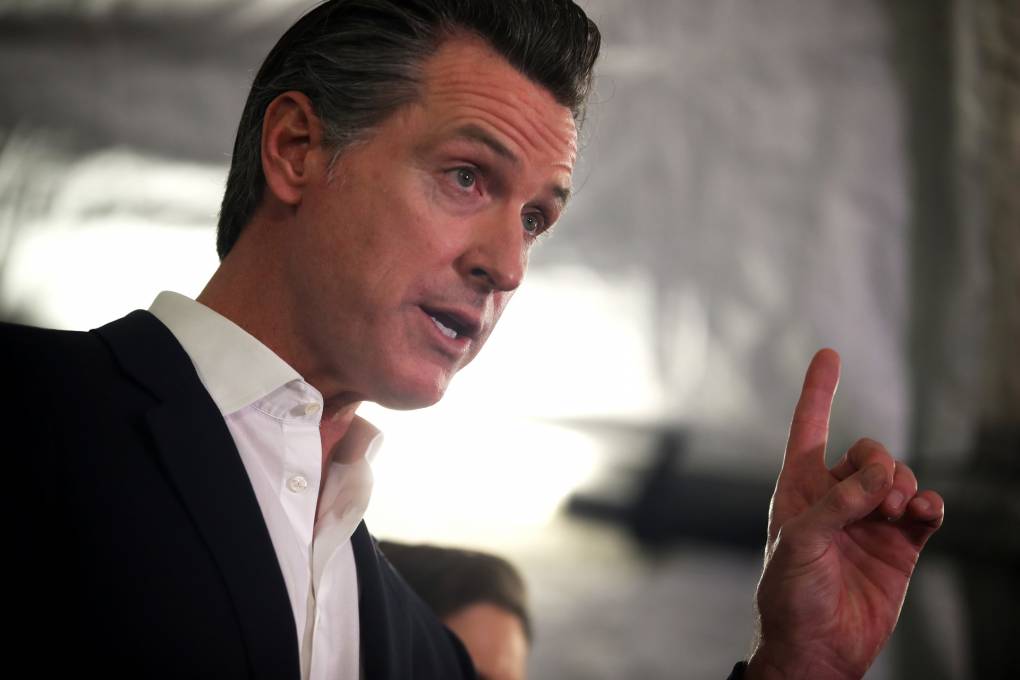
"caption": "California Gov. Gavin Newsom speaks during a news conference about the state's efforts on the homelessness crisis on Jan. 16, 2020, in Oakland. Oakland Mayor Libby Schaaf joined Newsom to announce that Oakland will receive 15 unused FEMA trailers for the city to use as temporary housing and as mobile health and social services clinics for the homeless. Newsom signed an executive order on Jan. 8 to deploy 100 trailers and crisis response teams to areas in need across the state.",
"credit": "Justin Sullivan/Getty Images",
"altTag": null,
"description": null,
"imgSizes": {
"medium": {
"file": "https://cdn.kqed.org/wp-content/uploads/sites/35/2021/01/RS46512_GettyImages-1199995830-qut-800x533.jpg",
"width": 800,
"height": 533,
"mimeType": "image/jpeg"
},
"large": {
"file": "https://cdn.kqed.org/wp-content/uploads/sites/35/2021/01/RS46512_GettyImages-1199995830-qut-1020x680.jpg",
"width": 1020,
"height": 680,
"mimeType": "image/jpeg"
},
"thumbnail": {
"file": "https://cdn.kqed.org/wp-content/uploads/sites/35/2021/01/RS46512_GettyImages-1199995830-qut-160x107.jpg",
"width": 160,
"height": 107,
"mimeType": "image/jpeg"
},
"medium_large": {
"file": "https://cdn.kqed.org/wp-content/uploads/sites/35/2021/01/RS46512_GettyImages-1199995830-qut-768x512.jpg",
"width": 768,
"height": 512,
"mimeType": "image/jpeg"
},
"1536x1536": {
"file": "https://cdn.kqed.org/wp-content/uploads/sites/35/2021/01/RS46512_GettyImages-1199995830-qut-1536x1024.jpg",
"width": 1536,
"height": 1024,
"mimeType": "image/jpeg"
},
"post-thumbnail": {
"file": "https://cdn.kqed.org/wp-content/uploads/sites/35/2021/01/RS46512_GettyImages-1199995830-qut-672x372.jpg",
"width": 672,
"height": 372,
"mimeType": "image/jpeg"
},
"twentyfourteen-full-width": {
"file": "https://cdn.kqed.org/wp-content/uploads/sites/35/2021/01/RS46512_GettyImages-1199995830-qut-1038x576.jpg",
"width": 1038,
"height": 576,
"mimeType": "image/jpeg"
},
"kqedFullSize": {
"file": "https://cdn.kqed.org/wp-content/uploads/sites/35/2021/01/RS46512_GettyImages-1199995830-qut.jpg",
"width": 1920,
"height": 1280
}
},
"isLoading": false,
"fetchFailed": false
},
"science_1971670": {
"type": "attachments",
"id": "science_1971670",
"meta": {
"index": "attachments_1716263798",
"site": "science",
"id": "1971670",
"found": true
},
"parent": 1971666,
"imgSizes": {
"twentyfourteen-full-width": {
"file": "https://ww2.kqed.org/app/uploads/sites/35/2020/12/GettyImages-1008031442-1038x576.jpg",
"width": 1038,
"mimeType": "image/jpeg",
"height": 576
},
"thumbnail": {
"file": "https://ww2.kqed.org/app/uploads/sites/35/2020/12/GettyImages-1008031442-160x113.jpg",
"width": 160,
"mimeType": "image/jpeg",
"height": 113
},
"post-thumbnail": {
"file": "https://ww2.kqed.org/app/uploads/sites/35/2020/12/GettyImages-1008031442-672x372.jpg",
"width": 672,
"mimeType": "image/jpeg",
"height": 372
},
"kqedFullSize": {
"file": "https://ww2.kqed.org/app/uploads/sites/35/2020/12/GettyImages-1008031442-scaled.jpg",
"width": 2560,
"height": 1801
},
"2048x2048": {
"file": "https://ww2.kqed.org/app/uploads/sites/35/2020/12/GettyImages-1008031442-2048x1441.jpg",
"width": 2048,
"mimeType": "image/jpeg",
"height": 1441
},
"large": {
"file": "https://ww2.kqed.org/app/uploads/sites/35/2020/12/GettyImages-1008031442-1020x718.jpg",
"width": 1020,
"mimeType": "image/jpeg",
"height": 718
},
"1536x1536": {
"file": "https://ww2.kqed.org/app/uploads/sites/35/2020/12/GettyImages-1008031442-1536x1081.jpg",
"width": 1536,
"mimeType": "image/jpeg",
"height": 1081
},
"full-width": {
"file": "https://ww2.kqed.org/app/uploads/sites/35/2020/12/GettyImages-1008031442-1920x1351.jpg",
"width": 1920,
"mimeType": "image/jpeg",
"height": 1351
},
"medium": {
"file": "https://ww2.kqed.org/app/uploads/sites/35/2020/12/GettyImages-1008031442-800x563.jpg",
"width": 800,
"mimeType": "image/jpeg",
"height": 563
},
"medium_large": {
"file": "https://ww2.kqed.org/app/uploads/sites/35/2020/12/GettyImages-1008031442-768x540.jpg",
"width": 768,
"mimeType": "image/jpeg",
"height": 540
}
},
"publishDate": 1607714488,
"modified": 1607738706,
"caption": "A burnt out boat sits at a marina on Whiskeytown Lake after damage from the Carr Fire near Redding, Calif., on July 30, 2018. ",
"description": "TOPSHOT - A burnt out boat sits at a marina on Whiskeytown Lake after damage from the Carr fire near Redding, California, on July 30, 2018. - Thousands of firefighters in California made some progress against several large-scale blazes that have turned close to 200,000 acres (80,940 hectares) into an ashen wasteland, destroyed expensive homes, and killed eight fire personnel and civilians in the most populous US state. (Photo by Mark RALSTON / AFP) (Photo credit should read MARK RALSTON/AFP via Getty Images)",
"title": "TOPSHOT-US-FIRE-CALIFORNIA",
"credit": "Mark Ralston/AFP via Getty Images",
"status": "inherit",
"altTag": null,
"isLoading": false,
"fetchFailed": false
},
"science_1971568": {
"type": "attachments",
"id": "science_1971568",
"meta": {
"index": "attachments_1716263798",
"site": "science",
"id": "1971568",
"found": true
},
"parent": 1971567,
"imgSizes": {
"twentyfourteen-full-width": {
"file": "https://ww2.kqed.org/app/uploads/sites/35/2020/12/ABTN_405_Wildfires_TN_CT-1038x576.jpg",
"width": 1038,
"mimeType": "image/jpeg",
"height": 576
},
"thumbnail": {
"file": "https://ww2.kqed.org/app/uploads/sites/35/2020/12/ABTN_405_Wildfires_TN_CT-160x90.jpg",
"width": 160,
"mimeType": "image/jpeg",
"height": 90
},
"post-thumbnail": {
"file": "https://ww2.kqed.org/app/uploads/sites/35/2020/12/ABTN_405_Wildfires_TN_CT-672x372.jpg",
"width": 672,
"mimeType": "image/jpeg",
"height": 372
},
"kqedFullSize": {
"file": "https://ww2.kqed.org/app/uploads/sites/35/2020/12/ABTN_405_Wildfires_TN_CT.jpg",
"width": 1920,
"height": 1080
},
"large": {
"file": "https://ww2.kqed.org/app/uploads/sites/35/2020/12/ABTN_405_Wildfires_TN_CT-1020x574.jpg",
"width": 1020,
"mimeType": "image/jpeg",
"height": 574
},
"1536x1536": {
"file": "https://ww2.kqed.org/app/uploads/sites/35/2020/12/ABTN_405_Wildfires_TN_CT-1536x864.jpg",
"width": 1536,
"mimeType": "image/jpeg",
"height": 864
},
"medium": {
"file": "https://ww2.kqed.org/app/uploads/sites/35/2020/12/ABTN_405_Wildfires_TN_CT-800x450.jpg",
"width": 800,
"mimeType": "image/jpeg",
"height": 450
},
"medium_large": {
"file": "https://ww2.kqed.org/app/uploads/sites/35/2020/12/ABTN_405_Wildfires_TN_CT-768x432.jpg",
"width": 768,
"mimeType": "image/jpeg",
"height": 432
}
},
"publishDate": 1607540790,
"modified": 1607540829,
"caption": "Should We Fight Wildfires With ... More Fire?",
"description": "Should We Fight Wildfires With ... More Fire?",
"title": "ABTN_405_Wildfires_TN_CT",
"credit": "KQED/Above The Noise",
"status": "inherit",
"altTag": "above the noise wildfires",
"isLoading": false,
"fetchFailed": false
},
"science_1971508": {
"type": "attachments",
"id": "science_1971508",
"meta": {
"index": "attachments_1716263798",
"site": "science",
"id": "1971508",
"found": true
},
"parent": 1971472,
"imgSizes": {
"thumbnail": {
"file": "https://ww2.kqed.org/app/uploads/sites/35/2020/12/DroughtOutlook-West-crop-160x114.png",
"width": 160,
"mimeType": "image/png",
"height": 114
},
"post-thumbnail": {
"file": "https://ww2.kqed.org/app/uploads/sites/35/2020/12/DroughtOutlook-West-crop-625x372.png",
"width": 625,
"mimeType": "image/png",
"height": 372
},
"kqedFullSize": {
"file": "https://ww2.kqed.org/app/uploads/sites/35/2020/12/DroughtOutlook-West-crop.png",
"width": 625,
"height": 447
}
},
"publishDate": 1607435196,
"modified": 1607457205,
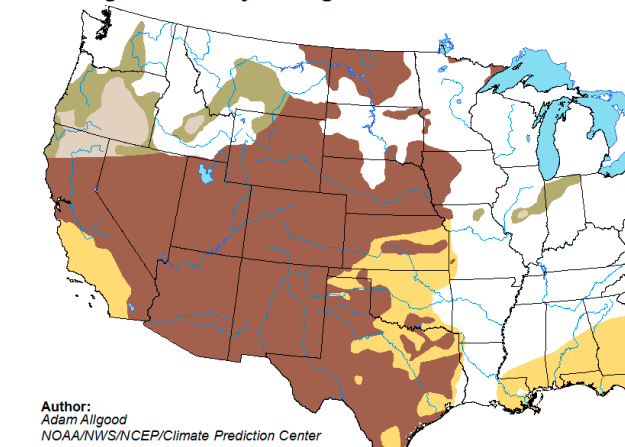
"caption": "Forecasters expect dry conditions to persist in California and spread eastward.",
"description": "Forecasters expect dry conditions to persist in Calif. and spread eastward.",
"title": "DroughtOutlook-West-crop",
"credit": null,
"status": "inherit",
"altTag": "Map crop: US Drought Outlook",
"isLoading": false,
"fetchFailed": false
},
"science_1971464": {
"type": "attachments",
"id": "science_1971464",
"meta": {
"index": "attachments_1716263798",
"site": "science",
"id": "1971464",
"found": true
},
"parent": 1971444,
"imgSizes": {
"twentyfourteen-full-width": {
"file": "https://ww2.kqed.org/app/uploads/sites/35/2020/12/RS46246_GettyImages-1008050668-qut-1038x576.jpg",
"width": 1038,
"mimeType": "image/jpeg",
"height": 576
},
"thumbnail": {
"file": "https://ww2.kqed.org/app/uploads/sites/35/2020/12/RS46246_GettyImages-1008050668-qut-160x107.jpg",
"width": 160,
"mimeType": "image/jpeg",
"height": 107
},
"post-thumbnail": {
"file": "https://ww2.kqed.org/app/uploads/sites/35/2020/12/RS46246_GettyImages-1008050668-qut-672x372.jpg",
"width": 672,
"mimeType": "image/jpeg",
"height": 372
},
"kqedFullSize": {
"file": "https://ww2.kqed.org/app/uploads/sites/35/2020/12/RS46246_GettyImages-1008050668-qut.jpg",
"width": 1920,
"height": 1280
},
"large": {
"file": "https://ww2.kqed.org/app/uploads/sites/35/2020/12/RS46246_GettyImages-1008050668-qut-1020x680.jpg",
"width": 1020,
"mimeType": "image/jpeg",
"height": 680
},
"1536x1536": {
"file": "https://ww2.kqed.org/app/uploads/sites/35/2020/12/RS46246_GettyImages-1008050668-qut-1536x1024.jpg",
"width": 1536,
"mimeType": "image/jpeg",
"height": 1024
},
"medium": {
"file": "https://ww2.kqed.org/app/uploads/sites/35/2020/12/RS46246_GettyImages-1008050668-qut-800x533.jpg",
"width": 800,
"mimeType": "image/jpeg",
"height": 533
},
"medium_large": {
"file": "https://ww2.kqed.org/app/uploads/sites/35/2020/12/RS46246_GettyImages-1008050668-qut-768x512.jpg",
"width": 768,
"mimeType": "image/jpeg",
"height": 512
}
},
"publishDate": 1607372949,
"modified": 1607399928,
"caption": "Forest burns in the Carr Fire on July 30, 2018, west of Redding, California. ",
"description": null,
"title": "Death Toll Rises To 6 As Redding Area Wildfire Spreads To 90,000 Acres",
"credit": "Terray Sylvester/Getty Images",
"status": "inherit",
"altTag": null,
"isLoading": false,
"fetchFailed": false
},
"science_1971016": {
"type": "attachments",
"id": "science_1971016",
"meta": {
"index": "attachments_1716263798",
"site": "science",
"id": "1971016",
"found": true
},
"parent": 1970926,
"imgSizes": {
"twentyfourteen-full-width": {
"file": "https://ww2.kqed.org/app/uploads/sites/35/2029/11/OrangeSkySF-1020x576.jpg",
"width": 1020,
"mimeType": "image/jpeg",
"height": 576
},
"thumbnail": {
"file": "https://ww2.kqed.org/app/uploads/sites/35/2029/11/OrangeSkySF-160x107.jpg",
"width": 160,
"mimeType": "image/jpeg",
"height": 107
},
"post-thumbnail": {
"file": "https://ww2.kqed.org/app/uploads/sites/35/2029/11/OrangeSkySF-672x372.jpg",
"width": 672,
"mimeType": "image/jpeg",
"height": 372
},
"kqedFullSize": {
"file": "https://ww2.kqed.org/app/uploads/sites/35/2029/11/OrangeSkySF.jpg",
"width": 1020,
"height": 680
},
"medium": {
"file": "https://ww2.kqed.org/app/uploads/sites/35/2029/11/OrangeSkySF-800x533.jpg",
"width": 800,
"mimeType": "image/jpeg",
"height": 533
},
"medium_large": {
"file": "https://ww2.kqed.org/app/uploads/sites/35/2029/11/OrangeSkySF-768x512.jpg",
"width": 768,
"mimeType": "image/jpeg",
"height": 512
}
},
"publishDate": 1605220693,
"modified": 1605229218,
"caption": "A view of the San Francisco skyline from Dolores Park in San Francisco on Sept. 9, 2020. Smoke in the atmosphere gave the sky an orange tint.",
"description": null,
"title": "OrangeSkySF",
"credit": "Beth LaBerge/KQED",
"status": "inherit",
"isLoading": false,
"fetchFailed": false
},
"science_1970936": {
"type": "attachments",
"id": "science_1970936",
"meta": {
"index": "attachments_1716263798",
"site": "science",
"id": "1970936",
"found": true
},
"parent": 1970910,
"imgSizes": {
"twentyfourteen-full-width": {
"file": "https://ww2.kqed.org/app/uploads/sites/35/2029/11/oregonfires_amo_2020252_lrg-1038x576.jpg",
"width": 1038,
"mimeType": "image/jpeg",
"height": 576
},
"thumbnail": {
"file": "https://ww2.kqed.org/app/uploads/sites/35/2029/11/oregonfires_amo_2020252_lrg-160x154.jpg",
"width": 160,
"mimeType": "image/jpeg",
"height": 154
},
"post-thumbnail": {
"file": "https://ww2.kqed.org/app/uploads/sites/35/2029/11/oregonfires_amo_2020252_lrg-672x372.jpg",
"width": 672,
"mimeType": "image/jpeg",
"height": 372
},
"kqedFullSize": {
"file": "https://ww2.kqed.org/app/uploads/sites/35/2029/11/oregonfires_amo_2020252_lrg-scaled.jpg",
"width": 2560,
"height": 2466
},
"2048x2048": {
"file": "https://ww2.kqed.org/app/uploads/sites/35/2029/11/oregonfires_amo_2020252_lrg-2048x1972.jpg",
"width": 2048,
"mimeType": "image/jpeg",
"height": 1972
},
"large": {
"file": "https://ww2.kqed.org/app/uploads/sites/35/2029/11/oregonfires_amo_2020252_lrg-1020x982.jpg",
"width": 1020,
"mimeType": "image/jpeg",
"height": 982
},
"1536x1536": {
"file": "https://ww2.kqed.org/app/uploads/sites/35/2029/11/oregonfires_amo_2020252_lrg-1536x1479.jpg",
"width": 1536,
"mimeType": "image/jpeg",
"height": 1479
},
"full-width": {
"file": "https://ww2.kqed.org/app/uploads/sites/35/2029/11/oregonfires_amo_2020252_lrg-1920x1849.jpg",
"width": 1920,
"mimeType": "image/jpeg",
"height": 1849
},
"medium": {
"file": "https://ww2.kqed.org/app/uploads/sites/35/2029/11/oregonfires_amo_2020252_lrg-800x770.jpg",
"width": 800,
"mimeType": "image/jpeg",
"height": 770
},
"medium_large": {
"file": "https://ww2.kqed.org/app/uploads/sites/35/2029/11/oregonfires_amo_2020252_lrg-768x740.jpg",
"width": 768,
"mimeType": "image/jpeg",
"height": 740
}
},
"publishDate": 1605026632,
"modified": 1605056149,
"caption": "As intense fires raged up and down the Pacific coast, NASA’s Aqua satellite captured this natural color image of thick smoke plumes streaming west on Sept. 8, 2020.",
"description": null,
"title": "oregonfires_amo_2020252_lrg",
"credit": "NASA Earth Observatory image by Lauren Dauphin, using MODIS data from NASA EOSDIS/LANCE and GIBS/Worldview. ",
"status": "inherit",
"isLoading": false,
"fetchFailed": false
},
"science_1970744": {
"type": "attachments",
"id": "science_1970744",
"meta": {
"index": "attachments_1716263798",
"site": "science",
"id": "1970744",
"found": true
},
"parent": 1970742,
"imgSizes": {
"twentyfourteen-full-width": {
"file": "https://ww2.kqed.org/app/uploads/sites/35/2020/10/GettyImages-1228812723-1038x576.jpg",
"width": 1038,
"mimeType": "image/jpeg",
"height": 576
},
"thumbnail": {
"file": "https://ww2.kqed.org/app/uploads/sites/35/2020/10/GettyImages-1228812723-160x107.jpg",
"width": 160,
"mimeType": "image/jpeg",
"height": 107
},
"post-thumbnail": {
"file": "https://ww2.kqed.org/app/uploads/sites/35/2020/10/GettyImages-1228812723-672x372.jpg",
"width": 672,
"mimeType": "image/jpeg",
"height": 372
},
"kqedFullSize": {
"file": "https://ww2.kqed.org/app/uploads/sites/35/2020/10/GettyImages-1228812723-scaled.jpg",
"width": 2560,
"height": 1707
},
"2048x2048": {
"file": "https://ww2.kqed.org/app/uploads/sites/35/2020/10/GettyImages-1228812723-2048x1366.jpg",
"width": 2048,
"mimeType": "image/jpeg",
"height": 1366
},
"large": {
"file": "https://ww2.kqed.org/app/uploads/sites/35/2020/10/GettyImages-1228812723-1020x680.jpg",
"width": 1020,
"mimeType": "image/jpeg",
"height": 680
},
"1536x1536": {
"file": "https://ww2.kqed.org/app/uploads/sites/35/2020/10/GettyImages-1228812723-1536x1024.jpg",
"width": 1536,
"mimeType": "image/jpeg",
"height": 1024
},
"full-width": {
"file": "https://ww2.kqed.org/app/uploads/sites/35/2020/10/GettyImages-1228812723-1920x1280.jpg",
"width": 1920,
"mimeType": "image/jpeg",
"height": 1280
},
"medium": {
"file": "https://ww2.kqed.org/app/uploads/sites/35/2020/10/GettyImages-1228812723-800x534.jpg",
"width": 800,
"mimeType": "image/jpeg",
"height": 534
},
"medium_large": {
"file": "https://ww2.kqed.org/app/uploads/sites/35/2020/10/GettyImages-1228812723-768x512.jpg",
"width": 768,
"mimeType": "image/jpeg",
"height": 512
}
},
"publishDate": 1603943924,
"modified": 1603990408,
"caption": "Smoke from the Glass Fire hangs heavy outside of Calistoga in Napa Valley on Sept. 30, 2020. State leaders can count the cost of fighting fires, but it's hard to know what smoke costs in illnesses and deaths.",
"description": "Smoke from the Glass Fire hangs heavy outside of Calistoga in Napa Valley on September 30, 2020. State leaders can count the cost of fighting fires, but it's hard to know what smoke costs in illnesses and deaths.",
"title": "wildfire smoke",
"credit": "Samuel Corum/AFP via Getty Images",
"status": "inherit",
"isLoading": false,
"fetchFailed": false
},
"science_1970689": {
"type": "attachments",
"id": "science_1970689",
"meta": {
"index": "attachments_1716263798",
"site": "science",
"id": "1970689",
"found": true
},
"parent": 1970688,
"imgSizes": {
"thumbnail": {
"file": "https://ww2.kqed.org/app/uploads/sites/35/2020/10/DSC07654-1-160x95.jpg",
"width": 160,
"mimeType": "image/jpeg",
"height": 95
},
"post-thumbnail": {
"file": "https://ww2.kqed.org/app/uploads/sites/35/2020/10/DSC07654-1-672x372.jpg",
"width": 672,
"mimeType": "image/jpeg",
"height": 372
},
"kqedFullSize": {
"file": "https://ww2.kqed.org/app/uploads/sites/35/2020/10/DSC07654-1.jpg",
"width": 924,
"height": 547
},
"medium": {
"file": "https://ww2.kqed.org/app/uploads/sites/35/2020/10/DSC07654-1-800x474.jpg",
"width": 800,
"mimeType": "image/jpeg",
"height": 474
},
"medium_large": {
"file": "https://ww2.kqed.org/app/uploads/sites/35/2020/10/DSC07654-1-768x455.jpg",
"width": 768,
"mimeType": "image/jpeg",
"height": 455
}
},
"publishDate": 1603733405,
"modified": 1603821996,
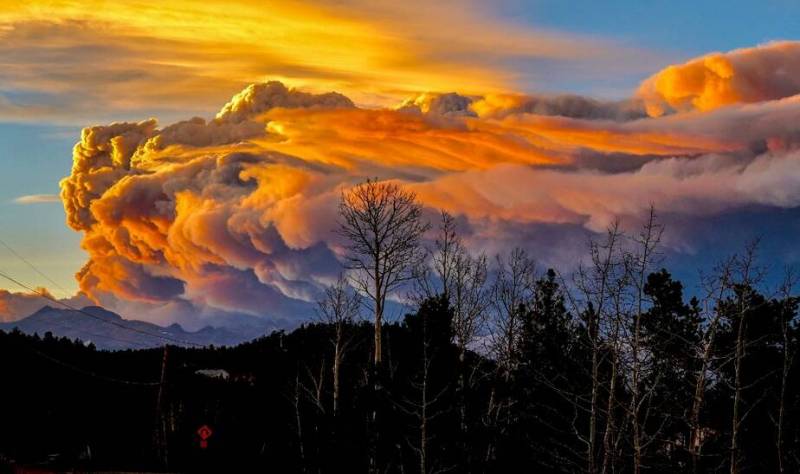
"caption": "The smoke wave and pyrocumulus clouds from the East Troublesome Fire on the Front Range of the Colorado Rocky Mountains on Oct. 21, 2020. The prominent peak on the left is Bald Mountain at the south end of Indian Peaks Wilderness. ",
"description": null,
"title": "DSC07654 (1)",
"credit": "Amanda Windischmann/InsideClimate News",
"status": "inherit",
"isLoading": false,
"fetchFailed": false
},
"science_1970424": {
"type": "attachments",
"id": "science_1970424",
"meta": {
"index": "attachments_1716263798",
"site": "science",
"id": "1970424",
"found": true
},
"parent": 1970419,
"imgSizes": {
"twentyfourteen-full-width": {
"file": "https://ww2.kqed.org/app/uploads/sites/35/2020/10/California-Trump-fires-aid-1038x576.jpg",
"width": 1038,
"mimeType": "image/jpeg",
"height": 576
},
"thumbnail": {
"file": "https://ww2.kqed.org/app/uploads/sites/35/2020/10/California-Trump-fires-aid-160x108.jpg",
"width": 160,
"mimeType": "image/jpeg",
"height": 108
},
"post-thumbnail": {
"file": "https://ww2.kqed.org/app/uploads/sites/35/2020/10/California-Trump-fires-aid-672x372.jpg",
"width": 672,
"mimeType": "image/jpeg",
"height": 372
},
"kqedFullSize": {
"file": "https://ww2.kqed.org/app/uploads/sites/35/2020/10/California-Trump-fires-aid-scaled.jpg",
"width": 2560,
"height": 1732
},
"2048x2048": {
"file": "https://ww2.kqed.org/app/uploads/sites/35/2020/10/California-Trump-fires-aid-2048x1386.jpg",
"width": 2048,
"mimeType": "image/jpeg",
"height": 1386
},
"large": {
"file": "https://ww2.kqed.org/app/uploads/sites/35/2020/10/California-Trump-fires-aid-1020x690.jpg",
"width": 1020,
"mimeType": "image/jpeg",
"height": 690
},
"1536x1536": {
"file": "https://ww2.kqed.org/app/uploads/sites/35/2020/10/California-Trump-fires-aid-1536x1039.jpg",
"width": 1536,
"mimeType": "image/jpeg",
"height": 1039
},
"full-width": {
"file": "https://ww2.kqed.org/app/uploads/sites/35/2020/10/California-Trump-fires-aid-1920x1299.jpg",
"width": 1920,
"mimeType": "image/jpeg",
"height": 1299
},
"medium": {
"file": "https://ww2.kqed.org/app/uploads/sites/35/2020/10/California-Trump-fires-aid-800x541.jpg",
"width": 800,
"mimeType": "image/jpeg",
"height": 541
},
"medium_large": {
"file": "https://ww2.kqed.org/app/uploads/sites/35/2020/10/California-Trump-fires-aid-768x520.jpg",
"width": 768,
"mimeType": "image/jpeg",
"height": 520
}
},
"publishDate": 1602865704,
"modified": 1602877575,
"caption": "President Donald Trump looks on with California Gov. Jerry Brown and then-Lt. Gov. Gavin Newsom as they view damage from wildfires in Paradise, California, on Nov. 17, 2018.",
"description": null,
"title": "US-POLITICS-TRUMP-fires",
"credit": "Saul Loeb/AFP/Getty Images",
"status": "inherit",
"isLoading": false,
"fetchFailed": false
},
"science_1970228": {
"type": "attachments",
"id": "science_1970228",
"meta": {
"index": "attachments_1716263798",
"site": "science",
"id": "1970228",
"found": true
},
"parent": 1970227,
"imgSizes": {
"twentyfourteen-full-width": {
"file": "https://ww2.kqed.org/app/uploads/sites/35/2020/10/gettyimages-1228750358-677be24d835ce5ed3e0783f035ecc7928af8f638-1038x576.jpg",
"width": 1038,
"mimeType": "image/jpeg",
"height": 576
},
"thumbnail": {
"file": "https://ww2.kqed.org/app/uploads/sites/35/2020/10/gettyimages-1228750358-677be24d835ce5ed3e0783f035ecc7928af8f638-160x120.jpg",
"width": 160,
"mimeType": "image/jpeg",
"height": 120
},
"post-thumbnail": {
"file": "https://ww2.kqed.org/app/uploads/sites/35/2020/10/gettyimages-1228750358-677be24d835ce5ed3e0783f035ecc7928af8f638-672x372.jpg",
"width": 672,
"mimeType": "image/jpeg",
"height": 372
},
"kqedFullSize": {
"file": "https://ww2.kqed.org/app/uploads/sites/35/2020/10/gettyimages-1228750358-677be24d835ce5ed3e0783f035ecc7928af8f638.jpg",
"width": 1625,
"height": 1218
},
"large": {
"file": "https://ww2.kqed.org/app/uploads/sites/35/2020/10/gettyimages-1228750358-677be24d835ce5ed3e0783f035ecc7928af8f638-1020x765.jpg",
"width": 1020,
"mimeType": "image/jpeg",
"height": 765
},
"1536x1536": {
"file": "https://ww2.kqed.org/app/uploads/sites/35/2020/10/gettyimages-1228750358-677be24d835ce5ed3e0783f035ecc7928af8f638-1536x1151.jpg",
"width": 1536,
"mimeType": "image/jpeg",
"height": 1151
},
"medium": {
"file": "https://ww2.kqed.org/app/uploads/sites/35/2020/10/gettyimages-1228750358-677be24d835ce5ed3e0783f035ecc7928af8f638-800x600.jpg",
"width": 800,
"mimeType": "image/jpeg",
"height": 600
},
"medium_large": {
"file": "https://ww2.kqed.org/app/uploads/sites/35/2020/10/gettyimages-1228750358-677be24d835ce5ed3e0783f035ecc7928af8f638-768x576.jpg",
"width": 768,
"mimeType": "image/jpeg",
"height": 576
}
},
"publishDate": 1602263266,
"modified": 1602268052,
"caption": null,
"description": "A building burns during the Glass fire in St. Helena, Calif., on Sept. 27, 2020. The National Weather Service issued heat advisories and Cal Fire issued a red flag warning for high fire risk areas of California. A wildfire with a \"dangerous rate of spread\" broke out in Napa County between Calistoga and St. Helena overnight on Sept. 27, 2020, just as the Bay Area braces for extreme wildfire conditions. ",
"title": "Some of California's most destructive wildfires aren't among the state's largest, so fire scientists advise focusing on homes instead of overall acreage.",
"credit": "Josh Edelson/AFP via Getty Images",
"status": "inherit",
"isLoading": false,
"fetchFailed": false
},
"science_1970009": {
"type": "attachments",
"id": "science_1970009",
"meta": {
"index": "attachments_1716263798",
"site": "science",
"id": "1970009",
"found": true
},
"parent": 1970006,
"imgSizes": {
"twentyfourteen-full-width": {
"file": "https://ww2.kqed.org/app/uploads/sites/35/2020/10/Image-from-iOS-1038x576.jpg",
"width": 1038,
"mimeType": "image/jpeg",
"height": 576
},
"thumbnail": {
"file": "https://ww2.kqed.org/app/uploads/sites/35/2020/10/Image-from-iOS-160x107.jpg",
"width": 160,
"mimeType": "image/jpeg",
"height": 107
},
"post-thumbnail": {
"file": "https://ww2.kqed.org/app/uploads/sites/35/2020/10/Image-from-iOS-672x372.jpg",
"width": 672,
"mimeType": "image/jpeg",
"height": 372
},
"kqedFullSize": {
"file": "https://ww2.kqed.org/app/uploads/sites/35/2020/10/Image-from-iOS.jpg",
"width": 1620,
"height": 1080
},
"large": {
"file": "https://ww2.kqed.org/app/uploads/sites/35/2020/10/Image-from-iOS-1020x680.jpg",
"width": 1020,
"mimeType": "image/jpeg",
"height": 680
},
"1536x1536": {
"file": "https://ww2.kqed.org/app/uploads/sites/35/2020/10/Image-from-iOS-1536x1024.jpg",
"width": 1536,
"mimeType": "image/jpeg",
"height": 1024
},
"medium": {
"file": "https://ww2.kqed.org/app/uploads/sites/35/2020/10/Image-from-iOS-800x533.jpg",
"width": 800,
"mimeType": "image/jpeg",
"height": 533
},
"medium_large": {
"file": "https://ww2.kqed.org/app/uploads/sites/35/2020/10/Image-from-iOS-768x512.jpg",
"width": 768,
"mimeType": "image/jpeg",
"height": 512
}
},
"publishDate": 1601583061,
"modified": 1601583108,
"caption": "A helicopter drops water on a ridge burning due to the Glass Fire, near Old Lawley Toll Road north of Calistoga on Sept. 30, 2020.",
"description": null,
"title": "Image from iOS",
"credit": "Beth LaBerge/KQED",
"status": "inherit",
"isLoading": false,
"fetchFailed": false
}
},
"audioPlayerReducer": {
"postId": "stream_live",
"isPaused": true,
"isPlaying": false,
"pfsActive": false,
"pledgeModalIsOpen": true,
"playerDrawerIsOpen": false,
"liveAudioPlayStartedAt": 0,
"liveAudioPlayContext": ""
},
"authorsReducer": {
"byline_science_1970688": {
"type": "authors",
"id": "byline_science_1970688",
"meta": {
"override": true
},
"slug": "byline_science_1970688",
"name": "Judy Fahys \u003cbr />InsideClimate News",
"isLoading": false
},
"byline_science_1970419": {
"type": "authors",
"id": "byline_science_1970419",
"meta": {
"override": true
},
"slug": "byline_science_1970419",
"name": "Associated Press and KQED",
"isLoading": false
},
"byline_science_1970227": {
"type": "authors",
"id": "byline_science_1970227",
"meta": {
"override": true
},
"slug": "byline_science_1970227",
"name": "Lauren Sommer \u003cbr />NPR\u003cbr>",
"isLoading": false
},
"cmiller": {
"type": "authors",
"id": "221",
"meta": {
"index": "authors_1716337520",
"id": "221",
"found": true
},
"name": "Craig Miller",
"firstName": "Craig",
"lastName": "Miller",
"slug": "cmiller",
"email": "craig@voxterra.net",
"display_author_email": false,
"staff_mastheads": [
"science"
],
"title": "Editor Emeritus, Science",
"bio": "Craig is a former KQED Science editor, specializing in weather, climate, water & energy issues, with a little seismology thrown in just to shake things up. Prior to that, he launched and led the station's award-winning multimedia project, Climate Watch. Craig is also an accomplished writer/producer of television documentaries, with a focus on natural resource issues.",
"avatar": "https://secure.gravatar.com/avatar/b91661df645e001a9cafe0861fa685f9?s=600&d=blank&r=g",
"twitter": "voxterra",
"facebook": null,
"instagram": null,
"linkedin": null,
"sites": [
{
"site": "news",
"roles": [
"author"
]
},
{
"site": "futureofyou",
"roles": [
"editor"
]
},
{
"site": "stateofhealth",
"roles": [
"author"
]
},
{
"site": "science",
"roles": [
"editor"
]
},
{
"site": "quest",
"roles": [
"editor"
]
}
],
"headData": {
"title": "Craig Miller | KQED",
"description": "Editor Emeritus, Science",
"ogImgSrc": "https://secure.gravatar.com/avatar/b91661df645e001a9cafe0861fa685f9?s=600&d=blank&r=g",
"twImgSrc": "https://secure.gravatar.com/avatar/b91661df645e001a9cafe0861fa685f9?s=600&d=blank&r=g"
},
"isLoading": false,
"link": "/author/cmiller"
},
"jennyoh": {
"type": "authors",
"id": "2100",
"meta": {
"index": "authors_1716337520",
"id": "2100",
"found": true
},
"name": "Jenny Oh",
"firstName": "Jenny",
"lastName": "Oh",
"slug": "jennyoh",
"email": "joh@kqed.org",
"display_author_email": false,
"staff_mastheads": [],
"title": "Audience Engagement Producer, Deep Look",
"bio": "Jenny is an Emmy Award-winning producer and is currently the Audience Engagement Producer for KQED Science's \u003cem>Deep Look\u003c/em> online video series. She was also a long-time contributor to Bay Area Bites, KQED's popular food blog. Jenny graduated with honors from New York University’s Tisch School of the Arts Film and Television program and has worked for WNET/PBS, The Learning Channel, Sundance Channel, HBO and the University of California.",
"avatar": "https://secure.gravatar.com/avatar/7ddda0ed657e46dbe66083f569967752?s=600&d=mm&r=g",
"twitter": null,
"facebook": null,
"instagram": null,
"linkedin": null,
"sites": [
{
"site": "arts",
"roles": []
},
{
"site": "pop",
"roles": []
},
{
"site": "about",
"roles": []
},
{
"site": "bayareabites",
"roles": []
},
{
"site": "science",
"roles": []
},
{
"site": "education",
"roles": []
},
{
"site": "quest",
"roles": []
},
{
"site": "food",
"roles": []
}
],
"headData": {
"title": "Jenny Oh | KQED",
"description": "Audience Engagement Producer, Deep Look",
"ogImgSrc": "https://secure.gravatar.com/avatar/7ddda0ed657e46dbe66083f569967752?s=600&d=mm&r=g",
"twImgSrc": "https://secure.gravatar.com/avatar/7ddda0ed657e46dbe66083f569967752?s=600&d=mm&r=g"
},
"isLoading": false,
"link": "/author/jennyoh"
},
"kqedscience": {
"type": "authors",
"id": "6387",
"meta": {
"index": "authors_1716337520",
"id": "6387",
"found": true
},
"name": "KQED Science",
"firstName": "KQED",
"lastName": "Science",
"slug": "kqedscience",
"email": "kqedscience@gmail.com",
"display_author_email": false,
"staff_mastheads": [],
"title": null,
"bio": "KQED Science brings you award-winning science and environment coverage from the Bay Area and beyond by the flagship Northern California PBS and NPR affiliate.",
"avatar": "https://secure.gravatar.com/avatar/5a295ff49cf82a8c0f30937d3f788b2f?s=600&d=blank&r=g",
"twitter": null,
"facebook": null,
"instagram": null,
"linkedin": null,
"sites": [
{
"site": "science",
"roles": [
"contributor"
]
},
{
"site": "quest",
"roles": [
"editor"
]
},
{
"site": "food",
"roles": [
"contributor"
]
}
],
"headData": {
"title": "KQED Science | KQED",
"description": null,
"ogImgSrc": "https://secure.gravatar.com/avatar/5a295ff49cf82a8c0f30937d3f788b2f?s=600&d=blank&r=g",
"twImgSrc": "https://secure.gravatar.com/avatar/5a295ff49cf82a8c0f30937d3f788b2f?s=600&d=blank&r=g"
},
"isLoading": false,
"link": "/author/kqedscience"
},
"dventon": {
"type": "authors",
"id": "11088",
"meta": {
"index": "authors_1716337520",
"id": "11088",
"found": true
},
"name": "Danielle Venton",
"firstName": "Danielle",
"lastName": "Venton",
"slug": "dventon",
"email": "dventon@kqed.org",
"display_author_email": true,
"staff_mastheads": [
"science"
],
"title": "Science reporter",
"bio": "Danielle Venton is a reporter for KQED Science. She covers wildfires, space and oceans (though she is prone to sea sickness).\r\n\r\nBefore joining KQED in 2015, Danielle was a staff reporter at KRCB in Sonoma County and a freelancer. She studied science communication at UC Santa Cruz and formerly worked at CERN in Geneva, Switzerland where she wrote about computing. She lives in Sonoma County and enjoys backpacking.",
"avatar": "https://secure.gravatar.com/avatar/37b292b5c40c8d93959c4f48d73b5286f41b7abd8588277e941905a3ed4c801c?s=600&d=blank&r=g",
"twitter": "DanielleVenton",
"bluesky": null,
"facebook": null,
"instagram": null,
"linkedin": null,
"sites": [
{
"site": "arts",
"roles": [
"contributor"
]
},
{
"site": "news",
"roles": [
"editor"
]
},
{
"site": "futureofyou",
"roles": [
"editor"
]
},
{
"site": "science",
"roles": [
"editor"
]
},
{
"site": "liveblog",
"roles": [
"contributor"
]
}
],
"headData": {
"title": "Danielle Venton | KQED",
"description": "Science reporter",
"ogImgSrc": "https://secure.gravatar.com/avatar/37b292b5c40c8d93959c4f48d73b5286f41b7abd8588277e941905a3ed4c801c?s=600&d=blank&r=g",
"twImgSrc": "https://secure.gravatar.com/avatar/37b292b5c40c8d93959c4f48d73b5286f41b7abd8588277e941905a3ed4c801c?s=600&d=blank&r=g"
},
"isLoading": false,
"link": "/author/dventon"
},
"lesleymcclurg": {
"type": "authors",
"id": "11229",
"meta": {
"index": "authors_1716337520",
"id": "11229",
"found": true
},
"name": "Lesley McClurg",
"firstName": "Lesley",
"lastName": "McClurg",
"slug": "lesleymcclurg",
"email": "lmcclurg@KQED.org",
"display_author_email": false,
"staff_mastheads": [
"news",
"science"
],
"title": "KQED Health Correspondent",
"bio": "Lesley McClurg is a health correspondent and fill-in host whose work is regularly rebroadcast on NPR and PBS programs. She’s earned multiple regional Emmy awards, a national and a regional Edward R. Murrow award, and was named Best Beat Reporter by the Association of Health Care Journalists. The Society of Professional Journalists has recognized her work several times, and the Society of Environmental Journalists spotlighted her coverage of California’s historic drought.\r\n\r\nBefore joining KQED in 2016, Lesley covered food and sustainability for Capital Public Radio, environmental issues for Colorado Public Radio, and reported for KUOW and KCTS 9 in Seattle. Away from the newsroom, she loves skiing with her daughter, mountain biking with her partner, and playing with Ollie, the family’s goldendoodle. On deadline, she runs almost entirely on chocolate chips.\r\n\r\n ",
"avatar": "https://secure.gravatar.com/avatar/bab49e972ea10c774fe0f5e29dba1722b158f7c0d58a360923d1389d380b2978?s=600&d=blank&r=g",
"twitter": "lesleywmcclurg",
"bluesky": null,
"facebook": null,
"instagram": null,
"linkedin": null,
"sites": [
{
"site": "arts",
"roles": [
"author"
]
},
{
"site": "news",
"roles": [
"editor"
]
},
{
"site": "futureofyou",
"roles": [
"editor"
]
},
{
"site": "stateofhealth",
"roles": [
"author"
]
},
{
"site": "science",
"roles": [
"editor"
]
},
{
"site": "quest",
"roles": [
"subscriber"
]
},
{
"site": "forum",
"roles": [
"administrator"
]
},
{
"site": "liveblog",
"roles": [
"author"
]
}
],
"headData": {
"title": "Lesley McClurg | KQED",
"description": "KQED Health Correspondent",
"ogImgSrc": "https://secure.gravatar.com/avatar/bab49e972ea10c774fe0f5e29dba1722b158f7c0d58a360923d1389d380b2978?s=600&d=blank&r=g",
"twImgSrc": "https://secure.gravatar.com/avatar/bab49e972ea10c774fe0f5e29dba1722b158f7c0d58a360923d1389d380b2978?s=600&d=blank&r=g"
},
"isLoading": false,
"link": "/author/lesleymcclurg"
},
"kevinstark": {
"type": "authors",
"id": "11608",
"meta": {
"index": "authors_1716337520",
"id": "11608",
"found": true
},
"name": "Kevin Stark",
"firstName": "Kevin",
"lastName": "Stark",
"slug": "kevinstark",
"email": "kstark@kqed.org",
"display_author_email": true,
"staff_mastheads": [
"science"
],
"title": "Senior Editor",
"bio": "Kevin is a senior editor for KQED Science, managing the station's health and climate desks. His journalism career began in the Pacific Northwest, and he later became a lead reporter for the San Francisco Public Press. His work has appeared in Pacific Standard magazine, the Energy News Network, the Center for Investigative Reporting's Reveal and WBEZ in Chicago. Kevin joined KQED in 2019, and has covered issues related to energy, wildfire, climate change and the environment.",
"avatar": "https://secure.gravatar.com/avatar/365aaa4b597d3a8374f67504ff0facd323d7906e8eb4be0a7efd2427408e802c?s=600&d=blank&r=g",
"twitter": "starkkev",
"bluesky": null,
"facebook": null,
"instagram": null,
"linkedin": null,
"sites": [
{
"site": "",
"roles": [
"editor"
]
},
{
"site": "news",
"roles": [
"editor"
]
},
{
"site": "science",
"roles": [
"administrator"
]
}
],
"headData": {
"title": "Kevin Stark | KQED",
"description": "Senior Editor",
"ogImgSrc": "https://secure.gravatar.com/avatar/365aaa4b597d3a8374f67504ff0facd323d7906e8eb4be0a7efd2427408e802c?s=600&d=blank&r=g",
"twImgSrc": "https://secure.gravatar.com/avatar/365aaa4b597d3a8374f67504ff0facd323d7906e8eb4be0a7efd2427408e802c?s=600&d=blank&r=g"
},
"isLoading": false,
"link": "/author/kevinstark"
}
},
"pagesReducer": {
"science_category_wildfires": {
"type": "terms",
"id": "science_3730",
"meta": {
"index": "terms_1716263798",
"site": "science",
"id": "3730",
"score": 12.461045
},
"featImg": null,
"name": "Wildfires",
"description": null,
"taxonomy": "category",
"headData": {
"twImgId": null,
"twTitle": null,
"ogTitle": null,
"ogImgId": null,
"twDescription": null,
"description": null,
"title": "Wildfires Archives | KQED Science",
"ogDescription": null
},
"ttid": 3730,
"slug": "wildfires",
"isLoading": false,
"title": "Wildfires",
"pageMeta": {
"site": "science",
"WpPageTemplate": "page-topic-editorial",
"currentPage": 8
},
"blocks": [
{
"blockName": "kqed/post-list",
"attrs": {
"layout": "cardArticle2",
"query": "posts/science?category=wildfires",
"seeMore": false,
"paginated": true,
"page": 8
}
},
{
"blockName": "kqed/ad"
}
]
}
},
"pfsSessionReducer": {},
"postsReducer": {
"stream_live": {
"type": "live",
"id": "stream_live",
"audioUrl": "https://streams.kqed.org/kqedradio",
"title": "Live Stream",
"excerpt": "Live Stream information currently unavailable.",
"link": "/radio",
"featImg": "",
"label": {
"name": "KQED Live",
"link": "/"
}
},
"stream_kqedNewscast": {
"type": "posts",
"id": "stream_kqedNewscast",
"audioUrl": "https://www.kqed.org/.stream/anon/radio/RDnews/newscast.mp3?_=1",
"title": "KQED Newscast",
"featImg": "",
"label": {
"name": "88.5 FM",
"link": "/"
}
},
"science_1972138": {
"type": "posts",
"id": "science_1972138",
"meta": {
"index": "posts_1716263798",
"site": "science",
"id": "1972138",
"score": null,
"sort": [
1610160450000
]
},
"parent": 0,
"labelTerm": {},
"blocks": [],
"publishDate": 1610160450,
"format": "standard",
"title": "Here's How Newsom's Proposing to Spend $4.1 Billion on the Climate and Environment",
"headTitle": "Here’s How Newsom’s Proposing to Spend $4.1 Billion on the Climate and Environment | KQED",
"content": "\u003cp class=\"p1\">The $227 billion budget proposed on Friday by Gov. Gavin Newsom includes $4.1 billion in spending on a suite of environmental initiatives meant to fight climate change, gird California against devastating wildfires, reduce smog, and bolster the adoption of clean vehicles on the state’s roads.\u003c/p>\n\u003cp>Given the pandemic-induced recession, the fact that California has so much to spend on the environment is remarkable, but the \u003ca href=\"https://www.kqed.org/science/1964349/newsom-proposes-huge-cuts-to-environmental-programs-in-latest-budget\" target=\"_blank\" rel=\"noopener noreferrer\">state is looking at a $15 billion surplus\u003c/a> thanks to a progressive tax structure that helped capture huge capital gains generated by a soaring stock market.\u003c/p>\n\u003cp>Only eight months ago, in May, Newsom was \u003ca href=\"https://www.kqed.org/science/1964349/newsom-proposes-huge-cuts-to-environmental-programs-in-latest-budget\">\u003cspan class=\"s1\">forced\u003c/span>\u003c/a> to at least temporarily abandon his biggest climate priorities in order help fill a $54.3 billion deficit.\u003cbr>\n\u003cspan class=\"s2\">\u003cbr>\n\u003c/span>But now the coffers are full enough for the governor to propose his biggest-ticket environmental expenditure, nearly $1.5 billion for the construction of charging stations and electric vehicle incentives in anticipation of a massive amount of new electric cars, trucks and other vehicles roaming state roads.\u003c/p>\n\u003cp>Newsom said he thinks the money could ensure California’s dominance as an EV marketplace. The proposed funding comes after his executive order last year to end the sale of new gasoline-powered cars in the state by the year 2035, a move Newsom says will slash planet-warming emissions by 35%.\u003c/p>\n\u003cp>“We want to accelerate our efforts on alternative fuel vehicles,” Newsom said Friday. “Remember, this is a climate move, not just an economic move, because at the end of the day, it’s about health. It’s about asthma. It’s about dirty air.”\u003c/p>\n\u003cp>[ad fullwidth]\u003c/p>\n\u003cp>The administration says the new spending will create jobs and reduce smog in heavily impacted areas of the state. Newsom wants to leverage private-sector investment to boost these efforts.\u003c/p>\n\u003cp class=\"p1\">“This is where the world is going,” he said. “You want to be big. You’ve got to be big in big things. Nothing bigger than low-carbon, green growth; nothing more impactful.”\u003c/p>\n\u003cp>https://twitter.com/Cal_OPR/status/1347641727662907393?s=20\u003c/p>\n\u003cp>Brian Nowicki, California climate policy director at the Center for Biological Diversity, applauded the investment in emissions-free vehicles, but he said the state “needs to make sure those investments are optimally applied to boost both economic and environmental equality in California’s most polluted and underserved communities.”\u003c/p>\n\u003cp>Newsom is also proposing $384 million to support agricultural programs that sequester carbon and fight climate change, and he wants to spend $300 million from the state’s general fund to pay for toxic waste cleanup in areas facing high public health risks.\u003c/p>\n\u003cp class=\"p1\">Kate Gordon, Newsom’s senior climate policy adviser, said during a press call that the budget “highlights our commitment for a carbon neutral, climate resilient and equitable future.”\u003c/p>\n\u003cp>\u003cstrong>Addressing Wildfires\u003c/strong>\u003c/p>\n\u003cp class=\"p1\">After a devastating wildfire year in which more than 9,000 blazes consumed more than 5 million acres of the state, the governor proposed a billion dollars in new spending on wildfire prevention.\u003c/p>\n\u003cp class=\"p1\">On the press call, Wade Crowfoot, California’s natural resources secretary, says the state is focusing resources on fostering ecological resilience to big fires, by reintroducing managed burns and thinning out forests.\u003c/p>\n\u003cp>“We see the growth of our catastrophic wildfires and climate change and realize that we cannot respond our way out of this crisis,” he said. “We have to do a lot more upfront to build our resilience … and find a way to use ecological fire on the land, and take a lot of actions to protect both our communities and our natural places.”\u003c/p>\n\u003cp class=\"p1\">As part of that plan, Newsom wants to spend $512 million on forest management, which would pay for prescribed fire, fire breaks, home hardening and direct investment in tribes to sustainably manage their land. \u003cspan class=\"s5\">Fuel breaks, strips of land that are altered as a preventative measure to help slow the spread of a fire, were credited with saving lives and homes during this past wildfire season.\u003c/span>\u003c/p>\n\u003cp class=\"p1\">The governor also wants to hire at least 30 more fire crews, with 15 members per crew, and purchase new air tankers, helicopters and equipment.\u003cspan class=\"Apple-converted-space\"> \u003c/span>\u003cspan class=\"s6\">\u003cbr>\n\u003c/span>\u003c/p>\n\u003cp class=\"p1\">State Sen. Bill Dodd, who represents several fire-prone counties, including Sonoma and Napa, said the new budget reflects the importance of investing in prevention.\u003c/p>\n\u003cp class=\"p1\">“The reality is we’re not able to fight these climate-driven fires anywhere near what our expectations were,” he said. “Our experience shows us that we have to do more on prevention. And I believe that this budget does that.” \u003cspan class=\"s4\">\u003cbr>\n\u003c/span>\u003c/p>\n\u003cp>\u003c/p>\n\u003cp class=\"p1\">Environmental groups such as the Save the Redwoods League applauded the proposed focus on prevention and proactive forest management, saying California’s coastal redwood and giant sequoia forests would benefit.\u003c/p>\n\n",
"stats": {
"hasVideo": false,
"hasChartOrMap": false,
"hasAudio": false,
"hasPolis": false,
"wordCount": 808,
"hasGoogleForm": false,
"hasGallery": false,
"hasHearkenModule": false,
"iframeSrcs": [],
"paragraphCount": 11
},
"modified": 1704846844,
"excerpt": "Gov. Gavin Newsom’s $227 billion budget proposal includes $4.1 billion for a suite of environmental initiatives meant to fight climate change, reduce smog, and gird against devastating wildfires.",
"headData": {
"twImgId": "",
"twTitle": "",
"ogTitle": "",
"ogImgId": "",
"twDescription": "",
"description": "Gov. Gavin Newsom’s $227 billion budget proposal includes $4.1 billion for a suite of environmental initiatives meant to fight climate change, reduce smog, and gird against devastating wildfires.",
"title": "Here's How Newsom's Proposing to Spend $4.1 Billion on the Climate and Environment | KQED",
"ogDescription": "",
"schema": {
"@context": "https://schema.org",
"@type": "Article",
"headline": "Here's How Newsom's Proposing to Spend $4.1 Billion on the Climate and Environment",
"datePublished": "2021-01-08T18:47:30-08:00",
"dateModified": "2024-01-09T16:34:04-08:00",
"image": "https://cdn.kqed.org/wp-content/uploads/2020/02/KQED-OG-Image@1x.png"
}
},
"guestAuthors": [],
"slug": "heres-how-newsoms-proposing-to-spend-4-1-billion-on-the-climate-and-environment",
"status": "publish",
"sticky": false,
"source": "Climate change",
"path": "/science/1972138/heres-how-newsoms-proposing-to-spend-4-1-billion-on-the-climate-and-environment",
"audioTrackLength": null,
"parsedContent": [
{
"type": "contentString",
"content": "\u003cdiv class=\"post-body\">\u003cp>\u003cp class=\"p1\">The $227 billion budget proposed on Friday by Gov. Gavin Newsom includes $4.1 billion in spending on a suite of environmental initiatives meant to fight climate change, gird California against devastating wildfires, reduce smog, and bolster the adoption of clean vehicles on the state’s roads.\u003c/p>\n\u003cp>Given the pandemic-induced recession, the fact that California has so much to spend on the environment is remarkable, but the \u003ca href=\"https://www.kqed.org/science/1964349/newsom-proposes-huge-cuts-to-environmental-programs-in-latest-budget\" target=\"_blank\" rel=\"noopener noreferrer\">state is looking at a $15 billion surplus\u003c/a> thanks to a progressive tax structure that helped capture huge capital gains generated by a soaring stock market.\u003c/p>\n\u003cp>Only eight months ago, in May, Newsom was \u003ca href=\"https://www.kqed.org/science/1964349/newsom-proposes-huge-cuts-to-environmental-programs-in-latest-budget\">\u003cspan class=\"s1\">forced\u003c/span>\u003c/a> to at least temporarily abandon his biggest climate priorities in order help fill a $54.3 billion deficit.\u003cbr>\n\u003cspan class=\"s2\">\u003cbr>\n\u003c/span>But now the coffers are full enough for the governor to propose his biggest-ticket environmental expenditure, nearly $1.5 billion for the construction of charging stations and electric vehicle incentives in anticipation of a massive amount of new electric cars, trucks and other vehicles roaming state roads.\u003c/p>\n\u003cp>Newsom said he thinks the money could ensure California’s dominance as an EV marketplace. The proposed funding comes after his executive order last year to end the sale of new gasoline-powered cars in the state by the year 2035, a move Newsom says will slash planet-warming emissions by 35%.\u003c/p>\n\u003cp>“We want to accelerate our efforts on alternative fuel vehicles,” Newsom said Friday. “Remember, this is a climate move, not just an economic move, because at the end of the day, it’s about health. It’s about asthma. It’s about dirty air.”\u003c/p>\n\u003cp>\u003c/p>\u003c/div>",
"attributes": {
"named": {},
"numeric": []
}
},
{
"type": "component",
"content": "",
"name": "ad",
"attributes": {
"named": {
"label": "fullwidth"
},
"numeric": [
"fullwidth"
]
}
},
{
"type": "contentString",
"content": "\u003cdiv class=\"post-body\">\u003cp>\u003c/p>\n\u003cp>The administration says the new spending will create jobs and reduce smog in heavily impacted areas of the state. Newsom wants to leverage private-sector investment to boost these efforts.\u003c/p>\n\u003cp class=\"p1\">“This is where the world is going,” he said. “You want to be big. You’ve got to be big in big things. Nothing bigger than low-carbon, green growth; nothing more impactful.”\u003c/p>\u003c/p>\u003c/div>",
"attributes": {
"named": {},
"numeric": []
}
},
{
"type": "component",
"content": "",
"name": "singleTwitterStatus",
"attributes": {
"named": {
"id": "1347641727662907393"
},
"numeric": []
}
},
{
"type": "contentString",
"content": "\u003cdiv class=\"post-body\">\u003cp>\n\u003cp>Brian Nowicki, California climate policy director at the Center for Biological Diversity, applauded the investment in emissions-free vehicles, but he said the state “needs to make sure those investments are optimally applied to boost both economic and environmental equality in California’s most polluted and underserved communities.”\u003c/p>\n\u003cp>Newsom is also proposing $384 million to support agricultural programs that sequester carbon and fight climate change, and he wants to spend $300 million from the state’s general fund to pay for toxic waste cleanup in areas facing high public health risks.\u003c/p>\n\u003cp class=\"p1\">Kate Gordon, Newsom’s senior climate policy adviser, said during a press call that the budget “highlights our commitment for a carbon neutral, climate resilient and equitable future.”\u003c/p>\n\u003cp>\u003cstrong>Addressing Wildfires\u003c/strong>\u003c/p>\n\u003cp class=\"p1\">After a devastating wildfire year in which more than 9,000 blazes consumed more than 5 million acres of the state, the governor proposed a billion dollars in new spending on wildfire prevention.\u003c/p>\n\u003cp class=\"p1\">On the press call, Wade Crowfoot, California’s natural resources secretary, says the state is focusing resources on fostering ecological resilience to big fires, by reintroducing managed burns and thinning out forests.\u003c/p>\n\u003cp>“We see the growth of our catastrophic wildfires and climate change and realize that we cannot respond our way out of this crisis,” he said. “We have to do a lot more upfront to build our resilience … and find a way to use ecological fire on the land, and take a lot of actions to protect both our communities and our natural places.”\u003c/p>\n\u003cp class=\"p1\">As part of that plan, Newsom wants to spend $512 million on forest management, which would pay for prescribed fire, fire breaks, home hardening and direct investment in tribes to sustainably manage their land. \u003cspan class=\"s5\">Fuel breaks, strips of land that are altered as a preventative measure to help slow the spread of a fire, were credited with saving lives and homes during this past wildfire season.\u003c/span>\u003c/p>\n\u003cp class=\"p1\">The governor also wants to hire at least 30 more fire crews, with 15 members per crew, and purchase new air tankers, helicopters and equipment.\u003cspan class=\"Apple-converted-space\"> \u003c/span>\u003cspan class=\"s6\">\u003cbr>\n\u003c/span>\u003c/p>\n\u003cp class=\"p1\">State Sen. Bill Dodd, who represents several fire-prone counties, including Sonoma and Napa, said the new budget reflects the importance of investing in prevention.\u003c/p>\n\u003cp class=\"p1\">“The reality is we’re not able to fight these climate-driven fires anywhere near what our expectations were,” he said. “Our experience shows us that we have to do more on prevention. And I believe that this budget does that.” \u003cspan class=\"s4\">\u003cbr>\n\u003c/span>\u003c/p>\n\u003cp>\u003c/p>\n\u003cp class=\"p1\">Environmental groups such as the Save the Redwoods League applauded the proposed focus on prevention and proactive forest management, saying California’s coastal redwood and giant sequoia forests would benefit.\u003c/p>\n\n\u003c/div>\u003c/p>",
"attributes": {
"named": {},
"numeric": []
}
}
],
"link": "/science/1972138/heres-how-newsoms-proposing-to-spend-4-1-billion-on-the-climate-and-environment",
"authors": [
"11608",
"11088"
],
"categories": [
"science_31",
"science_33",
"science_40",
"science_4450",
"science_3730"
],
"tags": [
"science_4414"
],
"featImg": "science_1972139",
"label": "source_science_1972138"
},
"science_1971666": {
"type": "posts",
"id": "science_1971666",
"meta": {
"index": "posts_1716263798",
"site": "science",
"id": "1971666",
"score": null,
"sort": [
1607736374000
]
},
"parent": 0,
"labelTerm": {
"site": "science"
},
"blocks": [],
"publishDate": 1607736374,
"format": "standard",
"title": "California Wildfires Killed 106 People Two Years Ago. Researchers Say the Smoke Killed 3,652",
"headTitle": "California Wildfires Killed 106 People Two Years Ago. Researchers Say the Smoke Killed 3,652 | KQED",
"content": "\u003cp>According to official numbers, the 2018 California wildfires caused 106 deaths. That was the season the Carr Fire destroyed towns around Whiskeytown Lake in Shasta County, before jumping the Sacramento River and blowing into Redding as a fierce fire tornado. A few months later the Camp Fire in Butte County caused unprecedented destruction in the rural communities of Concow and Paradise. But the damage did not stay in areas directly charred. Those fires also released plumes of toxic wildfire smoke which coated much of the state. And the economic and health damages these flames and plumes caused rippled out beyond counties into the rest of the state and the nation.\u003c/p>\n\u003cp>Researchers from UC Irvine and around the world now estimate that, when the harm of air pollution is folded in, the 2018 California wildfires led to thousands of additional deaths: 3,652.\u003c/p>\n\u003cp>“I think a problem historically is that we’ve been counting what’s easiest to count, said \u003ca href=\"https://www.ess.uci.edu/~sjdavis/cv.html\" target=\"_blank\" rel=\"noopener noreferrer\">Steven Davis\u003c/a>, a scientist at UC Irvine.\u003c/p>\n\u003cp>“[That’s] the numbers of buildings destroyed or the people that were literally killed in a fire, because they were in a building that burned. It’s a lot harder to follow the tendrils of literal smoke or the economic damages that permeate throughout the global economy.”\u003c/p>\n\u003cp>A \u003ca href=\"https://www.nature.com/articles/s41893-020-00646-7\" target=\"_blank\" rel=\"noopener noreferrer\">study published\u003c/a> Dec. 7 in \u003cem>Nature Sustainability\u003c/em> by Davis and an international team seeks to do just that — convey the comprehensive cost of wildfires. The dangers of wildfire smoke, and the associated death toll, are among the most eye-popping.\u003c/p>\n\u003cp>“For example, there could be a person with severe respiratory disease and the increased air pollution during one of the wildfires in 2018 could have triggered the event that led to their death,” wrote Colleen Reid, who studies the health impacts of smoke at the University of Colorado Boulder, but was not involved in the current study.\u003c/p>\n\u003cp>Those deaths, she says, “would be coded as respiratory distress or heart attack […] and it is possible that death would not have happened if the air pollution had not been elevated.”\u003c/p>\n\u003cp>Davis and his colleagues used a \u003ca href=\"https://www.epa.gov/sites/production/files/2015-04/documents/benmap-ce_user_manual_march_2015.pdf\" target=\"_blank\" rel=\"noopener noreferrer\">model developed\u003c/a> [PDF] by the Environmental Protection Agency, with input from air sensors to satellite data, to calculate these broad health impacts.\u003cbr>\n[pullquote]‘It’s very easy to understand the costs of moving away from fossil fuels. It’s a lot harder to understand what are the benefits of that because they’re so diffuse.’[/pullquote]\u003c/p>\n\u003cp>The researchers also tracked how industries — including services, trade and manufacturing — were affected by the fires and how that disrupted the economies of counties, the state, nation and world. They put the financial cost for the 2018 fires at nearly $150 billion. That’s six times the official estimate, which counts only destroyed and damaged property.\u003c/p>\n\u003cp>Calculating a “disaster footprint” like this is complicated. But Davis says the way we do things now distorts the costs and benefits of recovering from climate-fueled disasters and preparing for future events:\u003c/p>\n\u003cp>“It’s very easy to understand the costs of moving away from fossil fuels. It’s a lot harder to understand what are the benefits of that because they’re so diffuse.”\u003c/p>\n\u003cp>Federal and state governments pour lots of money and effort, Davis says, into suppression, but less is put “into actually managing our forests in a way to prevent fires from getting out of hand.”\u003c/p>\n\u003cp>This approach, he says, can help governments, business and the public better understand the real cost of climate-driven disasters like wildfires, the level of investment needed in recovering from or mitigating future events, and the economic benefits of addressing climate change. Calculating these broader costs has become a priority of institutions such as the World Bank, seeking to get a grasp on how much money is needed for post-disaster support in developing countries or how to better design prevention measures.\u003c/p>\n\u003cp>[aside postID='news_11835592' label=''Megafires' Don’t Have to Be Our New Normal']\u003cbr>\n“This paper is a really great illustration of how easy it is to underestimate the impact of disasters, if one focuses only on the impact on assets (that is, the value of repairing damages and replacing lost assets), which is what is usually reported in the media and most analyses,” said \u003ca href=\"https://www.worldbank.org/en/about/people/s/stephane-hallegatte\" target=\"_blank\" rel=\"noopener noreferrer\">Stéphane Hallegatte\u003c/a>, a lead economist with the Climate Change Group of the World Bank, who was not involved in the current work.\u003c/p>\n\u003cp>“This type of work is pushing the frontier in terms of disaster analysis, and contributes to building the toolbox we need to understand disasters and manage risk better.”\u003c/p>\n\u003cp>The paper, Davis says, is garnering some reaction, even amid a busy news cycle.\u003c/p>\n\u003cp>“I think it resonates very strongly with a lot of people who are concerned about the effects of these fires on the state and on the region in particular, I think people are alarmed that this is being driven by climate change and wondering what it portends for the future.”\u003c/p>\n\u003cp>[ad fullwidth]\u003c/p>\n\u003cp>\u003c/p>\n",
"stats": {
"hasVideo": false,
"hasChartOrMap": false,
"hasAudio": false,
"hasPolis": false,
"wordCount": 860,
"hasGoogleForm": false,
"hasGallery": false,
"hasHearkenModule": false,
"iframeSrcs": [],
"paragraphCount": 19
},
"modified": 1704846886,
"excerpt": "The true costs of wildfires and other climate-driven disasters are severely underreported in official statistics, say scientists. ",
"headData": {
"twImgId": "",
"twTitle": "",
"ogTitle": "",
"ogImgId": "",
"twDescription": "",
"description": "The true costs of wildfires and other climate-driven disasters are severely underreported in official statistics, say scientists. ",
"title": "California Wildfires Killed 106 People Two Years Ago. Researchers Say the Smoke Killed 3,652 | KQED",
"ogDescription": "",
"schema": {
"@context": "https://schema.org",
"@type": "Article",
"headline": "California Wildfires Killed 106 People Two Years Ago. Researchers Say the Smoke Killed 3,652",
"datePublished": "2020-12-11T17:26:14-08:00",
"dateModified": "2024-01-09T16:34:46-08:00",
"image": "https://cdn.kqed.org/wp-content/uploads/2020/02/KQED-OG-Image@1x.png"
}
},
"guestAuthors": [],
"slug": "california-wildfires-killed-106-people-two-years-ago-researchers-say-the-smoke-killed-3652",
"status": "publish",
"sticky": false,
"path": "/science/1971666/california-wildfires-killed-106-people-two-years-ago-researchers-say-the-smoke-killed-3652",
"audioTrackLength": null,
"parsedContent": [
{
"type": "contentString",
"content": "\u003cdiv class=\"post-body\">\u003cp>\u003cp>According to official numbers, the 2018 California wildfires caused 106 deaths. That was the season the Carr Fire destroyed towns around Whiskeytown Lake in Shasta County, before jumping the Sacramento River and blowing into Redding as a fierce fire tornado. A few months later the Camp Fire in Butte County caused unprecedented destruction in the rural communities of Concow and Paradise. But the damage did not stay in areas directly charred. Those fires also released plumes of toxic wildfire smoke which coated much of the state. And the economic and health damages these flames and plumes caused rippled out beyond counties into the rest of the state and the nation.\u003c/p>\n\u003cp>Researchers from UC Irvine and around the world now estimate that, when the harm of air pollution is folded in, the 2018 California wildfires led to thousands of additional deaths: 3,652.\u003c/p>\n\u003cp>“I think a problem historically is that we’ve been counting what’s easiest to count, said \u003ca href=\"https://www.ess.uci.edu/~sjdavis/cv.html\" target=\"_blank\" rel=\"noopener noreferrer\">Steven Davis\u003c/a>, a scientist at UC Irvine.\u003c/p>\n\u003cp>“[That’s] the numbers of buildings destroyed or the people that were literally killed in a fire, because they were in a building that burned. It’s a lot harder to follow the tendrils of literal smoke or the economic damages that permeate throughout the global economy.”\u003c/p>\n\u003cp>A \u003ca href=\"https://www.nature.com/articles/s41893-020-00646-7\" target=\"_blank\" rel=\"noopener noreferrer\">study published\u003c/a> Dec. 7 in \u003cem>Nature Sustainability\u003c/em> by Davis and an international team seeks to do just that — convey the comprehensive cost of wildfires. The dangers of wildfire smoke, and the associated death toll, are among the most eye-popping.\u003c/p>\n\u003cp>“For example, there could be a person with severe respiratory disease and the increased air pollution during one of the wildfires in 2018 could have triggered the event that led to their death,” wrote Colleen Reid, who studies the health impacts of smoke at the University of Colorado Boulder, but was not involved in the current study.\u003c/p>\n\u003cp>Those deaths, she says, “would be coded as respiratory distress or heart attack […] and it is possible that death would not have happened if the air pollution had not been elevated.”\u003c/p>\n\u003cp>Davis and his colleagues used a \u003ca href=\"https://www.epa.gov/sites/production/files/2015-04/documents/benmap-ce_user_manual_march_2015.pdf\" target=\"_blank\" rel=\"noopener noreferrer\">model developed\u003c/a> [PDF] by the Environmental Protection Agency, with input from air sensors to satellite data, to calculate these broad health impacts.\u003cbr>\n\u003c/p>\u003c/div>",
"attributes": {
"named": {},
"numeric": []
}
},
{
"type": "component",
"content": "‘It’s very easy to understand the costs of moving away from fossil fuels. It’s a lot harder to understand what are the benefits of that because they’re so diffuse.’",
"name": "pullquote",
"attributes": {
"named": {
"label": ""
},
"numeric": []
}
},
{
"type": "contentString",
"content": "\u003cdiv class=\"post-body\">\u003cp>\u003c/p>\n\u003cp>The researchers also tracked how industries — including services, trade and manufacturing — were affected by the fires and how that disrupted the economies of counties, the state, nation and world. They put the financial cost for the 2018 fires at nearly $150 billion. That’s six times the official estimate, which counts only destroyed and damaged property.\u003c/p>\n\u003cp>Calculating a “disaster footprint” like this is complicated. But Davis says the way we do things now distorts the costs and benefits of recovering from climate-fueled disasters and preparing for future events:\u003c/p>\n\u003cp>“It’s very easy to understand the costs of moving away from fossil fuels. It’s a lot harder to understand what are the benefits of that because they’re so diffuse.”\u003c/p>\n\u003cp>Federal and state governments pour lots of money and effort, Davis says, into suppression, but less is put “into actually managing our forests in a way to prevent fires from getting out of hand.”\u003c/p>\n\u003cp>This approach, he says, can help governments, business and the public better understand the real cost of climate-driven disasters like wildfires, the level of investment needed in recovering from or mitigating future events, and the economic benefits of addressing climate change. Calculating these broader costs has become a priority of institutions such as the World Bank, seeking to get a grasp on how much money is needed for post-disaster support in developing countries or how to better design prevention measures.\u003c/p>\n\u003cp>\u003c/p>\u003c/div>",
"attributes": {
"named": {},
"numeric": []
}
},
{
"type": "component",
"content": "",
"name": "aside",
"attributes": {
"named": {
"postid": "news_11835592",
"label": "label=''Megafires' Don’t Have to Be Our New Normal'"
},
"numeric": [
"label=''Megafires'",
"Don’t",
"Have",
"to",
"Be",
"Our",
"New",
"Normal'"
]
}
},
{
"type": "contentString",
"content": "\u003cdiv class=\"post-body\">\u003cp>\u003cbr>\n“This paper is a really great illustration of how easy it is to underestimate the impact of disasters, if one focuses only on the impact on assets (that is, the value of repairing damages and replacing lost assets), which is what is usually reported in the media and most analyses,” said \u003ca href=\"https://www.worldbank.org/en/about/people/s/stephane-hallegatte\" target=\"_blank\" rel=\"noopener noreferrer\">Stéphane Hallegatte\u003c/a>, a lead economist with the Climate Change Group of the World Bank, who was not involved in the current work.\u003c/p>\n\u003cp>“This type of work is pushing the frontier in terms of disaster analysis, and contributes to building the toolbox we need to understand disasters and manage risk better.”\u003c/p>\n\u003cp>The paper, Davis says, is garnering some reaction, even amid a busy news cycle.\u003c/p>\n\u003cp>“I think it resonates very strongly with a lot of people who are concerned about the effects of these fires on the state and on the region in particular, I think people are alarmed that this is being driven by climate change and wondering what it portends for the future.”\u003c/p>\n\u003cp>\u003c/p>\u003c/div>",
"attributes": {
"named": {},
"numeric": []
}
},
{
"type": "component",
"content": "",
"name": "ad",
"attributes": {
"named": {
"label": "fullwidth"
},
"numeric": [
"fullwidth"
]
}
},
{
"type": "contentString",
"content": "\u003cdiv class=\"post-body\">\u003cp>\u003c/p>\n\u003cp>\u003c/p>\n\u003c/div>\u003c/p>",
"attributes": {
"named": {},
"numeric": []
}
}
],
"link": "/science/1971666/california-wildfires-killed-106-people-two-years-ago-researchers-say-the-smoke-killed-3652",
"authors": [
"11088"
],
"categories": [
"science_31",
"science_40",
"science_4450",
"science_3730"
],
"tags": [
"science_182",
"science_4417",
"science_4414",
"science_113"
],
"featImg": "science_1971670",
"label": "science"
},
"science_1971567": {
"type": "posts",
"id": "science_1971567",
"meta": {
"index": "posts_1716263798",
"site": "science",
"id": "1971567",
"score": null,
"sort": [
1607554402000
]
},
"parent": 0,
"labelTerm": {},
"blocks": [],
"publishDate": 1607554402,
"format": "video",
"title": "WATCH: Should We Fight Wildfires With ... More Fire?",
"headTitle": "WATCH: Should We Fight Wildfires With … More Fire? | KQED",
"content": "\u003cp>While wildfire season is winding down in California, there’s still some risk due to seasonally high winds and \u003ca href=\"https://www.kqed.org/science/1971472/drought-conditions-could-stretch-to-spring-set-stage-for-another-rough-fire-season\" target=\"_blank\" rel=\"noopener noreferrer\">lack of rain\u003c/a>.\u003c/p>\n\u003cp>Living with \u003ca href=\"https://www.kqed.org/science/1971444/rise-in-super-hot-fires-are-killing-trees-and-transforming-forests-across-the-west\" target=\"_blank\" rel=\"noopener noreferrer\">catastrophic wildfires\u003c/a> has become an unfortunate reality for many residents of the United States, particularly in the West. And climate change has made the fire season even longer and more intense than previous years. Deliberately setting “good fires,” also called prescribed burns, could help prevent future fires by clearing away unwanted brush and debris. But organizing controlled burns is a lot of work, and it has its risks, too.\u003c/p>\n\u003cp>KQED Science’s \u003ca href=\"https://www.kqed.org/author/dventon\" target=\"_blank\" rel=\"noopener noreferrer\">Danielle Venton\u003c/a>, who has reported extensively on wildfires, speaks with Myles Bess about the challenges of fire management in the latest episode from KQED’s \u003ca href=\"https://www.youtube.com/channel/UC4K10PNjqgGLKA3lo5V8KdQ\" target=\"_blank\" rel=\"noopener noreferrer\">Above the Noise series\u003c/a>. The video is above.\u003c/p>\n\u003cp>[ad fullwidth]\u003c/p>\u003cp>\u003c/p>\n",
"stats": {
"hasVideo": false,
"hasChartOrMap": false,
"hasAudio": false,
"hasPolis": false,
"wordCount": 136,
"hasGoogleForm": false,
"hasGallery": false,
"hasHearkenModule": false,
"iframeSrcs": [],
"paragraphCount": 5
},
"modified": 1704846900,
"excerpt": "KQED Science's Danielle Venton, who has reported extensively on wildfires, speaks with Myles Bess about the challenges of fire management in the latest episode from KQED's Above the Noise series. ",
"headData": {
"twImgId": "",
"twTitle": "",
"ogTitle": "",
"ogImgId": "",
"twDescription": "",
"description": "KQED Science's Danielle Venton, who has reported extensively on wildfires, speaks with Myles Bess about the challenges of fire management in the latest episode from KQED's Above the Noise series. ",
"title": "WATCH: Should We Fight Wildfires With ... More Fire? | KQED",
"ogDescription": "",
"schema": {
"@context": "https://schema.org",
"@type": "Article",
"headline": "WATCH: Should We Fight Wildfires With ... More Fire?",
"datePublished": "2020-12-09T14:53:22-08:00",
"dateModified": "2024-01-09T16:35:00-08:00",
"image": "https://cdn.kqed.org/wp-content/uploads/2020/02/KQED-OG-Image@1x.png"
}
},
"guestAuthors": [],
"slug": "watch-should-we-fight-wildfires-with-more-fire",
"status": "publish",
"videoEmbed": "https://youtu.be/A52JGCm12Bg",
"sticky": false,
"source": "Wildfire",
"path": "/science/1971567/watch-should-we-fight-wildfires-with-more-fire",
"audioTrackLength": null,
"parsedContent": [
{
"type": "contentString",
"content": "\u003cdiv class=\"post-body\">\u003cp>\u003cp>While wildfire season is winding down in California, there’s still some risk due to seasonally high winds and \u003ca href=\"https://www.kqed.org/science/1971472/drought-conditions-could-stretch-to-spring-set-stage-for-another-rough-fire-season\" target=\"_blank\" rel=\"noopener noreferrer\">lack of rain\u003c/a>.\u003c/p>\n\u003cp>Living with \u003ca href=\"https://www.kqed.org/science/1971444/rise-in-super-hot-fires-are-killing-trees-and-transforming-forests-across-the-west\" target=\"_blank\" rel=\"noopener noreferrer\">catastrophic wildfires\u003c/a> has become an unfortunate reality for many residents of the United States, particularly in the West. And climate change has made the fire season even longer and more intense than previous years. Deliberately setting “good fires,” also called prescribed burns, could help prevent future fires by clearing away unwanted brush and debris. But organizing controlled burns is a lot of work, and it has its risks, too.\u003c/p>\n\u003cp>KQED Science’s \u003ca href=\"https://www.kqed.org/author/dventon\" target=\"_blank\" rel=\"noopener noreferrer\">Danielle Venton\u003c/a>, who has reported extensively on wildfires, speaks with Myles Bess about the challenges of fire management in the latest episode from KQED’s \u003ca href=\"https://www.youtube.com/channel/UC4K10PNjqgGLKA3lo5V8KdQ\" target=\"_blank\" rel=\"noopener noreferrer\">Above the Noise series\u003c/a>. The video is above.\u003c/p>\n\u003cp>\u003c/p>\u003c/div>",
"attributes": {
"named": {},
"numeric": []
}
},
{
"type": "component",
"content": "",
"name": "ad",
"attributes": {
"named": {
"label": "fullwidth"
},
"numeric": [
"fullwidth"
]
}
},
{
"type": "contentString",
"content": "\u003cdiv class=\"post-body\">\u003cp>\u003c/p>\u003cp>\u003c/p>\n\u003c/div>\u003c/p>",
"attributes": {
"named": {},
"numeric": []
}
}
],
"link": "/science/1971567/watch-should-we-fight-wildfires-with-more-fire",
"authors": [
"2100"
],
"categories": [
"science_35",
"science_40",
"science_3730"
],
"featImg": "science_1971568",
"label": "source_science_1971567"
},
"science_1971472": {
"type": "posts",
"id": "science_1971472",
"meta": {
"index": "posts_1716263798",
"site": "science",
"id": "1971472",
"score": null,
"sort": [
1607457487000
]
},
"parent": 0,
"labelTerm": {},
"blocks": [],
"publishDate": 1607457487,
"format": "standard",
"title": "Drought Conditions Could Stretch to Spring, Set Stage for Another Rough Fire Season",
"headTitle": "Drought Conditions Could Stretch to Spring, Set Stage for Another Rough Fire Season | KQED",
"content": "\u003cp>The latest outlook from the National Oceanic and Atmospheric Administration suggests that California’s persistent \u003ca href=\"https://www.kqed.org/news/11849426/did-someone-say-drought\">drought-like conditions\u003c/a> could last through the winter and into spring, possibly fueling another grueling fire season in 2021.\u003c/p>\n\u003cp>Currently, three-quarters of California is experiencing at least moderate \u003ca href=\"https://droughtmonitor.unl.edu/CurrentMap/StateDroughtMonitor.aspx?CA\">drought conditions\u003c/a>.\u003c/p>\n\u003cp>“Keep in mind, we’re coming off the driest May-through-October period, statewide at least, across California, Arizona and New Mexico,” said Mark Svoboda of the National Drought Mitigation Center in Nebraska.\u003c/p>\n\u003cp>Forecasting three to four months out is a dodgy proposition for scientists, but NOAA’s modeling shows the likelihood of relatively dry weather through February. The current La Niña conditions — colder-than-normal waters in the tropical Pacific Ocean — have been a seeming harbinger of scant precipitation in California in the past, though the connection is not reliable.\u003c/p>\n\u003cp>“Drought is very difficult to predict,” Svoboda said. “When you get down to real specifics, it really comes down to the weather and the interface between the atmosphere and the ground.”\u003c/p>\n\u003cfigure id=\"attachment_1971506\" class=\"wp-caption aligncenter\" style=\"max-width: 997px\">\u003ca href=\"https://ww2.kqed.org/app/uploads/sites/35/2020/12/DroughtOutlook_Dec-Feb2021.jpeg\">\u003cimg loading=\"lazy\" decoding=\"async\" class=\"wp-image-1971506 size-full\" src=\"https://ww2.kqed.org/app/uploads/sites/35/2020/12/DroughtOutlook_Dec-Feb2021.jpeg\" alt=\"Map: US Drought Outlook\" width=\"997\" height=\"701\" srcset=\"https://cdn.kqed.org/wp-content/uploads/sites/35/2020/12/DroughtOutlook_Dec-Feb2021.jpeg 997w, https://cdn.kqed.org/wp-content/uploads/sites/35/2020/12/DroughtOutlook_Dec-Feb2021-800x562.jpeg 800w, https://cdn.kqed.org/wp-content/uploads/sites/35/2020/12/DroughtOutlook_Dec-Feb2021-160x112.jpeg 160w, https://cdn.kqed.org/wp-content/uploads/sites/35/2020/12/DroughtOutlook_Dec-Feb2021-768x540.jpeg 768w\" sizes=\"(max-width: 997px) 100vw, 997px\">\u003c/a>\u003cfigcaption class=\"wp-caption-text\">Forecasters expect dry conditions to persist in California and spread eastward. Click on image to enlarge. \u003ccite>(NOAA)\u003c/cite>\u003c/figcaption>\u003c/figure>\n\u003cp>Svoboda says he sees increasing evidence that the warming climate is changing the behavior of droughts, just as it’s changing the behavior of hurricanes and wildfires.\u003c/p>\n\u003cp>[ad fullwidth]\u003c/p>\n\u003cp>“I think we’re living it right now,” Svoboda told reporters at the online Fall Meeting of the American Geophysical Union, “and we’re probably right on the precipice of being able to say, ‘Yeah, now we can look back 20 years and say this has really changed the behavior of droughts.'”\u003c/p>\n\u003cp>He says rising temperatures play a key role in drought development.\u003c/p>\n\u003cp>“To me, it’s becoming more and more apparent, readily apparent,” he said. “I think there’s enough research and literature out there now that shows we should expect an increase.”\u003c/p>\n\u003cp>At the same news conference, NOAA offered a preview of it’s new \u003ca href=\"drought.portal@noaa.gov\">web portal\u003c/a> for drought information.\u003cstrong>\u003cbr>\n\u003c/strong>\u003c/p>\n\u003cp>Kelsey Satalino, of NOAA’s National Integrated Drought Information System, says that for the first time, the site will allow users to drill down for drought information at the level of individual ZIP codes, a much more granular view than the state-level data currently offered. Interactive tools will also show information on current wildfires, as well as historical data for localities, some of it dating back as far as 1895.\u003c/p>\n\u003cp>The \u003ca href=\"http://www.drought.gov\">new interactive site\u003c/a> is set for an early January launch.\u003c/p>\n\u003cp>“As we like to say, ‘All droughts are local,’” says Svoboda. “But we know this increasing temperature has a big role in drought, and the feedback between a dry soil and a dry atmosphere. That’s not a good combination.”\u003c/p>\n\u003cp>\u003c/p>\n\u003cp>AGU’s Fall Meeting, normally a huge conference that draws more than 20,000 people in the scientific community to San Francisco’s Moscone Center, is being conducted entirely online this year as a COVID-19 precaution.\u003c/p>\n\n",
"stats": {
"hasVideo": false,
"hasChartOrMap": false,
"hasAudio": false,
"hasPolis": false,
"wordCount": 524,
"hasGoogleForm": false,
"hasGallery": false,
"hasHearkenModule": false,
"iframeSrcs": [],
"paragraphCount": 16
},
"modified": 1704846905,
"excerpt": "The latest outlook from the National Oceanic and Atmospheric Administration suggests that California's persistent drought-like conditions could last through the winter and into spring, possibly fueling another grueling fire season in 2021.",
"headData": {
"twImgId": "",
"twTitle": "",
"ogTitle": "",
"ogImgId": "",
"twDescription": "",
"description": "The latest outlook from the National Oceanic and Atmospheric Administration suggests that California's persistent drought-like conditions could last through the winter and into spring, possibly fueling another grueling fire season in 2021.",
"title": "Drought Conditions Could Stretch to Spring, Set Stage for Another Rough Fire Season | KQED",
"ogDescription": "",
"schema": {
"@context": "https://schema.org",
"@type": "Article",
"headline": "Drought Conditions Could Stretch to Spring, Set Stage for Another Rough Fire Season",
"datePublished": "2020-12-08T11:58:07-08:00",
"dateModified": "2024-01-09T16:35:05-08:00",
"image": "https://cdn.kqed.org/wp-content/uploads/2020/02/KQED-OG-Image@1x.png"
}
},
"guestAuthors": [],
"slug": "drought-conditions-could-stretch-to-spring-set-stage-for-another-rough-fire-season",
"status": "publish",
"sticky": false,
"source": "Climate",
"path": "/science/1971472/drought-conditions-could-stretch-to-spring-set-stage-for-another-rough-fire-season",
"audioTrackLength": null,
"parsedContent": [
{
"type": "contentString",
"content": "\u003cdiv class=\"post-body\">\u003cp>\u003cp>The latest outlook from the National Oceanic and Atmospheric Administration suggests that California’s persistent \u003ca href=\"https://www.kqed.org/news/11849426/did-someone-say-drought\">drought-like conditions\u003c/a> could last through the winter and into spring, possibly fueling another grueling fire season in 2021.\u003c/p>\n\u003cp>Currently, three-quarters of California is experiencing at least moderate \u003ca href=\"https://droughtmonitor.unl.edu/CurrentMap/StateDroughtMonitor.aspx?CA\">drought conditions\u003c/a>.\u003c/p>\n\u003cp>“Keep in mind, we’re coming off the driest May-through-October period, statewide at least, across California, Arizona and New Mexico,” said Mark Svoboda of the National Drought Mitigation Center in Nebraska.\u003c/p>\n\u003cp>Forecasting three to four months out is a dodgy proposition for scientists, but NOAA’s modeling shows the likelihood of relatively dry weather through February. The current La Niña conditions — colder-than-normal waters in the tropical Pacific Ocean — have been a seeming harbinger of scant precipitation in California in the past, though the connection is not reliable.\u003c/p>\n\u003cp>“Drought is very difficult to predict,” Svoboda said. “When you get down to real specifics, it really comes down to the weather and the interface between the atmosphere and the ground.”\u003c/p>\n\u003cfigure id=\"attachment_1971506\" class=\"wp-caption aligncenter\" style=\"max-width: 997px\">\u003ca href=\"https://ww2.kqed.org/app/uploads/sites/35/2020/12/DroughtOutlook_Dec-Feb2021.jpeg\">\u003cimg loading=\"lazy\" decoding=\"async\" class=\"wp-image-1971506 size-full\" src=\"https://ww2.kqed.org/app/uploads/sites/35/2020/12/DroughtOutlook_Dec-Feb2021.jpeg\" alt=\"Map: US Drought Outlook\" width=\"997\" height=\"701\" srcset=\"https://cdn.kqed.org/wp-content/uploads/sites/35/2020/12/DroughtOutlook_Dec-Feb2021.jpeg 997w, https://cdn.kqed.org/wp-content/uploads/sites/35/2020/12/DroughtOutlook_Dec-Feb2021-800x562.jpeg 800w, https://cdn.kqed.org/wp-content/uploads/sites/35/2020/12/DroughtOutlook_Dec-Feb2021-160x112.jpeg 160w, https://cdn.kqed.org/wp-content/uploads/sites/35/2020/12/DroughtOutlook_Dec-Feb2021-768x540.jpeg 768w\" sizes=\"(max-width: 997px) 100vw, 997px\">\u003c/a>\u003cfigcaption class=\"wp-caption-text\">Forecasters expect dry conditions to persist in California and spread eastward. Click on image to enlarge. \u003ccite>(NOAA)\u003c/cite>\u003c/figcaption>\u003c/figure>\n\u003cp>Svoboda says he sees increasing evidence that the warming climate is changing the behavior of droughts, just as it’s changing the behavior of hurricanes and wildfires.\u003c/p>\n\u003cp>\u003c/p>\u003c/div>",
"attributes": {
"named": {},
"numeric": []
}
},
{
"type": "component",
"content": "",
"name": "ad",
"attributes": {
"named": {
"label": "fullwidth"
},
"numeric": [
"fullwidth"
]
}
},
{
"type": "contentString",
"content": "\u003cdiv class=\"post-body\">\u003cp>\u003c/p>\n\u003cp>“I think we’re living it right now,” Svoboda told reporters at the online Fall Meeting of the American Geophysical Union, “and we’re probably right on the precipice of being able to say, ‘Yeah, now we can look back 20 years and say this has really changed the behavior of droughts.'”\u003c/p>\n\u003cp>He says rising temperatures play a key role in drought development.\u003c/p>\n\u003cp>“To me, it’s becoming more and more apparent, readily apparent,” he said. “I think there’s enough research and literature out there now that shows we should expect an increase.”\u003c/p>\n\u003cp>At the same news conference, NOAA offered a preview of it’s new \u003ca href=\"drought.portal@noaa.gov\">web portal\u003c/a> for drought information.\u003cstrong>\u003cbr>\n\u003c/strong>\u003c/p>\n\u003cp>Kelsey Satalino, of NOAA’s National Integrated Drought Information System, says that for the first time, the site will allow users to drill down for drought information at the level of individual ZIP codes, a much more granular view than the state-level data currently offered. Interactive tools will also show information on current wildfires, as well as historical data for localities, some of it dating back as far as 1895.\u003c/p>\n\u003cp>The \u003ca href=\"http://www.drought.gov\">new interactive site\u003c/a> is set for an early January launch.\u003c/p>\n\u003cp>“As we like to say, ‘All droughts are local,’” says Svoboda. “But we know this increasing temperature has a big role in drought, and the feedback between a dry soil and a dry atmosphere. That’s not a good combination.”\u003c/p>\n\u003cp>\u003c/p>\n\u003cp>AGU’s Fall Meeting, normally a huge conference that draws more than 20,000 people in the scientific community to San Francisco’s Moscone Center, is being conducted entirely online this year as a COVID-19 precaution.\u003c/p>\n\n\u003c/div>\u003c/p>",
"attributes": {
"named": {},
"numeric": []
}
}
],
"link": "/science/1971472/drought-conditions-could-stretch-to-spring-set-stage-for-another-rough-fire-season",
"authors": [
"221"
],
"categories": [
"science_31",
"science_40",
"science_2873",
"science_4450",
"science_3730"
],
"tags": [
"science_572"
],
"featImg": "science_1971508",
"label": "source_science_1971472"
},
"science_1971444": {
"type": "posts",
"id": "science_1971444",
"meta": {
"index": "posts_1716263798",
"site": "science",
"id": "1971444",
"score": null,
"sort": [
1607373699000
]
},
"parent": 0,
"labelTerm": {},
"blocks": [],
"publishDate": 1607373699,
"format": "standard",
"title": "Rise in Super Hot Fires are Killing Trees and Transforming Forests Across the West",
"headTitle": "Rise in Super Hot Fires are Killing Trees and Transforming Forests Across the West | KQED",
"content": "\u003cp class=\"p1\">Year after year, more wildfires are burning more forests across California and the West.\u003c/p>\n\u003cp>A new \u003ca href=\"https://agupubs.onlinelibrary.wiley.com/doi/full/10.1029/2020GL089858\" target=\"_blank\" rel=\"noopener noreferrer\">\u003cspan class=\"s1\">study\u003c/span>\u003c/a> from a research team with the U.S. Forest Service and UC Merced shows that an increasing number of these fires are highly severe — hot enough to kill nearly all of the trees, even in forests that are adapted to fire.\u003c/p>\n\u003cp class=\"p1\">“Between 1985 and 2017, we documented an eightfold increase in area burned at high severity,” said research ecologist Sean Parks, lead author of the study. “When high-severity fires kill all or most trees — and under a warming climate — the forest has a hard time recovering.”\u003c/p>\n\u003cp>The increasing prevalence of high-severity fire could mean that the wildfires burning across the West are converting forests once thick with towering trees into shrubland, or they might transform coastal mountains blanketed in oak and madrone trees into scrubby grassland.\u003c/p>\n\u003cp>Parks says these super-hot fires are another sign of a warming world. He’s presenting his wildfire research at the American Geophysical Union’s annual fall meeting, normally held at the Moscone Center in San Francisco, but now in session online due to the pandemic.\u003c/p>\n\u003cp>[ad fullwidth]\u003c/p>\n\u003cp>Parks spoke recently with KQED’s Brian Watt about this new research. The excerpts below have been edited for length and clarity.\u003c/p>\n\u003cp>\u003cb>What happens when the trees can’t survive\u003c/b>?\u003c/p>\n\u003cp class=\"p1\">Historically, many California ecosystems experienced frequent, low-severity fire, but the trees had mechanisms such as thick bark or resprouting behavior that allowed them to survive. But now we’re seeing an increased prevalence of high-severity fire, which overwhelms the defenses of trees and oftentimes will kill them. And when the trees are gone, the seed source is gone. And when the seed source is gone, it becomes more difficult for the forest to recover.\u003c/p>\n\u003cp class=\"p1\">\u003cb>Where did you see this effect happening?\u003c/b>\u003c/p>\n\u003cp>We did not document a statistically significant increase in fire severity or area burned with high severity on the coast, but we did see this increase in the Sierra Nevada. It is important to recognize, however, that our study did not include the years 2018 and 2020, both of which were fairly active fire years in California. We may have actually seen an increase in area burned on the coast had we incorporated those years.\u003c/p>\n\u003cp class=\"p1\">\u003cb>Will the problem get worse with rising temperatures?\u003c/b>\u003c/p>\n\u003cp class=\"p1\">We documented a fairly strong relationship between fire season, climate, and area burned at high severity. During warmer and drier fire seasons — typically in the summer — we see elevated fire severity and elevated area burned at high severity. So if those relationships continue to hold in the future, there’s no reason to expect they wouldn’t, we’d expect to see more high severity fires because we’re expecting warmer temperatures and drier conditions.\u003c/p>\n\u003cp class=\"p1\">\u003cb>What would a helpful government response look like?\u003c/b>\u003c/p>\n\u003cp>\u003c/p>\n\u003cp>Completely excluding fire from the landscapes in California is not really possible or even advisable. As a society, we need to think about living with and coexisting with fire. One response could be to increase the scale and magnitude that prescribed fire is implemented across your state. But that would need to be a fairly large increase.\u003c/p>\n\n",
"stats": {
"hasVideo": false,
"hasChartOrMap": false,
"hasAudio": false,
"hasPolis": false,
"wordCount": 547,
"hasGoogleForm": false,
"hasGallery": false,
"hasHearkenModule": false,
"iframeSrcs": [],
"paragraphCount": 9
},
"modified": 1704846910,
"excerpt": "A new study shows an increasing number of California wildfires are highly severe, meaning they are hot enough to kill nearly all of the trees, even in forests that are adapted to fire.",
"headData": {
"twImgId": "",
"twTitle": "",
"ogTitle": "",
"ogImgId": "",
"twDescription": "",
"description": "A new study shows an increasing number of California wildfires are highly severe, meaning they are hot enough to kill nearly all of the trees, even in forests that are adapted to fire.",
"title": "Rise in Super Hot Fires are Killing Trees and Transforming Forests Across the West | KQED",
"ogDescription": "",
"schema": {
"@context": "https://schema.org",
"@type": "Article",
"headline": "Rise in Super Hot Fires are Killing Trees and Transforming Forests Across the West",
"datePublished": "2020-12-07T12:41:39-08:00",
"dateModified": "2024-01-09T16:35:10-08:00",
"image": "https://cdn.kqed.org/wp-content/uploads/2020/02/KQED-OG-Image@1x.png"
}
},
"guestAuthors": [],
"slug": "rise-in-super-hot-fires-are-killing-trees-and-transforming-forests-across-the-west",
"status": "publish",
"sticky": false,
"source": "Wildfire",
"path": "/science/1971444/rise-in-super-hot-fires-are-killing-trees-and-transforming-forests-across-the-west",
"audioTrackLength": null,
"parsedContent": [
{
"type": "contentString",
"content": "\u003cdiv class=\"post-body\">\u003cp>\u003cp class=\"p1\">Year after year, more wildfires are burning more forests across California and the West.\u003c/p>\n\u003cp>A new \u003ca href=\"https://agupubs.onlinelibrary.wiley.com/doi/full/10.1029/2020GL089858\" target=\"_blank\" rel=\"noopener noreferrer\">\u003cspan class=\"s1\">study\u003c/span>\u003c/a> from a research team with the U.S. Forest Service and UC Merced shows that an increasing number of these fires are highly severe — hot enough to kill nearly all of the trees, even in forests that are adapted to fire.\u003c/p>\n\u003cp class=\"p1\">“Between 1985 and 2017, we documented an eightfold increase in area burned at high severity,” said research ecologist Sean Parks, lead author of the study. “When high-severity fires kill all or most trees — and under a warming climate — the forest has a hard time recovering.”\u003c/p>\n\u003cp>The increasing prevalence of high-severity fire could mean that the wildfires burning across the West are converting forests once thick with towering trees into shrubland, or they might transform coastal mountains blanketed in oak and madrone trees into scrubby grassland.\u003c/p>\n\u003cp>Parks says these super-hot fires are another sign of a warming world. He’s presenting his wildfire research at the American Geophysical Union’s annual fall meeting, normally held at the Moscone Center in San Francisco, but now in session online due to the pandemic.\u003c/p>\n\u003cp>\u003c/p>\u003c/div>",
"attributes": {
"named": {},
"numeric": []
}
},
{
"type": "component",
"content": "",
"name": "ad",
"attributes": {
"named": {
"label": "fullwidth"
},
"numeric": [
"fullwidth"
]
}
},
{
"type": "contentString",
"content": "\u003cdiv class=\"post-body\">\u003cp>\u003c/p>\n\u003cp>Parks spoke recently with KQED’s Brian Watt about this new research. The excerpts below have been edited for length and clarity.\u003c/p>\n\u003cp>\u003cb>What happens when the trees can’t survive\u003c/b>?\u003c/p>\n\u003cp class=\"p1\">Historically, many California ecosystems experienced frequent, low-severity fire, but the trees had mechanisms such as thick bark or resprouting behavior that allowed them to survive. But now we’re seeing an increased prevalence of high-severity fire, which overwhelms the defenses of trees and oftentimes will kill them. And when the trees are gone, the seed source is gone. And when the seed source is gone, it becomes more difficult for the forest to recover.\u003c/p>\n\u003cp class=\"p1\">\u003cb>Where did you see this effect happening?\u003c/b>\u003c/p>\n\u003cp>We did not document a statistically significant increase in fire severity or area burned with high severity on the coast, but we did see this increase in the Sierra Nevada. It is important to recognize, however, that our study did not include the years 2018 and 2020, both of which were fairly active fire years in California. We may have actually seen an increase in area burned on the coast had we incorporated those years.\u003c/p>\n\u003cp class=\"p1\">\u003cb>Will the problem get worse with rising temperatures?\u003c/b>\u003c/p>\n\u003cp class=\"p1\">We documented a fairly strong relationship between fire season, climate, and area burned at high severity. During warmer and drier fire seasons — typically in the summer — we see elevated fire severity and elevated area burned at high severity. So if those relationships continue to hold in the future, there’s no reason to expect they wouldn’t, we’d expect to see more high severity fires because we’re expecting warmer temperatures and drier conditions.\u003c/p>\n\u003cp class=\"p1\">\u003cb>What would a helpful government response look like?\u003c/b>\u003c/p>\n\u003cp>\u003c/p>\n\u003cp>Completely excluding fire from the landscapes in California is not really possible or even advisable. As a society, we need to think about living with and coexisting with fire. One response could be to increase the scale and magnitude that prescribed fire is implemented across your state. But that would need to be a fairly large increase.\u003c/p>\n\n\u003c/div>\u003c/p>",
"attributes": {
"named": {},
"numeric": []
}
}
],
"link": "/science/1971444/rise-in-super-hot-fires-are-killing-trees-and-transforming-forests-across-the-west",
"authors": [
"6387"
],
"categories": [
"science_40",
"science_4450",
"science_3730"
],
"tags": [
"science_4414",
"science_113"
],
"featImg": "science_1971464",
"label": "source_science_1971444"
},
"science_1970926": {
"type": "posts",
"id": "science_1970926",
"meta": {
"index": "posts_1716263798",
"site": "science",
"id": "1970926",
"score": null,
"sort": [
1605142813000
]
},
"parent": 0,
"labelTerm": {},
"blocks": [],
"publishDate": 1605142813,
"format": "image",
"title": "Forecasting Wildfire Smoke Is Really Hard. Here's Why",
"headTitle": "Forecasting Wildfire Smoke Is Really Hard. Here’s Why | KQED",
"content": "\u003cp>Many in the Bay Area are going to remember Sept. 9, if not the date at least the weather conditions. The region woke up that morning under the odd gloom of reddish orange skies, as numerous wildfires generated thick smoke high in the atmosphere, blocking the sun, forcing streetlights into late-morning duty, and generally freaking people out. On social media, a search on the word “\u003ca href=\"https://www.kqed.org/science/1969409/no-you-didnt-wake-up-to-the-apocalypse-wildfire-smoke-turns-bay-area-sky-orange-and-dark\" target=\"_blank\" rel=\"noopener noreferrer\">apocalyptic\u003c/a>” retrieved numerous declarations of dismay.\u003c/p>\n\u003cp>The rest of wildfire season has also been awful, if not quite as weird. Smoke choked the Bay Area for weeks on end, leading to a record 43 “Spare the Air Days” declared by the Bay Area Air Quality Management District, including 30 that were consecutive.\u003c/p>\n\u003cp>With the increasing number of incidents in which the region is inundated with smoke, a heightened focus has emerged on its negative \u003ca href=\"https://news.stanford.edu/2020/08/26/wildfires-health-impacts/\" target=\"_blank\" rel=\"noopener noreferrer\">health impacts\u003c/a>, including harm to the lungs, heart and brain, as well as the immune and endocrine systems. Smoke can also contribute to asthma, stroke, diabetes, Alzheimer’s and many other diseases.\u003c/p>\n\u003cp>So knowing more about when it will be wafting our way has become increasingly important. But while the government issues warnings about heat waves, gusty winds and red flag conditions, smoke forecasting is more difficult than predicting the weather, and residents have mostly had to rely on checking air quality websites for real-time guidance when they want to know if it’s okay to take a walk during a smoke event. That’s because beyond a few hours, it’s tough to know if smoke will clear out or linger due to weather conditions.\u003c/p>\n\u003cp>The complexity that goes into any smoke forecast is fairly mind-boggling. To know what might happen with smoke, you need to know what is going to happen with the wildfire producing it. And predicting fire behavior is extremely difficult, because variables like wind, storms, and the success firefighters are having containing a particular blaze can change moment to moment.\u003c/p>\n\u003cp>“It’s very hard to take into consideration, mathematically, the behavior of these fires,” said Ravan Ahmadov, a smoke forecaster for the National Oceanic and Atmospheric Administration at the University of Colorado. “So, that’s a major problem.”\u003c/p>\n\u003cp>https://youtu.be/wZ2OktM9p_k\u003c/p>\n\u003cp>Ahmadov works with the \u003ca href=\"https://rapidrefresh.noaa.gov/hrrr/\" target=\"_blank\" rel=\"noopener noreferrer\">High-Resolution Rapid Refresh\u003c/a> model, which provides hourly high-resolution updates of where wildfire smoke is as well as where it’s likely to travel. The model absorbs data from four polar-orbiting satellites from the National Oceanic and Atmospheric Administration and NASA; several times a day, these eyes in the sky relay information about the amount of heat a fire is giving off and the kind of fuel it’s burning, both of which impact the amount of smoke emitted.\u003c/p>\n\u003cp>“Is it forests, grassland, or maybe cropland?” Ahmadov said.\u003c/p>\n\u003cp>Other factors the model takes into account are wind, weather and geography. For example, is rain imminent? Are there canyons or flatlands? Large bodies of water nearby?\u003c/p>\n\u003cp>Ahmadov says comprehending the dynamics of a particular fire can make understanding the behavior of smoke emissions easier.\u003c/p>\n\u003cp>“Still, the distribution of the smoke for a region like the Bay Area is a complex process,” he said. “It’s possible that in one part of the city, the smoke will be much denser than in another part of the same city.”\u003c/p>\n\u003cp>https://twitter.com/NWSBayArea/status/1305832852668309504\u003c/p>\n\u003cp>Local weather officials at NOAA or the Bay Area Air Quality Management District play a role as well, looking at computer models and applying knowledge of an area’s air flow, topology and reports of how a fire is unfolding.\u003c/p>\n\u003cp>“They provide us with valuable feedback,” Ahmadov said. “In which cases our model forecast worked well, in which cases it didn’t materialize, or where there were shortcomings.\u003c/p>\n\u003cp>“We know we have some work to do to improve smoke forecasting for the Bay Area.”\u003c/p>\n\u003cp>One key problem is accurately simulating the location of the smoke in the air column, knowing whether it will creep along the surface or float aloft.\u003c/p>\n\u003cp>“Many times we see smoke in the sky, it’s hazy, even sometimes ash is falling, but it is not actually polluted where we live near the surface,” he said.\u003c/p>\n\u003cp>Over the past few months, firefighters have seen extreme fire behavior in which the blazes and dense smoke can create their own weather. The Creek Fire near Mammoth Lakes, for example, released so much heat it caused a thunderstorm to form. During a September heat wave, thick Central Valley smoke blocked the sun and reduced the temperature by at least 20 degrees Fahrenheit.\u003c/p>\n\u003cp>“As a [scientific] community we need to do more work to incorporate fire behavior and the complex interactions of smoke with the weather system into our forecast models,” Ahmadov said. “And that requires more time, resources, money and [computing] power.”\u003c/p>\n\u003cp>Part of the reason weather forecasts tend to be so much more reliable than those for smoke is that scientists have studied weather much longer.\u003c/p>\n\u003cp>Now, with more extreme fires in a warming world, there is going to be plenty of opportunity to bone up on smoke, too.\u003c/p>\n\u003cp>[ad fullwidth]\u003c/p>\n\u003cp>\u003c/p>\n",
"stats": {
"hasVideo": false,
"hasChartOrMap": false,
"hasAudio": false,
"hasPolis": false,
"wordCount": 887,
"hasGoogleForm": false,
"hasGallery": false,
"hasHearkenModule": false,
"iframeSrcs": [],
"paragraphCount": 22
},
"modified": 1704846946,
"excerpt": "While we are used to getting all kinds of warnings about heat waves, gusty winds and red flag conditions, forecasting smoke is more difficult than predicting the weather.",
"headData": {
"twImgId": "",
"twTitle": "",
"ogTitle": "",
"ogImgId": "",
"twDescription": "",
"description": "While we are used to getting all kinds of warnings about heat waves, gusty winds and red flag conditions, forecasting smoke is more difficult than predicting the weather.",
"title": "Forecasting Wildfire Smoke Is Really Hard. Here's Why | KQED",
"ogDescription": "",
"schema": {
"@context": "https://schema.org",
"@type": "Article",
"headline": "Forecasting Wildfire Smoke Is Really Hard. Here's Why",
"datePublished": "2020-11-11T17:00:13-08:00",
"dateModified": "2024-01-09T16:35:46-08:00",
"image": "https://cdn.kqed.org/wp-content/uploads/2020/02/KQED-OG-Image@1x.png"
}
},
"guestAuthors": [],
"slug": "forecasting-wildfire-smoke-is-really-hard-heres-why",
"status": "publish",
"sticky": false,
"source": "Wildfire",
"path": "/science/1970926/forecasting-wildfire-smoke-is-really-hard-heres-why",
"audioTrackLength": null,
"parsedContent": [
{
"type": "contentString",
"content": "\u003cdiv class=\"post-body\">\u003cp>\u003cp>Many in the Bay Area are going to remember Sept. 9, if not the date at least the weather conditions. The region woke up that morning under the odd gloom of reddish orange skies, as numerous wildfires generated thick smoke high in the atmosphere, blocking the sun, forcing streetlights into late-morning duty, and generally freaking people out. On social media, a search on the word “\u003ca href=\"https://www.kqed.org/science/1969409/no-you-didnt-wake-up-to-the-apocalypse-wildfire-smoke-turns-bay-area-sky-orange-and-dark\" target=\"_blank\" rel=\"noopener noreferrer\">apocalyptic\u003c/a>” retrieved numerous declarations of dismay.\u003c/p>\n\u003cp>The rest of wildfire season has also been awful, if not quite as weird. Smoke choked the Bay Area for weeks on end, leading to a record 43 “Spare the Air Days” declared by the Bay Area Air Quality Management District, including 30 that were consecutive.\u003c/p>\n\u003cp>With the increasing number of incidents in which the region is inundated with smoke, a heightened focus has emerged on its negative \u003ca href=\"https://news.stanford.edu/2020/08/26/wildfires-health-impacts/\" target=\"_blank\" rel=\"noopener noreferrer\">health impacts\u003c/a>, including harm to the lungs, heart and brain, as well as the immune and endocrine systems. Smoke can also contribute to asthma, stroke, diabetes, Alzheimer’s and many other diseases.\u003c/p>\n\u003cp>So knowing more about when it will be wafting our way has become increasingly important. But while the government issues warnings about heat waves, gusty winds and red flag conditions, smoke forecasting is more difficult than predicting the weather, and residents have mostly had to rely on checking air quality websites for real-time guidance when they want to know if it’s okay to take a walk during a smoke event. That’s because beyond a few hours, it’s tough to know if smoke will clear out or linger due to weather conditions.\u003c/p>\n\u003cp>The complexity that goes into any smoke forecast is fairly mind-boggling. To know what might happen with smoke, you need to know what is going to happen with the wildfire producing it. And predicting fire behavior is extremely difficult, because variables like wind, storms, and the success firefighters are having containing a particular blaze can change moment to moment.\u003c/p>\n\u003cp>“It’s very hard to take into consideration, mathematically, the behavior of these fires,” said Ravan Ahmadov, a smoke forecaster for the National Oceanic and Atmospheric Administration at the University of Colorado. “So, that’s a major problem.”\u003c/p>\u003c/p>\u003cp>\u003cspan class='utils-parseShortcode-shortcodes-__youtubeShortcode__embedYoutube'>\n \u003cspan class='utils-parseShortcode-shortcodes-__youtubeShortcode__embedYoutubeInside'>\n \u003ciframe\n loading='lazy'\n class='utils-parseShortcode-shortcodes-__youtubeShortcode__youtubePlayer'\n type='text/html'\n src='//www.youtube.com/embed/wZ2OktM9p_k'\n title='//www.youtube.com/embed/wZ2OktM9p_k'\n allowfullscreen='true'\n style='border:0;'>\u003c/iframe>\n \u003c/span>\n \u003c/span>\u003c/p>\u003cp>\u003cp>Ahmadov works with the \u003ca href=\"https://rapidrefresh.noaa.gov/hrrr/\" target=\"_blank\" rel=\"noopener noreferrer\">High-Resolution Rapid Refresh\u003c/a> model, which provides hourly high-resolution updates of where wildfire smoke is as well as where it’s likely to travel. The model absorbs data from four polar-orbiting satellites from the National Oceanic and Atmospheric Administration and NASA; several times a day, these eyes in the sky relay information about the amount of heat a fire is giving off and the kind of fuel it’s burning, both of which impact the amount of smoke emitted.\u003c/p>\n\u003cp>“Is it forests, grassland, or maybe cropland?” Ahmadov said.\u003c/p>\n\u003cp>Other factors the model takes into account are wind, weather and geography. For example, is rain imminent? Are there canyons or flatlands? Large bodies of water nearby?\u003c/p>\n\u003cp>Ahmadov says comprehending the dynamics of a particular fire can make understanding the behavior of smoke emissions easier.\u003c/p>\n\u003cp>“Still, the distribution of the smoke for a region like the Bay Area is a complex process,” he said. “It’s possible that in one part of the city, the smoke will be much denser than in another part of the same city.”\u003c/p>\u003c/p>\u003c/div>",
"attributes": {
"named": {},
"numeric": []
}
},
{
"type": "component",
"content": "",
"name": "singleTwitterStatus",
"attributes": {
"named": {
"id": "1305832852668309504"
},
"numeric": []
}
},
{
"type": "contentString",
"content": "\u003cdiv class=\"post-body\">\u003cp>\n\u003cp>Local weather officials at NOAA or the Bay Area Air Quality Management District play a role as well, looking at computer models and applying knowledge of an area’s air flow, topology and reports of how a fire is unfolding.\u003c/p>\n\u003cp>“They provide us with valuable feedback,” Ahmadov said. “In which cases our model forecast worked well, in which cases it didn’t materialize, or where there were shortcomings.\u003c/p>\n\u003cp>“We know we have some work to do to improve smoke forecasting for the Bay Area.”\u003c/p>\n\u003cp>One key problem is accurately simulating the location of the smoke in the air column, knowing whether it will creep along the surface or float aloft.\u003c/p>\n\u003cp>“Many times we see smoke in the sky, it’s hazy, even sometimes ash is falling, but it is not actually polluted where we live near the surface,” he said.\u003c/p>\n\u003cp>Over the past few months, firefighters have seen extreme fire behavior in which the blazes and dense smoke can create their own weather. The Creek Fire near Mammoth Lakes, for example, released so much heat it caused a thunderstorm to form. During a September heat wave, thick Central Valley smoke blocked the sun and reduced the temperature by at least 20 degrees Fahrenheit.\u003c/p>\n\u003cp>“As a [scientific] community we need to do more work to incorporate fire behavior and the complex interactions of smoke with the weather system into our forecast models,” Ahmadov said. “And that requires more time, resources, money and [computing] power.”\u003c/p>\n\u003cp>Part of the reason weather forecasts tend to be so much more reliable than those for smoke is that scientists have studied weather much longer.\u003c/p>\n\u003cp>Now, with more extreme fires in a warming world, there is going to be plenty of opportunity to bone up on smoke, too.\u003c/p>\n\u003cp>\u003c/p>\u003c/div>",
"attributes": {
"named": {},
"numeric": []
}
},
{
"type": "component",
"content": "",
"name": "ad",
"attributes": {
"named": {
"label": "fullwidth"
},
"numeric": [
"fullwidth"
]
}
},
{
"type": "contentString",
"content": "\u003cdiv class=\"post-body\">\u003cp>\u003c/p>\n\u003cp>\u003c/p>\n\u003c/div>\u003c/p>",
"attributes": {
"named": {},
"numeric": []
}
}
],
"link": "/science/1970926/forecasting-wildfire-smoke-is-really-hard-heres-why",
"authors": [
"11088"
],
"categories": [
"science_31",
"science_40",
"science_4450",
"science_3730"
],
"tags": [
"science_113"
],
"featImg": "science_1971016",
"label": "source_science_1970926"
},
"science_1970910": {
"type": "posts",
"id": "science_1970910",
"meta": {
"index": "posts_1716263798",
"site": "science",
"id": "1970910",
"score": null,
"sort": [
1605053488000
]
},
"parent": 0,
"labelTerm": {},
"blocks": [],
"publishDate": 1605053488,
"format": "image",
"title": "Help From on High: Satellites Play Key Role in Fighting California Wildfires",
"headTitle": "Help From on High: Satellites Play Key Role in Fighting California Wildfires | KQED",
"content": "\u003cp>NASA’s \u003ca href=\"https://earthdata.nasa.gov/earth-observation-data/near-real-time\" target=\"_blank\" rel=\"noopener noreferrer\">LANCE data system\u003c/a>, which makes enormous amounts of satellite information available to scientists around the world almost as soon as it’s collected, is powerful.\u003c/p>\n\u003cp>How powerful?\u003c/p>\n\u003cp>[pullquote citation=\"Diane Davies, NASA, on the power of fire-detection satellites\"]‘We have been known to pick up a really hot barbecue.’[/pullquote]“We have been known to pick up a really hot barbecue,” said Diane Davies, operations manager for the program. “We have been known to pick up the old solar factory or oil rigs. We can pick up gas flares, volcanoes.”\u003c/p>\n\u003cp>Even as those false alarms have to be filtered out, that kind of sensitivity allows for the precise location of newly ignited areas over vast amounts of land, a huge advantage in the age of climate-driven catastrophic wildfires.\u003c/p>\n\u003cp>With the lightning strike fires in August that sprouted up and down the state like the heads of the mythical multiheaded hydra, California wildfire season returned with a fury this year after a relatively mild 2019.\u003c/p>\n\u003cp>Part of grappling with the sweep of conflagrations plaguing the state is knowing their size and location. In past decades, lookouts kept watch from towers around the West; a few are still in use. Occasionally someone driving or looking out a window sees smoke and calls authorities. In recent years, California has invested in expanding a network of \u003ca href=\"http://www.alertwildfire.org/northbay/index.html?v=81e002f\" target=\"_blank\" rel=\"noopener noreferrer\">fire-spotting cameras\u003c/a>. Planes, including \u003ca href=\"https://www.airforcemag.com/guard-aircraft-watching-california-fires-as-blazes-continue-to-spread/\" target=\"_blank\" rel=\"noopener noreferrer\">National Guard aircraft\u003c/a>, can locate flames and track their spread. In September, NASA initiated\u003ca href=\"https://www.nasa.gov/feature/jpl/nasa-takes-flight-to-study-californias-wildfire-burn-areas\" target=\"_blank\" rel=\"noopener noreferrer\"> aerial surveys\u003c/a> to study burn areas, as well as landslide and debris-flow hazards.\u003c/p>\n\u003cp>But data, particularly for fires that spark in remote areas, can still be hard to come by.\u003c/p>\n\u003cp>In these cases, the watchers get help from on high.\u003c/p>\n\u003cp>More specifically, from low Earth orbit.\u003c/p>\n\u003cp>Satellites thousands of miles above the surface have been spotting fires since the 1960s, capturing images that have grown continuously sharper and more sophisticated over the decades. New satellites launched by NOAA and NASA in just the last few years are providing a wealth of information about the surface of the planet, keeping scientists busy as they work to harness the full potential of the data.\u003c/p>\n\u003cp>Researchers say satellites are key to improving our knowledge of fires. Not only can they detect a burgeoning blaze, they can measure its size and predict firefighting hazards. They can also forecast smoke and study the accelerating effects of climate change.\u003c/p>\n\u003cp>\u003c!-- iframe plugin v.4.3 wordpress.org/plugins/iframe/ -->\u003cbr>\n\u003ciframe loading=\"lazy\" width=\"100%\" scrolling=\"no\" cellspacing=\"0\" cellpadding=\"0\" src=\"https://cdn.knightlab.com/libs/juxtapose/latest/embed/index.html?uid=65ce2cbc-238c-11eb-83c8-ebb5d6f907df\" height=\"500\" class=\"iframe-class\" frameborder=\"0\">\u003c/iframe>\u003c/p>\n\u003cp>In early September, lightning and extreme wind and heat combined to cause some of the worst fires seen in decades and extremely dirty air. On the left in the image above, a satellite view of North America shows thick brown smoke blowing from fires along the West Coast. On the right, orange and blue pixels show the intensity of aerosol pollution coming from fires (identified in red). Both images are from the NOAA-NASA Suomi NPP satellite, using different sensors.\u003c/p>\n\u003cp>\u003cstrong>Modern Life, Beamed to You via Satellite\u003c/strong>\u003c/p>\n\u003cp>Satellites either rotate around or with the Earth. They use antennae to communicate with fixed spots on the ground, relaying images, weather data, telecommunications and other information. Russia famously launched the first mechanical satellite, Sputnik, in 1957, marking the start of the space age. Currently, an \u003ca href=\"https://ucsusa.org/resources/satellite-database?_ga=2.206523283.1848871521.1598077135-464362950.1598077135\" target=\"_blank\" rel=\"noopener noreferrer\">estimated \u003c/a>2,787 functioning satellites are in orbit around Earth, and even more that are no longer operational.\u003c/p>\n\u003cp>Satellites have improved weather forecasts and tracked changes in agriculture, forests and sea ice. They have shrunk the globe by carrying live television broadcasts from around the world and allowing connections between far-flung points on the map. They have also revolutionized how we navigate — when is the last time you needed to ask for directions? In many ways, they make our modern lives what they are.\u003c/p>\n\u003cp>The fire community uses satellites equipped with instruments that can quite literally see heat. Sensors pick up hot spots by detecting infrared radiation. To avoid false alarms — like homing in on the heat generated by someone’s barbecue, as mentioned above — the data is filtered through algorithms that govern what to ignore.\u003c/p>\n\u003cp>Polar-orbiting satellites like NASA’s \u003ca href=\"https://aqua.nasa.gov/\" target=\"_blank\" rel=\"noopener noreferrer\">Aqua\u003c/a> and \u003ca href=\"https://terra.nasa.gov/\" target=\"_blank\" rel=\"noopener noreferrer\">Terra \u003c/a>are currently the best at spotting fires. These have the finest-scaled resolution, but because they image both hemispheres, only relay information \u003ca href=\"https://aqua.nasa.gov/\" target=\"_blank\" rel=\"noopener noreferrer\">twice\u003c/a> a day. That’s useful for extremely remote areas like the Amazon. But California responders, responsible for population zones all over the state, need to keep a constant watch. That’s where geostationary satellites come in: Rotating with the Earth, they appear to hover in place if you were to view one from the ground.\u003c/p>\n\u003cp>NASA and NOAA launched the most advanced geostationary satellites in 2017 and 2018, respectively. But “the algorithm isn’t yet good enough for us to use,” NASA’s Davies said. “There are still quite a lot of false alarms.”\u003c/p>\n\u003cp>But she is hopeful these orbiting eyes in the sky will eventually change the fire-spotting game.\u003c/p>\n\u003cp>A number of research groups are working furiously toward that goal.\u003c/p>\n\u003cp>\u003cstrong>How to Spot Fires Faster\u003c/strong>\u003c/p>\n\u003cp>“Sometimes people who are in charge are under the impression that they know for sure when a fire starts, that they know early enough,” said Alexander Koltunov, a scientist with the Center for Spatial Technologies and Remote Sensing at UC Davis.\u003c/p>\n\u003cfigure id=\"attachment_1936516\" class=\"wp-caption alignright\" style=\"max-width: 879px\">\u003ca href=\"https://ww2.kqed.org/app/uploads/sites/35/2019/01/GOESwest_LockheedMartin.jpg\">\u003cimg loading=\"lazy\" decoding=\"async\" class=\"wp-image-1936516 size-full\" src=\"https://ww2.kqed.org/app/uploads/sites/35/2019/01/GOESwest_LockheedMartin.jpg\" alt=\"Photo: GOES-17 in orbit\" width=\"879\" height=\"485\" srcset=\"https://cdn.kqed.org/wp-content/uploads/sites/35/2019/01/GOESwest_LockheedMartin.jpg 879w, https://cdn.kqed.org/wp-content/uploads/sites/35/2019/01/GOESwest_LockheedMartin-160x88.jpg 160w, https://cdn.kqed.org/wp-content/uploads/sites/35/2019/01/GOESwest_LockheedMartin-800x441.jpg 800w, https://cdn.kqed.org/wp-content/uploads/sites/35/2019/01/GOESwest_LockheedMartin-768x424.jpg 768w, https://cdn.kqed.org/wp-content/uploads/sites/35/2019/01/GOESwest_LockheedMartin-672x372.jpg 672w, https://cdn.kqed.org/wp-content/uploads/sites/35/2019/01/GOESwest_LockheedMartin-240x132.jpg 240w, https://cdn.kqed.org/wp-content/uploads/sites/35/2019/01/GOESwest_LockheedMartin-375x207.jpg 375w, https://cdn.kqed.org/wp-content/uploads/sites/35/2019/01/GOESwest_LockheedMartin-520x287.jpg 520w\" sizes=\"(max-width: 879px) 100vw, 879px\">\u003c/a>\u003cfigcaption class=\"wp-caption-text\">The GOES West satellite is “geostationary,” meaning it rotates in sync with the Earth. \u003ccite>(Lockheed-Martin)\u003c/cite>\u003c/figcaption>\u003c/figure>\n\u003cp>But they are often mistaken, he says, asserting that some fires in California go undetected for hours. Koltunov hopes to cut that time down considerably by creating a second-generation algorithm for the \u003ca href=\"http://www.cstarsd3s.ucdavis.edu/systems/\" target=\"_blank\" rel=\"noopener noreferrer\">GOES Early Fire Detection\u003c/a> system, which provides image analysis that aims to spot ignitions sooner.\u003c/p>\n\u003cp>In a retrospective case study using the 2013 Rim Fire, the system identified the blaze 15 minutes before the actual initial report, and beat \u003ca href=\"https://www.ssd.noaa.gov/PS/FIRE/Layers/ABBA/abba.html\" target=\"_blank\" rel=\"noopener noreferrer\">NOAA’s fire detection algorithm \u003c/a>by 15 minutes as well.\u003c/p>\n\u003cp>“The newer version in development is showing even greater promise,” because “the new GOES is so much better than the old one,” Koltunov said.\u003c/p>\n\u003cp>Though he’s quick to stress that satellites will not be able to spot every ignition quickly enough to make a difference in response time, fire agencies can use the satellite’s data to understand the characteristics of a particular blaze and the landscape around it.\u003c/p>\n\u003cp>“It helps them appropriately allocate resources and plan their risks and tradeoffs,” Koltunov said. That’s important because in a year like this, resources are shrinking compared to the growth of the problem, he says.\u003c/p>\n\u003cp>https://www.youtube.com/watch?v=NR0fXlZ096Q\u003c/p>\n\u003cp>\u003cstrong>Avoiding Snags and Keeping Tabs\u003c/strong>\u003c/p>\n\u003cp>During or after a wildfire, dead standing trees, called snags, \u003ca href=\"https://www.nwcg.gov/committee/6mfs/felling-safety/falling-snags\" target=\"_blank\" rel=\"noopener noreferrer\">pose a danger\u003c/a> to anyone on the ground, and they’re especially hazardous for firefighters working on windy nights. So Koltunov is spearheading another UC Davis project designed to help firefighters avoid injury from falling trees in infernos like the Creek Fire, which has burned about 380,000 acres, mostly in the Sierra National Forest. More than half of the trees were killed in some areas.\u003c/p>\n\u003cp>“Where are dead trees?” said Koltunov. “How long have they been dead? Are they standing or fallen down?”\u003c/p>\n\u003cp>The U.S. Forest Service is using a beta version, known as the Ecosystem Disturbance and Recovery Tracker, or \u003ca href=\"http://www.cstarsd3s.ucdavis.edu/systems/edart/\" target=\"_blank\" rel=\"noopener noreferrer\">eDaRT\u003c/a>, to generate snag hazard maps in order to assess the risk of sending crews to certain areas.\u003c/p>\n\u003cp>Koltunov says an agency might think twice about sending people into an area where “trees are going to fall over.”\u003c/p>\n\u003cp>In massive wildfires, heat signatures picked up by satellites can keep firefighters and fire mappers informed about the size, border and movement of a blaze.\u003c/p>\n\u003cp>“This has been revolutionary for the fire scientists to be able to study how the perimeters grow,” said James Randerson, an Earth science professor at UC Irvine. “A lot of the records you get from fire agencies, like from Cal Fire, are actually derived … from satellite data.”\u003c/p>\n\u003cp>So when Cal Fire announces that 4 million acres have burned, it uses satellite images to help calculate that total.\u003c/p>\n\u003cp>Researchers like Randerson also use the information to track climate change and its effects around the world.\u003c/p>\n\u003cp>He’s seen fires increasingly more destructive in California and northern \u003ca href=\"http://ibfra.org/about-boreal-forests/#:~:text=From%20a%20biological%20perspective%2C%20boreal,a%20canopy%20cover%20of%2010%25.\" target=\"_blank\" rel=\"noopener noreferrer\">boreal forests\u003c/a>\u003cstrong>.\u003c/strong> He’s tracked fires in the Amazon linked to deforestation. He’s noticed the disappearance of wildfire from tropical savannas and grasslands where it traditionally supports large grazing animals.\u003c/p>\n\u003cp>And he hopes information about previously hidden fires in the understory of tropical forests, now viewable by satellite, can guide conservation efforts.\u003c/p>\n\u003cp>Satellites are part of the unseen — and uncelebrated — firefighting arsenal. To members of the public, the information they bring can seem magical, even if it is generally taken for granted. Peel back the map, the image, the forecast though, and ingenious researchers and sophisticated sky machines are hard at work.\u003c/p>\n\u003cp>[ad fullwidth]\u003c/p>\n\u003cp>[ad floatright]\u003c/p>\n",
"stats": {
"hasVideo": true,
"hasChartOrMap": true,
"hasAudio": false,
"hasPolis": false,
"wordCount": 1516,
"hasGoogleForm": false,
"hasGallery": false,
"hasHearkenModule": false,
"iframeSrcs": [
"https://cdn.knightlab.com/libs/juxtapose/latest/embed/index.html"
],
"paragraphCount": 42
},
"modified": 1704846947,
"excerpt": "Often uncelebrated, satellites are increasingly part of the state's firefighting arsenal.",
"headData": {
"twImgId": "",
"twTitle": "",
"ogTitle": "",
"ogImgId": "",
"twDescription": "",
"description": "Often uncelebrated, satellites are increasingly part of the state's firefighting arsenal.",
"title": "Help From on High: Satellites Play Key Role in Fighting California Wildfires | KQED",
"ogDescription": "",
"schema": {
"@context": "https://schema.org",
"@type": "Article",
"headline": "Help From on High: Satellites Play Key Role in Fighting California Wildfires",
"datePublished": "2020-11-10T16:11:28-08:00",
"dateModified": "2024-01-09T16:35:47-08:00",
"image": "https://cdn.kqed.org/wp-content/uploads/2020/02/KQED-OG-Image@1x.png"
}
},
"guestAuthors": [],
"slug": "help-from-on-high-satellites-play-key-role-in-fighting-california-wildfires",
"status": "publish",
"sticky": false,
"source": "Wildfire",
"path": "/science/1970910/help-from-on-high-satellites-play-key-role-in-fighting-california-wildfires",
"audioTrackLength": null,
"parsedContent": [
{
"type": "contentString",
"content": "\u003cdiv class=\"post-body\">\u003cp>\u003cp>NASA’s \u003ca href=\"https://earthdata.nasa.gov/earth-observation-data/near-real-time\" target=\"_blank\" rel=\"noopener noreferrer\">LANCE data system\u003c/a>, which makes enormous amounts of satellite information available to scientists around the world almost as soon as it’s collected, is powerful.\u003c/p>\n\u003cp>How powerful?\u003c/p>\n\u003cp>\u003c/p>\u003c/div>",
"attributes": {
"named": {},
"numeric": []
}
},
{
"type": "component",
"content": "‘We have been known to pick up a really hot barbecue.’",
"name": "pullquote",
"attributes": {
"named": {
"citation": "Diane Davies, NASA, on the power of fire-detection satellites",
"label": ""
},
"numeric": []
}
},
{
"type": "contentString",
"content": "\u003cdiv class=\"post-body\">\u003cp>“We have been known to pick up a really hot barbecue,” said Diane Davies, operations manager for the program. “We have been known to pick up the old solar factory or oil rigs. We can pick up gas flares, volcanoes.”\u003c/p>\n\u003cp>Even as those false alarms have to be filtered out, that kind of sensitivity allows for the precise location of newly ignited areas over vast amounts of land, a huge advantage in the age of climate-driven catastrophic wildfires.\u003c/p>\n\u003cp>With the lightning strike fires in August that sprouted up and down the state like the heads of the mythical multiheaded hydra, California wildfire season returned with a fury this year after a relatively mild 2019.\u003c/p>\n\u003cp>Part of grappling with the sweep of conflagrations plaguing the state is knowing their size and location. In past decades, lookouts kept watch from towers around the West; a few are still in use. Occasionally someone driving or looking out a window sees smoke and calls authorities. In recent years, California has invested in expanding a network of \u003ca href=\"http://www.alertwildfire.org/northbay/index.html?v=81e002f\" target=\"_blank\" rel=\"noopener noreferrer\">fire-spotting cameras\u003c/a>. Planes, including \u003ca href=\"https://www.airforcemag.com/guard-aircraft-watching-california-fires-as-blazes-continue-to-spread/\" target=\"_blank\" rel=\"noopener noreferrer\">National Guard aircraft\u003c/a>, can locate flames and track their spread. In September, NASA initiated\u003ca href=\"https://www.nasa.gov/feature/jpl/nasa-takes-flight-to-study-californias-wildfire-burn-areas\" target=\"_blank\" rel=\"noopener noreferrer\"> aerial surveys\u003c/a> to study burn areas, as well as landslide and debris-flow hazards.\u003c/p>\n\u003cp>But data, particularly for fires that spark in remote areas, can still be hard to come by.\u003c/p>\n\u003cp>In these cases, the watchers get help from on high.\u003c/p>\n\u003cp>More specifically, from low Earth orbit.\u003c/p>\n\u003cp>Satellites thousands of miles above the surface have been spotting fires since the 1960s, capturing images that have grown continuously sharper and more sophisticated over the decades. New satellites launched by NOAA and NASA in just the last few years are providing a wealth of information about the surface of the planet, keeping scientists busy as they work to harness the full potential of the data.\u003c/p>\n\u003cp>Researchers say satellites are key to improving our knowledge of fires. Not only can they detect a burgeoning blaze, they can measure its size and predict firefighting hazards. They can also forecast smoke and study the accelerating effects of climate change.\u003c/p>\n\u003cp>\u003c!-- iframe plugin v.4.3 wordpress.org/plugins/iframe/ -->\u003cbr>\n\u003ciframe loading=\"lazy\" width=\"100%\" scrolling=\"no\" cellspacing=\"0\" cellpadding=\"0\" src=\"https://cdn.knightlab.com/libs/juxtapose/latest/embed/index.html?uid=65ce2cbc-238c-11eb-83c8-ebb5d6f907df\" height=\"500\" class=\"iframe-class\" frameborder=\"0\">\u003c/iframe>\u003c/p>\n\u003cp>In early September, lightning and extreme wind and heat combined to cause some of the worst fires seen in decades and extremely dirty air. On the left in the image above, a satellite view of North America shows thick brown smoke blowing from fires along the West Coast. On the right, orange and blue pixels show the intensity of aerosol pollution coming from fires (identified in red). Both images are from the NOAA-NASA Suomi NPP satellite, using different sensors.\u003c/p>\n\u003cp>\u003cstrong>Modern Life, Beamed to You via Satellite\u003c/strong>\u003c/p>\n\u003cp>Satellites either rotate around or with the Earth. They use antennae to communicate with fixed spots on the ground, relaying images, weather data, telecommunications and other information. Russia famously launched the first mechanical satellite, Sputnik, in 1957, marking the start of the space age. Currently, an \u003ca href=\"https://ucsusa.org/resources/satellite-database?_ga=2.206523283.1848871521.1598077135-464362950.1598077135\" target=\"_blank\" rel=\"noopener noreferrer\">estimated \u003c/a>2,787 functioning satellites are in orbit around Earth, and even more that are no longer operational.\u003c/p>\n\u003cp>Satellites have improved weather forecasts and tracked changes in agriculture, forests and sea ice. They have shrunk the globe by carrying live television broadcasts from around the world and allowing connections between far-flung points on the map. They have also revolutionized how we navigate — when is the last time you needed to ask for directions? In many ways, they make our modern lives what they are.\u003c/p>\n\u003cp>The fire community uses satellites equipped with instruments that can quite literally see heat. Sensors pick up hot spots by detecting infrared radiation. To avoid false alarms — like homing in on the heat generated by someone’s barbecue, as mentioned above — the data is filtered through algorithms that govern what to ignore.\u003c/p>\n\u003cp>Polar-orbiting satellites like NASA’s \u003ca href=\"https://aqua.nasa.gov/\" target=\"_blank\" rel=\"noopener noreferrer\">Aqua\u003c/a> and \u003ca href=\"https://terra.nasa.gov/\" target=\"_blank\" rel=\"noopener noreferrer\">Terra \u003c/a>are currently the best at spotting fires. These have the finest-scaled resolution, but because they image both hemispheres, only relay information \u003ca href=\"https://aqua.nasa.gov/\" target=\"_blank\" rel=\"noopener noreferrer\">twice\u003c/a> a day. That’s useful for extremely remote areas like the Amazon. But California responders, responsible for population zones all over the state, need to keep a constant watch. That’s where geostationary satellites come in: Rotating with the Earth, they appear to hover in place if you were to view one from the ground.\u003c/p>\n\u003cp>NASA and NOAA launched the most advanced geostationary satellites in 2017 and 2018, respectively. But “the algorithm isn’t yet good enough for us to use,” NASA’s Davies said. “There are still quite a lot of false alarms.”\u003c/p>\n\u003cp>But she is hopeful these orbiting eyes in the sky will eventually change the fire-spotting game.\u003c/p>\n\u003cp>A number of research groups are working furiously toward that goal.\u003c/p>\n\u003cp>\u003cstrong>How to Spot Fires Faster\u003c/strong>\u003c/p>\n\u003cp>“Sometimes people who are in charge are under the impression that they know for sure when a fire starts, that they know early enough,” said Alexander Koltunov, a scientist with the Center for Spatial Technologies and Remote Sensing at UC Davis.\u003c/p>\n\u003cfigure id=\"attachment_1936516\" class=\"wp-caption alignright\" style=\"max-width: 879px\">\u003ca href=\"https://ww2.kqed.org/app/uploads/sites/35/2019/01/GOESwest_LockheedMartin.jpg\">\u003cimg loading=\"lazy\" decoding=\"async\" class=\"wp-image-1936516 size-full\" src=\"https://ww2.kqed.org/app/uploads/sites/35/2019/01/GOESwest_LockheedMartin.jpg\" alt=\"Photo: GOES-17 in orbit\" width=\"879\" height=\"485\" srcset=\"https://cdn.kqed.org/wp-content/uploads/sites/35/2019/01/GOESwest_LockheedMartin.jpg 879w, https://cdn.kqed.org/wp-content/uploads/sites/35/2019/01/GOESwest_LockheedMartin-160x88.jpg 160w, https://cdn.kqed.org/wp-content/uploads/sites/35/2019/01/GOESwest_LockheedMartin-800x441.jpg 800w, https://cdn.kqed.org/wp-content/uploads/sites/35/2019/01/GOESwest_LockheedMartin-768x424.jpg 768w, https://cdn.kqed.org/wp-content/uploads/sites/35/2019/01/GOESwest_LockheedMartin-672x372.jpg 672w, https://cdn.kqed.org/wp-content/uploads/sites/35/2019/01/GOESwest_LockheedMartin-240x132.jpg 240w, https://cdn.kqed.org/wp-content/uploads/sites/35/2019/01/GOESwest_LockheedMartin-375x207.jpg 375w, https://cdn.kqed.org/wp-content/uploads/sites/35/2019/01/GOESwest_LockheedMartin-520x287.jpg 520w\" sizes=\"(max-width: 879px) 100vw, 879px\">\u003c/a>\u003cfigcaption class=\"wp-caption-text\">The GOES West satellite is “geostationary,” meaning it rotates in sync with the Earth. \u003ccite>(Lockheed-Martin)\u003c/cite>\u003c/figcaption>\u003c/figure>\n\u003cp>But they are often mistaken, he says, asserting that some fires in California go undetected for hours. Koltunov hopes to cut that time down considerably by creating a second-generation algorithm for the \u003ca href=\"http://www.cstarsd3s.ucdavis.edu/systems/\" target=\"_blank\" rel=\"noopener noreferrer\">GOES Early Fire Detection\u003c/a> system, which provides image analysis that aims to spot ignitions sooner.\u003c/p>\n\u003cp>In a retrospective case study using the 2013 Rim Fire, the system identified the blaze 15 minutes before the actual initial report, and beat \u003ca href=\"https://www.ssd.noaa.gov/PS/FIRE/Layers/ABBA/abba.html\" target=\"_blank\" rel=\"noopener noreferrer\">NOAA’s fire detection algorithm \u003c/a>by 15 minutes as well.\u003c/p>\n\u003cp>“The newer version in development is showing even greater promise,” because “the new GOES is so much better than the old one,” Koltunov said.\u003c/p>\n\u003cp>Though he’s quick to stress that satellites will not be able to spot every ignition quickly enough to make a difference in response time, fire agencies can use the satellite’s data to understand the characteristics of a particular blaze and the landscape around it.\u003c/p>\n\u003cp>“It helps them appropriately allocate resources and plan their risks and tradeoffs,” Koltunov said. That’s important because in a year like this, resources are shrinking compared to the growth of the problem, he says.\u003c/p>\u003c/p>\u003cp>\u003cspan class='utils-parseShortcode-shortcodes-__youtubeShortcode__embedYoutube'>\n \u003cspan class='utils-parseShortcode-shortcodes-__youtubeShortcode__embedYoutubeInside'>\n \u003ciframe\n loading='lazy'\n class='utils-parseShortcode-shortcodes-__youtubeShortcode__youtubePlayer'\n type='text/html'\n src='//www.youtube.com/embed/NR0fXlZ096Q'\n title='//www.youtube.com/embed/NR0fXlZ096Q'\n allowfullscreen='true'\n style='border:0;'>\u003c/iframe>\n \u003c/span>\n \u003c/span>\u003c/p>\u003cp>\u003cp>\u003cstrong>Avoiding Snags and Keeping Tabs\u003c/strong>\u003c/p>\n\u003cp>During or after a wildfire, dead standing trees, called snags, \u003ca href=\"https://www.nwcg.gov/committee/6mfs/felling-safety/falling-snags\" target=\"_blank\" rel=\"noopener noreferrer\">pose a danger\u003c/a> to anyone on the ground, and they’re especially hazardous for firefighters working on windy nights. So Koltunov is spearheading another UC Davis project designed to help firefighters avoid injury from falling trees in infernos like the Creek Fire, which has burned about 380,000 acres, mostly in the Sierra National Forest. More than half of the trees were killed in some areas.\u003c/p>\n\u003cp>“Where are dead trees?” said Koltunov. “How long have they been dead? Are they standing or fallen down?”\u003c/p>\n\u003cp>The U.S. Forest Service is using a beta version, known as the Ecosystem Disturbance and Recovery Tracker, or \u003ca href=\"http://www.cstarsd3s.ucdavis.edu/systems/edart/\" target=\"_blank\" rel=\"noopener noreferrer\">eDaRT\u003c/a>, to generate snag hazard maps in order to assess the risk of sending crews to certain areas.\u003c/p>\n\u003cp>Koltunov says an agency might think twice about sending people into an area where “trees are going to fall over.”\u003c/p>\n\u003cp>In massive wildfires, heat signatures picked up by satellites can keep firefighters and fire mappers informed about the size, border and movement of a blaze.\u003c/p>\n\u003cp>“This has been revolutionary for the fire scientists to be able to study how the perimeters grow,” said James Randerson, an Earth science professor at UC Irvine. “A lot of the records you get from fire agencies, like from Cal Fire, are actually derived … from satellite data.”\u003c/p>\n\u003cp>So when Cal Fire announces that 4 million acres have burned, it uses satellite images to help calculate that total.\u003c/p>\n\u003cp>Researchers like Randerson also use the information to track climate change and its effects around the world.\u003c/p>\n\u003cp>He’s seen fires increasingly more destructive in California and northern \u003ca href=\"http://ibfra.org/about-boreal-forests/#:~:text=From%20a%20biological%20perspective%2C%20boreal,a%20canopy%20cover%20of%2010%25.\" target=\"_blank\" rel=\"noopener noreferrer\">boreal forests\u003c/a>\u003cstrong>.\u003c/strong> He’s tracked fires in the Amazon linked to deforestation. He’s noticed the disappearance of wildfire from tropical savannas and grasslands where it traditionally supports large grazing animals.\u003c/p>\n\u003cp>And he hopes information about previously hidden fires in the understory of tropical forests, now viewable by satellite, can guide conservation efforts.\u003c/p>\n\u003cp>Satellites are part of the unseen — and uncelebrated — firefighting arsenal. To members of the public, the information they bring can seem magical, even if it is generally taken for granted. Peel back the map, the image, the forecast though, and ingenious researchers and sophisticated sky machines are hard at work.\u003c/p>\n\u003cp>\u003c/p>\u003c/div>",
"attributes": {
"named": {},
"numeric": []
}
},
{
"type": "component",
"content": "",
"name": "ad",
"attributes": {
"named": {
"label": "fullwidth"
},
"numeric": [
"fullwidth"
]
}
},
{
"type": "contentString",
"content": "\u003cdiv class=\"post-body\">\u003cp>\u003c/p>\n\u003cp>\u003c/p>\u003c/div>",
"attributes": {
"named": {},
"numeric": []
}
},
{
"type": "component",
"content": "",
"name": "ad",
"attributes": {
"named": {
"label": "floatright"
},
"numeric": [
"floatright"
]
}
},
{
"type": "contentString",
"content": "\u003cdiv class=\"post-body\">\u003cp>\u003c/p>\n\u003c/div>\u003c/p>",
"attributes": {
"named": {},
"numeric": []
}
}
],
"link": "/science/1970910/help-from-on-high-satellites-play-key-role-in-fighting-california-wildfires",
"authors": [
"11088"
],
"categories": [
"science_31",
"science_40",
"science_4450",
"science_3730"
],
"tags": [
"science_4414",
"science_113"
],
"featImg": "science_1970936",
"label": "source_science_1970910"
},
"science_1970742": {
"type": "posts",
"id": "science_1970742",
"meta": {
"index": "posts_1716263798",
"site": "science",
"id": "1970742",
"score": null,
"sort": [
1603972830000
]
},
"guestAuthors": [],
"slug": "california-could-do-better-to-ease-the-burdens-of-wildfires-if-we-knew-how-much-they-actually-cost",
"title": "What Is the True Cost of California Wildfires? No One Really Knows",
"publishDate": 1603972830,
"format": "audio",
"headTitle": "What Is the True Cost of California Wildfires? No One Really Knows | KQED",
"labelTerm": {},
"content": "\u003cp>\u003cspan style=\"font-weight: 400\">Amid a record-breaking fire year, a new report out Thursday says the state lacks a grasp on the true costs of wildfires. The report is from the California Council on Science and Technology, an independent nonprofit organization established to offer state leaders objective advice from scientists and research institutions.\u003c/span>\u003c/p>\n\u003cp>\u003cspan style=\"font-weight: 400\">Ahead of the CCST’s \u003ca href=\"https://us02web.zoom.us/webinar/register/9016038414555/WN_bdEg68enQUKNqLirfujFog\" target=\"_blank\" rel=\"noopener noreferrer\">public briefing\u003c/a>, set for today at 12:30 p.m., KQED spoke with Michael Wara, director of Stanford’s Climate and Energy Policy Program. Wara led the team that assessed wildfire costs in the state. \u003c/span>\u003ci>\u003cspan style=\"font-weight: 400\">This interview is edited for length and clarity.\u003c/span>\u003c/i>\u003c/p>\n\u003cp>\u003cb>Why did the council want to look at wildfire costs?\u003c/b>\u003c/p>\n\u003cp>\u003cb>Michael Wara:\u003c/b>\u003cspan style=\"font-weight: 400\"> Our fire problem is getting worse. Rapidly worse. So we need to figure out as a state what to do about this, but it’s very hard to know what to do about it if your view is kind of partially blocked, if you’re blind in one eye, and that’s kind of where we are with this problem. \u003c/span>\u003c/p>\n\u003cp>\u003cspan style=\"font-weight: 400\">No one is collecting the whole budget and trying to understand what our expenditures really are to then compare them to our losses and say, “Is this the right amount? Are we spending too little? Are we spending too much?” And that’s the best way to develop policies — with good information. \u003c/span>\u003c/p>\n\u003cp>[ad fullwidth]\u003c/p>\n\u003cp>\u003cb>How do you get a grasp on the true cost of wildfires in the state? By looking at budget spreadsheets? \u003c/b>\u003c/p>\n\u003cp>\u003cb>Wara:\u003c/b>\u003cspan style=\"font-weight: 400\"> It’s actually surprisingly difficult. We can do that for Cal Fire’s budget, but not for other costs to the state. We thought this would be a much simpler problem. Even framing the costs becomes a conceptual problem. For example, to many people, insurance appears like a cost. But you could argue insurance is just moving money around — who pays for a fee, basically. We thought there would be some sort of thorny conceptual issues, but we did not understand when we first started the work, that there were so many places that we aren’t actually measuring the costs. And we didn’t understand, I think, how large the costs were in areas that are not well measured.\u003c/span>\u003c/p>\n\u003cp>\u003cb>Where are we not measuring the costs?\u003c/b>\u003c/p>\n\u003cp>\u003cb>Wara:\u003c/b>\u003cspan style=\"font-weight: 400\"> There are two big areas. The first and arguably the most important is in terms of the public health impacts; the most important of those is the smoke impacts. The morbidity and mortality impacts, deaths and sickness, from wildfire smoke are an incredibly important public health issue for the state of California. They’re not systematically measured. \u003c/span>\u003c/p>\n\u003cp>\u003cspan style=\"font-weight: 400\">This is an area of developing science, but what we uncovered leads us to believe that there are many, many people dying from smoke-related causes due to wildfire in California, and probably many more people being admitted to emergency rooms with respiratory distress or other health-related problems.\u003c/span>\u003c/p>\n\u003cp>\u003cspan style=\"font-weight: 400\">Another place where we really don’t have a good systematic look, but we’re increasingly concerned, relates to the ecosystem impacts of fire. Wildfires at the scale that we’re experiencing now in California have big impacts on aspects of ecosystems that we depend on very heavily for our well-being in society. In particular, impacts on water resources are large, but not well accounted for. \u003c/span>\u003c/p>\n\u003cp>\u003cb>Some of these problems are very complex. Do you think truly tracking the cumulative and comprehensive costs of wildfires is possible?\u003c/b>\u003c/p>\n\u003cp>\u003cb>Wara: \u003c/b>\u003cspan style=\"font-weight: 400\">I think we can do much better. And I think it’s going to change the politics of taking action to reduce risk. That’s because if you’re having a conversation about, say, fuels management, it’s one conversation when you’re talking about the private landowners in question, the fire agencies, and maybe environmentalists who are concerned about trees and ecosystems. It becomes a different conversation when you’re talking about the health of 40 million Californians. \u003c/span>\u003c/p>\n\u003cp>\u003cb>Why is it important to know all of the costs of factors we haven’t considered before? \u003c/b>\u003c/p>\n\u003cp>\u003cb>Wara:\u003c/b>\u003cspan style=\"font-weight: 400\"> The reason to fully value the cost is it gives us a sense for what we should be willing to spend to avoid these harms.\u003c/span>\u003c/p>\n\u003cp>\u003cb>Is the second part of that, that we should be spending a lot more than we are currently?\u003c/b>\u003c/p>\n\u003cp>\u003cb>Wara:\u003c/b>\u003cspan style=\"font-weight: 400\"> I think everyone on the report steering committee would say, “Yes.” But we shouldn’t necessarily be spending it in the same way. \u003c/span>\u003c/p>\n\u003cp>\u003cspan style=\"font-weight: 400\">At the same time as we maintain our commitment to having the best firefighting agency in, frankly, the world — Cal Fire is an amazing organization — we need to grow our spending on the aspects of the problem that will make it easier for firefighters to gain the upper hand when fires inevitably occur. That has to do with fuels management, building safer communities, using land as a tool to reduce risk, and “home hardening” — reducing the chances of home ignition. That makes it easier for firefighters to fight fire and also easier for communities to recover afterward.\u003c/span>\u003c/p>\n\u003cp>\u003cb>I’ve heard of benzene getting into water from plastic pipes after a fire. What are some of the broad impacts on water quality? \u003c/b>\u003c/p>\n\u003cp>\u003cb>Wara:\u003c/b>\u003cspan style=\"font-weight: 400\"> Ash is a big issue, as is runoff from burned landscapes where there were developments, vehicles and houses that burned. If ash gets into the surface water flow and contaminates streams and reservoirs it becomes a huge issue. When you burn down a house, you’re creating a pretty toxic mixture of ash, and if that isn’t managed well, runoff can be really deleterious to water quality. Sediment, erosion and landslides also become big problems. A landscape may retain less water after a bad fire, contributing to drought. \u003c/span>\u003c/p>\n\u003cp>\u003cspan style=\"font-weight: 400\">But we don’t really understand these impacts very well. Typically there might be a study on sediment for, say, \u003c/span>\u003ci>\u003cspan style=\"font-weight: 400\">this\u003c/span>\u003c/i>\u003cspan style=\"font-weight: 400\"> fire. And there’ll be a study on salmon habitat for \u003c/span>\u003ci>\u003cspan style=\"font-weight: 400\">that\u003c/span>\u003c/i>\u003cspan style=\"font-weight: 400\"> fire. But we don’t, in any systematic way, look at the impacts on water quality, quantity or the movement of water within watersheds from all big fires. However, we know enough to be seriously concerned given the scale of wildfires that the state has experienced since 2017.\u003c/span>\u003c/p>\n\u003cp>\u003cb>What are some of the key recommendations of the report that you would like people to know about?\u003c/b>\u003c/p>\n\u003cp>\u003cb>Wara:\u003c/b>\u003cspan style=\"font-weight: 400\"> A key conclusion of the report is that public health impacts from smoke are a big part of the picture, so we should think about wildfire not just as a problem for people who live in the wildland urban interface, but as a statewide problem. It has important equity impacts as well. The smoke impacts people most who have to work outdoors, who live in older housing that’s not as tightly sealed as newer, more efficient buildings. \u003c/span>\u003c/p>\n\u003cp>\u003cspan style=\"font-weight: 400\">Another key takeaway from the report is that there is no one-size-fits-all solution for wildfire. So we need to think about regional solutions in a state as big as California. \u003c/span>\u003c/p>\n\u003cp>\u003cspan style=\"font-weight: 400\">The other thing I would say is that climate change is a big factor in driving what is happening in California, but so are many other things. And that’s actually a good thing because it means that there are many things under the state’s control that we can do to make this problem better. \u003c/span>\u003c/p>\n\u003cp>\u003cb>So, if a problem has multiple causes, then there are multiple ways to address it as well.\u003c/b>\u003c/p>\n\u003cp>\u003cb>Wara:\u003c/b>\u003cspan style=\"font-weight: 400\"> That’s right. Exactly.\u003c/span>\u003c/p>\n\u003cp>[ad floatright]\u003c/p>\n\u003cp> \u003c/p>\n\n",
"blocks": [],
"excerpt": "'There are many things under the state's control that we can do to make this problem better,' said Michael Wara, who led the team assessing wildfire costs. ",
"status": "publish",
"parent": 0,
"modified": 1727135449,
"stats": {
"hasAudio": false,
"hasVideo": false,
"hasChartOrMap": false,
"iframeSrcs": [],
"hasGoogleForm": false,
"hasGallery": false,
"hasHearkenModule": false,
"hasPolis": false,
"paragraphCount": 29,
"wordCount": 1292
},
"headData": {
"title": "What Is the True Cost of California Wildfires? No One Really Knows | KQED",
"description": "'There are many things under the state's control that we can do to make this problem better,' said Michael Wara, who led the team assessing wildfire costs. ",
"ogTitle": "",
"ogDescription": "",
"ogImgId": "",
"twTitle": "",
"twDescription": "",
"twImgId": "",
"schema": {
"@context": "https://schema.org",
"@type": "Article",
"headline": "What Is the True Cost of California Wildfires? No One Really Knows",
"datePublished": "2020-10-29T05:00:30-07:00",
"dateModified": "2024-09-23T16:50:49-07:00",
"image": "https://cdn.kqed.org/wp-content/uploads/2020/02/KQED-OG-Image@1x.png"
}
},
"source": "Wildfire",
"audioUrl": "https://traffic.omny.fm/d/clips/0af137ef-751e-4b19-a055-aaef00d2d578/ffca7e9f-6831-41c5-bcaf-aaef00f5a073/b2e70d1d-6190-4177-9c17-ac63010a5fa5/audio.mp3",
"sticky": false,
"path": "/science/1970742/california-could-do-better-to-ease-the-burdens-of-wildfires-if-we-knew-how-much-they-actually-cost",
"audioDuration": 145000,
"audioTrackLength": null,
"parsedContent": [
{
"type": "contentString",
"content": "\u003cdiv class=\"post-body\">\u003cp>\u003cp>\u003cspan style=\"font-weight: 400\">Amid a record-breaking fire year, a new report out Thursday says the state lacks a grasp on the true costs of wildfires. The report is from the California Council on Science and Technology, an independent nonprofit organization established to offer state leaders objective advice from scientists and research institutions.\u003c/span>\u003c/p>\n\u003cp>\u003cspan style=\"font-weight: 400\">Ahead of the CCST’s \u003ca href=\"https://us02web.zoom.us/webinar/register/9016038414555/WN_bdEg68enQUKNqLirfujFog\" target=\"_blank\" rel=\"noopener noreferrer\">public briefing\u003c/a>, set for today at 12:30 p.m., KQED spoke with Michael Wara, director of Stanford’s Climate and Energy Policy Program. Wara led the team that assessed wildfire costs in the state. \u003c/span>\u003ci>\u003cspan style=\"font-weight: 400\">This interview is edited for length and clarity.\u003c/span>\u003c/i>\u003c/p>\n\u003cp>\u003cb>Why did the council want to look at wildfire costs?\u003c/b>\u003c/p>\n\u003cp>\u003cb>Michael Wara:\u003c/b>\u003cspan style=\"font-weight: 400\"> Our fire problem is getting worse. Rapidly worse. So we need to figure out as a state what to do about this, but it’s very hard to know what to do about it if your view is kind of partially blocked, if you’re blind in one eye, and that’s kind of where we are with this problem. \u003c/span>\u003c/p>\n\u003cp>\u003cspan style=\"font-weight: 400\">No one is collecting the whole budget and trying to understand what our expenditures really are to then compare them to our losses and say, “Is this the right amount? Are we spending too little? Are we spending too much?” And that’s the best way to develop policies — with good information. \u003c/span>\u003c/p>\n\u003cp>\u003c/p>\u003c/div>",
"attributes": {
"named": {},
"numeric": []
}
},
{
"type": "component",
"content": "",
"name": "ad",
"attributes": {
"named": {
"label": "fullwidth"
},
"numeric": [
"fullwidth"
]
}
},
{
"type": "contentString",
"content": "\u003cdiv class=\"post-body\">\u003cp>\u003c/p>\n\u003cp>\u003cb>How do you get a grasp on the true cost of wildfires in the state? By looking at budget spreadsheets? \u003c/b>\u003c/p>\n\u003cp>\u003cb>Wara:\u003c/b>\u003cspan style=\"font-weight: 400\"> It’s actually surprisingly difficult. We can do that for Cal Fire’s budget, but not for other costs to the state. We thought this would be a much simpler problem. Even framing the costs becomes a conceptual problem. For example, to many people, insurance appears like a cost. But you could argue insurance is just moving money around — who pays for a fee, basically. We thought there would be some sort of thorny conceptual issues, but we did not understand when we first started the work, that there were so many places that we aren’t actually measuring the costs. And we didn’t understand, I think, how large the costs were in areas that are not well measured.\u003c/span>\u003c/p>\n\u003cp>\u003cb>Where are we not measuring the costs?\u003c/b>\u003c/p>\n\u003cp>\u003cb>Wara:\u003c/b>\u003cspan style=\"font-weight: 400\"> There are two big areas. The first and arguably the most important is in terms of the public health impacts; the most important of those is the smoke impacts. The morbidity and mortality impacts, deaths and sickness, from wildfire smoke are an incredibly important public health issue for the state of California. They’re not systematically measured. \u003c/span>\u003c/p>\n\u003cp>\u003cspan style=\"font-weight: 400\">This is an area of developing science, but what we uncovered leads us to believe that there are many, many people dying from smoke-related causes due to wildfire in California, and probably many more people being admitted to emergency rooms with respiratory distress or other health-related problems.\u003c/span>\u003c/p>\n\u003cp>\u003cspan style=\"font-weight: 400\">Another place where we really don’t have a good systematic look, but we’re increasingly concerned, relates to the ecosystem impacts of fire. Wildfires at the scale that we’re experiencing now in California have big impacts on aspects of ecosystems that we depend on very heavily for our well-being in society. In particular, impacts on water resources are large, but not well accounted for. \u003c/span>\u003c/p>\n\u003cp>\u003cb>Some of these problems are very complex. Do you think truly tracking the cumulative and comprehensive costs of wildfires is possible?\u003c/b>\u003c/p>\n\u003cp>\u003cb>Wara: \u003c/b>\u003cspan style=\"font-weight: 400\">I think we can do much better. And I think it’s going to change the politics of taking action to reduce risk. That’s because if you’re having a conversation about, say, fuels management, it’s one conversation when you’re talking about the private landowners in question, the fire agencies, and maybe environmentalists who are concerned about trees and ecosystems. It becomes a different conversation when you’re talking about the health of 40 million Californians. \u003c/span>\u003c/p>\n\u003cp>\u003cb>Why is it important to know all of the costs of factors we haven’t considered before? \u003c/b>\u003c/p>\n\u003cp>\u003cb>Wara:\u003c/b>\u003cspan style=\"font-weight: 400\"> The reason to fully value the cost is it gives us a sense for what we should be willing to spend to avoid these harms.\u003c/span>\u003c/p>\n\u003cp>\u003cb>Is the second part of that, that we should be spending a lot more than we are currently?\u003c/b>\u003c/p>\n\u003cp>\u003cb>Wara:\u003c/b>\u003cspan style=\"font-weight: 400\"> I think everyone on the report steering committee would say, “Yes.” But we shouldn’t necessarily be spending it in the same way. \u003c/span>\u003c/p>\n\u003cp>\u003cspan style=\"font-weight: 400\">At the same time as we maintain our commitment to having the best firefighting agency in, frankly, the world — Cal Fire is an amazing organization — we need to grow our spending on the aspects of the problem that will make it easier for firefighters to gain the upper hand when fires inevitably occur. That has to do with fuels management, building safer communities, using land as a tool to reduce risk, and “home hardening” — reducing the chances of home ignition. That makes it easier for firefighters to fight fire and also easier for communities to recover afterward.\u003c/span>\u003c/p>\n\u003cp>\u003cb>I’ve heard of benzene getting into water from plastic pipes after a fire. What are some of the broad impacts on water quality? \u003c/b>\u003c/p>\n\u003cp>\u003cb>Wara:\u003c/b>\u003cspan style=\"font-weight: 400\"> Ash is a big issue, as is runoff from burned landscapes where there were developments, vehicles and houses that burned. If ash gets into the surface water flow and contaminates streams and reservoirs it becomes a huge issue. When you burn down a house, you’re creating a pretty toxic mixture of ash, and if that isn’t managed well, runoff can be really deleterious to water quality. Sediment, erosion and landslides also become big problems. A landscape may retain less water after a bad fire, contributing to drought. \u003c/span>\u003c/p>\n\u003cp>\u003cspan style=\"font-weight: 400\">But we don’t really understand these impacts very well. Typically there might be a study on sediment for, say, \u003c/span>\u003ci>\u003cspan style=\"font-weight: 400\">this\u003c/span>\u003c/i>\u003cspan style=\"font-weight: 400\"> fire. And there’ll be a study on salmon habitat for \u003c/span>\u003ci>\u003cspan style=\"font-weight: 400\">that\u003c/span>\u003c/i>\u003cspan style=\"font-weight: 400\"> fire. But we don’t, in any systematic way, look at the impacts on water quality, quantity or the movement of water within watersheds from all big fires. However, we know enough to be seriously concerned given the scale of wildfires that the state has experienced since 2017.\u003c/span>\u003c/p>\n\u003cp>\u003cb>What are some of the key recommendations of the report that you would like people to know about?\u003c/b>\u003c/p>\n\u003cp>\u003cb>Wara:\u003c/b>\u003cspan style=\"font-weight: 400\"> A key conclusion of the report is that public health impacts from smoke are a big part of the picture, so we should think about wildfire not just as a problem for people who live in the wildland urban interface, but as a statewide problem. It has important equity impacts as well. The smoke impacts people most who have to work outdoors, who live in older housing that’s not as tightly sealed as newer, more efficient buildings. \u003c/span>\u003c/p>\n\u003cp>\u003cspan style=\"font-weight: 400\">Another key takeaway from the report is that there is no one-size-fits-all solution for wildfire. So we need to think about regional solutions in a state as big as California. \u003c/span>\u003c/p>\n\u003cp>\u003cspan style=\"font-weight: 400\">The other thing I would say is that climate change is a big factor in driving what is happening in California, but so are many other things. And that’s actually a good thing because it means that there are many things under the state’s control that we can do to make this problem better. \u003c/span>\u003c/p>\n\u003cp>\u003cb>So, if a problem has multiple causes, then there are multiple ways to address it as well.\u003c/b>\u003c/p>\n\u003cp>\u003cb>Wara:\u003c/b>\u003cspan style=\"font-weight: 400\"> That’s right. Exactly.\u003c/span>\u003c/p>\n\u003cp>\u003c/p>\u003c/div>",
"attributes": {
"named": {},
"numeric": []
}
},
{
"type": "component",
"content": "",
"name": "ad",
"attributes": {
"named": {
"label": "floatright"
},
"numeric": [
"floatright"
]
}
},
{
"type": "contentString",
"content": "\u003cdiv class=\"post-body\">\u003cp>\u003c/p>\n\u003cp> \u003c/p>\n\n\u003c/div>\u003c/p>",
"attributes": {
"named": {},
"numeric": []
}
}
],
"link": "/science/1970742/california-could-do-better-to-ease-the-burdens-of-wildfires-if-we-knew-how-much-they-actually-cost",
"authors": [
"11088"
],
"programs": [
"science_5376"
],
"categories": [
"science_46",
"science_40",
"science_5141",
"science_43",
"science_4450",
"science_3423",
"science_3730"
],
"tags": [
"science_4414",
"science_113"
],
"featImg": "science_1970744",
"label": "source_science_1970742"
},
"science_1970688": {
"type": "posts",
"id": "science_1970688",
"meta": {
"index": "posts_1716263798",
"site": "science",
"id": "1970688",
"score": null,
"sort": [
1603743696000
]
},
"parent": 0,
"labelTerm": {},
"blocks": [],
"publishDate": 1603743696,
"format": "standard",
"title": "Long-Term Health Effects of Wildfire Smoke Feared, With COVID as Wild Card",
"headTitle": "Long-Term Health Effects of Wildfire Smoke Feared, With COVID as Wild Card | KQED",
"content": "\u003cp>Wildfire smoke had choked the mountain valleys of western Montana for nearly two months when a team of university researchers landed in Seeley Lake in the fall of 2017. Students and faculty left their labs behind, headed to the small community and launched a study on how the relentless wildfire smoke was affecting the health of the people breathing it.\u003c/p>\n\u003cp>The \u003ca href=\"https://www.mdpi.com/2305-6304/8/3/53/htm#B16-toxics-08-00053\" target=\"_blank\" rel=\"noopener noreferrer\">results\u003c/a> of their study, published in the journal \u003cem>Toxics\u003c/em> this summer, were stunning. They showed that lung function in the 100 Montanans who participated declined the year after the fires and stayed compromised the year after that, said lead researcher, Christopher T. Migliaccio, whose work at the University of Montana focuses on how environmental factors affect respiratory function and immunity, with an emphasis on wildfire smoke exposures.\u003c/p>\n\u003cp>“Seeing that there is this long-term effect is new,” he said, in telling how the findings showed that short-term symptoms like scratchy throats and persistent coughing were only part of the story.\u003c/p>\n\u003cp>In a year when wildfires have burned 8 million acres across America, findings like these have raised concern to new levels — not only because Colorado and California both suffered through their\u003ca href=\"https://earthobservatory.nasa.gov/images/147443/record-setting-fires-in-colorado-and-california\" target=\"_blank\" rel=\"noopener noreferrer\"> largest fires \u003c/a>in history this year, but also because of the global pandemic.\u003c/p>\n\u003cp>Worry is only growing as the fire season expands into the flu season, and continues to choke the air with wildfire smoke, while the risk of COVID-19 infections swells, too. Roughly 78 million people who live in the smoky West also face heightened health risks from two viruses, the common flu and the strange and unchecked coronavirus that has claimed more than 223,000 American lives in a matter of months.\u003c/p>\n\u003cp>[ad fullwidth]\u003c/p>\n\u003cp>\u003cstrong>Growing Concern About Health Risks From Wildfire Smoke\u003c/strong>\u003c/p>\n\u003cp>More than a dozen studies have emerged from around the world in recent weeks on how air pollution affects COVID-19, but many urgent questions remain. Will I get sicker from the coronavirus because I inhaled so much wildfire smoke for so long? Am I more likely to die from COVID-19 because I live downwind of these massive wildfires? As a coronavirus survivor, am I more vulnerable to wildfire smoke? Does wood smoke harm my health even more than urban pollution?\u003c/p>\n\u003cp>“When it comes to how we might expect wildfire smoke to exacerbate COVID-19 risks, we don’t know yet, since we are just now experiencing our 2020 wildfire season with this new emerging infectious disease,” said Erin Landguth, an associate professor at the Center for Population Health Research at the University of Montana. “However, we have a lot of pieces to this puzzle that warrant concern.”\u003c/p>\n\u003cp dir=\"ltr\">Solid answers about the connection between air pollution and COVID-19 are probably two years away, said C. Arden Pope, a researcher at Brigham Young University who pioneered air pollution epidemiology.\u003c/p>\n\u003cp>But, he added, “It would not surprise me if air pollution contributes to the risk of coronavirus infection.”\u003c/p>\n\u003cdiv class=\"media media-element-container media-image_centered_medium\">\u003cimg loading=\"lazy\" decoding=\"async\" class=\"size-full wp-image-1970690 alignright\" src=\"https://ww2.kqed.org/app/uploads/sites/35/2020/10/PM2.5ExplainerSmoke529px.png\" alt=\"\" width=\"529\" height=\"680\" srcset=\"https://cdn.kqed.org/wp-content/uploads/sites/35/2020/10/PM2.5ExplainerSmoke529px.png 529w, https://cdn.kqed.org/wp-content/uploads/sites/35/2020/10/PM2.5ExplainerSmoke529px-160x206.png 160w\" sizes=\"(max-width: 529px) 100vw, 529px\">\u003c/div>\n\u003cp>Pope’s own research, reported two years ago in the \u003cem>American Journal of Respiratory Critical Care Medicine\u003c/em>, has \u003ca href=\"https://www.atsjournals.org/doi/full/10.1164/rccm.201709-1883OC\" target=\"_blank\" rel=\"noopener noreferrer\">linked \u003c/a>PM2.5 air pollution — particulate matter that is smaller than 2.5 microns, or about 30 times smaller than a human hair — to the influenza virus.\u003c/p>\n\u003cp>And even though that link has been well-established in research, the most prominent study so far linking air pollution with the coronavirus has taken heat, Pope noted. The T.H. Chan School of Public Health at Harvard University last spring \u003ca href=\"https://www.hsph.harvard.edu/c-change/subtopics/coronavirus-and-pollution/\" target=\"_blank\" rel=\"noopener noreferrer\">projected\u003c/a> an 8% increase in mortality for increased pollution concentrations as small as 1 microgram of PM2.5 per cubic meter of air.\u003c/p>\n\u003cp>Since then, other studies have linked higher air pollution exposures to increased severity of COVID-19 infections. But so far, no research specifically ties wildfire smoke exposure to increased infection from the coronavirus or severity of symptoms, scientists told InsideClimate News.\u003c/p>\n\u003cp>\u003cstrong>Air Pollution, Regardless of its Source, Harms Health\u003c/strong>\u003c/p>\n\u003cp dir=\"ltr\">How PM 2.5 makes people sick has been the subject of thousands of studies over decades. These microscopic particles of soot, which come from fossil fuel combustion as well as from burning forests and grasslands, burrow into the sensitive lining of the lungs, triggering heart and lung damage. They also are sometimes small enough to pass into the bloodstream.\u003c/p>\n\u003cp dir=\"ltr\">The World Health Organization blames indoor pollution from burning wood and other fuels used for cooking and heating for 4 million premature deaths a year — just as many as from outdoor pollution sources.\u003c/p>\n\u003cp dir=\"ltr\">Landguth pointed out that groups considered “sensitive” to air pollution make up about 30 percent of the U.S. population. Children under 18, adults over 65, women who are pregnant and those with medical conditions such as heart or lung disease, COPD, asthma, diabetes or compromised immune systems are included in that group. So are those who work outdoors or who have lower socioeconomic status, such as people who are homeless and those with limited access to medical care.\u003c/p>\n\u003cp dir=\"ltr\">A subset of studies has begun drilling down into the health impacts of pollution from wildfires. One was led by Landguth, who reviewed a decade’s worth of data on PM 2.5 from wildfires in Montana and hospitalizations and urgent-care clinic visits for influenza.\u003c/p>\n\u003cp>Past studies of wildfire smoke have focused on acute cardiopulmonary health effects that happen within days or weeks of exposure. Landguth said that’s the timeframe the researchers expected to see increased treatment for flu in this study. Her team, however, was shocked to find \u003ca href=\"https://reader.elsevier.com/reader/sd/pii/S0160412019326935?token=73D3A077751F8235C4B160A8E5876A0E6C06B9170186805735E20068707909ED57F0B514DCBA5D20035335C1ECFB5146\" target=\"_blank\" rel=\"noopener noreferrer\">delayed effects\u003c/a>, as well.\u003c/p>\n\u003cp>After bad summer fire seasons, influenza was three to five times worse during the traditional flu season of fall and winter. After four bad fire years, including 2017, the number of annual flu cases in Montana jumped from the typical 3,000 to around 12,000.\u003c/p>\n\u003cp>“We were just — we couldn’t believe it,” she said, noting that the lag time was months, rather than days or weeks.\u003c/p>\n\u003cp>“We’re furiously pulling in that data right now trying to see if this association is gonna hold across other states [because] wildfire season is a lot longer in California, and it’s different in Oregon and Washington and Colorado,” she said. “We don’t know. We need to investigate that.”\u003c/p>\n\u003cp>Even though there hasn’t been enough time to compile the peer-reviewed research that doctors and public health professionals rely on, the coronavirus-wildfire smoke connections are already seen as significant. The federal Centers for Disease Control and Prevention updated its \u003ca href=\"https://www.cdc.gov/disasters/covid-19/wildfire_smoke_covid-19.html\" target=\"_blank\" rel=\"noopener noreferrer\">coronavirus website\u003c/a> this summer to say that people with COVID-19 are at increased risk from wildfire smoke, Landguth pointed out.\u003c/p>\n\u003cp>“Wildfire smoke can irritate your lungs, cause inflammation, affect your immune system and make you more prone to lung infections, including SARS-CoV-2, the virus that causes COVID-19,” the CDC page says. “Know how wildfire smoke can affect you and your loved ones during the COVID-19 pandemic and what you can do to protect yourselves.”\u003c/p>\n\u003cp>[ad floatright]\u003c/p>\n\u003cp>The size and duration of this summer’s Western wildfires have prompted a growing urgency to find answers to questions about the smoke-pandemic dynamic. But researchers mention longer-term concerns too.\u003c/p>\n\u003cdiv>\n\u003cp>Climate change is increasing the likelihood of wildfire, and the health burden of fire pollution on public health is growing, too. And the addition of the coronavirus to the mix adds still more concern.\u003c/p>\n\u003cp>A \u003ca href=\"https://www.nature.com/articles/s41893-020-00610-5\" target=\"_blank\" rel=\"noopener noreferrer\">study\u003c/a> published this week in \u003cem>Nature Sustainability\u003c/em> underscores the scope of the potential impacts from the converging trends. In it, researchers detailed how the health care costs associated with PM 2.5 from the 2019-20 Australian megafires was nearly $1.4 billion, with 3,230 hospital admissions for cardiovascular and respiratory disorders and 429 premature deaths attributed to the smoke.\u003c/p>\n\u003cp>Marshall Burke, associate professor in Stanford University’s Department of Earth System Science, is \u003ca href=\"http://www.g-feed.com/2020/09/indirect-mortality-from-recent.html\">researching\u003c/a> the overall health costs of exposure to six weeks of smoke from the recent wildfires across the West Coast. Early findings suggest that the smoke impacts are huge, possibly responsible for serious disease or death in thousands of people.\u003c/p>\n\u003cp>“It’s really important in thinking about the overall cost,” he said, “putting a sort of a back of the envelope magnitude, on how large these hidden costs could be.”\u003c/p>\n\u003cp>Burke said he needs to see more data before he would conclude that a bad fire year will cause more severe illness and more frequent death from COVID-19. Studies only suggest “the plausible biological story that exposure to air pollution worsens immune function,” he said.\u003c/p>\n\u003cp>“We’ve seen that it causes you to either be more susceptible to viral infection or more harmed by it if you are exposed or infected,” he said. But “there has not been the smoking gun study that totally proves that true.”\u003c/p>\n\u003cp>Many experts on air pollution and health have been fielding questions about COVID-19 and the wildfire smoke all summer. It’s hard to find the right answer, said \u003ca href=\"https://ehp.niehs.nih.gov/doi/full/10.1289/ehp.1409277\" target=\"_blank\" rel=\"noopener noreferrer\">Colleen E. Reid\u003c/a>, an assistant professor in the department of geography at the University of Colorado in Boulder, who has literally been in the thick of it, as hundreds of thousands of acres burn in her state.\u003c/p>\n\u003cp>“The recommendations we have for protecting health need to be studied more to know what’s really effective,” she said, noting that most recommendations are based on common sense and good judgment.\u003c/p>\n\u003cp>Some are asking how to tell if their cough is from COVID-19 or from breathing wildfire smoke for days. People who live in poorly insulated or leaky homes might seek relief from the heat and smoke at a mall or public library with better ventilation, but that could increase the risk of being exposed to the coronavirus.\u003c/p>\n\u003cp>“We need more evidence,” she said, “about the efficacy of different specific interventions that could protect people from smoke.”\u003c/p>\n\u003cp>Migliaccio, the University of Montana researcher, has also been fielding calls about managing personal risk as coronavirus case rates climb in his state and the flu season picks up. Some of those calls are from the 109 people who participated in the Seeley Lake study two years ago.\u003c/p>\n\u003cp>The pandemic prevented researchers from doing follow-up spirometry tests this summer, he said, so his team hasn’t been able to measure how much those research subjects have healed from the smoke of 2017. Migliaccio said he talks to them about the importance of taking precautions against the flu, such as getting the annual vaccine, as well as the masks and social distancing credited with the spread of COVID-19.\u003c/p>\n\u003cp>“Be even more vigilant” about taking steps against the twin viruses, he said he tells them, “because you’re going to be a little bit compromised, unfortunately.”\u003c/p>\n\u003c/div>\n\n",
"stats": {
"hasVideo": false,
"hasChartOrMap": false,
"hasAudio": false,
"hasPolis": false,
"wordCount": 1848,
"hasGoogleForm": false,
"hasGallery": false,
"hasHearkenModule": false,
"iframeSrcs": [],
"paragraphCount": 35
},
"modified": 1704846971,
"excerpt": "The deadly virus adds new uncertainties, while a growing body of research shows significant and enduring health risks from wildfire smoke.\r\n\r\n",
"headData": {
"twImgId": "",
"twTitle": "",
"ogTitle": "",
"ogImgId": "",
"twDescription": "",
"description": "The deadly virus adds new uncertainties, while a growing body of research shows significant and enduring health risks from wildfire smoke.\r\n\r\n",
"title": "Long-Term Health Effects of Wildfire Smoke Feared, With COVID as Wild Card | KQED",
"ogDescription": "",
"schema": {
"@context": "https://schema.org",
"@type": "Article",
"headline": "Long-Term Health Effects of Wildfire Smoke Feared, With COVID as Wild Card",
"datePublished": "2020-10-26T13:21:36-07:00",
"dateModified": "2024-01-09T16:36:11-08:00",
"image": "https://cdn.kqed.org/wp-content/uploads/2020/02/KQED-OG-Image@1x.png"
}
},
"guestAuthors": [],
"slug": "long-term-health-effects-of-wildfire-smoke-feared-with-covid-as-wild-card",
"status": "publish",
"nprByline": "Judy Fahys \u003cbr />InsideClimate News",
"sticky": false,
"source": "InsideClimate News",
"path": "/science/1970688/long-term-health-effects-of-wildfire-smoke-feared-with-covid-as-wild-card",
"audioTrackLength": null,
"parsedContent": [
{
"type": "contentString",
"content": "\u003cdiv class=\"post-body\">\u003cp>\u003cp>Wildfire smoke had choked the mountain valleys of western Montana for nearly two months when a team of university researchers landed in Seeley Lake in the fall of 2017. Students and faculty left their labs behind, headed to the small community and launched a study on how the relentless wildfire smoke was affecting the health of the people breathing it.\u003c/p>\n\u003cp>The \u003ca href=\"https://www.mdpi.com/2305-6304/8/3/53/htm#B16-toxics-08-00053\" target=\"_blank\" rel=\"noopener noreferrer\">results\u003c/a> of their study, published in the journal \u003cem>Toxics\u003c/em> this summer, were stunning. They showed that lung function in the 100 Montanans who participated declined the year after the fires and stayed compromised the year after that, said lead researcher, Christopher T. Migliaccio, whose work at the University of Montana focuses on how environmental factors affect respiratory function and immunity, with an emphasis on wildfire smoke exposures.\u003c/p>\n\u003cp>“Seeing that there is this long-term effect is new,” he said, in telling how the findings showed that short-term symptoms like scratchy throats and persistent coughing were only part of the story.\u003c/p>\n\u003cp>In a year when wildfires have burned 8 million acres across America, findings like these have raised concern to new levels — not only because Colorado and California both suffered through their\u003ca href=\"https://earthobservatory.nasa.gov/images/147443/record-setting-fires-in-colorado-and-california\" target=\"_blank\" rel=\"noopener noreferrer\"> largest fires \u003c/a>in history this year, but also because of the global pandemic.\u003c/p>\n\u003cp>Worry is only growing as the fire season expands into the flu season, and continues to choke the air with wildfire smoke, while the risk of COVID-19 infections swells, too. Roughly 78 million people who live in the smoky West also face heightened health risks from two viruses, the common flu and the strange and unchecked coronavirus that has claimed more than 223,000 American lives in a matter of months.\u003c/p>\n\u003cp>\u003c/p>\u003c/div>",
"attributes": {
"named": {},
"numeric": []
}
},
{
"type": "component",
"content": "",
"name": "ad",
"attributes": {
"named": {
"label": "fullwidth"
},
"numeric": [
"fullwidth"
]
}
},
{
"type": "contentString",
"content": "\u003cdiv class=\"post-body\">\u003cp>\u003c/p>\n\u003cp>\u003cstrong>Growing Concern About Health Risks From Wildfire Smoke\u003c/strong>\u003c/p>\n\u003cp>More than a dozen studies have emerged from around the world in recent weeks on how air pollution affects COVID-19, but many urgent questions remain. Will I get sicker from the coronavirus because I inhaled so much wildfire smoke for so long? Am I more likely to die from COVID-19 because I live downwind of these massive wildfires? As a coronavirus survivor, am I more vulnerable to wildfire smoke? Does wood smoke harm my health even more than urban pollution?\u003c/p>\n\u003cp>“When it comes to how we might expect wildfire smoke to exacerbate COVID-19 risks, we don’t know yet, since we are just now experiencing our 2020 wildfire season with this new emerging infectious disease,” said Erin Landguth, an associate professor at the Center for Population Health Research at the University of Montana. “However, we have a lot of pieces to this puzzle that warrant concern.”\u003c/p>\n\u003cp dir=\"ltr\">Solid answers about the connection between air pollution and COVID-19 are probably two years away, said C. Arden Pope, a researcher at Brigham Young University who pioneered air pollution epidemiology.\u003c/p>\n\u003cp>But, he added, “It would not surprise me if air pollution contributes to the risk of coronavirus infection.”\u003c/p>\n\u003cdiv class=\"media media-element-container media-image_centered_medium\">\u003cimg loading=\"lazy\" decoding=\"async\" class=\"size-full wp-image-1970690 alignright\" src=\"https://ww2.kqed.org/app/uploads/sites/35/2020/10/PM2.5ExplainerSmoke529px.png\" alt=\"\" width=\"529\" height=\"680\" srcset=\"https://cdn.kqed.org/wp-content/uploads/sites/35/2020/10/PM2.5ExplainerSmoke529px.png 529w, https://cdn.kqed.org/wp-content/uploads/sites/35/2020/10/PM2.5ExplainerSmoke529px-160x206.png 160w\" sizes=\"(max-width: 529px) 100vw, 529px\">\u003c/div>\n\u003cp>Pope’s own research, reported two years ago in the \u003cem>American Journal of Respiratory Critical Care Medicine\u003c/em>, has \u003ca href=\"https://www.atsjournals.org/doi/full/10.1164/rccm.201709-1883OC\" target=\"_blank\" rel=\"noopener noreferrer\">linked \u003c/a>PM2.5 air pollution — particulate matter that is smaller than 2.5 microns, or about 30 times smaller than a human hair — to the influenza virus.\u003c/p>\n\u003cp>And even though that link has been well-established in research, the most prominent study so far linking air pollution with the coronavirus has taken heat, Pope noted. The T.H. Chan School of Public Health at Harvard University last spring \u003ca href=\"https://www.hsph.harvard.edu/c-change/subtopics/coronavirus-and-pollution/\" target=\"_blank\" rel=\"noopener noreferrer\">projected\u003c/a> an 8% increase in mortality for increased pollution concentrations as small as 1 microgram of PM2.5 per cubic meter of air.\u003c/p>\n\u003cp>Since then, other studies have linked higher air pollution exposures to increased severity of COVID-19 infections. But so far, no research specifically ties wildfire smoke exposure to increased infection from the coronavirus or severity of symptoms, scientists told InsideClimate News.\u003c/p>\n\u003cp>\u003cstrong>Air Pollution, Regardless of its Source, Harms Health\u003c/strong>\u003c/p>\n\u003cp dir=\"ltr\">How PM 2.5 makes people sick has been the subject of thousands of studies over decades. These microscopic particles of soot, which come from fossil fuel combustion as well as from burning forests and grasslands, burrow into the sensitive lining of the lungs, triggering heart and lung damage. They also are sometimes small enough to pass into the bloodstream.\u003c/p>\n\u003cp dir=\"ltr\">The World Health Organization blames indoor pollution from burning wood and other fuels used for cooking and heating for 4 million premature deaths a year — just as many as from outdoor pollution sources.\u003c/p>\n\u003cp dir=\"ltr\">Landguth pointed out that groups considered “sensitive” to air pollution make up about 30 percent of the U.S. population. Children under 18, adults over 65, women who are pregnant and those with medical conditions such as heart or lung disease, COPD, asthma, diabetes or compromised immune systems are included in that group. So are those who work outdoors or who have lower socioeconomic status, such as people who are homeless and those with limited access to medical care.\u003c/p>\n\u003cp dir=\"ltr\">A subset of studies has begun drilling down into the health impacts of pollution from wildfires. One was led by Landguth, who reviewed a decade’s worth of data on PM 2.5 from wildfires in Montana and hospitalizations and urgent-care clinic visits for influenza.\u003c/p>\n\u003cp>Past studies of wildfire smoke have focused on acute cardiopulmonary health effects that happen within days or weeks of exposure. Landguth said that’s the timeframe the researchers expected to see increased treatment for flu in this study. Her team, however, was shocked to find \u003ca href=\"https://reader.elsevier.com/reader/sd/pii/S0160412019326935?token=73D3A077751F8235C4B160A8E5876A0E6C06B9170186805735E20068707909ED57F0B514DCBA5D20035335C1ECFB5146\" target=\"_blank\" rel=\"noopener noreferrer\">delayed effects\u003c/a>, as well.\u003c/p>\n\u003cp>After bad summer fire seasons, influenza was three to five times worse during the traditional flu season of fall and winter. After four bad fire years, including 2017, the number of annual flu cases in Montana jumped from the typical 3,000 to around 12,000.\u003c/p>\n\u003cp>“We were just — we couldn’t believe it,” she said, noting that the lag time was months, rather than days or weeks.\u003c/p>\n\u003cp>“We’re furiously pulling in that data right now trying to see if this association is gonna hold across other states [because] wildfire season is a lot longer in California, and it’s different in Oregon and Washington and Colorado,” she said. “We don’t know. We need to investigate that.”\u003c/p>\n\u003cp>Even though there hasn’t been enough time to compile the peer-reviewed research that doctors and public health professionals rely on, the coronavirus-wildfire smoke connections are already seen as significant. The federal Centers for Disease Control and Prevention updated its \u003ca href=\"https://www.cdc.gov/disasters/covid-19/wildfire_smoke_covid-19.html\" target=\"_blank\" rel=\"noopener noreferrer\">coronavirus website\u003c/a> this summer to say that people with COVID-19 are at increased risk from wildfire smoke, Landguth pointed out.\u003c/p>\n\u003cp>“Wildfire smoke can irritate your lungs, cause inflammation, affect your immune system and make you more prone to lung infections, including SARS-CoV-2, the virus that causes COVID-19,” the CDC page says. “Know how wildfire smoke can affect you and your loved ones during the COVID-19 pandemic and what you can do to protect yourselves.”\u003c/p>\n\u003cp>\u003c/p>\u003c/div>",
"attributes": {
"named": {},
"numeric": []
}
},
{
"type": "component",
"content": "",
"name": "ad",
"attributes": {
"named": {
"label": "floatright"
},
"numeric": [
"floatright"
]
}
},
{
"type": "contentString",
"content": "\u003cdiv class=\"post-body\">\u003cp>\u003c/p>\n\u003cp>The size and duration of this summer’s Western wildfires have prompted a growing urgency to find answers to questions about the smoke-pandemic dynamic. But researchers mention longer-term concerns too.\u003c/p>\n\u003cdiv>\n\u003cp>Climate change is increasing the likelihood of wildfire, and the health burden of fire pollution on public health is growing, too. And the addition of the coronavirus to the mix adds still more concern.\u003c/p>\n\u003cp>A \u003ca href=\"https://www.nature.com/articles/s41893-020-00610-5\" target=\"_blank\" rel=\"noopener noreferrer\">study\u003c/a> published this week in \u003cem>Nature Sustainability\u003c/em> underscores the scope of the potential impacts from the converging trends. In it, researchers detailed how the health care costs associated with PM 2.5 from the 2019-20 Australian megafires was nearly $1.4 billion, with 3,230 hospital admissions for cardiovascular and respiratory disorders and 429 premature deaths attributed to the smoke.\u003c/p>\n\u003cp>Marshall Burke, associate professor in Stanford University’s Department of Earth System Science, is \u003ca href=\"http://www.g-feed.com/2020/09/indirect-mortality-from-recent.html\">researching\u003c/a> the overall health costs of exposure to six weeks of smoke from the recent wildfires across the West Coast. Early findings suggest that the smoke impacts are huge, possibly responsible for serious disease or death in thousands of people.\u003c/p>\n\u003cp>“It’s really important in thinking about the overall cost,” he said, “putting a sort of a back of the envelope magnitude, on how large these hidden costs could be.”\u003c/p>\n\u003cp>Burke said he needs to see more data before he would conclude that a bad fire year will cause more severe illness and more frequent death from COVID-19. Studies only suggest “the plausible biological story that exposure to air pollution worsens immune function,” he said.\u003c/p>\n\u003cp>“We’ve seen that it causes you to either be more susceptible to viral infection or more harmed by it if you are exposed or infected,” he said. But “there has not been the smoking gun study that totally proves that true.”\u003c/p>\n\u003cp>Many experts on air pollution and health have been fielding questions about COVID-19 and the wildfire smoke all summer. It’s hard to find the right answer, said \u003ca href=\"https://ehp.niehs.nih.gov/doi/full/10.1289/ehp.1409277\" target=\"_blank\" rel=\"noopener noreferrer\">Colleen E. Reid\u003c/a>, an assistant professor in the department of geography at the University of Colorado in Boulder, who has literally been in the thick of it, as hundreds of thousands of acres burn in her state.\u003c/p>\n\u003cp>“The recommendations we have for protecting health need to be studied more to know what’s really effective,” she said, noting that most recommendations are based on common sense and good judgment.\u003c/p>\n\u003cp>Some are asking how to tell if their cough is from COVID-19 or from breathing wildfire smoke for days. People who live in poorly insulated or leaky homes might seek relief from the heat and smoke at a mall or public library with better ventilation, but that could increase the risk of being exposed to the coronavirus.\u003c/p>\n\u003cp>“We need more evidence,” she said, “about the efficacy of different specific interventions that could protect people from smoke.”\u003c/p>\n\u003cp>Migliaccio, the University of Montana researcher, has also been fielding calls about managing personal risk as coronavirus case rates climb in his state and the flu season picks up. Some of those calls are from the 109 people who participated in the Seeley Lake study two years ago.\u003c/p>\n\u003cp>The pandemic prevented researchers from doing follow-up spirometry tests this summer, he said, so his team hasn’t been able to measure how much those research subjects have healed from the smoke of 2017. Migliaccio said he talks to them about the importance of taking precautions against the flu, such as getting the annual vaccine, as well as the masks and social distancing credited with the spread of COVID-19.\u003c/p>\n\u003cp>“Be even more vigilant” about taking steps against the twin viruses, he said he tells them, “because you’re going to be a little bit compromised, unfortunately.”\u003c/p>\n\u003c/div>\n\n\u003c/div>\u003c/p>",
"attributes": {
"named": {},
"numeric": []
}
}
],
"link": "/science/1970688/long-term-health-effects-of-wildfire-smoke-feared-with-covid-as-wild-card",
"authors": [
"byline_science_1970688"
],
"categories": [
"science_35",
"science_39",
"science_40",
"science_4450",
"science_3730"
],
"tags": [
"science_4329",
"science_4414",
"science_4122",
"science_113"
],
"featImg": "science_1970689",
"label": "source_science_1970688"
},
"science_1970419": {
"type": "posts",
"id": "science_1970419",
"meta": {
"index": "posts_1716263798",
"site": "science",
"id": "1970419",
"score": null,
"sort": [
1602866301000
]
},
"parent": 0,
"labelTerm": {},
"blocks": [],
"publishDate": 1602866301,
"format": "standard",
"title": "Trump Administration Reverses Course and Approves California Wildfire Relief",
"headTitle": "Trump Administration Reverses Course and Approves California Wildfire Relief | KQED",
"content": "\u003cp>California Gov. Gavin Newsom announced Friday afternoon that President Trump has approved California’s latest request for federal wildfire aid, reversing a Federal Emergency Management Agency decision this week to deny the funds, which could amount to hundreds of millions of dollars.\u003c/p>\n\u003cp>https://twitter.com/GavinNewsom/status/1317197526529830912\u003c/p>\n\u003cp>The \u003ca href=\"https://documentcloud.adobe.com/link/review?uri=urn:aaid:scds:US:3d49057e-e09e-4c50-afcb-ded70df9c857\" target=\"_blank\" rel=\"noopener noreferrer\">request\u003c/a> for disaster relief is aimed at cleaning up the damage from six recent wildfires among the siege of deadly and destructive blazes that have scorched the state.\u003c/p>\n\u003cp>White House spokesperson Judd Deere said in an email that Newsom and House Minority Leader Kevin McCarthy, R-Bakersfield, “presented a convincing case and additional on-the-ground perspective for reconsideration, leading the President to approve the declaration.”\u003c/p>\n\u003cp>Congressman Jared Huffman, D-San Rafael, for one, was skeptical of the administration’s narrative.\u003c/p>\n\u003cp>https://twitter.com/JaredHuffman/status/1317225642438520832\u003c/p>\n\u003cp>Newsom had formally submitted a letter to the White House on Sept. 28 asking for a major disaster declaration. The request asked for aid to address damage caused by fires in San Diego, San Bernardino, Fresno, Madera, Mendocino, Los Angeles and Siskiyou counties.\u003c/p>\n\u003cp>Earlier Friday, Deere, addressing the denial, said that California had already received the funds that it was entitled to for recent wildfires.\u003c/p>\n\u003cp>“This summer, President Trump quickly approved wildfire relief for the State of California that was supported by damage estimates. In fact, this week the President made additional disaster assistance available to California by authorizing an increase in the level of Federal funding to 100% for debris removal and emergency protective measures undertaken as a result of the wildfires, beginning August 14, 2020, and continuing,” Deere said in a statement.\u003c/p>\n\u003cp>“The more recent and separate California submission was not supported by the relevant data that States must provide for approval and the President concurred with the FEMA Administrator’s recommendation.”\u003c/p>\n\u003cp>The Federal Emergency Management Agency told \u003ca href=\"https://www.cnn.com/2020/10/15/politics/trump-california-fire-disaster-assistance/index.html\" target=\"_blank\" rel=\"noopener noreferrer\">CNN\u003c/a> that damage assessments “determined that the early September fires were not of such severity and magnitude to exceed the combined capabilities of the state, affected local governments, voluntary agencies and other responding federal agencies.”\u003c/p>\n\u003cp>“FEMA approved four Fire Management Assistance Grants in five counties for wildfires included in the state’s disaster request, allowing reimbursement to state, local governments and other eligible agencies for 75 percent of firefighting, evacuation and sheltering costs,” FEMA said in a statement.\u003c/p>\n\u003cp>Before the administration reversed course, Brian Ferguson, from the governor’s Office of Emergency Services, said California planned to appeal the decision, and that the state was “very much in the middle” of the process.\u003c/p>\n\u003cp>After the denial of California’s request came to light Friday morning, Rep. Tom McClintock, who represents parts of Madera and Fresno counties, tweeted that McCarthy had communicated to him that President Trump had “committed to reverse FEMA’s decision.”\u003c/p>\n\u003cp>https://twitter.com/RepMcClintock/status/1317164052221620225\u003c/p>\n\u003cp>\u003cstrong>Denials Rare\u003c/strong>\u003c/p>\n\u003cp>The request for aid sent under Newsom’s signature and addressed to Trump and FEMA Regional Administrator Robert J. Fenton Jr. references “countless miles of hazardous trees” on Los Angeles County roads from the Bobcat Fire; “significant damage” to parks in San Bernardino County as a result of the El Dorado Fire; and other infrastructure costs associated with roadways, bridges and buildings.\u003c/p>\n\u003cp>Before the reversal of FEMA’s decision, Republican state Assemblyman Jim Patterson of Fresno said there was no time to waste on bureaucratic finger-pointing and lauded the state Office of Emergency Services for pushing ahead with funding from a California disaster law in which the state will pay 75%, and counties 25%.\u003c/p>\n\u003cp>“Obviously, the problem is our clock is ticking and time is running out, and we’re going to see rain pretty soon, snow pretty soon,” he said in an online briefing. “If we don’t get into those areas quickly we’re going to miss this window and we’re going to end up seeing mudslides where this toxic debris goes into the San Joaquin River watershed.”\u003c/p>\n\u003cp>Federal major disaster declarations allow for cost-sharing for damage, cleanup and rebuilding between the state and federal governments. They also activate relief programs led by FEMA.\u003c/p>\n\u003cp>Denials of relief are rare and Newsom has previously praised the Trump administration for approving aid related to the fires and California’s struggles with the coronavirus pandemic.\u003c/p>\n\u003cp>No major new fires were reported statewide early Friday, but warnings of dangerously hot, dry and gusty conditions that can fan fires were expected to remain in effect until the evening.\u003c/p>\n\u003cp>Numerous studies have linked bigger wildfires in America to climate change from the burning of coal, oil and gas. Scientists have said climate change has made California much drier, meaning trees and other plants are more flammable.\u003c/p>\n\u003cp>Thousands of Northern California residents remained without electricity Friday after a utility cut off service to prevent powerful winds from damaging equipment and sparking wildfires amid a fall heat wave.\u003c/p>\n\u003cp>Power restorations began Thursday afternoon and by evening, Pacific Gas and Electric said about 30,000 customers were still in the dark — down from about 45,000 the previous night.\u003c/p>\n\u003cp>All electricity was expected to be restored by late Friday after the second round of hot, dry gusts this week moved through the region and raised the risk of fires, PG&E said.\u003c/p>\n\u003cp>It has been a disastrous wildfire season in California, with more than 8,500 blazes burning more than 6,400 square miles (16,000 square kilometers) since the start of the year. Thirty-one people have died and some 9,200 buildings have been destroyed.\u003c/p>\n\u003cp>Meanwhile, winds in the Sierra Nevada foothills and San Francisco Bay Area topped 55 mph (89 kph), and humidity levels plummeted, making for critical fire conditions, said Scott Strenfel, the utility’s senior meteorologist.\u003c/p>\n\u003cp>“Fuels are drying out, and they’re just very susceptible to any fire ignition, just given these levels of dryness that we’re seeing,” Strenfel said Thursday.\u003c/p>\n\u003cp>PG&E began cutting power Wednesday evening as the first wind event began. Many in the wine country north of San Francisco said they feel drained by what seems like a never-ending wildfire season.\u003c/p>\n\u003cp>Kathleen Collins has had to evacuate her home in the mountains of Napa County four times over the past five years because of fires. This summer, she lived in a motel for two weeks after leaving her home when a massive cluster of fires reached her tiny community of Pope Valley.\u003c/p>\n\u003cp>“It’s all very stressful. People are not happy, but there’s not much they can do about it,” said Collins, assistant manager at Silverado Ace Hardware store in Calistoga, the town of 5,000 people who were allowed to return home just last week after the Glass Fire forced them out in September.\u003c/p>\n\u003cp>The blaze that ravaged areas of Napa and Sonoma counties was contained Wednesday after destroying more than 1,500 homes and other buildings.\u003c/p>\n\u003cp>People have been buying generators, electrical cords, flashlights, batteries, gas cans and other supplies to help them deal with the latest outage, expected to last through Friday evening, Collins said.\u003c/p>\n\u003cp>The utility better targeted outages this time after it was criticized in 2019 for cutting power to about 800,000 customers and leaving about 2 million people in the dark for days.\u003c/p>\n\u003cp>Most of this year’s fires have occurred since mid-August, when an unusual siege of thousands of lightning strikes ignited huge blazes.\u003c/p>\n\u003cp>The causes of two fires that broke out in September remain under investigation. PG&E equipment is being examined in connection with the Zogg Fire in Northern California and Southern California Edison equipment is under scrutiny in the Bobcat Fire near Los Angeles.\u003c/p>\n\u003cp>Smoke from the huge Creek Fire burning since Sept. 4 in the central part of the state was still affecting air quality as far south as Los Angeles, the National Weather Service said.\u003c/p>\n\u003cp>The weather service issued heat advisories through Friday, with temperatures expected to reach triple digits in many parts of the state.\u003c/p>\n\u003cp>In Southern California, a brush fire Thursday near the city of Redlands triggered a small evacuation as it grew to more than 170 acres (69 hectares). It was about 50% contained.\u003c/p>\n\u003cp>\u003cem>KQED’s Jon Brooks contributed to this report.\u003c/em>\u003c/p>\n\u003cp>[ad fullwidth]\u003c/p>\n\u003cp>[ad floatright]\u003c/p>\n",
"stats": {
"hasVideo": false,
"hasChartOrMap": false,
"hasAudio": false,
"hasPolis": false,
"wordCount": 1410,
"hasGoogleForm": false,
"hasGallery": false,
"hasHearkenModule": false,
"iframeSrcs": [],
"paragraphCount": 40
},
"modified": 1704846990,
"excerpt": "The request for disaster relief is aimed at cleaning up the damage from six recent wildfires in San Diego, San Bernardino, Fresno, Madera, Mendocino, Los Angeles and Siskiyou counties.",
"headData": {
"twImgId": "",
"twTitle": "",
"ogTitle": "",
"ogImgId": "",
"twDescription": "",
"description": "The request for disaster relief is aimed at cleaning up the damage from six recent wildfires in San Diego, San Bernardino, Fresno, Madera, Mendocino, Los Angeles and Siskiyou counties.",
"title": "Trump Administration Reverses Course and Approves California Wildfire Relief | KQED",
"ogDescription": "",
"schema": {
"@context": "https://schema.org",
"@type": "Article",
"headline": "Trump Administration Reverses Course and Approves California Wildfire Relief",
"datePublished": "2020-10-16T09:38:21-07:00",
"dateModified": "2024-01-09T16:36:30-08:00",
"image": "https://cdn.kqed.org/wp-content/uploads/2020/02/KQED-OG-Image@1x.png"
}
},
"guestAuthors": [],
"slug": "trump-administration-denies-more-disaster-relief-for-california-wildfires",
"status": "publish",
"nprByline": "Associated Press and KQED",
"sticky": false,
"source": "Wildfires",
"path": "/science/1970419/trump-administration-denies-more-disaster-relief-for-california-wildfires",
"audioTrackLength": null,
"parsedContent": [
{
"type": "contentString",
"content": "\u003cdiv class=\"post-body\">\u003cp>\u003cp>California Gov. Gavin Newsom announced Friday afternoon that President Trump has approved California’s latest request for federal wildfire aid, reversing a Federal Emergency Management Agency decision this week to deny the funds, which could amount to hundreds of millions of dollars.\u003c/p>\u003c/p>\u003c/div>",
"attributes": {
"named": {},
"numeric": []
}
},
{
"type": "component",
"content": "",
"name": "singleTwitterStatus",
"attributes": {
"named": {
"id": "1317197526529830912"
},
"numeric": []
}
},
{
"type": "contentString",
"content": "\u003cdiv class=\"post-body\">\u003cp>\n\u003cp>The \u003ca href=\"https://documentcloud.adobe.com/link/review?uri=urn:aaid:scds:US:3d49057e-e09e-4c50-afcb-ded70df9c857\" target=\"_blank\" rel=\"noopener noreferrer\">request\u003c/a> for disaster relief is aimed at cleaning up the damage from six recent wildfires among the siege of deadly and destructive blazes that have scorched the state.\u003c/p>\n\u003cp>White House spokesperson Judd Deere said in an email that Newsom and House Minority Leader Kevin McCarthy, R-Bakersfield, “presented a convincing case and additional on-the-ground perspective for reconsideration, leading the President to approve the declaration.”\u003c/p>\n\u003cp>Congressman Jared Huffman, D-San Rafael, for one, was skeptical of the administration’s narrative.\u003c/p>\u003c/p>\u003c/div>",
"attributes": {
"named": {},
"numeric": []
}
},
{
"type": "component",
"content": "",
"name": "singleTwitterStatus",
"attributes": {
"named": {
"id": "1317225642438520832"
},
"numeric": []
}
},
{
"type": "contentString",
"content": "\u003cdiv class=\"post-body\">\u003cp>\n\u003cp>Newsom had formally submitted a letter to the White House on Sept. 28 asking for a major disaster declaration. The request asked for aid to address damage caused by fires in San Diego, San Bernardino, Fresno, Madera, Mendocino, Los Angeles and Siskiyou counties.\u003c/p>\n\u003cp>Earlier Friday, Deere, addressing the denial, said that California had already received the funds that it was entitled to for recent wildfires.\u003c/p>\n\u003cp>“This summer, President Trump quickly approved wildfire relief for the State of California that was supported by damage estimates. In fact, this week the President made additional disaster assistance available to California by authorizing an increase in the level of Federal funding to 100% for debris removal and emergency protective measures undertaken as a result of the wildfires, beginning August 14, 2020, and continuing,” Deere said in a statement.\u003c/p>\n\u003cp>“The more recent and separate California submission was not supported by the relevant data that States must provide for approval and the President concurred with the FEMA Administrator’s recommendation.”\u003c/p>\n\u003cp>The Federal Emergency Management Agency told \u003ca href=\"https://www.cnn.com/2020/10/15/politics/trump-california-fire-disaster-assistance/index.html\" target=\"_blank\" rel=\"noopener noreferrer\">CNN\u003c/a> that damage assessments “determined that the early September fires were not of such severity and magnitude to exceed the combined capabilities of the state, affected local governments, voluntary agencies and other responding federal agencies.”\u003c/p>\n\u003cp>“FEMA approved four Fire Management Assistance Grants in five counties for wildfires included in the state’s disaster request, allowing reimbursement to state, local governments and other eligible agencies for 75 percent of firefighting, evacuation and sheltering costs,” FEMA said in a statement.\u003c/p>\n\u003cp>Before the administration reversed course, Brian Ferguson, from the governor’s Office of Emergency Services, said California planned to appeal the decision, and that the state was “very much in the middle” of the process.\u003c/p>\n\u003cp>After the denial of California’s request came to light Friday morning, Rep. Tom McClintock, who represents parts of Madera and Fresno counties, tweeted that McCarthy had communicated to him that President Trump had “committed to reverse FEMA’s decision.”\u003c/p>\u003c/p>\u003c/div>",
"attributes": {
"named": {},
"numeric": []
}
},
{
"type": "component",
"content": "",
"name": "singleTwitterStatus",
"attributes": {
"named": {
"id": "1317164052221620225"
},
"numeric": []
}
},
{
"type": "contentString",
"content": "\u003cdiv class=\"post-body\">\u003cp>\n\u003cp>\u003cstrong>Denials Rare\u003c/strong>\u003c/p>\n\u003cp>The request for aid sent under Newsom’s signature and addressed to Trump and FEMA Regional Administrator Robert J. Fenton Jr. references “countless miles of hazardous trees” on Los Angeles County roads from the Bobcat Fire; “significant damage” to parks in San Bernardino County as a result of the El Dorado Fire; and other infrastructure costs associated with roadways, bridges and buildings.\u003c/p>\n\u003cp>Before the reversal of FEMA’s decision, Republican state Assemblyman Jim Patterson of Fresno said there was no time to waste on bureaucratic finger-pointing and lauded the state Office of Emergency Services for pushing ahead with funding from a California disaster law in which the state will pay 75%, and counties 25%.\u003c/p>\n\u003cp>“Obviously, the problem is our clock is ticking and time is running out, and we’re going to see rain pretty soon, snow pretty soon,” he said in an online briefing. “If we don’t get into those areas quickly we’re going to miss this window and we’re going to end up seeing mudslides where this toxic debris goes into the San Joaquin River watershed.”\u003c/p>\n\u003cp>Federal major disaster declarations allow for cost-sharing for damage, cleanup and rebuilding between the state and federal governments. They also activate relief programs led by FEMA.\u003c/p>\n\u003cp>Denials of relief are rare and Newsom has previously praised the Trump administration for approving aid related to the fires and California’s struggles with the coronavirus pandemic.\u003c/p>\n\u003cp>No major new fires were reported statewide early Friday, but warnings of dangerously hot, dry and gusty conditions that can fan fires were expected to remain in effect until the evening.\u003c/p>\n\u003cp>Numerous studies have linked bigger wildfires in America to climate change from the burning of coal, oil and gas. Scientists have said climate change has made California much drier, meaning trees and other plants are more flammable.\u003c/p>\n\u003cp>Thousands of Northern California residents remained without electricity Friday after a utility cut off service to prevent powerful winds from damaging equipment and sparking wildfires amid a fall heat wave.\u003c/p>\n\u003cp>Power restorations began Thursday afternoon and by evening, Pacific Gas and Electric said about 30,000 customers were still in the dark — down from about 45,000 the previous night.\u003c/p>\n\u003cp>All electricity was expected to be restored by late Friday after the second round of hot, dry gusts this week moved through the region and raised the risk of fires, PG&E said.\u003c/p>\n\u003cp>It has been a disastrous wildfire season in California, with more than 8,500 blazes burning more than 6,400 square miles (16,000 square kilometers) since the start of the year. Thirty-one people have died and some 9,200 buildings have been destroyed.\u003c/p>\n\u003cp>Meanwhile, winds in the Sierra Nevada foothills and San Francisco Bay Area topped 55 mph (89 kph), and humidity levels plummeted, making for critical fire conditions, said Scott Strenfel, the utility’s senior meteorologist.\u003c/p>\n\u003cp>“Fuels are drying out, and they’re just very susceptible to any fire ignition, just given these levels of dryness that we’re seeing,” Strenfel said Thursday.\u003c/p>\n\u003cp>PG&E began cutting power Wednesday evening as the first wind event began. Many in the wine country north of San Francisco said they feel drained by what seems like a never-ending wildfire season.\u003c/p>\n\u003cp>Kathleen Collins has had to evacuate her home in the mountains of Napa County four times over the past five years because of fires. This summer, she lived in a motel for two weeks after leaving her home when a massive cluster of fires reached her tiny community of Pope Valley.\u003c/p>\n\u003cp>“It’s all very stressful. People are not happy, but there’s not much they can do about it,” said Collins, assistant manager at Silverado Ace Hardware store in Calistoga, the town of 5,000 people who were allowed to return home just last week after the Glass Fire forced them out in September.\u003c/p>\n\u003cp>The blaze that ravaged areas of Napa and Sonoma counties was contained Wednesday after destroying more than 1,500 homes and other buildings.\u003c/p>\n\u003cp>People have been buying generators, electrical cords, flashlights, batteries, gas cans and other supplies to help them deal with the latest outage, expected to last through Friday evening, Collins said.\u003c/p>\n\u003cp>The utility better targeted outages this time after it was criticized in 2019 for cutting power to about 800,000 customers and leaving about 2 million people in the dark for days.\u003c/p>\n\u003cp>Most of this year’s fires have occurred since mid-August, when an unusual siege of thousands of lightning strikes ignited huge blazes.\u003c/p>\n\u003cp>The causes of two fires that broke out in September remain under investigation. PG&E equipment is being examined in connection with the Zogg Fire in Northern California and Southern California Edison equipment is under scrutiny in the Bobcat Fire near Los Angeles.\u003c/p>\n\u003cp>Smoke from the huge Creek Fire burning since Sept. 4 in the central part of the state was still affecting air quality as far south as Los Angeles, the National Weather Service said.\u003c/p>\n\u003cp>The weather service issued heat advisories through Friday, with temperatures expected to reach triple digits in many parts of the state.\u003c/p>\n\u003cp>In Southern California, a brush fire Thursday near the city of Redlands triggered a small evacuation as it grew to more than 170 acres (69 hectares). It was about 50% contained.\u003c/p>\n\u003cp>\u003cem>KQED’s Jon Brooks contributed to this report.\u003c/em>\u003c/p>\n\u003cp>\u003c/p>\u003c/div>",
"attributes": {
"named": {},
"numeric": []
}
},
{
"type": "component",
"content": "",
"name": "ad",
"attributes": {
"named": {
"label": "fullwidth"
},
"numeric": [
"fullwidth"
]
}
},
{
"type": "contentString",
"content": "\u003cdiv class=\"post-body\">\u003cp>\u003c/p>\n\u003cp>\u003c/p>\u003c/div>",
"attributes": {
"named": {},
"numeric": []
}
},
{
"type": "component",
"content": "",
"name": "ad",
"attributes": {
"named": {
"label": "floatright"
},
"numeric": [
"floatright"
]
}
},
{
"type": "contentString",
"content": "\u003cdiv class=\"post-body\">\u003cp>\u003c/p>\n\u003c/div>\u003c/p>",
"attributes": {
"named": {},
"numeric": []
}
}
],
"link": "/science/1970419/trump-administration-denies-more-disaster-relief-for-california-wildfires",
"authors": [
"byline_science_1970419"
],
"categories": [
"science_40",
"science_4450",
"science_3730"
],
"tags": [
"science_113"
],
"featImg": "science_1970424",
"label": "source_science_1970419"
},
"science_1970227": {
"type": "posts",
"id": "science_1970227",
"meta": {
"index": "posts_1716263798",
"site": "science",
"id": "1970227",
"score": null,
"sort": [
1602264456000
]
},
"parent": 0,
"labelTerm": {},
"blocks": [],
"publishDate": 1602264456,
"format": "standard",
"title": "4 Million Acres Have Burned in California. But Scientists Say That's the Wrong Number to Focus On",
"headTitle": "4 Million Acres Have Burned in California. But Scientists Say That’s the Wrong Number to Focus On | KQED",
"content": "\u003cp>Wildfires in the West are producing a parade of chilling statistics. More than 4 million acres have burned in California, the most in recorded history. Colorado saw its largest wildfire and in Northern California, the August Complex fire has passed the \u003ca href=\"https://inciweb.nwcg.gov/incident/6983/\" target=\"_blank\" rel=\"noopener noreferrer\">one-million-acre mark\u003c/a>, generating an entirely new term: “gigafire.”\u003c/p>\n\u003cp>Still, some fire scientists warn that focusing on these record-breaking numbers could do more harm than good.\u003c/p>\n\u003cp>Extreme fires this year have taken a massive human toll, both on those evacuated from their homes and on millions of others breathing unhealthy air. Some experts say the focus on acres burned obscures those human costs.\u003c/p>\n\u003cp>The emphasis on acreage also does little to reframe our relationship with fire, since it implies bigger fires are always “bad.”\u003c/p>\n\u003cp>Fire scientists say returning some fire to the landscape is key to reducing the destructiveness of future fires, either by purposely setting low-grade, controlled burns or allowing wildfires to burn as long as they don’t threaten human development. Those fires remove dense and dead vegetation, which has fueled some of the explosive fires this year.\u003c/p>\n\u003cp>[ad fullwidth]\u003c/p>\n\u003cp>“Even within a single fire, we have to be able to distinguish between the good and the bad and focusing on area burned doesn’t allow us to do that,” says Crystal Kolden, a fire scientist at UC Merced, writing in the \u003ca href=\"https://www.nature.com/articles/d41586-020-02740-4\" target=\"_blank\" rel=\"noopener noreferrer\">journal Nature\u003c/a>.\u003c/p>\n\u003cp>Instead, some fire scientists say public messaging should focus on the community impact: the number of people evacuated and homes threatened. Fire agencies should also attempt to quantify the benefits a fire may have to natural ecosystems. Wildfire has been absent from many landscapes after decades of suppression and some plants are adapted to and benefit from regular fires.\u003c/p>\n\u003cp>While 4 million acres may seem staggering, studies show it’s on par with California’s natural fire cycle over millennia, influenced in large part by Native American tribes who \u003ca href=\"https://www.npr.org/2020/08/24/899422710/to-manage-wildfire-california-looks-to-what-tribes-have-known-all-along\">used fire proactively\u003c/a> to shape the landscape. Since fires happened more regularly then, they wouldn’t have been as extreme.\u003c/p>\n\u003cp>“We have not been adapting,” says Ernesto Alvarado, professor of wildland fire at the University of Washington. “We will never be Native Americans, but we can be indigenious to the land. And one of the things we need to accept: this place burns. The West burns.”\u003c/p>\n\u003cp>\u003cstrong>1. Instead of reporting acres burned, focus on homes and people\u003c/strong>\u003c/p>\n\u003cp>For firefighting efforts, determining how much acreage is burning is crucial for operational planning, as agencies try to coordinate the needed personnel and resources.\u003c/p>\n\u003cp>“It’s the easiest thing for us to calculate,” Kolden says. “When you’re in fire management, it’s the way you report to your superiors.”\u003c/p>\n\u003cp>Still, for the public, wildfire size says little about what’s actually at stake.\u003c/p>\n\u003cp>“It gives you this one perception of fire: that it’s all bad and it’s something to be battled,” says Matthew Hurteau, a forest ecologist at the University of New Mexico.\u003c/p>\n\u003cp>Often, the human cost of wildfires has little to do with their size. California’s three \u003ca href=\"https://fire.ca.gov/media/11417/top20_destruction.pdf\">most destructive wildfires\u003c/a> aren’t among the state’s largest. The 1991 Tunnel fire in the Oakland hills was relatively tiny at 1,600 acres, but destroyed 2,900 structures and killed 25 people. Even the Camp Fire, which burned more than 18,000 structures in Paradise, California, isn’t even in the \u003ca href=\"https://www.fire.ca.gov/media/11416/top20_acres.pdf\">top 20, ranked by acreage\u003c/a>.\u003c/p>\n\u003cp>“I think we should concentrate more on the human losses,” Alvarado says. “Wildfires in populated areas, it doesn’t matter what size those are.”\u003c/p>\n\u003cp>To convey the human costs in the early days of fire, public messaging could focus on the number of homes threatened or how many people are under evacuation orders. As a fire progresses, it can also be measured by the number of homes destroyed or fatalities.\u003c/p>\n\u003cp>Public authorities could also report on a broader human impact: the number of people experiencing harmful air due to smoke. While detailed maps are available with smoke concentrations, showing the air quality index, there are few measures of the scale of that public health impact. Poor air quality due to smoke is linked to a rise in emergency room visits due to asthma, stroke and heart attacks.\u003c/p>\n\u003cp>Kolden says shifting that focus could help influence communities and local governments to put more of their efforts into improving evacuation plans or making older houses more fire-resistant.\u003c/p>\n\u003cp>She says: “Focusing on fatalities, focusing on homes is going to get us to the place where we can say: oh, instead of trying to suppress the fire, maybe we should do the things we know minimize home losses.”\u003c/p>\n\u003cp>\u003cstrong>2. Categorize a wildfire’s speed and intensity\u003c/strong>\u003c/p>\n\u003cp>In recent years, many fire evacuees have had alarmingly similar stories: with just minutes to spare, they fled their homes as a fast-moving wildfire closed in. Some haven’t made it.\u003c/p>\n\u003cp>“The thing that’s absolutely striking to me this fire season is how quickly some of these fires are spreading,” Hurteau says. “When we have significant impacts to society, it has a lot to do with how quickly the fire is spreading, because that affects how much firefighters can do.”\u003c/p>\n\u003cp>While many fires are driven by high winds, others produce so much heat that they generate their own internal weather, including massive \u003ca href=\"https://www.npr.org/2020/08/18/903399662/extreme-heat-and-fire-tornadoes-slow-firefighting-efforts-in-california\">pyrocumulus clouds\u003c/a>, fueling rapid growth.\u003c/p>\n\u003cp>“A fire can start to create its own winds and then become this self-fulfilling prophecy, right?” Hurteau says. “It can really start to drive itself forward.”\u003c/p>\n\u003cp>Hurteau says more communication about that speed and intensity could help the public understand the threat better and take evacuation orders more seriously. Hurricanes are categorized by their wind speed and destructive power, such as a “Category 5” storm. Wildfires currently have no rating system, aside from a “red flag” warnings about high wind events.\u003c/p>\n\u003cp>\u003cstrong>3. Describe the benefits to the landscape\u003c/strong>\u003c/p>\n\u003cp>It’s a jarring thought to consider, but even wildfires that destroy homes and buildings in one area can still have a positive impact on the ecosystem elsewhere. California’s forests, in particular, are adapted to regular burning.\u003c/p>\n\u003cp>“If you don’t allow fire to burn in those places regularly,” Kolden says, “you get a build up of too many trees, too much shrubs in the understory and that is what we have seen is driving a lot of these really large fires.”\u003c/p>\n\u003cp>Ideally, when a wildfire returns to those ecosystems, it can create a fresh start, allowing fire agencies and land managers to ensure they don’t become overgrown again.\u003c/p>\n\u003cp>How wildfires affect an ecosystem can vary. While it may look like a blob on a map, a fire often burns very differently within its boundaries. Some patches experience severe fire, while others may experience low-grade burning. The fire may skip large pockets altogether, creating islands of living plants and vegetation that send seeds to regenerate burned areas.\u003c/p>\n\u003cp>Kolden says creating a scorecard for these benefits could help the public see the importance of fire, even if the air is smoky.\u003c/p>\n\u003cp>But with warming temperatures and overgrown landscapes, not all wildfires are helpful. Some ecosystems are experiencing such intense burning that it hampers their ability to bounce back. If too many trees are killed in some pine forests, they don’t seed a new generation of trees, allowing brush to take over and creating a permanent ecological shift.\u003c/p>\n\u003cp>“A more important measure is what fraction of an area burned is characteristic of the ecology of that region vs. uncharacteristic,” Hurteau says. “That’ll give us insight into how the ecosystem will respond.”\u003c/p>\n\u003cp>\u003cstrong>4. Describe how climate change is making it all worse\u003c/strong>\u003c/p>\n\u003cp>Average annual temperatures are rising in the West. And even small increases are creating runaway impacts.\u003c/p>\n\u003cp>Hotter air pulls moisture out of plants and vegetation, making them more flammable. Drier soils, in turn, make the air itself hotter. Normally, temperatures fall at night, humidity rises and fire activity declines, giving firefighters a break. Now, nighttime temperatures are warming, too.\u003c/p>\n\u003cp>Outside of California, other Western states are experiencing fires beyond their normal fire seasons. In the Pacific Northwest this year, drought conditions have fueled several large wildfires. Normally wet forests, like those in Oregon, are \u003ca href=\"https://www.opb.org/article/2020/09/21/oregon-wildfires-climate-change-role/\">drying out earlier\u003c/a> in the year.\u003c/p>\n\u003cp>While fires are normal in California in October, they’re rare in the Southwest because of cooler temperatures and the arrival of monsoon rains. But this year, the rainfall was remarkably low, on top of record heat waves.\u003c/p>\n\u003cp>“We have the potential for a significant fire event on a day like today in October, which is really unusual,” Hurteau says . “And that’s a climate signal for sure.”\u003c/p>\n\u003cp>Describing how wildfire seasons are shifting could help the public understand how climate change can cause a cascade of effects. Fires are shifting beyond the bounds of what is known.\u003c/p>\n\u003cp>[ad floatright]\u003c/p>\n\u003cp>“This is going to become more common,” says Hurteau. “Especially with a warming climate.”\u003c/p>\n\u003cdiv class=\"fullattribution\">Copyright 2020 NPR. To see more, visit https://www.npr.org.\u003cimg decoding=\"async\" src=\"https://www.google-analytics.com/__utm.gif?utmac=UA-5828686-4&utmdt=4+Million+Acres+Have+Burned+In+California.+Why+That%27s+The+Wrong+Number+To+Focus+On&utme=8(APIKey)9(MDAxOTAwOTE4MDEyMTkxMDAzNjczZDljZA004)\">\u003c/div>\n\n",
"stats": {
"hasVideo": false,
"hasChartOrMap": false,
"hasAudio": false,
"hasPolis": false,
"wordCount": 1573,
"hasGoogleForm": false,
"hasGallery": false,
"hasHearkenModule": false,
"iframeSrcs": [],
"paragraphCount": 44
},
"modified": 1704847002,
"excerpt": "Wildfires in California have set a new record, but some fire scientists say focusing on that number is doing more harm than good.",
"headData": {
"twImgId": "",
"twTitle": "",
"ogTitle": "",
"ogImgId": "",
"twDescription": "",
"description": "Wildfires in California have set a new record, but some fire scientists say focusing on that number is doing more harm than good.",
"title": "4 Million Acres Have Burned in California. But Scientists Say That's the Wrong Number to Focus On | KQED",
"ogDescription": "",
"schema": {
"@context": "https://schema.org",
"@type": "Article",
"headline": "4 Million Acres Have Burned in California. But Scientists Say That's the Wrong Number to Focus On",
"datePublished": "2020-10-09T10:27:36-07:00",
"dateModified": "2024-01-09T16:36:42-08:00",
"image": "https://cdn.kqed.org/wp-content/uploads/2020/02/KQED-OG-Image@1x.png"
}
},
"guestAuthors": [],
"slug": "4-million-acres-have-burned-in-california-but-scientists-say-thats-the-wrong-number-to-focus-on",
"status": "publish",
"nprApiLink": "http://api.npr.org/query?id=921209244&apiKey=MDAxOTAwOTE4MDEyMTkxMDAzNjczZDljZA004",
"nprStoryDate": "Wed, 07 Oct 2020 16:06:00 -0400",
"nprLastModifiedDate": "Thu, 08 Oct 2020 00:52:16 -0400",
"nprHtmlLink": "https://www.npr.org/2020/10/07/921209244/four-million-acres-have-burned-in-california-why-thats-the-wrong-number-to-focus?ft=nprml&f=921209244",
"nprAudio": "https://ondemand.npr.org/anon.npr-mp3/npr/atc/2020/10/20201007_atc_four_million_acres_have_burned_in_california_why_thats_the_wrong_number_to_focus_on.mp3?orgId=1&topicId=1007&d=159&p=2&story=921209244&ft=nprml&f=921209244",
"nprImageAgency": "AFP via Getty Images",
"source": "NPR",
"nprAudioM3u": "http://api.npr.org/m3u/1921287351-60813c.m3u?orgId=1&topicId=1007&d=159&p=2&story=921209244&ft=nprml&f=921209244",
"nprStoryId": "921209244",
"nprByline": "Lauren Sommer \u003cbr />NPR\u003cbr>",
"sticky": false,
"nprImageCredit": "JOSH EDELSON",
"nprRetrievedStory": "1",
"nprPubDate": "Thu, 08 Oct 2020 00:56:00 -0400",
"path": "/science/1970227/4-million-acres-have-burned-in-california-but-scientists-say-thats-the-wrong-number-to-focus-on",
"audioUrl": "https://ondemand.npr.org/anon.npr-mp3/npr/atc/2020/10/20201007_atc_four_million_acres_have_burned_in_california_why_thats_the_wrong_number_to_focus_on.mp3?orgId=1&topicId=1007&d=159&p=2&story=921209244&ft=nprml&f=921209244",
"audioTrackLength": null,
"parsedContent": [
{
"type": "contentString",
"content": "\u003cdiv class=\"post-body\">\u003cp>\u003cp>Wildfires in the West are producing a parade of chilling statistics. More than 4 million acres have burned in California, the most in recorded history. Colorado saw its largest wildfire and in Northern California, the August Complex fire has passed the \u003ca href=\"https://inciweb.nwcg.gov/incident/6983/\" target=\"_blank\" rel=\"noopener noreferrer\">one-million-acre mark\u003c/a>, generating an entirely new term: “gigafire.”\u003c/p>\n\u003cp>Still, some fire scientists warn that focusing on these record-breaking numbers could do more harm than good.\u003c/p>\n\u003cp>Extreme fires this year have taken a massive human toll, both on those evacuated from their homes and on millions of others breathing unhealthy air. Some experts say the focus on acres burned obscures those human costs.\u003c/p>\n\u003cp>The emphasis on acreage also does little to reframe our relationship with fire, since it implies bigger fires are always “bad.”\u003c/p>\n\u003cp>Fire scientists say returning some fire to the landscape is key to reducing the destructiveness of future fires, either by purposely setting low-grade, controlled burns or allowing wildfires to burn as long as they don’t threaten human development. Those fires remove dense and dead vegetation, which has fueled some of the explosive fires this year.\u003c/p>\n\u003cp>\u003c/p>\u003c/div>",
"attributes": {
"named": {},
"numeric": []
}
},
{
"type": "component",
"content": "",
"name": "ad",
"attributes": {
"named": {
"label": "fullwidth"
},
"numeric": [
"fullwidth"
]
}
},
{
"type": "contentString",
"content": "\u003cdiv class=\"post-body\">\u003cp>\u003c/p>\n\u003cp>“Even within a single fire, we have to be able to distinguish between the good and the bad and focusing on area burned doesn’t allow us to do that,” says Crystal Kolden, a fire scientist at UC Merced, writing in the \u003ca href=\"https://www.nature.com/articles/d41586-020-02740-4\" target=\"_blank\" rel=\"noopener noreferrer\">journal Nature\u003c/a>.\u003c/p>\n\u003cp>Instead, some fire scientists say public messaging should focus on the community impact: the number of people evacuated and homes threatened. Fire agencies should also attempt to quantify the benefits a fire may have to natural ecosystems. Wildfire has been absent from many landscapes after decades of suppression and some plants are adapted to and benefit from regular fires.\u003c/p>\n\u003cp>While 4 million acres may seem staggering, studies show it’s on par with California’s natural fire cycle over millennia, influenced in large part by Native American tribes who \u003ca href=\"https://www.npr.org/2020/08/24/899422710/to-manage-wildfire-california-looks-to-what-tribes-have-known-all-along\">used fire proactively\u003c/a> to shape the landscape. Since fires happened more regularly then, they wouldn’t have been as extreme.\u003c/p>\n\u003cp>“We have not been adapting,” says Ernesto Alvarado, professor of wildland fire at the University of Washington. “We will never be Native Americans, but we can be indigenious to the land. And one of the things we need to accept: this place burns. The West burns.”\u003c/p>\n\u003cp>\u003cstrong>1. Instead of reporting acres burned, focus on homes and people\u003c/strong>\u003c/p>\n\u003cp>For firefighting efforts, determining how much acreage is burning is crucial for operational planning, as agencies try to coordinate the needed personnel and resources.\u003c/p>\n\u003cp>“It’s the easiest thing for us to calculate,” Kolden says. “When you’re in fire management, it’s the way you report to your superiors.”\u003c/p>\n\u003cp>Still, for the public, wildfire size says little about what’s actually at stake.\u003c/p>\n\u003cp>“It gives you this one perception of fire: that it’s all bad and it’s something to be battled,” says Matthew Hurteau, a forest ecologist at the University of New Mexico.\u003c/p>\n\u003cp>Often, the human cost of wildfires has little to do with their size. California’s three \u003ca href=\"https://fire.ca.gov/media/11417/top20_destruction.pdf\">most destructive wildfires\u003c/a> aren’t among the state’s largest. The 1991 Tunnel fire in the Oakland hills was relatively tiny at 1,600 acres, but destroyed 2,900 structures and killed 25 people. Even the Camp Fire, which burned more than 18,000 structures in Paradise, California, isn’t even in the \u003ca href=\"https://www.fire.ca.gov/media/11416/top20_acres.pdf\">top 20, ranked by acreage\u003c/a>.\u003c/p>\n\u003cp>“I think we should concentrate more on the human losses,” Alvarado says. “Wildfires in populated areas, it doesn’t matter what size those are.”\u003c/p>\n\u003cp>To convey the human costs in the early days of fire, public messaging could focus on the number of homes threatened or how many people are under evacuation orders. As a fire progresses, it can also be measured by the number of homes destroyed or fatalities.\u003c/p>\n\u003cp>Public authorities could also report on a broader human impact: the number of people experiencing harmful air due to smoke. While detailed maps are available with smoke concentrations, showing the air quality index, there are few measures of the scale of that public health impact. Poor air quality due to smoke is linked to a rise in emergency room visits due to asthma, stroke and heart attacks.\u003c/p>\n\u003cp>Kolden says shifting that focus could help influence communities and local governments to put more of their efforts into improving evacuation plans or making older houses more fire-resistant.\u003c/p>\n\u003cp>She says: “Focusing on fatalities, focusing on homes is going to get us to the place where we can say: oh, instead of trying to suppress the fire, maybe we should do the things we know minimize home losses.”\u003c/p>\n\u003cp>\u003cstrong>2. Categorize a wildfire’s speed and intensity\u003c/strong>\u003c/p>\n\u003cp>In recent years, many fire evacuees have had alarmingly similar stories: with just minutes to spare, they fled their homes as a fast-moving wildfire closed in. Some haven’t made it.\u003c/p>\n\u003cp>“The thing that’s absolutely striking to me this fire season is how quickly some of these fires are spreading,” Hurteau says. “When we have significant impacts to society, it has a lot to do with how quickly the fire is spreading, because that affects how much firefighters can do.”\u003c/p>\n\u003cp>While many fires are driven by high winds, others produce so much heat that they generate their own internal weather, including massive \u003ca href=\"https://www.npr.org/2020/08/18/903399662/extreme-heat-and-fire-tornadoes-slow-firefighting-efforts-in-california\">pyrocumulus clouds\u003c/a>, fueling rapid growth.\u003c/p>\n\u003cp>“A fire can start to create its own winds and then become this self-fulfilling prophecy, right?” Hurteau says. “It can really start to drive itself forward.”\u003c/p>\n\u003cp>Hurteau says more communication about that speed and intensity could help the public understand the threat better and take evacuation orders more seriously. Hurricanes are categorized by their wind speed and destructive power, such as a “Category 5” storm. Wildfires currently have no rating system, aside from a “red flag” warnings about high wind events.\u003c/p>\n\u003cp>\u003cstrong>3. Describe the benefits to the landscape\u003c/strong>\u003c/p>\n\u003cp>It’s a jarring thought to consider, but even wildfires that destroy homes and buildings in one area can still have a positive impact on the ecosystem elsewhere. California’s forests, in particular, are adapted to regular burning.\u003c/p>\n\u003cp>“If you don’t allow fire to burn in those places regularly,” Kolden says, “you get a build up of too many trees, too much shrubs in the understory and that is what we have seen is driving a lot of these really large fires.”\u003c/p>\n\u003cp>Ideally, when a wildfire returns to those ecosystems, it can create a fresh start, allowing fire agencies and land managers to ensure they don’t become overgrown again.\u003c/p>\n\u003cp>How wildfires affect an ecosystem can vary. While it may look like a blob on a map, a fire often burns very differently within its boundaries. Some patches experience severe fire, while others may experience low-grade burning. The fire may skip large pockets altogether, creating islands of living plants and vegetation that send seeds to regenerate burned areas.\u003c/p>\n\u003cp>Kolden says creating a scorecard for these benefits could help the public see the importance of fire, even if the air is smoky.\u003c/p>\n\u003cp>But with warming temperatures and overgrown landscapes, not all wildfires are helpful. Some ecosystems are experiencing such intense burning that it hampers their ability to bounce back. If too many trees are killed in some pine forests, they don’t seed a new generation of trees, allowing brush to take over and creating a permanent ecological shift.\u003c/p>\n\u003cp>“A more important measure is what fraction of an area burned is characteristic of the ecology of that region vs. uncharacteristic,” Hurteau says. “That’ll give us insight into how the ecosystem will respond.”\u003c/p>\n\u003cp>\u003cstrong>4. Describe how climate change is making it all worse\u003c/strong>\u003c/p>\n\u003cp>Average annual temperatures are rising in the West. And even small increases are creating runaway impacts.\u003c/p>\n\u003cp>Hotter air pulls moisture out of plants and vegetation, making them more flammable. Drier soils, in turn, make the air itself hotter. Normally, temperatures fall at night, humidity rises and fire activity declines, giving firefighters a break. Now, nighttime temperatures are warming, too.\u003c/p>\n\u003cp>Outside of California, other Western states are experiencing fires beyond their normal fire seasons. In the Pacific Northwest this year, drought conditions have fueled several large wildfires. Normally wet forests, like those in Oregon, are \u003ca href=\"https://www.opb.org/article/2020/09/21/oregon-wildfires-climate-change-role/\">drying out earlier\u003c/a> in the year.\u003c/p>\n\u003cp>While fires are normal in California in October, they’re rare in the Southwest because of cooler temperatures and the arrival of monsoon rains. But this year, the rainfall was remarkably low, on top of record heat waves.\u003c/p>\n\u003cp>“We have the potential for a significant fire event on a day like today in October, which is really unusual,” Hurteau says . “And that’s a climate signal for sure.”\u003c/p>\n\u003cp>Describing how wildfire seasons are shifting could help the public understand how climate change can cause a cascade of effects. Fires are shifting beyond the bounds of what is known.\u003c/p>\n\u003cp>\u003c/p>\u003c/div>",
"attributes": {
"named": {},
"numeric": []
}
},
{
"type": "component",
"content": "",
"name": "ad",
"attributes": {
"named": {
"label": "floatright"
},
"numeric": [
"floatright"
]
}
},
{
"type": "contentString",
"content": "\u003cdiv class=\"post-body\">\u003cp>\u003c/p>\n\u003cp>“This is going to become more common,” says Hurteau. “Especially with a warming climate.”\u003c/p>\n\u003cdiv class=\"fullattribution\">Copyright 2020 NPR. To see more, visit https://www.npr.org.\u003cimg decoding=\"async\" src=\"https://www.google-analytics.com/__utm.gif?utmac=UA-5828686-4&utmdt=4+Million+Acres+Have+Burned+In+California.+Why+That%27s+The+Wrong+Number+To+Focus+On&utme=8(APIKey)9(MDAxOTAwOTE4MDEyMTkxMDAzNjczZDljZA004)\">\u003c/div>\n\n\u003c/div>\u003c/p>",
"attributes": {
"named": {},
"numeric": []
}
}
],
"link": "/science/1970227/4-million-acres-have-burned-in-california-but-scientists-say-thats-the-wrong-number-to-focus-on",
"authors": [
"byline_science_1970227"
],
"categories": [
"science_35",
"science_40",
"science_4450",
"science_3730"
],
"tags": [
"science_2936",
"science_113"
],
"featImg": "science_1970228",
"label": "source_science_1970227"
},
"science_1970006": {
"type": "posts",
"id": "science_1970006",
"meta": {
"index": "posts_1716263798",
"site": "science",
"id": "1970006",
"score": null,
"sort": [
1601587837000
]
},
"parent": 0,
"labelTerm": {},
"blocks": [],
"publishDate": 1601587837,
"format": "audio",
"title": "Filthy Air Likely to Persist Across the Bay Area Through the Weekend",
"headTitle": "Filthy Air Likely to Persist Across the Bay Area Through the Weekend | KQED",
"content": "\u003cp class=\"p1\">Dense smoke from the Glass Fire shrouds Napa, Santa Rosa and St. Helena. Air sensors in these communities are registering hazardous levels, which indicates toxic fumes could provoke health problems in anyone, not only people with sensitive respiratory systems.\u003c/p>\n\u003cp class=\"p1\">Filthy plumes pervade much of the Bay Area. Conditions are rapidly declining in San Francisco and the East Bay, and regulators extended a Spare the Air \u003ca href=\"https://www.sparetheair.org/about/what-is-spare-the-air\">\u003cspan class=\"s1\">alert\u003c/span>\u003c/a> through next Tuesday.\u003c/p>\n\u003cp class=\"p1\">“We are expecting air quality impacts well into early next week from the Glass Fire,” said Kristine Roselius, a spokesperson for the Bay Area Air Quality Management District.\u003c/p>\n\u003cp class=\"p1\">Nasty air is expected to saturate the region Thursday and Friday, and Roselius says she doesn’t expect clear skies until firefighters quell the blaze. The Glass Fire is currently 5% contained.\u003c/p>\n\u003cp class=\"p1\">Doctors say a good rule of thumb is to let your nose lead. If the air smells like a campfire, it’s best to relax indoors with the windows closed. You can even tape the edges to prevent smoke leaks.\u003c/p>\n\u003cp>[ad fullwidth]\u003c/p>\n\u003cp class=\"p1\">Air quality experts recommend turning your air conditioner on recirculate and running an air filter, if possible. Portable HEPA air purifiers can be purchased at hardware stores or online. Alternatively, you can \u003ca href=\"https://www.kqed.org/science/1968863/helping-kids-protect-themselves-from-dirty-air-one-diy-filter-at-a-time\">\u003cspan class=\"s1\">construct your own\u003c/span>\u003c/a> unit out of a box fan, a MERV filter and heavy-duty tape, for about $50. If you must leave the house, an \u003ca href=\"https://www.fda.gov/medical-devices/personal-protective-equipment-infection-control/n95-respirators-surgical-masks-and-face-masks\" target=\"_blank\" rel=\"noopener noreferrer\">N95\u003c/a> mask with an external valve is optimal protection for smoke. To protect others from the coronavirus you need to tape the valve closed or wear a cloth mask on top.\u003c/p>\n\u003cp class=\"p1\">Monitor Bay Area air quality \u003ca href=\"https://www.kqed.org/science/1930023/map-heres-your-daily-air-quality-report-for-the-bay-area\">\u003cspan class=\"s1\">here\u003c/span>\u003c/a>. If you’re prone to refreshing PurpleAir or AirNow throughout the day and the two sites conflict, try a new \u003ca href=\"https://fire.airnow.gov/?lat=37.84704&lng=-122.2770688&zoom=10\">\u003cspan class=\"s1\">fire and smoke map\u003c/span>\u003c/a>\u003cspan class=\"s1\"> that \u003c/span>blends both services. The amalgamation provides readings taken from PurpleAir’s low-cost sensors and those from official government monitoring devices; the circles represent official monitors, the squares indicate PurpleAir sensors, and the triangles show temporary monitors set up by federal agencies.\u003c/p>\n\u003cp>\u003c/p>\n\u003cp class=\"p1\">Tiny particles in wildfire smoke can trigger burning eyes, a scratchy throat, bronchitis and even heart attacks. However, Roselius says the health risks sparked by heat are more perilous than smoke. The forecast calls for toasty temperatures in many parts of the Bay Area over the next few days. If you start to overheat, you can open a window to get some air flow, or depart your home and find relief at a \u003ca class=\"c-link\" href=\"https://www.pge.com/en_US/safety/emergency-preparedness/natural-disaster/heat/cooling-centers.page\" target=\"_blank\" rel=\"noopener noreferrer\" data-stringify-link=\"https://www.pge.com/en_US/safety/emergency-preparedness/natural-disaster/heat/cooling-centers.page\" data-sk=\"tooltip_parent\">public cooling center\u003c/a> nearby.\u003c/p>\n\n",
"stats": {
"hasVideo": false,
"hasChartOrMap": false,
"hasAudio": false,
"hasPolis": false,
"wordCount": 419,
"hasGoogleForm": false,
"hasGallery": false,
"hasHearkenModule": false,
"iframeSrcs": [],
"paragraphCount": 2
},
"modified": 1704847017,
"excerpt": "Smoke gushing from the Glass Fire is enveloping Napa and Sonoma counties in hazardous air quality. ",
"headData": {
"twImgId": "",
"twTitle": "",
"ogTitle": "",
"ogImgId": "",
"twDescription": "",
"description": "Smoke gushing from the Glass Fire is enveloping Napa and Sonoma counties in hazardous air quality. ",
"title": "Filthy Air Likely to Persist Across the Bay Area Through the Weekend | KQED",
"ogDescription": "",
"schema": {
"@context": "https://schema.org",
"@type": "Article",
"headline": "Filthy Air Likely to Persist Across the Bay Area Through the Weekend",
"datePublished": "2020-10-01T14:30:37-07:00",
"dateModified": "2024-01-09T16:36:57-08:00",
"image": "https://cdn.kqed.org/wp-content/uploads/2020/02/KQED-OG-Image@1x.png"
}
},
"guestAuthors": [],
"slug": "filthy-air-likely-to-persist-across-the-bay-area-through-the-weekend",
"status": "publish",
"sticky": false,
"source": "Air Quality",
"path": "/science/1970006/filthy-air-likely-to-persist-across-the-bay-area-through-the-weekend",
"audioTrackLength": null,
"parsedContent": [
{
"type": "contentString",
"content": "\u003cdiv class=\"post-body\">\u003cp>\u003cp class=\"p1\">Dense smoke from the Glass Fire shrouds Napa, Santa Rosa and St. Helena. Air sensors in these communities are registering hazardous levels, which indicates toxic fumes could provoke health problems in anyone, not only people with sensitive respiratory systems.\u003c/p>\n\u003cp class=\"p1\">Filthy plumes pervade much of the Bay Area. Conditions are rapidly declining in San Francisco and the East Bay, and regulators extended a Spare the Air \u003ca href=\"https://www.sparetheair.org/about/what-is-spare-the-air\">\u003cspan class=\"s1\">alert\u003c/span>\u003c/a> through next Tuesday.\u003c/p>\n\u003cp class=\"p1\">“We are expecting air quality impacts well into early next week from the Glass Fire,” said Kristine Roselius, a spokesperson for the Bay Area Air Quality Management District.\u003c/p>\n\u003cp class=\"p1\">Nasty air is expected to saturate the region Thursday and Friday, and Roselius says she doesn’t expect clear skies until firefighters quell the blaze. The Glass Fire is currently 5% contained.\u003c/p>\n\u003cp class=\"p1\">Doctors say a good rule of thumb is to let your nose lead. If the air smells like a campfire, it’s best to relax indoors with the windows closed. You can even tape the edges to prevent smoke leaks.\u003c/p>\n\u003cp>\u003c/p>\u003c/div>",
"attributes": {
"named": {},
"numeric": []
}
},
{
"type": "component",
"content": "",
"name": "ad",
"attributes": {
"named": {
"label": "fullwidth"
},
"numeric": [
"fullwidth"
]
}
},
{
"type": "contentString",
"content": "\u003cdiv class=\"post-body\">\u003cp>\u003c/p>\n\u003cp class=\"p1\">Air quality experts recommend turning your air conditioner on recirculate and running an air filter, if possible. Portable HEPA air purifiers can be purchased at hardware stores or online. Alternatively, you can \u003ca href=\"https://www.kqed.org/science/1968863/helping-kids-protect-themselves-from-dirty-air-one-diy-filter-at-a-time\">\u003cspan class=\"s1\">construct your own\u003c/span>\u003c/a> unit out of a box fan, a MERV filter and heavy-duty tape, for about $50. If you must leave the house, an \u003ca href=\"https://www.fda.gov/medical-devices/personal-protective-equipment-infection-control/n95-respirators-surgical-masks-and-face-masks\" target=\"_blank\" rel=\"noopener noreferrer\">N95\u003c/a> mask with an external valve is optimal protection for smoke. To protect others from the coronavirus you need to tape the valve closed or wear a cloth mask on top.\u003c/p>\n\u003cp class=\"p1\">Monitor Bay Area air quality \u003ca href=\"https://www.kqed.org/science/1930023/map-heres-your-daily-air-quality-report-for-the-bay-area\">\u003cspan class=\"s1\">here\u003c/span>\u003c/a>. If you’re prone to refreshing PurpleAir or AirNow throughout the day and the two sites conflict, try a new \u003ca href=\"https://fire.airnow.gov/?lat=37.84704&lng=-122.2770688&zoom=10\">\u003cspan class=\"s1\">fire and smoke map\u003c/span>\u003c/a>\u003cspan class=\"s1\"> that \u003c/span>blends both services. The amalgamation provides readings taken from PurpleAir’s low-cost sensors and those from official government monitoring devices; the circles represent official monitors, the squares indicate PurpleAir sensors, and the triangles show temporary monitors set up by federal agencies.\u003c/p>\n\u003cp>\u003c/p>\n\u003cp class=\"p1\">Tiny particles in wildfire smoke can trigger burning eyes, a scratchy throat, bronchitis and even heart attacks. However, Roselius says the health risks sparked by heat are more perilous than smoke. The forecast calls for toasty temperatures in many parts of the Bay Area over the next few days. If you start to overheat, you can open a window to get some air flow, or depart your home and find relief at a \u003ca class=\"c-link\" href=\"https://www.pge.com/en_US/safety/emergency-preparedness/natural-disaster/heat/cooling-centers.page\" target=\"_blank\" rel=\"noopener noreferrer\" data-stringify-link=\"https://www.pge.com/en_US/safety/emergency-preparedness/natural-disaster/heat/cooling-centers.page\" data-sk=\"tooltip_parent\">public cooling center\u003c/a> nearby.\u003c/p>\n\n\u003c/div>\u003c/p>",
"attributes": {
"named": {},
"numeric": []
}
}
],
"link": "/science/1970006/filthy-air-likely-to-persist-across-the-bay-area-through-the-weekend",
"authors": [
"11229"
],
"categories": [
"science_35",
"science_39",
"science_40",
"science_4450",
"science_3730"
],
"tags": [
"science_4414",
"science_5181",
"science_113"
],
"featImg": "science_1970009",
"label": "source_science_1970006"
}
},
"podcastsReducer": {
"isFetching": false,
"fetchFailed": false,
"hasFetched": false,
"podcasts": {}
},
"radioProgramsReducer": {
"isFetching": false,
"fetchFailed": false,
"hasFetched": false,
"radioPrograms": {}
},
"radioSearchSegmentsReducer": {},
"programsReducer": {
"all-things-considered": {
"id": "all-things-considered",
"title": "All Things Considered",
"info": "Every weekday, \u003cem>All Things Considered\u003c/em> hosts Robert Siegel, Audie Cornish, Ari Shapiro, and Kelly McEvers present the program's trademark mix of news, interviews, commentaries, reviews, and offbeat features. Michel Martin hosts on the weekends.",
"airtime": "MON-FRI 1pm-2pm, 4:30pm-6:30pm\u003cbr />SAT-SUN 5pm-6pm",
"imageSrc": "https://cdn.kqed.org/wp-content/uploads/2024/04/All-Things-Considered-Podcast-Tile-360x360-1.jpg",
"officialWebsiteLink": "https://www.npr.org/programs/all-things-considered/",
"meta": {
"site": "news",
"source": "npr"
},
"link": "/radio/program/all-things-considered"
},
"american-suburb-podcast": {
"id": "american-suburb-podcast",
"title": "American Suburb: The Podcast",
"tagline": "The flip side of gentrification, told through one town",
"info": "Gentrification is changing cities across America, forcing people from neighborhoods they have long called home. Call them the displaced. Now those priced out of the Bay Area are looking for a better life in an unlikely place. American Suburb follows this migration to one California town along the Delta, 45 miles from San Francisco. But is this once sleepy suburb ready for them?",
"imageSrc": "https://cdn.kqed.org/wp-content/uploads/2024/04/American-Suburb-Podcast-Tile-703x703-1.jpg",
"officialWebsiteLink": "/news/series/american-suburb-podcast",
"meta": {
"site": "news",
"source": "kqed",
"order": 19
},
"link": "/news/series/american-suburb-podcast/",
"subscribe": {
"npr": "https://rpb3r.app.goo.gl/RBrW",
"apple": "https://itunes.apple.com/WebObjects/MZStore.woa/wa/viewPodcast?mt=2&id=1287748328",
"tuneIn": "https://tunein.com/radio/American-Suburb-p1086805/",
"rss": "https://ww2.kqed.org/news/series/american-suburb-podcast/feed/podcast",
"google": "https://podcasts.google.com/feed/aHR0cHM6Ly9mZWVkcy5tZWdhcGhvbmUuZm0vS1FJTkMzMDExODgxNjA5"
}
},
"baycurious": {
"id": "baycurious",
"title": "Bay Curious",
"tagline": "Exploring the Bay Area, one question at a time",
"info": "KQED’s new podcast, Bay Curious, gets to the bottom of the mysteries — both profound and peculiar — that give the Bay Area its unique identity. And we’ll do it with your help! You ask the questions. You decide what Bay Curious investigates. And you join us on the journey to find the answers.",
"imageSrc": "https://cdn.kqed.org/wp-content/uploads/2024/04/Bay-Curious-Podcast-Tile-703x703-1.jpg",
"imageAlt": "KQED Bay Curious",
"officialWebsiteLink": "/news/series/baycurious",
"meta": {
"site": "news",
"source": "kqed",
"order": 3
},
"link": "/podcasts/baycurious",
"subscribe": {
"apple": "https://podcasts.apple.com/us/podcast/bay-curious/id1172473406",
"npr": "https://www.npr.org/podcasts/500557090/bay-curious",
"rss": "https://ww2.kqed.org/news/category/bay-curious-podcast/feed/podcast",
"amazon": "https://music.amazon.com/podcasts/9a90d476-aa04-455d-9a4c-0871ed6216d4/bay-curious",
"stitcher": "https://www.stitcher.com/podcast/kqed/bay-curious",
"spotify": "https://open.spotify.com/show/6O76IdmhixfijmhTZLIJ8k"
}
},
"bbc-world-service": {
"id": "bbc-world-service",
"title": "BBC World Service",
"info": "The day's top stories from BBC News compiled twice daily in the week, once at weekends.",
"airtime": "MON-FRI 9pm-10pm, TUE-FRI 1am-2am",
"imageSrc": "https://cdn.kqed.org/wp-content/uploads/2024/04/BBC-World-Service-Podcast-Tile-360x360-1.jpg",
"officialWebsiteLink": "https://www.bbc.co.uk/sounds/play/live:bbc_world_service",
"meta": {
"site": "news",
"source": "BBC World Service"
},
"link": "/radio/program/bbc-world-service",
"subscribe": {
"apple": "https://itunes.apple.com/us/podcast/global-news-podcast/id135067274?mt=2",
"tuneIn": "https://tunein.com/radio/BBC-World-Service-p455581/",
"rss": "https://podcasts.files.bbci.co.uk/p02nq0gn.rss"
}
},
"californiareport": {
"id": "californiareport",
"title": "The California Report",
"tagline": "California, day by day",
"info": "KQED’s statewide radio news program providing daily coverage of issues, trends and public policy decisions.",
"imageSrc": "https://cdn.kqed.org/wp-content/uploads/2024/04/The-California-Report-Podcast-Tile-703x703-1.jpg",
"imageAlt": "KQED The California Report",
"officialWebsiteLink": "/californiareport",
"meta": {
"site": "news",
"source": "kqed",
"order": 8
},
"link": "/californiareport",
"subscribe": {
"apple": "https://podcasts.apple.com/us/podcast/kqeds-the-california-report/id79681292",
"amazon": "https://music.amazon.com/podcasts/26099305-72af-4542-9dde-ac1807fe36d5/kqed-s-the-california-report",
"npr": "https://www.npr.org/podcasts/432285393/the-california-report",
"stitcher": "https://www.stitcher.com/podcast/kqedfm-kqeds-the-california-report-podcast-8838",
"rss": "https://ww2.kqed.org/news/tag/tcram/feed/podcast"
}
},
"californiareportmagazine": {
"id": "californiareportmagazine",
"title": "The California Report Magazine",
"tagline": "Your state, your stories",
"info": "Every week, The California Report Magazine takes you on a road trip for the ears: to visit the places and meet the people who make California unique. The in-depth storytelling podcast from the California Report.",
"airtime": "FRI 4:30pm-5pm, 6:30pm-7pm, 11pm-11:30pm",
"imageSrc": "https://cdn.kqed.org/wp-content/uploads/2024/04/The-California-Report-Magazine-Podcast-Tile-703x703-1.jpg",
"imageAlt": "KQED The California Report Magazine",
"officialWebsiteLink": "/californiareportmagazine",
"meta": {
"site": "news",
"source": "kqed",
"order": 10
},
"link": "/californiareportmagazine",
"subscribe": {
"apple": "https://podcasts.apple.com/us/podcast/the-california-report-magazine/id1314750545",
"google": "https://podcasts.google.com/feed/aHR0cHM6Ly9mZWVkcy5tZWdhcGhvbmUuZm0vS1FJTkM3NjkwNjk1OTAz",
"npr": "https://www.npr.org/podcasts/564733126/the-california-report-magazine",
"stitcher": "https://www.stitcher.com/podcast/kqed/the-california-report-magazine",
"rss": "https://ww2.kqed.org/news/tag/tcrmag/feed/podcast"
}
},
"city-arts": {
"id": "city-arts",
"title": "City Arts & Lectures",
"info": "A one-hour radio program to hear celebrated writers, artists and thinkers address contemporary ideas and values, often discussing the creative process. Please note: tapes or transcripts are not available",
"imageSrc": "https://ww2.kqed.org/radio/wp-content/uploads/sites/50/2018/05/cityartsandlecture-300x300.jpg",
"officialWebsiteLink": "https://www.cityarts.net/",
"airtime": "SUN 1pm-2pm, TUE 10pm, WED 1am",
"meta": {
"site": "news",
"source": "City Arts & Lectures"
},
"link": "https://www.cityarts.net",
"subscribe": {
"tuneIn": "https://tunein.com/radio/City-Arts-and-Lectures-p692/",
"rss": "https://www.cityarts.net/feed/"
}
},
"closealltabs": {
"id": "closealltabs",
"title": "Close All Tabs",
"tagline": "Your irreverent guide to the trends redefining our world",
"info": "Close All Tabs breaks down how digital culture shapes our world through thoughtful insights and irreverent humor.",
"imageSrc": "https://cdn.kqed.org/wp-content/uploads/2025/02/CAT_2_Tile-scaled.jpg",
"imageAlt": "KQED Close All Tabs",
"officialWebsiteLink": "/podcasts/closealltabs",
"meta": {
"site": "news",
"source": "kqed",
"order": 1
},
"link": "/podcasts/closealltabs",
"subscribe": {
"apple": "https://podcasts.apple.com/us/podcast/close-all-tabs/id214663465",
"rss": "https://feeds.megaphone.fm/KQINC6993880386",
"amazon": "https://music.amazon.com/podcasts/92d9d4ac-67a3-4eed-b10a-fb45d45b1ef2/close-all-tabs",
"spotify": "https://open.spotify.com/show/6LAJFHnGK1pYXYzv6SIol6?si=deb0cae19813417c"
}
},
"code-switch-life-kit": {
"id": "code-switch-life-kit",
"title": "Code Switch / Life Kit",
"info": "\u003cem>Code Switch\u003c/em>, which listeners will hear in the first part of the hour, has fearless and much-needed conversations about race. Hosted by journalists of color, the show tackles the subject of race head-on, exploring how it impacts every part of society — from politics and pop culture to history, sports and more.\u003cbr />\u003cbr />\u003cem>Life Kit\u003c/em>, which will be in the second part of the hour, guides you through spaces and feelings no one prepares you for — from finances to mental health, from workplace microaggressions to imposter syndrome, from relationships to parenting. The show features experts with real world experience and shares their knowledge. Because everyone needs a little help being human.\u003cbr />\u003cbr />\u003ca href=\"https://www.npr.org/podcasts/510312/codeswitch\">\u003cem>Code Switch\u003c/em> offical site and podcast\u003c/a>\u003cbr />\u003ca href=\"https://www.npr.org/lifekit\">\u003cem>Life Kit\u003c/em> offical site and podcast\u003c/a>\u003cbr />",
"airtime": "SUN 9pm-10pm",
"imageSrc": "https://cdn.kqed.org/wp-content/uploads/2024/04/Code-Switch-Life-Kit-Podcast-Tile-360x360-1.jpg",
"meta": {
"site": "radio",
"source": "npr"
},
"link": "/radio/program/code-switch-life-kit",
"subscribe": {
"apple": "https://podcasts.apple.com/podcast/1112190608?mt=2&at=11l79Y&ct=nprdirectory",
"google": "https://podcasts.google.com/feed/aHR0cHM6Ly93d3cubnByLm9yZy9yc3MvcG9kY2FzdC5waHA_aWQ9NTEwMzEy",
"spotify": "https://open.spotify.com/show/3bExJ9JQpkwNhoHvaIIuyV",
"rss": "https://feeds.npr.org/510312/podcast.xml"
}
},
"commonwealth-club": {
"id": "commonwealth-club",
"title": "Commonwealth Club of California Podcast",
"info": "The Commonwealth Club of California is the nation's oldest and largest public affairs forum. As a non-partisan forum, The Club brings to the public airwaves diverse viewpoints on important topics. The Club's weekly radio broadcast - the oldest in the U.S., dating back to 1924 - is carried across the nation on public radio stations and is now podcasting. Our website archive features audio of our recent programs, as well as selected speeches from our long and distinguished history. This podcast feed is usually updated twice a week and is always un-edited.",
"airtime": "THU 10pm, FRI 1am",
"imageSrc": "https://cdn.kqed.org/wp-content/uploads/2024/04/Commonwealth-Club-Podcast-Tile-360x360-1.jpg",
"officialWebsiteLink": "https://www.commonwealthclub.org/podcasts",
"meta": {
"site": "news",
"source": "Commonwealth Club of California"
},
"link": "/radio/program/commonwealth-club",
"subscribe": {
"apple": "https://itunes.apple.com/us/podcast/commonwealth-club-of-california-podcast/id976334034?mt=2",
"google": "https://podcasts.google.com/feed/aHR0cDovL3d3dy5jb21tb253ZWFsdGhjbHViLm9yZy9hdWRpby9wb2RjYXN0L3dlZWtseS54bWw",
"tuneIn": "https://tunein.com/radio/Commonwealth-Club-of-California-p1060/"
}
},
"forum": {
"id": "forum",
"title": "Forum",
"tagline": "The conversation starts here",
"info": "KQED’s live call-in program discussing local, state, national and international issues, as well as in-depth interviews.",
"airtime": "MON-FRI 9am-11am, 10pm-11pm",
"imageSrc": "https://cdn.kqed.org/wp-content/uploads/2024/04/Forum-Podcast-Tile-703x703-1.jpg",
"imageAlt": "KQED Forum with Mina Kim and Alexis Madrigal",
"officialWebsiteLink": "/forum",
"meta": {
"site": "news",
"source": "kqed",
"order": 9
},
"link": "/forum",
"subscribe": {
"apple": "https://podcasts.apple.com/us/podcast/kqeds-forum/id73329719",
"google": "https://podcasts.google.com/feed/aHR0cHM6Ly9mZWVkcy5tZWdhcGhvbmUuZm0vS1FJTkM5NTU3MzgxNjMz",
"npr": "https://www.npr.org/podcasts/432307980/forum",
"stitcher": "https://www.stitcher.com/podcast/kqedfm-kqeds-forum-podcast",
"rss": "https://feeds.megaphone.fm/KQINC9557381633"
}
},
"freakonomics-radio": {
"id": "freakonomics-radio",
"title": "Freakonomics Radio",
"info": "Freakonomics Radio is a one-hour award-winning podcast and public-radio project hosted by Stephen Dubner, with co-author Steve Levitt as a regular guest. It is produced in partnership with WNYC.",
"imageSrc": "https://ww2.kqed.org/news/wp-content/uploads/sites/10/2018/05/freakonomicsRadio.png",
"officialWebsiteLink": "http://freakonomics.com/",
"airtime": "SUN 1am-2am, SAT 3pm-4pm",
"meta": {
"site": "radio",
"source": "WNYC"
},
"link": "/radio/program/freakonomics-radio",
"subscribe": {
"npr": "https://rpb3r.app.goo.gl/4s8b",
"apple": "https://itunes.apple.com/us/podcast/freakonomics-radio/id354668519",
"tuneIn": "https://tunein.com/podcasts/WNYC-Podcasts/Freakonomics-Radio-p272293/",
"rss": "https://feeds.feedburner.com/freakonomicsradio"
}
},
"fresh-air": {
"id": "fresh-air",
"title": "Fresh Air",
"info": "Hosted by Terry Gross, \u003cem>Fresh Air from WHYY\u003c/em> is the Peabody Award-winning weekday magazine of contemporary arts and issues. One of public radio's most popular programs, Fresh Air features intimate conversations with today's biggest luminaries.",
"airtime": "MON-FRI 7pm-8pm",
"imageSrc": "https://cdn.kqed.org/wp-content/uploads/2024/04/Fresh-Air-Podcast-Tile-360x360-1.jpg",
"officialWebsiteLink": "https://www.npr.org/programs/fresh-air/",
"meta": {
"site": "radio",
"source": "npr"
},
"link": "/radio/program/fresh-air",
"subscribe": {
"npr": "https://rpb3r.app.goo.gl/4s8b",
"apple": "https://itunes.apple.com/WebObjects/MZStore.woa/wa/viewPodcast?s=143441&mt=2&id=214089682&at=11l79Y&ct=nprdirectory",
"tuneIn": "https://tunein.com/radio/Fresh-Air-p17/",
"rss": "https://feeds.npr.org/381444908/podcast.xml"
}
},
"here-and-now": {
"id": "here-and-now",
"title": "Here & Now",
"info": "A live production of NPR and WBUR Boston, in collaboration with stations across the country, Here & Now reflects the fluid world of news as it's happening in the middle of the day, with timely, in-depth news, interviews and conversation. Hosted by Robin Young, Jeremy Hobson and Tonya Mosley.",
"airtime": "MON-THU 11am-12pm",
"imageSrc": "https://cdn.kqed.org/wp-content/uploads/2024/04/Here-And-Now-Podcast-Tile-360x360-1.jpg",
"officialWebsiteLink": "http://www.wbur.org/hereandnow",
"meta": {
"site": "news",
"source": "npr"
},
"link": "/radio/program/here-and-now",
"subsdcribe": {
"apple": "https://itunes.apple.com/WebObjects/MZStore.woa/wa/viewPodcast?mt=2&id=426698661",
"tuneIn": "https://tunein.com/radio/Here--Now-p211/",
"rss": "https://feeds.npr.org/510051/podcast.xml"
}
},
"hidden-brain": {
"id": "hidden-brain",
"title": "Hidden Brain",
"info": "Shankar Vedantam uses science and storytelling to reveal the unconscious patterns that drive human behavior, shape our choices and direct our relationships.",
"imageSrc": "https://ww2.kqed.org/radio/wp-content/uploads/sites/50/2018/05/hiddenbrain.jpg",
"officialWebsiteLink": "https://www.npr.org/series/423302056/hidden-brain",
"airtime": "SUN 7pm-8pm",
"meta": {
"site": "news",
"source": "NPR"
},
"link": "/radio/program/hidden-brain",
"subscribe": {
"apple": "https://itunes.apple.com/us/podcast/hidden-brain/id1028908750?mt=2",
"tuneIn": "https://tunein.com/podcasts/Science-Podcasts/Hidden-Brain-p787503/",
"rss": "https://feeds.npr.org/510308/podcast.xml"
}
},
"how-i-built-this": {
"id": "how-i-built-this",
"title": "How I Built This with Guy Raz",
"info": "Guy Raz dives into the stories behind some of the world's best known companies. How I Built This weaves a narrative journey about innovators, entrepreneurs and idealists—and the movements they built.",
"imageSrc": "https://ww2.kqed.org/news/wp-content/uploads/sites/10/2018/05/howIBuiltThis.png",
"officialWebsiteLink": "https://www.npr.org/podcasts/510313/how-i-built-this",
"airtime": "SUN 7:30pm-8pm",
"meta": {
"site": "news",
"source": "npr"
},
"link": "/radio/program/how-i-built-this",
"subscribe": {
"npr": "https://rpb3r.app.goo.gl/3zxy",
"apple": "https://itunes.apple.com/us/podcast/how-i-built-this-with-guy-raz/id1150510297?mt=2",
"tuneIn": "https://tunein.com/podcasts/Arts--Culture-Podcasts/How-I-Built-This-p910896/",
"rss": "https://feeds.npr.org/510313/podcast.xml"
}
},
"hyphenacion": {
"id": "hyphenacion",
"title": "Hyphenación",
"tagline": "Where conversation and cultura meet",
"info": "What kind of no sabo word is Hyphenación? For us, it’s about living within a hyphenation. Like being a third-gen Mexican-American from the Texas border now living that Bay Area Chicano life. Like Xorje! Each week we bring together a couple of hyphenated Latinos to talk all about personal life choices: family, careers, relationships, belonging … everything is on the table. ",
"imageSrc": "https://cdn.kqed.org/wp-content/uploads/2025/03/Hyphenacion_FinalAssets_PodcastTile.png",
"imageAlt": "KQED Hyphenación",
"officialWebsiteLink": "/podcasts/hyphenacion",
"meta": {
"site": "news",
"source": "kqed",
"order": 15
},
"link": "/podcasts/hyphenacion",
"subscribe": {
"apple": "https://podcasts.apple.com/us/podcast/hyphenaci%C3%B3n/id1191591838",
"spotify": "https://open.spotify.com/show/2p3Fifq96nw9BPcmFdIq0o?si=39209f7b25774f38",
"youtube": "https://www.youtube.com/c/kqedarts",
"amazon": "https://music.amazon.com/podcasts/6c3dd23c-93fb-4aab-97ba-1725fa6315f1/hyphenaci%C3%B3n",
"rss": "https://feeds.megaphone.fm/KQINC2275451163"
}
},
"jerrybrown": {
"id": "jerrybrown",
"title": "The Political Mind of Jerry Brown",
"tagline": "Lessons from a lifetime in politics",
"info": "The Political Mind of Jerry Brown brings listeners the wisdom of the former Governor, Mayor, and presidential candidate. Scott Shafer interviewed Brown for more than 40 hours, covering the former governor's life and half-century in the political game – and Brown has some lessons he'd like to share. ",
"imageSrc": "https://cdn.kqed.org/wp-content/uploads/2024/04/The-Political-Mind-of-Jerry-Brown-Podcast-Tile-703x703-1.jpg",
"imageAlt": "KQED The Political Mind of Jerry Brown",
"officialWebsiteLink": "/podcasts/jerrybrown",
"meta": {
"site": "news",
"source": "kqed",
"order": 18
},
"link": "/podcasts/jerrybrown",
"subscribe": {
"npr": "https://www.npr.org/podcasts/790253322/the-political-mind-of-jerry-brown",
"apple": "https://itunes.apple.com/us/podcast/id1492194549",
"rss": "https://ww2.kqed.org/news/series/jerrybrown/feed/podcast/",
"tuneIn": "http://tun.in/pjGcK",
"stitcher": "https://www.stitcher.com/podcast/kqed/the-political-mind-of-jerry-brown",
"spotify": "https://open.spotify.com/show/54C1dmuyFyKMFttY6X2j6r?si=K8SgRCoISNK6ZbjpXrX5-w",
"amazon": "https://music.amazon.com/podcasts/44420f75-3b0e-4301-ab3b-16da6b09e543/the-political-mind-of-jerry-brown"
}
},
"latino-usa": {
"id": "latino-usa",
"title": "Latino USA",
"airtime": "MON 1am-2am, SUN 6pm-7pm",
"info": "Latino USA, the radio journal of news and culture, is the only national, English-language radio program produced from a Latino perspective.",
"imageSrc": "https://ww2.kqed.org/radio/wp-content/uploads/sites/50/2018/04/latinoUsa.jpg",
"officialWebsiteLink": "http://latinousa.org/",
"meta": {
"site": "news",
"source": "npr"
},
"link": "/radio/program/latino-usa",
"subscribe": {
"npr": "https://rpb3r.app.goo.gl/xtTd",
"apple": "https://itunes.apple.com/WebObjects/MZStore.woa/wa/viewPodcast?s=143441&mt=2&id=79681317&at=11l79Y&ct=nprdirectory",
"tuneIn": "https://tunein.com/radio/Latino-USA-p621/",
"rss": "https://feeds.npr.org/510016/podcast.xml"
}
},
"marketplace": {
"id": "marketplace",
"title": "Marketplace",
"info": "Our flagship program, helmed by Kai Ryssdal, examines what the day in money delivered, through stories, conversations, newsworthy numbers and more. Updated Monday through Friday at about 3:30 p.m. PT.",
"airtime": "MON-FRI 4pm-4:30pm, MON-WED 6:30pm-7pm",
"imageSrc": "https://cdn.kqed.org/wp-content/uploads/2024/04/Marketplace-Podcast-Tile-360x360-1.jpg",
"officialWebsiteLink": "https://www.marketplace.org/",
"meta": {
"site": "news",
"source": "American Public Media"
},
"link": "/radio/program/marketplace",
"subscribe": {
"apple": "https://itunes.apple.com/WebObjects/MZStore.woa/wa/viewPodcast?s=143441&mt=2&id=201853034&at=11l79Y&ct=nprdirectory",
"tuneIn": "https://tunein.com/radio/APM-Marketplace-p88/",
"rss": "https://feeds.publicradio.org/public_feeds/marketplace-pm/rss/rss"
}
},
"masters-of-scale": {
"id": "masters-of-scale",
"title": "Masters of Scale",
"info": "Masters of Scale is an original podcast in which LinkedIn co-founder and Greylock Partner Reid Hoffman sets out to describe and prove theories that explain how great entrepreneurs take their companies from zero to a gazillion in ingenious fashion.",
"airtime": "Every other Wednesday June 12 through October 16 at 8pm (repeats Thursdays at 2am)",
"imageSrc": "https://cdn.kqed.org/wp-content/uploads/2024/04/Masters-of-Scale-Podcast-Tile-360x360-1.jpg",
"officialWebsiteLink": "https://mastersofscale.com/",
"meta": {
"site": "radio",
"source": "WaitWhat"
},
"link": "/radio/program/masters-of-scale",
"subscribe": {
"apple": "http://mastersofscale.app.link/",
"rss": "https://rss.art19.com/masters-of-scale"
}
},
"mindshift": {
"id": "mindshift",
"title": "MindShift",
"tagline": "A podcast about the future of learning and how we raise our kids",
"info": "The MindShift podcast explores the innovations in education that are shaping how kids learn. Hosts Ki Sung and Katrina Schwartz introduce listeners to educators, researchers, parents and students who are developing effective ways to improve how kids learn. We cover topics like how fed-up administrators are developing surprising tactics to deal with classroom disruptions; how listening to podcasts are helping kids develop reading skills; the consequences of overparenting; and why interdisciplinary learning can engage students on all ends of the traditional achievement spectrum. This podcast is part of the MindShift education site, a division of KQED News. KQED is an NPR/PBS member station based in San Francisco. You can also visit the MindShift website for episodes and supplemental blog posts or tweet us \u003ca href=\"https://twitter.com/MindShiftKQED\">@MindShiftKQED\u003c/a> or visit us at \u003ca href=\"/mindshift\">MindShift.KQED.org\u003c/a>",
"imageSrc": "https://cdn.kqed.org/wp-content/uploads/2024/04/Mindshift-Podcast-Tile-703x703-1.jpg",
"imageAlt": "KQED MindShift: How We Will Learn",
"officialWebsiteLink": "/mindshift/",
"meta": {
"site": "news",
"source": "kqed",
"order": 12
},
"link": "/podcasts/mindshift",
"subscribe": {
"apple": "https://podcasts.apple.com/us/podcast/mindshift-podcast/id1078765985",
"google": "https://podcasts.google.com/feed/aHR0cHM6Ly9mZWVkcy5tZWdhcGhvbmUuZm0vS1FJTkM1NzY0NjAwNDI5",
"npr": "https://www.npr.org/podcasts/464615685/mind-shift-podcast",
"stitcher": "https://www.stitcher.com/podcast/kqed/stories-teachers-share",
"spotify": "https://open.spotify.com/show/0MxSpNYZKNprFLCl7eEtyx"
}
},
"morning-edition": {
"id": "morning-edition",
"title": "Morning Edition",
"info": "\u003cem>Morning Edition\u003c/em> takes listeners around the country and the world with multi-faceted stories and commentaries every weekday. Hosts Steve Inskeep, David Greene and Rachel Martin bring you the latest breaking news and features to prepare you for the day.",
"airtime": "MON-FRI 3am-9am",
"imageSrc": "https://cdn.kqed.org/wp-content/uploads/2024/04/Morning-Edition-Podcast-Tile-360x360-1.jpg",
"officialWebsiteLink": "https://www.npr.org/programs/morning-edition/",
"meta": {
"site": "news",
"source": "npr"
},
"link": "/radio/program/morning-edition"
},
"onourwatch": {
"id": "onourwatch",
"title": "On Our Watch",
"tagline": "Deeply-reported investigative journalism",
"info": "For decades, the process for how police police themselves has been inconsistent – if not opaque. In some states, like California, these proceedings were completely hidden. After a new police transparency law unsealed scores of internal affairs files, our reporters set out to examine these cases and the shadow world of police discipline. On Our Watch brings listeners into the rooms where officers are questioned and witnesses are interrogated to find out who this system is really protecting. Is it the officers, or the public they've sworn to serve?",
"imageSrc": "https://cdn.kqed.org/wp-content/uploads/2024/04/On-Our-Watch-Podcast-Tile-703x703-1.jpg",
"imageAlt": "On Our Watch from NPR and KQED",
"officialWebsiteLink": "/podcasts/onourwatch",
"meta": {
"site": "news",
"source": "kqed",
"order": 11
},
"link": "/podcasts/onourwatch",
"subscribe": {
"apple": "https://podcasts.apple.com/podcast/id1567098962",
"google": "https://podcasts.google.com/feed/aHR0cHM6Ly9mZWVkcy5ucHIub3JnLzUxMDM2MC9wb2RjYXN0LnhtbD9zYz1nb29nbGVwb2RjYXN0cw",
"npr": "https://rpb3r.app.goo.gl/onourwatch",
"spotify": "https://open.spotify.com/show/0OLWoyizopu6tY1XiuX70x",
"tuneIn": "https://tunein.com/radio/On-Our-Watch-p1436229/",
"stitcher": "https://www.stitcher.com/show/on-our-watch",
"rss": "https://feeds.npr.org/510360/podcast.xml"
}
},
"on-the-media": {
"id": "on-the-media",
"title": "On The Media",
"info": "Our weekly podcast explores how the media 'sausage' is made, casts an incisive eye on fluctuations in the marketplace of ideas, and examines threats to the freedom of information and expression in America and abroad. For one hour a week, the show tries to lift the veil from the process of \"making media,\" especially news media, because it's through that lens that we see the world and the world sees us",
"airtime": "SUN 2pm-3pm, MON 12am-1am",
"imageSrc": "https://ww2.kqed.org/radio/wp-content/uploads/sites/50/2018/04/onTheMedia.png",
"officialWebsiteLink": "https://www.wnycstudios.org/shows/otm",
"meta": {
"site": "news",
"source": "wnyc"
},
"link": "/radio/program/on-the-media",
"subscribe": {
"apple": "https://itunes.apple.com/us/podcast/on-the-media/id73330715?mt=2",
"tuneIn": "https://tunein.com/radio/On-the-Media-p69/",
"rss": "http://feeds.wnyc.org/onthemedia"
}
},
"pbs-newshour": {
"id": "pbs-newshour",
"title": "PBS NewsHour",
"info": "Analysis, background reports and updates from the PBS NewsHour putting today's news in context.",
"airtime": "MON-FRI 3pm-4pm",
"imageSrc": "https://cdn.kqed.org/wp-content/uploads/2024/04/PBS-News-Hour-Podcast-Tile-360x360-1.jpg",
"officialWebsiteLink": "https://www.pbs.org/newshour/",
"meta": {
"site": "news",
"source": "pbs"
},
"link": "/radio/program/pbs-newshour",
"subscribe": {
"apple": "https://itunes.apple.com/us/podcast/pbs-newshour-full-show/id394432287?mt=2",
"tuneIn": "https://tunein.com/radio/PBS-NewsHour---Full-Show-p425698/",
"rss": "https://www.pbs.org/newshour/feeds/rss/podcasts/show"
}
},
"perspectives": {
"id": "perspectives",
"title": "Perspectives",
"tagline": "KQED's series of daily listener commentaries since 1991",
"info": "KQED's series of daily listener commentaries since 1991.",
"imageSrc": "https://cdn.kqed.org/wp-content/uploads/2025/01/Perspectives_Tile_Final.jpg",
"imageAlt": "KQED Perspectives",
"officialWebsiteLink": "/perspectives/",
"meta": {
"site": "radio",
"source": "kqed",
"order": 14
},
"link": "/perspectives",
"subscribe": {
"apple": "https://podcasts.apple.com/us/podcast/id73801135",
"npr": "https://www.npr.org/podcasts/432309616/perspectives",
"rss": "https://ww2.kqed.org/perspectives/category/perspectives/feed/",
"google": "https://podcasts.google.com/feed/aHR0cHM6Ly93dzIua3FlZC5vcmcvcGVyc3BlY3RpdmVzL2NhdGVnb3J5L3BlcnNwZWN0aXZlcy9mZWVkLw"
}
},
"planet-money": {
"id": "planet-money",
"title": "Planet Money",
"info": "The economy explained. Imagine you could call up a friend and say, Meet me at the bar and tell me what's going on with the economy. Now imagine that's actually a fun evening.",
"airtime": "SUN 3pm-4pm",
"imageSrc": "https://ww2.kqed.org/radio/wp-content/uploads/sites/50/2018/04/planetmoney.jpg",
"officialWebsiteLink": "https://www.npr.org/sections/money/",
"meta": {
"site": "news",
"source": "npr"
},
"link": "/radio/program/planet-money",
"subscribe": {
"npr": "https://rpb3r.app.goo.gl/M4f5",
"apple": "https://itunes.apple.com/us/podcast/planet-money/id290783428?mt=2",
"tuneIn": "https://tunein.com/podcasts/Business--Economics-Podcasts/Planet-Money-p164680/",
"rss": "https://feeds.npr.org/510289/podcast.xml"
}
},
"politicalbreakdown": {
"id": "politicalbreakdown",
"title": "Political Breakdown",
"tagline": "Politics from a personal perspective",
"info": "Political Breakdown is a new series that explores the political intersection of California and the nation. Each week hosts Scott Shafer and Marisa Lagos are joined with a new special guest to unpack politics -- with personality — and offer an insider’s glimpse at how politics happens.",
"airtime": "THU 6:30pm-7pm",
"imageSrc": "https://cdn.kqed.org/wp-content/uploads/2024/04/Political-Breakdown-2024-Podcast-Tile-703x703-1.jpg",
"imageAlt": "KQED Political Breakdown",
"officialWebsiteLink": "/podcasts/politicalbreakdown",
"meta": {
"site": "radio",
"source": "kqed",
"order": 5
},
"link": "/podcasts/politicalbreakdown",
"subscribe": {
"apple": "https://podcasts.apple.com/us/podcast/political-breakdown/id1327641087",
"amazon": "https://music.amazon.com/podcasts/e0c2d153-ad36-4c8d-901d-f1da6a724824/political-breakdown",
"npr": "https://www.npr.org/podcasts/572155894/political-breakdown",
"stitcher": "https://www.stitcher.com/podcast/kqed/political-breakdown",
"spotify": "https://open.spotify.com/show/07RVyIjIdk2WDuVehvBMoN",
"rss": "https://ww2.kqed.org/news/tag/political-breakdown/feed/podcast"
}
},
"possible": {
"id": "possible",
"title": "Possible",
"info": "Possible is hosted by entrepreneur Reid Hoffman and writer Aria Finger. Together in Possible, Hoffman and Finger lead enlightening discussions about building a brighter collective future. The show features interviews with visionary guests like Trevor Noah, Sam Altman and Janette Sadik-Khan. Possible paints an optimistic portrait of the world we can create through science, policy, business, art and our shared humanity. It asks: What if everything goes right for once? How can we get there? Each episode also includes a short fiction story generated by advanced AI GPT-4, serving as a thought-provoking springboard to speculate how humanity could leverage technology for good.",
"airtime": "SUN 2pm",
"imageSrc": "https://cdn.kqed.org/wp-content/uploads/2024/04/Possible-Podcast-Tile-360x360-1.jpg",
"officialWebsiteLink": "https://www.possible.fm/",
"meta": {
"site": "news",
"source": "Possible"
},
"link": "/radio/program/possible",
"subscribe": {
"apple": "https://podcasts.apple.com/us/podcast/possible/id1677184070",
"spotify": "https://open.spotify.com/show/730YpdUSNlMyPQwNnyjp4k"
}
},
"pri-the-world": {
"id": "pri-the-world",
"title": "PRI's The World: Latest Edition",
"info": "Each weekday, host Marco Werman and his team of producers bring you the world's most interesting stories in an hour of radio that reminds us just how small our planet really is.",
"airtime": "MON-FRI 2pm-3pm",
"imageSrc": "https://cdn.kqed.org/wp-content/uploads/2024/04/The-World-Podcast-Tile-360x360-1.jpg",
"officialWebsiteLink": "https://www.pri.org/programs/the-world",
"meta": {
"site": "news",
"source": "PRI"
},
"link": "/radio/program/pri-the-world",
"subscribe": {
"apple": "https://itunes.apple.com/us/podcast/pris-the-world-latest-edition/id278196007?mt=2",
"tuneIn": "https://tunein.com/podcasts/News--Politics-Podcasts/PRIs-The-World-p24/",
"rss": "http://feeds.feedburner.com/pri/theworld"
}
},
"radiolab": {
"id": "radiolab",
"title": "Radiolab",
"info": "A two-time Peabody Award-winner, Radiolab is an investigation told through sounds and stories, and centered around one big idea. In the Radiolab world, information sounds like music and science and culture collide. Hosted by Jad Abumrad and Robert Krulwich, the show is designed for listeners who demand skepticism, but appreciate wonder. WNYC Studios is the producer of other leading podcasts including Freakonomics Radio, Death, Sex & Money, On the Media and many more.",
"airtime": "SUN 12am-1am, SAT 2pm-3pm",
"imageSrc": "https://ww2.kqed.org/radio/wp-content/uploads/sites/50/2018/04/radiolab1400.png",
"officialWebsiteLink": "https://www.wnycstudios.org/shows/radiolab/",
"meta": {
"site": "science",
"source": "WNYC"
},
"link": "/radio/program/radiolab",
"subscribe": {
"apple": "https://itunes.apple.com/us/podcast/radiolab/id152249110?mt=2",
"tuneIn": "https://tunein.com/radio/RadioLab-p68032/",
"rss": "https://feeds.wnyc.org/radiolab"
}
},
"reveal": {
"id": "reveal",
"title": "Reveal",
"info": "Created by The Center for Investigative Reporting and PRX, Reveal is public radios first one-hour weekly radio show and podcast dedicated to investigative reporting. Credible, fact based and without a partisan agenda, Reveal combines the power and artistry of driveway moment storytelling with data-rich reporting on critically important issues. The result is stories that inform and inspire, arming our listeners with information to right injustices, hold the powerful accountable and improve lives.Reveal is hosted by Al Letson and showcases the award-winning work of CIR and newsrooms large and small across the nation. In a radio and podcast market crowded with choices, Reveal focuses on important and often surprising stories that illuminate the world for our listeners.",
"airtime": "SAT 4pm-5pm",
"imageSrc": "https://ww2.kqed.org/radio/wp-content/uploads/sites/50/2018/04/reveal300px.png",
"officialWebsiteLink": "https://www.revealnews.org/episodes/",
"meta": {
"site": "news",
"source": "npr"
},
"link": "/radio/program/reveal",
"subscribe": {
"apple": "https://itunes.apple.com/us/podcast/reveal/id886009669",
"tuneIn": "https://tunein.com/radio/Reveal-p679597/",
"rss": "http://feeds.revealradio.org/revealpodcast"
}
},
"rightnowish": {
"id": "rightnowish",
"title": "Rightnowish",
"tagline": "Art is where you find it",
"info": "Rightnowish digs into life in the Bay Area right now… ish. Journalist Pendarvis Harshaw takes us to galleries painted on the sides of liquor stores in West Oakland. We'll dance in warehouses in the Bayview, make smoothies with kids in South Berkeley, and listen to classical music in a 1984 Cutlass Supreme in Richmond. Every week, Pen talks to movers and shakers about how the Bay Area shapes what they create, and how they shape the place we call home.",
"imageSrc": "https://cdn.kqed.org/wp-content/uploads/2024/04/Rightnowish-Podcast-Tile-500x500-1.jpg",
"imageAlt": "KQED Rightnowish with Pendarvis Harshaw",
"officialWebsiteLink": "/podcasts/rightnowish",
"meta": {
"site": "arts",
"source": "kqed",
"order": 16
},
"link": "/podcasts/rightnowish",
"subscribe": {
"npr": "https://www.npr.org/podcasts/721590300/rightnowish",
"rss": "https://ww2.kqed.org/arts/programs/rightnowish/feed/podcast",
"apple": "https://podcasts.apple.com/us/podcast/rightnowish/id1482187648",
"stitcher": "https://www.stitcher.com/podcast/kqed/rightnowish",
"google": "https://podcasts.google.com/feed/aHR0cHM6Ly9mZWVkcy5tZWdhcGhvbmUuZm0vS1FJTkMxMjU5MTY3NDc4",
"spotify": "https://open.spotify.com/show/7kEJuafTzTVan7B78ttz1I"
}
},
"science-friday": {
"id": "science-friday",
"title": "Science Friday",
"info": "Science Friday is a weekly science talk show, broadcast live over public radio stations nationwide. Each week, the show focuses on science topics that are in the news and tries to bring an educated, balanced discussion to bear on the scientific issues at hand. Panels of expert guests join host Ira Flatow, a veteran science journalist, to discuss science and to take questions from listeners during the call-in portion of the program.",
"airtime": "FRI 11am-1pm",
"imageSrc": "https://cdn.kqed.org/wp-content/uploads/2024/04/Science-Friday-Podcast-Tile-360x360-1.jpg",
"officialWebsiteLink": "https://www.wnycstudios.org/shows/science-friday",
"meta": {
"site": "news",
"source": "npr"
},
"link": "/radio/program/science-friday",
"subscribe": {
"apple": "https://itunes.apple.com/WebObjects/MZStore.woa/wa/viewPodcast?s=143441&mt=2&id=73329284&at=11l79Y&ct=nprdirectory",
"tuneIn": "https://tunein.com/radio/Science-Friday-p394/",
"rss": "http://feeds.wnyc.org/science-friday"
}
},
"snap-judgment": {
"id": "snap-judgment",
"title": "Snap Judgment",
"tagline": "Real stories with killer beats",
"info": "The Snap Judgment radio show and podcast mixes real stories with killer beats to produce cinematic, dramatic radio. Snap's musical brand of storytelling dares listeners to see the world through the eyes of another. This is storytelling... with a BEAT!! Snap first aired on public radio stations nationwide in July 2010. Today, Snap Judgment airs on over 450 public radio stations and is brought to the airwaves by KQED & PRX.",
"airtime": "SAT 1pm-2pm, 9pm-10pm",
"imageSrc": "https://cdn.kqed.org/wp-content/uploads/2024/05/Snap-Judgment-Podcast-Tile-703x703-1.jpg",
"imageAlt": "KQED Snap Judgment",
"officialWebsiteLink": "https://snapjudgment.org",
"meta": {
"site": "arts",
"source": "kqed",
"order": 4
},
"link": "https://snapjudgment.org",
"subscribe": {
"apple": "https://podcasts.apple.com/us/podcast/snap-judgment/id283657561",
"npr": "https://www.npr.org/podcasts/449018144/snap-judgment",
"stitcher": "https://www.pandora.com/podcast/snap-judgment/PC:241?source=stitcher-sunset",
"spotify": "https://open.spotify.com/show/3Cct7ZWmxHNAtLgBTqjC5v",
"rss": "https://snap.feed.snapjudgment.org/"
}
},
"soldout": {
"id": "soldout",
"title": "SOLD OUT: Rethinking Housing in America",
"tagline": "A new future for housing",
"info": "Sold Out: Rethinking Housing in America",
"imageSrc": "https://cdn.kqed.org/wp-content/uploads/2024/04/Sold-Out-Podcast-Tile-703x703-1.jpg",
"imageAlt": "KQED Sold Out: Rethinking Housing in America",
"officialWebsiteLink": "/podcasts/soldout",
"meta": {
"site": "news",
"source": "kqed",
"order": 13
},
"link": "/podcasts/soldout",
"subscribe": {
"npr": "https://www.npr.org/podcasts/911586047/s-o-l-d-o-u-t-a-new-future-for-housing",
"apple": "https://podcasts.apple.com/us/podcast/introducing-sold-out-rethinking-housing-in-america/id1531354937",
"rss": "https://feeds.megaphone.fm/soldout",
"spotify": "https://open.spotify.com/show/38dTBSk2ISFoPiyYNoKn1X",
"stitcher": "https://www.stitcher.com/podcast/kqed/sold-out-rethinking-housing-in-america",
"tunein": "https://tunein.com/radio/SOLD-OUT-Rethinking-Housing-in-America-p1365871/"
}
},
"spooked": {
"id": "spooked",
"title": "Spooked",
"tagline": "True-life supernatural stories",
"info": "",
"imageSrc": "https://cdn.kqed.org/wp-content/uploads/2024/10/Spooked-Podcast-Tile-703x703-1.jpg",
"imageAlt": "KQED Spooked",
"officialWebsiteLink": "https://spookedpodcast.org/",
"meta": {
"site": "news",
"source": "kqed",
"order": 7
},
"link": "https://spookedpodcast.org/",
"subscribe": {
"apple": "https://podcasts.apple.com/us/podcast/spooked/id1279361017",
"npr": "https://www.npr.org/podcasts/549547848/snap-judgment-presents-spooked",
"spotify": "https://open.spotify.com/show/76571Rfl3m7PLJQZKQIGCT",
"rss": "https://feeds.simplecast.com/TBotaapn"
}
},
"tech-nation": {
"id": "tech-nation",
"title": "Tech Nation Radio Podcast",
"info": "Tech Nation is a weekly public radio program, hosted by Dr. Moira Gunn. Founded in 1993, it has grown from a simple interview show to a multi-faceted production, featuring conversations with noted technology and science leaders, and a weekly science and technology-related commentary.",
"airtime": "FRI 10pm",
"imageSrc": "https://cdn.kqed.org/wp-content/uploads/2024/04/Tech-Nation-Radio-Podcast-Tile-360x360-1.jpg",
"officialWebsiteLink": "http://technation.podomatic.com/",
"meta": {
"site": "science",
"source": "Tech Nation Media"
},
"link": "/radio/program/tech-nation",
"subscribe": {
"rss": "https://technation.podomatic.com/rss2.xml"
}
},
"ted-radio-hour": {
"id": "ted-radio-hour",
"title": "TED Radio Hour",
"info": "The TED Radio Hour is a journey through fascinating ideas, astonishing inventions, fresh approaches to old problems, and new ways to think and create.",
"airtime": "SUN 3pm-4pm, SAT 10pm-11pm",
"imageSrc": "https://ww2.kqed.org/radio/wp-content/uploads/sites/50/2018/04/tedRadioHour.jpg",
"officialWebsiteLink": "https://www.npr.org/programs/ted-radio-hour/?showDate=2018-06-22",
"meta": {
"site": "news",
"source": "npr"
},
"link": "/radio/program/ted-radio-hour",
"subscribe": {
"npr": "https://rpb3r.app.goo.gl/8vsS",
"apple": "https://itunes.apple.com/WebObjects/MZStore.woa/wa/viewPodcast?s=143441&mt=2&id=523121474&at=11l79Y&ct=nprdirectory",
"tuneIn": "https://tunein.com/radio/TED-Radio-Hour-p418021/",
"rss": "https://feeds.npr.org/510298/podcast.xml"
}
},
"thebay": {
"id": "thebay",
"title": "The Bay",
"tagline": "Local news to keep you rooted",
"info": "Host Devin Katayama walks you through the biggest story of the day with reporters and newsmakers.",
"imageSrc": "https://cdn.kqed.org/wp-content/uploads/2024/04/The-Bay-Podcast-Tile-703x703-1.jpg",
"imageAlt": "KQED The Bay",
"officialWebsiteLink": "/podcasts/thebay",
"meta": {
"site": "radio",
"source": "kqed",
"order": 2
},
"link": "/podcasts/thebay",
"subscribe": {
"apple": "https://podcasts.apple.com/us/podcast/the-bay/id1350043452",
"amazon": "https://music.amazon.com/podcasts/d800ea4c-7a2c-42f2-b861-edaf78a5db0b/the-bay",
"npr": "https://www.npr.org/podcasts/586725995/the-bay",
"stitcher": "https://www.stitcher.com/podcast/kqed/the-bay",
"spotify": "https://open.spotify.com/show/4BIKBKIujizLHlIlBNaAqQ",
"rss": "https://feeds.megaphone.fm/KQINC8259786327"
}
},
"thelatest": {
"id": "thelatest",
"title": "The Latest",
"tagline": "Trusted local news in real time",
"info": "",
"imageSrc": "https://cdn.kqed.org/wp-content/uploads/2025/05/The-Latest-2025-Podcast-Tile-703x703-1.jpg",
"imageAlt": "KQED The Latest",
"officialWebsiteLink": "/thelatest",
"meta": {
"site": "news",
"source": "kqed",
"order": 6
},
"link": "/thelatest",
"subscribe": {
"apple": "https://podcasts.apple.com/us/podcast/the-latest-from-kqed/id1197721799",
"npr": "https://www.npr.org/podcasts/1257949365/the-latest-from-k-q-e-d",
"spotify": "https://open.spotify.com/show/5KIIXMgM9GTi5AepwOYvIZ?si=bd3053fec7244dba",
"rss": "https://feeds.megaphone.fm/KQINC9137121918"
}
},
"theleap": {
"id": "theleap",
"title": "The Leap",
"tagline": "What if you closed your eyes, and jumped?",
"info": "Stories about people making dramatic, risky changes, told by award-winning public radio reporter Judy Campbell.",
"imageSrc": "https://cdn.kqed.org/wp-content/uploads/2024/04/The-Leap-Podcast-Tile-703x703-1.jpg",
"imageAlt": "KQED The Leap",
"officialWebsiteLink": "/podcasts/theleap",
"meta": {
"site": "news",
"source": "kqed",
"order": 17
},
"link": "/podcasts/theleap",
"subscribe": {
"apple": "https://podcasts.apple.com/us/podcast/the-leap/id1046668171",
"npr": "https://www.npr.org/podcasts/447248267/the-leap",
"stitcher": "https://www.stitcher.com/podcast/kqed/the-leap",
"spotify": "https://open.spotify.com/show/3sSlVHHzU0ytLwuGs1SD1U",
"rss": "https://ww2.kqed.org/news/programs/the-leap/feed/podcast"
}
},
"the-moth-radio-hour": {
"id": "the-moth-radio-hour",
"title": "The Moth Radio Hour",
"info": "Since its launch in 1997, The Moth has presented thousands of true stories, told live and without notes, to standing-room-only crowds worldwide. Moth storytellers stand alone, under a spotlight, with only a microphone and a roomful of strangers. The storyteller and the audience embark on a high-wire act of shared experience which is both terrifying and exhilarating. Since 2008, The Moth podcast has featured many of our favorite stories told live on Moth stages around the country. For information on all of our programs and live events, visit themoth.org.",
"airtime": "SAT 8pm-9pm and SUN 11am-12pm",
"imageSrc": "https://ww2.kqed.org/radio/wp-content/uploads/sites/50/2018/04/theMoth.jpg",
"officialWebsiteLink": "https://themoth.org/",
"meta": {
"site": "arts",
"source": "prx"
},
"link": "/radio/program/the-moth-radio-hour",
"subscribe": {
"apple": "https://itunes.apple.com/us/podcast/the-moth-podcast/id275699983?mt=2",
"tuneIn": "https://tunein.com/radio/The-Moth-p273888/",
"rss": "http://feeds.themoth.org/themothpodcast"
}
},
"the-new-yorker-radio-hour": {
"id": "the-new-yorker-radio-hour",
"title": "The New Yorker Radio Hour",
"info": "The New Yorker Radio Hour is a weekly program presented by the magazine's editor, David Remnick, and produced by WNYC Studios and The New Yorker. Each episode features a diverse mix of interviews, profiles, storytelling, and an occasional burst of humor inspired by the magazine, and shaped by its writers, artists, and editors. This isn't a radio version of a magazine, but something all its own, reflecting the rich possibilities of audio storytelling and conversation. Theme music for the show was composed and performed by Merrill Garbus of tUnE-YArDs.",
"airtime": "SAT 10am-11am",
"imageSrc": "https://cdn.kqed.org/wp-content/uploads/2024/04/The-New-Yorker-Podcast-Tile-360x360-1.jpg",
"officialWebsiteLink": "https://www.wnycstudios.org/shows/tnyradiohour",
"meta": {
"site": "arts",
"source": "WNYC"
},
"link": "/radio/program/the-new-yorker-radio-hour",
"subscribe": {
"apple": "https://itunes.apple.com/us/podcast/id1050430296",
"tuneIn": "https://tunein.com/podcasts/WNYC-Podcasts/New-Yorker-Radio-Hour-p803804/",
"rss": "https://feeds.feedburner.com/newyorkerradiohour"
}
},
"the-sam-sanders-show": {
"id": "the-sam-sanders-show",
"title": "The Sam Sanders Show",
"info": "One of public radio's most dynamic voices, Sam Sanders helped launch The NPR Politics Podcast and hosted NPR's hit show It's Been A Minute. Now, the award-winning host returns with something brand new, The Sam Sanders Show. Every week, Sam Sanders and friends dig into the culture that shapes our lives: what's driving the biggest trends, how artists really think, and even the memes you can't stop scrolling past. Sam is beloved for his way of unpacking the world and bringing you up close to fresh currents and engaging conversations. The Sam Sanders Show is smart, funny and always a good time.",
"airtime": "FRI 12-1pm AND SAT 11am-12pm",
"imageSrc": "https://cdn.kqed.org/wp-content/uploads/2025/11/The-Sam-Sanders-Show-Podcast-Tile-400x400-1.jpg",
"officialWebsiteLink": "https://www.kcrw.com/shows/the-sam-sanders-show/latest",
"meta": {
"site": "arts",
"source": "KCRW"
},
"link": "https://www.kcrw.com/shows/the-sam-sanders-show/latest",
"subscribe": {
"rss": "https://feed.cdnstream1.com/zjb/feed/download/ac/28/59/ac28594c-e1d0-4231-8728-61865cdc80e8.xml"
}
},
"the-splendid-table": {
"id": "the-splendid-table",
"title": "The Splendid Table",
"info": "\u003cem>The Splendid Table\u003c/em> hosts our nation's conversations about cooking, sustainability and food culture.",
"imageSrc": "https://cdn.kqed.org/wp-content/uploads/2024/04/The-Splendid-Table-Podcast-Tile-360x360-1.jpg",
"officialWebsiteLink": "https://www.splendidtable.org/",
"airtime": "SUN 10-11 pm",
"meta": {
"site": "radio",
"source": "npr"
},
"link": "/radio/program/the-splendid-table"
},
"this-american-life": {
"id": "this-american-life",
"title": "This American Life",
"info": "This American Life is a weekly public radio show, heard by 2.2 million people on more than 500 stations. Another 2.5 million people download the weekly podcast. It is hosted by Ira Glass, produced in collaboration with Chicago Public Media, delivered to stations by PRX The Public Radio Exchange, and has won all of the major broadcasting awards.",
"airtime": "SAT 12pm-1pm, 7pm-8pm",
"imageSrc": "https://ww2.kqed.org/radio/wp-content/uploads/sites/50/2018/04/thisAmericanLife.png",
"officialWebsiteLink": "https://www.thisamericanlife.org/",
"meta": {
"site": "news",
"source": "wbez"
},
"link": "/radio/program/this-american-life",
"subscribe": {
"apple": "https://itunes.apple.com/WebObjects/MZStore.woa/wa/viewPodcast?s=143441&mt=2&id=201671138&at=11l79Y&ct=nprdirectory",
"rss": "https://www.thisamericanlife.org/podcast/rss.xml"
}
},
"tinydeskradio": {
"id": "tinydeskradio",
"title": "Tiny Desk Radio",
"info": "We're bringing the best of Tiny Desk to the airwaves, only on public radio.",
"airtime": "SUN 8pm and SAT 9pm",
"imageSrc": "https://cdn.kqed.org/wp-content/uploads/2025/04/300x300-For-Member-Station-Logo-Tiny-Desk-Radio-@2x.png",
"officialWebsiteLink": "https://www.npr.org/series/g-s1-52030/tiny-desk-radio",
"meta": {
"site": "news",
"source": "npr"
},
"link": "/radio/program/tinydeskradio",
"subscribe": {
"rss": "https://feeds.npr.org/g-s1-52030/rss.xml"
}
},
"wait-wait-dont-tell-me": {
"id": "wait-wait-dont-tell-me",
"title": "Wait Wait... Don't Tell Me!",
"info": "Peter Sagal and Bill Kurtis host the weekly NPR News quiz show alongside some of the best and brightest news and entertainment personalities.",
"airtime": "SUN 10am-11am, SAT 11am-12pm, SAT 6pm-7pm",
"imageSrc": "https://cdn.kqed.org/wp-content/uploads/2024/04/Wait-Wait-Podcast-Tile-300x300-1.jpg",
"officialWebsiteLink": "https://www.npr.org/programs/wait-wait-dont-tell-me/",
"meta": {
"site": "news",
"source": "npr"
},
"link": "/radio/program/wait-wait-dont-tell-me",
"subscribe": {
"npr": "https://rpb3r.app.goo.gl/Xogv",
"apple": "https://itunes.apple.com/WebObjects/MZStore.woa/wa/viewPodcast?s=143441&mt=2&id=121493804&at=11l79Y&ct=nprdirectory",
"tuneIn": "https://tunein.com/radio/Wait-Wait-Dont-Tell-Me-p46/",
"rss": "https://feeds.npr.org/344098539/podcast.xml"
}
},
"weekend-edition-saturday": {
"id": "weekend-edition-saturday",
"title": "Weekend Edition Saturday",
"info": "Weekend Edition Saturday wraps up the week's news and offers a mix of analysis and features on a wide range of topics, including arts, sports, entertainment, and human interest stories. The two-hour program is hosted by NPR's Peabody Award-winning Scott Simon.",
"airtime": "SAT 5am-10am",
"imageSrc": "https://cdn.kqed.org/wp-content/uploads/2024/04/Weekend-Edition-Podcast-Tile-360x360-1.jpg",
"officialWebsiteLink": "https://www.npr.org/programs/weekend-edition-saturday/",
"meta": {
"site": "news",
"source": "npr"
},
"link": "/radio/program/weekend-edition-saturday"
},
"weekend-edition-sunday": {
"id": "weekend-edition-sunday",
"title": "Weekend Edition Sunday",
"info": "Weekend Edition Sunday features interviews with newsmakers, artists, scientists, politicians, musicians, writers, theologians and historians. The program has covered news events from Nelson Mandela's 1990 release from a South African prison to the capture of Saddam Hussein.",
"airtime": "SUN 5am-10am",
"imageSrc": "https://cdn.kqed.org/wp-content/uploads/2024/04/Weekend-Edition-Podcast-Tile-360x360-1.jpg",
"officialWebsiteLink": "https://www.npr.org/programs/weekend-edition-sunday/",
"meta": {
"site": "news",
"source": "npr"
},
"link": "/radio/program/weekend-edition-sunday"
}
},
"racesReducer": {},
"racesGenElectionReducer": {},
"racesGenElection2026Reducer": {},
"racesGenElection2026PresidentialReducer": {},
"radioSchedulesReducer": {},
"listsReducer": {
"posts/science?category=wildfires": {
"isFetching": false,
"latestQuery": {
"from": 84,
"size": 12
},
"vitalsOnly": false,
"totalRequested": 12,
"isLoading": false,
"isLoadingMore": true,
"total": {
"value": 223,
"relation": "eq"
},
"items": [
"science_1972138",
"science_1971666",
"science_1971567",
"science_1971472",
"science_1971444",
"science_1970926",
"science_1970910",
"science_1970742",
"science_1970688",
"science_1970419",
"science_1970227",
"science_1970006"
],
"complete": true
}
},
"recallGuideReducer": {
"intros": {},
"policy": {},
"candidates": {}
},
"savedArticleReducer": {
"articles": [],
"status": {}
},
"newslettersReducer": {
"isFetching": false,
"fetchFailed": false,
"hasFetched": false,
"newsletters": {},
"isSubscribing": false,
"isUnsubscribing": false,
"subscribedNewsletters": {}
},
"termsReducer": {
"about": {
"name": "About",
"type": "terms",
"id": "about",
"slug": "about",
"link": "/about",
"taxonomy": "site"
},
"arts": {
"name": "Arts & Culture",
"grouping": [
"arts",
"pop",
"trulyca"
],
"description": "KQED Arts provides daily in-depth coverage of the Bay Area's music, art, film, performing arts, literature and arts news, as well as cultural commentary and criticism.",
"type": "terms",
"id": "arts",
"slug": "arts",
"link": "/arts",
"taxonomy": "site"
},
"artschool": {
"name": "Art School",
"parent": "arts",
"type": "terms",
"id": "artschool",
"slug": "artschool",
"link": "/artschool",
"taxonomy": "site"
},
"bayareabites": {
"name": "KQED food",
"grouping": [
"food",
"bayareabites",
"checkplease"
],
"parent": "food",
"type": "terms",
"id": "bayareabites",
"slug": "bayareabites",
"link": "/food",
"taxonomy": "site"
},
"bayareahiphop": {
"name": "Bay Area Hiphop",
"type": "terms",
"id": "bayareahiphop",
"slug": "bayareahiphop",
"link": "/bayareahiphop",
"taxonomy": "site"
},
"campaign21": {
"name": "Campaign 21",
"type": "terms",
"id": "campaign21",
"slug": "campaign21",
"link": "/campaign21",
"taxonomy": "site"
},
"careers": {
"name": "Careers",
"type": "terms",
"id": "careers",
"slug": "careers",
"link": "/careers",
"taxonomy": "site"
},
"checkplease": {
"name": "KQED food",
"grouping": [
"food",
"bayareabites",
"checkplease"
],
"parent": "food",
"type": "terms",
"id": "checkplease",
"slug": "checkplease",
"link": "/food",
"taxonomy": "site"
},
"education": {
"name": "Education",
"grouping": [
"education"
],
"type": "terms",
"id": "education",
"slug": "education",
"link": "/education",
"taxonomy": "site"
},
"elections": {
"name": "Elections",
"type": "terms",
"id": "elections",
"slug": "elections",
"link": "/elections",
"taxonomy": "site"
},
"events": {
"name": "Events",
"type": "terms",
"id": "events",
"slug": "events",
"link": "/events",
"taxonomy": "site"
},
"event": {
"name": "Event",
"alias": "events",
"type": "terms",
"id": "event",
"slug": "event",
"link": "/event",
"taxonomy": "site"
},
"filmschoolshorts": {
"name": "Film School Shorts",
"type": "terms",
"id": "filmschoolshorts",
"slug": "filmschoolshorts",
"link": "/filmschoolshorts",
"taxonomy": "site"
},
"food": {
"name": "KQED food",
"grouping": [
"food",
"bayareabites",
"checkplease"
],
"type": "terms",
"id": "food",
"slug": "food",
"link": "/food",
"taxonomy": "site"
},
"forum": {
"name": "Forum",
"relatedContentQuery": "posts/forum?",
"parent": "news",
"type": "terms",
"id": "forum",
"slug": "forum",
"link": "/forum",
"taxonomy": "site"
},
"futureofyou": {
"name": "Future of You",
"grouping": [
"science",
"futureofyou"
],
"parent": "science",
"type": "terms",
"id": "futureofyou",
"slug": "futureofyou",
"link": "/futureofyou",
"taxonomy": "site"
},
"jpepinheart": {
"name": "KQED food",
"relatedContentQuery": "posts/food,bayareabites,checkplease",
"parent": "food",
"type": "terms",
"id": "jpepinheart",
"slug": "jpepinheart",
"link": "/food",
"taxonomy": "site"
},
"liveblog": {
"name": "Live Blog",
"type": "terms",
"id": "liveblog",
"slug": "liveblog",
"link": "/liveblog",
"taxonomy": "site"
},
"livetv": {
"name": "Live TV",
"parent": "tv",
"type": "terms",
"id": "livetv",
"slug": "livetv",
"link": "/livetv",
"taxonomy": "site"
},
"lowdown": {
"name": "The Lowdown",
"relatedContentQuery": "posts/lowdown?",
"parent": "news",
"type": "terms",
"id": "lowdown",
"slug": "lowdown",
"link": "/lowdown",
"taxonomy": "site"
},
"mindshift": {
"name": "Mindshift",
"parent": "news",
"description": "MindShift explores the future of education by highlighting the innovative – and sometimes counterintuitive – ways educators and parents are helping all children succeed.",
"type": "terms",
"id": "mindshift",
"slug": "mindshift",
"link": "/mindshift",
"taxonomy": "site"
},
"news": {
"name": "News",
"grouping": [
"news",
"forum"
],
"type": "terms",
"id": "news",
"slug": "news",
"link": "/news",
"taxonomy": "site"
},
"newsletters": {
"name": "newsletters",
"type": "terms",
"id": "newsletters",
"slug": "newsletters",
"link": "/newsletters",
"taxonomy": "site"
},
"perspectives": {
"name": "Perspectives",
"parent": "radio",
"type": "terms",
"id": "perspectives",
"slug": "perspectives",
"link": "/perspectives",
"taxonomy": "site"
},
"podcasts": {
"name": "Podcasts",
"type": "terms",
"id": "podcasts",
"slug": "podcasts",
"link": "/podcasts",
"taxonomy": "site"
},
"pop": {
"name": "Pop",
"parent": "arts",
"type": "terms",
"id": "pop",
"slug": "pop",
"link": "/pop",
"taxonomy": "site"
},
"pressroom": {
"name": "Pressroom",
"type": "terms",
"id": "pressroom",
"slug": "pressroom",
"link": "/pressroom",
"taxonomy": "site"
},
"quest": {
"name": "Quest",
"parent": "science",
"type": "terms",
"id": "quest",
"slug": "quest",
"link": "/quest",
"taxonomy": "site"
},
"radio": {
"name": "Radio",
"grouping": [
"forum",
"perspectives"
],
"description": "Listen to KQED Public Radio – home of Forum and The California Report – on 88.5 FM in San Francisco, 89.3 FM in Sacramento, 88.3 FM in Santa Rosa and 88.1 FM in Martinez.",
"type": "terms",
"id": "radio",
"slug": "radio",
"link": "/radio",
"taxonomy": "site"
},
"root": {
"name": "KQED",
"image": "https://ww2.kqed.org/app/uploads/2020/02/KQED-OG-Image@1x.png",
"imageWidth": 1200,
"imageHeight": 630,
"headData": {
"title": "KQED | News, Radio, Podcasts, TV | Public Media for Northern California",
"description": "KQED provides public radio, television, and independent reporting on issues that matter to the Bay Area. We’re the NPR and PBS member station for Northern California."
},
"type": "terms",
"id": "root",
"slug": "root",
"link": "/root",
"taxonomy": "site"
},
"science": {
"name": "Science",
"grouping": [
"science",
"futureofyou"
],
"description": "KQED Science brings you award-winning science and environment coverage from the Bay Area and beyond.",
"type": "terms",
"id": "science",
"slug": "science",
"link": "/science",
"taxonomy": "site"
},
"stateofhealth": {
"name": "State of Health",
"parent": "science",
"type": "terms",
"id": "stateofhealth",
"slug": "stateofhealth",
"link": "/stateofhealth",
"taxonomy": "site"
},
"support": {
"name": "Support",
"type": "terms",
"id": "support",
"slug": "support",
"link": "/support",
"taxonomy": "site"
},
"thedolist": {
"name": "The Do List",
"parent": "arts",
"type": "terms",
"id": "thedolist",
"slug": "thedolist",
"link": "/thedolist",
"taxonomy": "site"
},
"trulyca": {
"name": "Truly CA",
"grouping": [
"arts",
"pop",
"trulyca"
],
"parent": "arts",
"type": "terms",
"id": "trulyca",
"slug": "trulyca",
"link": "/trulyca",
"taxonomy": "site"
},
"tv": {
"name": "TV",
"type": "terms",
"id": "tv",
"slug": "tv",
"link": "/tv",
"taxonomy": "site"
},
"voterguide": {
"name": "Voter Guide",
"parent": "elections",
"alias": "elections",
"type": "terms",
"id": "voterguide",
"slug": "voterguide",
"link": "/voterguide",
"taxonomy": "site"
},
"guiaelectoral": {
"name": "Guia Electoral",
"parent": "elections",
"alias": "elections",
"type": "terms",
"id": "guiaelectoral",
"slug": "guiaelectoral",
"link": "/guiaelectoral",
"taxonomy": "site"
},
"science_category_wildfires": {
"isLoading": true
},
"science_3730": {
"type": "terms",
"id": "science_3730",
"meta": {
"index": "terms_1716263798",
"site": "science",
"id": "3730",
"found": true
},
"relationships": {},
"featImg": null,
"name": "Wildfires",
"description": null,
"taxonomy": "category",
"headData": {
"twImgId": null,
"twTitle": null,
"ogTitle": null,
"ogImgId": null,
"twDescription": null,
"description": null,
"title": "Wildfires Archives | KQED Science",
"ogDescription": null
},
"ttid": 3730,
"slug": "wildfires",
"isLoading": false,
"link": "/science/category/wildfires"
},
"source_science_1972138": {
"type": "terms",
"id": "source_science_1972138",
"meta": {
"override": true
},
"name": "Climate change",
"isLoading": false
},
"source_science_1971567": {
"type": "terms",
"id": "source_science_1971567",
"meta": {
"override": true
},
"name": "Wildfire",
"isLoading": false
},
"source_science_1971472": {
"type": "terms",
"id": "source_science_1971472",
"meta": {
"override": true
},
"name": "Climate",
"isLoading": false
},
"source_science_1971444": {
"type": "terms",
"id": "source_science_1971444",
"meta": {
"override": true
},
"name": "Wildfire",
"isLoading": false
},
"source_science_1970926": {
"type": "terms",
"id": "source_science_1970926",
"meta": {
"override": true
},
"name": "Wildfire",
"isLoading": false
},
"source_science_1970910": {
"type": "terms",
"id": "source_science_1970910",
"meta": {
"override": true
},
"name": "Wildfire",
"isLoading": false
},
"source_science_1970742": {
"type": "terms",
"id": "source_science_1970742",
"meta": {
"override": true
},
"name": "Wildfire",
"isLoading": false
},
"source_science_1970688": {
"type": "terms",
"id": "source_science_1970688",
"meta": {
"override": true
},
"name": "InsideClimate News",
"isLoading": false
},
"source_science_1970419": {
"type": "terms",
"id": "source_science_1970419",
"meta": {
"override": true
},
"name": "Wildfires",
"isLoading": false
},
"source_science_1970227": {
"type": "terms",
"id": "source_science_1970227",
"meta": {
"override": true
},
"name": "NPR",
"isLoading": false
},
"source_science_1970006": {
"type": "terms",
"id": "source_science_1970006",
"meta": {
"override": true
},
"name": "Air Quality",
"isLoading": false
},
"science_31": {
"type": "terms",
"id": "science_31",
"meta": {
"index": "terms_1716263798",
"site": "science",
"id": "31",
"found": true
},
"relationships": {},
"featImg": null,
"name": "Climate",
"description": null,
"taxonomy": "category",
"headData": {
"twImgId": null,
"twTitle": null,
"ogTitle": null,
"ogImgId": null,
"twDescription": null,
"description": null,
"title": "Climate Archives | KQED Science",
"ogDescription": null
},
"ttid": 33,
"slug": "climate",
"isLoading": false,
"link": "/science/category/climate"
},
"science_33": {
"type": "terms",
"id": "science_33",
"meta": {
"index": "terms_1716263798",
"site": "science",
"id": "33",
"found": true
},
"relationships": {},
"featImg": null,
"name": "Energy",
"description": null,
"taxonomy": "category",
"headData": {
"twImgId": null,
"twTitle": null,
"ogTitle": null,
"ogImgId": null,
"twDescription": null,
"description": null,
"title": "Energy Archives | KQED Science",
"ogDescription": null
},
"ttid": 35,
"slug": "energy",
"isLoading": false,
"link": "/science/category/energy"
},
"science_40": {
"type": "terms",
"id": "science_40",
"meta": {
"index": "terms_1716263798",
"site": "science",
"id": "40",
"found": true
},
"relationships": {},
"featImg": null,
"name": "News",
"description": null,
"taxonomy": "category",
"headData": {
"twImgId": null,
"twTitle": null,
"ogTitle": null,
"ogImgId": null,
"twDescription": null,
"description": null,
"title": "News Archives | KQED Science",
"ogDescription": null
},
"ttid": 42,
"slug": "news",
"isLoading": false,
"link": "/science/category/news"
},
"science_4450": {
"type": "terms",
"id": "science_4450",
"meta": {
"index": "terms_1716263798",
"site": "science",
"id": "4450",
"found": true
},
"relationships": {},
"featImg": null,
"name": "Science",
"description": null,
"taxonomy": "category",
"headData": {
"twImgId": null,
"twTitle": null,
"ogTitle": null,
"ogImgId": null,
"twDescription": null,
"description": null,
"title": "Science Archives | KQED Science",
"ogDescription": null
},
"ttid": 4450,
"slug": "science",
"isLoading": false,
"link": "/science/category/science"
},
"science_4414": {
"type": "terms",
"id": "science_4414",
"meta": {
"index": "terms_1716263798",
"site": "science",
"id": "4414",
"found": true
},
"relationships": {},
"featImg": null,
"name": "featured-science",
"description": null,
"taxonomy": "tag",
"headData": {
"twImgId": null,
"twTitle": null,
"ogTitle": null,
"ogImgId": null,
"twDescription": null,
"description": null,
"title": "featured-science Archives | KQED Science",
"ogDescription": null
},
"ttid": 4414,
"slug": "featured-science",
"isLoading": false,
"link": "/science/tag/featured-science"
},
"science_182": {
"type": "terms",
"id": "science_182",
"meta": {
"index": "terms_1716263798",
"site": "science",
"id": "182",
"found": true
},
"relationships": {},
"featImg": null,
"name": "climate",
"description": null,
"taxonomy": "tag",
"headData": {
"twImgId": null,
"twTitle": null,
"ogTitle": null,
"ogImgId": null,
"twDescription": null,
"description": null,
"title": "climate Archives | KQED Science",
"ogDescription": null
},
"ttid": 186,
"slug": "climate-2",
"isLoading": false,
"link": "/science/tag/climate-2"
},
"science_4417": {
"type": "terms",
"id": "science_4417",
"meta": {
"index": "terms_1716263798",
"site": "science",
"id": "4417",
"found": true
},
"relationships": {},
"featImg": null,
"name": "featured-news",
"description": null,
"taxonomy": "tag",
"headData": {
"twImgId": null,
"twTitle": null,
"ogTitle": null,
"ogImgId": null,
"twDescription": null,
"description": null,
"title": "featured-news Archives | KQED Science",
"ogDescription": null
},
"ttid": 4417,
"slug": "featured-news",
"isLoading": false,
"link": "/science/tag/featured-news"
},
"science_113": {
"type": "terms",
"id": "science_113",
"meta": {
"index": "terms_1716263798",
"site": "science",
"id": "113",
"found": true
},
"relationships": {},
"featImg": null,
"name": "wildfire",
"description": null,
"taxonomy": "tag",
"headData": {
"twImgId": null,
"twTitle": null,
"ogTitle": null,
"ogImgId": null,
"twDescription": null,
"description": null,
"title": "wildfire Archives | KQED Science",
"ogDescription": null
},
"ttid": 117,
"slug": "wildfire",
"isLoading": false,
"link": "/science/tag/wildfire"
},
"science_35": {
"type": "terms",
"id": "science_35",
"meta": {
"index": "terms_1716263798",
"site": "science",
"id": "35",
"found": true
},
"relationships": {},
"featImg": null,
"name": "Environment",
"description": null,
"taxonomy": "category",
"headData": {
"twImgId": null,
"twTitle": null,
"ogTitle": null,
"ogImgId": null,
"twDescription": null,
"description": null,
"title": "Environment Archives | KQED Science",
"ogDescription": null
},
"ttid": 37,
"slug": "environment",
"isLoading": false,
"link": "/science/category/environment"
},
"science_2873": {
"type": "terms",
"id": "science_2873",
"meta": {
"index": "terms_1716263798",
"site": "science",
"id": "2873",
"found": true
},
"relationships": {},
"featImg": null,
"name": "Oceans",
"description": null,
"taxonomy": "category",
"headData": {
"twImgId": null,
"twTitle": null,
"ogTitle": null,
"ogImgId": null,
"twDescription": null,
"description": null,
"title": "Oceans Archives | KQED Science",
"ogDescription": null
},
"ttid": 2873,
"slug": "oceans",
"isLoading": false,
"link": "/science/category/oceans"
},
"science_572": {
"type": "terms",
"id": "science_572",
"meta": {
"index": "terms_1716263798",
"site": "science",
"id": "572",
"found": true
},
"relationships": {},
"featImg": null,
"name": "drought",
"description": null,
"taxonomy": "tag",
"headData": {
"twImgId": null,
"twTitle": null,
"ogTitle": null,
"ogImgId": null,
"twDescription": null,
"description": null,
"title": "drought Archives | KQED Science",
"ogDescription": null
},
"ttid": 578,
"slug": "drought",
"isLoading": false,
"link": "/science/tag/drought"
},
"science_5376": {
"type": "terms",
"id": "science_5376",
"meta": {
"index": "terms_1716263798",
"site": "science",
"id": "5376",
"found": true
},
"relationships": {},
"name": "Science Podcast",
"slug": "science-podcast",
"taxonomy": "program",
"description": null,
"featImg": null,
"headData": {
"title": "Science Podcast | KQED Science",
"description": null,
"ogTitle": null,
"ogDescription": null,
"ogImgId": null,
"twTitle": null,
"twDescription": null,
"twImgId": null
},
"ttid": 5376,
"isLoading": false,
"link": "/science/program/science-podcast"
},
"science_46": {
"type": "terms",
"id": "science_46",
"meta": {
"index": "terms_1716263798",
"site": "science",
"id": "46",
"found": true
},
"relationships": {},
"featImg": null,
"name": "Audio",
"description": null,
"taxonomy": "category",
"headData": {
"twImgId": null,
"twTitle": null,
"ogTitle": null,
"ogImgId": null,
"twDescription": null,
"description": null,
"title": "Audio Archives | KQED Science",
"ogDescription": null
},
"ttid": 48,
"slug": "audio",
"isLoading": false,
"link": "/science/category/audio"
},
"science_5141": {
"type": "terms",
"id": "science_5141",
"meta": {
"index": "terms_1716263798",
"site": "science",
"id": "5141",
"found": true
},
"relationships": {},
"featImg": null,
"name": "Podcast",
"description": null,
"taxonomy": "category",
"headData": {
"twImgId": null,
"twTitle": null,
"ogTitle": null,
"ogImgId": null,
"twDescription": null,
"description": null,
"title": "Podcast Archives | KQED Science",
"ogDescription": null
},
"ttid": 5141,
"slug": "podcast",
"isLoading": false,
"link": "/science/category/podcast"
},
"science_43": {
"type": "terms",
"id": "science_43",
"meta": {
"index": "terms_1716263798",
"site": "science",
"id": "43",
"found": true
},
"relationships": {},
"featImg": null,
"name": "Radio",
"description": null,
"taxonomy": "category",
"headData": {
"twImgId": null,
"twTitle": null,
"ogTitle": null,
"ogImgId": null,
"twDescription": null,
"description": null,
"title": "Radio Archives | KQED Science",
"ogDescription": null
},
"ttid": 45,
"slug": "radio",
"isLoading": false,
"link": "/science/category/radio"
},
"science_3423": {
"type": "terms",
"id": "science_3423",
"meta": {
"index": "terms_1716263798",
"site": "science",
"id": "3423",
"found": true
},
"relationships": {},
"featImg": null,
"name": "Science Podcast",
"description": null,
"taxonomy": "category",
"headData": {
"twImgId": null,
"twTitle": null,
"socialTitle": "Bay Area Science: Stories & Insights with KQED's Science Podcasts",
"ogTitle": null,
"ogImgId": null,
"twDescription": null,
"description": "Our captivating podcasts take you on a journey through the Bay Area's vibrant scientific landscape. Discover groundbreaking research & hear expert insights.",
"title": "Bay Area Science: Stories & Insights with KQED's Science Podcasts",
"ogDescription": null
},
"ttid": 3423,
"slug": "science-podcast",
"isLoading": false,
"link": "/science/category/science-podcast"
},
"science_39": {
"type": "terms",
"id": "science_39",
"meta": {
"index": "terms_1716263798",
"site": "science",
"id": "39",
"found": true
},
"relationships": {},
"featImg": null,
"name": "Health",
"description": null,
"taxonomy": "category",
"headData": {
"twImgId": null,
"twTitle": null,
"ogTitle": null,
"ogImgId": null,
"twDescription": null,
"description": null,
"title": "Health Archives | KQED Science",
"ogDescription": null
},
"ttid": 41,
"slug": "health",
"isLoading": false,
"link": "/science/category/health"
},
"science_4329": {
"type": "terms",
"id": "science_4329",
"meta": {
"index": "terms_1716263798",
"site": "science",
"id": "4329",
"found": true
},
"relationships": {},
"featImg": null,
"name": "Coronavirus",
"description": null,
"taxonomy": "tag",
"headData": {
"twImgId": null,
"twTitle": null,
"ogTitle": null,
"ogImgId": null,
"twDescription": null,
"description": null,
"title": "Coronavirus Archives | KQED Science",
"ogDescription": null
},
"ttid": 4329,
"slug": "coronavirus",
"isLoading": false,
"link": "/science/tag/coronavirus"
},
"science_4122": {
"type": "terms",
"id": "science_4122",
"meta": {
"index": "terms_1716263798",
"site": "science",
"id": "4122",
"found": true
},
"relationships": {},
"featImg": null,
"name": "InsideClimate News",
"description": null,
"taxonomy": "tag",
"headData": {
"twImgId": null,
"twTitle": null,
"ogTitle": null,
"ogImgId": null,
"twDescription": null,
"description": null,
"title": "InsideClimate News Archives | KQED Science",
"ogDescription": null
},
"ttid": 4122,
"slug": "insideclimate-news",
"isLoading": false,
"link": "/science/tag/insideclimate-news"
},
"science_2936": {
"type": "terms",
"id": "science_2936",
"meta": {
"index": "terms_1716263798",
"site": "science",
"id": "2936",
"found": true
},
"relationships": {},
"featImg": null,
"name": "NPR",
"description": null,
"taxonomy": "tag",
"headData": {
"twImgId": null,
"twTitle": null,
"ogTitle": null,
"ogImgId": null,
"twDescription": null,
"description": null,
"title": "NPR Archives | KQED Science",
"ogDescription": null
},
"ttid": 2936,
"slug": "npr",
"isLoading": false,
"link": "/science/tag/npr"
},
"science_5181": {
"type": "terms",
"id": "science_5181",
"meta": {
"index": "terms_1716263798",
"site": "science",
"id": "5181",
"found": true
},
"relationships": {},
"featImg": null,
"name": "health",
"description": null,
"taxonomy": "tag",
"headData": {
"twImgId": null,
"twTitle": null,
"ogTitle": null,
"ogImgId": null,
"twDescription": null,
"description": null,
"title": "health Archives | KQED Science",
"ogDescription": null
},
"ttid": 5181,
"slug": "health",
"isLoading": false,
"link": "/science/tag/health"
}
},
"userPermissionsReducer": {
"wpLoggedIn": false
},
"eventsReducer": {},
"fssReducer": {},
"tvDailyScheduleReducer": {},
"tvWeeklyScheduleReducer": {},
"tvPrimetimeScheduleReducer": {},
"tvMonthlyScheduleReducer": {},
"userAccountReducer": {
"user": {
"email": null,
"emailStatus": "EMAIL_UNVALIDATED",
"loggedStatus": "LOGGED_OUT",
"loggingChecked": false,
"articles": [],
"firstName": null,
"lastName": null,
"phoneNumber": null,
"fetchingMembership": false,
"membershipError": false,
"memberships": [
{
"id": null,
"startDate": null,
"firstName": null,
"lastName": null,
"familyNumber": null,
"memberNumber": null,
"memberSince": null,
"expirationDate": null,
"pfsEligible": false,
"isSustaining": false,
"membershipLevel": "Prospect",
"membershipStatus": "Non Member",
"lastGiftDate": null,
"renewalDate": null,
"lastDonationAmount": null
}
]
},
"authModal": {
"isOpen": false,
"view": "LANDING_VIEW"
},
"error": null
},
"youthMediaReducer": {},
"checkPleaseReducer": {
"filterData": {
"region": {
"key": "Restaurant Region",
"filters": [
"Any Region"
]
},
"cuisine": {
"key": "Restaurant Cuisine",
"filters": [
"Any Cuisine"
]
}
},
"restaurantDataById": {},
"restaurantIdsSorted": [],
"error": null
},
"userAgentReducer": {
"userAgent": "Mozilla/5.0 AppleWebKit/537.36 (KHTML, like Gecko; compatible; ClaudeBot/1.0; +claudebot@anthropic.com)",
"isBot": true
},
"requestOutcomesReducer": {
"notFound": []
}
}