window.__IS_SSR__=true
window.__INITIAL_STATE__={
"attachmentsReducer": {
"audio_0": {
"type": "attachments",
"id": "audio_0",
"imgSizes": {
"kqedFullSize": {
"file": "https://ww2.kqed.org/news/wp-content/themes/KQED-unified/img/audio_bgs/background0.jpg"
}
}
},
"audio_1": {
"type": "attachments",
"id": "audio_1",
"imgSizes": {
"kqedFullSize": {
"file": "https://ww2.kqed.org/news/wp-content/themes/KQED-unified/img/audio_bgs/background1.jpg"
}
}
},
"audio_2": {
"type": "attachments",
"id": "audio_2",
"imgSizes": {
"kqedFullSize": {
"file": "https://ww2.kqed.org/news/wp-content/themes/KQED-unified/img/audio_bgs/background2.jpg"
}
}
},
"audio_3": {
"type": "attachments",
"id": "audio_3",
"imgSizes": {
"kqedFullSize": {
"file": "https://ww2.kqed.org/news/wp-content/themes/KQED-unified/img/audio_bgs/background3.jpg"
}
}
},
"audio_4": {
"type": "attachments",
"id": "audio_4",
"imgSizes": {
"kqedFullSize": {
"file": "https://ww2.kqed.org/news/wp-content/themes/KQED-unified/img/audio_bgs/background4.jpg"
}
}
},
"placeholder": {
"type": "attachments",
"id": "placeholder",
"imgSizes": {
"thumbnail": {
"file": "https://cdn.kqed.org/wp-content/uploads/2024/12/KQED-Default-Image-816638274-2000x1333-1-160x107.jpg",
"width": 160,
"height": 107,
"mimeType": "image/jpeg"
},
"medium": {
"file": "https://cdn.kqed.org/wp-content/uploads/2024/12/KQED-Default-Image-816638274-2000x1333-1-800x533.jpg",
"width": 800,
"height": 533,
"mimeType": "image/jpeg"
},
"medium_large": {
"file": "https://cdn.kqed.org/wp-content/uploads/2024/12/KQED-Default-Image-816638274-2000x1333-1-768x512.jpg",
"width": 768,
"height": 512,
"mimeType": "image/jpeg"
},
"large": {
"file": "https://cdn.kqed.org/wp-content/uploads/2024/12/KQED-Default-Image-816638274-2000x1333-1-1020x680.jpg",
"width": 1020,
"height": 680,
"mimeType": "image/jpeg"
},
"1536x1536": {
"file": "https://cdn.kqed.org/wp-content/uploads/2024/12/KQED-Default-Image-816638274-2000x1333-1-1536x1024.jpg",
"width": 1536,
"height": 1024,
"mimeType": "image/jpeg"
},
"fd-lrg": {
"file": "https://cdn.kqed.org/wp-content/uploads/2024/12/KQED-Default-Image-816638274-2000x1333-1-1536x1024.jpg",
"width": 1536,
"height": 1024,
"mimeType": "image/jpeg"
},
"fd-med": {
"file": "https://cdn.kqed.org/wp-content/uploads/2024/12/KQED-Default-Image-816638274-2000x1333-1-1020x680.jpg",
"width": 1020,
"height": 680,
"mimeType": "image/jpeg"
},
"fd-sm": {
"file": "https://cdn.kqed.org/wp-content/uploads/2024/12/KQED-Default-Image-816638274-2000x1333-1-800x533.jpg",
"width": 800,
"height": 533,
"mimeType": "image/jpeg"
},
"post-thumbnail": {
"file": "https://cdn.kqed.org/wp-content/uploads/2024/12/KQED-Default-Image-816638274-2000x1333-1-672x372.jpg",
"width": 672,
"height": 372,
"mimeType": "image/jpeg"
},
"twentyfourteen-full-width": {
"file": "https://cdn.kqed.org/wp-content/uploads/2024/12/KQED-Default-Image-816638274-2000x1333-1-1038x576.jpg",
"width": 1038,
"height": 576,
"mimeType": "image/jpeg"
},
"xxsmall": {
"file": "https://cdn.kqed.org/wp-content/uploads/2024/12/KQED-Default-Image-816638274-2000x1333-1-160x107.jpg",
"width": 160,
"height": 107,
"mimeType": "image/jpeg"
},
"xsmall": {
"file": "https://cdn.kqed.org/wp-content/uploads/2024/12/KQED-Default-Image-816638274-2000x1333-1-672x372.jpg",
"width": 672,
"height": 372,
"mimeType": "image/jpeg"
},
"small": {
"file": "https://cdn.kqed.org/wp-content/uploads/2024/12/KQED-Default-Image-816638274-2000x1333-1-672x372.jpg",
"width": 672,
"height": 372,
"mimeType": "image/jpeg"
},
"xlarge": {
"file": "https://cdn.kqed.org/wp-content/uploads/2024/12/KQED-Default-Image-816638274-2000x1333-1-1020x680.jpg",
"width": 1020,
"height": 680,
"mimeType": "image/jpeg"
},
"full-width": {
"file": "https://cdn.kqed.org/wp-content/uploads/2024/12/KQED-Default-Image-816638274-2000x1333-1-1920x1280.jpg",
"width": 1920,
"height": 1280,
"mimeType": "image/jpeg"
},
"guest-author-32": {
"file": "https://cdn.kqed.org/wp-content/uploads/2025/01/KQED-Default-Image-816638274-1333x1333-1-160x160.jpg",
"width": 32,
"height": 32,
"mimeType": "image/jpeg"
},
"guest-author-50": {
"file": "https://cdn.kqed.org/wp-content/uploads/2025/01/KQED-Default-Image-816638274-1333x1333-1-160x160.jpg",
"width": 50,
"height": 50,
"mimeType": "image/jpeg"
},
"guest-author-64": {
"file": "https://cdn.kqed.org/wp-content/uploads/2025/01/KQED-Default-Image-816638274-1333x1333-1-160x160.jpg",
"width": 64,
"height": 64,
"mimeType": "image/jpeg"
},
"guest-author-96": {
"file": "https://cdn.kqed.org/wp-content/uploads/2025/01/KQED-Default-Image-816638274-1333x1333-1-160x160.jpg",
"width": 96,
"height": 96,
"mimeType": "image/jpeg"
},
"guest-author-128": {
"file": "https://cdn.kqed.org/wp-content/uploads/2025/01/KQED-Default-Image-816638274-1333x1333-1-160x160.jpg",
"width": 128,
"height": 128,
"mimeType": "image/jpeg"
},
"detail": {
"file": "https://cdn.kqed.org/wp-content/uploads/2025/01/KQED-Default-Image-816638274-1333x1333-1-160x160.jpg",
"width": 160,
"height": 160,
"mimeType": "image/jpeg"
},
"kqedFullSize": {
"file": "https://cdn.kqed.org/wp-content/uploads/2024/12/KQED-Default-Image-816638274-2000x1333-1.jpg",
"width": 2000,
"height": 1333
}
}
},
"science_1972301": {
"type": "attachments",
"id": "science_1972301",
"meta": {
"index": "attachments_1716263798",
"site": "science",
"id": "1972301",
"found": true
},
"parent": 1972290,
"imgSizes": {
"twentyfourteen-full-width": {
"file": "https://ww2.kqed.org/app/uploads/sites/35/2021/01/RS46652_GettyImages-1230662004-qut-1038x576.jpg",
"width": 1038,
"mimeType": "image/jpeg",
"height": 576
},
"thumbnail": {
"file": "https://ww2.kqed.org/app/uploads/sites/35/2021/01/RS46652_GettyImages-1230662004-qut-160x107.jpg",
"width": 160,
"mimeType": "image/jpeg",
"height": 107
},
"post-thumbnail": {
"file": "https://ww2.kqed.org/app/uploads/sites/35/2021/01/RS46652_GettyImages-1230662004-qut-672x372.jpg",
"width": 672,
"mimeType": "image/jpeg",
"height": 372
},
"kqedFullSize": {
"file": "https://ww2.kqed.org/app/uploads/sites/35/2021/01/RS46652_GettyImages-1230662004-qut.jpg",
"width": 1920,
"height": 1280
},
"large": {
"file": "https://ww2.kqed.org/app/uploads/sites/35/2021/01/RS46652_GettyImages-1230662004-qut-1020x680.jpg",
"width": 1020,
"mimeType": "image/jpeg",
"height": 680
},
"1536x1536": {
"file": "https://ww2.kqed.org/app/uploads/sites/35/2021/01/RS46652_GettyImages-1230662004-qut-1536x1024.jpg",
"width": 1536,
"mimeType": "image/jpeg",
"height": 1024
},
"medium": {
"file": "https://ww2.kqed.org/app/uploads/sites/35/2021/01/RS46652_GettyImages-1230662004-qut-800x533.jpg",
"width": 800,
"mimeType": "image/jpeg",
"height": 533
},
"medium_large": {
"file": "https://ww2.kqed.org/app/uploads/sites/35/2021/01/RS46652_GettyImages-1230662004-qut-768x512.jpg",
"width": 768,
"mimeType": "image/jpeg",
"height": 512
}
},
"publishDate": 1611082620,
"modified": 1611084098,
"caption": "A health care worker greets a motorist at the Southside Church of Christ in Los Angeles on Jan. 18, 2021, as free rapid COVID-19 antibody and PCR tests are administered to local residents in honor of Martin Luther King Jr. Day. ",
"description": null,
"title": "US-HEALTH-VIRUS-TESTING",
"credit": "Ringo Chiu/AFP via Getty Images",
"status": "inherit",
"altTag": null,
"isLoading": false,
"fetchFailed": false
},
"science_1972267": {
"type": "attachments",
"id": "science_1972267",
"meta": {
"index": "attachments_1716263798",
"site": "science",
"id": "1972267",
"found": true
},
"parent": 1972266,
"imgSizes": {
"twentyfourteen-full-width": {
"file": "https://ww2.kqed.org/app/uploads/sites/35/2021/01/RS46651_GettyImages-1074333678-qut-1038x576.jpg",
"width": 1038,
"mimeType": "image/jpeg",
"height": 576
},
"thumbnail": {
"file": "https://ww2.kqed.org/app/uploads/sites/35/2021/01/RS46651_GettyImages-1074333678-qut-160x95.jpg",
"width": 160,
"mimeType": "image/jpeg",
"height": 95
},
"post-thumbnail": {
"file": "https://ww2.kqed.org/app/uploads/sites/35/2021/01/RS46651_GettyImages-1074333678-qut-672x372.jpg",
"width": 672,
"mimeType": "image/jpeg",
"height": 372
},
"kqedFullSize": {
"file": "https://ww2.kqed.org/app/uploads/sites/35/2021/01/RS46651_GettyImages-1074333678-qut.jpg",
"width": 1920,
"height": 1138
},
"large": {
"file": "https://ww2.kqed.org/app/uploads/sites/35/2021/01/RS46651_GettyImages-1074333678-qut-1020x605.jpg",
"width": 1020,
"mimeType": "image/jpeg",
"height": 605
},
"1536x1536": {
"file": "https://ww2.kqed.org/app/uploads/sites/35/2021/01/RS46651_GettyImages-1074333678-qut-1536x910.jpg",
"width": 1536,
"mimeType": "image/jpeg",
"height": 910
},
"medium": {
"file": "https://ww2.kqed.org/app/uploads/sites/35/2021/01/RS46651_GettyImages-1074333678-qut-800x474.jpg",
"width": 800,
"mimeType": "image/jpeg",
"height": 474
},
"medium_large": {
"file": "https://ww2.kqed.org/app/uploads/sites/35/2021/01/RS46651_GettyImages-1074333678-qut-768x455.jpg",
"width": 768,
"mimeType": "image/jpeg",
"height": 455
}
},
"publishDate": 1610761190,
"modified": 1611083440,
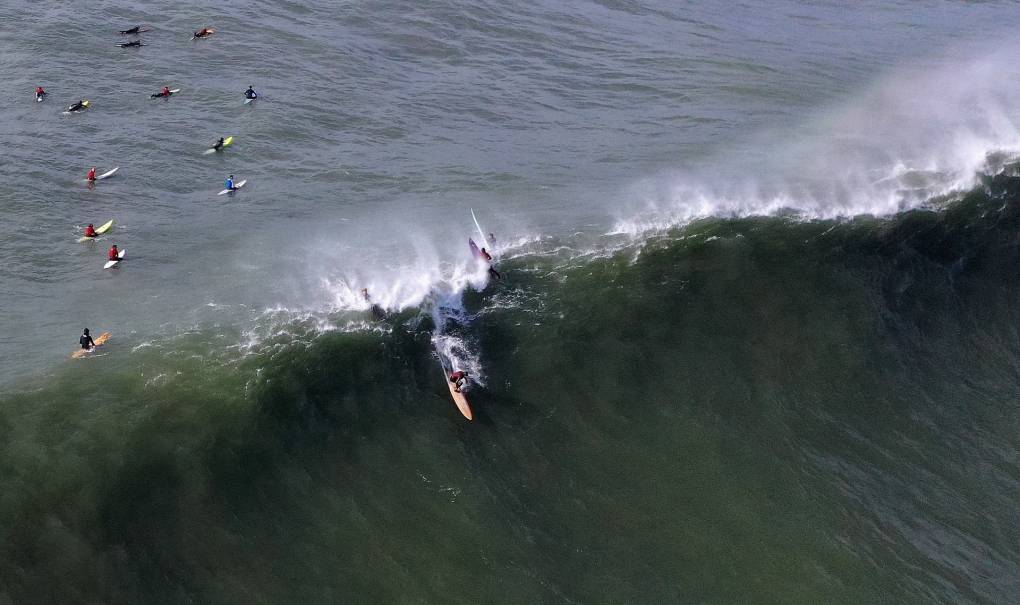
"caption": "A surfer rides a wave at Mavericks on Dec. 17, 2018, in Half Moon Bay, California.",
"description": null,
"title": "Giant Waves Hit Northern California",
"credit": "Ezra Shaw/Getty Images",
"status": "inherit",
"altTag": null,
"isLoading": false,
"fetchFailed": false
},
"science_1972222": {
"type": "attachments",
"id": "science_1972222",
"meta": {
"index": "attachments_1716263798",
"site": "science",
"id": "1972222",
"found": true
},
"parent": 1972220,
"imgSizes": {
"twentyfourteen-full-width": {
"file": "https://ww2.kqed.org/app/uploads/sites/35/2021/01/RS46602_GettyImages-1230147824-qut-1038x576.jpg",
"width": 1038,
"mimeType": "image/jpeg",
"height": 576
},
"thumbnail": {
"file": "https://ww2.kqed.org/app/uploads/sites/35/2021/01/RS46602_GettyImages-1230147824-qut-160x107.jpg",
"width": 160,
"mimeType": "image/jpeg",
"height": 107
},
"post-thumbnail": {
"file": "https://ww2.kqed.org/app/uploads/sites/35/2021/01/RS46602_GettyImages-1230147824-qut-672x372.jpg",
"width": 672,
"mimeType": "image/jpeg",
"height": 372
},
"kqedFullSize": {
"file": "https://ww2.kqed.org/app/uploads/sites/35/2021/01/RS46602_GettyImages-1230147824-qut.jpg",
"width": 1920,
"height": 1280
},
"large": {
"file": "https://ww2.kqed.org/app/uploads/sites/35/2021/01/RS46602_GettyImages-1230147824-qut-1020x680.jpg",
"width": 1020,
"mimeType": "image/jpeg",
"height": 680
},
"1536x1536": {
"file": "https://ww2.kqed.org/app/uploads/sites/35/2021/01/RS46602_GettyImages-1230147824-qut-1536x1024.jpg",
"width": 1536,
"mimeType": "image/jpeg",
"height": 1024
},
"medium": {
"file": "https://ww2.kqed.org/app/uploads/sites/35/2021/01/RS46602_GettyImages-1230147824-qut-800x533.jpg",
"width": 800,
"mimeType": "image/jpeg",
"height": 533
},
"medium_large": {
"file": "https://ww2.kqed.org/app/uploads/sites/35/2021/01/RS46602_GettyImages-1230147824-qut-768x512.jpg",
"width": 768,
"mimeType": "image/jpeg",
"height": 512
}
},
"publishDate": 1610578099,
"modified": 1616700016,
"caption": "Rachel Marrs (R) gives the Pfizer-BioNTech COVID-19 Vaccine shot to Kassandra Martinez, an EVS Attendant and Lead, at Rady Children's Hospital in San Diego on Dec. 15, 2020. ",
"description": null,
"title": "RS46602_GettyImages-1230147824-qut",
"credit": "Ariana Drehsler/Getty Images",
"status": "inherit",
"altTag": null,
"isLoading": false,
"fetchFailed": false
},
"science_1972171": {
"type": "attachments",
"id": "science_1972171",
"meta": {
"index": "attachments_1716263798",
"site": "science",
"id": "1972171",
"found": true
},
"parent": 1972169,
"imgSizes": {
"twentyfourteen-full-width": {
"file": "https://ww2.kqed.org/app/uploads/sites/35/2021/01/RS46558_GettyImages-1295038535-1-qut-1038x576.jpg",
"width": 1038,
"mimeType": "image/jpeg",
"height": 576
},
"thumbnail": {
"file": "https://ww2.kqed.org/app/uploads/sites/35/2021/01/RS46558_GettyImages-1295038535-1-qut-160x107.jpg",
"width": 160,
"mimeType": "image/jpeg",
"height": 107
},
"post-thumbnail": {
"file": "https://ww2.kqed.org/app/uploads/sites/35/2021/01/RS46558_GettyImages-1295038535-1-qut-672x372.jpg",
"width": 672,
"mimeType": "image/jpeg",
"height": 372
},
"kqedFullSize": {
"file": "https://ww2.kqed.org/app/uploads/sites/35/2021/01/RS46558_GettyImages-1295038535-1-qut.jpg",
"width": 1920,
"height": 1280
},
"large": {
"file": "https://ww2.kqed.org/app/uploads/sites/35/2021/01/RS46558_GettyImages-1295038535-1-qut-1020x680.jpg",
"width": 1020,
"mimeType": "image/jpeg",
"height": 680
},
"1536x1536": {
"file": "https://ww2.kqed.org/app/uploads/sites/35/2021/01/RS46558_GettyImages-1295038535-1-qut-1536x1024.jpg",
"width": 1536,
"mimeType": "image/jpeg",
"height": 1024
},
"medium": {
"file": "https://ww2.kqed.org/app/uploads/sites/35/2021/01/RS46558_GettyImages-1295038535-1-qut-800x533.jpg",
"width": 800,
"mimeType": "image/jpeg",
"height": 533
},
"medium_large": {
"file": "https://ww2.kqed.org/app/uploads/sites/35/2021/01/RS46558_GettyImages-1295038535-1-qut-768x512.jpg",
"width": 768,
"mimeType": "image/jpeg",
"height": 512
}
},
"publishDate": 1610410809,
"modified": 1610494705,
"caption": "Thousands of supporters of President Trump storm the U.S. Capitol building following a \"Stop the Steal\" rally on Jan. 6, 2021, in Washington, D.C.",
"description": null,
"title": "Trump Supporters Hold \"Stop The Steal\" Rally In DC Amid Ratification Of Presidential Election",
"credit": "Spencer Platt/Getty Images",
"status": "inherit",
"altTag": null,
"isLoading": false,
"fetchFailed": false
},
"science_1972139": {
"type": "attachments",
"id": "science_1972139",
"meta": {
"index": "attachments_1716263798",
"site": "science",
"id": "1972139",
"found": true
},
"title": "California Governor Gavin Newsom And Oakland Mayor Libby Schaaf Speak On State's Actions On Homelessness Crisis",
"publishDate": 1610154874,
"status": "inherit",
"parent": 1972138,
"modified": 1725058031,
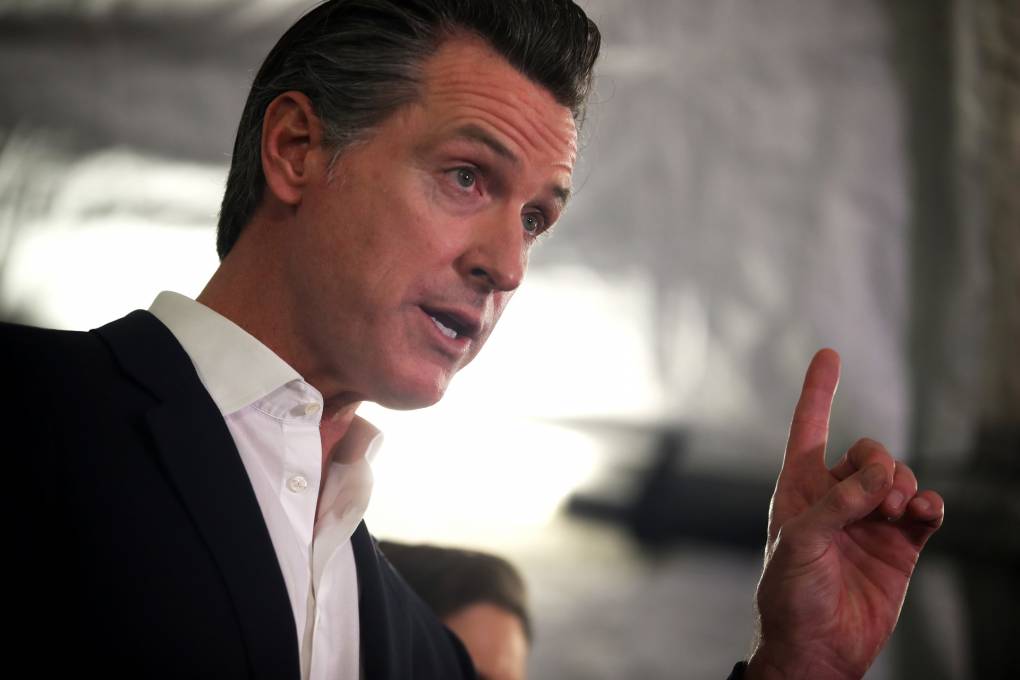
"caption": "California Gov. Gavin Newsom speaks during a news conference about the state's efforts on the homelessness crisis on Jan. 16, 2020, in Oakland. Oakland Mayor Libby Schaaf joined Newsom to announce that Oakland will receive 15 unused FEMA trailers for the city to use as temporary housing and as mobile health and social services clinics for the homeless. Newsom signed an executive order on Jan. 8 to deploy 100 trailers and crisis response teams to areas in need across the state.",
"credit": "Justin Sullivan/Getty Images",
"altTag": null,
"description": null,
"imgSizes": {
"medium": {
"file": "https://cdn.kqed.org/wp-content/uploads/sites/35/2021/01/RS46512_GettyImages-1199995830-qut-800x533.jpg",
"width": 800,
"height": 533,
"mimeType": "image/jpeg"
},
"large": {
"file": "https://cdn.kqed.org/wp-content/uploads/sites/35/2021/01/RS46512_GettyImages-1199995830-qut-1020x680.jpg",
"width": 1020,
"height": 680,
"mimeType": "image/jpeg"
},
"thumbnail": {
"file": "https://cdn.kqed.org/wp-content/uploads/sites/35/2021/01/RS46512_GettyImages-1199995830-qut-160x107.jpg",
"width": 160,
"height": 107,
"mimeType": "image/jpeg"
},
"medium_large": {
"file": "https://cdn.kqed.org/wp-content/uploads/sites/35/2021/01/RS46512_GettyImages-1199995830-qut-768x512.jpg",
"width": 768,
"height": 512,
"mimeType": "image/jpeg"
},
"1536x1536": {
"file": "https://cdn.kqed.org/wp-content/uploads/sites/35/2021/01/RS46512_GettyImages-1199995830-qut-1536x1024.jpg",
"width": 1536,
"height": 1024,
"mimeType": "image/jpeg"
},
"post-thumbnail": {
"file": "https://cdn.kqed.org/wp-content/uploads/sites/35/2021/01/RS46512_GettyImages-1199995830-qut-672x372.jpg",
"width": 672,
"height": 372,
"mimeType": "image/jpeg"
},
"twentyfourteen-full-width": {
"file": "https://cdn.kqed.org/wp-content/uploads/sites/35/2021/01/RS46512_GettyImages-1199995830-qut-1038x576.jpg",
"width": 1038,
"height": 576,
"mimeType": "image/jpeg"
},
"kqedFullSize": {
"file": "https://cdn.kqed.org/wp-content/uploads/sites/35/2021/01/RS46512_GettyImages-1199995830-qut.jpg",
"width": 1920,
"height": 1280
}
},
"isLoading": false,
"fetchFailed": false
},
"science_1972070": {
"type": "attachments",
"id": "science_1972070",
"meta": {
"index": "attachments_1716263798",
"site": "science",
"id": "1972070",
"found": true
},
"parent": 1972069,
"imgSizes": {
"twentyfourteen-full-width": {
"file": "https://ww2.kqed.org/app/uploads/sites/35/2021/01/gettyimages-180408620-copy_custom-2aad9b441ef73cbd21a6abc328e98a5cc1e469f2-1038x576.jpg",
"width": 1038,
"mimeType": "image/jpeg",
"height": 576
},
"thumbnail": {
"file": "https://ww2.kqed.org/app/uploads/sites/35/2021/01/gettyimages-180408620-copy_custom-2aad9b441ef73cbd21a6abc328e98a5cc1e469f2-160x107.jpg",
"width": 160,
"mimeType": "image/jpeg",
"height": 107
},
"post-thumbnail": {
"file": "https://ww2.kqed.org/app/uploads/sites/35/2021/01/gettyimages-180408620-copy_custom-2aad9b441ef73cbd21a6abc328e98a5cc1e469f2-672x372.jpg",
"width": 672,
"mimeType": "image/jpeg",
"height": 372
},
"kqedFullSize": {
"file": "https://ww2.kqed.org/app/uploads/sites/35/2021/01/gettyimages-180408620-copy_custom-2aad9b441ef73cbd21a6abc328e98a5cc1e469f2-scaled.jpg",
"width": 2560,
"height": 1713
},
"2048x2048": {
"file": "https://ww2.kqed.org/app/uploads/sites/35/2021/01/gettyimages-180408620-copy_custom-2aad9b441ef73cbd21a6abc328e98a5cc1e469f2-2048x1371.jpg",
"width": 2048,
"mimeType": "image/jpeg",
"height": 1371
},
"large": {
"file": "https://ww2.kqed.org/app/uploads/sites/35/2021/01/gettyimages-180408620-copy_custom-2aad9b441ef73cbd21a6abc328e98a5cc1e469f2-1020x683.jpg",
"width": 1020,
"mimeType": "image/jpeg",
"height": 683
},
"1536x1536": {
"file": "https://ww2.kqed.org/app/uploads/sites/35/2021/01/gettyimages-180408620-copy_custom-2aad9b441ef73cbd21a6abc328e98a5cc1e469f2-1536x1028.jpg",
"width": 1536,
"mimeType": "image/jpeg",
"height": 1028
},
"full-width": {
"file": "https://ww2.kqed.org/app/uploads/sites/35/2021/01/gettyimages-180408620-copy_custom-2aad9b441ef73cbd21a6abc328e98a5cc1e469f2-1920x1285.jpg",
"width": 1920,
"mimeType": "image/jpeg",
"height": 1285
},
"medium": {
"file": "https://ww2.kqed.org/app/uploads/sites/35/2021/01/gettyimages-180408620-copy_custom-2aad9b441ef73cbd21a6abc328e98a5cc1e469f2-800x535.jpg",
"width": 800,
"mimeType": "image/jpeg",
"height": 535
},
"medium_large": {
"file": "https://ww2.kqed.org/app/uploads/sites/35/2021/01/gettyimages-180408620-copy_custom-2aad9b441ef73cbd21a6abc328e98a5cc1e469f2-768x514.jpg",
"width": 768,
"mimeType": "image/jpeg",
"height": 514
}
},
"publishDate": 1609883069,
"modified": 1609884635,
"caption": "A new EPA rule will make it more difficult for regulators to use some scientific studies about the connection between pollution and health.",
"description": null,
"title": "A new EPA rule will make it more difficult for the regulators to use some scientific studies about the connection between pollution and health.",
"credit": "DKAR Images/Getty Images",
"status": "inherit",
"altTag": "A group of smokestacks emits voluminous streams of exhaust into a gray sky.",
"isLoading": false,
"fetchFailed": false
},
"science_1972051": {
"type": "attachments",
"id": "science_1972051",
"meta": {
"index": "attachments_1716263798",
"site": "science",
"id": "1972051",
"found": true
},
"parent": 1972044,
"imgSizes": {
"twentyfourteen-full-width": {
"file": "https://ww2.kqed.org/app/uploads/sites/35/2021/01/RS46499_GettyImages-1228523437-qut-1038x576.jpg",
"width": 1038,
"mimeType": "image/jpeg",
"height": 576
},
"thumbnail": {
"file": "https://ww2.kqed.org/app/uploads/sites/35/2021/01/RS46499_GettyImages-1228523437-qut-160x107.jpg",
"width": 160,
"mimeType": "image/jpeg",
"height": 107
},
"post-thumbnail": {
"file": "https://ww2.kqed.org/app/uploads/sites/35/2021/01/RS46499_GettyImages-1228523437-qut-672x372.jpg",
"width": 672,
"mimeType": "image/jpeg",
"height": 372
},
"kqedFullSize": {
"file": "https://ww2.kqed.org/app/uploads/sites/35/2021/01/RS46499_GettyImages-1228523437-qut.jpg",
"width": 1920,
"height": 1281
},
"large": {
"file": "https://ww2.kqed.org/app/uploads/sites/35/2021/01/RS46499_GettyImages-1228523437-qut-1020x681.jpg",
"width": 1020,
"mimeType": "image/jpeg",
"height": 681
},
"1536x1536": {
"file": "https://ww2.kqed.org/app/uploads/sites/35/2021/01/RS46499_GettyImages-1228523437-qut-1536x1025.jpg",
"width": 1536,
"mimeType": "image/jpeg",
"height": 1025
},
"medium": {
"file": "https://ww2.kqed.org/app/uploads/sites/35/2021/01/RS46499_GettyImages-1228523437-qut-800x534.jpg",
"width": 800,
"mimeType": "image/jpeg",
"height": 534
},
"medium_large": {
"file": "https://ww2.kqed.org/app/uploads/sites/35/2021/01/RS46499_GettyImages-1228523437-qut-768x512.jpg",
"width": 768,
"mimeType": "image/jpeg",
"height": 512
}
},
"publishDate": 1609791608,
"modified": 1609883066,
"caption": "A firefighter keeps watch as flames advance along the Western Divide Highway during the SQF Complex Fire on Sept. 14, 2020, near Camp Nelson, California. ",
"description": null,
"title": "Wildfires Burn Thousands Of Acres Across California",
"credit": "David McNew/Getty Images",
"status": "inherit",
"altTag": null,
"isLoading": false,
"fetchFailed": false
},
"science_1963012": {
"type": "attachments",
"id": "science_1963012",
"meta": {
"index": "attachments_1716263798",
"site": "science",
"id": "1963012",
"found": true
},
"parent": 1962832,
"imgSizes": {
"twentyfourteen-full-width": {
"file": "https://ww2.kqed.org/app/uploads/sites/35/2020/04/RS27160_GettyImages-463198440-qut-1020x701-1020x576.jpg",
"width": 1020,
"mimeType": "image/jpeg",
"height": 576
},
"thumbnail": {
"file": "https://ww2.kqed.org/app/uploads/sites/35/2020/04/RS27160_GettyImages-463198440-qut-1020x701-160x110.jpg",
"width": 160,
"mimeType": "image/jpeg",
"height": 110
},
"post-thumbnail": {
"file": "https://ww2.kqed.org/app/uploads/sites/35/2020/04/RS27160_GettyImages-463198440-qut-1020x701-672x372.jpg",
"width": 672,
"mimeType": "image/jpeg",
"height": 372
},
"kqedFullSize": {
"file": "https://ww2.kqed.org/app/uploads/sites/35/2020/04/RS27160_GettyImages-463198440-qut-1020x701.jpg",
"width": 1020,
"height": 701
},
"large": {
"file": "https://ww2.kqed.org/app/uploads/sites/35/2020/04/RS27160_GettyImages-463198440-qut-1020x701-1020x701.jpg",
"width": 1020,
"mimeType": "image/jpeg",
"height": 701
},
"medium": {
"file": "https://ww2.kqed.org/app/uploads/sites/35/2020/04/RS27160_GettyImages-463198440-qut-1020x701-800x550.jpg",
"width": 800,
"mimeType": "image/jpeg",
"height": 550
},
"medium_large": {
"file": "https://ww2.kqed.org/app/uploads/sites/35/2020/04/RS27160_GettyImages-463198440-qut-1020x701-768x528.jpg",
"width": 768,
"mimeType": "image/jpeg",
"height": 528
}
},
"publishDate": 1587773015,
"modified": 1609790693,
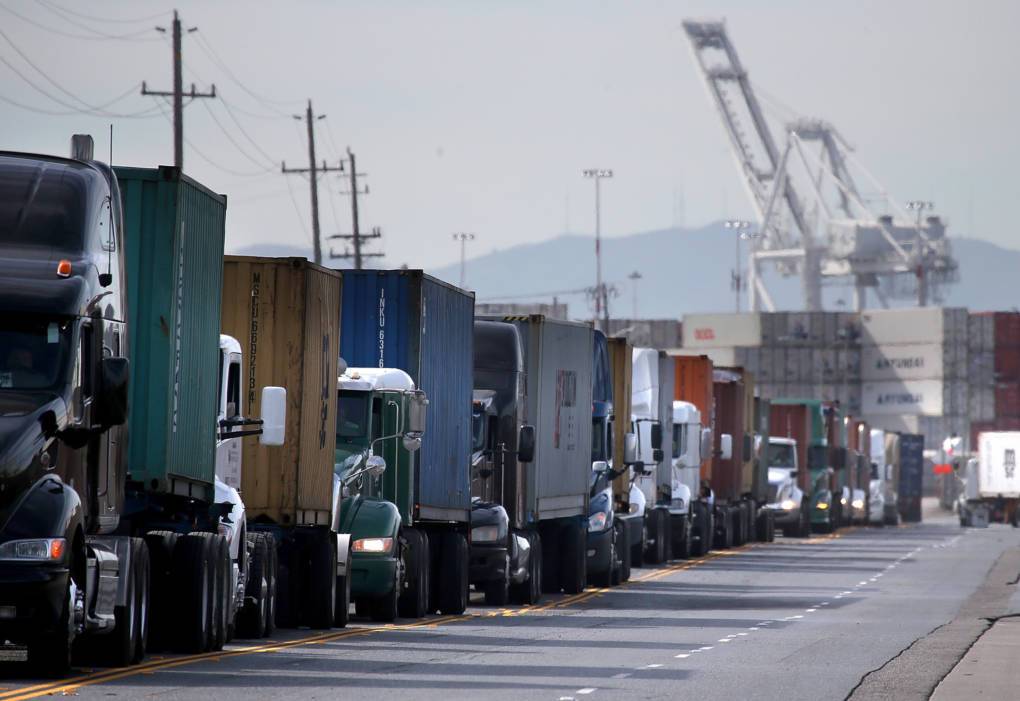
"caption": "Trucks line up to enter a berth at the Port of Oakland on Feb. 11, 2015, in West Oakland, California.",
"description": "Trucks line up to enter a berth at the Port of Oakland on February 11, 2015 in West Oakland, California.",
"title": "Labor Agreement Yet To Be Reached By West Coast Dock Workers And Employers",
"credit": "Justin Sullivan/Getty Images",
"status": "inherit",
"altTag": "Trucks line up to enter a berth at the Port of Oakland on February 11, 2015 in West Oakland, California.",
"isLoading": false,
"fetchFailed": false
},
"science_1972000": {
"type": "attachments",
"id": "science_1972000",
"meta": {
"index": "attachments_1716263798",
"site": "science",
"id": "1972000",
"found": true
},
"parent": 1971998,
"imgSizes": {
"thumbnail": {
"file": "https://ww2.kqed.org/app/uploads/sites/35/2020/12/gettyimages-1229948168_wide-e596ae1768de391ed72166da48a2084374c6ac2c-160x90.jpg",
"width": 160,
"mimeType": "image/jpeg",
"height": 90
},
"post-thumbnail": {
"file": "https://ww2.kqed.org/app/uploads/sites/35/2020/12/gettyimages-1229948168_wide-e596ae1768de391ed72166da48a2084374c6ac2c-672x372.jpg",
"width": 672,
"mimeType": "image/jpeg",
"height": 372
},
"kqedFullSize": {
"file": "https://ww2.kqed.org/app/uploads/sites/35/2020/12/gettyimages-1229948168_wide-e596ae1768de391ed72166da48a2084374c6ac2c.jpg",
"width": 1024,
"height": 576
},
"large": {
"file": "https://ww2.kqed.org/app/uploads/sites/35/2020/12/gettyimages-1229948168_wide-e596ae1768de391ed72166da48a2084374c6ac2c-1020x574.jpg",
"width": 1020,
"mimeType": "image/jpeg",
"height": 574
},
"medium": {
"file": "https://ww2.kqed.org/app/uploads/sites/35/2020/12/gettyimages-1229948168_wide-e596ae1768de391ed72166da48a2084374c6ac2c-800x450.jpg",
"width": 800,
"mimeType": "image/jpeg",
"height": 450
},
"medium_large": {
"file": "https://ww2.kqed.org/app/uploads/sites/35/2020/12/gettyimages-1229948168_wide-e596ae1768de391ed72166da48a2084374c6ac2c-768x432.jpg",
"width": 768,
"mimeType": "image/jpeg",
"height": 432
}
},
"publishDate": 1609266780,
"modified": 1609270521,
"caption": null,
"description": "Health care workers listen as Chief of Staff Doctor Joseph Varon talks to them in the Covid-19 ward at United Memorial Medical Center in Houston, Texas on December 4, 2020. - Joseph Varon, a doctor treating coronavirus patients at a Texas hospital, was working his 252nd day in a row when he spotted a distraught elderly man in the Covid-19 intensive care unit (ICU). Varon's comforting embrace of the white-haired man on Thanksgiving Day was captured by a photographer for Getty Images and has gone viral around the world. ",
"title": "Health care workers at United Memorial Medical Center in Houston face another full-throttle workday last week.",
"credit": "Photo by Mark Felix / MARK FELIX/AFP via Getty Images",
"status": "inherit",
"altTag": null,
"isLoading": false,
"fetchFailed": false
},
"science_1971952": {
"type": "attachments",
"id": "science_1971952",
"meta": {
"index": "attachments_1716263798",
"site": "science",
"id": "1971952",
"found": true
},
"parent": 1971877,
"imgSizes": {
"twentyfourteen-full-width": {
"file": "https://ww2.kqed.org/app/uploads/sites/35/2020/12/quote-bubbles-black-year-end-quote-1038x576.jpg",
"width": 1038,
"mimeType": "image/jpeg",
"height": 576
},
"thumbnail": {
"file": "https://ww2.kqed.org/app/uploads/sites/35/2020/12/quote-bubbles-black-year-end-quote-160x90.jpg",
"width": 160,
"mimeType": "image/jpeg",
"height": 90
},
"post-thumbnail": {
"file": "https://ww2.kqed.org/app/uploads/sites/35/2020/12/quote-bubbles-black-year-end-quote-672x372.jpg",
"width": 672,
"mimeType": "image/jpeg",
"height": 372
},
"kqedFullSize": {
"file": "https://ww2.kqed.org/app/uploads/sites/35/2020/12/quote-bubbles-black-year-end-quote.jpg",
"width": 1920,
"height": 1079
},
"large": {
"file": "https://ww2.kqed.org/app/uploads/sites/35/2020/12/quote-bubbles-black-year-end-quote-1020x573.jpg",
"width": 1020,
"mimeType": "image/jpeg",
"height": 573
},
"1536x1536": {
"file": "https://ww2.kqed.org/app/uploads/sites/35/2020/12/quote-bubbles-black-year-end-quote-1536x863.jpg",
"width": 1536,
"mimeType": "image/jpeg",
"height": 863
},
"medium": {
"file": "https://ww2.kqed.org/app/uploads/sites/35/2020/12/quote-bubbles-black-year-end-quote-800x450.jpg",
"width": 800,
"mimeType": "image/jpeg",
"height": 450
},
"medium_large": {
"file": "https://ww2.kqed.org/app/uploads/sites/35/2020/12/quote-bubbles-black-year-end-quote-768x432.jpg",
"width": 768,
"mimeType": "image/jpeg",
"height": 432
}
},
"publishDate": 1608662210,
"modified": 1608662276,
"caption": null,
"description": null,
"title": "quote-bubbles-black-year-end-quote",
"credit": "iStock",
"status": "inherit",
"altTag": "White conversation bubbles laid over a black background.",
"isLoading": false,
"fetchFailed": false
},
"science_1971974": {
"type": "attachments",
"id": "science_1971974",
"meta": {
"index": "attachments_1716263798",
"site": "science",
"id": "1971974",
"found": true
},
"parent": 1971972,
"imgSizes": {
"twentyfourteen-full-width": {
"file": "https://ww2.kqed.org/app/uploads/sites/35/2020/12/maskupTHUMB003-1038x576.png",
"width": 1038,
"mimeType": "image/png",
"height": 576
},
"thumbnail": {
"file": "https://ww2.kqed.org/app/uploads/sites/35/2020/12/maskupTHUMB003-160x90.png",
"width": 160,
"mimeType": "image/png",
"height": 90
},
"post-thumbnail": {
"file": "https://ww2.kqed.org/app/uploads/sites/35/2020/12/maskupTHUMB003-672x372.png",
"width": 672,
"mimeType": "image/png",
"height": 372
},
"kqedFullSize": {
"file": "https://ww2.kqed.org/app/uploads/sites/35/2020/12/maskupTHUMB003.png",
"width": 1920,
"height": 1080
},
"large": {
"file": "https://ww2.kqed.org/app/uploads/sites/35/2020/12/maskupTHUMB003-1020x574.png",
"width": 1020,
"mimeType": "image/png",
"height": 574
},
"1536x1536": {
"file": "https://ww2.kqed.org/app/uploads/sites/35/2020/12/maskupTHUMB003-1536x864.png",
"width": 1536,
"mimeType": "image/png",
"height": 864
},
"medium": {
"file": "https://ww2.kqed.org/app/uploads/sites/35/2020/12/maskupTHUMB003-800x450.png",
"width": 800,
"mimeType": "image/png",
"height": 450
},
"medium_large": {
"file": "https://ww2.kqed.org/app/uploads/sites/35/2020/12/maskupTHUMB003-768x432.png",
"width": 768,
"mimeType": "image/png",
"height": 432
}
},
"publishDate": 1608753889,
"modified": 1608753918,
"caption": null,
"description": null,
"title": "maskupTHUMB003",
"credit": "Mark Fiore/KQED",
"status": "inherit",
"altTag": null,
"isLoading": false,
"fetchFailed": false
},
"science_1971855": {
"type": "attachments",
"id": "science_1971855",
"meta": {
"index": "attachments_1716263798",
"site": "science",
"id": "1971855",
"found": true
},
"parent": 1971853,
"imgSizes": {
"twentyfourteen-full-width": {
"file": "https://ww2.kqed.org/app/uploads/sites/35/2020/12/Image-12-18-20-at-5.24-PM-1038x576.jpg",
"width": 1038,
"mimeType": "image/jpeg",
"height": 576
},
"thumbnail": {
"file": "https://ww2.kqed.org/app/uploads/sites/35/2020/12/Image-12-18-20-at-5.24-PM-160x101.jpg",
"width": 160,
"mimeType": "image/jpeg",
"height": 101
},
"post-thumbnail": {
"file": "https://ww2.kqed.org/app/uploads/sites/35/2020/12/Image-12-18-20-at-5.24-PM-672x372.jpg",
"width": 672,
"mimeType": "image/jpeg",
"height": 372
},
"kqedFullSize": {
"file": "https://ww2.kqed.org/app/uploads/sites/35/2020/12/Image-12-18-20-at-5.24-PM.jpg",
"width": 1196,
"height": 755
},
"large": {
"file": "https://ww2.kqed.org/app/uploads/sites/35/2020/12/Image-12-18-20-at-5.24-PM-1020x644.jpg",
"width": 1020,
"mimeType": "image/jpeg",
"height": 644
},
"medium": {
"file": "https://ww2.kqed.org/app/uploads/sites/35/2020/12/Image-12-18-20-at-5.24-PM-800x505.jpg",
"width": 800,
"mimeType": "image/jpeg",
"height": 505
},
"medium_large": {
"file": "https://ww2.kqed.org/app/uploads/sites/35/2020/12/Image-12-18-20-at-5.24-PM-768x485.jpg",
"width": 768,
"mimeType": "image/jpeg",
"height": 485
}
},
"publishDate": 1608341223,
"modified": 1608587578,
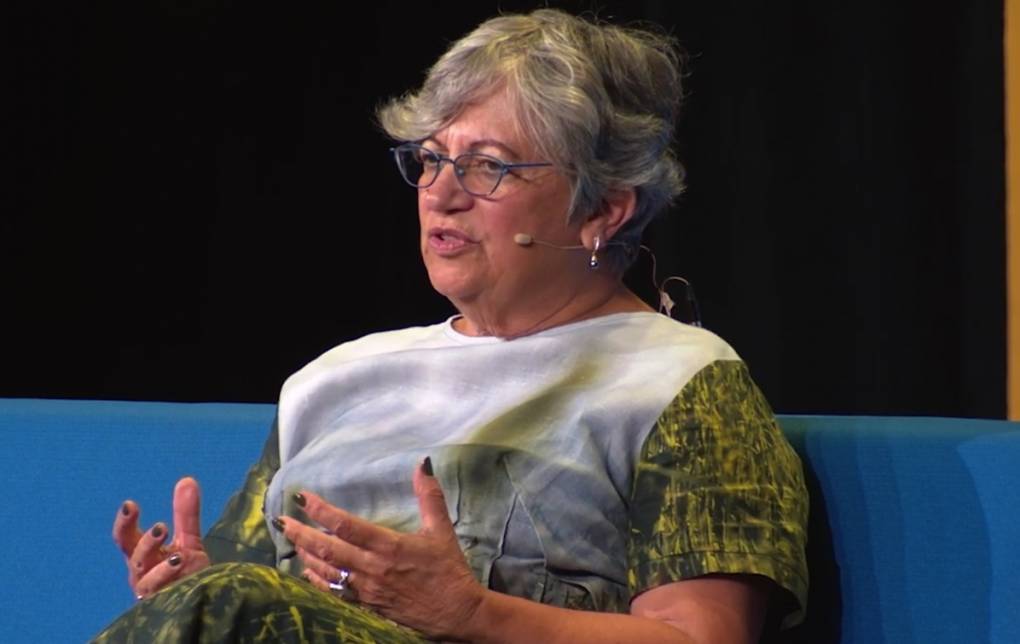
"caption": "A screen capture of Mary Nichols speaking to GreenBiz about the transition to a decarbonized transportation system.",
"description": null,
"title": "Image 12-18-20 at 5.24 PM",
"credit": "GreenBiz",
"status": "inherit",
"altTag": null,
"isLoading": false,
"fetchFailed": false
}
},
"audioPlayerReducer": {
"postId": "stream_live",
"isPaused": true,
"isPlaying": false,
"pfsActive": false,
"pledgeModalIsOpen": true,
"playerDrawerIsOpen": false,
"liveAudioPlayStartedAt": 0,
"liveAudioPlayContext": ""
},
"authorsReducer": {
"byline_science_1972290": {
"type": "authors",
"id": "byline_science_1972290",
"meta": {
"override": true
},
"slug": "byline_science_1972290",
"name": "Andrew Joseph \u003cbr>STAT\u003c/br>",
"isLoading": false
},
"byline_science_1972220": {
"type": "authors",
"id": "byline_science_1972220",
"meta": {
"override": true
},
"slug": "byline_science_1972220",
"name": "Helen Branswell \u003cbr />STAT\u003cbr>",
"isLoading": false
},
"byline_science_1972069": {
"type": "authors",
"id": "byline_science_1972069",
"meta": {
"override": true
},
"slug": "byline_science_1972069",
"name": "Rebecca Hersher\u003cbr>NPR",
"isLoading": false
},
"byline_science_1972044": {
"type": "authors",
"id": "byline_science_1972044",
"meta": {
"override": true
},
"slug": "byline_science_1972044",
"name": "Bob Berwyn \u003cbr />InsideClimate News\u003cbr>",
"isLoading": false
},
"byline_science_1971998": {
"type": "authors",
"id": "byline_science_1971998",
"meta": {
"override": true
},
"slug": "byline_science_1971998",
"name": "Sean McMinn and Audrey Carlsen\u003cbr />NPR",
"isLoading": false
},
"astupi": {
"type": "authors",
"id": "70",
"meta": {
"index": "authors_1716337520",
"id": "70",
"found": true
},
"name": "Amanda Stupi",
"firstName": "Amanda",
"lastName": "Stupi",
"slug": "astupi",
"email": "astupi@kqed.org",
"display_author_email": false,
"staff_mastheads": [],
"title": "Senior Engagement Producer",
"bio": "Amanda joined KQED Science’s engagement team as a Senior Audience Engagement Strategist in the spring of 2019. She has helped craft messaging around wildfires, the coronavirus pandemic, climate change and many other stories. She has also brought KQED Science to new platforms such as Reddit’s Ask Me Anything series. Prior to joining KQED Science, Amanda spent seven years as an engagement producer with Forum, KQED’s daily live call-in show. She got her start in radio at KALW's weekly call in show, City Visions, before going on to an internship and stint at NPR's Talk of the Nation.\r\n\r\nPrior to journalism, Amanda taught English at Lowell High School. She's a native of Petaluma and currently lives under the \"South San Francisco the Industrial City\" sign in South City. She believes that engagement is vital to news’s future and that good journalism listens as much as it asks questions.",
"avatar": "https://secure.gravatar.com/avatar/e981c503e5c162da701dcaccfbf87e35?s=600&d=blank&r=g",
"twitter": null,
"facebook": null,
"instagram": null,
"linkedin": null,
"sites": [
{
"site": "arts",
"roles": [
"Contributor"
]
},
{
"site": "news",
"roles": [
"editor"
]
},
{
"site": "pop",
"roles": [
"contributor"
]
},
{
"site": "stateofhealth",
"roles": [
"editor"
]
},
{
"site": "science",
"roles": []
},
{
"site": "perspectives",
"roles": [
"editor"
]
}
],
"headData": {
"title": "Amanda Stupi | KQED",
"description": "Senior Engagement Producer",
"ogImgSrc": "https://secure.gravatar.com/avatar/e981c503e5c162da701dcaccfbf87e35?s=600&d=blank&r=g",
"twImgSrc": "https://secure.gravatar.com/avatar/e981c503e5c162da701dcaccfbf87e35?s=600&d=blank&r=g"
},
"isLoading": false,
"link": "/author/astupi"
},
"markfiore": {
"type": "authors",
"id": "3236",
"meta": {
"index": "authors_1716337520",
"id": "3236",
"found": true
},
"name": "Mark Fiore",
"firstName": "Mark",
"lastName": "Fiore",
"slug": "markfiore",
"email": "mark@markfiore.com",
"display_author_email": false,
"staff_mastheads": [
"news"
],
"title": "KQED News Cartoonist",
"bio": "\u003ca href=\"http://www.MarkFiore.com\">MarkFiore.com\u003c/a> | \u003ca href=\"https://twitter.com/markfiore\">Follow on Twitter\u003c/a> | \u003ca href=\"https://www.facebook.com/pages/Mark-Fiore-Animated-Political-Cartoons/94451707396?ref=bookmarks\">Facebook\u003c/a> | \u003ca href=\"mailto:mark@markfiore.com\">email\u003c/a>\r\n\r\nPulitzer Prize-winner, Mark Fiore, who the Wall Street Journal has called “the undisputed guru of the form,” creates animated political cartoons in San Francisco, where his work has been featured regularly on the San Francisco Chronicle’s web site, SFGate.com. His work has appeared on Newsweek.com, Slate.com, CBSNews.com, MotherJones.com, DailyKos.com and NPR’s web site. Fiore’s political animation has appeared on CNN, Frontline, Bill Moyers Journal, Salon.com and cable and broadcast outlets across the globe.\r\n\r\nBeginning his professional life by drawing traditional political cartoons for newspapers, Fiore’s work appeared in publications ranging from the Washington Post to the Los Angeles Times. In the late 1990s, he began to experiment with animating political cartoons and, after a short stint at the San Jose Mercury News as their staff cartoonist, Fiore devoted all his energies to animation.\r\nGrowing up in California, Fiore also spent a good portion of his life in the backwoods of Idaho. It was this combination that shaped him politically. Mark majored in political science at Colorado College, where, in a perfect send-off for a cartoonist, he received his diploma in 1991 as commencement speaker Dick Cheney smiled approvingly.\r\nMark Fiore was awarded the Pulitzer Prize for political cartooning in 2010, a Robert F. Kennedy Journalism Award in 2004 and has twice received an Online Journalism Award for commentary from the Online News Association (2002, 2008). Fiore has received two awards for his work in new media from the National Cartoonists Society (2001, 2002), and in 2006 received The James Madison Freedom of Information Award from The Society of Professional Journalists.",
"avatar": "https://secure.gravatar.com/avatar/fc4e2a612b15b67bad0c6f0e1db4ca9b?s=600&d=blank&r=g",
"twitter": "MarkFiore",
"facebook": null,
"instagram": "https://www.instagram.com/markfiore/?hl=en",
"linkedin": null,
"sites": [
{
"site": "arts",
"roles": [
"contributor"
]
},
{
"site": "news",
"roles": [
"editor"
]
},
{
"site": "futureofyou",
"roles": [
"editor"
]
},
{
"site": "science",
"roles": [
"editor"
]
}
],
"headData": {
"title": "Mark Fiore | KQED",
"description": "KQED News Cartoonist",
"ogImgSrc": "https://secure.gravatar.com/avatar/fc4e2a612b15b67bad0c6f0e1db4ca9b?s=600&d=blank&r=g",
"twImgSrc": "https://secure.gravatar.com/avatar/fc4e2a612b15b67bad0c6f0e1db4ca9b?s=600&d=blank&r=g"
},
"isLoading": false,
"link": "/author/markfiore"
},
"kqedscience": {
"type": "authors",
"id": "6387",
"meta": {
"index": "authors_1716337520",
"id": "6387",
"found": true
},
"name": "KQED Science",
"firstName": "KQED",
"lastName": "Science",
"slug": "kqedscience",
"email": "kqedscience@gmail.com",
"display_author_email": false,
"staff_mastheads": [],
"title": null,
"bio": "KQED Science brings you award-winning science and environment coverage from the Bay Area and beyond by the flagship Northern California PBS and NPR affiliate.",
"avatar": "https://secure.gravatar.com/avatar/5a295ff49cf82a8c0f30937d3f788b2f?s=600&d=blank&r=g",
"twitter": null,
"facebook": null,
"instagram": null,
"linkedin": null,
"sites": [
{
"site": "science",
"roles": [
"contributor"
]
},
{
"site": "quest",
"roles": [
"editor"
]
},
{
"site": "food",
"roles": [
"contributor"
]
}
],
"headData": {
"title": "KQED Science | KQED",
"description": null,
"ogImgSrc": "https://secure.gravatar.com/avatar/5a295ff49cf82a8c0f30937d3f788b2f?s=600&d=blank&r=g",
"twImgSrc": "https://secure.gravatar.com/avatar/5a295ff49cf82a8c0f30937d3f788b2f?s=600&d=blank&r=g"
},
"isLoading": false,
"link": "/author/kqedscience"
},
"dventon": {
"type": "authors",
"id": "11088",
"meta": {
"index": "authors_1716337520",
"id": "11088",
"found": true
},
"name": "Danielle Venton",
"firstName": "Danielle",
"lastName": "Venton",
"slug": "dventon",
"email": "dventon@kqed.org",
"display_author_email": true,
"staff_mastheads": [
"science"
],
"title": "Science reporter",
"bio": "Danielle Venton is a reporter for KQED Science. She covers wildfires, space and oceans (though she is prone to sea sickness).\r\n\r\nBefore joining KQED in 2015, Danielle was a staff reporter at KRCB in Sonoma County and a freelancer. She studied science communication at UC Santa Cruz and formerly worked at CERN in Geneva, Switzerland where she wrote about computing. She lives in Sonoma County and enjoys backpacking.",
"avatar": "https://secure.gravatar.com/avatar/37b292b5c40c8d93959c4f48d73b5286f41b7abd8588277e941905a3ed4c801c?s=600&d=blank&r=g",
"twitter": "DanielleVenton",
"bluesky": null,
"facebook": null,
"instagram": null,
"linkedin": null,
"sites": [
{
"site": "arts",
"roles": [
"contributor"
]
},
{
"site": "news",
"roles": [
"editor"
]
},
{
"site": "futureofyou",
"roles": [
"editor"
]
},
{
"site": "science",
"roles": [
"editor"
]
},
{
"site": "liveblog",
"roles": [
"contributor"
]
}
],
"headData": {
"title": "Danielle Venton | KQED",
"description": "Science reporter",
"ogImgSrc": "https://secure.gravatar.com/avatar/37b292b5c40c8d93959c4f48d73b5286f41b7abd8588277e941905a3ed4c801c?s=600&d=blank&r=g",
"twImgSrc": "https://secure.gravatar.com/avatar/37b292b5c40c8d93959c4f48d73b5286f41b7abd8588277e941905a3ed4c801c?s=600&d=blank&r=g"
},
"isLoading": false,
"link": "/author/dventon"
},
"parcuni": {
"type": "authors",
"id": "11368",
"meta": {
"index": "authors_1716337520",
"id": "11368",
"found": true
},
"name": "Peter Arcuni",
"firstName": "Peter",
"lastName": "Arcuni",
"slug": "parcuni",
"email": "parcuni@KQED.org",
"display_author_email": false,
"staff_mastheads": [
"science"
],
"title": "Reporter",
"bio": "Peter reports radio and online stories for \u003cem>KQED Science\u003c/em>. His work has also appeared on the \u003cem>The California Report\u003c/em> morning show and \u003cem>KQED News\u003c/em>. His production credits include \u003cem>The California Report, The California Report Magazine\u003c/em> and KQED's local news podcast \u003cem>The Bay\u003c/em>. Other credits include NPR's \u003cem>All Things Considered\u003c/em>, WNYC's \u003cem>Science Friday\u003c/em>, WBUR's \u003cem>Here & Now\u003c/em>, WIRED and SFGate. Peter graduated from Brown University and earned a master's degree in journalism from Stanford. He's covered everything from homelessness to wildfires, health, the environment, arts and Thanksgiving in San Quentin prison. In other lives, he played rock n roll music and studied neuroscience. You can email him at: parcuni@kqed.org",
"avatar": "https://secure.gravatar.com/avatar/d5032f6f27199d478af34ad2e1d98732?s=600&d=blank&r=g",
"twitter": "peterarcuni",
"facebook": null,
"instagram": null,
"linkedin": null,
"sites": [
{
"site": "news",
"roles": [
"editor"
]
},
{
"site": "science",
"roles": [
"editor"
]
}
],
"headData": {
"title": "Peter Arcuni | KQED",
"description": "Reporter",
"ogImgSrc": "https://secure.gravatar.com/avatar/d5032f6f27199d478af34ad2e1d98732?s=600&d=blank&r=g",
"twImgSrc": "https://secure.gravatar.com/avatar/d5032f6f27199d478af34ad2e1d98732?s=600&d=blank&r=g"
},
"isLoading": false,
"link": "/author/parcuni"
},
"kevinstark": {
"type": "authors",
"id": "11608",
"meta": {
"index": "authors_1716337520",
"id": "11608",
"found": true
},
"name": "Kevin Stark",
"firstName": "Kevin",
"lastName": "Stark",
"slug": "kevinstark",
"email": "kstark@kqed.org",
"display_author_email": true,
"staff_mastheads": [
"science"
],
"title": "Senior Editor",
"bio": "Kevin is a senior editor for KQED Science, managing the station's health and climate desks. His journalism career began in the Pacific Northwest, and he later became a lead reporter for the San Francisco Public Press. His work has appeared in Pacific Standard magazine, the Energy News Network, the Center for Investigative Reporting's Reveal and WBEZ in Chicago. Kevin joined KQED in 2019, and has covered issues related to energy, wildfire, climate change and the environment.",
"avatar": "https://secure.gravatar.com/avatar/365aaa4b597d3a8374f67504ff0facd323d7906e8eb4be0a7efd2427408e802c?s=600&d=blank&r=g",
"twitter": "starkkev",
"bluesky": null,
"facebook": null,
"instagram": null,
"linkedin": null,
"sites": [
{
"site": "",
"roles": [
"editor"
]
},
{
"site": "news",
"roles": [
"editor"
]
},
{
"site": "science",
"roles": [
"administrator"
]
}
],
"headData": {
"title": "Kevin Stark | KQED",
"description": "Senior Editor",
"ogImgSrc": "https://secure.gravatar.com/avatar/365aaa4b597d3a8374f67504ff0facd323d7906e8eb4be0a7efd2427408e802c?s=600&d=blank&r=g",
"twImgSrc": "https://secure.gravatar.com/avatar/365aaa4b597d3a8374f67504ff0facd323d7906e8eb4be0a7efd2427408e802c?s=600&d=blank&r=g"
},
"isLoading": false,
"link": "/author/kevinstark"
}
},
"pagesReducer": {
"science_category_news": {
"type": "terms",
"id": "science_40",
"meta": {
"index": "terms_1716263798",
"site": "science",
"id": "40",
"score": 10.813797
},
"featImg": null,
"name": "News",
"description": null,
"taxonomy": "category",
"headData": {
"twImgId": null,
"twTitle": null,
"ogTitle": null,
"ogImgId": null,
"twDescription": null,
"description": null,
"title": "News Archives | KQED Science",
"ogDescription": null
},
"ttid": 42,
"slug": "news",
"isLoading": false,
"title": "News",
"pageMeta": {
"site": "science",
"WpPageTemplate": "page-topic-editorial",
"currentPage": 82
},
"blocks": [
{
"blockName": "kqed/post-list",
"attrs": {
"layout": "cardArticle2",
"query": "posts/science?category=news",
"seeMore": false,
"paginated": true,
"page": 82
}
},
{
"blockName": "kqed/ad"
}
]
}
},
"pfsSessionReducer": {},
"postsReducer": {
"stream_live": {
"type": "live",
"id": "stream_live",
"audioUrl": "https://streams.kqed.org/kqedradio",
"title": "Live Stream",
"excerpt": "Live Stream information currently unavailable.",
"link": "/radio",
"featImg": "",
"label": {
"name": "KQED Live",
"link": "/"
}
},
"stream_kqedNewscast": {
"type": "posts",
"id": "stream_kqedNewscast",
"audioUrl": "https://www.kqed.org/.stream/anon/radio/RDnews/newscast.mp3?_=1",
"title": "KQED Newscast",
"featImg": "",
"label": {
"name": "88.5 FM",
"link": "/"
}
},
"science_1972290": {
"type": "posts",
"id": "science_1972290",
"meta": {
"index": "posts_1716263798",
"site": "science",
"id": "1972290",
"score": null,
"sort": [
1611082877000
]
},
"parent": 0,
"labelTerm": {},
"blocks": [],
"publishDate": 1611082877,
"format": "standard",
"title": "What We Know and Don't Know About the Coronavirus Variants",
"headTitle": "What We Know and Don’t Know About the Coronavirus Variants | KQED",
"content": "\u003cp>\u003cspan class=\"big-cap-wrap\">\u003cspan class=\"big-cap\">T\u003c/span>\u003c/span>he coronavirus variants are, in a word, confusing.\u003c/p>\n\u003cp>By now, you have likely heard about different variants that first raised trouble in the United Kingdom, South Africa, Brazil, and now maybe California — though the jury is very much out on whether that last one is cause for concern. To make a messy alphabet soup even more jumbled, these variants have unwieldy names, and they each contain mutations with unwieldy names of their own. The result is that people are left trying to differentiate among B.1.1.7 and N501Y and E484K and C-3PO.\u003c/p>\n\u003cp>Wait, sorry, that last one is from “Star Wars.”\u003c/p>\n\u003cp>The point is that all of this is difficult to keep track of, and it will only grow more confusing with more variants likely to turn up. “It’s becoming a mutation-of-the-week game,” said Stephen Goldstein, a coronavirologist at the University of Utah.\u003c/p>\n\u003cp>Below, STAT explains what’s known about the variants, why they’re getting so much attention, and what they mean for the trajectory of the pandemic.\u003c/p>\n\u003cp>[ad fullwidth]\u003c/p>\n\u003cp>\u003cstrong>Why Are Variants Popping Up Now?\u003c/strong>\u003c/p>\n\u003cp>Well, they are and they aren’t.\u003c/p>\n\u003cp>\u003ca href=\"https://www.statnews.com/2020/12/14/portrait-of-the-coronavirus-at-1/\" target=\"_blank\" rel=\"noopener noreferrer\">SARS-CoV-2\u003c/a>, the virus that causes COVID-19, has been mutating all along; that’s just what viruses do. Many of those mutations don’t change the virus substantively, and some might actually be detrimental to the virus, making that variant likely to die out.\u003c/p>\n\u003cp>But every so often, a mutation or combination of mutations will give rise to a new form of the virus with an evolutionary edge, like being able to infect cells better or spread faster. This new variant can outpace earlier iterations of the virus and become dominant.\u003c/p>\n\u003cp>Early on in the pandemic, a mutation known as D614G seems to have given the virus a boost in its infectiousness, and variants with the mutation became the most prevalent around the world.\u003c/p>\n\u003cp>Beyond the fact that the virus is constantly changing, there are other reasons why these “fitter” variants have started to emerge. In the early days of the pandemic, when just about all of us were vulnerable to COVID-19, any infectious variant had a pretty easy time circulating. But as more people in certain areas have become protected — either after an initial infection or vaccination — pressure on the virus has increased. A so-so spreader might no longer be able to find new hosts (that’s us) to infect, but variants with mutations that help them spread can still transmit, and can take off from there.\u003c/p>\n\u003cp>“We’ve reached a point one year on and in certain parts of the world where the density of natural immunity is sufficient so that the variants that have got a fitness advantage … are more likely to emerge and spread,” said Wendy Barclay, the head of infectious diseases at Imperial College London.\u003c/p>\n\u003cp>From the time SARS-2 got on people’s radars in late 2019, it was already quite well-suited to infecting humans, even compared to SARS and MERS, the other coronaviruses that have caused health emergencies in recent decades. But that’s not to say that SARS-2 didn’t have room to improve.\u003c/p>\n\u003cp>“Compared to SARS or MERS, it was already quite capable, but that doesn’t mean that it couldn’t become more capable,” said Kristian Andersen, an infectious diseases expert at Scripps Research Institute. “And that’s what we’re observing now.”\u003c/p>\n\u003cp>\u003ca href=\"https://www.statnews.com/2020/12/21/looming-questions-new-variant-coronavirus/\" target=\"_blank\" rel=\"noopener noreferrer\">The variant that first appeared\u003c/a> in the U.K. — and perhaps others as well — is a bit of a special situation. Most people who have an acute case of COVID-19 will vanquish the virus after a relatively short period of time. But it’s thought that this variant, dubbed B.1.1.7, came from a person who was immunocompromised and had a rare chronic case, essentially providing an incubator for the virus to accrue mutations as it replicated for weeks or months in that person’s body. The virus, the hypothesis goes, then spread from that person to others.\u003c/p>\n\u003cp>\u003cstrong>If the Virus is Changing all the Time, Why are These Variants Setting Off Alarms?\u003c/strong>\u003c/p>\n\u003cp>For now, let’s focus on the variants that emerged first in the U.K., South Africa and Brazil. (There are at least two variants in Brazil scientists are keeping an eye on). These have the most evidence of greater transmissibility or some other characteristic that might be cause for concern. And, what’s more, they share some of the same mutations despite arising independently. To scientists, that’s a clue that the mutations might confer some evolutionary advantage.\u003c/p>\n\u003cp>When scientists assess the impact of a new viral variant, they consider at least three factors: disease severity, protection, and transmissibility.\u003c/p>\n\u003cp>For now, none of the variants seems to change how sick people get with COVID-19.\u003c/p>\n\u003cp>Answering the question of whether people with existing immunity to SARS-2 are still protected — and whether the vaccines still work — is a bit more complicated. Scientists \u003ca href=\"https://www.statnews.com/2021/01/08/pfizer-biontech-vaccine-mutation-contagious/\" target=\"_blank\" rel=\"noopener noreferrer\">are testing vaccines against\u003c/a> the mutations and variants, and results should be available in the coming weeks. But many experts have a fairly optimistic outlook on the vaccine question. The vaccines generate a multipronged immune response that recognizes and targets different parts of the virus; changes caused by one mutation likely won’t make the virus invisible to protective antibodies generated by immunizations. And even if a mutation reduces the vaccines’ effectiveness a bit, the shots have been shown to be so powerful that they should work just fine even if their potency is taken down a notch.\u003c/p>\n\u003cp>Eventually, scientists think, the virus will accumulate the right combination of mutations to warrant updating the vaccines, a not-that-difficult process for vaccine makers. But it doesn’t appear we’re at that point now (though plenty of studies are ongoing, and some are more anxious than others).\u003c/p>\n\u003cp>There are some concerns about people becoming more vulnerable to reinfection with the new variants. In lab experiments, one of the mutations present in the variants identified in South Africa and Brazil, \u003ca href=\"https://www.statnews.com/2021/01/07/coronavirus-mutation-vaccine-strength/\" target=\"_blank\" rel=\"noopener noreferrer\">called E484K\u003c/a>, has helped the virus evade the antibodies generated after an initial infection in some people.\u003c/p>\n\u003cp>On Monday, \u003ca href=\"https://www.youtube.com/watch?v=Ja_tLG8CLAc\" target=\"_blank\" rel=\"noopener noreferrer\">scientists in South Africa\u003c/a> \u003ca href=\"https://www.nicd.ac.za/can-i-be-re-infected-with-the-new-variant-if-ive-had-covid-19/?utm_content=bufferd4649&utm_medium=social&utm_source=twitter.com&utm_campaign=buffer\" target=\"_blank\" rel=\"noopener noreferrer\">reported\u003c/a> that antibodies from some people infected during the country’s first wave failed to recognize the newer variant spreading there now; \u003ca href=\"https://twitter.com/nicd_sa/status/1351210100996845580\" target=\"_blank\" rel=\"noopener noreferrer\">they didn’t have results yet\u003c/a> about its impact on vaccine-elicited antibodies. Separately, in Brazil, surging cases in a region that had already been hit hard by the virus raised worries that a different variant, called P.1, is able to sneak past existing protection and infect people again. (More on that in a second.)\u003c/p>\n\u003cp>When it comes to transmissibility, it seems that these variants do spread more easily — though there are wide-ranging estimates for just how much more infectious they are.\u003c/p>\n\u003cp>\u003cstrong>What Does a More Transmissible Virus Mean?\u003c/strong>\u003c/p>\n\u003cp>Because a more transmissible variant can infect more people more quickly, it leads to more cases overall without mitigation efforts. Even if people individually aren’t likely to get sicker, the result is that there will be \u003ca href=\"https://www.statnews.com/2021/01/14/more-infectious-variants-could-make-things-much-worse/\" target=\"_blank\" rel=\"noopener noreferrer\">more hospitalizations and deaths\u003c/a>. (One caveat: Widespread vaccinations could prevent some of those.)\u003c/p>\n\u003cp>Faster-spreading viruses also require a greater proportion of a population to be protected for herd immunity to be achieved. Vaccine campaigns will have to reach even more people.\u003c/p>\n\u003cp>That also means that more contagious variants can spread in communities that, even if they hadn’t hit herd immunity, had enough immune people to blunt the circulation of SARS-2.\u003c/p>\n\u003cp>The arrival of more transmissible variants is “bad news, because that means some places that had already started to see protective effects become vulnerable again,” said Caitlin Rivers, an infectious diseases epidemiologist at the Johns Hopkins Center for Health Security.\u003c/p>\n\u003cp>\u003cstrong>What’s Happening in Brazil?\u003c/strong>\u003c/p>\n\u003cp>\u003ca href=\"https://science.sciencemag.org/content/371/6526/288\" target=\"_blank\" rel=\"noopener noreferrer\">A recent study estimated\u003c/a> that three-quarters of residents of the city of Manaus, Brazil had been infected by SARS-2 by October. The hope was that this level of protection might act as a buffer against more transmission. But last month, cases started rising in the city and its state of Amazonas, straining local health systems once again.\u003c/p>\n\u003cp>When researchers dug into the viral sequences, they found many cases involved a new variant, called P.1, as \u003ca href=\"https://virological.org/t/genomic-characterisation-of-an-emergent-sars-cov-2-lineage-in-manaus-preliminary-findings/586\" target=\"_blank\" rel=\"noopener noreferrer\">reported last week\u003c/a>. (P.1. has also been identified in people who traveled from Brazil to Japan.) They warned the mutations it contained (including E484K) are “potentially associated with an increase in transmissibility or propensity for re-infection of individuals.”\u003c/p>\n\u003cp>Scientists suspect there are several potential factors at work in Manaus, which could be playing out together. They’re investigating.\u003c/p>\n\u003cp>Maybe P.1 is indeed able to evade some existing immune protection, leaving people more susceptible to reinfection. \u003ca href=\"https://virological.org/t/sars-cov-2-reinfection-by-the-new-variant-of-concern-voc-p-1-in-amazonas-brazil/596\" target=\"_blank\" rel=\"noopener noreferrer\">Scientists on Sunday confirmed\u003c/a> a case of reinfection caused by P.1 in Amazonas.\u003c/p>\n\u003cp>Or perhaps P.1 is so transmissible that it can spread just fine even in communities with 75% protection.\u003c/p>\n\u003cp>Or what if some people in Amazonas who were infected months ago are just generally becoming susceptible again to any form of reinfection, regardless of variants? Though immune responses vary, it’s thought that most people who fend off the virus will have lasting protection for some time — but that it will wane. Already, some reinfections have been reported around the world, without the involvement of more transmissible variants. (It’s thought that reinfections with SARS-2 will generally be milder for most people than their initial case because they still have some immune memory to the virus, even if their systems couldn’t block infection entirely. Scientists will be looking out to see if that holds with different variants.)\u003c/p>\n\u003cp>\u003cstrong>What are Scientists Doing About all This?\u003c/strong>\u003c/p>\n\u003cp>Studying it from all angles. One line of inquiry is examining the effects of mutations in isolation and in concert with the other changes dotting the virus’ RNA genome. Essentially, a mutation on its own may not have much of an impact, but it can help a virus spread better or replicate faster if it’s paired with certain other mutations.\u003c/p>\n\u003cp>Scientists are also on the lookout for other potential variants of concern as they comb through sequencing data. But there’s a sense among some experts that new variants are being announced without much helpful information. Lots of mutations will be discovered; it can take some time to figure out what, if anything, each one means.\u003c/p>\n\u003cp>In California, for example, officials held a press conference Sunday to discuss the L452R variant, which has grown from accounting for 3.8% of samples sequenced in the state in the first half of December to 25.2% of sequences heading into January. “We do not know whether it’s more infectious yet,” UCSF virologist Charles Chiu said, though he added, “it is concerning that it may potentially be more infectious.”\u003c/p>\n\u003cp>Outside experts were quick to say that more evidence is needed before such a claim can be verified. The variant was first seen in California in May, and hovered at low levels while the state was at low levels of virus overall. Then, it started to increase as the \u003ca href=\"https://www.statnews.com/2021/01/15/los-angeles-ambulances-circle-for-hours-icus-full-is-this-what-covid19-has-in-store-for-rest-of-the-country/\" target=\"_blank\" rel=\"noopener noreferrer\">state was suffering from major outbreaks\u003c/a>. This can create the illusion that the variant — because it’s so much more prevalent — was perhaps driving the cases. But without more data, it’s just as likely the variant didn’t cause the wave, but simply “went along for the ride,” Goldstein said.\u003c/p>\n\u003cp>\u003cstrong>And What Can I Do About It?\u003c/strong>\u003c/p>\n\u003cp>Commit to the same precautions that have been recommended for months, experts say. Perhaps invest in a better mask than a fabric face covering. Get vaccinated when you can.\u003c/p>\n\u003cp>Public health authorities have been stressing that the new variants aren’t solely responsible for the raging epidemics happening around the world. The United States has never really had a handle on its epidemic, and the most recent surge in cases was driven not by a more transmissible iteration of the virus, but because of lax policies and a lack of precautions.\u003c/p>\n\u003cp>“It’s too easy to just lay the blame on the variant and say, it’s the virus that did it,” Mike Ryan, the head of the World Health Organization’s emergencies program, said Friday. “Unfortunately, it’s also what we didn’t do that did it, and we have to be able to accept our share individually and as communities, as governments, our share of the responsibility in this virus getting out of control, while recognizing the variants in the virus make it difficult.”\u003c/p>\n\u003cp>The emergence of the variants has given experts a new line of argument in their regular pleas that people and governments should do all they can to drive down transmission generally. Slowing spread can buy time for more people to get vaccinated before one of the more transmissible variants becomes dominant — which could happen in the United States as soon as March, a model released by the Centers for Disease Control and Prevention \u003ca href=\"https://www.statnews.com/2021/01/15/covid19-b117-variant-cdc/\" target=\"_blank\" rel=\"noopener noreferrer\">last week showed\u003c/a>.\u003c/p>\n\u003cp>And the more the virus spreads, the higher likelihood that even fitter variants will emerge. Evolution is driven not only by the environment the virus finds itself in, but also, as Barclay put it, “the number of times you roll the dice.”\u003c/p>\n\u003cp>[ad floatright]\u003c/p>\n\u003cp>\u003cem>Helen Branswell contributed reporting.\u003c/em>\u003c/p>\n\n",
"stats": {
"hasVideo": false,
"hasChartOrMap": false,
"hasAudio": false,
"hasPolis": false,
"wordCount": 2314,
"hasGoogleForm": false,
"hasGallery": false,
"hasHearkenModule": false,
"iframeSrcs": [],
"paragraphCount": 50
},
"modified": 1704846827,
"excerpt": "Here's what’s known about the variants, why they’re getting so much attention, and what they mean for the trajectory of the pandemic.",
"headData": {
"twImgId": "",
"twTitle": "",
"ogTitle": "",
"ogImgId": "",
"twDescription": "",
"description": "Here's what’s known about the variants, why they’re getting so much attention, and what they mean for the trajectory of the pandemic.",
"title": "What We Know and Don't Know About the Coronavirus Variants | KQED",
"ogDescription": "",
"schema": {
"@context": "https://schema.org",
"@type": "Article",
"headline": "What We Know and Don't Know About the Coronavirus Variants",
"datePublished": "2021-01-19T11:01:17-08:00",
"dateModified": "2024-01-09T16:33:47-08:00",
"image": "https://cdn.kqed.org/wp-content/uploads/2020/02/KQED-OG-Image@1x.png"
}
},
"guestAuthors": [],
"slug": "what-we-know-and-what-we-dont-about-the-coronavirus-variants",
"status": "publish",
"nprByline": "Andrew Joseph \u003cbr>STAT\u003c/br>",
"sticky": false,
"source": "STAT",
"path": "/science/1972290/what-we-know-and-what-we-dont-about-the-coronavirus-variants",
"audioTrackLength": null,
"parsedContent": [
{
"type": "contentString",
"content": "\u003cdiv class=\"post-body\">\u003cp>\u003cp>\u003cspan class=\"big-cap-wrap\">\u003cspan class=\"big-cap\">T\u003c/span>\u003c/span>he coronavirus variants are, in a word, confusing.\u003c/p>\n\u003cp>By now, you have likely heard about different variants that first raised trouble in the United Kingdom, South Africa, Brazil, and now maybe California — though the jury is very much out on whether that last one is cause for concern. To make a messy alphabet soup even more jumbled, these variants have unwieldy names, and they each contain mutations with unwieldy names of their own. The result is that people are left trying to differentiate among B.1.1.7 and N501Y and E484K and C-3PO.\u003c/p>\n\u003cp>Wait, sorry, that last one is from “Star Wars.”\u003c/p>\n\u003cp>The point is that all of this is difficult to keep track of, and it will only grow more confusing with more variants likely to turn up. “It’s becoming a mutation-of-the-week game,” said Stephen Goldstein, a coronavirologist at the University of Utah.\u003c/p>\n\u003cp>Below, STAT explains what’s known about the variants, why they’re getting so much attention, and what they mean for the trajectory of the pandemic.\u003c/p>\n\u003cp>\u003c/p>\u003c/div>",
"attributes": {
"named": {},
"numeric": []
}
},
{
"type": "component",
"content": "",
"name": "ad",
"attributes": {
"named": {
"label": "fullwidth"
},
"numeric": [
"fullwidth"
]
}
},
{
"type": "contentString",
"content": "\u003cdiv class=\"post-body\">\u003cp>\u003c/p>\n\u003cp>\u003cstrong>Why Are Variants Popping Up Now?\u003c/strong>\u003c/p>\n\u003cp>Well, they are and they aren’t.\u003c/p>\n\u003cp>\u003ca href=\"https://www.statnews.com/2020/12/14/portrait-of-the-coronavirus-at-1/\" target=\"_blank\" rel=\"noopener noreferrer\">SARS-CoV-2\u003c/a>, the virus that causes COVID-19, has been mutating all along; that’s just what viruses do. Many of those mutations don’t change the virus substantively, and some might actually be detrimental to the virus, making that variant likely to die out.\u003c/p>\n\u003cp>But every so often, a mutation or combination of mutations will give rise to a new form of the virus with an evolutionary edge, like being able to infect cells better or spread faster. This new variant can outpace earlier iterations of the virus and become dominant.\u003c/p>\n\u003cp>Early on in the pandemic, a mutation known as D614G seems to have given the virus a boost in its infectiousness, and variants with the mutation became the most prevalent around the world.\u003c/p>\n\u003cp>Beyond the fact that the virus is constantly changing, there are other reasons why these “fitter” variants have started to emerge. In the early days of the pandemic, when just about all of us were vulnerable to COVID-19, any infectious variant had a pretty easy time circulating. But as more people in certain areas have become protected — either after an initial infection or vaccination — pressure on the virus has increased. A so-so spreader might no longer be able to find new hosts (that’s us) to infect, but variants with mutations that help them spread can still transmit, and can take off from there.\u003c/p>\n\u003cp>“We’ve reached a point one year on and in certain parts of the world where the density of natural immunity is sufficient so that the variants that have got a fitness advantage … are more likely to emerge and spread,” said Wendy Barclay, the head of infectious diseases at Imperial College London.\u003c/p>\n\u003cp>From the time SARS-2 got on people’s radars in late 2019, it was already quite well-suited to infecting humans, even compared to SARS and MERS, the other coronaviruses that have caused health emergencies in recent decades. But that’s not to say that SARS-2 didn’t have room to improve.\u003c/p>\n\u003cp>“Compared to SARS or MERS, it was already quite capable, but that doesn’t mean that it couldn’t become more capable,” said Kristian Andersen, an infectious diseases expert at Scripps Research Institute. “And that’s what we’re observing now.”\u003c/p>\n\u003cp>\u003ca href=\"https://www.statnews.com/2020/12/21/looming-questions-new-variant-coronavirus/\" target=\"_blank\" rel=\"noopener noreferrer\">The variant that first appeared\u003c/a> in the U.K. — and perhaps others as well — is a bit of a special situation. Most people who have an acute case of COVID-19 will vanquish the virus after a relatively short period of time. But it’s thought that this variant, dubbed B.1.1.7, came from a person who was immunocompromised and had a rare chronic case, essentially providing an incubator for the virus to accrue mutations as it replicated for weeks or months in that person’s body. The virus, the hypothesis goes, then spread from that person to others.\u003c/p>\n\u003cp>\u003cstrong>If the Virus is Changing all the Time, Why are These Variants Setting Off Alarms?\u003c/strong>\u003c/p>\n\u003cp>For now, let’s focus on the variants that emerged first in the U.K., South Africa and Brazil. (There are at least two variants in Brazil scientists are keeping an eye on). These have the most evidence of greater transmissibility or some other characteristic that might be cause for concern. And, what’s more, they share some of the same mutations despite arising independently. To scientists, that’s a clue that the mutations might confer some evolutionary advantage.\u003c/p>\n\u003cp>When scientists assess the impact of a new viral variant, they consider at least three factors: disease severity, protection, and transmissibility.\u003c/p>\n\u003cp>For now, none of the variants seems to change how sick people get with COVID-19.\u003c/p>\n\u003cp>Answering the question of whether people with existing immunity to SARS-2 are still protected — and whether the vaccines still work — is a bit more complicated. Scientists \u003ca href=\"https://www.statnews.com/2021/01/08/pfizer-biontech-vaccine-mutation-contagious/\" target=\"_blank\" rel=\"noopener noreferrer\">are testing vaccines against\u003c/a> the mutations and variants, and results should be available in the coming weeks. But many experts have a fairly optimistic outlook on the vaccine question. The vaccines generate a multipronged immune response that recognizes and targets different parts of the virus; changes caused by one mutation likely won’t make the virus invisible to protective antibodies generated by immunizations. And even if a mutation reduces the vaccines’ effectiveness a bit, the shots have been shown to be so powerful that they should work just fine even if their potency is taken down a notch.\u003c/p>\n\u003cp>Eventually, scientists think, the virus will accumulate the right combination of mutations to warrant updating the vaccines, a not-that-difficult process for vaccine makers. But it doesn’t appear we’re at that point now (though plenty of studies are ongoing, and some are more anxious than others).\u003c/p>\n\u003cp>There are some concerns about people becoming more vulnerable to reinfection with the new variants. In lab experiments, one of the mutations present in the variants identified in South Africa and Brazil, \u003ca href=\"https://www.statnews.com/2021/01/07/coronavirus-mutation-vaccine-strength/\" target=\"_blank\" rel=\"noopener noreferrer\">called E484K\u003c/a>, has helped the virus evade the antibodies generated after an initial infection in some people.\u003c/p>\n\u003cp>On Monday, \u003ca href=\"https://www.youtube.com/watch?v=Ja_tLG8CLAc\" target=\"_blank\" rel=\"noopener noreferrer\">scientists in South Africa\u003c/a> \u003ca href=\"https://www.nicd.ac.za/can-i-be-re-infected-with-the-new-variant-if-ive-had-covid-19/?utm_content=bufferd4649&utm_medium=social&utm_source=twitter.com&utm_campaign=buffer\" target=\"_blank\" rel=\"noopener noreferrer\">reported\u003c/a> that antibodies from some people infected during the country’s first wave failed to recognize the newer variant spreading there now; \u003ca href=\"https://twitter.com/nicd_sa/status/1351210100996845580\" target=\"_blank\" rel=\"noopener noreferrer\">they didn’t have results yet\u003c/a> about its impact on vaccine-elicited antibodies. Separately, in Brazil, surging cases in a region that had already been hit hard by the virus raised worries that a different variant, called P.1, is able to sneak past existing protection and infect people again. (More on that in a second.)\u003c/p>\n\u003cp>When it comes to transmissibility, it seems that these variants do spread more easily — though there are wide-ranging estimates for just how much more infectious they are.\u003c/p>\n\u003cp>\u003cstrong>What Does a More Transmissible Virus Mean?\u003c/strong>\u003c/p>\n\u003cp>Because a more transmissible variant can infect more people more quickly, it leads to more cases overall without mitigation efforts. Even if people individually aren’t likely to get sicker, the result is that there will be \u003ca href=\"https://www.statnews.com/2021/01/14/more-infectious-variants-could-make-things-much-worse/\" target=\"_blank\" rel=\"noopener noreferrer\">more hospitalizations and deaths\u003c/a>. (One caveat: Widespread vaccinations could prevent some of those.)\u003c/p>\n\u003cp>Faster-spreading viruses also require a greater proportion of a population to be protected for herd immunity to be achieved. Vaccine campaigns will have to reach even more people.\u003c/p>\n\u003cp>That also means that more contagious variants can spread in communities that, even if they hadn’t hit herd immunity, had enough immune people to blunt the circulation of SARS-2.\u003c/p>\n\u003cp>The arrival of more transmissible variants is “bad news, because that means some places that had already started to see protective effects become vulnerable again,” said Caitlin Rivers, an infectious diseases epidemiologist at the Johns Hopkins Center for Health Security.\u003c/p>\n\u003cp>\u003cstrong>What’s Happening in Brazil?\u003c/strong>\u003c/p>\n\u003cp>\u003ca href=\"https://science.sciencemag.org/content/371/6526/288\" target=\"_blank\" rel=\"noopener noreferrer\">A recent study estimated\u003c/a> that three-quarters of residents of the city of Manaus, Brazil had been infected by SARS-2 by October. The hope was that this level of protection might act as a buffer against more transmission. But last month, cases started rising in the city and its state of Amazonas, straining local health systems once again.\u003c/p>\n\u003cp>When researchers dug into the viral sequences, they found many cases involved a new variant, called P.1, as \u003ca href=\"https://virological.org/t/genomic-characterisation-of-an-emergent-sars-cov-2-lineage-in-manaus-preliminary-findings/586\" target=\"_blank\" rel=\"noopener noreferrer\">reported last week\u003c/a>. (P.1. has also been identified in people who traveled from Brazil to Japan.) They warned the mutations it contained (including E484K) are “potentially associated with an increase in transmissibility or propensity for re-infection of individuals.”\u003c/p>\n\u003cp>Scientists suspect there are several potential factors at work in Manaus, which could be playing out together. They’re investigating.\u003c/p>\n\u003cp>Maybe P.1 is indeed able to evade some existing immune protection, leaving people more susceptible to reinfection. \u003ca href=\"https://virological.org/t/sars-cov-2-reinfection-by-the-new-variant-of-concern-voc-p-1-in-amazonas-brazil/596\" target=\"_blank\" rel=\"noopener noreferrer\">Scientists on Sunday confirmed\u003c/a> a case of reinfection caused by P.1 in Amazonas.\u003c/p>\n\u003cp>Or perhaps P.1 is so transmissible that it can spread just fine even in communities with 75% protection.\u003c/p>\n\u003cp>Or what if some people in Amazonas who were infected months ago are just generally becoming susceptible again to any form of reinfection, regardless of variants? Though immune responses vary, it’s thought that most people who fend off the virus will have lasting protection for some time — but that it will wane. Already, some reinfections have been reported around the world, without the involvement of more transmissible variants. (It’s thought that reinfections with SARS-2 will generally be milder for most people than their initial case because they still have some immune memory to the virus, even if their systems couldn’t block infection entirely. Scientists will be looking out to see if that holds with different variants.)\u003c/p>\n\u003cp>\u003cstrong>What are Scientists Doing About all This?\u003c/strong>\u003c/p>\n\u003cp>Studying it from all angles. One line of inquiry is examining the effects of mutations in isolation and in concert with the other changes dotting the virus’ RNA genome. Essentially, a mutation on its own may not have much of an impact, but it can help a virus spread better or replicate faster if it’s paired with certain other mutations.\u003c/p>\n\u003cp>Scientists are also on the lookout for other potential variants of concern as they comb through sequencing data. But there’s a sense among some experts that new variants are being announced without much helpful information. Lots of mutations will be discovered; it can take some time to figure out what, if anything, each one means.\u003c/p>\n\u003cp>In California, for example, officials held a press conference Sunday to discuss the L452R variant, which has grown from accounting for 3.8% of samples sequenced in the state in the first half of December to 25.2% of sequences heading into January. “We do not know whether it’s more infectious yet,” UCSF virologist Charles Chiu said, though he added, “it is concerning that it may potentially be more infectious.”\u003c/p>\n\u003cp>Outside experts were quick to say that more evidence is needed before such a claim can be verified. The variant was first seen in California in May, and hovered at low levels while the state was at low levels of virus overall. Then, it started to increase as the \u003ca href=\"https://www.statnews.com/2021/01/15/los-angeles-ambulances-circle-for-hours-icus-full-is-this-what-covid19-has-in-store-for-rest-of-the-country/\" target=\"_blank\" rel=\"noopener noreferrer\">state was suffering from major outbreaks\u003c/a>. This can create the illusion that the variant — because it’s so much more prevalent — was perhaps driving the cases. But without more data, it’s just as likely the variant didn’t cause the wave, but simply “went along for the ride,” Goldstein said.\u003c/p>\n\u003cp>\u003cstrong>And What Can I Do About It?\u003c/strong>\u003c/p>\n\u003cp>Commit to the same precautions that have been recommended for months, experts say. Perhaps invest in a better mask than a fabric face covering. Get vaccinated when you can.\u003c/p>\n\u003cp>Public health authorities have been stressing that the new variants aren’t solely responsible for the raging epidemics happening around the world. The United States has never really had a handle on its epidemic, and the most recent surge in cases was driven not by a more transmissible iteration of the virus, but because of lax policies and a lack of precautions.\u003c/p>\n\u003cp>“It’s too easy to just lay the blame on the variant and say, it’s the virus that did it,” Mike Ryan, the head of the World Health Organization’s emergencies program, said Friday. “Unfortunately, it’s also what we didn’t do that did it, and we have to be able to accept our share individually and as communities, as governments, our share of the responsibility in this virus getting out of control, while recognizing the variants in the virus make it difficult.”\u003c/p>\n\u003cp>The emergence of the variants has given experts a new line of argument in their regular pleas that people and governments should do all they can to drive down transmission generally. Slowing spread can buy time for more people to get vaccinated before one of the more transmissible variants becomes dominant — which could happen in the United States as soon as March, a model released by the Centers for Disease Control and Prevention \u003ca href=\"https://www.statnews.com/2021/01/15/covid19-b117-variant-cdc/\" target=\"_blank\" rel=\"noopener noreferrer\">last week showed\u003c/a>.\u003c/p>\n\u003cp>And the more the virus spreads, the higher likelihood that even fitter variants will emerge. Evolution is driven not only by the environment the virus finds itself in, but also, as Barclay put it, “the number of times you roll the dice.”\u003c/p>\n\u003cp>\u003c/p>\u003c/div>",
"attributes": {
"named": {},
"numeric": []
}
},
{
"type": "component",
"content": "",
"name": "ad",
"attributes": {
"named": {
"label": "floatright"
},
"numeric": [
"floatright"
]
}
},
{
"type": "contentString",
"content": "\u003cdiv class=\"post-body\">\u003cp>\u003c/p>\n\u003cp>\u003cem>Helen Branswell contributed reporting.\u003c/em>\u003c/p>\n\n\u003c/div>\u003c/p>",
"attributes": {
"named": {},
"numeric": []
}
}
],
"link": "/science/1972290/what-we-know-and-what-we-dont-about-the-coronavirus-variants",
"authors": [
"byline_science_1972290"
],
"categories": [
"science_39",
"science_3890",
"science_40",
"science_4450"
],
"tags": [
"science_4329",
"science_3977"
],
"featImg": "science_1972301",
"label": "source_science_1972290"
},
"science_1972266": {
"type": "posts",
"id": "science_1972266",
"meta": {
"index": "posts_1716263798",
"site": "science",
"id": "1972266",
"score": null,
"sort": [
1610765585000
]
},
"parent": 0,
"labelTerm": {},
"blocks": [],
"publishDate": 1610765585,
"format": "aside",
"title": "The Waves at Mavericks This Year Are Mind-blowingly Huge (Video)",
"headTitle": "The Waves at Mavericks This Year Are Mind-blowingly Huge (Video) | KQED",
"content": "\u003cp>https://www.youtube.com/watch?v=MpOpoLAZUL0&feature=emb_logo\u003c/p>\n\u003cp>Every fall, Brian Garcia briefs officials across the Bay Area counties on the winter weather outlook, what he calls “my traveling road show.”\u003c/p>\n\u003cp>In San Mateo County, people always ask Garcia, a National Weather Service meteorologist, if the thundering, big-wave surf spot near Half Moon Bay known as Mavericks will break. (The famous Mavericks surf competition has been cancelled \u003ca href=\"https://www.pressdemocrat.com/article/sports/californias-mavericks-surf-contest-canceled-indefinitely/?sba=AAS\" target=\"_blank\" rel=\"noopener noreferrer\">\u003cspan class=\"s1\">indefinitely.\u003c/span>\u003c/a>)\u003c/p>\n\u003cp>Most years, he can only guess. This year, his answer was unequivocal: Yes.\u003c/p>\n\u003cp class=\"p1\">And then some.\u003c/p>\n\u003cp>[ad fullwidth]\u003c/p>\n\u003cp class=\"p1\">“Break to the degree that it has?” he said. “God, I never would have been able to predict this at all.”\u003c/p>\n\u003cp class=\"p1\">Northern California surf spots are firing like crazy this winter, with beaches and reefs serving up a seemingly endless supply of pristine waves, from Big Sur to Santa Cruz, and along the Sonoma Coast and beyond.\u003c/p>\n\u003cp class=\"p1\">Anyone in Northern California who has been near the Pacific Ocean in the last month knows that the surf is pumping from swell-after-swell-after-swell.\u003c/p>\n\u003cp class=\"p1\">“It’s been a long time since I’ve seen glassy, perfect big swells like this with no wind,” said Shawn Rhodes, a longtime Northern California surfer and owner of Nor Cal Surf Shop in Pacifica. “You never get it.”\u003c/p>\n\u003cp class=\"p1\">At Mavericks, the waves rise as tall as apartment buildings and break so violently they can snap a surfboard like a toothpick. The break is only surfable under the right conditions; some years the right combination of swell, wind, and weather never materialize.\u003c/p>\n\u003cp>This year it did. Bianca Valenti, a San Francisco-based big wave surfer, says she paddled out to Mavericks nearly a dozen times in December and almost every single day of 2021 to date.\u003c/p>\n\u003cp>“It’s been an epic run,” she said. “Mind-blowing. This is the best winter that I can remember, ever.”\u003c/p>\n\u003cp>The conditions were so good at Mavericks on Dec. 8 — big waves, sunshine, no wind — that Surfline dubbed it the “\u003ca href=\"https://www.surfline.com/surf-news/mavericks-day-days/106147#:~:text=Dec%209th%2C%202020.\">\u003cspan class=\"s1\">day of days\u003c/span>\u003c/a>.” Grant Washburn, who’s kept a daily journal of conditions at the spot for nearly three decades, told the surf-forecasting and news website it was the “best dawn-to-dusk paddle day ever at Mav’s, ever.”\u003c/p>\n\u003cp class=\"p1\">Valenti says the waves have been huge and perfect and the conditions drew dozens of surfers and a gallery of photographers.\u003c/p>\n\u003cp class=\"p1\">“Whenever you would kick out of a wave, the whole group erupted,” she said. “The closest thing to a contest or a party since the pandemic began. Everyone was thrilled, it felt so good.”\u003c/p>\n\u003cp class=\"p1\">On Jan. 8, the swell was even larger, the waves faster, cresting higher than 50 feet.\u003c/p>\n\u003cp>“Every time a wave broke, it was like hearing a nuclear weapon explode,” Valenti said. At other times, a monster wave would roll in and “the whole horizon would just go black — you start paddling as fast as you can towards the boats and pray you don’t get caught.”\u003c/p>\n\u003cp>https://www.instagram.com/p/CIpPSzgHKlE/?utm_source=ig_web_button_share_sheet\u003c/p>\n\u003cp>She said a lot of people stayed off the waves that day “out of respect for the power. It being a local spot and knowing the reef paid off for me, and I actually caught five waves.”\u003c/p>\n\u003cp>\u003cem>Big wave surfer Kai Lenny, affixed a camera to his surfboard, and the footage is wild.\u003c/em>\u003c/p>\n\u003cp>https://www.youtube.com/watch?v=NgSBv6f-7Oo&feature=emb_logo\u003c/p>\n\u003cp>Santa Cruz local Peter Mel has been lighting up surf websites with highlight videos from Mavericks all winter; at 51, his performance on waves this big is all the more amazing.\u003c/p>\n\u003cp class=\"p1\">A longtime big-wave charger and owner of the Freeline Surf Shop in Capitola, Mel surfed a wave just about perfectly on the day-of-days. A month later, he fell after being towed into a wave on a jet ski and took a pounding from several 25-foot waves. He described his pummeling to Surfline as “the most intense rag-dolling you could ever imagine … it’s pretty much the ocean just trying to rip you to pieces.”\u003c/p>\n\u003cp>A few days later, on Jan. 8, Mel paddled into another bomb, a wave he described as his best of all time, and which some dubbed the “\u003ca href=\"https://www.surfline.com/surf-news/pete-mel-just-catch-wave-decade-mavericks/109178\">\u003cspan class=\"s1\">wave of the decade\u003c/span>\u003c/a>.”\u003c/p>\n\u003cp>https://www.youtube.com/watch?v=4SzNlJCHBU0&feature=youtu.be\u003c/p>\n\u003cp>“I’ve been seeing those types of waves my whole life, but I was never brave enough to do it,” he \u003cspan class=\"s1\">explained\u003c/span> to Surfline afterwards. “I’m actually depressed right now. … It’s like, ‘Oh my God. I’m 50 years old, did I just do that?’ But it’s like, ‘Now what? What do I look forward to now?’”\u003c/p>\n\u003cp>An employee at Mel’s shop said he wasn’t available for an interview. The reason?\u003c/p>\n\u003cp class=\"p1\">“He’s back out at Mav’s again,” she said.\u003c/p>\n\u003cp>\u003cb>La Niña Brings the Swell\u003c/b>\u003cbr>\n\u003cspan class=\"s4\">\u003cbr>\n\u003c/span>Surfers can in part thank La Niña, cold water on the surface of the Equatorial Pacific that affects weather across the globe, for the big waves, according to Garcia, the meteorologist.\u003c/p>\n\u003cp>This year’s La Niña has held a ridge of high pressure over California that has deflected storms that might normally have soaked the Bay Area to the north,\u003cspan class=\"Apple-converted-space\"> \u003c/span>pelting the Pacific Northwest with rain and snow instead.\u003c/p>\n\u003cp class=\"p1\">Wind from the storms is driving swells south, like the wake behind a boat expanding outward and aiming the waves directly at the Northern California coast, Garcia said.\u003c/p>\n\u003cp>La Niña can worsen dry conditions and drought in the West, and that also seems to be the case in California this year. The Bay Area has received about a third of its average annual precipitation to date, while rain is dumped across places like Portland, Oregon.\u003c/p>\n\u003cp>https://twitter.com/nwsportland/status/1349368160013545472?s=21\u003c/p>\n\u003cp>While the surf is great, Garcia warns that the conditions can be dangerous for hikers and people who are walking along the beach.\u003c/p>\n\u003cp>Four people died, including a father and his two children, after being swept out to sea along the Sonoma Coast earlier this month, the Press Democrat \u003ca href=\"https://www.pressdemocrat.com/article/news/new-year-tragedies-strike-two-families-during-weekend-outings-on-the-north/\">\u003cspan class=\"s1\">reported\u003c/span>\u003c/a>. Since October, the weather service has issued numerous beach hazard statements, high surf advisories and warnings.\u003c/p>\n\u003cp>“There is so much energy in the water right now,” he said. “It is moving. It is ripping. There are rips everywhere.”\u003c/p>\n\u003cp>U.S. Coast Guard officials say the increase in the frequency of big swells and sneaker waves has caught people off guard. Lieutenant Commander Matt Kroll says people should plan ahead and keep an eye on the ocean.\u003c/p>\n\u003cp>[ad floatright]\u003c/p>\n\u003cp>“With these swells, the water is very cold and very, very powerful,” he said. “Hypothermia is an added danger to the sheer force of getting swept off your feet, getting pulled into rocks or just getting pulled out into sea.”\u003c/p>\n\n",
"stats": {
"hasVideo": true,
"hasChartOrMap": false,
"hasAudio": false,
"hasPolis": false,
"wordCount": 1208,
"hasGoogleForm": false,
"hasGallery": false,
"hasHearkenModule": false,
"iframeSrcs": [],
"paragraphCount": 23
},
"modified": 1704846831,
"excerpt": "Northern California surf spots are firing like crazy this winter.",
"headData": {
"twImgId": "",
"twTitle": "",
"ogTitle": "",
"ogImgId": "",
"twDescription": "",
"description": "Northern California surf spots are firing like crazy this winter.",
"title": "The Waves at Mavericks This Year Are Mind-blowingly Huge (Video) | KQED",
"ogDescription": "",
"schema": {
"@context": "https://schema.org",
"@type": "Article",
"headline": "The Waves at Mavericks This Year Are Mind-blowingly Huge (Video)",
"datePublished": "2021-01-15T18:53:05-08:00",
"dateModified": "2024-01-09T16:33:51-08:00",
"image": "https://cdn.kqed.org/wp-content/uploads/2020/02/KQED-OG-Image@1x.png"
}
},
"guestAuthors": [],
"slug": "the-waves-at-mavericks-this-year-were-mindblowingly-huge-video",
"status": "publish",
"sticky": false,
"source": "Mavericks",
"path": "/science/1972266/the-waves-at-mavericks-this-year-were-mindblowingly-huge-video",
"audioTrackLength": null,
"parsedContent": [
{
"type": "contentString",
"content": "\u003cdiv class=\"post-body\">\u003cp>\u003c/p>\u003cp>\u003cspan class='utils-parseShortcode-shortcodes-__youtubeShortcode__embedYoutube'>\n \u003cspan class='utils-parseShortcode-shortcodes-__youtubeShortcode__embedYoutubeInside'>\n \u003ciframe\n loading='lazy'\n class='utils-parseShortcode-shortcodes-__youtubeShortcode__youtubePlayer'\n type='text/html'\n src='//www.youtube.com/embed/MpOpoLAZUL0'\n title='//www.youtube.com/embed/MpOpoLAZUL0'\n allowfullscreen='true'\n style='border:0;'>\u003c/iframe>\n \u003c/span>\n \u003c/span>\u003c/p>\u003cp>\u003cp>Every fall, Brian Garcia briefs officials across the Bay Area counties on the winter weather outlook, what he calls “my traveling road show.”\u003c/p>\n\u003cp>In San Mateo County, people always ask Garcia, a National Weather Service meteorologist, if the thundering, big-wave surf spot near Half Moon Bay known as Mavericks will break. (The famous Mavericks surf competition has been cancelled \u003ca href=\"https://www.pressdemocrat.com/article/sports/californias-mavericks-surf-contest-canceled-indefinitely/?sba=AAS\" target=\"_blank\" rel=\"noopener noreferrer\">\u003cspan class=\"s1\">indefinitely.\u003c/span>\u003c/a>)\u003c/p>\n\u003cp>Most years, he can only guess. This year, his answer was unequivocal: Yes.\u003c/p>\n\u003cp class=\"p1\">And then some.\u003c/p>\n\u003cp>\u003c/p>\u003c/div>",
"attributes": {
"named": {},
"numeric": []
}
},
{
"type": "component",
"content": "",
"name": "ad",
"attributes": {
"named": {
"label": "fullwidth"
},
"numeric": [
"fullwidth"
]
}
},
{
"type": "contentString",
"content": "\u003cdiv class=\"post-body\">\u003cp>\u003c/p>\n\u003cp class=\"p1\">“Break to the degree that it has?” he said. “God, I never would have been able to predict this at all.”\u003c/p>\n\u003cp class=\"p1\">Northern California surf spots are firing like crazy this winter, with beaches and reefs serving up a seemingly endless supply of pristine waves, from Big Sur to Santa Cruz, and along the Sonoma Coast and beyond.\u003c/p>\n\u003cp class=\"p1\">Anyone in Northern California who has been near the Pacific Ocean in the last month knows that the surf is pumping from swell-after-swell-after-swell.\u003c/p>\n\u003cp class=\"p1\">“It’s been a long time since I’ve seen glassy, perfect big swells like this with no wind,” said Shawn Rhodes, a longtime Northern California surfer and owner of Nor Cal Surf Shop in Pacifica. “You never get it.”\u003c/p>\n\u003cp class=\"p1\">At Mavericks, the waves rise as tall as apartment buildings and break so violently they can snap a surfboard like a toothpick. The break is only surfable under the right conditions; some years the right combination of swell, wind, and weather never materialize.\u003c/p>\n\u003cp>This year it did. Bianca Valenti, a San Francisco-based big wave surfer, says she paddled out to Mavericks nearly a dozen times in December and almost every single day of 2021 to date.\u003c/p>\n\u003cp>“It’s been an epic run,” she said. “Mind-blowing. This is the best winter that I can remember, ever.”\u003c/p>\n\u003cp>The conditions were so good at Mavericks on Dec. 8 — big waves, sunshine, no wind — that Surfline dubbed it the “\u003ca href=\"https://www.surfline.com/surf-news/mavericks-day-days/106147#:~:text=Dec%209th%2C%202020.\">\u003cspan class=\"s1\">day of days\u003c/span>\u003c/a>.” Grant Washburn, who’s kept a daily journal of conditions at the spot for nearly three decades, told the surf-forecasting and news website it was the “best dawn-to-dusk paddle day ever at Mav’s, ever.”\u003c/p>\n\u003cp class=\"p1\">Valenti says the waves have been huge and perfect and the conditions drew dozens of surfers and a gallery of photographers.\u003c/p>\n\u003cp class=\"p1\">“Whenever you would kick out of a wave, the whole group erupted,” she said. “The closest thing to a contest or a party since the pandemic began. Everyone was thrilled, it felt so good.”\u003c/p>\n\u003cp class=\"p1\">On Jan. 8, the swell was even larger, the waves faster, cresting higher than 50 feet.\u003c/p>\n\u003cp>“Every time a wave broke, it was like hearing a nuclear weapon explode,” Valenti said. At other times, a monster wave would roll in and “the whole horizon would just go black — you start paddling as fast as you can towards the boats and pray you don’t get caught.”\u003c/p>\u003c/p>\u003c/div>",
"attributes": {
"named": {},
"numeric": []
}
},
{
"type": "component",
"content": "",
"name": "instagramLink",
"attributes": {
"named": {
"instagramUrl": "https://www.instagram.com/p/CIpPSzgHKlE/?utm_source=ig_web_button_share_sheet"
},
"numeric": []
}
},
{
"type": "contentString",
"content": "\u003cdiv class=\"post-body\">\u003cp>\u003cp>She said a lot of people stayed off the waves that day “out of respect for the power. It being a local spot and knowing the reef paid off for me, and I actually caught five waves.”\u003c/p>\n\u003cp>\u003cem>Big wave surfer Kai Lenny, affixed a camera to his surfboard, and the footage is wild.\u003c/em>\u003c/p>\u003c/p>\u003cp>\u003cspan class='utils-parseShortcode-shortcodes-__youtubeShortcode__embedYoutube'>\n \u003cspan class='utils-parseShortcode-shortcodes-__youtubeShortcode__embedYoutubeInside'>\n \u003ciframe\n loading='lazy'\n class='utils-parseShortcode-shortcodes-__youtubeShortcode__youtubePlayer'\n type='text/html'\n src='//www.youtube.com/embed/NgSBv6f-7Oo'\n title='//www.youtube.com/embed/NgSBv6f-7Oo'\n allowfullscreen='true'\n style='border:0;'>\u003c/iframe>\n \u003c/span>\n \u003c/span>\u003c/p>\u003cp>\u003cp>Santa Cruz local Peter Mel has been lighting up surf websites with highlight videos from Mavericks all winter; at 51, his performance on waves this big is all the more amazing.\u003c/p>\n\u003cp class=\"p1\">A longtime big-wave charger and owner of the Freeline Surf Shop in Capitola, Mel surfed a wave just about perfectly on the day-of-days. A month later, he fell after being towed into a wave on a jet ski and took a pounding from several 25-foot waves. He described his pummeling to Surfline as “the most intense rag-dolling you could ever imagine … it’s pretty much the ocean just trying to rip you to pieces.”\u003c/p>\n\u003cp>A few days later, on Jan. 8, Mel paddled into another bomb, a wave he described as his best of all time, and which some dubbed the “\u003ca href=\"https://www.surfline.com/surf-news/pete-mel-just-catch-wave-decade-mavericks/109178\">\u003cspan class=\"s1\">wave of the decade\u003c/span>\u003c/a>.”\u003c/p>\u003c/p>\u003cp>\u003cspan class='utils-parseShortcode-shortcodes-__youtubeShortcode__embedYoutube'>\n \u003cspan class='utils-parseShortcode-shortcodes-__youtubeShortcode__embedYoutubeInside'>\n \u003ciframe\n loading='lazy'\n class='utils-parseShortcode-shortcodes-__youtubeShortcode__youtubePlayer'\n type='text/html'\n src='//www.youtube.com/embed/4SzNlJCHBU0'\n title='//www.youtube.com/embed/4SzNlJCHBU0'\n allowfullscreen='true'\n style='border:0;'>\u003c/iframe>\n \u003c/span>\n \u003c/span>\u003c/p>\u003cp>\u003cp>“I’ve been seeing those types of waves my whole life, but I was never brave enough to do it,” he \u003cspan class=\"s1\">explained\u003c/span> to Surfline afterwards. “I’m actually depressed right now. … It’s like, ‘Oh my God. I’m 50 years old, did I just do that?’ But it’s like, ‘Now what? What do I look forward to now?’”\u003c/p>\n\u003cp>An employee at Mel’s shop said he wasn’t available for an interview. The reason?\u003c/p>\n\u003cp class=\"p1\">“He’s back out at Mav’s again,” she said.\u003c/p>\n\u003cp>\u003cb>La Niña Brings the Swell\u003c/b>\u003cbr>\n\u003cspan class=\"s4\">\u003cbr>\n\u003c/span>Surfers can in part thank La Niña, cold water on the surface of the Equatorial Pacific that affects weather across the globe, for the big waves, according to Garcia, the meteorologist.\u003c/p>\n\u003cp>This year’s La Niña has held a ridge of high pressure over California that has deflected storms that might normally have soaked the Bay Area to the north,\u003cspan class=\"Apple-converted-space\"> \u003c/span>pelting the Pacific Northwest with rain and snow instead.\u003c/p>\n\u003cp class=\"p1\">Wind from the storms is driving swells south, like the wake behind a boat expanding outward and aiming the waves directly at the Northern California coast, Garcia said.\u003c/p>\n\u003cp>La Niña can worsen dry conditions and drought in the West, and that also seems to be the case in California this year. The Bay Area has received about a third of its average annual precipitation to date, while rain is dumped across places like Portland, Oregon.\u003c/p>\u003c/p>\u003c/div>",
"attributes": {
"named": {},
"numeric": []
}
},
{
"type": "component",
"content": "",
"name": "singleTwitterStatus",
"attributes": {
"named": {
"id": "1349368160013545472"
},
"numeric": []
}
},
{
"type": "contentString",
"content": "\u003cdiv class=\"post-body\">\u003cp>\n\u003cp>While the surf is great, Garcia warns that the conditions can be dangerous for hikers and people who are walking along the beach.\u003c/p>\n\u003cp>Four people died, including a father and his two children, after being swept out to sea along the Sonoma Coast earlier this month, the Press Democrat \u003ca href=\"https://www.pressdemocrat.com/article/news/new-year-tragedies-strike-two-families-during-weekend-outings-on-the-north/\">\u003cspan class=\"s1\">reported\u003c/span>\u003c/a>. Since October, the weather service has issued numerous beach hazard statements, high surf advisories and warnings.\u003c/p>\n\u003cp>“There is so much energy in the water right now,” he said. “It is moving. It is ripping. There are rips everywhere.”\u003c/p>\n\u003cp>U.S. Coast Guard officials say the increase in the frequency of big swells and sneaker waves has caught people off guard. Lieutenant Commander Matt Kroll says people should plan ahead and keep an eye on the ocean.\u003c/p>\n\u003cp>\u003c/p>\u003c/div>",
"attributes": {
"named": {},
"numeric": []
}
},
{
"type": "component",
"content": "",
"name": "ad",
"attributes": {
"named": {
"label": "floatright"
},
"numeric": [
"floatright"
]
}
},
{
"type": "contentString",
"content": "\u003cdiv class=\"post-body\">\u003cp>\u003c/p>\n\u003cp>“With these swells, the water is very cold and very, very powerful,” he said. “Hypothermia is an added danger to the sheer force of getting swept off your feet, getting pulled into rocks or just getting pulled out into sea.”\u003c/p>\n\n\u003c/div>\u003c/p>",
"attributes": {
"named": {},
"numeric": []
}
}
],
"link": "/science/1972266/the-waves-at-mavericks-this-year-were-mindblowingly-huge-video",
"authors": [
"11608"
],
"categories": [
"science_35",
"science_40",
"science_2873",
"science_4450",
"science_98"
],
"tags": [
"science_4414"
],
"featImg": "science_1972267",
"label": "source_science_1972266"
},
"science_1972220": {
"type": "posts",
"id": "science_1972220",
"meta": {
"index": "posts_1716263798",
"site": "science",
"id": "1972220",
"score": null,
"sort": [
1610580281000
]
},
"parent": 0,
"labelTerm": {},
"blocks": [],
"publishDate": 1610580281,
"format": "standard",
"title": "The U.S. Plans to Expand Vaccine Access to Tens of Millions. That Could be a Problem for Biden",
"headTitle": "The U.S. Plans to Expand Vaccine Access to Tens of Millions. That Could be a Problem for Biden | KQED",
"content": "\u003cp>As health authorities across the country struggle to get COVID-19 vaccination programs up and running, outgoing Health and Human Services Secretary Alex Azar threw a new wrench into the works on Tuesday, telling states to expand priority access to tens of millions of additional people immediately.\u003c/p>\n\u003cp>But it will be several months before there is enough vaccine available to meet that kind of demand. The move all but ensures the current narrative around the vaccine rollout — it’s too slow — will shift, but not in a positive direction: The incoming Biden administration will likely face a groundswell of complaints about long lines, failed efforts to find vaccine supplies, and an inequitable distribution system as it tries to live up to its promise of seeing 100 million vaccine doses administered in the new president’s first 100 days in office.\u003c/p>\n\u003cp>Azar’s new instructions put 152 million people — about half of the adult population of the country — at the front of the vaccine line. But Operation Warp Speed, the U.S. effort to fast-track the development and distribution of vaccine, currently estimates it will take until the end of March before it has 200 million doses to distribute. Even if those doses can be manufactured and shipped seamlessly, that’s only enough for 100 million people, given that the currently authorized vaccines require two doses each.\u003c/p>\n\u003cp>The new prioritization scheme pushes everyone 65 and older, as well as people 16 and older with one high-risk medical condition, to the front of the vaccine line, where they join health workers and nursing home residents and staff. (The Centers for Disease Control and Prevention’s list of health conditions that put people at high risk of severe COVID infection is \u003ca href=\"https://www.cdc.gov/coronavirus/2019-ncov/need-extra-precautions/people-with-medical-conditions.html\" target=\"_blank\" rel=\"noopener noreferrer\">here\u003c/a>.)\u003c/p>\n\u003cp>If states follow Azar’s instructions, a 24-year-old smoker who works from home would have the same vaccine priority status as a frail 85-year-old — and would be ahead of non-smoking teachers, municipal bus drivers, meat packing plant employees, and other frontline essential workers whom the CDC had previously recommended should be vaccinated in Phase 1b.\u003c/p>\n\u003cp>[ad fullwidth]\u003c/p>\n\u003cp>States, lacking sufficient federal funding and coping with limited supplies, have struggled to complete the vaccination of people in Phase 1a, which includes health workers plus the residents and staff of long-term care facilities — a population of about 24 million people. Federal officials believe the efforts will get easier as more supply becomes available, but to date only about \u003ca href=\"https://covid.cdc.gov/covid-data-tracker/#vaccinations\" target=\"_blank\" rel=\"noopener noreferrer\">9.3 million people\u003c/a> have received their first dose of vaccine, according to the CDC.\u003c/p>\n\u003cp>The initial prioritization schedule was drawn up by the Advisory Committee on Immunization Practices, an expert panel that provided recommendations to the CDC. ACIP envisioned frontline essential workers and adults 75 and older being included in the second phase of the vaccine rollout. There are an estimated 49 million people in those two groups, a more manageable figure in a time of vaccine scarcity.\u003c/p>\n\u003cp>In upending the prioritization schedule, Azar has pushed to the front of the line people he wanted to see there in the first place. When the ACIP recommended health workers and nursing home residents for Phase 1a, he pressed for changing the first group to people 65 and older, \u003ca href=\"https://www.statnews.com/2020/11/30/divisions-emerge-among-u-s-officials-over-when-first-covid-19-vaccine-doses-will-be-available-and-for-whom/\">STAT reported in November\u003c/a>. But CDC Director Robert Redfield had already signed off on the recommendation.\u003c/p>\n\u003cp>The ACIP plan had its critics, too, with some experts questioning how workable it would be to require pharmacists or people working in a vaccine clinic to determine who qualified as a frontline essential worker.\u003c/p>\n\u003cp>“Who’s supposed to be the gatekeeper for that? I mean, you can’t go to Rite Aid and Walgreens and ask the pharmacist to be the gatekeeper, which is essentially what you’d have to do,” Peter Hotez, co-director of the Texas Children’s Center for Vaccine Development, said in an interview.\u003c/p>\n\u003cp>Hotez, who published \u003ca href=\"https://www.washingtonpost.com/outlook/2021/01/11/vaccine-distribution-how-fix/\" target=\"_blank\" rel=\"noopener noreferrer\">an opinion piece\u003c/a> in the Washington Post on Monday urging changes to the vaccination rollout, said the stages outlined by the ACIP were too complex and were slowing down the program. “So my view is to toss ’em at this point.”\u003c/p>\n\u003cp>Beth Bell, a global health professor at the University of Washington who chaired a working group that devised the ACIP’s recommendations, expressed dismay at Azar’s instruction to the states.\u003c/p>\n\u003cp>“We all want the most effective and efficient vaccination program. But I’m quite concerned this approach … is not the best way to get us there,” Bell said.\u003c/p>\n\u003cp>The outgoing HHS secretary blamed states for the slow pace of the rollout, saying some are hewing so closely to prioritization schedules that they are not using the doses they have been allotted. “Some states’ heavy-handed, micromanagement of this process has stood in the way of vaccines reaching a broader swath of the vulnerable population more quickly,” Azar said.\u003c/p>\n\u003cp>He also put states on warning that those that don’t rapidly use their doses will see their supplies diminished in the future. Vaccination allocation so far has been based strictly on a population basis; beginning in two weeks, states that rapidly use their doses will get a larger allocation.\u003c/p>\n\u003cp>But in two weeks’ time, Azar will not be the HHS secretary, meaning it’s unclear if the plan will hold.\u003c/p>\n\u003cp>If states follow Azar’s instructions, efforts to protect frontline essential workers — people who cannot work from home and whose work puts them at greater risk of contracting COVID — will tumble further back in the prioritization scheme.\u003c/p>\n\u003cp>“By opening things up … there would be some gains in efficiency, but there would be significant losses as it relates to equity, racial justice, and the ability to … prevent morbidity and mortality in a high-risk group,” said Kristen Ehresmann, director of infectious disease epidemiology, prevention, and control for the Minnesota Department of Health.\u003c/p>\n\u003cp>“You gain something and you lose some things,” she said. “And I think many of the things you lose are really important things.”\u003c/p>\n\u003cp>Saad Omer, director of Yale University’s Institute of Global Health, supported prioritizing adults over the age of 65. But Omer, who was on a National Academy of Medicine panel that recommended vaccine priority groups and who worked on a priority schedule for the World Health Organization, said changing the advice at this point will come at a cost. State and local public health authorities will have to junk some plans and draft others.\u003c/p>\n\u003cp>“There’s been whiplash at the state level,” said Omer, who noted these decisions should have been made months ago. “And all the community-based partners are thoroughly confused.”\u003c/p>\n\u003cp>Azar on Tuesday also announced that Operation Warp Speed will no longer hold back half of vaccine supplies, a move it took to ensure that when people need to get their booster dose, there was enough available to give them a second, matching vaccine in the timeframe required — 21 days for the vaccine developed by Pfizer and BioNTech, and 28 days for the one developed by Moderna. The incoming Biden administration previously said it planned to rescind the policy.\u003c/p>\n\u003cp>[ad floatright]\u003c/p>\n\u003cp>Tom Frieden, former director of the CDC, was among the people who criticized the original decision to hold back the second dose. “You need to flood the zone with the vaccine that’s available, anticipating that the manufacturers will not fail,” said Frieden, who is now president and CEO of the global health initiative Resolve to Save Lives.\u003c/p>\n\n",
"stats": {
"hasVideo": false,
"hasChartOrMap": false,
"hasAudio": false,
"hasPolis": false,
"wordCount": 1299,
"hasGoogleForm": false,
"hasGallery": false,
"hasHearkenModule": false,
"iframeSrcs": [],
"paragraphCount": 25
},
"modified": 1704846838,
"excerpt": "Federal officials told the states to expand priority access to tens of millions of additional people immediately.",
"headData": {
"twImgId": "",
"twTitle": "",
"ogTitle": "",
"ogImgId": "",
"twDescription": "",
"description": "Federal officials told the states to expand priority access to tens of millions of additional people immediately.",
"title": "The U.S. Plans to Expand Vaccine Access to Tens of Millions. That Could be a Problem for Biden | KQED",
"ogDescription": "",
"schema": {
"@context": "https://schema.org",
"@type": "Article",
"headline": "The U.S. Plans to Expand Vaccine Access to Tens of Millions. That Could be a Problem for Biden",
"datePublished": "2021-01-13T15:24:41-08:00",
"dateModified": "2024-01-09T16:33:58-08:00",
"image": "https://cdn.kqed.org/wp-content/uploads/2020/02/KQED-OG-Image@1x.png"
}
},
"guestAuthors": [],
"slug": "the-u-s-plans-to-expand-vaccine-access-to-tens-of-millions-that-could-be-a-problem-for-biden",
"status": "publish",
"nprByline": "Helen Branswell \u003cbr />STAT\u003cbr>",
"sticky": false,
"source": "STAT",
"path": "/science/1972220/the-u-s-plans-to-expand-vaccine-access-to-tens-of-millions-that-could-be-a-problem-for-biden",
"audioTrackLength": null,
"parsedContent": [
{
"type": "contentString",
"content": "\u003cdiv class=\"post-body\">\u003cp>\u003cp>As health authorities across the country struggle to get COVID-19 vaccination programs up and running, outgoing Health and Human Services Secretary Alex Azar threw a new wrench into the works on Tuesday, telling states to expand priority access to tens of millions of additional people immediately.\u003c/p>\n\u003cp>But it will be several months before there is enough vaccine available to meet that kind of demand. The move all but ensures the current narrative around the vaccine rollout — it’s too slow — will shift, but not in a positive direction: The incoming Biden administration will likely face a groundswell of complaints about long lines, failed efforts to find vaccine supplies, and an inequitable distribution system as it tries to live up to its promise of seeing 100 million vaccine doses administered in the new president’s first 100 days in office.\u003c/p>\n\u003cp>Azar’s new instructions put 152 million people — about half of the adult population of the country — at the front of the vaccine line. But Operation Warp Speed, the U.S. effort to fast-track the development and distribution of vaccine, currently estimates it will take until the end of March before it has 200 million doses to distribute. Even if those doses can be manufactured and shipped seamlessly, that’s only enough for 100 million people, given that the currently authorized vaccines require two doses each.\u003c/p>\n\u003cp>The new prioritization scheme pushes everyone 65 and older, as well as people 16 and older with one high-risk medical condition, to the front of the vaccine line, where they join health workers and nursing home residents and staff. (The Centers for Disease Control and Prevention’s list of health conditions that put people at high risk of severe COVID infection is \u003ca href=\"https://www.cdc.gov/coronavirus/2019-ncov/need-extra-precautions/people-with-medical-conditions.html\" target=\"_blank\" rel=\"noopener noreferrer\">here\u003c/a>.)\u003c/p>\n\u003cp>If states follow Azar’s instructions, a 24-year-old smoker who works from home would have the same vaccine priority status as a frail 85-year-old — and would be ahead of non-smoking teachers, municipal bus drivers, meat packing plant employees, and other frontline essential workers whom the CDC had previously recommended should be vaccinated in Phase 1b.\u003c/p>\n\u003cp>\u003c/p>\u003c/div>",
"attributes": {
"named": {},
"numeric": []
}
},
{
"type": "component",
"content": "",
"name": "ad",
"attributes": {
"named": {
"label": "fullwidth"
},
"numeric": [
"fullwidth"
]
}
},
{
"type": "contentString",
"content": "\u003cdiv class=\"post-body\">\u003cp>\u003c/p>\n\u003cp>States, lacking sufficient federal funding and coping with limited supplies, have struggled to complete the vaccination of people in Phase 1a, which includes health workers plus the residents and staff of long-term care facilities — a population of about 24 million people. Federal officials believe the efforts will get easier as more supply becomes available, but to date only about \u003ca href=\"https://covid.cdc.gov/covid-data-tracker/#vaccinations\" target=\"_blank\" rel=\"noopener noreferrer\">9.3 million people\u003c/a> have received their first dose of vaccine, according to the CDC.\u003c/p>\n\u003cp>The initial prioritization schedule was drawn up by the Advisory Committee on Immunization Practices, an expert panel that provided recommendations to the CDC. ACIP envisioned frontline essential workers and adults 75 and older being included in the second phase of the vaccine rollout. There are an estimated 49 million people in those two groups, a more manageable figure in a time of vaccine scarcity.\u003c/p>\n\u003cp>In upending the prioritization schedule, Azar has pushed to the front of the line people he wanted to see there in the first place. When the ACIP recommended health workers and nursing home residents for Phase 1a, he pressed for changing the first group to people 65 and older, \u003ca href=\"https://www.statnews.com/2020/11/30/divisions-emerge-among-u-s-officials-over-when-first-covid-19-vaccine-doses-will-be-available-and-for-whom/\">STAT reported in November\u003c/a>. But CDC Director Robert Redfield had already signed off on the recommendation.\u003c/p>\n\u003cp>The ACIP plan had its critics, too, with some experts questioning how workable it would be to require pharmacists or people working in a vaccine clinic to determine who qualified as a frontline essential worker.\u003c/p>\n\u003cp>“Who’s supposed to be the gatekeeper for that? I mean, you can’t go to Rite Aid and Walgreens and ask the pharmacist to be the gatekeeper, which is essentially what you’d have to do,” Peter Hotez, co-director of the Texas Children’s Center for Vaccine Development, said in an interview.\u003c/p>\n\u003cp>Hotez, who published \u003ca href=\"https://www.washingtonpost.com/outlook/2021/01/11/vaccine-distribution-how-fix/\" target=\"_blank\" rel=\"noopener noreferrer\">an opinion piece\u003c/a> in the Washington Post on Monday urging changes to the vaccination rollout, said the stages outlined by the ACIP were too complex and were slowing down the program. “So my view is to toss ’em at this point.”\u003c/p>\n\u003cp>Beth Bell, a global health professor at the University of Washington who chaired a working group that devised the ACIP’s recommendations, expressed dismay at Azar’s instruction to the states.\u003c/p>\n\u003cp>“We all want the most effective and efficient vaccination program. But I’m quite concerned this approach … is not the best way to get us there,” Bell said.\u003c/p>\n\u003cp>The outgoing HHS secretary blamed states for the slow pace of the rollout, saying some are hewing so closely to prioritization schedules that they are not using the doses they have been allotted. “Some states’ heavy-handed, micromanagement of this process has stood in the way of vaccines reaching a broader swath of the vulnerable population more quickly,” Azar said.\u003c/p>\n\u003cp>He also put states on warning that those that don’t rapidly use their doses will see their supplies diminished in the future. Vaccination allocation so far has been based strictly on a population basis; beginning in two weeks, states that rapidly use their doses will get a larger allocation.\u003c/p>\n\u003cp>But in two weeks’ time, Azar will not be the HHS secretary, meaning it’s unclear if the plan will hold.\u003c/p>\n\u003cp>If states follow Azar’s instructions, efforts to protect frontline essential workers — people who cannot work from home and whose work puts them at greater risk of contracting COVID — will tumble further back in the prioritization scheme.\u003c/p>\n\u003cp>“By opening things up … there would be some gains in efficiency, but there would be significant losses as it relates to equity, racial justice, and the ability to … prevent morbidity and mortality in a high-risk group,” said Kristen Ehresmann, director of infectious disease epidemiology, prevention, and control for the Minnesota Department of Health.\u003c/p>\n\u003cp>“You gain something and you lose some things,” she said. “And I think many of the things you lose are really important things.”\u003c/p>\n\u003cp>Saad Omer, director of Yale University’s Institute of Global Health, supported prioritizing adults over the age of 65. But Omer, who was on a National Academy of Medicine panel that recommended vaccine priority groups and who worked on a priority schedule for the World Health Organization, said changing the advice at this point will come at a cost. State and local public health authorities will have to junk some plans and draft others.\u003c/p>\n\u003cp>“There’s been whiplash at the state level,” said Omer, who noted these decisions should have been made months ago. “And all the community-based partners are thoroughly confused.”\u003c/p>\n\u003cp>Azar on Tuesday also announced that Operation Warp Speed will no longer hold back half of vaccine supplies, a move it took to ensure that when people need to get their booster dose, there was enough available to give them a second, matching vaccine in the timeframe required — 21 days for the vaccine developed by Pfizer and BioNTech, and 28 days for the one developed by Moderna. The incoming Biden administration previously said it planned to rescind the policy.\u003c/p>\n\u003cp>\u003c/p>\u003c/div>",
"attributes": {
"named": {},
"numeric": []
}
},
{
"type": "component",
"content": "",
"name": "ad",
"attributes": {
"named": {
"label": "floatright"
},
"numeric": [
"floatright"
]
}
},
{
"type": "contentString",
"content": "\u003cdiv class=\"post-body\">\u003cp>\u003c/p>\n\u003cp>Tom Frieden, former director of the CDC, was among the people who criticized the original decision to hold back the second dose. “You need to flood the zone with the vaccine that’s available, anticipating that the manufacturers will not fail,” said Frieden, who is now president and CEO of the global health initiative Resolve to Save Lives.\u003c/p>\n\n\u003c/div>\u003c/p>",
"attributes": {
"named": {},
"numeric": []
}
}
],
"link": "/science/1972220/the-u-s-plans-to-expand-vaccine-access-to-tens-of-millions-that-could-be-a-problem-for-biden",
"authors": [
"byline_science_1972220"
],
"categories": [
"science_39",
"science_3890",
"science_40",
"science_4450"
],
"tags": [
"science_4329",
"science_3977"
],
"featImg": "science_1972222",
"label": "source_science_1972220"
},
"science_1972169": {
"type": "posts",
"id": "science_1972169",
"meta": {
"index": "posts_1716263798",
"site": "science",
"id": "1972169",
"score": null,
"sort": [
1610486857000
]
},
"parent": 0,
"labelTerm": {},
"blocks": [],
"publishDate": 1610486857,
"format": "image",
"title": "Why So Many People Believe Trump Really Won the Election",
"headTitle": "Why So Many People Believe Trump Really Won the Election | KQED",
"content": "\u003cp class=\"p1\">One of the flames that lit the insurrection in the nation’s capital is a conspiracy theory that President Trump, not Joe Biden, really won the November election. An NPR/PBS NewsHour/Marist \u003ca href=\"http://maristpoll.marist.edu/npr-pbs-newshour-marist-poll-results-the-transition-trump-covid-19/#sthash.CpzHuOVg.dpbs\" target=\"_blank\" rel=\"noopener noreferrer\">\u003cspan class=\"s1\">survey\u003c/span>\u003c/a> released in early December found only a quarter of Republicans trusting the election results.\u003c/p>\n\u003cp>\u003cstrong>Asheley Landrum\u003c/strong>, a media psychologist at Texas Tech University, studies conspiracy theories. She spoke with KQED’s Brian Watt about the mainstreaming of the evidence-free idea that Trump would have won the election if not for massive Democratic cheating.\u003c/p>\n\u003cp>Edited for length and clarity.\u003c/p>\n\u003cp>\u003cb>What makes everyday people so susceptible to this conspiracy? \u003c/b>\u003c/p>\n\u003cp class=\"p1\">\u003ci>Asheley Landrum: \u003c/i>Although believing conspiracies is often talked about as a pathological behavior, anyone might believe one under the right circumstances. When people are exposed to information that seems to contradict their own beliefs or their values or their experiences — or maybe what they’ve been seeing consistently cultivated on their social media news feeds — they face what we call cognitive dissonance, which they need to resolve.\u003c/p>\n\u003cp class=\"p1\">One way of doing that is to conspiracy theorize, which allows people to dismiss disagreeable information by questioning the credibility and the motivation of the expert communicators relaying that information. People will question the credibility of the press, politicians, doctors, for example. Because Trump supporters tend to assume the worst of Democrats, the press, and in some cases even other politicians they see as “deep state,” it seems very easy for them to believe those people would undermine the electoral process, that it’s a normative behavior.\u003c/p>\n\u003cp class=\"p1\">\u003cb>So if I want to believe something or not believe something, I can find a way?\u003c/b>\u003c/p>\n\u003cp class=\"p1\">We all do this. We all come into contact with information that seems to contradict our prior experiences. I had an argument with my dad about learning styles. \u003cb>\u003c/b>People have heard for decades that there are these different learnng styles: “Oh, I’m an auditory learner.” And if we say, well, the evidence doesn’t support that, they’ll argue back.\u003c/p>\n\u003cp class=\"p1\">This is just how people process information. We always compare something that we’re exposed to with our prior understanding and knowledge of it, and if it seems to make sense, we incorporate it, and if it doesn’t seem to make sense with our prior views, then we find ways to dismiss it.\u003c/p>\n\u003cp>[ad fullwidth]\u003c/p>\n\u003cp class=\"p1\">\u003cb>We’re now seeing a conspiracy theory within a conspiracy theory: the belief that it was the radical left and not Trump supporters who fomented the attack on the Capitol. What do you make of this? \u003c/b>\u003cb>\u003c/b>\u003c/p>\n\u003cp class=\"p1\">This is another example of trying to resolve cognitive dissonance. Many Trump supporters who stayed home know they weren’t part of the rallies. They weren’t in that environment where they got riled up and excited. These people at home couldn’t imagine their own in-group members desecrating federal property or yelling at law enforcement. They see themselves as the group that values these types of institutions, statues and property. To make sense of what they saw on television, they’ll come up with a variety of different reasons, such as it wasn’t Trump supporters who were orchestrating this raid. I anticipate we’ll see different explanations that try to make sense of this for Trump supporters at home. Whichever one goes viral could become the official story among those individuals.\u003c/p>\n\u003cp class=\"p1\">\u003cb>What does your research say about how to connect Americans across this kind of profound divide? \u003c/b>\u003c/p>\n\u003cp class=\"p1\">Number one, university professors, doctors, local politicians have to build relationships with their local community members in order to build trust. In a church group or a mom group or part of the PTA or any sort of organization where you might be a non-expert, you have the opportunity to engage with other people from different backgrounds and show them that you are trustworthy. Talk to them about your views and values and you can become more of a whole person than what we see.\u003c/p>\n\u003cp class=\"p1\">Decades of research in psychology shows that people evaluate facts through the lens of their own beliefs, values and experiences.If you drop a pen, you can draw a quick line from cause to effect. But information that we get is for the most part not firsthand, it’s often through testimony from other people like the press or doctors or politicians. Whether or not we trust that information or how we evaluate or interpret that information is going to depend on how much we trust the people who communicated that to us. It is very easy to dismiss information when it’s coming from sources that we don’t deem as credible.\u003c/p>\n\u003cp>\u003cstrong>What role does the media play in feeding false narratives?\u003c/strong>\u003c/p>\n\u003cp>\u003cb>\u003c/b>Trump really is a symptom more than a cause of the conservative media movement, where you have Sean Hannity and others stoking anger and fear, and that’s constantly your media diet. When you’re living in that environment, you really do start to see things as a war to protect your country.\u003c/p>\n\u003cp>I think Trump is the first politician that really fed into that. I’d say Sarah Palin did a little bit; she was sort of the canary in the coal mine. And since then, you have more and more politicians who are playing to this. So we have to do something about the conservative media problem, not the presenting of different viewpoints, but the tone, the anger-stoking, the riling up, the hyperbole — all of that is very dangerous. But it’s a tricky issue with the First Amendment.\u003c/p>\n\u003cp>\u003c/p>\n",
"stats": {
"hasVideo": false,
"hasChartOrMap": false,
"hasAudio": false,
"hasPolis": false,
"wordCount": 958,
"hasGoogleForm": false,
"hasGallery": false,
"hasHearkenModule": false,
"iframeSrcs": [],
"paragraphCount": 8
},
"modified": 1704846841,
"excerpt": "Although believing conspiracies is often talked about as a pathological behavior, anyone might believe one under the right circumstances, says media psychologist Asheley Landrum. ",
"headData": {
"twImgId": "",
"twTitle": "",
"ogTitle": "",
"ogImgId": "",
"twDescription": "",
"description": "Although believing conspiracies is often talked about as a pathological behavior, anyone might believe one under the right circumstances, says media psychologist Asheley Landrum. ",
"title": "Why So Many People Believe Trump Really Won the Election | KQED",
"ogDescription": "",
"schema": {
"@context": "https://schema.org",
"@type": "Article",
"headline": "Why So Many People Believe Trump Really Won the Election",
"datePublished": "2021-01-12T13:27:37-08:00",
"dateModified": "2024-01-09T16:34:01-08:00",
"image": "https://cdn.kqed.org/wp-content/uploads/2020/02/KQED-OG-Image@1x.png"
}
},
"guestAuthors": [],
"slug": "why-so-many-people-believe-trump-really-won-the-election",
"status": "publish",
"sticky": false,
"source": "Psychology",
"path": "/science/1972169/why-so-many-people-believe-trump-really-won-the-election",
"audioTrackLength": null,
"parsedContent": [
{
"type": "contentString",
"content": "\u003cdiv class=\"post-body\">\u003cp>\u003cp class=\"p1\">One of the flames that lit the insurrection in the nation’s capital is a conspiracy theory that President Trump, not Joe Biden, really won the November election. An NPR/PBS NewsHour/Marist \u003ca href=\"http://maristpoll.marist.edu/npr-pbs-newshour-marist-poll-results-the-transition-trump-covid-19/#sthash.CpzHuOVg.dpbs\" target=\"_blank\" rel=\"noopener noreferrer\">\u003cspan class=\"s1\">survey\u003c/span>\u003c/a> released in early December found only a quarter of Republicans trusting the election results.\u003c/p>\n\u003cp>\u003cstrong>Asheley Landrum\u003c/strong>, a media psychologist at Texas Tech University, studies conspiracy theories. She spoke with KQED’s Brian Watt about the mainstreaming of the evidence-free idea that Trump would have won the election if not for massive Democratic cheating.\u003c/p>\n\u003cp>Edited for length and clarity.\u003c/p>\n\u003cp>\u003cb>What makes everyday people so susceptible to this conspiracy? \u003c/b>\u003c/p>\n\u003cp class=\"p1\">\u003ci>Asheley Landrum: \u003c/i>Although believing conspiracies is often talked about as a pathological behavior, anyone might believe one under the right circumstances. When people are exposed to information that seems to contradict their own beliefs or their values or their experiences — or maybe what they’ve been seeing consistently cultivated on their social media news feeds — they face what we call cognitive dissonance, which they need to resolve.\u003c/p>\n\u003cp class=\"p1\">One way of doing that is to conspiracy theorize, which allows people to dismiss disagreeable information by questioning the credibility and the motivation of the expert communicators relaying that information. People will question the credibility of the press, politicians, doctors, for example. Because Trump supporters tend to assume the worst of Democrats, the press, and in some cases even other politicians they see as “deep state,” it seems very easy for them to believe those people would undermine the electoral process, that it’s a normative behavior.\u003c/p>\n\u003cp class=\"p1\">\u003cb>So if I want to believe something or not believe something, I can find a way?\u003c/b>\u003c/p>\n\u003cp class=\"p1\">We all do this. We all come into contact with information that seems to contradict our prior experiences. I had an argument with my dad about learning styles. \u003cb>\u003c/b>People have heard for decades that there are these different learnng styles: “Oh, I’m an auditory learner.” And if we say, well, the evidence doesn’t support that, they’ll argue back.\u003c/p>\n\u003cp class=\"p1\">This is just how people process information. We always compare something that we’re exposed to with our prior understanding and knowledge of it, and if it seems to make sense, we incorporate it, and if it doesn’t seem to make sense with our prior views, then we find ways to dismiss it.\u003c/p>\n\u003cp>\u003c/p>\u003c/div>",
"attributes": {
"named": {},
"numeric": []
}
},
{
"type": "component",
"content": "",
"name": "ad",
"attributes": {
"named": {
"label": "fullwidth"
},
"numeric": [
"fullwidth"
]
}
},
{
"type": "contentString",
"content": "\u003cdiv class=\"post-body\">\u003cp>\u003c/p>\n\u003cp class=\"p1\">\u003cb>We’re now seeing a conspiracy theory within a conspiracy theory: the belief that it was the radical left and not Trump supporters who fomented the attack on the Capitol. What do you make of this? \u003c/b>\u003cb>\u003c/b>\u003c/p>\n\u003cp class=\"p1\">This is another example of trying to resolve cognitive dissonance. Many Trump supporters who stayed home know they weren’t part of the rallies. They weren’t in that environment where they got riled up and excited. These people at home couldn’t imagine their own in-group members desecrating federal property or yelling at law enforcement. They see themselves as the group that values these types of institutions, statues and property. To make sense of what they saw on television, they’ll come up with a variety of different reasons, such as it wasn’t Trump supporters who were orchestrating this raid. I anticipate we’ll see different explanations that try to make sense of this for Trump supporters at home. Whichever one goes viral could become the official story among those individuals.\u003c/p>\n\u003cp class=\"p1\">\u003cb>What does your research say about how to connect Americans across this kind of profound divide? \u003c/b>\u003c/p>\n\u003cp class=\"p1\">Number one, university professors, doctors, local politicians have to build relationships with their local community members in order to build trust. In a church group or a mom group or part of the PTA or any sort of organization where you might be a non-expert, you have the opportunity to engage with other people from different backgrounds and show them that you are trustworthy. Talk to them about your views and values and you can become more of a whole person than what we see.\u003c/p>\n\u003cp class=\"p1\">Decades of research in psychology shows that people evaluate facts through the lens of their own beliefs, values and experiences.If you drop a pen, you can draw a quick line from cause to effect. But information that we get is for the most part not firsthand, it’s often through testimony from other people like the press or doctors or politicians. Whether or not we trust that information or how we evaluate or interpret that information is going to depend on how much we trust the people who communicated that to us. It is very easy to dismiss information when it’s coming from sources that we don’t deem as credible.\u003c/p>\n\u003cp>\u003cstrong>What role does the media play in feeding false narratives?\u003c/strong>\u003c/p>\n\u003cp>\u003cb>\u003c/b>Trump really is a symptom more than a cause of the conservative media movement, where you have Sean Hannity and others stoking anger and fear, and that’s constantly your media diet. When you’re living in that environment, you really do start to see things as a war to protect your country.\u003c/p>\n\u003cp>I think Trump is the first politician that really fed into that. I’d say Sarah Palin did a little bit; she was sort of the canary in the coal mine. And since then, you have more and more politicians who are playing to this. So we have to do something about the conservative media problem, not the presenting of different viewpoints, but the tone, the anger-stoking, the riling up, the hyperbole — all of that is very dangerous. But it’s a tricky issue with the First Amendment.\u003c/p>\n\u003cp>\u003c/p>\n\u003c/div>\u003c/p>",
"attributes": {
"named": {},
"numeric": []
}
}
],
"link": "/science/1972169/why-so-many-people-believe-trump-really-won-the-election",
"authors": [
"6387"
],
"categories": [
"science_40",
"science_4450"
],
"tags": [
"science_4414",
"science_1342"
],
"featImg": "science_1972171",
"label": "source_science_1972169"
},
"science_1972138": {
"type": "posts",
"id": "science_1972138",
"meta": {
"index": "posts_1716263798",
"site": "science",
"id": "1972138",
"score": null,
"sort": [
1610160450000
]
},
"parent": 0,
"labelTerm": {},
"blocks": [],
"publishDate": 1610160450,
"format": "standard",
"title": "Here's How Newsom's Proposing to Spend $4.1 Billion on the Climate and Environment",
"headTitle": "Here’s How Newsom’s Proposing to Spend $4.1 Billion on the Climate and Environment | KQED",
"content": "\u003cp class=\"p1\">The $227 billion budget proposed on Friday by Gov. Gavin Newsom includes $4.1 billion in spending on a suite of environmental initiatives meant to fight climate change, gird California against devastating wildfires, reduce smog, and bolster the adoption of clean vehicles on the state’s roads.\u003c/p>\n\u003cp>Given the pandemic-induced recession, the fact that California has so much to spend on the environment is remarkable, but the \u003ca href=\"https://www.kqed.org/science/1964349/newsom-proposes-huge-cuts-to-environmental-programs-in-latest-budget\" target=\"_blank\" rel=\"noopener noreferrer\">state is looking at a $15 billion surplus\u003c/a> thanks to a progressive tax structure that helped capture huge capital gains generated by a soaring stock market.\u003c/p>\n\u003cp>Only eight months ago, in May, Newsom was \u003ca href=\"https://www.kqed.org/science/1964349/newsom-proposes-huge-cuts-to-environmental-programs-in-latest-budget\">\u003cspan class=\"s1\">forced\u003c/span>\u003c/a> to at least temporarily abandon his biggest climate priorities in order help fill a $54.3 billion deficit.\u003cbr>\n\u003cspan class=\"s2\">\u003cbr>\n\u003c/span>But now the coffers are full enough for the governor to propose his biggest-ticket environmental expenditure, nearly $1.5 billion for the construction of charging stations and electric vehicle incentives in anticipation of a massive amount of new electric cars, trucks and other vehicles roaming state roads.\u003c/p>\n\u003cp>Newsom said he thinks the money could ensure California’s dominance as an EV marketplace. The proposed funding comes after his executive order last year to end the sale of new gasoline-powered cars in the state by the year 2035, a move Newsom says will slash planet-warming emissions by 35%.\u003c/p>\n\u003cp>“We want to accelerate our efforts on alternative fuel vehicles,” Newsom said Friday. “Remember, this is a climate move, not just an economic move, because at the end of the day, it’s about health. It’s about asthma. It’s about dirty air.”\u003c/p>\n\u003cp>[ad fullwidth]\u003c/p>\n\u003cp>The administration says the new spending will create jobs and reduce smog in heavily impacted areas of the state. Newsom wants to leverage private-sector investment to boost these efforts.\u003c/p>\n\u003cp class=\"p1\">“This is where the world is going,” he said. “You want to be big. You’ve got to be big in big things. Nothing bigger than low-carbon, green growth; nothing more impactful.”\u003c/p>\n\u003cp>https://twitter.com/Cal_OPR/status/1347641727662907393?s=20\u003c/p>\n\u003cp>Brian Nowicki, California climate policy director at the Center for Biological Diversity, applauded the investment in emissions-free vehicles, but he said the state “needs to make sure those investments are optimally applied to boost both economic and environmental equality in California’s most polluted and underserved communities.”\u003c/p>\n\u003cp>Newsom is also proposing $384 million to support agricultural programs that sequester carbon and fight climate change, and he wants to spend $300 million from the state’s general fund to pay for toxic waste cleanup in areas facing high public health risks.\u003c/p>\n\u003cp class=\"p1\">Kate Gordon, Newsom’s senior climate policy adviser, said during a press call that the budget “highlights our commitment for a carbon neutral, climate resilient and equitable future.”\u003c/p>\n\u003cp>\u003cstrong>Addressing Wildfires\u003c/strong>\u003c/p>\n\u003cp class=\"p1\">After a devastating wildfire year in which more than 9,000 blazes consumed more than 5 million acres of the state, the governor proposed a billion dollars in new spending on wildfire prevention.\u003c/p>\n\u003cp class=\"p1\">On the press call, Wade Crowfoot, California’s natural resources secretary, says the state is focusing resources on fostering ecological resilience to big fires, by reintroducing managed burns and thinning out forests.\u003c/p>\n\u003cp>“We see the growth of our catastrophic wildfires and climate change and realize that we cannot respond our way out of this crisis,” he said. “We have to do a lot more upfront to build our resilience … and find a way to use ecological fire on the land, and take a lot of actions to protect both our communities and our natural places.”\u003c/p>\n\u003cp class=\"p1\">As part of that plan, Newsom wants to spend $512 million on forest management, which would pay for prescribed fire, fire breaks, home hardening and direct investment in tribes to sustainably manage their land. \u003cspan class=\"s5\">Fuel breaks, strips of land that are altered as a preventative measure to help slow the spread of a fire, were credited with saving lives and homes during this past wildfire season.\u003c/span>\u003c/p>\n\u003cp class=\"p1\">The governor also wants to hire at least 30 more fire crews, with 15 members per crew, and purchase new air tankers, helicopters and equipment.\u003cspan class=\"Apple-converted-space\"> \u003c/span>\u003cspan class=\"s6\">\u003cbr>\n\u003c/span>\u003c/p>\n\u003cp class=\"p1\">State Sen. Bill Dodd, who represents several fire-prone counties, including Sonoma and Napa, said the new budget reflects the importance of investing in prevention.\u003c/p>\n\u003cp class=\"p1\">“The reality is we’re not able to fight these climate-driven fires anywhere near what our expectations were,” he said. “Our experience shows us that we have to do more on prevention. And I believe that this budget does that.” \u003cspan class=\"s4\">\u003cbr>\n\u003c/span>\u003c/p>\n\u003cp>\u003c/p>\n\u003cp class=\"p1\">Environmental groups such as the Save the Redwoods League applauded the proposed focus on prevention and proactive forest management, saying California’s coastal redwood and giant sequoia forests would benefit.\u003c/p>\n\n",
"stats": {
"hasVideo": false,
"hasChartOrMap": false,
"hasAudio": false,
"hasPolis": false,
"wordCount": 808,
"hasGoogleForm": false,
"hasGallery": false,
"hasHearkenModule": false,
"iframeSrcs": [],
"paragraphCount": 11
},
"modified": 1704846844,
"excerpt": "Gov. Gavin Newsom’s $227 billion budget proposal includes $4.1 billion for a suite of environmental initiatives meant to fight climate change, reduce smog, and gird against devastating wildfires.",
"headData": {
"twImgId": "",
"twTitle": "",
"ogTitle": "",
"ogImgId": "",
"twDescription": "",
"description": "Gov. Gavin Newsom’s $227 billion budget proposal includes $4.1 billion for a suite of environmental initiatives meant to fight climate change, reduce smog, and gird against devastating wildfires.",
"title": "Here's How Newsom's Proposing to Spend $4.1 Billion on the Climate and Environment | KQED",
"ogDescription": "",
"schema": {
"@context": "https://schema.org",
"@type": "Article",
"headline": "Here's How Newsom's Proposing to Spend $4.1 Billion on the Climate and Environment",
"datePublished": "2021-01-08T18:47:30-08:00",
"dateModified": "2024-01-09T16:34:04-08:00",
"image": "https://cdn.kqed.org/wp-content/uploads/2020/02/KQED-OG-Image@1x.png"
}
},
"guestAuthors": [],
"slug": "heres-how-newsoms-proposing-to-spend-4-1-billion-on-the-climate-and-environment",
"status": "publish",
"sticky": false,
"source": "Climate change",
"path": "/science/1972138/heres-how-newsoms-proposing-to-spend-4-1-billion-on-the-climate-and-environment",
"audioTrackLength": null,
"parsedContent": [
{
"type": "contentString",
"content": "\u003cdiv class=\"post-body\">\u003cp>\u003cp class=\"p1\">The $227 billion budget proposed on Friday by Gov. Gavin Newsom includes $4.1 billion in spending on a suite of environmental initiatives meant to fight climate change, gird California against devastating wildfires, reduce smog, and bolster the adoption of clean vehicles on the state’s roads.\u003c/p>\n\u003cp>Given the pandemic-induced recession, the fact that California has so much to spend on the environment is remarkable, but the \u003ca href=\"https://www.kqed.org/science/1964349/newsom-proposes-huge-cuts-to-environmental-programs-in-latest-budget\" target=\"_blank\" rel=\"noopener noreferrer\">state is looking at a $15 billion surplus\u003c/a> thanks to a progressive tax structure that helped capture huge capital gains generated by a soaring stock market.\u003c/p>\n\u003cp>Only eight months ago, in May, Newsom was \u003ca href=\"https://www.kqed.org/science/1964349/newsom-proposes-huge-cuts-to-environmental-programs-in-latest-budget\">\u003cspan class=\"s1\">forced\u003c/span>\u003c/a> to at least temporarily abandon his biggest climate priorities in order help fill a $54.3 billion deficit.\u003cbr>\n\u003cspan class=\"s2\">\u003cbr>\n\u003c/span>But now the coffers are full enough for the governor to propose his biggest-ticket environmental expenditure, nearly $1.5 billion for the construction of charging stations and electric vehicle incentives in anticipation of a massive amount of new electric cars, trucks and other vehicles roaming state roads.\u003c/p>\n\u003cp>Newsom said he thinks the money could ensure California’s dominance as an EV marketplace. The proposed funding comes after his executive order last year to end the sale of new gasoline-powered cars in the state by the year 2035, a move Newsom says will slash planet-warming emissions by 35%.\u003c/p>\n\u003cp>“We want to accelerate our efforts on alternative fuel vehicles,” Newsom said Friday. “Remember, this is a climate move, not just an economic move, because at the end of the day, it’s about health. It’s about asthma. It’s about dirty air.”\u003c/p>\n\u003cp>\u003c/p>\u003c/div>",
"attributes": {
"named": {},
"numeric": []
}
},
{
"type": "component",
"content": "",
"name": "ad",
"attributes": {
"named": {
"label": "fullwidth"
},
"numeric": [
"fullwidth"
]
}
},
{
"type": "contentString",
"content": "\u003cdiv class=\"post-body\">\u003cp>\u003c/p>\n\u003cp>The administration says the new spending will create jobs and reduce smog in heavily impacted areas of the state. Newsom wants to leverage private-sector investment to boost these efforts.\u003c/p>\n\u003cp class=\"p1\">“This is where the world is going,” he said. “You want to be big. You’ve got to be big in big things. Nothing bigger than low-carbon, green growth; nothing more impactful.”\u003c/p>\u003c/p>\u003c/div>",
"attributes": {
"named": {},
"numeric": []
}
},
{
"type": "component",
"content": "",
"name": "singleTwitterStatus",
"attributes": {
"named": {
"id": "1347641727662907393"
},
"numeric": []
}
},
{
"type": "contentString",
"content": "\u003cdiv class=\"post-body\">\u003cp>\n\u003cp>Brian Nowicki, California climate policy director at the Center for Biological Diversity, applauded the investment in emissions-free vehicles, but he said the state “needs to make sure those investments are optimally applied to boost both economic and environmental equality in California’s most polluted and underserved communities.”\u003c/p>\n\u003cp>Newsom is also proposing $384 million to support agricultural programs that sequester carbon and fight climate change, and he wants to spend $300 million from the state’s general fund to pay for toxic waste cleanup in areas facing high public health risks.\u003c/p>\n\u003cp class=\"p1\">Kate Gordon, Newsom’s senior climate policy adviser, said during a press call that the budget “highlights our commitment for a carbon neutral, climate resilient and equitable future.”\u003c/p>\n\u003cp>\u003cstrong>Addressing Wildfires\u003c/strong>\u003c/p>\n\u003cp class=\"p1\">After a devastating wildfire year in which more than 9,000 blazes consumed more than 5 million acres of the state, the governor proposed a billion dollars in new spending on wildfire prevention.\u003c/p>\n\u003cp class=\"p1\">On the press call, Wade Crowfoot, California’s natural resources secretary, says the state is focusing resources on fostering ecological resilience to big fires, by reintroducing managed burns and thinning out forests.\u003c/p>\n\u003cp>“We see the growth of our catastrophic wildfires and climate change and realize that we cannot respond our way out of this crisis,” he said. “We have to do a lot more upfront to build our resilience … and find a way to use ecological fire on the land, and take a lot of actions to protect both our communities and our natural places.”\u003c/p>\n\u003cp class=\"p1\">As part of that plan, Newsom wants to spend $512 million on forest management, which would pay for prescribed fire, fire breaks, home hardening and direct investment in tribes to sustainably manage their land. \u003cspan class=\"s5\">Fuel breaks, strips of land that are altered as a preventative measure to help slow the spread of a fire, were credited with saving lives and homes during this past wildfire season.\u003c/span>\u003c/p>\n\u003cp class=\"p1\">The governor also wants to hire at least 30 more fire crews, with 15 members per crew, and purchase new air tankers, helicopters and equipment.\u003cspan class=\"Apple-converted-space\"> \u003c/span>\u003cspan class=\"s6\">\u003cbr>\n\u003c/span>\u003c/p>\n\u003cp class=\"p1\">State Sen. Bill Dodd, who represents several fire-prone counties, including Sonoma and Napa, said the new budget reflects the importance of investing in prevention.\u003c/p>\n\u003cp class=\"p1\">“The reality is we’re not able to fight these climate-driven fires anywhere near what our expectations were,” he said. “Our experience shows us that we have to do more on prevention. And I believe that this budget does that.” \u003cspan class=\"s4\">\u003cbr>\n\u003c/span>\u003c/p>\n\u003cp>\u003c/p>\n\u003cp class=\"p1\">Environmental groups such as the Save the Redwoods League applauded the proposed focus on prevention and proactive forest management, saying California’s coastal redwood and giant sequoia forests would benefit.\u003c/p>\n\n\u003c/div>\u003c/p>",
"attributes": {
"named": {},
"numeric": []
}
}
],
"link": "/science/1972138/heres-how-newsoms-proposing-to-spend-4-1-billion-on-the-climate-and-environment",
"authors": [
"11608",
"11088"
],
"categories": [
"science_31",
"science_33",
"science_40",
"science_4450",
"science_3730"
],
"tags": [
"science_4414"
],
"featImg": "science_1972139",
"label": "source_science_1972138"
},
"science_1972069": {
"type": "posts",
"id": "science_1972069",
"meta": {
"index": "posts_1716263798",
"site": "science",
"id": "1972069",
"score": null,
"sort": [
1609886020000
]
},
"parent": 0,
"labelTerm": {},
"blocks": [],
"publishDate": 1609886020,
"format": "standard",
"title": "Trump EPA Erects New Barriers To Crucial Science",
"headTitle": "Trump EPA Erects New Barriers To Crucial Science | KQED",
"content": "\u003cp>The Environmental Protection Agency adopted a new rule restricting the types of scientific studies its own regulators can use to rein in pollution, the Trump administration’s latest effort to undercut the use of science in establishing public health standards.\u003c/p>\n\u003cp>The \u003ca href=\"https://www.epa.gov/sites/production/files/2021-01/documents/final_rule_strengthening_transparency_in_pivotal_science_underlying_significant_regulatory_actions_and_influential_scientific_information.pdf\">rule\u003c/a> goes into effect on Jan. 6 and applies to all future EPA regulations. It puts a premium on scientific studies that are based on underlying data that is available to other scientists or to the public. Studies that do not meet that standard, which could include major epidemiological studies, will be given less weight by regulators unless the head of the EPA personally intervenes. The rule also requires that the agency disclose which studies it uses to set future pollution limits.\u003c/p>\n\u003cp>“The American public deserves to know which studies we are using to craft our regulations, which of those studies are key or pivotal to our decisions and, to the extent possible, that data should be available for the public to see,” EPA Administrator Andrew Wheeler said in an announcement about the rule, which was hosted by the conservative think tank the Competitive Enterprise Institute.\u003c/p>\n\u003cp>The EPA contends that the rule will improve public trust in environmental regulations. The EPA says the public will know more about the data that regulators use to make their decisions about air and water pollution, including greenhouse gas emissions that cause climate change and particle pollution that can exacerbate chronic diseases that make people more susceptible to severe COVID-19.\u003c/p>\n\u003cp>But many scientists and public health groups warn that the new approach will instead put the health of Americans at risk by excluding rigorous studies.\u003c/p>\n\u003cp>[ad fullwidth]\u003c/p>\n\u003cp>“This rule will enable the exclusion of highly relevant scientific evidence from the policymaking process,” Sudip Parikh, chief executive of the national science advocacy group American Association for the Advancement of Science, wrote in an email. Parikh argues that the rule “directly impedes [the EPA’s] ability to use the best data and evidence in its mission to protect human health and the environment.”\u003c/p>\n\u003cp>Epidemiological studies that examine the relationship between pollution and health sometimes rely on massive amounts of medical data that is anonymized or kept confidential in order to protect the privacy of study participants. However, rigorous scientific studies are reviewed by multiple experts in the field before publication, and that peer-review process includes an examination of how the underlying data was analyzed.\u003c/p>\n\u003cp>Given the rigor of the modern scientific review process, the EPA’s own internal board of scientific advisers raised questions about the new rule. When the board \u003ca href=\"https://yosemite.epa.gov/sab/sabproduct.nsf/LookupWebReportsLastMonthBOARD/2DB3986BB8390B308525855800630FCB/%24File/EPA-SAB-20-005.pdf\">reviewed an earlier draft\u003c/a> of the new rule last year, they noted that there is already a trend among scientists toward making data publicly available when it’s possible to do so without compromising confidentiality. The EPA advisers said that the new rule could “decrease efficiency and reduce scientific integrity.”\u003c/p>\n\u003cp>This is the latest in a string of controversial decisions the EPA has made in the final stretch of President Trump’s administration. In December, the agency decided not to strengthen air quality standards for \u003ca href=\"https://www.epa.gov/newsreleases/epa-finalizes-ozone-naaqs-retaining-current-standards\">ozone\u003c/a> and \u003ca href=\"https://www.epa.gov/pm-pollution/final-decision-retain-national-ambient-air-quality-standards-particulate-matter-pm#:~:text=On%20December%207%2C%202020%2C%20after,(welfare%2Dbased)%20National%20Ambient\">soot\u003c/a>, and enacted a \u003ca href=\"https://www.epa.gov/air-and-radiation/final-rule-increasing-consistency-considering-benefits-and-costs-clean-air-act\">new rule\u003c/a> that requires future clean air regulations to weigh economic costs of curbing pollution while ignoring benefits, such as the deaths that could be avoided.\u003c/p>\n\u003cp>American Lung Association chief executive Harold Wimmer calls the new science rule “a dangerous step in the wrong direction — one that threatens the integrity and use of the best science, and consequently threatens our health and lives.”\u003c/p>\n\u003cp>Last year, the association co-signed a \u003ca href=\"https://www.lung.org/getmedia/daeb8d47-d1a5-4538-a2e4-debc382083fb/joint-letter-censoring-science-final-as-posted.pdf\">letter\u003c/a> opposing the new rule with more than 50 medical, environmental and scientific groups, including the American Medical Association, the American Heart Association and the American Public Health Association.\u003c/p>\n\u003cp>“It has no merits from the standpoint of science or transparency, and it will make it vastly harder for the agency to do its job of protecting public health and the environment,” Andrew Rosenberg of the Union of Concerned Scientists, a national science advocacy group, wrote in an email after the final rule was announced. “The damage will fall hardest on Black, Latinx and Indigenous communities who already bear disproportionate harms from environmental hazards in the air, water and soil.”\u003c/p>\n\u003cp>\u003c/p>\n\u003cp>The Biden administration could remove or rewrite the rule, but it would take months, if not years. Because the rule gives the EPA administrator the power to override the limits on which scientific studies EPA regulators can use, the incoming administration could essentially sidestep the rule while it works to undo it.\u003c/p>\n\u003cdiv class=\"fullattribution\">Copyright 2021 NPR. To see more, visit https://www.npr.org.\u003cimg decoding=\"async\" src=\"https://www.google-analytics.com/__utm.gif?utmac=UA-5828686-4&utmdt=Trump+EPA+Erects+New+Barriers+To+Crucial+Science&utme=8(APIKey)9(MDAxOTAwOTE4MDEyMTkxMDAzNjczZDljZA004)\">\u003c/div>\n\n",
"stats": {
"hasVideo": false,
"hasChartOrMap": false,
"hasAudio": false,
"hasPolis": false,
"wordCount": 781,
"hasGoogleForm": false,
"hasGallery": false,
"hasHearkenModule": false,
"iframeSrcs": [],
"paragraphCount": 15
},
"modified": 1704846849,
"excerpt": "Studies based on private health data are crucial to understanding dangers posed by pollution. A new rule makes it harder for the EPA to consider many studies when setting safeguards.",
"headData": {
"twImgId": "",
"twTitle": "",
"ogTitle": "",
"ogImgId": "",
"twDescription": "",
"description": "Studies based on private health data are crucial to understanding dangers posed by pollution. A new rule makes it harder for the EPA to consider many studies when setting safeguards.",
"title": "Trump EPA Erects New Barriers To Crucial Science | KQED",
"ogDescription": "",
"schema": {
"@context": "https://schema.org",
"@type": "Article",
"headline": "Trump EPA Erects New Barriers To Crucial Science",
"datePublished": "2021-01-05T14:33:40-08:00",
"dateModified": "2024-01-09T16:34:09-08:00",
"image": "https://cdn.kqed.org/wp-content/uploads/2020/02/KQED-OG-Image@1x.png"
}
},
"guestAuthors": [],
"slug": "trump-epa-erects-new-barriers-to-crucial-science",
"status": "publish",
"nprApiLink": "http://api.npr.org/query?id=953579414&apiKey=MDAxOTAwOTE4MDEyMTkxMDAzNjczZDljZA004",
"nprByline": "Rebecca Hersher\u003cbr>NPR",
"nprStoryDate": "Tue, 05 Jan 2021 15:32:14 -0500",
"nprLastModifiedDate": "Tue, 05 Jan 2021 16:04:30 -0500",
"sticky": false,
"nprHtmlLink": "https://www.npr.org/2021/01/05/953579414/trump-epa-erects-new-barriers-to-crucial-science?ft=nprml&f=953579414",
"nprImageAgency": "Getty Images",
"nprImageCredit": "DKAR Images",
"source": "NPR",
"nprStoryId": "953579414",
"nprRetrievedStory": "1",
"nprPubDate": "Tue, 05 Jan 2021 15:32:00 -0500",
"path": "/science/1972069/trump-epa-erects-new-barriers-to-crucial-science",
"audioTrackLength": null,
"parsedContent": [
{
"type": "contentString",
"content": "\u003cdiv class=\"post-body\">\u003cp>\u003cp>The Environmental Protection Agency adopted a new rule restricting the types of scientific studies its own regulators can use to rein in pollution, the Trump administration’s latest effort to undercut the use of science in establishing public health standards.\u003c/p>\n\u003cp>The \u003ca href=\"https://www.epa.gov/sites/production/files/2021-01/documents/final_rule_strengthening_transparency_in_pivotal_science_underlying_significant_regulatory_actions_and_influential_scientific_information.pdf\">rule\u003c/a> goes into effect on Jan. 6 and applies to all future EPA regulations. It puts a premium on scientific studies that are based on underlying data that is available to other scientists or to the public. Studies that do not meet that standard, which could include major epidemiological studies, will be given less weight by regulators unless the head of the EPA personally intervenes. The rule also requires that the agency disclose which studies it uses to set future pollution limits.\u003c/p>\n\u003cp>“The American public deserves to know which studies we are using to craft our regulations, which of those studies are key or pivotal to our decisions and, to the extent possible, that data should be available for the public to see,” EPA Administrator Andrew Wheeler said in an announcement about the rule, which was hosted by the conservative think tank the Competitive Enterprise Institute.\u003c/p>\n\u003cp>The EPA contends that the rule will improve public trust in environmental regulations. The EPA says the public will know more about the data that regulators use to make their decisions about air and water pollution, including greenhouse gas emissions that cause climate change and particle pollution that can exacerbate chronic diseases that make people more susceptible to severe COVID-19.\u003c/p>\n\u003cp>But many scientists and public health groups warn that the new approach will instead put the health of Americans at risk by excluding rigorous studies.\u003c/p>\n\u003cp>\u003c/p>\u003c/div>",
"attributes": {
"named": {},
"numeric": []
}
},
{
"type": "component",
"content": "",
"name": "ad",
"attributes": {
"named": {
"label": "fullwidth"
},
"numeric": [
"fullwidth"
]
}
},
{
"type": "contentString",
"content": "\u003cdiv class=\"post-body\">\u003cp>\u003c/p>\n\u003cp>“This rule will enable the exclusion of highly relevant scientific evidence from the policymaking process,” Sudip Parikh, chief executive of the national science advocacy group American Association for the Advancement of Science, wrote in an email. Parikh argues that the rule “directly impedes [the EPA’s] ability to use the best data and evidence in its mission to protect human health and the environment.”\u003c/p>\n\u003cp>Epidemiological studies that examine the relationship between pollution and health sometimes rely on massive amounts of medical data that is anonymized or kept confidential in order to protect the privacy of study participants. However, rigorous scientific studies are reviewed by multiple experts in the field before publication, and that peer-review process includes an examination of how the underlying data was analyzed.\u003c/p>\n\u003cp>Given the rigor of the modern scientific review process, the EPA’s own internal board of scientific advisers raised questions about the new rule. When the board \u003ca href=\"https://yosemite.epa.gov/sab/sabproduct.nsf/LookupWebReportsLastMonthBOARD/2DB3986BB8390B308525855800630FCB/%24File/EPA-SAB-20-005.pdf\">reviewed an earlier draft\u003c/a> of the new rule last year, they noted that there is already a trend among scientists toward making data publicly available when it’s possible to do so without compromising confidentiality. The EPA advisers said that the new rule could “decrease efficiency and reduce scientific integrity.”\u003c/p>\n\u003cp>This is the latest in a string of controversial decisions the EPA has made in the final stretch of President Trump’s administration. In December, the agency decided not to strengthen air quality standards for \u003ca href=\"https://www.epa.gov/newsreleases/epa-finalizes-ozone-naaqs-retaining-current-standards\">ozone\u003c/a> and \u003ca href=\"https://www.epa.gov/pm-pollution/final-decision-retain-national-ambient-air-quality-standards-particulate-matter-pm#:~:text=On%20December%207%2C%202020%2C%20after,(welfare%2Dbased)%20National%20Ambient\">soot\u003c/a>, and enacted a \u003ca href=\"https://www.epa.gov/air-and-radiation/final-rule-increasing-consistency-considering-benefits-and-costs-clean-air-act\">new rule\u003c/a> that requires future clean air regulations to weigh economic costs of curbing pollution while ignoring benefits, such as the deaths that could be avoided.\u003c/p>\n\u003cp>American Lung Association chief executive Harold Wimmer calls the new science rule “a dangerous step in the wrong direction — one that threatens the integrity and use of the best science, and consequently threatens our health and lives.”\u003c/p>\n\u003cp>Last year, the association co-signed a \u003ca href=\"https://www.lung.org/getmedia/daeb8d47-d1a5-4538-a2e4-debc382083fb/joint-letter-censoring-science-final-as-posted.pdf\">letter\u003c/a> opposing the new rule with more than 50 medical, environmental and scientific groups, including the American Medical Association, the American Heart Association and the American Public Health Association.\u003c/p>\n\u003cp>“It has no merits from the standpoint of science or transparency, and it will make it vastly harder for the agency to do its job of protecting public health and the environment,” Andrew Rosenberg of the Union of Concerned Scientists, a national science advocacy group, wrote in an email after the final rule was announced. “The damage will fall hardest on Black, Latinx and Indigenous communities who already bear disproportionate harms from environmental hazards in the air, water and soil.”\u003c/p>\n\u003cp>\u003c/p>\n\u003cp>The Biden administration could remove or rewrite the rule, but it would take months, if not years. Because the rule gives the EPA administrator the power to override the limits on which scientific studies EPA regulators can use, the incoming administration could essentially sidestep the rule while it works to undo it.\u003c/p>\n\u003cdiv class=\"fullattribution\">Copyright 2021 NPR. To see more, visit https://www.npr.org.\u003cimg decoding=\"async\" src=\"https://www.google-analytics.com/__utm.gif?utmac=UA-5828686-4&utmdt=Trump+EPA+Erects+New+Barriers+To+Crucial+Science&utme=8(APIKey)9(MDAxOTAwOTE4MDEyMTkxMDAzNjczZDljZA004)\">\u003c/div>\n\n\u003c/div>\u003c/p>",
"attributes": {
"named": {},
"numeric": []
}
}
],
"link": "/science/1972069/trump-epa-erects-new-barriers-to-crucial-science",
"authors": [
"byline_science_1972069"
],
"categories": [
"science_40",
"science_4450"
],
"featImg": "science_1972070",
"label": "source_science_1972069"
},
"science_1972044": {
"type": "posts",
"id": "science_1972044",
"meta": {
"index": "posts_1716263798",
"site": "science",
"id": "1972044",
"score": null,
"sort": [
1609876788000
]
},
"parent": 0,
"labelTerm": {},
"blocks": [],
"publishDate": 1609876788,
"format": "standard",
"title": "Global Warming Could Stop Relatively Quickly If Emissions Go to Zero, Research Suggests",
"headTitle": "Global Warming Could Stop Relatively Quickly If Emissions Go to Zero, Research Suggests | KQED",
"content": "\u003cp>Parts of the world economy may have been on pause during 2020, dampening greenhouse gas emissions for a while. But that didn’t slow the overall buildup of atmospheric carbon dioxide, which reached its \u003ca href=\"https://insideclimatenews.org/news/23112020/covid-19-coronavirus-shutdowns-greenhouse-gas-emissions/\" target=\"_blank\" rel=\"noopener noreferrer\">highest level\u003c/a> in millions of years.\u003c/p>\n\u003cp>If anything, research during the year showed global warming is accelerating. Symptoms of the fever include off-the-charts \u003ca href=\"https://insideclimatenews.org/news/13072020/africa-heat-waves-climate-science/\" target=\"_blank\" rel=\"noopener noreferrer\">heat waves on land\u003c/a> and \u003ca href=\"https://insideclimatenews.org/news/14012020/ocean-heat-2019-warmest-year-argo-hurricanes-corals-marine-animals-heatwaves/\" target=\"_blank\" rel=\"noopener noreferrer\">in the oceans\u003c/a>, and a hyperactive and \u003ca href=\"https://insideclimatenews.org/news/24122020/hurricanes-atlantic-extreme-weather-warming-climate-storms-louisiana-environmental-justice/\" target=\"_blank\" rel=\"noopener noreferrer\">destructive Atlantic hurricane season\u003c/a>.\u003c/p>\n\u003cp>And through November, the last year was on pace to end up as either the hottest, or second-hottest on record for the planet, almost 1 degree Celsius above pre-industrial times, inching closer to the 1.5 degree limit set by the \u003ca href=\"https://insideclimatenews.org/tags/paris-climate-agreement/\" target=\"_blank\" rel=\"noopener noreferrer\">Paris climate agreement\u003c/a>.\u003c/p>\n\u003cp>Here are five aspects of climate change that were new and unexpected in 2020:\u003c/p>\n\u003cp>\u003cstrong>Making it Stop\u003c/strong>\u003c/p>\n\u003cp>Some scientists are punctuating their alarming warnings with hopeful messages because they know that the worst possible outcome is avoidable.\u003c/p>\n\u003cp>Recent research shows that stopping greenhouse gas emissions will break the vicious cycle of warming temperatures, melting ice, wildfires and rising sea levels faster than expected just a few years ago.\u003c/p>\n\u003cp>There is less warming in the pipeline than we thought, said \u003ca href=\"https://twitter.com/Grantham_IC\" target=\"_blank\" rel=\"noopener noreferrer\">Imperial College\u003c/a> (London) climate scientist \u003ca href=\"https://twitter.com/JoeriRogelj\" target=\"_blank\" rel=\"noopener noreferrer\">Joeri Rogelj\u003c/a>, a lead author of the next major climate assessment from the \u003ca href=\"https://twitter.com/IPCC_CH\" target=\"_blank\" rel=\"noopener noreferrer\">Intergovernmental Panel on Climate Change\u003c/a>.\u003c/p>\n\u003cp>“It is our best understanding that, if we bring down CO2 to net zero, the warming will level off. The climate will stabilize within a decade or two,” he said. “There will be very little to no additional warming. Our best estimate is zero.”\u003c/p>\n\u003cp>The widespread idea that decades, or even centuries, of additional warming are already baked into the system, as suggested by previous IPCC reports, were based on an “unfortunate misunderstanding of experiments done with climate models that never assumed zero emissions.”\u003c/p>\n\u003cp>Those models assumed that concentrations of greenhouse gases in the atmosphere would remain constant, that it would take centuries before they decline, said Penn State climate scientist \u003ca href=\"https://twitter.com/MichaelEMann\" target=\"_blank\" rel=\"noopener noreferrer\">Michael Mann\u003c/a>, who discussed the shifting consensus last October during a segment of “60 Minutes” on CBS.\u003c/p>\n\u003cp>The idea that global warming could stop relatively quickly after emissions go to zero was described as a “game-changing new scientific understanding” by \u003ca href=\"https://www.cjr.org/covering_climate_now/michael-mann-60-minutes-emissions-warming.php\" target=\"_blank\" rel=\"noopener noreferrer\">Covering Climate Now\u003c/a>, a collaboration of news organizations covering climate.\u003c/p>\n\u003cp>“This really is true,” Mann said. “It’s a dramatic change in the paradigm that has been lost on many who cover this issue, perhaps because it hasn’t been well explained by the scientific community. It’s an important development that is still under appreciated. It’s definitely the scientific consensus now that warming stabilizes quickly, within 10 years, of emissions going to zero,” he said.\u003c/p>\n\u003cp>\u003cstrong>The La Niña Effect?\u003c/strong>\u003c/p>\n\u003cp>Some scientists noted that the persistent heating came even with the tropical Pacific Ocean tilting toward a cyclical cooling phase that suppresses the global average temperature slightly. November’s warmth across the planet was “stunning, especially considering the ongoing La Niña,” Zack Labe, an atmospheric scientist at Colorado State University, \u003ca href=\"https://twitter.com/ZLabe/status/1338629095630893057\" target=\"_blank\" rel=\"noopener noreferrer\">posted on Twitter\u003c/a>.\u003c/p>\n\u003cp>During La Niña, cooler than average sea surface temperatures spread across a large part of the tropical Pacific. During the warm El Niño phase every few years, it’s the opposite, and that’s usually when global temperatures spike to new records, most recently in 2016.\u003c/p>\n\u003cp>The global climate signal from the cycle usually is strongest about three or four months after the ocean cycle peaks, so the full effect won’t be known until next year, said climate scientist \u003ca href=\"https://twitter.com/rahmstorf\" target=\"_blank\" rel=\"noopener noreferrer\">Stefan Rahmstorf\u003c/a>, with the \u003ca href=\"https://twitter.com/PIK_Climate\" target=\"_blank\" rel=\"noopener noreferrer\">Potsdam Institute for Climate Impact Research\u003c/a>. He said, “2020 may beat 2016 without the extra push from El Niño.”\u003c/p>\n\u003cp>This year’s warming is another sign that “heat being trapped by greenhouse gases” is overwhelming the planet’s natural variability, said Jennifer Francis, a climate scientist with the \u003ca href=\"https://twitter.com/WoodwellClimate\" target=\"_blank\" rel=\"noopener noreferrer\">Woodwell Climate Research Center\u003c/a> in Massachusetts (formerly the Woods Hole Research Center).\u003c/p>\n\u003cp>“I hate to think what the global temperature would have been this year if we’d been in an El Niño rather than La Niña,” she said.\u003c/p>\n\u003cp>[ad fullwidth]\u003c/p>\n\u003cp>\u003cstrong>The Polar Breakdown\u003c/strong>\u003c/p>\n\u003cp>Warming in the Arctic and Antarctic continues to accelerate faster than the global average, scientists reported this year.\u003c/p>\n\u003cp>In September, NASA Earth \u003ca href=\"https://twitter.com/NASAEarth/status/1308107859620700163\" target=\"_blank\" rel=\"noopener noreferrer\">wrote on Twitter\u003c/a> that, “The Arctic region is warming three times as fast as the rest of the planet, with effects beyond the ocean.” In recent years, the rate of Arctic warming was widely reported at twice the global average.\u003c/p>\n\u003cp>And in June, a team of scientists tracked a similar rate of warming in Antarctica. Their research, \u003ca href=\"https://www.nature.com/articles/s41558-020-0815-z\" target=\"_blank\" rel=\"noopener noreferrer\">published in Nature\u003c/a>, found that, since 1989, the average temperature at the South Pole increased about 0.6 degrees Fahrenheit per decade, also three times as fast as the global average.\u003c/p>\n\u003cp>The warming of the polar regions disrupts global climate patterns in ways that can cause more \u003ca href=\"https://insideclimatenews.org/news/29082020/climate-extremes-record-heat-wildfires-hurricane-laura-floods/\" target=\"_blank\" rel=\"noopener noreferrer\">extreme droughts, floods and heat waves\u003c/a>, and \u003ca href=\"https://insideclimatenews.org/todaysnews/27022020/climate-change-pushing-giant-ocean-currents-poleward\" target=\"_blank\" rel=\"noopener noreferrer\">changes in climate-regulating ocean currents\u003c/a>.\u003c/p>\n\u003cp>In a recent \u003ca href=\"https://docs.google.com/forms/d/e/1FAIpQLScD3po0aq0FiqwmDBNL2fCxH7uuUyUpWQDTZyESsPQrhim91w/viewform\" target=\"_blank\" rel=\"noopener noreferrer\">letter\u003c/a> to the incoming Biden administration, 193 Arctic scientists spelled out their growing concerns, including acidification of the Arctic Ocean that threatens U.S. fisheries, and a loss of sea ice that contributes to “persistent heat waves and cold spells, prolonged stormy periods, and extended droughts that greatly worsen Western wildfires.”\u003c/p>\n\u003cp>The rapid Arctic warming has also triggered permafrost thaw that is “now releasing carbon at the same scale as many larger nations,” the scientists wrote. “Rising sea levels from melting glaciers and polar ice sheets have accelerated clear-day flooding and storm damage, especially along the U.S. Eastern and Gulf coasts,” they added.\u003c/p>\n\u003cp>The letter called on President-elect Joe Biden to appoint a U.S. ambassador with a climate mandate to the Arctic Council, as a way of recognizing the “urgency of the threat from a disintegrating Arctic.”\u003c/p>\n\u003cp>\u003cstrong>Swamped by the Seas?\u003c/strong>\u003c/p>\n\u003cp>As polar ice melts more quickly, sea level rise also accelerates. But sea level is complicated, because it \u003ca href=\"https://www.psmsl.org/products/anomalies/\" target=\"_blank\" rel=\"noopener noreferrer\">doesn’t rise at the same rate everywhere, at the same time\u003c/a>. The global average rate recently increased from about 1.3 inches to about 2 inches per decade.\u003c/p>\n\u003cp>In the best-case scenario of reaching the Paris target of capping global warming at 3.6 degrees Fahrenheit, sea level will rise between 1 and 2 feet by 2100, the Intergovernmental Panel on Climate Change warned in a \u003ca href=\"https://www.ipcc.ch/srocc/\" target=\"_blank\" rel=\"noopener noreferrer\">2019 global assessment\u003c/a>.\u003c/p>\n\u003cp>The acceleration could be felt especially strongly along the West Coast, where sea level is starting to rise much faster than in recent years, according to \u003ca href=\"https://twitter.com/NASAClimate\" target=\"_blank\" rel=\"noopener noreferrer\">NASA\u003c/a>.\u003c/p>\n\u003cp>In early November, researchers with the agency said a decadeslong lull in sea level rise is ending. Large-scale changes in the Pacific Ocean are accelerating the inundation of beaches and marshes, as well the erosion of the coastal bluffs where millions of people have built homes and businesses.\u003c/p>\n\u003cp>“We’ve definitely seen an uptick,” said Bill Sweet, a sea level rise expert with the National Oceanic and Atmospheric Administration. “In the next 20 to 30 years, by 2050, sea level will be about a foot higher, compared to 2000. There is going to be more erosion and we’re going to lose beaches,” he said, identifying San Diego and the San Francisco Bay Area as potential trouble spots.\u003c/p>\n\u003cp>A lot of the Bay Area is built on reclaimed low-lying land that is permeable and vulnerable to incoming saltwater that can cause drainage systems to back up and overflow, and interfere with freshwater supplies.\u003c/p>\n\u003cp>“You’re going to see more of what we’re already seeing on the East Coast. San Diego is a stand-out spot already. There’s more nuisance flooding these days, and they’re going to see a jump,” Sweet said. At times, the rising ocean will block roads, start to threaten low-lying properties and commerce and increase erosion, collapsing coastal bluffs and overtopping dunes, he added.\u003c/p>\n\u003cp>\u003cstrong>Climate Justice and Science are Connected\u003c/strong>\u003c/p>\n\u003cp>California, one of the wealthiest parts of the world, may be able to adapt to sea level rise, but it’s a matter of life and death for millions of other people in developing countries with small carbon footprints that contribute little to global warming.\u003c/p>\n\u003cp>But new research in 2020 showed that researchers have done relatively little to study impacts of global warming extremes in areas where the most people are affected. And this year, climate impacts were compounded by the coronavirus pandemic. Together, they affected at least 50 million people worldwide, mostly in developing countries in Asia and Africa, as well as Central America.\u003c/p>\n\u003cp>But the impacts have mostly been measured in the developed world by scientists in wealthier nations, raising a fundamental issue of climate justice in science, said \u003ca href=\"https://twitter.com/ecioxford\" target=\"_blank\" rel=\"noopener noreferrer\">University of Oxford\u003c/a> climate scientist \u003ca href=\"https://twitter.com/FrediOtto\" target=\"_blank\" rel=\"noopener noreferrer\">Fredi Otto\u003c/a>, co-author of a recent \u003ca href=\"https://journals.ametsoc.org/view/journals/bams/101/10/bamsD190317.xml\" target=\"_blank\" rel=\"noopener noreferrer\">study\u003c/a> that outlines the challenges of understanding climate extremes in lower income countries.\u003c/p>\n\u003cp>Soon after starting work on the study, she said, “It became very obvious that scientists research what’s in their backyard, but not in Africa, large parts of Asia, or South America.” As climate extremes intensify, the information gaps become “a lot more obvious,” she said.\u003c/p>\n\u003cp>The reason it’s important is that a lack of accurate information about extreme climate impacts puts more lives at risk, she said. “We don’t know what we need to adapt to and build resilience for … or what should trigger a heat warning,” she added.\u003c/p>\n\u003cdiv class=\"post-author-bio\">\n\u003cdiv class=\"image-holder\">\u003cem>\u003ca href=\"https://insideclimatenews.org/\" target=\"_blank\" rel=\"noopener noreferrer\">InsideClimate News\u003c/a> is a nonprofit, independent news organization that covers climate, energy and the environment. Sign up for the ICN newsletter \u003ca href=\"https://insideclimatenews.org/newsletter\" target=\"_blank\" rel=\"noopener noreferrer\">here\u003c/a>.\u003c/em>\u003c/div>\n\u003c/div>\n\u003cp>[ad floatright]\u003c/p>\n",
"stats": {
"hasVideo": false,
"hasChartOrMap": false,
"hasAudio": false,
"hasPolis": false,
"wordCount": 1707,
"hasGoogleForm": false,
"hasGallery": false,
"hasHearkenModule": false,
"iframeSrcs": [],
"paragraphCount": 43
},
"modified": 1704846851,
"excerpt": "Recent research shows that stopping greenhouse gas emissions will break the vicious cycle of warming temperatures, melting ice, wildfires and rising sea levels faster than expected just a few years ago. That's one of several unexpected developments around climate change last year.",
"headData": {
"twImgId": "",
"twTitle": "",
"ogTitle": "",
"ogImgId": "",
"twDescription": "",
"description": "Recent research shows that stopping greenhouse gas emissions will break the vicious cycle of warming temperatures, melting ice, wildfires and rising sea levels faster than expected just a few years ago. That's one of several unexpected developments around climate change last year.",
"title": "Global Warming Could Stop Relatively Quickly If Emissions Go to Zero, Research Suggests | KQED",
"ogDescription": "",
"schema": {
"@context": "https://schema.org",
"@type": "Article",
"headline": "Global Warming Could Stop Relatively Quickly If Emissions Go to Zero, Research Suggests",
"datePublished": "2021-01-05T11:59:48-08:00",
"dateModified": "2024-01-09T16:34:11-08:00",
"image": "https://cdn.kqed.org/wp-content/uploads/2020/02/KQED-OG-Image@1x.png"
}
},
"guestAuthors": [],
"slug": "research-suggests-global-warming-could-stop-relatively-quickly-if-emissions-go-to-zero",
"status": "publish",
"nprByline": "Bob Berwyn \u003cbr />InsideClimate News\u003cbr>",
"sticky": false,
"source": "InsideClimate News",
"path": "/science/1972044/research-suggests-global-warming-could-stop-relatively-quickly-if-emissions-go-to-zero",
"audioTrackLength": null,
"parsedContent": [
{
"type": "contentString",
"content": "\u003cdiv class=\"post-body\">\u003cp>\u003cp>Parts of the world economy may have been on pause during 2020, dampening greenhouse gas emissions for a while. But that didn’t slow the overall buildup of atmospheric carbon dioxide, which reached its \u003ca href=\"https://insideclimatenews.org/news/23112020/covid-19-coronavirus-shutdowns-greenhouse-gas-emissions/\" target=\"_blank\" rel=\"noopener noreferrer\">highest level\u003c/a> in millions of years.\u003c/p>\n\u003cp>If anything, research during the year showed global warming is accelerating. Symptoms of the fever include off-the-charts \u003ca href=\"https://insideclimatenews.org/news/13072020/africa-heat-waves-climate-science/\" target=\"_blank\" rel=\"noopener noreferrer\">heat waves on land\u003c/a> and \u003ca href=\"https://insideclimatenews.org/news/14012020/ocean-heat-2019-warmest-year-argo-hurricanes-corals-marine-animals-heatwaves/\" target=\"_blank\" rel=\"noopener noreferrer\">in the oceans\u003c/a>, and a hyperactive and \u003ca href=\"https://insideclimatenews.org/news/24122020/hurricanes-atlantic-extreme-weather-warming-climate-storms-louisiana-environmental-justice/\" target=\"_blank\" rel=\"noopener noreferrer\">destructive Atlantic hurricane season\u003c/a>.\u003c/p>\n\u003cp>And through November, the last year was on pace to end up as either the hottest, or second-hottest on record for the planet, almost 1 degree Celsius above pre-industrial times, inching closer to the 1.5 degree limit set by the \u003ca href=\"https://insideclimatenews.org/tags/paris-climate-agreement/\" target=\"_blank\" rel=\"noopener noreferrer\">Paris climate agreement\u003c/a>.\u003c/p>\n\u003cp>Here are five aspects of climate change that were new and unexpected in 2020:\u003c/p>\n\u003cp>\u003cstrong>Making it Stop\u003c/strong>\u003c/p>\n\u003cp>Some scientists are punctuating their alarming warnings with hopeful messages because they know that the worst possible outcome is avoidable.\u003c/p>\n\u003cp>Recent research shows that stopping greenhouse gas emissions will break the vicious cycle of warming temperatures, melting ice, wildfires and rising sea levels faster than expected just a few years ago.\u003c/p>\n\u003cp>There is less warming in the pipeline than we thought, said \u003ca href=\"https://twitter.com/Grantham_IC\" target=\"_blank\" rel=\"noopener noreferrer\">Imperial College\u003c/a> (London) climate scientist \u003ca href=\"https://twitter.com/JoeriRogelj\" target=\"_blank\" rel=\"noopener noreferrer\">Joeri Rogelj\u003c/a>, a lead author of the next major climate assessment from the \u003ca href=\"https://twitter.com/IPCC_CH\" target=\"_blank\" rel=\"noopener noreferrer\">Intergovernmental Panel on Climate Change\u003c/a>.\u003c/p>\n\u003cp>“It is our best understanding that, if we bring down CO2 to net zero, the warming will level off. The climate will stabilize within a decade or two,” he said. “There will be very little to no additional warming. Our best estimate is zero.”\u003c/p>\n\u003cp>The widespread idea that decades, or even centuries, of additional warming are already baked into the system, as suggested by previous IPCC reports, were based on an “unfortunate misunderstanding of experiments done with climate models that never assumed zero emissions.”\u003c/p>\n\u003cp>Those models assumed that concentrations of greenhouse gases in the atmosphere would remain constant, that it would take centuries before they decline, said Penn State climate scientist \u003ca href=\"https://twitter.com/MichaelEMann\" target=\"_blank\" rel=\"noopener noreferrer\">Michael Mann\u003c/a>, who discussed the shifting consensus last October during a segment of “60 Minutes” on CBS.\u003c/p>\n\u003cp>The idea that global warming could stop relatively quickly after emissions go to zero was described as a “game-changing new scientific understanding” by \u003ca href=\"https://www.cjr.org/covering_climate_now/michael-mann-60-minutes-emissions-warming.php\" target=\"_blank\" rel=\"noopener noreferrer\">Covering Climate Now\u003c/a>, a collaboration of news organizations covering climate.\u003c/p>\n\u003cp>“This really is true,” Mann said. “It’s a dramatic change in the paradigm that has been lost on many who cover this issue, perhaps because it hasn’t been well explained by the scientific community. It’s an important development that is still under appreciated. It’s definitely the scientific consensus now that warming stabilizes quickly, within 10 years, of emissions going to zero,” he said.\u003c/p>\n\u003cp>\u003cstrong>The La Niña Effect?\u003c/strong>\u003c/p>\n\u003cp>Some scientists noted that the persistent heating came even with the tropical Pacific Ocean tilting toward a cyclical cooling phase that suppresses the global average temperature slightly. November’s warmth across the planet was “stunning, especially considering the ongoing La Niña,” Zack Labe, an atmospheric scientist at Colorado State University, \u003ca href=\"https://twitter.com/ZLabe/status/1338629095630893057\" target=\"_blank\" rel=\"noopener noreferrer\">posted on Twitter\u003c/a>.\u003c/p>\n\u003cp>During La Niña, cooler than average sea surface temperatures spread across a large part of the tropical Pacific. During the warm El Niño phase every few years, it’s the opposite, and that’s usually when global temperatures spike to new records, most recently in 2016.\u003c/p>\n\u003cp>The global climate signal from the cycle usually is strongest about three or four months after the ocean cycle peaks, so the full effect won’t be known until next year, said climate scientist \u003ca href=\"https://twitter.com/rahmstorf\" target=\"_blank\" rel=\"noopener noreferrer\">Stefan Rahmstorf\u003c/a>, with the \u003ca href=\"https://twitter.com/PIK_Climate\" target=\"_blank\" rel=\"noopener noreferrer\">Potsdam Institute for Climate Impact Research\u003c/a>. He said, “2020 may beat 2016 without the extra push from El Niño.”\u003c/p>\n\u003cp>This year’s warming is another sign that “heat being trapped by greenhouse gases” is overwhelming the planet’s natural variability, said Jennifer Francis, a climate scientist with the \u003ca href=\"https://twitter.com/WoodwellClimate\" target=\"_blank\" rel=\"noopener noreferrer\">Woodwell Climate Research Center\u003c/a> in Massachusetts (formerly the Woods Hole Research Center).\u003c/p>\n\u003cp>“I hate to think what the global temperature would have been this year if we’d been in an El Niño rather than La Niña,” she said.\u003c/p>\n\u003cp>\u003c/p>\u003c/div>",
"attributes": {
"named": {},
"numeric": []
}
},
{
"type": "component",
"content": "",
"name": "ad",
"attributes": {
"named": {
"label": "fullwidth"
},
"numeric": [
"fullwidth"
]
}
},
{
"type": "contentString",
"content": "\u003cdiv class=\"post-body\">\u003cp>\u003c/p>\n\u003cp>\u003cstrong>The Polar Breakdown\u003c/strong>\u003c/p>\n\u003cp>Warming in the Arctic and Antarctic continues to accelerate faster than the global average, scientists reported this year.\u003c/p>\n\u003cp>In September, NASA Earth \u003ca href=\"https://twitter.com/NASAEarth/status/1308107859620700163\" target=\"_blank\" rel=\"noopener noreferrer\">wrote on Twitter\u003c/a> that, “The Arctic region is warming three times as fast as the rest of the planet, with effects beyond the ocean.” In recent years, the rate of Arctic warming was widely reported at twice the global average.\u003c/p>\n\u003cp>And in June, a team of scientists tracked a similar rate of warming in Antarctica. Their research, \u003ca href=\"https://www.nature.com/articles/s41558-020-0815-z\" target=\"_blank\" rel=\"noopener noreferrer\">published in Nature\u003c/a>, found that, since 1989, the average temperature at the South Pole increased about 0.6 degrees Fahrenheit per decade, also three times as fast as the global average.\u003c/p>\n\u003cp>The warming of the polar regions disrupts global climate patterns in ways that can cause more \u003ca href=\"https://insideclimatenews.org/news/29082020/climate-extremes-record-heat-wildfires-hurricane-laura-floods/\" target=\"_blank\" rel=\"noopener noreferrer\">extreme droughts, floods and heat waves\u003c/a>, and \u003ca href=\"https://insideclimatenews.org/todaysnews/27022020/climate-change-pushing-giant-ocean-currents-poleward\" target=\"_blank\" rel=\"noopener noreferrer\">changes in climate-regulating ocean currents\u003c/a>.\u003c/p>\n\u003cp>In a recent \u003ca href=\"https://docs.google.com/forms/d/e/1FAIpQLScD3po0aq0FiqwmDBNL2fCxH7uuUyUpWQDTZyESsPQrhim91w/viewform\" target=\"_blank\" rel=\"noopener noreferrer\">letter\u003c/a> to the incoming Biden administration, 193 Arctic scientists spelled out their growing concerns, including acidification of the Arctic Ocean that threatens U.S. fisheries, and a loss of sea ice that contributes to “persistent heat waves and cold spells, prolonged stormy periods, and extended droughts that greatly worsen Western wildfires.”\u003c/p>\n\u003cp>The rapid Arctic warming has also triggered permafrost thaw that is “now releasing carbon at the same scale as many larger nations,” the scientists wrote. “Rising sea levels from melting glaciers and polar ice sheets have accelerated clear-day flooding and storm damage, especially along the U.S. Eastern and Gulf coasts,” they added.\u003c/p>\n\u003cp>The letter called on President-elect Joe Biden to appoint a U.S. ambassador with a climate mandate to the Arctic Council, as a way of recognizing the “urgency of the threat from a disintegrating Arctic.”\u003c/p>\n\u003cp>\u003cstrong>Swamped by the Seas?\u003c/strong>\u003c/p>\n\u003cp>As polar ice melts more quickly, sea level rise also accelerates. But sea level is complicated, because it \u003ca href=\"https://www.psmsl.org/products/anomalies/\" target=\"_blank\" rel=\"noopener noreferrer\">doesn’t rise at the same rate everywhere, at the same time\u003c/a>. The global average rate recently increased from about 1.3 inches to about 2 inches per decade.\u003c/p>\n\u003cp>In the best-case scenario of reaching the Paris target of capping global warming at 3.6 degrees Fahrenheit, sea level will rise between 1 and 2 feet by 2100, the Intergovernmental Panel on Climate Change warned in a \u003ca href=\"https://www.ipcc.ch/srocc/\" target=\"_blank\" rel=\"noopener noreferrer\">2019 global assessment\u003c/a>.\u003c/p>\n\u003cp>The acceleration could be felt especially strongly along the West Coast, where sea level is starting to rise much faster than in recent years, according to \u003ca href=\"https://twitter.com/NASAClimate\" target=\"_blank\" rel=\"noopener noreferrer\">NASA\u003c/a>.\u003c/p>\n\u003cp>In early November, researchers with the agency said a decadeslong lull in sea level rise is ending. Large-scale changes in the Pacific Ocean are accelerating the inundation of beaches and marshes, as well the erosion of the coastal bluffs where millions of people have built homes and businesses.\u003c/p>\n\u003cp>“We’ve definitely seen an uptick,” said Bill Sweet, a sea level rise expert with the National Oceanic and Atmospheric Administration. “In the next 20 to 30 years, by 2050, sea level will be about a foot higher, compared to 2000. There is going to be more erosion and we’re going to lose beaches,” he said, identifying San Diego and the San Francisco Bay Area as potential trouble spots.\u003c/p>\n\u003cp>A lot of the Bay Area is built on reclaimed low-lying land that is permeable and vulnerable to incoming saltwater that can cause drainage systems to back up and overflow, and interfere with freshwater supplies.\u003c/p>\n\u003cp>“You’re going to see more of what we’re already seeing on the East Coast. San Diego is a stand-out spot already. There’s more nuisance flooding these days, and they’re going to see a jump,” Sweet said. At times, the rising ocean will block roads, start to threaten low-lying properties and commerce and increase erosion, collapsing coastal bluffs and overtopping dunes, he added.\u003c/p>\n\u003cp>\u003cstrong>Climate Justice and Science are Connected\u003c/strong>\u003c/p>\n\u003cp>California, one of the wealthiest parts of the world, may be able to adapt to sea level rise, but it’s a matter of life and death for millions of other people in developing countries with small carbon footprints that contribute little to global warming.\u003c/p>\n\u003cp>But new research in 2020 showed that researchers have done relatively little to study impacts of global warming extremes in areas where the most people are affected. And this year, climate impacts were compounded by the coronavirus pandemic. Together, they affected at least 50 million people worldwide, mostly in developing countries in Asia and Africa, as well as Central America.\u003c/p>\n\u003cp>But the impacts have mostly been measured in the developed world by scientists in wealthier nations, raising a fundamental issue of climate justice in science, said \u003ca href=\"https://twitter.com/ecioxford\" target=\"_blank\" rel=\"noopener noreferrer\">University of Oxford\u003c/a> climate scientist \u003ca href=\"https://twitter.com/FrediOtto\" target=\"_blank\" rel=\"noopener noreferrer\">Fredi Otto\u003c/a>, co-author of a recent \u003ca href=\"https://journals.ametsoc.org/view/journals/bams/101/10/bamsD190317.xml\" target=\"_blank\" rel=\"noopener noreferrer\">study\u003c/a> that outlines the challenges of understanding climate extremes in lower income countries.\u003c/p>\n\u003cp>Soon after starting work on the study, she said, “It became very obvious that scientists research what’s in their backyard, but not in Africa, large parts of Asia, or South America.” As climate extremes intensify, the information gaps become “a lot more obvious,” she said.\u003c/p>\n\u003cp>The reason it’s important is that a lack of accurate information about extreme climate impacts puts more lives at risk, she said. “We don’t know what we need to adapt to and build resilience for … or what should trigger a heat warning,” she added.\u003c/p>\n\u003cdiv class=\"post-author-bio\">\n\u003cdiv class=\"image-holder\">\u003cem>\u003ca href=\"https://insideclimatenews.org/\" target=\"_blank\" rel=\"noopener noreferrer\">InsideClimate News\u003c/a> is a nonprofit, independent news organization that covers climate, energy and the environment. Sign up for the ICN newsletter \u003ca href=\"https://insideclimatenews.org/newsletter\" target=\"_blank\" rel=\"noopener noreferrer\">here\u003c/a>.\u003c/em>\u003c/div>\n\u003c/div>\n\u003cp>\u003c/p>\u003c/div>",
"attributes": {
"named": {},
"numeric": []
}
},
{
"type": "component",
"content": "",
"name": "ad",
"attributes": {
"named": {
"label": "floatright"
},
"numeric": [
"floatright"
]
}
},
{
"type": "contentString",
"content": "\u003cdiv class=\"post-body\">\u003cp>\u003c/p>\n\u003c/div>\u003c/p>",
"attributes": {
"named": {},
"numeric": []
}
}
],
"link": "/science/1972044/research-suggests-global-warming-could-stop-relatively-quickly-if-emissions-go-to-zero",
"authors": [
"byline_science_1972044"
],
"categories": [
"science_31",
"science_33",
"science_40",
"science_4450"
],
"tags": [
"science_194"
],
"featImg": "science_1972051",
"label": "source_science_1972044"
},
"science_1972024": {
"type": "posts",
"id": "science_1972024",
"meta": {
"index": "posts_1716263798",
"site": "science",
"id": "1972024",
"score": null,
"sort": [
1609784421000
]
},
"parent": 0,
"labelTerm": {},
"blocks": [],
"publishDate": 1609784421,
"format": "standard",
"title": "Enjoying New Clout, Environmental Justice Groups May Press Biden",
"headTitle": "Enjoying New Clout, Environmental Justice Groups May Press Biden | KQED",
"content": "\u003cp>Though it may have been eclipsed in headlines and worrying by the coronavirus pandemic, the climate crisis has not gone away.\u003c/p>\n\u003cp>As new President Joe Biden tries to implement policies with the goal of redirecting economic development toward greenhouse gas reduction, he’ll have to contend with pressure not only from groups on the right who oppose environmental regulations, but with those on the left who may see Biden’s plans as too timid.\u003c/p>\n\u003cp>KQED science reporter Kevin Stark has been following the rising clout of an environmental coalition that has not always been a part of mainstream environmental thinking, but which helped \u003ca href=\"https://www.kqed.org/science/1971416/california-environmental-groups-tell-biden-not-to-pick-mary-nichols-for-epa\" target=\"_blank\" rel=\"noopener noreferrer\">derail\u003c/a> the candidacy of California’s well-regarded environmental official \u003ca href=\"https://www.kqed.org/science/1971853/mary-nichols-californias-great-environmental-warrior-did-not-fight-the-right-battles-to-some\" target=\"_blank\" rel=\"noopener noreferrer\">Mary Nichols\u003c/a> as head of Biden’s Environmental Protection Agency. He spoke with KQED’s Brian Watt about what these groups may want from the new administration.\u003c/p>\n\u003cp>\u003cstrong>Who is this new coalition and what do they care about?\u003c/strong>\u003c/p>\n\u003cp>\u003cem>Kevin Stark\u003c/em>: These are small advocacy groups — like the California Environmental Justice Alliance, Asian Pacific Environmental Network and the West Oakland Environmental Indicators Project —often organizing in their own neighborhoods. They’re animated by what they see as systemic racism, with communities of color disproportionately living around industrial sites and in neighborhoods with pollution and smog. Many of these groups argue that environmental policy should be combined with social justice measures. They supported Joe Biden’s candidacy because he promised to fight for environmental justice, and they’re promising to hold him to account.\u003c/p>\n\u003cp>[ad fullwidth]\u003c/p>\n\u003cp>\u003cstrong>If these groups are small and don’t have a lot of money, how do they have so much clout right now?\u003c/strong>\u003c/p>\n\u003cp>These groups have really been empowered by two of the biggest events of 2020. First, the anti-racism movement in the wake of the Minneapolis police killing of George Floyd, and then the dual impacts of pollution and the coronavirus.\u003c/p>\n\u003cp>The same people who are suffering from pollution in their neighborhoods are essential workers. And we know from contact tracing that they’re getting COVID-19 at higher rates than other populations. Also, studies show that breathing more polluted air over many years may itself worsen the effects of COVID-19. So there are two crises that because of structural racism are impacting the same people. And leaders from these communities are heading up these environmental groups empowered by the anti-racism movement.\u003c/p>\n\u003cp>\u003cstrong>So looking at California first, what will these groups be looking to do in the coming year?\u003c/strong>\u003c/p>\n\u003cp>From the very beginning, the state’s environmental justice groups were ideologically opposed to California’s cap-and-trade program, which aims to fight climate change by setting limits on industry emissions of greenhouse gases and allowing businesses to buy and sell credits at quarterly state-sponsored auctions. The groups argue that the program allows industries to pollute, and they they say it exacerbates environmental racism. Some new \u003ca href=\"https://dornsife.usc.edu/pere/journal-enviro-equity-cap-trade-2018/\" target=\"_blank\" rel=\"noopener noreferrer\">research\u003c/a> supports this argument.\u003c/p>\n\u003cp>These groups prefer traditional industrial regulations and increasingly outright bans on oil and gas drilling and the use of fossil fuels. They’ll be pushing for these policies as the Legislature considers a fracking ban this year.\u003c/p>\n\u003cp>\u003cstrong>Mary Nichols has been an incredibly powerful figure in California, and she’s just retired. What impact will that have on cap and trade?\u003c/strong>\u003c/p>\n\u003cp>Well, with the naming of Nichols’ successor to the head of the California Air Resources Board, the governor has a chance to put his stamp on the state’s climate policies and possibly shift away from a reliance on cap and trade. Nichols oversaw the implementation of that program, and it was supported by governors Arnold Schwarzenegger and Jerry Brown. The state’s air board under Nichols’ leadership aggressively defended the program, but the Newsom administration has agreed to reexamine it this year.\u003c/p>\n\u003cp>Nichols was reportedly Biden’s top choice to lead the EPA, but the group spoke out against her in large part because of her support for cap and trade.\u003c/p>\n\u003cp>\u003cstrong>What will these groups now want from President Biden?\u003c/strong>\u003c/p>\n\u003cp>\u003c/p>\n\u003cp>They’ll be looking for a Green New Deal-style policy, legislation and executive actions that both reduce emissions and fight pollution in communities of color. And they’ll be pushing for a national fracking ban and other strict regulations on industry.\u003c/p>\n\n",
"stats": {
"hasVideo": false,
"hasChartOrMap": false,
"hasAudio": false,
"hasPolis": false,
"wordCount": 728,
"hasGoogleForm": false,
"hasGallery": false,
"hasHearkenModule": false,
"iframeSrcs": [],
"paragraphCount": 18
},
"modified": 1704846853,
"excerpt": "As President Joe Biden tries to implement policies redirecting economic development toward greenhouse gas reduction, he'll have to contend with not only groups on the right who oppose environmental regulations, but with those on the left who may see Biden's plans as too timid.",
"headData": {
"twImgId": "",
"twTitle": "",
"ogTitle": "",
"ogImgId": "",
"twDescription": "",
"description": "As President Joe Biden tries to implement policies redirecting economic development toward greenhouse gas reduction, he'll have to contend with not only groups on the right who oppose environmental regulations, but with those on the left who may see Biden's plans as too timid.",
"title": "Enjoying New Clout, Environmental Justice Groups May Press Biden | KQED",
"ogDescription": "",
"schema": {
"@context": "https://schema.org",
"@type": "Article",
"headline": "Enjoying New Clout, Environmental Justice Groups May Press Biden",
"datePublished": "2021-01-04T10:20:21-08:00",
"dateModified": "2024-01-09T16:34:13-08:00",
"image": "https://cdn.kqed.org/wp-content/uploads/2020/02/KQED-OG-Image@1x.png"
}
},
"guestAuthors": [],
"slug": "enjoying-new-clout-what-will-environmental-justice-groups-want-from-biden",
"status": "publish",
"audioUrl": "https://traffic.omny.fm/d/clips/0af137ef-751e-4b19-a055-aaef00d2d578/ffca7e9f-6831-4[…]f-aaef00f5a073/ff52c58f-fb57-4c29-a739-aca6013b49a8/audio.mp3",
"sticky": false,
"source": "Climate",
"path": "/science/1972024/enjoying-new-clout-what-will-environmental-justice-groups-want-from-biden",
"audioTrackLength": null,
"parsedContent": [
{
"type": "contentString",
"content": "\u003cdiv class=\"post-body\">\u003cp>\u003cp>Though it may have been eclipsed in headlines and worrying by the coronavirus pandemic, the climate crisis has not gone away.\u003c/p>\n\u003cp>As new President Joe Biden tries to implement policies with the goal of redirecting economic development toward greenhouse gas reduction, he’ll have to contend with pressure not only from groups on the right who oppose environmental regulations, but with those on the left who may see Biden’s plans as too timid.\u003c/p>\n\u003cp>KQED science reporter Kevin Stark has been following the rising clout of an environmental coalition that has not always been a part of mainstream environmental thinking, but which helped \u003ca href=\"https://www.kqed.org/science/1971416/california-environmental-groups-tell-biden-not-to-pick-mary-nichols-for-epa\" target=\"_blank\" rel=\"noopener noreferrer\">derail\u003c/a> the candidacy of California’s well-regarded environmental official \u003ca href=\"https://www.kqed.org/science/1971853/mary-nichols-californias-great-environmental-warrior-did-not-fight-the-right-battles-to-some\" target=\"_blank\" rel=\"noopener noreferrer\">Mary Nichols\u003c/a> as head of Biden’s Environmental Protection Agency. He spoke with KQED’s Brian Watt about what these groups may want from the new administration.\u003c/p>\n\u003cp>\u003cstrong>Who is this new coalition and what do they care about?\u003c/strong>\u003c/p>\n\u003cp>\u003cem>Kevin Stark\u003c/em>: These are small advocacy groups — like the California Environmental Justice Alliance, Asian Pacific Environmental Network and the West Oakland Environmental Indicators Project —often organizing in their own neighborhoods. They’re animated by what they see as systemic racism, with communities of color disproportionately living around industrial sites and in neighborhoods with pollution and smog. Many of these groups argue that environmental policy should be combined with social justice measures. They supported Joe Biden’s candidacy because he promised to fight for environmental justice, and they’re promising to hold him to account.\u003c/p>\n\u003cp>\u003c/p>\u003c/div>",
"attributes": {
"named": {},
"numeric": []
}
},
{
"type": "component",
"content": "",
"name": "ad",
"attributes": {
"named": {
"label": "fullwidth"
},
"numeric": [
"fullwidth"
]
}
},
{
"type": "contentString",
"content": "\u003cdiv class=\"post-body\">\u003cp>\u003c/p>\n\u003cp>\u003cstrong>If these groups are small and don’t have a lot of money, how do they have so much clout right now?\u003c/strong>\u003c/p>\n\u003cp>These groups have really been empowered by two of the biggest events of 2020. First, the anti-racism movement in the wake of the Minneapolis police killing of George Floyd, and then the dual impacts of pollution and the coronavirus.\u003c/p>\n\u003cp>The same people who are suffering from pollution in their neighborhoods are essential workers. And we know from contact tracing that they’re getting COVID-19 at higher rates than other populations. Also, studies show that breathing more polluted air over many years may itself worsen the effects of COVID-19. So there are two crises that because of structural racism are impacting the same people. And leaders from these communities are heading up these environmental groups empowered by the anti-racism movement.\u003c/p>\n\u003cp>\u003cstrong>So looking at California first, what will these groups be looking to do in the coming year?\u003c/strong>\u003c/p>\n\u003cp>From the very beginning, the state’s environmental justice groups were ideologically opposed to California’s cap-and-trade program, which aims to fight climate change by setting limits on industry emissions of greenhouse gases and allowing businesses to buy and sell credits at quarterly state-sponsored auctions. The groups argue that the program allows industries to pollute, and they they say it exacerbates environmental racism. Some new \u003ca href=\"https://dornsife.usc.edu/pere/journal-enviro-equity-cap-trade-2018/\" target=\"_blank\" rel=\"noopener noreferrer\">research\u003c/a> supports this argument.\u003c/p>\n\u003cp>These groups prefer traditional industrial regulations and increasingly outright bans on oil and gas drilling and the use of fossil fuels. They’ll be pushing for these policies as the Legislature considers a fracking ban this year.\u003c/p>\n\u003cp>\u003cstrong>Mary Nichols has been an incredibly powerful figure in California, and she’s just retired. What impact will that have on cap and trade?\u003c/strong>\u003c/p>\n\u003cp>Well, with the naming of Nichols’ successor to the head of the California Air Resources Board, the governor has a chance to put his stamp on the state’s climate policies and possibly shift away from a reliance on cap and trade. Nichols oversaw the implementation of that program, and it was supported by governors Arnold Schwarzenegger and Jerry Brown. The state’s air board under Nichols’ leadership aggressively defended the program, but the Newsom administration has agreed to reexamine it this year.\u003c/p>\n\u003cp>Nichols was reportedly Biden’s top choice to lead the EPA, but the group spoke out against her in large part because of her support for cap and trade.\u003c/p>\n\u003cp>\u003cstrong>What will these groups now want from President Biden?\u003c/strong>\u003c/p>\n\u003cp>\u003c/p>\n\u003cp>They’ll be looking for a Green New Deal-style policy, legislation and executive actions that both reduce emissions and fight pollution in communities of color. And they’ll be pushing for a national fracking ban and other strict regulations on industry.\u003c/p>\n\n\u003c/div>\u003c/p>",
"attributes": {
"named": {},
"numeric": []
}
}
],
"link": "/science/1972024/enjoying-new-clout-what-will-environmental-justice-groups-want-from-biden",
"authors": [
"6387"
],
"categories": [
"science_31",
"science_40",
"science_4450"
],
"tags": [
"science_182",
"science_4414"
],
"featImg": "science_1963012",
"label": "source_science_1972024"
},
"science_1971998": {
"type": "posts",
"id": "science_1971998",
"meta": {
"index": "posts_1716263798",
"site": "science",
"id": "1971998",
"score": null,
"sort": [
1609267304000
]
},
"parent": 0,
"labelTerm": {},
"blocks": [],
"publishDate": 1609267304,
"format": "standard",
"title": "Map: See Which Hospitals in the U.S. Are Dangerously Full",
"headTitle": "Map: See Which Hospitals in the U.S. Are Dangerously Full | KQED",
"content": "\u003cp>\u003cem>Note: This story was updated at 11.30 a.m. ET Monday, Dec. 28, and will be updated periodically, as new data are released.\u003c/em>\u003c/p>\n\u003cp>The federal government on Monday released an updated set of \u003ca href=\"https://www.npr.org/sections/health-shots/2020/12/07/944021201/new-covid-19-data-release-shows-where-hospitals-around-the-country-are-filling-u\">detailed hospital-level data\u003c/a> showing the toll COVID-19 is taking on health care facilities, including how many inpatient and ICU beds are available on a weekly basis.\u003c/p>\n\u003cp>Using an analysis from the University of Minnesota’s \u003ca href=\"https://carlsonschool.umn.edu/mili-misrc-covid19-tracking-project\">COVID-19 Hospitalization Tracking Project,\u003c/a> NPR has created a tool that allows you to see how your local hospital and your county overall are faring. \u003ca href=\"#lookup\">(Jump to look-up tool.)\u003c/a>\u003c/p>\n\u003cp>It focuses on one important metric — how many beds are filled with COVID-19 patients — and shows this for each hospital and on average for each county.\u003c/p>\n\u003cp>The ratio of COVID-19 hospitalizations to total beds gives a picture of how much strain a hospital is under. Though there’s not a clear threshold, it’s concerning when that rate rises above 10%, hospital capacity experts\u003ca href=\"https://www.npr.org/sections/health-shots/2020/11/10/933253317/covid-19-hospitalizations-are-surging-where-are-hospitals-reaching-capacity\"> told NPR\u003c/a>.\u003c/p>\n\u003cp>[ad fullwidth]\u003c/p>\n\u003cp>Anything above 20% represents “extreme stress” for the hospital, according to a \u003ca href=\"http://www.healthdata.org/sites/default/files/files/Projects/COVID/briefing_US_2020.12.04_.pdf\">framework\u003c/a> developed by the Institute for Health Metrics and Evaluation at the University of Washington. If that figure gets to near 50% or above, the stress on staff is immense. “It means the hospital is overloaded. It means other services in that hospital are being delayed. The hospital becomes a nightmare,” IHME’s Ali Mokdad \u003ca href=\"https://www.npr.org/sections/health-shots/2020/11/10/933253317/covid-19-hospitalizations-are-surging-where-are-hospitals-reaching-capacity\">told NPR. \u003c/a>\u003c/p>\n\u003cp>Anything above 20% represents “extreme stress” for the hospital, according to a \u003ca href=\"http://www.healthdata.org/sites/default/files/files/Projects/COVID/briefing_US_2020.12.04_.pdf\">framework \u003c/a>developed by the Institute for Health Metrics and Evaluation at the University of Washington.\u003c/p>\n\u003cp>If that figure gets to near 50% or above, the stress on staff is immense. “It means the hospital is overloaded. It means other services in that hospital are being delayed. The hospital becomes a nightmare,” IHME’s Ali Mokdad \u003ca href=\"https://www.npr.org/sections/health-shots/2020/11/10/933253317/covid-19-hospitalizations-are-surging-where-are-hospitals-reaching-capacity\">told NPR. \u003c/a>\u003c/p>\n\u003cp>\u003ca id=\"lookup\">\u003c/a> \u003cem>Use \u003c/em>\u003ca href=\"https://n.pr/3a8R4UV\">\u003cem>the look-up tool below the map\u003c/em>\u003c/a>\u003cem> to find details about hospitals in your county. If the map doesn’t load initially, hit refresh on your browser.\u003c/em>\u003c/p>\n\u003cdiv id=\"res944380257\" class=\"bucketwrap statichtml\">\n\u003cp id=\"responsive-embed-covid-hosp-county-graphic-20201207\" data-pym-loader=\"\" data-child-src=\"https://apps.npr.org/dailygraphics/graphics/covid-hosp-county-graphic-20201207/\">Loading…\u003c/p>\n\u003cp>\u003cscript src=\"https://pym.nprapps.org/npr-pym-loader.v2.min.js\">\u003c/script>\u003c/p>\n\u003c/div>\n\u003cp>\u003c!-- END ID=\"RES944380257\" CLASS=\"BUCKETWRAP STATICHTML\" -->\u003c/p>\n\u003cp>\u003c/p>\n\u003cp>\u003cem>Thomas Wilburn contributed to this report. This story was originally published on Dec. 9, 2020. \u003c/em>\u003c/p>\n\n",
"stats": {
"hasVideo": false,
"hasChartOrMap": false,
"hasAudio": false,
"hasPolis": false,
"wordCount": 370,
"hasGoogleForm": false,
"hasGallery": false,
"hasHearkenModule": false,
"iframeSrcs": [],
"paragraphCount": 14
},
"modified": 1704846855,
"excerpt": "COVID-19 hospitalizations continue to skyrocket in the U.S. NPR built a tool to explore the latest trends around the country. Look up your local hospital to see how it's faring.",
"headData": {
"twImgId": "",
"twTitle": "",
"ogTitle": "",
"ogImgId": "",
"twDescription": "",
"description": "COVID-19 hospitalizations continue to skyrocket in the U.S. NPR built a tool to explore the latest trends around the country. Look up your local hospital to see how it's faring.",
"title": "Map: See Which Hospitals in the U.S. Are Dangerously Full | KQED",
"ogDescription": "",
"schema": {
"@context": "https://schema.org",
"@type": "Article",
"headline": "Map: See Which Hospitals in the U.S. Are Dangerously Full",
"datePublished": "2020-12-29T10:41:44-08:00",
"dateModified": "2024-01-09T16:34:15-08:00",
"image": "https://cdn.kqed.org/wp-content/uploads/2020/02/KQED-OG-Image@1x.png"
}
},
"guestAuthors": [],
"slug": "federal-data-reveal-which-hospitals-are-dangerously-full-this-week-is-yours",
"status": "publish",
"nprApiLink": "http://api.npr.org/query?id=944379919&apiKey=MDAxOTAwOTE4MDEyMTkxMDAzNjczZDljZA004",
"nprByline": "Sean McMinn and Audrey Carlsen\u003cbr />NPR",
"nprStoryDate": "Mon, 28 Dec 2020 11:22:00 -0500",
"nprLastModifiedDate": "Mon, 28 Dec 2020 12:00:07 -0500",
"sticky": false,
"nprHtmlLink": "https://www.npr.org/sections/health-shots/2020/12/09/944379919/new-data-reveal-which-hospitals-are-dangerously-full-is-yours?ft=nprml&f=944379919",
"nprImageAgency": "NPR",
"nprImageCredit": "Sean McMinn",
"source": "NPR",
"nprStoryId": "944379919",
"nprRetrievedStory": "1",
"nprPubDate": "Mon, 28 Dec 2020 12:00:00 -0500",
"path": "/science/1971998/federal-data-reveal-which-hospitals-are-dangerously-full-this-week-is-yours",
"audioTrackLength": null,
"parsedContent": [
{
"type": "contentString",
"content": "\u003cdiv class=\"post-body\">\u003cp>\u003cp>\u003cem>Note: This story was updated at 11.30 a.m. ET Monday, Dec. 28, and will be updated periodically, as new data are released.\u003c/em>\u003c/p>\n\u003cp>The federal government on Monday released an updated set of \u003ca href=\"https://www.npr.org/sections/health-shots/2020/12/07/944021201/new-covid-19-data-release-shows-where-hospitals-around-the-country-are-filling-u\">detailed hospital-level data\u003c/a> showing the toll COVID-19 is taking on health care facilities, including how many inpatient and ICU beds are available on a weekly basis.\u003c/p>\n\u003cp>Using an analysis from the University of Minnesota’s \u003ca href=\"https://carlsonschool.umn.edu/mili-misrc-covid19-tracking-project\">COVID-19 Hospitalization Tracking Project,\u003c/a> NPR has created a tool that allows you to see how your local hospital and your county overall are faring. \u003ca href=\"#lookup\">(Jump to look-up tool.)\u003c/a>\u003c/p>\n\u003cp>It focuses on one important metric — how many beds are filled with COVID-19 patients — and shows this for each hospital and on average for each county.\u003c/p>\n\u003cp>The ratio of COVID-19 hospitalizations to total beds gives a picture of how much strain a hospital is under. Though there’s not a clear threshold, it’s concerning when that rate rises above 10%, hospital capacity experts\u003ca href=\"https://www.npr.org/sections/health-shots/2020/11/10/933253317/covid-19-hospitalizations-are-surging-where-are-hospitals-reaching-capacity\"> told NPR\u003c/a>.\u003c/p>\n\u003cp>\u003c/p>\u003c/div>",
"attributes": {
"named": {},
"numeric": []
}
},
{
"type": "component",
"content": "",
"name": "ad",
"attributes": {
"named": {
"label": "fullwidth"
},
"numeric": [
"fullwidth"
]
}
},
{
"type": "contentString",
"content": "\u003cdiv class=\"post-body\">\u003cp>\u003c/p>\n\u003cp>Anything above 20% represents “extreme stress” for the hospital, according to a \u003ca href=\"http://www.healthdata.org/sites/default/files/files/Projects/COVID/briefing_US_2020.12.04_.pdf\">framework\u003c/a> developed by the Institute for Health Metrics and Evaluation at the University of Washington. If that figure gets to near 50% or above, the stress on staff is immense. “It means the hospital is overloaded. It means other services in that hospital are being delayed. The hospital becomes a nightmare,” IHME’s Ali Mokdad \u003ca href=\"https://www.npr.org/sections/health-shots/2020/11/10/933253317/covid-19-hospitalizations-are-surging-where-are-hospitals-reaching-capacity\">told NPR. \u003c/a>\u003c/p>\n\u003cp>Anything above 20% represents “extreme stress” for the hospital, according to a \u003ca href=\"http://www.healthdata.org/sites/default/files/files/Projects/COVID/briefing_US_2020.12.04_.pdf\">framework \u003c/a>developed by the Institute for Health Metrics and Evaluation at the University of Washington.\u003c/p>\n\u003cp>If that figure gets to near 50% or above, the stress on staff is immense. “It means the hospital is overloaded. It means other services in that hospital are being delayed. The hospital becomes a nightmare,” IHME’s Ali Mokdad \u003ca href=\"https://www.npr.org/sections/health-shots/2020/11/10/933253317/covid-19-hospitalizations-are-surging-where-are-hospitals-reaching-capacity\">told NPR. \u003c/a>\u003c/p>\n\u003cp>\u003ca id=\"lookup\">\u003c/a> \u003cem>Use \u003c/em>\u003ca href=\"https://n.pr/3a8R4UV\">\u003cem>the look-up tool below the map\u003c/em>\u003c/a>\u003cem> to find details about hospitals in your county. If the map doesn’t load initially, hit refresh on your browser.\u003c/em>\u003c/p>\n\u003cdiv id=\"res944380257\" class=\"bucketwrap statichtml\">\n\u003cp id=\"responsive-embed-covid-hosp-county-graphic-20201207\" data-pym-loader=\"\" data-child-src=\"https://apps.npr.org/dailygraphics/graphics/covid-hosp-county-graphic-20201207/\">Loading…\u003c/p>\n\u003cp>\u003cscript src=\"https://pym.nprapps.org/npr-pym-loader.v2.min.js\">\u003c/script>\u003c/p>\n\u003c/div>\n\u003cp>\u003c!-- END ID=\"RES944380257\" CLASS=\"BUCKETWRAP STATICHTML\" -->\u003c/p>\n\u003cp>\u003c/p>\n\u003cp>\u003cem>Thomas Wilburn contributed to this report. This story was originally published on Dec. 9, 2020. \u003c/em>\u003c/p>\n\n\u003c/div>\u003c/p>",
"attributes": {
"named": {},
"numeric": []
}
}
],
"link": "/science/1971998/federal-data-reveal-which-hospitals-are-dangerously-full-this-week-is-yours",
"authors": [
"byline_science_1971998"
],
"categories": [
"science_39",
"science_40",
"science_4450"
],
"tags": [
"science_4329",
"science_4414"
],
"featImg": "science_1972000",
"label": "source_science_1971998"
},
"science_1971877": {
"type": "posts",
"id": "science_1971877",
"meta": {
"index": "posts_1716263798",
"site": "science",
"id": "1971877",
"score": null,
"sort": [
1608766225000
]
},
"parent": 0,
"labelTerm": {
"site": "science"
},
"blocks": [],
"publishDate": 1608766225,
"format": "standard",
"title": "The Words We Remembered in 2020",
"headTitle": "The Words We Remembered in 2020 | KQED",
"content": "\u003cp>Journalism is about listening as much as it is asking questions. And this year, there was a lot to listen to.\u003c/p>\n\u003cp>We heard firsthand stories of folks trying to survive a pandemic in infection hot spots like nursing homes, parents told us about kids suffering from depression and loneliness, and doctors and nurses let us in on the agonizing reality of watching COVID-19 patients die.\u003c/p>\n\u003cp>And that’s just the coronavirus. The other major stories of 2020 included wildfires, racial inequity, climate change and an attack on environmental regulations — not to mention science itself — from America’s highest office.\u003c/p>\n\u003cp>As our team reflects on 2020, here are the words that stuck with us.\u003c/p>\n\u003cp>\u003cstrong>February\u003c/strong>\u003cbr>\n“There is this recognition that we cannot protect, and even less improve, human health if we don’t really protect the health of the environment that underpins human well-being.”\u003cbr>\n\u003cem>– Giulio De Leo, Stanford Woods Institute for the Environment, on how human, animal and ecosystem health are \u003ca href=\"https://www.kqed.org/science/1957359/how-new-diseases-find-their-way-into-humans\" target=\"_blank\" rel=\"noopener noreferrer\">interconnected\u003c/a>\u003c/em>\u003c/p>\n\u003cp>\u003cstrong>March\u003c/strong>\u003cbr>\n“How does it move? From whom? Under what circumstances? And when, during the course of an illness, is a person infectious? To what degree do they transmit? All of those questions require that we be able to both detect the virus quickly and in many, many people and settings.”\u003cbr>\n\u003cem>– David Relman, Stanford immunologist, at the \u003ca href=\"https://www.kqed.org/science/1958449/california-nearly-doubles-covid-19-tests-but-experts-say-its-not-enough\" target=\"_blank\" rel=\"noopener noreferrer\">beginning\u003c/a> of the pandemic\u003c/em>\u003c/p>\n\u003cp>“My wife and I have been married 29 years. We realized this was going to be the ultimate test of our relationship.”\u003cbr>\n\u003cem>– Carl Goldman, infected with the coronavirus, on\u003ca href=\"https://www.kqed.org/science/1958262/whats-it-like-to-be-in-quarantine-with-the-coronavirus-meet-carl-34-days-counting\" target=\"_blank\" rel=\"noopener noreferrer\"> enduring \u003c/a>a cruise ship quarantine\u003c/em>\u003c/p>\n\u003cp>\u003cstrong>April\u003c/strong>\u003cbr>\n“It pretty well drives me nuts.”\u003cbr>\n\u003cem>– Larry Hawkinson, 95, on being \u003ca href=\"https://www.kqed.org/science/1963018/married-72-years-now-separated-by-coronavirus-restrictions\" target=\"_blank\" rel=\"noopener noreferrer\">unable to see his wife \u003c/a>of 72 years because of rules in his retirement community\u003c/em>\u003c/p>\n\u003cp>“People have called and said, ‘I saw it on CNN. It wasn’t really real. And then when I heard about your dad, it became real.'”\u003cbr>\n\u003cem>– Zack Holderman, whose\u003ca href=\"https://www.kqed.org/science/1961133/this-virus-is-horrible-a-sons-warning-to-heed-public-health-authorities-after-losing-dad-to-covid-19\"> father died \u003c/a>of COVID-19\u003c/em>\u003c/p>\n\u003cp>\u003cstrong>May\u003c/strong>\u003cbr>\n“We’re seeing knowledge that is being rushed to the public without being assessed. We’re seeing misapplied wisdom and we’re seeing no perspective.”\u003cbr>\n\u003cem>– Dr. Irving Steinberg, USC, on the dissemination of\u003ca href=\"https://www.kqed.org/science/1963442/warning-that-coronavirus-news-youre-reading-could-be-all-wrong\" target=\"_blank\" rel=\"noopener noreferrer\"> not-ready-for-primetime science \u003c/a>related to the coronavirus \u003c/em>\u003c/p>\n\u003cp>\u003cstrong>June\u003c/strong>\u003cbr>\n“My fear is, will I be able to keep up? And will the system that I work for become broke financially and otherwise? Because this burden is something that no system is prepared for.”\u003cbr>\n\u003cem>– Diane Fagen, Alameda County emergency room nurse, on the\u003ca href=\"https://www.kqed.org/science/1966319/getting-critical-covid-19-protective-equipment-has-been-a-mess-in-the-bay-area-heres-why\" target=\"_blank\" rel=\"noopener noreferrer\"> lack of PPE\u003c/a> for health care workers\u003c/em>\u003c/p>\n\u003cp>“I could never depend on an order arriving. I didn’t believe an order was real until it actually showed up at the loading dock.”\u003cbr>\n\u003cem>– Tosan Boyo, San Francisco lead for COVID-19 operations, on the \u003ca href=\"https://www.kqed.org/science/1966319/getting-critical-covid-19-protective-equipment-has-been-a-mess-in-the-bay-area-heres-why\" target=\"_blank\" rel=\"noopener noreferrer\">difficulty\u003c/a> of procuring protective equipment\u003c/em>\u003c/p>\n\u003cp>“We recognize that COVID-19 is a scary pandemic and it is killing people. But we also have to recognize that racism is killing people. We have to attack both.”\u003cbr>\n\u003cem>– Dr. Nadine Burke Harris, California surgeon general, on \u003ca href=\"https://www.kqed.org/science/1965934/racisms-effect-on-health-and-the-heartbreak-of-being-a-black-parent-right-now-california-surgeon-general-speaks\" target=\"_blank\" rel=\"noopener noreferrer\">whether it’s safe\u003c/a> for anti-racist protesters to demonstrate\u003c/em>\u003c/p>\n\u003cp>\u003cstrong>July\u003c/strong>\u003cbr>\n“(W)e encounter all sorts of people that don’t have, let’s just say, the best intentions, especially when they see somebody that looks like me. They don’t even take me seriously as a scientist.”\u003cbr>\n\u003cem>– Asmeret Asefaw Berhe, soil biogeochemist, discussing her paper on how to build an \u003ca href=\"https://www.kqed.org/science/1966972/ten-simple-rules-for-building-an-anti-racist-research-lab\" target=\"_blank\" rel=\"noopener noreferrer\">anti-racist lab\u003c/a>\u003c/em>\u003c/p>\n\u003cp>“It’s like being a football player who is starting quarterback and now you’re sitting on the sidelines. We risk our lives to save houses, property and people. … So it sucks sitting on the sideline. Nobody is going to like that.”\u003cbr>\n\u003cem>– Lt. Ben Ingwerson, California Department of Corrections and Rehabilitation officer, on the quarantine at his \u003ca href=\"https://www.kqed.org/science/1967141/prison-fire-camps-remain-on-covid-19-lockdown-after-inmates-exposed-to-the-virus-by-nurse-team\" target=\"_blank\" rel=\"noopener noreferrer\">prisoner firefighting camp\u003c/a> \u003c/em>\u003c/p>\n\u003cp>\u003cstrong>August\u003c/strong>\u003cbr>\n“Technology is great, but it does not wheel a bed out of a home into an appropriate ambulance.”\u003cbr>\n\u003cem>– Chris Godley, director of emergency management for Sonoma, on long-term care homes \u003ca href=\"https://www.kqed.org/science/1968076/even-after-care-homes-abandoned-residents-california-still-isnt-ready-for-wildfires\" target=\"_blank\" rel=\"noopener noreferrer\">developing\u003c/a> realistic emergency plans \u003c/em>\u003c/p>\n\u003cp>“They’re starting again in California. I said, you gotta clean your floors, you gotta clean your forests — there are many, many years of leaves and broken trees and they’re like, like, so flammable, you touch them and it goes up. Maybe we’re just going to have to make them pay for it because they don’t listen to us.”\u003cbr>\n\u003cem>– President Donald Trump on \u003ca href=\"https://www.politico.com/states/california/story/2020/08/20/trump-blames-california-for-wildfires-tells-state-you-gotta-clean-your-floors-1311059\" target=\"_blank\" rel=\"noopener noreferrer\">California wildfires\u003c/a>, at a campaign rally\u003c/em>\u003c/p>\n\u003cp>\u003cstrong>September\u003c/strong>\u003cbr>\n“We are stuck in an impossible situation. The pandemic dictates we go outside, the wildfire dictates we go inside.”\u003cbr>\n\u003cem> – Theresa Pistochini, UC Davis Energy and Efficiency Institute, on the \u003ca href=\"https://www.kqed.org/science/1969474/the-air-qualitys-terrible-out-there-so-how-can-you-keep-it-clean-indoors\" target=\"_blank\" rel=\"noopener noreferrer\">conjunction\u003c/a> of smoke from wildfires with coronavirus restrictions\u003c/em>\u003c/p>\n\u003cp>\u003cstrong>October\u003c/strong>\u003cbr>\n“We’ve got to be smarter. … We’re on a learning curve. Nothing’s the same as it was. And you’ve got to accept that.”\u003cbr>\n\u003cem>– Perre LaBerge, volunteer fire warden at Spring Lake Village, who\u003ca href=\"https://www.kqed.org/news/11844521/when-wildfire-breaks-out-during-a-pandemic-whos-responsible-for-elderly-evacuees\"> helped his fellow residents evacuate \u003c/a>during the 2020 Glass Fire\u003c/em>\u003c/p>\n\u003cp>\u003cstrong>November\u003c/strong>\u003cbr>\n“Home school, I just sit on the couch and say blaah.”\u003cbr>\n\u003cem>Anakin Gupta, 8-year-old student, on the \u003ca href=\"https://www.kqed.org/news/11848013/for-some-kids-distance-learning-is-rough-for-others-its-excruciating\" target=\"_blank\" rel=\"noopener noreferrer\">downside\u003c/a> of distance learning\u003c/em>\u003c/p>\n\u003cp>“That is not satisfying to the advocates. It’s delayed gratification. But that’s how you have to do it.”\u003cbr>\n\u003cem>– Former California Gov. Jerry Brown, offering \u003ca href=\"https://www.kqed.org/science/1971253/jerry-browns-advice-to-biden-on-climate-rebuild-credibility-disregard-advocates\" target=\"_blank\" rel=\"noopener noreferrer\">advice \u003c/a>for President-elect Joe Biden on how to approach environmental policy.\u003c/em>\u003c/p>\n\u003cp>\u003cstrong>December\u003c/strong>\u003cbr>\n“If we don’t turn the curve around, the answer is probably yes. … If we get overwhelmed with patients in our ICUs, we don’t have enough doctors, don’t have enough nurses, we know that the outcomes are going to get worse, and mortality will spike. And in some communities in California, we’re getting perilously close to that.’\u003cbr>\n\u003cem>– Dr. Bob Wachter, UCSF, on whether California is \u003ca href=\"https://www.kqed.org/coronavirusliveupdates/news/11850851/is-california-headed-for-a-nyc-type-covid-crisis-interview-with-ucsfs-dr-bob-wachter\" target=\"_blank\" rel=\"noopener noreferrer\">heading for a New York-style disaster\u003c/a>\u003c/em>\u003c/p>\n\u003cp>[ad fullwidth]\u003c/p>\n\u003cp>\u003c/p>\n",
"stats": {
"hasVideo": false,
"hasChartOrMap": false,
"hasAudio": false,
"hasPolis": false,
"wordCount": 1039,
"hasGoogleForm": false,
"hasGallery": false,
"hasHearkenModule": false,
"iframeSrcs": [],
"paragraphCount": 24
},
"modified": 1704846857,
"excerpt": "Journalism is about listening as much as it is asking questions. And this year, there was a lot to listen to. Here are the quotes that stood out to us as particularly emblematic of what turned out to be a very awful year.",
"headData": {
"twImgId": "",
"twTitle": "",
"ogTitle": "",
"ogImgId": "",
"twDescription": "",
"description": "Journalism is about listening as much as it is asking questions. And this year, there was a lot to listen to. Here are the quotes that stood out to us as particularly emblematic of what turned out to be a very awful year.",
"title": "The Words We Remembered in 2020 | KQED",
"ogDescription": "",
"schema": {
"@context": "https://schema.org",
"@type": "Article",
"headline": "The Words We Remembered in 2020",
"datePublished": "2020-12-23T15:30:25-08:00",
"dateModified": "2024-01-09T16:34:17-08:00",
"image": "https://cdn.kqed.org/wp-content/uploads/2020/02/KQED-OG-Image@1x.png"
}
},
"guestAuthors": [],
"slug": "the-words-we-remembered-in-2020",
"status": "publish",
"sticky": false,
"path": "/science/1971877/the-words-we-remembered-in-2020",
"audioTrackLength": null,
"parsedContent": [
{
"type": "contentString",
"content": "\u003cdiv class=\"post-body\">\u003cp>\u003cp>Journalism is about listening as much as it is asking questions. And this year, there was a lot to listen to.\u003c/p>\n\u003cp>We heard firsthand stories of folks trying to survive a pandemic in infection hot spots like nursing homes, parents told us about kids suffering from depression and loneliness, and doctors and nurses let us in on the agonizing reality of watching COVID-19 patients die.\u003c/p>\n\u003cp>And that’s just the coronavirus. The other major stories of 2020 included wildfires, racial inequity, climate change and an attack on environmental regulations — not to mention science itself — from America’s highest office.\u003c/p>\n\u003cp>As our team reflects on 2020, here are the words that stuck with us.\u003c/p>\n\u003cp>\u003cstrong>February\u003c/strong>\u003cbr>\n“There is this recognition that we cannot protect, and even less improve, human health if we don’t really protect the health of the environment that underpins human well-being.”\u003cbr>\n\u003cem>– Giulio De Leo, Stanford Woods Institute for the Environment, on how human, animal and ecosystem health are \u003ca href=\"https://www.kqed.org/science/1957359/how-new-diseases-find-their-way-into-humans\" target=\"_blank\" rel=\"noopener noreferrer\">interconnected\u003c/a>\u003c/em>\u003c/p>\n\u003cp>\u003cstrong>March\u003c/strong>\u003cbr>\n“How does it move? From whom? Under what circumstances? And when, during the course of an illness, is a person infectious? To what degree do they transmit? All of those questions require that we be able to both detect the virus quickly and in many, many people and settings.”\u003cbr>\n\u003cem>– David Relman, Stanford immunologist, at the \u003ca href=\"https://www.kqed.org/science/1958449/california-nearly-doubles-covid-19-tests-but-experts-say-its-not-enough\" target=\"_blank\" rel=\"noopener noreferrer\">beginning\u003c/a> of the pandemic\u003c/em>\u003c/p>\n\u003cp>“My wife and I have been married 29 years. We realized this was going to be the ultimate test of our relationship.”\u003cbr>\n\u003cem>– Carl Goldman, infected with the coronavirus, on\u003ca href=\"https://www.kqed.org/science/1958262/whats-it-like-to-be-in-quarantine-with-the-coronavirus-meet-carl-34-days-counting\" target=\"_blank\" rel=\"noopener noreferrer\"> enduring \u003c/a>a cruise ship quarantine\u003c/em>\u003c/p>\n\u003cp>\u003cstrong>April\u003c/strong>\u003cbr>\n“It pretty well drives me nuts.”\u003cbr>\n\u003cem>– Larry Hawkinson, 95, on being \u003ca href=\"https://www.kqed.org/science/1963018/married-72-years-now-separated-by-coronavirus-restrictions\" target=\"_blank\" rel=\"noopener noreferrer\">unable to see his wife \u003c/a>of 72 years because of rules in his retirement community\u003c/em>\u003c/p>\n\u003cp>“People have called and said, ‘I saw it on CNN. It wasn’t really real. And then when I heard about your dad, it became real.'”\u003cbr>\n\u003cem>– Zack Holderman, whose\u003ca href=\"https://www.kqed.org/science/1961133/this-virus-is-horrible-a-sons-warning-to-heed-public-health-authorities-after-losing-dad-to-covid-19\"> father died \u003c/a>of COVID-19\u003c/em>\u003c/p>\n\u003cp>\u003cstrong>May\u003c/strong>\u003cbr>\n“We’re seeing knowledge that is being rushed to the public without being assessed. We’re seeing misapplied wisdom and we’re seeing no perspective.”\u003cbr>\n\u003cem>– Dr. Irving Steinberg, USC, on the dissemination of\u003ca href=\"https://www.kqed.org/science/1963442/warning-that-coronavirus-news-youre-reading-could-be-all-wrong\" target=\"_blank\" rel=\"noopener noreferrer\"> not-ready-for-primetime science \u003c/a>related to the coronavirus \u003c/em>\u003c/p>\n\u003cp>\u003cstrong>June\u003c/strong>\u003cbr>\n“My fear is, will I be able to keep up? And will the system that I work for become broke financially and otherwise? Because this burden is something that no system is prepared for.”\u003cbr>\n\u003cem>– Diane Fagen, Alameda County emergency room nurse, on the\u003ca href=\"https://www.kqed.org/science/1966319/getting-critical-covid-19-protective-equipment-has-been-a-mess-in-the-bay-area-heres-why\" target=\"_blank\" rel=\"noopener noreferrer\"> lack of PPE\u003c/a> for health care workers\u003c/em>\u003c/p>\n\u003cp>“I could never depend on an order arriving. I didn’t believe an order was real until it actually showed up at the loading dock.”\u003cbr>\n\u003cem>– Tosan Boyo, San Francisco lead for COVID-19 operations, on the \u003ca href=\"https://www.kqed.org/science/1966319/getting-critical-covid-19-protective-equipment-has-been-a-mess-in-the-bay-area-heres-why\" target=\"_blank\" rel=\"noopener noreferrer\">difficulty\u003c/a> of procuring protective equipment\u003c/em>\u003c/p>\n\u003cp>“We recognize that COVID-19 is a scary pandemic and it is killing people. But we also have to recognize that racism is killing people. We have to attack both.”\u003cbr>\n\u003cem>– Dr. Nadine Burke Harris, California surgeon general, on \u003ca href=\"https://www.kqed.org/science/1965934/racisms-effect-on-health-and-the-heartbreak-of-being-a-black-parent-right-now-california-surgeon-general-speaks\" target=\"_blank\" rel=\"noopener noreferrer\">whether it’s safe\u003c/a> for anti-racist protesters to demonstrate\u003c/em>\u003c/p>\n\u003cp>\u003cstrong>July\u003c/strong>\u003cbr>\n“(W)e encounter all sorts of people that don’t have, let’s just say, the best intentions, especially when they see somebody that looks like me. They don’t even take me seriously as a scientist.”\u003cbr>\n\u003cem>– Asmeret Asefaw Berhe, soil biogeochemist, discussing her paper on how to build an \u003ca href=\"https://www.kqed.org/science/1966972/ten-simple-rules-for-building-an-anti-racist-research-lab\" target=\"_blank\" rel=\"noopener noreferrer\">anti-racist lab\u003c/a>\u003c/em>\u003c/p>\n\u003cp>“It’s like being a football player who is starting quarterback and now you’re sitting on the sidelines. We risk our lives to save houses, property and people. … So it sucks sitting on the sideline. Nobody is going to like that.”\u003cbr>\n\u003cem>– Lt. Ben Ingwerson, California Department of Corrections and Rehabilitation officer, on the quarantine at his \u003ca href=\"https://www.kqed.org/science/1967141/prison-fire-camps-remain-on-covid-19-lockdown-after-inmates-exposed-to-the-virus-by-nurse-team\" target=\"_blank\" rel=\"noopener noreferrer\">prisoner firefighting camp\u003c/a> \u003c/em>\u003c/p>\n\u003cp>\u003cstrong>August\u003c/strong>\u003cbr>\n“Technology is great, but it does not wheel a bed out of a home into an appropriate ambulance.”\u003cbr>\n\u003cem>– Chris Godley, director of emergency management for Sonoma, on long-term care homes \u003ca href=\"https://www.kqed.org/science/1968076/even-after-care-homes-abandoned-residents-california-still-isnt-ready-for-wildfires\" target=\"_blank\" rel=\"noopener noreferrer\">developing\u003c/a> realistic emergency plans \u003c/em>\u003c/p>\n\u003cp>“They’re starting again in California. I said, you gotta clean your floors, you gotta clean your forests — there are many, many years of leaves and broken trees and they’re like, like, so flammable, you touch them and it goes up. Maybe we’re just going to have to make them pay for it because they don’t listen to us.”\u003cbr>\n\u003cem>– President Donald Trump on \u003ca href=\"https://www.politico.com/states/california/story/2020/08/20/trump-blames-california-for-wildfires-tells-state-you-gotta-clean-your-floors-1311059\" target=\"_blank\" rel=\"noopener noreferrer\">California wildfires\u003c/a>, at a campaign rally\u003c/em>\u003c/p>\n\u003cp>\u003cstrong>September\u003c/strong>\u003cbr>\n“We are stuck in an impossible situation. The pandemic dictates we go outside, the wildfire dictates we go inside.”\u003cbr>\n\u003cem> – Theresa Pistochini, UC Davis Energy and Efficiency Institute, on the \u003ca href=\"https://www.kqed.org/science/1969474/the-air-qualitys-terrible-out-there-so-how-can-you-keep-it-clean-indoors\" target=\"_blank\" rel=\"noopener noreferrer\">conjunction\u003c/a> of smoke from wildfires with coronavirus restrictions\u003c/em>\u003c/p>\n\u003cp>\u003cstrong>October\u003c/strong>\u003cbr>\n“We’ve got to be smarter. … We’re on a learning curve. Nothing’s the same as it was. And you’ve got to accept that.”\u003cbr>\n\u003cem>– Perre LaBerge, volunteer fire warden at Spring Lake Village, who\u003ca href=\"https://www.kqed.org/news/11844521/when-wildfire-breaks-out-during-a-pandemic-whos-responsible-for-elderly-evacuees\"> helped his fellow residents evacuate \u003c/a>during the 2020 Glass Fire\u003c/em>\u003c/p>\n\u003cp>\u003cstrong>November\u003c/strong>\u003cbr>\n“Home school, I just sit on the couch and say blaah.”\u003cbr>\n\u003cem>Anakin Gupta, 8-year-old student, on the \u003ca href=\"https://www.kqed.org/news/11848013/for-some-kids-distance-learning-is-rough-for-others-its-excruciating\" target=\"_blank\" rel=\"noopener noreferrer\">downside\u003c/a> of distance learning\u003c/em>\u003c/p>\n\u003cp>“That is not satisfying to the advocates. It’s delayed gratification. But that’s how you have to do it.”\u003cbr>\n\u003cem>– Former California Gov. Jerry Brown, offering \u003ca href=\"https://www.kqed.org/science/1971253/jerry-browns-advice-to-biden-on-climate-rebuild-credibility-disregard-advocates\" target=\"_blank\" rel=\"noopener noreferrer\">advice \u003c/a>for President-elect Joe Biden on how to approach environmental policy.\u003c/em>\u003c/p>\n\u003cp>\u003cstrong>December\u003c/strong>\u003cbr>\n“If we don’t turn the curve around, the answer is probably yes. … If we get overwhelmed with patients in our ICUs, we don’t have enough doctors, don’t have enough nurses, we know that the outcomes are going to get worse, and mortality will spike. And in some communities in California, we’re getting perilously close to that.’\u003cbr>\n\u003cem>– Dr. Bob Wachter, UCSF, on whether California is \u003ca href=\"https://www.kqed.org/coronavirusliveupdates/news/11850851/is-california-headed-for-a-nyc-type-covid-crisis-interview-with-ucsfs-dr-bob-wachter\" target=\"_blank\" rel=\"noopener noreferrer\">heading for a New York-style disaster\u003c/a>\u003c/em>\u003c/p>\n\u003cp>\u003c/p>\u003c/div>",
"attributes": {
"named": {},
"numeric": []
}
},
{
"type": "component",
"content": "",
"name": "ad",
"attributes": {
"named": {
"label": "fullwidth"
},
"numeric": [
"fullwidth"
]
}
},
{
"type": "contentString",
"content": "\u003cdiv class=\"post-body\">\u003cp>\u003c/p>\n\u003cp>\u003c/p>\n\u003c/div>\u003c/p>",
"attributes": {
"named": {},
"numeric": []
}
}
],
"link": "/science/1971877/the-words-we-remembered-in-2020",
"authors": [
"70"
],
"categories": [
"science_40",
"science_4450"
],
"featImg": "science_1971952",
"label": "science"
},
"science_1971972": {
"type": "posts",
"id": "science_1971972",
"meta": {
"index": "posts_1716263798",
"site": "science",
"id": "1971972",
"score": null,
"sort": [
1608753657000
]
},
"parent": 0,
"labelTerm": {},
"blocks": [],
"publishDate": 1608753657,
"format": "aside",
"title": "A Music Video to Help You Fight Pandemic Fatigue",
"headTitle": "A Music Video to Help You Fight Pandemic Fatigue | KQED",
"content": "\u003cp>https://www.youtube.com/watch?v=l6TTTlI80ZI&feature=youtu.be\u003c/p>\n\u003cp>With COVID-19 cases surging around California and the U.S., this is no time to let our guards down. Masks not only help stop the spread of the coronavirus, but the latest research shows they also offer protection to those who wear them. Getting sick just as the vaccine comes online would be a real tragedy. So here’s a little inspiration to mask up!\u003c/p>\n",
"stats": {
"hasVideo": true,
"hasChartOrMap": false,
"hasAudio": false,
"hasPolis": false,
"wordCount": 77,
"hasGoogleForm": false,
"hasGallery": false,
"hasHearkenModule": false,
"iframeSrcs": [],
"paragraphCount": 1
},
"modified": 1704846859,
"excerpt": "Masks not only help stop the spread of the coronavirus, but the latest research shows they also offer protection to those who wear them. So in the midst of this worst surge of the COVID-19 pandemic, here's a little animated musical inspiration to keep masking up!",
"headData": {
"twImgId": "",
"twTitle": "",
"ogTitle": "",
"ogImgId": "",
"twDescription": "",
"description": "Masks not only help stop the spread of the coronavirus, but the latest research shows they also offer protection to those who wear them. So in the midst of this worst surge of the COVID-19 pandemic, here's a little animated musical inspiration to keep masking up!",
"title": "A Music Video to Help You Fight Pandemic Fatigue | KQED",
"ogDescription": "",
"schema": {
"@context": "https://schema.org",
"@type": "Article",
"headline": "A Music Video to Help You Fight Pandemic Fatigue",
"datePublished": "2020-12-23T12:00:57-08:00",
"dateModified": "2024-01-09T16:34:19-08:00",
"image": "https://cdn.kqed.org/wp-content/uploads/2020/02/KQED-OG-Image@1x.png"
}
},
"guestAuthors": [],
"slug": "we-made-a-cartoon-music-video-to-mark-the-end-of-this-terrible-year-mask-up",
"status": "publish",
"sticky": false,
"source": "Coronavirus",
"path": "/science/1971972/we-made-a-cartoon-music-video-to-mark-the-end-of-this-terrible-year-mask-up",
"audioTrackLength": null,
"parsedContent": [
{
"type": "contentString",
"content": "\u003cdiv class=\"post-body\">\u003cp>\u003c/p>\u003cp>\u003cspan class='utils-parseShortcode-shortcodes-__youtubeShortcode__embedYoutube'>\n \u003cspan class='utils-parseShortcode-shortcodes-__youtubeShortcode__embedYoutubeInside'>\n \u003ciframe\n loading='lazy'\n class='utils-parseShortcode-shortcodes-__youtubeShortcode__youtubePlayer'\n type='text/html'\n src='//www.youtube.com/embed/l6TTTlI80ZI'\n title='//www.youtube.com/embed/l6TTTlI80ZI'\n allowfullscreen='true'\n style='border:0;'>\u003c/iframe>\n \u003c/span>\n \u003c/span>\u003c/p>\u003cp>\u003cp>With COVID-19 cases surging around California and the U.S., this is no time to let our guards down. Masks not only help stop the spread of the coronavirus, but the latest research shows they also offer protection to those who wear them. Getting sick just as the vaccine comes online would be a real tragedy. So here’s a little inspiration to mask up!\u003c/p>\n\u003c/div>\u003c/p>",
"attributes": {
"named": {},
"numeric": []
}
}
],
"link": "/science/1971972/we-made-a-cartoon-music-video-to-mark-the-end-of-this-terrible-year-mask-up",
"authors": [
"6387",
"11368",
"3236"
],
"categories": [
"science_32",
"science_39",
"science_40",
"science_4450"
],
"tags": [
"science_4329"
],
"featImg": "science_1971974",
"label": "source_science_1971972"
},
"science_1971853": {
"type": "posts",
"id": "science_1971853",
"meta": {
"index": "posts_1716263798",
"site": "science",
"id": "1971853",
"score": null,
"sort": [
1608585723000
]
},
"parent": 0,
"labelTerm": {},
"blocks": [],
"publishDate": 1608585723,
"format": "standard",
"title": "Mary Nichols, California's Great Environmental Warrior, Did Not Fight the Right Battles for Some",
"headTitle": "Mary Nichols, California’s Great Environmental Warrior, Did Not Fight the Right Battles for Some | KQED",
"content": "\u003cp>\u003cem>\u003cstrong>Arguably the country’s most experienced environmental official, Nichols was originally considered to be Biden’s top pick to lead the EPA. But after a complaint from environmental justice groups, she faded as a candidate.\u003c/strong>\u003c/em>\u003c/p>\n\u003cp class=\"p1\">California Air Resources Board Chair Mary Nichols, who would be considered an environmental radical in many states of the union, saw her candidacy to head the Environmental Protection Agency collapse not from the right, but the left, after a group of environmental justice advocates spoke out against her selection.\u003c/p>\n\u003cp class=\"p1\">In \u003ca href=\"https://www.kqed.org/science/1971774/biden-taps-north-carolina-environmental-official-to-run-epa\" target=\"_blank\" rel=\"noopener noreferrer\">\u003cspan class=\"s1\">choosing \u003c/span>\u003c/a> Michael Regan, North Carolina’s top environmental regular, to lead the EPA, President-Elect Joe Biden passed over Nichols, who will leave CARB at the end of the month.\u003c/p>\n\u003cp class=\"p1\">Arguably the country’s most experienced environmental official, Nichols was originally considered to be Biden’s top pick to run the agency.\u003c/p>\n\u003cp class=\"p1\">A \u003ca href=\"https://www.kqed.org/science/1971416/california-environmental-groups-tell-biden-not-to-pick-mary-nichols-for-epa\" target=\"_blank\" rel=\"noopener noreferrer\">\u003cspan class=\"s1\">letter\u003c/span>\u003c/a> from a coalition of California environmental justice leaders asking Biden’s transition team not to pick Nichols is what \u003ca href=\"https://www.nytimes.com/2020/12/17/climate/michael-regan-epa.html\" target=\"_blank\" rel=\"noopener noreferrer\">\u003cspan class=\"s1\">reportedly\u003c/span>\u003c/a> tanked her nomination.\u003c/p>\n\u003cp class=\"p1\">The groups effectively reduced Nichols’ career to two perceived faults: her track record on addressing environmental racism, which they called “bleak,” and her ideological bent toward market-based policies to reduce greenhouse gas emissions.\u003cspan class=\"Apple-converted-space\"> \u003c/span>\u003c/p>\n\u003cp>In the letter, the advocacy groups skewered California’s signature cap-and-trade policy for “further exacerbat[ing] pollution hotspots.”\u003c/p>\n\u003cp>“During Ms. Nichols’ tenure as Chair of CARB, she has staunchly pursued and defended carbon trading, while minimizing state policies that required direct emission reductions and other climate policy implementing programs that benefit environmental justice communities,” they wrote.\u003c/p>\n\u003cp>The New York Times \u003ca href=\"https://www.nytimes.com/2020/12/17/climate/michael-regan-epa.html\" target=\"_blank\" rel=\"noopener noreferrer\">\u003cspan class=\"s1\">reported\u003c/span>\u003c/a> the president-elect preferred Nichols, but was caught off guard by the intense criticism of the impact on poor communities from the cap-and-trade policies she helped design.\u003c/p>\n\u003cp>In a tweet, Nichols offered her \u003ca href=\"https://twitter.com/MaryNicholsCA/status/1339738544110112768\" target=\"_blank\" rel=\"noopener noreferrer\">support\u003c/a> to Regan, who made a name pursuing cleanups of industrial toxic substances and helping low-income and minority communities hit hardest by pollution.\u003c/p>\n\u003cp>\u003cb>Transforming CARB\u003c/b>\u003c/p>\n\u003cp>Over a four-decade career as one of the nation’s preeminent climate regulators, Nichols, who declined to be interviewed for this story, oversaw some of the strongest industrial regulations and most innovative environmental programs in the U.S.\u003c/p>\n\u003cp class=\"p1\">Next week she will end her second tour as chair of CARB, a position she’s held since 2007 after her appointment by Gov. Arnold Schwarzenegger.\u003c/p>\n\u003cp>During her tenure, she transformed the board from a subsidiary branch of the state’s environmental agency into a vanguard of climate change policy, banking more political clout in the world of environmental regulations than\u003cspan class=\"Apple-converted-space\"> \u003c/span>wielded by many governors and senators.\u003c/p>\n\u003cp class=\"p1\">In recent years, CARB operated as a powerful entity, sometimes to the frustration of the state’s elected leaders. Nichols is widely respected at the agency and among the state’s climate wonks, who praise her for her ability to work with a broad array of industry groups, policymakers and scientists to generate results.\u003c/p>\n\u003cp>“Mary operates with a mix of intellect, experience, and a fierceness that is often wrapped in a velvet glove,” said John Balmes, an air board member who served with Nichols for more than a decade.\u003c/p>\n\u003cp>“She knows her stuff,” said John Gioia, another board member from Contra Costa County. “In this field, knowledge counts. Because you can fight misinformation with accurate information. Mary knows how to work with industry and stand up to industry.”\u003c/p>\n\u003cp class=\"p1\">During the past decade, with Nichols serving as the state’s top air regulator, California cut back emissions of planet-warming gases to 1990 levels, an official climate goal the state leaped past in 2016, four years ahead of schedule.\u003c/p>\n\u003cp class=\"p1\">California also set strict limits on industrial pollution and established a \u003ca href=\"https://ww2.arb.ca.gov/our-work/programs/low-carbon-fuel-standard/about\" target=\"_blank\" rel=\"noopener noreferrer\">low-carbon fuel standard\u003c/a>.\u003c/p>\n\u003cp>Most recently, Nichols served as one of the principals in the state’s legal disputes with the Trump administration over climate and environmental policy. When President Trump sought to relax federal standards and revoke California’s waiver to set its own clean car rules, Nichols helped secure a commitment from five major automakers to follow California’s latest standard.\u003c/p>\n\u003cp>Many environmentalists credit Nichols with outflanking Trump on the issue and are hopeful California’s agreement with the companies will be adopted as a federal standard.\u003c/p>\n\u003cp>“California’s deal with the car companies is certainly a marker that people can use as a starting point to negotiate a single national rule,” said David Pettit, a senior climate attorney with the Natural Resources Defense Council.\u003c/p>\n\u003cp>In August, dry lightning storms sparked hundreds of wildfires that ripped across the state, blanketing the entire I-5 corridor from Seattle to San Diego in smoke and forcing millions of Californians to stay indoors for weeks.\u003c/p>\n\u003cp>With the public’s attention focused on the impacts of climate change, Gov. Gavin Newsom asked Nichols for policy ideas to accelerate the state’s transition away from fossil fuels.\u003c/p>\n\u003cp>Nichols’ team already had a state \u003cspan class=\"s1\">ban\u003c/span> on the sale of new gasoline cars in the works, the language of which she happily provided to Newsom. He quickly \u003ca href=\"https://www.kqed.org/science/1969807/california-to-halt-sales-of-new-gas-cars-by-2035\" target=\"_blank\" rel=\"noopener noreferrer\">issued\u003c/a> an executive order making the policy official.\u003c/p>\n\u003cp>In October, Nichols \u003ca href=\"https://www.kqed.org/science/1970449/nichols-devastating-wildfires-strengthened-support-for-ambitious-climate-agenda\" target=\"_blank\" rel=\"noopener noreferrer\">\u003cspan class=\"s1\">said\u003c/span>\u003c/a> a major lesson of the wildfire-intensive year is that California needs to “be all in on eliminating all the sources of pollution” and improve “the ability of our natural environment to be able to store and sequester carbon, as well.”\u003c/p>\n\u003cp class=\"p1\">\u003cb>Support From Arnold and Jerry\u003cbr>\n\u003c/b>\u003cbr>\nAs the transition team looked past Nichols, state leaders and California environmentalists kept pushing for her anyway.\u003c/p>\n\u003cp class=\"p1\">\u003cspan style=\"font-weight: 400\">After news outlets reported Biden’s team was looking for a candidate to replace Nichols, Schwarzenegger vouched for her during an online celebration of her career. The former governor said she did “an extraordinary job” in California and called her “a straight 10.” \u003c/span>\u003c/p>\n\u003cp>\u003cspan style=\"font-weight: 400\">Schwarzenegger, who once referred to Nichols as an “Alabama tick” — a creature difficult to get rid of once it’s fastened on to you — said the only “reason that is excusable for you to leave [CARB] is if you go to some higher position, which is to run the EPA in Washington.” He added that he was “pushing for that with everyone that I know.”\u003c/span>\u003c/p>\n\u003cp>In an interview with KQED, Jerry Brown said Nichols possesses a “unique package that is equaled nowhere else.”\u003c/p>\n\u003cp>“The whole list of factors that go into regulating climate change are matters that Mary Nichols, unlike few people in America, have had firsthand extensive knowledge,” Brown said. “And not just during the last 10 years, but stretching back to my first term as governor in the 1970s.”\u003c/p>\n\u003cp class=\"p1\">Between stints leading CARB, Nichols served as a deputy administrator for the EPA under President Bill Clinton. She was also a founding attorney for the Natural Resources Defense Council’s Los Angeles bureau.\u003c/p>\n\u003cp>https://twitter.com/greenlawchina/status/1338919811162619904?s=20\u003c/p>\n\u003cp>\u003cb>Sunk by Cap-and-Trade\u003c/b>\u003c/p>\n\u003cp class=\"p1\">The California cap-and-trade system that Nichols is associated with aims to fight climate change by setting limits on industry emissions of greenhouse gases and allowing businesses to buy and sell credits at quarterly state-sponsored auctions.\u003c/p>\n\u003cp>Businesses have generally supported this policy as an alternative to strict industrial regulations or a straight carbon tax, which are preferred by progressive environmentalists.\u003c/p>\n\u003cp>Schwarzenegger wouldn’t even allow discussion of a price on carbon, according to Balmes, who served on the board back then.\u003c/p>\n\u003cp>“It was literally against the rules,” he said. “Brown let us talk about it. But cap-and-trade had already been what California had committed to.”\u003c/p>\n\u003cp>Cap-and-trade allows industry to burn fossil fuels by paying others to reduce their own pollution, a trade-off known as “offsets” that are meant to reduce the overall carbon emitted into the atmosphere.\u003c/p>\n\u003cp>Some researchers who have \u003ca href=\"https://www.kqed.org/science/1946804/researchers-press-california-to-strengthen-landmark-climate-law\">\u003cspan class=\"s1\">examined\u003c/span>\u003c/a> the program found that California’s cap-and-trade program is not reducing emissions, and one \u003ca href=\"https://dornsife.usc.edu/pere/journal-enviro-equity-cap-trade-2018/\">\u003cspan class=\"s1\">study\u003c/span>\u003c/a> found that the policy has not produced any “improvements in environmental equity.”\u003c/p>\n\u003cp>The state’s air board vehemently defends cap-and-trade as an effective way to drive emissions down while generating money the state uses to fund other environmental programs.\u003c/p>\n\u003cp>The auctions have raised $13.6 billion with more than 50% of investments benefiting California’s most disadvantaged communities, according to CARB.\u003c/p>\n\u003cp>[ad fullwidth]\u003c/p>\n\u003cp>\u003cb>What’s Next for California Climate Policy? \u003c/b>\u003c/p>\n\u003cp class=\"p1\">\u003cspan class=\"s3\">With the \u003ca href=\"https://www.kqed.org/science/1971608/newsom-appoints-longtime-regulator-to-replace-nichols-as-top-calif-air-official\" target=\"_blank\" rel=\"noopener noreferrer\">appointment\u003c/a> of \u003c/span>Liane Randolph, a former regulator at the California Public Utilities Commission, to replace Nichols, Newsom\u003cbr>\ncould potentially shift the state away from cap-and-trade.\u003c/p>\n\u003cp>https://twitter.com/MaryNicholsCA/status/1337522436829376513?s=20\u003c/p>\n\u003cp> \u003c/p>\n\u003cp>Newsom’s picking a behind-the-scenes government regulator to replace a dominant and high-profile personality like Nichols could signal he wants to elevate the work of the entire board to stand out from that of its chair.\u003c/p>\n\u003cp class=\"p1\">One outstanding question about the post-Mary Nichols era in California: Did her power come from her position as the top climate regulator in the country’s most populous and economically powerful state, or was her position powerful because of some particular mastery?\u003c/p>\n\u003cp>Meanwhile, the same environmental justice groups who sank Nichols do not appear to be enthralled with Biden’s ultimate choice of Regan, who was not on their suggested list of alternatives. After Regan’s candidacy was announced, the groups issued a less than enthusiastic statement congratulating him, but also referencing several groups who “worked tirelessly to protect their land, water, air, and people from pipelines, logging, and toxic waste disposal in North Carolina, and experienced harm from Regan’s decisions.”\u003c/p>\n\u003cp>The statement said the organizations “appreciate that the Biden-Harris Administration took seriously their concerns” and hope Regan “will show courage and advance a transformational vision in standing up to big polluters and repair the harm they’ve done to communities in North Carolina and across the country.”\u003c/p>\n\u003cp>More mainstream environmental groups are \u003ca href=\"https://www.politico.com/states/california/story/2020/12/17/california-environmentalists-quietly-angry-at-activists-over-nichols-losing-epa-job-1348317\">\u003cspan class=\"s1\">reportedly \u003c/span>\u003c/a>seething over the activists’ letter and its successful torpedoing of Nichols’ nomination.\u003c/p>\n\u003cp>[ad floatright]\u003c/p>\n",
"stats": {
"hasVideo": false,
"hasChartOrMap": false,
"hasAudio": false,
"hasPolis": false,
"wordCount": 1720,
"hasGoogleForm": false,
"hasGallery": false,
"hasHearkenModule": false,
"iframeSrcs": [],
"paragraphCount": 35
},
"modified": 1704846862,
"excerpt": "Arguably the country’s most experienced environmental official, Nichols was originally considered to be Biden’s top pick to lead the EPA. But complaints from environmental justice groups seemed to derail her nomination.",
"headData": {
"twImgId": "",
"twTitle": "",
"ogTitle": "",
"ogImgId": "",
"twDescription": "",
"description": "Arguably the country’s most experienced environmental official, Nichols was originally considered to be Biden’s top pick to lead the EPA. But complaints from environmental justice groups seemed to derail her nomination.",
"title": "Mary Nichols, California's Great Environmental Warrior, Did Not Fight the Right Battles for Some | KQED",
"ogDescription": "",
"schema": {
"@context": "https://schema.org",
"@type": "Article",
"headline": "Mary Nichols, California's Great Environmental Warrior, Did Not Fight the Right Battles for Some",
"datePublished": "2020-12-21T13:22:03-08:00",
"dateModified": "2024-01-09T16:34:22-08:00",
"image": "https://cdn.kqed.org/wp-content/uploads/2020/02/KQED-OG-Image@1x.png"
}
},
"guestAuthors": [],
"slug": "mary-nichols-californias-great-environmental-warrior-did-not-fight-the-right-battles-to-some",
"status": "publish",
"sticky": false,
"source": "Climate Change",
"path": "/science/1971853/mary-nichols-californias-great-environmental-warrior-did-not-fight-the-right-battles-to-some",
"audioTrackLength": null,
"parsedContent": [
{
"type": "contentString",
"content": "\u003cdiv class=\"post-body\">\u003cp>\u003cp>\u003cem>\u003cstrong>Arguably the country’s most experienced environmental official, Nichols was originally considered to be Biden’s top pick to lead the EPA. But after a complaint from environmental justice groups, she faded as a candidate.\u003c/strong>\u003c/em>\u003c/p>\n\u003cp class=\"p1\">California Air Resources Board Chair Mary Nichols, who would be considered an environmental radical in many states of the union, saw her candidacy to head the Environmental Protection Agency collapse not from the right, but the left, after a group of environmental justice advocates spoke out against her selection.\u003c/p>\n\u003cp class=\"p1\">In \u003ca href=\"https://www.kqed.org/science/1971774/biden-taps-north-carolina-environmental-official-to-run-epa\" target=\"_blank\" rel=\"noopener noreferrer\">\u003cspan class=\"s1\">choosing \u003c/span>\u003c/a> Michael Regan, North Carolina’s top environmental regular, to lead the EPA, President-Elect Joe Biden passed over Nichols, who will leave CARB at the end of the month.\u003c/p>\n\u003cp class=\"p1\">Arguably the country’s most experienced environmental official, Nichols was originally considered to be Biden’s top pick to run the agency.\u003c/p>\n\u003cp class=\"p1\">A \u003ca href=\"https://www.kqed.org/science/1971416/california-environmental-groups-tell-biden-not-to-pick-mary-nichols-for-epa\" target=\"_blank\" rel=\"noopener noreferrer\">\u003cspan class=\"s1\">letter\u003c/span>\u003c/a> from a coalition of California environmental justice leaders asking Biden’s transition team not to pick Nichols is what \u003ca href=\"https://www.nytimes.com/2020/12/17/climate/michael-regan-epa.html\" target=\"_blank\" rel=\"noopener noreferrer\">\u003cspan class=\"s1\">reportedly\u003c/span>\u003c/a> tanked her nomination.\u003c/p>\n\u003cp class=\"p1\">The groups effectively reduced Nichols’ career to two perceived faults: her track record on addressing environmental racism, which they called “bleak,” and her ideological bent toward market-based policies to reduce greenhouse gas emissions.\u003cspan class=\"Apple-converted-space\"> \u003c/span>\u003c/p>\n\u003cp>In the letter, the advocacy groups skewered California’s signature cap-and-trade policy for “further exacerbat[ing] pollution hotspots.”\u003c/p>\n\u003cp>“During Ms. Nichols’ tenure as Chair of CARB, she has staunchly pursued and defended carbon trading, while minimizing state policies that required direct emission reductions and other climate policy implementing programs that benefit environmental justice communities,” they wrote.\u003c/p>\n\u003cp>The New York Times \u003ca href=\"https://www.nytimes.com/2020/12/17/climate/michael-regan-epa.html\" target=\"_blank\" rel=\"noopener noreferrer\">\u003cspan class=\"s1\">reported\u003c/span>\u003c/a> the president-elect preferred Nichols, but was caught off guard by the intense criticism of the impact on poor communities from the cap-and-trade policies she helped design.\u003c/p>\n\u003cp>In a tweet, Nichols offered her \u003ca href=\"https://twitter.com/MaryNicholsCA/status/1339738544110112768\" target=\"_blank\" rel=\"noopener noreferrer\">support\u003c/a> to Regan, who made a name pursuing cleanups of industrial toxic substances and helping low-income and minority communities hit hardest by pollution.\u003c/p>\n\u003cp>\u003cb>Transforming CARB\u003c/b>\u003c/p>\n\u003cp>Over a four-decade career as one of the nation’s preeminent climate regulators, Nichols, who declined to be interviewed for this story, oversaw some of the strongest industrial regulations and most innovative environmental programs in the U.S.\u003c/p>\n\u003cp class=\"p1\">Next week she will end her second tour as chair of CARB, a position she’s held since 2007 after her appointment by Gov. Arnold Schwarzenegger.\u003c/p>\n\u003cp>During her tenure, she transformed the board from a subsidiary branch of the state’s environmental agency into a vanguard of climate change policy, banking more political clout in the world of environmental regulations than\u003cspan class=\"Apple-converted-space\"> \u003c/span>wielded by many governors and senators.\u003c/p>\n\u003cp class=\"p1\">In recent years, CARB operated as a powerful entity, sometimes to the frustration of the state’s elected leaders. Nichols is widely respected at the agency and among the state’s climate wonks, who praise her for her ability to work with a broad array of industry groups, policymakers and scientists to generate results.\u003c/p>\n\u003cp>“Mary operates with a mix of intellect, experience, and a fierceness that is often wrapped in a velvet glove,” said John Balmes, an air board member who served with Nichols for more than a decade.\u003c/p>\n\u003cp>“She knows her stuff,” said John Gioia, another board member from Contra Costa County. “In this field, knowledge counts. Because you can fight misinformation with accurate information. Mary knows how to work with industry and stand up to industry.”\u003c/p>\n\u003cp class=\"p1\">During the past decade, with Nichols serving as the state’s top air regulator, California cut back emissions of planet-warming gases to 1990 levels, an official climate goal the state leaped past in 2016, four years ahead of schedule.\u003c/p>\n\u003cp class=\"p1\">California also set strict limits on industrial pollution and established a \u003ca href=\"https://ww2.arb.ca.gov/our-work/programs/low-carbon-fuel-standard/about\" target=\"_blank\" rel=\"noopener noreferrer\">low-carbon fuel standard\u003c/a>.\u003c/p>\n\u003cp>Most recently, Nichols served as one of the principals in the state’s legal disputes with the Trump administration over climate and environmental policy. When President Trump sought to relax federal standards and revoke California’s waiver to set its own clean car rules, Nichols helped secure a commitment from five major automakers to follow California’s latest standard.\u003c/p>\n\u003cp>Many environmentalists credit Nichols with outflanking Trump on the issue and are hopeful California’s agreement with the companies will be adopted as a federal standard.\u003c/p>\n\u003cp>“California’s deal with the car companies is certainly a marker that people can use as a starting point to negotiate a single national rule,” said David Pettit, a senior climate attorney with the Natural Resources Defense Council.\u003c/p>\n\u003cp>In August, dry lightning storms sparked hundreds of wildfires that ripped across the state, blanketing the entire I-5 corridor from Seattle to San Diego in smoke and forcing millions of Californians to stay indoors for weeks.\u003c/p>\n\u003cp>With the public’s attention focused on the impacts of climate change, Gov. Gavin Newsom asked Nichols for policy ideas to accelerate the state’s transition away from fossil fuels.\u003c/p>\n\u003cp>Nichols’ team already had a state \u003cspan class=\"s1\">ban\u003c/span> on the sale of new gasoline cars in the works, the language of which she happily provided to Newsom. He quickly \u003ca href=\"https://www.kqed.org/science/1969807/california-to-halt-sales-of-new-gas-cars-by-2035\" target=\"_blank\" rel=\"noopener noreferrer\">issued\u003c/a> an executive order making the policy official.\u003c/p>\n\u003cp>In October, Nichols \u003ca href=\"https://www.kqed.org/science/1970449/nichols-devastating-wildfires-strengthened-support-for-ambitious-climate-agenda\" target=\"_blank\" rel=\"noopener noreferrer\">\u003cspan class=\"s1\">said\u003c/span>\u003c/a> a major lesson of the wildfire-intensive year is that California needs to “be all in on eliminating all the sources of pollution” and improve “the ability of our natural environment to be able to store and sequester carbon, as well.”\u003c/p>\n\u003cp class=\"p1\">\u003cb>Support From Arnold and Jerry\u003cbr>\n\u003c/b>\u003cbr>\nAs the transition team looked past Nichols, state leaders and California environmentalists kept pushing for her anyway.\u003c/p>\n\u003cp class=\"p1\">\u003cspan style=\"font-weight: 400\">After news outlets reported Biden’s team was looking for a candidate to replace Nichols, Schwarzenegger vouched for her during an online celebration of her career. The former governor said she did “an extraordinary job” in California and called her “a straight 10.” \u003c/span>\u003c/p>\n\u003cp>\u003cspan style=\"font-weight: 400\">Schwarzenegger, who once referred to Nichols as an “Alabama tick” — a creature difficult to get rid of once it’s fastened on to you — said the only “reason that is excusable for you to leave [CARB] is if you go to some higher position, which is to run the EPA in Washington.” He added that he was “pushing for that with everyone that I know.”\u003c/span>\u003c/p>\n\u003cp>In an interview with KQED, Jerry Brown said Nichols possesses a “unique package that is equaled nowhere else.”\u003c/p>\n\u003cp>“The whole list of factors that go into regulating climate change are matters that Mary Nichols, unlike few people in America, have had firsthand extensive knowledge,” Brown said. “And not just during the last 10 years, but stretching back to my first term as governor in the 1970s.”\u003c/p>\n\u003cp class=\"p1\">Between stints leading CARB, Nichols served as a deputy administrator for the EPA under President Bill Clinton. She was also a founding attorney for the Natural Resources Defense Council’s Los Angeles bureau.\u003c/p>\u003c/p>\u003c/div>",
"attributes": {
"named": {},
"numeric": []
}
},
{
"type": "component",
"content": "",
"name": "singleTwitterStatus",
"attributes": {
"named": {
"id": "1338919811162619904"
},
"numeric": []
}
},
{
"type": "contentString",
"content": "\u003cdiv class=\"post-body\">\u003cp>\n\u003cp>\u003cb>Sunk by Cap-and-Trade\u003c/b>\u003c/p>\n\u003cp class=\"p1\">The California cap-and-trade system that Nichols is associated with aims to fight climate change by setting limits on industry emissions of greenhouse gases and allowing businesses to buy and sell credits at quarterly state-sponsored auctions.\u003c/p>\n\u003cp>Businesses have generally supported this policy as an alternative to strict industrial regulations or a straight carbon tax, which are preferred by progressive environmentalists.\u003c/p>\n\u003cp>Schwarzenegger wouldn’t even allow discussion of a price on carbon, according to Balmes, who served on the board back then.\u003c/p>\n\u003cp>“It was literally against the rules,” he said. “Brown let us talk about it. But cap-and-trade had already been what California had committed to.”\u003c/p>\n\u003cp>Cap-and-trade allows industry to burn fossil fuels by paying others to reduce their own pollution, a trade-off known as “offsets” that are meant to reduce the overall carbon emitted into the atmosphere.\u003c/p>\n\u003cp>Some researchers who have \u003ca href=\"https://www.kqed.org/science/1946804/researchers-press-california-to-strengthen-landmark-climate-law\">\u003cspan class=\"s1\">examined\u003c/span>\u003c/a> the program found that California’s cap-and-trade program is not reducing emissions, and one \u003ca href=\"https://dornsife.usc.edu/pere/journal-enviro-equity-cap-trade-2018/\">\u003cspan class=\"s1\">study\u003c/span>\u003c/a> found that the policy has not produced any “improvements in environmental equity.”\u003c/p>\n\u003cp>The state’s air board vehemently defends cap-and-trade as an effective way to drive emissions down while generating money the state uses to fund other environmental programs.\u003c/p>\n\u003cp>The auctions have raised $13.6 billion with more than 50% of investments benefiting California’s most disadvantaged communities, according to CARB.\u003c/p>\n\u003cp>\u003c/p>\u003c/div>",
"attributes": {
"named": {},
"numeric": []
}
},
{
"type": "component",
"content": "",
"name": "ad",
"attributes": {
"named": {
"label": "fullwidth"
},
"numeric": [
"fullwidth"
]
}
},
{
"type": "contentString",
"content": "\u003cdiv class=\"post-body\">\u003cp>\u003c/p>\n\u003cp>\u003cb>What’s Next for California Climate Policy? \u003c/b>\u003c/p>\n\u003cp class=\"p1\">\u003cspan class=\"s3\">With the \u003ca href=\"https://www.kqed.org/science/1971608/newsom-appoints-longtime-regulator-to-replace-nichols-as-top-calif-air-official\" target=\"_blank\" rel=\"noopener noreferrer\">appointment\u003c/a> of \u003c/span>Liane Randolph, a former regulator at the California Public Utilities Commission, to replace Nichols, Newsom\u003cbr>\ncould potentially shift the state away from cap-and-trade.\u003c/p>\u003c/p>\u003c/div>",
"attributes": {
"named": {},
"numeric": []
}
},
{
"type": "component",
"content": "",
"name": "singleTwitterStatus",
"attributes": {
"named": {
"id": "1337522436829376513"
},
"numeric": []
}
},
{
"type": "contentString",
"content": "\u003cdiv class=\"post-body\">\u003cp>\n\u003cp> \u003c/p>\n\u003cp>Newsom’s picking a behind-the-scenes government regulator to replace a dominant and high-profile personality like Nichols could signal he wants to elevate the work of the entire board to stand out from that of its chair.\u003c/p>\n\u003cp class=\"p1\">One outstanding question about the post-Mary Nichols era in California: Did her power come from her position as the top climate regulator in the country’s most populous and economically powerful state, or was her position powerful because of some particular mastery?\u003c/p>\n\u003cp>Meanwhile, the same environmental justice groups who sank Nichols do not appear to be enthralled with Biden’s ultimate choice of Regan, who was not on their suggested list of alternatives. After Regan’s candidacy was announced, the groups issued a less than enthusiastic statement congratulating him, but also referencing several groups who “worked tirelessly to protect their land, water, air, and people from pipelines, logging, and toxic waste disposal in North Carolina, and experienced harm from Regan’s decisions.”\u003c/p>\n\u003cp>The statement said the organizations “appreciate that the Biden-Harris Administration took seriously their concerns” and hope Regan “will show courage and advance a transformational vision in standing up to big polluters and repair the harm they’ve done to communities in North Carolina and across the country.”\u003c/p>\n\u003cp>More mainstream environmental groups are \u003ca href=\"https://www.politico.com/states/california/story/2020/12/17/california-environmentalists-quietly-angry-at-activists-over-nichols-losing-epa-job-1348317\">\u003cspan class=\"s1\">reportedly \u003c/span>\u003c/a>seething over the activists’ letter and its successful torpedoing of Nichols’ nomination.\u003c/p>\n\u003cp>\u003c/p>\u003c/div>",
"attributes": {
"named": {},
"numeric": []
}
},
{
"type": "component",
"content": "",
"name": "ad",
"attributes": {
"named": {
"label": "floatright"
},
"numeric": [
"floatright"
]
}
},
{
"type": "contentString",
"content": "\u003cdiv class=\"post-body\">\u003cp>\u003c/p>\n\u003c/div>\u003c/p>",
"attributes": {
"named": {},
"numeric": []
}
}
],
"link": "/science/1971853/mary-nichols-californias-great-environmental-warrior-did-not-fight-the-right-battles-to-some",
"authors": [
"11608"
],
"categories": [
"science_31",
"science_35",
"science_40",
"science_4450"
],
"tags": [
"science_4093",
"science_194",
"science_2080"
],
"featImg": "science_1971855",
"label": "source_science_1971853"
}
},
"podcastsReducer": {
"isFetching": false,
"fetchFailed": false,
"hasFetched": false,
"podcasts": {}
},
"radioProgramsReducer": {
"isFetching": false,
"fetchFailed": false,
"hasFetched": false,
"radioPrograms": {}
},
"radioSearchSegmentsReducer": {},
"programsReducer": {
"all-things-considered": {
"id": "all-things-considered",
"title": "All Things Considered",
"info": "Every weekday, \u003cem>All Things Considered\u003c/em> hosts Robert Siegel, Audie Cornish, Ari Shapiro, and Kelly McEvers present the program's trademark mix of news, interviews, commentaries, reviews, and offbeat features. Michel Martin hosts on the weekends.",
"airtime": "MON-FRI 1pm-2pm, 4:30pm-6:30pm\u003cbr />SAT-SUN 5pm-6pm",
"imageSrc": "https://cdn.kqed.org/wp-content/uploads/2024/04/All-Things-Considered-Podcast-Tile-360x360-1.jpg",
"officialWebsiteLink": "https://www.npr.org/programs/all-things-considered/",
"meta": {
"site": "news",
"source": "npr"
},
"link": "/radio/program/all-things-considered"
},
"american-suburb-podcast": {
"id": "american-suburb-podcast",
"title": "American Suburb: The Podcast",
"tagline": "The flip side of gentrification, told through one town",
"info": "Gentrification is changing cities across America, forcing people from neighborhoods they have long called home. Call them the displaced. Now those priced out of the Bay Area are looking for a better life in an unlikely place. American Suburb follows this migration to one California town along the Delta, 45 miles from San Francisco. But is this once sleepy suburb ready for them?",
"imageSrc": "https://cdn.kqed.org/wp-content/uploads/2024/04/American-Suburb-Podcast-Tile-703x703-1.jpg",
"officialWebsiteLink": "/news/series/american-suburb-podcast",
"meta": {
"site": "news",
"source": "kqed",
"order": 19
},
"link": "/news/series/american-suburb-podcast/",
"subscribe": {
"npr": "https://rpb3r.app.goo.gl/RBrW",
"apple": "https://itunes.apple.com/WebObjects/MZStore.woa/wa/viewPodcast?mt=2&id=1287748328",
"tuneIn": "https://tunein.com/radio/American-Suburb-p1086805/",
"rss": "https://ww2.kqed.org/news/series/american-suburb-podcast/feed/podcast",
"google": "https://podcasts.google.com/feed/aHR0cHM6Ly9mZWVkcy5tZWdhcGhvbmUuZm0vS1FJTkMzMDExODgxNjA5"
}
},
"baycurious": {
"id": "baycurious",
"title": "Bay Curious",
"tagline": "Exploring the Bay Area, one question at a time",
"info": "KQED’s new podcast, Bay Curious, gets to the bottom of the mysteries — both profound and peculiar — that give the Bay Area its unique identity. And we’ll do it with your help! You ask the questions. You decide what Bay Curious investigates. And you join us on the journey to find the answers.",
"imageSrc": "https://cdn.kqed.org/wp-content/uploads/2024/04/Bay-Curious-Podcast-Tile-703x703-1.jpg",
"imageAlt": "KQED Bay Curious",
"officialWebsiteLink": "/news/series/baycurious",
"meta": {
"site": "news",
"source": "kqed",
"order": 3
},
"link": "/podcasts/baycurious",
"subscribe": {
"apple": "https://podcasts.apple.com/us/podcast/bay-curious/id1172473406",
"npr": "https://www.npr.org/podcasts/500557090/bay-curious",
"rss": "https://ww2.kqed.org/news/category/bay-curious-podcast/feed/podcast",
"amazon": "https://music.amazon.com/podcasts/9a90d476-aa04-455d-9a4c-0871ed6216d4/bay-curious",
"stitcher": "https://www.stitcher.com/podcast/kqed/bay-curious",
"spotify": "https://open.spotify.com/show/6O76IdmhixfijmhTZLIJ8k"
}
},
"bbc-world-service": {
"id": "bbc-world-service",
"title": "BBC World Service",
"info": "The day's top stories from BBC News compiled twice daily in the week, once at weekends.",
"airtime": "MON-FRI 9pm-10pm, TUE-FRI 1am-2am",
"imageSrc": "https://cdn.kqed.org/wp-content/uploads/2024/04/BBC-World-Service-Podcast-Tile-360x360-1.jpg",
"officialWebsiteLink": "https://www.bbc.co.uk/sounds/play/live:bbc_world_service",
"meta": {
"site": "news",
"source": "BBC World Service"
},
"link": "/radio/program/bbc-world-service",
"subscribe": {
"apple": "https://itunes.apple.com/us/podcast/global-news-podcast/id135067274?mt=2",
"tuneIn": "https://tunein.com/radio/BBC-World-Service-p455581/",
"rss": "https://podcasts.files.bbci.co.uk/p02nq0gn.rss"
}
},
"californiareport": {
"id": "californiareport",
"title": "The California Report",
"tagline": "California, day by day",
"info": "KQED’s statewide radio news program providing daily coverage of issues, trends and public policy decisions.",
"imageSrc": "https://cdn.kqed.org/wp-content/uploads/2024/04/The-California-Report-Podcast-Tile-703x703-1.jpg",
"imageAlt": "KQED The California Report",
"officialWebsiteLink": "/californiareport",
"meta": {
"site": "news",
"source": "kqed",
"order": 8
},
"link": "/californiareport",
"subscribe": {
"apple": "https://podcasts.apple.com/us/podcast/kqeds-the-california-report/id79681292",
"amazon": "https://music.amazon.com/podcasts/26099305-72af-4542-9dde-ac1807fe36d5/kqed-s-the-california-report",
"npr": "https://www.npr.org/podcasts/432285393/the-california-report",
"stitcher": "https://www.stitcher.com/podcast/kqedfm-kqeds-the-california-report-podcast-8838",
"rss": "https://ww2.kqed.org/news/tag/tcram/feed/podcast"
}
},
"californiareportmagazine": {
"id": "californiareportmagazine",
"title": "The California Report Magazine",
"tagline": "Your state, your stories",
"info": "Every week, The California Report Magazine takes you on a road trip for the ears: to visit the places and meet the people who make California unique. The in-depth storytelling podcast from the California Report.",
"airtime": "FRI 4:30pm-5pm, 6:30pm-7pm, 11pm-11:30pm",
"imageSrc": "https://cdn.kqed.org/wp-content/uploads/2024/04/The-California-Report-Magazine-Podcast-Tile-703x703-1.jpg",
"imageAlt": "KQED The California Report Magazine",
"officialWebsiteLink": "/californiareportmagazine",
"meta": {
"site": "news",
"source": "kqed",
"order": 10
},
"link": "/californiareportmagazine",
"subscribe": {
"apple": "https://podcasts.apple.com/us/podcast/the-california-report-magazine/id1314750545",
"google": "https://podcasts.google.com/feed/aHR0cHM6Ly9mZWVkcy5tZWdhcGhvbmUuZm0vS1FJTkM3NjkwNjk1OTAz",
"npr": "https://www.npr.org/podcasts/564733126/the-california-report-magazine",
"stitcher": "https://www.stitcher.com/podcast/kqed/the-california-report-magazine",
"rss": "https://ww2.kqed.org/news/tag/tcrmag/feed/podcast"
}
},
"city-arts": {
"id": "city-arts",
"title": "City Arts & Lectures",
"info": "A one-hour radio program to hear celebrated writers, artists and thinkers address contemporary ideas and values, often discussing the creative process. Please note: tapes or transcripts are not available",
"imageSrc": "https://ww2.kqed.org/radio/wp-content/uploads/sites/50/2018/05/cityartsandlecture-300x300.jpg",
"officialWebsiteLink": "https://www.cityarts.net/",
"airtime": "SUN 1pm-2pm, TUE 10pm, WED 1am",
"meta": {
"site": "news",
"source": "City Arts & Lectures"
},
"link": "https://www.cityarts.net",
"subscribe": {
"tuneIn": "https://tunein.com/radio/City-Arts-and-Lectures-p692/",
"rss": "https://www.cityarts.net/feed/"
}
},
"closealltabs": {
"id": "closealltabs",
"title": "Close All Tabs",
"tagline": "Your irreverent guide to the trends redefining our world",
"info": "Close All Tabs breaks down how digital culture shapes our world through thoughtful insights and irreverent humor.",
"imageSrc": "https://cdn.kqed.org/wp-content/uploads/2025/02/CAT_2_Tile-scaled.jpg",
"imageAlt": "KQED Close All Tabs",
"officialWebsiteLink": "/podcasts/closealltabs",
"meta": {
"site": "news",
"source": "kqed",
"order": 1
},
"link": "/podcasts/closealltabs",
"subscribe": {
"apple": "https://podcasts.apple.com/us/podcast/close-all-tabs/id214663465",
"rss": "https://feeds.megaphone.fm/KQINC6993880386",
"amazon": "https://music.amazon.com/podcasts/92d9d4ac-67a3-4eed-b10a-fb45d45b1ef2/close-all-tabs",
"spotify": "https://open.spotify.com/show/6LAJFHnGK1pYXYzv6SIol6?si=deb0cae19813417c"
}
},
"code-switch-life-kit": {
"id": "code-switch-life-kit",
"title": "Code Switch / Life Kit",
"info": "\u003cem>Code Switch\u003c/em>, which listeners will hear in the first part of the hour, has fearless and much-needed conversations about race. Hosted by journalists of color, the show tackles the subject of race head-on, exploring how it impacts every part of society — from politics and pop culture to history, sports and more.\u003cbr />\u003cbr />\u003cem>Life Kit\u003c/em>, which will be in the second part of the hour, guides you through spaces and feelings no one prepares you for — from finances to mental health, from workplace microaggressions to imposter syndrome, from relationships to parenting. The show features experts with real world experience and shares their knowledge. Because everyone needs a little help being human.\u003cbr />\u003cbr />\u003ca href=\"https://www.npr.org/podcasts/510312/codeswitch\">\u003cem>Code Switch\u003c/em> offical site and podcast\u003c/a>\u003cbr />\u003ca href=\"https://www.npr.org/lifekit\">\u003cem>Life Kit\u003c/em> offical site and podcast\u003c/a>\u003cbr />",
"airtime": "SUN 9pm-10pm",
"imageSrc": "https://cdn.kqed.org/wp-content/uploads/2024/04/Code-Switch-Life-Kit-Podcast-Tile-360x360-1.jpg",
"meta": {
"site": "radio",
"source": "npr"
},
"link": "/radio/program/code-switch-life-kit",
"subscribe": {
"apple": "https://podcasts.apple.com/podcast/1112190608?mt=2&at=11l79Y&ct=nprdirectory",
"google": "https://podcasts.google.com/feed/aHR0cHM6Ly93d3cubnByLm9yZy9yc3MvcG9kY2FzdC5waHA_aWQ9NTEwMzEy",
"spotify": "https://open.spotify.com/show/3bExJ9JQpkwNhoHvaIIuyV",
"rss": "https://feeds.npr.org/510312/podcast.xml"
}
},
"commonwealth-club": {
"id": "commonwealth-club",
"title": "Commonwealth Club of California Podcast",
"info": "The Commonwealth Club of California is the nation's oldest and largest public affairs forum. As a non-partisan forum, The Club brings to the public airwaves diverse viewpoints on important topics. The Club's weekly radio broadcast - the oldest in the U.S., dating back to 1924 - is carried across the nation on public radio stations and is now podcasting. Our website archive features audio of our recent programs, as well as selected speeches from our long and distinguished history. This podcast feed is usually updated twice a week and is always un-edited.",
"airtime": "THU 10pm, FRI 1am",
"imageSrc": "https://cdn.kqed.org/wp-content/uploads/2024/04/Commonwealth-Club-Podcast-Tile-360x360-1.jpg",
"officialWebsiteLink": "https://www.commonwealthclub.org/podcasts",
"meta": {
"site": "news",
"source": "Commonwealth Club of California"
},
"link": "/radio/program/commonwealth-club",
"subscribe": {
"apple": "https://itunes.apple.com/us/podcast/commonwealth-club-of-california-podcast/id976334034?mt=2",
"google": "https://podcasts.google.com/feed/aHR0cDovL3d3dy5jb21tb253ZWFsdGhjbHViLm9yZy9hdWRpby9wb2RjYXN0L3dlZWtseS54bWw",
"tuneIn": "https://tunein.com/radio/Commonwealth-Club-of-California-p1060/"
}
},
"forum": {
"id": "forum",
"title": "Forum",
"tagline": "The conversation starts here",
"info": "KQED’s live call-in program discussing local, state, national and international issues, as well as in-depth interviews.",
"airtime": "MON-FRI 9am-11am, 10pm-11pm",
"imageSrc": "https://cdn.kqed.org/wp-content/uploads/2024/04/Forum-Podcast-Tile-703x703-1.jpg",
"imageAlt": "KQED Forum with Mina Kim and Alexis Madrigal",
"officialWebsiteLink": "/forum",
"meta": {
"site": "news",
"source": "kqed",
"order": 9
},
"link": "/forum",
"subscribe": {
"apple": "https://podcasts.apple.com/us/podcast/kqeds-forum/id73329719",
"google": "https://podcasts.google.com/feed/aHR0cHM6Ly9mZWVkcy5tZWdhcGhvbmUuZm0vS1FJTkM5NTU3MzgxNjMz",
"npr": "https://www.npr.org/podcasts/432307980/forum",
"stitcher": "https://www.stitcher.com/podcast/kqedfm-kqeds-forum-podcast",
"rss": "https://feeds.megaphone.fm/KQINC9557381633"
}
},
"freakonomics-radio": {
"id": "freakonomics-radio",
"title": "Freakonomics Radio",
"info": "Freakonomics Radio is a one-hour award-winning podcast and public-radio project hosted by Stephen Dubner, with co-author Steve Levitt as a regular guest. It is produced in partnership with WNYC.",
"imageSrc": "https://ww2.kqed.org/news/wp-content/uploads/sites/10/2018/05/freakonomicsRadio.png",
"officialWebsiteLink": "http://freakonomics.com/",
"airtime": "SUN 1am-2am, SAT 3pm-4pm",
"meta": {
"site": "radio",
"source": "WNYC"
},
"link": "/radio/program/freakonomics-radio",
"subscribe": {
"npr": "https://rpb3r.app.goo.gl/4s8b",
"apple": "https://itunes.apple.com/us/podcast/freakonomics-radio/id354668519",
"tuneIn": "https://tunein.com/podcasts/WNYC-Podcasts/Freakonomics-Radio-p272293/",
"rss": "https://feeds.feedburner.com/freakonomicsradio"
}
},
"fresh-air": {
"id": "fresh-air",
"title": "Fresh Air",
"info": "Hosted by Terry Gross, \u003cem>Fresh Air from WHYY\u003c/em> is the Peabody Award-winning weekday magazine of contemporary arts and issues. One of public radio's most popular programs, Fresh Air features intimate conversations with today's biggest luminaries.",
"airtime": "MON-FRI 7pm-8pm",
"imageSrc": "https://cdn.kqed.org/wp-content/uploads/2024/04/Fresh-Air-Podcast-Tile-360x360-1.jpg",
"officialWebsiteLink": "https://www.npr.org/programs/fresh-air/",
"meta": {
"site": "radio",
"source": "npr"
},
"link": "/radio/program/fresh-air",
"subscribe": {
"npr": "https://rpb3r.app.goo.gl/4s8b",
"apple": "https://itunes.apple.com/WebObjects/MZStore.woa/wa/viewPodcast?s=143441&mt=2&id=214089682&at=11l79Y&ct=nprdirectory",
"tuneIn": "https://tunein.com/radio/Fresh-Air-p17/",
"rss": "https://feeds.npr.org/381444908/podcast.xml"
}
},
"here-and-now": {
"id": "here-and-now",
"title": "Here & Now",
"info": "A live production of NPR and WBUR Boston, in collaboration with stations across the country, Here & Now reflects the fluid world of news as it's happening in the middle of the day, with timely, in-depth news, interviews and conversation. Hosted by Robin Young, Jeremy Hobson and Tonya Mosley.",
"airtime": "MON-THU 11am-12pm",
"imageSrc": "https://cdn.kqed.org/wp-content/uploads/2024/04/Here-And-Now-Podcast-Tile-360x360-1.jpg",
"officialWebsiteLink": "http://www.wbur.org/hereandnow",
"meta": {
"site": "news",
"source": "npr"
},
"link": "/radio/program/here-and-now",
"subsdcribe": {
"apple": "https://itunes.apple.com/WebObjects/MZStore.woa/wa/viewPodcast?mt=2&id=426698661",
"tuneIn": "https://tunein.com/radio/Here--Now-p211/",
"rss": "https://feeds.npr.org/510051/podcast.xml"
}
},
"hidden-brain": {
"id": "hidden-brain",
"title": "Hidden Brain",
"info": "Shankar Vedantam uses science and storytelling to reveal the unconscious patterns that drive human behavior, shape our choices and direct our relationships.",
"imageSrc": "https://ww2.kqed.org/radio/wp-content/uploads/sites/50/2018/05/hiddenbrain.jpg",
"officialWebsiteLink": "https://www.npr.org/series/423302056/hidden-brain",
"airtime": "SUN 7pm-8pm",
"meta": {
"site": "news",
"source": "NPR"
},
"link": "/radio/program/hidden-brain",
"subscribe": {
"apple": "https://itunes.apple.com/us/podcast/hidden-brain/id1028908750?mt=2",
"tuneIn": "https://tunein.com/podcasts/Science-Podcasts/Hidden-Brain-p787503/",
"rss": "https://feeds.npr.org/510308/podcast.xml"
}
},
"how-i-built-this": {
"id": "how-i-built-this",
"title": "How I Built This with Guy Raz",
"info": "Guy Raz dives into the stories behind some of the world's best known companies. How I Built This weaves a narrative journey about innovators, entrepreneurs and idealists—and the movements they built.",
"imageSrc": "https://ww2.kqed.org/news/wp-content/uploads/sites/10/2018/05/howIBuiltThis.png",
"officialWebsiteLink": "https://www.npr.org/podcasts/510313/how-i-built-this",
"airtime": "SUN 7:30pm-8pm",
"meta": {
"site": "news",
"source": "npr"
},
"link": "/radio/program/how-i-built-this",
"subscribe": {
"npr": "https://rpb3r.app.goo.gl/3zxy",
"apple": "https://itunes.apple.com/us/podcast/how-i-built-this-with-guy-raz/id1150510297?mt=2",
"tuneIn": "https://tunein.com/podcasts/Arts--Culture-Podcasts/How-I-Built-This-p910896/",
"rss": "https://feeds.npr.org/510313/podcast.xml"
}
},
"hyphenacion": {
"id": "hyphenacion",
"title": "Hyphenación",
"tagline": "Where conversation and cultura meet",
"info": "What kind of no sabo word is Hyphenación? For us, it’s about living within a hyphenation. Like being a third-gen Mexican-American from the Texas border now living that Bay Area Chicano life. Like Xorje! Each week we bring together a couple of hyphenated Latinos to talk all about personal life choices: family, careers, relationships, belonging … everything is on the table. ",
"imageSrc": "https://cdn.kqed.org/wp-content/uploads/2025/03/Hyphenacion_FinalAssets_PodcastTile.png",
"imageAlt": "KQED Hyphenación",
"officialWebsiteLink": "/podcasts/hyphenacion",
"meta": {
"site": "news",
"source": "kqed",
"order": 15
},
"link": "/podcasts/hyphenacion",
"subscribe": {
"apple": "https://podcasts.apple.com/us/podcast/hyphenaci%C3%B3n/id1191591838",
"spotify": "https://open.spotify.com/show/2p3Fifq96nw9BPcmFdIq0o?si=39209f7b25774f38",
"youtube": "https://www.youtube.com/c/kqedarts",
"amazon": "https://music.amazon.com/podcasts/6c3dd23c-93fb-4aab-97ba-1725fa6315f1/hyphenaci%C3%B3n",
"rss": "https://feeds.megaphone.fm/KQINC2275451163"
}
},
"jerrybrown": {
"id": "jerrybrown",
"title": "The Political Mind of Jerry Brown",
"tagline": "Lessons from a lifetime in politics",
"info": "The Political Mind of Jerry Brown brings listeners the wisdom of the former Governor, Mayor, and presidential candidate. Scott Shafer interviewed Brown for more than 40 hours, covering the former governor's life and half-century in the political game – and Brown has some lessons he'd like to share. ",
"imageSrc": "https://cdn.kqed.org/wp-content/uploads/2024/04/The-Political-Mind-of-Jerry-Brown-Podcast-Tile-703x703-1.jpg",
"imageAlt": "KQED The Political Mind of Jerry Brown",
"officialWebsiteLink": "/podcasts/jerrybrown",
"meta": {
"site": "news",
"source": "kqed",
"order": 18
},
"link": "/podcasts/jerrybrown",
"subscribe": {
"npr": "https://www.npr.org/podcasts/790253322/the-political-mind-of-jerry-brown",
"apple": "https://itunes.apple.com/us/podcast/id1492194549",
"rss": "https://ww2.kqed.org/news/series/jerrybrown/feed/podcast/",
"tuneIn": "http://tun.in/pjGcK",
"stitcher": "https://www.stitcher.com/podcast/kqed/the-political-mind-of-jerry-brown",
"spotify": "https://open.spotify.com/show/54C1dmuyFyKMFttY6X2j6r?si=K8SgRCoISNK6ZbjpXrX5-w",
"amazon": "https://music.amazon.com/podcasts/44420f75-3b0e-4301-ab3b-16da6b09e543/the-political-mind-of-jerry-brown"
}
},
"latino-usa": {
"id": "latino-usa",
"title": "Latino USA",
"airtime": "MON 1am-2am, SUN 6pm-7pm",
"info": "Latino USA, the radio journal of news and culture, is the only national, English-language radio program produced from a Latino perspective.",
"imageSrc": "https://ww2.kqed.org/radio/wp-content/uploads/sites/50/2018/04/latinoUsa.jpg",
"officialWebsiteLink": "http://latinousa.org/",
"meta": {
"site": "news",
"source": "npr"
},
"link": "/radio/program/latino-usa",
"subscribe": {
"npr": "https://rpb3r.app.goo.gl/xtTd",
"apple": "https://itunes.apple.com/WebObjects/MZStore.woa/wa/viewPodcast?s=143441&mt=2&id=79681317&at=11l79Y&ct=nprdirectory",
"tuneIn": "https://tunein.com/radio/Latino-USA-p621/",
"rss": "https://feeds.npr.org/510016/podcast.xml"
}
},
"marketplace": {
"id": "marketplace",
"title": "Marketplace",
"info": "Our flagship program, helmed by Kai Ryssdal, examines what the day in money delivered, through stories, conversations, newsworthy numbers and more. Updated Monday through Friday at about 3:30 p.m. PT.",
"airtime": "MON-FRI 4pm-4:30pm, MON-WED 6:30pm-7pm",
"imageSrc": "https://cdn.kqed.org/wp-content/uploads/2024/04/Marketplace-Podcast-Tile-360x360-1.jpg",
"officialWebsiteLink": "https://www.marketplace.org/",
"meta": {
"site": "news",
"source": "American Public Media"
},
"link": "/radio/program/marketplace",
"subscribe": {
"apple": "https://itunes.apple.com/WebObjects/MZStore.woa/wa/viewPodcast?s=143441&mt=2&id=201853034&at=11l79Y&ct=nprdirectory",
"tuneIn": "https://tunein.com/radio/APM-Marketplace-p88/",
"rss": "https://feeds.publicradio.org/public_feeds/marketplace-pm/rss/rss"
}
},
"masters-of-scale": {
"id": "masters-of-scale",
"title": "Masters of Scale",
"info": "Masters of Scale is an original podcast in which LinkedIn co-founder and Greylock Partner Reid Hoffman sets out to describe and prove theories that explain how great entrepreneurs take their companies from zero to a gazillion in ingenious fashion.",
"airtime": "Every other Wednesday June 12 through October 16 at 8pm (repeats Thursdays at 2am)",
"imageSrc": "https://cdn.kqed.org/wp-content/uploads/2024/04/Masters-of-Scale-Podcast-Tile-360x360-1.jpg",
"officialWebsiteLink": "https://mastersofscale.com/",
"meta": {
"site": "radio",
"source": "WaitWhat"
},
"link": "/radio/program/masters-of-scale",
"subscribe": {
"apple": "http://mastersofscale.app.link/",
"rss": "https://rss.art19.com/masters-of-scale"
}
},
"mindshift": {
"id": "mindshift",
"title": "MindShift",
"tagline": "A podcast about the future of learning and how we raise our kids",
"info": "The MindShift podcast explores the innovations in education that are shaping how kids learn. Hosts Ki Sung and Katrina Schwartz introduce listeners to educators, researchers, parents and students who are developing effective ways to improve how kids learn. We cover topics like how fed-up administrators are developing surprising tactics to deal with classroom disruptions; how listening to podcasts are helping kids develop reading skills; the consequences of overparenting; and why interdisciplinary learning can engage students on all ends of the traditional achievement spectrum. This podcast is part of the MindShift education site, a division of KQED News. KQED is an NPR/PBS member station based in San Francisco. You can also visit the MindShift website for episodes and supplemental blog posts or tweet us \u003ca href=\"https://twitter.com/MindShiftKQED\">@MindShiftKQED\u003c/a> or visit us at \u003ca href=\"/mindshift\">MindShift.KQED.org\u003c/a>",
"imageSrc": "https://cdn.kqed.org/wp-content/uploads/2024/04/Mindshift-Podcast-Tile-703x703-1.jpg",
"imageAlt": "KQED MindShift: How We Will Learn",
"officialWebsiteLink": "/mindshift/",
"meta": {
"site": "news",
"source": "kqed",
"order": 12
},
"link": "/podcasts/mindshift",
"subscribe": {
"apple": "https://podcasts.apple.com/us/podcast/mindshift-podcast/id1078765985",
"google": "https://podcasts.google.com/feed/aHR0cHM6Ly9mZWVkcy5tZWdhcGhvbmUuZm0vS1FJTkM1NzY0NjAwNDI5",
"npr": "https://www.npr.org/podcasts/464615685/mind-shift-podcast",
"stitcher": "https://www.stitcher.com/podcast/kqed/stories-teachers-share",
"spotify": "https://open.spotify.com/show/0MxSpNYZKNprFLCl7eEtyx"
}
},
"morning-edition": {
"id": "morning-edition",
"title": "Morning Edition",
"info": "\u003cem>Morning Edition\u003c/em> takes listeners around the country and the world with multi-faceted stories and commentaries every weekday. Hosts Steve Inskeep, David Greene and Rachel Martin bring you the latest breaking news and features to prepare you for the day.",
"airtime": "MON-FRI 3am-9am",
"imageSrc": "https://cdn.kqed.org/wp-content/uploads/2024/04/Morning-Edition-Podcast-Tile-360x360-1.jpg",
"officialWebsiteLink": "https://www.npr.org/programs/morning-edition/",
"meta": {
"site": "news",
"source": "npr"
},
"link": "/radio/program/morning-edition"
},
"onourwatch": {
"id": "onourwatch",
"title": "On Our Watch",
"tagline": "Deeply-reported investigative journalism",
"info": "For decades, the process for how police police themselves has been inconsistent – if not opaque. In some states, like California, these proceedings were completely hidden. After a new police transparency law unsealed scores of internal affairs files, our reporters set out to examine these cases and the shadow world of police discipline. On Our Watch brings listeners into the rooms where officers are questioned and witnesses are interrogated to find out who this system is really protecting. Is it the officers, or the public they've sworn to serve?",
"imageSrc": "https://cdn.kqed.org/wp-content/uploads/2024/04/On-Our-Watch-Podcast-Tile-703x703-1.jpg",
"imageAlt": "On Our Watch from NPR and KQED",
"officialWebsiteLink": "/podcasts/onourwatch",
"meta": {
"site": "news",
"source": "kqed",
"order": 11
},
"link": "/podcasts/onourwatch",
"subscribe": {
"apple": "https://podcasts.apple.com/podcast/id1567098962",
"google": "https://podcasts.google.com/feed/aHR0cHM6Ly9mZWVkcy5ucHIub3JnLzUxMDM2MC9wb2RjYXN0LnhtbD9zYz1nb29nbGVwb2RjYXN0cw",
"npr": "https://rpb3r.app.goo.gl/onourwatch",
"spotify": "https://open.spotify.com/show/0OLWoyizopu6tY1XiuX70x",
"tuneIn": "https://tunein.com/radio/On-Our-Watch-p1436229/",
"stitcher": "https://www.stitcher.com/show/on-our-watch",
"rss": "https://feeds.npr.org/510360/podcast.xml"
}
},
"on-the-media": {
"id": "on-the-media",
"title": "On The Media",
"info": "Our weekly podcast explores how the media 'sausage' is made, casts an incisive eye on fluctuations in the marketplace of ideas, and examines threats to the freedom of information and expression in America and abroad. For one hour a week, the show tries to lift the veil from the process of \"making media,\" especially news media, because it's through that lens that we see the world and the world sees us",
"airtime": "SUN 2pm-3pm, MON 12am-1am",
"imageSrc": "https://ww2.kqed.org/radio/wp-content/uploads/sites/50/2018/04/onTheMedia.png",
"officialWebsiteLink": "https://www.wnycstudios.org/shows/otm",
"meta": {
"site": "news",
"source": "wnyc"
},
"link": "/radio/program/on-the-media",
"subscribe": {
"apple": "https://itunes.apple.com/us/podcast/on-the-media/id73330715?mt=2",
"tuneIn": "https://tunein.com/radio/On-the-Media-p69/",
"rss": "http://feeds.wnyc.org/onthemedia"
}
},
"pbs-newshour": {
"id": "pbs-newshour",
"title": "PBS NewsHour",
"info": "Analysis, background reports and updates from the PBS NewsHour putting today's news in context.",
"airtime": "MON-FRI 3pm-4pm",
"imageSrc": "https://cdn.kqed.org/wp-content/uploads/2024/04/PBS-News-Hour-Podcast-Tile-360x360-1.jpg",
"officialWebsiteLink": "https://www.pbs.org/newshour/",
"meta": {
"site": "news",
"source": "pbs"
},
"link": "/radio/program/pbs-newshour",
"subscribe": {
"apple": "https://itunes.apple.com/us/podcast/pbs-newshour-full-show/id394432287?mt=2",
"tuneIn": "https://tunein.com/radio/PBS-NewsHour---Full-Show-p425698/",
"rss": "https://www.pbs.org/newshour/feeds/rss/podcasts/show"
}
},
"perspectives": {
"id": "perspectives",
"title": "Perspectives",
"tagline": "KQED's series of daily listener commentaries since 1991",
"info": "KQED's series of daily listener commentaries since 1991.",
"imageSrc": "https://cdn.kqed.org/wp-content/uploads/2025/01/Perspectives_Tile_Final.jpg",
"imageAlt": "KQED Perspectives",
"officialWebsiteLink": "/perspectives/",
"meta": {
"site": "radio",
"source": "kqed",
"order": 14
},
"link": "/perspectives",
"subscribe": {
"apple": "https://podcasts.apple.com/us/podcast/id73801135",
"npr": "https://www.npr.org/podcasts/432309616/perspectives",
"rss": "https://ww2.kqed.org/perspectives/category/perspectives/feed/",
"google": "https://podcasts.google.com/feed/aHR0cHM6Ly93dzIua3FlZC5vcmcvcGVyc3BlY3RpdmVzL2NhdGVnb3J5L3BlcnNwZWN0aXZlcy9mZWVkLw"
}
},
"planet-money": {
"id": "planet-money",
"title": "Planet Money",
"info": "The economy explained. Imagine you could call up a friend and say, Meet me at the bar and tell me what's going on with the economy. Now imagine that's actually a fun evening.",
"airtime": "SUN 3pm-4pm",
"imageSrc": "https://ww2.kqed.org/radio/wp-content/uploads/sites/50/2018/04/planetmoney.jpg",
"officialWebsiteLink": "https://www.npr.org/sections/money/",
"meta": {
"site": "news",
"source": "npr"
},
"link": "/radio/program/planet-money",
"subscribe": {
"npr": "https://rpb3r.app.goo.gl/M4f5",
"apple": "https://itunes.apple.com/us/podcast/planet-money/id290783428?mt=2",
"tuneIn": "https://tunein.com/podcasts/Business--Economics-Podcasts/Planet-Money-p164680/",
"rss": "https://feeds.npr.org/510289/podcast.xml"
}
},
"politicalbreakdown": {
"id": "politicalbreakdown",
"title": "Political Breakdown",
"tagline": "Politics from a personal perspective",
"info": "Political Breakdown is a new series that explores the political intersection of California and the nation. Each week hosts Scott Shafer and Marisa Lagos are joined with a new special guest to unpack politics -- with personality — and offer an insider’s glimpse at how politics happens.",
"airtime": "THU 6:30pm-7pm",
"imageSrc": "https://cdn.kqed.org/wp-content/uploads/2024/04/Political-Breakdown-2024-Podcast-Tile-703x703-1.jpg",
"imageAlt": "KQED Political Breakdown",
"officialWebsiteLink": "/podcasts/politicalbreakdown",
"meta": {
"site": "radio",
"source": "kqed",
"order": 5
},
"link": "/podcasts/politicalbreakdown",
"subscribe": {
"apple": "https://podcasts.apple.com/us/podcast/political-breakdown/id1327641087",
"amazon": "https://music.amazon.com/podcasts/e0c2d153-ad36-4c8d-901d-f1da6a724824/political-breakdown",
"npr": "https://www.npr.org/podcasts/572155894/political-breakdown",
"stitcher": "https://www.stitcher.com/podcast/kqed/political-breakdown",
"spotify": "https://open.spotify.com/show/07RVyIjIdk2WDuVehvBMoN",
"rss": "https://ww2.kqed.org/news/tag/political-breakdown/feed/podcast"
}
},
"possible": {
"id": "possible",
"title": "Possible",
"info": "Possible is hosted by entrepreneur Reid Hoffman and writer Aria Finger. Together in Possible, Hoffman and Finger lead enlightening discussions about building a brighter collective future. The show features interviews with visionary guests like Trevor Noah, Sam Altman and Janette Sadik-Khan. Possible paints an optimistic portrait of the world we can create through science, policy, business, art and our shared humanity. It asks: What if everything goes right for once? How can we get there? Each episode also includes a short fiction story generated by advanced AI GPT-4, serving as a thought-provoking springboard to speculate how humanity could leverage technology for good.",
"airtime": "SUN 2pm",
"imageSrc": "https://cdn.kqed.org/wp-content/uploads/2024/04/Possible-Podcast-Tile-360x360-1.jpg",
"officialWebsiteLink": "https://www.possible.fm/",
"meta": {
"site": "news",
"source": "Possible"
},
"link": "/radio/program/possible",
"subscribe": {
"apple": "https://podcasts.apple.com/us/podcast/possible/id1677184070",
"spotify": "https://open.spotify.com/show/730YpdUSNlMyPQwNnyjp4k"
}
},
"pri-the-world": {
"id": "pri-the-world",
"title": "PRI's The World: Latest Edition",
"info": "Each weekday, host Marco Werman and his team of producers bring you the world's most interesting stories in an hour of radio that reminds us just how small our planet really is.",
"airtime": "MON-FRI 2pm-3pm",
"imageSrc": "https://cdn.kqed.org/wp-content/uploads/2024/04/The-World-Podcast-Tile-360x360-1.jpg",
"officialWebsiteLink": "https://www.pri.org/programs/the-world",
"meta": {
"site": "news",
"source": "PRI"
},
"link": "/radio/program/pri-the-world",
"subscribe": {
"apple": "https://itunes.apple.com/us/podcast/pris-the-world-latest-edition/id278196007?mt=2",
"tuneIn": "https://tunein.com/podcasts/News--Politics-Podcasts/PRIs-The-World-p24/",
"rss": "http://feeds.feedburner.com/pri/theworld"
}
},
"radiolab": {
"id": "radiolab",
"title": "Radiolab",
"info": "A two-time Peabody Award-winner, Radiolab is an investigation told through sounds and stories, and centered around one big idea. In the Radiolab world, information sounds like music and science and culture collide. Hosted by Jad Abumrad and Robert Krulwich, the show is designed for listeners who demand skepticism, but appreciate wonder. WNYC Studios is the producer of other leading podcasts including Freakonomics Radio, Death, Sex & Money, On the Media and many more.",
"airtime": "SUN 12am-1am, SAT 2pm-3pm",
"imageSrc": "https://ww2.kqed.org/radio/wp-content/uploads/sites/50/2018/04/radiolab1400.png",
"officialWebsiteLink": "https://www.wnycstudios.org/shows/radiolab/",
"meta": {
"site": "science",
"source": "WNYC"
},
"link": "/radio/program/radiolab",
"subscribe": {
"apple": "https://itunes.apple.com/us/podcast/radiolab/id152249110?mt=2",
"tuneIn": "https://tunein.com/radio/RadioLab-p68032/",
"rss": "https://feeds.wnyc.org/radiolab"
}
},
"reveal": {
"id": "reveal",
"title": "Reveal",
"info": "Created by The Center for Investigative Reporting and PRX, Reveal is public radios first one-hour weekly radio show and podcast dedicated to investigative reporting. Credible, fact based and without a partisan agenda, Reveal combines the power and artistry of driveway moment storytelling with data-rich reporting on critically important issues. The result is stories that inform and inspire, arming our listeners with information to right injustices, hold the powerful accountable and improve lives.Reveal is hosted by Al Letson and showcases the award-winning work of CIR and newsrooms large and small across the nation. In a radio and podcast market crowded with choices, Reveal focuses on important and often surprising stories that illuminate the world for our listeners.",
"airtime": "SAT 4pm-5pm",
"imageSrc": "https://ww2.kqed.org/radio/wp-content/uploads/sites/50/2018/04/reveal300px.png",
"officialWebsiteLink": "https://www.revealnews.org/episodes/",
"meta": {
"site": "news",
"source": "npr"
},
"link": "/radio/program/reveal",
"subscribe": {
"apple": "https://itunes.apple.com/us/podcast/reveal/id886009669",
"tuneIn": "https://tunein.com/radio/Reveal-p679597/",
"rss": "http://feeds.revealradio.org/revealpodcast"
}
},
"rightnowish": {
"id": "rightnowish",
"title": "Rightnowish",
"tagline": "Art is where you find it",
"info": "Rightnowish digs into life in the Bay Area right now… ish. Journalist Pendarvis Harshaw takes us to galleries painted on the sides of liquor stores in West Oakland. We'll dance in warehouses in the Bayview, make smoothies with kids in South Berkeley, and listen to classical music in a 1984 Cutlass Supreme in Richmond. Every week, Pen talks to movers and shakers about how the Bay Area shapes what they create, and how they shape the place we call home.",
"imageSrc": "https://cdn.kqed.org/wp-content/uploads/2024/04/Rightnowish-Podcast-Tile-500x500-1.jpg",
"imageAlt": "KQED Rightnowish with Pendarvis Harshaw",
"officialWebsiteLink": "/podcasts/rightnowish",
"meta": {
"site": "arts",
"source": "kqed",
"order": 16
},
"link": "/podcasts/rightnowish",
"subscribe": {
"npr": "https://www.npr.org/podcasts/721590300/rightnowish",
"rss": "https://ww2.kqed.org/arts/programs/rightnowish/feed/podcast",
"apple": "https://podcasts.apple.com/us/podcast/rightnowish/id1482187648",
"stitcher": "https://www.stitcher.com/podcast/kqed/rightnowish",
"google": "https://podcasts.google.com/feed/aHR0cHM6Ly9mZWVkcy5tZWdhcGhvbmUuZm0vS1FJTkMxMjU5MTY3NDc4",
"spotify": "https://open.spotify.com/show/7kEJuafTzTVan7B78ttz1I"
}
},
"science-friday": {
"id": "science-friday",
"title": "Science Friday",
"info": "Science Friday is a weekly science talk show, broadcast live over public radio stations nationwide. Each week, the show focuses on science topics that are in the news and tries to bring an educated, balanced discussion to bear on the scientific issues at hand. Panels of expert guests join host Ira Flatow, a veteran science journalist, to discuss science and to take questions from listeners during the call-in portion of the program.",
"airtime": "FRI 11am-1pm",
"imageSrc": "https://cdn.kqed.org/wp-content/uploads/2024/04/Science-Friday-Podcast-Tile-360x360-1.jpg",
"officialWebsiteLink": "https://www.wnycstudios.org/shows/science-friday",
"meta": {
"site": "news",
"source": "npr"
},
"link": "/radio/program/science-friday",
"subscribe": {
"apple": "https://itunes.apple.com/WebObjects/MZStore.woa/wa/viewPodcast?s=143441&mt=2&id=73329284&at=11l79Y&ct=nprdirectory",
"tuneIn": "https://tunein.com/radio/Science-Friday-p394/",
"rss": "http://feeds.wnyc.org/science-friday"
}
},
"snap-judgment": {
"id": "snap-judgment",
"title": "Snap Judgment",
"tagline": "Real stories with killer beats",
"info": "The Snap Judgment radio show and podcast mixes real stories with killer beats to produce cinematic, dramatic radio. Snap's musical brand of storytelling dares listeners to see the world through the eyes of another. This is storytelling... with a BEAT!! Snap first aired on public radio stations nationwide in July 2010. Today, Snap Judgment airs on over 450 public radio stations and is brought to the airwaves by KQED & PRX.",
"airtime": "SAT 1pm-2pm, 9pm-10pm",
"imageSrc": "https://cdn.kqed.org/wp-content/uploads/2024/05/Snap-Judgment-Podcast-Tile-703x703-1.jpg",
"imageAlt": "KQED Snap Judgment",
"officialWebsiteLink": "https://snapjudgment.org",
"meta": {
"site": "arts",
"source": "kqed",
"order": 4
},
"link": "https://snapjudgment.org",
"subscribe": {
"apple": "https://podcasts.apple.com/us/podcast/snap-judgment/id283657561",
"npr": "https://www.npr.org/podcasts/449018144/snap-judgment",
"stitcher": "https://www.pandora.com/podcast/snap-judgment/PC:241?source=stitcher-sunset",
"spotify": "https://open.spotify.com/show/3Cct7ZWmxHNAtLgBTqjC5v",
"rss": "https://snap.feed.snapjudgment.org/"
}
},
"soldout": {
"id": "soldout",
"title": "SOLD OUT: Rethinking Housing in America",
"tagline": "A new future for housing",
"info": "Sold Out: Rethinking Housing in America",
"imageSrc": "https://cdn.kqed.org/wp-content/uploads/2024/04/Sold-Out-Podcast-Tile-703x703-1.jpg",
"imageAlt": "KQED Sold Out: Rethinking Housing in America",
"officialWebsiteLink": "/podcasts/soldout",
"meta": {
"site": "news",
"source": "kqed",
"order": 13
},
"link": "/podcasts/soldout",
"subscribe": {
"npr": "https://www.npr.org/podcasts/911586047/s-o-l-d-o-u-t-a-new-future-for-housing",
"apple": "https://podcasts.apple.com/us/podcast/introducing-sold-out-rethinking-housing-in-america/id1531354937",
"rss": "https://feeds.megaphone.fm/soldout",
"spotify": "https://open.spotify.com/show/38dTBSk2ISFoPiyYNoKn1X",
"stitcher": "https://www.stitcher.com/podcast/kqed/sold-out-rethinking-housing-in-america",
"tunein": "https://tunein.com/radio/SOLD-OUT-Rethinking-Housing-in-America-p1365871/"
}
},
"spooked": {
"id": "spooked",
"title": "Spooked",
"tagline": "True-life supernatural stories",
"info": "",
"imageSrc": "https://cdn.kqed.org/wp-content/uploads/2024/10/Spooked-Podcast-Tile-703x703-1.jpg",
"imageAlt": "KQED Spooked",
"officialWebsiteLink": "https://spookedpodcast.org/",
"meta": {
"site": "news",
"source": "kqed",
"order": 7
},
"link": "https://spookedpodcast.org/",
"subscribe": {
"apple": "https://podcasts.apple.com/us/podcast/spooked/id1279361017",
"npr": "https://www.npr.org/podcasts/549547848/snap-judgment-presents-spooked",
"spotify": "https://open.spotify.com/show/76571Rfl3m7PLJQZKQIGCT",
"rss": "https://feeds.simplecast.com/TBotaapn"
}
},
"tech-nation": {
"id": "tech-nation",
"title": "Tech Nation Radio Podcast",
"info": "Tech Nation is a weekly public radio program, hosted by Dr. Moira Gunn. Founded in 1993, it has grown from a simple interview show to a multi-faceted production, featuring conversations with noted technology and science leaders, and a weekly science and technology-related commentary.",
"airtime": "FRI 10pm",
"imageSrc": "https://cdn.kqed.org/wp-content/uploads/2024/04/Tech-Nation-Radio-Podcast-Tile-360x360-1.jpg",
"officialWebsiteLink": "http://technation.podomatic.com/",
"meta": {
"site": "science",
"source": "Tech Nation Media"
},
"link": "/radio/program/tech-nation",
"subscribe": {
"rss": "https://technation.podomatic.com/rss2.xml"
}
},
"ted-radio-hour": {
"id": "ted-radio-hour",
"title": "TED Radio Hour",
"info": "The TED Radio Hour is a journey through fascinating ideas, astonishing inventions, fresh approaches to old problems, and new ways to think and create.",
"airtime": "SUN 3pm-4pm, SAT 10pm-11pm",
"imageSrc": "https://ww2.kqed.org/radio/wp-content/uploads/sites/50/2018/04/tedRadioHour.jpg",
"officialWebsiteLink": "https://www.npr.org/programs/ted-radio-hour/?showDate=2018-06-22",
"meta": {
"site": "news",
"source": "npr"
},
"link": "/radio/program/ted-radio-hour",
"subscribe": {
"npr": "https://rpb3r.app.goo.gl/8vsS",
"apple": "https://itunes.apple.com/WebObjects/MZStore.woa/wa/viewPodcast?s=143441&mt=2&id=523121474&at=11l79Y&ct=nprdirectory",
"tuneIn": "https://tunein.com/radio/TED-Radio-Hour-p418021/",
"rss": "https://feeds.npr.org/510298/podcast.xml"
}
},
"thebay": {
"id": "thebay",
"title": "The Bay",
"tagline": "Local news to keep you rooted",
"info": "Host Devin Katayama walks you through the biggest story of the day with reporters and newsmakers.",
"imageSrc": "https://cdn.kqed.org/wp-content/uploads/2024/04/The-Bay-Podcast-Tile-703x703-1.jpg",
"imageAlt": "KQED The Bay",
"officialWebsiteLink": "/podcasts/thebay",
"meta": {
"site": "radio",
"source": "kqed",
"order": 2
},
"link": "/podcasts/thebay",
"subscribe": {
"apple": "https://podcasts.apple.com/us/podcast/the-bay/id1350043452",
"amazon": "https://music.amazon.com/podcasts/d800ea4c-7a2c-42f2-b861-edaf78a5db0b/the-bay",
"npr": "https://www.npr.org/podcasts/586725995/the-bay",
"stitcher": "https://www.stitcher.com/podcast/kqed/the-bay",
"spotify": "https://open.spotify.com/show/4BIKBKIujizLHlIlBNaAqQ",
"rss": "https://feeds.megaphone.fm/KQINC8259786327"
}
},
"thelatest": {
"id": "thelatest",
"title": "The Latest",
"tagline": "Trusted local news in real time",
"info": "",
"imageSrc": "https://cdn.kqed.org/wp-content/uploads/2025/05/The-Latest-2025-Podcast-Tile-703x703-1.jpg",
"imageAlt": "KQED The Latest",
"officialWebsiteLink": "/thelatest",
"meta": {
"site": "news",
"source": "kqed",
"order": 6
},
"link": "/thelatest",
"subscribe": {
"apple": "https://podcasts.apple.com/us/podcast/the-latest-from-kqed/id1197721799",
"npr": "https://www.npr.org/podcasts/1257949365/the-latest-from-k-q-e-d",
"spotify": "https://open.spotify.com/show/5KIIXMgM9GTi5AepwOYvIZ?si=bd3053fec7244dba",
"rss": "https://feeds.megaphone.fm/KQINC9137121918"
}
},
"theleap": {
"id": "theleap",
"title": "The Leap",
"tagline": "What if you closed your eyes, and jumped?",
"info": "Stories about people making dramatic, risky changes, told by award-winning public radio reporter Judy Campbell.",
"imageSrc": "https://cdn.kqed.org/wp-content/uploads/2024/04/The-Leap-Podcast-Tile-703x703-1.jpg",
"imageAlt": "KQED The Leap",
"officialWebsiteLink": "/podcasts/theleap",
"meta": {
"site": "news",
"source": "kqed",
"order": 17
},
"link": "/podcasts/theleap",
"subscribe": {
"apple": "https://podcasts.apple.com/us/podcast/the-leap/id1046668171",
"npr": "https://www.npr.org/podcasts/447248267/the-leap",
"stitcher": "https://www.stitcher.com/podcast/kqed/the-leap",
"spotify": "https://open.spotify.com/show/3sSlVHHzU0ytLwuGs1SD1U",
"rss": "https://ww2.kqed.org/news/programs/the-leap/feed/podcast"
}
},
"the-moth-radio-hour": {
"id": "the-moth-radio-hour",
"title": "The Moth Radio Hour",
"info": "Since its launch in 1997, The Moth has presented thousands of true stories, told live and without notes, to standing-room-only crowds worldwide. Moth storytellers stand alone, under a spotlight, with only a microphone and a roomful of strangers. The storyteller and the audience embark on a high-wire act of shared experience which is both terrifying and exhilarating. Since 2008, The Moth podcast has featured many of our favorite stories told live on Moth stages around the country. For information on all of our programs and live events, visit themoth.org.",
"airtime": "SAT 8pm-9pm and SUN 11am-12pm",
"imageSrc": "https://ww2.kqed.org/radio/wp-content/uploads/sites/50/2018/04/theMoth.jpg",
"officialWebsiteLink": "https://themoth.org/",
"meta": {
"site": "arts",
"source": "prx"
},
"link": "/radio/program/the-moth-radio-hour",
"subscribe": {
"apple": "https://itunes.apple.com/us/podcast/the-moth-podcast/id275699983?mt=2",
"tuneIn": "https://tunein.com/radio/The-Moth-p273888/",
"rss": "http://feeds.themoth.org/themothpodcast"
}
},
"the-new-yorker-radio-hour": {
"id": "the-new-yorker-radio-hour",
"title": "The New Yorker Radio Hour",
"info": "The New Yorker Radio Hour is a weekly program presented by the magazine's editor, David Remnick, and produced by WNYC Studios and The New Yorker. Each episode features a diverse mix of interviews, profiles, storytelling, and an occasional burst of humor inspired by the magazine, and shaped by its writers, artists, and editors. This isn't a radio version of a magazine, but something all its own, reflecting the rich possibilities of audio storytelling and conversation. Theme music for the show was composed and performed by Merrill Garbus of tUnE-YArDs.",
"airtime": "SAT 10am-11am",
"imageSrc": "https://cdn.kqed.org/wp-content/uploads/2024/04/The-New-Yorker-Podcast-Tile-360x360-1.jpg",
"officialWebsiteLink": "https://www.wnycstudios.org/shows/tnyradiohour",
"meta": {
"site": "arts",
"source": "WNYC"
},
"link": "/radio/program/the-new-yorker-radio-hour",
"subscribe": {
"apple": "https://itunes.apple.com/us/podcast/id1050430296",
"tuneIn": "https://tunein.com/podcasts/WNYC-Podcasts/New-Yorker-Radio-Hour-p803804/",
"rss": "https://feeds.feedburner.com/newyorkerradiohour"
}
},
"the-sam-sanders-show": {
"id": "the-sam-sanders-show",
"title": "The Sam Sanders Show",
"info": "One of public radio's most dynamic voices, Sam Sanders helped launch The NPR Politics Podcast and hosted NPR's hit show It's Been A Minute. Now, the award-winning host returns with something brand new, The Sam Sanders Show. Every week, Sam Sanders and friends dig into the culture that shapes our lives: what's driving the biggest trends, how artists really think, and even the memes you can't stop scrolling past. Sam is beloved for his way of unpacking the world and bringing you up close to fresh currents and engaging conversations. The Sam Sanders Show is smart, funny and always a good time.",
"airtime": "FRI 12-1pm AND SAT 11am-12pm",
"imageSrc": "https://cdn.kqed.org/wp-content/uploads/2025/11/The-Sam-Sanders-Show-Podcast-Tile-400x400-1.jpg",
"officialWebsiteLink": "https://www.kcrw.com/shows/the-sam-sanders-show/latest",
"meta": {
"site": "arts",
"source": "KCRW"
},
"link": "https://www.kcrw.com/shows/the-sam-sanders-show/latest",
"subscribe": {
"rss": "https://feed.cdnstream1.com/zjb/feed/download/ac/28/59/ac28594c-e1d0-4231-8728-61865cdc80e8.xml"
}
},
"the-splendid-table": {
"id": "the-splendid-table",
"title": "The Splendid Table",
"info": "\u003cem>The Splendid Table\u003c/em> hosts our nation's conversations about cooking, sustainability and food culture.",
"imageSrc": "https://cdn.kqed.org/wp-content/uploads/2024/04/The-Splendid-Table-Podcast-Tile-360x360-1.jpg",
"officialWebsiteLink": "https://www.splendidtable.org/",
"airtime": "SUN 10-11 pm",
"meta": {
"site": "radio",
"source": "npr"
},
"link": "/radio/program/the-splendid-table"
},
"this-american-life": {
"id": "this-american-life",
"title": "This American Life",
"info": "This American Life is a weekly public radio show, heard by 2.2 million people on more than 500 stations. Another 2.5 million people download the weekly podcast. It is hosted by Ira Glass, produced in collaboration with Chicago Public Media, delivered to stations by PRX The Public Radio Exchange, and has won all of the major broadcasting awards.",
"airtime": "SAT 12pm-1pm, 7pm-8pm",
"imageSrc": "https://ww2.kqed.org/radio/wp-content/uploads/sites/50/2018/04/thisAmericanLife.png",
"officialWebsiteLink": "https://www.thisamericanlife.org/",
"meta": {
"site": "news",
"source": "wbez"
},
"link": "/radio/program/this-american-life",
"subscribe": {
"apple": "https://itunes.apple.com/WebObjects/MZStore.woa/wa/viewPodcast?s=143441&mt=2&id=201671138&at=11l79Y&ct=nprdirectory",
"rss": "https://www.thisamericanlife.org/podcast/rss.xml"
}
},
"tinydeskradio": {
"id": "tinydeskradio",
"title": "Tiny Desk Radio",
"info": "We're bringing the best of Tiny Desk to the airwaves, only on public radio.",
"airtime": "SUN 8pm and SAT 9pm",
"imageSrc": "https://cdn.kqed.org/wp-content/uploads/2025/04/300x300-For-Member-Station-Logo-Tiny-Desk-Radio-@2x.png",
"officialWebsiteLink": "https://www.npr.org/series/g-s1-52030/tiny-desk-radio",
"meta": {
"site": "news",
"source": "npr"
},
"link": "/radio/program/tinydeskradio",
"subscribe": {
"rss": "https://feeds.npr.org/g-s1-52030/rss.xml"
}
},
"wait-wait-dont-tell-me": {
"id": "wait-wait-dont-tell-me",
"title": "Wait Wait... Don't Tell Me!",
"info": "Peter Sagal and Bill Kurtis host the weekly NPR News quiz show alongside some of the best and brightest news and entertainment personalities.",
"airtime": "SUN 10am-11am, SAT 11am-12pm, SAT 6pm-7pm",
"imageSrc": "https://cdn.kqed.org/wp-content/uploads/2024/04/Wait-Wait-Podcast-Tile-300x300-1.jpg",
"officialWebsiteLink": "https://www.npr.org/programs/wait-wait-dont-tell-me/",
"meta": {
"site": "news",
"source": "npr"
},
"link": "/radio/program/wait-wait-dont-tell-me",
"subscribe": {
"npr": "https://rpb3r.app.goo.gl/Xogv",
"apple": "https://itunes.apple.com/WebObjects/MZStore.woa/wa/viewPodcast?s=143441&mt=2&id=121493804&at=11l79Y&ct=nprdirectory",
"tuneIn": "https://tunein.com/radio/Wait-Wait-Dont-Tell-Me-p46/",
"rss": "https://feeds.npr.org/344098539/podcast.xml"
}
},
"weekend-edition-saturday": {
"id": "weekend-edition-saturday",
"title": "Weekend Edition Saturday",
"info": "Weekend Edition Saturday wraps up the week's news and offers a mix of analysis and features on a wide range of topics, including arts, sports, entertainment, and human interest stories. The two-hour program is hosted by NPR's Peabody Award-winning Scott Simon.",
"airtime": "SAT 5am-10am",
"imageSrc": "https://cdn.kqed.org/wp-content/uploads/2024/04/Weekend-Edition-Podcast-Tile-360x360-1.jpg",
"officialWebsiteLink": "https://www.npr.org/programs/weekend-edition-saturday/",
"meta": {
"site": "news",
"source": "npr"
},
"link": "/radio/program/weekend-edition-saturday"
},
"weekend-edition-sunday": {
"id": "weekend-edition-sunday",
"title": "Weekend Edition Sunday",
"info": "Weekend Edition Sunday features interviews with newsmakers, artists, scientists, politicians, musicians, writers, theologians and historians. The program has covered news events from Nelson Mandela's 1990 release from a South African prison to the capture of Saddam Hussein.",
"airtime": "SUN 5am-10am",
"imageSrc": "https://cdn.kqed.org/wp-content/uploads/2024/04/Weekend-Edition-Podcast-Tile-360x360-1.jpg",
"officialWebsiteLink": "https://www.npr.org/programs/weekend-edition-sunday/",
"meta": {
"site": "news",
"source": "npr"
},
"link": "/radio/program/weekend-edition-sunday"
}
},
"racesReducer": {},
"racesGenElectionReducer": {},
"racesGenElection2026Reducer": {},
"racesGenElection2026PresidentialReducer": {},
"radioSchedulesReducer": {},
"listsReducer": {
"posts/science?category=news": {
"isFetching": false,
"latestQuery": {
"from": 972,
"size": 12
},
"vitalsOnly": false,
"totalRequested": 12,
"isLoading": false,
"isLoadingMore": true,
"total": {
"value": 3379,
"relation": "eq"
},
"items": [
"science_1972290",
"science_1972266",
"science_1972220",
"science_1972169",
"science_1972138",
"science_1972069",
"science_1972044",
"science_1972024",
"science_1971998",
"science_1971877",
"science_1971972",
"science_1971853"
],
"complete": true
}
},
"recallGuideReducer": {
"intros": {},
"policy": {},
"candidates": {}
},
"savedArticleReducer": {
"articles": [],
"status": {}
},
"newslettersReducer": {
"isFetching": false,
"fetchFailed": false,
"hasFetched": false,
"newsletters": {},
"isSubscribing": false,
"isUnsubscribing": false,
"subscribedNewsletters": {}
},
"termsReducer": {
"about": {
"name": "About",
"type": "terms",
"id": "about",
"slug": "about",
"link": "/about",
"taxonomy": "site"
},
"arts": {
"name": "Arts & Culture",
"grouping": [
"arts",
"pop",
"trulyca"
],
"description": "KQED Arts provides daily in-depth coverage of the Bay Area's music, art, film, performing arts, literature and arts news, as well as cultural commentary and criticism.",
"type": "terms",
"id": "arts",
"slug": "arts",
"link": "/arts",
"taxonomy": "site"
},
"artschool": {
"name": "Art School",
"parent": "arts",
"type": "terms",
"id": "artschool",
"slug": "artschool",
"link": "/artschool",
"taxonomy": "site"
},
"bayareabites": {
"name": "KQED food",
"grouping": [
"food",
"bayareabites",
"checkplease"
],
"parent": "food",
"type": "terms",
"id": "bayareabites",
"slug": "bayareabites",
"link": "/food",
"taxonomy": "site"
},
"bayareahiphop": {
"name": "Bay Area Hiphop",
"type": "terms",
"id": "bayareahiphop",
"slug": "bayareahiphop",
"link": "/bayareahiphop",
"taxonomy": "site"
},
"campaign21": {
"name": "Campaign 21",
"type": "terms",
"id": "campaign21",
"slug": "campaign21",
"link": "/campaign21",
"taxonomy": "site"
},
"careers": {
"name": "Careers",
"type": "terms",
"id": "careers",
"slug": "careers",
"link": "/careers",
"taxonomy": "site"
},
"checkplease": {
"name": "KQED food",
"grouping": [
"food",
"bayareabites",
"checkplease"
],
"parent": "food",
"type": "terms",
"id": "checkplease",
"slug": "checkplease",
"link": "/food",
"taxonomy": "site"
},
"education": {
"name": "Education",
"grouping": [
"education"
],
"type": "terms",
"id": "education",
"slug": "education",
"link": "/education",
"taxonomy": "site"
},
"elections": {
"name": "Elections",
"type": "terms",
"id": "elections",
"slug": "elections",
"link": "/elections",
"taxonomy": "site"
},
"events": {
"name": "Events",
"type": "terms",
"id": "events",
"slug": "events",
"link": "/events",
"taxonomy": "site"
},
"event": {
"name": "Event",
"alias": "events",
"type": "terms",
"id": "event",
"slug": "event",
"link": "/event",
"taxonomy": "site"
},
"filmschoolshorts": {
"name": "Film School Shorts",
"type": "terms",
"id": "filmschoolshorts",
"slug": "filmschoolshorts",
"link": "/filmschoolshorts",
"taxonomy": "site"
},
"food": {
"name": "KQED food",
"grouping": [
"food",
"bayareabites",
"checkplease"
],
"type": "terms",
"id": "food",
"slug": "food",
"link": "/food",
"taxonomy": "site"
},
"forum": {
"name": "Forum",
"relatedContentQuery": "posts/forum?",
"parent": "news",
"type": "terms",
"id": "forum",
"slug": "forum",
"link": "/forum",
"taxonomy": "site"
},
"futureofyou": {
"name": "Future of You",
"grouping": [
"science",
"futureofyou"
],
"parent": "science",
"type": "terms",
"id": "futureofyou",
"slug": "futureofyou",
"link": "/futureofyou",
"taxonomy": "site"
},
"jpepinheart": {
"name": "KQED food",
"relatedContentQuery": "posts/food,bayareabites,checkplease",
"parent": "food",
"type": "terms",
"id": "jpepinheart",
"slug": "jpepinheart",
"link": "/food",
"taxonomy": "site"
},
"liveblog": {
"name": "Live Blog",
"type": "terms",
"id": "liveblog",
"slug": "liveblog",
"link": "/liveblog",
"taxonomy": "site"
},
"livetv": {
"name": "Live TV",
"parent": "tv",
"type": "terms",
"id": "livetv",
"slug": "livetv",
"link": "/livetv",
"taxonomy": "site"
},
"lowdown": {
"name": "The Lowdown",
"relatedContentQuery": "posts/lowdown?",
"parent": "news",
"type": "terms",
"id": "lowdown",
"slug": "lowdown",
"link": "/lowdown",
"taxonomy": "site"
},
"mindshift": {
"name": "Mindshift",
"parent": "news",
"description": "MindShift explores the future of education by highlighting the innovative – and sometimes counterintuitive – ways educators and parents are helping all children succeed.",
"type": "terms",
"id": "mindshift",
"slug": "mindshift",
"link": "/mindshift",
"taxonomy": "site"
},
"news": {
"name": "News",
"grouping": [
"news",
"forum"
],
"type": "terms",
"id": "news",
"slug": "news",
"link": "/news",
"taxonomy": "site"
},
"newsletters": {
"name": "newsletters",
"type": "terms",
"id": "newsletters",
"slug": "newsletters",
"link": "/newsletters",
"taxonomy": "site"
},
"perspectives": {
"name": "Perspectives",
"parent": "radio",
"type": "terms",
"id": "perspectives",
"slug": "perspectives",
"link": "/perspectives",
"taxonomy": "site"
},
"podcasts": {
"name": "Podcasts",
"type": "terms",
"id": "podcasts",
"slug": "podcasts",
"link": "/podcasts",
"taxonomy": "site"
},
"pop": {
"name": "Pop",
"parent": "arts",
"type": "terms",
"id": "pop",
"slug": "pop",
"link": "/pop",
"taxonomy": "site"
},
"pressroom": {
"name": "Pressroom",
"type": "terms",
"id": "pressroom",
"slug": "pressroom",
"link": "/pressroom",
"taxonomy": "site"
},
"quest": {
"name": "Quest",
"parent": "science",
"type": "terms",
"id": "quest",
"slug": "quest",
"link": "/quest",
"taxonomy": "site"
},
"radio": {
"name": "Radio",
"grouping": [
"forum",
"perspectives"
],
"description": "Listen to KQED Public Radio – home of Forum and The California Report – on 88.5 FM in San Francisco, 89.3 FM in Sacramento, 88.3 FM in Santa Rosa and 88.1 FM in Martinez.",
"type": "terms",
"id": "radio",
"slug": "radio",
"link": "/radio",
"taxonomy": "site"
},
"root": {
"name": "KQED",
"image": "https://ww2.kqed.org/app/uploads/2020/02/KQED-OG-Image@1x.png",
"imageWidth": 1200,
"imageHeight": 630,
"headData": {
"title": "KQED | News, Radio, Podcasts, TV | Public Media for Northern California",
"description": "KQED provides public radio, television, and independent reporting on issues that matter to the Bay Area. We’re the NPR and PBS member station for Northern California."
},
"type": "terms",
"id": "root",
"slug": "root",
"link": "/root",
"taxonomy": "site"
},
"science": {
"name": "Science",
"grouping": [
"science",
"futureofyou"
],
"description": "KQED Science brings you award-winning science and environment coverage from the Bay Area and beyond.",
"type": "terms",
"id": "science",
"slug": "science",
"link": "/science",
"taxonomy": "site"
},
"stateofhealth": {
"name": "State of Health",
"parent": "science",
"type": "terms",
"id": "stateofhealth",
"slug": "stateofhealth",
"link": "/stateofhealth",
"taxonomy": "site"
},
"support": {
"name": "Support",
"type": "terms",
"id": "support",
"slug": "support",
"link": "/support",
"taxonomy": "site"
},
"thedolist": {
"name": "The Do List",
"parent": "arts",
"type": "terms",
"id": "thedolist",
"slug": "thedolist",
"link": "/thedolist",
"taxonomy": "site"
},
"trulyca": {
"name": "Truly CA",
"grouping": [
"arts",
"pop",
"trulyca"
],
"parent": "arts",
"type": "terms",
"id": "trulyca",
"slug": "trulyca",
"link": "/trulyca",
"taxonomy": "site"
},
"tv": {
"name": "TV",
"type": "terms",
"id": "tv",
"slug": "tv",
"link": "/tv",
"taxonomy": "site"
},
"voterguide": {
"name": "Voter Guide",
"parent": "elections",
"alias": "elections",
"type": "terms",
"id": "voterguide",
"slug": "voterguide",
"link": "/voterguide",
"taxonomy": "site"
},
"guiaelectoral": {
"name": "Guia Electoral",
"parent": "elections",
"alias": "elections",
"type": "terms",
"id": "guiaelectoral",
"slug": "guiaelectoral",
"link": "/guiaelectoral",
"taxonomy": "site"
},
"science_category_news": {
"isLoading": true
},
"science_40": {
"type": "terms",
"id": "science_40",
"meta": {
"index": "terms_1716263798",
"site": "science",
"id": "40",
"found": true
},
"relationships": {},
"featImg": null,
"name": "News",
"description": null,
"taxonomy": "category",
"headData": {
"twImgId": null,
"twTitle": null,
"ogTitle": null,
"ogImgId": null,
"twDescription": null,
"description": null,
"title": "News Archives | KQED Science",
"ogDescription": null
},
"ttid": 42,
"slug": "news",
"isLoading": false,
"link": "/science/category/news"
},
"source_science_1972290": {
"type": "terms",
"id": "source_science_1972290",
"meta": {
"override": true
},
"name": "STAT",
"isLoading": false
},
"source_science_1972266": {
"type": "terms",
"id": "source_science_1972266",
"meta": {
"override": true
},
"name": "Mavericks",
"isLoading": false
},
"source_science_1972220": {
"type": "terms",
"id": "source_science_1972220",
"meta": {
"override": true
},
"name": "STAT",
"isLoading": false
},
"source_science_1972169": {
"type": "terms",
"id": "source_science_1972169",
"meta": {
"override": true
},
"name": "Psychology",
"isLoading": false
},
"source_science_1972138": {
"type": "terms",
"id": "source_science_1972138",
"meta": {
"override": true
},
"name": "Climate change",
"isLoading": false
},
"source_science_1972069": {
"type": "terms",
"id": "source_science_1972069",
"meta": {
"override": true
},
"name": "NPR",
"isLoading": false
},
"source_science_1972044": {
"type": "terms",
"id": "source_science_1972044",
"meta": {
"override": true
},
"name": "InsideClimate News",
"isLoading": false
},
"source_science_1972024": {
"type": "terms",
"id": "source_science_1972024",
"meta": {
"override": true
},
"name": "Climate",
"isLoading": false
},
"source_science_1971998": {
"type": "terms",
"id": "source_science_1971998",
"meta": {
"override": true
},
"name": "NPR",
"isLoading": false
},
"source_science_1971972": {
"type": "terms",
"id": "source_science_1971972",
"meta": {
"override": true
},
"name": "Coronavirus",
"isLoading": false
},
"source_science_1971853": {
"type": "terms",
"id": "source_science_1971853",
"meta": {
"override": true
},
"name": "Climate Change",
"isLoading": false
},
"science_39": {
"type": "terms",
"id": "science_39",
"meta": {
"index": "terms_1716263798",
"site": "science",
"id": "39",
"found": true
},
"relationships": {},
"featImg": null,
"name": "Health",
"description": null,
"taxonomy": "category",
"headData": {
"twImgId": null,
"twTitle": null,
"ogTitle": null,
"ogImgId": null,
"twDescription": null,
"description": null,
"title": "Health Archives | KQED Science",
"ogDescription": null
},
"ttid": 41,
"slug": "health",
"isLoading": false,
"link": "/science/category/health"
},
"science_3890": {
"type": "terms",
"id": "science_3890",
"meta": {
"index": "terms_1716263798",
"site": "science",
"id": "3890",
"found": true
},
"relationships": {},
"featImg": null,
"name": "Medical Science",
"description": null,
"taxonomy": "category",
"headData": {
"twImgId": null,
"twTitle": null,
"ogTitle": null,
"ogImgId": null,
"twDescription": null,
"description": null,
"title": "Medical Science Archives | KQED Science",
"ogDescription": null
},
"ttid": 3890,
"slug": "medical-science",
"isLoading": false,
"link": "/science/category/medical-science"
},
"science_4450": {
"type": "terms",
"id": "science_4450",
"meta": {
"index": "terms_1716263798",
"site": "science",
"id": "4450",
"found": true
},
"relationships": {},
"featImg": null,
"name": "Science",
"description": null,
"taxonomy": "category",
"headData": {
"twImgId": null,
"twTitle": null,
"ogTitle": null,
"ogImgId": null,
"twDescription": null,
"description": null,
"title": "Science Archives | KQED Science",
"ogDescription": null
},
"ttid": 4450,
"slug": "science",
"isLoading": false,
"link": "/science/category/science"
},
"science_4329": {
"type": "terms",
"id": "science_4329",
"meta": {
"index": "terms_1716263798",
"site": "science",
"id": "4329",
"found": true
},
"relationships": {},
"featImg": null,
"name": "Coronavirus",
"description": null,
"taxonomy": "tag",
"headData": {
"twImgId": null,
"twTitle": null,
"ogTitle": null,
"ogImgId": null,
"twDescription": null,
"description": null,
"title": "Coronavirus Archives | KQED Science",
"ogDescription": null
},
"ttid": 4329,
"slug": "coronavirus",
"isLoading": false,
"link": "/science/tag/coronavirus"
},
"science_3977": {
"type": "terms",
"id": "science_3977",
"meta": {
"index": "terms_1716263798",
"site": "science",
"id": "3977",
"found": true
},
"relationships": {},
"featImg": null,
"name": "STAT",
"description": null,
"taxonomy": "tag",
"headData": {
"twImgId": null,
"twTitle": null,
"ogTitle": null,
"ogImgId": null,
"twDescription": null,
"description": null,
"title": "STAT Archives | KQED Science",
"ogDescription": null
},
"ttid": 3977,
"slug": "stat",
"isLoading": false,
"link": "/science/tag/stat"
},
"science_35": {
"type": "terms",
"id": "science_35",
"meta": {
"index": "terms_1716263798",
"site": "science",
"id": "35",
"found": true
},
"relationships": {},
"featImg": null,
"name": "Environment",
"description": null,
"taxonomy": "category",
"headData": {
"twImgId": null,
"twTitle": null,
"ogTitle": null,
"ogImgId": null,
"twDescription": null,
"description": null,
"title": "Environment Archives | KQED Science",
"ogDescription": null
},
"ttid": 37,
"slug": "environment",
"isLoading": false,
"link": "/science/category/environment"
},
"science_2873": {
"type": "terms",
"id": "science_2873",
"meta": {
"index": "terms_1716263798",
"site": "science",
"id": "2873",
"found": true
},
"relationships": {},
"featImg": null,
"name": "Oceans",
"description": null,
"taxonomy": "category",
"headData": {
"twImgId": null,
"twTitle": null,
"ogTitle": null,
"ogImgId": null,
"twDescription": null,
"description": null,
"title": "Oceans Archives | KQED Science",
"ogDescription": null
},
"ttid": 2873,
"slug": "oceans",
"isLoading": false,
"link": "/science/category/oceans"
},
"science_98": {
"type": "terms",
"id": "science_98",
"meta": {
"index": "terms_1716263798",
"site": "science",
"id": "98",
"found": true
},
"relationships": {},
"featImg": null,
"name": "Water",
"description": null,
"taxonomy": "category",
"headData": {
"twImgId": null,
"twTitle": null,
"ogTitle": null,
"ogImgId": null,
"twDescription": null,
"description": null,
"title": "Water Archives | KQED Science",
"ogDescription": null
},
"ttid": 102,
"slug": "water",
"isLoading": false,
"link": "/science/category/water"
},
"science_4414": {
"type": "terms",
"id": "science_4414",
"meta": {
"index": "terms_1716263798",
"site": "science",
"id": "4414",
"found": true
},
"relationships": {},
"featImg": null,
"name": "featured-science",
"description": null,
"taxonomy": "tag",
"headData": {
"twImgId": null,
"twTitle": null,
"ogTitle": null,
"ogImgId": null,
"twDescription": null,
"description": null,
"title": "featured-science Archives | KQED Science",
"ogDescription": null
},
"ttid": 4414,
"slug": "featured-science",
"isLoading": false,
"link": "/science/tag/featured-science"
},
"science_1342": {
"type": "terms",
"id": "science_1342",
"meta": {
"index": "terms_1716263798",
"site": "science",
"id": "1342",
"found": true
},
"relationships": {},
"featImg": null,
"name": "psychology",
"description": null,
"taxonomy": "tag",
"headData": {
"twImgId": null,
"twTitle": null,
"ogTitle": null,
"ogImgId": null,
"twDescription": null,
"description": null,
"title": "psychology Archives | KQED Science",
"ogDescription": null
},
"ttid": 1351,
"slug": "psychology",
"isLoading": false,
"link": "/science/tag/psychology"
},
"science_31": {
"type": "terms",
"id": "science_31",
"meta": {
"index": "terms_1716263798",
"site": "science",
"id": "31",
"found": true
},
"relationships": {},
"featImg": null,
"name": "Climate",
"description": null,
"taxonomy": "category",
"headData": {
"twImgId": null,
"twTitle": null,
"ogTitle": null,
"ogImgId": null,
"twDescription": null,
"description": null,
"title": "Climate Archives | KQED Science",
"ogDescription": null
},
"ttid": 33,
"slug": "climate",
"isLoading": false,
"link": "/science/category/climate"
},
"science_33": {
"type": "terms",
"id": "science_33",
"meta": {
"index": "terms_1716263798",
"site": "science",
"id": "33",
"found": true
},
"relationships": {},
"featImg": null,
"name": "Energy",
"description": null,
"taxonomy": "category",
"headData": {
"twImgId": null,
"twTitle": null,
"ogTitle": null,
"ogImgId": null,
"twDescription": null,
"description": null,
"title": "Energy Archives | KQED Science",
"ogDescription": null
},
"ttid": 35,
"slug": "energy",
"isLoading": false,
"link": "/science/category/energy"
},
"science_3730": {
"type": "terms",
"id": "science_3730",
"meta": {
"index": "terms_1716263798",
"site": "science",
"id": "3730",
"found": true
},
"relationships": {},
"featImg": null,
"name": "Wildfires",
"description": null,
"taxonomy": "category",
"headData": {
"twImgId": null,
"twTitle": null,
"ogTitle": null,
"ogImgId": null,
"twDescription": null,
"description": null,
"title": "Wildfires Archives | KQED Science",
"ogDescription": null
},
"ttid": 3730,
"slug": "wildfires",
"isLoading": false,
"link": "/science/category/wildfires"
},
"science_194": {
"type": "terms",
"id": "science_194",
"meta": {
"index": "terms_1716263798",
"site": "science",
"id": "194",
"found": true
},
"relationships": {},
"featImg": null,
"name": "climate change",
"description": null,
"taxonomy": "tag",
"headData": {
"twImgId": null,
"twTitle": null,
"ogTitle": null,
"ogImgId": null,
"twDescription": null,
"description": null,
"title": "climate change Archives | KQED Science",
"ogDescription": null
},
"ttid": 198,
"slug": "climate-change",
"isLoading": false,
"link": "/science/tag/climate-change"
},
"science_182": {
"type": "terms",
"id": "science_182",
"meta": {
"index": "terms_1716263798",
"site": "science",
"id": "182",
"found": true
},
"relationships": {},
"featImg": null,
"name": "climate",
"description": null,
"taxonomy": "tag",
"headData": {
"twImgId": null,
"twTitle": null,
"ogTitle": null,
"ogImgId": null,
"twDescription": null,
"description": null,
"title": "climate Archives | KQED Science",
"ogDescription": null
},
"ttid": 186,
"slug": "climate-2",
"isLoading": false,
"link": "/science/tag/climate-2"
},
"science_32": {
"type": "terms",
"id": "science_32",
"meta": {
"index": "terms_1716263798",
"site": "science",
"id": "32",
"found": true
},
"relationships": {},
"featImg": null,
"name": "Education",
"description": null,
"taxonomy": "category",
"headData": {
"twImgId": null,
"twTitle": null,
"ogTitle": null,
"ogImgId": null,
"twDescription": null,
"description": null,
"title": "Education Archives | KQED Science",
"ogDescription": null
},
"ttid": 34,
"slug": "education",
"isLoading": false,
"link": "/science/category/education"
},
"science_4093": {
"type": "terms",
"id": "science_4093",
"meta": {
"index": "terms_1716263798",
"site": "science",
"id": "4093",
"found": true
},
"relationships": {},
"featImg": null,
"name": "CARB",
"description": null,
"taxonomy": "tag",
"headData": {
"twImgId": null,
"twTitle": null,
"ogTitle": null,
"ogImgId": null,
"twDescription": null,
"description": null,
"title": "CARB Archives | KQED Science",
"ogDescription": null
},
"ttid": 4093,
"slug": "carb",
"isLoading": false,
"link": "/science/tag/carb"
},
"science_2080": {
"type": "terms",
"id": "science_2080",
"meta": {
"index": "terms_1716263798",
"site": "science",
"id": "2080",
"found": true
},
"relationships": {},
"featImg": null,
"name": "EPA",
"description": null,
"taxonomy": "tag",
"headData": {
"twImgId": null,
"twTitle": null,
"ogTitle": null,
"ogImgId": null,
"twDescription": null,
"description": null,
"title": "EPA Archives | KQED Science",
"ogDescription": null
},
"ttid": 2091,
"slug": "epa",
"isLoading": false,
"link": "/science/tag/epa"
}
},
"userPermissionsReducer": {
"wpLoggedIn": false
},
"eventsReducer": {},
"fssReducer": {},
"tvDailyScheduleReducer": {},
"tvWeeklyScheduleReducer": {},
"tvPrimetimeScheduleReducer": {},
"tvMonthlyScheduleReducer": {},
"userAccountReducer": {
"user": {
"email": null,
"emailStatus": "EMAIL_UNVALIDATED",
"loggedStatus": "LOGGED_OUT",
"loggingChecked": false,
"articles": [],
"firstName": null,
"lastName": null,
"phoneNumber": null,
"fetchingMembership": false,
"membershipError": false,
"memberships": [
{
"id": null,
"startDate": null,
"firstName": null,
"lastName": null,
"familyNumber": null,
"memberNumber": null,
"memberSince": null,
"expirationDate": null,
"pfsEligible": false,
"isSustaining": false,
"membershipLevel": "Prospect",
"membershipStatus": "Non Member",
"lastGiftDate": null,
"renewalDate": null,
"lastDonationAmount": null
}
]
},
"authModal": {
"isOpen": false,
"view": "LANDING_VIEW"
},
"error": null
},
"youthMediaReducer": {},
"checkPleaseReducer": {
"filterData": {
"region": {
"key": "Restaurant Region",
"filters": [
"Any Region"
]
},
"cuisine": {
"key": "Restaurant Cuisine",
"filters": [
"Any Cuisine"
]
}
},
"restaurantDataById": {},
"restaurantIdsSorted": [],
"error": null
},
"userAgentReducer": {
"userAgent": "Mozilla/5.0 AppleWebKit/537.36 (KHTML, like Gecko; compatible; ClaudeBot/1.0; +claudebot@anthropic.com)",
"isBot": true
},
"requestOutcomesReducer": {
"notFound": []
}
}