window.__IS_SSR__=true
window.__INITIAL_STATE__={
"attachmentsReducer": {
"audio_0": {
"type": "attachments",
"id": "audio_0",
"imgSizes": {
"kqedFullSize": {
"file": "https://ww2.kqed.org/news/wp-content/themes/KQED-unified/img/audio_bgs/background0.jpg"
}
}
},
"audio_1": {
"type": "attachments",
"id": "audio_1",
"imgSizes": {
"kqedFullSize": {
"file": "https://ww2.kqed.org/news/wp-content/themes/KQED-unified/img/audio_bgs/background1.jpg"
}
}
},
"audio_2": {
"type": "attachments",
"id": "audio_2",
"imgSizes": {
"kqedFullSize": {
"file": "https://ww2.kqed.org/news/wp-content/themes/KQED-unified/img/audio_bgs/background2.jpg"
}
}
},
"audio_3": {
"type": "attachments",
"id": "audio_3",
"imgSizes": {
"kqedFullSize": {
"file": "https://ww2.kqed.org/news/wp-content/themes/KQED-unified/img/audio_bgs/background3.jpg"
}
}
},
"audio_4": {
"type": "attachments",
"id": "audio_4",
"imgSizes": {
"kqedFullSize": {
"file": "https://ww2.kqed.org/news/wp-content/themes/KQED-unified/img/audio_bgs/background4.jpg"
}
}
},
"placeholder": {
"type": "attachments",
"id": "placeholder",
"imgSizes": {
"thumbnail": {
"file": "https://cdn.kqed.org/wp-content/uploads/2024/12/KQED-Default-Image-816638274-2000x1333-1-160x107.jpg",
"width": 160,
"height": 107,
"mimeType": "image/jpeg"
},
"medium": {
"file": "https://cdn.kqed.org/wp-content/uploads/2024/12/KQED-Default-Image-816638274-2000x1333-1-800x533.jpg",
"width": 800,
"height": 533,
"mimeType": "image/jpeg"
},
"medium_large": {
"file": "https://cdn.kqed.org/wp-content/uploads/2024/12/KQED-Default-Image-816638274-2000x1333-1-768x512.jpg",
"width": 768,
"height": 512,
"mimeType": "image/jpeg"
},
"large": {
"file": "https://cdn.kqed.org/wp-content/uploads/2024/12/KQED-Default-Image-816638274-2000x1333-1-1020x680.jpg",
"width": 1020,
"height": 680,
"mimeType": "image/jpeg"
},
"1536x1536": {
"file": "https://cdn.kqed.org/wp-content/uploads/2024/12/KQED-Default-Image-816638274-2000x1333-1-1536x1024.jpg",
"width": 1536,
"height": 1024,
"mimeType": "image/jpeg"
},
"fd-lrg": {
"file": "https://cdn.kqed.org/wp-content/uploads/2024/12/KQED-Default-Image-816638274-2000x1333-1-1536x1024.jpg",
"width": 1536,
"height": 1024,
"mimeType": "image/jpeg"
},
"fd-med": {
"file": "https://cdn.kqed.org/wp-content/uploads/2024/12/KQED-Default-Image-816638274-2000x1333-1-1020x680.jpg",
"width": 1020,
"height": 680,
"mimeType": "image/jpeg"
},
"fd-sm": {
"file": "https://cdn.kqed.org/wp-content/uploads/2024/12/KQED-Default-Image-816638274-2000x1333-1-800x533.jpg",
"width": 800,
"height": 533,
"mimeType": "image/jpeg"
},
"post-thumbnail": {
"file": "https://cdn.kqed.org/wp-content/uploads/2024/12/KQED-Default-Image-816638274-2000x1333-1-672x372.jpg",
"width": 672,
"height": 372,
"mimeType": "image/jpeg"
},
"twentyfourteen-full-width": {
"file": "https://cdn.kqed.org/wp-content/uploads/2024/12/KQED-Default-Image-816638274-2000x1333-1-1038x576.jpg",
"width": 1038,
"height": 576,
"mimeType": "image/jpeg"
},
"xxsmall": {
"file": "https://cdn.kqed.org/wp-content/uploads/2024/12/KQED-Default-Image-816638274-2000x1333-1-160x107.jpg",
"width": 160,
"height": 107,
"mimeType": "image/jpeg"
},
"xsmall": {
"file": "https://cdn.kqed.org/wp-content/uploads/2024/12/KQED-Default-Image-816638274-2000x1333-1-672x372.jpg",
"width": 672,
"height": 372,
"mimeType": "image/jpeg"
},
"small": {
"file": "https://cdn.kqed.org/wp-content/uploads/2024/12/KQED-Default-Image-816638274-2000x1333-1-672x372.jpg",
"width": 672,
"height": 372,
"mimeType": "image/jpeg"
},
"xlarge": {
"file": "https://cdn.kqed.org/wp-content/uploads/2024/12/KQED-Default-Image-816638274-2000x1333-1-1020x680.jpg",
"width": 1020,
"height": 680,
"mimeType": "image/jpeg"
},
"full-width": {
"file": "https://cdn.kqed.org/wp-content/uploads/2024/12/KQED-Default-Image-816638274-2000x1333-1-1920x1280.jpg",
"width": 1920,
"height": 1280,
"mimeType": "image/jpeg"
},
"guest-author-32": {
"file": "https://cdn.kqed.org/wp-content/uploads/2025/01/KQED-Default-Image-816638274-1333x1333-1-160x160.jpg",
"width": 32,
"height": 32,
"mimeType": "image/jpeg"
},
"guest-author-50": {
"file": "https://cdn.kqed.org/wp-content/uploads/2025/01/KQED-Default-Image-816638274-1333x1333-1-160x160.jpg",
"width": 50,
"height": 50,
"mimeType": "image/jpeg"
},
"guest-author-64": {
"file": "https://cdn.kqed.org/wp-content/uploads/2025/01/KQED-Default-Image-816638274-1333x1333-1-160x160.jpg",
"width": 64,
"height": 64,
"mimeType": "image/jpeg"
},
"guest-author-96": {
"file": "https://cdn.kqed.org/wp-content/uploads/2025/01/KQED-Default-Image-816638274-1333x1333-1-160x160.jpg",
"width": 96,
"height": 96,
"mimeType": "image/jpeg"
},
"guest-author-128": {
"file": "https://cdn.kqed.org/wp-content/uploads/2025/01/KQED-Default-Image-816638274-1333x1333-1-160x160.jpg",
"width": 128,
"height": 128,
"mimeType": "image/jpeg"
},
"detail": {
"file": "https://cdn.kqed.org/wp-content/uploads/2025/01/KQED-Default-Image-816638274-1333x1333-1-160x160.jpg",
"width": 160,
"height": 160,
"mimeType": "image/jpeg"
},
"kqedFullSize": {
"file": "https://cdn.kqed.org/wp-content/uploads/2024/12/KQED-Default-Image-816638274-2000x1333-1.jpg",
"width": 2000,
"height": 1333
}
}
},
"science_1982131": {
"type": "attachments",
"id": "science_1982131",
"meta": {
"index": "attachments_1716263798",
"site": "science",
"id": "1982131",
"found": true
},
"parent": 1982130,
"imgSizes": {
"twentyfourteen-full-width": {
"file": "https://ww2.kqed.org/app/uploads/sites/35/2023/04/Treasure_Island_05-1038x576.jpg",
"width": 1038,
"mimeType": "image/jpeg",
"height": 576
},
"thumbnail": {
"file": "https://ww2.kqed.org/app/uploads/sites/35/2023/04/Treasure_Island_05-160x107.jpg",
"width": 160,
"mimeType": "image/jpeg",
"height": 107
},
"post-thumbnail": {
"file": "https://ww2.kqed.org/app/uploads/sites/35/2023/04/Treasure_Island_05-672x372.jpg",
"width": 672,
"mimeType": "image/jpeg",
"height": 372
},
"kqedFullSize": {
"file": "https://ww2.kqed.org/app/uploads/sites/35/2023/04/Treasure_Island_05.jpg",
"width": 1872,
"height": 1248
},
"large": {
"file": "https://ww2.kqed.org/app/uploads/sites/35/2023/04/Treasure_Island_05-1020x680.jpg",
"width": 1020,
"mimeType": "image/jpeg",
"height": 680
},
"1536x1536": {
"file": "https://ww2.kqed.org/app/uploads/sites/35/2023/04/Treasure_Island_05-1536x1024.jpg",
"width": 1536,
"mimeType": "image/jpeg",
"height": 1024
},
"medium": {
"file": "https://ww2.kqed.org/app/uploads/sites/35/2023/04/Treasure_Island_05-800x533.jpg",
"width": 800,
"mimeType": "image/jpeg",
"height": 533
},
"medium_large": {
"file": "https://ww2.kqed.org/app/uploads/sites/35/2023/04/Treasure_Island_05-768x512.jpg",
"width": 768,
"mimeType": "image/jpeg",
"height": 512
}
},
"publishDate": 1680558446,
"modified": 1680664071,
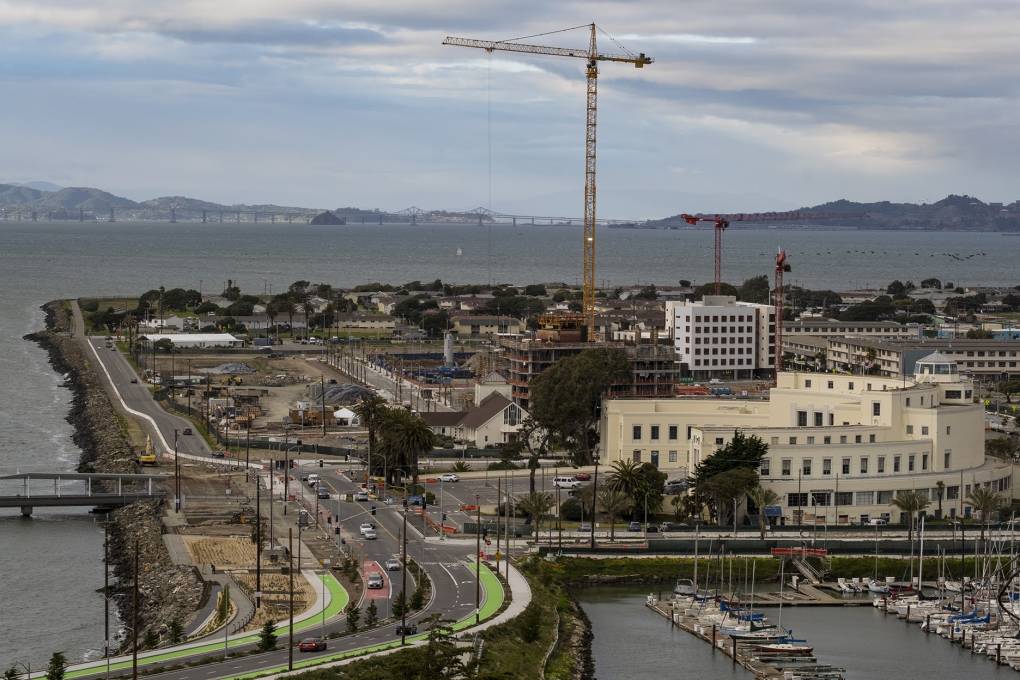
"caption": "Developers have redesigned Treasure Island to withstand a rising San Francisco Bay, elevating land and setting aside space for ever-higher seawalls. Engineers say planned fortifications will hold — but with flood risk accelerating, no one knows for how long.",
"description": "Developers have redesigned Treasure Island to withstand a rising San Francisco Bay, elevating land and setting aside space for ever-higher sea walls. Engineers say planned fortifications will hold — but with flood risk accelerating, no one knows for how long. ",
"title": "Treasure Island",
"credit": "Yesica Prado/San Francisco Public Press",
"status": "inherit",
"altTag": "An aerial view of treasure Island.",
"isLoading": false,
"fetchFailed": false
},
"science_1982148": {
"type": "attachments",
"id": "science_1982148",
"meta": {
"index": "attachments_1716263798",
"site": "science",
"id": "1982148",
"found": true
},
"parent": 1982147,
"imgSizes": {
"twentyfourteen-full-width": {
"file": "https://ww2.kqed.org/app/uploads/sites/35/2023/04/CaliforniaSnow-2048x1412-1-1038x576.jpg",
"width": 1038,
"mimeType": "image/jpeg",
"height": 576
},
"thumbnail": {
"file": "https://ww2.kqed.org/app/uploads/sites/35/2023/04/CaliforniaSnow-2048x1412-1-160x110.jpg",
"width": 160,
"mimeType": "image/jpeg",
"height": 110
},
"post-thumbnail": {
"file": "https://ww2.kqed.org/app/uploads/sites/35/2023/04/CaliforniaSnow-2048x1412-1-672x372.jpg",
"width": 672,
"mimeType": "image/jpeg",
"height": 372
},
"kqedFullSize": {
"file": "https://ww2.kqed.org/app/uploads/sites/35/2023/04/CaliforniaSnow-2048x1412-1.jpg",
"width": 2048,
"height": 1412
},
"large": {
"file": "https://ww2.kqed.org/app/uploads/sites/35/2023/04/CaliforniaSnow-2048x1412-1-1020x703.jpg",
"width": 1020,
"mimeType": "image/jpeg",
"height": 703
},
"1536x1536": {
"file": "https://ww2.kqed.org/app/uploads/sites/35/2023/04/CaliforniaSnow-2048x1412-1-1536x1059.jpg",
"width": 1536,
"mimeType": "image/jpeg",
"height": 1059
},
"full-width": {
"file": "https://ww2.kqed.org/app/uploads/sites/35/2023/04/CaliforniaSnow-2048x1412-1-1920x1324.jpg",
"width": 1920,
"mimeType": "image/jpeg",
"height": 1324
},
"medium": {
"file": "https://ww2.kqed.org/app/uploads/sites/35/2023/04/CaliforniaSnow-2048x1412-1-800x552.jpg",
"width": 800,
"mimeType": "image/jpeg",
"height": 552
},
"medium_large": {
"file": "https://ww2.kqed.org/app/uploads/sites/35/2023/04/CaliforniaSnow-2048x1412-1-768x530.jpg",
"width": 768,
"mimeType": "image/jpeg",
"height": 530
}
},
"publishDate": 1680633649,
"modified": 1680648581,
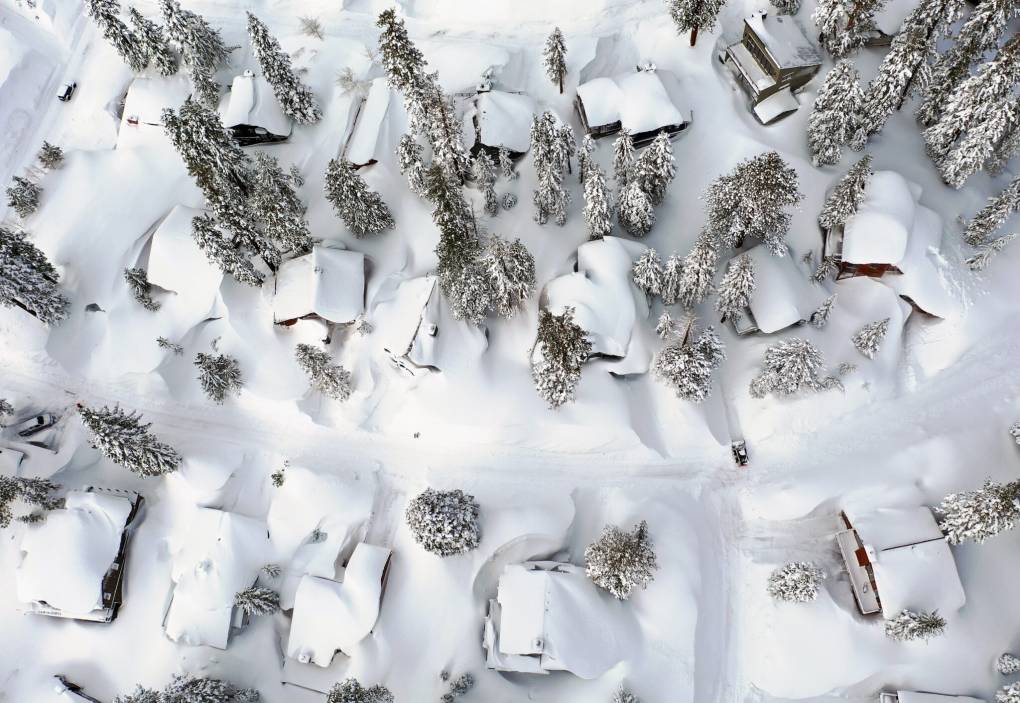
"caption": "In Mammoth Lakes, snow covers roofs next to snowbanks piled up from new and past storms in the Sierra Nevada, in the wake of an atmospheric river event, in March 2023.",
"description": "In Mammoth Lakes, California, snow covers roofs next to snowbanks in March piled up from new and past storms in the Sierra Nevada mountains, in the wake of an atmospheric river event. ",
"title": "California Hit By Another Winter Storm, Deepening The Already Historic Snowpack In Mountain Regions",
"credit": "Mario Tama/Getty Images",
"status": "inherit",
"altTag": "In an aerial view, snow covers roofs next to snowbanks piled up from new and past storms in the Sierra Nevada mountains.",
"isLoading": false,
"fetchFailed": false
},
"science_1982097": {
"type": "attachments",
"id": "science_1982097",
"meta": {
"index": "attachments_1716263798",
"site": "science",
"id": "1982097",
"found": true
},
"parent": 1982079,
"imgSizes": {
"twentyfourteen-full-width": {
"file": "https://ww2.kqed.org/app/uploads/sites/35/2023/03/RS63921_03242023_kqed_pajaroreturning-1309-qut-1038x576.jpg",
"width": 1038,
"mimeType": "image/jpeg",
"height": 576
},
"thumbnail": {
"file": "https://ww2.kqed.org/app/uploads/sites/35/2023/03/RS63921_03242023_kqed_pajaroreturning-1309-qut-160x106.jpg",
"width": 160,
"mimeType": "image/jpeg",
"height": 106
},
"post-thumbnail": {
"file": "https://ww2.kqed.org/app/uploads/sites/35/2023/03/RS63921_03242023_kqed_pajaroreturning-1309-qut-672x372.jpg",
"width": 672,
"mimeType": "image/jpeg",
"height": 372
},
"kqedFullSize": {
"file": "https://ww2.kqed.org/app/uploads/sites/35/2023/03/RS63921_03242023_kqed_pajaroreturning-1309-qut.jpg",
"width": 1920,
"height": 1277
},
"large": {
"file": "https://ww2.kqed.org/app/uploads/sites/35/2023/03/RS63921_03242023_kqed_pajaroreturning-1309-qut-1020x678.jpg",
"width": 1020,
"mimeType": "image/jpeg",
"height": 678
},
"1536x1536": {
"file": "https://ww2.kqed.org/app/uploads/sites/35/2023/03/RS63921_03242023_kqed_pajaroreturning-1309-qut-1536x1022.jpg",
"width": 1536,
"mimeType": "image/jpeg",
"height": 1022
},
"medium": {
"file": "https://ww2.kqed.org/app/uploads/sites/35/2023/03/RS63921_03242023_kqed_pajaroreturning-1309-qut-800x532.jpg",
"width": 800,
"mimeType": "image/jpeg",
"height": 532
},
"medium_large": {
"file": "https://ww2.kqed.org/app/uploads/sites/35/2023/03/RS63921_03242023_kqed_pajaroreturning-1309-qut-768x511.jpg",
"width": 768,
"mimeType": "image/jpeg",
"height": 511
}
},
"publishDate": 1680199410,
"modified": 1680212364,
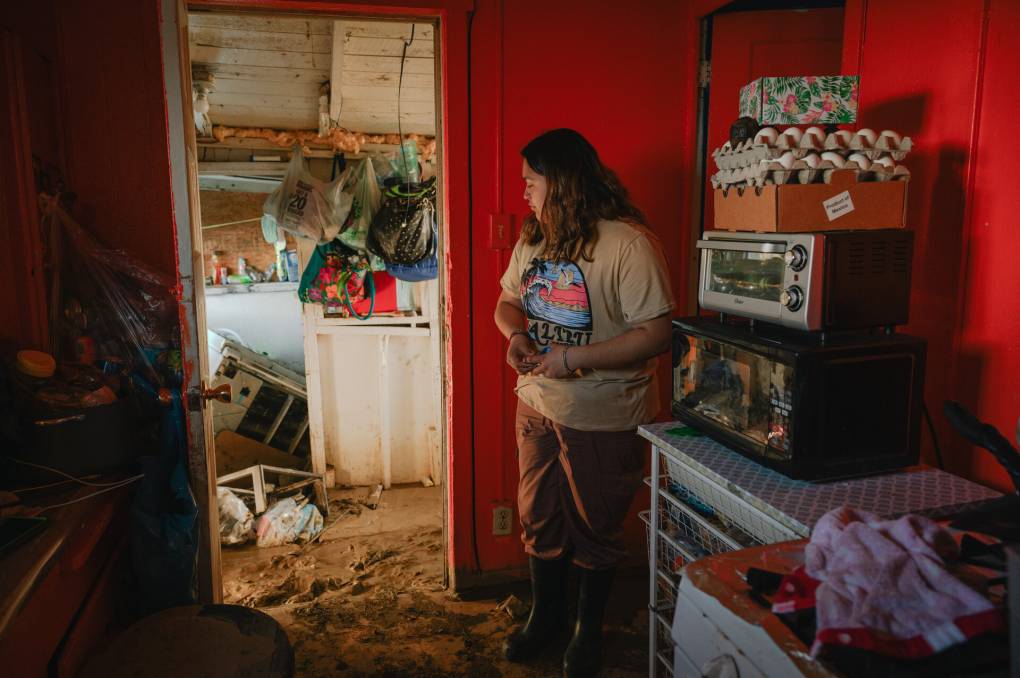
"caption": "Climate activist and Pajaro Valley High School senior Denia Escutia,18, stands in the family's mud-coated kitchen in Pajaro on March 24, 2023, just days after residents began returning to their homes. Several weeks ago, Pajaro residents were forced to evacuate before dawn after an upstream levee breached, spurring widespread flooding.",
"description": null,
"title": "RS63921_03242023_kqed_pajaroreturning 1309-qut",
"credit": "Kori Suzuki/KQED",
"status": "inherit",
"altTag": "A young person wearing rubber boots stands in a small galley kitchen, where appliances on piled on the counter, looking at a mud-caked floor.",
"isLoading": false,
"fetchFailed": false
},
"science_1981883": {
"type": "attachments",
"id": "science_1981883",
"meta": {
"index": "attachments_1716263798",
"site": "science",
"id": "1981883",
"found": true
},
"title": "super-bloom-bay-area-2025",
"publishDate": 1679022010,
"status": "inherit",
"parent": 1981882,
"modified": 1742225924,
"caption": "California poppy (Eschscholzia californica) and various other wildflowers blooming in a meadow in San José.",
"credit": "Sundry Photography/Getty Images",
"altTag": "Yellow and white wildflower blooms seen in a meadow.",
"description": null,
"imgSizes": {
"medium": {
"file": "https://cdn.kqed.org/wp-content/uploads/sites/35/2023/03/GettyImages-1141101456-800x533.jpg",
"width": 800,
"height": 533,
"mimeType": "image/jpeg"
},
"large": {
"file": "https://cdn.kqed.org/wp-content/uploads/sites/35/2023/03/GettyImages-1141101456-1020x680.jpg",
"width": 1020,
"height": 680,
"mimeType": "image/jpeg"
},
"thumbnail": {
"file": "https://cdn.kqed.org/wp-content/uploads/sites/35/2023/03/GettyImages-1141101456-160x107.jpg",
"width": 160,
"height": 107,
"mimeType": "image/jpeg"
},
"medium_large": {
"file": "https://cdn.kqed.org/wp-content/uploads/sites/35/2023/03/GettyImages-1141101456-768x512.jpg",
"width": 768,
"height": 512,
"mimeType": "image/jpeg"
},
"1536x1536": {
"file": "https://cdn.kqed.org/wp-content/uploads/sites/35/2023/03/GettyImages-1141101456-1536x1024.jpg",
"width": 1536,
"height": 1024,
"mimeType": "image/jpeg"
},
"2048x2048": {
"file": "https://cdn.kqed.org/wp-content/uploads/sites/35/2023/03/GettyImages-1141101456-2048x1365.jpg",
"width": 2048,
"height": 1365,
"mimeType": "image/jpeg"
},
"post-thumbnail": {
"file": "https://cdn.kqed.org/wp-content/uploads/sites/35/2023/03/GettyImages-1141101456-672x372.jpg",
"width": 672,
"height": 372,
"mimeType": "image/jpeg"
},
"twentyfourteen-full-width": {
"file": "https://cdn.kqed.org/wp-content/uploads/sites/35/2023/03/GettyImages-1141101456-1038x576.jpg",
"width": 1038,
"height": 576,
"mimeType": "image/jpeg"
},
"full-width": {
"file": "https://cdn.kqed.org/wp-content/uploads/sites/35/2023/03/GettyImages-1141101456-1920x1280.jpg",
"width": 1920,
"height": 1280,
"mimeType": "image/jpeg"
},
"kqedFullSize": {
"file": "https://cdn.kqed.org/wp-content/uploads/sites/35/2023/03/GettyImages-1141101456.jpg",
"width": 2121,
"height": 1414
}
},
"isLoading": false,
"fetchFailed": false
},
"science_1982075": {
"type": "attachments",
"id": "science_1982075",
"meta": {
"index": "attachments_1716263798",
"site": "science",
"id": "1982075",
"found": true
},
"parent": 1982049,
"imgSizes": {
"twentyfourteen-full-width": {
"file": "https://ww2.kqed.org/app/uploads/sites/35/2023/03/image5-2-1038x576.jpg",
"width": 1038,
"mimeType": "image/jpeg",
"height": 576
},
"thumbnail": {
"file": "https://ww2.kqed.org/app/uploads/sites/35/2023/03/image5-2-160x110.jpg",
"width": 160,
"mimeType": "image/jpeg",
"height": 110
},
"post-thumbnail": {
"file": "https://ww2.kqed.org/app/uploads/sites/35/2023/03/image5-2-672x372.jpg",
"width": 672,
"mimeType": "image/jpeg",
"height": 372
},
"kqedFullSize": {
"file": "https://ww2.kqed.org/app/uploads/sites/35/2023/03/image5-2.jpg",
"width": 1896,
"height": 1304
},
"large": {
"file": "https://ww2.kqed.org/app/uploads/sites/35/2023/03/image5-2-1020x702.jpg",
"width": 1020,
"mimeType": "image/jpeg",
"height": 702
},
"1536x1536": {
"file": "https://ww2.kqed.org/app/uploads/sites/35/2023/03/image5-2-1536x1056.jpg",
"width": 1536,
"mimeType": "image/jpeg",
"height": 1056
},
"medium": {
"file": "https://ww2.kqed.org/app/uploads/sites/35/2023/03/image5-2-800x550.jpg",
"width": 800,
"mimeType": "image/jpeg",
"height": 550
},
"medium_large": {
"file": "https://ww2.kqed.org/app/uploads/sites/35/2023/03/image5-2-768x528.jpg",
"width": 768,
"mimeType": "image/jpeg",
"height": 528
}
},
"publishDate": 1680144603,
"modified": 1680197759,
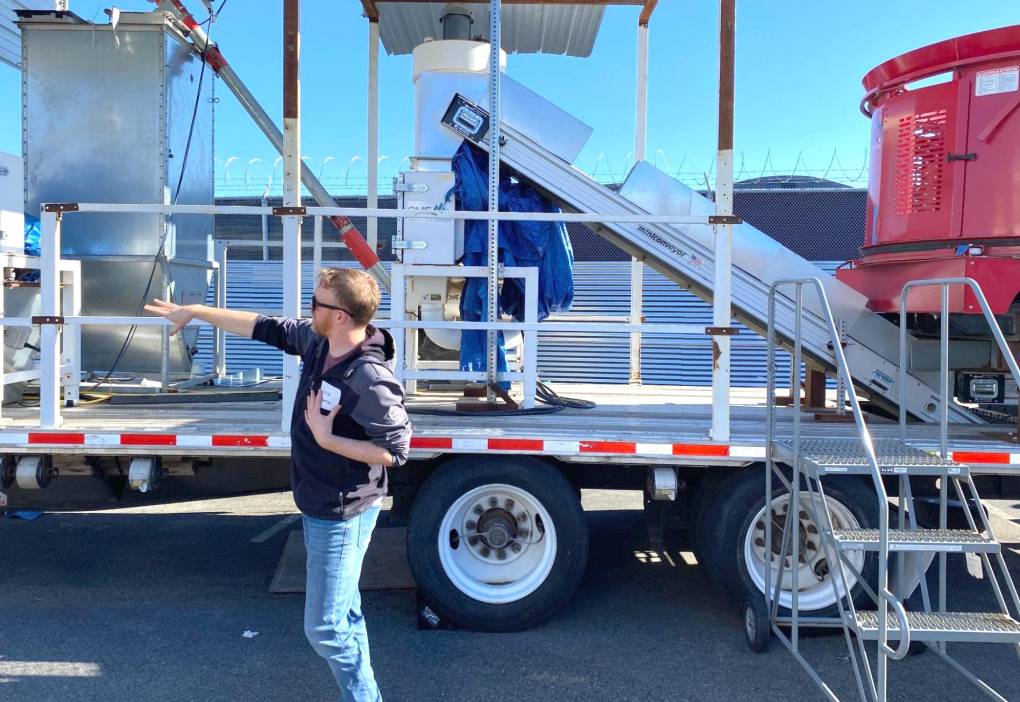
"caption": "Shaun Kinetic, co-founder of Charm Industrial, displays the pyrolyzer that his San Francisco-based company uses to remove carbon from agricultural waste products, on Jan. 26, 2023.",
"description": null,
"title": "image5",
"credit": "Laura Klivans/KQED",
"status": "inherit",
"altTag": "A young white man stands in front of a large machine on top of a truck.",
"isLoading": false,
"fetchFailed": false
},
"science_1982873": {
"type": "attachments",
"id": "science_1982873",
"meta": {
"index": "attachments_1716263798",
"site": "science",
"id": "1982873",
"found": true
},
"parent": 1981963,
"imgSizes": {
"twentyfourteen-full-width": {
"file": "https://ww2.kqed.org/app/uploads/sites/35/2023/03/DL1004-Toad_Tongues-OG-pushedin-HDtest-1038x576.jpg",
"width": 1038,
"mimeType": "image/jpeg",
"height": 576
},
"thumbnail": {
"file": "https://ww2.kqed.org/app/uploads/sites/35/2023/03/DL1004-Toad_Tongues-OG-pushedin-HDtest-160x90.jpg",
"width": 160,
"mimeType": "image/jpeg",
"height": 90
},
"post-thumbnail": {
"file": "https://ww2.kqed.org/app/uploads/sites/35/2023/03/DL1004-Toad_Tongues-OG-pushedin-HDtest-672x372.jpg",
"width": 672,
"mimeType": "image/jpeg",
"height": 372
},
"kqedFullSize": {
"file": "https://ww2.kqed.org/app/uploads/sites/35/2023/03/DL1004-Toad_Tongues-OG-pushedin-HDtest.jpg",
"width": 1920,
"height": 1080
},
"large": {
"file": "https://ww2.kqed.org/app/uploads/sites/35/2023/03/DL1004-Toad_Tongues-OG-pushedin-HDtest-1020x574.jpg",
"width": 1020,
"mimeType": "image/jpeg",
"height": 574
},
"1536x1536": {
"file": "https://ww2.kqed.org/app/uploads/sites/35/2023/03/DL1004-Toad_Tongues-OG-pushedin-HDtest-1536x864.jpg",
"width": 1536,
"mimeType": "image/jpeg",
"height": 864
},
"medium": {
"file": "https://ww2.kqed.org/app/uploads/sites/35/2023/03/DL1004-Toad_Tongues-OG-pushedin-HDtest-800x450.jpg",
"width": 800,
"mimeType": "image/jpeg",
"height": 450
},
"medium_large": {
"file": "https://ww2.kqed.org/app/uploads/sites/35/2023/03/DL1004-Toad_Tongues-OG-pushedin-HDtest-768x432.jpg",
"width": 768,
"mimeType": "image/jpeg",
"height": 432
}
},
"publishDate": 1685665576,
"modified": 1685665576,
"caption": null,
"description": null,
"title": "DL1004-Toad_Tongues-OG-pushedin-HDtest",
"credit": null,
"status": "inherit",
"altTag": null,
"isLoading": false,
"fetchFailed": false
},
"science_1982006": {
"type": "attachments",
"id": "science_1982006",
"meta": {
"index": "attachments_1716263798",
"site": "science",
"id": "1982006",
"found": true
},
"parent": 1981930,
"imgSizes": {
"twentyfourteen-full-width": {
"file": "https://ww2.kqed.org/app/uploads/sites/35/2023/03/RS63835_004_Image_20230317_103754_023_SierraFoothills_03052023-qut-1038x576.jpg",
"width": 1038,
"mimeType": "image/jpeg",
"height": 576
},
"thumbnail": {
"file": "https://ww2.kqed.org/app/uploads/sites/35/2023/03/RS63835_004_Image_20230317_103754_023_SierraFoothills_03052023-qut-160x114.jpg",
"width": 160,
"mimeType": "image/jpeg",
"height": 114
},
"post-thumbnail": {
"file": "https://ww2.kqed.org/app/uploads/sites/35/2023/03/RS63835_004_Image_20230317_103754_023_SierraFoothills_03052023-qut-672x372.jpg",
"width": 672,
"mimeType": "image/jpeg",
"height": 372
},
"kqedFullSize": {
"file": "https://ww2.kqed.org/app/uploads/sites/35/2023/03/RS63835_004_Image_20230317_103754_023_SierraFoothills_03052023-qut.jpg",
"width": 1920,
"height": 1371
},
"large": {
"file": "https://ww2.kqed.org/app/uploads/sites/35/2023/03/RS63835_004_Image_20230317_103754_023_SierraFoothills_03052023-qut-1020x728.jpg",
"width": 1020,
"mimeType": "image/jpeg",
"height": 728
},
"1536x1536": {
"file": "https://ww2.kqed.org/app/uploads/sites/35/2023/03/RS63835_004_Image_20230317_103754_023_SierraFoothills_03052023-qut-1536x1097.jpg",
"width": 1536,
"mimeType": "image/jpeg",
"height": 1097
},
"medium": {
"file": "https://ww2.kqed.org/app/uploads/sites/35/2023/03/RS63835_004_Image_20230317_103754_023_SierraFoothills_03052023-qut-800x571.jpg",
"width": 800,
"mimeType": "image/jpeg",
"height": 571
},
"medium_large": {
"file": "https://ww2.kqed.org/app/uploads/sites/35/2023/03/RS63835_004_Image_20230317_103754_023_SierraFoothills_03052023-qut-768x548.jpg",
"width": 768,
"mimeType": "image/jpeg",
"height": 548
}
},
"publishDate": 1679960164,
"modified": 1679963425,
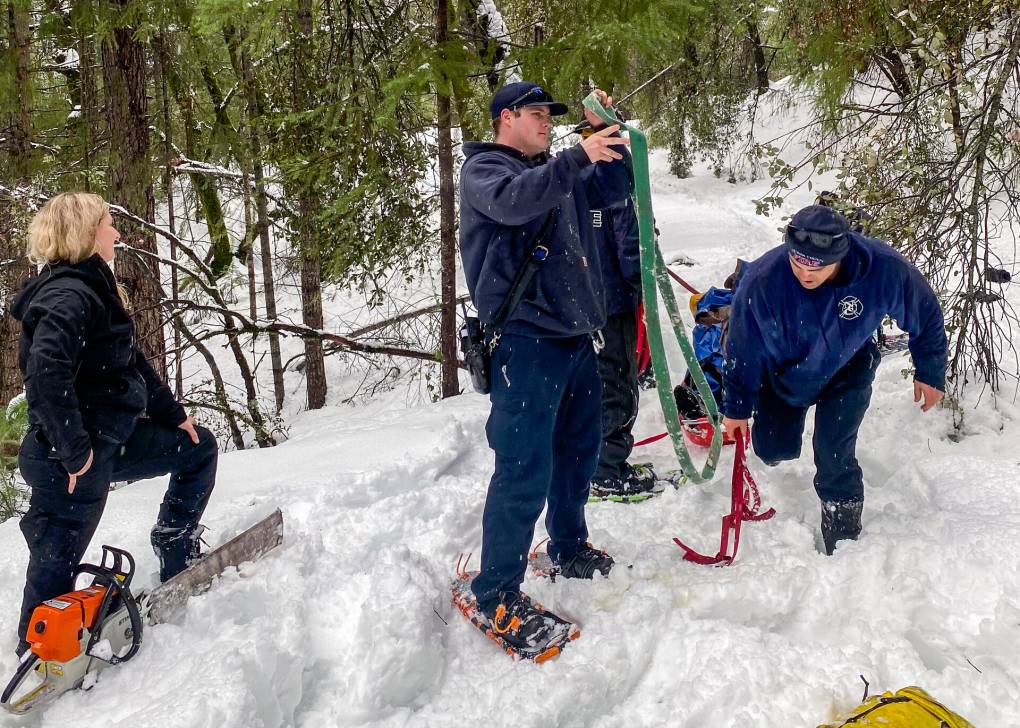
"caption": "Paramedic Jessica Farmer (left) stands next to a chain saw while other emergency workers pull a man having a heart attack on a makeshift sled to safety in the Sierra foothills near Grass Valley on March 5, 2023.",
"description": null,
"title": "RS63835_004_Image_20230317_103754_023_SierraFoothills_03052023-qut",
"credit": "Courtesy of Jessica Farmer",
"status": "inherit",
"altTag": null,
"isLoading": false,
"fetchFailed": false
},
"science_1981944": {
"type": "attachments",
"id": "science_1981944",
"meta": {
"index": "attachments_1716263798",
"site": "science",
"id": "1981944",
"found": true
},
"parent": 1981943,
"imgSizes": {
"twentyfourteen-full-width": {
"file": "https://cdn.kqed.org/wp-content/uploads/sites/35/2023/03/2023_03_10_kj_0135_oroville_spillway_release_drone_custom-1c4d8c2890281e48323fb324cfa8dc4fdda4bca7-1038x576.jpg",
"width": 1038,
"mimeType": "image/jpeg",
"height": 576
},
"thumbnail": {
"file": "https://cdn.kqed.org/wp-content/uploads/sites/35/2023/03/2023_03_10_kj_0135_oroville_spillway_release_drone_custom-1c4d8c2890281e48323fb324cfa8dc4fdda4bca7-160x111.jpg",
"width": 160,
"mimeType": "image/jpeg",
"height": 111
},
"post-thumbnail": {
"file": "https://cdn.kqed.org/wp-content/uploads/sites/35/2023/03/2023_03_10_kj_0135_oroville_spillway_release_drone_custom-1c4d8c2890281e48323fb324cfa8dc4fdda4bca7-672x372.jpg",
"width": 672,
"mimeType": "image/jpeg",
"height": 372
},
"kqedFullSize": {
"file": "https://cdn.kqed.org/wp-content/uploads/sites/35/2023/03/2023_03_10_kj_0135_oroville_spillway_release_drone_custom-1c4d8c2890281e48323fb324cfa8dc4fdda4bca7.jpg",
"width": 2500,
"height": 1730
},
"2048x2048": {
"file": "https://cdn.kqed.org/wp-content/uploads/sites/35/2023/03/2023_03_10_kj_0135_oroville_spillway_release_drone_custom-1c4d8c2890281e48323fb324cfa8dc4fdda4bca7-2048x1417.jpg",
"width": 2048,
"mimeType": "image/jpeg",
"height": 1417
},
"large": {
"file": "https://cdn.kqed.org/wp-content/uploads/sites/35/2023/03/2023_03_10_kj_0135_oroville_spillway_release_drone_custom-1c4d8c2890281e48323fb324cfa8dc4fdda4bca7-1020x706.jpg",
"width": 1020,
"mimeType": "image/jpeg",
"height": 706
},
"1536x1536": {
"file": "https://cdn.kqed.org/wp-content/uploads/sites/35/2023/03/2023_03_10_kj_0135_oroville_spillway_release_drone_custom-1c4d8c2890281e48323fb324cfa8dc4fdda4bca7-1536x1063.jpg",
"width": 1536,
"mimeType": "image/jpeg",
"height": 1063
},
"full-width": {
"file": "https://cdn.kqed.org/wp-content/uploads/sites/35/2023/03/2023_03_10_kj_0135_oroville_spillway_release_drone_custom-1c4d8c2890281e48323fb324cfa8dc4fdda4bca7-1920x1329.jpg",
"width": 1920,
"mimeType": "image/jpeg",
"height": 1329
},
"medium": {
"file": "https://cdn.kqed.org/wp-content/uploads/sites/35/2023/03/2023_03_10_kj_0135_oroville_spillway_release_drone_custom-1c4d8c2890281e48323fb324cfa8dc4fdda4bca7-800x554.jpg",
"width": 800,
"mimeType": "image/jpeg",
"height": 554
},
"medium_large": {
"file": "https://cdn.kqed.org/wp-content/uploads/sites/35/2023/03/2023_03_10_kj_0135_oroville_spillway_release_drone_custom-1c4d8c2890281e48323fb324cfa8dc4fdda4bca7-768x531.jpg",
"width": 768,
"mimeType": "image/jpeg",
"height": 531
}
},
"publishDate": 1679589957,
"modified": 1715188781,
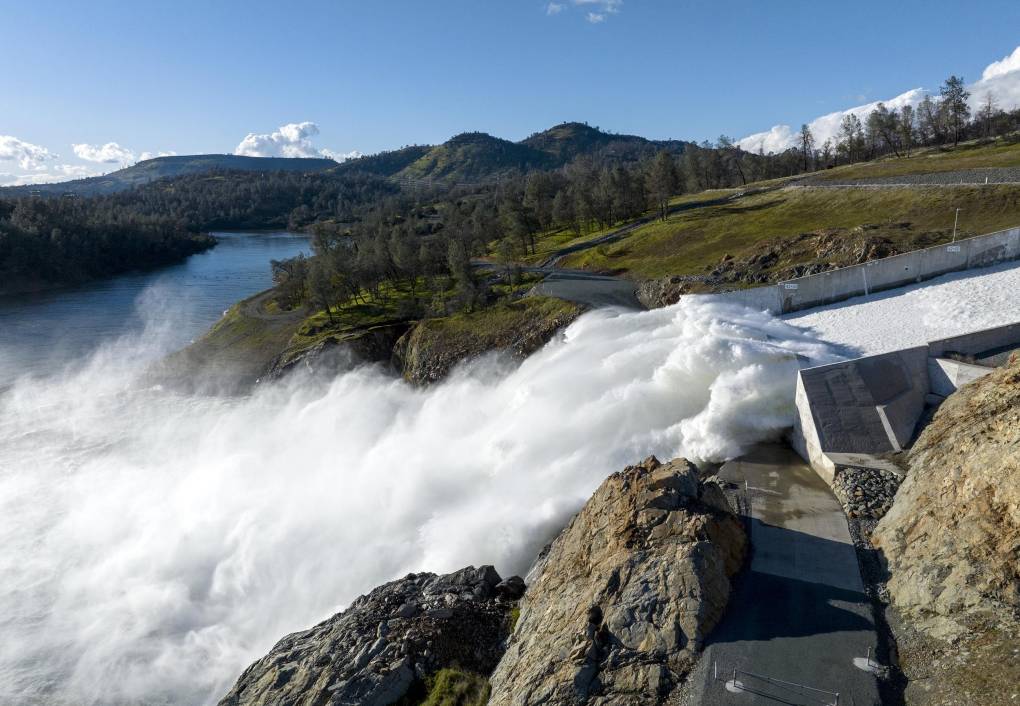
"caption": "Water pours out of Lake Oroville in Northern California in March 2023. Reservoir levels plummeted over the last three years but now have more water than they can hold.",
"description": "A drone provides an aerial view of the small cloud mist formed as water flows over the four energy dissipator blocks at the end of the Lake Oroville main spillway. The California Department of Water Resources increased the water release down the main spillway from 4,000 cubic feet per second (cfs) to 8,000 cfs. Main spillway releases will continue to manage lake levels in anticipation of rain and snowmelt. Photo taken March 10, 2023.\n\nKen James / California Department of Water Resources",
"title": "Water pours out of Lake Oroville in Northern California in March. Reservoirs levels plummeted over the last three years, but now have more water than they can hold.",
"credit": "Ken James/California Department of Water Resources",
"status": "inherit",
"altTag": "Water flowing at high speeds out of a lake.",
"isLoading": false,
"fetchFailed": false
},
"science_1981902": {
"type": "attachments",
"id": "science_1981902",
"meta": {
"index": "attachments_1716263798",
"site": "science",
"id": "1981902",
"found": true
},
"parent": 1981900,
"imgSizes": {
"thumbnail": {
"file": "https://ww2.kqed.org/app/uploads/sites/35/2023/03/GettyImages-1248047966-160x86.jpg",
"width": 160,
"mimeType": "image/jpeg",
"height": 86
},
"post-thumbnail": {
"file": "https://ww2.kqed.org/app/uploads/sites/35/2023/03/GettyImages-1248047966-672x372.jpg",
"width": 672,
"mimeType": "image/jpeg",
"height": 372
},
"kqedFullSize": {
"file": "https://ww2.kqed.org/app/uploads/sites/35/2023/03/GettyImages-1248047966.jpg",
"width": 1024,
"height": 551
},
"large": {
"file": "https://ww2.kqed.org/app/uploads/sites/35/2023/03/GettyImages-1248047966-1020x549.jpg",
"width": 1020,
"mimeType": "image/jpeg",
"height": 549
},
"medium": {
"file": "https://ww2.kqed.org/app/uploads/sites/35/2023/03/GettyImages-1248047966-800x430.jpg",
"width": 800,
"mimeType": "image/jpeg",
"height": 430
},
"medium_large": {
"file": "https://ww2.kqed.org/app/uploads/sites/35/2023/03/GettyImages-1248047966-768x413.jpg",
"width": 768,
"mimeType": "image/jpeg",
"height": 413
}
},
"publishDate": 1679341746,
"modified": 1679420194,
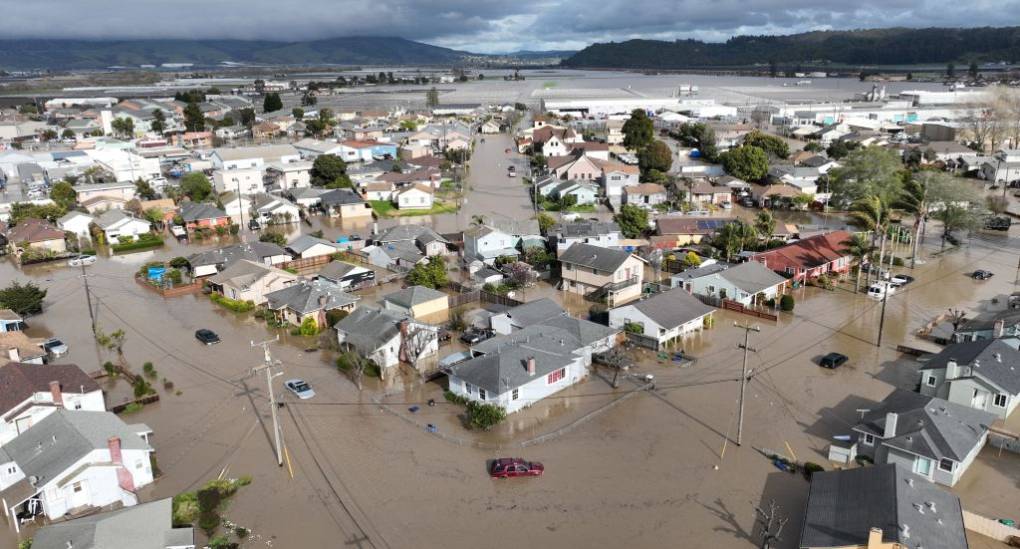
"caption": "Vehicles and homes are engulfed by floodwaters in Pajaro on Saturday, March 11, 2023.",
"description": null,
"title": "TOPSHOT-US-WEATHER-CALIFORNIA-FLOOD",
"credit": "Josh Edelson/AFP via Getty Images",
"status": "inherit",
"altTag": "A group of houses, streets and cars submerged in brown muddy water. Dark skies and mountains are in the background.",
"isLoading": false,
"fetchFailed": false
},
"science_1981838": {
"type": "attachments",
"id": "science_1981838",
"meta": {
"index": "attachments_1716263798",
"site": "science",
"id": "1981838",
"found": true
},
"parent": 1981830,
"imgSizes": {
"twentyfourteen-full-width": {
"file": "https://ww2.kqed.org/app/uploads/sites/35/2023/03/RS22166_P7170153-qut-1038x576.jpg",
"width": 1038,
"mimeType": "image/jpeg",
"height": 576
},
"thumbnail": {
"file": "https://ww2.kqed.org/app/uploads/sites/35/2023/03/RS22166_P7170153-qut-160x120.jpg",
"width": 160,
"mimeType": "image/jpeg",
"height": 120
},
"post-thumbnail": {
"file": "https://ww2.kqed.org/app/uploads/sites/35/2023/03/RS22166_P7170153-qut-672x372.jpg",
"width": 672,
"mimeType": "image/jpeg",
"height": 372
},
"kqedFullSize": {
"file": "https://ww2.kqed.org/app/uploads/sites/35/2023/03/RS22166_P7170153-qut.jpg",
"width": 1920,
"height": 1440
},
"large": {
"file": "https://ww2.kqed.org/app/uploads/sites/35/2023/03/RS22166_P7170153-qut-1020x765.jpg",
"width": 1020,
"mimeType": "image/jpeg",
"height": 765
},
"1536x1536": {
"file": "https://ww2.kqed.org/app/uploads/sites/35/2023/03/RS22166_P7170153-qut-1536x1152.jpg",
"width": 1536,
"mimeType": "image/jpeg",
"height": 1152
},
"medium": {
"file": "https://ww2.kqed.org/app/uploads/sites/35/2023/03/RS22166_P7170153-qut-800x600.jpg",
"width": 800,
"mimeType": "image/jpeg",
"height": 600
},
"medium_large": {
"file": "https://ww2.kqed.org/app/uploads/sites/35/2023/03/RS22166_P7170153-qut-768x576.jpg",
"width": 768,
"mimeType": "image/jpeg",
"height": 576
}
},
"publishDate": 1678216960,
"modified": 1678235946,
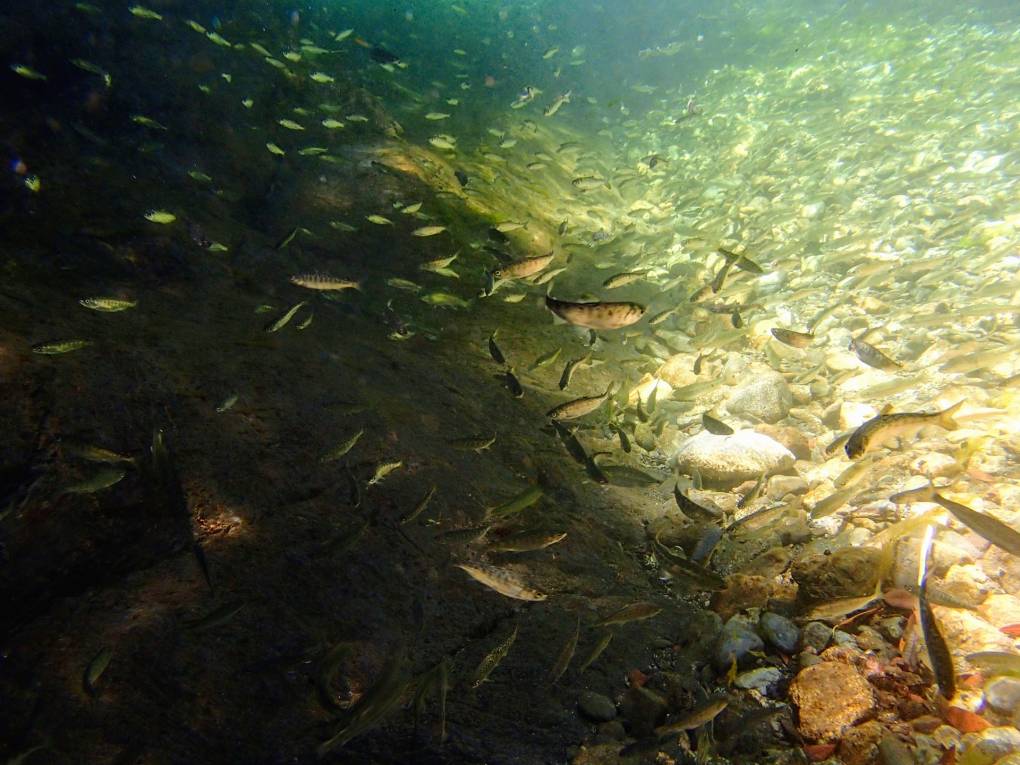
"caption": "The Klamath River is prime habitat for coho salmon, like these juveniles, but that fish has been listed as threatened under the Endangered Species Act.",
"description": null,
"title": "RS22166_P7170153-qut",
"credit": "Jimmy Peterson and Will Harling/Mid Klamath Watershed Council",
"status": "inherit",
"altTag": "Small, silvery fish swim in aqua green light water.",
"isLoading": false,
"fetchFailed": false
},
"science_1981865": {
"type": "attachments",
"id": "science_1981865",
"meta": {
"index": "attachments_1716263798",
"site": "science",
"id": "1981865",
"found": true
},
"parent": 1981819,
"imgSizes": {
"twentyfourteen-full-width": {
"file": "https://ww2.kqed.org/app/uploads/sites/35/2023/03/DEEP_1003_Yep_Mussels_Grow_Beards_With_Their_Feet_KQEDv4-1038x576.jpg",
"width": 1038,
"mimeType": "image/jpeg",
"height": 576
},
"thumbnail": {
"file": "https://ww2.kqed.org/app/uploads/sites/35/2023/03/DEEP_1003_Yep_Mussels_Grow_Beards_With_Their_Feet_KQEDv4-160x90.jpg",
"width": 160,
"mimeType": "image/jpeg",
"height": 90
},
"post-thumbnail": {
"file": "https://ww2.kqed.org/app/uploads/sites/35/2023/03/DEEP_1003_Yep_Mussels_Grow_Beards_With_Their_Feet_KQEDv4-672x372.jpg",
"width": 672,
"mimeType": "image/jpeg",
"height": 372
},
"kqedFullSize": {
"file": "https://ww2.kqed.org/app/uploads/sites/35/2023/03/DEEP_1003_Yep_Mussels_Grow_Beards_With_Their_Feet_KQEDv4.jpg",
"width": 1920,
"height": 1080
},
"large": {
"file": "https://ww2.kqed.org/app/uploads/sites/35/2023/03/DEEP_1003_Yep_Mussels_Grow_Beards_With_Their_Feet_KQEDv4-1020x574.jpg",
"width": 1020,
"mimeType": "image/jpeg",
"height": 574
},
"1536x1536": {
"file": "https://ww2.kqed.org/app/uploads/sites/35/2023/03/DEEP_1003_Yep_Mussels_Grow_Beards_With_Their_Feet_KQEDv4-1536x864.jpg",
"width": 1536,
"mimeType": "image/jpeg",
"height": 864
},
"medium": {
"file": "https://ww2.kqed.org/app/uploads/sites/35/2023/03/DEEP_1003_Yep_Mussels_Grow_Beards_With_Their_Feet_KQEDv4-800x450.jpg",
"width": 800,
"mimeType": "image/jpeg",
"height": 450
},
"medium_large": {
"file": "https://ww2.kqed.org/app/uploads/sites/35/2023/03/DEEP_1003_Yep_Mussels_Grow_Beards_With_Their_Feet_KQEDv4-768x432.jpg",
"width": 768,
"mimeType": "image/jpeg",
"height": 432
}
},
"publishDate": 1678291476,
"modified": 1678291595,
"caption": null,
"description": null,
"title": "DEEP_1003_Yep_Mussels_Grow_Beards_With_Their_Feet_KQEDv4",
"credit": null,
"status": "inherit",
"altTag": "A dark bivalve with orange blush rests underwater, on a bed of light colored sand. From between its shell pokes a reddish-purple tongue-like appendage.",
"isLoading": false,
"fetchFailed": false
},
"science_1981793": {
"type": "attachments",
"id": "science_1981793",
"meta": {
"index": "attachments_1716263798",
"site": "science",
"id": "1981793",
"found": true
},
"parent": 1981790,
"imgSizes": {
"twentyfourteen-full-width": {
"file": "https://ww2.kqed.org/app/uploads/sites/35/2023/03/112922-Drone-Yuma-AZ-MG-CM-01-1038x576.jpg",
"width": 1038,
"mimeType": "image/jpeg",
"height": 576
},
"thumbnail": {
"file": "https://ww2.kqed.org/app/uploads/sites/35/2023/03/112922-Drone-Yuma-AZ-MG-CM-01-160x107.jpg",
"width": 160,
"mimeType": "image/jpeg",
"height": 107
},
"post-thumbnail": {
"file": "https://ww2.kqed.org/app/uploads/sites/35/2023/03/112922-Drone-Yuma-AZ-MG-CM-01-672x372.jpg",
"width": 672,
"mimeType": "image/jpeg",
"height": 372
},
"kqedFullSize": {
"file": "https://ww2.kqed.org/app/uploads/sites/35/2023/03/112922-Drone-Yuma-AZ-MG-CM-01.jpg",
"width": 1200,
"height": 800
},
"large": {
"file": "https://ww2.kqed.org/app/uploads/sites/35/2023/03/112922-Drone-Yuma-AZ-MG-CM-01-1020x680.jpg",
"width": 1020,
"mimeType": "image/jpeg",
"height": 680
},
"medium": {
"file": "https://ww2.kqed.org/app/uploads/sites/35/2023/03/112922-Drone-Yuma-AZ-MG-CM-01-800x533.jpg",
"width": 800,
"mimeType": "image/jpeg",
"height": 533
},
"medium_large": {
"file": "https://ww2.kqed.org/app/uploads/sites/35/2023/03/112922-Drone-Yuma-AZ-MG-CM-01-768x512.jpg",
"width": 768,
"mimeType": "image/jpeg",
"height": 512
}
},
"publishDate": 1677699355,
"modified": 1677719141,
"caption": "The South Yuma County Landfill in Yuma, Arizona, on Nov. 29, 2022.",
"description": null,
"title": "An aerial view of a gray landfill amid beige, sandy soil.",
"credit": "Miguel Gutierrez Jr./CalMatters",
"status": "inherit",
"altTag": "An aerial view of a landfill in Arizona.",
"isLoading": false,
"fetchFailed": false
}
},
"audioPlayerReducer": {
"postId": "stream_live",
"isPaused": true,
"isPlaying": false,
"pfsActive": false,
"pledgeModalIsOpen": true,
"playerDrawerIsOpen": false,
"liveAudioPlayStartedAt": 0,
"liveAudioPlayContext": ""
},
"authorsReducer": {
"byline_science_1982130": {
"type": "authors",
"id": "byline_science_1982130",
"meta": {
"override": true
},
"slug": "byline_science_1982130",
"name": "Kristi Coale\u003cbr>San Francisco Public Press",
"isLoading": false
},
"byline_science_1982147": {
"type": "authors",
"id": "byline_science_1982147",
"meta": {
"override": true
},
"slug": "byline_science_1982147",
"name": "\u003ca href=\"https://insideclimatenews.org/profile/emma-foehringer-merchant/\">Emma Foehringer Merchant\u003c/a>",
"isLoading": false
},
"byline_science_1981943": {
"type": "authors",
"id": "byline_science_1981943",
"meta": {
"override": true
},
"slug": "byline_science_1981943",
"name": "\u003ca href=\"https://www.npr.org/people/803934365/lauren-sommer\">Lauren Sommer\u003c/a>",
"isLoading": false
},
"byline_science_1981790": {
"type": "authors",
"id": "byline_science_1981790",
"meta": {
"override": true
},
"slug": "byline_science_1981790",
"name": "\u003ca href=\"https://calmatters.org/author/robert-lewis/\">Robert Lewis\u003c/a>",
"isLoading": false
},
"joshua-cassidy": {
"type": "authors",
"id": "6219",
"meta": {
"index": "authors_1716337520",
"id": "6219",
"found": true
},
"name": "Josh Cassidy",
"firstName": "Josh",
"lastName": "Cassidy",
"slug": "joshua-cassidy",
"email": "jcassidy@kqed.org",
"display_author_email": false,
"staff_mastheads": [
"science"
],
"title": "Digital Video Producer",
"bio": "Josh is a Senior Video Producer for KQED Science, and the Lead Producer and Cinematographer for Deep Look. After receiving his BS in Wildlife Biology from Ohio University, he went on to participate in marine mammal research for NOAA, USGS and the Intersea Foundation. He also served as the president of The Pacific Cetacean Group, a nonprofit organization dedicated to teaching students K-6 about whales. Josh studied science and natural history filmmaking at San Francisco State University and Montana State University.",
"avatar": "https://secure.gravatar.com/avatar/f2582a0801a35af53b734d56bcac2bbe?s=600&d=blank&r=g",
"twitter": null,
"facebook": null,
"instagram": null,
"linkedin": null,
"sites": [
{
"site": "science",
"roles": [
"editor"
]
},
{
"site": "quest",
"roles": [
"author",
"edit_others_posts"
]
}
],
"headData": {
"title": "Josh Cassidy | KQED",
"description": "Digital Video Producer",
"ogImgSrc": "https://secure.gravatar.com/avatar/f2582a0801a35af53b734d56bcac2bbe?s=600&d=blank&r=g",
"twImgSrc": "https://secure.gravatar.com/avatar/f2582a0801a35af53b734d56bcac2bbe?s=600&d=blank&r=g"
},
"isLoading": false,
"link": "/author/joshua-cassidy"
},
"lklivans": {
"type": "authors",
"id": "8648",
"meta": {
"index": "authors_1716337520",
"id": "8648",
"found": true
},
"name": "Laura Klivans",
"firstName": "Laura",
"lastName": "Klivans",
"slug": "lklivans",
"email": "lklivans@kqed.org",
"display_author_email": true,
"staff_mastheads": [
"news",
"science"
],
"title": "Reporter",
"bio": "Laura Klivans is an award-winning science reporter for KQED News, where she covers climate change with an eye on both groundbreaking progress and gaps in action. She is the former host of KQED's blockbuster video series about tiny, amazing animals, \u003cem>Deep Look\u003c/em>. Her work reaches national audiences through NPR, \u003cem>Here & Now, \u003c/em>PRI, and other major outlets. \r\n\r\nLaura’s won five Northern California Area Emmy Awards for Deep Look and First Place in the Greater Bay Area Journalism Awards for a podcast exploring how one Oakland neighborhood teamed up to reduce planet-heating pollution.\r\n\r\nBeyond her reporting, she hosts and moderates events. In the past, she taught audio storytelling at the UC Berkeley Graduate School of Journalism, led international education programs, worked with immigrants and refugees along the Thai-Burmese border, taught high schoolers sex ed, and was an actress. \r\n\r\nShe's a former UC Berkeley Human Rights Fellow, USC Center for Health Journalism's California Fellow and Coro Fellow in Public Affairs. Laura has a master’s in journalism from UC Berkeley, a master’s in education from Harvard, and an undergraduate degree from Northwestern University.\r\n\r\nShe loves trying to riddle the meaning out of vanity license plates.",
"avatar": "https://secure.gravatar.com/avatar/2d2ecd1550a494cc10ad4a503406965585902124739e775a9b3817eebf1d88be?s=600&d=blank&r=g",
"twitter": "lauraklivans",
"bluesky": null,
"facebook": null,
"instagram": null,
"linkedin": null,
"sites": [
{
"site": "news",
"roles": [
"editor"
]
},
{
"site": "stateofhealth",
"roles": [
"contributor",
"editor"
]
},
{
"site": "science",
"roles": [
"editor"
]
},
{
"site": "forum",
"roles": [
"editor"
]
}
],
"headData": {
"title": "Laura Klivans | KQED",
"description": "Reporter",
"ogImgSrc": "https://secure.gravatar.com/avatar/2d2ecd1550a494cc10ad4a503406965585902124739e775a9b3817eebf1d88be?s=600&d=blank&r=g",
"twImgSrc": "https://secure.gravatar.com/avatar/2d2ecd1550a494cc10ad4a503406965585902124739e775a9b3817eebf1d88be?s=600&d=blank&r=g"
},
"isLoading": false,
"link": "/author/lklivans"
},
"dventon": {
"type": "authors",
"id": "11088",
"meta": {
"index": "authors_1716337520",
"id": "11088",
"found": true
},
"name": "Danielle Venton",
"firstName": "Danielle",
"lastName": "Venton",
"slug": "dventon",
"email": "dventon@kqed.org",
"display_author_email": true,
"staff_mastheads": [
"science"
],
"title": "Science reporter",
"bio": "Danielle Venton is a reporter for KQED Science. She covers wildfires, space and oceans (though she is prone to sea sickness).\r\n\r\nBefore joining KQED in 2015, Danielle was a staff reporter at KRCB in Sonoma County and a freelancer. She studied science communication at UC Santa Cruz and formerly worked at CERN in Geneva, Switzerland where she wrote about computing. She lives in Sonoma County and enjoys backpacking.",
"avatar": "https://secure.gravatar.com/avatar/37b292b5c40c8d93959c4f48d73b5286f41b7abd8588277e941905a3ed4c801c?s=600&d=blank&r=g",
"twitter": "DanielleVenton",
"bluesky": null,
"facebook": null,
"instagram": null,
"linkedin": null,
"sites": [
{
"site": "arts",
"roles": [
"contributor"
]
},
{
"site": "news",
"roles": [
"editor"
]
},
{
"site": "futureofyou",
"roles": [
"editor"
]
},
{
"site": "science",
"roles": [
"editor"
]
},
{
"site": "liveblog",
"roles": [
"contributor"
]
}
],
"headData": {
"title": "Danielle Venton | KQED",
"description": "Science reporter",
"ogImgSrc": "https://secure.gravatar.com/avatar/37b292b5c40c8d93959c4f48d73b5286f41b7abd8588277e941905a3ed4c801c?s=600&d=blank&r=g",
"twImgSrc": "https://secure.gravatar.com/avatar/37b292b5c40c8d93959c4f48d73b5286f41b7abd8588277e941905a3ed4c801c?s=600&d=blank&r=g"
},
"isLoading": false,
"link": "/author/dventon"
},
"lesleymcclurg": {
"type": "authors",
"id": "11229",
"meta": {
"index": "authors_1716337520",
"id": "11229",
"found": true
},
"name": "Lesley McClurg",
"firstName": "Lesley",
"lastName": "McClurg",
"slug": "lesleymcclurg",
"email": "lmcclurg@KQED.org",
"display_author_email": false,
"staff_mastheads": [
"news",
"science"
],
"title": "KQED Health Correspondent",
"bio": "Lesley McClurg is a health correspondent and fill-in host whose work is regularly rebroadcast on NPR and PBS programs. She’s earned multiple regional Emmy awards, a national and a regional Edward R. Murrow award, and was named Best Beat Reporter by the Association of Health Care Journalists. The Society of Professional Journalists has recognized her work several times, and the Society of Environmental Journalists spotlighted her coverage of California’s historic drought.\r\n\r\nBefore joining KQED in 2016, Lesley covered food and sustainability for Capital Public Radio, environmental issues for Colorado Public Radio, and reported for KUOW and KCTS 9 in Seattle. Away from the newsroom, she loves skiing with her daughter, mountain biking with her partner, and playing with Ollie, the family’s goldendoodle. On deadline, she runs almost entirely on chocolate chips.\r\n\r\n ",
"avatar": "https://secure.gravatar.com/avatar/bab49e972ea10c774fe0f5e29dba1722b158f7c0d58a360923d1389d380b2978?s=600&d=blank&r=g",
"twitter": "lesleywmcclurg",
"bluesky": null,
"facebook": null,
"instagram": null,
"linkedin": null,
"sites": [
{
"site": "arts",
"roles": [
"author"
]
},
{
"site": "news",
"roles": [
"editor"
]
},
{
"site": "futureofyou",
"roles": [
"editor"
]
},
{
"site": "stateofhealth",
"roles": [
"author"
]
},
{
"site": "science",
"roles": [
"editor"
]
},
{
"site": "quest",
"roles": [
"subscriber"
]
},
{
"site": "forum",
"roles": [
"administrator"
]
},
{
"site": "liveblog",
"roles": [
"author"
]
}
],
"headData": {
"title": "Lesley McClurg | KQED",
"description": "KQED Health Correspondent",
"ogImgSrc": "https://secure.gravatar.com/avatar/bab49e972ea10c774fe0f5e29dba1722b158f7c0d58a360923d1389d380b2978?s=600&d=blank&r=g",
"twImgSrc": "https://secure.gravatar.com/avatar/bab49e972ea10c774fe0f5e29dba1722b158f7c0d58a360923d1389d380b2978?s=600&d=blank&r=g"
},
"isLoading": false,
"link": "/author/lesleymcclurg"
},
"smohamad": {
"type": "authors",
"id": "11631",
"meta": {
"index": "authors_1716337520",
"id": "11631",
"found": true
},
"name": "Sarah Mohamad",
"firstName": "Sarah",
"lastName": "Mohamad",
"slug": "smohamad",
"email": "smohamad@KQED.org",
"display_author_email": true,
"staff_mastheads": [],
"title": "Engagement Producer and Reporter, KQED Science",
"bio": "Sarah Mohamad is an audience engagement reporter and producer for KQED Science. She reports on audience-focused science and environment stories and manages the team's social media, newsletter, and engagement efforts. Prior to this role, she played a key role as project manager for NSF's \u003ca href=\"https://www.kqed.org/crackingthecode\">\u003cem>Cracking the Code: Influencing Millennial Science Engagement\u003c/em> \u003c/a>audience research.",
"avatar": "https://secure.gravatar.com/avatar/e6224957cd82d015183756ddde1f928013a563d7ca2e4565f8c4de1ec64886c5?s=600&d=blank&r=g",
"twitter": "sarahkmohamad",
"bluesky": null,
"facebook": null,
"instagram": null,
"linkedin": null,
"sites": [
{
"site": "",
"roles": [
"editor"
]
},
{
"site": "arts",
"roles": [
"editor"
]
},
{
"site": "news",
"roles": [
"editor"
]
},
{
"site": "about",
"roles": [
"editor"
]
},
{
"site": "science",
"roles": [
"editor"
]
}
],
"headData": {
"title": "Sarah Mohamad | KQED",
"description": "Engagement Producer and Reporter, KQED Science",
"ogImgSrc": "https://secure.gravatar.com/avatar/e6224957cd82d015183756ddde1f928013a563d7ca2e4565f8c4de1ec64886c5?s=600&d=blank&r=g",
"twImgSrc": "https://secure.gravatar.com/avatar/e6224957cd82d015183756ddde1f928013a563d7ca2e4565f8c4de1ec64886c5?s=600&d=blank&r=g"
},
"isLoading": false,
"link": "/author/smohamad"
},
"eromero": {
"type": "authors",
"id": "11746",
"meta": {
"index": "authors_1716337520",
"id": "11746",
"found": true
},
"name": "Ezra David Romero",
"firstName": "Ezra David",
"lastName": "Romero",
"slug": "eromero",
"email": "eromero@kqed.org",
"display_author_email": true,
"staff_mastheads": [
"news",
"science"
],
"title": "Climate Reporter",
"bio": "Ezra David Romero is a climate reporter for KQED News. He covers the absence and excess of water in the Bay Area — think sea level rise, flooding and drought. For nearly a decade he’s covered how warming temperatures are altering the lives of Californians. He’s reported on farmers worried their pistachio trees aren’t getting enough sleep, families desperate for water, scientists studying dying giant sequoias, and alongside firefighters containing wildfires. His work has appeared on local stations across California and nationally on public radio shows like Morning Edition, Here and Now, All Things Considered and Science Friday. ",
"avatar": "https://secure.gravatar.com/avatar/c76404d287c10ed40224227551ac36e24352c7306f106632caf6fead76f8801f?s=600&d=blank&r=g",
"twitter": "ezraromero",
"bluesky": null,
"facebook": null,
"instagram": null,
"linkedin": null,
"sites": [
{
"site": "arts",
"roles": [
"editor"
]
},
{
"site": "news",
"roles": [
"editor"
]
},
{
"site": "science",
"roles": [
"editor"
]
},
{
"site": "liveblog",
"roles": [
"author"
]
}
],
"headData": {
"title": "Ezra David Romero | KQED",
"description": "Climate Reporter",
"ogImgSrc": "https://secure.gravatar.com/avatar/c76404d287c10ed40224227551ac36e24352c7306f106632caf6fead76f8801f?s=600&d=blank&r=g",
"twImgSrc": "https://secure.gravatar.com/avatar/c76404d287c10ed40224227551ac36e24352c7306f106632caf6fead76f8801f?s=600&d=blank&r=g"
},
"isLoading": false,
"link": "/author/eromero"
},
"mschiffman": {
"type": "authors",
"id": "11833",
"meta": {
"index": "authors_1716337520",
"id": "11833",
"found": true
},
"name": "Mimi Schiffman",
"firstName": "Mimi",
"lastName": "Schiffman",
"slug": "mschiffman",
"email": "mschiffman@kqed.org",
"display_author_email": false,
"staff_mastheads": [],
"title": "KQED Contributor",
"bio": "Mimi Schiffman is a producer for Deep Look.\r\n\r\nPrior to joining the Deep Look team she made hundreds of stories over more than a decade as a producer, director of photography and/or editor. \r\n\r\nShe's filmed lemurs finger painting (a favorite pastime of the amazing Duke Lemur Center inhabitants), stayed awake for 36 hours while trailing the first person with dwarfism to complete an Ironman (shout out to John Young, aka \"The Hammer\") and got to interview the late, great Anthony Bourdain.\r\n \r\nFun facts: Mimi's first job was weighing foraminifera - single cell organisms - in tiny foil cups, and she once got a river designated as “Wild and scenic.” She’s passionate about animals in general but very specifically her rescue dog, Henry. And her kid, Sierra and husband, Peter.",
"avatar": "https://secure.gravatar.com/avatar/e8b898539bc6a47f47f94992f0f17948?s=600&d=blank&r=g",
"twitter": null,
"facebook": null,
"instagram": null,
"linkedin": null,
"sites": [
{
"site": "science",
"roles": [
"editor"
]
}
],
"headData": {
"title": "Mimi Schiffman | KQED",
"description": "KQED Contributor",
"ogImgSrc": "https://secure.gravatar.com/avatar/e8b898539bc6a47f47f94992f0f17948?s=600&d=blank&r=g",
"twImgSrc": "https://secure.gravatar.com/avatar/e8b898539bc6a47f47f94992f0f17948?s=600&d=blank&r=g"
},
"isLoading": false,
"link": "/author/mschiffman"
}
},
"pagesReducer": {
"science_category_news": {
"type": "terms",
"id": "science_40",
"meta": {
"index": "terms_1716263798",
"site": "science",
"id": "40",
"score": 10.813459
},
"featImg": null,
"name": "News",
"description": null,
"taxonomy": "category",
"headData": {
"twImgId": null,
"twTitle": null,
"ogTitle": null,
"ogImgId": null,
"twDescription": null,
"description": null,
"title": "News Archives | KQED Science",
"ogDescription": null
},
"ttid": 42,
"slug": "news",
"isLoading": false,
"title": "News",
"pageMeta": {
"site": "science",
"WpPageTemplate": "page-topic-editorial",
"currentPage": 53
},
"blocks": [
{
"blockName": "kqed/post-list",
"attrs": {
"layout": "cardArticle2",
"query": "posts/science?category=news",
"seeMore": false,
"paginated": true,
"page": 53
}
},
{
"blockName": "kqed/ad"
}
]
}
},
"pfsSessionReducer": {},
"postsReducer": {
"stream_live": {
"type": "live",
"id": "stream_live",
"audioUrl": "https://streams.kqed.org/kqedradio",
"title": "Live Stream",
"excerpt": "Live Stream information currently unavailable.",
"link": "/radio",
"featImg": "",
"label": {
"name": "KQED Live",
"link": "/"
}
},
"stream_kqedNewscast": {
"type": "posts",
"id": "stream_kqedNewscast",
"audioUrl": "https://www.kqed.org/.stream/anon/radio/RDnews/newscast.mp3?_=1",
"title": "KQED Newscast",
"featImg": "",
"label": {
"name": "88.5 FM",
"link": "/"
}
},
"science_1982130": {
"type": "posts",
"id": "science_1982130",
"meta": {
"index": "posts_1716263798",
"site": "science",
"id": "1982130",
"score": null,
"sort": [
1680699603000
]
},
"parent": 0,
"labelTerm": {},
"blocks": [],
"publishDate": 1680699603,
"format": "standard",
"title": "Promising to Prevent Floods at Treasure Island, Builders Downplay Risk of Sea Rise",
"headTitle": "Promising to Prevent Floods at Treasure Island, Builders Downplay Risk of Sea Rise | KQED",
"content": "\u003cp>\u003cem>This story was reported by the \u003ca href=\"https://sfpublicpress.org/\">San Francisco Public Press\u003c/a>, an independent nonprofit newsroom focused on accountability journalism, in partnership with Inside Climate News.\u003c/em>\u003c/p>\n\u003cp>Sea level rise is forcing cities around San Francisco Bay to weigh demand for new housing against the need to protect communities from flooding. Builders say they can solve this dilemma with cutting-edge civil engineering. But no one knows whether their ambitious efforts will be enough to keep newly built waterfront real estate safe in coming decades.\u003c/p>\n\u003cp>Meanwhile, developers are busy building — and telling the public that they can mitigate this one effect of climate change, despite mounting evidence that it could be a bigger problem than previously believed.\u003c/p>\n\u003cp>On Treasure Island, a flat tract of 20th-century landfill with epic bay vistas, workers have poured the foundation for a 22-story tower, the first of six planned high-rise buildings, and broken ground on an affordable housing complex. Another, for families and unhoused veterans, is nearly complete. Townhomes, retail space and a waterfront transit hub are also in the pipeline. All told, the $6 billion development would be home to 20,000 people or more.\u003c/p>\n\u003cp>Engineers for the public-private consortium transforming the island, Treasure Island Community Development, say they are pursuing aggressive sea rise adaptation strategies. Improvements include raising some of the land by several feet, preparing a buffer zone for future levees and pumps, and setting aside low-lying open space that could convert to floodable marshland as higher bay waters spill onshore.\u003c/p>\n\u003cp>[ad fullwidth]\u003c/p>\n\u003cp>This is not a cheap endeavor. The development group’s director, Bob Beck, did not return multiple emails and phone calls regarding costs for this work. A 2011 report by the city of San Francisco, which includes Treasure Island, estimated that “geotechnical stabilization” measures would cost $137 million. Storm drains, soil grading and landscape and open-space improvements would add about $120 million.\u003c/p>\n\u003cp>Dilip Trivedi, the site’s project manager with international engineering firm Moffatt and Nichol, has been touting the consortium’s efforts for more than a decade. He said in a recent interview that the most built-up parts of the island should be safe from sea rise through at least 2070. Fifty years or so is a reasonable planning horizon for new developments, he added, and additional phased seawall construction can help future generations stay a step ahead of ever-higher tides.\u003c/p>\n\u003cp>“When you put together significant infrastructure, you don’t want to have to maintain it for about that time,” Trivedi said. “It is what we call project life.”\u003c/p>\n\u003cfigure id=\"attachment_1982132\" class=\"wp-caption alignnone\" style=\"max-width: 800px\">\u003cimg loading=\"lazy\" decoding=\"async\" class=\"size-medium wp-image-1982132\" src=\"https://ww2.kqed.org/app/uploads/sites/35/2023/04/Treasure_Island_03-1536x1025-1-800x534.jpg\" alt=\"Two construction workers seen on the job on residential tower. \" width=\"800\" height=\"534\" srcset=\"https://cdn.kqed.org/wp-content/uploads/sites/35/2023/04/Treasure_Island_03-1536x1025-1-800x534.jpg 800w, https://cdn.kqed.org/wp-content/uploads/sites/35/2023/04/Treasure_Island_03-1536x1025-1-1020x681.jpg 1020w, https://cdn.kqed.org/wp-content/uploads/sites/35/2023/04/Treasure_Island_03-1536x1025-1-160x107.jpg 160w, https://cdn.kqed.org/wp-content/uploads/sites/35/2023/04/Treasure_Island_03-1536x1025-1-768x513.jpg 768w, https://cdn.kqed.org/wp-content/uploads/sites/35/2023/04/Treasure_Island_03-1536x1025-1.jpg 1536w\" sizes=\"(max-width: 800px) 100vw, 800px\">\u003cfigcaption class=\"wp-caption-text\">After years of planning, construction has started on residential towers with sweeping views of San Francisco and the Bay Area. At least 20,000 residents are expected to live on the island by 2035. \u003ccite>(Yesica Prado/San Francisco Public Press)\u003c/cite>\u003c/figcaption>\u003c/figure>\n\u003cp>Climate scientists, however, commonly try to predict sea rise out at least to the year 2100, a time when some current schoolchildren could be octogenarian residents of the island.\u003c/p>\n\u003cp>Every contemporary climate model predicts that, even with deep carbon reductions starting this decade, several feet of sea rise are locked in. The debates for climate adaptation strategy are how many feet and how far down the road we should consider.\u003c/p>\n\u003cp>With ever more sophisticated climate predictions, the outlook for sea level rise has continued to darken, indicating that current trends will likely accelerate through the end of the century. In one pessimistic scenario — which researchers say is among the possibilities in a “business as usual” global greenhouse gas emissions future — much of the island could find itself underwater frequently, and some of the most developed areas could occasionally be threatened with flooding.\u003c/p>\n\u003cp>To home in on Treasure Island’s future, the San Francisco Public Press asked researchers at the United States Geological Survey’s Pacific Coastal and Marine Science Center, based in Santa Cruz, to create a highly localized model of sea rise conditions under various climate scenarios. They found that bay waters could surge higher than the developers have long been saying publicly.\u003c/p>\n\u003cp>In that model, by 2100 there is a small but not insignificant chance of 4 feet, 11 inches of sea level rise — slightly more than what the island’s engineers have accounted for. Adding in the effects of tides, weather and other transient events, such as in the kind of extreme storm seen once in a century, that total could be 2 feet, 11 inches higher.\u003c/p>\n\u003cp>The resulting surge would, at least temporarily, send waves 1 foot, 2 inches higher than the lowest ground floors of some planned housing complexes.\u003c/p>\n\u003cp>\u003cimg loading=\"lazy\" decoding=\"async\" class=\"alignnone size-full wp-image-1982133\" src=\"https://ww2.kqed.org/app/uploads/sites/35/2023/04/SeaLevelRiseSchematic700px.png\" alt=\"Facing Sea Level Rise at Treasure Island\" width=\"700\" height=\"691\" srcset=\"https://cdn.kqed.org/wp-content/uploads/sites/35/2023/04/SeaLevelRiseSchematic700px.png 700w, https://cdn.kqed.org/wp-content/uploads/sites/35/2023/04/SeaLevelRiseSchematic700px-160x158.png 160w\" sizes=\"(max-width: 700px) 100vw, 700px\">\u003c/p>\n\u003cp>While the project’s engineers never address this possibility in their public narratives, documents they have prepared show they have known about similar scenarios for years.\u003c/p>\n\u003cp>Their own maps, which superimpose flood conditions on existing land elevations, line up fairly closely to the Geological Survey’s findings. Yet the engineers have chosen to downplay the likelihood of these outcomes as they pursued permits to build, arguing that novel construction technologies could make the development invulnerable to flooding under any reasonable course of events.\u003c/p>\n\u003cp>In a 2016 sea rise adaptation filing with a regional watershed agency, Moffatt and Nichol included six maps showing potential flood conditions in each construction phase, side by side with maps showing how the planned short- and long-term sea level rise protections would prevent inundation.\u003c/p>\n\u003cp>One map shows 4 feet of sea rise. Before any land improvements, nearly the entire island would have been inundated — up to 8 feet in places — during flooding calculated by FEMA to have a 1% chance of occurring per year. Another part of that document showed a graph that indicated a 4-foot rise was possible by around 2093. The Geological Survey’s extreme scenario model for 2100 puts sea rise closer to 5 feet.\u003c/p>\n\u003cp>But Trivedi said that the raising of the land under many of the buildings, plus additional shoreline improvements, would protect key infrastructure. Beside that map, the engineers showed how the existing 3.5-mile perimeter wall could be raised by 1 to 3 feet, depending on location, which they said would keep much of the island dry, although a note appended to the diagram said: “Does not show intentional flooding from managed retreat on northern and eastern shorelines — TBD.”\u003c/p>\n\u003cp>Within the last year, regulators have started questioning whether the steps developers are taking are sufficient to guarantee that the island remains dry in the long term.\u003c/p>\n\u003cp>“This is a community that will be around a while,” said Ethan Lavine, chief of permits for shoreline development for the Bay Conservation and Development Commission. “At a certain point in time, they will need levee protection.” Lavine’s office is pressing Trivedi and his colleagues to use a more cautious view of climate change when assessing whether Treasure Island’s flood prevention techniques can handle what nature might throw at them.\u003c/p>\n\u003cp>When evaluating permit applications, government agencies require developers to reference the “best available science” to assess threats from climate change. In October 2021, the engineers issued an update to the 2016 filing. In it, Trivedi compared his firm’s sea level rise expectations against studies by several scientific bodies, including California’s Ocean Protection Council and the U.S. Army Corps of Engineers. His preferred predictions minimized the effect of the worst-case scenarios. The only needed change, he argued, would be to move up the time frame for planning adaptations by as much as five years.\u003c/p>\n\u003cp>\u003cimg loading=\"lazy\" decoding=\"async\" class=\"alignnone size-full wp-image-1982134\" src=\"https://ww2.kqed.org/app/uploads/sites/35/2023/04/TreasureIslandSFCA750px.png\" alt=\"Fortifying Treasure Island\" width=\"750\" height=\"864\" srcset=\"https://cdn.kqed.org/wp-content/uploads/sites/35/2023/04/TreasureIslandSFCA750px.png 750w, https://cdn.kqed.org/wp-content/uploads/sites/35/2023/04/TreasureIslandSFCA750px-160x184.png 160w\" sizes=\"(max-width: 750px) 100vw, 750px\">\u003c/p>\n\u003cp>Yet climate policy experts point out that with significant scientific papers being released each year, guidance for builders has become a moving target. Because they admit a great deal of uncertainty in their predictions, scientists always publish their results in charts that consider an array of environmental assumptions.\u003c/p>\n\u003cp>That gives developers leeway to choose which predictions to focus on when describing the risks to their capital investments. Treasure Island could be the most expensive local project in the region’s history to take advantage of this ambiguity.\u003c/p>\n\u003ch2>Projecting optimism\u003c/h2>\n\u003cp>All of Trivedi’s recent public statements conclude that the likelihood of the gloomiest climate scenarios is remote, and that the level of risk to property and lives is insignificant given the proposed engineering fixes. But a close examination of the 2021 adaptation plan offers a few reasons for concern:\u003c/p>\n\u003cul>\n\u003cli>It dismisses high-end forecasts, in which global warming accelerates due to uncontrolled carbon emissions.\u003c/li>\n\u003cli>It selectively cites climate models that make planned infrastructure appear sufficient to virtually eliminate future flood risk.\u003c/li>\n\u003cli>It focuses on relatively short time frames, such as 20 or 50 years, while offering little specificity about expected conditions at the end of the century, which falls within the lifetimes of some children alive today.\u003c/li>\n\u003c/ul>\n\u003cp>Trivedi said in an interview that for planning purposes, he is focused on one recent predicted milestone: 3 feet of sea rise by 2080. In that circumstance, the ground floors of most buildings, to be built upon a now-elevated development pad, would still have a buffer of nearly 4 feet above the average highest tide of today.\u003c/p>\n\u003cp>He also asserted that the Intergovernmental Panel on Climate Change, a scientific committee organized by the United Nations, recently reported sea rise could be less severe than previously forecasted, based on the track record of recent years. “What has been observed is that sea level rise is not tracking” to the most pessimistic scenarios, he said. But there are reasons to question his conclusion.\u003c/p>\n\u003cp>The localized scenario for 2100 examined by the Geological Survey — the one resulting in water levels 1 foot, 2 inches above some developed areas — relies on a climate change prediction assessed to have a probability of 0.5%, that is, a 1-in-200 statistical chance of occurring. That prediction was published by the California Ocean Protection Council, a body of experts organized by the state government, in recent guidelines for community planning.\u003c/p>\n\u003cp>Trivedi said the international group’s current report indicates there’s “low confidence in that scenario happening.” When asked for a citation to back up this claim, Trivedi referenced a “localized model” of the findings from NASA, the National Oceanic and Atmospheric Administration and five other federal agencies.\u003c/p>\n\u003cp>A \u003ca href=\"https://oceanservice.noaa.gov/hazards/sealevelrise/sealevelrise-tech-report.html\">report these agencies jointly issued in February 2022\u003c/a> in fact gave a more nuanced view. In a section titled “Future Mean Sea Level,” the authors did exclude one scenario used by the Ocean Protection Council that had been labeled “extreme” and not given a numerical probability. But that is not the scenario Trivedi said the group ruled out. This same report indicates that the West Coast is likely to see 4 to 8 inches of rise over 30 years, accelerating later in the century.\u003c/p>\n\u003cp>Regardless of the pace of the increase, Treasure Island developers say they have contingency plans relying on future residents or taxpayers to fund the construction of progressively higher walls around the urban zone — several feet every few decades. In its latest update, Moffatt and Nichol said sea level rise of 1 foot by 2043 would trigger the plan to elevate the perimeter.\u003c/p>\n\u003cp>A strategy reliant on levees might seem risky in light of Hurricane Katrina in 2005, when faulty engineering of levees led to catastrophic flooding of parts of New Orleans that sit below the level of the Mississippi River and the Gulf of Mexico. In light of this recent history, Bay Area regulators are starting to ask whether the Treasure Island plan is entirely watertight.\u003c/p>\n\u003cp>A March 2022 letter from the Bay Conservation and Development Commission, the agency that issued the island’s 2016 permit for waterfront areas, called the update too optimistic and tolerant of long-term flooding potential.\u003c/p>\n\u003cp>“Public access along a shoreline and a big mixed-use development require using a medium-to-high-risk projection for sea level rise,” said the commission’s planning manager, Erik Buehmann.\u003c/p>\n\u003ch2>Reengineering shaky ground\u003c/h2>\n\u003cp>On an island built by the government generations ago out of rocks, soil and dredged sand, preparing high-and-dry land would be difficult even if it were not in an earthquake and tsunami zone.\u003c/p>\n\u003cp>In numerous reports and public presentations, Trivedi has said construction workers have elevated land on the 100-acre development pad to 3 feet, 6 inches above the “base flood elevation” — a height calculated by Federal Emergency Management Agency representing a 1% chance of flooding each year. The homes, hotels and businesses there will be set back from the shoreline by 200 to 300 feet on most sides and as much as 1,000 feet from the northern shore because that area is more prone to flooding. Building is planned to roll out in phases through 2035.\u003c/p>\n\u003cp>Workers have spent years using cranes to repeatedly drop heavy weights to compact the soil. They have driven vibrating probes into the earth, filling the holes with concrete for stabilization. They then piled 1 million cubic yards of soil atop the compacted layer. These measures are intended to prevent the kind of ground liquefaction seen in the Marina District and elsewhere during the devastating 1989 Loma Prieta earthquake. Other geological improvements include inserting vertical wick drains, akin to long drinking straws, to help remove water from the soil as it compresses. These techniques have been used by civil engineers around the world for more than 30 years to develop areas without easy access to bedrock.\u003c/p>\n\u003cfigure id=\"attachment_1982135\" class=\"wp-caption alignnone\" style=\"max-width: 800px\">\u003cimg loading=\"lazy\" decoding=\"async\" class=\"size-medium wp-image-1982135\" src=\"https://ww2.kqed.org/app/uploads/sites/35/2023/04/Treasure_Island_07-1536x1024-1-800x533.jpg\" alt=\"A view of compacted yards of soil.\" width=\"800\" height=\"533\" srcset=\"https://cdn.kqed.org/wp-content/uploads/sites/35/2023/04/Treasure_Island_07-1536x1024-1-800x533.jpg 800w, https://cdn.kqed.org/wp-content/uploads/sites/35/2023/04/Treasure_Island_07-1536x1024-1-1020x680.jpg 1020w, https://cdn.kqed.org/wp-content/uploads/sites/35/2023/04/Treasure_Island_07-1536x1024-1-160x107.jpg 160w, https://cdn.kqed.org/wp-content/uploads/sites/35/2023/04/Treasure_Island_07-1536x1024-1-768x512.jpg 768w, https://cdn.kqed.org/wp-content/uploads/sites/35/2023/04/Treasure_Island_07-1536x1024-1.jpg 1536w\" sizes=\"(max-width: 800px) 100vw, 800px\">\u003cfigcaption class=\"wp-caption-text\">Developers have trucked in and compacted 1 million cubic yards of soil to raise the land underneath new buildings in one strategy to mitigate flood risk. \u003ccite>(Yesica Prado/San Francisco Public Press)\u003c/cite>\u003c/figcaption>\u003c/figure>\n\u003cp>Trivedi said these measures, together with a jagged, rocky seawall raised to allow for just over 1 foot of sea rise, would help take energy out of large waves, and the setback would use the landscape to dissipate any possible overtopping before it reaches valuable structures.\u003c/p>\n\u003cp>At the same time, the engineers have recognized that much of the island — particularly the low-lying northern end — are indefensible. Areas that have flooded in the past will eventually be sacrificed to rising waters. That strategy has immediate, concrete consequences: Dozens of existing structures, including homes of about 3,000 people currently living there, are set to be demolished to create open space. Over time these areas could be turned into tidal marshland to protect the newly developed areas from storms.\u003c/p>\n\u003ch2>Regulators balk at a sunny assessment\u003c/h2>\n\u003cp>The Bay Conservation and Development Commission, the agency most empowered to weigh in on new waterfront building, is hamstrung by a legal mandate to regulate only what happens 100 feet inland, regardless of elevation — an artifact of legislation dating from before climate change was a dominant concern.\u003c/p>\n\u003cp>The 2016 permit the agency issued for improvements on Treasure Island’s margins, including a ferry terminal, required adaptation updates every five years. Moffatt and Nichol’s 2021 update concluded that the original adaptation plans needed few changes, except for possibly needing to accelerate, by five years, the planning process for building higher perimeter levees.\u003c/p>\n\u003cp>Regulators balked at the assessment. In a March 2022 letter, the commission advised Moffatt and Nichol to plan more conservatively. The agency demanded consideration of a 1-in-200 chance sea rise scenario, in which seas rise 6 feet, 11 inches by 2100. Adding in a 100-year storm surge, waves could plausibly overtop portions of the sea wall along the southeastern side by about 1 to 2 feet, and along the northern end by about 1 foot. That is an even worse outcome than that predicted by Geological Survey’s localized flooding model.\u003c/p>\n\u003cp>The commission said Moffatt and Nichol seemed too dismissive of chances that things could go wrong.\u003c/p>\n\u003cp>“The permittees decided to design the project considering very low risk of sea level rise related impacts” the letter said, noting also that engineers seemed too focused on the short time horizon of 2080.\u003c/p>\n\u003cp>Trivedi counters that the Treasure Island development was never built upon projections of a certain sea level happening by a certain date, because seawalls can, for all practical purposes, be built arbitrarily high, on whatever schedule is needed.\u003c/p>\n\u003cp>“We adopted an approach where we decided on an allowance we are building into the project,” he said in the interview. “As future projections come out, we will adjust the date of the adaptation.”\u003c/p>\n\u003cp>Commission staff met with planners from Moffatt and Nichol last summer to work out the requested additions to the 2021 adaptation strategy. Buehmann, who worked on the original permit, said follow-up discussions were to be expected because the Treasure Island permit was the first since the commission began requiring builders to submit sea rise assessments. “We didn’t expect it to be perfect the first time,” he said.\u003c/p>\n\u003cp>Whatever comes of this process which Trivedi referred to as merely “an internal thing” that was required for the filing — the adaptation plan is unlikely to change significantly, because the development pad is already in place and huge construction cranes are sprouting up on Treasure Island’s skyline. What is left in the playbook is raising future seawalls, ceding the northern open space and the installation of pumps.\u003c/p>\n\u003cp>Government officials have long acknowledged the inevitability of Treasure Island’s relying on artificial barriers. In 2015, Brad McCrea, regulatory program director at the commission, \u003ca href=\"https://www.sfpublicpress.org/major-s-f-bayfront-developments-advance-despite-sea-rise-warnings/\">told the Public Press\u003c/a>: “At the end of the day, this will be a levee-protected community — there’s no getting around that.” Since then, agency staff have not changed their view.\u003c/p>\n\u003ch2>Rapidly outdated climate science\u003c/h2>\n\u003cp>To determine how high to raise the building pad, Treasure Island builders consulted several climate studies published as early as 1987 and as recently as 2007. At that point, scientists were predicting that by 2100, oceans could rise as much as 4 feet, 7 inches.\u003c/p>\n\u003cp>This forecast was echoed by a state panel of scientists and policy experts in 2009, when then-Gov. Arnold Schwarzenegger visited Treasure Island to announce its findings and call for better sea level rise mitigation.\u003c/p>\n\u003cfigure id=\"attachment_1982136\" class=\"wp-caption alignnone\" style=\"max-width: 800px\">\u003cimg loading=\"lazy\" decoding=\"async\" class=\"size-medium wp-image-1982136\" src=\"https://ww2.kqed.org/app/uploads/sites/35/2023/04/Treasure_Island_09-1536x1024-1-800x533.jpg\" alt=\"A view of the San Francisco skyline from Treasure Island.\" width=\"800\" height=\"533\" srcset=\"https://cdn.kqed.org/wp-content/uploads/sites/35/2023/04/Treasure_Island_09-1536x1024-1-800x533.jpg 800w, https://cdn.kqed.org/wp-content/uploads/sites/35/2023/04/Treasure_Island_09-1536x1024-1-1020x680.jpg 1020w, https://cdn.kqed.org/wp-content/uploads/sites/35/2023/04/Treasure_Island_09-1536x1024-1-160x107.jpg 160w, https://cdn.kqed.org/wp-content/uploads/sites/35/2023/04/Treasure_Island_09-1536x1024-1-768x512.jpg 768w, https://cdn.kqed.org/wp-content/uploads/sites/35/2023/04/Treasure_Island_09-1536x1024-1.jpg 1536w\" sizes=\"(max-width: 800px) 100vw, 800px\">\u003cfigcaption class=\"wp-caption-text\">When finished, Treasure Island could be a spectacular locale for commuters to San Francisco to settle. But residents will face similar flooding challenges to those in waterfront communities throughout the Bay Area. \u003ccite>(Yesica Prado/San Francisco Public Press)\u003c/cite>\u003c/figcaption>\u003c/figure>\n\u003cp>Moffatt and Nichol then relied on these studies to anticipate that the oceans would rise 3 feet by 2075. So the company proposed raising the development pad to 3 feet, 6 inches above the predicted levels for a once-in-a-hundred-year flood.\u003c/p>\n\u003cp>Moffatt and Nichol did not spell out a rationale for setting the height of the development pad, as the \u003ca href=\"https://www.sfpublicpress.org/uncertain-about-rising-seas-developers-using-mid-range-estimate-to-build-up-island/\">Public Press reported in 2010\u003c/a>. The firm did argue that raising it higher could create other problems, such as jeopardizing the island’s stability under the weight of packed soil and adding expense. “At some point it doesn’t become cost-effective — it’s a matter of acceptable levels of risk over your planning horizon,” Trivedi said in an interview then.\u003c/p>\n\u003cp>To be sure, when Treasure Island plans were drawn up, scientific modeling showed wide uncertainty about how much global temperatures could increase. In 2009, scientists around the world were saying that oceans could rise anywhere from a minimum of 3 feet, 3 inches to a maximum of 4 feet, 11 inches by 2100. At that time, the effects of ice melt from land via glaciers, snowpacks and ice caps were little understood.\u003c/p>\n\u003cp>Today, European and U.S. scientists using satellite imagery to measure the shape of Greenland’s ice sheets say melting is outstripping gains from snowfall. In \u003ca href=\"https://www.nature.com/articles/s41558-022-01441-2\">a paper published last August\u003c/a>, they found that no matter how much countries curb emissions, seas will rise by a minimum of 11 inches from this effect alone.\u003c/p>\n\u003ch2>Focusing locally\u003c/h2>\n\u003cp>The U.S. Geological Survey developed the \u003ca href=\"https://ourcoastourfuture.org/science-and-modeling/\">Coastal Storm Modeling System\u003c/a> to help protect waterfront communities. It simulates \u003ca href=\"https://www.nature.com/articles/s41598-019-40742-z#MOESM1\">the forces behind wave and wind data and translates them into local flood projections\u003c/a> that include tides, storm surges, waves and seasonal events such as El Niño.\u003c/p>\n\u003cp>The Public Press requested that the agency simulate a small section of San Francisco Bay, in the vicinity of Treasure Island, relying on probability scenarios for global sea levels in 2100 developed by the \u003ca href=\"https://www.opc.ca.gov/opc-climate-change-program/sea-level-rise-2/\">California Ocean Protection Council\u003c/a> in \u003ca href=\"https://www.opc.ca.gov/webmaster/ftp/pdf/agenda_items/20180314/Item3_Exhibit-A_OPC_SLR_Guidance-rd3.pdf\">a 2018 guidance paper (PDF)\u003c/a>. This report offered up sea rise projections of likelihoods as high as 50% and as low as 0.5%.\u003c/p>\n\u003cp>The Ocean Protection Council’s examination of a wide array of probabilities heavily influenced the Bay Conservation and Development Commission’s critique of the Treasure Island adaptation update. The commission’s biggest concern was that change might happen faster than the engineers were anticipating.\u003c/p>\n\u003cp>\u003c!-- iframe plugin v.4.3 wordpress.org/plugins/iframe/ -->\u003cbr>\n\u003ciframe loading=\"lazy\" allow=\"fullscreen 'none'\" frameborder=\"0\" src=\"https://coastal.climatecentral.org/embed/map/13/-122.3736/37.8082/?theme=water_level&map_type=water_level_above_mhhw&basemap=roadmap&contiguous=true&elevation_model=best_available&water_level=7.8&water_unit=ft\" width=\"100%\" height=\"450\" title=\"Climate Central | Land below 7.8 feet of water\" scrolling=\"yes\" class=\"iframe-class\">\u003c/iframe>\u003c/p>\n\u003cp>\u003cem>\u003cstrong>Explore sea level rise scenarios using \u003ca href=\"https://climatecentral.org/\">Climate Central\u003c/a>’s interactive tool. Here we show floodwaters at 7.8 feet above the present-day high tide line.\u003c/strong>\u003c/em>\u003c/p>\n\u003cp>But Trivedi said the Ocean Protection Council’s past predictions had already failed. “If you look at the year 2022 projections, follow the OPC formulas,” Trivedi said. “We should have seen about 8 inches of sea level rise since 2000. In reality, it has been about 2 inches or less.”\u003c/p>\n\u003cp>Most forecasts predict increased global temperatures due to persistent carbon pollution. But the emissions projections are still hotly contested.\u003c/p>\n\u003cp>The Ocean Protection Council examined two emissions scenarios. \u003ca href=\"https://www.sciencedaily.com/releases/2020/08/200804085912.htm\">One assumed that\u003c/a> carbon dioxide output doubles through 2050. The other imagined more aggressive greenhouse gas reductions — 70% by 2050 and “net zero” emissions by 2080.\u003c/p>\n\u003cp>For the purposes of seeing how bad things could plausibly get, the U.S. Geological Survey used a midlevel emissions scenario. This decision was based on detailed simulations into the next century of swell and waves along the Pacific Ocean. What the researchers found was that paradoxically, milder greenhouse gas levels generated worse storms for California’s coast than do extreme ones.\u003c/p>\n\u003cp>“What’s really changed in the research community is that worst-case scenarios have become more common,” said Patrick Barnard, a research geologist with the agency. “The state is asking communities to prepare for these.”\u003c/p>\n\u003cp>This approach helps waterfront areas learn to be more risk-averse to protect property and lives.\u003c/p>\n\u003ch2>Avoiding mistakes of the past\u003c/h2>\n\u003cp>Foster City is paying a high price for waterfront sprawl. Like Treasure Island, the mid-Peninsula community 25 miles to the south was built entirely on landfill, not unusual in the Bay Area, where efforts to accommodate population growth stretching back to the Gold Rush consumed most of the wetlands and tidal marshes.\u003c/p>\n\u003cp>Foster City did have worries about flooding decades ago. It is shot through with artificial waterways, including two sloughs, several small canals and an artificial lagoon. Barely above sea level before being developed, it would not exist if not for its levees and seawalls.\u003c/p>\n\u003cp>Yet, in 2014 FEMA informed Foster City officials that \u003ca href=\"https://fostercitylevee.org/wp-content/uploads/2021/01/coastal_flood_hazard_study.pdf\">new studies showed (PDF)\u003c/a> the levee system was neither strong nor tall enough to withstand a major storm and the large waves that would result. Update the seawalls and levees, or the entire city would be designated a floodplain, the agency said.\u003c/p>\n\u003cp>Sixty years ago, developers there hauled in tons of sand to raise the land several feet to construct thousands of homes in what became a 33,000-resident community. That was a time when climate change was not a part of city planning vernacular. Today workers are busy widening and raising levees and adding interlocking steel plates as a bulwark against the storms federal regulators warned of, as well as rising seas.\u003c/p>\n\u003cp>But Treasure Island, which is slated to add 8,000 units of housing to accommodate more than 20,000 residents, is still more than a decade away from build-out. What the engineers put in place there in the next few years could avoid Foster City’s mistakes — or compound them.\u003c/p>\n\u003cp>To be sure, some cities are starting to alter blueprints on pace with the evolving science. In October, the Port of San Francisco announced it was collaborating with the Army Corps of Engineers \u003ca href=\"https://sfport.com/files/2022-10/10112022_item_11a_draft_waterfront_adaptation_strategies_final.pdf\">to study how to shore up the city’s seawall along its eastern waterfront (PDF)\u003c/a>, from Fisherman’s Wharf to the Hunters Point Shipyard, to combat both sea rise and earthquake risk. This area includes attractions like the Chase Center sports arena, a project green-lighted before a city-commissioned study surfaced that predicted flooding from sea level rise in the new Mission Bay neighborhood, as \u003ca href=\"https://www.sfpublicpress.org/projects-sailed-through-despite-dire-flood-study/\">the Public Press reported in 2017\u003c/a>.\u003c/p>\n\u003cp>Port officials now say they anticipate 7 feet of sea level rise by the end of the century. That is 2 feet, 5 inches higher than the level Treasure Island’s developers are planning for in their adaptation strategy.\u003c/p>\n\u003cp>The Port’s yearlong effort will consider elevating barriers along the Embarcadero, installing a system of locks at Mission Creek and buying back and cleaning up privately owned landfill areas around Islais Creek to return them to the tidal zone.\u003c/p>\n\u003ch2>Not easy to abandon a home\u003c/h2>\n\u003cp>In the grips of a housing affordability crisis, San Francisco needs new construction. But is a flood zone the wisest place to build? That could depend on how long we expect buildings to last.\u003c/p>\n\u003cp>Barnard, of the U.S. Geological Survey, has traveled to many communities, including Okracoke Island, part of North Carolina’s Outer Banks, to assess how to protect people from storms. In September 2019, Hurricane Dorian shut the island down to visitors. For residents, it was hard to consider leaving a place they have inhabited for seven or eight generations. “You can’t detach people from their place, or their heart,” Barnard said. “They’ll stay until water is up to their nose.”\u003c/p>\n\u003cp>Before the developers moved in, Treasure Island had \u003ca href=\"https://censusreporter.org/profiles/15000US060750179031-bg-1-tract-17903-san-francisco-ca/\">roughly 3,000 residents, according to the 2020 Census\u003c/a>, many living in homes built for the U.S. Navy in the mid-20th century when it was a military base. Nearly half have a household income less than $50,000, and many do not speak English.\u003c/p>\n\u003cp>Now these residents are on tenterhooks. Under an agreement with the developer, people who lived on Treasure Island before 2011 are guaranteed new affordable and rent-controlled units. But the wait times and other inconveniences have been tough. Everyone is living in a construction site with an unreliable electrical grid that browns and blacks out frequently.\u003c/p>\n\u003cfigure id=\"attachment_1982137\" class=\"wp-caption alignnone\" style=\"max-width: 800px\">\u003cimg loading=\"lazy\" decoding=\"async\" class=\"size-medium wp-image-1982137\" src=\"https://ww2.kqed.org/app/uploads/sites/35/2023/04/Treasure_Island_12-1536x1024-1-800x533.jpg\" alt=\"Two people run in a residential area with their dog.\" width=\"800\" height=\"533\" srcset=\"https://cdn.kqed.org/wp-content/uploads/sites/35/2023/04/Treasure_Island_12-1536x1024-1-800x533.jpg 800w, https://cdn.kqed.org/wp-content/uploads/sites/35/2023/04/Treasure_Island_12-1536x1024-1-1020x680.jpg 1020w, https://cdn.kqed.org/wp-content/uploads/sites/35/2023/04/Treasure_Island_12-1536x1024-1-160x107.jpg 160w, https://cdn.kqed.org/wp-content/uploads/sites/35/2023/04/Treasure_Island_12-1536x1024-1-768x512.jpg 768w, https://cdn.kqed.org/wp-content/uploads/sites/35/2023/04/Treasure_Island_12-1536x1024-1.jpg 1536w\" sizes=\"(max-width: 800px) 100vw, 800px\">\u003cfigcaption class=\"wp-caption-text\">Most of the existing low-lying homes on the island, built decades ago, will be razed to make room for new condos, as well as open space that developers say could be abandoned to bay waters as seas rise. \u003ccite>(Yesica Prado/San Francisco Public Press)\u003c/cite>\u003c/figcaption>\u003c/figure>\n\u003cp>The new units are supposed to be comparable to what they had, but longtime islander Christoph Opperman said they have been offered “interim” units that, for example, might not have enough space for a family, or lack laundry facilities.\u003c/p>\n\u003cp>“They’re picking us off one neighborhood at a time by making us do two moves,” Opperman said. “We’re not entitled to just anything on the island, but we are entitled to fair treatment.”\u003c/p>\n\u003cp>Treasure Island’s planners are essentially acknowledging that they must sacrifice part of the island to the bay, even while pursuing a more built-up urban environment just several hundred feet away. This combination of \u003ca href=\"https://www.sfpublicpress.org/researchers-abandon-neighborhoods-avoid-flood-zone-to-limit-sea-level-rise/\">advance and retreat\u003c/a> is all part of the plan, the engineers say.\u003c/p>\n\u003cp>Asked whether he would move to Treasure Island, Trivedi did not hesitate to say yes, observing that no part of the Bay Area was completely free of danger.\u003c/p>\n\u003cp>“I don’t see why not,” he said. “I mean, should people be moving to San Francisco, because of the seismic risk? Buildings are being designed to codes. And flooding is the same way.”\u003c/p>\n\u003cp>\u003cem>This reporting is supported by grants from the\u003ca href=\"https://www.solutionsjournalism.org/topics/business-and-sustainability\"> Solutions Journalism Network’s Business and Sustainability Initiative\u003c/a> and by the \u003ca href=\"http://fij.org/\">Fund for Investigative Journalism\u003c/a>.\u003c/em>\u003c/p>\n\u003cp>[ad floatright]\u003c/p>\n\u003cp>\u003cem>\u003ca href=\"https://insideclimatenews.org/\">Inside Climate News\u003c/a> is a nonprofit, independent news organization that covers climate, energy and the environment. \u003ca href=\"https://insideclimatenews.org/newsletter/\">Sign up for the ICN newsletter here.\u003c/a>\u003c/em>\u003c/p>\n\n",
"stats": {
"hasVideo": false,
"hasChartOrMap": true,
"hasAudio": false,
"hasPolis": false,
"wordCount": 4767,
"hasGoogleForm": false,
"hasGallery": false,
"hasHearkenModule": false,
"iframeSrcs": [
"https://coastal.climatecentral.org/embed/map/13/-122.3736/37.8082/"
],
"paragraphCount": 89
},
"modified": 1704846057,
"excerpt": "One environmental model predicts that by 2100, stormwater could threaten a neighborhood now under construction. Protecting the community depends on extreme waterfront engineering decades into the future.",
"headData": {
"twImgId": "",
"twTitle": "",
"ogTitle": "",
"ogImgId": "",
"twDescription": "",
"description": "One environmental model predicts that by 2100, stormwater could threaten a neighborhood now under construction. Protecting the community depends on extreme waterfront engineering decades into the future.",
"title": "Promising to Prevent Floods at Treasure Island, Builders Downplay Risk of Sea Rise | KQED",
"ogDescription": "",
"schema": {
"@context": "https://schema.org",
"@type": "Article",
"headline": "Promising to Prevent Floods at Treasure Island, Builders Downplay Risk of Sea Rise",
"datePublished": "2023-04-05T06:00:03-07:00",
"dateModified": "2024-01-09T16:20:57-08:00",
"image": "https://cdn.kqed.org/wp-content/uploads/2020/02/KQED-OG-Image@1x.png"
}
},
"guestAuthors": [],
"slug": "promising-to-prevent-floods-at-treasure-island-builders-downplay-risk-of-sea-rise",
"status": "publish",
"nprByline": "Kristi Coale\u003cbr>San Francisco Public Press",
"excludeFromSiteSearch": "Include",
"sticky": false,
"source": "Inside Climate News",
"showOnAuthorArchivePages": "No",
"articleAge": "0",
"path": "/science/1982130/promising-to-prevent-floods-at-treasure-island-builders-downplay-risk-of-sea-rise",
"audioTrackLength": null,
"parsedContent": [
{
"type": "contentString",
"content": "\u003cdiv class=\"post-body\">\u003cp>\u003cp>\u003cem>This story was reported by the \u003ca href=\"https://sfpublicpress.org/\">San Francisco Public Press\u003c/a>, an independent nonprofit newsroom focused on accountability journalism, in partnership with Inside Climate News.\u003c/em>\u003c/p>\n\u003cp>Sea level rise is forcing cities around San Francisco Bay to weigh demand for new housing against the need to protect communities from flooding. Builders say they can solve this dilemma with cutting-edge civil engineering. But no one knows whether their ambitious efforts will be enough to keep newly built waterfront real estate safe in coming decades.\u003c/p>\n\u003cp>Meanwhile, developers are busy building — and telling the public that they can mitigate this one effect of climate change, despite mounting evidence that it could be a bigger problem than previously believed.\u003c/p>\n\u003cp>On Treasure Island, a flat tract of 20th-century landfill with epic bay vistas, workers have poured the foundation for a 22-story tower, the first of six planned high-rise buildings, and broken ground on an affordable housing complex. Another, for families and unhoused veterans, is nearly complete. Townhomes, retail space and a waterfront transit hub are also in the pipeline. All told, the $6 billion development would be home to 20,000 people or more.\u003c/p>\n\u003cp>Engineers for the public-private consortium transforming the island, Treasure Island Community Development, say they are pursuing aggressive sea rise adaptation strategies. Improvements include raising some of the land by several feet, preparing a buffer zone for future levees and pumps, and setting aside low-lying open space that could convert to floodable marshland as higher bay waters spill onshore.\u003c/p>\n\u003cp>\u003c/p>\u003c/div>",
"attributes": {
"named": {},
"numeric": []
}
},
{
"type": "component",
"content": "",
"name": "ad",
"attributes": {
"named": {
"label": "fullwidth"
},
"numeric": [
"fullwidth"
]
}
},
{
"type": "contentString",
"content": "\u003cdiv class=\"post-body\">\u003cp>\u003c/p>\n\u003cp>This is not a cheap endeavor. The development group’s director, Bob Beck, did not return multiple emails and phone calls regarding costs for this work. A 2011 report by the city of San Francisco, which includes Treasure Island, estimated that “geotechnical stabilization” measures would cost $137 million. Storm drains, soil grading and landscape and open-space improvements would add about $120 million.\u003c/p>\n\u003cp>Dilip Trivedi, the site’s project manager with international engineering firm Moffatt and Nichol, has been touting the consortium’s efforts for more than a decade. He said in a recent interview that the most built-up parts of the island should be safe from sea rise through at least 2070. Fifty years or so is a reasonable planning horizon for new developments, he added, and additional phased seawall construction can help future generations stay a step ahead of ever-higher tides.\u003c/p>\n\u003cp>“When you put together significant infrastructure, you don’t want to have to maintain it for about that time,” Trivedi said. “It is what we call project life.”\u003c/p>\n\u003cfigure id=\"attachment_1982132\" class=\"wp-caption alignnone\" style=\"max-width: 800px\">\u003cimg loading=\"lazy\" decoding=\"async\" class=\"size-medium wp-image-1982132\" src=\"https://ww2.kqed.org/app/uploads/sites/35/2023/04/Treasure_Island_03-1536x1025-1-800x534.jpg\" alt=\"Two construction workers seen on the job on residential tower. \" width=\"800\" height=\"534\" srcset=\"https://cdn.kqed.org/wp-content/uploads/sites/35/2023/04/Treasure_Island_03-1536x1025-1-800x534.jpg 800w, https://cdn.kqed.org/wp-content/uploads/sites/35/2023/04/Treasure_Island_03-1536x1025-1-1020x681.jpg 1020w, https://cdn.kqed.org/wp-content/uploads/sites/35/2023/04/Treasure_Island_03-1536x1025-1-160x107.jpg 160w, https://cdn.kqed.org/wp-content/uploads/sites/35/2023/04/Treasure_Island_03-1536x1025-1-768x513.jpg 768w, https://cdn.kqed.org/wp-content/uploads/sites/35/2023/04/Treasure_Island_03-1536x1025-1.jpg 1536w\" sizes=\"(max-width: 800px) 100vw, 800px\">\u003cfigcaption class=\"wp-caption-text\">After years of planning, construction has started on residential towers with sweeping views of San Francisco and the Bay Area. At least 20,000 residents are expected to live on the island by 2035. \u003ccite>(Yesica Prado/San Francisco Public Press)\u003c/cite>\u003c/figcaption>\u003c/figure>\n\u003cp>Climate scientists, however, commonly try to predict sea rise out at least to the year 2100, a time when some current schoolchildren could be octogenarian residents of the island.\u003c/p>\n\u003cp>Every contemporary climate model predicts that, even with deep carbon reductions starting this decade, several feet of sea rise are locked in. The debates for climate adaptation strategy are how many feet and how far down the road we should consider.\u003c/p>\n\u003cp>With ever more sophisticated climate predictions, the outlook for sea level rise has continued to darken, indicating that current trends will likely accelerate through the end of the century. In one pessimistic scenario — which researchers say is among the possibilities in a “business as usual” global greenhouse gas emissions future — much of the island could find itself underwater frequently, and some of the most developed areas could occasionally be threatened with flooding.\u003c/p>\n\u003cp>To home in on Treasure Island’s future, the San Francisco Public Press asked researchers at the United States Geological Survey’s Pacific Coastal and Marine Science Center, based in Santa Cruz, to create a highly localized model of sea rise conditions under various climate scenarios. They found that bay waters could surge higher than the developers have long been saying publicly.\u003c/p>\n\u003cp>In that model, by 2100 there is a small but not insignificant chance of 4 feet, 11 inches of sea level rise — slightly more than what the island’s engineers have accounted for. Adding in the effects of tides, weather and other transient events, such as in the kind of extreme storm seen once in a century, that total could be 2 feet, 11 inches higher.\u003c/p>\n\u003cp>The resulting surge would, at least temporarily, send waves 1 foot, 2 inches higher than the lowest ground floors of some planned housing complexes.\u003c/p>\n\u003cp>\u003cimg loading=\"lazy\" decoding=\"async\" class=\"alignnone size-full wp-image-1982133\" src=\"https://ww2.kqed.org/app/uploads/sites/35/2023/04/SeaLevelRiseSchematic700px.png\" alt=\"Facing Sea Level Rise at Treasure Island\" width=\"700\" height=\"691\" srcset=\"https://cdn.kqed.org/wp-content/uploads/sites/35/2023/04/SeaLevelRiseSchematic700px.png 700w, https://cdn.kqed.org/wp-content/uploads/sites/35/2023/04/SeaLevelRiseSchematic700px-160x158.png 160w\" sizes=\"(max-width: 700px) 100vw, 700px\">\u003c/p>\n\u003cp>While the project’s engineers never address this possibility in their public narratives, documents they have prepared show they have known about similar scenarios for years.\u003c/p>\n\u003cp>Their own maps, which superimpose flood conditions on existing land elevations, line up fairly closely to the Geological Survey’s findings. Yet the engineers have chosen to downplay the likelihood of these outcomes as they pursued permits to build, arguing that novel construction technologies could make the development invulnerable to flooding under any reasonable course of events.\u003c/p>\n\u003cp>In a 2016 sea rise adaptation filing with a regional watershed agency, Moffatt and Nichol included six maps showing potential flood conditions in each construction phase, side by side with maps showing how the planned short- and long-term sea level rise protections would prevent inundation.\u003c/p>\n\u003cp>One map shows 4 feet of sea rise. Before any land improvements, nearly the entire island would have been inundated — up to 8 feet in places — during flooding calculated by FEMA to have a 1% chance of occurring per year. Another part of that document showed a graph that indicated a 4-foot rise was possible by around 2093. The Geological Survey’s extreme scenario model for 2100 puts sea rise closer to 5 feet.\u003c/p>\n\u003cp>But Trivedi said that the raising of the land under many of the buildings, plus additional shoreline improvements, would protect key infrastructure. Beside that map, the engineers showed how the existing 3.5-mile perimeter wall could be raised by 1 to 3 feet, depending on location, which they said would keep much of the island dry, although a note appended to the diagram said: “Does not show intentional flooding from managed retreat on northern and eastern shorelines — TBD.”\u003c/p>\n\u003cp>Within the last year, regulators have started questioning whether the steps developers are taking are sufficient to guarantee that the island remains dry in the long term.\u003c/p>\n\u003cp>“This is a community that will be around a while,” said Ethan Lavine, chief of permits for shoreline development for the Bay Conservation and Development Commission. “At a certain point in time, they will need levee protection.” Lavine’s office is pressing Trivedi and his colleagues to use a more cautious view of climate change when assessing whether Treasure Island’s flood prevention techniques can handle what nature might throw at them.\u003c/p>\n\u003cp>When evaluating permit applications, government agencies require developers to reference the “best available science” to assess threats from climate change. In October 2021, the engineers issued an update to the 2016 filing. In it, Trivedi compared his firm’s sea level rise expectations against studies by several scientific bodies, including California’s Ocean Protection Council and the U.S. Army Corps of Engineers. His preferred predictions minimized the effect of the worst-case scenarios. The only needed change, he argued, would be to move up the time frame for planning adaptations by as much as five years.\u003c/p>\n\u003cp>\u003cimg loading=\"lazy\" decoding=\"async\" class=\"alignnone size-full wp-image-1982134\" src=\"https://ww2.kqed.org/app/uploads/sites/35/2023/04/TreasureIslandSFCA750px.png\" alt=\"Fortifying Treasure Island\" width=\"750\" height=\"864\" srcset=\"https://cdn.kqed.org/wp-content/uploads/sites/35/2023/04/TreasureIslandSFCA750px.png 750w, https://cdn.kqed.org/wp-content/uploads/sites/35/2023/04/TreasureIslandSFCA750px-160x184.png 160w\" sizes=\"(max-width: 750px) 100vw, 750px\">\u003c/p>\n\u003cp>Yet climate policy experts point out that with significant scientific papers being released each year, guidance for builders has become a moving target. Because they admit a great deal of uncertainty in their predictions, scientists always publish their results in charts that consider an array of environmental assumptions.\u003c/p>\n\u003cp>That gives developers leeway to choose which predictions to focus on when describing the risks to their capital investments. Treasure Island could be the most expensive local project in the region’s history to take advantage of this ambiguity.\u003c/p>\n\u003ch2>Projecting optimism\u003c/h2>\n\u003cp>All of Trivedi’s recent public statements conclude that the likelihood of the gloomiest climate scenarios is remote, and that the level of risk to property and lives is insignificant given the proposed engineering fixes. But a close examination of the 2021 adaptation plan offers a few reasons for concern:\u003c/p>\n\u003cul>\n\u003cli>It dismisses high-end forecasts, in which global warming accelerates due to uncontrolled carbon emissions.\u003c/li>\n\u003cli>It selectively cites climate models that make planned infrastructure appear sufficient to virtually eliminate future flood risk.\u003c/li>\n\u003cli>It focuses on relatively short time frames, such as 20 or 50 years, while offering little specificity about expected conditions at the end of the century, which falls within the lifetimes of some children alive today.\u003c/li>\n\u003c/ul>\n\u003cp>Trivedi said in an interview that for planning purposes, he is focused on one recent predicted milestone: 3 feet of sea rise by 2080. In that circumstance, the ground floors of most buildings, to be built upon a now-elevated development pad, would still have a buffer of nearly 4 feet above the average highest tide of today.\u003c/p>\n\u003cp>He also asserted that the Intergovernmental Panel on Climate Change, a scientific committee organized by the United Nations, recently reported sea rise could be less severe than previously forecasted, based on the track record of recent years. “What has been observed is that sea level rise is not tracking” to the most pessimistic scenarios, he said. But there are reasons to question his conclusion.\u003c/p>\n\u003cp>The localized scenario for 2100 examined by the Geological Survey — the one resulting in water levels 1 foot, 2 inches above some developed areas — relies on a climate change prediction assessed to have a probability of 0.5%, that is, a 1-in-200 statistical chance of occurring. That prediction was published by the California Ocean Protection Council, a body of experts organized by the state government, in recent guidelines for community planning.\u003c/p>\n\u003cp>Trivedi said the international group’s current report indicates there’s “low confidence in that scenario happening.” When asked for a citation to back up this claim, Trivedi referenced a “localized model” of the findings from NASA, the National Oceanic and Atmospheric Administration and five other federal agencies.\u003c/p>\n\u003cp>A \u003ca href=\"https://oceanservice.noaa.gov/hazards/sealevelrise/sealevelrise-tech-report.html\">report these agencies jointly issued in February 2022\u003c/a> in fact gave a more nuanced view. In a section titled “Future Mean Sea Level,” the authors did exclude one scenario used by the Ocean Protection Council that had been labeled “extreme” and not given a numerical probability. But that is not the scenario Trivedi said the group ruled out. This same report indicates that the West Coast is likely to see 4 to 8 inches of rise over 30 years, accelerating later in the century.\u003c/p>\n\u003cp>Regardless of the pace of the increase, Treasure Island developers say they have contingency plans relying on future residents or taxpayers to fund the construction of progressively higher walls around the urban zone — several feet every few decades. In its latest update, Moffatt and Nichol said sea level rise of 1 foot by 2043 would trigger the plan to elevate the perimeter.\u003c/p>\n\u003cp>A strategy reliant on levees might seem risky in light of Hurricane Katrina in 2005, when faulty engineering of levees led to catastrophic flooding of parts of New Orleans that sit below the level of the Mississippi River and the Gulf of Mexico. In light of this recent history, Bay Area regulators are starting to ask whether the Treasure Island plan is entirely watertight.\u003c/p>\n\u003cp>A March 2022 letter from the Bay Conservation and Development Commission, the agency that issued the island’s 2016 permit for waterfront areas, called the update too optimistic and tolerant of long-term flooding potential.\u003c/p>\n\u003cp>“Public access along a shoreline and a big mixed-use development require using a medium-to-high-risk projection for sea level rise,” said the commission’s planning manager, Erik Buehmann.\u003c/p>\n\u003ch2>Reengineering shaky ground\u003c/h2>\n\u003cp>On an island built by the government generations ago out of rocks, soil and dredged sand, preparing high-and-dry land would be difficult even if it were not in an earthquake and tsunami zone.\u003c/p>\n\u003cp>In numerous reports and public presentations, Trivedi has said construction workers have elevated land on the 100-acre development pad to 3 feet, 6 inches above the “base flood elevation” — a height calculated by Federal Emergency Management Agency representing a 1% chance of flooding each year. The homes, hotels and businesses there will be set back from the shoreline by 200 to 300 feet on most sides and as much as 1,000 feet from the northern shore because that area is more prone to flooding. Building is planned to roll out in phases through 2035.\u003c/p>\n\u003cp>Workers have spent years using cranes to repeatedly drop heavy weights to compact the soil. They have driven vibrating probes into the earth, filling the holes with concrete for stabilization. They then piled 1 million cubic yards of soil atop the compacted layer. These measures are intended to prevent the kind of ground liquefaction seen in the Marina District and elsewhere during the devastating 1989 Loma Prieta earthquake. Other geological improvements include inserting vertical wick drains, akin to long drinking straws, to help remove water from the soil as it compresses. These techniques have been used by civil engineers around the world for more than 30 years to develop areas without easy access to bedrock.\u003c/p>\n\u003cfigure id=\"attachment_1982135\" class=\"wp-caption alignnone\" style=\"max-width: 800px\">\u003cimg loading=\"lazy\" decoding=\"async\" class=\"size-medium wp-image-1982135\" src=\"https://ww2.kqed.org/app/uploads/sites/35/2023/04/Treasure_Island_07-1536x1024-1-800x533.jpg\" alt=\"A view of compacted yards of soil.\" width=\"800\" height=\"533\" srcset=\"https://cdn.kqed.org/wp-content/uploads/sites/35/2023/04/Treasure_Island_07-1536x1024-1-800x533.jpg 800w, https://cdn.kqed.org/wp-content/uploads/sites/35/2023/04/Treasure_Island_07-1536x1024-1-1020x680.jpg 1020w, https://cdn.kqed.org/wp-content/uploads/sites/35/2023/04/Treasure_Island_07-1536x1024-1-160x107.jpg 160w, https://cdn.kqed.org/wp-content/uploads/sites/35/2023/04/Treasure_Island_07-1536x1024-1-768x512.jpg 768w, https://cdn.kqed.org/wp-content/uploads/sites/35/2023/04/Treasure_Island_07-1536x1024-1.jpg 1536w\" sizes=\"(max-width: 800px) 100vw, 800px\">\u003cfigcaption class=\"wp-caption-text\">Developers have trucked in and compacted 1 million cubic yards of soil to raise the land underneath new buildings in one strategy to mitigate flood risk. \u003ccite>(Yesica Prado/San Francisco Public Press)\u003c/cite>\u003c/figcaption>\u003c/figure>\n\u003cp>Trivedi said these measures, together with a jagged, rocky seawall raised to allow for just over 1 foot of sea rise, would help take energy out of large waves, and the setback would use the landscape to dissipate any possible overtopping before it reaches valuable structures.\u003c/p>\n\u003cp>At the same time, the engineers have recognized that much of the island — particularly the low-lying northern end — are indefensible. Areas that have flooded in the past will eventually be sacrificed to rising waters. That strategy has immediate, concrete consequences: Dozens of existing structures, including homes of about 3,000 people currently living there, are set to be demolished to create open space. Over time these areas could be turned into tidal marshland to protect the newly developed areas from storms.\u003c/p>\n\u003ch2>Regulators balk at a sunny assessment\u003c/h2>\n\u003cp>The Bay Conservation and Development Commission, the agency most empowered to weigh in on new waterfront building, is hamstrung by a legal mandate to regulate only what happens 100 feet inland, regardless of elevation — an artifact of legislation dating from before climate change was a dominant concern.\u003c/p>\n\u003cp>The 2016 permit the agency issued for improvements on Treasure Island’s margins, including a ferry terminal, required adaptation updates every five years. Moffatt and Nichol’s 2021 update concluded that the original adaptation plans needed few changes, except for possibly needing to accelerate, by five years, the planning process for building higher perimeter levees.\u003c/p>\n\u003cp>Regulators balked at the assessment. In a March 2022 letter, the commission advised Moffatt and Nichol to plan more conservatively. The agency demanded consideration of a 1-in-200 chance sea rise scenario, in which seas rise 6 feet, 11 inches by 2100. Adding in a 100-year storm surge, waves could plausibly overtop portions of the sea wall along the southeastern side by about 1 to 2 feet, and along the northern end by about 1 foot. That is an even worse outcome than that predicted by Geological Survey’s localized flooding model.\u003c/p>\n\u003cp>The commission said Moffatt and Nichol seemed too dismissive of chances that things could go wrong.\u003c/p>\n\u003cp>“The permittees decided to design the project considering very low risk of sea level rise related impacts” the letter said, noting also that engineers seemed too focused on the short time horizon of 2080.\u003c/p>\n\u003cp>Trivedi counters that the Treasure Island development was never built upon projections of a certain sea level happening by a certain date, because seawalls can, for all practical purposes, be built arbitrarily high, on whatever schedule is needed.\u003c/p>\n\u003cp>“We adopted an approach where we decided on an allowance we are building into the project,” he said in the interview. “As future projections come out, we will adjust the date of the adaptation.”\u003c/p>\n\u003cp>Commission staff met with planners from Moffatt and Nichol last summer to work out the requested additions to the 2021 adaptation strategy. Buehmann, who worked on the original permit, said follow-up discussions were to be expected because the Treasure Island permit was the first since the commission began requiring builders to submit sea rise assessments. “We didn’t expect it to be perfect the first time,” he said.\u003c/p>\n\u003cp>Whatever comes of this process which Trivedi referred to as merely “an internal thing” that was required for the filing — the adaptation plan is unlikely to change significantly, because the development pad is already in place and huge construction cranes are sprouting up on Treasure Island’s skyline. What is left in the playbook is raising future seawalls, ceding the northern open space and the installation of pumps.\u003c/p>\n\u003cp>Government officials have long acknowledged the inevitability of Treasure Island’s relying on artificial barriers. In 2015, Brad McCrea, regulatory program director at the commission, \u003ca href=\"https://www.sfpublicpress.org/major-s-f-bayfront-developments-advance-despite-sea-rise-warnings/\">told the Public Press\u003c/a>: “At the end of the day, this will be a levee-protected community — there’s no getting around that.” Since then, agency staff have not changed their view.\u003c/p>\n\u003ch2>Rapidly outdated climate science\u003c/h2>\n\u003cp>To determine how high to raise the building pad, Treasure Island builders consulted several climate studies published as early as 1987 and as recently as 2007. At that point, scientists were predicting that by 2100, oceans could rise as much as 4 feet, 7 inches.\u003c/p>\n\u003cp>This forecast was echoed by a state panel of scientists and policy experts in 2009, when then-Gov. Arnold Schwarzenegger visited Treasure Island to announce its findings and call for better sea level rise mitigation.\u003c/p>\n\u003cfigure id=\"attachment_1982136\" class=\"wp-caption alignnone\" style=\"max-width: 800px\">\u003cimg loading=\"lazy\" decoding=\"async\" class=\"size-medium wp-image-1982136\" src=\"https://ww2.kqed.org/app/uploads/sites/35/2023/04/Treasure_Island_09-1536x1024-1-800x533.jpg\" alt=\"A view of the San Francisco skyline from Treasure Island.\" width=\"800\" height=\"533\" srcset=\"https://cdn.kqed.org/wp-content/uploads/sites/35/2023/04/Treasure_Island_09-1536x1024-1-800x533.jpg 800w, https://cdn.kqed.org/wp-content/uploads/sites/35/2023/04/Treasure_Island_09-1536x1024-1-1020x680.jpg 1020w, https://cdn.kqed.org/wp-content/uploads/sites/35/2023/04/Treasure_Island_09-1536x1024-1-160x107.jpg 160w, https://cdn.kqed.org/wp-content/uploads/sites/35/2023/04/Treasure_Island_09-1536x1024-1-768x512.jpg 768w, https://cdn.kqed.org/wp-content/uploads/sites/35/2023/04/Treasure_Island_09-1536x1024-1.jpg 1536w\" sizes=\"(max-width: 800px) 100vw, 800px\">\u003cfigcaption class=\"wp-caption-text\">When finished, Treasure Island could be a spectacular locale for commuters to San Francisco to settle. But residents will face similar flooding challenges to those in waterfront communities throughout the Bay Area. \u003ccite>(Yesica Prado/San Francisco Public Press)\u003c/cite>\u003c/figcaption>\u003c/figure>\n\u003cp>Moffatt and Nichol then relied on these studies to anticipate that the oceans would rise 3 feet by 2075. So the company proposed raising the development pad to 3 feet, 6 inches above the predicted levels for a once-in-a-hundred-year flood.\u003c/p>\n\u003cp>Moffatt and Nichol did not spell out a rationale for setting the height of the development pad, as the \u003ca href=\"https://www.sfpublicpress.org/uncertain-about-rising-seas-developers-using-mid-range-estimate-to-build-up-island/\">Public Press reported in 2010\u003c/a>. The firm did argue that raising it higher could create other problems, such as jeopardizing the island’s stability under the weight of packed soil and adding expense. “At some point it doesn’t become cost-effective — it’s a matter of acceptable levels of risk over your planning horizon,” Trivedi said in an interview then.\u003c/p>\n\u003cp>To be sure, when Treasure Island plans were drawn up, scientific modeling showed wide uncertainty about how much global temperatures could increase. In 2009, scientists around the world were saying that oceans could rise anywhere from a minimum of 3 feet, 3 inches to a maximum of 4 feet, 11 inches by 2100. At that time, the effects of ice melt from land via glaciers, snowpacks and ice caps were little understood.\u003c/p>\n\u003cp>Today, European and U.S. scientists using satellite imagery to measure the shape of Greenland’s ice sheets say melting is outstripping gains from snowfall. In \u003ca href=\"https://www.nature.com/articles/s41558-022-01441-2\">a paper published last August\u003c/a>, they found that no matter how much countries curb emissions, seas will rise by a minimum of 11 inches from this effect alone.\u003c/p>\n\u003ch2>Focusing locally\u003c/h2>\n\u003cp>The U.S. Geological Survey developed the \u003ca href=\"https://ourcoastourfuture.org/science-and-modeling/\">Coastal Storm Modeling System\u003c/a> to help protect waterfront communities. It simulates \u003ca href=\"https://www.nature.com/articles/s41598-019-40742-z#MOESM1\">the forces behind wave and wind data and translates them into local flood projections\u003c/a> that include tides, storm surges, waves and seasonal events such as El Niño.\u003c/p>\n\u003cp>The Public Press requested that the agency simulate a small section of San Francisco Bay, in the vicinity of Treasure Island, relying on probability scenarios for global sea levels in 2100 developed by the \u003ca href=\"https://www.opc.ca.gov/opc-climate-change-program/sea-level-rise-2/\">California Ocean Protection Council\u003c/a> in \u003ca href=\"https://www.opc.ca.gov/webmaster/ftp/pdf/agenda_items/20180314/Item3_Exhibit-A_OPC_SLR_Guidance-rd3.pdf\">a 2018 guidance paper (PDF)\u003c/a>. This report offered up sea rise projections of likelihoods as high as 50% and as low as 0.5%.\u003c/p>\n\u003cp>The Ocean Protection Council’s examination of a wide array of probabilities heavily influenced the Bay Conservation and Development Commission’s critique of the Treasure Island adaptation update. The commission’s biggest concern was that change might happen faster than the engineers were anticipating.\u003c/p>\n\u003cp>\u003c!-- iframe plugin v.4.3 wordpress.org/plugins/iframe/ -->\u003cbr>\n\u003ciframe loading=\"lazy\" allow=\"fullscreen 'none'\" frameborder=\"0\" src=\"https://coastal.climatecentral.org/embed/map/13/-122.3736/37.8082/?theme=water_level&map_type=water_level_above_mhhw&basemap=roadmap&contiguous=true&elevation_model=best_available&water_level=7.8&water_unit=ft\" width=\"100%\" height=\"450\" title=\"Climate Central | Land below 7.8 feet of water\" scrolling=\"yes\" class=\"iframe-class\">\u003c/iframe>\u003c/p>\n\u003cp>\u003cem>\u003cstrong>Explore sea level rise scenarios using \u003ca href=\"https://climatecentral.org/\">Climate Central\u003c/a>’s interactive tool. Here we show floodwaters at 7.8 feet above the present-day high tide line.\u003c/strong>\u003c/em>\u003c/p>\n\u003cp>But Trivedi said the Ocean Protection Council’s past predictions had already failed. “If you look at the year 2022 projections, follow the OPC formulas,” Trivedi said. “We should have seen about 8 inches of sea level rise since 2000. In reality, it has been about 2 inches or less.”\u003c/p>\n\u003cp>Most forecasts predict increased global temperatures due to persistent carbon pollution. But the emissions projections are still hotly contested.\u003c/p>\n\u003cp>The Ocean Protection Council examined two emissions scenarios. \u003ca href=\"https://www.sciencedaily.com/releases/2020/08/200804085912.htm\">One assumed that\u003c/a> carbon dioxide output doubles through 2050. The other imagined more aggressive greenhouse gas reductions — 70% by 2050 and “net zero” emissions by 2080.\u003c/p>\n\u003cp>For the purposes of seeing how bad things could plausibly get, the U.S. Geological Survey used a midlevel emissions scenario. This decision was based on detailed simulations into the next century of swell and waves along the Pacific Ocean. What the researchers found was that paradoxically, milder greenhouse gas levels generated worse storms for California’s coast than do extreme ones.\u003c/p>\n\u003cp>“What’s really changed in the research community is that worst-case scenarios have become more common,” said Patrick Barnard, a research geologist with the agency. “The state is asking communities to prepare for these.”\u003c/p>\n\u003cp>This approach helps waterfront areas learn to be more risk-averse to protect property and lives.\u003c/p>\n\u003ch2>Avoiding mistakes of the past\u003c/h2>\n\u003cp>Foster City is paying a high price for waterfront sprawl. Like Treasure Island, the mid-Peninsula community 25 miles to the south was built entirely on landfill, not unusual in the Bay Area, where efforts to accommodate population growth stretching back to the Gold Rush consumed most of the wetlands and tidal marshes.\u003c/p>\n\u003cp>Foster City did have worries about flooding decades ago. It is shot through with artificial waterways, including two sloughs, several small canals and an artificial lagoon. Barely above sea level before being developed, it would not exist if not for its levees and seawalls.\u003c/p>\n\u003cp>Yet, in 2014 FEMA informed Foster City officials that \u003ca href=\"https://fostercitylevee.org/wp-content/uploads/2021/01/coastal_flood_hazard_study.pdf\">new studies showed (PDF)\u003c/a> the levee system was neither strong nor tall enough to withstand a major storm and the large waves that would result. Update the seawalls and levees, or the entire city would be designated a floodplain, the agency said.\u003c/p>\n\u003cp>Sixty years ago, developers there hauled in tons of sand to raise the land several feet to construct thousands of homes in what became a 33,000-resident community. That was a time when climate change was not a part of city planning vernacular. Today workers are busy widening and raising levees and adding interlocking steel plates as a bulwark against the storms federal regulators warned of, as well as rising seas.\u003c/p>\n\u003cp>But Treasure Island, which is slated to add 8,000 units of housing to accommodate more than 20,000 residents, is still more than a decade away from build-out. What the engineers put in place there in the next few years could avoid Foster City’s mistakes — or compound them.\u003c/p>\n\u003cp>To be sure, some cities are starting to alter blueprints on pace with the evolving science. In October, the Port of San Francisco announced it was collaborating with the Army Corps of Engineers \u003ca href=\"https://sfport.com/files/2022-10/10112022_item_11a_draft_waterfront_adaptation_strategies_final.pdf\">to study how to shore up the city’s seawall along its eastern waterfront (PDF)\u003c/a>, from Fisherman’s Wharf to the Hunters Point Shipyard, to combat both sea rise and earthquake risk. This area includes attractions like the Chase Center sports arena, a project green-lighted before a city-commissioned study surfaced that predicted flooding from sea level rise in the new Mission Bay neighborhood, as \u003ca href=\"https://www.sfpublicpress.org/projects-sailed-through-despite-dire-flood-study/\">the Public Press reported in 2017\u003c/a>.\u003c/p>\n\u003cp>Port officials now say they anticipate 7 feet of sea level rise by the end of the century. That is 2 feet, 5 inches higher than the level Treasure Island’s developers are planning for in their adaptation strategy.\u003c/p>\n\u003cp>The Port’s yearlong effort will consider elevating barriers along the Embarcadero, installing a system of locks at Mission Creek and buying back and cleaning up privately owned landfill areas around Islais Creek to return them to the tidal zone.\u003c/p>\n\u003ch2>Not easy to abandon a home\u003c/h2>\n\u003cp>In the grips of a housing affordability crisis, San Francisco needs new construction. But is a flood zone the wisest place to build? That could depend on how long we expect buildings to last.\u003c/p>\n\u003cp>Barnard, of the U.S. Geological Survey, has traveled to many communities, including Okracoke Island, part of North Carolina’s Outer Banks, to assess how to protect people from storms. In September 2019, Hurricane Dorian shut the island down to visitors. For residents, it was hard to consider leaving a place they have inhabited for seven or eight generations. “You can’t detach people from their place, or their heart,” Barnard said. “They’ll stay until water is up to their nose.”\u003c/p>\n\u003cp>Before the developers moved in, Treasure Island had \u003ca href=\"https://censusreporter.org/profiles/15000US060750179031-bg-1-tract-17903-san-francisco-ca/\">roughly 3,000 residents, according to the 2020 Census\u003c/a>, many living in homes built for the U.S. Navy in the mid-20th century when it was a military base. Nearly half have a household income less than $50,000, and many do not speak English.\u003c/p>\n\u003cp>Now these residents are on tenterhooks. Under an agreement with the developer, people who lived on Treasure Island before 2011 are guaranteed new affordable and rent-controlled units. But the wait times and other inconveniences have been tough. Everyone is living in a construction site with an unreliable electrical grid that browns and blacks out frequently.\u003c/p>\n\u003cfigure id=\"attachment_1982137\" class=\"wp-caption alignnone\" style=\"max-width: 800px\">\u003cimg loading=\"lazy\" decoding=\"async\" class=\"size-medium wp-image-1982137\" src=\"https://ww2.kqed.org/app/uploads/sites/35/2023/04/Treasure_Island_12-1536x1024-1-800x533.jpg\" alt=\"Two people run in a residential area with their dog.\" width=\"800\" height=\"533\" srcset=\"https://cdn.kqed.org/wp-content/uploads/sites/35/2023/04/Treasure_Island_12-1536x1024-1-800x533.jpg 800w, https://cdn.kqed.org/wp-content/uploads/sites/35/2023/04/Treasure_Island_12-1536x1024-1-1020x680.jpg 1020w, https://cdn.kqed.org/wp-content/uploads/sites/35/2023/04/Treasure_Island_12-1536x1024-1-160x107.jpg 160w, https://cdn.kqed.org/wp-content/uploads/sites/35/2023/04/Treasure_Island_12-1536x1024-1-768x512.jpg 768w, https://cdn.kqed.org/wp-content/uploads/sites/35/2023/04/Treasure_Island_12-1536x1024-1.jpg 1536w\" sizes=\"(max-width: 800px) 100vw, 800px\">\u003cfigcaption class=\"wp-caption-text\">Most of the existing low-lying homes on the island, built decades ago, will be razed to make room for new condos, as well as open space that developers say could be abandoned to bay waters as seas rise. \u003ccite>(Yesica Prado/San Francisco Public Press)\u003c/cite>\u003c/figcaption>\u003c/figure>\n\u003cp>The new units are supposed to be comparable to what they had, but longtime islander Christoph Opperman said they have been offered “interim” units that, for example, might not have enough space for a family, or lack laundry facilities.\u003c/p>\n\u003cp>“They’re picking us off one neighborhood at a time by making us do two moves,” Opperman said. “We’re not entitled to just anything on the island, but we are entitled to fair treatment.”\u003c/p>\n\u003cp>Treasure Island’s planners are essentially acknowledging that they must sacrifice part of the island to the bay, even while pursuing a more built-up urban environment just several hundred feet away. This combination of \u003ca href=\"https://www.sfpublicpress.org/researchers-abandon-neighborhoods-avoid-flood-zone-to-limit-sea-level-rise/\">advance and retreat\u003c/a> is all part of the plan, the engineers say.\u003c/p>\n\u003cp>Asked whether he would move to Treasure Island, Trivedi did not hesitate to say yes, observing that no part of the Bay Area was completely free of danger.\u003c/p>\n\u003cp>“I don’t see why not,” he said. “I mean, should people be moving to San Francisco, because of the seismic risk? Buildings are being designed to codes. And flooding is the same way.”\u003c/p>\n\u003cp>\u003cem>This reporting is supported by grants from the\u003ca href=\"https://www.solutionsjournalism.org/topics/business-and-sustainability\"> Solutions Journalism Network’s Business and Sustainability Initiative\u003c/a> and by the \u003ca href=\"http://fij.org/\">Fund for Investigative Journalism\u003c/a>.\u003c/em>\u003c/p>\n\u003cp>\u003c/p>\u003c/div>",
"attributes": {
"named": {},
"numeric": []
}
},
{
"type": "component",
"content": "",
"name": "ad",
"attributes": {
"named": {
"label": "floatright"
},
"numeric": [
"floatright"
]
}
},
{
"type": "contentString",
"content": "\u003cdiv class=\"post-body\">\u003cp>\u003c/p>\n\u003cp>\u003cem>\u003ca href=\"https://insideclimatenews.org/\">Inside Climate News\u003c/a> is a nonprofit, independent news organization that covers climate, energy and the environment. \u003ca href=\"https://insideclimatenews.org/newsletter/\">Sign up for the ICN newsletter here.\u003c/a>\u003c/em>\u003c/p>\n\n\u003c/div>\u003c/p>",
"attributes": {
"named": {},
"numeric": []
}
}
],
"link": "/science/1982130/promising-to-prevent-floods-at-treasure-island-builders-downplay-risk-of-sea-rise",
"authors": [
"byline_science_1982130"
],
"categories": [
"science_31",
"science_35",
"science_40",
"science_4450"
],
"tags": [
"science_2455",
"science_194",
"science_460",
"science_206"
],
"featImg": "science_1982131",
"label": "source_science_1982130"
},
"science_1982147": {
"type": "posts",
"id": "science_1982147",
"meta": {
"index": "posts_1716263798",
"site": "science",
"id": "1982147",
"score": null,
"sort": [
1680638339000
]
},
"parent": 0,
"labelTerm": {},
"blocks": [],
"publishDate": 1680638339,
"format": "standard",
"title": "California Snowpack May Hold Record Amount of Water, With Significant Flooding Possible",
"headTitle": "California Snowpack May Hold Record Amount of Water, With Significant Flooding Possible | KQED",
"content": "\u003cp>California water officials reported on Monday that preliminary data showed the water contained in the state’s April snowpack is near historic levels.\u003c/p>\n\u003cp>Officials previewed the results after a morning measurement south of Lake Tahoe, where the snowpack exceeded 10.5 feet deep at one of California’s 260 snow measurement locations.\u003c/p>\n\u003cp>The state is still waiting for “snow-water equivalent” data to come in from all of those sites, but 2023 may set a historic precedent for the amount of water contained in the state’s April snowpack compared to average levels over the last 30 years.\u003c/p>\n\u003cp>The year 1952 holds the current high on record, at 237% of average. The report is part of a monthly winter and spring custom in the state, where 30% of water comes from melting snow that travels from the mountains down to lower elevations. California’s snowpack usually peaks in April, and the depth of snow affects the state’s water supply all year.\u003c/p>\n\u003cp>This year, an exceptional number of storms from atmospheric rivers dropped enough precipitation on the state for the snowpack to significantly exceed its early April average. Just a year ago, amid drought, officials were performing the same routine on a small patch of snow that measured “maybe a couple inches,” said Sean de Guzman, manager of snow surveys and the water supply forecasting section at California’s Department of Water Resources.\u003c/p>\n\u003cp>[ad fullwidth]\u003c/p>\n\u003cp>All that rain and snow has pulled most of the state out of serious drought for the time being, and shifted attention to the existential threat of flooding. In March, Gov. Gavin Newsom eased some drought restrictions. But water constraints will continue to affect certain parts of the state, even those threatened by flooding. Most of the state’s wells for monitoring groundwater are still below normal levels.\u003c/p>\n\u003cp>“Even though we have this extraordinary snowpack, we know that the droughts are getting deeper and more frequent, and that means we have to use water efficiently, no matter what our hydrologic conditions,” said Karla Nemeth, director of the Department of Water Resources. “It is possible that … there will be simultaneously water supply challenges that come along with drought, but also water supply challenges that come along with very, very significant flooding.”\u003c/p>\n\u003cp>Climate change will make California’s precipitation levels more extreme. Last year, April snowpack was at 35% of average. This year, statewide automated snow sensors logged April 1 snowpack at 237% of average, higher than any other year since those sensors were installed in the 1980s, the Department of Water Resources said on Monday. As it melts in the spring and summer, the huge snowpack could send a deluge of water to parts of the state already overwhelmed with flooding and the effects of recent storms. Officials are preparing for disaster.\u003c/p>\n\u003cp>The Central Valley, which is home to millions of people and, as a region, grows a significant amount of the country’s food, is particularly vulnerable. A lake once considered the largest body of freshwater west of the Mississippi that’s been dry for decades has returned, flooding more than 10,000 acres of farmland; Tulare Lake has reappeared in past flood years, but on Monday, the Department of Water Resources said it was forecasting record-breaking spring snowmelt in the Tulare Lake region, including upwards of 422% of average runoff in one river watershed in the region.\u003c/p>\n\u003cp>Floods have already breached California levees that protect communities and farmland. California needs to devise both long-term and short-term solutions for climatic and hydrologic extremes, said José Pablo Ortiz Partida, a senior water and climate scientist at the environmental advocacy group the Union of Concerned Scientists.\u003c/p>\n\u003cp>“The short term is protecting those communities that are likely to get flooded,” Ortiz Partida said, adding that long-term planning should include efforts like restoring floodplains to let water flow and recharge underground supplies before it creates damage. California’s historic system of levees, dams and reservoirs controls where the state’s water is able to travel.\u003c/p>\n\u003cp>The Department of Water Resources’ Flood Operations Center “will remain on the ready” as melting begins, said Jeremy Arrich, manager of the department’s Division of Flood Management. How quickly the snow melts and flows to lower elevations will depend on spring temperatures as well as soil conditions — saturated soil and burned soil can contribute to runoff because the ground cannot absorb water. Scientists are also concerned about further rainstorms, which could \u003ca href=\"https://theconversation.com/why-rain-on-snow-in-the-california-mountains-worries-scientists-201742\">spur faster melting if they creep into the mountains\u003c/a>.\u003c/p>\n\u003cp>Based on current measurements, the snowpack’s snow-water content is greatest in the central and southern Sierra. Some northern parts of the state remain in drought, as do some areas along the border with Arizona and Nevada. California has been measuring snowpack since 1910 and has added sensor-driven measurements as well as aerial snow observations.\u003c/p>\n\u003cp>As of April 1, California’s water managers shifted from monitoring snow to monitoring runoff, using data and measurements to determine when and how much water will drain into certain parts of the state. Snow surveys usually begin in January and end in April. This year, officials also plan to conduct snowpack measurements in May.\u003c/p>\n\u003cp>“It is truly an extraordinary moment, but we don’t get to stop and enjoy that for too long. We are absolutely very focused on public safety and flood protection,” said Nemeth. “Much more work to be done to adapt to our new climate realities.”\u003c/p>\n\u003cp>\u003c/p>\n\u003cp>\u003cem>\u003ca href=\"https://insideclimatenews.org/\">Inside Climate News\u003c/a> is a nonprofit, independent news organization that covers climate, energy and the environment. \u003ca href=\"https://insideclimatenews.org/newsletter/\">Sign up for the ICN newsletter here.\u003c/a>\u003c/em>\u003c/p>\n\n",
"stats": {
"hasVideo": false,
"hasChartOrMap": false,
"hasAudio": false,
"hasPolis": false,
"wordCount": 967,
"hasGoogleForm": false,
"hasGallery": false,
"hasHearkenModule": false,
"iframeSrcs": [],
"paragraphCount": 18
},
"modified": 1704846058,
"excerpt": "Recently wracked by drought, California is now bracing for the possibility that even more water will deluge communities already overwhelmed by floods.",
"headData": {
"twImgId": "",
"twTitle": "",
"ogTitle": "",
"ogImgId": "",
"twDescription": "",
"description": "Recently wracked by drought, California is now bracing for the possibility that even more water will deluge communities already overwhelmed by floods.",
"title": "California Snowpack May Hold Record Amount of Water, With Significant Flooding Possible | KQED",
"ogDescription": "",
"schema": {
"@context": "https://schema.org",
"@type": "Article",
"headline": "California Snowpack May Hold Record Amount of Water, With Significant Flooding Possible",
"datePublished": "2023-04-04T12:58:59-07:00",
"dateModified": "2024-01-09T16:20:58-08:00",
"image": "https://cdn.kqed.org/wp-content/uploads/2020/02/KQED-OG-Image@1x.png"
}
},
"guestAuthors": [],
"slug": "california-snowpack-may-hold-record-amount-of-water-with-significant-flooding-possible",
"status": "publish",
"nprByline": "\u003ca href=\"https://insideclimatenews.org/profile/emma-foehringer-merchant/\">Emma Foehringer Merchant\u003c/a>",
"excludeFromSiteSearch": "Include",
"sticky": false,
"source": "Inside Climate News",
"showOnAuthorArchivePages": "No",
"articleAge": "0",
"path": "/science/1982147/california-snowpack-may-hold-record-amount-of-water-with-significant-flooding-possible",
"audioTrackLength": null,
"parsedContent": [
{
"type": "contentString",
"content": "\u003cdiv class=\"post-body\">\u003cp>\u003cp>California water officials reported on Monday that preliminary data showed the water contained in the state’s April snowpack is near historic levels.\u003c/p>\n\u003cp>Officials previewed the results after a morning measurement south of Lake Tahoe, where the snowpack exceeded 10.5 feet deep at one of California’s 260 snow measurement locations.\u003c/p>\n\u003cp>The state is still waiting for “snow-water equivalent” data to come in from all of those sites, but 2023 may set a historic precedent for the amount of water contained in the state’s April snowpack compared to average levels over the last 30 years.\u003c/p>\n\u003cp>The year 1952 holds the current high on record, at 237% of average. The report is part of a monthly winter and spring custom in the state, where 30% of water comes from melting snow that travels from the mountains down to lower elevations. California’s snowpack usually peaks in April, and the depth of snow affects the state’s water supply all year.\u003c/p>\n\u003cp>This year, an exceptional number of storms from atmospheric rivers dropped enough precipitation on the state for the snowpack to significantly exceed its early April average. Just a year ago, amid drought, officials were performing the same routine on a small patch of snow that measured “maybe a couple inches,” said Sean de Guzman, manager of snow surveys and the water supply forecasting section at California’s Department of Water Resources.\u003c/p>\n\u003cp>\u003c/p>\u003c/div>",
"attributes": {
"named": {},
"numeric": []
}
},
{
"type": "component",
"content": "",
"name": "ad",
"attributes": {
"named": {
"label": "fullwidth"
},
"numeric": [
"fullwidth"
]
}
},
{
"type": "contentString",
"content": "\u003cdiv class=\"post-body\">\u003cp>\u003c/p>\n\u003cp>All that rain and snow has pulled most of the state out of serious drought for the time being, and shifted attention to the existential threat of flooding. In March, Gov. Gavin Newsom eased some drought restrictions. But water constraints will continue to affect certain parts of the state, even those threatened by flooding. Most of the state’s wells for monitoring groundwater are still below normal levels.\u003c/p>\n\u003cp>“Even though we have this extraordinary snowpack, we know that the droughts are getting deeper and more frequent, and that means we have to use water efficiently, no matter what our hydrologic conditions,” said Karla Nemeth, director of the Department of Water Resources. “It is possible that … there will be simultaneously water supply challenges that come along with drought, but also water supply challenges that come along with very, very significant flooding.”\u003c/p>\n\u003cp>Climate change will make California’s precipitation levels more extreme. Last year, April snowpack was at 35% of average. This year, statewide automated snow sensors logged April 1 snowpack at 237% of average, higher than any other year since those sensors were installed in the 1980s, the Department of Water Resources said on Monday. As it melts in the spring and summer, the huge snowpack could send a deluge of water to parts of the state already overwhelmed with flooding and the effects of recent storms. Officials are preparing for disaster.\u003c/p>\n\u003cp>The Central Valley, which is home to millions of people and, as a region, grows a significant amount of the country’s food, is particularly vulnerable. A lake once considered the largest body of freshwater west of the Mississippi that’s been dry for decades has returned, flooding more than 10,000 acres of farmland; Tulare Lake has reappeared in past flood years, but on Monday, the Department of Water Resources said it was forecasting record-breaking spring snowmelt in the Tulare Lake region, including upwards of 422% of average runoff in one river watershed in the region.\u003c/p>\n\u003cp>Floods have already breached California levees that protect communities and farmland. California needs to devise both long-term and short-term solutions for climatic and hydrologic extremes, said José Pablo Ortiz Partida, a senior water and climate scientist at the environmental advocacy group the Union of Concerned Scientists.\u003c/p>\n\u003cp>“The short term is protecting those communities that are likely to get flooded,” Ortiz Partida said, adding that long-term planning should include efforts like restoring floodplains to let water flow and recharge underground supplies before it creates damage. California’s historic system of levees, dams and reservoirs controls where the state’s water is able to travel.\u003c/p>\n\u003cp>The Department of Water Resources’ Flood Operations Center “will remain on the ready” as melting begins, said Jeremy Arrich, manager of the department’s Division of Flood Management. How quickly the snow melts and flows to lower elevations will depend on spring temperatures as well as soil conditions — saturated soil and burned soil can contribute to runoff because the ground cannot absorb water. Scientists are also concerned about further rainstorms, which could \u003ca href=\"https://theconversation.com/why-rain-on-snow-in-the-california-mountains-worries-scientists-201742\">spur faster melting if they creep into the mountains\u003c/a>.\u003c/p>\n\u003cp>Based on current measurements, the snowpack’s snow-water content is greatest in the central and southern Sierra. Some northern parts of the state remain in drought, as do some areas along the border with Arizona and Nevada. California has been measuring snowpack since 1910 and has added sensor-driven measurements as well as aerial snow observations.\u003c/p>\n\u003cp>As of April 1, California’s water managers shifted from monitoring snow to monitoring runoff, using data and measurements to determine when and how much water will drain into certain parts of the state. Snow surveys usually begin in January and end in April. This year, officials also plan to conduct snowpack measurements in May.\u003c/p>\n\u003cp>“It is truly an extraordinary moment, but we don’t get to stop and enjoy that for too long. We are absolutely very focused on public safety and flood protection,” said Nemeth. “Much more work to be done to adapt to our new climate realities.”\u003c/p>\n\u003cp>\u003c/p>\n\u003cp>\u003cem>\u003ca href=\"https://insideclimatenews.org/\">Inside Climate News\u003c/a> is a nonprofit, independent news organization that covers climate, energy and the environment. \u003ca href=\"https://insideclimatenews.org/newsletter/\">Sign up for the ICN newsletter here.\u003c/a>\u003c/em>\u003c/p>\n\n\u003c/div>\u003c/p>",
"attributes": {
"named": {},
"numeric": []
}
}
],
"link": "/science/1982147/california-snowpack-may-hold-record-amount-of-water-with-significant-flooding-possible",
"authors": [
"byline_science_1982147"
],
"categories": [
"science_31",
"science_35",
"science_40",
"science_4450",
"science_98"
],
"tags": [
"science_3905",
"science_194",
"science_572",
"science_3448",
"science_1462"
],
"featImg": "science_1982148",
"label": "source_science_1982147"
},
"science_1982079": {
"type": "posts",
"id": "science_1982079",
"meta": {
"index": "posts_1716263798",
"site": "science",
"id": "1982079",
"score": null,
"sort": [
1680212940000
]
},
"parent": 0,
"labelTerm": {
"site": "science"
},
"blocks": [],
"publishDate": 1680212940,
"format": "standard",
"title": "This Winter's Floods May Be 'Only a Taste' of the Megafloods to Come, Climate Scientists Warn",
"headTitle": "This Winter’s Floods May Be ‘Only a Taste’ of the Megafloods to Come, Climate Scientists Warn | KQED",
"content": "\u003cp>The street in front of Antonio Hueso’s two-story, yellow-daisy-colored home in Pajaro turned into a 5-foot-deep muddy river in the early morning hours of March 12, submerging his baby-blue Ford F-150 truck and flooding his first floor.[pullquote align=\"right\" size=\"medium\" citation=\"Daniel Swain, UCLA climate scientist\"]‘As disruptive as this year’s events have been, we’re nowhere near to a plausible worst-case storm and flood scenario for California.’[/pullquote] “In Pajaro, nothing is going to change, because poor people live here,” said Hueso, 72, a retired farmworker, recounting more than three decades of requests from the community for local, state and federal officials to fix the aging levee on the Pajaro River, 4 miles upstream of his town.\u003c/p>\n\u003cp>Several weeks after the levee failed — once again — forcing thousands of Pajaro residents to flee in the predawn darkness as water rushed toward their lower-income community in northern Monterey County, Hueso is beginning the arduous task of renovating his flood-damaged home. Over the nearly five decades he’s lived here, this is now the second time he has had to do this — having already lived through an \u003ca href=\"https://www.ksbw.com/article/pajaro-valley-flood-of-1995-described-by-ksbw-8-s-jim-vanderzwaan/42479036\">equally devastating flood in 1995\u003c/a>.\u003c/p>\n\u003cp>Officials say a major levee update could begin as soon as 2025, but Hueso questions whether those plans will account for the changing climate and the increased frequency and ferocity of storms expected.\u003c/p>\n\u003cfigure id=\"attachment_1982087\" class=\"wp-caption alignnone\" style=\"max-width: 1920px\">\u003ca href=\"https://ww2.kqed.org/app/uploads/sites/35/2023/03/RS63905_03242023_kqed_pajaroreturning-1133-qut.jpg\">\u003cimg loading=\"lazy\" decoding=\"async\" class=\"size-full wp-image-1982087\" src=\"https://ww2.kqed.org/app/uploads/sites/35/2023/03/RS63905_03242023_kqed_pajaroreturning-1133-qut.jpg\" alt=\"An older man wearing a hat, a plaid shirt and jeans stands in a driveway outside a house. A Ford truck is parked behind him.\" width=\"1920\" height=\"1277\" srcset=\"https://cdn.kqed.org/wp-content/uploads/sites/35/2023/03/RS63905_03242023_kqed_pajaroreturning-1133-qut.jpg 1920w, https://cdn.kqed.org/wp-content/uploads/sites/35/2023/03/RS63905_03242023_kqed_pajaroreturning-1133-qut-800x532.jpg 800w, https://cdn.kqed.org/wp-content/uploads/sites/35/2023/03/RS63905_03242023_kqed_pajaroreturning-1133-qut-1020x678.jpg 1020w, https://cdn.kqed.org/wp-content/uploads/sites/35/2023/03/RS63905_03242023_kqed_pajaroreturning-1133-qut-160x106.jpg 160w, https://cdn.kqed.org/wp-content/uploads/sites/35/2023/03/RS63905_03242023_kqed_pajaroreturning-1133-qut-768x511.jpg 768w, https://cdn.kqed.org/wp-content/uploads/sites/35/2023/03/RS63905_03242023_kqed_pajaroreturning-1133-qut-1536x1022.jpg 1536w\" sizes=\"(max-width: 1920px) 100vw, 1920px\">\u003c/a>\u003cfigcaption class=\"wp-caption-text\">Antonio Hueso, 72, in the driveway of his home in Pajaro on March 24, 2023. \u003ccite>(Kori Suzuki/KQED)\u003c/cite>\u003c/figcaption>\u003c/figure>\n\u003cp>He is now considering leaving.\u003c/p>\n\u003cp>“I’m going to fix my house, and when people forget about the flooding, I will sell my house and move to Madera or Fresno,” he said.\u003c/p>\n\u003ch2>‘Nowhere near’ a worst-case scenario\u003c/h2>\n\u003cp>Climate scientists warn that what Californians have lived through in recent months is just a preview of what’s to come, with exponentially worse flooding predicted in future years.\u003c/p>\n\u003cp>“As disruptive as this year’s events have been, we’re nowhere near to a plausible worst-case storm and flood scenario for California,” said UCLA climate scientist Daniel Swain.\u003c/p>\n\u003cp>Before cities and farmland dominated the terrain, much of California was perpetually wet, with a vast system of rivers and waterways running through its core. Catastrophic floods reshaped the landscape every few centuries.\u003c/p>\n\u003cp>Swain is unequivocal about the links between a warming climate due to the burning of fossil fuels and the significant increase in extreme flooding. A 2022 study Swain co-authored found that \u003ca href=\"https://www.science.org/doi/10.1126/sciadv.abq0995\">the warming climate has already doubled the probability of a megaflood\u003c/a> caused by a string of extreme atmospheric rivers.\u003c/p>\n\u003cp>Every degree of new warming increases that likelihood even more, he said.\u003c/p>\n\u003cp>In other words, what was once considered unlikely to happen in our lifetimes “has become quite likely,” Swain said, adding that he wouldn’t be surprised if as many as four megafloods happened just in this century.\u003c/p>\n\u003cfigure id=\"attachment_1982091\" class=\"wp-caption alignnone\" style=\"max-width: 1920px\">\u003ca href=\"https://ww2.kqed.org/app/uploads/sites/35/2023/03/RS63947_03242023_kqed_pajaroreturning-1924-qut.jpg\">\u003cimg loading=\"lazy\" decoding=\"async\" class=\"wp-image-1982091 size-full\" src=\"https://ww2.kqed.org/app/uploads/sites/35/2023/03/RS63947_03242023_kqed_pajaroreturning-1924-qut.jpg\" alt=\"\" width=\"1920\" height=\"1277\" srcset=\"https://cdn.kqed.org/wp-content/uploads/sites/35/2023/03/RS63947_03242023_kqed_pajaroreturning-1924-qut.jpg 1920w, https://cdn.kqed.org/wp-content/uploads/sites/35/2023/03/RS63947_03242023_kqed_pajaroreturning-1924-qut-800x532.jpg 800w, https://cdn.kqed.org/wp-content/uploads/sites/35/2023/03/RS63947_03242023_kqed_pajaroreturning-1924-qut-1020x678.jpg 1020w, https://cdn.kqed.org/wp-content/uploads/sites/35/2023/03/RS63947_03242023_kqed_pajaroreturning-1924-qut-160x106.jpg 160w, https://cdn.kqed.org/wp-content/uploads/sites/35/2023/03/RS63947_03242023_kqed_pajaroreturning-1924-qut-768x511.jpg 768w, https://cdn.kqed.org/wp-content/uploads/sites/35/2023/03/RS63947_03242023_kqed_pajaroreturning-1924-qut-1536x1022.jpg 1536w\" sizes=\"(max-width: 1920px) 100vw, 1920px\">\u003c/a>\u003cfigcaption class=\"wp-caption-text\">Mud-coated furniture and other belongings are piled outside a home in Pajaro on March 24, 2023. \u003ccite>(Kori Suzuki/KQED)\u003c/cite>\u003c/figcaption>\u003c/figure>\n\u003cp>“We’re not necessarily talking about 100 years from now. We’re talking about the next 20 or 30 years,” he said. “We’ve gotten a taste of widespread flooding, but I do think it’s only a taste.”\u003c/p>\n\u003cp>California has already been hit by more than 30 atmospheric rivers since October. But in order to be categorized as an extreme scenario, those weather events would have had to take place in rapid succession, with little or no time in between.\u003c/p>\n\u003cp>This year, by contrast, there were breaks of up to a month between each of the storms. And despite the havoc they wreaked, none were technically considered “extreme,” Swain said.[aside label=\"related coverage\" tag=\"flooding\"]“This winter, we’ve gotten lucky, believe it or not, because things could have been significantly worse than they were,” he said. “It is possible to have years where there are multiple atmospheric rivers in a row that are much stronger than what we saw at any point this year.”\u003c/p>\n\u003cp>Swain said the recent storms dropped only about half the precipitation and less than a quarter of the runoff than in the “plausible worst-case scenario” he describes in his study. The resulting “megaflood” conditions, he said, would cause “widespread levee failures, and not just levees protecting primarily agricultural areas, but potentially levees that protect major urban areas.”\u003c/p>\n\u003cp>A KQED analysis of the National Levee Database found that \u003ca href=\"https://www.kqed.org/science/1981900/fewer-than-10-of-levees-in-the-greater-bay-area-have-a-federal-risk-rating\">only 10% of the nearly 600 levees in the greater Bay Area have a flood-risk rating\u003c/a>. The small percentage that do include the breached levee on the Pajaro River, which is rated “moderate,” as is one on the \u003ca href=\"https://abc7news.com/salinas-river-flooding-levee-break-overflowing-monterey-county-evacuations/12697763/\">Salinas River, which also failed, in January\u003c/a>, displacing thousands. Other levees rated “moderate,” in more urban areas like San José, also are at risk of significant flooding.\u003c/p>\n\u003cp>“We’ve definitely gotten a taste in some areas of what a much lesser version of this would look like,” Swain said. “But we need to be preparing for and stress-testing our infrastructure for much greater events than the ones you’ve seen this year.”\u003c/p>\n\u003ch2>Flood modeling\u003c/h2>\n\u003cp>California is taking Swain’s predictions seriously by potentially funding \u003ca href=\"https://triton.ornl.gov/\">a flood-modeling project\u003c/a> — in partnership with Swain and the Oak Ridge National Laboratory — to gain a better understanding of the impact an extended series of extreme storms would have on existing infrastructure, like levees.\u003c/p>\n\u003cp>“This is a flood model that would resolve the flood risk at one corner of someone’s house versus another corner, for example,” Swain said. “That’s how detailed it would be for the whole state.”\u003c/p>\n\u003cfigure id=\"attachment_1982092\" class=\"wp-caption alignnone\" style=\"max-width: 1920px\">\u003ca href=\"https://ww2.kqed.org/app/uploads/sites/35/2023/03/RS63951_03242023_kqed_pajaroreturning-1970-qut.jpg\">\u003cimg loading=\"lazy\" decoding=\"async\" class=\"wp-image-1982092 size-full\" src=\"https://ww2.kqed.org/app/uploads/sites/35/2023/03/RS63951_03242023_kqed_pajaroreturning-1970-qut.jpg\" alt=\"An older man and younger man stand outside a light-green house, next to a pile of mud-damaged belongings, including a red refrigerator and blue office chair.\" width=\"1920\" height=\"1277\" srcset=\"https://cdn.kqed.org/wp-content/uploads/sites/35/2023/03/RS63951_03242023_kqed_pajaroreturning-1970-qut.jpg 1920w, https://cdn.kqed.org/wp-content/uploads/sites/35/2023/03/RS63951_03242023_kqed_pajaroreturning-1970-qut-800x532.jpg 800w, https://cdn.kqed.org/wp-content/uploads/sites/35/2023/03/RS63951_03242023_kqed_pajaroreturning-1970-qut-1020x678.jpg 1020w, https://cdn.kqed.org/wp-content/uploads/sites/35/2023/03/RS63951_03242023_kqed_pajaroreturning-1970-qut-160x106.jpg 160w, https://cdn.kqed.org/wp-content/uploads/sites/35/2023/03/RS63951_03242023_kqed_pajaroreturning-1970-qut-768x511.jpg 768w, https://cdn.kqed.org/wp-content/uploads/sites/35/2023/03/RS63951_03242023_kqed_pajaroreturning-1970-qut-1536x1022.jpg 1536w\" sizes=\"(max-width: 1920px) 100vw, 1920px\">\u003c/a>\u003cfigcaption class=\"wp-caption-text\">Armando Alvarado, 22, and his father, Jesús Valtierra, 52, stand outside their home in Pajaro on March 24, 2023. \u003ccite>(Kori Suzuki/KQED)\u003c/cite>\u003c/figcaption>\u003c/figure>\n\u003cp>The project involves recording a host of factors, including soil conditions, river flows, forecasted precipitation, real-time snowmelt and runoff, in an effort to calculate the extent of flooding that could result from storms of various intensities.\u003c/p>\n\u003cp>Doing so could also help predict which parts of the state are at greatest risk of flooding and who should evacuate, said Michael Anderson, the state’s climatologist.\u003c/p>\n\u003cp>“The other thing we can do is start saying, ‘Wow, if that happened, how do we recover?”’ Anderson said. “How do we take that really horrible situation and try and turn it into a chance to maybe rethink how we do some things?”\u003c/p>\n\u003cp>But Anderson notes the project, which could take up to a year to complete and would cost in the ballpark of half a million dollars, is coming too late for the many thousands of people already displaced by floods this year.\u003c/p>\n\u003cp>“Unfortunately, Mother Nature kind of beat us to the punch here,” he said. “But we’re trying to develop a capability that can work with the scenario to help us better understand how to recognize when things are scaling up so that you get the right level of response dialed in. And it’s a tool we don’t have right now.”\u003c/p>\n\u003cfigure id=\"attachment_1982093\" class=\"wp-caption alignnone\" style=\"max-width: 1920px\">\u003ca href=\"https://ww2.kqed.org/app/uploads/sites/35/2023/03/RS63915_03242023_kqed_pajaroreturning-1253-qut.jpg\">\u003cimg loading=\"lazy\" decoding=\"async\" class=\"size-full wp-image-1982093\" src=\"https://ww2.kqed.org/app/uploads/sites/35/2023/03/RS63915_03242023_kqed_pajaroreturning-1253-qut.jpg\" alt=\"A mud-caked, ramshackle-looking backyard. A door to a small shed stands open. \" width=\"1920\" height=\"1277\" srcset=\"https://cdn.kqed.org/wp-content/uploads/sites/35/2023/03/RS63915_03242023_kqed_pajaroreturning-1253-qut.jpg 1920w, https://cdn.kqed.org/wp-content/uploads/sites/35/2023/03/RS63915_03242023_kqed_pajaroreturning-1253-qut-800x532.jpg 800w, https://cdn.kqed.org/wp-content/uploads/sites/35/2023/03/RS63915_03242023_kqed_pajaroreturning-1253-qut-1020x678.jpg 1020w, https://cdn.kqed.org/wp-content/uploads/sites/35/2023/03/RS63915_03242023_kqed_pajaroreturning-1253-qut-160x106.jpg 160w, https://cdn.kqed.org/wp-content/uploads/sites/35/2023/03/RS63915_03242023_kqed_pajaroreturning-1253-qut-768x511.jpg 768w, https://cdn.kqed.org/wp-content/uploads/sites/35/2023/03/RS63915_03242023_kqed_pajaroreturning-1253-qut-1536x1022.jpg 1536w\" sizes=\"(max-width: 1920px) 100vw, 1920px\">\u003c/a>\u003cfigcaption class=\"wp-caption-text\">Thick, foul-smelling mud coats the ground in Juan Escutia’s backyard in Pajaro on March 24, 2023. \u003ccite>(Kori Suzuki/KQED)\u003c/cite>\u003c/figcaption>\u003c/figure>\n\u003ch2>Living in the shadow of an aging levee\u003c/h2>\n\u003cp>For young people like Armando Alvarado, who now lives in the shadow of a broken levee, the climate crisis is all too real. A week after floodwaters covered Pajaro, the 22-year-old returned home to find his garage coated with a thick layer of sticky, putrid mud — even as the rest of the elevated home his family rents was unscathed.\u003c/p>\n\u003cp>But the wet mud in the garage ruined a number of family heirlooms, including his collection of red, white and black ostrich-leather ranchero boots.[pullquote align=\"right\" size=\"medium\" citation= \"Denia Escutia, Pajaro resident\"]‘I call this my home, but is it really my home if they don’t want to help us?’[/pullquote] “They were emotional gifts from my family in Mexico, like uncles that passed away,” he said.\u003c/p>\n\u003cp>Alvarado said he’s worried about how the damage from the flood, and the remodeling it will require, will affect the price of rent in an area of California where a one-bedroom apartment can cost as much as $2,800.\u003c/p>\n\u003cp>Denia Escutia, a high school senior who lives a few blocks south of Alvarado, woke up early in the morning on March 12 to the sound of water pouring into Escutia’s purple bedroom adorned with K-pop posters.\u003c/p>\n\u003cp>“I touched my feet to the rug, and the rug was wet,” said Escutia, 18, who prefers to not use any pronouns. Escutia’s entire house had filled with a thin layer of smelly, muddy water.\u003c/p>\n\u003cp>“I woke up my dad, and we started unplugging a bunch of stuff,” Escutia said.\u003c/p>\n\u003cfigure id=\"attachment_1982088\" class=\"wp-caption alignnone\" style=\"max-width: 1920px\">\u003ca href=\"https://ww2.kqed.org/app/uploads/sites/35/2023/03/RS63917_03242023_kqed_pajaroreturning-1292-qut.jpg\">\u003cimg loading=\"lazy\" decoding=\"async\" class=\"size-full wp-image-1982088\" src=\"https://ww2.kqed.org/app/uploads/sites/35/2023/03/RS63917_03242023_kqed_pajaroreturning-1292-qut.jpg\" alt=\"A young person in rubber boots stands in a small bedroom with posters on the blue-painted wall and mud on the floor.\" width=\"1920\" height=\"1277\" srcset=\"https://cdn.kqed.org/wp-content/uploads/sites/35/2023/03/RS63917_03242023_kqed_pajaroreturning-1292-qut.jpg 1920w, https://cdn.kqed.org/wp-content/uploads/sites/35/2023/03/RS63917_03242023_kqed_pajaroreturning-1292-qut-800x532.jpg 800w, https://cdn.kqed.org/wp-content/uploads/sites/35/2023/03/RS63917_03242023_kqed_pajaroreturning-1292-qut-1020x678.jpg 1020w, https://cdn.kqed.org/wp-content/uploads/sites/35/2023/03/RS63917_03242023_kqed_pajaroreturning-1292-qut-160x106.jpg 160w, https://cdn.kqed.org/wp-content/uploads/sites/35/2023/03/RS63917_03242023_kqed_pajaroreturning-1292-qut-768x511.jpg 768w, https://cdn.kqed.org/wp-content/uploads/sites/35/2023/03/RS63917_03242023_kqed_pajaroreturning-1292-qut-1536x1022.jpg 1536w\" sizes=\"(max-width: 1920px) 100vw, 1920px\">\u003c/a>\u003cfigcaption class=\"wp-caption-text\">Climate activist and Pajaro Valley High School senior Denia Escutia, 18, in Escutia’s mud-coated bedroom in Pajaro on March 24, 2023. \u003ccite>(Kori Suzuki/KQED)\u003c/cite>\u003c/figcaption>\u003c/figure>\n\u003cp>Now, weeks after the flooding and subsequent evacuation, the young climate activist is questioning whether or not to see a future in Pajaro because of the obvious, familiar risks — including droughts, heat waves and flooding — that will likely only get worse with a warming climate.\u003c/p>\n\u003cp>Escutia, whose hometown is Pajaro and who dreams of living safely on a nearby hill, surrounded by family, fears Pajaro has no future because of climate change and the decisions made by those in power that devalue the people living here.\u003c/p>\n\u003cp>“I think Pajaro deserves climate justice,” said Escutia. “I call this my home, but is it really my home if they don’t want to help us?”\u003cbr>\n[ad fullwidth]\u003c/p>\n\u003cp>[ad floatright]\u003c/p>\n",
"stats": {
"hasVideo": false,
"hasChartOrMap": false,
"hasAudio": false,
"hasPolis": false,
"wordCount": 1706,
"hasGoogleForm": false,
"hasGallery": false,
"hasHearkenModule": false,
"iframeSrcs": [],
"paragraphCount": 34
},
"modified": 1704846059,
"excerpt": "Climate scientists warn that what Californians have lived through in recent months is just a preview of what's to come, with exponentially worse flooding predicted for the future.",
"headData": {
"twImgId": "",
"twTitle": "",
"ogTitle": "",
"ogImgId": "",
"twDescription": "",
"description": "Climate scientists warn that what Californians have lived through in recent months is just a preview of what's to come, with exponentially worse flooding predicted for the future.",
"title": "This Winter's Floods May Be 'Only a Taste' of the Megafloods to Come, Climate Scientists Warn | KQED",
"ogDescription": "",
"schema": {
"@context": "https://schema.org",
"@type": "Article",
"headline": "This Winter's Floods May Be 'Only a Taste' of the Megafloods to Come, Climate Scientists Warn",
"datePublished": "2023-03-30T14:49:00-07:00",
"dateModified": "2024-01-09T16:20:59-08:00",
"image": "https://cdn.kqed.org/wp-content/uploads/2020/02/KQED-OG-Image@1x.png"
}
},
"guestAuthors": [],
"slug": "this-winters-floods-may-be-only-a-taste-of-the-megafloods-to-come-climate-scientists-warn",
"status": "publish",
"audioUrl": "https://traffic.omny.fm/d/clips/0af137ef-751e-4b19-a055-aaef00d2d578/ffca7e9f-6831-41c5-bcaf-aaef00f5a073/2ab2c2f0-007c-4e7b-82e8-afd4010472d3/audio.mp3",
"excludeFromSiteSearch": "Include",
"sticky": false,
"articleAge": "0",
"path": "/science/1982079/this-winters-floods-may-be-only-a-taste-of-the-megafloods-to-come-climate-scientists-warn",
"audioTrackLength": null,
"parsedContent": [
{
"type": "contentString",
"content": "\u003cdiv class=\"post-body\">\u003cp>\u003cp>The street in front of Antonio Hueso’s two-story, yellow-daisy-colored home in Pajaro turned into a 5-foot-deep muddy river in the early morning hours of March 12, submerging his baby-blue Ford F-150 truck and flooding his first floor.\u003c/p>\u003c/div>",
"attributes": {
"named": {},
"numeric": []
}
},
{
"type": "component",
"content": "‘As disruptive as this year’s events have been, we’re nowhere near to a plausible worst-case storm and flood scenario for California.’",
"name": "pullquote",
"attributes": {
"named": {
"align": "right",
"size": "medium",
"citation": "Daniel Swain, UCLA climate scientist",
"label": ""
},
"numeric": []
}
},
{
"type": "contentString",
"content": "\u003cdiv class=\"post-body\">\u003cp> “In Pajaro, nothing is going to change, because poor people live here,” said Hueso, 72, a retired farmworker, recounting more than three decades of requests from the community for local, state and federal officials to fix the aging levee on the Pajaro River, 4 miles upstream of his town.\u003c/p>\n\u003cp>Several weeks after the levee failed — once again — forcing thousands of Pajaro residents to flee in the predawn darkness as water rushed toward their lower-income community in northern Monterey County, Hueso is beginning the arduous task of renovating his flood-damaged home. Over the nearly five decades he’s lived here, this is now the second time he has had to do this — having already lived through an \u003ca href=\"https://www.ksbw.com/article/pajaro-valley-flood-of-1995-described-by-ksbw-8-s-jim-vanderzwaan/42479036\">equally devastating flood in 1995\u003c/a>.\u003c/p>\n\u003cp>Officials say a major levee update could begin as soon as 2025, but Hueso questions whether those plans will account for the changing climate and the increased frequency and ferocity of storms expected.\u003c/p>\n\u003cfigure id=\"attachment_1982087\" class=\"wp-caption alignnone\" style=\"max-width: 1920px\">\u003ca href=\"https://ww2.kqed.org/app/uploads/sites/35/2023/03/RS63905_03242023_kqed_pajaroreturning-1133-qut.jpg\">\u003cimg loading=\"lazy\" decoding=\"async\" class=\"size-full wp-image-1982087\" src=\"https://ww2.kqed.org/app/uploads/sites/35/2023/03/RS63905_03242023_kqed_pajaroreturning-1133-qut.jpg\" alt=\"An older man wearing a hat, a plaid shirt and jeans stands in a driveway outside a house. A Ford truck is parked behind him.\" width=\"1920\" height=\"1277\" srcset=\"https://cdn.kqed.org/wp-content/uploads/sites/35/2023/03/RS63905_03242023_kqed_pajaroreturning-1133-qut.jpg 1920w, https://cdn.kqed.org/wp-content/uploads/sites/35/2023/03/RS63905_03242023_kqed_pajaroreturning-1133-qut-800x532.jpg 800w, https://cdn.kqed.org/wp-content/uploads/sites/35/2023/03/RS63905_03242023_kqed_pajaroreturning-1133-qut-1020x678.jpg 1020w, https://cdn.kqed.org/wp-content/uploads/sites/35/2023/03/RS63905_03242023_kqed_pajaroreturning-1133-qut-160x106.jpg 160w, https://cdn.kqed.org/wp-content/uploads/sites/35/2023/03/RS63905_03242023_kqed_pajaroreturning-1133-qut-768x511.jpg 768w, https://cdn.kqed.org/wp-content/uploads/sites/35/2023/03/RS63905_03242023_kqed_pajaroreturning-1133-qut-1536x1022.jpg 1536w\" sizes=\"(max-width: 1920px) 100vw, 1920px\">\u003c/a>\u003cfigcaption class=\"wp-caption-text\">Antonio Hueso, 72, in the driveway of his home in Pajaro on March 24, 2023. \u003ccite>(Kori Suzuki/KQED)\u003c/cite>\u003c/figcaption>\u003c/figure>\n\u003cp>He is now considering leaving.\u003c/p>\n\u003cp>“I’m going to fix my house, and when people forget about the flooding, I will sell my house and move to Madera or Fresno,” he said.\u003c/p>\n\u003ch2>‘Nowhere near’ a worst-case scenario\u003c/h2>\n\u003cp>Climate scientists warn that what Californians have lived through in recent months is just a preview of what’s to come, with exponentially worse flooding predicted in future years.\u003c/p>\n\u003cp>“As disruptive as this year’s events have been, we’re nowhere near to a plausible worst-case storm and flood scenario for California,” said UCLA climate scientist Daniel Swain.\u003c/p>\n\u003cp>Before cities and farmland dominated the terrain, much of California was perpetually wet, with a vast system of rivers and waterways running through its core. Catastrophic floods reshaped the landscape every few centuries.\u003c/p>\n\u003cp>Swain is unequivocal about the links between a warming climate due to the burning of fossil fuels and the significant increase in extreme flooding. A 2022 study Swain co-authored found that \u003ca href=\"https://www.science.org/doi/10.1126/sciadv.abq0995\">the warming climate has already doubled the probability of a megaflood\u003c/a> caused by a string of extreme atmospheric rivers.\u003c/p>\n\u003cp>Every degree of new warming increases that likelihood even more, he said.\u003c/p>\n\u003cp>In other words, what was once considered unlikely to happen in our lifetimes “has become quite likely,” Swain said, adding that he wouldn’t be surprised if as many as four megafloods happened just in this century.\u003c/p>\n\u003cfigure id=\"attachment_1982091\" class=\"wp-caption alignnone\" style=\"max-width: 1920px\">\u003ca href=\"https://ww2.kqed.org/app/uploads/sites/35/2023/03/RS63947_03242023_kqed_pajaroreturning-1924-qut.jpg\">\u003cimg loading=\"lazy\" decoding=\"async\" class=\"wp-image-1982091 size-full\" src=\"https://ww2.kqed.org/app/uploads/sites/35/2023/03/RS63947_03242023_kqed_pajaroreturning-1924-qut.jpg\" alt=\"\" width=\"1920\" height=\"1277\" srcset=\"https://cdn.kqed.org/wp-content/uploads/sites/35/2023/03/RS63947_03242023_kqed_pajaroreturning-1924-qut.jpg 1920w, https://cdn.kqed.org/wp-content/uploads/sites/35/2023/03/RS63947_03242023_kqed_pajaroreturning-1924-qut-800x532.jpg 800w, https://cdn.kqed.org/wp-content/uploads/sites/35/2023/03/RS63947_03242023_kqed_pajaroreturning-1924-qut-1020x678.jpg 1020w, https://cdn.kqed.org/wp-content/uploads/sites/35/2023/03/RS63947_03242023_kqed_pajaroreturning-1924-qut-160x106.jpg 160w, https://cdn.kqed.org/wp-content/uploads/sites/35/2023/03/RS63947_03242023_kqed_pajaroreturning-1924-qut-768x511.jpg 768w, https://cdn.kqed.org/wp-content/uploads/sites/35/2023/03/RS63947_03242023_kqed_pajaroreturning-1924-qut-1536x1022.jpg 1536w\" sizes=\"(max-width: 1920px) 100vw, 1920px\">\u003c/a>\u003cfigcaption class=\"wp-caption-text\">Mud-coated furniture and other belongings are piled outside a home in Pajaro on March 24, 2023. \u003ccite>(Kori Suzuki/KQED)\u003c/cite>\u003c/figcaption>\u003c/figure>\n\u003cp>“We’re not necessarily talking about 100 years from now. We’re talking about the next 20 or 30 years,” he said. “We’ve gotten a taste of widespread flooding, but I do think it’s only a taste.”\u003c/p>\n\u003cp>California has already been hit by more than 30 atmospheric rivers since October. But in order to be categorized as an extreme scenario, those weather events would have had to take place in rapid succession, with little or no time in between.\u003c/p>\n\u003cp>This year, by contrast, there were breaks of up to a month between each of the storms. And despite the havoc they wreaked, none were technically considered “extreme,” Swain said.\u003c/p>\u003c/div>",
"attributes": {
"named": {},
"numeric": []
}
},
{
"type": "component",
"content": "",
"name": "aside",
"attributes": {
"named": {
"label": "related coverage ",
"tag": "flooding"
},
"numeric": []
}
},
{
"type": "contentString",
"content": "\u003cdiv class=\"post-body\">\u003cp>“This winter, we’ve gotten lucky, believe it or not, because things could have been significantly worse than they were,” he said. “It is possible to have years where there are multiple atmospheric rivers in a row that are much stronger than what we saw at any point this year.”\u003c/p>\n\u003cp>Swain said the recent storms dropped only about half the precipitation and less than a quarter of the runoff than in the “plausible worst-case scenario” he describes in his study. The resulting “megaflood” conditions, he said, would cause “widespread levee failures, and not just levees protecting primarily agricultural areas, but potentially levees that protect major urban areas.”\u003c/p>\n\u003cp>A KQED analysis of the National Levee Database found that \u003ca href=\"https://www.kqed.org/science/1981900/fewer-than-10-of-levees-in-the-greater-bay-area-have-a-federal-risk-rating\">only 10% of the nearly 600 levees in the greater Bay Area have a flood-risk rating\u003c/a>. The small percentage that do include the breached levee on the Pajaro River, which is rated “moderate,” as is one on the \u003ca href=\"https://abc7news.com/salinas-river-flooding-levee-break-overflowing-monterey-county-evacuations/12697763/\">Salinas River, which also failed, in January\u003c/a>, displacing thousands. Other levees rated “moderate,” in more urban areas like San José, also are at risk of significant flooding.\u003c/p>\n\u003cp>“We’ve definitely gotten a taste in some areas of what a much lesser version of this would look like,” Swain said. “But we need to be preparing for and stress-testing our infrastructure for much greater events than the ones you’ve seen this year.”\u003c/p>\n\u003ch2>Flood modeling\u003c/h2>\n\u003cp>California is taking Swain’s predictions seriously by potentially funding \u003ca href=\"https://triton.ornl.gov/\">a flood-modeling project\u003c/a> — in partnership with Swain and the Oak Ridge National Laboratory — to gain a better understanding of the impact an extended series of extreme storms would have on existing infrastructure, like levees.\u003c/p>\n\u003cp>“This is a flood model that would resolve the flood risk at one corner of someone’s house versus another corner, for example,” Swain said. “That’s how detailed it would be for the whole state.”\u003c/p>\n\u003cfigure id=\"attachment_1982092\" class=\"wp-caption alignnone\" style=\"max-width: 1920px\">\u003ca href=\"https://ww2.kqed.org/app/uploads/sites/35/2023/03/RS63951_03242023_kqed_pajaroreturning-1970-qut.jpg\">\u003cimg loading=\"lazy\" decoding=\"async\" class=\"wp-image-1982092 size-full\" src=\"https://ww2.kqed.org/app/uploads/sites/35/2023/03/RS63951_03242023_kqed_pajaroreturning-1970-qut.jpg\" alt=\"An older man and younger man stand outside a light-green house, next to a pile of mud-damaged belongings, including a red refrigerator and blue office chair.\" width=\"1920\" height=\"1277\" srcset=\"https://cdn.kqed.org/wp-content/uploads/sites/35/2023/03/RS63951_03242023_kqed_pajaroreturning-1970-qut.jpg 1920w, https://cdn.kqed.org/wp-content/uploads/sites/35/2023/03/RS63951_03242023_kqed_pajaroreturning-1970-qut-800x532.jpg 800w, https://cdn.kqed.org/wp-content/uploads/sites/35/2023/03/RS63951_03242023_kqed_pajaroreturning-1970-qut-1020x678.jpg 1020w, https://cdn.kqed.org/wp-content/uploads/sites/35/2023/03/RS63951_03242023_kqed_pajaroreturning-1970-qut-160x106.jpg 160w, https://cdn.kqed.org/wp-content/uploads/sites/35/2023/03/RS63951_03242023_kqed_pajaroreturning-1970-qut-768x511.jpg 768w, https://cdn.kqed.org/wp-content/uploads/sites/35/2023/03/RS63951_03242023_kqed_pajaroreturning-1970-qut-1536x1022.jpg 1536w\" sizes=\"(max-width: 1920px) 100vw, 1920px\">\u003c/a>\u003cfigcaption class=\"wp-caption-text\">Armando Alvarado, 22, and his father, Jesús Valtierra, 52, stand outside their home in Pajaro on March 24, 2023. \u003ccite>(Kori Suzuki/KQED)\u003c/cite>\u003c/figcaption>\u003c/figure>\n\u003cp>The project involves recording a host of factors, including soil conditions, river flows, forecasted precipitation, real-time snowmelt and runoff, in an effort to calculate the extent of flooding that could result from storms of various intensities.\u003c/p>\n\u003cp>Doing so could also help predict which parts of the state are at greatest risk of flooding and who should evacuate, said Michael Anderson, the state’s climatologist.\u003c/p>\n\u003cp>“The other thing we can do is start saying, ‘Wow, if that happened, how do we recover?”’ Anderson said. “How do we take that really horrible situation and try and turn it into a chance to maybe rethink how we do some things?”\u003c/p>\n\u003cp>But Anderson notes the project, which could take up to a year to complete and would cost in the ballpark of half a million dollars, is coming too late for the many thousands of people already displaced by floods this year.\u003c/p>\n\u003cp>“Unfortunately, Mother Nature kind of beat us to the punch here,” he said. “But we’re trying to develop a capability that can work with the scenario to help us better understand how to recognize when things are scaling up so that you get the right level of response dialed in. And it’s a tool we don’t have right now.”\u003c/p>\n\u003cfigure id=\"attachment_1982093\" class=\"wp-caption alignnone\" style=\"max-width: 1920px\">\u003ca href=\"https://ww2.kqed.org/app/uploads/sites/35/2023/03/RS63915_03242023_kqed_pajaroreturning-1253-qut.jpg\">\u003cimg loading=\"lazy\" decoding=\"async\" class=\"size-full wp-image-1982093\" src=\"https://ww2.kqed.org/app/uploads/sites/35/2023/03/RS63915_03242023_kqed_pajaroreturning-1253-qut.jpg\" alt=\"A mud-caked, ramshackle-looking backyard. A door to a small shed stands open. \" width=\"1920\" height=\"1277\" srcset=\"https://cdn.kqed.org/wp-content/uploads/sites/35/2023/03/RS63915_03242023_kqed_pajaroreturning-1253-qut.jpg 1920w, https://cdn.kqed.org/wp-content/uploads/sites/35/2023/03/RS63915_03242023_kqed_pajaroreturning-1253-qut-800x532.jpg 800w, https://cdn.kqed.org/wp-content/uploads/sites/35/2023/03/RS63915_03242023_kqed_pajaroreturning-1253-qut-1020x678.jpg 1020w, https://cdn.kqed.org/wp-content/uploads/sites/35/2023/03/RS63915_03242023_kqed_pajaroreturning-1253-qut-160x106.jpg 160w, https://cdn.kqed.org/wp-content/uploads/sites/35/2023/03/RS63915_03242023_kqed_pajaroreturning-1253-qut-768x511.jpg 768w, https://cdn.kqed.org/wp-content/uploads/sites/35/2023/03/RS63915_03242023_kqed_pajaroreturning-1253-qut-1536x1022.jpg 1536w\" sizes=\"(max-width: 1920px) 100vw, 1920px\">\u003c/a>\u003cfigcaption class=\"wp-caption-text\">Thick, foul-smelling mud coats the ground in Juan Escutia’s backyard in Pajaro on March 24, 2023. \u003ccite>(Kori Suzuki/KQED)\u003c/cite>\u003c/figcaption>\u003c/figure>\n\u003ch2>Living in the shadow of an aging levee\u003c/h2>\n\u003cp>For young people like Armando Alvarado, who now lives in the shadow of a broken levee, the climate crisis is all too real. A week after floodwaters covered Pajaro, the 22-year-old returned home to find his garage coated with a thick layer of sticky, putrid mud — even as the rest of the elevated home his family rents was unscathed.\u003c/p>\n\u003cp>But the wet mud in the garage ruined a number of family heirlooms, including his collection of red, white and black ostrich-leather ranchero boots.\u003c/p>\u003c/div>",
"attributes": {
"named": {},
"numeric": []
}
},
{
"type": "component",
"content": "‘I call this my home, but is it really my home if they don’t want to help us?’",
"name": "pullquote",
"attributes": {
"named": {
"align": "right",
"size": "medium",
"citation": "Denia Escutia, Pajaro resident",
"label": ""
},
"numeric": []
}
},
{
"type": "contentString",
"content": "\u003cdiv class=\"post-body\">\u003cp> “They were emotional gifts from my family in Mexico, like uncles that passed away,” he said.\u003c/p>\n\u003cp>Alvarado said he’s worried about how the damage from the flood, and the remodeling it will require, will affect the price of rent in an area of California where a one-bedroom apartment can cost as much as $2,800.\u003c/p>\n\u003cp>Denia Escutia, a high school senior who lives a few blocks south of Alvarado, woke up early in the morning on March 12 to the sound of water pouring into Escutia’s purple bedroom adorned with K-pop posters.\u003c/p>\n\u003cp>“I touched my feet to the rug, and the rug was wet,” said Escutia, 18, who prefers to not use any pronouns. Escutia’s entire house had filled with a thin layer of smelly, muddy water.\u003c/p>\n\u003cp>“I woke up my dad, and we started unplugging a bunch of stuff,” Escutia said.\u003c/p>\n\u003cfigure id=\"attachment_1982088\" class=\"wp-caption alignnone\" style=\"max-width: 1920px\">\u003ca href=\"https://ww2.kqed.org/app/uploads/sites/35/2023/03/RS63917_03242023_kqed_pajaroreturning-1292-qut.jpg\">\u003cimg loading=\"lazy\" decoding=\"async\" class=\"size-full wp-image-1982088\" src=\"https://ww2.kqed.org/app/uploads/sites/35/2023/03/RS63917_03242023_kqed_pajaroreturning-1292-qut.jpg\" alt=\"A young person in rubber boots stands in a small bedroom with posters on the blue-painted wall and mud on the floor.\" width=\"1920\" height=\"1277\" srcset=\"https://cdn.kqed.org/wp-content/uploads/sites/35/2023/03/RS63917_03242023_kqed_pajaroreturning-1292-qut.jpg 1920w, https://cdn.kqed.org/wp-content/uploads/sites/35/2023/03/RS63917_03242023_kqed_pajaroreturning-1292-qut-800x532.jpg 800w, https://cdn.kqed.org/wp-content/uploads/sites/35/2023/03/RS63917_03242023_kqed_pajaroreturning-1292-qut-1020x678.jpg 1020w, https://cdn.kqed.org/wp-content/uploads/sites/35/2023/03/RS63917_03242023_kqed_pajaroreturning-1292-qut-160x106.jpg 160w, https://cdn.kqed.org/wp-content/uploads/sites/35/2023/03/RS63917_03242023_kqed_pajaroreturning-1292-qut-768x511.jpg 768w, https://cdn.kqed.org/wp-content/uploads/sites/35/2023/03/RS63917_03242023_kqed_pajaroreturning-1292-qut-1536x1022.jpg 1536w\" sizes=\"(max-width: 1920px) 100vw, 1920px\">\u003c/a>\u003cfigcaption class=\"wp-caption-text\">Climate activist and Pajaro Valley High School senior Denia Escutia, 18, in Escutia’s mud-coated bedroom in Pajaro on March 24, 2023. \u003ccite>(Kori Suzuki/KQED)\u003c/cite>\u003c/figcaption>\u003c/figure>\n\u003cp>Now, weeks after the flooding and subsequent evacuation, the young climate activist is questioning whether or not to see a future in Pajaro because of the obvious, familiar risks — including droughts, heat waves and flooding — that will likely only get worse with a warming climate.\u003c/p>\n\u003cp>Escutia, whose hometown is Pajaro and who dreams of living safely on a nearby hill, surrounded by family, fears Pajaro has no future because of climate change and the decisions made by those in power that devalue the people living here.\u003c/p>\n\u003cp>“I think Pajaro deserves climate justice,” said Escutia. “I call this my home, but is it really my home if they don’t want to help us?”\u003cbr>\n\u003c/p>\u003c/div>",
"attributes": {
"named": {},
"numeric": []
}
},
{
"type": "component",
"content": "",
"name": "ad",
"attributes": {
"named": {
"label": "fullwidth"
},
"numeric": [
"fullwidth"
]
}
},
{
"type": "contentString",
"content": "\u003cdiv class=\"post-body\">\u003cp>\u003c/p>\n\u003cp>\u003c/p>\u003c/div>",
"attributes": {
"named": {},
"numeric": []
}
},
{
"type": "component",
"content": "",
"name": "ad",
"attributes": {
"named": {
"label": "floatright"
},
"numeric": [
"floatright"
]
}
},
{
"type": "contentString",
"content": "\u003cdiv class=\"post-body\">\u003cp>\u003c/p>\n\u003c/div>\u003c/p>",
"attributes": {
"named": {},
"numeric": []
}
}
],
"link": "/science/1982079/this-winters-floods-may-be-only-a-taste-of-the-megafloods-to-come-climate-scientists-warn",
"authors": [
"11746"
],
"categories": [
"science_31",
"science_40",
"science_4450"
],
"tags": [
"science_194",
"science_1754",
"science_4414",
"science_2114"
],
"featImg": "science_1982097",
"label": "science"
},
"science_1981882": {
"type": "posts",
"id": "science_1981882",
"meta": {
"index": "posts_1716263798",
"site": "science",
"id": "1981882",
"score": null,
"sort": [
1680208443000
]
},
"parent": 0,
"labelTerm": {
"site": "science"
},
"blocks": [],
"publishDate": 1680208443,
"format": "image",
"title": "Where to See Wildflowers Near You in the Bay Area (Plus, the Science Behind the 'Super Bloom')",
"headTitle": "Where to See Wildflowers Near You in the Bay Area (Plus, the Science Behind the ‘Super Bloom’) | KQED",
"content": "\u003cp>\u003cspan style=\"color: #000000\">\u003cstrong>\u003cem>Updated 11:30 a.m. Monday, May 15\u003c/em>\u003c/strong>\u003c/span>\u003c/p>\n\u003cp>If you’re in the Bay Area, you might have noticed that trees have been splendidly in bloom around the region since early February. \u003ca href=\"https://www.nbcsandiego.com/news/local/an-unusual-superbloom-is-happening-in-the-anza-borrego-desert-state-park-heres-why/3166118/\">Vibrant wildflowers are popping up around California\u003c/a>, a sight of bursting color that many look forward to every year — as much as they look forward to striking-looking invasive species that carpet the hillsides.\u003c/p>\n\u003cp>Spring is in the air in a big way, thanks to the abundant rain we’ve received so far. So you might be wondering: Will there be a “super bloom” this year? Where are the best places to see wildflower blooms in the Bay Area? And what’s the science behind the seasonality of plant blooms?\u003c/p>\n\u003cul>\n\u003cli>\u003cstrong>\u003ca href=\"#tellus\">Tell us: What else would you like information about right now?\u003c/a>\u003c/strong>\u003c/li>\n\u003c/ul>\n\u003ch2>What are super blooms, and can we see them in the Bay Area?\u003c/h2>\n\u003cp>Wildflower lovers have no doubt been thrilled by \u003ca href=\"https://www.sfchronicle.com/outdoors/article/california-super-blooms-satellite-images-17891517.php\">recent images of Southern California super blooms visible from space.\u003c/a>\u003c/p>\n\u003cp>California is the most biologically diverse state in the country, home to about 8,000 species of plants. Over 2,300 of those are wildflowers, says Cameron Barrows, conservation ecologist at the Center for Conservation Biology at UC Riverside.\u003c/p>\n\u003cp>“Super bloom,” he says, is not a scientific term, and is mainly used by the media to describe incredible bloom events that are not very common, when many different species of wildflowers bloom at the same time. “There might be anywhere that’s 50 to 100 different species in bloom during a super bloom event,” Barrows said.\u003c/p>\n\u003cp>The right amount of rain and temperature set the stage for a super bloom. “I refer to this as sort of a global ‘Goldilocks scenario’ where [it’s] not too much rain, not too little rain — not too hot, not too cold,” said Barrow. “When it is just right, then lots and lots of species will bloom at the same time.”\u003c/p>\n\u003cp>The best blooms happen when we have a wet year followed by a strong drought, according to Richard Minnich, professor at the Department of Earth and Planetary Sciences at UC Riverside. He says that the drought suppresses invasive species or annual grasses, leaving room for the wildflowers to take off.\u003c/p>\n\u003cp>Minnich cites \u003ca href=\"https://www.npr.org/2005/03/03/4521310/wet-winter-brings-life-to-death-valley\">the super bloom event of 2005 in Death Valley\u003c/a> as a great example of this, saying it was “after one of the wettest winters we would ever see, and it also followed some dry weather.”\u003c/p>\n\u003cfigure id=\"attachment_1939337\" class=\"wp-caption alignnone\" style=\"max-width: 800px\">\u003cimg loading=\"lazy\" decoding=\"async\" class=\"wp-image-1939337 size-medium\" src=\"https://ww2.kqed.org/app/uploads/sites/35/2019/03/superbloomwalkercanyon-800x534.jpg\" alt=\"From the perspective of a low hillside deep in a valley of low, rolling hills, absolutely alive with orange poppies, bright purple blooms, bright green grass, and even some ice-green sage.\" width=\"800\" height=\"534\">\u003cfigcaption class=\"wp-caption-text\">A Walker Canyon super bloom in Lake Elsinore in 2017. \u003ccite>(Beau Rogers/Flickr)\u003c/cite>\u003c/figcaption>\u003c/figure>\n\u003cp>This month, sight seekers have been flocking to see \u003ca href=\"https://www.npr.org/sections/pictureshow/2023/04/11/1169204488/california-wildflower-superbloom-photos\">the latest blooms in the state\u003c/a>. But while these new colors are striking, we’re still not seeing \u003ca href=\"https://www.npr.org/2005/03/03/4521310/wet-winter-brings-life-to-death-valley\">a California super bloom of the magnitude seen in 2005\u003c/a> or\u003ca href=\"https://www.npr.org/2019/03/19/704707396/poppy-apocalypse-california-city-swarmed-by-selfie-stick-toting-tourists\"> the colorful super bloom explosion of 2019\u003c/a>, says Barrows.\u003c/p>\n\u003cp>That’s because this latest desert wildflower bloom “has been good but confined to desert washes where rainfall runoff has been concentrated,” said Cameron. “Beyond the boundaries of the washes very few wildflowers have bloomed, and the high temperatures are now wringing all remaining moisture from the desert sands.”\u003c/p>\n\u003cp>We’ve had \u003ca href=\"https://www.kqed.org/news/11943212/californias-historic-storms-are-refilling-reservoirs-faster-than-they-can-handle\">exceptional rainfall so far in 2023\u003c/a>, occurring earlier than in previous years. This encourages invasive plants to germinate earlier, taking over the opportunity for native wildflowers to bloom. And ideally, for a true super bloom to occur, we’d need that “Goldilocks” balance to ensure that invasive plants don’t dominate and the native plants can “complete their entire life cycle,” Barrows said.\u003c/p>\n\u003cp>We’ve also had very cold weather these past few months, extending the bloom period to later in the spring, says Minnich.\u003c/p>\n\u003cp>This year, wildflowers will “bloom later into the spring,” he said. “Once they start they’ll last longer because the ground is obviously really wet.”\u003c/p>\n\u003ch2>Where and when can you see blooms in the Bay Area?\u003c/h2>\n\u003cp>If you’re planning to head out on a trail to enjoy these wildflower blooms, be sure to respect the landscape and stay on designated trails. Do not trample or pick any flowers, and pack out anything you pack in. And be sure to check the park’s website for any closures or updates on current conditions. It’s also worth noting that if you have allergies, be sure to be prepared with medicine, and take preventative measures before embarking on your wildflower journey.\u003c/p>\n\u003cp>Be aware that “there’s this entire ecosystem that the flowers are helping to support,” urged Barrows. He says that when you damage the wildflowers, “you are then not only impacting the bees and the butterflies and the hummingbirds and the animals that eat the flowers and eat the seeds and so forth,” but also the opportunity for future super blooms.\u003cspan style=\"color: #000000\">[aside postID='science_1982256']\u003c/span>\u003c/p>\n\u003cp>You might be able to spot wildflowers or colorful invasive plants in the locations mentioned in \u003ca href=\"https://www.kqed.org/news/11733926/where-to-see-a-superbloom-in-the-bay-area\">the 2019 KQED guide “Where to See a ‘Super Bloom’ in the Bay Area.”\u003c/a> Some of the locations recommended:\u003c/p>\n\u003cul>\n\u003cli>Point Reyes National Seashore\u003c/li>\n\u003cli>Berkeley Hills\u003c/li>\n\u003cli>Mount Davidson\u003c/li>\n\u003cli>Russian Ridge Preserve\u003c/li>\n\u003c/ul>\n\u003cp>If you’re in San Francisco, \u003ca href=\"https://www.instagram.com/p/Cpp5TIzgQqY/\">The San Francisco Standard recommends the following wildflower spotting opportunities:\u003c/a>\u003c/p>\n\u003cul>\n\u003cli>Balboa Natural Area\u003c/li>\n\u003cli>Bernal Hill\u003c/li>\n\u003cli>Corona Heights\u003c/li>\n\u003cli>Grandview Park\u003c/li>\n\u003cli>Tank Hill\u003c/li>\n\u003cli>John McLaren Park\u003c/li>\n\u003c/ul>\n\u003cp>\u003cspan style=\"color: #000000\">Other wildflower spots recommended on AllTrails include \u003ca href=\"https://www.alltrails.com/trail/us/california/lands-end-trail\">Land’s End Trail\u003c/a>, \u003ca href=\"https://www.alltrails.com/trail/us/california/batteries-to-bluffs-trail\">Batteries to Bluffs Trail\u003c/a> in the Presidio, and \u003ca href=\"https://www.alltrails.com/trail/us/california/glen-canyon-park-trail\">Glen Canyon Park\u003c/a>.\u003c/span>\u003c/p>\n\u003cp>\u003cspan style=\"color: #000000\">In the East Bay, you can find wildflowers at \u003ca href=\"https://www.ebparks.org/parks/tilden\">Tilden Regional Park\u003c/a>, \u003ca href=\"https://www.ebparks.org/parks/coyote-hills\">Coyote Hills Regional Park\u003c/a>\u003ca style=\"color: #000000\" href=\"https://www.ebparks.org/parks/coyote-hills\">, \u003c/a>and \u003ca href=\"https://www.ebparks.org/parks/sunol\">Sunol Wildnerness Regional Preserve\u003c/a>\u003ca style=\"color: #000000\" href=\"https://www.ebparks.org/parks/sunol\">.\u003c/a>\u003c/span>\u003c/p>\n\u003cp>Here are a number of options in the South Bay and Peninsula:\u003c/p>\n\u003cp>\u003ca href=\"https://parks.sccgov.org/\">Santa Clara County Parks\u003c/a> officials are expecting a display of wildflowers this spring that is expected to last until May. You can \u003ca href=\"https://storymaps.arcgis.com/stories/5de8e225102c43eba8c5f4bfbbbbe701\">find the hot spots for the upcoming wildflower array using their online mapping system\u003c/a>. The dashboard allows people to view the trails in Santa Clara County and summarize statistics about them. The recommended county parks to view the wildflowers are:\u003c/p>\n\u003cul>\n\u003cli>Stile Ranch Trail at \u003ca href=\"https://parks.sccgov.org/santa-clara-county-parks/santa-teresa-county-park\">Santa Teresa County Park\u003c/a>\u003c/li>\n\u003cli>\u003ca href=\"https://parks.sccgov.org/santa-clara-county-parks/calero-county-park\">Calero County Park\u003c/a>\u003c/li>\n\u003cli>\u003ca href=\"https://parks.sccgov.org/santa-clara-county-parks/coyote-lake-harvey-bear-ranch-park\">Coyote Lake Harvey Bear County Park\u003c/a>\u003c/li>\n\u003cli>\u003ca href=\"https://parks.sccgov.org/santa-clara-county-parks/almaden-quicksilver-county-park\">Almaden Quicksilver County Park\u003c/a>\u003c/li>\n\u003cli>\u003ca href=\"https://parks.sccgov.org/santa-clara-county-parks/joseph-d-grant-county-park\">Joseph D. Grant County Park\u003c/a>\u003c/li>\n\u003cli>\u003ca href=\"https://parks.sccgov.org/santa-clara-county-parks/uvas-canyon-county-park\">Uvas Canyon County Park\u003c/a>\u003c/li>\n\u003c/ul>\n\u003cp>Other parks in Santa Clara County:\u003c/p>\n\u003cul>\n\u003cli>\u003ca href=\"https://www.parks.ca.gov/?page_id=561\">Henry W. Coe State Park\u003c/a>\u003c/li>\n\u003cli>\u003ca href=\"https://www.nature.org/en-us/get-involved/how-to-help/places-we-protect/mount-hamilton-1/\">Mount Hamilton\u003c/a>\u003c/li>\n\u003cli>\u003ca href=\"https://www.openspaceauthority.org/preserves/rancho.html\">Rancho Cañada del Oro Open Space Preserve\u003c/a>\u003c/li>\n\u003cli>\u003ca href=\"https://www.openspaceauthority.org/preserves/coyotevalley.html\">Coyote Valley Open Space Preserve\u003c/a>\u003c/li>\n\u003c/ul>\n\u003cp>San Mateo County:\u003c/p>\n\u003cul>\n\u003cli>\u003ca href=\"https://www.alltrails.com/trail/us/california/mori-point-loop-trail\">Mori Point, Pacifica\u003c/a>\u003c/li>\n\u003cli>\u003ca href=\"https://www.smcgov.org/parks/san-bruno-mountain-park-trails\">San Bruno Mountain Park\u003c/a>\u003c/li>\n\u003cli>\u003ca href=\"https://www.smcgov.org/parks/edgewood-park-natural-preserve\">Edgewood Park and Natural Preserve\u003c/a>\u003c/li>\n\u003cli>\u003ca href=\"https://www.openspace.org/preserves/pulgas-ridge\">Pulgas Ridge Reserve\u003c/a>\u003c/li>\n\u003cli>\u003ca href=\"https://www.sanjoseca.gov/Home/Components/FacilityDirectory/FacilityDirectory/2088/2028\">Alum Rock Park\u003c/a>\u003c/li>\n\u003c/ul>\n\u003cp>Here are a few more \u003ca href=\"https://www.parks.ca.gov/?page_id=30077\">recommendations on where to see colorful blooms, from California State Parks\u003c/a>:[aside postID='news_11733926' label='Where to See a 'Super Bloom 2019']\u003c/p>\n\u003cp>\u003ca href=\"https://www.instagram.com/mounttamalpaisstatepark/\">\u003cstrong>Mount Tamalpais State Park\u003c/strong>\u003c/a>, Marin County\u003c/p>\n\u003cp>On Coast View Trail near Pantoll, you’ll be able to see some wildflowers like the Pacific hound’s tongue, common starlily and dwarf checkermallow in February and March. Later in the spring in April and May, you can spot species like the narrowleaf mule’s ear, lupine, Ithuriel’s spear, blue dicks, California poppy and Western blue-eyed grass.\u003c/p>\n\u003cp>\u003cstrong>\u003ca href=\"https://www.instagram.com/p/CoyTMTasIcf/\">China Camp State Park\u003c/a>\u003c/strong>, Marin County\u003c/p>\n\u003cp>In March, you can see wildflowers like the Warrior’s plume, shooting star, milkmaids, laceleaf sanicle and sun cups on the Shoreline Trail. In April and May, you might be able to see California poppy, narrowleaf mule’s ear, yellow mariposa lily, Ithuriel’s spear and Douglas iris.\u003c/p>\n\u003cp>\u003ca href=\"https://www.instagram.com/trioneannadelstatepark/\">\u003cstrong>Trione-Annadel State Park\u003c/strong>\u003c/a>, Sonoma County\u003c/p>\n\u003cp>In March, look for buttercup, shooting star, purple larkspur, common starlily, checker lily and Pacific hound’s tongue on Cobblestone Trail. April and May bring yellow mariposa lily, ookow, red larkspur and purple Chinese houses.\u003c/p>\n\u003cp>\u003ca href=\"https://www.instagram.com/p/CoKn4X5MPhF/\">\u003cstrong>Sugarloaf Ridge State Park\u003c/strong>\u003c/a>, Sonoma County\u003c/p>\n\u003cp>On Lower Bald Mountain Trail, in February and March, look for Pacific hound’s tongue, red maids, baby blue eyes, checker lily and more. April and May bring whispering bells (a fire follower), popcorn flowers, Diogenes’ lantern, blue dicks, lupine and California poppy.\u003c/p>\n\u003cp>[ad fullwidth]\u003c/p>\n\u003ch2>\u003ca id=\"phenology\">\u003c/a>Phenology, climate change and seasonal change\u003c/h2>\n\u003cp>Phenology is the study of cycles and seasons in nature, and people have been studying how plants around the world respond to seasonal changes — including blooms — for thousands of years.\u003c/p>\n\u003cp>Phenological data for the cherry blossom tree, for example, dates back to the \u003ca href=\"https://rmets.onlinelibrary.wiley.com/doi/abs/10.1002/joc.1594\">ninth century in Kyoto, Japan\u003c/a>. Back in the 800s, people weren’t necessarily collecting this data for the sole purpose of scientific evidence — but for the sake of cherry blossom party planning.\u003c/p>\n\u003cp>Celebrating cherry blossoms was “a really big event in Japan then,” said Libby Elwood, ecologist and director of education, outreach, diversity and inclusion and global collaborations at \u003ca href=\"https://www.idigbio.org/\">iDigBio\u003c/a> on a \u003ca href=\"https://www.kqed.org/forum/2010101892133/the-glory-of-springs-blossoms-in-early-february\">recent episode of Forum about seasonal change\u003c/a>. “And it continues to be as it is in many cities and places around the world.”\u003c/p>\n\u003cp>Cherry trees blossom for a very short period of time, making the peak flowering stage a critical data point in understanding the physiological stage of the tree. It’s also the most well-documented data in phenology, Elwood says.\u003c/p>\n\u003cp>In the Bay Area, you can \u003ca href=\"https://sfjapaneseteagarden.org/\">see cherry blossom trees blooming now at the Japanese Tea Garden\u003c/a> in San Francisco, lasting hopefully until about early April. And the official \u003ca href=\"https://sfcherryblossom.org/\">Northern California Cherry Blossom Festival\u003c/a>, an annual event celebrating spring and Japanese culture, will be happening April 8–16 in San Francisco’s Japantown.\u003c/p>\n\u003cfigure id=\"attachment_1981892\" class=\"wp-caption alignnone\" style=\"max-width: 800px\">\u003cimg loading=\"lazy\" decoding=\"async\" class=\"wp-image-1981892 size-medium\" src=\"https://ww2.kqed.org/app/uploads/sites/35/2023/03/GettyImages-946327490-1-800x533.jpg\" alt=\"Delicate light pink flowers and some still tight, darker pink buds hang out long skinny limbs covered in pale, sage-colored lichen, in the foreground, with wet, bright green grass in the background.\" width=\"800\" height=\"533\" srcset=\"https://cdn.kqed.org/wp-content/uploads/sites/35/2023/03/GettyImages-946327490-1-800x533.jpg 800w, https://cdn.kqed.org/wp-content/uploads/sites/35/2023/03/GettyImages-946327490-1-1020x680.jpg 1020w, https://cdn.kqed.org/wp-content/uploads/sites/35/2023/03/GettyImages-946327490-1-160x107.jpg 160w, https://cdn.kqed.org/wp-content/uploads/sites/35/2023/03/GettyImages-946327490-1-768x512.jpg 768w, https://cdn.kqed.org/wp-content/uploads/sites/35/2023/03/GettyImages-946327490-1-1536x1024.jpg 1536w, https://cdn.kqed.org/wp-content/uploads/sites/35/2023/03/GettyImages-946327490-1-2048x1365.jpg 2048w, https://cdn.kqed.org/wp-content/uploads/sites/35/2023/03/GettyImages-946327490-1-1920x1280.jpg 1920w\" sizes=\"(max-width: 800px) 100vw, 800px\">\u003cfigcaption class=\"wp-caption-text\">Cherry blossoms at the Japanese Tea Garden, Golden Gate Park, in March 2018. \u003ccite>(Let photo prove our life/Getty Images)\u003c/cite>\u003c/figcaption>\u003c/figure>\n\u003cp>Plants start blooming when there’s a change in temperature, light and precipitation. As our climate gets warmer, the blooms, along with other stages in the plant life cycle, start earlier, Elwood says. “Modern climate change studies and phenology are ways to see how temperature and climate is impacting plants and animals,” said Elwood.\u003c/p>\n\u003cp>As plants begin to bloom earlier, the hope is that insects — the pollinators — also start coming out at the same time. As insects become more active earlier in the spring, the birds may also sync up. “You have this relationship between the plants and their pollinators and then between birds and their food source,” said Elwood. “And you hope that those are all in sync.”\u003c/p>\n\u003cp>Blooms can vary from block to block in your neighborhood, depending on where the plant is. Local variabilities like streetlights, radiation heat coming off buildings and wind protection from buildings can be a few reasons for these varied blooms in the city, according to Elwood. “There is definitely a lot of that sort of microclimate happening,” said Elwood.\u003c/p>\n\u003ch2>Tracking invasive species and animals over time\u003c/h2>\n\u003cp>If you’ve seen plants or wildflowers that you don’t recognize and would like to learn more about them, Elwood recommends using \u003ca href=\"https://www.inaturalist.org/\">the community science app iNaturalist\u003c/a> to upload your photo. Chances are there might be a match on the app that helps you find your answer.\u003c/p>\n\u003cp>The data that is fed into apps like iNaturalist is used by experts in the field of phenology to track invasive species or animals, in places where they weren’t seen before. Certain plants and animals might shift to locations with their preferred temperatures and precipitation levels, and apps like this can help track those changes.\u003c/p>\n\u003cp>“As the climate changes, certain plants and animals might be showing up where they weren’t historically,” said Elwood.\u003c/p>\n\u003ch2>\u003ca id=\"tellus\">\u003c/a>Tell us: What else would you like information about?\u003c/h2>\n\u003cp>At KQED News, we know that it can sometimes be hard to track down the answers to navigate life in the Bay Area in 2023. We’ve published \u003ca href=\"https://www.kqed.org/news/tag/coronavirus-resources-and-explainers\">clear, practical explainers and guides about COVID\u003c/a>, \u003ca href=\"https://www.kqed.org/news/11936674/how-to-prepare-for-this-weeks-atmospheric-river-storm-sandbags-emergency-kits-and-more\">how to cope with intense winter weather\u003c/a> and \u003ca href=\"https://www.kqed.org/news/11821950/how-to-safely-attend-a-protest-in-the-bay-area\">how to exercise your right to protest safely\u003c/a>.\u003c/p>\n\u003cp>So tell us: What would you like to know more about? Tell us, and you could see your question answered online or on social media. What you submit will make our reporting stronger, and help us decide what to cover here on our site, and on KQED Public Radio, too.\u003c/p>\n\u003cp>[hearken id=\"10483\" src=\"https://modules.wearehearken.com/kqed/embed/10483.js\"]\u003c/p>\n\u003cp>[ad floatright]\u003c/p>\n",
"stats": {
"hasVideo": false,
"hasChartOrMap": false,
"hasAudio": false,
"hasPolis": false,
"wordCount": 2070,
"hasGoogleForm": false,
"hasGallery": false,
"hasHearkenModule": true,
"iframeSrcs": [],
"paragraphCount": 49
},
"modified": 1709910494,
"excerpt": "While California won't get a true 'super bloom' this year, there are still many options for beautiful wildflower hikes near you in the Bay Area. Here's where to find them, and what causes these seasonal blooms.",
"headData": {
"twImgId": "",
"twTitle": "",
"ogTitle": "",
"ogImgId": "",
"twDescription": "",
"description": "While California won't get a true 'super bloom' this year, there are still many options for beautiful wildflower hikes near you in the Bay Area. Here's where to find them, and what causes these seasonal blooms.",
"title": "Where to See Wildflowers Near You in the Bay Area (Plus, the Science Behind the 'Super Bloom') | KQED",
"ogDescription": "",
"schema": {
"@context": "https://schema.org",
"@type": "Article",
"headline": "Where to See Wildflowers Near You in the Bay Area (Plus, the Science Behind the 'Super Bloom')",
"datePublished": "2023-03-30T13:34:03-07:00",
"dateModified": "2024-03-08T07:08:14-08:00",
"image": "https://cdn.kqed.org/wp-content/uploads/2020/02/KQED-OG-Image@1x.png"
}
},
"guestAuthors": [],
"slug": "where-to-see-wildflowers-near-you-in-the-bay-area-plus-the-science-behind-the-super-bloom",
"status": "publish",
"excludeFromSiteSearch": "Include",
"sticky": false,
"articleAge": "0",
"path": "/science/1981882/where-to-see-wildflowers-near-you-in-the-bay-area-plus-the-science-behind-the-super-bloom",
"audioTrackLength": null,
"parsedContent": [
{
"type": "contentString",
"content": "\u003cdiv class=\"post-body\">\u003cp>\u003cp>\u003cspan style=\"color: #000000\">\u003cstrong>\u003cem>Updated 11:30 a.m. Monday, May 15\u003c/em>\u003c/strong>\u003c/span>\u003c/p>\n\u003cp>If you’re in the Bay Area, you might have noticed that trees have been splendidly in bloom around the region since early February. \u003ca href=\"https://www.nbcsandiego.com/news/local/an-unusual-superbloom-is-happening-in-the-anza-borrego-desert-state-park-heres-why/3166118/\">Vibrant wildflowers are popping up around California\u003c/a>, a sight of bursting color that many look forward to every year — as much as they look forward to striking-looking invasive species that carpet the hillsides.\u003c/p>\n\u003cp>Spring is in the air in a big way, thanks to the abundant rain we’ve received so far. So you might be wondering: Will there be a “super bloom” this year? Where are the best places to see wildflower blooms in the Bay Area? And what’s the science behind the seasonality of plant blooms?\u003c/p>\n\u003cul>\n\u003cli>\u003cstrong>\u003ca href=\"#tellus\">Tell us: What else would you like information about right now?\u003c/a>\u003c/strong>\u003c/li>\n\u003c/ul>\n\u003ch2>What are super blooms, and can we see them in the Bay Area?\u003c/h2>\n\u003cp>Wildflower lovers have no doubt been thrilled by \u003ca href=\"https://www.sfchronicle.com/outdoors/article/california-super-blooms-satellite-images-17891517.php\">recent images of Southern California super blooms visible from space.\u003c/a>\u003c/p>\n\u003cp>California is the most biologically diverse state in the country, home to about 8,000 species of plants. Over 2,300 of those are wildflowers, says Cameron Barrows, conservation ecologist at the Center for Conservation Biology at UC Riverside.\u003c/p>\n\u003cp>“Super bloom,” he says, is not a scientific term, and is mainly used by the media to describe incredible bloom events that are not very common, when many different species of wildflowers bloom at the same time. “There might be anywhere that’s 50 to 100 different species in bloom during a super bloom event,” Barrows said.\u003c/p>\n\u003cp>The right amount of rain and temperature set the stage for a super bloom. “I refer to this as sort of a global ‘Goldilocks scenario’ where [it’s] not too much rain, not too little rain — not too hot, not too cold,” said Barrow. “When it is just right, then lots and lots of species will bloom at the same time.”\u003c/p>\n\u003cp>The best blooms happen when we have a wet year followed by a strong drought, according to Richard Minnich, professor at the Department of Earth and Planetary Sciences at UC Riverside. He says that the drought suppresses invasive species or annual grasses, leaving room for the wildflowers to take off.\u003c/p>\n\u003cp>Minnich cites \u003ca href=\"https://www.npr.org/2005/03/03/4521310/wet-winter-brings-life-to-death-valley\">the super bloom event of 2005 in Death Valley\u003c/a> as a great example of this, saying it was “after one of the wettest winters we would ever see, and it also followed some dry weather.”\u003c/p>\n\u003cfigure id=\"attachment_1939337\" class=\"wp-caption alignnone\" style=\"max-width: 800px\">\u003cimg loading=\"lazy\" decoding=\"async\" class=\"wp-image-1939337 size-medium\" src=\"https://ww2.kqed.org/app/uploads/sites/35/2019/03/superbloomwalkercanyon-800x534.jpg\" alt=\"From the perspective of a low hillside deep in a valley of low, rolling hills, absolutely alive with orange poppies, bright purple blooms, bright green grass, and even some ice-green sage.\" width=\"800\" height=\"534\">\u003cfigcaption class=\"wp-caption-text\">A Walker Canyon super bloom in Lake Elsinore in 2017. \u003ccite>(Beau Rogers/Flickr)\u003c/cite>\u003c/figcaption>\u003c/figure>\n\u003cp>This month, sight seekers have been flocking to see \u003ca href=\"https://www.npr.org/sections/pictureshow/2023/04/11/1169204488/california-wildflower-superbloom-photos\">the latest blooms in the state\u003c/a>. But while these new colors are striking, we’re still not seeing \u003ca href=\"https://www.npr.org/2005/03/03/4521310/wet-winter-brings-life-to-death-valley\">a California super bloom of the magnitude seen in 2005\u003c/a> or\u003ca href=\"https://www.npr.org/2019/03/19/704707396/poppy-apocalypse-california-city-swarmed-by-selfie-stick-toting-tourists\"> the colorful super bloom explosion of 2019\u003c/a>, says Barrows.\u003c/p>\n\u003cp>That’s because this latest desert wildflower bloom “has been good but confined to desert washes where rainfall runoff has been concentrated,” said Cameron. “Beyond the boundaries of the washes very few wildflowers have bloomed, and the high temperatures are now wringing all remaining moisture from the desert sands.”\u003c/p>\n\u003cp>We’ve had \u003ca href=\"https://www.kqed.org/news/11943212/californias-historic-storms-are-refilling-reservoirs-faster-than-they-can-handle\">exceptional rainfall so far in 2023\u003c/a>, occurring earlier than in previous years. This encourages invasive plants to germinate earlier, taking over the opportunity for native wildflowers to bloom. And ideally, for a true super bloom to occur, we’d need that “Goldilocks” balance to ensure that invasive plants don’t dominate and the native plants can “complete their entire life cycle,” Barrows said.\u003c/p>\n\u003cp>We’ve also had very cold weather these past few months, extending the bloom period to later in the spring, says Minnich.\u003c/p>\n\u003cp>This year, wildflowers will “bloom later into the spring,” he said. “Once they start they’ll last longer because the ground is obviously really wet.”\u003c/p>\n\u003ch2>Where and when can you see blooms in the Bay Area?\u003c/h2>\n\u003cp>If you’re planning to head out on a trail to enjoy these wildflower blooms, be sure to respect the landscape and stay on designated trails. Do not trample or pick any flowers, and pack out anything you pack in. And be sure to check the park’s website for any closures or updates on current conditions. It’s also worth noting that if you have allergies, be sure to be prepared with medicine, and take preventative measures before embarking on your wildflower journey.\u003c/p>\n\u003cp>Be aware that “there’s this entire ecosystem that the flowers are helping to support,” urged Barrows. He says that when you damage the wildflowers, “you are then not only impacting the bees and the butterflies and the hummingbirds and the animals that eat the flowers and eat the seeds and so forth,” but also the opportunity for future super blooms.\u003cspan style=\"color: #000000\">\u003c/p>\u003c/div>",
"attributes": {
"named": {},
"numeric": []
}
},
{
"type": "component",
"content": "",
"name": "aside",
"attributes": {
"named": {
"postid": "science_1982256",
"label": ""
},
"numeric": []
}
},
{
"type": "contentString",
"content": "\u003cdiv class=\"post-body\">\u003cp>\u003c/span>\u003c/p>\n\u003cp>You might be able to spot wildflowers or colorful invasive plants in the locations mentioned in \u003ca href=\"https://www.kqed.org/news/11733926/where-to-see-a-superbloom-in-the-bay-area\">the 2019 KQED guide “Where to See a ‘Super Bloom’ in the Bay Area.”\u003c/a> Some of the locations recommended:\u003c/p>\n\u003cul>\n\u003cli>Point Reyes National Seashore\u003c/li>\n\u003cli>Berkeley Hills\u003c/li>\n\u003cli>Mount Davidson\u003c/li>\n\u003cli>Russian Ridge Preserve\u003c/li>\n\u003c/ul>\n\u003cp>If you’re in San Francisco, \u003ca href=\"https://www.instagram.com/p/Cpp5TIzgQqY/\">The San Francisco Standard recommends the following wildflower spotting opportunities:\u003c/a>\u003c/p>\n\u003cul>\n\u003cli>Balboa Natural Area\u003c/li>\n\u003cli>Bernal Hill\u003c/li>\n\u003cli>Corona Heights\u003c/li>\n\u003cli>Grandview Park\u003c/li>\n\u003cli>Tank Hill\u003c/li>\n\u003cli>John McLaren Park\u003c/li>\n\u003c/ul>\n\u003cp>\u003cspan style=\"color: #000000\">Other wildflower spots recommended on AllTrails include \u003ca href=\"https://www.alltrails.com/trail/us/california/lands-end-trail\">Land’s End Trail\u003c/a>, \u003ca href=\"https://www.alltrails.com/trail/us/california/batteries-to-bluffs-trail\">Batteries to Bluffs Trail\u003c/a> in the Presidio, and \u003ca href=\"https://www.alltrails.com/trail/us/california/glen-canyon-park-trail\">Glen Canyon Park\u003c/a>.\u003c/span>\u003c/p>\n\u003cp>\u003cspan style=\"color: #000000\">In the East Bay, you can find wildflowers at \u003ca href=\"https://www.ebparks.org/parks/tilden\">Tilden Regional Park\u003c/a>, \u003ca href=\"https://www.ebparks.org/parks/coyote-hills\">Coyote Hills Regional Park\u003c/a>\u003ca style=\"color: #000000\" href=\"https://www.ebparks.org/parks/coyote-hills\">, \u003c/a>and \u003ca href=\"https://www.ebparks.org/parks/sunol\">Sunol Wildnerness Regional Preserve\u003c/a>\u003ca style=\"color: #000000\" href=\"https://www.ebparks.org/parks/sunol\">.\u003c/a>\u003c/span>\u003c/p>\n\u003cp>Here are a number of options in the South Bay and Peninsula:\u003c/p>\n\u003cp>\u003ca href=\"https://parks.sccgov.org/\">Santa Clara County Parks\u003c/a> officials are expecting a display of wildflowers this spring that is expected to last until May. You can \u003ca href=\"https://storymaps.arcgis.com/stories/5de8e225102c43eba8c5f4bfbbbbe701\">find the hot spots for the upcoming wildflower array using their online mapping system\u003c/a>. The dashboard allows people to view the trails in Santa Clara County and summarize statistics about them. The recommended county parks to view the wildflowers are:\u003c/p>\n\u003cul>\n\u003cli>Stile Ranch Trail at \u003ca href=\"https://parks.sccgov.org/santa-clara-county-parks/santa-teresa-county-park\">Santa Teresa County Park\u003c/a>\u003c/li>\n\u003cli>\u003ca href=\"https://parks.sccgov.org/santa-clara-county-parks/calero-county-park\">Calero County Park\u003c/a>\u003c/li>\n\u003cli>\u003ca href=\"https://parks.sccgov.org/santa-clara-county-parks/coyote-lake-harvey-bear-ranch-park\">Coyote Lake Harvey Bear County Park\u003c/a>\u003c/li>\n\u003cli>\u003ca href=\"https://parks.sccgov.org/santa-clara-county-parks/almaden-quicksilver-county-park\">Almaden Quicksilver County Park\u003c/a>\u003c/li>\n\u003cli>\u003ca href=\"https://parks.sccgov.org/santa-clara-county-parks/joseph-d-grant-county-park\">Joseph D. Grant County Park\u003c/a>\u003c/li>\n\u003cli>\u003ca href=\"https://parks.sccgov.org/santa-clara-county-parks/uvas-canyon-county-park\">Uvas Canyon County Park\u003c/a>\u003c/li>\n\u003c/ul>\n\u003cp>Other parks in Santa Clara County:\u003c/p>\n\u003cul>\n\u003cli>\u003ca href=\"https://www.parks.ca.gov/?page_id=561\">Henry W. Coe State Park\u003c/a>\u003c/li>\n\u003cli>\u003ca href=\"https://www.nature.org/en-us/get-involved/how-to-help/places-we-protect/mount-hamilton-1/\">Mount Hamilton\u003c/a>\u003c/li>\n\u003cli>\u003ca href=\"https://www.openspaceauthority.org/preserves/rancho.html\">Rancho Cañada del Oro Open Space Preserve\u003c/a>\u003c/li>\n\u003cli>\u003ca href=\"https://www.openspaceauthority.org/preserves/coyotevalley.html\">Coyote Valley Open Space Preserve\u003c/a>\u003c/li>\n\u003c/ul>\n\u003cp>San Mateo County:\u003c/p>\n\u003cul>\n\u003cli>\u003ca href=\"https://www.alltrails.com/trail/us/california/mori-point-loop-trail\">Mori Point, Pacifica\u003c/a>\u003c/li>\n\u003cli>\u003ca href=\"https://www.smcgov.org/parks/san-bruno-mountain-park-trails\">San Bruno Mountain Park\u003c/a>\u003c/li>\n\u003cli>\u003ca href=\"https://www.smcgov.org/parks/edgewood-park-natural-preserve\">Edgewood Park and Natural Preserve\u003c/a>\u003c/li>\n\u003cli>\u003ca href=\"https://www.openspace.org/preserves/pulgas-ridge\">Pulgas Ridge Reserve\u003c/a>\u003c/li>\n\u003cli>\u003ca href=\"https://www.sanjoseca.gov/Home/Components/FacilityDirectory/FacilityDirectory/2088/2028\">Alum Rock Park\u003c/a>\u003c/li>\n\u003c/ul>\n\u003cp>Here are a few more \u003ca href=\"https://www.parks.ca.gov/?page_id=30077\">recommendations on where to see colorful blooms, from California State Parks\u003c/a>:\u003c/p>\u003c/div>",
"attributes": {
"named": {},
"numeric": []
}
},
{
"type": "component",
"content": "",
"name": "aside",
"attributes": {
"named": {
"postid": "news_11733926",
"label": "label='Where to See a 'Super Bloom 2019'"
},
"numeric": [
"label='Where",
"to",
"See",
"a",
"'Super",
"Bloom",
"2019'"
]
}
},
{
"type": "contentString",
"content": "\u003cdiv class=\"post-body\">\u003cp>\u003c/p>\n\u003cp>\u003ca href=\"https://www.instagram.com/mounttamalpaisstatepark/\">\u003cstrong>Mount Tamalpais State Park\u003c/strong>\u003c/a>, Marin County\u003c/p>\n\u003cp>On Coast View Trail near Pantoll, you’ll be able to see some wildflowers like the Pacific hound’s tongue, common starlily and dwarf checkermallow in February and March. Later in the spring in April and May, you can spot species like the narrowleaf mule’s ear, lupine, Ithuriel’s spear, blue dicks, California poppy and Western blue-eyed grass.\u003c/p>\n\u003cp>\u003cstrong>\u003ca href=\"https://www.instagram.com/p/CoyTMTasIcf/\">China Camp State Park\u003c/a>\u003c/strong>, Marin County\u003c/p>\n\u003cp>In March, you can see wildflowers like the Warrior’s plume, shooting star, milkmaids, laceleaf sanicle and sun cups on the Shoreline Trail. In April and May, you might be able to see California poppy, narrowleaf mule’s ear, yellow mariposa lily, Ithuriel’s spear and Douglas iris.\u003c/p>\n\u003cp>\u003ca href=\"https://www.instagram.com/trioneannadelstatepark/\">\u003cstrong>Trione-Annadel State Park\u003c/strong>\u003c/a>, Sonoma County\u003c/p>\n\u003cp>In March, look for buttercup, shooting star, purple larkspur, common starlily, checker lily and Pacific hound’s tongue on Cobblestone Trail. April and May bring yellow mariposa lily, ookow, red larkspur and purple Chinese houses.\u003c/p>\n\u003cp>\u003ca href=\"https://www.instagram.com/p/CoKn4X5MPhF/\">\u003cstrong>Sugarloaf Ridge State Park\u003c/strong>\u003c/a>, Sonoma County\u003c/p>\n\u003cp>On Lower Bald Mountain Trail, in February and March, look for Pacific hound’s tongue, red maids, baby blue eyes, checker lily and more. April and May bring whispering bells (a fire follower), popcorn flowers, Diogenes’ lantern, blue dicks, lupine and California poppy.\u003c/p>\n\u003cp>\u003c/p>\u003c/div>",
"attributes": {
"named": {},
"numeric": []
}
},
{
"type": "component",
"content": "",
"name": "ad",
"attributes": {
"named": {
"label": "fullwidth"
},
"numeric": [
"fullwidth"
]
}
},
{
"type": "contentString",
"content": "\u003cdiv class=\"post-body\">\u003cp>\u003c/p>\n\u003ch2>\u003ca id=\"phenology\">\u003c/a>Phenology, climate change and seasonal change\u003c/h2>\n\u003cp>Phenology is the study of cycles and seasons in nature, and people have been studying how plants around the world respond to seasonal changes — including blooms — for thousands of years.\u003c/p>\n\u003cp>Phenological data for the cherry blossom tree, for example, dates back to the \u003ca href=\"https://rmets.onlinelibrary.wiley.com/doi/abs/10.1002/joc.1594\">ninth century in Kyoto, Japan\u003c/a>. Back in the 800s, people weren’t necessarily collecting this data for the sole purpose of scientific evidence — but for the sake of cherry blossom party planning.\u003c/p>\n\u003cp>Celebrating cherry blossoms was “a really big event in Japan then,” said Libby Elwood, ecologist and director of education, outreach, diversity and inclusion and global collaborations at \u003ca href=\"https://www.idigbio.org/\">iDigBio\u003c/a> on a \u003ca href=\"https://www.kqed.org/forum/2010101892133/the-glory-of-springs-blossoms-in-early-february\">recent episode of Forum about seasonal change\u003c/a>. “And it continues to be as it is in many cities and places around the world.”\u003c/p>\n\u003cp>Cherry trees blossom for a very short period of time, making the peak flowering stage a critical data point in understanding the physiological stage of the tree. It’s also the most well-documented data in phenology, Elwood says.\u003c/p>\n\u003cp>In the Bay Area, you can \u003ca href=\"https://sfjapaneseteagarden.org/\">see cherry blossom trees blooming now at the Japanese Tea Garden\u003c/a> in San Francisco, lasting hopefully until about early April. And the official \u003ca href=\"https://sfcherryblossom.org/\">Northern California Cherry Blossom Festival\u003c/a>, an annual event celebrating spring and Japanese culture, will be happening April 8–16 in San Francisco’s Japantown.\u003c/p>\n\u003cfigure id=\"attachment_1981892\" class=\"wp-caption alignnone\" style=\"max-width: 800px\">\u003cimg loading=\"lazy\" decoding=\"async\" class=\"wp-image-1981892 size-medium\" src=\"https://ww2.kqed.org/app/uploads/sites/35/2023/03/GettyImages-946327490-1-800x533.jpg\" alt=\"Delicate light pink flowers and some still tight, darker pink buds hang out long skinny limbs covered in pale, sage-colored lichen, in the foreground, with wet, bright green grass in the background.\" width=\"800\" height=\"533\" srcset=\"https://cdn.kqed.org/wp-content/uploads/sites/35/2023/03/GettyImages-946327490-1-800x533.jpg 800w, https://cdn.kqed.org/wp-content/uploads/sites/35/2023/03/GettyImages-946327490-1-1020x680.jpg 1020w, https://cdn.kqed.org/wp-content/uploads/sites/35/2023/03/GettyImages-946327490-1-160x107.jpg 160w, https://cdn.kqed.org/wp-content/uploads/sites/35/2023/03/GettyImages-946327490-1-768x512.jpg 768w, https://cdn.kqed.org/wp-content/uploads/sites/35/2023/03/GettyImages-946327490-1-1536x1024.jpg 1536w, https://cdn.kqed.org/wp-content/uploads/sites/35/2023/03/GettyImages-946327490-1-2048x1365.jpg 2048w, https://cdn.kqed.org/wp-content/uploads/sites/35/2023/03/GettyImages-946327490-1-1920x1280.jpg 1920w\" sizes=\"(max-width: 800px) 100vw, 800px\">\u003cfigcaption class=\"wp-caption-text\">Cherry blossoms at the Japanese Tea Garden, Golden Gate Park, in March 2018. \u003ccite>(Let photo prove our life/Getty Images)\u003c/cite>\u003c/figcaption>\u003c/figure>\n\u003cp>Plants start blooming when there’s a change in temperature, light and precipitation. As our climate gets warmer, the blooms, along with other stages in the plant life cycle, start earlier, Elwood says. “Modern climate change studies and phenology are ways to see how temperature and climate is impacting plants and animals,” said Elwood.\u003c/p>\n\u003cp>As plants begin to bloom earlier, the hope is that insects — the pollinators — also start coming out at the same time. As insects become more active earlier in the spring, the birds may also sync up. “You have this relationship between the plants and their pollinators and then between birds and their food source,” said Elwood. “And you hope that those are all in sync.”\u003c/p>\n\u003cp>Blooms can vary from block to block in your neighborhood, depending on where the plant is. Local variabilities like streetlights, radiation heat coming off buildings and wind protection from buildings can be a few reasons for these varied blooms in the city, according to Elwood. “There is definitely a lot of that sort of microclimate happening,” said Elwood.\u003c/p>\n\u003ch2>Tracking invasive species and animals over time\u003c/h2>\n\u003cp>If you’ve seen plants or wildflowers that you don’t recognize and would like to learn more about them, Elwood recommends using \u003ca href=\"https://www.inaturalist.org/\">the community science app iNaturalist\u003c/a> to upload your photo. Chances are there might be a match on the app that helps you find your answer.\u003c/p>\n\u003cp>The data that is fed into apps like iNaturalist is used by experts in the field of phenology to track invasive species or animals, in places where they weren’t seen before. Certain plants and animals might shift to locations with their preferred temperatures and precipitation levels, and apps like this can help track those changes.\u003c/p>\n\u003cp>“As the climate changes, certain plants and animals might be showing up where they weren’t historically,” said Elwood.\u003c/p>\n\u003ch2>\u003ca id=\"tellus\">\u003c/a>Tell us: What else would you like information about?\u003c/h2>\n\u003cp>At KQED News, we know that it can sometimes be hard to track down the answers to navigate life in the Bay Area in 2023. We’ve published \u003ca href=\"https://www.kqed.org/news/tag/coronavirus-resources-and-explainers\">clear, practical explainers and guides about COVID\u003c/a>, \u003ca href=\"https://www.kqed.org/news/11936674/how-to-prepare-for-this-weeks-atmospheric-river-storm-sandbags-emergency-kits-and-more\">how to cope with intense winter weather\u003c/a> and \u003ca href=\"https://www.kqed.org/news/11821950/how-to-safely-attend-a-protest-in-the-bay-area\">how to exercise your right to protest safely\u003c/a>.\u003c/p>\n\u003cp>So tell us: What would you like to know more about? Tell us, and you could see your question answered online or on social media. What you submit will make our reporting stronger, and help us decide what to cover here on our site, and on KQED Public Radio, too.\u003c/p>\n\u003cp>\u003c/p>\u003c/div>",
"attributes": {
"named": {},
"numeric": []
}
},
{
"type": "component",
"content": "",
"name": "hearken",
"attributes": {
"named": {
"id": "10483",
"src": "https://modules.wearehearken.com/kqed/embed/10483.js",
"label": ""
},
"numeric": []
}
},
{
"type": "contentString",
"content": "\u003cdiv class=\"post-body\">\u003cp>\u003c/p>\n\u003cp>\u003c/p>\u003c/div>",
"attributes": {
"named": {},
"numeric": []
}
},
{
"type": "component",
"content": "",
"name": "ad",
"attributes": {
"named": {
"label": "floatright"
},
"numeric": [
"floatright"
]
}
},
{
"type": "contentString",
"content": "\u003cdiv class=\"post-body\">\u003cp>\u003c/p>\n\u003c/div>\u003c/p>",
"attributes": {
"named": {},
"numeric": []
}
}
],
"link": "/science/1981882/where-to-see-wildflowers-near-you-in-the-bay-area-plus-the-science-behind-the-super-bloom",
"authors": [
"11631"
],
"categories": [
"science_40",
"science_4450"
],
"tags": [
"science_4992",
"science_179",
"science_3338",
"science_2371"
],
"featImg": "science_1981883",
"label": "science"
},
"science_1982049": {
"type": "posts",
"id": "science_1982049",
"meta": {
"index": "posts_1716263798",
"site": "science",
"id": "1982049",
"score": null,
"sort": [
1680177654000
]
},
"parent": 0,
"labelTerm": {
"site": "science"
},
"blocks": [],
"publishDate": 1680177654,
"format": "standard",
"title": "Could Carbon Removal Be California's Next Big Boom Industry?",
"headTitle": "Could Carbon Removal Be California’s Next Big Boom Industry? | KQED",
"content": "\u003cp>Shaun Kinetic rests his hand on what looks like an out-of-place pile of hay bales. The bales, which are actually the leftovers from a corn harvest, sit under a shade structure in a parking lot in an industrial area of San Francisco sandwiched between highways.\u003c/p>\n\u003cp>Those corn stalks, leaves and cobs would normally get plowed back into the field they came from in Half Moon Bay, or be left to decompose, releasing the carbon inside them back into the atmosphere. Only some of these leftovers are needed \u003ca href=\"https://www.energy.gov/eere/bioenergy/2016-billion-ton-report\">to maintain soil health\u003c/a> and prevent erosion.[pullquote align=\"right\" size=\"medium\" citation=\"Assemblymember Matt Haney\"]‘Decades ago, San Francisco and the Bay Area were home to the explosion of the information technology sector. … We want to have the Bay Area be the similar home for carbon capture and carbon removal.’[/pullquote]The rest will get ground down to dust, injected into the 1,000-degree belly of a large metal cylinder — called a pyrolyzer — and be transformed within seconds into three products: a gas, an ash — or “char” — and a viscous black goo that looks like molasses and smells like barbecue sauce, called bio-oil.\u003c/p>\n\u003cp>“The gas is then burned to heat the process,” said Kinetic, co-founder of the company \u003ca href=\"https://charmindustrial.com/\">Charm Industrial\u003c/a>. “The char is returned to the field as a soil additive, and the bio-oil is pumped underground as a permanent carbon-removal technology.”\u003c/p>\n\u003cp>\u003ca href=\"https://charmindustrial.com/registry\">Charm has sequestered some 6,000 tons of carbon since 2020\u003c/a>, when Kinetic, who has a background in aerospace engineering, first invented the bio-oil sequestration technology.\u003c/p>\n\u003cp>Customers now include major tech companies like Stripe, Shopify and Microsoft.\u003c/p>\n\u003cp>And yes, Shaun’s last name really is Kinetic, which he and his wife, Kelly, one of the company’s four founders, adopted when they married a few years ago. The couple left Charm in February 2023 for reasons the company did not disclose.\u003c/p>\n\u003cp>The company uses physical equipment and even old, abandoned oil wells to send the bio-oil underground — one of the many approaches in the burgeoning field of carbon removal.\u003c/p>\n\u003cfigure id=\"attachment_1982064\" class=\"wp-caption alignnone\" style=\"max-width: 1920px\">\u003ca href=\"https://ww2.kqed.org/app/uploads/sites/35/2023/03/RS63882_003_KQED_CharmIndustrial_03282023-qut.jpg\">\u003cimg loading=\"lazy\" decoding=\"async\" class=\"wp-image-1982064 size-full\" src=\"https://ww2.kqed.org/app/uploads/sites/35/2023/03/RS63882_003_KQED_CharmIndustrial_03282023-qut.jpg\" alt='A short, squat glass bottle with a large, twist-on, bright blue plastic top, half-filled with a dark brown liquid. A rectangular white card sits upright in a gold-colored holder, with \"Bio-oil Pathfinder/July 2021\" hand-printed in black ink. A second, similar bottle sits to the left, with its own hand-printed sign, and two jars that appear to be partly filled with dirt sit behind it. Beyond all this, on what looks to be the back of a shelf, is a photograph of what appears to be rolling, brown hills.' width=\"1920\" height=\"1280\" srcset=\"https://cdn.kqed.org/wp-content/uploads/sites/35/2023/03/RS63882_003_KQED_CharmIndustrial_03282023-qut.jpg 1920w, https://cdn.kqed.org/wp-content/uploads/sites/35/2023/03/RS63882_003_KQED_CharmIndustrial_03282023-qut-800x533.jpg 800w, https://cdn.kqed.org/wp-content/uploads/sites/35/2023/03/RS63882_003_KQED_CharmIndustrial_03282023-qut-1020x680.jpg 1020w, https://cdn.kqed.org/wp-content/uploads/sites/35/2023/03/RS63882_003_KQED_CharmIndustrial_03282023-qut-160x107.jpg 160w, https://cdn.kqed.org/wp-content/uploads/sites/35/2023/03/RS63882_003_KQED_CharmIndustrial_03282023-qut-768x512.jpg 768w, https://cdn.kqed.org/wp-content/uploads/sites/35/2023/03/RS63882_003_KQED_CharmIndustrial_03282023-qut-1536x1024.jpg 1536w\" sizes=\"(max-width: 1920px) 100vw, 1920px\">\u003c/a>\u003cfigcaption class=\"wp-caption-text\">A sample of the bio-oil Charm Industrial produces (center), on display at the company’s facility in San Francisco on March 28, 2023. ‘It’s carbon, embodied,’ says co-founder Shaun Kinetic. \u003ccite>(Beth LaBerge/KQED)\u003c/cite>\u003c/figcaption>\u003c/figure>\n\u003cp>Charm frequently hires former fossil-fuel industry workers to orchestrate the process, as they are often the ones most familiar with the equipment involved.\u003c/p>\n\u003ch2>A local job creator?\u003c/h2>\n\u003cp>\u003ca href=\"https://ww2.arb.ca.gov/sites/default/files/2022-11/2022-sp.pdf\">For California to meet its ambitious climate goals, which include becoming carbon-neutral by 2045 (PDF)\u003c/a>, the state will need to capture or remove about \u003ca href=\"https://ww2.arb.ca.gov/sites/default/files/2022-11/2022-sp.pdf\">100 million tons of carbon dioxide (PDF)\u003c/a> each year, roughly equivalent to \u003ca href=\"https://ww2.arb.ca.gov/sites/default/files/2022-11/2022-sp.pdf\">the pollution created by 250 gas-power plants (PDF)\u003c/a>.\u003c/p>\n\u003cp>Unlike \u003ca href=\"https://www.c2es.org/content/carbon-capture/\">carbon capture\u003c/a>, which involves trapping polluting greenhouse gasses at their source of emissions, carbon removal entails pulling the gas out of the atmosphere through either nature-based approaches, like conserving existing wetlands, or technological methods, like the one used by Charm.\u003c/p>\n\u003cp>And local and state lawmakers are increasingly showing interest in supporting those efforts.\u003c/p>\n\u003cp>“Decades ago, San Francisco and the Bay Area were home to the explosion of the information technology sector,” said Assemblymember Matt Haney, a San Francisco Democrat. “It started small and then it grew to transform the world. We want to have the Bay Area be the similar home for carbon capture and carbon removal.”\u003c/p>\n\u003cp>Doing so, he added, could also create a lot of jobs.\u003c/p>\n\u003cfigure id=\"attachment_1982066\" class=\"wp-caption alignnone\" style=\"max-width: 1920px\">\u003ca href=\"https://ww2.kqed.org/app/uploads/sites/35/2023/03/RS63889_008_KQED_CharmIndustrial_03282023-qut.jpg\">\u003cimg loading=\"lazy\" decoding=\"async\" class=\"wp-image-1982066 size-full\" src=\"https://ww2.kqed.org/app/uploads/sites/35/2023/03/RS63889_008_KQED_CharmIndustrial_03282023-qut.jpg\" alt=\"A young white man with short blond hair, wearing jeans and a puffy jacket in stripes of blue, gray and gold, stands in front of a stack of hay bales. He holds an amber-colored cob in his right hand and looks down at it, smiling, while his left hand rests in his pocket.\" width=\"1920\" height=\"1280\" srcset=\"https://cdn.kqed.org/wp-content/uploads/sites/35/2023/03/RS63889_008_KQED_CharmIndustrial_03282023-qut.jpg 1920w, https://cdn.kqed.org/wp-content/uploads/sites/35/2023/03/RS63889_008_KQED_CharmIndustrial_03282023-qut-800x533.jpg 800w, https://cdn.kqed.org/wp-content/uploads/sites/35/2023/03/RS63889_008_KQED_CharmIndustrial_03282023-qut-1020x680.jpg 1020w, https://cdn.kqed.org/wp-content/uploads/sites/35/2023/03/RS63889_008_KQED_CharmIndustrial_03282023-qut-160x107.jpg 160w, https://cdn.kqed.org/wp-content/uploads/sites/35/2023/03/RS63889_008_KQED_CharmIndustrial_03282023-qut-768x512.jpg 768w, https://cdn.kqed.org/wp-content/uploads/sites/35/2023/03/RS63889_008_KQED_CharmIndustrial_03282023-qut-1536x1024.jpg 1536w\" sizes=\"(max-width: 1920px) 100vw, 1920px\">\u003c/a>\u003cfigcaption class=\"wp-caption-text\">Peter Reinhardt, another Charm Industrial co-founder, explains the process of removing carbon from the large bales of corn stalks, leaves and cobs that get delivered to the company’s San Francisco facility. \u003ccite>(Beth LaBerge/KQED)\u003c/cite>\u003c/figcaption>\u003c/figure>\n\u003cp>“It’s not just folks who can do the engineering and the technology, the financing, but we actually need skilled industrial labor,” Haney said.\u003c/p>\n\u003cp>Assemblymember Cottie Petrie-Norris, a Democrat from Irvine, said California could become a hub for this kind of work.\u003c/p>\n\u003cp>“I want those innovators to come to California. I want them to grow their businesses here,” Petrie-Norris said. “I think that there’s a lot of work that we need to do as policymakers to create a foundation and to create the right incentives to bring them here.”\u003c/p>\n\u003ch2>Pulling carbon out of the atmosphere\u003c/h2>\n\u003cp>To avoid exacerbating an already catastrophic climate crisis, humans need to first and foremost stop putting planet-warming gasses into the air. But there is also an urgent need to draw down an enormous amount of the carbon pollution that has already been created.[aside label=\"Related Stories\" tag=\"climate\"]A \u003ca href=\"https://www.ipcc.ch/report/ar6/wg3/\">recent international climate report\u003c/a> went as far as to call carbon removal an “unavoidable” strategy if countries are to meet their emissions-reduction goals.\u003c/p>\n\u003cp>“Carbon removal refers to things you can do, whether it involves nature-based systems or technologies and engineered systems to literally pull CO2 out of the atmosphere,” said \u003ca href=\"https://www.ghgpolicy.org/\">Danny Cullenward\u003c/a>, a research fellow with the Institute for Carbon Removal Law and Policy at American University.\u003c/p>\n\u003cp>Cullenward notes that the world’s forests and oceans are actively pulling carbon dioxide out of the atmosphere through a natural carbon cycle, independent of human involvement.\u003c/p>\n\u003cp>“The problem is, if we don’t intervene in these systems, they won’t suck up enough because we’ve put such an unfathomably large quantity of pollution in the atmosphere in the first place,” he said.\u003c/p>\n\u003cp>But not all interventions are created equal. Lots of \u003ca href=\"https://www.usatoday.com/story/travel/airline-news/2022/11/17/carbon-credits-flights-claim-offset-emissions-do-they-work/10707844002/\">carbon offsets, often including those offered as add-ons during plane ticket bookings\u003c/a>, go toward established projects that are already underway. Directing more money toward them doesn’t always translate directly into more carbon removal.\u003c/p>\n\u003cp>Alternatively, with projects like Charm’s, the more money invested, the more carbon removed, a business model that Cullenward argues is ultimately more effective.\u003c/p>\n\u003cp>He also notes it’s important to consider the amount of time the carbon will stay sequestered, and out of the atmosphere.\u003c/p>\n\u003cp>“When we burn fossil fuels, about three-quarters, 80%, of the CO2 we burn stays in the atmosphere for something on the order of 200 to thousands of years,” Cullenward said. “The remainder stays put through geologic time. It’s essentially permanent.”\u003c/p>\n\u003cfigure id=\"attachment_1982065\" class=\"wp-caption alignnone\" style=\"max-width: 1920px\">\u003ca href=\"https://ww2.kqed.org/app/uploads/sites/35/2023/03/RS63888_010_KQED_CharmIndustrial_03282023-qut.jpg\">\u003cimg loading=\"lazy\" decoding=\"async\" class=\"wp-image-1982065 size-full\" src=\"https://ww2.kqed.org/app/uploads/sites/35/2023/03/RS63888_010_KQED_CharmIndustrial_03282023-qut.jpg\" alt=\"A large white machine with various pipes and container sits on a flatbed truck. Behind it, a sign reads, 'Charm Industrial.'\" width=\"1920\" height=\"1280\" srcset=\"https://cdn.kqed.org/wp-content/uploads/sites/35/2023/03/RS63888_010_KQED_CharmIndustrial_03282023-qut.jpg 1920w, https://cdn.kqed.org/wp-content/uploads/sites/35/2023/03/RS63888_010_KQED_CharmIndustrial_03282023-qut-800x533.jpg 800w, https://cdn.kqed.org/wp-content/uploads/sites/35/2023/03/RS63888_010_KQED_CharmIndustrial_03282023-qut-1020x680.jpg 1020w, https://cdn.kqed.org/wp-content/uploads/sites/35/2023/03/RS63888_010_KQED_CharmIndustrial_03282023-qut-160x107.jpg 160w, https://cdn.kqed.org/wp-content/uploads/sites/35/2023/03/RS63888_010_KQED_CharmIndustrial_03282023-qut-768x512.jpg 768w, https://cdn.kqed.org/wp-content/uploads/sites/35/2023/03/RS63888_010_KQED_CharmIndustrial_03282023-qut-1536x1024.jpg 1536w\" sizes=\"(max-width: 1920px) 100vw, 1920px\">\u003c/a>\u003cfigcaption class=\"wp-caption-text\">Charm Industrial’s pyrolyzer, which turns agricultural waste into the carbon-concentrated bio-oil product. \u003ccite>(Beth LaBerge/KQED)\u003c/cite>\u003c/figcaption>\u003c/figure>\n\u003cp>Cullenward says some carbon-removal strategies will sequester carbon in a forest for a period of decades, which can be good, and is better than nothing. But other carbon-removal strategies, like those storing carbon deep underground in wells and geological formations, have the potential to contain it there for thousands of years.\u003c/p>\n\u003cp>That’s one of the reasons he thinks Charm’s approach is a good one.\u003c/p>\n\u003cp>“The injection wells are pretty close to a forever solution from the standpoint of the time duration of carbon storage,” he said.\u003c/p>\n\u003ch2>Fear of ‘unintended consequences’\u003c/h2>\n\u003cp>Katie Valenzuela, senior policy advocate with the Central Valley Air Quality Coalition, and a Sacramento City Council member, describes herself as a “front-line kid who grew up in Kern County,” where most of California’s oil is drilled.\u003c/p>\n\u003cp>Because of its unique geology, \u003ca href=\"https://gs.llnl.gov/sites/gs/files/2021-08/getting_to_neutral.pdf\">the Central Valley has also been identified as a “highly suitable” place to store carbon (PDF)\u003c/a>.\u003c/p>\n\u003cp>“Every time we have this great new idea that we want to test out, it lands in the Central Valley somehow, and ends up having unintended consequences that weren’t foreseen, that then we have to deal with,” Valenzuela said. “The safety and health impacts of how you transport this stuff, where it is stored, how it is used, carry real consequences for our communities and are going to be targeting the types of communities that have already borne the brunt of things like oil extraction for decades.”\u003c/p>\n\u003cfigure id=\"attachment_1982070\" class=\"wp-caption alignnone\" style=\"max-width: 1920px\">\u003ca href=\"https://ww2.kqed.org/app/uploads/sites/35/2023/03/RS63891_012_KQED_CharmIndustrial_03282023-qut.jpg\">\u003cimg loading=\"lazy\" decoding=\"async\" class=\"wp-image-1982070 size-full\" src=\"https://ww2.kqed.org/app/uploads/sites/35/2023/03/RS63891_012_KQED_CharmIndustrial_03282023-qut.jpg\" alt=\"A young white-presenting man with dark brown hair, a dark moustache, and slight beard, wearing wire-rimmed glasses and a black zip-up jacket, holds two parts of the same sort of hose, as if he might be coupling or uncoupling them. He stands in what seems to be a very large, brightly lit warehouse, with things like a rolling whiteboard, a fire extinguisher, and tables in the background.\" width=\"1920\" height=\"1280\" srcset=\"https://cdn.kqed.org/wp-content/uploads/sites/35/2023/03/RS63891_012_KQED_CharmIndustrial_03282023-qut.jpg 1920w, https://cdn.kqed.org/wp-content/uploads/sites/35/2023/03/RS63891_012_KQED_CharmIndustrial_03282023-qut-800x533.jpg 800w, https://cdn.kqed.org/wp-content/uploads/sites/35/2023/03/RS63891_012_KQED_CharmIndustrial_03282023-qut-1020x680.jpg 1020w, https://cdn.kqed.org/wp-content/uploads/sites/35/2023/03/RS63891_012_KQED_CharmIndustrial_03282023-qut-160x107.jpg 160w, https://cdn.kqed.org/wp-content/uploads/sites/35/2023/03/RS63891_012_KQED_CharmIndustrial_03282023-qut-768x512.jpg 768w, https://cdn.kqed.org/wp-content/uploads/sites/35/2023/03/RS63891_012_KQED_CharmIndustrial_03282023-qut-1536x1024.jpg 1536w\" sizes=\"(max-width: 1920px) 100vw, 1920px\">\u003c/a>\u003cfigcaption class=\"wp-caption-text\">Andrew Radbel, a mechanical engineer at Charm Industrial, repairs a cyclone test skid, a machine that tests particulate filtration before material is put in the carbon-removing pyrolyzer. \u003ccite>(Beth LaBerge/KQED)\u003c/cite>\u003c/figcaption>\u003c/figure>\n\u003cp>Valenzuela is fine with carbon removal in theory, but worries it will allow oil and gas companies to hide behind new technologies and continue drilling and polluting her home. She notes the process is important, but it doesn’t ameliorate the existing pollution from heavy industry that directly impacts the health of her community.\u003c/p>\n\u003cp>“I wish that we could take care of the communities who need it the most first, and then explore the other thing that we know we need to do,” Valenzuela said.\u003c/p>\n\u003ch2>‘We need to get to work’\u003c/h2>\n\u003cp>Sarah Baker, a chemist at the Lawrence Livermore National Laboratory, was a lead author of \u003ca href=\"https://livermorelabfoundation.org/2019/12/19/getting-to-neutral/\">a 2020 report laying out California’s potential path for getting to zero emissions by 2045\u003c/a>.\u003c/p>\n\u003cp>She still thinks that goal is within reach.\u003c/p>\n\u003cp>“It’s building a lot of equipment and infrastructure and moving biomass and moving CO2, but we can do it with technologies that exist today,” Baker told state lawmakers during a presentation earlier this year. “This is not magic, we don’t need multiple miracles. We need to get to work.”\u003c/p>\n\u003cp>Charm co-founder Shaun Kinetic feels similarly.\u003c/p>\n\u003cp>“It effectively needs to be a wartime effort,” he said. “The oil and gas infrastructure that currently exists out to the horizon needs to be replaced with carbon removal.”\u003cbr>\n[ad fullwidth]\u003c/p>\n\u003cp>[ad floatright]\u003c/p>\n",
"stats": {
"hasVideo": false,
"hasChartOrMap": false,
"hasAudio": false,
"hasPolis": false,
"wordCount": 1624,
"hasGoogleForm": false,
"hasGallery": false,
"hasHearkenModule": false,
"iframeSrcs": [],
"paragraphCount": 38
},
"modified": 1704846063,
"excerpt": "A growing number of local and state leaders are taking notice of the fledgling carbon-removal industry — which works to sequester the greenhouse gas — as a potential means to create jobs and help California meet its ambitious climate goals.",
"headData": {
"twImgId": "",
"twTitle": "",
"ogTitle": "",
"ogImgId": "",
"twDescription": "",
"description": "A growing number of local and state leaders are taking notice of the fledgling carbon-removal industry — which works to sequester the greenhouse gas — as a potential means to create jobs and help California meet its ambitious climate goals.",
"title": "Could Carbon Removal Be California's Next Big Boom Industry? | KQED",
"ogDescription": "",
"schema": {
"@context": "https://schema.org",
"@type": "Article",
"headline": "Could Carbon Removal Be California's Next Big Boom Industry?",
"datePublished": "2023-03-30T05:00:54-07:00",
"dateModified": "2024-01-09T16:21:03-08:00",
"image": "https://cdn.kqed.org/wp-content/uploads/2020/02/KQED-OG-Image@1x.png"
}
},
"guestAuthors": [],
"slug": "could-carbon-removal-be-californias-next-big-boom-industry",
"status": "publish",
"audioUrl": "https://traffic.omny.fm/d/clips/0af137ef-751e-4b19-a055-aaef00d2d578/ffca7e9f-6831-41c5-bcaf-aaef00f5a073/559b575f-8349-4d6b-a6b9-afd4011caf1b/audio.mp3",
"excludeFromSiteSearch": "Include",
"sticky": false,
"articleAge": "0",
"path": "/science/1982049/could-carbon-removal-be-californias-next-big-boom-industry",
"audioTrackLength": null,
"parsedContent": [
{
"type": "contentString",
"content": "\u003cdiv class=\"post-body\">\u003cp>\u003cp>Shaun Kinetic rests his hand on what looks like an out-of-place pile of hay bales. The bales, which are actually the leftovers from a corn harvest, sit under a shade structure in a parking lot in an industrial area of San Francisco sandwiched between highways.\u003c/p>\n\u003cp>Those corn stalks, leaves and cobs would normally get plowed back into the field they came from in Half Moon Bay, or be left to decompose, releasing the carbon inside them back into the atmosphere. Only some of these leftovers are needed \u003ca href=\"https://www.energy.gov/eere/bioenergy/2016-billion-ton-report\">to maintain soil health\u003c/a> and prevent erosion.\u003c/p>\u003c/div>",
"attributes": {
"named": {},
"numeric": []
}
},
{
"type": "component",
"content": "‘Decades ago, San Francisco and the Bay Area were home to the explosion of the information technology sector. … We want to have the Bay Area be the similar home for carbon capture and carbon removal.’",
"name": "pullquote",
"attributes": {
"named": {
"align": "right",
"size": "medium",
"citation": "Assemblymember Matt Haney",
"label": ""
},
"numeric": []
}
},
{
"type": "contentString",
"content": "\u003cdiv class=\"post-body\">\u003cp>The rest will get ground down to dust, injected into the 1,000-degree belly of a large metal cylinder — called a pyrolyzer — and be transformed within seconds into three products: a gas, an ash — or “char” — and a viscous black goo that looks like molasses and smells like barbecue sauce, called bio-oil.\u003c/p>\n\u003cp>“The gas is then burned to heat the process,” said Kinetic, co-founder of the company \u003ca href=\"https://charmindustrial.com/\">Charm Industrial\u003c/a>. “The char is returned to the field as a soil additive, and the bio-oil is pumped underground as a permanent carbon-removal technology.”\u003c/p>\n\u003cp>\u003ca href=\"https://charmindustrial.com/registry\">Charm has sequestered some 6,000 tons of carbon since 2020\u003c/a>, when Kinetic, who has a background in aerospace engineering, first invented the bio-oil sequestration technology.\u003c/p>\n\u003cp>Customers now include major tech companies like Stripe, Shopify and Microsoft.\u003c/p>\n\u003cp>And yes, Shaun’s last name really is Kinetic, which he and his wife, Kelly, one of the company’s four founders, adopted when they married a few years ago. The couple left Charm in February 2023 for reasons the company did not disclose.\u003c/p>\n\u003cp>The company uses physical equipment and even old, abandoned oil wells to send the bio-oil underground — one of the many approaches in the burgeoning field of carbon removal.\u003c/p>\n\u003cfigure id=\"attachment_1982064\" class=\"wp-caption alignnone\" style=\"max-width: 1920px\">\u003ca href=\"https://ww2.kqed.org/app/uploads/sites/35/2023/03/RS63882_003_KQED_CharmIndustrial_03282023-qut.jpg\">\u003cimg loading=\"lazy\" decoding=\"async\" class=\"wp-image-1982064 size-full\" src=\"https://ww2.kqed.org/app/uploads/sites/35/2023/03/RS63882_003_KQED_CharmIndustrial_03282023-qut.jpg\" alt='A short, squat glass bottle with a large, twist-on, bright blue plastic top, half-filled with a dark brown liquid. A rectangular white card sits upright in a gold-colored holder, with \"Bio-oil Pathfinder/July 2021\" hand-printed in black ink. A second, similar bottle sits to the left, with its own hand-printed sign, and two jars that appear to be partly filled with dirt sit behind it. Beyond all this, on what looks to be the back of a shelf, is a photograph of what appears to be rolling, brown hills.' width=\"1920\" height=\"1280\" srcset=\"https://cdn.kqed.org/wp-content/uploads/sites/35/2023/03/RS63882_003_KQED_CharmIndustrial_03282023-qut.jpg 1920w, https://cdn.kqed.org/wp-content/uploads/sites/35/2023/03/RS63882_003_KQED_CharmIndustrial_03282023-qut-800x533.jpg 800w, https://cdn.kqed.org/wp-content/uploads/sites/35/2023/03/RS63882_003_KQED_CharmIndustrial_03282023-qut-1020x680.jpg 1020w, https://cdn.kqed.org/wp-content/uploads/sites/35/2023/03/RS63882_003_KQED_CharmIndustrial_03282023-qut-160x107.jpg 160w, https://cdn.kqed.org/wp-content/uploads/sites/35/2023/03/RS63882_003_KQED_CharmIndustrial_03282023-qut-768x512.jpg 768w, https://cdn.kqed.org/wp-content/uploads/sites/35/2023/03/RS63882_003_KQED_CharmIndustrial_03282023-qut-1536x1024.jpg 1536w\" sizes=\"(max-width: 1920px) 100vw, 1920px\">\u003c/a>\u003cfigcaption class=\"wp-caption-text\">A sample of the bio-oil Charm Industrial produces (center), on display at the company’s facility in San Francisco on March 28, 2023. ‘It’s carbon, embodied,’ says co-founder Shaun Kinetic. \u003ccite>(Beth LaBerge/KQED)\u003c/cite>\u003c/figcaption>\u003c/figure>\n\u003cp>Charm frequently hires former fossil-fuel industry workers to orchestrate the process, as they are often the ones most familiar with the equipment involved.\u003c/p>\n\u003ch2>A local job creator?\u003c/h2>\n\u003cp>\u003ca href=\"https://ww2.arb.ca.gov/sites/default/files/2022-11/2022-sp.pdf\">For California to meet its ambitious climate goals, which include becoming carbon-neutral by 2045 (PDF)\u003c/a>, the state will need to capture or remove about \u003ca href=\"https://ww2.arb.ca.gov/sites/default/files/2022-11/2022-sp.pdf\">100 million tons of carbon dioxide (PDF)\u003c/a> each year, roughly equivalent to \u003ca href=\"https://ww2.arb.ca.gov/sites/default/files/2022-11/2022-sp.pdf\">the pollution created by 250 gas-power plants (PDF)\u003c/a>.\u003c/p>\n\u003cp>Unlike \u003ca href=\"https://www.c2es.org/content/carbon-capture/\">carbon capture\u003c/a>, which involves trapping polluting greenhouse gasses at their source of emissions, carbon removal entails pulling the gas out of the atmosphere through either nature-based approaches, like conserving existing wetlands, or technological methods, like the one used by Charm.\u003c/p>\n\u003cp>And local and state lawmakers are increasingly showing interest in supporting those efforts.\u003c/p>\n\u003cp>“Decades ago, San Francisco and the Bay Area were home to the explosion of the information technology sector,” said Assemblymember Matt Haney, a San Francisco Democrat. “It started small and then it grew to transform the world. We want to have the Bay Area be the similar home for carbon capture and carbon removal.”\u003c/p>\n\u003cp>Doing so, he added, could also create a lot of jobs.\u003c/p>\n\u003cfigure id=\"attachment_1982066\" class=\"wp-caption alignnone\" style=\"max-width: 1920px\">\u003ca href=\"https://ww2.kqed.org/app/uploads/sites/35/2023/03/RS63889_008_KQED_CharmIndustrial_03282023-qut.jpg\">\u003cimg loading=\"lazy\" decoding=\"async\" class=\"wp-image-1982066 size-full\" src=\"https://ww2.kqed.org/app/uploads/sites/35/2023/03/RS63889_008_KQED_CharmIndustrial_03282023-qut.jpg\" alt=\"A young white man with short blond hair, wearing jeans and a puffy jacket in stripes of blue, gray and gold, stands in front of a stack of hay bales. He holds an amber-colored cob in his right hand and looks down at it, smiling, while his left hand rests in his pocket.\" width=\"1920\" height=\"1280\" srcset=\"https://cdn.kqed.org/wp-content/uploads/sites/35/2023/03/RS63889_008_KQED_CharmIndustrial_03282023-qut.jpg 1920w, https://cdn.kqed.org/wp-content/uploads/sites/35/2023/03/RS63889_008_KQED_CharmIndustrial_03282023-qut-800x533.jpg 800w, https://cdn.kqed.org/wp-content/uploads/sites/35/2023/03/RS63889_008_KQED_CharmIndustrial_03282023-qut-1020x680.jpg 1020w, https://cdn.kqed.org/wp-content/uploads/sites/35/2023/03/RS63889_008_KQED_CharmIndustrial_03282023-qut-160x107.jpg 160w, https://cdn.kqed.org/wp-content/uploads/sites/35/2023/03/RS63889_008_KQED_CharmIndustrial_03282023-qut-768x512.jpg 768w, https://cdn.kqed.org/wp-content/uploads/sites/35/2023/03/RS63889_008_KQED_CharmIndustrial_03282023-qut-1536x1024.jpg 1536w\" sizes=\"(max-width: 1920px) 100vw, 1920px\">\u003c/a>\u003cfigcaption class=\"wp-caption-text\">Peter Reinhardt, another Charm Industrial co-founder, explains the process of removing carbon from the large bales of corn stalks, leaves and cobs that get delivered to the company’s San Francisco facility. \u003ccite>(Beth LaBerge/KQED)\u003c/cite>\u003c/figcaption>\u003c/figure>\n\u003cp>“It’s not just folks who can do the engineering and the technology, the financing, but we actually need skilled industrial labor,” Haney said.\u003c/p>\n\u003cp>Assemblymember Cottie Petrie-Norris, a Democrat from Irvine, said California could become a hub for this kind of work.\u003c/p>\n\u003cp>“I want those innovators to come to California. I want them to grow their businesses here,” Petrie-Norris said. “I think that there’s a lot of work that we need to do as policymakers to create a foundation and to create the right incentives to bring them here.”\u003c/p>\n\u003ch2>Pulling carbon out of the atmosphere\u003c/h2>\n\u003cp>To avoid exacerbating an already catastrophic climate crisis, humans need to first and foremost stop putting planet-warming gasses into the air. But there is also an urgent need to draw down an enormous amount of the carbon pollution that has already been created.\u003c/p>\u003c/div>",
"attributes": {
"named": {},
"numeric": []
}
},
{
"type": "component",
"content": "",
"name": "aside",
"attributes": {
"named": {
"label": "Related Stories ",
"tag": "climate"
},
"numeric": []
}
},
{
"type": "contentString",
"content": "\u003cdiv class=\"post-body\">\u003cp>A \u003ca href=\"https://www.ipcc.ch/report/ar6/wg3/\">recent international climate report\u003c/a> went as far as to call carbon removal an “unavoidable” strategy if countries are to meet their emissions-reduction goals.\u003c/p>\n\u003cp>“Carbon removal refers to things you can do, whether it involves nature-based systems or technologies and engineered systems to literally pull CO2 out of the atmosphere,” said \u003ca href=\"https://www.ghgpolicy.org/\">Danny Cullenward\u003c/a>, a research fellow with the Institute for Carbon Removal Law and Policy at American University.\u003c/p>\n\u003cp>Cullenward notes that the world’s forests and oceans are actively pulling carbon dioxide out of the atmosphere through a natural carbon cycle, independent of human involvement.\u003c/p>\n\u003cp>“The problem is, if we don’t intervene in these systems, they won’t suck up enough because we’ve put such an unfathomably large quantity of pollution in the atmosphere in the first place,” he said.\u003c/p>\n\u003cp>But not all interventions are created equal. Lots of \u003ca href=\"https://www.usatoday.com/story/travel/airline-news/2022/11/17/carbon-credits-flights-claim-offset-emissions-do-they-work/10707844002/\">carbon offsets, often including those offered as add-ons during plane ticket bookings\u003c/a>, go toward established projects that are already underway. Directing more money toward them doesn’t always translate directly into more carbon removal.\u003c/p>\n\u003cp>Alternatively, with projects like Charm’s, the more money invested, the more carbon removed, a business model that Cullenward argues is ultimately more effective.\u003c/p>\n\u003cp>He also notes it’s important to consider the amount of time the carbon will stay sequestered, and out of the atmosphere.\u003c/p>\n\u003cp>“When we burn fossil fuels, about three-quarters, 80%, of the CO2 we burn stays in the atmosphere for something on the order of 200 to thousands of years,” Cullenward said. “The remainder stays put through geologic time. It’s essentially permanent.”\u003c/p>\n\u003cfigure id=\"attachment_1982065\" class=\"wp-caption alignnone\" style=\"max-width: 1920px\">\u003ca href=\"https://ww2.kqed.org/app/uploads/sites/35/2023/03/RS63888_010_KQED_CharmIndustrial_03282023-qut.jpg\">\u003cimg loading=\"lazy\" decoding=\"async\" class=\"wp-image-1982065 size-full\" src=\"https://ww2.kqed.org/app/uploads/sites/35/2023/03/RS63888_010_KQED_CharmIndustrial_03282023-qut.jpg\" alt=\"A large white machine with various pipes and container sits on a flatbed truck. Behind it, a sign reads, 'Charm Industrial.'\" width=\"1920\" height=\"1280\" srcset=\"https://cdn.kqed.org/wp-content/uploads/sites/35/2023/03/RS63888_010_KQED_CharmIndustrial_03282023-qut.jpg 1920w, https://cdn.kqed.org/wp-content/uploads/sites/35/2023/03/RS63888_010_KQED_CharmIndustrial_03282023-qut-800x533.jpg 800w, https://cdn.kqed.org/wp-content/uploads/sites/35/2023/03/RS63888_010_KQED_CharmIndustrial_03282023-qut-1020x680.jpg 1020w, https://cdn.kqed.org/wp-content/uploads/sites/35/2023/03/RS63888_010_KQED_CharmIndustrial_03282023-qut-160x107.jpg 160w, https://cdn.kqed.org/wp-content/uploads/sites/35/2023/03/RS63888_010_KQED_CharmIndustrial_03282023-qut-768x512.jpg 768w, https://cdn.kqed.org/wp-content/uploads/sites/35/2023/03/RS63888_010_KQED_CharmIndustrial_03282023-qut-1536x1024.jpg 1536w\" sizes=\"(max-width: 1920px) 100vw, 1920px\">\u003c/a>\u003cfigcaption class=\"wp-caption-text\">Charm Industrial’s pyrolyzer, which turns agricultural waste into the carbon-concentrated bio-oil product. \u003ccite>(Beth LaBerge/KQED)\u003c/cite>\u003c/figcaption>\u003c/figure>\n\u003cp>Cullenward says some carbon-removal strategies will sequester carbon in a forest for a period of decades, which can be good, and is better than nothing. But other carbon-removal strategies, like those storing carbon deep underground in wells and geological formations, have the potential to contain it there for thousands of years.\u003c/p>\n\u003cp>That’s one of the reasons he thinks Charm’s approach is a good one.\u003c/p>\n\u003cp>“The injection wells are pretty close to a forever solution from the standpoint of the time duration of carbon storage,” he said.\u003c/p>\n\u003ch2>Fear of ‘unintended consequences’\u003c/h2>\n\u003cp>Katie Valenzuela, senior policy advocate with the Central Valley Air Quality Coalition, and a Sacramento City Council member, describes herself as a “front-line kid who grew up in Kern County,” where most of California’s oil is drilled.\u003c/p>\n\u003cp>Because of its unique geology, \u003ca href=\"https://gs.llnl.gov/sites/gs/files/2021-08/getting_to_neutral.pdf\">the Central Valley has also been identified as a “highly suitable” place to store carbon (PDF)\u003c/a>.\u003c/p>\n\u003cp>“Every time we have this great new idea that we want to test out, it lands in the Central Valley somehow, and ends up having unintended consequences that weren’t foreseen, that then we have to deal with,” Valenzuela said. “The safety and health impacts of how you transport this stuff, where it is stored, how it is used, carry real consequences for our communities and are going to be targeting the types of communities that have already borne the brunt of things like oil extraction for decades.”\u003c/p>\n\u003cfigure id=\"attachment_1982070\" class=\"wp-caption alignnone\" style=\"max-width: 1920px\">\u003ca href=\"https://ww2.kqed.org/app/uploads/sites/35/2023/03/RS63891_012_KQED_CharmIndustrial_03282023-qut.jpg\">\u003cimg loading=\"lazy\" decoding=\"async\" class=\"wp-image-1982070 size-full\" src=\"https://ww2.kqed.org/app/uploads/sites/35/2023/03/RS63891_012_KQED_CharmIndustrial_03282023-qut.jpg\" alt=\"A young white-presenting man with dark brown hair, a dark moustache, and slight beard, wearing wire-rimmed glasses and a black zip-up jacket, holds two parts of the same sort of hose, as if he might be coupling or uncoupling them. He stands in what seems to be a very large, brightly lit warehouse, with things like a rolling whiteboard, a fire extinguisher, and tables in the background.\" width=\"1920\" height=\"1280\" srcset=\"https://cdn.kqed.org/wp-content/uploads/sites/35/2023/03/RS63891_012_KQED_CharmIndustrial_03282023-qut.jpg 1920w, https://cdn.kqed.org/wp-content/uploads/sites/35/2023/03/RS63891_012_KQED_CharmIndustrial_03282023-qut-800x533.jpg 800w, https://cdn.kqed.org/wp-content/uploads/sites/35/2023/03/RS63891_012_KQED_CharmIndustrial_03282023-qut-1020x680.jpg 1020w, https://cdn.kqed.org/wp-content/uploads/sites/35/2023/03/RS63891_012_KQED_CharmIndustrial_03282023-qut-160x107.jpg 160w, https://cdn.kqed.org/wp-content/uploads/sites/35/2023/03/RS63891_012_KQED_CharmIndustrial_03282023-qut-768x512.jpg 768w, https://cdn.kqed.org/wp-content/uploads/sites/35/2023/03/RS63891_012_KQED_CharmIndustrial_03282023-qut-1536x1024.jpg 1536w\" sizes=\"(max-width: 1920px) 100vw, 1920px\">\u003c/a>\u003cfigcaption class=\"wp-caption-text\">Andrew Radbel, a mechanical engineer at Charm Industrial, repairs a cyclone test skid, a machine that tests particulate filtration before material is put in the carbon-removing pyrolyzer. \u003ccite>(Beth LaBerge/KQED)\u003c/cite>\u003c/figcaption>\u003c/figure>\n\u003cp>Valenzuela is fine with carbon removal in theory, but worries it will allow oil and gas companies to hide behind new technologies and continue drilling and polluting her home. She notes the process is important, but it doesn’t ameliorate the existing pollution from heavy industry that directly impacts the health of her community.\u003c/p>\n\u003cp>“I wish that we could take care of the communities who need it the most first, and then explore the other thing that we know we need to do,” Valenzuela said.\u003c/p>\n\u003ch2>‘We need to get to work’\u003c/h2>\n\u003cp>Sarah Baker, a chemist at the Lawrence Livermore National Laboratory, was a lead author of \u003ca href=\"https://livermorelabfoundation.org/2019/12/19/getting-to-neutral/\">a 2020 report laying out California’s potential path for getting to zero emissions by 2045\u003c/a>.\u003c/p>\n\u003cp>She still thinks that goal is within reach.\u003c/p>\n\u003cp>“It’s building a lot of equipment and infrastructure and moving biomass and moving CO2, but we can do it with technologies that exist today,” Baker told state lawmakers during a presentation earlier this year. “This is not magic, we don’t need multiple miracles. We need to get to work.”\u003c/p>\n\u003cp>Charm co-founder Shaun Kinetic feels similarly.\u003c/p>\n\u003cp>“It effectively needs to be a wartime effort,” he said. “The oil and gas infrastructure that currently exists out to the horizon needs to be replaced with carbon removal.”\u003cbr>\n\u003c/p>\u003c/div>",
"attributes": {
"named": {},
"numeric": []
}
},
{
"type": "component",
"content": "",
"name": "ad",
"attributes": {
"named": {
"label": "fullwidth"
},
"numeric": [
"fullwidth"
]
}
},
{
"type": "contentString",
"content": "\u003cdiv class=\"post-body\">\u003cp>\u003c/p>\n\u003cp>\u003c/p>\u003c/div>",
"attributes": {
"named": {},
"numeric": []
}
},
{
"type": "component",
"content": "",
"name": "ad",
"attributes": {
"named": {
"label": "floatright"
},
"numeric": [
"floatright"
]
}
},
{
"type": "contentString",
"content": "\u003cdiv class=\"post-body\">\u003cp>\u003c/p>\n\u003c/div>\u003c/p>",
"attributes": {
"named": {},
"numeric": []
}
}
],
"link": "/science/1982049/could-carbon-removal-be-californias-next-big-boom-industry",
"authors": [
"8648"
],
"categories": [
"science_31",
"science_40",
"science_4450"
],
"tags": [
"science_2856",
"science_194",
"science_4417",
"science_4414",
"science_306"
],
"featImg": "science_1982075",
"label": "science"
},
"science_1981963": {
"type": "posts",
"id": "science_1981963",
"meta": {
"index": "posts_1716263798",
"site": "science",
"id": "1981963",
"score": null,
"sort": [
1680015342000
]
},
"guestAuthors": [],
"slug": "toad-tongues-slay-with-seriously-sticky-spit",
"title": "What Makes This Frog's Tongue So Fast AND Sticky?",
"publishDate": 1680015342,
"format": "video",
"headTitle": "What Makes This Frog’s Tongue So Fast AND Sticky? | KQED",
"labelTerm": {
"term": 1935,
"site": "science"
},
"content": "\u003cp>[dl_subscribe]\u003cem> How are frogs and toads so amazing at catching bugs? They smack ’em with a supersoft tongue covered in special spit, which flows into every nook and cranny of their target. Then, in less than a second, that spit transforms into a tacky glue, yanking the meal back into the toad’s maw.\u003c/em>\u003c/p>\n\u003ch3>TRANSCRIPT\u003c/h3>\n\u003cp>This is a toad…\u003c/p>\n\u003cp>… and that was a cricket. \u003c/p>\n\u003cp>Let’s see that again.\u003c/p>\n\u003cp> The toad nabs the cricket in the blink of an eye.\u003c/p>\n\u003cp>[ad fullwidth]\u003c/p>\n\u003cp>Actually about 5 times faster than you can blink.\u003c/p>\n\u003cp>Toads are a type of frog, and frogs have some of the softest tongues of any animal.\u003c/p>\n\u003cp>Doesn’t that gooey pink noodle make you want to turn this guy into a prince?\u003c/p>\n\u003cp>The toad pops its lower jaw open, and launches its tongue at its prey.\u003c/p>\n\u003cp> With all this speed and force, how does the toad avoid catapulting its target right off the map?\u003c/p>\n\u003cp> It’s a combo of that super-soft tongue which helps envelop prey … and some very special spit.\u003c/p>\n\u003cp>A toad’s saliva starts off thick and sticky. But when the saliva hits prey at a high speed, it thins out dramatically, pouring into every nook and cranny the tongue touches.\u003c/p>\n\u003cp> And then, it becomes sticky again, drawing that meal down the hatch.\u003c/p>\n\u003cp>[pullquote]\u003cbr>\nADDITIONAL RESOURCES\u003cbr>\n\u003ca href=\"https://academic.oup.com/iob/article/4/1/obac045/6769806?login=false\">Read more about what happens after a toad swallows its prey here\u003c/a>\u003c/p>\n\u003cp>\u003ca href=\"https://www.calacademy.org/scientists/herpetology\">\u003cbr>\nLearn more about amphibians at the California Academy of Sciences\u003c/a>\u003c/p>\n\u003cp>\u003ca href=\"https://royalsocietypublishing.org/doi/10.1098/rsif.2016.0764\">Learn about the non-Newtonian properties of frog saliva in this paper\u003c/a>\u003cbr>\n[/pullquote]\u003c/p>\n\u003cp> In their lab, researchers at Georgia Tech gathered and stretched frog saliva.\u003c/p>\n\u003cp>Good times.\u003c/p>\n\u003cp>They found the saliva morphs from the consistency of honey to water, and back again … in under a second. \u003c/p>\n\u003cp>So…honey! Water! Honey again!\u003c/p>\n\u003cp> Once inside the mouth, the toad has a new problem: ungluing its lunch.\u003c/p>\n\u003cp>To figure out how they do it, scientists at the University of Florida put tiny metal markers on cane toads’ tongues and filmed X-ray footage of them eating.\u003c/p>\n\u003cp>Keep an eye on the gold marker, right here. That’s the toad’s tongue.\u003c/p>\n\u003cp>Out, in, and down.\u003c/p>\n\u003cp>They found the toad basically swallows its own tongue deep into its body, right next to its toady heart.\u003c/p>\n\u003cp>It scrapes off its prey with a rigid piece of cartilage called a hyoid.\u003c/p>\n\u003cp>Right on into that tummy!\u003c/p>\n\u003cp>\u003c/p>\n\u003cp>It’s a meal fit for a prince – a prince with a terrifically tacky tongue.\u003c/p>\n\n",
"blocks": [],
"excerpt": "How are frogs and toads so amazing at catching bugs? They smack ’em with a supersoft tongue covered in special spit.",
"status": "publish",
"parent": 0,
"modified": 1738871053,
"stats": {
"hasAudio": false,
"hasVideo": false,
"hasChartOrMap": false,
"iframeSrcs": [],
"hasGoogleForm": false,
"hasGallery": false,
"hasHearkenModule": false,
"hasPolis": false,
"paragraphCount": 30,
"wordCount": 424
},
"headData": {
"title": "What Makes This Frog's Tongue So Fast AND Sticky? | KQED",
"description": "How are frogs and toads so amazing at catching bugs? They smack ’em with a supersoft tongue covered in special spit.",
"ogTitle": "",
"ogDescription": "",
"ogImgId": "",
"twTitle": "",
"twDescription": "",
"twImgId": "",
"schema": {
"@context": "https://schema.org",
"@type": "Article",
"headline": "What Makes This Frog's Tongue So Fast AND Sticky?",
"datePublished": "2023-03-28T07:55:42-07:00",
"dateModified": "2025-02-06T11:44:13-08:00",
"image": "https://cdn.kqed.org/wp-content/uploads/2020/02/KQED-OG-Image@1x.png"
}
},
"videoEmbed": "https://youtu.be/USxQgEp1GN8",
"pbsMediaId": "3079032567",
"sourceUrl": "https://youtu.be/USxQgEp1GN8",
"sticky": false,
"excludeFromSiteSearch": "Include",
"articleAge": "0",
"path": "/science/1981963/toad-tongues-slay-with-seriously-sticky-spit",
"audioTrackLength": null,
"parsedContent": [
{
"type": "contentString",
"content": "\u003cdiv class=\"post-body\">\u003cp>\u003cp>\u003c/p>\u003c/div>",
"attributes": {
"named": {},
"numeric": []
}
},
{
"type": "component",
"content": "",
"name": "dl_subscribe",
"attributes": {
"named": {
"label": ""
},
"numeric": []
}
},
{
"type": "contentString",
"content": "\u003cdiv class=\"post-body\">\u003cp>\u003cem> How are frogs and toads so amazing at catching bugs? They smack ’em with a supersoft tongue covered in special spit, which flows into every nook and cranny of their target. Then, in less than a second, that spit transforms into a tacky glue, yanking the meal back into the toad’s maw.\u003c/em>\u003c/p>\n\u003ch3>TRANSCRIPT\u003c/h3>\n\u003cp>This is a toad…\u003c/p>\n\u003cp>… and that was a cricket. \u003c/p>\n\u003cp>Let’s see that again.\u003c/p>\n\u003cp> The toad nabs the cricket in the blink of an eye.\u003c/p>\n\u003cp>\u003c/p>\u003c/div>",
"attributes": {
"named": {},
"numeric": []
}
},
{
"type": "component",
"content": "",
"name": "ad",
"attributes": {
"named": {
"label": "fullwidth"
},
"numeric": [
"fullwidth"
]
}
},
{
"type": "contentString",
"content": "\u003cdiv class=\"post-body\">\u003cp>\u003c/p>\n\u003cp>Actually about 5 times faster than you can blink.\u003c/p>\n\u003cp>Toads are a type of frog, and frogs have some of the softest tongues of any animal.\u003c/p>\n\u003cp>Doesn’t that gooey pink noodle make you want to turn this guy into a prince?\u003c/p>\n\u003cp>The toad pops its lower jaw open, and launches its tongue at its prey.\u003c/p>\n\u003cp> With all this speed and force, how does the toad avoid catapulting its target right off the map?\u003c/p>\n\u003cp> It’s a combo of that super-soft tongue which helps envelop prey … and some very special spit.\u003c/p>\n\u003cp>A toad’s saliva starts off thick and sticky. But when the saliva hits prey at a high speed, it thins out dramatically, pouring into every nook and cranny the tongue touches.\u003c/p>\n\u003cp> And then, it becomes sticky again, drawing that meal down the hatch.\u003c/p>\n\u003cp>\u003c/p>\u003c/div>",
"attributes": {
"named": {},
"numeric": []
}
},
{
"type": "component",
"content": "\u003cbr>\nADDITIONAL RESOURCES\u003cbr>\n\u003ca href=\"https://academic.oup.com/iob/article/4/1/obac045/6769806?login=false\">Read more about what happens after a toad swallows its prey here\u003c/a>\u003c/p>\n\u003cp>\u003ca href=\"https://www.calacademy.org/scientists/herpetology\">\u003cbr>\nLearn more about amphibians at the California Academy of Sciences\u003c/a>\u003c/p>\n\u003cp>\u003ca href=\"https://royalsocietypublishing.org/doi/10.1098/rsif.2016.0764\">Learn about the non-Newtonian properties of frog saliva in this paper\u003c/a>\u003cbr>\n",
"name": "pullquote",
"attributes": {
"named": {
"label": ""
},
"numeric": []
}
},
{
"type": "contentString",
"content": "\u003cdiv class=\"post-body\">\u003cp>\u003c/p>\n\u003cp> In their lab, researchers at Georgia Tech gathered and stretched frog saliva.\u003c/p>\n\u003cp>Good times.\u003c/p>\n\u003cp>They found the saliva morphs from the consistency of honey to water, and back again … in under a second. \u003c/p>\n\u003cp>So…honey! Water! Honey again!\u003c/p>\n\u003cp> Once inside the mouth, the toad has a new problem: ungluing its lunch.\u003c/p>\n\u003cp>To figure out how they do it, scientists at the University of Florida put tiny metal markers on cane toads’ tongues and filmed X-ray footage of them eating.\u003c/p>\n\u003cp>Keep an eye on the gold marker, right here. That’s the toad’s tongue.\u003c/p>\n\u003cp>Out, in, and down.\u003c/p>\n\u003cp>They found the toad basically swallows its own tongue deep into its body, right next to its toady heart.\u003c/p>\n\u003cp>It scrapes off its prey with a rigid piece of cartilage called a hyoid.\u003c/p>\n\u003cp>Right on into that tummy!\u003c/p>\n\u003cp>\u003c/p>\n\u003cp>It’s a meal fit for a prince – a prince with a terrifically tacky tongue.\u003c/p>\n\n\u003c/div>\u003c/p>",
"attributes": {
"named": {},
"numeric": []
}
}
],
"link": "/science/1981963/toad-tongues-slay-with-seriously-sticky-spit",
"authors": [
"11833"
],
"series": [
"science_1935"
],
"categories": [
"science_2874",
"science_30",
"science_35",
"science_40",
"science_4450",
"science_86"
],
"tags": [
"science_4414"
],
"featImg": "science_1982873",
"label": "science_1935"
},
"science_1981930": {
"type": "posts",
"id": "science_1981930",
"meta": {
"index": "posts_1716263798",
"site": "science",
"id": "1981930",
"score": null,
"sort": [
1680008405000
]
},
"parent": 0,
"labelTerm": {},
"blocks": [],
"publishDate": 1680008405,
"format": "audio",
"title": "'You Have to Make This Work': A Day in the Life of a Rural EMT During California's Winter of Atmospheric River Storms",
"headTitle": "‘You Have to Make This Work’: A Day in the Life of a Rural EMT During California’s Winter of Atmospheric River Storms | KQED",
"content": "\u003cp>Hours into the rescue mission, paramedic Jessica Farmer realized her toes were completely numb.\u003c/p>\n\u003cp>It was a late afternoon in early March, and Farmer and her partner found themselves standing in thigh-deep snow above a steep canyon in the Sierra foothills outside of Grass Valley. The pair were still dressed in their standard uniforms, without snow pants or heavy socks, heading slowly toward a cabin deep in the woods, where a man had called hours earlier complaining of severe chest pain.\u003c/p>\n\u003cp>“Any other situation in life, and I think I would have given up at that point,” said Farmer, 36, a seasoned emergency responder and homeschool teacher to her two children. “This is too hard. But this is a 911 call. This is a patient having a heart attack.”\u003c/p>\n\u003cp>Earlier that afternoon, Farmer and her partner, Clarence Ortega, sped out of Sierra Nevada Memorial Hospital in their Mercedes van ambulance, snow pelting the windshield. They eventually reached an unplowed road and were forced to stop several times to help local fire department crews shovel out stranded cars blocking their route and chain saw fallen trees into heavy rounds and toss them off the hill.\u003c/p>\n\u003cfigure id=\"attachment_1982007\" class=\"wp-caption alignright\" style=\"max-width: 480px\">\u003ca href=\"https://ww2.kqed.org/app/uploads/sites/35/2023/03/RS63832_002_Winter2_SierraFoothills_03052023.jpg\">\u003cimg loading=\"lazy\" decoding=\"async\" class=\"wp-image-1982007 size-full\" src=\"https://ww2.kqed.org/app/uploads/sites/35/2023/03/RS63832_002_Winter2_SierraFoothills_03052023.jpg\" alt=\"Five emergency workers pull a man wrapped in a blue tarp on a makeshift sled.\" width=\"480\" height=\"640\" srcset=\"https://cdn.kqed.org/wp-content/uploads/sites/35/2023/03/RS63832_002_Winter2_SierraFoothills_03052023.jpg 480w, https://cdn.kqed.org/wp-content/uploads/sites/35/2023/03/RS63832_002_Winter2_SierraFoothills_03052023-160x213.jpg 160w\" sizes=\"(max-width: 480px) 100vw, 480px\">\u003c/a>\u003cfigcaption class=\"wp-caption-text\">Jessica Farmer (left) and other emergency workers pull a man having a heart attack down a snow-covered road. \u003ccite>(Courtesy of Jessica Farmer)\u003c/cite>\u003c/figcaption>\u003c/figure>\n\u003cp>At that point, her radio crackled, and dispatch notified her that the patient’s pain was getting worse.\u003c/p>\n\u003cp>“You have to make this work,” Farmer told herself, she said. “This is going to be the hardest day of your life. But you have to make this work.”\u003c/p>\n\u003cp>Farmer and Ortega abandoned the ambulance on the slushy road and started trudging on foot through fresh powder, sinking like a posthole with each step.\u003c/p>\n\u003cp>Eventually, about a mile down the blanketed road, a large cabin with a wraparound deck came into view.\u003c/p>\n\u003cp>Seeing it was “just pure happiness,” Farmer said.\u003c/p>\n\u003cp>They rushed into the house and found a man in his 70s lying in bed grabbing his chest, his skin strikingly pale, sweat glistening on his forehead. Farmer quickly checked his pulse and then explained that the road was “disastrous” and they would have to walk him out.\u003c/p>\n\u003cp>“He then tells us that he has a broken hip,” she said.\u003c/p>\n\u003cp>Farmer took a deep breath, pulled off her wet socks, replacing them with a few dry pairs borrowed from the patient, and wrapped her feet in plastic bags and duct tape in an effort to keep them dry.\u003c/p>\n\u003cp>In the man’s garage, Farmer found a small kid’s sled pinned high in the rafters, along with a large blue tarp, which she and Ortega used to wrap the patient up like a burrito.\u003c/p>\n\u003cp>“We pulled him out like a dogsled team,” she said, describing the hour-long ordeal of dragging him on the sled through the snow back to the ambulance — with the help of the fire department emergency crew. They quickly loaded him inside and headed over slick roads back to the hospital, about five hours since they had left earlier that day.\u003c/p>\n\u003cp>Farmer helped admit the man to the emergency room. She later learned he had been transferred to the ICU and recovered, and was discharged several days later.\u003c/p>\n\u003cp>Such an extraordinary rescue has become par for the course this winter for a growing number of emergency responders in rural communities in California, which has been pummeled by \u003ca href=\"https://www.kqed.org/news/11943031/atmospheric-river-storm-san-francisco-bay-area-impacts-march-9-2023\">12 massive atmospheric river storms\u003c/a> since the beginning of the year, and is bracing for a 13th on Tuesday. The storms have delivered hurricane-force winds and a seemingly endless amount of precipitation, washing out roads, toppling trees, and isolating many residents — leaving those in need of immediate medical care in a particularly tenuous position.[aside label=\"related coverage\" tag=\"atmospheric-rivers\"]Retaining and hiring new paramedics — particularly those, like Farmer, willing to do whatever it takes to rescue people in need — has become a daunting challenge for the health care industry. Most hospitals and other medical emergency facilities in the state are struggling with \u003ca href=\"https://www.kqed.org/news/11940555/hospitals-struggling-to-stay-afloat-across-california\">severe staffing shortages\u003c/a>, amid rampant burnout and pandemic-related delays in many training programs.\u003c/p>\n\u003cp>During that particular storm, Farmer said, a number of her colleagues slept at the hospital because they were concerned they would get stuck at home and not be able to make it back in time for their next shift. One doctor, she added, even snowshoed on shut-down roads to care for a sick child trapped at home.\u003c/p>\n\u003cp>Weeks later, Farmer said she still hasn’t had time to fully process what happened in the woods that day in early March. Less than an hour after returning to the hospital from the rescue, another call came in: A 24-year-old man had accidentally shot himself in the pelvis. Farmer and Ortega hopped back in their ambulance and headed out once again into the storm, attempting yet another rescue.\u003c/p>\n\u003cp>“I am proud that I can wake up every single day and do this job,” she said. “Like, it’s a lot, right? But I’m just not letting it beat me down. Every day I just stay positive for my children.”\u003cbr>\n[ad fullwidth]\u003c/p>\n\u003cp>\u003c/p>\n",
"stats": {
"hasVideo": false,
"hasChartOrMap": false,
"hasAudio": false,
"hasPolis": false,
"wordCount": 889,
"hasGoogleForm": false,
"hasGallery": false,
"hasHearkenModule": false,
"iframeSrcs": [],
"paragraphCount": 20
},
"modified": 1704846069,
"excerpt": "A paramedic in the Sierra foothills recently found herself trudging a mile on foot through thigh-deep snow to rescue a patient suffering from a heart attack — the kind of mission that's become par for the course for many first responders in California's rural communities this season.\r\n",
"headData": {
"twImgId": "",
"twTitle": "",
"ogTitle": "",
"ogImgId": "",
"twDescription": "",
"description": "A paramedic in the Sierra foothills recently found herself trudging a mile on foot through thigh-deep snow to rescue a patient suffering from a heart attack — the kind of mission that's become par for the course for many first responders in California's rural communities this season.\r\n",
"title": "'You Have to Make This Work': A Day in the Life of a Rural EMT During California's Winter of Atmospheric River Storms | KQED",
"ogDescription": "",
"schema": {
"@context": "https://schema.org",
"@type": "Article",
"headline": "'You Have to Make This Work': A Day in the Life of a Rural EMT During California's Winter of Atmospheric River Storms",
"datePublished": "2023-03-28T06:00:05-07:00",
"dateModified": "2024-01-09T16:21:09-08:00",
"image": "https://cdn.kqed.org/wp-content/uploads/2020/02/KQED-OG-Image@1x.png"
}
},
"guestAuthors": [],
"slug": "you-have-to-make-this-work-a-day-in-the-life-of-a-rural-emt-during-a-winter-of-atmospheric-rivers",
"status": "publish",
"audioUrl": "https://traffic.omny.fm/d/clips/0af137ef-751e-4b19-a055-aaef00d2d578/ffca7e9f-6831-4[…]f-aaef00f5a073/1b3f790b-583c-483c-a766-afcc0108156e/audio.mp3",
"excludeFromSiteSearch": "Include",
"sticky": false,
"source": "Snow",
"articleAge": "0",
"path": "/science/1981930/you-have-to-make-this-work-a-day-in-the-life-of-a-rural-emt-during-a-winter-of-atmospheric-rivers",
"audioTrackLength": null,
"parsedContent": [
{
"type": "contentString",
"content": "\u003cdiv class=\"post-body\">\u003cp>\u003cp>Hours into the rescue mission, paramedic Jessica Farmer realized her toes were completely numb.\u003c/p>\n\u003cp>It was a late afternoon in early March, and Farmer and her partner found themselves standing in thigh-deep snow above a steep canyon in the Sierra foothills outside of Grass Valley. The pair were still dressed in their standard uniforms, without snow pants or heavy socks, heading slowly toward a cabin deep in the woods, where a man had called hours earlier complaining of severe chest pain.\u003c/p>\n\u003cp>“Any other situation in life, and I think I would have given up at that point,” said Farmer, 36, a seasoned emergency responder and homeschool teacher to her two children. “This is too hard. But this is a 911 call. This is a patient having a heart attack.”\u003c/p>\n\u003cp>Earlier that afternoon, Farmer and her partner, Clarence Ortega, sped out of Sierra Nevada Memorial Hospital in their Mercedes van ambulance, snow pelting the windshield. They eventually reached an unplowed road and were forced to stop several times to help local fire department crews shovel out stranded cars blocking their route and chain saw fallen trees into heavy rounds and toss them off the hill.\u003c/p>\n\u003cfigure id=\"attachment_1982007\" class=\"wp-caption alignright\" style=\"max-width: 480px\">\u003ca href=\"https://ww2.kqed.org/app/uploads/sites/35/2023/03/RS63832_002_Winter2_SierraFoothills_03052023.jpg\">\u003cimg loading=\"lazy\" decoding=\"async\" class=\"wp-image-1982007 size-full\" src=\"https://ww2.kqed.org/app/uploads/sites/35/2023/03/RS63832_002_Winter2_SierraFoothills_03052023.jpg\" alt=\"Five emergency workers pull a man wrapped in a blue tarp on a makeshift sled.\" width=\"480\" height=\"640\" srcset=\"https://cdn.kqed.org/wp-content/uploads/sites/35/2023/03/RS63832_002_Winter2_SierraFoothills_03052023.jpg 480w, https://cdn.kqed.org/wp-content/uploads/sites/35/2023/03/RS63832_002_Winter2_SierraFoothills_03052023-160x213.jpg 160w\" sizes=\"(max-width: 480px) 100vw, 480px\">\u003c/a>\u003cfigcaption class=\"wp-caption-text\">Jessica Farmer (left) and other emergency workers pull a man having a heart attack down a snow-covered road. \u003ccite>(Courtesy of Jessica Farmer)\u003c/cite>\u003c/figcaption>\u003c/figure>\n\u003cp>At that point, her radio crackled, and dispatch notified her that the patient’s pain was getting worse.\u003c/p>\n\u003cp>“You have to make this work,” Farmer told herself, she said. “This is going to be the hardest day of your life. But you have to make this work.”\u003c/p>\n\u003cp>Farmer and Ortega abandoned the ambulance on the slushy road and started trudging on foot through fresh powder, sinking like a posthole with each step.\u003c/p>\n\u003cp>Eventually, about a mile down the blanketed road, a large cabin with a wraparound deck came into view.\u003c/p>\n\u003cp>Seeing it was “just pure happiness,” Farmer said.\u003c/p>\n\u003cp>They rushed into the house and found a man in his 70s lying in bed grabbing his chest, his skin strikingly pale, sweat glistening on his forehead. Farmer quickly checked his pulse and then explained that the road was “disastrous” and they would have to walk him out.\u003c/p>\n\u003cp>“He then tells us that he has a broken hip,” she said.\u003c/p>\n\u003cp>Farmer took a deep breath, pulled off her wet socks, replacing them with a few dry pairs borrowed from the patient, and wrapped her feet in plastic bags and duct tape in an effort to keep them dry.\u003c/p>\n\u003cp>In the man’s garage, Farmer found a small kid’s sled pinned high in the rafters, along with a large blue tarp, which she and Ortega used to wrap the patient up like a burrito.\u003c/p>\n\u003cp>“We pulled him out like a dogsled team,” she said, describing the hour-long ordeal of dragging him on the sled through the snow back to the ambulance — with the help of the fire department emergency crew. They quickly loaded him inside and headed over slick roads back to the hospital, about five hours since they had left earlier that day.\u003c/p>\n\u003cp>Farmer helped admit the man to the emergency room. She later learned he had been transferred to the ICU and recovered, and was discharged several days later.\u003c/p>\n\u003cp>Such an extraordinary rescue has become par for the course this winter for a growing number of emergency responders in rural communities in California, which has been pummeled by \u003ca href=\"https://www.kqed.org/news/11943031/atmospheric-river-storm-san-francisco-bay-area-impacts-march-9-2023\">12 massive atmospheric river storms\u003c/a> since the beginning of the year, and is bracing for a 13th on Tuesday. The storms have delivered hurricane-force winds and a seemingly endless amount of precipitation, washing out roads, toppling trees, and isolating many residents — leaving those in need of immediate medical care in a particularly tenuous position.\u003c/p>\u003c/div>",
"attributes": {
"named": {},
"numeric": []
}
},
{
"type": "component",
"content": "",
"name": "aside",
"attributes": {
"named": {
"label": "related coverage ",
"tag": "atmospheric-rivers"
},
"numeric": []
}
},
{
"type": "contentString",
"content": "\u003cdiv class=\"post-body\">\u003cp>Retaining and hiring new paramedics — particularly those, like Farmer, willing to do whatever it takes to rescue people in need — has become a daunting challenge for the health care industry. Most hospitals and other medical emergency facilities in the state are struggling with \u003ca href=\"https://www.kqed.org/news/11940555/hospitals-struggling-to-stay-afloat-across-california\">severe staffing shortages\u003c/a>, amid rampant burnout and pandemic-related delays in many training programs.\u003c/p>\n\u003cp>During that particular storm, Farmer said, a number of her colleagues slept at the hospital because they were concerned they would get stuck at home and not be able to make it back in time for their next shift. One doctor, she added, even snowshoed on shut-down roads to care for a sick child trapped at home.\u003c/p>\n\u003cp>Weeks later, Farmer said she still hasn’t had time to fully process what happened in the woods that day in early March. Less than an hour after returning to the hospital from the rescue, another call came in: A 24-year-old man had accidentally shot himself in the pelvis. Farmer and Ortega hopped back in their ambulance and headed out once again into the storm, attempting yet another rescue.\u003c/p>\n\u003cp>“I am proud that I can wake up every single day and do this job,” she said. “Like, it’s a lot, right? But I’m just not letting it beat me down. Every day I just stay positive for my children.”\u003cbr>\n\u003c/p>\u003c/div>",
"attributes": {
"named": {},
"numeric": []
}
},
{
"type": "component",
"content": "",
"name": "ad",
"attributes": {
"named": {
"label": "fullwidth"
},
"numeric": [
"fullwidth"
]
}
},
{
"type": "contentString",
"content": "\u003cdiv class=\"post-body\">\u003cp>\u003c/p>\n\u003cp>\u003c/p>\n\u003c/div>\u003c/p>",
"attributes": {
"named": {},
"numeric": []
}
}
],
"link": "/science/1981930/you-have-to-make-this-work-a-day-in-the-life-of-a-rural-emt-during-a-winter-of-atmospheric-rivers",
"authors": [
"11229"
],
"categories": [
"science_31",
"science_40",
"science_4450",
"science_98"
],
"tags": [
"science_2227",
"science_1648",
"science_107"
],
"featImg": "science_1982006",
"label": "source_science_1981930"
},
"science_1981943": {
"type": "posts",
"id": "science_1981943",
"meta": {
"index": "posts_1716263798",
"site": "science",
"id": "1981943",
"score": null,
"sort": [
1679593948000
]
},
"parent": 0,
"labelTerm": {},
"blocks": [],
"publishDate": 1679593948,
"format": "standard",
"title": "3 Reasons Why California's Drought Isn't Really Over, Despite All the Rain",
"headTitle": "3 Reasons Why California’s Drought Isn’t Really Over, Despite All the Rain | KQED",
"content": "\u003cp>Ask a water expert if California’s drought is finally done, and the answers sound something like this:\u003c/p>\n\u003cp>“Yes and no.” “Kind of.” “Depends what you mean by drought.”\u003c/p>\n\u003cp>The state has been deluged by storms this winter, hit by 12 atmospheric rivers that have led to evacuation orders, rising rivers and broken levees. In some parts of the Sierra Nevada, more than \u003ca href=\"https://twitter.com/UCB_CSSL/status/1637893296411508736?s=20\">55 feet of snow\u003c/a> have fallen.\u003c/p>\n\u003cp>With reservoirs filling up, many Californians are eager to put the severe, 3-year drought behind them. A major water supplier in Southern California recently \u003ca href=\"https://www.mwdh2o.com/press-releases/metropolitan-board-rescinds-emergency-conservation-mandate-imposed-on-dozens-of-communities\">lifted mandatory conservation rules\u003c/a> that limited outdoor watering. Large parts of the state are now free of drought, according to the federal government’s \u003ca href=\"https://droughtmonitor.unl.edu/CurrentMap/StateDroughtMonitor.aspx?CA\">Drought Monitor\u003c/a>, which looks at rainfall and soil moisture.\u003c/p>\n\u003cp>But in California, water shortages aren’t just due to a lack of rain, and the state’s chronic water problems are far from over.\u003c/p>\n\u003cp>“While we’ve seen some pretty fantastic wet weather and we’ve seen conditions improve, in a whole lot of places we still have some lingering impacts that still challenge California,” says Mike Anderson, the state’s climatologist.\u003c/p>\n\u003cp>Decades of drought have taken their toll, and experts say that deeper issues need to be addressed before California can be fully-drought free. Here are three reasons why:\u003c/p>\n\u003ch2>#1 – California’s groundwater drought is still bad\u003c/h2>\n\u003cp>When California’s reservoirs declined, many cities and farmers turned to another water source: vast aquifers underground.\u003c/p>\n\u003cp>In drought years, groundwater has supplied up to 60% of California’s water. But the pumping has been largely unregulated. So over the decades, water levels have fallen dramatically in California’s aquifers. Before this winter, some groundwater wells were at the lowest points ever recorded. That’s because in the Central Valley, groundwater \u003ca href=\"https://agupubs.onlinelibrary.wiley.com/doi/10.1029/2021WR030352\">hasn’t been replenished after previous droughts\u003c/a>.\u003c/p>\n\u003cp>“Groundwater is the dark matter of the hydrologic cycle,” says Graham Fogg, professor emeritus of hydrogeology at the University of California Davis. “The fact that these are such huge volumes of water allows them to take a lot of abuse and to be depleted year after year.”\u003c/p>\n\u003cfigure id=\"attachment_1981945\" class=\"wp-caption alignnone\" style=\"max-width: 800px\">\u003cimg loading=\"lazy\" decoding=\"async\" class=\"size-medium wp-image-1981945\" src=\"https://ww2.kqed.org/app/uploads/sites/35/2023/03/2023_03_13_ai_0432_groundwater_recharge_custom-5349d6e5a724fbfe9e15e34b9b5b1e618be5cedb-800x579.jpg\" alt=\"Flooded water on agricultural land.\" width=\"800\" height=\"579\" srcset=\"https://cdn.kqed.org/wp-content/uploads/sites/35/2023/03/2023_03_13_ai_0432_groundwater_recharge_custom-5349d6e5a724fbfe9e15e34b9b5b1e618be5cedb-800x579.jpg 800w, https://cdn.kqed.org/wp-content/uploads/sites/35/2023/03/2023_03_13_ai_0432_groundwater_recharge_custom-5349d6e5a724fbfe9e15e34b9b5b1e618be5cedb-1020x738.jpg 1020w, https://cdn.kqed.org/wp-content/uploads/sites/35/2023/03/2023_03_13_ai_0432_groundwater_recharge_custom-5349d6e5a724fbfe9e15e34b9b5b1e618be5cedb-160x116.jpg 160w, https://cdn.kqed.org/wp-content/uploads/sites/35/2023/03/2023_03_13_ai_0432_groundwater_recharge_custom-5349d6e5a724fbfe9e15e34b9b5b1e618be5cedb-768x555.jpg 768w, https://cdn.kqed.org/wp-content/uploads/sites/35/2023/03/2023_03_13_ai_0432_groundwater_recharge_custom-5349d6e5a724fbfe9e15e34b9b5b1e618be5cedb-1536x1111.jpg 1536w, https://cdn.kqed.org/wp-content/uploads/sites/35/2023/03/2023_03_13_ai_0432_groundwater_recharge_custom-5349d6e5a724fbfe9e15e34b9b5b1e618be5cedb-2048x1481.jpg 2048w, https://cdn.kqed.org/wp-content/uploads/sites/35/2023/03/2023_03_13_ai_0432_groundwater_recharge_custom-5349d6e5a724fbfe9e15e34b9b5b1e618be5cedb-1920x1389.jpg 1920w\" sizes=\"(max-width: 800px) 100vw, 800px\">\u003cfigcaption class=\"wp-caption-text\">Floodwater in Fresno County, Calif., is diverted onto agricultural land, so it can seep into underground aquifers. Groundwater levels have fallen dramatically during the state’s droughts. \u003ccite>(Andrew Innerarity/California Department of Water Resources)\u003c/cite>\u003c/figcaption>\u003c/figure>\n\u003cp>As a result, more than 2,000 household wells went dry over the last three years in California, many in low-income communities of color. Temporary water supplies, including bottled water, had to be brought in.\u003c/p>\n\u003cp>“We’re not out of a drought,” says Susana De Anda, executive director of the Community Water Center, an environmental justice organization in the Central Valley. “In California, the human right to water was passed in 2012. Unfortunately to this day, many Californians don’t have that reality, and it’s important to recognize that.”\u003c/p>\n\u003cp>This winter, a new effort is underway to use some of the \u003ca href=\"https://www.npr.org/2021/10/05/1037370430/water-is-scarce-in-california-but-farmers-have-found-ways-to-store-it-undergroun\">floodwaters to fill aquifers\u003c/a>. California is also in the process of implementing a new groundwater law, intended to get over-pumping under control. Water users are currently writing plans for keeping groundwater use in balance with supply, but they won’t be fully implemented until 2040.\u003c/p>\n\u003cp>“Over the years, pretty consistently, California has been using a lot more water than its surface water and groundwater system can supply,” Fogg says. “So that has to change.”\u003c/p>\n\u003ch2>#2 – California’s other water source is still in drought\u003c/h2>\n\u003cp>Most of California’s major cities exist today because their water is delivered from hundreds of miles away. In Southern California, that distance is thousands of miles, because the region uses water from the Colorado River.\u003c/p>\n\u003cp>A two-decades long drought has hit the Colorado River hard, causing its massive \u003ca href=\"https://www.npr.org/2022/01/07/1067716380/western-megadrought-climate-lake-powell-glen-canyon-reservoir\">reservoirs, Lake Powell and Lake Mead, to plummet\u003c/a>. Climate change is \u003ca href=\"https://www.npr.org/2021/06/09/1003424717/the-drought-in-the-western-u-s-is-getting-bad-climate-change-is-making-it-worse\">shrinking the snowpack\u003c/a> that feeds the river, and the seven states that use it have long made claim to more water than is available on average.\u003c/p>\n\u003cfigure id=\"attachment_1981946\" class=\"wp-caption alignnone\" style=\"max-width: 800px\">\u003cimg loading=\"lazy\" decoding=\"async\" class=\"size-medium wp-image-1981946\" src=\"https://ww2.kqed.org/app/uploads/sites/35/2023/03/2023_03_12_kj_0127_pajaro_levee_break_drone_custom-e21092fb295c9262bda0d149683b5b49a90cb4e0-800x534.jpg\" alt=\"A drone provides a view of an excavator placing large rocks to close a levee break caused by flood waters from the Pajaro River near the township of Pajaro in Monterey County, California. \" width=\"800\" height=\"534\" srcset=\"https://cdn.kqed.org/wp-content/uploads/sites/35/2023/03/2023_03_12_kj_0127_pajaro_levee_break_drone_custom-e21092fb295c9262bda0d149683b5b49a90cb4e0-800x534.jpg 800w, https://cdn.kqed.org/wp-content/uploads/sites/35/2023/03/2023_03_12_kj_0127_pajaro_levee_break_drone_custom-e21092fb295c9262bda0d149683b5b49a90cb4e0-1020x681.jpg 1020w, https://cdn.kqed.org/wp-content/uploads/sites/35/2023/03/2023_03_12_kj_0127_pajaro_levee_break_drone_custom-e21092fb295c9262bda0d149683b5b49a90cb4e0-160x107.jpg 160w, https://cdn.kqed.org/wp-content/uploads/sites/35/2023/03/2023_03_12_kj_0127_pajaro_levee_break_drone_custom-e21092fb295c9262bda0d149683b5b49a90cb4e0-768x513.jpg 768w, https://cdn.kqed.org/wp-content/uploads/sites/35/2023/03/2023_03_12_kj_0127_pajaro_levee_break_drone_custom-e21092fb295c9262bda0d149683b5b49a90cb4e0-1536x1025.jpg 1536w, https://cdn.kqed.org/wp-content/uploads/sites/35/2023/03/2023_03_12_kj_0127_pajaro_levee_break_drone_custom-e21092fb295c9262bda0d149683b5b49a90cb4e0-2048x1367.jpg 2048w, https://cdn.kqed.org/wp-content/uploads/sites/35/2023/03/2023_03_12_kj_0127_pajaro_levee_break_drone_custom-e21092fb295c9262bda0d149683b5b49a90cb4e0-1920x1282.jpg 1920w\" sizes=\"(max-width: 800px) 100vw, 800px\">\u003cfigcaption class=\"wp-caption-text\">Heavy storms caused a levee to break in Pajaro, Calif., flooding nearby homes. The parade of winter storms has tested the state’s infrastructure. \u003ccite>(Ken James/California Department of Water Resources)\u003c/cite>\u003c/figcaption>\u003c/figure>\n\u003cp>Those states are now in emergency negotiations over cutbacks to their water supply, but are \u003ca href=\"https://www.npr.org/2022/08/27/1119550028/7-states-and-federal-government-lack-direction-on-cutbacks-from-the-colorado-riv\">struggling to agree\u003c/a>. With some of the oldest water rights on the river, California has seniority and is technically last in line for cuts. But its water supply will still be impacted. Many Southern California cities have been \u003ca href=\"https://laist.com/news/climate-environment/recycled-sewage-water-southern-california\">working on conserving and recycling\u003c/a> water locally, so they’re less dependent on faraway supplies.\u003c/p>\n\u003cp>“We just have to get better at managing the more limited resources that we have there, and that means figuring out how to share a smaller pool of water than what we’ve been using up till now,” says Ellen Hanak, director of the Water Policy Center at the Public Policy Institute of California.\u003c/p>\n\u003ch2>#3 – The next drought is coming…\u003c/h2>\n\u003cp>Cue \u003ca href=\"https://www.goodreads.com/quotes/837403-during-the-dry-years-the-people-forgot-about-the-rich\">the John Steinbeck quote\u003c/a> – it’s easy to forget about the dry times once the rains come. But drought will return.\u003c/p>\n\u003cp>“We always have to be ready,” Hanak says. “Drier times could come again as soon as next year.”\u003c/p>\n\u003cp>As the climate gets hotter, California’s extremes \u003ca href=\"https://www.npr.org/2021/06/09/1003424717/the-drought-in-the-western-u-s-is-getting-bad-climate-change-is-making-it-worse\">are expected to get more extreme\u003c/a>. That means droughts will be drier, putting even greater strain on the state’s water supply.\u003c/p>\n\u003cp>After the last major drought ended in California in 2017, some \u003ca href=\"https://www.ppic.org/blog/are-californias-cities-conserving-enough-water/\">water conservation behavior seemed to stick\u003c/a>. Water use didn’t rebound to pre-drought levels, because some residents made lasting changes, like replacing water-hungry lawns and swapping for more efficient fixtures and appliances.\u003c/p>\n\u003cp>Still, experts warn that keeping a drought-mindset can only help California weather future challenges. So there’s a risk in acting like drought is a thing of the past. Saving water now could help keep reservoirs fuller, a safe bet in a state where next year’s winter storms are never guaranteed.\u003c/p>\n\u003cdiv class=\"fullattribution\">Copyright 2023 NPR. To see more, visit https://www.npr.org.\u003cimg decoding=\"async\" src=\"https://www.google-analytics.com/__utm.gif?utmac=UA-5828686-4&utmdt=3+reasons+why+California%27s+drought+isn%27t+really+over%2C+despite+all+the+rain&utme=8(APIKey)9(MDAxOTAwOTE4MDEyMTkxMDAzNjczZDljZA004)\">\u003c/div>\n\u003cdiv>\u003c/div>\n\u003cdiv>[ad fullwidth]\u003c/div>\n\u003cp>\u003c/p>\n",
"stats": {
"hasVideo": false,
"hasChartOrMap": false,
"hasAudio": false,
"hasPolis": false,
"wordCount": 1061,
"hasGoogleForm": false,
"hasGallery": false,
"hasHearkenModule": false,
"iframeSrcs": [],
"paragraphCount": 24
},
"modified": 1704846071,
"excerpt": "California has been deluged by storms this winter, but fixing the state's severe drought will take more than rain; the state has deeper problems in how it uses water.",
"headData": {
"twImgId": "",
"twTitle": "",
"ogTitle": "",
"ogImgId": "",
"twDescription": "",
"description": "California has been deluged by storms this winter, but fixing the state's severe drought will take more than rain; the state has deeper problems in how it uses water.",
"title": "3 Reasons Why California's Drought Isn't Really Over, Despite All the Rain | KQED",
"ogDescription": "",
"schema": {
"@context": "https://schema.org",
"@type": "Article",
"headline": "3 Reasons Why California's Drought Isn't Really Over, Despite All the Rain",
"datePublished": "2023-03-23T10:52:28-07:00",
"dateModified": "2024-01-09T16:21:11-08:00",
"image": "https://cdn.kqed.org/wp-content/uploads/2020/02/KQED-OG-Image@1x.png"
}
},
"guestAuthors": [],
"slug": "3-reasons-why-californias-drought-isnt-really-over-despite-all-the-rain",
"status": "publish",
"nprApiLink": "http://api.npr.org/query?id=1165378214&apiKey=MDAxOTAwOTE4MDEyMTkxMDAzNjczZDljZA004",
"nprStoryDate": "Thu, 23 Mar 2023 05:03:34 -0400",
"excludeFromSiteSearch": "Include",
"nprLastModifiedDate": "Thu, 23 Mar 2023 05:03:34 -0400",
"nprHtmlLink": "https://www.npr.org/2023/03/23/1165378214/3-reasons-why-californias-drought-isnt-really-over-despite-all-the-rain?ft=nprml&f=1165378214",
"nprAudio": "https://ondemand.npr.org/anon.npr-mp3/npr/me/2023/03/20230323_me_3_reasons_why_californias_drought_isnt_really_over_despite_all_the_rain.mp3?orgId=1&topicId=1167&d=203&p=3&story=1165378214&ft=nprml&f=1165378214",
"nprImageAgency": "California Department of Water Resources",
"source": "NPR",
"nprAudioM3u": "http://api.npr.org/m3u/11165527303-a2bcdf.m3u?orgId=1&topicId=1167&d=203&p=3&story=1165378214&ft=nprml&f=1165378214",
"nprStoryId": "1165378214",
"nprByline": "\u003ca href=\"https://www.npr.org/people/803934365/lauren-sommer\">Lauren Sommer\u003c/a>",
"sticky": false,
"nprImageCredit": "Ken James",
"showOnAuthorArchivePages": "No",
"articleAge": "0",
"nprRetrievedStory": "1",
"nprPubDate": "Thu, 23 Mar 2023 08:20:00 -0400",
"path": "/science/1981943/3-reasons-why-californias-drought-isnt-really-over-despite-all-the-rain",
"audioUrl": "https://ondemand.npr.org/anon.npr-mp3/npr/me/2023/03/20230323_me_3_reasons_why_californias_drought_isnt_really_over_despite_all_the_rain.mp3?orgId=1&topicId=1167&d=203&p=3&story=1165378214&ft=nprml&f=1165378214",
"audioTrackLength": null,
"parsedContent": [
{
"type": "contentString",
"content": "\u003cdiv class=\"post-body\">\u003cp>\u003cp>Ask a water expert if California’s drought is finally done, and the answers sound something like this:\u003c/p>\n\u003cp>“Yes and no.” “Kind of.” “Depends what you mean by drought.”\u003c/p>\n\u003cp>The state has been deluged by storms this winter, hit by 12 atmospheric rivers that have led to evacuation orders, rising rivers and broken levees. In some parts of the Sierra Nevada, more than \u003ca href=\"https://twitter.com/UCB_CSSL/status/1637893296411508736?s=20\">55 feet of snow\u003c/a> have fallen.\u003c/p>\n\u003cp>With reservoirs filling up, many Californians are eager to put the severe, 3-year drought behind them. A major water supplier in Southern California recently \u003ca href=\"https://www.mwdh2o.com/press-releases/metropolitan-board-rescinds-emergency-conservation-mandate-imposed-on-dozens-of-communities\">lifted mandatory conservation rules\u003c/a> that limited outdoor watering. Large parts of the state are now free of drought, according to the federal government’s \u003ca href=\"https://droughtmonitor.unl.edu/CurrentMap/StateDroughtMonitor.aspx?CA\">Drought Monitor\u003c/a>, which looks at rainfall and soil moisture.\u003c/p>\n\u003cp>But in California, water shortages aren’t just due to a lack of rain, and the state’s chronic water problems are far from over.\u003c/p>\n\u003cp>“While we’ve seen some pretty fantastic wet weather and we’ve seen conditions improve, in a whole lot of places we still have some lingering impacts that still challenge California,” says Mike Anderson, the state’s climatologist.\u003c/p>\n\u003cp>Decades of drought have taken their toll, and experts say that deeper issues need to be addressed before California can be fully-drought free. Here are three reasons why:\u003c/p>\n\u003ch2>#1 – California’s groundwater drought is still bad\u003c/h2>\n\u003cp>When California’s reservoirs declined, many cities and farmers turned to another water source: vast aquifers underground.\u003c/p>\n\u003cp>In drought years, groundwater has supplied up to 60% of California’s water. But the pumping has been largely unregulated. So over the decades, water levels have fallen dramatically in California’s aquifers. Before this winter, some groundwater wells were at the lowest points ever recorded. That’s because in the Central Valley, groundwater \u003ca href=\"https://agupubs.onlinelibrary.wiley.com/doi/10.1029/2021WR030352\">hasn’t been replenished after previous droughts\u003c/a>.\u003c/p>\n\u003cp>“Groundwater is the dark matter of the hydrologic cycle,” says Graham Fogg, professor emeritus of hydrogeology at the University of California Davis. “The fact that these are such huge volumes of water allows them to take a lot of abuse and to be depleted year after year.”\u003c/p>\n\u003cfigure id=\"attachment_1981945\" class=\"wp-caption alignnone\" style=\"max-width: 800px\">\u003cimg loading=\"lazy\" decoding=\"async\" class=\"size-medium wp-image-1981945\" src=\"https://ww2.kqed.org/app/uploads/sites/35/2023/03/2023_03_13_ai_0432_groundwater_recharge_custom-5349d6e5a724fbfe9e15e34b9b5b1e618be5cedb-800x579.jpg\" alt=\"Flooded water on agricultural land.\" width=\"800\" height=\"579\" srcset=\"https://cdn.kqed.org/wp-content/uploads/sites/35/2023/03/2023_03_13_ai_0432_groundwater_recharge_custom-5349d6e5a724fbfe9e15e34b9b5b1e618be5cedb-800x579.jpg 800w, https://cdn.kqed.org/wp-content/uploads/sites/35/2023/03/2023_03_13_ai_0432_groundwater_recharge_custom-5349d6e5a724fbfe9e15e34b9b5b1e618be5cedb-1020x738.jpg 1020w, https://cdn.kqed.org/wp-content/uploads/sites/35/2023/03/2023_03_13_ai_0432_groundwater_recharge_custom-5349d6e5a724fbfe9e15e34b9b5b1e618be5cedb-160x116.jpg 160w, https://cdn.kqed.org/wp-content/uploads/sites/35/2023/03/2023_03_13_ai_0432_groundwater_recharge_custom-5349d6e5a724fbfe9e15e34b9b5b1e618be5cedb-768x555.jpg 768w, https://cdn.kqed.org/wp-content/uploads/sites/35/2023/03/2023_03_13_ai_0432_groundwater_recharge_custom-5349d6e5a724fbfe9e15e34b9b5b1e618be5cedb-1536x1111.jpg 1536w, https://cdn.kqed.org/wp-content/uploads/sites/35/2023/03/2023_03_13_ai_0432_groundwater_recharge_custom-5349d6e5a724fbfe9e15e34b9b5b1e618be5cedb-2048x1481.jpg 2048w, https://cdn.kqed.org/wp-content/uploads/sites/35/2023/03/2023_03_13_ai_0432_groundwater_recharge_custom-5349d6e5a724fbfe9e15e34b9b5b1e618be5cedb-1920x1389.jpg 1920w\" sizes=\"(max-width: 800px) 100vw, 800px\">\u003cfigcaption class=\"wp-caption-text\">Floodwater in Fresno County, Calif., is diverted onto agricultural land, so it can seep into underground aquifers. Groundwater levels have fallen dramatically during the state’s droughts. \u003ccite>(Andrew Innerarity/California Department of Water Resources)\u003c/cite>\u003c/figcaption>\u003c/figure>\n\u003cp>As a result, more than 2,000 household wells went dry over the last three years in California, many in low-income communities of color. Temporary water supplies, including bottled water, had to be brought in.\u003c/p>\n\u003cp>“We’re not out of a drought,” says Susana De Anda, executive director of the Community Water Center, an environmental justice organization in the Central Valley. “In California, the human right to water was passed in 2012. Unfortunately to this day, many Californians don’t have that reality, and it’s important to recognize that.”\u003c/p>\n\u003cp>This winter, a new effort is underway to use some of the \u003ca href=\"https://www.npr.org/2021/10/05/1037370430/water-is-scarce-in-california-but-farmers-have-found-ways-to-store-it-undergroun\">floodwaters to fill aquifers\u003c/a>. California is also in the process of implementing a new groundwater law, intended to get over-pumping under control. Water users are currently writing plans for keeping groundwater use in balance with supply, but they won’t be fully implemented until 2040.\u003c/p>\n\u003cp>“Over the years, pretty consistently, California has been using a lot more water than its surface water and groundwater system can supply,” Fogg says. “So that has to change.”\u003c/p>\n\u003ch2>#2 – California’s other water source is still in drought\u003c/h2>\n\u003cp>Most of California’s major cities exist today because their water is delivered from hundreds of miles away. In Southern California, that distance is thousands of miles, because the region uses water from the Colorado River.\u003c/p>\n\u003cp>A two-decades long drought has hit the Colorado River hard, causing its massive \u003ca href=\"https://www.npr.org/2022/01/07/1067716380/western-megadrought-climate-lake-powell-glen-canyon-reservoir\">reservoirs, Lake Powell and Lake Mead, to plummet\u003c/a>. Climate change is \u003ca href=\"https://www.npr.org/2021/06/09/1003424717/the-drought-in-the-western-u-s-is-getting-bad-climate-change-is-making-it-worse\">shrinking the snowpack\u003c/a> that feeds the river, and the seven states that use it have long made claim to more water than is available on average.\u003c/p>\n\u003cfigure id=\"attachment_1981946\" class=\"wp-caption alignnone\" style=\"max-width: 800px\">\u003cimg loading=\"lazy\" decoding=\"async\" class=\"size-medium wp-image-1981946\" src=\"https://ww2.kqed.org/app/uploads/sites/35/2023/03/2023_03_12_kj_0127_pajaro_levee_break_drone_custom-e21092fb295c9262bda0d149683b5b49a90cb4e0-800x534.jpg\" alt=\"A drone provides a view of an excavator placing large rocks to close a levee break caused by flood waters from the Pajaro River near the township of Pajaro in Monterey County, California. \" width=\"800\" height=\"534\" srcset=\"https://cdn.kqed.org/wp-content/uploads/sites/35/2023/03/2023_03_12_kj_0127_pajaro_levee_break_drone_custom-e21092fb295c9262bda0d149683b5b49a90cb4e0-800x534.jpg 800w, https://cdn.kqed.org/wp-content/uploads/sites/35/2023/03/2023_03_12_kj_0127_pajaro_levee_break_drone_custom-e21092fb295c9262bda0d149683b5b49a90cb4e0-1020x681.jpg 1020w, https://cdn.kqed.org/wp-content/uploads/sites/35/2023/03/2023_03_12_kj_0127_pajaro_levee_break_drone_custom-e21092fb295c9262bda0d149683b5b49a90cb4e0-160x107.jpg 160w, https://cdn.kqed.org/wp-content/uploads/sites/35/2023/03/2023_03_12_kj_0127_pajaro_levee_break_drone_custom-e21092fb295c9262bda0d149683b5b49a90cb4e0-768x513.jpg 768w, https://cdn.kqed.org/wp-content/uploads/sites/35/2023/03/2023_03_12_kj_0127_pajaro_levee_break_drone_custom-e21092fb295c9262bda0d149683b5b49a90cb4e0-1536x1025.jpg 1536w, https://cdn.kqed.org/wp-content/uploads/sites/35/2023/03/2023_03_12_kj_0127_pajaro_levee_break_drone_custom-e21092fb295c9262bda0d149683b5b49a90cb4e0-2048x1367.jpg 2048w, https://cdn.kqed.org/wp-content/uploads/sites/35/2023/03/2023_03_12_kj_0127_pajaro_levee_break_drone_custom-e21092fb295c9262bda0d149683b5b49a90cb4e0-1920x1282.jpg 1920w\" sizes=\"(max-width: 800px) 100vw, 800px\">\u003cfigcaption class=\"wp-caption-text\">Heavy storms caused a levee to break in Pajaro, Calif., flooding nearby homes. The parade of winter storms has tested the state’s infrastructure. \u003ccite>(Ken James/California Department of Water Resources)\u003c/cite>\u003c/figcaption>\u003c/figure>\n\u003cp>Those states are now in emergency negotiations over cutbacks to their water supply, but are \u003ca href=\"https://www.npr.org/2022/08/27/1119550028/7-states-and-federal-government-lack-direction-on-cutbacks-from-the-colorado-riv\">struggling to agree\u003c/a>. With some of the oldest water rights on the river, California has seniority and is technically last in line for cuts. But its water supply will still be impacted. Many Southern California cities have been \u003ca href=\"https://laist.com/news/climate-environment/recycled-sewage-water-southern-california\">working on conserving and recycling\u003c/a> water locally, so they’re less dependent on faraway supplies.\u003c/p>\n\u003cp>“We just have to get better at managing the more limited resources that we have there, and that means figuring out how to share a smaller pool of water than what we’ve been using up till now,” says Ellen Hanak, director of the Water Policy Center at the Public Policy Institute of California.\u003c/p>\n\u003ch2>#3 – The next drought is coming…\u003c/h2>\n\u003cp>Cue \u003ca href=\"https://www.goodreads.com/quotes/837403-during-the-dry-years-the-people-forgot-about-the-rich\">the John Steinbeck quote\u003c/a> – it’s easy to forget about the dry times once the rains come. But drought will return.\u003c/p>\n\u003cp>“We always have to be ready,” Hanak says. “Drier times could come again as soon as next year.”\u003c/p>\n\u003cp>As the climate gets hotter, California’s extremes \u003ca href=\"https://www.npr.org/2021/06/09/1003424717/the-drought-in-the-western-u-s-is-getting-bad-climate-change-is-making-it-worse\">are expected to get more extreme\u003c/a>. That means droughts will be drier, putting even greater strain on the state’s water supply.\u003c/p>\n\u003cp>After the last major drought ended in California in 2017, some \u003ca href=\"https://www.ppic.org/blog/are-californias-cities-conserving-enough-water/\">water conservation behavior seemed to stick\u003c/a>. Water use didn’t rebound to pre-drought levels, because some residents made lasting changes, like replacing water-hungry lawns and swapping for more efficient fixtures and appliances.\u003c/p>\n\u003cp>Still, experts warn that keeping a drought-mindset can only help California weather future challenges. So there’s a risk in acting like drought is a thing of the past. Saving water now could help keep reservoirs fuller, a safe bet in a state where next year’s winter storms are never guaranteed.\u003c/p>\n\u003cdiv class=\"fullattribution\">Copyright 2023 NPR. To see more, visit https://www.npr.org.\u003cimg decoding=\"async\" src=\"https://www.google-analytics.com/__utm.gif?utmac=UA-5828686-4&utmdt=3+reasons+why+California%27s+drought+isn%27t+really+over%2C+despite+all+the+rain&utme=8(APIKey)9(MDAxOTAwOTE4MDEyMTkxMDAzNjczZDljZA004)\">\u003c/div>\n\u003cdiv>\u003c/div>\n\u003cdiv>\u003c/p>\u003c/div>",
"attributes": {
"named": {},
"numeric": []
}
},
{
"type": "component",
"content": "",
"name": "ad",
"attributes": {
"named": {
"label": "fullwidth"
},
"numeric": [
"fullwidth"
]
}
},
{
"type": "contentString",
"content": "\u003cdiv class=\"post-body\">\u003cp>\u003c/div>\n\u003cp>\u003c/p>\n\u003c/div>\u003c/p>",
"attributes": {
"named": {},
"numeric": []
}
}
],
"link": "/science/1981943/3-reasons-why-californias-drought-isnt-really-over-despite-all-the-rain",
"authors": [
"byline_science_1981943"
],
"categories": [
"science_31",
"science_40",
"science_4450",
"science_98"
],
"tags": [
"science_2227",
"science_194",
"science_572"
],
"featImg": "science_1981944",
"label": "source_science_1981943"
},
"science_1981900": {
"type": "posts",
"id": "science_1981900",
"meta": {
"index": "posts_1716263798",
"site": "science",
"id": "1981900",
"score": null,
"sort": [
1679421728000
]
},
"parent": 0,
"labelTerm": {},
"blocks": [],
"publishDate": 1679421728,
"format": "standard",
"title": "Fewer Than 10% of Levees in the Greater Bay Area Have a Federal Flood Risk Rating",
"headTitle": "Fewer Than 10% of Levees in the Greater Bay Area Have a Federal Flood Risk Rating | KQED",
"content": "\u003cp>Atmospheric river-fueled storms have hammered the network of hundreds of levees in coastal counties near the San Francisco Bay — from the agricultural fields of Monterey County to urban places like San Leandro, Walnut Creek and Richmond to more rural parts of the North Bay. At least two major levees, in Salinas and Pajaro, have failed since New Year’s Eve.\u003c/p>\n\u003cp>The levee breach along the Pajaro River, which divides Santa Cruz and Monterey counties, left the entire town of Pajaro in a deluge of water. More than 3,000 residents could be displaced for several weeks. The disastrous flood \u003ca href=\"https://www.kqed.org/news/11944008/we-have-nothing-pajaro-farmworkers-face-the-prospect-of-no-income-at-start-of-harvesting-season\">submerged a significant acreage of agricultural land there\u003c/a>, and the mostly lower-income Latino community now faces overwhelming economic and housing uncertainty.\u003c/p>\n\u003cp>The river valley has flooded twice before, in the 1990s. State and federal officials \u003ca href=\"https://www.latimes.com/california/story/2023-03-14/storms-reveal-growing-weaknesses-of-californias-levees\">knew the levee could fail but didn’t fix it\u003c/a>, although a plan was in the works to update the system beginning in 2025.\u003c/p>\n\u003cp>But the dozen atmospheric river storms this winter wouldn’t wait for that construction to begin.\u003c/p>\n\u003cp>“It’s a horrible tragedy, and now it’s happened again,” said Nancy Faulstich, executive director of Regeneración, Pájaro Valley Climate Action. “It feels like it’s exactly a case of environmental injustice that it was known that the levee would fail.”\u003c/p>\n\u003cp>[ad fullwidth]\u003c/p>\n\u003cp>Thirty minutes before water raced down his street, Andy Garcia and his 8-year-old daughter fled.\u003c/p>\n\u003cp>“We just grabbed a few blankets, clothes and some documents and left,” he said. “We had so many years without rain. They had the money but didn’t ever do anything to prevent this from happening.”\u003c/p>\n\u003cp>Garcia fears what he will find on his drowned street when the floodwaters recede.\u003c/p>\n\u003cp>“We probably lost everything,” he said. “I’m just hoping my house didn’t get flooded.”\u003c/p>\n\u003ch2>Large gaps in the federal levee database\u003c/h2>\n\u003cp>Levees are designed with a certain level of flood risk, and the U.S. Army Corps of Engineers rates how safe each levee is as part of the \u003ca href=\"https://levees.sec.usace.army.mil/\">National Levee Database\u003c/a>. But federal risk records are available for less than 10% of the coastal region surrounding the Bay Area. The agency was not available for an interview but did comment via email.\u003c/p>\n\u003cfigure id=\"attachment_1981906\" class=\"wp-caption aligncenter\" style=\"max-width: 800px\">\u003cimg loading=\"lazy\" decoding=\"async\" class=\"wp-image-1981906 size-medium\" src=\"https://ww2.kqed.org/app/uploads/sites/35/2023/03/GettyImages-1248253657-800x600.jpg\" alt=\"Rushing brown water over an dark brown earthen levee. Green trees are submerged under water and agricultural fields fill with water. \" width=\"800\" height=\"600\" srcset=\"https://cdn.kqed.org/wp-content/uploads/sites/35/2023/03/GettyImages-1248253657-800x600.jpg 800w, https://cdn.kqed.org/wp-content/uploads/sites/35/2023/03/GettyImages-1248253657-1020x765.jpg 1020w, https://cdn.kqed.org/wp-content/uploads/sites/35/2023/03/GettyImages-1248253657-160x120.jpg 160w, https://cdn.kqed.org/wp-content/uploads/sites/35/2023/03/GettyImages-1248253657-768x576.jpg 768w, https://cdn.kqed.org/wp-content/uploads/sites/35/2023/03/GettyImages-1248253657.jpg 1024w\" sizes=\"(max-width: 800px) 100vw, 800px\">\u003cfigcaption class=\"wp-caption-text\">The broken levee in Pajaro on Monday, March 13, 2023. Houses were inundated and vehicles submerged when the Pajaro River burst over a crumbling levee overnight Friday into Saturday, with fire crews going door to door to rouse sleeping residents. By Monday morning, the hole had widened to 300 feet, said Monterey County officials. \u003ccite>(Jennifer Cain/AFP via Getty Images)\u003c/cite>\u003c/figcaption>\u003c/figure>\n\u003cp>The database identifies 539 levee systems across 11 counties — Alameda, Contra Costa, Marin, Monterey, Napa, San Francisco, San Mateo, Santa Clara, Santa Cruz, Solano and Sonoma. Forty-one have a low-risk rating, 12 have a moderate-risk rating and 484 have no rating — either because that information doesn’t exist about the levee or the jurisdiction that maintains it hasn’t reported it to the federal government.\u003c/p>\n\u003cp>The state of federal levee records “is an extensive problem that we have been aware of and there won’t be overnight magic to solve this,” said Farshid Vahedifard, professor of civil engineering at Mississippi State University.\u003c/p>\n\u003cp>Levees outside the coastal range in California’s Central Valley — which play an integral part in the state and federal transport of water — also are at risk of breaching. This is where many miles of levees are on private land and are not subject to the same routine inspection and maintenance that state or federal levees undergo. During a recent storm on a farm in the Central Valley, workers filled a failed levee with two trucks piled with dirt.\u003c/p>\n\u003cp>https://twitter.com/agleader/status/1635690151304388608?s=20\u003c/p>\n\u003cp>The California Department of Water Resources proactively tracks levee incidents within the Central Valley as part of its state flood control plan but doesn’t for those outside it. Still, the state has sent assistance to both Salinas and Pajaro.\u003c/p>\n\u003cp>“We need to have coordinated work to improve our fundamental understanding gaps, to develop practice-ready tools to be able to better capture this evolving risk,” said Vahedifard.\u003c/p>\n\u003cp>The ratings from the Army Corps consider how much damage and loss of life could happen if a levee fails, along with its integrity.\u003c/p>\n\u003cp>The region’s 53 low- and moderate-risk levees in places like Alameda, Pajaro, Petaluma, Richmond and Walnut Creek help protect $63 billion of property, more than 450,000 people and more than 119,000 buildings\u003c/p>\n\u003cp>Vahedifard said all levees have the possibility of failing at some point, and climate change increases their fragility. “A low-risk levee does not mean it’s safe forever,” he said. “It’s no secret that California has a marginal levee system.”\u003c/p>\n\u003cp>He studies how repetitive droughts and floods — like the current multiyear dry spell with back-to-back atmospheric river storms within it — weaken and threaten the life of the state’s levees.\u003c/p>\n\u003cp>Because of climate change, atmospheric river-fueled winter storms could become \u003ca href=\"https://www.pnnl.gov/news-media/wettest-winter-storms-western-us-growing-wetter\">around 30% wetter by mid-century\u003c/a>, according to a study published in the journal Nature Climate Change.\u003c/p>\n\u003cfigure id=\"attachment_1981910\" class=\"wp-caption aligncenter\" style=\"max-width: 800px\">\u003cimg loading=\"lazy\" decoding=\"async\" class=\"wp-image-1981910 size-medium\" src=\"https://ww2.kqed.org/app/uploads/sites/35/2023/03/GettyImages-1248482776-800x534.jpg\" alt=\"A dark brown earthen levee with murky brown water flowing over the earthen levee. \" width=\"800\" height=\"534\" srcset=\"https://cdn.kqed.org/wp-content/uploads/sites/35/2023/03/GettyImages-1248482776-800x534.jpg 800w, https://cdn.kqed.org/wp-content/uploads/sites/35/2023/03/GettyImages-1248482776-1020x680.jpg 1020w, https://cdn.kqed.org/wp-content/uploads/sites/35/2023/03/GettyImages-1248482776-160x107.jpg 160w, https://cdn.kqed.org/wp-content/uploads/sites/35/2023/03/GettyImages-1248482776-768x512.jpg 768w, https://cdn.kqed.org/wp-content/uploads/sites/35/2023/03/GettyImages-1248482776.jpg 1024w\" sizes=\"(max-width: 800px) 100vw, 800px\">\u003cfigcaption class=\"wp-caption-text\">Strawberry fields and roads fill with floodwaters as the Salinas River breaks through levees during an atmospheric river storm, in Salinas, on Tuesday, March 14, 2023. \u003ccite>(Melina Mara/The Washington Post via Getty Images)\u003c/cite>\u003c/figcaption>\u003c/figure>\n\u003cp>On top of the severity of storms, Vahedifard said many of the levees are old. People constructed these aged levees with logs, dirt and anything else they could find during the 1900s for a climate that no longer exists.\u003c/p>\n\u003cp>Vahedifard said California has way more levees than the federal government has documented in its levee database.\u003c/p>\n\u003cp>“There are potentially 50% more levees in California that have not been documented,” he said, mostly of levees on private land with little or no maintenance records.\u003c/p>\n\u003ch2>A lot to ask of a passive patch of dirt\u003c/h2>\n\u003cp>While the levee breaks this year have been mostly on tributaries of rivers and creeks in rural areas, many of the levees at low or moderate risk in the region are in major urban areas like Alameda — during the atmospheric river storms in early January, \u003ca href=\"https://www.ktvu.com/news/san-leandro-neighbors-fear-atmospheric-river-after-repeat-canal-collapses-caused-by-storms\">a floodwall near a levee crumbled in a San Leandro neighborhood\u003c/a>.\u003c/p>\n\u003cp>California’s population has ballooned over the past decades to nearly 40 million people, much more than when most levees were built. These piles of dirt of yesteryear are now tasked with several missions: to protect public safety, life, homes, businesses and highways while simultaneously being recreation paths, said Jay Lund, professor of civil and environmental engineering at UC Davis.\u003c/p>\n\u003cp>“It’s a lot to ask of a little passive patch of dirt stuck up on a steep slope,” he said.\u003c/p>\n\u003cfigure id=\"attachment_1981912\" class=\"wp-caption aligncenter\" style=\"max-width: 800px\">\u003cimg loading=\"lazy\" decoding=\"async\" class=\"wp-image-1981912 size-medium\" src=\"https://ww2.kqed.org/app/uploads/sites/35/2023/03/GettyImages-1248048140-800x470.jpg\" alt=\"An aerial photo looking down on a house and cars. All are flooded with a mass of brown murky water. \" width=\"800\" height=\"470\" srcset=\"https://cdn.kqed.org/wp-content/uploads/sites/35/2023/03/GettyImages-1248048140-800x470.jpg 800w, https://cdn.kqed.org/wp-content/uploads/sites/35/2023/03/GettyImages-1248048140-1020x599.jpg 1020w, https://cdn.kqed.org/wp-content/uploads/sites/35/2023/03/GettyImages-1248048140-160x94.jpg 160w, https://cdn.kqed.org/wp-content/uploads/sites/35/2023/03/GettyImages-1248048140-768x451.jpg 768w, https://cdn.kqed.org/wp-content/uploads/sites/35/2023/03/GettyImages-1248048140.jpg 1024w\" sizes=\"(max-width: 800px) 100vw, 800px\">\u003cfigcaption class=\"wp-caption-text\">Cars and homes are engulfed by floodwaters in Pajaro, on Saturday, March 11, 2023. Residents were forced to evacuate in the middle of the night after an atmospheric river storm surge broke the Pajaro levee and sent floodwaters flowing into the community. \u003ccite>(Josh Edelson/AFP via Getty Images)\u003c/cite>\u003c/figcaption>\u003c/figure>\n\u003cp>Flood agencies must comply with state requirements that levees protect urban areas with a 200-year level of flood protection in any given year. That translates to a 0.5% probability of flooding annually. But as climate-fueled storms intensify, Lund said, cities should prepare for deeper floodwaters, even as much as a 500-year flood event with a 0.2% probability. But other levees in rural areas have different standards.\u003c/p>\n\u003cp>The thing is, most people don’t understand what these probabilities mean, Lund said. But he has an idea to help residents understand flood risk in neighborhoods near levees.\u003c/p>\n\u003cp>“Maybe on all the street lamp posts, there should be a painted blue stripe at the level of the 100-year flood [and so on],” he said.\u003c/p>\n\u003cp>While California has always experienced floods — it is a boom-and-bust state with cycles of droughts and floods — human-caused climate change has made these events more intense and severe.\u003c/p>\n\u003cp>Unfortunately, it often takes a tragedy to spur people into preparing for natural disasters like flooding from atmospheric rivers, Lund said.\u003c/p>\n\u003cp>The Pajaro River levee breach could be the moment the state needs to get serious about updating outdated levees.\u003c/p>\n\u003cp>“We have floods and droughts frequently relative to other parts of the world and we pay more attention to water,” he said. “Does that mean we’re perfect? By no means. But it means we can’t be complacent for very long.”\u003c/p>\n\u003cp>[ad floatright]\u003c/p>\n\u003cp>\u003cem>KQED’s Anna Marie Yanny contributed reporting to this story.\u003c/em>\u003c/p>\n\n",
"stats": {
"hasVideo": false,
"hasChartOrMap": false,
"hasAudio": false,
"hasPolis": false,
"wordCount": 1484,
"hasGoogleForm": false,
"hasGallery": false,
"hasHearkenModule": false,
"iframeSrcs": [],
"paragraphCount": 36
},
"modified": 1704846073,
"excerpt": "Many are on private land with little or no maintenance records.",
"headData": {
"twImgId": "",
"twTitle": "",
"ogTitle": "",
"ogImgId": "",
"twDescription": "",
"description": "Many are on private land with little or no maintenance records.",
"title": "Fewer Than 10% of Levees in the Greater Bay Area Have a Federal Flood Risk Rating | KQED",
"ogDescription": "",
"schema": {
"@context": "https://schema.org",
"@type": "Article",
"headline": "Fewer Than 10% of Levees in the Greater Bay Area Have a Federal Flood Risk Rating",
"datePublished": "2023-03-21T11:02:08-07:00",
"dateModified": "2024-01-09T16:21:13-08:00",
"image": "https://cdn.kqed.org/wp-content/uploads/2020/02/KQED-OG-Image@1x.png"
}
},
"guestAuthors": [],
"slug": "fewer-than-10-of-levees-in-the-greater-bay-area-have-a-federal-risk-rating",
"status": "publish",
"excludeFromSiteSearch": "Include",
"sticky": false,
"source": "Flooding",
"articleAge": "0",
"path": "/science/1981900/fewer-than-10-of-levees-in-the-greater-bay-area-have-a-federal-risk-rating",
"audioTrackLength": null,
"parsedContent": [
{
"type": "contentString",
"content": "\u003cdiv class=\"post-body\">\u003cp>\u003cp>Atmospheric river-fueled storms have hammered the network of hundreds of levees in coastal counties near the San Francisco Bay — from the agricultural fields of Monterey County to urban places like San Leandro, Walnut Creek and Richmond to more rural parts of the North Bay. At least two major levees, in Salinas and Pajaro, have failed since New Year’s Eve.\u003c/p>\n\u003cp>The levee breach along the Pajaro River, which divides Santa Cruz and Monterey counties, left the entire town of Pajaro in a deluge of water. More than 3,000 residents could be displaced for several weeks. The disastrous flood \u003ca href=\"https://www.kqed.org/news/11944008/we-have-nothing-pajaro-farmworkers-face-the-prospect-of-no-income-at-start-of-harvesting-season\">submerged a significant acreage of agricultural land there\u003c/a>, and the mostly lower-income Latino community now faces overwhelming economic and housing uncertainty.\u003c/p>\n\u003cp>The river valley has flooded twice before, in the 1990s. State and federal officials \u003ca href=\"https://www.latimes.com/california/story/2023-03-14/storms-reveal-growing-weaknesses-of-californias-levees\">knew the levee could fail but didn’t fix it\u003c/a>, although a plan was in the works to update the system beginning in 2025.\u003c/p>\n\u003cp>But the dozen atmospheric river storms this winter wouldn’t wait for that construction to begin.\u003c/p>\n\u003cp>“It’s a horrible tragedy, and now it’s happened again,” said Nancy Faulstich, executive director of Regeneración, Pájaro Valley Climate Action. “It feels like it’s exactly a case of environmental injustice that it was known that the levee would fail.”\u003c/p>\n\u003cp>\u003c/p>\u003c/div>",
"attributes": {
"named": {},
"numeric": []
}
},
{
"type": "component",
"content": "",
"name": "ad",
"attributes": {
"named": {
"label": "fullwidth"
},
"numeric": [
"fullwidth"
]
}
},
{
"type": "contentString",
"content": "\u003cdiv class=\"post-body\">\u003cp>\u003c/p>\n\u003cp>Thirty minutes before water raced down his street, Andy Garcia and his 8-year-old daughter fled.\u003c/p>\n\u003cp>“We just grabbed a few blankets, clothes and some documents and left,” he said. “We had so many years without rain. They had the money but didn’t ever do anything to prevent this from happening.”\u003c/p>\n\u003cp>Garcia fears what he will find on his drowned street when the floodwaters recede.\u003c/p>\n\u003cp>“We probably lost everything,” he said. “I’m just hoping my house didn’t get flooded.”\u003c/p>\n\u003ch2>Large gaps in the federal levee database\u003c/h2>\n\u003cp>Levees are designed with a certain level of flood risk, and the U.S. Army Corps of Engineers rates how safe each levee is as part of the \u003ca href=\"https://levees.sec.usace.army.mil/\">National Levee Database\u003c/a>. But federal risk records are available for less than 10% of the coastal region surrounding the Bay Area. The agency was not available for an interview but did comment via email.\u003c/p>\n\u003cfigure id=\"attachment_1981906\" class=\"wp-caption aligncenter\" style=\"max-width: 800px\">\u003cimg loading=\"lazy\" decoding=\"async\" class=\"wp-image-1981906 size-medium\" src=\"https://ww2.kqed.org/app/uploads/sites/35/2023/03/GettyImages-1248253657-800x600.jpg\" alt=\"Rushing brown water over an dark brown earthen levee. Green trees are submerged under water and agricultural fields fill with water. \" width=\"800\" height=\"600\" srcset=\"https://cdn.kqed.org/wp-content/uploads/sites/35/2023/03/GettyImages-1248253657-800x600.jpg 800w, https://cdn.kqed.org/wp-content/uploads/sites/35/2023/03/GettyImages-1248253657-1020x765.jpg 1020w, https://cdn.kqed.org/wp-content/uploads/sites/35/2023/03/GettyImages-1248253657-160x120.jpg 160w, https://cdn.kqed.org/wp-content/uploads/sites/35/2023/03/GettyImages-1248253657-768x576.jpg 768w, https://cdn.kqed.org/wp-content/uploads/sites/35/2023/03/GettyImages-1248253657.jpg 1024w\" sizes=\"(max-width: 800px) 100vw, 800px\">\u003cfigcaption class=\"wp-caption-text\">The broken levee in Pajaro on Monday, March 13, 2023. Houses were inundated and vehicles submerged when the Pajaro River burst over a crumbling levee overnight Friday into Saturday, with fire crews going door to door to rouse sleeping residents. By Monday morning, the hole had widened to 300 feet, said Monterey County officials. \u003ccite>(Jennifer Cain/AFP via Getty Images)\u003c/cite>\u003c/figcaption>\u003c/figure>\n\u003cp>The database identifies 539 levee systems across 11 counties — Alameda, Contra Costa, Marin, Monterey, Napa, San Francisco, San Mateo, Santa Clara, Santa Cruz, Solano and Sonoma. Forty-one have a low-risk rating, 12 have a moderate-risk rating and 484 have no rating — either because that information doesn’t exist about the levee or the jurisdiction that maintains it hasn’t reported it to the federal government.\u003c/p>\n\u003cp>The state of federal levee records “is an extensive problem that we have been aware of and there won’t be overnight magic to solve this,” said Farshid Vahedifard, professor of civil engineering at Mississippi State University.\u003c/p>\n\u003cp>Levees outside the coastal range in California’s Central Valley — which play an integral part in the state and federal transport of water — also are at risk of breaching. This is where many miles of levees are on private land and are not subject to the same routine inspection and maintenance that state or federal levees undergo. During a recent storm on a farm in the Central Valley, workers filled a failed levee with two trucks piled with dirt.\u003c/p>\u003c/p>\u003c/div>",
"attributes": {
"named": {},
"numeric": []
}
},
{
"type": "component",
"content": "",
"name": "singleTwitterStatus",
"attributes": {
"named": {
"id": "1635690151304388608"
},
"numeric": []
}
},
{
"type": "contentString",
"content": "\u003cdiv class=\"post-body\">\u003cp>\n\u003cp>The California Department of Water Resources proactively tracks levee incidents within the Central Valley as part of its state flood control plan but doesn’t for those outside it. Still, the state has sent assistance to both Salinas and Pajaro.\u003c/p>\n\u003cp>“We need to have coordinated work to improve our fundamental understanding gaps, to develop practice-ready tools to be able to better capture this evolving risk,” said Vahedifard.\u003c/p>\n\u003cp>The ratings from the Army Corps consider how much damage and loss of life could happen if a levee fails, along with its integrity.\u003c/p>\n\u003cp>The region’s 53 low- and moderate-risk levees in places like Alameda, Pajaro, Petaluma, Richmond and Walnut Creek help protect $63 billion of property, more than 450,000 people and more than 119,000 buildings\u003c/p>\n\u003cp>Vahedifard said all levees have the possibility of failing at some point, and climate change increases their fragility. “A low-risk levee does not mean it’s safe forever,” he said. “It’s no secret that California has a marginal levee system.”\u003c/p>\n\u003cp>He studies how repetitive droughts and floods — like the current multiyear dry spell with back-to-back atmospheric river storms within it — weaken and threaten the life of the state’s levees.\u003c/p>\n\u003cp>Because of climate change, atmospheric river-fueled winter storms could become \u003ca href=\"https://www.pnnl.gov/news-media/wettest-winter-storms-western-us-growing-wetter\">around 30% wetter by mid-century\u003c/a>, according to a study published in the journal Nature Climate Change.\u003c/p>\n\u003cfigure id=\"attachment_1981910\" class=\"wp-caption aligncenter\" style=\"max-width: 800px\">\u003cimg loading=\"lazy\" decoding=\"async\" class=\"wp-image-1981910 size-medium\" src=\"https://ww2.kqed.org/app/uploads/sites/35/2023/03/GettyImages-1248482776-800x534.jpg\" alt=\"A dark brown earthen levee with murky brown water flowing over the earthen levee. \" width=\"800\" height=\"534\" srcset=\"https://cdn.kqed.org/wp-content/uploads/sites/35/2023/03/GettyImages-1248482776-800x534.jpg 800w, https://cdn.kqed.org/wp-content/uploads/sites/35/2023/03/GettyImages-1248482776-1020x680.jpg 1020w, https://cdn.kqed.org/wp-content/uploads/sites/35/2023/03/GettyImages-1248482776-160x107.jpg 160w, https://cdn.kqed.org/wp-content/uploads/sites/35/2023/03/GettyImages-1248482776-768x512.jpg 768w, https://cdn.kqed.org/wp-content/uploads/sites/35/2023/03/GettyImages-1248482776.jpg 1024w\" sizes=\"(max-width: 800px) 100vw, 800px\">\u003cfigcaption class=\"wp-caption-text\">Strawberry fields and roads fill with floodwaters as the Salinas River breaks through levees during an atmospheric river storm, in Salinas, on Tuesday, March 14, 2023. \u003ccite>(Melina Mara/The Washington Post via Getty Images)\u003c/cite>\u003c/figcaption>\u003c/figure>\n\u003cp>On top of the severity of storms, Vahedifard said many of the levees are old. People constructed these aged levees with logs, dirt and anything else they could find during the 1900s for a climate that no longer exists.\u003c/p>\n\u003cp>Vahedifard said California has way more levees than the federal government has documented in its levee database.\u003c/p>\n\u003cp>“There are potentially 50% more levees in California that have not been documented,” he said, mostly of levees on private land with little or no maintenance records.\u003c/p>\n\u003ch2>A lot to ask of a passive patch of dirt\u003c/h2>\n\u003cp>While the levee breaks this year have been mostly on tributaries of rivers and creeks in rural areas, many of the levees at low or moderate risk in the region are in major urban areas like Alameda — during the atmospheric river storms in early January, \u003ca href=\"https://www.ktvu.com/news/san-leandro-neighbors-fear-atmospheric-river-after-repeat-canal-collapses-caused-by-storms\">a floodwall near a levee crumbled in a San Leandro neighborhood\u003c/a>.\u003c/p>\n\u003cp>California’s population has ballooned over the past decades to nearly 40 million people, much more than when most levees were built. These piles of dirt of yesteryear are now tasked with several missions: to protect public safety, life, homes, businesses and highways while simultaneously being recreation paths, said Jay Lund, professor of civil and environmental engineering at UC Davis.\u003c/p>\n\u003cp>“It’s a lot to ask of a little passive patch of dirt stuck up on a steep slope,” he said.\u003c/p>\n\u003cfigure id=\"attachment_1981912\" class=\"wp-caption aligncenter\" style=\"max-width: 800px\">\u003cimg loading=\"lazy\" decoding=\"async\" class=\"wp-image-1981912 size-medium\" src=\"https://ww2.kqed.org/app/uploads/sites/35/2023/03/GettyImages-1248048140-800x470.jpg\" alt=\"An aerial photo looking down on a house and cars. All are flooded with a mass of brown murky water. \" width=\"800\" height=\"470\" srcset=\"https://cdn.kqed.org/wp-content/uploads/sites/35/2023/03/GettyImages-1248048140-800x470.jpg 800w, https://cdn.kqed.org/wp-content/uploads/sites/35/2023/03/GettyImages-1248048140-1020x599.jpg 1020w, https://cdn.kqed.org/wp-content/uploads/sites/35/2023/03/GettyImages-1248048140-160x94.jpg 160w, https://cdn.kqed.org/wp-content/uploads/sites/35/2023/03/GettyImages-1248048140-768x451.jpg 768w, https://cdn.kqed.org/wp-content/uploads/sites/35/2023/03/GettyImages-1248048140.jpg 1024w\" sizes=\"(max-width: 800px) 100vw, 800px\">\u003cfigcaption class=\"wp-caption-text\">Cars and homes are engulfed by floodwaters in Pajaro, on Saturday, March 11, 2023. Residents were forced to evacuate in the middle of the night after an atmospheric river storm surge broke the Pajaro levee and sent floodwaters flowing into the community. \u003ccite>(Josh Edelson/AFP via Getty Images)\u003c/cite>\u003c/figcaption>\u003c/figure>\n\u003cp>Flood agencies must comply with state requirements that levees protect urban areas with a 200-year level of flood protection in any given year. That translates to a 0.5% probability of flooding annually. But as climate-fueled storms intensify, Lund said, cities should prepare for deeper floodwaters, even as much as a 500-year flood event with a 0.2% probability. But other levees in rural areas have different standards.\u003c/p>\n\u003cp>The thing is, most people don’t understand what these probabilities mean, Lund said. But he has an idea to help residents understand flood risk in neighborhoods near levees.\u003c/p>\n\u003cp>“Maybe on all the street lamp posts, there should be a painted blue stripe at the level of the 100-year flood [and so on],” he said.\u003c/p>\n\u003cp>While California has always experienced floods — it is a boom-and-bust state with cycles of droughts and floods — human-caused climate change has made these events more intense and severe.\u003c/p>\n\u003cp>Unfortunately, it often takes a tragedy to spur people into preparing for natural disasters like flooding from atmospheric rivers, Lund said.\u003c/p>\n\u003cp>The Pajaro River levee breach could be the moment the state needs to get serious about updating outdated levees.\u003c/p>\n\u003cp>“We have floods and droughts frequently relative to other parts of the world and we pay more attention to water,” he said. “Does that mean we’re perfect? By no means. But it means we can’t be complacent for very long.”\u003c/p>\n\u003cp>\u003c/p>\u003c/div>",
"attributes": {
"named": {},
"numeric": []
}
},
{
"type": "component",
"content": "",
"name": "ad",
"attributes": {
"named": {
"label": "floatright"
},
"numeric": [
"floatright"
]
}
},
{
"type": "contentString",
"content": "\u003cdiv class=\"post-body\">\u003cp>\u003c/p>\n\u003cp>\u003cem>KQED’s Anna Marie Yanny contributed reporting to this story.\u003c/em>\u003c/p>\n\n\u003c/div>\u003c/p>",
"attributes": {
"named": {},
"numeric": []
}
}
],
"link": "/science/1981900/fewer-than-10-of-levees-in-the-greater-bay-area-have-a-federal-risk-rating",
"authors": [
"11746"
],
"categories": [
"science_31",
"science_35",
"science_40",
"science_4450"
],
"tags": [
"science_4417",
"science_3448",
"science_2114",
"science_2830"
],
"featImg": "science_1981902",
"label": "source_science_1981900"
},
"science_1981830": {
"type": "posts",
"id": "science_1981830",
"meta": {
"index": "posts_1716263798",
"site": "science",
"id": "1981830",
"score": null,
"sort": [
1678284059000
]
},
"parent": 0,
"labelTerm": {},
"blocks": [],
"publishDate": 1678284059,
"format": "standard",
"title": "Threatened Coho Salmon at Risk Due to Federal Mismanagement, Groups Allege",
"headTitle": "Threatened Coho Salmon at Risk Due to Federal Mismanagement, Groups Allege | KQED",
"content": "\u003cp>A few weeks ago, \u003ca href=\"https://www.fisheries.noaa.gov/species/coho-salmon-protected\">federally threatened coho salmon\u003c/a> swam up the Klamath River, spawned and laid egg nests. But some of these nests, or redds, holding as many as 4,000 eggs, may never hatch, owing to reduced water levels in the river.\u003c/p>\n\u003cp>It’s the result of a severe water management bungling, say critics, by the Bureau of Reclamation, which controls how much water flows from Upper Klamath Lake into the river.\u003c/p>\n\u003cp>“My jaw is dropping right now at the way things are being managed,” said Michael Belchik, senior water policy analyst employed by the Yurok Tribe.\u003c/p>\n\u003cp>Tribal nations and commercial fishing groups argue the agency violated the Endangered Species Act when it reduced river flows in mid-March below a minimum level set in a National Oceanic and Atmospheric Administration biological opinion, a series of recommendations and requirements meant to help the salmon recover and ensure river management decisions don’t push the species to the brink of extinction. The bureau blamed years of drought in the Klamath Basin.\u003c/p>\n\u003cp>The Yurok Tribe and the Pacific Coast Federation of Fishermen’s Associations have alerted the Bureau of Reclamation that they intend to sue.\u003c/p>\n\u003cp>[ad fullwidth]\u003c/p>\n\u003cp>“Fish need water. If they don’t get water at any stage of their life, they will die. And so that’s what’s happening right now,” said Amy Cordalis, one of the lawyers bringing the lawsuit. Cordalis is a member of the Yurok Tribe and a commercial fisherwoman.\u003c/p>\n\u003cp>“Already, we’ve observed that redds are being stranded. We know that as we get [further] into March, that’s when the juvenile baby fish will be in the river, and those will also be killed,” Cordalis said.\u003c/p>\n\u003cp>The Bureau of Reclamation, which controls flows and water allocation on the Klamath, says it is caught between competing priorities. They need to keep water in Upper Klamath Lake, above the Klamath Project dam, for two species of suckerfish; also known by local tribes as c’waam and koptu, these are federally endangered species. And they need to keep water flowing into the river so it can support all the life that depends upon it, including salmon and all the species that rely on them. But, they say, there is not enough water in the whole system to meet the needs of the protected species in both the lake and the river.\u003c/p>\n\u003cp>“The adaptive management approach aims to address limited available water supply in the Klamath Basin, given potential future hydrology scenarios and competing needs for listed species in Upper Klamath Lake and the Klamath River,” said the bureau in a \u003ca href=\"https://www.usbr.gov/newsroom/news-release/4423\">Feb. 14 press release\u003c/a>. The agency declined multiple requests for comment for this story.\u003c/p>\n\u003cp>Cuts to river flows could get more drastic as spring begins. Despite wet weather in the basin, the bureau has not yet signaled that it will increase water in the river.\u003c/p>\n\u003cp>http://twitter.com/MichaelBelchik/status/1630257416444182528\u003c/p>\n\u003cp>“Every year is treated like a drought in the Klamath now,” said Craig Tucker, natural resources policy consultant for the Karuk Tribe. “So despite the fact we’ve had an above-average winter so far and it’s still snowing and raining as we speak in the Klamath Basin, the bureau is taking these extraordinary measures.”\u003c/p>\n\u003cfigure id=\"attachment_1981845\" class=\"wp-caption aligncenter\" style=\"max-width: 640px\">\u003cimg loading=\"lazy\" decoding=\"async\" class=\"size-large wp-image-1981845\" src=\"https://ww2.kqed.org/app/uploads/sites/35/2023/03/RS63513_GettyImages-1322779946-2-qut-1020x680.jpg\" alt=\"A blue river winds through green trees rising above a valley. \" width=\"640\" height=\"427\" srcset=\"https://cdn.kqed.org/wp-content/uploads/sites/35/2023/03/RS63513_GettyImages-1322779946-2-qut-1020x680.jpg 1020w, https://cdn.kqed.org/wp-content/uploads/sites/35/2023/03/RS63513_GettyImages-1322779946-2-qut-800x533.jpg 800w, https://cdn.kqed.org/wp-content/uploads/sites/35/2023/03/RS63513_GettyImages-1322779946-2-qut-160x107.jpg 160w, https://cdn.kqed.org/wp-content/uploads/sites/35/2023/03/RS63513_GettyImages-1322779946-2-qut-768x512.jpg 768w, https://cdn.kqed.org/wp-content/uploads/sites/35/2023/03/RS63513_GettyImages-1322779946-2-qut-1536x1024.jpg 1536w, https://cdn.kqed.org/wp-content/uploads/sites/35/2023/03/RS63513_GettyImages-1322779946-2-qut.jpg 1920w\" sizes=\"(max-width: 640px) 100vw, 640px\">\u003cfigcaption class=\"wp-caption-text\">In an aerial view, the Klamath River flows by the Yurok Tribe headquarters on June 9, 2021, in Weitchpec. \u003ccite>(Justin Sullivan/Getty Images)\u003c/cite>\u003c/figcaption>\u003c/figure>\n\u003ch2>Beyond suckers vs. salmon\u003c/h2>\n\u003cp>The suckers-vs.-salmon framing obscures a mistake in judgment made by the bureau last summer, critics say: allocating too much water to farmers for irrigation.\u003c/p>\n\u003cp>“They gave away too much water last year and so there’s a deficit this year,” said Glen Spain, regional director of the Pacific Coast Federation of Fishermen’s Associations. “We can’t let that cycle go on.”\u003c/p>\n\u003cp>“A lot of times this gets portrayed as a clash between two endangered species,” said Belchik, of the Yurok Tribe. “That’s not what’s happening here.”\u003c/p>\n\u003cp>Last summer the bureau allocated more water to agricultural users than it initially planned. In April, the bureau said in a \u003ca href=\"https://www.usbr.gov/newsroom/news-release/4168\">press release\u003c/a> that the Klamath Irrigation Project would be allocated approximately 50,000 acre-feet of water.\u003c/p>\n\u003cp>The \u003ca href=\"https://www.usbr.gov/projects/index.php?id=470\">irrigation project\u003c/a> provides water to approximately 240,000 acres of cropland in south-central Oregon and north-central California. Farmers in the region grow potatoes and other crops.\u003c/p>\n\u003cp>However, bureau staff records reviewed by KQED list the actual amount of water delivered to the Klamath Irrigation Project during the 2022 water year as 95,000 acre-feet. If that extra allocation had not been made then, the lake levels would likely have been many tens of thousands of acre-feet higher.\u003c/p>\n\u003cp>“That’s why it was really surprising to me when [the bureau] started talking about the need to cut river flows in early October. I was like, ‘What is going on here?’” said Belchik. “This was entirely preventable.”\u003c/p>\n\u003ch2>Worries of an ecological collapse\u003c/h2>\n\u003cp>The dire situation now on the river echoes uncomfortably with a devastating year from two decades ago.\u003c/p>\n\u003cp>“The last time the bureau cut close to these levels, it caused the \u003ca href=\"https://www.waterboards.ca.gov/waterrights/water_issues/programs/bay_delta/california_waterfix/exhibits/docs/PCFFA&IGFR/part2/pcffa_155.pdf\">2002 Klamath River fish kill (PDF)\u003c/a>,” said Cordalis.\u003c/p>\n\u003cp>This was one of the \u003ca href=\"https://www.karuk.us/images/docs/press/press%20&%20campaigns/Bring%20the%20Salmon%20Home%20Fact%20Sheet.pdf\">biggest fish kills in U.S. history (PDF)\u003c/a>, leading to the closure of 700 miles of the West Coast commercial ocean salmon fishery in 2006 between northern Oregon and Monterey, California, because there were \u003ca href=\"https://media.fisheries.noaa.gov/dam-migration/30_west_salmon_determination_noaa-sf.pdf\">insufficient Klamath River stocks (PDF)\u003c/a>. The U.S. Commerce Department estimated the \u003ca href=\"https://www.latimes.com/archives/la-xpm-2006-aug-11-me-salmon11-story.html\">loss in revenue\u003c/a> to fishermen at $16 million.\u003c/p>\n\u003cp>“And so the potential implication of this year’s management decision from the Bureau of Reclamation and cutting these flows is that in two, three, four years, we could see [additional] closure[s] of the West Coast salmon fishery because the Klamath stocks are so important,” said Cordalis. “That’s what’s at stake here.”\u003c/p>\n\u003cp>The reduced flows could also harm Chinook salmon, which are important food for endangered populations of orcas.\u003c/p>\n\u003cfigure id=\"attachment_1981846\" class=\"wp-caption aligncenter\" style=\"max-width: 640px\">\u003cimg loading=\"lazy\" decoding=\"async\" class=\"size-large wp-image-1981846\" src=\"https://ww2.kqed.org/app/uploads/sites/35/2023/03/RS22170_IMG_6678-qut-1020x765.jpg\" alt=\"\" width=\"640\" height=\"480\" srcset=\"https://cdn.kqed.org/wp-content/uploads/sites/35/2023/03/RS22170_IMG_6678-qut-1020x765.jpg 1020w, https://cdn.kqed.org/wp-content/uploads/sites/35/2023/03/RS22170_IMG_6678-qut-800x600.jpg 800w, https://cdn.kqed.org/wp-content/uploads/sites/35/2023/03/RS22170_IMG_6678-qut-160x120.jpg 160w, https://cdn.kqed.org/wp-content/uploads/sites/35/2023/03/RS22170_IMG_6678-qut-768x576.jpg 768w, https://cdn.kqed.org/wp-content/uploads/sites/35/2023/03/RS22170_IMG_6678-qut-1536x1152.jpg 1536w, https://cdn.kqed.org/wp-content/uploads/sites/35/2023/03/RS22170_IMG_6678-qut.jpg 1920w\" sizes=\"(max-width: 640px) 100vw, 640px\">\u003cfigcaption class=\"wp-caption-text\">Klamath River coho salmon. \u003ccite>(Jimmy Peterson and Will Harling/Mid Klamath Watershed Council)\u003c/cite>\u003c/figcaption>\u003c/figure>\n\u003ch2>Prompting a lawsuit\u003c/h2>\n\u003cp>The \u003ca href=\"https://drive.google.com/file/d/1oOQYk5ndZebYJQhSW1K-NtqXPuKx4A3O/view\">lawsuit being filed\u003c/a> by the Yurok Tribe, the Pacific Coast Federation of Fishermen’s Associations and Earthjustice will request an emergency injunction to immediately return water flows to the minimum amount required.\u003c/p>\n\u003cp>“It’s simply not legal in our view, for them to take that water from the fish,” said Spain, with the PCFFA. “Fish need actual real water in the river. And that’s what our lawsuit is going to demand, pointing out that it is illegal to go below the minimum flows. That’s what minimum flows mean. That is the minimum. You don’t go below the minimum.”\u003c/p>\n\u003cp>Under the Endangered Species Act, the Bureau of Reclamation must consult with the National Marine Fisheries Service and the U.S. Fish and Wildlife Service to analyze the implications of a decision that deviates from how it is normally supposed to operate.\u003c/p>\n\u003cp>The lawsuit contends this consultation was not completed.\u003c/p>\n\u003cp>“So that means two things,” said Cordalis. “One, they’re not meeting the requirements of the ESA. But two, which I think is even more concerning, is that the federal government has no idea really the scope of harm that will be created by this management decision.”\u003c/p>\n\u003cp>(A National Marine Fisheries Service spokesperson declined to comment on whether the requirement had been met, citing pending litigation.)\u003c/p>\n\u003cp>In a joint \u003ca href=\"https://www.usbr.gov/mp/kbao/docs/doi-noaa-term-sheet2023-klamath-project-operations-final-all-signatures.pdf\">Feb. 13 statement (PDF)\u003c/a>, the Bureau of Reclamation, the National Marine Fisheries Service and U.S. Fish and Wildlife said that water retained in the lake as a result of flows dipping below the minimum must be used only for fish. They also said they would continue meeting and engaging with Klamath Basin tribes.\u003c/p>\n\u003cp>Spain said the bureau has an outdated mindset — they used to be all about providing irrigation water.\u003c/p>\n\u003cp>[ad floatright]\u003c/p>\n\u003cp>“There are a lot of very good people and very good scientists within the Bureau of Reclamation,” he said. “But the culture of the agency has always been that their job is to provide irrigation water. There’s some of that old culture still left. It’s not a science-based decision to prioritize irrigation water over fish and wildlife needs. That’s a political decision.”\u003c/p>\n\n",
"stats": {
"hasVideo": false,
"hasChartOrMap": false,
"hasAudio": false,
"hasPolis": false,
"wordCount": 1441,
"hasGoogleForm": false,
"hasGallery": false,
"hasHearkenModule": false,
"iframeSrcs": [],
"paragraphCount": 34
},
"modified": 1704846075,
"excerpt": "Tribes along the Klamath River and commercial fishing groups say the Bureau of Reclamation released too much water for farmers last summer, and not enough for federally threatened coho salmon eggs to hatch this year.",
"headData": {
"twImgId": "",
"twTitle": "",
"ogTitle": "",
"ogImgId": "",
"twDescription": "",
"description": "Tribes along the Klamath River and commercial fishing groups say the Bureau of Reclamation released too much water for farmers last summer, and not enough for federally threatened coho salmon eggs to hatch this year.",
"title": "Threatened Coho Salmon at Risk Due to Federal Mismanagement, Groups Allege | KQED",
"ogDescription": "",
"schema": {
"@context": "https://schema.org",
"@type": "Article",
"headline": "Threatened Coho Salmon at Risk Due to Federal Mismanagement, Groups Allege",
"datePublished": "2023-03-08T06:00:59-08:00",
"dateModified": "2024-01-09T16:21:15-08:00",
"image": "https://cdn.kqed.org/wp-content/uploads/2020/02/KQED-OG-Image@1x.png"
}
},
"guestAuthors": [],
"slug": "threatened-coho-salmon-at-risk-owing-to-federal-mismanagement-groups-allege",
"status": "publish",
"excludeFromSiteSearch": "Include",
"sticky": false,
"subhead": "How Many Klamath Coho Will Survive Until Summer?",
"source": "Fisheries",
"articleAge": "0",
"path": "/science/1981830/threatened-coho-salmon-at-risk-owing-to-federal-mismanagement-groups-allege",
"audioTrackLength": null,
"parsedContent": [
{
"type": "contentString",
"content": "\u003cdiv class=\"post-body\">\u003cp>\u003cp>A few weeks ago, \u003ca href=\"https://www.fisheries.noaa.gov/species/coho-salmon-protected\">federally threatened coho salmon\u003c/a> swam up the Klamath River, spawned and laid egg nests. But some of these nests, or redds, holding as many as 4,000 eggs, may never hatch, owing to reduced water levels in the river.\u003c/p>\n\u003cp>It’s the result of a severe water management bungling, say critics, by the Bureau of Reclamation, which controls how much water flows from Upper Klamath Lake into the river.\u003c/p>\n\u003cp>“My jaw is dropping right now at the way things are being managed,” said Michael Belchik, senior water policy analyst employed by the Yurok Tribe.\u003c/p>\n\u003cp>Tribal nations and commercial fishing groups argue the agency violated the Endangered Species Act when it reduced river flows in mid-March below a minimum level set in a National Oceanic and Atmospheric Administration biological opinion, a series of recommendations and requirements meant to help the salmon recover and ensure river management decisions don’t push the species to the brink of extinction. The bureau blamed years of drought in the Klamath Basin.\u003c/p>\n\u003cp>The Yurok Tribe and the Pacific Coast Federation of Fishermen’s Associations have alerted the Bureau of Reclamation that they intend to sue.\u003c/p>\n\u003cp>\u003c/p>\u003c/div>",
"attributes": {
"named": {},
"numeric": []
}
},
{
"type": "component",
"content": "",
"name": "ad",
"attributes": {
"named": {
"label": "fullwidth"
},
"numeric": [
"fullwidth"
]
}
},
{
"type": "contentString",
"content": "\u003cdiv class=\"post-body\">\u003cp>\u003c/p>\n\u003cp>“Fish need water. If they don’t get water at any stage of their life, they will die. And so that’s what’s happening right now,” said Amy Cordalis, one of the lawyers bringing the lawsuit. Cordalis is a member of the Yurok Tribe and a commercial fisherwoman.\u003c/p>\n\u003cp>“Already, we’ve observed that redds are being stranded. We know that as we get [further] into March, that’s when the juvenile baby fish will be in the river, and those will also be killed,” Cordalis said.\u003c/p>\n\u003cp>The Bureau of Reclamation, which controls flows and water allocation on the Klamath, says it is caught between competing priorities. They need to keep water in Upper Klamath Lake, above the Klamath Project dam, for two species of suckerfish; also known by local tribes as c’waam and koptu, these are federally endangered species. And they need to keep water flowing into the river so it can support all the life that depends upon it, including salmon and all the species that rely on them. But, they say, there is not enough water in the whole system to meet the needs of the protected species in both the lake and the river.\u003c/p>\n\u003cp>“The adaptive management approach aims to address limited available water supply in the Klamath Basin, given potential future hydrology scenarios and competing needs for listed species in Upper Klamath Lake and the Klamath River,” said the bureau in a \u003ca href=\"https://www.usbr.gov/newsroom/news-release/4423\">Feb. 14 press release\u003c/a>. The agency declined multiple requests for comment for this story.\u003c/p>\n\u003cp>Cuts to river flows could get more drastic as spring begins. Despite wet weather in the basin, the bureau has not yet signaled that it will increase water in the river.\u003c/p>\u003c/p>\u003c/div>",
"attributes": {
"named": {},
"numeric": []
}
},
{
"type": "component",
"content": "",
"name": "singleTwitterStatus",
"attributes": {
"named": {
"id": "1630257416444182528"
},
"numeric": []
}
},
{
"type": "contentString",
"content": "\u003cdiv class=\"post-body\">\u003cp>\n\u003cp>“Every year is treated like a drought in the Klamath now,” said Craig Tucker, natural resources policy consultant for the Karuk Tribe. “So despite the fact we’ve had an above-average winter so far and it’s still snowing and raining as we speak in the Klamath Basin, the bureau is taking these extraordinary measures.”\u003c/p>\n\u003cfigure id=\"attachment_1981845\" class=\"wp-caption aligncenter\" style=\"max-width: 640px\">\u003cimg loading=\"lazy\" decoding=\"async\" class=\"size-large wp-image-1981845\" src=\"https://ww2.kqed.org/app/uploads/sites/35/2023/03/RS63513_GettyImages-1322779946-2-qut-1020x680.jpg\" alt=\"A blue river winds through green trees rising above a valley. \" width=\"640\" height=\"427\" srcset=\"https://cdn.kqed.org/wp-content/uploads/sites/35/2023/03/RS63513_GettyImages-1322779946-2-qut-1020x680.jpg 1020w, https://cdn.kqed.org/wp-content/uploads/sites/35/2023/03/RS63513_GettyImages-1322779946-2-qut-800x533.jpg 800w, https://cdn.kqed.org/wp-content/uploads/sites/35/2023/03/RS63513_GettyImages-1322779946-2-qut-160x107.jpg 160w, https://cdn.kqed.org/wp-content/uploads/sites/35/2023/03/RS63513_GettyImages-1322779946-2-qut-768x512.jpg 768w, https://cdn.kqed.org/wp-content/uploads/sites/35/2023/03/RS63513_GettyImages-1322779946-2-qut-1536x1024.jpg 1536w, https://cdn.kqed.org/wp-content/uploads/sites/35/2023/03/RS63513_GettyImages-1322779946-2-qut.jpg 1920w\" sizes=\"(max-width: 640px) 100vw, 640px\">\u003cfigcaption class=\"wp-caption-text\">In an aerial view, the Klamath River flows by the Yurok Tribe headquarters on June 9, 2021, in Weitchpec. \u003ccite>(Justin Sullivan/Getty Images)\u003c/cite>\u003c/figcaption>\u003c/figure>\n\u003ch2>Beyond suckers vs. salmon\u003c/h2>\n\u003cp>The suckers-vs.-salmon framing obscures a mistake in judgment made by the bureau last summer, critics say: allocating too much water to farmers for irrigation.\u003c/p>\n\u003cp>“They gave away too much water last year and so there’s a deficit this year,” said Glen Spain, regional director of the Pacific Coast Federation of Fishermen’s Associations. “We can’t let that cycle go on.”\u003c/p>\n\u003cp>“A lot of times this gets portrayed as a clash between two endangered species,” said Belchik, of the Yurok Tribe. “That’s not what’s happening here.”\u003c/p>\n\u003cp>Last summer the bureau allocated more water to agricultural users than it initially planned. In April, the bureau said in a \u003ca href=\"https://www.usbr.gov/newsroom/news-release/4168\">press release\u003c/a> that the Klamath Irrigation Project would be allocated approximately 50,000 acre-feet of water.\u003c/p>\n\u003cp>The \u003ca href=\"https://www.usbr.gov/projects/index.php?id=470\">irrigation project\u003c/a> provides water to approximately 240,000 acres of cropland in south-central Oregon and north-central California. Farmers in the region grow potatoes and other crops.\u003c/p>\n\u003cp>However, bureau staff records reviewed by KQED list the actual amount of water delivered to the Klamath Irrigation Project during the 2022 water year as 95,000 acre-feet. If that extra allocation had not been made then, the lake levels would likely have been many tens of thousands of acre-feet higher.\u003c/p>\n\u003cp>“That’s why it was really surprising to me when [the bureau] started talking about the need to cut river flows in early October. I was like, ‘What is going on here?’” said Belchik. “This was entirely preventable.”\u003c/p>\n\u003ch2>Worries of an ecological collapse\u003c/h2>\n\u003cp>The dire situation now on the river echoes uncomfortably with a devastating year from two decades ago.\u003c/p>\n\u003cp>“The last time the bureau cut close to these levels, it caused the \u003ca href=\"https://www.waterboards.ca.gov/waterrights/water_issues/programs/bay_delta/california_waterfix/exhibits/docs/PCFFA&IGFR/part2/pcffa_155.pdf\">2002 Klamath River fish kill (PDF)\u003c/a>,” said Cordalis.\u003c/p>\n\u003cp>This was one of the \u003ca href=\"https://www.karuk.us/images/docs/press/press%20&%20campaigns/Bring%20the%20Salmon%20Home%20Fact%20Sheet.pdf\">biggest fish kills in U.S. history (PDF)\u003c/a>, leading to the closure of 700 miles of the West Coast commercial ocean salmon fishery in 2006 between northern Oregon and Monterey, California, because there were \u003ca href=\"https://media.fisheries.noaa.gov/dam-migration/30_west_salmon_determination_noaa-sf.pdf\">insufficient Klamath River stocks (PDF)\u003c/a>. The U.S. Commerce Department estimated the \u003ca href=\"https://www.latimes.com/archives/la-xpm-2006-aug-11-me-salmon11-story.html\">loss in revenue\u003c/a> to fishermen at $16 million.\u003c/p>\n\u003cp>“And so the potential implication of this year’s management decision from the Bureau of Reclamation and cutting these flows is that in two, three, four years, we could see [additional] closure[s] of the West Coast salmon fishery because the Klamath stocks are so important,” said Cordalis. “That’s what’s at stake here.”\u003c/p>\n\u003cp>The reduced flows could also harm Chinook salmon, which are important food for endangered populations of orcas.\u003c/p>\n\u003cfigure id=\"attachment_1981846\" class=\"wp-caption aligncenter\" style=\"max-width: 640px\">\u003cimg loading=\"lazy\" decoding=\"async\" class=\"size-large wp-image-1981846\" src=\"https://ww2.kqed.org/app/uploads/sites/35/2023/03/RS22170_IMG_6678-qut-1020x765.jpg\" alt=\"\" width=\"640\" height=\"480\" srcset=\"https://cdn.kqed.org/wp-content/uploads/sites/35/2023/03/RS22170_IMG_6678-qut-1020x765.jpg 1020w, https://cdn.kqed.org/wp-content/uploads/sites/35/2023/03/RS22170_IMG_6678-qut-800x600.jpg 800w, https://cdn.kqed.org/wp-content/uploads/sites/35/2023/03/RS22170_IMG_6678-qut-160x120.jpg 160w, https://cdn.kqed.org/wp-content/uploads/sites/35/2023/03/RS22170_IMG_6678-qut-768x576.jpg 768w, https://cdn.kqed.org/wp-content/uploads/sites/35/2023/03/RS22170_IMG_6678-qut-1536x1152.jpg 1536w, https://cdn.kqed.org/wp-content/uploads/sites/35/2023/03/RS22170_IMG_6678-qut.jpg 1920w\" sizes=\"(max-width: 640px) 100vw, 640px\">\u003cfigcaption class=\"wp-caption-text\">Klamath River coho salmon. \u003ccite>(Jimmy Peterson and Will Harling/Mid Klamath Watershed Council)\u003c/cite>\u003c/figcaption>\u003c/figure>\n\u003ch2>Prompting a lawsuit\u003c/h2>\n\u003cp>The \u003ca href=\"https://drive.google.com/file/d/1oOQYk5ndZebYJQhSW1K-NtqXPuKx4A3O/view\">lawsuit being filed\u003c/a> by the Yurok Tribe, the Pacific Coast Federation of Fishermen’s Associations and Earthjustice will request an emergency injunction to immediately return water flows to the minimum amount required.\u003c/p>\n\u003cp>“It’s simply not legal in our view, for them to take that water from the fish,” said Spain, with the PCFFA. “Fish need actual real water in the river. And that’s what our lawsuit is going to demand, pointing out that it is illegal to go below the minimum flows. That’s what minimum flows mean. That is the minimum. You don’t go below the minimum.”\u003c/p>\n\u003cp>Under the Endangered Species Act, the Bureau of Reclamation must consult with the National Marine Fisheries Service and the U.S. Fish and Wildlife Service to analyze the implications of a decision that deviates from how it is normally supposed to operate.\u003c/p>\n\u003cp>The lawsuit contends this consultation was not completed.\u003c/p>\n\u003cp>“So that means two things,” said Cordalis. “One, they’re not meeting the requirements of the ESA. But two, which I think is even more concerning, is that the federal government has no idea really the scope of harm that will be created by this management decision.”\u003c/p>\n\u003cp>(A National Marine Fisheries Service spokesperson declined to comment on whether the requirement had been met, citing pending litigation.)\u003c/p>\n\u003cp>In a joint \u003ca href=\"https://www.usbr.gov/mp/kbao/docs/doi-noaa-term-sheet2023-klamath-project-operations-final-all-signatures.pdf\">Feb. 13 statement (PDF)\u003c/a>, the Bureau of Reclamation, the National Marine Fisheries Service and U.S. Fish and Wildlife said that water retained in the lake as a result of flows dipping below the minimum must be used only for fish. They also said they would continue meeting and engaging with Klamath Basin tribes.\u003c/p>\n\u003cp>Spain said the bureau has an outdated mindset — they used to be all about providing irrigation water.\u003c/p>\n\u003cp>\u003c/p>\u003c/div>",
"attributes": {
"named": {},
"numeric": []
}
},
{
"type": "component",
"content": "",
"name": "ad",
"attributes": {
"named": {
"label": "floatright"
},
"numeric": [
"floatright"
]
}
},
{
"type": "contentString",
"content": "\u003cdiv class=\"post-body\">\u003cp>\u003c/p>\n\u003cp>“There are a lot of very good people and very good scientists within the Bureau of Reclamation,” he said. “But the culture of the agency has always been that their job is to provide irrigation water. There’s some of that old culture still left. It’s not a science-based decision to prioritize irrigation water over fish and wildlife needs. That’s a political decision.”\u003c/p>\n\n\u003c/div>\u003c/p>",
"attributes": {
"named": {},
"numeric": []
}
}
],
"link": "/science/1981830/threatened-coho-salmon-at-risk-owing-to-federal-mismanagement-groups-allege",
"authors": [
"11088"
],
"categories": [
"science_2874",
"science_35",
"science_40",
"science_2873",
"science_4450",
"science_98"
],
"tags": [
"science_1275",
"science_247",
"science_201"
],
"featImg": "science_1981838",
"label": "source_science_1981830"
},
"science_1981819": {
"type": "posts",
"id": "science_1981819",
"meta": {
"index": "posts_1716263798",
"site": "science",
"id": "1981819",
"score": null,
"sort": [
1678204807000
]
},
"guestAuthors": [],
"slug": "yep-mussels-grow-beards-with-their-feet",
"title": "How Does the Mussel Grow its Beard?",
"publishDate": 1678204807,
"format": "video",
"headTitle": "How Does the Mussel Grow its Beard? | KQED",
"labelTerm": {
"term": 1935,
"site": "science"
},
"content": "\u003cp>[dl_subscribe]\u003cem> Mussels create byssal threads, known as the mussel’s “beard,” to attach themselves to rocks and each other. They use their sensitive foot to mold the threads from scratch and apply a waterproof adhesive that makes superglue jealous. \u003c/em>\u003c/p>\n\u003ch3>TRANSCRIPT\u003c/h3>\n\u003cp>These California mussels huddle together, hanging on to this rock for dear life.\u003c/p>\n\u003cp>But if the tumultuous waves should knock one loose, it’s in trouble. \u003c/p>\n\u003cp>Disconnected and all alone is a very dangerous place to be.\u003c/p>\n\u003cp>So, it timidly pokes its foot out from between two armored shells …\u003c/p>\n\u003cp>[ad fullwidth]\u003c/p>\n\u003cp>and makes this.\u003c/p>\n\u003cp>A byssal thread: a springy lifeline.\u003c/p>\n\u003cp>It only takes a few minutes to make a single strand.\u003c/p>\n\u003cp>But now the mussel is literally hanging on by a thread.\u003c/p>\n\u003cp>It’ll keep going until it’s made 50-100 of these connections – what some call the mussel’s ‘beard.’\u003c/p>\n\u003cp>It uses it to fasten securely to a rock … preferably next to other mussels. \u003c/p>\n\u003cp>It’ll even use its foot to drag itself closer to friends.\u003c/p>\n\u003cp>And why not?\u003c/p>\n\u003cp>They make great neighbors. \u003c/p>\n\u003cp>Sticking together makes it harder for hungry predators and crashing waves to pry them loose. \u003c/p>\n\u003cp>Mussels thrive near the shore where waves churn up food for them to filter out of the water.\u003c/p>\n\u003cp>If they find a good community … they can stay glued in place for decades. \u003c/p>\n\u003cp>Long enough for these barnacles to start using them as furniture.\u003c/p>\n\u003cp>So how exactly does a mussel make a byssal thread?\u003c/p>\n\u003cp>Turns out it has a miniature thread-making factory in its foot.\u003c/p>\n\u003cp>It all happens inside this long groove that works like a mold.\u003c/p>\n\u003cp>Microscopic glands pour in special proteins, which fuse together to form the core of the thread.\u003c/p>\n\u003cp>Different proteins surround the core, making a tough, protective coating.\u003c/p>\n\u003cp>To anchor the thread to the rock, the mussel secretes a foamy glue, cementing it in place.\u003c/p>\n\u003cp>The threads are made of similar stuff as the tendons in our bodies that connect muscles to bone – super strong but also pliable.\u003c/p>\n\u003cp>The glue it uses to hold on is more than just waterproof. \u003c/p>\n\u003cp>It hardens in water. \u003c/p>\n\u003cp>If we could figure out how to make a glue like that, it’d be a game-changer for medicine.\u003c/p>\n\u003cp>Especially for uses like mending broken bones and closing wounds in delicate surgeries.\u003c/p>\n\u003cp>Like the ones doctors do on fetuses still in the womb.\u003c/p>\n\u003cp>Now, with their threads all sorted out, the mussels can finally relax … well, mostly.\u003c/p>\n\u003cp>I mean, you can’t blame them for being clingy.\u003c/p>\n\u003cp>\u003c/p>\n\u003cp>They’re just a little … shellfish.\u003c/p>\n\n",
"blocks": [],
"excerpt": "Mussels create byssal threads, known as the mussel's \"beard,\" to attach themselves to rocks and each other. They use their sensitive foot to mold the threads from scratch and apply a waterproof adhesive that makes superglue jealous",
"status": "publish",
"parent": 0,
"modified": 1738870999,
"stats": {
"hasAudio": false,
"hasVideo": false,
"hasChartOrMap": false,
"iframeSrcs": [],
"hasGoogleForm": false,
"hasGallery": false,
"hasHearkenModule": false,
"hasPolis": false,
"paragraphCount": 35,
"wordCount": 443
},
"headData": {
"title": "How Does the Mussel Grow its Beard? | KQED",
"description": "Mussels create byssal threads, known as the mussel's "beard," to attach themselves to rocks and each other. They use their sensitive foot to mold the threads from scratch and apply a waterproof adhesive that makes superglue jealous",
"ogTitle": "",
"ogDescription": "",
"ogImgId": "",
"twTitle": "",
"twDescription": "",
"twImgId": "",
"schema": {
"@context": "https://schema.org",
"@type": "Article",
"headline": "How Does the Mussel Grow its Beard?",
"datePublished": "2023-03-07T08:00:07-08:00",
"dateModified": "2025-02-06T11:43:19-08:00",
"image": "https://cdn.kqed.org/wp-content/uploads/2020/02/KQED-OG-Image@1x.png"
}
},
"videoEmbed": "https://youtu.be/4vWtkzwFnS0",
"pbsMediaId": "3078198131",
"sticky": false,
"excludeFromSiteSearch": "Include",
"articleAge": "0",
"path": "/science/1981819/yep-mussels-grow-beards-with-their-feet",
"audioTrackLength": null,
"parsedContent": [
{
"type": "contentString",
"content": "\u003cdiv class=\"post-body\">\u003cp>\u003cp>\u003c/p>\u003c/div>",
"attributes": {
"named": {},
"numeric": []
}
},
{
"type": "component",
"content": "",
"name": "dl_subscribe",
"attributes": {
"named": {
"label": ""
},
"numeric": []
}
},
{
"type": "contentString",
"content": "\u003cdiv class=\"post-body\">\u003cp>\u003cem> Mussels create byssal threads, known as the mussel’s “beard,” to attach themselves to rocks and each other. They use their sensitive foot to mold the threads from scratch and apply a waterproof adhesive that makes superglue jealous. \u003c/em>\u003c/p>\n\u003ch3>TRANSCRIPT\u003c/h3>\n\u003cp>These California mussels huddle together, hanging on to this rock for dear life.\u003c/p>\n\u003cp>But if the tumultuous waves should knock one loose, it’s in trouble. \u003c/p>\n\u003cp>Disconnected and all alone is a very dangerous place to be.\u003c/p>\n\u003cp>So, it timidly pokes its foot out from between two armored shells …\u003c/p>\n\u003cp>\u003c/p>\u003c/div>",
"attributes": {
"named": {},
"numeric": []
}
},
{
"type": "component",
"content": "",
"name": "ad",
"attributes": {
"named": {
"label": "fullwidth"
},
"numeric": [
"fullwidth"
]
}
},
{
"type": "contentString",
"content": "\u003cdiv class=\"post-body\">\u003cp>\u003c/p>\n\u003cp>and makes this.\u003c/p>\n\u003cp>A byssal thread: a springy lifeline.\u003c/p>\n\u003cp>It only takes a few minutes to make a single strand.\u003c/p>\n\u003cp>But now the mussel is literally hanging on by a thread.\u003c/p>\n\u003cp>It’ll keep going until it’s made 50-100 of these connections – what some call the mussel’s ‘beard.’\u003c/p>\n\u003cp>It uses it to fasten securely to a rock … preferably next to other mussels. \u003c/p>\n\u003cp>It’ll even use its foot to drag itself closer to friends.\u003c/p>\n\u003cp>And why not?\u003c/p>\n\u003cp>They make great neighbors. \u003c/p>\n\u003cp>Sticking together makes it harder for hungry predators and crashing waves to pry them loose. \u003c/p>\n\u003cp>Mussels thrive near the shore where waves churn up food for them to filter out of the water.\u003c/p>\n\u003cp>If they find a good community … they can stay glued in place for decades. \u003c/p>\n\u003cp>Long enough for these barnacles to start using them as furniture.\u003c/p>\n\u003cp>So how exactly does a mussel make a byssal thread?\u003c/p>\n\u003cp>Turns out it has a miniature thread-making factory in its foot.\u003c/p>\n\u003cp>It all happens inside this long groove that works like a mold.\u003c/p>\n\u003cp>Microscopic glands pour in special proteins, which fuse together to form the core of the thread.\u003c/p>\n\u003cp>Different proteins surround the core, making a tough, protective coating.\u003c/p>\n\u003cp>To anchor the thread to the rock, the mussel secretes a foamy glue, cementing it in place.\u003c/p>\n\u003cp>The threads are made of similar stuff as the tendons in our bodies that connect muscles to bone – super strong but also pliable.\u003c/p>\n\u003cp>The glue it uses to hold on is more than just waterproof. \u003c/p>\n\u003cp>It hardens in water. \u003c/p>\n\u003cp>If we could figure out how to make a glue like that, it’d be a game-changer for medicine.\u003c/p>\n\u003cp>Especially for uses like mending broken bones and closing wounds in delicate surgeries.\u003c/p>\n\u003cp>Like the ones doctors do on fetuses still in the womb.\u003c/p>\n\u003cp>Now, with their threads all sorted out, the mussels can finally relax … well, mostly.\u003c/p>\n\u003cp>I mean, you can’t blame them for being clingy.\u003c/p>\n\u003cp>\u003c/p>\n\u003cp>They’re just a little … shellfish.\u003c/p>\n\n\u003c/div>\u003c/p>",
"attributes": {
"named": {},
"numeric": []
}
}
],
"link": "/science/1981819/yep-mussels-grow-beards-with-their-feet",
"authors": [
"6219"
],
"series": [
"science_1935"
],
"categories": [
"science_2874",
"science_30",
"science_40",
"science_2873",
"science_4450",
"science_86"
],
"featImg": "science_1981865",
"label": "science_1935"
},
"science_1981790": {
"type": "posts",
"id": "science_1981790",
"meta": {
"index": "posts_1716263798",
"site": "science",
"id": "1981790",
"score": null,
"sort": [
1677765655000
]
},
"guestAuthors": [],
"slug": "california-legislature-reviews-toxic-waste-disposal",
"title": "California Keeps Sending Toxic Soil to Out-of-State Landfills — Newsom and Legislators Are Slow to Change Course",
"publishDate": 1677765655,
"format": "standard",
"headTitle": "California Keeps Sending Toxic Soil to Out-of-State Landfills — Newsom and Legislators Are Slow to Change Course | KQED",
"labelTerm": {},
"content": "\u003cp>State lawmakers are planning an oversight hearing that will look into how California handles toxic soil from old industrial, military and other cleanup sites — waste contaminated with things such as lead, petroleum hydrocarbons and the infamous insecticide DDT.\u003c/p>\n\u003cp>A \u003ca href=\"https://calmatters.org/environment/2023/01/california-toxic-waste-dumped-arizona-utah/\">CalMatters investigation\u003c/a> last month revealed businesses and government agencies routinely dispose of contaminated soil at landfills in Arizona and Utah — states with weaker environmental regulation and oversight — as opposed to in California, where the waste would need to go to specialized hazardous waste disposal facilities.\u003c/p>\n\u003cp>Two of the most heavily used landfills are near Native American reservations in Arizona, including \u003ca href=\"https://www.documentcloud.org/documents/23571798-20211001-consent_order_syclf_final-signed\">one landfill with a spotty environmental record\u003c/a>.\u003c/p>\n\u003cp>California state and local government agencies largely oversee or directly manage the cleanup projects disposing the waste out of state. California’s own hazardous waste watchdog — the Department of Toxic Substances Control — is one of the biggest out-of-state dumpers and has continued to take its toxic waste to Arizona despite the public revelations, according to information the department recently provided.\u003c/p>\n\u003cp>Gov. Gavin Newsom has positioned himself as a national leader on environmental issues. His office failed to respond to requests for comment both before and after CalMatters’ initial report.\u003c/p>\n\u003cp>[ad fullwidth]\u003c/p>\n\u003cp>The as-yet unscheduled hearing had been planned to explore various hazardous waste issues, but the chair of the state Senate’s Environmental Quality Committee said it will now also probe the out-of-state dumping.\u003c/p>\n\u003cp>“It’s a real concern,” said Sen. Ben Allen, a Democrat from Redondo Beach. “I think at a gut level, everybody feels as though every state should be handling its own toxic waste and not sending it across borders to other states and countries with less stringent environmental standards.”\u003c/p>\n\u003cp>CalMatters’ reporting revealed that California businesses and government agencies have disposed of more than 660,000 tons of toxic soil in Arizona landfills since 2018 and nearly a million tons at a Utah landfill, according to data from the state’s hazardous waste tracking system. That includes more than 105,000 tons from the state’s cleanup of lead-contaminated soil in the neighborhoods around the old Exide battery recycling facility in Los Angeles County.\u003c/p>\n\u003cp>The out-of-state landfills are a cheaper option than California’s two hazardous waste disposal facilities, which are in Kings and Kern counties.\u003c/p>\n\u003cp>The Department of Toxic Substances Control took most of the Exide residential cleanup waste to the South Yuma County Landfill, which Arizona environmental regulators in 2021 labeled as posing an “\u003ca href=\"https://www.documentcloud.org/documents/23571796-20210430-south-yuma-county-landfill-inspection-report#document/p25/a2194981\">imminent and substantial threat\u003c/a>” after an inspection noted windblown litter, large amounts of “disease vectors” (flies and birds), and groundwater with elevated levels of chromium — a metal that can harm people and the environment.\u003c/p>\n\u003cp>The landfill made fixes to resolve those and other violations, according to Arizona regulators.\u003c/p>\n\u003cp>Exide waste has continued to go to that state. The Department of Toxic Substances Control shipped 52 loads of hazardous waste from the Exide residential cleanup to the Yuma landfill from Jan. 25 to Feb. 10, according to figures the department provided.\u003c/p>\n\u003cp>In Arizona, one lawmaker told CalMatters that she wasn’t aware California was dumping so much hazardous waste in her state’s landfills and called it “very concerning.”\u003c/p>\n\u003cp>“Arizona is not a dumping ground and hauling California’s hazardous waste so close to Arizona’s agricultural hub and the Colorado River is asking for trouble no matter how many precautions they take,” said Arizona state Rep. Mariana Sandoval, a Democrat whose district includes areas around the South Yuma County Landfill. “I would hope that our new governor will take a close look at this … and encourage California to find landfills in their own state for their own waste.”\u003c/p>\n\u003ch2>New plan coming for California toxic waste\u003c/h2>\n\u003cp>As to whether Californians can expect any major policy change, officials largely pointed to a 2021 law requiring the state to craft a new \u003ca href=\"https://dtsc.ca.gov/hazardous-waste-management-plan/\">hazardous waste management plan\u003c/a>. As part of the process, the Department of Toxic Substances Control is scheduled to release a report in March looking at how much hazardous waste the state is generating and how it’s being handled.\u003c/p>\n\u003cp>“The (Hazardous Waste Management) Plan will propose strategies for reducing hazardous waste generation, managing more waste in state, and addressing issues of concern, such as hazardous waste impacts to disadvantaged communities,” according to a statement from the department.\u003c/p>\n\u003cp>A proposed plan isn’t due until spring 2025.\u003c/p>\n\u003cp>Asked how the state can justify continuing to dump hazardous waste in out-of-state landfills next to Native American reservations, California’s secretary for environmental protection, Yana Garcia, declined an interview request but provided a written statement.\u003c/p>\n\u003cp>“The hazardous waste challenges we face across the country are decades in the making. While we know these issues won’t be resolved overnight, California is fully committed to addressing this urgently, and we are prioritizing investing in the search for solutions to do so,” according to her statement.\u003c/p>\n\u003cp>She said the bill that led to the hazardous waste planning process as well as more stable funding for the department “improved our ability to address this and other toxic waste challenges. Enhancing DTSC’s regulatory oversight and requiring the research and public engagement necessary to come to consensus on solutions moves us in the right direction, but our path to achieve on-the-ground improvements will require true partnership with a multitude of stakeholders and a fundamental shift in how we produce, treat, and handle hazardous waste, across the board.”\u003c/p>\n\u003ch2>Hazardous waste landfills in San Joaquin Valley\u003c/h2>\n\u003cp>Regulators, environmental advocates and lawmakers said the issue is complicated and any solution is likely to be controversial.\u003c/p>\n\u003cp>California is limited in its ability to regulate interstate commerce. State regulators said there’s not much they can do to stop private entities from taking waste across the border.\u003c/p>\n\u003cp>And California has only two hazardous waste landfills, both of them in the San Joaquin Valley: the \u003ca href=\"https://dtsc.ca.gov/kettleman-hills-facility/\">Kettleman Hills Facility\u003c/a> in Kings County and the \u003ca href=\"https://www.envirostor.dtsc.ca.gov/public/hwmp_profile_report?global_id=CAD980675276\">Buttonwillow landfill facility\u003c/a> in Kern County.\u003c/p>\n\u003cp>On paper, the sites appear to have enough space to take contaminated soil. Last year, Jennifer Andrews, a spokesperson for WM (formerly known as Waste Management Inc.), which operates the \u003ca href=\"https://dtsc.ca.gov/kettleman-hills-facility/\">Kettleman Hills Facility\u003c/a>, told CalMatters the site “has enough capacity to meet the State of California’s hazardous waste disposal needs.”\u003c/p>\n\u003cp>“We also have plenty of space to meet the needs of (Department of Toxic Substances Control) waste for years to come, providing the agency permits new disposal units at our site.”\u003c/p>\n\u003cp>But the two landfills have been controversial. Both were the subject of numerous regulatory violations over the years and advocates have long protested about the sites, which are near communities of color. In 2014 the Department of Toxic Substances Control approved \u003ca href=\"https://dtsc.ca.gov/wp-content/uploads/sites/31/2017/03/KettlemanCommunityflyerEnglish512.pdf\">an expansion at Kettleman Hills (PDF)\u003c/a>, prompting environmental justice and community groups to file a civil rights complaint, records show.\u003c/p>\n\u003cp>[pullquote size='medium' align='right' citation='Bradley Angel, executive director, Greenaction for Health and Environmental Justice']‘They need some other alternatives, and the reality is I don’t see them building another hazardous waste landfill.’[/pullquote]\u003c/p>\n\u003cp>Bradley Angel is executive director of Greenaction for Health and Environmental Justice, one of the groups that filed the complaint, which ultimately led to a \u003ca href=\"https://dtsc.ca.gov/2016/08/10/landmark-agreement-reached-to-benefit-environmental-justice-communities-and-resolve-a-civil-rights-complaint-on-hazardous-waste-permitting-decision/\">settlement agreement\u003c/a> including provisions for more health assessment and environmental monitoring, state records show.\u003c/p>\n\u003cp>“They need some other alternatives, and the reality is I don’t see them building another hazardous waste landfill,” Angel said.\u003c/p>\n\u003cp>He said there’s “not the political appetite.”\u003c/p>\n\u003cp>Indeed, the Department of Toxic Substances Control appeared to acknowledge as much in a \u003ca href=\"https://dtsc.ca.gov/wp-content/uploads/sites/31/2021/05/FINAL-CPHWRI-REPORT_ADA_FINAL.pdf?emrc=0e9fe7\">2017 report that looked at ways to reduce hazardous waste\u003c/a>, including treating more contaminated soil on-site as opposed to excavating it. The report cited a “difficulty in gaining consensus in the siting of new facilities” as leading to a focus on strategies to reduce the amount of hazardous waste generated.\u003c/p>\n\u003cp>In other words, if you can’t build more sites to take hazardous waste because nobody wants it in their backyard, then you better figure out a way to make less of it.\u003c/p>\n\u003ch2>Cleaning up hazardous soil\u003c/h2>\n\u003cp>California’s efforts to address a long history of environmental harm at old industrial and military installations produces hundreds of thousands of tons of toxic soil each year.\u003c/p>\n\u003cp>The Department of Toxic Substances Control “is trying to remediate contamination that was created over decades by unscrupulous private sector actors. Now, does that mean they ought to be dumping in Arizona?” Allen, the Democrat from Redondo Beach, asked.\u003c/p>\n\u003cp>The senator said his committee will hold an oversight hearing on the Department of Toxic Substances Control sometime this year. Other topics will likely include recent reporting from \u003cem>The Los Angeles Times\u003c/em> suggesting the state isn’t ensuring properties around the Exide facility are properly \u003ca href=\"https://www.latimes.com/california/story/2023-02-10/exide-lead-cleanup-leaves-fear-and-frustration-in-its-wake\">cleaned of lead-contaminated soil\u003c/a>.\u003c/p>\n\u003cp>“There’s not an easy answer here. But that doesn’t mean that we accept the status quo,” Allen said.\u003c/p>\n\u003cfigure id=\"attachment_1981792\" class=\"wp-caption alignnone\" style=\"max-width: 800px\">\u003cimg loading=\"lazy\" decoding=\"async\" class=\"wp-image-1981792 size-medium\" src=\"https://ww2.kqed.org/app/uploads/sites/35/2023/03/112922-La-Paz-County-AZ-MG-CM-06-800x533.jpg\" alt=\"A landscape of beige, sandy soil and green scrub across it, with a rise the same color as the sand in the distance.\" width=\"800\" height=\"533\" srcset=\"https://cdn.kqed.org/wp-content/uploads/sites/35/2023/03/112922-La-Paz-County-AZ-MG-CM-06-800x533.jpg 800w, https://cdn.kqed.org/wp-content/uploads/sites/35/2023/03/112922-La-Paz-County-AZ-MG-CM-06-1020x679.jpg 1020w, https://cdn.kqed.org/wp-content/uploads/sites/35/2023/03/112922-La-Paz-County-AZ-MG-CM-06-160x107.jpg 160w, https://cdn.kqed.org/wp-content/uploads/sites/35/2023/03/112922-La-Paz-County-AZ-MG-CM-06-768x512.jpg 768w, https://cdn.kqed.org/wp-content/uploads/sites/35/2023/03/112922-La-Paz-County-AZ-MG-CM-06.jpg 1024w\" sizes=\"(max-width: 800px) 100vw, 800px\">\u003cfigcaption class=\"wp-caption-text\">The La Paz County Regional Landfill near the Colorado River Indian Tribes reservation in Arizona on Nov. 29, 2022. \u003ccite>(Miguel Gutierrez Jr./CalMatters)\u003c/cite>\u003c/figcaption>\u003c/figure>\n\u003cp>Other states could, of course, also take action. Oregon in the late 1980s adopted a rule that effectively bars California from dumping hazardous waste in that state’s regular landfills. Nevada has a similar rule. (California disposed of a large amount of contaminated soil at a Nevada facility in recent years, shipping records show. But that site is designed and permitted to handle hazardous waste.)\u003c/p>\n\u003cp>Sandoval, the lawmaker whose district includes an area around the South Yuma landfill, said Arizona legislation to restrict California’s dumping is possible.\u003c/p>\n\u003cp>“Nobody wants that in their backyard,” Sandoval said. “Obviously California doesn’t want it in their backyard. That’s why they’re bringing it over to us.”\u003c/p>\n\u003cp>Utah legislators CalMatters reached out to didn’t respond to requests for comment. Regulators in that state recently signified their intent to deny a permit for a landfill on the banks of the Great Salt Lake that CalMatters reported was planning to take California’s contaminated soil. CalMatters reported in January that the company behind the project filed an economic analysis with its state regulators calling the toxic soil a “unique market opportunity created by California law.”\u003c/p>\n\u003cp>[ad floatright]\u003c/p>\n\u003cp>The \u003ca href=\"https://documents.deq.utah.gov/waste-management-and-radiation-control/facilities/promontory-point-landfill/DSHW-2023-001251.pdf\">proposed permit denial\u003c/a> indicates there is already enough landfill capacity to handle Utah’s waste needs.\u003c/p>\n\n",
"blocks": [],
"excerpt": "California sends toxic soil to landfills in Utah and Arizona, including sites near Native American reservations. Will lawmakers step in to keep the waste in state?",
"status": "publish",
"parent": 0,
"modified": 1725576840,
"stats": {
"hasAudio": false,
"hasVideo": false,
"hasChartOrMap": false,
"iframeSrcs": [],
"hasGoogleForm": false,
"hasGallery": false,
"hasHearkenModule": false,
"hasPolis": false,
"paragraphCount": 43,
"wordCount": 1796
},
"headData": {
"title": "California Keeps Sending Toxic Soil to Out-of-State Landfills — Newsom and Legislators Are Slow to Change Course | KQED",
"description": "California sends toxic soil to landfills in Utah and Arizona, including sites near Native American reservations. Will lawmakers step in to keep the waste in state?",
"ogTitle": "",
"ogDescription": "",
"ogImgId": "",
"twTitle": "",
"twDescription": "",
"twImgId": "",
"schema": {
"@context": "https://schema.org",
"@type": "Article",
"headline": "California Keeps Sending Toxic Soil to Out-of-State Landfills — Newsom and Legislators Are Slow to Change Course",
"datePublished": "2023-03-02T06:00:55-08:00",
"dateModified": "2024-09-05T15:54:00-07:00",
"image": "https://cdn.kqed.org/wp-content/uploads/2020/02/KQED-OG-Image@1x.png"
}
},
"source": "Calmatters",
"sticky": false,
"nprByline": "\u003ca href=\"https://calmatters.org/author/robert-lewis/\">Robert Lewis\u003c/a>",
"excludeFromSiteSearch": "Include",
"showOnAuthorArchivePages": "No",
"articleAge": "0",
"path": "/science/1981790/california-legislature-reviews-toxic-waste-disposal",
"audioTrackLength": null,
"parsedContent": [
{
"type": "contentString",
"content": "\u003cdiv class=\"post-body\">\u003cp>\u003cp>State lawmakers are planning an oversight hearing that will look into how California handles toxic soil from old industrial, military and other cleanup sites — waste contaminated with things such as lead, petroleum hydrocarbons and the infamous insecticide DDT.\u003c/p>\n\u003cp>A \u003ca href=\"https://calmatters.org/environment/2023/01/california-toxic-waste-dumped-arizona-utah/\">CalMatters investigation\u003c/a> last month revealed businesses and government agencies routinely dispose of contaminated soil at landfills in Arizona and Utah — states with weaker environmental regulation and oversight — as opposed to in California, where the waste would need to go to specialized hazardous waste disposal facilities.\u003c/p>\n\u003cp>Two of the most heavily used landfills are near Native American reservations in Arizona, including \u003ca href=\"https://www.documentcloud.org/documents/23571798-20211001-consent_order_syclf_final-signed\">one landfill with a spotty environmental record\u003c/a>.\u003c/p>\n\u003cp>California state and local government agencies largely oversee or directly manage the cleanup projects disposing the waste out of state. California’s own hazardous waste watchdog — the Department of Toxic Substances Control — is one of the biggest out-of-state dumpers and has continued to take its toxic waste to Arizona despite the public revelations, according to information the department recently provided.\u003c/p>\n\u003cp>Gov. Gavin Newsom has positioned himself as a national leader on environmental issues. His office failed to respond to requests for comment both before and after CalMatters’ initial report.\u003c/p>\n\u003cp>\u003c/p>\u003c/div>",
"attributes": {
"named": {},
"numeric": []
}
},
{
"type": "component",
"content": "",
"name": "ad",
"attributes": {
"named": {
"label": "fullwidth"
},
"numeric": [
"fullwidth"
]
}
},
{
"type": "contentString",
"content": "\u003cdiv class=\"post-body\">\u003cp>\u003c/p>\n\u003cp>The as-yet unscheduled hearing had been planned to explore various hazardous waste issues, but the chair of the state Senate’s Environmental Quality Committee said it will now also probe the out-of-state dumping.\u003c/p>\n\u003cp>“It’s a real concern,” said Sen. Ben Allen, a Democrat from Redondo Beach. “I think at a gut level, everybody feels as though every state should be handling its own toxic waste and not sending it across borders to other states and countries with less stringent environmental standards.”\u003c/p>\n\u003cp>CalMatters’ reporting revealed that California businesses and government agencies have disposed of more than 660,000 tons of toxic soil in Arizona landfills since 2018 and nearly a million tons at a Utah landfill, according to data from the state’s hazardous waste tracking system. That includes more than 105,000 tons from the state’s cleanup of lead-contaminated soil in the neighborhoods around the old Exide battery recycling facility in Los Angeles County.\u003c/p>\n\u003cp>The out-of-state landfills are a cheaper option than California’s two hazardous waste disposal facilities, which are in Kings and Kern counties.\u003c/p>\n\u003cp>The Department of Toxic Substances Control took most of the Exide residential cleanup waste to the South Yuma County Landfill, which Arizona environmental regulators in 2021 labeled as posing an “\u003ca href=\"https://www.documentcloud.org/documents/23571796-20210430-south-yuma-county-landfill-inspection-report#document/p25/a2194981\">imminent and substantial threat\u003c/a>” after an inspection noted windblown litter, large amounts of “disease vectors” (flies and birds), and groundwater with elevated levels of chromium — a metal that can harm people and the environment.\u003c/p>\n\u003cp>The landfill made fixes to resolve those and other violations, according to Arizona regulators.\u003c/p>\n\u003cp>Exide waste has continued to go to that state. The Department of Toxic Substances Control shipped 52 loads of hazardous waste from the Exide residential cleanup to the Yuma landfill from Jan. 25 to Feb. 10, according to figures the department provided.\u003c/p>\n\u003cp>In Arizona, one lawmaker told CalMatters that she wasn’t aware California was dumping so much hazardous waste in her state’s landfills and called it “very concerning.”\u003c/p>\n\u003cp>“Arizona is not a dumping ground and hauling California’s hazardous waste so close to Arizona’s agricultural hub and the Colorado River is asking for trouble no matter how many precautions they take,” said Arizona state Rep. Mariana Sandoval, a Democrat whose district includes areas around the South Yuma County Landfill. “I would hope that our new governor will take a close look at this … and encourage California to find landfills in their own state for their own waste.”\u003c/p>\n\u003ch2>New plan coming for California toxic waste\u003c/h2>\n\u003cp>As to whether Californians can expect any major policy change, officials largely pointed to a 2021 law requiring the state to craft a new \u003ca href=\"https://dtsc.ca.gov/hazardous-waste-management-plan/\">hazardous waste management plan\u003c/a>. As part of the process, the Department of Toxic Substances Control is scheduled to release a report in March looking at how much hazardous waste the state is generating and how it’s being handled.\u003c/p>\n\u003cp>“The (Hazardous Waste Management) Plan will propose strategies for reducing hazardous waste generation, managing more waste in state, and addressing issues of concern, such as hazardous waste impacts to disadvantaged communities,” according to a statement from the department.\u003c/p>\n\u003cp>A proposed plan isn’t due until spring 2025.\u003c/p>\n\u003cp>Asked how the state can justify continuing to dump hazardous waste in out-of-state landfills next to Native American reservations, California’s secretary for environmental protection, Yana Garcia, declined an interview request but provided a written statement.\u003c/p>\n\u003cp>“The hazardous waste challenges we face across the country are decades in the making. While we know these issues won’t be resolved overnight, California is fully committed to addressing this urgently, and we are prioritizing investing in the search for solutions to do so,” according to her statement.\u003c/p>\n\u003cp>She said the bill that led to the hazardous waste planning process as well as more stable funding for the department “improved our ability to address this and other toxic waste challenges. Enhancing DTSC’s regulatory oversight and requiring the research and public engagement necessary to come to consensus on solutions moves us in the right direction, but our path to achieve on-the-ground improvements will require true partnership with a multitude of stakeholders and a fundamental shift in how we produce, treat, and handle hazardous waste, across the board.”\u003c/p>\n\u003ch2>Hazardous waste landfills in San Joaquin Valley\u003c/h2>\n\u003cp>Regulators, environmental advocates and lawmakers said the issue is complicated and any solution is likely to be controversial.\u003c/p>\n\u003cp>California is limited in its ability to regulate interstate commerce. State regulators said there’s not much they can do to stop private entities from taking waste across the border.\u003c/p>\n\u003cp>And California has only two hazardous waste landfills, both of them in the San Joaquin Valley: the \u003ca href=\"https://dtsc.ca.gov/kettleman-hills-facility/\">Kettleman Hills Facility\u003c/a> in Kings County and the \u003ca href=\"https://www.envirostor.dtsc.ca.gov/public/hwmp_profile_report?global_id=CAD980675276\">Buttonwillow landfill facility\u003c/a> in Kern County.\u003c/p>\n\u003cp>On paper, the sites appear to have enough space to take contaminated soil. Last year, Jennifer Andrews, a spokesperson for WM (formerly known as Waste Management Inc.), which operates the \u003ca href=\"https://dtsc.ca.gov/kettleman-hills-facility/\">Kettleman Hills Facility\u003c/a>, told CalMatters the site “has enough capacity to meet the State of California’s hazardous waste disposal needs.”\u003c/p>\n\u003cp>“We also have plenty of space to meet the needs of (Department of Toxic Substances Control) waste for years to come, providing the agency permits new disposal units at our site.”\u003c/p>\n\u003cp>But the two landfills have been controversial. Both were the subject of numerous regulatory violations over the years and advocates have long protested about the sites, which are near communities of color. In 2014 the Department of Toxic Substances Control approved \u003ca href=\"https://dtsc.ca.gov/wp-content/uploads/sites/31/2017/03/KettlemanCommunityflyerEnglish512.pdf\">an expansion at Kettleman Hills (PDF)\u003c/a>, prompting environmental justice and community groups to file a civil rights complaint, records show.\u003c/p>\n\u003cp>\u003c/p>\u003c/div>",
"attributes": {
"named": {},
"numeric": []
}
},
{
"type": "component",
"content": "‘They need some other alternatives, and the reality is I don’t see them building another hazardous waste landfill.’",
"name": "pullquote",
"attributes": {
"named": {
"size": "medium",
"align": "right",
"citation": "Bradley Angel, executive director, Greenaction for Health and Environmental Justice",
"label": ""
},
"numeric": []
}
},
{
"type": "contentString",
"content": "\u003cdiv class=\"post-body\">\u003cp>\u003c/p>\n\u003cp>Bradley Angel is executive director of Greenaction for Health and Environmental Justice, one of the groups that filed the complaint, which ultimately led to a \u003ca href=\"https://dtsc.ca.gov/2016/08/10/landmark-agreement-reached-to-benefit-environmental-justice-communities-and-resolve-a-civil-rights-complaint-on-hazardous-waste-permitting-decision/\">settlement agreement\u003c/a> including provisions for more health assessment and environmental monitoring, state records show.\u003c/p>\n\u003cp>“They need some other alternatives, and the reality is I don’t see them building another hazardous waste landfill,” Angel said.\u003c/p>\n\u003cp>He said there’s “not the political appetite.”\u003c/p>\n\u003cp>Indeed, the Department of Toxic Substances Control appeared to acknowledge as much in a \u003ca href=\"https://dtsc.ca.gov/wp-content/uploads/sites/31/2021/05/FINAL-CPHWRI-REPORT_ADA_FINAL.pdf?emrc=0e9fe7\">2017 report that looked at ways to reduce hazardous waste\u003c/a>, including treating more contaminated soil on-site as opposed to excavating it. The report cited a “difficulty in gaining consensus in the siting of new facilities” as leading to a focus on strategies to reduce the amount of hazardous waste generated.\u003c/p>\n\u003cp>In other words, if you can’t build more sites to take hazardous waste because nobody wants it in their backyard, then you better figure out a way to make less of it.\u003c/p>\n\u003ch2>Cleaning up hazardous soil\u003c/h2>\n\u003cp>California’s efforts to address a long history of environmental harm at old industrial and military installations produces hundreds of thousands of tons of toxic soil each year.\u003c/p>\n\u003cp>The Department of Toxic Substances Control “is trying to remediate contamination that was created over decades by unscrupulous private sector actors. Now, does that mean they ought to be dumping in Arizona?” Allen, the Democrat from Redondo Beach, asked.\u003c/p>\n\u003cp>The senator said his committee will hold an oversight hearing on the Department of Toxic Substances Control sometime this year. Other topics will likely include recent reporting from \u003cem>The Los Angeles Times\u003c/em> suggesting the state isn’t ensuring properties around the Exide facility are properly \u003ca href=\"https://www.latimes.com/california/story/2023-02-10/exide-lead-cleanup-leaves-fear-and-frustration-in-its-wake\">cleaned of lead-contaminated soil\u003c/a>.\u003c/p>\n\u003cp>“There’s not an easy answer here. But that doesn’t mean that we accept the status quo,” Allen said.\u003c/p>\n\u003cfigure id=\"attachment_1981792\" class=\"wp-caption alignnone\" style=\"max-width: 800px\">\u003cimg loading=\"lazy\" decoding=\"async\" class=\"wp-image-1981792 size-medium\" src=\"https://ww2.kqed.org/app/uploads/sites/35/2023/03/112922-La-Paz-County-AZ-MG-CM-06-800x533.jpg\" alt=\"A landscape of beige, sandy soil and green scrub across it, with a rise the same color as the sand in the distance.\" width=\"800\" height=\"533\" srcset=\"https://cdn.kqed.org/wp-content/uploads/sites/35/2023/03/112922-La-Paz-County-AZ-MG-CM-06-800x533.jpg 800w, https://cdn.kqed.org/wp-content/uploads/sites/35/2023/03/112922-La-Paz-County-AZ-MG-CM-06-1020x679.jpg 1020w, https://cdn.kqed.org/wp-content/uploads/sites/35/2023/03/112922-La-Paz-County-AZ-MG-CM-06-160x107.jpg 160w, https://cdn.kqed.org/wp-content/uploads/sites/35/2023/03/112922-La-Paz-County-AZ-MG-CM-06-768x512.jpg 768w, https://cdn.kqed.org/wp-content/uploads/sites/35/2023/03/112922-La-Paz-County-AZ-MG-CM-06.jpg 1024w\" sizes=\"(max-width: 800px) 100vw, 800px\">\u003cfigcaption class=\"wp-caption-text\">The La Paz County Regional Landfill near the Colorado River Indian Tribes reservation in Arizona on Nov. 29, 2022. \u003ccite>(Miguel Gutierrez Jr./CalMatters)\u003c/cite>\u003c/figcaption>\u003c/figure>\n\u003cp>Other states could, of course, also take action. Oregon in the late 1980s adopted a rule that effectively bars California from dumping hazardous waste in that state’s regular landfills. Nevada has a similar rule. (California disposed of a large amount of contaminated soil at a Nevada facility in recent years, shipping records show. But that site is designed and permitted to handle hazardous waste.)\u003c/p>\n\u003cp>Sandoval, the lawmaker whose district includes an area around the South Yuma landfill, said Arizona legislation to restrict California’s dumping is possible.\u003c/p>\n\u003cp>“Nobody wants that in their backyard,” Sandoval said. “Obviously California doesn’t want it in their backyard. That’s why they’re bringing it over to us.”\u003c/p>\n\u003cp>Utah legislators CalMatters reached out to didn’t respond to requests for comment. Regulators in that state recently signified their intent to deny a permit for a landfill on the banks of the Great Salt Lake that CalMatters reported was planning to take California’s contaminated soil. CalMatters reported in January that the company behind the project filed an economic analysis with its state regulators calling the toxic soil a “unique market opportunity created by California law.”\u003c/p>\n\u003cp>\u003c/p>\u003c/div>",
"attributes": {
"named": {},
"numeric": []
}
},
{
"type": "component",
"content": "",
"name": "ad",
"attributes": {
"named": {
"label": "floatright"
},
"numeric": [
"floatright"
]
}
},
{
"type": "contentString",
"content": "\u003cdiv class=\"post-body\">\u003cp>\u003c/p>\n\u003cp>The \u003ca href=\"https://documents.deq.utah.gov/waste-management-and-radiation-control/facilities/promontory-point-landfill/DSHW-2023-001251.pdf\">proposed permit denial\u003c/a> indicates there is already enough landfill capacity to handle Utah’s waste needs.\u003c/p>\n\n\u003c/div>\u003c/p>",
"attributes": {
"named": {},
"numeric": []
}
}
],
"link": "/science/1981790/california-legislature-reviews-toxic-waste-disposal",
"authors": [
"byline_science_1981790"
],
"categories": [
"science_31",
"science_35",
"science_40",
"science_4450"
],
"tags": [
"science_182",
"science_194",
"science_192",
"science_490",
"science_309",
"science_381"
],
"featImg": "science_1981793",
"label": "source_science_1981790"
}
},
"podcastsReducer": {
"isFetching": false,
"fetchFailed": false,
"hasFetched": false,
"podcasts": {}
},
"radioProgramsReducer": {
"isFetching": false,
"fetchFailed": false,
"hasFetched": false,
"radioPrograms": {}
},
"radioSearchSegmentsReducer": {},
"programsReducer": {
"all-things-considered": {
"id": "all-things-considered",
"title": "All Things Considered",
"info": "Every weekday, \u003cem>All Things Considered\u003c/em> hosts Robert Siegel, Audie Cornish, Ari Shapiro, and Kelly McEvers present the program's trademark mix of news, interviews, commentaries, reviews, and offbeat features. Michel Martin hosts on the weekends.",
"airtime": "MON-FRI 1pm-2pm, 4:30pm-6:30pm\u003cbr />SAT-SUN 5pm-6pm",
"imageSrc": "https://cdn.kqed.org/wp-content/uploads/2024/04/All-Things-Considered-Podcast-Tile-360x360-1.jpg",
"officialWebsiteLink": "https://www.npr.org/programs/all-things-considered/",
"meta": {
"site": "news",
"source": "npr"
},
"link": "/radio/program/all-things-considered"
},
"american-suburb-podcast": {
"id": "american-suburb-podcast",
"title": "American Suburb: The Podcast",
"tagline": "The flip side of gentrification, told through one town",
"info": "Gentrification is changing cities across America, forcing people from neighborhoods they have long called home. Call them the displaced. Now those priced out of the Bay Area are looking for a better life in an unlikely place. American Suburb follows this migration to one California town along the Delta, 45 miles from San Francisco. But is this once sleepy suburb ready for them?",
"imageSrc": "https://cdn.kqed.org/wp-content/uploads/2024/04/American-Suburb-Podcast-Tile-703x703-1.jpg",
"officialWebsiteLink": "/news/series/american-suburb-podcast",
"meta": {
"site": "news",
"source": "kqed",
"order": 19
},
"link": "/news/series/american-suburb-podcast/",
"subscribe": {
"npr": "https://rpb3r.app.goo.gl/RBrW",
"apple": "https://itunes.apple.com/WebObjects/MZStore.woa/wa/viewPodcast?mt=2&id=1287748328",
"tuneIn": "https://tunein.com/radio/American-Suburb-p1086805/",
"rss": "https://ww2.kqed.org/news/series/american-suburb-podcast/feed/podcast",
"google": "https://podcasts.google.com/feed/aHR0cHM6Ly9mZWVkcy5tZWdhcGhvbmUuZm0vS1FJTkMzMDExODgxNjA5"
}
},
"baycurious": {
"id": "baycurious",
"title": "Bay Curious",
"tagline": "Exploring the Bay Area, one question at a time",
"info": "KQED’s new podcast, Bay Curious, gets to the bottom of the mysteries — both profound and peculiar — that give the Bay Area its unique identity. And we’ll do it with your help! You ask the questions. You decide what Bay Curious investigates. And you join us on the journey to find the answers.",
"imageSrc": "https://cdn.kqed.org/wp-content/uploads/2024/04/Bay-Curious-Podcast-Tile-703x703-1.jpg",
"imageAlt": "KQED Bay Curious",
"officialWebsiteLink": "/news/series/baycurious",
"meta": {
"site": "news",
"source": "kqed",
"order": 3
},
"link": "/podcasts/baycurious",
"subscribe": {
"apple": "https://podcasts.apple.com/us/podcast/bay-curious/id1172473406",
"npr": "https://www.npr.org/podcasts/500557090/bay-curious",
"rss": "https://ww2.kqed.org/news/category/bay-curious-podcast/feed/podcast",
"amazon": "https://music.amazon.com/podcasts/9a90d476-aa04-455d-9a4c-0871ed6216d4/bay-curious",
"stitcher": "https://www.stitcher.com/podcast/kqed/bay-curious",
"spotify": "https://open.spotify.com/show/6O76IdmhixfijmhTZLIJ8k"
}
},
"bbc-world-service": {
"id": "bbc-world-service",
"title": "BBC World Service",
"info": "The day's top stories from BBC News compiled twice daily in the week, once at weekends.",
"airtime": "MON-FRI 9pm-10pm, TUE-FRI 1am-2am",
"imageSrc": "https://cdn.kqed.org/wp-content/uploads/2024/04/BBC-World-Service-Podcast-Tile-360x360-1.jpg",
"officialWebsiteLink": "https://www.bbc.co.uk/sounds/play/live:bbc_world_service",
"meta": {
"site": "news",
"source": "BBC World Service"
},
"link": "/radio/program/bbc-world-service",
"subscribe": {
"apple": "https://itunes.apple.com/us/podcast/global-news-podcast/id135067274?mt=2",
"tuneIn": "https://tunein.com/radio/BBC-World-Service-p455581/",
"rss": "https://podcasts.files.bbci.co.uk/p02nq0gn.rss"
}
},
"californiareport": {
"id": "californiareport",
"title": "The California Report",
"tagline": "California, day by day",
"info": "KQED’s statewide radio news program providing daily coverage of issues, trends and public policy decisions.",
"imageSrc": "https://cdn.kqed.org/wp-content/uploads/2024/04/The-California-Report-Podcast-Tile-703x703-1.jpg",
"imageAlt": "KQED The California Report",
"officialWebsiteLink": "/californiareport",
"meta": {
"site": "news",
"source": "kqed",
"order": 8
},
"link": "/californiareport",
"subscribe": {
"apple": "https://podcasts.apple.com/us/podcast/kqeds-the-california-report/id79681292",
"amazon": "https://music.amazon.com/podcasts/26099305-72af-4542-9dde-ac1807fe36d5/kqed-s-the-california-report",
"npr": "https://www.npr.org/podcasts/432285393/the-california-report",
"stitcher": "https://www.stitcher.com/podcast/kqedfm-kqeds-the-california-report-podcast-8838",
"rss": "https://ww2.kqed.org/news/tag/tcram/feed/podcast"
}
},
"californiareportmagazine": {
"id": "californiareportmagazine",
"title": "The California Report Magazine",
"tagline": "Your state, your stories",
"info": "Every week, The California Report Magazine takes you on a road trip for the ears: to visit the places and meet the people who make California unique. The in-depth storytelling podcast from the California Report.",
"airtime": "FRI 4:30pm-5pm, 6:30pm-7pm, 11pm-11:30pm",
"imageSrc": "https://cdn.kqed.org/wp-content/uploads/2024/04/The-California-Report-Magazine-Podcast-Tile-703x703-1.jpg",
"imageAlt": "KQED The California Report Magazine",
"officialWebsiteLink": "/californiareportmagazine",
"meta": {
"site": "news",
"source": "kqed",
"order": 10
},
"link": "/californiareportmagazine",
"subscribe": {
"apple": "https://podcasts.apple.com/us/podcast/the-california-report-magazine/id1314750545",
"google": "https://podcasts.google.com/feed/aHR0cHM6Ly9mZWVkcy5tZWdhcGhvbmUuZm0vS1FJTkM3NjkwNjk1OTAz",
"npr": "https://www.npr.org/podcasts/564733126/the-california-report-magazine",
"stitcher": "https://www.stitcher.com/podcast/kqed/the-california-report-magazine",
"rss": "https://ww2.kqed.org/news/tag/tcrmag/feed/podcast"
}
},
"city-arts": {
"id": "city-arts",
"title": "City Arts & Lectures",
"info": "A one-hour radio program to hear celebrated writers, artists and thinkers address contemporary ideas and values, often discussing the creative process. Please note: tapes or transcripts are not available",
"imageSrc": "https://ww2.kqed.org/radio/wp-content/uploads/sites/50/2018/05/cityartsandlecture-300x300.jpg",
"officialWebsiteLink": "https://www.cityarts.net/",
"airtime": "SUN 1pm-2pm, TUE 10pm, WED 1am",
"meta": {
"site": "news",
"source": "City Arts & Lectures"
},
"link": "https://www.cityarts.net",
"subscribe": {
"tuneIn": "https://tunein.com/radio/City-Arts-and-Lectures-p692/",
"rss": "https://www.cityarts.net/feed/"
}
},
"closealltabs": {
"id": "closealltabs",
"title": "Close All Tabs",
"tagline": "Your irreverent guide to the trends redefining our world",
"info": "Close All Tabs breaks down how digital culture shapes our world through thoughtful insights and irreverent humor.",
"imageSrc": "https://cdn.kqed.org/wp-content/uploads/2025/02/CAT_2_Tile-scaled.jpg",
"imageAlt": "KQED Close All Tabs",
"officialWebsiteLink": "/podcasts/closealltabs",
"meta": {
"site": "news",
"source": "kqed",
"order": 1
},
"link": "/podcasts/closealltabs",
"subscribe": {
"apple": "https://podcasts.apple.com/us/podcast/close-all-tabs/id214663465",
"rss": "https://feeds.megaphone.fm/KQINC6993880386",
"amazon": "https://music.amazon.com/podcasts/92d9d4ac-67a3-4eed-b10a-fb45d45b1ef2/close-all-tabs",
"spotify": "https://open.spotify.com/show/6LAJFHnGK1pYXYzv6SIol6?si=deb0cae19813417c"
}
},
"code-switch-life-kit": {
"id": "code-switch-life-kit",
"title": "Code Switch / Life Kit",
"info": "\u003cem>Code Switch\u003c/em>, which listeners will hear in the first part of the hour, has fearless and much-needed conversations about race. Hosted by journalists of color, the show tackles the subject of race head-on, exploring how it impacts every part of society — from politics and pop culture to history, sports and more.\u003cbr />\u003cbr />\u003cem>Life Kit\u003c/em>, which will be in the second part of the hour, guides you through spaces and feelings no one prepares you for — from finances to mental health, from workplace microaggressions to imposter syndrome, from relationships to parenting. The show features experts with real world experience and shares their knowledge. Because everyone needs a little help being human.\u003cbr />\u003cbr />\u003ca href=\"https://www.npr.org/podcasts/510312/codeswitch\">\u003cem>Code Switch\u003c/em> offical site and podcast\u003c/a>\u003cbr />\u003ca href=\"https://www.npr.org/lifekit\">\u003cem>Life Kit\u003c/em> offical site and podcast\u003c/a>\u003cbr />",
"airtime": "SUN 9pm-10pm",
"imageSrc": "https://cdn.kqed.org/wp-content/uploads/2024/04/Code-Switch-Life-Kit-Podcast-Tile-360x360-1.jpg",
"meta": {
"site": "radio",
"source": "npr"
},
"link": "/radio/program/code-switch-life-kit",
"subscribe": {
"apple": "https://podcasts.apple.com/podcast/1112190608?mt=2&at=11l79Y&ct=nprdirectory",
"google": "https://podcasts.google.com/feed/aHR0cHM6Ly93d3cubnByLm9yZy9yc3MvcG9kY2FzdC5waHA_aWQ9NTEwMzEy",
"spotify": "https://open.spotify.com/show/3bExJ9JQpkwNhoHvaIIuyV",
"rss": "https://feeds.npr.org/510312/podcast.xml"
}
},
"commonwealth-club": {
"id": "commonwealth-club",
"title": "Commonwealth Club of California Podcast",
"info": "The Commonwealth Club of California is the nation's oldest and largest public affairs forum. As a non-partisan forum, The Club brings to the public airwaves diverse viewpoints on important topics. The Club's weekly radio broadcast - the oldest in the U.S., dating back to 1924 - is carried across the nation on public radio stations and is now podcasting. Our website archive features audio of our recent programs, as well as selected speeches from our long and distinguished history. This podcast feed is usually updated twice a week and is always un-edited.",
"airtime": "THU 10pm, FRI 1am",
"imageSrc": "https://cdn.kqed.org/wp-content/uploads/2024/04/Commonwealth-Club-Podcast-Tile-360x360-1.jpg",
"officialWebsiteLink": "https://www.commonwealthclub.org/podcasts",
"meta": {
"site": "news",
"source": "Commonwealth Club of California"
},
"link": "/radio/program/commonwealth-club",
"subscribe": {
"apple": "https://itunes.apple.com/us/podcast/commonwealth-club-of-california-podcast/id976334034?mt=2",
"google": "https://podcasts.google.com/feed/aHR0cDovL3d3dy5jb21tb253ZWFsdGhjbHViLm9yZy9hdWRpby9wb2RjYXN0L3dlZWtseS54bWw",
"tuneIn": "https://tunein.com/radio/Commonwealth-Club-of-California-p1060/"
}
},
"forum": {
"id": "forum",
"title": "Forum",
"tagline": "The conversation starts here",
"info": "KQED’s live call-in program discussing local, state, national and international issues, as well as in-depth interviews.",
"airtime": "MON-FRI 9am-11am, 10pm-11pm",
"imageSrc": "https://cdn.kqed.org/wp-content/uploads/2024/04/Forum-Podcast-Tile-703x703-1.jpg",
"imageAlt": "KQED Forum with Mina Kim and Alexis Madrigal",
"officialWebsiteLink": "/forum",
"meta": {
"site": "news",
"source": "kqed",
"order": 9
},
"link": "/forum",
"subscribe": {
"apple": "https://podcasts.apple.com/us/podcast/kqeds-forum/id73329719",
"google": "https://podcasts.google.com/feed/aHR0cHM6Ly9mZWVkcy5tZWdhcGhvbmUuZm0vS1FJTkM5NTU3MzgxNjMz",
"npr": "https://www.npr.org/podcasts/432307980/forum",
"stitcher": "https://www.stitcher.com/podcast/kqedfm-kqeds-forum-podcast",
"rss": "https://feeds.megaphone.fm/KQINC9557381633"
}
},
"freakonomics-radio": {
"id": "freakonomics-radio",
"title": "Freakonomics Radio",
"info": "Freakonomics Radio is a one-hour award-winning podcast and public-radio project hosted by Stephen Dubner, with co-author Steve Levitt as a regular guest. It is produced in partnership with WNYC.",
"imageSrc": "https://ww2.kqed.org/news/wp-content/uploads/sites/10/2018/05/freakonomicsRadio.png",
"officialWebsiteLink": "http://freakonomics.com/",
"airtime": "SUN 1am-2am, SAT 3pm-4pm",
"meta": {
"site": "radio",
"source": "WNYC"
},
"link": "/radio/program/freakonomics-radio",
"subscribe": {
"npr": "https://rpb3r.app.goo.gl/4s8b",
"apple": "https://itunes.apple.com/us/podcast/freakonomics-radio/id354668519",
"tuneIn": "https://tunein.com/podcasts/WNYC-Podcasts/Freakonomics-Radio-p272293/",
"rss": "https://feeds.feedburner.com/freakonomicsradio"
}
},
"fresh-air": {
"id": "fresh-air",
"title": "Fresh Air",
"info": "Hosted by Terry Gross, \u003cem>Fresh Air from WHYY\u003c/em> is the Peabody Award-winning weekday magazine of contemporary arts and issues. One of public radio's most popular programs, Fresh Air features intimate conversations with today's biggest luminaries.",
"airtime": "MON-FRI 7pm-8pm",
"imageSrc": "https://cdn.kqed.org/wp-content/uploads/2024/04/Fresh-Air-Podcast-Tile-360x360-1.jpg",
"officialWebsiteLink": "https://www.npr.org/programs/fresh-air/",
"meta": {
"site": "radio",
"source": "npr"
},
"link": "/radio/program/fresh-air",
"subscribe": {
"npr": "https://rpb3r.app.goo.gl/4s8b",
"apple": "https://itunes.apple.com/WebObjects/MZStore.woa/wa/viewPodcast?s=143441&mt=2&id=214089682&at=11l79Y&ct=nprdirectory",
"tuneIn": "https://tunein.com/radio/Fresh-Air-p17/",
"rss": "https://feeds.npr.org/381444908/podcast.xml"
}
},
"here-and-now": {
"id": "here-and-now",
"title": "Here & Now",
"info": "A live production of NPR and WBUR Boston, in collaboration with stations across the country, Here & Now reflects the fluid world of news as it's happening in the middle of the day, with timely, in-depth news, interviews and conversation. Hosted by Robin Young, Jeremy Hobson and Tonya Mosley.",
"airtime": "MON-THU 11am-12pm",
"imageSrc": "https://cdn.kqed.org/wp-content/uploads/2024/04/Here-And-Now-Podcast-Tile-360x360-1.jpg",
"officialWebsiteLink": "http://www.wbur.org/hereandnow",
"meta": {
"site": "news",
"source": "npr"
},
"link": "/radio/program/here-and-now",
"subsdcribe": {
"apple": "https://itunes.apple.com/WebObjects/MZStore.woa/wa/viewPodcast?mt=2&id=426698661",
"tuneIn": "https://tunein.com/radio/Here--Now-p211/",
"rss": "https://feeds.npr.org/510051/podcast.xml"
}
},
"hidden-brain": {
"id": "hidden-brain",
"title": "Hidden Brain",
"info": "Shankar Vedantam uses science and storytelling to reveal the unconscious patterns that drive human behavior, shape our choices and direct our relationships.",
"imageSrc": "https://ww2.kqed.org/radio/wp-content/uploads/sites/50/2018/05/hiddenbrain.jpg",
"officialWebsiteLink": "https://www.npr.org/series/423302056/hidden-brain",
"airtime": "SUN 7pm-8pm",
"meta": {
"site": "news",
"source": "NPR"
},
"link": "/radio/program/hidden-brain",
"subscribe": {
"apple": "https://itunes.apple.com/us/podcast/hidden-brain/id1028908750?mt=2",
"tuneIn": "https://tunein.com/podcasts/Science-Podcasts/Hidden-Brain-p787503/",
"rss": "https://feeds.npr.org/510308/podcast.xml"
}
},
"how-i-built-this": {
"id": "how-i-built-this",
"title": "How I Built This with Guy Raz",
"info": "Guy Raz dives into the stories behind some of the world's best known companies. How I Built This weaves a narrative journey about innovators, entrepreneurs and idealists—and the movements they built.",
"imageSrc": "https://ww2.kqed.org/news/wp-content/uploads/sites/10/2018/05/howIBuiltThis.png",
"officialWebsiteLink": "https://www.npr.org/podcasts/510313/how-i-built-this",
"airtime": "SUN 7:30pm-8pm",
"meta": {
"site": "news",
"source": "npr"
},
"link": "/radio/program/how-i-built-this",
"subscribe": {
"npr": "https://rpb3r.app.goo.gl/3zxy",
"apple": "https://itunes.apple.com/us/podcast/how-i-built-this-with-guy-raz/id1150510297?mt=2",
"tuneIn": "https://tunein.com/podcasts/Arts--Culture-Podcasts/How-I-Built-This-p910896/",
"rss": "https://feeds.npr.org/510313/podcast.xml"
}
},
"hyphenacion": {
"id": "hyphenacion",
"title": "Hyphenación",
"tagline": "Where conversation and cultura meet",
"info": "What kind of no sabo word is Hyphenación? For us, it’s about living within a hyphenation. Like being a third-gen Mexican-American from the Texas border now living that Bay Area Chicano life. Like Xorje! Each week we bring together a couple of hyphenated Latinos to talk all about personal life choices: family, careers, relationships, belonging … everything is on the table. ",
"imageSrc": "https://cdn.kqed.org/wp-content/uploads/2025/03/Hyphenacion_FinalAssets_PodcastTile.png",
"imageAlt": "KQED Hyphenación",
"officialWebsiteLink": "/podcasts/hyphenacion",
"meta": {
"site": "news",
"source": "kqed",
"order": 15
},
"link": "/podcasts/hyphenacion",
"subscribe": {
"apple": "https://podcasts.apple.com/us/podcast/hyphenaci%C3%B3n/id1191591838",
"spotify": "https://open.spotify.com/show/2p3Fifq96nw9BPcmFdIq0o?si=39209f7b25774f38",
"youtube": "https://www.youtube.com/c/kqedarts",
"amazon": "https://music.amazon.com/podcasts/6c3dd23c-93fb-4aab-97ba-1725fa6315f1/hyphenaci%C3%B3n",
"rss": "https://feeds.megaphone.fm/KQINC2275451163"
}
},
"jerrybrown": {
"id": "jerrybrown",
"title": "The Political Mind of Jerry Brown",
"tagline": "Lessons from a lifetime in politics",
"info": "The Political Mind of Jerry Brown brings listeners the wisdom of the former Governor, Mayor, and presidential candidate. Scott Shafer interviewed Brown for more than 40 hours, covering the former governor's life and half-century in the political game – and Brown has some lessons he'd like to share. ",
"imageSrc": "https://cdn.kqed.org/wp-content/uploads/2024/04/The-Political-Mind-of-Jerry-Brown-Podcast-Tile-703x703-1.jpg",
"imageAlt": "KQED The Political Mind of Jerry Brown",
"officialWebsiteLink": "/podcasts/jerrybrown",
"meta": {
"site": "news",
"source": "kqed",
"order": 18
},
"link": "/podcasts/jerrybrown",
"subscribe": {
"npr": "https://www.npr.org/podcasts/790253322/the-political-mind-of-jerry-brown",
"apple": "https://itunes.apple.com/us/podcast/id1492194549",
"rss": "https://ww2.kqed.org/news/series/jerrybrown/feed/podcast/",
"tuneIn": "http://tun.in/pjGcK",
"stitcher": "https://www.stitcher.com/podcast/kqed/the-political-mind-of-jerry-brown",
"spotify": "https://open.spotify.com/show/54C1dmuyFyKMFttY6X2j6r?si=K8SgRCoISNK6ZbjpXrX5-w",
"amazon": "https://music.amazon.com/podcasts/44420f75-3b0e-4301-ab3b-16da6b09e543/the-political-mind-of-jerry-brown"
}
},
"latino-usa": {
"id": "latino-usa",
"title": "Latino USA",
"airtime": "MON 1am-2am, SUN 6pm-7pm",
"info": "Latino USA, the radio journal of news and culture, is the only national, English-language radio program produced from a Latino perspective.",
"imageSrc": "https://ww2.kqed.org/radio/wp-content/uploads/sites/50/2018/04/latinoUsa.jpg",
"officialWebsiteLink": "http://latinousa.org/",
"meta": {
"site": "news",
"source": "npr"
},
"link": "/radio/program/latino-usa",
"subscribe": {
"npr": "https://rpb3r.app.goo.gl/xtTd",
"apple": "https://itunes.apple.com/WebObjects/MZStore.woa/wa/viewPodcast?s=143441&mt=2&id=79681317&at=11l79Y&ct=nprdirectory",
"tuneIn": "https://tunein.com/radio/Latino-USA-p621/",
"rss": "https://feeds.npr.org/510016/podcast.xml"
}
},
"marketplace": {
"id": "marketplace",
"title": "Marketplace",
"info": "Our flagship program, helmed by Kai Ryssdal, examines what the day in money delivered, through stories, conversations, newsworthy numbers and more. Updated Monday through Friday at about 3:30 p.m. PT.",
"airtime": "MON-FRI 4pm-4:30pm, MON-WED 6:30pm-7pm",
"imageSrc": "https://cdn.kqed.org/wp-content/uploads/2024/04/Marketplace-Podcast-Tile-360x360-1.jpg",
"officialWebsiteLink": "https://www.marketplace.org/",
"meta": {
"site": "news",
"source": "American Public Media"
},
"link": "/radio/program/marketplace",
"subscribe": {
"apple": "https://itunes.apple.com/WebObjects/MZStore.woa/wa/viewPodcast?s=143441&mt=2&id=201853034&at=11l79Y&ct=nprdirectory",
"tuneIn": "https://tunein.com/radio/APM-Marketplace-p88/",
"rss": "https://feeds.publicradio.org/public_feeds/marketplace-pm/rss/rss"
}
},
"masters-of-scale": {
"id": "masters-of-scale",
"title": "Masters of Scale",
"info": "Masters of Scale is an original podcast in which LinkedIn co-founder and Greylock Partner Reid Hoffman sets out to describe and prove theories that explain how great entrepreneurs take their companies from zero to a gazillion in ingenious fashion.",
"airtime": "Every other Wednesday June 12 through October 16 at 8pm (repeats Thursdays at 2am)",
"imageSrc": "https://cdn.kqed.org/wp-content/uploads/2024/04/Masters-of-Scale-Podcast-Tile-360x360-1.jpg",
"officialWebsiteLink": "https://mastersofscale.com/",
"meta": {
"site": "radio",
"source": "WaitWhat"
},
"link": "/radio/program/masters-of-scale",
"subscribe": {
"apple": "http://mastersofscale.app.link/",
"rss": "https://rss.art19.com/masters-of-scale"
}
},
"mindshift": {
"id": "mindshift",
"title": "MindShift",
"tagline": "A podcast about the future of learning and how we raise our kids",
"info": "The MindShift podcast explores the innovations in education that are shaping how kids learn. Hosts Ki Sung and Katrina Schwartz introduce listeners to educators, researchers, parents and students who are developing effective ways to improve how kids learn. We cover topics like how fed-up administrators are developing surprising tactics to deal with classroom disruptions; how listening to podcasts are helping kids develop reading skills; the consequences of overparenting; and why interdisciplinary learning can engage students on all ends of the traditional achievement spectrum. This podcast is part of the MindShift education site, a division of KQED News. KQED is an NPR/PBS member station based in San Francisco. You can also visit the MindShift website for episodes and supplemental blog posts or tweet us \u003ca href=\"https://twitter.com/MindShiftKQED\">@MindShiftKQED\u003c/a> or visit us at \u003ca href=\"/mindshift\">MindShift.KQED.org\u003c/a>",
"imageSrc": "https://cdn.kqed.org/wp-content/uploads/2024/04/Mindshift-Podcast-Tile-703x703-1.jpg",
"imageAlt": "KQED MindShift: How We Will Learn",
"officialWebsiteLink": "/mindshift/",
"meta": {
"site": "news",
"source": "kqed",
"order": 12
},
"link": "/podcasts/mindshift",
"subscribe": {
"apple": "https://podcasts.apple.com/us/podcast/mindshift-podcast/id1078765985",
"google": "https://podcasts.google.com/feed/aHR0cHM6Ly9mZWVkcy5tZWdhcGhvbmUuZm0vS1FJTkM1NzY0NjAwNDI5",
"npr": "https://www.npr.org/podcasts/464615685/mind-shift-podcast",
"stitcher": "https://www.stitcher.com/podcast/kqed/stories-teachers-share",
"spotify": "https://open.spotify.com/show/0MxSpNYZKNprFLCl7eEtyx"
}
},
"morning-edition": {
"id": "morning-edition",
"title": "Morning Edition",
"info": "\u003cem>Morning Edition\u003c/em> takes listeners around the country and the world with multi-faceted stories and commentaries every weekday. Hosts Steve Inskeep, David Greene and Rachel Martin bring you the latest breaking news and features to prepare you for the day.",
"airtime": "MON-FRI 3am-9am",
"imageSrc": "https://cdn.kqed.org/wp-content/uploads/2024/04/Morning-Edition-Podcast-Tile-360x360-1.jpg",
"officialWebsiteLink": "https://www.npr.org/programs/morning-edition/",
"meta": {
"site": "news",
"source": "npr"
},
"link": "/radio/program/morning-edition"
},
"onourwatch": {
"id": "onourwatch",
"title": "On Our Watch",
"tagline": "Deeply-reported investigative journalism",
"info": "For decades, the process for how police police themselves has been inconsistent – if not opaque. In some states, like California, these proceedings were completely hidden. After a new police transparency law unsealed scores of internal affairs files, our reporters set out to examine these cases and the shadow world of police discipline. On Our Watch brings listeners into the rooms where officers are questioned and witnesses are interrogated to find out who this system is really protecting. Is it the officers, or the public they've sworn to serve?",
"imageSrc": "https://cdn.kqed.org/wp-content/uploads/2024/04/On-Our-Watch-Podcast-Tile-703x703-1.jpg",
"imageAlt": "On Our Watch from NPR and KQED",
"officialWebsiteLink": "/podcasts/onourwatch",
"meta": {
"site": "news",
"source": "kqed",
"order": 11
},
"link": "/podcasts/onourwatch",
"subscribe": {
"apple": "https://podcasts.apple.com/podcast/id1567098962",
"google": "https://podcasts.google.com/feed/aHR0cHM6Ly9mZWVkcy5ucHIub3JnLzUxMDM2MC9wb2RjYXN0LnhtbD9zYz1nb29nbGVwb2RjYXN0cw",
"npr": "https://rpb3r.app.goo.gl/onourwatch",
"spotify": "https://open.spotify.com/show/0OLWoyizopu6tY1XiuX70x",
"tuneIn": "https://tunein.com/radio/On-Our-Watch-p1436229/",
"stitcher": "https://www.stitcher.com/show/on-our-watch",
"rss": "https://feeds.npr.org/510360/podcast.xml"
}
},
"on-the-media": {
"id": "on-the-media",
"title": "On The Media",
"info": "Our weekly podcast explores how the media 'sausage' is made, casts an incisive eye on fluctuations in the marketplace of ideas, and examines threats to the freedom of information and expression in America and abroad. For one hour a week, the show tries to lift the veil from the process of \"making media,\" especially news media, because it's through that lens that we see the world and the world sees us",
"airtime": "SUN 2pm-3pm, MON 12am-1am",
"imageSrc": "https://ww2.kqed.org/radio/wp-content/uploads/sites/50/2018/04/onTheMedia.png",
"officialWebsiteLink": "https://www.wnycstudios.org/shows/otm",
"meta": {
"site": "news",
"source": "wnyc"
},
"link": "/radio/program/on-the-media",
"subscribe": {
"apple": "https://itunes.apple.com/us/podcast/on-the-media/id73330715?mt=2",
"tuneIn": "https://tunein.com/radio/On-the-Media-p69/",
"rss": "http://feeds.wnyc.org/onthemedia"
}
},
"pbs-newshour": {
"id": "pbs-newshour",
"title": "PBS NewsHour",
"info": "Analysis, background reports and updates from the PBS NewsHour putting today's news in context.",
"airtime": "MON-FRI 3pm-4pm",
"imageSrc": "https://cdn.kqed.org/wp-content/uploads/2024/04/PBS-News-Hour-Podcast-Tile-360x360-1.jpg",
"officialWebsiteLink": "https://www.pbs.org/newshour/",
"meta": {
"site": "news",
"source": "pbs"
},
"link": "/radio/program/pbs-newshour",
"subscribe": {
"apple": "https://itunes.apple.com/us/podcast/pbs-newshour-full-show/id394432287?mt=2",
"tuneIn": "https://tunein.com/radio/PBS-NewsHour---Full-Show-p425698/",
"rss": "https://www.pbs.org/newshour/feeds/rss/podcasts/show"
}
},
"perspectives": {
"id": "perspectives",
"title": "Perspectives",
"tagline": "KQED's series of daily listener commentaries since 1991",
"info": "KQED's series of daily listener commentaries since 1991.",
"imageSrc": "https://cdn.kqed.org/wp-content/uploads/2025/01/Perspectives_Tile_Final.jpg",
"imageAlt": "KQED Perspectives",
"officialWebsiteLink": "/perspectives/",
"meta": {
"site": "radio",
"source": "kqed",
"order": 14
},
"link": "/perspectives",
"subscribe": {
"apple": "https://podcasts.apple.com/us/podcast/id73801135",
"npr": "https://www.npr.org/podcasts/432309616/perspectives",
"rss": "https://ww2.kqed.org/perspectives/category/perspectives/feed/",
"google": "https://podcasts.google.com/feed/aHR0cHM6Ly93dzIua3FlZC5vcmcvcGVyc3BlY3RpdmVzL2NhdGVnb3J5L3BlcnNwZWN0aXZlcy9mZWVkLw"
}
},
"planet-money": {
"id": "planet-money",
"title": "Planet Money",
"info": "The economy explained. Imagine you could call up a friend and say, Meet me at the bar and tell me what's going on with the economy. Now imagine that's actually a fun evening.",
"airtime": "SUN 3pm-4pm",
"imageSrc": "https://ww2.kqed.org/radio/wp-content/uploads/sites/50/2018/04/planetmoney.jpg",
"officialWebsiteLink": "https://www.npr.org/sections/money/",
"meta": {
"site": "news",
"source": "npr"
},
"link": "/radio/program/planet-money",
"subscribe": {
"npr": "https://rpb3r.app.goo.gl/M4f5",
"apple": "https://itunes.apple.com/us/podcast/planet-money/id290783428?mt=2",
"tuneIn": "https://tunein.com/podcasts/Business--Economics-Podcasts/Planet-Money-p164680/",
"rss": "https://feeds.npr.org/510289/podcast.xml"
}
},
"politicalbreakdown": {
"id": "politicalbreakdown",
"title": "Political Breakdown",
"tagline": "Politics from a personal perspective",
"info": "Political Breakdown is a new series that explores the political intersection of California and the nation. Each week hosts Scott Shafer and Marisa Lagos are joined with a new special guest to unpack politics -- with personality — and offer an insider’s glimpse at how politics happens.",
"airtime": "THU 6:30pm-7pm",
"imageSrc": "https://cdn.kqed.org/wp-content/uploads/2024/04/Political-Breakdown-2024-Podcast-Tile-703x703-1.jpg",
"imageAlt": "KQED Political Breakdown",
"officialWebsiteLink": "/podcasts/politicalbreakdown",
"meta": {
"site": "radio",
"source": "kqed",
"order": 5
},
"link": "/podcasts/politicalbreakdown",
"subscribe": {
"apple": "https://podcasts.apple.com/us/podcast/political-breakdown/id1327641087",
"amazon": "https://music.amazon.com/podcasts/e0c2d153-ad36-4c8d-901d-f1da6a724824/political-breakdown",
"npr": "https://www.npr.org/podcasts/572155894/political-breakdown",
"stitcher": "https://www.stitcher.com/podcast/kqed/political-breakdown",
"spotify": "https://open.spotify.com/show/07RVyIjIdk2WDuVehvBMoN",
"rss": "https://ww2.kqed.org/news/tag/political-breakdown/feed/podcast"
}
},
"possible": {
"id": "possible",
"title": "Possible",
"info": "Possible is hosted by entrepreneur Reid Hoffman and writer Aria Finger. Together in Possible, Hoffman and Finger lead enlightening discussions about building a brighter collective future. The show features interviews with visionary guests like Trevor Noah, Sam Altman and Janette Sadik-Khan. Possible paints an optimistic portrait of the world we can create through science, policy, business, art and our shared humanity. It asks: What if everything goes right for once? How can we get there? Each episode also includes a short fiction story generated by advanced AI GPT-4, serving as a thought-provoking springboard to speculate how humanity could leverage technology for good.",
"airtime": "SUN 2pm",
"imageSrc": "https://cdn.kqed.org/wp-content/uploads/2024/04/Possible-Podcast-Tile-360x360-1.jpg",
"officialWebsiteLink": "https://www.possible.fm/",
"meta": {
"site": "news",
"source": "Possible"
},
"link": "/radio/program/possible",
"subscribe": {
"apple": "https://podcasts.apple.com/us/podcast/possible/id1677184070",
"spotify": "https://open.spotify.com/show/730YpdUSNlMyPQwNnyjp4k"
}
},
"pri-the-world": {
"id": "pri-the-world",
"title": "PRI's The World: Latest Edition",
"info": "Each weekday, host Marco Werman and his team of producers bring you the world's most interesting stories in an hour of radio that reminds us just how small our planet really is.",
"airtime": "MON-FRI 2pm-3pm",
"imageSrc": "https://cdn.kqed.org/wp-content/uploads/2024/04/The-World-Podcast-Tile-360x360-1.jpg",
"officialWebsiteLink": "https://www.pri.org/programs/the-world",
"meta": {
"site": "news",
"source": "PRI"
},
"link": "/radio/program/pri-the-world",
"subscribe": {
"apple": "https://itunes.apple.com/us/podcast/pris-the-world-latest-edition/id278196007?mt=2",
"tuneIn": "https://tunein.com/podcasts/News--Politics-Podcasts/PRIs-The-World-p24/",
"rss": "http://feeds.feedburner.com/pri/theworld"
}
},
"radiolab": {
"id": "radiolab",
"title": "Radiolab",
"info": "A two-time Peabody Award-winner, Radiolab is an investigation told through sounds and stories, and centered around one big idea. In the Radiolab world, information sounds like music and science and culture collide. Hosted by Jad Abumrad and Robert Krulwich, the show is designed for listeners who demand skepticism, but appreciate wonder. WNYC Studios is the producer of other leading podcasts including Freakonomics Radio, Death, Sex & Money, On the Media and many more.",
"airtime": "SUN 12am-1am, SAT 2pm-3pm",
"imageSrc": "https://ww2.kqed.org/radio/wp-content/uploads/sites/50/2018/04/radiolab1400.png",
"officialWebsiteLink": "https://www.wnycstudios.org/shows/radiolab/",
"meta": {
"site": "science",
"source": "WNYC"
},
"link": "/radio/program/radiolab",
"subscribe": {
"apple": "https://itunes.apple.com/us/podcast/radiolab/id152249110?mt=2",
"tuneIn": "https://tunein.com/radio/RadioLab-p68032/",
"rss": "https://feeds.wnyc.org/radiolab"
}
},
"reveal": {
"id": "reveal",
"title": "Reveal",
"info": "Created by The Center for Investigative Reporting and PRX, Reveal is public radios first one-hour weekly radio show and podcast dedicated to investigative reporting. Credible, fact based and without a partisan agenda, Reveal combines the power and artistry of driveway moment storytelling with data-rich reporting on critically important issues. The result is stories that inform and inspire, arming our listeners with information to right injustices, hold the powerful accountable and improve lives.Reveal is hosted by Al Letson and showcases the award-winning work of CIR and newsrooms large and small across the nation. In a radio and podcast market crowded with choices, Reveal focuses on important and often surprising stories that illuminate the world for our listeners.",
"airtime": "SAT 4pm-5pm",
"imageSrc": "https://ww2.kqed.org/radio/wp-content/uploads/sites/50/2018/04/reveal300px.png",
"officialWebsiteLink": "https://www.revealnews.org/episodes/",
"meta": {
"site": "news",
"source": "npr"
},
"link": "/radio/program/reveal",
"subscribe": {
"apple": "https://itunes.apple.com/us/podcast/reveal/id886009669",
"tuneIn": "https://tunein.com/radio/Reveal-p679597/",
"rss": "http://feeds.revealradio.org/revealpodcast"
}
},
"rightnowish": {
"id": "rightnowish",
"title": "Rightnowish",
"tagline": "Art is where you find it",
"info": "Rightnowish digs into life in the Bay Area right now… ish. Journalist Pendarvis Harshaw takes us to galleries painted on the sides of liquor stores in West Oakland. We'll dance in warehouses in the Bayview, make smoothies with kids in South Berkeley, and listen to classical music in a 1984 Cutlass Supreme in Richmond. Every week, Pen talks to movers and shakers about how the Bay Area shapes what they create, and how they shape the place we call home.",
"imageSrc": "https://cdn.kqed.org/wp-content/uploads/2024/04/Rightnowish-Podcast-Tile-500x500-1.jpg",
"imageAlt": "KQED Rightnowish with Pendarvis Harshaw",
"officialWebsiteLink": "/podcasts/rightnowish",
"meta": {
"site": "arts",
"source": "kqed",
"order": 16
},
"link": "/podcasts/rightnowish",
"subscribe": {
"npr": "https://www.npr.org/podcasts/721590300/rightnowish",
"rss": "https://ww2.kqed.org/arts/programs/rightnowish/feed/podcast",
"apple": "https://podcasts.apple.com/us/podcast/rightnowish/id1482187648",
"stitcher": "https://www.stitcher.com/podcast/kqed/rightnowish",
"google": "https://podcasts.google.com/feed/aHR0cHM6Ly9mZWVkcy5tZWdhcGhvbmUuZm0vS1FJTkMxMjU5MTY3NDc4",
"spotify": "https://open.spotify.com/show/7kEJuafTzTVan7B78ttz1I"
}
},
"science-friday": {
"id": "science-friday",
"title": "Science Friday",
"info": "Science Friday is a weekly science talk show, broadcast live over public radio stations nationwide. Each week, the show focuses on science topics that are in the news and tries to bring an educated, balanced discussion to bear on the scientific issues at hand. Panels of expert guests join host Ira Flatow, a veteran science journalist, to discuss science and to take questions from listeners during the call-in portion of the program.",
"airtime": "FRI 11am-1pm",
"imageSrc": "https://cdn.kqed.org/wp-content/uploads/2024/04/Science-Friday-Podcast-Tile-360x360-1.jpg",
"officialWebsiteLink": "https://www.wnycstudios.org/shows/science-friday",
"meta": {
"site": "news",
"source": "npr"
},
"link": "/radio/program/science-friday",
"subscribe": {
"apple": "https://itunes.apple.com/WebObjects/MZStore.woa/wa/viewPodcast?s=143441&mt=2&id=73329284&at=11l79Y&ct=nprdirectory",
"tuneIn": "https://tunein.com/radio/Science-Friday-p394/",
"rss": "http://feeds.wnyc.org/science-friday"
}
},
"snap-judgment": {
"id": "snap-judgment",
"title": "Snap Judgment",
"tagline": "Real stories with killer beats",
"info": "The Snap Judgment radio show and podcast mixes real stories with killer beats to produce cinematic, dramatic radio. Snap's musical brand of storytelling dares listeners to see the world through the eyes of another. This is storytelling... with a BEAT!! Snap first aired on public radio stations nationwide in July 2010. Today, Snap Judgment airs on over 450 public radio stations and is brought to the airwaves by KQED & PRX.",
"airtime": "SAT 1pm-2pm, 9pm-10pm",
"imageSrc": "https://cdn.kqed.org/wp-content/uploads/2024/05/Snap-Judgment-Podcast-Tile-703x703-1.jpg",
"imageAlt": "KQED Snap Judgment",
"officialWebsiteLink": "https://snapjudgment.org",
"meta": {
"site": "arts",
"source": "kqed",
"order": 4
},
"link": "https://snapjudgment.org",
"subscribe": {
"apple": "https://podcasts.apple.com/us/podcast/snap-judgment/id283657561",
"npr": "https://www.npr.org/podcasts/449018144/snap-judgment",
"stitcher": "https://www.pandora.com/podcast/snap-judgment/PC:241?source=stitcher-sunset",
"spotify": "https://open.spotify.com/show/3Cct7ZWmxHNAtLgBTqjC5v",
"rss": "https://snap.feed.snapjudgment.org/"
}
},
"soldout": {
"id": "soldout",
"title": "SOLD OUT: Rethinking Housing in America",
"tagline": "A new future for housing",
"info": "Sold Out: Rethinking Housing in America",
"imageSrc": "https://cdn.kqed.org/wp-content/uploads/2024/04/Sold-Out-Podcast-Tile-703x703-1.jpg",
"imageAlt": "KQED Sold Out: Rethinking Housing in America",
"officialWebsiteLink": "/podcasts/soldout",
"meta": {
"site": "news",
"source": "kqed",
"order": 13
},
"link": "/podcasts/soldout",
"subscribe": {
"npr": "https://www.npr.org/podcasts/911586047/s-o-l-d-o-u-t-a-new-future-for-housing",
"apple": "https://podcasts.apple.com/us/podcast/introducing-sold-out-rethinking-housing-in-america/id1531354937",
"rss": "https://feeds.megaphone.fm/soldout",
"spotify": "https://open.spotify.com/show/38dTBSk2ISFoPiyYNoKn1X",
"stitcher": "https://www.stitcher.com/podcast/kqed/sold-out-rethinking-housing-in-america",
"tunein": "https://tunein.com/radio/SOLD-OUT-Rethinking-Housing-in-America-p1365871/"
}
},
"spooked": {
"id": "spooked",
"title": "Spooked",
"tagline": "True-life supernatural stories",
"info": "",
"imageSrc": "https://cdn.kqed.org/wp-content/uploads/2024/10/Spooked-Podcast-Tile-703x703-1.jpg",
"imageAlt": "KQED Spooked",
"officialWebsiteLink": "https://spookedpodcast.org/",
"meta": {
"site": "news",
"source": "kqed",
"order": 7
},
"link": "https://spookedpodcast.org/",
"subscribe": {
"apple": "https://podcasts.apple.com/us/podcast/spooked/id1279361017",
"npr": "https://www.npr.org/podcasts/549547848/snap-judgment-presents-spooked",
"spotify": "https://open.spotify.com/show/76571Rfl3m7PLJQZKQIGCT",
"rss": "https://feeds.simplecast.com/TBotaapn"
}
},
"tech-nation": {
"id": "tech-nation",
"title": "Tech Nation Radio Podcast",
"info": "Tech Nation is a weekly public radio program, hosted by Dr. Moira Gunn. Founded in 1993, it has grown from a simple interview show to a multi-faceted production, featuring conversations with noted technology and science leaders, and a weekly science and technology-related commentary.",
"airtime": "FRI 10pm",
"imageSrc": "https://cdn.kqed.org/wp-content/uploads/2024/04/Tech-Nation-Radio-Podcast-Tile-360x360-1.jpg",
"officialWebsiteLink": "http://technation.podomatic.com/",
"meta": {
"site": "science",
"source": "Tech Nation Media"
},
"link": "/radio/program/tech-nation",
"subscribe": {
"rss": "https://technation.podomatic.com/rss2.xml"
}
},
"ted-radio-hour": {
"id": "ted-radio-hour",
"title": "TED Radio Hour",
"info": "The TED Radio Hour is a journey through fascinating ideas, astonishing inventions, fresh approaches to old problems, and new ways to think and create.",
"airtime": "SUN 3pm-4pm, SAT 10pm-11pm",
"imageSrc": "https://ww2.kqed.org/radio/wp-content/uploads/sites/50/2018/04/tedRadioHour.jpg",
"officialWebsiteLink": "https://www.npr.org/programs/ted-radio-hour/?showDate=2018-06-22",
"meta": {
"site": "news",
"source": "npr"
},
"link": "/radio/program/ted-radio-hour",
"subscribe": {
"npr": "https://rpb3r.app.goo.gl/8vsS",
"apple": "https://itunes.apple.com/WebObjects/MZStore.woa/wa/viewPodcast?s=143441&mt=2&id=523121474&at=11l79Y&ct=nprdirectory",
"tuneIn": "https://tunein.com/radio/TED-Radio-Hour-p418021/",
"rss": "https://feeds.npr.org/510298/podcast.xml"
}
},
"thebay": {
"id": "thebay",
"title": "The Bay",
"tagline": "Local news to keep you rooted",
"info": "Host Devin Katayama walks you through the biggest story of the day with reporters and newsmakers.",
"imageSrc": "https://cdn.kqed.org/wp-content/uploads/2024/04/The-Bay-Podcast-Tile-703x703-1.jpg",
"imageAlt": "KQED The Bay",
"officialWebsiteLink": "/podcasts/thebay",
"meta": {
"site": "radio",
"source": "kqed",
"order": 2
},
"link": "/podcasts/thebay",
"subscribe": {
"apple": "https://podcasts.apple.com/us/podcast/the-bay/id1350043452",
"amazon": "https://music.amazon.com/podcasts/d800ea4c-7a2c-42f2-b861-edaf78a5db0b/the-bay",
"npr": "https://www.npr.org/podcasts/586725995/the-bay",
"stitcher": "https://www.stitcher.com/podcast/kqed/the-bay",
"spotify": "https://open.spotify.com/show/4BIKBKIujizLHlIlBNaAqQ",
"rss": "https://feeds.megaphone.fm/KQINC8259786327"
}
},
"thelatest": {
"id": "thelatest",
"title": "The Latest",
"tagline": "Trusted local news in real time",
"info": "",
"imageSrc": "https://cdn.kqed.org/wp-content/uploads/2025/05/The-Latest-2025-Podcast-Tile-703x703-1.jpg",
"imageAlt": "KQED The Latest",
"officialWebsiteLink": "/thelatest",
"meta": {
"site": "news",
"source": "kqed",
"order": 6
},
"link": "/thelatest",
"subscribe": {
"apple": "https://podcasts.apple.com/us/podcast/the-latest-from-kqed/id1197721799",
"npr": "https://www.npr.org/podcasts/1257949365/the-latest-from-k-q-e-d",
"spotify": "https://open.spotify.com/show/5KIIXMgM9GTi5AepwOYvIZ?si=bd3053fec7244dba",
"rss": "https://feeds.megaphone.fm/KQINC9137121918"
}
},
"theleap": {
"id": "theleap",
"title": "The Leap",
"tagline": "What if you closed your eyes, and jumped?",
"info": "Stories about people making dramatic, risky changes, told by award-winning public radio reporter Judy Campbell.",
"imageSrc": "https://cdn.kqed.org/wp-content/uploads/2024/04/The-Leap-Podcast-Tile-703x703-1.jpg",
"imageAlt": "KQED The Leap",
"officialWebsiteLink": "/podcasts/theleap",
"meta": {
"site": "news",
"source": "kqed",
"order": 17
},
"link": "/podcasts/theleap",
"subscribe": {
"apple": "https://podcasts.apple.com/us/podcast/the-leap/id1046668171",
"npr": "https://www.npr.org/podcasts/447248267/the-leap",
"stitcher": "https://www.stitcher.com/podcast/kqed/the-leap",
"spotify": "https://open.spotify.com/show/3sSlVHHzU0ytLwuGs1SD1U",
"rss": "https://ww2.kqed.org/news/programs/the-leap/feed/podcast"
}
},
"the-moth-radio-hour": {
"id": "the-moth-radio-hour",
"title": "The Moth Radio Hour",
"info": "Since its launch in 1997, The Moth has presented thousands of true stories, told live and without notes, to standing-room-only crowds worldwide. Moth storytellers stand alone, under a spotlight, with only a microphone and a roomful of strangers. The storyteller and the audience embark on a high-wire act of shared experience which is both terrifying and exhilarating. Since 2008, The Moth podcast has featured many of our favorite stories told live on Moth stages around the country. For information on all of our programs and live events, visit themoth.org.",
"airtime": "SAT 8pm-9pm and SUN 11am-12pm",
"imageSrc": "https://ww2.kqed.org/radio/wp-content/uploads/sites/50/2018/04/theMoth.jpg",
"officialWebsiteLink": "https://themoth.org/",
"meta": {
"site": "arts",
"source": "prx"
},
"link": "/radio/program/the-moth-radio-hour",
"subscribe": {
"apple": "https://itunes.apple.com/us/podcast/the-moth-podcast/id275699983?mt=2",
"tuneIn": "https://tunein.com/radio/The-Moth-p273888/",
"rss": "http://feeds.themoth.org/themothpodcast"
}
},
"the-new-yorker-radio-hour": {
"id": "the-new-yorker-radio-hour",
"title": "The New Yorker Radio Hour",
"info": "The New Yorker Radio Hour is a weekly program presented by the magazine's editor, David Remnick, and produced by WNYC Studios and The New Yorker. Each episode features a diverse mix of interviews, profiles, storytelling, and an occasional burst of humor inspired by the magazine, and shaped by its writers, artists, and editors. This isn't a radio version of a magazine, but something all its own, reflecting the rich possibilities of audio storytelling and conversation. Theme music for the show was composed and performed by Merrill Garbus of tUnE-YArDs.",
"airtime": "SAT 10am-11am",
"imageSrc": "https://cdn.kqed.org/wp-content/uploads/2024/04/The-New-Yorker-Podcast-Tile-360x360-1.jpg",
"officialWebsiteLink": "https://www.wnycstudios.org/shows/tnyradiohour",
"meta": {
"site": "arts",
"source": "WNYC"
},
"link": "/radio/program/the-new-yorker-radio-hour",
"subscribe": {
"apple": "https://itunes.apple.com/us/podcast/id1050430296",
"tuneIn": "https://tunein.com/podcasts/WNYC-Podcasts/New-Yorker-Radio-Hour-p803804/",
"rss": "https://feeds.feedburner.com/newyorkerradiohour"
}
},
"the-sam-sanders-show": {
"id": "the-sam-sanders-show",
"title": "The Sam Sanders Show",
"info": "One of public radio's most dynamic voices, Sam Sanders helped launch The NPR Politics Podcast and hosted NPR's hit show It's Been A Minute. Now, the award-winning host returns with something brand new, The Sam Sanders Show. Every week, Sam Sanders and friends dig into the culture that shapes our lives: what's driving the biggest trends, how artists really think, and even the memes you can't stop scrolling past. Sam is beloved for his way of unpacking the world and bringing you up close to fresh currents and engaging conversations. The Sam Sanders Show is smart, funny and always a good time.",
"airtime": "FRI 12-1pm AND SAT 11am-12pm",
"imageSrc": "https://cdn.kqed.org/wp-content/uploads/2025/11/The-Sam-Sanders-Show-Podcast-Tile-400x400-1.jpg",
"officialWebsiteLink": "https://www.kcrw.com/shows/the-sam-sanders-show/latest",
"meta": {
"site": "arts",
"source": "KCRW"
},
"link": "https://www.kcrw.com/shows/the-sam-sanders-show/latest",
"subscribe": {
"rss": "https://feed.cdnstream1.com/zjb/feed/download/ac/28/59/ac28594c-e1d0-4231-8728-61865cdc80e8.xml"
}
},
"the-splendid-table": {
"id": "the-splendid-table",
"title": "The Splendid Table",
"info": "\u003cem>The Splendid Table\u003c/em> hosts our nation's conversations about cooking, sustainability and food culture.",
"imageSrc": "https://cdn.kqed.org/wp-content/uploads/2024/04/The-Splendid-Table-Podcast-Tile-360x360-1.jpg",
"officialWebsiteLink": "https://www.splendidtable.org/",
"airtime": "SUN 10-11 pm",
"meta": {
"site": "radio",
"source": "npr"
},
"link": "/radio/program/the-splendid-table"
},
"this-american-life": {
"id": "this-american-life",
"title": "This American Life",
"info": "This American Life is a weekly public radio show, heard by 2.2 million people on more than 500 stations. Another 2.5 million people download the weekly podcast. It is hosted by Ira Glass, produced in collaboration with Chicago Public Media, delivered to stations by PRX The Public Radio Exchange, and has won all of the major broadcasting awards.",
"airtime": "SAT 12pm-1pm, 7pm-8pm",
"imageSrc": "https://ww2.kqed.org/radio/wp-content/uploads/sites/50/2018/04/thisAmericanLife.png",
"officialWebsiteLink": "https://www.thisamericanlife.org/",
"meta": {
"site": "news",
"source": "wbez"
},
"link": "/radio/program/this-american-life",
"subscribe": {
"apple": "https://itunes.apple.com/WebObjects/MZStore.woa/wa/viewPodcast?s=143441&mt=2&id=201671138&at=11l79Y&ct=nprdirectory",
"rss": "https://www.thisamericanlife.org/podcast/rss.xml"
}
},
"tinydeskradio": {
"id": "tinydeskradio",
"title": "Tiny Desk Radio",
"info": "We're bringing the best of Tiny Desk to the airwaves, only on public radio.",
"airtime": "SUN 8pm and SAT 9pm",
"imageSrc": "https://cdn.kqed.org/wp-content/uploads/2025/04/300x300-For-Member-Station-Logo-Tiny-Desk-Radio-@2x.png",
"officialWebsiteLink": "https://www.npr.org/series/g-s1-52030/tiny-desk-radio",
"meta": {
"site": "news",
"source": "npr"
},
"link": "/radio/program/tinydeskradio",
"subscribe": {
"rss": "https://feeds.npr.org/g-s1-52030/rss.xml"
}
},
"wait-wait-dont-tell-me": {
"id": "wait-wait-dont-tell-me",
"title": "Wait Wait... Don't Tell Me!",
"info": "Peter Sagal and Bill Kurtis host the weekly NPR News quiz show alongside some of the best and brightest news and entertainment personalities.",
"airtime": "SUN 10am-11am, SAT 11am-12pm, SAT 6pm-7pm",
"imageSrc": "https://cdn.kqed.org/wp-content/uploads/2024/04/Wait-Wait-Podcast-Tile-300x300-1.jpg",
"officialWebsiteLink": "https://www.npr.org/programs/wait-wait-dont-tell-me/",
"meta": {
"site": "news",
"source": "npr"
},
"link": "/radio/program/wait-wait-dont-tell-me",
"subscribe": {
"npr": "https://rpb3r.app.goo.gl/Xogv",
"apple": "https://itunes.apple.com/WebObjects/MZStore.woa/wa/viewPodcast?s=143441&mt=2&id=121493804&at=11l79Y&ct=nprdirectory",
"tuneIn": "https://tunein.com/radio/Wait-Wait-Dont-Tell-Me-p46/",
"rss": "https://feeds.npr.org/344098539/podcast.xml"
}
},
"weekend-edition-saturday": {
"id": "weekend-edition-saturday",
"title": "Weekend Edition Saturday",
"info": "Weekend Edition Saturday wraps up the week's news and offers a mix of analysis and features on a wide range of topics, including arts, sports, entertainment, and human interest stories. The two-hour program is hosted by NPR's Peabody Award-winning Scott Simon.",
"airtime": "SAT 5am-10am",
"imageSrc": "https://cdn.kqed.org/wp-content/uploads/2024/04/Weekend-Edition-Podcast-Tile-360x360-1.jpg",
"officialWebsiteLink": "https://www.npr.org/programs/weekend-edition-saturday/",
"meta": {
"site": "news",
"source": "npr"
},
"link": "/radio/program/weekend-edition-saturday"
},
"weekend-edition-sunday": {
"id": "weekend-edition-sunday",
"title": "Weekend Edition Sunday",
"info": "Weekend Edition Sunday features interviews with newsmakers, artists, scientists, politicians, musicians, writers, theologians and historians. The program has covered news events from Nelson Mandela's 1990 release from a South African prison to the capture of Saddam Hussein.",
"airtime": "SUN 5am-10am",
"imageSrc": "https://cdn.kqed.org/wp-content/uploads/2024/04/Weekend-Edition-Podcast-Tile-360x360-1.jpg",
"officialWebsiteLink": "https://www.npr.org/programs/weekend-edition-sunday/",
"meta": {
"site": "news",
"source": "npr"
},
"link": "/radio/program/weekend-edition-sunday"
}
},
"racesReducer": {},
"racesGenElectionReducer": {},
"racesGenElection2026Reducer": {},
"racesGenElection2026PresidentialReducer": {},
"radioSchedulesReducer": {},
"listsReducer": {
"posts/science?category=news": {
"isFetching": false,
"latestQuery": {
"from": 624,
"size": 12
},
"vitalsOnly": false,
"totalRequested": 12,
"isLoading": false,
"isLoadingMore": true,
"total": {
"value": 3378,
"relation": "eq"
},
"items": [
"science_1982130",
"science_1982147",
"science_1982079",
"science_1981882",
"science_1982049",
"science_1981963",
"science_1981930",
"science_1981943",
"science_1981900",
"science_1981830",
"science_1981819",
"science_1981790"
],
"complete": true
}
},
"recallGuideReducer": {
"intros": {},
"policy": {},
"candidates": {}
},
"savedArticleReducer": {
"articles": [],
"status": {}
},
"newslettersReducer": {
"isFetching": false,
"fetchFailed": false,
"hasFetched": false,
"newsletters": {},
"isSubscribing": false,
"isUnsubscribing": false,
"subscribedNewsletters": {}
},
"termsReducer": {
"about": {
"name": "About",
"type": "terms",
"id": "about",
"slug": "about",
"link": "/about",
"taxonomy": "site"
},
"arts": {
"name": "Arts & Culture",
"grouping": [
"arts",
"pop",
"trulyca"
],
"description": "KQED Arts provides daily in-depth coverage of the Bay Area's music, art, film, performing arts, literature and arts news, as well as cultural commentary and criticism.",
"type": "terms",
"id": "arts",
"slug": "arts",
"link": "/arts",
"taxonomy": "site"
},
"artschool": {
"name": "Art School",
"parent": "arts",
"type": "terms",
"id": "artschool",
"slug": "artschool",
"link": "/artschool",
"taxonomy": "site"
},
"bayareabites": {
"name": "KQED food",
"grouping": [
"food",
"bayareabites",
"checkplease"
],
"parent": "food",
"type": "terms",
"id": "bayareabites",
"slug": "bayareabites",
"link": "/food",
"taxonomy": "site"
},
"bayareahiphop": {
"name": "Bay Area Hiphop",
"type": "terms",
"id": "bayareahiphop",
"slug": "bayareahiphop",
"link": "/bayareahiphop",
"taxonomy": "site"
},
"campaign21": {
"name": "Campaign 21",
"type": "terms",
"id": "campaign21",
"slug": "campaign21",
"link": "/campaign21",
"taxonomy": "site"
},
"careers": {
"name": "Careers",
"type": "terms",
"id": "careers",
"slug": "careers",
"link": "/careers",
"taxonomy": "site"
},
"checkplease": {
"name": "KQED food",
"grouping": [
"food",
"bayareabites",
"checkplease"
],
"parent": "food",
"type": "terms",
"id": "checkplease",
"slug": "checkplease",
"link": "/food",
"taxonomy": "site"
},
"education": {
"name": "Education",
"grouping": [
"education"
],
"type": "terms",
"id": "education",
"slug": "education",
"link": "/education",
"taxonomy": "site"
},
"elections": {
"name": "Elections",
"type": "terms",
"id": "elections",
"slug": "elections",
"link": "/elections",
"taxonomy": "site"
},
"events": {
"name": "Events",
"type": "terms",
"id": "events",
"slug": "events",
"link": "/events",
"taxonomy": "site"
},
"event": {
"name": "Event",
"alias": "events",
"type": "terms",
"id": "event",
"slug": "event",
"link": "/event",
"taxonomy": "site"
},
"filmschoolshorts": {
"name": "Film School Shorts",
"type": "terms",
"id": "filmschoolshorts",
"slug": "filmschoolshorts",
"link": "/filmschoolshorts",
"taxonomy": "site"
},
"food": {
"name": "KQED food",
"grouping": [
"food",
"bayareabites",
"checkplease"
],
"type": "terms",
"id": "food",
"slug": "food",
"link": "/food",
"taxonomy": "site"
},
"forum": {
"name": "Forum",
"relatedContentQuery": "posts/forum?",
"parent": "news",
"type": "terms",
"id": "forum",
"slug": "forum",
"link": "/forum",
"taxonomy": "site"
},
"futureofyou": {
"name": "Future of You",
"grouping": [
"science",
"futureofyou"
],
"parent": "science",
"type": "terms",
"id": "futureofyou",
"slug": "futureofyou",
"link": "/futureofyou",
"taxonomy": "site"
},
"jpepinheart": {
"name": "KQED food",
"relatedContentQuery": "posts/food,bayareabites,checkplease",
"parent": "food",
"type": "terms",
"id": "jpepinheart",
"slug": "jpepinheart",
"link": "/food",
"taxonomy": "site"
},
"liveblog": {
"name": "Live Blog",
"type": "terms",
"id": "liveblog",
"slug": "liveblog",
"link": "/liveblog",
"taxonomy": "site"
},
"livetv": {
"name": "Live TV",
"parent": "tv",
"type": "terms",
"id": "livetv",
"slug": "livetv",
"link": "/livetv",
"taxonomy": "site"
},
"lowdown": {
"name": "The Lowdown",
"relatedContentQuery": "posts/lowdown?",
"parent": "news",
"type": "terms",
"id": "lowdown",
"slug": "lowdown",
"link": "/lowdown",
"taxonomy": "site"
},
"mindshift": {
"name": "Mindshift",
"parent": "news",
"description": "MindShift explores the future of education by highlighting the innovative – and sometimes counterintuitive – ways educators and parents are helping all children succeed.",
"type": "terms",
"id": "mindshift",
"slug": "mindshift",
"link": "/mindshift",
"taxonomy": "site"
},
"news": {
"name": "News",
"grouping": [
"news",
"forum"
],
"type": "terms",
"id": "news",
"slug": "news",
"link": "/news",
"taxonomy": "site"
},
"newsletters": {
"name": "newsletters",
"type": "terms",
"id": "newsletters",
"slug": "newsletters",
"link": "/newsletters",
"taxonomy": "site"
},
"perspectives": {
"name": "Perspectives",
"parent": "radio",
"type": "terms",
"id": "perspectives",
"slug": "perspectives",
"link": "/perspectives",
"taxonomy": "site"
},
"podcasts": {
"name": "Podcasts",
"type": "terms",
"id": "podcasts",
"slug": "podcasts",
"link": "/podcasts",
"taxonomy": "site"
},
"pop": {
"name": "Pop",
"parent": "arts",
"type": "terms",
"id": "pop",
"slug": "pop",
"link": "/pop",
"taxonomy": "site"
},
"pressroom": {
"name": "Pressroom",
"type": "terms",
"id": "pressroom",
"slug": "pressroom",
"link": "/pressroom",
"taxonomy": "site"
},
"quest": {
"name": "Quest",
"parent": "science",
"type": "terms",
"id": "quest",
"slug": "quest",
"link": "/quest",
"taxonomy": "site"
},
"radio": {
"name": "Radio",
"grouping": [
"forum",
"perspectives"
],
"description": "Listen to KQED Public Radio – home of Forum and The California Report – on 88.5 FM in San Francisco, 89.3 FM in Sacramento, 88.3 FM in Santa Rosa and 88.1 FM in Martinez.",
"type": "terms",
"id": "radio",
"slug": "radio",
"link": "/radio",
"taxonomy": "site"
},
"root": {
"name": "KQED",
"image": "https://ww2.kqed.org/app/uploads/2020/02/KQED-OG-Image@1x.png",
"imageWidth": 1200,
"imageHeight": 630,
"headData": {
"title": "KQED | News, Radio, Podcasts, TV | Public Media for Northern California",
"description": "KQED provides public radio, television, and independent reporting on issues that matter to the Bay Area. We’re the NPR and PBS member station for Northern California."
},
"type": "terms",
"id": "root",
"slug": "root",
"link": "/root",
"taxonomy": "site"
},
"science": {
"name": "Science",
"grouping": [
"science",
"futureofyou"
],
"description": "KQED Science brings you award-winning science and environment coverage from the Bay Area and beyond.",
"type": "terms",
"id": "science",
"slug": "science",
"link": "/science",
"taxonomy": "site"
},
"stateofhealth": {
"name": "State of Health",
"parent": "science",
"type": "terms",
"id": "stateofhealth",
"slug": "stateofhealth",
"link": "/stateofhealth",
"taxonomy": "site"
},
"support": {
"name": "Support",
"type": "terms",
"id": "support",
"slug": "support",
"link": "/support",
"taxonomy": "site"
},
"thedolist": {
"name": "The Do List",
"parent": "arts",
"type": "terms",
"id": "thedolist",
"slug": "thedolist",
"link": "/thedolist",
"taxonomy": "site"
},
"trulyca": {
"name": "Truly CA",
"grouping": [
"arts",
"pop",
"trulyca"
],
"parent": "arts",
"type": "terms",
"id": "trulyca",
"slug": "trulyca",
"link": "/trulyca",
"taxonomy": "site"
},
"tv": {
"name": "TV",
"type": "terms",
"id": "tv",
"slug": "tv",
"link": "/tv",
"taxonomy": "site"
},
"voterguide": {
"name": "Voter Guide",
"parent": "elections",
"alias": "elections",
"type": "terms",
"id": "voterguide",
"slug": "voterguide",
"link": "/voterguide",
"taxonomy": "site"
},
"guiaelectoral": {
"name": "Guia Electoral",
"parent": "elections",
"alias": "elections",
"type": "terms",
"id": "guiaelectoral",
"slug": "guiaelectoral",
"link": "/guiaelectoral",
"taxonomy": "site"
},
"science_category_news": {
"isLoading": true
},
"science_40": {
"type": "terms",
"id": "science_40",
"meta": {
"index": "terms_1716263798",
"site": "science",
"id": "40",
"found": true
},
"relationships": {},
"featImg": null,
"name": "News",
"description": null,
"taxonomy": "category",
"headData": {
"twImgId": null,
"twTitle": null,
"ogTitle": null,
"ogImgId": null,
"twDescription": null,
"description": null,
"title": "News Archives | KQED Science",
"ogDescription": null
},
"ttid": 42,
"slug": "news",
"isLoading": false,
"link": "/science/category/news"
},
"source_science_1982130": {
"type": "terms",
"id": "source_science_1982130",
"meta": {
"override": true
},
"name": "Inside Climate News",
"isLoading": false
},
"source_science_1982147": {
"type": "terms",
"id": "source_science_1982147",
"meta": {
"override": true
},
"name": "Inside Climate News",
"isLoading": false
},
"source_science_1981930": {
"type": "terms",
"id": "source_science_1981930",
"meta": {
"override": true
},
"name": "Snow",
"isLoading": false
},
"source_science_1981943": {
"type": "terms",
"id": "source_science_1981943",
"meta": {
"override": true
},
"name": "NPR",
"isLoading": false
},
"source_science_1981900": {
"type": "terms",
"id": "source_science_1981900",
"meta": {
"override": true
},
"name": "Flooding",
"isLoading": false
},
"source_science_1981830": {
"type": "terms",
"id": "source_science_1981830",
"meta": {
"override": true
},
"name": "Fisheries",
"isLoading": false
},
"source_science_1981790": {
"type": "terms",
"id": "source_science_1981790",
"meta": {
"override": true
},
"name": "Calmatters",
"isLoading": false
},
"science_31": {
"type": "terms",
"id": "science_31",
"meta": {
"index": "terms_1716263798",
"site": "science",
"id": "31",
"found": true
},
"relationships": {},
"featImg": null,
"name": "Climate",
"description": null,
"taxonomy": "category",
"headData": {
"twImgId": null,
"twTitle": null,
"ogTitle": null,
"ogImgId": null,
"twDescription": null,
"description": null,
"title": "Climate Archives | KQED Science",
"ogDescription": null
},
"ttid": 33,
"slug": "climate",
"isLoading": false,
"link": "/science/category/climate"
},
"science_35": {
"type": "terms",
"id": "science_35",
"meta": {
"index": "terms_1716263798",
"site": "science",
"id": "35",
"found": true
},
"relationships": {},
"featImg": null,
"name": "Environment",
"description": null,
"taxonomy": "category",
"headData": {
"twImgId": null,
"twTitle": null,
"ogTitle": null,
"ogImgId": null,
"twDescription": null,
"description": null,
"title": "Environment Archives | KQED Science",
"ogDescription": null
},
"ttid": 37,
"slug": "environment",
"isLoading": false,
"link": "/science/category/environment"
},
"science_4450": {
"type": "terms",
"id": "science_4450",
"meta": {
"index": "terms_1716263798",
"site": "science",
"id": "4450",
"found": true
},
"relationships": {},
"featImg": null,
"name": "Science",
"description": null,
"taxonomy": "category",
"headData": {
"twImgId": null,
"twTitle": null,
"ogTitle": null,
"ogImgId": null,
"twDescription": null,
"description": null,
"title": "Science Archives | KQED Science",
"ogDescription": null
},
"ttid": 4450,
"slug": "science",
"isLoading": false,
"link": "/science/category/science"
},
"science_2455": {
"type": "terms",
"id": "science_2455",
"meta": {
"index": "terms_1716263798",
"site": "science",
"id": "2455",
"found": true
},
"relationships": {},
"featImg": null,
"name": "California climate",
"description": null,
"taxonomy": "tag",
"headData": {
"twImgId": null,
"twTitle": null,
"ogTitle": null,
"ogImgId": null,
"twDescription": null,
"description": null,
"title": "California climate Archives | KQED Science",
"ogDescription": null
},
"ttid": 2467,
"slug": "california-climate",
"isLoading": false,
"link": "/science/tag/california-climate"
},
"science_194": {
"type": "terms",
"id": "science_194",
"meta": {
"index": "terms_1716263798",
"site": "science",
"id": "194",
"found": true
},
"relationships": {},
"featImg": null,
"name": "climate change",
"description": null,
"taxonomy": "tag",
"headData": {
"twImgId": null,
"twTitle": null,
"ogTitle": null,
"ogImgId": null,
"twDescription": null,
"description": null,
"title": "climate change Archives | KQED Science",
"ogDescription": null
},
"ttid": 198,
"slug": "climate-change",
"isLoading": false,
"link": "/science/tag/climate-change"
},
"science_460": {
"type": "terms",
"id": "science_460",
"meta": {
"index": "terms_1716263798",
"site": "science",
"id": "460",
"found": true
},
"relationships": {},
"featImg": null,
"name": "engineering",
"description": null,
"taxonomy": "tag",
"headData": {
"twImgId": null,
"twTitle": null,
"ogTitle": null,
"ogImgId": null,
"twDescription": null,
"description": null,
"title": "engineering Archives | KQED Science",
"ogDescription": null
},
"ttid": 466,
"slug": "engineering-2",
"isLoading": false,
"link": "/science/tag/engineering-2"
},
"science_206": {
"type": "terms",
"id": "science_206",
"meta": {
"index": "terms_1716263798",
"site": "science",
"id": "206",
"found": true
},
"relationships": {},
"featImg": null,
"name": "sea level rise",
"description": null,
"taxonomy": "tag",
"headData": {
"twImgId": null,
"twTitle": null,
"ogTitle": null,
"ogImgId": null,
"twDescription": null,
"description": null,
"title": "sea level rise Archives | KQED Science",
"ogDescription": null
},
"ttid": 210,
"slug": "sea-level-rise",
"isLoading": false,
"link": "/science/tag/sea-level-rise"
},
"science_98": {
"type": "terms",
"id": "science_98",
"meta": {
"index": "terms_1716263798",
"site": "science",
"id": "98",
"found": true
},
"relationships": {},
"featImg": null,
"name": "Water",
"description": null,
"taxonomy": "category",
"headData": {
"twImgId": null,
"twTitle": null,
"ogTitle": null,
"ogImgId": null,
"twDescription": null,
"description": null,
"title": "Water Archives | KQED Science",
"ogDescription": null
},
"ttid": 102,
"slug": "water",
"isLoading": false,
"link": "/science/category/water"
},
"science_3905": {
"type": "terms",
"id": "science_3905",
"meta": {
"index": "terms_1716263798",
"site": "science",
"id": "3905",
"found": true
},
"relationships": {},
"featImg": null,
"name": "California water",
"description": null,
"taxonomy": "tag",
"headData": {
"twImgId": null,
"twTitle": null,
"ogTitle": null,
"ogImgId": null,
"twDescription": null,
"description": null,
"title": "California water Archives | KQED Science",
"ogDescription": null
},
"ttid": 3905,
"slug": "california-water",
"isLoading": false,
"link": "/science/tag/california-water"
},
"science_572": {
"type": "terms",
"id": "science_572",
"meta": {
"index": "terms_1716263798",
"site": "science",
"id": "572",
"found": true
},
"relationships": {},
"featImg": null,
"name": "drought",
"description": null,
"taxonomy": "tag",
"headData": {
"twImgId": null,
"twTitle": null,
"ogTitle": null,
"ogImgId": null,
"twDescription": null,
"description": null,
"title": "drought Archives | KQED Science",
"ogDescription": null
},
"ttid": 578,
"slug": "drought",
"isLoading": false,
"link": "/science/tag/drought"
},
"science_3448": {
"type": "terms",
"id": "science_3448",
"meta": {
"index": "terms_1716263798",
"site": "science",
"id": "3448",
"found": true
},
"relationships": {},
"featImg": null,
"name": "flood",
"description": null,
"taxonomy": "tag",
"headData": {
"twImgId": null,
"twTitle": null,
"ogTitle": null,
"ogImgId": null,
"twDescription": null,
"description": null,
"title": "flood Archives | KQED Science",
"ogDescription": null
},
"ttid": 3448,
"slug": "flood",
"isLoading": false,
"link": "/science/tag/flood"
},
"science_1462": {
"type": "terms",
"id": "science_1462",
"meta": {
"index": "terms_1716263798",
"site": "science",
"id": "1462",
"found": true
},
"relationships": {},
"featImg": null,
"name": "Sierra snowpack",
"description": null,
"taxonomy": "tag",
"headData": {
"twImgId": null,
"twTitle": null,
"ogTitle": null,
"ogImgId": null,
"twDescription": null,
"description": null,
"title": "Sierra snowpack Archives | KQED Science",
"ogDescription": null
},
"ttid": 1471,
"slug": "sierra-snowpack",
"isLoading": false,
"link": "/science/tag/sierra-snowpack"
},
"science_1754": {
"type": "terms",
"id": "science_1754",
"meta": {
"index": "terms_1716263798",
"site": "science",
"id": "1754",
"found": true
},
"relationships": {},
"featImg": null,
"name": "environmental justice",
"description": null,
"taxonomy": "tag",
"headData": {
"twImgId": null,
"twTitle": null,
"ogTitle": null,
"ogImgId": null,
"twDescription": null,
"description": null,
"title": "environmental justice Archives | KQED Science",
"ogDescription": null
},
"ttid": 1764,
"slug": "environmental-justice",
"isLoading": false,
"link": "/science/tag/environmental-justice"
},
"science_4414": {
"type": "terms",
"id": "science_4414",
"meta": {
"index": "terms_1716263798",
"site": "science",
"id": "4414",
"found": true
},
"relationships": {},
"featImg": null,
"name": "featured-science",
"description": null,
"taxonomy": "tag",
"headData": {
"twImgId": null,
"twTitle": null,
"ogTitle": null,
"ogImgId": null,
"twDescription": null,
"description": null,
"title": "featured-science Archives | KQED Science",
"ogDescription": null
},
"ttid": 4414,
"slug": "featured-science",
"isLoading": false,
"link": "/science/tag/featured-science"
},
"science_2114": {
"type": "terms",
"id": "science_2114",
"meta": {
"index": "terms_1716263798",
"site": "science",
"id": "2114",
"found": true
},
"relationships": {},
"featImg": null,
"name": "flooding",
"description": null,
"taxonomy": "tag",
"headData": {
"twImgId": null,
"twTitle": null,
"ogTitle": null,
"ogImgId": null,
"twDescription": null,
"description": null,
"title": "flooding Archives | KQED Science",
"ogDescription": null
},
"ttid": 2125,
"slug": "flooding",
"isLoading": false,
"link": "/science/tag/flooding"
},
"science_4992": {
"type": "terms",
"id": "science_4992",
"meta": {
"index": "terms_1716263798",
"site": "science",
"id": "4992",
"found": true
},
"relationships": {},
"featImg": null,
"name": "audience-news",
"description": null,
"taxonomy": "tag",
"headData": {
"twImgId": null,
"twTitle": null,
"ogTitle": null,
"ogImgId": null,
"twDescription": null,
"description": null,
"title": "audience-news Archives | KQED Science",
"ogDescription": null
},
"ttid": 4992,
"slug": "audience-news",
"isLoading": false,
"link": "/science/tag/audience-news"
},
"science_179": {
"type": "terms",
"id": "science_179",
"meta": {
"index": "terms_1716263798",
"site": "science",
"id": "179",
"found": true
},
"relationships": {},
"featImg": null,
"name": "nature",
"description": null,
"taxonomy": "tag",
"headData": {
"twImgId": null,
"twTitle": null,
"ogTitle": null,
"ogImgId": null,
"twDescription": null,
"description": null,
"title": "nature Archives | KQED Science",
"ogDescription": null
},
"ttid": 183,
"slug": "nature",
"isLoading": false,
"link": "/science/tag/nature"
},
"science_3338": {
"type": "terms",
"id": "science_3338",
"meta": {
"index": "terms_1716263798",
"site": "science",
"id": "3338",
"found": true
},
"relationships": {},
"featImg": null,
"name": "superbloom",
"description": null,
"taxonomy": "tag",
"headData": {
"twImgId": null,
"twTitle": null,
"ogTitle": null,
"ogImgId": null,
"twDescription": null,
"description": null,
"title": "superbloom Archives | KQED Science",
"ogDescription": null
},
"ttid": 3338,
"slug": "superbloom",
"isLoading": false,
"link": "/science/tag/superbloom"
},
"science_2371": {
"type": "terms",
"id": "science_2371",
"meta": {
"index": "terms_1716263798",
"site": "science",
"id": "2371",
"found": true
},
"relationships": {},
"featImg": null,
"name": "wildflowers",
"description": null,
"taxonomy": "tag",
"headData": {
"twImgId": null,
"twTitle": null,
"ogTitle": null,
"ogImgId": null,
"twDescription": null,
"description": null,
"title": "wildflowers Archives | KQED Science",
"ogDescription": null
},
"ttid": 2383,
"slug": "wildflowers",
"isLoading": false,
"link": "/science/tag/wildflowers"
},
"science_2856": {
"type": "terms",
"id": "science_2856",
"meta": {
"index": "terms_1716263798",
"site": "science",
"id": "2856",
"found": true
},
"relationships": {},
"featImg": null,
"name": "carbon capture",
"description": null,
"taxonomy": "tag",
"headData": {
"twImgId": null,
"twTitle": null,
"ogTitle": null,
"ogImgId": null,
"twDescription": null,
"description": null,
"title": "carbon capture Archives | KQED Science",
"ogDescription": null
},
"ttid": 2856,
"slug": "carbon-capture",
"isLoading": false,
"link": "/science/tag/carbon-capture"
},
"science_4417": {
"type": "terms",
"id": "science_4417",
"meta": {
"index": "terms_1716263798",
"site": "science",
"id": "4417",
"found": true
},
"relationships": {},
"featImg": null,
"name": "featured-news",
"description": null,
"taxonomy": "tag",
"headData": {
"twImgId": null,
"twTitle": null,
"ogTitle": null,
"ogImgId": null,
"twDescription": null,
"description": null,
"title": "featured-news Archives | KQED Science",
"ogDescription": null
},
"ttid": 4417,
"slug": "featured-news",
"isLoading": false,
"link": "/science/tag/featured-news"
},
"science_306": {
"type": "terms",
"id": "science_306",
"meta": {
"index": "terms_1716263798",
"site": "science",
"id": "306",
"found": true
},
"relationships": {},
"featImg": null,
"name": "greenhouse gases",
"description": null,
"taxonomy": "tag",
"headData": {
"twImgId": null,
"twTitle": null,
"ogTitle": null,
"ogImgId": null,
"twDescription": null,
"description": null,
"title": "greenhouse gases Archives | KQED Science",
"ogDescription": null
},
"ttid": 311,
"slug": "greenhouse-gases",
"isLoading": false,
"link": "/science/tag/greenhouse-gases"
},
"science_1935": {
"type": "terms",
"id": "science_1935",
"meta": {
"index": "terms_1716263798",
"site": "science",
"id": "1935",
"found": true
},
"relationships": {},
"featImg": null,
"name": "Deep Look",
"description": "[youtube https://www.youtube.com/watch?v=mpAc7SyETD4?rel=0&w=640&h=360]\r\n\r\n\u003cbr/>\r\n\r\n\u003ch2>About Deep Look\u003c/h2>\r\n\r\n[dl_subscribe]\r\n\r\n\u003cp>See the unseen at the very edge of our visible world. Get a new perspective on our place in the universe and meet extraordinary new friends. Explore big scientific mysteries by going incredibly small with Deep Look, a new ultra-HD (4K) short video series created by KQED San Francisco and presented by PBS Digital Studios.\u003c/p>\r\n\r\n\u003cp>Don't miss an episode! \u003ca href=\"http://goo.gl/8NwXqt\">SUBSCRIBE to Deep Look on YouTube.\u003c/a>\u003c/p>\r\n",
"taxonomy": "series",
"headData": {
"twImgId": null,
"twTitle": null,
"ogTitle": null,
"ogImgId": null,
"twDescription": null,
"description": "[youtube https://www.youtube.com/watch?v=mpAc7SyETD4?rel=0&w=640&h=360] About Deep Look [dl_subscribe] See the unseen at the very edge of our visible world. Get a new perspective on our place in the universe and meet extraordinary new friends. Explore big scientific mysteries by going incredibly small with Deep Look, a new ultra-HD (4K) short video series created by KQED San Francisco and presented by PBS Digital Studios. Don't miss an episode! SUBSCRIBE to Deep Look on YouTube.",
"title": "Deep Look Archives | KQED Science",
"ogDescription": null
},
"ttid": 1946,
"slug": "deep-look",
"isLoading": false,
"link": "/science/series/deep-look"
},
"science_2874": {
"type": "terms",
"id": "science_2874",
"meta": {
"index": "terms_1716263798",
"site": "science",
"id": "2874",
"found": true
},
"relationships": {},
"featImg": null,
"name": "Animals",
"description": null,
"taxonomy": "category",
"headData": {
"twImgId": null,
"twTitle": null,
"ogTitle": null,
"ogImgId": null,
"twDescription": null,
"description": null,
"title": "Animals Archives | KQED Science",
"ogDescription": null
},
"ttid": 2874,
"slug": "animals",
"isLoading": false,
"link": "/science/category/animals"
},
"science_30": {
"type": "terms",
"id": "science_30",
"meta": {
"index": "terms_1716263798",
"site": "science",
"id": "30",
"found": true
},
"relationships": {},
"featImg": null,
"name": "Biology",
"description": null,
"taxonomy": "category",
"headData": {
"twImgId": null,
"twTitle": null,
"ogTitle": null,
"ogImgId": null,
"twDescription": null,
"description": null,
"title": "Biology Archives | KQED Science",
"ogDescription": null
},
"ttid": 32,
"slug": "biology",
"isLoading": false,
"link": "/science/category/biology"
},
"science_86": {
"type": "terms",
"id": "science_86",
"meta": {
"index": "terms_1716263798",
"site": "science",
"id": "86",
"found": true
},
"relationships": {},
"featImg": null,
"name": "Video",
"description": null,
"taxonomy": "category",
"headData": {
"twImgId": null,
"twTitle": null,
"ogTitle": null,
"ogImgId": null,
"twDescription": null,
"description": null,
"title": "Video Archives | KQED Science",
"ogDescription": null
},
"ttid": 89,
"slug": "video",
"isLoading": false,
"link": "/science/category/video"
},
"science_2227": {
"type": "terms",
"id": "science_2227",
"meta": {
"index": "terms_1716263798",
"site": "science",
"id": "2227",
"found": true
},
"relationships": {},
"featImg": null,
"name": "atmospheric river",
"description": null,
"taxonomy": "tag",
"headData": {
"twImgId": null,
"twTitle": null,
"ogTitle": null,
"ogImgId": null,
"twDescription": null,
"description": null,
"title": "atmospheric river Archives | KQED Science",
"ogDescription": null
},
"ttid": 2239,
"slug": "atmospheric-river",
"isLoading": false,
"link": "/science/tag/atmospheric-river"
},
"science_1648": {
"type": "terms",
"id": "science_1648",
"meta": {
"index": "terms_1716263798",
"site": "science",
"id": "1648",
"found": true
},
"relationships": {},
"featImg": null,
"name": "hospital",
"description": null,
"taxonomy": "tag",
"headData": {
"twImgId": null,
"twTitle": null,
"ogTitle": null,
"ogImgId": null,
"twDescription": null,
"description": null,
"title": "hospital Archives | KQED Science",
"ogDescription": null
},
"ttid": 1657,
"slug": "hospital",
"isLoading": false,
"link": "/science/tag/hospital"
},
"science_107": {
"type": "terms",
"id": "science_107",
"meta": {
"index": "terms_1716263798",
"site": "science",
"id": "107",
"found": true
},
"relationships": {},
"featImg": null,
"name": "snow",
"description": null,
"taxonomy": "tag",
"headData": {
"twImgId": null,
"twTitle": null,
"ogTitle": null,
"ogImgId": null,
"twDescription": null,
"description": null,
"title": "snow Archives | KQED Science",
"ogDescription": null
},
"ttid": 111,
"slug": "snow",
"isLoading": false,
"link": "/science/tag/snow"
},
"science_2830": {
"type": "terms",
"id": "science_2830",
"meta": {
"index": "terms_1716263798",
"site": "science",
"id": "2830",
"found": true
},
"relationships": {},
"featImg": null,
"name": "levees",
"description": null,
"taxonomy": "tag",
"headData": {
"twImgId": null,
"twTitle": null,
"ogTitle": null,
"ogImgId": null,
"twDescription": null,
"description": null,
"title": "levees Archives | KQED Science",
"ogDescription": null
},
"ttid": 2830,
"slug": "levees",
"isLoading": false,
"link": "/science/tag/levees"
},
"science_2873": {
"type": "terms",
"id": "science_2873",
"meta": {
"index": "terms_1716263798",
"site": "science",
"id": "2873",
"found": true
},
"relationships": {},
"featImg": null,
"name": "Oceans",
"description": null,
"taxonomy": "category",
"headData": {
"twImgId": null,
"twTitle": null,
"ogTitle": null,
"ogImgId": null,
"twDescription": null,
"description": null,
"title": "Oceans Archives | KQED Science",
"ogDescription": null
},
"ttid": 2873,
"slug": "oceans",
"isLoading": false,
"link": "/science/category/oceans"
},
"science_1275": {
"type": "terms",
"id": "science_1275",
"meta": {
"index": "terms_1716263798",
"site": "science",
"id": "1275",
"found": true
},
"relationships": {},
"featImg": null,
"name": "fishing",
"description": null,
"taxonomy": "tag",
"headData": {
"twImgId": null,
"twTitle": null,
"ogTitle": null,
"ogImgId": null,
"twDescription": null,
"description": null,
"title": "fishing Archives | KQED Science",
"ogDescription": null
},
"ttid": 1284,
"slug": "fishing",
"isLoading": false,
"link": "/science/tag/fishing"
},
"science_247": {
"type": "terms",
"id": "science_247",
"meta": {
"index": "terms_1716263798",
"site": "science",
"id": "247",
"found": true
},
"relationships": {},
"featImg": null,
"name": "salmon",
"description": null,
"taxonomy": "tag",
"headData": {
"twImgId": null,
"twTitle": null,
"ogTitle": null,
"ogImgId": null,
"twDescription": null,
"description": null,
"title": "salmon Archives | KQED Science",
"ogDescription": null
},
"ttid": 251,
"slug": "salmon",
"isLoading": false,
"link": "/science/tag/salmon"
},
"science_201": {
"type": "terms",
"id": "science_201",
"meta": {
"index": "terms_1716263798",
"site": "science",
"id": "201",
"found": true
},
"relationships": {},
"featImg": null,
"name": "water",
"description": null,
"taxonomy": "tag",
"headData": {
"twImgId": null,
"twTitle": null,
"ogTitle": null,
"ogImgId": null,
"twDescription": null,
"description": null,
"title": "water Archives | KQED Science",
"ogDescription": null
},
"ttid": 205,
"slug": "water-2",
"isLoading": false,
"link": "/science/tag/water-2"
},
"science_182": {
"type": "terms",
"id": "science_182",
"meta": {
"index": "terms_1716263798",
"site": "science",
"id": "182",
"found": true
},
"relationships": {},
"featImg": null,
"name": "climate",
"description": null,
"taxonomy": "tag",
"headData": {
"twImgId": null,
"twTitle": null,
"ogTitle": null,
"ogImgId": null,
"twDescription": null,
"description": null,
"title": "climate Archives | KQED Science",
"ogDescription": null
},
"ttid": 186,
"slug": "climate-2",
"isLoading": false,
"link": "/science/tag/climate-2"
},
"science_192": {
"type": "terms",
"id": "science_192",
"meta": {
"index": "terms_1716263798",
"site": "science",
"id": "192",
"found": true
},
"relationships": {},
"featImg": null,
"name": "environment",
"description": null,
"taxonomy": "tag",
"headData": {
"twImgId": null,
"twTitle": null,
"ogTitle": null,
"ogImgId": null,
"twDescription": null,
"description": null,
"title": "environment Archives | KQED Science",
"ogDescription": null
},
"ttid": 196,
"slug": "environment-2",
"isLoading": false,
"link": "/science/tag/environment-2"
},
"science_490": {
"type": "terms",
"id": "science_490",
"meta": {
"index": "terms_1716263798",
"site": "science",
"id": "490",
"found": true
},
"relationships": {},
"featImg": null,
"name": "groundwater",
"description": null,
"taxonomy": "tag",
"headData": {
"twImgId": null,
"twTitle": null,
"ogTitle": null,
"ogImgId": null,
"twDescription": null,
"description": null,
"title": "groundwater Archives | KQED Science",
"ogDescription": null
},
"ttid": 496,
"slug": "groundwater",
"isLoading": false,
"link": "/science/tag/groundwater"
},
"science_309": {
"type": "terms",
"id": "science_309",
"meta": {
"index": "terms_1716263798",
"site": "science",
"id": "309",
"found": true
},
"relationships": {},
"featImg": null,
"name": "science",
"description": null,
"taxonomy": "tag",
"headData": {
"twImgId": null,
"twTitle": null,
"ogTitle": null,
"ogImgId": null,
"twDescription": null,
"description": null,
"title": "science Archives | KQED Science",
"ogDescription": null
},
"ttid": 314,
"slug": "science",
"isLoading": false,
"link": "/science/tag/science"
},
"science_381": {
"type": "terms",
"id": "science_381",
"meta": {
"index": "terms_1716263798",
"site": "science",
"id": "381",
"found": true
},
"relationships": {},
"featImg": null,
"name": "toxics",
"description": null,
"taxonomy": "tag",
"headData": {
"twImgId": null,
"twTitle": null,
"ogTitle": null,
"ogImgId": null,
"twDescription": null,
"description": null,
"title": "toxics Archives | KQED Science",
"ogDescription": null
},
"ttid": 387,
"slug": "toxics",
"isLoading": false,
"link": "/science/tag/toxics"
}
},
"userPermissionsReducer": {
"wpLoggedIn": false
},
"eventsReducer": {},
"fssReducer": {},
"tvDailyScheduleReducer": {},
"tvWeeklyScheduleReducer": {},
"tvPrimetimeScheduleReducer": {},
"tvMonthlyScheduleReducer": {},
"userAccountReducer": {
"user": {
"email": null,
"emailStatus": "EMAIL_UNVALIDATED",
"loggedStatus": "LOGGED_OUT",
"loggingChecked": false,
"articles": [],
"firstName": null,
"lastName": null,
"phoneNumber": null,
"fetchingMembership": false,
"membershipError": false,
"memberships": [
{
"id": null,
"startDate": null,
"firstName": null,
"lastName": null,
"familyNumber": null,
"memberNumber": null,
"memberSince": null,
"expirationDate": null,
"pfsEligible": false,
"isSustaining": false,
"membershipLevel": "Prospect",
"membershipStatus": "Non Member",
"lastGiftDate": null,
"renewalDate": null,
"lastDonationAmount": null
}
]
},
"authModal": {
"isOpen": false,
"view": "LANDING_VIEW"
},
"error": null
},
"youthMediaReducer": {},
"checkPleaseReducer": {
"filterData": {
"region": {
"key": "Restaurant Region",
"filters": [
"Any Region"
]
},
"cuisine": {
"key": "Restaurant Cuisine",
"filters": [
"Any Cuisine"
]
}
},
"restaurantDataById": {},
"restaurantIdsSorted": [],
"error": null
},
"userAgentReducer": {
"userAgent": "Mozilla/5.0 AppleWebKit/537.36 (KHTML, like Gecko; compatible; ClaudeBot/1.0; +claudebot@anthropic.com)",
"isBot": true
},
"requestOutcomesReducer": {
"notFound": []
}
}