window.__IS_SSR__=true
window.__INITIAL_STATE__={
"attachmentsReducer": {
"audio_0": {
"type": "attachments",
"id": "audio_0",
"imgSizes": {
"kqedFullSize": {
"file": "https://ww2.kqed.org/news/wp-content/themes/KQED-unified/img/audio_bgs/background0.jpg"
}
}
},
"audio_1": {
"type": "attachments",
"id": "audio_1",
"imgSizes": {
"kqedFullSize": {
"file": "https://ww2.kqed.org/news/wp-content/themes/KQED-unified/img/audio_bgs/background1.jpg"
}
}
},
"audio_2": {
"type": "attachments",
"id": "audio_2",
"imgSizes": {
"kqedFullSize": {
"file": "https://ww2.kqed.org/news/wp-content/themes/KQED-unified/img/audio_bgs/background2.jpg"
}
}
},
"audio_3": {
"type": "attachments",
"id": "audio_3",
"imgSizes": {
"kqedFullSize": {
"file": "https://ww2.kqed.org/news/wp-content/themes/KQED-unified/img/audio_bgs/background3.jpg"
}
}
},
"audio_4": {
"type": "attachments",
"id": "audio_4",
"imgSizes": {
"kqedFullSize": {
"file": "https://ww2.kqed.org/news/wp-content/themes/KQED-unified/img/audio_bgs/background4.jpg"
}
}
},
"placeholder": {
"type": "attachments",
"id": "placeholder",
"imgSizes": {
"thumbnail": {
"file": "https://cdn.kqed.org/wp-content/uploads/2024/12/KQED-Default-Image-816638274-2000x1333-1-160x107.jpg",
"width": 160,
"height": 107,
"mimeType": "image/jpeg"
},
"medium": {
"file": "https://cdn.kqed.org/wp-content/uploads/2024/12/KQED-Default-Image-816638274-2000x1333-1-800x533.jpg",
"width": 800,
"height": 533,
"mimeType": "image/jpeg"
},
"medium_large": {
"file": "https://cdn.kqed.org/wp-content/uploads/2024/12/KQED-Default-Image-816638274-2000x1333-1-768x512.jpg",
"width": 768,
"height": 512,
"mimeType": "image/jpeg"
},
"large": {
"file": "https://cdn.kqed.org/wp-content/uploads/2024/12/KQED-Default-Image-816638274-2000x1333-1-1020x680.jpg",
"width": 1020,
"height": 680,
"mimeType": "image/jpeg"
},
"1536x1536": {
"file": "https://cdn.kqed.org/wp-content/uploads/2024/12/KQED-Default-Image-816638274-2000x1333-1-1536x1024.jpg",
"width": 1536,
"height": 1024,
"mimeType": "image/jpeg"
},
"fd-lrg": {
"file": "https://cdn.kqed.org/wp-content/uploads/2024/12/KQED-Default-Image-816638274-2000x1333-1-1536x1024.jpg",
"width": 1536,
"height": 1024,
"mimeType": "image/jpeg"
},
"fd-med": {
"file": "https://cdn.kqed.org/wp-content/uploads/2024/12/KQED-Default-Image-816638274-2000x1333-1-1020x680.jpg",
"width": 1020,
"height": 680,
"mimeType": "image/jpeg"
},
"fd-sm": {
"file": "https://cdn.kqed.org/wp-content/uploads/2024/12/KQED-Default-Image-816638274-2000x1333-1-800x533.jpg",
"width": 800,
"height": 533,
"mimeType": "image/jpeg"
},
"post-thumbnail": {
"file": "https://cdn.kqed.org/wp-content/uploads/2024/12/KQED-Default-Image-816638274-2000x1333-1-672x372.jpg",
"width": 672,
"height": 372,
"mimeType": "image/jpeg"
},
"twentyfourteen-full-width": {
"file": "https://cdn.kqed.org/wp-content/uploads/2024/12/KQED-Default-Image-816638274-2000x1333-1-1038x576.jpg",
"width": 1038,
"height": 576,
"mimeType": "image/jpeg"
},
"xxsmall": {
"file": "https://cdn.kqed.org/wp-content/uploads/2024/12/KQED-Default-Image-816638274-2000x1333-1-160x107.jpg",
"width": 160,
"height": 107,
"mimeType": "image/jpeg"
},
"xsmall": {
"file": "https://cdn.kqed.org/wp-content/uploads/2024/12/KQED-Default-Image-816638274-2000x1333-1-672x372.jpg",
"width": 672,
"height": 372,
"mimeType": "image/jpeg"
},
"small": {
"file": "https://cdn.kqed.org/wp-content/uploads/2024/12/KQED-Default-Image-816638274-2000x1333-1-672x372.jpg",
"width": 672,
"height": 372,
"mimeType": "image/jpeg"
},
"xlarge": {
"file": "https://cdn.kqed.org/wp-content/uploads/2024/12/KQED-Default-Image-816638274-2000x1333-1-1020x680.jpg",
"width": 1020,
"height": 680,
"mimeType": "image/jpeg"
},
"full-width": {
"file": "https://cdn.kqed.org/wp-content/uploads/2024/12/KQED-Default-Image-816638274-2000x1333-1-1920x1280.jpg",
"width": 1920,
"height": 1280,
"mimeType": "image/jpeg"
},
"guest-author-32": {
"file": "https://cdn.kqed.org/wp-content/uploads/2025/01/KQED-Default-Image-816638274-1333x1333-1-160x160.jpg",
"width": 32,
"height": 32,
"mimeType": "image/jpeg"
},
"guest-author-50": {
"file": "https://cdn.kqed.org/wp-content/uploads/2025/01/KQED-Default-Image-816638274-1333x1333-1-160x160.jpg",
"width": 50,
"height": 50,
"mimeType": "image/jpeg"
},
"guest-author-64": {
"file": "https://cdn.kqed.org/wp-content/uploads/2025/01/KQED-Default-Image-816638274-1333x1333-1-160x160.jpg",
"width": 64,
"height": 64,
"mimeType": "image/jpeg"
},
"guest-author-96": {
"file": "https://cdn.kqed.org/wp-content/uploads/2025/01/KQED-Default-Image-816638274-1333x1333-1-160x160.jpg",
"width": 96,
"height": 96,
"mimeType": "image/jpeg"
},
"guest-author-128": {
"file": "https://cdn.kqed.org/wp-content/uploads/2025/01/KQED-Default-Image-816638274-1333x1333-1-160x160.jpg",
"width": 128,
"height": 128,
"mimeType": "image/jpeg"
},
"detail": {
"file": "https://cdn.kqed.org/wp-content/uploads/2025/01/KQED-Default-Image-816638274-1333x1333-1-160x160.jpg",
"width": 160,
"height": 160,
"mimeType": "image/jpeg"
},
"kqedFullSize": {
"file": "https://cdn.kqed.org/wp-content/uploads/2024/12/KQED-Default-Image-816638274-2000x1333-1.jpg",
"width": 2000,
"height": 1333
}
}
},
"science_15579": {
"type": "attachments",
"id": "science_15579",
"meta": {
"index": "attachments_1716263798",
"site": "science",
"id": "15579",
"found": true
},
"parent": 15578,
"imgSizes": {
"kqedFullSize": {
"file": "https://ww2.kqed.org/app/uploads/sites/35/2014/03/Apollo-7-astronauts.jpg",
"width": 640,
"height": 360
}
},
"publishDate": 1395359653,
"modified": 1395359653,
"caption": "The Apollo 7 crew, from left to right: Command Module pilot, Don F. Eisele, Commander, Walter M. Schirra Jr. and Lunar Module pilot, Walter Cunningham. (NASA)",
"description": null,
"title": "Apollo 7 astronauts",
"credit": null,
"status": "inherit",
"isLoading": false,
"fetchFailed": false
},
"science_15453": {
"type": "attachments",
"id": "science_15453",
"meta": {
"index": "attachments_1716263798",
"site": "science",
"id": "15453",
"found": true
},
"parent": 15449,
"imgSizes": {
"kqedFullSize": {
"file": "https://ww2.kqed.org/app/uploads/sites/35/2014/03/RS9350_RS9329_BICEP2-Twilig.jpg",
"width": 640,
"height": 360
}
},
"publishDate": 1395094390,
"modified": 1395094390,
"caption": "The BICEP2 telescope at twilight in the South Pole. (Steffen Richter) ",
"description": "The BICEP2 telescope at twilight in the South Pole. (Steffen Richter) ",
"title": "RS9350_RS9329_BICEP2-Twilig",
"credit": null,
"status": "inherit",
"isLoading": false,
"fetchFailed": false
},
"science_15392": {
"type": "attachments",
"id": "science_15392",
"meta": {
"index": "attachments_1716263798",
"site": "science",
"id": "15392",
"found": true
},
"parent": 15329,
"imgSizes": {
"kqedFullSize": {
"file": "https://ww2.kqed.org/app/uploads/sites/35/2014/03/orca-and-trainr-seaworld-orlando-Milan-BOers-flickr.jpg",
"width": 640,
"height": 360
}
},
"publishDate": 1394834556,
"modified": 1394834556,
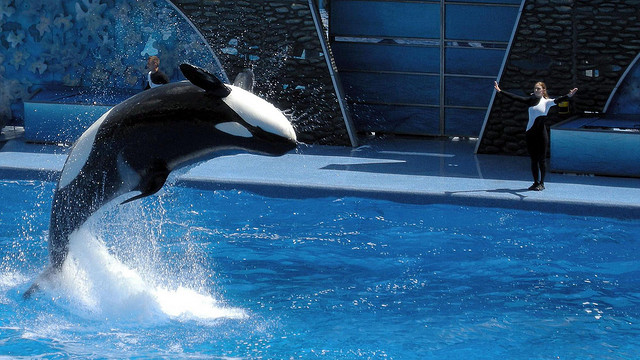
"caption": "An orca at SeaWorld’s park in Orlando, Florida, jumps out of the water. There are currently 10 orcas living in captivity in California, according to Assemblyman Richard Bloom’s office.\n(Milan Boers/Flickr)",
"description": "An orca at SeaWorld’s park in Orlando, Florida, jumps out of the water. There are currently 10 orcas living in captivity in California, according to Assemblyman Richard Bloom’s office.\n(Milan Boers/Flickr)",
"title": "orca and trainr seaworld orlando Milan BOers flickr",
"credit": null,
"status": "inherit",
"isLoading": false,
"fetchFailed": false
},
"science_15424": {
"type": "attachments",
"id": "science_15424",
"meta": {
"index": "attachments_1716263798",
"site": "science",
"id": "15424",
"found": true
},
"parent": 15337,
"imgSizes": {
"kqedFullSize": {
"file": "https://ww2.kqed.org/app/uploads/sites/35/2014/03/pteropod3.gif",
"width": 640,
"height": 360
}
},
"publishDate": 1394845069,
"modified": 1394845069,
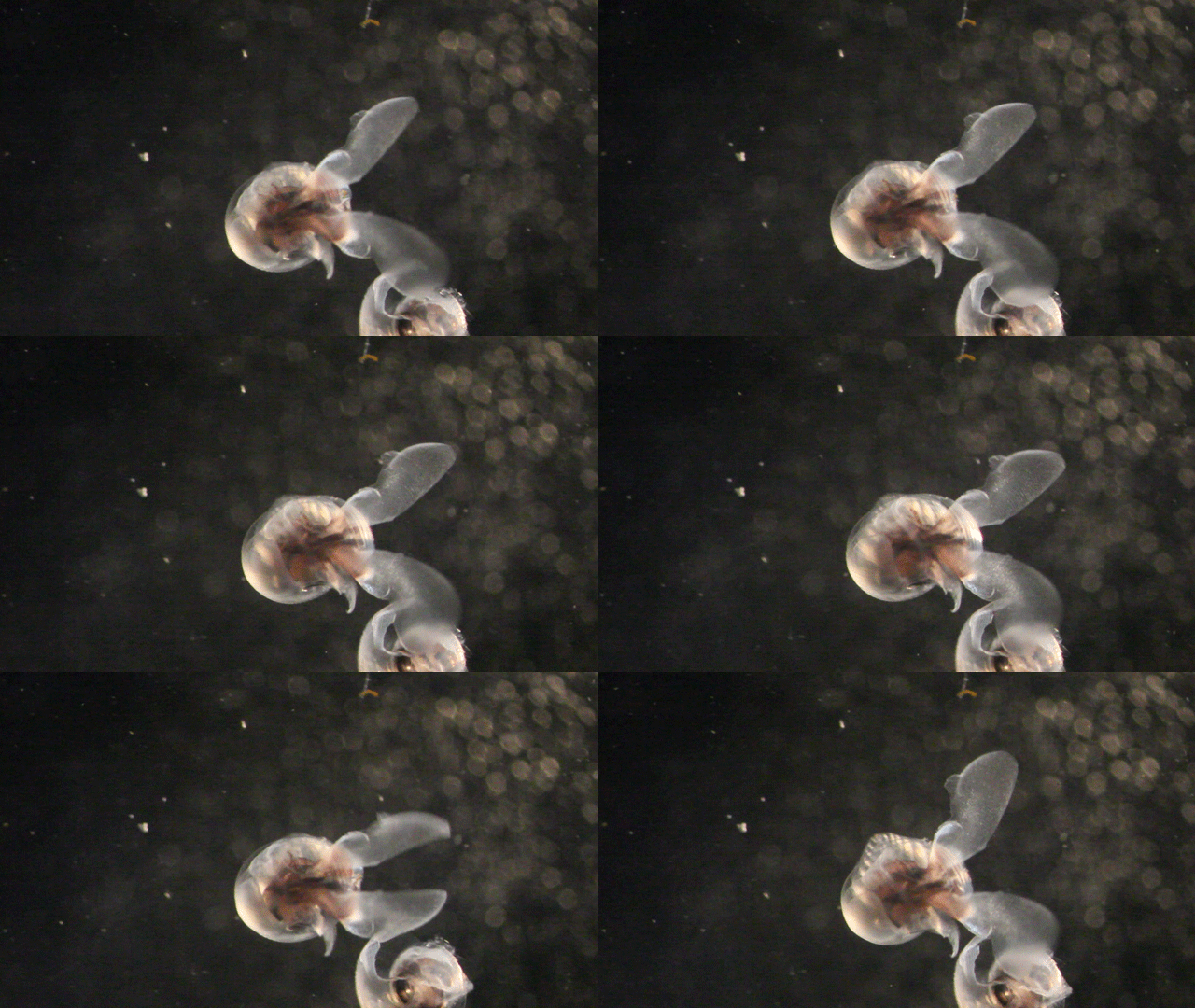
"caption": "In lab tests, acidic waters have dissolved the shells of pteropods when they're still alive. (Woods Hole Oceanic Institution)",
"description": "In lab tests, acidic waters have dissolved the shells of pteropods when they're still alive. (Woods Hole Oceanic Institution)",
"title": "pteropod3",
"credit": null,
"status": "inherit",
"isLoading": false,
"fetchFailed": false
},
"science_15346": {
"type": "attachments",
"id": "science_15346",
"meta": {
"index": "attachments_1716263798",
"site": "science",
"id": "15346",
"found": true
},
"parent": 15325,
"imgSizes": {
"kqedFullSize": {
"file": "https://ww2.kqed.org/app/uploads/sites/35/2014/03/deg00013.jpg",
"width": 640,
"height": 360
}
},
"publishDate": 1394755616,
"modified": 1394755616,
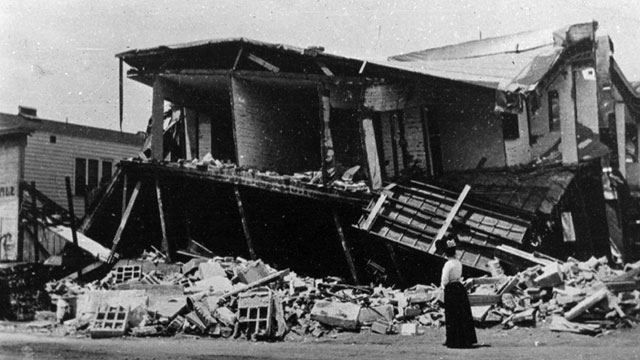
"caption": "The 1906 earthquake (USGS)",
"description": null,
"title": "deg00013",
"credit": null,
"status": "inherit",
"isLoading": false,
"fetchFailed": false
},
"science_15320": {
"type": "attachments",
"id": "science_15320",
"meta": {
"index": "attachments_1716263798",
"site": "science",
"id": "15320",
"found": true
},
"parent": 15314,
"imgSizes": {
"kqedFullSize": {
"file": "https://ww2.kqed.org/app/uploads/sites/35/2014/03/LucyNapMat2.jpg",
"width": 727,
"height": 409
}
},
"publishDate": 1394745380,
"modified": 1394745380,
"caption": "Many children's products, including nap mats, contain flame retardant chemicals known to cause cancer. (Center for Environmental Health)",
"description": null,
"title": "LucyNapMat2",
"credit": null,
"status": "inherit",
"isLoading": false,
"fetchFailed": false
},
"science_4339": {
"type": "attachments",
"id": "science_4339",
"meta": {
"index": "attachments_1716263798",
"site": "science",
"id": "4339",
"found": true
},
"parent": 4338,
"imgSizes": {
"kqedFullSize": {
"file": "https://ww2.kqed.org/app/uploads/sites/35/2013/06/4338-thumb.jpg",
"width": 640,
"height": 360
}
},
"publishDate": 1371148279,
"modified": 1371148279,
"caption": "The San Onofre nuclear power plant has been shut down since 2012. (Photo by David McNew/Getty Images)",
"description": "The San Onofre nuclear power plant has been shut down since 2012. (Photo by David McNew/Getty Images)",
"title": "Thumbnail for 4338",
"credit": null,
"status": "inherit",
"isLoading": false,
"fetchFailed": false
},
"science_15228": {
"type": "attachments",
"id": "science_15228",
"meta": {
"index": "attachments_1716263798",
"site": "science",
"id": "15228",
"found": true
},
"title": "Crescent2011_0524",
"publishDate": 1394511358,
"status": "inherit",
"parent": 15192,
"modified": 1758751681,
"caption": "Wreckage piled up by the 2011 tsunami that hit Crescent City's harbor. ",
"credit": "Craig Miller/KQED",
"altTag": null,
"description": null,
"imgSizes": {
"kqedFullSize": {
"file": "https://cdn.kqed.org/wp-content/uploads/sites/35/2014/03/Crescent2011_0524.jpg",
"width": 640,
"height": 360
}
},
"isLoading": false,
"fetchFailed": false
},
"science_15129": {
"type": "attachments",
"id": "science_15129",
"meta": {
"index": "attachments_1716263798",
"site": "science",
"id": "15129",
"found": true
},
"parent": 15123,
"imgSizes": {
"kqedFullSize": {
"file": "https://ww2.kqed.org/app/uploads/sites/35/2014/03/Worldview-Terra_0226-0228Storm_TrueColor-AOT0224.jpg",
"width": 640,
"height": 360
}
},
"publishDate": 1394237182,
"modified": 1394237182,
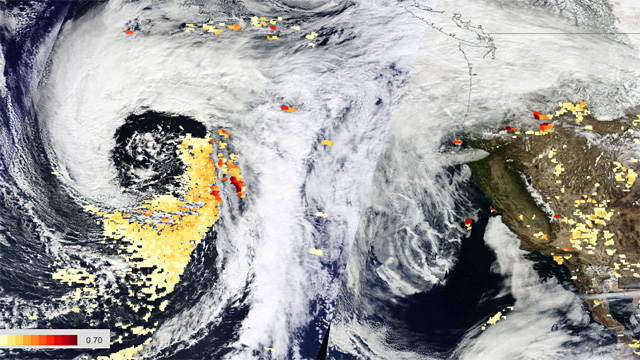
"caption": "A storm approaching California on February 24th had large amounts of dust at the center, as shown by the orange areas.\n(NASA Earth Observing System Data and Information System)",
"description": null,
"title": "Worldview-Terra_0226-0228Storm_TrueColor-AOT0224",
"credit": null,
"status": "inherit",
"isLoading": false,
"fetchFailed": false
},
"science_15083": {
"type": "attachments",
"id": "science_15083",
"meta": {
"index": "attachments_1716263798",
"site": "science",
"id": "15083",
"found": true
},
"parent": 15043,
"imgSizes": {
"kqedFullSize": {
"file": "https://ww2.kqed.org/app/uploads/sites/35/2014/03/1024px-Expl1080_-_Flickr_-_NOAA_Photo_Library-e1394239434209.jpg",
"width": 640,
"height": 360
}
},
"publishDate": 1394217881,
"modified": 1394217881,
"caption": "The sunflower starfish is one of the species of sea stars that is being significantly impacted by sea star wasting disease.\n\nPhoto: By Ed Bowlby, NOAA/Olympic Coast NMS; NOAA/OAR/Office of Ocean Exploration. (NOAA Photo Library: expl1080) [CC-BY-2.0 (http://creativecommons.org/licenses/by/2.0) or Public domain], via Wikimedia Commons",
"description": null,
"title": "1024px-Expl1080_-_Flickr_-_NOAA_Photo_Library",
"credit": null,
"status": "inherit",
"isLoading": false,
"fetchFailed": false
}
},
"audioPlayerReducer": {
"postId": "stream_live",
"isPaused": true,
"isPlaying": false,
"pfsActive": false,
"pledgeModalIsOpen": true,
"playerDrawerIsOpen": false,
"liveAudioPlayStartedAt": 0,
"liveAudioPlayContext": ""
},
"authorsReducer": {
"astupi": {
"type": "authors",
"id": "70",
"meta": {
"index": "authors_1716337520",
"id": "70",
"found": true
},
"name": "Amanda Stupi",
"firstName": "Amanda",
"lastName": "Stupi",
"slug": "astupi",
"email": "astupi@kqed.org",
"display_author_email": false,
"staff_mastheads": [],
"title": "Senior Engagement Producer",
"bio": "Amanda joined KQED Science’s engagement team as a Senior Audience Engagement Strategist in the spring of 2019. She has helped craft messaging around wildfires, the coronavirus pandemic, climate change and many other stories. She has also brought KQED Science to new platforms such as Reddit’s Ask Me Anything series. Prior to joining KQED Science, Amanda spent seven years as an engagement producer with Forum, KQED’s daily live call-in show. She got her start in radio at KALW's weekly call in show, City Visions, before going on to an internship and stint at NPR's Talk of the Nation.\r\n\r\nPrior to journalism, Amanda taught English at Lowell High School. She's a native of Petaluma and currently lives under the \"South San Francisco the Industrial City\" sign in South City. She believes that engagement is vital to news’s future and that good journalism listens as much as it asks questions.",
"avatar": "https://secure.gravatar.com/avatar/e981c503e5c162da701dcaccfbf87e35?s=600&d=blank&r=g",
"twitter": null,
"facebook": null,
"instagram": null,
"linkedin": null,
"sites": [
{
"site": "arts",
"roles": [
"Contributor"
]
},
{
"site": "news",
"roles": [
"editor"
]
},
{
"site": "pop",
"roles": [
"contributor"
]
},
{
"site": "stateofhealth",
"roles": [
"editor"
]
},
{
"site": "science",
"roles": []
},
{
"site": "perspectives",
"roles": [
"editor"
]
}
],
"headData": {
"title": "Amanda Stupi | KQED",
"description": "Senior Engagement Producer",
"ogImgSrc": "https://secure.gravatar.com/avatar/e981c503e5c162da701dcaccfbf87e35?s=600&d=blank&r=g",
"twImgSrc": "https://secure.gravatar.com/avatar/e981c503e5c162da701dcaccfbf87e35?s=600&d=blank&r=g"
},
"isLoading": false,
"link": "/author/astupi"
},
"mollysamuel": {
"type": "authors",
"id": "200",
"meta": {
"index": "authors_1716337520",
"id": "200",
"found": true
},
"name": "Molly Samuel",
"firstName": "Molly",
"lastName": "Samuel",
"slug": "mollysamuel",
"email": "msamuel@kqed.org",
"display_author_email": false,
"staff_mastheads": [],
"title": null,
"bio": "Molly Samuel joined KQED as an intern in 2007, and since then has worked here as a reporter, producer, director and blogger. Before becoming KQED Science’s Multimedia Producer, she was a producer for Climate Watch. Molly has also reported for NPR, KALW and High Country News, and has produced audio stories for The Encyclopedia of Life and the Oakland Museum of California. She was a fellow with the Middlebury Fellowships in Environmental Journalism and a journalist-in-residence at the National Evolutionary Synthesis Center. Molly has a degree in Ancient Greek from Oberlin College and is a co-founder of the record label True Panther Sounds.",
"avatar": "https://secure.gravatar.com/avatar/a6abd3b949a89fe5109fa9917631d0b6?s=600&d=blank&r=g",
"twitter": null,
"facebook": null,
"instagram": null,
"linkedin": null,
"sites": [
{
"site": "news",
"roles": [
"subscriber"
]
},
{
"site": "stateofhealth",
"roles": [
"subscriber"
]
},
{
"site": "science",
"roles": [
"subscriber"
]
},
{
"site": "quest",
"roles": [
"edit_users",
"subscriber"
]
}
],
"headData": {
"title": "Molly Samuel | KQED",
"description": null,
"ogImgSrc": "https://secure.gravatar.com/avatar/a6abd3b949a89fe5109fa9917631d0b6?s=600&d=blank&r=g",
"twImgSrc": "https://secure.gravatar.com/avatar/a6abd3b949a89fe5109fa9917631d0b6?s=600&d=blank&r=g"
},
"isLoading": false,
"link": "/author/mollysamuel"
},
"amystanden": {
"type": "authors",
"id": "210",
"meta": {
"index": "authors_1716337520",
"id": "210",
"found": true
},
"name": "Amy Standen",
"firstName": "Amy",
"lastName": "Standen",
"slug": "amystanden",
"email": "astanden@kqed.org",
"display_author_email": false,
"staff_mastheads": [],
"title": "KQED Contributor",
"bio": "Amy Standen (@amystanden) is co-host of #\u003ca href=\"https://ww2.kqed.org/news/programs/the-leap\">TheLeapPodcast\u003c/a> (subscribe on iTunes or Stitcher!) and host of KQED and PBSDigital Studios' science video series, \u003ca href=\"https://www.youtube.com/user/KQEDDeepLook\">Deep Look\u003c/a>. Her science radio stories appear on KQED and NPR.\r\n\r\nEmail her at astanden@kqed.org",
"avatar": "https://secure.gravatar.com/avatar/3d021b72de685a788b0487b059d0a6a1?s=600&d=blank&r=g",
"twitter": null,
"facebook": null,
"instagram": null,
"linkedin": null,
"sites": [
{
"site": "news",
"roles": [
"subscriber"
]
},
{
"site": "futureofyou",
"roles": [
"subscriber"
]
},
{
"site": "stateofhealth",
"roles": [
"subscriber"
]
},
{
"site": "science",
"roles": []
},
{
"site": "quest",
"roles": [
"subscriber"
]
}
],
"headData": {
"title": "Amy Standen | KQED",
"description": "KQED Contributor",
"ogImgSrc": "https://secure.gravatar.com/avatar/3d021b72de685a788b0487b059d0a6a1?s=600&d=blank&r=g",
"twImgSrc": "https://secure.gravatar.com/avatar/3d021b72de685a788b0487b059d0a6a1?s=600&d=blank&r=g"
},
"isLoading": false,
"link": "/author/amystanden"
},
"cmiller": {
"type": "authors",
"id": "221",
"meta": {
"index": "authors_1716337520",
"id": "221",
"found": true
},
"name": "Craig Miller",
"firstName": "Craig",
"lastName": "Miller",
"slug": "cmiller",
"email": "craig@voxterra.net",
"display_author_email": false,
"staff_mastheads": [
"science"
],
"title": "Editor Emeritus, Science",
"bio": "Craig is a former KQED Science editor, specializing in weather, climate, water & energy issues, with a little seismology thrown in just to shake things up. Prior to that, he launched and led the station's award-winning multimedia project, Climate Watch. Craig is also an accomplished writer/producer of television documentaries, with a focus on natural resource issues.",
"avatar": "https://secure.gravatar.com/avatar/b91661df645e001a9cafe0861fa685f9?s=600&d=blank&r=g",
"twitter": "voxterra",
"facebook": null,
"instagram": null,
"linkedin": null,
"sites": [
{
"site": "news",
"roles": [
"author"
]
},
{
"site": "futureofyou",
"roles": [
"editor"
]
},
{
"site": "stateofhealth",
"roles": [
"author"
]
},
{
"site": "science",
"roles": [
"editor"
]
},
{
"site": "quest",
"roles": [
"editor"
]
}
],
"headData": {
"title": "Craig Miller | KQED",
"description": "Editor Emeritus, Science",
"ogImgSrc": "https://secure.gravatar.com/avatar/b91661df645e001a9cafe0861fa685f9?s=600&d=blank&r=g",
"twImgSrc": "https://secure.gravatar.com/avatar/b91661df645e001a9cafe0861fa685f9?s=600&d=blank&r=g"
},
"isLoading": false,
"link": "/author/cmiller"
},
"danbrekke": {
"type": "authors",
"id": "222",
"meta": {
"index": "authors_1716337520",
"id": "222",
"found": true
},
"name": "Dan Brekke",
"firstName": "Dan",
"lastName": "Brekke",
"slug": "danbrekke",
"email": "dbrekke@kqed.org",
"display_author_email": true,
"staff_mastheads": [
"news",
"science"
],
"title": "KQED Editor and Reporter",
"bio": "Dan Brekke is a reporter and editor for KQED News, responsible for coverage of topics ranging from California water issues to the Bay Area's transportation challenges. In a newsroom career that began in Chicago in 1972, Dan has worked for \u003cem>The San Francisco Examiner,\u003c/em> Wired and TechTV and has been published in The New York Times, The New York Times Magazine, Business 2.0, Salon and elsewhere.\r\n\r\nSince joining KQED in 2007, Dan has reported, edited and produced both radio and online features and breaking news pieces. He has shared as both editor and reporter in four Society of Professional Journalists Norcal Excellence in Journalism awards and one Edward R. Murrow regional award. He was chosen for a spring 2017 residency at the Mesa Refuge to advance his research on California salmon.\r\n\r\nEmail Dan at: \u003ca href=\"mailto:dbrekke@kqed.org\">dbrekke@kqed.org\u003c/a>\r\n\r\n\u003cstrong>Twitter:\u003c/strong> \u003ca href=\"https://twitter.com/danbrekke\" rel=\"noopener noreferrer\">twitter.com/danbrekke\u003c/a>\r\n\u003cstrong>Facebook:\u003c/strong> \u003ca href=\"https://www.facebook.com/danbrekke\" rel=\"noopener noreferrer\">www.facebook.com/danbrekke\u003c/a>\r\n\u003cstrong>LinkedIn:\u003c/strong> \u003ca href=\"https://www.linkedin.com/in/danbrekke\" rel=\"noopener noreferrer\">www.linkedin.com/in/danbrekke\u003c/a>",
"avatar": "https://secure.gravatar.com/avatar/8f1f0d2a978fb3b23426c922c7e2af558fa36905b49c4ce76a97dc3c72d27226?s=600&d=mm&r=g",
"twitter": "danbrekke",
"bluesky": null,
"facebook": null,
"instagram": "https://www.instagram.com/dan.brekke/",
"linkedin": "https://www.linkedin.com/in/danbrekke/",
"sites": [
{
"site": "news",
"roles": [
"administrator",
"create_posts"
]
},
{
"site": "stateofhealth",
"roles": [
"editor"
]
},
{
"site": "science",
"roles": [
"editor"
]
},
{
"site": "quest",
"roles": [
"contributor"
]
},
{
"site": "food",
"roles": [
"contributor"
]
},
{
"site": "forum",
"roles": [
"contributor"
]
},
{
"site": "elections",
"roles": [
"editor"
]
},
{
"site": "liveblog",
"roles": [
"editor"
]
}
],
"headData": {
"title": "Dan Brekke | KQED",
"description": "KQED Editor and Reporter",
"ogImgSrc": "https://secure.gravatar.com/avatar/8f1f0d2a978fb3b23426c922c7e2af558fa36905b49c4ce76a97dc3c72d27226?s=600&d=mm&r=g",
"twImgSrc": "https://secure.gravatar.com/avatar/8f1f0d2a978fb3b23426c922c7e2af558fa36905b49c4ce76a97dc3c72d27226?s=600&d=mm&r=g"
},
"isLoading": false,
"link": "/author/danbrekke"
},
"laurensommer": {
"type": "authors",
"id": "239",
"meta": {
"index": "authors_1716337520",
"id": "239",
"found": true
},
"name": "Lauren Sommer",
"firstName": "Lauren",
"lastName": "Sommer",
"slug": "laurensommer",
"email": "lsommer@kqed.org",
"display_author_email": false,
"staff_mastheads": [],
"title": "KQED Contributor",
"bio": "Lauren is a radio reporter formerly covering environment, water, and energy for KQED Science. As part of her day job, she has scaled Sierra Nevada peaks, run from charging elephant seals, and desperately tried to get her sea legs - all in pursuit of good radio. Her work has appeared on Marketplace, Living on Earth, Science Friday and NPR's Morning Edition and All Things Considered. You can find her on Twitter at \u003ca href=\"https://twitter.com/lesommer\">@lesommer\u003c/a>.",
"avatar": "https://secure.gravatar.com/avatar/33aa3772bb86c6ad45b8aca6a238bbdf?s=600&d=blank&r=g",
"twitter": null,
"facebook": null,
"instagram": null,
"linkedin": null,
"sites": [
{
"site": "news",
"roles": [
"author"
]
},
{
"site": "science",
"roles": [
"editor",
"manage_content_types",
"manage_taxonomies"
]
},
{
"site": "quest",
"roles": [
"editor"
]
}
],
"headData": {
"title": "Lauren Sommer | KQED",
"description": "KQED Contributor",
"ogImgSrc": "https://secure.gravatar.com/avatar/33aa3772bb86c6ad45b8aca6a238bbdf?s=600&d=blank&r=g",
"twImgSrc": "https://secure.gravatar.com/avatar/33aa3772bb86c6ad45b8aca6a238bbdf?s=600&d=blank&r=g"
},
"isLoading": false,
"link": "/author/laurensommer"
},
"stonn": {
"type": "authors",
"id": "6538",
"meta": {
"index": "authors_1716337520",
"id": "6538",
"found": true
},
"name": "Shara Tonn",
"firstName": "Shara",
"lastName": "Tonn",
"slug": "stonn",
"email": "stonn@KQED.org",
"display_author_email": false,
"staff_mastheads": [],
"title": null,
"bio": "Shara Tonn is a Master’s student at Stanford University in Earth Systems, an interdisciplinary environmental science degree. Her focus is science communication and education. She is a part of the environmental radio group on campus, GreenGrid Radio and also enjoys performing improv with the Stanford Improvisers (SIMPs). Born and raised in Tennessee, Shara loves to travel and has lived overseas in Italy, Japan and Australia.",
"avatar": "https://secure.gravatar.com/avatar/9968feeee672a136559a0d7b615ee13e?s=600&d=blank&r=g",
"twitter": null,
"facebook": null,
"instagram": null,
"linkedin": null,
"sites": [
{
"site": "science",
"roles": [
"editor"
]
}
],
"headData": {
"title": "Shara Tonn | KQED",
"description": null,
"ogImgSrc": "https://secure.gravatar.com/avatar/9968feeee672a136559a0d7b615ee13e?s=600&d=blank&r=g",
"twImgSrc": "https://secure.gravatar.com/avatar/9968feeee672a136559a0d7b615ee13e?s=600&d=blank&r=g"
},
"isLoading": false,
"link": "/author/stonn"
}
},
"pagesReducer": {
"science_category_news": {
"type": "terms",
"id": "science_40",
"meta": {
"index": "terms_1716263798",
"site": "science",
"id": "40",
"score": 10.814938
},
"featImg": null,
"name": "News",
"description": null,
"taxonomy": "category",
"headData": {
"twImgId": null,
"twTitle": null,
"ogTitle": null,
"ogImgId": null,
"twDescription": null,
"description": null,
"title": "News Archives | KQED Science",
"ogDescription": null
},
"ttid": 42,
"slug": "news",
"isLoading": false,
"title": "News",
"pageMeta": {
"site": "science",
"WpPageTemplate": "page-topic-editorial",
"currentPage": 268
},
"blocks": [
{
"blockName": "kqed/post-list",
"attrs": {
"layout": "cardArticle2",
"query": "posts/science?category=news",
"seeMore": false,
"paginated": true,
"page": 268
}
},
{
"blockName": "kqed/ad"
}
]
}
},
"pfsSessionReducer": {},
"postsReducer": {
"stream_live": {
"type": "live",
"id": "stream_live",
"audioUrl": "https://streams.kqed.org/kqedradio",
"title": "Live Stream",
"excerpt": "Live Stream information currently unavailable.",
"link": "/radio",
"featImg": "",
"label": {
"name": "KQED Live",
"link": "/"
}
},
"stream_kqedNewscast": {
"type": "posts",
"id": "stream_kqedNewscast",
"audioUrl": "https://www.kqed.org/.stream/anon/radio/RDnews/newscast.mp3?_=1",
"title": "KQED Newscast",
"featImg": "",
"label": {
"name": "88.5 FM",
"link": "/"
}
},
"science_15578": {
"type": "posts",
"id": "science_15578",
"meta": {
"index": "posts_1716263798",
"site": "science",
"id": "15578",
"score": null,
"sort": [
1395667813000
]
},
"parent": 0,
"labelTerm": {
"site": "science"
},
"blocks": [],
"publishDate": 1395667813,
"format": "aside",
"title": "NASA Sends Fruit Flies to Space to Prep for Mars Missions",
"headTitle": "NASA Sends Fruit Flies to Space to Prep for Mars Missions | KQED",
"content": "\u003cdiv class=\"audio-wrap\">\n\u003ch2>Listen:\u003c/h2>\n\u003cp>http://www.kqed.org/.stream/anon/radio/science/2014/03/20140324science.mp3\u003c/p>\n\u003c/div>\n\u003cfigure id=\"attachment_15579\" class=\"wp-caption aligncenter\" style=\"max-width: 640px\">\u003ca href=\"http://ww2.kqed.org/science/wp-content/uploads/sites/35/2014/03/Apollo-7-astronauts.jpg\">\u003cimg loading=\"lazy\" decoding=\"async\" class=\"size-full wp-image-15579 \" src=\"http://ww2.kqed.org/science/wp-content/uploads/sites/35/2014/03/Apollo-7-astronauts.jpg\" alt=\"The Apollo 7 crew, from left to right: Command Module pilot, Donn F. Eisele, Commander, Walter M. Schirra Jr. and Lunar Module pilot, Walter Cunningham. (NASA)\" width=\"640\" height=\"360\">\u003c/a>\u003cfigcaption class=\"wp-caption-text\">In 1968, two members of the Apollo 7 crew developed head colds. Crankiness ensued. Crew members, from the left, are Command Module Pilot Donn Eisele, Commander Walter Schirra, Jr. and Lunar Module Pilot Walter Cunningham. (NASA)\u003c/figcaption>\u003c/figure>\n\u003cp>Scientists at NASA’s \u003ca href=\"http://www.nasa.gov/centers/ames/home/#.UyzQ_oXDX_k\">Ames Research Center\u003c/a> in Mountain View are sending fruit flies (among other creatures) up to the International Space Station, hoping to better predict some of the physical challenges that may befall astronauts when, sometime after 2030, NASA sends up the first human mission to Mars.\u003c/p>\n\u003cp>NASA has already learned some of these lessons the hard way. For instance: Having a head cold in space is no picnic.\u003c/p>\n\u003cfigure id=\"attachment_15581\" class=\"wp-caption alignright\" style=\"max-width: 288px\">\u003ca href=\"http://ww2.kqed.org/science/wp-content/uploads/sites/35/2014/03/9400_transform-288x162.jpg\">\u003cimg loading=\"lazy\" decoding=\"async\" class=\"size-medium wp-image-15581 \" src=\"http://ww2.kqed.org/science/wp-content/uploads/sites/35/2014/03/9400_transform-288x162.jpg\" alt=\"In the first live television transmission from space, astronauts Don Eisele and Walter Schirra Jr. deliver a message to viewers. (NASA)\" width=\"288\" height=\"162\">\u003c/a>\u003cfigcaption class=\"wp-caption-text\">In the first live television transmission from space, astronauts Donn F. Eisele and Walter M. Schirra Jr. deliver a message to viewers. (NASA)\u003c/figcaption>\u003c/figure>\n\u003cp>\u003cstrong>The First Colds in Space\u003c/strong>\u003c/p>\n\u003cp>In 1968, NASA needed some good press.\u003c/p>\n\u003cp>The year before had been a disaster. All three crew members of the Apollo 1 Mission had died in a cabin fire before the spaceship even launched.\u003c/p>\n\u003cp>[ad fullwidth]\u003c/p>\n\u003cp>If NASA was going to put a man on the moon by the end of the decade, it needed to win back public confidence in the program. And it would do so on live television during the Apollo 7 mission.\u003c/p>\n\u003cp>Apollo 7 launched on October 11, 1968, with a plan to bring three astronauts safely into Earth’s orbit, and then back home again.\u003c/p>\n\u003cp>For the first time, Americans got to see what astronauts looked like floating around in zero gravity. On live television, they watched Command Module Pilot Donn Eisele, Commander Walter Schirra, Jr. and Lunar Module Pilot Walter Cunningham eat meals, bat a lens cap around the cabin and send radio reports to ground control.\u003c/p>\n\u003caside class=\"pullquote alignleft\">Perhaps you’ve never considered the effect of zero gravity on snot?\u003c/aside>\n\u003cp>“Wally took one Actifed,” Cunningham reported. “He feels fine; he’s just got a little stuffy nose.”\u003c/p>\n\u003cp>Cunningham and Schirra indeed had head colds, and the stuffy noses turned out not to be such a “little” thing.\u003c/p>\n\u003cp>The astronauts had trouble sleeping. They worried about their eardrums rupturing. Their interactions with ground control became testy, particularly on the subject of whether or not they would wear helmets upon reentry.\u003c/p>\n\u003cp>\u003cstrong>A New Policy: Quarantine\u003c/strong>\u003c/p>\n\u003cp>So after Apollo 7, NASA set a new policy: Astronauts would now be quarantined before each launch to make sure they’re healthy.\u003c/p>\n\u003cp>But the quarantine isn’t a guarantee.\u003c/p>\n\u003cp>NASA astronaut \u003ca href=\"http://www.jsc.nasa.gov/Bios/htmlbios/barratt-mr.html\">Mike Barratt\u003c/a> caught a cold during his six-month stay on the International Space Station in 2009. “It was probably the most miserable cold I’ve ever had,” he told me.\u003c/p>\n\u003cfigure id=\"attachment_15591\" class=\"wp-caption alignright\" style=\"max-width: 294px\">\u003cimg loading=\"lazy\" decoding=\"async\" class=\"wp-image-15591 \" src=\"http://ww2.kqed.org/science/wp-content/uploads/sites/35/2014/03/International_Space_Station_after_undocking_of_STS-132-1024x652.jpg\" alt=\"The International Space Station. (NASA)\" width=\"294\" height=\"188\">\u003cfigcaption class=\"wp-caption-text\">The International Space Station. (NASA)\u003c/figcaption>\u003c/figure>\n\u003cp>Perhaps you’ve never considered the effect of zero gravity on snot? Barratt hadn’t either.\u003c/p>\n\u003cp>On Earth, Barratt said, “where you’d have a little gravity to help you drain things, all that was absent there. Everything kind of pools where it is.”\u003c/p>\n\u003cp>So Barratt invented a zero-gravity nose-blowing technique, involving swinging his body in an arc as his hands clasped a metal handrail.\u003c/p>\n\u003cp>That move created a sort of artificial gravity, Barratt said, propelling mucus out of his head.\u003c/p>\n\u003cp>“You do what you gotta do,” he said.\u003c/p>\n\u003cp>\u003cstrong>Finding Work-Arounds in Zero Gravity \u003c/strong>\u003c/p>\n\u003cp>Humans evolved with gravity. Take it away and we start looking for work-arounds.\u003c/p>\n\u003cp>Some of these are well known. For instance: in space, muscles atrophy, especially in the legs.\u003c/p>\n\u003cp>“From the waist up, they look strong,” Barratt said, describing how this affects humans. “From the waist down they look more like Kermit the Frog.”\u003c/p>\n\u003cp>So astronauts spend an enormous amount of time exercising—two or three hours a day.\u003c/p>\n\u003cp>Then there’s the eyes. No one’s quite sure why, but over the course of a mission, some astronauts report problems with both nearsightedness and distance vision.\u003c/p>\n\u003cp>\u003ca href=\"http://www.jsc.nasa.gov/Bios/htmlbios/marshburn-th.html\">Tom Marshburn\u003c/a>, who has completed two missions to the International Space Station as a space surgeon, said he’s learned to bring multiple pairs of eyeglasses to suit his changing vision while in space.\u003c/p>\n\u003cfigure id=\"attachment_15584\" class=\"wp-caption alignright\" style=\"max-width: 285px\">\u003ca href=\"http://ww2.kqed.org/science/wp-content/uploads/sites/35/2014/03/Drosophila_SingleFly.jpg\">\u003cimg loading=\"lazy\" decoding=\"async\" class=\"wp-image-15584 \" src=\"http://ww2.kqed.org/science/wp-content/uploads/sites/35/2014/03/Drosophila_SingleFly.jpg\" alt=\"A single drosophila, or fruit fly. (Dominic Hart/NASA)\" width=\"285\" height=\"241\">\u003c/a>\u003cfigcaption class=\"wp-caption-text\">A single drosophila, or fruit fly. (Dominic Hart/NASA)\u003c/figcaption>\u003c/figure>\n\u003cp>“It’s the only solution we have right now,” Marshburn said.\u003c/p>\n\u003cp>\u003cstrong>Mars Mission Brings Higher Stakes\u003c/strong>\u003c/p>\n\u003cp>This is minor stuff on the International Space Station, a mere two-day trip from Earth.\u003c/p>\n\u003cp>But consider that by 2030, NASA wants to start sending people to Mars and back—a mission that could last five years.\u003c/p>\n\u003cp>Anticipating the ensuing physical problems of such a mission is the job of scientists like \u003ca href=\"http://women.nasa.gov/sharmila-bhattacharya-2/\">Sharmila Bhattacharya\u003c/a>.\u003c/p>\n\u003cp>Battacharya is a scientist at NASA’s Ames Research Center, where she runs a lab in the Space Biosciences Division.\u003c/p>\n\u003cp>Her research focuses on fruit flies—Drosophila melanogaster—and is part of a major NASA effort to send bugs (including beetles, worms, bees and spiders) up to the International Space Station to see how space affects their biology.\u003c/p>\n\u003cp>Next week, Bhattacharya plans to travel to Florida to watch the lift-off for the first of 2014’s three scheduled fruit fly missions.\u003c/p>\n\u003cfigure id=\"attachment_15586\" class=\"wp-caption alignright\" style=\"max-width: 301px\">\u003ca href=\"http://ww2.kqed.org/science/wp-content/uploads/sites/35/2014/03/ACD14-0023-028-1024x982.jpg\">\u003cimg loading=\"lazy\" decoding=\"async\" class=\" wp-image-15586 \" src=\"http://ww2.kqed.org/science/wp-content/uploads/sites/35/2014/03/ACD14-0023-028-1024x982.jpg\" alt=\"Ames researchers Curran Reddy and Sharmila Bhattacharya are studying the effects of zero gravity on fruit flies' cardiovascular systems. (Dominic Hart/NASA)\" width=\"301\" height=\"288\">\u003c/a>\u003cfigcaption class=\"wp-caption-text\">Ames researchers Curran Reddy and Sharmila Bhattacharya are studying cardiovascular health on fruit flies in space.(Dominic Hart/NASA)\u003c/figcaption>\u003c/figure>\n\u003cp>Since the demise of the NASA’s space shuttle program, the agency has relied on private contractors—specifically Tesla founder Elon Musk’s company SpaceX—to carry astronauts and science experiments to the International Space Station.\u003c/p>\n\u003cp>Bhattacharya’s launch, \u003ca href=\"http://www.spacex.com/news/2014/03/11/upcoming-mission-falcon-9-and-dragon-launching-space-station\">scheduled for March 30 or April 2\u003c/a>, will be the first effort to see how zero gravity affects the structure and function of the drosophila’s \u003ca href=\"http://www.nasa.gov/ames/research/space-biosciences/heart-flies-spacex-3/\">cardiovascular system\u003c/a>.\u003c/p>\n\u003cp>\u003cstrong>Weaker Flies, Stronger Microbes\u003c/strong>\u003cstrong>\u003c/strong>\u003c/p>\n\u003cp>Bhattacharya says one of the most \u003ca href=\"http://www.ncbi.nlm.nih.gov/pmc/articles/PMC3019151/\">intriguing discoveries\u003c/a> so far has to do with the flies’ white blood cells.\u003c/p>\n\u003cp class=\"size-medium wp-image-15586\">“There are changes in the distribution of blood cells,” says Bhattacharya. “And, of course, blood cells are critical to immune function.”\u003c/p>\n\u003cp>While the flies’ immune systems appear to become weaker in space, certain microbes—the kinds that might make a fruit fly sick—actually get stronger. Bhattacharya says it’s potentially a deadly combination.\u003c/p>\n\u003cp>“Couple increased virulence of a pathogen with the decremented immune system of the host,” she said, “and that could be a problem for long-term space flight.”\u003c/p>\n\u003cp>Battacharya will test that theory in fruit flies on a mission next fall. She says she expects to have results by late 2015.\u003c/p>\n\u003cp>NASA astronauts I talked to said they believe all these problems can be overcome with a little ingenuity.\u003c/p>\n\u003caside class=\"pullquote alignleft\">\nAt some point on the mission to Mars the view of Earth will disappear, and it will be ‘just the blackness of space and stars outside the window.’\u003c/aside>\n\u003cp>But there are some challenges that cannot be researched in advance. Take, for example, the psychological challenge of humanity’s longest expedition.\u003c/p>\n\u003cp>\u003cstrong>The View Back Home \u003c/strong>\u003c/p>\n\u003cp>Marshburn said when astronauts have free time on the International Space Station, they tend to congregate in the cupola, a place that offers unparalleled views of Earth.\u003c/p>\n\u003cp>“It’s a huge boost to look out the window at our planet while we orbit the space station,” he said. “To see it in all its glory and its beauty.”\u003c/p>\n\u003cp>This view is a big reason astronauts go into space in the first place. And at some point during that trip to Mars, it will disappear.\u003c/p>\n\u003cp>For the first time in our two million-plus years of existence, humans will lose that visual tether to the place we all come from. A period of time when, Marshburn said, the view will be “just the blackness of space and stars outside the window.”\u003c/p>\n\u003cp>It will be thrilling, says Marshburn. It could also be deeply disconcerting.\u003c/p>\n\u003cp>His advice to those lucky astronauts? Stay busy.\u003c/p>\n\u003cp>[ad floatright]\u003c/p>\n\u003cp>http://youtu.be/8SfyE9qsG8k\u003c/p>\n\n",
"stats": {
"hasVideo": false,
"hasChartOrMap": false,
"hasAudio": true,
"hasPolis": false,
"wordCount": 1354,
"hasGoogleForm": false,
"hasGallery": false,
"hasHearkenModule": false,
"iframeSrcs": [],
"paragraphCount": 53
},
"modified": 1704933961,
"excerpt": "Getting sick in space is no picnic. So scientists are sending bugs to the International Space Station, hoping to better predict some of the physical challenges that may befall astronauts when NASA eventually sends the first human mission to Mars.",
"headData": {
"twImgId": "",
"twTitle": "",
"ogTitle": "",
"ogImgId": "",
"twDescription": "",
"description": "Getting sick in space is no picnic. So scientists are sending bugs to the International Space Station, hoping to better predict some of the physical challenges that may befall astronauts when NASA eventually sends the first human mission to Mars.",
"title": "NASA Sends Fruit Flies to Space to Prep for Mars Missions | KQED",
"ogDescription": "",
"schema": {
"@context": "https://schema.org",
"@type": "Article",
"headline": "NASA Sends Fruit Flies to Space to Prep for Mars Missions",
"datePublished": "2014-03-24T06:30:13-07:00",
"dateModified": "2024-01-10T16:46:01-08:00",
"image": "https://cdn.kqed.org/wp-content/uploads/2020/02/KQED-OG-Image@1x.png"
}
},
"guestAuthors": [],
"slug": "nasa-sends-fruit-flies-to-space-to-prep-for-mars-missions",
"status": "publish",
"audioUrl": "http://www.kqed.org/.stream/anon/radio/science/2014/03/20140324science.mp3",
"sticky": false,
"path": "/science/15578/nasa-sends-fruit-flies-to-space-to-prep-for-mars-missions",
"audioTrackLength": null,
"parsedContent": [
{
"type": "contentString",
"content": "\u003cdiv class=\"post-body\">\u003cp>\u003cdiv class=\"audio-wrap\">\n\u003ch2>Listen:\u003c/h2>\u003c/p>\u003c/div>",
"attributes": {
"named": {},
"numeric": []
}
},
{
"type": "component",
"content": "",
"name": "audioLink",
"attributes": {
"named": {
"src": "http://www.kqed.org/.stream/anon/radio/science/2014/03/20140324science.mp3"
},
"numeric": []
}
},
{
"type": "contentString",
"content": "\u003cdiv class=\"post-body\">\u003cp>\u003c/div>\n\u003cfigure id=\"attachment_15579\" class=\"wp-caption aligncenter\" style=\"max-width: 640px\">\u003ca href=\"http://ww2.kqed.org/science/wp-content/uploads/sites/35/2014/03/Apollo-7-astronauts.jpg\">\u003cimg loading=\"lazy\" decoding=\"async\" class=\"size-full wp-image-15579 \" src=\"http://ww2.kqed.org/science/wp-content/uploads/sites/35/2014/03/Apollo-7-astronauts.jpg\" alt=\"The Apollo 7 crew, from left to right: Command Module pilot, Donn F. Eisele, Commander, Walter M. Schirra Jr. and Lunar Module pilot, Walter Cunningham. (NASA)\" width=\"640\" height=\"360\">\u003c/a>\u003cfigcaption class=\"wp-caption-text\">In 1968, two members of the Apollo 7 crew developed head colds. Crankiness ensued. Crew members, from the left, are Command Module Pilot Donn Eisele, Commander Walter Schirra, Jr. and Lunar Module Pilot Walter Cunningham. (NASA)\u003c/figcaption>\u003c/figure>\n\u003cp>Scientists at NASA’s \u003ca href=\"http://www.nasa.gov/centers/ames/home/#.UyzQ_oXDX_k\">Ames Research Center\u003c/a> in Mountain View are sending fruit flies (among other creatures) up to the International Space Station, hoping to better predict some of the physical challenges that may befall astronauts when, sometime after 2030, NASA sends up the first human mission to Mars.\u003c/p>\n\u003cp>NASA has already learned some of these lessons the hard way. For instance: Having a head cold in space is no picnic.\u003c/p>\n\u003cfigure id=\"attachment_15581\" class=\"wp-caption alignright\" style=\"max-width: 288px\">\u003ca href=\"http://ww2.kqed.org/science/wp-content/uploads/sites/35/2014/03/9400_transform-288x162.jpg\">\u003cimg loading=\"lazy\" decoding=\"async\" class=\"size-medium wp-image-15581 \" src=\"http://ww2.kqed.org/science/wp-content/uploads/sites/35/2014/03/9400_transform-288x162.jpg\" alt=\"In the first live television transmission from space, astronauts Don Eisele and Walter Schirra Jr. deliver a message to viewers. (NASA)\" width=\"288\" height=\"162\">\u003c/a>\u003cfigcaption class=\"wp-caption-text\">In the first live television transmission from space, astronauts Donn F. Eisele and Walter M. Schirra Jr. deliver a message to viewers. (NASA)\u003c/figcaption>\u003c/figure>\n\u003cp>\u003cstrong>The First Colds in Space\u003c/strong>\u003c/p>\n\u003cp>In 1968, NASA needed some good press.\u003c/p>\n\u003cp>The year before had been a disaster. All three crew members of the Apollo 1 Mission had died in a cabin fire before the spaceship even launched.\u003c/p>\n\u003cp>\u003c/p>\u003c/div>",
"attributes": {
"named": {},
"numeric": []
}
},
{
"type": "component",
"content": "",
"name": "ad",
"attributes": {
"named": {
"label": "fullwidth"
},
"numeric": [
"fullwidth"
]
}
},
{
"type": "contentString",
"content": "\u003cdiv class=\"post-body\">\u003cp>\u003c/p>\n\u003cp>If NASA was going to put a man on the moon by the end of the decade, it needed to win back public confidence in the program. And it would do so on live television during the Apollo 7 mission.\u003c/p>\n\u003cp>Apollo 7 launched on October 11, 1968, with a plan to bring three astronauts safely into Earth’s orbit, and then back home again.\u003c/p>\n\u003cp>For the first time, Americans got to see what astronauts looked like floating around in zero gravity. On live television, they watched Command Module Pilot Donn Eisele, Commander Walter Schirra, Jr. and Lunar Module Pilot Walter Cunningham eat meals, bat a lens cap around the cabin and send radio reports to ground control.\u003c/p>\n\u003caside class=\"pullquote alignleft\">Perhaps you’ve never considered the effect of zero gravity on snot?\u003c/aside>\n\u003cp>“Wally took one Actifed,” Cunningham reported. “He feels fine; he’s just got a little stuffy nose.”\u003c/p>\n\u003cp>Cunningham and Schirra indeed had head colds, and the stuffy noses turned out not to be such a “little” thing.\u003c/p>\n\u003cp>The astronauts had trouble sleeping. They worried about their eardrums rupturing. Their interactions with ground control became testy, particularly on the subject of whether or not they would wear helmets upon reentry.\u003c/p>\n\u003cp>\u003cstrong>A New Policy: Quarantine\u003c/strong>\u003c/p>\n\u003cp>So after Apollo 7, NASA set a new policy: Astronauts would now be quarantined before each launch to make sure they’re healthy.\u003c/p>\n\u003cp>But the quarantine isn’t a guarantee.\u003c/p>\n\u003cp>NASA astronaut \u003ca href=\"http://www.jsc.nasa.gov/Bios/htmlbios/barratt-mr.html\">Mike Barratt\u003c/a> caught a cold during his six-month stay on the International Space Station in 2009. “It was probably the most miserable cold I’ve ever had,” he told me.\u003c/p>\n\u003cfigure id=\"attachment_15591\" class=\"wp-caption alignright\" style=\"max-width: 294px\">\u003cimg loading=\"lazy\" decoding=\"async\" class=\"wp-image-15591 \" src=\"http://ww2.kqed.org/science/wp-content/uploads/sites/35/2014/03/International_Space_Station_after_undocking_of_STS-132-1024x652.jpg\" alt=\"The International Space Station. (NASA)\" width=\"294\" height=\"188\">\u003cfigcaption class=\"wp-caption-text\">The International Space Station. (NASA)\u003c/figcaption>\u003c/figure>\n\u003cp>Perhaps you’ve never considered the effect of zero gravity on snot? Barratt hadn’t either.\u003c/p>\n\u003cp>On Earth, Barratt said, “where you’d have a little gravity to help you drain things, all that was absent there. Everything kind of pools where it is.”\u003c/p>\n\u003cp>So Barratt invented a zero-gravity nose-blowing technique, involving swinging his body in an arc as his hands clasped a metal handrail.\u003c/p>\n\u003cp>That move created a sort of artificial gravity, Barratt said, propelling mucus out of his head.\u003c/p>\n\u003cp>“You do what you gotta do,” he said.\u003c/p>\n\u003cp>\u003cstrong>Finding Work-Arounds in Zero Gravity \u003c/strong>\u003c/p>\n\u003cp>Humans evolved with gravity. Take it away and we start looking for work-arounds.\u003c/p>\n\u003cp>Some of these are well known. For instance: in space, muscles atrophy, especially in the legs.\u003c/p>\n\u003cp>“From the waist up, they look strong,” Barratt said, describing how this affects humans. “From the waist down they look more like Kermit the Frog.”\u003c/p>\n\u003cp>So astronauts spend an enormous amount of time exercising—two or three hours a day.\u003c/p>\n\u003cp>Then there’s the eyes. No one’s quite sure why, but over the course of a mission, some astronauts report problems with both nearsightedness and distance vision.\u003c/p>\n\u003cp>\u003ca href=\"http://www.jsc.nasa.gov/Bios/htmlbios/marshburn-th.html\">Tom Marshburn\u003c/a>, who has completed two missions to the International Space Station as a space surgeon, said he’s learned to bring multiple pairs of eyeglasses to suit his changing vision while in space.\u003c/p>\n\u003cfigure id=\"attachment_15584\" class=\"wp-caption alignright\" style=\"max-width: 285px\">\u003ca href=\"http://ww2.kqed.org/science/wp-content/uploads/sites/35/2014/03/Drosophila_SingleFly.jpg\">\u003cimg loading=\"lazy\" decoding=\"async\" class=\"wp-image-15584 \" src=\"http://ww2.kqed.org/science/wp-content/uploads/sites/35/2014/03/Drosophila_SingleFly.jpg\" alt=\"A single drosophila, or fruit fly. (Dominic Hart/NASA)\" width=\"285\" height=\"241\">\u003c/a>\u003cfigcaption class=\"wp-caption-text\">A single drosophila, or fruit fly. (Dominic Hart/NASA)\u003c/figcaption>\u003c/figure>\n\u003cp>“It’s the only solution we have right now,” Marshburn said.\u003c/p>\n\u003cp>\u003cstrong>Mars Mission Brings Higher Stakes\u003c/strong>\u003c/p>\n\u003cp>This is minor stuff on the International Space Station, a mere two-day trip from Earth.\u003c/p>\n\u003cp>But consider that by 2030, NASA wants to start sending people to Mars and back—a mission that could last five years.\u003c/p>\n\u003cp>Anticipating the ensuing physical problems of such a mission is the job of scientists like \u003ca href=\"http://women.nasa.gov/sharmila-bhattacharya-2/\">Sharmila Bhattacharya\u003c/a>.\u003c/p>\n\u003cp>Battacharya is a scientist at NASA’s Ames Research Center, where she runs a lab in the Space Biosciences Division.\u003c/p>\n\u003cp>Her research focuses on fruit flies—Drosophila melanogaster—and is part of a major NASA effort to send bugs (including beetles, worms, bees and spiders) up to the International Space Station to see how space affects their biology.\u003c/p>\n\u003cp>Next week, Bhattacharya plans to travel to Florida to watch the lift-off for the first of 2014’s three scheduled fruit fly missions.\u003c/p>\n\u003cfigure id=\"attachment_15586\" class=\"wp-caption alignright\" style=\"max-width: 301px\">\u003ca href=\"http://ww2.kqed.org/science/wp-content/uploads/sites/35/2014/03/ACD14-0023-028-1024x982.jpg\">\u003cimg loading=\"lazy\" decoding=\"async\" class=\" wp-image-15586 \" src=\"http://ww2.kqed.org/science/wp-content/uploads/sites/35/2014/03/ACD14-0023-028-1024x982.jpg\" alt=\"Ames researchers Curran Reddy and Sharmila Bhattacharya are studying the effects of zero gravity on fruit flies' cardiovascular systems. (Dominic Hart/NASA)\" width=\"301\" height=\"288\">\u003c/a>\u003cfigcaption class=\"wp-caption-text\">Ames researchers Curran Reddy and Sharmila Bhattacharya are studying cardiovascular health on fruit flies in space.(Dominic Hart/NASA)\u003c/figcaption>\u003c/figure>\n\u003cp>Since the demise of the NASA’s space shuttle program, the agency has relied on private contractors—specifically Tesla founder Elon Musk’s company SpaceX—to carry astronauts and science experiments to the International Space Station.\u003c/p>\n\u003cp>Bhattacharya’s launch, \u003ca href=\"http://www.spacex.com/news/2014/03/11/upcoming-mission-falcon-9-and-dragon-launching-space-station\">scheduled for March 30 or April 2\u003c/a>, will be the first effort to see how zero gravity affects the structure and function of the drosophila’s \u003ca href=\"http://www.nasa.gov/ames/research/space-biosciences/heart-flies-spacex-3/\">cardiovascular system\u003c/a>.\u003c/p>\n\u003cp>\u003cstrong>Weaker Flies, Stronger Microbes\u003c/strong>\u003cstrong>\u003c/strong>\u003c/p>\n\u003cp>Bhattacharya says one of the most \u003ca href=\"http://www.ncbi.nlm.nih.gov/pmc/articles/PMC3019151/\">intriguing discoveries\u003c/a> so far has to do with the flies’ white blood cells.\u003c/p>\n\u003cp class=\"size-medium wp-image-15586\">“There are changes in the distribution of blood cells,” says Bhattacharya. “And, of course, blood cells are critical to immune function.”\u003c/p>\n\u003cp>While the flies’ immune systems appear to become weaker in space, certain microbes—the kinds that might make a fruit fly sick—actually get stronger. Bhattacharya says it’s potentially a deadly combination.\u003c/p>\n\u003cp>“Couple increased virulence of a pathogen with the decremented immune system of the host,” she said, “and that could be a problem for long-term space flight.”\u003c/p>\n\u003cp>Battacharya will test that theory in fruit flies on a mission next fall. She says she expects to have results by late 2015.\u003c/p>\n\u003cp>NASA astronauts I talked to said they believe all these problems can be overcome with a little ingenuity.\u003c/p>\n\u003caside class=\"pullquote alignleft\">\nAt some point on the mission to Mars the view of Earth will disappear, and it will be ‘just the blackness of space and stars outside the window.’\u003c/aside>\n\u003cp>But there are some challenges that cannot be researched in advance. Take, for example, the psychological challenge of humanity’s longest expedition.\u003c/p>\n\u003cp>\u003cstrong>The View Back Home \u003c/strong>\u003c/p>\n\u003cp>Marshburn said when astronauts have free time on the International Space Station, they tend to congregate in the cupola, a place that offers unparalleled views of Earth.\u003c/p>\n\u003cp>“It’s a huge boost to look out the window at our planet while we orbit the space station,” he said. “To see it in all its glory and its beauty.”\u003c/p>\n\u003cp>This view is a big reason astronauts go into space in the first place. And at some point during that trip to Mars, it will disappear.\u003c/p>\n\u003cp>For the first time in our two million-plus years of existence, humans will lose that visual tether to the place we all come from. A period of time when, Marshburn said, the view will be “just the blackness of space and stars outside the window.”\u003c/p>\n\u003cp>It will be thrilling, says Marshburn. It could also be deeply disconcerting.\u003c/p>\n\u003cp>His advice to those lucky astronauts? Stay busy.\u003c/p>\n\u003cp>\u003c/p>\u003c/div>",
"attributes": {
"named": {},
"numeric": []
}
},
{
"type": "component",
"content": "",
"name": "ad",
"attributes": {
"named": {
"label": "floatright"
},
"numeric": [
"floatright"
]
}
},
{
"type": "contentString",
"content": "\u003cdiv class=\"post-body\">\u003cp>\u003c/p>\u003c/p>\u003cp>\u003cspan class='utils-parseShortcode-shortcodes-__youtubeShortcode__embedYoutube'>\n \u003cspan class='utils-parseShortcode-shortcodes-__youtubeShortcode__embedYoutubeInside'>\n \u003ciframe\n loading='lazy'\n class='utils-parseShortcode-shortcodes-__youtubeShortcode__youtubePlayer'\n type='text/html'\n src='//www.youtube.com/embed/8SfyE9qsG8k'\n title='//www.youtube.com/embed/8SfyE9qsG8k'\n allowfullscreen='true'\n style='border:0;'>\u003c/iframe>\n \u003c/span>\n \u003c/span>\u003c/p>\u003cp>\n\u003c/div>\u003c/p>",
"attributes": {
"named": {},
"numeric": []
}
}
],
"link": "/science/15578/nasa-sends-fruit-flies-to-space-to-prep-for-mars-missions",
"authors": [
"210"
],
"categories": [
"science_28",
"science_46",
"science_30",
"science_39",
"science_40",
"science_43"
],
"tags": [
"science_5175"
],
"featImg": "science_15579",
"label": "science"
},
"science_15572": {
"type": "posts",
"id": "science_15572",
"meta": {
"index": "posts_1716263798",
"site": "science",
"id": "15572",
"score": null,
"sort": [
1395452891000
]
},
"parent": 0,
"labelTerm": {
"site": "science"
},
"blocks": [],
"publishDate": 1395452891,
"format": "aside",
"title": "This Week's Cosmic Inflation Discovery: Five Big Questions Answered",
"headTitle": "This Week’s Cosmic Inflation Discovery: Five Big Questions Answered | KQED",
"content": "\u003cp>Chances are you read a headline about the Big Bang earlier this week. Perhaps you clicked to an article about it and started reading up. But you may still have some burning what-is-this-Big-Bang-news-anyway questions.\u003c/p>\n\u003cp>Enter a recent episode of \u003ca href=\"http://www.kqed.org/a/forum/R201403190900\">KQED Forum\u003c/a> that featured some bright minds in physics and astronomy. Here are some highlights from the show that answer not only what this Big Bang discovery is, but why it matters and what’s next for science.\u003c/p>\n\u003cfigure id=\"attachment_15661\" class=\"wp-caption aligncenter\" style=\"max-width: 511px\">\u003ca href=\"http://ww2.kqed.org/science/wp-content/uploads/sites/35/2014/03/BICEP2-1024x984.jpg\">\u003cimg loading=\"lazy\" decoding=\"async\" class=\" wp-image-15661 \" src=\"http://ww2.kqed.org/science/wp-content/uploads/sites/35/2014/03/BICEP2-1024x984.jpg\" alt=\"A computer keyboard, a monitor, a telescope on a table.\" width=\"511\" height=\"491\">\u003c/a>\u003cfigcaption class=\"wp-caption-text\">Shown here are an array of devices used to detect, gather and filter polarized light that helps prove that the universe expanded rapidly after the Big Bang.\u003cbr>(NASA/JPL-Caltech)\u003c/figcaption>\u003c/figure>\n\u003cp>\u003cstrong>1. What Did Astronomers Discover?\u003c/strong>\u003c/p>\n\u003cp>There’s been a theory floating around astronomy and theoretical circles for decades called “inflation theory.” It suggests the universe expanded at an extremely rapid rate in roughly the first trillionth of a trillionth of a trillionth of a second after the Big Bang. The discovery announced this week proves the theory true, that this “period of inflation” actually happened.\u003c/p>\n\u003cp>“It not only confirms inflation, it says that the inflation was stronger than we previously expected,” said \u003ca href=\"https://physics.stanford.edu/people/faculty/leonard-susskind\" target=\"_blank\" rel=\"noopener\">Leonard Susskind\u003c/a>, a professor of physics at Stanford University.\u003c/p>\n\u003cp>[ad fullwidth]\u003c/p>\n\u003cp>Radio astronomers stationed at the South Pole, using a high-power telescope called BICEP2, \u003ca href=\"http://www.jpl.nasa.gov/news/news.php?release=2014-082\" target=\"_blank\" rel=\"noopener\">announced Monday\u003c/a> that they detected the evidence of this explosive, faster-than-the-speed-of-light expansion in the form of radio waves. As \u003ca href=\"http://www.foothill.edu/ast/fraknoi.php\" target=\"_blank\" rel=\"noopener\">Andrew Fraknoi\u003c/a>, chair of the Astronomy Program at Foothill College put it, they detected “the afterglow” of gravitational waves created by this rapid expansion.\u003c/p>\n\u003cp>The afterglow “started out as a very intense and energetic radiation,” Fraknoi explained. “But as all the galaxies expanded and the universe got bigger and colder, this afterglow is now radio waves, microwaves. And these microwaves from the beginning of time are there as a kind of signal from the Big Bang.”\u003c/p>\n\u003cp>\u003cstrong>2. Why Is It Such a Big Deal?\u003c/strong>\u003c/p>\n\u003cp>“I’m not a person of superlatives,” Susskind said. “I don’t like hype, but boy, this is a big one.”\u003c/p>\n\u003cp>Fraknoi pointed out that astronomers and physicists didn’t think they had the equipment to detect the first moments of the universe.\u003c/p>\n\u003cp>“What’s really exciting here is that we’re looking at an era of precise cosmology,” Fraknoi said. “Cosmology is the study of the entire universe. It’s a mind-blowing part of astronomy where we study the properties of everything that exists. And for a long time we could make general statements about the universe—theoretical statements—but now we’re able to measure with amazing precision the characteristics of the universe.”\u003c/p>\n\u003cp>Think about it. Here’s an event that happened 13.8 billion years ago. No one was there to document it. Earth itself wouldn’t come along for 9 billion years. Humans, with brains that ask questions like, “where did we come from,” wouldn’t come along for 13,798,000,000 years. And yet, we can actually know what happened? With a credible amount of certainty?\u003c/p>\n\u003cp>\u003ca href=\"http://physics.columbia.edu/people/profile/406\" target=\"_blank\" rel=\"noopener\">Brian Greene\u003c/a>, professor of physics and mathematics at Columbia University, said the discovery provides a “mathematical framework” that will allow scientists to “wind the cosmic film back.”\u003c/p>\n\u003cp>Greene said it’s important to recognize that without inflation, the Big Bang theory contained an unsolved puzzle: “It wasn’t at all clear what drove the outward swelling in the first place. One of the big contributions of the inflationary theory is that it provides an answer to that.”\u003c/p>\n\u003cp>\u003cstrong>3. How Is it Possible for the Universe to Expand Faster than the Speed of Light?\u003c/strong>\u003c/p>\n\u003cp>Do not panic. This discovery confirming the theory of cosmic inflation does not conflict with \u003ca href=\"http://curiosity.discovery.com/question/anything-go-faster-than-light\" target=\"_blank\" rel=\"noopener\">Einstein’s theory of special relativity\u003c/a>.\u003c/p>\n\u003cp>Greene said when people hear of things moving faster than the speed of light they tend to reject the notion that it’s possible. “They often say ‘But, wait! Einstein taught us that nothing goes faster than the speed of light.'”\u003c/p>\n\u003cp>What Einstein actually theorized, Greene said, was “that no object can move \u003cem>through space\u003c/em> faster than the speed of light. But nothing in his ideas prevents objects from \u003cem>riding the swell of space itself\u003c/em>, and in that way, moving apart faster than the speed of light.”\u003c/p>\n\u003cp>As Susskind elaborated, if the entirety of space is being swept away from you like the tide going out, then “then ripples on space very, very far away from you can appear to be going faster than the speed of light” because all of space is being swept along with the tide.\u003c/p>\n\u003cp>“And, no,” Susskind said, “there is no conflict about things very, very far away from you moving away from you faster than the speed of light. There would be a conflict if we saw a light ray going right by our nose faster than the speed of light.”\u003c/p>\n\u003cp>\u003cstrong>4. \u003cstrong>What Does this Discovery Say about the Multiverse?\u003c/strong> Does it Prove String Theory?\u003cbr>\n\u003c/strong>\u003c/p>\n\u003cp>Slow down a little bit here.\u003c/p>\n\u003cp>“To take the leap and to try to use this as something that confirms\u003ca href=\"https://www.youtube.com/embed/kYAdwS5MFjQ\" target=\"_blank\" rel=\"noopener\"> string theory\u003c/a>, that is jumping off the deep end,” Greene said. “That would be jumping the gun. By a huge amount.”\u003c/p>\n\u003cp>But when asked whether proof of rapid expansion occurring after the Big Bang offers clues about whether ours is the only universe, or whether there are multiple universes, an idea known as the \u003ca href=\"http://news.nationalgeographic.com/news/2014/03/140318-multiverse-inflation-big-bang-science-space/\" target=\"_blank\" rel=\"noopener\">multiverse\u003c/a>, Leonard Susskind was more optimistic.\u003c/p>\n\u003cp>“There’s something going on in that data that’s not so easy to see. And what it’s suggesting is—it’s a vague suggestion—what it’s suggesting is that there’s an event that took place even before inflation. Even before this trillionth of a trillionth of a trillionth of a second,” said Susskind.\u003c/p>\n\u003cp>According to Susskind what’s going on in that data looks consistent with what is called “‘bubble nucleation’ – the creation of the universe out of a multiverse.”\u003c/p>\n\u003cp>But given the decades of research likely needed to prove that, Susskind cautioned against the leap: “We don’t know, we can’t tell. That may be stretching a point a little bit too far.”\u003c/p>\n\u003cp>\u003cstrong>5. Where Does Science Go from Here?\u003c/strong>\u003c/p>\n\u003cp>For Greene, the proof of inflation is powerful in part because it allows theorists and experimentalists to refocus their work. He pointed out that inflation is an umbrella concept similar to democracy that can be constructed in many different ways.\u003c/p>\n\u003cp>“Inflation is a paradigm that suggests that the universe underwent incredibly rapid stretching in its earliest moments,” he said, “but there are many detailed theories that differ in the way they implement the paradigm.”\u003c/p>\n\u003cp>“What we can begin to do with this data is to winnow down the versions of the inflationary paradigm that are worth still considering, Greene continued. “That allows us to really home in on our equations and our ideas.”\u003c/p>\n\u003cp>Susskind said one area he’d like to see explored is the curvature of space.\u003c/p>\n\u003cp>The data gathered by \u003ca href=\"https://physics.stanford.edu/people/faculty/chao-lin-kuo\">Chao-Lin Kuo\u003c/a> and his collaborators “adds a little bit of weight to the idea that we can detect the curvature of space,” said Susskind. “That would be huge. This experiment doesn’t do it, but I think it adds to the fuel that we should go out and try to measure the curvature of space.”\u003c/p>\n\u003cp>Fraknoi said it’s too early to predict the practical implications of the data but he’s optimistic.\u003c/p>\n\u003cp>“Every time we have looked at these fundamental rules of how the universe works,” Fraknoi said, “all kinds of amazing applications have come.” He cited Global Positioning Systems, or GPS, as one such application. “As we uncover these rules, and these behaviors about the universe, amazing things may flow from them.”\u003c/p>\n\u003cp>You can listen to Forum’s complete discussion of the topic below:\u003cbr>\n[soundcloud url=”https://api.soundcloud.com/tracks/140409733″ params=”color=ff5500&auto_play=false&hide_related=false&show_artwork=true” width=”100%” height=”166″ iframe=”true” /]\u003c/p>\n\u003cp>[ad floatright]\u003c/p>\n\u003cp> \u003c/p>\n\n",
"stats": {
"hasVideo": true,
"hasChartOrMap": false,
"hasAudio": false,
"hasPolis": false,
"wordCount": 1445,
"hasGoogleForm": false,
"hasGallery": false,
"hasHearkenModule": false,
"iframeSrcs": [],
"paragraphCount": 38
},
"modified": 1704933968,
"excerpt": "Chances are you read a headline about the Big Bang earlier this week. Perhaps you clicked to an article about it and started reading up. But you may still have some burning what-is-this-Big-Bang-news-anyway questions.",
"headData": {
"twImgId": "",
"twTitle": "",
"ogTitle": "",
"ogImgId": "",
"twDescription": "",
"description": "Chances are you read a headline about the Big Bang earlier this week. Perhaps you clicked to an article about it and started reading up. But you may still have some burning what-is-this-Big-Bang-news-anyway questions.",
"title": "This Week's Cosmic Inflation Discovery: Five Big Questions Answered | KQED",
"ogDescription": "",
"schema": {
"@context": "https://schema.org",
"@type": "Article",
"headline": "This Week's Cosmic Inflation Discovery: Five Big Questions Answered",
"datePublished": "2014-03-21T18:48:11-07:00",
"dateModified": "2024-01-10T16:46:08-08:00",
"image": "https://cdn.kqed.org/wp-content/uploads/2020/02/KQED-OG-Image@1x.png"
}
},
"guestAuthors": [],
"slug": "this-weeks-cosmic-inflation-discovery-five-big-questions-answered",
"status": "publish",
"sticky": false,
"path": "/science/15572/this-weeks-cosmic-inflation-discovery-five-big-questions-answered",
"audioTrackLength": null,
"parsedContent": [
{
"type": "contentString",
"content": "\u003cdiv class=\"post-body\">\u003cp>\u003cp>Chances are you read a headline about the Big Bang earlier this week. Perhaps you clicked to an article about it and started reading up. But you may still have some burning what-is-this-Big-Bang-news-anyway questions.\u003c/p>\n\u003cp>Enter a recent episode of \u003ca href=\"http://www.kqed.org/a/forum/R201403190900\">KQED Forum\u003c/a> that featured some bright minds in physics and astronomy. Here are some highlights from the show that answer not only what this Big Bang discovery is, but why it matters and what’s next for science.\u003c/p>\n\u003cfigure id=\"attachment_15661\" class=\"wp-caption aligncenter\" style=\"max-width: 511px\">\u003ca href=\"http://ww2.kqed.org/science/wp-content/uploads/sites/35/2014/03/BICEP2-1024x984.jpg\">\u003cimg loading=\"lazy\" decoding=\"async\" class=\" wp-image-15661 \" src=\"http://ww2.kqed.org/science/wp-content/uploads/sites/35/2014/03/BICEP2-1024x984.jpg\" alt=\"A computer keyboard, a monitor, a telescope on a table.\" width=\"511\" height=\"491\">\u003c/a>\u003cfigcaption class=\"wp-caption-text\">Shown here are an array of devices used to detect, gather and filter polarized light that helps prove that the universe expanded rapidly after the Big Bang.\u003cbr>(NASA/JPL-Caltech)\u003c/figcaption>\u003c/figure>\n\u003cp>\u003cstrong>1. What Did Astronomers Discover?\u003c/strong>\u003c/p>\n\u003cp>There’s been a theory floating around astronomy and theoretical circles for decades called “inflation theory.” It suggests the universe expanded at an extremely rapid rate in roughly the first trillionth of a trillionth of a trillionth of a second after the Big Bang. The discovery announced this week proves the theory true, that this “period of inflation” actually happened.\u003c/p>\n\u003cp>“It not only confirms inflation, it says that the inflation was stronger than we previously expected,” said \u003ca href=\"https://physics.stanford.edu/people/faculty/leonard-susskind\" target=\"_blank\" rel=\"noopener\">Leonard Susskind\u003c/a>, a professor of physics at Stanford University.\u003c/p>\n\u003cp>\u003c/p>\u003c/div>",
"attributes": {
"named": {},
"numeric": []
}
},
{
"type": "component",
"content": "",
"name": "ad",
"attributes": {
"named": {
"label": "fullwidth"
},
"numeric": [
"fullwidth"
]
}
},
{
"type": "contentString",
"content": "\u003cdiv class=\"post-body\">\u003cp>\u003c/p>\n\u003cp>Radio astronomers stationed at the South Pole, using a high-power telescope called BICEP2, \u003ca href=\"http://www.jpl.nasa.gov/news/news.php?release=2014-082\" target=\"_blank\" rel=\"noopener\">announced Monday\u003c/a> that they detected the evidence of this explosive, faster-than-the-speed-of-light expansion in the form of radio waves. As \u003ca href=\"http://www.foothill.edu/ast/fraknoi.php\" target=\"_blank\" rel=\"noopener\">Andrew Fraknoi\u003c/a>, chair of the Astronomy Program at Foothill College put it, they detected “the afterglow” of gravitational waves created by this rapid expansion.\u003c/p>\n\u003cp>The afterglow “started out as a very intense and energetic radiation,” Fraknoi explained. “But as all the galaxies expanded and the universe got bigger and colder, this afterglow is now radio waves, microwaves. And these microwaves from the beginning of time are there as a kind of signal from the Big Bang.”\u003c/p>\n\u003cp>\u003cstrong>2. Why Is It Such a Big Deal?\u003c/strong>\u003c/p>\n\u003cp>“I’m not a person of superlatives,” Susskind said. “I don’t like hype, but boy, this is a big one.”\u003c/p>\n\u003cp>Fraknoi pointed out that astronomers and physicists didn’t think they had the equipment to detect the first moments of the universe.\u003c/p>\n\u003cp>“What’s really exciting here is that we’re looking at an era of precise cosmology,” Fraknoi said. “Cosmology is the study of the entire universe. It’s a mind-blowing part of astronomy where we study the properties of everything that exists. And for a long time we could make general statements about the universe—theoretical statements—but now we’re able to measure with amazing precision the characteristics of the universe.”\u003c/p>\n\u003cp>Think about it. Here’s an event that happened 13.8 billion years ago. No one was there to document it. Earth itself wouldn’t come along for 9 billion years. Humans, with brains that ask questions like, “where did we come from,” wouldn’t come along for 13,798,000,000 years. And yet, we can actually know what happened? With a credible amount of certainty?\u003c/p>\n\u003cp>\u003ca href=\"http://physics.columbia.edu/people/profile/406\" target=\"_blank\" rel=\"noopener\">Brian Greene\u003c/a>, professor of physics and mathematics at Columbia University, said the discovery provides a “mathematical framework” that will allow scientists to “wind the cosmic film back.”\u003c/p>\n\u003cp>Greene said it’s important to recognize that without inflation, the Big Bang theory contained an unsolved puzzle: “It wasn’t at all clear what drove the outward swelling in the first place. One of the big contributions of the inflationary theory is that it provides an answer to that.”\u003c/p>\n\u003cp>\u003cstrong>3. How Is it Possible for the Universe to Expand Faster than the Speed of Light?\u003c/strong>\u003c/p>\n\u003cp>Do not panic. This discovery confirming the theory of cosmic inflation does not conflict with \u003ca href=\"http://curiosity.discovery.com/question/anything-go-faster-than-light\" target=\"_blank\" rel=\"noopener\">Einstein’s theory of special relativity\u003c/a>.\u003c/p>\n\u003cp>Greene said when people hear of things moving faster than the speed of light they tend to reject the notion that it’s possible. “They often say ‘But, wait! Einstein taught us that nothing goes faster than the speed of light.'”\u003c/p>\n\u003cp>What Einstein actually theorized, Greene said, was “that no object can move \u003cem>through space\u003c/em> faster than the speed of light. But nothing in his ideas prevents objects from \u003cem>riding the swell of space itself\u003c/em>, and in that way, moving apart faster than the speed of light.”\u003c/p>\n\u003cp>As Susskind elaborated, if the entirety of space is being swept away from you like the tide going out, then “then ripples on space very, very far away from you can appear to be going faster than the speed of light” because all of space is being swept along with the tide.\u003c/p>\n\u003cp>“And, no,” Susskind said, “there is no conflict about things very, very far away from you moving away from you faster than the speed of light. There would be a conflict if we saw a light ray going right by our nose faster than the speed of light.”\u003c/p>\n\u003cp>\u003cstrong>4. \u003cstrong>What Does this Discovery Say about the Multiverse?\u003c/strong> Does it Prove String Theory?\u003cbr>\n\u003c/strong>\u003c/p>\n\u003cp>Slow down a little bit here.\u003c/p>\n\u003cp>“To take the leap and to try to use this as something that confirms\u003ca href=\"https://www.youtube.com/embed/kYAdwS5MFjQ\" target=\"_blank\" rel=\"noopener\"> string theory\u003c/a>, that is jumping off the deep end,” Greene said. “That would be jumping the gun. By a huge amount.”\u003c/p>\n\u003cp>But when asked whether proof of rapid expansion occurring after the Big Bang offers clues about whether ours is the only universe, or whether there are multiple universes, an idea known as the \u003ca href=\"http://news.nationalgeographic.com/news/2014/03/140318-multiverse-inflation-big-bang-science-space/\" target=\"_blank\" rel=\"noopener\">multiverse\u003c/a>, Leonard Susskind was more optimistic.\u003c/p>\n\u003cp>“There’s something going on in that data that’s not so easy to see. And what it’s suggesting is—it’s a vague suggestion—what it’s suggesting is that there’s an event that took place even before inflation. Even before this trillionth of a trillionth of a trillionth of a second,” said Susskind.\u003c/p>\n\u003cp>According to Susskind what’s going on in that data looks consistent with what is called “‘bubble nucleation’ – the creation of the universe out of a multiverse.”\u003c/p>\n\u003cp>But given the decades of research likely needed to prove that, Susskind cautioned against the leap: “We don’t know, we can’t tell. That may be stretching a point a little bit too far.”\u003c/p>\n\u003cp>\u003cstrong>5. Where Does Science Go from Here?\u003c/strong>\u003c/p>\n\u003cp>For Greene, the proof of inflation is powerful in part because it allows theorists and experimentalists to refocus their work. He pointed out that inflation is an umbrella concept similar to democracy that can be constructed in many different ways.\u003c/p>\n\u003cp>“Inflation is a paradigm that suggests that the universe underwent incredibly rapid stretching in its earliest moments,” he said, “but there are many detailed theories that differ in the way they implement the paradigm.”\u003c/p>\n\u003cp>“What we can begin to do with this data is to winnow down the versions of the inflationary paradigm that are worth still considering, Greene continued. “That allows us to really home in on our equations and our ideas.”\u003c/p>\n\u003cp>Susskind said one area he’d like to see explored is the curvature of space.\u003c/p>\n\u003cp>The data gathered by \u003ca href=\"https://physics.stanford.edu/people/faculty/chao-lin-kuo\">Chao-Lin Kuo\u003c/a> and his collaborators “adds a little bit of weight to the idea that we can detect the curvature of space,” said Susskind. “That would be huge. This experiment doesn’t do it, but I think it adds to the fuel that we should go out and try to measure the curvature of space.”\u003c/p>\n\u003cp>Fraknoi said it’s too early to predict the practical implications of the data but he’s optimistic.\u003c/p>\n\u003cp>“Every time we have looked at these fundamental rules of how the universe works,” Fraknoi said, “all kinds of amazing applications have come.” He cited Global Positioning Systems, or GPS, as one such application. “As we uncover these rules, and these behaviors about the universe, amazing things may flow from them.”\u003c/p>\n\u003cp>You can listen to Forum’s complete discussion of the topic below:\u003cbr>\n\u003c/p>\u003cp>\u003cdiv class='utils-parseShortcode-shortcodes-__shortcodes__shortcodeWrapper'>\n \u003ciframe width='”100%”' height='”166″'\n scrolling='no' frameborder='no'\n src='https://w.soundcloud.com/player/?url=”https://api.soundcloud.com/tracks/140409733″&visual=true&”color=ff5500&auto_play=false&hide_related=false&show_artwork=true”'\n title='”https://api.soundcloud.com/tracks/140409733″'>\n \u003c/iframe>\n \u003c/div>\u003c/p>\u003cp>\u003c/p>\n\u003cp>\u003c/p>\u003c/div>",
"attributes": {
"named": {},
"numeric": []
}
},
{
"type": "component",
"content": "",
"name": "ad",
"attributes": {
"named": {
"label": "floatright"
},
"numeric": [
"floatright"
]
}
},
{
"type": "contentString",
"content": "\u003cdiv class=\"post-body\">\u003cp>\u003c/p>\n\u003cp> \u003c/p>\n\n\u003c/div>\u003c/p>",
"attributes": {
"named": {},
"numeric": []
}
}
],
"link": "/science/15572/this-weeks-cosmic-inflation-discovery-five-big-questions-answered",
"authors": [
"70"
],
"categories": [
"science_28",
"science_40",
"science_42"
],
"tags": [
"science_64"
],
"featImg": "science_15453",
"label": "science"
},
"science_15524": {
"type": "posts",
"id": "science_15524",
"meta": {
"index": "posts_1716263798",
"site": "science",
"id": "15524",
"score": null,
"sort": [
1395335824000
]
},
"guestAuthors": [],
"slug": "epilepsy-research-aided-by-sea-lions-with-seizures",
"title": "Epilepsy Research Aided by Sea Lions With Seizures",
"publishDate": 1395335824,
"format": "aside",
"headTitle": "Epilepsy Research Aided by Sea Lions With Seizures | KQED",
"labelTerm": {
"site": "science"
},
"content": "\u003cfigure id=\"attachment_15537\" class=\"wp-caption aligncenter\" style=\"max-width: 640px\">\u003cimg loading=\"lazy\" decoding=\"async\" class=\"size-full wp-image-15537\" src=\"http://ww2.kqed.org/science/wp-content/uploads/sites/35/2014/03/5647867669_916b214f92_b-e1395333551140.jpg\" alt=\"By studying sea lions suffering from epilepsy, we may learn more about seizures in humans. (lowjumpingfrog/Flickr)\" width=\"640\" height=\"360\">\u003cfigcaption class=\"wp-caption-text\">By studying sea lions suffering from epilepsy, scientists may learn more about seizures in humans. (\u003ca href=\"http://www.flickr.com/photos/jenorton/5647867669/\">lowjumpingfrog/Flickr\u003c/a>)\u003c/figcaption>\u003c/figure>\n\u003cp>Some sea lions suffer from a form of epilepsy that bears a striking resemblance to epilepsy in humans. That insight could help scientists develop treatments and eventually find a cure for \u003ca href=\"http://www.epilepsyfoundation.org/aboutepilepsy/syndromes/temporallobeepilepsy.cfm\">temporal lobe epilepsy\u003c/a>, one of the most common forms that people get.\u003c/p>\n\u003cp>California sea lions can get seizures and eventually develop epilepsy when they’re exposed to \u003ca href=\"http://www.marinemammalcenter.org/science/top-research-projects/domoic-acid-toxicity.html\">domoic acid\u003c/a>, a toxin produced by some algae blooms. The Marine Mammal Center in Marin County treats sea lions suffering from seizures, but in some cases has to euthanize them.\u003c/p>\n\u003cp>I talked with Dr. Paul Buckmaster, a neurologist at Stanford University who’s studying the sea lions at the Marine Mammal Center. This is an edited version of our conversation.\u003c/p>\n\u003cp>\u003cstrong>Why is this comparison with people important? \u003c/strong>\u003c/p>\n\u003caside class=\"pullquote alignleft\">‘We’re still trying to understand what causes seizures in people with temporal lobe epilepsy.’\u003c/aside>\n\u003cp>It’s important for the sea lions because it gives us a better understanding of what’s causing their epilepsy as well as the behavioral problems they show after being exposed to the toxin. Those problems are so severe that those animals will suffer if they’re released—they will starve to death. Now, they’re being euthanized—in a way, to prevent their suffering. It’s a really serious problem for them.\u003c/p>\n\u003cp>[ad fullwidth]\u003c/p>\n\u003cp>It’s important for people because we’re still trying to understand what causes seizures in people with temporal lobe epilepsy. One of the main ways we study that is by studying mice and rats, but the brain damage in mice and rats is not as similar to people as the brain damage in sea lions. So we might be able to learn more about human temporal lobe epilepsy by studying the sea lions.\u003c/p>\n\u003cp>\u003cstrong>What are the next steps in your research?\u003c/strong>\u003c/p>\n\u003cp>One of the areas that we’re working on now is to widen our view. Instead of just focusing on one part of the brain—the part that’s most damaged in sea lions and in humans—we’re looking at other parts of the brain as well. We might get some clues because we can get better images of the brains of sea lions than we can of people anatomically. We’re able to preserve the tissue better. We can also use additional stains and look at more areas of the brain than we can in people with temporal lobe epilepsy.\u003c/p>\n\u003cp>If we find some parts that might be damaged in sea lions that haven’t been recognized in people yet, we can direct the clinicians towards those areas, and say, “Look in these spots as well. See if you can find anything using non-invasive imaging techniques.” We might find some additional areas that are damaged that might be important and contribute to the seizures that people have.\u003c/p>\n\u003cp>\u003cstrong>Are there any connections between domoic acid and epilepsy in humans?\u003c/strong>\u003c/p>\n\u003cp>In humans, there was an outbreak in the late ’80s when a bunch of people ate this toxin because it was in the shellfish they were eating. This was in the Montreal area, and the mussels came from Prince Edward Island where they were cultivated. A lot of people became sick. They had gastrointestinal symptoms. Some of the more severe cases also had seizures and memory loss. In some cases, that memory loss was permanent. They couldn’t make new memories after that. One of those patients who had the severe symptoms later developed epilepsy. So it’s possible for people to develop epilepsy if they eat this poison. But now seafood that’s available in restaurants and seafood stores is screened.\u003c/p>\n\u003cp>\u003cstrong>Is there a possible treatment for the sea lions?\u003c/strong>\u003c/p>\n\u003cp>No, there’s not. That’s what’s really frustrating about this. In people, if they had developed epilepsy after eating the toxin, you would prescribe them anticonvulsant drugs. Then, they could take those on a daily basis to help control their seizures. We can’t do that with sea lions. The sea lions are wild animals. They are only at the Marine Mammal Center for treatment and rehabilitation, and then they must be released. There’s no way for them to continue treatment.\u003c/p>\n\u003cp>\u003cstrong>How are different populations of sea lions and other animals affected?\u003c/strong>\u003c/p>\n\u003cp>Algae has population explosions called algal blooms. There are general trends, but they’re harder to predict on a finer timescale. They occur in focal areas along the coast, and if a sea lion is in the wrong place at the wrong time, they can be exposed and become intoxicated from the algae-made domoic acid. Other species are affected as well, not just sea lions. This was reported to cause a bunch of birds to die. Early on that was reported in the Santa Cruz area, there were brown pelicans and cormorants that were affected from the toxin.\u003c/p>\n\u003cp>\u003c/p>\n\u003cp>It’s also suspected — and there are some anecdotal reports — of it killing dolphins and possibly whales. In those cases and others as well, if the animal is affected but it just dies and sinks to the bottom of the ocean, no one might recognize it. With the sea lions, in many cases, they’re able to get to the shore where they’re found having seizures. Part of the reason it might seem more common in sea lions, it’s just recognized more frequently in sea lions because they’re abundant and they tend to end up in places where people will find them.\u003c/p>\n\n",
"blocks": [],
"excerpt": "Some sea lions suffer from a form of epilepsy that bears a striking resemblance to epilepsy in humans. That insight could help scientists develop treatments and eventually find a cure for temporal lobe epilepsy, one of the most common forms that people get.",
"status": "publish",
"parent": 0,
"modified": 1721102982,
"stats": {
"hasAudio": false,
"hasVideo": false,
"hasChartOrMap": false,
"iframeSrcs": [],
"hasGoogleForm": false,
"hasGallery": false,
"hasHearkenModule": false,
"hasPolis": false,
"paragraphCount": 18,
"wordCount": 966
},
"headData": {
"title": "Epilepsy Research Aided by Sea Lions With Seizures | KQED",
"description": "Some sea lions suffer from a form of epilepsy that bears a striking resemblance to epilepsy in humans. That insight could help scientists develop treatments and eventually find a cure for temporal lobe epilepsy, one of the most common forms that people get.",
"ogTitle": "",
"ogDescription": "",
"ogImgId": "",
"twTitle": "",
"twDescription": "",
"twImgId": "",
"schema": {
"@context": "https://schema.org",
"@type": "Article",
"headline": "Epilepsy Research Aided by Sea Lions With Seizures",
"datePublished": "2014-03-20T10:17:04-07:00",
"dateModified": "2024-07-15T21:09:42-07:00",
"image": "https://cdn.kqed.org/wp-content/uploads/2020/02/KQED-OG-Image@1x.png"
}
},
"sticky": false,
"path": "/science/15524/epilepsy-research-aided-by-sea-lions-with-seizures",
"audioTrackLength": null,
"parsedContent": [
{
"type": "contentString",
"content": "\u003cdiv class=\"post-body\">\u003cp>\u003cfigure id=\"attachment_15537\" class=\"wp-caption aligncenter\" style=\"max-width: 640px\">\u003cimg loading=\"lazy\" decoding=\"async\" class=\"size-full wp-image-15537\" src=\"http://ww2.kqed.org/science/wp-content/uploads/sites/35/2014/03/5647867669_916b214f92_b-e1395333551140.jpg\" alt=\"By studying sea lions suffering from epilepsy, we may learn more about seizures in humans. (lowjumpingfrog/Flickr)\" width=\"640\" height=\"360\">\u003cfigcaption class=\"wp-caption-text\">By studying sea lions suffering from epilepsy, scientists may learn more about seizures in humans. (\u003ca href=\"http://www.flickr.com/photos/jenorton/5647867669/\">lowjumpingfrog/Flickr\u003c/a>)\u003c/figcaption>\u003c/figure>\n\u003cp>Some sea lions suffer from a form of epilepsy that bears a striking resemblance to epilepsy in humans. That insight could help scientists develop treatments and eventually find a cure for \u003ca href=\"http://www.epilepsyfoundation.org/aboutepilepsy/syndromes/temporallobeepilepsy.cfm\">temporal lobe epilepsy\u003c/a>, one of the most common forms that people get.\u003c/p>\n\u003cp>California sea lions can get seizures and eventually develop epilepsy when they’re exposed to \u003ca href=\"http://www.marinemammalcenter.org/science/top-research-projects/domoic-acid-toxicity.html\">domoic acid\u003c/a>, a toxin produced by some algae blooms. The Marine Mammal Center in Marin County treats sea lions suffering from seizures, but in some cases has to euthanize them.\u003c/p>\n\u003cp>I talked with Dr. Paul Buckmaster, a neurologist at Stanford University who’s studying the sea lions at the Marine Mammal Center. This is an edited version of our conversation.\u003c/p>\n\u003cp>\u003cstrong>Why is this comparison with people important? \u003c/strong>\u003c/p>\n\u003caside class=\"pullquote alignleft\">‘We’re still trying to understand what causes seizures in people with temporal lobe epilepsy.’\u003c/aside>\n\u003cp>It’s important for the sea lions because it gives us a better understanding of what’s causing their epilepsy as well as the behavioral problems they show after being exposed to the toxin. Those problems are so severe that those animals will suffer if they’re released—they will starve to death. Now, they’re being euthanized—in a way, to prevent their suffering. It’s a really serious problem for them.\u003c/p>\n\u003cp>\u003c/p>\u003c/div>",
"attributes": {
"named": {},
"numeric": []
}
},
{
"type": "component",
"content": "",
"name": "ad",
"attributes": {
"named": {
"label": "fullwidth"
},
"numeric": [
"fullwidth"
]
}
},
{
"type": "contentString",
"content": "\u003cdiv class=\"post-body\">\u003cp>\u003c/p>\n\u003cp>It’s important for people because we’re still trying to understand what causes seizures in people with temporal lobe epilepsy. One of the main ways we study that is by studying mice and rats, but the brain damage in mice and rats is not as similar to people as the brain damage in sea lions. So we might be able to learn more about human temporal lobe epilepsy by studying the sea lions.\u003c/p>\n\u003cp>\u003cstrong>What are the next steps in your research?\u003c/strong>\u003c/p>\n\u003cp>One of the areas that we’re working on now is to widen our view. Instead of just focusing on one part of the brain—the part that’s most damaged in sea lions and in humans—we’re looking at other parts of the brain as well. We might get some clues because we can get better images of the brains of sea lions than we can of people anatomically. We’re able to preserve the tissue better. We can also use additional stains and look at more areas of the brain than we can in people with temporal lobe epilepsy.\u003c/p>\n\u003cp>If we find some parts that might be damaged in sea lions that haven’t been recognized in people yet, we can direct the clinicians towards those areas, and say, “Look in these spots as well. See if you can find anything using non-invasive imaging techniques.” We might find some additional areas that are damaged that might be important and contribute to the seizures that people have.\u003c/p>\n\u003cp>\u003cstrong>Are there any connections between domoic acid and epilepsy in humans?\u003c/strong>\u003c/p>\n\u003cp>In humans, there was an outbreak in the late ’80s when a bunch of people ate this toxin because it was in the shellfish they were eating. This was in the Montreal area, and the mussels came from Prince Edward Island where they were cultivated. A lot of people became sick. They had gastrointestinal symptoms. Some of the more severe cases also had seizures and memory loss. In some cases, that memory loss was permanent. They couldn’t make new memories after that. One of those patients who had the severe symptoms later developed epilepsy. So it’s possible for people to develop epilepsy if they eat this poison. But now seafood that’s available in restaurants and seafood stores is screened.\u003c/p>\n\u003cp>\u003cstrong>Is there a possible treatment for the sea lions?\u003c/strong>\u003c/p>\n\u003cp>No, there’s not. That’s what’s really frustrating about this. In people, if they had developed epilepsy after eating the toxin, you would prescribe them anticonvulsant drugs. Then, they could take those on a daily basis to help control their seizures. We can’t do that with sea lions. The sea lions are wild animals. They are only at the Marine Mammal Center for treatment and rehabilitation, and then they must be released. There’s no way for them to continue treatment.\u003c/p>\n\u003cp>\u003cstrong>How are different populations of sea lions and other animals affected?\u003c/strong>\u003c/p>\n\u003cp>Algae has population explosions called algal blooms. There are general trends, but they’re harder to predict on a finer timescale. They occur in focal areas along the coast, and if a sea lion is in the wrong place at the wrong time, they can be exposed and become intoxicated from the algae-made domoic acid. Other species are affected as well, not just sea lions. This was reported to cause a bunch of birds to die. Early on that was reported in the Santa Cruz area, there were brown pelicans and cormorants that were affected from the toxin.\u003c/p>\n\u003cp>\u003c/p>\n\u003cp>It’s also suspected — and there are some anecdotal reports — of it killing dolphins and possibly whales. In those cases and others as well, if the animal is affected but it just dies and sinks to the bottom of the ocean, no one might recognize it. With the sea lions, in many cases, they’re able to get to the shore where they’re found having seizures. Part of the reason it might seem more common in sea lions, it’s just recognized more frequently in sea lions because they’re abundant and they tend to end up in places where people will find them.\u003c/p>\n\n\u003c/div>\u003c/p>",
"attributes": {
"named": {},
"numeric": []
}
}
],
"link": "/science/15524/epilepsy-research-aided-by-sea-lions-with-seizures",
"authors": [
"6538"
],
"categories": [
"science_30",
"science_35",
"science_40"
],
"tags": [
"science_1413"
],
"label": "science"
},
"science_15449": {
"type": "posts",
"id": "science_15449",
"meta": {
"index": "posts_1716263798",
"site": "science",
"id": "15449",
"score": null,
"sort": [
1395098074000
]
},
"parent": 0,
"labelTerm": {
"site": "science"
},
"blocks": [],
"publishDate": 1395098074,
"format": "aside",
"title": "Stanford Scientists Celebrate Evidence of Universe's Early Growth",
"headTitle": "Stanford Scientists Celebrate Evidence of Universe’s Early Growth | KQED",
"content": "\u003cp>Stanford University has released a video of three of its researchers sharing champagne and getting a little emotional.\u003c/p>\n\u003cp>http://www.youtube.com/watch?v=ZlfIVEy_YOA\u003c/p>\n\u003cp>Physicist Chao-Lin Kuo is part of a team that announced Monday it’s found evidence to support inflation, a theory his colleague Andre Linde has also worked on.\u003c/p>\n\u003cp>Here’s why, if you’re the type to be moved by major scientific discoveries about the origins of our Universe, you may also get a little misty-eyed.\u003c/p>\n\u003cfigure id=\"attachment_15453\" class=\"wp-caption aligncenter\" style=\"max-width: 640px\">\u003cimg loading=\"lazy\" decoding=\"async\" class=\"size-full wp-image-15453\" src=\"http://ww2.kqed.org/science/wp-content/uploads/sites/35/2014/03/RS9350_RS9329_BICEP2-Twilig.jpg\" alt=\"The BICEP2 telescope at twilight in the South Pole. (Steffen Richter) \" width=\"640\" height=\"360\">\u003cfigcaption class=\"wp-caption-text\">The BICEP2 telescope at twilight in the South Pole. (\u003ca href=\"http://www.vagabondpix.com/\">Steffen Richter\u003c/a>)\u003c/figcaption>\u003c/figure>\n\u003cp>In one of the first tiny fractions of an instant after the Big Bang, the Universe expanded explosively, faster than the speed of light. That exponential expansion of, well, everything, is described by the theory of inflation. And while that theory has been in use for a while, Monday’s announcement may confirm it.\u003c/p>\n\u003cp>[ad fullwidth]\u003c/p>\n\u003cp>What they found — though this has yet to be verified by other scientists — is evidence of gravitational waves, which I’ll let \u003ca href=\"http://www.slate.com/blogs/bad_astronomy/2014/03/17/evidence_of_inflation_astronomers_detect_gravitational_waves_from_the_early.html\">Slate’s Bad Astronomer blog\u003c/a> explain:\u003c/p>\n\u003cblockquote>\u003cp>These are literally small expansions and contractions of space itself, like a wave traveling down a Slinky. We know these exist—we see their effects in astronomy, \u003ca href=\"http://en.wikipedia.org/wiki/PSR_B1913+16\" target=\"_blank\" rel=\"noopener\">and two astronomers won a Nobel Prize in 1993 for finding an example of gravitational waves\u003c/a>—but seeing them coming from the inflationary period of the Universe is incredibly difficult.\u003c/p>\n\u003cp>We don’t see the waves themselves, but we can detect the effect they had on light coming from the early Universe.\u003c/p>\u003c/blockquote>\n\u003cp>If you feel like you need more caffeine in order to understand this, may I direct you to this New York Times graphic, which \u003ca href=\"http://www.nytimes.com/2014/03/18/science/space/detection-of-waves-in-space-buttresses-landmark-theory-of-big-bang.html?_r=0\">explains inflation and the questions it answers\u003c/a> by comparing it to a bunch of cups and a big central pot of coffee. (The article has great context and background, too.)\u003c/p>\n\u003cp>Inflation is important because it fixes some holes in the Big Bang Theory. Until today, there was a theoretical basis to it, but not observational, as \u003ca href=\"http://www.npr.org/blogs/13.7/2014/03/17/290862157/a-new-window-on-the-big-bang-has-been-opened\">NPR’s 13.7 blog\u003c/a> explains:\u003c/p>\n\u003cblockquote>\u003cp>But inflation was a contentious idea from start. No one had a firm handle on what the universe was like at such a ridiculously early point in time. The densities and temperatures of cosmic matter were so high that its physics could only be drawn in outlines. While inflation cured many problems for cosmologists, it seemed to lots of researchers like wishful thinking written in advanced math.\u003c/p>\u003c/blockquote>\n\u003cp>Today’s announcement fixes that. And it may do more. As the Guardian says, this discovery could also \u003ca href=\"http://www.theguardian.com/science/2014/mar/17/primordial-gravitational-wave-discovery-physics-bicep\">help link quantum mechanics and general relativity\u003c/a>:\u003c/p>\n\u003cblockquote>\u003cp>Despite almost a century of effort, the world’s physicists have not been able to show how these theories work together. The primordial gravitational waves that produced the signal seen by Bicep2 were produced in interactions that took place at a trillion times the energies that can be produced in the Large Hadron Collider at Cern.\u003c/p>\n\u003cp>“This is like turning the whole universe into a particle physics experiment,” said Hiranya Peiris, a cosmologist from University College London.\u003c/p>\u003c/blockquote>\n\u003cp>\u003c/p>\n\u003cp>\u003ca href=\"http://www.cfa.harvard.edu/CMB/bicep2/science.html\">BICEP2\u003c/a>, which the Guardian article references, is a telescope at the South Pole scientists used to search the cosmic background radiation for the gravitational waves.\u003c/p>\n\n",
"stats": {
"hasVideo": false,
"hasChartOrMap": false,
"hasAudio": false,
"hasPolis": false,
"wordCount": 553,
"hasGoogleForm": false,
"hasGallery": false,
"hasHearkenModule": false,
"iframeSrcs": [],
"paragraphCount": 16
},
"modified": 1704934001,
"excerpt": "In one of the first tiny fractions of an instant after the Big Bang, the Universe expanded explosively, faster than the speed of light. That exponential expansion of, well, everything, is described by the theory of inflation, which may now be confirmed.",
"headData": {
"twImgId": "",
"twTitle": "",
"ogTitle": "",
"ogImgId": "",
"twDescription": "",
"description": "In one of the first tiny fractions of an instant after the Big Bang, the Universe expanded explosively, faster than the speed of light. That exponential expansion of, well, everything, is described by the theory of inflation, which may now be confirmed.",
"title": "Stanford Scientists Celebrate Evidence of Universe's Early Growth | KQED",
"ogDescription": "",
"schema": {
"@context": "https://schema.org",
"@type": "Article",
"headline": "Stanford Scientists Celebrate Evidence of Universe's Early Growth",
"datePublished": "2014-03-17T16:14:34-07:00",
"dateModified": "2024-01-10T16:46:41-08:00",
"image": "https://cdn.kqed.org/wp-content/uploads/2020/02/KQED-OG-Image@1x.png"
}
},
"guestAuthors": [],
"slug": "stanford-scientists-celebrate-big-bang-inflation-evidence",
"status": "publish",
"sticky": false,
"path": "/science/15449/stanford-scientists-celebrate-big-bang-inflation-evidence",
"audioTrackLength": null,
"parsedContent": [
{
"type": "contentString",
"content": "\u003cdiv class=\"post-body\">\u003cp>\u003cp>Stanford University has released a video of three of its researchers sharing champagne and getting a little emotional.\u003c/p>\u003c/p>\u003cp>\u003cspan class='utils-parseShortcode-shortcodes-__youtubeShortcode__embedYoutube'>\n \u003cspan class='utils-parseShortcode-shortcodes-__youtubeShortcode__embedYoutubeInside'>\n \u003ciframe\n loading='lazy'\n class='utils-parseShortcode-shortcodes-__youtubeShortcode__youtubePlayer'\n type='text/html'\n src='//www.youtube.com/embed/ZlfIVEy_YOA'\n title='//www.youtube.com/embed/ZlfIVEy_YOA'\n allowfullscreen='true'\n style='border:0;'>\u003c/iframe>\n \u003c/span>\n \u003c/span>\u003c/p>\u003cp>\u003cp>Physicist Chao-Lin Kuo is part of a team that announced Monday it’s found evidence to support inflation, a theory his colleague Andre Linde has also worked on.\u003c/p>\n\u003cp>Here’s why, if you’re the type to be moved by major scientific discoveries about the origins of our Universe, you may also get a little misty-eyed.\u003c/p>\n\u003cfigure id=\"attachment_15453\" class=\"wp-caption aligncenter\" style=\"max-width: 640px\">\u003cimg loading=\"lazy\" decoding=\"async\" class=\"size-full wp-image-15453\" src=\"http://ww2.kqed.org/science/wp-content/uploads/sites/35/2014/03/RS9350_RS9329_BICEP2-Twilig.jpg\" alt=\"The BICEP2 telescope at twilight in the South Pole. (Steffen Richter) \" width=\"640\" height=\"360\">\u003cfigcaption class=\"wp-caption-text\">The BICEP2 telescope at twilight in the South Pole. (\u003ca href=\"http://www.vagabondpix.com/\">Steffen Richter\u003c/a>)\u003c/figcaption>\u003c/figure>\n\u003cp>In one of the first tiny fractions of an instant after the Big Bang, the Universe expanded explosively, faster than the speed of light. That exponential expansion of, well, everything, is described by the theory of inflation. And while that theory has been in use for a while, Monday’s announcement may confirm it.\u003c/p>\n\u003cp>\u003c/p>\u003c/div>",
"attributes": {
"named": {},
"numeric": []
}
},
{
"type": "component",
"content": "",
"name": "ad",
"attributes": {
"named": {
"label": "fullwidth"
},
"numeric": [
"fullwidth"
]
}
},
{
"type": "contentString",
"content": "\u003cdiv class=\"post-body\">\u003cp>\u003c/p>\n\u003cp>What they found — though this has yet to be verified by other scientists — is evidence of gravitational waves, which I’ll let \u003ca href=\"http://www.slate.com/blogs/bad_astronomy/2014/03/17/evidence_of_inflation_astronomers_detect_gravitational_waves_from_the_early.html\">Slate’s Bad Astronomer blog\u003c/a> explain:\u003c/p>\n\u003cblockquote>\u003cp>These are literally small expansions and contractions of space itself, like a wave traveling down a Slinky. We know these exist—we see their effects in astronomy, \u003ca href=\"http://en.wikipedia.org/wiki/PSR_B1913+16\" target=\"_blank\" rel=\"noopener\">and two astronomers won a Nobel Prize in 1993 for finding an example of gravitational waves\u003c/a>—but seeing them coming from the inflationary period of the Universe is incredibly difficult.\u003c/p>\n\u003cp>We don’t see the waves themselves, but we can detect the effect they had on light coming from the early Universe.\u003c/p>\u003c/blockquote>\n\u003cp>If you feel like you need more caffeine in order to understand this, may I direct you to this New York Times graphic, which \u003ca href=\"http://www.nytimes.com/2014/03/18/science/space/detection-of-waves-in-space-buttresses-landmark-theory-of-big-bang.html?_r=0\">explains inflation and the questions it answers\u003c/a> by comparing it to a bunch of cups and a big central pot of coffee. (The article has great context and background, too.)\u003c/p>\n\u003cp>Inflation is important because it fixes some holes in the Big Bang Theory. Until today, there was a theoretical basis to it, but not observational, as \u003ca href=\"http://www.npr.org/blogs/13.7/2014/03/17/290862157/a-new-window-on-the-big-bang-has-been-opened\">NPR’s 13.7 blog\u003c/a> explains:\u003c/p>\n\u003cblockquote>\u003cp>But inflation was a contentious idea from start. No one had a firm handle on what the universe was like at such a ridiculously early point in time. The densities and temperatures of cosmic matter were so high that its physics could only be drawn in outlines. While inflation cured many problems for cosmologists, it seemed to lots of researchers like wishful thinking written in advanced math.\u003c/p>\u003c/blockquote>\n\u003cp>Today’s announcement fixes that. And it may do more. As the Guardian says, this discovery could also \u003ca href=\"http://www.theguardian.com/science/2014/mar/17/primordial-gravitational-wave-discovery-physics-bicep\">help link quantum mechanics and general relativity\u003c/a>:\u003c/p>\n\u003cblockquote>\u003cp>Despite almost a century of effort, the world’s physicists have not been able to show how these theories work together. The primordial gravitational waves that produced the signal seen by Bicep2 were produced in interactions that took place at a trillion times the energies that can be produced in the Large Hadron Collider at Cern.\u003c/p>\n\u003cp>“This is like turning the whole universe into a particle physics experiment,” said Hiranya Peiris, a cosmologist from University College London.\u003c/p>\u003c/blockquote>\n\u003cp>\u003c/p>\n\u003cp>\u003ca href=\"http://www.cfa.harvard.edu/CMB/bicep2/science.html\">BICEP2\u003c/a>, which the Guardian article references, is a telescope at the South Pole scientists used to search the cosmic background radiation for the gravitational waves.\u003c/p>\n\n\u003c/div>\u003c/p>",
"attributes": {
"named": {},
"numeric": []
}
}
],
"link": "/science/15449/stanford-scientists-celebrate-big-bang-inflation-evidence",
"authors": [
"200"
],
"categories": [
"science_28",
"science_40",
"science_42"
],
"featImg": "science_15453",
"label": "science"
},
"science_15329": {
"type": "posts",
"id": "science_15329",
"meta": {
"index": "posts_1716263798",
"site": "science",
"id": "15329",
"score": null,
"sort": [
1395068456000
]
},
"guestAuthors": [],
"slug": "debate-heats-up-over-proposal-to-ban-orcas-in-captivity",
"title": "Debate Heats Up Over Proposal to Ban Orcas in Captivity",
"publishDate": 1395068456,
"format": "aside",
"headTitle": "Debate Heats Up Over Proposal to Ban Orcas in Captivity | KQED",
"labelTerm": {
"site": "science"
},
"content": "\u003cfigure id=\"attachment_15392\" class=\"wp-caption aligncenter\" style=\"max-width: 640px\">\u003ca href=\"http://ww2.kqed.org/science/wp-content/uploads/sites/35/2014/03/orca-and-trainr-seaworld-orlando-Milan-BOers-flickr.jpg\" rel=\"attachment wp-att-15392\">\u003cimg loading=\"lazy\" decoding=\"async\" class=\"size-full wp-image-15392 \" src=\"http://ww2.kqed.org/science/wp-content/uploads/sites/35/2014/03/orca-and-trainr-seaworld-orlando-Milan-BOers-flickr.jpg\" alt=\"An orca at Seaworld in Orlando, FL jumps out of the water\" width=\"640\" height=\"360\">\u003c/a>\u003cfigcaption class=\"wp-caption-text\">An orca at SeaWorld’s park in Orlando, Florida, jumps out of the water. There are currently 10 orcas living in captivity in California, according to Assemblyman Richard Bloom’s office.\u003cbr>(\u003ca href=\"http://www.flickr.com/photos/26234859@N07/3507419212/in/photolist-6kWrx3-6sYNnT-htufVb-htudpu-htuwHy-8wCfYF-fEAiCH-fESTFS-aYw2kp-aYw1ne-hp5R1f\">Milan Boers/Flickr\u003c/a>)\u003c/figcaption>\u003c/figure>\n\u003cp>State Assemblyman Richard Bloom (D-Santa Monica) is determined to end the use of orcas for water shows in California, where the whales jump through hoops, for example, or carry trainers on their backs.\u003c/p>\n\u003cp>Bloom has just introduced legislation that would ban people from keeping orcas in captivity for entertainment purposes, while still allowing research with the animals. The bill also bans the breeding of the whales in captivity and requires that orcas currently held for entertainment purposes be returned to the wild if possible, or to a sea pen when not.\u003c/p>\n\u003cp>\u003ca href=\"http://seaworldparks.com/en/seaworld-sandiego/\" target=\"_blank\" rel=\"noopener\">SeaWorld\u003c/a>, a major player in the marine animal park industry with parks in San Diego and Orlando, Florida, is readying for a battle over the proposal. The water park recently hired a lobbyist and issued a written statement decrying Bloom’s bill. The statement argues the bill is being pushed by “extreme animal activists” some of whom “partnered with PETA in bringing the meritless claim that animals in human care should be considered slaves under the 13th Amendment to the U.S. Constitution — a clear publicity stunt.”\u003c/p>\n\u003cp>The statement asserted that SeaWorld engages in “business practices that are responsible, sustainable and reflective of the balanced values all Americans share.”\u003c/p>\n\u003cp>KQED’s morning talk show \u003ca href=\"http://www.kqed.org/radio/programs/forum/\" target=\"_blank\" rel=\"noopener\">Forum\u003c/a> recently \u003ca href=\"http://www.kqed.org/a/forum/R201403130930\" target=\"_blank\" rel=\"noopener\">provided a preview\u003c/a> of the debate, in a program featuring Dave Phillips, executive director of the \u003ca href=\"http://www.earthisland.org/\" target=\"_blank\" rel=\"noopener\">Earth Island Institute\u003c/a> and Billy Hurley, past president of the \u003ca href=\"http://www.ammpa.org/about.html\" target=\"_blank\" rel=\"noopener\">Alliance of Marine Mammal Parks and Aquariums\u003c/a>.\u003c/p>\n\u003cp>[ad fullwidth]\u003c/p>\n\u003cp>Phillips and Hurley disagreed both about the treatment whales receive in parks like SeaWorld, and about the scientific benefits of having orcas in captivity.\u003c/p>\n\u003cp>Both guests acknowledged that observing the animals in the wild is necessary for scientific research, and Hurley went on to say that interacting with the whales in captivity allows for a deeper understanding of the animals.\u003c/p>\n\u003cp>“What we learn in the wild is how [orcas] do what they do,” Hurley said. “What we do with the animals in our care is find out the actual ways they do what they do — things like hearing, nutrition, thermoregulation.”\u003c/p>\n\u003cp>Assembly Bill 2140 does allow orcas to be “held for rehabilitation after a rescue or stranding, or for research purposes” with the provision that the whales shall be “returned to the wild whenever possible.”\u003c/p>\n\u003cp>One of the central questions in the debate is whether it’s necessary to use orcas in performance in order to educate people about the whales and bring in adequate funding to provide for their care.\u003c/p>\n\u003cp>Phillips pointed to the \u003ca href=\"https://www.montereybayaquarium.org/\" target=\"_blank\" rel=\"noopener\">Monterey Bay Aquarium\u003c/a> as proof that parks and aquariums can be successful without having orcas in captivity.\u003c/p>\n\u003cp>“The evolution of these parks and the evolution of zoos and aquariums is in the direction of non-performance,” he said. “[The Monterey Bay Aquarium] had to confront the paradigm that said ‘You can’t make this successful without having orcas and without having dolphins.’ And they said, ‘That’s not correct.’ They actually have no performances, no cetaceans, and there are people lined up out the door. They’re making huge amounts of revenue from a non-captive environment.”\u003c/p>\n\u003cp>Bloom’s legislation would also require that orcas previously held for entertainment purposes be “rehabilitated and returned to the wild where possible” and moved to a sea pen when release is not an option. Though some may interpret this as an eventual death knell for parks like SeaWorld, the Earth Island Institute’s Phillips said that doesn’t have to be the case. He cited the millions of people who visited the Oregon Coast Aquarium to witness the rehabilitation efforts of Keiko, the whale who played Willy in “Free Willy.”\u003c/p>\n\u003cp>Marine Mammal Parks past president Hurley, however, said the sea pen is a false promise.\u003c/p>\n\u003cp>“It’s very easy for some of the extremists to say things like, ‘Oh, if we had a sanctuary, if we had a sea pen, it would just be so much different.’ And the reality is that if you had a sea pen, you would still need veterinary care, you would still need qualified people to take care of the animals, you would still need to be careful about those types of environmental changes that could occur while the animals were in those conditions. The list goes on and on. And when you end up describing, most importantly, the need to fund such an endeavor, you end up describing a SeaWorld.”\u003c/p>\n\u003cp>The bill will likely be introduced into the \u003ca href=\"http://awpw.assembly.ca.gov/\" target=\"_blank\" rel=\"noopener\">Assembly Water, Parks and Wildlife\u003c/a> committee next month.\u003c/p>\n\u003cp>You can listen to the complete Forum discussion here:\u003c/p>\n\u003cp>\u003c/p>\n\u003cp>\u003c!-- iframe plugin v.4.3 wordpress.org/plugins/iframe/ -->\u003cbr>\n\u003ciframe loading=\"lazy\" src=\"https://w.soundcloud.com/player/?url=https%3A//api.soundcloud.com/tracks/139423096&color=ff5500&auto_play=false&hide_related=false&show_artwork=true\" frameborder=\"no\" scrolling=\"no\" width=\"100%\" height=\"166\" class=\"iframe-class\">\u003c/iframe>\u003c/p>\n\n",
"blocks": [],
"excerpt": "State Assemblyman Richard Bloom is determined to end the use of orcas for water shows in California, where the whales jump through hoops, for example, or carry trainers on their backs.",
"status": "publish",
"parent": 0,
"modified": 1721101546,
"stats": {
"hasAudio": true,
"hasVideo": false,
"hasChartOrMap": false,
"iframeSrcs": [],
"hasGoogleForm": false,
"hasGallery": false,
"hasHearkenModule": false,
"hasPolis": false,
"paragraphCount": 20,
"wordCount": 837
},
"headData": {
"title": "Debate Heats Up Over Proposal to Ban Orcas in Captivity | KQED",
"description": "State Assemblyman Richard Bloom is determined to end the use of orcas for water shows in California, where the whales jump through hoops, for example, or carry trainers on their backs.",
"ogTitle": "",
"ogDescription": "",
"ogImgId": "",
"twTitle": "",
"twDescription": "",
"twImgId": "",
"schema": {
"@context": "https://schema.org",
"@type": "Article",
"headline": "Debate Heats Up Over Proposal to Ban Orcas in Captivity",
"datePublished": "2014-03-17T08:00:56-07:00",
"dateModified": "2024-07-15T20:45:46-07:00",
"image": "https://cdn.kqed.org/wp-content/uploads/2020/02/KQED-OG-Image@1x.png"
}
},
"sticky": false,
"path": "/science/15329/debate-heats-up-over-proposal-to-ban-orcas-in-captivity",
"audioTrackLength": null,
"parsedContent": [
{
"type": "contentString",
"content": "\u003cdiv class=\"post-body\">\u003cp>\u003cfigure id=\"attachment_15392\" class=\"wp-caption aligncenter\" style=\"max-width: 640px\">\u003ca href=\"http://ww2.kqed.org/science/wp-content/uploads/sites/35/2014/03/orca-and-trainr-seaworld-orlando-Milan-BOers-flickr.jpg\" rel=\"attachment wp-att-15392\">\u003cimg loading=\"lazy\" decoding=\"async\" class=\"size-full wp-image-15392 \" src=\"http://ww2.kqed.org/science/wp-content/uploads/sites/35/2014/03/orca-and-trainr-seaworld-orlando-Milan-BOers-flickr.jpg\" alt=\"An orca at Seaworld in Orlando, FL jumps out of the water\" width=\"640\" height=\"360\">\u003c/a>\u003cfigcaption class=\"wp-caption-text\">An orca at SeaWorld’s park in Orlando, Florida, jumps out of the water. There are currently 10 orcas living in captivity in California, according to Assemblyman Richard Bloom’s office.\u003cbr>(\u003ca href=\"http://www.flickr.com/photos/26234859@N07/3507419212/in/photolist-6kWrx3-6sYNnT-htufVb-htudpu-htuwHy-8wCfYF-fEAiCH-fESTFS-aYw2kp-aYw1ne-hp5R1f\">Milan Boers/Flickr\u003c/a>)\u003c/figcaption>\u003c/figure>\n\u003cp>State Assemblyman Richard Bloom (D-Santa Monica) is determined to end the use of orcas for water shows in California, where the whales jump through hoops, for example, or carry trainers on their backs.\u003c/p>\n\u003cp>Bloom has just introduced legislation that would ban people from keeping orcas in captivity for entertainment purposes, while still allowing research with the animals. The bill also bans the breeding of the whales in captivity and requires that orcas currently held for entertainment purposes be returned to the wild if possible, or to a sea pen when not.\u003c/p>\n\u003cp>\u003ca href=\"http://seaworldparks.com/en/seaworld-sandiego/\" target=\"_blank\" rel=\"noopener\">SeaWorld\u003c/a>, a major player in the marine animal park industry with parks in San Diego and Orlando, Florida, is readying for a battle over the proposal. The water park recently hired a lobbyist and issued a written statement decrying Bloom’s bill. The statement argues the bill is being pushed by “extreme animal activists” some of whom “partnered with PETA in bringing the meritless claim that animals in human care should be considered slaves under the 13th Amendment to the U.S. Constitution — a clear publicity stunt.”\u003c/p>\n\u003cp>The statement asserted that SeaWorld engages in “business practices that are responsible, sustainable and reflective of the balanced values all Americans share.”\u003c/p>\n\u003cp>KQED’s morning talk show \u003ca href=\"http://www.kqed.org/radio/programs/forum/\" target=\"_blank\" rel=\"noopener\">Forum\u003c/a> recently \u003ca href=\"http://www.kqed.org/a/forum/R201403130930\" target=\"_blank\" rel=\"noopener\">provided a preview\u003c/a> of the debate, in a program featuring Dave Phillips, executive director of the \u003ca href=\"http://www.earthisland.org/\" target=\"_blank\" rel=\"noopener\">Earth Island Institute\u003c/a> and Billy Hurley, past president of the \u003ca href=\"http://www.ammpa.org/about.html\" target=\"_blank\" rel=\"noopener\">Alliance of Marine Mammal Parks and Aquariums\u003c/a>.\u003c/p>\n\u003cp>\u003c/p>\u003c/div>",
"attributes": {
"named": {},
"numeric": []
}
},
{
"type": "component",
"content": "",
"name": "ad",
"attributes": {
"named": {
"label": "fullwidth"
},
"numeric": [
"fullwidth"
]
}
},
{
"type": "contentString",
"content": "\u003cdiv class=\"post-body\">\u003cp>\u003c/p>\n\u003cp>Phillips and Hurley disagreed both about the treatment whales receive in parks like SeaWorld, and about the scientific benefits of having orcas in captivity.\u003c/p>\n\u003cp>Both guests acknowledged that observing the animals in the wild is necessary for scientific research, and Hurley went on to say that interacting with the whales in captivity allows for a deeper understanding of the animals.\u003c/p>\n\u003cp>“What we learn in the wild is how [orcas] do what they do,” Hurley said. “What we do with the animals in our care is find out the actual ways they do what they do — things like hearing, nutrition, thermoregulation.”\u003c/p>\n\u003cp>Assembly Bill 2140 does allow orcas to be “held for rehabilitation after a rescue or stranding, or for research purposes” with the provision that the whales shall be “returned to the wild whenever possible.”\u003c/p>\n\u003cp>One of the central questions in the debate is whether it’s necessary to use orcas in performance in order to educate people about the whales and bring in adequate funding to provide for their care.\u003c/p>\n\u003cp>Phillips pointed to the \u003ca href=\"https://www.montereybayaquarium.org/\" target=\"_blank\" rel=\"noopener\">Monterey Bay Aquarium\u003c/a> as proof that parks and aquariums can be successful without having orcas in captivity.\u003c/p>\n\u003cp>“The evolution of these parks and the evolution of zoos and aquariums is in the direction of non-performance,” he said. “[The Monterey Bay Aquarium] had to confront the paradigm that said ‘You can’t make this successful without having orcas and without having dolphins.’ And they said, ‘That’s not correct.’ They actually have no performances, no cetaceans, and there are people lined up out the door. They’re making huge amounts of revenue from a non-captive environment.”\u003c/p>\n\u003cp>Bloom’s legislation would also require that orcas previously held for entertainment purposes be “rehabilitated and returned to the wild where possible” and moved to a sea pen when release is not an option. Though some may interpret this as an eventual death knell for parks like SeaWorld, the Earth Island Institute’s Phillips said that doesn’t have to be the case. He cited the millions of people who visited the Oregon Coast Aquarium to witness the rehabilitation efforts of Keiko, the whale who played Willy in “Free Willy.”\u003c/p>\n\u003cp>Marine Mammal Parks past president Hurley, however, said the sea pen is a false promise.\u003c/p>\n\u003cp>“It’s very easy for some of the extremists to say things like, ‘Oh, if we had a sanctuary, if we had a sea pen, it would just be so much different.’ And the reality is that if you had a sea pen, you would still need veterinary care, you would still need qualified people to take care of the animals, you would still need to be careful about those types of environmental changes that could occur while the animals were in those conditions. The list goes on and on. And when you end up describing, most importantly, the need to fund such an endeavor, you end up describing a SeaWorld.”\u003c/p>\n\u003cp>The bill will likely be introduced into the \u003ca href=\"http://awpw.assembly.ca.gov/\" target=\"_blank\" rel=\"noopener\">Assembly Water, Parks and Wildlife\u003c/a> committee next month.\u003c/p>\n\u003cp>You can listen to the complete Forum discussion here:\u003c/p>\n\u003cp>\u003c/p>\n\u003cp>\u003c!-- iframe plugin v.4.3 wordpress.org/plugins/iframe/ -->\u003cbr>\n\u003ciframe loading=\"lazy\" src=\"https://w.soundcloud.com/player/?url=https%3A//api.soundcloud.com/tracks/139423096&color=ff5500&auto_play=false&hide_related=false&show_artwork=true\" frameborder=\"no\" scrolling=\"no\" width=\"100%\" height=\"166\" class=\"iframe-class\">\u003c/iframe>\u003c/p>\n\n\u003c/div>\u003c/p>",
"attributes": {
"named": {},
"numeric": []
}
}
],
"link": "/science/15329/debate-heats-up-over-proposal-to-ban-orcas-in-captivity",
"authors": [
"70"
],
"categories": [
"science_30",
"science_40"
],
"tags": [
"science_64",
"science_1396",
"science_843",
"science_804"
],
"featImg": "science_15392",
"label": "science"
},
"science_15337": {
"type": "posts",
"id": "science_15337",
"meta": {
"index": "posts_1716263798",
"site": "science",
"id": "15337",
"score": null,
"sort": [
1395063000000
]
},
"guestAuthors": [],
"slug": "how-corrosive-water-off-the-west-coast-threatens-the-food-chain",
"title": "How Corrosive Water off the West Coast Threatens the Food Chain",
"publishDate": 1395063000,
"format": "aside",
"headTitle": "How Corrosive Water off the West Coast Threatens the Food Chain | KQED",
"labelTerm": {
"site": "science"
},
"content": "\u003cdiv class=\"audio-wrap\">\n\u003ch2>Listen:\u003c/h2>\n\u003cp>http://www.kqed.org/.stream/anon/radio/science/2014/03/20140317science.mp3\u003c/p>\n\u003c/div>\n\u003cfigure id=\"attachment_15424\" class=\"wp-caption aligncenter\" style=\"max-width: 640px\">\u003cimg loading=\"lazy\" decoding=\"async\" class=\"size-full wp-image-15424\" src=\"http://ww2.kqed.org/science/wp-content/uploads/sites/35/2014/03/pteropod3.gif\" alt=\"In lab tests, acidic waters have dissolved the shells of pteropods when they're still alive. (Woods Hole Oceanic Institution)\" width=\"640\" height=\"360\">\u003cfigcaption class=\"wp-caption-text\">In lab tests, acidic waters have dissolved the shells of pteropods when they’re still alive. (Woods Hole Oceanic Institution)\u003c/figcaption>\u003c/figure>\n\u003cp>Earlier this year, managers at a hatchery near Vancouver, Canada announced they had \u003ca href=\"http://blogs.vancouversun.com/2014/02/26/acidic-water-blamed-for-bcs-10-million-scallop-die-off/\">lost three years’ worth of scallops\u003c/a> — 10 million animals — to acidic ocean waters. They laid off staff and shut down a processing plant. This was \u003ca href=\"http://earthfix.kcts9.org/water/article/acid-water-take-toll-on-puget-sound-shellfish/\">not the first time\u003c/a> a West Coast shellfish hatchery lost stock to the phenomenon known as ocean acidification.\u003c/p>\n\u003cp>“This has been happening at the hatcheries,” said Richard Feely, a senior scientist at the \u003ca href=\"http://www.pmel.noaa.gov/co2/story/Ocean+Acidification\">National Oceanic and Atmospheric Administration\u003c/a>. Feely studies the process by which carbon dioxide absorbed from the atmosphere gradually turns ocean waters more acidic.\u003c/p>\n\u003cp>“When these corrosive waters get into the hatcheries of our shell-forming shellfish species, for example oyster larvae on the Washington, Oregon coast, they can kill the oyster larvae within two days,” he said.\u003c/p>\n\u003cp>Ocean acidification is worse off the West Coast than anywhere else in North America, and threatens animals up and down the food chain. Scientists are now studying how these corrosive waters are already affecting West Coast marine life.\u003c/p>\n\u003cfigure id=\"attachment_15419\" class=\"wp-caption alignleft\" style=\"max-width: 264px\">\u003cimg loading=\"lazy\" decoding=\"async\" class=\" wp-image-15419 \" src=\"http://ww2.kqed.org/science/wp-content/uploads/sites/35/2014/03/FAirweather_2491_small-897x1024.jpg\" alt=\"The Fairweather is one of the research vessels NOAA uses for ocean acidification studies. (NOAA) \" width=\"264\" height=\"301\">\u003cfigcaption class=\"wp-caption-text\">The Fairweather is one of the research vessels NOAA uses for ocean acidification studies. (NOAA)\u003c/figcaption>\u003c/figure>\n\u003cp>For instance, corrosive waters also dissolve the shells of tiny marine snails called pteropods, a favorite food of some salmon species. The dissolution in some cases happens when the animal is still alive.\u003c/p>\n\u003cp>[ad fullwidth]\u003c/p>\n\u003cp>This matters not just if you happen to be a shellfish, or like to eat them — or if you depend on fisheries for your livelihood.\u003c/p>\n\u003cp>“You can see how this would permeate through the food chain,” said Feely. “From the lowest levels of the food chain up to the highest level. Organisms that mankind really worries about.” Not just salmon and shellfish, he said, but also seals, whales, seabirds and — eventually — us.\u003c/p>\n\u003cp>Feely is leading NOAA’s effort to study the effects of ocean acidification, including what’s happening to pteropods. Since 2007, NOAA has periodically sent ships doing ocean acidification research up and down the West Coast. The ships bristle with scientific equipment, and researchers pack on board to conduct various studies. There was a \u003ca href=\"http://oceanacidification.noaa.gov/WhatsNew/CruiseBlog.aspx\">research cruise last summer\u003c/a>; the next one is scheduled for 2016.\u003c/p>\n\u003cp>\u003cstrong>The Chemistry of Corrosive Water\u003c/strong>\u003c/p>\n\u003cp>Here’s what’s going on. Humans release a lot of carbon dioxide by burning fossil fuels. Most of that CO2 goes up into the atmosphere and traps heat. That’s what’s contributing to climate change. The rest, about one-quarter of all anthropogenic CO2, gets absorbed by the ocean instead.\u003c/p>\n\u003caside class=\"pullquote alignleft\">‘We can actually identify that this is manmade.’\u003c/aside>\n\u003cp>For a while, Feely explained, scientists thought that was a good thing. The thinking went, if the ocean absorbed all that carbon dioxide, then it was keeping climate change from being that much worse.\u003c/p>\n\u003cp>They don’t think that any more.\u003c/p>\n\u003cp>“We’re beginning to see that this is a very serious problem,” he said. That’s because when the carbon dioxide goes into the ocean, it reacts with water to form carbonic acid (the stuff that gives mineral water its fizz).\u003c/p>\n\u003cp>[contextly_sidebar id=”9cbdccd6169afce40db970551f29bf12″]\u003c/p>\n\u003cp>That sets off a chain of chemical reactions. The end result is, the \u003ca href=\"http://www.pmel.noaa.gov/co2/story/What+is+Ocean+Acidification%3F\">pH of the oceans is changing\u003c/a>, and the supply of calcium carbonate minerals, the stuff that shellfish use to build their shells, is decreasing.\u003c/p>\n\u003cp>“We have been able to measure the change in the acidity of the oceans since the Pre-Industrial,” Feely said. “It would be about 26% because of the uptake of carbon dioxide. This is what mankind has done.”\u003c/p>\n\u003cp>Since the Industrial Age began, he said, humans have dumped about 550 billion tons of carbon dioxide into the oceans. “And we can actually identify that this is manmade,” he said, because the carbon atoms have a unique fingerprint that shows they come from burning fossil fuels.\u003c/p>\n\u003cp>\u003cstrong>Why It’s Worse Here\u003c/strong>\u003c/p>\n\u003cp>The reason ocean acidification is so bad here on the West Coast is, ironically, also why our coast is so rich with marine life: coastal upwelling.\u003c/p>\n\u003caside class=\"pullquote alignleft\">‘You’re asking the organisms to adapt to changes that are in many cases 10 to 100 times faster than anything they’ve seen in the geological past.’\u003c/aside>\n\u003cp>In the summer the wind shifts, Feely explained, and it pulls the water at the surface of the ocean away from shore. Then, water from deeper in the ocean rises up to replace it. That deep ocean water is full of stuff that decayed and sank. That means it’s full of nutrients. And it has more carbon dioxide.\u003c/p>\n\u003cp>“When you have the combined impact of CO2-rich water from the bottom and an additional anthropogenic CO2 from human kind, that combined impact is what has put us over the threshold for these corrosive waters to exist,” said Feely.\u003c/p>\n\u003cp>\u003cstrong>Past and Future Change\u003c/strong>\u003c/p>\n\u003cp>Ocean acidification has happened before in Earth’s history, but Feely said changes on the scale happening now took place over hundreds of thousands or even millions of years. Not a couple of centuries.\u003c/p>\n\u003cp>“You’re asking the organisms to adapt to changes that are in many cases 10 to 100 times faster than anything they’ve seen in the geological past,” he said.\u003c/p>\n\u003cp>There are some small local solutions. Feely has helped oyster hatcheries monitor and prepare for more corrosive waters. And he says they could consider locating hatcheries near seagrass, which takes up carbon dioxide.\u003c/p>\n\u003cp>\u003c/p>\n\u003cp>But for the vast oceans, Feely is focused now on monitoring, so he can see the changes as they take place.\u003c/p>\n\n",
"blocks": [],
"excerpt": "Earlier this year, managers at a hatchery near Vancouver, Canada said they lost three years' worth of scallops -- 10 million animals -- to acidic waters. Ocean acidification is worse off the West Coast than anywhere else in North America. ",
"status": "publish",
"parent": 0,
"modified": 1721103967,
"stats": {
"hasAudio": true,
"hasVideo": false,
"hasChartOrMap": false,
"iframeSrcs": [],
"hasGoogleForm": false,
"hasGallery": false,
"hasHearkenModule": false,
"hasPolis": false,
"paragraphCount": 28,
"wordCount": 987
},
"headData": {
"title": "How Corrosive Water off the West Coast Threatens the Food Chain | KQED",
"description": "Earlier this year, managers at a hatchery near Vancouver, Canada said they lost three years' worth of scallops -- 10 million animals -- to acidic waters. Ocean acidification is worse off the West Coast than anywhere else in North America. ",
"ogTitle": "",
"ogDescription": "",
"ogImgId": "",
"twTitle": "",
"twDescription": "",
"twImgId": "",
"schema": {
"@context": "https://schema.org",
"@type": "Article",
"headline": "How Corrosive Water off the West Coast Threatens the Food Chain",
"datePublished": "2014-03-17T06:30:00-07:00",
"dateModified": "2024-07-15T21:26:07-07:00",
"image": "https://cdn.kqed.org/wp-content/uploads/2020/02/KQED-OG-Image@1x.png"
}
},
"audioUrl": "http://www.kqed.org/.stream/anon/radio/science/2014/03/20140317science.mp3",
"sticky": false,
"path": "/science/15337/how-corrosive-water-off-the-west-coast-threatens-the-food-chain",
"audioTrackLength": null,
"parsedContent": [
{
"type": "contentString",
"content": "\u003cdiv class=\"post-body\">\u003cp>\u003cdiv class=\"audio-wrap\">\n\u003ch2>Listen:\u003c/h2>\u003c/p>\u003c/div>",
"attributes": {
"named": {},
"numeric": []
}
},
{
"type": "component",
"content": "",
"name": "audioLink",
"attributes": {
"named": {
"src": "http://www.kqed.org/.stream/anon/radio/science/2014/03/20140317science.mp3"
},
"numeric": []
}
},
{
"type": "contentString",
"content": "\u003cdiv class=\"post-body\">\u003cp>\u003c/div>\n\u003cfigure id=\"attachment_15424\" class=\"wp-caption aligncenter\" style=\"max-width: 640px\">\u003cimg loading=\"lazy\" decoding=\"async\" class=\"size-full wp-image-15424\" src=\"http://ww2.kqed.org/science/wp-content/uploads/sites/35/2014/03/pteropod3.gif\" alt=\"In lab tests, acidic waters have dissolved the shells of pteropods when they're still alive. (Woods Hole Oceanic Institution)\" width=\"640\" height=\"360\">\u003cfigcaption class=\"wp-caption-text\">In lab tests, acidic waters have dissolved the shells of pteropods when they’re still alive. (Woods Hole Oceanic Institution)\u003c/figcaption>\u003c/figure>\n\u003cp>Earlier this year, managers at a hatchery near Vancouver, Canada announced they had \u003ca href=\"http://blogs.vancouversun.com/2014/02/26/acidic-water-blamed-for-bcs-10-million-scallop-die-off/\">lost three years’ worth of scallops\u003c/a> — 10 million animals — to acidic ocean waters. They laid off staff and shut down a processing plant. This was \u003ca href=\"http://earthfix.kcts9.org/water/article/acid-water-take-toll-on-puget-sound-shellfish/\">not the first time\u003c/a> a West Coast shellfish hatchery lost stock to the phenomenon known as ocean acidification.\u003c/p>\n\u003cp>“This has been happening at the hatcheries,” said Richard Feely, a senior scientist at the \u003ca href=\"http://www.pmel.noaa.gov/co2/story/Ocean+Acidification\">National Oceanic and Atmospheric Administration\u003c/a>. Feely studies the process by which carbon dioxide absorbed from the atmosphere gradually turns ocean waters more acidic.\u003c/p>\n\u003cp>“When these corrosive waters get into the hatcheries of our shell-forming shellfish species, for example oyster larvae on the Washington, Oregon coast, they can kill the oyster larvae within two days,” he said.\u003c/p>\n\u003cp>Ocean acidification is worse off the West Coast than anywhere else in North America, and threatens animals up and down the food chain. Scientists are now studying how these corrosive waters are already affecting West Coast marine life.\u003c/p>\n\u003cfigure id=\"attachment_15419\" class=\"wp-caption alignleft\" style=\"max-width: 264px\">\u003cimg loading=\"lazy\" decoding=\"async\" class=\" wp-image-15419 \" src=\"http://ww2.kqed.org/science/wp-content/uploads/sites/35/2014/03/FAirweather_2491_small-897x1024.jpg\" alt=\"The Fairweather is one of the research vessels NOAA uses for ocean acidification studies. (NOAA) \" width=\"264\" height=\"301\">\u003cfigcaption class=\"wp-caption-text\">The Fairweather is one of the research vessels NOAA uses for ocean acidification studies. (NOAA)\u003c/figcaption>\u003c/figure>\n\u003cp>For instance, corrosive waters also dissolve the shells of tiny marine snails called pteropods, a favorite food of some salmon species. The dissolution in some cases happens when the animal is still alive.\u003c/p>\n\u003cp>\u003c/p>\u003c/div>",
"attributes": {
"named": {},
"numeric": []
}
},
{
"type": "component",
"content": "",
"name": "ad",
"attributes": {
"named": {
"label": "fullwidth"
},
"numeric": [
"fullwidth"
]
}
},
{
"type": "contentString",
"content": "\u003cdiv class=\"post-body\">\u003cp>\u003c/p>\n\u003cp>This matters not just if you happen to be a shellfish, or like to eat them — or if you depend on fisheries for your livelihood.\u003c/p>\n\u003cp>“You can see how this would permeate through the food chain,” said Feely. “From the lowest levels of the food chain up to the highest level. Organisms that mankind really worries about.” Not just salmon and shellfish, he said, but also seals, whales, seabirds and — eventually — us.\u003c/p>\n\u003cp>Feely is leading NOAA’s effort to study the effects of ocean acidification, including what’s happening to pteropods. Since 2007, NOAA has periodically sent ships doing ocean acidification research up and down the West Coast. The ships bristle with scientific equipment, and researchers pack on board to conduct various studies. There was a \u003ca href=\"http://oceanacidification.noaa.gov/WhatsNew/CruiseBlog.aspx\">research cruise last summer\u003c/a>; the next one is scheduled for 2016.\u003c/p>\n\u003cp>\u003cstrong>The Chemistry of Corrosive Water\u003c/strong>\u003c/p>\n\u003cp>Here’s what’s going on. Humans release a lot of carbon dioxide by burning fossil fuels. Most of that CO2 goes up into the atmosphere and traps heat. That’s what’s contributing to climate change. The rest, about one-quarter of all anthropogenic CO2, gets absorbed by the ocean instead.\u003c/p>\n\u003caside class=\"pullquote alignleft\">‘We can actually identify that this is manmade.’\u003c/aside>\n\u003cp>For a while, Feely explained, scientists thought that was a good thing. The thinking went, if the ocean absorbed all that carbon dioxide, then it was keeping climate change from being that much worse.\u003c/p>\n\u003cp>They don’t think that any more.\u003c/p>\n\u003cp>“We’re beginning to see that this is a very serious problem,” he said. That’s because when the carbon dioxide goes into the ocean, it reacts with water to form carbonic acid (the stuff that gives mineral water its fizz).\u003c/p>\n\u003cp>\u003c/p>\u003cp>\u003c/p>\u003cp>\u003c/p>\n\u003cp>That sets off a chain of chemical reactions. The end result is, the \u003ca href=\"http://www.pmel.noaa.gov/co2/story/What+is+Ocean+Acidification%3F\">pH of the oceans is changing\u003c/a>, and the supply of calcium carbonate minerals, the stuff that shellfish use to build their shells, is decreasing.\u003c/p>\n\u003cp>“We have been able to measure the change in the acidity of the oceans since the Pre-Industrial,” Feely said. “It would be about 26% because of the uptake of carbon dioxide. This is what mankind has done.”\u003c/p>\n\u003cp>Since the Industrial Age began, he said, humans have dumped about 550 billion tons of carbon dioxide into the oceans. “And we can actually identify that this is manmade,” he said, because the carbon atoms have a unique fingerprint that shows they come from burning fossil fuels.\u003c/p>\n\u003cp>\u003cstrong>Why It’s Worse Here\u003c/strong>\u003c/p>\n\u003cp>The reason ocean acidification is so bad here on the West Coast is, ironically, also why our coast is so rich with marine life: coastal upwelling.\u003c/p>\n\u003caside class=\"pullquote alignleft\">‘You’re asking the organisms to adapt to changes that are in many cases 10 to 100 times faster than anything they’ve seen in the geological past.’\u003c/aside>\n\u003cp>In the summer the wind shifts, Feely explained, and it pulls the water at the surface of the ocean away from shore. Then, water from deeper in the ocean rises up to replace it. That deep ocean water is full of stuff that decayed and sank. That means it’s full of nutrients. And it has more carbon dioxide.\u003c/p>\n\u003cp>“When you have the combined impact of CO2-rich water from the bottom and an additional anthropogenic CO2 from human kind, that combined impact is what has put us over the threshold for these corrosive waters to exist,” said Feely.\u003c/p>\n\u003cp>\u003cstrong>Past and Future Change\u003c/strong>\u003c/p>\n\u003cp>Ocean acidification has happened before in Earth’s history, but Feely said changes on the scale happening now took place over hundreds of thousands or even millions of years. Not a couple of centuries.\u003c/p>\n\u003cp>“You’re asking the organisms to adapt to changes that are in many cases 10 to 100 times faster than anything they’ve seen in the geological past,” he said.\u003c/p>\n\u003cp>There are some small local solutions. Feely has helped oyster hatcheries monitor and prepare for more corrosive waters. And he says they could consider locating hatcheries near seagrass, which takes up carbon dioxide.\u003c/p>\n\u003cp>\u003c/p>\n\u003cp>But for the vast oceans, Feely is focused now on monitoring, so he can see the changes as they take place.\u003c/p>\n\n\u003c/div>\u003c/p>",
"attributes": {
"named": {},
"numeric": []
}
}
],
"link": "/science/15337/how-corrosive-water-off-the-west-coast-threatens-the-food-chain",
"authors": [
"200"
],
"categories": [
"science_29",
"science_31",
"science_35",
"science_40"
],
"tags": [
"science_1404",
"science_64",
"science_306",
"science_5182",
"science_1321"
],
"featImg": "science_15424",
"label": "science"
},
"science_15325": {
"type": "posts",
"id": "science_15325",
"meta": {
"index": "posts_1716263798",
"site": "science",
"id": "15325",
"score": null,
"sort": [
1394802018000
]
},
"parent": 0,
"labelTerm": {
"site": "science"
},
"blocks": [],
"publishDate": 1394802018,
"format": "aside",
"title": "California Shakin': 'We've Got a Lot of Earthquakes Ahead of Us'",
"headTitle": "California Shakin’: ‘We’ve Got a Lot of Earthquakes Ahead of Us’ | KQED",
"content": "\u003cfigure id=\"attachment_15346\" class=\"wp-caption aligncenter\" style=\"max-width: 640px\">\u003cimg loading=\"lazy\" decoding=\"async\" class=\"size-full wp-image-15346\" src=\"http://ww2.kqed.org/science/wp-content/uploads/sites/35/2014/03/deg00013.jpg\" alt=\"The 1906 earthquake (USGS)\" width=\"640\" height=\"360\">\u003cfigcaption class=\"wp-caption-text\">A woman surveys earthquake damage following the 1906 San Francisco quake. (USGS)\u003c/figcaption>\u003c/figure>\n\u003cp>This is not exactly a news flash for long-time Californians. But scientists are starting to put more numbers on the inevitability that we all live with.\u003cbr>\n[contextly_sidebar id=”75eb0649d1156d7ece36bc7630c70ad7″]\u003c/p>\n\u003cp>David Schwartz, U.S. Geological Survey in Menlo Park, \u003ca title=\"Q-Forum - show\" href=\"http://www.kqed.org/a/forum/R201403120930\">told listeners to KQED’s Forum program\u003c/a> that there’s a 63 percent chance of a major quake on the San Andreas Fault sometime in the next 22 years.\u003c/p>\n\u003cp>Apparently that’s not enough to worry about, so Schwartz was joined on the program by \u003ca title=\"Am Scientist - bio\" href=\"https://www.americanscientist.org/authors/detail/john-dvorak\">John Dvorak\u003c/a>, author of “\u003ca title=\"Kirkus - review\" href=\"https://www.kirkusreviews.com/book-reviews/john-dvorak/earthquake-storms/\">Earthquake Storms: The Fascinating History and Volatile Future of the San Andreas Fault\u003c/a>.”\u003c/p>\n\u003caside class=\"pullquote alignleft\">‘Earthquakes are not random events.’\u003ccite>John Dvorak, Geologist\u003c/cite>\u003c/aside>\n\u003cp>“Earthquakes are not random events,” said Dvorak, a former USGS scientist. “Earthquakes are clustered in time and space.”\u003c/p>\n\u003cp>He said the 1906 San Francisco quake represented a break along the northern section of the San Andreas Fault. A middle section north of Los Angeles broke in 1857, “but that southern part, south of Palm Springs, that hasn’t broken since 1680,” he said.\u003c/p>\n\u003cp>[ad fullwidth]\u003c/p>\n\u003cp>Contrary to the popular conception that a quake releases pressure along the fault, thus postponing the next temblor, Dvorak said the likelihood of a second quake rises with the first one. During any given three-day span, he said the odds of a magnitude 7 or larger quake are about 1:100,000 in California. But when a magnitude 7 earthquake occurs, he said the odds of another one at least as big in the next three days go to about 1-in-10.\u003c/p>\n\u003cp>“You don’t need to panic,” said Dvorak. “You just need to have a heightened awareness that the ground could shake again soon.” Schwartz agreed that we can look forward to a whole lotta shakin’ going on. “We’ve got a lot of earthquakes ahead of us.”\u003c/p>\n\u003cp>And behind us. Schwartz said that seismologists have a “pretty complete record” going back to about 1600 and that we’ve been enjoying an eerily quiet interval. The hundred years or so starting around 1680, “literally every fault in the Bay Area” produced large earthquakes, releasing “almost as much energy as the 1906 earthquake.” After that, Schwartz said things went relatively quiet until the “Big One” in April, 1906.\u003c/p>\n\u003cp>[contextly_sidebar id=”5878627d97357ce29aa9a7578c08516a”]\u003c/p>\n\u003cp>But Schwartz said the worst-case scenario for Northern California would be a major break along the East Bay’s \u003ca title=\"Wiki - Hayward Fault\" href=\"http://en.wikipedia.org/wiki/Hayward_Fault_Zone\">Hayward Fault\u003c/a> or its neighbor to the north, the Rodgers Creek Fault. “There are two million people who fundamentally live right on top of it,” he said. “We’ve never had a major earthquake in the center of a modern U.S. city and we just really don’t know what’s going to happen.”\u003c/p>\n\u003cp>\u003cstrong>Fracking Opponents Point to Seismic Risk\u003c/strong>\u003c/p>\n\u003cp>Meanwhile, three groups that oppose fracking in California released \u003ca title=\"Shaky Ground - main\" href=\"http://www.shakyground.org/\">a report\u003c/a> warning that a boom in the practice would pose a serious seismic risk to “millions of Californians.”\u003c/p>\n\u003cp>Fracking is shorthand for hydraulic fracturing, the technique that uses fluids under high pressure to loosen up oil and gas formations underground. Drilling companies also re-inject wastewater back into the ground, which has been shown to produce minor seismic activity.\u003c/p>\n\u003cp>The report appears to be largely a mapping exercise, which shows more than half of California’s “active and new” wastewater injection wells within 10 miles of faults that have been active within the last 200 years.\u003c/p>\n\u003cp>None of the authors are seismologists. Patrick Sullivan, a spokesman for the Center for Biological Diversity, one of the three collaborating organizations, said that the authors consulted with seismologists at the University of California. He also cited recent reports of \u003ca title=\"USGS - release\" href=\"http://www.usgs.gov/newsroom/article.asp?ID=3710#.UyIc3s4QORU\">increased shaking in Oklahoma\u003c/a>, where scientists are “evaluating possible links” to oil and gas operations. Fracking has recently been suspected of triggering \u003ca title=\"NYT - post\" href=\"http://www.nytimes.com/2014/03/12/us/ohio-looks-at-whether-fracking-led-to-2-quakes.html?hpw&rref=science&_r=0\">tremors in Ohio.\u003c/a>\u003c/p>\n\u003cp>\u003cstrong>Tsunami Threat Varies\u003c/strong>\u003c/p>\n\u003cp>Many have pondered why last Sunday’s \u003ca title=\"Times-Standard - post\" href=\"http://www.times-standard.com/breakingnews/ci_25312898/location-sundays-6-9-quake-reduced-impact-north\">6.7 quake off the Northern California coast\u003c/a> did not produce giant, devastating waves. Schwartz explained that tsunamis are produced by the displacement of the sea floor. “That requires sort of an up-and-down movement,” he told listeners. “This was a strike-slip fault, where the movement is lateral, side-to-side, so it really doesn’t affect the sea bottom.”\u003c/p>\n\u003cp>Schwartz also said the temblor was relatively small for that area, citing five other events within 50 miles, bigger than magnitude 7, since about 1900. But he added that smaller events can trigger tsunamis if they cause underwater landslides.\u003c/p>\n\u003cp>\u003c/p>\n\u003cp>Both Schwartz and Dvorak agreed on the need for an earthquake warning system in California, but advised not to look to your dog for guidance in the meantime. “There’s no scientific evidence that animals can sense earthquakes before they happen,” says Dvorak.\u003c/p>\n\n",
"stats": {
"hasVideo": false,
"hasChartOrMap": false,
"hasAudio": false,
"hasPolis": false,
"wordCount": 856,
"hasGoogleForm": false,
"hasGallery": false,
"hasHearkenModule": false,
"iframeSrcs": [],
"paragraphCount": 21
},
"modified": 1704934020,
"excerpt": "And some say that a fracking boom in California will raise the ante.",
"headData": {
"twImgId": "",
"twTitle": "",
"ogTitle": "",
"ogImgId": "",
"twDescription": "",
"description": "And some say that a fracking boom in California will raise the ante.",
"title": "California Shakin': 'We've Got a Lot of Earthquakes Ahead of Us' | KQED",
"ogDescription": "",
"schema": {
"@context": "https://schema.org",
"@type": "Article",
"headline": "California Shakin': 'We've Got a Lot of Earthquakes Ahead of Us'",
"datePublished": "2014-03-14T06:00:18-07:00",
"dateModified": "2024-01-10T16:47:00-08:00",
"image": "https://cdn.kqed.org/wp-content/uploads/2020/02/KQED-OG-Image@1x.png"
}
},
"guestAuthors": [],
"slug": "california-shakin-weve-got-a-lot-of-earthquakes-ahead-of-us",
"status": "publish",
"sticky": false,
"path": "/science/15325/california-shakin-weve-got-a-lot-of-earthquakes-ahead-of-us",
"audioTrackLength": null,
"parsedContent": [
{
"type": "contentString",
"content": "\u003cdiv class=\"post-body\">\u003cp>\u003cfigure id=\"attachment_15346\" class=\"wp-caption aligncenter\" style=\"max-width: 640px\">\u003cimg loading=\"lazy\" decoding=\"async\" class=\"size-full wp-image-15346\" src=\"http://ww2.kqed.org/science/wp-content/uploads/sites/35/2014/03/deg00013.jpg\" alt=\"The 1906 earthquake (USGS)\" width=\"640\" height=\"360\">\u003cfigcaption class=\"wp-caption-text\">A woman surveys earthquake damage following the 1906 San Francisco quake. (USGS)\u003c/figcaption>\u003c/figure>\n\u003cp>This is not exactly a news flash for long-time Californians. But scientists are starting to put more numbers on the inevitability that we all live with.\u003cbr>\n\u003c/p>\u003cp>\u003c/p>\u003cp>\u003c/p>\n\u003cp>David Schwartz, U.S. Geological Survey in Menlo Park, \u003ca title=\"Q-Forum - show\" href=\"http://www.kqed.org/a/forum/R201403120930\">told listeners to KQED’s Forum program\u003c/a> that there’s a 63 percent chance of a major quake on the San Andreas Fault sometime in the next 22 years.\u003c/p>\n\u003cp>Apparently that’s not enough to worry about, so Schwartz was joined on the program by \u003ca title=\"Am Scientist - bio\" href=\"https://www.americanscientist.org/authors/detail/john-dvorak\">John Dvorak\u003c/a>, author of “\u003ca title=\"Kirkus - review\" href=\"https://www.kirkusreviews.com/book-reviews/john-dvorak/earthquake-storms/\">Earthquake Storms: The Fascinating History and Volatile Future of the San Andreas Fault\u003c/a>.”\u003c/p>\n\u003caside class=\"pullquote alignleft\">‘Earthquakes are not random events.’\u003ccite>John Dvorak, Geologist\u003c/cite>\u003c/aside>\n\u003cp>“Earthquakes are not random events,” said Dvorak, a former USGS scientist. “Earthquakes are clustered in time and space.”\u003c/p>\n\u003cp>He said the 1906 San Francisco quake represented a break along the northern section of the San Andreas Fault. A middle section north of Los Angeles broke in 1857, “but that southern part, south of Palm Springs, that hasn’t broken since 1680,” he said.\u003c/p>\n\u003cp>\u003c/p>\u003c/div>",
"attributes": {
"named": {},
"numeric": []
}
},
{
"type": "component",
"content": "",
"name": "ad",
"attributes": {
"named": {
"label": "fullwidth"
},
"numeric": [
"fullwidth"
]
}
},
{
"type": "contentString",
"content": "\u003cdiv class=\"post-body\">\u003cp>\u003c/p>\n\u003cp>Contrary to the popular conception that a quake releases pressure along the fault, thus postponing the next temblor, Dvorak said the likelihood of a second quake rises with the first one. During any given three-day span, he said the odds of a magnitude 7 or larger quake are about 1:100,000 in California. But when a magnitude 7 earthquake occurs, he said the odds of another one at least as big in the next three days go to about 1-in-10.\u003c/p>\n\u003cp>“You don’t need to panic,” said Dvorak. “You just need to have a heightened awareness that the ground could shake again soon.” Schwartz agreed that we can look forward to a whole lotta shakin’ going on. “We’ve got a lot of earthquakes ahead of us.”\u003c/p>\n\u003cp>And behind us. Schwartz said that seismologists have a “pretty complete record” going back to about 1600 and that we’ve been enjoying an eerily quiet interval. The hundred years or so starting around 1680, “literally every fault in the Bay Area” produced large earthquakes, releasing “almost as much energy as the 1906 earthquake.” After that, Schwartz said things went relatively quiet until the “Big One” in April, 1906.\u003c/p>\n\u003cp>\u003c/p>\u003cp>\u003c/p>\u003cp>\u003c/p>\n\u003cp>But Schwartz said the worst-case scenario for Northern California would be a major break along the East Bay’s \u003ca title=\"Wiki - Hayward Fault\" href=\"http://en.wikipedia.org/wiki/Hayward_Fault_Zone\">Hayward Fault\u003c/a> or its neighbor to the north, the Rodgers Creek Fault. “There are two million people who fundamentally live right on top of it,” he said. “We’ve never had a major earthquake in the center of a modern U.S. city and we just really don’t know what’s going to happen.”\u003c/p>\n\u003cp>\u003cstrong>Fracking Opponents Point to Seismic Risk\u003c/strong>\u003c/p>\n\u003cp>Meanwhile, three groups that oppose fracking in California released \u003ca title=\"Shaky Ground - main\" href=\"http://www.shakyground.org/\">a report\u003c/a> warning that a boom in the practice would pose a serious seismic risk to “millions of Californians.”\u003c/p>\n\u003cp>Fracking is shorthand for hydraulic fracturing, the technique that uses fluids under high pressure to loosen up oil and gas formations underground. Drilling companies also re-inject wastewater back into the ground, which has been shown to produce minor seismic activity.\u003c/p>\n\u003cp>The report appears to be largely a mapping exercise, which shows more than half of California’s “active and new” wastewater injection wells within 10 miles of faults that have been active within the last 200 years.\u003c/p>\n\u003cp>None of the authors are seismologists. Patrick Sullivan, a spokesman for the Center for Biological Diversity, one of the three collaborating organizations, said that the authors consulted with seismologists at the University of California. He also cited recent reports of \u003ca title=\"USGS - release\" href=\"http://www.usgs.gov/newsroom/article.asp?ID=3710#.UyIc3s4QORU\">increased shaking in Oklahoma\u003c/a>, where scientists are “evaluating possible links” to oil and gas operations. Fracking has recently been suspected of triggering \u003ca title=\"NYT - post\" href=\"http://www.nytimes.com/2014/03/12/us/ohio-looks-at-whether-fracking-led-to-2-quakes.html?hpw&rref=science&_r=0\">tremors in Ohio.\u003c/a>\u003c/p>\n\u003cp>\u003cstrong>Tsunami Threat Varies\u003c/strong>\u003c/p>\n\u003cp>Many have pondered why last Sunday’s \u003ca title=\"Times-Standard - post\" href=\"http://www.times-standard.com/breakingnews/ci_25312898/location-sundays-6-9-quake-reduced-impact-north\">6.7 quake off the Northern California coast\u003c/a> did not produce giant, devastating waves. Schwartz explained that tsunamis are produced by the displacement of the sea floor. “That requires sort of an up-and-down movement,” he told listeners. “This was a strike-slip fault, where the movement is lateral, side-to-side, so it really doesn’t affect the sea bottom.”\u003c/p>\n\u003cp>Schwartz also said the temblor was relatively small for that area, citing five other events within 50 miles, bigger than magnitude 7, since about 1900. But he added that smaller events can trigger tsunamis if they cause underwater landslides.\u003c/p>\n\u003cp>\u003c/p>\n\u003cp>Both Schwartz and Dvorak agreed on the need for an earthquake warning system in California, but advised not to look to your dog for guidance in the meantime. “There’s no scientific evidence that animals can sense earthquakes before they happen,” says Dvorak.\u003c/p>\n\n\u003c/div>\u003c/p>",
"attributes": {
"named": {},
"numeric": []
}
}
],
"link": "/science/15325/california-shakin-weve-got-a-lot-of-earthquakes-ahead-of-us",
"authors": [
"221"
],
"categories": [
"science_38",
"science_40"
],
"tags": [
"science_427",
"science_429",
"science_654",
"science_546",
"science_550"
],
"featImg": "science_15346",
"label": "science"
},
"science_15314": {
"type": "posts",
"id": "science_15314",
"meta": {
"index": "posts_1716263798",
"site": "science",
"id": "15314",
"score": null,
"sort": [
1394757142000
]
},
"parent": 0,
"labelTerm": {
"site": "science"
},
"blocks": [],
"publishDate": 1394757142,
"format": "aside",
"title": "California Takes Aim at Toxic Nap Mats, Paint Strippers",
"headTitle": "California Takes Aim at Toxic Nap Mats, Paint Strippers | KQED",
"content": "\u003cfigure id=\"attachment_15320\" class=\"wp-caption aligncenter\" style=\"max-width: 727px\">\u003ca href=\"http://ww2.kqed.org/science/wp-content/uploads/sites/35/2014/03/LucyNapMat2.jpg\" rel=\"attachment wp-att-15320\">\u003cimg loading=\"lazy\" decoding=\"async\" class=\"size-full wp-image-15320\" src=\"http://ww2.kqed.org/science/wp-content/uploads/sites/35/2014/03/LucyNapMat2.jpg\" alt=\"Many children's products, including nap mats, contain flame retardant chemicals known to cause cancer. (Center for Environmental Health)\" width=\"727\" height=\"409\">\u003c/a>\u003cfigcaption class=\"wp-caption-text\">Many children’s products, including nap mats, contain flame retardant chemicals known to cause cancer. (Center for Environmental Health)\u003c/figcaption>\u003c/figure>\n\u003cp>In a process lengthier than many had hoped, California is moving toward removing toxic products from the market, one by one.\u003c/p>\n\u003cp>Today, officials announced the first three \u003ca href=\"https://dtsc.ca.gov/SCP/index.cfm\">proposed targets\u003c/a>: nap mats used by small children in schools, spray polyurethane foam used as insulation and a commonly available paint stripper that has been implicated in the \u003ca href=\"http://www.cdc.gov/mmwr/preview/mmwrhtml/mm6107a2.htm\">deaths of 13 workers\u003c/a> who were refinishing bathtubs, according to the Centers for Disease Control and Prevention.\u003c/p>\n\u003cp>The decision on which items to target isn’t yet final. Staff at the state Department of Toxic Substances Control will spend another year “making sure we have selected the right products,” said the Department’s deputy director Meredith Williams. Regulations would begin in mid-2015.\u003c/p>\n\u003cp>\u003cstrong>Ridding Nap Mats of Cancer-Causing Chemicals\u003c/strong>\u003c/p>\n\u003cp>\u003ca href=\"https://dtsc.ca.gov/SCP/Foam_Padded_Sleeping.cfm\">Nap mats\u003c/a> were selected because they often contain a chemical flame retardant called TDCPP, or chlorinated Tris, which is \u003ca href=\"http://oehha.ca.gov/prop65/prop65_list/files/P65single013114.pdf\">known to cause cancer\u003c/a> and may also \u003ca href=\"http://www.ncbi.nlm.nih.gov/pmc/articles/PMC2854790/\">interfere \u003c/a>with a child’s endocrine system.\u003c/p>\n\u003cp>[ad fullwidth]\u003c/p>\n\u003cp>Chlorinated Tris was \u003ca href=\"http://www.cpsc.gov/en/Newsroom/News-Releases/1977/CPSC-Bans-TRIS-Treated-Childrens-Garments/\">removed \u003c/a>from children’s pajamas in the 1970s, over concerns about its health effects, but both it and its chemical cousin, brominated Tris, continue to turn up in children’s products such as nursing pillows and infant sleep positioners.\u003c/p>\n\u003cp>In November, Governor Jerry Brown \u003ca href=\"http://ww2.kqed.org/science/2013/11/21/its-official-toxic-flame-retardants-no-longer-required-in-furniture/\">issued new rules\u003c/a> that are likely to eliminate chemical flame retardants from sofas and other upholstered furniture.\u003c/p>\n\u003cp>But despite multiple regulatory actions, “children are still being exposed,” Williams said.\u003c/p>\n\u003cp>The new rules would require that manufacturers of nap mats, crib mattresses and sleep positioners, among other products, first disclose whether their products contain Tris, then undergo a lengthy “alternatives assessment” to determine whether the chemical can be excluded without affecting the usefulness of the product.\u003c/p>\n\u003cp>Other chemicals may be harder to remove.\u003c/p>\n\u003cp>That’s the case with the second product regulators would like to change: a spray polyurethane foam containing a chemical called \u003ca href=\"https://dtsc.ca.gov/SCP/Spray_Polyurethane_Foam.cfm\">diisocyanate\u003c/a>, which can cause asthma and skin irritation.\u003c/p>\n\u003cp>\u003cstrong>Safe Alternatives Not Always Available\u003c/strong>\u003c/p>\n\u003cp>Alternatives to spray insulation are available, said Williams. “But for the quick-and-dirty spray applications, we’re unaware of any alternatives, so this will be a challenge for manufacturers.”\u003c/p>\n\u003cp>The third product category includes paint thinners and other products containing \u003ca href=\"https://dtsc.ca.gov/SCP/Paint_Stripper.cfm\">methylene chloride\u003c/a>, a common solvent that converts to carbon monoxide in the body.\u003c/p>\n\u003cp>Between 2000 and 2011, according to a \u003ca href=\"http://www.cdc.gov/mmwr/preview/mmwrhtml/mm6107a2.htm\">CDC report\u003c/a>, 13 people died while refinishing bathtubs using products containing methylene chloride stripping agents.\u003c/p>\n\u003caside class=\"pullquote alignleft\">The soonest consumers might see an outright ban: mid-2016.\u003c/aside>\n\u003cp>Both the paint thinner and spray insulation are sold with warning labels, required in California under the state’s \u003ca href=\"http://ww2.kqed.org/science/audio/who-profits-from-proposition-65-part-one/\">Prop 65\u003c/a>. But the products are still widely available.\u003c/p>\n\u003cp>Williams says regulators want to encourage both consumers and manufacturers to ask whether the chemical is necessary, and to look into alternatives.\u003c/p>\n\u003cp>If the manufacturer doesn’t remove the chemical, state officials could take a number of regulatory options, including an outright ban on products containing it.\u003c/p>\n\u003cp>The soonest consumers might see an outright ban on a hazardous product would be mid-2016, said Karl Palmer, chief of the Toxics in Products Branch of the DTSC.\u003c/p>\n\u003cp>\u003cstrong>Industry: Rules May Not Be “Legally Defensible”\u003c/strong>\u003c/p>\n\u003cp>Today’s announcement comes after six years of stop-and-start deliberations over how to implement the California Green Chemistry Initiative, which voters passed in 2008.\u003c/p>\n\u003cp>As the gears turned in California, federal legislators have been debating an overhaul of the 38-year-old Toxic Substance Control Act.\u003c/p>\n\u003cp>“California decided not to wait,” Williams said. “We’re moving now, we’re naming these products, and we’re excited about it.”\u003c/p>\n\u003cp>In the press conference on Thursday, state officials expressed concern that weaker federal rules could preempt California’s fledgling program.\u003c/p>\n\u003cp>Another worry is that chemical manufacturers will sue the state, adding yet another delay to an already lengthy process.\u003c/p>\n\u003caside class=\"pullquote alignleft\">‘California decided not to wait. We’re moving and we’re excited about it.’\u003c/aside>\n\u003cp>Such lawsuits, said Janet Nudelman, director of program and policy at the Breast Cancer Fund, an advocacy group, are “a tool that the chemical industry pulls out frequently.”\u003c/p>\n\u003cp>The American Chemistry Council hinted at such a possibility, expressing “concern” that the safer products program might not be legally defensible.\u003c/p>\n\u003cp>Still, says the Breast Cancer Fund’s Nudelman, “I am cautiously optimistic that the state will be able to withstand the lawsuits and go forward with this important program.”\u003c/p>\n\u003cp>\u003c/p>\n\u003cp>A written \u003ca href=\"http://www.americanchemistry.com/Media/PressReleasesTranscripts/ACC-news-releases/ACC-Comments-on-Release-of-California-Draft-Priority-Products-List-as-Part-of-New-State-Regulation.html\">statement \u003c/a>from the American Chemistry Council, a trade group that represents chemical manufacturers, expressed “disappointment” over a process it considers redundant with federal regulation.\u003c/p>\n\n",
"stats": {
"hasVideo": false,
"hasChartOrMap": false,
"hasAudio": false,
"hasPolis": false,
"wordCount": 808,
"hasGoogleForm": false,
"hasGallery": false,
"hasHearkenModule": false,
"iframeSrcs": [],
"paragraphCount": 31
},
"modified": 1704934021,
"excerpt": "Six years after voters passed the California Green Chemistry Initiative, the state lays out its plan to get toxic products off shelves. ",
"headData": {
"twImgId": "",
"twTitle": "",
"ogTitle": "",
"ogImgId": "",
"twDescription": "",
"description": "Six years after voters passed the California Green Chemistry Initiative, the state lays out its plan to get toxic products off shelves. ",
"title": "California Takes Aim at Toxic Nap Mats, Paint Strippers | KQED",
"ogDescription": "",
"schema": {
"@context": "https://schema.org",
"@type": "Article",
"headline": "California Takes Aim at Toxic Nap Mats, Paint Strippers",
"datePublished": "2014-03-13T17:32:22-07:00",
"dateModified": "2024-01-10T16:47:01-08:00",
"image": "https://cdn.kqed.org/wp-content/uploads/2020/02/KQED-OG-Image@1x.png"
}
},
"guestAuthors": [],
"slug": "california-takes-aim-at-toxic-nap-mats-paint-strippers",
"status": "publish",
"sticky": false,
"path": "/science/15314/california-takes-aim-at-toxic-nap-mats-paint-strippers",
"audioTrackLength": null,
"parsedContent": [
{
"type": "contentString",
"content": "\u003cdiv class=\"post-body\">\u003cp>\u003cfigure id=\"attachment_15320\" class=\"wp-caption aligncenter\" style=\"max-width: 727px\">\u003ca href=\"http://ww2.kqed.org/science/wp-content/uploads/sites/35/2014/03/LucyNapMat2.jpg\" rel=\"attachment wp-att-15320\">\u003cimg loading=\"lazy\" decoding=\"async\" class=\"size-full wp-image-15320\" src=\"http://ww2.kqed.org/science/wp-content/uploads/sites/35/2014/03/LucyNapMat2.jpg\" alt=\"Many children's products, including nap mats, contain flame retardant chemicals known to cause cancer. (Center for Environmental Health)\" width=\"727\" height=\"409\">\u003c/a>\u003cfigcaption class=\"wp-caption-text\">Many children’s products, including nap mats, contain flame retardant chemicals known to cause cancer. (Center for Environmental Health)\u003c/figcaption>\u003c/figure>\n\u003cp>In a process lengthier than many had hoped, California is moving toward removing toxic products from the market, one by one.\u003c/p>\n\u003cp>Today, officials announced the first three \u003ca href=\"https://dtsc.ca.gov/SCP/index.cfm\">proposed targets\u003c/a>: nap mats used by small children in schools, spray polyurethane foam used as insulation and a commonly available paint stripper that has been implicated in the \u003ca href=\"http://www.cdc.gov/mmwr/preview/mmwrhtml/mm6107a2.htm\">deaths of 13 workers\u003c/a> who were refinishing bathtubs, according to the Centers for Disease Control and Prevention.\u003c/p>\n\u003cp>The decision on which items to target isn’t yet final. Staff at the state Department of Toxic Substances Control will spend another year “making sure we have selected the right products,” said the Department’s deputy director Meredith Williams. Regulations would begin in mid-2015.\u003c/p>\n\u003cp>\u003cstrong>Ridding Nap Mats of Cancer-Causing Chemicals\u003c/strong>\u003c/p>\n\u003cp>\u003ca href=\"https://dtsc.ca.gov/SCP/Foam_Padded_Sleeping.cfm\">Nap mats\u003c/a> were selected because they often contain a chemical flame retardant called TDCPP, or chlorinated Tris, which is \u003ca href=\"http://oehha.ca.gov/prop65/prop65_list/files/P65single013114.pdf\">known to cause cancer\u003c/a> and may also \u003ca href=\"http://www.ncbi.nlm.nih.gov/pmc/articles/PMC2854790/\">interfere \u003c/a>with a child’s endocrine system.\u003c/p>\n\u003cp>\u003c/p>\u003c/div>",
"attributes": {
"named": {},
"numeric": []
}
},
{
"type": "component",
"content": "",
"name": "ad",
"attributes": {
"named": {
"label": "fullwidth"
},
"numeric": [
"fullwidth"
]
}
},
{
"type": "contentString",
"content": "\u003cdiv class=\"post-body\">\u003cp>\u003c/p>\n\u003cp>Chlorinated Tris was \u003ca href=\"http://www.cpsc.gov/en/Newsroom/News-Releases/1977/CPSC-Bans-TRIS-Treated-Childrens-Garments/\">removed \u003c/a>from children’s pajamas in the 1970s, over concerns about its health effects, but both it and its chemical cousin, brominated Tris, continue to turn up in children’s products such as nursing pillows and infant sleep positioners.\u003c/p>\n\u003cp>In November, Governor Jerry Brown \u003ca href=\"http://ww2.kqed.org/science/2013/11/21/its-official-toxic-flame-retardants-no-longer-required-in-furniture/\">issued new rules\u003c/a> that are likely to eliminate chemical flame retardants from sofas and other upholstered furniture.\u003c/p>\n\u003cp>But despite multiple regulatory actions, “children are still being exposed,” Williams said.\u003c/p>\n\u003cp>The new rules would require that manufacturers of nap mats, crib mattresses and sleep positioners, among other products, first disclose whether their products contain Tris, then undergo a lengthy “alternatives assessment” to determine whether the chemical can be excluded without affecting the usefulness of the product.\u003c/p>\n\u003cp>Other chemicals may be harder to remove.\u003c/p>\n\u003cp>That’s the case with the second product regulators would like to change: a spray polyurethane foam containing a chemical called \u003ca href=\"https://dtsc.ca.gov/SCP/Spray_Polyurethane_Foam.cfm\">diisocyanate\u003c/a>, which can cause asthma and skin irritation.\u003c/p>\n\u003cp>\u003cstrong>Safe Alternatives Not Always Available\u003c/strong>\u003c/p>\n\u003cp>Alternatives to spray insulation are available, said Williams. “But for the quick-and-dirty spray applications, we’re unaware of any alternatives, so this will be a challenge for manufacturers.”\u003c/p>\n\u003cp>The third product category includes paint thinners and other products containing \u003ca href=\"https://dtsc.ca.gov/SCP/Paint_Stripper.cfm\">methylene chloride\u003c/a>, a common solvent that converts to carbon monoxide in the body.\u003c/p>\n\u003cp>Between 2000 and 2011, according to a \u003ca href=\"http://www.cdc.gov/mmwr/preview/mmwrhtml/mm6107a2.htm\">CDC report\u003c/a>, 13 people died while refinishing bathtubs using products containing methylene chloride stripping agents.\u003c/p>\n\u003caside class=\"pullquote alignleft\">The soonest consumers might see an outright ban: mid-2016.\u003c/aside>\n\u003cp>Both the paint thinner and spray insulation are sold with warning labels, required in California under the state’s \u003ca href=\"http://ww2.kqed.org/science/audio/who-profits-from-proposition-65-part-one/\">Prop 65\u003c/a>. But the products are still widely available.\u003c/p>\n\u003cp>Williams says regulators want to encourage both consumers and manufacturers to ask whether the chemical is necessary, and to look into alternatives.\u003c/p>\n\u003cp>If the manufacturer doesn’t remove the chemical, state officials could take a number of regulatory options, including an outright ban on products containing it.\u003c/p>\n\u003cp>The soonest consumers might see an outright ban on a hazardous product would be mid-2016, said Karl Palmer, chief of the Toxics in Products Branch of the DTSC.\u003c/p>\n\u003cp>\u003cstrong>Industry: Rules May Not Be “Legally Defensible”\u003c/strong>\u003c/p>\n\u003cp>Today’s announcement comes after six years of stop-and-start deliberations over how to implement the California Green Chemistry Initiative, which voters passed in 2008.\u003c/p>\n\u003cp>As the gears turned in California, federal legislators have been debating an overhaul of the 38-year-old Toxic Substance Control Act.\u003c/p>\n\u003cp>“California decided not to wait,” Williams said. “We’re moving now, we’re naming these products, and we’re excited about it.”\u003c/p>\n\u003cp>In the press conference on Thursday, state officials expressed concern that weaker federal rules could preempt California’s fledgling program.\u003c/p>\n\u003cp>Another worry is that chemical manufacturers will sue the state, adding yet another delay to an already lengthy process.\u003c/p>\n\u003caside class=\"pullquote alignleft\">‘California decided not to wait. We’re moving and we’re excited about it.’\u003c/aside>\n\u003cp>Such lawsuits, said Janet Nudelman, director of program and policy at the Breast Cancer Fund, an advocacy group, are “a tool that the chemical industry pulls out frequently.”\u003c/p>\n\u003cp>The American Chemistry Council hinted at such a possibility, expressing “concern” that the safer products program might not be legally defensible.\u003c/p>\n\u003cp>Still, says the Breast Cancer Fund’s Nudelman, “I am cautiously optimistic that the state will be able to withstand the lawsuits and go forward with this important program.”\u003c/p>\n\u003cp>\u003c/p>\n\u003cp>A written \u003ca href=\"http://www.americanchemistry.com/Media/PressReleasesTranscripts/ACC-news-releases/ACC-Comments-on-Release-of-California-Draft-Priority-Products-List-as-Part-of-New-State-Regulation.html\">statement \u003c/a>from the American Chemistry Council, a trade group that represents chemical manufacturers, expressed “disappointment” over a process it considers redundant with federal regulation.\u003c/p>\n\n\u003c/div>\u003c/p>",
"attributes": {
"named": {},
"numeric": []
}
}
],
"link": "/science/15314/california-takes-aim-at-toxic-nap-mats-paint-strippers",
"authors": [
"210"
],
"categories": [
"science_29",
"science_39",
"science_40"
],
"tags": [
"science_381",
"science_5165"
],
"featImg": "science_15320",
"label": "science"
},
"science_15291": {
"type": "posts",
"id": "science_15291",
"meta": {
"index": "posts_1716263798",
"site": "science",
"id": "15291",
"score": null,
"sort": [
1394726782000
]
},
"parent": 0,
"labelTerm": {
"site": "science"
},
"blocks": [],
"publishDate": 1394726782,
"format": "aside",
"title": "Utility Regulators Approve Plan to Replace San Onofre Power",
"headTitle": "Utility Regulators Approve Plan to Replace San Onofre Power | KQED",
"content": "\u003cfigure id=\"attachment_4339\" class=\"wp-caption aligncenter\" style=\"max-width: 640px\">\u003cimg loading=\"lazy\" decoding=\"async\" class=\"size-full wp-image-4339\" src=\"http://ww2.kqed.org/science/wp-content/uploads/sites/35/2013/06/4338-thumb.jpg\" alt=\"The San Onofre nuclear power plant has been shut down since 2012. (Photo by David McNew/Getty Images)\" width=\"640\" height=\"360\">\u003cfigcaption class=\"wp-caption-text\">The San Onofre nuclear power plant has been shut down since 2012. (Photo by David McNew/Getty Images)\u003c/figcaption>\u003c/figure>\n\u003cp>In a decision that’s stirring new debate about the future of California’s power supply, utility regulators on Thursday approved a plan that clears the way for Southern California utilities to replace electricity lost to the state’s energy grid when the San Onofre Nuclear Power Station shut down more than two years ago.\u003c/p>\n\u003cp>The California Public Utilities Commission voted unanimously to allow Southern California Edison and San Diego Gas and Electric to develop new sources of electricity. The \u003ca href=\"http://docs.cpuc.ca.gov/PublishedDocs/Published/G000/M088/K979/88979084.PDF\" target=\"_blank\" rel=\"noopener\">agency’s order\u003c/a> requires the companies to get at least part of the new power from renewable sources like wind and solar as well as through conservation and other measures.\u003c/p>\n\u003cp>Specifically, the plan authorizes Edison to obtain between 500 megawatts and 700 megawatts of new capacity, with at least 400 megawatts coming from “preferred sources” like renewables. SDG&E won approval to procure between 500 megawatts and 800 megawatts of new power, with at least 200 megawatts coming from preferred sources. Any power that doesn’t come from renewables is likely to come from gas-fired power plants.\u003c/p>\n\u003cp>Some environmentalists say the CPUC’s decision increases the odds of seeing more polluting energy as California seeks to address climate change, but Commissioner Mike Florio said no one in the world has managed to run a complex electricity grid without some fossil-fuel energy to handle unexpected shortages.\u003c/p>\n\u003cp>Solar production, for example, surges during the day when the sun is shining, then ebbs.\u003c/p>\n\u003cp>[ad fullwidth]\u003c/p>\n\u003cp>A statement from environmental groups said the decision raises the risk of “new, gas-fired power plants that are often built in low-income communities of color.” They said existing gas plants are contributing to ozone pollution that leaves the Los Angeles basin with some of the dirtiest air in the country.\u003c/p>\n\u003cp>While the decision “does require that a portion of the energy come from renewable sources, the utilities will ultimately get to choose where the bulk of the energy comes from, which could include natural gas,” said the statement from the Sierra Club of California, the California Environmental Justice Alliance and Earthjustice.\u003c/p>\n\u003cp>Another influential environmental group, the Natural Resources Defense Council, offered a more positive spin on the CPUC order.\u003c/p>\n\u003cp>Sierra Martinez, the NRDC’s legal director for the group’s California energy initiatives, \u003ca href=\"http://switchboard.nrdc.org/blogs/smartinez/its_official_efficiency_clean_energy.html\" target=\"_blank\" rel=\"noopener\">said in a blog post\u003c/a> that the group is disappointed that the commission’s decision authorized new gas-fired generation without taking full account of expected improvements in energy efficiency throughout the state.\u003c/p>\n\u003cp>But Martinez applauded the order as a “major and symbolic” and “groundbreaking” step that has the potential of replacing all the lost San Onofre power with clean energy:\u003c/p>\n\u003cblockquote>\u003cp>The final plan uses efficiency and other “preferred resources”—those resources with lower environmental impacts—like demand response (ways customers can consume less energy at key times during the day) and renewable energy such as wind and solar, as well as some upgrades to the electric system, to replace the vast majority of the lost SONGS generation.\u003c/p>\u003c/blockquote>\n\u003cp>Today’s order did not contain any specific blueprint for power generation. The utilities are developing plans to generate or buy the power, which must be submitted to the commission for review.\u003c/p>\n\u003cp>Mark Nelson, Edison’s director of integrated planning and strategy, said the company was planning to buy the power from the market, if needed. The company was earlier permitted to make major power purchases to compensate for older gas plants that are being phased out.\u003c/p>\n\u003cp>“Some gas is required to keep the system reliable,” he said. He said newer, cleaner-burning gas plants are not “inconsistent with cleaning up the environment.”\u003c/p>\n\u003cp>Production at San Onofre, on the coast in San Diego County, stopped in January 2012, after a small radiation leak led to the discovery of damage to hundreds of virtually new tubes that carry radioactive water. It was closed permanently last year amid a long and costly dispute over whether it was safe to restart.\u003c/p>\n\u003cp>The plant had provided enough power for about 1.4 million homes.\u003c/p>\n\u003cp>\u003cstrong>Original post:\u003c/strong> The California Public Utilities Commission is making a final decision today on how to replace the San Onofre nuclear power plant.\u003c/p>\n\u003cp>The Southern California plant stopped generating power in 2012 after a radiation leak was discovered. It turned out there was more extensive damage to the plant, and in June 2013, Southern California Edison decided to \u003ca href=\"http://ww2.kqed.org/news/2013/06/07/99105/San-Onofre-Close-San-Diego-Nuclear-Plant\">close it permanently\u003c/a>.\u003c/p>\n\u003cp>The CPUC is expected to issue its decision on how to fill the 2,200 megawatt gap left by closing San Onofre in a \u003ca href=\"www.cpuc.ca.gov/PUC/aboutus/commmtgs.htm\">meeting Thursday morning\u003c/a>.\u003c/p>\n\u003cp>A preliminary proposal issued last month would include renewable sources, to be constructed by Southern California Edison and San Diego Gas & Electric, as the \u003ca href=\"http://www.dailynews.com/environment-and-nature/20140313/california-vies-to-fill-energy-gap-left-by-closed-san-onofre-nuclear-power-plant\">AP describes\u003c/a>:\u003c/p>\n\u003cblockquote>\u003cp>The plan calls primarily for the use of clean energy, but one environmental group says it could leave too much leeway for dirtier energy to leak in.\u003c/p>\n\u003cp>Under the proposal to the California Public Utilities Commission, the two utilities combined would be allowed to generate 1,500 megawatts of additional energy, so long as 60 percent of it came from sources like solar or wind, added efficiency, or voluntary conservation.\u003c/p>\u003c/blockquote>\n\u003cp>\u003c/p>\n\u003cp>\u003cem>This post contains reporting from the Associated Press and KQED’s Molly Samuel and Dan Brekke. \u003c/em>\u003c/p>\n\n",
"stats": {
"hasVideo": false,
"hasChartOrMap": false,
"hasAudio": false,
"hasPolis": false,
"wordCount": 917,
"hasGoogleForm": false,
"hasGallery": false,
"hasHearkenModule": false,
"iframeSrcs": [],
"paragraphCount": 25
},
"modified": 1704934026,
"excerpt": "Plan relies on renewables -- and fossil fuels -- to fill gap created by shutdown of nuclear power plant. ",
"headData": {
"twImgId": "",
"twTitle": "",
"ogTitle": "",
"ogImgId": "",
"twDescription": "",
"description": "Plan relies on renewables -- and fossil fuels -- to fill gap created by shutdown of nuclear power plant. ",
"title": "Utility Regulators Approve Plan to Replace San Onofre Power | KQED",
"ogDescription": "",
"schema": {
"@context": "https://schema.org",
"@type": "Article",
"headline": "Utility Regulators Approve Plan to Replace San Onofre Power",
"datePublished": "2014-03-13T09:06:22-07:00",
"dateModified": "2024-01-10T16:47:06-08:00",
"image": "https://cdn.kqed.org/wp-content/uploads/2020/02/KQED-OG-Image@1x.png"
}
},
"guestAuthors": [],
"slug": "replacing-san-onofre-nuclear-power-cpuc",
"status": "publish",
"sticky": false,
"path": "/science/15291/replacing-san-onofre-nuclear-power-cpuc",
"audioTrackLength": null,
"parsedContent": [
{
"type": "contentString",
"content": "\u003cdiv class=\"post-body\">\u003cp>\u003cfigure id=\"attachment_4339\" class=\"wp-caption aligncenter\" style=\"max-width: 640px\">\u003cimg loading=\"lazy\" decoding=\"async\" class=\"size-full wp-image-4339\" src=\"http://ww2.kqed.org/science/wp-content/uploads/sites/35/2013/06/4338-thumb.jpg\" alt=\"The San Onofre nuclear power plant has been shut down since 2012. (Photo by David McNew/Getty Images)\" width=\"640\" height=\"360\">\u003cfigcaption class=\"wp-caption-text\">The San Onofre nuclear power plant has been shut down since 2012. (Photo by David McNew/Getty Images)\u003c/figcaption>\u003c/figure>\n\u003cp>In a decision that’s stirring new debate about the future of California’s power supply, utility regulators on Thursday approved a plan that clears the way for Southern California utilities to replace electricity lost to the state’s energy grid when the San Onofre Nuclear Power Station shut down more than two years ago.\u003c/p>\n\u003cp>The California Public Utilities Commission voted unanimously to allow Southern California Edison and San Diego Gas and Electric to develop new sources of electricity. The \u003ca href=\"http://docs.cpuc.ca.gov/PublishedDocs/Published/G000/M088/K979/88979084.PDF\" target=\"_blank\" rel=\"noopener\">agency’s order\u003c/a> requires the companies to get at least part of the new power from renewable sources like wind and solar as well as through conservation and other measures.\u003c/p>\n\u003cp>Specifically, the plan authorizes Edison to obtain between 500 megawatts and 700 megawatts of new capacity, with at least 400 megawatts coming from “preferred sources” like renewables. SDG&E won approval to procure between 500 megawatts and 800 megawatts of new power, with at least 200 megawatts coming from preferred sources. Any power that doesn’t come from renewables is likely to come from gas-fired power plants.\u003c/p>\n\u003cp>Some environmentalists say the CPUC’s decision increases the odds of seeing more polluting energy as California seeks to address climate change, but Commissioner Mike Florio said no one in the world has managed to run a complex electricity grid without some fossil-fuel energy to handle unexpected shortages.\u003c/p>\n\u003cp>Solar production, for example, surges during the day when the sun is shining, then ebbs.\u003c/p>\n\u003cp>\u003c/p>\u003c/div>",
"attributes": {
"named": {},
"numeric": []
}
},
{
"type": "component",
"content": "",
"name": "ad",
"attributes": {
"named": {
"label": "fullwidth"
},
"numeric": [
"fullwidth"
]
}
},
{
"type": "contentString",
"content": "\u003cdiv class=\"post-body\">\u003cp>\u003c/p>\n\u003cp>A statement from environmental groups said the decision raises the risk of “new, gas-fired power plants that are often built in low-income communities of color.” They said existing gas plants are contributing to ozone pollution that leaves the Los Angeles basin with some of the dirtiest air in the country.\u003c/p>\n\u003cp>While the decision “does require that a portion of the energy come from renewable sources, the utilities will ultimately get to choose where the bulk of the energy comes from, which could include natural gas,” said the statement from the Sierra Club of California, the California Environmental Justice Alliance and Earthjustice.\u003c/p>\n\u003cp>Another influential environmental group, the Natural Resources Defense Council, offered a more positive spin on the CPUC order.\u003c/p>\n\u003cp>Sierra Martinez, the NRDC’s legal director for the group’s California energy initiatives, \u003ca href=\"http://switchboard.nrdc.org/blogs/smartinez/its_official_efficiency_clean_energy.html\" target=\"_blank\" rel=\"noopener\">said in a blog post\u003c/a> that the group is disappointed that the commission’s decision authorized new gas-fired generation without taking full account of expected improvements in energy efficiency throughout the state.\u003c/p>\n\u003cp>But Martinez applauded the order as a “major and symbolic” and “groundbreaking” step that has the potential of replacing all the lost San Onofre power with clean energy:\u003c/p>\n\u003cblockquote>\u003cp>The final plan uses efficiency and other “preferred resources”—those resources with lower environmental impacts—like demand response (ways customers can consume less energy at key times during the day) and renewable energy such as wind and solar, as well as some upgrades to the electric system, to replace the vast majority of the lost SONGS generation.\u003c/p>\u003c/blockquote>\n\u003cp>Today’s order did not contain any specific blueprint for power generation. The utilities are developing plans to generate or buy the power, which must be submitted to the commission for review.\u003c/p>\n\u003cp>Mark Nelson, Edison’s director of integrated planning and strategy, said the company was planning to buy the power from the market, if needed. The company was earlier permitted to make major power purchases to compensate for older gas plants that are being phased out.\u003c/p>\n\u003cp>“Some gas is required to keep the system reliable,” he said. He said newer, cleaner-burning gas plants are not “inconsistent with cleaning up the environment.”\u003c/p>\n\u003cp>Production at San Onofre, on the coast in San Diego County, stopped in January 2012, after a small radiation leak led to the discovery of damage to hundreds of virtually new tubes that carry radioactive water. It was closed permanently last year amid a long and costly dispute over whether it was safe to restart.\u003c/p>\n\u003cp>The plant had provided enough power for about 1.4 million homes.\u003c/p>\n\u003cp>\u003cstrong>Original post:\u003c/strong> The California Public Utilities Commission is making a final decision today on how to replace the San Onofre nuclear power plant.\u003c/p>\n\u003cp>The Southern California plant stopped generating power in 2012 after a radiation leak was discovered. It turned out there was more extensive damage to the plant, and in June 2013, Southern California Edison decided to \u003ca href=\"http://ww2.kqed.org/news/2013/06/07/99105/San-Onofre-Close-San-Diego-Nuclear-Plant\">close it permanently\u003c/a>.\u003c/p>\n\u003cp>The CPUC is expected to issue its decision on how to fill the 2,200 megawatt gap left by closing San Onofre in a \u003ca href=\"www.cpuc.ca.gov/PUC/aboutus/commmtgs.htm\">meeting Thursday morning\u003c/a>.\u003c/p>\n\u003cp>A preliminary proposal issued last month would include renewable sources, to be constructed by Southern California Edison and San Diego Gas & Electric, as the \u003ca href=\"http://www.dailynews.com/environment-and-nature/20140313/california-vies-to-fill-energy-gap-left-by-closed-san-onofre-nuclear-power-plant\">AP describes\u003c/a>:\u003c/p>\n\u003cblockquote>\u003cp>The plan calls primarily for the use of clean energy, but one environmental group says it could leave too much leeway for dirtier energy to leak in.\u003c/p>\n\u003cp>Under the proposal to the California Public Utilities Commission, the two utilities combined would be allowed to generate 1,500 megawatts of additional energy, so long as 60 percent of it came from sources like solar or wind, added efficiency, or voluntary conservation.\u003c/p>\u003c/blockquote>\n\u003cp>\u003c/p>\n\u003cp>\u003cem>This post contains reporting from the Associated Press and KQED’s Molly Samuel and Dan Brekke. \u003c/em>\u003c/p>\n\n\u003c/div>\u003c/p>",
"attributes": {
"named": {},
"numeric": []
}
}
],
"link": "/science/15291/replacing-san-onofre-nuclear-power-cpuc",
"authors": [
"222"
],
"categories": [
"science_33",
"science_40"
],
"tags": [
"science_140"
],
"featImg": "science_4339",
"label": "science"
},
"science_15192": {
"type": "posts",
"id": "science_15192",
"meta": {
"index": "posts_1716263798",
"site": "science",
"id": "15192",
"score": null,
"sort": [
1394558581000
]
},
"guestAuthors": [],
"slug": "three-years-after-disaster-crescent-city-sports-a-new-tsunami-resistant-harbor",
"title": "Three Years After Disaster, Crescent City Sports a New 'Tsunami-Resistant' Harbor",
"publishDate": 1394558581,
"format": "aside",
"headTitle": "Three Years After Disaster, Crescent City Sports a New ‘Tsunami-Resistant’ Harbor | KQED",
"labelTerm": {
"site": "science"
},
"content": "\u003cfigure id=\"attachment_15207\" class=\"wp-caption aligncenter\" style=\"max-width: 640px\">\u003ca href=\"http://ww2.kqed.org/science/wp-content/uploads/sites/35/2014/03/CrescentCity_ErnestPerry_1403.jpg\" rel=\"attachment wp-att-15207\">\u003cimg loading=\"lazy\" decoding=\"async\" class=\"size-full wp-image-15207\" src=\"http://ww2.kqed.org/science/wp-content/uploads/sites/35/2014/03/CrescentCity_ErnestPerry_1403.jpg\" alt=\"Three years after a tsunami destroyed it, Crescent City's Harbor is completely rebuilt. (Ernest Perry)\" width=\"640\" height=\"360\">\u003c/a>\u003cfigcaption class=\"wp-caption-text\">Three years after a tsunami swept through it, Crescent City’s Harbor is completely rebuilt. (Ernest Perry)\u003c/figcaption>\u003c/figure>\n\u003cp>Richard Young admits that \u003ca title=\"Times-Standard - post\" href=\"http://www.times-standard.com/breakingnews/ci_25312898/location-sundays-6-9-quake-reduced-impact-north\">this week’s magnitude 6.9 earthquake\u003c/a> off the Northern California coast made him sit up in bed. This one did not produce a menacing tsunami. But if it had, the Crescent City harbormaster says he’d be ready.\u003c/p>\n\u003cp>Three years ago — almost to the day — a wave generated by Japan’s monstrous \u003ca title=\"NOAA - Tohoku\" href=\"http://www.ngdc.noaa.gov/hazard/honshu_11mar2011.shtml\">Tohoku earthquake\u003c/a> destroyed Crescent City’s fishing harbor.\u003c/p>\n\u003cp>“\u003ca title=\"CW - post\" href=\"http://blogs.kqed.org/climatewatch/2011/03/13/crescent-city-its-a-mess-all-right/\">It was devastating\u003c/a>,” recalls Young, “not only for the harbor but for the entire community up here because this harbor and the commercial fishing activity that takes place here is an enormous part of the local economy, the local identity, and we were at risk of losing all of it at that time.”\u003c/p>\n\u003cp>Three years and $50 million later, Young says, “It’s fair to say we’re all the way back at this point.” The harbor has been rebuilt with new slips and gangways, and a new feature that may be most important of all.\u003c/p>\n\u003cp>“It’s the first tsunami-resistant marina that we know of anywhere on the West Coast,” Young adds with pride.\u003c/p>\n\u003cp>[ad fullwidth]\u003c/p>\n\u003cp>“When we rebuilt it, we built it much stronger than it was previously. There are more pilings, larger pilings, and the system is designed to resist up to a 50-year tsunami.”\u003c/p>\n\u003cp>Designed by Oakland-based \u003ca title=\"Gerwick - about\" href=\"http://www.gerwick.com/topmenu/aboutgerwick/Pages/aboutcowi.aspx\">Ben C. Gerwick Inc\u003c/a>., the fishing port has added nearly 100 more pilings (the posts that hold the floating docks in place). The new pilings are double the size of the old ones, and driven 30 feet into bedrock under the harbor. But the key new feature is a 400-foot tsunami attenuator dock, designed to withstand a tsunami of the intensity typically seen only twice in a century. Young says that translates roughly to a 12 to 15-foot wave.\u003c/p>\n\u003cp>“Nothing is tsunami-proof because obviously we can’t resist all the forces that Mother Nature can throw at us,” admits Young, but, in a repeat of the type of events that caused havoc in 2006 and 2011, “This harbor is designed to resist those forces and suffer minimal, if any damage at all.”\u003c/p>\n\u003cfigure id=\"attachment_15228\" class=\"wp-caption aligncenter\" style=\"max-width: 640px\">\u003ca href=\"http://ww2.kqed.org/science/wp-content/uploads/sites/35/2014/03/Crescent2011_0524.jpg\" rel=\"attachment wp-att-15228\">\u003cimg loading=\"lazy\" decoding=\"async\" class=\"size-full wp-image-15228\" src=\"http://ww2.kqed.org/science/wp-content/uploads/sites/35/2014/03/Crescent2011_0524.jpg\" alt=\"Wreckage piled up by the 2011 tsunami that hit Crescent City's harbor. (Craig Miller/KQED)\" width=\"640\" height=\"360\">\u003c/a>\u003cfigcaption class=\"wp-caption-text\">Wreckage piled up by the 2011 tsunami that hit Crescent City’s harbor. (Craig Miller/KQED)\u003c/figcaption>\u003c/figure>\n\u003cp>Young says that it’s been a long road back. He and his staff had just lined up redevelopment plans from a 2006 event, when the larger 2011 wave struck.” Where the \u003ca title=\"SF Gate - post\" href=\"http://www.sfgate.com/news/article/TSUNAMI-STRIKES-CRESCENT-CITY-5-to-6-foot-2466620.php\">2006 tsunami damaged things\u003c/a>, the 2011 tsunami just destroyed the harbor,” he recalls. “We’re very happy to get back to the business of running a harbor, instead of building a harbor.”\u003c/p>\n\u003cp>Most of the money to rebuild the harbor came from state and federal disaster grants, with some help from Del Norte County. But the harbor still had to borrow $5 million to finish the job. “Now comes the hard part, which is paying the bills,” says Young.\u003c/p>\n\u003cp>The hard part is over for Young, however. He says he delayed his retirement in order to stick around and get the job done. Now he’s hanging up his slicker and moving to Chico in the Sierra foothills, where he is unlikely to hear tsunami warning sirens in the night.\u003c/p>\n\u003cp>\u003c/p>\n\u003cp> \u003c/p>\n\n",
"blocks": [],
"excerpt": "A wave generated by Japan's monstrous Tohoku earthquake destroyed Crescent City's fishing harbor. Engineers say the new design should withstand a 50-year event.",
"status": "publish",
"parent": 0,
"modified": 1721106661,
"stats": {
"hasAudio": false,
"hasVideo": false,
"hasChartOrMap": false,
"iframeSrcs": [],
"hasGoogleForm": false,
"hasGallery": false,
"hasHearkenModule": false,
"hasPolis": false,
"paragraphCount": 13,
"wordCount": 585
},
"headData": {
"title": "Three Years After Disaster, Crescent City Sports a New 'Tsunami-Resistant' Harbor | KQED",
"description": "A wave generated by Japan's monstrous Tohoku earthquake destroyed Crescent City's fishing harbor. Engineers say the new design should withstand a 50-year event.",
"ogTitle": "",
"ogDescription": "",
"ogImgId": "",
"twTitle": "",
"twDescription": "",
"twImgId": "",
"schema": {
"@context": "https://schema.org",
"@type": "Article",
"headline": "Three Years After Disaster, Crescent City Sports a New 'Tsunami-Resistant' Harbor",
"datePublished": "2014-03-11T10:23:01-07:00",
"dateModified": "2024-07-15T22:11:01-07:00",
"image": "https://cdn.kqed.org/wp-content/uploads/2020/02/KQED-OG-Image@1x.png"
}
},
"sticky": false,
"path": "/science/15192/three-years-after-disaster-crescent-city-sports-a-new-tsunami-resistant-harbor",
"audioTrackLength": null,
"parsedContent": [
{
"type": "contentString",
"content": "\u003cdiv class=\"post-body\">\u003cp>\u003cfigure id=\"attachment_15207\" class=\"wp-caption aligncenter\" style=\"max-width: 640px\">\u003ca href=\"http://ww2.kqed.org/science/wp-content/uploads/sites/35/2014/03/CrescentCity_ErnestPerry_1403.jpg\" rel=\"attachment wp-att-15207\">\u003cimg loading=\"lazy\" decoding=\"async\" class=\"size-full wp-image-15207\" src=\"http://ww2.kqed.org/science/wp-content/uploads/sites/35/2014/03/CrescentCity_ErnestPerry_1403.jpg\" alt=\"Three years after a tsunami destroyed it, Crescent City's Harbor is completely rebuilt. (Ernest Perry)\" width=\"640\" height=\"360\">\u003c/a>\u003cfigcaption class=\"wp-caption-text\">Three years after a tsunami swept through it, Crescent City’s Harbor is completely rebuilt. (Ernest Perry)\u003c/figcaption>\u003c/figure>\n\u003cp>Richard Young admits that \u003ca title=\"Times-Standard - post\" href=\"http://www.times-standard.com/breakingnews/ci_25312898/location-sundays-6-9-quake-reduced-impact-north\">this week’s magnitude 6.9 earthquake\u003c/a> off the Northern California coast made him sit up in bed. This one did not produce a menacing tsunami. But if it had, the Crescent City harbormaster says he’d be ready.\u003c/p>\n\u003cp>Three years ago — almost to the day — a wave generated by Japan’s monstrous \u003ca title=\"NOAA - Tohoku\" href=\"http://www.ngdc.noaa.gov/hazard/honshu_11mar2011.shtml\">Tohoku earthquake\u003c/a> destroyed Crescent City’s fishing harbor.\u003c/p>\n\u003cp>“\u003ca title=\"CW - post\" href=\"http://blogs.kqed.org/climatewatch/2011/03/13/crescent-city-its-a-mess-all-right/\">It was devastating\u003c/a>,” recalls Young, “not only for the harbor but for the entire community up here because this harbor and the commercial fishing activity that takes place here is an enormous part of the local economy, the local identity, and we were at risk of losing all of it at that time.”\u003c/p>\n\u003cp>Three years and $50 million later, Young says, “It’s fair to say we’re all the way back at this point.” The harbor has been rebuilt with new slips and gangways, and a new feature that may be most important of all.\u003c/p>\n\u003cp>“It’s the first tsunami-resistant marina that we know of anywhere on the West Coast,” Young adds with pride.\u003c/p>\n\u003cp>\u003c/p>\u003c/div>",
"attributes": {
"named": {},
"numeric": []
}
},
{
"type": "component",
"content": "",
"name": "ad",
"attributes": {
"named": {
"label": "fullwidth"
},
"numeric": [
"fullwidth"
]
}
},
{
"type": "contentString",
"content": "\u003cdiv class=\"post-body\">\u003cp>\u003c/p>\n\u003cp>“When we rebuilt it, we built it much stronger than it was previously. There are more pilings, larger pilings, and the system is designed to resist up to a 50-year tsunami.”\u003c/p>\n\u003cp>Designed by Oakland-based \u003ca title=\"Gerwick - about\" href=\"http://www.gerwick.com/topmenu/aboutgerwick/Pages/aboutcowi.aspx\">Ben C. Gerwick Inc\u003c/a>., the fishing port has added nearly 100 more pilings (the posts that hold the floating docks in place). The new pilings are double the size of the old ones, and driven 30 feet into bedrock under the harbor. But the key new feature is a 400-foot tsunami attenuator dock, designed to withstand a tsunami of the intensity typically seen only twice in a century. Young says that translates roughly to a 12 to 15-foot wave.\u003c/p>\n\u003cp>“Nothing is tsunami-proof because obviously we can’t resist all the forces that Mother Nature can throw at us,” admits Young, but, in a repeat of the type of events that caused havoc in 2006 and 2011, “This harbor is designed to resist those forces and suffer minimal, if any damage at all.”\u003c/p>\n\u003cfigure id=\"attachment_15228\" class=\"wp-caption aligncenter\" style=\"max-width: 640px\">\u003ca href=\"http://ww2.kqed.org/science/wp-content/uploads/sites/35/2014/03/Crescent2011_0524.jpg\" rel=\"attachment wp-att-15228\">\u003cimg loading=\"lazy\" decoding=\"async\" class=\"size-full wp-image-15228\" src=\"http://ww2.kqed.org/science/wp-content/uploads/sites/35/2014/03/Crescent2011_0524.jpg\" alt=\"Wreckage piled up by the 2011 tsunami that hit Crescent City's harbor. (Craig Miller/KQED)\" width=\"640\" height=\"360\">\u003c/a>\u003cfigcaption class=\"wp-caption-text\">Wreckage piled up by the 2011 tsunami that hit Crescent City’s harbor. (Craig Miller/KQED)\u003c/figcaption>\u003c/figure>\n\u003cp>Young says that it’s been a long road back. He and his staff had just lined up redevelopment plans from a 2006 event, when the larger 2011 wave struck.” Where the \u003ca title=\"SF Gate - post\" href=\"http://www.sfgate.com/news/article/TSUNAMI-STRIKES-CRESCENT-CITY-5-to-6-foot-2466620.php\">2006 tsunami damaged things\u003c/a>, the 2011 tsunami just destroyed the harbor,” he recalls. “We’re very happy to get back to the business of running a harbor, instead of building a harbor.”\u003c/p>\n\u003cp>Most of the money to rebuild the harbor came from state and federal disaster grants, with some help from Del Norte County. But the harbor still had to borrow $5 million to finish the job. “Now comes the hard part, which is paying the bills,” says Young.\u003c/p>\n\u003cp>The hard part is over for Young, however. He says he delayed his retirement in order to stick around and get the job done. Now he’s hanging up his slicker and moving to Chico in the Sierra foothills, where he is unlikely to hear tsunami warning sirens in the night.\u003c/p>\n\u003cp>\u003c/p>\n\u003cp> \u003c/p>\n\n\u003c/div>\u003c/p>",
"attributes": {
"named": {},
"numeric": []
}
}
],
"link": "/science/15192/three-years-after-disaster-crescent-city-sports-a-new-tsunami-resistant-harbor",
"authors": [
"221"
],
"categories": [
"science_89",
"science_38",
"science_40"
],
"tags": [
"science_258"
],
"featImg": "science_15228",
"label": "science"
},
"science_15123": {
"type": "posts",
"id": "science_15123",
"meta": {
"index": "posts_1716263798",
"site": "science",
"id": "15123",
"score": null,
"sort": [
1394458221000
]
},
"parent": 0,
"labelTerm": {
"site": "science",
"term": 1151
},
"blocks": [],
"publishDate": 1394458221,
"format": "aside",
"title": "Why Distant Dust Storms Matter to California Rainfall",
"headTitle": "Why Distant Dust Storms Matter to California Rainfall | KQED",
"content": "\u003cdiv class=\"audio-wrap\">\n\u003ch2>Listen:\u003c/h2>\n\u003cp>http://www.kqed.org/.stream/anon/radio/science/2014/03/20140310science.mp3\u003c/p>\n\u003c/div>\n\u003cfigure id=\"attachment_15129\" class=\"wp-caption alignleft\" style=\"max-width: 640px\">\u003ca href=\"http://ww2.kqed.org/science/wp-content/uploads/sites/35/2014/03/Worldview-Terra_0226-0228Storm_TrueColor-AOT0224.jpg\">\u003cimg loading=\"lazy\" decoding=\"async\" class=\"size-full wp-image-15129\" src=\"http://ww2.kqed.org/science/wp-content/uploads/sites/35/2014/03/Worldview-Terra_0226-0228Storm_TrueColor-AOT0224.jpg\" alt=\"A storm approaching California on February 24th had what researchers say is a large amount of dust at the center, as shown by the orange areas. (NASA Earth Observing System Data and Information System)\" width=\"640\" height=\"360\">\u003c/a>\u003cfigcaption class=\"wp-caption-text\">A storm approaching California on February 24 had large amounts of dust at the center, as shown by the highlighted orange areas. (NASA Earth Observing System Data and Information System)\u003c/figcaption>\u003c/figure>\n\u003cp>California’s recent rainstorms, as welcome as they were, haven’t been enough to save the state from a serious drought this year. The rainy season typically winds down by late March.\u003c/p>\n\u003cp>Scientists are trying to understand why some storms unload lots of rain and snow in California and others don’t. They’re finding it could be linked to dust storms thousands of miles away.\u003c/p>\n\u003cp>\u003cstrong>Seeds of a Storm\u003c/strong>\u003c/p>\n\u003cp>On a windy bluff overlooking the Pacific Ocean, Kim Prather, an atmospheric chemist at the University of California, San Diego, eyes a bank of dark clouds in the distance.\u003c/p>\n\u003cp>“It’s coming in,” she says. “I think it’s the front.”\u003c/p>\n\u003cp>[ad fullwidth]\u003c/p>\n\u003cp>Rain is what Prather and her team have been waiting for. They’ve set up a large truck trailer full of scientific equipment at the Bodega Marine Laboratory, about an hour north of San Francisco.\u003c/p>\n\u003cp>Clouds are made up of water vapor, but that’s not the only ingredient needed for rain. Tiny particles like pollution, sea spray, dust and smoke, are the seeds of a rainstorm. The water inside a cloud condenses on these aerosols, growing larger and larger until it becomes a raindrop or snowflake that’s heavy enough to fall.\u003c/p>\n\u003cp>Large pumps on the trailer next to us are pulling in millions of these particles, so Prather and her team can examine them one by one.\u003c/p>\n\u003cp>“We didn’t expect there to be much dust here, but in fact, there are parcels of dust continuously coming across the Pacific right now,” she says.\u003c/p>\n\u003cp>The dust has made its way from the deserts of Asia and Africa. Dust storms send particles miles into the air, then they drift to California in 7 to 10 days.\u003c/p>\n\u003cfigure id=\"attachment_15133\" class=\"wp-caption alignleft\" style=\"max-width: 640px\">\u003ca href=\"http://ww2.kqed.org/science/wp-content/uploads/sites/35/2014/03/Prather.jpg\">\u003cimg loading=\"lazy\" decoding=\"async\" class=\"size-full wp-image-15133\" src=\"http://ww2.kqed.org/science/wp-content/uploads/sites/35/2014/03/Prather.jpg\" alt=\"Kim Prather watches are air particles are tested, inside a research trailer in Bodega Bay. (Lauren Sommer/KQED)\" width=\"640\" height=\"380\">\u003c/a>\u003cfigcaption class=\"wp-caption-text\">Kim Prather watches as her mobile lab tests air particles inside a research trailer in Bodega Bay. (Lauren Sommer/KQED)\u003c/figcaption>\u003c/figure>\n\u003cp>Prather has studied dust like this before, when she \u003ca href=\"http://atofms.ucsd.edu/content/calwater-2009-2011\">flew through Sierra Nevada snowstorms\u003c/a> in a small research plane.\u003c/p>\n\u003cp>“So days with dust, we found, were days where you had the most snow on the ground consistently,” she says. “And it’s not a lot of dust. It’s just the right amount of dust that comes in and seeds the very top of the clouds.”\u003c/p>\n\u003cp>In one study, Prather found that the right kind of dust storm \u003ca href=\"http://ucsdnews.ucsd.edu/feature/intercontinental_rainmakers\">could boost snowfall\u003c/a> in the Sierra Nevada by 40 percent. It happens because dust helps ice crystals grow. Ice formation appears to be the magic recipe for producing lots of precipitation.\u003c/p>\n\u003cp>“Ice is a very picky process,” Prather says. “Ice only likes to form on certain surfaces. Dust seems to be very good. Bacteria—biological particles seem to be very good.”\u003c/p>\n\u003cp>Yep—bacteria. “Dust will come out of the ground with microbes on it and so there are microbes that are \u003ca href=\"http://www.npr.org/2013/01/29/170459317/bird-plane-bacteria-microbes-thrive-in-storm-clouds\">still alive in those clouds\u003c/a>,” she says.\u003c/p>\n\u003cp>[contextly_sidebar id=”e2d0ec59e2858dd0f66f678a2f5178d7″]\u003c/p>\n\u003cp>Other particles appear to have the opposite effect. Urban air pollution, both from California and coming over from Asia, seems to reduce precipitation in the Sierra. The particles are small, creating a lot of water droplets that aren’t quite heavy enough to fall.\u003c/p>\n\u003cp>Prather says there’s still a lot to understand about the effects that particles have on the weather, but the information could help improve weather forecasting.\u003c/p>\n\u003cp>“Are we getting more precipitation?” she says. “Are we getting less precipitation? The ultimate goal is to be able to feed this into weather forecast models and improve those models, where they actually take into account the seeds. Right now, they don’t.”\u003c/p>\n\u003cp>\u003cstrong>Updating Weather Models\u003c/strong>\u003c/p>\n\u003cp>“From an operational perspective, we are giving that very serious consideration,” says Bill Lapenta, who runs the \u003ca href=\"http://www.ncep.noaa.gov/\">weather forecasting division\u003c/a> of the National Weather Service.\u003c/p>\n\u003cp>Daily weather forecasts come from giant simulations that run on supercomputers. Adding more dynamics, like the behavior of dust storms, increases costs for the agency.\u003c/p>\n\u003cp>“It adds an additional amount of complexity which then requires more computational resources,” he says.\u003c/p>\n\u003cp>\u003cstrong>Dust and Particles Transported Around the Globe://www.youtube.com/watch?v=kQyxFpQCs7U\n\nWeather models are updated generally only once a year, because changes can have far-reaching consequences. “The models have to be run on time, every time,” Lapenta says. The information is key for preparing the public for extreme weather and floods.\n\nStill, Lapenta says he’s hoping to start including dust storms and other sources of particles in the next five years. “I do believe that in the end, including the effects of dust particles in these complex models will help improve the precipitation forecast,” he says.\n\n\u003cstrong>Storing More Water for Drought\u003c/strong>\u003c/strong>\u003c/p>\n\u003cp>An improved forecast could help California manage its water supplies better, leading to fuller reservoirs that help buffer California against drought.\u003c/p>\n\u003cp>“The storms that provide the beneficial water that we really need badly this year?” says Marty Ralph, director of the Center for Western Weather and Water Extremes at the Scripps Institution of Oceanography. “It often comes in just a few events each winter, and that’s really the make or break thing for the season.”\u003c/p>\n\u003cp>California’s \u003ca href=\"http://cdec.water.ca.gov/cdecapp/resapp/getResGraphsMain.action\">network of reservoirs\u003c/a> stores that runoff. But reservoirs are required to release a lot of stored water in the fall and early winter, in order to make room for runoff from extreme storms and protect against floods.\u003c/p>\n\u003cp>“In the future, it may be possible if we can predict these storms accurately enough ahead of time, we could maybe keep a little extra water in there, knowing that if we had three days lead time we could release that water in a safe and appropriate way,” Ralph says.\u003c/p>\n\u003cp>Then, if the storms turn out to be small, reservoirs wouldn’t be releasing water that California needs later in the summer.\u003c/p>\n\u003cp>Dynamically managing reservoirs this way would require a major change in the operating rules. A \u003ca href=\"http://huffman.house.gov/media-center/press-releases/huffman-introduces-bill-to-modernize-army-corps-of-engineers-reservoir\">bill recently introduced\u003c/a> in the U.S. House by Sonoma County Democrat Jared Huffman would provide some of that flexibility.\u003c/p>\n\u003cp>\u003c/p>\n\u003cp>Given the improvements in weather forecasting science and California’s propensity for drought, many say it’s a change whose time has come.\u003c/p>\n\n",
"stats": {
"hasVideo": false,
"hasChartOrMap": false,
"hasAudio": true,
"hasPolis": false,
"wordCount": 1112,
"hasGoogleForm": false,
"hasGallery": false,
"hasHearkenModule": false,
"iframeSrcs": [],
"paragraphCount": 33
},
"modified": 1704934045,
"excerpt": "Scientists are finding that dust storms in Asia and Africa influence how much snow falls in the Sierra Nevada. The research could help make weather forecasting more accurate and improve how California manages its water supply.",
"headData": {
"twImgId": "",
"twTitle": "",
"ogTitle": "",
"ogImgId": "",
"twDescription": "",
"description": "Scientists are finding that dust storms in Asia and Africa influence how much snow falls in the Sierra Nevada. The research could help make weather forecasting more accurate and improve how California manages its water supply.",
"title": "Why Distant Dust Storms Matter to California Rainfall | KQED",
"ogDescription": "",
"schema": {
"@context": "https://schema.org",
"@type": "Article",
"headline": "Why Distant Dust Storms Matter to California Rainfall",
"datePublished": "2014-03-10T06:30:21-07:00",
"dateModified": "2024-01-10T16:47:25-08:00",
"image": "https://cdn.kqed.org/wp-content/uploads/2020/02/KQED-OG-Image@1x.png"
}
},
"guestAuthors": [],
"slug": "drought-distant-dust-storms-matter-to-california-rainfall",
"status": "publish",
"audioUrl": "http://www.kqed.org/.stream/anon/radio/science/2014/03/20140310science.mp3",
"sticky": false,
"path": "/science/15123/drought-distant-dust-storms-matter-to-california-rainfall",
"audioTrackLength": null,
"parsedContent": [
{
"type": "contentString",
"content": "\u003cdiv class=\"post-body\">\u003cp>\u003cdiv class=\"audio-wrap\">\n\u003ch2>Listen:\u003c/h2>\u003c/p>\u003c/div>",
"attributes": {
"named": {},
"numeric": []
}
},
{
"type": "component",
"content": "",
"name": "audioLink",
"attributes": {
"named": {
"src": "http://www.kqed.org/.stream/anon/radio/science/2014/03/20140310science.mp3"
},
"numeric": []
}
},
{
"type": "contentString",
"content": "\u003cdiv class=\"post-body\">\u003cp>\u003c/div>\n\u003cfigure id=\"attachment_15129\" class=\"wp-caption alignleft\" style=\"max-width: 640px\">\u003ca href=\"http://ww2.kqed.org/science/wp-content/uploads/sites/35/2014/03/Worldview-Terra_0226-0228Storm_TrueColor-AOT0224.jpg\">\u003cimg loading=\"lazy\" decoding=\"async\" class=\"size-full wp-image-15129\" src=\"http://ww2.kqed.org/science/wp-content/uploads/sites/35/2014/03/Worldview-Terra_0226-0228Storm_TrueColor-AOT0224.jpg\" alt=\"A storm approaching California on February 24th had what researchers say is a large amount of dust at the center, as shown by the orange areas. (NASA Earth Observing System Data and Information System)\" width=\"640\" height=\"360\">\u003c/a>\u003cfigcaption class=\"wp-caption-text\">A storm approaching California on February 24 had large amounts of dust at the center, as shown by the highlighted orange areas. (NASA Earth Observing System Data and Information System)\u003c/figcaption>\u003c/figure>\n\u003cp>California’s recent rainstorms, as welcome as they were, haven’t been enough to save the state from a serious drought this year. The rainy season typically winds down by late March.\u003c/p>\n\u003cp>Scientists are trying to understand why some storms unload lots of rain and snow in California and others don’t. They’re finding it could be linked to dust storms thousands of miles away.\u003c/p>\n\u003cp>\u003cstrong>Seeds of a Storm\u003c/strong>\u003c/p>\n\u003cp>On a windy bluff overlooking the Pacific Ocean, Kim Prather, an atmospheric chemist at the University of California, San Diego, eyes a bank of dark clouds in the distance.\u003c/p>\n\u003cp>“It’s coming in,” she says. “I think it’s the front.”\u003c/p>\n\u003cp>\u003c/p>\u003c/div>",
"attributes": {
"named": {},
"numeric": []
}
},
{
"type": "component",
"content": "",
"name": "ad",
"attributes": {
"named": {
"label": "fullwidth"
},
"numeric": [
"fullwidth"
]
}
},
{
"type": "contentString",
"content": "\u003cdiv class=\"post-body\">\u003cp>\u003c/p>\n\u003cp>Rain is what Prather and her team have been waiting for. They’ve set up a large truck trailer full of scientific equipment at the Bodega Marine Laboratory, about an hour north of San Francisco.\u003c/p>\n\u003cp>Clouds are made up of water vapor, but that’s not the only ingredient needed for rain. Tiny particles like pollution, sea spray, dust and smoke, are the seeds of a rainstorm. The water inside a cloud condenses on these aerosols, growing larger and larger until it becomes a raindrop or snowflake that’s heavy enough to fall.\u003c/p>\n\u003cp>Large pumps on the trailer next to us are pulling in millions of these particles, so Prather and her team can examine them one by one.\u003c/p>\n\u003cp>“We didn’t expect there to be much dust here, but in fact, there are parcels of dust continuously coming across the Pacific right now,” she says.\u003c/p>\n\u003cp>The dust has made its way from the deserts of Asia and Africa. Dust storms send particles miles into the air, then they drift to California in 7 to 10 days.\u003c/p>\n\u003cfigure id=\"attachment_15133\" class=\"wp-caption alignleft\" style=\"max-width: 640px\">\u003ca href=\"http://ww2.kqed.org/science/wp-content/uploads/sites/35/2014/03/Prather.jpg\">\u003cimg loading=\"lazy\" decoding=\"async\" class=\"size-full wp-image-15133\" src=\"http://ww2.kqed.org/science/wp-content/uploads/sites/35/2014/03/Prather.jpg\" alt=\"Kim Prather watches are air particles are tested, inside a research trailer in Bodega Bay. (Lauren Sommer/KQED)\" width=\"640\" height=\"380\">\u003c/a>\u003cfigcaption class=\"wp-caption-text\">Kim Prather watches as her mobile lab tests air particles inside a research trailer in Bodega Bay. (Lauren Sommer/KQED)\u003c/figcaption>\u003c/figure>\n\u003cp>Prather has studied dust like this before, when she \u003ca href=\"http://atofms.ucsd.edu/content/calwater-2009-2011\">flew through Sierra Nevada snowstorms\u003c/a> in a small research plane.\u003c/p>\n\u003cp>“So days with dust, we found, were days where you had the most snow on the ground consistently,” she says. “And it’s not a lot of dust. It’s just the right amount of dust that comes in and seeds the very top of the clouds.”\u003c/p>\n\u003cp>In one study, Prather found that the right kind of dust storm \u003ca href=\"http://ucsdnews.ucsd.edu/feature/intercontinental_rainmakers\">could boost snowfall\u003c/a> in the Sierra Nevada by 40 percent. It happens because dust helps ice crystals grow. Ice formation appears to be the magic recipe for producing lots of precipitation.\u003c/p>\n\u003cp>“Ice is a very picky process,” Prather says. “Ice only likes to form on certain surfaces. Dust seems to be very good. Bacteria—biological particles seem to be very good.”\u003c/p>\n\u003cp>Yep—bacteria. “Dust will come out of the ground with microbes on it and so there are microbes that are \u003ca href=\"http://www.npr.org/2013/01/29/170459317/bird-plane-bacteria-microbes-thrive-in-storm-clouds\">still alive in those clouds\u003c/a>,” she says.\u003c/p>\n\u003cp>\u003c/p>\u003cp>\u003c/p>\u003cp>\u003c/p>\n\u003cp>Other particles appear to have the opposite effect. Urban air pollution, both from California and coming over from Asia, seems to reduce precipitation in the Sierra. The particles are small, creating a lot of water droplets that aren’t quite heavy enough to fall.\u003c/p>\n\u003cp>Prather says there’s still a lot to understand about the effects that particles have on the weather, but the information could help improve weather forecasting.\u003c/p>\n\u003cp>“Are we getting more precipitation?” she says. “Are we getting less precipitation? The ultimate goal is to be able to feed this into weather forecast models and improve those models, where they actually take into account the seeds. Right now, they don’t.”\u003c/p>\n\u003cp>\u003cstrong>Updating Weather Models\u003c/strong>\u003c/p>\n\u003cp>“From an operational perspective, we are giving that very serious consideration,” says Bill Lapenta, who runs the \u003ca href=\"http://www.ncep.noaa.gov/\">weather forecasting division\u003c/a> of the National Weather Service.\u003c/p>\n\u003cp>Daily weather forecasts come from giant simulations that run on supercomputers. Adding more dynamics, like the behavior of dust storms, increases costs for the agency.\u003c/p>\n\u003cp>“It adds an additional amount of complexity which then requires more computational resources,” he says.\u003c/p>\n\u003cp>\u003cstrong>Dust and Particles Transported Around the Globe://www.youtube.com/watch?v=kQyxFpQCs7U\n\nWeather models are updated generally only once a year, because changes can have far-reaching consequences. “The models have to be run on time, every time,” Lapenta says. The information is key for preparing the public for extreme weather and floods.\n\nStill, Lapenta says he’s hoping to start including dust storms and other sources of particles in the next five years. “I do believe that in the end, including the effects of dust particles in these complex models will help improve the precipitation forecast,” he says.\n\n\u003cstrong>Storing More Water for Drought\u003c/strong>\u003c/strong>\u003c/p>\n\u003cp>An improved forecast could help California manage its water supplies better, leading to fuller reservoirs that help buffer California against drought.\u003c/p>\n\u003cp>“The storms that provide the beneficial water that we really need badly this year?” says Marty Ralph, director of the Center for Western Weather and Water Extremes at the Scripps Institution of Oceanography. “It often comes in just a few events each winter, and that’s really the make or break thing for the season.”\u003c/p>\n\u003cp>California’s \u003ca href=\"http://cdec.water.ca.gov/cdecapp/resapp/getResGraphsMain.action\">network of reservoirs\u003c/a> stores that runoff. But reservoirs are required to release a lot of stored water in the fall and early winter, in order to make room for runoff from extreme storms and protect against floods.\u003c/p>\n\u003cp>“In the future, it may be possible if we can predict these storms accurately enough ahead of time, we could maybe keep a little extra water in there, knowing that if we had three days lead time we could release that water in a safe and appropriate way,” Ralph says.\u003c/p>\n\u003cp>Then, if the storms turn out to be small, reservoirs wouldn’t be releasing water that California needs later in the summer.\u003c/p>\n\u003cp>Dynamically managing reservoirs this way would require a major change in the operating rules. A \u003ca href=\"http://huffman.house.gov/media-center/press-releases/huffman-introduces-bill-to-modernize-army-corps-of-engineers-reservoir\">bill recently introduced\u003c/a> in the U.S. House by Sonoma County Democrat Jared Huffman would provide some of that flexibility.\u003c/p>\n\u003cp>\u003c/p>\n\u003cp>Given the improvements in weather forecasting science and California’s propensity for drought, many say it’s a change whose time has come.\u003c/p>\n\n\u003c/div>\u003c/p>",
"attributes": {
"named": {},
"numeric": []
}
}
],
"link": "/science/15123/drought-distant-dust-storms-matter-to-california-rainfall",
"authors": [
"239"
],
"series": [
"science_1151"
],
"categories": [
"science_46",
"science_29",
"science_35",
"science_40",
"science_43",
"science_98"
],
"tags": [
"science_572",
"science_64",
"science_1213",
"science_1196",
"science_109",
"science_110",
"science_365"
],
"featImg": "science_15129",
"label": "science_1151"
},
"science_15043": {
"type": "posts",
"id": "science_15043",
"meta": {
"index": "posts_1716263798",
"site": "science",
"id": "15043",
"score": null,
"sort": [
1394239744000
]
},
"parent": 0,
"labelTerm": {
"site": "science"
},
"blocks": [],
"publishDate": 1394239744,
"format": "aside",
"title": "What We Know -- And Don't Know -- About the Sea Star Die-Off",
"headTitle": "What We Know — And Don’t Know — About the Sea Star Die-Off | KQED",
"content": "\u003cfigure id=\"attachment_15083\" class=\"wp-caption aligncenter\" style=\"max-width: 573px\">\u003cimg loading=\"lazy\" decoding=\"async\" class=\" wp-image-15083 \" src=\"http://ww2.kqed.org/science/wp-content/uploads/sites/35/2014/03/1024px-Expl1080_-_Flickr_-_NOAA_Photo_Library.jpg\" alt=\"orange sunflower starfish\" width=\"573\" height=\"430\">\u003cfigcaption class=\"wp-caption-text\">The predatory sunflower starfish, Pycnopodia helianthoides, is one of the species dying from sea star wasting disease. (Ed Bowlby/NOAA, Olympic Coast NMS)\u003c/figcaption>\u003c/figure>\n\u003cp>Since last summer, scientists and tidepoolers \u003ca href=\"http://data.piscoweb.org/marine1/seastardisease.html\">up and down the Pacific Coast\u003c/a> have noticed starfish dying in startling numbers. Some observers have documented sea star bodies turning to mush, others described the creatures disintegrating, while others found stars that lost their limbs and color. The name of this phenomenon: “\u003ca href=\"http://www.eeb.ucsc.edu/pacificrockyintertidal/data-products/sea-star-wasting/\">sea star wasting disease\u003c/a>.”\u003c/p>\n\u003cp>Scientists don’t know how many starfish have died so far. Pete Raimondi, chair of the Department of Ecology and Evolutionary Biology at University of California, Santa Cruz, says it could be in the millions. One particularly hard-hit species, the sunflower starfish, has “pretty much disappeared,” Raimondi said.\u003c/p>\n\u003cp>Raimondi and Benjamin Miner, professor of marine biology at Western Washington University, spoke on \u003ca href=\"http://www.kqed.org/a/forum/R201403050930\">Forum\u003c/a> about the latest outbreak of this mysterious disease. While similar die-offs have happened before, scientists are flummoxed about the cause.\u003c/p>\n\u003caside class=\"pullquote alignleft\">‘The patterns that we’re seeing make it especially perplexing, because we’ve seen major die-offs in regions that are geographically separated.’\u003c/aside>\n\u003cp>Why is the wasting disease so difficult to nail down? In short, its pervasiveness.\u003c/p>\n\u003cp>According to Raimondi, researchers studying the problem are leaning toward the theory that “it may be a pathogen of some sort that is distributed through ocean currents or other oceanographic forcing.” Still, there is no scientific consensus on that and neither Raimondi nor Miner is willing to stake a claim on a singular theory.\u003c/p>\n\u003cp>[ad fullwidth]\u003c/p>\n\u003cp>“The patterns that we’re seeing make it especially perplexing because we’ve seen major die-offs in regions that are geographically separated,” Miner said. “For example, Santa Barbara, Monterey, the Seattle area, British Columbia and the Vancouver area. And then some areas in between those appear quite healthy. So the locations, in addition to the fact that it’s affecting many species, some of them rather distantly related among sea stars, makes it really challenging.”\u003c/p>\n\u003cp>Miner said that, so far, a natural occurrence is the most likely explanation. There is one tantalizing clue. All of the three major starfish die-offs in the past 40 years—the late 1970s, 1983-84 and 1997-98—were \u003cem>associated with\u003c/em> a warm water event. They were not necessarily \u003cem>caused by\u003c/em> a warm water event, however.\u003c/p>\n\u003cp>[contextly_sidebar id=”a37a3e7aa97fa0bfe78982b26eaf6597″]\u003c/p>\n\u003cp>It could be that warm water coming up from the south carried a pathogen, Raimondi said. Or “it could have been a local species that went rogue, essentially, during those warm water events.”\u003c/p>\n\u003cp>With the source of sea star wasting disease unclear it would be easy to dismiss the phenomenon as one huge mystery. But in truth, scientists do know a fair amount about the disease, including what is not causing it.\u003c/p>\n\u003cp>\u003cstrong style=\"font-size: 13px\">What Is Not Causing the Die-Off\u003c/strong>\u003c/p>\n\u003cp>In case you’re already pondering some of the following theories, Raimondi suggests you discard them.\u003c/p>\n\u003cul>\n\u003cli>Plastic pollution: “We’re talking about completely pristine areas to completely degraded areas, and we don’t see any pattern that is suggestive of (plastics).”\u003c/li>\n\u003cli>Ocean acidification: “What we’ve seen with respect to ocean acidification is that there are local areas which can be affected, but we don’t see any broad pattern of it.”\u003c/li>\n\u003cli>Fukushima radiation: “The trajectory that has been proposed with respect to the distribution of any of the debris really doesn’t come very far south. And with respect to the radiation, that wouldn’t have arrived here yet. Also, just the distribution of the disease and apparent lack of the disease in other areas, really doesn’t lend itself to (a Fukushima link).”\u003c/li>\n\u003c/ul>\n\u003cp>\u003cstrong>A Climate Change Connection Can Neither Be Confirmed Nor Ruled Out\u003c/strong>\u003c/p>\n\u003cp>Although climate change is warming the ocean overall, the ocean along the West Coast has been in a cool period, Raimondi said, since the 1997-98 El Niño. “The water’s been cool,” he said. “There may be local warming areas but in general it’s been a cool phase and so it doesn’t appear that this (die-off) is related to any general climate-related warming.”\u003c/p>\n\u003cp>That doesn’t, however, rule out some sort of climate change connection, he said, for example, ocean currents may be moving in different directions.\u003c/p>\n\u003cp>And Miner adds that climate change could, say, be suppressing sea stars’ immune systems and making them more susceptible to a lethal pathogen.\u003c/p>\n\u003cp>\u003ca href=\"http://www.pbs.org/newshour/bb/mysterious-epidemic-devastates-starfish-population-pacific-coast/\">PBS NewsHour\u003c/a> had a segment on seastar wasting disease earlier this year, including underwater video of the effects of the disease:\u003c/p>\n\u003cp>http://www.youtube.com/watch?v=2_I_B6U0GtI\u003c/p>\n\u003cp>\u003cstrong>There Is Hope\u003c/strong>\u003c/p>\n\u003cp>None of the species affected by the previous die-offs is extinct and most have recovered, albeit slowly. “I don’t think anyone at this point is thinking that this system is not going to recover as well,” said Raimondi.\u003c/p>\n\u003cp>One of the reasons for Raimondi’s optimism has to do with the life cycle of sea star larvae. Most of the affected species have long-living larvae that can survive the travel to unaffected sections of the coast, where they can populate new areas.\u003c/p>\n\u003cp>And not all species are affected in the same way by the wasting disease. Bat stars, which seem not to be negatively affected by the disease, are actually thriving because they’re able to feast on the bodies of other dead sea stars. Giant sea stars have been relatively resistant to it too.\u003c/p>\n\u003cfigure id=\"attachment_15085\" class=\"wp-caption alignright\" style=\"max-width: 614px\">\u003ca href=\"http://ww2.kqed.org/science/wp-content/uploads/sites/35/2014/03/Steve-Corey-Flickr.jpg\" rel=\"attachment wp-att-15085\">\u003cimg loading=\"lazy\" decoding=\"async\" class=\" wp-image-15085 \" src=\"http://ww2.kqed.org/science/wp-content/uploads/sites/35/2014/03/Steve-Corey-Flickr.jpg\" alt=\"bat star\" width=\"614\" height=\"411\">\u003c/a>\u003cfigcaption class=\"wp-caption-text\">The bat star or Patiria miniata feasts on the carcusses of other sea stars that dying from sea star wasting disease. (Steve Corey/\u003ca href=\"http://www.flickr.com/photos/22016744@N06/3281278891/in/photolist-5ZXpTZ-a6mvyY-adL8ou-dASYpg-a8i48w-545zdG-2fCxG1-aoWdjj-6fMyed-5YBpqj-8AeGD9-5isrgr-3ccvM2-6fHphM-9cA4xa-8XMHtL-AC49D-aetZNu-tmVUo-aLok2D-8oSPuV-21yrn-s8SyL-a9xtMH-fjxFhU-9AASdo-s8Ss1-a9xuvK-s8TfU-BUyrc-s8TtH-3JGxnb-s8SYa-b52tB-a4ja86-a4n1KG-s8Tay-ah45Wa-5YxbDi-38KRpW-cooZJ7-jcekot-LDGby-PcW7J-s8SEw-s8T6b-9cDqWb-7vzRWv-21ytJ-a9AgqL-ah45GZ\">Flickr\u003c/a>)\u003c/figcaption>\u003c/figure>\n\u003cp>\u003cstrong>What We See on Shore Is Only a Small Part of the Problem\u003c/strong>\u003c/p>\n\u003cp>Sea stars in tidepool systems and subtidal systems (basically, areas that are always under water, even during low tide) are both suffering from the wasting disease. But Raimondi says the subtidal systems are more affected. This makes gathering accurate data difficult because scientists have limited access to underwater locations and most citizen-scientists who may report their observations encounter starfish in tidepools.\u003c/p>\n\u003cp>[ad floatright]\u003c/p>\n\u003cp>Raimondi and Miner encouraged beach goers, fishermen and divers to share their observations—whether on shore or out in the water at \u003ca href=\"http://www.eeb.ucsc.edu/pacificrockyintertidal/data-products/sea-star-wasting/\" target=\"_blank\" rel=\"noopener\">seastarwasting.org\u003c/a>.\u003c/p>\n\n",
"stats": {
"hasVideo": false,
"hasChartOrMap": false,
"hasAudio": false,
"hasPolis": false,
"wordCount": 1085,
"hasGoogleForm": false,
"hasGallery": false,
"hasHearkenModule": false,
"iframeSrcs": [],
"paragraphCount": 26
},
"modified": 1704934053,
"excerpt": "Starfish on the West Coast have been dying in startling numbers. Some observers have documented sea star bodies turning to mush, others described the creatures disintegrating. It's \"sea star wasting disease,\" and scientists don't know what causes it. ",
"headData": {
"twImgId": "",
"twTitle": "",
"ogTitle": "",
"ogImgId": "",
"twDescription": "",
"description": "Starfish on the West Coast have been dying in startling numbers. Some observers have documented sea star bodies turning to mush, others described the creatures disintegrating. It's "sea star wasting disease," and scientists don't know what causes it. ",
"title": "What We Know -- And Don't Know -- About the Sea Star Die-Off | KQED",
"ogDescription": "",
"schema": {
"@context": "https://schema.org",
"@type": "Article",
"headline": "What We Know -- And Don't Know -- About the Sea Star Die-Off",
"datePublished": "2014-03-07T16:49:04-08:00",
"dateModified": "2024-01-10T16:47:33-08:00",
"image": "https://cdn.kqed.org/wp-content/uploads/2020/02/KQED-OG-Image@1x.png"
}
},
"guestAuthors": [],
"slug": "what-we-know-and-dont-know-about-the-sea-star-die-off",
"status": "publish",
"sticky": false,
"path": "/science/15043/what-we-know-and-dont-know-about-the-sea-star-die-off",
"audioTrackLength": null,
"parsedContent": [
{
"type": "contentString",
"content": "\u003cdiv class=\"post-body\">\u003cp>\u003cfigure id=\"attachment_15083\" class=\"wp-caption aligncenter\" style=\"max-width: 573px\">\u003cimg loading=\"lazy\" decoding=\"async\" class=\" wp-image-15083 \" src=\"http://ww2.kqed.org/science/wp-content/uploads/sites/35/2014/03/1024px-Expl1080_-_Flickr_-_NOAA_Photo_Library.jpg\" alt=\"orange sunflower starfish\" width=\"573\" height=\"430\">\u003cfigcaption class=\"wp-caption-text\">The predatory sunflower starfish, Pycnopodia helianthoides, is one of the species dying from sea star wasting disease. (Ed Bowlby/NOAA, Olympic Coast NMS)\u003c/figcaption>\u003c/figure>\n\u003cp>Since last summer, scientists and tidepoolers \u003ca href=\"http://data.piscoweb.org/marine1/seastardisease.html\">up and down the Pacific Coast\u003c/a> have noticed starfish dying in startling numbers. Some observers have documented sea star bodies turning to mush, others described the creatures disintegrating, while others found stars that lost their limbs and color. The name of this phenomenon: “\u003ca href=\"http://www.eeb.ucsc.edu/pacificrockyintertidal/data-products/sea-star-wasting/\">sea star wasting disease\u003c/a>.”\u003c/p>\n\u003cp>Scientists don’t know how many starfish have died so far. Pete Raimondi, chair of the Department of Ecology and Evolutionary Biology at University of California, Santa Cruz, says it could be in the millions. One particularly hard-hit species, the sunflower starfish, has “pretty much disappeared,” Raimondi said.\u003c/p>\n\u003cp>Raimondi and Benjamin Miner, professor of marine biology at Western Washington University, spoke on \u003ca href=\"http://www.kqed.org/a/forum/R201403050930\">Forum\u003c/a> about the latest outbreak of this mysterious disease. While similar die-offs have happened before, scientists are flummoxed about the cause.\u003c/p>\n\u003caside class=\"pullquote alignleft\">‘The patterns that we’re seeing make it especially perplexing, because we’ve seen major die-offs in regions that are geographically separated.’\u003c/aside>\n\u003cp>Why is the wasting disease so difficult to nail down? In short, its pervasiveness.\u003c/p>\n\u003cp>According to Raimondi, researchers studying the problem are leaning toward the theory that “it may be a pathogen of some sort that is distributed through ocean currents or other oceanographic forcing.” Still, there is no scientific consensus on that and neither Raimondi nor Miner is willing to stake a claim on a singular theory.\u003c/p>\n\u003cp>\u003c/p>\u003c/div>",
"attributes": {
"named": {},
"numeric": []
}
},
{
"type": "component",
"content": "",
"name": "ad",
"attributes": {
"named": {
"label": "fullwidth"
},
"numeric": [
"fullwidth"
]
}
},
{
"type": "contentString",
"content": "\u003cdiv class=\"post-body\">\u003cp>\u003c/p>\n\u003cp>“The patterns that we’re seeing make it especially perplexing because we’ve seen major die-offs in regions that are geographically separated,” Miner said. “For example, Santa Barbara, Monterey, the Seattle area, British Columbia and the Vancouver area. And then some areas in between those appear quite healthy. So the locations, in addition to the fact that it’s affecting many species, some of them rather distantly related among sea stars, makes it really challenging.”\u003c/p>\n\u003cp>Miner said that, so far, a natural occurrence is the most likely explanation. There is one tantalizing clue. All of the three major starfish die-offs in the past 40 years—the late 1970s, 1983-84 and 1997-98—were \u003cem>associated with\u003c/em> a warm water event. They were not necessarily \u003cem>caused by\u003c/em> a warm water event, however.\u003c/p>\n\u003cp>\u003c/p>\u003cp>\u003c/p>\u003cp>\u003c/p>\n\u003cp>It could be that warm water coming up from the south carried a pathogen, Raimondi said. Or “it could have been a local species that went rogue, essentially, during those warm water events.”\u003c/p>\n\u003cp>With the source of sea star wasting disease unclear it would be easy to dismiss the phenomenon as one huge mystery. But in truth, scientists do know a fair amount about the disease, including what is not causing it.\u003c/p>\n\u003cp>\u003cstrong style=\"font-size: 13px\">What Is Not Causing the Die-Off\u003c/strong>\u003c/p>\n\u003cp>In case you’re already pondering some of the following theories, Raimondi suggests you discard them.\u003c/p>\n\u003cul>\n\u003cli>Plastic pollution: “We’re talking about completely pristine areas to completely degraded areas, and we don’t see any pattern that is suggestive of (plastics).”\u003c/li>\n\u003cli>Ocean acidification: “What we’ve seen with respect to ocean acidification is that there are local areas which can be affected, but we don’t see any broad pattern of it.”\u003c/li>\n\u003cli>Fukushima radiation: “The trajectory that has been proposed with respect to the distribution of any of the debris really doesn’t come very far south. And with respect to the radiation, that wouldn’t have arrived here yet. Also, just the distribution of the disease and apparent lack of the disease in other areas, really doesn’t lend itself to (a Fukushima link).”\u003c/li>\n\u003c/ul>\n\u003cp>\u003cstrong>A Climate Change Connection Can Neither Be Confirmed Nor Ruled Out\u003c/strong>\u003c/p>\n\u003cp>Although climate change is warming the ocean overall, the ocean along the West Coast has been in a cool period, Raimondi said, since the 1997-98 El Niño. “The water’s been cool,” he said. “There may be local warming areas but in general it’s been a cool phase and so it doesn’t appear that this (die-off) is related to any general climate-related warming.”\u003c/p>\n\u003cp>That doesn’t, however, rule out some sort of climate change connection, he said, for example, ocean currents may be moving in different directions.\u003c/p>\n\u003cp>And Miner adds that climate change could, say, be suppressing sea stars’ immune systems and making them more susceptible to a lethal pathogen.\u003c/p>\n\u003cp>\u003ca href=\"http://www.pbs.org/newshour/bb/mysterious-epidemic-devastates-starfish-population-pacific-coast/\">PBS NewsHour\u003c/a> had a segment on seastar wasting disease earlier this year, including underwater video of the effects of the disease:\u003c/p>\u003c/p>\u003cp>\u003cspan class='utils-parseShortcode-shortcodes-__youtubeShortcode__embedYoutube'>\n \u003cspan class='utils-parseShortcode-shortcodes-__youtubeShortcode__embedYoutubeInside'>\n \u003ciframe\n loading='lazy'\n class='utils-parseShortcode-shortcodes-__youtubeShortcode__youtubePlayer'\n type='text/html'\n src='//www.youtube.com/embed/2_I_B6U0GtI'\n title='//www.youtube.com/embed/2_I_B6U0GtI'\n allowfullscreen='true'\n style='border:0;'>\u003c/iframe>\n \u003c/span>\n \u003c/span>\u003c/p>\u003cp>\u003cp>\u003cstrong>There Is Hope\u003c/strong>\u003c/p>\n\u003cp>None of the species affected by the previous die-offs is extinct and most have recovered, albeit slowly. “I don’t think anyone at this point is thinking that this system is not going to recover as well,” said Raimondi.\u003c/p>\n\u003cp>One of the reasons for Raimondi’s optimism has to do with the life cycle of sea star larvae. Most of the affected species have long-living larvae that can survive the travel to unaffected sections of the coast, where they can populate new areas.\u003c/p>\n\u003cp>And not all species are affected in the same way by the wasting disease. Bat stars, which seem not to be negatively affected by the disease, are actually thriving because they’re able to feast on the bodies of other dead sea stars. Giant sea stars have been relatively resistant to it too.\u003c/p>\n\u003cfigure id=\"attachment_15085\" class=\"wp-caption alignright\" style=\"max-width: 614px\">\u003ca href=\"http://ww2.kqed.org/science/wp-content/uploads/sites/35/2014/03/Steve-Corey-Flickr.jpg\" rel=\"attachment wp-att-15085\">\u003cimg loading=\"lazy\" decoding=\"async\" class=\" wp-image-15085 \" src=\"http://ww2.kqed.org/science/wp-content/uploads/sites/35/2014/03/Steve-Corey-Flickr.jpg\" alt=\"bat star\" width=\"614\" height=\"411\">\u003c/a>\u003cfigcaption class=\"wp-caption-text\">The bat star or Patiria miniata feasts on the carcusses of other sea stars that dying from sea star wasting disease. (Steve Corey/\u003ca href=\"http://www.flickr.com/photos/22016744@N06/3281278891/in/photolist-5ZXpTZ-a6mvyY-adL8ou-dASYpg-a8i48w-545zdG-2fCxG1-aoWdjj-6fMyed-5YBpqj-8AeGD9-5isrgr-3ccvM2-6fHphM-9cA4xa-8XMHtL-AC49D-aetZNu-tmVUo-aLok2D-8oSPuV-21yrn-s8SyL-a9xtMH-fjxFhU-9AASdo-s8Ss1-a9xuvK-s8TfU-BUyrc-s8TtH-3JGxnb-s8SYa-b52tB-a4ja86-a4n1KG-s8Tay-ah45Wa-5YxbDi-38KRpW-cooZJ7-jcekot-LDGby-PcW7J-s8SEw-s8T6b-9cDqWb-7vzRWv-21ytJ-a9AgqL-ah45GZ\">Flickr\u003c/a>)\u003c/figcaption>\u003c/figure>\n\u003cp>\u003cstrong>What We See on Shore Is Only a Small Part of the Problem\u003c/strong>\u003c/p>\n\u003cp>Sea stars in tidepool systems and subtidal systems (basically, areas that are always under water, even during low tide) are both suffering from the wasting disease. But Raimondi says the subtidal systems are more affected. This makes gathering accurate data difficult because scientists have limited access to underwater locations and most citizen-scientists who may report their observations encounter starfish in tidepools.\u003c/p>\n\u003cp>\u003c/p>\u003c/div>",
"attributes": {
"named": {},
"numeric": []
}
},
{
"type": "component",
"content": "",
"name": "ad",
"attributes": {
"named": {
"label": "floatright"
},
"numeric": [
"floatright"
]
}
},
{
"type": "contentString",
"content": "\u003cdiv class=\"post-body\">\u003cp>\u003c/p>\n\u003cp>Raimondi and Miner encouraged beach goers, fishermen and divers to share their observations—whether on shore or out in the water at \u003ca href=\"http://www.eeb.ucsc.edu/pacificrockyintertidal/data-products/sea-star-wasting/\" target=\"_blank\" rel=\"noopener\">seastarwasting.org\u003c/a>.\u003c/p>\n\n\u003c/div>\u003c/p>",
"attributes": {
"named": {},
"numeric": []
}
}
],
"link": "/science/15043/what-we-know-and-dont-know-about-the-sea-star-die-off",
"authors": [
"70"
],
"categories": [
"science_30",
"science_31",
"science_35",
"science_40",
"science_98"
],
"tags": [
"science_64",
"science_1155"
],
"featImg": "science_15083",
"label": "science"
}
},
"podcastsReducer": {
"isFetching": false,
"fetchFailed": false,
"hasFetched": false,
"podcasts": {}
},
"radioProgramsReducer": {
"isFetching": false,
"fetchFailed": false,
"hasFetched": false,
"radioPrograms": {}
},
"radioSearchSegmentsReducer": {},
"programsReducer": {
"all-things-considered": {
"id": "all-things-considered",
"title": "All Things Considered",
"info": "Every weekday, \u003cem>All Things Considered\u003c/em> hosts Robert Siegel, Audie Cornish, Ari Shapiro, and Kelly McEvers present the program's trademark mix of news, interviews, commentaries, reviews, and offbeat features. Michel Martin hosts on the weekends.",
"airtime": "MON-FRI 1pm-2pm, 4:30pm-6:30pm\u003cbr />SAT-SUN 5pm-6pm",
"imageSrc": "https://cdn.kqed.org/wp-content/uploads/2024/04/All-Things-Considered-Podcast-Tile-360x360-1.jpg",
"officialWebsiteLink": "https://www.npr.org/programs/all-things-considered/",
"meta": {
"site": "news",
"source": "npr"
},
"link": "/radio/program/all-things-considered"
},
"american-suburb-podcast": {
"id": "american-suburb-podcast",
"title": "American Suburb: The Podcast",
"tagline": "The flip side of gentrification, told through one town",
"info": "Gentrification is changing cities across America, forcing people from neighborhoods they have long called home. Call them the displaced. Now those priced out of the Bay Area are looking for a better life in an unlikely place. American Suburb follows this migration to one California town along the Delta, 45 miles from San Francisco. But is this once sleepy suburb ready for them?",
"imageSrc": "https://cdn.kqed.org/wp-content/uploads/2024/04/American-Suburb-Podcast-Tile-703x703-1.jpg",
"officialWebsiteLink": "/news/series/american-suburb-podcast",
"meta": {
"site": "news",
"source": "kqed",
"order": 19
},
"link": "/news/series/american-suburb-podcast/",
"subscribe": {
"npr": "https://rpb3r.app.goo.gl/RBrW",
"apple": "https://itunes.apple.com/WebObjects/MZStore.woa/wa/viewPodcast?mt=2&id=1287748328",
"tuneIn": "https://tunein.com/radio/American-Suburb-p1086805/",
"rss": "https://ww2.kqed.org/news/series/american-suburb-podcast/feed/podcast",
"google": "https://podcasts.google.com/feed/aHR0cHM6Ly9mZWVkcy5tZWdhcGhvbmUuZm0vS1FJTkMzMDExODgxNjA5"
}
},
"baycurious": {
"id": "baycurious",
"title": "Bay Curious",
"tagline": "Exploring the Bay Area, one question at a time",
"info": "KQED’s new podcast, Bay Curious, gets to the bottom of the mysteries — both profound and peculiar — that give the Bay Area its unique identity. And we’ll do it with your help! You ask the questions. You decide what Bay Curious investigates. And you join us on the journey to find the answers.",
"imageSrc": "https://cdn.kqed.org/wp-content/uploads/2024/04/Bay-Curious-Podcast-Tile-703x703-1.jpg",
"imageAlt": "KQED Bay Curious",
"officialWebsiteLink": "/news/series/baycurious",
"meta": {
"site": "news",
"source": "kqed",
"order": 3
},
"link": "/podcasts/baycurious",
"subscribe": {
"apple": "https://podcasts.apple.com/us/podcast/bay-curious/id1172473406",
"npr": "https://www.npr.org/podcasts/500557090/bay-curious",
"rss": "https://ww2.kqed.org/news/category/bay-curious-podcast/feed/podcast",
"amazon": "https://music.amazon.com/podcasts/9a90d476-aa04-455d-9a4c-0871ed6216d4/bay-curious",
"stitcher": "https://www.stitcher.com/podcast/kqed/bay-curious",
"spotify": "https://open.spotify.com/show/6O76IdmhixfijmhTZLIJ8k"
}
},
"bbc-world-service": {
"id": "bbc-world-service",
"title": "BBC World Service",
"info": "The day's top stories from BBC News compiled twice daily in the week, once at weekends.",
"airtime": "MON-FRI 9pm-10pm, TUE-FRI 1am-2am",
"imageSrc": "https://cdn.kqed.org/wp-content/uploads/2024/04/BBC-World-Service-Podcast-Tile-360x360-1.jpg",
"officialWebsiteLink": "https://www.bbc.co.uk/sounds/play/live:bbc_world_service",
"meta": {
"site": "news",
"source": "BBC World Service"
},
"link": "/radio/program/bbc-world-service",
"subscribe": {
"apple": "https://itunes.apple.com/us/podcast/global-news-podcast/id135067274?mt=2",
"tuneIn": "https://tunein.com/radio/BBC-World-Service-p455581/",
"rss": "https://podcasts.files.bbci.co.uk/p02nq0gn.rss"
}
},
"californiareport": {
"id": "californiareport",
"title": "The California Report",
"tagline": "California, day by day",
"info": "KQED’s statewide radio news program providing daily coverage of issues, trends and public policy decisions.",
"imageSrc": "https://cdn.kqed.org/wp-content/uploads/2024/04/The-California-Report-Podcast-Tile-703x703-1.jpg",
"imageAlt": "KQED The California Report",
"officialWebsiteLink": "/californiareport",
"meta": {
"site": "news",
"source": "kqed",
"order": 8
},
"link": "/californiareport",
"subscribe": {
"apple": "https://podcasts.apple.com/us/podcast/kqeds-the-california-report/id79681292",
"amazon": "https://music.amazon.com/podcasts/26099305-72af-4542-9dde-ac1807fe36d5/kqed-s-the-california-report",
"npr": "https://www.npr.org/podcasts/432285393/the-california-report",
"stitcher": "https://www.stitcher.com/podcast/kqedfm-kqeds-the-california-report-podcast-8838",
"rss": "https://ww2.kqed.org/news/tag/tcram/feed/podcast"
}
},
"californiareportmagazine": {
"id": "californiareportmagazine",
"title": "The California Report Magazine",
"tagline": "Your state, your stories",
"info": "Every week, The California Report Magazine takes you on a road trip for the ears: to visit the places and meet the people who make California unique. The in-depth storytelling podcast from the California Report.",
"airtime": "FRI 4:30pm-5pm, 6:30pm-7pm, 11pm-11:30pm",
"imageSrc": "https://cdn.kqed.org/wp-content/uploads/2024/04/The-California-Report-Magazine-Podcast-Tile-703x703-1.jpg",
"imageAlt": "KQED The California Report Magazine",
"officialWebsiteLink": "/californiareportmagazine",
"meta": {
"site": "news",
"source": "kqed",
"order": 10
},
"link": "/californiareportmagazine",
"subscribe": {
"apple": "https://podcasts.apple.com/us/podcast/the-california-report-magazine/id1314750545",
"google": "https://podcasts.google.com/feed/aHR0cHM6Ly9mZWVkcy5tZWdhcGhvbmUuZm0vS1FJTkM3NjkwNjk1OTAz",
"npr": "https://www.npr.org/podcasts/564733126/the-california-report-magazine",
"stitcher": "https://www.stitcher.com/podcast/kqed/the-california-report-magazine",
"rss": "https://ww2.kqed.org/news/tag/tcrmag/feed/podcast"
}
},
"city-arts": {
"id": "city-arts",
"title": "City Arts & Lectures",
"info": "A one-hour radio program to hear celebrated writers, artists and thinkers address contemporary ideas and values, often discussing the creative process. Please note: tapes or transcripts are not available",
"imageSrc": "https://ww2.kqed.org/radio/wp-content/uploads/sites/50/2018/05/cityartsandlecture-300x300.jpg",
"officialWebsiteLink": "https://www.cityarts.net/",
"airtime": "SUN 1pm-2pm, TUE 10pm, WED 1am",
"meta": {
"site": "news",
"source": "City Arts & Lectures"
},
"link": "https://www.cityarts.net",
"subscribe": {
"tuneIn": "https://tunein.com/radio/City-Arts-and-Lectures-p692/",
"rss": "https://www.cityarts.net/feed/"
}
},
"closealltabs": {
"id": "closealltabs",
"title": "Close All Tabs",
"tagline": "Your irreverent guide to the trends redefining our world",
"info": "Close All Tabs breaks down how digital culture shapes our world through thoughtful insights and irreverent humor.",
"imageSrc": "https://cdn.kqed.org/wp-content/uploads/2025/02/CAT_2_Tile-scaled.jpg",
"imageAlt": "KQED Close All Tabs",
"officialWebsiteLink": "/podcasts/closealltabs",
"meta": {
"site": "news",
"source": "kqed",
"order": 1
},
"link": "/podcasts/closealltabs",
"subscribe": {
"apple": "https://podcasts.apple.com/us/podcast/close-all-tabs/id214663465",
"rss": "https://feeds.megaphone.fm/KQINC6993880386",
"amazon": "https://music.amazon.com/podcasts/92d9d4ac-67a3-4eed-b10a-fb45d45b1ef2/close-all-tabs",
"spotify": "https://open.spotify.com/show/6LAJFHnGK1pYXYzv6SIol6?si=deb0cae19813417c"
}
},
"code-switch-life-kit": {
"id": "code-switch-life-kit",
"title": "Code Switch / Life Kit",
"info": "\u003cem>Code Switch\u003c/em>, which listeners will hear in the first part of the hour, has fearless and much-needed conversations about race. Hosted by journalists of color, the show tackles the subject of race head-on, exploring how it impacts every part of society — from politics and pop culture to history, sports and more.\u003cbr />\u003cbr />\u003cem>Life Kit\u003c/em>, which will be in the second part of the hour, guides you through spaces and feelings no one prepares you for — from finances to mental health, from workplace microaggressions to imposter syndrome, from relationships to parenting. The show features experts with real world experience and shares their knowledge. Because everyone needs a little help being human.\u003cbr />\u003cbr />\u003ca href=\"https://www.npr.org/podcasts/510312/codeswitch\">\u003cem>Code Switch\u003c/em> offical site and podcast\u003c/a>\u003cbr />\u003ca href=\"https://www.npr.org/lifekit\">\u003cem>Life Kit\u003c/em> offical site and podcast\u003c/a>\u003cbr />",
"airtime": "SUN 9pm-10pm",
"imageSrc": "https://cdn.kqed.org/wp-content/uploads/2024/04/Code-Switch-Life-Kit-Podcast-Tile-360x360-1.jpg",
"meta": {
"site": "radio",
"source": "npr"
},
"link": "/radio/program/code-switch-life-kit",
"subscribe": {
"apple": "https://podcasts.apple.com/podcast/1112190608?mt=2&at=11l79Y&ct=nprdirectory",
"google": "https://podcasts.google.com/feed/aHR0cHM6Ly93d3cubnByLm9yZy9yc3MvcG9kY2FzdC5waHA_aWQ9NTEwMzEy",
"spotify": "https://open.spotify.com/show/3bExJ9JQpkwNhoHvaIIuyV",
"rss": "https://feeds.npr.org/510312/podcast.xml"
}
},
"commonwealth-club": {
"id": "commonwealth-club",
"title": "Commonwealth Club of California Podcast",
"info": "The Commonwealth Club of California is the nation's oldest and largest public affairs forum. As a non-partisan forum, The Club brings to the public airwaves diverse viewpoints on important topics. The Club's weekly radio broadcast - the oldest in the U.S., dating back to 1924 - is carried across the nation on public radio stations and is now podcasting. Our website archive features audio of our recent programs, as well as selected speeches from our long and distinguished history. This podcast feed is usually updated twice a week and is always un-edited.",
"airtime": "THU 10pm, FRI 1am",
"imageSrc": "https://cdn.kqed.org/wp-content/uploads/2024/04/Commonwealth-Club-Podcast-Tile-360x360-1.jpg",
"officialWebsiteLink": "https://www.commonwealthclub.org/podcasts",
"meta": {
"site": "news",
"source": "Commonwealth Club of California"
},
"link": "/radio/program/commonwealth-club",
"subscribe": {
"apple": "https://itunes.apple.com/us/podcast/commonwealth-club-of-california-podcast/id976334034?mt=2",
"google": "https://podcasts.google.com/feed/aHR0cDovL3d3dy5jb21tb253ZWFsdGhjbHViLm9yZy9hdWRpby9wb2RjYXN0L3dlZWtseS54bWw",
"tuneIn": "https://tunein.com/radio/Commonwealth-Club-of-California-p1060/"
}
},
"forum": {
"id": "forum",
"title": "Forum",
"tagline": "The conversation starts here",
"info": "KQED’s live call-in program discussing local, state, national and international issues, as well as in-depth interviews.",
"airtime": "MON-FRI 9am-11am, 10pm-11pm",
"imageSrc": "https://cdn.kqed.org/wp-content/uploads/2024/04/Forum-Podcast-Tile-703x703-1.jpg",
"imageAlt": "KQED Forum with Mina Kim and Alexis Madrigal",
"officialWebsiteLink": "/forum",
"meta": {
"site": "news",
"source": "kqed",
"order": 9
},
"link": "/forum",
"subscribe": {
"apple": "https://podcasts.apple.com/us/podcast/kqeds-forum/id73329719",
"google": "https://podcasts.google.com/feed/aHR0cHM6Ly9mZWVkcy5tZWdhcGhvbmUuZm0vS1FJTkM5NTU3MzgxNjMz",
"npr": "https://www.npr.org/podcasts/432307980/forum",
"stitcher": "https://www.stitcher.com/podcast/kqedfm-kqeds-forum-podcast",
"rss": "https://feeds.megaphone.fm/KQINC9557381633"
}
},
"freakonomics-radio": {
"id": "freakonomics-radio",
"title": "Freakonomics Radio",
"info": "Freakonomics Radio is a one-hour award-winning podcast and public-radio project hosted by Stephen Dubner, with co-author Steve Levitt as a regular guest. It is produced in partnership with WNYC.",
"imageSrc": "https://ww2.kqed.org/news/wp-content/uploads/sites/10/2018/05/freakonomicsRadio.png",
"officialWebsiteLink": "http://freakonomics.com/",
"airtime": "SUN 1am-2am, SAT 3pm-4pm",
"meta": {
"site": "radio",
"source": "WNYC"
},
"link": "/radio/program/freakonomics-radio",
"subscribe": {
"npr": "https://rpb3r.app.goo.gl/4s8b",
"apple": "https://itunes.apple.com/us/podcast/freakonomics-radio/id354668519",
"tuneIn": "https://tunein.com/podcasts/WNYC-Podcasts/Freakonomics-Radio-p272293/",
"rss": "https://feeds.feedburner.com/freakonomicsradio"
}
},
"fresh-air": {
"id": "fresh-air",
"title": "Fresh Air",
"info": "Hosted by Terry Gross, \u003cem>Fresh Air from WHYY\u003c/em> is the Peabody Award-winning weekday magazine of contemporary arts and issues. One of public radio's most popular programs, Fresh Air features intimate conversations with today's biggest luminaries.",
"airtime": "MON-FRI 7pm-8pm",
"imageSrc": "https://cdn.kqed.org/wp-content/uploads/2024/04/Fresh-Air-Podcast-Tile-360x360-1.jpg",
"officialWebsiteLink": "https://www.npr.org/programs/fresh-air/",
"meta": {
"site": "radio",
"source": "npr"
},
"link": "/radio/program/fresh-air",
"subscribe": {
"npr": "https://rpb3r.app.goo.gl/4s8b",
"apple": "https://itunes.apple.com/WebObjects/MZStore.woa/wa/viewPodcast?s=143441&mt=2&id=214089682&at=11l79Y&ct=nprdirectory",
"tuneIn": "https://tunein.com/radio/Fresh-Air-p17/",
"rss": "https://feeds.npr.org/381444908/podcast.xml"
}
},
"here-and-now": {
"id": "here-and-now",
"title": "Here & Now",
"info": "A live production of NPR and WBUR Boston, in collaboration with stations across the country, Here & Now reflects the fluid world of news as it's happening in the middle of the day, with timely, in-depth news, interviews and conversation. Hosted by Robin Young, Jeremy Hobson and Tonya Mosley.",
"airtime": "MON-THU 11am-12pm",
"imageSrc": "https://cdn.kqed.org/wp-content/uploads/2024/04/Here-And-Now-Podcast-Tile-360x360-1.jpg",
"officialWebsiteLink": "http://www.wbur.org/hereandnow",
"meta": {
"site": "news",
"source": "npr"
},
"link": "/radio/program/here-and-now",
"subsdcribe": {
"apple": "https://itunes.apple.com/WebObjects/MZStore.woa/wa/viewPodcast?mt=2&id=426698661",
"tuneIn": "https://tunein.com/radio/Here--Now-p211/",
"rss": "https://feeds.npr.org/510051/podcast.xml"
}
},
"hidden-brain": {
"id": "hidden-brain",
"title": "Hidden Brain",
"info": "Shankar Vedantam uses science and storytelling to reveal the unconscious patterns that drive human behavior, shape our choices and direct our relationships.",
"imageSrc": "https://ww2.kqed.org/radio/wp-content/uploads/sites/50/2018/05/hiddenbrain.jpg",
"officialWebsiteLink": "https://www.npr.org/series/423302056/hidden-brain",
"airtime": "SUN 7pm-8pm",
"meta": {
"site": "news",
"source": "NPR"
},
"link": "/radio/program/hidden-brain",
"subscribe": {
"apple": "https://itunes.apple.com/us/podcast/hidden-brain/id1028908750?mt=2",
"tuneIn": "https://tunein.com/podcasts/Science-Podcasts/Hidden-Brain-p787503/",
"rss": "https://feeds.npr.org/510308/podcast.xml"
}
},
"how-i-built-this": {
"id": "how-i-built-this",
"title": "How I Built This with Guy Raz",
"info": "Guy Raz dives into the stories behind some of the world's best known companies. How I Built This weaves a narrative journey about innovators, entrepreneurs and idealists—and the movements they built.",
"imageSrc": "https://ww2.kqed.org/news/wp-content/uploads/sites/10/2018/05/howIBuiltThis.png",
"officialWebsiteLink": "https://www.npr.org/podcasts/510313/how-i-built-this",
"airtime": "SUN 7:30pm-8pm",
"meta": {
"site": "news",
"source": "npr"
},
"link": "/radio/program/how-i-built-this",
"subscribe": {
"npr": "https://rpb3r.app.goo.gl/3zxy",
"apple": "https://itunes.apple.com/us/podcast/how-i-built-this-with-guy-raz/id1150510297?mt=2",
"tuneIn": "https://tunein.com/podcasts/Arts--Culture-Podcasts/How-I-Built-This-p910896/",
"rss": "https://feeds.npr.org/510313/podcast.xml"
}
},
"hyphenacion": {
"id": "hyphenacion",
"title": "Hyphenación",
"tagline": "Where conversation and cultura meet",
"info": "What kind of no sabo word is Hyphenación? For us, it’s about living within a hyphenation. Like being a third-gen Mexican-American from the Texas border now living that Bay Area Chicano life. Like Xorje! Each week we bring together a couple of hyphenated Latinos to talk all about personal life choices: family, careers, relationships, belonging … everything is on the table. ",
"imageSrc": "https://cdn.kqed.org/wp-content/uploads/2025/03/Hyphenacion_FinalAssets_PodcastTile.png",
"imageAlt": "KQED Hyphenación",
"officialWebsiteLink": "/podcasts/hyphenacion",
"meta": {
"site": "news",
"source": "kqed",
"order": 15
},
"link": "/podcasts/hyphenacion",
"subscribe": {
"apple": "https://podcasts.apple.com/us/podcast/hyphenaci%C3%B3n/id1191591838",
"spotify": "https://open.spotify.com/show/2p3Fifq96nw9BPcmFdIq0o?si=39209f7b25774f38",
"youtube": "https://www.youtube.com/c/kqedarts",
"amazon": "https://music.amazon.com/podcasts/6c3dd23c-93fb-4aab-97ba-1725fa6315f1/hyphenaci%C3%B3n",
"rss": "https://feeds.megaphone.fm/KQINC2275451163"
}
},
"jerrybrown": {
"id": "jerrybrown",
"title": "The Political Mind of Jerry Brown",
"tagline": "Lessons from a lifetime in politics",
"info": "The Political Mind of Jerry Brown brings listeners the wisdom of the former Governor, Mayor, and presidential candidate. Scott Shafer interviewed Brown for more than 40 hours, covering the former governor's life and half-century in the political game – and Brown has some lessons he'd like to share. ",
"imageSrc": "https://cdn.kqed.org/wp-content/uploads/2024/04/The-Political-Mind-of-Jerry-Brown-Podcast-Tile-703x703-1.jpg",
"imageAlt": "KQED The Political Mind of Jerry Brown",
"officialWebsiteLink": "/podcasts/jerrybrown",
"meta": {
"site": "news",
"source": "kqed",
"order": 18
},
"link": "/podcasts/jerrybrown",
"subscribe": {
"npr": "https://www.npr.org/podcasts/790253322/the-political-mind-of-jerry-brown",
"apple": "https://itunes.apple.com/us/podcast/id1492194549",
"rss": "https://ww2.kqed.org/news/series/jerrybrown/feed/podcast/",
"tuneIn": "http://tun.in/pjGcK",
"stitcher": "https://www.stitcher.com/podcast/kqed/the-political-mind-of-jerry-brown",
"spotify": "https://open.spotify.com/show/54C1dmuyFyKMFttY6X2j6r?si=K8SgRCoISNK6ZbjpXrX5-w",
"amazon": "https://music.amazon.com/podcasts/44420f75-3b0e-4301-ab3b-16da6b09e543/the-political-mind-of-jerry-brown"
}
},
"latino-usa": {
"id": "latino-usa",
"title": "Latino USA",
"airtime": "MON 1am-2am, SUN 6pm-7pm",
"info": "Latino USA, the radio journal of news and culture, is the only national, English-language radio program produced from a Latino perspective.",
"imageSrc": "https://ww2.kqed.org/radio/wp-content/uploads/sites/50/2018/04/latinoUsa.jpg",
"officialWebsiteLink": "http://latinousa.org/",
"meta": {
"site": "news",
"source": "npr"
},
"link": "/radio/program/latino-usa",
"subscribe": {
"npr": "https://rpb3r.app.goo.gl/xtTd",
"apple": "https://itunes.apple.com/WebObjects/MZStore.woa/wa/viewPodcast?s=143441&mt=2&id=79681317&at=11l79Y&ct=nprdirectory",
"tuneIn": "https://tunein.com/radio/Latino-USA-p621/",
"rss": "https://feeds.npr.org/510016/podcast.xml"
}
},
"marketplace": {
"id": "marketplace",
"title": "Marketplace",
"info": "Our flagship program, helmed by Kai Ryssdal, examines what the day in money delivered, through stories, conversations, newsworthy numbers and more. Updated Monday through Friday at about 3:30 p.m. PT.",
"airtime": "MON-FRI 4pm-4:30pm, MON-WED 6:30pm-7pm",
"imageSrc": "https://cdn.kqed.org/wp-content/uploads/2024/04/Marketplace-Podcast-Tile-360x360-1.jpg",
"officialWebsiteLink": "https://www.marketplace.org/",
"meta": {
"site": "news",
"source": "American Public Media"
},
"link": "/radio/program/marketplace",
"subscribe": {
"apple": "https://itunes.apple.com/WebObjects/MZStore.woa/wa/viewPodcast?s=143441&mt=2&id=201853034&at=11l79Y&ct=nprdirectory",
"tuneIn": "https://tunein.com/radio/APM-Marketplace-p88/",
"rss": "https://feeds.publicradio.org/public_feeds/marketplace-pm/rss/rss"
}
},
"masters-of-scale": {
"id": "masters-of-scale",
"title": "Masters of Scale",
"info": "Masters of Scale is an original podcast in which LinkedIn co-founder and Greylock Partner Reid Hoffman sets out to describe and prove theories that explain how great entrepreneurs take their companies from zero to a gazillion in ingenious fashion.",
"airtime": "Every other Wednesday June 12 through October 16 at 8pm (repeats Thursdays at 2am)",
"imageSrc": "https://cdn.kqed.org/wp-content/uploads/2024/04/Masters-of-Scale-Podcast-Tile-360x360-1.jpg",
"officialWebsiteLink": "https://mastersofscale.com/",
"meta": {
"site": "radio",
"source": "WaitWhat"
},
"link": "/radio/program/masters-of-scale",
"subscribe": {
"apple": "http://mastersofscale.app.link/",
"rss": "https://rss.art19.com/masters-of-scale"
}
},
"mindshift": {
"id": "mindshift",
"title": "MindShift",
"tagline": "A podcast about the future of learning and how we raise our kids",
"info": "The MindShift podcast explores the innovations in education that are shaping how kids learn. Hosts Ki Sung and Katrina Schwartz introduce listeners to educators, researchers, parents and students who are developing effective ways to improve how kids learn. We cover topics like how fed-up administrators are developing surprising tactics to deal with classroom disruptions; how listening to podcasts are helping kids develop reading skills; the consequences of overparenting; and why interdisciplinary learning can engage students on all ends of the traditional achievement spectrum. This podcast is part of the MindShift education site, a division of KQED News. KQED is an NPR/PBS member station based in San Francisco. You can also visit the MindShift website for episodes and supplemental blog posts or tweet us \u003ca href=\"https://twitter.com/MindShiftKQED\">@MindShiftKQED\u003c/a> or visit us at \u003ca href=\"/mindshift\">MindShift.KQED.org\u003c/a>",
"imageSrc": "https://cdn.kqed.org/wp-content/uploads/2024/04/Mindshift-Podcast-Tile-703x703-1.jpg",
"imageAlt": "KQED MindShift: How We Will Learn",
"officialWebsiteLink": "/mindshift/",
"meta": {
"site": "news",
"source": "kqed",
"order": 12
},
"link": "/podcasts/mindshift",
"subscribe": {
"apple": "https://podcasts.apple.com/us/podcast/mindshift-podcast/id1078765985",
"google": "https://podcasts.google.com/feed/aHR0cHM6Ly9mZWVkcy5tZWdhcGhvbmUuZm0vS1FJTkM1NzY0NjAwNDI5",
"npr": "https://www.npr.org/podcasts/464615685/mind-shift-podcast",
"stitcher": "https://www.stitcher.com/podcast/kqed/stories-teachers-share",
"spotify": "https://open.spotify.com/show/0MxSpNYZKNprFLCl7eEtyx"
}
},
"morning-edition": {
"id": "morning-edition",
"title": "Morning Edition",
"info": "\u003cem>Morning Edition\u003c/em> takes listeners around the country and the world with multi-faceted stories and commentaries every weekday. Hosts Steve Inskeep, David Greene and Rachel Martin bring you the latest breaking news and features to prepare you for the day.",
"airtime": "MON-FRI 3am-9am",
"imageSrc": "https://cdn.kqed.org/wp-content/uploads/2024/04/Morning-Edition-Podcast-Tile-360x360-1.jpg",
"officialWebsiteLink": "https://www.npr.org/programs/morning-edition/",
"meta": {
"site": "news",
"source": "npr"
},
"link": "/radio/program/morning-edition"
},
"onourwatch": {
"id": "onourwatch",
"title": "On Our Watch",
"tagline": "Deeply-reported investigative journalism",
"info": "For decades, the process for how police police themselves has been inconsistent – if not opaque. In some states, like California, these proceedings were completely hidden. After a new police transparency law unsealed scores of internal affairs files, our reporters set out to examine these cases and the shadow world of police discipline. On Our Watch brings listeners into the rooms where officers are questioned and witnesses are interrogated to find out who this system is really protecting. Is it the officers, or the public they've sworn to serve?",
"imageSrc": "https://cdn.kqed.org/wp-content/uploads/2024/04/On-Our-Watch-Podcast-Tile-703x703-1.jpg",
"imageAlt": "On Our Watch from NPR and KQED",
"officialWebsiteLink": "/podcasts/onourwatch",
"meta": {
"site": "news",
"source": "kqed",
"order": 11
},
"link": "/podcasts/onourwatch",
"subscribe": {
"apple": "https://podcasts.apple.com/podcast/id1567098962",
"google": "https://podcasts.google.com/feed/aHR0cHM6Ly9mZWVkcy5ucHIub3JnLzUxMDM2MC9wb2RjYXN0LnhtbD9zYz1nb29nbGVwb2RjYXN0cw",
"npr": "https://rpb3r.app.goo.gl/onourwatch",
"spotify": "https://open.spotify.com/show/0OLWoyizopu6tY1XiuX70x",
"tuneIn": "https://tunein.com/radio/On-Our-Watch-p1436229/",
"stitcher": "https://www.stitcher.com/show/on-our-watch",
"rss": "https://feeds.npr.org/510360/podcast.xml"
}
},
"on-the-media": {
"id": "on-the-media",
"title": "On The Media",
"info": "Our weekly podcast explores how the media 'sausage' is made, casts an incisive eye on fluctuations in the marketplace of ideas, and examines threats to the freedom of information and expression in America and abroad. For one hour a week, the show tries to lift the veil from the process of \"making media,\" especially news media, because it's through that lens that we see the world and the world sees us",
"airtime": "SUN 2pm-3pm, MON 12am-1am",
"imageSrc": "https://ww2.kqed.org/radio/wp-content/uploads/sites/50/2018/04/onTheMedia.png",
"officialWebsiteLink": "https://www.wnycstudios.org/shows/otm",
"meta": {
"site": "news",
"source": "wnyc"
},
"link": "/radio/program/on-the-media",
"subscribe": {
"apple": "https://itunes.apple.com/us/podcast/on-the-media/id73330715?mt=2",
"tuneIn": "https://tunein.com/radio/On-the-Media-p69/",
"rss": "http://feeds.wnyc.org/onthemedia"
}
},
"pbs-newshour": {
"id": "pbs-newshour",
"title": "PBS NewsHour",
"info": "Analysis, background reports and updates from the PBS NewsHour putting today's news in context.",
"airtime": "MON-FRI 3pm-4pm",
"imageSrc": "https://cdn.kqed.org/wp-content/uploads/2024/04/PBS-News-Hour-Podcast-Tile-360x360-1.jpg",
"officialWebsiteLink": "https://www.pbs.org/newshour/",
"meta": {
"site": "news",
"source": "pbs"
},
"link": "/radio/program/pbs-newshour",
"subscribe": {
"apple": "https://itunes.apple.com/us/podcast/pbs-newshour-full-show/id394432287?mt=2",
"tuneIn": "https://tunein.com/radio/PBS-NewsHour---Full-Show-p425698/",
"rss": "https://www.pbs.org/newshour/feeds/rss/podcasts/show"
}
},
"perspectives": {
"id": "perspectives",
"title": "Perspectives",
"tagline": "KQED's series of daily listener commentaries since 1991",
"info": "KQED's series of daily listener commentaries since 1991.",
"imageSrc": "https://cdn.kqed.org/wp-content/uploads/2025/01/Perspectives_Tile_Final.jpg",
"imageAlt": "KQED Perspectives",
"officialWebsiteLink": "/perspectives/",
"meta": {
"site": "radio",
"source": "kqed",
"order": 14
},
"link": "/perspectives",
"subscribe": {
"apple": "https://podcasts.apple.com/us/podcast/id73801135",
"npr": "https://www.npr.org/podcasts/432309616/perspectives",
"rss": "https://ww2.kqed.org/perspectives/category/perspectives/feed/",
"google": "https://podcasts.google.com/feed/aHR0cHM6Ly93dzIua3FlZC5vcmcvcGVyc3BlY3RpdmVzL2NhdGVnb3J5L3BlcnNwZWN0aXZlcy9mZWVkLw"
}
},
"planet-money": {
"id": "planet-money",
"title": "Planet Money",
"info": "The economy explained. Imagine you could call up a friend and say, Meet me at the bar and tell me what's going on with the economy. Now imagine that's actually a fun evening.",
"airtime": "SUN 3pm-4pm",
"imageSrc": "https://ww2.kqed.org/radio/wp-content/uploads/sites/50/2018/04/planetmoney.jpg",
"officialWebsiteLink": "https://www.npr.org/sections/money/",
"meta": {
"site": "news",
"source": "npr"
},
"link": "/radio/program/planet-money",
"subscribe": {
"npr": "https://rpb3r.app.goo.gl/M4f5",
"apple": "https://itunes.apple.com/us/podcast/planet-money/id290783428?mt=2",
"tuneIn": "https://tunein.com/podcasts/Business--Economics-Podcasts/Planet-Money-p164680/",
"rss": "https://feeds.npr.org/510289/podcast.xml"
}
},
"politicalbreakdown": {
"id": "politicalbreakdown",
"title": "Political Breakdown",
"tagline": "Politics from a personal perspective",
"info": "Political Breakdown is a new series that explores the political intersection of California and the nation. Each week hosts Scott Shafer and Marisa Lagos are joined with a new special guest to unpack politics -- with personality — and offer an insider’s glimpse at how politics happens.",
"airtime": "THU 6:30pm-7pm",
"imageSrc": "https://cdn.kqed.org/wp-content/uploads/2024/04/Political-Breakdown-2024-Podcast-Tile-703x703-1.jpg",
"imageAlt": "KQED Political Breakdown",
"officialWebsiteLink": "/podcasts/politicalbreakdown",
"meta": {
"site": "radio",
"source": "kqed",
"order": 5
},
"link": "/podcasts/politicalbreakdown",
"subscribe": {
"apple": "https://podcasts.apple.com/us/podcast/political-breakdown/id1327641087",
"amazon": "https://music.amazon.com/podcasts/e0c2d153-ad36-4c8d-901d-f1da6a724824/political-breakdown",
"npr": "https://www.npr.org/podcasts/572155894/political-breakdown",
"stitcher": "https://www.stitcher.com/podcast/kqed/political-breakdown",
"spotify": "https://open.spotify.com/show/07RVyIjIdk2WDuVehvBMoN",
"rss": "https://ww2.kqed.org/news/tag/political-breakdown/feed/podcast"
}
},
"possible": {
"id": "possible",
"title": "Possible",
"info": "Possible is hosted by entrepreneur Reid Hoffman and writer Aria Finger. Together in Possible, Hoffman and Finger lead enlightening discussions about building a brighter collective future. The show features interviews with visionary guests like Trevor Noah, Sam Altman and Janette Sadik-Khan. Possible paints an optimistic portrait of the world we can create through science, policy, business, art and our shared humanity. It asks: What if everything goes right for once? How can we get there? Each episode also includes a short fiction story generated by advanced AI GPT-4, serving as a thought-provoking springboard to speculate how humanity could leverage technology for good.",
"airtime": "SUN 2pm",
"imageSrc": "https://cdn.kqed.org/wp-content/uploads/2024/04/Possible-Podcast-Tile-360x360-1.jpg",
"officialWebsiteLink": "https://www.possible.fm/",
"meta": {
"site": "news",
"source": "Possible"
},
"link": "/radio/program/possible",
"subscribe": {
"apple": "https://podcasts.apple.com/us/podcast/possible/id1677184070",
"spotify": "https://open.spotify.com/show/730YpdUSNlMyPQwNnyjp4k"
}
},
"pri-the-world": {
"id": "pri-the-world",
"title": "PRI's The World: Latest Edition",
"info": "Each weekday, host Marco Werman and his team of producers bring you the world's most interesting stories in an hour of radio that reminds us just how small our planet really is.",
"airtime": "MON-FRI 2pm-3pm",
"imageSrc": "https://cdn.kqed.org/wp-content/uploads/2024/04/The-World-Podcast-Tile-360x360-1.jpg",
"officialWebsiteLink": "https://www.pri.org/programs/the-world",
"meta": {
"site": "news",
"source": "PRI"
},
"link": "/radio/program/pri-the-world",
"subscribe": {
"apple": "https://itunes.apple.com/us/podcast/pris-the-world-latest-edition/id278196007?mt=2",
"tuneIn": "https://tunein.com/podcasts/News--Politics-Podcasts/PRIs-The-World-p24/",
"rss": "http://feeds.feedburner.com/pri/theworld"
}
},
"radiolab": {
"id": "radiolab",
"title": "Radiolab",
"info": "A two-time Peabody Award-winner, Radiolab is an investigation told through sounds and stories, and centered around one big idea. In the Radiolab world, information sounds like music and science and culture collide. Hosted by Jad Abumrad and Robert Krulwich, the show is designed for listeners who demand skepticism, but appreciate wonder. WNYC Studios is the producer of other leading podcasts including Freakonomics Radio, Death, Sex & Money, On the Media and many more.",
"airtime": "SUN 12am-1am, SAT 2pm-3pm",
"imageSrc": "https://ww2.kqed.org/radio/wp-content/uploads/sites/50/2018/04/radiolab1400.png",
"officialWebsiteLink": "https://www.wnycstudios.org/shows/radiolab/",
"meta": {
"site": "science",
"source": "WNYC"
},
"link": "/radio/program/radiolab",
"subscribe": {
"apple": "https://itunes.apple.com/us/podcast/radiolab/id152249110?mt=2",
"tuneIn": "https://tunein.com/radio/RadioLab-p68032/",
"rss": "https://feeds.wnyc.org/radiolab"
}
},
"reveal": {
"id": "reveal",
"title": "Reveal",
"info": "Created by The Center for Investigative Reporting and PRX, Reveal is public radios first one-hour weekly radio show and podcast dedicated to investigative reporting. Credible, fact based and without a partisan agenda, Reveal combines the power and artistry of driveway moment storytelling with data-rich reporting on critically important issues. The result is stories that inform and inspire, arming our listeners with information to right injustices, hold the powerful accountable and improve lives.Reveal is hosted by Al Letson and showcases the award-winning work of CIR and newsrooms large and small across the nation. In a radio and podcast market crowded with choices, Reveal focuses on important and often surprising stories that illuminate the world for our listeners.",
"airtime": "SAT 4pm-5pm",
"imageSrc": "https://ww2.kqed.org/radio/wp-content/uploads/sites/50/2018/04/reveal300px.png",
"officialWebsiteLink": "https://www.revealnews.org/episodes/",
"meta": {
"site": "news",
"source": "npr"
},
"link": "/radio/program/reveal",
"subscribe": {
"apple": "https://itunes.apple.com/us/podcast/reveal/id886009669",
"tuneIn": "https://tunein.com/radio/Reveal-p679597/",
"rss": "http://feeds.revealradio.org/revealpodcast"
}
},
"rightnowish": {
"id": "rightnowish",
"title": "Rightnowish",
"tagline": "Art is where you find it",
"info": "Rightnowish digs into life in the Bay Area right now… ish. Journalist Pendarvis Harshaw takes us to galleries painted on the sides of liquor stores in West Oakland. We'll dance in warehouses in the Bayview, make smoothies with kids in South Berkeley, and listen to classical music in a 1984 Cutlass Supreme in Richmond. Every week, Pen talks to movers and shakers about how the Bay Area shapes what they create, and how they shape the place we call home.",
"imageSrc": "https://cdn.kqed.org/wp-content/uploads/2024/04/Rightnowish-Podcast-Tile-500x500-1.jpg",
"imageAlt": "KQED Rightnowish with Pendarvis Harshaw",
"officialWebsiteLink": "/podcasts/rightnowish",
"meta": {
"site": "arts",
"source": "kqed",
"order": 16
},
"link": "/podcasts/rightnowish",
"subscribe": {
"npr": "https://www.npr.org/podcasts/721590300/rightnowish",
"rss": "https://ww2.kqed.org/arts/programs/rightnowish/feed/podcast",
"apple": "https://podcasts.apple.com/us/podcast/rightnowish/id1482187648",
"stitcher": "https://www.stitcher.com/podcast/kqed/rightnowish",
"google": "https://podcasts.google.com/feed/aHR0cHM6Ly9mZWVkcy5tZWdhcGhvbmUuZm0vS1FJTkMxMjU5MTY3NDc4",
"spotify": "https://open.spotify.com/show/7kEJuafTzTVan7B78ttz1I"
}
},
"science-friday": {
"id": "science-friday",
"title": "Science Friday",
"info": "Science Friday is a weekly science talk show, broadcast live over public radio stations nationwide. Each week, the show focuses on science topics that are in the news and tries to bring an educated, balanced discussion to bear on the scientific issues at hand. Panels of expert guests join host Ira Flatow, a veteran science journalist, to discuss science and to take questions from listeners during the call-in portion of the program.",
"airtime": "FRI 11am-1pm",
"imageSrc": "https://cdn.kqed.org/wp-content/uploads/2024/04/Science-Friday-Podcast-Tile-360x360-1.jpg",
"officialWebsiteLink": "https://www.wnycstudios.org/shows/science-friday",
"meta": {
"site": "news",
"source": "npr"
},
"link": "/radio/program/science-friday",
"subscribe": {
"apple": "https://itunes.apple.com/WebObjects/MZStore.woa/wa/viewPodcast?s=143441&mt=2&id=73329284&at=11l79Y&ct=nprdirectory",
"tuneIn": "https://tunein.com/radio/Science-Friday-p394/",
"rss": "http://feeds.wnyc.org/science-friday"
}
},
"snap-judgment": {
"id": "snap-judgment",
"title": "Snap Judgment",
"tagline": "Real stories with killer beats",
"info": "The Snap Judgment radio show and podcast mixes real stories with killer beats to produce cinematic, dramatic radio. Snap's musical brand of storytelling dares listeners to see the world through the eyes of another. This is storytelling... with a BEAT!! Snap first aired on public radio stations nationwide in July 2010. Today, Snap Judgment airs on over 450 public radio stations and is brought to the airwaves by KQED & PRX.",
"airtime": "SAT 1pm-2pm, 9pm-10pm",
"imageSrc": "https://cdn.kqed.org/wp-content/uploads/2024/05/Snap-Judgment-Podcast-Tile-703x703-1.jpg",
"imageAlt": "KQED Snap Judgment",
"officialWebsiteLink": "https://snapjudgment.org",
"meta": {
"site": "arts",
"source": "kqed",
"order": 4
},
"link": "https://snapjudgment.org",
"subscribe": {
"apple": "https://podcasts.apple.com/us/podcast/snap-judgment/id283657561",
"npr": "https://www.npr.org/podcasts/449018144/snap-judgment",
"stitcher": "https://www.pandora.com/podcast/snap-judgment/PC:241?source=stitcher-sunset",
"spotify": "https://open.spotify.com/show/3Cct7ZWmxHNAtLgBTqjC5v",
"rss": "https://snap.feed.snapjudgment.org/"
}
},
"soldout": {
"id": "soldout",
"title": "SOLD OUT: Rethinking Housing in America",
"tagline": "A new future for housing",
"info": "Sold Out: Rethinking Housing in America",
"imageSrc": "https://cdn.kqed.org/wp-content/uploads/2024/04/Sold-Out-Podcast-Tile-703x703-1.jpg",
"imageAlt": "KQED Sold Out: Rethinking Housing in America",
"officialWebsiteLink": "/podcasts/soldout",
"meta": {
"site": "news",
"source": "kqed",
"order": 13
},
"link": "/podcasts/soldout",
"subscribe": {
"npr": "https://www.npr.org/podcasts/911586047/s-o-l-d-o-u-t-a-new-future-for-housing",
"apple": "https://podcasts.apple.com/us/podcast/introducing-sold-out-rethinking-housing-in-america/id1531354937",
"rss": "https://feeds.megaphone.fm/soldout",
"spotify": "https://open.spotify.com/show/38dTBSk2ISFoPiyYNoKn1X",
"stitcher": "https://www.stitcher.com/podcast/kqed/sold-out-rethinking-housing-in-america",
"tunein": "https://tunein.com/radio/SOLD-OUT-Rethinking-Housing-in-America-p1365871/"
}
},
"spooked": {
"id": "spooked",
"title": "Spooked",
"tagline": "True-life supernatural stories",
"info": "",
"imageSrc": "https://cdn.kqed.org/wp-content/uploads/2024/10/Spooked-Podcast-Tile-703x703-1.jpg",
"imageAlt": "KQED Spooked",
"officialWebsiteLink": "https://spookedpodcast.org/",
"meta": {
"site": "news",
"source": "kqed",
"order": 7
},
"link": "https://spookedpodcast.org/",
"subscribe": {
"apple": "https://podcasts.apple.com/us/podcast/spooked/id1279361017",
"npr": "https://www.npr.org/podcasts/549547848/snap-judgment-presents-spooked",
"spotify": "https://open.spotify.com/show/76571Rfl3m7PLJQZKQIGCT",
"rss": "https://feeds.simplecast.com/TBotaapn"
}
},
"tech-nation": {
"id": "tech-nation",
"title": "Tech Nation Radio Podcast",
"info": "Tech Nation is a weekly public radio program, hosted by Dr. Moira Gunn. Founded in 1993, it has grown from a simple interview show to a multi-faceted production, featuring conversations with noted technology and science leaders, and a weekly science and technology-related commentary.",
"airtime": "FRI 10pm",
"imageSrc": "https://cdn.kqed.org/wp-content/uploads/2024/04/Tech-Nation-Radio-Podcast-Tile-360x360-1.jpg",
"officialWebsiteLink": "http://technation.podomatic.com/",
"meta": {
"site": "science",
"source": "Tech Nation Media"
},
"link": "/radio/program/tech-nation",
"subscribe": {
"rss": "https://technation.podomatic.com/rss2.xml"
}
},
"ted-radio-hour": {
"id": "ted-radio-hour",
"title": "TED Radio Hour",
"info": "The TED Radio Hour is a journey through fascinating ideas, astonishing inventions, fresh approaches to old problems, and new ways to think and create.",
"airtime": "SUN 3pm-4pm, SAT 10pm-11pm",
"imageSrc": "https://ww2.kqed.org/radio/wp-content/uploads/sites/50/2018/04/tedRadioHour.jpg",
"officialWebsiteLink": "https://www.npr.org/programs/ted-radio-hour/?showDate=2018-06-22",
"meta": {
"site": "news",
"source": "npr"
},
"link": "/radio/program/ted-radio-hour",
"subscribe": {
"npr": "https://rpb3r.app.goo.gl/8vsS",
"apple": "https://itunes.apple.com/WebObjects/MZStore.woa/wa/viewPodcast?s=143441&mt=2&id=523121474&at=11l79Y&ct=nprdirectory",
"tuneIn": "https://tunein.com/radio/TED-Radio-Hour-p418021/",
"rss": "https://feeds.npr.org/510298/podcast.xml"
}
},
"thebay": {
"id": "thebay",
"title": "The Bay",
"tagline": "Local news to keep you rooted",
"info": "Host Devin Katayama walks you through the biggest story of the day with reporters and newsmakers.",
"imageSrc": "https://cdn.kqed.org/wp-content/uploads/2024/04/The-Bay-Podcast-Tile-703x703-1.jpg",
"imageAlt": "KQED The Bay",
"officialWebsiteLink": "/podcasts/thebay",
"meta": {
"site": "radio",
"source": "kqed",
"order": 2
},
"link": "/podcasts/thebay",
"subscribe": {
"apple": "https://podcasts.apple.com/us/podcast/the-bay/id1350043452",
"amazon": "https://music.amazon.com/podcasts/d800ea4c-7a2c-42f2-b861-edaf78a5db0b/the-bay",
"npr": "https://www.npr.org/podcasts/586725995/the-bay",
"stitcher": "https://www.stitcher.com/podcast/kqed/the-bay",
"spotify": "https://open.spotify.com/show/4BIKBKIujizLHlIlBNaAqQ",
"rss": "https://feeds.megaphone.fm/KQINC8259786327"
}
},
"thelatest": {
"id": "thelatest",
"title": "The Latest",
"tagline": "Trusted local news in real time",
"info": "",
"imageSrc": "https://cdn.kqed.org/wp-content/uploads/2025/05/The-Latest-2025-Podcast-Tile-703x703-1.jpg",
"imageAlt": "KQED The Latest",
"officialWebsiteLink": "/thelatest",
"meta": {
"site": "news",
"source": "kqed",
"order": 6
},
"link": "/thelatest",
"subscribe": {
"apple": "https://podcasts.apple.com/us/podcast/the-latest-from-kqed/id1197721799",
"npr": "https://www.npr.org/podcasts/1257949365/the-latest-from-k-q-e-d",
"spotify": "https://open.spotify.com/show/5KIIXMgM9GTi5AepwOYvIZ?si=bd3053fec7244dba",
"rss": "https://feeds.megaphone.fm/KQINC9137121918"
}
},
"theleap": {
"id": "theleap",
"title": "The Leap",
"tagline": "What if you closed your eyes, and jumped?",
"info": "Stories about people making dramatic, risky changes, told by award-winning public radio reporter Judy Campbell.",
"imageSrc": "https://cdn.kqed.org/wp-content/uploads/2024/04/The-Leap-Podcast-Tile-703x703-1.jpg",
"imageAlt": "KQED The Leap",
"officialWebsiteLink": "/podcasts/theleap",
"meta": {
"site": "news",
"source": "kqed",
"order": 17
},
"link": "/podcasts/theleap",
"subscribe": {
"apple": "https://podcasts.apple.com/us/podcast/the-leap/id1046668171",
"npr": "https://www.npr.org/podcasts/447248267/the-leap",
"stitcher": "https://www.stitcher.com/podcast/kqed/the-leap",
"spotify": "https://open.spotify.com/show/3sSlVHHzU0ytLwuGs1SD1U",
"rss": "https://ww2.kqed.org/news/programs/the-leap/feed/podcast"
}
},
"the-moth-radio-hour": {
"id": "the-moth-radio-hour",
"title": "The Moth Radio Hour",
"info": "Since its launch in 1997, The Moth has presented thousands of true stories, told live and without notes, to standing-room-only crowds worldwide. Moth storytellers stand alone, under a spotlight, with only a microphone and a roomful of strangers. The storyteller and the audience embark on a high-wire act of shared experience which is both terrifying and exhilarating. Since 2008, The Moth podcast has featured many of our favorite stories told live on Moth stages around the country. For information on all of our programs and live events, visit themoth.org.",
"airtime": "SAT 8pm-9pm and SUN 11am-12pm",
"imageSrc": "https://ww2.kqed.org/radio/wp-content/uploads/sites/50/2018/04/theMoth.jpg",
"officialWebsiteLink": "https://themoth.org/",
"meta": {
"site": "arts",
"source": "prx"
},
"link": "/radio/program/the-moth-radio-hour",
"subscribe": {
"apple": "https://itunes.apple.com/us/podcast/the-moth-podcast/id275699983?mt=2",
"tuneIn": "https://tunein.com/radio/The-Moth-p273888/",
"rss": "http://feeds.themoth.org/themothpodcast"
}
},
"the-new-yorker-radio-hour": {
"id": "the-new-yorker-radio-hour",
"title": "The New Yorker Radio Hour",
"info": "The New Yorker Radio Hour is a weekly program presented by the magazine's editor, David Remnick, and produced by WNYC Studios and The New Yorker. Each episode features a diverse mix of interviews, profiles, storytelling, and an occasional burst of humor inspired by the magazine, and shaped by its writers, artists, and editors. This isn't a radio version of a magazine, but something all its own, reflecting the rich possibilities of audio storytelling and conversation. Theme music for the show was composed and performed by Merrill Garbus of tUnE-YArDs.",
"airtime": "SAT 10am-11am",
"imageSrc": "https://cdn.kqed.org/wp-content/uploads/2024/04/The-New-Yorker-Podcast-Tile-360x360-1.jpg",
"officialWebsiteLink": "https://www.wnycstudios.org/shows/tnyradiohour",
"meta": {
"site": "arts",
"source": "WNYC"
},
"link": "/radio/program/the-new-yorker-radio-hour",
"subscribe": {
"apple": "https://itunes.apple.com/us/podcast/id1050430296",
"tuneIn": "https://tunein.com/podcasts/WNYC-Podcasts/New-Yorker-Radio-Hour-p803804/",
"rss": "https://feeds.feedburner.com/newyorkerradiohour"
}
},
"the-sam-sanders-show": {
"id": "the-sam-sanders-show",
"title": "The Sam Sanders Show",
"info": "One of public radio's most dynamic voices, Sam Sanders helped launch The NPR Politics Podcast and hosted NPR's hit show It's Been A Minute. Now, the award-winning host returns with something brand new, The Sam Sanders Show. Every week, Sam Sanders and friends dig into the culture that shapes our lives: what's driving the biggest trends, how artists really think, and even the memes you can't stop scrolling past. Sam is beloved for his way of unpacking the world and bringing you up close to fresh currents and engaging conversations. The Sam Sanders Show is smart, funny and always a good time.",
"airtime": "FRI 12-1pm AND SAT 11am-12pm",
"imageSrc": "https://cdn.kqed.org/wp-content/uploads/2025/11/The-Sam-Sanders-Show-Podcast-Tile-400x400-1.jpg",
"officialWebsiteLink": "https://www.kcrw.com/shows/the-sam-sanders-show/latest",
"meta": {
"site": "arts",
"source": "KCRW"
},
"link": "https://www.kcrw.com/shows/the-sam-sanders-show/latest",
"subscribe": {
"rss": "https://feed.cdnstream1.com/zjb/feed/download/ac/28/59/ac28594c-e1d0-4231-8728-61865cdc80e8.xml"
}
},
"the-splendid-table": {
"id": "the-splendid-table",
"title": "The Splendid Table",
"info": "\u003cem>The Splendid Table\u003c/em> hosts our nation's conversations about cooking, sustainability and food culture.",
"imageSrc": "https://cdn.kqed.org/wp-content/uploads/2024/04/The-Splendid-Table-Podcast-Tile-360x360-1.jpg",
"officialWebsiteLink": "https://www.splendidtable.org/",
"airtime": "SUN 10-11 pm",
"meta": {
"site": "radio",
"source": "npr"
},
"link": "/radio/program/the-splendid-table"
},
"this-american-life": {
"id": "this-american-life",
"title": "This American Life",
"info": "This American Life is a weekly public radio show, heard by 2.2 million people on more than 500 stations. Another 2.5 million people download the weekly podcast. It is hosted by Ira Glass, produced in collaboration with Chicago Public Media, delivered to stations by PRX The Public Radio Exchange, and has won all of the major broadcasting awards.",
"airtime": "SAT 12pm-1pm, 7pm-8pm",
"imageSrc": "https://ww2.kqed.org/radio/wp-content/uploads/sites/50/2018/04/thisAmericanLife.png",
"officialWebsiteLink": "https://www.thisamericanlife.org/",
"meta": {
"site": "news",
"source": "wbez"
},
"link": "/radio/program/this-american-life",
"subscribe": {
"apple": "https://itunes.apple.com/WebObjects/MZStore.woa/wa/viewPodcast?s=143441&mt=2&id=201671138&at=11l79Y&ct=nprdirectory",
"rss": "https://www.thisamericanlife.org/podcast/rss.xml"
}
},
"tinydeskradio": {
"id": "tinydeskradio",
"title": "Tiny Desk Radio",
"info": "We're bringing the best of Tiny Desk to the airwaves, only on public radio.",
"airtime": "SUN 8pm and SAT 9pm",
"imageSrc": "https://cdn.kqed.org/wp-content/uploads/2025/04/300x300-For-Member-Station-Logo-Tiny-Desk-Radio-@2x.png",
"officialWebsiteLink": "https://www.npr.org/series/g-s1-52030/tiny-desk-radio",
"meta": {
"site": "news",
"source": "npr"
},
"link": "/radio/program/tinydeskradio",
"subscribe": {
"rss": "https://feeds.npr.org/g-s1-52030/rss.xml"
}
},
"wait-wait-dont-tell-me": {
"id": "wait-wait-dont-tell-me",
"title": "Wait Wait... Don't Tell Me!",
"info": "Peter Sagal and Bill Kurtis host the weekly NPR News quiz show alongside some of the best and brightest news and entertainment personalities.",
"airtime": "SUN 10am-11am, SAT 11am-12pm, SAT 6pm-7pm",
"imageSrc": "https://cdn.kqed.org/wp-content/uploads/2024/04/Wait-Wait-Podcast-Tile-300x300-1.jpg",
"officialWebsiteLink": "https://www.npr.org/programs/wait-wait-dont-tell-me/",
"meta": {
"site": "news",
"source": "npr"
},
"link": "/radio/program/wait-wait-dont-tell-me",
"subscribe": {
"npr": "https://rpb3r.app.goo.gl/Xogv",
"apple": "https://itunes.apple.com/WebObjects/MZStore.woa/wa/viewPodcast?s=143441&mt=2&id=121493804&at=11l79Y&ct=nprdirectory",
"tuneIn": "https://tunein.com/radio/Wait-Wait-Dont-Tell-Me-p46/",
"rss": "https://feeds.npr.org/344098539/podcast.xml"
}
},
"weekend-edition-saturday": {
"id": "weekend-edition-saturday",
"title": "Weekend Edition Saturday",
"info": "Weekend Edition Saturday wraps up the week's news and offers a mix of analysis and features on a wide range of topics, including arts, sports, entertainment, and human interest stories. The two-hour program is hosted by NPR's Peabody Award-winning Scott Simon.",
"airtime": "SAT 5am-10am",
"imageSrc": "https://cdn.kqed.org/wp-content/uploads/2024/04/Weekend-Edition-Podcast-Tile-360x360-1.jpg",
"officialWebsiteLink": "https://www.npr.org/programs/weekend-edition-saturday/",
"meta": {
"site": "news",
"source": "npr"
},
"link": "/radio/program/weekend-edition-saturday"
},
"weekend-edition-sunday": {
"id": "weekend-edition-sunday",
"title": "Weekend Edition Sunday",
"info": "Weekend Edition Sunday features interviews with newsmakers, artists, scientists, politicians, musicians, writers, theologians and historians. The program has covered news events from Nelson Mandela's 1990 release from a South African prison to the capture of Saddam Hussein.",
"airtime": "SUN 5am-10am",
"imageSrc": "https://cdn.kqed.org/wp-content/uploads/2024/04/Weekend-Edition-Podcast-Tile-360x360-1.jpg",
"officialWebsiteLink": "https://www.npr.org/programs/weekend-edition-sunday/",
"meta": {
"site": "news",
"source": "npr"
},
"link": "/radio/program/weekend-edition-sunday"
}
},
"racesReducer": {},
"racesGenElectionReducer": {},
"racesGenElection2026Reducer": {},
"racesGenElection2026PresidentialReducer": {},
"radioSchedulesReducer": {},
"listsReducer": {
"posts/science?category=news": {
"isFetching": false,
"latestQuery": {
"from": 3204,
"size": 12
},
"vitalsOnly": false,
"totalRequested": 12,
"isLoading": false,
"isLoadingMore": true,
"total": {
"value": 3383,
"relation": "eq"
},
"items": [
"science_15578",
"science_15572",
"science_15524",
"science_15449",
"science_15329",
"science_15337",
"science_15325",
"science_15314",
"science_15291",
"science_15192",
"science_15123",
"science_15043"
],
"complete": true
}
},
"recallGuideReducer": {
"intros": {},
"policy": {},
"candidates": {}
},
"savedArticleReducer": {
"articles": [],
"status": {}
},
"newslettersReducer": {
"isFetching": false,
"fetchFailed": false,
"hasFetched": false,
"newsletters": {},
"isSubscribing": false,
"isUnsubscribing": false,
"subscribedNewsletters": {}
},
"termsReducer": {
"about": {
"name": "About",
"type": "terms",
"id": "about",
"slug": "about",
"link": "/about",
"taxonomy": "site"
},
"arts": {
"name": "Arts & Culture",
"grouping": [
"arts",
"pop",
"trulyca"
],
"description": "KQED Arts provides daily in-depth coverage of the Bay Area's music, art, film, performing arts, literature and arts news, as well as cultural commentary and criticism.",
"type": "terms",
"id": "arts",
"slug": "arts",
"link": "/arts",
"taxonomy": "site"
},
"artschool": {
"name": "Art School",
"parent": "arts",
"type": "terms",
"id": "artschool",
"slug": "artschool",
"link": "/artschool",
"taxonomy": "site"
},
"bayareabites": {
"name": "KQED food",
"grouping": [
"food",
"bayareabites",
"checkplease"
],
"parent": "food",
"type": "terms",
"id": "bayareabites",
"slug": "bayareabites",
"link": "/food",
"taxonomy": "site"
},
"bayareahiphop": {
"name": "Bay Area Hiphop",
"type": "terms",
"id": "bayareahiphop",
"slug": "bayareahiphop",
"link": "/bayareahiphop",
"taxonomy": "site"
},
"campaign21": {
"name": "Campaign 21",
"type": "terms",
"id": "campaign21",
"slug": "campaign21",
"link": "/campaign21",
"taxonomy": "site"
},
"careers": {
"name": "Careers",
"type": "terms",
"id": "careers",
"slug": "careers",
"link": "/careers",
"taxonomy": "site"
},
"checkplease": {
"name": "KQED food",
"grouping": [
"food",
"bayareabites",
"checkplease"
],
"parent": "food",
"type": "terms",
"id": "checkplease",
"slug": "checkplease",
"link": "/food",
"taxonomy": "site"
},
"education": {
"name": "Education",
"grouping": [
"education"
],
"type": "terms",
"id": "education",
"slug": "education",
"link": "/education",
"taxonomy": "site"
},
"elections": {
"name": "Elections",
"type": "terms",
"id": "elections",
"slug": "elections",
"link": "/elections",
"taxonomy": "site"
},
"events": {
"name": "Events",
"type": "terms",
"id": "events",
"slug": "events",
"link": "/events",
"taxonomy": "site"
},
"event": {
"name": "Event",
"alias": "events",
"type": "terms",
"id": "event",
"slug": "event",
"link": "/event",
"taxonomy": "site"
},
"filmschoolshorts": {
"name": "Film School Shorts",
"type": "terms",
"id": "filmschoolshorts",
"slug": "filmschoolshorts",
"link": "/filmschoolshorts",
"taxonomy": "site"
},
"food": {
"name": "KQED food",
"grouping": [
"food",
"bayareabites",
"checkplease"
],
"type": "terms",
"id": "food",
"slug": "food",
"link": "/food",
"taxonomy": "site"
},
"forum": {
"name": "Forum",
"relatedContentQuery": "posts/forum?",
"parent": "news",
"type": "terms",
"id": "forum",
"slug": "forum",
"link": "/forum",
"taxonomy": "site"
},
"futureofyou": {
"name": "Future of You",
"grouping": [
"science",
"futureofyou"
],
"parent": "science",
"type": "terms",
"id": "futureofyou",
"slug": "futureofyou",
"link": "/futureofyou",
"taxonomy": "site"
},
"jpepinheart": {
"name": "KQED food",
"relatedContentQuery": "posts/food,bayareabites,checkplease",
"parent": "food",
"type": "terms",
"id": "jpepinheart",
"slug": "jpepinheart",
"link": "/food",
"taxonomy": "site"
},
"liveblog": {
"name": "Live Blog",
"type": "terms",
"id": "liveblog",
"slug": "liveblog",
"link": "/liveblog",
"taxonomy": "site"
},
"livetv": {
"name": "Live TV",
"parent": "tv",
"type": "terms",
"id": "livetv",
"slug": "livetv",
"link": "/livetv",
"taxonomy": "site"
},
"lowdown": {
"name": "The Lowdown",
"relatedContentQuery": "posts/lowdown?",
"parent": "news",
"type": "terms",
"id": "lowdown",
"slug": "lowdown",
"link": "/lowdown",
"taxonomy": "site"
},
"mindshift": {
"name": "Mindshift",
"parent": "news",
"description": "MindShift explores the future of education by highlighting the innovative – and sometimes counterintuitive – ways educators and parents are helping all children succeed.",
"type": "terms",
"id": "mindshift",
"slug": "mindshift",
"link": "/mindshift",
"taxonomy": "site"
},
"news": {
"name": "News",
"grouping": [
"news",
"forum"
],
"type": "terms",
"id": "news",
"slug": "news",
"link": "/news",
"taxonomy": "site"
},
"newsletters": {
"name": "newsletters",
"type": "terms",
"id": "newsletters",
"slug": "newsletters",
"link": "/newsletters",
"taxonomy": "site"
},
"perspectives": {
"name": "Perspectives",
"parent": "radio",
"type": "terms",
"id": "perspectives",
"slug": "perspectives",
"link": "/perspectives",
"taxonomy": "site"
},
"podcasts": {
"name": "Podcasts",
"type": "terms",
"id": "podcasts",
"slug": "podcasts",
"link": "/podcasts",
"taxonomy": "site"
},
"pop": {
"name": "Pop",
"parent": "arts",
"type": "terms",
"id": "pop",
"slug": "pop",
"link": "/pop",
"taxonomy": "site"
},
"pressroom": {
"name": "Pressroom",
"type": "terms",
"id": "pressroom",
"slug": "pressroom",
"link": "/pressroom",
"taxonomy": "site"
},
"quest": {
"name": "Quest",
"parent": "science",
"type": "terms",
"id": "quest",
"slug": "quest",
"link": "/quest",
"taxonomy": "site"
},
"radio": {
"name": "Radio",
"grouping": [
"forum",
"perspectives"
],
"description": "Listen to KQED Public Radio – home of Forum and The California Report – on 88.5 FM in San Francisco, 89.3 FM in Sacramento, 88.3 FM in Santa Rosa and 88.1 FM in Martinez.",
"type": "terms",
"id": "radio",
"slug": "radio",
"link": "/radio",
"taxonomy": "site"
},
"root": {
"name": "KQED",
"image": "https://ww2.kqed.org/app/uploads/2020/02/KQED-OG-Image@1x.png",
"imageWidth": 1200,
"imageHeight": 630,
"headData": {
"title": "KQED | News, Radio, Podcasts, TV | Public Media for Northern California",
"description": "KQED provides public radio, television, and independent reporting on issues that matter to the Bay Area. We’re the NPR and PBS member station for Northern California."
},
"type": "terms",
"id": "root",
"slug": "root",
"link": "/root",
"taxonomy": "site"
},
"science": {
"name": "Science",
"grouping": [
"science",
"futureofyou"
],
"description": "KQED Science brings you award-winning science and environment coverage from the Bay Area and beyond.",
"type": "terms",
"id": "science",
"slug": "science",
"link": "/science",
"taxonomy": "site"
},
"stateofhealth": {
"name": "State of Health",
"parent": "science",
"type": "terms",
"id": "stateofhealth",
"slug": "stateofhealth",
"link": "/stateofhealth",
"taxonomy": "site"
},
"support": {
"name": "Support",
"type": "terms",
"id": "support",
"slug": "support",
"link": "/support",
"taxonomy": "site"
},
"thedolist": {
"name": "The Do List",
"parent": "arts",
"type": "terms",
"id": "thedolist",
"slug": "thedolist",
"link": "/thedolist",
"taxonomy": "site"
},
"trulyca": {
"name": "Truly CA",
"grouping": [
"arts",
"pop",
"trulyca"
],
"parent": "arts",
"type": "terms",
"id": "trulyca",
"slug": "trulyca",
"link": "/trulyca",
"taxonomy": "site"
},
"tv": {
"name": "TV",
"type": "terms",
"id": "tv",
"slug": "tv",
"link": "/tv",
"taxonomy": "site"
},
"voterguide": {
"name": "Voter Guide",
"parent": "elections",
"alias": "elections",
"type": "terms",
"id": "voterguide",
"slug": "voterguide",
"link": "/voterguide",
"taxonomy": "site"
},
"guiaelectoral": {
"name": "Guia Electoral",
"parent": "elections",
"alias": "elections",
"type": "terms",
"id": "guiaelectoral",
"slug": "guiaelectoral",
"link": "/guiaelectoral",
"taxonomy": "site"
},
"science_category_news": {
"isLoading": true
},
"science_40": {
"type": "terms",
"id": "science_40",
"meta": {
"index": "terms_1716263798",
"site": "science",
"id": "40",
"found": true
},
"relationships": {},
"featImg": null,
"name": "News",
"description": null,
"taxonomy": "category",
"headData": {
"twImgId": null,
"twTitle": null,
"ogTitle": null,
"ogImgId": null,
"twDescription": null,
"description": null,
"title": "News Archives | KQED Science",
"ogDescription": null
},
"ttid": 42,
"slug": "news",
"isLoading": false,
"link": "/science/category/news"
},
"science_28": {
"type": "terms",
"id": "science_28",
"meta": {
"index": "terms_1716263798",
"site": "science",
"id": "28",
"found": true
},
"relationships": {},
"featImg": null,
"name": "Astronomy",
"description": "Explore the universe with KQED Science! Dive into the latest astronomy news, discover celestial events, and unravel the mysteries of outer space.",
"taxonomy": "category",
"headData": {
"twImgId": null,
"twTitle": null,
"ogTitle": null,
"ogImgId": null,
"twDescription": null,
"description": "Explore the universe with KQED Science! Dive into the latest astronomy news, discover celestial events, and unravel the mysteries of outer space.",
"title": "Astronomy Articles | KQED Science",
"ogDescription": null
},
"ttid": 30,
"slug": "astronomy",
"isLoading": false,
"link": "/science/category/astronomy"
},
"science_46": {
"type": "terms",
"id": "science_46",
"meta": {
"index": "terms_1716263798",
"site": "science",
"id": "46",
"found": true
},
"relationships": {},
"featImg": null,
"name": "Audio",
"description": null,
"taxonomy": "category",
"headData": {
"twImgId": null,
"twTitle": null,
"ogTitle": null,
"ogImgId": null,
"twDescription": null,
"description": null,
"title": "Audio Archives | KQED Science",
"ogDescription": null
},
"ttid": 48,
"slug": "audio",
"isLoading": false,
"link": "/science/category/audio"
},
"science_30": {
"type": "terms",
"id": "science_30",
"meta": {
"index": "terms_1716263798",
"site": "science",
"id": "30",
"found": true
},
"relationships": {},
"featImg": null,
"name": "Biology",
"description": null,
"taxonomy": "category",
"headData": {
"twImgId": null,
"twTitle": null,
"ogTitle": null,
"ogImgId": null,
"twDescription": null,
"description": null,
"title": "Biology Archives | KQED Science",
"ogDescription": null
},
"ttid": 32,
"slug": "biology",
"isLoading": false,
"link": "/science/category/biology"
},
"science_39": {
"type": "terms",
"id": "science_39",
"meta": {
"index": "terms_1716263798",
"site": "science",
"id": "39",
"found": true
},
"relationships": {},
"featImg": null,
"name": "Health",
"description": null,
"taxonomy": "category",
"headData": {
"twImgId": null,
"twTitle": null,
"ogTitle": null,
"ogImgId": null,
"twDescription": null,
"description": null,
"title": "Health Archives | KQED Science",
"ogDescription": null
},
"ttid": 41,
"slug": "health",
"isLoading": false,
"link": "/science/category/health"
},
"science_43": {
"type": "terms",
"id": "science_43",
"meta": {
"index": "terms_1716263798",
"site": "science",
"id": "43",
"found": true
},
"relationships": {},
"featImg": null,
"name": "Radio",
"description": null,
"taxonomy": "category",
"headData": {
"twImgId": null,
"twTitle": null,
"ogTitle": null,
"ogImgId": null,
"twDescription": null,
"description": null,
"title": "Radio Archives | KQED Science",
"ogDescription": null
},
"ttid": 45,
"slug": "radio",
"isLoading": false,
"link": "/science/category/radio"
},
"science_5175": {
"type": "terms",
"id": "science_5175",
"meta": {
"index": "terms_1716263798",
"site": "science",
"id": "5175",
"found": true
},
"relationships": {},
"featImg": null,
"name": "NASA",
"description": null,
"taxonomy": "tag",
"headData": {
"twImgId": null,
"twTitle": null,
"ogTitle": null,
"ogImgId": null,
"twDescription": null,
"description": null,
"title": "NASA Archives | KQED Science",
"ogDescription": null
},
"ttid": 5175,
"slug": "nasa",
"isLoading": false,
"link": "/science/tag/nasa"
},
"science_42": {
"type": "terms",
"id": "science_42",
"meta": {
"index": "terms_1716263798",
"site": "science",
"id": "42",
"found": true
},
"relationships": {},
"featImg": null,
"name": "Physics",
"description": null,
"taxonomy": "category",
"headData": {
"twImgId": null,
"twTitle": null,
"ogTitle": null,
"ogImgId": null,
"twDescription": null,
"description": null,
"title": "Physics Archives | KQED Science",
"ogDescription": null
},
"ttid": 44,
"slug": "physics",
"isLoading": false,
"link": "/science/category/physics"
},
"science_64": {
"type": "terms",
"id": "science_64",
"meta": {
"index": "terms_1716263798",
"site": "science",
"id": "64",
"found": true
},
"relationships": {},
"featImg": null,
"name": "full-image",
"description": null,
"taxonomy": "tag",
"headData": {
"twImgId": null,
"twTitle": null,
"ogTitle": null,
"ogImgId": null,
"twDescription": null,
"description": null,
"title": "full-image Archives | KQED Science",
"ogDescription": null
},
"ttid": 67,
"slug": "full-image",
"isLoading": false,
"link": "/science/tag/full-image"
},
"science_35": {
"type": "terms",
"id": "science_35",
"meta": {
"index": "terms_1716263798",
"site": "science",
"id": "35",
"found": true
},
"relationships": {},
"featImg": null,
"name": "Environment",
"description": null,
"taxonomy": "category",
"headData": {
"twImgId": null,
"twTitle": null,
"ogTitle": null,
"ogImgId": null,
"twDescription": null,
"description": null,
"title": "Environment Archives | KQED Science",
"ogDescription": null
},
"ttid": 37,
"slug": "environment",
"isLoading": false,
"link": "/science/category/environment"
},
"science_1413": {
"type": "terms",
"id": "science_1413",
"meta": {
"index": "terms_1716263798",
"site": "science",
"id": "1413",
"found": true
},
"relationships": {},
"featImg": null,
"name": "algae bloom",
"description": null,
"taxonomy": "tag",
"headData": {
"twImgId": null,
"twTitle": null,
"ogTitle": null,
"ogImgId": null,
"twDescription": null,
"description": null,
"title": "algae bloom Archives | KQED Science",
"ogDescription": null
},
"ttid": 1422,
"slug": "algae-bloom",
"isLoading": false,
"link": "/science/tag/algae-bloom"
},
"science_1396": {
"type": "terms",
"id": "science_1396",
"meta": {
"index": "terms_1716263798",
"site": "science",
"id": "1396",
"found": true
},
"relationships": {},
"featImg": null,
"name": "marine mammals",
"description": null,
"taxonomy": "tag",
"headData": {
"twImgId": null,
"twTitle": null,
"ogTitle": null,
"ogImgId": null,
"twDescription": null,
"description": null,
"title": "marine mammals Archives | KQED Science",
"ogDescription": null
},
"ttid": 1405,
"slug": "marine-mammals",
"isLoading": false,
"link": "/science/tag/marine-mammals"
},
"science_843": {
"type": "terms",
"id": "science_843",
"meta": {
"index": "terms_1716263798",
"site": "science",
"id": "843",
"found": true
},
"relationships": {},
"featImg": null,
"name": "ocean",
"description": null,
"taxonomy": "tag",
"headData": {
"twImgId": null,
"twTitle": null,
"ogTitle": null,
"ogImgId": null,
"twDescription": null,
"description": null,
"title": "ocean Archives | KQED Science",
"ogDescription": null
},
"ttid": 849,
"slug": "ocean",
"isLoading": false,
"link": "/science/tag/ocean"
},
"science_804": {
"type": "terms",
"id": "science_804",
"meta": {
"index": "terms_1716263798",
"site": "science",
"id": "804",
"found": true
},
"relationships": {},
"featImg": null,
"name": "wildlife",
"description": null,
"taxonomy": "tag",
"headData": {
"twImgId": null,
"twTitle": null,
"ogTitle": null,
"ogImgId": null,
"twDescription": null,
"description": null,
"title": "wildlife Archives | KQED Science",
"ogDescription": null
},
"ttid": 811,
"slug": "wildlife",
"isLoading": false,
"link": "/science/tag/wildlife"
},
"science_29": {
"type": "terms",
"id": "science_29",
"meta": {
"index": "terms_1716263798",
"site": "science",
"id": "29",
"found": true
},
"relationships": {},
"featImg": null,
"name": "Chemistry",
"description": null,
"taxonomy": "category",
"headData": {
"twImgId": null,
"twTitle": null,
"ogTitle": null,
"ogImgId": null,
"twDescription": null,
"description": null,
"title": "Chemistry Archives | KQED Science",
"ogDescription": null
},
"ttid": 31,
"slug": "chemistry",
"isLoading": false,
"link": "/science/category/chemistry"
},
"science_31": {
"type": "terms",
"id": "science_31",
"meta": {
"index": "terms_1716263798",
"site": "science",
"id": "31",
"found": true
},
"relationships": {},
"featImg": null,
"name": "Climate",
"description": null,
"taxonomy": "category",
"headData": {
"twImgId": null,
"twTitle": null,
"ogTitle": null,
"ogImgId": null,
"twDescription": null,
"description": null,
"title": "Climate Archives | KQED Science",
"ogDescription": null
},
"ttid": 33,
"slug": "climate",
"isLoading": false,
"link": "/science/category/climate"
},
"science_1404": {
"type": "terms",
"id": "science_1404",
"meta": {
"index": "terms_1716263798",
"site": "science",
"id": "1404",
"found": true
},
"relationships": {},
"featImg": null,
"name": "carbon dioxide",
"description": null,
"taxonomy": "tag",
"headData": {
"twImgId": null,
"twTitle": null,
"ogTitle": null,
"ogImgId": null,
"twDescription": null,
"description": null,
"title": "carbon dioxide Archives | KQED Science",
"ogDescription": null
},
"ttid": 1413,
"slug": "carbon-dioxide",
"isLoading": false,
"link": "/science/tag/carbon-dioxide"
},
"science_306": {
"type": "terms",
"id": "science_306",
"meta": {
"index": "terms_1716263798",
"site": "science",
"id": "306",
"found": true
},
"relationships": {},
"featImg": null,
"name": "greenhouse gases",
"description": null,
"taxonomy": "tag",
"headData": {
"twImgId": null,
"twTitle": null,
"ogTitle": null,
"ogImgId": null,
"twDescription": null,
"description": null,
"title": "greenhouse gases Archives | KQED Science",
"ogDescription": null
},
"ttid": 311,
"slug": "greenhouse-gases",
"isLoading": false,
"link": "/science/tag/greenhouse-gases"
},
"science_5182": {
"type": "terms",
"id": "science_5182",
"meta": {
"index": "terms_1716263798",
"site": "science",
"id": "5182",
"found": true
},
"relationships": {},
"featImg": null,
"name": "NOAA",
"description": null,
"taxonomy": "tag",
"headData": {
"twImgId": null,
"twTitle": null,
"ogTitle": null,
"ogImgId": null,
"twDescription": null,
"description": null,
"title": "NOAA Archives | KQED Science",
"ogDescription": null
},
"ttid": 5182,
"slug": "noaa",
"isLoading": false,
"link": "/science/tag/noaa"
},
"science_1321": {
"type": "terms",
"id": "science_1321",
"meta": {
"index": "terms_1716263798",
"site": "science",
"id": "1321",
"found": true
},
"relationships": {},
"featImg": null,
"name": "ocean acidification",
"description": null,
"taxonomy": "tag",
"headData": {
"twImgId": null,
"twTitle": null,
"ogTitle": null,
"ogImgId": null,
"twDescription": null,
"description": null,
"title": "ocean acidification Archives | KQED Science",
"ogDescription": null
},
"ttid": 1330,
"slug": "ocean-acidification",
"isLoading": false,
"link": "/science/tag/ocean-acidification"
},
"science_38": {
"type": "terms",
"id": "science_38",
"meta": {
"index": "terms_1716263798",
"site": "science",
"id": "38",
"found": true
},
"relationships": {},
"featImg": null,
"name": "Geology",
"description": null,
"taxonomy": "category",
"headData": {
"twImgId": null,
"twTitle": null,
"ogTitle": null,
"ogImgId": null,
"twDescription": null,
"description": null,
"title": "Geology Archives | KQED Science",
"ogDescription": null
},
"ttid": 40,
"slug": "geology",
"isLoading": false,
"link": "/science/category/geology"
},
"science_427": {
"type": "terms",
"id": "science_427",
"meta": {
"index": "terms_1716263798",
"site": "science",
"id": "427",
"found": true
},
"relationships": {},
"featImg": null,
"name": "earthquakes",
"description": null,
"taxonomy": "tag",
"headData": {
"twImgId": null,
"twTitle": null,
"ogTitle": null,
"ogImgId": null,
"twDescription": null,
"description": null,
"title": "earthquakes Archives | KQED Science",
"ogDescription": null
},
"ttid": 433,
"slug": "earthquakes",
"isLoading": false,
"link": "/science/tag/earthquakes"
},
"science_429": {
"type": "terms",
"id": "science_429",
"meta": {
"index": "terms_1716263798",
"site": "science",
"id": "429",
"found": true
},
"relationships": {},
"featImg": null,
"name": "fracking",
"description": null,
"taxonomy": "tag",
"headData": {
"twImgId": null,
"twTitle": null,
"ogTitle": null,
"ogImgId": null,
"twDescription": null,
"description": null,
"title": "fracking Archives | KQED Science",
"ogDescription": null
},
"ttid": 435,
"slug": "fracking",
"isLoading": false,
"link": "/science/tag/fracking"
},
"science_654": {
"type": "terms",
"id": "science_654",
"meta": {
"index": "terms_1716263798",
"site": "science",
"id": "654",
"found": true
},
"relationships": {},
"featImg": null,
"name": "hayward fault",
"description": null,
"taxonomy": "tag",
"headData": {
"twImgId": null,
"twTitle": null,
"ogTitle": null,
"ogImgId": null,
"twDescription": null,
"description": null,
"title": "hayward fault Archives | KQED Science",
"ogDescription": null
},
"ttid": 660,
"slug": "hayward-fault",
"isLoading": false,
"link": "/science/tag/hayward-fault"
},
"science_546": {
"type": "terms",
"id": "science_546",
"meta": {
"index": "terms_1716263798",
"site": "science",
"id": "546",
"found": true
},
"relationships": {},
"featImg": null,
"name": "san andreas fault",
"description": null,
"taxonomy": "tag",
"headData": {
"twImgId": null,
"twTitle": null,
"ogTitle": null,
"ogImgId": null,
"twDescription": null,
"description": null,
"title": "san andreas fault Archives | KQED Science",
"ogDescription": null
},
"ttid": 552,
"slug": "san-andreas-fault",
"isLoading": false,
"link": "/science/tag/san-andreas-fault"
},
"science_550": {
"type": "terms",
"id": "science_550",
"meta": {
"index": "terms_1716263798",
"site": "science",
"id": "550",
"found": true
},
"relationships": {},
"featImg": null,
"name": "seismology",
"description": null,
"taxonomy": "tag",
"headData": {
"twImgId": null,
"twTitle": null,
"ogTitle": null,
"ogImgId": null,
"twDescription": null,
"description": null,
"title": "seismology Archives | KQED Science",
"ogDescription": null
},
"ttid": 556,
"slug": "seismology",
"isLoading": false,
"link": "/science/tag/seismology"
},
"science_381": {
"type": "terms",
"id": "science_381",
"meta": {
"index": "terms_1716263798",
"site": "science",
"id": "381",
"found": true
},
"relationships": {},
"featImg": null,
"name": "toxics",
"description": null,
"taxonomy": "tag",
"headData": {
"twImgId": null,
"twTitle": null,
"ogTitle": null,
"ogImgId": null,
"twDescription": null,
"description": null,
"title": "toxics Archives | KQED Science",
"ogDescription": null
},
"ttid": 387,
"slug": "toxics",
"isLoading": false,
"link": "/science/tag/toxics"
},
"science_5165": {
"type": "terms",
"id": "science_5165",
"meta": {
"index": "terms_1716263798",
"site": "science",
"id": "5165",
"found": true
},
"relationships": {},
"featImg": null,
"name": "ull-image",
"description": null,
"taxonomy": "tag",
"headData": {
"twImgId": null,
"twTitle": null,
"ogTitle": null,
"ogImgId": null,
"twDescription": null,
"description": null,
"title": "ull-image Archives | KQED Science",
"ogDescription": null
},
"ttid": 5165,
"slug": "ull-image",
"isLoading": false,
"link": "/science/tag/ull-image"
},
"science_33": {
"type": "terms",
"id": "science_33",
"meta": {
"index": "terms_1716263798",
"site": "science",
"id": "33",
"found": true
},
"relationships": {},
"featImg": null,
"name": "Energy",
"description": null,
"taxonomy": "category",
"headData": {
"twImgId": null,
"twTitle": null,
"ogTitle": null,
"ogImgId": null,
"twDescription": null,
"description": null,
"title": "Energy Archives | KQED Science",
"ogDescription": null
},
"ttid": 35,
"slug": "energy",
"isLoading": false,
"link": "/science/category/energy"
},
"science_140": {
"type": "terms",
"id": "science_140",
"meta": {
"index": "terms_1716263798",
"site": "science",
"id": "140",
"found": true
},
"relationships": {},
"featImg": null,
"name": "renewable energy",
"description": null,
"taxonomy": "tag",
"headData": {
"twImgId": null,
"twTitle": null,
"ogTitle": null,
"ogImgId": null,
"twDescription": null,
"description": null,
"title": "renewable energy Archives | KQED Science",
"ogDescription": null
},
"ttid": 144,
"slug": "renewable-energy",
"isLoading": false,
"link": "/science/tag/renewable-energy"
},
"science_89": {
"type": "terms",
"id": "science_89",
"meta": {
"index": "terms_1716263798",
"site": "science",
"id": "89",
"found": true
},
"relationships": {},
"featImg": null,
"name": "Engineering",
"description": null,
"taxonomy": "category",
"headData": {
"twImgId": null,
"twTitle": null,
"ogTitle": null,
"ogImgId": null,
"twDescription": null,
"description": null,
"title": "Engineering Archives | KQED Science",
"ogDescription": null
},
"ttid": 92,
"slug": "engineering",
"isLoading": false,
"link": "/science/category/engineering"
},
"science_258": {
"type": "terms",
"id": "science_258",
"meta": {
"index": "terms_1716263798",
"site": "science",
"id": "258",
"found": true
},
"relationships": {},
"featImg": null,
"name": "tsunami",
"description": null,
"taxonomy": "tag",
"headData": {
"twImgId": null,
"twTitle": null,
"ogTitle": null,
"ogImgId": null,
"twDescription": null,
"description": null,
"title": "tsunami Archives | KQED Science",
"ogDescription": null
},
"ttid": 262,
"slug": "tsunami",
"isLoading": false,
"link": "/science/tag/tsunami"
},
"science_1151": {
"type": "terms",
"id": "science_1151",
"meta": {
"index": "terms_1716263798",
"site": "science",
"id": "1151",
"found": true
},
"relationships": {},
"featImg": null,
"name": "Drought Watch",
"description": "\u003cem>What California's reservoirs look like right now (From KQED's \u003ca href=\"http://ww2.kqed.org/lowdown/\">The Lowdown\u003c/a>)\u003c/em>\r\n\r\n[iframe src=\"http://kroodsma.com/KQED/water-supply-master/public/map.html\" width=\"640\" height=\"720\" frameborder=\"0\" scrolling=\"no\"]\r\n\r\n\u003cem>We’re collecting all of our California drought coverage here, starting with the current state of the drought, then providing the \u003ca href=\"#background\">background\u003c/a> and rounding up \u003ca href=\"#river\">all the stories\u003c/a> we’ve produced.\u003c/em>\r\n\r\n\u003cstrong>Relief at Last\r\n\u003c/strong>\r\n\r\nIn early April, after more than five years of the most withering drought on record, California Governor Jerry Brown finally lifted the emergency drought order he issued in January of 2014. By that time, the record-setting winter of 2016-17 had removed all doubt that the drought was over, though concerns over depleted groundwater levels still remain. According to the \u003ca href=\"http://droughtmonitor.unl.edu/\" target=\"_blank\">U.S. Drought Monitor\u003c/a>, less than 10 percent of California remains in “moderate drought” — compared to nearly 100 percent of the state a year ago.\r\n\r\n[http_redir]",
"taxonomy": "series",
"headData": {
"twImgId": null,
"twTitle": null,
"ogTitle": null,
"ogImgId": null,
"twDescription": null,
"description": "What California's reservoirs look like right now (From KQED's The Lowdown) [iframe src=\"http://kroodsma.com/KQED/water-supply-master/public/map.html\" width=\"640\" height=\"720\" frameborder=\"0\" scrolling=\"no\"] We’re collecting all of our California drought coverage here, starting with the current state of the drought, then providing the background and rounding up all the stories we’ve produced. Relief at Last In early April, after more than five years of the most withering drought on record, California Governor Jerry Brown finally lifted the emergency drought order he issued in January of 2014. By that time, the record-setting winter of 2016-17 had removed all doubt that the drought was over, though concerns over depleted groundwater levels still remain. According to the U.S. Drought Monitor, less than 10 percent of California remains in “moderate drought” — compared to nearly 100 percent of the state a year ago. [http_redir]",
"title": "Drought Watch Archives | KQED Science",
"ogDescription": null
},
"ttid": 1160,
"slug": "california-drought-watch",
"isLoading": false,
"link": "/science/series/california-drought-watch"
},
"science_98": {
"type": "terms",
"id": "science_98",
"meta": {
"index": "terms_1716263798",
"site": "science",
"id": "98",
"found": true
},
"relationships": {},
"featImg": null,
"name": "Water",
"description": null,
"taxonomy": "category",
"headData": {
"twImgId": null,
"twTitle": null,
"ogTitle": null,
"ogImgId": null,
"twDescription": null,
"description": null,
"title": "Water Archives | KQED Science",
"ogDescription": null
},
"ttid": 102,
"slug": "water",
"isLoading": false,
"link": "/science/category/water"
},
"science_572": {
"type": "terms",
"id": "science_572",
"meta": {
"index": "terms_1716263798",
"site": "science",
"id": "572",
"found": true
},
"relationships": {},
"featImg": null,
"name": "drought",
"description": null,
"taxonomy": "tag",
"headData": {
"twImgId": null,
"twTitle": null,
"ogTitle": null,
"ogImgId": null,
"twDescription": null,
"description": null,
"title": "drought Archives | KQED Science",
"ogDescription": null
},
"ttid": 578,
"slug": "drought",
"isLoading": false,
"link": "/science/tag/drought"
},
"science_1213": {
"type": "terms",
"id": "science_1213",
"meta": {
"index": "terms_1716263798",
"site": "science",
"id": "1213",
"found": true
},
"relationships": {},
"featImg": null,
"name": "rain",
"description": null,
"taxonomy": "tag",
"headData": {
"twImgId": null,
"twTitle": null,
"ogTitle": null,
"ogImgId": null,
"twDescription": null,
"description": null,
"title": "rain Archives | KQED Science",
"ogDescription": null
},
"ttid": 1222,
"slug": "rain",
"isLoading": false,
"link": "/science/tag/rain"
},
"science_1196": {
"type": "terms",
"id": "science_1196",
"meta": {
"index": "terms_1716263798",
"site": "science",
"id": "1196",
"found": true
},
"relationships": {},
"featImg": null,
"name": "reservoirs",
"description": null,
"taxonomy": "tag",
"headData": {
"twImgId": null,
"twTitle": null,
"ogTitle": null,
"ogImgId": null,
"twDescription": null,
"description": null,
"title": "reservoirs Archives | KQED Science",
"ogDescription": null
},
"ttid": 1205,
"slug": "reservoirs",
"isLoading": false,
"link": "/science/tag/reservoirs"
},
"science_109": {
"type": "terms",
"id": "science_109",
"meta": {
"index": "terms_1716263798",
"site": "science",
"id": "109",
"found": true
},
"relationships": {},
"featImg": null,
"name": "sierra nevada",
"description": null,
"taxonomy": "tag",
"headData": {
"twImgId": null,
"twTitle": null,
"ogTitle": null,
"ogImgId": null,
"twDescription": null,
"description": null,
"title": "sierra nevada Archives | KQED Science",
"ogDescription": null
},
"ttid": 113,
"slug": "sierra-nevada",
"isLoading": false,
"link": "/science/tag/sierra-nevada"
},
"science_110": {
"type": "terms",
"id": "science_110",
"meta": {
"index": "terms_1716263798",
"site": "science",
"id": "110",
"found": true
},
"relationships": {},
"featImg": null,
"name": "water supply",
"description": null,
"taxonomy": "tag",
"headData": {
"twImgId": null,
"twTitle": null,
"ogTitle": null,
"ogImgId": null,
"twDescription": null,
"description": null,
"title": "water supply Archives | KQED Science",
"ogDescription": null
},
"ttid": 114,
"slug": "water-supply",
"isLoading": false,
"link": "/science/tag/water-supply"
},
"science_365": {
"type": "terms",
"id": "science_365",
"meta": {
"index": "terms_1716263798",
"site": "science",
"id": "365",
"found": true
},
"relationships": {},
"featImg": null,
"name": "weather",
"description": null,
"taxonomy": "tag",
"headData": {
"twImgId": null,
"twTitle": null,
"ogTitle": null,
"ogImgId": null,
"twDescription": null,
"description": null,
"title": "weather Archives | KQED Science",
"ogDescription": null
},
"ttid": 371,
"slug": "weather",
"isLoading": false,
"link": "/science/tag/weather"
},
"science_1155": {
"type": "terms",
"id": "science_1155",
"meta": {
"index": "terms_1716263798",
"site": "science",
"id": "1155",
"found": true
},
"relationships": {},
"featImg": null,
"name": "pacific ocean",
"description": null,
"taxonomy": "tag",
"headData": {
"twImgId": null,
"twTitle": null,
"ogTitle": null,
"ogImgId": null,
"twDescription": null,
"description": null,
"title": "pacific ocean Archives | KQED Science",
"ogDescription": null
},
"ttid": 1164,
"slug": "pacific-ocean",
"isLoading": false,
"link": "/science/tag/pacific-ocean"
}
},
"userPermissionsReducer": {
"wpLoggedIn": false
},
"eventsReducer": {},
"fssReducer": {},
"tvDailyScheduleReducer": {},
"tvWeeklyScheduleReducer": {},
"tvPrimetimeScheduleReducer": {},
"tvMonthlyScheduleReducer": {},
"userAccountReducer": {
"user": {
"email": null,
"emailStatus": "EMAIL_UNVALIDATED",
"loggedStatus": "LOGGED_OUT",
"loggingChecked": false,
"articles": [],
"firstName": null,
"lastName": null,
"phoneNumber": null,
"fetchingMembership": false,
"membershipError": false,
"memberships": [
{
"id": null,
"startDate": null,
"firstName": null,
"lastName": null,
"familyNumber": null,
"memberNumber": null,
"memberSince": null,
"expirationDate": null,
"pfsEligible": false,
"isSustaining": false,
"membershipLevel": "Prospect",
"membershipStatus": "Non Member",
"lastGiftDate": null,
"renewalDate": null,
"lastDonationAmount": null
}
]
},
"authModal": {
"isOpen": false,
"view": "LANDING_VIEW"
},
"error": null
},
"youthMediaReducer": {},
"checkPleaseReducer": {
"filterData": {
"region": {
"key": "Restaurant Region",
"filters": [
"Any Region"
]
},
"cuisine": {
"key": "Restaurant Cuisine",
"filters": [
"Any Cuisine"
]
}
},
"restaurantDataById": {},
"restaurantIdsSorted": [],
"error": null
},
"userAgentReducer": {
"userAgent": "Mozilla/5.0 AppleWebKit/537.36 (KHTML, like Gecko; compatible; ClaudeBot/1.0; +claudebot@anthropic.com)",
"isBot": true
},
"requestOutcomesReducer": {
"notFound": []
}
}