window.__IS_SSR__=true
window.__INITIAL_STATE__={
"attachmentsReducer": {
"audio_0": {
"type": "attachments",
"id": "audio_0",
"imgSizes": {
"kqedFullSize": {
"file": "https://ww2.kqed.org/news/wp-content/themes/KQED-unified/img/audio_bgs/background0.jpg"
}
}
},
"audio_1": {
"type": "attachments",
"id": "audio_1",
"imgSizes": {
"kqedFullSize": {
"file": "https://ww2.kqed.org/news/wp-content/themes/KQED-unified/img/audio_bgs/background1.jpg"
}
}
},
"audio_2": {
"type": "attachments",
"id": "audio_2",
"imgSizes": {
"kqedFullSize": {
"file": "https://ww2.kqed.org/news/wp-content/themes/KQED-unified/img/audio_bgs/background2.jpg"
}
}
},
"audio_3": {
"type": "attachments",
"id": "audio_3",
"imgSizes": {
"kqedFullSize": {
"file": "https://ww2.kqed.org/news/wp-content/themes/KQED-unified/img/audio_bgs/background3.jpg"
}
}
},
"audio_4": {
"type": "attachments",
"id": "audio_4",
"imgSizes": {
"kqedFullSize": {
"file": "https://ww2.kqed.org/news/wp-content/themes/KQED-unified/img/audio_bgs/background4.jpg"
}
}
},
"placeholder": {
"type": "attachments",
"id": "placeholder",
"imgSizes": {
"thumbnail": {
"file": "https://cdn.kqed.org/wp-content/uploads/2024/12/KQED-Default-Image-816638274-2000x1333-1-160x107.jpg",
"width": 160,
"height": 107,
"mimeType": "image/jpeg"
},
"medium": {
"file": "https://cdn.kqed.org/wp-content/uploads/2024/12/KQED-Default-Image-816638274-2000x1333-1-800x533.jpg",
"width": 800,
"height": 533,
"mimeType": "image/jpeg"
},
"medium_large": {
"file": "https://cdn.kqed.org/wp-content/uploads/2024/12/KQED-Default-Image-816638274-2000x1333-1-768x512.jpg",
"width": 768,
"height": 512,
"mimeType": "image/jpeg"
},
"large": {
"file": "https://cdn.kqed.org/wp-content/uploads/2024/12/KQED-Default-Image-816638274-2000x1333-1-1020x680.jpg",
"width": 1020,
"height": 680,
"mimeType": "image/jpeg"
},
"1536x1536": {
"file": "https://cdn.kqed.org/wp-content/uploads/2024/12/KQED-Default-Image-816638274-2000x1333-1-1536x1024.jpg",
"width": 1536,
"height": 1024,
"mimeType": "image/jpeg"
},
"fd-lrg": {
"file": "https://cdn.kqed.org/wp-content/uploads/2024/12/KQED-Default-Image-816638274-2000x1333-1-1536x1024.jpg",
"width": 1536,
"height": 1024,
"mimeType": "image/jpeg"
},
"fd-med": {
"file": "https://cdn.kqed.org/wp-content/uploads/2024/12/KQED-Default-Image-816638274-2000x1333-1-1020x680.jpg",
"width": 1020,
"height": 680,
"mimeType": "image/jpeg"
},
"fd-sm": {
"file": "https://cdn.kqed.org/wp-content/uploads/2024/12/KQED-Default-Image-816638274-2000x1333-1-800x533.jpg",
"width": 800,
"height": 533,
"mimeType": "image/jpeg"
},
"post-thumbnail": {
"file": "https://cdn.kqed.org/wp-content/uploads/2024/12/KQED-Default-Image-816638274-2000x1333-1-672x372.jpg",
"width": 672,
"height": 372,
"mimeType": "image/jpeg"
},
"twentyfourteen-full-width": {
"file": "https://cdn.kqed.org/wp-content/uploads/2024/12/KQED-Default-Image-816638274-2000x1333-1-1038x576.jpg",
"width": 1038,
"height": 576,
"mimeType": "image/jpeg"
},
"xxsmall": {
"file": "https://cdn.kqed.org/wp-content/uploads/2024/12/KQED-Default-Image-816638274-2000x1333-1-160x107.jpg",
"width": 160,
"height": 107,
"mimeType": "image/jpeg"
},
"xsmall": {
"file": "https://cdn.kqed.org/wp-content/uploads/2024/12/KQED-Default-Image-816638274-2000x1333-1-672x372.jpg",
"width": 672,
"height": 372,
"mimeType": "image/jpeg"
},
"small": {
"file": "https://cdn.kqed.org/wp-content/uploads/2024/12/KQED-Default-Image-816638274-2000x1333-1-672x372.jpg",
"width": 672,
"height": 372,
"mimeType": "image/jpeg"
},
"xlarge": {
"file": "https://cdn.kqed.org/wp-content/uploads/2024/12/KQED-Default-Image-816638274-2000x1333-1-1020x680.jpg",
"width": 1020,
"height": 680,
"mimeType": "image/jpeg"
},
"full-width": {
"file": "https://cdn.kqed.org/wp-content/uploads/2024/12/KQED-Default-Image-816638274-2000x1333-1-1920x1280.jpg",
"width": 1920,
"height": 1280,
"mimeType": "image/jpeg"
},
"guest-author-32": {
"file": "https://cdn.kqed.org/wp-content/uploads/2025/01/KQED-Default-Image-816638274-1333x1333-1-160x160.jpg",
"width": 32,
"height": 32,
"mimeType": "image/jpeg"
},
"guest-author-50": {
"file": "https://cdn.kqed.org/wp-content/uploads/2025/01/KQED-Default-Image-816638274-1333x1333-1-160x160.jpg",
"width": 50,
"height": 50,
"mimeType": "image/jpeg"
},
"guest-author-64": {
"file": "https://cdn.kqed.org/wp-content/uploads/2025/01/KQED-Default-Image-816638274-1333x1333-1-160x160.jpg",
"width": 64,
"height": 64,
"mimeType": "image/jpeg"
},
"guest-author-96": {
"file": "https://cdn.kqed.org/wp-content/uploads/2025/01/KQED-Default-Image-816638274-1333x1333-1-160x160.jpg",
"width": 96,
"height": 96,
"mimeType": "image/jpeg"
},
"guest-author-128": {
"file": "https://cdn.kqed.org/wp-content/uploads/2025/01/KQED-Default-Image-816638274-1333x1333-1-160x160.jpg",
"width": 128,
"height": 128,
"mimeType": "image/jpeg"
},
"detail": {
"file": "https://cdn.kqed.org/wp-content/uploads/2025/01/KQED-Default-Image-816638274-1333x1333-1-160x160.jpg",
"width": 160,
"height": 160,
"mimeType": "image/jpeg"
},
"kqedFullSize": {
"file": "https://cdn.kqed.org/wp-content/uploads/2024/12/KQED-Default-Image-816638274-2000x1333-1.jpg",
"width": 2000,
"height": 1333
}
}
},
"science_23139": {
"type": "attachments",
"id": "science_23139",
"meta": {
"index": "attachments_1716263798",
"site": "science",
"id": "23139",
"found": true
},
"parent": 23127,
"imgSizes": {
"kqedFullSize": {
"file": "https://ww2.kqed.org/app/uploads/sites/35/2014/10/Delta-aerial.jpg",
"width": 800,
"height": 450
}
},
"publishDate": 1414615655,
"modified": 1414615655,
"caption": "The Sacramento-San Joaquin Delta has been almost completely transformed over 150 years. (Mark Andrew Boyer/KQED)",
"description": "The Sacramento-San Joaquin Delta has been almost completely transformed over 150 years. (Mark Andrew Boyer/KQED)",
"title": "Delta-aerial",
"credit": null,
"status": "inherit",
"isLoading": false,
"fetchFailed": false
},
"science_23078": {
"type": "attachments",
"id": "science_23078",
"meta": {
"index": "attachments_1716263798",
"site": "science",
"id": "23078",
"found": true
},
"parent": 23077,
"imgSizes": {
"kqedFullSize": {
"file": "https://ww2.kqed.org/app/uploads/sites/35/2014/10/826scr_5fa7533564080f8.jpg",
"width": 850,
"height": 638
}
},
"publishDate": 1414544523,
"modified": 1414544523,
"caption": "Activists are concerned that Diablo Canyon can't withstand a major earthquake. (Craig Miller/KQED)",
"description": "Activists are concerned that Diablo Canyon can't withstand a major earthquake. (Craig Miller/KQED)",
"title": "826scr_5fa7533564080f8",
"credit": null,
"status": "inherit",
"isLoading": false,
"fetchFailed": false
},
"science_23036": {
"type": "attachments",
"id": "science_23036",
"meta": {
"index": "attachments_1716263798",
"site": "science",
"id": "23036",
"found": true
},
"parent": 23025,
"imgSizes": {
"kqedFullSize": {
"file": "https://ww2.kqed.org/app/uploads/sites/35/2014/10/92414-e1414198407252.jpg",
"width": 640,
"height": 427
}
},
"publishDate": 1414198342,
"modified": 1414198342,
"caption": "Dr. Linda Olmos De Koo examines Lisa Kulik's prosthetic retina at the USC Eye Institute. The device helps Kulik differentiate between light and shadows so that she can better interpret the world around her. Benjamin Brayfield/KPCC)",
"description": "Dr. Linda Olmos De Koo examines Lisa Kulik's prosthetic retina at the USC Eye Institute. The device helps Kulik differentiate between light and shadows so that she can better interpret the world around her.",
"title": "USC RETINA 002",
"credit": null,
"status": "inherit",
"isLoading": false,
"fetchFailed": false
},
"science_23003": {
"type": "attachments",
"id": "science_23003",
"meta": {
"index": "attachments_1716263798",
"site": "science",
"id": "23003",
"found": true
},
"parent": 22792,
"imgSizes": {
"kqedFullSize": {
"file": "https://ww2.kqed.org/app/uploads/sites/35/2014/10/solareclipse2-e1414105433249.jpg",
"width": 1280,
"height": 853
}
},
"publishDate": 1414105380,
"modified": 1414105380,
"caption": "Melissa Sheridan holds her son Neo as he watches the solar eclipse from the Foothill Observatory. (James Tensuan/KQED)",
"description": "Melissa Sheridan holds her son Neo as he watches the solar eclipse from the Foothill Observatory. (James Tensuan/KQED)",
"title": "solareclipse2",
"credit": null,
"status": "inherit",
"isLoading": false,
"fetchFailed": false
},
"science_6942": {
"type": "attachments",
"id": "science_6942",
"meta": {
"index": "attachments_1716263798",
"site": "science",
"id": "6942",
"found": true
},
"parent": 6835,
"imgSizes": {
"kqedFullSize": {
"file": "https://ww2.kqed.org/app/uploads/sites/35/2013/08/train.jpg",
"width": 1280,
"height": 720
}
},
"publishDate": 1376083032,
"modified": 1376083032,
"caption": "Union Pacific owns the tracks that would deliver crude oil to the Valero refinery in Benicia. (Deborah Svoboda/KQED)",
"description": "Union Pacific owns the tracks that serve the Valero refinery. (Deborah Svoboda/KQED)",
"title": "train",
"credit": null,
"status": "inherit",
"isLoading": false,
"fetchFailed": false
},
"science_22653": {
"type": "attachments",
"id": "science_22653",
"meta": {
"index": "attachments_1716263798",
"site": "science",
"id": "22653",
"found": true
},
"parent": 0,
"imgSizes": {
"kqedFullSize": {
"file": "https://ww2.kqed.org/app/uploads/sites/35/2014/10/25-O.jpg",
"width": 3264,
"height": 2448
}
},
"publishDate": 1413502616,
"modified": 1413502616,
"caption": "These pomegranates are an inch or two smaller than the typical size, but they're packed with anti-oxidents. ",
"description": "These pomegranates are an inch or two smaller than the typical size, but they're packed with anti-oxidents.",
"title": "tiny pomegranates",
"credit": null,
"status": "inherit",
"isLoading": false,
"fetchFailed": false
},
"science_22539": {
"type": "attachments",
"id": "science_22539",
"meta": {
"index": "attachments_1716263798",
"site": "science",
"id": "22539",
"found": true
},
"parent": 22536,
"imgSizes": {
"kqedFullSize": {
"file": "https://ww2.kqed.org/app/uploads/sites/35/2014/10/NimitzFreewayLomaPrietaQuake_FullRes.jpg",
"width": 2932,
"height": 1904
}
},
"publishDate": 1413404719,
"modified": 1413404719,
"caption": "The upper deck of the Cypress viaduct in Oakland collapsed onto the lower deck during the 1989 earthquake. (Joe Lewis/Wikimedia Commons)",
"description": "The upper deck of the Cypress viaduct in Oakland collapsed onto the lower deck during the 1989 earthquake. (Joe Lewis / Wikimedia)",
"title": "NimitzFreewayLomaPrietaQuake_FullRes",
"credit": null,
"status": "inherit",
"isLoading": false,
"fetchFailed": false
},
"science_22449": {
"type": "attachments",
"id": "science_22449",
"meta": {
"index": "attachments_1716263798",
"site": "science",
"id": "22449",
"found": true
},
"parent": 22398,
"imgSizes": {
"kqedFullSize": {
"file": "https://ww2.kqed.org/app/uploads/sites/35/2014/10/cypress-viaduct.jpeg",
"width": 758,
"height": 512
}
},
"publishDate": 1412985820,
"modified": 1524066915,
"caption": "The Cypress viaduct in Oakland collapsed in the Loma Prieta earthquake. ",
"description": "Side view of support-column failure and collapsed upper deck, Cypress viaduct. [H.G. Wilshire, U.S. Geological Survey]",
"title": "cypress viaduct",
"credit": "H.G. Wilshire/U.S. Geological Survey",
"status": "inherit",
"isLoading": false,
"fetchFailed": false
},
"science_15995": {
"type": "attachments",
"id": "science_15995",
"meta": {
"index": "attachments_1716263798",
"site": "science",
"id": "15995",
"found": true
},
"parent": 15905,
"imgSizes": {
"kqedFullSize": {
"file": "https://ww2.kqed.org/app/uploads/sites/35/2014/03/DSC01214.jpg",
"width": 640,
"height": 360
}
},
"publishDate": 1396054188,
"modified": 1396054188,
"caption": null,
"description": null,
"title": "DSC01214",
"credit": null,
"status": "inherit",
"isLoading": false,
"fetchFailed": false
},
"science_19341": {
"type": "attachments",
"id": "science_19341",
"meta": {
"index": "attachments_1716263798",
"site": "science",
"id": "19341",
"found": true
},
"parent": 19337,
"imgSizes": {
"kqedFullSize": {
"file": "https://ww2.kqed.org/app/uploads/sites/35/2014/07/fracking2.jpg",
"width": 640,
"height": 360
}
},
"publishDate": 1405124208,
"modified": 1405124208,
"caption": "A volunteer in San Benito County paints a sign in support of the fracking ban on the November ballot. (Lauren Sommer/KQED)",
"description": null,
"title": "fracking2",
"credit": null,
"status": "inherit",
"isLoading": false,
"fetchFailed": false
}
},
"audioPlayerReducer": {
"postId": "stream_live",
"isPaused": true,
"isPlaying": false,
"pfsActive": false,
"pledgeModalIsOpen": true,
"playerDrawerIsOpen": false,
"liveAudioPlayStartedAt": 0,
"liveAudioPlayContext": ""
},
"authorsReducer": {
"mollysamuel": {
"type": "authors",
"id": "200",
"meta": {
"index": "authors_1716337520",
"id": "200",
"found": true
},
"name": "Molly Samuel",
"firstName": "Molly",
"lastName": "Samuel",
"slug": "mollysamuel",
"email": "msamuel@kqed.org",
"display_author_email": false,
"staff_mastheads": [],
"title": null,
"bio": "Molly Samuel joined KQED as an intern in 2007, and since then has worked here as a reporter, producer, director and blogger. Before becoming KQED Science’s Multimedia Producer, she was a producer for Climate Watch. Molly has also reported for NPR, KALW and High Country News, and has produced audio stories for The Encyclopedia of Life and the Oakland Museum of California. She was a fellow with the Middlebury Fellowships in Environmental Journalism and a journalist-in-residence at the National Evolutionary Synthesis Center. Molly has a degree in Ancient Greek from Oberlin College and is a co-founder of the record label True Panther Sounds.",
"avatar": "https://secure.gravatar.com/avatar/a6abd3b949a89fe5109fa9917631d0b6?s=600&d=blank&r=g",
"twitter": null,
"facebook": null,
"instagram": null,
"linkedin": null,
"sites": [
{
"site": "news",
"roles": [
"subscriber"
]
},
{
"site": "stateofhealth",
"roles": [
"subscriber"
]
},
{
"site": "science",
"roles": [
"subscriber"
]
},
{
"site": "quest",
"roles": [
"edit_users",
"subscriber"
]
}
],
"headData": {
"title": "Molly Samuel | KQED",
"description": null,
"ogImgSrc": "https://secure.gravatar.com/avatar/a6abd3b949a89fe5109fa9917631d0b6?s=600&d=blank&r=g",
"twImgSrc": "https://secure.gravatar.com/avatar/a6abd3b949a89fe5109fa9917631d0b6?s=600&d=blank&r=g"
},
"isLoading": false,
"link": "/author/mollysamuel"
},
"cmiller": {
"type": "authors",
"id": "221",
"meta": {
"index": "authors_1716337520",
"id": "221",
"found": true
},
"name": "Craig Miller",
"firstName": "Craig",
"lastName": "Miller",
"slug": "cmiller",
"email": "craig@voxterra.net",
"display_author_email": false,
"staff_mastheads": [
"science"
],
"title": "Editor Emeritus, Science",
"bio": "Craig is a former KQED Science editor, specializing in weather, climate, water & energy issues, with a little seismology thrown in just to shake things up. Prior to that, he launched and led the station's award-winning multimedia project, Climate Watch. Craig is also an accomplished writer/producer of television documentaries, with a focus on natural resource issues.",
"avatar": "https://secure.gravatar.com/avatar/b91661df645e001a9cafe0861fa685f9?s=600&d=blank&r=g",
"twitter": "voxterra",
"facebook": null,
"instagram": null,
"linkedin": null,
"sites": [
{
"site": "news",
"roles": [
"author"
]
},
{
"site": "futureofyou",
"roles": [
"editor"
]
},
{
"site": "stateofhealth",
"roles": [
"author"
]
},
{
"site": "science",
"roles": [
"editor"
]
},
{
"site": "quest",
"roles": [
"editor"
]
}
],
"headData": {
"title": "Craig Miller | KQED",
"description": "Editor Emeritus, Science",
"ogImgSrc": "https://secure.gravatar.com/avatar/b91661df645e001a9cafe0861fa685f9?s=600&d=blank&r=g",
"twImgSrc": "https://secure.gravatar.com/avatar/b91661df645e001a9cafe0861fa685f9?s=600&d=blank&r=g"
},
"isLoading": false,
"link": "/author/cmiller"
},
"katsnow": {
"type": "authors",
"id": "235",
"meta": {
"index": "authors_1716337520",
"id": "235",
"found": true
},
"name": "Katrin Snow",
"firstName": "Katrin",
"lastName": "Snow",
"slug": "katsnow",
"email": "ksnow@kqed.org",
"display_author_email": true,
"staff_mastheads": [
"science"
],
"title": "Senior Editor",
"bio": "Kat started in radio in 1985 at KMUN in Astoria, Oregon, where the Columbia River meets the sea. She worked several years protecting monarch butterfly habitat in California with the Xerces Society, an invertebrate conservation organization, before a love for radio news drew her back into journalism. Kat came to KQED in 2002, and before that was a reporter and news director at KUER in Salt Lake City, covering the state legislature, the environment and health. Kat coaches reporters and others in embodied narration and public speaking. She is a certified teacher of Soul Motion®, a conscious dance practice, and can sometimes be found in the Mojave desert or the Eastern Sierra.",
"avatar": "https://secure.gravatar.com/avatar/fa6bf8a74a2692973a5484e64ebd2b52?s=600&d=blank&r=g",
"twitter": "cosmologicalkat",
"facebook": null,
"instagram": null,
"linkedin": null,
"sites": [
{
"site": "arts",
"roles": [
"contributor"
]
},
{
"site": "news",
"roles": [
"editor"
]
},
{
"site": "futureofyou",
"roles": [
"editor"
]
},
{
"site": "science",
"roles": [
"editor"
]
}
],
"headData": {
"title": "Katrin Snow | KQED",
"description": "Senior Editor",
"ogImgSrc": "https://secure.gravatar.com/avatar/fa6bf8a74a2692973a5484e64ebd2b52?s=600&d=blank&r=g",
"twImgSrc": "https://secure.gravatar.com/avatar/fa6bf8a74a2692973a5484e64ebd2b52?s=600&d=blank&r=g"
},
"isLoading": false,
"link": "/author/katsnow"
},
"laurensommer": {
"type": "authors",
"id": "239",
"meta": {
"index": "authors_1716337520",
"id": "239",
"found": true
},
"name": "Lauren Sommer",
"firstName": "Lauren",
"lastName": "Sommer",
"slug": "laurensommer",
"email": "lsommer@kqed.org",
"display_author_email": false,
"staff_mastheads": [],
"title": "KQED Contributor",
"bio": "Lauren is a radio reporter formerly covering environment, water, and energy for KQED Science. As part of her day job, she has scaled Sierra Nevada peaks, run from charging elephant seals, and desperately tried to get her sea legs - all in pursuit of good radio. Her work has appeared on Marketplace, Living on Earth, Science Friday and NPR's Morning Edition and All Things Considered. You can find her on Twitter at \u003ca href=\"https://twitter.com/lesommer\">@lesommer\u003c/a>.",
"avatar": "https://secure.gravatar.com/avatar/33aa3772bb86c6ad45b8aca6a238bbdf?s=600&d=blank&r=g",
"twitter": null,
"facebook": null,
"instagram": null,
"linkedin": null,
"sites": [
{
"site": "news",
"roles": [
"author"
]
},
{
"site": "science",
"roles": [
"editor",
"manage_content_types",
"manage_taxonomies"
]
},
{
"site": "quest",
"roles": [
"editor"
]
}
],
"headData": {
"title": "Lauren Sommer | KQED",
"description": "KQED Contributor",
"ogImgSrc": "https://secure.gravatar.com/avatar/33aa3772bb86c6ad45b8aca6a238bbdf?s=600&d=blank&r=g",
"twImgSrc": "https://secure.gravatar.com/avatar/33aa3772bb86c6ad45b8aca6a238bbdf?s=600&d=blank&r=g"
},
"isLoading": false,
"link": "/author/laurensommer"
},
"sasha-khokha": {
"type": "authors",
"id": "254",
"meta": {
"index": "authors_1716337520",
"id": "254",
"found": true
},
"name": "Sasha Khokha",
"firstName": "Sasha",
"lastName": "Khokha",
"slug": "sasha-khokha",
"email": "skhokha@kqed.org",
"display_author_email": true,
"staff_mastheads": [
"news"
],
"title": "Host, The California Report Magazine",
"bio": "Sasha Khokha is the host of \u003cem>The California Report's \u003c/em> weekly magazine program, which takes listeners on sound-rich excursions to meet the people that make the Golden State unique -- through audio documentaries and long-form stories. As \u003cem>The California Report's\u003c/em> Central Valley Bureau Chief based in Fresno for nearly a dozen years, Sasha brought the lives and concerns of rural Californians to listeners around the state. Her reporting helped expose the hidden price immigrant women janitors and farmworkers may pay to keep their jobs: sexual assault at work. It inspired two new California laws to protect them from sexual harassment. She was a key member of the reporting team for the Frontline film \u003cem>Rape on the Night Shift, \u003c/em>which was nominated for two national Emmys. Sasha has also won a national Edward R. Murrow and a national PRNDI award for investigative reporting, as well as multiple prizes from the Society for Professional Journalists. Sasha is a proud alum of the UC Berkeley Graduate School of Journalism and Brown University and a member of the South Asian Journalists Association.",
"avatar": "https://secure.gravatar.com/avatar/e4b5e1541aaeea2aa356aa1fb2a68950?s=600&d=blank&r=g",
"twitter": "KQEDSashaKhokha",
"facebook": null,
"instagram": null,
"linkedin": null,
"sites": [
{
"site": "news",
"roles": [
"editor"
]
},
{
"site": "stateofhealth",
"roles": [
"author"
]
},
{
"site": "science",
"roles": [
"author"
]
},
{
"site": "quest",
"roles": [
"subscriber"
]
}
],
"headData": {
"title": "Sasha Khokha | KQED",
"description": "Host, The California Report Magazine",
"ogImgSrc": "https://secure.gravatar.com/avatar/e4b5e1541aaeea2aa356aa1fb2a68950?s=600&d=blank&r=g",
"twImgSrc": "https://secure.gravatar.com/avatar/e4b5e1541aaeea2aa356aa1fb2a68950?s=600&d=blank&r=g"
},
"isLoading": false,
"link": "/author/sasha-khokha"
},
"kqedscience": {
"type": "authors",
"id": "6387",
"meta": {
"index": "authors_1716337520",
"id": "6387",
"found": true
},
"name": "KQED Science",
"firstName": "KQED",
"lastName": "Science",
"slug": "kqedscience",
"email": "kqedscience@gmail.com",
"display_author_email": false,
"staff_mastheads": [],
"title": null,
"bio": "KQED Science brings you award-winning science and environment coverage from the Bay Area and beyond by the flagship Northern California PBS and NPR affiliate.",
"avatar": "https://secure.gravatar.com/avatar/5a295ff49cf82a8c0f30937d3f788b2f?s=600&d=blank&r=g",
"twitter": null,
"facebook": null,
"instagram": null,
"linkedin": null,
"sites": [
{
"site": "science",
"roles": [
"contributor"
]
},
{
"site": "quest",
"roles": [
"editor"
]
},
{
"site": "food",
"roles": [
"contributor"
]
}
],
"headData": {
"title": "KQED Science | KQED",
"description": null,
"ogImgSrc": "https://secure.gravatar.com/avatar/5a295ff49cf82a8c0f30937d3f788b2f?s=600&d=blank&r=g",
"twImgSrc": "https://secure.gravatar.com/avatar/5a295ff49cf82a8c0f30937d3f788b2f?s=600&d=blank&r=g"
},
"isLoading": false,
"link": "/author/kqedscience"
},
"stotten": {
"type": "authors",
"id": "6524",
"meta": {
"index": "authors_1716337520",
"id": "6524",
"found": true
},
"name": "Sanden Totten",
"firstName": "Sanden",
"lastName": "Totten",
"slug": "stotten",
"email": "stotten@kpcc.org",
"display_author_email": false,
"staff_mastheads": [],
"title": null,
"bio": "Sanden Totten is KPCC's Science Reporter. He covers everything from advances in medical technology to dinosaur fossils and space exploration. Before joining Southern California Public Radio, Sanden worked at Minnesota Public Radio, where he was co-creator of In \"The Loop,\" a program that made the audience part of the show. He was also part of the team behind the Public Insight Network, a crowd-sourcing project designed to bring unique perspectives to news.\r\n\r\nSanden is the winner of several honors, including the Radio and TV News Association’s Golden Mike for “best writing.” He was a 2011 Knight Science Journalism Fellow at MIT. He has a BA in Psychology and English from Oberlin College in Ohio, and also attended school in Japan and Sweden, and speaks both languages. He is a fan of fast music, comics and movies about time travel.",
"avatar": "https://secure.gravatar.com/avatar/2c96c1ba8edb98a44216993f3cb20029?s=600&d=blank&r=g",
"twitter": null,
"facebook": null,
"instagram": null,
"linkedin": null,
"sites": [
{
"site": "science",
"roles": [
"author"
]
}
],
"headData": {
"title": "Sanden Totten | KQED",
"description": null,
"ogImgSrc": "https://secure.gravatar.com/avatar/2c96c1ba8edb98a44216993f3cb20029?s=600&d=blank&r=g",
"twImgSrc": "https://secure.gravatar.com/avatar/2c96c1ba8edb98a44216993f3cb20029?s=600&d=blank&r=g"
},
"isLoading": false,
"link": "/author/stotten"
},
"mortegawelch": {
"type": "authors",
"id": "6591",
"meta": {
"index": "authors_1716337520",
"id": "6591",
"found": true
},
"name": "Marissa Ortega-Welch",
"firstName": "Marissa",
"lastName": "Ortega-Welch",
"slug": "mortegawelch",
"email": "mortegawelch@KQED.org",
"display_author_email": false,
"staff_mastheads": [],
"title": null,
"bio": "Marissa Ortega-Welch is an intern for KQED Science News. Prior to this, she interned for KPFA in Berkeley. In addition to her radio work, she has taught environmental education for the past ten years and is currently the Youth Education Manager for the Golden Gate Audubon Society of the Bay Area. She’s also worked as a field biologist, surveying birds on the West Coast from California to Alaska, and specializing in identifying birds by ear. She holds a BS in Conservation and Resource Studies from UC Berkeley.",
"avatar": "https://secure.gravatar.com/avatar/da36042ce8c113649af16cf24a836fa1?s=600&d=blank&r=g",
"twitter": null,
"facebook": null,
"instagram": null,
"linkedin": null,
"sites": [
{
"site": "science",
"roles": [
"editor"
]
}
],
"headData": {
"title": "Marissa Ortega-Welch | KQED",
"description": null,
"ogImgSrc": "https://secure.gravatar.com/avatar/da36042ce8c113649af16cf24a836fa1?s=600&d=blank&r=g",
"twImgSrc": "https://secure.gravatar.com/avatar/da36042ce8c113649af16cf24a836fa1?s=600&d=blank&r=g"
},
"isLoading": false,
"link": "/author/mortegawelch"
}
},
"pagesReducer": {
"science_category_news": {
"type": "terms",
"id": "science_40",
"meta": {
"index": "terms_1716263798",
"site": "science",
"id": "40",
"score": 10.814472
},
"featImg": null,
"name": "News",
"description": null,
"taxonomy": "category",
"headData": {
"twImgId": null,
"twTitle": null,
"ogTitle": null,
"ogImgId": null,
"twDescription": null,
"description": null,
"title": "News Archives | KQED Science",
"ogDescription": null
},
"ttid": 42,
"slug": "news",
"isLoading": false,
"title": "News",
"pageMeta": {
"site": "science",
"WpPageTemplate": "page-topic-editorial",
"currentPage": 255
},
"blocks": [
{
"blockName": "kqed/post-list",
"attrs": {
"layout": "cardArticle2",
"query": "posts/science?category=news",
"seeMore": false,
"paginated": true,
"page": 255
}
},
{
"blockName": "kqed/ad"
}
]
}
},
"pfsSessionReducer": {},
"postsReducer": {
"stream_live": {
"type": "live",
"id": "stream_live",
"audioUrl": "https://streams.kqed.org/kqedradio",
"title": "Live Stream",
"excerpt": "Live Stream information currently unavailable.",
"link": "/radio",
"featImg": "",
"label": {
"name": "KQED Live",
"link": "/"
}
},
"stream_kqedNewscast": {
"type": "posts",
"id": "stream_kqedNewscast",
"audioUrl": "https://www.kqed.org/.stream/anon/radio/RDnews/newscast.mp3?_=1",
"title": "KQED Newscast",
"featImg": "",
"label": {
"name": "88.5 FM",
"link": "/"
}
},
"science_23127": {
"type": "posts",
"id": "science_23127",
"meta": {
"index": "posts_1716263798",
"site": "science",
"id": "23127",
"score": null,
"sort": [
1414652508000
]
},
"parent": 0,
"labelTerm": {
"site": "science",
"term": 1151
},
"blocks": [],
"publishDate": 1414652508,
"format": "aside",
"title": "Why California’s Largest Estuary No Longer Works for Wildlife",
"headTitle": "Why California’s Largest Estuary No Longer Works for Wildlife | KQED",
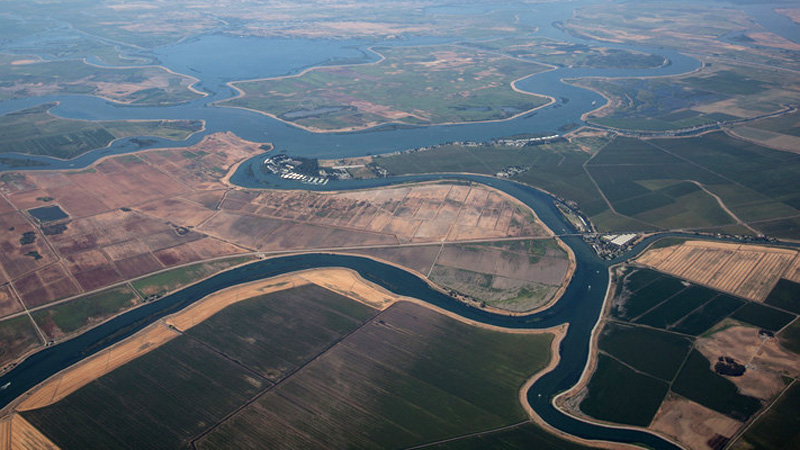
"content": "\u003cfigure id=\"attachment_23139\" class=\"wp-caption alignleft\" style=\"max-width: 640px\">\u003ca href=\"http://ww2.kqed.org/science/wp-content/uploads/sites/35/2014/10/Delta-aerial.jpg\">\u003cimg loading=\"lazy\" decoding=\"async\" class=\"wp-image-23139\" src=\"http://ww2.kqed.org/science/wp-content/uploads/sites/35/2014/10/Delta-aerial.jpg\" alt=\"The Sacramento-San Joaquin Delta has been almost completely transformed over the past 150 years. (Mark Andrew Boyer/KQED)\" width=\"640\" height=\"360\">\u003c/a>\u003cfigcaption class=\"wp-caption-text\">The Sacramento-San Joaquin Delta has been almost completely transformed over 150 years. (Mark Andrew Boyer/KQED)\u003c/figcaption>\u003c/figure>\n\u003cp>California’s historic drought has put the state’s water problems in the forefront this year and those problems aren’t likely to be solved when the clouds open up again. Nowhere is that more apparent than in the water system’s central hub — \u003ca href=\"http://ww2.kqed.org/science/series/ca-delta/\">the Sacramento-San Joaquin Delta\u003c/a>.\u003c/p>\n\u003cp>California’s Delta is the flashpoint for the state’s water politics. For decades, its ecosystem has been in ecological free fall, prompting fierce battles over how much water should be left in the environment, and how much pumped to farms and cities hundreds of miles away.\u003c/p>\n\u003cp>Now, a \u003ca href=\"http://ebooks.sfei.org/DeltaLandscapes/#page/1\">new report\u003c/a> from the \u003ca href=\"http://www.sfei.org/\">San Francisco Estuary Institute\u003c/a> documents why the Delta’s ecosystem is failing for many of its endangered species.\u003c/p>\n\u003cp>The findings could inform efforts to restore the estuary, which some argue would make the water supply more reliable for the entire state.\u003c/p>\n\u003cp>“It’s guidance for what would make a healthy ecosystem –- the missing elements,” says Robin Grossinger, who worked on the report at the San Francisco Estuary Institute.\u003c/p>\n\u003cp>[ad fullwidth]\u003c/p>\n\u003cp>\u003cstrong>Historical Reconstruction\u003c/strong>\u003c/p>\n\u003cp>Using historical maps and records, Grossinger and colleagues \u003ca href=\"http://science.kqed.org/quest/delta-map/\">pieced together a landscape\u003c/a> that’s been almost completely transformed over 150 years.\u003c/p>\n\u003caside class=\"pullquote alignleft\">‘It’s really shocking when you look at it at this level.’\u003ccite>— Robin Grossinger, San Francisco Estuary Institute\u003c/cite>\u003c/aside>\n\u003cp>The Delta was once a network of marshes and water, supporting birds, wildlife and one of the largest Chinook salmon runs on the West Coast. After the Gold Rush, settlers diked channels and waterways, creating islands of dry land protected by levees. About 97 percent of the marshland was lost.\u003c/p>\n\u003cp>The Delta is also the hub of the state’s water supply, because it’s where major rivers converge, carrying 50 percent of the state’s runoff. Early water engineers built a network of canals and pumps to tap into the supply and today, the water is delivered all the way to San Diego.\u003c/p>\n\u003cp>Building on a \u003ca href=\"http://science.kqed.org/quest/delta-map/\">2012 report\u003c/a> that detailed what the physical landscape once looked like, San Francisco Estuary Institute researchers mapped how the historical ecosystem once worked, including how water flowed and how species interacted with the landscape.\u003c/p>\n\u003cp>“It’s really shocking when you look at it at this level,” Grossinger says. “Most of the functions we’ve looked at are tremendously diminished. Some to 99 percent –- that’s the extent of the transformation.”\u003c/p>\n\u003cp>\u003cstrong>A Watery World\u003c/strong>\u003c/p>\n\u003cp>The boundary between water and land was continually in flux in the historical Delta.\u003c/p>\n\u003cfigure id=\"attachment_23128\" class=\"wp-caption alignright\" style=\"max-width: 640px\">\u003ca href=\"http://ww2.kqed.org/science/wp-content/uploads/sites/35/2014/10/DeltaWater2.jpg\">\u003cimg loading=\"lazy\" decoding=\"async\" class=\"size-full wp-image-23128\" src=\"http://ww2.kqed.org/science/wp-content/uploads/sites/35/2014/10/DeltaWater2.jpg\" alt=\"Source: San Francisco Estuary Institute.\" width=\"640\" height=\"536\">\u003c/a>\u003cfigcaption class=\"wp-caption-text\">(Courtesy of San Francisco Estuary Institute)\u003c/figcaption>\u003c/figure>\n\u003cp>Tides would arrive twice daily from San Francisco Bay, spreading through a network of tidal channels that looked much like capillaries. Other land would flood seasonally, as snowmelt caused the Sacramento and San Joaquin Rivers to overflow their banks.\u003c/p>\n\u003cp>“There was a massive expansion of habitat as the water moved across the landscape,” Grossinger says.\u003c/p>\n\u003cp>The seasonal flooding was key for Chinook salmon. Young salmon would find food and refuge in the floodplains, as they migrated out to the ocean. Millions of birds, migrating on the Pacific Flyway, would use the vast wetlands as they traveled through. Today, the connection between land and water has been largely severed.\u003c/p>\n\u003cp>\u003cstrong>High Quality Marsh Habitat\u003c/strong>\u003c/p>\n\u003cp>With most of the Delta’s marshes gone, scientists have few places to look to as models for habitat restoration.\u003c/p>\n\u003cfigure id=\"attachment_23132\" class=\"wp-caption alignleft\" style=\"max-width: 640px\">\u003ca href=\"http://ww2.kqed.org/science/wp-content/uploads/sites/35/2014/10/DeltaMarsh3.jpg\">\u003cimg loading=\"lazy\" decoding=\"async\" class=\"size-full wp-image-23132\" src=\"http://ww2.kqed.org/science/wp-content/uploads/sites/35/2014/10/DeltaMarsh3.jpg\" alt=\"Source: San Francisco Estuary Institute\" width=\"640\" height=\"534\">\u003c/a>\u003cfigcaption class=\"wp-caption-text\">(Courtesy of San Francisco Estuary Institute)\u003c/figcaption>\u003c/figure>\n\u003cp>“There’s little you can study that looks or functions like it used to,” Grossinger says. “That’s the difference with San Francisco Bay. There were a few remnants of marsh leftover there to use as a reference.”\u003c/p>\n\u003cp>“The function part is the missing link,” says Carl Wilcox of California’s Department of Fish and Wildlife, an agency involved in species restoration.\u003c/p>\n\u003cp>The report outlines three key ingredients for creating marshes that could support birds and wildlife; marshes must be large, broad rather than narrow and neighbor other marshes of different sizes.\u003c/p>\n\u003cp>Of the little marshland that exists in the Delta today, only 11 percent meets those conditions. The two largest marshes in today’s Delta were created accidentally. Sherman Island was flooded when its levees failed in the early 1900s, and aquatic plants have grown in since. The Liberty Island marsh was created after a levee failed in 1998 and the land was abandoned.\u003c/p>\n\u003cp>\u003cstrong>Ambitious Restoration Plans\u003c/strong>\u003c/p>\n\u003cp>The findings of the report could inform a major restoration effort that’s proposed for the Delta, part of \u003ca href=\"http://ww2.kqed.org/science/audio/money-environmental-concerns-could-sink-governors-delta-water-plan/\">Governor Brown’s plan to built two massive water tunnels\u003c/a>. The Brown administration says the project is crucial to maintaining a reliable water supply for two-thirds of the state.\u003c/p>\n\u003cp>The tunnels would divert freshwater from the Delta, potentially harming some endangered fish species like salmon and Delta smelt, depending on the water conditions. The state is counting on 30,000 acres of marsh restoration help endangered species and offset those harms.\u003c/p>\n\u003cp>How and where to do the restoration is still a matter of debate, both for scientists skeptical of the extent of the wildlife benefits and Delta residents who farm or live in the area. \u003c/p>\n\u003cp>\u003c/p>\n\u003cp>\u003c!-- iframe plugin v.4.3 wordpress.org/plugins/iframe/ -->\u003cbr>\n\u003ciframe loading=\"lazy\" src=\"http://sfei.maps.arcgis.com/apps/StorytellingSwipe/index.html?appid=f6e50119057f44188191ed478e9649b5\" width=\"640\" height=\"600\" scrolling=\"yes\" class=\"iframe-class\" frameborder=\"0\">\u003c/iframe>\u003c/p>\n\n",
"stats": {
"hasVideo": false,
"hasChartOrMap": true,
"hasAudio": false,
"hasPolis": false,
"wordCount": 894,
"hasGoogleForm": false,
"hasGallery": false,
"hasHearkenModule": false,
"iframeSrcs": [
"http://sfei.maps.arcgis.com/apps/StorytellingSwipe/index.html"
],
"paragraphCount": 29
},
"modified": 1704932693,
"excerpt": "Startling maps in a new report on the Sacramento-San Joaquin Delta show the dramatic loss of marshlands that once supported a vast array of wildlife.",
"headData": {
"twImgId": "",
"twTitle": "",
"ogTitle": "",
"ogImgId": "",
"twDescription": "",
"description": "Startling maps in a new report on the Sacramento-San Joaquin Delta show the dramatic loss of marshlands that once supported a vast array of wildlife.",
"title": "Why California’s Largest Estuary No Longer Works for Wildlife | KQED",
"ogDescription": "",
"schema": {
"@context": "https://schema.org",
"@type": "Article",
"headline": "Why California’s Largest Estuary No Longer Works for Wildlife",
"datePublished": "2014-10-30T00:01:48-07:00",
"dateModified": "2024-01-10T16:24:53-08:00",
"image": "https://cdn.kqed.org/wp-content/uploads/2020/02/KQED-OG-Image@1x.png"
}
},
"guestAuthors": [],
"slug": "why-californias-largest-estuary-no-longer-works-for-wildlife",
"status": "publish",
"sticky": false,
"path": "/science/23127/why-californias-largest-estuary-no-longer-works-for-wildlife",
"audioTrackLength": null,
"parsedContent": [
{
"type": "contentString",
"content": "\u003cdiv class=\"post-body\">\u003cp>\u003cfigure id=\"attachment_23139\" class=\"wp-caption alignleft\" style=\"max-width: 640px\">\u003ca href=\"http://ww2.kqed.org/science/wp-content/uploads/sites/35/2014/10/Delta-aerial.jpg\">\u003cimg loading=\"lazy\" decoding=\"async\" class=\"wp-image-23139\" src=\"http://ww2.kqed.org/science/wp-content/uploads/sites/35/2014/10/Delta-aerial.jpg\" alt=\"The Sacramento-San Joaquin Delta has been almost completely transformed over the past 150 years. (Mark Andrew Boyer/KQED)\" width=\"640\" height=\"360\">\u003c/a>\u003cfigcaption class=\"wp-caption-text\">The Sacramento-San Joaquin Delta has been almost completely transformed over 150 years. (Mark Andrew Boyer/KQED)\u003c/figcaption>\u003c/figure>\n\u003cp>California’s historic drought has put the state’s water problems in the forefront this year and those problems aren’t likely to be solved when the clouds open up again. Nowhere is that more apparent than in the water system’s central hub — \u003ca href=\"http://ww2.kqed.org/science/series/ca-delta/\">the Sacramento-San Joaquin Delta\u003c/a>.\u003c/p>\n\u003cp>California’s Delta is the flashpoint for the state’s water politics. For decades, its ecosystem has been in ecological free fall, prompting fierce battles over how much water should be left in the environment, and how much pumped to farms and cities hundreds of miles away.\u003c/p>\n\u003cp>Now, a \u003ca href=\"http://ebooks.sfei.org/DeltaLandscapes/#page/1\">new report\u003c/a> from the \u003ca href=\"http://www.sfei.org/\">San Francisco Estuary Institute\u003c/a> documents why the Delta’s ecosystem is failing for many of its endangered species.\u003c/p>\n\u003cp>The findings could inform efforts to restore the estuary, which some argue would make the water supply more reliable for the entire state.\u003c/p>\n\u003cp>“It’s guidance for what would make a healthy ecosystem –- the missing elements,” says Robin Grossinger, who worked on the report at the San Francisco Estuary Institute.\u003c/p>\n\u003cp>\u003c/p>\u003c/div>",
"attributes": {
"named": {},
"numeric": []
}
},
{
"type": "component",
"content": "",
"name": "ad",
"attributes": {
"named": {
"label": "fullwidth"
},
"numeric": [
"fullwidth"
]
}
},
{
"type": "contentString",
"content": "\u003cdiv class=\"post-body\">\u003cp>\u003c/p>\n\u003cp>\u003cstrong>Historical Reconstruction\u003c/strong>\u003c/p>\n\u003cp>Using historical maps and records, Grossinger and colleagues \u003ca href=\"http://science.kqed.org/quest/delta-map/\">pieced together a landscape\u003c/a> that’s been almost completely transformed over 150 years.\u003c/p>\n\u003caside class=\"pullquote alignleft\">‘It’s really shocking when you look at it at this level.’\u003ccite>— Robin Grossinger, San Francisco Estuary Institute\u003c/cite>\u003c/aside>\n\u003cp>The Delta was once a network of marshes and water, supporting birds, wildlife and one of the largest Chinook salmon runs on the West Coast. After the Gold Rush, settlers diked channels and waterways, creating islands of dry land protected by levees. About 97 percent of the marshland was lost.\u003c/p>\n\u003cp>The Delta is also the hub of the state’s water supply, because it’s where major rivers converge, carrying 50 percent of the state’s runoff. Early water engineers built a network of canals and pumps to tap into the supply and today, the water is delivered all the way to San Diego.\u003c/p>\n\u003cp>Building on a \u003ca href=\"http://science.kqed.org/quest/delta-map/\">2012 report\u003c/a> that detailed what the physical landscape once looked like, San Francisco Estuary Institute researchers mapped how the historical ecosystem once worked, including how water flowed and how species interacted with the landscape.\u003c/p>\n\u003cp>“It’s really shocking when you look at it at this level,” Grossinger says. “Most of the functions we’ve looked at are tremendously diminished. Some to 99 percent –- that’s the extent of the transformation.”\u003c/p>\n\u003cp>\u003cstrong>A Watery World\u003c/strong>\u003c/p>\n\u003cp>The boundary between water and land was continually in flux in the historical Delta.\u003c/p>\n\u003cfigure id=\"attachment_23128\" class=\"wp-caption alignright\" style=\"max-width: 640px\">\u003ca href=\"http://ww2.kqed.org/science/wp-content/uploads/sites/35/2014/10/DeltaWater2.jpg\">\u003cimg loading=\"lazy\" decoding=\"async\" class=\"size-full wp-image-23128\" src=\"http://ww2.kqed.org/science/wp-content/uploads/sites/35/2014/10/DeltaWater2.jpg\" alt=\"Source: San Francisco Estuary Institute.\" width=\"640\" height=\"536\">\u003c/a>\u003cfigcaption class=\"wp-caption-text\">(Courtesy of San Francisco Estuary Institute)\u003c/figcaption>\u003c/figure>\n\u003cp>Tides would arrive twice daily from San Francisco Bay, spreading through a network of tidal channels that looked much like capillaries. Other land would flood seasonally, as snowmelt caused the Sacramento and San Joaquin Rivers to overflow their banks.\u003c/p>\n\u003cp>“There was a massive expansion of habitat as the water moved across the landscape,” Grossinger says.\u003c/p>\n\u003cp>The seasonal flooding was key for Chinook salmon. Young salmon would find food and refuge in the floodplains, as they migrated out to the ocean. Millions of birds, migrating on the Pacific Flyway, would use the vast wetlands as they traveled through. Today, the connection between land and water has been largely severed.\u003c/p>\n\u003cp>\u003cstrong>High Quality Marsh Habitat\u003c/strong>\u003c/p>\n\u003cp>With most of the Delta’s marshes gone, scientists have few places to look to as models for habitat restoration.\u003c/p>\n\u003cfigure id=\"attachment_23132\" class=\"wp-caption alignleft\" style=\"max-width: 640px\">\u003ca href=\"http://ww2.kqed.org/science/wp-content/uploads/sites/35/2014/10/DeltaMarsh3.jpg\">\u003cimg loading=\"lazy\" decoding=\"async\" class=\"size-full wp-image-23132\" src=\"http://ww2.kqed.org/science/wp-content/uploads/sites/35/2014/10/DeltaMarsh3.jpg\" alt=\"Source: San Francisco Estuary Institute\" width=\"640\" height=\"534\">\u003c/a>\u003cfigcaption class=\"wp-caption-text\">(Courtesy of San Francisco Estuary Institute)\u003c/figcaption>\u003c/figure>\n\u003cp>“There’s little you can study that looks or functions like it used to,” Grossinger says. “That’s the difference with San Francisco Bay. There were a few remnants of marsh leftover there to use as a reference.”\u003c/p>\n\u003cp>“The function part is the missing link,” says Carl Wilcox of California’s Department of Fish and Wildlife, an agency involved in species restoration.\u003c/p>\n\u003cp>The report outlines three key ingredients for creating marshes that could support birds and wildlife; marshes must be large, broad rather than narrow and neighbor other marshes of different sizes.\u003c/p>\n\u003cp>Of the little marshland that exists in the Delta today, only 11 percent meets those conditions. The two largest marshes in today’s Delta were created accidentally. Sherman Island was flooded when its levees failed in the early 1900s, and aquatic plants have grown in since. The Liberty Island marsh was created after a levee failed in 1998 and the land was abandoned.\u003c/p>\n\u003cp>\u003cstrong>Ambitious Restoration Plans\u003c/strong>\u003c/p>\n\u003cp>The findings of the report could inform a major restoration effort that’s proposed for the Delta, part of \u003ca href=\"http://ww2.kqed.org/science/audio/money-environmental-concerns-could-sink-governors-delta-water-plan/\">Governor Brown’s plan to built two massive water tunnels\u003c/a>. The Brown administration says the project is crucial to maintaining a reliable water supply for two-thirds of the state.\u003c/p>\n\u003cp>The tunnels would divert freshwater from the Delta, potentially harming some endangered fish species like salmon and Delta smelt, depending on the water conditions. The state is counting on 30,000 acres of marsh restoration help endangered species and offset those harms.\u003c/p>\n\u003cp>How and where to do the restoration is still a matter of debate, both for scientists skeptical of the extent of the wildlife benefits and Delta residents who farm or live in the area. \u003c/p>\n\u003cp>\u003c/p>\n\u003cp>\u003c!-- iframe plugin v.4.3 wordpress.org/plugins/iframe/ -->\u003cbr>\n\u003ciframe loading=\"lazy\" src=\"http://sfei.maps.arcgis.com/apps/StorytellingSwipe/index.html?appid=f6e50119057f44188191ed478e9649b5\" width=\"640\" height=\"600\" scrolling=\"yes\" class=\"iframe-class\" frameborder=\"0\">\u003c/iframe>\u003c/p>\n\n\u003c/div>\u003c/p>",
"attributes": {
"named": {},
"numeric": []
}
}
],
"link": "/science/23127/why-californias-largest-estuary-no-longer-works-for-wildlife",
"authors": [
"239"
],
"series": [
"science_87",
"science_1151"
],
"categories": [
"science_30",
"science_35",
"science_40",
"science_98"
],
"tags": [
"science_202",
"science_572",
"science_261",
"science_64",
"science_670",
"science_1214",
"science_247",
"science_201",
"science_207"
],
"featImg": "science_23139",
"label": "science_1151"
},
"science_23077": {
"type": "posts",
"id": "science_23077",
"meta": {
"index": "posts_1716263798",
"site": "science",
"id": "23077",
"score": null,
"sort": [
1414595591000
]
},
"parent": 0,
"labelTerm": {
"site": "science"
},
"blocks": [],
"publishDate": 1414595591,
"format": "aside",
"title": "Activists Push for Public Review of Diablo Canyon Nuclear Power Plant",
"headTitle": "Activists Push for Public Review of Diablo Canyon Nuclear Power Plant | KQED",
"content": "\u003cfigure id=\"attachment_23078\" class=\"wp-caption aligncenter\" style=\"max-width: 850px\">\u003ca href=\"http://ww2.kqed.org/science/wp-content/uploads/sites/35/2014/10/826scr_5fa7533564080f8.jpg\">\u003cimg loading=\"lazy\" decoding=\"async\" class=\"size-full wp-image-23078\" src=\"http://ww2.kqed.org/science/wp-content/uploads/sites/35/2014/10/826scr_5fa7533564080f8.jpg\" alt=\"Activists are concerned that Diablo Canyon can't withstand a major earthquake. (Craig Miller/KQED)\" width=\"850\" height=\"638\">\u003c/a>\u003cfigcaption class=\"wp-caption-text\">Activists question whether Diablo Canyon can withstand a major earthquake. (Craig Miller/KQED)\u003c/figcaption>\u003c/figure>\n\u003cp>An environmental group is pushing for a public review of the Diablo Canyon nuclear power plant’s license, amid concerns about the seismic safety of the Central Coast plant.\u003c/p>\n\u003cp>The environmental group Friends of the Earth has file a \u003ca href=\"http://libcloud.s3.amazonaws.com/93/f4/7/4937/14-10-28_FoE_Petition_FSAR.pdf\">petition for review\u003c/a> in the U.S. Court of Appeals. It’s the latest move in the group’s longstanding campaign to shut down California’s only remaining nuclear plant, which supplies about nine percent of the state’s electricity.\u003c/p>\n\u003cp>Recent discoveries of geologic faults near the San Luis Obispo County facility should trigger a public re-assessment of the plant’s safety, said Friends of the Earth spokesman Damon Moglan. Instead, he said, the Nuclear Regulatory Commission and PG&E changed how earthquake risk is assessed in the plant’s license, without public input. \u003c/p>\n\u003cp>“There really has to be a full public review of whether or not this plant is safe,” he said. “And whether or not it’s worth the risk of operating a decrepit 40-year-old plant designed in the 1960s in the most seismically active area of any reactor in the United States.”\u003c/p>\n\u003cp>In its petition, Friends of the Earth said the Nuclear Regulatory Commission violated federal law and its own internal policies by making the change to Diablo Canyon’s license without public review. The group said the plant should be shut down until a full review is complete.\u003c/p>\n\u003cp>[ad fullwidth]\u003c/p>\n\u003cp>A new fault was discovered near the plant in 2008. Earlier this year, PG&E completed \u003ca href=\"http://www.pge.com/en/safety/systemworks/dcpp/seismicsafety/report.page\">its own study\u003c/a>, finding that even with that additional nearby fault, the seismic risk to the plant is below what the plant was built to withstand. \u003c/p>\n\u003cp>“The facts are: the plant was built with earthquake safety at the forefront,” Blair Jones, a spokesman for PG&E told KQED. “It’s a seismically safe facility. And it’s in full compliance with NRC licensing requirements.”\u003c/p>\n\u003cp>A former inspector at Diablo Canyon released his own \u003ca href=\"http://libcloud.s3.amazonaws.com/93/5a/8/4821/Diablo_Canyon_Seismic_DPO.pdf/\">analysis\u003c/a>, saying the NRC was not applying its own safety rules to the plant.\u003c/p>\n\u003cp>\u003c/p>\n\u003cp>A spokeswoman for the NRC says the agency will review the petition.\u003c/p>\n\n",
"stats": {
"hasVideo": false,
"hasChartOrMap": false,
"hasAudio": false,
"hasPolis": false,
"wordCount": 386,
"hasGoogleForm": false,
"hasGallery": false,
"hasHearkenModule": false,
"iframeSrcs": [],
"paragraphCount": 11
},
"modified": 1704932698,
"excerpt": "An environmental group claims there are unanswered questions about the seismic safety of the Central Coast plant. ",
"headData": {
"twImgId": "",
"twTitle": "",
"ogTitle": "",
"ogImgId": "",
"twDescription": "",
"description": "An environmental group claims there are unanswered questions about the seismic safety of the Central Coast plant. ",
"title": "Activists Push for Public Review of Diablo Canyon Nuclear Power Plant | KQED",
"ogDescription": "",
"schema": {
"@context": "https://schema.org",
"@type": "Article",
"headline": "Activists Push for Public Review of Diablo Canyon Nuclear Power Plant",
"datePublished": "2014-10-29T08:13:11-07:00",
"dateModified": "2024-01-10T16:24:58-08:00",
"image": "https://cdn.kqed.org/wp-content/uploads/2020/02/KQED-OG-Image@1x.png"
}
},
"guestAuthors": [],
"slug": "activists-push-for-public-review-of-diablo-canyon-nuclear-power-plant",
"status": "publish",
"sticky": false,
"path": "/science/23077/activists-push-for-public-review-of-diablo-canyon-nuclear-power-plant",
"audioTrackLength": null,
"parsedContent": [
{
"type": "contentString",
"content": "\u003cdiv class=\"post-body\">\u003cp>\u003cfigure id=\"attachment_23078\" class=\"wp-caption aligncenter\" style=\"max-width: 850px\">\u003ca href=\"http://ww2.kqed.org/science/wp-content/uploads/sites/35/2014/10/826scr_5fa7533564080f8.jpg\">\u003cimg loading=\"lazy\" decoding=\"async\" class=\"size-full wp-image-23078\" src=\"http://ww2.kqed.org/science/wp-content/uploads/sites/35/2014/10/826scr_5fa7533564080f8.jpg\" alt=\"Activists are concerned that Diablo Canyon can't withstand a major earthquake. (Craig Miller/KQED)\" width=\"850\" height=\"638\">\u003c/a>\u003cfigcaption class=\"wp-caption-text\">Activists question whether Diablo Canyon can withstand a major earthquake. (Craig Miller/KQED)\u003c/figcaption>\u003c/figure>\n\u003cp>An environmental group is pushing for a public review of the Diablo Canyon nuclear power plant’s license, amid concerns about the seismic safety of the Central Coast plant.\u003c/p>\n\u003cp>The environmental group Friends of the Earth has file a \u003ca href=\"http://libcloud.s3.amazonaws.com/93/f4/7/4937/14-10-28_FoE_Petition_FSAR.pdf\">petition for review\u003c/a> in the U.S. Court of Appeals. It’s the latest move in the group’s longstanding campaign to shut down California’s only remaining nuclear plant, which supplies about nine percent of the state’s electricity.\u003c/p>\n\u003cp>Recent discoveries of geologic faults near the San Luis Obispo County facility should trigger a public re-assessment of the plant’s safety, said Friends of the Earth spokesman Damon Moglan. Instead, he said, the Nuclear Regulatory Commission and PG&E changed how earthquake risk is assessed in the plant’s license, without public input. \u003c/p>\n\u003cp>“There really has to be a full public review of whether or not this plant is safe,” he said. “And whether or not it’s worth the risk of operating a decrepit 40-year-old plant designed in the 1960s in the most seismically active area of any reactor in the United States.”\u003c/p>\n\u003cp>In its petition, Friends of the Earth said the Nuclear Regulatory Commission violated federal law and its own internal policies by making the change to Diablo Canyon’s license without public review. The group said the plant should be shut down until a full review is complete.\u003c/p>\n\u003cp>\u003c/p>\u003c/div>",
"attributes": {
"named": {},
"numeric": []
}
},
{
"type": "component",
"content": "",
"name": "ad",
"attributes": {
"named": {
"label": "fullwidth"
},
"numeric": [
"fullwidth"
]
}
},
{
"type": "contentString",
"content": "\u003cdiv class=\"post-body\">\u003cp>\u003c/p>\n\u003cp>A new fault was discovered near the plant in 2008. Earlier this year, PG&E completed \u003ca href=\"http://www.pge.com/en/safety/systemworks/dcpp/seismicsafety/report.page\">its own study\u003c/a>, finding that even with that additional nearby fault, the seismic risk to the plant is below what the plant was built to withstand. \u003c/p>\n\u003cp>“The facts are: the plant was built with earthquake safety at the forefront,” Blair Jones, a spokesman for PG&E told KQED. “It’s a seismically safe facility. And it’s in full compliance with NRC licensing requirements.”\u003c/p>\n\u003cp>A former inspector at Diablo Canyon released his own \u003ca href=\"http://libcloud.s3.amazonaws.com/93/5a/8/4821/Diablo_Canyon_Seismic_DPO.pdf/\">analysis\u003c/a>, saying the NRC was not applying its own safety rules to the plant.\u003c/p>\n\u003cp>\u003c/p>\n\u003cp>A spokeswoman for the NRC says the agency will review the petition.\u003c/p>\n\n\u003c/div>\u003c/p>",
"attributes": {
"named": {},
"numeric": []
}
}
],
"link": "/science/23077/activists-push-for-public-review-of-diablo-canyon-nuclear-power-plant",
"authors": [
"200"
],
"categories": [
"science_33",
"science_89",
"science_38",
"science_40"
],
"tags": [
"science_136"
],
"featImg": "science_23078",
"label": "science"
},
"science_23025": {
"type": "posts",
"id": "science_23025",
"meta": {
"index": "posts_1716263798",
"site": "science",
"id": "23025",
"score": null,
"sort": [
1414415001000
]
},
"parent": 0,
"labelTerm": {
"site": "science"
},
"blocks": [],
"publishDate": 1414415001,
"format": "aside",
"title": "'Bionic Eye' Allows Some Blind People to See Light",
"headTitle": "‘Bionic Eye’ Allows Some Blind People to See Light | KQED",
"content": "\u003cdiv class=\"audio-wrap\">\n\u003ch2>Listen:\u003c/h2>\n\u003cp>http://www.kqed.org/.stream/anon/radio/science/2014/10/20141027science.mp3\u003c/p>\n\u003c/div>\n\u003cfigure id=\"attachment_23036\" class=\"wp-caption aligncenter\" style=\"max-width: 640px\">\u003ca href=\"http://ww2.kqed.org/science/wp-content/uploads/sites/35/2014/10/92414-e1414198407252.jpg\">\u003cimg loading=\"lazy\" decoding=\"async\" class=\"size-full wp-image-23036\" src=\"http://ww2.kqed.org/science/wp-content/uploads/sites/35/2014/10/92414-e1414198407252.jpg\" alt=\"Dr. Linda Olmos De Koo examines Lisa Kulik's prosthetic retina at the USC Eye Institute. The device helps Kulik differentiate between light and shadows so that she can better interpret the world around her. Benjamin Brayfield/KPCC)\" width=\"640\" height=\"427\">\u003c/a>\u003cfigcaption class=\"wp-caption-text\">Dr. Linda Olmos De Koo examines Lisa Kulik’s prosthetic retina at the USC Eye Institute. The device helps Kulik differentiate between light and shadows so she can better interpret the world around her. (Benjamin Brayfield/KPCC)\u003c/figcaption>\u003c/figure>\n\u003cp>An eye implant developed by the University of Southern California — \u003ca href=\"http://www.fda.gov/medicaldevices/productsandmedicalprocedures/deviceapprovalsandclearances/recently-approveddevices/ucm343162.htm\">the first FDA-approved implant of its kind\u003c/a> — is helping people with a rare type of vision loss regain some sight. And it’s paving the way for more types of “bionic eyes” to treat other forms of blindness in the future.\u003c/p>\n\u003cp>Dubbed the Argus II, the implant was designed to treat retinitis pigmentosa, a genetic disorder that slowly robs a person of sight by destroying photoreceptors in the eye.\u003c/p>\n\u003cp>Lisa Kulik, 55, is the first person west of the Mississippi to receive the commercial version of this device.\u003c/p>\n\u003cp>\u003ca href=\"http://www.scpr.org/news/2014/10/02/47108/usc-developed-bionic-eye-offers-some-blind-patient/?slide=3\">Go to KPCC’s website\u003c/a> to read the full story and see how the device works.\u003c/p>\n\u003cp>[ad fullwidth]\u003c/p>\u003cp>\u003c/p>\n",
"stats": {
"hasVideo": false,
"hasChartOrMap": false,
"hasAudio": true,
"hasPolis": false,
"wordCount": 174,
"hasGoogleForm": false,
"hasGallery": false,
"hasHearkenModule": false,
"iframeSrcs": [],
"paragraphCount": 6
},
"modified": 1704932707,
"excerpt": "A California woman recently became the first person in the West to receive a new type of bionic eye, an implant that will help her see for the first time in nearly three decades. ",
"headData": {
"twImgId": "",
"twTitle": "",
"ogTitle": "",
"ogImgId": "",
"twDescription": "",
"description": "A California woman recently became the first person in the West to receive a new type of bionic eye, an implant that will help her see for the first time in nearly three decades. ",
"title": "'Bionic Eye' Allows Some Blind People to See Light | KQED",
"ogDescription": "",
"schema": {
"@context": "https://schema.org",
"@type": "Article",
"headline": "'Bionic Eye' Allows Some Blind People to See Light",
"datePublished": "2014-10-27T06:03:21-07:00",
"dateModified": "2024-01-10T16:25:07-08:00",
"image": "https://cdn.kqed.org/wp-content/uploads/2020/02/KQED-OG-Image@1x.png"
}
},
"guestAuthors": [],
"slug": "bionic-eye-allows-some-blind-people-to-see-light",
"status": "publish",
"audioUrl": "http://www.kqed.org/.stream/anon/radio/science/2014/10/20141027science.mp3",
"sticky": false,
"path": "/science/23025/bionic-eye-allows-some-blind-people-to-see-light",
"audioTrackLength": null,
"parsedContent": [
{
"type": "contentString",
"content": "\u003cdiv class=\"post-body\">\u003cp>\u003cdiv class=\"audio-wrap\">\n\u003ch2>Listen:\u003c/h2>\u003c/p>\u003c/div>",
"attributes": {
"named": {},
"numeric": []
}
},
{
"type": "component",
"content": "",
"name": "audioLink",
"attributes": {
"named": {
"src": "http://www.kqed.org/.stream/anon/radio/science/2014/10/20141027science.mp3"
},
"numeric": []
}
},
{
"type": "contentString",
"content": "\u003cdiv class=\"post-body\">\u003cp>\u003c/div>\n\u003cfigure id=\"attachment_23036\" class=\"wp-caption aligncenter\" style=\"max-width: 640px\">\u003ca href=\"http://ww2.kqed.org/science/wp-content/uploads/sites/35/2014/10/92414-e1414198407252.jpg\">\u003cimg loading=\"lazy\" decoding=\"async\" class=\"size-full wp-image-23036\" src=\"http://ww2.kqed.org/science/wp-content/uploads/sites/35/2014/10/92414-e1414198407252.jpg\" alt=\"Dr. Linda Olmos De Koo examines Lisa Kulik's prosthetic retina at the USC Eye Institute. The device helps Kulik differentiate between light and shadows so that she can better interpret the world around her. Benjamin Brayfield/KPCC)\" width=\"640\" height=\"427\">\u003c/a>\u003cfigcaption class=\"wp-caption-text\">Dr. Linda Olmos De Koo examines Lisa Kulik’s prosthetic retina at the USC Eye Institute. The device helps Kulik differentiate between light and shadows so she can better interpret the world around her. (Benjamin Brayfield/KPCC)\u003c/figcaption>\u003c/figure>\n\u003cp>An eye implant developed by the University of Southern California — \u003ca href=\"http://www.fda.gov/medicaldevices/productsandmedicalprocedures/deviceapprovalsandclearances/recently-approveddevices/ucm343162.htm\">the first FDA-approved implant of its kind\u003c/a> — is helping people with a rare type of vision loss regain some sight. And it’s paving the way for more types of “bionic eyes” to treat other forms of blindness in the future.\u003c/p>\n\u003cp>Dubbed the Argus II, the implant was designed to treat retinitis pigmentosa, a genetic disorder that slowly robs a person of sight by destroying photoreceptors in the eye.\u003c/p>\n\u003cp>Lisa Kulik, 55, is the first person west of the Mississippi to receive the commercial version of this device.\u003c/p>\n\u003cp>\u003ca href=\"http://www.scpr.org/news/2014/10/02/47108/usc-developed-bionic-eye-offers-some-blind-patient/?slide=3\">Go to KPCC’s website\u003c/a> to read the full story and see how the device works.\u003c/p>\n\u003cp>\u003c/p>\u003c/div>",
"attributes": {
"named": {},
"numeric": []
}
},
{
"type": "component",
"content": "",
"name": "ad",
"attributes": {
"named": {
"label": "fullwidth"
},
"numeric": [
"fullwidth"
]
}
},
{
"type": "contentString",
"content": "\u003cdiv class=\"post-body\">\u003cp>\u003c/p>\u003cp>\u003c/p>\n\u003c/div>\u003c/p>",
"attributes": {
"named": {},
"numeric": []
}
}
],
"link": "/science/23025/bionic-eye-allows-some-blind-people-to-see-light",
"authors": [
"6524"
],
"categories": [
"science_46",
"science_89",
"science_39",
"science_40",
"science_43"
],
"featImg": "science_23036",
"label": "science"
},
"science_22792": {
"type": "posts",
"id": "science_22792",
"meta": {
"index": "posts_1716263798",
"site": "science",
"id": "22792",
"score": null,
"sort": [
1414106885000
]
},
"parent": 0,
"labelTerm": {
"site": "science"
},
"blocks": [],
"publishDate": 1414106885,
"format": "aside",
"title": "Photos From Thursday's Solar Eclipse",
"headTitle": "Photos From Thursday’s Solar Eclipse | KQED",
"content": "\u003cp>Sky gazers turned out for Thursday’s partial solar eclipse. In the Bay Area, the moon obscured about 40 percent of the sun. The next time there will be a solar eclipse visible from here will be \u003ca href=\"http://eclipse.gsfc.nasa.gov/SEdecade/SEdecade2011.html\">August 2017\u003c/a> (and it will be a total eclipse.)\u003c/p>\n\u003cfigure id=\"attachment_23003\" class=\"wp-caption aligncenter\" style=\"max-width: 1280px\">\u003ca href=\"http://ww2.kqed.org/science/wp-content/uploads/sites/35/2014/10/solareclipse2-e1414105433249.jpg\">\u003cimg loading=\"lazy\" decoding=\"async\" src=\"http://ww2.kqed.org/science/wp-content/uploads/sites/35/2014/10/solareclipse2-e1414105433249.jpg\" alt=\"Melissa Sheridan holds her son Neo as he watches the solar eclipse from the Foothill Observatory. (James Tensuan/KQED)\" width=\"1280\" height=\"853\" class=\"size-full wp-image-23003\">\u003c/a>\u003cfigcaption class=\"wp-caption-text\">Melissa Sheridan holds her son Neo as he watches the solar eclipse from the Foothill Observatory. (James Tensuan/KQED)\u003c/figcaption>\u003c/figure>\n\u003cfigure id=\"attachment_23007\" class=\"wp-caption aligncenter\" style=\"max-width: 1516px\">\u003ca href=\"http://ww2.kqed.org/science/wp-content/uploads/sites/35/2014/10/eclipseshannonrosa.jpeg\">\u003cimg loading=\"lazy\" decoding=\"async\" src=\"http://ww2.kqed.org/science/wp-content/uploads/sites/35/2014/10/eclipseshannonrosa.jpeg\" alt=\"The moon obscured about 40 percent of the sun in Thursday's eclipse. (Courtesy of Shannon Rosa)\" width=\"1516\" height=\"1516\" class=\"size-full wp-image-23007\">\u003c/a>\u003cfigcaption class=\"wp-caption-text\">The moon obscured about 40 percent of the sun in Thursday’s eclipse. (Courtesy of Shannon Rosa)\u003c/figcaption>\u003c/figure>\n\u003cfigure id=\"attachment_22999\" class=\"wp-caption aligncenter\" style=\"max-width: 1024px\">\u003ca href=\"http://ww2.kqed.org/science/wp-content/uploads/sites/35/2014/10/solareclipse1-1024x682.jpg\">\u003cimg loading=\"lazy\" decoding=\"async\" class=\"wp-image-22999 size-large\" src=\"http://ww2.kqed.org/science/wp-content/uploads/sites/35/2014/10/solareclipse1-1024x682.jpg\" alt=\"Watching Thursday's solar eclipse from Foothill College in Los Altos. (James Tensuan/KQED)\" width=\"1024\" height=\"682\">\u003c/a>\u003cfigcaption class=\"wp-caption-text\">Watching Thursday’s solar eclipse from Foothill College in Los Altos. (James Tensuan/KQED)\u003c/figcaption>\u003c/figure>\n\u003cfigure id=\"attachment_23001\" class=\"wp-caption aligncenter\" style=\"max-width: 1280px\">\u003ca href=\"http://ww2.kqed.org/science/wp-content/uploads/sites/35/2014/10/solareclipse3-e1414102345482.jpg\">\u003cimg loading=\"lazy\" decoding=\"async\" src=\"http://ww2.kqed.org/science/wp-content/uploads/sites/35/2014/10/solareclipse3-e1414102345482.jpg\" alt=\"Foothill College student Seongju Choi watches the solar eclipse from the observatory in Los Altos. (James Tensuan/KQED)\" width=\"1280\" height=\"853\" class=\"size-full wp-image-23001\">\u003c/a>\u003cfigcaption class=\"wp-caption-text\">Foothill College student Seongju Choi watches the solar eclipse from the observatory in Los Altos. (James Tensuan/KQED)\u003c/figcaption>\u003c/figure>\n\u003cfigure id=\"attachment_23004\" class=\"wp-caption aligncenter\" style=\"max-width: 1280px\">\u003ca href=\"http://ww2.kqed.org/science/wp-content/uploads/sites/35/2014/10/eclipsewatching-e1414106318967.jpg\">\u003cimg loading=\"lazy\" decoding=\"async\" src=\"http://ww2.kqed.org/science/wp-content/uploads/sites/35/2014/10/eclipsewatching-e1414106318967.jpg\" alt=\"Adam Grossberg and Dan Brekke of KQED step outside to see the eclipse. (Olivia Hubert-Allen/KQED)\" width=\"1280\" height=\"960\" class=\"size-full wp-image-23004\">\u003c/a>\u003cfigcaption class=\"wp-caption-text\">Adam Grossberg and Dan Brekke of KQED step outside to see the eclipse. (Olivia Hubert-Allen/KQED)\u003c/figcaption>\u003c/figure>\n\u003cfigure id=\"attachment_23005\" class=\"wp-caption aligncenter\" style=\"max-width: 1279px\">\u003ca href=\"http://ww2.kqed.org/science/wp-content/uploads/sites/35/2014/10/eclipsenasascreenshot.jpg\">\u003cimg loading=\"lazy\" decoding=\"async\" src=\"http://ww2.kqed.org/science/wp-content/uploads/sites/35/2014/10/eclipsenasascreenshot.jpg\" alt=\"Screenshot from NASA's livestream of the eclipse. Large sun spots are visible. (NASA)\" width=\"1279\" height=\"685\" class=\"size-full wp-image-23005\">\u003c/a>\u003cfigcaption class=\"wp-caption-text\">Screenshot from NASA’s livestream of the eclipse. Large sun spots are visible. (NASA)\u003c/figcaption>\u003c/figure>\n\u003cp>\u003cstrong>Original Post:\u003c/strong>\u003c/p>\n\u003cfigure id=\"attachment_22948\" class=\"wp-caption aligncenter\" style=\"max-width: 673px\">\u003ca href=\"http://ww2.kqed.org/science/wp-content/uploads/sites/35/2014/10/Partial-Solar-Eclipse_T-Ruen_NASA.jpg\">\u003cimg loading=\"lazy\" decoding=\"async\" src=\"http://ww2.kqed.org/science/wp-content/uploads/sites/35/2014/10/Partial-Solar-Eclipse_T-Ruen_NASA.jpg\" alt=\"A partial solar eclipse occurs when the moon obscures only part of the sun from Earth's view. (T. Ruen/NASA)\" width=\"673\" height=\"474\" class=\"size-full wp-image-22948\">\u003c/a>\u003cfigcaption class=\"wp-caption-text\">A partial solar eclipse occurs when the moon obscures only part of the sun from Earth’s view. (T. Ruen/NASA)\u003c/figcaption>\u003c/figure>\n\u003cp>A partial solar eclipse will be visible throughout the Bay Area on Thursday afternoon, given clear skies.\u003c/p>\n\u003cp>The Bay Area is one of the best places in the U.S. to view this eclipse. Here, the moon will cover about 40 percent of the sun. As you move south and east across the country, smaller and smaller segments of the sun will be eclipsed.\u003c/p>\n\u003cp>Solar eclipses occur when the moon moves between Earth and the sun. Picture the orbit of the moon and the orbit of Earth as two huge hula hoops in the sky.\u003c/p>\n\u003cp>[ad fullwidth]\u003c/p>\n\u003cp>“The only time you can have eclipses is when the two hula hoops cross, when the two orbits cross,” says Andrew Fraknoi, chair of the Astronomy Department at Foothill College. “And that’s what happens every six months. The orbit of the moon and the apparent orbit of the sun cross.”\u003c/p>\n\u003cp>Fraknoi says today’s solar eclipse won’t reduce the amount of light we see outside, which raises a question: how can the moon cover up 40 percent of our sun without us noticing it?\u003c/p>\n\u003cp>“The short answer,” Fraknoi says, “is that the sun is brighter than you think.”\u003c/p>\n\u003cp>He says if you were shopping for a light bulb the same wattage as the sun, forget your typical 40 watt bulb: You’d have to buy a 400,000,000,000,000,000,000,000,000 watt bulb.\u003c/p>\n\u003cp>That amount of light so overwhelms the light receptors in the human eye, Fraknoi says, that even losing nearly half of it doesn’t change our overall sense of light and dark.\u003c/p>\n\u003cp>If you want to watch today’s event, there are a number of ways to do that safely. And you don’t even have to wake up in the middle of the night like you may have done for \u003ca href=\"http://ww2.kqed.org/science/2014/10/03/set-your-alarm-for-the-early-morning-total-lunar-eclipse-on-october-8/\">the lunar eclipse\u003c/a> two weeks ago.\u003c/p>\n\u003cp>\u003ca href=\"http://ww2.kqed.org/science/wp-content/uploads/sites/35/2014/10/What-is-a-solar-eclipse.jpg\">\u003cimg loading=\"lazy\" decoding=\"async\" class=\"aligncenter size-full wp-image-22953\" src=\"http://ww2.kqed.org/science/wp-content/uploads/sites/35/2014/10/What-is-a-solar-eclipse.jpg\" alt=\"solar eclipse\" width=\"5171\" height=\"1127\">\u003c/a>\u003c/p>\n\u003cp>\u003cstrong>How and When to View the Eclipse\u003c/strong>\u003c/p>\n\u003cp>The eclipse will begin at 1:52 p.m., as the moon begins to creep across the sun. The moon reaches peak eclipse at 3:15, so the best viewing time is between 3 and 3:30 this afternoon.\u003c/p>\n\u003cp>But don’t imagine you can look at the sun just because it’s partially covered up — you’ll \u003ca href=\"http://www.exploratorium.edu/eclipse/how.html\">burn your retina\u003c/a> if you look directly at a solar eclipse, just the way you burned fall leaves as a kid, using a magnifying glass in the sun.\u003c/p>\n\u003cp>And sunglasses are not enough. To look directly at a solar eclipse, you need a special viewer, available for sale at many science centers.\u003c/p>\n\u003cp>Science museums and observatories around the Bay Area are holding eclipse viewing parties, listed below, where you can safely watch the eclipse through filtered telescopes.\u003c/p>\n\u003cp>“If you can get to where you can see the sun either projected from a telescope or through a telescope with a safe filter,” Fraknoi says, “you can actually see the seething surface of our star, the sun, and then the dark body of our much closer moon, covering up some part of the sun.”\u003c/p>\n\u003cp>You can also have a lot of fun watching the eclipse by making your own \u003ca href=\"http://www.exploratorium.edu/eclipse/how.html\">pinhole projector.\u003c/a>\u003c/p>\n\u003cfigure id=\"attachment_22798\" class=\"wp-caption aligncenter\" style=\"max-width: 2094px\">\u003ca href=\"http://ww2.kqed.org/science/wp-content/uploads/sites/35/2014/10/Eclipse-Pinhole-Projector-Jenny-Oh.jpg\">\u003cimg loading=\"lazy\" decoding=\"async\" class=\"size-full wp-image-22798\" src=\"http://ww2.kqed.org/science/wp-content/uploads/sites/35/2014/10/Eclipse-Pinhole-Projector-Jenny-Oh.jpg\" alt=\"KQED science producer Jenny Oh has fun with a homemade pinhole projector during a 2012 eclipse. (Jenny Oh/KQED)\" width=\"2094\" height=\"1000\">\u003c/a>\u003cfigcaption class=\"wp-caption-text\">KQED science producer Jenny Oh has fun with a homemade pinhole projector during a 2012 eclipse. (Jenny Oh/KQED)\u003c/figcaption>\u003c/figure>\n\u003cp>Make a pinhole in a piece of cardboard, or even a sheet of paper, then hold that over another cardboard or piece of paper. The sun will pass through the pinhole and project an image of itself, giving you a safe way to watch the eclipse. (Do not look through the pinhole at the sun.)\u003c/p>\n\u003cp>Even more basic than that, you can create a pinhole projector with your hands by simply overlapping the fingers of one hand on top of the other – creating a waffle pattern – and allowing the sun to pass through the holes between your fingers and make a projection on the ground. Or if you’re in area with trees, look for the projected images of the sun on the ground as it passes through the spaces between the leaves.\u003c/p>\n\u003cp>Today’s solar event is the last in our eclipse season this year. The next event will be a lunar eclipse in April. The next solar eclipse won’t happen until August 2017.\u003c/p>\n\u003cp>\u003cstrong>Eclipse-Watching Events in the Bay Area\u003c/strong>\u003c/p>\n\u003cp>\u003cstrong>San Francisco\u003c/strong>\u003c/p>\n\u003cp>The\u003ca href=\"http://www.calacademy.org/\"> California Academy of Sciences and Morrison Planetarium\u003c/a> will host a viewing from 1:30 to 4:30 p.m. on their living roof (weather permitting), with planetarium staff on hand. Rain or shine, the eclipse will also be broadcast via internet feed inside the museum. Museum admission fees apply.\u003c/p>\n\u003cp>San Francisco State University faculty and students will offer \u003ca href=\"http://www.sfsu.edu/~sfsumap/southeast.htm\">eclipse viewing in the plaza\u003c/a> at the south entrance to Thornton Hall, from 1:52 to 4:32 in the afternoon.\u003c/p>\n\u003cp>\u003cstrong>East Bay\u003c/strong>\u003c/p>\n\u003cp>\u003ca href=\"http://www.lawrencehallofscience.org/visit/events/partial_solar_eclipse_2014\">The Lawrence Hall of Science\u003c/a> is hosting an event for museum guests from 1:30 to 4:30 p.m. that includes observations through solar telescopes, a Q&A in the planetarium, and model demonstrations. Eclipse-viewing glasses are also available for purchase in the store.\u003c/p>\n\u003cp>The \u003ca href=\"http://www.chabotspace.org/eclipses.htm\">Chabot Space & Science Center\u003c/a> will have astronomy experts and special eclipse viewers on the observation deck to help people view the eclipse safely. Included with museum admission or $15 for the viewing party only.\u003c/p>\n\u003cp>The \u003ca href=\"http://msnucleus.org/events/events.html\">Children’s Natural History Museum\u003c/a> in Fremont will have telescopes for viewing the eclipse from 2 to 4:00 in the afternooon. In case of rain or clouds, the museum will also have a video feed of the eclipse inside the museum, along with solar system demonstrations.\u003c/p>\n\u003cp>The Mt. Diablo Astronomical Society will host an \u003ca href=\"https://nightsky.jpl.nasa.gov/event-view.cfm?Event_ID=60250\">eclipse viewing party\u003c/a> from 2 to 4:30 p.m. at Lindsay Wildlife Museum in Walnut Creek.\u003c/p>\n\u003cp>\u003cstrong>South Bay\u003c/strong>\u003c/p>\n\u003cp>\u003ca href=\"http://www.foothill.edu/ast/fhobs.php\">Foothill College Observatory\u003c/a> will be open from 2 to 4:30 for an eclipse party. Parking costs $3.\u003c/p>\n\u003cp>\u003ca href=\"http://www.collegeofsanmateo.edu/calendar/events/index.php?com=detail&eID=13749\">College of San Mateo Observatory\u003c/a> will have several solar telescopes available in the observatory from 1:45 to 4:30 p.m., including one that people can use to take pictures of the eclipse.\u003c/p>\n\u003cp>Members of the San Mateo County Astronomical Society will provide telescopes, viewing aids and information from 2 to 5 p.m. at the \u003ca href=\"http://www.smcas.com/\">San Carlos Library\u003c/a>. The many perforations in the library dome will also cast beautiful images of the eclipsed sun.\u003c/p>\n\u003cp>The \u003ca href=\"http://www.sjaa.net/directions/\">San Jose Astronomical Association\u003c/a> will hold an eclipse party for the public from 1 to 4 p.m. at Houge Park.\u003c/p>\n\u003cp>\u003cstrong>North Bay\u003c/strong>\u003c/p>\n\u003cp>Sonoma State University is hosting a \u003ca href=\"http://www.phys-astro.sonoma.edu/publicviewingnight.shtml\">public viewing\u003c/a> from 1:45 to 4:30 p.m. at the campus observatory and a track and field nearby.\u003c/p>\n\u003cp>The \u003ca href=\"http://rfo.org/\">Robert Ferguson Observatory\u003c/a> will be open from 1 to 4:30 p.m. for observing the eclipse. Parking is $8.\u003c/p>\n\u003cp>[ad floatright]\u003c/p>\n\u003cp>\u003cem>Thanks to Professor Andrew Fraknoi, Foothill College, for this list of eclipse viewing parties.\u003c/em>\u003c/p>\n\n",
"stats": {
"hasVideo": false,
"hasChartOrMap": false,
"hasAudio": false,
"hasPolis": false,
"wordCount": 1349,
"hasGoogleForm": false,
"hasGallery": false,
"hasHearkenModule": false,
"iframeSrcs": [],
"paragraphCount": 42
},
"modified": 1704932723,
"excerpt": "Missed the eclipse? See photos here. ",
"headData": {
"twImgId": "",
"twTitle": "",
"ogTitle": "",
"ogImgId": "",
"twDescription": "",
"description": "Missed the eclipse? See photos here. ",
"title": "Photos From Thursday's Solar Eclipse | KQED",
"ogDescription": "",
"schema": {
"@context": "https://schema.org",
"@type": "Article",
"headline": "Photos From Thursday's Solar Eclipse",
"datePublished": "2014-10-23T16:28:05-07:00",
"dateModified": "2024-01-10T16:25:23-08:00",
"image": "https://cdn.kqed.org/wp-content/uploads/2020/02/KQED-OG-Image@1x.png"
}
},
"guestAuthors": [],
"slug": "how-to-watch-todays-solar-eclipse",
"status": "publish",
"sticky": false,
"path": "/science/22792/how-to-watch-todays-solar-eclipse",
"audioTrackLength": null,
"parsedContent": [
{
"type": "contentString",
"content": "\u003cdiv class=\"post-body\">\u003cp>\u003cp>Sky gazers turned out for Thursday’s partial solar eclipse. In the Bay Area, the moon obscured about 40 percent of the sun. The next time there will be a solar eclipse visible from here will be \u003ca href=\"http://eclipse.gsfc.nasa.gov/SEdecade/SEdecade2011.html\">August 2017\u003c/a> (and it will be a total eclipse.)\u003c/p>\n\u003cfigure id=\"attachment_23003\" class=\"wp-caption aligncenter\" style=\"max-width: 1280px\">\u003ca href=\"http://ww2.kqed.org/science/wp-content/uploads/sites/35/2014/10/solareclipse2-e1414105433249.jpg\">\u003cimg loading=\"lazy\" decoding=\"async\" src=\"http://ww2.kqed.org/science/wp-content/uploads/sites/35/2014/10/solareclipse2-e1414105433249.jpg\" alt=\"Melissa Sheridan holds her son Neo as he watches the solar eclipse from the Foothill Observatory. (James Tensuan/KQED)\" width=\"1280\" height=\"853\" class=\"size-full wp-image-23003\">\u003c/a>\u003cfigcaption class=\"wp-caption-text\">Melissa Sheridan holds her son Neo as he watches the solar eclipse from the Foothill Observatory. (James Tensuan/KQED)\u003c/figcaption>\u003c/figure>\n\u003cfigure id=\"attachment_23007\" class=\"wp-caption aligncenter\" style=\"max-width: 1516px\">\u003ca href=\"http://ww2.kqed.org/science/wp-content/uploads/sites/35/2014/10/eclipseshannonrosa.jpeg\">\u003cimg loading=\"lazy\" decoding=\"async\" src=\"http://ww2.kqed.org/science/wp-content/uploads/sites/35/2014/10/eclipseshannonrosa.jpeg\" alt=\"The moon obscured about 40 percent of the sun in Thursday's eclipse. (Courtesy of Shannon Rosa)\" width=\"1516\" height=\"1516\" class=\"size-full wp-image-23007\">\u003c/a>\u003cfigcaption class=\"wp-caption-text\">The moon obscured about 40 percent of the sun in Thursday’s eclipse. (Courtesy of Shannon Rosa)\u003c/figcaption>\u003c/figure>\n\u003cfigure id=\"attachment_22999\" class=\"wp-caption aligncenter\" style=\"max-width: 1024px\">\u003ca href=\"http://ww2.kqed.org/science/wp-content/uploads/sites/35/2014/10/solareclipse1-1024x682.jpg\">\u003cimg loading=\"lazy\" decoding=\"async\" class=\"wp-image-22999 size-large\" src=\"http://ww2.kqed.org/science/wp-content/uploads/sites/35/2014/10/solareclipse1-1024x682.jpg\" alt=\"Watching Thursday's solar eclipse from Foothill College in Los Altos. (James Tensuan/KQED)\" width=\"1024\" height=\"682\">\u003c/a>\u003cfigcaption class=\"wp-caption-text\">Watching Thursday’s solar eclipse from Foothill College in Los Altos. (James Tensuan/KQED)\u003c/figcaption>\u003c/figure>\n\u003cfigure id=\"attachment_23001\" class=\"wp-caption aligncenter\" style=\"max-width: 1280px\">\u003ca href=\"http://ww2.kqed.org/science/wp-content/uploads/sites/35/2014/10/solareclipse3-e1414102345482.jpg\">\u003cimg loading=\"lazy\" decoding=\"async\" src=\"http://ww2.kqed.org/science/wp-content/uploads/sites/35/2014/10/solareclipse3-e1414102345482.jpg\" alt=\"Foothill College student Seongju Choi watches the solar eclipse from the observatory in Los Altos. (James Tensuan/KQED)\" width=\"1280\" height=\"853\" class=\"size-full wp-image-23001\">\u003c/a>\u003cfigcaption class=\"wp-caption-text\">Foothill College student Seongju Choi watches the solar eclipse from the observatory in Los Altos. (James Tensuan/KQED)\u003c/figcaption>\u003c/figure>\n\u003cfigure id=\"attachment_23004\" class=\"wp-caption aligncenter\" style=\"max-width: 1280px\">\u003ca href=\"http://ww2.kqed.org/science/wp-content/uploads/sites/35/2014/10/eclipsewatching-e1414106318967.jpg\">\u003cimg loading=\"lazy\" decoding=\"async\" src=\"http://ww2.kqed.org/science/wp-content/uploads/sites/35/2014/10/eclipsewatching-e1414106318967.jpg\" alt=\"Adam Grossberg and Dan Brekke of KQED step outside to see the eclipse. (Olivia Hubert-Allen/KQED)\" width=\"1280\" height=\"960\" class=\"size-full wp-image-23004\">\u003c/a>\u003cfigcaption class=\"wp-caption-text\">Adam Grossberg and Dan Brekke of KQED step outside to see the eclipse. (Olivia Hubert-Allen/KQED)\u003c/figcaption>\u003c/figure>\n\u003cfigure id=\"attachment_23005\" class=\"wp-caption aligncenter\" style=\"max-width: 1279px\">\u003ca href=\"http://ww2.kqed.org/science/wp-content/uploads/sites/35/2014/10/eclipsenasascreenshot.jpg\">\u003cimg loading=\"lazy\" decoding=\"async\" src=\"http://ww2.kqed.org/science/wp-content/uploads/sites/35/2014/10/eclipsenasascreenshot.jpg\" alt=\"Screenshot from NASA's livestream of the eclipse. Large sun spots are visible. (NASA)\" width=\"1279\" height=\"685\" class=\"size-full wp-image-23005\">\u003c/a>\u003cfigcaption class=\"wp-caption-text\">Screenshot from NASA’s livestream of the eclipse. Large sun spots are visible. (NASA)\u003c/figcaption>\u003c/figure>\n\u003cp>\u003cstrong>Original Post:\u003c/strong>\u003c/p>\n\u003cfigure id=\"attachment_22948\" class=\"wp-caption aligncenter\" style=\"max-width: 673px\">\u003ca href=\"http://ww2.kqed.org/science/wp-content/uploads/sites/35/2014/10/Partial-Solar-Eclipse_T-Ruen_NASA.jpg\">\u003cimg loading=\"lazy\" decoding=\"async\" src=\"http://ww2.kqed.org/science/wp-content/uploads/sites/35/2014/10/Partial-Solar-Eclipse_T-Ruen_NASA.jpg\" alt=\"A partial solar eclipse occurs when the moon obscures only part of the sun from Earth's view. (T. Ruen/NASA)\" width=\"673\" height=\"474\" class=\"size-full wp-image-22948\">\u003c/a>\u003cfigcaption class=\"wp-caption-text\">A partial solar eclipse occurs when the moon obscures only part of the sun from Earth’s view. (T. Ruen/NASA)\u003c/figcaption>\u003c/figure>\n\u003cp>A partial solar eclipse will be visible throughout the Bay Area on Thursday afternoon, given clear skies.\u003c/p>\n\u003cp>The Bay Area is one of the best places in the U.S. to view this eclipse. Here, the moon will cover about 40 percent of the sun. As you move south and east across the country, smaller and smaller segments of the sun will be eclipsed.\u003c/p>\n\u003cp>Solar eclipses occur when the moon moves between Earth and the sun. Picture the orbit of the moon and the orbit of Earth as two huge hula hoops in the sky.\u003c/p>\n\u003cp>\u003c/p>\u003c/div>",
"attributes": {
"named": {},
"numeric": []
}
},
{
"type": "component",
"content": "",
"name": "ad",
"attributes": {
"named": {
"label": "fullwidth"
},
"numeric": [
"fullwidth"
]
}
},
{
"type": "contentString",
"content": "\u003cdiv class=\"post-body\">\u003cp>\u003c/p>\n\u003cp>“The only time you can have eclipses is when the two hula hoops cross, when the two orbits cross,” says Andrew Fraknoi, chair of the Astronomy Department at Foothill College. “And that’s what happens every six months. The orbit of the moon and the apparent orbit of the sun cross.”\u003c/p>\n\u003cp>Fraknoi says today’s solar eclipse won’t reduce the amount of light we see outside, which raises a question: how can the moon cover up 40 percent of our sun without us noticing it?\u003c/p>\n\u003cp>“The short answer,” Fraknoi says, “is that the sun is brighter than you think.”\u003c/p>\n\u003cp>He says if you were shopping for a light bulb the same wattage as the sun, forget your typical 40 watt bulb: You’d have to buy a 400,000,000,000,000,000,000,000,000 watt bulb.\u003c/p>\n\u003cp>That amount of light so overwhelms the light receptors in the human eye, Fraknoi says, that even losing nearly half of it doesn’t change our overall sense of light and dark.\u003c/p>\n\u003cp>If you want to watch today’s event, there are a number of ways to do that safely. And you don’t even have to wake up in the middle of the night like you may have done for \u003ca href=\"http://ww2.kqed.org/science/2014/10/03/set-your-alarm-for-the-early-morning-total-lunar-eclipse-on-october-8/\">the lunar eclipse\u003c/a> two weeks ago.\u003c/p>\n\u003cp>\u003ca href=\"http://ww2.kqed.org/science/wp-content/uploads/sites/35/2014/10/What-is-a-solar-eclipse.jpg\">\u003cimg loading=\"lazy\" decoding=\"async\" class=\"aligncenter size-full wp-image-22953\" src=\"http://ww2.kqed.org/science/wp-content/uploads/sites/35/2014/10/What-is-a-solar-eclipse.jpg\" alt=\"solar eclipse\" width=\"5171\" height=\"1127\">\u003c/a>\u003c/p>\n\u003cp>\u003cstrong>How and When to View the Eclipse\u003c/strong>\u003c/p>\n\u003cp>The eclipse will begin at 1:52 p.m., as the moon begins to creep across the sun. The moon reaches peak eclipse at 3:15, so the best viewing time is between 3 and 3:30 this afternoon.\u003c/p>\n\u003cp>But don’t imagine you can look at the sun just because it’s partially covered up — you’ll \u003ca href=\"http://www.exploratorium.edu/eclipse/how.html\">burn your retina\u003c/a> if you look directly at a solar eclipse, just the way you burned fall leaves as a kid, using a magnifying glass in the sun.\u003c/p>\n\u003cp>And sunglasses are not enough. To look directly at a solar eclipse, you need a special viewer, available for sale at many science centers.\u003c/p>\n\u003cp>Science museums and observatories around the Bay Area are holding eclipse viewing parties, listed below, where you can safely watch the eclipse through filtered telescopes.\u003c/p>\n\u003cp>“If you can get to where you can see the sun either projected from a telescope or through a telescope with a safe filter,” Fraknoi says, “you can actually see the seething surface of our star, the sun, and then the dark body of our much closer moon, covering up some part of the sun.”\u003c/p>\n\u003cp>You can also have a lot of fun watching the eclipse by making your own \u003ca href=\"http://www.exploratorium.edu/eclipse/how.html\">pinhole projector.\u003c/a>\u003c/p>\n\u003cfigure id=\"attachment_22798\" class=\"wp-caption aligncenter\" style=\"max-width: 2094px\">\u003ca href=\"http://ww2.kqed.org/science/wp-content/uploads/sites/35/2014/10/Eclipse-Pinhole-Projector-Jenny-Oh.jpg\">\u003cimg loading=\"lazy\" decoding=\"async\" class=\"size-full wp-image-22798\" src=\"http://ww2.kqed.org/science/wp-content/uploads/sites/35/2014/10/Eclipse-Pinhole-Projector-Jenny-Oh.jpg\" alt=\"KQED science producer Jenny Oh has fun with a homemade pinhole projector during a 2012 eclipse. (Jenny Oh/KQED)\" width=\"2094\" height=\"1000\">\u003c/a>\u003cfigcaption class=\"wp-caption-text\">KQED science producer Jenny Oh has fun with a homemade pinhole projector during a 2012 eclipse. (Jenny Oh/KQED)\u003c/figcaption>\u003c/figure>\n\u003cp>Make a pinhole in a piece of cardboard, or even a sheet of paper, then hold that over another cardboard or piece of paper. The sun will pass through the pinhole and project an image of itself, giving you a safe way to watch the eclipse. (Do not look through the pinhole at the sun.)\u003c/p>\n\u003cp>Even more basic than that, you can create a pinhole projector with your hands by simply overlapping the fingers of one hand on top of the other – creating a waffle pattern – and allowing the sun to pass through the holes between your fingers and make a projection on the ground. Or if you’re in area with trees, look for the projected images of the sun on the ground as it passes through the spaces between the leaves.\u003c/p>\n\u003cp>Today’s solar event is the last in our eclipse season this year. The next event will be a lunar eclipse in April. The next solar eclipse won’t happen until August 2017.\u003c/p>\n\u003cp>\u003cstrong>Eclipse-Watching Events in the Bay Area\u003c/strong>\u003c/p>\n\u003cp>\u003cstrong>San Francisco\u003c/strong>\u003c/p>\n\u003cp>The\u003ca href=\"http://www.calacademy.org/\"> California Academy of Sciences and Morrison Planetarium\u003c/a> will host a viewing from 1:30 to 4:30 p.m. on their living roof (weather permitting), with planetarium staff on hand. Rain or shine, the eclipse will also be broadcast via internet feed inside the museum. Museum admission fees apply.\u003c/p>\n\u003cp>San Francisco State University faculty and students will offer \u003ca href=\"http://www.sfsu.edu/~sfsumap/southeast.htm\">eclipse viewing in the plaza\u003c/a> at the south entrance to Thornton Hall, from 1:52 to 4:32 in the afternoon.\u003c/p>\n\u003cp>\u003cstrong>East Bay\u003c/strong>\u003c/p>\n\u003cp>\u003ca href=\"http://www.lawrencehallofscience.org/visit/events/partial_solar_eclipse_2014\">The Lawrence Hall of Science\u003c/a> is hosting an event for museum guests from 1:30 to 4:30 p.m. that includes observations through solar telescopes, a Q&A in the planetarium, and model demonstrations. Eclipse-viewing glasses are also available for purchase in the store.\u003c/p>\n\u003cp>The \u003ca href=\"http://www.chabotspace.org/eclipses.htm\">Chabot Space & Science Center\u003c/a> will have astronomy experts and special eclipse viewers on the observation deck to help people view the eclipse safely. Included with museum admission or $15 for the viewing party only.\u003c/p>\n\u003cp>The \u003ca href=\"http://msnucleus.org/events/events.html\">Children’s Natural History Museum\u003c/a> in Fremont will have telescopes for viewing the eclipse from 2 to 4:00 in the afternooon. In case of rain or clouds, the museum will also have a video feed of the eclipse inside the museum, along with solar system demonstrations.\u003c/p>\n\u003cp>The Mt. Diablo Astronomical Society will host an \u003ca href=\"https://nightsky.jpl.nasa.gov/event-view.cfm?Event_ID=60250\">eclipse viewing party\u003c/a> from 2 to 4:30 p.m. at Lindsay Wildlife Museum in Walnut Creek.\u003c/p>\n\u003cp>\u003cstrong>South Bay\u003c/strong>\u003c/p>\n\u003cp>\u003ca href=\"http://www.foothill.edu/ast/fhobs.php\">Foothill College Observatory\u003c/a> will be open from 2 to 4:30 for an eclipse party. Parking costs $3.\u003c/p>\n\u003cp>\u003ca href=\"http://www.collegeofsanmateo.edu/calendar/events/index.php?com=detail&eID=13749\">College of San Mateo Observatory\u003c/a> will have several solar telescopes available in the observatory from 1:45 to 4:30 p.m., including one that people can use to take pictures of the eclipse.\u003c/p>\n\u003cp>Members of the San Mateo County Astronomical Society will provide telescopes, viewing aids and information from 2 to 5 p.m. at the \u003ca href=\"http://www.smcas.com/\">San Carlos Library\u003c/a>. The many perforations in the library dome will also cast beautiful images of the eclipsed sun.\u003c/p>\n\u003cp>The \u003ca href=\"http://www.sjaa.net/directions/\">San Jose Astronomical Association\u003c/a> will hold an eclipse party for the public from 1 to 4 p.m. at Houge Park.\u003c/p>\n\u003cp>\u003cstrong>North Bay\u003c/strong>\u003c/p>\n\u003cp>Sonoma State University is hosting a \u003ca href=\"http://www.phys-astro.sonoma.edu/publicviewingnight.shtml\">public viewing\u003c/a> from 1:45 to 4:30 p.m. at the campus observatory and a track and field nearby.\u003c/p>\n\u003cp>The \u003ca href=\"http://rfo.org/\">Robert Ferguson Observatory\u003c/a> will be open from 1 to 4:30 p.m. for observing the eclipse. Parking is $8.\u003c/p>\n\u003cp>\u003c/p>\u003c/div>",
"attributes": {
"named": {},
"numeric": []
}
},
{
"type": "component",
"content": "",
"name": "ad",
"attributes": {
"named": {
"label": "floatright"
},
"numeric": [
"floatright"
]
}
},
{
"type": "contentString",
"content": "\u003cdiv class=\"post-body\">\u003cp>\u003c/p>\n\u003cp>\u003cem>Thanks to Professor Andrew Fraknoi, Foothill College, for this list of eclipse viewing parties.\u003c/em>\u003c/p>\n\n\u003c/div>\u003c/p>",
"attributes": {
"named": {},
"numeric": []
}
}
],
"link": "/science/22792/how-to-watch-todays-solar-eclipse",
"authors": [
"6591"
],
"categories": [
"science_28",
"science_40"
],
"tags": [
"science_64",
"science_1975"
],
"featImg": "science_23003",
"label": "science"
},
"science_22874": {
"type": "posts",
"id": "science_22874",
"meta": {
"index": "posts_1716263798",
"site": "science",
"id": "22874",
"score": null,
"sort": [
1414036847000
]
},
"parent": 0,
"labelTerm": {
"site": "science",
"term": 1151
},
"blocks": [],
"publishDate": 1414036847,
"format": "aside",
"title": "A First: Drought Tops List of Californians' Worries",
"headTitle": "A First: Drought Tops List of Californians’ Worries | KQED",
"content": "\u003cfigure id=\"attachment_22926\" class=\"wp-caption aligncenter\" style=\"max-width: 1698px\">\u003ca href=\"http://ww2.kqed.org/science/wp-content/uploads/sites/35/2014/10/iStock_000006541724_Medium.jpg\">\u003cimg loading=\"lazy\" decoding=\"async\" class=\"size-full wp-image-22926\" src=\"http://ww2.kqed.org/science/wp-content/uploads/sites/35/2014/10/iStock_000006541724_Medium.jpg\" alt=\"(iStock/Getty Images)\" width=\"1698\" height=\"1131\">\u003c/a>\u003cfigcaption class=\"wp-caption-text\">(iStock/Getty Images)\u003c/figcaption>\u003c/figure>\n\u003cp>The drought has moved to the top of Californians’ worry list. And that’s a first.\u003c/p>\n\u003cp>Asked to name the “most important issue” facing the state, 26 percent of respondents to a statewide survey earlier this month said “water” and “drought.” That’s a statistical tie with those who said “jobs” and “the economy” (29 percent), the first time that’s happened since 1998, when the \u003ca title=\"PPIC - main\" href=\"http://www.ppic.org/main/home.asp\">Public Policy Institute of California\u003c/a> started asking the question.\u003c/p>\n\u003cp>“That’s an incredible number,” says Mark Baldassare, who directs the poll. And he says he thinks it’s more than a fleeting response to the crisis of the moment.\u003c/p>\n\u003caside class=\"pullquote alignleft\">‘I think there’s a fundamental shift going on.”\u003ccite>— Mark Baldassare, PPIC\u003c/cite>\u003c/aside>\n\u003cp>“It’s been the duration of this [three-year] drought and the fact that it’s affected every corner of the state, that’s made people realize that it’s not a short-term issue; it’s a long-term issue,” he says. “I think there’s a fundamental shift going on.”\u003c/p>\n\u003cp>Baldassare says the water issue had been “nowhere” on residents’ radar in most previous polls. Just 7 percent of respondents mentioned it as recently as January of this year, before creeping up to 24 percent in September.\u003c/p>\n\u003cp>[ad fullwidth]\u003c/p>\n\u003cp>One reason the spike surprised Baldassare was that optimism about the economy hasn’t improved that much.\u003c/p>\n\u003cp>“It’s not as if people feel that one problem has been resolved and they’ve replaced it with something else,” he observed.\u003c/p>\n\u003cp>Another bit of perspective: fully half of those polled say they’re following news of the drought “very closely.” Baldassare says that’s far more than are closely tracking the upcoming election.\u003c/p>\n\u003cp>The heightened angst over the drought and water supplies is also likely driving support for \u003ca title=\"Ballotpedia - Prop 1\" href=\"http://ballotpedia.org/California_Proposition_1,_Water_Bond_%282014%29\">Proposition 1\u003c/a>, the $7 billion bond measure \u003ca title=\"CWF - water bond\" href=\"http://waterforthelonghaul.com/local-impact-interest/\">to fund water projects\u003c/a> around the state. In the latest PPIC poll, 56 percent of likely voters said they were inclined to vote “yes” on the measure. Perhaps more significantly, only 32 percent said they would vote “no.”\u003c/p>\n\u003cp>An “overwhelming majority” of 72 percent saw the state’s water supply as a “big problem.” Both coastal and inland residents were equally concerned.\u003c/p>\n\u003cp>“It’s a state issue, it’s a regional issue, it’s a local issue,” says Baldasare.” It’s an in-your-house and in-your backyard issue for Californians, too.”\u003c/p>\n\u003cp>The PPIC poll has a margin of error of plus-or-minus 3.5 percentage points, which makes it a statistical tie between “drought, water” and “jobs, economy” in the survey. Here’s how the main question was posed and how the answers have changed in less than a year’s time:\u003c/p>\n\u003cp>\u003cem>First, thinking about the state as a whole, what do you think is the most important issue facing people in California today?\u003c/em>\u003c/p>\n\u003cp>\u003cspan style=\"text-decoration: underline\">October 2014\u003c/span>\u003cbr>\n29% jobs, economy\u003cbr>\n\u003cstrong>26% water, drought\u003c/strong>\u003cbr>\n6% education, schools, teachers\u003cbr>\n4% crime, gangs, drugs\u003cbr>\n4% health care, health reform, Obamacare\u003cbr>\n4% immigration, illegal immigration\u003cbr>\n4% state budget, deficit, taxes\u003c/p>\n\u003cp>\u003c/p>\n\u003cp>\u003cspan style=\"text-decoration: underline\">January 2014\u003c/span>\u003cbr>\n26% jobs, economy\u003cbr>\n13% education, schools, teachers\u003cbr>\n10% state budget, deficit, taxes\u003cbr>\n9% immigration, illegal immigration\u003cbr>\n\u003cstrong> 7% water, drought\u003c/strong>\u003c/p>\n\n",
"stats": {
"hasVideo": false,
"hasChartOrMap": false,
"hasAudio": false,
"hasPolis": false,
"wordCount": 593,
"hasGoogleForm": false,
"hasGallery": false,
"hasHearkenModule": false,
"iframeSrcs": [],
"paragraphCount": 17
},
"modified": 1704932730,
"excerpt": "A new statewide poll reveals a virtual tie between water and jobs atop the most-pressing-issues list.",
"headData": {
"twImgId": "",
"twTitle": "",
"ogTitle": "",
"ogImgId": "",
"twDescription": "",
"description": "A new statewide poll reveals a virtual tie between water and jobs atop the most-pressing-issues list.",
"title": "A First: Drought Tops List of Californians' Worries | KQED",
"ogDescription": "",
"schema": {
"@context": "https://schema.org",
"@type": "Article",
"headline": "A First: Drought Tops List of Californians' Worries",
"datePublished": "2014-10-22T21:00:47-07:00",
"dateModified": "2024-01-10T16:25:30-08:00",
"image": "https://cdn.kqed.org/wp-content/uploads/2020/02/KQED-OG-Image@1x.png"
}
},
"guestAuthors": [],
"slug": "a-first-drought-tops-list-of-californians-worries",
"status": "publish",
"sticky": false,
"path": "/science/22874/a-first-drought-tops-list-of-californians-worries",
"audioTrackLength": null,
"parsedContent": [
{
"type": "contentString",
"content": "\u003cdiv class=\"post-body\">\u003cp>\u003cfigure id=\"attachment_22926\" class=\"wp-caption aligncenter\" style=\"max-width: 1698px\">\u003ca href=\"http://ww2.kqed.org/science/wp-content/uploads/sites/35/2014/10/iStock_000006541724_Medium.jpg\">\u003cimg loading=\"lazy\" decoding=\"async\" class=\"size-full wp-image-22926\" src=\"http://ww2.kqed.org/science/wp-content/uploads/sites/35/2014/10/iStock_000006541724_Medium.jpg\" alt=\"(iStock/Getty Images)\" width=\"1698\" height=\"1131\">\u003c/a>\u003cfigcaption class=\"wp-caption-text\">(iStock/Getty Images)\u003c/figcaption>\u003c/figure>\n\u003cp>The drought has moved to the top of Californians’ worry list. And that’s a first.\u003c/p>\n\u003cp>Asked to name the “most important issue” facing the state, 26 percent of respondents to a statewide survey earlier this month said “water” and “drought.” That’s a statistical tie with those who said “jobs” and “the economy” (29 percent), the first time that’s happened since 1998, when the \u003ca title=\"PPIC - main\" href=\"http://www.ppic.org/main/home.asp\">Public Policy Institute of California\u003c/a> started asking the question.\u003c/p>\n\u003cp>“That’s an incredible number,” says Mark Baldassare, who directs the poll. And he says he thinks it’s more than a fleeting response to the crisis of the moment.\u003c/p>\n\u003caside class=\"pullquote alignleft\">‘I think there’s a fundamental shift going on.”\u003ccite>— Mark Baldassare, PPIC\u003c/cite>\u003c/aside>\n\u003cp>“It’s been the duration of this [three-year] drought and the fact that it’s affected every corner of the state, that’s made people realize that it’s not a short-term issue; it’s a long-term issue,” he says. “I think there’s a fundamental shift going on.”\u003c/p>\n\u003cp>Baldassare says the water issue had been “nowhere” on residents’ radar in most previous polls. Just 7 percent of respondents mentioned it as recently as January of this year, before creeping up to 24 percent in September.\u003c/p>\n\u003cp>\u003c/p>\u003c/div>",
"attributes": {
"named": {},
"numeric": []
}
},
{
"type": "component",
"content": "",
"name": "ad",
"attributes": {
"named": {
"label": "fullwidth"
},
"numeric": [
"fullwidth"
]
}
},
{
"type": "contentString",
"content": "\u003cdiv class=\"post-body\">\u003cp>\u003c/p>\n\u003cp>One reason the spike surprised Baldassare was that optimism about the economy hasn’t improved that much.\u003c/p>\n\u003cp>“It’s not as if people feel that one problem has been resolved and they’ve replaced it with something else,” he observed.\u003c/p>\n\u003cp>Another bit of perspective: fully half of those polled say they’re following news of the drought “very closely.” Baldassare says that’s far more than are closely tracking the upcoming election.\u003c/p>\n\u003cp>The heightened angst over the drought and water supplies is also likely driving support for \u003ca title=\"Ballotpedia - Prop 1\" href=\"http://ballotpedia.org/California_Proposition_1,_Water_Bond_%282014%29\">Proposition 1\u003c/a>, the $7 billion bond measure \u003ca title=\"CWF - water bond\" href=\"http://waterforthelonghaul.com/local-impact-interest/\">to fund water projects\u003c/a> around the state. In the latest PPIC poll, 56 percent of likely voters said they were inclined to vote “yes” on the measure. Perhaps more significantly, only 32 percent said they would vote “no.”\u003c/p>\n\u003cp>An “overwhelming majority” of 72 percent saw the state’s water supply as a “big problem.” Both coastal and inland residents were equally concerned.\u003c/p>\n\u003cp>“It’s a state issue, it’s a regional issue, it’s a local issue,” says Baldasare.” It’s an in-your-house and in-your backyard issue for Californians, too.”\u003c/p>\n\u003cp>The PPIC poll has a margin of error of plus-or-minus 3.5 percentage points, which makes it a statistical tie between “drought, water” and “jobs, economy” in the survey. Here’s how the main question was posed and how the answers have changed in less than a year’s time:\u003c/p>\n\u003cp>\u003cem>First, thinking about the state as a whole, what do you think is the most important issue facing people in California today?\u003c/em>\u003c/p>\n\u003cp>\u003cspan style=\"text-decoration: underline\">October 2014\u003c/span>\u003cbr>\n29% jobs, economy\u003cbr>\n\u003cstrong>26% water, drought\u003c/strong>\u003cbr>\n6% education, schools, teachers\u003cbr>\n4% crime, gangs, drugs\u003cbr>\n4% health care, health reform, Obamacare\u003cbr>\n4% immigration, illegal immigration\u003cbr>\n4% state budget, deficit, taxes\u003c/p>\n\u003cp>\u003c/p>\n\u003cp>\u003cspan style=\"text-decoration: underline\">January 2014\u003c/span>\u003cbr>\n26% jobs, economy\u003cbr>\n13% education, schools, teachers\u003cbr>\n10% state budget, deficit, taxes\u003cbr>\n9% immigration, illegal immigration\u003cbr>\n\u003cstrong> 7% water, drought\u003c/strong>\u003c/p>\n\n\u003c/div>\u003c/p>",
"attributes": {
"named": {},
"numeric": []
}
}
],
"link": "/science/22874/a-first-drought-tops-list-of-californians-worries",
"authors": [
"221"
],
"series": [
"science_1151"
],
"categories": [
"science_31",
"science_40",
"science_98"
],
"tags": [
"science_1622",
"science_813"
],
"label": "science_1151"
},
"science_22819": {
"type": "posts",
"id": "science_22819",
"meta": {
"index": "posts_1716263798",
"site": "science",
"id": "22819",
"score": null,
"sort": [
1413986419000
]
},
"parent": 0,
"labelTerm": {
"site": "science",
"term": 1753
},
"blocks": [],
"publishDate": 1413986419,
"format": "aside",
"title": "As More Crude Oil Rolls In, a Push for Better Track Inspection",
"headTitle": "As More Crude Oil Rolls In, a Push for Better Track Inspection | KQED",
"content": "\u003cp>\u003cstrong>By Mina Kim and Molly Samuel\u003c/strong>\u003c/p>\n\u003cfigure id=\"attachment_6942\" class=\"wp-caption aligncenter\" style=\"max-width: 1280px\">\u003ca href=\"http://ww2.kqed.org/science/wp-content/uploads/sites/35/2013/08/train.jpg\">\u003cimg loading=\"lazy\" decoding=\"async\" src=\"http://ww2.kqed.org/science/wp-content/uploads/sites/35/2013/08/train.jpg\" alt=\"Union Pacific owns the tracks that would deliver crude oil to the Valero refinery in Benicia. (Deborah Svoboda/KQED)\" width=\"1280\" height=\"720\" class=\"size-full wp-image-6942\">\u003c/a>\u003cfigcaption class=\"wp-caption-text\">Union Pacific owns the tracks that would deliver crude oil to the Valero refinery in Benicia. (Deborah Svoboda/KQED)\u003c/figcaption>\u003c/figure>\n\u003cp>Shipments of crude oil by rail are \u003ca href=\"http://ww2.kqed.org/science/2014/08/28/oil-transport-by-train-continues-to-climb/\">expected to increase\u003c/a> in the Bay Area and the rest of the state in the near future. BNSF Railways is already transporting crude oil into Richmond, including the kind of oil that exploded from a derailment and killed 47 people in a Quebec town last year. \u003c/p>\n\u003cp>In response to concerns about the risks of crude by rail, the state’s other large rail company, Union Pacific, began to boost its rail inspection program by dispatching vehicles with lasers that can find tiny track imperfections, as the \u003ca href=\"http://www.sacbee.com/news/local/transportation/article3076881.htmlhttp://www.sacbee.com/news/local/transportation/article3076881.html\">\u003cem>Sacramento Bee\u003c/em> reports\u003c/a>:\u003c/p>\n\u003cblockquote>\u003cp>\nThe new cars will patrol the main mountain routes into the state, Union Pacific officials said. Northern California sites will include Donner Pass, the Feather River Canyon and grades outside Dunsmuir. The state has designated all those areas high hazards for derailments.\u003c/p>\u003c/blockquote>\n\u003cp>The Bee’s Tony Bizjack spoke with Mina Kim about the program, which began last month. \u003c/p>\n\u003cp>\u003c!-- iframe plugin v.4.3 wordpress.org/plugins/iframe/ -->\u003cbr>\n\u003ciframe loading=\"lazy\" width=\"100%\" height=\"166\" scrolling=\"no\" frameborder=\"no\" src=\"https://w.soundcloud.com/player/?url=https%3A//api.soundcloud.com/tracks/173089406&color=ff5500&auto_play=false&hide_related=false&show_comments=true&show_user=true&show_reposts=false\" class=\"iframe-class\">\u003c/iframe>\u003c/p>\n\u003cp>[ad fullwidth]\u003c/p>\n\u003cp>Bizjack explained that Union Pacific is particularly worried about California’s mountain passes because they’re considered more high-hazard areas, “often because they’re curving, they’re on slopes, and they have to deal with more extreme weather,” he said. \u003c/p>\n\u003cp>[contextly_sidebar id=”WIhJP6RIWboEN1nBaj7bwKRNUAAOPJ3p”]\u003c/p>\n\u003cp>Bizjak rode on one of the track inspection vehicles. He said they’re equipped with ultrasound to look into the rails to find weaknesses and lasers to measure variations in rail height and alignment. \u003c/p>\n\u003cp>In the last five years, Union Pacific has had about 180 derailments in California, Bizjack said. “Derailments are surprisingly frequent, but generally very minor,” he said. “Most of those derailments, however, the train cars ended up standing up, not falling over.” \u003c/p>\n\u003cp>About half of all derailments are caused by track problems, said Bizjack. Others are caused by human and equipments errors. “So tracks are important, that’s sort of the front-line of defense — \u003ca href=\"http://www.cpuc.ca.gov/PUC/safety/rail/\">PUC\u003c/a> and \u003ca href=\"http://www.fra.dot.gov/Page/P0001\">FRA\u003c/a> think — in reducing the chance these new crude oil shipments can derail, explode.” \u003c/p>\n\u003cp>Union Pacific is not yet bringing volatile Bakken crude to California. But there are plans in the works for Union Pacific to bring crude oil both to and through the Bay Area, Bizjak explains. A project at the Valero refinery in Benicia would bring two 50-car trains a day through Sacramento and along the I-80 corridor. Another proposal in Santa Maria, by Phillips 66, would bring trains through Sacramento, the East Bay, San Jose and down the coast. \u003c/p>\n\u003cp>\u003c/p>\n\u003cp>“If you ask anybody in the Office of Emergency Services here in California, or first responders, fire departments, there is a real level of concern about the safety with more crude oil coming in,” Bizjak said. \u003c/p>\n\n",
"stats": {
"hasVideo": false,
"hasChartOrMap": false,
"hasAudio": true,
"hasPolis": false,
"wordCount": 487,
"hasGoogleForm": false,
"hasGallery": false,
"hasHearkenModule": false,
"iframeSrcs": [],
"paragraphCount": 15
},
"modified": 1704932737,
"excerpt": "In response to concerns about the risks of crude by rail, Union Pacific has begun to boost its rail inspection program by dispatching vehicles with lasers that can find tiny track imperfections. ",
"headData": {
"twImgId": "",
"twTitle": "",
"ogTitle": "",
"ogImgId": "",
"twDescription": "",
"description": "In response to concerns about the risks of crude by rail, Union Pacific has begun to boost its rail inspection program by dispatching vehicles with lasers that can find tiny track imperfections. ",
"title": "As More Crude Oil Rolls In, a Push for Better Track Inspection | KQED",
"ogDescription": "",
"schema": {
"@context": "https://schema.org",
"@type": "Article",
"headline": "As More Crude Oil Rolls In, a Push for Better Track Inspection",
"datePublished": "2014-10-22T07:00:19-07:00",
"dateModified": "2024-01-10T16:25:37-08:00",
"image": "https://cdn.kqed.org/wp-content/uploads/2020/02/KQED-OG-Image@1x.png"
}
},
"guestAuthors": [],
"slug": "as-more-crude-oil-rolls-in-a-push-for-better-track-inspection",
"status": "publish",
"sticky": false,
"path": "/science/22819/as-more-crude-oil-rolls-in-a-push-for-better-track-inspection",
"audioTrackLength": null,
"parsedContent": [
{
"type": "contentString",
"content": "\u003cdiv class=\"post-body\">\u003cp>\u003cp>\u003cstrong>By Mina Kim and Molly Samuel\u003c/strong>\u003c/p>\n\u003cfigure id=\"attachment_6942\" class=\"wp-caption aligncenter\" style=\"max-width: 1280px\">\u003ca href=\"http://ww2.kqed.org/science/wp-content/uploads/sites/35/2013/08/train.jpg\">\u003cimg loading=\"lazy\" decoding=\"async\" src=\"http://ww2.kqed.org/science/wp-content/uploads/sites/35/2013/08/train.jpg\" alt=\"Union Pacific owns the tracks that would deliver crude oil to the Valero refinery in Benicia. (Deborah Svoboda/KQED)\" width=\"1280\" height=\"720\" class=\"size-full wp-image-6942\">\u003c/a>\u003cfigcaption class=\"wp-caption-text\">Union Pacific owns the tracks that would deliver crude oil to the Valero refinery in Benicia. (Deborah Svoboda/KQED)\u003c/figcaption>\u003c/figure>\n\u003cp>Shipments of crude oil by rail are \u003ca href=\"http://ww2.kqed.org/science/2014/08/28/oil-transport-by-train-continues-to-climb/\">expected to increase\u003c/a> in the Bay Area and the rest of the state in the near future. BNSF Railways is already transporting crude oil into Richmond, including the kind of oil that exploded from a derailment and killed 47 people in a Quebec town last year. \u003c/p>\n\u003cp>In response to concerns about the risks of crude by rail, the state’s other large rail company, Union Pacific, began to boost its rail inspection program by dispatching vehicles with lasers that can find tiny track imperfections, as the \u003ca href=\"http://www.sacbee.com/news/local/transportation/article3076881.htmlhttp://www.sacbee.com/news/local/transportation/article3076881.html\">\u003cem>Sacramento Bee\u003c/em> reports\u003c/a>:\u003c/p>\n\u003cblockquote>\u003cp>\nThe new cars will patrol the main mountain routes into the state, Union Pacific officials said. Northern California sites will include Donner Pass, the Feather River Canyon and grades outside Dunsmuir. The state has designated all those areas high hazards for derailments.\u003c/p>\u003c/blockquote>\n\u003cp>The Bee’s Tony Bizjack spoke with Mina Kim about the program, which began last month. \u003c/p>\n\u003cp>\u003c!-- iframe plugin v.4.3 wordpress.org/plugins/iframe/ -->\u003cbr>\n\u003ciframe loading=\"lazy\" width=\"100%\" height=\"166\" scrolling=\"no\" frameborder=\"no\" src=\"https://w.soundcloud.com/player/?url=https%3A//api.soundcloud.com/tracks/173089406&color=ff5500&auto_play=false&hide_related=false&show_comments=true&show_user=true&show_reposts=false\" class=\"iframe-class\">\u003c/iframe>\u003c/p>\n\u003cp>\u003c/p>\u003c/div>",
"attributes": {
"named": {},
"numeric": []
}
},
{
"type": "component",
"content": "",
"name": "ad",
"attributes": {
"named": {
"label": "fullwidth"
},
"numeric": [
"fullwidth"
]
}
},
{
"type": "contentString",
"content": "\u003cdiv class=\"post-body\">\u003cp>\u003c/p>\n\u003cp>Bizjack explained that Union Pacific is particularly worried about California’s mountain passes because they’re considered more high-hazard areas, “often because they’re curving, they’re on slopes, and they have to deal with more extreme weather,” he said. \u003c/p>\n\u003cp>\u003c/p>\u003cp>\u003c/p>\u003cp>\u003c/p>\n\u003cp>Bizjak rode on one of the track inspection vehicles. He said they’re equipped with ultrasound to look into the rails to find weaknesses and lasers to measure variations in rail height and alignment. \u003c/p>\n\u003cp>In the last five years, Union Pacific has had about 180 derailments in California, Bizjack said. “Derailments are surprisingly frequent, but generally very minor,” he said. “Most of those derailments, however, the train cars ended up standing up, not falling over.” \u003c/p>\n\u003cp>About half of all derailments are caused by track problems, said Bizjack. Others are caused by human and equipments errors. “So tracks are important, that’s sort of the front-line of defense — \u003ca href=\"http://www.cpuc.ca.gov/PUC/safety/rail/\">PUC\u003c/a> and \u003ca href=\"http://www.fra.dot.gov/Page/P0001\">FRA\u003c/a> think — in reducing the chance these new crude oil shipments can derail, explode.” \u003c/p>\n\u003cp>Union Pacific is not yet bringing volatile Bakken crude to California. But there are plans in the works for Union Pacific to bring crude oil both to and through the Bay Area, Bizjak explains. A project at the Valero refinery in Benicia would bring two 50-car trains a day through Sacramento and along the I-80 corridor. Another proposal in Santa Maria, by Phillips 66, would bring trains through Sacramento, the East Bay, San Jose and down the coast. \u003c/p>\n\u003cp>\u003c/p>\n\u003cp>“If you ask anybody in the Office of Emergency Services here in California, or first responders, fire departments, there is a real level of concern about the safety with more crude oil coming in,” Bizjak said. \u003c/p>\n\n\u003c/div>\u003c/p>",
"attributes": {
"named": {},
"numeric": []
}
}
],
"link": "/science/22819/as-more-crude-oil-rolls-in-a-push-for-better-track-inspection",
"authors": [
"6387"
],
"series": [
"science_1753"
],
"categories": [
"science_89",
"science_40"
],
"tags": [
"science_552",
"science_1043"
],
"featImg": "science_6942",
"label": "science_1753"
},
"science_22666": {
"type": "posts",
"id": "science_22666",
"meta": {
"index": "posts_1716263798",
"site": "science",
"id": "22666",
"score": null,
"sort": [
1413810053000
]
},
"parent": 0,
"labelTerm": {},
"blocks": [],
"publishDate": 1413810053,
"format": "aside",
"title": "Drought-Stressed Crops May Be Better For You",
"headTitle": "Drought-Stressed Crops May Be Better For You | KQED",
"content": "\u003cdiv class=\"audio-wrap\">\n\u003ch2>Listen:\u003c/h2>\n\u003cp>http://www.kqed.org/.stream/anon/radio/science/2014/10/20141020science.mp3\u003c/p>\n\u003c/div>\n\u003cfigure id=\"attachment_22653\" class=\"wp-caption alignleft\" style=\"max-width: 3264px\">\u003ca href=\"http://ww2.kqed.org/science/wp-content/uploads/sites/35/2014/10/25-O.jpg\">\u003cimg loading=\"lazy\" decoding=\"async\" src=\"http://ww2.kqed.org/science/wp-content/uploads/sites/35/2014/10/25-O.jpg\" alt=\"These pomegranates are about an inch smaller than the typical size, but they're packed with antioxidents.\" width=\"3264\" height=\"2448\" class=\"size-full wp-image-22653\">\u003c/a>\u003cfigcaption class=\"wp-caption-text\">These pomegranates are about an inch smaller than the typical size, but they’re packed with antioxidents. (Courtesy of Tiziana Centofanti)\u003c/figcaption>\u003c/figure>\n\u003cp>Tiziana Centofanti carefully hand-waters some pomegranate trees with a tiny bucket. “The important thing is to go really slowly,” she says. “The soil is very dry right now.”\u003c/p>\n\u003cp>\u003ca href=\"http://tizianacentofanti.weebly.com/uploads/3/9/4/1/39411617/tiziana_centofanti_cv_2014_september.pdf\">Centofanti \u003c/a>is a research scientist affiliated with the \u003ca href=\"http://www.fresnostate.edu/jcast/cit/\">Center for Irrigation Technology\u003c/a> at Fresno State. She’s based at the \u003ca href=\"http://www.ars.usda.gov/main/site_main.htm?modecode=20-34-05-00\">U.S. Department of Agriculture lab in Parlier\u003c/a>, a sprawling campus of experimental farmland about half an hour south of Fresno.\u003c/p>\n\u003cp>One of the questions she’s asking is whether fruit from trees that don’t get much water are less nutritious, compared to fruit from trees that get plenty of water. \u003c/p>\n\u003cp>“My research is about physiological response to stresses,” Centofanti says, “and drought is one of those.”\u003c/p>\n\u003cp>Some of the pomegranate trees in these orchards are pretty stressed out. They’re planted inside a tile ring that constrains their root systems, so they burrow deep into the ground. Centofanti’s watering them with a solution of salt, boron and selenium; these are natural elements in the soil on many Central Valley farms that are also struggling with drought.\u003c/p>\n\u003cfigure id=\"attachment_22714\" class=\"wp-caption alignright\" style=\"max-width: 320px\">\u003ca href=\"http://ww2.kqed.org/science/wp-content/uploads/sites/35/2014/10/tiny-pomegranates-constrained-roots--e1413592464992.jpg\">\u003cimg loading=\"lazy\" decoding=\"async\" src=\"http://ww2.kqed.org/science/wp-content/uploads/sites/35/2014/10/tiny-pomegranates-constrained-roots--e1413592464992.jpg\" alt=\"The tile ring forces the roots of these trees to grow more deeply.\" width=\"320\" height=\"428\" class=\"size-full wp-image-22714\">\u003c/a>\u003cfigcaption class=\"wp-caption-text\">The tile ring prevents the roots of these trees from spreading out, forcing them to grow further down. (Tiziana Centofanti)\u003c/figcaption>\u003c/figure>\n\u003cp>“You will definitely see that these trees are much, much smaller,” she says.\u003c/p>\n\u003cp>[ad fullwidth]\u003c/p>\n\u003cp>They’re actually dwarfish, and the fruit on them is tiny, too.\u003c/p>\n\u003cp>Centofanti shows me another plot of pomegranates she’s watering with just 35 percent of what a tree would normally drink, and yet another group of trees that are getting half the normal amount of water. These trees are all growing to the usual height, but their fruit is cracked, so you can see the pomegranate seeds peeking out, like tiny rubies.\u003c/p>\n\u003cp>Research \u003ca href=\"http://www.ncbi.nlm.nih.gov/pubmed/11052704\">shows\u003c/a> that pomegranates have specific compounds that may reduce swelling and infection, even possibly fight \u003ca href=\"http://www.sciencedirect.com/science/article/pii/S1026309813000692\">DNA damage\u003c/a> and \u003ca href=\"http://www.panelamonitor.org/media/docrepo/document/files/dietary-antioxidants-and-cardiovascular-disease.pdf\">cardiovascular disease\u003c/a>.\u003c/p>\n\u003cp>To see how drought might change that fruit chemistry, Centofanti takes the water-stressed pomegranates into the lab. She cuts them and uses a french press to squeeze everything, including the peel, into juice. She shakes that onto a magnetic stirrer, and analyzes it with liquid chromatography.\u003c/p>\n\u003cp>Preliminary data, she says, confirm her suspicions about drought’s effect on the fruit’s nutritional value.\u003c/p>\n\u003cp>“Does not affect the fruit quality, so nothing, no differences at all,” Centofanti says, gesturing toward a deep freezer full of fruit samples.\u003c/p>\n\u003caside class=\"pullquote alignleft\">“The tiny pomegranates seem to have double the antioxidant content of pomegranates grown under normal conditions.”\u003c/aside>\n\u003cp>Preliminary results from this soon-to-be-published study show that the cracked pomegranates grown with much less water still have all the normal antioxidant levels — the same amount of vitamin C, micronutrients and macronutrients. Same with the drought-stressed grapes Centofanti’s tested.\u003c/p>\n\u003cp>But there is one interesting difference about the tiny pomegranate trees, the ones with constrained roots.\u003c/p>\n\u003cp>The tiny pomegranates \u003ca href=\"http://www.icwt.net/wrpi/2013/Zoldoske.pdf\">grown with the salt and boron\u003c/a> seem to have\u003cem> double\u003c/em> the antioxidant content of pomegranates grown under normal conditions.\u003c/p>\n\u003cp>“Plants when they are stressed, they tend to produce higher content of phenolics, antioxidants,” Centofanti says.\u003c/p>\n\u003cp>In other words, the trees under the most stress come out fighting, releasing more protective chemical compounds.\u003c/p>\n\u003cp>Centofanti’s now looking into whether there’s a similar effect on peaches. Those trials are still in the early stages and so far, like pomegranates, the peaches she’s grown with less water are tiny.\u003c/p>\n\u003cp>The big challenge? Convincing consumers that fruit that’s smaller or cracked might be better for you, and for the environment.\u003c/p>\n\u003cp>“I believe that if we’re able to market this fruit as environmentally friendly because it uses it less water, and it’s grown in the Central Valley where we have so much drought problems,” Centofanti says, “consumers will be ready to buy the fruit, because it’s environmentally friendly.”\u003c/p>\n\u003cfigure id=\"attachment_22723\" class=\"wp-caption alignright\" style=\"max-width: 4608px\">\u003ca href=\"http://ww2.kqed.org/science/wp-content/uploads/sites/35/2014/10/0341.jpg\">\u003cimg loading=\"lazy\" decoding=\"async\" src=\"http://ww2.kqed.org/science/wp-content/uploads/sites/35/2014/10/0341.jpg\" alt=\"Customers at the farmer's market in San Francisco's ferry building were snapping up these tomatoes from Dirty Girl Produce, grown without irrigation.\" width=\"4608\" height=\"3456\" class=\"size-full wp-image-22723\">\u003c/a>\u003cfigcaption class=\"wp-caption-text\">Customers at the farmers market at San Francisco’s Ferry building were snapping up these tomatoes from Dirty Girl Produce, grown without irrigation. (Adizah Eghan/KQED)\u003c/figcaption>\u003c/figure>\n\u003cp>That may be true at a foodie hub like the Ferry Building farmer’s market in San Francisco, where \u003ca href=\"http://www.dirtygirlproduce.com/\">Dirty Girl Produce \u003c/a>hands out free samples of dry-farmed tomatoes to enthusiastic customers. They’re grown in Santa Cruz, without irrigation — and that’s part of their appeal. \u003c/p>\n\u003cp>“Once we put the tomato plants into the ground, after they’ve got some roots, we don’t water them again,” says Dirty Girl’s Tristan Covello, “so they have to find their own water. Because of that, they’ll grow lots of really deep roots to find lots of nutrients and minerals that make them really delicious.”\u003c/p>\n\u003cp>In fact, \u003ca href=\"http://giannini.ucop.edu/CalAgBook/Chap1.pdf\">dry farming was the norm\u003c/a> back in the 19\u003csup>th\u003c/sup> century for many California farmers. They relied on limited natural rainfall for dry land crops like winter wheat and barely.\u003c/p>\n\u003cp>It wasn’t until massive irrigation projects plumbed water all over the state that the hot, arid Central Valley was transformed into the nation’s most productive farm belt.\u003c/p>\n\u003cp>But do those crops really need all that water?\u003c/p>\n\u003cp>In a sprawling vineyard near Delano, just north of Bakersfield, Andrew Zaninovich shows me a test plot of crimson seedless table grapes that get 50 to 70 percent of the water he’d usually use. Zaninovich runs \u003ca href=\"http://www.sunviewvineyards.com/sunview.htm\">Sunview Vineyards\u003c/a>, which supplies many of the nation’s biggest markets with table grapes, and he’s working with the USDA researchers.\u003c/p>\n\u003cp>The drought-stressed vines look surprisingly green to my eyes. I thought they’d be all shriveled up and dried.\u003c/p>\n\u003cp>“To the layperson, they do look pretty green and healthy,” Zaninovich says, “but to me, the person who’s responsible for delivering a box of fruit that a consumer would be happy with, this\u003cem> is\u003c/em> a problem.”\u003c/p>\n\u003cp>Zaninovich points out brown edges on the leaves, and the variable colors of the grapes. He takes a quarter from his pocket and holds it up next to a bunch of grapes on these vines. It’s a farmer’s trick to get a sense of their relative size.\u003c/p>\n\u003cfigure id=\"attachment_22726\" class=\"wp-caption alignright\" style=\"max-width: 4272px\">\u003ca href=\"http://ww2.kqed.org/science/wp-content/uploads/sites/35/2014/10/IMG_8844.jpg\">\u003cimg loading=\"lazy\" decoding=\"async\" src=\"http://ww2.kqed.org/science/wp-content/uploads/sites/35/2014/10/IMG_8844.jpg\" alt=\"Drought-stressed grapes have variable coloring, rather than a uniform deep red. And they're smaller than the shiny quarter -- a common test of grape quality.\" width=\"4272\" height=\"2848\" class=\"size-full wp-image-22726\">\u003c/a>\u003cfigcaption class=\"wp-caption-text\">These drought-stressed grapes have variable coloring, rather than a uniform deep red. And they’re smaller than the shiny quarter. (Sasha Khokha/KQED)\u003c/figcaption>\u003c/figure>\n\u003cp>“This wouldn’t be commercially acceptable,” Zaninovich says, shaking his head. “Many retailers are telling us they don’t want fruit that’s less than 13/16 of an inch in diameter. They want big, juicy looking grapes.”\u003c/p>\n\u003cp>Zaninovich doesn’t think much of the idea that mainstream consumers will want to buy grapes grown with less water, even if they don’t look as pretty.\u003c/p>\n\u003cp>“That’s a really niche, high-risk approach,” he says. “Our industry last week sold somewhere between 4½ and 5 million boxes. Those are the numbers that make this a viable industry in California. We need to have something that’s mainstream that the consumers around the world agree on is a desirable package.”\u003c/p>\n\u003cp>So if Zaninovich doesn’t see promising results from growing fruit with half the water, why is he still investing in the experiment?\u003c/p>\n\u003cp>“There’s a term that’s used, drops per crop, and I think we just need to figure out how to maximize that efficiency,” he says. “It’s worth the exercise, it’s worth the experiment, it’s worth the loss, just to learn.”\u003c/p>\n\u003cp>The USDA researchers in Parlier are hoping to get funding to continue looking at the antioxidant content of fruit grown with less water. They’re not only analyzing pomegranates and peaches, but \u003ca href=\"http://www.fresnostate.edu/jcast/cati/update/2013-fall/opuntia-study.html\">opuntia cacti,\u003c/a> and \u003ca href=\"http://foodblogga.blogspot.com/2011/06/what-is-agretti.html\">agretti \u003c/a>(salsola soda), a gourmet vegetable from Italy that can be watered with salt water.\u003c/p>\n\u003cp>[ad floatright]\u003c/p>\n\u003cp>Meanwhile, researchers in Mexico, Thailand, Taiwan and Spain have managed to grow spicier peppers by giving them less water. But when UC scientists working with jalapeño growers in Santa Clara and San Benito counties tried \u003ca href=\"http://ucanr.edu/blogs/blogcore/postdetail.cfm?postnum=15571\">repeating the experiment\u003c/a>, the results were only lukewarm.\u003c/p>\n\n",
"stats": {
"hasVideo": false,
"hasChartOrMap": false,
"hasAudio": true,
"hasPolis": false,
"wordCount": 1448,
"hasGoogleForm": false,
"hasGallery": false,
"hasHearkenModule": false,
"iframeSrcs": [],
"paragraphCount": 38
},
"modified": 1704932749,
"excerpt": "Scientists in California's Central Valley are testing the nutrient content of fruits grown with less-than-normal amounts of water. And the findings so far are raising a question: will consumers buy fruits that are just as nutritional, or sometimes higher in antioxidants, if they aren't as pretty?",
"headData": {
"twImgId": "",
"twTitle": "",
"ogTitle": "",
"ogImgId": "",
"twDescription": "",
"description": "Scientists in California's Central Valley are testing the nutrient content of fruits grown with less-than-normal amounts of water. And the findings so far are raising a question: will consumers buy fruits that are just as nutritional, or sometimes higher in antioxidants, if they aren't as pretty?",
"title": "Drought-Stressed Crops May Be Better For You | KQED",
"ogDescription": "",
"schema": {
"@context": "https://schema.org",
"@type": "Article",
"headline": "Drought-Stressed Crops May Be Better For You",
"datePublished": "2014-10-20T06:00:53-07:00",
"dateModified": "2024-01-10T16:25:49-08:00",
"image": "https://cdn.kqed.org/wp-content/uploads/2020/02/KQED-OG-Image@1x.png"
}
},
"guestAuthors": [],
"slug": "drought-stressed-crops-may-be-better-for-you",
"status": "publish",
"sourceUrl": "/food/",
"audioUrl": "http://www.kqed.org/.stream/anon/radio/science/2014/10/20141020science.mp3",
"sticky": false,
"source": "Food",
"path": "/science/22666/drought-stressed-crops-may-be-better-for-you",
"audioTrackLength": null,
"parsedContent": [
{
"type": "contentString",
"content": "\u003cdiv class=\"post-body\">\u003cp>\u003cdiv class=\"audio-wrap\">\n\u003ch2>Listen:\u003c/h2>\u003c/p>\u003c/div>",
"attributes": {
"named": {},
"numeric": []
}
},
{
"type": "component",
"content": "",
"name": "audioLink",
"attributes": {
"named": {
"src": "http://www.kqed.org/.stream/anon/radio/science/2014/10/20141020science.mp3"
},
"numeric": []
}
},
{
"type": "contentString",
"content": "\u003cdiv class=\"post-body\">\u003cp>\u003c/div>\n\u003cfigure id=\"attachment_22653\" class=\"wp-caption alignleft\" style=\"max-width: 3264px\">\u003ca href=\"http://ww2.kqed.org/science/wp-content/uploads/sites/35/2014/10/25-O.jpg\">\u003cimg loading=\"lazy\" decoding=\"async\" src=\"http://ww2.kqed.org/science/wp-content/uploads/sites/35/2014/10/25-O.jpg\" alt=\"These pomegranates are about an inch smaller than the typical size, but they're packed with antioxidents.\" width=\"3264\" height=\"2448\" class=\"size-full wp-image-22653\">\u003c/a>\u003cfigcaption class=\"wp-caption-text\">These pomegranates are about an inch smaller than the typical size, but they’re packed with antioxidents. (Courtesy of Tiziana Centofanti)\u003c/figcaption>\u003c/figure>\n\u003cp>Tiziana Centofanti carefully hand-waters some pomegranate trees with a tiny bucket. “The important thing is to go really slowly,” she says. “The soil is very dry right now.”\u003c/p>\n\u003cp>\u003ca href=\"http://tizianacentofanti.weebly.com/uploads/3/9/4/1/39411617/tiziana_centofanti_cv_2014_september.pdf\">Centofanti \u003c/a>is a research scientist affiliated with the \u003ca href=\"http://www.fresnostate.edu/jcast/cit/\">Center for Irrigation Technology\u003c/a> at Fresno State. She’s based at the \u003ca href=\"http://www.ars.usda.gov/main/site_main.htm?modecode=20-34-05-00\">U.S. Department of Agriculture lab in Parlier\u003c/a>, a sprawling campus of experimental farmland about half an hour south of Fresno.\u003c/p>\n\u003cp>One of the questions she’s asking is whether fruit from trees that don’t get much water are less nutritious, compared to fruit from trees that get plenty of water. \u003c/p>\n\u003cp>“My research is about physiological response to stresses,” Centofanti says, “and drought is one of those.”\u003c/p>\n\u003cp>Some of the pomegranate trees in these orchards are pretty stressed out. They’re planted inside a tile ring that constrains their root systems, so they burrow deep into the ground. Centofanti’s watering them with a solution of salt, boron and selenium; these are natural elements in the soil on many Central Valley farms that are also struggling with drought.\u003c/p>\n\u003cfigure id=\"attachment_22714\" class=\"wp-caption alignright\" style=\"max-width: 320px\">\u003ca href=\"http://ww2.kqed.org/science/wp-content/uploads/sites/35/2014/10/tiny-pomegranates-constrained-roots--e1413592464992.jpg\">\u003cimg loading=\"lazy\" decoding=\"async\" src=\"http://ww2.kqed.org/science/wp-content/uploads/sites/35/2014/10/tiny-pomegranates-constrained-roots--e1413592464992.jpg\" alt=\"The tile ring forces the roots of these trees to grow more deeply.\" width=\"320\" height=\"428\" class=\"size-full wp-image-22714\">\u003c/a>\u003cfigcaption class=\"wp-caption-text\">The tile ring prevents the roots of these trees from spreading out, forcing them to grow further down. (Tiziana Centofanti)\u003c/figcaption>\u003c/figure>\n\u003cp>“You will definitely see that these trees are much, much smaller,” she says.\u003c/p>\n\u003cp>\u003c/p>\u003c/div>",
"attributes": {
"named": {},
"numeric": []
}
},
{
"type": "component",
"content": "",
"name": "ad",
"attributes": {
"named": {
"label": "fullwidth"
},
"numeric": [
"fullwidth"
]
}
},
{
"type": "contentString",
"content": "\u003cdiv class=\"post-body\">\u003cp>\u003c/p>\n\u003cp>They’re actually dwarfish, and the fruit on them is tiny, too.\u003c/p>\n\u003cp>Centofanti shows me another plot of pomegranates she’s watering with just 35 percent of what a tree would normally drink, and yet another group of trees that are getting half the normal amount of water. These trees are all growing to the usual height, but their fruit is cracked, so you can see the pomegranate seeds peeking out, like tiny rubies.\u003c/p>\n\u003cp>Research \u003ca href=\"http://www.ncbi.nlm.nih.gov/pubmed/11052704\">shows\u003c/a> that pomegranates have specific compounds that may reduce swelling and infection, even possibly fight \u003ca href=\"http://www.sciencedirect.com/science/article/pii/S1026309813000692\">DNA damage\u003c/a> and \u003ca href=\"http://www.panelamonitor.org/media/docrepo/document/files/dietary-antioxidants-and-cardiovascular-disease.pdf\">cardiovascular disease\u003c/a>.\u003c/p>\n\u003cp>To see how drought might change that fruit chemistry, Centofanti takes the water-stressed pomegranates into the lab. She cuts them and uses a french press to squeeze everything, including the peel, into juice. She shakes that onto a magnetic stirrer, and analyzes it with liquid chromatography.\u003c/p>\n\u003cp>Preliminary data, she says, confirm her suspicions about drought’s effect on the fruit’s nutritional value.\u003c/p>\n\u003cp>“Does not affect the fruit quality, so nothing, no differences at all,” Centofanti says, gesturing toward a deep freezer full of fruit samples.\u003c/p>\n\u003caside class=\"pullquote alignleft\">“The tiny pomegranates seem to have double the antioxidant content of pomegranates grown under normal conditions.”\u003c/aside>\n\u003cp>Preliminary results from this soon-to-be-published study show that the cracked pomegranates grown with much less water still have all the normal antioxidant levels — the same amount of vitamin C, micronutrients and macronutrients. Same with the drought-stressed grapes Centofanti’s tested.\u003c/p>\n\u003cp>But there is one interesting difference about the tiny pomegranate trees, the ones with constrained roots.\u003c/p>\n\u003cp>The tiny pomegranates \u003ca href=\"http://www.icwt.net/wrpi/2013/Zoldoske.pdf\">grown with the salt and boron\u003c/a> seem to have\u003cem> double\u003c/em> the antioxidant content of pomegranates grown under normal conditions.\u003c/p>\n\u003cp>“Plants when they are stressed, they tend to produce higher content of phenolics, antioxidants,” Centofanti says.\u003c/p>\n\u003cp>In other words, the trees under the most stress come out fighting, releasing more protective chemical compounds.\u003c/p>\n\u003cp>Centofanti’s now looking into whether there’s a similar effect on peaches. Those trials are still in the early stages and so far, like pomegranates, the peaches she’s grown with less water are tiny.\u003c/p>\n\u003cp>The big challenge? Convincing consumers that fruit that’s smaller or cracked might be better for you, and for the environment.\u003c/p>\n\u003cp>“I believe that if we’re able to market this fruit as environmentally friendly because it uses it less water, and it’s grown in the Central Valley where we have so much drought problems,” Centofanti says, “consumers will be ready to buy the fruit, because it’s environmentally friendly.”\u003c/p>\n\u003cfigure id=\"attachment_22723\" class=\"wp-caption alignright\" style=\"max-width: 4608px\">\u003ca href=\"http://ww2.kqed.org/science/wp-content/uploads/sites/35/2014/10/0341.jpg\">\u003cimg loading=\"lazy\" decoding=\"async\" src=\"http://ww2.kqed.org/science/wp-content/uploads/sites/35/2014/10/0341.jpg\" alt=\"Customers at the farmer's market in San Francisco's ferry building were snapping up these tomatoes from Dirty Girl Produce, grown without irrigation.\" width=\"4608\" height=\"3456\" class=\"size-full wp-image-22723\">\u003c/a>\u003cfigcaption class=\"wp-caption-text\">Customers at the farmers market at San Francisco’s Ferry building were snapping up these tomatoes from Dirty Girl Produce, grown without irrigation. (Adizah Eghan/KQED)\u003c/figcaption>\u003c/figure>\n\u003cp>That may be true at a foodie hub like the Ferry Building farmer’s market in San Francisco, where \u003ca href=\"http://www.dirtygirlproduce.com/\">Dirty Girl Produce \u003c/a>hands out free samples of dry-farmed tomatoes to enthusiastic customers. They’re grown in Santa Cruz, without irrigation — and that’s part of their appeal. \u003c/p>\n\u003cp>“Once we put the tomato plants into the ground, after they’ve got some roots, we don’t water them again,” says Dirty Girl’s Tristan Covello, “so they have to find their own water. Because of that, they’ll grow lots of really deep roots to find lots of nutrients and minerals that make them really delicious.”\u003c/p>\n\u003cp>In fact, \u003ca href=\"http://giannini.ucop.edu/CalAgBook/Chap1.pdf\">dry farming was the norm\u003c/a> back in the 19\u003csup>th\u003c/sup> century for many California farmers. They relied on limited natural rainfall for dry land crops like winter wheat and barely.\u003c/p>\n\u003cp>It wasn’t until massive irrigation projects plumbed water all over the state that the hot, arid Central Valley was transformed into the nation’s most productive farm belt.\u003c/p>\n\u003cp>But do those crops really need all that water?\u003c/p>\n\u003cp>In a sprawling vineyard near Delano, just north of Bakersfield, Andrew Zaninovich shows me a test plot of crimson seedless table grapes that get 50 to 70 percent of the water he’d usually use. Zaninovich runs \u003ca href=\"http://www.sunviewvineyards.com/sunview.htm\">Sunview Vineyards\u003c/a>, which supplies many of the nation’s biggest markets with table grapes, and he’s working with the USDA researchers.\u003c/p>\n\u003cp>The drought-stressed vines look surprisingly green to my eyes. I thought they’d be all shriveled up and dried.\u003c/p>\n\u003cp>“To the layperson, they do look pretty green and healthy,” Zaninovich says, “but to me, the person who’s responsible for delivering a box of fruit that a consumer would be happy with, this\u003cem> is\u003c/em> a problem.”\u003c/p>\n\u003cp>Zaninovich points out brown edges on the leaves, and the variable colors of the grapes. He takes a quarter from his pocket and holds it up next to a bunch of grapes on these vines. It’s a farmer’s trick to get a sense of their relative size.\u003c/p>\n\u003cfigure id=\"attachment_22726\" class=\"wp-caption alignright\" style=\"max-width: 4272px\">\u003ca href=\"http://ww2.kqed.org/science/wp-content/uploads/sites/35/2014/10/IMG_8844.jpg\">\u003cimg loading=\"lazy\" decoding=\"async\" src=\"http://ww2.kqed.org/science/wp-content/uploads/sites/35/2014/10/IMG_8844.jpg\" alt=\"Drought-stressed grapes have variable coloring, rather than a uniform deep red. And they're smaller than the shiny quarter -- a common test of grape quality.\" width=\"4272\" height=\"2848\" class=\"size-full wp-image-22726\">\u003c/a>\u003cfigcaption class=\"wp-caption-text\">These drought-stressed grapes have variable coloring, rather than a uniform deep red. And they’re smaller than the shiny quarter. (Sasha Khokha/KQED)\u003c/figcaption>\u003c/figure>\n\u003cp>“This wouldn’t be commercially acceptable,” Zaninovich says, shaking his head. “Many retailers are telling us they don’t want fruit that’s less than 13/16 of an inch in diameter. They want big, juicy looking grapes.”\u003c/p>\n\u003cp>Zaninovich doesn’t think much of the idea that mainstream consumers will want to buy grapes grown with less water, even if they don’t look as pretty.\u003c/p>\n\u003cp>“That’s a really niche, high-risk approach,” he says. “Our industry last week sold somewhere between 4½ and 5 million boxes. Those are the numbers that make this a viable industry in California. We need to have something that’s mainstream that the consumers around the world agree on is a desirable package.”\u003c/p>\n\u003cp>So if Zaninovich doesn’t see promising results from growing fruit with half the water, why is he still investing in the experiment?\u003c/p>\n\u003cp>“There’s a term that’s used, drops per crop, and I think we just need to figure out how to maximize that efficiency,” he says. “It’s worth the exercise, it’s worth the experiment, it’s worth the loss, just to learn.”\u003c/p>\n\u003cp>The USDA researchers in Parlier are hoping to get funding to continue looking at the antioxidant content of fruit grown with less water. They’re not only analyzing pomegranates and peaches, but \u003ca href=\"http://www.fresnostate.edu/jcast/cati/update/2013-fall/opuntia-study.html\">opuntia cacti,\u003c/a> and \u003ca href=\"http://foodblogga.blogspot.com/2011/06/what-is-agretti.html\">agretti \u003c/a>(salsola soda), a gourmet vegetable from Italy that can be watered with salt water.\u003c/p>\n\u003cp>\u003c/p>\u003c/div>",
"attributes": {
"named": {},
"numeric": []
}
},
{
"type": "component",
"content": "",
"name": "ad",
"attributes": {
"named": {
"label": "floatright"
},
"numeric": [
"floatright"
]
}
},
{
"type": "contentString",
"content": "\u003cdiv class=\"post-body\">\u003cp>\u003c/p>\n\u003cp>Meanwhile, researchers in Mexico, Thailand, Taiwan and Spain have managed to grow spicier peppers by giving them less water. But when UC scientists working with jalapeño growers in Santa Clara and San Benito counties tried \u003ca href=\"http://ucanr.edu/blogs/blogcore/postdetail.cfm?postnum=15571\">repeating the experiment\u003c/a>, the results were only lukewarm.\u003c/p>\n\n\u003c/div>\u003c/p>",
"attributes": {
"named": {},
"numeric": []
}
}
],
"link": "/science/22666/drought-stressed-crops-may-be-better-for-you",
"authors": [
"254"
],
"series": [
"science_1151"
],
"categories": [
"science_46",
"science_36",
"science_39",
"science_40",
"science_43",
"science_98"
],
"tags": [
"science_392",
"science_1622",
"science_572",
"science_1879"
],
"featImg": "science_22653",
"label": "source_science_22666"
},
"science_22536": {
"type": "posts",
"id": "science_22536",
"meta": {
"index": "posts_1716263798",
"site": "science",
"id": "22536",
"score": null,
"sort": [
1413424722000
]
},
"parent": 0,
"labelTerm": {
"site": "science"
},
"blocks": [],
"publishDate": 1413424722,
"format": "aside",
"title": "Bay Area Remembers the Loma Prieta Earthquake",
"headTitle": "Bay Area Remembers the Loma Prieta Earthquake | KQED",
"content": "\u003cfigure id=\"attachment_22539\" class=\"wp-caption alignnone\" style=\"max-width: 1024px\">\u003ca href=\"http://ww2.kqed.org/science/wp-content/uploads/sites/35/2014/10/NimitzFreewayLomaPrietaQuake_FullRes-1024x664.jpg\">\u003cimg loading=\"lazy\" decoding=\"async\" class=\"wp-image-22539 size-large\" src=\"http://ww2.kqed.org/science/wp-content/uploads/sites/35/2014/10/NimitzFreewayLomaPrietaQuake_FullRes-1024x664.jpg\" alt=\"The upper deck of the Cypress viaduct in Oakland collapsed onto the lower deck during the 1989 earthquake. (Joe Lewis/Wikimedia)\" width=\"1024\" height=\"664\">\u003c/a>\u003cfigcaption class=\"wp-caption-text\">The upper deck of the Cypress viaduct in Oakland collapsed onto the lower deck during the 1989 earthquake. (Joe Lewis/Wikimedia Commons)\u003c/figcaption>\u003c/figure>\n\u003cp>Anyone who was in the Bay Area at 5:04 p.m. on October 17, 1989 has a story to tell about the Loma Prieta earthquake. They are stories of sorrow and survival, humor and courage.\u003c/p>\n\u003cp>Loma Prieta was the largest earthquake on the San Andreas fault since 1906. The 6.9 magnitude quake killed 63 people, injured more than 3,000 others and caused 6 billion dollars in property damage. It ruptured the Bay Bridge, the Embarcadero Freeway in San Francisco and the Nimitz Freeway in Oakland. It halted the World Series between the San Francisco Giants and the Oakland A’s for a record 10 days.\u003c/p>\n\u003cp>To commemorate the 25th anniversary of the Loma Prieta earthquake, Bay Area residents can run earthquake drills, share stories and honor the lives of neighbors and loved ones at many events around the bay. And resource fairs will offer kid-friendly activities, plus information and demonstrations to help people prepare for major quakes in the future.\u003c/p>\n\u003cp>On Thursday, you can participate in the 7th Annual:\u003c/p>\n\u003cp style=\"text-align: left;padding-left: 30px\">\u003ca href=\"http://www.shakeout.org/california/index.html\">\u003cstrong>Great California ShakeOut\u003c/strong> \u003c/a>\u003cbr>\n\u003cem>Thursday, October 16\u003c/em>\u003cbr>\n\u003cem>10:16 a.m.\u003c/em>\u003c/p>\n\u003cp>[ad fullwidth]\u003c/p>\n\u003cp>The statewide drill encourages workplaces, schools and households to practice how to “drop, cover and hold” during an earthquake. You can register and find more resources online.\u003c/p>\n\u003cfigure id=\"attachment_22579\" class=\"wp-caption alignnone\" style=\"max-width: 1400px\">\u003ca href=\"http://ww2.kqed.org/science/wp-content/uploads/sites/35/2014/10/Earthquake-Responders.jpg\">\u003cimg loading=\"lazy\" decoding=\"async\" class=\"wp-image-22579 size-full\" src=\"http://ww2.kqed.org/science/wp-content/uploads/sites/35/2014/10/Earthquake-Responders.jpg\" alt=\"First responders search for victims at a collapsed department store in the Pacific Garden Mall in Santa Cruz. (U.S. Geological Survey)\" width=\"1400\" height=\"936\">\u003c/a>\u003cfigcaption class=\"wp-caption-text\">First responders search for victims at a collapsed department store in the Pacific Garden Mall in Santa Cruz after the ’89 quake. (C.E. Meyer/U.S. Geological Survey)\u003c/figcaption>\u003c/figure>\n\u003cp>In Santa Cruz and Oakland, officials will honor people who lost their lives, and emergency workers who responded to the disaster. Santa Cruz merchants, past city officials and scientists from the U.S. Geological Survey and UC Santa Cruz will reflect on lessons learned from the tragedy and discuss how Santa Cruz is strengthening its resilience for future earthquakes.\u003c/p>\n\u003cp style=\"text-align: left;padding-left: 30px\">\u003ca href=\"http://www.usgs.gov/newsroom/article.asp?ID=4029&from=rss&utm_source=feedburner&utm_medium=feed&utm_campaign=Feed%3A+USGSNewsroomPartial+%28Newsroom+-+Partial+Descriptions%29#.VD6_eBaTzy1\">\u003cstrong>25 Years Later: Santa Cruz after the Loma Prieta Earthquake\u003c/strong>\u003c/a>\u003cbr>\n\u003cem>Friday, October 17\u003c/em>\u003cbr>\n\u003cem> 10 a.m. to 11 a.m.\u003c/em>\u003cbr>\nCorner of Front Street and Pacific Avenue, Santa Cruz\u003cbr>\nFree\u003c/p>\n\u003cp>Oakland’s event will honor the 42 people who died when the Cypress Viaduct collapsed, and the many emergency workers who worked on the front lines. A resource fair will help residents prepare for future emergencies with activities, interactive demonstrations, and free earthquake preparedness items for the first 100 attendees.\u003c/p>\n\u003cp style=\"padding-left: 30px\">\u003ca href=\"http://www2.oaklandnet.com/Government/o/OFD/o/OES/OAK049486\">\u003cstrong>Reflect. Honor. Prepare: Bridging Generations & Communities through Preparedness\u003c/strong>\u003c/a>\u003cbr>\n\u003cem>Friday, October 17\u003c/em>\u003cbr>\n\u003cem> 11:30 a.m. to 2:00 p.m.\u003c/em>\u003cbr>\nCypress Freeway Memorial Park\u003cbr>\nMandela Parkway at 14\u003csup>th\u003c/sup> Street, Oakland\u003cbr>\nFree\u003c/p>\n\u003cp>In San Francisco, the outdoor plaza of the Exploratorium will transform into an interactive earthquake preparedness fair. Mayor Ed Lee along with other public officials and community members will share their stories of the 1989 quake. In the “TOP Chef – Taste of Preparedness Cook-off” teams will compete to create a tasty meal using non-perishable items from emergency kits.\u003c/p>\n\u003cp style=\"padding-left: 30px\">\u003ca href=\"http://www.exploratorium.edu/visit/calendar/loma-prieta-oct-17-2014\">\u003cstrong>Loma Prieta 25\u003c/strong>\u003c/a>\u003cbr>\n\u003cem>Friday, October 17\u003c/em>\u003cbr>\n\u003cem> 12:00 p.m. to 7:00 p.m.\u003c/em>\u003cbr>\nThe Exploratorium\u003cbr>\nPier 15, 698 The Embarcadero, San Francisco\u003cstrong>\u003cbr>\n\u003c/strong>Free after 4 p.m.\u003c/p>\n\u003cp>And in Aptos, near the epicenter of the quake, families can get tips on preparing for wildfires and drought as well as earthquakes, and scientists will share the lessons of Loma Prieta.\u003c/p>\n\u003cp style=\"padding-left: 30px\">\u003ca href=\"http://www.sandylydon.com/adv_quake2014.html\">\u003cstrong>Silver Anniversary Preparedness Fair and Lecture\u003c/strong> \u003cstrong>in Aptos\u003c/strong>\u003c/a>\u003cbr>\n\u003cem>Saturday, October 18\u003c/em>\u003cbr>\n\u003cem> 9 a.m. to 1 p.m. (Fair) \u003c/em>\u003cbr>\n\u003cem>7:00 p.m. to 9:00 p.m. (Lecture) \u003c/em>\u003cbr>\nCabrillo College\u003cbr>\n6500 Soquel Drive, Aptos\u003cbr>\nQuadrangle between 100 building and the original college theater (Fair)\u003cbr>\nRoom 450, Forum Building, (Lecture)\u003cbr>\nThe fair is free. The lecture is $22.\u003c/p>\n\u003cp>More events commemorating the 25th Anniversary of Loma Prieta can be found at:\u003c/p>\n\u003cp>\u003ca href=\"http://www.lp25.org/\">Loma Prieta 25\u003c/a>\u003c/p>\n\u003cp>\u003ca href=\"http://bayquakealliance.org/events/\">Bay Area Earthquake Alliance\u003c/a>\u003c/p>\n\u003cp>\u003c/p>\n\u003cp> \u003c/p>\n\n",
"stats": {
"hasVideo": false,
"hasChartOrMap": false,
"hasAudio": false,
"hasPolis": false,
"wordCount": 645,
"hasGoogleForm": false,
"hasGallery": false,
"hasHearkenModule": false,
"iframeSrcs": [],
"paragraphCount": 14
},
"modified": 1704932762,
"excerpt": "The 25th Anniversary of the Loma Prieta quake comes up on Friday, and the Bay Area is full of commemorative events, as well as resource fairs to help people prepare for future quakes.",
"headData": {
"twImgId": "",
"twTitle": "",
"ogTitle": "",
"ogImgId": "",
"twDescription": "",
"description": "The 25th Anniversary of the Loma Prieta quake comes up on Friday, and the Bay Area is full of commemorative events, as well as resource fairs to help people prepare for future quakes.",
"title": "Bay Area Remembers the Loma Prieta Earthquake | KQED",
"ogDescription": "",
"schema": {
"@context": "https://schema.org",
"@type": "Article",
"headline": "Bay Area Remembers the Loma Prieta Earthquake",
"datePublished": "2014-10-15T18:58:42-07:00",
"dateModified": "2024-01-10T16:26:02-08:00",
"image": "https://cdn.kqed.org/wp-content/uploads/2020/02/KQED-OG-Image@1x.png"
}
},
"guestAuthors": [],
"slug": "bay-area-remembers-the-loma-prieta-earthquake",
"status": "publish",
"sticky": false,
"path": "/science/22536/bay-area-remembers-the-loma-prieta-earthquake",
"audioTrackLength": null,
"parsedContent": [
{
"type": "contentString",
"content": "\u003cdiv class=\"post-body\">\u003cp>\u003cfigure id=\"attachment_22539\" class=\"wp-caption alignnone\" style=\"max-width: 1024px\">\u003ca href=\"http://ww2.kqed.org/science/wp-content/uploads/sites/35/2014/10/NimitzFreewayLomaPrietaQuake_FullRes-1024x664.jpg\">\u003cimg loading=\"lazy\" decoding=\"async\" class=\"wp-image-22539 size-large\" src=\"http://ww2.kqed.org/science/wp-content/uploads/sites/35/2014/10/NimitzFreewayLomaPrietaQuake_FullRes-1024x664.jpg\" alt=\"The upper deck of the Cypress viaduct in Oakland collapsed onto the lower deck during the 1989 earthquake. (Joe Lewis/Wikimedia)\" width=\"1024\" height=\"664\">\u003c/a>\u003cfigcaption class=\"wp-caption-text\">The upper deck of the Cypress viaduct in Oakland collapsed onto the lower deck during the 1989 earthquake. (Joe Lewis/Wikimedia Commons)\u003c/figcaption>\u003c/figure>\n\u003cp>Anyone who was in the Bay Area at 5:04 p.m. on October 17, 1989 has a story to tell about the Loma Prieta earthquake. They are stories of sorrow and survival, humor and courage.\u003c/p>\n\u003cp>Loma Prieta was the largest earthquake on the San Andreas fault since 1906. The 6.9 magnitude quake killed 63 people, injured more than 3,000 others and caused 6 billion dollars in property damage. It ruptured the Bay Bridge, the Embarcadero Freeway in San Francisco and the Nimitz Freeway in Oakland. It halted the World Series between the San Francisco Giants and the Oakland A’s for a record 10 days.\u003c/p>\n\u003cp>To commemorate the 25th anniversary of the Loma Prieta earthquake, Bay Area residents can run earthquake drills, share stories and honor the lives of neighbors and loved ones at many events around the bay. And resource fairs will offer kid-friendly activities, plus information and demonstrations to help people prepare for major quakes in the future.\u003c/p>\n\u003cp>On Thursday, you can participate in the 7th Annual:\u003c/p>\n\u003cp style=\"text-align: left;padding-left: 30px\">\u003ca href=\"http://www.shakeout.org/california/index.html\">\u003cstrong>Great California ShakeOut\u003c/strong> \u003c/a>\u003cbr>\n\u003cem>Thursday, October 16\u003c/em>\u003cbr>\n\u003cem>10:16 a.m.\u003c/em>\u003c/p>\n\u003cp>\u003c/p>\u003c/div>",
"attributes": {
"named": {},
"numeric": []
}
},
{
"type": "component",
"content": "",
"name": "ad",
"attributes": {
"named": {
"label": "fullwidth"
},
"numeric": [
"fullwidth"
]
}
},
{
"type": "contentString",
"content": "\u003cdiv class=\"post-body\">\u003cp>\u003c/p>\n\u003cp>The statewide drill encourages workplaces, schools and households to practice how to “drop, cover and hold” during an earthquake. You can register and find more resources online.\u003c/p>\n\u003cfigure id=\"attachment_22579\" class=\"wp-caption alignnone\" style=\"max-width: 1400px\">\u003ca href=\"http://ww2.kqed.org/science/wp-content/uploads/sites/35/2014/10/Earthquake-Responders.jpg\">\u003cimg loading=\"lazy\" decoding=\"async\" class=\"wp-image-22579 size-full\" src=\"http://ww2.kqed.org/science/wp-content/uploads/sites/35/2014/10/Earthquake-Responders.jpg\" alt=\"First responders search for victims at a collapsed department store in the Pacific Garden Mall in Santa Cruz. (U.S. Geological Survey)\" width=\"1400\" height=\"936\">\u003c/a>\u003cfigcaption class=\"wp-caption-text\">First responders search for victims at a collapsed department store in the Pacific Garden Mall in Santa Cruz after the ’89 quake. (C.E. Meyer/U.S. Geological Survey)\u003c/figcaption>\u003c/figure>\n\u003cp>In Santa Cruz and Oakland, officials will honor people who lost their lives, and emergency workers who responded to the disaster. Santa Cruz merchants, past city officials and scientists from the U.S. Geological Survey and UC Santa Cruz will reflect on lessons learned from the tragedy and discuss how Santa Cruz is strengthening its resilience for future earthquakes.\u003c/p>\n\u003cp style=\"text-align: left;padding-left: 30px\">\u003ca href=\"http://www.usgs.gov/newsroom/article.asp?ID=4029&from=rss&utm_source=feedburner&utm_medium=feed&utm_campaign=Feed%3A+USGSNewsroomPartial+%28Newsroom+-+Partial+Descriptions%29#.VD6_eBaTzy1\">\u003cstrong>25 Years Later: Santa Cruz after the Loma Prieta Earthquake\u003c/strong>\u003c/a>\u003cbr>\n\u003cem>Friday, October 17\u003c/em>\u003cbr>\n\u003cem> 10 a.m. to 11 a.m.\u003c/em>\u003cbr>\nCorner of Front Street and Pacific Avenue, Santa Cruz\u003cbr>\nFree\u003c/p>\n\u003cp>Oakland’s event will honor the 42 people who died when the Cypress Viaduct collapsed, and the many emergency workers who worked on the front lines. A resource fair will help residents prepare for future emergencies with activities, interactive demonstrations, and free earthquake preparedness items for the first 100 attendees.\u003c/p>\n\u003cp style=\"padding-left: 30px\">\u003ca href=\"http://www2.oaklandnet.com/Government/o/OFD/o/OES/OAK049486\">\u003cstrong>Reflect. Honor. Prepare: Bridging Generations & Communities through Preparedness\u003c/strong>\u003c/a>\u003cbr>\n\u003cem>Friday, October 17\u003c/em>\u003cbr>\n\u003cem> 11:30 a.m. to 2:00 p.m.\u003c/em>\u003cbr>\nCypress Freeway Memorial Park\u003cbr>\nMandela Parkway at 14\u003csup>th\u003c/sup> Street, Oakland\u003cbr>\nFree\u003c/p>\n\u003cp>In San Francisco, the outdoor plaza of the Exploratorium will transform into an interactive earthquake preparedness fair. Mayor Ed Lee along with other public officials and community members will share their stories of the 1989 quake. In the “TOP Chef – Taste of Preparedness Cook-off” teams will compete to create a tasty meal using non-perishable items from emergency kits.\u003c/p>\n\u003cp style=\"padding-left: 30px\">\u003ca href=\"http://www.exploratorium.edu/visit/calendar/loma-prieta-oct-17-2014\">\u003cstrong>Loma Prieta 25\u003c/strong>\u003c/a>\u003cbr>\n\u003cem>Friday, October 17\u003c/em>\u003cbr>\n\u003cem> 12:00 p.m. to 7:00 p.m.\u003c/em>\u003cbr>\nThe Exploratorium\u003cbr>\nPier 15, 698 The Embarcadero, San Francisco\u003cstrong>\u003cbr>\n\u003c/strong>Free after 4 p.m.\u003c/p>\n\u003cp>And in Aptos, near the epicenter of the quake, families can get tips on preparing for wildfires and drought as well as earthquakes, and scientists will share the lessons of Loma Prieta.\u003c/p>\n\u003cp style=\"padding-left: 30px\">\u003ca href=\"http://www.sandylydon.com/adv_quake2014.html\">\u003cstrong>Silver Anniversary Preparedness Fair and Lecture\u003c/strong> \u003cstrong>in Aptos\u003c/strong>\u003c/a>\u003cbr>\n\u003cem>Saturday, October 18\u003c/em>\u003cbr>\n\u003cem> 9 a.m. to 1 p.m. (Fair) \u003c/em>\u003cbr>\n\u003cem>7:00 p.m. to 9:00 p.m. (Lecture) \u003c/em>\u003cbr>\nCabrillo College\u003cbr>\n6500 Soquel Drive, Aptos\u003cbr>\nQuadrangle between 100 building and the original college theater (Fair)\u003cbr>\nRoom 450, Forum Building, (Lecture)\u003cbr>\nThe fair is free. The lecture is $22.\u003c/p>\n\u003cp>More events commemorating the 25th Anniversary of Loma Prieta can be found at:\u003c/p>\n\u003cp>\u003ca href=\"http://www.lp25.org/\">Loma Prieta 25\u003c/a>\u003c/p>\n\u003cp>\u003ca href=\"http://bayquakealliance.org/events/\">Bay Area Earthquake Alliance\u003c/a>\u003c/p>\n\u003cp>\u003c/p>\n\u003cp> \u003c/p>\n\n\u003c/div>\u003c/p>",
"attributes": {
"named": {},
"numeric": []
}
}
],
"link": "/science/22536/bay-area-remembers-the-loma-prieta-earthquake",
"authors": [
"6591"
],
"categories": [
"science_38",
"science_40"
],
"tags": [
"science_64",
"science_1842"
],
"featImg": "science_22539",
"label": "science"
},
"science_22288": {
"type": "posts",
"id": "science_22288",
"meta": {
"index": "posts_1716263798",
"site": "science",
"id": "22288",
"score": null,
"sort": [
1413322082000
]
},
"parent": 0,
"labelTerm": {
"site": "science",
"term": 1151
},
"blocks": [],
"publishDate": 1413322082,
"format": "aside",
"title": "High Temps Intensified California Drought",
"headTitle": "High Temps Intensified California Drought | KQED",
"content": "\u003cfigure id=\"attachment_22524\" class=\"wp-caption aligncenter\" style=\"max-width: 1280px\">\u003ca href=\"http://ww2.kqed.org/science/wp-content/uploads/sites/35/2014/10/AnzaBorrego_BillGracy_flickr_o.jpg\">\u003cimg loading=\"lazy\" decoding=\"async\" class=\"size-full wp-image-22524\" src=\"http://ww2.kqed.org/science/wp-content/uploads/sites/35/2014/10/AnzaBorrego_BillGracy_flickr_o.jpg\" alt=\"Sun and wind bear down on a spot near Borrego Springs. (Bill Gracey/flickr)\" width=\"1280\" height=\"748\">\u003c/a>\u003cfigcaption class=\"wp-caption-text\">Sun and wind bear down on a spot near Borrego Springs. (Bill Gracey/flickr)\u003c/figcaption>\u003c/figure>\n\u003cp>The showers and cooler temperatures in the forecast this week won’t be a drought buster — but they may help take the edge off conditions that have been been making the drought even worse.\u003c/p>\n\u003cp>Federal climate trackers said on Tuesday that the the January-September period was the \u003ca title=\"NOAA - summary\" href=\"http://1.usa.gov/ZCjI8R\">warmest on record\u003c/a> in California, besting the previous record by 1.3 degrees Fahrenheit. The announcement comes two weeks after the state’s 2014 “water year,” went into the books on September 30 as the third driest on record.\u003c/p>\n\u003cp>“While the amount of water year precipitation is an important measure — the standard, in fact — temperature plays an important part in how dry things are,” says Jeff Mount, a geologist and senior fellow at the Public Policy Institute of California.\u003c/p>\n\u003cp>Water year 2013-14 wasn’t just dry, it was hot; “a near-record warm year, with all-time highs during the winter,” says Mount.\u003c/p>\n\u003cp>“Every dry, warm day certainly exacerbates the drought that we’re in,” says meteorologist Jan Null at Golden Gate Weather Services.\u003c/p>\n\u003cp>[ad fullwidth]\u003c/p>\n\u003cp>Null, who tracks temperature trends for the Bay Area and beyond, \u003ca title=\"GG Wx - Sep 2014\" href=\"http://ggweather.com/calif/sep2014.htm\">summed up the month of September\u003c/a>:\u003c/p>\n\u003cblockquote>\u003cp>“Most of California ended the month with above normal temperatures, with average maxima (highs) ranging from 1.4 above normal at Sacramento to 5.1 above normal in San Diego (one of their warmest on record).”\u003c/p>\u003c/blockquote>\n\u003cp>“When we start seeing warm weather at the end of the season, everything has been drying out now for four months,” says Null. And that means that more moisture was \u003ca title=\"Drought.gov - soil moisture\" href=\"http://www.drought.gov/drought/content/products-current-drought-and-monitoring-drought-indicators/soil-moisture\">baked out of the soil\u003c/a> as high-temperature records continued to fall into October. Low soil moisture tends to heighten the fire danger and make the ground less receptive to soaking up any rain that does come along.\u003c/p>\n\u003cp>“Losses of soil moisture due to evapotranspiration (the combination of evaporation and the water taken up by plants) increase dramatically during warm years,” says Mount, who also co-founded the Center for Watershed Sciences at U.C. Davis.\u003c/p>\n\u003cp>Mount points to, among other indicators, the \u003ca title=\"PDSI\" href=\"http://www.drought.gov/drought/content/products-current-drought-and-monitoring-drought-indicators/palmer-drought-severity-index\">Palmer Drought Severity Index\u003c/a>. While the PDSI wasn’t designed with the California climate in mind, it does take into account soil moisture as well as precipitation.\u003c/p>\n\u003cp>\u003c!-- iframe plugin v.4.3 wordpress.org/plugins/iframe/ -->\u003cbr>\n\u003ciframe loading=\"lazy\" src=\"http://projects1.kqed.org/daily/gifs/droughtmapprogress.html\" width=\"640\" height=\"710\" frameborder=\"no\" scrolling=\"no\" class=\"iframe-class\">\u003c/iframe>\u003c/p>\n\u003cp>\u003cem>This animation tracks California’s drought through its development, from January, 2011 through early October of this year, as expressed by NOAA’s U.S. Drought Monitor. The darkest red color represents “exceptional drought.” Nearly 60 percent of the state was in this category in early October, with more than 80 percent classified as “extreme drought.” Open the controls at bottom right to vary the speed and direction. (Animation by Olivia Hubert-Allen/KQED)\u003c/em>\u003c/p>\n\u003cp>“Spring started early and, due to low moisture content of soils, ended early, giving California a long, very dry summer,” says Mount. ” This is why although we ended the water year third driest, our drought index is at an all-time record. Had it been a cool-dry year we would have had a different result.”\u003c/p>\n\u003cp>Mount calls it, “unprecedented dryness, particularly in the south coast where they got no relief from those recent rains.”\u003c/p>\n\u003cp>\u003c/p>\n\u003cp>Some places did, however. Null says both Eureka and Redding logged more then 500 percent of their normal precipitation for September (which isn’t a lot). He says it looks like the general warm-dry pattern is about to shift, though water officials told state regulators this month that California would need 150 percent of its average precipitation for this winter to be a drought buster. And though no one knows what we’ll get at this point, that much rain and snow is far below current expectations and would likely trigger local flooding and landslides.\u003c/p>\n\n",
"stats": {
"hasVideo": false,
"hasChartOrMap": true,
"hasAudio": false,
"hasPolis": false,
"wordCount": 665,
"hasGoogleForm": false,
"hasGallery": false,
"hasHearkenModule": false,
"iframeSrcs": [
"http://projects1.kqed.org/daily/gifs/droughtmapprogress.html"
],
"paragraphCount": 17
},
"modified": 1704932767,
"excerpt": "Heat and drought often go hand-in-hand, creating a vicious cycle that looks a lot like California these days.",
"headData": {
"twImgId": "",
"twTitle": "",
"ogTitle": "",
"ogImgId": "",
"twDescription": "",
"description": "Heat and drought often go hand-in-hand, creating a vicious cycle that looks a lot like California these days.",
"title": "High Temps Intensified California Drought | KQED",
"ogDescription": "",
"schema": {
"@context": "https://schema.org",
"@type": "Article",
"headline": "High Temps Intensified California Drought",
"datePublished": "2014-10-14T14:28:02-07:00",
"dateModified": "2024-01-10T16:26:07-08:00",
"image": "https://cdn.kqed.org/wp-content/uploads/2020/02/KQED-OG-Image@1x.png"
}
},
"guestAuthors": [],
"slug": "high-temps-intensified-california-drought",
"status": "publish",
"sticky": false,
"path": "/science/22288/high-temps-intensified-california-drought",
"audioTrackLength": null,
"parsedContent": [
{
"type": "contentString",
"content": "\u003cdiv class=\"post-body\">\u003cp>\u003cfigure id=\"attachment_22524\" class=\"wp-caption aligncenter\" style=\"max-width: 1280px\">\u003ca href=\"http://ww2.kqed.org/science/wp-content/uploads/sites/35/2014/10/AnzaBorrego_BillGracy_flickr_o.jpg\">\u003cimg loading=\"lazy\" decoding=\"async\" class=\"size-full wp-image-22524\" src=\"http://ww2.kqed.org/science/wp-content/uploads/sites/35/2014/10/AnzaBorrego_BillGracy_flickr_o.jpg\" alt=\"Sun and wind bear down on a spot near Borrego Springs. (Bill Gracey/flickr)\" width=\"1280\" height=\"748\">\u003c/a>\u003cfigcaption class=\"wp-caption-text\">Sun and wind bear down on a spot near Borrego Springs. (Bill Gracey/flickr)\u003c/figcaption>\u003c/figure>\n\u003cp>The showers and cooler temperatures in the forecast this week won’t be a drought buster — but they may help take the edge off conditions that have been been making the drought even worse.\u003c/p>\n\u003cp>Federal climate trackers said on Tuesday that the the January-September period was the \u003ca title=\"NOAA - summary\" href=\"http://1.usa.gov/ZCjI8R\">warmest on record\u003c/a> in California, besting the previous record by 1.3 degrees Fahrenheit. The announcement comes two weeks after the state’s 2014 “water year,” went into the books on September 30 as the third driest on record.\u003c/p>\n\u003cp>“While the amount of water year precipitation is an important measure — the standard, in fact — temperature plays an important part in how dry things are,” says Jeff Mount, a geologist and senior fellow at the Public Policy Institute of California.\u003c/p>\n\u003cp>Water year 2013-14 wasn’t just dry, it was hot; “a near-record warm year, with all-time highs during the winter,” says Mount.\u003c/p>\n\u003cp>“Every dry, warm day certainly exacerbates the drought that we’re in,” says meteorologist Jan Null at Golden Gate Weather Services.\u003c/p>\n\u003cp>\u003c/p>\u003c/div>",
"attributes": {
"named": {},
"numeric": []
}
},
{
"type": "component",
"content": "",
"name": "ad",
"attributes": {
"named": {
"label": "fullwidth"
},
"numeric": [
"fullwidth"
]
}
},
{
"type": "contentString",
"content": "\u003cdiv class=\"post-body\">\u003cp>\u003c/p>\n\u003cp>Null, who tracks temperature trends for the Bay Area and beyond, \u003ca title=\"GG Wx - Sep 2014\" href=\"http://ggweather.com/calif/sep2014.htm\">summed up the month of September\u003c/a>:\u003c/p>\n\u003cblockquote>\u003cp>“Most of California ended the month with above normal temperatures, with average maxima (highs) ranging from 1.4 above normal at Sacramento to 5.1 above normal in San Diego (one of their warmest on record).”\u003c/p>\u003c/blockquote>\n\u003cp>“When we start seeing warm weather at the end of the season, everything has been drying out now for four months,” says Null. And that means that more moisture was \u003ca title=\"Drought.gov - soil moisture\" href=\"http://www.drought.gov/drought/content/products-current-drought-and-monitoring-drought-indicators/soil-moisture\">baked out of the soil\u003c/a> as high-temperature records continued to fall into October. Low soil moisture tends to heighten the fire danger and make the ground less receptive to soaking up any rain that does come along.\u003c/p>\n\u003cp>“Losses of soil moisture due to evapotranspiration (the combination of evaporation and the water taken up by plants) increase dramatically during warm years,” says Mount, who also co-founded the Center for Watershed Sciences at U.C. Davis.\u003c/p>\n\u003cp>Mount points to, among other indicators, the \u003ca title=\"PDSI\" href=\"http://www.drought.gov/drought/content/products-current-drought-and-monitoring-drought-indicators/palmer-drought-severity-index\">Palmer Drought Severity Index\u003c/a>. While the PDSI wasn’t designed with the California climate in mind, it does take into account soil moisture as well as precipitation.\u003c/p>\n\u003cp>\u003c!-- iframe plugin v.4.3 wordpress.org/plugins/iframe/ -->\u003cbr>\n\u003ciframe loading=\"lazy\" src=\"http://projects1.kqed.org/daily/gifs/droughtmapprogress.html\" width=\"640\" height=\"710\" frameborder=\"no\" scrolling=\"no\" class=\"iframe-class\">\u003c/iframe>\u003c/p>\n\u003cp>\u003cem>This animation tracks California’s drought through its development, from January, 2011 through early October of this year, as expressed by NOAA’s U.S. Drought Monitor. The darkest red color represents “exceptional drought.” Nearly 60 percent of the state was in this category in early October, with more than 80 percent classified as “extreme drought.” Open the controls at bottom right to vary the speed and direction. (Animation by Olivia Hubert-Allen/KQED)\u003c/em>\u003c/p>\n\u003cp>“Spring started early and, due to low moisture content of soils, ended early, giving California a long, very dry summer,” says Mount. ” This is why although we ended the water year third driest, our drought index is at an all-time record. Had it been a cool-dry year we would have had a different result.”\u003c/p>\n\u003cp>Mount calls it, “unprecedented dryness, particularly in the south coast where they got no relief from those recent rains.”\u003c/p>\n\u003cp>\u003c/p>\n\u003cp>Some places did, however. Null says both Eureka and Redding logged more then 500 percent of their normal precipitation for September (which isn’t a lot). He says it looks like the general warm-dry pattern is about to shift, though water officials told state regulators this month that California would need 150 percent of its average precipitation for this winter to be a drought buster. And though no one knows what we’ll get at this point, that much rain and snow is far below current expectations and would likely trigger local flooding and landslides.\u003c/p>\n\n\u003c/div>\u003c/p>",
"attributes": {
"named": {},
"numeric": []
}
}
],
"link": "/science/22288/high-temps-intensified-california-drought",
"authors": [
"221"
],
"series": [
"science_1151"
],
"categories": [
"science_31",
"science_40",
"science_98"
],
"tags": [
"science_1622",
"science_64",
"science_1201",
"science_365"
],
"label": "science_1151"
},
"science_22398": {
"type": "posts",
"id": "science_22398",
"meta": {
"index": "posts_1716263798",
"site": "science",
"id": "22398",
"score": null,
"sort": [
1413205246000
]
},
"parent": 0,
"labelTerm": {
"site": "science"
},
"blocks": [],
"publishDate": 1413205246,
"format": "aside",
"title": "25 Years After the Loma Prieta Earthquake, Are We Safer?",
"headTitle": "25 Years After the Loma Prieta Earthquake, Are We Safer? | KQED",
"content": "\u003cdiv class=\"audio-wrap\">\n\u003ch2>Listen:\u003c/h2>\n\u003cp>http://www.kqed.org/.stream/anon/radio/science/2014/10/20141013science.mp3\u003c/p>\n\u003c/div>\n\u003cfigure id=\"attachment_22449\" class=\"wp-caption alignleft\" style=\"max-width: 758px\">\u003ca href=\"http://ww2.kqed.org/science/wp-content/uploads/sites/35/2014/10/cypress-viaduct.jpeg\">\u003cimg loading=\"lazy\" decoding=\"async\" class=\"size-full wp-image-22449\" src=\"http://ww2.kqed.org/science/wp-content/uploads/sites/35/2014/10/cypress-viaduct.jpeg\" alt=\"Side view of support-column failure and collapsed upper deck, Cypress viaduct. [H.G. Wilshire, U.S. Geological Survey]\" width=\"758\" height=\"512\">\u003c/a>\u003cfigcaption class=\"wp-caption-text\">The Cypress viaduct in Oakland collapsed in the Loma Prieta earthquake. (H.G. Wilshire/U.S. Geological Survey) \u003ccite>(H.G. Wilshire/U.S. Geological Survey)\u003c/cite>\u003c/figcaption>\u003c/figure>\n\u003cp>Twenty-five years ago this Friday, the Loma Prieta earthquake tore across the Bay Area landscape. The quake ruptured the Bay Bridge and ripped through buildings, killing 63 people and injuring more than 3,000 others. More than 11,000 homes were destroyed … more than 12,000 people left homeless.\u003c/p>\n\u003cp>Thousands of people \u003ca href=\"http://ww2.kqed.org/news/2013/12/19/candlestick-park-loma-prieta-earthquake\">were in Candlestick Park\u003c/a> when the quake hit at 5:04, just before the start of Game 3 in the World Series Battle of the Bay, the San Francisco Giants playing the Oakland A’s. The quake \u003ca href=\"http://www.youtube.com/watch?v=YUKNvoAAa8s\">shut down the broadcast\u003c/a> and halted the Series for a record 10 days. (The A’s won.)\u003c/p>\n\u003cp>Since Loma Prieta, billions of dollars have gone into making the Bay Area safer for the next Big One. So, a quarter-century later, how are we doing?\u003c/p>\n\u003cp>“I think there’s really a lot to celebrate,” says Dr. Mary Lou Zoback, a consulting professor in geophysics at Stanford University and a widely recognized authority on earthquakes and risk management. “In fact I’ve been telling people I think the Bay Area is an epicenter of resilience.”\u003c/p>\n\u003cp>“Resilience” is the word that gets risk managers excited. It’s the idea that the roads, buildings and services people need the most can be made ready for a big shake. \u003c/p>\n\u003caside class=\"pullquote alignleft\">“The damage and destruction can’t be avoided, but it doesn’t have to be life-stopping.”\u003ccite>— Dr. Mary Lou Zoback, Stanford University\u003c/cite>\u003c/aside>\n\u003cp> Then, after an earthquake, emergency centers could be up and running right away and power and water could be back up within days instead of months. People could stay in their homes, return to work and shop at their corner grocery store. \u003c/p>\n\u003cp>[ad fullwidth]\u003c/p>\n\u003cp>In a resilient city, fewer small businesses would fail after a major earthquake, because the residents they rely on would still be there. Schools could re-open, so fewer families would have to leave in order to send their children back to school. The economy could rebound a bit more readily.\u003c/p>\n\u003cp>“The damage and destruction can’t be avoided,” Zoback says, “but it doesn’t have to be life-stopping.”\u003c/p>\n\u003cp>\u003cstrong>A Lot of Work Done\u003c/strong>\u003c/p>\n\u003cp>While experts agree the Bay Area still has a lot of work to do to be resilient in all these ways, they also say we’re in much better shape today than we were 25 years ago.\u003c/p>\n\u003cp>“Loma Prieta was a game-changer, particularly for Northern California,” says Dr. David Schwartz, a senior geologist with the U.S. Geological Service, and Co-Chairman of the Bay Area Earthquake Alliance. “It led to a tremendous number of changes regarding infrastructure.”\u003c/p>\n\u003cfigure id=\"attachment_22465\" class=\"wp-caption alignleft\" style=\"max-width: 1024px\">\u003ca href=\"http://ww2.kqed.org/science/wp-content/uploads/sites/35/2014/10/RS6229_IMG_5691-1024x768.jpg\">\u003cimg loading=\"lazy\" decoding=\"async\" src=\"http://ww2.kqed.org/science/wp-content/uploads/sites/35/2014/10/RS6229_IMG_5691-1024x768.jpg\" alt=\"The new eastern span of the Bay Bridge. The eastbound deck (center) is exposed, no longer underneath westbound deck. (Andrew Stelzer/KQED)\" width=\"1024\" height=\"768\" class=\"size-large wp-image-22465\">\u003c/a>\u003cfigcaption class=\"wp-caption-text\">The new eastern span of the Bay Bridge. The eastbound deck (center) is exposed, no longer underneath westbound deck. (Andrew Stelzer/KQED)\u003c/figcaption>\u003c/figure>\n\u003cp>The \u003ca href=\"http://baybridgeinfo.org/\">Bay Bridge\u003c/a>, at $6.5 billion dollars, is one of the best-known infrastructure retrofits. Another is the \u003ca href=\"http://www.sfwater.org/index.aspx?page=115\">Hetch-Hetchy water system upgrade\u003c/a>. That’s a $4.6 billion project to ensure a reliable water supply for 2.6 million Bay Area residents, in the event of an earthquake — and it’s roughly 80 percent done.\u003c/p>\n\u003cp>Then, there are unheralded miles of other bridges, pipelines and tunnels, retrofitted by public agencies and private companies. Zoback says the leader was the \u003ca href=\"http://www.ebmud.com/sites/default/files/pdfs/Earthquake_Readiness_0.pdf\">East Bay Municipal Utility District\u003c/a>. They provide water for more than a million people in Alameda and Contra Costa counties, and, says Zoback, they got to work immediately after Loma Prieta, identifying where the pipelines were vulnerable.\u003c/p>\n\u003cp>“In many cases they had single lines crossing faults,” Zoback says, “so if that line went down the whole system would go down. So they set about very early on a retrofit program that was not only looking at their actual pipelines and dams, but also the administrative buildings that need to be running.”\u003c/p>\n\u003cp>By prioritizing operations, as well as pipelines, and then financing the work with bonds that are paid back by rate increases, Zoback says East Bay MUD set the model for infrastructure retrofits in the Bay Area, and other utilities followed suit.\u003c/p>\n\u003cp>“Overall, the San Francisco Bay Area has made amazing progress,” Zoback says. “We’ve invested on the order of $50 billion in strengthening buildings and infrastructure, just in that past 25 years.”\u003c/p>\n\u003cp>Part of that money has gone into strengthening city halls, where many cities have their emergency command centers. These buildings have been retrofitted to keep emergency centers functional after an earthquake. That’s more than the law requires.\u003c/p>\n\u003cp>“Because our building code standard is really something we call Life Safety standard,” Zoback says, “which means the building could largely collapse but people would be able to get out.”\u003c/p>\n\u003cp>Water, power, bridges, emergency command centers – here’s where the Bay Area has made the biggest strides in the 25 years since Loma Prieta. The areas that still have a way to go?\u003c/p>\n\u003cfigure id=\"attachment_22447\" class=\"wp-caption alignright\" style=\"max-width: 765px\">\u003ca href=\"http://ww2.kqed.org/science/wp-content/uploads/sites/35/2014/10/building-and-water.jpeg\">\u003cimg loading=\"lazy\" decoding=\"async\" class=\"size-full wp-image-22447\" src=\"http://ww2.kqed.org/science/wp-content/uploads/sites/35/2014/10/building-and-water.jpeg\" alt=\"Ground view of collapsed building and burned area shown in photo 4, Beach and Divisadero, Marina District. [C.E. Meyer, U.S. Geological Survey]\" width=\"765\" height=\"512\">\u003c/a>\u003cfigcaption class=\"wp-caption-text\">Liquefaction in the soil substrate caused many buildings in San Francisco’s Marina neighborhood to collapse. (C.E. Meyer/USGS)\u003c/figcaption>\u003c/figure>\n\u003cp>“The greatest challenge for the next 25 years are private facilities,” says Danielle Mieler, Resilience Program Coordinator for the \u003ca href=\"http://resilience.abag.ca.gov/\">Association of Bay Area Governments\u003c/a> (ABAG). “Homes, private schools and businesses.”\u003c/p>\n\u003cp>Part of the reason it’s a challenge is that many private property owners are individuals and small businesses who can’t simply float a bond measure or raise rates to get funding for a seismic retrofit.\u003c/p>\n\u003cp>“The city is able to find financing mechanisms that aren’t available to the private sector,” says Patrick Otellini, chief resilience officer for San Francisco.\u003c/p>\n\u003cp>Three categories on the top of risk managers’ minds? Private schools, hospitals and soft-story buildings.\u003c/p>\n\u003cp>\u003cstrong>How Many Private Schools Could Collapse?\u003c/strong>\u003c/p>\n\u003cp>Private schools tend to be located in old or historic buildings, says Mieler, and when a private school takes over a building, there’s no law requiring the building be brought up to code.\u003c/p>\n\u003caside class=\"pullquote alignleft\">“I don’t think it’s understood by many people that private school and public school standards are different.”\u003ccite>— Danielle Mieler, Association of Bay Area Governments\u003c/cite>\u003c/aside>\n\u003cp>Furthermore, while public schools are required by state law to meet certain design and seismic standards, private schools are not subject to these laws.\u003c/p>\n\u003cp>“I don’t think it’s understood by many people that private school and public school standards are different,” Mieler says.\u003c/p>\n\u003cp>Whether the Bay Area’s private schools could survive a quake is a mystery, because hardly any have been inspected. San Francisco, where one-third of school children attend private schools, only just passed an ordinance requiring these schools have earthquake inspections. That was after a \u003ca href=\"http://www.sfgsa.org/index.aspx?page=6047\">task force report\u003c/a> found that one-third of private schools in the city would “perform poorly” in an earthquake.\u003c/p>\n\u003cp>\u003cstrong>Hospitals: Upgraded, But Not Necessarily Functional\u003c/strong>\u003c/p>\n\u003cp>Hospitals have been scrambling to raise funds for and complete seismic upgrades since a 2008 law requiring that all acute care buildings be brought up to the Life Safety standard by 2013. Hospitals could choose between retrofitting, rebuilding, or removing the building from service. Governor Brown recently signed legislation giving a few hospitals until 2015 to meet the standard.\u003c/p>\n\u003cp>The Office of Statewide Health Planning and Development says 88 percent of California’s acute care hospital buildings are now no longer in danger of collapsing in an earthquake.\u003c/p>\n\u003cp>But hospitals have until 2030 to show they can provide medical care right after a quake.\u003c/p>\n\u003cp>“Until they all reach this performance standard that they can function within hours, we’re going to have a case where some hospitals are just not going to be able to provide services,” Zoback says. “It may be because they don’t have the power or the water, or it may be portions collapse, and it could just be stairwells, or the elevators don’t work, and some of those things can cripple a hospital, even though the building itself is still standing.”\u003c/p>\n\u003cp>The biggest question for hospitals is where the money will come from to do the next level of retrofits, and right now, there’s not a clear answer to that.\u003c/p>\n\u003cfigure id=\"attachment_22461\" class=\"wp-caption aligncenter\" style=\"max-width: 760px\">\u003ca href=\"http://ww2.kqed.org/science/wp-content/uploads/sites/35/2014/10/soft-story.jpeg\">\u003cimg loading=\"lazy\" decoding=\"async\" class=\"size-full wp-image-22461\" src=\"http://ww2.kqed.org/science/wp-content/uploads/sites/35/2014/10/soft-story.jpeg\" alt=\"Absence of adequate shear walls on the garage level exacerbated damage to this structure at the corner of Beach and Divisadero Streets, Marina District. [J.K. Nakata, U.S. Geological Survey]\" width=\"760\" height=\"512\">\u003c/a>\u003cfigcaption class=\"wp-caption-text\">This collapse at the garage level shows what can happen to a soft-story building in an earthquake. (J.K. Nakata, USGS) \u003ccite>(J.K. Nakata, U.S. Geological Survey)\u003c/cite>\u003c/figcaption>\u003c/figure>\n\u003cp>\u003cstrong>Soft-Story Buildings: In Process\u003c/strong>\u003c/p>\n\u003cp>Think of an apartment building with three or four stories over a garage, or over a retail space with large windows; that’s a soft-story building. It’s a building where the lower level isn’t reinforced as strongly as the upper levels, and these buildings are prone to “soft-story collapse” in an earthquake.\u003c/p>\n\u003cp>Bay Area cities are tackling the problem in various ways, says ABAG’s Mieler. Berkeley is mandating retrofits Alameda required owners to evaluate their buildings and Oakland is figuring out how to get retrofits done, after a survey that showed about 1,400 soft-story buildings in need of upgrades. There was a study done several years back on South Bay soft-story buildings, Mieler says, but no action yet on upgrades.\u003c/p>\n\u003cp>San Francisco just completed its survey, Otellini says, and found 4,800 soft-story buildings in need of a retrofit. The biggest obstacle is money, since private owners simply have to pay for it. So Otellini says he’s putting together a series of agreements with local banks to finance the retrofits using a range of loan options the banks will create.\u003c/p>\n\u003cp>\u003cstrong>Anticipating the Success Stories\u003c/strong>\u003c/p>\n\u003cp>One of the stories Zoback likes to tell is about an historic building on the Stanford campus. Roble Hall, built in 1918, is a 3-story dorm with ivy draping the windows, and hollow clay tile walls. Zoback says the building was at risk of collapsing in an earthquake. \u003c/p>\n\u003cfigure id=\"attachment_22470\" class=\"wp-caption alignleft\" style=\"max-width: 640px\">\u003ca href=\"http://ww2.kqed.org/science/wp-content/uploads/sites/35/2014/10/140402-85301-e1412989143371.jpg\">\u003cimg loading=\"lazy\" decoding=\"async\" src=\"http://ww2.kqed.org/science/wp-content/uploads/sites/35/2014/10/140402-85301-e1412989143371.jpg\" alt=\"Stanford University completed the retrofit on Roble Dorm and re-opened the doors to 300 students just weeks before Loma Prieta, likely saving hundreds of lives. (Linda A. Cicero / Stanford News Service)\" width=\"640\" height=\"372\" class=\"size-full wp-image-22470\">\u003c/a>\u003cfigcaption class=\"wp-caption-text\">Consulting geosciences professor and risk management expert Dr. Mary Lou Zoback says Stanford’s timely retrofit of Roble Hall likely saved hundreds of lives. (Linda A. Cicero / Stanford News Service)\u003c/figcaption>\u003c/figure>\n\u003cp>Stanford completed a retrofit and opened Roble’s doors to 300 students, as classes began in the fall of 1989. A few weeks later, the earthquake shook the campus.\u003c/p>\n\u003cp>“Most of the students would have been in dorm rooms waiting to go to dinner,” Zoback says. “And we could have had several hundred deaths in this one building alone. So, these are the stories we want to be reporting on in the next earthquake is the success of the retrofits that have been done.”\u003c/p>\n\u003cp>[ad floatright]\u003c/p>\n\u003cp>And there’s no doubt that one or more serious earthquakes is in the Bay Area’s future. “We’ve reached a point where the stress from the movement of the plates has built up and they have to release it,” says Schwartz of USGS. “The faults have to fail.”\u003c/p>\n\n",
"stats": {
"hasVideo": false,
"hasChartOrMap": false,
"hasAudio": true,
"hasPolis": false,
"wordCount": 1912,
"hasGoogleForm": false,
"hasGallery": false,
"hasHearkenModule": false,
"iframeSrcs": [],
"paragraphCount": 45
},
"modified": 1704932772,
"excerpt": "Bay Area taxpayers have spent billions of dollars over the last quarter-century to make our bridges, water pipes and power supplies safer in an earthquake. Experts say that means the Bay Area is much better off now. At the same time, the work is far from over.",
"headData": {
"twImgId": "",
"twTitle": "",
"ogTitle": "",
"ogImgId": "",
"twDescription": "",
"description": "Bay Area taxpayers have spent billions of dollars over the last quarter-century to make our bridges, water pipes and power supplies safer in an earthquake. Experts say that means the Bay Area is much better off now. At the same time, the work is far from over.",
"title": "25 Years After the Loma Prieta Earthquake, Are We Safer? | KQED",
"ogDescription": "",
"schema": {
"@context": "https://schema.org",
"@type": "Article",
"headline": "25 Years After the Loma Prieta Earthquake, Are We Safer?",
"datePublished": "2014-10-13T06:00:46-07:00",
"dateModified": "2024-01-10T16:26:12-08:00",
"image": "https://cdn.kqed.org/wp-content/uploads/2020/02/KQED-OG-Image@1x.png"
}
},
"guestAuthors": [],
"slug": "25-years-after-the-loma-prieta-earthquake-are-we-safer",
"status": "publish",
"audioUrl": "http://www.kqed.org/.stream/anon/radio/science/2014/10/20141013science.mp3",
"sticky": false,
"path": "/science/22398/25-years-after-the-loma-prieta-earthquake-are-we-safer",
"audioTrackLength": null,
"parsedContent": [
{
"type": "contentString",
"content": "\u003cdiv class=\"post-body\">\u003cp>\u003cdiv class=\"audio-wrap\">\n\u003ch2>Listen:\u003c/h2>\u003c/p>\u003c/div>",
"attributes": {
"named": {},
"numeric": []
}
},
{
"type": "component",
"content": "",
"name": "audioLink",
"attributes": {
"named": {
"src": "http://www.kqed.org/.stream/anon/radio/science/2014/10/20141013science.mp3"
},
"numeric": []
}
},
{
"type": "contentString",
"content": "\u003cdiv class=\"post-body\">\u003cp>\u003c/div>\n\u003cfigure id=\"attachment_22449\" class=\"wp-caption alignleft\" style=\"max-width: 758px\">\u003ca href=\"http://ww2.kqed.org/science/wp-content/uploads/sites/35/2014/10/cypress-viaduct.jpeg\">\u003cimg loading=\"lazy\" decoding=\"async\" class=\"size-full wp-image-22449\" src=\"http://ww2.kqed.org/science/wp-content/uploads/sites/35/2014/10/cypress-viaduct.jpeg\" alt=\"Side view of support-column failure and collapsed upper deck, Cypress viaduct. [H.G. Wilshire, U.S. Geological Survey]\" width=\"758\" height=\"512\">\u003c/a>\u003cfigcaption class=\"wp-caption-text\">The Cypress viaduct in Oakland collapsed in the Loma Prieta earthquake. (H.G. Wilshire/U.S. Geological Survey) \u003ccite>(H.G. Wilshire/U.S. Geological Survey)\u003c/cite>\u003c/figcaption>\u003c/figure>\n\u003cp>Twenty-five years ago this Friday, the Loma Prieta earthquake tore across the Bay Area landscape. The quake ruptured the Bay Bridge and ripped through buildings, killing 63 people and injuring more than 3,000 others. More than 11,000 homes were destroyed … more than 12,000 people left homeless.\u003c/p>\n\u003cp>Thousands of people \u003ca href=\"http://ww2.kqed.org/news/2013/12/19/candlestick-park-loma-prieta-earthquake\">were in Candlestick Park\u003c/a> when the quake hit at 5:04, just before the start of Game 3 in the World Series Battle of the Bay, the San Francisco Giants playing the Oakland A’s. The quake \u003ca href=\"http://www.youtube.com/watch?v=YUKNvoAAa8s\">shut down the broadcast\u003c/a> and halted the Series for a record 10 days. (The A’s won.)\u003c/p>\n\u003cp>Since Loma Prieta, billions of dollars have gone into making the Bay Area safer for the next Big One. So, a quarter-century later, how are we doing?\u003c/p>\n\u003cp>“I think there’s really a lot to celebrate,” says Dr. Mary Lou Zoback, a consulting professor in geophysics at Stanford University and a widely recognized authority on earthquakes and risk management. “In fact I’ve been telling people I think the Bay Area is an epicenter of resilience.”\u003c/p>\n\u003cp>“Resilience” is the word that gets risk managers excited. It’s the idea that the roads, buildings and services people need the most can be made ready for a big shake. \u003c/p>\n\u003caside class=\"pullquote alignleft\">“The damage and destruction can’t be avoided, but it doesn’t have to be life-stopping.”\u003ccite>— Dr. Mary Lou Zoback, Stanford University\u003c/cite>\u003c/aside>\n\u003cp> Then, after an earthquake, emergency centers could be up and running right away and power and water could be back up within days instead of months. People could stay in their homes, return to work and shop at their corner grocery store. \u003c/p>\n\u003cp>\u003c/p>\u003c/div>",
"attributes": {
"named": {},
"numeric": []
}
},
{
"type": "component",
"content": "",
"name": "ad",
"attributes": {
"named": {
"label": "fullwidth"
},
"numeric": [
"fullwidth"
]
}
},
{
"type": "contentString",
"content": "\u003cdiv class=\"post-body\">\u003cp>\u003c/p>\n\u003cp>In a resilient city, fewer small businesses would fail after a major earthquake, because the residents they rely on would still be there. Schools could re-open, so fewer families would have to leave in order to send their children back to school. The economy could rebound a bit more readily.\u003c/p>\n\u003cp>“The damage and destruction can’t be avoided,” Zoback says, “but it doesn’t have to be life-stopping.”\u003c/p>\n\u003cp>\u003cstrong>A Lot of Work Done\u003c/strong>\u003c/p>\n\u003cp>While experts agree the Bay Area still has a lot of work to do to be resilient in all these ways, they also say we’re in much better shape today than we were 25 years ago.\u003c/p>\n\u003cp>“Loma Prieta was a game-changer, particularly for Northern California,” says Dr. David Schwartz, a senior geologist with the U.S. Geological Service, and Co-Chairman of the Bay Area Earthquake Alliance. “It led to a tremendous number of changes regarding infrastructure.”\u003c/p>\n\u003cfigure id=\"attachment_22465\" class=\"wp-caption alignleft\" style=\"max-width: 1024px\">\u003ca href=\"http://ww2.kqed.org/science/wp-content/uploads/sites/35/2014/10/RS6229_IMG_5691-1024x768.jpg\">\u003cimg loading=\"lazy\" decoding=\"async\" src=\"http://ww2.kqed.org/science/wp-content/uploads/sites/35/2014/10/RS6229_IMG_5691-1024x768.jpg\" alt=\"The new eastern span of the Bay Bridge. The eastbound deck (center) is exposed, no longer underneath westbound deck. (Andrew Stelzer/KQED)\" width=\"1024\" height=\"768\" class=\"size-large wp-image-22465\">\u003c/a>\u003cfigcaption class=\"wp-caption-text\">The new eastern span of the Bay Bridge. The eastbound deck (center) is exposed, no longer underneath westbound deck. (Andrew Stelzer/KQED)\u003c/figcaption>\u003c/figure>\n\u003cp>The \u003ca href=\"http://baybridgeinfo.org/\">Bay Bridge\u003c/a>, at $6.5 billion dollars, is one of the best-known infrastructure retrofits. Another is the \u003ca href=\"http://www.sfwater.org/index.aspx?page=115\">Hetch-Hetchy water system upgrade\u003c/a>. That’s a $4.6 billion project to ensure a reliable water supply for 2.6 million Bay Area residents, in the event of an earthquake — and it’s roughly 80 percent done.\u003c/p>\n\u003cp>Then, there are unheralded miles of other bridges, pipelines and tunnels, retrofitted by public agencies and private companies. Zoback says the leader was the \u003ca href=\"http://www.ebmud.com/sites/default/files/pdfs/Earthquake_Readiness_0.pdf\">East Bay Municipal Utility District\u003c/a>. They provide water for more than a million people in Alameda and Contra Costa counties, and, says Zoback, they got to work immediately after Loma Prieta, identifying where the pipelines were vulnerable.\u003c/p>\n\u003cp>“In many cases they had single lines crossing faults,” Zoback says, “so if that line went down the whole system would go down. So they set about very early on a retrofit program that was not only looking at their actual pipelines and dams, but also the administrative buildings that need to be running.”\u003c/p>\n\u003cp>By prioritizing operations, as well as pipelines, and then financing the work with bonds that are paid back by rate increases, Zoback says East Bay MUD set the model for infrastructure retrofits in the Bay Area, and other utilities followed suit.\u003c/p>\n\u003cp>“Overall, the San Francisco Bay Area has made amazing progress,” Zoback says. “We’ve invested on the order of $50 billion in strengthening buildings and infrastructure, just in that past 25 years.”\u003c/p>\n\u003cp>Part of that money has gone into strengthening city halls, where many cities have their emergency command centers. These buildings have been retrofitted to keep emergency centers functional after an earthquake. That’s more than the law requires.\u003c/p>\n\u003cp>“Because our building code standard is really something we call Life Safety standard,” Zoback says, “which means the building could largely collapse but people would be able to get out.”\u003c/p>\n\u003cp>Water, power, bridges, emergency command centers – here’s where the Bay Area has made the biggest strides in the 25 years since Loma Prieta. The areas that still have a way to go?\u003c/p>\n\u003cfigure id=\"attachment_22447\" class=\"wp-caption alignright\" style=\"max-width: 765px\">\u003ca href=\"http://ww2.kqed.org/science/wp-content/uploads/sites/35/2014/10/building-and-water.jpeg\">\u003cimg loading=\"lazy\" decoding=\"async\" class=\"size-full wp-image-22447\" src=\"http://ww2.kqed.org/science/wp-content/uploads/sites/35/2014/10/building-and-water.jpeg\" alt=\"Ground view of collapsed building and burned area shown in photo 4, Beach and Divisadero, Marina District. [C.E. Meyer, U.S. Geological Survey]\" width=\"765\" height=\"512\">\u003c/a>\u003cfigcaption class=\"wp-caption-text\">Liquefaction in the soil substrate caused many buildings in San Francisco’s Marina neighborhood to collapse. (C.E. Meyer/USGS)\u003c/figcaption>\u003c/figure>\n\u003cp>“The greatest challenge for the next 25 years are private facilities,” says Danielle Mieler, Resilience Program Coordinator for the \u003ca href=\"http://resilience.abag.ca.gov/\">Association of Bay Area Governments\u003c/a> (ABAG). “Homes, private schools and businesses.”\u003c/p>\n\u003cp>Part of the reason it’s a challenge is that many private property owners are individuals and small businesses who can’t simply float a bond measure or raise rates to get funding for a seismic retrofit.\u003c/p>\n\u003cp>“The city is able to find financing mechanisms that aren’t available to the private sector,” says Patrick Otellini, chief resilience officer for San Francisco.\u003c/p>\n\u003cp>Three categories on the top of risk managers’ minds? Private schools, hospitals and soft-story buildings.\u003c/p>\n\u003cp>\u003cstrong>How Many Private Schools Could Collapse?\u003c/strong>\u003c/p>\n\u003cp>Private schools tend to be located in old or historic buildings, says Mieler, and when a private school takes over a building, there’s no law requiring the building be brought up to code.\u003c/p>\n\u003caside class=\"pullquote alignleft\">“I don’t think it’s understood by many people that private school and public school standards are different.”\u003ccite>— Danielle Mieler, Association of Bay Area Governments\u003c/cite>\u003c/aside>\n\u003cp>Furthermore, while public schools are required by state law to meet certain design and seismic standards, private schools are not subject to these laws.\u003c/p>\n\u003cp>“I don’t think it’s understood by many people that private school and public school standards are different,” Mieler says.\u003c/p>\n\u003cp>Whether the Bay Area’s private schools could survive a quake is a mystery, because hardly any have been inspected. San Francisco, where one-third of school children attend private schools, only just passed an ordinance requiring these schools have earthquake inspections. That was after a \u003ca href=\"http://www.sfgsa.org/index.aspx?page=6047\">task force report\u003c/a> found that one-third of private schools in the city would “perform poorly” in an earthquake.\u003c/p>\n\u003cp>\u003cstrong>Hospitals: Upgraded, But Not Necessarily Functional\u003c/strong>\u003c/p>\n\u003cp>Hospitals have been scrambling to raise funds for and complete seismic upgrades since a 2008 law requiring that all acute care buildings be brought up to the Life Safety standard by 2013. Hospitals could choose between retrofitting, rebuilding, or removing the building from service. Governor Brown recently signed legislation giving a few hospitals until 2015 to meet the standard.\u003c/p>\n\u003cp>The Office of Statewide Health Planning and Development says 88 percent of California’s acute care hospital buildings are now no longer in danger of collapsing in an earthquake.\u003c/p>\n\u003cp>But hospitals have until 2030 to show they can provide medical care right after a quake.\u003c/p>\n\u003cp>“Until they all reach this performance standard that they can function within hours, we’re going to have a case where some hospitals are just not going to be able to provide services,” Zoback says. “It may be because they don’t have the power or the water, or it may be portions collapse, and it could just be stairwells, or the elevators don’t work, and some of those things can cripple a hospital, even though the building itself is still standing.”\u003c/p>\n\u003cp>The biggest question for hospitals is where the money will come from to do the next level of retrofits, and right now, there’s not a clear answer to that.\u003c/p>\n\u003cfigure id=\"attachment_22461\" class=\"wp-caption aligncenter\" style=\"max-width: 760px\">\u003ca href=\"http://ww2.kqed.org/science/wp-content/uploads/sites/35/2014/10/soft-story.jpeg\">\u003cimg loading=\"lazy\" decoding=\"async\" class=\"size-full wp-image-22461\" src=\"http://ww2.kqed.org/science/wp-content/uploads/sites/35/2014/10/soft-story.jpeg\" alt=\"Absence of adequate shear walls on the garage level exacerbated damage to this structure at the corner of Beach and Divisadero Streets, Marina District. [J.K. Nakata, U.S. Geological Survey]\" width=\"760\" height=\"512\">\u003c/a>\u003cfigcaption class=\"wp-caption-text\">This collapse at the garage level shows what can happen to a soft-story building in an earthquake. (J.K. Nakata, USGS) \u003ccite>(J.K. Nakata, U.S. Geological Survey)\u003c/cite>\u003c/figcaption>\u003c/figure>\n\u003cp>\u003cstrong>Soft-Story Buildings: In Process\u003c/strong>\u003c/p>\n\u003cp>Think of an apartment building with three or four stories over a garage, or over a retail space with large windows; that’s a soft-story building. It’s a building where the lower level isn’t reinforced as strongly as the upper levels, and these buildings are prone to “soft-story collapse” in an earthquake.\u003c/p>\n\u003cp>Bay Area cities are tackling the problem in various ways, says ABAG’s Mieler. Berkeley is mandating retrofits Alameda required owners to evaluate their buildings and Oakland is figuring out how to get retrofits done, after a survey that showed about 1,400 soft-story buildings in need of upgrades. There was a study done several years back on South Bay soft-story buildings, Mieler says, but no action yet on upgrades.\u003c/p>\n\u003cp>San Francisco just completed its survey, Otellini says, and found 4,800 soft-story buildings in need of a retrofit. The biggest obstacle is money, since private owners simply have to pay for it. So Otellini says he’s putting together a series of agreements with local banks to finance the retrofits using a range of loan options the banks will create.\u003c/p>\n\u003cp>\u003cstrong>Anticipating the Success Stories\u003c/strong>\u003c/p>\n\u003cp>One of the stories Zoback likes to tell is about an historic building on the Stanford campus. Roble Hall, built in 1918, is a 3-story dorm with ivy draping the windows, and hollow clay tile walls. Zoback says the building was at risk of collapsing in an earthquake. \u003c/p>\n\u003cfigure id=\"attachment_22470\" class=\"wp-caption alignleft\" style=\"max-width: 640px\">\u003ca href=\"http://ww2.kqed.org/science/wp-content/uploads/sites/35/2014/10/140402-85301-e1412989143371.jpg\">\u003cimg loading=\"lazy\" decoding=\"async\" src=\"http://ww2.kqed.org/science/wp-content/uploads/sites/35/2014/10/140402-85301-e1412989143371.jpg\" alt=\"Stanford University completed the retrofit on Roble Dorm and re-opened the doors to 300 students just weeks before Loma Prieta, likely saving hundreds of lives. (Linda A. Cicero / Stanford News Service)\" width=\"640\" height=\"372\" class=\"size-full wp-image-22470\">\u003c/a>\u003cfigcaption class=\"wp-caption-text\">Consulting geosciences professor and risk management expert Dr. Mary Lou Zoback says Stanford’s timely retrofit of Roble Hall likely saved hundreds of lives. (Linda A. Cicero / Stanford News Service)\u003c/figcaption>\u003c/figure>\n\u003cp>Stanford completed a retrofit and opened Roble’s doors to 300 students, as classes began in the fall of 1989. A few weeks later, the earthquake shook the campus.\u003c/p>\n\u003cp>“Most of the students would have been in dorm rooms waiting to go to dinner,” Zoback says. “And we could have had several hundred deaths in this one building alone. So, these are the stories we want to be reporting on in the next earthquake is the success of the retrofits that have been done.”\u003c/p>\n\u003cp>\u003c/p>\u003c/div>",
"attributes": {
"named": {},
"numeric": []
}
},
{
"type": "component",
"content": "",
"name": "ad",
"attributes": {
"named": {
"label": "floatright"
},
"numeric": [
"floatright"
]
}
},
{
"type": "contentString",
"content": "\u003cdiv class=\"post-body\">\u003cp>\u003c/p>\n\u003cp>And there’s no doubt that one or more serious earthquakes is in the Bay Area’s future. “We’ve reached a point where the stress from the movement of the plates has built up and they have to release it,” says Schwartz of USGS. “The faults have to fail.”\u003c/p>\n\n\u003c/div>\u003c/p>",
"attributes": {
"named": {},
"numeric": []
}
}
],
"link": "/science/22398/25-years-after-the-loma-prieta-earthquake-are-we-safer",
"authors": [
"235"
],
"categories": [
"science_46",
"science_89",
"science_38",
"science_40",
"science_43"
],
"tags": [
"science_64",
"science_1648",
"science_1842"
],
"featImg": "science_22449",
"label": "science"
},
"science_15905": {
"type": "posts",
"id": "science_15905",
"meta": {
"index": "posts_1716263798",
"site": "science",
"id": "15905",
"score": null,
"sort": [
1412938209000
]
},
"parent": 0,
"labelTerm": {
"site": "science",
"term": 1022
},
"blocks": [],
"publishDate": 1412938209,
"format": "aside",
"title": "With Drought, New Scrutiny Over Fracking's Water Use",
"headTitle": "With Drought, New Scrutiny Over Fracking’s Water Use | KQED",
"content": "\u003cdiv class=\"audio-wrap\">\n\u003ch2>Listen:\u003c/h2>\n\u003cp>http://www.kqed.org/.stream/anon/radio/science/2014/03/20140331science.mp3\u003c/p>\n\u003c/div>\n\u003cfigure class=\"wp-caption alignnone\" style=\"max-width: 640px\">\u003cimg loading=\"lazy\" decoding=\"async\" src=\"http://i.imgur.com/ttmAyey.gif\" alt=\"\" width=\"640\" height=\"360\">\u003cfigcaption class=\"wp-caption-text\">An oil well next to almond orchards in Wasco, California, where fracking has led to an expansion of oil drilling. (Lauren Sommer/KQED)\u003c/figcaption>\u003c/figure>\n\u003cp>\u003cem>NOTE: Updated October 10th with updates in bold. Originally published March 31st, 2014.\u003c/em>\u003c/p>\n\u003cp>California’s historic drought and shrinking water supplies are putting a spotlight on hydraulic fracturing or “fracking” and its thirst for freshwater. In other states, the controversial technique is a heavy water consumer, using millions of gallons of freshwater to extract oil or gas from each well.\u003c/p>\n\u003cp>In California, fracking uses less water on average than in other states, according to industry data. But that trend is shifting, as oil companies make a play for the Monterey Shale, though to be the largest untapped oil resource in the country.\u003c/p>\n\u003cp>The southern San Joaquin Valley is the site of rising tensions between farming and fracking, as the two industries are increasingly coming into contact. While farmers fallow land and pull up orchards, they’re asking whether there’s enough water to go around.\u003c/p>\n\u003cp>\u003cstrong>Pump Jacks and Almond Orchards\u003c/strong>\u003c/p>\n\u003cp>[ad fullwidth]\u003c/p>\n\u003cp>“We’re just coming off the bloom period and the bees are leaving the orchard,” says farmer Keith Gardiner, walking through rows of almond trees near Wasco, a small town north of Bakersfield.\u003c/p>\n\u003cp>Bring up the state’s drought and Gardiner reacts the way a lot of farmers do – with a frown and a shake of the head.\u003c/p>\n\u003cp>“As you can see, we’ve got major investments in these trees and we can’t lay idle for a year,” he says. “They have to have water every year.”\u003c/p>\n\u003cp>It’s easy to spot what’s adding to Gardiner’s concerns: oil wells are sprinkled throughout the orchards here. Pump jacks slowly bob into sight above the treetops.\u003c/p>\n\u003cp>“Not only is it the best farm ground in the world but it also holds some of the best deposits of minerals called the Monterey Shale,” he says. “And the new technology has allowed the oil companies to be able to extract that through the fracking process.”\u003c/p>\n\u003cfigure id=\"attachment_15952\" class=\"wp-caption alignleft\" style=\"max-width: 639px\">\u003ca href=\"http://ww2.kqed.org/science/wp-content/uploads/sites/35/2014/03/gardiner.jpg\">\u003cimg loading=\"lazy\" decoding=\"async\" class=\"size-full wp-image-15952\" src=\"http://ww2.kqed.org/science/wp-content/uploads/sites/35/2014/03/gardiner.jpg\" alt=\"Farmer Keith Gardiner stands in his almond orchards near Wasco, California, just north of Bakersfield. (Lauren Sommer/KQED)\" width=\"639\" height=\"359\">\u003c/a>\u003cfigcaption class=\"wp-caption-text\">Farmer Keith Gardiner stands in his almond orchards near Wasco, just north of Bakersfield. (Lauren Sommer/KQED)\u003c/figcaption>\u003c/figure>\n\u003cp>Oil drilling has steadily grown around Wasco over the last decade, making it one of California’s newer developments. It’s known as the “Rose” oil field, so-named because Wasco was once the rose-growing capital of the state. Individual oil wells here are nicknamed after varieties of roses, like “Betty Boop” and “Purple Tiger.”\u003c/p>\n\u003cp>\u003cstrong>Unlocking the Monterey Shale\u003c/strong>\u003c/p>\n\u003cp>The new interest is due to the Monterey Shale, a layer of rock about two miles under the surface. Twenty-five oil wells have been fracked in this 10-square-mile area. Water is injected into the well at high pressure, along with sand and chemicals. The process creates tiny cracks in the rock, freeing up the oil. Fracking generally takes a few weeks, after which the oil well produces for several years.\u003c/p>\n\u003cp>This technology has fueled expansive oil and gas booms in other states. In Pennsylvania, it’s been for natural gas. In North Dakota and Texas, it’s been for oil. In those fields, fracking uses several million gallons of water for each oil well. California hasn’t seen the same boom – at least, not yet.\u003c/p>\n\u003cp>“This is the Monterey formation,” says Dave Miner, an exploration manager for \u003ca href=\"http://www.aeraenergy.com/\">Aera Energy\u003c/a>, one of California’s largest oil producers. He shows off a piece of smooth, gray rock at their Bakersfield headquarters. “There is oil in this particular rock,” he says. “You can touch it and it won’t come out.”\u003c/p>\n\u003cp>Depending on your point of view, the rock Miner is holding is either California’s biggest energy opportunity or its biggest environmental threat.\u003c/p>\n\u003caside class=\"alignright\">\u003cstrong>How Water and Oil Mix in California\u003c/strong>\u003cbr>\n\u003ca href=\"http://ww2.kqed.org/science/2014/03/31/how-water-and-oil-mix-in-california/\" target=\"_blank\" rel=\"noopener\">See how water\u003c/a> is part of fracking and oil production in California.\u003ca href=\"http://ww2.kqed.org/science/2014/03/31/how-water-and-oil-mix-in-california/\">\u003cimg loading=\"lazy\" decoding=\"async\" class=\"aligncenter size-full wp-image-15920\" src=\"http://ww2.kqed.org/science/wp-content/uploads/sites/35/2014/03/KQED-Fraq-panel1-blank.jpg\" alt=\"KQED-Fraq-panel1-blank\" width=\"276\" height=\"276\">\u003c/a>\u003c/aside>\n\u003cp>The Monterey Shale holds what could be the largest oil resource in the country: 13.7 billion barrels \u003ca href=\"http://www.eia.gov/todayinenergy/detail.cfm?id=7190\">according to one estimate\u003c/a>. (\u003cstrong>UPDATE\u003c/strong>: Federal officials changed their estimate in May to 600 million barrels \u003ca href=\"http://ww2.kqed.org/science/2014/05/21/californias-monterey-shale-bonanza-or-bust-nobody-really-knows/\">over uncertainties about how much oil could be recovered\u003c/a>.)\u003c/p>\n\u003cp>Miner says oil companies are experimenting with how to use fracking to access it, given California’s complex geology.\u003c/p>\n\u003cp>“It’s very hard to get this oil out,” he says. “We’re in very early days trying to figure out what might make this work and be economic. It may take several years. It may take longer.”\u003c/p>\n\u003cp>\u003cstrong>Water Use Relatively Low in California\u003c/strong>\u003c/p>\n\u003cp>Fracking is nothing new in California. It’s been used for decades in some of the oldest oil fields near Bakersfield. But as interest in the less-developed Monterey Shale has grown, so have concerns over water contamination and water use.\u003c/p>\n\u003cp>In March, protesters in Sacramento called for a moratorium on fracking. “Governor Brown, California doesn’t want our water depleted from fracking or any hydraulic drilling methods,” said Latrice Carter of Carson, California, speaking to the crowd. The city of Carson recently \u003ca href=\"http://articles.latimes.com/2014/mar/19/local/la-me-0320-carson-drilling-20140320\">approved a 45-day moratorium\u003c/a> on oil drilling, amid fears around fracking.\u003c/p>\n\u003cp>“In California today, hydraulic fracturing uses very small amounts of water,” says Tupper Hull of the Western States Petroleum Association, an oil industry group.\u003c/p>\n\u003cp>He points out that all together, fracking operations across the state used 105 million gallons of water last year. That’s the same amount of water that 650 homes use in a year.\u003c/p>\n\u003cp>While oil fields in Texas use an average of 1-to-4 million gallons per well, an average frack job in California uses 134,000 gallons of water, according to a \u003ca href=\"http://www.ceres.org/resources/reports/hydraulic-fracturing-water-stress-water-demand-by-the-numbers/view\">report from Ceres\u003c/a>, a sustainability think tank. One acre of almond trees uses six times that amount annually.\u003c/p>\n\u003cp>[contextly_sidebar id=”8zOgu9O1L5lTIhWWVEgBHTV49aaFbArt”]\u003c/p>\n\u003cp>“It is not a lot of water in the big picture,” says Hull. “Companies are looking very diligently at ways to reduce that number. It’s expensive to use freshwater.”\u003c/p>\n\u003cp>\u003cstrong>Water Use Higher in Monterey Shale\u003c/strong>\u003c/p>\n\u003cp>As the Monterey Shale is explored, fracking operations could require more water. In the Rose oil field near Wasco, fracking uses from half a million to a million gallons of water per well, substantially more than other oil fields.\u003c/p>\n\u003cp>The difference has to do with how the wells are drilled. In older fields, wells are drilled directly down. In parts of the Monterey Shale, the well makes a sharp horizontal turn, extending as far as a mile along the layer of rock. Horizontal drilling has become common in other oil and gas formations where fracking is used.\u003c/p>\n\u003cp>“I think it’s fair to say that if this technology that has proved so successful in other parts of the country can be as successful here, that we will see water consumption for hydraulic fracturing going up,” Hull says. “The longer-reach, horizontal wells will use higher volumes of water but you’ll need fewer wells to produce the same amount of oil.”\u003c/p>\n\u003cp>According to \u003ca href=\"http://maps.conservation.ca.gov/doggr/iwst_index.html\">permits filed for the first time\u003c/a> this year under new state regulations, oil companies are planning about 250 new fracking jobs as of March that would draw water mostly from local water districts.\u003cbr>\n\u003c!-- iframe plugin v.4.3 wordpress.org/plugins/iframe/ -->\u003cbr>\n\u003ciframe loading=\"lazy\" src=\"http://www.kqed.org/assets/graph/drought-fracking-0328014.jsp\" width=\"640\" height=\"400\" frameborder=\"0\" scrolling=\"yes\" class=\"iframe-class\">\u003c/iframe>\u003c/p>\n\u003cp style=\"padding-left: 60px;padding-right: 60px\">\u003cem>\u003cspan style=\"font-size: small\">Under new rules, California oil companies must alert the state prior to fracking, disclosing the water volume and water source. The data above represents about 250 fracking jobs planned as of March 2014. Overall, the water use is the same as the annual demand of 260 homes.\u003c/span>\u003c/em>\u003c/p>\n\u003cp>Most of the districts, like the Belridge Water Storage District and the West Kern Water District, rely on water from the State Water Project, which is fed through the \u003ca href=\"http://ww2.kqed.org/science/series/ca-delta/\">highly-stressed Sacramento-San Joaquin Delta\u003c/a>. With the lack of rainfall, state officials have warned districts that little to no water will come from the project this year.\u003c/p>\n\u003cp>A spokesperson for Aera Energy says the company has banked enough water to meet its needs this year. A representative for Chevron says one of their suppliers has imposed water restrictions, but it hasn’t significantly affected their operations.\u003c/p>\n\u003cp>\u003cstrong>Farmers Wary Over Water\u003c/strong>\u003c/p>\n\u003cp>The potential for higher water use doesn’t sit well with some San Joaquin Valley farmers. “They’re competing for the same water that we’re using for our farms,” says Keith Gardiner. “That’s taken away from the farm fields.”\u003c/p>\n\u003cp>“It is an added pressure,” says Greg Wegis of Wegis and Young, a farming operation near Bakersfield. “From what I’ve seen, in some of the fracking wells, they’re using 3-to-4 acre-feet per well. That’s not helping the situation.”\u003c/p>\n\u003cp>“I know there’s a big push to try to figure out how to use some less desirable water that we can’t really farm with,” he adds.\u003c/p>\n\u003cp>While tensions have been high around Wasco, other parts of the farming community want to see fracking and farming coexist.\u003c/p>\n\u003cp>“Oil and agriculture are the heartbeat of Kern County’s economy,” said Benjamin McFarland, director of the Kern County Farm Bureau. “In terms of the Monterey Shale development, that’s been a lot of new activity that we haven’t seen in the past on farmland. So there’s been more interaction that requires communication.”\u003c/p>\n\u003cp>Supporters say expanding fracking would bring jobs to parts of the state with serious unemployment. According to a \u003ca href=\"http://gen.usc.edu/news/monterey-shale.htm\">study from the University of Southern California\u003c/a>, developing the Monterey Shale could produce up to $24 billion in tax revenue and as many as 2.8 million jobs by the end of the decade, though some of those jobs would be temporary. It could also reverse California’s shrinking oil production, which has been on the decline since the mid-1980s.\u003c/p>\n\u003cfigure id=\"attachment_15957\" class=\"wp-caption alignleft\" style=\"max-width: 640px\">\u003ca href=\"http://ww2.kqed.org/science/wp-content/uploads/sites/35/2014/03/DSC01227.jpg\">\u003cimg loading=\"lazy\" decoding=\"async\" class=\"size-full wp-image-15957\" src=\"http://ww2.kqed.org/science/wp-content/uploads/sites/35/2014/03/DSC01227.jpg\" alt=\"Almond orchards north of Bakersfield, where fracking has lead to an expansion of oil drilling. (Lauren Sommer/KQED)\" width=\"640\" height=\"360\">\u003c/a>\u003cfigcaption class=\"wp-caption-text\">Almond orchards north of Bakersfield. The drought has lead local farmers to rely heavily on groundwater. (Lauren Sommer/KQED)\u003c/figcaption>\u003c/figure>\n\u003cp>\u003cstrong>Fracking in Water-Stressed Areas\u003c/strong>\u003c/p>\n\u003cp>The amounts of water used by the oil industry are still a tiny fraction of what’s used by California agriculture. But some fear there will be a localized impact from fracking, because it happens in some of the most water-stressed parts of the state.\u003c/p>\n\u003cp>“If we combine the fracking and the drought question together, it’s just making a bad situation worse,” says Jay Famiglietti, a hydrologist and professor at UC Irvine.\u003c/p>\n\u003cp>Groundwater in the southern San Joaquin Valley has been dramatically over-pumped in the last 50 years, a trend that gets worse during drought years like this one. That pressure comes largely from agriculture, says Famiglietti, but he believes fracking doesn’t help.\u003c/p>\n\u003cp>“We have to decide: is it in our best interest to use those water resources, especially when they’re under stress, for that purpose, even if it means depleting the resources of a small town?” says Famiglietti. “Or do we not want to do that?”\u003c/p>\n\u003cp>\u003cstrong>Using Recycled Water for Fracking\u003c/strong>\u003c/p>\n\u003cp>[contextly_sidebar id=”c75386035aa9ab592a7ad0d259e54872″]\u003c/p>\n\u003cp>Fracking traditionally uses freshwater instead of salty or briny water.\u003c/p>\n\u003cp>Oil companies generally have easy access to briny water, since it’s produced from the rock formation along with the oil. It generally hasn’t been used for fracking, because the salts could react with chemicals in the fracking fluids, which are added to suspend sand particles in the solution.\u003c/p>\n\u003cp>But increasingly in other parts of the country, oil and gas companies are using recycled water to reduce their freshwater demand.\u003c/p>\n\u003cp>“It’s that need for freshwater that had people asking: how do we do this without freshwater?” says Walter Dale, strategic business manager for water solutions for Halliburton. The company runs fracking operations for several oil and gas companies around the country.\u003c/p>\n\u003cp>“About two years ago, we started saying, ‘Look, we don’t need freshwater anymore,’” he says. “We can now make frack fluids out of impaired waters but we just have to change the formulas in the frack fluids.”\u003c/p>\n\u003cp>Halliburton has started offering its technology last year, known as \u003ca href=\"https://www.youtube.com/embed/Win5Mr52Aa0\">H20 Forward\u003c/a>. Some companies also treat water from their operations, so it’s fresh enough to use in fracking again.\u003c/p>\n\u003cfigure id=\"attachment_15955\" class=\"wp-caption alignleft\" style=\"max-width: 640px\">\u003ca href=\"http://ww2.kqed.org/science/wp-content/uploads/sites/35/2014/03/DSC01200.jpg\">\u003cimg loading=\"lazy\" decoding=\"async\" class=\"size-full wp-image-15955\" src=\"http://ww2.kqed.org/science/wp-content/uploads/sites/35/2014/03/DSC01200.jpg\" alt=\"Oil wells in the Rose oil field near Wasco, California. The Monterey Shale is two miles below the surface. (Lauren Sommer/KQED)\" width=\"640\" height=\"360\">\u003c/a>\u003cfigcaption class=\"wp-caption-text\">Oil wells in the Rose oil field. The Monterey Shale is two miles below the surface. (Lauren Sommer/KQED)\u003c/figcaption>\u003c/figure>\n\u003cp>“Our highest levels of interest are in the Permian and the Bakken,” Dale says, mentioning oil fields in Texas and North Dakota. The highest adoption of water recycling is found in Pennsylvania, where water disposal is more expensive. “The Marcellus is probably the leader when it comes to recycling. They do recycle roughly 80 percent of their waters.”\u003c/p>\n\u003cp>Dale says he’s had conversations with some California oil companies, though it’s in early stages.\u003c/p>\n\u003cp>“California actually has the opportunity to look at the lessons learned in the last 4-to-5 years in the industry and implement some of those technologies to begin their field development,” he says.\u003c/p>\n\u003cp>Some fracking operations in California are already using recycled water, though most use freshwater, according to permits filed with state regulators.\u003c/p>\n\u003cp>One oil company, Occidental, says it plans to use recycled water in a handful of fracking wells this year. Representatives from Chevron and Aera Energy say the companies are investigating ways to reduce their reliance on freshwater.\u003c/p>\n\u003cp>[ad floatright]\u003c/p>\n\u003cp>In the meantime, the state legislature is turning its attention to water use in all forms around California, including in the oil and gas industry. State Senator Fran Pavley introduced a bill, \u003ca href=\"http://leginfo.legislature.ca.gov/faces/billNavClient.xhtml?bill_id=201320140SB1281\">SB 1281\u003c/a>, that would require oil companies to disclose the amounts of water they use in all operations, not just fracking. (\u003cstrong>UPDATE\u003c/strong>: The bill was signed by Governor Brown in September.)\u003c/p>\n\n",
"stats": {
"hasVideo": true,
"hasChartOrMap": true,
"hasAudio": true,
"hasPolis": false,
"wordCount": 2377,
"hasGoogleForm": false,
"hasGallery": false,
"hasHearkenModule": false,
"iframeSrcs": [
"http://www.kqed.org/assets/graph/drought-fracking-0328014.jsp"
],
"paragraphCount": 62
},
"modified": 1704932786,
"excerpt": "The drought is putting a spotlight on water use around California, including for hydraulic fracturing. How much water does fracking use and will it increase as companies tap into the Monterey Shale, estimated to be the largest oil resource in country?",
"headData": {
"twImgId": "",
"twTitle": "",
"ogTitle": "",
"ogImgId": "",
"twDescription": "",
"description": "The drought is putting a spotlight on water use around California, including for hydraulic fracturing. How much water does fracking use and will it increase as companies tap into the Monterey Shale, estimated to be the largest oil resource in country?",
"title": "With Drought, New Scrutiny Over Fracking's Water Use | KQED",
"ogDescription": "",
"schema": {
"@context": "https://schema.org",
"@type": "Article",
"headline": "With Drought, New Scrutiny Over Fracking's Water Use",
"datePublished": "2014-10-10T03:50:09-07:00",
"dateModified": "2024-01-10T16:26:26-08:00",
"image": "https://cdn.kqed.org/wp-content/uploads/2020/02/KQED-OG-Image@1x.png"
}
},
"guestAuthors": [],
"slug": "with-drought-new-scrutiny-over-frackings-water-use",
"status": "publish",
"audioUrl": "http://www.kqed.org/.stream/anon/radio/science/2014/03/20140331science.mp3",
"sticky": false,
"path": "/science/15905/with-drought-new-scrutiny-over-frackings-water-use",
"audioTrackLength": null,
"parsedContent": [
{
"type": "contentString",
"content": "\u003cdiv class=\"post-body\">\u003cp>\u003cdiv class=\"audio-wrap\">\n\u003ch2>Listen:\u003c/h2>\u003c/p>\u003c/div>",
"attributes": {
"named": {},
"numeric": []
}
},
{
"type": "component",
"content": "",
"name": "audioLink",
"attributes": {
"named": {
"src": "http://www.kqed.org/.stream/anon/radio/science/2014/03/20140331science.mp3"
},
"numeric": []
}
},
{
"type": "contentString",
"content": "\u003cdiv class=\"post-body\">\u003cp>\u003c/div>\n\u003cfigure class=\"wp-caption alignnone\" style=\"max-width: 640px\">\u003cimg loading=\"lazy\" decoding=\"async\" src=\"http://i.imgur.com/ttmAyey.gif\" alt=\"\" width=\"640\" height=\"360\">\u003cfigcaption class=\"wp-caption-text\">An oil well next to almond orchards in Wasco, California, where fracking has led to an expansion of oil drilling. (Lauren Sommer/KQED)\u003c/figcaption>\u003c/figure>\n\u003cp>\u003cem>NOTE: Updated October 10th with updates in bold. Originally published March 31st, 2014.\u003c/em>\u003c/p>\n\u003cp>California’s historic drought and shrinking water supplies are putting a spotlight on hydraulic fracturing or “fracking” and its thirst for freshwater. In other states, the controversial technique is a heavy water consumer, using millions of gallons of freshwater to extract oil or gas from each well.\u003c/p>\n\u003cp>In California, fracking uses less water on average than in other states, according to industry data. But that trend is shifting, as oil companies make a play for the Monterey Shale, though to be the largest untapped oil resource in the country.\u003c/p>\n\u003cp>The southern San Joaquin Valley is the site of rising tensions between farming and fracking, as the two industries are increasingly coming into contact. While farmers fallow land and pull up orchards, they’re asking whether there’s enough water to go around.\u003c/p>\n\u003cp>\u003cstrong>Pump Jacks and Almond Orchards\u003c/strong>\u003c/p>\n\u003cp>\u003c/p>\u003c/div>",
"attributes": {
"named": {},
"numeric": []
}
},
{
"type": "component",
"content": "",
"name": "ad",
"attributes": {
"named": {
"label": "fullwidth"
},
"numeric": [
"fullwidth"
]
}
},
{
"type": "contentString",
"content": "\u003cdiv class=\"post-body\">\u003cp>\u003c/p>\n\u003cp>“We’re just coming off the bloom period and the bees are leaving the orchard,” says farmer Keith Gardiner, walking through rows of almond trees near Wasco, a small town north of Bakersfield.\u003c/p>\n\u003cp>Bring up the state’s drought and Gardiner reacts the way a lot of farmers do – with a frown and a shake of the head.\u003c/p>\n\u003cp>“As you can see, we’ve got major investments in these trees and we can’t lay idle for a year,” he says. “They have to have water every year.”\u003c/p>\n\u003cp>It’s easy to spot what’s adding to Gardiner’s concerns: oil wells are sprinkled throughout the orchards here. Pump jacks slowly bob into sight above the treetops.\u003c/p>\n\u003cp>“Not only is it the best farm ground in the world but it also holds some of the best deposits of minerals called the Monterey Shale,” he says. “And the new technology has allowed the oil companies to be able to extract that through the fracking process.”\u003c/p>\n\u003cfigure id=\"attachment_15952\" class=\"wp-caption alignleft\" style=\"max-width: 639px\">\u003ca href=\"http://ww2.kqed.org/science/wp-content/uploads/sites/35/2014/03/gardiner.jpg\">\u003cimg loading=\"lazy\" decoding=\"async\" class=\"size-full wp-image-15952\" src=\"http://ww2.kqed.org/science/wp-content/uploads/sites/35/2014/03/gardiner.jpg\" alt=\"Farmer Keith Gardiner stands in his almond orchards near Wasco, California, just north of Bakersfield. (Lauren Sommer/KQED)\" width=\"639\" height=\"359\">\u003c/a>\u003cfigcaption class=\"wp-caption-text\">Farmer Keith Gardiner stands in his almond orchards near Wasco, just north of Bakersfield. (Lauren Sommer/KQED)\u003c/figcaption>\u003c/figure>\n\u003cp>Oil drilling has steadily grown around Wasco over the last decade, making it one of California’s newer developments. It’s known as the “Rose” oil field, so-named because Wasco was once the rose-growing capital of the state. Individual oil wells here are nicknamed after varieties of roses, like “Betty Boop” and “Purple Tiger.”\u003c/p>\n\u003cp>\u003cstrong>Unlocking the Monterey Shale\u003c/strong>\u003c/p>\n\u003cp>The new interest is due to the Monterey Shale, a layer of rock about two miles under the surface. Twenty-five oil wells have been fracked in this 10-square-mile area. Water is injected into the well at high pressure, along with sand and chemicals. The process creates tiny cracks in the rock, freeing up the oil. Fracking generally takes a few weeks, after which the oil well produces for several years.\u003c/p>\n\u003cp>This technology has fueled expansive oil and gas booms in other states. In Pennsylvania, it’s been for natural gas. In North Dakota and Texas, it’s been for oil. In those fields, fracking uses several million gallons of water for each oil well. California hasn’t seen the same boom – at least, not yet.\u003c/p>\n\u003cp>“This is the Monterey formation,” says Dave Miner, an exploration manager for \u003ca href=\"http://www.aeraenergy.com/\">Aera Energy\u003c/a>, one of California’s largest oil producers. He shows off a piece of smooth, gray rock at their Bakersfield headquarters. “There is oil in this particular rock,” he says. “You can touch it and it won’t come out.”\u003c/p>\n\u003cp>Depending on your point of view, the rock Miner is holding is either California’s biggest energy opportunity or its biggest environmental threat.\u003c/p>\n\u003caside class=\"alignright\">\u003cstrong>How Water and Oil Mix in California\u003c/strong>\u003cbr>\n\u003ca href=\"http://ww2.kqed.org/science/2014/03/31/how-water-and-oil-mix-in-california/\" target=\"_blank\" rel=\"noopener\">See how water\u003c/a> is part of fracking and oil production in California.\u003ca href=\"http://ww2.kqed.org/science/2014/03/31/how-water-and-oil-mix-in-california/\">\u003cimg loading=\"lazy\" decoding=\"async\" class=\"aligncenter size-full wp-image-15920\" src=\"http://ww2.kqed.org/science/wp-content/uploads/sites/35/2014/03/KQED-Fraq-panel1-blank.jpg\" alt=\"KQED-Fraq-panel1-blank\" width=\"276\" height=\"276\">\u003c/a>\u003c/aside>\n\u003cp>The Monterey Shale holds what could be the largest oil resource in the country: 13.7 billion barrels \u003ca href=\"http://www.eia.gov/todayinenergy/detail.cfm?id=7190\">according to one estimate\u003c/a>. (\u003cstrong>UPDATE\u003c/strong>: Federal officials changed their estimate in May to 600 million barrels \u003ca href=\"http://ww2.kqed.org/science/2014/05/21/californias-monterey-shale-bonanza-or-bust-nobody-really-knows/\">over uncertainties about how much oil could be recovered\u003c/a>.)\u003c/p>\n\u003cp>Miner says oil companies are experimenting with how to use fracking to access it, given California’s complex geology.\u003c/p>\n\u003cp>“It’s very hard to get this oil out,” he says. “We’re in very early days trying to figure out what might make this work and be economic. It may take several years. It may take longer.”\u003c/p>\n\u003cp>\u003cstrong>Water Use Relatively Low in California\u003c/strong>\u003c/p>\n\u003cp>Fracking is nothing new in California. It’s been used for decades in some of the oldest oil fields near Bakersfield. But as interest in the less-developed Monterey Shale has grown, so have concerns over water contamination and water use.\u003c/p>\n\u003cp>In March, protesters in Sacramento called for a moratorium on fracking. “Governor Brown, California doesn’t want our water depleted from fracking or any hydraulic drilling methods,” said Latrice Carter of Carson, California, speaking to the crowd. The city of Carson recently \u003ca href=\"http://articles.latimes.com/2014/mar/19/local/la-me-0320-carson-drilling-20140320\">approved a 45-day moratorium\u003c/a> on oil drilling, amid fears around fracking.\u003c/p>\n\u003cp>“In California today, hydraulic fracturing uses very small amounts of water,” says Tupper Hull of the Western States Petroleum Association, an oil industry group.\u003c/p>\n\u003cp>He points out that all together, fracking operations across the state used 105 million gallons of water last year. That’s the same amount of water that 650 homes use in a year.\u003c/p>\n\u003cp>While oil fields in Texas use an average of 1-to-4 million gallons per well, an average frack job in California uses 134,000 gallons of water, according to a \u003ca href=\"http://www.ceres.org/resources/reports/hydraulic-fracturing-water-stress-water-demand-by-the-numbers/view\">report from Ceres\u003c/a>, a sustainability think tank. One acre of almond trees uses six times that amount annually.\u003c/p>\n\u003cp>\u003c/p>\u003cp>\u003c/p>\u003cp>\u003c/p>\n\u003cp>“It is not a lot of water in the big picture,” says Hull. “Companies are looking very diligently at ways to reduce that number. It’s expensive to use freshwater.”\u003c/p>\n\u003cp>\u003cstrong>Water Use Higher in Monterey Shale\u003c/strong>\u003c/p>\n\u003cp>As the Monterey Shale is explored, fracking operations could require more water. In the Rose oil field near Wasco, fracking uses from half a million to a million gallons of water per well, substantially more than other oil fields.\u003c/p>\n\u003cp>The difference has to do with how the wells are drilled. In older fields, wells are drilled directly down. In parts of the Monterey Shale, the well makes a sharp horizontal turn, extending as far as a mile along the layer of rock. Horizontal drilling has become common in other oil and gas formations where fracking is used.\u003c/p>\n\u003cp>“I think it’s fair to say that if this technology that has proved so successful in other parts of the country can be as successful here, that we will see water consumption for hydraulic fracturing going up,” Hull says. “The longer-reach, horizontal wells will use higher volumes of water but you’ll need fewer wells to produce the same amount of oil.”\u003c/p>\n\u003cp>According to \u003ca href=\"http://maps.conservation.ca.gov/doggr/iwst_index.html\">permits filed for the first time\u003c/a> this year under new state regulations, oil companies are planning about 250 new fracking jobs as of March that would draw water mostly from local water districts.\u003cbr>\n\u003c!-- iframe plugin v.4.3 wordpress.org/plugins/iframe/ -->\u003cbr>\n\u003ciframe loading=\"lazy\" src=\"http://www.kqed.org/assets/graph/drought-fracking-0328014.jsp\" width=\"640\" height=\"400\" frameborder=\"0\" scrolling=\"yes\" class=\"iframe-class\">\u003c/iframe>\u003c/p>\n\u003cp style=\"padding-left: 60px;padding-right: 60px\">\u003cem>\u003cspan style=\"font-size: small\">Under new rules, California oil companies must alert the state prior to fracking, disclosing the water volume and water source. The data above represents about 250 fracking jobs planned as of March 2014. Overall, the water use is the same as the annual demand of 260 homes.\u003c/span>\u003c/em>\u003c/p>\n\u003cp>Most of the districts, like the Belridge Water Storage District and the West Kern Water District, rely on water from the State Water Project, which is fed through the \u003ca href=\"http://ww2.kqed.org/science/series/ca-delta/\">highly-stressed Sacramento-San Joaquin Delta\u003c/a>. With the lack of rainfall, state officials have warned districts that little to no water will come from the project this year.\u003c/p>\n\u003cp>A spokesperson for Aera Energy says the company has banked enough water to meet its needs this year. A representative for Chevron says one of their suppliers has imposed water restrictions, but it hasn’t significantly affected their operations.\u003c/p>\n\u003cp>\u003cstrong>Farmers Wary Over Water\u003c/strong>\u003c/p>\n\u003cp>The potential for higher water use doesn’t sit well with some San Joaquin Valley farmers. “They’re competing for the same water that we’re using for our farms,” says Keith Gardiner. “That’s taken away from the farm fields.”\u003c/p>\n\u003cp>“It is an added pressure,” says Greg Wegis of Wegis and Young, a farming operation near Bakersfield. “From what I’ve seen, in some of the fracking wells, they’re using 3-to-4 acre-feet per well. That’s not helping the situation.”\u003c/p>\n\u003cp>“I know there’s a big push to try to figure out how to use some less desirable water that we can’t really farm with,” he adds.\u003c/p>\n\u003cp>While tensions have been high around Wasco, other parts of the farming community want to see fracking and farming coexist.\u003c/p>\n\u003cp>“Oil and agriculture are the heartbeat of Kern County’s economy,” said Benjamin McFarland, director of the Kern County Farm Bureau. “In terms of the Monterey Shale development, that’s been a lot of new activity that we haven’t seen in the past on farmland. So there’s been more interaction that requires communication.”\u003c/p>\n\u003cp>Supporters say expanding fracking would bring jobs to parts of the state with serious unemployment. According to a \u003ca href=\"http://gen.usc.edu/news/monterey-shale.htm\">study from the University of Southern California\u003c/a>, developing the Monterey Shale could produce up to $24 billion in tax revenue and as many as 2.8 million jobs by the end of the decade, though some of those jobs would be temporary. It could also reverse California’s shrinking oil production, which has been on the decline since the mid-1980s.\u003c/p>\n\u003cfigure id=\"attachment_15957\" class=\"wp-caption alignleft\" style=\"max-width: 640px\">\u003ca href=\"http://ww2.kqed.org/science/wp-content/uploads/sites/35/2014/03/DSC01227.jpg\">\u003cimg loading=\"lazy\" decoding=\"async\" class=\"size-full wp-image-15957\" src=\"http://ww2.kqed.org/science/wp-content/uploads/sites/35/2014/03/DSC01227.jpg\" alt=\"Almond orchards north of Bakersfield, where fracking has lead to an expansion of oil drilling. (Lauren Sommer/KQED)\" width=\"640\" height=\"360\">\u003c/a>\u003cfigcaption class=\"wp-caption-text\">Almond orchards north of Bakersfield. The drought has lead local farmers to rely heavily on groundwater. (Lauren Sommer/KQED)\u003c/figcaption>\u003c/figure>\n\u003cp>\u003cstrong>Fracking in Water-Stressed Areas\u003c/strong>\u003c/p>\n\u003cp>The amounts of water used by the oil industry are still a tiny fraction of what’s used by California agriculture. But some fear there will be a localized impact from fracking, because it happens in some of the most water-stressed parts of the state.\u003c/p>\n\u003cp>“If we combine the fracking and the drought question together, it’s just making a bad situation worse,” says Jay Famiglietti, a hydrologist and professor at UC Irvine.\u003c/p>\n\u003cp>Groundwater in the southern San Joaquin Valley has been dramatically over-pumped in the last 50 years, a trend that gets worse during drought years like this one. That pressure comes largely from agriculture, says Famiglietti, but he believes fracking doesn’t help.\u003c/p>\n\u003cp>“We have to decide: is it in our best interest to use those water resources, especially when they’re under stress, for that purpose, even if it means depleting the resources of a small town?” says Famiglietti. “Or do we not want to do that?”\u003c/p>\n\u003cp>\u003cstrong>Using Recycled Water for Fracking\u003c/strong>\u003c/p>\n\u003cp>\u003c/p>\u003cp>\u003c/p>\u003cp>\u003c/p>\n\u003cp>Fracking traditionally uses freshwater instead of salty or briny water.\u003c/p>\n\u003cp>Oil companies generally have easy access to briny water, since it’s produced from the rock formation along with the oil. It generally hasn’t been used for fracking, because the salts could react with chemicals in the fracking fluids, which are added to suspend sand particles in the solution.\u003c/p>\n\u003cp>But increasingly in other parts of the country, oil and gas companies are using recycled water to reduce their freshwater demand.\u003c/p>\n\u003cp>“It’s that need for freshwater that had people asking: how do we do this without freshwater?” says Walter Dale, strategic business manager for water solutions for Halliburton. The company runs fracking operations for several oil and gas companies around the country.\u003c/p>\n\u003cp>“About two years ago, we started saying, ‘Look, we don’t need freshwater anymore,’” he says. “We can now make frack fluids out of impaired waters but we just have to change the formulas in the frack fluids.”\u003c/p>\n\u003cp>Halliburton has started offering its technology last year, known as \u003ca href=\"https://www.youtube.com/embed/Win5Mr52Aa0\">H20 Forward\u003c/a>. Some companies also treat water from their operations, so it’s fresh enough to use in fracking again.\u003c/p>\n\u003cfigure id=\"attachment_15955\" class=\"wp-caption alignleft\" style=\"max-width: 640px\">\u003ca href=\"http://ww2.kqed.org/science/wp-content/uploads/sites/35/2014/03/DSC01200.jpg\">\u003cimg loading=\"lazy\" decoding=\"async\" class=\"size-full wp-image-15955\" src=\"http://ww2.kqed.org/science/wp-content/uploads/sites/35/2014/03/DSC01200.jpg\" alt=\"Oil wells in the Rose oil field near Wasco, California. The Monterey Shale is two miles below the surface. (Lauren Sommer/KQED)\" width=\"640\" height=\"360\">\u003c/a>\u003cfigcaption class=\"wp-caption-text\">Oil wells in the Rose oil field. The Monterey Shale is two miles below the surface. (Lauren Sommer/KQED)\u003c/figcaption>\u003c/figure>\n\u003cp>“Our highest levels of interest are in the Permian and the Bakken,” Dale says, mentioning oil fields in Texas and North Dakota. The highest adoption of water recycling is found in Pennsylvania, where water disposal is more expensive. “The Marcellus is probably the leader when it comes to recycling. They do recycle roughly 80 percent of their waters.”\u003c/p>\n\u003cp>Dale says he’s had conversations with some California oil companies, though it’s in early stages.\u003c/p>\n\u003cp>“California actually has the opportunity to look at the lessons learned in the last 4-to-5 years in the industry and implement some of those technologies to begin their field development,” he says.\u003c/p>\n\u003cp>Some fracking operations in California are already using recycled water, though most use freshwater, according to permits filed with state regulators.\u003c/p>\n\u003cp>One oil company, Occidental, says it plans to use recycled water in a handful of fracking wells this year. Representatives from Chevron and Aera Energy say the companies are investigating ways to reduce their reliance on freshwater.\u003c/p>\n\u003cp>\u003c/p>\u003c/div>",
"attributes": {
"named": {},
"numeric": []
}
},
{
"type": "component",
"content": "",
"name": "ad",
"attributes": {
"named": {
"label": "floatright"
},
"numeric": [
"floatright"
]
}
},
{
"type": "contentString",
"content": "\u003cdiv class=\"post-body\">\u003cp>\u003c/p>\n\u003cp>In the meantime, the state legislature is turning its attention to water use in all forms around California, including in the oil and gas industry. State Senator Fran Pavley introduced a bill, \u003ca href=\"http://leginfo.legislature.ca.gov/faces/billNavClient.xhtml?bill_id=201320140SB1281\">SB 1281\u003c/a>, that would require oil companies to disclose the amounts of water they use in all operations, not just fracking. (\u003cstrong>UPDATE\u003c/strong>: The bill was signed by Governor Brown in September.)\u003c/p>\n\n\u003c/div>\u003c/p>",
"attributes": {
"named": {},
"numeric": []
}
}
],
"link": "/science/15905/with-drought-new-scrutiny-over-frackings-water-use",
"authors": [
"239"
],
"series": [
"science_1151",
"science_1022"
],
"categories": [
"science_46",
"science_33",
"science_89",
"science_35",
"science_40",
"science_43",
"science_98"
],
"tags": [
"science_392",
"science_572",
"science_134",
"science_1452",
"science_429",
"science_955",
"science_813",
"science_952",
"science_876"
],
"featImg": "science_15995",
"label": "science_1022"
},
"science_19337": {
"type": "posts",
"id": "science_19337",
"meta": {
"index": "posts_1716263798",
"site": "science",
"id": "19337",
"score": null,
"sort": [
1412935234000
]
},
"parent": 0,
"labelTerm": {
"site": "science",
"term": 1022
},
"blocks": [],
"publishDate": 1412935234,
"format": "aside",
"title": "Anti-Fracking Activists in California Take Fight to County Ballots",
"headTitle": "Anti-Fracking Activists in California Take Fight to County Ballots | KQED",
"content": "\u003cp>\u003cstrong>Update October 10th:\u003c/strong> Fracking bans are on the November ballots in Mendocino, San Benito and Santa Barbara Counties. Butte County voters could see a measure on the 2016 ballot.\u003c/p>\n\u003cp>\u003cstrong>Original Post, July 14th: \u003c/strong>Opponents of hydraulic fracturing — or fracking — have pushed for a statewide moratorium on the controversial oil production technique. With those efforts stalled in the state legislature, activists are taking the fight to the county level.\u003c/p>\n\u003cp>Copying tactics that have worked in Colorado and New York, activists have qualified November ballot measures that would ban fracking in two counties and possibly others, trying a piecemeal approach to banning fracking in the state.\u003c/p>\n\u003cp>http://www.youtube.com/embed/W2NeqeaSFTc\u003cbr>\n\u003cem>Video reported by Gabriela Quirós and Lauren Sommer, who narrates.\u003c/em>\u003c/p>\n\u003cp>Oil companies use fracking to squeeze more oil out of rocks. Water mixed with sand and chemicals is injected underground at high pressure to create tiny fractures. The sand props open the cracks, so oil can flow out.\u003c/p>\n\u003cp>[ad fullwidth]\u003c/p>\n\u003cp>[contextly_sidebar id=”w4nKuhIm9gQiH3d9tzQJf1PP2G6IOC4d”]\u003c/p>\n\u003cp>California legislators have debated a moratorium on fracking for the past four years, but the bills have repeatedly failed.\u003c/p>\n\u003cp>\u003cstrong>San Benito County Qualifies First\u003cbr>\n\u003c/strong>\u003c/p>\n\u003cp>In a parking lot in San Juan Bautista, an hour south of San Jose, volunteers paint signs that read, “Protect our water. Ban fracking in San Benito County.”\u003c/p>\n\u003cp>“We collected enough signatures to qualify in 14 days which was maybe a state record,” says Andy Hsia-Coron of San Benito Rising, the group that’s rallying support for a fracking ban on San Benito County’s November ballot.\u003c/p>\n\u003cp>[contextly_sidebar id=”d9531efb2815df8ad2fe5db4dd70d801″]\u003c/p>\n\u003cp>The ballot measure is largely pre-emptive. While San Benito County has a handful of oil wells in production, oil companies haven’t reported using fracking there.\u003c/p>\n\u003cp>“And we don’t want you to frack in San Benito County,” Hsia-Coron says. “We know this a county with a lot of oil potential.”\u003c/p>\n\u003cp>Hisa-Coron says his group is collaborating with activists across the country. Cities in Colorado and New York have banned fracking over concerns about groundwater contamination and land impacts.\u003c/p>\n\u003cp>\u003cstrong>Bigger Fight in Santa Barbara\u003c/strong>\u003c/p>\n\u003cp>“We see a battle for sure, but we also see a great opportunity,” says Rebecca Claassen of the Santa Barbara County Water Guardians, a volunteer group that’s put a measure on the local ballot to ban fracking on unincorporated land in the county.\u003c/p>\n\u003caside class=\"pullquote alignleft\">‘We see a battle for sure, but we also see a great opportunity.’\u003ccite>— Rebecca Claassen, Santa Barbara County Water Guardians\u003c/cite>\u003c/aside>\n\u003cp>Claassen says the legacy of Santa Barbara’s 1969 oil spill came up often as her group gathered 20,000 signatures for measure.\u003c/p>\n\u003cp>“Home of the first major oil spill in the United States,” she says. “In ’69, there were hundreds of thousands of gallons of oil pouring into the ocean and washing up on these beaches here.”\u003c/p>\n\u003cp>Also fueling support for the ban are economic concerns. “We have a lot of agriculture and tourism that both depend on clean water,” Claassen says, “and so the risks of water contamination really resonated with most everyone.”\u003c/p>\n\u003cp>Claasen’s group is facing an uphill battle, because Santa Barbara’s oil industry is much larger than San Benito’s. When the measure came up at county supervisors meeting, industry workers turned out in force with concerns about their jobs.\u003c/p>\n\u003cp>\u003cstrong>Banning More Than Fracking\u003c/strong>\u003c/p>\n\u003cp>“It’s attempting to outlaw all methods of oil extraction, not only fracking, but a number of other means of well stimulating,” says Armen Nahabedian of Citadel Exploration, a company that develops oil projects. “It is an absolute anti-hydrocarbon initiative.”\u003c/p>\n\u003cp>On a recent morning, Nahabedian is meeting with rancher Skip Ramsey about putting an oil well on his land outside of San Ardo, an hour south of Salinas.\u003c/p>\n\u003cfigure id=\"attachment_19346\" class=\"wp-caption alignleft\" style=\"max-width: 640px\">\u003ca href=\"http://ww2.kqed.org/science/wp-content/uploads/sites/35/2014/07/fracking3.jpg\">\u003cimg loading=\"lazy\" decoding=\"async\" class=\"size-full wp-image-19346\" src=\"http://ww2.kqed.org/science/wp-content/uploads/sites/35/2014/07/fracking3.jpg\" alt=\"Armen Nahabedian of Citadel Exploration talks with rancher Skip Ramsey about an oil project. (Lauren Sommer/KQED)\" width=\"640\" height=\"371\">\u003c/a>\u003cfigcaption class=\"wp-caption-text\">Armen Nahabedian of Citadel Exploration (right) talks with rancher Skip Ramsey about an oil project. (Lauren Sommer/KQED)\u003c/figcaption>\u003c/figure>\n\u003cp>The drought has hit Ramsey’s ranch hard, drying up feed for his cattle months sooner than expected. He says royalty payments from an oil well would go a long way for his family and his ranch. “To just support college educations,” he says, “and I’d like to increase my water capability to raise more feed for my cattle.”\u003c/p>\n\u003cp>Nahabedian says if the San Benito measure passes, it could stand in the way of deals like this one. “It’s difficult to make the same sort of offers to landowners in this area with this sort of uncertainty hanging the balance,” he says.\u003c/p>\n\u003cp>Nahabedian’s company doesn’t use fracking, but it does use another oil extraction technique that the initiatives would ban, called cyclic steam injection. Oil in California is heavy, so producers inject steam underground to loosen it up.\u003c/p>\n\u003caside class=\"pullquote alignleft\">‘You can drill for it or you can kill for it.’\u003ccite>— Armen Nahabedian, Citadel Exploration\u003c/cite>\u003c/aside>\n\u003cp> “Steam injection is an old technique,” he says. “We’ve been using it in the industry since the early 1960s. It’s not much different than cleaning a dirty engine block.”\u003c/p>\n\u003cp>About 60 percent of oil produced in California is extracted with steam injection and similar methods, making it more common than fracking. Nahabedian says banning steam injection would mean the state’s refineries would have to look at importing oil from outside the state.\u003c/p>\n\u003cp>“I say very simply — and some people say very crudely — that you can drill for it or you can kill for it, but that’s just the truth,” he says. “I’m a veteran from Operation Iraqi Freedom, and I have a firm belief that it’s our social responsibility and our civil responsibility to become a domestic producer that’s totally independent of foreign oil supply.”\u003c/p>\n\u003cfigure id=\"attachment_19348\" class=\"wp-caption alignleft\" style=\"max-width: 640px\">\u003ca href=\"http://ww2.kqed.org/science/wp-content/uploads/sites/35/2014/07/fracking1.jpg\">\u003cimg loading=\"lazy\" decoding=\"async\" class=\"size-full wp-image-19348\" src=\"http://ww2.kqed.org/science/wp-content/uploads/sites/35/2014/07/fracking1.jpg\" alt=\"About 60 percent of oil pumped in California uses steam injection or similar methods, something the ballot measures seek to ban. (Lauren Sommer/KQED)\" width=\"640\" height=\"360\">\u003c/a>\u003cfigcaption class=\"wp-caption-text\">About 60 percent of oil pumped in California is produced with steam injection or similar methods, which would also be banned under the ballot measures. (Lauren Sommer/KQED)\u003c/figcaption>\u003c/figure>\n\u003cp>“It would hurt oil production in our state, particularly in regions that are more economically depressed like the Central Valley,” says Sabrina Lockheart of Californians for Energy Independence, an advocacy group that’s funded in part by the oil industry and is fighting the local fracking bans.\u003c/p>\n\u003cp>California regulators \u003ca href=\"http://ww2.kqed.org/science/2013/11/15/what-californias-new-fracking-rules-would-do-and-not-do/\">are currently drafting new regulations\u003c/a> for fracking, ones that the oil industry says are more than enough to ensure fracking is done safely.\u003c/p>\n\u003cp>“They’re the strongest regulations in the country as it relates to fracking,” Lockheart says. “It includes conducting a science-based study, disclosure of the chemicals used, monitoring protected groundwater and prior notification of surrounding landowners.”\u003c/p>\n\u003cp>Activists like Andy Hsia-Coron don’t believe those regulations go far enough.\u003c/p>\n\u003cp>“We figure that if we pass these initiatives in November,” he says, “that dozens of counties will be filing their initiatives and it can even be done a city level.”\u003c/p>\n\u003cp>In May, Santa Cruz County supervisors voted to pass a fracking ban. Voters in San Benito and Santa Barbara counties will vote on bans in November. Activists in Butte and Mendocino counties are still working to qualify ballot measures.\u003c/p>\n\u003cp>[ad floatright]\u003c/p>\n\u003cp>\u003c!-- iframe plugin v.4.3 wordpress.org/plugins/iframe/ -->\u003cbr>\n\u003ciframe loading=\"lazy\" src=\"https://w.soundcloud.com/player/?url=https%3A//api.soundcloud.com/tracks/158339780&color=ff5500&auto_play=false&hide_related=false&show_comments=true&show_user=true&show_reposts=false\" width=\"100%\" height=\"166\" frameborder=\"no\" scrolling=\"no\" class=\"iframe-class\">\u003c/iframe>\u003c/p>\n\n",
"stats": {
"hasVideo": true,
"hasChartOrMap": false,
"hasAudio": true,
"hasPolis": false,
"wordCount": 1245,
"hasGoogleForm": false,
"hasGallery": false,
"hasHearkenModule": false,
"iframeSrcs": [],
"paragraphCount": 37
},
"modified": 1704932788,
"excerpt": "Activists are hoping local residents will do what state legislators haven’t done -- shut down the controversial oil production technique known as hydraulic fracturing.\r\n",
"headData": {
"twImgId": "",
"twTitle": "",
"ogTitle": "",
"ogImgId": "",
"twDescription": "",
"description": "Activists are hoping local residents will do what state legislators haven’t done -- shut down the controversial oil production technique known as hydraulic fracturing.\r\n",
"title": "Anti-Fracking Activists in California Take Fight to County Ballots | KQED",
"ogDescription": "",
"schema": {
"@context": "https://schema.org",
"@type": "Article",
"headline": "Anti-Fracking Activists in California Take Fight to County Ballots",
"datePublished": "2014-10-10T03:00:34-07:00",
"dateModified": "2024-01-10T16:26:28-08:00",
"image": "https://cdn.kqed.org/wp-content/uploads/2020/02/KQED-OG-Image@1x.png"
}
},
"guestAuthors": [],
"slug": "anti-fracking-activists-in-california-take-fight-to-county-ballots",
"status": "publish",
"sticky": false,
"path": "/science/19337/anti-fracking-activists-in-california-take-fight-to-county-ballots",
"audioTrackLength": null,
"parsedContent": [
{
"type": "contentString",
"content": "\u003cdiv class=\"post-body\">\u003cp>\u003cp>\u003cstrong>Update October 10th:\u003c/strong> Fracking bans are on the November ballots in Mendocino, San Benito and Santa Barbara Counties. Butte County voters could see a measure on the 2016 ballot.\u003c/p>\n\u003cp>\u003cstrong>Original Post, July 14th: \u003c/strong>Opponents of hydraulic fracturing — or fracking — have pushed for a statewide moratorium on the controversial oil production technique. With those efforts stalled in the state legislature, activists are taking the fight to the county level.\u003c/p>\n\u003cp>Copying tactics that have worked in Colorado and New York, activists have qualified November ballot measures that would ban fracking in two counties and possibly others, trying a piecemeal approach to banning fracking in the state.\u003c/p>\n\u003cp>http://www.youtube.com/embed/W2NeqeaSFTc\u003cbr>\n\u003cem>Video reported by Gabriela Quirós and Lauren Sommer, who narrates.\u003c/em>\u003c/p>\n\u003cp>Oil companies use fracking to squeeze more oil out of rocks. Water mixed with sand and chemicals is injected underground at high pressure to create tiny fractures. The sand props open the cracks, so oil can flow out.\u003c/p>\n\u003cp>\u003c/p>\u003c/div>",
"attributes": {
"named": {},
"numeric": []
}
},
{
"type": "component",
"content": "",
"name": "ad",
"attributes": {
"named": {
"label": "fullwidth"
},
"numeric": [
"fullwidth"
]
}
},
{
"type": "contentString",
"content": "\u003cdiv class=\"post-body\">\u003cp>\u003c/p>\n\u003cp>\u003c/p>\u003cp>\u003c/p>\u003cp>\u003c/p>\n\u003cp>California legislators have debated a moratorium on fracking for the past four years, but the bills have repeatedly failed.\u003c/p>\n\u003cp>\u003cstrong>San Benito County Qualifies First\u003cbr>\n\u003c/strong>\u003c/p>\n\u003cp>In a parking lot in San Juan Bautista, an hour south of San Jose, volunteers paint signs that read, “Protect our water. Ban fracking in San Benito County.”\u003c/p>\n\u003cp>“We collected enough signatures to qualify in 14 days which was maybe a state record,” says Andy Hsia-Coron of San Benito Rising, the group that’s rallying support for a fracking ban on San Benito County’s November ballot.\u003c/p>\n\u003cp>\u003c/p>\u003cp>\u003c/p>\u003cp>\u003c/p>\n\u003cp>The ballot measure is largely pre-emptive. While San Benito County has a handful of oil wells in production, oil companies haven’t reported using fracking there.\u003c/p>\n\u003cp>“And we don’t want you to frack in San Benito County,” Hsia-Coron says. “We know this a county with a lot of oil potential.”\u003c/p>\n\u003cp>Hisa-Coron says his group is collaborating with activists across the country. Cities in Colorado and New York have banned fracking over concerns about groundwater contamination and land impacts.\u003c/p>\n\u003cp>\u003cstrong>Bigger Fight in Santa Barbara\u003c/strong>\u003c/p>\n\u003cp>“We see a battle for sure, but we also see a great opportunity,” says Rebecca Claassen of the Santa Barbara County Water Guardians, a volunteer group that’s put a measure on the local ballot to ban fracking on unincorporated land in the county.\u003c/p>\n\u003caside class=\"pullquote alignleft\">‘We see a battle for sure, but we also see a great opportunity.’\u003ccite>— Rebecca Claassen, Santa Barbara County Water Guardians\u003c/cite>\u003c/aside>\n\u003cp>Claassen says the legacy of Santa Barbara’s 1969 oil spill came up often as her group gathered 20,000 signatures for measure.\u003c/p>\n\u003cp>“Home of the first major oil spill in the United States,” she says. “In ’69, there were hundreds of thousands of gallons of oil pouring into the ocean and washing up on these beaches here.”\u003c/p>\n\u003cp>Also fueling support for the ban are economic concerns. “We have a lot of agriculture and tourism that both depend on clean water,” Claassen says, “and so the risks of water contamination really resonated with most everyone.”\u003c/p>\n\u003cp>Claasen’s group is facing an uphill battle, because Santa Barbara’s oil industry is much larger than San Benito’s. When the measure came up at county supervisors meeting, industry workers turned out in force with concerns about their jobs.\u003c/p>\n\u003cp>\u003cstrong>Banning More Than Fracking\u003c/strong>\u003c/p>\n\u003cp>“It’s attempting to outlaw all methods of oil extraction, not only fracking, but a number of other means of well stimulating,” says Armen Nahabedian of Citadel Exploration, a company that develops oil projects. “It is an absolute anti-hydrocarbon initiative.”\u003c/p>\n\u003cp>On a recent morning, Nahabedian is meeting with rancher Skip Ramsey about putting an oil well on his land outside of San Ardo, an hour south of Salinas.\u003c/p>\n\u003cfigure id=\"attachment_19346\" class=\"wp-caption alignleft\" style=\"max-width: 640px\">\u003ca href=\"http://ww2.kqed.org/science/wp-content/uploads/sites/35/2014/07/fracking3.jpg\">\u003cimg loading=\"lazy\" decoding=\"async\" class=\"size-full wp-image-19346\" src=\"http://ww2.kqed.org/science/wp-content/uploads/sites/35/2014/07/fracking3.jpg\" alt=\"Armen Nahabedian of Citadel Exploration talks with rancher Skip Ramsey about an oil project. (Lauren Sommer/KQED)\" width=\"640\" height=\"371\">\u003c/a>\u003cfigcaption class=\"wp-caption-text\">Armen Nahabedian of Citadel Exploration (right) talks with rancher Skip Ramsey about an oil project. (Lauren Sommer/KQED)\u003c/figcaption>\u003c/figure>\n\u003cp>The drought has hit Ramsey’s ranch hard, drying up feed for his cattle months sooner than expected. He says royalty payments from an oil well would go a long way for his family and his ranch. “To just support college educations,” he says, “and I’d like to increase my water capability to raise more feed for my cattle.”\u003c/p>\n\u003cp>Nahabedian says if the San Benito measure passes, it could stand in the way of deals like this one. “It’s difficult to make the same sort of offers to landowners in this area with this sort of uncertainty hanging the balance,” he says.\u003c/p>\n\u003cp>Nahabedian’s company doesn’t use fracking, but it does use another oil extraction technique that the initiatives would ban, called cyclic steam injection. Oil in California is heavy, so producers inject steam underground to loosen it up.\u003c/p>\n\u003caside class=\"pullquote alignleft\">‘You can drill for it or you can kill for it.’\u003ccite>— Armen Nahabedian, Citadel Exploration\u003c/cite>\u003c/aside>\n\u003cp> “Steam injection is an old technique,” he says. “We’ve been using it in the industry since the early 1960s. It’s not much different than cleaning a dirty engine block.”\u003c/p>\n\u003cp>About 60 percent of oil produced in California is extracted with steam injection and similar methods, making it more common than fracking. Nahabedian says banning steam injection would mean the state’s refineries would have to look at importing oil from outside the state.\u003c/p>\n\u003cp>“I say very simply — and some people say very crudely — that you can drill for it or you can kill for it, but that’s just the truth,” he says. “I’m a veteran from Operation Iraqi Freedom, and I have a firm belief that it’s our social responsibility and our civil responsibility to become a domestic producer that’s totally independent of foreign oil supply.”\u003c/p>\n\u003cfigure id=\"attachment_19348\" class=\"wp-caption alignleft\" style=\"max-width: 640px\">\u003ca href=\"http://ww2.kqed.org/science/wp-content/uploads/sites/35/2014/07/fracking1.jpg\">\u003cimg loading=\"lazy\" decoding=\"async\" class=\"size-full wp-image-19348\" src=\"http://ww2.kqed.org/science/wp-content/uploads/sites/35/2014/07/fracking1.jpg\" alt=\"About 60 percent of oil pumped in California uses steam injection or similar methods, something the ballot measures seek to ban. (Lauren Sommer/KQED)\" width=\"640\" height=\"360\">\u003c/a>\u003cfigcaption class=\"wp-caption-text\">About 60 percent of oil pumped in California is produced with steam injection or similar methods, which would also be banned under the ballot measures. (Lauren Sommer/KQED)\u003c/figcaption>\u003c/figure>\n\u003cp>“It would hurt oil production in our state, particularly in regions that are more economically depressed like the Central Valley,” says Sabrina Lockheart of Californians for Energy Independence, an advocacy group that’s funded in part by the oil industry and is fighting the local fracking bans.\u003c/p>\n\u003cp>California regulators \u003ca href=\"http://ww2.kqed.org/science/2013/11/15/what-californias-new-fracking-rules-would-do-and-not-do/\">are currently drafting new regulations\u003c/a> for fracking, ones that the oil industry says are more than enough to ensure fracking is done safely.\u003c/p>\n\u003cp>“They’re the strongest regulations in the country as it relates to fracking,” Lockheart says. “It includes conducting a science-based study, disclosure of the chemicals used, monitoring protected groundwater and prior notification of surrounding landowners.”\u003c/p>\n\u003cp>Activists like Andy Hsia-Coron don’t believe those regulations go far enough.\u003c/p>\n\u003cp>“We figure that if we pass these initiatives in November,” he says, “that dozens of counties will be filing their initiatives and it can even be done a city level.”\u003c/p>\n\u003cp>In May, Santa Cruz County supervisors voted to pass a fracking ban. Voters in San Benito and Santa Barbara counties will vote on bans in November. Activists in Butte and Mendocino counties are still working to qualify ballot measures.\u003c/p>\n\u003cp>\u003c/p>\u003c/div>",
"attributes": {
"named": {},
"numeric": []
}
},
{
"type": "component",
"content": "",
"name": "ad",
"attributes": {
"named": {
"label": "floatright"
},
"numeric": [
"floatright"
]
}
},
{
"type": "contentString",
"content": "\u003cdiv class=\"post-body\">\u003cp>\u003c/p>\n\u003cp>\u003c!-- iframe plugin v.4.3 wordpress.org/plugins/iframe/ -->\u003cbr>\n\u003ciframe loading=\"lazy\" src=\"https://w.soundcloud.com/player/?url=https%3A//api.soundcloud.com/tracks/158339780&color=ff5500&auto_play=false&hide_related=false&show_comments=true&show_user=true&show_reposts=false\" width=\"100%\" height=\"166\" frameborder=\"no\" scrolling=\"no\" class=\"iframe-class\">\u003c/iframe>\u003c/p>\n\n\u003c/div>\u003c/p>",
"attributes": {
"named": {},
"numeric": []
}
}
],
"link": "/science/19337/anti-fracking-activists-in-california-take-fight-to-county-ballots",
"authors": [
"239"
],
"series": [
"science_1022"
],
"categories": [
"science_46",
"science_31",
"science_33",
"science_89",
"science_35",
"science_40",
"science_43",
"science_86",
"science_98"
],
"tags": [
"science_134",
"science_429",
"science_64",
"science_952",
"science_201"
],
"featImg": "science_19341",
"label": "science_1022"
}
},
"podcastsReducer": {
"isFetching": false,
"fetchFailed": false,
"hasFetched": false,
"podcasts": {}
},
"radioProgramsReducer": {
"isFetching": false,
"fetchFailed": false,
"hasFetched": false,
"radioPrograms": {}
},
"radioSearchSegmentsReducer": {},
"programsReducer": {
"all-things-considered": {
"id": "all-things-considered",
"title": "All Things Considered",
"info": "Every weekday, \u003cem>All Things Considered\u003c/em> hosts Robert Siegel, Audie Cornish, Ari Shapiro, and Kelly McEvers present the program's trademark mix of news, interviews, commentaries, reviews, and offbeat features. Michel Martin hosts on the weekends.",
"airtime": "MON-FRI 1pm-2pm, 4:30pm-6:30pm\u003cbr />SAT-SUN 5pm-6pm",
"imageSrc": "https://cdn.kqed.org/wp-content/uploads/2024/04/All-Things-Considered-Podcast-Tile-360x360-1.jpg",
"officialWebsiteLink": "https://www.npr.org/programs/all-things-considered/",
"meta": {
"site": "news",
"source": "npr"
},
"link": "/radio/program/all-things-considered"
},
"american-suburb-podcast": {
"id": "american-suburb-podcast",
"title": "American Suburb: The Podcast",
"tagline": "The flip side of gentrification, told through one town",
"info": "Gentrification is changing cities across America, forcing people from neighborhoods they have long called home. Call them the displaced. Now those priced out of the Bay Area are looking for a better life in an unlikely place. American Suburb follows this migration to one California town along the Delta, 45 miles from San Francisco. But is this once sleepy suburb ready for them?",
"imageSrc": "https://cdn.kqed.org/wp-content/uploads/2024/04/American-Suburb-Podcast-Tile-703x703-1.jpg",
"officialWebsiteLink": "/news/series/american-suburb-podcast",
"meta": {
"site": "news",
"source": "kqed",
"order": 19
},
"link": "/news/series/american-suburb-podcast/",
"subscribe": {
"npr": "https://rpb3r.app.goo.gl/RBrW",
"apple": "https://itunes.apple.com/WebObjects/MZStore.woa/wa/viewPodcast?mt=2&id=1287748328",
"tuneIn": "https://tunein.com/radio/American-Suburb-p1086805/",
"rss": "https://ww2.kqed.org/news/series/american-suburb-podcast/feed/podcast",
"google": "https://podcasts.google.com/feed/aHR0cHM6Ly9mZWVkcy5tZWdhcGhvbmUuZm0vS1FJTkMzMDExODgxNjA5"
}
},
"baycurious": {
"id": "baycurious",
"title": "Bay Curious",
"tagline": "Exploring the Bay Area, one question at a time",
"info": "KQED’s new podcast, Bay Curious, gets to the bottom of the mysteries — both profound and peculiar — that give the Bay Area its unique identity. And we’ll do it with your help! You ask the questions. You decide what Bay Curious investigates. And you join us on the journey to find the answers.",
"imageSrc": "https://cdn.kqed.org/wp-content/uploads/2024/04/Bay-Curious-Podcast-Tile-703x703-1.jpg",
"imageAlt": "KQED Bay Curious",
"officialWebsiteLink": "/news/series/baycurious",
"meta": {
"site": "news",
"source": "kqed",
"order": 3
},
"link": "/podcasts/baycurious",
"subscribe": {
"apple": "https://podcasts.apple.com/us/podcast/bay-curious/id1172473406",
"npr": "https://www.npr.org/podcasts/500557090/bay-curious",
"rss": "https://ww2.kqed.org/news/category/bay-curious-podcast/feed/podcast",
"amazon": "https://music.amazon.com/podcasts/9a90d476-aa04-455d-9a4c-0871ed6216d4/bay-curious",
"stitcher": "https://www.stitcher.com/podcast/kqed/bay-curious",
"spotify": "https://open.spotify.com/show/6O76IdmhixfijmhTZLIJ8k"
}
},
"bbc-world-service": {
"id": "bbc-world-service",
"title": "BBC World Service",
"info": "The day's top stories from BBC News compiled twice daily in the week, once at weekends.",
"airtime": "MON-FRI 9pm-10pm, TUE-FRI 1am-2am",
"imageSrc": "https://cdn.kqed.org/wp-content/uploads/2024/04/BBC-World-Service-Podcast-Tile-360x360-1.jpg",
"officialWebsiteLink": "https://www.bbc.co.uk/sounds/play/live:bbc_world_service",
"meta": {
"site": "news",
"source": "BBC World Service"
},
"link": "/radio/program/bbc-world-service",
"subscribe": {
"apple": "https://itunes.apple.com/us/podcast/global-news-podcast/id135067274?mt=2",
"tuneIn": "https://tunein.com/radio/BBC-World-Service-p455581/",
"rss": "https://podcasts.files.bbci.co.uk/p02nq0gn.rss"
}
},
"californiareport": {
"id": "californiareport",
"title": "The California Report",
"tagline": "California, day by day",
"info": "KQED’s statewide radio news program providing daily coverage of issues, trends and public policy decisions.",
"imageSrc": "https://cdn.kqed.org/wp-content/uploads/2024/04/The-California-Report-Podcast-Tile-703x703-1.jpg",
"imageAlt": "KQED The California Report",
"officialWebsiteLink": "/californiareport",
"meta": {
"site": "news",
"source": "kqed",
"order": 8
},
"link": "/californiareport",
"subscribe": {
"apple": "https://podcasts.apple.com/us/podcast/kqeds-the-california-report/id79681292",
"amazon": "https://music.amazon.com/podcasts/26099305-72af-4542-9dde-ac1807fe36d5/kqed-s-the-california-report",
"npr": "https://www.npr.org/podcasts/432285393/the-california-report",
"stitcher": "https://www.stitcher.com/podcast/kqedfm-kqeds-the-california-report-podcast-8838",
"rss": "https://ww2.kqed.org/news/tag/tcram/feed/podcast"
}
},
"californiareportmagazine": {
"id": "californiareportmagazine",
"title": "The California Report Magazine",
"tagline": "Your state, your stories",
"info": "Every week, The California Report Magazine takes you on a road trip for the ears: to visit the places and meet the people who make California unique. The in-depth storytelling podcast from the California Report.",
"airtime": "FRI 4:30pm-5pm, 6:30pm-7pm, 11pm-11:30pm",
"imageSrc": "https://cdn.kqed.org/wp-content/uploads/2024/04/The-California-Report-Magazine-Podcast-Tile-703x703-1.jpg",
"imageAlt": "KQED The California Report Magazine",
"officialWebsiteLink": "/californiareportmagazine",
"meta": {
"site": "news",
"source": "kqed",
"order": 10
},
"link": "/californiareportmagazine",
"subscribe": {
"apple": "https://podcasts.apple.com/us/podcast/the-california-report-magazine/id1314750545",
"google": "https://podcasts.google.com/feed/aHR0cHM6Ly9mZWVkcy5tZWdhcGhvbmUuZm0vS1FJTkM3NjkwNjk1OTAz",
"npr": "https://www.npr.org/podcasts/564733126/the-california-report-magazine",
"stitcher": "https://www.stitcher.com/podcast/kqed/the-california-report-magazine",
"rss": "https://ww2.kqed.org/news/tag/tcrmag/feed/podcast"
}
},
"city-arts": {
"id": "city-arts",
"title": "City Arts & Lectures",
"info": "A one-hour radio program to hear celebrated writers, artists and thinkers address contemporary ideas and values, often discussing the creative process. Please note: tapes or transcripts are not available",
"imageSrc": "https://ww2.kqed.org/radio/wp-content/uploads/sites/50/2018/05/cityartsandlecture-300x300.jpg",
"officialWebsiteLink": "https://www.cityarts.net/",
"airtime": "SUN 1pm-2pm, TUE 10pm, WED 1am",
"meta": {
"site": "news",
"source": "City Arts & Lectures"
},
"link": "https://www.cityarts.net",
"subscribe": {
"tuneIn": "https://tunein.com/radio/City-Arts-and-Lectures-p692/",
"rss": "https://www.cityarts.net/feed/"
}
},
"closealltabs": {
"id": "closealltabs",
"title": "Close All Tabs",
"tagline": "Your irreverent guide to the trends redefining our world",
"info": "Close All Tabs breaks down how digital culture shapes our world through thoughtful insights and irreverent humor.",
"imageSrc": "https://cdn.kqed.org/wp-content/uploads/2025/02/CAT_2_Tile-scaled.jpg",
"imageAlt": "KQED Close All Tabs",
"officialWebsiteLink": "/podcasts/closealltabs",
"meta": {
"site": "news",
"source": "kqed",
"order": 1
},
"link": "/podcasts/closealltabs",
"subscribe": {
"apple": "https://podcasts.apple.com/us/podcast/close-all-tabs/id214663465",
"rss": "https://feeds.megaphone.fm/KQINC6993880386",
"amazon": "https://music.amazon.com/podcasts/92d9d4ac-67a3-4eed-b10a-fb45d45b1ef2/close-all-tabs",
"spotify": "https://open.spotify.com/show/6LAJFHnGK1pYXYzv6SIol6?si=deb0cae19813417c"
}
},
"code-switch-life-kit": {
"id": "code-switch-life-kit",
"title": "Code Switch / Life Kit",
"info": "\u003cem>Code Switch\u003c/em>, which listeners will hear in the first part of the hour, has fearless and much-needed conversations about race. Hosted by journalists of color, the show tackles the subject of race head-on, exploring how it impacts every part of society — from politics and pop culture to history, sports and more.\u003cbr />\u003cbr />\u003cem>Life Kit\u003c/em>, which will be in the second part of the hour, guides you through spaces and feelings no one prepares you for — from finances to mental health, from workplace microaggressions to imposter syndrome, from relationships to parenting. The show features experts with real world experience and shares their knowledge. Because everyone needs a little help being human.\u003cbr />\u003cbr />\u003ca href=\"https://www.npr.org/podcasts/510312/codeswitch\">\u003cem>Code Switch\u003c/em> offical site and podcast\u003c/a>\u003cbr />\u003ca href=\"https://www.npr.org/lifekit\">\u003cem>Life Kit\u003c/em> offical site and podcast\u003c/a>\u003cbr />",
"airtime": "SUN 9pm-10pm",
"imageSrc": "https://cdn.kqed.org/wp-content/uploads/2024/04/Code-Switch-Life-Kit-Podcast-Tile-360x360-1.jpg",
"meta": {
"site": "radio",
"source": "npr"
},
"link": "/radio/program/code-switch-life-kit",
"subscribe": {
"apple": "https://podcasts.apple.com/podcast/1112190608?mt=2&at=11l79Y&ct=nprdirectory",
"google": "https://podcasts.google.com/feed/aHR0cHM6Ly93d3cubnByLm9yZy9yc3MvcG9kY2FzdC5waHA_aWQ9NTEwMzEy",
"spotify": "https://open.spotify.com/show/3bExJ9JQpkwNhoHvaIIuyV",
"rss": "https://feeds.npr.org/510312/podcast.xml"
}
},
"commonwealth-club": {
"id": "commonwealth-club",
"title": "Commonwealth Club of California Podcast",
"info": "The Commonwealth Club of California is the nation's oldest and largest public affairs forum. As a non-partisan forum, The Club brings to the public airwaves diverse viewpoints on important topics. The Club's weekly radio broadcast - the oldest in the U.S., dating back to 1924 - is carried across the nation on public radio stations and is now podcasting. Our website archive features audio of our recent programs, as well as selected speeches from our long and distinguished history. This podcast feed is usually updated twice a week and is always un-edited.",
"airtime": "THU 10pm, FRI 1am",
"imageSrc": "https://cdn.kqed.org/wp-content/uploads/2024/04/Commonwealth-Club-Podcast-Tile-360x360-1.jpg",
"officialWebsiteLink": "https://www.commonwealthclub.org/podcasts",
"meta": {
"site": "news",
"source": "Commonwealth Club of California"
},
"link": "/radio/program/commonwealth-club",
"subscribe": {
"apple": "https://itunes.apple.com/us/podcast/commonwealth-club-of-california-podcast/id976334034?mt=2",
"google": "https://podcasts.google.com/feed/aHR0cDovL3d3dy5jb21tb253ZWFsdGhjbHViLm9yZy9hdWRpby9wb2RjYXN0L3dlZWtseS54bWw",
"tuneIn": "https://tunein.com/radio/Commonwealth-Club-of-California-p1060/"
}
},
"forum": {
"id": "forum",
"title": "Forum",
"tagline": "The conversation starts here",
"info": "KQED’s live call-in program discussing local, state, national and international issues, as well as in-depth interviews.",
"airtime": "MON-FRI 9am-11am, 10pm-11pm",
"imageSrc": "https://cdn.kqed.org/wp-content/uploads/2024/04/Forum-Podcast-Tile-703x703-1.jpg",
"imageAlt": "KQED Forum with Mina Kim and Alexis Madrigal",
"officialWebsiteLink": "/forum",
"meta": {
"site": "news",
"source": "kqed",
"order": 9
},
"link": "/forum",
"subscribe": {
"apple": "https://podcasts.apple.com/us/podcast/kqeds-forum/id73329719",
"google": "https://podcasts.google.com/feed/aHR0cHM6Ly9mZWVkcy5tZWdhcGhvbmUuZm0vS1FJTkM5NTU3MzgxNjMz",
"npr": "https://www.npr.org/podcasts/432307980/forum",
"stitcher": "https://www.stitcher.com/podcast/kqedfm-kqeds-forum-podcast",
"rss": "https://feeds.megaphone.fm/KQINC9557381633"
}
},
"freakonomics-radio": {
"id": "freakonomics-radio",
"title": "Freakonomics Radio",
"info": "Freakonomics Radio is a one-hour award-winning podcast and public-radio project hosted by Stephen Dubner, with co-author Steve Levitt as a regular guest. It is produced in partnership with WNYC.",
"imageSrc": "https://ww2.kqed.org/news/wp-content/uploads/sites/10/2018/05/freakonomicsRadio.png",
"officialWebsiteLink": "http://freakonomics.com/",
"airtime": "SUN 1am-2am, SAT 3pm-4pm",
"meta": {
"site": "radio",
"source": "WNYC"
},
"link": "/radio/program/freakonomics-radio",
"subscribe": {
"npr": "https://rpb3r.app.goo.gl/4s8b",
"apple": "https://itunes.apple.com/us/podcast/freakonomics-radio/id354668519",
"tuneIn": "https://tunein.com/podcasts/WNYC-Podcasts/Freakonomics-Radio-p272293/",
"rss": "https://feeds.feedburner.com/freakonomicsradio"
}
},
"fresh-air": {
"id": "fresh-air",
"title": "Fresh Air",
"info": "Hosted by Terry Gross, \u003cem>Fresh Air from WHYY\u003c/em> is the Peabody Award-winning weekday magazine of contemporary arts and issues. One of public radio's most popular programs, Fresh Air features intimate conversations with today's biggest luminaries.",
"airtime": "MON-FRI 7pm-8pm",
"imageSrc": "https://cdn.kqed.org/wp-content/uploads/2024/04/Fresh-Air-Podcast-Tile-360x360-1.jpg",
"officialWebsiteLink": "https://www.npr.org/programs/fresh-air/",
"meta": {
"site": "radio",
"source": "npr"
},
"link": "/radio/program/fresh-air",
"subscribe": {
"npr": "https://rpb3r.app.goo.gl/4s8b",
"apple": "https://itunes.apple.com/WebObjects/MZStore.woa/wa/viewPodcast?s=143441&mt=2&id=214089682&at=11l79Y&ct=nprdirectory",
"tuneIn": "https://tunein.com/radio/Fresh-Air-p17/",
"rss": "https://feeds.npr.org/381444908/podcast.xml"
}
},
"here-and-now": {
"id": "here-and-now",
"title": "Here & Now",
"info": "A live production of NPR and WBUR Boston, in collaboration with stations across the country, Here & Now reflects the fluid world of news as it's happening in the middle of the day, with timely, in-depth news, interviews and conversation. Hosted by Robin Young, Jeremy Hobson and Tonya Mosley.",
"airtime": "MON-THU 11am-12pm",
"imageSrc": "https://cdn.kqed.org/wp-content/uploads/2024/04/Here-And-Now-Podcast-Tile-360x360-1.jpg",
"officialWebsiteLink": "http://www.wbur.org/hereandnow",
"meta": {
"site": "news",
"source": "npr"
},
"link": "/radio/program/here-and-now",
"subsdcribe": {
"apple": "https://itunes.apple.com/WebObjects/MZStore.woa/wa/viewPodcast?mt=2&id=426698661",
"tuneIn": "https://tunein.com/radio/Here--Now-p211/",
"rss": "https://feeds.npr.org/510051/podcast.xml"
}
},
"hidden-brain": {
"id": "hidden-brain",
"title": "Hidden Brain",
"info": "Shankar Vedantam uses science and storytelling to reveal the unconscious patterns that drive human behavior, shape our choices and direct our relationships.",
"imageSrc": "https://ww2.kqed.org/radio/wp-content/uploads/sites/50/2018/05/hiddenbrain.jpg",
"officialWebsiteLink": "https://www.npr.org/series/423302056/hidden-brain",
"airtime": "SUN 7pm-8pm",
"meta": {
"site": "news",
"source": "NPR"
},
"link": "/radio/program/hidden-brain",
"subscribe": {
"apple": "https://itunes.apple.com/us/podcast/hidden-brain/id1028908750?mt=2",
"tuneIn": "https://tunein.com/podcasts/Science-Podcasts/Hidden-Brain-p787503/",
"rss": "https://feeds.npr.org/510308/podcast.xml"
}
},
"how-i-built-this": {
"id": "how-i-built-this",
"title": "How I Built This with Guy Raz",
"info": "Guy Raz dives into the stories behind some of the world's best known companies. How I Built This weaves a narrative journey about innovators, entrepreneurs and idealists—and the movements they built.",
"imageSrc": "https://ww2.kqed.org/news/wp-content/uploads/sites/10/2018/05/howIBuiltThis.png",
"officialWebsiteLink": "https://www.npr.org/podcasts/510313/how-i-built-this",
"airtime": "SUN 7:30pm-8pm",
"meta": {
"site": "news",
"source": "npr"
},
"link": "/radio/program/how-i-built-this",
"subscribe": {
"npr": "https://rpb3r.app.goo.gl/3zxy",
"apple": "https://itunes.apple.com/us/podcast/how-i-built-this-with-guy-raz/id1150510297?mt=2",
"tuneIn": "https://tunein.com/podcasts/Arts--Culture-Podcasts/How-I-Built-This-p910896/",
"rss": "https://feeds.npr.org/510313/podcast.xml"
}
},
"hyphenacion": {
"id": "hyphenacion",
"title": "Hyphenación",
"tagline": "Where conversation and cultura meet",
"info": "What kind of no sabo word is Hyphenación? For us, it’s about living within a hyphenation. Like being a third-gen Mexican-American from the Texas border now living that Bay Area Chicano life. Like Xorje! Each week we bring together a couple of hyphenated Latinos to talk all about personal life choices: family, careers, relationships, belonging … everything is on the table. ",
"imageSrc": "https://cdn.kqed.org/wp-content/uploads/2025/03/Hyphenacion_FinalAssets_PodcastTile.png",
"imageAlt": "KQED Hyphenación",
"officialWebsiteLink": "/podcasts/hyphenacion",
"meta": {
"site": "news",
"source": "kqed",
"order": 15
},
"link": "/podcasts/hyphenacion",
"subscribe": {
"apple": "https://podcasts.apple.com/us/podcast/hyphenaci%C3%B3n/id1191591838",
"spotify": "https://open.spotify.com/show/2p3Fifq96nw9BPcmFdIq0o?si=39209f7b25774f38",
"youtube": "https://www.youtube.com/c/kqedarts",
"amazon": "https://music.amazon.com/podcasts/6c3dd23c-93fb-4aab-97ba-1725fa6315f1/hyphenaci%C3%B3n",
"rss": "https://feeds.megaphone.fm/KQINC2275451163"
}
},
"jerrybrown": {
"id": "jerrybrown",
"title": "The Political Mind of Jerry Brown",
"tagline": "Lessons from a lifetime in politics",
"info": "The Political Mind of Jerry Brown brings listeners the wisdom of the former Governor, Mayor, and presidential candidate. Scott Shafer interviewed Brown for more than 40 hours, covering the former governor's life and half-century in the political game – and Brown has some lessons he'd like to share. ",
"imageSrc": "https://cdn.kqed.org/wp-content/uploads/2024/04/The-Political-Mind-of-Jerry-Brown-Podcast-Tile-703x703-1.jpg",
"imageAlt": "KQED The Political Mind of Jerry Brown",
"officialWebsiteLink": "/podcasts/jerrybrown",
"meta": {
"site": "news",
"source": "kqed",
"order": 18
},
"link": "/podcasts/jerrybrown",
"subscribe": {
"npr": "https://www.npr.org/podcasts/790253322/the-political-mind-of-jerry-brown",
"apple": "https://itunes.apple.com/us/podcast/id1492194549",
"rss": "https://ww2.kqed.org/news/series/jerrybrown/feed/podcast/",
"tuneIn": "http://tun.in/pjGcK",
"stitcher": "https://www.stitcher.com/podcast/kqed/the-political-mind-of-jerry-brown",
"spotify": "https://open.spotify.com/show/54C1dmuyFyKMFttY6X2j6r?si=K8SgRCoISNK6ZbjpXrX5-w",
"amazon": "https://music.amazon.com/podcasts/44420f75-3b0e-4301-ab3b-16da6b09e543/the-political-mind-of-jerry-brown"
}
},
"latino-usa": {
"id": "latino-usa",
"title": "Latino USA",
"airtime": "MON 1am-2am, SUN 6pm-7pm",
"info": "Latino USA, the radio journal of news and culture, is the only national, English-language radio program produced from a Latino perspective.",
"imageSrc": "https://ww2.kqed.org/radio/wp-content/uploads/sites/50/2018/04/latinoUsa.jpg",
"officialWebsiteLink": "http://latinousa.org/",
"meta": {
"site": "news",
"source": "npr"
},
"link": "/radio/program/latino-usa",
"subscribe": {
"npr": "https://rpb3r.app.goo.gl/xtTd",
"apple": "https://itunes.apple.com/WebObjects/MZStore.woa/wa/viewPodcast?s=143441&mt=2&id=79681317&at=11l79Y&ct=nprdirectory",
"tuneIn": "https://tunein.com/radio/Latino-USA-p621/",
"rss": "https://feeds.npr.org/510016/podcast.xml"
}
},
"marketplace": {
"id": "marketplace",
"title": "Marketplace",
"info": "Our flagship program, helmed by Kai Ryssdal, examines what the day in money delivered, through stories, conversations, newsworthy numbers and more. Updated Monday through Friday at about 3:30 p.m. PT.",
"airtime": "MON-FRI 4pm-4:30pm, MON-WED 6:30pm-7pm",
"imageSrc": "https://cdn.kqed.org/wp-content/uploads/2024/04/Marketplace-Podcast-Tile-360x360-1.jpg",
"officialWebsiteLink": "https://www.marketplace.org/",
"meta": {
"site": "news",
"source": "American Public Media"
},
"link": "/radio/program/marketplace",
"subscribe": {
"apple": "https://itunes.apple.com/WebObjects/MZStore.woa/wa/viewPodcast?s=143441&mt=2&id=201853034&at=11l79Y&ct=nprdirectory",
"tuneIn": "https://tunein.com/radio/APM-Marketplace-p88/",
"rss": "https://feeds.publicradio.org/public_feeds/marketplace-pm/rss/rss"
}
},
"masters-of-scale": {
"id": "masters-of-scale",
"title": "Masters of Scale",
"info": "Masters of Scale is an original podcast in which LinkedIn co-founder and Greylock Partner Reid Hoffman sets out to describe and prove theories that explain how great entrepreneurs take their companies from zero to a gazillion in ingenious fashion.",
"airtime": "Every other Wednesday June 12 through October 16 at 8pm (repeats Thursdays at 2am)",
"imageSrc": "https://cdn.kqed.org/wp-content/uploads/2024/04/Masters-of-Scale-Podcast-Tile-360x360-1.jpg",
"officialWebsiteLink": "https://mastersofscale.com/",
"meta": {
"site": "radio",
"source": "WaitWhat"
},
"link": "/radio/program/masters-of-scale",
"subscribe": {
"apple": "http://mastersofscale.app.link/",
"rss": "https://rss.art19.com/masters-of-scale"
}
},
"mindshift": {
"id": "mindshift",
"title": "MindShift",
"tagline": "A podcast about the future of learning and how we raise our kids",
"info": "The MindShift podcast explores the innovations in education that are shaping how kids learn. Hosts Ki Sung and Katrina Schwartz introduce listeners to educators, researchers, parents and students who are developing effective ways to improve how kids learn. We cover topics like how fed-up administrators are developing surprising tactics to deal with classroom disruptions; how listening to podcasts are helping kids develop reading skills; the consequences of overparenting; and why interdisciplinary learning can engage students on all ends of the traditional achievement spectrum. This podcast is part of the MindShift education site, a division of KQED News. KQED is an NPR/PBS member station based in San Francisco. You can also visit the MindShift website for episodes and supplemental blog posts or tweet us \u003ca href=\"https://twitter.com/MindShiftKQED\">@MindShiftKQED\u003c/a> or visit us at \u003ca href=\"/mindshift\">MindShift.KQED.org\u003c/a>",
"imageSrc": "https://cdn.kqed.org/wp-content/uploads/2024/04/Mindshift-Podcast-Tile-703x703-1.jpg",
"imageAlt": "KQED MindShift: How We Will Learn",
"officialWebsiteLink": "/mindshift/",
"meta": {
"site": "news",
"source": "kqed",
"order": 12
},
"link": "/podcasts/mindshift",
"subscribe": {
"apple": "https://podcasts.apple.com/us/podcast/mindshift-podcast/id1078765985",
"google": "https://podcasts.google.com/feed/aHR0cHM6Ly9mZWVkcy5tZWdhcGhvbmUuZm0vS1FJTkM1NzY0NjAwNDI5",
"npr": "https://www.npr.org/podcasts/464615685/mind-shift-podcast",
"stitcher": "https://www.stitcher.com/podcast/kqed/stories-teachers-share",
"spotify": "https://open.spotify.com/show/0MxSpNYZKNprFLCl7eEtyx"
}
},
"morning-edition": {
"id": "morning-edition",
"title": "Morning Edition",
"info": "\u003cem>Morning Edition\u003c/em> takes listeners around the country and the world with multi-faceted stories and commentaries every weekday. Hosts Steve Inskeep, David Greene and Rachel Martin bring you the latest breaking news and features to prepare you for the day.",
"airtime": "MON-FRI 3am-9am",
"imageSrc": "https://cdn.kqed.org/wp-content/uploads/2024/04/Morning-Edition-Podcast-Tile-360x360-1.jpg",
"officialWebsiteLink": "https://www.npr.org/programs/morning-edition/",
"meta": {
"site": "news",
"source": "npr"
},
"link": "/radio/program/morning-edition"
},
"onourwatch": {
"id": "onourwatch",
"title": "On Our Watch",
"tagline": "Deeply-reported investigative journalism",
"info": "For decades, the process for how police police themselves has been inconsistent – if not opaque. In some states, like California, these proceedings were completely hidden. After a new police transparency law unsealed scores of internal affairs files, our reporters set out to examine these cases and the shadow world of police discipline. On Our Watch brings listeners into the rooms where officers are questioned and witnesses are interrogated to find out who this system is really protecting. Is it the officers, or the public they've sworn to serve?",
"imageSrc": "https://cdn.kqed.org/wp-content/uploads/2024/04/On-Our-Watch-Podcast-Tile-703x703-1.jpg",
"imageAlt": "On Our Watch from NPR and KQED",
"officialWebsiteLink": "/podcasts/onourwatch",
"meta": {
"site": "news",
"source": "kqed",
"order": 11
},
"link": "/podcasts/onourwatch",
"subscribe": {
"apple": "https://podcasts.apple.com/podcast/id1567098962",
"google": "https://podcasts.google.com/feed/aHR0cHM6Ly9mZWVkcy5ucHIub3JnLzUxMDM2MC9wb2RjYXN0LnhtbD9zYz1nb29nbGVwb2RjYXN0cw",
"npr": "https://rpb3r.app.goo.gl/onourwatch",
"spotify": "https://open.spotify.com/show/0OLWoyizopu6tY1XiuX70x",
"tuneIn": "https://tunein.com/radio/On-Our-Watch-p1436229/",
"stitcher": "https://www.stitcher.com/show/on-our-watch",
"rss": "https://feeds.npr.org/510360/podcast.xml"
}
},
"on-the-media": {
"id": "on-the-media",
"title": "On The Media",
"info": "Our weekly podcast explores how the media 'sausage' is made, casts an incisive eye on fluctuations in the marketplace of ideas, and examines threats to the freedom of information and expression in America and abroad. For one hour a week, the show tries to lift the veil from the process of \"making media,\" especially news media, because it's through that lens that we see the world and the world sees us",
"airtime": "SUN 2pm-3pm, MON 12am-1am",
"imageSrc": "https://ww2.kqed.org/radio/wp-content/uploads/sites/50/2018/04/onTheMedia.png",
"officialWebsiteLink": "https://www.wnycstudios.org/shows/otm",
"meta": {
"site": "news",
"source": "wnyc"
},
"link": "/radio/program/on-the-media",
"subscribe": {
"apple": "https://itunes.apple.com/us/podcast/on-the-media/id73330715?mt=2",
"tuneIn": "https://tunein.com/radio/On-the-Media-p69/",
"rss": "http://feeds.wnyc.org/onthemedia"
}
},
"pbs-newshour": {
"id": "pbs-newshour",
"title": "PBS NewsHour",
"info": "Analysis, background reports and updates from the PBS NewsHour putting today's news in context.",
"airtime": "MON-FRI 3pm-4pm",
"imageSrc": "https://cdn.kqed.org/wp-content/uploads/2024/04/PBS-News-Hour-Podcast-Tile-360x360-1.jpg",
"officialWebsiteLink": "https://www.pbs.org/newshour/",
"meta": {
"site": "news",
"source": "pbs"
},
"link": "/radio/program/pbs-newshour",
"subscribe": {
"apple": "https://itunes.apple.com/us/podcast/pbs-newshour-full-show/id394432287?mt=2",
"tuneIn": "https://tunein.com/radio/PBS-NewsHour---Full-Show-p425698/",
"rss": "https://www.pbs.org/newshour/feeds/rss/podcasts/show"
}
},
"perspectives": {
"id": "perspectives",
"title": "Perspectives",
"tagline": "KQED's series of daily listener commentaries since 1991",
"info": "KQED's series of daily listener commentaries since 1991.",
"imageSrc": "https://cdn.kqed.org/wp-content/uploads/2025/01/Perspectives_Tile_Final.jpg",
"imageAlt": "KQED Perspectives",
"officialWebsiteLink": "/perspectives/",
"meta": {
"site": "radio",
"source": "kqed",
"order": 14
},
"link": "/perspectives",
"subscribe": {
"apple": "https://podcasts.apple.com/us/podcast/id73801135",
"npr": "https://www.npr.org/podcasts/432309616/perspectives",
"rss": "https://ww2.kqed.org/perspectives/category/perspectives/feed/",
"google": "https://podcasts.google.com/feed/aHR0cHM6Ly93dzIua3FlZC5vcmcvcGVyc3BlY3RpdmVzL2NhdGVnb3J5L3BlcnNwZWN0aXZlcy9mZWVkLw"
}
},
"planet-money": {
"id": "planet-money",
"title": "Planet Money",
"info": "The economy explained. Imagine you could call up a friend and say, Meet me at the bar and tell me what's going on with the economy. Now imagine that's actually a fun evening.",
"airtime": "SUN 3pm-4pm",
"imageSrc": "https://ww2.kqed.org/radio/wp-content/uploads/sites/50/2018/04/planetmoney.jpg",
"officialWebsiteLink": "https://www.npr.org/sections/money/",
"meta": {
"site": "news",
"source": "npr"
},
"link": "/radio/program/planet-money",
"subscribe": {
"npr": "https://rpb3r.app.goo.gl/M4f5",
"apple": "https://itunes.apple.com/us/podcast/planet-money/id290783428?mt=2",
"tuneIn": "https://tunein.com/podcasts/Business--Economics-Podcasts/Planet-Money-p164680/",
"rss": "https://feeds.npr.org/510289/podcast.xml"
}
},
"politicalbreakdown": {
"id": "politicalbreakdown",
"title": "Political Breakdown",
"tagline": "Politics from a personal perspective",
"info": "Political Breakdown is a new series that explores the political intersection of California and the nation. Each week hosts Scott Shafer and Marisa Lagos are joined with a new special guest to unpack politics -- with personality — and offer an insider’s glimpse at how politics happens.",
"airtime": "THU 6:30pm-7pm",
"imageSrc": "https://cdn.kqed.org/wp-content/uploads/2024/04/Political-Breakdown-2024-Podcast-Tile-703x703-1.jpg",
"imageAlt": "KQED Political Breakdown",
"officialWebsiteLink": "/podcasts/politicalbreakdown",
"meta": {
"site": "radio",
"source": "kqed",
"order": 5
},
"link": "/podcasts/politicalbreakdown",
"subscribe": {
"apple": "https://podcasts.apple.com/us/podcast/political-breakdown/id1327641087",
"amazon": "https://music.amazon.com/podcasts/e0c2d153-ad36-4c8d-901d-f1da6a724824/political-breakdown",
"npr": "https://www.npr.org/podcasts/572155894/political-breakdown",
"stitcher": "https://www.stitcher.com/podcast/kqed/political-breakdown",
"spotify": "https://open.spotify.com/show/07RVyIjIdk2WDuVehvBMoN",
"rss": "https://ww2.kqed.org/news/tag/political-breakdown/feed/podcast"
}
},
"possible": {
"id": "possible",
"title": "Possible",
"info": "Possible is hosted by entrepreneur Reid Hoffman and writer Aria Finger. Together in Possible, Hoffman and Finger lead enlightening discussions about building a brighter collective future. The show features interviews with visionary guests like Trevor Noah, Sam Altman and Janette Sadik-Khan. Possible paints an optimistic portrait of the world we can create through science, policy, business, art and our shared humanity. It asks: What if everything goes right for once? How can we get there? Each episode also includes a short fiction story generated by advanced AI GPT-4, serving as a thought-provoking springboard to speculate how humanity could leverage technology for good.",
"airtime": "SUN 2pm",
"imageSrc": "https://cdn.kqed.org/wp-content/uploads/2024/04/Possible-Podcast-Tile-360x360-1.jpg",
"officialWebsiteLink": "https://www.possible.fm/",
"meta": {
"site": "news",
"source": "Possible"
},
"link": "/radio/program/possible",
"subscribe": {
"apple": "https://podcasts.apple.com/us/podcast/possible/id1677184070",
"spotify": "https://open.spotify.com/show/730YpdUSNlMyPQwNnyjp4k"
}
},
"pri-the-world": {
"id": "pri-the-world",
"title": "PRI's The World: Latest Edition",
"info": "Each weekday, host Marco Werman and his team of producers bring you the world's most interesting stories in an hour of radio that reminds us just how small our planet really is.",
"airtime": "MON-FRI 2pm-3pm",
"imageSrc": "https://cdn.kqed.org/wp-content/uploads/2024/04/The-World-Podcast-Tile-360x360-1.jpg",
"officialWebsiteLink": "https://www.pri.org/programs/the-world",
"meta": {
"site": "news",
"source": "PRI"
},
"link": "/radio/program/pri-the-world",
"subscribe": {
"apple": "https://itunes.apple.com/us/podcast/pris-the-world-latest-edition/id278196007?mt=2",
"tuneIn": "https://tunein.com/podcasts/News--Politics-Podcasts/PRIs-The-World-p24/",
"rss": "http://feeds.feedburner.com/pri/theworld"
}
},
"radiolab": {
"id": "radiolab",
"title": "Radiolab",
"info": "A two-time Peabody Award-winner, Radiolab is an investigation told through sounds and stories, and centered around one big idea. In the Radiolab world, information sounds like music and science and culture collide. Hosted by Jad Abumrad and Robert Krulwich, the show is designed for listeners who demand skepticism, but appreciate wonder. WNYC Studios is the producer of other leading podcasts including Freakonomics Radio, Death, Sex & Money, On the Media and many more.",
"airtime": "SUN 12am-1am, SAT 2pm-3pm",
"imageSrc": "https://ww2.kqed.org/radio/wp-content/uploads/sites/50/2018/04/radiolab1400.png",
"officialWebsiteLink": "https://www.wnycstudios.org/shows/radiolab/",
"meta": {
"site": "science",
"source": "WNYC"
},
"link": "/radio/program/radiolab",
"subscribe": {
"apple": "https://itunes.apple.com/us/podcast/radiolab/id152249110?mt=2",
"tuneIn": "https://tunein.com/radio/RadioLab-p68032/",
"rss": "https://feeds.wnyc.org/radiolab"
}
},
"reveal": {
"id": "reveal",
"title": "Reveal",
"info": "Created by The Center for Investigative Reporting and PRX, Reveal is public radios first one-hour weekly radio show and podcast dedicated to investigative reporting. Credible, fact based and without a partisan agenda, Reveal combines the power and artistry of driveway moment storytelling with data-rich reporting on critically important issues. The result is stories that inform and inspire, arming our listeners with information to right injustices, hold the powerful accountable and improve lives.Reveal is hosted by Al Letson and showcases the award-winning work of CIR and newsrooms large and small across the nation. In a radio and podcast market crowded with choices, Reveal focuses on important and often surprising stories that illuminate the world for our listeners.",
"airtime": "SAT 4pm-5pm",
"imageSrc": "https://ww2.kqed.org/radio/wp-content/uploads/sites/50/2018/04/reveal300px.png",
"officialWebsiteLink": "https://www.revealnews.org/episodes/",
"meta": {
"site": "news",
"source": "npr"
},
"link": "/radio/program/reveal",
"subscribe": {
"apple": "https://itunes.apple.com/us/podcast/reveal/id886009669",
"tuneIn": "https://tunein.com/radio/Reveal-p679597/",
"rss": "http://feeds.revealradio.org/revealpodcast"
}
},
"rightnowish": {
"id": "rightnowish",
"title": "Rightnowish",
"tagline": "Art is where you find it",
"info": "Rightnowish digs into life in the Bay Area right now… ish. Journalist Pendarvis Harshaw takes us to galleries painted on the sides of liquor stores in West Oakland. We'll dance in warehouses in the Bayview, make smoothies with kids in South Berkeley, and listen to classical music in a 1984 Cutlass Supreme in Richmond. Every week, Pen talks to movers and shakers about how the Bay Area shapes what they create, and how they shape the place we call home.",
"imageSrc": "https://cdn.kqed.org/wp-content/uploads/2024/04/Rightnowish-Podcast-Tile-500x500-1.jpg",
"imageAlt": "KQED Rightnowish with Pendarvis Harshaw",
"officialWebsiteLink": "/podcasts/rightnowish",
"meta": {
"site": "arts",
"source": "kqed",
"order": 16
},
"link": "/podcasts/rightnowish",
"subscribe": {
"npr": "https://www.npr.org/podcasts/721590300/rightnowish",
"rss": "https://ww2.kqed.org/arts/programs/rightnowish/feed/podcast",
"apple": "https://podcasts.apple.com/us/podcast/rightnowish/id1482187648",
"stitcher": "https://www.stitcher.com/podcast/kqed/rightnowish",
"google": "https://podcasts.google.com/feed/aHR0cHM6Ly9mZWVkcy5tZWdhcGhvbmUuZm0vS1FJTkMxMjU5MTY3NDc4",
"spotify": "https://open.spotify.com/show/7kEJuafTzTVan7B78ttz1I"
}
},
"science-friday": {
"id": "science-friday",
"title": "Science Friday",
"info": "Science Friday is a weekly science talk show, broadcast live over public radio stations nationwide. Each week, the show focuses on science topics that are in the news and tries to bring an educated, balanced discussion to bear on the scientific issues at hand. Panels of expert guests join host Ira Flatow, a veteran science journalist, to discuss science and to take questions from listeners during the call-in portion of the program.",
"airtime": "FRI 11am-1pm",
"imageSrc": "https://cdn.kqed.org/wp-content/uploads/2024/04/Science-Friday-Podcast-Tile-360x360-1.jpg",
"officialWebsiteLink": "https://www.wnycstudios.org/shows/science-friday",
"meta": {
"site": "news",
"source": "npr"
},
"link": "/radio/program/science-friday",
"subscribe": {
"apple": "https://itunes.apple.com/WebObjects/MZStore.woa/wa/viewPodcast?s=143441&mt=2&id=73329284&at=11l79Y&ct=nprdirectory",
"tuneIn": "https://tunein.com/radio/Science-Friday-p394/",
"rss": "http://feeds.wnyc.org/science-friday"
}
},
"snap-judgment": {
"id": "snap-judgment",
"title": "Snap Judgment",
"tagline": "Real stories with killer beats",
"info": "The Snap Judgment radio show and podcast mixes real stories with killer beats to produce cinematic, dramatic radio. Snap's musical brand of storytelling dares listeners to see the world through the eyes of another. This is storytelling... with a BEAT!! Snap first aired on public radio stations nationwide in July 2010. Today, Snap Judgment airs on over 450 public radio stations and is brought to the airwaves by KQED & PRX.",
"airtime": "SAT 1pm-2pm, 9pm-10pm",
"imageSrc": "https://cdn.kqed.org/wp-content/uploads/2024/05/Snap-Judgment-Podcast-Tile-703x703-1.jpg",
"imageAlt": "KQED Snap Judgment",
"officialWebsiteLink": "https://snapjudgment.org",
"meta": {
"site": "arts",
"source": "kqed",
"order": 4
},
"link": "https://snapjudgment.org",
"subscribe": {
"apple": "https://podcasts.apple.com/us/podcast/snap-judgment/id283657561",
"npr": "https://www.npr.org/podcasts/449018144/snap-judgment",
"stitcher": "https://www.pandora.com/podcast/snap-judgment/PC:241?source=stitcher-sunset",
"spotify": "https://open.spotify.com/show/3Cct7ZWmxHNAtLgBTqjC5v",
"rss": "https://snap.feed.snapjudgment.org/"
}
},
"soldout": {
"id": "soldout",
"title": "SOLD OUT: Rethinking Housing in America",
"tagline": "A new future for housing",
"info": "Sold Out: Rethinking Housing in America",
"imageSrc": "https://cdn.kqed.org/wp-content/uploads/2024/04/Sold-Out-Podcast-Tile-703x703-1.jpg",
"imageAlt": "KQED Sold Out: Rethinking Housing in America",
"officialWebsiteLink": "/podcasts/soldout",
"meta": {
"site": "news",
"source": "kqed",
"order": 13
},
"link": "/podcasts/soldout",
"subscribe": {
"npr": "https://www.npr.org/podcasts/911586047/s-o-l-d-o-u-t-a-new-future-for-housing",
"apple": "https://podcasts.apple.com/us/podcast/introducing-sold-out-rethinking-housing-in-america/id1531354937",
"rss": "https://feeds.megaphone.fm/soldout",
"spotify": "https://open.spotify.com/show/38dTBSk2ISFoPiyYNoKn1X",
"stitcher": "https://www.stitcher.com/podcast/kqed/sold-out-rethinking-housing-in-america",
"tunein": "https://tunein.com/radio/SOLD-OUT-Rethinking-Housing-in-America-p1365871/"
}
},
"spooked": {
"id": "spooked",
"title": "Spooked",
"tagline": "True-life supernatural stories",
"info": "",
"imageSrc": "https://cdn.kqed.org/wp-content/uploads/2024/10/Spooked-Podcast-Tile-703x703-1.jpg",
"imageAlt": "KQED Spooked",
"officialWebsiteLink": "https://spookedpodcast.org/",
"meta": {
"site": "news",
"source": "kqed",
"order": 7
},
"link": "https://spookedpodcast.org/",
"subscribe": {
"apple": "https://podcasts.apple.com/us/podcast/spooked/id1279361017",
"npr": "https://www.npr.org/podcasts/549547848/snap-judgment-presents-spooked",
"spotify": "https://open.spotify.com/show/76571Rfl3m7PLJQZKQIGCT",
"rss": "https://feeds.simplecast.com/TBotaapn"
}
},
"tech-nation": {
"id": "tech-nation",
"title": "Tech Nation Radio Podcast",
"info": "Tech Nation is a weekly public radio program, hosted by Dr. Moira Gunn. Founded in 1993, it has grown from a simple interview show to a multi-faceted production, featuring conversations with noted technology and science leaders, and a weekly science and technology-related commentary.",
"airtime": "FRI 10pm",
"imageSrc": "https://cdn.kqed.org/wp-content/uploads/2024/04/Tech-Nation-Radio-Podcast-Tile-360x360-1.jpg",
"officialWebsiteLink": "http://technation.podomatic.com/",
"meta": {
"site": "science",
"source": "Tech Nation Media"
},
"link": "/radio/program/tech-nation",
"subscribe": {
"rss": "https://technation.podomatic.com/rss2.xml"
}
},
"ted-radio-hour": {
"id": "ted-radio-hour",
"title": "TED Radio Hour",
"info": "The TED Radio Hour is a journey through fascinating ideas, astonishing inventions, fresh approaches to old problems, and new ways to think and create.",
"airtime": "SUN 3pm-4pm, SAT 10pm-11pm",
"imageSrc": "https://ww2.kqed.org/radio/wp-content/uploads/sites/50/2018/04/tedRadioHour.jpg",
"officialWebsiteLink": "https://www.npr.org/programs/ted-radio-hour/?showDate=2018-06-22",
"meta": {
"site": "news",
"source": "npr"
},
"link": "/radio/program/ted-radio-hour",
"subscribe": {
"npr": "https://rpb3r.app.goo.gl/8vsS",
"apple": "https://itunes.apple.com/WebObjects/MZStore.woa/wa/viewPodcast?s=143441&mt=2&id=523121474&at=11l79Y&ct=nprdirectory",
"tuneIn": "https://tunein.com/radio/TED-Radio-Hour-p418021/",
"rss": "https://feeds.npr.org/510298/podcast.xml"
}
},
"thebay": {
"id": "thebay",
"title": "The Bay",
"tagline": "Local news to keep you rooted",
"info": "Host Devin Katayama walks you through the biggest story of the day with reporters and newsmakers.",
"imageSrc": "https://cdn.kqed.org/wp-content/uploads/2024/04/The-Bay-Podcast-Tile-703x703-1.jpg",
"imageAlt": "KQED The Bay",
"officialWebsiteLink": "/podcasts/thebay",
"meta": {
"site": "radio",
"source": "kqed",
"order": 2
},
"link": "/podcasts/thebay",
"subscribe": {
"apple": "https://podcasts.apple.com/us/podcast/the-bay/id1350043452",
"amazon": "https://music.amazon.com/podcasts/d800ea4c-7a2c-42f2-b861-edaf78a5db0b/the-bay",
"npr": "https://www.npr.org/podcasts/586725995/the-bay",
"stitcher": "https://www.stitcher.com/podcast/kqed/the-bay",
"spotify": "https://open.spotify.com/show/4BIKBKIujizLHlIlBNaAqQ",
"rss": "https://feeds.megaphone.fm/KQINC8259786327"
}
},
"thelatest": {
"id": "thelatest",
"title": "The Latest",
"tagline": "Trusted local news in real time",
"info": "",
"imageSrc": "https://cdn.kqed.org/wp-content/uploads/2025/05/The-Latest-2025-Podcast-Tile-703x703-1.jpg",
"imageAlt": "KQED The Latest",
"officialWebsiteLink": "/thelatest",
"meta": {
"site": "news",
"source": "kqed",
"order": 6
},
"link": "/thelatest",
"subscribe": {
"apple": "https://podcasts.apple.com/us/podcast/the-latest-from-kqed/id1197721799",
"npr": "https://www.npr.org/podcasts/1257949365/the-latest-from-k-q-e-d",
"spotify": "https://open.spotify.com/show/5KIIXMgM9GTi5AepwOYvIZ?si=bd3053fec7244dba",
"rss": "https://feeds.megaphone.fm/KQINC9137121918"
}
},
"theleap": {
"id": "theleap",
"title": "The Leap",
"tagline": "What if you closed your eyes, and jumped?",
"info": "Stories about people making dramatic, risky changes, told by award-winning public radio reporter Judy Campbell.",
"imageSrc": "https://cdn.kqed.org/wp-content/uploads/2024/04/The-Leap-Podcast-Tile-703x703-1.jpg",
"imageAlt": "KQED The Leap",
"officialWebsiteLink": "/podcasts/theleap",
"meta": {
"site": "news",
"source": "kqed",
"order": 17
},
"link": "/podcasts/theleap",
"subscribe": {
"apple": "https://podcasts.apple.com/us/podcast/the-leap/id1046668171",
"npr": "https://www.npr.org/podcasts/447248267/the-leap",
"stitcher": "https://www.stitcher.com/podcast/kqed/the-leap",
"spotify": "https://open.spotify.com/show/3sSlVHHzU0ytLwuGs1SD1U",
"rss": "https://ww2.kqed.org/news/programs/the-leap/feed/podcast"
}
},
"the-moth-radio-hour": {
"id": "the-moth-radio-hour",
"title": "The Moth Radio Hour",
"info": "Since its launch in 1997, The Moth has presented thousands of true stories, told live and without notes, to standing-room-only crowds worldwide. Moth storytellers stand alone, under a spotlight, with only a microphone and a roomful of strangers. The storyteller and the audience embark on a high-wire act of shared experience which is both terrifying and exhilarating. Since 2008, The Moth podcast has featured many of our favorite stories told live on Moth stages around the country. For information on all of our programs and live events, visit themoth.org.",
"airtime": "SAT 8pm-9pm and SUN 11am-12pm",
"imageSrc": "https://ww2.kqed.org/radio/wp-content/uploads/sites/50/2018/04/theMoth.jpg",
"officialWebsiteLink": "https://themoth.org/",
"meta": {
"site": "arts",
"source": "prx"
},
"link": "/radio/program/the-moth-radio-hour",
"subscribe": {
"apple": "https://itunes.apple.com/us/podcast/the-moth-podcast/id275699983?mt=2",
"tuneIn": "https://tunein.com/radio/The-Moth-p273888/",
"rss": "http://feeds.themoth.org/themothpodcast"
}
},
"the-new-yorker-radio-hour": {
"id": "the-new-yorker-radio-hour",
"title": "The New Yorker Radio Hour",
"info": "The New Yorker Radio Hour is a weekly program presented by the magazine's editor, David Remnick, and produced by WNYC Studios and The New Yorker. Each episode features a diverse mix of interviews, profiles, storytelling, and an occasional burst of humor inspired by the magazine, and shaped by its writers, artists, and editors. This isn't a radio version of a magazine, but something all its own, reflecting the rich possibilities of audio storytelling and conversation. Theme music for the show was composed and performed by Merrill Garbus of tUnE-YArDs.",
"airtime": "SAT 10am-11am",
"imageSrc": "https://cdn.kqed.org/wp-content/uploads/2024/04/The-New-Yorker-Podcast-Tile-360x360-1.jpg",
"officialWebsiteLink": "https://www.wnycstudios.org/shows/tnyradiohour",
"meta": {
"site": "arts",
"source": "WNYC"
},
"link": "/radio/program/the-new-yorker-radio-hour",
"subscribe": {
"apple": "https://itunes.apple.com/us/podcast/id1050430296",
"tuneIn": "https://tunein.com/podcasts/WNYC-Podcasts/New-Yorker-Radio-Hour-p803804/",
"rss": "https://feeds.feedburner.com/newyorkerradiohour"
}
},
"the-sam-sanders-show": {
"id": "the-sam-sanders-show",
"title": "The Sam Sanders Show",
"info": "One of public radio's most dynamic voices, Sam Sanders helped launch The NPR Politics Podcast and hosted NPR's hit show It's Been A Minute. Now, the award-winning host returns with something brand new, The Sam Sanders Show. Every week, Sam Sanders and friends dig into the culture that shapes our lives: what's driving the biggest trends, how artists really think, and even the memes you can't stop scrolling past. Sam is beloved for his way of unpacking the world and bringing you up close to fresh currents and engaging conversations. The Sam Sanders Show is smart, funny and always a good time.",
"airtime": "FRI 12-1pm AND SAT 11am-12pm",
"imageSrc": "https://cdn.kqed.org/wp-content/uploads/2025/11/The-Sam-Sanders-Show-Podcast-Tile-400x400-1.jpg",
"officialWebsiteLink": "https://www.kcrw.com/shows/the-sam-sanders-show/latest",
"meta": {
"site": "arts",
"source": "KCRW"
},
"link": "https://www.kcrw.com/shows/the-sam-sanders-show/latest",
"subscribe": {
"rss": "https://feed.cdnstream1.com/zjb/feed/download/ac/28/59/ac28594c-e1d0-4231-8728-61865cdc80e8.xml"
}
},
"the-splendid-table": {
"id": "the-splendid-table",
"title": "The Splendid Table",
"info": "\u003cem>The Splendid Table\u003c/em> hosts our nation's conversations about cooking, sustainability and food culture.",
"imageSrc": "https://cdn.kqed.org/wp-content/uploads/2024/04/The-Splendid-Table-Podcast-Tile-360x360-1.jpg",
"officialWebsiteLink": "https://www.splendidtable.org/",
"airtime": "SUN 10-11 pm",
"meta": {
"site": "radio",
"source": "npr"
},
"link": "/radio/program/the-splendid-table"
},
"this-american-life": {
"id": "this-american-life",
"title": "This American Life",
"info": "This American Life is a weekly public radio show, heard by 2.2 million people on more than 500 stations. Another 2.5 million people download the weekly podcast. It is hosted by Ira Glass, produced in collaboration with Chicago Public Media, delivered to stations by PRX The Public Radio Exchange, and has won all of the major broadcasting awards.",
"airtime": "SAT 12pm-1pm, 7pm-8pm",
"imageSrc": "https://ww2.kqed.org/radio/wp-content/uploads/sites/50/2018/04/thisAmericanLife.png",
"officialWebsiteLink": "https://www.thisamericanlife.org/",
"meta": {
"site": "news",
"source": "wbez"
},
"link": "/radio/program/this-american-life",
"subscribe": {
"apple": "https://itunes.apple.com/WebObjects/MZStore.woa/wa/viewPodcast?s=143441&mt=2&id=201671138&at=11l79Y&ct=nprdirectory",
"rss": "https://www.thisamericanlife.org/podcast/rss.xml"
}
},
"tinydeskradio": {
"id": "tinydeskradio",
"title": "Tiny Desk Radio",
"info": "We're bringing the best of Tiny Desk to the airwaves, only on public radio.",
"airtime": "SUN 8pm and SAT 9pm",
"imageSrc": "https://cdn.kqed.org/wp-content/uploads/2025/04/300x300-For-Member-Station-Logo-Tiny-Desk-Radio-@2x.png",
"officialWebsiteLink": "https://www.npr.org/series/g-s1-52030/tiny-desk-radio",
"meta": {
"site": "news",
"source": "npr"
},
"link": "/radio/program/tinydeskradio",
"subscribe": {
"rss": "https://feeds.npr.org/g-s1-52030/rss.xml"
}
},
"wait-wait-dont-tell-me": {
"id": "wait-wait-dont-tell-me",
"title": "Wait Wait... Don't Tell Me!",
"info": "Peter Sagal and Bill Kurtis host the weekly NPR News quiz show alongside some of the best and brightest news and entertainment personalities.",
"airtime": "SUN 10am-11am, SAT 11am-12pm, SAT 6pm-7pm",
"imageSrc": "https://cdn.kqed.org/wp-content/uploads/2024/04/Wait-Wait-Podcast-Tile-300x300-1.jpg",
"officialWebsiteLink": "https://www.npr.org/programs/wait-wait-dont-tell-me/",
"meta": {
"site": "news",
"source": "npr"
},
"link": "/radio/program/wait-wait-dont-tell-me",
"subscribe": {
"npr": "https://rpb3r.app.goo.gl/Xogv",
"apple": "https://itunes.apple.com/WebObjects/MZStore.woa/wa/viewPodcast?s=143441&mt=2&id=121493804&at=11l79Y&ct=nprdirectory",
"tuneIn": "https://tunein.com/radio/Wait-Wait-Dont-Tell-Me-p46/",
"rss": "https://feeds.npr.org/344098539/podcast.xml"
}
},
"weekend-edition-saturday": {
"id": "weekend-edition-saturday",
"title": "Weekend Edition Saturday",
"info": "Weekend Edition Saturday wraps up the week's news and offers a mix of analysis and features on a wide range of topics, including arts, sports, entertainment, and human interest stories. The two-hour program is hosted by NPR's Peabody Award-winning Scott Simon.",
"airtime": "SAT 5am-10am",
"imageSrc": "https://cdn.kqed.org/wp-content/uploads/2024/04/Weekend-Edition-Podcast-Tile-360x360-1.jpg",
"officialWebsiteLink": "https://www.npr.org/programs/weekend-edition-saturday/",
"meta": {
"site": "news",
"source": "npr"
},
"link": "/radio/program/weekend-edition-saturday"
},
"weekend-edition-sunday": {
"id": "weekend-edition-sunday",
"title": "Weekend Edition Sunday",
"info": "Weekend Edition Sunday features interviews with newsmakers, artists, scientists, politicians, musicians, writers, theologians and historians. The program has covered news events from Nelson Mandela's 1990 release from a South African prison to the capture of Saddam Hussein.",
"airtime": "SUN 5am-10am",
"imageSrc": "https://cdn.kqed.org/wp-content/uploads/2024/04/Weekend-Edition-Podcast-Tile-360x360-1.jpg",
"officialWebsiteLink": "https://www.npr.org/programs/weekend-edition-sunday/",
"meta": {
"site": "news",
"source": "npr"
},
"link": "/radio/program/weekend-edition-sunday"
}
},
"racesReducer": {},
"racesGenElectionReducer": {},
"racesGenElection2026Reducer": {},
"racesGenElection2026PresidentialReducer": {},
"radioSchedulesReducer": {},
"listsReducer": {
"posts/science?category=news": {
"isFetching": false,
"latestQuery": {
"from": 3048,
"size": 12
},
"vitalsOnly": false,
"totalRequested": 12,
"isLoading": false,
"isLoadingMore": true,
"total": {
"value": 3384,
"relation": "eq"
},
"items": [
"science_23127",
"science_23077",
"science_23025",
"science_22792",
"science_22874",
"science_22819",
"science_22666",
"science_22536",
"science_22288",
"science_22398",
"science_15905",
"science_19337"
],
"complete": true
}
},
"recallGuideReducer": {
"intros": {},
"policy": {},
"candidates": {}
},
"savedArticleReducer": {
"articles": [],
"status": {}
},
"newslettersReducer": {
"isFetching": false,
"fetchFailed": false,
"hasFetched": false,
"newsletters": {},
"isSubscribing": false,
"isUnsubscribing": false,
"subscribedNewsletters": {}
},
"termsReducer": {
"about": {
"name": "About",
"type": "terms",
"id": "about",
"slug": "about",
"link": "/about",
"taxonomy": "site"
},
"arts": {
"name": "Arts & Culture",
"grouping": [
"arts",
"pop",
"trulyca"
],
"description": "KQED Arts provides daily in-depth coverage of the Bay Area's music, art, film, performing arts, literature and arts news, as well as cultural commentary and criticism.",
"type": "terms",
"id": "arts",
"slug": "arts",
"link": "/arts",
"taxonomy": "site"
},
"artschool": {
"name": "Art School",
"parent": "arts",
"type": "terms",
"id": "artschool",
"slug": "artschool",
"link": "/artschool",
"taxonomy": "site"
},
"bayareabites": {
"name": "KQED food",
"grouping": [
"food",
"bayareabites",
"checkplease"
],
"parent": "food",
"type": "terms",
"id": "bayareabites",
"slug": "bayareabites",
"link": "/food",
"taxonomy": "site"
},
"bayareahiphop": {
"name": "Bay Area Hiphop",
"type": "terms",
"id": "bayareahiphop",
"slug": "bayareahiphop",
"link": "/bayareahiphop",
"taxonomy": "site"
},
"campaign21": {
"name": "Campaign 21",
"type": "terms",
"id": "campaign21",
"slug": "campaign21",
"link": "/campaign21",
"taxonomy": "site"
},
"careers": {
"name": "Careers",
"type": "terms",
"id": "careers",
"slug": "careers",
"link": "/careers",
"taxonomy": "site"
},
"checkplease": {
"name": "KQED food",
"grouping": [
"food",
"bayareabites",
"checkplease"
],
"parent": "food",
"type": "terms",
"id": "checkplease",
"slug": "checkplease",
"link": "/food",
"taxonomy": "site"
},
"education": {
"name": "Education",
"grouping": [
"education"
],
"type": "terms",
"id": "education",
"slug": "education",
"link": "/education",
"taxonomy": "site"
},
"elections": {
"name": "Elections",
"type": "terms",
"id": "elections",
"slug": "elections",
"link": "/elections",
"taxonomy": "site"
},
"events": {
"name": "Events",
"type": "terms",
"id": "events",
"slug": "events",
"link": "/events",
"taxonomy": "site"
},
"event": {
"name": "Event",
"alias": "events",
"type": "terms",
"id": "event",
"slug": "event",
"link": "/event",
"taxonomy": "site"
},
"filmschoolshorts": {
"name": "Film School Shorts",
"type": "terms",
"id": "filmschoolshorts",
"slug": "filmschoolshorts",
"link": "/filmschoolshorts",
"taxonomy": "site"
},
"food": {
"name": "KQED food",
"grouping": [
"food",
"bayareabites",
"checkplease"
],
"type": "terms",
"id": "food",
"slug": "food",
"link": "/food",
"taxonomy": "site"
},
"forum": {
"name": "Forum",
"relatedContentQuery": "posts/forum?",
"parent": "news",
"type": "terms",
"id": "forum",
"slug": "forum",
"link": "/forum",
"taxonomy": "site"
},
"futureofyou": {
"name": "Future of You",
"grouping": [
"science",
"futureofyou"
],
"parent": "science",
"type": "terms",
"id": "futureofyou",
"slug": "futureofyou",
"link": "/futureofyou",
"taxonomy": "site"
},
"jpepinheart": {
"name": "KQED food",
"relatedContentQuery": "posts/food,bayareabites,checkplease",
"parent": "food",
"type": "terms",
"id": "jpepinheart",
"slug": "jpepinheart",
"link": "/food",
"taxonomy": "site"
},
"liveblog": {
"name": "Live Blog",
"type": "terms",
"id": "liveblog",
"slug": "liveblog",
"link": "/liveblog",
"taxonomy": "site"
},
"livetv": {
"name": "Live TV",
"parent": "tv",
"type": "terms",
"id": "livetv",
"slug": "livetv",
"link": "/livetv",
"taxonomy": "site"
},
"lowdown": {
"name": "The Lowdown",
"relatedContentQuery": "posts/lowdown?",
"parent": "news",
"type": "terms",
"id": "lowdown",
"slug": "lowdown",
"link": "/lowdown",
"taxonomy": "site"
},
"mindshift": {
"name": "Mindshift",
"parent": "news",
"description": "MindShift explores the future of education by highlighting the innovative – and sometimes counterintuitive – ways educators and parents are helping all children succeed.",
"type": "terms",
"id": "mindshift",
"slug": "mindshift",
"link": "/mindshift",
"taxonomy": "site"
},
"news": {
"name": "News",
"grouping": [
"news",
"forum"
],
"type": "terms",
"id": "news",
"slug": "news",
"link": "/news",
"taxonomy": "site"
},
"newsletters": {
"name": "newsletters",
"type": "terms",
"id": "newsletters",
"slug": "newsletters",
"link": "/newsletters",
"taxonomy": "site"
},
"perspectives": {
"name": "Perspectives",
"parent": "radio",
"type": "terms",
"id": "perspectives",
"slug": "perspectives",
"link": "/perspectives",
"taxonomy": "site"
},
"podcasts": {
"name": "Podcasts",
"type": "terms",
"id": "podcasts",
"slug": "podcasts",
"link": "/podcasts",
"taxonomy": "site"
},
"pop": {
"name": "Pop",
"parent": "arts",
"type": "terms",
"id": "pop",
"slug": "pop",
"link": "/pop",
"taxonomy": "site"
},
"pressroom": {
"name": "Pressroom",
"type": "terms",
"id": "pressroom",
"slug": "pressroom",
"link": "/pressroom",
"taxonomy": "site"
},
"quest": {
"name": "Quest",
"parent": "science",
"type": "terms",
"id": "quest",
"slug": "quest",
"link": "/quest",
"taxonomy": "site"
},
"radio": {
"name": "Radio",
"grouping": [
"forum",
"perspectives"
],
"description": "Listen to KQED Public Radio – home of Forum and The California Report – on 88.5 FM in San Francisco, 89.3 FM in Sacramento, 88.3 FM in Santa Rosa and 88.1 FM in Martinez.",
"type": "terms",
"id": "radio",
"slug": "radio",
"link": "/radio",
"taxonomy": "site"
},
"root": {
"name": "KQED",
"image": "https://ww2.kqed.org/app/uploads/2020/02/KQED-OG-Image@1x.png",
"imageWidth": 1200,
"imageHeight": 630,
"headData": {
"title": "KQED | News, Radio, Podcasts, TV | Public Media for Northern California",
"description": "KQED provides public radio, television, and independent reporting on issues that matter to the Bay Area. We’re the NPR and PBS member station for Northern California."
},
"type": "terms",
"id": "root",
"slug": "root",
"link": "/root",
"taxonomy": "site"
},
"science": {
"name": "Science",
"grouping": [
"science",
"futureofyou"
],
"description": "KQED Science brings you award-winning science and environment coverage from the Bay Area and beyond.",
"type": "terms",
"id": "science",
"slug": "science",
"link": "/science",
"taxonomy": "site"
},
"stateofhealth": {
"name": "State of Health",
"parent": "science",
"type": "terms",
"id": "stateofhealth",
"slug": "stateofhealth",
"link": "/stateofhealth",
"taxonomy": "site"
},
"support": {
"name": "Support",
"type": "terms",
"id": "support",
"slug": "support",
"link": "/support",
"taxonomy": "site"
},
"thedolist": {
"name": "The Do List",
"parent": "arts",
"type": "terms",
"id": "thedolist",
"slug": "thedolist",
"link": "/thedolist",
"taxonomy": "site"
},
"trulyca": {
"name": "Truly CA",
"grouping": [
"arts",
"pop",
"trulyca"
],
"parent": "arts",
"type": "terms",
"id": "trulyca",
"slug": "trulyca",
"link": "/trulyca",
"taxonomy": "site"
},
"tv": {
"name": "TV",
"type": "terms",
"id": "tv",
"slug": "tv",
"link": "/tv",
"taxonomy": "site"
},
"voterguide": {
"name": "Voter Guide",
"parent": "elections",
"alias": "elections",
"type": "terms",
"id": "voterguide",
"slug": "voterguide",
"link": "/voterguide",
"taxonomy": "site"
},
"guiaelectoral": {
"name": "Guia Electoral",
"parent": "elections",
"alias": "elections",
"type": "terms",
"id": "guiaelectoral",
"slug": "guiaelectoral",
"link": "/guiaelectoral",
"taxonomy": "site"
},
"science_category_news": {
"isLoading": true
},
"science_40": {
"type": "terms",
"id": "science_40",
"meta": {
"index": "terms_1716263798",
"site": "science",
"id": "40",
"found": true
},
"relationships": {},
"featImg": null,
"name": "News",
"description": null,
"taxonomy": "category",
"headData": {
"twImgId": null,
"twTitle": null,
"ogTitle": null,
"ogImgId": null,
"twDescription": null,
"description": null,
"title": "News Archives | KQED Science",
"ogDescription": null
},
"ttid": 42,
"slug": "news",
"isLoading": false,
"link": "/science/category/news"
},
"source_science_22666": {
"type": "terms",
"id": "source_science_22666",
"meta": {
"override": true
},
"name": "Food",
"link": "/food/",
"isLoading": false
},
"science_87": {
"type": "terms",
"id": "science_87",
"meta": {
"index": "terms_1716263798",
"site": "science",
"id": "87",
"found": true
},
"relationships": {},
"featImg": null,
"name": "California's Sacramento-San Joaquin Delta",
"description": "\u003cp>[caption id=\"attachment_11894\" width=\"1180px\"]\u003cimg src=\"https://ww2.kqed.org/science/wp-content/uploads/sites/35/2013/12/deltadiablo.jpg\" alt=\"The Delta at sunset.\" align=\"none\" width=\"1180px\"/> The Delta at sunset. (\u003ca href=\"http://www.flickr.com/photos/artolog/315963076/\">Art Siegel/Flickr\u003c/a>)[/caption]\u003c/p>\r\n\r\n\r\n\u003cp>If you live in California, chances are that the Sacramento-San Joaquin Delta matters to you. It’s the hub for California’s water supply. Two-thirds of Californians get their water from the vast inland Delta, which lies east of San Francisco Bay, at the confluence of California's two largest rivers, the Sacramento and San Joaquin. The water reaches cities from Silicon Valley to San Diego, and supplies millions of acres of Central Valley farmland through sprawling infrastructure projects built over the past century.But the Delta’s natural ecosystem has declined and it's become ground zero for the state’s most contentious battles over water and endangered species.\u003c/p>\u003cstrong>The Problem\u003c/strong>\u003cp>The Delta is home to a number of threatened or endangered species, including Delta smelt and Chinook salmon. Biologists point to a number of reasons for their decline. After the gold rush, farms replaced what was once a rich network of tidal wetlands. About \u003ca href=\"http://science.kqed.org/quest/delta-map/\">95 percent of the Delta’s historic habitat\u003c/a> has been lost. Upstream dams have altered the rivers’ flow, and fish die when they’re drawn toward the large pumps that divert water to the Bay Area and Southern California.\u003c/p>\u003cstrong>The Latest\u003c/strong>\u003cp>To protect fish species, limits were placed on how much water could be pumped out of the Delta. Now, Governor Jerry Brown is proposing a $24.5 billion fix, known as the Bay Delta Conservation Plan. Two 35-mile water tunnels would cross the Delta, bypassing the ecosystem from below. More than 100,000 acres of habitat would be restored. The majority of the costs would be covered by the water users.Concerns remain about whether the plan would help the Delta’s ecosystem recover. Farmers and other residents in the Delta region fear permanent changes to their way of life. And water consumers south of the Delta are reluctant to pay for the project if it doesn’t include assurances that adequate volumes of water are delivered.\u003c/p> \r\n",
"taxonomy": "series",
"headData": {
"twImgId": null,
"twTitle": null,
"ogTitle": null,
"ogImgId": null,
"twDescription": null,
"description": "[caption id=\"attachment_11894\" width=\"1180px\"] The Delta at sunset. (Art Siegel/Flickr)[/caption] If you live in California, chances are that the Sacramento-San Joaquin Delta matters to you. It’s the hub for California’s water supply. Two-thirds of Californians get their water from the vast inland Delta, which lies east of San Francisco Bay, at the confluence of California's two largest rivers, the Sacramento and San Joaquin. The water reaches cities from Silicon Valley to San Diego, and supplies millions of acres of Central Valley farmland through sprawling infrastructure projects built over the past century.But the Delta’s natural ecosystem has declined and it's become ground zero for the state’s most contentious battles over water and endangered species.The ProblemThe Delta is home to a number of threatened or endangered species, including Delta smelt and Chinook salmon. Biologists point to a number of reasons for their decline. After the gold rush, farms replaced what was once a rich network of tidal wetlands. About 95 percent of the Delta’s historic habitat has been lost. Upstream dams have altered the rivers’ flow, and fish die when they’re drawn toward the large pumps that divert water to the Bay Area and Southern California.The LatestTo protect fish species, limits were placed on how much water could be pumped out of the Delta. Now, Governor Jerry Brown is proposing a $24.5 billion fix, known as the Bay Delta Conservation Plan. Two 35-mile water tunnels would cross the Delta, bypassing the ecosystem from below. More than 100,000 acres of habitat would be restored. The majority of the costs would be covered by the water users.Concerns remain about whether the plan would help the Delta’s ecosystem recover. Farmers and other residents in the Delta region fear permanent changes to their way of life. And water consumers south of the Delta are reluctant to pay for the project if it doesn’t include assurances that adequate volumes of water are delivered.",
"title": "California's Sacramento-San Joaquin Delta Archives | KQED Science",
"ogDescription": null
},
"ttid": 90,
"slug": "ca-delta",
"isLoading": false,
"link": "/science/series/ca-delta"
},
"science_1151": {
"type": "terms",
"id": "science_1151",
"meta": {
"index": "terms_1716263798",
"site": "science",
"id": "1151",
"found": true
},
"relationships": {},
"featImg": null,
"name": "Drought Watch",
"description": "\u003cem>What California's reservoirs look like right now (From KQED's \u003ca href=\"http://ww2.kqed.org/lowdown/\">The Lowdown\u003c/a>)\u003c/em>\r\n\r\n[iframe src=\"http://kroodsma.com/KQED/water-supply-master/public/map.html\" width=\"640\" height=\"720\" frameborder=\"0\" scrolling=\"no\"]\r\n\r\n\u003cem>We’re collecting all of our California drought coverage here, starting with the current state of the drought, then providing the \u003ca href=\"#background\">background\u003c/a> and rounding up \u003ca href=\"#river\">all the stories\u003c/a> we’ve produced.\u003c/em>\r\n\r\n\u003cstrong>Relief at Last\r\n\u003c/strong>\r\n\r\nIn early April, after more than five years of the most withering drought on record, California Governor Jerry Brown finally lifted the emergency drought order he issued in January of 2014. By that time, the record-setting winter of 2016-17 had removed all doubt that the drought was over, though concerns over depleted groundwater levels still remain. According to the \u003ca href=\"http://droughtmonitor.unl.edu/\" target=\"_blank\">U.S. Drought Monitor\u003c/a>, less than 10 percent of California remains in “moderate drought” — compared to nearly 100 percent of the state a year ago.\r\n\r\n[http_redir]",
"taxonomy": "series",
"headData": {
"twImgId": null,
"twTitle": null,
"ogTitle": null,
"ogImgId": null,
"twDescription": null,
"description": "What California's reservoirs look like right now (From KQED's The Lowdown) [iframe src=\"http://kroodsma.com/KQED/water-supply-master/public/map.html\" width=\"640\" height=\"720\" frameborder=\"0\" scrolling=\"no\"] We’re collecting all of our California drought coverage here, starting with the current state of the drought, then providing the background and rounding up all the stories we’ve produced. Relief at Last In early April, after more than five years of the most withering drought on record, California Governor Jerry Brown finally lifted the emergency drought order he issued in January of 2014. By that time, the record-setting winter of 2016-17 had removed all doubt that the drought was over, though concerns over depleted groundwater levels still remain. According to the U.S. Drought Monitor, less than 10 percent of California remains in “moderate drought” — compared to nearly 100 percent of the state a year ago. [http_redir]",
"title": "Drought Watch Archives | KQED Science",
"ogDescription": null
},
"ttid": 1160,
"slug": "california-drought-watch",
"isLoading": false,
"link": "/science/series/california-drought-watch"
},
"science_30": {
"type": "terms",
"id": "science_30",
"meta": {
"index": "terms_1716263798",
"site": "science",
"id": "30",
"found": true
},
"relationships": {},
"featImg": null,
"name": "Biology",
"description": null,
"taxonomy": "category",
"headData": {
"twImgId": null,
"twTitle": null,
"ogTitle": null,
"ogImgId": null,
"twDescription": null,
"description": null,
"title": "Biology Archives | KQED Science",
"ogDescription": null
},
"ttid": 32,
"slug": "biology",
"isLoading": false,
"link": "/science/category/biology"
},
"science_35": {
"type": "terms",
"id": "science_35",
"meta": {
"index": "terms_1716263798",
"site": "science",
"id": "35",
"found": true
},
"relationships": {},
"featImg": null,
"name": "Environment",
"description": null,
"taxonomy": "category",
"headData": {
"twImgId": null,
"twTitle": null,
"ogTitle": null,
"ogImgId": null,
"twDescription": null,
"description": null,
"title": "Environment Archives | KQED Science",
"ogDescription": null
},
"ttid": 37,
"slug": "environment",
"isLoading": false,
"link": "/science/category/environment"
},
"science_98": {
"type": "terms",
"id": "science_98",
"meta": {
"index": "terms_1716263798",
"site": "science",
"id": "98",
"found": true
},
"relationships": {},
"featImg": null,
"name": "Water",
"description": null,
"taxonomy": "category",
"headData": {
"twImgId": null,
"twTitle": null,
"ogTitle": null,
"ogImgId": null,
"twDescription": null,
"description": null,
"title": "Water Archives | KQED Science",
"ogDescription": null
},
"ttid": 102,
"slug": "water",
"isLoading": false,
"link": "/science/category/water"
},
"science_202": {
"type": "terms",
"id": "science_202",
"meta": {
"index": "terms_1716263798",
"site": "science",
"id": "202",
"found": true
},
"relationships": {},
"featImg": null,
"name": "delta",
"description": null,
"taxonomy": "tag",
"headData": {
"twImgId": null,
"twTitle": null,
"ogTitle": null,
"ogImgId": null,
"twDescription": null,
"description": null,
"title": "delta Archives | KQED Science",
"ogDescription": null
},
"ttid": 206,
"slug": "delta",
"isLoading": false,
"link": "/science/tag/delta"
},
"science_572": {
"type": "terms",
"id": "science_572",
"meta": {
"index": "terms_1716263798",
"site": "science",
"id": "572",
"found": true
},
"relationships": {},
"featImg": null,
"name": "drought",
"description": null,
"taxonomy": "tag",
"headData": {
"twImgId": null,
"twTitle": null,
"ogTitle": null,
"ogImgId": null,
"twDescription": null,
"description": null,
"title": "drought Archives | KQED Science",
"ogDescription": null
},
"ttid": 578,
"slug": "drought",
"isLoading": false,
"link": "/science/tag/drought"
},
"science_261": {
"type": "terms",
"id": "science_261",
"meta": {
"index": "terms_1716263798",
"site": "science",
"id": "261",
"found": true
},
"relationships": {},
"featImg": null,
"name": "endangered species",
"description": null,
"taxonomy": "tag",
"headData": {
"twImgId": null,
"twTitle": null,
"ogTitle": null,
"ogImgId": null,
"twDescription": null,
"description": null,
"title": "endangered species Archives | KQED Science",
"ogDescription": null
},
"ttid": 265,
"slug": "endangered-species",
"isLoading": false,
"link": "/science/tag/endangered-species"
},
"science_64": {
"type": "terms",
"id": "science_64",
"meta": {
"index": "terms_1716263798",
"site": "science",
"id": "64",
"found": true
},
"relationships": {},
"featImg": null,
"name": "full-image",
"description": null,
"taxonomy": "tag",
"headData": {
"twImgId": null,
"twTitle": null,
"ogTitle": null,
"ogImgId": null,
"twDescription": null,
"description": null,
"title": "full-image Archives | KQED Science",
"ogDescription": null
},
"ttid": 67,
"slug": "full-image",
"isLoading": false,
"link": "/science/tag/full-image"
},
"science_670": {
"type": "terms",
"id": "science_670",
"meta": {
"index": "terms_1716263798",
"site": "science",
"id": "670",
"found": true
},
"relationships": {},
"featImg": null,
"name": "restoration",
"description": null,
"taxonomy": "tag",
"headData": {
"twImgId": null,
"twTitle": null,
"ogTitle": null,
"ogImgId": null,
"twDescription": null,
"description": null,
"title": "restoration Archives | KQED Science",
"ogDescription": null
},
"ttid": 676,
"slug": "restoration",
"isLoading": false,
"link": "/science/tag/restoration"
},
"science_1214": {
"type": "terms",
"id": "science_1214",
"meta": {
"index": "terms_1716263798",
"site": "science",
"id": "1214",
"found": true
},
"relationships": {},
"featImg": null,
"name": "rivers",
"description": null,
"taxonomy": "tag",
"headData": {
"twImgId": null,
"twTitle": null,
"ogTitle": null,
"ogImgId": null,
"twDescription": null,
"description": null,
"title": "rivers Archives | KQED Science",
"ogDescription": null
},
"ttid": 1223,
"slug": "rivers",
"isLoading": false,
"link": "/science/tag/rivers"
},
"science_247": {
"type": "terms",
"id": "science_247",
"meta": {
"index": "terms_1716263798",
"site": "science",
"id": "247",
"found": true
},
"relationships": {},
"featImg": null,
"name": "salmon",
"description": null,
"taxonomy": "tag",
"headData": {
"twImgId": null,
"twTitle": null,
"ogTitle": null,
"ogImgId": null,
"twDescription": null,
"description": null,
"title": "salmon Archives | KQED Science",
"ogDescription": null
},
"ttid": 251,
"slug": "salmon",
"isLoading": false,
"link": "/science/tag/salmon"
},
"science_201": {
"type": "terms",
"id": "science_201",
"meta": {
"index": "terms_1716263798",
"site": "science",
"id": "201",
"found": true
},
"relationships": {},
"featImg": null,
"name": "water",
"description": null,
"taxonomy": "tag",
"headData": {
"twImgId": null,
"twTitle": null,
"ogTitle": null,
"ogImgId": null,
"twDescription": null,
"description": null,
"title": "water Archives | KQED Science",
"ogDescription": null
},
"ttid": 205,
"slug": "water-2",
"isLoading": false,
"link": "/science/tag/water-2"
},
"science_207": {
"type": "terms",
"id": "science_207",
"meta": {
"index": "terms_1716263798",
"site": "science",
"id": "207",
"found": true
},
"relationships": {},
"featImg": null,
"name": "wetlands",
"description": null,
"taxonomy": "tag",
"headData": {
"twImgId": null,
"twTitle": null,
"ogTitle": null,
"ogImgId": null,
"twDescription": null,
"description": null,
"title": "wetlands Archives | KQED Science",
"ogDescription": null
},
"ttid": 211,
"slug": "wetlands",
"isLoading": false,
"link": "/science/tag/wetlands"
},
"science_33": {
"type": "terms",
"id": "science_33",
"meta": {
"index": "terms_1716263798",
"site": "science",
"id": "33",
"found": true
},
"relationships": {},
"featImg": null,
"name": "Energy",
"description": null,
"taxonomy": "category",
"headData": {
"twImgId": null,
"twTitle": null,
"ogTitle": null,
"ogImgId": null,
"twDescription": null,
"description": null,
"title": "Energy Archives | KQED Science",
"ogDescription": null
},
"ttid": 35,
"slug": "energy",
"isLoading": false,
"link": "/science/category/energy"
},
"science_89": {
"type": "terms",
"id": "science_89",
"meta": {
"index": "terms_1716263798",
"site": "science",
"id": "89",
"found": true
},
"relationships": {},
"featImg": null,
"name": "Engineering",
"description": null,
"taxonomy": "category",
"headData": {
"twImgId": null,
"twTitle": null,
"ogTitle": null,
"ogImgId": null,
"twDescription": null,
"description": null,
"title": "Engineering Archives | KQED Science",
"ogDescription": null
},
"ttid": 92,
"slug": "engineering",
"isLoading": false,
"link": "/science/category/engineering"
},
"science_38": {
"type": "terms",
"id": "science_38",
"meta": {
"index": "terms_1716263798",
"site": "science",
"id": "38",
"found": true
},
"relationships": {},
"featImg": null,
"name": "Geology",
"description": null,
"taxonomy": "category",
"headData": {
"twImgId": null,
"twTitle": null,
"ogTitle": null,
"ogImgId": null,
"twDescription": null,
"description": null,
"title": "Geology Archives | KQED Science",
"ogDescription": null
},
"ttid": 40,
"slug": "geology",
"isLoading": false,
"link": "/science/category/geology"
},
"science_136": {
"type": "terms",
"id": "science_136",
"meta": {
"index": "terms_1716263798",
"site": "science",
"id": "136",
"found": true
},
"relationships": {},
"featImg": null,
"name": "PG&E",
"description": null,
"taxonomy": "tag",
"headData": {
"twImgId": null,
"twTitle": null,
"ogTitle": null,
"ogImgId": null,
"twDescription": null,
"description": null,
"title": "PG&E Archives | KQED Science",
"ogDescription": null
},
"ttid": 140,
"slug": "pge",
"isLoading": false,
"link": "/science/tag/pge"
},
"science_46": {
"type": "terms",
"id": "science_46",
"meta": {
"index": "terms_1716263798",
"site": "science",
"id": "46",
"found": true
},
"relationships": {},
"featImg": null,
"name": "Audio",
"description": null,
"taxonomy": "category",
"headData": {
"twImgId": null,
"twTitle": null,
"ogTitle": null,
"ogImgId": null,
"twDescription": null,
"description": null,
"title": "Audio Archives | KQED Science",
"ogDescription": null
},
"ttid": 48,
"slug": "audio",
"isLoading": false,
"link": "/science/category/audio"
},
"science_39": {
"type": "terms",
"id": "science_39",
"meta": {
"index": "terms_1716263798",
"site": "science",
"id": "39",
"found": true
},
"relationships": {},
"featImg": null,
"name": "Health",
"description": null,
"taxonomy": "category",
"headData": {
"twImgId": null,
"twTitle": null,
"ogTitle": null,
"ogImgId": null,
"twDescription": null,
"description": null,
"title": "Health Archives | KQED Science",
"ogDescription": null
},
"ttid": 41,
"slug": "health",
"isLoading": false,
"link": "/science/category/health"
},
"science_43": {
"type": "terms",
"id": "science_43",
"meta": {
"index": "terms_1716263798",
"site": "science",
"id": "43",
"found": true
},
"relationships": {},
"featImg": null,
"name": "Radio",
"description": null,
"taxonomy": "category",
"headData": {
"twImgId": null,
"twTitle": null,
"ogTitle": null,
"ogImgId": null,
"twDescription": null,
"description": null,
"title": "Radio Archives | KQED Science",
"ogDescription": null
},
"ttid": 45,
"slug": "radio",
"isLoading": false,
"link": "/science/category/radio"
},
"science_28": {
"type": "terms",
"id": "science_28",
"meta": {
"index": "terms_1716263798",
"site": "science",
"id": "28",
"found": true
},
"relationships": {},
"featImg": null,
"name": "Astronomy",
"description": "Explore the universe with KQED Science! Dive into the latest astronomy news, discover celestial events, and unravel the mysteries of outer space.",
"taxonomy": "category",
"headData": {
"twImgId": null,
"twTitle": null,
"ogTitle": null,
"ogImgId": null,
"twDescription": null,
"description": "Explore the universe with KQED Science! Dive into the latest astronomy news, discover celestial events, and unravel the mysteries of outer space.",
"title": "Astronomy Articles | KQED Science",
"ogDescription": null
},
"ttid": 30,
"slug": "astronomy",
"isLoading": false,
"link": "/science/category/astronomy"
},
"science_1975": {
"type": "terms",
"id": "science_1975",
"meta": {
"index": "terms_1716263798",
"site": "science",
"id": "1975",
"found": true
},
"relationships": {},
"featImg": null,
"name": "solar eclipse",
"description": null,
"taxonomy": "tag",
"headData": {
"twImgId": null,
"twTitle": null,
"ogTitle": null,
"ogImgId": null,
"twDescription": null,
"description": null,
"title": "solar eclipse Archives | KQED Science",
"ogDescription": null
},
"ttid": 1986,
"slug": "solar-eclipse",
"isLoading": false,
"link": "/science/tag/solar-eclipse"
},
"science_31": {
"type": "terms",
"id": "science_31",
"meta": {
"index": "terms_1716263798",
"site": "science",
"id": "31",
"found": true
},
"relationships": {},
"featImg": null,
"name": "Climate",
"description": null,
"taxonomy": "category",
"headData": {
"twImgId": null,
"twTitle": null,
"ogTitle": null,
"ogImgId": null,
"twDescription": null,
"description": null,
"title": "Climate Archives | KQED Science",
"ogDescription": null
},
"ttid": 33,
"slug": "climate",
"isLoading": false,
"link": "/science/category/climate"
},
"science_1622": {
"type": "terms",
"id": "science_1622",
"meta": {
"index": "terms_1716263798",
"site": "science",
"id": "1622",
"found": true
},
"relationships": {},
"featImg": null,
"name": "California drought",
"description": null,
"taxonomy": "tag",
"headData": {
"twImgId": null,
"twTitle": null,
"ogTitle": null,
"ogImgId": null,
"twDescription": null,
"description": null,
"title": "California drought Archives | KQED Science",
"ogDescription": null
},
"ttid": 1631,
"slug": "california-drought",
"isLoading": false,
"link": "/science/tag/california-drought"
},
"science_813": {
"type": "terms",
"id": "science_813",
"meta": {
"index": "terms_1716263798",
"site": "science",
"id": "813",
"found": true
},
"relationships": {},
"featImg": null,
"name": "news",
"description": null,
"taxonomy": "tag",
"headData": {
"twImgId": null,
"twTitle": null,
"ogTitle": null,
"ogImgId": null,
"twDescription": null,
"description": null,
"title": "news Archives | KQED Science",
"ogDescription": null
},
"ttid": 820,
"slug": "news-2",
"isLoading": false,
"link": "/science/tag/news-2"
},
"science_1753": {
"type": "terms",
"id": "science_1753",
"meta": {
"index": "terms_1716263798",
"site": "science",
"id": "1753",
"found": true
},
"relationships": {},
"featImg": null,
"name": "Crude by Rail in California",
"description": null,
"taxonomy": "series",
"headData": {
"twImgId": null,
"twTitle": null,
"ogTitle": null,
"ogImgId": null,
"twDescription": null,
"description": null,
"title": "Crude by Rail in California Archives | KQED Science",
"ogDescription": null
},
"ttid": 1763,
"slug": "crude-by-rail-california",
"isLoading": false,
"link": "/science/series/crude-by-rail-california"
},
"science_552": {
"type": "terms",
"id": "science_552",
"meta": {
"index": "terms_1716263798",
"site": "science",
"id": "552",
"found": true
},
"relationships": {},
"featImg": null,
"name": "crude oil",
"description": null,
"taxonomy": "tag",
"headData": {
"twImgId": null,
"twTitle": null,
"ogTitle": null,
"ogImgId": null,
"twDescription": null,
"description": null,
"title": "crude oil Archives | KQED Science",
"ogDescription": null
},
"ttid": 558,
"slug": "crude-oil",
"isLoading": false,
"link": "/science/tag/crude-oil"
},
"science_1043": {
"type": "terms",
"id": "science_1043",
"meta": {
"index": "terms_1716263798",
"site": "science",
"id": "1043",
"found": true
},
"relationships": {},
"featImg": null,
"name": "crude-by-rail",
"description": null,
"taxonomy": "tag",
"headData": {
"twImgId": null,
"twTitle": null,
"ogTitle": null,
"ogImgId": null,
"twDescription": null,
"description": null,
"title": "crude-by-rail Archives | KQED Science",
"ogDescription": null
},
"ttid": 1051,
"slug": "crude-by-rail",
"isLoading": false,
"link": "/science/tag/crude-by-rail"
},
"science_36": {
"type": "terms",
"id": "science_36",
"meta": {
"index": "terms_1716263798",
"site": "science",
"id": "36",
"found": true
},
"relationships": {},
"featImg": null,
"name": "Food",
"description": null,
"taxonomy": "category",
"headData": {
"twImgId": null,
"twTitle": null,
"ogTitle": null,
"ogImgId": null,
"twDescription": null,
"description": null,
"title": "Food Archives | KQED Science",
"ogDescription": null
},
"ttid": 38,
"slug": "food",
"isLoading": false,
"link": "/science/category/food"
},
"science_392": {
"type": "terms",
"id": "science_392",
"meta": {
"index": "terms_1716263798",
"site": "science",
"id": "392",
"found": true
},
"relationships": {},
"featImg": null,
"name": "agriculture",
"description": null,
"taxonomy": "tag",
"headData": {
"twImgId": null,
"twTitle": null,
"ogTitle": null,
"ogImgId": null,
"twDescription": null,
"description": null,
"title": "agriculture Archives | KQED Science",
"ogDescription": null
},
"ttid": 398,
"slug": "agriculture",
"isLoading": false,
"link": "/science/tag/agriculture"
},
"science_1879": {
"type": "terms",
"id": "science_1879",
"meta": {
"index": "terms_1716263798",
"site": "science",
"id": "1879",
"found": true
},
"relationships": {},
"featImg": null,
"name": "drought watch",
"description": null,
"taxonomy": "tag",
"headData": {
"twImgId": null,
"twTitle": null,
"ogTitle": null,
"ogImgId": null,
"twDescription": null,
"description": null,
"title": "drought watch Archives | KQED Science",
"ogDescription": null
},
"ttid": 1890,
"slug": "drought-watch",
"isLoading": false,
"link": "/science/tag/drought-watch"
},
"science_1842": {
"type": "terms",
"id": "science_1842",
"meta": {
"index": "terms_1716263798",
"site": "science",
"id": "1842",
"found": true
},
"relationships": {},
"featImg": null,
"name": "loma prieta earthquake",
"description": null,
"taxonomy": "tag",
"headData": {
"twImgId": null,
"twTitle": null,
"ogTitle": null,
"ogImgId": null,
"twDescription": null,
"description": null,
"title": "loma prieta earthquake Archives | KQED Science",
"ogDescription": null
},
"ttid": 1853,
"slug": "loma-prieta-earthquake",
"isLoading": false,
"link": "/science/tag/loma-prieta-earthquake"
},
"science_1201": {
"type": "terms",
"id": "science_1201",
"meta": {
"index": "terms_1716263798",
"site": "science",
"id": "1201",
"found": true
},
"relationships": {},
"featImg": null,
"name": "soil",
"description": null,
"taxonomy": "tag",
"headData": {
"twImgId": null,
"twTitle": null,
"ogTitle": null,
"ogImgId": null,
"twDescription": null,
"description": null,
"title": "soil Archives | KQED Science",
"ogDescription": null
},
"ttid": 1210,
"slug": "soil",
"isLoading": false,
"link": "/science/tag/soil"
},
"science_365": {
"type": "terms",
"id": "science_365",
"meta": {
"index": "terms_1716263798",
"site": "science",
"id": "365",
"found": true
},
"relationships": {},
"featImg": null,
"name": "weather",
"description": null,
"taxonomy": "tag",
"headData": {
"twImgId": null,
"twTitle": null,
"ogTitle": null,
"ogImgId": null,
"twDescription": null,
"description": null,
"title": "weather Archives | KQED Science",
"ogDescription": null
},
"ttid": 371,
"slug": "weather",
"isLoading": false,
"link": "/science/tag/weather"
},
"science_1648": {
"type": "terms",
"id": "science_1648",
"meta": {
"index": "terms_1716263798",
"site": "science",
"id": "1648",
"found": true
},
"relationships": {},
"featImg": null,
"name": "hospital",
"description": null,
"taxonomy": "tag",
"headData": {
"twImgId": null,
"twTitle": null,
"ogTitle": null,
"ogImgId": null,
"twDescription": null,
"description": null,
"title": "hospital Archives | KQED Science",
"ogDescription": null
},
"ttid": 1657,
"slug": "hospital",
"isLoading": false,
"link": "/science/tag/hospital"
},
"science_1022": {
"type": "terms",
"id": "science_1022",
"meta": {
"index": "terms_1716263798",
"site": "science",
"id": "1022",
"found": true
},
"relationships": {},
"featImg": null,
"name": "Fracking in California",
"description": "[caption id=\"attachment_13657\" align=\"alignright\" width=\"351\"]\u003ca href=\"http://blogs.kqed.org/science/files/2014/01/Fracking-main.jpg\">\u003cimg class=\"size-full wp-image-13657\" src=\"https://ww2.kqed.org/science/files/2014/01/Fracking-main.jpg\" alt=\"Just over 2,000 wells have been fracked in California, according to industry data. (Craig Miller/KQED)\" width=\"351\" height=\"263\" />\u003c/a> Just over 2,000 wells have been fracked in California, according to industry data. (Craig Miller/KQED)[/caption]\r\n\r\nHydraulic fracturing, or fracking, has been used for more than 30 years in California, but it’s attracting attention and scrutiny because of renewed interest in the state’s large oil reserve, known as the \u003ca href=\"https://ww2.kqed.org/science/2014/05/21/californias-monterey-shale-bonanza-or-bust-nobody-really-knows/\">Monterey Shale\u003c/a>.\r\n\r\nIn California, fracking is done mainly for oil, while in other states with recent fracking booms, like Pennsylvania and Texas, it’s used largely for natural gas.\r\n\r\n\u003cstrong>What is it?\u003c/strong>\r\n\r\nFracking is just one phase of the process used to bring an oil or gas well into production. The technique is used to release oil from rocks deep underground. Water, mixed with sand and chemicals, is injected down the well bore at high pressure to create tiny fractures in the rock. \u003ca href=\"http://fracfocus.org/\">According to the oil industry\u003c/a>, more than 2,000 wells have been fracked in the state.\r\n\r\n\u003cstrong>Concerns\u003c/strong>\r\n\r\nEnvironmental groups have called for a moratorium on fracking until the state does a comprehensive review of potential impacts on both water and air quality. A chief concern is the chemicals used, some of which are carcinogens, and potential contamination of groundwater. Fracking also \u003ca href=\"http://blogs.kqed.org/science/audio/with-drought-new-scrutiny-over-frackings-water-use/\">uses large volumes of freshwater\u003c/a>. Industry sources say it uses less freshwater in California than is used in other states and no cases of groundwater contamination have been found.\r\n\r\n\u003cstrong>Where it Stands\r\n\u003c/strong>\r\n\r\nIn November 2013, state regulators \u003ca href=\"http://blogs.kqed.org/science/2013/11/15/what-californias-new-fracking-rules-would-do-and-not-do/\">released draft rules for fracking\u003c/a> that are now \u003ca href=\"http://blogs.kqed.org/science/2014/07/11/californias-new-fracking-regulations-delayed-half-a-year/\">expected to go into effect in July 2015\u003c/a>. They followed passage of \u003ca href=\"http://ww2.kqed.org/news/2013/09/11/110875/fracking-bill-caifornia-senate-vote\">SB 4\u003c/a>, a bill signed by Governor Jerry Brown, that spelled out what the regulations should cover.\r\n\r\nUnder the rules, oil and gas operators would be required to apply for a permit prior to fracking a well, and to provide written notice to nearby landowners. Operators would have to disclose what chemicals they use, but not the specific concentrations if they consider those a trade secret. State water regulators are also developing a groundwater monitoring program. The regulations are expected to be finalized by the end of 2014.",
"taxonomy": "series",
"headData": {
"twImgId": null,
"twTitle": null,
"ogTitle": null,
"ogImgId": null,
"twDescription": null,
"description": "[caption id=\"attachment_13657\" align=\"alignright\" width=\"351\"] Just over 2,000 wells have been fracked in California, according to industry data. (Craig Miller/KQED)[/caption] Hydraulic fracturing, or fracking, has been used for more than 30 years in California, but it’s attracting attention and scrutiny because of renewed interest in the state’s large oil reserve, known as the Monterey Shale. In California, fracking is done mainly for oil, while in other states with recent fracking booms, like Pennsylvania and Texas, it’s used largely for natural gas. What is it? Fracking is just one phase of the process used to bring an oil or gas well into production. The technique is used to release oil from rocks deep underground. Water, mixed with sand and chemicals, is injected down the well bore at high pressure to create tiny fractures in the rock. According to the oil industry, more than 2,000 wells have been fracked in the state. Concerns Environmental groups have called for a moratorium on fracking until the state does a comprehensive review of potential impacts on both water and air quality. A chief concern is the chemicals used, some of which are carcinogens, and potential contamination of groundwater. Fracking also uses large volumes of freshwater. Industry sources say it uses less freshwater in California than is used in other states and no cases of groundwater contamination have been found. Where it Stands In November 2013, state regulators released draft rules for fracking that are now expected to go into effect in July 2015. They followed passage of SB 4, a bill signed by Governor Jerry Brown, that spelled out what the regulations should cover. Under the rules, oil and gas operators would be required to apply for a permit prior to fracking a well, and to provide written notice to nearby landowners. Operators would have to disclose what chemicals they use, but not the specific concentrations if they consider those a trade secret. State water regulators are also developing a groundwater monitoring program. The regulations are expected to be finalized by the end of 2014.",
"title": "Fracking in California Archives | KQED Science",
"ogDescription": null
},
"ttid": 1030,
"slug": "fracking-california",
"isLoading": false,
"link": "/science/series/fracking-california"
},
"science_134": {
"type": "terms",
"id": "science_134",
"meta": {
"index": "terms_1716263798",
"site": "science",
"id": "134",
"found": true
},
"relationships": {},
"featImg": null,
"name": "energy",
"description": null,
"taxonomy": "tag",
"headData": {
"twImgId": null,
"twTitle": null,
"ogTitle": null,
"ogImgId": null,
"twDescription": null,
"description": null,
"title": "energy Archives | KQED Science",
"ogDescription": null
},
"ttid": 138,
"slug": "energy-2",
"isLoading": false,
"link": "/science/tag/energy-2"
},
"science_1452": {
"type": "terms",
"id": "science_1452",
"meta": {
"index": "terms_1716263798",
"site": "science",
"id": "1452",
"found": true
},
"relationships": {},
"featImg": null,
"name": "farming",
"description": null,
"taxonomy": "tag",
"headData": {
"twImgId": null,
"twTitle": null,
"ogTitle": null,
"ogImgId": null,
"twDescription": null,
"description": null,
"title": "farming Archives | KQED Science",
"ogDescription": null
},
"ttid": 1461,
"slug": "farming",
"isLoading": false,
"link": "/science/tag/farming"
},
"science_429": {
"type": "terms",
"id": "science_429",
"meta": {
"index": "terms_1716263798",
"site": "science",
"id": "429",
"found": true
},
"relationships": {},
"featImg": null,
"name": "fracking",
"description": null,
"taxonomy": "tag",
"headData": {
"twImgId": null,
"twTitle": null,
"ogTitle": null,
"ogImgId": null,
"twDescription": null,
"description": null,
"title": "fracking Archives | KQED Science",
"ogDescription": null
},
"ttid": 435,
"slug": "fracking",
"isLoading": false,
"link": "/science/tag/fracking"
},
"science_955": {
"type": "terms",
"id": "science_955",
"meta": {
"index": "terms_1716263798",
"site": "science",
"id": "955",
"found": true
},
"relationships": {},
"featImg": null,
"name": "hydraulic fracturing",
"description": null,
"taxonomy": "tag",
"headData": {
"twImgId": null,
"twTitle": null,
"ogTitle": null,
"ogImgId": null,
"twDescription": null,
"description": null,
"title": "hydraulic fracturing Archives | KQED Science",
"ogDescription": null
},
"ttid": 962,
"slug": "hydraulic-fracturing",
"isLoading": false,
"link": "/science/tag/hydraulic-fracturing"
},
"science_952": {
"type": "terms",
"id": "science_952",
"meta": {
"index": "terms_1716263798",
"site": "science",
"id": "952",
"found": true
},
"relationships": {},
"featImg": null,
"name": "oil",
"description": null,
"taxonomy": "tag",
"headData": {
"twImgId": null,
"twTitle": null,
"ogTitle": null,
"ogImgId": null,
"twDescription": null,
"description": null,
"title": "oil Archives | KQED Science",
"ogDescription": null
},
"ttid": 959,
"slug": "oil",
"isLoading": false,
"link": "/science/tag/oil"
},
"science_876": {
"type": "terms",
"id": "science_876",
"meta": {
"index": "terms_1716263798",
"site": "science",
"id": "876",
"found": true
},
"relationships": {},
"featImg": null,
"name": "water conservation",
"description": null,
"taxonomy": "tag",
"headData": {
"twImgId": null,
"twTitle": null,
"ogTitle": null,
"ogImgId": null,
"twDescription": null,
"description": null,
"title": "water conservation Archives | KQED Science",
"ogDescription": null
},
"ttid": 882,
"slug": "water-conservation",
"isLoading": false,
"link": "/science/tag/water-conservation"
},
"science_86": {
"type": "terms",
"id": "science_86",
"meta": {
"index": "terms_1716263798",
"site": "science",
"id": "86",
"found": true
},
"relationships": {},
"featImg": null,
"name": "Video",
"description": null,
"taxonomy": "category",
"headData": {
"twImgId": null,
"twTitle": null,
"ogTitle": null,
"ogImgId": null,
"twDescription": null,
"description": null,
"title": "Video Archives | KQED Science",
"ogDescription": null
},
"ttid": 89,
"slug": "video",
"isLoading": false,
"link": "/science/category/video"
}
},
"userPermissionsReducer": {
"wpLoggedIn": false
},
"eventsReducer": {},
"fssReducer": {},
"tvDailyScheduleReducer": {},
"tvWeeklyScheduleReducer": {},
"tvPrimetimeScheduleReducer": {},
"tvMonthlyScheduleReducer": {},
"userAccountReducer": {
"user": {
"email": null,
"emailStatus": "EMAIL_UNVALIDATED",
"loggedStatus": "LOGGED_OUT",
"loggingChecked": false,
"articles": [],
"firstName": null,
"lastName": null,
"phoneNumber": null,
"fetchingMembership": false,
"membershipError": false,
"memberships": [
{
"id": null,
"startDate": null,
"firstName": null,
"lastName": null,
"familyNumber": null,
"memberNumber": null,
"memberSince": null,
"expirationDate": null,
"pfsEligible": false,
"isSustaining": false,
"membershipLevel": "Prospect",
"membershipStatus": "Non Member",
"lastGiftDate": null,
"renewalDate": null,
"lastDonationAmount": null
}
]
},
"authModal": {
"isOpen": false,
"view": "LANDING_VIEW"
},
"error": null
},
"youthMediaReducer": {},
"checkPleaseReducer": {
"filterData": {
"region": {
"key": "Restaurant Region",
"filters": [
"Any Region"
]
},
"cuisine": {
"key": "Restaurant Cuisine",
"filters": [
"Any Cuisine"
]
}
},
"restaurantDataById": {},
"restaurantIdsSorted": [],
"error": null
},
"userAgentReducer": {
"userAgent": "Mozilla/5.0 AppleWebKit/537.36 (KHTML, like Gecko; compatible; ClaudeBot/1.0; +claudebot@anthropic.com)",
"isBot": true
},
"requestOutcomesReducer": {
"notFound": []
}
}