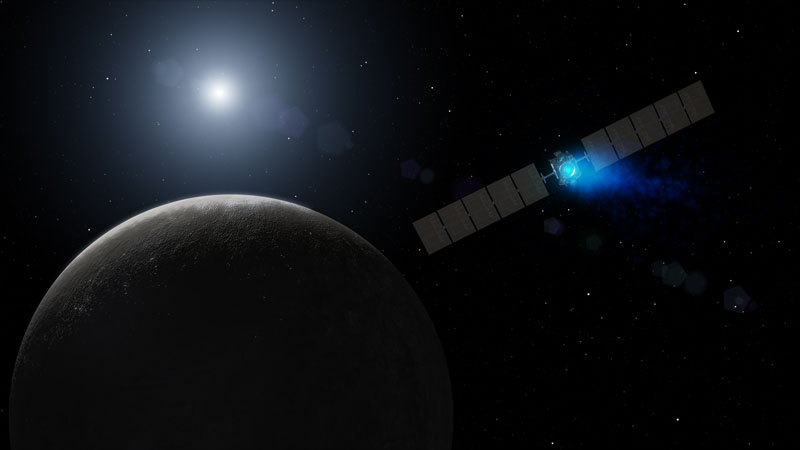
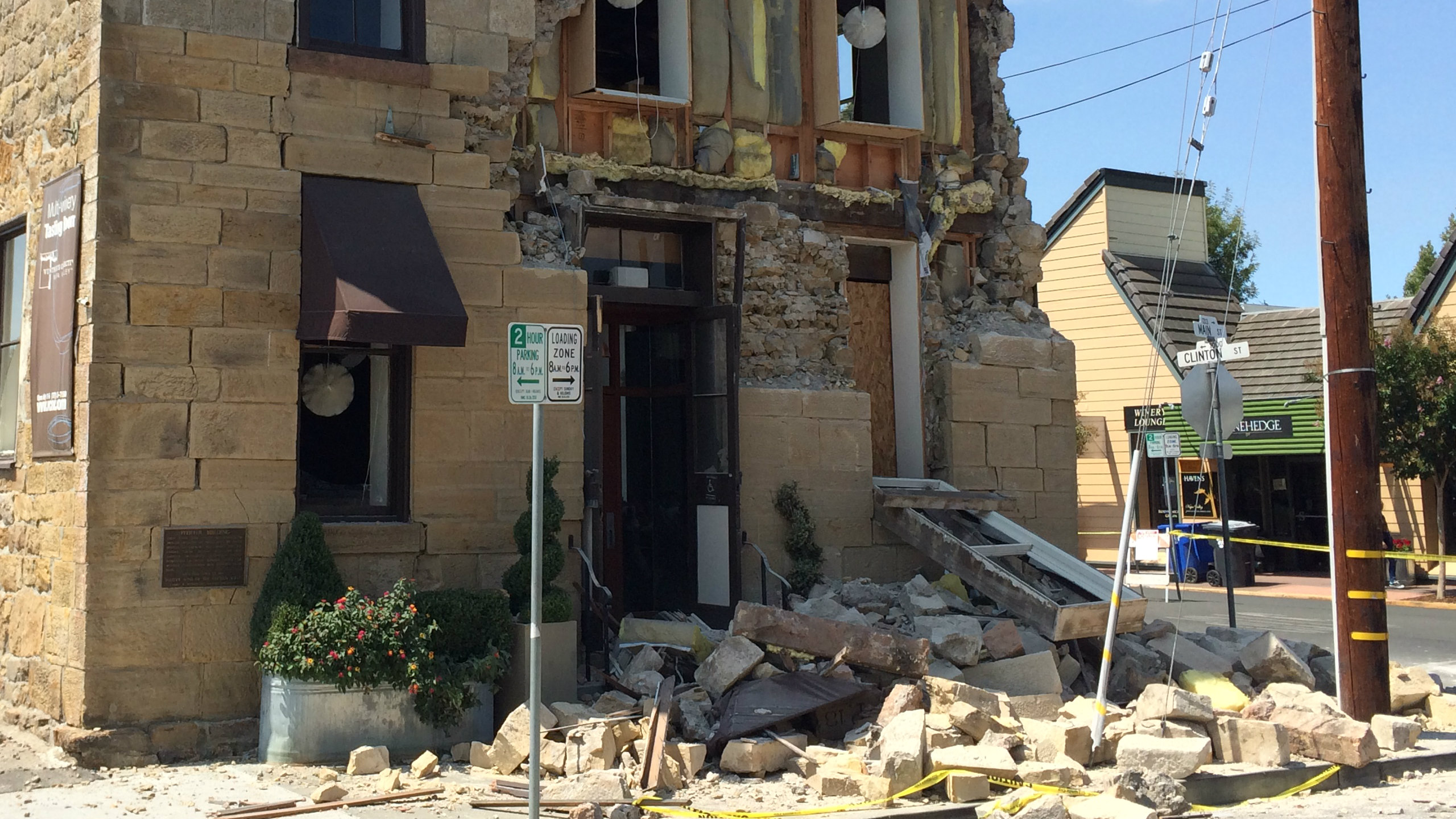
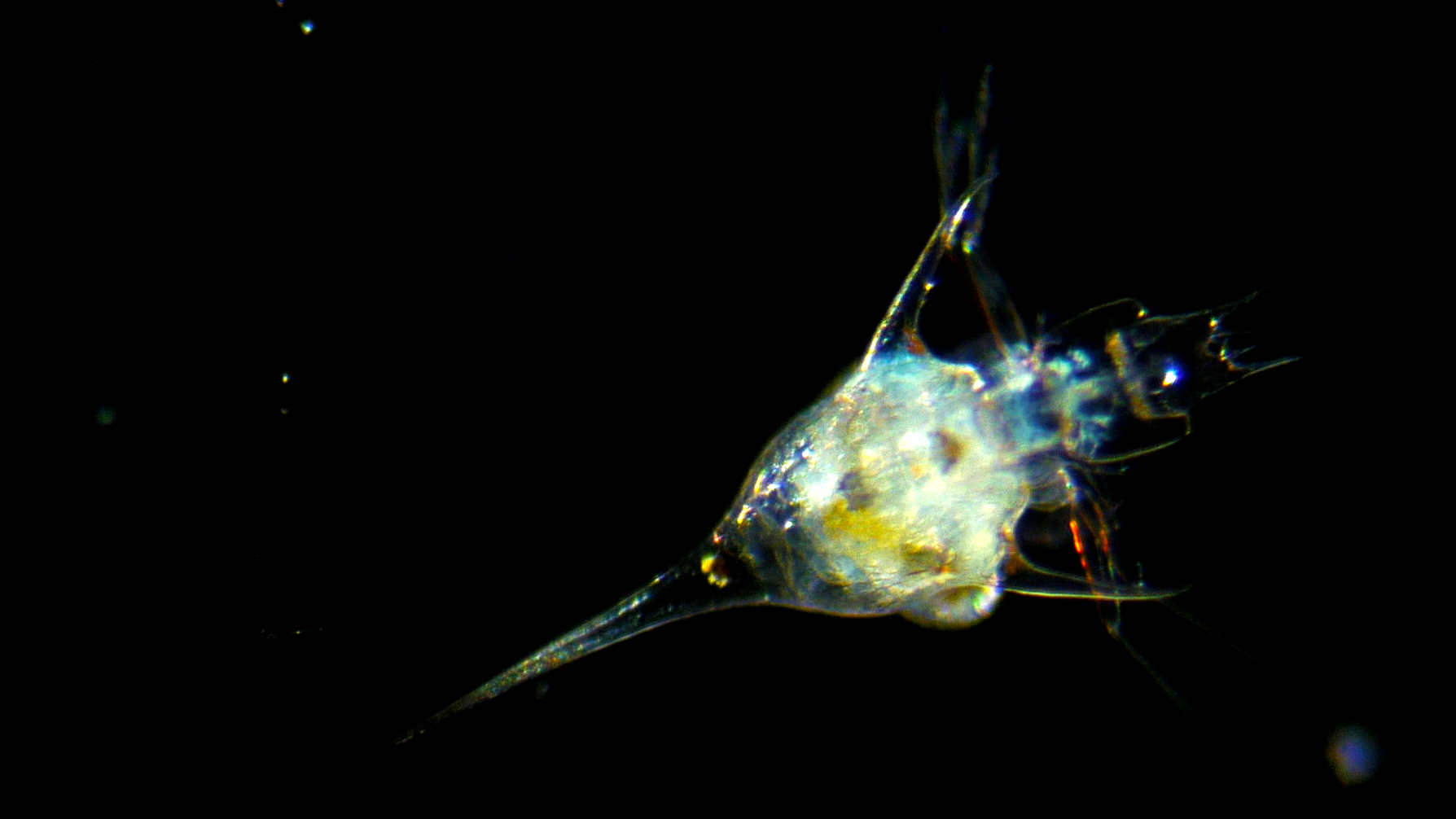
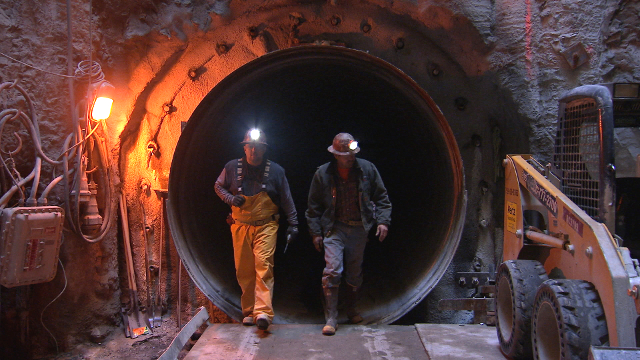
window.__IS_SSR__=true
window.__INITIAL_STATE__={
"attachmentsReducer": {
"audio_0": {
"type": "attachments",
"id": "audio_0",
"imgSizes": {
"kqedFullSize": {
"file": "https://ww2.kqed.org/news/wp-content/themes/KQED-unified/img/audio_bgs/background0.jpg"
}
}
},
"audio_1": {
"type": "attachments",
"id": "audio_1",
"imgSizes": {
"kqedFullSize": {
"file": "https://ww2.kqed.org/news/wp-content/themes/KQED-unified/img/audio_bgs/background1.jpg"
}
}
},
"audio_2": {
"type": "attachments",
"id": "audio_2",
"imgSizes": {
"kqedFullSize": {
"file": "https://ww2.kqed.org/news/wp-content/themes/KQED-unified/img/audio_bgs/background2.jpg"
}
}
},
"audio_3": {
"type": "attachments",
"id": "audio_3",
"imgSizes": {
"kqedFullSize": {
"file": "https://ww2.kqed.org/news/wp-content/themes/KQED-unified/img/audio_bgs/background3.jpg"
}
}
},
"audio_4": {
"type": "attachments",
"id": "audio_4",
"imgSizes": {
"kqedFullSize": {
"file": "https://ww2.kqed.org/news/wp-content/themes/KQED-unified/img/audio_bgs/background4.jpg"
}
}
},
"placeholder": {
"type": "attachments",
"id": "placeholder",
"imgSizes": {
"thumbnail": {
"file": "https://cdn.kqed.org/wp-content/uploads/2024/12/KQED-Default-Image-816638274-2000x1333-1-160x107.jpg",
"width": 160,
"height": 107,
"mimeType": "image/jpeg"
},
"medium": {
"file": "https://cdn.kqed.org/wp-content/uploads/2024/12/KQED-Default-Image-816638274-2000x1333-1-800x533.jpg",
"width": 800,
"height": 533,
"mimeType": "image/jpeg"
},
"medium_large": {
"file": "https://cdn.kqed.org/wp-content/uploads/2024/12/KQED-Default-Image-816638274-2000x1333-1-768x512.jpg",
"width": 768,
"height": 512,
"mimeType": "image/jpeg"
},
"large": {
"file": "https://cdn.kqed.org/wp-content/uploads/2024/12/KQED-Default-Image-816638274-2000x1333-1-1020x680.jpg",
"width": 1020,
"height": 680,
"mimeType": "image/jpeg"
},
"1536x1536": {
"file": "https://cdn.kqed.org/wp-content/uploads/2024/12/KQED-Default-Image-816638274-2000x1333-1-1536x1024.jpg",
"width": 1536,
"height": 1024,
"mimeType": "image/jpeg"
},
"fd-lrg": {
"file": "https://cdn.kqed.org/wp-content/uploads/2024/12/KQED-Default-Image-816638274-2000x1333-1-1536x1024.jpg",
"width": 1536,
"height": 1024,
"mimeType": "image/jpeg"
},
"fd-med": {
"file": "https://cdn.kqed.org/wp-content/uploads/2024/12/KQED-Default-Image-816638274-2000x1333-1-1020x680.jpg",
"width": 1020,
"height": 680,
"mimeType": "image/jpeg"
},
"fd-sm": {
"file": "https://cdn.kqed.org/wp-content/uploads/2024/12/KQED-Default-Image-816638274-2000x1333-1-800x533.jpg",
"width": 800,
"height": 533,
"mimeType": "image/jpeg"
},
"post-thumbnail": {
"file": "https://cdn.kqed.org/wp-content/uploads/2024/12/KQED-Default-Image-816638274-2000x1333-1-672x372.jpg",
"width": 672,
"height": 372,
"mimeType": "image/jpeg"
},
"twentyfourteen-full-width": {
"file": "https://cdn.kqed.org/wp-content/uploads/2024/12/KQED-Default-Image-816638274-2000x1333-1-1038x576.jpg",
"width": 1038,
"height": 576,
"mimeType": "image/jpeg"
},
"xxsmall": {
"file": "https://cdn.kqed.org/wp-content/uploads/2024/12/KQED-Default-Image-816638274-2000x1333-1-160x107.jpg",
"width": 160,
"height": 107,
"mimeType": "image/jpeg"
},
"xsmall": {
"file": "https://cdn.kqed.org/wp-content/uploads/2024/12/KQED-Default-Image-816638274-2000x1333-1-672x372.jpg",
"width": 672,
"height": 372,
"mimeType": "image/jpeg"
},
"small": {
"file": "https://cdn.kqed.org/wp-content/uploads/2024/12/KQED-Default-Image-816638274-2000x1333-1-672x372.jpg",
"width": 672,
"height": 372,
"mimeType": "image/jpeg"
},
"xlarge": {
"file": "https://cdn.kqed.org/wp-content/uploads/2024/12/KQED-Default-Image-816638274-2000x1333-1-1020x680.jpg",
"width": 1020,
"height": 680,
"mimeType": "image/jpeg"
},
"full-width": {
"file": "https://cdn.kqed.org/wp-content/uploads/2024/12/KQED-Default-Image-816638274-2000x1333-1-1920x1280.jpg",
"width": 1920,
"height": 1280,
"mimeType": "image/jpeg"
},
"guest-author-32": {
"file": "https://cdn.kqed.org/wp-content/uploads/2025/01/KQED-Default-Image-816638274-1333x1333-1-160x160.jpg",
"width": 32,
"height": 32,
"mimeType": "image/jpeg"
},
"guest-author-50": {
"file": "https://cdn.kqed.org/wp-content/uploads/2025/01/KQED-Default-Image-816638274-1333x1333-1-160x160.jpg",
"width": 50,
"height": 50,
"mimeType": "image/jpeg"
},
"guest-author-64": {
"file": "https://cdn.kqed.org/wp-content/uploads/2025/01/KQED-Default-Image-816638274-1333x1333-1-160x160.jpg",
"width": 64,
"height": 64,
"mimeType": "image/jpeg"
},
"guest-author-96": {
"file": "https://cdn.kqed.org/wp-content/uploads/2025/01/KQED-Default-Image-816638274-1333x1333-1-160x160.jpg",
"width": 96,
"height": 96,
"mimeType": "image/jpeg"
},
"guest-author-128": {
"file": "https://cdn.kqed.org/wp-content/uploads/2025/01/KQED-Default-Image-816638274-1333x1333-1-160x160.jpg",
"width": 128,
"height": 128,
"mimeType": "image/jpeg"
},
"detail": {
"file": "https://cdn.kqed.org/wp-content/uploads/2025/01/KQED-Default-Image-816638274-1333x1333-1-160x160.jpg",
"width": 160,
"height": 160,
"mimeType": "image/jpeg"
},
"kqedFullSize": {
"file": "https://cdn.kqed.org/wp-content/uploads/2024/12/KQED-Default-Image-816638274-2000x1333-1.jpg",
"width": 2000,
"height": 1333
}
}
},
"science_27827": {
"type": "attachments",
"id": "science_27827",
"meta": {
"index": "attachments_1716263798",
"site": "science",
"id": "27827",
"found": true
},
"parent": 27826,
"imgSizes": {
"kqedFullSize": {
"file": "https://ww2.kqed.org/app/uploads/sites/35/2015/03/dawn_arrives_at_ceres.jpg",
"width": 800,
"height": 450
}
},
"publishDate": 1425407720,
"modified": 1425407753,
"caption": "Artist's concept of NASA's Dawn spacecraft arriving at Ceres. (Dawn/NASA)",
"description": "Artist's concept of NASA's Dawn spacecraft arriving at Ceres. (Dawn/NASA)",
"title": "dawn_arrives_at_ceres",
"credit": null,
"status": "inherit",
"isLoading": false,
"fetchFailed": false
},
"science_27859": {
"type": "attachments",
"id": "science_27859",
"meta": {
"index": "attachments_1716263798",
"site": "science",
"id": "27859",
"found": true
},
"parent": 27848,
"imgSizes": {
"kqedFullSize": {
"file": "https://ww2.kqed.org/app/uploads/sites/35/2015/03/Erol-Kalkan-2A1.jpg",
"width": 2560,
"height": 1440
}
},
"publishDate": 1425433871,
"modified": 1425434007,
"caption": "After the Napa quake, structural engineers more than 1,800 thousand damaged buildings for prohibited or restricted access. (Photo: Erol Kalkan/USGS)",
"description": "After the Napa quake, structural engineers more than 1,800 thousand damaged buildings for prohibited or restricted access. (Photo: Erol Kalkan/USGS)",
"title": "Erol Kalkan 2A",
"credit": null,
"status": "inherit",
"isLoading": false,
"fetchFailed": false
},
"science_27814": {
"type": "attachments",
"id": "science_27814",
"meta": {
"index": "attachments_1716263798",
"site": "science",
"id": "27814",
"found": true
},
"parent": 27808,
"imgSizes": {
"kqedFullSize": {
"file": "https://ww2.kqed.org/app/uploads/sites/35/2015/03/deep-look-plankton-marquee-new2.png",
"width": 1788,
"height": 1006
}
},
"publishDate": 1425346038,
"modified": 1425346038,
"caption": null,
"description": null,
"title": "deep-look-plankton-marquee-new2",
"credit": null,
"status": "inherit",
"isLoading": false,
"fetchFailed": false
},
"science_27536": {
"type": "attachments",
"id": "science_27536",
"meta": {
"index": "attachments_1716263798",
"site": "science",
"id": "27536",
"found": true
},
"parent": 27515,
"imgSizes": {
"kqedFullSize": {
"file": "https://ww2.kqed.org/app/uploads/sites/35/2015/02/tunnel_opening1.jpg",
"width": 640,
"height": 360
}
},
"publishDate": 1424737221,
"modified": 1424737246,
"caption": "Workers with the San Francisco Public Utilities Commission inspect the New Irvington Tunnel, which will carry an average of 265 million gallons of water a day. (Owen Bissell/KQED)",
"description": null,
"title": "tunnel_opening",
"credit": null,
"status": "inherit",
"isLoading": false,
"fetchFailed": false
},
"science_27741": {
"type": "attachments",
"id": "science_27741",
"meta": {
"index": "attachments_1716263798",
"site": "science",
"id": "27741",
"found": true
},
"parent": 27629,
"imgSizes": {
"kqedFullSize": {
"file": "https://ww2.kqed.org/app/uploads/sites/35/2015/02/Featured-img-e1425087640858.jpg",
"width": 640,
"height": 356
}
},
"publishDate": 1425074897,
"modified": 1425087568,
"caption": "The new signs along I-80 will feature \"advisory\" speed limits and warn drivers to merge when lanes are blocked ahead. (David Pierce/KQED and Tyler Dunham/Caltrans)",
"description": null,
"title": "Featured img",
"credit": null,
"status": "inherit",
"isLoading": false,
"fetchFailed": false
},
"science_27418": {
"type": "attachments",
"id": "science_27418",
"meta": {
"index": "attachments_1716263798",
"site": "science",
"id": "27418",
"found": true
},
"parent": 27415,
"imgSizes": {
"kqedFullSize": {
"file": "https://ww2.kqed.org/app/uploads/sites/35/2015/02/HIOC-BML-photo-e1424466621114.jpg",
"width": 480,
"height": 268
}
},
"publishDate": 1424450192,
"modified": 1424450384,
"caption": "Marine scientists at work on Hog Island in Tomales Bay, California (Tessa Hill/UC Davis)",
"description": null,
"title": null,
"credit": null,
"status": "inherit",
"isLoading": false,
"fetchFailed": false
},
"science_27575": {
"type": "attachments",
"id": "science_27575",
"meta": {
"index": "attachments_1716263798",
"site": "science",
"id": "27575",
"found": true
},
"parent": 27570,
"imgSizes": {
"kqedFullSize": {
"file": "https://ww2.kqed.org/app/uploads/sites/35/2015/02/DP-CPC-1232-e1424829195348.jpg",
"width": 640,
"height": 361
}
},
"publishDate": 1424821164,
"modified": 1424821721,
"caption": "This CPC-1232 tank car represents an upgrade over an older models criticized for being easily punctured, but critics say there's still much to be desired. (Daniel Potter/KQED)",
"description": null,
"title": "DP--CPC-1232",
"credit": null,
"status": "inherit",
"isLoading": false,
"fetchFailed": false
},
"science_27556": {
"type": "attachments",
"id": "science_27556",
"meta": {
"index": "attachments_1716263798",
"site": "science",
"id": "27556",
"found": true
},
"parent": 27554,
"imgSizes": {
"kqedFullSize": {
"file": "https://ww2.kqed.org/app/uploads/sites/35/2015/02/Keystone-XL-e1424815861107.jpg",
"width": 640,
"height": 360
}
},
"publishDate": 1424815163,
"modified": 1424815232,
"caption": "Environmental activists inflate a long balloon to mock a pipeline during a demonstration in front of the White House in Washington, DC, on February 3, 2014 to protest against the Keystone pipeline project. (Jewel Samad /AFP/Getty Images)",
"description": "Environmental activists inflate a long balloon to mock a pipeline during a demonstration in front of the White House in Washington, DC, on February 3, 2014 to protest against the Keystone pipeline project. (Jewel Samad /AFP/Getty Images)",
"title": "US-POLITICS-ENVIRONMENT-KEYSTONE-PROTEST",
"credit": null,
"status": "inherit",
"isLoading": false,
"fetchFailed": false
},
"science_27383": {
"type": "attachments",
"id": "science_27383",
"meta": {
"index": "attachments_1716263798",
"site": "science",
"id": "27383",
"found": true
},
"parent": 27379,
"imgSizes": {
"kqedFullSize": {
"file": "https://ww2.kqed.org/app/uploads/sites/35/2015/02/apple3.jpg",
"width": 5184,
"height": 3456
}
},
"publishDate": 1424390799,
"modified": 1424390808,
"caption": "(Anya Schultz/KQED)",
"description": null,
"title": "apple3",
"credit": null,
"status": "inherit",
"isLoading": false,
"fetchFailed": false
},
"science_27239": {
"type": "attachments",
"id": "science_27239",
"meta": {
"index": "attachments_1716263798",
"site": "science",
"id": "27239",
"found": true
},
"parent": 27226,
"imgSizes": {
"kqedFullSize": {
"file": "https://ww2.kqed.org/app/uploads/sites/35/2015/02/Kahn-Coast-Dairies-e1423789113533.jpg",
"width": 640,
"height": 360
}
},
"publishDate": 1423788967,
"modified": 1423789130,
"caption": "TK TK TK TK TK TK TK.",
"description": "Coast Dairies, Davenport, CA. 11/25/14",
"title": "Coast Dairies",
"credit": null,
"status": "inherit",
"isLoading": false,
"fetchFailed": false
},
"science_27148": {
"type": "attachments",
"id": "science_27148",
"meta": {
"index": "attachments_1716263798",
"site": "science",
"id": "27148",
"found": true
},
"parent": 27145,
"imgSizes": {
"kqedFullSize": {
"file": "https://ww2.kqed.org/app/uploads/sites/35/2015/02/Watson-e1423551357439.jpg",
"width": 640,
"height": 358
}
},
"publishDate": 1423550881,
"modified": 1423550910,
"caption": "(Courtesy Emmanuel Mignot)",
"description": null,
"title": "Watson",
"credit": null,
"status": "inherit",
"isLoading": false,
"fetchFailed": false
}
},
"audioPlayerReducer": {
"postId": "stream_live",
"isPaused": true,
"isPlaying": false,
"pfsActive": false,
"pledgeModalIsOpen": true,
"playerDrawerIsOpen": false,
"liveAudioPlayStartedAt": 0,
"liveAudioPlayContext": ""
},
"authorsReducer": {
"amystanden": {
"type": "authors",
"id": "210",
"meta": {
"index": "authors_1716337520",
"id": "210",
"found": true
},
"name": "Amy Standen",
"firstName": "Amy",
"lastName": "Standen",
"slug": "amystanden",
"email": "astanden@kqed.org",
"display_author_email": false,
"staff_mastheads": [],
"title": "KQED Contributor",
"bio": "Amy Standen (@amystanden) is co-host of #\u003ca href=\"https://ww2.kqed.org/news/programs/the-leap\">TheLeapPodcast\u003c/a> (subscribe on iTunes or Stitcher!) and host of KQED and PBSDigital Studios' science video series, \u003ca href=\"https://www.youtube.com/user/KQEDDeepLook\">Deep Look\u003c/a>. Her science radio stories appear on KQED and NPR.\r\n\r\nEmail her at astanden@kqed.org",
"avatar": "https://secure.gravatar.com/avatar/3d021b72de685a788b0487b059d0a6a1?s=600&d=blank&r=g",
"twitter": null,
"facebook": null,
"instagram": null,
"linkedin": null,
"sites": [
{
"site": "news",
"roles": [
"subscriber"
]
},
{
"site": "futureofyou",
"roles": [
"subscriber"
]
},
{
"site": "stateofhealth",
"roles": [
"subscriber"
]
},
{
"site": "science",
"roles": []
},
{
"site": "quest",
"roles": [
"subscriber"
]
}
],
"headData": {
"title": "Amy Standen | KQED",
"description": "KQED Contributor",
"ogImgSrc": "https://secure.gravatar.com/avatar/3d021b72de685a788b0487b059d0a6a1?s=600&d=blank&r=g",
"twImgSrc": "https://secure.gravatar.com/avatar/3d021b72de685a788b0487b059d0a6a1?s=600&d=blank&r=g"
},
"isLoading": false,
"link": "/author/amystanden"
},
"cmiller": {
"type": "authors",
"id": "221",
"meta": {
"index": "authors_1716337520",
"id": "221",
"found": true
},
"name": "Craig Miller",
"firstName": "Craig",
"lastName": "Miller",
"slug": "cmiller",
"email": "craig@voxterra.net",
"display_author_email": false,
"staff_mastheads": [
"science"
],
"title": "Editor Emeritus, Science",
"bio": "Craig is a former KQED Science editor, specializing in weather, climate, water & energy issues, with a little seismology thrown in just to shake things up. Prior to that, he launched and led the station's award-winning multimedia project, Climate Watch. Craig is also an accomplished writer/producer of television documentaries, with a focus on natural resource issues.",
"avatar": "https://secure.gravatar.com/avatar/b91661df645e001a9cafe0861fa685f9?s=600&d=blank&r=g",
"twitter": "voxterra",
"facebook": null,
"instagram": null,
"linkedin": null,
"sites": [
{
"site": "news",
"roles": [
"author"
]
},
{
"site": "futureofyou",
"roles": [
"editor"
]
},
{
"site": "stateofhealth",
"roles": [
"author"
]
},
{
"site": "science",
"roles": [
"editor"
]
},
{
"site": "quest",
"roles": [
"editor"
]
}
],
"headData": {
"title": "Craig Miller | KQED",
"description": "Editor Emeritus, Science",
"ogImgSrc": "https://secure.gravatar.com/avatar/b91661df645e001a9cafe0861fa685f9?s=600&d=blank&r=g",
"twImgSrc": "https://secure.gravatar.com/avatar/b91661df645e001a9cafe0861fa685f9?s=600&d=blank&r=g"
},
"isLoading": false,
"link": "/author/cmiller"
},
"sheraz-sadiq": {
"type": "authors",
"id": "6176",
"meta": {
"index": "authors_1716337520",
"id": "6176",
"found": true
},
"name": "Sheraz Sadiq",
"firstName": "Sheraz",
"lastName": "Sadiq",
"slug": "sheraz-sadiq",
"email": "ssadiq@kqed.org",
"display_author_email": false,
"staff_mastheads": [],
"title": "KQED Contributor",
"bio": "Sheraz Sadiq is an Emmy Award-winning producer at San Francisco PBS affiliate KQED. In 2012, he received the AAAS Kavli Science Journalism award for a story he produced about the seismic retrofit of the Hetch Hetchy water delivery system which serves the San Francisco Bay Area. In addition to producing television content for KQED Science, he has also created online features and written news articles on scientific subjects ranging from astronomy to synthetic biology.",
"avatar": "https://secure.gravatar.com/avatar/d88c61c214e477c4c6f0ebaed4f581bf7c9b1dafd94cd4361285d427107adb8d?s=600&d=blank&r=g",
"twitter": null,
"bluesky": null,
"facebook": null,
"instagram": null,
"linkedin": null,
"sites": [
{
"site": "arts",
"roles": [
"subscriber"
]
},
{
"site": "news",
"roles": [
"subscriber"
]
},
{
"site": "futureofyou",
"roles": [
"subscriber"
]
},
{
"site": "science",
"roles": [
"subscriber"
]
},
{
"site": "quest",
"roles": [
"leadcoordinator",
"subscriber"
]
}
],
"headData": {
"title": "Sheraz Sadiq | KQED",
"description": "KQED Contributor",
"ogImgSrc": "https://secure.gravatar.com/avatar/d88c61c214e477c4c6f0ebaed4f581bf7c9b1dafd94cd4361285d427107adb8d?s=600&d=blank&r=g",
"twImgSrc": "https://secure.gravatar.com/avatar/d88c61c214e477c4c6f0ebaed4f581bf7c9b1dafd94cd4361285d427107adb8d?s=600&d=blank&r=g"
},
"isLoading": false,
"link": "/author/sheraz-sadiq"
},
"ben-burress": {
"type": "authors",
"id": "6180",
"meta": {
"index": "authors_1716337520",
"id": "6180",
"found": true
},
"name": "Ben Burress",
"firstName": "Ben",
"lastName": "Burress",
"slug": "ben-burress",
"email": "bburress@chabotspace.org",
"display_author_email": false,
"staff_mastheads": [],
"title": null,
"bio": "\u003cstrong>Benjamin Burress\u003c/strong> has been a staff astronomer at Chabot Space & Science Center since July 1999. He graduated from Sonoma State University in 1985 with a bachelor’s degree in physics (and minor in astronomy), after which he signed on for a two-year stint in the Peace Corps, where he taught physics and mathematics in the African nation of Cameroon. From 1989-96 he served on the crew of NASA’s Kuiper Airborne Observatory at Ames Research Center in Mountain View, CA. From 1996-99, he was Head Observer at the Naval Prototype Optical Interferometer program at Lowell Observatory in Flagstaff, AZ.\r\n\r\nRead his \u003ca href=\"http://science.kqed.org/quest/author/ben-burress/\">previous contributions\u003c/a> to \u003ca href=\"http://science.kqed.org/quest/\">QUEST\u003c/a>, a project dedicated to exploring the Science of Sustainability.",
"avatar": "https://secure.gravatar.com/avatar/8263bffa345b7e4923a0b8b9f0f6a161?s=600&d=blank&r=g",
"twitter": null,
"facebook": null,
"instagram": null,
"linkedin": null,
"sites": [
{
"site": "science",
"roles": [
"editor"
]
},
{
"site": "quest",
"roles": [
"subscriber"
]
}
],
"headData": {
"title": "Ben Burress | KQED",
"description": null,
"ogImgSrc": "https://secure.gravatar.com/avatar/8263bffa345b7e4923a0b8b9f0f6a161?s=600&d=blank&r=g",
"twImgSrc": "https://secure.gravatar.com/avatar/8263bffa345b7e4923a0b8b9f0f6a161?s=600&d=blank&r=g"
},
"isLoading": false,
"link": "/author/ben-burress"
},
"joshua-cassidy": {
"type": "authors",
"id": "6219",
"meta": {
"index": "authors_1716337520",
"id": "6219",
"found": true
},
"name": "Josh Cassidy",
"firstName": "Josh",
"lastName": "Cassidy",
"slug": "joshua-cassidy",
"email": "jcassidy@kqed.org",
"display_author_email": false,
"staff_mastheads": [
"science"
],
"title": "Digital Video Producer",
"bio": "Josh is a Senior Video Producer for KQED Science, and the Lead Producer and Cinematographer for Deep Look. After receiving his BS in Wildlife Biology from Ohio University, he went on to participate in marine mammal research for NOAA, USGS and the Intersea Foundation. He also served as the president of The Pacific Cetacean Group, a nonprofit organization dedicated to teaching students K-6 about whales. Josh studied science and natural history filmmaking at San Francisco State University and Montana State University.",
"avatar": "https://secure.gravatar.com/avatar/f2582a0801a35af53b734d56bcac2bbe?s=600&d=blank&r=g",
"twitter": null,
"facebook": null,
"instagram": null,
"linkedin": null,
"sites": [
{
"site": "science",
"roles": [
"editor"
]
},
{
"site": "quest",
"roles": [
"author",
"edit_others_posts"
]
}
],
"headData": {
"title": "Josh Cassidy | KQED",
"description": "Digital Video Producer",
"ogImgSrc": "https://secure.gravatar.com/avatar/f2582a0801a35af53b734d56bcac2bbe?s=600&d=blank&r=g",
"twImgSrc": "https://secure.gravatar.com/avatar/f2582a0801a35af53b734d56bcac2bbe?s=600&d=blank&r=g"
},
"isLoading": false,
"link": "/author/joshua-cassidy"
},
"kqedscience": {
"type": "authors",
"id": "6387",
"meta": {
"index": "authors_1716337520",
"id": "6387",
"found": true
},
"name": "KQED Science",
"firstName": "KQED",
"lastName": "Science",
"slug": "kqedscience",
"email": "kqedscience@gmail.com",
"display_author_email": false,
"staff_mastheads": [],
"title": null,
"bio": "KQED Science brings you award-winning science and environment coverage from the Bay Area and beyond by the flagship Northern California PBS and NPR affiliate.",
"avatar": "https://secure.gravatar.com/avatar/5a295ff49cf82a8c0f30937d3f788b2f?s=600&d=blank&r=g",
"twitter": null,
"facebook": null,
"instagram": null,
"linkedin": null,
"sites": [
{
"site": "science",
"roles": [
"contributor"
]
},
{
"site": "quest",
"roles": [
"editor"
]
},
{
"site": "food",
"roles": [
"contributor"
]
}
],
"headData": {
"title": "KQED Science | KQED",
"description": null,
"ogImgSrc": "https://secure.gravatar.com/avatar/5a295ff49cf82a8c0f30937d3f788b2f?s=600&d=blank&r=g",
"twImgSrc": "https://secure.gravatar.com/avatar/5a295ff49cf82a8c0f30937d3f788b2f?s=600&d=blank&r=g"
},
"isLoading": false,
"link": "/author/kqedscience"
},
"dpotter": {
"type": "authors",
"id": "6609",
"meta": {
"index": "authors_1716337520",
"id": "6609",
"found": true
},
"name": "Daniel Potter",
"firstName": "Daniel",
"lastName": "Potter",
"slug": "dpotter",
"email": "dpotter@kqed.org",
"display_author_email": false,
"staff_mastheads": [],
"title": "KQED Contributor",
"bio": "Daniel Potter is a reporter for KQED Science. Before that, he worked at Nashville Public Radio for six years. He’s gathered tape for The New York Times, contributed to a growing list of podcasts, and done national features for NPR on everything from bats to meningitis. He tweets at @hellodanpo.",
"avatar": "https://secure.gravatar.com/avatar/59396b9ad9c672dd4cd1d3e453425f12?s=600&d=blank&r=g",
"twitter": "hellodanpo",
"facebook": null,
"instagram": null,
"linkedin": null,
"sites": [
{
"site": "futureofyou",
"roles": [
"author"
]
},
{
"site": "science",
"roles": []
}
],
"headData": {
"title": "Daniel Potter | KQED",
"description": "KQED Contributor",
"ogImgSrc": "https://secure.gravatar.com/avatar/59396b9ad9c672dd4cd1d3e453425f12?s=600&d=blank&r=g",
"twImgSrc": "https://secure.gravatar.com/avatar/59396b9ad9c672dd4cd1d3e453425f12?s=600&d=blank&r=g"
},
"isLoading": false,
"link": "/author/dpotter"
},
"mpickett": {
"type": "authors",
"id": "6616",
"meta": {
"index": "authors_1716337520",
"id": "6616",
"found": true
},
"name": "Mallory Pickett",
"firstName": "Mallory",
"lastName": "Pickett",
"slug": "mpickett",
"email": "mallorypickett@gmail.com",
"display_author_email": false,
"staff_mastheads": [],
"title": null,
"bio": "Mallory Pickett is an intern with KQED Science, where she mostly contributes to Deep Look. Before coming to KQED Mallory was a chemist, studying climate change and ocean acidification in her graduate studies at UC San Diego and Scripps Institution of Oceanography. Now she works as a freelance science and environmental reporter in Berkeley, California, and is also a student at the UC Berkeley Graduate School of Journalism.",
"avatar": "https://secure.gravatar.com/avatar/76041fb6f98596f1792b3673c61c09be?s=600&d=blank&r=g",
"twitter": null,
"facebook": null,
"instagram": null,
"linkedin": null,
"sites": [
{
"site": "futureofyou",
"roles": [
"author"
]
},
{
"site": "science",
"roles": [
"author"
]
}
],
"headData": {
"title": "Mallory Pickett | KQED",
"description": null,
"ogImgSrc": "https://secure.gravatar.com/avatar/76041fb6f98596f1792b3673c61c09be?s=600&d=blank&r=g",
"twImgSrc": "https://secure.gravatar.com/avatar/76041fb6f98596f1792b3673c61c09be?s=600&d=blank&r=g"
},
"isLoading": false,
"link": "/author/mpickett"
}
},
"pagesReducer": {
"science_category_news": {
"type": "terms",
"id": "science_40",
"meta": {
"index": "terms_1716263798",
"site": "science",
"id": "40",
"score": 10.814472
},
"featImg": null,
"name": "News",
"description": null,
"taxonomy": "category",
"headData": {
"twImgId": null,
"twTitle": null,
"ogTitle": null,
"ogImgId": null,
"twDescription": null,
"description": null,
"title": "News Archives | KQED Science",
"ogDescription": null
},
"ttid": 42,
"slug": "news",
"isLoading": false,
"title": "News",
"pageMeta": {
"site": "science",
"WpPageTemplate": "page-topic-editorial",
"currentPage": 250
},
"blocks": [
{
"blockName": "kqed/post-list",
"attrs": {
"layout": "cardArticle2",
"query": "posts/science?category=news",
"seeMore": false,
"paginated": true,
"page": 250
}
},
{
"blockName": "kqed/ad"
}
]
}
},
"pfsSessionReducer": {},
"postsReducer": {
"stream_live": {
"type": "live",
"id": "stream_live",
"audioUrl": "https://streams.kqed.org/kqedradio",
"title": "Live Stream",
"excerpt": "Live Stream information currently unavailable.",
"link": "/radio",
"featImg": "",
"label": {
"name": "KQED Live",
"link": "/"
}
},
"stream_kqedNewscast": {
"type": "posts",
"id": "stream_kqedNewscast",
"audioUrl": "https://www.kqed.org/.stream/anon/radio/RDnews/newscast.mp3?_=1",
"title": "KQED Newscast",
"featImg": "",
"label": {
"name": "88.5 FM",
"link": "/"
}
},
"science_27826": {
"type": "posts",
"id": "science_27826",
"meta": {
"index": "posts_1716263798",
"site": "science",
"id": "27826",
"score": null,
"sort": [
1425666226000
]
},
"parent": 0,
"labelTerm": {
"site": "science"
},
"blocks": [],
"publishDate": 1425666226,
"format": "aside",
"title": "Dawn Arrives at Ceres, Makes History",
"headTitle": "Dawn Arrives at Ceres, Makes History | KQED",
"content": "\u003cfigure id=\"attachment_27827\" class=\"wp-caption alignleft\" style=\"max-width: 800px\">\u003ca href=\"http://ww2.kqed.org/science/wp-content/uploads/sites/35/2015/03/dawn_arrives_at_ceres.jpg\">\u003cimg loading=\"lazy\" decoding=\"async\" class=\"size-full wp-image-27827\" src=\"http://ww2.kqed.org/science/wp-content/uploads/sites/35/2015/03/dawn_arrives_at_ceres.jpg\" alt=\"Artist's concept of NASA's Dawn spacecraft arriving at Ceres. (Dawn/NASA)\" width=\"800\" height=\"450\">\u003c/a>\u003cfigcaption class=\"wp-caption-text\">Artist’s concept of NASA’s Dawn spacecraft arriving at Ceres. (Dawn/NASA)\u003c/figcaption>\u003c/figure>\n\u003cp>Early this morning, at about 4:39 AM Pacific Time, NASA’s Dawn spacecraft \u003ca title=\"Dawn Arrives at Ceres\" href=\"http://www.jpl.nasa.gov/news/news.php?feature=4503&utm_source=iContact&utm_medium=email&utm_campaign=NASAJPL&utm_content=dawn150306\" target=\"_blank\" rel=\"noopener\">arrived at Ceres\u003c/a>, making history as it swung into orbit around the dwarf planet. Dawn left Earth eight years ago, headed for the Asteroid Belt, located between Mars and Jupiter. The spacecraft spent a year photographing the asteroid Vesta, and then two-and-a-half years on the journey to its final port-of-call.\u003c/p>\n\u003cp>Over the last several months, scientists and the public have been \u003ca title=\"At last, Ceres is a geological world\" href=\"http://www.planetary.org/blogs/emily-lakdawalla/2015/02251857-ceres-geology.html\" target=\"_blank\" rel=\"noopener\">growing steadily more excited\u003c/a> as Dawn sent back photos of an ever-closer Ceres. For the average space enthusiast, Dawn’s arrival feels like the discovery of a new world.\u003c/p>\n\u003cp>We’ve known Ceres existed since 1801, when it was discovered by Giuseppe Piazzi. But for scientists, this encounter means far more than seeing a mysterious object up close for the first time.\u003c/p>\n\u003caside class=\"pullquote alignleft\">‘Ceres has the potential to turn some of our old ideas about how planets formed completely upside down.’\u003ccite>— Dr. Britney Schmidt, Georgia Institute of Technology\u003c/cite>\u003c/aside>\n\u003cp>Indeed, \u003ca title=\"NASA's Dawn Mission\" href=\"http://dawn.jpl.nasa.gov/\" target=\"_blank\" rel=\"noopener\">the Dawn mission\u003c/a> is not merely a geology field trip. It is the closest thing we have to a time machine. Dawn’s exploration of Vesta and Ceres is like an archaeological dig or forensic investigation: the unearthing and reading of extant physical evidence to reconstruct what happened in our solar system’s infancy, when the planets were being formed in an environment radically different from what we know today.\u003c/p>\n\u003cp>“Ceres has the potential to turn some of our old ideas about how planets formed completely upside down,” says Dr. Britney Schmidt, Assistant Professor at Georgia Institute of Technology’s School of Earth and Atmospheric Sciences. “If Ceres turns out to be icy in its interior, this would not only tell us that there were potentially lots of icy asteroids, but also that some of the ‘classical’ assumptions about the timing of planetary formation could be wrong.”\u003c/p>\n\u003cp>[ad fullwidth]\u003c/p>\n\u003cp>Ceres is an example of a “protoplanet,” an object that formed early in the solar system’s history by accumulating smaller chunks of rock and ice and snowballing toward a planet-stature object—or at least a major building-block of another planet. But Ceres’ development was arrested, and it has remained more or less unchanged from three or four billion years ago.\u003c/p>\n\u003cp>“Even though [Ceres] is likely refrozen now,” Schmidt says, “with the gravity data from Dawn, we may be able to show that Ceres at one time had a subsurface ocean.”\u003c/p>\n\u003cp>Dawn’s leisurely approach over the past months has supplied us with a constant feed of images that have grown ever sharper and more detailed, peeling away layers of fuzzy mystery like the skin of an onion, and revealing new mysteries in the process. That’s something astronomers are happy about, like getting an unexpected dividend on your investment. Mystery, after all, inspires science.\u003c/p>\n\u003cfigure id=\"attachment_27829\" class=\"wp-caption alignright\" style=\"max-width: 290px\">\u003ca href=\"http://ww2.kqed.org/science/wp-content/uploads/sites/35/2015/03/pia18920-rotating_lg.gif\">\u003cimg loading=\"lazy\" decoding=\"async\" class=\" wp-image-27829\" src=\"http://ww2.kqed.org/science/wp-content/uploads/sites/35/2015/03/pia18920-rotating_lg.gif\" alt=\"Image sequence of Ceres taken by the Dawn spacecraft. (Dawn/Nasa)\" width=\"290\" height=\"290\">\u003c/a>\u003cfigcaption class=\"wp-caption-text\">Image sequence of Ceres taken by the Dawn spacecraft. (Dawn/Nasa)\u003c/figcaption>\u003c/figure>\n\u003cp>A week before Dawn’s arrival, NASA whetted our appetites for the adventure by publishing a picture that revealed \u003ca title=\"NASA/JPL\" href=\"http://www.jpl.nasa.gov/news/news.php?feature=4496&utm_source=iContact&utm_medium=email&utm_campaign=NASAJPL&utm_content=daily20150302-1\" target=\"_blank\" rel=\"noopener\">two small white spots\u003c/a> nestled close together in a crater—and told us that the nature of the roughly Lake Tahoe-sized feature was as yet unknown.\u003c/p>\n\u003cp>What are these spots? Kids visiting Chabot Space & Science Center had some truly bright ideas, including giant pieces of reflective metal, huge chunks of ice, volcanoes, and, yes, aliens.\u003c/p>\n\u003cp>\u003c/p>\n\u003cp>Dawn’s previous subject of interest, Vesta, can also be classed as a protoplanet like Ceres, though Vesta was found to be composed mostly of rock. Ceres, on the other hand, may be as much as 25% water ice. In terms of the protoplanet accretion processes that formed the Earth, it is thought that dry Vesta-type objects may have built up Earth’s rocky core and mantle, while icy “wet” protoplanets like Ceres may have contributed to the formation of our oceans. Certainly, Dawn’s investigations in the Asteroid Belt have shown that the kitchen in which Earth was cooked up was stocked with both ingredients.\u003c/p>\n\n",
"stats": {
"hasVideo": false,
"hasChartOrMap": false,
"hasAudio": false,
"hasPolis": false,
"wordCount": 724,
"hasGoogleForm": false,
"hasGallery": false,
"hasHearkenModule": false,
"iframeSrcs": [],
"paragraphCount": 13
},
"modified": 1704932180,
"excerpt": "March 6, eight years after launch and two and a half years since leaving its last port of call, the asteroid Vesta, NASA's Dawn spacecraft has arrived at the dwarf planet Ceres, making history!",
"headData": {
"twImgId": "",
"twTitle": "",
"ogTitle": "",
"ogImgId": "",
"twDescription": "",
"description": "March 6, eight years after launch and two and a half years since leaving its last port of call, the asteroid Vesta, NASA's Dawn spacecraft has arrived at the dwarf planet Ceres, making history!",
"title": "Dawn Arrives at Ceres, Makes History | KQED",
"ogDescription": "",
"schema": {
"@context": "https://schema.org",
"@type": "Article",
"headline": "Dawn Arrives at Ceres, Makes History",
"datePublished": "2015-03-06T10:23:46-08:00",
"dateModified": "2024-01-10T16:16:20-08:00",
"image": "https://cdn.kqed.org/wp-content/uploads/2020/02/KQED-OG-Image@1x.png"
}
},
"guestAuthors": [],
"slug": "dawn-arrives-at-ceres-makes-history",
"status": "publish",
"sticky": false,
"path": "/science/27826/dawn-arrives-at-ceres-makes-history",
"audioTrackLength": null,
"parsedContent": [
{
"type": "contentString",
"content": "\u003cdiv class=\"post-body\">\u003cp>\u003cfigure id=\"attachment_27827\" class=\"wp-caption alignleft\" style=\"max-width: 800px\">\u003ca href=\"http://ww2.kqed.org/science/wp-content/uploads/sites/35/2015/03/dawn_arrives_at_ceres.jpg\">\u003cimg loading=\"lazy\" decoding=\"async\" class=\"size-full wp-image-27827\" src=\"http://ww2.kqed.org/science/wp-content/uploads/sites/35/2015/03/dawn_arrives_at_ceres.jpg\" alt=\"Artist's concept of NASA's Dawn spacecraft arriving at Ceres. (Dawn/NASA)\" width=\"800\" height=\"450\">\u003c/a>\u003cfigcaption class=\"wp-caption-text\">Artist’s concept of NASA’s Dawn spacecraft arriving at Ceres. (Dawn/NASA)\u003c/figcaption>\u003c/figure>\n\u003cp>Early this morning, at about 4:39 AM Pacific Time, NASA’s Dawn spacecraft \u003ca title=\"Dawn Arrives at Ceres\" href=\"http://www.jpl.nasa.gov/news/news.php?feature=4503&utm_source=iContact&utm_medium=email&utm_campaign=NASAJPL&utm_content=dawn150306\" target=\"_blank\" rel=\"noopener\">arrived at Ceres\u003c/a>, making history as it swung into orbit around the dwarf planet. Dawn left Earth eight years ago, headed for the Asteroid Belt, located between Mars and Jupiter. The spacecraft spent a year photographing the asteroid Vesta, and then two-and-a-half years on the journey to its final port-of-call.\u003c/p>\n\u003cp>Over the last several months, scientists and the public have been \u003ca title=\"At last, Ceres is a geological world\" href=\"http://www.planetary.org/blogs/emily-lakdawalla/2015/02251857-ceres-geology.html\" target=\"_blank\" rel=\"noopener\">growing steadily more excited\u003c/a> as Dawn sent back photos of an ever-closer Ceres. For the average space enthusiast, Dawn’s arrival feels like the discovery of a new world.\u003c/p>\n\u003cp>We’ve known Ceres existed since 1801, when it was discovered by Giuseppe Piazzi. But for scientists, this encounter means far more than seeing a mysterious object up close for the first time.\u003c/p>\n\u003caside class=\"pullquote alignleft\">‘Ceres has the potential to turn some of our old ideas about how planets formed completely upside down.’\u003ccite>— Dr. Britney Schmidt, Georgia Institute of Technology\u003c/cite>\u003c/aside>\n\u003cp>Indeed, \u003ca title=\"NASA's Dawn Mission\" href=\"http://dawn.jpl.nasa.gov/\" target=\"_blank\" rel=\"noopener\">the Dawn mission\u003c/a> is not merely a geology field trip. It is the closest thing we have to a time machine. Dawn’s exploration of Vesta and Ceres is like an archaeological dig or forensic investigation: the unearthing and reading of extant physical evidence to reconstruct what happened in our solar system’s infancy, when the planets were being formed in an environment radically different from what we know today.\u003c/p>\n\u003cp>“Ceres has the potential to turn some of our old ideas about how planets formed completely upside down,” says Dr. Britney Schmidt, Assistant Professor at Georgia Institute of Technology’s School of Earth and Atmospheric Sciences. “If Ceres turns out to be icy in its interior, this would not only tell us that there were potentially lots of icy asteroids, but also that some of the ‘classical’ assumptions about the timing of planetary formation could be wrong.”\u003c/p>\n\u003cp>\u003c/p>\u003c/div>",
"attributes": {
"named": {},
"numeric": []
}
},
{
"type": "component",
"content": "",
"name": "ad",
"attributes": {
"named": {
"label": "fullwidth"
},
"numeric": [
"fullwidth"
]
}
},
{
"type": "contentString",
"content": "\u003cdiv class=\"post-body\">\u003cp>\u003c/p>\n\u003cp>Ceres is an example of a “protoplanet,” an object that formed early in the solar system’s history by accumulating smaller chunks of rock and ice and snowballing toward a planet-stature object—or at least a major building-block of another planet. But Ceres’ development was arrested, and it has remained more or less unchanged from three or four billion years ago.\u003c/p>\n\u003cp>“Even though [Ceres] is likely refrozen now,” Schmidt says, “with the gravity data from Dawn, we may be able to show that Ceres at one time had a subsurface ocean.”\u003c/p>\n\u003cp>Dawn’s leisurely approach over the past months has supplied us with a constant feed of images that have grown ever sharper and more detailed, peeling away layers of fuzzy mystery like the skin of an onion, and revealing new mysteries in the process. That’s something astronomers are happy about, like getting an unexpected dividend on your investment. Mystery, after all, inspires science.\u003c/p>\n\u003cfigure id=\"attachment_27829\" class=\"wp-caption alignright\" style=\"max-width: 290px\">\u003ca href=\"http://ww2.kqed.org/science/wp-content/uploads/sites/35/2015/03/pia18920-rotating_lg.gif\">\u003cimg loading=\"lazy\" decoding=\"async\" class=\" wp-image-27829\" src=\"http://ww2.kqed.org/science/wp-content/uploads/sites/35/2015/03/pia18920-rotating_lg.gif\" alt=\"Image sequence of Ceres taken by the Dawn spacecraft. (Dawn/Nasa)\" width=\"290\" height=\"290\">\u003c/a>\u003cfigcaption class=\"wp-caption-text\">Image sequence of Ceres taken by the Dawn spacecraft. (Dawn/Nasa)\u003c/figcaption>\u003c/figure>\n\u003cp>A week before Dawn’s arrival, NASA whetted our appetites for the adventure by publishing a picture that revealed \u003ca title=\"NASA/JPL\" href=\"http://www.jpl.nasa.gov/news/news.php?feature=4496&utm_source=iContact&utm_medium=email&utm_campaign=NASAJPL&utm_content=daily20150302-1\" target=\"_blank\" rel=\"noopener\">two small white spots\u003c/a> nestled close together in a crater—and told us that the nature of the roughly Lake Tahoe-sized feature was as yet unknown.\u003c/p>\n\u003cp>What are these spots? Kids visiting Chabot Space & Science Center had some truly bright ideas, including giant pieces of reflective metal, huge chunks of ice, volcanoes, and, yes, aliens.\u003c/p>\n\u003cp>\u003c/p>\n\u003cp>Dawn’s previous subject of interest, Vesta, can also be classed as a protoplanet like Ceres, though Vesta was found to be composed mostly of rock. Ceres, on the other hand, may be as much as 25% water ice. In terms of the protoplanet accretion processes that formed the Earth, it is thought that dry Vesta-type objects may have built up Earth’s rocky core and mantle, while icy “wet” protoplanets like Ceres may have contributed to the formation of our oceans. Certainly, Dawn’s investigations in the Asteroid Belt have shown that the kitchen in which Earth was cooked up was stocked with both ingredients.\u003c/p>\n\n\u003c/div>\u003c/p>",
"attributes": {
"named": {},
"numeric": []
}
}
],
"link": "/science/27826/dawn-arrives-at-ceres-makes-history",
"authors": [
"6180"
],
"categories": [
"science_28",
"science_40"
],
"tags": [
"science_144",
"science_1306",
"science_1310",
"science_5175"
],
"featImg": "science_27827",
"label": "science"
},
"science_27848": {
"type": "posts",
"id": "science_27848",
"meta": {
"index": "posts_1716263798",
"site": "science",
"id": "27848",
"score": null,
"sort": [
1425436478000
]
},
"parent": 0,
"labelTerm": {
"site": "science"
},
"blocks": [],
"publishDate": 1425436478,
"format": "aside",
"title": "Study: Napa Quake Should Spur Retrofits to Older Buildings",
"headTitle": "Study: Napa Quake Should Spur Retrofits to Older Buildings | KQED",
"content": "\u003cfigure id=\"attachment_27859\" class=\"wp-caption alignleft\" style=\"max-width: 640px\">\u003ca href=\"http://ww2.kqed.org/science/wp-content/uploads/sites/35/2015/03/Erol-Kalkan-2A1-1024x576.jpg\">\u003cimg loading=\"lazy\" decoding=\"async\" class=\" wp-image-27859\" src=\"http://ww2.kqed.org/science/wp-content/uploads/sites/35/2015/03/Erol-Kalkan-2A1-1024x576.jpg\" alt=\"After the Napa quake, structural engineers more than 1,800 thousand damaged buildings for prohibited or restricted access. (Photo: Erol Kalkan/USGS)\" width=\"640\" height=\"360\">\u003c/a>\u003cfigcaption class=\"wp-caption-text\">After the Napa quake, structural engineers tagged more than 1,800 damaged buildings for prohibited or restricted access. (Photo: Erol Kalkan/USGS)\u003c/figcaption>\u003c/figure>\n\u003cp>A review of damage from last August’s South Napa Earthquake confirms at least one piece of conventional wisdom: seismic retrofitting older buildings is a good idea.\u003c/p>\n\u003cp>The message is driven home in a new report from the U.S. Geological Survey, which shows many of the structures damaged by last summer’s quake were built before 1950.\u003c/p>\n\u003cp>The \u003ca title=\"Wiki - post\" href=\"http://en.wikipedia.org/wiki/2014_South_Napa_earthquake\">magnitude-6 quake\u003c/a> was the Bay Area’s worst since 1989, injuring about 200 people. Afterward engineers barred access to 165 buildings with red tags and placed limited-access yellow-tag restrictions on 1,707 others, many of older construction. Geophysicist Jack Boatwright says it should serve as a warning to reinforce such buildings, but he worries that not enough people are listening: “I guess we’ve got to put on the witch-doctor mask and do the boogaloo,” he said.\u003c/p>\n\u003cp>Retrofitting the foundation on an older house might cost a few thousand dollars, and save 100 times that amount whenever the next earthquake hits, Boatwright says. He also found that much of the damage in Napa centered over a sedimentary basin – a kind of geologic jelly bowl that can amplify movement.\u003c/p>\n\u003cp>“It actually traps the energy,” he said. “Somebody in downtown Napa’s experience of how long the shaking went on would’ve been 10, 15, maybe 20 seconds more than somebody who was up on the hill outside of Napa,” on hard rock.\u003c/p>\n\u003cp>[ad fullwidth]\u003c/p>\n\u003cp>Boatwright’s findings come among six reports on last year’s quake published in the March/April issue of Seismological Research Letters, edited by Erol Kalkan, a USGS research structural engineer.\u003c/p>\n\u003cp>Kalkan explained that older structures made of unreinforced brick or stone are built to handle the vertical force of gravity pushing down on them, but the Napa quake subjected them to side-to-side jostling with nearly two-thirds that same force. It’s these sideways forces that collapse walls, he said, emphasizing that beams and columns should be fitted with earthquake-resistant connections to a home’s foundation. Older chimneys also proved vulnerable, he said.\u003c/p>\n\u003cp>Kalkan says that before last year, the West Napa Fault was recognized but not well understood compared to the larger Hayward and San Andreas faults. Notably, the earthquake last August produced an unusually large \u003ca href=\"http://ww2.kqed.org/science/2014/09/02/napa-quake-forces-redrawing-of-fault-maps/\">surface rupture\u003c/a>, which researchers traced for nearly eight miles.\u003c/p>\n\u003cp>\u003c/p>\n\u003cp>As to the matter of when \u003ca href=\"http://ww2.kqed.org/science/2014/12/19/next-napa-quake-could-be-bigger-stronger/\">another earthquake\u003c/a> might strike, such questions are “really hard to address scientifically,” Boatwright says, but he notes that in California, moderate to larger earthquakes “tend to cluster.”\u003c/p>\n\n",
"stats": {
"hasVideo": false,
"hasChartOrMap": false,
"hasAudio": false,
"hasPolis": false,
"wordCount": 476,
"hasGoogleForm": false,
"hasGallery": false,
"hasHearkenModule": false,
"iframeSrcs": [],
"paragraphCount": 11
},
"modified": 1704932193,
"excerpt": "The Bay Area's worst shaker in 25 years revealed -- once again -- where the vulnerabilities are.",
"headData": {
"twImgId": "",
"twTitle": "",
"ogTitle": "",
"ogImgId": "",
"twDescription": "",
"description": "The Bay Area's worst shaker in 25 years revealed -- once again -- where the vulnerabilities are.",
"title": "Study: Napa Quake Should Spur Retrofits to Older Buildings | KQED",
"ogDescription": "",
"schema": {
"@context": "https://schema.org",
"@type": "Article",
"headline": "Study: Napa Quake Should Spur Retrofits to Older Buildings",
"datePublished": "2015-03-03T18:34:38-08:00",
"dateModified": "2024-01-10T16:16:33-08:00",
"image": "https://cdn.kqed.org/wp-content/uploads/2020/02/KQED-OG-Image@1x.png"
}
},
"guestAuthors": [],
"slug": "study-napa-quake-should-spur-retrofits-to-older-buildings",
"status": "publish",
"sticky": false,
"path": "/science/27848/study-napa-quake-should-spur-retrofits-to-older-buildings",
"audioTrackLength": null,
"parsedContent": [
{
"type": "contentString",
"content": "\u003cdiv class=\"post-body\">\u003cp>\u003cfigure id=\"attachment_27859\" class=\"wp-caption alignleft\" style=\"max-width: 640px\">\u003ca href=\"http://ww2.kqed.org/science/wp-content/uploads/sites/35/2015/03/Erol-Kalkan-2A1-1024x576.jpg\">\u003cimg loading=\"lazy\" decoding=\"async\" class=\" wp-image-27859\" src=\"http://ww2.kqed.org/science/wp-content/uploads/sites/35/2015/03/Erol-Kalkan-2A1-1024x576.jpg\" alt=\"After the Napa quake, structural engineers more than 1,800 thousand damaged buildings for prohibited or restricted access. (Photo: Erol Kalkan/USGS)\" width=\"640\" height=\"360\">\u003c/a>\u003cfigcaption class=\"wp-caption-text\">After the Napa quake, structural engineers tagged more than 1,800 damaged buildings for prohibited or restricted access. (Photo: Erol Kalkan/USGS)\u003c/figcaption>\u003c/figure>\n\u003cp>A review of damage from last August’s South Napa Earthquake confirms at least one piece of conventional wisdom: seismic retrofitting older buildings is a good idea.\u003c/p>\n\u003cp>The message is driven home in a new report from the U.S. Geological Survey, which shows many of the structures damaged by last summer’s quake were built before 1950.\u003c/p>\n\u003cp>The \u003ca title=\"Wiki - post\" href=\"http://en.wikipedia.org/wiki/2014_South_Napa_earthquake\">magnitude-6 quake\u003c/a> was the Bay Area’s worst since 1989, injuring about 200 people. Afterward engineers barred access to 165 buildings with red tags and placed limited-access yellow-tag restrictions on 1,707 others, many of older construction. Geophysicist Jack Boatwright says it should serve as a warning to reinforce such buildings, but he worries that not enough people are listening: “I guess we’ve got to put on the witch-doctor mask and do the boogaloo,” he said.\u003c/p>\n\u003cp>Retrofitting the foundation on an older house might cost a few thousand dollars, and save 100 times that amount whenever the next earthquake hits, Boatwright says. He also found that much of the damage in Napa centered over a sedimentary basin – a kind of geologic jelly bowl that can amplify movement.\u003c/p>\n\u003cp>“It actually traps the energy,” he said. “Somebody in downtown Napa’s experience of how long the shaking went on would’ve been 10, 15, maybe 20 seconds more than somebody who was up on the hill outside of Napa,” on hard rock.\u003c/p>\n\u003cp>\u003c/p>\u003c/div>",
"attributes": {
"named": {},
"numeric": []
}
},
{
"type": "component",
"content": "",
"name": "ad",
"attributes": {
"named": {
"label": "fullwidth"
},
"numeric": [
"fullwidth"
]
}
},
{
"type": "contentString",
"content": "\u003cdiv class=\"post-body\">\u003cp>\u003c/p>\n\u003cp>Boatwright’s findings come among six reports on last year’s quake published in the March/April issue of Seismological Research Letters, edited by Erol Kalkan, a USGS research structural engineer.\u003c/p>\n\u003cp>Kalkan explained that older structures made of unreinforced brick or stone are built to handle the vertical force of gravity pushing down on them, but the Napa quake subjected them to side-to-side jostling with nearly two-thirds that same force. It’s these sideways forces that collapse walls, he said, emphasizing that beams and columns should be fitted with earthquake-resistant connections to a home’s foundation. Older chimneys also proved vulnerable, he said.\u003c/p>\n\u003cp>Kalkan says that before last year, the West Napa Fault was recognized but not well understood compared to the larger Hayward and San Andreas faults. Notably, the earthquake last August produced an unusually large \u003ca href=\"http://ww2.kqed.org/science/2014/09/02/napa-quake-forces-redrawing-of-fault-maps/\">surface rupture\u003c/a>, which researchers traced for nearly eight miles.\u003c/p>\n\u003cp>\u003c/p>\n\u003cp>As to the matter of when \u003ca href=\"http://ww2.kqed.org/science/2014/12/19/next-napa-quake-could-be-bigger-stronger/\">another earthquake\u003c/a> might strike, such questions are “really hard to address scientifically,” Boatwright says, but he notes that in California, moderate to larger earthquakes “tend to cluster.”\u003c/p>\n\n\u003c/div>\u003c/p>",
"attributes": {
"named": {},
"numeric": []
}
}
],
"link": "/science/27848/study-napa-quake-should-spur-retrofits-to-older-buildings",
"authors": [
"6609"
],
"categories": [
"science_38",
"science_40"
],
"tags": [
"science_64",
"science_1841"
],
"featImg": "science_27859",
"label": "science"
},
"science_27808": {
"type": "posts",
"id": "science_27808",
"meta": {
"index": "posts_1716263798",
"site": "science",
"id": "27808",
"score": null,
"sort": [
1425415826000
]
},
"guestAuthors": [],
"slug": "from-drifter-to-dynamo-the-story-of-plankton",
"title": "From Drifter to Dynamo: The Story of Plankton",
"publishDate": 1425415826,
"format": "video",
"headTitle": "From Drifter to Dynamo: The Story of Plankton | KQED",
"labelTerm": {},
"content": "\u003cp>[dl_subscribe]Melissa DuBose casts a net out into the sea on a crisp winter morning, from a wooden pier near the Golden Gate Bridge in San Francisco.\u003c/p>\n\u003cp>“I come out here every week,” she says. She reels in her net to collect her catch, which appears to be only water, captured in a small bottle dangling from the bottom of the net. DuBose collects sea creatures so small most people never notice them, yet they are critical to all life in the oceans and on land: plankton.\u003c/p>\n\u003cfigure id=\"attachment_27815\" class=\"wp-caption aligncenter\" style=\"max-width: 640px\">\u003ca href=\"http://ww2.kqed.org/science/wp-content/uploads/sites/35/2015/03/Dubose-throws-net-with-Josh1280.png\">\u003cimg loading=\"lazy\" decoding=\"async\" class=\"size-full wp-image-27815\" src=\"http://ww2.kqed.org/science/wp-content/uploads/sites/35/2015/03/Dubose-throws-net-with-Josh1280.png\" alt=\"Melissa Dubose of the Romberg Tiburon Center casts her plankton net, with producer Josh Cassidy looking on (Mallory Pickett/KQED)\" width=\"640\" height=\"360\">\u003c/a>\u003cfigcaption class=\"wp-caption-text\">Melissa DuBose of the Romberg Tiburon Center casts her plankton net, with producer Josh Cassidy looking on (Mallory Pickett/KQED)\u003c/figcaption>\u003c/figure>\n\u003cp>The word plankton comes from the Greek word \u003cem>planktos\u003c/em>, which means drifter, or wanderer.\u003cbr>\nWhich is precisely what plankton are. Tiny wandering plants and animals, drifting at the mercy of ocean waves, tides and winds. The technical definition of plankton is anything that lives in water and isn’t strong enough to swim against the current.\u003c/p>\n\u003cp>DuBose immediately brings the plankton she collects to a microscope in William Cochlan’s laboratory at the Romberg Tiburon Center, San Francisco State University’s marine lab in Marin County. Cochlan and his lab members study phytoplankton, tiny marine organisms that collect energy from the sun through photosynthesis.\u003c/p>\n\u003cp>“Because we can’t see them without microscopes they’re kind of invisible to us,” Cochlan says.\u003c/p>\n\u003cp>[ad fullwidth]\u003c/p>\n\u003cp>But magnified, their beautiful shapes and colors are revealed. Diatoms are one of the most common types of phytoplankton, and they are known for making silica (glass) cell walls, in an amazing variety of shapes and sizes.\u003c/p>\n\u003cfigure id=\"attachment_27817\" class=\"wp-caption aligncenter\" style=\"max-width: 640px\">\u003ca href=\"http://ww2.kqed.org/science/wp-content/uploads/sites/35/2015/03/Diatom2half-800.png\">\u003cimg loading=\"lazy\" decoding=\"async\" class=\"size-full wp-image-27817\" src=\"http://ww2.kqed.org/science/wp-content/uploads/sites/35/2015/03/Diatom2half-800.png\" alt=\"Mixed diatoms arranged on a microscope slide (Wipeter/Wikimedia commons)\" width=\"640\" height=\"360\">\u003c/a>\u003cfigcaption class=\"wp-caption-text\">Mixed diatoms arranged on a microscope slide (Wipeter/Wikimedia commons)\u003c/figcaption>\u003c/figure>\n\u003cp>Diatoms aren’t just beautiful, they’re essential to life on earth. Phytoplankton produce 40 to 60 percent of the oxygen we breathe, and in the ocean they are the base of the food web.\u003c/p>\n\u003cp>Cochlan wants to know how these microscopic plants will be affected by changing ocean conditions, brought about by the billions of tons of carbon dioxide we emit into the atmosphere every year. The gas traps heat, slowly warming the sea surface. But it also changes the ocean’s chemistry. About a third of the carbon dioxide we emit is absorbed by the oceans, where it reacts with seawater to make it more acidic. As the level of carbon dioxide in the atmosphere has gone up over the past century, the ocean’s acidity has increased by about 30 percent, according to the National Oceanic and Atmospheric Administration.\u003c/p>\n\u003cp>“We really have to find out if ocean acidification is going to negatively impact the phytoplankton,” Cochlan says. In his lab, researchers are growing phytoplankton in water treated with high levels of carbon dioxide.\u003c/p>\n\u003cp>“We’re specifically trying to see if ocean acidification increases their growth rate or slows it down,” he says. So far, the scientists have seen that in some cases phytoplankton grows faster in water with high amounts of carbon dioxide. But Cochlan cautions that growth rate isn’t the only indicator of health, and there could be negative impacts that they haven’t detected yet.\u003c/p>\n\u003cp>“The jury’s still out,” on how increasing carbon dioxide will affect phytoplankton, he says.\u003c/p>\n\u003cp>Not all plankton depend on carbon dioxide to grow. There is another class of drifters, that act more like animals than plants, called zooplankton. Zooplankton mostly eat phytoplankton, though they sometimes each other.\u003c/p>\n\u003cfigure id=\"attachment_27820\" class=\"wp-caption aligncenter\" style=\"max-width: 640px\">\u003ca href=\"http://ww2.kqed.org/science/wp-content/uploads/sites/35/2015/03/plankton-copepod-1024x576.jpg\">\u003cimg loading=\"lazy\" decoding=\"async\" class=\"size-large wp-image-27820\" src=\"http://ww2.kqed.org/science/wp-content/uploads/sites/35/2015/03/plankton-copepod-1024x576.jpg\" alt=\"Acartia hudsonica, a species of marine copepod (Josh Cassidy/KQED)\" width=\"640\" height=\"360\">\u003c/a>\u003cfigcaption class=\"wp-caption-text\">Acartia hudsonica, a species of marine copepod (Josh Cassidy/KQED)\u003c/figcaption>\u003c/figure>\n\u003cp>Zooplankton include all drifting sea animals, from jellyfish to crab larvae. One of the biggest and most plentiful type of zooplankton is krill. They are only about the size of a paper clip, but abundant enough that enormous animals, like blue whales, can survive on a krill-only diet.\u003c/p>\n\u003cp>One of the reasons there are so many whales in the waters off the Golden Gate, Cochlan says, is that this area is home to a high density of zooplankton. The high density of zooplankton is supported by an ocean process called upwelling.\u003c/p>\n\u003cp>Upwelling is caused by winds stirring up the ocean’s surface, forcing warm surface waters away from shore and bringing cold water up from the deep. Deep water is full of nutrients, because the bottom of the ocean is where everything marine goes to die and decompose, breaking down into material for new life, like a compost bin.\u003c/p>\n\u003cfigure id=\"attachment_27822\" class=\"wp-caption aligncenter\" style=\"max-width: 640px\">\u003ca href=\"http://ww2.kqed.org/science/wp-content/uploads/sites/35/2015/03/Upwelling2.jpg\">\u003cimg loading=\"lazy\" decoding=\"async\" class=\"size-full wp-image-27822\" src=\"http://ww2.kqed.org/science/wp-content/uploads/sites/35/2015/03/Upwelling2.jpg\" alt=\"(Via wikimedia-modified by D. Reed from image by J. Wallace and S. Vogel, El Niño and Climate Prediction. Image courtesy of Sanctuary Quest 2002, NOAA/OER) Upwelling happens when offshore winds push water away from the coast, and water from the deep comes up to replace the displaced surface water.\" width=\"640\" height=\"385\">\u003c/a>\u003cfigcaption class=\"wp-caption-text\">(Via wikimedia-modified by D. Reed from image by J. Wallace and S. Vogel, El Niño and Climate Prediction. Image courtesy of Sanctuary Quest 2002, NOAA/OER). Upwelling happens when offshore winds push water away from the coast, and water from the deep comes up to replace the displaced surface water.\u003c/figcaption>\u003c/figure>\n\u003cp>The infusion of nutrients sparks an explosion of life at the surface, starting with the phytoplankton. Most phytoplankton are single-celled organisms, and they reproduce by dividing into two new cells.\u003c/p>\n\u003cp>“Typical phytoplankton divide once, doubling per day,” Cochlan says. But after an upwelling, they rapidly accelerate their growth rate. More phytoplankton means more food for zooplankton, which are prey for small fish and big whales.\u003c/p>\n\u003cp>We usually only witness this feeding frenzy from the ocean’s surface — flocks of birds congregating, whales and dolphins diving. But the fuel driving all this energy is below the waves, and too small to be seen.\u003c/p>\n\u003cp>The future of these episodic bursts of productivity is unclear. A paper published last week in the journal Nature predicted that warmer waters and stronger winds will increase upwelling. But the paper’s authors say the separation between warm surface waters and cold deep water could also increase, so the upwelling might not bring up as many nutrients. It is still unknown, they say, how future changes in upwelling will affect marine life.\u003c/p>\n\u003cp>Humans need plankton, but most people go through life without seeing one up close. Plankton are the unsung heroes of the ocean — the tiny, beautiful, lungs of the planet and food for the sea.\u003c/p>\n\u003cp>\u003c/p>\n\u003cp>“Humans cannot survive without healthy oceans that support phytoplankton growth,” Cochlan says. “They’re really quite something.”\u003c/p>\n\n",
"blocks": [],
"excerpt": "Most plankton are tiny drifters, wandering in a vast ocean. But where wind and currents converge they become part of a grander story… an explosion of vitality that affects all life on Earth, including our own. ",
"status": "publish",
"parent": 0,
"modified": 1738702740,
"stats": {
"hasAudio": false,
"hasVideo": false,
"hasChartOrMap": false,
"iframeSrcs": [],
"hasGoogleForm": false,
"hasGallery": false,
"hasHearkenModule": false,
"hasPolis": false,
"paragraphCount": 23,
"wordCount": 1042
},
"headData": {
"title": "From Drifter to Dynamo: The Story of Plankton | KQED",
"description": "Most plankton are tiny drifters, wandering in a vast ocean. But where wind and currents converge they become part of a grander story… an explosion of vitality that affects all life on Earth, including our own. ",
"ogTitle": "",
"ogDescription": "",
"ogImgId": "",
"twTitle": "",
"twDescription": "",
"twImgId": "",
"schema": {
"@context": "https://schema.org",
"@type": "Article",
"headline": "From Drifter to Dynamo: The Story of Plankton",
"datePublished": "2015-03-03T12:50:26-08:00",
"dateModified": "2025-02-04T12:59:00-08:00",
"image": "https://cdn.kqed.org/wp-content/uploads/2020/02/KQED-OG-Image@1x.png"
}
},
"videoEmbed": "http://www.youtube.com/watch?v=jUvJ5ANH86I",
"pbsMediaId": "2365586775",
"source": "Deep Look",
"sourceUrl": "https://ww2.kqed.org/science/series/deep-look/",
"sticky": false,
"excludeFromSiteSearch": "Include",
"articleAge": "0",
"path": "/science/27808/from-drifter-to-dynamo-the-story-of-plankton",
"audioTrackLength": null,
"parsedContent": [
{
"type": "contentString",
"content": "\u003cdiv class=\"post-body\">\u003cp>\u003cp>\u003c/p>\u003c/div>",
"attributes": {
"named": {},
"numeric": []
}
},
{
"type": "component",
"content": "",
"name": "dl_subscribe",
"attributes": {
"named": {
"label": ""
},
"numeric": []
}
},
{
"type": "contentString",
"content": "\u003cdiv class=\"post-body\">\u003cp>Melissa DuBose casts a net out into the sea on a crisp winter morning, from a wooden pier near the Golden Gate Bridge in San Francisco.\u003c/p>\n\u003cp>“I come out here every week,” she says. She reels in her net to collect her catch, which appears to be only water, captured in a small bottle dangling from the bottom of the net. DuBose collects sea creatures so small most people never notice them, yet they are critical to all life in the oceans and on land: plankton.\u003c/p>\n\u003cfigure id=\"attachment_27815\" class=\"wp-caption aligncenter\" style=\"max-width: 640px\">\u003ca href=\"http://ww2.kqed.org/science/wp-content/uploads/sites/35/2015/03/Dubose-throws-net-with-Josh1280.png\">\u003cimg loading=\"lazy\" decoding=\"async\" class=\"size-full wp-image-27815\" src=\"http://ww2.kqed.org/science/wp-content/uploads/sites/35/2015/03/Dubose-throws-net-with-Josh1280.png\" alt=\"Melissa Dubose of the Romberg Tiburon Center casts her plankton net, with producer Josh Cassidy looking on (Mallory Pickett/KQED)\" width=\"640\" height=\"360\">\u003c/a>\u003cfigcaption class=\"wp-caption-text\">Melissa DuBose of the Romberg Tiburon Center casts her plankton net, with producer Josh Cassidy looking on (Mallory Pickett/KQED)\u003c/figcaption>\u003c/figure>\n\u003cp>The word plankton comes from the Greek word \u003cem>planktos\u003c/em>, which means drifter, or wanderer.\u003cbr>\nWhich is precisely what plankton are. Tiny wandering plants and animals, drifting at the mercy of ocean waves, tides and winds. The technical definition of plankton is anything that lives in water and isn’t strong enough to swim against the current.\u003c/p>\n\u003cp>DuBose immediately brings the plankton she collects to a microscope in William Cochlan’s laboratory at the Romberg Tiburon Center, San Francisco State University’s marine lab in Marin County. Cochlan and his lab members study phytoplankton, tiny marine organisms that collect energy from the sun through photosynthesis.\u003c/p>\n\u003cp>“Because we can’t see them without microscopes they’re kind of invisible to us,” Cochlan says.\u003c/p>\n\u003cp>\u003c/p>\u003c/div>",
"attributes": {
"named": {},
"numeric": []
}
},
{
"type": "component",
"content": "",
"name": "ad",
"attributes": {
"named": {
"label": "fullwidth"
},
"numeric": [
"fullwidth"
]
}
},
{
"type": "contentString",
"content": "\u003cdiv class=\"post-body\">\u003cp>\u003c/p>\n\u003cp>But magnified, their beautiful shapes and colors are revealed. Diatoms are one of the most common types of phytoplankton, and they are known for making silica (glass) cell walls, in an amazing variety of shapes and sizes.\u003c/p>\n\u003cfigure id=\"attachment_27817\" class=\"wp-caption aligncenter\" style=\"max-width: 640px\">\u003ca href=\"http://ww2.kqed.org/science/wp-content/uploads/sites/35/2015/03/Diatom2half-800.png\">\u003cimg loading=\"lazy\" decoding=\"async\" class=\"size-full wp-image-27817\" src=\"http://ww2.kqed.org/science/wp-content/uploads/sites/35/2015/03/Diatom2half-800.png\" alt=\"Mixed diatoms arranged on a microscope slide (Wipeter/Wikimedia commons)\" width=\"640\" height=\"360\">\u003c/a>\u003cfigcaption class=\"wp-caption-text\">Mixed diatoms arranged on a microscope slide (Wipeter/Wikimedia commons)\u003c/figcaption>\u003c/figure>\n\u003cp>Diatoms aren’t just beautiful, they’re essential to life on earth. Phytoplankton produce 40 to 60 percent of the oxygen we breathe, and in the ocean they are the base of the food web.\u003c/p>\n\u003cp>Cochlan wants to know how these microscopic plants will be affected by changing ocean conditions, brought about by the billions of tons of carbon dioxide we emit into the atmosphere every year. The gas traps heat, slowly warming the sea surface. But it also changes the ocean’s chemistry. About a third of the carbon dioxide we emit is absorbed by the oceans, where it reacts with seawater to make it more acidic. As the level of carbon dioxide in the atmosphere has gone up over the past century, the ocean’s acidity has increased by about 30 percent, according to the National Oceanic and Atmospheric Administration.\u003c/p>\n\u003cp>“We really have to find out if ocean acidification is going to negatively impact the phytoplankton,” Cochlan says. In his lab, researchers are growing phytoplankton in water treated with high levels of carbon dioxide.\u003c/p>\n\u003cp>“We’re specifically trying to see if ocean acidification increases their growth rate or slows it down,” he says. So far, the scientists have seen that in some cases phytoplankton grows faster in water with high amounts of carbon dioxide. But Cochlan cautions that growth rate isn’t the only indicator of health, and there could be negative impacts that they haven’t detected yet.\u003c/p>\n\u003cp>“The jury’s still out,” on how increasing carbon dioxide will affect phytoplankton, he says.\u003c/p>\n\u003cp>Not all plankton depend on carbon dioxide to grow. There is another class of drifters, that act more like animals than plants, called zooplankton. Zooplankton mostly eat phytoplankton, though they sometimes each other.\u003c/p>\n\u003cfigure id=\"attachment_27820\" class=\"wp-caption aligncenter\" style=\"max-width: 640px\">\u003ca href=\"http://ww2.kqed.org/science/wp-content/uploads/sites/35/2015/03/plankton-copepod-1024x576.jpg\">\u003cimg loading=\"lazy\" decoding=\"async\" class=\"size-large wp-image-27820\" src=\"http://ww2.kqed.org/science/wp-content/uploads/sites/35/2015/03/plankton-copepod-1024x576.jpg\" alt=\"Acartia hudsonica, a species of marine copepod (Josh Cassidy/KQED)\" width=\"640\" height=\"360\">\u003c/a>\u003cfigcaption class=\"wp-caption-text\">Acartia hudsonica, a species of marine copepod (Josh Cassidy/KQED)\u003c/figcaption>\u003c/figure>\n\u003cp>Zooplankton include all drifting sea animals, from jellyfish to crab larvae. One of the biggest and most plentiful type of zooplankton is krill. They are only about the size of a paper clip, but abundant enough that enormous animals, like blue whales, can survive on a krill-only diet.\u003c/p>\n\u003cp>One of the reasons there are so many whales in the waters off the Golden Gate, Cochlan says, is that this area is home to a high density of zooplankton. The high density of zooplankton is supported by an ocean process called upwelling.\u003c/p>\n\u003cp>Upwelling is caused by winds stirring up the ocean’s surface, forcing warm surface waters away from shore and bringing cold water up from the deep. Deep water is full of nutrients, because the bottom of the ocean is where everything marine goes to die and decompose, breaking down into material for new life, like a compost bin.\u003c/p>\n\u003cfigure id=\"attachment_27822\" class=\"wp-caption aligncenter\" style=\"max-width: 640px\">\u003ca href=\"http://ww2.kqed.org/science/wp-content/uploads/sites/35/2015/03/Upwelling2.jpg\">\u003cimg loading=\"lazy\" decoding=\"async\" class=\"size-full wp-image-27822\" src=\"http://ww2.kqed.org/science/wp-content/uploads/sites/35/2015/03/Upwelling2.jpg\" alt=\"(Via wikimedia-modified by D. Reed from image by J. Wallace and S. Vogel, El Niño and Climate Prediction. Image courtesy of Sanctuary Quest 2002, NOAA/OER) Upwelling happens when offshore winds push water away from the coast, and water from the deep comes up to replace the displaced surface water.\" width=\"640\" height=\"385\">\u003c/a>\u003cfigcaption class=\"wp-caption-text\">(Via wikimedia-modified by D. Reed from image by J. Wallace and S. Vogel, El Niño and Climate Prediction. Image courtesy of Sanctuary Quest 2002, NOAA/OER). Upwelling happens when offshore winds push water away from the coast, and water from the deep comes up to replace the displaced surface water.\u003c/figcaption>\u003c/figure>\n\u003cp>The infusion of nutrients sparks an explosion of life at the surface, starting with the phytoplankton. Most phytoplankton are single-celled organisms, and they reproduce by dividing into two new cells.\u003c/p>\n\u003cp>“Typical phytoplankton divide once, doubling per day,” Cochlan says. But after an upwelling, they rapidly accelerate their growth rate. More phytoplankton means more food for zooplankton, which are prey for small fish and big whales.\u003c/p>\n\u003cp>We usually only witness this feeding frenzy from the ocean’s surface — flocks of birds congregating, whales and dolphins diving. But the fuel driving all this energy is below the waves, and too small to be seen.\u003c/p>\n\u003cp>The future of these episodic bursts of productivity is unclear. A paper published last week in the journal Nature predicted that warmer waters and stronger winds will increase upwelling. But the paper’s authors say the separation between warm surface waters and cold deep water could also increase, so the upwelling might not bring up as many nutrients. It is still unknown, they say, how future changes in upwelling will affect marine life.\u003c/p>\n\u003cp>Humans need plankton, but most people go through life without seeing one up close. Plankton are the unsung heroes of the ocean — the tiny, beautiful, lungs of the planet and food for the sea.\u003c/p>\n\u003cp>\u003c/p>\n\u003cp>“Humans cannot survive without healthy oceans that support phytoplankton growth,” Cochlan says. “They’re really quite something.”\u003c/p>\n\n\u003c/div>\u003c/p>",
"attributes": {
"named": {},
"numeric": []
}
}
],
"link": "/science/27808/from-drifter-to-dynamo-the-story-of-plankton",
"authors": [
"6219",
"6616"
],
"series": [
"science_1935",
"science_2625"
],
"categories": [
"science_30",
"science_35",
"science_40",
"science_86"
],
"tags": [
"science_64",
"science_324",
"science_325",
"science_309"
],
"featImg": "science_27814",
"label": "source_science_27808"
},
"science_27515": {
"type": "posts",
"id": "science_27515",
"meta": {
"index": "posts_1716263798",
"site": "science",
"id": "27515",
"score": null,
"sort": [
1425317491000
]
},
"guestAuthors": [],
"slug": "a-new-stronger-tunnel-to-bring-hetch-hetchy-water-to-bay-area",
"title": "A New, Stronger Tunnel to Bring Hetch Hetchy Water to the Bay Area",
"publishDate": 1425317491,
"format": "aside",
"headTitle": "A New, Stronger Tunnel to Bring Hetch Hetchy Water to the Bay Area | KQED",
"labelTerm": {
"site": "science"
},
"content": "\u003cfigure id=\"attachment_27536\" class=\"wp-caption alignleft\" style=\"max-width: 640px\">\u003ca href=\"http://ww2.kqed.org/science/wp-content/uploads/sites/35/2015/02/tunnel_opening1.jpg\">\u003cimg loading=\"lazy\" decoding=\"async\" class=\"size-full wp-image-27536\" src=\"http://ww2.kqed.org/science/wp-content/uploads/sites/35/2015/02/tunnel_opening1.jpg\" alt=\"Workers with the San Francisco Public Utilities Commission inspect the New Irvington Tunnel, which will carry an average of 265 million gallons of water a day. (Owen Bissell/KQED)\" width=\"640\" height=\"360\">\u003c/a>\u003cfigcaption class=\"wp-caption-text\">Workers with the San Francisco Public Utilities Commission inspect the New Irvington Tunnel, which will carry an average of 265 million gallons of water a day. (Owen Bissell/KQED)\u003c/figcaption>\u003c/figure>\n\u003cp>The San Francisco Public Utilities Commission has opened a new 3.5 mile-long tunnel in Sunol Valley, a few miles east of Fremont, that will transport 265 million gallons of water a day, on average, to customers of the Hetch Hetchy water system.\u003c/p>\n\u003cp>Construction crews have been hard at work on the nine-foot diameter New Irvington Tunnel since July 2010, and its opening on Friday marks another milestone in the $4.8 billion \u003ca href=\"http://sfwater.org/index.aspx?page=114\">Hetch Hetchy Water System Improvement Program \u003c/a>to upgrade and replace aging infrastructure that brings water from \u003ca href=\"http://www.nps.gov/featurecontent/yose/anniversary/yosemite125th.com/index.html\">Hetch Hetchy reservoir in Yosemite National Park\u003c/a>, 167 miles away, to the Bay Area.\u003c/p>\n\u003cp>A key goal of the voter-approved program, which is scheduled to run through 2018, is to make sure that taps in the homes of the 2.6 million Bay Area residents who receive Hetch Hetchy water keep flowing with water 24 hours after a major earthquake.\u003c/p>\n\u003cp>“We have the Calaveras fault, the Hayward fault in the East Bay, and then of course the San Andreas fault on the Peninsula,” said Dan Wade, director of the Hetch Hetchy Water System Improvement Program. “And our water system crosses all three of those major faults.”\u003c/p>\n\u003cp>According to the \u003ca href=\"http://earthquake.usgs.gov/regional/nca/ucerf/\">U.S. Geological Survey\u003c/a>, there is a greater than 60 percent chance of a major earthquake taking place in the Bay Area in the next 30 years. The Hetch Hetchy water system has been operating for more than 80 years, and much of its infrastructure – including pipes, local reservoirs and a 90 year-old rock and earth-filled dam – is in need of a makeover to shield it from earthquakes.\u003c/p>\n\u003cp>[ad fullwidth]\u003c/p>\n\u003cp>Some of the construction projects are also intended to provide redundancy and a back-up to structures that are critical to bringing water from the Sierra Nevada watershed to the system’s customers, who live in San Francisco, Alameda, San Mateo and Santa Clara counties.\u003c/p>\n\u003cp>For example, the New Irvington Tunnel operates alongside the existing Irvington Tunnel in Sunol Valley, which brings water from the Hetch Hetchy reservoir into the Bay Area. The existing Irvington Tunnel, which has not been taken out of service since 1966, when it was last inspected, is vulnerable to earthquakes, experts say, and lies between the Calaveras and San Andreas faults. The new tunnel, which is steel-lined and encased in concrete, has been engineered to withstand a magnitude 7.1 earthquake on the Hayward fault.\u003c/p>\n\u003cp>“We’re actually constructing the New Irvington Tunnel parallel to the existing tunnel,” said Wade. “We’ll be able to take the existing tunnel out of service, make any repairs, and then both tunnels will be in service,” he added.\u003c/p>\n\u003cp>Both tunnels will carry water not only from Hetch Hetchy but also from the nearby San Antonio and Calaveras reservoirs.\u003c/p>\n\u003cfigure id=\"attachment_27534\" class=\"wp-caption alignleft\" style=\"max-width: 640px\">\u003ca href=\"http://ww2.kqed.org/science/wp-content/uploads/sites/35/2015/02/CalaverasReservoir1.jpg\">\u003cimg loading=\"lazy\" decoding=\"async\" class=\"wp-image-27534 size-full\" src=\"http://ww2.kqed.org/science/wp-content/uploads/sites/35/2015/02/CalaverasReservoir1.jpg\" alt=\"\" width=\"640\" height=\"360\">\u003c/a>\u003cfigcaption class=\"wp-caption-text\">The Calaveras Reservoir is located just 1500 feet from the Calaveras fault, one of three active faults the Hetch Hetchy water system crosses in the Bay Area. (Owen Bissell/KQED)\u003c/figcaption>\u003c/figure>\n\u003cp>The Calaveras Reservoir, which is the largest of the system’s five local reservoirs, is also in need of a seismic makeover. Its 90 year-old earth- and rock-filled dam, which forms the reservoir, is located on the Santa Clara – Alameda county line, and is located only 1,500 feet from the Calaveras fault. Since 2001, state dam regulators have only allowed the reservoir to be filled to 40 percent of its capacity because the dam is prone to liquefaction, which happens when waterlogged, loose soil behaves like a liquid during the violent shaking generated by a big earthquake.\u003c/p>\n\u003cp>As a result, construction crews are building a new, 220 foot-tall seismically safe dam a few hundred yards downstream from the original dam in the hills southeast of Fremont. At a cost of $720 million, replacing the Calaveras Dam is the biggest, most expensive and last remaining major project under the Hetch Hetchy Water System Improvement Program.\u003c/p>\n\u003cfigure id=\"attachment_27535\" class=\"wp-caption alignright\" style=\"max-width: 640px\">\u003ca href=\"http://ww2.kqed.org/science/wp-content/uploads/sites/35/2015/02/Calaveras_Dam_site1.jpg\">\u003cimg loading=\"lazy\" decoding=\"async\" class=\"wp-image-27535 size-full\" src=\"http://ww2.kqed.org/science/wp-content/uploads/sites/35/2015/02/Calaveras_Dam_site1.jpg\" alt=\"\" width=\"640\" height=\"360\">\u003c/a>\u003cfigcaption class=\"wp-caption-text\">Ten million cubic yards of earth and rock will need to be excavated for the construction of the new Calaveras Dam, located at the Alameda-Santa Clara county line. (Owen Bissell/KQED)\u003c/figcaption>\u003c/figure>\n\u003cp>Although it will also be made of earth and rock – roughly 10 million cubic yards’ worth – cement grouting is being sprayed between spaces within the rock to create a more water-tight foundation. The reservoir will then be able to fill to capacity – 100,000 acre-feet or 31 billion gallons – when construction on the new dam finishes in 2018.\u003c/p>\n\u003cp>For Wade, filling Calaveras, the largest of the system’s five local reservoirs, to full capacity will not only boost water storage but help the regional water system cope with multi-year droughts.\u003c/p>\n\u003cp>“We’re in the third year of a major drought,” he said.\u003c/p>\n\u003cp>“The program has a goal of meeting a drought period of seven-and-a-half years. We need this reservoir for drought carryover storage.”\u003c/p>\n\u003cp>\u003c/p>\n\u003cp>\u003cem>To find out more about the New Irvington Tunnel and Calaveras Dam replacement projects, watch this \u003ca href=\"http://youtu.be/wNlX_IcRgos?list=PLCxtKFQXBuRhyJ2TALXYrNBWDZMO7jPOr#t=8m10s\">video\u003c/a> produced for KQED Newsroom. \u003c/em>\u003c/p>\n\n",
"blocks": [],
"excerpt": "The San Francisco Public Utilities opened on Friday a new cement-encased, steel-lined tunnel that runs from Sunol Valley to Fremont. It will carry an average of 265 million gallons of water a day for customers of the Hetch Hetchy Water System Improvement Program, which consists of more than 80 projects to seismically retrofit and upgrade an 80-year-old water system serving 2.6 million people in the Bay Area.",
"status": "publish",
"parent": 0,
"modified": 1720819119,
"stats": {
"hasAudio": false,
"hasVideo": false,
"hasChartOrMap": false,
"iframeSrcs": [],
"hasGoogleForm": false,
"hasGallery": false,
"hasHearkenModule": false,
"hasPolis": false,
"paragraphCount": 18,
"wordCount": 896
},
"headData": {
"title": "A New, Stronger Tunnel to Bring Hetch Hetchy Water to the Bay Area | KQED",
"description": "The San Francisco Public Utilities opened on Friday a new cement-encased, steel-lined tunnel that runs from Sunol Valley to Fremont. It will carry an average of 265 million gallons of water a day for customers of the Hetch Hetchy Water System Improvement Program, which consists of more than 80 projects to seismically retrofit and upgrade an 80-year-old water system serving 2.6 million people in the Bay Area.",
"ogTitle": "",
"ogDescription": "",
"ogImgId": "",
"twTitle": "",
"twDescription": "",
"twImgId": "",
"schema": {
"@context": "https://schema.org",
"@type": "Article",
"headline": "A New, Stronger Tunnel to Bring Hetch Hetchy Water to the Bay Area",
"datePublished": "2015-03-02T09:31:31-08:00",
"dateModified": "2024-07-12T14:18:39-07:00",
"image": "https://cdn.kqed.org/wp-content/uploads/2020/02/KQED-OG-Image@1x.png"
}
},
"sticky": false,
"path": "/science/27515/a-new-stronger-tunnel-to-bring-hetch-hetchy-water-to-bay-area",
"audioTrackLength": null,
"parsedContent": [
{
"type": "contentString",
"content": "\u003cdiv class=\"post-body\">\u003cp>\u003cfigure id=\"attachment_27536\" class=\"wp-caption alignleft\" style=\"max-width: 640px\">\u003ca href=\"http://ww2.kqed.org/science/wp-content/uploads/sites/35/2015/02/tunnel_opening1.jpg\">\u003cimg loading=\"lazy\" decoding=\"async\" class=\"size-full wp-image-27536\" src=\"http://ww2.kqed.org/science/wp-content/uploads/sites/35/2015/02/tunnel_opening1.jpg\" alt=\"Workers with the San Francisco Public Utilities Commission inspect the New Irvington Tunnel, which will carry an average of 265 million gallons of water a day. (Owen Bissell/KQED)\" width=\"640\" height=\"360\">\u003c/a>\u003cfigcaption class=\"wp-caption-text\">Workers with the San Francisco Public Utilities Commission inspect the New Irvington Tunnel, which will carry an average of 265 million gallons of water a day. (Owen Bissell/KQED)\u003c/figcaption>\u003c/figure>\n\u003cp>The San Francisco Public Utilities Commission has opened a new 3.5 mile-long tunnel in Sunol Valley, a few miles east of Fremont, that will transport 265 million gallons of water a day, on average, to customers of the Hetch Hetchy water system.\u003c/p>\n\u003cp>Construction crews have been hard at work on the nine-foot diameter New Irvington Tunnel since July 2010, and its opening on Friday marks another milestone in the $4.8 billion \u003ca href=\"http://sfwater.org/index.aspx?page=114\">Hetch Hetchy Water System Improvement Program \u003c/a>to upgrade and replace aging infrastructure that brings water from \u003ca href=\"http://www.nps.gov/featurecontent/yose/anniversary/yosemite125th.com/index.html\">Hetch Hetchy reservoir in Yosemite National Park\u003c/a>, 167 miles away, to the Bay Area.\u003c/p>\n\u003cp>A key goal of the voter-approved program, which is scheduled to run through 2018, is to make sure that taps in the homes of the 2.6 million Bay Area residents who receive Hetch Hetchy water keep flowing with water 24 hours after a major earthquake.\u003c/p>\n\u003cp>“We have the Calaveras fault, the Hayward fault in the East Bay, and then of course the San Andreas fault on the Peninsula,” said Dan Wade, director of the Hetch Hetchy Water System Improvement Program. “And our water system crosses all three of those major faults.”\u003c/p>\n\u003cp>According to the \u003ca href=\"http://earthquake.usgs.gov/regional/nca/ucerf/\">U.S. Geological Survey\u003c/a>, there is a greater than 60 percent chance of a major earthquake taking place in the Bay Area in the next 30 years. The Hetch Hetchy water system has been operating for more than 80 years, and much of its infrastructure – including pipes, local reservoirs and a 90 year-old rock and earth-filled dam – is in need of a makeover to shield it from earthquakes.\u003c/p>\n\u003cp>\u003c/p>\u003c/div>",
"attributes": {
"named": {},
"numeric": []
}
},
{
"type": "component",
"content": "",
"name": "ad",
"attributes": {
"named": {
"label": "fullwidth"
},
"numeric": [
"fullwidth"
]
}
},
{
"type": "contentString",
"content": "\u003cdiv class=\"post-body\">\u003cp>\u003c/p>\n\u003cp>Some of the construction projects are also intended to provide redundancy and a back-up to structures that are critical to bringing water from the Sierra Nevada watershed to the system’s customers, who live in San Francisco, Alameda, San Mateo and Santa Clara counties.\u003c/p>\n\u003cp>For example, the New Irvington Tunnel operates alongside the existing Irvington Tunnel in Sunol Valley, which brings water from the Hetch Hetchy reservoir into the Bay Area. The existing Irvington Tunnel, which has not been taken out of service since 1966, when it was last inspected, is vulnerable to earthquakes, experts say, and lies between the Calaveras and San Andreas faults. The new tunnel, which is steel-lined and encased in concrete, has been engineered to withstand a magnitude 7.1 earthquake on the Hayward fault.\u003c/p>\n\u003cp>“We’re actually constructing the New Irvington Tunnel parallel to the existing tunnel,” said Wade. “We’ll be able to take the existing tunnel out of service, make any repairs, and then both tunnels will be in service,” he added.\u003c/p>\n\u003cp>Both tunnels will carry water not only from Hetch Hetchy but also from the nearby San Antonio and Calaveras reservoirs.\u003c/p>\n\u003cfigure id=\"attachment_27534\" class=\"wp-caption alignleft\" style=\"max-width: 640px\">\u003ca href=\"http://ww2.kqed.org/science/wp-content/uploads/sites/35/2015/02/CalaverasReservoir1.jpg\">\u003cimg loading=\"lazy\" decoding=\"async\" class=\"wp-image-27534 size-full\" src=\"http://ww2.kqed.org/science/wp-content/uploads/sites/35/2015/02/CalaverasReservoir1.jpg\" alt=\"\" width=\"640\" height=\"360\">\u003c/a>\u003cfigcaption class=\"wp-caption-text\">The Calaveras Reservoir is located just 1500 feet from the Calaveras fault, one of three active faults the Hetch Hetchy water system crosses in the Bay Area. (Owen Bissell/KQED)\u003c/figcaption>\u003c/figure>\n\u003cp>The Calaveras Reservoir, which is the largest of the system’s five local reservoirs, is also in need of a seismic makeover. Its 90 year-old earth- and rock-filled dam, which forms the reservoir, is located on the Santa Clara – Alameda county line, and is located only 1,500 feet from the Calaveras fault. Since 2001, state dam regulators have only allowed the reservoir to be filled to 40 percent of its capacity because the dam is prone to liquefaction, which happens when waterlogged, loose soil behaves like a liquid during the violent shaking generated by a big earthquake.\u003c/p>\n\u003cp>As a result, construction crews are building a new, 220 foot-tall seismically safe dam a few hundred yards downstream from the original dam in the hills southeast of Fremont. At a cost of $720 million, replacing the Calaveras Dam is the biggest, most expensive and last remaining major project under the Hetch Hetchy Water System Improvement Program.\u003c/p>\n\u003cfigure id=\"attachment_27535\" class=\"wp-caption alignright\" style=\"max-width: 640px\">\u003ca href=\"http://ww2.kqed.org/science/wp-content/uploads/sites/35/2015/02/Calaveras_Dam_site1.jpg\">\u003cimg loading=\"lazy\" decoding=\"async\" class=\"wp-image-27535 size-full\" src=\"http://ww2.kqed.org/science/wp-content/uploads/sites/35/2015/02/Calaveras_Dam_site1.jpg\" alt=\"\" width=\"640\" height=\"360\">\u003c/a>\u003cfigcaption class=\"wp-caption-text\">Ten million cubic yards of earth and rock will need to be excavated for the construction of the new Calaveras Dam, located at the Alameda-Santa Clara county line. (Owen Bissell/KQED)\u003c/figcaption>\u003c/figure>\n\u003cp>Although it will also be made of earth and rock – roughly 10 million cubic yards’ worth – cement grouting is being sprayed between spaces within the rock to create a more water-tight foundation. The reservoir will then be able to fill to capacity – 100,000 acre-feet or 31 billion gallons – when construction on the new dam finishes in 2018.\u003c/p>\n\u003cp>For Wade, filling Calaveras, the largest of the system’s five local reservoirs, to full capacity will not only boost water storage but help the regional water system cope with multi-year droughts.\u003c/p>\n\u003cp>“We’re in the third year of a major drought,” he said.\u003c/p>\n\u003cp>“The program has a goal of meeting a drought period of seven-and-a-half years. We need this reservoir for drought carryover storage.”\u003c/p>\n\u003cp>\u003c/p>\n\u003cp>\u003cem>To find out more about the New Irvington Tunnel and Calaveras Dam replacement projects, watch this \u003ca href=\"http://youtu.be/wNlX_IcRgos?list=PLCxtKFQXBuRhyJ2TALXYrNBWDZMO7jPOr#t=8m10s\">video\u003c/a> produced for KQED Newsroom. \u003c/em>\u003c/p>\n\n\u003c/div>\u003c/p>",
"attributes": {
"named": {},
"numeric": []
}
}
],
"link": "/science/27515/a-new-stronger-tunnel-to-bring-hetch-hetchy-water-to-bay-area",
"authors": [
"6176"
],
"categories": [
"science_89",
"science_38",
"science_40",
"science_98"
],
"tags": [
"science_572",
"science_257",
"science_2078",
"science_201"
],
"featImg": "science_27536",
"label": "science"
},
"science_27629": {
"type": "posts",
"id": "science_27629",
"meta": {
"index": "posts_1716263798",
"site": "science",
"id": "27629",
"score": null,
"sort": [
1425304808000
]
},
"parent": 0,
"labelTerm": {
"site": "science"
},
"blocks": [],
"publishDate": 1425304808,
"format": "aside",
"title": "Can Technology Make a Dent in East Bay Traffic?",
"headTitle": "Can Technology Make a Dent in East Bay Traffic? | KQED",
"content": "\u003cdiv class=\"audio-wrap\">\n\u003ch2>Listen:\u003c/h2>\n\u003cp>http://www.kqed.org/.stream/anon/radio/science/2015/02/20150227I80corridor.mp3\u003c/p>\n\u003c/div>\n\u003cfigure id=\"attachment_27741\" class=\"wp-caption alignleft\" style=\"max-width: 819px\">\u003ca href=\"http://ww2.kqed.org/science/wp-content/uploads/sites/35/2015/02/Featured-img-e1425087617527-1024x571.jpg\">\u003cimg loading=\"lazy\" decoding=\"async\" class=\" wp-image-27741\" src=\"http://ww2.kqed.org/science/wp-content/uploads/sites/35/2015/02/Featured-img-e1425087617527-1024x571.jpg\" alt='The new signs along I-80 will feature \"advisory\" speed limits and warn drivers to merge when lanes are blocked ahead. (David Pierce/KQED and Tyler Dunham/Caltrans)' width=\"819\" height=\"456\">\u003c/a>\u003cfigcaption class=\"wp-caption-text\">The new signs along I-80 will feature “advisory” speed limits and warn drivers to merge when lanes ahead are blocked. (David Pierce/KQED and Tyler Dunham/Caltrans)\u003c/figcaption>\u003c/figure>\n\u003cp>Here’s one \u003cem>unwelcome\u003c/em> sign of the Bay Area’s resurgent economy: slower commutes. A \u003ca href=\"http://www.inrix.com/scorecard/key-findings-us/\">study out last year\u003c/a> found that in 2013, the amount of time wasted sitting in traffic rose 10 percent in San Francisco and San Jose.\u003c/p>\n\u003cp>The tech boom may be partly to blame, but technology could also help ease some of the congestion. \u003ca href=\"http://80smartcorridor.org/\">A project\u003c/a> called the “I-80 SMART Corridor” is set to test the idea this summer in the East Bay.\u003c/p>\n\u003cp>It’s on a notorious stretch of freeway — ranked the area’s worst for commuters nine of the last ten years — running from the Carquinez Bridge down through Richmond and Berkeley to the Bay Bridge Toll Plaza.\u003c/p>\n\u003cp>In the interest of thoroughness, I had to sample the stew for myself. So, on a recent morning, I rode along with my colleague Kristin Farr, KQED’s arts education manager, who lives in Richmond. In theory, driving to our office in San Francisco without traffic would take 24 minutes, but in our case, it was roughly double that. And things could’ve been a lot worse: Farr told me of times she’s sat in traffic, watching the minutes tick by while growing increasingly frustrated and late to an early meeting:\u003c/p>\n\u003cp>“It’s kind’ve embarrassing,” Farr said, “but I’ve certainly been in my car and been like ‘Nooo!’ Just cursing – just yelling like, ‘Crap! I’m in trouble!’”\u003c/p>\n\u003cfigure id=\"attachment_27739\" class=\"wp-caption alignleft\" style=\"max-width: 340px\">\u003ca href=\"http://ww2.kqed.org/science/wp-content/uploads/sites/35/2015/02/MapFinal-497x1024.jpg\">\u003cimg loading=\"lazy\" decoding=\"async\" class=\" wp-image-27739\" src=\"http://ww2.kqed.org/science/wp-content/uploads/sites/35/2015/02/MapFinal-497x1024.jpg\" alt=\"Map of the I-80 SMART Corridor (David Pierce/KQED)\" width=\"340\" height=\"699\">\u003c/a>\u003cfigcaption class=\"wp-caption-text\">Map of the I-80 SMART Corridor (David Pierce/KQED)\u003c/figcaption>\u003c/figure>\n\u003cp>This is the kind of commute that wears on people. After a typical workday and another long drive back, Farr would arrive home stressed – “tightly wound,” she says – and eventually her family nudged her to start catching the train to work instead.\u003c/p>\n\u003cp>[ad fullwidth]\u003c/p>\n\u003cp>Riding in with her that morning, Farr and I free-associated about amphibious vs. flying cars as means of cutting directly across the Bay. It might sound nutty, but so too does the prohibitive cost of adding another lane to this stretch of freeway — roughly a billion dollars — were that even possible.\u003c/p>\n\u003cp>“This highway is fairly built out,” says Sean Nozzari, deputy district director at Caltrans. “On one side you have the beautiful San Francisco Bay. On the other side we have communities that are very well developed, so there is really no physical space to widen the highway.”\u003c/p>\n\u003cp>\u003cstrong>Enter the I-80 SMART Corridor\u003c/strong>\u003c/p>\n\u003cp>Instead of more lanes, the idea starting this summer is to give drivers more information. The I-80 SMART Corridor is essentially made up of 20 miles of road sensors and a couple of hundred signs being installed throughout the corridor and on arterial roads. (SMART, I’m told, is an acronym for “Safety, Mobility, Automated Real-Time Traffic Management System.”)\u003c/p>\n\u003cp>At a paltry $80 million it’s a relative steal, funded through a mixture of federal dollars and various agencies, including Caltrans and local transportation agencies in Alameda and Contra Costa counties.\u003c/p>\n\u003cp>Here’s the scenario: As you’re driving to work, let’s say a wreck happens miles ahead in the left lane and traffic there is nearly stopped. Signs will warn you to merge right and slow down. (These “variable speed limits” will be advisory – not the kind enforced by police.)\u003c/p>\n\u003cp>If you then exit to go around the congestion – as drivers often do via San Pablo Avenue, which roughly parallels I-80 – signs will let you know when you’ve made it past the freeway congestion and should get back on. To keep your merge from disrupting the freeway’s flow, “ramp metering” lights will cue you to get back on at just the right moment.\u003c/p>\n\u003cp>Orchestrating all of this will be moment-by-moment data, gathered from thousands of sensors — metal loops embedded in the road that detect how many cars are traveling in a given lane, and how fast — which is then processed by a computer algorithm.\u003c/p>\n\u003cp>\u003cstrong>The ‘Nerve Center’\u003c/strong>\u003c/p>\n\u003cfigure id=\"attachment_27689\" class=\"wp-caption alignright\" style=\"max-width: 376px\">\u003ca href=\"http://ww2.kqed.org/science/wp-content/uploads/sites/35/2015/02/CanTrans-Control-room-1024x768.jpg\">\u003cimg loading=\"lazy\" decoding=\"async\" class=\" wp-image-27689\" src=\"http://ww2.kqed.org/science/wp-content/uploads/sites/35/2015/02/CanTrans-Control-room-1024x768.jpg\" alt=\"Nerve center\" width=\"376\" height=\"282\">\u003c/a>\u003cfigcaption class=\"wp-caption-text\">The Bay Area Traffic Management Center in Oakland monitors traffic on freeways, and uses closed-circuit cameras to see which lanes are blocked and where emergency equipment is needed. (Photo: Daniel Potter/KQED)\u003c/figcaption>\u003c/figure>\n\u003cp>In a dimly lit room in downtown Oakland, the many thousands of drivers traversing the Bay Area’s freeways are monitored not just by computers but also humans; it’s CalTrans’ version of Mission Control. Every workstation features several monitors and faces a large array of screens mapping the conditions of various highways, as well as closed-circuit TV monitors: car fire on one screen, impossible view from high atop the Bay Bridge on another, etc.\u003c/p>\n\u003cp>Nozzari is careful to say that nothing from these cameras is recorded. They’re not for police or resolving liability disputes (though people ask) but rather to give workers here at the Bay Area Traffic Management Center more detail about specific situations: in dealing with a crash,for instance, they need to see exactly which lanes are blocked.\u003c/p>\n\u003cp>Nozzari is also careful to say that when the SMART Corridor comes online in a few months, computers won’t be running the show. The algorithm will quickly distill a huge amount of data, but human operators will make the final call about what information goes out to electronic signs on the freeway.\u003c/p>\n\u003cp>“We always need a reality check with what maybe an artificial intelligence system tells us,” Nozzari says.\u003c/p>\n\u003cp>\u003cstrong>But How Much Will it Help?\u003cbr>\n\u003c/strong>\u003c/p>\n\u003cp>If it proves itself, the SMART Corridor could become a model for widespread use around the Bay Area. Many of its technologies have been used elsewhere, but combining them all into one system on this scale is a first-of-its-kind endeavor.\u003c/p>\n\u003cp>The benefits from all this remain “undemonstrated,” according to Alexander Skabardonis, an engineering professor at UC Berkeley and expert on all things traffic.\u003c/p>\n\u003cp>“It has not been demonstrated as one system,” he says. “Pieces have been demonstrated. We hope that the sum will be better than the added individual parts, but still, it has to be proven.”\u003c/p>\n\u003cp>\u003cstrong>[Click on the interactive graphic below to see the I-80 SMART Corridor in action]\u003c/strong> [edge_animation id=”18″ left=”auto”]\u003c/p>\n\u003cp>Freeways in the Seattle area have been experimenting with some of the same technologies. Engineers say their system has \u003ca href=\"http://www.wsdot.wa.gov/Traffic/Congestion/rampmeters/\">made a dent\u003c/a> in travel times, saving commuters three to 16 minutes on I-405 in Renton, for example. But the major payoff has more likely been in safety.\u003c/p>\n\u003cp>“I’m sure that we are saving lives out there,” says Washington state traffic engineer Morgan Balogh.\u003c/p>\n\u003cp>“Our other freeways, we’ve seen collisions go up,” Balogh says, “and then this corridor, we’ve seen collisions go down, so we’re very happy about that.”\u003c/p>\n\u003cp>[ad floatright]\u003c/p>\n\u003cp>As to how much difference the SMART Corridor can make on I-80, one East Bay engineer put it to me this way: “We’ll take anything we can get.”\u003c/p>\n\n",
"stats": {
"hasVideo": false,
"hasChartOrMap": false,
"hasAudio": true,
"hasPolis": false,
"wordCount": 1277,
"hasGoogleForm": false,
"hasGallery": false,
"hasHearkenModule": false,
"iframeSrcs": [],
"paragraphCount": 30
},
"modified": 1704932208,
"excerpt": "Engineers are betting they can ease a notoriously congested stretch of freeway in the East Bay. But only time will tell how \"smart\" the I-80 SMART Corridor can be.",
"headData": {
"twImgId": "",
"twTitle": "",
"ogTitle": "",
"ogImgId": "",
"twDescription": "",
"description": "Engineers are betting they can ease a notoriously congested stretch of freeway in the East Bay. But only time will tell how "smart" the I-80 SMART Corridor can be.",
"title": "Can Technology Make a Dent in East Bay Traffic? | KQED",
"ogDescription": "",
"schema": {
"@context": "https://schema.org",
"@type": "Article",
"headline": "Can Technology Make a Dent in East Bay Traffic?",
"datePublished": "2015-03-02T06:00:08-08:00",
"dateModified": "2024-01-10T16:16:48-08:00",
"image": "https://cdn.kqed.org/wp-content/uploads/2020/02/KQED-OG-Image@1x.png"
}
},
"guestAuthors": [],
"slug": "can-technology-make-a-dent-in-east-bay-traffic",
"status": "publish",
"audioUrl": "http://www.kqed.org/.stream/anon/radio/science/2015/02/20150227I80corridor.mp3",
"sticky": false,
"path": "/science/27629/can-technology-make-a-dent-in-east-bay-traffic",
"audioTrackLength": null,
"parsedContent": [
{
"type": "contentString",
"content": "\u003cdiv class=\"post-body\">\u003cp>\u003cdiv class=\"audio-wrap\">\n\u003ch2>Listen:\u003c/h2>\u003c/p>\u003c/div>",
"attributes": {
"named": {},
"numeric": []
}
},
{
"type": "component",
"content": "",
"name": "audioLink",
"attributes": {
"named": {
"src": "http://www.kqed.org/.stream/anon/radio/science/2015/02/20150227I80corridor.mp3"
},
"numeric": []
}
},
{
"type": "contentString",
"content": "\u003cdiv class=\"post-body\">\u003cp>\u003c/div>\n\u003cfigure id=\"attachment_27741\" class=\"wp-caption alignleft\" style=\"max-width: 819px\">\u003ca href=\"http://ww2.kqed.org/science/wp-content/uploads/sites/35/2015/02/Featured-img-e1425087617527-1024x571.jpg\">\u003cimg loading=\"lazy\" decoding=\"async\" class=\" wp-image-27741\" src=\"http://ww2.kqed.org/science/wp-content/uploads/sites/35/2015/02/Featured-img-e1425087617527-1024x571.jpg\" alt='The new signs along I-80 will feature \"advisory\" speed limits and warn drivers to merge when lanes are blocked ahead. (David Pierce/KQED and Tyler Dunham/Caltrans)' width=\"819\" height=\"456\">\u003c/a>\u003cfigcaption class=\"wp-caption-text\">The new signs along I-80 will feature “advisory” speed limits and warn drivers to merge when lanes ahead are blocked. (David Pierce/KQED and Tyler Dunham/Caltrans)\u003c/figcaption>\u003c/figure>\n\u003cp>Here’s one \u003cem>unwelcome\u003c/em> sign of the Bay Area’s resurgent economy: slower commutes. A \u003ca href=\"http://www.inrix.com/scorecard/key-findings-us/\">study out last year\u003c/a> found that in 2013, the amount of time wasted sitting in traffic rose 10 percent in San Francisco and San Jose.\u003c/p>\n\u003cp>The tech boom may be partly to blame, but technology could also help ease some of the congestion. \u003ca href=\"http://80smartcorridor.org/\">A project\u003c/a> called the “I-80 SMART Corridor” is set to test the idea this summer in the East Bay.\u003c/p>\n\u003cp>It’s on a notorious stretch of freeway — ranked the area’s worst for commuters nine of the last ten years — running from the Carquinez Bridge down through Richmond and Berkeley to the Bay Bridge Toll Plaza.\u003c/p>\n\u003cp>In the interest of thoroughness, I had to sample the stew for myself. So, on a recent morning, I rode along with my colleague Kristin Farr, KQED’s arts education manager, who lives in Richmond. In theory, driving to our office in San Francisco without traffic would take 24 minutes, but in our case, it was roughly double that. And things could’ve been a lot worse: Farr told me of times she’s sat in traffic, watching the minutes tick by while growing increasingly frustrated and late to an early meeting:\u003c/p>\n\u003cp>“It’s kind’ve embarrassing,” Farr said, “but I’ve certainly been in my car and been like ‘Nooo!’ Just cursing – just yelling like, ‘Crap! I’m in trouble!’”\u003c/p>\n\u003cfigure id=\"attachment_27739\" class=\"wp-caption alignleft\" style=\"max-width: 340px\">\u003ca href=\"http://ww2.kqed.org/science/wp-content/uploads/sites/35/2015/02/MapFinal-497x1024.jpg\">\u003cimg loading=\"lazy\" decoding=\"async\" class=\" wp-image-27739\" src=\"http://ww2.kqed.org/science/wp-content/uploads/sites/35/2015/02/MapFinal-497x1024.jpg\" alt=\"Map of the I-80 SMART Corridor (David Pierce/KQED)\" width=\"340\" height=\"699\">\u003c/a>\u003cfigcaption class=\"wp-caption-text\">Map of the I-80 SMART Corridor (David Pierce/KQED)\u003c/figcaption>\u003c/figure>\n\u003cp>This is the kind of commute that wears on people. After a typical workday and another long drive back, Farr would arrive home stressed – “tightly wound,” she says – and eventually her family nudged her to start catching the train to work instead.\u003c/p>\n\u003cp>\u003c/p>\u003c/div>",
"attributes": {
"named": {},
"numeric": []
}
},
{
"type": "component",
"content": "",
"name": "ad",
"attributes": {
"named": {
"label": "fullwidth"
},
"numeric": [
"fullwidth"
]
}
},
{
"type": "contentString",
"content": "\u003cdiv class=\"post-body\">\u003cp>\u003c/p>\n\u003cp>Riding in with her that morning, Farr and I free-associated about amphibious vs. flying cars as means of cutting directly across the Bay. It might sound nutty, but so too does the prohibitive cost of adding another lane to this stretch of freeway — roughly a billion dollars — were that even possible.\u003c/p>\n\u003cp>“This highway is fairly built out,” says Sean Nozzari, deputy district director at Caltrans. “On one side you have the beautiful San Francisco Bay. On the other side we have communities that are very well developed, so there is really no physical space to widen the highway.”\u003c/p>\n\u003cp>\u003cstrong>Enter the I-80 SMART Corridor\u003c/strong>\u003c/p>\n\u003cp>Instead of more lanes, the idea starting this summer is to give drivers more information. The I-80 SMART Corridor is essentially made up of 20 miles of road sensors and a couple of hundred signs being installed throughout the corridor and on arterial roads. (SMART, I’m told, is an acronym for “Safety, Mobility, Automated Real-Time Traffic Management System.”)\u003c/p>\n\u003cp>At a paltry $80 million it’s a relative steal, funded through a mixture of federal dollars and various agencies, including Caltrans and local transportation agencies in Alameda and Contra Costa counties.\u003c/p>\n\u003cp>Here’s the scenario: As you’re driving to work, let’s say a wreck happens miles ahead in the left lane and traffic there is nearly stopped. Signs will warn you to merge right and slow down. (These “variable speed limits” will be advisory – not the kind enforced by police.)\u003c/p>\n\u003cp>If you then exit to go around the congestion – as drivers often do via San Pablo Avenue, which roughly parallels I-80 – signs will let you know when you’ve made it past the freeway congestion and should get back on. To keep your merge from disrupting the freeway’s flow, “ramp metering” lights will cue you to get back on at just the right moment.\u003c/p>\n\u003cp>Orchestrating all of this will be moment-by-moment data, gathered from thousands of sensors — metal loops embedded in the road that detect how many cars are traveling in a given lane, and how fast — which is then processed by a computer algorithm.\u003c/p>\n\u003cp>\u003cstrong>The ‘Nerve Center’\u003c/strong>\u003c/p>\n\u003cfigure id=\"attachment_27689\" class=\"wp-caption alignright\" style=\"max-width: 376px\">\u003ca href=\"http://ww2.kqed.org/science/wp-content/uploads/sites/35/2015/02/CanTrans-Control-room-1024x768.jpg\">\u003cimg loading=\"lazy\" decoding=\"async\" class=\" wp-image-27689\" src=\"http://ww2.kqed.org/science/wp-content/uploads/sites/35/2015/02/CanTrans-Control-room-1024x768.jpg\" alt=\"Nerve center\" width=\"376\" height=\"282\">\u003c/a>\u003cfigcaption class=\"wp-caption-text\">The Bay Area Traffic Management Center in Oakland monitors traffic on freeways, and uses closed-circuit cameras to see which lanes are blocked and where emergency equipment is needed. (Photo: Daniel Potter/KQED)\u003c/figcaption>\u003c/figure>\n\u003cp>In a dimly lit room in downtown Oakland, the many thousands of drivers traversing the Bay Area’s freeways are monitored not just by computers but also humans; it’s CalTrans’ version of Mission Control. Every workstation features several monitors and faces a large array of screens mapping the conditions of various highways, as well as closed-circuit TV monitors: car fire on one screen, impossible view from high atop the Bay Bridge on another, etc.\u003c/p>\n\u003cp>Nozzari is careful to say that nothing from these cameras is recorded. They’re not for police or resolving liability disputes (though people ask) but rather to give workers here at the Bay Area Traffic Management Center more detail about specific situations: in dealing with a crash,for instance, they need to see exactly which lanes are blocked.\u003c/p>\n\u003cp>Nozzari is also careful to say that when the SMART Corridor comes online in a few months, computers won’t be running the show. The algorithm will quickly distill a huge amount of data, but human operators will make the final call about what information goes out to electronic signs on the freeway.\u003c/p>\n\u003cp>“We always need a reality check with what maybe an artificial intelligence system tells us,” Nozzari says.\u003c/p>\n\u003cp>\u003cstrong>But How Much Will it Help?\u003cbr>\n\u003c/strong>\u003c/p>\n\u003cp>If it proves itself, the SMART Corridor could become a model for widespread use around the Bay Area. Many of its technologies have been used elsewhere, but combining them all into one system on this scale is a first-of-its-kind endeavor.\u003c/p>\n\u003cp>The benefits from all this remain “undemonstrated,” according to Alexander Skabardonis, an engineering professor at UC Berkeley and expert on all things traffic.\u003c/p>\n\u003cp>“It has not been demonstrated as one system,” he says. “Pieces have been demonstrated. We hope that the sum will be better than the added individual parts, but still, it has to be proven.”\u003c/p>\n\u003cp>\u003cstrong>[Click on the interactive graphic below to see the I-80 SMART Corridor in action]\u003c/strong> [edge_animation id=”18″ left=”auto”]\u003c/p>\n\u003cp>Freeways in the Seattle area have been experimenting with some of the same technologies. Engineers say their system has \u003ca href=\"http://www.wsdot.wa.gov/Traffic/Congestion/rampmeters/\">made a dent\u003c/a> in travel times, saving commuters three to 16 minutes on I-405 in Renton, for example. But the major payoff has more likely been in safety.\u003c/p>\n\u003cp>“I’m sure that we are saving lives out there,” says Washington state traffic engineer Morgan Balogh.\u003c/p>\n\u003cp>“Our other freeways, we’ve seen collisions go up,” Balogh says, “and then this corridor, we’ve seen collisions go down, so we’re very happy about that.”\u003c/p>\n\u003cp>\u003c/p>\u003c/div>",
"attributes": {
"named": {},
"numeric": []
}
},
{
"type": "component",
"content": "",
"name": "ad",
"attributes": {
"named": {
"label": "floatright"
},
"numeric": [
"floatright"
]
}
},
{
"type": "contentString",
"content": "\u003cdiv class=\"post-body\">\u003cp>\u003c/p>\n\u003cp>As to how much difference the SMART Corridor can make on I-80, one East Bay engineer put it to me this way: “We’ll take anything we can get.”\u003c/p>\n\n\u003c/div>\u003c/p>",
"attributes": {
"named": {},
"numeric": []
}
}
],
"link": "/science/27629/can-technology-make-a-dent-in-east-bay-traffic",
"authors": [
"6609"
],
"categories": [
"science_46",
"science_89",
"science_40",
"science_43"
],
"tags": [
"science_461"
],
"featImg": "science_27741",
"label": "science"
},
"science_27415": {
"type": "posts",
"id": "science_27415",
"meta": {
"index": "posts_1716263798",
"site": "science",
"id": "27415",
"score": null,
"sort": [
1424989489000
]
},
"parent": 0,
"labelTerm": {},
"blocks": [],
"publishDate": 1424989489,
"format": "aside",
"title": "Scientists Tackle a Dual Threat: More Acid, Less Oxygen in the Ocean",
"headTitle": "Scientists Tackle a Dual Threat: More Acid, Less Oxygen in the Ocean | KQED",
"content": "\u003cfigure id=\"attachment_27418\" class=\"wp-caption alignleft\" style=\"max-width: 593px\">\u003ca href=\"http://ww2.kqed.org/science/wp-content/uploads/sites/35/2015/02/HIOC-BML-photo-e1424466621114.jpg\">\u003cimg loading=\"lazy\" decoding=\"async\" class=\" wp-image-27418\" src=\"http://ww2.kqed.org/science/wp-content/uploads/sites/35/2015/02/HIOC-BML-photo-e1424466621114.jpg\" alt=\"Marine scientists at work on Hog Island in Tomales Bay, California (Tessa Hill/UC Davis)\" width=\"593\" height=\"332\">\u003c/a>\u003cfigcaption class=\"wp-caption-text\">Marine scientists at work on Hog Island in Tomales Bay, California. (Tessa Hill/UC Davis)\u003c/figcaption>\u003c/figure>\n\u003cp>Every summer for the past decade, fishermen and beachgoers along the Oregon coast have noticed dead crabs scattered along the shore, sometimes washed up in bunches. No one knows for sure why it’s happening, but scientists think “dead zones” formed by low oxygen levels in coastal waters could be the culprit.\u003c/p>\n\u003cp>The oceans absorb about a third of the carbon dioxide we pump into Earth’s atmosphere, which means that as we increase carbon dioxide in the air, we increase it in the ocean as well. The carbon dioxide reacts with water to create an acid, so that, over time, scientists with the National Oceanic and Atmospheric Administration say, ocean acidity has risen by \u003ca href=\"http://www.pmel.noaa.gov/co2/story/What+is+Ocean+Acidification%3F\">about 30 percent\u003c/a> and oxygen levels have dropped.\u003c/p>\n\u003cp>Scientists say the combined impacts of decreasing oxygen and increasing acidity could be disastrous for marine ecosystems and the humans who depend on them, \u003ca href=\"http://www.nrdc.org/oceans/acidification/state-vulnerability.asp\">not only in California and along the West Coast, but on the East and Gulf Coasts as well\u003c/a>.\u003c/p>\n\u003caside class=\"pullquote alignleft\">‘It’s a big problem and we need people to work together to think integratively.’\u003ccite>— Tessa Hill, U.C. Davis\u003c/cite>\u003c/aside>\n\u003cp>Mollusks such as oysters and clams depend on minerals in the ocean to form their shells — specifically, calcium carbonate minerals. Increasingly acidic waters deplete the storehouse of calcium carbonate minerals, threatening the ability of shellfish to grow the structures in which they live.\u003c/p>\n\u003cp>Shellfish, and most other marine organisms, also need oxygen in the water to survive. When oxygen levels get to too low — a condition called hypoxia — it can kill them, which is what scientists think happened to the crabs on Oregon’s beaches. Canadian scientists in 2007 found that oxygen levels off the West Coast have already declined by 20 percent over the past 50 years.\u003c/p>\n\u003cp>[ad fullwidth]\u003c/p>\n\u003cp>\u003cstrong>A Threat to Food and Fishing Economies\u003c/strong>\u003c/p>\n\u003cp>\u003ca href=\"http://www.nature.com/nclimate/journal/v5/n3/full/nclimate2508.html\">A study\u003c/a> published this week in \u003ca href=\"http://www.nature.com/nclimate/index.html\">Nature Climate Change\u003c/a> found that oyster, clam, crab and other fisheries in the Pacific Northwest, Mid-Atlantic, New England and the Gulf of Mexico are \u003ca href=\"http://www.nrdc.org/oceans/acidification-hotspots/default.asp\">among the most vulnerable\u003c/a> in the U.S. to the impacts of ocean acidification.\u003c/p>\n\u003cp>A 2012 assessment conducted by the state of Washington estimated that ocean acidification has already cost the oyster industry in the Pacific Northwest more than $100 million.\u003c/p>\n\u003cp>“It’s a big problem and we need people to work together to think integratively,” says Tessa Hill, an oceanographer at U.C. Davis.\u003c/p>\n\u003cp>That’s why Hill and marine scientists from Canada, Washington, Oregon and California formed \u003ca href=\"http://westcoastoah.org/\" target=\"_blank\" rel=\"noopener\">The West Coast Ocean Acidification and Hypoxia Panel\u003c/a> last year. Working under the auspices of the \u003ca href=\"http://calost.org/\">California Ocean Science Trust\u003c/a>, the group aims to help governments plan for the future of a rapidly changing ocean.\u003c/p>\n\u003cp>The group released \u003ca href=\"http://westcoastoah.org/wp-content/uploads/2014/06/EnvisioningFutureSciLandscape-2015.pdf\" target=\"_blank\" rel=\"noopener\">its first report\u003c/a> this month, outlining how scientific research can help policymakers craft smarter strategies for dealing with more acidic ocean waters.\u003c/p>\n\u003cp>\u003cstrong>How Can Science Help?\u003cbr>\n\u003c/strong>\u003cbr>\nScientists need to know more about how the multiple effects of ocean acidification, warming waters, and other stressors affect marine life. The report recommends developing studies that use real-life time scales and large environments, outside the lab, to help make predictive modeling more accurate. For example, scientists are partnering with shellfish farmers to gather data on how shellfish are affected by the chemistry of the water they’re exposed to.\u003c/p>\n\u003cp>The report also recommends adding chemical and biological sensors to existing ocean buoys. That would cut the cost of installing the sensors and allow the network of ocean observers to share data more easily.\u003c/p>\n\u003cp>Another key idea is to share data between researchers and government to help policymakers evaluate programs already in place: marine protected areas, or water quality monitoring networks. Using feedback on how conservation programs are working, political leaders could, in theory, change policies as needed to be more effective.\u003c/p>\n\u003cp>Scientists agree the long-term answer to ocean acidification is to decrease our fossil fuel emissions. Meanwhile, they hope to be able to foster resilience in marine ecosystems along West Coast.\u003c/p>\n\u003cp>\u003c/p>\n\u003cp>“There are lots of groups coming together to try and address the problem in an innovative way,” Hill says.\u003c/p>\n\n",
"stats": {
"hasVideo": false,
"hasChartOrMap": false,
"hasAudio": false,
"hasPolis": false,
"wordCount": 730,
"hasGoogleForm": false,
"hasGallery": false,
"hasHearkenModule": false,
"iframeSrcs": [],
"paragraphCount": 18
},
"modified": 1704932217,
"excerpt": "Marine scientists from up and down the West Coast say it's a one-two punch to the Pacific food web.",
"headData": {
"twImgId": "",
"twTitle": "",
"ogTitle": "",
"ogImgId": "",
"twDescription": "",
"description": "Marine scientists from up and down the West Coast say it's a one-two punch to the Pacific food web.",
"title": "Scientists Tackle a Dual Threat: More Acid, Less Oxygen in the Ocean | KQED",
"ogDescription": "",
"schema": {
"@context": "https://schema.org",
"@type": "Article",
"headline": "Scientists Tackle a Dual Threat: More Acid, Less Oxygen in the Ocean",
"datePublished": "2015-02-26T14:24:49-08:00",
"dateModified": "2024-01-10T16:16:57-08:00",
"image": "https://cdn.kqed.org/wp-content/uploads/2020/02/KQED-OG-Image@1x.png"
}
},
"guestAuthors": [],
"slug": "scientists-tackle-a-duel-threat-more-acid-less-oxygen-in-the-ocean",
"status": "publish",
"sourceUrl": "https://ww2.kqed.org/science/",
"sticky": false,
"source": "KQED Science",
"path": "/science/27415/scientists-tackle-a-duel-threat-more-acid-less-oxygen-in-the-ocean",
"audioTrackLength": null,
"parsedContent": [
{
"type": "contentString",
"content": "\u003cdiv class=\"post-body\">\u003cp>\u003cfigure id=\"attachment_27418\" class=\"wp-caption alignleft\" style=\"max-width: 593px\">\u003ca href=\"http://ww2.kqed.org/science/wp-content/uploads/sites/35/2015/02/HIOC-BML-photo-e1424466621114.jpg\">\u003cimg loading=\"lazy\" decoding=\"async\" class=\" wp-image-27418\" src=\"http://ww2.kqed.org/science/wp-content/uploads/sites/35/2015/02/HIOC-BML-photo-e1424466621114.jpg\" alt=\"Marine scientists at work on Hog Island in Tomales Bay, California (Tessa Hill/UC Davis)\" width=\"593\" height=\"332\">\u003c/a>\u003cfigcaption class=\"wp-caption-text\">Marine scientists at work on Hog Island in Tomales Bay, California. (Tessa Hill/UC Davis)\u003c/figcaption>\u003c/figure>\n\u003cp>Every summer for the past decade, fishermen and beachgoers along the Oregon coast have noticed dead crabs scattered along the shore, sometimes washed up in bunches. No one knows for sure why it’s happening, but scientists think “dead zones” formed by low oxygen levels in coastal waters could be the culprit.\u003c/p>\n\u003cp>The oceans absorb about a third of the carbon dioxide we pump into Earth’s atmosphere, which means that as we increase carbon dioxide in the air, we increase it in the ocean as well. The carbon dioxide reacts with water to create an acid, so that, over time, scientists with the National Oceanic and Atmospheric Administration say, ocean acidity has risen by \u003ca href=\"http://www.pmel.noaa.gov/co2/story/What+is+Ocean+Acidification%3F\">about 30 percent\u003c/a> and oxygen levels have dropped.\u003c/p>\n\u003cp>Scientists say the combined impacts of decreasing oxygen and increasing acidity could be disastrous for marine ecosystems and the humans who depend on them, \u003ca href=\"http://www.nrdc.org/oceans/acidification/state-vulnerability.asp\">not only in California and along the West Coast, but on the East and Gulf Coasts as well\u003c/a>.\u003c/p>\n\u003caside class=\"pullquote alignleft\">‘It’s a big problem and we need people to work together to think integratively.’\u003ccite>— Tessa Hill, U.C. Davis\u003c/cite>\u003c/aside>\n\u003cp>Mollusks such as oysters and clams depend on minerals in the ocean to form their shells — specifically, calcium carbonate minerals. Increasingly acidic waters deplete the storehouse of calcium carbonate minerals, threatening the ability of shellfish to grow the structures in which they live.\u003c/p>\n\u003cp>Shellfish, and most other marine organisms, also need oxygen in the water to survive. When oxygen levels get to too low — a condition called hypoxia — it can kill them, which is what scientists think happened to the crabs on Oregon’s beaches. Canadian scientists in 2007 found that oxygen levels off the West Coast have already declined by 20 percent over the past 50 years.\u003c/p>\n\u003cp>\u003c/p>\u003c/div>",
"attributes": {
"named": {},
"numeric": []
}
},
{
"type": "component",
"content": "",
"name": "ad",
"attributes": {
"named": {
"label": "fullwidth"
},
"numeric": [
"fullwidth"
]
}
},
{
"type": "contentString",
"content": "\u003cdiv class=\"post-body\">\u003cp>\u003c/p>\n\u003cp>\u003cstrong>A Threat to Food and Fishing Economies\u003c/strong>\u003c/p>\n\u003cp>\u003ca href=\"http://www.nature.com/nclimate/journal/v5/n3/full/nclimate2508.html\">A study\u003c/a> published this week in \u003ca href=\"http://www.nature.com/nclimate/index.html\">Nature Climate Change\u003c/a> found that oyster, clam, crab and other fisheries in the Pacific Northwest, Mid-Atlantic, New England and the Gulf of Mexico are \u003ca href=\"http://www.nrdc.org/oceans/acidification-hotspots/default.asp\">among the most vulnerable\u003c/a> in the U.S. to the impacts of ocean acidification.\u003c/p>\n\u003cp>A 2012 assessment conducted by the state of Washington estimated that ocean acidification has already cost the oyster industry in the Pacific Northwest more than $100 million.\u003c/p>\n\u003cp>“It’s a big problem and we need people to work together to think integratively,” says Tessa Hill, an oceanographer at U.C. Davis.\u003c/p>\n\u003cp>That’s why Hill and marine scientists from Canada, Washington, Oregon and California formed \u003ca href=\"http://westcoastoah.org/\" target=\"_blank\" rel=\"noopener\">The West Coast Ocean Acidification and Hypoxia Panel\u003c/a> last year. Working under the auspices of the \u003ca href=\"http://calost.org/\">California Ocean Science Trust\u003c/a>, the group aims to help governments plan for the future of a rapidly changing ocean.\u003c/p>\n\u003cp>The group released \u003ca href=\"http://westcoastoah.org/wp-content/uploads/2014/06/EnvisioningFutureSciLandscape-2015.pdf\" target=\"_blank\" rel=\"noopener\">its first report\u003c/a> this month, outlining how scientific research can help policymakers craft smarter strategies for dealing with more acidic ocean waters.\u003c/p>\n\u003cp>\u003cstrong>How Can Science Help?\u003cbr>\n\u003c/strong>\u003cbr>\nScientists need to know more about how the multiple effects of ocean acidification, warming waters, and other stressors affect marine life. The report recommends developing studies that use real-life time scales and large environments, outside the lab, to help make predictive modeling more accurate. For example, scientists are partnering with shellfish farmers to gather data on how shellfish are affected by the chemistry of the water they’re exposed to.\u003c/p>\n\u003cp>The report also recommends adding chemical and biological sensors to existing ocean buoys. That would cut the cost of installing the sensors and allow the network of ocean observers to share data more easily.\u003c/p>\n\u003cp>Another key idea is to share data between researchers and government to help policymakers evaluate programs already in place: marine protected areas, or water quality monitoring networks. Using feedback on how conservation programs are working, political leaders could, in theory, change policies as needed to be more effective.\u003c/p>\n\u003cp>Scientists agree the long-term answer to ocean acidification is to decrease our fossil fuel emissions. Meanwhile, they hope to be able to foster resilience in marine ecosystems along West Coast.\u003c/p>\n\u003cp>\u003c/p>\n\u003cp>“There are lots of groups coming together to try and address the problem in an innovative way,” Hill says.\u003c/p>\n\n\u003c/div>\u003c/p>",
"attributes": {
"named": {},
"numeric": []
}
}
],
"link": "/science/27415/scientists-tackle-a-duel-threat-more-acid-less-oxygen-in-the-ocean",
"authors": [
"6616"
],
"series": [
"science_2625"
],
"categories": [
"science_30",
"science_29",
"science_31",
"science_35",
"science_40",
"science_98"
],
"tags": [
"science_1321"
],
"featImg": "science_27418",
"label": "source_science_27415"
},
"science_27570": {
"type": "posts",
"id": "science_27570",
"meta": {
"index": "posts_1716263798",
"site": "science",
"id": "27570",
"score": null,
"sort": [
1424830500000
]
},
"parent": 0,
"labelTerm": {
"site": "science",
"term": 1753
},
"blocks": [],
"publishDate": 1424830500,
"format": "aside",
"title": "Railroads, Big Oil Move to Ease Fears Over Crude Shipments",
"headTitle": "Railroads, Big Oil Move to Ease Fears Over Crude Shipments | KQED",
"content": "\u003cfigure id=\"attachment_27575\" class=\"wp-caption alignleft\" style=\"max-width: 1024px\">\u003ca href=\"http://ww2.kqed.org/science/wp-content/uploads/sites/35/2015/02/DP-CPC-1232-e1424829168341-1024x578.jpg\">\u003cimg loading=\"lazy\" decoding=\"async\" class=\"size-large wp-image-27575\" src=\"http://ww2.kqed.org/science/wp-content/uploads/sites/35/2015/02/DP-CPC-1232-e1424829168341-1024x578.jpg\" alt=\"This CPC-1232 tank car represents an upgrade over an older models criticized for being easily punctured, but critics say there's still much to be desired. (Daniel Potter/KQED)\" width=\"1024\" height=\"578\">\u003c/a>\u003cfigcaption class=\"wp-caption-text\">This CPC-1232 tank car represents an upgrade over older models criticized for being easily punctured, but critics say there’s still much to be desired. (Daniel Potter/KQED)\u003c/figcaption>\u003c/figure>\n\u003cp>Facing growing apprehension among Californians, railroads and oil companies are trying to allay fears over the dangers of hauling crude oil into the state.\u003c/p>\n\u003cp>Tensions have been heightened by a \u003ca title=\"Q-NewsFix - post\" href=\"http://ww2.kqed.org/news/2014/12/02/call-for-suspension-of-crude-by-rail-shipments-feather-river-derailment\">spate of derailments\u003c/a>, as well as a recently unearthed \u003ca href=\"http://bigstory.ap.org/article/457d7daf9116472380fbb9548b563739/ap-exclusive-fuel-hauling-trains-could-derail-10-year\">government report\u003c/a> with some sobering projections for the potential cost to life and property from such incidents in coming years. Federal regulators are weighing stricter rules governing everything from modernized braking systems to new speed limits.\u003c/p>\n\u003cp>In a rare move Tuesday in Sacramento, officials with California’s two major railroads, Union Pacific and BNSF, held a media briefing explaining safety measures ranging from computerized stability controls to special foam for choking out fires.\u003c/p>\n\u003cp>At the California State Railroad Museum, Pat Brady, a hazardous materials manager for BNSF, showed off a newer model tank car with half-inch thick “head shields” – metal plates extending halfway up on either end. The car was also equipped with “skid protection,” Brady said, pointing to a nozzle underneath that’s designed to break away in a derailment, leaving the valve itself intact, to avert spills.\u003c/p>\n\u003cp>This tank car, the CPC-1232, is supposed to be safer and harder to puncture than the older DOT-111 version, but it’s facing skepticism after \u003ca href=\"http://www.reuters.com/article/2015/02/17/us-usa-train-derailment-csx-idUSKBN0LK1ST20150217\">several exploded\u003c/a> last week when a train hauling North Dakota crude through West Virginia derailed.\u003c/p>\n\u003cfigure id=\"attachment_27574\" class=\"wp-caption alignleft\" style=\"max-width: 358px\">\u003ca href=\"http://ww2.kqed.org/science/wp-content/uploads/sites/35/2015/02/DP-William-Boyd-Union-Pacific-1-1024x768.jpg\">\u003cimg loading=\"lazy\" decoding=\"async\" class=\" wp-image-27574\" src=\"http://ww2.kqed.org/science/wp-content/uploads/sites/35/2015/02/DP-William-Boyd-Union-Pacific-1-1024x768.jpg\" alt=\"Using a simulator, Union Pacific's William Boyd demonstrates technology making sure train operators don't go too fast or end up on the wrong track. (Daniel Potter/KQED)\" width=\"358\" height=\"268\">\u003c/a>\u003cfigcaption class=\"wp-caption-text\">Union Pacific’s William Boyd showcases a locomotive simulation that conductors can use as a training device. It will slow down virtual speeding trains and issue warnings to the operator. (Daniel Potter/KQED)\u003c/figcaption>\u003c/figure>\n\u003cp>Industry officials at the Sacramento briefing were reluctant to comment about that incident, saying not all the facts are in yet, but several emphasized the importance of keeping trains from derailing to begin with, and claiming that more than 99.99 percent of such shipments arrive safely.\u003c/p>\n\u003cp>[ad fullwidth]\u003c/p>\n\u003cp>Both BNSF and Union Pacific said tracks used to haul crude through California undergo daily visual inspections, said Union Pacific spokesman Aaron Hunt, as well as a battery of high-tech tests.\u003c/p>\n\u003cp>“We’re using lasers to measure track gauge and track profile to keep trains on tracks,” he said, and also “pushing ultrasonic waves into our rail to detect potential cracks early.”\u003c/p>\n\u003cp>Hunt says in a typical month, Union Pacific brings in 1,000 to 1,200 cars loaded with oil, a tiny fraction of the company’s in-state freight. BNSF said its oil haul is even less: about two trains a month. But some predict such \u003ca title=\"Q-Sci - post\" href=\"http://ww2.kqed.org/science/audio/california-has-little-say-over-oil-train-safety/\">shipments could soar\u003c/a> in the near future.\u003c/p>\n\u003cp>Also represented at the briefing was Valero Energy, which is hoping to start bringing two fifty-car oil trains a day \u003ca title=\"Q-Sci - post\" href=\"http://ww2.kqed.org/science/audio/valero-rail-project-fuels-tar-sands-speculation-in-bay-area/\">to its refinery in Benicia\u003c/a>.\u003c/p>\n\u003cp>“Valero as a company has acquired over five thousand rail cars,” said Chris Howe, a health and safety manager at Valero’s Benicia facility. “We’re able to get a number of them committed to our project, so we will likely be using Valero cars of these newer designs.”\u003c/p>\n\u003cp>The industry’s shift away from the DOT-111 model is “a useful step,” says Patti Goldman, managing attorney with \u003ca href=\"http://earthjustice.org/\">Earthjustice\u003c/a>, who adds that the newer cars are still “not nearly safe enough.”\u003c/p>\n\u003cp>“What you need to do to prevent catastrophes when trains do leave the tracks is have far better tank cars to be able to prevent the leaks and explosions in the first place,” says Goldman.\u003c/p>\n\u003cp>Earthjustice is \u003ca title=\"Q-Sci - post\" href=\"http://ww2.kqed.org/science/2014/09/12/environmentalists-sue-over-crude-by-rail-safety/\">in a legal fight\u003c/a> pushing for stronger oversight and regulation. Goldman charges that it’s taking a long time to fully phase out older models because the industry is more focused on growing fleets rapidly.\u003c/p>\n\u003cp>\u003c/p>\n\u003cp>“That’s just inexcusable,” she says. “We don’t think they’re allowed to do that. We think they need to get these hazardous tank cars off the rails before they start increasing the amount of crude oil that’s going to be shipped on the rails.”\u003c/p>\n\n",
"stats": {
"hasVideo": false,
"hasChartOrMap": false,
"hasAudio": false,
"hasPolis": false,
"wordCount": 718,
"hasGoogleForm": false,
"hasGallery": false,
"hasHearkenModule": false,
"iframeSrcs": [],
"paragraphCount": 17
},
"modified": 1704932220,
"excerpt": "Railroads and oil companies stage a show-and-tell in Sacramento to highlight safety measures they've put in place. Environmentalists and community activists remain skeptical.",
"headData": {
"twImgId": "",
"twTitle": "",
"ogTitle": "",
"ogImgId": "",
"twDescription": "",
"description": "Railroads and oil companies stage a show-and-tell in Sacramento to highlight safety measures they've put in place. Environmentalists and community activists remain skeptical.",
"title": "Railroads, Big Oil Move to Ease Fears Over Crude Shipments | KQED",
"ogDescription": "",
"schema": {
"@context": "https://schema.org",
"@type": "Article",
"headline": "Railroads, Big Oil Move to Ease Fears Over Crude Shipments",
"datePublished": "2015-02-24T18:15:00-08:00",
"dateModified": "2024-01-10T16:17:00-08:00",
"image": "https://cdn.kqed.org/wp-content/uploads/2020/02/KQED-OG-Image@1x.png"
}
},
"guestAuthors": [],
"slug": "railroads-big-oil-move-to-ease-fears-over-crude-shipments",
"status": "publish",
"sticky": false,
"path": "/science/27570/railroads-big-oil-move-to-ease-fears-over-crude-shipments",
"audioTrackLength": null,
"parsedContent": [
{
"type": "contentString",
"content": "\u003cdiv class=\"post-body\">\u003cp>\u003cfigure id=\"attachment_27575\" class=\"wp-caption alignleft\" style=\"max-width: 1024px\">\u003ca href=\"http://ww2.kqed.org/science/wp-content/uploads/sites/35/2015/02/DP-CPC-1232-e1424829168341-1024x578.jpg\">\u003cimg loading=\"lazy\" decoding=\"async\" class=\"size-large wp-image-27575\" src=\"http://ww2.kqed.org/science/wp-content/uploads/sites/35/2015/02/DP-CPC-1232-e1424829168341-1024x578.jpg\" alt=\"This CPC-1232 tank car represents an upgrade over an older models criticized for being easily punctured, but critics say there's still much to be desired. (Daniel Potter/KQED)\" width=\"1024\" height=\"578\">\u003c/a>\u003cfigcaption class=\"wp-caption-text\">This CPC-1232 tank car represents an upgrade over older models criticized for being easily punctured, but critics say there’s still much to be desired. (Daniel Potter/KQED)\u003c/figcaption>\u003c/figure>\n\u003cp>Facing growing apprehension among Californians, railroads and oil companies are trying to allay fears over the dangers of hauling crude oil into the state.\u003c/p>\n\u003cp>Tensions have been heightened by a \u003ca title=\"Q-NewsFix - post\" href=\"http://ww2.kqed.org/news/2014/12/02/call-for-suspension-of-crude-by-rail-shipments-feather-river-derailment\">spate of derailments\u003c/a>, as well as a recently unearthed \u003ca href=\"http://bigstory.ap.org/article/457d7daf9116472380fbb9548b563739/ap-exclusive-fuel-hauling-trains-could-derail-10-year\">government report\u003c/a> with some sobering projections for the potential cost to life and property from such incidents in coming years. Federal regulators are weighing stricter rules governing everything from modernized braking systems to new speed limits.\u003c/p>\n\u003cp>In a rare move Tuesday in Sacramento, officials with California’s two major railroads, Union Pacific and BNSF, held a media briefing explaining safety measures ranging from computerized stability controls to special foam for choking out fires.\u003c/p>\n\u003cp>At the California State Railroad Museum, Pat Brady, a hazardous materials manager for BNSF, showed off a newer model tank car with half-inch thick “head shields” – metal plates extending halfway up on either end. The car was also equipped with “skid protection,” Brady said, pointing to a nozzle underneath that’s designed to break away in a derailment, leaving the valve itself intact, to avert spills.\u003c/p>\n\u003cp>This tank car, the CPC-1232, is supposed to be safer and harder to puncture than the older DOT-111 version, but it’s facing skepticism after \u003ca href=\"http://www.reuters.com/article/2015/02/17/us-usa-train-derailment-csx-idUSKBN0LK1ST20150217\">several exploded\u003c/a> last week when a train hauling North Dakota crude through West Virginia derailed.\u003c/p>\n\u003cfigure id=\"attachment_27574\" class=\"wp-caption alignleft\" style=\"max-width: 358px\">\u003ca href=\"http://ww2.kqed.org/science/wp-content/uploads/sites/35/2015/02/DP-William-Boyd-Union-Pacific-1-1024x768.jpg\">\u003cimg loading=\"lazy\" decoding=\"async\" class=\" wp-image-27574\" src=\"http://ww2.kqed.org/science/wp-content/uploads/sites/35/2015/02/DP-William-Boyd-Union-Pacific-1-1024x768.jpg\" alt=\"Using a simulator, Union Pacific's William Boyd demonstrates technology making sure train operators don't go too fast or end up on the wrong track. (Daniel Potter/KQED)\" width=\"358\" height=\"268\">\u003c/a>\u003cfigcaption class=\"wp-caption-text\">Union Pacific’s William Boyd showcases a locomotive simulation that conductors can use as a training device. It will slow down virtual speeding trains and issue warnings to the operator. (Daniel Potter/KQED)\u003c/figcaption>\u003c/figure>\n\u003cp>Industry officials at the Sacramento briefing were reluctant to comment about that incident, saying not all the facts are in yet, but several emphasized the importance of keeping trains from derailing to begin with, and claiming that more than 99.99 percent of such shipments arrive safely.\u003c/p>\n\u003cp>\u003c/p>\u003c/div>",
"attributes": {
"named": {},
"numeric": []
}
},
{
"type": "component",
"content": "",
"name": "ad",
"attributes": {
"named": {
"label": "fullwidth"
},
"numeric": [
"fullwidth"
]
}
},
{
"type": "contentString",
"content": "\u003cdiv class=\"post-body\">\u003cp>\u003c/p>\n\u003cp>Both BNSF and Union Pacific said tracks used to haul crude through California undergo daily visual inspections, said Union Pacific spokesman Aaron Hunt, as well as a battery of high-tech tests.\u003c/p>\n\u003cp>“We’re using lasers to measure track gauge and track profile to keep trains on tracks,” he said, and also “pushing ultrasonic waves into our rail to detect potential cracks early.”\u003c/p>\n\u003cp>Hunt says in a typical month, Union Pacific brings in 1,000 to 1,200 cars loaded with oil, a tiny fraction of the company’s in-state freight. BNSF said its oil haul is even less: about two trains a month. But some predict such \u003ca title=\"Q-Sci - post\" href=\"http://ww2.kqed.org/science/audio/california-has-little-say-over-oil-train-safety/\">shipments could soar\u003c/a> in the near future.\u003c/p>\n\u003cp>Also represented at the briefing was Valero Energy, which is hoping to start bringing two fifty-car oil trains a day \u003ca title=\"Q-Sci - post\" href=\"http://ww2.kqed.org/science/audio/valero-rail-project-fuels-tar-sands-speculation-in-bay-area/\">to its refinery in Benicia\u003c/a>.\u003c/p>\n\u003cp>“Valero as a company has acquired over five thousand rail cars,” said Chris Howe, a health and safety manager at Valero’s Benicia facility. “We’re able to get a number of them committed to our project, so we will likely be using Valero cars of these newer designs.”\u003c/p>\n\u003cp>The industry’s shift away from the DOT-111 model is “a useful step,” says Patti Goldman, managing attorney with \u003ca href=\"http://earthjustice.org/\">Earthjustice\u003c/a>, who adds that the newer cars are still “not nearly safe enough.”\u003c/p>\n\u003cp>“What you need to do to prevent catastrophes when trains do leave the tracks is have far better tank cars to be able to prevent the leaks and explosions in the first place,” says Goldman.\u003c/p>\n\u003cp>Earthjustice is \u003ca title=\"Q-Sci - post\" href=\"http://ww2.kqed.org/science/2014/09/12/environmentalists-sue-over-crude-by-rail-safety/\">in a legal fight\u003c/a> pushing for stronger oversight and regulation. Goldman charges that it’s taking a long time to fully phase out older models because the industry is more focused on growing fleets rapidly.\u003c/p>\n\u003cp>\u003c/p>\n\u003cp>“That’s just inexcusable,” she says. “We don’t think they’re allowed to do that. We think they need to get these hazardous tank cars off the rails before they start increasing the amount of crude oil that’s going to be shipped on the rails.”\u003c/p>\n\n\u003c/div>\u003c/p>",
"attributes": {
"named": {},
"numeric": []
}
}
],
"link": "/science/27570/railroads-big-oil-move-to-ease-fears-over-crude-shipments",
"authors": [
"6609"
],
"series": [
"science_1753"
],
"categories": [
"science_33",
"science_89",
"science_35",
"science_40"
],
"tags": [
"science_552",
"science_1043"
],
"featImg": "science_27575",
"label": "science_1753"
},
"science_27554": {
"type": "posts",
"id": "science_27554",
"meta": {
"index": "posts_1716263798",
"site": "science",
"id": "27554",
"score": null,
"sort": [
1424815944000
]
},
"parent": 0,
"labelTerm": {
"site": "science"
},
"blocks": [],
"publishDate": 1424815944,
"format": "aside",
"title": "Obama Vetoes Keystone XL Pipeline Bill",
"headTitle": "Obama Vetoes Keystone XL Pipeline Bill | KQED",
"content": "\u003cfigure id=\"attachment_27556\" class=\"wp-caption alignleft\" style=\"max-width: 1024px\">\u003ca href=\"http://ww2.kqed.org/science/wp-content/uploads/sites/35/2015/02/Keystone-XL-e1424815265118-1024x576.jpg\">\u003cimg loading=\"lazy\" decoding=\"async\" class=\"size-large wp-image-27556\" src=\"http://ww2.kqed.org/science/wp-content/uploads/sites/35/2015/02/Keystone-XL-e1424815265118-1024x576.jpg\" alt=\"Environmental activists inflate a long balloon to mock a pipeline during a demonstration in front of the White House in Washington, DC, on February 3, 2014 to protest against the Keystone pipeline project. (Jewel Samad /AFP/Getty Images)\" width=\"1024\" height=\"576\">\u003c/a>\u003cfigcaption class=\"wp-caption-text\">Environmental activists inflate a long balloon to mock a pipeline during a demonstration in front of the White House in Washington, DC, on February 3, 2014 to protest against the Keystone pipeline project. (Jewel Samad /AFP/Getty Images)\u003c/figcaption>\u003c/figure>\n\u003cp>By Krishnadev Calamur\u003cbr>\n\u003ca href=\"http://www.npr.org/blogs/thetwo-way/2015/02/24/388738159/obama-to-veto-keystone-xl-pipeline-today-without-drama-or-fanfare-or-delay\">\u003cstrong>NPR\u003c/strong>\u003c/a>\u003c/p>\n\u003cp>The White House has notified the Senate that President Obama has, as promised, vetoed congressional legislation to fast-track approval of the \u003ca href=\"http://www.npr.org/tags/140086821/keystone-xl-pipeline\" target=\"_blank\" rel=\"noopener\">Keystone XL pipeline\u003c/a> project.\u003c/p>\n\u003cp>“Through this bill, the United States Congress attempts to circumvent longstanding and proven processes for determining whether or not building and operating a cross-border pipeline serves the national interest,” Obama said in the notification to the Senate.\u003c/p>\n\u003cp>The U.S. State Department has been reviewing the pipeline for more than six years, working to determine whether it is in the national interest. Congressional Republicans want to circumvent that process and grant a permit immediately.\u003c/p>\n\u003cp>Senate Majority Leader Mitch McConnell, R-Ky., said the Senate will vote no later than March 3 to override Obama’s veto.\u003c/p>\n\u003cp>[ad fullwidth]\u003c/p>\n\u003cp>Republicans would need a two-thirds majority in each chamber to override Obama’s veto. They do not appear to have enough votes to do that.\u003c/p>\n\u003cp>Environmentalists both applauded the veto and urged further action. California financier and climate activist Tom Steyer urged Keystone opponents to press Obama to formally “reject TransCanada’s application to build the Keystone XL pipeline.” Today’s veto affects only the bill to force immediate approval.\u003c/p>\n\u003cp>\u003c/p>\n\u003cp>\u003ca href=\"http://www.npr.org/blogs/thetwo-way/2015/02/24/388738159/obama-to-veto-keystone-xl-pipeline-today-without-drama-or-fanfare-or-delay\">Read more\u003c/a> at NPR.\u003c/p>\n\n",
"stats": {
"hasVideo": false,
"hasChartOrMap": false,
"hasAudio": false,
"hasPolis": false,
"wordCount": 250,
"hasGoogleForm": false,
"hasGallery": false,
"hasHearkenModule": false,
"iframeSrcs": [],
"paragraphCount": 10
},
"modified": 1704932226,
"excerpt": "Senate Majority Leader Mitch McConnell, R-Ky., said the Senate will vote no later than March 3 to override the veto. But Republicans do not appear to have enough votes to override the veto.",
"headData": {
"twImgId": "",
"twTitle": "",
"ogTitle": "",
"ogImgId": "",
"twDescription": "",
"description": "Senate Majority Leader Mitch McConnell, R-Ky., said the Senate will vote no later than March 3 to override the veto. But Republicans do not appear to have enough votes to override the veto.",
"title": "Obama Vetoes Keystone XL Pipeline Bill | KQED",
"ogDescription": "",
"schema": {
"@context": "https://schema.org",
"@type": "Article",
"headline": "Obama Vetoes Keystone XL Pipeline Bill",
"datePublished": "2015-02-24T14:12:24-08:00",
"dateModified": "2024-01-10T16:17:06-08:00",
"image": "https://cdn.kqed.org/wp-content/uploads/2020/02/KQED-OG-Image@1x.png"
}
},
"guestAuthors": [],
"slug": "obama-vetoes-keystone-xl-pipeline-bill",
"status": "publish",
"sticky": false,
"path": "/science/27554/obama-vetoes-keystone-xl-pipeline-bill",
"audioTrackLength": null,
"parsedContent": [
{
"type": "contentString",
"content": "\u003cdiv class=\"post-body\">\u003cp>\u003cfigure id=\"attachment_27556\" class=\"wp-caption alignleft\" style=\"max-width: 1024px\">\u003ca href=\"http://ww2.kqed.org/science/wp-content/uploads/sites/35/2015/02/Keystone-XL-e1424815265118-1024x576.jpg\">\u003cimg loading=\"lazy\" decoding=\"async\" class=\"size-large wp-image-27556\" src=\"http://ww2.kqed.org/science/wp-content/uploads/sites/35/2015/02/Keystone-XL-e1424815265118-1024x576.jpg\" alt=\"Environmental activists inflate a long balloon to mock a pipeline during a demonstration in front of the White House in Washington, DC, on February 3, 2014 to protest against the Keystone pipeline project. (Jewel Samad /AFP/Getty Images)\" width=\"1024\" height=\"576\">\u003c/a>\u003cfigcaption class=\"wp-caption-text\">Environmental activists inflate a long balloon to mock a pipeline during a demonstration in front of the White House in Washington, DC, on February 3, 2014 to protest against the Keystone pipeline project. (Jewel Samad /AFP/Getty Images)\u003c/figcaption>\u003c/figure>\n\u003cp>By Krishnadev Calamur\u003cbr>\n\u003ca href=\"http://www.npr.org/blogs/thetwo-way/2015/02/24/388738159/obama-to-veto-keystone-xl-pipeline-today-without-drama-or-fanfare-or-delay\">\u003cstrong>NPR\u003c/strong>\u003c/a>\u003c/p>\n\u003cp>The White House has notified the Senate that President Obama has, as promised, vetoed congressional legislation to fast-track approval of the \u003ca href=\"http://www.npr.org/tags/140086821/keystone-xl-pipeline\" target=\"_blank\" rel=\"noopener\">Keystone XL pipeline\u003c/a> project.\u003c/p>\n\u003cp>“Through this bill, the United States Congress attempts to circumvent longstanding and proven processes for determining whether or not building and operating a cross-border pipeline serves the national interest,” Obama said in the notification to the Senate.\u003c/p>\n\u003cp>The U.S. State Department has been reviewing the pipeline for more than six years, working to determine whether it is in the national interest. Congressional Republicans want to circumvent that process and grant a permit immediately.\u003c/p>\n\u003cp>Senate Majority Leader Mitch McConnell, R-Ky., said the Senate will vote no later than March 3 to override Obama’s veto.\u003c/p>\n\u003cp>\u003c/p>\u003c/div>",
"attributes": {
"named": {},
"numeric": []
}
},
{
"type": "component",
"content": "",
"name": "ad",
"attributes": {
"named": {
"label": "fullwidth"
},
"numeric": [
"fullwidth"
]
}
},
{
"type": "contentString",
"content": "\u003cdiv class=\"post-body\">\u003cp>\u003c/p>\n\u003cp>Republicans would need a two-thirds majority in each chamber to override Obama’s veto. They do not appear to have enough votes to do that.\u003c/p>\n\u003cp>Environmentalists both applauded the veto and urged further action. California financier and climate activist Tom Steyer urged Keystone opponents to press Obama to formally “reject TransCanada’s application to build the Keystone XL pipeline.” Today’s veto affects only the bill to force immediate approval.\u003c/p>\n\u003cp>\u003c/p>\n\u003cp>\u003ca href=\"http://www.npr.org/blogs/thetwo-way/2015/02/24/388738159/obama-to-veto-keystone-xl-pipeline-today-without-drama-or-fanfare-or-delay\">Read more\u003c/a> at NPR.\u003c/p>\n\n\u003c/div>\u003c/p>",
"attributes": {
"named": {},
"numeric": []
}
}
],
"link": "/science/27554/obama-vetoes-keystone-xl-pipeline-bill",
"authors": [
"6387"
],
"categories": [
"science_31",
"science_33",
"science_35",
"science_40"
],
"featImg": "science_27556",
"label": "science"
},
"science_27379": {
"type": "posts",
"id": "science_27379",
"meta": {
"index": "posts_1716263798",
"site": "science",
"id": "27379",
"score": null,
"sort": [
1424700006000
]
},
"parent": 0,
"labelTerm": {
"site": "science"
},
"blocks": [],
"publishDate": 1424700006,
"format": "aside",
"title": "A Visit to Apple’s Secret New Headquarters",
"headTitle": "A Visit to Apple’s Secret New Headquarters | KQED",
"content": "\u003cdiv class=\"audio-wrap\">\n\u003ch2>Listen:\u003c/h2>\n\u003cp>http://www.kqed.org/.stream/anon/radio/science/2015/02/20150226Appleupdated.mp3\u003c/p>\n\u003c/div>\n\u003cfigure id=\"attachment_27383\" class=\"wp-caption aligncenter\" style=\"max-width: 1024px\">\u003ca href=\"http://ww2.kqed.org/science/wp-content/uploads/sites/35/2015/02/apple3-1024x683.jpg\">\u003cimg loading=\"lazy\" decoding=\"async\" class=\"size-large wp-image-27383\" src=\"http://ww2.kqed.org/science/wp-content/uploads/sites/35/2015/02/apple3-1024x683.jpg\" alt=\"(Anya Schultz/KQED)\" width=\"1024\" height=\"683\">\u003c/a>\u003cfigcaption class=\"wp-caption-text\">The main building will be a concrete and glass ring a mile in circumference. “Everything in the building is designed to accommodate these curves,” says Dan Whisenhunt, the company’s Vice President of Real Estate and Development. (Anya Schultz/KQED)\u003c/figcaption>\u003c/figure>\n\u003cp>The world’s largest Apple product is taking shape in Cupertino.\u003c/p>\n\u003cp>Apple is just one of several huge tech companies in the Bay Area building corporate campuses this year. But its project is perhaps the most secretive.\u003c/p>\n\u003cp>So when I asked for a tour, I didn’t expect to get one. Other reporters told me the company rarely talks to the press.\u003c/p>\n\u003cp>But Apple’s press team seemed to like the idea of talking about the green innovations in their new building, especially if the story would have presence on NPR. We proposed that angle for its connections to science. A tour was granted and on a sunny day in February, I found myself squeezed into an Apple Jeep with Dan Whisenhunt, the company’s VP of Real Estate and Development, and Lisa Jackson, who was appointed by President Obama to head the Environmental Protection Agency, and left in 2013 to become Apple’s VP of Environmental Initiatives.\u003c/p>\n\u003cp>Our first stop was a scale model of the new campus.\u003c/p>\n\u003cfigure id=\"attachment_27387\" class=\"wp-caption aligncenter\" style=\"max-width: 1024px\">\u003ca href=\"http://ww2.kqed.org/science/wp-content/uploads/sites/35/2015/02/apple9-1024x683.jpg\">\u003cimg loading=\"lazy\" decoding=\"async\" class=\"size-large wp-image-27387\" src=\"http://ww2.kqed.org/science/wp-content/uploads/sites/35/2015/02/apple9-1024x683.jpg\" alt=\"(Anya Schultz/KQED)\" width=\"1024\" height=\"683\">\u003c/a>\u003cfigcaption class=\"wp-caption-text\">A scale model of the site shows the building set in a wooded landscape. The company contracted with an arborist to raise more than 6,000 trees offsite, which will later be transplanted to the campus. (Anya Schultz/KQED)\u003c/figcaption>\u003c/figure>\n\u003cp>Known as “the spaceship” – or, if you prefer, the “donut” – the building will be a glass and concrete ring, a mile in circumference, surrounded by trees and rolling hills. Much of the new building will be sculpted from the remains of the former Hewlett Packard campus that used to be on site. Fifteen thousand people will work here.\u003c/p>\n\u003cp>[ad fullwidth]\u003c/p>\n\u003cp>Former Apple CEO Steve Jobs oversaw plans for the campus. In 2011, six months before his death, Jobs appeared before the Cupertino City Council to win support for the project and show the city what it might expect.\u003c/p>\n\u003cp>“Apple has grown like a weed,” he told the council. The company needed to build a new campus.\u003c/p>\n\u003cp>“If we can’t, then we have to go somewhere like Mountain View,” Jobs told the council.\u003c/p>\n\u003cp>“We’d take our current people with us. We’d give up, and over years sell the land here and the largest tax base would go away. That wouldn’t be good for Cupertino and it wouldn’t be good for us either.”\u003c/p>\n\u003cfigure id=\"attachment_27509\" class=\"wp-caption alignleft\" style=\"max-width: 289px\">\u003ca href=\"http://ww2.kqed.org/science/wp-content/uploads/sites/35/2015/02/Old-buildings-on-new-campus-687x1024.jpg\">\u003cimg loading=\"lazy\" decoding=\"async\" class=\" wp-image-27509\" src=\"http://ww2.kqed.org/science/wp-content/uploads/sites/35/2015/02/Old-buildings-on-new-campus-687x1024.jpg\" alt=\"These buildings on the former Hewlett Packard site were ground down for use in the construction of Apple's new campus.\" width=\"289\" height=\"430\">\u003c/a>\u003cfigcaption class=\"wp-caption-text\">These buildings on the former Hewlett Packard site were ground down for use in the construction of Apple’s new campus.\u003c/figcaption>\u003c/figure>\n\u003cp>\u003ca href=\"http://ww2.kqed.org/science/wp-content/uploads/sites/35/2015/02/Apple-campus.jpg\">\u003cimg loading=\"lazy\" decoding=\"async\" class=\"alignright wp-image-27453\" src=\"http://ww2.kqed.org/science/wp-content/uploads/sites/35/2015/02/Apple-campus-626x1024.jpg\" alt=\"Apple campus\" width=\"296\" height=\"485\">\u003c/a>\u003cbr clear=\"all\">\u003cbr>\nApple, says Rick Kitson, a city spokesman, is “unquestionably” the largest taxpayer in Cupertino.\u003c/p>\n\u003cp>According to a 2013 economic \u003ca href=\"///Users/astanden/Downloads/Keyser%20Marston%20Report-Economic%20Impact%20of%20Apple%20in%20Cupertino%20May%202013.pdf\">analysis\u003c/a>, the city took in $8 million in net revenue from Apple between 2012-2013, 18 percent of the total city budget.\u003c/p>\n\u003cp>The company projected that if they built the new campus in Cupertino, net revenue from Apple would rise to $11 million.\u003c/p>\n\u003cp>Apple stayed. Today, its construction site, near I-280, is shrouded in intrigue.\u003c/p>\n\u003cp>The site has become a magnet for amateur drone operators who fly over the campus on weekends, capturing sweeping aerial images of the vast construction site.\u003c/p>\n\u003cp>\u003ca href=\"http://appleinsider.com/articles/15/02/09/exclusive-february-aerial-tour-of-apple-incs-campus-2-shows-spaceship-ring-rising-theater-progress-more\">Some videos\u003c/a> have pounding techno soundtracks over captions like “the fourth floor of the parking garage is almost complete.”\u003c/p>\n\u003cp>I asked Dan Whisenhunt whether he’d watched them. He said he had, and that as long as the drones stayed off Apple’s property, it was the operators’ right to fly them. He didn’t sound enthusiastic.\u003c/p>\n\u003cp>“There’s nothing wrong with sharing progress along the way,” he said. “But if it were our preference we’d like to share it in phases that are meaningful to us.”\u003c/p>\n\u003cfigure id=\"attachment_27390\" class=\"wp-caption aligncenter\" style=\"max-width: 5184px\">\u003ca href=\"http://ww2.kqed.org/science/wp-content/uploads/sites/35/2015/02/IMG_01861.jpg\">\u003cimg loading=\"lazy\" decoding=\"async\" class=\"size-full wp-image-27390\" src=\"http://ww2.kqed.org/science/wp-content/uploads/sites/35/2015/02/IMG_01861.jpg\" alt=\"(Anya Schultz/KQED)\" width=\"5184\" height=\"3456\">\u003c/a>\u003cfigcaption class=\"wp-caption-text\">The exterior of the building will include curved glass panels, each 46 feet long by 10 feet tall. “The largest type of structural glass that exists out there,” says Whisenhunt. (Anya Schultz/KQED)\u003c/figcaption>\u003c/figure>\n\u003cp>Jackson and Whisenhunt were eager to talk about the campus’ many green features.\u003c/p>\n\u003cp>Two, four-story parking garages will carry a layer of rooftop solar panels, Whisenhunt explained. Jackson told me the campus will be powered mostly by electricity generated from solar panels onsite.\u003c/p>\n\u003cp>In a related endeavor, Apple CEO Tim Cook recently announced plans to build a nearly $850 million solar farm in Monterey County. That farm will produce enough electricity to offset the company’s 52 California stores, as well as its data centers and offices, Apple says.\u003c/p>\n\u003cp>At the new headquarters in Cupertino, toilets, cooling towers and landscape irrigation systems will use recycled water imported from municipal wastewater treatment centers.\u003c/p>\n\u003cp>\u003ca href=\"http://ww2.kqed.org/science/wp-content/uploads/sites/35/2015/02/Smaller-Apple-comparison-Campus-2.jpg\">\u003cimg loading=\"lazy\" decoding=\"async\" class=\"alignleft wp-image-27681\" src=\"http://ww2.kqed.org/science/wp-content/uploads/sites/35/2015/02/Smaller-Apple-comparison-Campus-2.jpg\" alt=\"Print\" width=\"300\" height=\"353\">\u003c/a>Adjustable louvers on the exterior walls will control air flow through the building, says Jackson, so that employees will rarely need heat or air conditioning.\u003c/p>\n\u003cp>And then there’s the on-site concrete plant.\u003c/p>\n\u003cp>Whisenhunt says 95 percent of the old site – including HP buildings, sidewalks and other features, is being recycled onsite rather than trucked to a landfill. That material is being ground down and used to construct the large concrete pieces that serve as a frame for the new circular building.\u003c/p>\n\u003cp>“It keeps all the cement trucks within the bounds of this site and off the road,” said Whisenhunt. “So it’s another innovation in construction that we’re proud of on this site.”\u003c/p>\n\u003cp>What’s the budget for this project? Whisenhunt smiled. “We have one,” he said.\u003c/p>\n\u003cp>About eighty percent of the new site will be open space, much of it forested.\u003c/p>\n\u003cp>Standing in front of the scale model, Jackson remarked that while the building itself was beautiful, most striking to her were the thousands of trees that would eventually grow onsite, including some 6,000 mature trees that the company has been raising offsite and will eventually transplant to the campus.\u003c/p>\n\u003cp>It will be, she said “almost like a forest of our own.”\u003c/p>\n\u003cp>When I asked Jackson asked how much of that open space would be open to the public, Apple’s media hander signaled her not to answer.\u003c/p>\n\u003cp>I rephrased the question. Whisenhunt replied that the campus will be surrounded by a fence.\u003c/p>\n\u003cp>The campus will have a visitors’ center, the handler informed me later.\u003c/p>\n\u003cp>Critics have called the building insular.\u003c/p>\n\u003cp>Allison Arieff, an architecture critic for the New York Times, says there’s more to sustainability than solar panels and recycled water. It’s about engaging the community too. “They’ve definitely taken the approach of building as object, with not so much interest in anything else that’s happening apart from that object,” says Arieff.\u003c/p>\n\u003cfigure id=\"attachment_27384\" class=\"wp-caption alignleft\" style=\"max-width: 602px\">\u003ca href=\"http://ww2.kqed.org/science/wp-content/uploads/sites/35/2015/02/apple6-1024x683.jpg\">\u003cimg loading=\"lazy\" decoding=\"async\" class=\"wp-image-27384\" src=\"http://ww2.kqed.org/science/wp-content/uploads/sites/35/2015/02/apple6-1024x683.jpg\" alt=\"apple6\" width=\"602\" height=\"401\">\u003c/a>\u003cfigcaption class=\"wp-caption-text\">The campus includes a theatre for company events. (Anya Schultz/KQED)\u003c/figcaption>\u003c/figure>\n\u003cp>Critics have also asked why the company didn’t consider putting its campus into a downtown, such as San Jose’s, where it could revitalize underused areas and provide easier commute options for employees.\u003c/p>\n\u003cp>Currently, 70 percent of Apple’s employees commute by car, alone, says Whisenhunt.\u003c/p>\n\u003cp>“This isn’t an office building,” Jackson says. “This is an R&D facility. Think of a national lab. Think of NASA. That’s the level of work that’s happening here.”\u003c/p>\n\u003cp>[ad floatright]\u003c/p>\n\u003cp>The new campus is expected to open in late 2016.\u003c/p>\n\n",
"stats": {
"hasVideo": false,
"hasChartOrMap": false,
"hasAudio": true,
"hasPolis": false,
"wordCount": 1311,
"hasGoogleForm": false,
"hasGallery": false,
"hasHearkenModule": false,
"iframeSrcs": [],
"paragraphCount": 41
},
"modified": 1704932234,
"excerpt": "From the dust of the former Hewlett Packard campus in Cupertino, a glass and concrete ring is taking shape. Apple is building a new headquarters, and it's going to be bigger than the Pentagon. KQED got a tour and a look at the campus' green features. ",
"headData": {
"twImgId": "",
"twTitle": "",
"ogTitle": "",
"ogImgId": "",
"twDescription": "",
"description": "From the dust of the former Hewlett Packard campus in Cupertino, a glass and concrete ring is taking shape. Apple is building a new headquarters, and it's going to be bigger than the Pentagon. KQED got a tour and a look at the campus' green features. ",
"title": "A Visit to Apple’s Secret New Headquarters | KQED",
"ogDescription": "",
"schema": {
"@context": "https://schema.org",
"@type": "Article",
"headline": "A Visit to Apple’s Secret New Headquarters",
"datePublished": "2015-02-23T06:00:06-08:00",
"dateModified": "2024-01-10T16:17:14-08:00",
"image": "https://cdn.kqed.org/wp-content/uploads/2020/02/KQED-OG-Image@1x.png"
}
},
"guestAuthors": [],
"slug": "a-visit-to-apples-secret-new-headquarters",
"status": "publish",
"audioUrl": "http://www.kqed.org/.stream/anon/radio/science/2015/02/20150226Appleupdated.mp3",
"sticky": false,
"path": "/science/27379/a-visit-to-apples-secret-new-headquarters",
"audioTrackLength": null,
"parsedContent": [
{
"type": "contentString",
"content": "\u003cdiv class=\"post-body\">\u003cp>\u003cdiv class=\"audio-wrap\">\n\u003ch2>Listen:\u003c/h2>\u003c/p>\u003c/div>",
"attributes": {
"named": {},
"numeric": []
}
},
{
"type": "component",
"content": "",
"name": "audioLink",
"attributes": {
"named": {
"src": "http://www.kqed.org/.stream/anon/radio/science/2015/02/20150226Appleupdated.mp3"
},
"numeric": []
}
},
{
"type": "contentString",
"content": "\u003cdiv class=\"post-body\">\u003cp>\u003c/div>\n\u003cfigure id=\"attachment_27383\" class=\"wp-caption aligncenter\" style=\"max-width: 1024px\">\u003ca href=\"http://ww2.kqed.org/science/wp-content/uploads/sites/35/2015/02/apple3-1024x683.jpg\">\u003cimg loading=\"lazy\" decoding=\"async\" class=\"size-large wp-image-27383\" src=\"http://ww2.kqed.org/science/wp-content/uploads/sites/35/2015/02/apple3-1024x683.jpg\" alt=\"(Anya Schultz/KQED)\" width=\"1024\" height=\"683\">\u003c/a>\u003cfigcaption class=\"wp-caption-text\">The main building will be a concrete and glass ring a mile in circumference. “Everything in the building is designed to accommodate these curves,” says Dan Whisenhunt, the company’s Vice President of Real Estate and Development. (Anya Schultz/KQED)\u003c/figcaption>\u003c/figure>\n\u003cp>The world’s largest Apple product is taking shape in Cupertino.\u003c/p>\n\u003cp>Apple is just one of several huge tech companies in the Bay Area building corporate campuses this year. But its project is perhaps the most secretive.\u003c/p>\n\u003cp>So when I asked for a tour, I didn’t expect to get one. Other reporters told me the company rarely talks to the press.\u003c/p>\n\u003cp>But Apple’s press team seemed to like the idea of talking about the green innovations in their new building, especially if the story would have presence on NPR. We proposed that angle for its connections to science. A tour was granted and on a sunny day in February, I found myself squeezed into an Apple Jeep with Dan Whisenhunt, the company’s VP of Real Estate and Development, and Lisa Jackson, who was appointed by President Obama to head the Environmental Protection Agency, and left in 2013 to become Apple’s VP of Environmental Initiatives.\u003c/p>\n\u003cp>Our first stop was a scale model of the new campus.\u003c/p>\n\u003cfigure id=\"attachment_27387\" class=\"wp-caption aligncenter\" style=\"max-width: 1024px\">\u003ca href=\"http://ww2.kqed.org/science/wp-content/uploads/sites/35/2015/02/apple9-1024x683.jpg\">\u003cimg loading=\"lazy\" decoding=\"async\" class=\"size-large wp-image-27387\" src=\"http://ww2.kqed.org/science/wp-content/uploads/sites/35/2015/02/apple9-1024x683.jpg\" alt=\"(Anya Schultz/KQED)\" width=\"1024\" height=\"683\">\u003c/a>\u003cfigcaption class=\"wp-caption-text\">A scale model of the site shows the building set in a wooded landscape. The company contracted with an arborist to raise more than 6,000 trees offsite, which will later be transplanted to the campus. (Anya Schultz/KQED)\u003c/figcaption>\u003c/figure>\n\u003cp>Known as “the spaceship” – or, if you prefer, the “donut” – the building will be a glass and concrete ring, a mile in circumference, surrounded by trees and rolling hills. Much of the new building will be sculpted from the remains of the former Hewlett Packard campus that used to be on site. Fifteen thousand people will work here.\u003c/p>\n\u003cp>\u003c/p>\u003c/div>",
"attributes": {
"named": {},
"numeric": []
}
},
{
"type": "component",
"content": "",
"name": "ad",
"attributes": {
"named": {
"label": "fullwidth"
},
"numeric": [
"fullwidth"
]
}
},
{
"type": "contentString",
"content": "\u003cdiv class=\"post-body\">\u003cp>\u003c/p>\n\u003cp>Former Apple CEO Steve Jobs oversaw plans for the campus. In 2011, six months before his death, Jobs appeared before the Cupertino City Council to win support for the project and show the city what it might expect.\u003c/p>\n\u003cp>“Apple has grown like a weed,” he told the council. The company needed to build a new campus.\u003c/p>\n\u003cp>“If we can’t, then we have to go somewhere like Mountain View,” Jobs told the council.\u003c/p>\n\u003cp>“We’d take our current people with us. We’d give up, and over years sell the land here and the largest tax base would go away. That wouldn’t be good for Cupertino and it wouldn’t be good for us either.”\u003c/p>\n\u003cfigure id=\"attachment_27509\" class=\"wp-caption alignleft\" style=\"max-width: 289px\">\u003ca href=\"http://ww2.kqed.org/science/wp-content/uploads/sites/35/2015/02/Old-buildings-on-new-campus-687x1024.jpg\">\u003cimg loading=\"lazy\" decoding=\"async\" class=\" wp-image-27509\" src=\"http://ww2.kqed.org/science/wp-content/uploads/sites/35/2015/02/Old-buildings-on-new-campus-687x1024.jpg\" alt=\"These buildings on the former Hewlett Packard site were ground down for use in the construction of Apple's new campus.\" width=\"289\" height=\"430\">\u003c/a>\u003cfigcaption class=\"wp-caption-text\">These buildings on the former Hewlett Packard site were ground down for use in the construction of Apple’s new campus.\u003c/figcaption>\u003c/figure>\n\u003cp>\u003ca href=\"http://ww2.kqed.org/science/wp-content/uploads/sites/35/2015/02/Apple-campus.jpg\">\u003cimg loading=\"lazy\" decoding=\"async\" class=\"alignright wp-image-27453\" src=\"http://ww2.kqed.org/science/wp-content/uploads/sites/35/2015/02/Apple-campus-626x1024.jpg\" alt=\"Apple campus\" width=\"296\" height=\"485\">\u003c/a>\u003cbr clear=\"all\">\u003cbr>\nApple, says Rick Kitson, a city spokesman, is “unquestionably” the largest taxpayer in Cupertino.\u003c/p>\n\u003cp>According to a 2013 economic \u003ca href=\"///Users/astanden/Downloads/Keyser%20Marston%20Report-Economic%20Impact%20of%20Apple%20in%20Cupertino%20May%202013.pdf\">analysis\u003c/a>, the city took in $8 million in net revenue from Apple between 2012-2013, 18 percent of the total city budget.\u003c/p>\n\u003cp>The company projected that if they built the new campus in Cupertino, net revenue from Apple would rise to $11 million.\u003c/p>\n\u003cp>Apple stayed. Today, its construction site, near I-280, is shrouded in intrigue.\u003c/p>\n\u003cp>The site has become a magnet for amateur drone operators who fly over the campus on weekends, capturing sweeping aerial images of the vast construction site.\u003c/p>\n\u003cp>\u003ca href=\"http://appleinsider.com/articles/15/02/09/exclusive-february-aerial-tour-of-apple-incs-campus-2-shows-spaceship-ring-rising-theater-progress-more\">Some videos\u003c/a> have pounding techno soundtracks over captions like “the fourth floor of the parking garage is almost complete.”\u003c/p>\n\u003cp>I asked Dan Whisenhunt whether he’d watched them. He said he had, and that as long as the drones stayed off Apple’s property, it was the operators’ right to fly them. He didn’t sound enthusiastic.\u003c/p>\n\u003cp>“There’s nothing wrong with sharing progress along the way,” he said. “But if it were our preference we’d like to share it in phases that are meaningful to us.”\u003c/p>\n\u003cfigure id=\"attachment_27390\" class=\"wp-caption aligncenter\" style=\"max-width: 5184px\">\u003ca href=\"http://ww2.kqed.org/science/wp-content/uploads/sites/35/2015/02/IMG_01861.jpg\">\u003cimg loading=\"lazy\" decoding=\"async\" class=\"size-full wp-image-27390\" src=\"http://ww2.kqed.org/science/wp-content/uploads/sites/35/2015/02/IMG_01861.jpg\" alt=\"(Anya Schultz/KQED)\" width=\"5184\" height=\"3456\">\u003c/a>\u003cfigcaption class=\"wp-caption-text\">The exterior of the building will include curved glass panels, each 46 feet long by 10 feet tall. “The largest type of structural glass that exists out there,” says Whisenhunt. (Anya Schultz/KQED)\u003c/figcaption>\u003c/figure>\n\u003cp>Jackson and Whisenhunt were eager to talk about the campus’ many green features.\u003c/p>\n\u003cp>Two, four-story parking garages will carry a layer of rooftop solar panels, Whisenhunt explained. Jackson told me the campus will be powered mostly by electricity generated from solar panels onsite.\u003c/p>\n\u003cp>In a related endeavor, Apple CEO Tim Cook recently announced plans to build a nearly $850 million solar farm in Monterey County. That farm will produce enough electricity to offset the company’s 52 California stores, as well as its data centers and offices, Apple says.\u003c/p>\n\u003cp>At the new headquarters in Cupertino, toilets, cooling towers and landscape irrigation systems will use recycled water imported from municipal wastewater treatment centers.\u003c/p>\n\u003cp>\u003ca href=\"http://ww2.kqed.org/science/wp-content/uploads/sites/35/2015/02/Smaller-Apple-comparison-Campus-2.jpg\">\u003cimg loading=\"lazy\" decoding=\"async\" class=\"alignleft wp-image-27681\" src=\"http://ww2.kqed.org/science/wp-content/uploads/sites/35/2015/02/Smaller-Apple-comparison-Campus-2.jpg\" alt=\"Print\" width=\"300\" height=\"353\">\u003c/a>Adjustable louvers on the exterior walls will control air flow through the building, says Jackson, so that employees will rarely need heat or air conditioning.\u003c/p>\n\u003cp>And then there’s the on-site concrete plant.\u003c/p>\n\u003cp>Whisenhunt says 95 percent of the old site – including HP buildings, sidewalks and other features, is being recycled onsite rather than trucked to a landfill. That material is being ground down and used to construct the large concrete pieces that serve as a frame for the new circular building.\u003c/p>\n\u003cp>“It keeps all the cement trucks within the bounds of this site and off the road,” said Whisenhunt. “So it’s another innovation in construction that we’re proud of on this site.”\u003c/p>\n\u003cp>What’s the budget for this project? Whisenhunt smiled. “We have one,” he said.\u003c/p>\n\u003cp>About eighty percent of the new site will be open space, much of it forested.\u003c/p>\n\u003cp>Standing in front of the scale model, Jackson remarked that while the building itself was beautiful, most striking to her were the thousands of trees that would eventually grow onsite, including some 6,000 mature trees that the company has been raising offsite and will eventually transplant to the campus.\u003c/p>\n\u003cp>It will be, she said “almost like a forest of our own.”\u003c/p>\n\u003cp>When I asked Jackson asked how much of that open space would be open to the public, Apple’s media hander signaled her not to answer.\u003c/p>\n\u003cp>I rephrased the question. Whisenhunt replied that the campus will be surrounded by a fence.\u003c/p>\n\u003cp>The campus will have a visitors’ center, the handler informed me later.\u003c/p>\n\u003cp>Critics have called the building insular.\u003c/p>\n\u003cp>Allison Arieff, an architecture critic for the New York Times, says there’s more to sustainability than solar panels and recycled water. It’s about engaging the community too. “They’ve definitely taken the approach of building as object, with not so much interest in anything else that’s happening apart from that object,” says Arieff.\u003c/p>\n\u003cfigure id=\"attachment_27384\" class=\"wp-caption alignleft\" style=\"max-width: 602px\">\u003ca href=\"http://ww2.kqed.org/science/wp-content/uploads/sites/35/2015/02/apple6-1024x683.jpg\">\u003cimg loading=\"lazy\" decoding=\"async\" class=\"wp-image-27384\" src=\"http://ww2.kqed.org/science/wp-content/uploads/sites/35/2015/02/apple6-1024x683.jpg\" alt=\"apple6\" width=\"602\" height=\"401\">\u003c/a>\u003cfigcaption class=\"wp-caption-text\">The campus includes a theatre for company events. (Anya Schultz/KQED)\u003c/figcaption>\u003c/figure>\n\u003cp>Critics have also asked why the company didn’t consider putting its campus into a downtown, such as San Jose’s, where it could revitalize underused areas and provide easier commute options for employees.\u003c/p>\n\u003cp>Currently, 70 percent of Apple’s employees commute by car, alone, says Whisenhunt.\u003c/p>\n\u003cp>“This isn’t an office building,” Jackson says. “This is an R&D facility. Think of a national lab. Think of NASA. That’s the level of work that’s happening here.”\u003c/p>\n\u003cp>\u003c/p>\u003c/div>",
"attributes": {
"named": {},
"numeric": []
}
},
{
"type": "component",
"content": "",
"name": "ad",
"attributes": {
"named": {
"label": "floatright"
},
"numeric": [
"floatright"
]
}
},
{
"type": "contentString",
"content": "\u003cdiv class=\"post-body\">\u003cp>\u003c/p>\n\u003cp>The new campus is expected to open in late 2016.\u003c/p>\n\n\u003c/div>\u003c/p>",
"attributes": {
"named": {},
"numeric": []
}
}
],
"link": "/science/27379/a-visit-to-apples-secret-new-headquarters",
"authors": [
"210"
],
"categories": [
"science_46",
"science_33",
"science_89",
"science_40",
"science_43"
],
"tags": [
"science_652",
"science_138"
],
"featImg": "science_27383",
"label": "science"
},
"science_27226": {
"type": "posts",
"id": "science_27226",
"meta": {
"index": "posts_1716263798",
"site": "science",
"id": "27226",
"score": null,
"sort": [
1424095229000
]
},
"parent": 0,
"labelTerm": {
"site": "science"
},
"blocks": [],
"publishDate": 1424095229,
"format": "aside",
"title": "Does California Need More National Monuments?",
"headTitle": "Does California Need More National Monuments? | KQED",
"content": "\u003cdiv class=\"audio-wrap\">\n\u003ch2>Listen:\u003c/h2>\n\u003cp>http://www.kqed.org/.stream/anon/radio/science/2015/02/20150216science.mp3\u003c/p>\n\u003c/div>\n\u003cfigure id=\"attachment_27239\" class=\"wp-caption alignleft\" style=\"max-width: 1024px\">\u003ca href=\"http://ww2.kqed.org/science/wp-content/uploads/sites/35/2015/02/Kahn-Coast-Dairies-e1423789019337-1024x576.jpg\">\u003cimg loading=\"lazy\" decoding=\"async\" class=\"wp-image-27239 size-large\" src=\"http://ww2.kqed.org/science/wp-content/uploads/sites/35/2015/02/Kahn-Coast-Dairies-e1423789019337-1024x576.jpg\" alt=\"Conservationists are hoping to set aside nearly 6,000 acres for a Santa Cruz Redwoods National Monument.\" width=\"1024\" height=\"576\">\u003c/a>\u003cfigcaption class=\"wp-caption-text\">Conservationists are hoping to set aside nearly 6,000 acres for a Santa Cruz Redwoods National Monument. (Mike Kahn/Sempervirens Fund)\u003c/figcaption>\u003c/figure>\n\u003cp>This month, Congressman Mike Thompson (D-St. Helena) introduced — for at least the third time — a bill to set aside more than 350,000 acres north of the Bay Area as California’s newest national monument. Only this time, the footprint of the proposed Berryessa-Snow Mountain National Monument is minus Lake Berryessa, the man-made reservoir northeast of Napa which \u003ca title=\"Q-Sci - post\" href=\"http://science.kqed.org/quest/audio/another-try-for-californias-second-national-conservation-area/\">opponents say doesn’t merit special protections\u003c/a>.\u003c/p>\n\u003cp>At the same time, environmentalists in California are pressing President Obama to use his own authority to protect hundreds of thousands of acres of federal lands from development by designating them as new national monuments.\u003c/p>\n\u003cp>There’s been a burst of activity on this front lately, with nearly 350,000 acres recently set aside for the new \u003ca title=\"USFS - SGMNM\" href=\"http://www.fs.fed.us/visit/san-gabriel-mountains-national-monument\">San Gabriel Mountains National Monument\u003c/a> and stretches of the north coast recently added to the eclectic string of oceanside features known collectively as the \u003ca title=\"BLM - CCNM\" href=\"http://www.blm.gov/pgdata/content/ca/en/prog/blm_special_areas/nm/ccnm.html\">California Coastal National Monument\u003c/a>. While some of California’s 13 national monuments date back more than a century (see map), four were either established or expanded in the past four years.\u003c/p>\n\u003cp>\u003ca href=\"http://ww2.kqed.org/science/wp-content/uploads/sites/35/2015/02/National-Monuments-map1.jpg\">\u003cimg loading=\"lazy\" decoding=\"async\" class=\"alignleft wp-image-27265\" src=\"http://ww2.kqed.org/science/wp-content/uploads/sites/35/2015/02/National-Monuments-map1-833x1024.jpg\" alt=\"National Monuments map\" width=\"388\" height=\"478\">\u003c/a>This month, former Interior Secretary Bruce Babbitt was in Santa Cruz, stumping for a \u003ca title=\"SJ Merc - post\" href=\"http://www.mercurynews.com/science/ci_27300683/new-national-monument-proposed-santa-cruz-coast\">new monument there\u003c/a>.\u003c/p>\n\u003cp>The push for the Berryessa-Snow Mountain lands is \u003ca title=\"Q-Sci - post\" href=\"http://ww2.kqed.org/science/audio/future-of-berryessa-snow-mountain-lands-in-limbo/\">proceeding on dual tracks\u003c/a>, seeking both presidential and congressional approval, whichever comes first.\u003c/p>\n\u003cp>[ad fullwidth]\u003c/p>\n\u003cp>Often, national monuments are established by executive order. Over the years, these designations have been both celebrated — and decried as an overreach of presidential authority.\u003c/p>\n\u003cp>As recently as this year, Senator Steve Daines (R-Montana) introduced an \u003ca title=\"Daines - Antiquities Act\" href=\"http://www.daines.senate.gov/content/daines-efforts-stop-unilateral-monument-designations-draws-majority-support\">amendment to limit\u003c/a> “unilateral” monument designations under the Antiquities Act.\u003c/p>\n\u003cp>But public lands expert \u003ca title=\"UC Hastings - Leshy\" href=\"http://www.uchastings.edu/academics/faculty/facultybios/leshy/index.php\">John Leshy\u003c/a> says most presidential designations have withstood the test of time, and have often been affirmed or expanded by Congress, after initial objections.\u003c/p>\n\u003cp>Leshy is the Distinguished Professor of Real Property Law at the University of California’s Hastings College of the Law in San Francisco. He was also the Interior Department’s top lawyer under President Clinton.\u003c/p>\n\u003cp>\u003c/p>\n\u003cp>\u003cstrong>In the interview (click on the audio player above):\u003c/strong> Leshy clears up the difference between a national park and national monument, and talks about how history has judged the 1906 law that established presidential discretion over new national monuments.\u003c/p>\n\n",
"stats": {
"hasVideo": false,
"hasChartOrMap": false,
"hasAudio": true,
"hasPolis": false,
"wordCount": 415,
"hasGoogleForm": false,
"hasGallery": false,
"hasHearkenModule": false,
"iframeSrcs": [],
"paragraphCount": 12
},
"modified": 1704932269,
"excerpt": "Despite initial objections, most national monuments have withstood the test of time. We get some perspective from a leading authority on public lands law.",
"headData": {
"twImgId": "",
"twTitle": "",
"ogTitle": "",
"ogImgId": "",
"twDescription": "",
"description": "Despite initial objections, most national monuments have withstood the test of time. We get some perspective from a leading authority on public lands law.",
"title": "Does California Need More National Monuments? | KQED",
"ogDescription": "",
"schema": {
"@context": "https://schema.org",
"@type": "Article",
"headline": "Does California Need More National Monuments?",
"datePublished": "2015-02-16T06:00:29-08:00",
"dateModified": "2024-01-10T16:17:49-08:00",
"image": "https://cdn.kqed.org/wp-content/uploads/2020/02/KQED-OG-Image@1x.png"
}
},
"guestAuthors": [],
"slug": "does-california-need-more-national-monuments",
"status": "publish",
"audioUrl": "http://www.kqed.org/.stream/anon/radio/science/2015/02/20150216science.mp3",
"sticky": false,
"path": "/science/27226/does-california-need-more-national-monuments",
"audioTrackLength": null,
"parsedContent": [
{
"type": "contentString",
"content": "\u003cdiv class=\"post-body\">\u003cp>\u003cdiv class=\"audio-wrap\">\n\u003ch2>Listen:\u003c/h2>\u003c/p>\u003c/div>",
"attributes": {
"named": {},
"numeric": []
}
},
{
"type": "component",
"content": "",
"name": "audioLink",
"attributes": {
"named": {
"src": "http://www.kqed.org/.stream/anon/radio/science/2015/02/20150216science.mp3"
},
"numeric": []
}
},
{
"type": "contentString",
"content": "\u003cdiv class=\"post-body\">\u003cp>\u003c/div>\n\u003cfigure id=\"attachment_27239\" class=\"wp-caption alignleft\" style=\"max-width: 1024px\">\u003ca href=\"http://ww2.kqed.org/science/wp-content/uploads/sites/35/2015/02/Kahn-Coast-Dairies-e1423789019337-1024x576.jpg\">\u003cimg loading=\"lazy\" decoding=\"async\" class=\"wp-image-27239 size-large\" src=\"http://ww2.kqed.org/science/wp-content/uploads/sites/35/2015/02/Kahn-Coast-Dairies-e1423789019337-1024x576.jpg\" alt=\"Conservationists are hoping to set aside nearly 6,000 acres for a Santa Cruz Redwoods National Monument.\" width=\"1024\" height=\"576\">\u003c/a>\u003cfigcaption class=\"wp-caption-text\">Conservationists are hoping to set aside nearly 6,000 acres for a Santa Cruz Redwoods National Monument. (Mike Kahn/Sempervirens Fund)\u003c/figcaption>\u003c/figure>\n\u003cp>This month, Congressman Mike Thompson (D-St. Helena) introduced — for at least the third time — a bill to set aside more than 350,000 acres north of the Bay Area as California’s newest national monument. Only this time, the footprint of the proposed Berryessa-Snow Mountain National Monument is minus Lake Berryessa, the man-made reservoir northeast of Napa which \u003ca title=\"Q-Sci - post\" href=\"http://science.kqed.org/quest/audio/another-try-for-californias-second-national-conservation-area/\">opponents say doesn’t merit special protections\u003c/a>.\u003c/p>\n\u003cp>At the same time, environmentalists in California are pressing President Obama to use his own authority to protect hundreds of thousands of acres of federal lands from development by designating them as new national monuments.\u003c/p>\n\u003cp>There’s been a burst of activity on this front lately, with nearly 350,000 acres recently set aside for the new \u003ca title=\"USFS - SGMNM\" href=\"http://www.fs.fed.us/visit/san-gabriel-mountains-national-monument\">San Gabriel Mountains National Monument\u003c/a> and stretches of the north coast recently added to the eclectic string of oceanside features known collectively as the \u003ca title=\"BLM - CCNM\" href=\"http://www.blm.gov/pgdata/content/ca/en/prog/blm_special_areas/nm/ccnm.html\">California Coastal National Monument\u003c/a>. While some of California’s 13 national monuments date back more than a century (see map), four were either established or expanded in the past four years.\u003c/p>\n\u003cp>\u003ca href=\"http://ww2.kqed.org/science/wp-content/uploads/sites/35/2015/02/National-Monuments-map1.jpg\">\u003cimg loading=\"lazy\" decoding=\"async\" class=\"alignleft wp-image-27265\" src=\"http://ww2.kqed.org/science/wp-content/uploads/sites/35/2015/02/National-Monuments-map1-833x1024.jpg\" alt=\"National Monuments map\" width=\"388\" height=\"478\">\u003c/a>This month, former Interior Secretary Bruce Babbitt was in Santa Cruz, stumping for a \u003ca title=\"SJ Merc - post\" href=\"http://www.mercurynews.com/science/ci_27300683/new-national-monument-proposed-santa-cruz-coast\">new monument there\u003c/a>.\u003c/p>\n\u003cp>The push for the Berryessa-Snow Mountain lands is \u003ca title=\"Q-Sci - post\" href=\"http://ww2.kqed.org/science/audio/future-of-berryessa-snow-mountain-lands-in-limbo/\">proceeding on dual tracks\u003c/a>, seeking both presidential and congressional approval, whichever comes first.\u003c/p>\n\u003cp>\u003c/p>\u003c/div>",
"attributes": {
"named": {},
"numeric": []
}
},
{
"type": "component",
"content": "",
"name": "ad",
"attributes": {
"named": {
"label": "fullwidth"
},
"numeric": [
"fullwidth"
]
}
},
{
"type": "contentString",
"content": "\u003cdiv class=\"post-body\">\u003cp>\u003c/p>\n\u003cp>Often, national monuments are established by executive order. Over the years, these designations have been both celebrated — and decried as an overreach of presidential authority.\u003c/p>\n\u003cp>As recently as this year, Senator Steve Daines (R-Montana) introduced an \u003ca title=\"Daines - Antiquities Act\" href=\"http://www.daines.senate.gov/content/daines-efforts-stop-unilateral-monument-designations-draws-majority-support\">amendment to limit\u003c/a> “unilateral” monument designations under the Antiquities Act.\u003c/p>\n\u003cp>But public lands expert \u003ca title=\"UC Hastings - Leshy\" href=\"http://www.uchastings.edu/academics/faculty/facultybios/leshy/index.php\">John Leshy\u003c/a> says most presidential designations have withstood the test of time, and have often been affirmed or expanded by Congress, after initial objections.\u003c/p>\n\u003cp>Leshy is the Distinguished Professor of Real Property Law at the University of California’s Hastings College of the Law in San Francisco. He was also the Interior Department’s top lawyer under President Clinton.\u003c/p>\n\u003cp>\u003c/p>\n\u003cp>\u003cstrong>In the interview (click on the audio player above):\u003c/strong> Leshy clears up the difference between a national park and national monument, and talks about how history has judged the 1906 law that established presidential discretion over new national monuments.\u003c/p>\n\n\u003c/div>\u003c/p>",
"attributes": {
"named": {},
"numeric": []
}
}
],
"link": "/science/27226/does-california-need-more-national-monuments",
"authors": [
"221"
],
"categories": [
"science_46",
"science_35",
"science_40",
"science_43"
],
"tags": [
"science_205",
"science_2166",
"science_2170"
],
"featImg": "science_27239",
"label": "science"
},
"science_27168": {
"type": "posts",
"id": "science_27168",
"meta": {
"index": "posts_1716263798",
"site": "science",
"id": "27168",
"score": null,
"sort": [
1423614500000
]
},
"parent": 0,
"labelTerm": {
"site": "science"
},
"blocks": [],
"publishDate": 1423614500,
"format": "aside",
"title": "State Proposes Rules to Protect Drinking Water From Fracking Waste",
"headTitle": "State Proposes Rules to Protect Drinking Water From Fracking Waste | KQED",
"content": "\u003cfigure id=\"attachment_27177\" class=\"wp-caption alignleft\" style=\"max-width: 1024px\">\u003ca href=\"http://ww2.kqed.org/science/wp-content/uploads/sites/35/2015/02/fracking-photo-e1423612950444-1024x576.jpg\">\u003cimg loading=\"lazy\" decoding=\"async\" class=\"wp-image-27177 size-large\" src=\"http://ww2.kqed.org/science/wp-content/uploads/sites/35/2015/02/fracking-photo-e1423612950444-1024x576.jpg\" alt=\"A pump jack and hydraulic fracturing tanks next to a farm over the Monterey Shale formation where a majority of fracking in California takes place. (David McNew/Getty Images)\" width=\"1024\" height=\"576\">\u003c/a>\u003cfigcaption class=\"wp-caption-text\">A pump jack and hydraulic fracturing tanks next to a farm in Lost Hills, Calif. (David McNew/Getty Images) \u003ccite>(David McNew/Getty Images)\u003c/cite>\u003c/figcaption>\u003c/figure>\n\u003cp>California officials have outlined a plan to make sure oil companies don’t contaminate aquifers where the water is clean enough to drink.\u003c/p>\n\u003cp>The rules proposal was drafted under pressure, amid a federal deadline and reports that, for years, state regulators gave oil companies permission to inject wastewater into aquifers that were supposed to be protected.\u003c/p>\n\u003cp>For every barrel of petroleum that oil companies bring up, they get several more barrels of wastewater, which can be tainted with salt and chemicals.\u003c/p>\n\u003cp>For California, the country’s third-largest oil producer, this adds up to billions of gallons of wastewater each year, the bulk of which is simply injected back underground.\u003c/p>\n\u003cp>But \u003ca href=\"http://www.sfgate.com/business/article/State-let-oil-companies-taint-drinkable-water-in-6054242.php\">recent reports\u003c/a> say \u003ca href=\"http://www.sacbee.com/news/business/article9345830.html\">in more than 2,500 cases\u003c/a>, state officials gave permission for oil companies to inject wastewater into aquifers protected under the federal \u003ca href=\"http://water.epa.gov/lawsregs/rulesregs/sdwa/index.cfm\">Safe Drinking Water Act\u003c/a>.\u003c/p>\n\u003cp>[ad fullwidth]\u003c/p>\n\u003cp>With a fourth year of drought looming, more people and farms in California are relying on water pumped from underground.\u003c/p>\n\u003cp>\u003c/p>\n\u003cp>The new rules could affect everything from how injection wells are built to monitoring requirements.\u003c/p>\n\n",
"stats": {
"hasVideo": false,
"hasChartOrMap": false,
"hasAudio": false,
"hasPolis": false,
"wordCount": 203,
"hasGoogleForm": false,
"hasGallery": false,
"hasHearkenModule": false,
"iframeSrcs": [],
"paragraphCount": 9
},
"modified": 1704932286,
"excerpt": "Under pressure from a federal deadline and amid news reports that state regulators allowed oil companies to inject wastewater into aquifers clean enough to drink from, officials outlined plans for new safeguards.",
"headData": {
"twImgId": "",
"twTitle": "",
"ogTitle": "",
"ogImgId": "",
"twDescription": "",
"description": "Under pressure from a federal deadline and amid news reports that state regulators allowed oil companies to inject wastewater into aquifers clean enough to drink from, officials outlined plans for new safeguards.",
"title": "State Proposes Rules to Protect Drinking Water From Fracking Waste | KQED",
"ogDescription": "",
"schema": {
"@context": "https://schema.org",
"@type": "Article",
"headline": "State Proposes Rules to Protect Drinking Water From Fracking Waste",
"datePublished": "2015-02-10T16:28:20-08:00",
"dateModified": "2024-01-10T16:18:06-08:00",
"image": "https://cdn.kqed.org/wp-content/uploads/2020/02/KQED-OG-Image@1x.png"
}
},
"guestAuthors": [],
"slug": "state-proposes-rules-to-protect-drinking-water-from-fracking-waste",
"status": "publish",
"sticky": false,
"path": "/science/27168/state-proposes-rules-to-protect-drinking-water-from-fracking-waste",
"audioTrackLength": null,
"parsedContent": [
{
"type": "contentString",
"content": "\u003cdiv class=\"post-body\">\u003cp>\u003cfigure id=\"attachment_27177\" class=\"wp-caption alignleft\" style=\"max-width: 1024px\">\u003ca href=\"http://ww2.kqed.org/science/wp-content/uploads/sites/35/2015/02/fracking-photo-e1423612950444-1024x576.jpg\">\u003cimg loading=\"lazy\" decoding=\"async\" class=\"wp-image-27177 size-large\" src=\"http://ww2.kqed.org/science/wp-content/uploads/sites/35/2015/02/fracking-photo-e1423612950444-1024x576.jpg\" alt=\"A pump jack and hydraulic fracturing tanks next to a farm over the Monterey Shale formation where a majority of fracking in California takes place. (David McNew/Getty Images)\" width=\"1024\" height=\"576\">\u003c/a>\u003cfigcaption class=\"wp-caption-text\">A pump jack and hydraulic fracturing tanks next to a farm in Lost Hills, Calif. (David McNew/Getty Images) \u003ccite>(David McNew/Getty Images)\u003c/cite>\u003c/figcaption>\u003c/figure>\n\u003cp>California officials have outlined a plan to make sure oil companies don’t contaminate aquifers where the water is clean enough to drink.\u003c/p>\n\u003cp>The rules proposal was drafted under pressure, amid a federal deadline and reports that, for years, state regulators gave oil companies permission to inject wastewater into aquifers that were supposed to be protected.\u003c/p>\n\u003cp>For every barrel of petroleum that oil companies bring up, they get several more barrels of wastewater, which can be tainted with salt and chemicals.\u003c/p>\n\u003cp>For California, the country’s third-largest oil producer, this adds up to billions of gallons of wastewater each year, the bulk of which is simply injected back underground.\u003c/p>\n\u003cp>But \u003ca href=\"http://www.sfgate.com/business/article/State-let-oil-companies-taint-drinkable-water-in-6054242.php\">recent reports\u003c/a> say \u003ca href=\"http://www.sacbee.com/news/business/article9345830.html\">in more than 2,500 cases\u003c/a>, state officials gave permission for oil companies to inject wastewater into aquifers protected under the federal \u003ca href=\"http://water.epa.gov/lawsregs/rulesregs/sdwa/index.cfm\">Safe Drinking Water Act\u003c/a>.\u003c/p>\n\u003cp>\u003c/p>\u003c/div>",
"attributes": {
"named": {},
"numeric": []
}
},
{
"type": "component",
"content": "",
"name": "ad",
"attributes": {
"named": {
"label": "fullwidth"
},
"numeric": [
"fullwidth"
]
}
},
{
"type": "contentString",
"content": "\u003cdiv class=\"post-body\">\u003cp>\u003c/p>\n\u003cp>With a fourth year of drought looming, more people and farms in California are relying on water pumped from underground.\u003c/p>\n\u003cp>\u003c/p>\n\u003cp>The new rules could affect everything from how injection wells are built to monitoring requirements.\u003c/p>\n\n\u003c/div>\u003c/p>",
"attributes": {
"named": {},
"numeric": []
}
}
],
"link": "/science/27168/state-proposes-rules-to-protect-drinking-water-from-fracking-waste",
"authors": [
"6609"
],
"categories": [
"science_33",
"science_35",
"science_38",
"science_40",
"science_98"
],
"tags": [
"science_429",
"science_955"
],
"label": "science"
},
"science_27145": {
"type": "posts",
"id": "science_27145",
"meta": {
"index": "posts_1716263798",
"site": "science",
"id": "27145",
"score": null,
"sort": [
1423587304000
]
},
"parent": 0,
"labelTerm": {
"site": "science"
},
"blocks": [],
"publishDate": 1423587304,
"format": "aside",
"title": "What a Narcoleptic Dog Can Teach Us About Sleep",
"headTitle": "What a Narcoleptic Dog Can Teach Us About Sleep | KQED",
"content": "\u003cfigure id=\"attachment_27148\" class=\"wp-caption alignleft\" style=\"max-width: 1024px\">\u003ca href=\"http://ww2.kqed.org/science/wp-content/uploads/sites/35/2015/02/Watson-e1423551319547-1024x573.jpg\">\u003cimg loading=\"lazy\" decoding=\"async\" class=\"size-large wp-image-27148\" src=\"http://ww2.kqed.org/science/wp-content/uploads/sites/35/2015/02/Watson-e1423551319547-1024x573.jpg\" alt=\"(Courtesy Emmanuel Mignot)\" width=\"1024\" height=\"573\">\u003c/a>\u003cfigcaption class=\"wp-caption-text\">Stanford University professor Emmanuel Mignot adopted Watson from Vermont soon after his previous narcoleptic dog Bear passed away. (Courtesy Emmanuel Mignot)\u003c/figcaption>\u003c/figure>\n\u003cp>Emmanuel Mignot’s new Chihuahua, Watson, is small enough to fit in a handbag, somewhat skittish around strangers and utterly vanquished by a slice of lamb chop.\u003c/p>\n\u003cp>As I spoke to Mignot on the phone, he held the receiver next to Watson so I could hear for myself. The two of them had been snuggling on Mignot’s leather sofa when I asked what it would take to hear Watson’s narcolepsy in action.\u003c/p>\n\u003cp>Mignot produced a lamb chop from his refrigerator and offered his pet a bite. I pressed my ear into the phone.\u003c/p>\n\u003cp>(Parts of this interview aired on the California Report. Listen \u003ca href=\"http://audio.californiareport.org/archive/R201503020850/c\">here\u003c/a>.)\u003c/p>\n\u003cp>It turns out that a narcoleptic Chihuahua doesn’t make a whole lot of noise as it crumples to a cataplexic puddle on the floor.\u003c/p>\n\u003cp>[ad fullwidth]\u003c/p>\n\u003cp>If you’re a narcoleptic dog, Mignot is the owner you want. As director of Stanford’s \u003ca href=\"http://sleep.stanford.edu/\">Center for Sleep Sciences and Medicine\u003c/a>, founded by the legendary sleep researcher William Dement, Mignot helped oversee the country’s first and largest pack of narcolepsy research dogs.\u003c/p>\n\u003cp>The dogs – about 80 of them at the program’s peak – were mostly Dobermans and Labradors, collected over the years mostly via word-of-mouth.\u003c/p>\n\u003cp>Narcolepsy in dogs is vanishingly rare. Mignot estimates that about one in a million dogs have the disease compared to one in 2,000 humans. In 1999, Mignot \u003ca href=\"http://news.stanford.edu/news/1999/august11/narcolepsy-811.html\">identified\u003c/a> the genetic cause of canine narcolepsy: a mutation that blocks a response to hypocretin, a brain chemical that keeps us awake.\u003c/p>\n\u003cfigure id=\"attachment_27149\" class=\"wp-caption alignleft\" style=\"max-width: 416px\">\u003ca href=\"http://ww2.kqed.org/science/wp-content/uploads/sites/35/2015/02/Watson_2-1024x683.jpg\">\u003cimg loading=\"lazy\" decoding=\"async\" class=\" wp-image-27149\" src=\"http://ww2.kqed.org/science/wp-content/uploads/sites/35/2015/02/Watson_2-1024x683.jpg\" alt=\"(Becky Bach)\" width=\"416\" height=\"278\">\u003c/a>\u003cfigcaption class=\"wp-caption-text\">Watson has a form of narcolepsy that has one of two causes and becomes apparent when he’s overly excited and then collapses. (Becky Bach)\u003c/figcaption>\u003c/figure>\n\u003cp>But Mignot and others believe another, “sporadic” form of narcolpesy may be caused by an immune reaction, perhaps to the flu. He believes dogs may experience this type as well.\u003c/p>\n\u003cp>As Mignot, who was born in France, cooed French reassurances to his new companion, Watson sprang back into action, attacking the lamb chop that had been his undoing.\u003c/p>\n\u003cp>Mignot told me he hopes that narcoleptic dog research – dormant for the last decade or so – might have its own revival to answer new questions about sleep disease.\u003c/p>\n\u003cp>\u003cstrong>How did you find Watson?\u003c/strong>\u003c/p>\n\u003cp>I received an email from a veterinarian in Vermont, telling me they had a dog with narcolepsy. In this case, [an owner], seeing that the dog was collapsing and falling asleep all the time, didn’t want to keep him. So he had returned the dog to the breeder, who took it to the vet. They didn’t really know what to do with the dog.\u003c/p>\n\u003cp>It was good timing. You probably know that I had another dog with narcolepsy before, \u003ca href=\"http://ww2.kqed.org/science/2014/06/17/stanford-sleep-researcher-mourns-the-loss-of-narcoleptic-dog/\">Bear\u003c/a>, and he just passed away. So it was almost like a reincarnation of Bear!\u003c/p>\n\u003cp>I took the plane [to Vermont] and I brought him back. And I have to say he’s really adorable. I would have never thought I’d get a Chihuahua. He’s a crazy little spring on four legs.\u003c/p>\n\u003cp>\u003cstrong>Except when he’s asleep, that is…\u003c/strong>\u003c/p>\n\u003cp>Yes he’s definitely sleepier than other dogs. There are times when you see he really needs to take a nap.\u003c/p>\n\u003cp>It’s very cute. You see him fading, like “Oof, I fall asleep” and he kind of crumples, you know? Then he lifts his head again, like he nods, trying to stay awake. And he looks at you with his eyes half closed and you have the feeling like he’s telling you “I love you,” but in fact he’s falling asleep.\u003c/p>\n\u003caside class=\"pullquote alignleft\">‘He doesn’t fall from very high – I mean, he’s a Chihuahua.’\u003ccite>–Emmanuel MignotStanford University professor\u003c/cite>\u003c/aside>\n\u003cp>\u003cstrong>Falling asleep a lot is one aspect of narcolepsy. But another symptom is cataplexy, right?\u003c/strong>\u003c/p>\n\u003cp>Yes. When Watson gets excited sometimes he becomes completely paralyzed. That happens with good food, but it has to be really good food, like a piece of chicken, or filet mignon. He gets excited and then –boom! — he’s paralyzed. Sometimes it’s just the back legs and he stumbles. Or sometimes he falls on the floor and can’t move for a few seconds.\u003c/p>\n\u003cp>In humans [who have narcolepsy] it can happen when patients are laughing or joking, but with dogs it’s anything that he’s very happy about. For example it’s not uncommon that [I come home from work and] he’s running around, so happy to see me and then – boom! — he collapses and he can’t move for a few seconds or minutes. That’s called cataplexy. It’s a symptom that’s classic of narcolepsy.\u003c/p>\n\u003cp>Like going on the beach. We often go to the beach and he runs around and loves to run around and very often, when he’s too happy – poof! – he collapses on the sand. And he’s paralyzed for a few seconds to a minute sometimes.\u003c/p>\n\u003cp>\u003cstrong>You make this cataplexy sound cute and charming. But is it painful for him, or stressful?\u003c/strong>\u003c/p>\n\u003cp>No, I don’t think it bothers him. He doesn’t fall from very high – I mean, he’s a Chihuahua. So he doesn’t really hurt himself. When he’s down, you can sense sometimes there’s frustration, like his nose is in front of a piece of food, and he’s trying to fight it. But it lasts for only a few seconds.\u003c/p>\n\u003cp>The best cure is to have him well rested. He has a normal life. It’s not severe enough that he needs to be treated.\u003c/p>\n\u003cp>\u003cstrong> Narcolepsy is a lot more stressful for people than for dogs, sounds like.\u003c/strong>\u003c/p>\n\u003cp>With humans, if you can nap at any time the disease is much less severe.\u003c/p>\n\u003cp>I know a few patients who don’t get treated and have special lifestyle where they wake up, work for an hour and a half or so, then take a nap for a half an hour, work a bit more, and so on. If you can live like this, you can almost have a normal life. But in our society it’s usually impossible. That’s why narcolepsy is a terrible disease.\u003c/p>\n\u003cp>\u003cstrong> [contextly_sidebar id=”xl2mSAc2xg8ykuvm03gR2Vadm631697Y”]\u003c/strong>\u003c/p>\n\u003cp>Stanford no longer maintains a pack of narcoleptic dogs for research purposes. Is there anything you can still learn from Watson?\u003c/p>\n\u003cp>I think there’s still a mystery around narcolepsy that we have not solved. I mean thanks to the dogs, we found the cause of narcolepsy was this lack of this chemical in the brain, called hypocretin – a chemical produced by cells in the brain. When it’s not there you have narcolepsy.\u003c/p>\n\u003cp>\u003cstrong>And sometimes this happens because of a genetic mutation. But other times it’s spontaneous?\u003c/strong>\u003c/p>\n\u003cp>Yes, we think that in these cases, it’s an immune disease, triggered by the flu. People develop a reaction to the flu that is abnormal and instead of just fighting flu they kind of confuse the flu with the cell that produced this chemical, hypocretin, and destroy it. Then you have narcolepsy. But we still don’t understand this process very well.\u003c/p>\n\u003cp>Some of the dogs we have probably developed narcolepsy the same way. I wouldn’t be surprised if we discover something new again that helps us understand how the immune system is killing the hypocretin.\u003c/p>\n\u003cp>[ad floatright]\u003c/p>\n\u003cp>With Watson, I don’t know if it’s the genetic form with the mutation, or if it’s the sporadic kind. I have blood samples from all the dogs who were in the colony. It’ll be interesting to sequence all these dogs that have sporadic form and see if we can find something else that will eliminate the human disease.\u003c/p>\n\n",
"stats": {
"hasVideo": false,
"hasChartOrMap": false,
"hasAudio": false,
"hasPolis": false,
"wordCount": 1401,
"hasGoogleForm": false,
"hasGallery": false,
"hasHearkenModule": false,
"iframeSrcs": [],
"paragraphCount": 37
},
"modified": 1704932288,
"excerpt": "Stanford retired its famed pack of narcoleptic research dogs almost a decade ago. But one researcher says there's more to be learned from a sleepy Chihuahua puppy who goes limp at the sight of a good snack. ",
"headData": {
"twImgId": "",
"twTitle": "",
"ogTitle": "",
"ogImgId": "",
"twDescription": "",
"description": "Stanford retired its famed pack of narcoleptic research dogs almost a decade ago. But one researcher says there's more to be learned from a sleepy Chihuahua puppy who goes limp at the sight of a good snack. ",
"title": "What a Narcoleptic Dog Can Teach Us About Sleep | KQED",
"ogDescription": "",
"schema": {
"@context": "https://schema.org",
"@type": "Article",
"headline": "What a Narcoleptic Dog Can Teach Us About Sleep",
"datePublished": "2015-02-10T08:55:04-08:00",
"dateModified": "2024-01-10T16:18:08-08:00",
"image": "https://cdn.kqed.org/wp-content/uploads/2020/02/KQED-OG-Image@1x.png"
}
},
"guestAuthors": [],
"slug": "what-a-narcoleptic-dog-can-teach-us-about-sleep",
"status": "publish",
"sticky": false,
"path": "/science/27145/what-a-narcoleptic-dog-can-teach-us-about-sleep",
"audioTrackLength": null,
"parsedContent": [
{
"type": "contentString",
"content": "\u003cdiv class=\"post-body\">\u003cp>\u003cfigure id=\"attachment_27148\" class=\"wp-caption alignleft\" style=\"max-width: 1024px\">\u003ca href=\"http://ww2.kqed.org/science/wp-content/uploads/sites/35/2015/02/Watson-e1423551319547-1024x573.jpg\">\u003cimg loading=\"lazy\" decoding=\"async\" class=\"size-large wp-image-27148\" src=\"http://ww2.kqed.org/science/wp-content/uploads/sites/35/2015/02/Watson-e1423551319547-1024x573.jpg\" alt=\"(Courtesy Emmanuel Mignot)\" width=\"1024\" height=\"573\">\u003c/a>\u003cfigcaption class=\"wp-caption-text\">Stanford University professor Emmanuel Mignot adopted Watson from Vermont soon after his previous narcoleptic dog Bear passed away. (Courtesy Emmanuel Mignot)\u003c/figcaption>\u003c/figure>\n\u003cp>Emmanuel Mignot’s new Chihuahua, Watson, is small enough to fit in a handbag, somewhat skittish around strangers and utterly vanquished by a slice of lamb chop.\u003c/p>\n\u003cp>As I spoke to Mignot on the phone, he held the receiver next to Watson so I could hear for myself. The two of them had been snuggling on Mignot’s leather sofa when I asked what it would take to hear Watson’s narcolepsy in action.\u003c/p>\n\u003cp>Mignot produced a lamb chop from his refrigerator and offered his pet a bite. I pressed my ear into the phone.\u003c/p>\n\u003cp>(Parts of this interview aired on the California Report. Listen \u003ca href=\"http://audio.californiareport.org/archive/R201503020850/c\">here\u003c/a>.)\u003c/p>\n\u003cp>It turns out that a narcoleptic Chihuahua doesn’t make a whole lot of noise as it crumples to a cataplexic puddle on the floor.\u003c/p>\n\u003cp>\u003c/p>\u003c/div>",
"attributes": {
"named": {},
"numeric": []
}
},
{
"type": "component",
"content": "",
"name": "ad",
"attributes": {
"named": {
"label": "fullwidth"
},
"numeric": [
"fullwidth"
]
}
},
{
"type": "contentString",
"content": "\u003cdiv class=\"post-body\">\u003cp>\u003c/p>\n\u003cp>If you’re a narcoleptic dog, Mignot is the owner you want. As director of Stanford’s \u003ca href=\"http://sleep.stanford.edu/\">Center for Sleep Sciences and Medicine\u003c/a>, founded by the legendary sleep researcher William Dement, Mignot helped oversee the country’s first and largest pack of narcolepsy research dogs.\u003c/p>\n\u003cp>The dogs – about 80 of them at the program’s peak – were mostly Dobermans and Labradors, collected over the years mostly via word-of-mouth.\u003c/p>\n\u003cp>Narcolepsy in dogs is vanishingly rare. Mignot estimates that about one in a million dogs have the disease compared to one in 2,000 humans. In 1999, Mignot \u003ca href=\"http://news.stanford.edu/news/1999/august11/narcolepsy-811.html\">identified\u003c/a> the genetic cause of canine narcolepsy: a mutation that blocks a response to hypocretin, a brain chemical that keeps us awake.\u003c/p>\n\u003cfigure id=\"attachment_27149\" class=\"wp-caption alignleft\" style=\"max-width: 416px\">\u003ca href=\"http://ww2.kqed.org/science/wp-content/uploads/sites/35/2015/02/Watson_2-1024x683.jpg\">\u003cimg loading=\"lazy\" decoding=\"async\" class=\" wp-image-27149\" src=\"http://ww2.kqed.org/science/wp-content/uploads/sites/35/2015/02/Watson_2-1024x683.jpg\" alt=\"(Becky Bach)\" width=\"416\" height=\"278\">\u003c/a>\u003cfigcaption class=\"wp-caption-text\">Watson has a form of narcolepsy that has one of two causes and becomes apparent when he’s overly excited and then collapses. (Becky Bach)\u003c/figcaption>\u003c/figure>\n\u003cp>But Mignot and others believe another, “sporadic” form of narcolpesy may be caused by an immune reaction, perhaps to the flu. He believes dogs may experience this type as well.\u003c/p>\n\u003cp>As Mignot, who was born in France, cooed French reassurances to his new companion, Watson sprang back into action, attacking the lamb chop that had been his undoing.\u003c/p>\n\u003cp>Mignot told me he hopes that narcoleptic dog research – dormant for the last decade or so – might have its own revival to answer new questions about sleep disease.\u003c/p>\n\u003cp>\u003cstrong>How did you find Watson?\u003c/strong>\u003c/p>\n\u003cp>I received an email from a veterinarian in Vermont, telling me they had a dog with narcolepsy. In this case, [an owner], seeing that the dog was collapsing and falling asleep all the time, didn’t want to keep him. So he had returned the dog to the breeder, who took it to the vet. They didn’t really know what to do with the dog.\u003c/p>\n\u003cp>It was good timing. You probably know that I had another dog with narcolepsy before, \u003ca href=\"http://ww2.kqed.org/science/2014/06/17/stanford-sleep-researcher-mourns-the-loss-of-narcoleptic-dog/\">Bear\u003c/a>, and he just passed away. So it was almost like a reincarnation of Bear!\u003c/p>\n\u003cp>I took the plane [to Vermont] and I brought him back. And I have to say he’s really adorable. I would have never thought I’d get a Chihuahua. He’s a crazy little spring on four legs.\u003c/p>\n\u003cp>\u003cstrong>Except when he’s asleep, that is…\u003c/strong>\u003c/p>\n\u003cp>Yes he’s definitely sleepier than other dogs. There are times when you see he really needs to take a nap.\u003c/p>\n\u003cp>It’s very cute. You see him fading, like “Oof, I fall asleep” and he kind of crumples, you know? Then he lifts his head again, like he nods, trying to stay awake. And he looks at you with his eyes half closed and you have the feeling like he’s telling you “I love you,” but in fact he’s falling asleep.\u003c/p>\n\u003caside class=\"pullquote alignleft\">‘He doesn’t fall from very high – I mean, he’s a Chihuahua.’\u003ccite>–Emmanuel MignotStanford University professor\u003c/cite>\u003c/aside>\n\u003cp>\u003cstrong>Falling asleep a lot is one aspect of narcolepsy. But another symptom is cataplexy, right?\u003c/strong>\u003c/p>\n\u003cp>Yes. When Watson gets excited sometimes he becomes completely paralyzed. That happens with good food, but it has to be really good food, like a piece of chicken, or filet mignon. He gets excited and then –boom! — he’s paralyzed. Sometimes it’s just the back legs and he stumbles. Or sometimes he falls on the floor and can’t move for a few seconds.\u003c/p>\n\u003cp>In humans [who have narcolepsy] it can happen when patients are laughing or joking, but with dogs it’s anything that he’s very happy about. For example it’s not uncommon that [I come home from work and] he’s running around, so happy to see me and then – boom! — he collapses and he can’t move for a few seconds or minutes. That’s called cataplexy. It’s a symptom that’s classic of narcolepsy.\u003c/p>\n\u003cp>Like going on the beach. We often go to the beach and he runs around and loves to run around and very often, when he’s too happy – poof! – he collapses on the sand. And he’s paralyzed for a few seconds to a minute sometimes.\u003c/p>\n\u003cp>\u003cstrong>You make this cataplexy sound cute and charming. But is it painful for him, or stressful?\u003c/strong>\u003c/p>\n\u003cp>No, I don’t think it bothers him. He doesn’t fall from very high – I mean, he’s a Chihuahua. So he doesn’t really hurt himself. When he’s down, you can sense sometimes there’s frustration, like his nose is in front of a piece of food, and he’s trying to fight it. But it lasts for only a few seconds.\u003c/p>\n\u003cp>The best cure is to have him well rested. He has a normal life. It’s not severe enough that he needs to be treated.\u003c/p>\n\u003cp>\u003cstrong> Narcolepsy is a lot more stressful for people than for dogs, sounds like.\u003c/strong>\u003c/p>\n\u003cp>With humans, if you can nap at any time the disease is much less severe.\u003c/p>\n\u003cp>I know a few patients who don’t get treated and have special lifestyle where they wake up, work for an hour and a half or so, then take a nap for a half an hour, work a bit more, and so on. If you can live like this, you can almost have a normal life. But in our society it’s usually impossible. That’s why narcolepsy is a terrible disease.\u003c/p>\n\u003cp>\u003cstrong> \u003c/p>\u003cp>\u003c/p>\u003cp>\u003c/strong>\u003c/p>\n\u003cp>Stanford no longer maintains a pack of narcoleptic dogs for research purposes. Is there anything you can still learn from Watson?\u003c/p>\n\u003cp>I think there’s still a mystery around narcolepsy that we have not solved. I mean thanks to the dogs, we found the cause of narcolepsy was this lack of this chemical in the brain, called hypocretin – a chemical produced by cells in the brain. When it’s not there you have narcolepsy.\u003c/p>\n\u003cp>\u003cstrong>And sometimes this happens because of a genetic mutation. But other times it’s spontaneous?\u003c/strong>\u003c/p>\n\u003cp>Yes, we think that in these cases, it’s an immune disease, triggered by the flu. People develop a reaction to the flu that is abnormal and instead of just fighting flu they kind of confuse the flu with the cell that produced this chemical, hypocretin, and destroy it. Then you have narcolepsy. But we still don’t understand this process very well.\u003c/p>\n\u003cp>Some of the dogs we have probably developed narcolepsy the same way. I wouldn’t be surprised if we discover something new again that helps us understand how the immune system is killing the hypocretin.\u003c/p>\n\u003cp>\u003c/p>\u003c/div>",
"attributes": {
"named": {},
"numeric": []
}
},
{
"type": "component",
"content": "",
"name": "ad",
"attributes": {
"named": {
"label": "floatright"
},
"numeric": [
"floatright"
]
}
},
{
"type": "contentString",
"content": "\u003cdiv class=\"post-body\">\u003cp>\u003c/p>\n\u003cp>With Watson, I don’t know if it’s the genetic form with the mutation, or if it’s the sporadic kind. I have blood samples from all the dogs who were in the colony. It’ll be interesting to sequence all these dogs that have sporadic form and see if we can find something else that will eliminate the human disease.\u003c/p>\n\n\u003c/div>\u003c/p>",
"attributes": {
"named": {},
"numeric": []
}
}
],
"link": "/science/27145/what-a-narcoleptic-dog-can-teach-us-about-sleep",
"authors": [
"210"
],
"categories": [
"science_39",
"science_40"
],
"tags": [
"science_2266",
"science_5187"
],
"featImg": "science_27148",
"label": "science"
}
},
"podcastsReducer": {
"isFetching": false,
"fetchFailed": false,
"hasFetched": false,
"podcasts": {}
},
"radioProgramsReducer": {
"isFetching": false,
"fetchFailed": false,
"hasFetched": false,
"radioPrograms": {}
},
"radioSearchSegmentsReducer": {},
"programsReducer": {
"all-things-considered": {
"id": "all-things-considered",
"title": "All Things Considered",
"info": "Every weekday, \u003cem>All Things Considered\u003c/em> hosts Robert Siegel, Audie Cornish, Ari Shapiro, and Kelly McEvers present the program's trademark mix of news, interviews, commentaries, reviews, and offbeat features. Michel Martin hosts on the weekends.",
"airtime": "MON-FRI 1pm-2pm, 4:30pm-6:30pm\u003cbr />SAT-SUN 5pm-6pm",
"imageSrc": "https://cdn.kqed.org/wp-content/uploads/2024/04/All-Things-Considered-Podcast-Tile-360x360-1.jpg",
"officialWebsiteLink": "https://www.npr.org/programs/all-things-considered/",
"meta": {
"site": "news",
"source": "npr"
},
"link": "/radio/program/all-things-considered"
},
"american-suburb-podcast": {
"id": "american-suburb-podcast",
"title": "American Suburb: The Podcast",
"tagline": "The flip side of gentrification, told through one town",
"info": "Gentrification is changing cities across America, forcing people from neighborhoods they have long called home. Call them the displaced. Now those priced out of the Bay Area are looking for a better life in an unlikely place. American Suburb follows this migration to one California town along the Delta, 45 miles from San Francisco. But is this once sleepy suburb ready for them?",
"imageSrc": "https://cdn.kqed.org/wp-content/uploads/2024/04/American-Suburb-Podcast-Tile-703x703-1.jpg",
"officialWebsiteLink": "/news/series/american-suburb-podcast",
"meta": {
"site": "news",
"source": "kqed",
"order": 19
},
"link": "/news/series/american-suburb-podcast/",
"subscribe": {
"npr": "https://rpb3r.app.goo.gl/RBrW",
"apple": "https://itunes.apple.com/WebObjects/MZStore.woa/wa/viewPodcast?mt=2&id=1287748328",
"tuneIn": "https://tunein.com/radio/American-Suburb-p1086805/",
"rss": "https://ww2.kqed.org/news/series/american-suburb-podcast/feed/podcast",
"google": "https://podcasts.google.com/feed/aHR0cHM6Ly9mZWVkcy5tZWdhcGhvbmUuZm0vS1FJTkMzMDExODgxNjA5"
}
},
"baycurious": {
"id": "baycurious",
"title": "Bay Curious",
"tagline": "Exploring the Bay Area, one question at a time",
"info": "KQED’s new podcast, Bay Curious, gets to the bottom of the mysteries — both profound and peculiar — that give the Bay Area its unique identity. And we’ll do it with your help! You ask the questions. You decide what Bay Curious investigates. And you join us on the journey to find the answers.",
"imageSrc": "https://cdn.kqed.org/wp-content/uploads/2024/04/Bay-Curious-Podcast-Tile-703x703-1.jpg",
"imageAlt": "KQED Bay Curious",
"officialWebsiteLink": "/news/series/baycurious",
"meta": {
"site": "news",
"source": "kqed",
"order": 3
},
"link": "/podcasts/baycurious",
"subscribe": {
"apple": "https://podcasts.apple.com/us/podcast/bay-curious/id1172473406",
"npr": "https://www.npr.org/podcasts/500557090/bay-curious",
"rss": "https://ww2.kqed.org/news/category/bay-curious-podcast/feed/podcast",
"amazon": "https://music.amazon.com/podcasts/9a90d476-aa04-455d-9a4c-0871ed6216d4/bay-curious",
"stitcher": "https://www.stitcher.com/podcast/kqed/bay-curious",
"spotify": "https://open.spotify.com/show/6O76IdmhixfijmhTZLIJ8k"
}
},
"bbc-world-service": {
"id": "bbc-world-service",
"title": "BBC World Service",
"info": "The day's top stories from BBC News compiled twice daily in the week, once at weekends.",
"airtime": "MON-FRI 9pm-10pm, TUE-FRI 1am-2am",
"imageSrc": "https://cdn.kqed.org/wp-content/uploads/2024/04/BBC-World-Service-Podcast-Tile-360x360-1.jpg",
"officialWebsiteLink": "https://www.bbc.co.uk/sounds/play/live:bbc_world_service",
"meta": {
"site": "news",
"source": "BBC World Service"
},
"link": "/radio/program/bbc-world-service",
"subscribe": {
"apple": "https://itunes.apple.com/us/podcast/global-news-podcast/id135067274?mt=2",
"tuneIn": "https://tunein.com/radio/BBC-World-Service-p455581/",
"rss": "https://podcasts.files.bbci.co.uk/p02nq0gn.rss"
}
},
"californiareport": {
"id": "californiareport",
"title": "The California Report",
"tagline": "California, day by day",
"info": "KQED’s statewide radio news program providing daily coverage of issues, trends and public policy decisions.",
"imageSrc": "https://cdn.kqed.org/wp-content/uploads/2024/04/The-California-Report-Podcast-Tile-703x703-1.jpg",
"imageAlt": "KQED The California Report",
"officialWebsiteLink": "/californiareport",
"meta": {
"site": "news",
"source": "kqed",
"order": 8
},
"link": "/californiareport",
"subscribe": {
"apple": "https://podcasts.apple.com/us/podcast/kqeds-the-california-report/id79681292",
"amazon": "https://music.amazon.com/podcasts/26099305-72af-4542-9dde-ac1807fe36d5/kqed-s-the-california-report",
"npr": "https://www.npr.org/podcasts/432285393/the-california-report",
"stitcher": "https://www.stitcher.com/podcast/kqedfm-kqeds-the-california-report-podcast-8838",
"rss": "https://ww2.kqed.org/news/tag/tcram/feed/podcast"
}
},
"californiareportmagazine": {
"id": "californiareportmagazine",
"title": "The California Report Magazine",
"tagline": "Your state, your stories",
"info": "Every week, The California Report Magazine takes you on a road trip for the ears: to visit the places and meet the people who make California unique. The in-depth storytelling podcast from the California Report.",
"airtime": "FRI 4:30pm-5pm, 6:30pm-7pm, 11pm-11:30pm",
"imageSrc": "https://cdn.kqed.org/wp-content/uploads/2024/04/The-California-Report-Magazine-Podcast-Tile-703x703-1.jpg",
"imageAlt": "KQED The California Report Magazine",
"officialWebsiteLink": "/californiareportmagazine",
"meta": {
"site": "news",
"source": "kqed",
"order": 10
},
"link": "/californiareportmagazine",
"subscribe": {
"apple": "https://podcasts.apple.com/us/podcast/the-california-report-magazine/id1314750545",
"google": "https://podcasts.google.com/feed/aHR0cHM6Ly9mZWVkcy5tZWdhcGhvbmUuZm0vS1FJTkM3NjkwNjk1OTAz",
"npr": "https://www.npr.org/podcasts/564733126/the-california-report-magazine",
"stitcher": "https://www.stitcher.com/podcast/kqed/the-california-report-magazine",
"rss": "https://ww2.kqed.org/news/tag/tcrmag/feed/podcast"
}
},
"city-arts": {
"id": "city-arts",
"title": "City Arts & Lectures",
"info": "A one-hour radio program to hear celebrated writers, artists and thinkers address contemporary ideas and values, often discussing the creative process. Please note: tapes or transcripts are not available",
"imageSrc": "https://ww2.kqed.org/radio/wp-content/uploads/sites/50/2018/05/cityartsandlecture-300x300.jpg",
"officialWebsiteLink": "https://www.cityarts.net/",
"airtime": "SUN 1pm-2pm, TUE 10pm, WED 1am",
"meta": {
"site": "news",
"source": "City Arts & Lectures"
},
"link": "https://www.cityarts.net",
"subscribe": {
"tuneIn": "https://tunein.com/radio/City-Arts-and-Lectures-p692/",
"rss": "https://www.cityarts.net/feed/"
}
},
"closealltabs": {
"id": "closealltabs",
"title": "Close All Tabs",
"tagline": "Your irreverent guide to the trends redefining our world",
"info": "Close All Tabs breaks down how digital culture shapes our world through thoughtful insights and irreverent humor.",
"imageSrc": "https://cdn.kqed.org/wp-content/uploads/2025/02/CAT_2_Tile-scaled.jpg",
"imageAlt": "KQED Close All Tabs",
"officialWebsiteLink": "/podcasts/closealltabs",
"meta": {
"site": "news",
"source": "kqed",
"order": 1
},
"link": "/podcasts/closealltabs",
"subscribe": {
"apple": "https://podcasts.apple.com/us/podcast/close-all-tabs/id214663465",
"rss": "https://feeds.megaphone.fm/KQINC6993880386",
"amazon": "https://music.amazon.com/podcasts/92d9d4ac-67a3-4eed-b10a-fb45d45b1ef2/close-all-tabs",
"spotify": "https://open.spotify.com/show/6LAJFHnGK1pYXYzv6SIol6?si=deb0cae19813417c"
}
},
"code-switch-life-kit": {
"id": "code-switch-life-kit",
"title": "Code Switch / Life Kit",
"info": "\u003cem>Code Switch\u003c/em>, which listeners will hear in the first part of the hour, has fearless and much-needed conversations about race. Hosted by journalists of color, the show tackles the subject of race head-on, exploring how it impacts every part of society — from politics and pop culture to history, sports and more.\u003cbr />\u003cbr />\u003cem>Life Kit\u003c/em>, which will be in the second part of the hour, guides you through spaces and feelings no one prepares you for — from finances to mental health, from workplace microaggressions to imposter syndrome, from relationships to parenting. The show features experts with real world experience and shares their knowledge. Because everyone needs a little help being human.\u003cbr />\u003cbr />\u003ca href=\"https://www.npr.org/podcasts/510312/codeswitch\">\u003cem>Code Switch\u003c/em> offical site and podcast\u003c/a>\u003cbr />\u003ca href=\"https://www.npr.org/lifekit\">\u003cem>Life Kit\u003c/em> offical site and podcast\u003c/a>\u003cbr />",
"airtime": "SUN 9pm-10pm",
"imageSrc": "https://cdn.kqed.org/wp-content/uploads/2024/04/Code-Switch-Life-Kit-Podcast-Tile-360x360-1.jpg",
"meta": {
"site": "radio",
"source": "npr"
},
"link": "/radio/program/code-switch-life-kit",
"subscribe": {
"apple": "https://podcasts.apple.com/podcast/1112190608?mt=2&at=11l79Y&ct=nprdirectory",
"google": "https://podcasts.google.com/feed/aHR0cHM6Ly93d3cubnByLm9yZy9yc3MvcG9kY2FzdC5waHA_aWQ9NTEwMzEy",
"spotify": "https://open.spotify.com/show/3bExJ9JQpkwNhoHvaIIuyV",
"rss": "https://feeds.npr.org/510312/podcast.xml"
}
},
"commonwealth-club": {
"id": "commonwealth-club",
"title": "Commonwealth Club of California Podcast",
"info": "The Commonwealth Club of California is the nation's oldest and largest public affairs forum. As a non-partisan forum, The Club brings to the public airwaves diverse viewpoints on important topics. The Club's weekly radio broadcast - the oldest in the U.S., dating back to 1924 - is carried across the nation on public radio stations and is now podcasting. Our website archive features audio of our recent programs, as well as selected speeches from our long and distinguished history. This podcast feed is usually updated twice a week and is always un-edited.",
"airtime": "THU 10pm, FRI 1am",
"imageSrc": "https://cdn.kqed.org/wp-content/uploads/2024/04/Commonwealth-Club-Podcast-Tile-360x360-1.jpg",
"officialWebsiteLink": "https://www.commonwealthclub.org/podcasts",
"meta": {
"site": "news",
"source": "Commonwealth Club of California"
},
"link": "/radio/program/commonwealth-club",
"subscribe": {
"apple": "https://itunes.apple.com/us/podcast/commonwealth-club-of-california-podcast/id976334034?mt=2",
"google": "https://podcasts.google.com/feed/aHR0cDovL3d3dy5jb21tb253ZWFsdGhjbHViLm9yZy9hdWRpby9wb2RjYXN0L3dlZWtseS54bWw",
"tuneIn": "https://tunein.com/radio/Commonwealth-Club-of-California-p1060/"
}
},
"forum": {
"id": "forum",
"title": "Forum",
"tagline": "The conversation starts here",
"info": "KQED’s live call-in program discussing local, state, national and international issues, as well as in-depth interviews.",
"airtime": "MON-FRI 9am-11am, 10pm-11pm",
"imageSrc": "https://cdn.kqed.org/wp-content/uploads/2024/04/Forum-Podcast-Tile-703x703-1.jpg",
"imageAlt": "KQED Forum with Mina Kim and Alexis Madrigal",
"officialWebsiteLink": "/forum",
"meta": {
"site": "news",
"source": "kqed",
"order": 9
},
"link": "/forum",
"subscribe": {
"apple": "https://podcasts.apple.com/us/podcast/kqeds-forum/id73329719",
"google": "https://podcasts.google.com/feed/aHR0cHM6Ly9mZWVkcy5tZWdhcGhvbmUuZm0vS1FJTkM5NTU3MzgxNjMz",
"npr": "https://www.npr.org/podcasts/432307980/forum",
"stitcher": "https://www.stitcher.com/podcast/kqedfm-kqeds-forum-podcast",
"rss": "https://feeds.megaphone.fm/KQINC9557381633"
}
},
"freakonomics-radio": {
"id": "freakonomics-radio",
"title": "Freakonomics Radio",
"info": "Freakonomics Radio is a one-hour award-winning podcast and public-radio project hosted by Stephen Dubner, with co-author Steve Levitt as a regular guest. It is produced in partnership with WNYC.",
"imageSrc": "https://ww2.kqed.org/news/wp-content/uploads/sites/10/2018/05/freakonomicsRadio.png",
"officialWebsiteLink": "http://freakonomics.com/",
"airtime": "SUN 1am-2am, SAT 3pm-4pm",
"meta": {
"site": "radio",
"source": "WNYC"
},
"link": "/radio/program/freakonomics-radio",
"subscribe": {
"npr": "https://rpb3r.app.goo.gl/4s8b",
"apple": "https://itunes.apple.com/us/podcast/freakonomics-radio/id354668519",
"tuneIn": "https://tunein.com/podcasts/WNYC-Podcasts/Freakonomics-Radio-p272293/",
"rss": "https://feeds.feedburner.com/freakonomicsradio"
}
},
"fresh-air": {
"id": "fresh-air",
"title": "Fresh Air",
"info": "Hosted by Terry Gross, \u003cem>Fresh Air from WHYY\u003c/em> is the Peabody Award-winning weekday magazine of contemporary arts and issues. One of public radio's most popular programs, Fresh Air features intimate conversations with today's biggest luminaries.",
"airtime": "MON-FRI 7pm-8pm",
"imageSrc": "https://cdn.kqed.org/wp-content/uploads/2024/04/Fresh-Air-Podcast-Tile-360x360-1.jpg",
"officialWebsiteLink": "https://www.npr.org/programs/fresh-air/",
"meta": {
"site": "radio",
"source": "npr"
},
"link": "/radio/program/fresh-air",
"subscribe": {
"npr": "https://rpb3r.app.goo.gl/4s8b",
"apple": "https://itunes.apple.com/WebObjects/MZStore.woa/wa/viewPodcast?s=143441&mt=2&id=214089682&at=11l79Y&ct=nprdirectory",
"tuneIn": "https://tunein.com/radio/Fresh-Air-p17/",
"rss": "https://feeds.npr.org/381444908/podcast.xml"
}
},
"here-and-now": {
"id": "here-and-now",
"title": "Here & Now",
"info": "A live production of NPR and WBUR Boston, in collaboration with stations across the country, Here & Now reflects the fluid world of news as it's happening in the middle of the day, with timely, in-depth news, interviews and conversation. Hosted by Robin Young, Jeremy Hobson and Tonya Mosley.",
"airtime": "MON-THU 11am-12pm",
"imageSrc": "https://cdn.kqed.org/wp-content/uploads/2024/04/Here-And-Now-Podcast-Tile-360x360-1.jpg",
"officialWebsiteLink": "http://www.wbur.org/hereandnow",
"meta": {
"site": "news",
"source": "npr"
},
"link": "/radio/program/here-and-now",
"subsdcribe": {
"apple": "https://itunes.apple.com/WebObjects/MZStore.woa/wa/viewPodcast?mt=2&id=426698661",
"tuneIn": "https://tunein.com/radio/Here--Now-p211/",
"rss": "https://feeds.npr.org/510051/podcast.xml"
}
},
"hidden-brain": {
"id": "hidden-brain",
"title": "Hidden Brain",
"info": "Shankar Vedantam uses science and storytelling to reveal the unconscious patterns that drive human behavior, shape our choices and direct our relationships.",
"imageSrc": "https://ww2.kqed.org/radio/wp-content/uploads/sites/50/2018/05/hiddenbrain.jpg",
"officialWebsiteLink": "https://www.npr.org/series/423302056/hidden-brain",
"airtime": "SUN 7pm-8pm",
"meta": {
"site": "news",
"source": "NPR"
},
"link": "/radio/program/hidden-brain",
"subscribe": {
"apple": "https://itunes.apple.com/us/podcast/hidden-brain/id1028908750?mt=2",
"tuneIn": "https://tunein.com/podcasts/Science-Podcasts/Hidden-Brain-p787503/",
"rss": "https://feeds.npr.org/510308/podcast.xml"
}
},
"how-i-built-this": {
"id": "how-i-built-this",
"title": "How I Built This with Guy Raz",
"info": "Guy Raz dives into the stories behind some of the world's best known companies. How I Built This weaves a narrative journey about innovators, entrepreneurs and idealists—and the movements they built.",
"imageSrc": "https://ww2.kqed.org/news/wp-content/uploads/sites/10/2018/05/howIBuiltThis.png",
"officialWebsiteLink": "https://www.npr.org/podcasts/510313/how-i-built-this",
"airtime": "SUN 7:30pm-8pm",
"meta": {
"site": "news",
"source": "npr"
},
"link": "/radio/program/how-i-built-this",
"subscribe": {
"npr": "https://rpb3r.app.goo.gl/3zxy",
"apple": "https://itunes.apple.com/us/podcast/how-i-built-this-with-guy-raz/id1150510297?mt=2",
"tuneIn": "https://tunein.com/podcasts/Arts--Culture-Podcasts/How-I-Built-This-p910896/",
"rss": "https://feeds.npr.org/510313/podcast.xml"
}
},
"hyphenacion": {
"id": "hyphenacion",
"title": "Hyphenación",
"tagline": "Where conversation and cultura meet",
"info": "What kind of no sabo word is Hyphenación? For us, it’s about living within a hyphenation. Like being a third-gen Mexican-American from the Texas border now living that Bay Area Chicano life. Like Xorje! Each week we bring together a couple of hyphenated Latinos to talk all about personal life choices: family, careers, relationships, belonging … everything is on the table. ",
"imageSrc": "https://cdn.kqed.org/wp-content/uploads/2025/03/Hyphenacion_FinalAssets_PodcastTile.png",
"imageAlt": "KQED Hyphenación",
"officialWebsiteLink": "/podcasts/hyphenacion",
"meta": {
"site": "news",
"source": "kqed",
"order": 15
},
"link": "/podcasts/hyphenacion",
"subscribe": {
"apple": "https://podcasts.apple.com/us/podcast/hyphenaci%C3%B3n/id1191591838",
"spotify": "https://open.spotify.com/show/2p3Fifq96nw9BPcmFdIq0o?si=39209f7b25774f38",
"youtube": "https://www.youtube.com/c/kqedarts",
"amazon": "https://music.amazon.com/podcasts/6c3dd23c-93fb-4aab-97ba-1725fa6315f1/hyphenaci%C3%B3n",
"rss": "https://feeds.megaphone.fm/KQINC2275451163"
}
},
"jerrybrown": {
"id": "jerrybrown",
"title": "The Political Mind of Jerry Brown",
"tagline": "Lessons from a lifetime in politics",
"info": "The Political Mind of Jerry Brown brings listeners the wisdom of the former Governor, Mayor, and presidential candidate. Scott Shafer interviewed Brown for more than 40 hours, covering the former governor's life and half-century in the political game – and Brown has some lessons he'd like to share. ",
"imageSrc": "https://cdn.kqed.org/wp-content/uploads/2024/04/The-Political-Mind-of-Jerry-Brown-Podcast-Tile-703x703-1.jpg",
"imageAlt": "KQED The Political Mind of Jerry Brown",
"officialWebsiteLink": "/podcasts/jerrybrown",
"meta": {
"site": "news",
"source": "kqed",
"order": 18
},
"link": "/podcasts/jerrybrown",
"subscribe": {
"npr": "https://www.npr.org/podcasts/790253322/the-political-mind-of-jerry-brown",
"apple": "https://itunes.apple.com/us/podcast/id1492194549",
"rss": "https://ww2.kqed.org/news/series/jerrybrown/feed/podcast/",
"tuneIn": "http://tun.in/pjGcK",
"stitcher": "https://www.stitcher.com/podcast/kqed/the-political-mind-of-jerry-brown",
"spotify": "https://open.spotify.com/show/54C1dmuyFyKMFttY6X2j6r?si=K8SgRCoISNK6ZbjpXrX5-w",
"amazon": "https://music.amazon.com/podcasts/44420f75-3b0e-4301-ab3b-16da6b09e543/the-political-mind-of-jerry-brown"
}
},
"latino-usa": {
"id": "latino-usa",
"title": "Latino USA",
"airtime": "MON 1am-2am, SUN 6pm-7pm",
"info": "Latino USA, the radio journal of news and culture, is the only national, English-language radio program produced from a Latino perspective.",
"imageSrc": "https://ww2.kqed.org/radio/wp-content/uploads/sites/50/2018/04/latinoUsa.jpg",
"officialWebsiteLink": "http://latinousa.org/",
"meta": {
"site": "news",
"source": "npr"
},
"link": "/radio/program/latino-usa",
"subscribe": {
"npr": "https://rpb3r.app.goo.gl/xtTd",
"apple": "https://itunes.apple.com/WebObjects/MZStore.woa/wa/viewPodcast?s=143441&mt=2&id=79681317&at=11l79Y&ct=nprdirectory",
"tuneIn": "https://tunein.com/radio/Latino-USA-p621/",
"rss": "https://feeds.npr.org/510016/podcast.xml"
}
},
"marketplace": {
"id": "marketplace",
"title": "Marketplace",
"info": "Our flagship program, helmed by Kai Ryssdal, examines what the day in money delivered, through stories, conversations, newsworthy numbers and more. Updated Monday through Friday at about 3:30 p.m. PT.",
"airtime": "MON-FRI 4pm-4:30pm, MON-WED 6:30pm-7pm",
"imageSrc": "https://cdn.kqed.org/wp-content/uploads/2024/04/Marketplace-Podcast-Tile-360x360-1.jpg",
"officialWebsiteLink": "https://www.marketplace.org/",
"meta": {
"site": "news",
"source": "American Public Media"
},
"link": "/radio/program/marketplace",
"subscribe": {
"apple": "https://itunes.apple.com/WebObjects/MZStore.woa/wa/viewPodcast?s=143441&mt=2&id=201853034&at=11l79Y&ct=nprdirectory",
"tuneIn": "https://tunein.com/radio/APM-Marketplace-p88/",
"rss": "https://feeds.publicradio.org/public_feeds/marketplace-pm/rss/rss"
}
},
"masters-of-scale": {
"id": "masters-of-scale",
"title": "Masters of Scale",
"info": "Masters of Scale is an original podcast in which LinkedIn co-founder and Greylock Partner Reid Hoffman sets out to describe and prove theories that explain how great entrepreneurs take their companies from zero to a gazillion in ingenious fashion.",
"airtime": "Every other Wednesday June 12 through October 16 at 8pm (repeats Thursdays at 2am)",
"imageSrc": "https://cdn.kqed.org/wp-content/uploads/2024/04/Masters-of-Scale-Podcast-Tile-360x360-1.jpg",
"officialWebsiteLink": "https://mastersofscale.com/",
"meta": {
"site": "radio",
"source": "WaitWhat"
},
"link": "/radio/program/masters-of-scale",
"subscribe": {
"apple": "http://mastersofscale.app.link/",
"rss": "https://rss.art19.com/masters-of-scale"
}
},
"mindshift": {
"id": "mindshift",
"title": "MindShift",
"tagline": "A podcast about the future of learning and how we raise our kids",
"info": "The MindShift podcast explores the innovations in education that are shaping how kids learn. Hosts Ki Sung and Katrina Schwartz introduce listeners to educators, researchers, parents and students who are developing effective ways to improve how kids learn. We cover topics like how fed-up administrators are developing surprising tactics to deal with classroom disruptions; how listening to podcasts are helping kids develop reading skills; the consequences of overparenting; and why interdisciplinary learning can engage students on all ends of the traditional achievement spectrum. This podcast is part of the MindShift education site, a division of KQED News. KQED is an NPR/PBS member station based in San Francisco. You can also visit the MindShift website for episodes and supplemental blog posts or tweet us \u003ca href=\"https://twitter.com/MindShiftKQED\">@MindShiftKQED\u003c/a> or visit us at \u003ca href=\"/mindshift\">MindShift.KQED.org\u003c/a>",
"imageSrc": "https://cdn.kqed.org/wp-content/uploads/2024/04/Mindshift-Podcast-Tile-703x703-1.jpg",
"imageAlt": "KQED MindShift: How We Will Learn",
"officialWebsiteLink": "/mindshift/",
"meta": {
"site": "news",
"source": "kqed",
"order": 12
},
"link": "/podcasts/mindshift",
"subscribe": {
"apple": "https://podcasts.apple.com/us/podcast/mindshift-podcast/id1078765985",
"google": "https://podcasts.google.com/feed/aHR0cHM6Ly9mZWVkcy5tZWdhcGhvbmUuZm0vS1FJTkM1NzY0NjAwNDI5",
"npr": "https://www.npr.org/podcasts/464615685/mind-shift-podcast",
"stitcher": "https://www.stitcher.com/podcast/kqed/stories-teachers-share",
"spotify": "https://open.spotify.com/show/0MxSpNYZKNprFLCl7eEtyx"
}
},
"morning-edition": {
"id": "morning-edition",
"title": "Morning Edition",
"info": "\u003cem>Morning Edition\u003c/em> takes listeners around the country and the world with multi-faceted stories and commentaries every weekday. Hosts Steve Inskeep, David Greene and Rachel Martin bring you the latest breaking news and features to prepare you for the day.",
"airtime": "MON-FRI 3am-9am",
"imageSrc": "https://cdn.kqed.org/wp-content/uploads/2024/04/Morning-Edition-Podcast-Tile-360x360-1.jpg",
"officialWebsiteLink": "https://www.npr.org/programs/morning-edition/",
"meta": {
"site": "news",
"source": "npr"
},
"link": "/radio/program/morning-edition"
},
"onourwatch": {
"id": "onourwatch",
"title": "On Our Watch",
"tagline": "Deeply-reported investigative journalism",
"info": "For decades, the process for how police police themselves has been inconsistent – if not opaque. In some states, like California, these proceedings were completely hidden. After a new police transparency law unsealed scores of internal affairs files, our reporters set out to examine these cases and the shadow world of police discipline. On Our Watch brings listeners into the rooms where officers are questioned and witnesses are interrogated to find out who this system is really protecting. Is it the officers, or the public they've sworn to serve?",
"imageSrc": "https://cdn.kqed.org/wp-content/uploads/2024/04/On-Our-Watch-Podcast-Tile-703x703-1.jpg",
"imageAlt": "On Our Watch from NPR and KQED",
"officialWebsiteLink": "/podcasts/onourwatch",
"meta": {
"site": "news",
"source": "kqed",
"order": 11
},
"link": "/podcasts/onourwatch",
"subscribe": {
"apple": "https://podcasts.apple.com/podcast/id1567098962",
"google": "https://podcasts.google.com/feed/aHR0cHM6Ly9mZWVkcy5ucHIub3JnLzUxMDM2MC9wb2RjYXN0LnhtbD9zYz1nb29nbGVwb2RjYXN0cw",
"npr": "https://rpb3r.app.goo.gl/onourwatch",
"spotify": "https://open.spotify.com/show/0OLWoyizopu6tY1XiuX70x",
"tuneIn": "https://tunein.com/radio/On-Our-Watch-p1436229/",
"stitcher": "https://www.stitcher.com/show/on-our-watch",
"rss": "https://feeds.npr.org/510360/podcast.xml"
}
},
"on-the-media": {
"id": "on-the-media",
"title": "On The Media",
"info": "Our weekly podcast explores how the media 'sausage' is made, casts an incisive eye on fluctuations in the marketplace of ideas, and examines threats to the freedom of information and expression in America and abroad. For one hour a week, the show tries to lift the veil from the process of \"making media,\" especially news media, because it's through that lens that we see the world and the world sees us",
"airtime": "SUN 2pm-3pm, MON 12am-1am",
"imageSrc": "https://ww2.kqed.org/radio/wp-content/uploads/sites/50/2018/04/onTheMedia.png",
"officialWebsiteLink": "https://www.wnycstudios.org/shows/otm",
"meta": {
"site": "news",
"source": "wnyc"
},
"link": "/radio/program/on-the-media",
"subscribe": {
"apple": "https://itunes.apple.com/us/podcast/on-the-media/id73330715?mt=2",
"tuneIn": "https://tunein.com/radio/On-the-Media-p69/",
"rss": "http://feeds.wnyc.org/onthemedia"
}
},
"pbs-newshour": {
"id": "pbs-newshour",
"title": "PBS NewsHour",
"info": "Analysis, background reports and updates from the PBS NewsHour putting today's news in context.",
"airtime": "MON-FRI 3pm-4pm",
"imageSrc": "https://cdn.kqed.org/wp-content/uploads/2024/04/PBS-News-Hour-Podcast-Tile-360x360-1.jpg",
"officialWebsiteLink": "https://www.pbs.org/newshour/",
"meta": {
"site": "news",
"source": "pbs"
},
"link": "/radio/program/pbs-newshour",
"subscribe": {
"apple": "https://itunes.apple.com/us/podcast/pbs-newshour-full-show/id394432287?mt=2",
"tuneIn": "https://tunein.com/radio/PBS-NewsHour---Full-Show-p425698/",
"rss": "https://www.pbs.org/newshour/feeds/rss/podcasts/show"
}
},
"perspectives": {
"id": "perspectives",
"title": "Perspectives",
"tagline": "KQED's series of daily listener commentaries since 1991",
"info": "KQED's series of daily listener commentaries since 1991.",
"imageSrc": "https://cdn.kqed.org/wp-content/uploads/2025/01/Perspectives_Tile_Final.jpg",
"imageAlt": "KQED Perspectives",
"officialWebsiteLink": "/perspectives/",
"meta": {
"site": "radio",
"source": "kqed",
"order": 14
},
"link": "/perspectives",
"subscribe": {
"apple": "https://podcasts.apple.com/us/podcast/id73801135",
"npr": "https://www.npr.org/podcasts/432309616/perspectives",
"rss": "https://ww2.kqed.org/perspectives/category/perspectives/feed/",
"google": "https://podcasts.google.com/feed/aHR0cHM6Ly93dzIua3FlZC5vcmcvcGVyc3BlY3RpdmVzL2NhdGVnb3J5L3BlcnNwZWN0aXZlcy9mZWVkLw"
}
},
"planet-money": {
"id": "planet-money",
"title": "Planet Money",
"info": "The economy explained. Imagine you could call up a friend and say, Meet me at the bar and tell me what's going on with the economy. Now imagine that's actually a fun evening.",
"airtime": "SUN 3pm-4pm",
"imageSrc": "https://ww2.kqed.org/radio/wp-content/uploads/sites/50/2018/04/planetmoney.jpg",
"officialWebsiteLink": "https://www.npr.org/sections/money/",
"meta": {
"site": "news",
"source": "npr"
},
"link": "/radio/program/planet-money",
"subscribe": {
"npr": "https://rpb3r.app.goo.gl/M4f5",
"apple": "https://itunes.apple.com/us/podcast/planet-money/id290783428?mt=2",
"tuneIn": "https://tunein.com/podcasts/Business--Economics-Podcasts/Planet-Money-p164680/",
"rss": "https://feeds.npr.org/510289/podcast.xml"
}
},
"politicalbreakdown": {
"id": "politicalbreakdown",
"title": "Political Breakdown",
"tagline": "Politics from a personal perspective",
"info": "Political Breakdown is a new series that explores the political intersection of California and the nation. Each week hosts Scott Shafer and Marisa Lagos are joined with a new special guest to unpack politics -- with personality — and offer an insider’s glimpse at how politics happens.",
"airtime": "THU 6:30pm-7pm",
"imageSrc": "https://cdn.kqed.org/wp-content/uploads/2024/04/Political-Breakdown-2024-Podcast-Tile-703x703-1.jpg",
"imageAlt": "KQED Political Breakdown",
"officialWebsiteLink": "/podcasts/politicalbreakdown",
"meta": {
"site": "radio",
"source": "kqed",
"order": 5
},
"link": "/podcasts/politicalbreakdown",
"subscribe": {
"apple": "https://podcasts.apple.com/us/podcast/political-breakdown/id1327641087",
"amazon": "https://music.amazon.com/podcasts/e0c2d153-ad36-4c8d-901d-f1da6a724824/political-breakdown",
"npr": "https://www.npr.org/podcasts/572155894/political-breakdown",
"stitcher": "https://www.stitcher.com/podcast/kqed/political-breakdown",
"spotify": "https://open.spotify.com/show/07RVyIjIdk2WDuVehvBMoN",
"rss": "https://ww2.kqed.org/news/tag/political-breakdown/feed/podcast"
}
},
"possible": {
"id": "possible",
"title": "Possible",
"info": "Possible is hosted by entrepreneur Reid Hoffman and writer Aria Finger. Together in Possible, Hoffman and Finger lead enlightening discussions about building a brighter collective future. The show features interviews with visionary guests like Trevor Noah, Sam Altman and Janette Sadik-Khan. Possible paints an optimistic portrait of the world we can create through science, policy, business, art and our shared humanity. It asks: What if everything goes right for once? How can we get there? Each episode also includes a short fiction story generated by advanced AI GPT-4, serving as a thought-provoking springboard to speculate how humanity could leverage technology for good.",
"airtime": "SUN 2pm",
"imageSrc": "https://cdn.kqed.org/wp-content/uploads/2024/04/Possible-Podcast-Tile-360x360-1.jpg",
"officialWebsiteLink": "https://www.possible.fm/",
"meta": {
"site": "news",
"source": "Possible"
},
"link": "/radio/program/possible",
"subscribe": {
"apple": "https://podcasts.apple.com/us/podcast/possible/id1677184070",
"spotify": "https://open.spotify.com/show/730YpdUSNlMyPQwNnyjp4k"
}
},
"pri-the-world": {
"id": "pri-the-world",
"title": "PRI's The World: Latest Edition",
"info": "Each weekday, host Marco Werman and his team of producers bring you the world's most interesting stories in an hour of radio that reminds us just how small our planet really is.",
"airtime": "MON-FRI 2pm-3pm",
"imageSrc": "https://cdn.kqed.org/wp-content/uploads/2024/04/The-World-Podcast-Tile-360x360-1.jpg",
"officialWebsiteLink": "https://www.pri.org/programs/the-world",
"meta": {
"site": "news",
"source": "PRI"
},
"link": "/radio/program/pri-the-world",
"subscribe": {
"apple": "https://itunes.apple.com/us/podcast/pris-the-world-latest-edition/id278196007?mt=2",
"tuneIn": "https://tunein.com/podcasts/News--Politics-Podcasts/PRIs-The-World-p24/",
"rss": "http://feeds.feedburner.com/pri/theworld"
}
},
"radiolab": {
"id": "radiolab",
"title": "Radiolab",
"info": "A two-time Peabody Award-winner, Radiolab is an investigation told through sounds and stories, and centered around one big idea. In the Radiolab world, information sounds like music and science and culture collide. Hosted by Jad Abumrad and Robert Krulwich, the show is designed for listeners who demand skepticism, but appreciate wonder. WNYC Studios is the producer of other leading podcasts including Freakonomics Radio, Death, Sex & Money, On the Media and many more.",
"airtime": "SUN 12am-1am, SAT 2pm-3pm",
"imageSrc": "https://ww2.kqed.org/radio/wp-content/uploads/sites/50/2018/04/radiolab1400.png",
"officialWebsiteLink": "https://www.wnycstudios.org/shows/radiolab/",
"meta": {
"site": "science",
"source": "WNYC"
},
"link": "/radio/program/radiolab",
"subscribe": {
"apple": "https://itunes.apple.com/us/podcast/radiolab/id152249110?mt=2",
"tuneIn": "https://tunein.com/radio/RadioLab-p68032/",
"rss": "https://feeds.wnyc.org/radiolab"
}
},
"reveal": {
"id": "reveal",
"title": "Reveal",
"info": "Created by The Center for Investigative Reporting and PRX, Reveal is public radios first one-hour weekly radio show and podcast dedicated to investigative reporting. Credible, fact based and without a partisan agenda, Reveal combines the power and artistry of driveway moment storytelling with data-rich reporting on critically important issues. The result is stories that inform and inspire, arming our listeners with information to right injustices, hold the powerful accountable and improve lives.Reveal is hosted by Al Letson and showcases the award-winning work of CIR and newsrooms large and small across the nation. In a radio and podcast market crowded with choices, Reveal focuses on important and often surprising stories that illuminate the world for our listeners.",
"airtime": "SAT 4pm-5pm",
"imageSrc": "https://ww2.kqed.org/radio/wp-content/uploads/sites/50/2018/04/reveal300px.png",
"officialWebsiteLink": "https://www.revealnews.org/episodes/",
"meta": {
"site": "news",
"source": "npr"
},
"link": "/radio/program/reveal",
"subscribe": {
"apple": "https://itunes.apple.com/us/podcast/reveal/id886009669",
"tuneIn": "https://tunein.com/radio/Reveal-p679597/",
"rss": "http://feeds.revealradio.org/revealpodcast"
}
},
"rightnowish": {
"id": "rightnowish",
"title": "Rightnowish",
"tagline": "Art is where you find it",
"info": "Rightnowish digs into life in the Bay Area right now… ish. Journalist Pendarvis Harshaw takes us to galleries painted on the sides of liquor stores in West Oakland. We'll dance in warehouses in the Bayview, make smoothies with kids in South Berkeley, and listen to classical music in a 1984 Cutlass Supreme in Richmond. Every week, Pen talks to movers and shakers about how the Bay Area shapes what they create, and how they shape the place we call home.",
"imageSrc": "https://cdn.kqed.org/wp-content/uploads/2024/04/Rightnowish-Podcast-Tile-500x500-1.jpg",
"imageAlt": "KQED Rightnowish with Pendarvis Harshaw",
"officialWebsiteLink": "/podcasts/rightnowish",
"meta": {
"site": "arts",
"source": "kqed",
"order": 16
},
"link": "/podcasts/rightnowish",
"subscribe": {
"npr": "https://www.npr.org/podcasts/721590300/rightnowish",
"rss": "https://ww2.kqed.org/arts/programs/rightnowish/feed/podcast",
"apple": "https://podcasts.apple.com/us/podcast/rightnowish/id1482187648",
"stitcher": "https://www.stitcher.com/podcast/kqed/rightnowish",
"google": "https://podcasts.google.com/feed/aHR0cHM6Ly9mZWVkcy5tZWdhcGhvbmUuZm0vS1FJTkMxMjU5MTY3NDc4",
"spotify": "https://open.spotify.com/show/7kEJuafTzTVan7B78ttz1I"
}
},
"science-friday": {
"id": "science-friday",
"title": "Science Friday",
"info": "Science Friday is a weekly science talk show, broadcast live over public radio stations nationwide. Each week, the show focuses on science topics that are in the news and tries to bring an educated, balanced discussion to bear on the scientific issues at hand. Panels of expert guests join host Ira Flatow, a veteran science journalist, to discuss science and to take questions from listeners during the call-in portion of the program.",
"airtime": "FRI 11am-1pm",
"imageSrc": "https://cdn.kqed.org/wp-content/uploads/2024/04/Science-Friday-Podcast-Tile-360x360-1.jpg",
"officialWebsiteLink": "https://www.wnycstudios.org/shows/science-friday",
"meta": {
"site": "news",
"source": "npr"
},
"link": "/radio/program/science-friday",
"subscribe": {
"apple": "https://itunes.apple.com/WebObjects/MZStore.woa/wa/viewPodcast?s=143441&mt=2&id=73329284&at=11l79Y&ct=nprdirectory",
"tuneIn": "https://tunein.com/radio/Science-Friday-p394/",
"rss": "http://feeds.wnyc.org/science-friday"
}
},
"snap-judgment": {
"id": "snap-judgment",
"title": "Snap Judgment",
"tagline": "Real stories with killer beats",
"info": "The Snap Judgment radio show and podcast mixes real stories with killer beats to produce cinematic, dramatic radio. Snap's musical brand of storytelling dares listeners to see the world through the eyes of another. This is storytelling... with a BEAT!! Snap first aired on public radio stations nationwide in July 2010. Today, Snap Judgment airs on over 450 public radio stations and is brought to the airwaves by KQED & PRX.",
"airtime": "SAT 1pm-2pm, 9pm-10pm",
"imageSrc": "https://cdn.kqed.org/wp-content/uploads/2024/05/Snap-Judgment-Podcast-Tile-703x703-1.jpg",
"imageAlt": "KQED Snap Judgment",
"officialWebsiteLink": "https://snapjudgment.org",
"meta": {
"site": "arts",
"source": "kqed",
"order": 4
},
"link": "https://snapjudgment.org",
"subscribe": {
"apple": "https://podcasts.apple.com/us/podcast/snap-judgment/id283657561",
"npr": "https://www.npr.org/podcasts/449018144/snap-judgment",
"stitcher": "https://www.pandora.com/podcast/snap-judgment/PC:241?source=stitcher-sunset",
"spotify": "https://open.spotify.com/show/3Cct7ZWmxHNAtLgBTqjC5v",
"rss": "https://snap.feed.snapjudgment.org/"
}
},
"soldout": {
"id": "soldout",
"title": "SOLD OUT: Rethinking Housing in America",
"tagline": "A new future for housing",
"info": "Sold Out: Rethinking Housing in America",
"imageSrc": "https://cdn.kqed.org/wp-content/uploads/2024/04/Sold-Out-Podcast-Tile-703x703-1.jpg",
"imageAlt": "KQED Sold Out: Rethinking Housing in America",
"officialWebsiteLink": "/podcasts/soldout",
"meta": {
"site": "news",
"source": "kqed",
"order": 13
},
"link": "/podcasts/soldout",
"subscribe": {
"npr": "https://www.npr.org/podcasts/911586047/s-o-l-d-o-u-t-a-new-future-for-housing",
"apple": "https://podcasts.apple.com/us/podcast/introducing-sold-out-rethinking-housing-in-america/id1531354937",
"rss": "https://feeds.megaphone.fm/soldout",
"spotify": "https://open.spotify.com/show/38dTBSk2ISFoPiyYNoKn1X",
"stitcher": "https://www.stitcher.com/podcast/kqed/sold-out-rethinking-housing-in-america",
"tunein": "https://tunein.com/radio/SOLD-OUT-Rethinking-Housing-in-America-p1365871/"
}
},
"spooked": {
"id": "spooked",
"title": "Spooked",
"tagline": "True-life supernatural stories",
"info": "",
"imageSrc": "https://cdn.kqed.org/wp-content/uploads/2024/10/Spooked-Podcast-Tile-703x703-1.jpg",
"imageAlt": "KQED Spooked",
"officialWebsiteLink": "https://spookedpodcast.org/",
"meta": {
"site": "news",
"source": "kqed",
"order": 7
},
"link": "https://spookedpodcast.org/",
"subscribe": {
"apple": "https://podcasts.apple.com/us/podcast/spooked/id1279361017",
"npr": "https://www.npr.org/podcasts/549547848/snap-judgment-presents-spooked",
"spotify": "https://open.spotify.com/show/76571Rfl3m7PLJQZKQIGCT",
"rss": "https://feeds.simplecast.com/TBotaapn"
}
},
"tech-nation": {
"id": "tech-nation",
"title": "Tech Nation Radio Podcast",
"info": "Tech Nation is a weekly public radio program, hosted by Dr. Moira Gunn. Founded in 1993, it has grown from a simple interview show to a multi-faceted production, featuring conversations with noted technology and science leaders, and a weekly science and technology-related commentary.",
"airtime": "FRI 10pm",
"imageSrc": "https://cdn.kqed.org/wp-content/uploads/2024/04/Tech-Nation-Radio-Podcast-Tile-360x360-1.jpg",
"officialWebsiteLink": "http://technation.podomatic.com/",
"meta": {
"site": "science",
"source": "Tech Nation Media"
},
"link": "/radio/program/tech-nation",
"subscribe": {
"rss": "https://technation.podomatic.com/rss2.xml"
}
},
"ted-radio-hour": {
"id": "ted-radio-hour",
"title": "TED Radio Hour",
"info": "The TED Radio Hour is a journey through fascinating ideas, astonishing inventions, fresh approaches to old problems, and new ways to think and create.",
"airtime": "SUN 3pm-4pm, SAT 10pm-11pm",
"imageSrc": "https://ww2.kqed.org/radio/wp-content/uploads/sites/50/2018/04/tedRadioHour.jpg",
"officialWebsiteLink": "https://www.npr.org/programs/ted-radio-hour/?showDate=2018-06-22",
"meta": {
"site": "news",
"source": "npr"
},
"link": "/radio/program/ted-radio-hour",
"subscribe": {
"npr": "https://rpb3r.app.goo.gl/8vsS",
"apple": "https://itunes.apple.com/WebObjects/MZStore.woa/wa/viewPodcast?s=143441&mt=2&id=523121474&at=11l79Y&ct=nprdirectory",
"tuneIn": "https://tunein.com/radio/TED-Radio-Hour-p418021/",
"rss": "https://feeds.npr.org/510298/podcast.xml"
}
},
"thebay": {
"id": "thebay",
"title": "The Bay",
"tagline": "Local news to keep you rooted",
"info": "Host Devin Katayama walks you through the biggest story of the day with reporters and newsmakers.",
"imageSrc": "https://cdn.kqed.org/wp-content/uploads/2024/04/The-Bay-Podcast-Tile-703x703-1.jpg",
"imageAlt": "KQED The Bay",
"officialWebsiteLink": "/podcasts/thebay",
"meta": {
"site": "radio",
"source": "kqed",
"order": 2
},
"link": "/podcasts/thebay",
"subscribe": {
"apple": "https://podcasts.apple.com/us/podcast/the-bay/id1350043452",
"amazon": "https://music.amazon.com/podcasts/d800ea4c-7a2c-42f2-b861-edaf78a5db0b/the-bay",
"npr": "https://www.npr.org/podcasts/586725995/the-bay",
"stitcher": "https://www.stitcher.com/podcast/kqed/the-bay",
"spotify": "https://open.spotify.com/show/4BIKBKIujizLHlIlBNaAqQ",
"rss": "https://feeds.megaphone.fm/KQINC8259786327"
}
},
"thelatest": {
"id": "thelatest",
"title": "The Latest",
"tagline": "Trusted local news in real time",
"info": "",
"imageSrc": "https://cdn.kqed.org/wp-content/uploads/2025/05/The-Latest-2025-Podcast-Tile-703x703-1.jpg",
"imageAlt": "KQED The Latest",
"officialWebsiteLink": "/thelatest",
"meta": {
"site": "news",
"source": "kqed",
"order": 6
},
"link": "/thelatest",
"subscribe": {
"apple": "https://podcasts.apple.com/us/podcast/the-latest-from-kqed/id1197721799",
"npr": "https://www.npr.org/podcasts/1257949365/the-latest-from-k-q-e-d",
"spotify": "https://open.spotify.com/show/5KIIXMgM9GTi5AepwOYvIZ?si=bd3053fec7244dba",
"rss": "https://feeds.megaphone.fm/KQINC9137121918"
}
},
"theleap": {
"id": "theleap",
"title": "The Leap",
"tagline": "What if you closed your eyes, and jumped?",
"info": "Stories about people making dramatic, risky changes, told by award-winning public radio reporter Judy Campbell.",
"imageSrc": "https://cdn.kqed.org/wp-content/uploads/2024/04/The-Leap-Podcast-Tile-703x703-1.jpg",
"imageAlt": "KQED The Leap",
"officialWebsiteLink": "/podcasts/theleap",
"meta": {
"site": "news",
"source": "kqed",
"order": 17
},
"link": "/podcasts/theleap",
"subscribe": {
"apple": "https://podcasts.apple.com/us/podcast/the-leap/id1046668171",
"npr": "https://www.npr.org/podcasts/447248267/the-leap",
"stitcher": "https://www.stitcher.com/podcast/kqed/the-leap",
"spotify": "https://open.spotify.com/show/3sSlVHHzU0ytLwuGs1SD1U",
"rss": "https://ww2.kqed.org/news/programs/the-leap/feed/podcast"
}
},
"the-moth-radio-hour": {
"id": "the-moth-radio-hour",
"title": "The Moth Radio Hour",
"info": "Since its launch in 1997, The Moth has presented thousands of true stories, told live and without notes, to standing-room-only crowds worldwide. Moth storytellers stand alone, under a spotlight, with only a microphone and a roomful of strangers. The storyteller and the audience embark on a high-wire act of shared experience which is both terrifying and exhilarating. Since 2008, The Moth podcast has featured many of our favorite stories told live on Moth stages around the country. For information on all of our programs and live events, visit themoth.org.",
"airtime": "SAT 8pm-9pm and SUN 11am-12pm",
"imageSrc": "https://ww2.kqed.org/radio/wp-content/uploads/sites/50/2018/04/theMoth.jpg",
"officialWebsiteLink": "https://themoth.org/",
"meta": {
"site": "arts",
"source": "prx"
},
"link": "/radio/program/the-moth-radio-hour",
"subscribe": {
"apple": "https://itunes.apple.com/us/podcast/the-moth-podcast/id275699983?mt=2",
"tuneIn": "https://tunein.com/radio/The-Moth-p273888/",
"rss": "http://feeds.themoth.org/themothpodcast"
}
},
"the-new-yorker-radio-hour": {
"id": "the-new-yorker-radio-hour",
"title": "The New Yorker Radio Hour",
"info": "The New Yorker Radio Hour is a weekly program presented by the magazine's editor, David Remnick, and produced by WNYC Studios and The New Yorker. Each episode features a diverse mix of interviews, profiles, storytelling, and an occasional burst of humor inspired by the magazine, and shaped by its writers, artists, and editors. This isn't a radio version of a magazine, but something all its own, reflecting the rich possibilities of audio storytelling and conversation. Theme music for the show was composed and performed by Merrill Garbus of tUnE-YArDs.",
"airtime": "SAT 10am-11am",
"imageSrc": "https://cdn.kqed.org/wp-content/uploads/2024/04/The-New-Yorker-Podcast-Tile-360x360-1.jpg",
"officialWebsiteLink": "https://www.wnycstudios.org/shows/tnyradiohour",
"meta": {
"site": "arts",
"source": "WNYC"
},
"link": "/radio/program/the-new-yorker-radio-hour",
"subscribe": {
"apple": "https://itunes.apple.com/us/podcast/id1050430296",
"tuneIn": "https://tunein.com/podcasts/WNYC-Podcasts/New-Yorker-Radio-Hour-p803804/",
"rss": "https://feeds.feedburner.com/newyorkerradiohour"
}
},
"the-sam-sanders-show": {
"id": "the-sam-sanders-show",
"title": "The Sam Sanders Show",
"info": "One of public radio's most dynamic voices, Sam Sanders helped launch The NPR Politics Podcast and hosted NPR's hit show It's Been A Minute. Now, the award-winning host returns with something brand new, The Sam Sanders Show. Every week, Sam Sanders and friends dig into the culture that shapes our lives: what's driving the biggest trends, how artists really think, and even the memes you can't stop scrolling past. Sam is beloved for his way of unpacking the world and bringing you up close to fresh currents and engaging conversations. The Sam Sanders Show is smart, funny and always a good time.",
"airtime": "FRI 12-1pm AND SAT 11am-12pm",
"imageSrc": "https://cdn.kqed.org/wp-content/uploads/2025/11/The-Sam-Sanders-Show-Podcast-Tile-400x400-1.jpg",
"officialWebsiteLink": "https://www.kcrw.com/shows/the-sam-sanders-show/latest",
"meta": {
"site": "arts",
"source": "KCRW"
},
"link": "https://www.kcrw.com/shows/the-sam-sanders-show/latest",
"subscribe": {
"rss": "https://feed.cdnstream1.com/zjb/feed/download/ac/28/59/ac28594c-e1d0-4231-8728-61865cdc80e8.xml"
}
},
"the-splendid-table": {
"id": "the-splendid-table",
"title": "The Splendid Table",
"info": "\u003cem>The Splendid Table\u003c/em> hosts our nation's conversations about cooking, sustainability and food culture.",
"imageSrc": "https://cdn.kqed.org/wp-content/uploads/2024/04/The-Splendid-Table-Podcast-Tile-360x360-1.jpg",
"officialWebsiteLink": "https://www.splendidtable.org/",
"airtime": "SUN 10-11 pm",
"meta": {
"site": "radio",
"source": "npr"
},
"link": "/radio/program/the-splendid-table"
},
"this-american-life": {
"id": "this-american-life",
"title": "This American Life",
"info": "This American Life is a weekly public radio show, heard by 2.2 million people on more than 500 stations. Another 2.5 million people download the weekly podcast. It is hosted by Ira Glass, produced in collaboration with Chicago Public Media, delivered to stations by PRX The Public Radio Exchange, and has won all of the major broadcasting awards.",
"airtime": "SAT 12pm-1pm, 7pm-8pm",
"imageSrc": "https://ww2.kqed.org/radio/wp-content/uploads/sites/50/2018/04/thisAmericanLife.png",
"officialWebsiteLink": "https://www.thisamericanlife.org/",
"meta": {
"site": "news",
"source": "wbez"
},
"link": "/radio/program/this-american-life",
"subscribe": {
"apple": "https://itunes.apple.com/WebObjects/MZStore.woa/wa/viewPodcast?s=143441&mt=2&id=201671138&at=11l79Y&ct=nprdirectory",
"rss": "https://www.thisamericanlife.org/podcast/rss.xml"
}
},
"tinydeskradio": {
"id": "tinydeskradio",
"title": "Tiny Desk Radio",
"info": "We're bringing the best of Tiny Desk to the airwaves, only on public radio.",
"airtime": "SUN 8pm and SAT 9pm",
"imageSrc": "https://cdn.kqed.org/wp-content/uploads/2025/04/300x300-For-Member-Station-Logo-Tiny-Desk-Radio-@2x.png",
"officialWebsiteLink": "https://www.npr.org/series/g-s1-52030/tiny-desk-radio",
"meta": {
"site": "news",
"source": "npr"
},
"link": "/radio/program/tinydeskradio",
"subscribe": {
"rss": "https://feeds.npr.org/g-s1-52030/rss.xml"
}
},
"wait-wait-dont-tell-me": {
"id": "wait-wait-dont-tell-me",
"title": "Wait Wait... Don't Tell Me!",
"info": "Peter Sagal and Bill Kurtis host the weekly NPR News quiz show alongside some of the best and brightest news and entertainment personalities.",
"airtime": "SUN 10am-11am, SAT 11am-12pm, SAT 6pm-7pm",
"imageSrc": "https://cdn.kqed.org/wp-content/uploads/2024/04/Wait-Wait-Podcast-Tile-300x300-1.jpg",
"officialWebsiteLink": "https://www.npr.org/programs/wait-wait-dont-tell-me/",
"meta": {
"site": "news",
"source": "npr"
},
"link": "/radio/program/wait-wait-dont-tell-me",
"subscribe": {
"npr": "https://rpb3r.app.goo.gl/Xogv",
"apple": "https://itunes.apple.com/WebObjects/MZStore.woa/wa/viewPodcast?s=143441&mt=2&id=121493804&at=11l79Y&ct=nprdirectory",
"tuneIn": "https://tunein.com/radio/Wait-Wait-Dont-Tell-Me-p46/",
"rss": "https://feeds.npr.org/344098539/podcast.xml"
}
},
"weekend-edition-saturday": {
"id": "weekend-edition-saturday",
"title": "Weekend Edition Saturday",
"info": "Weekend Edition Saturday wraps up the week's news and offers a mix of analysis and features on a wide range of topics, including arts, sports, entertainment, and human interest stories. The two-hour program is hosted by NPR's Peabody Award-winning Scott Simon.",
"airtime": "SAT 5am-10am",
"imageSrc": "https://cdn.kqed.org/wp-content/uploads/2024/04/Weekend-Edition-Podcast-Tile-360x360-1.jpg",
"officialWebsiteLink": "https://www.npr.org/programs/weekend-edition-saturday/",
"meta": {
"site": "news",
"source": "npr"
},
"link": "/radio/program/weekend-edition-saturday"
},
"weekend-edition-sunday": {
"id": "weekend-edition-sunday",
"title": "Weekend Edition Sunday",
"info": "Weekend Edition Sunday features interviews with newsmakers, artists, scientists, politicians, musicians, writers, theologians and historians. The program has covered news events from Nelson Mandela's 1990 release from a South African prison to the capture of Saddam Hussein.",
"airtime": "SUN 5am-10am",
"imageSrc": "https://cdn.kqed.org/wp-content/uploads/2024/04/Weekend-Edition-Podcast-Tile-360x360-1.jpg",
"officialWebsiteLink": "https://www.npr.org/programs/weekend-edition-sunday/",
"meta": {
"site": "news",
"source": "npr"
},
"link": "/radio/program/weekend-edition-sunday"
}
},
"racesReducer": {},
"racesGenElectionReducer": {},
"racesGenElection2026Reducer": {},
"racesGenElection2026PresidentialReducer": {},
"radioSchedulesReducer": {},
"listsReducer": {
"posts/science?category=news": {
"isFetching": false,
"latestQuery": {
"from": 2988,
"size": 12
},
"vitalsOnly": false,
"totalRequested": 12,
"isLoading": false,
"isLoadingMore": true,
"total": {
"value": 3383,
"relation": "eq"
},
"items": [
"science_27826",
"science_27848",
"science_27808",
"science_27515",
"science_27629",
"science_27415",
"science_27570",
"science_27554",
"science_27379",
"science_27226",
"science_27168",
"science_27145"
],
"complete": true
}
},
"recallGuideReducer": {
"intros": {},
"policy": {},
"candidates": {}
},
"savedArticleReducer": {
"articles": [],
"status": {}
},
"newslettersReducer": {
"isFetching": false,
"fetchFailed": false,
"hasFetched": false,
"newsletters": {},
"isSubscribing": false,
"isUnsubscribing": false,
"subscribedNewsletters": {}
},
"termsReducer": {
"about": {
"name": "About",
"type": "terms",
"id": "about",
"slug": "about",
"link": "/about",
"taxonomy": "site"
},
"arts": {
"name": "Arts & Culture",
"grouping": [
"arts",
"pop",
"trulyca"
],
"description": "KQED Arts provides daily in-depth coverage of the Bay Area's music, art, film, performing arts, literature and arts news, as well as cultural commentary and criticism.",
"type": "terms",
"id": "arts",
"slug": "arts",
"link": "/arts",
"taxonomy": "site"
},
"artschool": {
"name": "Art School",
"parent": "arts",
"type": "terms",
"id": "artschool",
"slug": "artschool",
"link": "/artschool",
"taxonomy": "site"
},
"bayareabites": {
"name": "KQED food",
"grouping": [
"food",
"bayareabites",
"checkplease"
],
"parent": "food",
"type": "terms",
"id": "bayareabites",
"slug": "bayareabites",
"link": "/food",
"taxonomy": "site"
},
"bayareahiphop": {
"name": "Bay Area Hiphop",
"type": "terms",
"id": "bayareahiphop",
"slug": "bayareahiphop",
"link": "/bayareahiphop",
"taxonomy": "site"
},
"campaign21": {
"name": "Campaign 21",
"type": "terms",
"id": "campaign21",
"slug": "campaign21",
"link": "/campaign21",
"taxonomy": "site"
},
"careers": {
"name": "Careers",
"type": "terms",
"id": "careers",
"slug": "careers",
"link": "/careers",
"taxonomy": "site"
},
"checkplease": {
"name": "KQED food",
"grouping": [
"food",
"bayareabites",
"checkplease"
],
"parent": "food",
"type": "terms",
"id": "checkplease",
"slug": "checkplease",
"link": "/food",
"taxonomy": "site"
},
"education": {
"name": "Education",
"grouping": [
"education"
],
"type": "terms",
"id": "education",
"slug": "education",
"link": "/education",
"taxonomy": "site"
},
"elections": {
"name": "Elections",
"type": "terms",
"id": "elections",
"slug": "elections",
"link": "/elections",
"taxonomy": "site"
},
"events": {
"name": "Events",
"type": "terms",
"id": "events",
"slug": "events",
"link": "/events",
"taxonomy": "site"
},
"event": {
"name": "Event",
"alias": "events",
"type": "terms",
"id": "event",
"slug": "event",
"link": "/event",
"taxonomy": "site"
},
"filmschoolshorts": {
"name": "Film School Shorts",
"type": "terms",
"id": "filmschoolshorts",
"slug": "filmschoolshorts",
"link": "/filmschoolshorts",
"taxonomy": "site"
},
"food": {
"name": "KQED food",
"grouping": [
"food",
"bayareabites",
"checkplease"
],
"type": "terms",
"id": "food",
"slug": "food",
"link": "/food",
"taxonomy": "site"
},
"forum": {
"name": "Forum",
"relatedContentQuery": "posts/forum?",
"parent": "news",
"type": "terms",
"id": "forum",
"slug": "forum",
"link": "/forum",
"taxonomy": "site"
},
"futureofyou": {
"name": "Future of You",
"grouping": [
"science",
"futureofyou"
],
"parent": "science",
"type": "terms",
"id": "futureofyou",
"slug": "futureofyou",
"link": "/futureofyou",
"taxonomy": "site"
},
"jpepinheart": {
"name": "KQED food",
"relatedContentQuery": "posts/food,bayareabites,checkplease",
"parent": "food",
"type": "terms",
"id": "jpepinheart",
"slug": "jpepinheart",
"link": "/food",
"taxonomy": "site"
},
"liveblog": {
"name": "Live Blog",
"type": "terms",
"id": "liveblog",
"slug": "liveblog",
"link": "/liveblog",
"taxonomy": "site"
},
"livetv": {
"name": "Live TV",
"parent": "tv",
"type": "terms",
"id": "livetv",
"slug": "livetv",
"link": "/livetv",
"taxonomy": "site"
},
"lowdown": {
"name": "The Lowdown",
"relatedContentQuery": "posts/lowdown?",
"parent": "news",
"type": "terms",
"id": "lowdown",
"slug": "lowdown",
"link": "/lowdown",
"taxonomy": "site"
},
"mindshift": {
"name": "Mindshift",
"parent": "news",
"description": "MindShift explores the future of education by highlighting the innovative – and sometimes counterintuitive – ways educators and parents are helping all children succeed.",
"type": "terms",
"id": "mindshift",
"slug": "mindshift",
"link": "/mindshift",
"taxonomy": "site"
},
"news": {
"name": "News",
"grouping": [
"news",
"forum"
],
"type": "terms",
"id": "news",
"slug": "news",
"link": "/news",
"taxonomy": "site"
},
"newsletters": {
"name": "newsletters",
"type": "terms",
"id": "newsletters",
"slug": "newsletters",
"link": "/newsletters",
"taxonomy": "site"
},
"perspectives": {
"name": "Perspectives",
"parent": "radio",
"type": "terms",
"id": "perspectives",
"slug": "perspectives",
"link": "/perspectives",
"taxonomy": "site"
},
"podcasts": {
"name": "Podcasts",
"type": "terms",
"id": "podcasts",
"slug": "podcasts",
"link": "/podcasts",
"taxonomy": "site"
},
"pop": {
"name": "Pop",
"parent": "arts",
"type": "terms",
"id": "pop",
"slug": "pop",
"link": "/pop",
"taxonomy": "site"
},
"pressroom": {
"name": "Pressroom",
"type": "terms",
"id": "pressroom",
"slug": "pressroom",
"link": "/pressroom",
"taxonomy": "site"
},
"quest": {
"name": "Quest",
"parent": "science",
"type": "terms",
"id": "quest",
"slug": "quest",
"link": "/quest",
"taxonomy": "site"
},
"radio": {
"name": "Radio",
"grouping": [
"forum",
"perspectives"
],
"description": "Listen to KQED Public Radio – home of Forum and The California Report – on 88.5 FM in San Francisco, 89.3 FM in Sacramento, 88.3 FM in Santa Rosa and 88.1 FM in Martinez.",
"type": "terms",
"id": "radio",
"slug": "radio",
"link": "/radio",
"taxonomy": "site"
},
"root": {
"name": "KQED",
"image": "https://ww2.kqed.org/app/uploads/2020/02/KQED-OG-Image@1x.png",
"imageWidth": 1200,
"imageHeight": 630,
"headData": {
"title": "KQED | News, Radio, Podcasts, TV | Public Media for Northern California",
"description": "KQED provides public radio, television, and independent reporting on issues that matter to the Bay Area. We’re the NPR and PBS member station for Northern California."
},
"type": "terms",
"id": "root",
"slug": "root",
"link": "/root",
"taxonomy": "site"
},
"science": {
"name": "Science",
"grouping": [
"science",
"futureofyou"
],
"description": "KQED Science brings you award-winning science and environment coverage from the Bay Area and beyond.",
"type": "terms",
"id": "science",
"slug": "science",
"link": "/science",
"taxonomy": "site"
},
"stateofhealth": {
"name": "State of Health",
"parent": "science",
"type": "terms",
"id": "stateofhealth",
"slug": "stateofhealth",
"link": "/stateofhealth",
"taxonomy": "site"
},
"support": {
"name": "Support",
"type": "terms",
"id": "support",
"slug": "support",
"link": "/support",
"taxonomy": "site"
},
"thedolist": {
"name": "The Do List",
"parent": "arts",
"type": "terms",
"id": "thedolist",
"slug": "thedolist",
"link": "/thedolist",
"taxonomy": "site"
},
"trulyca": {
"name": "Truly CA",
"grouping": [
"arts",
"pop",
"trulyca"
],
"parent": "arts",
"type": "terms",
"id": "trulyca",
"slug": "trulyca",
"link": "/trulyca",
"taxonomy": "site"
},
"tv": {
"name": "TV",
"type": "terms",
"id": "tv",
"slug": "tv",
"link": "/tv",
"taxonomy": "site"
},
"voterguide": {
"name": "Voter Guide",
"parent": "elections",
"alias": "elections",
"type": "terms",
"id": "voterguide",
"slug": "voterguide",
"link": "/voterguide",
"taxonomy": "site"
},
"guiaelectoral": {
"name": "Guia Electoral",
"parent": "elections",
"alias": "elections",
"type": "terms",
"id": "guiaelectoral",
"slug": "guiaelectoral",
"link": "/guiaelectoral",
"taxonomy": "site"
},
"science_category_news": {
"isLoading": true
},
"science_40": {
"type": "terms",
"id": "science_40",
"meta": {
"index": "terms_1716263798",
"site": "science",
"id": "40",
"found": true
},
"relationships": {},
"featImg": null,
"name": "News",
"description": null,
"taxonomy": "category",
"headData": {
"twImgId": null,
"twTitle": null,
"ogTitle": null,
"ogImgId": null,
"twDescription": null,
"description": null,
"title": "News Archives | KQED Science",
"ogDescription": null
},
"ttid": 42,
"slug": "news",
"isLoading": false,
"link": "/science/category/news"
},
"source_science_27808": {
"type": "terms",
"id": "source_science_27808",
"meta": {
"override": true
},
"name": "Deep Look",
"link": "https://ww2.kqed.org/science/series/deep-look/",
"isLoading": false
},
"source_science_27415": {
"type": "terms",
"id": "source_science_27415",
"meta": {
"override": true
},
"name": "KQED Science",
"link": "https://ww2.kqed.org/science/",
"isLoading": false
},
"science_28": {
"type": "terms",
"id": "science_28",
"meta": {
"index": "terms_1716263798",
"site": "science",
"id": "28",
"found": true
},
"relationships": {},
"featImg": null,
"name": "Astronomy",
"description": "Explore the universe with KQED Science! Dive into the latest astronomy news, discover celestial events, and unravel the mysteries of outer space.",
"taxonomy": "category",
"headData": {
"twImgId": null,
"twTitle": null,
"ogTitle": null,
"ogImgId": null,
"twDescription": null,
"description": "Explore the universe with KQED Science! Dive into the latest astronomy news, discover celestial events, and unravel the mysteries of outer space.",
"title": "Astronomy Articles | KQED Science",
"ogDescription": null
},
"ttid": 30,
"slug": "astronomy",
"isLoading": false,
"link": "/science/category/astronomy"
},
"science_144": {
"type": "terms",
"id": "science_144",
"meta": {
"index": "terms_1716263798",
"site": "science",
"id": "144",
"found": true
},
"relationships": {},
"featImg": null,
"name": "asteroid",
"description": null,
"taxonomy": "tag",
"headData": {
"twImgId": null,
"twTitle": null,
"ogTitle": null,
"ogImgId": null,
"twDescription": null,
"description": null,
"title": "asteroid Archives | KQED Science",
"ogDescription": null
},
"ttid": 148,
"slug": "asteroid",
"isLoading": false,
"link": "/science/tag/asteroid"
},
"science_1306": {
"type": "terms",
"id": "science_1306",
"meta": {
"index": "terms_1716263798",
"site": "science",
"id": "1306",
"found": true
},
"relationships": {},
"featImg": null,
"name": "ceres",
"description": null,
"taxonomy": "tag",
"headData": {
"twImgId": null,
"twTitle": null,
"ogTitle": null,
"ogImgId": null,
"twDescription": null,
"description": null,
"title": "ceres Archives | KQED Science",
"ogDescription": null
},
"ttid": 1315,
"slug": "ceres",
"isLoading": false,
"link": "/science/tag/ceres"
},
"science_1310": {
"type": "terms",
"id": "science_1310",
"meta": {
"index": "terms_1716263798",
"site": "science",
"id": "1310",
"found": true
},
"relationships": {},
"featImg": null,
"name": "dwarf planet",
"description": null,
"taxonomy": "tag",
"headData": {
"twImgId": null,
"twTitle": null,
"ogTitle": null,
"ogImgId": null,
"twDescription": null,
"description": null,
"title": "dwarf planet Archives | KQED Science",
"ogDescription": null
},
"ttid": 1319,
"slug": "dwarf-planet",
"isLoading": false,
"link": "/science/tag/dwarf-planet"
},
"science_5175": {
"type": "terms",
"id": "science_5175",
"meta": {
"index": "terms_1716263798",
"site": "science",
"id": "5175",
"found": true
},
"relationships": {},
"featImg": null,
"name": "NASA",
"description": null,
"taxonomy": "tag",
"headData": {
"twImgId": null,
"twTitle": null,
"ogTitle": null,
"ogImgId": null,
"twDescription": null,
"description": null,
"title": "NASA Archives | KQED Science",
"ogDescription": null
},
"ttid": 5175,
"slug": "nasa",
"isLoading": false,
"link": "/science/tag/nasa"
},
"science_38": {
"type": "terms",
"id": "science_38",
"meta": {
"index": "terms_1716263798",
"site": "science",
"id": "38",
"found": true
},
"relationships": {},
"featImg": null,
"name": "Geology",
"description": null,
"taxonomy": "category",
"headData": {
"twImgId": null,
"twTitle": null,
"ogTitle": null,
"ogImgId": null,
"twDescription": null,
"description": null,
"title": "Geology Archives | KQED Science",
"ogDescription": null
},
"ttid": 40,
"slug": "geology",
"isLoading": false,
"link": "/science/category/geology"
},
"science_64": {
"type": "terms",
"id": "science_64",
"meta": {
"index": "terms_1716263798",
"site": "science",
"id": "64",
"found": true
},
"relationships": {},
"featImg": null,
"name": "full-image",
"description": null,
"taxonomy": "tag",
"headData": {
"twImgId": null,
"twTitle": null,
"ogTitle": null,
"ogImgId": null,
"twDescription": null,
"description": null,
"title": "full-image Archives | KQED Science",
"ogDescription": null
},
"ttid": 67,
"slug": "full-image",
"isLoading": false,
"link": "/science/tag/full-image"
},
"science_1841": {
"type": "terms",
"id": "science_1841",
"meta": {
"index": "terms_1716263798",
"site": "science",
"id": "1841",
"found": true
},
"relationships": {},
"featImg": null,
"name": "south napa earthquake",
"description": null,
"taxonomy": "tag",
"headData": {
"twImgId": null,
"twTitle": null,
"ogTitle": null,
"ogImgId": null,
"twDescription": null,
"description": null,
"title": "south napa earthquake Archives | KQED Science",
"ogDescription": null
},
"ttid": 1852,
"slug": "south-napa-earthquake",
"isLoading": false,
"link": "/science/tag/south-napa-earthquake"
},
"science_1935": {
"type": "terms",
"id": "science_1935",
"meta": {
"index": "terms_1716263798",
"site": "science",
"id": "1935",
"found": true
},
"relationships": {},
"featImg": null,
"name": "Deep Look",
"description": "[youtube https://www.youtube.com/watch?v=mpAc7SyETD4?rel=0&w=640&h=360]\r\n\r\n\u003cbr/>\r\n\r\n\u003ch2>About Deep Look\u003c/h2>\r\n\r\n[dl_subscribe]\r\n\r\n\u003cp>See the unseen at the very edge of our visible world. Get a new perspective on our place in the universe and meet extraordinary new friends. Explore big scientific mysteries by going incredibly small with Deep Look, a new ultra-HD (4K) short video series created by KQED San Francisco and presented by PBS Digital Studios.\u003c/p>\r\n\r\n\u003cp>Don't miss an episode! \u003ca href=\"http://goo.gl/8NwXqt\">SUBSCRIBE to Deep Look on YouTube.\u003c/a>\u003c/p>\r\n",
"taxonomy": "series",
"headData": {
"twImgId": null,
"twTitle": null,
"ogTitle": null,
"ogImgId": null,
"twDescription": null,
"description": "[youtube https://www.youtube.com/watch?v=mpAc7SyETD4?rel=0&w=640&h=360] About Deep Look [dl_subscribe] See the unseen at the very edge of our visible world. Get a new perspective on our place in the universe and meet extraordinary new friends. Explore big scientific mysteries by going incredibly small with Deep Look, a new ultra-HD (4K) short video series created by KQED San Francisco and presented by PBS Digital Studios. Don't miss an episode! SUBSCRIBE to Deep Look on YouTube.",
"title": "Deep Look Archives | KQED Science",
"ogDescription": null
},
"ttid": 1946,
"slug": "deep-look",
"isLoading": false,
"link": "/science/series/deep-look"
},
"science_2625": {
"type": "terms",
"id": "science_2625",
"meta": {
"index": "terms_1716263798",
"site": "science",
"id": "2625",
"found": true
},
"relationships": {},
"featImg": null,
"name": "PBS and the BBC present 'Big Blue Live'",
"description": "[caption id=\"attachment_149123\" align=\"aligncenter\" width=\"800\"] (Craig Miller/KQED)[/caption]\r\n\r\nFrom breaching humpback whales to fuzzy sea otters, great white sharks, kelp forests and an underwater canyon deeper than the Grand Canyon, Monterey Bay is one of the world's most amazing ocean destinations. In an unprecedented collaboration, PBS and the BBC presented \"\u003ca href=\"http://www.pbs.org/big-blue-live/home/\">Big Blue Live\u003c/a>,\" a three-night live broadcast that aired on KQED 9 at 8 pm Aug. 31 to Sept. 2, 2015 and featured the majestic marine life of Monterey Bay. \r\n\r\nAnchored from open-air studios at the Monterey Bay Aquarium and aboard research ships on the bay, scientists, filmmakers and other experts came together to document the extraordinary rejuvenation of the once-endangered and now thriving ecosystem of the Monterey Bay National Marine Sanctuary for viewers in the United States and Europe. Over the past decade, KQED has told many of the stories of this remarkable area on television, radio and the web.\r\n\r\nAlthough the Big Blue Live event is now over, you can \u003ca href=\"http://video.kqed.org/program/big-blue-live/\">watch all 3 episodes online through the entire month of September\u003c/a>:\r\n\r\nFeatured Stories",
"taxonomy": "series",
"headData": {
"twImgId": null,
"twTitle": null,
"ogTitle": null,
"ogImgId": null,
"twDescription": null,
"description": "[caption id=\"attachment_149123\" align=\"aligncenter\" width=\"800\"] (Craig Miller/KQED)[/caption] From breaching humpback whales to fuzzy sea otters, great white sharks, kelp forests and an underwater canyon deeper than the Grand Canyon, Monterey Bay is one of the world's most amazing ocean destinations. In an unprecedented collaboration, PBS and the BBC presented \"Big Blue Live,\" a three-night live broadcast that aired on KQED 9 at 8 pm Aug. 31 to Sept. 2, 2015 and featured the majestic marine life of Monterey Bay. Anchored from open-air studios at the Monterey Bay Aquarium and aboard research ships on the bay, scientists, filmmakers and other experts came together to document the extraordinary rejuvenation of the once-endangered and now thriving ecosystem of the Monterey Bay National Marine Sanctuary for viewers in the United States and Europe. Over the past decade, KQED has told many of the stories of this remarkable area on television, radio and the web. Although the Big Blue Live event is now over, you can watch all 3 episodes online through the entire month of September: Featured Stories",
"title": "PBS and the BBC present 'Big Blue Live' Archives | KQED Science",
"ogDescription": null
},
"ttid": 2637,
"slug": "big-blue-live",
"isLoading": false,
"link": "/science/series/big-blue-live"
},
"science_30": {
"type": "terms",
"id": "science_30",
"meta": {
"index": "terms_1716263798",
"site": "science",
"id": "30",
"found": true
},
"relationships": {},
"featImg": null,
"name": "Biology",
"description": null,
"taxonomy": "category",
"headData": {
"twImgId": null,
"twTitle": null,
"ogTitle": null,
"ogImgId": null,
"twDescription": null,
"description": null,
"title": "Biology Archives | KQED Science",
"ogDescription": null
},
"ttid": 32,
"slug": "biology",
"isLoading": false,
"link": "/science/category/biology"
},
"science_35": {
"type": "terms",
"id": "science_35",
"meta": {
"index": "terms_1716263798",
"site": "science",
"id": "35",
"found": true
},
"relationships": {},
"featImg": null,
"name": "Environment",
"description": null,
"taxonomy": "category",
"headData": {
"twImgId": null,
"twTitle": null,
"ogTitle": null,
"ogImgId": null,
"twDescription": null,
"description": null,
"title": "Environment Archives | KQED Science",
"ogDescription": null
},
"ttid": 37,
"slug": "environment",
"isLoading": false,
"link": "/science/category/environment"
},
"science_86": {
"type": "terms",
"id": "science_86",
"meta": {
"index": "terms_1716263798",
"site": "science",
"id": "86",
"found": true
},
"relationships": {},
"featImg": null,
"name": "Video",
"description": null,
"taxonomy": "category",
"headData": {
"twImgId": null,
"twTitle": null,
"ogTitle": null,
"ogImgId": null,
"twDescription": null,
"description": null,
"title": "Video Archives | KQED Science",
"ogDescription": null
},
"ttid": 89,
"slug": "video",
"isLoading": false,
"link": "/science/category/video"
},
"science_324": {
"type": "terms",
"id": "science_324",
"meta": {
"index": "terms_1716263798",
"site": "science",
"id": "324",
"found": true
},
"relationships": {},
"featImg": null,
"name": "oceans",
"description": null,
"taxonomy": "tag",
"headData": {
"twImgId": null,
"twTitle": null,
"ogTitle": null,
"ogImgId": null,
"twDescription": null,
"description": null,
"title": "oceans Archives | KQED Science",
"ogDescription": null
},
"ttid": 330,
"slug": "oceans",
"isLoading": false,
"link": "/science/tag/oceans"
},
"science_325": {
"type": "terms",
"id": "science_325",
"meta": {
"index": "terms_1716263798",
"site": "science",
"id": "325",
"found": true
},
"relationships": {},
"featImg": null,
"name": "pbs",
"description": null,
"taxonomy": "tag",
"headData": {
"twImgId": null,
"twTitle": null,
"ogTitle": null,
"ogImgId": null,
"twDescription": null,
"description": null,
"title": "pbs Archives | KQED Science",
"ogDescription": null
},
"ttid": 331,
"slug": "pbs",
"isLoading": false,
"link": "/science/tag/pbs"
},
"science_309": {
"type": "terms",
"id": "science_309",
"meta": {
"index": "terms_1716263798",
"site": "science",
"id": "309",
"found": true
},
"relationships": {},
"featImg": null,
"name": "science",
"description": null,
"taxonomy": "tag",
"headData": {
"twImgId": null,
"twTitle": null,
"ogTitle": null,
"ogImgId": null,
"twDescription": null,
"description": null,
"title": "science Archives | KQED Science",
"ogDescription": null
},
"ttid": 314,
"slug": "science",
"isLoading": false,
"link": "/science/tag/science"
},
"science_89": {
"type": "terms",
"id": "science_89",
"meta": {
"index": "terms_1716263798",
"site": "science",
"id": "89",
"found": true
},
"relationships": {},
"featImg": null,
"name": "Engineering",
"description": null,
"taxonomy": "category",
"headData": {
"twImgId": null,
"twTitle": null,
"ogTitle": null,
"ogImgId": null,
"twDescription": null,
"description": null,
"title": "Engineering Archives | KQED Science",
"ogDescription": null
},
"ttid": 92,
"slug": "engineering",
"isLoading": false,
"link": "/science/category/engineering"
},
"science_98": {
"type": "terms",
"id": "science_98",
"meta": {
"index": "terms_1716263798",
"site": "science",
"id": "98",
"found": true
},
"relationships": {},
"featImg": null,
"name": "Water",
"description": null,
"taxonomy": "category",
"headData": {
"twImgId": null,
"twTitle": null,
"ogTitle": null,
"ogImgId": null,
"twDescription": null,
"description": null,
"title": "Water Archives | KQED Science",
"ogDescription": null
},
"ttid": 102,
"slug": "water",
"isLoading": false,
"link": "/science/category/water"
},
"science_572": {
"type": "terms",
"id": "science_572",
"meta": {
"index": "terms_1716263798",
"site": "science",
"id": "572",
"found": true
},
"relationships": {},
"featImg": null,
"name": "drought",
"description": null,
"taxonomy": "tag",
"headData": {
"twImgId": null,
"twTitle": null,
"ogTitle": null,
"ogImgId": null,
"twDescription": null,
"description": null,
"title": "drought Archives | KQED Science",
"ogDescription": null
},
"ttid": 578,
"slug": "drought",
"isLoading": false,
"link": "/science/tag/drought"
},
"science_257": {
"type": "terms",
"id": "science_257",
"meta": {
"index": "terms_1716263798",
"site": "science",
"id": "257",
"found": true
},
"relationships": {},
"featImg": null,
"name": "earthquake",
"description": null,
"taxonomy": "tag",
"headData": {
"twImgId": null,
"twTitle": null,
"ogTitle": null,
"ogImgId": null,
"twDescription": null,
"description": null,
"title": "earthquake Archives | KQED Science",
"ogDescription": null
},
"ttid": 261,
"slug": "earthquake",
"isLoading": false,
"link": "/science/tag/earthquake"
},
"science_2078": {
"type": "terms",
"id": "science_2078",
"meta": {
"index": "terms_1716263798",
"site": "science",
"id": "2078",
"found": true
},
"relationships": {},
"featImg": null,
"name": "Hetch Hetchy",
"description": null,
"taxonomy": "tag",
"headData": {
"twImgId": null,
"twTitle": null,
"ogTitle": null,
"ogImgId": null,
"twDescription": null,
"description": null,
"title": "Hetch Hetchy Archives | KQED Science",
"ogDescription": null
},
"ttid": 2089,
"slug": "hetch-hetchy",
"isLoading": false,
"link": "/science/tag/hetch-hetchy"
},
"science_201": {
"type": "terms",
"id": "science_201",
"meta": {
"index": "terms_1716263798",
"site": "science",
"id": "201",
"found": true
},
"relationships": {},
"featImg": null,
"name": "water",
"description": null,
"taxonomy": "tag",
"headData": {
"twImgId": null,
"twTitle": null,
"ogTitle": null,
"ogImgId": null,
"twDescription": null,
"description": null,
"title": "water Archives | KQED Science",
"ogDescription": null
},
"ttid": 205,
"slug": "water-2",
"isLoading": false,
"link": "/science/tag/water-2"
},
"science_46": {
"type": "terms",
"id": "science_46",
"meta": {
"index": "terms_1716263798",
"site": "science",
"id": "46",
"found": true
},
"relationships": {},
"featImg": null,
"name": "Audio",
"description": null,
"taxonomy": "category",
"headData": {
"twImgId": null,
"twTitle": null,
"ogTitle": null,
"ogImgId": null,
"twDescription": null,
"description": null,
"title": "Audio Archives | KQED Science",
"ogDescription": null
},
"ttid": 48,
"slug": "audio",
"isLoading": false,
"link": "/science/category/audio"
},
"science_43": {
"type": "terms",
"id": "science_43",
"meta": {
"index": "terms_1716263798",
"site": "science",
"id": "43",
"found": true
},
"relationships": {},
"featImg": null,
"name": "Radio",
"description": null,
"taxonomy": "category",
"headData": {
"twImgId": null,
"twTitle": null,
"ogTitle": null,
"ogImgId": null,
"twDescription": null,
"description": null,
"title": "Radio Archives | KQED Science",
"ogDescription": null
},
"ttid": 45,
"slug": "radio",
"isLoading": false,
"link": "/science/category/radio"
},
"science_461": {
"type": "terms",
"id": "science_461",
"meta": {
"index": "terms_1716263798",
"site": "science",
"id": "461",
"found": true
},
"relationships": {},
"featImg": null,
"name": "technology",
"description": null,
"taxonomy": "tag",
"headData": {
"twImgId": null,
"twTitle": null,
"ogTitle": null,
"ogImgId": null,
"twDescription": null,
"description": null,
"title": "technology Archives | KQED Science",
"ogDescription": null
},
"ttid": 467,
"slug": "technology",
"isLoading": false,
"link": "/science/tag/technology"
},
"science_29": {
"type": "terms",
"id": "science_29",
"meta": {
"index": "terms_1716263798",
"site": "science",
"id": "29",
"found": true
},
"relationships": {},
"featImg": null,
"name": "Chemistry",
"description": null,
"taxonomy": "category",
"headData": {
"twImgId": null,
"twTitle": null,
"ogTitle": null,
"ogImgId": null,
"twDescription": null,
"description": null,
"title": "Chemistry Archives | KQED Science",
"ogDescription": null
},
"ttid": 31,
"slug": "chemistry",
"isLoading": false,
"link": "/science/category/chemistry"
},
"science_31": {
"type": "terms",
"id": "science_31",
"meta": {
"index": "terms_1716263798",
"site": "science",
"id": "31",
"found": true
},
"relationships": {},
"featImg": null,
"name": "Climate",
"description": null,
"taxonomy": "category",
"headData": {
"twImgId": null,
"twTitle": null,
"ogTitle": null,
"ogImgId": null,
"twDescription": null,
"description": null,
"title": "Climate Archives | KQED Science",
"ogDescription": null
},
"ttid": 33,
"slug": "climate",
"isLoading": false,
"link": "/science/category/climate"
},
"science_1321": {
"type": "terms",
"id": "science_1321",
"meta": {
"index": "terms_1716263798",
"site": "science",
"id": "1321",
"found": true
},
"relationships": {},
"featImg": null,
"name": "ocean acidification",
"description": null,
"taxonomy": "tag",
"headData": {
"twImgId": null,
"twTitle": null,
"ogTitle": null,
"ogImgId": null,
"twDescription": null,
"description": null,
"title": "ocean acidification Archives | KQED Science",
"ogDescription": null
},
"ttid": 1330,
"slug": "ocean-acidification",
"isLoading": false,
"link": "/science/tag/ocean-acidification"
},
"science_1753": {
"type": "terms",
"id": "science_1753",
"meta": {
"index": "terms_1716263798",
"site": "science",
"id": "1753",
"found": true
},
"relationships": {},
"featImg": null,
"name": "Crude by Rail in California",
"description": null,
"taxonomy": "series",
"headData": {
"twImgId": null,
"twTitle": null,
"ogTitle": null,
"ogImgId": null,
"twDescription": null,
"description": null,
"title": "Crude by Rail in California Archives | KQED Science",
"ogDescription": null
},
"ttid": 1763,
"slug": "crude-by-rail-california",
"isLoading": false,
"link": "/science/series/crude-by-rail-california"
},
"science_33": {
"type": "terms",
"id": "science_33",
"meta": {
"index": "terms_1716263798",
"site": "science",
"id": "33",
"found": true
},
"relationships": {},
"featImg": null,
"name": "Energy",
"description": null,
"taxonomy": "category",
"headData": {
"twImgId": null,
"twTitle": null,
"ogTitle": null,
"ogImgId": null,
"twDescription": null,
"description": null,
"title": "Energy Archives | KQED Science",
"ogDescription": null
},
"ttid": 35,
"slug": "energy",
"isLoading": false,
"link": "/science/category/energy"
},
"science_552": {
"type": "terms",
"id": "science_552",
"meta": {
"index": "terms_1716263798",
"site": "science",
"id": "552",
"found": true
},
"relationships": {},
"featImg": null,
"name": "crude oil",
"description": null,
"taxonomy": "tag",
"headData": {
"twImgId": null,
"twTitle": null,
"ogTitle": null,
"ogImgId": null,
"twDescription": null,
"description": null,
"title": "crude oil Archives | KQED Science",
"ogDescription": null
},
"ttid": 558,
"slug": "crude-oil",
"isLoading": false,
"link": "/science/tag/crude-oil"
},
"science_1043": {
"type": "terms",
"id": "science_1043",
"meta": {
"index": "terms_1716263798",
"site": "science",
"id": "1043",
"found": true
},
"relationships": {},
"featImg": null,
"name": "crude-by-rail",
"description": null,
"taxonomy": "tag",
"headData": {
"twImgId": null,
"twTitle": null,
"ogTitle": null,
"ogImgId": null,
"twDescription": null,
"description": null,
"title": "crude-by-rail Archives | KQED Science",
"ogDescription": null
},
"ttid": 1051,
"slug": "crude-by-rail",
"isLoading": false,
"link": "/science/tag/crude-by-rail"
},
"science_652": {
"type": "terms",
"id": "science_652",
"meta": {
"index": "terms_1716263798",
"site": "science",
"id": "652",
"found": true
},
"relationships": {},
"featImg": null,
"name": "green building",
"description": null,
"taxonomy": "tag",
"headData": {
"twImgId": null,
"twTitle": null,
"ogTitle": null,
"ogImgId": null,
"twDescription": null,
"description": null,
"title": "green building Archives | KQED Science",
"ogDescription": null
},
"ttid": 658,
"slug": "green-building",
"isLoading": false,
"link": "/science/tag/green-building"
},
"science_138": {
"type": "terms",
"id": "science_138",
"meta": {
"index": "terms_1716263798",
"site": "science",
"id": "138",
"found": true
},
"relationships": {},
"featImg": null,
"name": "solar",
"description": null,
"taxonomy": "tag",
"headData": {
"twImgId": null,
"twTitle": null,
"ogTitle": null,
"ogImgId": null,
"twDescription": null,
"description": null,
"title": "solar Archives | KQED Science",
"ogDescription": null
},
"ttid": 142,
"slug": "solar",
"isLoading": false,
"link": "/science/tag/solar"
},
"science_205": {
"type": "terms",
"id": "science_205",
"meta": {
"index": "terms_1716263798",
"site": "science",
"id": "205",
"found": true
},
"relationships": {},
"featImg": null,
"name": "conservation",
"description": null,
"taxonomy": "tag",
"headData": {
"twImgId": null,
"twTitle": null,
"ogTitle": null,
"ogImgId": null,
"twDescription": null,
"description": null,
"title": "conservation Archives | KQED Science",
"ogDescription": null
},
"ttid": 209,
"slug": "conservation",
"isLoading": false,
"link": "/science/tag/conservation"
},
"science_2166": {
"type": "terms",
"id": "science_2166",
"meta": {
"index": "terms_1716263798",
"site": "science",
"id": "2166",
"found": true
},
"relationships": {},
"featImg": null,
"name": "Lake Berryessa",
"description": null,
"taxonomy": "tag",
"headData": {
"twImgId": null,
"twTitle": null,
"ogTitle": null,
"ogImgId": null,
"twDescription": null,
"description": null,
"title": "Lake Berryessa Archives | KQED Science",
"ogDescription": null
},
"ttid": 2177,
"slug": "lake-berryessa",
"isLoading": false,
"link": "/science/tag/lake-berryessa"
},
"science_2170": {
"type": "terms",
"id": "science_2170",
"meta": {
"index": "terms_1716263798",
"site": "science",
"id": "2170",
"found": true
},
"relationships": {},
"featImg": null,
"name": "national monument",
"description": null,
"taxonomy": "tag",
"headData": {
"twImgId": null,
"twTitle": null,
"ogTitle": null,
"ogImgId": null,
"twDescription": null,
"description": null,
"title": "national monument Archives | KQED Science",
"ogDescription": null
},
"ttid": 2181,
"slug": "national-monument",
"isLoading": false,
"link": "/science/tag/national-monument"
},
"science_429": {
"type": "terms",
"id": "science_429",
"meta": {
"index": "terms_1716263798",
"site": "science",
"id": "429",
"found": true
},
"relationships": {},
"featImg": null,
"name": "fracking",
"description": null,
"taxonomy": "tag",
"headData": {
"twImgId": null,
"twTitle": null,
"ogTitle": null,
"ogImgId": null,
"twDescription": null,
"description": null,
"title": "fracking Archives | KQED Science",
"ogDescription": null
},
"ttid": 435,
"slug": "fracking",
"isLoading": false,
"link": "/science/tag/fracking"
},
"science_955": {
"type": "terms",
"id": "science_955",
"meta": {
"index": "terms_1716263798",
"site": "science",
"id": "955",
"found": true
},
"relationships": {},
"featImg": null,
"name": "hydraulic fracturing",
"description": null,
"taxonomy": "tag",
"headData": {
"twImgId": null,
"twTitle": null,
"ogTitle": null,
"ogImgId": null,
"twDescription": null,
"description": null,
"title": "hydraulic fracturing Archives | KQED Science",
"ogDescription": null
},
"ttid": 962,
"slug": "hydraulic-fracturing",
"isLoading": false,
"link": "/science/tag/hydraulic-fracturing"
},
"science_39": {
"type": "terms",
"id": "science_39",
"meta": {
"index": "terms_1716263798",
"site": "science",
"id": "39",
"found": true
},
"relationships": {},
"featImg": null,
"name": "Health",
"description": null,
"taxonomy": "category",
"headData": {
"twImgId": null,
"twTitle": null,
"ogTitle": null,
"ogImgId": null,
"twDescription": null,
"description": null,
"title": "Health Archives | KQED Science",
"ogDescription": null
},
"ttid": 41,
"slug": "health",
"isLoading": false,
"link": "/science/category/health"
},
"science_2266": {
"type": "terms",
"id": "science_2266",
"meta": {
"index": "terms_1716263798",
"site": "science",
"id": "2266",
"found": true
},
"relationships": {},
"featImg": null,
"name": "dogs",
"description": null,
"taxonomy": "tag",
"headData": {
"twImgId": null,
"twTitle": null,
"ogTitle": null,
"ogImgId": null,
"twDescription": null,
"description": null,
"title": "dogs Archives | KQED Science",
"ogDescription": null
},
"ttid": 2278,
"slug": "dogs",
"isLoading": false,
"link": "/science/tag/dogs"
},
"science_5187": {
"type": "terms",
"id": "science_5187",
"meta": {
"index": "terms_1716263798",
"site": "science",
"id": "5187",
"found": true
},
"relationships": {},
"featImg": null,
"name": "Stanford University",
"description": null,
"taxonomy": "tag",
"headData": {
"twImgId": null,
"twTitle": null,
"ogTitle": null,
"ogImgId": null,
"twDescription": null,
"description": null,
"title": "Stanford University Archives | KQED Science",
"ogDescription": null
},
"ttid": 5187,
"slug": "stanford-university",
"isLoading": false,
"link": "/science/tag/stanford-university"
}
},
"userPermissionsReducer": {
"wpLoggedIn": false
},
"eventsReducer": {},
"fssReducer": {},
"tvDailyScheduleReducer": {},
"tvWeeklyScheduleReducer": {},
"tvPrimetimeScheduleReducer": {},
"tvMonthlyScheduleReducer": {},
"userAccountReducer": {
"user": {
"email": null,
"emailStatus": "EMAIL_UNVALIDATED",
"loggedStatus": "LOGGED_OUT",
"loggingChecked": false,
"articles": [],
"firstName": null,
"lastName": null,
"phoneNumber": null,
"fetchingMembership": false,
"membershipError": false,
"memberships": [
{
"id": null,
"startDate": null,
"firstName": null,
"lastName": null,
"familyNumber": null,
"memberNumber": null,
"memberSince": null,
"expirationDate": null,
"pfsEligible": false,
"isSustaining": false,
"membershipLevel": "Prospect",
"membershipStatus": "Non Member",
"lastGiftDate": null,
"renewalDate": null,
"lastDonationAmount": null
}
]
},
"authModal": {
"isOpen": false,
"view": "LANDING_VIEW"
},
"error": null
},
"youthMediaReducer": {},
"checkPleaseReducer": {
"filterData": {
"region": {
"key": "Restaurant Region",
"filters": [
"Any Region"
]
},
"cuisine": {
"key": "Restaurant Cuisine",
"filters": [
"Any Cuisine"
]
}
},
"restaurantDataById": {},
"restaurantIdsSorted": [],
"error": null
},
"userAgentReducer": {
"userAgent": "Mozilla/5.0 AppleWebKit/537.36 (KHTML, like Gecko; compatible; ClaudeBot/1.0; +claudebot@anthropic.com)",
"isBot": true
},
"requestOutcomesReducer": {
"notFound": []
}
}