window.__IS_SSR__=true
window.__INITIAL_STATE__={
"attachmentsReducer": {
"audio_0": {
"type": "attachments",
"id": "audio_0",
"imgSizes": {
"kqedFullSize": {
"file": "https://ww2.kqed.org/news/wp-content/themes/KQED-unified/img/audio_bgs/background0.jpg"
}
}
},
"audio_1": {
"type": "attachments",
"id": "audio_1",
"imgSizes": {
"kqedFullSize": {
"file": "https://ww2.kqed.org/news/wp-content/themes/KQED-unified/img/audio_bgs/background1.jpg"
}
}
},
"audio_2": {
"type": "attachments",
"id": "audio_2",
"imgSizes": {
"kqedFullSize": {
"file": "https://ww2.kqed.org/news/wp-content/themes/KQED-unified/img/audio_bgs/background2.jpg"
}
}
},
"audio_3": {
"type": "attachments",
"id": "audio_3",
"imgSizes": {
"kqedFullSize": {
"file": "https://ww2.kqed.org/news/wp-content/themes/KQED-unified/img/audio_bgs/background3.jpg"
}
}
},
"audio_4": {
"type": "attachments",
"id": "audio_4",
"imgSizes": {
"kqedFullSize": {
"file": "https://ww2.kqed.org/news/wp-content/themes/KQED-unified/img/audio_bgs/background4.jpg"
}
}
},
"placeholder": {
"type": "attachments",
"id": "placeholder",
"imgSizes": {
"thumbnail": {
"file": "https://cdn.kqed.org/wp-content/uploads/2024/12/KQED-Default-Image-816638274-2000x1333-1-160x107.jpg",
"width": 160,
"height": 107,
"mimeType": "image/jpeg"
},
"medium": {
"file": "https://cdn.kqed.org/wp-content/uploads/2024/12/KQED-Default-Image-816638274-2000x1333-1-800x533.jpg",
"width": 800,
"height": 533,
"mimeType": "image/jpeg"
},
"medium_large": {
"file": "https://cdn.kqed.org/wp-content/uploads/2024/12/KQED-Default-Image-816638274-2000x1333-1-768x512.jpg",
"width": 768,
"height": 512,
"mimeType": "image/jpeg"
},
"large": {
"file": "https://cdn.kqed.org/wp-content/uploads/2024/12/KQED-Default-Image-816638274-2000x1333-1-1020x680.jpg",
"width": 1020,
"height": 680,
"mimeType": "image/jpeg"
},
"1536x1536": {
"file": "https://cdn.kqed.org/wp-content/uploads/2024/12/KQED-Default-Image-816638274-2000x1333-1-1536x1024.jpg",
"width": 1536,
"height": 1024,
"mimeType": "image/jpeg"
},
"fd-lrg": {
"file": "https://cdn.kqed.org/wp-content/uploads/2024/12/KQED-Default-Image-816638274-2000x1333-1-1536x1024.jpg",
"width": 1536,
"height": 1024,
"mimeType": "image/jpeg"
},
"fd-med": {
"file": "https://cdn.kqed.org/wp-content/uploads/2024/12/KQED-Default-Image-816638274-2000x1333-1-1020x680.jpg",
"width": 1020,
"height": 680,
"mimeType": "image/jpeg"
},
"fd-sm": {
"file": "https://cdn.kqed.org/wp-content/uploads/2024/12/KQED-Default-Image-816638274-2000x1333-1-800x533.jpg",
"width": 800,
"height": 533,
"mimeType": "image/jpeg"
},
"post-thumbnail": {
"file": "https://cdn.kqed.org/wp-content/uploads/2024/12/KQED-Default-Image-816638274-2000x1333-1-672x372.jpg",
"width": 672,
"height": 372,
"mimeType": "image/jpeg"
},
"twentyfourteen-full-width": {
"file": "https://cdn.kqed.org/wp-content/uploads/2024/12/KQED-Default-Image-816638274-2000x1333-1-1038x576.jpg",
"width": 1038,
"height": 576,
"mimeType": "image/jpeg"
},
"xxsmall": {
"file": "https://cdn.kqed.org/wp-content/uploads/2024/12/KQED-Default-Image-816638274-2000x1333-1-160x107.jpg",
"width": 160,
"height": 107,
"mimeType": "image/jpeg"
},
"xsmall": {
"file": "https://cdn.kqed.org/wp-content/uploads/2024/12/KQED-Default-Image-816638274-2000x1333-1-672x372.jpg",
"width": 672,
"height": 372,
"mimeType": "image/jpeg"
},
"small": {
"file": "https://cdn.kqed.org/wp-content/uploads/2024/12/KQED-Default-Image-816638274-2000x1333-1-672x372.jpg",
"width": 672,
"height": 372,
"mimeType": "image/jpeg"
},
"xlarge": {
"file": "https://cdn.kqed.org/wp-content/uploads/2024/12/KQED-Default-Image-816638274-2000x1333-1-1020x680.jpg",
"width": 1020,
"height": 680,
"mimeType": "image/jpeg"
},
"full-width": {
"file": "https://cdn.kqed.org/wp-content/uploads/2024/12/KQED-Default-Image-816638274-2000x1333-1-1920x1280.jpg",
"width": 1920,
"height": 1280,
"mimeType": "image/jpeg"
},
"guest-author-32": {
"file": "https://cdn.kqed.org/wp-content/uploads/2025/01/KQED-Default-Image-816638274-1333x1333-1-160x160.jpg",
"width": 32,
"height": 32,
"mimeType": "image/jpeg"
},
"guest-author-50": {
"file": "https://cdn.kqed.org/wp-content/uploads/2025/01/KQED-Default-Image-816638274-1333x1333-1-160x160.jpg",
"width": 50,
"height": 50,
"mimeType": "image/jpeg"
},
"guest-author-64": {
"file": "https://cdn.kqed.org/wp-content/uploads/2025/01/KQED-Default-Image-816638274-1333x1333-1-160x160.jpg",
"width": 64,
"height": 64,
"mimeType": "image/jpeg"
},
"guest-author-96": {
"file": "https://cdn.kqed.org/wp-content/uploads/2025/01/KQED-Default-Image-816638274-1333x1333-1-160x160.jpg",
"width": 96,
"height": 96,
"mimeType": "image/jpeg"
},
"guest-author-128": {
"file": "https://cdn.kqed.org/wp-content/uploads/2025/01/KQED-Default-Image-816638274-1333x1333-1-160x160.jpg",
"width": 128,
"height": 128,
"mimeType": "image/jpeg"
},
"detail": {
"file": "https://cdn.kqed.org/wp-content/uploads/2025/01/KQED-Default-Image-816638274-1333x1333-1-160x160.jpg",
"width": 160,
"height": 160,
"mimeType": "image/jpeg"
},
"kqedFullSize": {
"file": "https://cdn.kqed.org/wp-content/uploads/2024/12/KQED-Default-Image-816638274-2000x1333-1.jpg",
"width": 2000,
"height": 1333
}
}
},
"science_221206": {
"type": "attachments",
"id": "science_221206",
"meta": {
"index": "attachments_1716263798",
"site": "science",
"id": "221206",
"found": true
},
"parent": 219512,
"imgSizes": {
"twentyfourteen-full-width": {
"file": "https://ww2.kqed.org/app/uploads/sites/35/2015/08/divers3-1038x576.jpg",
"width": 1038,
"mimeType": "image/jpeg",
"height": 576
},
"thumbnail": {
"file": "https://ww2.kqed.org/app/uploads/sites/35/2015/08/divers3-400x250.jpg",
"width": 400,
"mimeType": "image/jpeg",
"height": 250
},
"fd-sm": {
"file": "https://ww2.kqed.org/app/uploads/sites/35/2015/08/divers3-960x599.jpg",
"width": 960,
"mimeType": "image/jpeg",
"height": 599
},
"post-thumbnail": {
"file": "https://ww2.kqed.org/app/uploads/sites/35/2015/08/divers3-672x372.jpg",
"width": 672,
"mimeType": "image/jpeg",
"height": 372
},
"kqedFullSize": {
"file": "https://ww2.kqed.org/app/uploads/sites/35/2015/08/divers3.jpg",
"width": 1834,
"height": 1144
},
"large": {
"file": "https://ww2.kqed.org/app/uploads/sites/35/2015/08/divers3-1440x898.jpg",
"width": 1440,
"mimeType": "image/jpeg",
"height": 898
},
"guest-author-96": {
"file": "https://ww2.kqed.org/app/uploads/sites/35/2015/08/divers3-96x96.jpg",
"width": 96,
"mimeType": "image/jpeg",
"height": 96
},
"medium": {
"file": "https://ww2.kqed.org/app/uploads/sites/35/2015/08/divers3-800x499.jpg",
"width": 800,
"mimeType": "image/jpeg",
"height": 499
},
"guest-author-64": {
"file": "https://ww2.kqed.org/app/uploads/sites/35/2015/08/divers3-64x64.jpg",
"width": 64,
"mimeType": "image/jpeg",
"height": 64
},
"guest-author-32": {
"file": "https://ww2.kqed.org/app/uploads/sites/35/2015/08/divers3-32x32.jpg",
"width": 32,
"mimeType": "image/jpeg",
"height": 32
},
"fd-med": {
"file": "https://ww2.kqed.org/app/uploads/sites/35/2015/08/divers3-1180x736.jpg",
"width": 1180,
"mimeType": "image/jpeg",
"height": 736
},
"detail": {
"file": "https://ww2.kqed.org/app/uploads/sites/35/2015/08/divers3-75x75.jpg",
"width": 75,
"mimeType": "image/jpeg",
"height": 75
},
"guest-author-128": {
"file": "https://ww2.kqed.org/app/uploads/sites/35/2015/08/divers3-128x128.jpg",
"width": 128,
"mimeType": "image/jpeg",
"height": 128
}
},
"publishDate": 1440790235,
"modified": 1440790235,
"caption": null,
"description": null,
"title": "divers3",
"credit": null,
"status": "inherit",
"isLoading": false,
"fetchFailed": false
},
"science_220925": {
"type": "attachments",
"id": "science_220925",
"meta": {
"index": "attachments_1716263798",
"site": "science",
"id": "220925",
"found": true
},
"parent": 215017,
"imgSizes": {
"thumbnail": {
"file": "https://ww2.kqed.org/app/uploads/sites/35/2015/08/Joey-Pennisi-on-the-Pioneer-400x267.jpg",
"width": 400,
"mimeType": "image/jpeg",
"height": 267
},
"post-thumbnail": {
"file": "https://ww2.kqed.org/app/uploads/sites/35/2015/08/Joey-Pennisi-on-the-Pioneer-672x372.jpg",
"width": 672,
"mimeType": "image/jpeg",
"height": 372
},
"kqedFullSize": {
"file": "https://ww2.kqed.org/app/uploads/sites/35/2015/08/Joey-Pennisi-on-the-Pioneer.jpg",
"width": 800,
"height": 534
},
"guest-author-96": {
"file": "https://ww2.kqed.org/app/uploads/sites/35/2015/08/Joey-Pennisi-on-the-Pioneer-96x96.jpg",
"width": 96,
"mimeType": "image/jpeg",
"height": 96
},
"medium": {
"file": "https://ww2.kqed.org/app/uploads/sites/35/2015/08/Joey-Pennisi-on-the-Pioneer-800x534.jpg",
"width": 800,
"mimeType": "image/jpeg",
"height": 534
},
"guest-author-64": {
"file": "https://ww2.kqed.org/app/uploads/sites/35/2015/08/Joey-Pennisi-on-the-Pioneer-64x64.jpg",
"width": 64,
"mimeType": "image/jpeg",
"height": 64
},
"detail": {
"file": "https://ww2.kqed.org/app/uploads/sites/35/2015/08/Joey-Pennisi-on-the-Pioneer-75x75.jpg",
"width": 75,
"mimeType": "image/jpeg",
"height": 75
},
"guest-author-32": {
"file": "https://ww2.kqed.org/app/uploads/sites/35/2015/08/Joey-Pennisi-on-the-Pioneer-32x32.jpg",
"width": 32,
"mimeType": "image/jpeg",
"height": 32
},
"guest-author-128": {
"file": "https://ww2.kqed.org/app/uploads/sites/35/2015/08/Joey-Pennisi-on-the-Pioneer-128x128.jpg",
"width": 128,
"mimeType": "image/jpeg",
"height": 128
}
},
"publishDate": 1440781424,
"modified": 1440806058,
"caption": "Captain Joey Pennisi on his trawling boat, the Pioneer. The net behind him has been redesigned so it doesn't scrape the ocean floor or catch fish that are too small to eat. ",
"description": null,
"title": "Joey Pennisi on the Pioneer",
"credit": "Sasha Khokha/KQED",
"status": "inherit",
"isLoading": false,
"fetchFailed": false
},
"science_221019": {
"type": "attachments",
"id": "science_221019",
"meta": {
"index": "attachments_1716263798",
"site": "science",
"id": "221019",
"found": true
},
"parent": 215017,
"imgSizes": {
"twentyfourteen-full-width": {
"file": "https://ww2.kqed.org/app/uploads/sites/35/2015/08/IMG_6652-e1440792966222-600x576.jpg",
"width": 600,
"mimeType": "image/jpeg",
"height": 576
},
"thumbnail": {
"file": "https://ww2.kqed.org/app/uploads/sites/35/2015/08/IMG_6652-e1440792966222-400x472.jpg",
"width": 400,
"mimeType": "image/jpeg",
"height": 472
},
"post-thumbnail": {
"file": "https://ww2.kqed.org/app/uploads/sites/35/2015/08/IMG_6652-e1440792966222-600x372.jpg",
"width": 600,
"mimeType": "image/jpeg",
"height": 372
},
"kqedFullSize": {
"file": "https://ww2.kqed.org/app/uploads/sites/35/2015/08/IMG_6652-e1440792966222.jpg",
"width": 600,
"height": 708
},
"guest-author-96": {
"file": "https://ww2.kqed.org/app/uploads/sites/35/2015/08/IMG_6652-e1440792966222-96x96.jpg",
"width": 96,
"mimeType": "image/jpeg",
"height": 96
},
"guest-author-64": {
"file": "https://ww2.kqed.org/app/uploads/sites/35/2015/08/IMG_6652-e1440792966222-64x64.jpg",
"width": 64,
"mimeType": "image/jpeg",
"height": 64
},
"detail": {
"file": "https://ww2.kqed.org/app/uploads/sites/35/2015/08/IMG_6652-e1440792966222-75x75.jpg",
"width": 75,
"mimeType": "image/jpeg",
"height": 75
},
"guest-author-32": {
"file": "https://ww2.kqed.org/app/uploads/sites/35/2015/08/IMG_6652-e1440792966222-32x32.jpg",
"width": 32,
"mimeType": "image/jpeg",
"height": 32
},
"guest-author-128": {
"file": "https://ww2.kqed.org/app/uploads/sites/35/2015/08/IMG_6652-e1440792966222-128x128.jpg",
"width": 128,
"mimeType": "image/jpeg",
"height": 128
}
},
"publishDate": 1440785045,
"modified": 1440792864,
"caption": "Hook-and-line fisherman Kevin Butler, with freshly caught ling cod, a \"Good Alternative\" on the Seafood Watch list. The iridescent blue color comes from the crustaceans the fish eats. ",
"description": null,
"title": "Seafood Watch",
"credit": "Sasha Khokha/KQED",
"status": "inherit",
"isLoading": false,
"fetchFailed": false
},
"science_219522": {
"type": "attachments",
"id": "science_219522",
"meta": {
"index": "attachments_1716263798",
"site": "science",
"id": "219522",
"found": true
},
"parent": 218798,
"imgSizes": {
"twentyfourteen-full-width": {
"file": "https://ww2.kqed.org/app/uploads/sites/35/2015/08/July-water-conservation-map_for-web-1038x576.jpg",
"width": 1038,
"mimeType": "image/jpeg",
"height": 576
},
"thumbnail": {
"file": "https://ww2.kqed.org/app/uploads/sites/35/2015/08/July-water-conservation-map_for-web-400x211.jpg",
"width": 400,
"mimeType": "image/jpeg",
"height": 211
},
"fd-sm": {
"file": "https://ww2.kqed.org/app/uploads/sites/35/2015/08/July-water-conservation-map_for-web-960x506.jpg",
"width": 960,
"mimeType": "image/jpeg",
"height": 506
},
"post-thumbnail": {
"file": "https://ww2.kqed.org/app/uploads/sites/35/2015/08/July-water-conservation-map_for-web-672x372.jpg",
"width": 672,
"mimeType": "image/jpeg",
"height": 372
},
"kqedFullSize": {
"file": "https://ww2.kqed.org/app/uploads/sites/35/2015/08/July-water-conservation-map_for-web.jpg",
"width": 1998,
"height": 1054
},
"large": {
"file": "https://ww2.kqed.org/app/uploads/sites/35/2015/08/July-water-conservation-map_for-web-1440x760.jpg",
"width": 1440,
"mimeType": "image/jpeg",
"height": 760
},
"guest-author-96": {
"file": "https://ww2.kqed.org/app/uploads/sites/35/2015/08/July-water-conservation-map_for-web-96x96.jpg",
"width": 96,
"mimeType": "image/jpeg",
"height": 96
},
"medium": {
"file": "https://ww2.kqed.org/app/uploads/sites/35/2015/08/July-water-conservation-map_for-web-800x422.jpg",
"width": 800,
"mimeType": "image/jpeg",
"height": 422
},
"guest-author-64": {
"file": "https://ww2.kqed.org/app/uploads/sites/35/2015/08/July-water-conservation-map_for-web-64x64.jpg",
"width": 64,
"mimeType": "image/jpeg",
"height": 64
},
"guest-author-32": {
"file": "https://ww2.kqed.org/app/uploads/sites/35/2015/08/July-water-conservation-map_for-web-32x32.jpg",
"width": 32,
"mimeType": "image/jpeg",
"height": 32
},
"fd-lrg": {
"file": "https://ww2.kqed.org/app/uploads/sites/35/2015/08/July-water-conservation-map_for-web-1920x1013.jpg",
"width": 1920,
"mimeType": "image/jpeg",
"height": 1013
},
"fd-med": {
"file": "https://ww2.kqed.org/app/uploads/sites/35/2015/08/July-water-conservation-map_for-web-1180x622.jpg",
"width": 1180,
"mimeType": "image/jpeg",
"height": 622
},
"detail": {
"file": "https://ww2.kqed.org/app/uploads/sites/35/2015/08/July-water-conservation-map_for-web-75x75.jpg",
"width": 75,
"mimeType": "image/jpeg",
"height": 75
},
"guest-author-128": {
"file": "https://ww2.kqed.org/app/uploads/sites/35/2015/08/July-water-conservation-map_for-web-128x128.jpg",
"width": 128,
"mimeType": "image/jpeg",
"height": 128
}
},
"publishDate": 1440722126,
"modified": 1440722184,
"caption": "Most California cities are stepping up to the water conservation challenge — but not all. Blue dots show districts that met or exceeded their goal while orange dots represent districts that fell short in June and July.",
"description": null,
"title": "July water conservation map_for web",
"credit": "CartoDB",
"status": "inherit",
"isLoading": false,
"fetchFailed": false
},
"science_217190": {
"type": "attachments",
"id": "science_217190",
"meta": {
"index": "attachments_1716263798",
"site": "science",
"id": "217190",
"found": true
},
"parent": 217096,
"imgSizes": {
"thumbnail": {
"file": "https://ww2.kqed.org/app/uploads/sites/35/2015/08/Screen-Shot-2015-08-26-at-3.31.32-PM-400x223.png",
"width": 400,
"mimeType": "image/png",
"height": 223
},
"post-thumbnail": {
"file": "https://ww2.kqed.org/app/uploads/sites/35/2015/08/Screen-Shot-2015-08-26-at-3.31.32-PM-672x372.png",
"width": 672,
"mimeType": "image/png",
"height": 372
},
"kqedFullSize": {
"file": "https://ww2.kqed.org/app/uploads/sites/35/2015/08/Screen-Shot-2015-08-26-at-3.31.32-PM.png",
"width": 738,
"height": 411
},
"guest-author-96": {
"file": "https://ww2.kqed.org/app/uploads/sites/35/2015/08/Screen-Shot-2015-08-26-at-3.31.32-PM-96x96.png",
"width": 96,
"mimeType": "image/png",
"height": 96
},
"guest-author-64": {
"file": "https://ww2.kqed.org/app/uploads/sites/35/2015/08/Screen-Shot-2015-08-26-at-3.31.32-PM-64x64.png",
"width": 64,
"mimeType": "image/png",
"height": 64
},
"detail": {
"file": "https://ww2.kqed.org/app/uploads/sites/35/2015/08/Screen-Shot-2015-08-26-at-3.31.32-PM-75x75.png",
"width": 75,
"mimeType": "image/png",
"height": 75
},
"guest-author-32": {
"file": "https://ww2.kqed.org/app/uploads/sites/35/2015/08/Screen-Shot-2015-08-26-at-3.31.32-PM-32x32.png",
"width": 32,
"mimeType": "image/png",
"height": 32
},
"guest-author-128": {
"file": "https://ww2.kqed.org/app/uploads/sites/35/2015/08/Screen-Shot-2015-08-26-at-3.31.32-PM-128x128.png",
"width": 128,
"mimeType": "image/png",
"height": 128
}
},
"publishDate": 1440628867,
"modified": 1440637513,
"caption": "NASA Animation shows the wide variance in sea level rise in recent years. The pale coloration along the West Coast illustrates a lower rate of rise.",
"description": "NASA Animation shows the wide variance in sea level rise in recent years. The pale coloration along the West Coast illustrates a lower rate of rise.",
"title": "Screen Shot 2015-08-26 at 3.31.32 PM",
"credit": "NASA Scientific Visualization Studio",
"status": "inherit",
"isLoading": false,
"fetchFailed": false
},
"science_200276": {
"type": "attachments",
"id": "science_200276",
"meta": {
"index": "attachments_1716263798",
"site": "science",
"id": "200276",
"found": true
},
"parent": 197792,
"imgSizes": {
"twentyfourteen-full-width": {
"file": "https://ww2.kqed.org/app/uploads/sites/35/2015/08/mating-1038x576.jpg",
"width": 1038,
"mimeType": "image/jpeg",
"height": 576
},
"thumbnail": {
"file": "https://ww2.kqed.org/app/uploads/sites/35/2015/08/mating-400x280.jpg",
"width": 400,
"mimeType": "image/jpeg",
"height": 280
},
"fd-sm": {
"file": "https://ww2.kqed.org/app/uploads/sites/35/2015/08/mating-960x671.jpg",
"width": 960,
"mimeType": "image/jpeg",
"height": 671
},
"post-thumbnail": {
"file": "https://ww2.kqed.org/app/uploads/sites/35/2015/08/mating-672x372.jpg",
"width": 672,
"mimeType": "image/jpeg",
"height": 372
},
"kqedFullSize": {
"file": "https://ww2.kqed.org/app/uploads/sites/35/2015/08/mating.jpg",
"width": 1600,
"height": 1119
},
"large": {
"file": "https://ww2.kqed.org/app/uploads/sites/35/2015/08/mating-1440x1007.jpg",
"width": 1440,
"mimeType": "image/jpeg",
"height": 1007
},
"guest-author-96": {
"file": "https://ww2.kqed.org/app/uploads/sites/35/2015/08/mating-96x96.jpg",
"width": 96,
"mimeType": "image/jpeg",
"height": 96
},
"medium": {
"file": "https://ww2.kqed.org/app/uploads/sites/35/2015/08/mating-800x560.jpg",
"width": 800,
"mimeType": "image/jpeg",
"height": 560
},
"guest-author-64": {
"file": "https://ww2.kqed.org/app/uploads/sites/35/2015/08/mating-64x64.jpg",
"width": 64,
"mimeType": "image/jpeg",
"height": 64
},
"guest-author-32": {
"file": "https://ww2.kqed.org/app/uploads/sites/35/2015/08/mating-32x32.jpg",
"width": 32,
"mimeType": "image/jpeg",
"height": 32
},
"fd-med": {
"file": "https://ww2.kqed.org/app/uploads/sites/35/2015/08/mating-1180x825.jpg",
"width": 1180,
"mimeType": "image/jpeg",
"height": 825
},
"detail": {
"file": "https://ww2.kqed.org/app/uploads/sites/35/2015/08/mating-75x75.jpg",
"width": 75,
"mimeType": "image/jpeg",
"height": 75
},
"guest-author-128": {
"file": "https://ww2.kqed.org/app/uploads/sites/35/2015/08/mating-128x128.jpg",
"width": 128,
"mimeType": "image/jpeg",
"height": 128
}
},
"publishDate": 1439944682,
"modified": 1440446112,
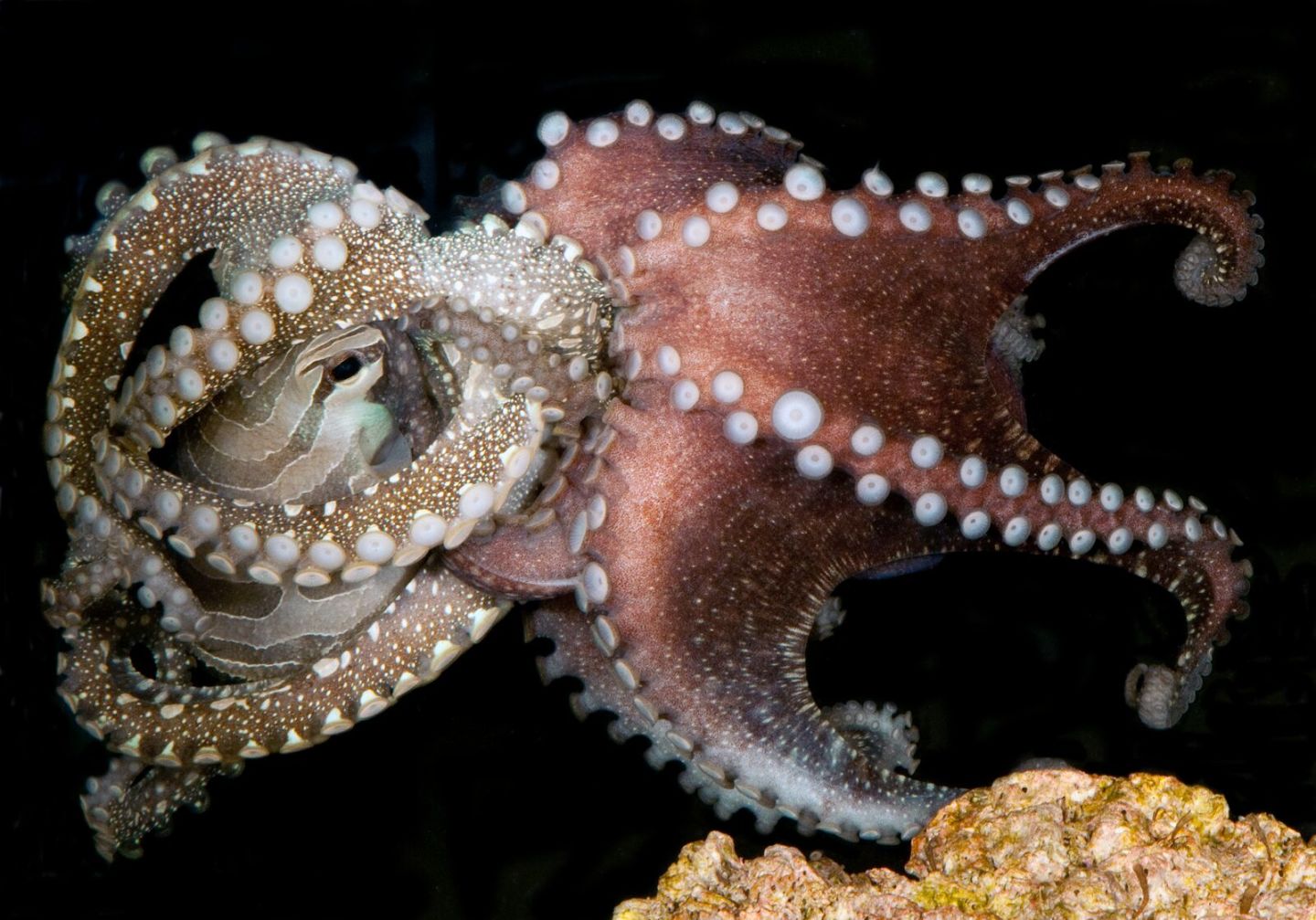
"caption": "The larger Pacific striped octopus is the first known to mate in this vulnerable beak-to-beak position.",
"description": null,
"title": "mating",
"credit": "Roy Caldwell",
"status": "inherit",
"isLoading": false,
"fetchFailed": false
},
"science_206208": {
"type": "attachments",
"id": "science_206208",
"meta": {
"index": "attachments_1716263798",
"site": "science",
"id": "206208",
"found": true
},
"parent": 206195,
"imgSizes": {
"twentyfourteen-full-width": {
"file": "https://ww2.kqed.org/app/uploads/sites/35/2015/08/ViaDanPonti-e1440434454425-1038x576.jpg",
"width": 1038,
"mimeType": "image/jpeg",
"height": 576
},
"thumbnail": {
"file": "https://ww2.kqed.org/app/uploads/sites/35/2015/08/ViaDanPonti-e1440434454425-400x225.jpg",
"width": 400,
"mimeType": "image/jpeg",
"height": 225
},
"fd-sm": {
"file": "https://ww2.kqed.org/app/uploads/sites/35/2015/08/ViaDanPonti-e1440434454425-960x540.jpg",
"width": 960,
"mimeType": "image/jpeg",
"height": 540
},
"post-thumbnail": {
"file": "https://ww2.kqed.org/app/uploads/sites/35/2015/08/ViaDanPonti-e1440434454425-672x372.jpg",
"width": 672,
"mimeType": "image/jpeg",
"height": 372
},
"kqedFullSize": {
"file": "https://ww2.kqed.org/app/uploads/sites/35/2015/08/ViaDanPonti-e1440434454425.jpg",
"width": 1280,
"height": 720
},
"fd-med": {
"file": "https://ww2.kqed.org/app/uploads/sites/35/2015/08/ViaDanPonti-e1440434454425-1180x664.jpg",
"width": 1180,
"mimeType": "image/jpeg",
"height": 664
},
"guest-author-96": {
"file": "https://ww2.kqed.org/app/uploads/sites/35/2015/08/ViaDanPonti-e1440434454425-96x96.jpg",
"width": 96,
"mimeType": "image/jpeg",
"height": 96
},
"medium": {
"file": "https://ww2.kqed.org/app/uploads/sites/35/2015/08/ViaDanPonti-e1440434454425-800x450.jpg",
"width": 800,
"mimeType": "image/jpeg",
"height": 450
},
"guest-author-64": {
"file": "https://ww2.kqed.org/app/uploads/sites/35/2015/08/ViaDanPonti-e1440434454425-64x64.jpg",
"width": 64,
"mimeType": "image/jpeg",
"height": 64
},
"detail": {
"file": "https://ww2.kqed.org/app/uploads/sites/35/2015/08/ViaDanPonti-e1440434454425-75x75.jpg",
"width": 75,
"mimeType": "image/jpeg",
"height": 75
},
"guest-author-32": {
"file": "https://ww2.kqed.org/app/uploads/sites/35/2015/08/ViaDanPonti-e1440434454425-32x32.jpg",
"width": 32,
"mimeType": "image/jpeg",
"height": 32
},
"guest-author-128": {
"file": "https://ww2.kqed.org/app/uploads/sites/35/2015/08/ViaDanPonti-e1440434454425-128x128.jpg",
"width": 128,
"mimeType": "image/jpeg",
"height": 128
}
},
"publishDate": 1440180566,
"modified": 1440184747,
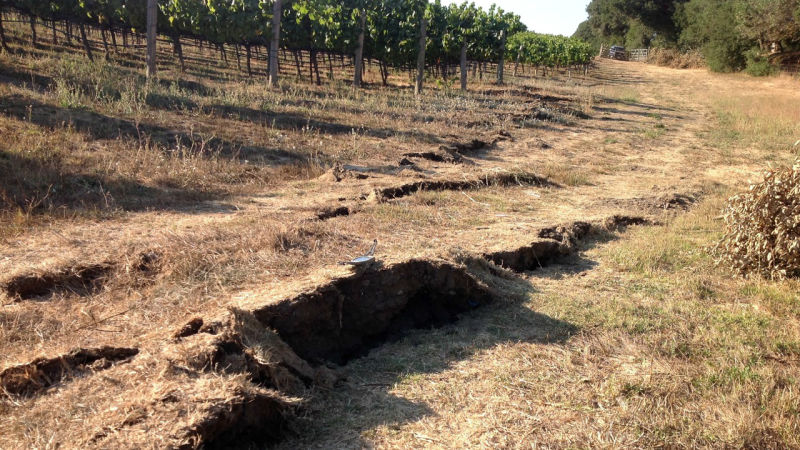
"caption": "The quake in wine country caused unusually extensive surface ruptures for a magnitude 6.",
"description": null,
"title": "Napa Quake",
"credit": "Dan Ponti/USGS",
"status": "inherit",
"isLoading": false,
"fetchFailed": false
},
"science_210834": {
"type": "attachments",
"id": "science_210834",
"meta": {
"index": "attachments_1716263798",
"site": "science",
"id": "210834",
"found": true
},
"parent": 208826,
"imgSizes": {
"twentyfourteen-full-width": {
"file": "https://ww2.kqed.org/app/uploads/sites/35/2015/08/ShakeAlert_M8test-979x576.png",
"width": 979,
"mimeType": "image/png",
"height": 576
},
"thumbnail": {
"file": "https://ww2.kqed.org/app/uploads/sites/35/2015/08/ShakeAlert_M8test-400x254.png",
"width": 400,
"mimeType": "image/png",
"height": 254
},
"fd-sm": {
"file": "https://ww2.kqed.org/app/uploads/sites/35/2015/08/ShakeAlert_M8test-960x609.png",
"width": 960,
"mimeType": "image/png",
"height": 609
},
"post-thumbnail": {
"file": "https://ww2.kqed.org/app/uploads/sites/35/2015/08/ShakeAlert_M8test-672x372.png",
"width": 672,
"mimeType": "image/png",
"height": 372
},
"kqedFullSize": {
"file": "https://ww2.kqed.org/app/uploads/sites/35/2015/08/ShakeAlert_M8test.png",
"width": 979,
"height": 621
},
"guest-author-96": {
"file": "https://ww2.kqed.org/app/uploads/sites/35/2015/08/ShakeAlert_M8test-96x96.png",
"width": 96,
"mimeType": "image/png",
"height": 96
},
"medium": {
"file": "https://ww2.kqed.org/app/uploads/sites/35/2015/08/ShakeAlert_M8test-800x507.png",
"width": 800,
"mimeType": "image/png",
"height": 507
},
"guest-author-64": {
"file": "https://ww2.kqed.org/app/uploads/sites/35/2015/08/ShakeAlert_M8test-64x64.png",
"width": 64,
"mimeType": "image/png",
"height": 64
},
"detail": {
"file": "https://ww2.kqed.org/app/uploads/sites/35/2015/08/ShakeAlert_M8test-75x75.png",
"width": 75,
"mimeType": "image/png",
"height": 75
},
"guest-author-32": {
"file": "https://ww2.kqed.org/app/uploads/sites/35/2015/08/ShakeAlert_M8test-32x32.png",
"width": 32,
"mimeType": "image/png",
"height": 32
},
"guest-author-128": {
"file": "https://ww2.kqed.org/app/uploads/sites/35/2015/08/ShakeAlert_M8test-128x128.png",
"width": 128,
"mimeType": "image/png",
"height": 128
}
},
"publishDate": 1440366577,
"modified": 1440366698,
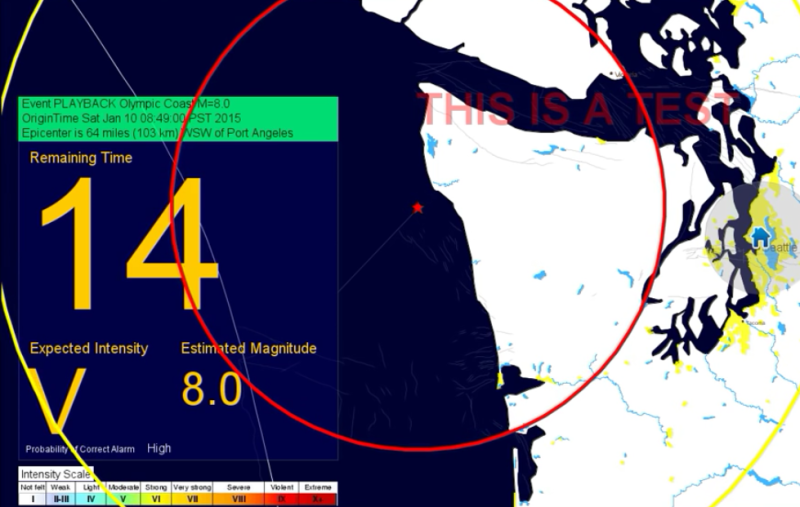
"caption": "A test of the ShakeAlert system depicts a fictional 8.0 quake, with an estimate of shaking intensity and countdown until it starts.",
"description": "A test of the ShakeAlert system depicts a fictional 8.0 quake, with an estimate of shaking intensity and countdown until it starts.",
"title": "ShakeAlert_M8test",
"credit": "CISN",
"status": "inherit",
"isLoading": false,
"fetchFailed": false
},
"science_206196": {
"type": "attachments",
"id": "science_206196",
"meta": {
"index": "attachments_1716263798",
"site": "science",
"id": "206196",
"found": true
},
"parent": 206191,
"imgSizes": {
"thumbnail": {
"file": "https://ww2.kqed.org/app/uploads/sites/35/2015/08/CAWildfire2015_720_540_s_c1_c_c-400x300.jpg",
"width": 400,
"mimeType": "image/jpeg",
"height": 300
},
"post-thumbnail": {
"file": "https://ww2.kqed.org/app/uploads/sites/35/2015/08/CAWildfire2015_720_540_s_c1_c_c-672x372.jpg",
"width": 672,
"mimeType": "image/jpeg",
"height": 372
},
"kqedFullSize": {
"file": "https://ww2.kqed.org/app/uploads/sites/35/2015/08/CAWildfire2015_720_540_s_c1_c_c.jpg",
"width": 720,
"height": 540
},
"guest-author-96": {
"file": "https://ww2.kqed.org/app/uploads/sites/35/2015/08/CAWildfire2015_720_540_s_c1_c_c-96x96.jpg",
"width": 96,
"mimeType": "image/jpeg",
"height": 96
},
"guest-author-64": {
"file": "https://ww2.kqed.org/app/uploads/sites/35/2015/08/CAWildfire2015_720_540_s_c1_c_c-64x64.jpg",
"width": 64,
"mimeType": "image/jpeg",
"height": 64
},
"detail": {
"file": "https://ww2.kqed.org/app/uploads/sites/35/2015/08/CAWildfire2015_720_540_s_c1_c_c-75x75.jpg",
"width": 75,
"mimeType": "image/jpeg",
"height": 75
},
"guest-author-32": {
"file": "https://ww2.kqed.org/app/uploads/sites/35/2015/08/CAWildfire2015_720_540_s_c1_c_c-32x32.jpg",
"width": 32,
"mimeType": "image/jpeg",
"height": 32
},
"guest-author-128": {
"file": "https://ww2.kqed.org/app/uploads/sites/35/2015/08/CAWildfire2015_720_540_s_c1_c_c-128x128.jpg",
"width": 128,
"mimeType": "image/jpeg",
"height": 128
}
},
"publishDate": 1440179244,
"modified": 1440179263,
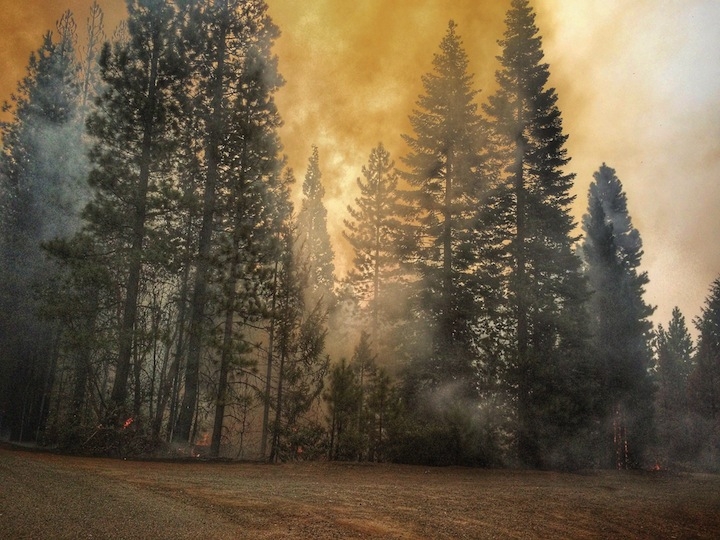
"caption": "The South Complex Fire near Hyampom, Calif., which has consumed an estimated 21,629 acres since starting on July 30.\n",
"description": null,
"title": "CAWildfire2015_720_540_s_c1_c_c",
"credit": "U.S. Department of Agriculture/flickr",
"status": "inherit",
"isLoading": false,
"fetchFailed": false
},
"science_199898": {
"type": "attachments",
"id": "science_199898",
"meta": {
"index": "attachments_1716263798",
"site": "science",
"id": "199898",
"found": true
},
"parent": 199897,
"imgSizes": {
"thumbnail": {
"file": "https://ww2.kqed.org/app/uploads/sites/35/2015/08/preperihelionjet-cometcg-400x225.jpg",
"width": 400,
"mimeType": "image/jpeg",
"height": 225
},
"post-thumbnail": {
"file": "https://ww2.kqed.org/app/uploads/sites/35/2015/08/preperihelionjet-cometcg-672x372.jpg",
"width": 672,
"mimeType": "image/jpeg",
"height": 372
},
"kqedFullSize": {
"file": "https://ww2.kqed.org/app/uploads/sites/35/2015/08/preperihelionjet-cometcg.jpg",
"width": 800,
"height": 450
},
"guest-author-96": {
"file": "https://ww2.kqed.org/app/uploads/sites/35/2015/08/preperihelionjet-cometcg-96x96.jpg",
"width": 96,
"mimeType": "image/jpeg",
"height": 96
},
"medium": {
"file": "https://ww2.kqed.org/app/uploads/sites/35/2015/08/preperihelionjet-cometcg-800x450.jpg",
"width": 800,
"mimeType": "image/jpeg",
"height": 450
},
"guest-author-64": {
"file": "https://ww2.kqed.org/app/uploads/sites/35/2015/08/preperihelionjet-cometcg-64x64.jpg",
"width": 64,
"mimeType": "image/jpeg",
"height": 64
},
"detail": {
"file": "https://ww2.kqed.org/app/uploads/sites/35/2015/08/preperihelionjet-cometcg-75x75.jpg",
"width": 75,
"mimeType": "image/jpeg",
"height": 75
},
"guest-author-32": {
"file": "https://ww2.kqed.org/app/uploads/sites/35/2015/08/preperihelionjet-cometcg-32x32.jpg",
"width": 32,
"mimeType": "image/jpeg",
"height": 32
},
"guest-author-128": {
"file": "https://ww2.kqed.org/app/uploads/sites/35/2015/08/preperihelionjet-cometcg-128x128.jpg",
"width": 128,
"mimeType": "image/jpeg",
"height": 128
}
},
"publishDate": 1439931402,
"modified": 1440109850,
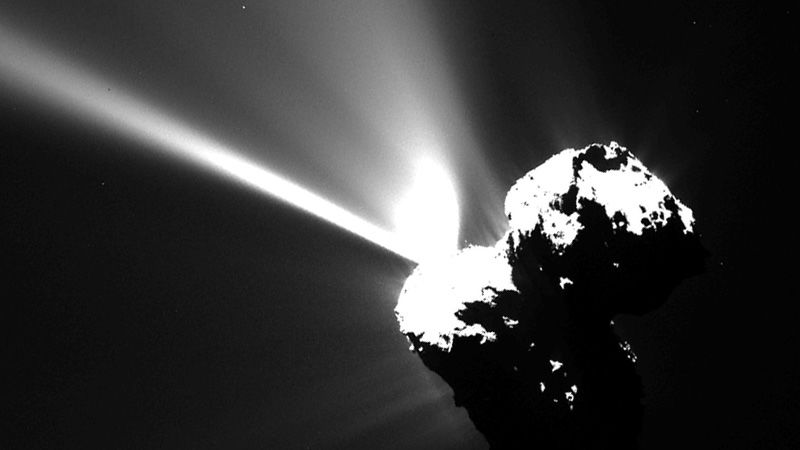
"caption": "The European Space Agency's Rosetta spacecraft captures an energetic gas plume erupting from comet 67P/Churyumov-Gerasimenko. ",
"description": "ESA's Rosetta spacecraft captures image of an energetic gas plume erupting from comet 67P/Churyumov-Gerasimenko. ",
"title": "preperihelionjet-cometcg",
"credit": "Rosetta/ESA",
"status": "inherit",
"isLoading": false,
"fetchFailed": false
},
"science_204178": {
"type": "attachments",
"id": "science_204178",
"meta": {
"index": "attachments_1716263798",
"site": "science",
"id": "204178",
"found": true
},
"parent": 204165,
"imgSizes": {
"twentyfourteen-full-width": {
"file": "https://ww2.kqed.org/app/uploads/sites/35/2015/08/wolf3-1038x576.jpg",
"width": 1038,
"mimeType": "image/jpeg",
"height": 576
},
"thumbnail": {
"file": "https://ww2.kqed.org/app/uploads/sites/35/2015/08/wolf3-400x225.jpg",
"width": 400,
"mimeType": "image/jpeg",
"height": 225
},
"fd-sm": {
"file": "https://ww2.kqed.org/app/uploads/sites/35/2015/08/wolf3-960x540.jpg",
"width": 960,
"mimeType": "image/jpeg",
"height": 540
},
"post-thumbnail": {
"file": "https://ww2.kqed.org/app/uploads/sites/35/2015/08/wolf3-672x372.jpg",
"width": 672,
"mimeType": "image/jpeg",
"height": 372
},
"kqedFullSize": {
"file": "https://ww2.kqed.org/app/uploads/sites/35/2015/08/wolf3.jpg",
"width": 1920,
"height": 1080
},
"large": {
"file": "https://ww2.kqed.org/app/uploads/sites/35/2015/08/wolf3-1440x810.jpg",
"width": 1440,
"mimeType": "image/jpeg",
"height": 810
},
"guest-author-96": {
"file": "https://ww2.kqed.org/app/uploads/sites/35/2015/08/wolf3-96x96.jpg",
"width": 96,
"mimeType": "image/jpeg",
"height": 96
},
"medium": {
"file": "https://ww2.kqed.org/app/uploads/sites/35/2015/08/wolf3-800x450.jpg",
"width": 800,
"mimeType": "image/jpeg",
"height": 450
},
"guest-author-64": {
"file": "https://ww2.kqed.org/app/uploads/sites/35/2015/08/wolf3-64x64.jpg",
"width": 64,
"mimeType": "image/jpeg",
"height": 64
},
"guest-author-32": {
"file": "https://ww2.kqed.org/app/uploads/sites/35/2015/08/wolf3-32x32.jpg",
"width": 32,
"mimeType": "image/jpeg",
"height": 32
},
"fd-lrg": {
"file": "https://ww2.kqed.org/app/uploads/sites/35/2015/08/wolf3-1920x1080.jpg",
"width": 1920,
"mimeType": "image/jpeg",
"height": 1080
},
"fd-med": {
"file": "https://ww2.kqed.org/app/uploads/sites/35/2015/08/wolf3-1180x664.jpg",
"width": 1180,
"mimeType": "image/jpeg",
"height": 664
},
"detail": {
"file": "https://ww2.kqed.org/app/uploads/sites/35/2015/08/wolf3-75x75.jpg",
"width": 75,
"mimeType": "image/jpeg",
"height": 75
},
"guest-author-128": {
"file": "https://ww2.kqed.org/app/uploads/sites/35/2015/08/wolf3-128x128.jpg",
"width": 128,
"mimeType": "image/jpeg",
"height": 128
}
},
"publishDate": 1440101289,
"modified": 1440101309,
"caption": "One of the wolves in the newly dubbed \"Shasta pack.\"",
"description": null,
"title": "wolf3",
"credit": "California Department of Fish and Wildlife",
"status": "inherit",
"isLoading": false,
"fetchFailed": false
},
"science_202539": {
"type": "attachments",
"id": "science_202539",
"meta": {
"index": "attachments_1716263798",
"site": "science",
"id": "202539",
"found": true
},
"parent": 202073,
"imgSizes": {
"twentyfourteen-full-width": {
"file": "https://ww2.kqed.org/app/uploads/sites/35/2015/08/watermap-1038x576.jpg",
"width": 1038,
"mimeType": "image/jpeg",
"height": 576
},
"thumbnail": {
"file": "https://ww2.kqed.org/app/uploads/sites/35/2015/08/watermap-400x225.jpg",
"width": 400,
"mimeType": "image/jpeg",
"height": 225
},
"fd-sm": {
"file": "https://ww2.kqed.org/app/uploads/sites/35/2015/08/watermap-960x540.jpg",
"width": 960,
"mimeType": "image/jpeg",
"height": 540
},
"post-thumbnail": {
"file": "https://ww2.kqed.org/app/uploads/sites/35/2015/08/watermap-672x372.jpg",
"width": 672,
"mimeType": "image/jpeg",
"height": 372
},
"kqedFullSize": {
"file": "https://ww2.kqed.org/app/uploads/sites/35/2015/08/watermap.jpg",
"width": 1920,
"height": 1080
},
"large": {
"file": "https://ww2.kqed.org/app/uploads/sites/35/2015/08/watermap-1440x810.jpg",
"width": 1440,
"mimeType": "image/jpeg",
"height": 810
},
"guest-author-96": {
"file": "https://ww2.kqed.org/app/uploads/sites/35/2015/08/watermap-96x96.jpg",
"width": 96,
"mimeType": "image/jpeg",
"height": 96
},
"medium": {
"file": "https://ww2.kqed.org/app/uploads/sites/35/2015/08/watermap-800x450.jpg",
"width": 800,
"mimeType": "image/jpeg",
"height": 450
},
"guest-author-64": {
"file": "https://ww2.kqed.org/app/uploads/sites/35/2015/08/watermap-64x64.jpg",
"width": 64,
"mimeType": "image/jpeg",
"height": 64
},
"guest-author-32": {
"file": "https://ww2.kqed.org/app/uploads/sites/35/2015/08/watermap-32x32.jpg",
"width": 32,
"mimeType": "image/jpeg",
"height": 32
},
"fd-lrg": {
"file": "https://ww2.kqed.org/app/uploads/sites/35/2015/08/watermap-1920x1080.jpg",
"width": 1920,
"mimeType": "image/jpeg",
"height": 1080
},
"fd-med": {
"file": "https://ww2.kqed.org/app/uploads/sites/35/2015/08/watermap-1180x664.jpg",
"width": 1180,
"mimeType": "image/jpeg",
"height": 664
},
"detail": {
"file": "https://ww2.kqed.org/app/uploads/sites/35/2015/08/watermap-75x75.jpg",
"width": 75,
"mimeType": "image/jpeg",
"height": 75
},
"guest-author-128": {
"file": "https://ww2.kqed.org/app/uploads/sites/35/2015/08/watermap-128x128.jpg",
"width": 128,
"mimeType": "image/jpeg",
"height": 128
}
},
"publishDate": 1440033916,
"modified": 1440033916,
"caption": null,
"description": null,
"title": "watermap",
"credit": null,
"status": "inherit",
"isLoading": false,
"fetchFailed": false
}
},
"audioPlayerReducer": {
"postId": "stream_live",
"isPaused": true,
"isPlaying": false,
"pfsActive": false,
"pledgeModalIsOpen": true,
"playerDrawerIsOpen": false,
"liveAudioPlayStartedAt": 0,
"liveAudioPlayContext": ""
},
"authorsReducer": {
"byline_science_206191": {
"type": "authors",
"id": "byline_science_206191",
"meta": {
"override": true
},
"slug": "byline_science_206191",
"name": "\u003cstrong>\u003ca href=\"http://www.climatecentral.org/what-we-do/people/brian-kahn\">Brian Kahn\u003c/a>\u003cbr />Climate Central\u003c/strong>",
"isLoading": false
},
"cmiller": {
"type": "authors",
"id": "221",
"meta": {
"index": "authors_1716337520",
"id": "221",
"found": true
},
"name": "Craig Miller",
"firstName": "Craig",
"lastName": "Miller",
"slug": "cmiller",
"email": "craig@voxterra.net",
"display_author_email": false,
"staff_mastheads": [
"science"
],
"title": "Editor Emeritus, Science",
"bio": "Craig is a former KQED Science editor, specializing in weather, climate, water & energy issues, with a little seismology thrown in just to shake things up. Prior to that, he launched and led the station's award-winning multimedia project, Climate Watch. Craig is also an accomplished writer/producer of television documentaries, with a focus on natural resource issues.",
"avatar": "https://secure.gravatar.com/avatar/b91661df645e001a9cafe0861fa685f9?s=600&d=blank&r=g",
"twitter": "voxterra",
"facebook": null,
"instagram": null,
"linkedin": null,
"sites": [
{
"site": "news",
"roles": [
"author"
]
},
{
"site": "futureofyou",
"roles": [
"editor"
]
},
{
"site": "stateofhealth",
"roles": [
"author"
]
},
{
"site": "science",
"roles": [
"editor"
]
},
{
"site": "quest",
"roles": [
"editor"
]
}
],
"headData": {
"title": "Craig Miller | KQED",
"description": "Editor Emeritus, Science",
"ogImgSrc": "https://secure.gravatar.com/avatar/b91661df645e001a9cafe0861fa685f9?s=600&d=blank&r=g",
"twImgSrc": "https://secure.gravatar.com/avatar/b91661df645e001a9cafe0861fa685f9?s=600&d=blank&r=g"
},
"isLoading": false,
"link": "/author/cmiller"
},
"laurensommer": {
"type": "authors",
"id": "239",
"meta": {
"index": "authors_1716337520",
"id": "239",
"found": true
},
"name": "Lauren Sommer",
"firstName": "Lauren",
"lastName": "Sommer",
"slug": "laurensommer",
"email": "lsommer@kqed.org",
"display_author_email": false,
"staff_mastheads": [],
"title": "KQED Contributor",
"bio": "Lauren is a radio reporter formerly covering environment, water, and energy for KQED Science. As part of her day job, she has scaled Sierra Nevada peaks, run from charging elephant seals, and desperately tried to get her sea legs - all in pursuit of good radio. Her work has appeared on Marketplace, Living on Earth, Science Friday and NPR's Morning Edition and All Things Considered. You can find her on Twitter at \u003ca href=\"https://twitter.com/lesommer\">@lesommer\u003c/a>.",
"avatar": "https://secure.gravatar.com/avatar/33aa3772bb86c6ad45b8aca6a238bbdf?s=600&d=blank&r=g",
"twitter": null,
"facebook": null,
"instagram": null,
"linkedin": null,
"sites": [
{
"site": "news",
"roles": [
"author"
]
},
{
"site": "science",
"roles": [
"editor",
"manage_content_types",
"manage_taxonomies"
]
},
{
"site": "quest",
"roles": [
"editor"
]
}
],
"headData": {
"title": "Lauren Sommer | KQED",
"description": "KQED Contributor",
"ogImgSrc": "https://secure.gravatar.com/avatar/33aa3772bb86c6ad45b8aca6a238bbdf?s=600&d=blank&r=g",
"twImgSrc": "https://secure.gravatar.com/avatar/33aa3772bb86c6ad45b8aca6a238bbdf?s=600&d=blank&r=g"
},
"isLoading": false,
"link": "/author/laurensommer"
},
"sasha-khokha": {
"type": "authors",
"id": "254",
"meta": {
"index": "authors_1716337520",
"id": "254",
"found": true
},
"name": "Sasha Khokha",
"firstName": "Sasha",
"lastName": "Khokha",
"slug": "sasha-khokha",
"email": "skhokha@kqed.org",
"display_author_email": true,
"staff_mastheads": [
"news"
],
"title": "Host, The California Report Magazine",
"bio": "Sasha Khokha is the host of \u003cem>The California Report's \u003c/em> weekly magazine program, which takes listeners on sound-rich excursions to meet the people that make the Golden State unique -- through audio documentaries and long-form stories. As \u003cem>The California Report's\u003c/em> Central Valley Bureau Chief based in Fresno for nearly a dozen years, Sasha brought the lives and concerns of rural Californians to listeners around the state. Her reporting helped expose the hidden price immigrant women janitors and farmworkers may pay to keep their jobs: sexual assault at work. It inspired two new California laws to protect them from sexual harassment. She was a key member of the reporting team for the Frontline film \u003cem>Rape on the Night Shift, \u003c/em>which was nominated for two national Emmys. Sasha has also won a national Edward R. Murrow and a national PRNDI award for investigative reporting, as well as multiple prizes from the Society for Professional Journalists. Sasha is a proud alum of the UC Berkeley Graduate School of Journalism and Brown University and a member of the South Asian Journalists Association.",
"avatar": "https://secure.gravatar.com/avatar/e4b5e1541aaeea2aa356aa1fb2a68950?s=600&d=blank&r=g",
"twitter": "KQEDSashaKhokha",
"facebook": null,
"instagram": null,
"linkedin": null,
"sites": [
{
"site": "news",
"roles": [
"editor"
]
},
{
"site": "stateofhealth",
"roles": [
"author"
]
},
{
"site": "science",
"roles": [
"author"
]
},
{
"site": "quest",
"roles": [
"subscriber"
]
}
],
"headData": {
"title": "Sasha Khokha | KQED",
"description": "Host, The California Report Magazine",
"ogImgSrc": "https://secure.gravatar.com/avatar/e4b5e1541aaeea2aa356aa1fb2a68950?s=600&d=blank&r=g",
"twImgSrc": "https://secure.gravatar.com/avatar/e4b5e1541aaeea2aa356aa1fb2a68950?s=600&d=blank&r=g"
},
"isLoading": false,
"link": "/author/sasha-khokha"
},
"ben-burress": {
"type": "authors",
"id": "6180",
"meta": {
"index": "authors_1716337520",
"id": "6180",
"found": true
},
"name": "Ben Burress",
"firstName": "Ben",
"lastName": "Burress",
"slug": "ben-burress",
"email": "bburress@chabotspace.org",
"display_author_email": false,
"staff_mastheads": [],
"title": null,
"bio": "\u003cstrong>Benjamin Burress\u003c/strong> has been a staff astronomer at Chabot Space & Science Center since July 1999. He graduated from Sonoma State University in 1985 with a bachelor’s degree in physics (and minor in astronomy), after which he signed on for a two-year stint in the Peace Corps, where he taught physics and mathematics in the African nation of Cameroon. From 1989-96 he served on the crew of NASA’s Kuiper Airborne Observatory at Ames Research Center in Mountain View, CA. From 1996-99, he was Head Observer at the Naval Prototype Optical Interferometer program at Lowell Observatory in Flagstaff, AZ.\r\n\r\nRead his \u003ca href=\"http://science.kqed.org/quest/author/ben-burress/\">previous contributions\u003c/a> to \u003ca href=\"http://science.kqed.org/quest/\">QUEST\u003c/a>, a project dedicated to exploring the Science of Sustainability.",
"avatar": "https://secure.gravatar.com/avatar/8263bffa345b7e4923a0b8b9f0f6a161?s=600&d=blank&r=g",
"twitter": null,
"facebook": null,
"instagram": null,
"linkedin": null,
"sites": [
{
"site": "science",
"roles": [
"editor"
]
},
{
"site": "quest",
"roles": [
"subscriber"
]
}
],
"headData": {
"title": "Ben Burress | KQED",
"description": null,
"ogImgSrc": "https://secure.gravatar.com/avatar/8263bffa345b7e4923a0b8b9f0f6a161?s=600&d=blank&r=g",
"twImgSrc": "https://secure.gravatar.com/avatar/8263bffa345b7e4923a0b8b9f0f6a161?s=600&d=blank&r=g"
},
"isLoading": false,
"link": "/author/ben-burress"
},
"dannastaaf": {
"type": "authors",
"id": "6324",
"meta": {
"index": "authors_1716337520",
"id": "6324",
"found": true
},
"name": "Danna Staaf",
"firstName": "Danna",
"lastName": "Staaf",
"slug": "dannastaaf",
"email": "dannajoy@gmail.com",
"display_author_email": false,
"staff_mastheads": [],
"title": null,
"bio": "Danna Staaf is a marine biologist, science writer, novelist, artist, and educator. She holds a PhD in Squid Babies from Stanford and a BA in Biology from the College of Creative Studies at the University of California, Santa Barbara. She helped found the outreach program \u003ca href=\"http://gilly.stanford.edu/outreach.html\">Squids4Kids\u003c/a>, illustrated \u003ca href=\"https://www.thegamecrafter.com/games/the-game-of-science\">The Game of Science\u003c/a>, and blogs at \u003ca href=\"http://www.science20.com/squid_day\">Science 2.0\u003c/a>. She lives in San Jose with her husband, daughter, and cats.",
"avatar": "https://secure.gravatar.com/avatar/62085c2562a0b91949bfd6ff7548082e?s=600&d=blank&r=g",
"twitter": null,
"facebook": null,
"instagram": null,
"linkedin": null,
"sites": [
{
"site": "science",
"roles": [
"author"
]
},
{
"site": "quest",
"roles": [
"subscriber"
]
}
],
"headData": {
"title": "Danna Staaf | KQED",
"description": null,
"ogImgSrc": "https://secure.gravatar.com/avatar/62085c2562a0b91949bfd6ff7548082e?s=600&d=blank&r=g",
"twImgSrc": "https://secure.gravatar.com/avatar/62085c2562a0b91949bfd6ff7548082e?s=600&d=blank&r=g"
},
"isLoading": false,
"link": "/author/dannastaaf"
},
"dpotter": {
"type": "authors",
"id": "6609",
"meta": {
"index": "authors_1716337520",
"id": "6609",
"found": true
},
"name": "Daniel Potter",
"firstName": "Daniel",
"lastName": "Potter",
"slug": "dpotter",
"email": "dpotter@kqed.org",
"display_author_email": false,
"staff_mastheads": [],
"title": "KQED Contributor",
"bio": "Daniel Potter is a reporter for KQED Science. Before that, he worked at Nashville Public Radio for six years. He’s gathered tape for The New York Times, contributed to a growing list of podcasts, and done national features for NPR on everything from bats to meningitis. He tweets at @hellodanpo.",
"avatar": "https://secure.gravatar.com/avatar/59396b9ad9c672dd4cd1d3e453425f12?s=600&d=blank&r=g",
"twitter": "hellodanpo",
"facebook": null,
"instagram": null,
"linkedin": null,
"sites": [
{
"site": "futureofyou",
"roles": [
"author"
]
},
{
"site": "science",
"roles": []
}
],
"headData": {
"title": "Daniel Potter | KQED",
"description": "KQED Contributor",
"ogImgSrc": "https://secure.gravatar.com/avatar/59396b9ad9c672dd4cd1d3e453425f12?s=600&d=blank&r=g",
"twImgSrc": "https://secure.gravatar.com/avatar/59396b9ad9c672dd4cd1d3e453425f12?s=600&d=blank&r=g"
},
"isLoading": false,
"link": "/author/dpotter"
}
},
"pagesReducer": {
"science_category_news": {
"type": "terms",
"id": "science_40",
"meta": {
"index": "terms_1716263798",
"site": "science",
"id": "40",
"score": 10.814515
},
"featImg": null,
"name": "News",
"description": null,
"taxonomy": "category",
"headData": {
"twImgId": null,
"twTitle": null,
"ogTitle": null,
"ogImgId": null,
"twDescription": null,
"description": null,
"title": "News Archives | KQED Science",
"ogDescription": null
},
"ttid": 42,
"slug": "news",
"isLoading": false,
"title": "News",
"pageMeta": {
"site": "science",
"WpPageTemplate": "page-topic-editorial",
"currentPage": 242
},
"blocks": [
{
"blockName": "kqed/post-list",
"attrs": {
"layout": "cardArticle2",
"query": "posts/science?category=news",
"seeMore": false,
"paginated": true,
"page": 242
}
},
{
"blockName": "kqed/ad"
}
]
}
},
"pfsSessionReducer": {},
"postsReducer": {
"stream_live": {
"type": "live",
"id": "stream_live",
"audioUrl": "https://streams.kqed.org/kqedradio",
"title": "Live Stream",
"excerpt": "Live Stream information currently unavailable.",
"link": "/radio",
"featImg": "",
"label": {
"name": "KQED Live",
"link": "/"
}
},
"stream_kqedNewscast": {
"type": "posts",
"id": "stream_kqedNewscast",
"audioUrl": "https://www.kqed.org/.stream/anon/radio/RDnews/newscast.mp3?_=1",
"title": "KQED Newscast",
"featImg": "",
"label": {
"name": "88.5 FM",
"link": "/"
}
},
"science_219512": {
"type": "posts",
"id": "science_219512",
"meta": {
"index": "posts_1716263798",
"site": "science",
"id": "219512",
"score": null,
"sort": [
1441029611000
]
},
"parent": 0,
"labelTerm": {},
"blocks": [],
"publishDate": 1441029611,
"format": "image",
"title": "How Many Fish in the Sea? Genetic Testing Could Answer That",
"headTitle": "How Many Fish in the Sea? Genetic Testing Could Answer That | KQED",
"content": "\u003cp>Advances in genetic testing have revolutionized everything from health care decisions to crime forensics. Now, the technology may help protect marine life off the California coast.\u003c/p>\n\u003cp>In the waters of Monterey Bay, DNA sequencing is allowing biologists to study fish and whales without ever having seen them.\u003c/p>\n\u003cp>Just a sample of seawater, the volume of a water bottle, is enough to reveal what marine life has been swimming through that part of the ocean. The technique could improve marine monitoring, where scientists track an ecosystem year after year to gauge how it’s doing.\u003c/p>\n\u003cp>\u003cstrong>One Fish, Two Fish\u003c/strong>\u003c/p>\n\u003cp>Taking a marine census today requires hours of field time, either with scuba diving or boat trips.\u003c/p>\n\u003cp>[ad fullwidth]\u003c/p>\n\u003cp>“It gets a little challenging because you’re floating, you’re swimming, you’re looking, you’re counting,” says diver Dan Abbott, unloading his scuba gear on a beach in Monterey.\u003c/p>\n\u003cp>He’s holding a waterproof clipboard, on which he’s tallied all the fish and marine life he saw in a kelp forest just offshore.\u003c/p>\n\u003cp>“About 150 fish in all. Pile perch, black perch, blue rockfish, kelp rockfish,” he says, just for a start. He’s diving with a team from \u003ca href=\"http://reefcheck.org/rcca/rcca_home.php\">Reef Check California\u003c/a>, a group of volunteers that surveys this site twice a year.\u003c/p>\n\u003cfigure id=\"attachment_219514\" class=\"wp-caption aligncenter\" style=\"max-width: 800px\">\u003ca href=\"http://ww2.kqed.org/science/wp-content/uploads/sites/35/2015/08/NPS.jpg\">\u003cimg loading=\"lazy\" decoding=\"async\" class=\"size-medium wp-image-219514\" src=\"http://ww2.kqed.org/science/wp-content/uploads/sites/35/2015/08/NPS-800x455.jpg\" alt=\"Today, divers do marine surveys underwater, counting each organism they find.\" width=\"800\" height=\"455\" srcset=\"https://cdn.kqed.org/wp-content/uploads/sites/35/2015/08/NPS.jpg 800w, https://cdn.kqed.org/wp-content/uploads/sites/35/2015/08/NPS-400x228.jpg 400w\" sizes=\"(max-width: 800px) 100vw, 800px\">\u003c/a>\u003cfigcaption class=\"wp-caption-text\">Today, divers do marine surveys underwater, counting each organism they find. \u003ccite>(National Park Service)\u003c/cite>\u003c/figcaption>\u003c/figure>\n\u003cp>\u003cstrong>Listen to the story:\u003c/strong>\u003cbr>\nhttp://www.kqed.org/.stream/anon/radio/science/2015/08/20150831ScienceDNAmarinelife.mp3\u003cbr>\nThe group’s data help answer a question that’s key to California’s conservation efforts: are there more fish here now than there were eight years ago?\u003c/p>\n\u003cp>That’s when this kelp forest became part of a massive experiment to restore marine life in California. It was set aside as a \u003ca href=\"http://www.dfg.ca.gov/marine/mpa/index.asp\">marine protected area\u003c/a>, where there’s little or no fishing allowed.\u003c/p>\n\u003cp>There are now more than a hundred protected areas up and down the coast, covering 16 percent of state waters. The idea is that marine life will slowly recover there, improving the ecosystem both inside and outside the boundaries of each area.\u003c/p>\n\u003cp>The only way to know if these areas are working is through underwater surveys, repeated year after year. In 2013, \u003ca href=\"http://ww2.kqed.org/news/2013/02/28/california-ocean-reserves-show-promising-results-for-marine-life\">biologists reported encouraging results\u003c/a> in the protected areas off the Central Coast.\u003c/p>\n\u003cp>Field surveys are expensive. The state supplied $16 million for monitoring studies, and the funding has already run out in some regions of the coast. Monitoring has continued, thanks to universities, foundations and volunteer groups.\u003c/p>\n\u003cp>\u003cstrong>Studying the Ocean Without Getting Wet\u003c/strong>\u003c/p>\n\u003cp>“It’s been amazing what we can detect in just a liter of seawater,” says Jesse Port, an environmental genomicist at the Center for Ocean Solutions at Stanford University.\u003c/p>\n\u003cfigure id=\"attachment_219513\" class=\"wp-caption alignright\" style=\"max-width: 524px\">\u003ca href=\"http://ww2.kqed.org/science/wp-content/uploads/sites/35/2015/08/MBAQ.jpg\">\u003cimg loading=\"lazy\" decoding=\"async\" class=\" wp-image-219513\" src=\"http://ww2.kqed.org/science/wp-content/uploads/sites/35/2015/08/MBAQ-800x563.jpg\" alt=\"Port first tested the DNA floating in the tanks at the Monterey Bay Aquarium.\" width=\"524\" height=\"369\" srcset=\"https://cdn.kqed.org/wp-content/uploads/sites/35/2015/08/MBAQ-800x563.jpg 800w, https://cdn.kqed.org/wp-content/uploads/sites/35/2015/08/MBAQ-400x282.jpg 400w, https://cdn.kqed.org/wp-content/uploads/sites/35/2015/08/MBAQ-1180x831.jpg 1180w, https://cdn.kqed.org/wp-content/uploads/sites/35/2015/08/MBAQ-960x676.jpg 960w, https://cdn.kqed.org/wp-content/uploads/sites/35/2015/08/MBAQ.jpg 1200w\" sizes=\"(max-width: 524px) 100vw, 524px\">\u003c/a>\u003cfigcaption class=\"wp-caption-text\">Port first tested the DNA floating in the tanks at the Monterey Bay Aquarium. Can you guess why he found turkey DNA in the tanks? \u003ccite>(Lauren Sommer/KQED)\u003c/cite>\u003c/figcaption>\u003c/figure>\n\u003cp>He points to a rack of one-liter Nalgene water bottles that he uses to take seawater samples from the kelp forests in Monterey Bay. The rest of the work happens in the lab with a technique known as “environmental DNA” or eDNA.\u003c/p>\n\u003cp>“So all organisms shed their DNA,” he says. “Their skin, their scales, their waste – all of this gets into the water. You can think of it as a soup of genetic information.”\u003c/p>\n\u003cp>Port filters the seawater to collect all the cells. Then, he weeds out the algae and plankton and sequences the DNA of all the vertebrates, like whales, seals, and fish.\u003c/p>\n\u003cp>“We get, with the machine we’re using, 150 million sequence reads for a given sequence run,” he says, “and that’s a lot of information.”\u003c/p>\n\u003cp>Those gigabytes of results require heavy data-crunching, but eventually, he ends up with a spreadsheet that tells him what organisms were found.\u003c/p>\n\u003cp>The approach is possible because DNA sequencing has gotten so much cheaper. One sample costs just $1,500.\u003c/p>\n\u003cp>“This was just not possible five, ten years ago,” Port says. “And sequencing technology is just going to get better, so this will probably get even cheaper.”\u003c/p>\n\u003cp>\u003cstrong>Finding Turkey Underwater\u003c/strong>\u003c/p>\n\u003cp>Port first ran DNA tests in one of the large tanks at the Monterey Bay Aquarium, which provided an easy test case because he knew exactly what was swimming there.\u003c/p>\n\u003cp>But he got back results he didn’t quite believe. “Things like turkey,” he says. “We picked up chicken DNA in these tanks.”\u003c/p>\n\u003caside class=\"pullquote alignright\">“This is going to be transformative in oceanography. You don’t have to be out there on a boat with a huge crew, spending all this money.”\u003ccite>Jim Birch,\u003cbr>Monterey Bay Aquarium Research Institute\u003c/cite>\u003c/aside>\n\u003cp>Turns out, poultry was in the feed some of the fish were getting. But it raised some big questions. How do you know whether the DNA comes from a fish or from something it ate miles away? Or how do you know the DNA didn’t float in on a current?\u003c/p>\n\u003cp>Port is still working on the answers to these questions and he’s doing studies to ground truth his results, checking them against what scuba divers find. But if the technology proves itself in the ocean, it could revolutionize how marine monitoring is done.\u003c/p>\n\u003cp>“You can cover such a larger area by taking water samples,” he says, “rather than having divers do that all themselves.”\u003c/p>\n\u003cp>Paul Michel, the superintendent of the Monterey Bay National Marine Sanctuary, says they’re already using eDNA testing to help assess species diversity in the sanctuary.\u003c/p>\n\u003cp>“Absolutely, we did DNA testing on a research cruise in May,” Michel says, “and at each stop on the way, we were taking water samples. We can compare the DNA results to other types of samples over time.”\u003c/p>\n\u003cp>Eventually, it doesn’t even have to be humans taking those water samples.\u003c/p>\n\u003cfigure id=\"attachment_219519\" class=\"wp-caption alignright\" style=\"max-width: 800px\">\u003ca href=\"http://ww2.kqed.org/science/wp-content/uploads/sites/35/2015/08/lrauv_mission3.jpg\">\u003cimg loading=\"lazy\" decoding=\"async\" class=\"size-medium wp-image-219519\" src=\"http://ww2.kqed.org/science/wp-content/uploads/sites/35/2015/08/lrauv_mission3-800x487.jpg\" alt=\"MBARI's long-range autonomous underwater vehicle can remain at sea, unattended, for weeks at a time.\" width=\"800\" height=\"487\" srcset=\"https://cdn.kqed.org/wp-content/uploads/sites/35/2015/08/lrauv_mission3-800x487.jpg 800w, https://cdn.kqed.org/wp-content/uploads/sites/35/2015/08/lrauv_mission3-400x243.jpg 400w, https://cdn.kqed.org/wp-content/uploads/sites/35/2015/08/lrauv_mission3-1440x876.jpg 1440w, https://cdn.kqed.org/wp-content/uploads/sites/35/2015/08/lrauv_mission3-1920x1168.jpg 1920w, https://cdn.kqed.org/wp-content/uploads/sites/35/2015/08/lrauv_mission3-1180x718.jpg 1180w, https://cdn.kqed.org/wp-content/uploads/sites/35/2015/08/lrauv_mission3-960x584.jpg 960w, https://cdn.kqed.org/wp-content/uploads/sites/35/2015/08/lrauv_mission3.jpg 2034w\" sizes=\"(max-width: 800px) 100vw, 800px\">\u003c/a>\u003cfigcaption class=\"wp-caption-text\">MBARI’s long-range autonomous underwater vehicle can take samples at sea, unattended, for weeks at a time. \u003ccite>(Todd Walsh (c) 2010 MBARI)\u003c/cite>\u003c/figcaption>\u003c/figure>\n\u003cp>\u003cstrong>DNA Lab at Sea\u003c/strong>\u003c/p>\n\u003cp>“What this is, is a microbiology lab that exists out in the ocean,” says Jim Birch of the Monterey Bay Aquarium Research Institute, pointing to a 10-foot yellow tube. It’s called a long-range AUV, or autonomous underwater vehicle.\u003c/p>\n\u003cp>It looks like a torpedo, but it’s actually a robot, containing a miniature DNA lab called an \u003ca href=\"http://www.mbari.org/esp/\">Environmental Sample Processor\u003c/a>.\u003c/p>\n\u003cp>The robot cruises along underwater, taking samples and analyzing them onboard. Birch recently sent it out for a test run in Monterey Bay.\u003c/p>\n\u003cp>“I was sitting in my living room with my computer open and there in front of me was the control panel for the AUV,” he says. “And I could direct it to go to a new place and it was just this surreal feeling.”\u003c/p>\n\u003cp>When the AUV finds an organism it’s looking for, it surfaces and calls home, pinging a satellite or cell phone network with the data, and giving scientists an almost real-time snapshot of the ocean.\u003c/p>\n\u003cp>Currently, it only tests for one thing at a time, like algae or plankton, and Birch says there’s more engineering work to be done before the AUV gains widespread use.\u003c/p>\n\u003cp>“This is going to be transformative in oceanography,” he says. “You don’t have to be out there on a boat with a huge crew, spending all this money.”\u003c/p>\n\u003cp>[ad floatright]\u003c/p>\n\u003cp>A change that could help the state’s conservation funding go farther, ensuring California’s marine protected areas are working.\u003c/p>\n\n",
"stats": {
"hasVideo": false,
"hasChartOrMap": false,
"hasAudio": true,
"hasPolis": false,
"wordCount": 1309,
"hasGoogleForm": false,
"hasGallery": false,
"hasHearkenModule": false,
"iframeSrcs": [],
"paragraphCount": 42
},
"modified": 1704931366,
"excerpt": "DNA testing, the same tech used in human health, could change the way biologists study the ocean.",
"headData": {
"twImgId": "",
"twTitle": "",
"ogTitle": "",
"ogImgId": "",
"twDescription": "",
"description": "DNA testing, the same tech used in human health, could change the way biologists study the ocean.",
"title": "How Many Fish in the Sea? Genetic Testing Could Answer That | KQED",
"ogDescription": "",
"schema": {
"@context": "https://schema.org",
"@type": "Article",
"headline": "How Many Fish in the Sea? Genetic Testing Could Answer That",
"datePublished": "2015-08-31T07:00:11-07:00",
"dateModified": "2024-01-10T16:02:46-08:00",
"image": "https://cdn.kqed.org/wp-content/uploads/2020/02/KQED-OG-Image@1x.png"
}
},
"guestAuthors": [],
"slug": "how-many-fish-in-the-sea-genetic-testing-could-answer-that",
"status": "publish",
"sourceUrl": "https://ww2.kqed.org/science/",
"sticky": false,
"source": "KQED Science",
"path": "/science/219512/how-many-fish-in-the-sea-genetic-testing-could-answer-that",
"audioUrl": "http://www.kqed.org/.stream/anon/radio/science/2015/08/20150831ScienceDNAmarinelife.mp3",
"audioDuration": null,
"audioTrackLength": null,
"parsedContent": [
{
"type": "contentString",
"content": "\u003cdiv class=\"post-body\">\u003cp>\u003cp>Advances in genetic testing have revolutionized everything from health care decisions to crime forensics. Now, the technology may help protect marine life off the California coast.\u003c/p>\n\u003cp>In the waters of Monterey Bay, DNA sequencing is allowing biologists to study fish and whales without ever having seen them.\u003c/p>\n\u003cp>Just a sample of seawater, the volume of a water bottle, is enough to reveal what marine life has been swimming through that part of the ocean. The technique could improve marine monitoring, where scientists track an ecosystem year after year to gauge how it’s doing.\u003c/p>\n\u003cp>\u003cstrong>One Fish, Two Fish\u003c/strong>\u003c/p>\n\u003cp>Taking a marine census today requires hours of field time, either with scuba diving or boat trips.\u003c/p>\n\u003cp>\u003c/p>\u003c/div>",
"attributes": {
"named": {},
"numeric": []
}
},
{
"type": "component",
"content": "",
"name": "ad",
"attributes": {
"named": {
"label": "fullwidth"
},
"numeric": [
"fullwidth"
]
}
},
{
"type": "contentString",
"content": "\u003cdiv class=\"post-body\">\u003cp>\u003c/p>\n\u003cp>“It gets a little challenging because you’re floating, you’re swimming, you’re looking, you’re counting,” says diver Dan Abbott, unloading his scuba gear on a beach in Monterey.\u003c/p>\n\u003cp>He’s holding a waterproof clipboard, on which he’s tallied all the fish and marine life he saw in a kelp forest just offshore.\u003c/p>\n\u003cp>“About 150 fish in all. Pile perch, black perch, blue rockfish, kelp rockfish,” he says, just for a start. He’s diving with a team from \u003ca href=\"http://reefcheck.org/rcca/rcca_home.php\">Reef Check California\u003c/a>, a group of volunteers that surveys this site twice a year.\u003c/p>\n\u003cfigure id=\"attachment_219514\" class=\"wp-caption aligncenter\" style=\"max-width: 800px\">\u003ca href=\"http://ww2.kqed.org/science/wp-content/uploads/sites/35/2015/08/NPS.jpg\">\u003cimg loading=\"lazy\" decoding=\"async\" class=\"size-medium wp-image-219514\" src=\"http://ww2.kqed.org/science/wp-content/uploads/sites/35/2015/08/NPS-800x455.jpg\" alt=\"Today, divers do marine surveys underwater, counting each organism they find.\" width=\"800\" height=\"455\" srcset=\"https://cdn.kqed.org/wp-content/uploads/sites/35/2015/08/NPS.jpg 800w, https://cdn.kqed.org/wp-content/uploads/sites/35/2015/08/NPS-400x228.jpg 400w\" sizes=\"(max-width: 800px) 100vw, 800px\">\u003c/a>\u003cfigcaption class=\"wp-caption-text\">Today, divers do marine surveys underwater, counting each organism they find. \u003ccite>(National Park Service)\u003c/cite>\u003c/figcaption>\u003c/figure>\n\u003cp>\u003cstrong>Listen to the story:\u003c/strong>\u003cbr>\nhttp://www.kqed.org/.stream/anon/radio/science/2015/08/20150831ScienceDNAmarinelife.mp3\u003cbr>\nThe group’s data help answer a question that’s key to California’s conservation efforts: are there more fish here now than there were eight years ago?\u003c/p>\n\u003cp>That’s when this kelp forest became part of a massive experiment to restore marine life in California. It was set aside as a \u003ca href=\"http://www.dfg.ca.gov/marine/mpa/index.asp\">marine protected area\u003c/a>, where there’s little or no fishing allowed.\u003c/p>\n\u003cp>There are now more than a hundred protected areas up and down the coast, covering 16 percent of state waters. The idea is that marine life will slowly recover there, improving the ecosystem both inside and outside the boundaries of each area.\u003c/p>\n\u003cp>The only way to know if these areas are working is through underwater surveys, repeated year after year. In 2013, \u003ca href=\"http://ww2.kqed.org/news/2013/02/28/california-ocean-reserves-show-promising-results-for-marine-life\">biologists reported encouraging results\u003c/a> in the protected areas off the Central Coast.\u003c/p>\n\u003cp>Field surveys are expensive. The state supplied $16 million for monitoring studies, and the funding has already run out in some regions of the coast. Monitoring has continued, thanks to universities, foundations and volunteer groups.\u003c/p>\n\u003cp>\u003cstrong>Studying the Ocean Without Getting Wet\u003c/strong>\u003c/p>\n\u003cp>“It’s been amazing what we can detect in just a liter of seawater,” says Jesse Port, an environmental genomicist at the Center for Ocean Solutions at Stanford University.\u003c/p>\n\u003cfigure id=\"attachment_219513\" class=\"wp-caption alignright\" style=\"max-width: 524px\">\u003ca href=\"http://ww2.kqed.org/science/wp-content/uploads/sites/35/2015/08/MBAQ.jpg\">\u003cimg loading=\"lazy\" decoding=\"async\" class=\" wp-image-219513\" src=\"http://ww2.kqed.org/science/wp-content/uploads/sites/35/2015/08/MBAQ-800x563.jpg\" alt=\"Port first tested the DNA floating in the tanks at the Monterey Bay Aquarium.\" width=\"524\" height=\"369\" srcset=\"https://cdn.kqed.org/wp-content/uploads/sites/35/2015/08/MBAQ-800x563.jpg 800w, https://cdn.kqed.org/wp-content/uploads/sites/35/2015/08/MBAQ-400x282.jpg 400w, https://cdn.kqed.org/wp-content/uploads/sites/35/2015/08/MBAQ-1180x831.jpg 1180w, https://cdn.kqed.org/wp-content/uploads/sites/35/2015/08/MBAQ-960x676.jpg 960w, https://cdn.kqed.org/wp-content/uploads/sites/35/2015/08/MBAQ.jpg 1200w\" sizes=\"(max-width: 524px) 100vw, 524px\">\u003c/a>\u003cfigcaption class=\"wp-caption-text\">Port first tested the DNA floating in the tanks at the Monterey Bay Aquarium. Can you guess why he found turkey DNA in the tanks? \u003ccite>(Lauren Sommer/KQED)\u003c/cite>\u003c/figcaption>\u003c/figure>\n\u003cp>He points to a rack of one-liter Nalgene water bottles that he uses to take seawater samples from the kelp forests in Monterey Bay. The rest of the work happens in the lab with a technique known as “environmental DNA” or eDNA.\u003c/p>\n\u003cp>“So all organisms shed their DNA,” he says. “Their skin, their scales, their waste – all of this gets into the water. You can think of it as a soup of genetic information.”\u003c/p>\n\u003cp>Port filters the seawater to collect all the cells. Then, he weeds out the algae and plankton and sequences the DNA of all the vertebrates, like whales, seals, and fish.\u003c/p>\n\u003cp>“We get, with the machine we’re using, 150 million sequence reads for a given sequence run,” he says, “and that’s a lot of information.”\u003c/p>\n\u003cp>Those gigabytes of results require heavy data-crunching, but eventually, he ends up with a spreadsheet that tells him what organisms were found.\u003c/p>\n\u003cp>The approach is possible because DNA sequencing has gotten so much cheaper. One sample costs just $1,500.\u003c/p>\n\u003cp>“This was just not possible five, ten years ago,” Port says. “And sequencing technology is just going to get better, so this will probably get even cheaper.”\u003c/p>\n\u003cp>\u003cstrong>Finding Turkey Underwater\u003c/strong>\u003c/p>\n\u003cp>Port first ran DNA tests in one of the large tanks at the Monterey Bay Aquarium, which provided an easy test case because he knew exactly what was swimming there.\u003c/p>\n\u003cp>But he got back results he didn’t quite believe. “Things like turkey,” he says. “We picked up chicken DNA in these tanks.”\u003c/p>\n\u003caside class=\"pullquote alignright\">“This is going to be transformative in oceanography. You don’t have to be out there on a boat with a huge crew, spending all this money.”\u003ccite>Jim Birch,\u003cbr>Monterey Bay Aquarium Research Institute\u003c/cite>\u003c/aside>\n\u003cp>Turns out, poultry was in the feed some of the fish were getting. But it raised some big questions. How do you know whether the DNA comes from a fish or from something it ate miles away? Or how do you know the DNA didn’t float in on a current?\u003c/p>\n\u003cp>Port is still working on the answers to these questions and he’s doing studies to ground truth his results, checking them against what scuba divers find. But if the technology proves itself in the ocean, it could revolutionize how marine monitoring is done.\u003c/p>\n\u003cp>“You can cover such a larger area by taking water samples,” he says, “rather than having divers do that all themselves.”\u003c/p>\n\u003cp>Paul Michel, the superintendent of the Monterey Bay National Marine Sanctuary, says they’re already using eDNA testing to help assess species diversity in the sanctuary.\u003c/p>\n\u003cp>“Absolutely, we did DNA testing on a research cruise in May,” Michel says, “and at each stop on the way, we were taking water samples. We can compare the DNA results to other types of samples over time.”\u003c/p>\n\u003cp>Eventually, it doesn’t even have to be humans taking those water samples.\u003c/p>\n\u003cfigure id=\"attachment_219519\" class=\"wp-caption alignright\" style=\"max-width: 800px\">\u003ca href=\"http://ww2.kqed.org/science/wp-content/uploads/sites/35/2015/08/lrauv_mission3.jpg\">\u003cimg loading=\"lazy\" decoding=\"async\" class=\"size-medium wp-image-219519\" src=\"http://ww2.kqed.org/science/wp-content/uploads/sites/35/2015/08/lrauv_mission3-800x487.jpg\" alt=\"MBARI's long-range autonomous underwater vehicle can remain at sea, unattended, for weeks at a time.\" width=\"800\" height=\"487\" srcset=\"https://cdn.kqed.org/wp-content/uploads/sites/35/2015/08/lrauv_mission3-800x487.jpg 800w, https://cdn.kqed.org/wp-content/uploads/sites/35/2015/08/lrauv_mission3-400x243.jpg 400w, https://cdn.kqed.org/wp-content/uploads/sites/35/2015/08/lrauv_mission3-1440x876.jpg 1440w, https://cdn.kqed.org/wp-content/uploads/sites/35/2015/08/lrauv_mission3-1920x1168.jpg 1920w, https://cdn.kqed.org/wp-content/uploads/sites/35/2015/08/lrauv_mission3-1180x718.jpg 1180w, https://cdn.kqed.org/wp-content/uploads/sites/35/2015/08/lrauv_mission3-960x584.jpg 960w, https://cdn.kqed.org/wp-content/uploads/sites/35/2015/08/lrauv_mission3.jpg 2034w\" sizes=\"(max-width: 800px) 100vw, 800px\">\u003c/a>\u003cfigcaption class=\"wp-caption-text\">MBARI’s long-range autonomous underwater vehicle can take samples at sea, unattended, for weeks at a time. \u003ccite>(Todd Walsh (c) 2010 MBARI)\u003c/cite>\u003c/figcaption>\u003c/figure>\n\u003cp>\u003cstrong>DNA Lab at Sea\u003c/strong>\u003c/p>\n\u003cp>“What this is, is a microbiology lab that exists out in the ocean,” says Jim Birch of the Monterey Bay Aquarium Research Institute, pointing to a 10-foot yellow tube. It’s called a long-range AUV, or autonomous underwater vehicle.\u003c/p>\n\u003cp>It looks like a torpedo, but it’s actually a robot, containing a miniature DNA lab called an \u003ca href=\"http://www.mbari.org/esp/\">Environmental Sample Processor\u003c/a>.\u003c/p>\n\u003cp>The robot cruises along underwater, taking samples and analyzing them onboard. Birch recently sent it out for a test run in Monterey Bay.\u003c/p>\n\u003cp>“I was sitting in my living room with my computer open and there in front of me was the control panel for the AUV,” he says. “And I could direct it to go to a new place and it was just this surreal feeling.”\u003c/p>\n\u003cp>When the AUV finds an organism it’s looking for, it surfaces and calls home, pinging a satellite or cell phone network with the data, and giving scientists an almost real-time snapshot of the ocean.\u003c/p>\n\u003cp>Currently, it only tests for one thing at a time, like algae or plankton, and Birch says there’s more engineering work to be done before the AUV gains widespread use.\u003c/p>\n\u003cp>“This is going to be transformative in oceanography,” he says. “You don’t have to be out there on a boat with a huge crew, spending all this money.”\u003c/p>\n\u003cp>\u003c/p>\u003c/div>",
"attributes": {
"named": {},
"numeric": []
}
},
{
"type": "component",
"content": "",
"name": "ad",
"attributes": {
"named": {
"label": "floatright"
},
"numeric": [
"floatright"
]
}
},
{
"type": "contentString",
"content": "\u003cdiv class=\"post-body\">\u003cp>\u003c/p>\n\u003cp>A change that could help the state’s conservation funding go farther, ensuring California’s marine protected areas are working.\u003c/p>\n\n\u003c/div>\u003c/p>",
"attributes": {
"named": {},
"numeric": []
}
}
],
"link": "/science/219512/how-many-fish-in-the-sea-genetic-testing-could-answer-that",
"authors": [
"239"
],
"series": [
"science_2625"
],
"categories": [
"science_46",
"science_2631",
"science_30",
"science_29",
"science_35",
"science_40"
],
"tags": [
"science_305",
"science_268"
],
"featImg": "science_221206",
"label": "source_science_219512"
},
"science_217284": {
"type": "posts",
"id": "science_217284",
"meta": {
"index": "posts_1716263798",
"site": "science",
"id": "217284",
"score": null,
"sort": [
1440809185000
]
},
"parent": 0,
"labelTerm": {},
"blocks": [],
"publishDate": 1440809185,
"format": "standard",
"title": "GoPro Captures Sustainable Fishing 600 Feet Under the Sea",
"headTitle": "GoPro Captures Sustainable Fishing 600 Feet Under the Sea | KQED",
"content": "\u003cp>When the Monterey Bay Aquarium was first getting underway, local fisherman Giuseppe “Joey” Pennisi helped catch some of the octopus and ling cod to put in the tanks.\u003c/p>\n\u003cp>But then, he says, his relationship with the aquarium soured with the launch of the \u003ca href=\"http://ww2.kqed.org/science/2015/08/28/what-is-sustainable-seafood-anyway-the-answer-might-surprise-you/\">Seafood Watch program\u003c/a>. Many of the species he caught were on the “red” list of fish to avoid because of overfishing.\u003c/p>\n\u003cp>“Early on, the aquarium really destroyed our fishery,” says Pennisi. “We got hammered by that Seafood Watch card, it was really bad.”\u003c/p>\n\u003caside class=\"pullquote alignright\">“It makes me laugh to think about how things change. The aquarium was our mortal enemy. But not anymore.”\u003ccite>Joey Pennisi, Fisherman\u003c/cite>\u003c/aside>\n\u003cp>Pennisi is a trawler, which means he drags huge nets behind his boat in deep water, hauling up thousands of pounds of fish at a time. The sustainable seafood movement maligns trawl-fishing, and Pennisi says he understands why. Trawl nets can scrape and damage the ocean floor, and they’re so big they can indiscriminately catch thousands pounds of unmarketable fish that end up dead.\u003c/p>\n\u003cp>“One day, we had about 25,000 pounds of fish on board, and we had only saved about 5,000 pounds of them because the rest of them were too small,” Pennisi says. “I thought, I’m going to do something about this. I don’t want to sit on my trawl deck and see little juvenile fish dying. It’s just wrong.”\u003c/p>\n\u003cp>[ad fullwidth]\u003c/p>\n\u003cp>Pennisi has developed an innovative “light touch” net that hovers above the sea floor, and is sized to allow the juvenile fish to escape before fishermen haul the net on board.\u003c/p>\n\u003cp>\u003cem> (Juvenile fish escape through the larger openings of the redesigned net.)\u003c/em>\u003cbr>\nhttps://youtu.be/no-rcGPjr1s\u003c/p>\n\u003cp>\u003cem> (The net hovers above the dim ocean floor and so doesn’t damage it.)\u003c/em>\u003cbr>\nhttps://youtu.be/xofFvlvEkqM\u003c/p>\n\u003cp>Pennisi installed GoPro cameras to monitor the nets underwater, and now the \u003ca href=\"https://www.edf.org/\">Environmental Defense Fund\u003c/a> and \u003ca href=\"http://www.noaa.gov/\">NOAA \u003c/a>are \u003ca href=\"https://www.edf.org/sites/default/files/content/solutions_fall2014.pdf\">studying his efforts\u003c/a>, looking at how to replicate them.\u003c/p>\n\u003cp>And Pennisi has made peace with the Seafood Watch Program. Strict fishing limits and a\u003ca href=\"http://www.npr.org/2010/12/23/132240253/west-coast-fishery-moves-to-market-based-system\"> “catch shares” \u003c/a>program have helped the local groundfish fishery \u003ca href=\"http://www.latimes.com/food/dailydish/la-dd-seafood-watch-report-rockfish-west-coast-fisheries-20140902-story.html\">rebound\u003c/a>. So now most of the rockfish are now on green and yellow status. And the Monterey Bay Aquarium has invited Pennisi to come and cook up his fish at aquarium events, and talk about his innovations.\u003c/p>\n\u003cp>\u003c/p>\n\u003cp>“It makes me laugh to think about how things change, and how life is,” Pennisi says. “Something I never, ever, would have thought. The aquarium was our mortal enemy. But not anymore.”\u003c/p>\n\n",
"stats": {
"hasVideo": false,
"hasChartOrMap": false,
"hasAudio": false,
"hasPolis": false,
"wordCount": 456,
"hasGoogleForm": false,
"hasGallery": false,
"hasHearkenModule": false,
"iframeSrcs": [],
"paragraphCount": 11
},
"modified": 1704931378,
"excerpt": null,
"headData": {
"twImgId": "",
"twTitle": "",
"ogTitle": "",
"ogImgId": "",
"twDescription": "",
"description": "When the Monterey Bay Aquarium was first getting underway, local fisherman Giuseppe “Joey” Pennisi helped catch some of the octopus and ling cod to put in the tanks. But then, he says, his relationship with the aquarium soured with the launch of the Seafood Watch program. Many of the species he caught were on the",
"title": "GoPro Captures Sustainable Fishing 600 Feet Under the Sea | KQED",
"ogDescription": "",
"schema": {
"@context": "https://schema.org",
"@type": "Article",
"headline": "GoPro Captures Sustainable Fishing 600 Feet Under the Sea",
"datePublished": "2015-08-28T17:46:25-07:00",
"dateModified": "2024-01-10T16:02:58-08:00",
"image": "https://cdn.kqed.org/wp-content/uploads/2020/02/KQED-OG-Image@1x.png"
}
},
"guestAuthors": [],
"slug": "go-pro-captures-sustainable-fishing-600-feet-under-the-sea",
"status": "publish",
"sourceUrl": "https://ww2.kqed.org/science/",
"sticky": false,
"source": "KQED Science",
"path": "/science/217284/go-pro-captures-sustainable-fishing-600-feet-under-the-sea",
"audioTrackLength": null,
"parsedContent": [
{
"type": "contentString",
"content": "\u003cdiv class=\"post-body\">\u003cp>\u003cp>When the Monterey Bay Aquarium was first getting underway, local fisherman Giuseppe “Joey” Pennisi helped catch some of the octopus and ling cod to put in the tanks.\u003c/p>\n\u003cp>But then, he says, his relationship with the aquarium soured with the launch of the \u003ca href=\"http://ww2.kqed.org/science/2015/08/28/what-is-sustainable-seafood-anyway-the-answer-might-surprise-you/\">Seafood Watch program\u003c/a>. Many of the species he caught were on the “red” list of fish to avoid because of overfishing.\u003c/p>\n\u003cp>“Early on, the aquarium really destroyed our fishery,” says Pennisi. “We got hammered by that Seafood Watch card, it was really bad.”\u003c/p>\n\u003caside class=\"pullquote alignright\">“It makes me laugh to think about how things change. The aquarium was our mortal enemy. But not anymore.”\u003ccite>Joey Pennisi, Fisherman\u003c/cite>\u003c/aside>\n\u003cp>Pennisi is a trawler, which means he drags huge nets behind his boat in deep water, hauling up thousands of pounds of fish at a time. The sustainable seafood movement maligns trawl-fishing, and Pennisi says he understands why. Trawl nets can scrape and damage the ocean floor, and they’re so big they can indiscriminately catch thousands pounds of unmarketable fish that end up dead.\u003c/p>\n\u003cp>“One day, we had about 25,000 pounds of fish on board, and we had only saved about 5,000 pounds of them because the rest of them were too small,” Pennisi says. “I thought, I’m going to do something about this. I don’t want to sit on my trawl deck and see little juvenile fish dying. It’s just wrong.”\u003c/p>\n\u003cp>\u003c/p>\u003c/div>",
"attributes": {
"named": {},
"numeric": []
}
},
{
"type": "component",
"content": "",
"name": "ad",
"attributes": {
"named": {
"label": "fullwidth"
},
"numeric": [
"fullwidth"
]
}
},
{
"type": "contentString",
"content": "\u003cdiv class=\"post-body\">\u003cp>\u003c/p>\n\u003cp>Pennisi has developed an innovative “light touch” net that hovers above the sea floor, and is sized to allow the juvenile fish to escape before fishermen haul the net on board.\u003c/p>\n\u003cp>\u003cem> (Juvenile fish escape through the larger openings of the redesigned net.)\u003c/em>\u003cbr>\u003c/p>\u003cp>\u003cspan class='utils-parseShortcode-shortcodes-__youtubeShortcode__embedYoutube'>\n \u003cspan class='utils-parseShortcode-shortcodes-__youtubeShortcode__embedYoutubeInside'>\n \u003ciframe\n loading='lazy'\n class='utils-parseShortcode-shortcodes-__youtubeShortcode__youtubePlayer'\n type='text/html'\n src='//www.youtube.com/embed/no-rcGPjr1s'\n title='//www.youtube.com/embed/no-rcGPjr1s'\n allowfullscreen='true'\n style='border:0;'>\u003c/iframe>\n \u003c/span>\n \u003c/span>\u003c/p>\u003cp>\u003cp>\u003cem> (The net hovers above the dim ocean floor and so doesn’t damage it.)\u003c/em>\u003cbr>\u003c/p>\u003cp>\u003cspan class='utils-parseShortcode-shortcodes-__youtubeShortcode__embedYoutube'>\n \u003cspan class='utils-parseShortcode-shortcodes-__youtubeShortcode__embedYoutubeInside'>\n \u003ciframe\n loading='lazy'\n class='utils-parseShortcode-shortcodes-__youtubeShortcode__youtubePlayer'\n type='text/html'\n src='//www.youtube.com/embed/xofFvlvEkqM'\n title='//www.youtube.com/embed/xofFvlvEkqM'\n allowfullscreen='true'\n style='border:0;'>\u003c/iframe>\n \u003c/span>\n \u003c/span>\u003c/p>\u003cp>\u003cp>Pennisi installed GoPro cameras to monitor the nets underwater, and now the \u003ca href=\"https://www.edf.org/\">Environmental Defense Fund\u003c/a> and \u003ca href=\"http://www.noaa.gov/\">NOAA \u003c/a>are \u003ca href=\"https://www.edf.org/sites/default/files/content/solutions_fall2014.pdf\">studying his efforts\u003c/a>, looking at how to replicate them.\u003c/p>\n\u003cp>And Pennisi has made peace with the Seafood Watch Program. Strict fishing limits and a\u003ca href=\"http://www.npr.org/2010/12/23/132240253/west-coast-fishery-moves-to-market-based-system\"> “catch shares” \u003c/a>program have helped the local groundfish fishery \u003ca href=\"http://www.latimes.com/food/dailydish/la-dd-seafood-watch-report-rockfish-west-coast-fisheries-20140902-story.html\">rebound\u003c/a>. So now most of the rockfish are now on green and yellow status. And the Monterey Bay Aquarium has invited Pennisi to come and cook up his fish at aquarium events, and talk about his innovations.\u003c/p>\n\u003cp>\u003c/p>\n\u003cp>“It makes me laugh to think about how things change, and how life is,” Pennisi says. “Something I never, ever, would have thought. The aquarium was our mortal enemy. But not anymore.”\u003c/p>\n\n\u003c/div>\u003c/p>",
"attributes": {
"named": {},
"numeric": []
}
}
],
"link": "/science/217284/go-pro-captures-sustainable-fishing-600-feet-under-the-sea",
"authors": [
"254"
],
"series": [
"science_2625"
],
"categories": [
"science_2631",
"science_35",
"science_36",
"science_40",
"science_86"
],
"tags": [
"science_1275"
],
"featImg": "science_220925",
"label": "source_science_217284"
},
"science_215017": {
"type": "posts",
"id": "science_215017",
"meta": {
"index": "posts_1716263798",
"site": "science",
"id": "215017",
"score": null,
"sort": [
1440804842000
]
},
"parent": 0,
"labelTerm": {},
"blocks": [],
"publishDate": 1440804842,
"format": "standard",
"title": "What IS Sustainable Seafood, Anyway? The Answer Might Surprise You",
"headTitle": "What IS Sustainable Seafood, Anyway? The Answer Might Surprise You | KQED",
"content": "\u003cp>\u003cstrong>Listen to the story:\u003c/strong>\u003cbr>\nhttp://www.kqed.org/.stream/anon/radio/science/2015/08/SeafoodWatch.mp3\u003cbr>\nIn the busy kitchen of \u003ca href=\"http://www.passionfish.net/\">Passionfish\u003c/a> restaurant, in Pacific Grove, chef Ted Walter is putting the final touches on grilled striped bass.\u003c/p>\n\u003cp>“So this is a shaved granita that’s made from pomegranates and ginger,” he says, pointing to a frozen pink mixture he’s carefully spooning onto the fish.\u003c/p>\n\u003cp>When Walter and his wife, Cindy Walter, opened this restaurant 18 years ago, they decided to serve only sustainably caught seafood.\u003c/p>\n\u003cp>This means finding species that aren’t being overfished or caught in nets that accidentally kill other fish and catching what is in season.\u003c/p>\n\u003cp>“Mother Nature really does drive the menu,” she says. “It depends on what the ocean is coughing up for us, and what the earth is spouting up for us.”\u003c/p>\n\u003cfigure id=\"attachment_221017\" class=\"wp-caption alignright\" style=\"max-width: 800px\">\u003ca href=\"http://ww2.kqed.org/science/wp-content/uploads/sites/35/2015/08/IMG_6615.jpg\">\u003cimg loading=\"lazy\" decoding=\"async\" class=\"size-medium wp-image-221017\" src=\"http://ww2.kqed.org/science/wp-content/uploads/sites/35/2015/08/IMG_6615-800x600.jpg\" alt=\"Passionfish Chef Ted Walter is known for his unique dishes, including using many fermented vegetables.\" width=\"800\" height=\"600\" srcset=\"https://cdn.kqed.org/wp-content/uploads/sites/35/2015/08/IMG_6615.jpg 800w, https://cdn.kqed.org/wp-content/uploads/sites/35/2015/08/IMG_6615-400x300.jpg 400w\" sizes=\"(max-width: 800px) 100vw, 800px\">\u003c/a>\u003cfigcaption class=\"wp-caption-text\">Passionfish chef Ted Walter is known for his unique dishes and his use of many fermented vegetables. \u003ccite>(Sasha Khokha/KQED)\u003c/cite>\u003c/figcaption>\u003c/figure>\n\u003cp>She says the most popular dish is a tower of Dungeness crab and avocado, topped with spicy vinaigrette. (Having tried it on a recent visit, I can understand why.)\u003c/p>\n\u003cp>[ad fullwidth]\u003c/p>\n\u003cp>As the daughter of a local fisherman, she saw the industry collapse because of overfishing. But when they opened their restaurant, it was hard to figure out where to get the fish they wanted to serve.\u003c/p>\n\u003cp>“I was having a really difficult time locating the vendors who could answer the questions that I had,” Cindy says. “Which area of the ocean are they harvesting? What is the gear that they’re using? I thought, when I saw the Seafood Watch cards, that the aquarium would have those answers.”\u003c/p>\n\u003cp>Passionfish was one of the first restaurants to partner with the \u003ca href=\"http://www.montereybayaquarium.org/\">Monterey Bay Aquarium\u003c/a> program, \u003ca href=\"http://www.seafoodwatch.org/\">Seafood Watch\u003c/a>. Passionfish now puts wallet-sized Seafood Watch cards on each table for customers, with the tab. It’s part of what keeps customers like Debbie Chinn coming back.\u003c/p>\n\u003cp>“You leave here with a greater appreciation about how to shop when you get back home,” says Chinn, who’s from Carmel. “When I go to a supermarket, I will avoid any kind of fish that’s overfished, so they have introduced a heightened sense of awareness about what I’m buying.”\u003c/p>\n\u003cp>Seafood watch uses a color-coded ranking system: red means fish to avoid, yellow is a good alternative, and green is the most sustainable choice.\u003c/p>\n\u003cp>\u003ca href=\"http://ww2.kqed.org/science/wp-content/uploads/sites/35/2015/08/FullSizeRender.jpg\">\u003cimg loading=\"lazy\" decoding=\"async\" class=\"alignnone size-medium wp-image-219424\" src=\"http://ww2.kqed.org/science/wp-content/uploads/sites/35/2015/08/FullSizeRender-800x455.jpg\" alt=\"FullSizeRender\" width=\"800\" height=\"455\" srcset=\"https://cdn.kqed.org/wp-content/uploads/sites/35/2015/08/FullSizeRender-800x455.jpg 800w, https://cdn.kqed.org/wp-content/uploads/sites/35/2015/08/FullSizeRender-400x227.jpg 400w, https://cdn.kqed.org/wp-content/uploads/sites/35/2015/08/FullSizeRender-1440x819.jpg 1440w, https://cdn.kqed.org/wp-content/uploads/sites/35/2015/08/FullSizeRender-1920x1092.jpg 1920w, https://cdn.kqed.org/wp-content/uploads/sites/35/2015/08/FullSizeRender-1180x671.jpg 1180w, https://cdn.kqed.org/wp-content/uploads/sites/35/2015/08/FullSizeRender-960x546.jpg 960w\" sizes=\"(max-width: 800px) 100vw, 800px\">\u003c/a>\u003c/p>\n\u003cp>And for people who can’t remember to carry a paper wallet card around, there’s the Seafood Watch \u003ca href=\"http://www.seafoodwatch.org/seafood-recommendations/our-app\">app,\u003c/a> where consumers can look up detailed information about whatever they come across in the supermarket or at a restaurant.\u003c/p>\n\u003cp>The ranking system is not focused on human health—things like mercury levels in the fish. Rather, the emphasis is on the health of ecosystems.\u003c/p>\n\u003cp>“Sustainable means the fishery or fish farm can exist into the future without negatively impacting the surrounding environment,” says Jenn Kemmerly, who heads the Seafood Watch program.\u003c/p>\n\u003cp>Kemmerly says the program’s scientists review academic studies and talk with industry experts in crafting the recommendations.\u003c/p>\n\u003cp>I was surprised to learn that many species of farmed fish rank just as high as wild fish on the Seafood Watch list. Kemmerly says while salmon have often been farmed in ways that damage coastal environments, other species, like farmed sturgeon, can be a great choice. That’s because they’re raised in filtered ponds that are less polluting.\u003c/p>\n\u003cfigure id=\"attachment_220928\" class=\"wp-caption alignright\" style=\"max-width: 374px\">\u003ca href=\"http://ww2.kqed.org/science/wp-content/uploads/sites/35/2015/08/IMG_6603.jpg\">\u003cimg loading=\"lazy\" decoding=\"async\" class=\" wp-image-220928\" src=\"http://ww2.kqed.org/science/wp-content/uploads/sites/35/2015/08/IMG_6603-800x600.jpg\" alt=\"Farmed sturgeon, prepared with a Morrocan-style sauce at Passionfish\" width=\"374\" height=\"280\" srcset=\"https://cdn.kqed.org/wp-content/uploads/sites/35/2015/08/IMG_6603-800x600.jpg 800w, https://cdn.kqed.org/wp-content/uploads/sites/35/2015/08/IMG_6603-400x300.jpg 400w, https://cdn.kqed.org/wp-content/uploads/sites/35/2015/08/IMG_6603-1440x1080.jpg 1440w, https://cdn.kqed.org/wp-content/uploads/sites/35/2015/08/IMG_6603-1920x1440.jpg 1920w, https://cdn.kqed.org/wp-content/uploads/sites/35/2015/08/IMG_6603-1180x885.jpg 1180w, https://cdn.kqed.org/wp-content/uploads/sites/35/2015/08/IMG_6603-960x720.jpg 960w\" sizes=\"(max-width: 374px) 100vw, 374px\">\u003c/a>\u003cfigcaption class=\"wp-caption-text\">Farmed sturgeon, prepared with a Morrocan-style sauce at Passionfish. Seafood Watch says farmed stugeon from the U.S. or Canada is the “Best Choice,” because all wild sturgeon species are depleted or near extinction due to the demand for caviar. \u003ccite>(Sasha Khokha/KQED)\u003c/cite>\u003c/figcaption>\u003c/figure>\n\u003cp>(By the way, I tried farmed sturgeon from Sacramento at Passionfish. I thought it was pretty meaty and tasted a bit like catfish…even though it was sitting in a tasty bath of Moroccan spices and vegetables.)\u003c/p>\n\u003cp>But it’s not always easy to tell how something is fished or farmed when you find it in the supermarket. Kemmerly says those information gaps are exactly why they want consumers to start asking questions.\u003c/p>\n\u003cp>“The number one thing that we want you to do,” she says, “is just ask: ‘Do you have a sustainable seafood program’ or, ‘What species is this? Is it farmed? Is it wild?’ That persistence sends a very clear message to the business that you’re shopping or dining at that you care. That reinforces their corporate policy, and that trickles down the line.”\u003c/p>\n\u003cp>Kemmerly says since Seafood Watch started in the late 90s, big companies like \u003ca href=\"http://www.wholefoodsmarket.com/seafood-sustainability-basics\">Whole Foods\u003c/a>, \u003ca href=\"https://corporate.target.com/_media/TargetCorp/csr/pdf/2014-corporate-responsibility-report.pdf?ext=.pdf#page=14\">Target\u003c/a>, and \u003ca href=\"http://disneyparks.disney.go.com/blog/2015/06/celebrating-world-oceans-day-with-sustainable-seafood-at-walt-disney-parks-and-resorts/\">Disney \u003c/a>have adopted its ranking system.\u003c/p>\n\u003cp>In a boat just up the coast off Santa Cruz, fisherman \u003ca href=\"http://www.realgoodfish.com/fishermen-a-z\">Kevin Butler\u003c/a> is hooking a thrashing mackerel onto a line, bait for a prehistoric-looking fish called ling cod.\u003c/p>\n\u003cp>Butler uses a rod and reel to catch each individual fish, a technique called hook-and-line fishing. Butler says it’s friendlier to the ecosystem than \u003ca href=\"http://ww2.kqed.org/science/2015/08/28/go-pro-captures-sustainable-fishing-600-feet-under-the-sea/\">trawl catching\u003c/a>, when fishermen drag a big net behind the boat. Or long-line fishing that uses multiple hooks.\u003c/p>\n\u003caside class=\"pullquote alignleft\">“We’re told, ‘Eat this fish’ and it came halfway across the world on a jet plane. It just doesn’t make any sense.”\u003ccite>Kevin Butler, fisherman\u003c/cite>\u003c/aside>\n\u003cp>But some Central Coast fisherman have long been at odds with the Seafood Watch program, and want to see its priorities shift.\u003c/p>\n\u003cp>Butler says he’s less likely to bring in accidental bycatch—young fish that are too small to eat, or species other than the one he’s fishing for.\u003c/p>\n\u003cp>“We’re not using nets, the fish have to voluntarily bite each hook, and we reel it in by hand. So there’s virtually no bycatch, all our fish is literally hand-picked,” says Butler, as he reels in a fishing line.\u003c/p>\n\u003cp>Butler’s fish is sold as “sustainable” at Whole Foods and through \u003ca href=\"http://www.realgoodfish.com/\">Reel Good Fish\u003c/a>, which supplies local customers with a box of fish, kind of like an organic vegetable box.\u003c/p>\n\u003cp>Butler wants Seafood Watch to prioritize \u003cem>local \u003c/em>in the way they rank fish. As it stands, some Monterey Bay fish are on the same category (yellow) as farmed tilapia from China.\u003c/p>\n\u003cp>“We’re told, ‘Eat this fish’ and it came halfway across the world on a jet plane,” Butler says. “It just doesn’t make any sense. The best strawberries are the ones grown down the street. The best peaches come off your neighbor’s tree.\u003c/p>\n\u003cp>To me, having your product sourced locally is a major part of sustainability. It really hurts a local fisherman when you have this organization that’s not supporting the local Monterey Bay.”\u003c/p>\n\u003cp>Seafood Watch says it has to assess the environmental impact of fisheries around the world because, bottom line, up to 90 percent of seafood consumed in the U.S. is imported.\u003c/p>\n\u003cp>[ad floatright]\u003c/p>\n\u003cp>Kemmerly says the program will soon begin collecting data on the \u003ca href=\"http://www.seafoodwatch.org/-/m/sfw/pdf/standard%20revision%20reference/seafood%20watch%20criteria%20for%20greenhouse%20gas%20consultation%202.pdf?la=en\">carbon footprint of seafood\u003c/a>, but that won’t influence its rankings, at least for now.\u003c/p>\n\n",
"stats": {
"hasVideo": false,
"hasChartOrMap": false,
"hasAudio": true,
"hasPolis": false,
"wordCount": 1246,
"hasGoogleForm": false,
"hasGallery": false,
"hasHearkenModule": false,
"iframeSrcs": [],
"paragraphCount": 34
},
"modified": 1704931379,
"excerpt": "Seafood Watch ranks fish for consumers, and finds some farmed fish are more healthy for the environment than wild fish. \r\n ",
"headData": {
"twImgId": "",
"twTitle": "",
"ogTitle": "",
"ogImgId": "",
"twDescription": "",
"description": "Seafood Watch ranks fish for consumers, and finds some farmed fish are more healthy for the environment than wild fish. \r\n ",
"title": "What IS Sustainable Seafood, Anyway? The Answer Might Surprise You | KQED",
"ogDescription": "",
"schema": {
"@context": "https://schema.org",
"@type": "Article",
"headline": "What IS Sustainable Seafood, Anyway? The Answer Might Surprise You",
"datePublished": "2015-08-28T16:34:02-07:00",
"dateModified": "2024-01-10T16:02:59-08:00",
"image": "https://cdn.kqed.org/wp-content/uploads/2020/02/KQED-OG-Image@1x.png"
}
},
"guestAuthors": [],
"slug": "what-is-sustainable-seafood-anyway-the-answer-might-surprise-you",
"status": "publish",
"sourceUrl": "https://ww2.kqed.org/science/",
"sticky": false,
"source": "KQED Science",
"path": "/science/215017/what-is-sustainable-seafood-anyway-the-answer-might-surprise-you",
"audioUrl": "http://www.kqed.org/.stream/anon/radio/science/2015/08/SeafoodWatch.mp3",
"audioDuration": null,
"audioTrackLength": null,
"parsedContent": [
{
"type": "contentString",
"content": "\u003cdiv class=\"post-body\">\u003cp>\u003cp>\u003cstrong>Listen to the story:\u003c/strong>\u003cbr>\nhttp://www.kqed.org/.stream/anon/radio/science/2015/08/SeafoodWatch.mp3\u003cbr>\nIn the busy kitchen of \u003ca href=\"http://www.passionfish.net/\">Passionfish\u003c/a> restaurant, in Pacific Grove, chef Ted Walter is putting the final touches on grilled striped bass.\u003c/p>\n\u003cp>“So this is a shaved granita that’s made from pomegranates and ginger,” he says, pointing to a frozen pink mixture he’s carefully spooning onto the fish.\u003c/p>\n\u003cp>When Walter and his wife, Cindy Walter, opened this restaurant 18 years ago, they decided to serve only sustainably caught seafood.\u003c/p>\n\u003cp>This means finding species that aren’t being overfished or caught in nets that accidentally kill other fish and catching what is in season.\u003c/p>\n\u003cp>“Mother Nature really does drive the menu,” she says. “It depends on what the ocean is coughing up for us, and what the earth is spouting up for us.”\u003c/p>\n\u003cfigure id=\"attachment_221017\" class=\"wp-caption alignright\" style=\"max-width: 800px\">\u003ca href=\"http://ww2.kqed.org/science/wp-content/uploads/sites/35/2015/08/IMG_6615.jpg\">\u003cimg loading=\"lazy\" decoding=\"async\" class=\"size-medium wp-image-221017\" src=\"http://ww2.kqed.org/science/wp-content/uploads/sites/35/2015/08/IMG_6615-800x600.jpg\" alt=\"Passionfish Chef Ted Walter is known for his unique dishes, including using many fermented vegetables.\" width=\"800\" height=\"600\" srcset=\"https://cdn.kqed.org/wp-content/uploads/sites/35/2015/08/IMG_6615.jpg 800w, https://cdn.kqed.org/wp-content/uploads/sites/35/2015/08/IMG_6615-400x300.jpg 400w\" sizes=\"(max-width: 800px) 100vw, 800px\">\u003c/a>\u003cfigcaption class=\"wp-caption-text\">Passionfish chef Ted Walter is known for his unique dishes and his use of many fermented vegetables. \u003ccite>(Sasha Khokha/KQED)\u003c/cite>\u003c/figcaption>\u003c/figure>\n\u003cp>She says the most popular dish is a tower of Dungeness crab and avocado, topped with spicy vinaigrette. (Having tried it on a recent visit, I can understand why.)\u003c/p>\n\u003cp>\u003c/p>\u003c/div>",
"attributes": {
"named": {},
"numeric": []
}
},
{
"type": "component",
"content": "",
"name": "ad",
"attributes": {
"named": {
"label": "fullwidth"
},
"numeric": [
"fullwidth"
]
}
},
{
"type": "contentString",
"content": "\u003cdiv class=\"post-body\">\u003cp>\u003c/p>\n\u003cp>As the daughter of a local fisherman, she saw the industry collapse because of overfishing. But when they opened their restaurant, it was hard to figure out where to get the fish they wanted to serve.\u003c/p>\n\u003cp>“I was having a really difficult time locating the vendors who could answer the questions that I had,” Cindy says. “Which area of the ocean are they harvesting? What is the gear that they’re using? I thought, when I saw the Seafood Watch cards, that the aquarium would have those answers.”\u003c/p>\n\u003cp>Passionfish was one of the first restaurants to partner with the \u003ca href=\"http://www.montereybayaquarium.org/\">Monterey Bay Aquarium\u003c/a> program, \u003ca href=\"http://www.seafoodwatch.org/\">Seafood Watch\u003c/a>. Passionfish now puts wallet-sized Seafood Watch cards on each table for customers, with the tab. It’s part of what keeps customers like Debbie Chinn coming back.\u003c/p>\n\u003cp>“You leave here with a greater appreciation about how to shop when you get back home,” says Chinn, who’s from Carmel. “When I go to a supermarket, I will avoid any kind of fish that’s overfished, so they have introduced a heightened sense of awareness about what I’m buying.”\u003c/p>\n\u003cp>Seafood watch uses a color-coded ranking system: red means fish to avoid, yellow is a good alternative, and green is the most sustainable choice.\u003c/p>\n\u003cp>\u003ca href=\"http://ww2.kqed.org/science/wp-content/uploads/sites/35/2015/08/FullSizeRender.jpg\">\u003cimg loading=\"lazy\" decoding=\"async\" class=\"alignnone size-medium wp-image-219424\" src=\"http://ww2.kqed.org/science/wp-content/uploads/sites/35/2015/08/FullSizeRender-800x455.jpg\" alt=\"FullSizeRender\" width=\"800\" height=\"455\" srcset=\"https://cdn.kqed.org/wp-content/uploads/sites/35/2015/08/FullSizeRender-800x455.jpg 800w, https://cdn.kqed.org/wp-content/uploads/sites/35/2015/08/FullSizeRender-400x227.jpg 400w, https://cdn.kqed.org/wp-content/uploads/sites/35/2015/08/FullSizeRender-1440x819.jpg 1440w, https://cdn.kqed.org/wp-content/uploads/sites/35/2015/08/FullSizeRender-1920x1092.jpg 1920w, https://cdn.kqed.org/wp-content/uploads/sites/35/2015/08/FullSizeRender-1180x671.jpg 1180w, https://cdn.kqed.org/wp-content/uploads/sites/35/2015/08/FullSizeRender-960x546.jpg 960w\" sizes=\"(max-width: 800px) 100vw, 800px\">\u003c/a>\u003c/p>\n\u003cp>And for people who can’t remember to carry a paper wallet card around, there’s the Seafood Watch \u003ca href=\"http://www.seafoodwatch.org/seafood-recommendations/our-app\">app,\u003c/a> where consumers can look up detailed information about whatever they come across in the supermarket or at a restaurant.\u003c/p>\n\u003cp>The ranking system is not focused on human health—things like mercury levels in the fish. Rather, the emphasis is on the health of ecosystems.\u003c/p>\n\u003cp>“Sustainable means the fishery or fish farm can exist into the future without negatively impacting the surrounding environment,” says Jenn Kemmerly, who heads the Seafood Watch program.\u003c/p>\n\u003cp>Kemmerly says the program’s scientists review academic studies and talk with industry experts in crafting the recommendations.\u003c/p>\n\u003cp>I was surprised to learn that many species of farmed fish rank just as high as wild fish on the Seafood Watch list. Kemmerly says while salmon have often been farmed in ways that damage coastal environments, other species, like farmed sturgeon, can be a great choice. That’s because they’re raised in filtered ponds that are less polluting.\u003c/p>\n\u003cfigure id=\"attachment_220928\" class=\"wp-caption alignright\" style=\"max-width: 374px\">\u003ca href=\"http://ww2.kqed.org/science/wp-content/uploads/sites/35/2015/08/IMG_6603.jpg\">\u003cimg loading=\"lazy\" decoding=\"async\" class=\" wp-image-220928\" src=\"http://ww2.kqed.org/science/wp-content/uploads/sites/35/2015/08/IMG_6603-800x600.jpg\" alt=\"Farmed sturgeon, prepared with a Morrocan-style sauce at Passionfish\" width=\"374\" height=\"280\" srcset=\"https://cdn.kqed.org/wp-content/uploads/sites/35/2015/08/IMG_6603-800x600.jpg 800w, https://cdn.kqed.org/wp-content/uploads/sites/35/2015/08/IMG_6603-400x300.jpg 400w, https://cdn.kqed.org/wp-content/uploads/sites/35/2015/08/IMG_6603-1440x1080.jpg 1440w, https://cdn.kqed.org/wp-content/uploads/sites/35/2015/08/IMG_6603-1920x1440.jpg 1920w, https://cdn.kqed.org/wp-content/uploads/sites/35/2015/08/IMG_6603-1180x885.jpg 1180w, https://cdn.kqed.org/wp-content/uploads/sites/35/2015/08/IMG_6603-960x720.jpg 960w\" sizes=\"(max-width: 374px) 100vw, 374px\">\u003c/a>\u003cfigcaption class=\"wp-caption-text\">Farmed sturgeon, prepared with a Morrocan-style sauce at Passionfish. Seafood Watch says farmed stugeon from the U.S. or Canada is the “Best Choice,” because all wild sturgeon species are depleted or near extinction due to the demand for caviar. \u003ccite>(Sasha Khokha/KQED)\u003c/cite>\u003c/figcaption>\u003c/figure>\n\u003cp>(By the way, I tried farmed sturgeon from Sacramento at Passionfish. I thought it was pretty meaty and tasted a bit like catfish…even though it was sitting in a tasty bath of Moroccan spices and vegetables.)\u003c/p>\n\u003cp>But it’s not always easy to tell how something is fished or farmed when you find it in the supermarket. Kemmerly says those information gaps are exactly why they want consumers to start asking questions.\u003c/p>\n\u003cp>“The number one thing that we want you to do,” she says, “is just ask: ‘Do you have a sustainable seafood program’ or, ‘What species is this? Is it farmed? Is it wild?’ That persistence sends a very clear message to the business that you’re shopping or dining at that you care. That reinforces their corporate policy, and that trickles down the line.”\u003c/p>\n\u003cp>Kemmerly says since Seafood Watch started in the late 90s, big companies like \u003ca href=\"http://www.wholefoodsmarket.com/seafood-sustainability-basics\">Whole Foods\u003c/a>, \u003ca href=\"https://corporate.target.com/_media/TargetCorp/csr/pdf/2014-corporate-responsibility-report.pdf?ext=.pdf#page=14\">Target\u003c/a>, and \u003ca href=\"http://disneyparks.disney.go.com/blog/2015/06/celebrating-world-oceans-day-with-sustainable-seafood-at-walt-disney-parks-and-resorts/\">Disney \u003c/a>have adopted its ranking system.\u003c/p>\n\u003cp>In a boat just up the coast off Santa Cruz, fisherman \u003ca href=\"http://www.realgoodfish.com/fishermen-a-z\">Kevin Butler\u003c/a> is hooking a thrashing mackerel onto a line, bait for a prehistoric-looking fish called ling cod.\u003c/p>\n\u003cp>Butler uses a rod and reel to catch each individual fish, a technique called hook-and-line fishing. Butler says it’s friendlier to the ecosystem than \u003ca href=\"http://ww2.kqed.org/science/2015/08/28/go-pro-captures-sustainable-fishing-600-feet-under-the-sea/\">trawl catching\u003c/a>, when fishermen drag a big net behind the boat. Or long-line fishing that uses multiple hooks.\u003c/p>\n\u003caside class=\"pullquote alignleft\">“We’re told, ‘Eat this fish’ and it came halfway across the world on a jet plane. It just doesn’t make any sense.”\u003ccite>Kevin Butler, fisherman\u003c/cite>\u003c/aside>\n\u003cp>But some Central Coast fisherman have long been at odds with the Seafood Watch program, and want to see its priorities shift.\u003c/p>\n\u003cp>Butler says he’s less likely to bring in accidental bycatch—young fish that are too small to eat, or species other than the one he’s fishing for.\u003c/p>\n\u003cp>“We’re not using nets, the fish have to voluntarily bite each hook, and we reel it in by hand. So there’s virtually no bycatch, all our fish is literally hand-picked,” says Butler, as he reels in a fishing line.\u003c/p>\n\u003cp>Butler’s fish is sold as “sustainable” at Whole Foods and through \u003ca href=\"http://www.realgoodfish.com/\">Reel Good Fish\u003c/a>, which supplies local customers with a box of fish, kind of like an organic vegetable box.\u003c/p>\n\u003cp>Butler wants Seafood Watch to prioritize \u003cem>local \u003c/em>in the way they rank fish. As it stands, some Monterey Bay fish are on the same category (yellow) as farmed tilapia from China.\u003c/p>\n\u003cp>“We’re told, ‘Eat this fish’ and it came halfway across the world on a jet plane,” Butler says. “It just doesn’t make any sense. The best strawberries are the ones grown down the street. The best peaches come off your neighbor’s tree.\u003c/p>\n\u003cp>To me, having your product sourced locally is a major part of sustainability. It really hurts a local fisherman when you have this organization that’s not supporting the local Monterey Bay.”\u003c/p>\n\u003cp>Seafood Watch says it has to assess the environmental impact of fisheries around the world because, bottom line, up to 90 percent of seafood consumed in the U.S. is imported.\u003c/p>\n\u003cp>\u003c/p>\u003c/div>",
"attributes": {
"named": {},
"numeric": []
}
},
{
"type": "component",
"content": "",
"name": "ad",
"attributes": {
"named": {
"label": "floatright"
},
"numeric": [
"floatright"
]
}
},
{
"type": "contentString",
"content": "\u003cdiv class=\"post-body\">\u003cp>\u003c/p>\n\u003cp>Kemmerly says the program will soon begin collecting data on the \u003ca href=\"http://www.seafoodwatch.org/-/m/sfw/pdf/standard%20revision%20reference/seafood%20watch%20criteria%20for%20greenhouse%20gas%20consultation%202.pdf?la=en\">carbon footprint of seafood\u003c/a>, but that won’t influence its rankings, at least for now.\u003c/p>\n\n\u003c/div>\u003c/p>",
"attributes": {
"named": {},
"numeric": []
}
}
],
"link": "/science/215017/what-is-sustainable-seafood-anyway-the-answer-might-surprise-you",
"authors": [
"254"
],
"series": [
"science_2625"
],
"categories": [
"science_46",
"science_2631",
"science_30",
"science_35",
"science_36",
"science_40",
"science_43"
],
"tags": [
"science_2698"
],
"featImg": "science_221019",
"label": "source_science_215017"
},
"science_218798": {
"type": "posts",
"id": "science_218798",
"meta": {
"index": "posts_1716263798",
"site": "science",
"id": "218798",
"score": null,
"sort": [
1440706524000
]
},
"parent": 0,
"labelTerm": {
"site": "science",
"term": 1151
},
"blocks": [],
"publishDate": 1440706524,
"format": "aside",
"title": "California Cities Squeezed Out More Water Savings Again in July",
"headTitle": "California Cities Squeezed Out More Water Savings Again in July | KQED",
"content": "\u003cp>Urban Californians stepped up to the plate again in July, beating Governor Jerry Brown’s statewide mandate for 25 percent water savings.\u003c/p>\n\u003cp>“We’ve got a lot of people hitting home runs,” said Felicia Marcus, who chairs the State Water Resources Control Board, and is sometimes referred to as California’s “water czar.”\u003c/p>\n\u003cp>Across the state, urban water agencies \u003ca href=\"http://www.waterboards.ca.gov/waterrights/water_issues/programs/drought/docs/fs082715_july_btn.pdf\">cut total water use\u003c/a> by 31.3 percent, compared to July in the benchmark year of 2013.\u003c/p>\n\u003cp>State officials conceded that freak July rains probably helped the cause, as some homeowners turned off lawn and garden sprinklers, at least temporarily.\u003c/p>\n\u003cp>\u003cstrong>Hover over the dots to see July conservation numbers:\u003c/strong>\u003c/p>\n\u003cdiv>\n\u003c!-- iframe plugin v.4.3 wordpress.org/plugins/iframe/ -->\u003cbr>\n\u003ciframe loading=\"lazy\" width=\"100%\" height=\"520\" frameborder=\"0\" src=\"https://kqednews.cartodb.com/viz/80cb94c6-4d1a-11e5-af2c-0e853d047bba/embed_map\" scrolling=\"yes\" class=\"iframe-class\">\u003c/iframe>\n\u003c/div>\n\u003cp>Water Board staffers called out a few Bay Area cities for their standout performance, including Menlo Park, which has effectively halved its water use since May, and San Francisco, which has whittled its daily use down to an average of 40 gallons per person.\u003c/p>\n\u003cp>[ad fullwidth]\u003c/p>\n\u003cp>On the flip side:\u003c/p>\n\u003cp>“We’ve got a few people who are striking out or not able to find the ball park,” said Marcus, rolling with the baseball metaphor, “and we need to focus on them.”\u003c/p>\n\u003cp>Most of the laggards continue to be in the Southland, especially in more arid regions. But Water Board officials said only four agencies in the state missed their assigned savings quotas by more than 15 percentage points. The quotas, or “tiers,” range from 4 to 36 percent. No agencies have yet incurred fines for missing their marks.\u003c/p>\n\u003cp>June was the first month in which water agencies had to meet their assigned conservation quotas and the numbers showed that most of them \u003ca href=\"http://ww2.kqed.org/science/2015/07/30/whos-saving-water-in-california-and-who-isnt/\">stepped up to the challenge\u003c/a>. About four out of ten urban water suppliers cut their water use dramatically, by 30 percent or more.\u003c/p>\n\u003cp>About a third of water districts, 140 in all, fell short, mostly in Southern California.\u003c/p>\n\u003cp>\u003cstrong>Listen to the story:\u003c/strong>\u003cbr>\n[soundcloud url=”https://api.soundcloud.com/tracks/221221727″ params=”auto_play=false&hide_related=false&show_comments=true&show_user=true&show_reposts=false&visual=true” width=”100%” height=”166″ iframe=”true”/]\u003c/p>\n\u003cp>Overall, Californians saved 27.3 percent \u003ca href=\"http://ww2.kqed.org/science/2015/07/30/whos-saving-water-in-california-and-who-isnt/\">in June, compared to June of 2013\u003c/a>, exceeding the 25 percent statewide mandate issued by Governor Jerry Brown on April 1. A year prior to that, Brown had called for a 20 percent cut in water use through voluntary action and the results were hugely disappointing, yielding less than half that in savings.\u003c/p>\n\u003cp>The Brown mandate applies only to urban water use, which includes most commercial and industrial applications. Urban water consumption accounts for about 10 percent of the total water used by Californians. Agriculture, which takes by far the biggest slice, is under a different system of restrictions.\u003c/p>\n\u003cp>\u003c/p>\n\u003cp>\u003cem>Map produced by Lindsey Hoshaw.\u003c/em>\u003c/p>\n\n",
"stats": {
"hasVideo": false,
"hasChartOrMap": true,
"hasAudio": false,
"hasPolis": false,
"wordCount": 482,
"hasGoogleForm": false,
"hasGallery": false,
"hasHearkenModule": false,
"iframeSrcs": [
"https://kqednews.cartodb.com/viz/80cb94c6-4d1a-11e5-af2c-0e853d047bba/embed_map"
],
"paragraphCount": 17
},
"modified": 1704931383,
"excerpt": "Officials call it a \"tremendous achievement,\" though freak July rains made things easier.",
"headData": {
"twImgId": "",
"twTitle": "",
"ogTitle": "",
"ogImgId": "",
"twDescription": "",
"description": "Officials call it a "tremendous achievement," though freak July rains made things easier.",
"title": "California Cities Squeezed Out More Water Savings Again in July | KQED",
"ogDescription": "",
"schema": {
"@context": "https://schema.org",
"@type": "Article",
"headline": "California Cities Squeezed Out More Water Savings Again in July",
"datePublished": "2015-08-27T13:15:24-07:00",
"dateModified": "2024-01-10T16:03:03-08:00",
"image": "https://cdn.kqed.org/wp-content/uploads/2020/02/KQED-OG-Image@1x.png"
}
},
"guestAuthors": [],
"slug": "california-cities-squeezed-out-more-water-savings-again-in-july",
"status": "publish",
"sticky": false,
"path": "/science/218798/california-cities-squeezed-out-more-water-savings-again-in-july",
"audioTrackLength": null,
"parsedContent": [
{
"type": "contentString",
"content": "\u003cdiv class=\"post-body\">\u003cp>\u003cp>Urban Californians stepped up to the plate again in July, beating Governor Jerry Brown’s statewide mandate for 25 percent water savings.\u003c/p>\n\u003cp>“We’ve got a lot of people hitting home runs,” said Felicia Marcus, who chairs the State Water Resources Control Board, and is sometimes referred to as California’s “water czar.”\u003c/p>\n\u003cp>Across the state, urban water agencies \u003ca href=\"http://www.waterboards.ca.gov/waterrights/water_issues/programs/drought/docs/fs082715_july_btn.pdf\">cut total water use\u003c/a> by 31.3 percent, compared to July in the benchmark year of 2013.\u003c/p>\n\u003cp>State officials conceded that freak July rains probably helped the cause, as some homeowners turned off lawn and garden sprinklers, at least temporarily.\u003c/p>\n\u003cp>\u003cstrong>Hover over the dots to see July conservation numbers:\u003c/strong>\u003c/p>\n\u003cdiv>\n\u003c!-- iframe plugin v.4.3 wordpress.org/plugins/iframe/ -->\u003cbr>\n\u003ciframe loading=\"lazy\" width=\"100%\" height=\"520\" frameborder=\"0\" src=\"https://kqednews.cartodb.com/viz/80cb94c6-4d1a-11e5-af2c-0e853d047bba/embed_map\" scrolling=\"yes\" class=\"iframe-class\">\u003c/iframe>\n\u003c/div>\n\u003cp>Water Board staffers called out a few Bay Area cities for their standout performance, including Menlo Park, which has effectively halved its water use since May, and San Francisco, which has whittled its daily use down to an average of 40 gallons per person.\u003c/p>\n\u003cp>\u003c/p>\u003c/div>",
"attributes": {
"named": {},
"numeric": []
}
},
{
"type": "component",
"content": "",
"name": "ad",
"attributes": {
"named": {
"label": "fullwidth"
},
"numeric": [
"fullwidth"
]
}
},
{
"type": "contentString",
"content": "\u003cdiv class=\"post-body\">\u003cp>\u003c/p>\n\u003cp>On the flip side:\u003c/p>\n\u003cp>“We’ve got a few people who are striking out or not able to find the ball park,” said Marcus, rolling with the baseball metaphor, “and we need to focus on them.”\u003c/p>\n\u003cp>Most of the laggards continue to be in the Southland, especially in more arid regions. But Water Board officials said only four agencies in the state missed their assigned savings quotas by more than 15 percentage points. The quotas, or “tiers,” range from 4 to 36 percent. No agencies have yet incurred fines for missing their marks.\u003c/p>\n\u003cp>June was the first month in which water agencies had to meet their assigned conservation quotas and the numbers showed that most of them \u003ca href=\"http://ww2.kqed.org/science/2015/07/30/whos-saving-water-in-california-and-who-isnt/\">stepped up to the challenge\u003c/a>. About four out of ten urban water suppliers cut their water use dramatically, by 30 percent or more.\u003c/p>\n\u003cp>About a third of water districts, 140 in all, fell short, mostly in Southern California.\u003c/p>\n\u003cp>\u003cstrong>Listen to the story:\u003c/strong>\u003cbr>\n\u003c/p>\u003cp>\u003cdiv class='utils-parseShortcode-shortcodes-__shortcodes__shortcodeWrapper'>\n \u003ciframe width='”100%”' height='”166″'\n scrolling='no' frameborder='no'\n src='https://w.soundcloud.com/player/?url=”https://api.soundcloud.com/tracks/221221727″&visual=true&”auto_play=false&hide_related=false&show_comments=true&show_user=true&show_reposts=false&visual=true”'\n title='”https://api.soundcloud.com/tracks/221221727″'>\n \u003c/iframe>\n \u003c/div>\u003c/p>\u003cp>\u003c/p>\n\u003cp>Overall, Californians saved 27.3 percent \u003ca href=\"http://ww2.kqed.org/science/2015/07/30/whos-saving-water-in-california-and-who-isnt/\">in June, compared to June of 2013\u003c/a>, exceeding the 25 percent statewide mandate issued by Governor Jerry Brown on April 1. A year prior to that, Brown had called for a 20 percent cut in water use through voluntary action and the results were hugely disappointing, yielding less than half that in savings.\u003c/p>\n\u003cp>The Brown mandate applies only to urban water use, which includes most commercial and industrial applications. Urban water consumption accounts for about 10 percent of the total water used by Californians. Agriculture, which takes by far the biggest slice, is under a different system of restrictions.\u003c/p>\n\u003cp>\u003c/p>\n\u003cp>\u003cem>Map produced by Lindsey Hoshaw.\u003c/em>\u003c/p>\n\n\u003c/div>\u003c/p>",
"attributes": {
"named": {},
"numeric": []
}
}
],
"link": "/science/218798/california-cities-squeezed-out-more-water-savings-again-in-july",
"authors": [
"221"
],
"series": [
"science_1151"
],
"categories": [
"science_31",
"science_40",
"science_98"
],
"tags": [
"science_876"
],
"featImg": "science_219522",
"label": "science_1151"
},
"science_217096": {
"type": "posts",
"id": "science_217096",
"meta": {
"index": "posts_1716263798",
"site": "science",
"id": "217096",
"score": null,
"sort": [
1440637645000
]
},
"parent": 0,
"labelTerm": {},
"blocks": [],
"publishDate": 1440637645,
"format": "standard",
"title": "NASA: Rising Seas About to Catch Up With the West Coast",
"headTitle": "NASA: Rising Seas About to Catch Up With the West Coast | KQED",
"content": "\u003cp>Rising Seas are about to become a bigger issue for the West Coast, according to scientists.\u003c/p>\n\u003cp>Using satellite and other data, NASA scientists have been tracking \u003ca href=\"http://www.nasa.gov/feature/goddard/warming-seas-and-melting-ice-sheets\">rising sea levels\u003c/a> around the world. They say that natural cycles in the Pacific have been masking effects of sea rise for about the last 20 years. But that’s changing.\u003c/p>\n\u003cp>“In the next five or ten years, I think the west coast of the United States is going to catch up,” says Josh Willis, a climate scientist at NASA’s Jet Propulsion Lab in Pasadena. He says a major ocean phase known as the Pacific Decadal Oscillation is in the midst of a big shift.\u003c/p>\n\u003cp>For about the past two decades, the PDO, which Willis describes as “El Niño’s bigger, slower, brother,” was “piling up” warmer water on the far side of the ocean, exacerbating sea rise there. When water warms, it expands.\u003c/p>\n\u003cp>“So we’ve actually seen a slight drop in sea levels off of our coastline because of the rearrangement of heat within the oceans,” Willis explains.\u003c/p>\n\u003cp>[ad fullwidth]\u003c/p>\n\u003cp>[youtube https://www.youtube.com/watch?v=rkCzae-FCek&w=640&h=360]\u003c/p>\n\u003cp>That rearrangement could mean \u003ca href=\"http://ww2.kqed.org/science/2015/01/15/new-climate-research-suggests-acceleration-of-sea-level-rise/\">an acceleration in the rate\u003c/a> that seas rise long the West Coast, eventually overtaking the pace of sea level rise on the East Coast and elsewhere.\u003c/p>\n\u003cp>“We could be looking at rates in the eastern Pacific two or three times as high as the global rates in the coming years,” says Willis. “So we could be in for wild ride over the next 20 years or so.”\u003c/p>\n\u003cp>As KQED and San Francisco Public Press have reported recently, \u003ca href=\"http://ww2.kqed.org/news/2015/07/30/major-s-f-bayfront-developments-advance-despite-sea-rise-warnings\">billions in shoreline development\u003c/a> in the Bay Area are in the planning stages or already begun, despite scientists’ warnings about rising seas.\u003c/p>\n\u003cp>Scientists say the \u003ca href=\"http://ww2.kqed.org/science/2015/07/09/el-nino-update-californias-great-wet-hope-continues-to-build/\">brewing El Niño\u003c/a> will also pile up warm water along California, making coastal flooding that much more likely, very soon. The warm water along the Equator that largely defines El Niño is expected to rival or surpass the legendary “Godzilla” El Niño of 1997-98 in strength.\u003c/p>\n\u003cp>\u003c/p>\n\u003cp>NASA says global sea levels have risen about eight inches since the beginning of the 20\u003csup>th\u003c/sup> century and more than two inches in the last 20 years. Though simple thermal expansion of the water accounts for about a third of the rise so far, climate scientists expect melting glaciers and ice sheets to play a much larger role in coming years.\u003c/p>\n\n",
"stats": {
"hasVideo": true,
"hasChartOrMap": false,
"hasAudio": false,
"hasPolis": false,
"wordCount": 436,
"hasGoogleForm": false,
"hasGallery": false,
"hasHearkenModule": false,
"iframeSrcs": [],
"paragraphCount": 13
},
"modified": 1704931389,
"excerpt": "Turns out the West Coast has been getting a free pass on sea level rise. That's about to change.",
"headData": {
"twImgId": "",
"twTitle": "",
"ogTitle": "",
"ogImgId": "",
"twDescription": "",
"description": "Turns out the West Coast has been getting a free pass on sea level rise. That's about to change.",
"title": "NASA: Rising Seas About to Catch Up With the West Coast | KQED",
"ogDescription": "",
"schema": {
"@context": "https://schema.org",
"@type": "Article",
"headline": "NASA: Rising Seas About to Catch Up With the West Coast",
"datePublished": "2015-08-26T18:07:25-07:00",
"dateModified": "2024-01-10T16:03:09-08:00",
"image": "https://cdn.kqed.org/wp-content/uploads/2020/02/KQED-OG-Image@1x.png"
}
},
"guestAuthors": [],
"slug": "nasa-rising-seas-about-to-catch-up-with-the-west-coast",
"status": "publish",
"sourceUrl": "https://ww2.kqed.org/science/",
"sticky": false,
"source": "KQED Science",
"path": "/science/217096/nasa-rising-seas-about-to-catch-up-with-the-west-coast",
"audioTrackLength": null,
"parsedContent": [
{
"type": "contentString",
"content": "\u003cdiv class=\"post-body\">\u003cp>\u003cp>Rising Seas are about to become a bigger issue for the West Coast, according to scientists.\u003c/p>\n\u003cp>Using satellite and other data, NASA scientists have been tracking \u003ca href=\"http://www.nasa.gov/feature/goddard/warming-seas-and-melting-ice-sheets\">rising sea levels\u003c/a> around the world. They say that natural cycles in the Pacific have been masking effects of sea rise for about the last 20 years. But that’s changing.\u003c/p>\n\u003cp>“In the next five or ten years, I think the west coast of the United States is going to catch up,” says Josh Willis, a climate scientist at NASA’s Jet Propulsion Lab in Pasadena. He says a major ocean phase known as the Pacific Decadal Oscillation is in the midst of a big shift.\u003c/p>\n\u003cp>For about the past two decades, the PDO, which Willis describes as “El Niño’s bigger, slower, brother,” was “piling up” warmer water on the far side of the ocean, exacerbating sea rise there. When water warms, it expands.\u003c/p>\n\u003cp>“So we’ve actually seen a slight drop in sea levels off of our coastline because of the rearrangement of heat within the oceans,” Willis explains.\u003c/p>\n\u003cp>\u003c/p>\u003c/div>",
"attributes": {
"named": {},
"numeric": []
}
},
{
"type": "component",
"content": "",
"name": "ad",
"attributes": {
"named": {
"label": "fullwidth"
},
"numeric": [
"fullwidth"
]
}
},
{
"type": "contentString",
"content": "\u003cdiv class=\"post-body\">\u003cp>\u003c/p>\n\u003cp>\u003c/p>\u003cp>\u003cspan class='utils-parseShortcode-shortcodes-__youtubeShortcode__embedYoutube'>\n \u003cspan class='utils-parseShortcode-shortcodes-__youtubeShortcode__embedYoutubeInside'>\n \u003ciframe\n loading='lazy'\n class='utils-parseShortcode-shortcodes-__youtubeShortcode__youtubePlayer'\n type='text/html'\n src='//www.youtube.com/embed/rkCzae-FCek'\n title='//www.youtube.com/embed/rkCzae-FCek'\n allowfullscreen='true'\n style='border:0;'>\u003c/iframe>\n \u003c/span>\n \u003c/span>\u003c/p>\u003cp>\u003c/p>\n\u003cp>That rearrangement could mean \u003ca href=\"http://ww2.kqed.org/science/2015/01/15/new-climate-research-suggests-acceleration-of-sea-level-rise/\">an acceleration in the rate\u003c/a> that seas rise long the West Coast, eventually overtaking the pace of sea level rise on the East Coast and elsewhere.\u003c/p>\n\u003cp>“We could be looking at rates in the eastern Pacific two or three times as high as the global rates in the coming years,” says Willis. “So we could be in for wild ride over the next 20 years or so.”\u003c/p>\n\u003cp>As KQED and San Francisco Public Press have reported recently, \u003ca href=\"http://ww2.kqed.org/news/2015/07/30/major-s-f-bayfront-developments-advance-despite-sea-rise-warnings\">billions in shoreline development\u003c/a> in the Bay Area are in the planning stages or already begun, despite scientists’ warnings about rising seas.\u003c/p>\n\u003cp>Scientists say the \u003ca href=\"http://ww2.kqed.org/science/2015/07/09/el-nino-update-californias-great-wet-hope-continues-to-build/\">brewing El Niño\u003c/a> will also pile up warm water along California, making coastal flooding that much more likely, very soon. The warm water along the Equator that largely defines El Niño is expected to rival or surpass the legendary “Godzilla” El Niño of 1997-98 in strength.\u003c/p>\n\u003cp>\u003c/p>\n\u003cp>NASA says global sea levels have risen about eight inches since the beginning of the 20\u003csup>th\u003c/sup> century and more than two inches in the last 20 years. Though simple thermal expansion of the water accounts for about a third of the rise so far, climate scientists expect melting glaciers and ice sheets to play a much larger role in coming years.\u003c/p>\n\n\u003c/div>\u003c/p>",
"attributes": {
"named": {},
"numeric": []
}
}
],
"link": "/science/217096/nasa-rising-seas-about-to-catch-up-with-the-west-coast",
"authors": [
"221"
],
"series": [
"science_2625"
],
"categories": [
"science_31",
"science_40"
],
"tags": [
"science_371",
"science_206"
],
"featImg": "science_217190",
"label": "source_science_217096"
},
"science_197792": {
"type": "posts",
"id": "science_197792",
"meta": {
"index": "posts_1716263798",
"site": "science",
"id": "197792",
"score": null,
"sort": [
1440446276000
]
},
"parent": 0,
"labelTerm": {
"site": "science"
},
"blocks": [],
"publishDate": 1440446276,
"format": "standard",
"title": "Harlequin Octopus Makes Scientists Question 'Anti-Social' Stereotypes",
"headTitle": "Harlequin Octopus Makes Scientists Question ‘Anti-Social’ Stereotypes | KQED",
"content": "\u003cp>Octopuses are notoriously anti-social—if you put more than one in a tank, they’ll attack each other. And they certainly don’t form family ties—females are prone to eating males after mating, and they usually die when their eggs hatch.\u003c/p>\n\u003cp>However, in a recent study from UC Berkeley and the California Academy of Sciences, a mud-dwelling “harlequin octopus” defies all such stereotypes.\u003c/p>\n\u003cp>As reported August 12 in the journal \u003cem>\u003ca href=\"http://journals.plos.org/plosone/article?id=10.1371/journal.pone.0134152\">PLoS ONE\u003c/a>\u003c/em>, members of this species—the larger Pacific striped octopus–will happily cohabit with their partners, share food and watch their eggs hatch for months on end.\u003c/p>\n\u003cp>The roots of this paradigm-altering discovery reach back forty years and down 5,000 miles of coastline, to the Smithsonian Tropical Research Institute in Panama.\u003c/p>\n\u003cp>\u003cstrong>Radical News From Panama\u003c/strong>\u003c/p>\n\u003cp>[ad fullwidth]\u003c/p>\n\u003cp>\u003ca href=\"https://ib.berkeley.edu/people/faculty/caldwellr\">Roy Caldwell\u003c/a>, professor of biology at UC Berkeley and first author of the octopus study, was on sabbatical in Panama when he met biologist \u003ca href=\"http://arcadio.rodaniche.com/index2.html\">Arcadio Rodaniche\u003c/a>.\u003c/p>\n\u003cp>While Caldwell was hunting for the colorful shrimp that are his primary research interest, he says, “I caught three or four little striped octopuses; they came out of the rocks. Arcadio told me they were \u003cem>chierchiae\u003c/em>.”\u003c/p>\n\u003cp>\u003cem>Octopus chierchiae\u003c/em> is a tiny species, about the size of a quarter, sometimes called the lesser Pacific striped octopus. That’s in comparison to the \u003cem>larger\u003c/em> Pacific striped octopus, which is baseball-sized, and so poorly known it doesn’t have an official scientific name.\u003c/p>\n\u003cfigure id=\"attachment_200274\" class=\"wp-caption alignleft\" style=\"max-width: 400px\">\u003ca href=\"http://ww2.kqed.org/science/wp-content/uploads/sites/35/2015/08/rodaniche.png\">\u003cimg loading=\"lazy\" decoding=\"async\" class=\"size-thumbnail wp-image-200274\" src=\"http://ww2.kqed.org/science/wp-content/uploads/sites/35/2015/08/rodaniche-400x418.png\" alt=\"A painting by Rodaniche of the larger Pacific striped octopus.\" width=\"400\" height=\"418\" srcset=\"https://cdn.kqed.org/wp-content/uploads/sites/35/2015/08/rodaniche-400x418.png 400w, https://cdn.kqed.org/wp-content/uploads/sites/35/2015/08/rodaniche-800x835.png 800w, https://cdn.kqed.org/wp-content/uploads/sites/35/2015/08/rodaniche-1180x1232.png 1180w, https://cdn.kqed.org/wp-content/uploads/sites/35/2015/08/rodaniche-960x1002.png 960w, https://cdn.kqed.org/wp-content/uploads/sites/35/2015/08/rodaniche-32x32.png 32w, https://cdn.kqed.org/wp-content/uploads/sites/35/2015/08/rodaniche.png 1210w\" sizes=\"(max-width: 400px) 100vw, 400px\">\u003c/a>\u003cfigcaption class=\"wp-caption-text\">A painting by Panamanian biologist and artist Arcadio Rodaniche of the larger Pacific striped octopus. \u003ccite>(Arcadio Rodaniche)\u003c/cite>\u003c/figcaption>\u003c/figure>\n\u003cp>Both lesser and larger species are called “harlequin octopuses” because of the dramatic stripes and spots they often display, which are unique to individuals—like fingerprints. And both species, it seems, have never heard that laying eggs is supposed to be fatal for octopuses.\u003c/p>\n\u003cp>“I brought [the lesser Pacific striped octopuses] back to Berkeley because I thought they’d be neat to photograph,” says Caldwell, who is skilled behind the lens.\u003c/p>\n\u003cp>“One female laid eggs right away and I was very bummed out, I thought she was going to die. She didn’t, she laid three more clutches.”\u003c/p>\n\u003cp>Meanwhile, Rodaniche was making even more extraordinary discoveries about \u003cem>O. chierchiae’\u003c/em>s bigger cousins.\u003c/p>\n\u003cp>In addition to laying eggs for an extended time, mating pairs of larger Pacific striped octopuses sometimes shared a single den. Perhaps strangest of all, they mated beak-to-beak—an incredibly risky position if either partner is concerned about post-coital cannibalism.\u003c/p>\n\u003cp>Males of other octopus species take more sensible precautions, either handing over sperm at arm’s length or mounting the female from behind.\u003c/p>\n\u003cp>Rodaniche’s observations of the larger octopus, and to an extent Caldwell’s of the lesser, could have overturned years of octopus dogma. But neither set was published.\u003c/p>\n\u003cfigure id=\"attachment_200277\" class=\"wp-caption alignright\" style=\"max-width: 400px\">\u003ca href=\"http://ww2.kqed.org/science/wp-content/uploads/sites/35/2015/08/mom-and-baby.jpg\">\u003cimg loading=\"lazy\" decoding=\"async\" class=\"wp-image-200277 size-thumbnail\" src=\"http://ww2.kqed.org/science/wp-content/uploads/sites/35/2015/08/mom-and-baby-400x453.jpg\" alt=\"Female and hatchling larger Pacific striped octopuse\" width=\"400\" height=\"453\" srcset=\"https://cdn.kqed.org/wp-content/uploads/sites/35/2015/08/mom-and-baby-400x453.jpg 400w, https://cdn.kqed.org/wp-content/uploads/sites/35/2015/08/mom-and-baby-800x906.jpg 800w, https://cdn.kqed.org/wp-content/uploads/sites/35/2015/08/mom-and-baby-960x1087.jpg 960w, https://cdn.kqed.org/wp-content/uploads/sites/35/2015/08/mom-and-baby.jpg 1060w\" sizes=\"(max-width: 400px) 100vw, 400px\">\u003c/a>\u003cfigcaption class=\"wp-caption-text\">Female larger Pacific striped octopuses watch their eggs hatch for months as they continue to lay more. \u003ccite>(Roy Caldwell)\u003c/cite>\u003c/figcaption>\u003c/figure>\n\u003cp>Caldwell says he “was too naive” to realize how unusual it was.\u003c/p>\n\u003cp>Rodaniche, a specialist on squid and octopus, did submit a scientific paper—but the journal rejected it.\u003c/p>\n\u003cp>“They weren’t ready to accept my findings,” he says. “I shelved the whole thing until Roy found some animals and contacted me.”\u003c/p>\n\u003cp>\u003cstrong>Vindication at Last\u003c/strong>\u003c/p>\n\u003cp>In 2012, Caldwell and co-author \u003ca href=\"http://packedhead.net/about/\">Richard Ross\u003c/a> of the Steinhart Aquarium had been working with \u003cem>O. chierchiae\u003c/em>, the lesser Pacific striped octopus, when the collector who was supplying them unexpectedly sent a much bigger specimen.\u003c/p>\n\u003cp>It was, of course, a larger Pacific striped octopus—which no scientist had seen or studied for decades. “It felt like suddenly we got Bigfoot in the lab,” says Ross. “And then it was a race to make sure we got all the specimens.”\u003c/p>\n\u003cp>The passage of time had not changed this species’ mating preference. Couples still joined beak-to-beak, as Rodaniche had observed. One mating pair cohabited for days in the same den, and even shared food—also beak-to-beak, like the famous \u003ca href=\"http://tvtropes.org/pmwiki/pmwiki.php/Main/SpaghettiKiss\">spaghetti kiss\u003c/a> from \u003cem>Lady and the Tramp\u003c/em>.\u003c/p>\n\u003cp>Further verifying Rodaniche’s original report, the females laid eggs for months on end, long after the first-laid eggs began to hatch. And unlike other octopus species, in which mothers stop eating to care for their eggs, these females continued to eat—and mate.\u003c/p>\n\u003cp>\u003cstrong>Why Is This Octopus Such an Oddball?\u003c/strong>\u003c/p>\n\u003cp>Caldwell thinks most of the larger Pacific striped octopus’s unusual behavior stems from the females’ extended spawning period. “She couldn’t possibly go that long without eating,” he says. “And she probably has to replenish her sperm supply, too.”\u003c/p>\n\u003cp>Mating beak-to-beak allows a female to keep an eye on the eggs she’s already laid while collecting new sperm. Sharing dens and food could also make it easier for her to multi-task.\u003c/p>\n\u003cp>Furthermore, their unique body patterns may allow larger Pacific striped octopuses to recognize each other, an ability that could \u003ca href=\"http://journals.plos.org/plosone/article?id=10.1371/journal.pone.0018710\">minimize aggression\u003c/a>.\u003cbr>\n[jwplayer mediaid=”200726″]\u003cbr>\nBut \u003cem>O. chierchiae\u003c/em>, the lesser Pacific striped octopus, has unique patterns too, as well as an extended spawning period. Yet its behavior is more typically anti-social.\u003c/p>\n\u003cp>“I’m much more scared putting the \u003cem>chierchiae\u003c/em> together,” says Ross. He suggests that the differences between the two species may be due to their different habitats.\u003c/p>\n\u003cp>\u003cem>O. chierchiae\u003c/em> lives in rocky tidepools, a constantly changing environment which could make it difficult to build relationships. The larger Pacific striped octopus lives deeper, on muddy seafloors. This relatively stable habitat might be better suited to the evolution of gregarious behavior.\u003c/p>\n\u003cp>\u003c/p>\n\u003cp>“We don’t know yet if they’re truly social,” cautions co-author \u003ca href=\"http://crissyhuffard.com/\">Christine Huffard\u003c/a> of the Monterey Bay Aquarium Research Institute. But the possibility exists. “The type of behaviors we’ve seen, like food sharing and den sharing, that’s just in the laboratory. We’d probably see much more complex behaviors in the wild.”\u003c/p>\n\n",
"stats": {
"hasVideo": false,
"hasChartOrMap": false,
"hasAudio": false,
"hasPolis": false,
"wordCount": 1064,
"hasGoogleForm": false,
"hasGallery": false,
"hasHearkenModule": false,
"iframeSrcs": [],
"paragraphCount": 32
},
"modified": 1704931399,
"excerpt": null,
"headData": {
"twImgId": "",
"twTitle": "",
"ogTitle": "",
"ogImgId": "",
"twDescription": "",
"description": "Octopuses are notoriously anti-social—if you put more than one in a tank, they'll attack each other. And they certainly don't form family ties—females are prone to eating males after mating, and they usually die when their eggs hatch. However, in a recent study from UC Berkeley and the California Academy of Sciences, a mud-dwelling "harlequin octopus"",
"title": "Harlequin Octopus Makes Scientists Question 'Anti-Social' Stereotypes | KQED",
"ogDescription": "",
"schema": {
"@context": "https://schema.org",
"@type": "Article",
"headline": "Harlequin Octopus Makes Scientists Question 'Anti-Social' Stereotypes",
"datePublished": "2015-08-24T12:57:56-07:00",
"dateModified": "2024-01-10T16:03:19-08:00",
"image": "https://cdn.kqed.org/wp-content/uploads/2020/02/KQED-OG-Image@1x.png"
}
},
"guestAuthors": [],
"slug": "harlequin-octopus-makes-scientists-question-anti-social-stereotypes",
"status": "publish",
"sticky": false,
"path": "/science/197792/harlequin-octopus-makes-scientists-question-anti-social-stereotypes",
"audioTrackLength": null,
"parsedContent": [
{
"type": "contentString",
"content": "\u003cdiv class=\"post-body\">\u003cp>\u003cp>Octopuses are notoriously anti-social—if you put more than one in a tank, they’ll attack each other. And they certainly don’t form family ties—females are prone to eating males after mating, and they usually die when their eggs hatch.\u003c/p>\n\u003cp>However, in a recent study from UC Berkeley and the California Academy of Sciences, a mud-dwelling “harlequin octopus” defies all such stereotypes.\u003c/p>\n\u003cp>As reported August 12 in the journal \u003cem>\u003ca href=\"http://journals.plos.org/plosone/article?id=10.1371/journal.pone.0134152\">PLoS ONE\u003c/a>\u003c/em>, members of this species—the larger Pacific striped octopus–will happily cohabit with their partners, share food and watch their eggs hatch for months on end.\u003c/p>\n\u003cp>The roots of this paradigm-altering discovery reach back forty years and down 5,000 miles of coastline, to the Smithsonian Tropical Research Institute in Panama.\u003c/p>\n\u003cp>\u003cstrong>Radical News From Panama\u003c/strong>\u003c/p>\n\u003cp>\u003c/p>\u003c/div>",
"attributes": {
"named": {},
"numeric": []
}
},
{
"type": "component",
"content": "",
"name": "ad",
"attributes": {
"named": {
"label": "fullwidth"
},
"numeric": [
"fullwidth"
]
}
},
{
"type": "contentString",
"content": "\u003cdiv class=\"post-body\">\u003cp>\u003c/p>\n\u003cp>\u003ca href=\"https://ib.berkeley.edu/people/faculty/caldwellr\">Roy Caldwell\u003c/a>, professor of biology at UC Berkeley and first author of the octopus study, was on sabbatical in Panama when he met biologist \u003ca href=\"http://arcadio.rodaniche.com/index2.html\">Arcadio Rodaniche\u003c/a>.\u003c/p>\n\u003cp>While Caldwell was hunting for the colorful shrimp that are his primary research interest, he says, “I caught three or four little striped octopuses; they came out of the rocks. Arcadio told me they were \u003cem>chierchiae\u003c/em>.”\u003c/p>\n\u003cp>\u003cem>Octopus chierchiae\u003c/em> is a tiny species, about the size of a quarter, sometimes called the lesser Pacific striped octopus. That’s in comparison to the \u003cem>larger\u003c/em> Pacific striped octopus, which is baseball-sized, and so poorly known it doesn’t have an official scientific name.\u003c/p>\n\u003cfigure id=\"attachment_200274\" class=\"wp-caption alignleft\" style=\"max-width: 400px\">\u003ca href=\"http://ww2.kqed.org/science/wp-content/uploads/sites/35/2015/08/rodaniche.png\">\u003cimg loading=\"lazy\" decoding=\"async\" class=\"size-thumbnail wp-image-200274\" src=\"http://ww2.kqed.org/science/wp-content/uploads/sites/35/2015/08/rodaniche-400x418.png\" alt=\"A painting by Rodaniche of the larger Pacific striped octopus.\" width=\"400\" height=\"418\" srcset=\"https://cdn.kqed.org/wp-content/uploads/sites/35/2015/08/rodaniche-400x418.png 400w, https://cdn.kqed.org/wp-content/uploads/sites/35/2015/08/rodaniche-800x835.png 800w, https://cdn.kqed.org/wp-content/uploads/sites/35/2015/08/rodaniche-1180x1232.png 1180w, https://cdn.kqed.org/wp-content/uploads/sites/35/2015/08/rodaniche-960x1002.png 960w, https://cdn.kqed.org/wp-content/uploads/sites/35/2015/08/rodaniche-32x32.png 32w, https://cdn.kqed.org/wp-content/uploads/sites/35/2015/08/rodaniche.png 1210w\" sizes=\"(max-width: 400px) 100vw, 400px\">\u003c/a>\u003cfigcaption class=\"wp-caption-text\">A painting by Panamanian biologist and artist Arcadio Rodaniche of the larger Pacific striped octopus. \u003ccite>(Arcadio Rodaniche)\u003c/cite>\u003c/figcaption>\u003c/figure>\n\u003cp>Both lesser and larger species are called “harlequin octopuses” because of the dramatic stripes and spots they often display, which are unique to individuals—like fingerprints. And both species, it seems, have never heard that laying eggs is supposed to be fatal for octopuses.\u003c/p>\n\u003cp>“I brought [the lesser Pacific striped octopuses] back to Berkeley because I thought they’d be neat to photograph,” says Caldwell, who is skilled behind the lens.\u003c/p>\n\u003cp>“One female laid eggs right away and I was very bummed out, I thought she was going to die. She didn’t, she laid three more clutches.”\u003c/p>\n\u003cp>Meanwhile, Rodaniche was making even more extraordinary discoveries about \u003cem>O. chierchiae’\u003c/em>s bigger cousins.\u003c/p>\n\u003cp>In addition to laying eggs for an extended time, mating pairs of larger Pacific striped octopuses sometimes shared a single den. Perhaps strangest of all, they mated beak-to-beak—an incredibly risky position if either partner is concerned about post-coital cannibalism.\u003c/p>\n\u003cp>Males of other octopus species take more sensible precautions, either handing over sperm at arm’s length or mounting the female from behind.\u003c/p>\n\u003cp>Rodaniche’s observations of the larger octopus, and to an extent Caldwell’s of the lesser, could have overturned years of octopus dogma. But neither set was published.\u003c/p>\n\u003cfigure id=\"attachment_200277\" class=\"wp-caption alignright\" style=\"max-width: 400px\">\u003ca href=\"http://ww2.kqed.org/science/wp-content/uploads/sites/35/2015/08/mom-and-baby.jpg\">\u003cimg loading=\"lazy\" decoding=\"async\" class=\"wp-image-200277 size-thumbnail\" src=\"http://ww2.kqed.org/science/wp-content/uploads/sites/35/2015/08/mom-and-baby-400x453.jpg\" alt=\"Female and hatchling larger Pacific striped octopuse\" width=\"400\" height=\"453\" srcset=\"https://cdn.kqed.org/wp-content/uploads/sites/35/2015/08/mom-and-baby-400x453.jpg 400w, https://cdn.kqed.org/wp-content/uploads/sites/35/2015/08/mom-and-baby-800x906.jpg 800w, https://cdn.kqed.org/wp-content/uploads/sites/35/2015/08/mom-and-baby-960x1087.jpg 960w, https://cdn.kqed.org/wp-content/uploads/sites/35/2015/08/mom-and-baby.jpg 1060w\" sizes=\"(max-width: 400px) 100vw, 400px\">\u003c/a>\u003cfigcaption class=\"wp-caption-text\">Female larger Pacific striped octopuses watch their eggs hatch for months as they continue to lay more. \u003ccite>(Roy Caldwell)\u003c/cite>\u003c/figcaption>\u003c/figure>\n\u003cp>Caldwell says he “was too naive” to realize how unusual it was.\u003c/p>\n\u003cp>Rodaniche, a specialist on squid and octopus, did submit a scientific paper—but the journal rejected it.\u003c/p>\n\u003cp>“They weren’t ready to accept my findings,” he says. “I shelved the whole thing until Roy found some animals and contacted me.”\u003c/p>\n\u003cp>\u003cstrong>Vindication at Last\u003c/strong>\u003c/p>\n\u003cp>In 2012, Caldwell and co-author \u003ca href=\"http://packedhead.net/about/\">Richard Ross\u003c/a> of the Steinhart Aquarium had been working with \u003cem>O. chierchiae\u003c/em>, the lesser Pacific striped octopus, when the collector who was supplying them unexpectedly sent a much bigger specimen.\u003c/p>\n\u003cp>It was, of course, a larger Pacific striped octopus—which no scientist had seen or studied for decades. “It felt like suddenly we got Bigfoot in the lab,” says Ross. “And then it was a race to make sure we got all the specimens.”\u003c/p>\n\u003cp>The passage of time had not changed this species’ mating preference. Couples still joined beak-to-beak, as Rodaniche had observed. One mating pair cohabited for days in the same den, and even shared food—also beak-to-beak, like the famous \u003ca href=\"http://tvtropes.org/pmwiki/pmwiki.php/Main/SpaghettiKiss\">spaghetti kiss\u003c/a> from \u003cem>Lady and the Tramp\u003c/em>.\u003c/p>\n\u003cp>Further verifying Rodaniche’s original report, the females laid eggs for months on end, long after the first-laid eggs began to hatch. And unlike other octopus species, in which mothers stop eating to care for their eggs, these females continued to eat—and mate.\u003c/p>\n\u003cp>\u003cstrong>Why Is This Octopus Such an Oddball?\u003c/strong>\u003c/p>\n\u003cp>Caldwell thinks most of the larger Pacific striped octopus’s unusual behavior stems from the females’ extended spawning period. “She couldn’t possibly go that long without eating,” he says. “And she probably has to replenish her sperm supply, too.”\u003c/p>\n\u003cp>Mating beak-to-beak allows a female to keep an eye on the eggs she’s already laid while collecting new sperm. Sharing dens and food could also make it easier for her to multi-task.\u003c/p>\n\u003cp>Furthermore, their unique body patterns may allow larger Pacific striped octopuses to recognize each other, an ability that could \u003ca href=\"http://journals.plos.org/plosone/article?id=10.1371/journal.pone.0018710\">minimize aggression\u003c/a>.\u003cbr>\n[jwplayer mediaid=”200726″]\u003cbr>\nBut \u003cem>O. chierchiae\u003c/em>, the lesser Pacific striped octopus, has unique patterns too, as well as an extended spawning period. Yet its behavior is more typically anti-social.\u003c/p>\n\u003cp>“I’m much more scared putting the \u003cem>chierchiae\u003c/em> together,” says Ross. He suggests that the differences between the two species may be due to their different habitats.\u003c/p>\n\u003cp>\u003cem>O. chierchiae\u003c/em> lives in rocky tidepools, a constantly changing environment which could make it difficult to build relationships. The larger Pacific striped octopus lives deeper, on muddy seafloors. This relatively stable habitat might be better suited to the evolution of gregarious behavior.\u003c/p>\n\u003cp>\u003c/p>\n\u003cp>“We don’t know yet if they’re truly social,” cautions co-author \u003ca href=\"http://crissyhuffard.com/\">Christine Huffard\u003c/a> of the Monterey Bay Aquarium Research Institute. But the possibility exists. “The type of behaviors we’ve seen, like food sharing and den sharing, that’s just in the laboratory. We’d probably see much more complex behaviors in the wild.”\u003c/p>\n\n\u003c/div>\u003c/p>",
"attributes": {
"named": {},
"numeric": []
}
}
],
"link": "/science/197792/harlequin-octopus-makes-scientists-question-anti-social-stereotypes",
"authors": [
"6324"
],
"categories": [
"science_30",
"science_40"
],
"tags": [
"science_1479"
],
"featImg": "science_200276",
"label": "science"
},
"science_206195": {
"type": "posts",
"id": "science_206195",
"meta": {
"index": "posts_1716263798",
"site": "science",
"id": "206195",
"score": null,
"sort": [
1440421221000
]
},
"parent": 0,
"labelTerm": {
"site": "science"
},
"blocks": [],
"publishDate": 1440421221,
"format": "audio",
"title": "One Year After Napa Quake, Scientists Still Puzzled by Mysterious Fault",
"headTitle": "One Year After Napa Quake, Scientists Still Puzzled by Mysterious Fault | KQED",
"content": "\u003cp>\u003cb>Listen to the story:\u003c/b>\u003cbr>\nhttp://www.kqed.org/.stream/anon/radio/science/2015/08/20150824ScienceNapaQuake.mp3\u003cbr>\nThe deadly earthquake last year in the south Napa Valley was the Bay Area’s most destructive in a generation. It injured more than 200 people and wreaked hundreds of millions of dollars in damages.\u003c/p>\n\u003cp>Among those rushing to the scene that morning were geologists hoping to better understand the workings of the West Napa fault zone, which, until then, some had simply written off.\u003c/p>\n\u003cp>Ben Brooks, a geophysicist with the U.S. Geological Survey, says when the earthquake woke him at 3:30 a.m., he went to check on his son. “My little six-year-old,” Brooks says, “who asked if there was going to be a volcano afterwards.”\u003c/p>\n\u003caside class=\"pullquote alignleft\">‘What we’re concerned with now, after the quake, is what’s the long-term history of the fault.’\u003ccite> Tim Dawson,engineering geologist\u003c/cite>\u003c/aside>\n\u003cp>Brooks hustled down to his office in Menlo Park to grab a truck, and some laser-scanning gear, called “lidar,” for light detection and ranging.\u003c/p>\n\u003cp>By driving hundreds of miles around Napa over the next few days, at around 10 miles per hour, Brooks and his colleagues were able to gather a detailed snapshot of the topography.\u003c/p>\n\u003cp>[ad fullwidth]\u003c/p>\n\u003cp>Some parts of the West Napa fault shifted suddenly during the magnitude 6 earthquake, but others crept gradually in a phenomenon called after-slip, moving about a foot over a few weeks.\u003c/p>\n\u003cp>“Between us,” says Brooks, “we’re calling it a one-month earthquake.”\u003c/p>\n\u003cfigure id=\"attachment_206303\" class=\"wp-caption alignright\" style=\"max-width: 800px\">\u003ca href=\"http://ww2.kqed.org/science/wp-content/uploads/sites/35/2015/08/Dawson.jpg\">\u003cimg loading=\"lazy\" decoding=\"async\" class=\"size-medium wp-image-206303\" src=\"http://ww2.kqed.org/science/wp-content/uploads/sites/35/2015/08/Dawson-800x600.jpg\" alt=\"Tim Dawson, an engineering geologist with the California Geological Survey, hops into a trench to look for hints of the fault that shook Napa last year.\" width=\"800\" height=\"600\" srcset=\"https://cdn.kqed.org/wp-content/uploads/sites/35/2015/08/Dawson-800x600.jpg 800w, https://cdn.kqed.org/wp-content/uploads/sites/35/2015/08/Dawson-400x300.jpg 400w, https://cdn.kqed.org/wp-content/uploads/sites/35/2015/08/Dawson-1180x885.jpg 1180w, https://cdn.kqed.org/wp-content/uploads/sites/35/2015/08/Dawson-960x720.jpg 960w, https://cdn.kqed.org/wp-content/uploads/sites/35/2015/08/Dawson.jpg 1333w\" sizes=\"(max-width: 800px) 100vw, 800px\">\u003c/a>\u003cfigcaption class=\"wp-caption-text\">Tim Dawson, an engineering geologist with the California Geological Survey, hops into a trench to look for hints of the fault that shook Napa last year. \u003ccite>(Daniel Potter/KQED)\u003c/cite>\u003c/figcaption>\u003c/figure>\n\u003cp>\u003cstrong>Surprises and Curiosities\u003cbr>\n\u003c/strong>\u003cbr>\nOne striking hallmark of the \u003ca href=\"http://earthquake.usgs.gov/earthquakes/eventpage/nc72282711\">South Napa earthquake\u003c/a> has been a crack roughly eight miles long, visible in pavement and in vineyards where the vine rows suddenly zigzag. Since the quake, Ponti says mapping by a NASA jet has suggested the crack runs another five miles farther south, toward the salt marshes near American Canyon.\u003c/p>\n\u003cp>Part of what makes the fault zone a mystery is that it has multiple strands running parallel through the same area. And they might not break along the same pattern in another earthquake, Ponti says.\u003c/p>\n\u003cp>Tim Dawson, an engineering geologist for the California Geological Survey, has been among those digging trenches around 10 feet deep along the fault trace over the last year, looking for buried clues.\u003c/p>\n\u003cp>“What we’re concerned with now, after the quake, is what’s the long-term history of the fault,” he says. “So we want to develop these records of when the last earthquake was, prior to the earthquake last summer, and how often they occur.”\u003c/p>\n\u003cp>Such a history helps to inform future expectations, and Dawson says new fault maps out next year could affect where planners choose to permit housing and other development.\u003c/p>\n\u003cfigure id=\"attachment_206710\" class=\"wp-caption alignleft\" style=\"max-width: 451px\">\u003ca href=\"http://ww2.kqed.org/science/wp-content/uploads/sites/35/2015/08/RS11867_454118094-sfi.jpg\">\u003cimg loading=\"lazy\" decoding=\"async\" class=\" wp-image-206710\" src=\"http://ww2.kqed.org/science/wp-content/uploads/sites/35/2015/08/RS11867_454118094-sfi.jpg\" alt=\"Nicholas George looks under a buckled highway just outside of Napa, California after a 6.1 Earthquake struck the area on August 24, 2014. More than 80 people were injured after the quake caused fires, significant structure damage, water main breaks, and power outages throughout the region. \" width=\"451\" height=\"309\" srcset=\"https://cdn.kqed.org/wp-content/uploads/sites/35/2015/08/RS11867_454118094-sfi.jpg 525w, https://cdn.kqed.org/wp-content/uploads/sites/35/2015/08/RS11867_454118094-sfi-400x274.jpg 400w\" sizes=\"(max-width: 451px) 100vw, 451px\">\u003c/a>\u003cfigcaption class=\"wp-caption-text\">Nicholas George looks under a buckled highway just outside of Napa, California after a 6.1 Earthquake struck the area on August 24, 2014. \u003ccite>(Josh Edelson/AFP/Getty Images)\u003c/cite>\u003c/figcaption>\u003c/figure>\n\u003cp>Curiously, trenching studies so far haven’t turned up much evidence of quakes in the last few thousand years. One effort did find evidence that quakes occurred much further back in time—millions of years, says Carol Prentice with the USGS.\u003c/p>\n\u003cp>“Perhaps back in geologic time this fault was more active—produced more frequent and perhaps larger earthquakes—and now there’s been some kind of change,” Prentice says. “Perhaps the slip has moved onto a different fault, and on this particular fault, perhaps now we’re only seeing magnitude 6 earthquakes, and very infrequent earthquakes.”\u003c/p>\n\u003cp>Or maybe not. In order to figure it out, scientists have to keep digging.\u003c/p>\n\u003cp>Professor Gareth Funning of the University of California, Riverside, has been watching the region around the West Napa fault zone for years. Until last year’s quake, he says, it was such a bit player that he felt comfortable just leaving it out of his analysis.\u003c/p>\n\u003cp>That makes the after-slip all the more puzzling. If the West Napa fault is capable of substantial, rapid after-slip, Funning says, it could also be capable of creep, or gradual movement of a fault unaccompanied by any big quake.\u003c/p>\n\u003cp>“In which case,” he asks, “shouldn’t we have been able to see it creeping through the areas where it subsequently slipped?”\u003c/p>\n\u003cp>But if there are any signs of movement before the quake happened, Funning says he hasn’t found them.\u003c/p>\n\u003cfigure id=\"attachment_206307\" class=\"wp-caption alignright\" style=\"max-width: 380px\">\u003ca href=\"http://ww2.kqed.org/science/wp-content/uploads/sites/35/2015/08/USGS-map.png\">\u003cimg loading=\"lazy\" decoding=\"async\" class=\" wp-image-206307\" src=\"http://ww2.kqed.org/science/wp-content/uploads/sites/35/2015/08/USGS-map.png\" alt=\"The red star marks the quake's epicenter in this USGS map, with solid yellow lines marking measurable surface faulting, including more than two months of afterslip. \" width=\"380\" height=\"560\" srcset=\"https://cdn.kqed.org/wp-content/uploads/sites/35/2015/08/USGS-map.png 540w, https://cdn.kqed.org/wp-content/uploads/sites/35/2015/08/USGS-map-400x590.png 400w\" sizes=\"(max-width: 380px) 100vw, 380px\">\u003c/a>\u003cfigcaption class=\"wp-caption-text\">The red star marks the quake’s epicenter in this USGS map, with solid yellow lines marking measurable surface faulting, including more than two months of afterslip. \u003ccite>(USGS)\u003c/cite>\u003c/figcaption>\u003c/figure>\n\u003cp>More over-flights have been underway this month, to monitor the subtly shifting terrain and compare it to predictions. That’s especially important to homeowners in Browns Valley, where the fault rupture went right under some foundations.\u003c/p>\n\u003cp>“We’re going to also be picking up some areas where there’s damage to the levees in the Sacramento River Delta area back at the time of the earthquake, so we’re trying to understand that,” says USGS research geophysicist Ken Hudnut, who first forecast how the fault would continue to slip in the aftermath of the quake last year.\u003c/p>\n\u003cp>\u003cstrong>Can We Have a Seven-Point-O?\u003c/strong>\u003c/p>\n\u003cp>This is not the first time an earthquake in the area has had people \u003ca href=\"http://napavalleyregister.com/news/local/powerful-earthquake-faults-threaten-napa-on-sides/article_d2b1792e-9f5c-5d96-992f-5b42b1e14d55.html\">rattled\u003c/a>. Fifteen years ago, a magnitude 5 quake centered around \u003ca href=\"http://earthquake.usgs.gov/earthquakes/states/events/2000_09_03.php\">Yountville\u003c/a> toppled chimneys and injured dozens of people.\u003c/p>\n\u003cp>“And that was a little bit of a wake-up call for this area, because it did damage in Napa, and now we’ve had this six,” says USGS geologist David Schwartz. “You have to just sit back and ask the question, ‘Well, we had a five and a six, can we have a seven?’ And I don’t think we can rule that out as a possibility.”\u003c/p>\n\u003cp>\u003c/p>\n\u003cp>A seven is a major earthquake. It would be just a notch stronger than the deadly 1989 \u003ca href=\"http://earthquake.usgs.gov/earthquakes/states/events/1989_10_18.php\">Loma Prieta\u003c/a> earthquake.\u003c/p>\n\n",
"stats": {
"hasVideo": false,
"hasChartOrMap": false,
"hasAudio": true,
"hasPolis": false,
"wordCount": 1059,
"hasGoogleForm": false,
"hasGallery": false,
"hasHearkenModule": false,
"iframeSrcs": [],
"paragraphCount": 27
},
"modified": 1704931404,
"excerpt": "In the year since the deadly South Napa earthquake, geologists have been digging in - sometimes literally - trying to better understand the puzzling West Napa fault zone.",
"headData": {
"twImgId": "",
"twTitle": "",
"ogTitle": "",
"ogImgId": "",
"twDescription": "",
"description": "In the year since the deadly South Napa earthquake, geologists have been digging in - sometimes literally - trying to better understand the puzzling West Napa fault zone.",
"title": "One Year After Napa Quake, Scientists Still Puzzled by Mysterious Fault | KQED",
"ogDescription": "",
"schema": {
"@context": "https://schema.org",
"@type": "Article",
"headline": "One Year After Napa Quake, Scientists Still Puzzled by Mysterious Fault",
"datePublished": "2015-08-24T06:00:21-07:00",
"dateModified": "2024-01-10T16:03:24-08:00",
"image": "https://cdn.kqed.org/wp-content/uploads/2020/02/KQED-OG-Image@1x.png"
}
},
"guestAuthors": [],
"slug": "one-year-after-napa-quake-scientists-still-puzzled-by-mysterious-fault",
"status": "publish",
"sticky": false,
"path": "/science/206195/one-year-after-napa-quake-scientists-still-puzzled-by-mysterious-fault",
"audioUrl": "http://www.kqed.org/.stream/anon/radio/science/2015/08/20150824ScienceNapaQuake.mp3",
"audioDuration": null,
"audioTrackLength": null,
"parsedContent": [
{
"type": "contentString",
"content": "\u003cdiv class=\"post-body\">\u003cp>\u003cp>\u003cb>Listen to the story:\u003c/b>\u003cbr>\nhttp://www.kqed.org/.stream/anon/radio/science/2015/08/20150824ScienceNapaQuake.mp3\u003cbr>\nThe deadly earthquake last year in the south Napa Valley was the Bay Area’s most destructive in a generation. It injured more than 200 people and wreaked hundreds of millions of dollars in damages.\u003c/p>\n\u003cp>Among those rushing to the scene that morning were geologists hoping to better understand the workings of the West Napa fault zone, which, until then, some had simply written off.\u003c/p>\n\u003cp>Ben Brooks, a geophysicist with the U.S. Geological Survey, says when the earthquake woke him at 3:30 a.m., he went to check on his son. “My little six-year-old,” Brooks says, “who asked if there was going to be a volcano afterwards.”\u003c/p>\n\u003caside class=\"pullquote alignleft\">‘What we’re concerned with now, after the quake, is what’s the long-term history of the fault.’\u003ccite> Tim Dawson,engineering geologist\u003c/cite>\u003c/aside>\n\u003cp>Brooks hustled down to his office in Menlo Park to grab a truck, and some laser-scanning gear, called “lidar,” for light detection and ranging.\u003c/p>\n\u003cp>By driving hundreds of miles around Napa over the next few days, at around 10 miles per hour, Brooks and his colleagues were able to gather a detailed snapshot of the topography.\u003c/p>\n\u003cp>\u003c/p>\u003c/div>",
"attributes": {
"named": {},
"numeric": []
}
},
{
"type": "component",
"content": "",
"name": "ad",
"attributes": {
"named": {
"label": "fullwidth"
},
"numeric": [
"fullwidth"
]
}
},
{
"type": "contentString",
"content": "\u003cdiv class=\"post-body\">\u003cp>\u003c/p>\n\u003cp>Some parts of the West Napa fault shifted suddenly during the magnitude 6 earthquake, but others crept gradually in a phenomenon called after-slip, moving about a foot over a few weeks.\u003c/p>\n\u003cp>“Between us,” says Brooks, “we’re calling it a one-month earthquake.”\u003c/p>\n\u003cfigure id=\"attachment_206303\" class=\"wp-caption alignright\" style=\"max-width: 800px\">\u003ca href=\"http://ww2.kqed.org/science/wp-content/uploads/sites/35/2015/08/Dawson.jpg\">\u003cimg loading=\"lazy\" decoding=\"async\" class=\"size-medium wp-image-206303\" src=\"http://ww2.kqed.org/science/wp-content/uploads/sites/35/2015/08/Dawson-800x600.jpg\" alt=\"Tim Dawson, an engineering geologist with the California Geological Survey, hops into a trench to look for hints of the fault that shook Napa last year.\" width=\"800\" height=\"600\" srcset=\"https://cdn.kqed.org/wp-content/uploads/sites/35/2015/08/Dawson-800x600.jpg 800w, https://cdn.kqed.org/wp-content/uploads/sites/35/2015/08/Dawson-400x300.jpg 400w, https://cdn.kqed.org/wp-content/uploads/sites/35/2015/08/Dawson-1180x885.jpg 1180w, https://cdn.kqed.org/wp-content/uploads/sites/35/2015/08/Dawson-960x720.jpg 960w, https://cdn.kqed.org/wp-content/uploads/sites/35/2015/08/Dawson.jpg 1333w\" sizes=\"(max-width: 800px) 100vw, 800px\">\u003c/a>\u003cfigcaption class=\"wp-caption-text\">Tim Dawson, an engineering geologist with the California Geological Survey, hops into a trench to look for hints of the fault that shook Napa last year. \u003ccite>(Daniel Potter/KQED)\u003c/cite>\u003c/figcaption>\u003c/figure>\n\u003cp>\u003cstrong>Surprises and Curiosities\u003cbr>\n\u003c/strong>\u003cbr>\nOne striking hallmark of the \u003ca href=\"http://earthquake.usgs.gov/earthquakes/eventpage/nc72282711\">South Napa earthquake\u003c/a> has been a crack roughly eight miles long, visible in pavement and in vineyards where the vine rows suddenly zigzag. Since the quake, Ponti says mapping by a NASA jet has suggested the crack runs another five miles farther south, toward the salt marshes near American Canyon.\u003c/p>\n\u003cp>Part of what makes the fault zone a mystery is that it has multiple strands running parallel through the same area. And they might not break along the same pattern in another earthquake, Ponti says.\u003c/p>\n\u003cp>Tim Dawson, an engineering geologist for the California Geological Survey, has been among those digging trenches around 10 feet deep along the fault trace over the last year, looking for buried clues.\u003c/p>\n\u003cp>“What we’re concerned with now, after the quake, is what’s the long-term history of the fault,” he says. “So we want to develop these records of when the last earthquake was, prior to the earthquake last summer, and how often they occur.”\u003c/p>\n\u003cp>Such a history helps to inform future expectations, and Dawson says new fault maps out next year could affect where planners choose to permit housing and other development.\u003c/p>\n\u003cfigure id=\"attachment_206710\" class=\"wp-caption alignleft\" style=\"max-width: 451px\">\u003ca href=\"http://ww2.kqed.org/science/wp-content/uploads/sites/35/2015/08/RS11867_454118094-sfi.jpg\">\u003cimg loading=\"lazy\" decoding=\"async\" class=\" wp-image-206710\" src=\"http://ww2.kqed.org/science/wp-content/uploads/sites/35/2015/08/RS11867_454118094-sfi.jpg\" alt=\"Nicholas George looks under a buckled highway just outside of Napa, California after a 6.1 Earthquake struck the area on August 24, 2014. More than 80 people were injured after the quake caused fires, significant structure damage, water main breaks, and power outages throughout the region. \" width=\"451\" height=\"309\" srcset=\"https://cdn.kqed.org/wp-content/uploads/sites/35/2015/08/RS11867_454118094-sfi.jpg 525w, https://cdn.kqed.org/wp-content/uploads/sites/35/2015/08/RS11867_454118094-sfi-400x274.jpg 400w\" sizes=\"(max-width: 451px) 100vw, 451px\">\u003c/a>\u003cfigcaption class=\"wp-caption-text\">Nicholas George looks under a buckled highway just outside of Napa, California after a 6.1 Earthquake struck the area on August 24, 2014. \u003ccite>(Josh Edelson/AFP/Getty Images)\u003c/cite>\u003c/figcaption>\u003c/figure>\n\u003cp>Curiously, trenching studies so far haven’t turned up much evidence of quakes in the last few thousand years. One effort did find evidence that quakes occurred much further back in time—millions of years, says Carol Prentice with the USGS.\u003c/p>\n\u003cp>“Perhaps back in geologic time this fault was more active—produced more frequent and perhaps larger earthquakes—and now there’s been some kind of change,” Prentice says. “Perhaps the slip has moved onto a different fault, and on this particular fault, perhaps now we’re only seeing magnitude 6 earthquakes, and very infrequent earthquakes.”\u003c/p>\n\u003cp>Or maybe not. In order to figure it out, scientists have to keep digging.\u003c/p>\n\u003cp>Professor Gareth Funning of the University of California, Riverside, has been watching the region around the West Napa fault zone for years. Until last year’s quake, he says, it was such a bit player that he felt comfortable just leaving it out of his analysis.\u003c/p>\n\u003cp>That makes the after-slip all the more puzzling. If the West Napa fault is capable of substantial, rapid after-slip, Funning says, it could also be capable of creep, or gradual movement of a fault unaccompanied by any big quake.\u003c/p>\n\u003cp>“In which case,” he asks, “shouldn’t we have been able to see it creeping through the areas where it subsequently slipped?”\u003c/p>\n\u003cp>But if there are any signs of movement before the quake happened, Funning says he hasn’t found them.\u003c/p>\n\u003cfigure id=\"attachment_206307\" class=\"wp-caption alignright\" style=\"max-width: 380px\">\u003ca href=\"http://ww2.kqed.org/science/wp-content/uploads/sites/35/2015/08/USGS-map.png\">\u003cimg loading=\"lazy\" decoding=\"async\" class=\" wp-image-206307\" src=\"http://ww2.kqed.org/science/wp-content/uploads/sites/35/2015/08/USGS-map.png\" alt=\"The red star marks the quake's epicenter in this USGS map, with solid yellow lines marking measurable surface faulting, including more than two months of afterslip. \" width=\"380\" height=\"560\" srcset=\"https://cdn.kqed.org/wp-content/uploads/sites/35/2015/08/USGS-map.png 540w, https://cdn.kqed.org/wp-content/uploads/sites/35/2015/08/USGS-map-400x590.png 400w\" sizes=\"(max-width: 380px) 100vw, 380px\">\u003c/a>\u003cfigcaption class=\"wp-caption-text\">The red star marks the quake’s epicenter in this USGS map, with solid yellow lines marking measurable surface faulting, including more than two months of afterslip. \u003ccite>(USGS)\u003c/cite>\u003c/figcaption>\u003c/figure>\n\u003cp>More over-flights have been underway this month, to monitor the subtly shifting terrain and compare it to predictions. That’s especially important to homeowners in Browns Valley, where the fault rupture went right under some foundations.\u003c/p>\n\u003cp>“We’re going to also be picking up some areas where there’s damage to the levees in the Sacramento River Delta area back at the time of the earthquake, so we’re trying to understand that,” says USGS research geophysicist Ken Hudnut, who first forecast how the fault would continue to slip in the aftermath of the quake last year.\u003c/p>\n\u003cp>\u003cstrong>Can We Have a Seven-Point-O?\u003c/strong>\u003c/p>\n\u003cp>This is not the first time an earthquake in the area has had people \u003ca href=\"http://napavalleyregister.com/news/local/powerful-earthquake-faults-threaten-napa-on-sides/article_d2b1792e-9f5c-5d96-992f-5b42b1e14d55.html\">rattled\u003c/a>. Fifteen years ago, a magnitude 5 quake centered around \u003ca href=\"http://earthquake.usgs.gov/earthquakes/states/events/2000_09_03.php\">Yountville\u003c/a> toppled chimneys and injured dozens of people.\u003c/p>\n\u003cp>“And that was a little bit of a wake-up call for this area, because it did damage in Napa, and now we’ve had this six,” says USGS geologist David Schwartz. “You have to just sit back and ask the question, ‘Well, we had a five and a six, can we have a seven?’ And I don’t think we can rule that out as a possibility.”\u003c/p>\n\u003cp>\u003c/p>\n\u003cp>A seven is a major earthquake. It would be just a notch stronger than the deadly 1989 \u003ca href=\"http://earthquake.usgs.gov/earthquakes/states/events/1989_10_18.php\">Loma Prieta\u003c/a> earthquake.\u003c/p>\n\n\u003c/div>\u003c/p>",
"attributes": {
"named": {},
"numeric": []
}
}
],
"link": "/science/206195/one-year-after-napa-quake-scientists-still-puzzled-by-mysterious-fault",
"authors": [
"6609"
],
"categories": [
"science_38",
"science_40",
"science_43"
],
"tags": [
"science_257"
],
"featImg": "science_206208",
"label": "science"
},
"science_208826": {
"type": "posts",
"id": "science_208826",
"meta": {
"index": "posts_1716263798",
"site": "science",
"id": "208826",
"score": null,
"sort": [
1440378016000
]
},
"parent": 0,
"labelTerm": {
"site": "science"
},
"blocks": [],
"publishDate": 1440378016,
"format": "standard",
"title": "Dude, Where's My Earthquake Warning System?",
"headTitle": "Dude, Where’s My Earthquake Warning System? | KQED",
"content": "\u003cp>One year ago, in the pre-dawn hours of a Sunday morning, thousands of people were jounced out of their beds when a magnitude-6 earthquake struck the Napa Valley. The shaking claimed at least one life, injured more than 200, and brought down whole sections of buildings in Napa and Vallejo.\u003c/p>\n\u003cp>[soundcloud url=”https://api.soundcloud.com/tracks/220655309″ params=”color=ff5500&auto_play=false&hide_related=false&show_comments=true&show_user=true&show_reposts=false” width=”100%” height=”166″ iframe=”true” /]\u003c/p>\n\u003cp>For years Californians have been hoping for some kind of warning system that would provide even a few seconds to prepare. Japan has it. Mexico has it. But don’t expect to see it in California for a while.\u003c/p>\n\u003cp>“It’s a big project,” says Jennifer Strauss. She and her coleagues at UC Berkeley’s \u003ca href=\"http://seismo.berkeley.edu/\">seismology lab \u003c/a>working with several universities, and state and federal agencies on \u003ca href=\"http://www.shakealert.org/\">ShakeAlert\u003c/a>, the prototype system for California’s first statewide warning system for earthquakes.\u003c/p>\n\u003cp>“That’s the goal of the ShakeAlert project for all of us involved,” says Strauss. “We want it to be just a thing that everybody has in their daily life as part of preparedness and safety.\u003c/p>\n\u003cp>[ad fullwidth]\u003c/p>\n\u003cp>But two years after state lawmakers passed a law authorizing the project, we are far from that goal.\u003c/p>\n\u003cp>\u003cstrong>Obstacle 1: Getting the Word Out\u003c/strong>\u003c/p>\n\u003cp>“The technology is getting here,” she says, “but it’s figuring out how to move beyond the academic exercise of, ‘Is this scientifically possible?’ and moving into the realm of, how do you get an alert to people?”\u003c/p>\n\u003cp>That’s proving to be the bigger challenge. The “Amber alert” model, where it instantly goes to everybody’s cell phone turns out to be more of a technical challenge with earthquakes.\u003c/p>\n\u003cp>A nearer-term goal is getting an operational version into hospitals and businesses where even a few seconds notice could save lives, not to mention millions of dollars.\u003c/p>\n\u003cp>\u003cstrong>Obstacle 2: Money\u003c/strong>\u003c/p>\n\u003cp>Building out the system is estimated to cost at least $80 million. That seems like a trivial sum given that a magnitude-6 quake in Napa caused five times that in damage. But Senator Alex Padilla’s bill from 2013 didn’t provide any government funding. Some federal assistance has trickled in, and state officials are looking for private partners to help fund the system.\u003c/p>\n\u003cp>For now, ShakeAlert remains in its beta phase, being tested by selected institutions. A program installed on personal computers includes a \u003ca href=\"https://www.youtube.com/watch?v=KO3qeqAvLcA\">visual and audio alert\u003c/a> (“Earthquake! Earthquake!”), announces how intense the shaking is likely to be, and provides a countdown in seconds. When the earth moved in the Napa Valley, testers in Berkeley got about ten seconds of warning before the first rumbles arrived. The farther from the epicenter, the more notice it provides.\u003c/p>\n\u003cfigure id=\"attachment_210836\" class=\"wp-caption alignnone\" style=\"max-width: 800px\">\u003ca href=\"http://ww2.kqed.org/science/wp-content/uploads/sites/35/2015/08/RS14567_NapaQuake-qut.jpg\">\u003cimg loading=\"lazy\" decoding=\"async\" class=\"size-medium wp-image-210836\" src=\"http://ww2.kqed.org/science/wp-content/uploads/sites/35/2015/08/RS14567_NapaQuake-qut-800x600.jpg\" alt='ShakeAlert offered about 10 seconds of warning to testers in the East Bay. Those \"right on top\" of the epicenter would likely have less warning.' width=\"800\" height=\"600\" srcset=\"https://cdn.kqed.org/wp-content/uploads/sites/35/2015/08/RS14567_NapaQuake-qut-800x600.jpg 800w, https://cdn.kqed.org/wp-content/uploads/sites/35/2015/08/RS14567_NapaQuake-qut-400x300.jpg 400w, https://cdn.kqed.org/wp-content/uploads/sites/35/2015/08/RS14567_NapaQuake-qut-1440x1080.jpg 1440w, https://cdn.kqed.org/wp-content/uploads/sites/35/2015/08/RS14567_NapaQuake-qut.jpg 1920w, https://cdn.kqed.org/wp-content/uploads/sites/35/2015/08/RS14567_NapaQuake-qut-1180x885.jpg 1180w, https://cdn.kqed.org/wp-content/uploads/sites/35/2015/08/RS14567_NapaQuake-qut-960x720.jpg 960w\" sizes=\"(max-width: 800px) 100vw, 800px\">\u003c/a>\u003cfigcaption class=\"wp-caption-text\">ShakeAlert offered about 10 seconds of warning to testers in the East Bay. Those “right on top” of the epicenter would likely have less warning. \u003ccite>(Erol Kalkan / USGS)\u003c/cite>\u003c/figcaption>\u003c/figure>\n\u003cp>\u003cstrong>Obstacle 3: Accuracy\u003c/strong>\u003c/p>\n\u003cp>But it’s not perfect. As it stands right now, Strauss says ShakeAlert is about 90 percent accurate — that is about one in ten alerts may be a false alarm.\u003c/p>\n\u003cp>“You don’t want an alert going out and have no shaking, as much as you don’t want shaking with no alert,” warns Timothy Strack, who chairs the state’s \u003ca href=\"http://www.seismic.ca.gov/\">Seismic Safety Commission\u003c/a>, and is on the steering committee for the warning system. He says even 90 percent reliability probably won’t pass muster with policymakers who will need to sign off on the system.\u003c/p>\n\u003cp>“We can’t have that with an early warning system for earthquake because we need the system to have credibility so if it alerts, it’s coming,” he says.\u003c/p>\n\u003cp>Eliminating false alarms is just one of multiple technical challenges yet to be overcome. Strauss says the number of sensors around the state, now numbering about 400, needs to more than double in order to provide a reliable system.\u003c/p>\n\u003cp>“In California the geography, compounded with where we like to put all our people, makes this very tricky,” says Strauss. “You need very fast telemetry, you need very fast processing speed, you need very fast communications in order to warn people who are sitting directly on top of a fault.”\u003c/p>\n\u003cp>\u003cstrong>Obstacle 4: Bureaucracy\u003c/strong>\u003c/p>\n\u003cp>Every Californian knows it’s coming, the Big One or “a” big one. They just don’t know when. Nor does anyone seem to know when a workable statewide warning system will be ready for prime time.\u003c/p>\n\u003cp>“I wish I could guess,” says Strack.\u003c/p>\n\u003cp>“We need to take that next step to engaging the public and local government, water districts, to see what they really feel is best for an early warning system.”\u003c/p>\n\u003cp>\u003c/p>\n\u003cp>Strack says that day when all Californians can have it on their cell phones: we’re no closer to that than when the Napa quake struck, one year ago.\u003c/p>\n\n",
"stats": {
"hasVideo": false,
"hasChartOrMap": false,
"hasAudio": false,
"hasPolis": false,
"wordCount": 878,
"hasGoogleForm": false,
"hasGallery": false,
"hasHearkenModule": false,
"iframeSrcs": [],
"paragraphCount": 26
},
"modified": 1704931406,
"excerpt": "Japan has it. Mexico has it. But as KQED Science Editor Craig Miller reports, don't look for it anytime soon in California.",
"headData": {
"twImgId": "",
"twTitle": "",
"ogTitle": "",
"ogImgId": "",
"twDescription": "",
"description": "Japan has it. Mexico has it. But as KQED Science Editor Craig Miller reports, don't look for it anytime soon in California.",
"title": "Dude, Where's My Earthquake Warning System? | KQED",
"ogDescription": "",
"schema": {
"@context": "https://schema.org",
"@type": "Article",
"headline": "Dude, Where's My Earthquake Warning System?",
"datePublished": "2015-08-23T18:00:16-07:00",
"dateModified": "2024-01-10T16:03:26-08:00",
"image": "https://cdn.kqed.org/wp-content/uploads/2020/02/KQED-OG-Image@1x.png"
}
},
"guestAuthors": [],
"slug": "dude-wheres-my-earthquake-warning-system",
"status": "publish",
"sticky": false,
"path": "/science/208826/dude-wheres-my-earthquake-warning-system",
"audioTrackLength": null,
"parsedContent": [
{
"type": "contentString",
"content": "\u003cdiv class=\"post-body\">\u003cp>\u003cp>One year ago, in the pre-dawn hours of a Sunday morning, thousands of people were jounced out of their beds when a magnitude-6 earthquake struck the Napa Valley. The shaking claimed at least one life, injured more than 200, and brought down whole sections of buildings in Napa and Vallejo.\u003c/p>\n\u003cp>\u003c/p>\u003cp>\u003cdiv class='utils-parseShortcode-shortcodes-__shortcodes__shortcodeWrapper'>\n \u003ciframe width='”100%”' height='”166″'\n scrolling='no' frameborder='no'\n src='https://w.soundcloud.com/player/?url=”https://api.soundcloud.com/tracks/220655309″&visual=true&”color=ff5500&auto_play=false&hide_related=false&show_comments=true&show_user=true&show_reposts=false”'\n title='”https://api.soundcloud.com/tracks/220655309″'>\n \u003c/iframe>\n \u003c/div>\u003c/p>\u003cp>\u003c/p>\n\u003cp>For years Californians have been hoping for some kind of warning system that would provide even a few seconds to prepare. Japan has it. Mexico has it. But don’t expect to see it in California for a while.\u003c/p>\n\u003cp>“It’s a big project,” says Jennifer Strauss. She and her coleagues at UC Berkeley’s \u003ca href=\"http://seismo.berkeley.edu/\">seismology lab \u003c/a>working with several universities, and state and federal agencies on \u003ca href=\"http://www.shakealert.org/\">ShakeAlert\u003c/a>, the prototype system for California’s first statewide warning system for earthquakes.\u003c/p>\n\u003cp>“That’s the goal of the ShakeAlert project for all of us involved,” says Strauss. “We want it to be just a thing that everybody has in their daily life as part of preparedness and safety.\u003c/p>\n\u003cp>\u003c/p>\u003c/div>",
"attributes": {
"named": {},
"numeric": []
}
},
{
"type": "component",
"content": "",
"name": "ad",
"attributes": {
"named": {
"label": "fullwidth"
},
"numeric": [
"fullwidth"
]
}
},
{
"type": "contentString",
"content": "\u003cdiv class=\"post-body\">\u003cp>\u003c/p>\n\u003cp>But two years after state lawmakers passed a law authorizing the project, we are far from that goal.\u003c/p>\n\u003cp>\u003cstrong>Obstacle 1: Getting the Word Out\u003c/strong>\u003c/p>\n\u003cp>“The technology is getting here,” she says, “but it’s figuring out how to move beyond the academic exercise of, ‘Is this scientifically possible?’ and moving into the realm of, how do you get an alert to people?”\u003c/p>\n\u003cp>That’s proving to be the bigger challenge. The “Amber alert” model, where it instantly goes to everybody’s cell phone turns out to be more of a technical challenge with earthquakes.\u003c/p>\n\u003cp>A nearer-term goal is getting an operational version into hospitals and businesses where even a few seconds notice could save lives, not to mention millions of dollars.\u003c/p>\n\u003cp>\u003cstrong>Obstacle 2: Money\u003c/strong>\u003c/p>\n\u003cp>Building out the system is estimated to cost at least $80 million. That seems like a trivial sum given that a magnitude-6 quake in Napa caused five times that in damage. But Senator Alex Padilla’s bill from 2013 didn’t provide any government funding. Some federal assistance has trickled in, and state officials are looking for private partners to help fund the system.\u003c/p>\n\u003cp>For now, ShakeAlert remains in its beta phase, being tested by selected institutions. A program installed on personal computers includes a \u003ca href=\"https://www.youtube.com/watch?v=KO3qeqAvLcA\">visual and audio alert\u003c/a> (“Earthquake! Earthquake!”), announces how intense the shaking is likely to be, and provides a countdown in seconds. When the earth moved in the Napa Valley, testers in Berkeley got about ten seconds of warning before the first rumbles arrived. The farther from the epicenter, the more notice it provides.\u003c/p>\n\u003cfigure id=\"attachment_210836\" class=\"wp-caption alignnone\" style=\"max-width: 800px\">\u003ca href=\"http://ww2.kqed.org/science/wp-content/uploads/sites/35/2015/08/RS14567_NapaQuake-qut.jpg\">\u003cimg loading=\"lazy\" decoding=\"async\" class=\"size-medium wp-image-210836\" src=\"http://ww2.kqed.org/science/wp-content/uploads/sites/35/2015/08/RS14567_NapaQuake-qut-800x600.jpg\" alt='ShakeAlert offered about 10 seconds of warning to testers in the East Bay. Those \"right on top\" of the epicenter would likely have less warning.' width=\"800\" height=\"600\" srcset=\"https://cdn.kqed.org/wp-content/uploads/sites/35/2015/08/RS14567_NapaQuake-qut-800x600.jpg 800w, https://cdn.kqed.org/wp-content/uploads/sites/35/2015/08/RS14567_NapaQuake-qut-400x300.jpg 400w, https://cdn.kqed.org/wp-content/uploads/sites/35/2015/08/RS14567_NapaQuake-qut-1440x1080.jpg 1440w, https://cdn.kqed.org/wp-content/uploads/sites/35/2015/08/RS14567_NapaQuake-qut.jpg 1920w, https://cdn.kqed.org/wp-content/uploads/sites/35/2015/08/RS14567_NapaQuake-qut-1180x885.jpg 1180w, https://cdn.kqed.org/wp-content/uploads/sites/35/2015/08/RS14567_NapaQuake-qut-960x720.jpg 960w\" sizes=\"(max-width: 800px) 100vw, 800px\">\u003c/a>\u003cfigcaption class=\"wp-caption-text\">ShakeAlert offered about 10 seconds of warning to testers in the East Bay. Those “right on top” of the epicenter would likely have less warning. \u003ccite>(Erol Kalkan / USGS)\u003c/cite>\u003c/figcaption>\u003c/figure>\n\u003cp>\u003cstrong>Obstacle 3: Accuracy\u003c/strong>\u003c/p>\n\u003cp>But it’s not perfect. As it stands right now, Strauss says ShakeAlert is about 90 percent accurate — that is about one in ten alerts may be a false alarm.\u003c/p>\n\u003cp>“You don’t want an alert going out and have no shaking, as much as you don’t want shaking with no alert,” warns Timothy Strack, who chairs the state’s \u003ca href=\"http://www.seismic.ca.gov/\">Seismic Safety Commission\u003c/a>, and is on the steering committee for the warning system. He says even 90 percent reliability probably won’t pass muster with policymakers who will need to sign off on the system.\u003c/p>\n\u003cp>“We can’t have that with an early warning system for earthquake because we need the system to have credibility so if it alerts, it’s coming,” he says.\u003c/p>\n\u003cp>Eliminating false alarms is just one of multiple technical challenges yet to be overcome. Strauss says the number of sensors around the state, now numbering about 400, needs to more than double in order to provide a reliable system.\u003c/p>\n\u003cp>“In California the geography, compounded with where we like to put all our people, makes this very tricky,” says Strauss. “You need very fast telemetry, you need very fast processing speed, you need very fast communications in order to warn people who are sitting directly on top of a fault.”\u003c/p>\n\u003cp>\u003cstrong>Obstacle 4: Bureaucracy\u003c/strong>\u003c/p>\n\u003cp>Every Californian knows it’s coming, the Big One or “a” big one. They just don’t know when. Nor does anyone seem to know when a workable statewide warning system will be ready for prime time.\u003c/p>\n\u003cp>“I wish I could guess,” says Strack.\u003c/p>\n\u003cp>“We need to take that next step to engaging the public and local government, water districts, to see what they really feel is best for an early warning system.”\u003c/p>\n\u003cp>\u003c/p>\n\u003cp>Strack says that day when all Californians can have it on their cell phones: we’re no closer to that than when the Napa quake struck, one year ago.\u003c/p>\n\n\u003c/div>\u003c/p>",
"attributes": {
"named": {},
"numeric": []
}
}
],
"link": "/science/208826/dude-wheres-my-earthquake-warning-system",
"authors": [
"221"
],
"categories": [
"science_89",
"science_38",
"science_40",
"science_43"
],
"tags": [
"science_2677",
"science_1841"
],
"featImg": "science_210834",
"label": "science"
},
"science_206191": {
"type": "posts",
"id": "science_206191",
"meta": {
"index": "posts_1716263798",
"site": "science",
"id": "206191",
"score": null,
"sort": [
1440180689000
]
},
"parent": 0,
"labelTerm": {
"site": "science"
},
"blocks": [],
"publishDate": 1440180689,
"format": "standard",
"title": "The Climate Change ‘Bully’ in California’s Drought",
"headTitle": "The Climate Change ‘Bully’ in California’s Drought | KQED",
"content": "\u003cp>There’s a \u003ca href=\"http://www.climatecentral.org/news/the-onslaught-of-californias-drought-in-1-chart-17355\">drought in California\u003c/a>. Perhaps you’ve heard a few things about it.\u003c/p>\n\u003cp>Like the fact that it’s cost the state \u003ca href=\"https://watershed.ucdavis.edu/files/biblio/Final_Drought%20Report_08182015_Full_Report_WithAppendices.pdf\">$2.7 billion in agricultural losses\u003c/a>, helped \u003ca href=\"http://www.climatecentral.org/news/california-forests-climate-polluters-18941\">burn up\u003c/a> hundreds of thousands of acres so far this year and inspired Los Angeles to release a 96 million-strong armada of shade balls into reservoirs (though it was\u003ca href=\"http://grist.org/article/why-shade-balls-arent-such-a-great-idea-after-all/\"> apparently a PR stunt\u003c/a>). Oh, and the state is also short on rainfall by \u003ca href=\"http://www.climatecentral.org/news/missing-california-rain-19299\">20 inches–a full year’s worth\u003c/a>.\u003c/p>\n\u003cp>One question that’s lingered as long as the drought itself is just how much, if any, of the drought is due to human-caused global warming. New research has an answer: from 8 to 27 percent. It also has another important number: climate change has made the odds of severe droughts like this one twice as likely.\u003c/p>\n\u003cp>The sobering numbers come from researchers at the Lamont-Doherty Earth Observatory, NASA and University of Idaho who analyzed temperature, precipitation, wind speed and other data to tease out the role climate change has played in the drought in a new study published on Thursday in \u003ca href=\"http://onlinelibrary.wiley.com/doi/10.1002/2015GL064924/full\">Geophysical Research Letters\u003c/a>.\u003c/p>\n\u003cp>It’s the latest in a string of studies that have examined this big question. The general consensus is that heat has \u003ca href=\"http://www.climatecentral.org/news/heat-turbocharged-californias-epic-drought-18404\">played a role\u003c/a> in exacerbating the drought and that at least some of that heat is part of the larger pattern of global warming. Last year was a punctuation mark with \u003ca href=\"http://www.climatecentral.org/news/2014-will-be-hottest-in-california-history-18279\">record-setting heat baking\u003c/a> the Golden State to crispy golden brown.\u003c/p>\n\u003cp>[ad fullwidth]\u003c/p>\n\u003cp>[contextly_sidebar id=”a9ydWQMpnGmi6zuuOJgSgvGZ2SGg0G5P”]The “\u003ca href=\"http://www.weatherwest.com/archives/2947\">ridiculously resilient ridge\u003c/a>” — an atmospheric feature that’s deflected storms every which way but over California since 2012 — also might have \u003ca href=\"http://www.climatecentral.org/news/hints-of-climate-change-in-californias-drought-18109\">some climate change ties\u003c/a>, though those are still somewhat murky. But the specific role climate change has played in the drought hasn’t been truly teased out until this new study.\u003c/p>\n\u003cp>“This study is the first to parse out the relative contribution of anthropogenic warming versus natural climate variability,” \u003ca href=\"http://www.ldeo.columbia.edu/user/williams\">Park Williams\u003c/a>, a tree ring researcher at Lamont, said. “From a method standpoint, it’s a big advancement. It’s the first time I know of that data has been parsed apart this way for any drought on the planet.”\u003c/p>\n\u003cp>Williams led the latest round of research that uses temperature, precipitation, wind and other drought data to break the state up into grid of 23,955 boxes. The data paint the sharpest picture yet of a state in severe drought. Averaged across the state, the findings show that this hasn’t been California’s worst drought on record, but it is the worst drought on record in the places that matter the most to people.\u003c/p>\n\u003cfigure id=\"attachment_206222\" class=\"wp-caption aligncenter\" style=\"max-width: 720px\">\u003ca href=\"http://ww2.kqed.org/science/wp-content/uploads/sites/35/2015/08/CADroughtWilliams.jpg\">\u003cimg loading=\"lazy\" decoding=\"async\" class=\"wp-image-206222 size-full\" src=\"http://ww2.kqed.org/science/wp-content/uploads/sites/35/2015/08/CADroughtWilliams.jpg\" alt=\"Maps of June-August Palmer Drought Severity Index and ranking for 2014 and 2012–14. Rankings are based on all years between 1901 and 2014. \" width=\"720\" height=\"238\" srcset=\"https://cdn.kqed.org/wp-content/uploads/sites/35/2015/08/CADroughtWilliams.jpg 720w, https://cdn.kqed.org/wp-content/uploads/sites/35/2015/08/CADroughtWilliams-400x132.jpg 400w\" sizes=\"(max-width: 720px) 100vw, 720px\">\u003c/a>\u003cfigcaption class=\"wp-caption-text\">Maps of June-August Palmer Drought Severity Index and ranking for 2014 and 2012–14. Rankings are based on all years between 1901 and 2014. \u003ccite>(Williams, et al., 2015)\u003c/cite>\u003c/figcaption>\u003c/figure>\n\u003cp>The epicenter of the drought is the Central Valley, the heart of California’s $46.4 billion agricultural industry. The Sierra Nevada mountains, where most of the state’s water comes from, and a large swath of the coast from \u003ca href=\"http://www.climatecentral.org/news/us-cities-hottest-year-18496\">San Diego to San Francisco\u003c/a>, where more than half the state’s population lives, have also experienced record-setting drought conditions since 2012.\u003c/p>\n\u003cp>The lack of rain is what obviously started the drought but heat has ensured its lasting impacts. By comparing different datasets and historical temperature trends, Williams and his colleagues were able to show that up to 27 percent of this drought can be ascribed to climate change-driven warming.\u003c/p>\n\u003cp>“We needed to answer this question. Just knowing how much climate change has affected this drought is really important as a tool to help Californians understand that while natural climate variability is still important, but over the long term, we already have a trend underway,” Williams said.\u003c/p>\n\u003cp>That trend also means the odds of severe drought in California have doubled since the early 20th century.\u003c/p>\n\u003cp>\u003ca href=\"https://woods.stanford.edu/about/woods-faculty/noah-diffenbaugh\">Noah Diffenbaugh\u003c/a>, a senior fellow at the Woods Institute for the Environment at Stanford University, said the new analysis represented a “valuable step” in attribution work, a field of climate science that’s developed in the past decade in an effort to understand the role of climate change in specific extreme events.\u003c/p>\n\u003cp>“They do a nice job showing that exceptionally warm temperatures from 2012-2014 amplified drought conditions for California,” \u003ca href=\"https://swfsc.noaa.gov/staff.aspx?id=18679\">Nate Mantua\u003c/a>, a climate scientist at the Southwest Fisheries Science Center who has previously written about temperature variations in the region, said.\u003c/p>\n\u003cp>However, Mantua was critical of the paper’s attribution aspect. He said that while it’s possible human-driven global warming could have played a role in the region, the study’s modeling efforts didn’t convincingly replicate certain patterns and that he felt more confident that \u003ca href=\"http://www.climatecentral.org/news/west-coast-warming-natural-variability-18067\">natural circulation patterns\u003c/a> played a more likely role in pushing temperatures up across the region since 1900.\u003c/p>\n\u003cfigure id=\"attachment_206192\" class=\"wp-caption alignright\" style=\"max-width: 720px\">\u003ca href=\"http://ww2.kqed.org/science/wp-content/uploads/sites/35/2015/08/NASADroughtAnimation.gif\">\u003cimg loading=\"lazy\" decoding=\"async\" class=\"size-full wp-image-206192\" src=\"http://ww2.kqed.org/science/wp-content/uploads/sites/35/2015/08/NASADroughtAnimation.gif\" alt=\"Changing drought patterns across the U.S. at the start of each decade through 2095.\" width=\"720\" height=\"405\">\u003c/a>\u003cfigcaption class=\"wp-caption-text\">Changing drought patterns across the U.S. at the start of each decade through 2095. \u003ccite>(NASA)\u003c/cite>\u003c/figcaption>\u003c/figure>\n\u003cp>Future projections paint a worrisome picture for California and the Southwest as a whole. Rising temperatures mean that California and other parts of the Southwest are basically guaranteed to deal with a serious drought lasting a decade and have an 80 percent chance of experiencing a \u003ca href=\"http://www.climatecentral.org/news/southwest-central-plains-unprecedented-drought-18657\">drought that lasts multiple decades\u003c/a> by 2100.\u003c/p>\n\u003cp>Williams likened the impacts of rising temperatures to a bully after your lunch money.\u003c/p>\n\u003cp>“If we think of precipitation as an income for California, natural variations — evaporation, human water use — are expenses. Then we can think of global warming as a bully that comes by every year and tells you to give him a certain amount of your money. And every year, the bully asks for more and more,” he said.\u003c/p>\n\u003cp>Unfortunately, the bully isn’t going away anytime soon since human emissions to date have locked in climate change-fueled warming for decades if not centuries to come. The new findings give California a lunch money calculator to understand how much water the state can expect to give up and adjust its habits accordingly. It can also allow cities, farmers and others to take advantage of the good years and save for a rainy (or not so rainy) day.\u003c/p>\n\u003cp>The burgeoning El Niño could bring rains, particularly to southern California, that could help the state in drier times, for example.\u003c/p>\n\u003cp>“This really starts a new conversation,” Williams said. “It should allow us to plan for the future in a way that we weren’t capable of doing before.”\u003c/p>\n\u003cp>While the results are specific to California’s current drought, Williams said they could replicated for any drought or any bully, anywhere.\u003c/p>\n\u003cp>[ad floatright]\u003c/p>\n\u003cp>\u003ca href=\"http://www.climatecentral.org/\">Climate Central\u003c/a> \u003cem>is an independent organization that researches and reports on climate change.\u003c/em>\u003c/p>\n\n",
"stats": {
"hasVideo": false,
"hasChartOrMap": false,
"hasAudio": false,
"hasPolis": false,
"wordCount": 1165,
"hasGoogleForm": false,
"hasGallery": false,
"hasHearkenModule": false,
"iframeSrcs": [],
"paragraphCount": 25
},
"modified": 1704931411,
"excerpt": "A new study pegs climate change as a bully that's come for California's water.",
"headData": {
"twImgId": "",
"twTitle": "",
"ogTitle": "",
"ogImgId": "",
"twDescription": "",
"description": "A new study pegs climate change as a bully that's come for California's water.",
"title": "The Climate Change ‘Bully’ in California’s Drought | KQED",
"ogDescription": "",
"schema": {
"@context": "https://schema.org",
"@type": "Article",
"headline": "The Climate Change ‘Bully’ in California’s Drought",
"datePublished": "2015-08-21T11:11:29-07:00",
"dateModified": "2024-01-10T16:03:31-08:00",
"image": "https://cdn.kqed.org/wp-content/uploads/2020/02/KQED-OG-Image@1x.png"
}
},
"guestAuthors": [],
"slug": "the-climate-change-bully-in-californias-drought",
"status": "publish",
"nprByline": "\u003cstrong>\u003ca href=\"http://www.climatecentral.org/what-we-do/people/brian-kahn\">Brian Kahn\u003c/a>\u003cbr />Climate Central\u003c/strong>",
"sticky": false,
"path": "/science/206191/the-climate-change-bully-in-californias-drought",
"audioTrackLength": null,
"parsedContent": [
{
"type": "contentString",
"content": "\u003cdiv class=\"post-body\">\u003cp>\u003cp>There’s a \u003ca href=\"http://www.climatecentral.org/news/the-onslaught-of-californias-drought-in-1-chart-17355\">drought in California\u003c/a>. Perhaps you’ve heard a few things about it.\u003c/p>\n\u003cp>Like the fact that it’s cost the state \u003ca href=\"https://watershed.ucdavis.edu/files/biblio/Final_Drought%20Report_08182015_Full_Report_WithAppendices.pdf\">$2.7 billion in agricultural losses\u003c/a>, helped \u003ca href=\"http://www.climatecentral.org/news/california-forests-climate-polluters-18941\">burn up\u003c/a> hundreds of thousands of acres so far this year and inspired Los Angeles to release a 96 million-strong armada of shade balls into reservoirs (though it was\u003ca href=\"http://grist.org/article/why-shade-balls-arent-such-a-great-idea-after-all/\"> apparently a PR stunt\u003c/a>). Oh, and the state is also short on rainfall by \u003ca href=\"http://www.climatecentral.org/news/missing-california-rain-19299\">20 inches–a full year’s worth\u003c/a>.\u003c/p>\n\u003cp>One question that’s lingered as long as the drought itself is just how much, if any, of the drought is due to human-caused global warming. New research has an answer: from 8 to 27 percent. It also has another important number: climate change has made the odds of severe droughts like this one twice as likely.\u003c/p>\n\u003cp>The sobering numbers come from researchers at the Lamont-Doherty Earth Observatory, NASA and University of Idaho who analyzed temperature, precipitation, wind speed and other data to tease out the role climate change has played in the drought in a new study published on Thursday in \u003ca href=\"http://onlinelibrary.wiley.com/doi/10.1002/2015GL064924/full\">Geophysical Research Letters\u003c/a>.\u003c/p>\n\u003cp>It’s the latest in a string of studies that have examined this big question. The general consensus is that heat has \u003ca href=\"http://www.climatecentral.org/news/heat-turbocharged-californias-epic-drought-18404\">played a role\u003c/a> in exacerbating the drought and that at least some of that heat is part of the larger pattern of global warming. Last year was a punctuation mark with \u003ca href=\"http://www.climatecentral.org/news/2014-will-be-hottest-in-california-history-18279\">record-setting heat baking\u003c/a> the Golden State to crispy golden brown.\u003c/p>\n\u003cp>\u003c/p>\u003c/div>",
"attributes": {
"named": {},
"numeric": []
}
},
{
"type": "component",
"content": "",
"name": "ad",
"attributes": {
"named": {
"label": "fullwidth"
},
"numeric": [
"fullwidth"
]
}
},
{
"type": "contentString",
"content": "\u003cdiv class=\"post-body\">\u003cp>\u003c/p>\n\u003cp>\u003c/p>\u003cp>\u003c/p>\u003cp>The “\u003ca href=\"http://www.weatherwest.com/archives/2947\">ridiculously resilient ridge\u003c/a>” — an atmospheric feature that’s deflected storms every which way but over California since 2012 — also might have \u003ca href=\"http://www.climatecentral.org/news/hints-of-climate-change-in-californias-drought-18109\">some climate change ties\u003c/a>, though those are still somewhat murky. But the specific role climate change has played in the drought hasn’t been truly teased out until this new study.\u003c/p>\n\u003cp>“This study is the first to parse out the relative contribution of anthropogenic warming versus natural climate variability,” \u003ca href=\"http://www.ldeo.columbia.edu/user/williams\">Park Williams\u003c/a>, a tree ring researcher at Lamont, said. “From a method standpoint, it’s a big advancement. It’s the first time I know of that data has been parsed apart this way for any drought on the planet.”\u003c/p>\n\u003cp>Williams led the latest round of research that uses temperature, precipitation, wind and other drought data to break the state up into grid of 23,955 boxes. The data paint the sharpest picture yet of a state in severe drought. Averaged across the state, the findings show that this hasn’t been California’s worst drought on record, but it is the worst drought on record in the places that matter the most to people.\u003c/p>\n\u003cfigure id=\"attachment_206222\" class=\"wp-caption aligncenter\" style=\"max-width: 720px\">\u003ca href=\"http://ww2.kqed.org/science/wp-content/uploads/sites/35/2015/08/CADroughtWilliams.jpg\">\u003cimg loading=\"lazy\" decoding=\"async\" class=\"wp-image-206222 size-full\" src=\"http://ww2.kqed.org/science/wp-content/uploads/sites/35/2015/08/CADroughtWilliams.jpg\" alt=\"Maps of June-August Palmer Drought Severity Index and ranking for 2014 and 2012–14. Rankings are based on all years between 1901 and 2014. \" width=\"720\" height=\"238\" srcset=\"https://cdn.kqed.org/wp-content/uploads/sites/35/2015/08/CADroughtWilliams.jpg 720w, https://cdn.kqed.org/wp-content/uploads/sites/35/2015/08/CADroughtWilliams-400x132.jpg 400w\" sizes=\"(max-width: 720px) 100vw, 720px\">\u003c/a>\u003cfigcaption class=\"wp-caption-text\">Maps of June-August Palmer Drought Severity Index and ranking for 2014 and 2012–14. Rankings are based on all years between 1901 and 2014. \u003ccite>(Williams, et al., 2015)\u003c/cite>\u003c/figcaption>\u003c/figure>\n\u003cp>The epicenter of the drought is the Central Valley, the heart of California’s $46.4 billion agricultural industry. The Sierra Nevada mountains, where most of the state’s water comes from, and a large swath of the coast from \u003ca href=\"http://www.climatecentral.org/news/us-cities-hottest-year-18496\">San Diego to San Francisco\u003c/a>, where more than half the state’s population lives, have also experienced record-setting drought conditions since 2012.\u003c/p>\n\u003cp>The lack of rain is what obviously started the drought but heat has ensured its lasting impacts. By comparing different datasets and historical temperature trends, Williams and his colleagues were able to show that up to 27 percent of this drought can be ascribed to climate change-driven warming.\u003c/p>\n\u003cp>“We needed to answer this question. Just knowing how much climate change has affected this drought is really important as a tool to help Californians understand that while natural climate variability is still important, but over the long term, we already have a trend underway,” Williams said.\u003c/p>\n\u003cp>That trend also means the odds of severe drought in California have doubled since the early 20th century.\u003c/p>\n\u003cp>\u003ca href=\"https://woods.stanford.edu/about/woods-faculty/noah-diffenbaugh\">Noah Diffenbaugh\u003c/a>, a senior fellow at the Woods Institute for the Environment at Stanford University, said the new analysis represented a “valuable step” in attribution work, a field of climate science that’s developed in the past decade in an effort to understand the role of climate change in specific extreme events.\u003c/p>\n\u003cp>“They do a nice job showing that exceptionally warm temperatures from 2012-2014 amplified drought conditions for California,” \u003ca href=\"https://swfsc.noaa.gov/staff.aspx?id=18679\">Nate Mantua\u003c/a>, a climate scientist at the Southwest Fisheries Science Center who has previously written about temperature variations in the region, said.\u003c/p>\n\u003cp>However, Mantua was critical of the paper’s attribution aspect. He said that while it’s possible human-driven global warming could have played a role in the region, the study’s modeling efforts didn’t convincingly replicate certain patterns and that he felt more confident that \u003ca href=\"http://www.climatecentral.org/news/west-coast-warming-natural-variability-18067\">natural circulation patterns\u003c/a> played a more likely role in pushing temperatures up across the region since 1900.\u003c/p>\n\u003cfigure id=\"attachment_206192\" class=\"wp-caption alignright\" style=\"max-width: 720px\">\u003ca href=\"http://ww2.kqed.org/science/wp-content/uploads/sites/35/2015/08/NASADroughtAnimation.gif\">\u003cimg loading=\"lazy\" decoding=\"async\" class=\"size-full wp-image-206192\" src=\"http://ww2.kqed.org/science/wp-content/uploads/sites/35/2015/08/NASADroughtAnimation.gif\" alt=\"Changing drought patterns across the U.S. at the start of each decade through 2095.\" width=\"720\" height=\"405\">\u003c/a>\u003cfigcaption class=\"wp-caption-text\">Changing drought patterns across the U.S. at the start of each decade through 2095. \u003ccite>(NASA)\u003c/cite>\u003c/figcaption>\u003c/figure>\n\u003cp>Future projections paint a worrisome picture for California and the Southwest as a whole. Rising temperatures mean that California and other parts of the Southwest are basically guaranteed to deal with a serious drought lasting a decade and have an 80 percent chance of experiencing a \u003ca href=\"http://www.climatecentral.org/news/southwest-central-plains-unprecedented-drought-18657\">drought that lasts multiple decades\u003c/a> by 2100.\u003c/p>\n\u003cp>Williams likened the impacts of rising temperatures to a bully after your lunch money.\u003c/p>\n\u003cp>“If we think of precipitation as an income for California, natural variations — evaporation, human water use — are expenses. Then we can think of global warming as a bully that comes by every year and tells you to give him a certain amount of your money. And every year, the bully asks for more and more,” he said.\u003c/p>\n\u003cp>Unfortunately, the bully isn’t going away anytime soon since human emissions to date have locked in climate change-fueled warming for decades if not centuries to come. The new findings give California a lunch money calculator to understand how much water the state can expect to give up and adjust its habits accordingly. It can also allow cities, farmers and others to take advantage of the good years and save for a rainy (or not so rainy) day.\u003c/p>\n\u003cp>The burgeoning El Niño could bring rains, particularly to southern California, that could help the state in drier times, for example.\u003c/p>\n\u003cp>“This really starts a new conversation,” Williams said. “It should allow us to plan for the future in a way that we weren’t capable of doing before.”\u003c/p>\n\u003cp>While the results are specific to California’s current drought, Williams said they could replicated for any drought or any bully, anywhere.\u003c/p>\n\u003cp>\u003c/p>\u003c/div>",
"attributes": {
"named": {},
"numeric": []
}
},
{
"type": "component",
"content": "",
"name": "ad",
"attributes": {
"named": {
"label": "floatright"
},
"numeric": [
"floatright"
]
}
},
{
"type": "contentString",
"content": "\u003cdiv class=\"post-body\">\u003cp>\u003c/p>\n\u003cp>\u003ca href=\"http://www.climatecentral.org/\">Climate Central\u003c/a> \u003cem>is an independent organization that researches and reports on climate change.\u003c/em>\u003c/p>\n\n\u003c/div>\u003c/p>",
"attributes": {
"named": {},
"numeric": []
}
}
],
"link": "/science/206191/the-climate-change-bully-in-californias-drought",
"authors": [
"byline_science_206191"
],
"categories": [
"science_31",
"science_35",
"science_40",
"science_98"
],
"tags": [
"science_1622",
"science_182",
"science_572",
"science_365"
],
"featImg": "science_206196",
"label": "science"
},
"science_199897": {
"type": "posts",
"id": "science_199897",
"meta": {
"index": "posts_1716263798",
"site": "science",
"id": "199897",
"score": null,
"sort": [
1440165637000
]
},
"parent": 0,
"labelTerm": {
"site": "science"
},
"blocks": [],
"publishDate": 1440165637,
"format": "standard",
"title": "Flying Past the Sun, Rosetta Spacecraft Hitches a Ride on a Comet",
"headTitle": "Flying Past the Sun, Rosetta Spacecraft Hitches a Ride on a Comet | KQED",
"content": "\u003cp>On Aug. 13, 2015 comet 67P/Churyumov-Gerasimenko achieved perihelion–its closest approach to the sun–accompanied by Europe’s Rosetta spacecraft.\u003c/p>\n\u003cp>Rosetta arrived at the comet a year ago, and last Fall launched the Philae lander, which detected 16 different nitrogen- and carbon-rich organic compounds, four of which had never been found on a comet before.\u003c/p>\n\u003cp>The composition of comets, in particular their mix of organic compounds, is an intriguing subject of investigation, since one of the theories for the emergence of life on Earth involves the contribution of organic compounds by comets, asteroids, and protoplanets early in the formation of the solar system.\u003c/p>\n\u003cfigure id=\"attachment_199900\" class=\"wp-caption alignright\" style=\"max-width: 400px\">\u003ca href=\"http://ww2.kqed.org/science/wp-content/uploads/sites/35/2015/08/philaeatabydos.jpg\">\u003cimg loading=\"lazy\" decoding=\"async\" class=\"size-thumbnail wp-image-199900\" src=\"http://ww2.kqed.org/science/wp-content/uploads/sites/35/2015/08/philaeatabydos-400x281.jpg\" alt=\"Image taken by the Philae lander at its final resting site, Abydos, shortly before going into hibernation.\" width=\"400\" height=\"281\" srcset=\"https://cdn.kqed.org/wp-content/uploads/sites/35/2015/08/philaeatabydos-400x281.jpg 400w, https://cdn.kqed.org/wp-content/uploads/sites/35/2015/08/philaeatabydos.jpg 735w\" sizes=\"(max-width: 400px) 100vw, 400px\">\u003c/a>\u003cfigcaption class=\"wp-caption-text\">Image taken by the Philae lander at its final resting site, Abydos, shortly before going into hibernation. \u003ccite>(Rosetta/Philae/ESA)\u003c/cite>\u003c/figcaption>\u003c/figure>\n\u003cp>When Rosetta launched Philae in November 2014, the small spacecraft became the first ever to \u003ca href=\"http://www.esa.int/Our_Activities/Space_Science/Rosetta/Touchdown!_Rosetta_s_Philae_probe_lands_on_comet\" target=\"_blank\" rel=\"noopener\">land on a comet\u003c/a>. And though that landing did not go as planned–systems designed to pin down and hold fast to the comet failed–Philae was able to collect and transmit a useful load of data from near and on the comet’s surface before its batteries wound down.\u003c/p>\n\u003cp>Since that encounter, and up to and beyond perihelion on August 13, Rosetta’s mission has been to observe the effects of increasing solar radiation on comet Churyumov-Gerasimenko (C-G) over a year that brought it three times closer to the sun.\u003c/p>\n\u003cp>[ad fullwidth]\u003c/p>\n\u003cp>A year ago when Rosetta arrived, the comet was quietly exuding water vapor under the relatively gentle rays of the more distant sun. Picture a cube of ice that you just took out of the freezer and set on the counter: a light breath of vapor rolls gently from the cube’s surface.\u003c/p>\n\u003cp>Now, toss that ice cube onto a hot griddle. It sizzles energetically, spewing out jets of steam as the ice vaporizes under the heat.\u003cbr>\nIt’s something like that.\u003c/p>\n\u003cp>At the time of first encounter, well outside of Mars’ orbit, comet C-G gassed off a couple of drinking glass’ worth of water each second, a wisp of moisture supplied by its couple dozen square miles of surface area.\u003c/p>\n\u003cfigure id=\"attachment_199905\" class=\"wp-caption aligncenter\" style=\"max-width: 400px\">\u003ca href=\"http://ww2.kqed.org/science/wp-content/uploads/sites/35/2015/08/Approaching_perihelion.jpg\">\u003cimg loading=\"lazy\" decoding=\"async\" class=\"size-thumbnail wp-image-199905\" src=\"http://ww2.kqed.org/science/wp-content/uploads/sites/35/2015/08/Approaching_perihelion-400x134.jpg\" alt=\"Series of images captured by ESA's Rosetta spacecraft showing gas jets emerging from comet Churyumov-Gerasimenko as it approached the sun.\" width=\"400\" height=\"134\" srcset=\"https://cdn.kqed.org/wp-content/uploads/sites/35/2015/08/Approaching_perihelion-400x134.jpg 400w, https://cdn.kqed.org/wp-content/uploads/sites/35/2015/08/Approaching_perihelion.jpg 800w\" sizes=\"(max-width: 400px) 100vw, 400px\">\u003c/a>\u003cfigcaption class=\"wp-caption-text\">Series of images captured by ESA’s Rosetta spacecraft showing gas jets emerging from comet Churyumov-Gerasimenko as it approached the sun. \u003ccite>(Rosetta/ESA)\u003c/cite>\u003c/figcaption>\u003c/figure>\n\u003cp>\u003ca href=\"http://www.esa.int/Our_Activities/Space_Science/Rosetta/Rosetta_s_big_day_in_the_Sun\" target=\"_blank\" rel=\"noopener\">At perihelion\u003c/a>, activity had increased a thousand-fold. The comet was blasting off over 130 pounds of water and almost 500 pounds of dust per second into space.\u003c/p>\n\u003cp>Rosetta captured many images of water and dust jets issuing from the comet over the months. One image in particular, taken only an hour before perihelion, shows a prominent plume bursting out energetically.\u003c/p>\n\u003cp>All of this activity, as ices vaporize and blow away into space carrying dust with it, is what builds up the comet’s atmosphere—or coma. In some comets–usually those that get closer to the sun than C-G ever does—this coma is blown by the solar wind into the long, iconic tail we generally associate with the image of a comet.\u003c/p>\n\u003cp>There were hopes that the drained batteries of the Philae lander might recharge as sunlight levels increased—and this has in fact occurred. Philae has sent a few spurious signals to be relayed to Earth by the orbiting Rosetta.\u003c/p>\n\u003cfigure id=\"attachment_199901\" class=\"wp-caption alignleft\" style=\"max-width: 400px\">\u003ca href=\"http://ww2.kqed.org/science/wp-content/uploads/sites/35/2015/08/comet-cg-62miles-rosetta.jpg\">\u003cimg loading=\"lazy\" decoding=\"async\" class=\"size-thumbnail wp-image-199901\" src=\"http://ww2.kqed.org/science/wp-content/uploads/sites/35/2015/08/comet-cg-62miles-rosetta-400x400.jpg\" alt=\"Image of the surface of comet 67P/Churyumov-Gerasimenko from a distance of 62 miles.\" width=\"400\" height=\"400\" srcset=\"https://cdn.kqed.org/wp-content/uploads/sites/35/2015/08/comet-cg-62miles-rosetta-400x400.jpg 400w, https://cdn.kqed.org/wp-content/uploads/sites/35/2015/08/comet-cg-62miles-rosetta.jpg 800w, https://cdn.kqed.org/wp-content/uploads/sites/35/2015/08/comet-cg-62miles-rosetta-32x32.jpg 32w, https://cdn.kqed.org/wp-content/uploads/sites/35/2015/08/comet-cg-62miles-rosetta-64x64.jpg 64w, https://cdn.kqed.org/wp-content/uploads/sites/35/2015/08/comet-cg-62miles-rosetta-96x96.jpg 96w, https://cdn.kqed.org/wp-content/uploads/sites/35/2015/08/comet-cg-62miles-rosetta-128x128.jpg 128w, https://cdn.kqed.org/wp-content/uploads/sites/35/2015/08/comet-cg-62miles-rosetta-75x75.jpg 75w\" sizes=\"(max-width: 400px) 100vw, 400px\">\u003c/a>\u003cfigcaption class=\"wp-caption-text\">Image of the surface of comet 67P/Churyumov-Gerasimenko from a distance of 62 miles. \u003ccite>(Rosetta/ESA)\u003c/cite>\u003c/figcaption>\u003c/figure>\n\u003cp>So far, though, intermittent pings are all that have come from the comet’s surface. Mission operators are still hopeful that Philae may yet deliver more data, but since the comet and its two tag-along spacecraft are moving farther from the sun each day, the chances will diminish with the sunlight.\u003c/p>\n\u003cp>Still, \u003ca href=\"http://www.esa.int/Our_Activities/Space_Science/Rosetta/Science_on_the_surface_of_a_comet\" target=\"_blank\" rel=\"noopener\">Philae obtained very useful data\u003c/a> from its instruments upon landing and, as it turned out, during a couple of slow-speed “hops” it made after inadvertently bouncing off of its initial landing spot. Philae lighted upon two other locations before finally coming to rest at a site named Abydos.\u003c/p>\n\u003cp>\u003c/p>\n\u003cp>Rosetta will continue observing comet C-G’s activity in the aftermath of its solar close encounter, studying the effects of post-perihelion retreat as the comet cools and heads back to the other end of its orbit, aphelion—just beyond the orbit of Jupiter.\u003c/p>\n\n",
"stats": {
"hasVideo": false,
"hasChartOrMap": false,
"hasAudio": false,
"hasPolis": false,
"wordCount": 738,
"hasGoogleForm": false,
"hasGallery": false,
"hasHearkenModule": false,
"iframeSrcs": [],
"paragraphCount": 17
},
"modified": 1704931414,
"excerpt": "On August 13th 2015 comet 67P/Churyumov-Gerasimenko made its closest approach to the sun (perihelion), carrying Europe's Rosetta spacecraft along for the ride.",
"headData": {
"twImgId": "",
"twTitle": "",
"ogTitle": "",
"ogImgId": "",
"twDescription": "",
"description": "On August 13th 2015 comet 67P/Churyumov-Gerasimenko made its closest approach to the sun (perihelion), carrying Europe's Rosetta spacecraft along for the ride.",
"title": "Flying Past the Sun, Rosetta Spacecraft Hitches a Ride on a Comet | KQED",
"ogDescription": "",
"schema": {
"@context": "https://schema.org",
"@type": "Article",
"headline": "Flying Past the Sun, Rosetta Spacecraft Hitches a Ride on a Comet",
"datePublished": "2015-08-21T07:00:37-07:00",
"dateModified": "2024-01-10T16:03:34-08:00",
"image": "https://cdn.kqed.org/wp-content/uploads/2020/02/KQED-OG-Image@1x.png"
}
},
"guestAuthors": [],
"slug": "flying-past-the-sun-rosetta-spacecraft-hitches-a-ride-on-a-comet",
"status": "publish",
"sticky": false,
"path": "/science/199897/flying-past-the-sun-rosetta-spacecraft-hitches-a-ride-on-a-comet",
"audioTrackLength": null,
"parsedContent": [
{
"type": "contentString",
"content": "\u003cdiv class=\"post-body\">\u003cp>\u003cp>On Aug. 13, 2015 comet 67P/Churyumov-Gerasimenko achieved perihelion–its closest approach to the sun–accompanied by Europe’s Rosetta spacecraft.\u003c/p>\n\u003cp>Rosetta arrived at the comet a year ago, and last Fall launched the Philae lander, which detected 16 different nitrogen- and carbon-rich organic compounds, four of which had never been found on a comet before.\u003c/p>\n\u003cp>The composition of comets, in particular their mix of organic compounds, is an intriguing subject of investigation, since one of the theories for the emergence of life on Earth involves the contribution of organic compounds by comets, asteroids, and protoplanets early in the formation of the solar system.\u003c/p>\n\u003cfigure id=\"attachment_199900\" class=\"wp-caption alignright\" style=\"max-width: 400px\">\u003ca href=\"http://ww2.kqed.org/science/wp-content/uploads/sites/35/2015/08/philaeatabydos.jpg\">\u003cimg loading=\"lazy\" decoding=\"async\" class=\"size-thumbnail wp-image-199900\" src=\"http://ww2.kqed.org/science/wp-content/uploads/sites/35/2015/08/philaeatabydos-400x281.jpg\" alt=\"Image taken by the Philae lander at its final resting site, Abydos, shortly before going into hibernation.\" width=\"400\" height=\"281\" srcset=\"https://cdn.kqed.org/wp-content/uploads/sites/35/2015/08/philaeatabydos-400x281.jpg 400w, https://cdn.kqed.org/wp-content/uploads/sites/35/2015/08/philaeatabydos.jpg 735w\" sizes=\"(max-width: 400px) 100vw, 400px\">\u003c/a>\u003cfigcaption class=\"wp-caption-text\">Image taken by the Philae lander at its final resting site, Abydos, shortly before going into hibernation. \u003ccite>(Rosetta/Philae/ESA)\u003c/cite>\u003c/figcaption>\u003c/figure>\n\u003cp>When Rosetta launched Philae in November 2014, the small spacecraft became the first ever to \u003ca href=\"http://www.esa.int/Our_Activities/Space_Science/Rosetta/Touchdown!_Rosetta_s_Philae_probe_lands_on_comet\" target=\"_blank\" rel=\"noopener\">land on a comet\u003c/a>. And though that landing did not go as planned–systems designed to pin down and hold fast to the comet failed–Philae was able to collect and transmit a useful load of data from near and on the comet’s surface before its batteries wound down.\u003c/p>\n\u003cp>Since that encounter, and up to and beyond perihelion on August 13, Rosetta’s mission has been to observe the effects of increasing solar radiation on comet Churyumov-Gerasimenko (C-G) over a year that brought it three times closer to the sun.\u003c/p>\n\u003cp>\u003c/p>\u003c/div>",
"attributes": {
"named": {},
"numeric": []
}
},
{
"type": "component",
"content": "",
"name": "ad",
"attributes": {
"named": {
"label": "fullwidth"
},
"numeric": [
"fullwidth"
]
}
},
{
"type": "contentString",
"content": "\u003cdiv class=\"post-body\">\u003cp>\u003c/p>\n\u003cp>A year ago when Rosetta arrived, the comet was quietly exuding water vapor under the relatively gentle rays of the more distant sun. Picture a cube of ice that you just took out of the freezer and set on the counter: a light breath of vapor rolls gently from the cube’s surface.\u003c/p>\n\u003cp>Now, toss that ice cube onto a hot griddle. It sizzles energetically, spewing out jets of steam as the ice vaporizes under the heat.\u003cbr>\nIt’s something like that.\u003c/p>\n\u003cp>At the time of first encounter, well outside of Mars’ orbit, comet C-G gassed off a couple of drinking glass’ worth of water each second, a wisp of moisture supplied by its couple dozen square miles of surface area.\u003c/p>\n\u003cfigure id=\"attachment_199905\" class=\"wp-caption aligncenter\" style=\"max-width: 400px\">\u003ca href=\"http://ww2.kqed.org/science/wp-content/uploads/sites/35/2015/08/Approaching_perihelion.jpg\">\u003cimg loading=\"lazy\" decoding=\"async\" class=\"size-thumbnail wp-image-199905\" src=\"http://ww2.kqed.org/science/wp-content/uploads/sites/35/2015/08/Approaching_perihelion-400x134.jpg\" alt=\"Series of images captured by ESA's Rosetta spacecraft showing gas jets emerging from comet Churyumov-Gerasimenko as it approached the sun.\" width=\"400\" height=\"134\" srcset=\"https://cdn.kqed.org/wp-content/uploads/sites/35/2015/08/Approaching_perihelion-400x134.jpg 400w, https://cdn.kqed.org/wp-content/uploads/sites/35/2015/08/Approaching_perihelion.jpg 800w\" sizes=\"(max-width: 400px) 100vw, 400px\">\u003c/a>\u003cfigcaption class=\"wp-caption-text\">Series of images captured by ESA’s Rosetta spacecraft showing gas jets emerging from comet Churyumov-Gerasimenko as it approached the sun. \u003ccite>(Rosetta/ESA)\u003c/cite>\u003c/figcaption>\u003c/figure>\n\u003cp>\u003ca href=\"http://www.esa.int/Our_Activities/Space_Science/Rosetta/Rosetta_s_big_day_in_the_Sun\" target=\"_blank\" rel=\"noopener\">At perihelion\u003c/a>, activity had increased a thousand-fold. The comet was blasting off over 130 pounds of water and almost 500 pounds of dust per second into space.\u003c/p>\n\u003cp>Rosetta captured many images of water and dust jets issuing from the comet over the months. One image in particular, taken only an hour before perihelion, shows a prominent plume bursting out energetically.\u003c/p>\n\u003cp>All of this activity, as ices vaporize and blow away into space carrying dust with it, is what builds up the comet’s atmosphere—or coma. In some comets–usually those that get closer to the sun than C-G ever does—this coma is blown by the solar wind into the long, iconic tail we generally associate with the image of a comet.\u003c/p>\n\u003cp>There were hopes that the drained batteries of the Philae lander might recharge as sunlight levels increased—and this has in fact occurred. Philae has sent a few spurious signals to be relayed to Earth by the orbiting Rosetta.\u003c/p>\n\u003cfigure id=\"attachment_199901\" class=\"wp-caption alignleft\" style=\"max-width: 400px\">\u003ca href=\"http://ww2.kqed.org/science/wp-content/uploads/sites/35/2015/08/comet-cg-62miles-rosetta.jpg\">\u003cimg loading=\"lazy\" decoding=\"async\" class=\"size-thumbnail wp-image-199901\" src=\"http://ww2.kqed.org/science/wp-content/uploads/sites/35/2015/08/comet-cg-62miles-rosetta-400x400.jpg\" alt=\"Image of the surface of comet 67P/Churyumov-Gerasimenko from a distance of 62 miles.\" width=\"400\" height=\"400\" srcset=\"https://cdn.kqed.org/wp-content/uploads/sites/35/2015/08/comet-cg-62miles-rosetta-400x400.jpg 400w, https://cdn.kqed.org/wp-content/uploads/sites/35/2015/08/comet-cg-62miles-rosetta.jpg 800w, https://cdn.kqed.org/wp-content/uploads/sites/35/2015/08/comet-cg-62miles-rosetta-32x32.jpg 32w, https://cdn.kqed.org/wp-content/uploads/sites/35/2015/08/comet-cg-62miles-rosetta-64x64.jpg 64w, https://cdn.kqed.org/wp-content/uploads/sites/35/2015/08/comet-cg-62miles-rosetta-96x96.jpg 96w, https://cdn.kqed.org/wp-content/uploads/sites/35/2015/08/comet-cg-62miles-rosetta-128x128.jpg 128w, https://cdn.kqed.org/wp-content/uploads/sites/35/2015/08/comet-cg-62miles-rosetta-75x75.jpg 75w\" sizes=\"(max-width: 400px) 100vw, 400px\">\u003c/a>\u003cfigcaption class=\"wp-caption-text\">Image of the surface of comet 67P/Churyumov-Gerasimenko from a distance of 62 miles. \u003ccite>(Rosetta/ESA)\u003c/cite>\u003c/figcaption>\u003c/figure>\n\u003cp>So far, though, intermittent pings are all that have come from the comet’s surface. Mission operators are still hopeful that Philae may yet deliver more data, but since the comet and its two tag-along spacecraft are moving farther from the sun each day, the chances will diminish with the sunlight.\u003c/p>\n\u003cp>Still, \u003ca href=\"http://www.esa.int/Our_Activities/Space_Science/Rosetta/Science_on_the_surface_of_a_comet\" target=\"_blank\" rel=\"noopener\">Philae obtained very useful data\u003c/a> from its instruments upon landing and, as it turned out, during a couple of slow-speed “hops” it made after inadvertently bouncing off of its initial landing spot. Philae lighted upon two other locations before finally coming to rest at a site named Abydos.\u003c/p>\n\u003cp>\u003c/p>\n\u003cp>Rosetta will continue observing comet C-G’s activity in the aftermath of its solar close encounter, studying the effects of post-perihelion retreat as the comet cools and heads back to the other end of its orbit, aphelion—just beyond the orbit of Jupiter.\u003c/p>\n\n\u003c/div>\u003c/p>",
"attributes": {
"named": {},
"numeric": []
}
}
],
"link": "/science/199897/flying-past-the-sun-rosetta-spacecraft-hitches-a-ride-on-a-comet",
"authors": [
"6180"
],
"categories": [
"science_28",
"science_40"
],
"tags": [
"science_1219",
"science_145",
"science_1220",
"science_541",
"science_1821",
"science_1215",
"science_542"
],
"featImg": "science_199898",
"label": "science"
},
"science_204165": {
"type": "posts",
"id": "science_204165",
"meta": {
"index": "posts_1716263798",
"site": "science",
"id": "204165",
"score": null,
"sort": [
1440101741000
]
},
"parent": 0,
"labelTerm": {
"site": "science"
},
"blocks": [],
"publishDate": 1440101741,
"format": "aside",
"title": "Gray Wolf Pups Found in California -- First in Nearly a Century",
"headTitle": "Gray Wolf Pups Found in California — First in Nearly a Century | KQED",
"content": "\u003cfigure id=\"attachment_204178\" class=\"wp-caption aligncenter\" style=\"max-width: 640px\">\u003ca href=\"http://ww2.kqed.org/science/wp-content/uploads/sites/35/2015/08/wolf3.jpg\">\u003cimg loading=\"lazy\" decoding=\"async\" class=\"size-large wp-image-204178\" src=\"http://ww2.kqed.org/science/wp-content/uploads/sites/35/2015/08/wolf3-1440x810.jpg\" alt='One of the wolves in the newly dubbed \"Shasta pack.\"' width=\"640\" height=\"360\" srcset=\"https://cdn.kqed.org/wp-content/uploads/sites/35/2015/08/wolf3-1440x810.jpg 1440w, https://cdn.kqed.org/wp-content/uploads/sites/35/2015/08/wolf3-400x225.jpg 400w, https://cdn.kqed.org/wp-content/uploads/sites/35/2015/08/wolf3-800x450.jpg 800w, https://cdn.kqed.org/wp-content/uploads/sites/35/2015/08/wolf3.jpg 1920w, https://cdn.kqed.org/wp-content/uploads/sites/35/2015/08/wolf3-1180x664.jpg 1180w, https://cdn.kqed.org/wp-content/uploads/sites/35/2015/08/wolf3-960x540.jpg 960w\" sizes=\"(max-width: 640px) 100vw, 640px\">\u003c/a>\u003cfigcaption class=\"wp-caption-text\">One of the wolves in the newly dubbed “Shasta pack.” \u003ccite>(California Department of Fish and Wildlife)\u003c/cite>\u003c/figcaption>\u003c/figure>\n\u003cp>A pack of wolves, including five pups, has turned up in Siskiyou County in Northern California. The pups are especially significant as they’re first documented since wolves were extirpated from the state in the 1920s.\u003c/p>\n\u003cp>The adults likely came from Oregon, according to California wildlife officials, but are most likely not related to OR7, the \u003ca href=\"http://science.kqed.org/quest/audio/lone-wolf%E2%80%99s-historic-trek-provokes-questions-and-concerns/\">lone male who wandered into the state\u003c/a> in December 2011 and sparked a heated debate about the return of the predators.\u003c/p>\n\u003cp>“We’re really excited, if not amazed, at what this species of animal has been able to do,” said Eric Loft of the California Department of Fish and Wildlife. “What we’re most surprised about is about how rapidly wolves have done colonization, if you will, of California.”\u003c/p>\n\u003cp>The “Shasta pack,” as wildlife officials have dubbed it, was photographed with remote trail cameras and officials are considering putting a radio collar on at least one individual to track its movement.\u003c/p>\n\u003cp>\u003cstrong>Howling Success…or Imminent Conflict\u003c/strong>\u003c/p>\n\u003cp>[ad fullwidth]\u003c/p>\n\u003cp>“This is one of those rare moments when those of us who are longtime wolf advocates get to howl in celebration,” said Amaroq Weiss of the non-profit Center for Biological Diversity.\u003c/p>\n\u003cfigure id=\"attachment_204175\" class=\"wp-caption alignright\" style=\"max-width: 542px\">\u003ca href=\"http://ww2.kqed.org/science/wp-content/uploads/sites/35/2015/08/wolf-pups-jpg3.jpg\">\u003cimg loading=\"lazy\" decoding=\"async\" class=\"size-full wp-image-204175\" src=\"http://ww2.kqed.org/science/wp-content/uploads/sites/35/2015/08/wolf-pups-jpg3.jpg\" alt='The newly named \"Shasta pack\" as photographed by a remote camera.' width=\"542\" height=\"334\" srcset=\"https://cdn.kqed.org/wp-content/uploads/sites/35/2015/08/wolf-pups-jpg3.jpg 542w, https://cdn.kqed.org/wp-content/uploads/sites/35/2015/08/wolf-pups-jpg3-400x246.jpg 400w\" sizes=\"(max-width: 542px) 100vw, 542px\">\u003c/a>\u003cfigcaption class=\"wp-caption-text\">Several-month-old pups, as captured by a remote camera. \u003ccite>(California Department of Fish and Wildlife)\u003c/cite>\u003c/figcaption>\u003c/figure>\n\u003cp>Gray wolves were \u003ca href=\"http://ww2.kqed.org/science/2014/06/04/california-to-protect-gray-wolves-as-endangered-species/\">declared an endangered species\u003c/a> in California in June 2014 and are also protected under the federal Endangered Species Act. That makes it illegal to harass, kill or harm the animals.\u003c/p>\n\u003cp>While OR7 \u003ca href=\"http://ww2.kqed.org/science/2014/07/25/californias-wandering-wolf-now-has-puppies-in-oregon/\">has since left California\u003c/a> and joined a pack in Southern Oregon, officials expect more wolves to follow. Some cheered his arrival, seeing it as a sign that wolves would soon reestablish themselves in California. Others warned about potential conflict with livestock, as has happened it other Western states.\u003c/p>\n\u003cp>The state is currently working on a management plan for wolves that will govern how the population is handled. Officials expect to release a draft by the end of the year.\u003c/p>\n\u003cp>“Our assessment of the most likely scenario for wolf reestablishment, mostly in terms of timing, is going to need to be updated,” said Karen Kovacs, a wildlife program manager with the state.\u003c/p>\n\u003cp>Other Western states have set up programs to reimburse ranchers whose livestock are killed by wolves. While the management plan will examine such a program, officials say there’s no way to establish one yet.\u003c/p>\n\u003cp>“That would take some kind of legislative action,” said Kovacs.\u003c/p>\n\u003cp>Kovacs says she’s hopeful to avoid those conflicts with this pack.\u003c/p>\n\u003cp>\u003c/p>\n\u003cp>“I have spoken with the majority of the private landowners within a 10-mile radius of these locations and they are all very cooperative,” she said. “I’ve not had one express animosity.”\u003c/p>\n\n",
"stats": {
"hasVideo": false,
"hasChartOrMap": false,
"hasAudio": false,
"hasPolis": false,
"wordCount": 490,
"hasGoogleForm": false,
"hasGallery": false,
"hasHearkenModule": false,
"iframeSrcs": [],
"paragraphCount": 16
},
"modified": 1704931416,
"excerpt": "Five wolf pups were photographed, the first found in California since wolves where driven out in the 1920s.",
"headData": {
"twImgId": "",
"twTitle": "",
"ogTitle": "",
"ogImgId": "",
"twDescription": "",
"description": "Five wolf pups were photographed, the first found in California since wolves where driven out in the 1920s.",
"title": "Gray Wolf Pups Found in California -- First in Nearly a Century | KQED",
"ogDescription": "",
"schema": {
"@context": "https://schema.org",
"@type": "Article",
"headline": "Gray Wolf Pups Found in California -- First in Nearly a Century",
"datePublished": "2015-08-20T13:15:41-07:00",
"dateModified": "2024-01-10T16:03:36-08:00",
"image": "https://cdn.kqed.org/wp-content/uploads/2020/02/KQED-OG-Image@1x.png"
}
},
"guestAuthors": [],
"slug": "gray-wolf-pups-found-in-california-first-in-nearly-a-century",
"status": "publish",
"sticky": false,
"path": "/science/204165/gray-wolf-pups-found-in-california-first-in-nearly-a-century",
"audioTrackLength": null,
"parsedContent": [
{
"type": "contentString",
"content": "\u003cdiv class=\"post-body\">\u003cp>\u003cfigure id=\"attachment_204178\" class=\"wp-caption aligncenter\" style=\"max-width: 640px\">\u003ca href=\"http://ww2.kqed.org/science/wp-content/uploads/sites/35/2015/08/wolf3.jpg\">\u003cimg loading=\"lazy\" decoding=\"async\" class=\"size-large wp-image-204178\" src=\"http://ww2.kqed.org/science/wp-content/uploads/sites/35/2015/08/wolf3-1440x810.jpg\" alt='One of the wolves in the newly dubbed \"Shasta pack.\"' width=\"640\" height=\"360\" srcset=\"https://cdn.kqed.org/wp-content/uploads/sites/35/2015/08/wolf3-1440x810.jpg 1440w, https://cdn.kqed.org/wp-content/uploads/sites/35/2015/08/wolf3-400x225.jpg 400w, https://cdn.kqed.org/wp-content/uploads/sites/35/2015/08/wolf3-800x450.jpg 800w, https://cdn.kqed.org/wp-content/uploads/sites/35/2015/08/wolf3.jpg 1920w, https://cdn.kqed.org/wp-content/uploads/sites/35/2015/08/wolf3-1180x664.jpg 1180w, https://cdn.kqed.org/wp-content/uploads/sites/35/2015/08/wolf3-960x540.jpg 960w\" sizes=\"(max-width: 640px) 100vw, 640px\">\u003c/a>\u003cfigcaption class=\"wp-caption-text\">One of the wolves in the newly dubbed “Shasta pack.” \u003ccite>(California Department of Fish and Wildlife)\u003c/cite>\u003c/figcaption>\u003c/figure>\n\u003cp>A pack of wolves, including five pups, has turned up in Siskiyou County in Northern California. The pups are especially significant as they’re first documented since wolves were extirpated from the state in the 1920s.\u003c/p>\n\u003cp>The adults likely came from Oregon, according to California wildlife officials, but are most likely not related to OR7, the \u003ca href=\"http://science.kqed.org/quest/audio/lone-wolf%E2%80%99s-historic-trek-provokes-questions-and-concerns/\">lone male who wandered into the state\u003c/a> in December 2011 and sparked a heated debate about the return of the predators.\u003c/p>\n\u003cp>“We’re really excited, if not amazed, at what this species of animal has been able to do,” said Eric Loft of the California Department of Fish and Wildlife. “What we’re most surprised about is about how rapidly wolves have done colonization, if you will, of California.”\u003c/p>\n\u003cp>The “Shasta pack,” as wildlife officials have dubbed it, was photographed with remote trail cameras and officials are considering putting a radio collar on at least one individual to track its movement.\u003c/p>\n\u003cp>\u003cstrong>Howling Success…or Imminent Conflict\u003c/strong>\u003c/p>\n\u003cp>\u003c/p>\u003c/div>",
"attributes": {
"named": {},
"numeric": []
}
},
{
"type": "component",
"content": "",
"name": "ad",
"attributes": {
"named": {
"label": "fullwidth"
},
"numeric": [
"fullwidth"
]
}
},
{
"type": "contentString",
"content": "\u003cdiv class=\"post-body\">\u003cp>\u003c/p>\n\u003cp>“This is one of those rare moments when those of us who are longtime wolf advocates get to howl in celebration,” said Amaroq Weiss of the non-profit Center for Biological Diversity.\u003c/p>\n\u003cfigure id=\"attachment_204175\" class=\"wp-caption alignright\" style=\"max-width: 542px\">\u003ca href=\"http://ww2.kqed.org/science/wp-content/uploads/sites/35/2015/08/wolf-pups-jpg3.jpg\">\u003cimg loading=\"lazy\" decoding=\"async\" class=\"size-full wp-image-204175\" src=\"http://ww2.kqed.org/science/wp-content/uploads/sites/35/2015/08/wolf-pups-jpg3.jpg\" alt='The newly named \"Shasta pack\" as photographed by a remote camera.' width=\"542\" height=\"334\" srcset=\"https://cdn.kqed.org/wp-content/uploads/sites/35/2015/08/wolf-pups-jpg3.jpg 542w, https://cdn.kqed.org/wp-content/uploads/sites/35/2015/08/wolf-pups-jpg3-400x246.jpg 400w\" sizes=\"(max-width: 542px) 100vw, 542px\">\u003c/a>\u003cfigcaption class=\"wp-caption-text\">Several-month-old pups, as captured by a remote camera. \u003ccite>(California Department of Fish and Wildlife)\u003c/cite>\u003c/figcaption>\u003c/figure>\n\u003cp>Gray wolves were \u003ca href=\"http://ww2.kqed.org/science/2014/06/04/california-to-protect-gray-wolves-as-endangered-species/\">declared an endangered species\u003c/a> in California in June 2014 and are also protected under the federal Endangered Species Act. That makes it illegal to harass, kill or harm the animals.\u003c/p>\n\u003cp>While OR7 \u003ca href=\"http://ww2.kqed.org/science/2014/07/25/californias-wandering-wolf-now-has-puppies-in-oregon/\">has since left California\u003c/a> and joined a pack in Southern Oregon, officials expect more wolves to follow. Some cheered his arrival, seeing it as a sign that wolves would soon reestablish themselves in California. Others warned about potential conflict with livestock, as has happened it other Western states.\u003c/p>\n\u003cp>The state is currently working on a management plan for wolves that will govern how the population is handled. Officials expect to release a draft by the end of the year.\u003c/p>\n\u003cp>“Our assessment of the most likely scenario for wolf reestablishment, mostly in terms of timing, is going to need to be updated,” said Karen Kovacs, a wildlife program manager with the state.\u003c/p>\n\u003cp>Other Western states have set up programs to reimburse ranchers whose livestock are killed by wolves. While the management plan will examine such a program, officials say there’s no way to establish one yet.\u003c/p>\n\u003cp>“That would take some kind of legislative action,” said Kovacs.\u003c/p>\n\u003cp>Kovacs says she’s hopeful to avoid those conflicts with this pack.\u003c/p>\n\u003cp>\u003c/p>\n\u003cp>“I have spoken with the majority of the private landowners within a 10-mile radius of these locations and they are all very cooperative,” she said. “I’ve not had one express animosity.”\u003c/p>\n\n\u003c/div>\u003c/p>",
"attributes": {
"named": {},
"numeric": []
}
}
],
"link": "/science/204165/gray-wolf-pups-found-in-california-first-in-nearly-a-century",
"authors": [
"239"
],
"categories": [
"science_35",
"science_40"
],
"tags": [
"science_205",
"science_804"
],
"featImg": "science_204178",
"label": "science"
},
"science_202073": {
"type": "posts",
"id": "science_202073",
"meta": {
"index": "posts_1716263798",
"site": "science",
"id": "202073",
"score": null,
"sort": [
1440085087000
]
},
"parent": 0,
"labelTerm": {
"site": "science",
"term": 1151
},
"blocks": [],
"publishDate": 1440085087,
"format": "aside",
"title": "Drought Rules: What You Can Water and When",
"headTitle": "Drought Rules: What You Can Water and When | KQED",
"content": "\u003cp>Most California water districts have no choice but to save water this summer. They’re \u003ca href=\"http://ww2.kqed.org/science/2015/07/30/whos-saving-water-in-california-and-who-isnt/\">facing mandatory requirements\u003c/a> from the state to cut back between 8 and 36 percent.\u003c/p>\n\u003cp>That depends on their customers, of course. Each Bay Area water district has passed its own rules on how residents can and can’t use water. Find out if you’re following – or flouting – those requirements.\u003c/p>\n\u003cp>\u003cstrong>Click to see restrictions by water district:\u003c/strong>\u003c/p>\n\u003cdiv>\n\u003c!-- iframe plugin v.4.3 wordpress.org/plugins/iframe/ -->\u003cbr>\n\u003ciframe loading=\"lazy\" width=\"100%\" height=\"670\" frameborder=\"0\" src=\"https://kqednews.cartodb.com/viz/d55d1208-46b7-11e5-bdc0-0e018d66dc29/embed_map\" scrolling=\"yes\" class=\"iframe-class\">\u003c/iframe>\n\u003c/div>\n\u003cp>Apart from water districts, some cities, \u003ca href=\"http://www.mercurynews.com/drought/ci_27960479/san-jose-looks-adopt-30-percent-water-reduction\">like San Jose\u003c/a>, have passed their own water conservation standards.\u003c/p>\n\u003cp>\u003cem>Research by Johanna Varner and Grace Singer. Produced by Lindsey Hoshaw.\u003c/em>\u003c/p>\n\u003cp>[ad fullwidth]\u003c/p>\u003cp>\u003c/p>\n",
"stats": {
"hasVideo": false,
"hasChartOrMap": true,
"hasAudio": false,
"hasPolis": false,
"wordCount": 106,
"hasGoogleForm": false,
"hasGallery": false,
"hasHearkenModule": false,
"iframeSrcs": [
"https://kqednews.cartodb.com/viz/d55d1208-46b7-11e5-bdc0-0e018d66dc29/embed_map"
],
"paragraphCount": 7
},
"modified": 1704931420,
"excerpt": "Bay Area water agencies have imposed some tough restrictions on their customers in order to meet mandatory water cutbacks.",
"headData": {
"twImgId": "",
"twTitle": "",
"ogTitle": "",
"ogImgId": "",
"twDescription": "",
"description": "Bay Area water agencies have imposed some tough restrictions on their customers in order to meet mandatory water cutbacks.",
"title": "Drought Rules: What You Can Water and When | KQED",
"ogDescription": "",
"schema": {
"@context": "https://schema.org",
"@type": "Article",
"headline": "Drought Rules: What You Can Water and When",
"datePublished": "2015-08-20T08:38:07-07:00",
"dateModified": "2024-01-10T16:03:40-08:00",
"image": "https://cdn.kqed.org/wp-content/uploads/2020/02/KQED-OG-Image@1x.png"
}
},
"guestAuthors": [],
"slug": "drought-rules-what-you-can-water-and-when",
"status": "publish",
"sticky": false,
"path": "/science/202073/drought-rules-what-you-can-water-and-when",
"audioTrackLength": null,
"parsedContent": [
{
"type": "contentString",
"content": "\u003cdiv class=\"post-body\">\u003cp>\u003cp>Most California water districts have no choice but to save water this summer. They’re \u003ca href=\"http://ww2.kqed.org/science/2015/07/30/whos-saving-water-in-california-and-who-isnt/\">facing mandatory requirements\u003c/a> from the state to cut back between 8 and 36 percent.\u003c/p>\n\u003cp>That depends on their customers, of course. Each Bay Area water district has passed its own rules on how residents can and can’t use water. Find out if you’re following – or flouting – those requirements.\u003c/p>\n\u003cp>\u003cstrong>Click to see restrictions by water district:\u003c/strong>\u003c/p>\n\u003cdiv>\n\u003c!-- iframe plugin v.4.3 wordpress.org/plugins/iframe/ -->\u003cbr>\n\u003ciframe loading=\"lazy\" width=\"100%\" height=\"670\" frameborder=\"0\" src=\"https://kqednews.cartodb.com/viz/d55d1208-46b7-11e5-bdc0-0e018d66dc29/embed_map\" scrolling=\"yes\" class=\"iframe-class\">\u003c/iframe>\n\u003c/div>\n\u003cp>Apart from water districts, some cities, \u003ca href=\"http://www.mercurynews.com/drought/ci_27960479/san-jose-looks-adopt-30-percent-water-reduction\">like San Jose\u003c/a>, have passed their own water conservation standards.\u003c/p>\n\u003cp>\u003cem>Research by Johanna Varner and Grace Singer. Produced by Lindsey Hoshaw.\u003c/em>\u003c/p>\n\u003cp>\u003c/p>\u003c/div>",
"attributes": {
"named": {},
"numeric": []
}
},
{
"type": "component",
"content": "",
"name": "ad",
"attributes": {
"named": {
"label": "fullwidth"
},
"numeric": [
"fullwidth"
]
}
},
{
"type": "contentString",
"content": "\u003cdiv class=\"post-body\">\u003cp>\u003c/p>\u003cp>\u003c/p>\n\u003c/div>\u003c/p>",
"attributes": {
"named": {},
"numeric": []
}
}
],
"link": "/science/202073/drought-rules-what-you-can-water-and-when",
"authors": [
"239"
],
"series": [
"science_1151"
],
"categories": [
"science_40",
"science_98"
],
"tags": [
"science_572",
"science_201",
"science_876"
],
"featImg": "science_202539",
"label": "science_1151"
}
},
"podcastsReducer": {
"isFetching": false,
"fetchFailed": false,
"hasFetched": false,
"podcasts": {}
},
"radioProgramsReducer": {
"isFetching": false,
"fetchFailed": false,
"hasFetched": false,
"radioPrograms": {}
},
"radioSearchSegmentsReducer": {},
"programsReducer": {
"all-things-considered": {
"id": "all-things-considered",
"title": "All Things Considered",
"info": "Every weekday, \u003cem>All Things Considered\u003c/em> hosts Robert Siegel, Audie Cornish, Ari Shapiro, and Kelly McEvers present the program's trademark mix of news, interviews, commentaries, reviews, and offbeat features. Michel Martin hosts on the weekends.",
"airtime": "MON-FRI 1pm-2pm, 4:30pm-6:30pm\u003cbr />SAT-SUN 5pm-6pm",
"imageSrc": "https://cdn.kqed.org/wp-content/uploads/2024/04/All-Things-Considered-Podcast-Tile-360x360-1.jpg",
"officialWebsiteLink": "https://www.npr.org/programs/all-things-considered/",
"meta": {
"site": "news",
"source": "npr"
},
"link": "/radio/program/all-things-considered"
},
"american-suburb-podcast": {
"id": "american-suburb-podcast",
"title": "American Suburb: The Podcast",
"tagline": "The flip side of gentrification, told through one town",
"info": "Gentrification is changing cities across America, forcing people from neighborhoods they have long called home. Call them the displaced. Now those priced out of the Bay Area are looking for a better life in an unlikely place. American Suburb follows this migration to one California town along the Delta, 45 miles from San Francisco. But is this once sleepy suburb ready for them?",
"imageSrc": "https://cdn.kqed.org/wp-content/uploads/2024/04/American-Suburb-Podcast-Tile-703x703-1.jpg",
"officialWebsiteLink": "/news/series/american-suburb-podcast",
"meta": {
"site": "news",
"source": "kqed",
"order": 19
},
"link": "/news/series/american-suburb-podcast/",
"subscribe": {
"npr": "https://rpb3r.app.goo.gl/RBrW",
"apple": "https://itunes.apple.com/WebObjects/MZStore.woa/wa/viewPodcast?mt=2&id=1287748328",
"tuneIn": "https://tunein.com/radio/American-Suburb-p1086805/",
"rss": "https://ww2.kqed.org/news/series/american-suburb-podcast/feed/podcast",
"google": "https://podcasts.google.com/feed/aHR0cHM6Ly9mZWVkcy5tZWdhcGhvbmUuZm0vS1FJTkMzMDExODgxNjA5"
}
},
"baycurious": {
"id": "baycurious",
"title": "Bay Curious",
"tagline": "Exploring the Bay Area, one question at a time",
"info": "KQED’s new podcast, Bay Curious, gets to the bottom of the mysteries — both profound and peculiar — that give the Bay Area its unique identity. And we’ll do it with your help! You ask the questions. You decide what Bay Curious investigates. And you join us on the journey to find the answers.",
"imageSrc": "https://cdn.kqed.org/wp-content/uploads/2024/04/Bay-Curious-Podcast-Tile-703x703-1.jpg",
"imageAlt": "KQED Bay Curious",
"officialWebsiteLink": "/news/series/baycurious",
"meta": {
"site": "news",
"source": "kqed",
"order": 3
},
"link": "/podcasts/baycurious",
"subscribe": {
"apple": "https://podcasts.apple.com/us/podcast/bay-curious/id1172473406",
"npr": "https://www.npr.org/podcasts/500557090/bay-curious",
"rss": "https://ww2.kqed.org/news/category/bay-curious-podcast/feed/podcast",
"amazon": "https://music.amazon.com/podcasts/9a90d476-aa04-455d-9a4c-0871ed6216d4/bay-curious",
"stitcher": "https://www.stitcher.com/podcast/kqed/bay-curious",
"spotify": "https://open.spotify.com/show/6O76IdmhixfijmhTZLIJ8k"
}
},
"bbc-world-service": {
"id": "bbc-world-service",
"title": "BBC World Service",
"info": "The day's top stories from BBC News compiled twice daily in the week, once at weekends.",
"airtime": "MON-FRI 9pm-10pm, TUE-FRI 1am-2am",
"imageSrc": "https://cdn.kqed.org/wp-content/uploads/2024/04/BBC-World-Service-Podcast-Tile-360x360-1.jpg",
"officialWebsiteLink": "https://www.bbc.co.uk/sounds/play/live:bbc_world_service",
"meta": {
"site": "news",
"source": "BBC World Service"
},
"link": "/radio/program/bbc-world-service",
"subscribe": {
"apple": "https://itunes.apple.com/us/podcast/global-news-podcast/id135067274?mt=2",
"tuneIn": "https://tunein.com/radio/BBC-World-Service-p455581/",
"rss": "https://podcasts.files.bbci.co.uk/p02nq0gn.rss"
}
},
"californiareport": {
"id": "californiareport",
"title": "The California Report",
"tagline": "California, day by day",
"info": "KQED’s statewide radio news program providing daily coverage of issues, trends and public policy decisions.",
"imageSrc": "https://cdn.kqed.org/wp-content/uploads/2024/04/The-California-Report-Podcast-Tile-703x703-1.jpg",
"imageAlt": "KQED The California Report",
"officialWebsiteLink": "/californiareport",
"meta": {
"site": "news",
"source": "kqed",
"order": 8
},
"link": "/californiareport",
"subscribe": {
"apple": "https://podcasts.apple.com/us/podcast/kqeds-the-california-report/id79681292",
"amazon": "https://music.amazon.com/podcasts/26099305-72af-4542-9dde-ac1807fe36d5/kqed-s-the-california-report",
"npr": "https://www.npr.org/podcasts/432285393/the-california-report",
"stitcher": "https://www.stitcher.com/podcast/kqedfm-kqeds-the-california-report-podcast-8838",
"rss": "https://ww2.kqed.org/news/tag/tcram/feed/podcast"
}
},
"californiareportmagazine": {
"id": "californiareportmagazine",
"title": "The California Report Magazine",
"tagline": "Your state, your stories",
"info": "Every week, The California Report Magazine takes you on a road trip for the ears: to visit the places and meet the people who make California unique. The in-depth storytelling podcast from the California Report.",
"airtime": "FRI 4:30pm-5pm, 6:30pm-7pm, 11pm-11:30pm",
"imageSrc": "https://cdn.kqed.org/wp-content/uploads/2024/04/The-California-Report-Magazine-Podcast-Tile-703x703-1.jpg",
"imageAlt": "KQED The California Report Magazine",
"officialWebsiteLink": "/californiareportmagazine",
"meta": {
"site": "news",
"source": "kqed",
"order": 10
},
"link": "/californiareportmagazine",
"subscribe": {
"apple": "https://podcasts.apple.com/us/podcast/the-california-report-magazine/id1314750545",
"google": "https://podcasts.google.com/feed/aHR0cHM6Ly9mZWVkcy5tZWdhcGhvbmUuZm0vS1FJTkM3NjkwNjk1OTAz",
"npr": "https://www.npr.org/podcasts/564733126/the-california-report-magazine",
"stitcher": "https://www.stitcher.com/podcast/kqed/the-california-report-magazine",
"rss": "https://ww2.kqed.org/news/tag/tcrmag/feed/podcast"
}
},
"city-arts": {
"id": "city-arts",
"title": "City Arts & Lectures",
"info": "A one-hour radio program to hear celebrated writers, artists and thinkers address contemporary ideas and values, often discussing the creative process. Please note: tapes or transcripts are not available",
"imageSrc": "https://ww2.kqed.org/radio/wp-content/uploads/sites/50/2018/05/cityartsandlecture-300x300.jpg",
"officialWebsiteLink": "https://www.cityarts.net/",
"airtime": "SUN 1pm-2pm, TUE 10pm, WED 1am",
"meta": {
"site": "news",
"source": "City Arts & Lectures"
},
"link": "https://www.cityarts.net",
"subscribe": {
"tuneIn": "https://tunein.com/radio/City-Arts-and-Lectures-p692/",
"rss": "https://www.cityarts.net/feed/"
}
},
"closealltabs": {
"id": "closealltabs",
"title": "Close All Tabs",
"tagline": "Your irreverent guide to the trends redefining our world",
"info": "Close All Tabs breaks down how digital culture shapes our world through thoughtful insights and irreverent humor.",
"imageSrc": "https://cdn.kqed.org/wp-content/uploads/2025/02/CAT_2_Tile-scaled.jpg",
"imageAlt": "KQED Close All Tabs",
"officialWebsiteLink": "/podcasts/closealltabs",
"meta": {
"site": "news",
"source": "kqed",
"order": 1
},
"link": "/podcasts/closealltabs",
"subscribe": {
"apple": "https://podcasts.apple.com/us/podcast/close-all-tabs/id214663465",
"rss": "https://feeds.megaphone.fm/KQINC6993880386",
"amazon": "https://music.amazon.com/podcasts/92d9d4ac-67a3-4eed-b10a-fb45d45b1ef2/close-all-tabs",
"spotify": "https://open.spotify.com/show/6LAJFHnGK1pYXYzv6SIol6?si=deb0cae19813417c"
}
},
"code-switch-life-kit": {
"id": "code-switch-life-kit",
"title": "Code Switch / Life Kit",
"info": "\u003cem>Code Switch\u003c/em>, which listeners will hear in the first part of the hour, has fearless and much-needed conversations about race. Hosted by journalists of color, the show tackles the subject of race head-on, exploring how it impacts every part of society — from politics and pop culture to history, sports and more.\u003cbr />\u003cbr />\u003cem>Life Kit\u003c/em>, which will be in the second part of the hour, guides you through spaces and feelings no one prepares you for — from finances to mental health, from workplace microaggressions to imposter syndrome, from relationships to parenting. The show features experts with real world experience and shares their knowledge. Because everyone needs a little help being human.\u003cbr />\u003cbr />\u003ca href=\"https://www.npr.org/podcasts/510312/codeswitch\">\u003cem>Code Switch\u003c/em> offical site and podcast\u003c/a>\u003cbr />\u003ca href=\"https://www.npr.org/lifekit\">\u003cem>Life Kit\u003c/em> offical site and podcast\u003c/a>\u003cbr />",
"airtime": "SUN 9pm-10pm",
"imageSrc": "https://cdn.kqed.org/wp-content/uploads/2024/04/Code-Switch-Life-Kit-Podcast-Tile-360x360-1.jpg",
"meta": {
"site": "radio",
"source": "npr"
},
"link": "/radio/program/code-switch-life-kit",
"subscribe": {
"apple": "https://podcasts.apple.com/podcast/1112190608?mt=2&at=11l79Y&ct=nprdirectory",
"google": "https://podcasts.google.com/feed/aHR0cHM6Ly93d3cubnByLm9yZy9yc3MvcG9kY2FzdC5waHA_aWQ9NTEwMzEy",
"spotify": "https://open.spotify.com/show/3bExJ9JQpkwNhoHvaIIuyV",
"rss": "https://feeds.npr.org/510312/podcast.xml"
}
},
"commonwealth-club": {
"id": "commonwealth-club",
"title": "Commonwealth Club of California Podcast",
"info": "The Commonwealth Club of California is the nation's oldest and largest public affairs forum. As a non-partisan forum, The Club brings to the public airwaves diverse viewpoints on important topics. The Club's weekly radio broadcast - the oldest in the U.S., dating back to 1924 - is carried across the nation on public radio stations and is now podcasting. Our website archive features audio of our recent programs, as well as selected speeches from our long and distinguished history. This podcast feed is usually updated twice a week and is always un-edited.",
"airtime": "THU 10pm, FRI 1am",
"imageSrc": "https://cdn.kqed.org/wp-content/uploads/2024/04/Commonwealth-Club-Podcast-Tile-360x360-1.jpg",
"officialWebsiteLink": "https://www.commonwealthclub.org/podcasts",
"meta": {
"site": "news",
"source": "Commonwealth Club of California"
},
"link": "/radio/program/commonwealth-club",
"subscribe": {
"apple": "https://itunes.apple.com/us/podcast/commonwealth-club-of-california-podcast/id976334034?mt=2",
"google": "https://podcasts.google.com/feed/aHR0cDovL3d3dy5jb21tb253ZWFsdGhjbHViLm9yZy9hdWRpby9wb2RjYXN0L3dlZWtseS54bWw",
"tuneIn": "https://tunein.com/radio/Commonwealth-Club-of-California-p1060/"
}
},
"forum": {
"id": "forum",
"title": "Forum",
"tagline": "The conversation starts here",
"info": "KQED’s live call-in program discussing local, state, national and international issues, as well as in-depth interviews.",
"airtime": "MON-FRI 9am-11am, 10pm-11pm",
"imageSrc": "https://cdn.kqed.org/wp-content/uploads/2024/04/Forum-Podcast-Tile-703x703-1.jpg",
"imageAlt": "KQED Forum with Mina Kim and Alexis Madrigal",
"officialWebsiteLink": "/forum",
"meta": {
"site": "news",
"source": "kqed",
"order": 9
},
"link": "/forum",
"subscribe": {
"apple": "https://podcasts.apple.com/us/podcast/kqeds-forum/id73329719",
"google": "https://podcasts.google.com/feed/aHR0cHM6Ly9mZWVkcy5tZWdhcGhvbmUuZm0vS1FJTkM5NTU3MzgxNjMz",
"npr": "https://www.npr.org/podcasts/432307980/forum",
"stitcher": "https://www.stitcher.com/podcast/kqedfm-kqeds-forum-podcast",
"rss": "https://feeds.megaphone.fm/KQINC9557381633"
}
},
"freakonomics-radio": {
"id": "freakonomics-radio",
"title": "Freakonomics Radio",
"info": "Freakonomics Radio is a one-hour award-winning podcast and public-radio project hosted by Stephen Dubner, with co-author Steve Levitt as a regular guest. It is produced in partnership with WNYC.",
"imageSrc": "https://ww2.kqed.org/news/wp-content/uploads/sites/10/2018/05/freakonomicsRadio.png",
"officialWebsiteLink": "http://freakonomics.com/",
"airtime": "SUN 1am-2am, SAT 3pm-4pm",
"meta": {
"site": "radio",
"source": "WNYC"
},
"link": "/radio/program/freakonomics-radio",
"subscribe": {
"npr": "https://rpb3r.app.goo.gl/4s8b",
"apple": "https://itunes.apple.com/us/podcast/freakonomics-radio/id354668519",
"tuneIn": "https://tunein.com/podcasts/WNYC-Podcasts/Freakonomics-Radio-p272293/",
"rss": "https://feeds.feedburner.com/freakonomicsradio"
}
},
"fresh-air": {
"id": "fresh-air",
"title": "Fresh Air",
"info": "Hosted by Terry Gross, \u003cem>Fresh Air from WHYY\u003c/em> is the Peabody Award-winning weekday magazine of contemporary arts and issues. One of public radio's most popular programs, Fresh Air features intimate conversations with today's biggest luminaries.",
"airtime": "MON-FRI 7pm-8pm",
"imageSrc": "https://cdn.kqed.org/wp-content/uploads/2024/04/Fresh-Air-Podcast-Tile-360x360-1.jpg",
"officialWebsiteLink": "https://www.npr.org/programs/fresh-air/",
"meta": {
"site": "radio",
"source": "npr"
},
"link": "/radio/program/fresh-air",
"subscribe": {
"npr": "https://rpb3r.app.goo.gl/4s8b",
"apple": "https://itunes.apple.com/WebObjects/MZStore.woa/wa/viewPodcast?s=143441&mt=2&id=214089682&at=11l79Y&ct=nprdirectory",
"tuneIn": "https://tunein.com/radio/Fresh-Air-p17/",
"rss": "https://feeds.npr.org/381444908/podcast.xml"
}
},
"here-and-now": {
"id": "here-and-now",
"title": "Here & Now",
"info": "A live production of NPR and WBUR Boston, in collaboration with stations across the country, Here & Now reflects the fluid world of news as it's happening in the middle of the day, with timely, in-depth news, interviews and conversation. Hosted by Robin Young, Jeremy Hobson and Tonya Mosley.",
"airtime": "MON-THU 11am-12pm",
"imageSrc": "https://cdn.kqed.org/wp-content/uploads/2024/04/Here-And-Now-Podcast-Tile-360x360-1.jpg",
"officialWebsiteLink": "http://www.wbur.org/hereandnow",
"meta": {
"site": "news",
"source": "npr"
},
"link": "/radio/program/here-and-now",
"subsdcribe": {
"apple": "https://itunes.apple.com/WebObjects/MZStore.woa/wa/viewPodcast?mt=2&id=426698661",
"tuneIn": "https://tunein.com/radio/Here--Now-p211/",
"rss": "https://feeds.npr.org/510051/podcast.xml"
}
},
"hidden-brain": {
"id": "hidden-brain",
"title": "Hidden Brain",
"info": "Shankar Vedantam uses science and storytelling to reveal the unconscious patterns that drive human behavior, shape our choices and direct our relationships.",
"imageSrc": "https://ww2.kqed.org/radio/wp-content/uploads/sites/50/2018/05/hiddenbrain.jpg",
"officialWebsiteLink": "https://www.npr.org/series/423302056/hidden-brain",
"airtime": "SUN 7pm-8pm",
"meta": {
"site": "news",
"source": "NPR"
},
"link": "/radio/program/hidden-brain",
"subscribe": {
"apple": "https://itunes.apple.com/us/podcast/hidden-brain/id1028908750?mt=2",
"tuneIn": "https://tunein.com/podcasts/Science-Podcasts/Hidden-Brain-p787503/",
"rss": "https://feeds.npr.org/510308/podcast.xml"
}
},
"how-i-built-this": {
"id": "how-i-built-this",
"title": "How I Built This with Guy Raz",
"info": "Guy Raz dives into the stories behind some of the world's best known companies. How I Built This weaves a narrative journey about innovators, entrepreneurs and idealists—and the movements they built.",
"imageSrc": "https://ww2.kqed.org/news/wp-content/uploads/sites/10/2018/05/howIBuiltThis.png",
"officialWebsiteLink": "https://www.npr.org/podcasts/510313/how-i-built-this",
"airtime": "SUN 7:30pm-8pm",
"meta": {
"site": "news",
"source": "npr"
},
"link": "/radio/program/how-i-built-this",
"subscribe": {
"npr": "https://rpb3r.app.goo.gl/3zxy",
"apple": "https://itunes.apple.com/us/podcast/how-i-built-this-with-guy-raz/id1150510297?mt=2",
"tuneIn": "https://tunein.com/podcasts/Arts--Culture-Podcasts/How-I-Built-This-p910896/",
"rss": "https://feeds.npr.org/510313/podcast.xml"
}
},
"hyphenacion": {
"id": "hyphenacion",
"title": "Hyphenación",
"tagline": "Where conversation and cultura meet",
"info": "What kind of no sabo word is Hyphenación? For us, it’s about living within a hyphenation. Like being a third-gen Mexican-American from the Texas border now living that Bay Area Chicano life. Like Xorje! Each week we bring together a couple of hyphenated Latinos to talk all about personal life choices: family, careers, relationships, belonging … everything is on the table. ",
"imageSrc": "https://cdn.kqed.org/wp-content/uploads/2025/03/Hyphenacion_FinalAssets_PodcastTile.png",
"imageAlt": "KQED Hyphenación",
"officialWebsiteLink": "/podcasts/hyphenacion",
"meta": {
"site": "news",
"source": "kqed",
"order": 15
},
"link": "/podcasts/hyphenacion",
"subscribe": {
"apple": "https://podcasts.apple.com/us/podcast/hyphenaci%C3%B3n/id1191591838",
"spotify": "https://open.spotify.com/show/2p3Fifq96nw9BPcmFdIq0o?si=39209f7b25774f38",
"youtube": "https://www.youtube.com/c/kqedarts",
"amazon": "https://music.amazon.com/podcasts/6c3dd23c-93fb-4aab-97ba-1725fa6315f1/hyphenaci%C3%B3n",
"rss": "https://feeds.megaphone.fm/KQINC2275451163"
}
},
"jerrybrown": {
"id": "jerrybrown",
"title": "The Political Mind of Jerry Brown",
"tagline": "Lessons from a lifetime in politics",
"info": "The Political Mind of Jerry Brown brings listeners the wisdom of the former Governor, Mayor, and presidential candidate. Scott Shafer interviewed Brown for more than 40 hours, covering the former governor's life and half-century in the political game – and Brown has some lessons he'd like to share. ",
"imageSrc": "https://cdn.kqed.org/wp-content/uploads/2024/04/The-Political-Mind-of-Jerry-Brown-Podcast-Tile-703x703-1.jpg",
"imageAlt": "KQED The Political Mind of Jerry Brown",
"officialWebsiteLink": "/podcasts/jerrybrown",
"meta": {
"site": "news",
"source": "kqed",
"order": 18
},
"link": "/podcasts/jerrybrown",
"subscribe": {
"npr": "https://www.npr.org/podcasts/790253322/the-political-mind-of-jerry-brown",
"apple": "https://itunes.apple.com/us/podcast/id1492194549",
"rss": "https://ww2.kqed.org/news/series/jerrybrown/feed/podcast/",
"tuneIn": "http://tun.in/pjGcK",
"stitcher": "https://www.stitcher.com/podcast/kqed/the-political-mind-of-jerry-brown",
"spotify": "https://open.spotify.com/show/54C1dmuyFyKMFttY6X2j6r?si=K8SgRCoISNK6ZbjpXrX5-w",
"amazon": "https://music.amazon.com/podcasts/44420f75-3b0e-4301-ab3b-16da6b09e543/the-political-mind-of-jerry-brown"
}
},
"latino-usa": {
"id": "latino-usa",
"title": "Latino USA",
"airtime": "MON 1am-2am, SUN 6pm-7pm",
"info": "Latino USA, the radio journal of news and culture, is the only national, English-language radio program produced from a Latino perspective.",
"imageSrc": "https://ww2.kqed.org/radio/wp-content/uploads/sites/50/2018/04/latinoUsa.jpg",
"officialWebsiteLink": "http://latinousa.org/",
"meta": {
"site": "news",
"source": "npr"
},
"link": "/radio/program/latino-usa",
"subscribe": {
"npr": "https://rpb3r.app.goo.gl/xtTd",
"apple": "https://itunes.apple.com/WebObjects/MZStore.woa/wa/viewPodcast?s=143441&mt=2&id=79681317&at=11l79Y&ct=nprdirectory",
"tuneIn": "https://tunein.com/radio/Latino-USA-p621/",
"rss": "https://feeds.npr.org/510016/podcast.xml"
}
},
"marketplace": {
"id": "marketplace",
"title": "Marketplace",
"info": "Our flagship program, helmed by Kai Ryssdal, examines what the day in money delivered, through stories, conversations, newsworthy numbers and more. Updated Monday through Friday at about 3:30 p.m. PT.",
"airtime": "MON-FRI 4pm-4:30pm, MON-WED 6:30pm-7pm",
"imageSrc": "https://cdn.kqed.org/wp-content/uploads/2024/04/Marketplace-Podcast-Tile-360x360-1.jpg",
"officialWebsiteLink": "https://www.marketplace.org/",
"meta": {
"site": "news",
"source": "American Public Media"
},
"link": "/radio/program/marketplace",
"subscribe": {
"apple": "https://itunes.apple.com/WebObjects/MZStore.woa/wa/viewPodcast?s=143441&mt=2&id=201853034&at=11l79Y&ct=nprdirectory",
"tuneIn": "https://tunein.com/radio/APM-Marketplace-p88/",
"rss": "https://feeds.publicradio.org/public_feeds/marketplace-pm/rss/rss"
}
},
"masters-of-scale": {
"id": "masters-of-scale",
"title": "Masters of Scale",
"info": "Masters of Scale is an original podcast in which LinkedIn co-founder and Greylock Partner Reid Hoffman sets out to describe and prove theories that explain how great entrepreneurs take their companies from zero to a gazillion in ingenious fashion.",
"airtime": "Every other Wednesday June 12 through October 16 at 8pm (repeats Thursdays at 2am)",
"imageSrc": "https://cdn.kqed.org/wp-content/uploads/2024/04/Masters-of-Scale-Podcast-Tile-360x360-1.jpg",
"officialWebsiteLink": "https://mastersofscale.com/",
"meta": {
"site": "radio",
"source": "WaitWhat"
},
"link": "/radio/program/masters-of-scale",
"subscribe": {
"apple": "http://mastersofscale.app.link/",
"rss": "https://rss.art19.com/masters-of-scale"
}
},
"mindshift": {
"id": "mindshift",
"title": "MindShift",
"tagline": "A podcast about the future of learning and how we raise our kids",
"info": "The MindShift podcast explores the innovations in education that are shaping how kids learn. Hosts Ki Sung and Katrina Schwartz introduce listeners to educators, researchers, parents and students who are developing effective ways to improve how kids learn. We cover topics like how fed-up administrators are developing surprising tactics to deal with classroom disruptions; how listening to podcasts are helping kids develop reading skills; the consequences of overparenting; and why interdisciplinary learning can engage students on all ends of the traditional achievement spectrum. This podcast is part of the MindShift education site, a division of KQED News. KQED is an NPR/PBS member station based in San Francisco. You can also visit the MindShift website for episodes and supplemental blog posts or tweet us \u003ca href=\"https://twitter.com/MindShiftKQED\">@MindShiftKQED\u003c/a> or visit us at \u003ca href=\"/mindshift\">MindShift.KQED.org\u003c/a>",
"imageSrc": "https://cdn.kqed.org/wp-content/uploads/2024/04/Mindshift-Podcast-Tile-703x703-1.jpg",
"imageAlt": "KQED MindShift: How We Will Learn",
"officialWebsiteLink": "/mindshift/",
"meta": {
"site": "news",
"source": "kqed",
"order": 12
},
"link": "/podcasts/mindshift",
"subscribe": {
"apple": "https://podcasts.apple.com/us/podcast/mindshift-podcast/id1078765985",
"google": "https://podcasts.google.com/feed/aHR0cHM6Ly9mZWVkcy5tZWdhcGhvbmUuZm0vS1FJTkM1NzY0NjAwNDI5",
"npr": "https://www.npr.org/podcasts/464615685/mind-shift-podcast",
"stitcher": "https://www.stitcher.com/podcast/kqed/stories-teachers-share",
"spotify": "https://open.spotify.com/show/0MxSpNYZKNprFLCl7eEtyx"
}
},
"morning-edition": {
"id": "morning-edition",
"title": "Morning Edition",
"info": "\u003cem>Morning Edition\u003c/em> takes listeners around the country and the world with multi-faceted stories and commentaries every weekday. Hosts Steve Inskeep, David Greene and Rachel Martin bring you the latest breaking news and features to prepare you for the day.",
"airtime": "MON-FRI 3am-9am",
"imageSrc": "https://cdn.kqed.org/wp-content/uploads/2024/04/Morning-Edition-Podcast-Tile-360x360-1.jpg",
"officialWebsiteLink": "https://www.npr.org/programs/morning-edition/",
"meta": {
"site": "news",
"source": "npr"
},
"link": "/radio/program/morning-edition"
},
"onourwatch": {
"id": "onourwatch",
"title": "On Our Watch",
"tagline": "Deeply-reported investigative journalism",
"info": "For decades, the process for how police police themselves has been inconsistent – if not opaque. In some states, like California, these proceedings were completely hidden. After a new police transparency law unsealed scores of internal affairs files, our reporters set out to examine these cases and the shadow world of police discipline. On Our Watch brings listeners into the rooms where officers are questioned and witnesses are interrogated to find out who this system is really protecting. Is it the officers, or the public they've sworn to serve?",
"imageSrc": "https://cdn.kqed.org/wp-content/uploads/2024/04/On-Our-Watch-Podcast-Tile-703x703-1.jpg",
"imageAlt": "On Our Watch from NPR and KQED",
"officialWebsiteLink": "/podcasts/onourwatch",
"meta": {
"site": "news",
"source": "kqed",
"order": 11
},
"link": "/podcasts/onourwatch",
"subscribe": {
"apple": "https://podcasts.apple.com/podcast/id1567098962",
"google": "https://podcasts.google.com/feed/aHR0cHM6Ly9mZWVkcy5ucHIub3JnLzUxMDM2MC9wb2RjYXN0LnhtbD9zYz1nb29nbGVwb2RjYXN0cw",
"npr": "https://rpb3r.app.goo.gl/onourwatch",
"spotify": "https://open.spotify.com/show/0OLWoyizopu6tY1XiuX70x",
"tuneIn": "https://tunein.com/radio/On-Our-Watch-p1436229/",
"stitcher": "https://www.stitcher.com/show/on-our-watch",
"rss": "https://feeds.npr.org/510360/podcast.xml"
}
},
"on-the-media": {
"id": "on-the-media",
"title": "On The Media",
"info": "Our weekly podcast explores how the media 'sausage' is made, casts an incisive eye on fluctuations in the marketplace of ideas, and examines threats to the freedom of information and expression in America and abroad. For one hour a week, the show tries to lift the veil from the process of \"making media,\" especially news media, because it's through that lens that we see the world and the world sees us",
"airtime": "SUN 2pm-3pm, MON 12am-1am",
"imageSrc": "https://ww2.kqed.org/radio/wp-content/uploads/sites/50/2018/04/onTheMedia.png",
"officialWebsiteLink": "https://www.wnycstudios.org/shows/otm",
"meta": {
"site": "news",
"source": "wnyc"
},
"link": "/radio/program/on-the-media",
"subscribe": {
"apple": "https://itunes.apple.com/us/podcast/on-the-media/id73330715?mt=2",
"tuneIn": "https://tunein.com/radio/On-the-Media-p69/",
"rss": "http://feeds.wnyc.org/onthemedia"
}
},
"pbs-newshour": {
"id": "pbs-newshour",
"title": "PBS NewsHour",
"info": "Analysis, background reports and updates from the PBS NewsHour putting today's news in context.",
"airtime": "MON-FRI 3pm-4pm",
"imageSrc": "https://cdn.kqed.org/wp-content/uploads/2024/04/PBS-News-Hour-Podcast-Tile-360x360-1.jpg",
"officialWebsiteLink": "https://www.pbs.org/newshour/",
"meta": {
"site": "news",
"source": "pbs"
},
"link": "/radio/program/pbs-newshour",
"subscribe": {
"apple": "https://itunes.apple.com/us/podcast/pbs-newshour-full-show/id394432287?mt=2",
"tuneIn": "https://tunein.com/radio/PBS-NewsHour---Full-Show-p425698/",
"rss": "https://www.pbs.org/newshour/feeds/rss/podcasts/show"
}
},
"perspectives": {
"id": "perspectives",
"title": "Perspectives",
"tagline": "KQED's series of daily listener commentaries since 1991",
"info": "KQED's series of daily listener commentaries since 1991.",
"imageSrc": "https://cdn.kqed.org/wp-content/uploads/2025/01/Perspectives_Tile_Final.jpg",
"imageAlt": "KQED Perspectives",
"officialWebsiteLink": "/perspectives/",
"meta": {
"site": "radio",
"source": "kqed",
"order": 14
},
"link": "/perspectives",
"subscribe": {
"apple": "https://podcasts.apple.com/us/podcast/id73801135",
"npr": "https://www.npr.org/podcasts/432309616/perspectives",
"rss": "https://ww2.kqed.org/perspectives/category/perspectives/feed/",
"google": "https://podcasts.google.com/feed/aHR0cHM6Ly93dzIua3FlZC5vcmcvcGVyc3BlY3RpdmVzL2NhdGVnb3J5L3BlcnNwZWN0aXZlcy9mZWVkLw"
}
},
"planet-money": {
"id": "planet-money",
"title": "Planet Money",
"info": "The economy explained. Imagine you could call up a friend and say, Meet me at the bar and tell me what's going on with the economy. Now imagine that's actually a fun evening.",
"airtime": "SUN 3pm-4pm",
"imageSrc": "https://ww2.kqed.org/radio/wp-content/uploads/sites/50/2018/04/planetmoney.jpg",
"officialWebsiteLink": "https://www.npr.org/sections/money/",
"meta": {
"site": "news",
"source": "npr"
},
"link": "/radio/program/planet-money",
"subscribe": {
"npr": "https://rpb3r.app.goo.gl/M4f5",
"apple": "https://itunes.apple.com/us/podcast/planet-money/id290783428?mt=2",
"tuneIn": "https://tunein.com/podcasts/Business--Economics-Podcasts/Planet-Money-p164680/",
"rss": "https://feeds.npr.org/510289/podcast.xml"
}
},
"politicalbreakdown": {
"id": "politicalbreakdown",
"title": "Political Breakdown",
"tagline": "Politics from a personal perspective",
"info": "Political Breakdown is a new series that explores the political intersection of California and the nation. Each week hosts Scott Shafer and Marisa Lagos are joined with a new special guest to unpack politics -- with personality — and offer an insider’s glimpse at how politics happens.",
"airtime": "THU 6:30pm-7pm",
"imageSrc": "https://cdn.kqed.org/wp-content/uploads/2024/04/Political-Breakdown-2024-Podcast-Tile-703x703-1.jpg",
"imageAlt": "KQED Political Breakdown",
"officialWebsiteLink": "/podcasts/politicalbreakdown",
"meta": {
"site": "radio",
"source": "kqed",
"order": 5
},
"link": "/podcasts/politicalbreakdown",
"subscribe": {
"apple": "https://podcasts.apple.com/us/podcast/political-breakdown/id1327641087",
"amazon": "https://music.amazon.com/podcasts/e0c2d153-ad36-4c8d-901d-f1da6a724824/political-breakdown",
"npr": "https://www.npr.org/podcasts/572155894/political-breakdown",
"stitcher": "https://www.stitcher.com/podcast/kqed/political-breakdown",
"spotify": "https://open.spotify.com/show/07RVyIjIdk2WDuVehvBMoN",
"rss": "https://ww2.kqed.org/news/tag/political-breakdown/feed/podcast"
}
},
"possible": {
"id": "possible",
"title": "Possible",
"info": "Possible is hosted by entrepreneur Reid Hoffman and writer Aria Finger. Together in Possible, Hoffman and Finger lead enlightening discussions about building a brighter collective future. The show features interviews with visionary guests like Trevor Noah, Sam Altman and Janette Sadik-Khan. Possible paints an optimistic portrait of the world we can create through science, policy, business, art and our shared humanity. It asks: What if everything goes right for once? How can we get there? Each episode also includes a short fiction story generated by advanced AI GPT-4, serving as a thought-provoking springboard to speculate how humanity could leverage technology for good.",
"airtime": "SUN 2pm",
"imageSrc": "https://cdn.kqed.org/wp-content/uploads/2024/04/Possible-Podcast-Tile-360x360-1.jpg",
"officialWebsiteLink": "https://www.possible.fm/",
"meta": {
"site": "news",
"source": "Possible"
},
"link": "/radio/program/possible",
"subscribe": {
"apple": "https://podcasts.apple.com/us/podcast/possible/id1677184070",
"spotify": "https://open.spotify.com/show/730YpdUSNlMyPQwNnyjp4k"
}
},
"pri-the-world": {
"id": "pri-the-world",
"title": "PRI's The World: Latest Edition",
"info": "Each weekday, host Marco Werman and his team of producers bring you the world's most interesting stories in an hour of radio that reminds us just how small our planet really is.",
"airtime": "MON-FRI 2pm-3pm",
"imageSrc": "https://cdn.kqed.org/wp-content/uploads/2024/04/The-World-Podcast-Tile-360x360-1.jpg",
"officialWebsiteLink": "https://www.pri.org/programs/the-world",
"meta": {
"site": "news",
"source": "PRI"
},
"link": "/radio/program/pri-the-world",
"subscribe": {
"apple": "https://itunes.apple.com/us/podcast/pris-the-world-latest-edition/id278196007?mt=2",
"tuneIn": "https://tunein.com/podcasts/News--Politics-Podcasts/PRIs-The-World-p24/",
"rss": "http://feeds.feedburner.com/pri/theworld"
}
},
"radiolab": {
"id": "radiolab",
"title": "Radiolab",
"info": "A two-time Peabody Award-winner, Radiolab is an investigation told through sounds and stories, and centered around one big idea. In the Radiolab world, information sounds like music and science and culture collide. Hosted by Jad Abumrad and Robert Krulwich, the show is designed for listeners who demand skepticism, but appreciate wonder. WNYC Studios is the producer of other leading podcasts including Freakonomics Radio, Death, Sex & Money, On the Media and many more.",
"airtime": "SUN 12am-1am, SAT 2pm-3pm",
"imageSrc": "https://ww2.kqed.org/radio/wp-content/uploads/sites/50/2018/04/radiolab1400.png",
"officialWebsiteLink": "https://www.wnycstudios.org/shows/radiolab/",
"meta": {
"site": "science",
"source": "WNYC"
},
"link": "/radio/program/radiolab",
"subscribe": {
"apple": "https://itunes.apple.com/us/podcast/radiolab/id152249110?mt=2",
"tuneIn": "https://tunein.com/radio/RadioLab-p68032/",
"rss": "https://feeds.wnyc.org/radiolab"
}
},
"reveal": {
"id": "reveal",
"title": "Reveal",
"info": "Created by The Center for Investigative Reporting and PRX, Reveal is public radios first one-hour weekly radio show and podcast dedicated to investigative reporting. Credible, fact based and without a partisan agenda, Reveal combines the power and artistry of driveway moment storytelling with data-rich reporting on critically important issues. The result is stories that inform and inspire, arming our listeners with information to right injustices, hold the powerful accountable and improve lives.Reveal is hosted by Al Letson and showcases the award-winning work of CIR and newsrooms large and small across the nation. In a radio and podcast market crowded with choices, Reveal focuses on important and often surprising stories that illuminate the world for our listeners.",
"airtime": "SAT 4pm-5pm",
"imageSrc": "https://ww2.kqed.org/radio/wp-content/uploads/sites/50/2018/04/reveal300px.png",
"officialWebsiteLink": "https://www.revealnews.org/episodes/",
"meta": {
"site": "news",
"source": "npr"
},
"link": "/radio/program/reveal",
"subscribe": {
"apple": "https://itunes.apple.com/us/podcast/reveal/id886009669",
"tuneIn": "https://tunein.com/radio/Reveal-p679597/",
"rss": "http://feeds.revealradio.org/revealpodcast"
}
},
"rightnowish": {
"id": "rightnowish",
"title": "Rightnowish",
"tagline": "Art is where you find it",
"info": "Rightnowish digs into life in the Bay Area right now… ish. Journalist Pendarvis Harshaw takes us to galleries painted on the sides of liquor stores in West Oakland. We'll dance in warehouses in the Bayview, make smoothies with kids in South Berkeley, and listen to classical music in a 1984 Cutlass Supreme in Richmond. Every week, Pen talks to movers and shakers about how the Bay Area shapes what they create, and how they shape the place we call home.",
"imageSrc": "https://cdn.kqed.org/wp-content/uploads/2024/04/Rightnowish-Podcast-Tile-500x500-1.jpg",
"imageAlt": "KQED Rightnowish with Pendarvis Harshaw",
"officialWebsiteLink": "/podcasts/rightnowish",
"meta": {
"site": "arts",
"source": "kqed",
"order": 16
},
"link": "/podcasts/rightnowish",
"subscribe": {
"npr": "https://www.npr.org/podcasts/721590300/rightnowish",
"rss": "https://ww2.kqed.org/arts/programs/rightnowish/feed/podcast",
"apple": "https://podcasts.apple.com/us/podcast/rightnowish/id1482187648",
"stitcher": "https://www.stitcher.com/podcast/kqed/rightnowish",
"google": "https://podcasts.google.com/feed/aHR0cHM6Ly9mZWVkcy5tZWdhcGhvbmUuZm0vS1FJTkMxMjU5MTY3NDc4",
"spotify": "https://open.spotify.com/show/7kEJuafTzTVan7B78ttz1I"
}
},
"science-friday": {
"id": "science-friday",
"title": "Science Friday",
"info": "Science Friday is a weekly science talk show, broadcast live over public radio stations nationwide. Each week, the show focuses on science topics that are in the news and tries to bring an educated, balanced discussion to bear on the scientific issues at hand. Panels of expert guests join host Ira Flatow, a veteran science journalist, to discuss science and to take questions from listeners during the call-in portion of the program.",
"airtime": "FRI 11am-1pm",
"imageSrc": "https://cdn.kqed.org/wp-content/uploads/2024/04/Science-Friday-Podcast-Tile-360x360-1.jpg",
"officialWebsiteLink": "https://www.wnycstudios.org/shows/science-friday",
"meta": {
"site": "news",
"source": "npr"
},
"link": "/radio/program/science-friday",
"subscribe": {
"apple": "https://itunes.apple.com/WebObjects/MZStore.woa/wa/viewPodcast?s=143441&mt=2&id=73329284&at=11l79Y&ct=nprdirectory",
"tuneIn": "https://tunein.com/radio/Science-Friday-p394/",
"rss": "http://feeds.wnyc.org/science-friday"
}
},
"snap-judgment": {
"id": "snap-judgment",
"title": "Snap Judgment",
"tagline": "Real stories with killer beats",
"info": "The Snap Judgment radio show and podcast mixes real stories with killer beats to produce cinematic, dramatic radio. Snap's musical brand of storytelling dares listeners to see the world through the eyes of another. This is storytelling... with a BEAT!! Snap first aired on public radio stations nationwide in July 2010. Today, Snap Judgment airs on over 450 public radio stations and is brought to the airwaves by KQED & PRX.",
"airtime": "SAT 1pm-2pm, 9pm-10pm",
"imageSrc": "https://cdn.kqed.org/wp-content/uploads/2024/05/Snap-Judgment-Podcast-Tile-703x703-1.jpg",
"imageAlt": "KQED Snap Judgment",
"officialWebsiteLink": "https://snapjudgment.org",
"meta": {
"site": "arts",
"source": "kqed",
"order": 4
},
"link": "https://snapjudgment.org",
"subscribe": {
"apple": "https://podcasts.apple.com/us/podcast/snap-judgment/id283657561",
"npr": "https://www.npr.org/podcasts/449018144/snap-judgment",
"stitcher": "https://www.pandora.com/podcast/snap-judgment/PC:241?source=stitcher-sunset",
"spotify": "https://open.spotify.com/show/3Cct7ZWmxHNAtLgBTqjC5v",
"rss": "https://snap.feed.snapjudgment.org/"
}
},
"soldout": {
"id": "soldout",
"title": "SOLD OUT: Rethinking Housing in America",
"tagline": "A new future for housing",
"info": "Sold Out: Rethinking Housing in America",
"imageSrc": "https://cdn.kqed.org/wp-content/uploads/2024/04/Sold-Out-Podcast-Tile-703x703-1.jpg",
"imageAlt": "KQED Sold Out: Rethinking Housing in America",
"officialWebsiteLink": "/podcasts/soldout",
"meta": {
"site": "news",
"source": "kqed",
"order": 13
},
"link": "/podcasts/soldout",
"subscribe": {
"npr": "https://www.npr.org/podcasts/911586047/s-o-l-d-o-u-t-a-new-future-for-housing",
"apple": "https://podcasts.apple.com/us/podcast/introducing-sold-out-rethinking-housing-in-america/id1531354937",
"rss": "https://feeds.megaphone.fm/soldout",
"spotify": "https://open.spotify.com/show/38dTBSk2ISFoPiyYNoKn1X",
"stitcher": "https://www.stitcher.com/podcast/kqed/sold-out-rethinking-housing-in-america",
"tunein": "https://tunein.com/radio/SOLD-OUT-Rethinking-Housing-in-America-p1365871/"
}
},
"spooked": {
"id": "spooked",
"title": "Spooked",
"tagline": "True-life supernatural stories",
"info": "",
"imageSrc": "https://cdn.kqed.org/wp-content/uploads/2024/10/Spooked-Podcast-Tile-703x703-1.jpg",
"imageAlt": "KQED Spooked",
"officialWebsiteLink": "https://spookedpodcast.org/",
"meta": {
"site": "news",
"source": "kqed",
"order": 7
},
"link": "https://spookedpodcast.org/",
"subscribe": {
"apple": "https://podcasts.apple.com/us/podcast/spooked/id1279361017",
"npr": "https://www.npr.org/podcasts/549547848/snap-judgment-presents-spooked",
"spotify": "https://open.spotify.com/show/76571Rfl3m7PLJQZKQIGCT",
"rss": "https://feeds.simplecast.com/TBotaapn"
}
},
"tech-nation": {
"id": "tech-nation",
"title": "Tech Nation Radio Podcast",
"info": "Tech Nation is a weekly public radio program, hosted by Dr. Moira Gunn. Founded in 1993, it has grown from a simple interview show to a multi-faceted production, featuring conversations with noted technology and science leaders, and a weekly science and technology-related commentary.",
"airtime": "FRI 10pm",
"imageSrc": "https://cdn.kqed.org/wp-content/uploads/2024/04/Tech-Nation-Radio-Podcast-Tile-360x360-1.jpg",
"officialWebsiteLink": "http://technation.podomatic.com/",
"meta": {
"site": "science",
"source": "Tech Nation Media"
},
"link": "/radio/program/tech-nation",
"subscribe": {
"rss": "https://technation.podomatic.com/rss2.xml"
}
},
"ted-radio-hour": {
"id": "ted-radio-hour",
"title": "TED Radio Hour",
"info": "The TED Radio Hour is a journey through fascinating ideas, astonishing inventions, fresh approaches to old problems, and new ways to think and create.",
"airtime": "SUN 3pm-4pm, SAT 10pm-11pm",
"imageSrc": "https://ww2.kqed.org/radio/wp-content/uploads/sites/50/2018/04/tedRadioHour.jpg",
"officialWebsiteLink": "https://www.npr.org/programs/ted-radio-hour/?showDate=2018-06-22",
"meta": {
"site": "news",
"source": "npr"
},
"link": "/radio/program/ted-radio-hour",
"subscribe": {
"npr": "https://rpb3r.app.goo.gl/8vsS",
"apple": "https://itunes.apple.com/WebObjects/MZStore.woa/wa/viewPodcast?s=143441&mt=2&id=523121474&at=11l79Y&ct=nprdirectory",
"tuneIn": "https://tunein.com/radio/TED-Radio-Hour-p418021/",
"rss": "https://feeds.npr.org/510298/podcast.xml"
}
},
"thebay": {
"id": "thebay",
"title": "The Bay",
"tagline": "Local news to keep you rooted",
"info": "Host Devin Katayama walks you through the biggest story of the day with reporters and newsmakers.",
"imageSrc": "https://cdn.kqed.org/wp-content/uploads/2024/04/The-Bay-Podcast-Tile-703x703-1.jpg",
"imageAlt": "KQED The Bay",
"officialWebsiteLink": "/podcasts/thebay",
"meta": {
"site": "radio",
"source": "kqed",
"order": 2
},
"link": "/podcasts/thebay",
"subscribe": {
"apple": "https://podcasts.apple.com/us/podcast/the-bay/id1350043452",
"amazon": "https://music.amazon.com/podcasts/d800ea4c-7a2c-42f2-b861-edaf78a5db0b/the-bay",
"npr": "https://www.npr.org/podcasts/586725995/the-bay",
"stitcher": "https://www.stitcher.com/podcast/kqed/the-bay",
"spotify": "https://open.spotify.com/show/4BIKBKIujizLHlIlBNaAqQ",
"rss": "https://feeds.megaphone.fm/KQINC8259786327"
}
},
"thelatest": {
"id": "thelatest",
"title": "The Latest",
"tagline": "Trusted local news in real time",
"info": "",
"imageSrc": "https://cdn.kqed.org/wp-content/uploads/2025/05/The-Latest-2025-Podcast-Tile-703x703-1.jpg",
"imageAlt": "KQED The Latest",
"officialWebsiteLink": "/thelatest",
"meta": {
"site": "news",
"source": "kqed",
"order": 6
},
"link": "/thelatest",
"subscribe": {
"apple": "https://podcasts.apple.com/us/podcast/the-latest-from-kqed/id1197721799",
"npr": "https://www.npr.org/podcasts/1257949365/the-latest-from-k-q-e-d",
"spotify": "https://open.spotify.com/show/5KIIXMgM9GTi5AepwOYvIZ?si=bd3053fec7244dba",
"rss": "https://feeds.megaphone.fm/KQINC9137121918"
}
},
"theleap": {
"id": "theleap",
"title": "The Leap",
"tagline": "What if you closed your eyes, and jumped?",
"info": "Stories about people making dramatic, risky changes, told by award-winning public radio reporter Judy Campbell.",
"imageSrc": "https://cdn.kqed.org/wp-content/uploads/2024/04/The-Leap-Podcast-Tile-703x703-1.jpg",
"imageAlt": "KQED The Leap",
"officialWebsiteLink": "/podcasts/theleap",
"meta": {
"site": "news",
"source": "kqed",
"order": 17
},
"link": "/podcasts/theleap",
"subscribe": {
"apple": "https://podcasts.apple.com/us/podcast/the-leap/id1046668171",
"npr": "https://www.npr.org/podcasts/447248267/the-leap",
"stitcher": "https://www.stitcher.com/podcast/kqed/the-leap",
"spotify": "https://open.spotify.com/show/3sSlVHHzU0ytLwuGs1SD1U",
"rss": "https://ww2.kqed.org/news/programs/the-leap/feed/podcast"
}
},
"the-moth-radio-hour": {
"id": "the-moth-radio-hour",
"title": "The Moth Radio Hour",
"info": "Since its launch in 1997, The Moth has presented thousands of true stories, told live and without notes, to standing-room-only crowds worldwide. Moth storytellers stand alone, under a spotlight, with only a microphone and a roomful of strangers. The storyteller and the audience embark on a high-wire act of shared experience which is both terrifying and exhilarating. Since 2008, The Moth podcast has featured many of our favorite stories told live on Moth stages around the country. For information on all of our programs and live events, visit themoth.org.",
"airtime": "SAT 8pm-9pm and SUN 11am-12pm",
"imageSrc": "https://ww2.kqed.org/radio/wp-content/uploads/sites/50/2018/04/theMoth.jpg",
"officialWebsiteLink": "https://themoth.org/",
"meta": {
"site": "arts",
"source": "prx"
},
"link": "/radio/program/the-moth-radio-hour",
"subscribe": {
"apple": "https://itunes.apple.com/us/podcast/the-moth-podcast/id275699983?mt=2",
"tuneIn": "https://tunein.com/radio/The-Moth-p273888/",
"rss": "http://feeds.themoth.org/themothpodcast"
}
},
"the-new-yorker-radio-hour": {
"id": "the-new-yorker-radio-hour",
"title": "The New Yorker Radio Hour",
"info": "The New Yorker Radio Hour is a weekly program presented by the magazine's editor, David Remnick, and produced by WNYC Studios and The New Yorker. Each episode features a diverse mix of interviews, profiles, storytelling, and an occasional burst of humor inspired by the magazine, and shaped by its writers, artists, and editors. This isn't a radio version of a magazine, but something all its own, reflecting the rich possibilities of audio storytelling and conversation. Theme music for the show was composed and performed by Merrill Garbus of tUnE-YArDs.",
"airtime": "SAT 10am-11am",
"imageSrc": "https://cdn.kqed.org/wp-content/uploads/2024/04/The-New-Yorker-Podcast-Tile-360x360-1.jpg",
"officialWebsiteLink": "https://www.wnycstudios.org/shows/tnyradiohour",
"meta": {
"site": "arts",
"source": "WNYC"
},
"link": "/radio/program/the-new-yorker-radio-hour",
"subscribe": {
"apple": "https://itunes.apple.com/us/podcast/id1050430296",
"tuneIn": "https://tunein.com/podcasts/WNYC-Podcasts/New-Yorker-Radio-Hour-p803804/",
"rss": "https://feeds.feedburner.com/newyorkerradiohour"
}
},
"the-sam-sanders-show": {
"id": "the-sam-sanders-show",
"title": "The Sam Sanders Show",
"info": "One of public radio's most dynamic voices, Sam Sanders helped launch The NPR Politics Podcast and hosted NPR's hit show It's Been A Minute. Now, the award-winning host returns with something brand new, The Sam Sanders Show. Every week, Sam Sanders and friends dig into the culture that shapes our lives: what's driving the biggest trends, how artists really think, and even the memes you can't stop scrolling past. Sam is beloved for his way of unpacking the world and bringing you up close to fresh currents and engaging conversations. The Sam Sanders Show is smart, funny and always a good time.",
"airtime": "FRI 12-1pm AND SAT 11am-12pm",
"imageSrc": "https://cdn.kqed.org/wp-content/uploads/2025/11/The-Sam-Sanders-Show-Podcast-Tile-400x400-1.jpg",
"officialWebsiteLink": "https://www.kcrw.com/shows/the-sam-sanders-show/latest",
"meta": {
"site": "arts",
"source": "KCRW"
},
"link": "https://www.kcrw.com/shows/the-sam-sanders-show/latest",
"subscribe": {
"rss": "https://feed.cdnstream1.com/zjb/feed/download/ac/28/59/ac28594c-e1d0-4231-8728-61865cdc80e8.xml"
}
},
"the-splendid-table": {
"id": "the-splendid-table",
"title": "The Splendid Table",
"info": "\u003cem>The Splendid Table\u003c/em> hosts our nation's conversations about cooking, sustainability and food culture.",
"imageSrc": "https://cdn.kqed.org/wp-content/uploads/2024/04/The-Splendid-Table-Podcast-Tile-360x360-1.jpg",
"officialWebsiteLink": "https://www.splendidtable.org/",
"airtime": "SUN 10-11 pm",
"meta": {
"site": "radio",
"source": "npr"
},
"link": "/radio/program/the-splendid-table"
},
"this-american-life": {
"id": "this-american-life",
"title": "This American Life",
"info": "This American Life is a weekly public radio show, heard by 2.2 million people on more than 500 stations. Another 2.5 million people download the weekly podcast. It is hosted by Ira Glass, produced in collaboration with Chicago Public Media, delivered to stations by PRX The Public Radio Exchange, and has won all of the major broadcasting awards.",
"airtime": "SAT 12pm-1pm, 7pm-8pm",
"imageSrc": "https://ww2.kqed.org/radio/wp-content/uploads/sites/50/2018/04/thisAmericanLife.png",
"officialWebsiteLink": "https://www.thisamericanlife.org/",
"meta": {
"site": "news",
"source": "wbez"
},
"link": "/radio/program/this-american-life",
"subscribe": {
"apple": "https://itunes.apple.com/WebObjects/MZStore.woa/wa/viewPodcast?s=143441&mt=2&id=201671138&at=11l79Y&ct=nprdirectory",
"rss": "https://www.thisamericanlife.org/podcast/rss.xml"
}
},
"tinydeskradio": {
"id": "tinydeskradio",
"title": "Tiny Desk Radio",
"info": "We're bringing the best of Tiny Desk to the airwaves, only on public radio.",
"airtime": "SUN 8pm and SAT 9pm",
"imageSrc": "https://cdn.kqed.org/wp-content/uploads/2025/04/300x300-For-Member-Station-Logo-Tiny-Desk-Radio-@2x.png",
"officialWebsiteLink": "https://www.npr.org/series/g-s1-52030/tiny-desk-radio",
"meta": {
"site": "news",
"source": "npr"
},
"link": "/radio/program/tinydeskradio",
"subscribe": {
"rss": "https://feeds.npr.org/g-s1-52030/rss.xml"
}
},
"wait-wait-dont-tell-me": {
"id": "wait-wait-dont-tell-me",
"title": "Wait Wait... Don't Tell Me!",
"info": "Peter Sagal and Bill Kurtis host the weekly NPR News quiz show alongside some of the best and brightest news and entertainment personalities.",
"airtime": "SUN 10am-11am, SAT 11am-12pm, SAT 6pm-7pm",
"imageSrc": "https://cdn.kqed.org/wp-content/uploads/2024/04/Wait-Wait-Podcast-Tile-300x300-1.jpg",
"officialWebsiteLink": "https://www.npr.org/programs/wait-wait-dont-tell-me/",
"meta": {
"site": "news",
"source": "npr"
},
"link": "/radio/program/wait-wait-dont-tell-me",
"subscribe": {
"npr": "https://rpb3r.app.goo.gl/Xogv",
"apple": "https://itunes.apple.com/WebObjects/MZStore.woa/wa/viewPodcast?s=143441&mt=2&id=121493804&at=11l79Y&ct=nprdirectory",
"tuneIn": "https://tunein.com/radio/Wait-Wait-Dont-Tell-Me-p46/",
"rss": "https://feeds.npr.org/344098539/podcast.xml"
}
},
"weekend-edition-saturday": {
"id": "weekend-edition-saturday",
"title": "Weekend Edition Saturday",
"info": "Weekend Edition Saturday wraps up the week's news and offers a mix of analysis and features on a wide range of topics, including arts, sports, entertainment, and human interest stories. The two-hour program is hosted by NPR's Peabody Award-winning Scott Simon.",
"airtime": "SAT 5am-10am",
"imageSrc": "https://cdn.kqed.org/wp-content/uploads/2024/04/Weekend-Edition-Podcast-Tile-360x360-1.jpg",
"officialWebsiteLink": "https://www.npr.org/programs/weekend-edition-saturday/",
"meta": {
"site": "news",
"source": "npr"
},
"link": "/radio/program/weekend-edition-saturday"
},
"weekend-edition-sunday": {
"id": "weekend-edition-sunday",
"title": "Weekend Edition Sunday",
"info": "Weekend Edition Sunday features interviews with newsmakers, artists, scientists, politicians, musicians, writers, theologians and historians. The program has covered news events from Nelson Mandela's 1990 release from a South African prison to the capture of Saddam Hussein.",
"airtime": "SUN 5am-10am",
"imageSrc": "https://cdn.kqed.org/wp-content/uploads/2024/04/Weekend-Edition-Podcast-Tile-360x360-1.jpg",
"officialWebsiteLink": "https://www.npr.org/programs/weekend-edition-sunday/",
"meta": {
"site": "news",
"source": "npr"
},
"link": "/radio/program/weekend-edition-sunday"
}
},
"racesReducer": {},
"racesGenElectionReducer": {},
"racesGenElection2026Reducer": {},
"racesGenElection2026PresidentialReducer": {},
"radioSchedulesReducer": {},
"listsReducer": {
"posts/science?category=news": {
"isFetching": false,
"latestQuery": {
"from": 2892,
"size": 12
},
"vitalsOnly": false,
"totalRequested": 12,
"isLoading": false,
"isLoadingMore": true,
"total": {
"value": 3383,
"relation": "eq"
},
"items": [
"science_219512",
"science_217284",
"science_215017",
"science_218798",
"science_217096",
"science_197792",
"science_206195",
"science_208826",
"science_206191",
"science_199897",
"science_204165",
"science_202073"
],
"complete": true
}
},
"recallGuideReducer": {
"intros": {},
"policy": {},
"candidates": {}
},
"savedArticleReducer": {
"articles": [],
"status": {}
},
"newslettersReducer": {
"isFetching": false,
"fetchFailed": false,
"hasFetched": false,
"newsletters": {},
"isSubscribing": false,
"isUnsubscribing": false,
"subscribedNewsletters": {}
},
"termsReducer": {
"about": {
"name": "About",
"type": "terms",
"id": "about",
"slug": "about",
"link": "/about",
"taxonomy": "site"
},
"arts": {
"name": "Arts & Culture",
"grouping": [
"arts",
"pop",
"trulyca"
],
"description": "KQED Arts provides daily in-depth coverage of the Bay Area's music, art, film, performing arts, literature and arts news, as well as cultural commentary and criticism.",
"type": "terms",
"id": "arts",
"slug": "arts",
"link": "/arts",
"taxonomy": "site"
},
"artschool": {
"name": "Art School",
"parent": "arts",
"type": "terms",
"id": "artschool",
"slug": "artschool",
"link": "/artschool",
"taxonomy": "site"
},
"bayareabites": {
"name": "KQED food",
"grouping": [
"food",
"bayareabites",
"checkplease"
],
"parent": "food",
"type": "terms",
"id": "bayareabites",
"slug": "bayareabites",
"link": "/food",
"taxonomy": "site"
},
"bayareahiphop": {
"name": "Bay Area Hiphop",
"type": "terms",
"id": "bayareahiphop",
"slug": "bayareahiphop",
"link": "/bayareahiphop",
"taxonomy": "site"
},
"campaign21": {
"name": "Campaign 21",
"type": "terms",
"id": "campaign21",
"slug": "campaign21",
"link": "/campaign21",
"taxonomy": "site"
},
"careers": {
"name": "Careers",
"type": "terms",
"id": "careers",
"slug": "careers",
"link": "/careers",
"taxonomy": "site"
},
"checkplease": {
"name": "KQED food",
"grouping": [
"food",
"bayareabites",
"checkplease"
],
"parent": "food",
"type": "terms",
"id": "checkplease",
"slug": "checkplease",
"link": "/food",
"taxonomy": "site"
},
"education": {
"name": "Education",
"grouping": [
"education"
],
"type": "terms",
"id": "education",
"slug": "education",
"link": "/education",
"taxonomy": "site"
},
"elections": {
"name": "Elections",
"type": "terms",
"id": "elections",
"slug": "elections",
"link": "/elections",
"taxonomy": "site"
},
"events": {
"name": "Events",
"type": "terms",
"id": "events",
"slug": "events",
"link": "/events",
"taxonomy": "site"
},
"event": {
"name": "Event",
"alias": "events",
"type": "terms",
"id": "event",
"slug": "event",
"link": "/event",
"taxonomy": "site"
},
"filmschoolshorts": {
"name": "Film School Shorts",
"type": "terms",
"id": "filmschoolshorts",
"slug": "filmschoolshorts",
"link": "/filmschoolshorts",
"taxonomy": "site"
},
"food": {
"name": "KQED food",
"grouping": [
"food",
"bayareabites",
"checkplease"
],
"type": "terms",
"id": "food",
"slug": "food",
"link": "/food",
"taxonomy": "site"
},
"forum": {
"name": "Forum",
"relatedContentQuery": "posts/forum?",
"parent": "news",
"type": "terms",
"id": "forum",
"slug": "forum",
"link": "/forum",
"taxonomy": "site"
},
"futureofyou": {
"name": "Future of You",
"grouping": [
"science",
"futureofyou"
],
"parent": "science",
"type": "terms",
"id": "futureofyou",
"slug": "futureofyou",
"link": "/futureofyou",
"taxonomy": "site"
},
"jpepinheart": {
"name": "KQED food",
"relatedContentQuery": "posts/food,bayareabites,checkplease",
"parent": "food",
"type": "terms",
"id": "jpepinheart",
"slug": "jpepinheart",
"link": "/food",
"taxonomy": "site"
},
"liveblog": {
"name": "Live Blog",
"type": "terms",
"id": "liveblog",
"slug": "liveblog",
"link": "/liveblog",
"taxonomy": "site"
},
"livetv": {
"name": "Live TV",
"parent": "tv",
"type": "terms",
"id": "livetv",
"slug": "livetv",
"link": "/livetv",
"taxonomy": "site"
},
"lowdown": {
"name": "The Lowdown",
"relatedContentQuery": "posts/lowdown?",
"parent": "news",
"type": "terms",
"id": "lowdown",
"slug": "lowdown",
"link": "/lowdown",
"taxonomy": "site"
},
"mindshift": {
"name": "Mindshift",
"parent": "news",
"description": "MindShift explores the future of education by highlighting the innovative – and sometimes counterintuitive – ways educators and parents are helping all children succeed.",
"type": "terms",
"id": "mindshift",
"slug": "mindshift",
"link": "/mindshift",
"taxonomy": "site"
},
"news": {
"name": "News",
"grouping": [
"news",
"forum"
],
"type": "terms",
"id": "news",
"slug": "news",
"link": "/news",
"taxonomy": "site"
},
"newsletters": {
"name": "newsletters",
"type": "terms",
"id": "newsletters",
"slug": "newsletters",
"link": "/newsletters",
"taxonomy": "site"
},
"perspectives": {
"name": "Perspectives",
"parent": "radio",
"type": "terms",
"id": "perspectives",
"slug": "perspectives",
"link": "/perspectives",
"taxonomy": "site"
},
"podcasts": {
"name": "Podcasts",
"type": "terms",
"id": "podcasts",
"slug": "podcasts",
"link": "/podcasts",
"taxonomy": "site"
},
"pop": {
"name": "Pop",
"parent": "arts",
"type": "terms",
"id": "pop",
"slug": "pop",
"link": "/pop",
"taxonomy": "site"
},
"pressroom": {
"name": "Pressroom",
"type": "terms",
"id": "pressroom",
"slug": "pressroom",
"link": "/pressroom",
"taxonomy": "site"
},
"quest": {
"name": "Quest",
"parent": "science",
"type": "terms",
"id": "quest",
"slug": "quest",
"link": "/quest",
"taxonomy": "site"
},
"radio": {
"name": "Radio",
"grouping": [
"forum",
"perspectives"
],
"description": "Listen to KQED Public Radio – home of Forum and The California Report – on 88.5 FM in San Francisco, 89.3 FM in Sacramento, 88.3 FM in Santa Rosa and 88.1 FM in Martinez.",
"type": "terms",
"id": "radio",
"slug": "radio",
"link": "/radio",
"taxonomy": "site"
},
"root": {
"name": "KQED",
"image": "https://ww2.kqed.org/app/uploads/2020/02/KQED-OG-Image@1x.png",
"imageWidth": 1200,
"imageHeight": 630,
"headData": {
"title": "KQED | News, Radio, Podcasts, TV | Public Media for Northern California",
"description": "KQED provides public radio, television, and independent reporting on issues that matter to the Bay Area. We’re the NPR and PBS member station for Northern California."
},
"type": "terms",
"id": "root",
"slug": "root",
"link": "/root",
"taxonomy": "site"
},
"science": {
"name": "Science",
"grouping": [
"science",
"futureofyou"
],
"description": "KQED Science brings you award-winning science and environment coverage from the Bay Area and beyond.",
"type": "terms",
"id": "science",
"slug": "science",
"link": "/science",
"taxonomy": "site"
},
"stateofhealth": {
"name": "State of Health",
"parent": "science",
"type": "terms",
"id": "stateofhealth",
"slug": "stateofhealth",
"link": "/stateofhealth",
"taxonomy": "site"
},
"support": {
"name": "Support",
"type": "terms",
"id": "support",
"slug": "support",
"link": "/support",
"taxonomy": "site"
},
"thedolist": {
"name": "The Do List",
"parent": "arts",
"type": "terms",
"id": "thedolist",
"slug": "thedolist",
"link": "/thedolist",
"taxonomy": "site"
},
"trulyca": {
"name": "Truly CA",
"grouping": [
"arts",
"pop",
"trulyca"
],
"parent": "arts",
"type": "terms",
"id": "trulyca",
"slug": "trulyca",
"link": "/trulyca",
"taxonomy": "site"
},
"tv": {
"name": "TV",
"type": "terms",
"id": "tv",
"slug": "tv",
"link": "/tv",
"taxonomy": "site"
},
"voterguide": {
"name": "Voter Guide",
"parent": "elections",
"alias": "elections",
"type": "terms",
"id": "voterguide",
"slug": "voterguide",
"link": "/voterguide",
"taxonomy": "site"
},
"guiaelectoral": {
"name": "Guia Electoral",
"parent": "elections",
"alias": "elections",
"type": "terms",
"id": "guiaelectoral",
"slug": "guiaelectoral",
"link": "/guiaelectoral",
"taxonomy": "site"
},
"science_category_news": {
"isLoading": true
},
"science_40": {
"type": "terms",
"id": "science_40",
"meta": {
"index": "terms_1716263798",
"site": "science",
"id": "40",
"found": true
},
"relationships": {},
"featImg": null,
"name": "News",
"description": null,
"taxonomy": "category",
"headData": {
"twImgId": null,
"twTitle": null,
"ogTitle": null,
"ogImgId": null,
"twDescription": null,
"description": null,
"title": "News Archives | KQED Science",
"ogDescription": null
},
"ttid": 42,
"slug": "news",
"isLoading": false,
"link": "/science/category/news"
},
"source_science_219512": {
"type": "terms",
"id": "source_science_219512",
"meta": {
"override": true
},
"name": "KQED Science",
"link": "https://ww2.kqed.org/science/",
"isLoading": false
},
"source_science_217284": {
"type": "terms",
"id": "source_science_217284",
"meta": {
"override": true
},
"name": "KQED Science",
"link": "https://ww2.kqed.org/science/",
"isLoading": false
},
"source_science_215017": {
"type": "terms",
"id": "source_science_215017",
"meta": {
"override": true
},
"name": "KQED Science",
"link": "https://ww2.kqed.org/science/",
"isLoading": false
},
"source_science_217096": {
"type": "terms",
"id": "source_science_217096",
"meta": {
"override": true
},
"name": "KQED Science",
"link": "https://ww2.kqed.org/science/",
"isLoading": false
},
"science_2625": {
"type": "terms",
"id": "science_2625",
"meta": {
"index": "terms_1716263798",
"site": "science",
"id": "2625",
"found": true
},
"relationships": {},
"featImg": null,
"name": "PBS and the BBC present 'Big Blue Live'",
"description": "[caption id=\"attachment_149123\" align=\"aligncenter\" width=\"800\"] (Craig Miller/KQED)[/caption]\r\n\r\nFrom breaching humpback whales to fuzzy sea otters, great white sharks, kelp forests and an underwater canyon deeper than the Grand Canyon, Monterey Bay is one of the world's most amazing ocean destinations. In an unprecedented collaboration, PBS and the BBC presented \"\u003ca href=\"http://www.pbs.org/big-blue-live/home/\">Big Blue Live\u003c/a>,\" a three-night live broadcast that aired on KQED 9 at 8 pm Aug. 31 to Sept. 2, 2015 and featured the majestic marine life of Monterey Bay. \r\n\r\nAnchored from open-air studios at the Monterey Bay Aquarium and aboard research ships on the bay, scientists, filmmakers and other experts came together to document the extraordinary rejuvenation of the once-endangered and now thriving ecosystem of the Monterey Bay National Marine Sanctuary for viewers in the United States and Europe. Over the past decade, KQED has told many of the stories of this remarkable area on television, radio and the web.\r\n\r\nAlthough the Big Blue Live event is now over, you can \u003ca href=\"http://video.kqed.org/program/big-blue-live/\">watch all 3 episodes online through the entire month of September\u003c/a>:\r\n\r\nFeatured Stories",
"taxonomy": "series",
"headData": {
"twImgId": null,
"twTitle": null,
"ogTitle": null,
"ogImgId": null,
"twDescription": null,
"description": "[caption id=\"attachment_149123\" align=\"aligncenter\" width=\"800\"] (Craig Miller/KQED)[/caption] From breaching humpback whales to fuzzy sea otters, great white sharks, kelp forests and an underwater canyon deeper than the Grand Canyon, Monterey Bay is one of the world's most amazing ocean destinations. In an unprecedented collaboration, PBS and the BBC presented \"Big Blue Live,\" a three-night live broadcast that aired on KQED 9 at 8 pm Aug. 31 to Sept. 2, 2015 and featured the majestic marine life of Monterey Bay. Anchored from open-air studios at the Monterey Bay Aquarium and aboard research ships on the bay, scientists, filmmakers and other experts came together to document the extraordinary rejuvenation of the once-endangered and now thriving ecosystem of the Monterey Bay National Marine Sanctuary for viewers in the United States and Europe. Over the past decade, KQED has told many of the stories of this remarkable area on television, radio and the web. Although the Big Blue Live event is now over, you can watch all 3 episodes online through the entire month of September: Featured Stories",
"title": "PBS and the BBC present 'Big Blue Live' Archives | KQED Science",
"ogDescription": null
},
"ttid": 2637,
"slug": "big-blue-live",
"isLoading": false,
"link": "/science/series/big-blue-live"
},
"science_46": {
"type": "terms",
"id": "science_46",
"meta": {
"index": "terms_1716263798",
"site": "science",
"id": "46",
"found": true
},
"relationships": {},
"featImg": null,
"name": "Audio",
"description": null,
"taxonomy": "category",
"headData": {
"twImgId": null,
"twTitle": null,
"ogTitle": null,
"ogImgId": null,
"twDescription": null,
"description": null,
"title": "Audio Archives | KQED Science",
"ogDescription": null
},
"ttid": 48,
"slug": "audio",
"isLoading": false,
"link": "/science/category/audio"
},
"science_2631": {
"type": "terms",
"id": "science_2631",
"meta": {
"index": "terms_1716263798",
"site": "science",
"id": "2631",
"found": true
},
"relationships": {},
"featImg": null,
"name": "BBL",
"description": null,
"taxonomy": "category",
"headData": {
"twImgId": null,
"twTitle": null,
"ogTitle": null,
"ogImgId": null,
"twDescription": null,
"description": null,
"title": "BBL Archives | KQED Science",
"ogDescription": null
},
"ttid": 2643,
"slug": "bbl",
"isLoading": false,
"link": "/science/category/bbl"
},
"science_30": {
"type": "terms",
"id": "science_30",
"meta": {
"index": "terms_1716263798",
"site": "science",
"id": "30",
"found": true
},
"relationships": {},
"featImg": null,
"name": "Biology",
"description": null,
"taxonomy": "category",
"headData": {
"twImgId": null,
"twTitle": null,
"ogTitle": null,
"ogImgId": null,
"twDescription": null,
"description": null,
"title": "Biology Archives | KQED Science",
"ogDescription": null
},
"ttid": 32,
"slug": "biology",
"isLoading": false,
"link": "/science/category/biology"
},
"science_29": {
"type": "terms",
"id": "science_29",
"meta": {
"index": "terms_1716263798",
"site": "science",
"id": "29",
"found": true
},
"relationships": {},
"featImg": null,
"name": "Chemistry",
"description": null,
"taxonomy": "category",
"headData": {
"twImgId": null,
"twTitle": null,
"ogTitle": null,
"ogImgId": null,
"twDescription": null,
"description": null,
"title": "Chemistry Archives | KQED Science",
"ogDescription": null
},
"ttid": 31,
"slug": "chemistry",
"isLoading": false,
"link": "/science/category/chemistry"
},
"science_35": {
"type": "terms",
"id": "science_35",
"meta": {
"index": "terms_1716263798",
"site": "science",
"id": "35",
"found": true
},
"relationships": {},
"featImg": null,
"name": "Environment",
"description": null,
"taxonomy": "category",
"headData": {
"twImgId": null,
"twTitle": null,
"ogTitle": null,
"ogImgId": null,
"twDescription": null,
"description": null,
"title": "Environment Archives | KQED Science",
"ogDescription": null
},
"ttid": 37,
"slug": "environment",
"isLoading": false,
"link": "/science/category/environment"
},
"science_305": {
"type": "terms",
"id": "science_305",
"meta": {
"index": "terms_1716263798",
"site": "science",
"id": "305",
"found": true
},
"relationships": {},
"featImg": null,
"name": "DNA",
"description": null,
"taxonomy": "tag",
"headData": {
"twImgId": null,
"twTitle": null,
"ogTitle": null,
"ogImgId": null,
"twDescription": null,
"description": null,
"title": "DNA Archives | KQED Science",
"ogDescription": null
},
"ttid": 310,
"slug": "dna",
"isLoading": false,
"link": "/science/tag/dna"
},
"science_268": {
"type": "terms",
"id": "science_268",
"meta": {
"index": "terms_1716263798",
"site": "science",
"id": "268",
"found": true
},
"relationships": {},
"featImg": null,
"name": "Monterey Bay",
"description": null,
"taxonomy": "tag",
"headData": {
"twImgId": null,
"twTitle": null,
"ogTitle": null,
"ogImgId": null,
"twDescription": null,
"description": null,
"title": "Monterey Bay Archives | KQED Science",
"ogDescription": null
},
"ttid": 272,
"slug": "monterey-bay",
"isLoading": false,
"link": "/science/tag/monterey-bay"
},
"science_36": {
"type": "terms",
"id": "science_36",
"meta": {
"index": "terms_1716263798",
"site": "science",
"id": "36",
"found": true
},
"relationships": {},
"featImg": null,
"name": "Food",
"description": null,
"taxonomy": "category",
"headData": {
"twImgId": null,
"twTitle": null,
"ogTitle": null,
"ogImgId": null,
"twDescription": null,
"description": null,
"title": "Food Archives | KQED Science",
"ogDescription": null
},
"ttid": 38,
"slug": "food",
"isLoading": false,
"link": "/science/category/food"
},
"science_86": {
"type": "terms",
"id": "science_86",
"meta": {
"index": "terms_1716263798",
"site": "science",
"id": "86",
"found": true
},
"relationships": {},
"featImg": null,
"name": "Video",
"description": null,
"taxonomy": "category",
"headData": {
"twImgId": null,
"twTitle": null,
"ogTitle": null,
"ogImgId": null,
"twDescription": null,
"description": null,
"title": "Video Archives | KQED Science",
"ogDescription": null
},
"ttid": 89,
"slug": "video",
"isLoading": false,
"link": "/science/category/video"
},
"science_1275": {
"type": "terms",
"id": "science_1275",
"meta": {
"index": "terms_1716263798",
"site": "science",
"id": "1275",
"found": true
},
"relationships": {},
"featImg": null,
"name": "fishing",
"description": null,
"taxonomy": "tag",
"headData": {
"twImgId": null,
"twTitle": null,
"ogTitle": null,
"ogImgId": null,
"twDescription": null,
"description": null,
"title": "fishing Archives | KQED Science",
"ogDescription": null
},
"ttid": 1284,
"slug": "fishing",
"isLoading": false,
"link": "/science/tag/fishing"
},
"science_43": {
"type": "terms",
"id": "science_43",
"meta": {
"index": "terms_1716263798",
"site": "science",
"id": "43",
"found": true
},
"relationships": {},
"featImg": null,
"name": "Radio",
"description": null,
"taxonomy": "category",
"headData": {
"twImgId": null,
"twTitle": null,
"ogTitle": null,
"ogImgId": null,
"twDescription": null,
"description": null,
"title": "Radio Archives | KQED Science",
"ogDescription": null
},
"ttid": 45,
"slug": "radio",
"isLoading": false,
"link": "/science/category/radio"
},
"science_2698": {
"type": "terms",
"id": "science_2698",
"meta": {
"index": "terms_1716263798",
"site": "science",
"id": "2698",
"found": true
},
"relationships": {},
"featImg": null,
"name": "Monterey Bay Aquarium",
"description": null,
"taxonomy": "tag",
"headData": {
"twImgId": null,
"twTitle": null,
"ogTitle": null,
"ogImgId": null,
"twDescription": null,
"description": null,
"title": "Monterey Bay Aquarium Archives | KQED Science",
"ogDescription": null
},
"ttid": 2190,
"slug": "monterey-bay-aquarium",
"isLoading": false,
"link": "/science/tag/monterey-bay-aquarium"
},
"science_1151": {
"type": "terms",
"id": "science_1151",
"meta": {
"index": "terms_1716263798",
"site": "science",
"id": "1151",
"found": true
},
"relationships": {},
"featImg": null,
"name": "Drought Watch",
"description": "\u003cem>What California's reservoirs look like right now (From KQED's \u003ca href=\"http://ww2.kqed.org/lowdown/\">The Lowdown\u003c/a>)\u003c/em>\r\n\r\n[iframe src=\"http://kroodsma.com/KQED/water-supply-master/public/map.html\" width=\"640\" height=\"720\" frameborder=\"0\" scrolling=\"no\"]\r\n\r\n\u003cem>We’re collecting all of our California drought coverage here, starting with the current state of the drought, then providing the \u003ca href=\"#background\">background\u003c/a> and rounding up \u003ca href=\"#river\">all the stories\u003c/a> we’ve produced.\u003c/em>\r\n\r\n\u003cstrong>Relief at Last\r\n\u003c/strong>\r\n\r\nIn early April, after more than five years of the most withering drought on record, California Governor Jerry Brown finally lifted the emergency drought order he issued in January of 2014. By that time, the record-setting winter of 2016-17 had removed all doubt that the drought was over, though concerns over depleted groundwater levels still remain. According to the \u003ca href=\"http://droughtmonitor.unl.edu/\" target=\"_blank\">U.S. Drought Monitor\u003c/a>, less than 10 percent of California remains in “moderate drought” — compared to nearly 100 percent of the state a year ago.\r\n\r\n[http_redir]",
"taxonomy": "series",
"headData": {
"twImgId": null,
"twTitle": null,
"ogTitle": null,
"ogImgId": null,
"twDescription": null,
"description": "What California's reservoirs look like right now (From KQED's The Lowdown) [iframe src=\"http://kroodsma.com/KQED/water-supply-master/public/map.html\" width=\"640\" height=\"720\" frameborder=\"0\" scrolling=\"no\"] We’re collecting all of our California drought coverage here, starting with the current state of the drought, then providing the background and rounding up all the stories we’ve produced. Relief at Last In early April, after more than five years of the most withering drought on record, California Governor Jerry Brown finally lifted the emergency drought order he issued in January of 2014. By that time, the record-setting winter of 2016-17 had removed all doubt that the drought was over, though concerns over depleted groundwater levels still remain. According to the U.S. Drought Monitor, less than 10 percent of California remains in “moderate drought” — compared to nearly 100 percent of the state a year ago. [http_redir]",
"title": "Drought Watch Archives | KQED Science",
"ogDescription": null
},
"ttid": 1160,
"slug": "california-drought-watch",
"isLoading": false,
"link": "/science/series/california-drought-watch"
},
"science_31": {
"type": "terms",
"id": "science_31",
"meta": {
"index": "terms_1716263798",
"site": "science",
"id": "31",
"found": true
},
"relationships": {},
"featImg": null,
"name": "Climate",
"description": null,
"taxonomy": "category",
"headData": {
"twImgId": null,
"twTitle": null,
"ogTitle": null,
"ogImgId": null,
"twDescription": null,
"description": null,
"title": "Climate Archives | KQED Science",
"ogDescription": null
},
"ttid": 33,
"slug": "climate",
"isLoading": false,
"link": "/science/category/climate"
},
"science_98": {
"type": "terms",
"id": "science_98",
"meta": {
"index": "terms_1716263798",
"site": "science",
"id": "98",
"found": true
},
"relationships": {},
"featImg": null,
"name": "Water",
"description": null,
"taxonomy": "category",
"headData": {
"twImgId": null,
"twTitle": null,
"ogTitle": null,
"ogImgId": null,
"twDescription": null,
"description": null,
"title": "Water Archives | KQED Science",
"ogDescription": null
},
"ttid": 102,
"slug": "water",
"isLoading": false,
"link": "/science/category/water"
},
"science_876": {
"type": "terms",
"id": "science_876",
"meta": {
"index": "terms_1716263798",
"site": "science",
"id": "876",
"found": true
},
"relationships": {},
"featImg": null,
"name": "water conservation",
"description": null,
"taxonomy": "tag",
"headData": {
"twImgId": null,
"twTitle": null,
"ogTitle": null,
"ogImgId": null,
"twDescription": null,
"description": null,
"title": "water conservation Archives | KQED Science",
"ogDescription": null
},
"ttid": 882,
"slug": "water-conservation",
"isLoading": false,
"link": "/science/tag/water-conservation"
},
"science_371": {
"type": "terms",
"id": "science_371",
"meta": {
"index": "terms_1716263798",
"site": "science",
"id": "371",
"found": true
},
"relationships": {},
"featImg": null,
"name": "el nino",
"description": null,
"taxonomy": "tag",
"headData": {
"twImgId": null,
"twTitle": null,
"ogTitle": null,
"ogImgId": null,
"twDescription": null,
"description": null,
"title": "el nino Archives | KQED Science",
"ogDescription": null
},
"ttid": 377,
"slug": "el-nino",
"isLoading": false,
"link": "/science/tag/el-nino"
},
"science_206": {
"type": "terms",
"id": "science_206",
"meta": {
"index": "terms_1716263798",
"site": "science",
"id": "206",
"found": true
},
"relationships": {},
"featImg": null,
"name": "sea level rise",
"description": null,
"taxonomy": "tag",
"headData": {
"twImgId": null,
"twTitle": null,
"ogTitle": null,
"ogImgId": null,
"twDescription": null,
"description": null,
"title": "sea level rise Archives | KQED Science",
"ogDescription": null
},
"ttid": 210,
"slug": "sea-level-rise",
"isLoading": false,
"link": "/science/tag/sea-level-rise"
},
"science_1479": {
"type": "terms",
"id": "science_1479",
"meta": {
"index": "terms_1716263798",
"site": "science",
"id": "1479",
"found": true
},
"relationships": {},
"featImg": null,
"name": "octopus",
"description": null,
"taxonomy": "tag",
"headData": {
"twImgId": null,
"twTitle": null,
"ogTitle": null,
"ogImgId": null,
"twDescription": null,
"description": null,
"title": "octopus Archives | KQED Science",
"ogDescription": null
},
"ttid": 1488,
"slug": "octopus",
"isLoading": false,
"link": "/science/tag/octopus"
},
"science_38": {
"type": "terms",
"id": "science_38",
"meta": {
"index": "terms_1716263798",
"site": "science",
"id": "38",
"found": true
},
"relationships": {},
"featImg": null,
"name": "Geology",
"description": null,
"taxonomy": "category",
"headData": {
"twImgId": null,
"twTitle": null,
"ogTitle": null,
"ogImgId": null,
"twDescription": null,
"description": null,
"title": "Geology Archives | KQED Science",
"ogDescription": null
},
"ttid": 40,
"slug": "geology",
"isLoading": false,
"link": "/science/category/geology"
},
"science_257": {
"type": "terms",
"id": "science_257",
"meta": {
"index": "terms_1716263798",
"site": "science",
"id": "257",
"found": true
},
"relationships": {},
"featImg": null,
"name": "earthquake",
"description": null,
"taxonomy": "tag",
"headData": {
"twImgId": null,
"twTitle": null,
"ogTitle": null,
"ogImgId": null,
"twDescription": null,
"description": null,
"title": "earthquake Archives | KQED Science",
"ogDescription": null
},
"ttid": 261,
"slug": "earthquake",
"isLoading": false,
"link": "/science/tag/earthquake"
},
"science_89": {
"type": "terms",
"id": "science_89",
"meta": {
"index": "terms_1716263798",
"site": "science",
"id": "89",
"found": true
},
"relationships": {},
"featImg": null,
"name": "Engineering",
"description": null,
"taxonomy": "category",
"headData": {
"twImgId": null,
"twTitle": null,
"ogTitle": null,
"ogImgId": null,
"twDescription": null,
"description": null,
"title": "Engineering Archives | KQED Science",
"ogDescription": null
},
"ttid": 92,
"slug": "engineering",
"isLoading": false,
"link": "/science/category/engineering"
},
"science_2677": {
"type": "terms",
"id": "science_2677",
"meta": {
"index": "terms_1716263798",
"site": "science",
"id": "2677",
"found": true
},
"relationships": {},
"featImg": null,
"name": "ShakeAlert",
"description": null,
"taxonomy": "tag",
"headData": {
"twImgId": null,
"twTitle": null,
"ogTitle": null,
"ogImgId": null,
"twDescription": null,
"description": null,
"title": "ShakeAlert Archives | KQED Science",
"ogDescription": null
},
"ttid": 2689,
"slug": "shakealert",
"isLoading": false,
"link": "/science/tag/shakealert"
},
"science_1841": {
"type": "terms",
"id": "science_1841",
"meta": {
"index": "terms_1716263798",
"site": "science",
"id": "1841",
"found": true
},
"relationships": {},
"featImg": null,
"name": "south napa earthquake",
"description": null,
"taxonomy": "tag",
"headData": {
"twImgId": null,
"twTitle": null,
"ogTitle": null,
"ogImgId": null,
"twDescription": null,
"description": null,
"title": "south napa earthquake Archives | KQED Science",
"ogDescription": null
},
"ttid": 1852,
"slug": "south-napa-earthquake",
"isLoading": false,
"link": "/science/tag/south-napa-earthquake"
},
"science_1622": {
"type": "terms",
"id": "science_1622",
"meta": {
"index": "terms_1716263798",
"site": "science",
"id": "1622",
"found": true
},
"relationships": {},
"featImg": null,
"name": "California drought",
"description": null,
"taxonomy": "tag",
"headData": {
"twImgId": null,
"twTitle": null,
"ogTitle": null,
"ogImgId": null,
"twDescription": null,
"description": null,
"title": "California drought Archives | KQED Science",
"ogDescription": null
},
"ttid": 1631,
"slug": "california-drought",
"isLoading": false,
"link": "/science/tag/california-drought"
},
"science_182": {
"type": "terms",
"id": "science_182",
"meta": {
"index": "terms_1716263798",
"site": "science",
"id": "182",
"found": true
},
"relationships": {},
"featImg": null,
"name": "climate",
"description": null,
"taxonomy": "tag",
"headData": {
"twImgId": null,
"twTitle": null,
"ogTitle": null,
"ogImgId": null,
"twDescription": null,
"description": null,
"title": "climate Archives | KQED Science",
"ogDescription": null
},
"ttid": 186,
"slug": "climate-2",
"isLoading": false,
"link": "/science/tag/climate-2"
},
"science_572": {
"type": "terms",
"id": "science_572",
"meta": {
"index": "terms_1716263798",
"site": "science",
"id": "572",
"found": true
},
"relationships": {},
"featImg": null,
"name": "drought",
"description": null,
"taxonomy": "tag",
"headData": {
"twImgId": null,
"twTitle": null,
"ogTitle": null,
"ogImgId": null,
"twDescription": null,
"description": null,
"title": "drought Archives | KQED Science",
"ogDescription": null
},
"ttid": 578,
"slug": "drought",
"isLoading": false,
"link": "/science/tag/drought"
},
"science_365": {
"type": "terms",
"id": "science_365",
"meta": {
"index": "terms_1716263798",
"site": "science",
"id": "365",
"found": true
},
"relationships": {},
"featImg": null,
"name": "weather",
"description": null,
"taxonomy": "tag",
"headData": {
"twImgId": null,
"twTitle": null,
"ogTitle": null,
"ogImgId": null,
"twDescription": null,
"description": null,
"title": "weather Archives | KQED Science",
"ogDescription": null
},
"ttid": 371,
"slug": "weather",
"isLoading": false,
"link": "/science/tag/weather"
},
"science_28": {
"type": "terms",
"id": "science_28",
"meta": {
"index": "terms_1716263798",
"site": "science",
"id": "28",
"found": true
},
"relationships": {},
"featImg": null,
"name": "Astronomy",
"description": "Explore the universe with KQED Science! Dive into the latest astronomy news, discover celestial events, and unravel the mysteries of outer space.",
"taxonomy": "category",
"headData": {
"twImgId": null,
"twTitle": null,
"ogTitle": null,
"ogImgId": null,
"twDescription": null,
"description": "Explore the universe with KQED Science! Dive into the latest astronomy news, discover celestial events, and unravel the mysteries of outer space.",
"title": "Astronomy Articles | KQED Science",
"ogDescription": null
},
"ttid": 30,
"slug": "astronomy",
"isLoading": false,
"link": "/science/category/astronomy"
},
"science_1219": {
"type": "terms",
"id": "science_1219",
"meta": {
"index": "terms_1716263798",
"site": "science",
"id": "1219",
"found": true
},
"relationships": {},
"featImg": null,
"name": "Churyumov",
"description": null,
"taxonomy": "tag",
"headData": {
"twImgId": null,
"twTitle": null,
"ogTitle": null,
"ogImgId": null,
"twDescription": null,
"description": null,
"title": "Churyumov Archives | KQED Science",
"ogDescription": null
},
"ttid": 1228,
"slug": "churyumov",
"isLoading": false,
"link": "/science/tag/churyumov"
},
"science_145": {
"type": "terms",
"id": "science_145",
"meta": {
"index": "terms_1716263798",
"site": "science",
"id": "145",
"found": true
},
"relationships": {},
"featImg": null,
"name": "comet",
"description": null,
"taxonomy": "tag",
"headData": {
"twImgId": null,
"twTitle": null,
"ogTitle": null,
"ogImgId": null,
"twDescription": null,
"description": null,
"title": "comet Archives | KQED Science",
"ogDescription": null
},
"ttid": 149,
"slug": "comet",
"isLoading": false,
"link": "/science/tag/comet"
},
"science_1220": {
"type": "terms",
"id": "science_1220",
"meta": {
"index": "terms_1716263798",
"site": "science",
"id": "1220",
"found": true
},
"relationships": {},
"featImg": null,
"name": "Gerasimenko",
"description": null,
"taxonomy": "tag",
"headData": {
"twImgId": null,
"twTitle": null,
"ogTitle": null,
"ogImgId": null,
"twDescription": null,
"description": null,
"title": "Gerasimenko Archives | KQED Science",
"ogDescription": null
},
"ttid": 1229,
"slug": "gerasimenko",
"isLoading": false,
"link": "/science/tag/gerasimenko"
},
"science_541": {
"type": "terms",
"id": "science_541",
"meta": {
"index": "terms_1716263798",
"site": "science",
"id": "541",
"found": true
},
"relationships": {},
"featImg": null,
"name": "meteor",
"description": null,
"taxonomy": "tag",
"headData": {
"twImgId": null,
"twTitle": null,
"ogTitle": null,
"ogImgId": null,
"twDescription": null,
"description": null,
"title": "meteor Archives | KQED Science",
"ogDescription": null
},
"ttid": 547,
"slug": "meteor",
"isLoading": false,
"link": "/science/tag/meteor"
},
"science_1821": {
"type": "terms",
"id": "science_1821",
"meta": {
"index": "terms_1716263798",
"site": "science",
"id": "1821",
"found": true
},
"relationships": {},
"featImg": null,
"name": "philae",
"description": null,
"taxonomy": "tag",
"headData": {
"twImgId": null,
"twTitle": null,
"ogTitle": null,
"ogImgId": null,
"twDescription": null,
"description": null,
"title": "philae Archives | KQED Science",
"ogDescription": null
},
"ttid": 1832,
"slug": "philae",
"isLoading": false,
"link": "/science/tag/philae"
},
"science_1215": {
"type": "terms",
"id": "science_1215",
"meta": {
"index": "terms_1716263798",
"site": "science",
"id": "1215",
"found": true
},
"relationships": {},
"featImg": null,
"name": "rosetta",
"description": null,
"taxonomy": "tag",
"headData": {
"twImgId": null,
"twTitle": null,
"ogTitle": null,
"ogImgId": null,
"twDescription": null,
"description": null,
"title": "rosetta Archives | KQED Science",
"ogDescription": null
},
"ttid": 1224,
"slug": "rosetta",
"isLoading": false,
"link": "/science/tag/rosetta"
},
"science_542": {
"type": "terms",
"id": "science_542",
"meta": {
"index": "terms_1716263798",
"site": "science",
"id": "542",
"found": true
},
"relationships": {},
"featImg": null,
"name": "shower",
"description": null,
"taxonomy": "tag",
"headData": {
"twImgId": null,
"twTitle": null,
"ogTitle": null,
"ogImgId": null,
"twDescription": null,
"description": null,
"title": "shower Archives | KQED Science",
"ogDescription": null
},
"ttid": 548,
"slug": "shower",
"isLoading": false,
"link": "/science/tag/shower"
},
"science_205": {
"type": "terms",
"id": "science_205",
"meta": {
"index": "terms_1716263798",
"site": "science",
"id": "205",
"found": true
},
"relationships": {},
"featImg": null,
"name": "conservation",
"description": null,
"taxonomy": "tag",
"headData": {
"twImgId": null,
"twTitle": null,
"ogTitle": null,
"ogImgId": null,
"twDescription": null,
"description": null,
"title": "conservation Archives | KQED Science",
"ogDescription": null
},
"ttid": 209,
"slug": "conservation",
"isLoading": false,
"link": "/science/tag/conservation"
},
"science_804": {
"type": "terms",
"id": "science_804",
"meta": {
"index": "terms_1716263798",
"site": "science",
"id": "804",
"found": true
},
"relationships": {},
"featImg": null,
"name": "wildlife",
"description": null,
"taxonomy": "tag",
"headData": {
"twImgId": null,
"twTitle": null,
"ogTitle": null,
"ogImgId": null,
"twDescription": null,
"description": null,
"title": "wildlife Archives | KQED Science",
"ogDescription": null
},
"ttid": 811,
"slug": "wildlife",
"isLoading": false,
"link": "/science/tag/wildlife"
},
"science_201": {
"type": "terms",
"id": "science_201",
"meta": {
"index": "terms_1716263798",
"site": "science",
"id": "201",
"found": true
},
"relationships": {},
"featImg": null,
"name": "water",
"description": null,
"taxonomy": "tag",
"headData": {
"twImgId": null,
"twTitle": null,
"ogTitle": null,
"ogImgId": null,
"twDescription": null,
"description": null,
"title": "water Archives | KQED Science",
"ogDescription": null
},
"ttid": 205,
"slug": "water-2",
"isLoading": false,
"link": "/science/tag/water-2"
}
},
"userPermissionsReducer": {
"wpLoggedIn": false
},
"eventsReducer": {},
"fssReducer": {},
"tvDailyScheduleReducer": {},
"tvWeeklyScheduleReducer": {},
"tvPrimetimeScheduleReducer": {},
"tvMonthlyScheduleReducer": {},
"userAccountReducer": {
"user": {
"email": null,
"emailStatus": "EMAIL_UNVALIDATED",
"loggedStatus": "LOGGED_OUT",
"loggingChecked": false,
"articles": [],
"firstName": null,
"lastName": null,
"phoneNumber": null,
"fetchingMembership": false,
"membershipError": false,
"memberships": [
{
"id": null,
"startDate": null,
"firstName": null,
"lastName": null,
"familyNumber": null,
"memberNumber": null,
"memberSince": null,
"expirationDate": null,
"pfsEligible": false,
"isSustaining": false,
"membershipLevel": "Prospect",
"membershipStatus": "Non Member",
"lastGiftDate": null,
"renewalDate": null,
"lastDonationAmount": null
}
]
},
"authModal": {
"isOpen": false,
"view": "LANDING_VIEW"
},
"error": null
},
"youthMediaReducer": {},
"checkPleaseReducer": {
"filterData": {
"region": {
"key": "Restaurant Region",
"filters": [
"Any Region"
]
},
"cuisine": {
"key": "Restaurant Cuisine",
"filters": [
"Any Cuisine"
]
}
},
"restaurantDataById": {},
"restaurantIdsSorted": [],
"error": null
},
"userAgentReducer": {
"userAgent": "Mozilla/5.0 AppleWebKit/537.36 (KHTML, like Gecko; compatible; ClaudeBot/1.0; +claudebot@anthropic.com)",
"isBot": true
},
"requestOutcomesReducer": {
"notFound": []
}
}