window.__IS_SSR__=true
window.__INITIAL_STATE__={
"attachmentsReducer": {
"audio_0": {
"type": "attachments",
"id": "audio_0",
"imgSizes": {
"kqedFullSize": {
"file": "https://ww2.kqed.org/news/wp-content/themes/KQED-unified/img/audio_bgs/background0.jpg"
}
}
},
"audio_1": {
"type": "attachments",
"id": "audio_1",
"imgSizes": {
"kqedFullSize": {
"file": "https://ww2.kqed.org/news/wp-content/themes/KQED-unified/img/audio_bgs/background1.jpg"
}
}
},
"audio_2": {
"type": "attachments",
"id": "audio_2",
"imgSizes": {
"kqedFullSize": {
"file": "https://ww2.kqed.org/news/wp-content/themes/KQED-unified/img/audio_bgs/background2.jpg"
}
}
},
"audio_3": {
"type": "attachments",
"id": "audio_3",
"imgSizes": {
"kqedFullSize": {
"file": "https://ww2.kqed.org/news/wp-content/themes/KQED-unified/img/audio_bgs/background3.jpg"
}
}
},
"audio_4": {
"type": "attachments",
"id": "audio_4",
"imgSizes": {
"kqedFullSize": {
"file": "https://ww2.kqed.org/news/wp-content/themes/KQED-unified/img/audio_bgs/background4.jpg"
}
}
},
"placeholder": {
"type": "attachments",
"id": "placeholder",
"imgSizes": {
"thumbnail": {
"file": "https://cdn.kqed.org/wp-content/uploads/2024/12/KQED-Default-Image-816638274-2000x1333-1-160x107.jpg",
"width": 160,
"height": 107,
"mimeType": "image/jpeg"
},
"medium": {
"file": "https://cdn.kqed.org/wp-content/uploads/2024/12/KQED-Default-Image-816638274-2000x1333-1-800x533.jpg",
"width": 800,
"height": 533,
"mimeType": "image/jpeg"
},
"medium_large": {
"file": "https://cdn.kqed.org/wp-content/uploads/2024/12/KQED-Default-Image-816638274-2000x1333-1-768x512.jpg",
"width": 768,
"height": 512,
"mimeType": "image/jpeg"
},
"large": {
"file": "https://cdn.kqed.org/wp-content/uploads/2024/12/KQED-Default-Image-816638274-2000x1333-1-1020x680.jpg",
"width": 1020,
"height": 680,
"mimeType": "image/jpeg"
},
"1536x1536": {
"file": "https://cdn.kqed.org/wp-content/uploads/2024/12/KQED-Default-Image-816638274-2000x1333-1-1536x1024.jpg",
"width": 1536,
"height": 1024,
"mimeType": "image/jpeg"
},
"fd-lrg": {
"file": "https://cdn.kqed.org/wp-content/uploads/2024/12/KQED-Default-Image-816638274-2000x1333-1-1536x1024.jpg",
"width": 1536,
"height": 1024,
"mimeType": "image/jpeg"
},
"fd-med": {
"file": "https://cdn.kqed.org/wp-content/uploads/2024/12/KQED-Default-Image-816638274-2000x1333-1-1020x680.jpg",
"width": 1020,
"height": 680,
"mimeType": "image/jpeg"
},
"fd-sm": {
"file": "https://cdn.kqed.org/wp-content/uploads/2024/12/KQED-Default-Image-816638274-2000x1333-1-800x533.jpg",
"width": 800,
"height": 533,
"mimeType": "image/jpeg"
},
"post-thumbnail": {
"file": "https://cdn.kqed.org/wp-content/uploads/2024/12/KQED-Default-Image-816638274-2000x1333-1-672x372.jpg",
"width": 672,
"height": 372,
"mimeType": "image/jpeg"
},
"twentyfourteen-full-width": {
"file": "https://cdn.kqed.org/wp-content/uploads/2024/12/KQED-Default-Image-816638274-2000x1333-1-1038x576.jpg",
"width": 1038,
"height": 576,
"mimeType": "image/jpeg"
},
"xxsmall": {
"file": "https://cdn.kqed.org/wp-content/uploads/2024/12/KQED-Default-Image-816638274-2000x1333-1-160x107.jpg",
"width": 160,
"height": 107,
"mimeType": "image/jpeg"
},
"xsmall": {
"file": "https://cdn.kqed.org/wp-content/uploads/2024/12/KQED-Default-Image-816638274-2000x1333-1-672x372.jpg",
"width": 672,
"height": 372,
"mimeType": "image/jpeg"
},
"small": {
"file": "https://cdn.kqed.org/wp-content/uploads/2024/12/KQED-Default-Image-816638274-2000x1333-1-672x372.jpg",
"width": 672,
"height": 372,
"mimeType": "image/jpeg"
},
"xlarge": {
"file": "https://cdn.kqed.org/wp-content/uploads/2024/12/KQED-Default-Image-816638274-2000x1333-1-1020x680.jpg",
"width": 1020,
"height": 680,
"mimeType": "image/jpeg"
},
"full-width": {
"file": "https://cdn.kqed.org/wp-content/uploads/2024/12/KQED-Default-Image-816638274-2000x1333-1-1920x1280.jpg",
"width": 1920,
"height": 1280,
"mimeType": "image/jpeg"
},
"guest-author-32": {
"file": "https://cdn.kqed.org/wp-content/uploads/2025/01/KQED-Default-Image-816638274-1333x1333-1-160x160.jpg",
"width": 32,
"height": 32,
"mimeType": "image/jpeg"
},
"guest-author-50": {
"file": "https://cdn.kqed.org/wp-content/uploads/2025/01/KQED-Default-Image-816638274-1333x1333-1-160x160.jpg",
"width": 50,
"height": 50,
"mimeType": "image/jpeg"
},
"guest-author-64": {
"file": "https://cdn.kqed.org/wp-content/uploads/2025/01/KQED-Default-Image-816638274-1333x1333-1-160x160.jpg",
"width": 64,
"height": 64,
"mimeType": "image/jpeg"
},
"guest-author-96": {
"file": "https://cdn.kqed.org/wp-content/uploads/2025/01/KQED-Default-Image-816638274-1333x1333-1-160x160.jpg",
"width": 96,
"height": 96,
"mimeType": "image/jpeg"
},
"guest-author-128": {
"file": "https://cdn.kqed.org/wp-content/uploads/2025/01/KQED-Default-Image-816638274-1333x1333-1-160x160.jpg",
"width": 128,
"height": 128,
"mimeType": "image/jpeg"
},
"detail": {
"file": "https://cdn.kqed.org/wp-content/uploads/2025/01/KQED-Default-Image-816638274-1333x1333-1-160x160.jpg",
"width": 160,
"height": 160,
"mimeType": "image/jpeg"
},
"kqedFullSize": {
"file": "https://cdn.kqed.org/wp-content/uploads/2024/12/KQED-Default-Image-816638274-2000x1333-1.jpg",
"width": 2000,
"height": 1333
}
}
},
"science_659303": {
"type": "attachments",
"id": "science_659303",
"meta": {
"index": "attachments_1716263798",
"site": "science",
"id": "659303",
"found": true
},
"parent": 659302,
"imgSizes": {
"twentyfourteen-full-width": {
"file": "https://ww2.kqed.org/app/uploads/sites/35/2016/04/liam-2d83a977d87236d7423f403b8b6ba6bf917e3cf3-1-1038x576.png",
"width": 1038,
"mimeType": "image/png",
"height": 576
},
"thumbnail": {
"file": "https://ww2.kqed.org/app/uploads/sites/35/2016/04/liam-2d83a977d87236d7423f403b8b6ba6bf917e3cf3-1-400x300.png",
"width": 400,
"mimeType": "image/png",
"height": 300
},
"fd-sm": {
"file": "https://ww2.kqed.org/app/uploads/sites/35/2016/04/liam-2d83a977d87236d7423f403b8b6ba6bf917e3cf3-1-960x720.png",
"width": 960,
"mimeType": "image/png",
"height": 720
},
"post-thumbnail": {
"file": "https://ww2.kqed.org/app/uploads/sites/35/2016/04/liam-2d83a977d87236d7423f403b8b6ba6bf917e3cf3-1-672x372.png",
"width": 672,
"mimeType": "image/png",
"height": 372
},
"kqedFullSize": {
"file": "https://ww2.kqed.org/app/uploads/sites/35/2016/04/liam-2d83a977d87236d7423f403b8b6ba6bf917e3cf3-1-e1461609835678.png",
"width": 1080,
"height": 810
},
"large": {
"file": "https://ww2.kqed.org/app/uploads/sites/35/2016/04/liam-2d83a977d87236d7423f403b8b6ba6bf917e3cf3-1-1440x1080.png",
"width": 1440,
"mimeType": "image/png",
"height": 1080
},
"guest-author-96": {
"file": "https://ww2.kqed.org/app/uploads/sites/35/2016/04/liam-2d83a977d87236d7423f403b8b6ba6bf917e3cf3-1-96x96.png",
"width": 96,
"mimeType": "image/png",
"height": 96
},
"medium": {
"file": "https://ww2.kqed.org/app/uploads/sites/35/2016/04/liam-2d83a977d87236d7423f403b8b6ba6bf917e3cf3-1-800x600.png",
"width": 800,
"mimeType": "image/png",
"height": 600
},
"guest-author-64": {
"file": "https://ww2.kqed.org/app/uploads/sites/35/2016/04/liam-2d83a977d87236d7423f403b8b6ba6bf917e3cf3-1-64x64.png",
"width": 64,
"mimeType": "image/png",
"height": 64
},
"guest-author-32": {
"file": "https://ww2.kqed.org/app/uploads/sites/35/2016/04/liam-2d83a977d87236d7423f403b8b6ba6bf917e3cf3-1-32x32.png",
"width": 32,
"mimeType": "image/png",
"height": 32
},
"fd-med": {
"file": "https://ww2.kqed.org/app/uploads/sites/35/2016/04/liam-2d83a977d87236d7423f403b8b6ba6bf917e3cf3-1-1180x885.png",
"width": 1180,
"mimeType": "image/png",
"height": 885
},
"detail": {
"file": "https://ww2.kqed.org/app/uploads/sites/35/2016/04/liam-2d83a977d87236d7423f403b8b6ba6bf917e3cf3-1-75x75.png",
"width": 75,
"mimeType": "image/png",
"height": 75
},
"medium_large": {
"file": "https://ww2.kqed.org/app/uploads/sites/35/2016/04/liam-2d83a977d87236d7423f403b8b6ba6bf917e3cf3-1-768x576.png",
"width": 768,
"mimeType": "image/png",
"height": 576
},
"guest-author-128": {
"file": "https://ww2.kqed.org/app/uploads/sites/35/2016/04/liam-2d83a977d87236d7423f403b8b6ba6bf917e3cf3-1-128x128.png",
"width": 128,
"mimeType": "image/png",
"height": 128
}
},
"publishDate": 1461606290,
"modified": 1461607750,
"caption": "Liam is a robot Apple created to disassemble iPhones.",
"description": null,
"title": "liam-2d83a977d87236d7423f403b8b6ba6bf917e3cf3-1",
"credit": "YouTube",
"status": "inherit",
"isLoading": false,
"fetchFailed": false
},
"science_654306": {
"type": "attachments",
"id": "science_654306",
"meta": {
"index": "attachments_1716263798",
"site": "science",
"id": "654306",
"found": true
},
"parent": 0,
"imgSizes": {
"twentyfourteen-full-width": {
"file": "https://ww2.kqed.org/app/uploads/sites/35/2016/04/hot-day_web-1038x576.jpg",
"width": 1038,
"mimeType": "image/jpeg",
"height": 576
},
"thumbnail": {
"file": "https://ww2.kqed.org/app/uploads/sites/35/2016/04/hot-day_web-400x210.jpg",
"width": 400,
"mimeType": "image/jpeg",
"height": 210
},
"fd-sm": {
"file": "https://ww2.kqed.org/app/uploads/sites/35/2016/04/hot-day_web-960x504.jpg",
"width": 960,
"mimeType": "image/jpeg",
"height": 504
},
"post-thumbnail": {
"file": "https://ww2.kqed.org/app/uploads/sites/35/2016/04/hot-day_web-672x372.jpg",
"width": 672,
"mimeType": "image/jpeg",
"height": 372
},
"kqedFullSize": {
"file": "https://ww2.kqed.org/app/uploads/sites/35/2016/04/hot-day_web.jpg",
"width": 1600,
"height": 840
},
"large": {
"file": "https://ww2.kqed.org/app/uploads/sites/35/2016/04/hot-day_web-1440x756.jpg",
"width": 1440,
"mimeType": "image/jpeg",
"height": 756
},
"guest-author-96": {
"file": "https://ww2.kqed.org/app/uploads/sites/35/2016/04/hot-day_web-96x96.jpg",
"width": 96,
"mimeType": "image/jpeg",
"height": 96
},
"medium": {
"file": "https://ww2.kqed.org/app/uploads/sites/35/2016/04/hot-day_web-800x420.jpg",
"width": 800,
"mimeType": "image/jpeg",
"height": 420
},
"guest-author-64": {
"file": "https://ww2.kqed.org/app/uploads/sites/35/2016/04/hot-day_web-64x64.jpg",
"width": 64,
"mimeType": "image/jpeg",
"height": 64
},
"guest-author-32": {
"file": "https://ww2.kqed.org/app/uploads/sites/35/2016/04/hot-day_web-32x32.jpg",
"width": 32,
"mimeType": "image/jpeg",
"height": 32
},
"fd-med": {
"file": "https://ww2.kqed.org/app/uploads/sites/35/2016/04/hot-day_web-1180x620.jpg",
"width": 1180,
"mimeType": "image/jpeg",
"height": 620
},
"detail": {
"file": "https://ww2.kqed.org/app/uploads/sites/35/2016/04/hot-day_web-75x75.jpg",
"width": 75,
"mimeType": "image/jpeg",
"height": 75
},
"medium_large": {
"file": "https://ww2.kqed.org/app/uploads/sites/35/2016/04/hot-day_web-768x403.jpg",
"width": 768,
"mimeType": "image/jpeg",
"height": 403
},
"guest-author-128": {
"file": "https://ww2.kqed.org/app/uploads/sites/35/2016/04/hot-day_web-128x128.jpg",
"width": 128,
"mimeType": "image/jpeg",
"height": 128
}
},
"publishDate": 1461349490,
"modified": 1461349825,
"caption": "California's average annual temperature has increased 2.4°C since the first Earth Day in 1970.",
"description": null,
"title": "hot day_web",
"credit": "Kylie Jaxxon/flickr",
"status": "inherit",
"isLoading": false,
"fetchFailed": false
},
"science_652514": {
"type": "attachments",
"id": "science_652514",
"meta": {
"index": "attachments_1716263798",
"site": "science",
"id": "652514",
"found": true
},
"parent": 652435,
"imgSizes": {
"twentyfourteen-full-width": {
"file": "https://ww2.kqed.org/app/uploads/sites/35/2016/04/Solar-Impulse_2016WEB-1038x576.jpg",
"width": 1038,
"mimeType": "image/jpeg",
"height": 576
},
"thumbnail": {
"file": "https://ww2.kqed.org/app/uploads/sites/35/2016/04/Solar-Impulse_2016WEB-400x267.jpg",
"width": 400,
"mimeType": "image/jpeg",
"height": 267
},
"fd-sm": {
"file": "https://ww2.kqed.org/app/uploads/sites/35/2016/04/Solar-Impulse_2016WEB-960x640.jpg",
"width": 960,
"mimeType": "image/jpeg",
"height": 640
},
"post-thumbnail": {
"file": "https://ww2.kqed.org/app/uploads/sites/35/2016/04/Solar-Impulse_2016WEB-672x372.jpg",
"width": 672,
"mimeType": "image/jpeg",
"height": 372
},
"kqedFullSize": {
"file": "https://ww2.kqed.org/app/uploads/sites/35/2016/04/Solar-Impulse_2016WEB.jpg",
"width": 1600,
"height": 1067
},
"large": {
"file": "https://ww2.kqed.org/app/uploads/sites/35/2016/04/Solar-Impulse_2016WEB-1440x960.jpg",
"width": 1440,
"mimeType": "image/jpeg",
"height": 960
},
"guest-author-96": {
"file": "https://ww2.kqed.org/app/uploads/sites/35/2016/04/Solar-Impulse_2016WEB-96x96.jpg",
"width": 96,
"mimeType": "image/jpeg",
"height": 96
},
"medium": {
"file": "https://ww2.kqed.org/app/uploads/sites/35/2016/04/Solar-Impulse_2016WEB-800x534.jpg",
"width": 800,
"mimeType": "image/jpeg",
"height": 534
},
"guest-author-64": {
"file": "https://ww2.kqed.org/app/uploads/sites/35/2016/04/Solar-Impulse_2016WEB-64x64.jpg",
"width": 64,
"mimeType": "image/jpeg",
"height": 64
},
"guest-author-32": {
"file": "https://ww2.kqed.org/app/uploads/sites/35/2016/04/Solar-Impulse_2016WEB-32x32.jpg",
"width": 32,
"mimeType": "image/jpeg",
"height": 32
},
"fd-med": {
"file": "https://ww2.kqed.org/app/uploads/sites/35/2016/04/Solar-Impulse_2016WEB-1180x787.jpg",
"width": 1180,
"mimeType": "image/jpeg",
"height": 787
},
"detail": {
"file": "https://ww2.kqed.org/app/uploads/sites/35/2016/04/Solar-Impulse_2016WEB-75x75.jpg",
"width": 75,
"mimeType": "image/jpeg",
"height": 75
},
"medium_large": {
"file": "https://ww2.kqed.org/app/uploads/sites/35/2016/04/Solar-Impulse_2016WEB-768x512.jpg",
"width": 768,
"mimeType": "image/jpeg",
"height": 512
},
"guest-author-128": {
"file": "https://ww2.kqed.org/app/uploads/sites/35/2016/04/Solar-Impulse_2016WEB-128x128.jpg",
"width": 128,
"mimeType": "image/jpeg",
"height": 128
}
},
"publishDate": 1461262665,
"modified": 1461262761,
"caption": "On Thursday the solar powered plane took off from Hawaii and headed for Mountain View, California and is expected to arrive in about three days.",
"description": null,
"title": "Solar Impulse_2016WEB",
"credit": "Solar Impulse",
"status": "inherit",
"isLoading": false,
"fetchFailed": false
},
"science_650821": {
"type": "attachments",
"id": "science_650821",
"meta": {
"index": "attachments_1716263798",
"site": "science",
"id": "650821",
"found": true
},
"parent": 647155,
"imgSizes": {
"twentyfourteen-full-width": {
"file": "https://ww2.kqed.org/app/uploads/sites/35/2016/04/Mount-Tam_resized-1000x576.jpg",
"width": 1000,
"mimeType": "image/jpeg",
"height": 576
},
"thumbnail": {
"file": "https://ww2.kqed.org/app/uploads/sites/35/2016/04/Mount-Tam_resized-400x267.jpg",
"width": 400,
"mimeType": "image/jpeg",
"height": 267
},
"fd-sm": {
"file": "https://ww2.kqed.org/app/uploads/sites/35/2016/04/Mount-Tam_resized-960x640.jpg",
"width": 960,
"mimeType": "image/jpeg",
"height": 640
},
"post-thumbnail": {
"file": "https://ww2.kqed.org/app/uploads/sites/35/2016/04/Mount-Tam_resized-672x372.jpg",
"width": 672,
"mimeType": "image/jpeg",
"height": 372
},
"kqedFullSize": {
"file": "https://ww2.kqed.org/app/uploads/sites/35/2016/04/Mount-Tam_resized.jpg",
"width": 1000,
"height": 667
},
"guest-author-96": {
"file": "https://ww2.kqed.org/app/uploads/sites/35/2016/04/Mount-Tam_resized-96x96.jpg",
"width": 96,
"mimeType": "image/jpeg",
"height": 96
},
"medium": {
"file": "https://ww2.kqed.org/app/uploads/sites/35/2016/04/Mount-Tam_resized-800x534.jpg",
"width": 800,
"mimeType": "image/jpeg",
"height": 534
},
"guest-author-64": {
"file": "https://ww2.kqed.org/app/uploads/sites/35/2016/04/Mount-Tam_resized-64x64.jpg",
"width": 64,
"mimeType": "image/jpeg",
"height": 64
},
"detail": {
"file": "https://ww2.kqed.org/app/uploads/sites/35/2016/04/Mount-Tam_resized-75x75.jpg",
"width": 75,
"mimeType": "image/jpeg",
"height": 75
},
"guest-author-32": {
"file": "https://ww2.kqed.org/app/uploads/sites/35/2016/04/Mount-Tam_resized-32x32.jpg",
"width": 32,
"mimeType": "image/jpeg",
"height": 32
},
"medium_large": {
"file": "https://ww2.kqed.org/app/uploads/sites/35/2016/04/Mount-Tam_resized-768x512.jpg",
"width": 768,
"mimeType": "image/jpeg",
"height": 512
},
"guest-author-128": {
"file": "https://ww2.kqed.org/app/uploads/sites/35/2016/04/Mount-Tam_resized-128x128.jpg",
"width": 128,
"mimeType": "image/jpeg",
"height": 128
}
},
"publishDate": 1461185066,
"modified": 1461218462,
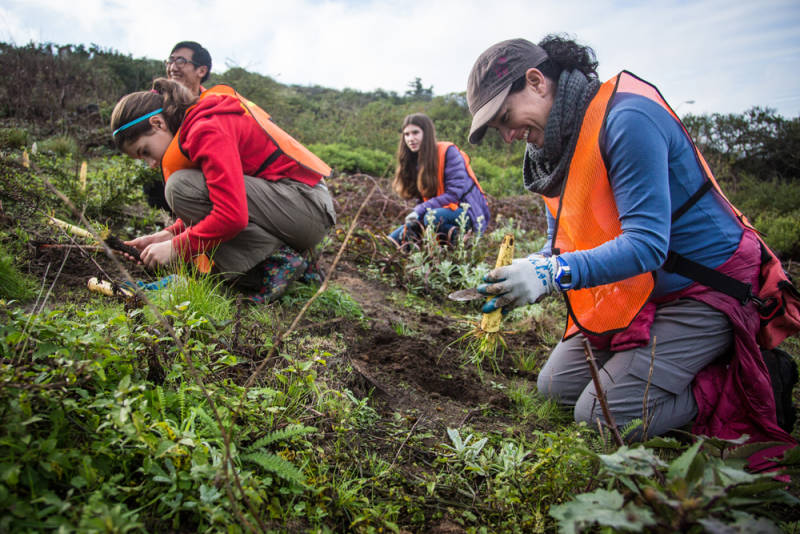
"caption": "Golden Gate National Parks Conservancy volunteers add native plants to the World War II Memorial in the Presidio. On Earth Day the conservancy will host seven different community service events including weeding and trash removal. \n\n",
"description": null,
"title": "Mount Tam_resized",
"credit": "Maria Durana/Golden Gate National Parks Conservancy",
"status": "inherit",
"isLoading": false,
"fetchFailed": false
},
"science_652358": {
"type": "attachments",
"id": "science_652358",
"meta": {
"index": "attachments_1716263798",
"site": "science",
"id": "652358",
"found": true
},
"parent": 0,
"imgSizes": {
"twentyfourteen-full-width": {
"file": "https://ww2.kqed.org/app/uploads/sites/35/2016/04/wildfire_cam_view_for_web-1038x576.jpg",
"width": 1038,
"mimeType": "image/jpeg",
"height": 576
},
"thumbnail": {
"file": "https://ww2.kqed.org/app/uploads/sites/35/2016/04/wildfire_cam_view_for_web-400x233.jpg",
"width": 400,
"mimeType": "image/jpeg",
"height": 233
},
"fd-sm": {
"file": "https://ww2.kqed.org/app/uploads/sites/35/2016/04/wildfire_cam_view_for_web-960x559.jpg",
"width": 960,
"mimeType": "image/jpeg",
"height": 559
},
"post-thumbnail": {
"file": "https://ww2.kqed.org/app/uploads/sites/35/2016/04/wildfire_cam_view_for_web-672x372.jpg",
"width": 672,
"mimeType": "image/jpeg",
"height": 372
},
"kqedFullSize": {
"file": "https://ww2.kqed.org/app/uploads/sites/35/2016/04/wildfire_cam_view_for_web.jpg",
"width": 1800,
"height": 1048
},
"large": {
"file": "https://ww2.kqed.org/app/uploads/sites/35/2016/04/wildfire_cam_view_for_web-1440x838.jpg",
"width": 1440,
"mimeType": "image/jpeg",
"height": 838
},
"guest-author-96": {
"file": "https://ww2.kqed.org/app/uploads/sites/35/2016/04/wildfire_cam_view_for_web-96x96.jpg",
"width": 96,
"mimeType": "image/jpeg",
"height": 96
},
"medium": {
"file": "https://ww2.kqed.org/app/uploads/sites/35/2016/04/wildfire_cam_view_for_web-800x466.jpg",
"width": 800,
"mimeType": "image/jpeg",
"height": 466
},
"guest-author-64": {
"file": "https://ww2.kqed.org/app/uploads/sites/35/2016/04/wildfire_cam_view_for_web-64x64.jpg",
"width": 64,
"mimeType": "image/jpeg",
"height": 64
},
"guest-author-32": {
"file": "https://ww2.kqed.org/app/uploads/sites/35/2016/04/wildfire_cam_view_for_web-32x32.jpg",
"width": 32,
"mimeType": "image/jpeg",
"height": 32
},
"fd-med": {
"file": "https://ww2.kqed.org/app/uploads/sites/35/2016/04/wildfire_cam_view_for_web-1180x687.jpg",
"width": 1180,
"mimeType": "image/jpeg",
"height": 687
},
"detail": {
"file": "https://ww2.kqed.org/app/uploads/sites/35/2016/04/wildfire_cam_view_for_web-75x75.jpg",
"width": 75,
"mimeType": "image/jpeg",
"height": 75
},
"medium_large": {
"file": "https://ww2.kqed.org/app/uploads/sites/35/2016/04/wildfire_cam_view_for_web-768x447.jpg",
"width": 768,
"mimeType": "image/jpeg",
"height": 447
},
"guest-author-128": {
"file": "https://ww2.kqed.org/app/uploads/sites/35/2016/04/wildfire_cam_view_for_web-128x128.jpg",
"width": 128,
"mimeType": "image/jpeg",
"height": 128
}
},
"publishDate": 1461258224,
"modified": 1461259257,
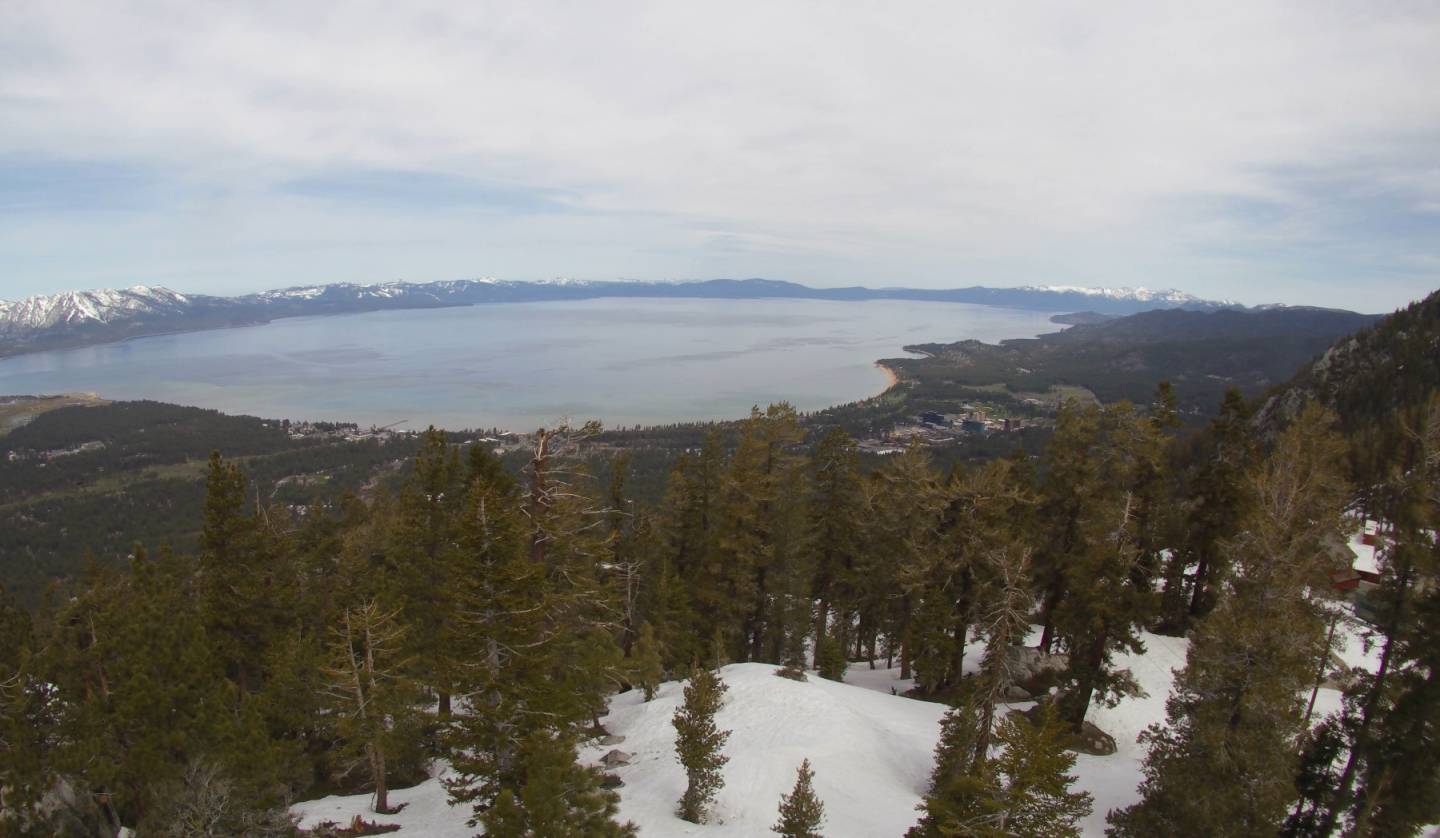
"caption": "A view of the Heavenly ski area from one of the monitoring cameras. ",
"description": null,
"title": "wildfire_cam_view_for_web",
"credit": "Nevada Seismological Laboratory",
"status": "inherit",
"isLoading": false,
"fetchFailed": false
},
"science_647165": {
"type": "attachments",
"id": "science_647165",
"meta": {
"index": "attachments_1716263798",
"site": "science",
"id": "647165",
"found": true
},
"parent": 647154,
"imgSizes": {
"thumbnail": {
"file": "https://ww2.kqed.org/app/uploads/sites/35/2016/04/meteors-leonids-carter-roberts-train1-2126-400x225.jpg",
"width": 400,
"mimeType": "image/jpeg",
"height": 225
},
"post-thumbnail": {
"file": "https://ww2.kqed.org/app/uploads/sites/35/2016/04/meteors-leonids-carter-roberts-train1-2126-672x372.jpg",
"width": 672,
"mimeType": "image/jpeg",
"height": 372
},
"kqedFullSize": {
"file": "https://ww2.kqed.org/app/uploads/sites/35/2016/04/meteors-leonids-carter-roberts-train1-2126.jpg",
"width": 800,
"height": 450
},
"guest-author-96": {
"file": "https://ww2.kqed.org/app/uploads/sites/35/2016/04/meteors-leonids-carter-roberts-train1-2126-96x96.jpg",
"width": 96,
"mimeType": "image/jpeg",
"height": 96
},
"medium": {
"file": "https://ww2.kqed.org/app/uploads/sites/35/2016/04/meteors-leonids-carter-roberts-train1-2126-800x450.jpg",
"width": 800,
"mimeType": "image/jpeg",
"height": 450
},
"guest-author-64": {
"file": "https://ww2.kqed.org/app/uploads/sites/35/2016/04/meteors-leonids-carter-roberts-train1-2126-64x64.jpg",
"width": 64,
"mimeType": "image/jpeg",
"height": 64
},
"detail": {
"file": "https://ww2.kqed.org/app/uploads/sites/35/2016/04/meteors-leonids-carter-roberts-train1-2126-75x75.jpg",
"width": 75,
"mimeType": "image/jpeg",
"height": 75
},
"guest-author-32": {
"file": "https://ww2.kqed.org/app/uploads/sites/35/2016/04/meteors-leonids-carter-roberts-train1-2126-32x32.jpg",
"width": 32,
"mimeType": "image/jpeg",
"height": 32
},
"medium_large": {
"file": "https://ww2.kqed.org/app/uploads/sites/35/2016/04/meteors-leonids-carter-roberts-train1-2126-768x432.jpg",
"width": 768,
"mimeType": "image/jpeg",
"height": 432
},
"guest-author-128": {
"file": "https://ww2.kqed.org/app/uploads/sites/35/2016/04/meteors-leonids-carter-roberts-train1-2126-128x128.jpg",
"width": 128,
"mimeType": "image/jpeg",
"height": 128
}
},
"publishDate": 1461010359,
"modified": 1461010405,
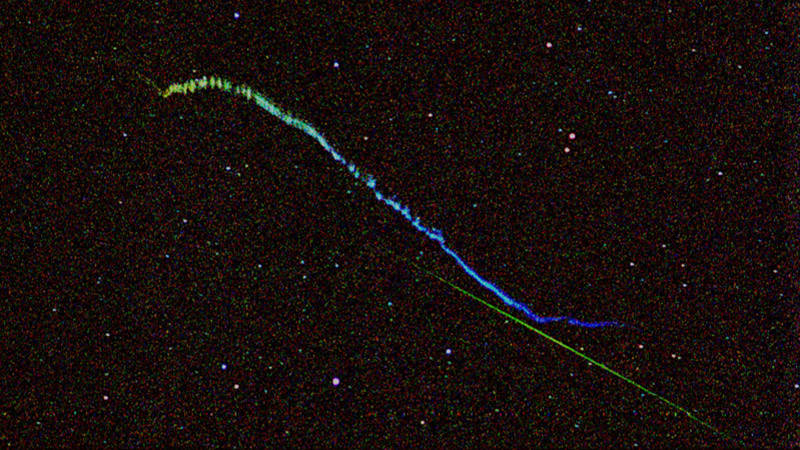
"caption": "The luminous trails of a pair of meteors from the November Leonid Meteor Shower. ",
"description": "The luminous trails of a pair of meteors from the November Leonid Meteor Shower. ",
"title": "meteors-leonids-carter roberts-train1-21+26",
"credit": "Carter Roberts",
"status": "inherit",
"isLoading": false,
"fetchFailed": false
},
"science_650662": {
"type": "attachments",
"id": "science_650662",
"meta": {
"index": "attachments_1716263798",
"site": "science",
"id": "650662",
"found": true
},
"parent": 650656,
"imgSizes": {
"twentyfourteen-full-width": {
"file": "https://ww2.kqed.org/app/uploads/sites/35/2016/04/Berryessa-1038x576.jpg",
"width": 1038,
"mimeType": "image/jpeg",
"height": 576
},
"thumbnail": {
"file": "https://ww2.kqed.org/app/uploads/sites/35/2016/04/Berryessa-400x300.jpg",
"width": 400,
"mimeType": "image/jpeg",
"height": 300
},
"fd-sm": {
"file": "https://ww2.kqed.org/app/uploads/sites/35/2016/04/Berryessa-960x720.jpg",
"width": 960,
"mimeType": "image/jpeg",
"height": 720
},
"post-thumbnail": {
"file": "https://ww2.kqed.org/app/uploads/sites/35/2016/04/Berryessa-672x372.jpg",
"width": 672,
"mimeType": "image/jpeg",
"height": 372
},
"kqedFullSize": {
"file": "https://ww2.kqed.org/app/uploads/sites/35/2016/04/Berryessa.jpg",
"width": 3264,
"height": 2448
},
"large": {
"file": "https://ww2.kqed.org/app/uploads/sites/35/2016/04/Berryessa-1440x1080.jpg",
"width": 1440,
"mimeType": "image/jpeg",
"height": 1080
},
"guest-author-96": {
"file": "https://ww2.kqed.org/app/uploads/sites/35/2016/04/Berryessa-96x96.jpg",
"width": 96,
"mimeType": "image/jpeg",
"height": 96
},
"medium": {
"file": "https://ww2.kqed.org/app/uploads/sites/35/2016/04/Berryessa-800x600.jpg",
"width": 800,
"mimeType": "image/jpeg",
"height": 600
},
"guest-author-64": {
"file": "https://ww2.kqed.org/app/uploads/sites/35/2016/04/Berryessa-64x64.jpg",
"width": 64,
"mimeType": "image/jpeg",
"height": 64
},
"guest-author-32": {
"file": "https://ww2.kqed.org/app/uploads/sites/35/2016/04/Berryessa-32x32.jpg",
"width": 32,
"mimeType": "image/jpeg",
"height": 32
},
"fd-lrg": {
"file": "https://ww2.kqed.org/app/uploads/sites/35/2016/04/Berryessa-1920x1440.jpg",
"width": 1920,
"mimeType": "image/jpeg",
"height": 1440
},
"fd-med": {
"file": "https://ww2.kqed.org/app/uploads/sites/35/2016/04/Berryessa-1180x885.jpg",
"width": 1180,
"mimeType": "image/jpeg",
"height": 885
},
"detail": {
"file": "https://ww2.kqed.org/app/uploads/sites/35/2016/04/Berryessa-75x75.jpg",
"width": 75,
"mimeType": "image/jpeg",
"height": 75
},
"medium_large": {
"file": "https://ww2.kqed.org/app/uploads/sites/35/2016/04/Berryessa-768x576.jpg",
"width": 768,
"mimeType": "image/jpeg",
"height": 576
},
"guest-author-128": {
"file": "https://ww2.kqed.org/app/uploads/sites/35/2016/04/Berryessa-128x128.jpg",
"width": 128,
"mimeType": "image/jpeg",
"height": 128
}
},
"publishDate": 1461178407,
"modified": 1461178552,
"caption": "California reservoirs provide water to millions of residents. Here Lake Berryessa, a reservoir formed behind the Monticello Dam, is seen below capacity on April 11, 2016. ",
"description": null,
"title": "Berryessa",
"credit": "Lindsey Hoshaw",
"status": "inherit",
"isLoading": false,
"fetchFailed": false
},
"science_650654": {
"type": "attachments",
"id": "science_650654",
"meta": {
"index": "attachments_1716263798",
"site": "science",
"id": "650654",
"found": true
},
"parent": 650571,
"imgSizes": {
"twentyfourteen-full-width": {
"file": "https://ww2.kqed.org/app/uploads/sites/35/2016/04/drought_car-1038x576.jpg",
"width": 1038,
"mimeType": "image/jpeg",
"height": 576
},
"thumbnail": {
"file": "https://ww2.kqed.org/app/uploads/sites/35/2016/04/drought_car-400x269.jpg",
"width": 400,
"mimeType": "image/jpeg",
"height": 269
},
"fd-sm": {
"file": "https://ww2.kqed.org/app/uploads/sites/35/2016/04/drought_car-960x645.jpg",
"width": 960,
"mimeType": "image/jpeg",
"height": 645
},
"post-thumbnail": {
"file": "https://ww2.kqed.org/app/uploads/sites/35/2016/04/drought_car-672x372.jpg",
"width": 672,
"mimeType": "image/jpeg",
"height": 372
},
"kqedFullSize": {
"file": "https://ww2.kqed.org/app/uploads/sites/35/2016/04/drought_car.jpg",
"width": 3000,
"height": 2015
},
"large": {
"file": "https://ww2.kqed.org/app/uploads/sites/35/2016/04/drought_car-1440x967.jpg",
"width": 1440,
"mimeType": "image/jpeg",
"height": 967
},
"guest-author-96": {
"file": "https://ww2.kqed.org/app/uploads/sites/35/2016/04/drought_car-96x96.jpg",
"width": 96,
"mimeType": "image/jpeg",
"height": 96
},
"medium": {
"file": "https://ww2.kqed.org/app/uploads/sites/35/2016/04/drought_car-800x537.jpg",
"width": 800,
"mimeType": "image/jpeg",
"height": 537
},
"guest-author-64": {
"file": "https://ww2.kqed.org/app/uploads/sites/35/2016/04/drought_car-64x64.jpg",
"width": 64,
"mimeType": "image/jpeg",
"height": 64
},
"guest-author-32": {
"file": "https://ww2.kqed.org/app/uploads/sites/35/2016/04/drought_car-32x32.jpg",
"width": 32,
"mimeType": "image/jpeg",
"height": 32
},
"fd-lrg": {
"file": "https://ww2.kqed.org/app/uploads/sites/35/2016/04/drought_car-1920x1290.jpg",
"width": 1920,
"mimeType": "image/jpeg",
"height": 1290
},
"fd-med": {
"file": "https://ww2.kqed.org/app/uploads/sites/35/2016/04/drought_car-1180x793.jpg",
"width": 1180,
"mimeType": "image/jpeg",
"height": 793
},
"detail": {
"file": "https://ww2.kqed.org/app/uploads/sites/35/2016/04/drought_car-75x75.jpg",
"width": 75,
"mimeType": "image/jpeg",
"height": 75
},
"medium_large": {
"file": "https://ww2.kqed.org/app/uploads/sites/35/2016/04/drought_car-768x516.jpg",
"width": 768,
"mimeType": "image/jpeg",
"height": 516
},
"guest-author-128": {
"file": "https://ww2.kqed.org/app/uploads/sites/35/2016/04/drought_car-128x128.jpg",
"width": 128,
"mimeType": "image/jpeg",
"height": 128
}
},
"publishDate": 1461176586,
"modified": 1520096323,
"caption": "A car sits in dried and cracked earth of what was the bottom of the Almaden Reservoir on January 28, 2014 in San Jose, California. ",
"description": null,
"title": "California Drought Dries Up Bay Area Reservoirs",
"credit": "Justin Sullivan/ Getty Images",
"status": "inherit",
"isLoading": false,
"fetchFailed": false
},
"science_650569": {
"type": "attachments",
"id": "science_650569",
"meta": {
"index": "attachments_1716263798",
"site": "science",
"id": "650569",
"found": true
},
"parent": 650562,
"imgSizes": {
"twentyfourteen-full-width": {
"file": "https://ww2.kqed.org/app/uploads/sites/35/2016/04/Dolores-Park-1038x576.jpg",
"width": 1038,
"mimeType": "image/jpeg",
"height": 576
},
"thumbnail": {
"file": "https://ww2.kqed.org/app/uploads/sites/35/2016/04/Dolores-Park-400x200.jpg",
"width": 400,
"mimeType": "image/jpeg",
"height": 200
},
"fd-sm": {
"file": "https://ww2.kqed.org/app/uploads/sites/35/2016/04/Dolores-Park-960x480.jpg",
"width": 960,
"mimeType": "image/jpeg",
"height": 480
},
"post-thumbnail": {
"file": "https://ww2.kqed.org/app/uploads/sites/35/2016/04/Dolores-Park-672x372.jpg",
"width": 672,
"mimeType": "image/jpeg",
"height": 372
},
"kqedFullSize": {
"file": "https://ww2.kqed.org/app/uploads/sites/35/2016/04/Dolores-Park.jpg",
"width": 2800,
"height": 1400
},
"large": {
"file": "https://ww2.kqed.org/app/uploads/sites/35/2016/04/Dolores-Park-1440x720.jpg",
"width": 1440,
"mimeType": "image/jpeg",
"height": 720
},
"guest-author-96": {
"file": "https://ww2.kqed.org/app/uploads/sites/35/2016/04/Dolores-Park-96x96.jpg",
"width": 96,
"mimeType": "image/jpeg",
"height": 96
},
"medium": {
"file": "https://ww2.kqed.org/app/uploads/sites/35/2016/04/Dolores-Park-800x400.jpg",
"width": 800,
"mimeType": "image/jpeg",
"height": 400
},
"guest-author-64": {
"file": "https://ww2.kqed.org/app/uploads/sites/35/2016/04/Dolores-Park-64x64.jpg",
"width": 64,
"mimeType": "image/jpeg",
"height": 64
},
"guest-author-32": {
"file": "https://ww2.kqed.org/app/uploads/sites/35/2016/04/Dolores-Park-32x32.jpg",
"width": 32,
"mimeType": "image/jpeg",
"height": 32
},
"fd-lrg": {
"file": "https://ww2.kqed.org/app/uploads/sites/35/2016/04/Dolores-Park-1920x960.jpg",
"width": 1920,
"mimeType": "image/jpeg",
"height": 960
},
"fd-med": {
"file": "https://ww2.kqed.org/app/uploads/sites/35/2016/04/Dolores-Park-1180x590.jpg",
"width": 1180,
"mimeType": "image/jpeg",
"height": 590
},
"detail": {
"file": "https://ww2.kqed.org/app/uploads/sites/35/2016/04/Dolores-Park-75x75.jpg",
"width": 75,
"mimeType": "image/jpeg",
"height": 75
},
"medium_large": {
"file": "https://ww2.kqed.org/app/uploads/sites/35/2016/04/Dolores-Park-768x384.jpg",
"width": 768,
"mimeType": "image/jpeg",
"height": 384
},
"guest-author-128": {
"file": "https://ww2.kqed.org/app/uploads/sites/35/2016/04/Dolores-Park-128x128.jpg",
"width": 128,
"mimeType": "image/jpeg",
"height": 128
}
},
"publishDate": 1461174666,
"modified": 1461174729,
"caption": "During sunny days in the Mission, San Francisco residents flock to Dolores Park.",
"description": null,
"title": "Dolores Park",
"credit": "Meetup",
"status": "inherit",
"isLoading": false,
"fetchFailed": false
},
"science_641915": {
"type": "attachments",
"id": "science_641915",
"meta": {
"index": "attachments_1716263798",
"site": "science",
"id": "641915",
"found": true
},
"parent": 641271,
"imgSizes": {
"twentyfourteen-full-width": {
"file": "https://ww2.kqed.org/app/uploads/sites/35/2016/04/EarthquakeApparentIntensity_2-846x576.jpg",
"width": 846,
"mimeType": "image/jpeg",
"height": 576
},
"thumbnail": {
"file": "https://ww2.kqed.org/app/uploads/sites/35/2016/04/EarthquakeApparentIntensity_2-e1460761989306-400x268.jpg",
"width": 400,
"mimeType": "image/jpeg",
"height": 268
},
"post-thumbnail": {
"file": "https://ww2.kqed.org/app/uploads/sites/35/2016/04/EarthquakeApparentIntensity_2-e1460761989306-672x372.jpg",
"width": 672,
"mimeType": "image/jpeg",
"height": 372
},
"kqedFullSize": {
"file": "https://ww2.kqed.org/app/uploads/sites/35/2016/04/EarthquakeApparentIntensity_2-e1460761989306.jpg",
"width": 770,
"height": 516
},
"guest-author-96": {
"file": "https://ww2.kqed.org/app/uploads/sites/35/2016/04/EarthquakeApparentIntensity_2-e1460761989306-96x96.jpg",
"width": 96,
"mimeType": "image/jpeg",
"height": 96
},
"medium": {
"file": "https://ww2.kqed.org/app/uploads/sites/35/2016/04/EarthquakeApparentIntensity_2-800x1079.jpg",
"width": 800,
"mimeType": "image/jpeg",
"height": 1079
},
"guest-author-64": {
"file": "https://ww2.kqed.org/app/uploads/sites/35/2016/04/EarthquakeApparentIntensity_2-e1460761989306-64x64.jpg",
"width": 64,
"mimeType": "image/jpeg",
"height": 64
},
"detail": {
"file": "https://ww2.kqed.org/app/uploads/sites/35/2016/04/EarthquakeApparentIntensity_2-e1460761989306-75x75.jpg",
"width": 75,
"mimeType": "image/jpeg",
"height": 75
},
"guest-author-32": {
"file": "https://ww2.kqed.org/app/uploads/sites/35/2016/04/EarthquakeApparentIntensity_2-e1460761989306-32x32.jpg",
"width": 32,
"mimeType": "image/jpeg",
"height": 32
},
"medium_large": {
"file": "https://ww2.kqed.org/app/uploads/sites/35/2016/04/EarthquakeApparentIntensity_2-e1460761989306-768x515.jpg",
"width": 768,
"mimeType": "image/jpeg",
"height": 515
},
"guest-author-128": {
"file": "https://ww2.kqed.org/app/uploads/sites/35/2016/04/EarthquakeApparentIntensity_2-e1460761989306-128x128.jpg",
"width": 128,
"mimeType": "image/jpeg",
"height": 128
}
},
"publishDate": 1460761923,
"modified": 1460762065,
"caption": "Andrew Lawson produced detailed maps of shake intensity from the 1906 San Francisco Earthquake.",
"description": null,
"title": "EarthquakeApparentIntensity_2",
"credit": "David Rumsey Map Collection",
"status": "inherit",
"isLoading": false,
"fetchFailed": false
},
"science_641705": {
"type": "attachments",
"id": "science_641705",
"meta": {
"index": "attachments_1716263798",
"site": "science",
"id": "641705",
"found": true
},
"parent": 639833,
"imgSizes": {
"twentyfourteen-full-width": {
"file": "https://ww2.kqed.org/app/uploads/sites/35/2016/04/Tesla-factory-aerial-1038x576.jpg",
"width": 1038,
"mimeType": "image/jpeg",
"height": 576
},
"thumbnail": {
"file": "https://ww2.kqed.org/app/uploads/sites/35/2016/04/Tesla-factory-aerial-400x214.jpg",
"width": 400,
"mimeType": "image/jpeg",
"height": 214
},
"fd-sm": {
"file": "https://ww2.kqed.org/app/uploads/sites/35/2016/04/Tesla-factory-aerial-960x514.jpg",
"width": 960,
"mimeType": "image/jpeg",
"height": 514
},
"post-thumbnail": {
"file": "https://ww2.kqed.org/app/uploads/sites/35/2016/04/Tesla-factory-aerial-672x372.jpg",
"width": 672,
"mimeType": "image/jpeg",
"height": 372
},
"kqedFullSize": {
"file": "https://ww2.kqed.org/app/uploads/sites/35/2016/04/Tesla-factory-aerial.jpg",
"width": 1920,
"height": 1028
},
"large": {
"file": "https://ww2.kqed.org/app/uploads/sites/35/2016/04/Tesla-factory-aerial-1440x771.jpg",
"width": 1440,
"mimeType": "image/jpeg",
"height": 771
},
"guest-author-96": {
"file": "https://ww2.kqed.org/app/uploads/sites/35/2016/04/Tesla-factory-aerial-96x96.jpg",
"width": 96,
"mimeType": "image/jpeg",
"height": 96
},
"medium": {
"file": "https://ww2.kqed.org/app/uploads/sites/35/2016/04/Tesla-factory-aerial-800x428.jpg",
"width": 800,
"mimeType": "image/jpeg",
"height": 428
},
"guest-author-64": {
"file": "https://ww2.kqed.org/app/uploads/sites/35/2016/04/Tesla-factory-aerial-64x64.jpg",
"width": 64,
"mimeType": "image/jpeg",
"height": 64
},
"guest-author-32": {
"file": "https://ww2.kqed.org/app/uploads/sites/35/2016/04/Tesla-factory-aerial-32x32.jpg",
"width": 32,
"mimeType": "image/jpeg",
"height": 32
},
"fd-lrg": {
"file": "https://ww2.kqed.org/app/uploads/sites/35/2016/04/Tesla-factory-aerial-1920x1028.jpg",
"width": 1920,
"mimeType": "image/jpeg",
"height": 1028
},
"fd-med": {
"file": "https://ww2.kqed.org/app/uploads/sites/35/2016/04/Tesla-factory-aerial-1180x632.jpg",
"width": 1180,
"mimeType": "image/jpeg",
"height": 632
},
"detail": {
"file": "https://ww2.kqed.org/app/uploads/sites/35/2016/04/Tesla-factory-aerial-75x75.jpg",
"width": 75,
"mimeType": "image/jpeg",
"height": 75
},
"medium_large": {
"file": "https://ww2.kqed.org/app/uploads/sites/35/2016/04/Tesla-factory-aerial-768x411.jpg",
"width": 768,
"mimeType": "image/jpeg",
"height": 411
},
"guest-author-128": {
"file": "https://ww2.kqed.org/app/uploads/sites/35/2016/04/Tesla-factory-aerial-128x128.jpg",
"width": 128,
"mimeType": "image/jpeg",
"height": 128
}
},
"publishDate": 1460753438,
"modified": 1460759073,
"caption": "About 14 percent of the Gigfactory has been built so far. It’s expected to be one of the largest buildings on the planet.",
"description": null,
"title": "Tesla-factory-aerial",
"credit": "Tesla",
"status": "inherit",
"isLoading": false,
"fetchFailed": false
},
"science_633485": {
"type": "attachments",
"id": "science_633485",
"meta": {
"index": "attachments_1716263798",
"site": "science",
"id": "633485",
"found": true
},
"parent": 0,
"imgSizes": {
"twentyfourteen-full-width": {
"file": "https://ww2.kqed.org/app/uploads/sites/35/2016/04/Pond-1-crf-160325-1038x576.jpg",
"width": 1038,
"mimeType": "image/jpeg",
"height": 576
},
"thumbnail": {
"file": "https://ww2.kqed.org/app/uploads/sites/35/2016/04/Pond-1-crf-160325-400x267.jpg",
"width": 400,
"mimeType": "image/jpeg",
"height": 267
},
"fd-sm": {
"file": "https://ww2.kqed.org/app/uploads/sites/35/2016/04/Pond-1-crf-160325-960x641.jpg",
"width": 960,
"mimeType": "image/jpeg",
"height": 641
},
"post-thumbnail": {
"file": "https://ww2.kqed.org/app/uploads/sites/35/2016/04/Pond-1-crf-160325-672x372.jpg",
"width": 672,
"mimeType": "image/jpeg",
"height": 372
},
"kqedFullSize": {
"file": "https://ww2.kqed.org/app/uploads/sites/35/2016/04/Pond-1-crf-160325-e1460423646723.jpg",
"width": 1920,
"height": 1283
},
"large": {
"file": "https://ww2.kqed.org/app/uploads/sites/35/2016/04/Pond-1-crf-160325-1440x962.jpg",
"width": 1440,
"mimeType": "image/jpeg",
"height": 962
},
"guest-author-96": {
"file": "https://ww2.kqed.org/app/uploads/sites/35/2016/04/Pond-1-crf-160325-96x96.jpg",
"width": 96,
"mimeType": "image/jpeg",
"height": 96
},
"medium": {
"file": "https://ww2.kqed.org/app/uploads/sites/35/2016/04/Pond-1-crf-160325-800x534.jpg",
"width": 800,
"mimeType": "image/jpeg",
"height": 534
},
"guest-author-64": {
"file": "https://ww2.kqed.org/app/uploads/sites/35/2016/04/Pond-1-crf-160325-64x64.jpg",
"width": 64,
"mimeType": "image/jpeg",
"height": 64
},
"guest-author-32": {
"file": "https://ww2.kqed.org/app/uploads/sites/35/2016/04/Pond-1-crf-160325-32x32.jpg",
"width": 32,
"mimeType": "image/jpeg",
"height": 32
},
"fd-lrg": {
"file": "https://ww2.kqed.org/app/uploads/sites/35/2016/04/Pond-1-crf-160325-1920x1283.jpg",
"width": 1920,
"mimeType": "image/jpeg",
"height": 1283
},
"fd-med": {
"file": "https://ww2.kqed.org/app/uploads/sites/35/2016/04/Pond-1-crf-160325-1180x788.jpg",
"width": 1180,
"mimeType": "image/jpeg",
"height": 788
},
"detail": {
"file": "https://ww2.kqed.org/app/uploads/sites/35/2016/04/Pond-1-crf-160325-75x75.jpg",
"width": 75,
"mimeType": "image/jpeg",
"height": 75
},
"medium_large": {
"file": "https://ww2.kqed.org/app/uploads/sites/35/2016/04/Pond-1-crf-160325-768x513.jpg",
"width": 768,
"mimeType": "image/jpeg",
"height": 513
},
"guest-author-128": {
"file": "https://ww2.kqed.org/app/uploads/sites/35/2016/04/Pond-1-crf-160325-128x128.jpg",
"width": 128,
"mimeType": "image/jpeg",
"height": 128
}
},
"publishDate": 1460423599,
"modified": 1460423649,
"caption": "A rare red-legged frog discovered at the Watsonville Slough.",
"description": "A rare red-legged frog discovered at the Watsonville Slough.",
"title": "Pond-1-crf-160325",
"credit": "Gary Kittleson",
"status": "inherit",
"isLoading": false,
"fetchFailed": false
}
},
"audioPlayerReducer": {
"postId": "stream_live",
"isPaused": true,
"isPlaying": false,
"pfsActive": false,
"pledgeModalIsOpen": true,
"playerDrawerIsOpen": false,
"liveAudioPlayStartedAt": 0,
"liveAudioPlayContext": ""
},
"authorsReducer": {
"byline_science_659302": {
"type": "authors",
"id": "byline_science_659302",
"meta": {
"override": true
},
"slug": "byline_science_659302",
"name": "Zhai Yun Tan\u003c/br>NPR",
"isLoading": false
},
"byline_science_654227": {
"type": "authors",
"id": "byline_science_654227",
"meta": {
"override": true
},
"slug": "byline_science_654227",
"name": "Climate Central",
"isLoading": false
},
"byline_science_652435": {
"type": "authors",
"id": "byline_science_652435",
"meta": {
"override": true
},
"slug": "byline_science_652435",
"name": "Audrey McAvoy and Caleb Jones\u003c/br>\u003cb>Associated Press\u003c/b>",
"isLoading": false
},
"byline_science_652351": {
"type": "authors",
"id": "byline_science_652351",
"meta": {
"override": true
},
"slug": "byline_science_652351",
"name": "Scott Sonner\u003c/br>\u003cb>Associated Press\u003c/b>",
"isLoading": false
},
"byline_science_650656": {
"type": "authors",
"id": "byline_science_650656",
"meta": {
"override": true
},
"slug": "byline_science_650656",
"name": "Alastair Bland\u003c/br>Water Deeply",
"isLoading": false
},
"byline_science_650571": {
"type": "authors",
"id": "byline_science_650571",
"meta": {
"override": true
},
"slug": "byline_science_650571",
"name": "Climate Central",
"isLoading": false
},
"byline_science_650562": {
"type": "authors",
"id": "byline_science_650562",
"meta": {
"override": true
},
"slug": "byline_science_650562",
"name": "Christopher Joyce\u003c/br>NPR",
"isLoading": false
},
"cmiller": {
"type": "authors",
"id": "221",
"meta": {
"index": "authors_1716337520",
"id": "221",
"found": true
},
"name": "Craig Miller",
"firstName": "Craig",
"lastName": "Miller",
"slug": "cmiller",
"email": "craig@voxterra.net",
"display_author_email": false,
"staff_mastheads": [
"science"
],
"title": "Editor Emeritus, Science",
"bio": "Craig is a former KQED Science editor, specializing in weather, climate, water & energy issues, with a little seismology thrown in just to shake things up. Prior to that, he launched and led the station's award-winning multimedia project, Climate Watch. Craig is also an accomplished writer/producer of television documentaries, with a focus on natural resource issues.",
"avatar": "https://secure.gravatar.com/avatar/b91661df645e001a9cafe0861fa685f9?s=600&d=blank&r=g",
"twitter": "voxterra",
"facebook": null,
"instagram": null,
"linkedin": null,
"sites": [
{
"site": "news",
"roles": [
"author"
]
},
{
"site": "futureofyou",
"roles": [
"editor"
]
},
{
"site": "stateofhealth",
"roles": [
"author"
]
},
{
"site": "science",
"roles": [
"editor"
]
},
{
"site": "quest",
"roles": [
"editor"
]
}
],
"headData": {
"title": "Craig Miller | KQED",
"description": "Editor Emeritus, Science",
"ogImgSrc": "https://secure.gravatar.com/avatar/b91661df645e001a9cafe0861fa685f9?s=600&d=blank&r=g",
"twImgSrc": "https://secure.gravatar.com/avatar/b91661df645e001a9cafe0861fa685f9?s=600&d=blank&r=g"
},
"isLoading": false,
"link": "/author/cmiller"
},
"laurensommer": {
"type": "authors",
"id": "239",
"meta": {
"index": "authors_1716337520",
"id": "239",
"found": true
},
"name": "Lauren Sommer",
"firstName": "Lauren",
"lastName": "Sommer",
"slug": "laurensommer",
"email": "lsommer@kqed.org",
"display_author_email": false,
"staff_mastheads": [],
"title": "KQED Contributor",
"bio": "Lauren is a radio reporter formerly covering environment, water, and energy for KQED Science. As part of her day job, she has scaled Sierra Nevada peaks, run from charging elephant seals, and desperately tried to get her sea legs - all in pursuit of good radio. Her work has appeared on Marketplace, Living on Earth, Science Friday and NPR's Morning Edition and All Things Considered. You can find her on Twitter at \u003ca href=\"https://twitter.com/lesommer\">@lesommer\u003c/a>.",
"avatar": "https://secure.gravatar.com/avatar/33aa3772bb86c6ad45b8aca6a238bbdf?s=600&d=blank&r=g",
"twitter": null,
"facebook": null,
"instagram": null,
"linkedin": null,
"sites": [
{
"site": "news",
"roles": [
"author"
]
},
{
"site": "science",
"roles": [
"editor",
"manage_content_types",
"manage_taxonomies"
]
},
{
"site": "quest",
"roles": [
"editor"
]
}
],
"headData": {
"title": "Lauren Sommer | KQED",
"description": "KQED Contributor",
"ogImgSrc": "https://secure.gravatar.com/avatar/33aa3772bb86c6ad45b8aca6a238bbdf?s=600&d=blank&r=g",
"twImgSrc": "https://secure.gravatar.com/avatar/33aa3772bb86c6ad45b8aca6a238bbdf?s=600&d=blank&r=g"
},
"isLoading": false,
"link": "/author/laurensommer"
},
"samharnett": {
"type": "authors",
"id": "253",
"meta": {
"index": "authors_1716337520",
"id": "253",
"found": true
},
"name": "Sam Harnett",
"firstName": "Sam",
"lastName": "Harnett",
"slug": "samharnett",
"email": "samharnett@gmail.com",
"display_author_email": false,
"staff_mastheads": [],
"title": "KQED Contributor",
"bio": "Sam Harnett covered tech and work at KQED. He is the co-creator of \u003cem>\u003ca href=\"http://www.theworldaccordingtosound.org\">The World According to Sound\u003c/a>,\u003c/em> a 90-second podcast that features different sounds and the stories behind them.\r\n\r\nBefore coming to KQED, Sam worked as an independent reporter who contributed regularly to \u003cem>The California Report, Marketplace,\u003c/em> \u003cem>The World \u003c/em>and NPR.",
"avatar": "https://secure.gravatar.com/avatar/2538b972ac02f2b9546c7a6c59a0f3d0?s=600&d=blank&r=g",
"twitter": "Samwharnett",
"facebook": null,
"instagram": null,
"linkedin": null,
"sites": [
{
"site": "news",
"roles": [
"edit_others_posts",
"subscriber"
]
},
{
"site": "stateofhealth",
"roles": [
"author"
]
},
{
"site": "science",
"roles": [
"editor"
]
},
{
"site": "quest",
"roles": [
"subscriber"
]
}
],
"headData": {
"title": "Sam Harnett | KQED",
"description": "KQED Contributor",
"ogImgSrc": "https://secure.gravatar.com/avatar/2538b972ac02f2b9546c7a6c59a0f3d0?s=600&d=blank&r=g",
"twImgSrc": "https://secure.gravatar.com/avatar/2538b972ac02f2b9546c7a6c59a0f3d0?s=600&d=blank&r=g"
},
"isLoading": false,
"link": "/author/samharnett"
},
"lindseyhoshaw": {
"type": "authors",
"id": "5432",
"meta": {
"index": "authors_1716337520",
"id": "5432",
"found": true
},
"name": "Lindsey Hoshaw",
"firstName": "Lindsey",
"lastName": "Hoshaw",
"slug": "lindseyhoshaw",
"email": "lhoshaw@kqed.org",
"display_author_email": false,
"staff_mastheads": [],
"title": "KQED Contributor",
"bio": "Lindsey Hoshaw is a former interactive producer for KQED Science. Before joining KQED, Lindsey was a science correspondent for The New York Times, The Boston Globe, Forbes and Scientific American. On Twitter @lindseyhoshaw",
"avatar": "https://secure.gravatar.com/avatar/274b07694c998eaa8f26cfabaa941186?s=600&d=mm&r=g",
"twitter": "lindseyhoshaw",
"facebook": "lindsey.hoshaw.9",
"instagram": null,
"linkedin": null,
"sites": [
{
"site": "arts",
"roles": [
"author"
]
},
{
"site": "news",
"roles": [
"subscriber"
]
},
{
"site": "futureofyou",
"roles": [
"editor"
]
},
{
"site": "bayareabites",
"roles": [
"contributor"
]
},
{
"site": "stateofhealth",
"roles": [
"author"
]
},
{
"site": "science",
"roles": [
"edit_theme_options",
"subscriber"
]
},
{
"site": "quest",
"roles": [
"edit_post_subscriptions",
"edit_usergroups",
"unfiltered_html",
"unfiltered_upload",
"leadcoordinator",
"editor"
]
},
{
"site": "food",
"roles": []
}
],
"headData": {
"title": "Lindsey Hoshaw | KQED",
"description": "KQED Contributor",
"ogImgSrc": "https://secure.gravatar.com/avatar/274b07694c998eaa8f26cfabaa941186?s=600&d=mm&r=g",
"twImgSrc": "https://secure.gravatar.com/avatar/274b07694c998eaa8f26cfabaa941186?s=600&d=mm&r=g"
},
"isLoading": false,
"link": "/author/lindseyhoshaw"
},
"ben-burress": {
"type": "authors",
"id": "6180",
"meta": {
"index": "authors_1716337520",
"id": "6180",
"found": true
},
"name": "Ben Burress",
"firstName": "Ben",
"lastName": "Burress",
"slug": "ben-burress",
"email": "bburress@chabotspace.org",
"display_author_email": false,
"staff_mastheads": [],
"title": null,
"bio": "\u003cstrong>Benjamin Burress\u003c/strong> has been a staff astronomer at Chabot Space & Science Center since July 1999. He graduated from Sonoma State University in 1985 with a bachelor’s degree in physics (and minor in astronomy), after which he signed on for a two-year stint in the Peace Corps, where he taught physics and mathematics in the African nation of Cameroon. From 1989-96 he served on the crew of NASA’s Kuiper Airborne Observatory at Ames Research Center in Mountain View, CA. From 1996-99, he was Head Observer at the Naval Prototype Optical Interferometer program at Lowell Observatory in Flagstaff, AZ.\r\n\r\nRead his \u003ca href=\"http://science.kqed.org/quest/author/ben-burress/\">previous contributions\u003c/a> to \u003ca href=\"http://science.kqed.org/quest/\">QUEST\u003c/a>, a project dedicated to exploring the Science of Sustainability.",
"avatar": "https://secure.gravatar.com/avatar/8263bffa345b7e4923a0b8b9f0f6a161?s=600&d=blank&r=g",
"twitter": null,
"facebook": null,
"instagram": null,
"linkedin": null,
"sites": [
{
"site": "science",
"roles": [
"editor"
]
},
{
"site": "quest",
"roles": [
"subscriber"
]
}
],
"headData": {
"title": "Ben Burress | KQED",
"description": null,
"ogImgSrc": "https://secure.gravatar.com/avatar/8263bffa345b7e4923a0b8b9f0f6a161?s=600&d=blank&r=g",
"twImgSrc": "https://secure.gravatar.com/avatar/8263bffa345b7e4923a0b8b9f0f6a161?s=600&d=blank&r=g"
},
"isLoading": false,
"link": "/author/ben-burress"
}
},
"pagesReducer": {
"science_category_news": {
"type": "terms",
"id": "science_40",
"meta": {
"index": "terms_1716263798",
"site": "science",
"id": "40",
"score": 10.814472
},
"featImg": null,
"name": "News",
"description": null,
"taxonomy": "category",
"headData": {
"twImgId": null,
"twTitle": null,
"ogTitle": null,
"ogImgId": null,
"twDescription": null,
"description": null,
"title": "News Archives | KQED Science",
"ogDescription": null
},
"ttid": 42,
"slug": "news",
"isLoading": false,
"title": "News",
"pageMeta": {
"site": "science",
"WpPageTemplate": "page-topic-editorial",
"currentPage": 229
},
"blocks": [
{
"blockName": "kqed/post-list",
"attrs": {
"layout": "cardArticle2",
"query": "posts/science?category=news",
"seeMore": false,
"paginated": true,
"page": 229
}
},
{
"blockName": "kqed/ad"
}
]
}
},
"pfsSessionReducer": {},
"postsReducer": {
"stream_live": {
"type": "live",
"id": "stream_live",
"audioUrl": "https://streams.kqed.org/kqedradio",
"title": "Live Stream",
"excerpt": "Live Stream information currently unavailable.",
"link": "/radio",
"featImg": "",
"label": {
"name": "KQED Live",
"link": "/"
}
},
"stream_kqedNewscast": {
"type": "posts",
"id": "stream_kqedNewscast",
"audioUrl": "https://www.kqed.org/.stream/anon/radio/RDnews/newscast.mp3?_=1",
"title": "KQED Newscast",
"featImg": "",
"label": {
"name": "88.5 FM",
"link": "/"
}
},
"science_659302": {
"type": "posts",
"id": "science_659302",
"meta": {
"index": "posts_1716263798",
"site": "science",
"id": "659302",
"score": null,
"sort": [
1461607794000
]
},
"parent": 0,
"labelTerm": {},
"blocks": [],
"publishDate": 1461607794,
"format": "standard",
"title": "These Earth-Saving Robots Might Be the Future Recyclers",
"headTitle": "These Earth-Saving Robots Might Be the Future Recyclers | KQED",
"content": "\u003cp>Meet Liam, an \u003ca href=\"http://images.apple.com/environment/pdf/Apple_Environmental_Responsibility_Report_2016.pdf\">Apple robot\u003c/a> designed to take apart 1.2 million iPhones a year.\u003c/p>\n\u003cp>Mashable reporter \u003ca href=\"http://mashable.com/2016/03/21/apple-liam-recycling-robot/#qYad0tdLJqq9\">Samantha Murphy Kelly\u003c/a> got a first look at the robot at Apple’s headquarters. It has 29 arms and it was an Apple secret for three years. She writes:\u003c/p>\n\u003cblockquote>\u003cp>“Liam is programmed to carefully disassemble the many pieces of returned iPhones, such as SIM card trays, screws, batteries and cameras, by removing components bit by bit so they’ll all be easier to recycle. \u003ca href=\"http://www.apple.com/recycling/ipod-cell-phone/\">Traditional tech recycling methods\u003c/a> involve a shredder with magnets that makes it hard to separate parts in a pure way (you’ll often get scrap materials commingled with other pieces).”\u003c/p>\u003c/blockquote>\n\u003cp>According to \u003ca href=\"http://images.apple.com/environment/pdf/Apple_Environmental_Responsibility_Report_2016.pdf\">Apple’s environmental report\u003c/a> released last week, Liam’s goal is to pick out all the high-quality, reusable components from old iPhones to reduce the need for mining more resources from earth.\u003c/p>\n\u003cp>While the technology currently only exists in Apple’s factories in California and the Netherlands, it’s the company’s experiment in recycling technology — a field that is gradually attracting the interest of technology and robotics entrepreneurs.\u003c/p>\n\u003cp>We just might end up in a world reminiscent of the \u003ca href=\"http://www.npr.org/templates/story/story.php?storyId=91894500\">2008 Disney and Pixar movie WALL-E\u003c/a>.\u003c/p>\n\u003cp>[ad fullwidth]\u003c/p>\n\u003cp>https://youtu.be/QHH3iSeDBLo\u003cbr>\n\u003cstrong>Sorting Through Chemicals in E-Waste\u003c/strong>\u003c/p>\n\u003cp>When trash is sorted for recycling by hand, the job can be dangerous. According to a \u003ca href=\"http://www.no-burn.org/safe-recycling-report\">report published last year\u003c/a> by the National Council for Occupational Safety and Health and other organizations, 17 people died between 2011 and 2013 on their jobs at recycling facilities in the United States due to unsafe working conditions.\u003c/p>\n\u003cp>\u003ca href=\"https://www.osha.gov/SLTC/recycling/index.html\">The Occupational Safety and Health Administration\u003c/a> lists all the hazards workers can be exposed to when sorting out waste, ranging from chemical exposure to lifting injuries. \u003ca href=\"https://www.osha.gov/SLTC/recycling/recycling_consumer_electronics.html\">Electronic waste\u003c/a>, in particular, exposes workers to multiple chemicals that may harm their health, including ammonia, mercury and asbestos.\u003c/p>\n\u003cp>According to the \u003ca href=\"http://images.apple.com/environment/pdf/Apple_Environmental_Responsibility_Report_2016.pdf\">Apple’s recent environmental report\u003c/a>, the company has collected nearly 90 million pounds of e-waste through its recycling programs, which is 71 percent of the total weight of the products it sold seven years earlier.\u003c/p>\n\u003cp>But \u003ca href=\"http://fortune.com/2016/03/27/apple-robot-liam-disassembly/\">Fortune editor Philip Elmer-DeWitt\u003c/a> wrote that Liam the robot wouldn’t scale up because Apple sold more than 230 million iPhones last year. He writes:\u003c/p>\n\u003cblockquote>\u003cp>“One Liam is not going to make much of a dent in the toxic mountain of electronics waste Apple has helped create.”\u003c/p>\u003c/blockquote>\n\u003cp>While Apple told Mashable’s Kelly that no other company it knows of is disassembling technology products in this way, there are many interesting “recycling robots” like Liam out there, although most are still just prototypes — except for ZenRobotics, a company from Finland.\u003c/p>\n\u003cp>\u003cstrong>Using Smart Software to Sort Trash\u003c/strong>\u003c/p>\n\u003cp>https://youtu.be/IBh1IbTDTf4\u003cbr>\nThe \u003ca href=\"http://zenrobotics.com/about-us/company/\">ZenRobotics Recycler\u003c/a> utilizes artificial intelligence to identify and sort materials from mixed waste. Show samples of materials to the system, and the software will learn what to do with it. According to its website, the company has the “first commercially available robotic waste sorting system.” This month, it announced plans to \u003ca href=\"http://zenrobotics.com/news/news/zenrobotics-to-deliver-waste-sorting-robots-to-the-usa/\">deliver its first robots to the U.S.\u003c/a>\u003c/p>\n\u003cp>Dane Campbell, a systems engineer with PLEXUS Recycling Technologies, the company that brought ZenRobotics into the United States, says robotics in the waste industry in the U.S. is not the new idea — but artificial intelligence is.\u003c/p>\n\u003cp>He says current machines sometimes have problems sorting out materials like plastic bags from newspapers, thus causing sorting facilities to rely on people. According to Campbell, the machines can cost up to $1 million each.\u003c/p>\n\u003cp>Recycling may become more expensive — a \u003ca href=\"http://www.nytimes.com/2015/10/04/opinion/sunday/the-reign-of-recycling.html?_r=1\">New York Times opinion article\u003c/a> pointed out last October — as more materials are thrown into the recycling dump, sorting will take more supervision. But automation remains expensive. The \u003ca href=\"http://www.npr.org/2015/04/03/397213109/how-the-price-of-oil-caused-a-downturn-in-the-recycling-business\">falling commodity prices\u003c/a> might also hurt the recycling business.\u003c/p>\n\u003cp>A U.S. startup, AMP Robotics, aims to change that by offering “scalable recycling.” The company is fairly new, and founder Matanya Horowitz says he had the idea to bring robotics to the recycling industry because conditions for recycling workers can be “dull, dirty and dangerous.” He says “recycling is ripe for this technology.”\u003c/p>\n\u003cp>The company sold one machine last month and is still looking to improve the system. According to Horowitz, the machine will work like those found in a food processing plant.\u003c/p>\n\u003cp>\u003cstrong>Roaming Robots to Encourage Recycling Behavior\u003c/strong>\u003c/p>\n\u003cp>Some more future-looking solutions to encourage recycling might lie with robots that encourage you to \u003ca href=\"http://spectrum.ieee.org/automaton/robotics/industrial-robots/042110-recycling-robots\">throw your trash into bins\u003c/a>.\u003c/p>\n\u003cp>For a time in Disney World, a talking trash can called Push roamed the streets of the theme park, encouraging people to discard trash in it while cracking jokes at passers-by. It’s \u003ca href=\"http://www.nydailynews.com/news/world/disney-world-pushes-talking-trash-article-1.1608988\">no longer there\u003c/a> after the contract expired in 2014.\u003c/p>\n\u003cp>https://youtu.be/viPGjq1vJ1o\u003cbr>\nA few years ago, the Dustbot, a Segway-robot hybrid \u003ca href=\"http://news.bbc.co.uk/2/hi/8072619.stm\">roamed the streets of Italy\u003c/a>, collecting trash when called. The project ended in 2009.\u003c/p>\n\u003cp>https://youtu.be/fQ2w5kIq3PM\u003cbr>\nAs robotics and technology like artificial intelligence matures, we just might see more of these robots hiding behind sorting facilities or roaming the streets — especially because we’re \u003ca href=\"https://www.epa.gov/sites/production/files/2015-09/documents/2013_advncng_smm_fs.pdf\">accumulating more and more waste globally and in the U.S.\u003c/a>\u003c/p>\n\u003cp>\u003c/p>\n\u003cp>\u003cem>Zhai Yun Tan is a digital news intern.\u003c/em>\u003c/p>\n\u003cdiv class=\"fullattribution\">Copyright 2016 NPR. To see more, visit http://www.npr.org/.\u003cimg decoding=\"async\" src=\"http://www.google-analytics.com/__utm.gif?utmac=UA-5828686-4&utmdt=These+Earth-Saving+Robots+Might+Be+The+Future+Recyclers&utme=8(APIKey)9(MDAxOTAwOTE4MDEyMTkxMDAzNjczZDljZA004)\">\u003c/div>\n\n",
"stats": {
"hasVideo": false,
"hasChartOrMap": false,
"hasAudio": false,
"hasPolis": false,
"wordCount": 905,
"hasGoogleForm": false,
"hasGallery": false,
"hasHearkenModule": false,
"iframeSrcs": [],
"paragraphCount": 24
},
"modified": 1704930268,
"excerpt": "Apple recently unveiled Liam, a robot with 29 arms that takes apart iPhones so materials can be recycled and reused. As we accumulate more waste, recycling robots like Liam might become more common.",
"headData": {
"twImgId": "",
"twTitle": "",
"ogTitle": "",
"ogImgId": "",
"twDescription": "",
"description": "Apple recently unveiled Liam, a robot with 29 arms that takes apart iPhones so materials can be recycled and reused. As we accumulate more waste, recycling robots like Liam might become more common.",
"title": "These Earth-Saving Robots Might Be the Future Recyclers | KQED",
"ogDescription": "",
"schema": {
"@context": "https://schema.org",
"@type": "Article",
"headline": "These Earth-Saving Robots Might Be the Future Recyclers",
"datePublished": "2016-04-25T11:09:54-07:00",
"dateModified": "2024-01-10T15:44:28-08:00",
"image": "https://cdn.kqed.org/wp-content/uploads/2020/02/KQED-OG-Image@1x.png"
}
},
"guestAuthors": [],
"slug": "these-earth-saving-robots-might-be-the-future-recyclers",
"status": "publish",
"nprApiLink": "http://api.npr.org/query?id=475121784&apiKey=MDAxOTAwOTE4MDEyMTkxMDAzNjczZDljZA004",
"nprByline": "Zhai Yun Tan\u003c/br>NPR",
"nprStoryDate": "Sun, 24 Apr 2016 14:32:43 -0400",
"nprLastModifiedDate": "Sun, 24 Apr 2016 14:32:43 -0400",
"sticky": false,
"nprHtmlLink": "http://www.npr.org/sections/alltechconsidered/2016/04/24/475121784/these-earth-saving-robots-might-be-the-future-recyclers?ft=nprml&f=475121784",
"nprImageAgency": "Apple",
"source": "NPR",
"nprStoryId": "475121784",
"nprRetrievedStory": "1",
"nprPubDate": "Sun, 24 Apr 2016 14:32:00 -0400",
"path": "/science/659302/these-earth-saving-robots-might-be-the-future-recyclers",
"audioTrackLength": null,
"parsedContent": [
{
"type": "contentString",
"content": "\u003cdiv class=\"post-body\">\u003cp>\u003cp>Meet Liam, an \u003ca href=\"http://images.apple.com/environment/pdf/Apple_Environmental_Responsibility_Report_2016.pdf\">Apple robot\u003c/a> designed to take apart 1.2 million iPhones a year.\u003c/p>\n\u003cp>Mashable reporter \u003ca href=\"http://mashable.com/2016/03/21/apple-liam-recycling-robot/#qYad0tdLJqq9\">Samantha Murphy Kelly\u003c/a> got a first look at the robot at Apple’s headquarters. It has 29 arms and it was an Apple secret for three years. She writes:\u003c/p>\n\u003cblockquote>\u003cp>“Liam is programmed to carefully disassemble the many pieces of returned iPhones, such as SIM card trays, screws, batteries and cameras, by removing components bit by bit so they’ll all be easier to recycle. \u003ca href=\"http://www.apple.com/recycling/ipod-cell-phone/\">Traditional tech recycling methods\u003c/a> involve a shredder with magnets that makes it hard to separate parts in a pure way (you’ll often get scrap materials commingled with other pieces).”\u003c/p>\u003c/blockquote>\n\u003cp>According to \u003ca href=\"http://images.apple.com/environment/pdf/Apple_Environmental_Responsibility_Report_2016.pdf\">Apple’s environmental report\u003c/a> released last week, Liam’s goal is to pick out all the high-quality, reusable components from old iPhones to reduce the need for mining more resources from earth.\u003c/p>\n\u003cp>While the technology currently only exists in Apple’s factories in California and the Netherlands, it’s the company’s experiment in recycling technology — a field that is gradually attracting the interest of technology and robotics entrepreneurs.\u003c/p>\n\u003cp>We just might end up in a world reminiscent of the \u003ca href=\"http://www.npr.org/templates/story/story.php?storyId=91894500\">2008 Disney and Pixar movie WALL-E\u003c/a>.\u003c/p>\n\u003cp>\u003c/p>\u003c/div>",
"attributes": {
"named": {},
"numeric": []
}
},
{
"type": "component",
"content": "",
"name": "ad",
"attributes": {
"named": {
"label": "fullwidth"
},
"numeric": [
"fullwidth"
]
}
},
{
"type": "contentString",
"content": "\u003cdiv class=\"post-body\">\u003cp>\u003c/p>\n\u003cp>https://youtu.be/QHH3iSeDBLo\u003cbr>\n\u003cstrong>Sorting Through Chemicals in E-Waste\u003c/strong>\u003c/p>\n\u003cp>When trash is sorted for recycling by hand, the job can be dangerous. According to a \u003ca href=\"http://www.no-burn.org/safe-recycling-report\">report published last year\u003c/a> by the National Council for Occupational Safety and Health and other organizations, 17 people died between 2011 and 2013 on their jobs at recycling facilities in the United States due to unsafe working conditions.\u003c/p>\n\u003cp>\u003ca href=\"https://www.osha.gov/SLTC/recycling/index.html\">The Occupational Safety and Health Administration\u003c/a> lists all the hazards workers can be exposed to when sorting out waste, ranging from chemical exposure to lifting injuries. \u003ca href=\"https://www.osha.gov/SLTC/recycling/recycling_consumer_electronics.html\">Electronic waste\u003c/a>, in particular, exposes workers to multiple chemicals that may harm their health, including ammonia, mercury and asbestos.\u003c/p>\n\u003cp>According to the \u003ca href=\"http://images.apple.com/environment/pdf/Apple_Environmental_Responsibility_Report_2016.pdf\">Apple’s recent environmental report\u003c/a>, the company has collected nearly 90 million pounds of e-waste through its recycling programs, which is 71 percent of the total weight of the products it sold seven years earlier.\u003c/p>\n\u003cp>But \u003ca href=\"http://fortune.com/2016/03/27/apple-robot-liam-disassembly/\">Fortune editor Philip Elmer-DeWitt\u003c/a> wrote that Liam the robot wouldn’t scale up because Apple sold more than 230 million iPhones last year. He writes:\u003c/p>\n\u003cblockquote>\u003cp>“One Liam is not going to make much of a dent in the toxic mountain of electronics waste Apple has helped create.”\u003c/p>\u003c/blockquote>\n\u003cp>While Apple told Mashable’s Kelly that no other company it knows of is disassembling technology products in this way, there are many interesting “recycling robots” like Liam out there, although most are still just prototypes — except for ZenRobotics, a company from Finland.\u003c/p>\n\u003cp>\u003cstrong>Using Smart Software to Sort Trash\u003c/strong>\u003c/p>\n\u003cp>https://youtu.be/IBh1IbTDTf4\u003cbr>\nThe \u003ca href=\"http://zenrobotics.com/about-us/company/\">ZenRobotics Recycler\u003c/a> utilizes artificial intelligence to identify and sort materials from mixed waste. Show samples of materials to the system, and the software will learn what to do with it. According to its website, the company has the “first commercially available robotic waste sorting system.” This month, it announced plans to \u003ca href=\"http://zenrobotics.com/news/news/zenrobotics-to-deliver-waste-sorting-robots-to-the-usa/\">deliver its first robots to the U.S.\u003c/a>\u003c/p>\n\u003cp>Dane Campbell, a systems engineer with PLEXUS Recycling Technologies, the company that brought ZenRobotics into the United States, says robotics in the waste industry in the U.S. is not the new idea — but artificial intelligence is.\u003c/p>\n\u003cp>He says current machines sometimes have problems sorting out materials like plastic bags from newspapers, thus causing sorting facilities to rely on people. According to Campbell, the machines can cost up to $1 million each.\u003c/p>\n\u003cp>Recycling may become more expensive — a \u003ca href=\"http://www.nytimes.com/2015/10/04/opinion/sunday/the-reign-of-recycling.html?_r=1\">New York Times opinion article\u003c/a> pointed out last October — as more materials are thrown into the recycling dump, sorting will take more supervision. But automation remains expensive. The \u003ca href=\"http://www.npr.org/2015/04/03/397213109/how-the-price-of-oil-caused-a-downturn-in-the-recycling-business\">falling commodity prices\u003c/a> might also hurt the recycling business.\u003c/p>\n\u003cp>A U.S. startup, AMP Robotics, aims to change that by offering “scalable recycling.” The company is fairly new, and founder Matanya Horowitz says he had the idea to bring robotics to the recycling industry because conditions for recycling workers can be “dull, dirty and dangerous.” He says “recycling is ripe for this technology.”\u003c/p>\n\u003cp>The company sold one machine last month and is still looking to improve the system. According to Horowitz, the machine will work like those found in a food processing plant.\u003c/p>\n\u003cp>\u003cstrong>Roaming Robots to Encourage Recycling Behavior\u003c/strong>\u003c/p>\n\u003cp>Some more future-looking solutions to encourage recycling might lie with robots that encourage you to \u003ca href=\"http://spectrum.ieee.org/automaton/robotics/industrial-robots/042110-recycling-robots\">throw your trash into bins\u003c/a>.\u003c/p>\n\u003cp>For a time in Disney World, a talking trash can called Push roamed the streets of the theme park, encouraging people to discard trash in it while cracking jokes at passers-by. It’s \u003ca href=\"http://www.nydailynews.com/news/world/disney-world-pushes-talking-trash-article-1.1608988\">no longer there\u003c/a> after the contract expired in 2014.\u003c/p>\n\u003cp>https://youtu.be/viPGjq1vJ1o\u003cbr>\nA few years ago, the Dustbot, a Segway-robot hybrid \u003ca href=\"http://news.bbc.co.uk/2/hi/8072619.stm\">roamed the streets of Italy\u003c/a>, collecting trash when called. The project ended in 2009.\u003c/p>\n\u003cp>https://youtu.be/fQ2w5kIq3PM\u003cbr>\nAs robotics and technology like artificial intelligence matures, we just might see more of these robots hiding behind sorting facilities or roaming the streets — especially because we’re \u003ca href=\"https://www.epa.gov/sites/production/files/2015-09/documents/2013_advncng_smm_fs.pdf\">accumulating more and more waste globally and in the U.S.\u003c/a>\u003c/p>\n\u003cp>\u003c/p>\n\u003cp>\u003cem>Zhai Yun Tan is a digital news intern.\u003c/em>\u003c/p>\n\u003cdiv class=\"fullattribution\">Copyright 2016 NPR. To see more, visit http://www.npr.org/.\u003cimg decoding=\"async\" src=\"http://www.google-analytics.com/__utm.gif?utmac=UA-5828686-4&utmdt=These+Earth-Saving+Robots+Might+Be+The+Future+Recyclers&utme=8(APIKey)9(MDAxOTAwOTE4MDEyMTkxMDAzNjczZDljZA004)\">\u003c/div>\n\n\u003c/div>\u003c/p>",
"attributes": {
"named": {},
"numeric": []
}
}
],
"link": "/science/659302/these-earth-saving-robots-might-be-the-future-recyclers",
"authors": [
"byline_science_659302"
],
"categories": [
"science_89",
"science_40"
],
"featImg": "science_659303",
"label": "source_science_659302"
},
"science_654227": {
"type": "posts",
"id": "science_654227",
"meta": {
"index": "posts_1716263798",
"site": "science",
"id": "654227",
"score": null,
"sort": [
1461349951000
]
},
"parent": 0,
"labelTerm": {},
"blocks": [],
"publishDate": 1461349951,
"format": "standard",
"title": "Interactive: See How Much States Have Warmed Since the First Earth Day",
"headTitle": "Interactive: See How Much States Have Warmed Since the First Earth Day | KQED",
"content": "\u003cp>Since the first Earth Day was celebrated 46 years ago, average temperatures across the U.S. have been steadily rising. This \u003ca href=\"http://www.climatecentral.org/\" target=\"_blank\" rel=\"noopener\">Climate Central \u003c/a>interactive graphic shows a state-by-state analysis of those temperature trends.\u003c/p>\n\u003cp>Across most of the country, average temperatures have increased at a rate of about 0.13°F (0.07°C) per decade since 1910. That trend is in line with the broader trend of rising global temperatures fueled by the accumulation of heat-trapping greenhouse gases in the Earth’s atmosphere.\u003cbr>\n\u003c!-- iframe plugin v.4.3 wordpress.org/plugins/iframe/ -->\u003cbr>\n\u003ciframe loading=\"lazy\" width=\"725\" height=\"620\" frameborder=\"0\" scrolling=\"no\" src=\"http://www.climatecentral.org/wgts/Earth-Day-2016/map.html?utm_source=ext&utm_medium=embed&utm_campaign=EarthDay2016\" class=\"iframe-class\">\u003c/iframe>\u003cbr>\nOf course warming isn’t uniform across the planet, and some regions are warming faster than others. And since the 1970s, warming across the U.S. has accelerated. On average, temperatures in the contiguous 48 states have been warming at a rate of 0.45°F (0.25°C) per decade since 1970.\u003c/p>\n\u003cp>The fastest-warming states over that period were New Mexico, Arizona and Delaware, which warmed at a rate of more than 0.6°F (0.3°C) per decade. The slowest-warming states were South Carolina, Georgia and Missouri, which warmed at a rate of 0.3°F (0.17°C) per decade.\u003c/p>\n\u003cp>[ad fullwidth]\u003c/p>\u003cp>\u003c/p>\n",
"stats": {
"hasVideo": false,
"hasChartOrMap": true,
"hasAudio": false,
"hasPolis": false,
"wordCount": 196,
"hasGoogleForm": false,
"hasGallery": false,
"hasHearkenModule": false,
"iframeSrcs": [
"http://www.climatecentral.org/wgts/Earth-Day-2016/map.html"
],
"paragraphCount": 5
},
"modified": 1704930276,
"excerpt": "Climate change has cranked up temperatures across the U.S. since the first Earth Day celebration. Check your state's trend.",
"headData": {
"twImgId": "",
"twTitle": "",
"ogTitle": "",
"ogImgId": "",
"twDescription": "",
"description": "Climate change has cranked up temperatures across the U.S. since the first Earth Day celebration. Check your state's trend.",
"title": "Interactive: See How Much States Have Warmed Since the First Earth Day | KQED",
"ogDescription": "",
"schema": {
"@context": "https://schema.org",
"@type": "Article",
"headline": "Interactive: See How Much States Have Warmed Since the First Earth Day",
"datePublished": "2016-04-22T11:32:31-07:00",
"dateModified": "2024-01-10T15:44:36-08:00",
"image": "https://cdn.kqed.org/wp-content/uploads/2020/02/KQED-OG-Image@1x.png"
}
},
"guestAuthors": [],
"slug": "interactive-see-how-much-states-have-warmed-since-the-first-earth-day",
"status": "publish",
"nprByline": "Climate Central",
"sticky": false,
"source": "Climate Central",
"path": "/science/654227/interactive-see-how-much-states-have-warmed-since-the-first-earth-day",
"audioTrackLength": null,
"parsedContent": [
{
"type": "contentString",
"content": "\u003cdiv class=\"post-body\">\u003cp>\u003cp>Since the first Earth Day was celebrated 46 years ago, average temperatures across the U.S. have been steadily rising. This \u003ca href=\"http://www.climatecentral.org/\" target=\"_blank\" rel=\"noopener\">Climate Central \u003c/a>interactive graphic shows a state-by-state analysis of those temperature trends.\u003c/p>\n\u003cp>Across most of the country, average temperatures have increased at a rate of about 0.13°F (0.07°C) per decade since 1910. That trend is in line with the broader trend of rising global temperatures fueled by the accumulation of heat-trapping greenhouse gases in the Earth’s atmosphere.\u003cbr>\n\u003c!-- iframe plugin v.4.3 wordpress.org/plugins/iframe/ -->\u003cbr>\n\u003ciframe loading=\"lazy\" width=\"725\" height=\"620\" frameborder=\"0\" scrolling=\"no\" src=\"http://www.climatecentral.org/wgts/Earth-Day-2016/map.html?utm_source=ext&utm_medium=embed&utm_campaign=EarthDay2016\" class=\"iframe-class\">\u003c/iframe>\u003cbr>\nOf course warming isn’t uniform across the planet, and some regions are warming faster than others. And since the 1970s, warming across the U.S. has accelerated. On average, temperatures in the contiguous 48 states have been warming at a rate of 0.45°F (0.25°C) per decade since 1970.\u003c/p>\n\u003cp>The fastest-warming states over that period were New Mexico, Arizona and Delaware, which warmed at a rate of more than 0.6°F (0.3°C) per decade. The slowest-warming states were South Carolina, Georgia and Missouri, which warmed at a rate of 0.3°F (0.17°C) per decade.\u003c/p>\n\u003cp>\u003c/p>\u003c/div>",
"attributes": {
"named": {},
"numeric": []
}
},
{
"type": "component",
"content": "",
"name": "ad",
"attributes": {
"named": {
"label": "fullwidth"
},
"numeric": [
"fullwidth"
]
}
},
{
"type": "contentString",
"content": "\u003cdiv class=\"post-body\">\u003cp>\u003c/p>\u003cp>\u003c/p>\n\u003c/div>\u003c/p>",
"attributes": {
"named": {},
"numeric": []
}
}
],
"link": "/science/654227/interactive-see-how-much-states-have-warmed-since-the-first-earth-day",
"authors": [
"byline_science_654227"
],
"categories": [
"science_31",
"science_35",
"science_40"
],
"featImg": "science_654306",
"label": "source_science_654227"
},
"science_652435": {
"type": "posts",
"id": "science_652435",
"meta": {
"index": "posts_1716263798",
"site": "science",
"id": "652435",
"score": null,
"sort": [
1461265175000
]
},
"parent": 0,
"labelTerm": {},
"blocks": [],
"publishDate": 1461265175,
"format": "standard",
"title": "Solar Plane Successfully Departs From Hawaii and Heads Toward California",
"headTitle": "Solar Plane Successfully Departs From Hawaii and Heads Toward California | KQED",
"content": "\u003cp>After some uncertainty about the winds, the Solar Impulse team has taken off from Hawaii, venturing off on another leg of their solar-powered, around-the-world journey nearly 10 months after landing in the state.\u003c/p>\n\u003cp>The aircraft landed in Hawaii last July but was forced to stay in the islands after the plane’s battery system sustained heat damage on its trip from Japan.\u003c/p>\n\u003cp>[contextly_sidebar id=”p9oQOTG1a3PYHqszMsA2jzrSPjdHxUlC”]The Swiss-made Solar Impulse 2 left Hawaii early Thursday and was on course to land in Mountain View, California, in about three days.\u003c/p>\n\u003cp>The aircraft started its journey in March 2015 from Abu Dhabi, the capital of the United Arab Emirates, then made stops in Oman, Myanmar, China and Japan. It’s on the ninth leg of its circumnavigation.\u003c/p>\n\u003cp>Piccard said the idea of crossing the ocean in a solar-powered plane a few years ago stressed him out, but Thursday morning he was confident things would go according to plan.\u003c/p>\n\u003cp>[ad fullwidth]\u003c/p>\n\u003cp>Piccard also said the flight’s destination, in the heart of Silicon Valley, is fitting. He said on his way to the airfield that when the plane lands there, it will land “in the middle of the pioneering spirit.”\u003c/p>\n\u003cp>Piccard’s co-pilot Andre Borschberg, who flew the leg from Japan to Hawaii, told Piccard he greatly admires his dedication and strength.\u003c/p>\n\u003cp>He said the plane “represents what we could do on the ground in our communities, in our cities.”\u003c/p>\n\u003cp>The team was delayed in Asia, as well. When first attempting to fly from Nanjing, China, to Hawaii, the crew had to end their trip early and divert to Japan because of unfavorable weather and a damaged wing.\u003c/p>\n\u003cp>A month later, when the weather conditions were right, the plane departed from an airport in Nagoya in central Japan for Hawaii.\u003c/p>\n\u003cp>That trans-Pacific leg was the riskiest part of the plane’s global travels, as there was nowhere for it to land in an emergency. The same is true for the trip from Hawaii to the U.S. mainland.\u003c/p>\n\u003cp>The plane’s ideal flight speed is about 28 mph, though that can double during the day when the sun’s rays are strongest. The carbon-fiber aircraft weighs more than 5,000 pounds, or about as much as a minivan or midsize truck.\u003c/p>\n\u003cp>\u003c/p>\n\u003cp>The wings of Solar Impulse 2, which stretch wider than those of a Boeing 747, are equipped with 17,000 solar cells that power propellers and charge batteries. The plane runs on stored energy at night.\u003c/p>\n\n",
"stats": {
"hasVideo": false,
"hasChartOrMap": false,
"hasAudio": false,
"hasPolis": false,
"wordCount": 434,
"hasGoogleForm": false,
"hasGallery": false,
"hasHearkenModule": false,
"iframeSrcs": [],
"paragraphCount": 15
},
"modified": 1704930277,
"excerpt": "Two Swiss pioneers want to complete the first ever around-the-world solar flight with Solar Impulse 2, a solar airplane capable of flying day and night without any fuel.",
"headData": {
"twImgId": "",
"twTitle": "",
"ogTitle": "",
"ogImgId": "",
"twDescription": "",
"description": "Two Swiss pioneers want to complete the first ever around-the-world solar flight with Solar Impulse 2, a solar airplane capable of flying day and night without any fuel.",
"title": "Solar Plane Successfully Departs From Hawaii and Heads Toward California | KQED",
"ogDescription": "",
"schema": {
"@context": "https://schema.org",
"@type": "Article",
"headline": "Solar Plane Successfully Departs From Hawaii and Heads Toward California",
"datePublished": "2016-04-21T11:59:35-07:00",
"dateModified": "2024-01-10T15:44:37-08:00",
"image": "https://cdn.kqed.org/wp-content/uploads/2020/02/KQED-OG-Image@1x.png"
}
},
"guestAuthors": [],
"slug": "solar-plane-successfully-departs-from-hawaii-and-heads-toward-california",
"status": "publish",
"nprByline": "Audrey McAvoy and Caleb Jones\u003c/br>\u003cb>Associated Press\u003c/b>",
"sticky": false,
"source": "Associated Press",
"path": "/science/652435/solar-plane-successfully-departs-from-hawaii-and-heads-toward-california",
"audioTrackLength": null,
"parsedContent": [
{
"type": "contentString",
"content": "\u003cdiv class=\"post-body\">\u003cp>\u003cp>After some uncertainty about the winds, the Solar Impulse team has taken off from Hawaii, venturing off on another leg of their solar-powered, around-the-world journey nearly 10 months after landing in the state.\u003c/p>\n\u003cp>The aircraft landed in Hawaii last July but was forced to stay in the islands after the plane’s battery system sustained heat damage on its trip from Japan.\u003c/p>\n\u003cp>\u003c/p>\u003cp>\u003c/p>\u003cp>The Swiss-made Solar Impulse 2 left Hawaii early Thursday and was on course to land in Mountain View, California, in about three days.\u003c/p>\n\u003cp>The aircraft started its journey in March 2015 from Abu Dhabi, the capital of the United Arab Emirates, then made stops in Oman, Myanmar, China and Japan. It’s on the ninth leg of its circumnavigation.\u003c/p>\n\u003cp>Piccard said the idea of crossing the ocean in a solar-powered plane a few years ago stressed him out, but Thursday morning he was confident things would go according to plan.\u003c/p>\n\u003cp>\u003c/p>\u003c/div>",
"attributes": {
"named": {},
"numeric": []
}
},
{
"type": "component",
"content": "",
"name": "ad",
"attributes": {
"named": {
"label": "fullwidth"
},
"numeric": [
"fullwidth"
]
}
},
{
"type": "contentString",
"content": "\u003cdiv class=\"post-body\">\u003cp>\u003c/p>\n\u003cp>Piccard also said the flight’s destination, in the heart of Silicon Valley, is fitting. He said on his way to the airfield that when the plane lands there, it will land “in the middle of the pioneering spirit.”\u003c/p>\n\u003cp>Piccard’s co-pilot Andre Borschberg, who flew the leg from Japan to Hawaii, told Piccard he greatly admires his dedication and strength.\u003c/p>\n\u003cp>He said the plane “represents what we could do on the ground in our communities, in our cities.”\u003c/p>\n\u003cp>The team was delayed in Asia, as well. When first attempting to fly from Nanjing, China, to Hawaii, the crew had to end their trip early and divert to Japan because of unfavorable weather and a damaged wing.\u003c/p>\n\u003cp>A month later, when the weather conditions were right, the plane departed from an airport in Nagoya in central Japan for Hawaii.\u003c/p>\n\u003cp>That trans-Pacific leg was the riskiest part of the plane’s global travels, as there was nowhere for it to land in an emergency. The same is true for the trip from Hawaii to the U.S. mainland.\u003c/p>\n\u003cp>The plane’s ideal flight speed is about 28 mph, though that can double during the day when the sun’s rays are strongest. The carbon-fiber aircraft weighs more than 5,000 pounds, or about as much as a minivan or midsize truck.\u003c/p>\n\u003cp>\u003c/p>\n\u003cp>The wings of Solar Impulse 2, which stretch wider than those of a Boeing 747, are equipped with 17,000 solar cells that power propellers and charge batteries. The plane runs on stored energy at night.\u003c/p>\n\n\u003c/div>\u003c/p>",
"attributes": {
"named": {},
"numeric": []
}
}
],
"link": "/science/652435/solar-plane-successfully-departs-from-hawaii-and-heads-toward-california",
"authors": [
"byline_science_652435"
],
"categories": [
"science_33",
"science_89",
"science_40"
],
"featImg": "science_652514",
"label": "source_science_652435"
},
"science_647155": {
"type": "posts",
"id": "science_647155",
"meta": {
"index": "posts_1716263798",
"site": "science",
"id": "647155",
"score": null,
"sort": [
1461264691000
]
},
"parent": 0,
"labelTerm": {
"site": "science"
},
"blocks": [],
"publishDate": 1461264691,
"format": "standard",
"title": "Earth Day 2016: Five Ways to Get Outside This Weekend",
"headTitle": "Earth Day 2016: Five Ways to Get Outside This Weekend | KQED",
"content": "\u003cp>When Earth Day started in 1970, its founder, Wisconsin senator Gaylord Nelson, didn’t realize it would turn into a national movement. In fact, it started as a “teach-in” to discuss environmental issues at universities across the country.\u003c/p>\n\u003cp>Thousands of schools participated and 20 million Americans flooded the streets rallying in support of a healthier environment. Politicians took note; by the end of the year, the government had established the \u003ca href=\"https://www3.epa.gov\" target=\"_blank\" rel=\"noopener\">Environmental Protection Agency\u003c/a> and strengthened the \u003ca href=\"http://www.epa.gov/air/caa/\">Clean Air Act\u003c/a>.\u003c/p>\n\u003cp>Today, Earth Day is the world’s most celebrated secular holiday, according to the \u003ca href=\"http://www.earthday.org/about/the-history-of-earth-day/\" target=\"_blank\" rel=\"noopener\">Earth Day Network\u003c/a>. With 27 national parks and 63 state beaches, California is one of the best places to celebrate on April 22. Whether you want to trek a mountain or stay in the city, we’ve compiled our favorite ways to enjoy the great outdoors this weekend.\u003c/p>\n\u003cp>\u003cstrong>1. Clean-Up Mount Tam + Enjoy a Wildflower Hike\u003c/strong>\u003c/p>\n\u003cp>\u003cstrong>\u003cimg loading=\"lazy\" decoding=\"async\" class=\"alignleft wp-image-651219\" src=\"http://ww2.kqed.org/science/wp-content/uploads/sites/35/2016/04/Mount_tam_for-web-400x580.jpg\" alt=\"Mount_tam_for web\" width=\"196\" height=\"284\" srcset=\"https://cdn.kqed.org/wp-content/uploads/sites/35/2016/04/Mount_tam_for-web-400x580.jpg 400w, https://cdn.kqed.org/wp-content/uploads/sites/35/2016/04/Mount_tam_for-web.jpg 517w\" sizes=\"(max-width: 196px) 100vw, 196px\">\u003c/strong>\u003c/p>\n\u003cp>[ad fullwidth]\u003c/p>\n\u003cp>\u003cstrong>What: \u003c/strong>Seven different volunteer events \u003cstrong>\u003cbr>\nWhere: \u003c/strong>\u003ca href=\"http://www.parksconservancy.org/events/volunteer-events/special-events/mt-tam-earth-day-2016.html\" target=\"_blank\" rel=\"noopener\">Meet\u003c/a> on or near Mount Tam\u003cstrong>\u003cbr>\nWhen: \u003c/strong>April 23, 9 a.m. – 1 p.m.\u003cstrong>\u003cbr>\nCost: \u003c/strong>Free\u003cstrong>\u003cbr>\nDetails: \u003c/strong>Sign up to \u003ca href=\"http://ggnpc.convio.net/site/Calendar?id=115204&view=RSVP&_ga=1.250377606.1056919468.1461101485\">monitor and track tsunami debris\u003c/a> at the base of Mt. Tam or\u003ca href=\"http://ggnpc.convio.net/site/Calendar?id=115603&view=RSVP&_ga=1.215445911.1056919468.1461101485\"> improve coho salmon habitat\u003c/a> on Muir Beach. You can also \u003ca href=\"http://ggnpc.convio.net/site/Calendar?id=115606&view=RSVP&_ga=1.169311521.1056919468.1461101485\" target=\"_blank\" rel=\"noopener\">plant and weed\u003c/a> along Creekside Marsh or remove French Broom from the Canyon and Moore Trails before hiking amid the wildflowers in bloom. All activities are designed for kids and adults with \u003ca href=\"http://www.parksconservancy.org/events/volunteer-events/special-events/mt-tam-earth-day-2016.html\" target=\"_blank\" rel=\"noopener\">online registration\u003c/a> required before Saturday.\u003c/p>\n\u003cp>\u003cstrong>2. Explore the Hayward Fault’s Geology\u003c/strong>\u003c/p>\n\u003cp>\u003cstrong>\u003cimg loading=\"lazy\" decoding=\"async\" class=\"alignleft wp-image-651212\" src=\"http://ww2.kqed.org/science/wp-content/uploads/sites/35/2016/04/hayward_fault_walking_tour-400x533.jpg\" alt=\"hayward_fault_walking_tour\" width=\"192\" height=\"256\" srcset=\"https://cdn.kqed.org/wp-content/uploads/sites/35/2016/04/hayward_fault_walking_tour-400x533.jpg 400w, https://cdn.kqed.org/wp-content/uploads/sites/35/2016/04/hayward_fault_walking_tour.jpg 600w\" sizes=\"(max-width: 192px) 100vw, 192px\">\u003c/strong>\u003c/p>\n\u003cp>\u003cstrong>What:\u003c/strong> Walk along the Hayward Fault trail during a guided tour\u003cstrong>\u003cbr>\nWhere: \u003c/strong>Fremont\u003cstrong>\u003cbr>\nWhen: \u003c/strong>April 23, 9:30 a.m. – 11 a.m.\u003cstrong>\u003cbr>\nCost: \u003c/strong>$15\u003cstrong>\u003cbr>\nDetails: \u003c/strong>The Earth is a dynamic place and geologically active areas like the Hayward Fault permeate the Bay Area. The Hayward Fault is 40 miles long and about 8 miles deep and has contributed to Fremont’s natural beauty. During a two-and-a-half-hour tour learn about the science of faults and their effects in both natural and urban environments. You’ll even witness the floor of a building that shows evidence of the fault’s movement. \u003ca href=\"https://www.regerec.com/Activities/ActivitiesDetails.asp?ProcessWait=N&aid=45514\" target=\"_blank\" rel=\"noopener\">Registration is required\u003c/a> and children under 14 must be accompanied by an adult.\u003c/p>\n\u003cp>\u003cstrong>3. Beautify Oakland’s Urban Environment \u003c/strong>\u003c/p>\n\u003cp>\u003cimg loading=\"lazy\" decoding=\"async\" class=\"alignleft wp-image-651309\" src=\"http://ww2.kqed.org/science/wp-content/uploads/sites/35/2016/04/kids_oakland_foe-web.jpg\" alt=\"kids_oakland_foe web\" width=\"192\" height=\"289\">\u003cstrong style=\"line-height: 1.5\">What: \u003c/strong>\u003cspan style=\"line-height: 1.5\">Graffiti removal, trash pickup, weeding and planting \u003c/span>\u003cbr>\n\u003cstrong> Where: \u003c/strong>Oakland, \u003ca href=\"https://docs.google.com/spreadsheets/d/1cfld9QsrRLVY0OUrf_7ycNNAvWQ6W3WzmhbCvSI4KzU/edit#gid=257080617\" target=\"_blank\" rel=\"noopener\">various locations\u003c/a>\u003cstrong>\u003cbr>\nWhen: \u003c/strong>April 23, \u003ca href=\"https://docs.google.com/spreadsheets/d/1cfld9QsrRLVY0OUrf_7ycNNAvWQ6W3WzmhbCvSI4KzU/edit#gid=257080617\" target=\"_blank\" rel=\"noopener\">9 a.m. – 12 p.m. for most activities\u003c/a>\u003cstrong>\u003cbr>\nCost: \u003c/strong>Free\u003cstrong>\u003cbr>\nDetails: \u003c/strong>Roll up your sleeves and get your hands dirty planting and weeding at Lake Merritt’s sensory garden. Or remove litter, re-paint the street posts, trim trees and generally clean up West MacArthur Blvd from San Pablo to M.L.K. Jr. Way. With more than \u003ca href=\"https://docs.google.com/spreadsheets/d/1cfld9QsrRLVY0OUrf_7ycNNAvWQ6W3WzmhbCvSI4KzU/edit#gid=257080617\" target=\"_blank\" rel=\"noopener\">85 outdoor opportunities\u003c/a> to choose from, there are ample ways to give back during the city’s largest community volunteer event.\u003c/p>\n\u003cp>\u003cstrong>4. Check Out a National Park\u003c/strong>\u003c/p>\n\u003cp>\u003cimg loading=\"lazy\" decoding=\"async\" class=\"alignleft wp-image-651307\" src=\"http://ww2.kqed.org/science/wp-content/uploads/sites/35/2016/04/Yosemite-falls_image-for-web.jpg\" alt=\"Yosemite falls_image for web\" width=\"181\" height=\"243\">\u003cstrong>What: \u003c/strong>Hike, bike, climb or swim in one of California’s 27 national parks\u003cstrong>\u003cbr>\nWhere: \u003c/strong>Multiple locations throughout California\u003cstrong>\u003cbr>\nWhen:\u003c/strong> April 16 – 24, sunrise to sunset\u003cstrong>\u003cbr>\nCost: \u003c/strong>Free\u003cstrong>\u003cbr>\nDetails:\u003c/strong> It’s the 100th anniversary of the National Park system and during National Park Week entrance to all national parks is free. Some parks, like Yosemite, are starting to \u003ca href=\"https://www.nps.gov/yose/planyourvisit/wroads.htm\" target=\"_blank\" rel=\"noopener\">open roads\u003c/a> after a snowy winter so make sure to find out which trails are accessible. If you want to volunteer as a \u003ca href=\"https://www.volunteer.gov/results.cfm?ID=15772\">wilderness guide\u003c/a> or help \u003ca href=\"https://www.volunteer.gov/results.cfm?ID=13245\" target=\"_blank\" rel=\"noopener\">restore native habitat \u003c/a>on Earth Day, check out all the National Park Service opportunities on \u003ca href=\"https://www.volunteer.gov/\" target=\"_blank\" rel=\"noopener\">Volunteer.gov\u003c/a>.\u003c/p>\n\u003cp>\u003cstrong>5. Stroll Through the Earth Day SF Street Fest \u003c/strong>\u003c/p>\n\u003cp>\u003cstrong>\u003cimg loading=\"lazy\" decoding=\"async\" class=\"alignleft wp-image-651226\" src=\"http://ww2.kqed.org/science/wp-content/uploads/sites/35/2016/04/SF-Street-Fest-400x603.jpg\" alt=\"SF Street Fest\" width=\"182\" height=\"275\" srcset=\"https://cdn.kqed.org/wp-content/uploads/sites/35/2016/04/SF-Street-Fest-400x603.jpg 400w, https://cdn.kqed.org/wp-content/uploads/sites/35/2016/04/SF-Street-Fest.jpg 637w\" sizes=\"(max-width: 182px) 100vw, 182px\">\u003c/strong>\u003c/p>\n\u003cp>\u003c/p>\n\u003cp>\u003cstrong>What: \u003c/strong>An all-day \u003ca href=\"http://earthdaystreetfest.com/\">outdoor street fair\u003c/a>\u003cstrong>\u003cbr>\nWhere: \u003c/strong>22nd St. between\u003cstrong> \u003c/strong>Mission and Valencia,\u003cstrong> \u003c/strong>San Francisco\u003cstrong>\u003cbr>\nWhen: \u003c/strong>April 23, 10 a.m. – 7 p.m.\u003cstrong>\u003cbr>\nCost: \u003c/strong>Free\u003cstrong>\u003cbr>\nDetails: \u003c/strong>Sustainable food, ecofashion and interactive art will all be showcased during the annual street fair, which has now moved to the Mission district. Participatory events include a congo drumming session with members of SF Carnaval and a 15-foot-tall canvas that attendees can color in with water based paints. You can also listen to live music from one of three stages while scoping out electric vehicles on display in the Green Transportation Zone. All activities are family friendly and some, like the bike-driven merry-go-round, are specifically designed for kids. Try to show up early as more than 1,000 people are expected to attend.\u003c/p>\n\n",
"stats": {
"hasVideo": false,
"hasChartOrMap": false,
"hasAudio": false,
"hasPolis": false,
"wordCount": 795,
"hasGoogleForm": false,
"hasGallery": false,
"hasHearkenModule": false,
"iframeSrcs": [],
"paragraphCount": 18
},
"modified": 1704930279,
"excerpt": "Here's our list of things to do and see in the Bay Area to celebrate Earth Day. ",
"headData": {
"twImgId": "",
"twTitle": "",
"ogTitle": "",
"ogImgId": "",
"twDescription": "",
"description": "Here's our list of things to do and see in the Bay Area to celebrate Earth Day. ",
"title": "Earth Day 2016: Five Ways to Get Outside This Weekend | KQED",
"ogDescription": "",
"schema": {
"@context": "https://schema.org",
"@type": "Article",
"headline": "Earth Day 2016: Five Ways to Get Outside This Weekend",
"datePublished": "2016-04-21T11:51:31-07:00",
"dateModified": "2024-01-10T15:44:39-08:00",
"image": "https://cdn.kqed.org/wp-content/uploads/2020/02/KQED-OG-Image@1x.png"
}
},
"guestAuthors": [],
"slug": "earth-day-2016-five-ways-to-get-outside-this-weekend",
"status": "publish",
"sticky": false,
"path": "/science/647155/earth-day-2016-five-ways-to-get-outside-this-weekend",
"audioTrackLength": null,
"parsedContent": [
{
"type": "contentString",
"content": "\u003cdiv class=\"post-body\">\u003cp>\u003cp>When Earth Day started in 1970, its founder, Wisconsin senator Gaylord Nelson, didn’t realize it would turn into a national movement. In fact, it started as a “teach-in” to discuss environmental issues at universities across the country.\u003c/p>\n\u003cp>Thousands of schools participated and 20 million Americans flooded the streets rallying in support of a healthier environment. Politicians took note; by the end of the year, the government had established the \u003ca href=\"https://www3.epa.gov\" target=\"_blank\" rel=\"noopener\">Environmental Protection Agency\u003c/a> and strengthened the \u003ca href=\"http://www.epa.gov/air/caa/\">Clean Air Act\u003c/a>.\u003c/p>\n\u003cp>Today, Earth Day is the world’s most celebrated secular holiday, according to the \u003ca href=\"http://www.earthday.org/about/the-history-of-earth-day/\" target=\"_blank\" rel=\"noopener\">Earth Day Network\u003c/a>. With 27 national parks and 63 state beaches, California is one of the best places to celebrate on April 22. Whether you want to trek a mountain or stay in the city, we’ve compiled our favorite ways to enjoy the great outdoors this weekend.\u003c/p>\n\u003cp>\u003cstrong>1. Clean-Up Mount Tam + Enjoy a Wildflower Hike\u003c/strong>\u003c/p>\n\u003cp>\u003cstrong>\u003cimg loading=\"lazy\" decoding=\"async\" class=\"alignleft wp-image-651219\" src=\"http://ww2.kqed.org/science/wp-content/uploads/sites/35/2016/04/Mount_tam_for-web-400x580.jpg\" alt=\"Mount_tam_for web\" width=\"196\" height=\"284\" srcset=\"https://cdn.kqed.org/wp-content/uploads/sites/35/2016/04/Mount_tam_for-web-400x580.jpg 400w, https://cdn.kqed.org/wp-content/uploads/sites/35/2016/04/Mount_tam_for-web.jpg 517w\" sizes=\"(max-width: 196px) 100vw, 196px\">\u003c/strong>\u003c/p>\n\u003cp>\u003c/p>\u003c/div>",
"attributes": {
"named": {},
"numeric": []
}
},
{
"type": "component",
"content": "",
"name": "ad",
"attributes": {
"named": {
"label": "fullwidth"
},
"numeric": [
"fullwidth"
]
}
},
{
"type": "contentString",
"content": "\u003cdiv class=\"post-body\">\u003cp>\u003c/p>\n\u003cp>\u003cstrong>What: \u003c/strong>Seven different volunteer events \u003cstrong>\u003cbr>\nWhere: \u003c/strong>\u003ca href=\"http://www.parksconservancy.org/events/volunteer-events/special-events/mt-tam-earth-day-2016.html\" target=\"_blank\" rel=\"noopener\">Meet\u003c/a> on or near Mount Tam\u003cstrong>\u003cbr>\nWhen: \u003c/strong>April 23, 9 a.m. – 1 p.m.\u003cstrong>\u003cbr>\nCost: \u003c/strong>Free\u003cstrong>\u003cbr>\nDetails: \u003c/strong>Sign up to \u003ca href=\"http://ggnpc.convio.net/site/Calendar?id=115204&view=RSVP&_ga=1.250377606.1056919468.1461101485\">monitor and track tsunami debris\u003c/a> at the base of Mt. Tam or\u003ca href=\"http://ggnpc.convio.net/site/Calendar?id=115603&view=RSVP&_ga=1.215445911.1056919468.1461101485\"> improve coho salmon habitat\u003c/a> on Muir Beach. You can also \u003ca href=\"http://ggnpc.convio.net/site/Calendar?id=115606&view=RSVP&_ga=1.169311521.1056919468.1461101485\" target=\"_blank\" rel=\"noopener\">plant and weed\u003c/a> along Creekside Marsh or remove French Broom from the Canyon and Moore Trails before hiking amid the wildflowers in bloom. All activities are designed for kids and adults with \u003ca href=\"http://www.parksconservancy.org/events/volunteer-events/special-events/mt-tam-earth-day-2016.html\" target=\"_blank\" rel=\"noopener\">online registration\u003c/a> required before Saturday.\u003c/p>\n\u003cp>\u003cstrong>2. Explore the Hayward Fault’s Geology\u003c/strong>\u003c/p>\n\u003cp>\u003cstrong>\u003cimg loading=\"lazy\" decoding=\"async\" class=\"alignleft wp-image-651212\" src=\"http://ww2.kqed.org/science/wp-content/uploads/sites/35/2016/04/hayward_fault_walking_tour-400x533.jpg\" alt=\"hayward_fault_walking_tour\" width=\"192\" height=\"256\" srcset=\"https://cdn.kqed.org/wp-content/uploads/sites/35/2016/04/hayward_fault_walking_tour-400x533.jpg 400w, https://cdn.kqed.org/wp-content/uploads/sites/35/2016/04/hayward_fault_walking_tour.jpg 600w\" sizes=\"(max-width: 192px) 100vw, 192px\">\u003c/strong>\u003c/p>\n\u003cp>\u003cstrong>What:\u003c/strong> Walk along the Hayward Fault trail during a guided tour\u003cstrong>\u003cbr>\nWhere: \u003c/strong>Fremont\u003cstrong>\u003cbr>\nWhen: \u003c/strong>April 23, 9:30 a.m. – 11 a.m.\u003cstrong>\u003cbr>\nCost: \u003c/strong>$15\u003cstrong>\u003cbr>\nDetails: \u003c/strong>The Earth is a dynamic place and geologically active areas like the Hayward Fault permeate the Bay Area. The Hayward Fault is 40 miles long and about 8 miles deep and has contributed to Fremont’s natural beauty. During a two-and-a-half-hour tour learn about the science of faults and their effects in both natural and urban environments. You’ll even witness the floor of a building that shows evidence of the fault’s movement. \u003ca href=\"https://www.regerec.com/Activities/ActivitiesDetails.asp?ProcessWait=N&aid=45514\" target=\"_blank\" rel=\"noopener\">Registration is required\u003c/a> and children under 14 must be accompanied by an adult.\u003c/p>\n\u003cp>\u003cstrong>3. Beautify Oakland’s Urban Environment \u003c/strong>\u003c/p>\n\u003cp>\u003cimg loading=\"lazy\" decoding=\"async\" class=\"alignleft wp-image-651309\" src=\"http://ww2.kqed.org/science/wp-content/uploads/sites/35/2016/04/kids_oakland_foe-web.jpg\" alt=\"kids_oakland_foe web\" width=\"192\" height=\"289\">\u003cstrong style=\"line-height: 1.5\">What: \u003c/strong>\u003cspan style=\"line-height: 1.5\">Graffiti removal, trash pickup, weeding and planting \u003c/span>\u003cbr>\n\u003cstrong> Where: \u003c/strong>Oakland, \u003ca href=\"https://docs.google.com/spreadsheets/d/1cfld9QsrRLVY0OUrf_7ycNNAvWQ6W3WzmhbCvSI4KzU/edit#gid=257080617\" target=\"_blank\" rel=\"noopener\">various locations\u003c/a>\u003cstrong>\u003cbr>\nWhen: \u003c/strong>April 23, \u003ca href=\"https://docs.google.com/spreadsheets/d/1cfld9QsrRLVY0OUrf_7ycNNAvWQ6W3WzmhbCvSI4KzU/edit#gid=257080617\" target=\"_blank\" rel=\"noopener\">9 a.m. – 12 p.m. for most activities\u003c/a>\u003cstrong>\u003cbr>\nCost: \u003c/strong>Free\u003cstrong>\u003cbr>\nDetails: \u003c/strong>Roll up your sleeves and get your hands dirty planting and weeding at Lake Merritt’s sensory garden. Or remove litter, re-paint the street posts, trim trees and generally clean up West MacArthur Blvd from San Pablo to M.L.K. Jr. Way. With more than \u003ca href=\"https://docs.google.com/spreadsheets/d/1cfld9QsrRLVY0OUrf_7ycNNAvWQ6W3WzmhbCvSI4KzU/edit#gid=257080617\" target=\"_blank\" rel=\"noopener\">85 outdoor opportunities\u003c/a> to choose from, there are ample ways to give back during the city’s largest community volunteer event.\u003c/p>\n\u003cp>\u003cstrong>4. Check Out a National Park\u003c/strong>\u003c/p>\n\u003cp>\u003cimg loading=\"lazy\" decoding=\"async\" class=\"alignleft wp-image-651307\" src=\"http://ww2.kqed.org/science/wp-content/uploads/sites/35/2016/04/Yosemite-falls_image-for-web.jpg\" alt=\"Yosemite falls_image for web\" width=\"181\" height=\"243\">\u003cstrong>What: \u003c/strong>Hike, bike, climb or swim in one of California’s 27 national parks\u003cstrong>\u003cbr>\nWhere: \u003c/strong>Multiple locations throughout California\u003cstrong>\u003cbr>\nWhen:\u003c/strong> April 16 – 24, sunrise to sunset\u003cstrong>\u003cbr>\nCost: \u003c/strong>Free\u003cstrong>\u003cbr>\nDetails:\u003c/strong> It’s the 100th anniversary of the National Park system and during National Park Week entrance to all national parks is free. Some parks, like Yosemite, are starting to \u003ca href=\"https://www.nps.gov/yose/planyourvisit/wroads.htm\" target=\"_blank\" rel=\"noopener\">open roads\u003c/a> after a snowy winter so make sure to find out which trails are accessible. If you want to volunteer as a \u003ca href=\"https://www.volunteer.gov/results.cfm?ID=15772\">wilderness guide\u003c/a> or help \u003ca href=\"https://www.volunteer.gov/results.cfm?ID=13245\" target=\"_blank\" rel=\"noopener\">restore native habitat \u003c/a>on Earth Day, check out all the National Park Service opportunities on \u003ca href=\"https://www.volunteer.gov/\" target=\"_blank\" rel=\"noopener\">Volunteer.gov\u003c/a>.\u003c/p>\n\u003cp>\u003cstrong>5. Stroll Through the Earth Day SF Street Fest \u003c/strong>\u003c/p>\n\u003cp>\u003cstrong>\u003cimg loading=\"lazy\" decoding=\"async\" class=\"alignleft wp-image-651226\" src=\"http://ww2.kqed.org/science/wp-content/uploads/sites/35/2016/04/SF-Street-Fest-400x603.jpg\" alt=\"SF Street Fest\" width=\"182\" height=\"275\" srcset=\"https://cdn.kqed.org/wp-content/uploads/sites/35/2016/04/SF-Street-Fest-400x603.jpg 400w, https://cdn.kqed.org/wp-content/uploads/sites/35/2016/04/SF-Street-Fest.jpg 637w\" sizes=\"(max-width: 182px) 100vw, 182px\">\u003c/strong>\u003c/p>\n\u003cp>\u003c/p>\n\u003cp>\u003cstrong>What: \u003c/strong>An all-day \u003ca href=\"http://earthdaystreetfest.com/\">outdoor street fair\u003c/a>\u003cstrong>\u003cbr>\nWhere: \u003c/strong>22nd St. between\u003cstrong> \u003c/strong>Mission and Valencia,\u003cstrong> \u003c/strong>San Francisco\u003cstrong>\u003cbr>\nWhen: \u003c/strong>April 23, 10 a.m. – 7 p.m.\u003cstrong>\u003cbr>\nCost: \u003c/strong>Free\u003cstrong>\u003cbr>\nDetails: \u003c/strong>Sustainable food, ecofashion and interactive art will all be showcased during the annual street fair, which has now moved to the Mission district. Participatory events include a congo drumming session with members of SF Carnaval and a 15-foot-tall canvas that attendees can color in with water based paints. You can also listen to live music from one of three stages while scoping out electric vehicles on display in the Green Transportation Zone. All activities are family friendly and some, like the bike-driven merry-go-round, are specifically designed for kids. Try to show up early as more than 1,000 people are expected to attend.\u003c/p>\n\n\u003c/div>\u003c/p>",
"attributes": {
"named": {},
"numeric": []
}
}
],
"link": "/science/647155/earth-day-2016-five-ways-to-get-outside-this-weekend",
"authors": [
"5432"
],
"categories": [
"science_35",
"science_40"
],
"tags": [
"science_1537"
],
"featImg": "science_650821",
"label": "science"
},
"science_652351": {
"type": "posts",
"id": "science_652351",
"meta": {
"index": "posts_1716263798",
"site": "science",
"id": "652351",
"score": null,
"sort": [
1461259819000
]
},
"parent": 0,
"labelTerm": {},
"blocks": [],
"publishDate": 1461259819,
"format": "image",
"title": "Cameras Around Lake Tahoe Change Fight Against Wildfires",
"headTitle": "Cameras Around Lake Tahoe Change Fight Against Wildfires | KQED",
"content": "\u003cp>A growing network of cameras trained on the forested mountains around Lake Tahoe is changing the way crews fight Western wildfires by allowing early detection that triggers quicker, cheaper, more tactical suppression than traditional war-like operations, experts said Wednesday.\u003c/p>\n\u003cp>The high-definition cameras can be operated remotely to pan, tilt and zoom in the search for the first wisps of smoke in remote areas, said Graham Kent, director of the Nevada Seismological Laboratory.\u003c/p>\n\u003cp>Equipped with real-time and time-lapse imagery, the cameras piggyback on an existing, high-speed network that detects earthquakes, Kent told the annual meeting of the Seismological Society of America in Reno.\u003c/p>\n\u003cp>Last summer, a half-dozen of the hazard cameras at Tahoe were credited with the discovery of six fires and provided early intelligence on more than 25, Kent said.\u003c/p>\n\u003caside class=\"pullquote alignright\">‘The hazard cameras at Tahoe were credited with the discovery of six fires and provided early intelligence on more than 25’\u003c/aside>\n\u003cp>“The old style of firefighting is like storming the beach at Normandy, but if you can get on a fire early, with special tools, then it becomes more like a special forces situation,” Kent said. “Firefighting is going to become much more tactical.”\u003c/p>\n\u003cp>[ad fullwidth]\u003c/p>\n\u003cp>He said more cameras are being installed across much of northern Nevada and close to the Utah border in conjunction with the U.S. Bureau of Land Management. He’s currently working with firefighters in Oregon, Idaho and Montana to develop similar networks.\u003c/p>\n\u003cp>Frank Vernon, a research geophysicist at the Scripps Institution of Oceanography at the University of California, San Diego, began developing the “virtual fire lookout towers” in 2002 when he and others built a large-scale, wireless network in Southern California.\u003c/p>\n\u003cp>It now includes more than 64 fixed mountaintop cameras in 16 remote locations across San Diego, Riverside and Imperial counties.\u003c/p>\n\u003cp>“Working with partners to provide this technology to the community is vitally important as extreme drought conditions, warmer weather and more frequent Santa Ana wind events have all contributed to increased wildfire activity and longer fire seasons each year in Southern California,” Vernon said.\u003c/p>\n\u003cfigure id=\"attachment_652359\" class=\"wp-caption aligncenter\" style=\"max-width: 1832px\">\u003cimg loading=\"lazy\" decoding=\"async\" class=\"size-full wp-image-652359\" src=\"http://ww2.kqed.org/science/wp-content/uploads/sites/35/2016/04/Map_fire_cam_for_web.jpg\" alt=\"The ALERT system uses high-bandwidth microwave links to transmit high-definition images and near real-time data, which arrives within seconds to one of the Nevada Seismological Laboratory's data centers.\" width=\"1832\" height=\"966\" srcset=\"https://cdn.kqed.org/wp-content/uploads/sites/35/2016/04/Map_fire_cam_for_web.jpg 1832w, https://cdn.kqed.org/wp-content/uploads/sites/35/2016/04/Map_fire_cam_for_web-400x211.jpg 400w, https://cdn.kqed.org/wp-content/uploads/sites/35/2016/04/Map_fire_cam_for_web-800x422.jpg 800w, https://cdn.kqed.org/wp-content/uploads/sites/35/2016/04/Map_fire_cam_for_web-768x405.jpg 768w, https://cdn.kqed.org/wp-content/uploads/sites/35/2016/04/Map_fire_cam_for_web-1440x759.jpg 1440w, https://cdn.kqed.org/wp-content/uploads/sites/35/2016/04/Map_fire_cam_for_web-1180x622.jpg 1180w, https://cdn.kqed.org/wp-content/uploads/sites/35/2016/04/Map_fire_cam_for_web-960x506.jpg 960w\" sizes=\"(max-width: 1832px) 100vw, 1832px\">\u003cfigcaption class=\"wp-caption-text\">The ALERT system uses high-bandwidth microwave links to transmit high-definition images and near real-time data, which arrives within seconds to one of the Nevada Seismological Laboratory’s data centers. \u003ccite>(Nevada Seismological Laboratory)\u003c/cite>\u003c/figcaption>\u003c/figure>\n\u003cp>The multi-hazard function of the cameras is especially valuable to communities such as Lake Tahoe and Reno that border wildlands.\u003c/p>\n\u003cp>“The big three for us are floods, fires and earthquakes,” said Kyle West, safety and training manager in Reno. The city is located in Washoe County, where officials recently updated their hazard mitigation plan.\u003c/p>\n\u003cp>Kent said officials hope to have more than 20 of the cameras up and operating by the end of this year.\u003c/p>\n\u003cp>“The notion of fire cameras has been out there for 20 years. But they were mostly closed circuit, analogue systems with poor resolution,” Kent said.\u003c/p>\n\u003cp>The video feeds are available to state, local and federal firefighters and can be viewed by the public on the \u003ca href=\"http://alerttahoe.seismo.unr.edu/\">AlertTahoe Web site\u003c/a>.\u003c/p>\n\u003cp>University of Nevada, Reno scientists are working on technology to use “machine vision – to teach computers to spot the fires without humans,” Kent said.\u003c/p>\n\u003cp>“We’re sort of crowd-sourcing lookout towers,” he said. “Anybody in this room, if they are feeling anxious or just have a premonition, they can go onto AlertTahoe, right click on the camera pane and see the time lapse. We could have hundreds of people searching for fires at any one time – people who are just basically concerned.”\u003c/p>\n\u003cp>Kent said the video feeds help fire managers make more efficient decisions deploying resources during the early stages of attack after a lightning strike is reported.\u003c/p>\n\u003cp>“In the old days, you would send a spotter plane at great expense, or you would guess and send too few or too many people,” he said.\u003c/p>\n\u003cp>He said one of the Tahoe cameras picked up smoke after a storm last summer at a time most of the area crews had been sent off to fight fires in Montana, Idaho and Northern California.\u003c/p>\n\u003cp>\u003c/p>\n\u003cp>“They put a helicopter with a bucket on it and it was out after burning less than an acre,” Kent said.\u003c/p>\n\n",
"stats": {
"hasVideo": false,
"hasChartOrMap": false,
"hasAudio": false,
"hasPolis": false,
"wordCount": 730,
"hasGoogleForm": false,
"hasGallery": false,
"hasHearkenModule": false,
"iframeSrcs": [],
"paragraphCount": 22
},
"modified": 1704930281,
"excerpt": "A network of cameras monitoring the mountains around Lake Tahoe are enabling early detection of wildfires. ",
"headData": {
"twImgId": "",
"twTitle": "",
"ogTitle": "",
"ogImgId": "",
"twDescription": "",
"description": "A network of cameras monitoring the mountains around Lake Tahoe are enabling early detection of wildfires. ",
"title": "Cameras Around Lake Tahoe Change Fight Against Wildfires | KQED",
"ogDescription": "",
"schema": {
"@context": "https://schema.org",
"@type": "Article",
"headline": "Cameras Around Lake Tahoe Change Fight Against Wildfires",
"datePublished": "2016-04-21T10:30:19-07:00",
"dateModified": "2024-01-10T15:44:41-08:00",
"image": "https://cdn.kqed.org/wp-content/uploads/2020/02/KQED-OG-Image@1x.png"
}
},
"guestAuthors": [],
"slug": "cameras-around-lake-tahoe-change-fight-against-wildfires",
"status": "publish",
"sourceUrl": "http://hosted.ap.org/dynamic/fronts/HOME?SITE=AP&SECTION=HOME",
"nprByline": "Scott Sonner\u003c/br>\u003cb>Associated Press\u003c/b>",
"sticky": false,
"source": "Associated Press",
"path": "/science/652351/cameras-around-lake-tahoe-change-fight-against-wildfires",
"audioTrackLength": null,
"parsedContent": [
{
"type": "contentString",
"content": "\u003cdiv class=\"post-body\">\u003cp>\u003cp>A growing network of cameras trained on the forested mountains around Lake Tahoe is changing the way crews fight Western wildfires by allowing early detection that triggers quicker, cheaper, more tactical suppression than traditional war-like operations, experts said Wednesday.\u003c/p>\n\u003cp>The high-definition cameras can be operated remotely to pan, tilt and zoom in the search for the first wisps of smoke in remote areas, said Graham Kent, director of the Nevada Seismological Laboratory.\u003c/p>\n\u003cp>Equipped with real-time and time-lapse imagery, the cameras piggyback on an existing, high-speed network that detects earthquakes, Kent told the annual meeting of the Seismological Society of America in Reno.\u003c/p>\n\u003cp>Last summer, a half-dozen of the hazard cameras at Tahoe were credited with the discovery of six fires and provided early intelligence on more than 25, Kent said.\u003c/p>\n\u003caside class=\"pullquote alignright\">‘The hazard cameras at Tahoe were credited with the discovery of six fires and provided early intelligence on more than 25’\u003c/aside>\n\u003cp>“The old style of firefighting is like storming the beach at Normandy, but if you can get on a fire early, with special tools, then it becomes more like a special forces situation,” Kent said. “Firefighting is going to become much more tactical.”\u003c/p>\n\u003cp>\u003c/p>\u003c/div>",
"attributes": {
"named": {},
"numeric": []
}
},
{
"type": "component",
"content": "",
"name": "ad",
"attributes": {
"named": {
"label": "fullwidth"
},
"numeric": [
"fullwidth"
]
}
},
{
"type": "contentString",
"content": "\u003cdiv class=\"post-body\">\u003cp>\u003c/p>\n\u003cp>He said more cameras are being installed across much of northern Nevada and close to the Utah border in conjunction with the U.S. Bureau of Land Management. He’s currently working with firefighters in Oregon, Idaho and Montana to develop similar networks.\u003c/p>\n\u003cp>Frank Vernon, a research geophysicist at the Scripps Institution of Oceanography at the University of California, San Diego, began developing the “virtual fire lookout towers” in 2002 when he and others built a large-scale, wireless network in Southern California.\u003c/p>\n\u003cp>It now includes more than 64 fixed mountaintop cameras in 16 remote locations across San Diego, Riverside and Imperial counties.\u003c/p>\n\u003cp>“Working with partners to provide this technology to the community is vitally important as extreme drought conditions, warmer weather and more frequent Santa Ana wind events have all contributed to increased wildfire activity and longer fire seasons each year in Southern California,” Vernon said.\u003c/p>\n\u003cfigure id=\"attachment_652359\" class=\"wp-caption aligncenter\" style=\"max-width: 1832px\">\u003cimg loading=\"lazy\" decoding=\"async\" class=\"size-full wp-image-652359\" src=\"http://ww2.kqed.org/science/wp-content/uploads/sites/35/2016/04/Map_fire_cam_for_web.jpg\" alt=\"The ALERT system uses high-bandwidth microwave links to transmit high-definition images and near real-time data, which arrives within seconds to one of the Nevada Seismological Laboratory's data centers.\" width=\"1832\" height=\"966\" srcset=\"https://cdn.kqed.org/wp-content/uploads/sites/35/2016/04/Map_fire_cam_for_web.jpg 1832w, https://cdn.kqed.org/wp-content/uploads/sites/35/2016/04/Map_fire_cam_for_web-400x211.jpg 400w, https://cdn.kqed.org/wp-content/uploads/sites/35/2016/04/Map_fire_cam_for_web-800x422.jpg 800w, https://cdn.kqed.org/wp-content/uploads/sites/35/2016/04/Map_fire_cam_for_web-768x405.jpg 768w, https://cdn.kqed.org/wp-content/uploads/sites/35/2016/04/Map_fire_cam_for_web-1440x759.jpg 1440w, https://cdn.kqed.org/wp-content/uploads/sites/35/2016/04/Map_fire_cam_for_web-1180x622.jpg 1180w, https://cdn.kqed.org/wp-content/uploads/sites/35/2016/04/Map_fire_cam_for_web-960x506.jpg 960w\" sizes=\"(max-width: 1832px) 100vw, 1832px\">\u003cfigcaption class=\"wp-caption-text\">The ALERT system uses high-bandwidth microwave links to transmit high-definition images and near real-time data, which arrives within seconds to one of the Nevada Seismological Laboratory’s data centers. \u003ccite>(Nevada Seismological Laboratory)\u003c/cite>\u003c/figcaption>\u003c/figure>\n\u003cp>The multi-hazard function of the cameras is especially valuable to communities such as Lake Tahoe and Reno that border wildlands.\u003c/p>\n\u003cp>“The big three for us are floods, fires and earthquakes,” said Kyle West, safety and training manager in Reno. The city is located in Washoe County, where officials recently updated their hazard mitigation plan.\u003c/p>\n\u003cp>Kent said officials hope to have more than 20 of the cameras up and operating by the end of this year.\u003c/p>\n\u003cp>“The notion of fire cameras has been out there for 20 years. But they were mostly closed circuit, analogue systems with poor resolution,” Kent said.\u003c/p>\n\u003cp>The video feeds are available to state, local and federal firefighters and can be viewed by the public on the \u003ca href=\"http://alerttahoe.seismo.unr.edu/\">AlertTahoe Web site\u003c/a>.\u003c/p>\n\u003cp>University of Nevada, Reno scientists are working on technology to use “machine vision – to teach computers to spot the fires without humans,” Kent said.\u003c/p>\n\u003cp>“We’re sort of crowd-sourcing lookout towers,” he said. “Anybody in this room, if they are feeling anxious or just have a premonition, they can go onto AlertTahoe, right click on the camera pane and see the time lapse. We could have hundreds of people searching for fires at any one time – people who are just basically concerned.”\u003c/p>\n\u003cp>Kent said the video feeds help fire managers make more efficient decisions deploying resources during the early stages of attack after a lightning strike is reported.\u003c/p>\n\u003cp>“In the old days, you would send a spotter plane at great expense, or you would guess and send too few or too many people,” he said.\u003c/p>\n\u003cp>He said one of the Tahoe cameras picked up smoke after a storm last summer at a time most of the area crews had been sent off to fight fires in Montana, Idaho and Northern California.\u003c/p>\n\u003cp>\u003c/p>\n\u003cp>“They put a helicopter with a bucket on it and it was out after burning less than an acre,” Kent said.\u003c/p>\n\n\u003c/div>\u003c/p>",
"attributes": {
"named": {},
"numeric": []
}
}
],
"link": "/science/652351/cameras-around-lake-tahoe-change-fight-against-wildfires",
"authors": [
"byline_science_652351"
],
"categories": [
"science_35",
"science_40"
],
"featImg": "science_652358",
"label": "source_science_652351"
},
"science_647154": {
"type": "posts",
"id": "science_647154",
"meta": {
"index": "posts_1716263798",
"site": "science",
"id": "647154",
"score": null,
"sort": [
1461243658000
]
},
"parent": 0,
"labelTerm": {
"site": "science"
},
"blocks": [],
"publishDate": 1461243658,
"format": "standard",
"title": "Where and When to See the Lyrid Meteor Shower",
"headTitle": "Where and When to See the Lyrid Meteor Shower | KQED",
"content": "\u003cp>In the pre-dawn hours on Friday, the annual Lyrid Meteor Shower returns to Bay Area skies, offering what can be a breathtaking celestial light show for those willing to trade in a little sleep time.\u003c/p>\n\u003cp>\u003cstrong>When to View the Lyrids\u003c/strong>\u003c/p>\n\u003cp>The Lyrid meteors are active from around April 16th to the 25th, but the peak in their activity usually lasts less than a day. This year, greatest activity is expected to take place on the morning of Friday, April 22nd, sometime before dawn. The best viewing is generally around 3:00 a.m., but you can expect to glimpse meteors anytime between midnight and dawn.\u003c/p>\n\u003cfigure id=\"attachment_647163\" class=\"wp-caption alignright\" style=\"max-width: 525px\">\u003cimg loading=\"lazy\" decoding=\"async\" class=\"size-full wp-image-647163\" src=\"http://ww2.kqed.org/science/wp-content/uploads/sites/35/2016/04/Untitled-2.jpg\" alt=\"The radiant point of the Lyrid Meteors lies between the constellations Lyra and Hercules.\" width=\"525\" height=\"265\" srcset=\"https://cdn.kqed.org/wp-content/uploads/sites/35/2016/04/Untitled-2.jpg 525w, https://cdn.kqed.org/wp-content/uploads/sites/35/2016/04/Untitled-2-400x202.jpg 400w\" sizes=\"(max-width: 525px) 100vw, 525px\">\u003cfigcaption class=\"wp-caption-text\">The radiant point of the Lyrid Meteors lies between the constellations Lyra and Hercules. \u003ccite>(NASA)\u003c/cite>\u003c/figcaption>\u003c/figure>\n\u003cp>Lyrid meteors will appear to emanate from a point in the sky (the shower’s “radiant point”) near the constellation Lyra (hence the name “Lyrids”). Lyra rises in the northeast in the late evening, and is marked by the bright star Vega. By 3:00 a.m., Vega and the rest of Lyra will be high in the eastern sky. Wherever you end up watching from, make sure you have an unobstructed view of the eastern sky.\u003c/p>\n\u003cp>The light of the nearly full moon will interfere with viewing this year, drowning out the fainter meteors in the shower, but the brighter meteors should still be visible. Fortunately, by 3:00 a.m. the moon will be in the southwest and hence behind you if you are looking eastward toward the Lyrids’ radiant point.\u003c/p>\n\u003cp>[ad fullwidth]\u003c/p>\n\u003cp>\u003cstrong>Where to See the Lyrids\u003c/strong>\u003c/p>\n\u003cp>As long as you have a clear sky you can hope to see a Lyrid meteor from your own backyard — but to increase your chances, it helps to get as far away from city light pollution as possible. Fortunately, even though the San Francisco Bay Area is a major metropolitan area, the geography of surrounding mountain ranges creates a number of “dark spots” that may be less than half an hour’s drive from your home, depending on where you live.\u003c/p>\n\u003cp>Generally, staying away from the coastal region reduces your chances of being fogged out, if marine fog is in the forecast. It takes real dedication to get up at 2:30 a.m. and drive half an hour to a dark spot, but if you’re game:\u003c/p>\n\u003cul>\n\u003cli>In the North Bay there are plenty of dark choices, from the coastal hills out toward Bodega and Point Reyes (though beware of the marine fog forecast), to Sonoma Mountain east of Rohnert Park and Cotati, to the Napa Valley.\u003c/li>\n\u003cli>In the East Bay some of the glare from Berkeley, Oakland, San Leandro, and Hayward is blocked by the East Bay Hills, offering shelter from some light pollution. The ridgeline (Skyline Blvd., Grizzly Peak Blvd.) should be okay, but moving east gets you farther from the source of major light pollution on the Bay side.\u003c/li>\n\u003cli>The slopes of Mount Diablo offer a good view, and one far from the coast. Though the gate of \u003ca href=\"http://www.parks.ca.gov/?page_id=517\" target=\"_blank\" rel=\"noopener\">Mount Diablo State Park\u003c/a> closes at sunset, on the road below the gate there are pullouts to be found.\u003c/li>\n\u003cli>The Sunol area is also a good East Bay choice, protected by hills on all sides.\u003c/li>\n\u003cli>Farther south, east of Morgan Hill, is \u003ca href=\"http://www.parks.ca.gov/?page_id=561\" target=\"_blank\" rel=\"noopener\">Henry Coe State Park\u003c/a>, an ideal spot for meteor viewing for several reasons. It’s away from the coast and major urban centers, and the park gates are open around the clock.\u003c/li>\n\u003cli>On the peninsula south of San Mateo, on Skyline Blvd., there are a few good spots to pull over and give the meteor watching a go.\u003c/li>\n\u003c/ul>\n\u003cp>Wherever you choose to view the Lyrids from, stay safe, of course don’t park where you aren’t supposed to, and make sure you’re not trespassing on private property.\u003c/p>\n\u003cp>\u003cstrong>What Causes a Meteor Shower?\u003c/strong>\u003c/p>\n\u003cp>A meteor — also called a shooting star — is a tiny bit of metal or rock, usually no bigger than a fingernail, that burns up in Earth’s atmosphere. A single meteor can be seen at any time of the year when a rogue bit of material flying around the solar system enters Earth’s atmosphere at random.\u003c/p>\n\u003cfigure id=\"attachment_647161\" class=\"wp-caption alignright\" style=\"max-width: 800px\">\u003cimg loading=\"lazy\" decoding=\"async\" class=\"size-medium wp-image-647161\" src=\"http://ww2.kqed.org/science/wp-content/uploads/sites/35/2016/04/earth-and-dust-trail-800x554.jpg\" alt=\"Illustration showing Earth passing through a trail of dust left by the passage of a comet, the source of a meteor shower. \" width=\"800\" height=\"554\" srcset=\"https://cdn.kqed.org/wp-content/uploads/sites/35/2016/04/earth-and-dust-trail-800x554.jpg 800w, https://cdn.kqed.org/wp-content/uploads/sites/35/2016/04/earth-and-dust-trail-400x277.jpg 400w, https://cdn.kqed.org/wp-content/uploads/sites/35/2016/04/earth-and-dust-trail-768x532.jpg 768w, https://cdn.kqed.org/wp-content/uploads/sites/35/2016/04/earth-and-dust-trail-960x665.jpg 960w, https://cdn.kqed.org/wp-content/uploads/sites/35/2016/04/earth-and-dust-trail.jpg 1000w\" sizes=\"(max-width: 800px) 100vw, 800px\">\u003cfigcaption class=\"wp-caption-text\">Illustration showing Earth passing through a trail of dust left by the passage of a comet, the source of a meteor shower. \u003ccite>(NASA)\u003c/cite>\u003c/figcaption>\u003c/figure>\n\u003cp>\u003ca href=\"http://geology.com/articles/meteor-shower.shtml\" target=\"_blank\" rel=\"noopener\">Meteor \u003cem>showers\u003c/em>\u003c/a> occur when a cloud of dust strikes our atmosphere around the same time — or more accurately, when the Earth passes through a trail of dust left behind by a comet.\u003c/p>\n\u003cp>The side of the Earth that faces into the dust cloud as Earth moves through it happens to be under morning skies, which is why you can only see a meteor shower between midnight and dawn. It’s a little like when a car, speeding down a freeway, passes through a swarm of flying insects, which strike the windshield of the car and not the rear window, leaving splats and streaks on the front end.\u003c/p>\n\u003cp>As comets pass close to the sun they warm up and some of their ices are vaporized, forming the comet’s familiar tail. The vapors carry dust and leave behind a trail of particles. When Earth slams into the dust trail at its orbital velocity of 18 miles per second, the dust particles burn up in our atmosphere and vaporize.\u003c/p>\n\u003cp>The Lyrid meteor shower is one of the oldest known, with some observational records dating back 2,700 years. A record from China described the meteors of the Lyrid shower of 687 BCE as “falling like rain.”\u003c/p>\n\u003cfigure id=\"attachment_647162\" class=\"wp-caption alignright\" style=\"max-width: 474px\">\u003cimg loading=\"lazy\" decoding=\"async\" class=\"size-full wp-image-647162\" src=\"http://ww2.kqed.org/science/wp-content/uploads/sites/35/2016/04/meteor_shower_19thcentury_engraving-7939311.jpg\" alt='Engraving depicting the exceptional 1833 \"meteor storm\" of the Leonid Meteor Shower.' width=\"474\" height=\"525\" srcset=\"https://cdn.kqed.org/wp-content/uploads/sites/35/2016/04/meteor_shower_19thcentury_engraving-7939311.jpg 474w, https://cdn.kqed.org/wp-content/uploads/sites/35/2016/04/meteor_shower_19thcentury_engraving-7939311-400x443.jpg 400w\" sizes=\"(max-width: 474px) 100vw, 474px\">\u003cfigcaption class=\"wp-caption-text\">Engraving depicting the exceptional 1833 “meteor storm” of the Leonid Meteor Shower. \u003ccite>(Public Domain)\u003c/cite>\u003c/figcaption>\u003c/figure>\n\u003cp>Each meteor shower originates from the dusty leavings of a different comet. The comet responsible for the Lyrids is named \u003ca href=\"http://solarsystem.nasa.gov/planets/c1861g1thatcher/indepth\" target=\"_blank\" rel=\"noopener\">C/1861 G1 Thatcher\u003c/a>. We have no photographs of Thatcher since it last passed through our part of the solar system in 1861, on an orbit that takes 415 years to complete — so this comet won’t come close again until the year 2276.\u003c/p>\n\u003cp>[ad floatright]\u003c/p>\n\u003cp>But the legacy of comet Thatcher’s visit — the trail of dust it left behind — still lights up our skies every year.\u003c/p>\n\n",
"stats": {
"hasVideo": false,
"hasChartOrMap": false,
"hasAudio": false,
"hasPolis": false,
"wordCount": 1056,
"hasGoogleForm": false,
"hasGallery": false,
"hasHearkenModule": false,
"iframeSrcs": [],
"paragraphCount": 19
},
"modified": 1704930284,
"excerpt": "If you don't mind missing a few Z's, the Lyrids can make for a dazzling nocturnal light show.",
"headData": {
"twImgId": "",
"twTitle": "",
"ogTitle": "",
"ogImgId": "",
"twDescription": "",
"description": "If you don't mind missing a few Z's, the Lyrids can make for a dazzling nocturnal light show.",
"title": "Where and When to See the Lyrid Meteor Shower | KQED",
"ogDescription": "",
"schema": {
"@context": "https://schema.org",
"@type": "Article",
"headline": "Where and When to See the Lyrid Meteor Shower",
"datePublished": "2016-04-21T06:00:58-07:00",
"dateModified": "2024-01-10T15:44:44-08:00",
"image": "https://cdn.kqed.org/wp-content/uploads/2020/02/KQED-OG-Image@1x.png"
}
},
"guestAuthors": [],
"slug": "where-and-when-to-see-the-lyrid-meteor-shower",
"status": "publish",
"sticky": false,
"path": "/science/647154/where-and-when-to-see-the-lyrid-meteor-shower",
"audioTrackLength": null,
"parsedContent": [
{
"type": "contentString",
"content": "\u003cdiv class=\"post-body\">\u003cp>\u003cp>In the pre-dawn hours on Friday, the annual Lyrid Meteor Shower returns to Bay Area skies, offering what can be a breathtaking celestial light show for those willing to trade in a little sleep time.\u003c/p>\n\u003cp>\u003cstrong>When to View the Lyrids\u003c/strong>\u003c/p>\n\u003cp>The Lyrid meteors are active from around April 16th to the 25th, but the peak in their activity usually lasts less than a day. This year, greatest activity is expected to take place on the morning of Friday, April 22nd, sometime before dawn. The best viewing is generally around 3:00 a.m., but you can expect to glimpse meteors anytime between midnight and dawn.\u003c/p>\n\u003cfigure id=\"attachment_647163\" class=\"wp-caption alignright\" style=\"max-width: 525px\">\u003cimg loading=\"lazy\" decoding=\"async\" class=\"size-full wp-image-647163\" src=\"http://ww2.kqed.org/science/wp-content/uploads/sites/35/2016/04/Untitled-2.jpg\" alt=\"The radiant point of the Lyrid Meteors lies between the constellations Lyra and Hercules.\" width=\"525\" height=\"265\" srcset=\"https://cdn.kqed.org/wp-content/uploads/sites/35/2016/04/Untitled-2.jpg 525w, https://cdn.kqed.org/wp-content/uploads/sites/35/2016/04/Untitled-2-400x202.jpg 400w\" sizes=\"(max-width: 525px) 100vw, 525px\">\u003cfigcaption class=\"wp-caption-text\">The radiant point of the Lyrid Meteors lies between the constellations Lyra and Hercules. \u003ccite>(NASA)\u003c/cite>\u003c/figcaption>\u003c/figure>\n\u003cp>Lyrid meteors will appear to emanate from a point in the sky (the shower’s “radiant point”) near the constellation Lyra (hence the name “Lyrids”). Lyra rises in the northeast in the late evening, and is marked by the bright star Vega. By 3:00 a.m., Vega and the rest of Lyra will be high in the eastern sky. Wherever you end up watching from, make sure you have an unobstructed view of the eastern sky.\u003c/p>\n\u003cp>The light of the nearly full moon will interfere with viewing this year, drowning out the fainter meteors in the shower, but the brighter meteors should still be visible. Fortunately, by 3:00 a.m. the moon will be in the southwest and hence behind you if you are looking eastward toward the Lyrids’ radiant point.\u003c/p>\n\u003cp>\u003c/p>\u003c/div>",
"attributes": {
"named": {},
"numeric": []
}
},
{
"type": "component",
"content": "",
"name": "ad",
"attributes": {
"named": {
"label": "fullwidth"
},
"numeric": [
"fullwidth"
]
}
},
{
"type": "contentString",
"content": "\u003cdiv class=\"post-body\">\u003cp>\u003c/p>\n\u003cp>\u003cstrong>Where to See the Lyrids\u003c/strong>\u003c/p>\n\u003cp>As long as you have a clear sky you can hope to see a Lyrid meteor from your own backyard — but to increase your chances, it helps to get as far away from city light pollution as possible. Fortunately, even though the San Francisco Bay Area is a major metropolitan area, the geography of surrounding mountain ranges creates a number of “dark spots” that may be less than half an hour’s drive from your home, depending on where you live.\u003c/p>\n\u003cp>Generally, staying away from the coastal region reduces your chances of being fogged out, if marine fog is in the forecast. It takes real dedication to get up at 2:30 a.m. and drive half an hour to a dark spot, but if you’re game:\u003c/p>\n\u003cul>\n\u003cli>In the North Bay there are plenty of dark choices, from the coastal hills out toward Bodega and Point Reyes (though beware of the marine fog forecast), to Sonoma Mountain east of Rohnert Park and Cotati, to the Napa Valley.\u003c/li>\n\u003cli>In the East Bay some of the glare from Berkeley, Oakland, San Leandro, and Hayward is blocked by the East Bay Hills, offering shelter from some light pollution. The ridgeline (Skyline Blvd., Grizzly Peak Blvd.) should be okay, but moving east gets you farther from the source of major light pollution on the Bay side.\u003c/li>\n\u003cli>The slopes of Mount Diablo offer a good view, and one far from the coast. Though the gate of \u003ca href=\"http://www.parks.ca.gov/?page_id=517\" target=\"_blank\" rel=\"noopener\">Mount Diablo State Park\u003c/a> closes at sunset, on the road below the gate there are pullouts to be found.\u003c/li>\n\u003cli>The Sunol area is also a good East Bay choice, protected by hills on all sides.\u003c/li>\n\u003cli>Farther south, east of Morgan Hill, is \u003ca href=\"http://www.parks.ca.gov/?page_id=561\" target=\"_blank\" rel=\"noopener\">Henry Coe State Park\u003c/a>, an ideal spot for meteor viewing for several reasons. It’s away from the coast and major urban centers, and the park gates are open around the clock.\u003c/li>\n\u003cli>On the peninsula south of San Mateo, on Skyline Blvd., there are a few good spots to pull over and give the meteor watching a go.\u003c/li>\n\u003c/ul>\n\u003cp>Wherever you choose to view the Lyrids from, stay safe, of course don’t park where you aren’t supposed to, and make sure you’re not trespassing on private property.\u003c/p>\n\u003cp>\u003cstrong>What Causes a Meteor Shower?\u003c/strong>\u003c/p>\n\u003cp>A meteor — also called a shooting star — is a tiny bit of metal or rock, usually no bigger than a fingernail, that burns up in Earth’s atmosphere. A single meteor can be seen at any time of the year when a rogue bit of material flying around the solar system enters Earth’s atmosphere at random.\u003c/p>\n\u003cfigure id=\"attachment_647161\" class=\"wp-caption alignright\" style=\"max-width: 800px\">\u003cimg loading=\"lazy\" decoding=\"async\" class=\"size-medium wp-image-647161\" src=\"http://ww2.kqed.org/science/wp-content/uploads/sites/35/2016/04/earth-and-dust-trail-800x554.jpg\" alt=\"Illustration showing Earth passing through a trail of dust left by the passage of a comet, the source of a meteor shower. \" width=\"800\" height=\"554\" srcset=\"https://cdn.kqed.org/wp-content/uploads/sites/35/2016/04/earth-and-dust-trail-800x554.jpg 800w, https://cdn.kqed.org/wp-content/uploads/sites/35/2016/04/earth-and-dust-trail-400x277.jpg 400w, https://cdn.kqed.org/wp-content/uploads/sites/35/2016/04/earth-and-dust-trail-768x532.jpg 768w, https://cdn.kqed.org/wp-content/uploads/sites/35/2016/04/earth-and-dust-trail-960x665.jpg 960w, https://cdn.kqed.org/wp-content/uploads/sites/35/2016/04/earth-and-dust-trail.jpg 1000w\" sizes=\"(max-width: 800px) 100vw, 800px\">\u003cfigcaption class=\"wp-caption-text\">Illustration showing Earth passing through a trail of dust left by the passage of a comet, the source of a meteor shower. \u003ccite>(NASA)\u003c/cite>\u003c/figcaption>\u003c/figure>\n\u003cp>\u003ca href=\"http://geology.com/articles/meteor-shower.shtml\" target=\"_blank\" rel=\"noopener\">Meteor \u003cem>showers\u003c/em>\u003c/a> occur when a cloud of dust strikes our atmosphere around the same time — or more accurately, when the Earth passes through a trail of dust left behind by a comet.\u003c/p>\n\u003cp>The side of the Earth that faces into the dust cloud as Earth moves through it happens to be under morning skies, which is why you can only see a meteor shower between midnight and dawn. It’s a little like when a car, speeding down a freeway, passes through a swarm of flying insects, which strike the windshield of the car and not the rear window, leaving splats and streaks on the front end.\u003c/p>\n\u003cp>As comets pass close to the sun they warm up and some of their ices are vaporized, forming the comet’s familiar tail. The vapors carry dust and leave behind a trail of particles. When Earth slams into the dust trail at its orbital velocity of 18 miles per second, the dust particles burn up in our atmosphere and vaporize.\u003c/p>\n\u003cp>The Lyrid meteor shower is one of the oldest known, with some observational records dating back 2,700 years. A record from China described the meteors of the Lyrid shower of 687 BCE as “falling like rain.”\u003c/p>\n\u003cfigure id=\"attachment_647162\" class=\"wp-caption alignright\" style=\"max-width: 474px\">\u003cimg loading=\"lazy\" decoding=\"async\" class=\"size-full wp-image-647162\" src=\"http://ww2.kqed.org/science/wp-content/uploads/sites/35/2016/04/meteor_shower_19thcentury_engraving-7939311.jpg\" alt='Engraving depicting the exceptional 1833 \"meteor storm\" of the Leonid Meteor Shower.' width=\"474\" height=\"525\" srcset=\"https://cdn.kqed.org/wp-content/uploads/sites/35/2016/04/meteor_shower_19thcentury_engraving-7939311.jpg 474w, https://cdn.kqed.org/wp-content/uploads/sites/35/2016/04/meteor_shower_19thcentury_engraving-7939311-400x443.jpg 400w\" sizes=\"(max-width: 474px) 100vw, 474px\">\u003cfigcaption class=\"wp-caption-text\">Engraving depicting the exceptional 1833 “meteor storm” of the Leonid Meteor Shower. \u003ccite>(Public Domain)\u003c/cite>\u003c/figcaption>\u003c/figure>\n\u003cp>Each meteor shower originates from the dusty leavings of a different comet. The comet responsible for the Lyrids is named \u003ca href=\"http://solarsystem.nasa.gov/planets/c1861g1thatcher/indepth\" target=\"_blank\" rel=\"noopener\">C/1861 G1 Thatcher\u003c/a>. We have no photographs of Thatcher since it last passed through our part of the solar system in 1861, on an orbit that takes 415 years to complete — so this comet won’t come close again until the year 2276.\u003c/p>\n\u003cp>\u003c/p>\u003c/div>",
"attributes": {
"named": {},
"numeric": []
}
},
{
"type": "component",
"content": "",
"name": "ad",
"attributes": {
"named": {
"label": "floatright"
},
"numeric": [
"floatright"
]
}
},
{
"type": "contentString",
"content": "\u003cdiv class=\"post-body\">\u003cp>\u003c/p>\n\u003cp>But the legacy of comet Thatcher’s visit — the trail of dust it left behind — still lights up our skies every year.\u003c/p>\n\n\u003c/div>\u003c/p>",
"attributes": {
"named": {},
"numeric": []
}
}
],
"link": "/science/647154/where-and-when-to-see-the-lyrid-meteor-shower",
"authors": [
"6180"
],
"categories": [
"science_28",
"science_32",
"science_40"
],
"tags": [
"science_541",
"science_542"
],
"featImg": "science_647165",
"label": "science"
},
"science_650656": {
"type": "posts",
"id": "science_650656",
"meta": {
"index": "posts_1716263798",
"site": "science",
"id": "650656",
"score": null,
"sort": [
1461178750000
]
},
"parent": 0,
"labelTerm": {},
"blocks": [],
"publishDate": 1461178750,
"format": "standard",
"title": "Is California’s Water System Really Broken?",
"headTitle": "Is California’s Water System Really Broken? | KQED",
"content": "\u003cp>Farmers in the western San Joaquin Valley are facing another year with curtailed water allocations, while fish populations are as low as they’ve ever been. Something, clearly, isn’t working, and agriculture industry lobbyists say they know what the problem is.\u003c/p>\n\u003cp>“Our water delivery system is broken,” says Gayle Holman, spokesperson for Westlands Water District, a large San Joaquin Valley farming region expected to take a hard hit this year from reduced water deliveries.\u003c/p>\n\u003cp>[contextly_sidebar id=”Gr8fse4v90zRv9sxyPZNSirJ8tLqmkeL”]Holman argues that environmental restrictions against pumping water from the Delta are harming farmers’ livelihoods without doing any good.\u003c/p>\n\u003cp>“Fish, agriculture, communities – none of them are benefiting from the precautions [against pumping],” Holman claims. “We’re seeing an overall erosion of the productivity of the Delta and the farmland south of it.”\u003c/p>\n\u003cp>There is no doubt that fish species such as winter-run Chinook salmon, delta smelt and several others are slipping toward extinction – but why? Farm lobbyists say removal of water from the Delta has little to do with the declines and that non-native species are a bigger problem. They say striped bass are eating imperiled fishes at unsustainable rates, and over the past few years water users have supported multiple legislative efforts to cull striped bass numbers.\u003c/p>\n\u003cp>[ad fullwidth]\u003c/p>\n\u003cp>“Predation [on salmon] is a huge problem we haven’t addressed,” says Mike Wade, the executive director of the California Farm Water Coalition, a group that lobbies for farmers statewide.\u003c/p>\n\u003cp>Research conducted in 2012 on the Tuolumne River by the private research firm FishBio found striped bass stuffed with baby salmon. To many water users, this is clear and damning evidence that striped bass are a lead driver in the decades-long decline of the Central Valley’s native fishes.\u003c/p>\n\u003cp>But the problem isn’t so simple, according to numerous fishery scientists.\u003c/p>\n\u003cp>“Yes, these fish often die in the mouth of a striped bass,” says Jon Rosenfield, a conservation biologist with the Bay Institute, a watchdog environmental group in San Francisco. “But when a person dies in the emergency room, it wasn’t the hospital that killed them. So, the question you have to ask is, what conditions got the fish into the striped bass’s mouth?”\u003c/p>\n\u003cp>The entire ecosystem is collapsing, and striped bass numbers are plunging about as rapidly as those of salmon, smelt and other species. Rosenfield says so much water is now being taken out of the Delta on an annual basis that what was once a thriving estuary functions today more like a large, warm-water swamp, friendly to some non-native fishes, such as black bass, catfish and sunfish, but very hostile to most native fishes.\u003c/p>\n\u003cp>“These [farm groups] always want to remove the predators, and that is not the solution,” Rosenfield says.\u003c/p>\n\u003cp>Rather, he maintains, restoring the Central Valley’s waterways and their seasonal flow patterns to something resembling their natural state would prompt a response in native fish numbers. It is well known that gushing winter and spring floods can essentially wash juvenile salmon safely out to sea in a protective smokescreen of mud and silt. For this reason, salmon hatcheries often release their smolts immediately after large rain events.\u003c/p>\n\u003cp>Scientists such as striped bass expert David Ostrach, U.C. Davis’ Peter Moyle and Carson Jeffres, and California Trout’s Jacob Katz, have all argued that the loss of annual flood cycles, as well as riverside floodplain habitat, has made survival for small fish in the Central Valley’s waterways almost impossible.\u003c/p>\n\u003cp>FishBio’s Doug Demko, who led the Tuolumne River research, says he has observed that young salmon do poorly when river and Delta flows are reduced.\u003c/p>\n\u003cp>“In those low-flow and medium-flow water years, juvenile salmon mortality is extremely high,” Demko says. “In high-flow years, we get much higher survival.”\u003c/p>\n\u003cp>Striped bass were introduced to California in the late 1800s. The fish took well to the Bay and Delta. As a species, they established themselves, naturalized and boomed. For about 80 years striped bass thrived. Ostrach says there may have been 4 million adult striped bass in the Bay-Delta system in the 1960s. There may have been even more in the decades prior, before close scientific fish surveys had begun. Meanwhile, Chinook salmon – especially the commercial important fall run – supported by fish hatcheries, remained fairly strong.\u003c/p>\n\u003cp>In 1951, the U.S. Bureau of Reclamation’s Central Valley Project began operating a massive pumping station in the southern Delta. About a decade later, the California Department of Water Resources introduced a similar pumping station to support its own conveyance system, the State Water Project. Pumping rates grew steadily from about 1.5 million acre-feet (1.8 billion cubic meters) in the 1960s to the 4 million acre-foot level by the 1970s.\u003c/p>\n\u003cp>At the same time, the decline of the Delta ecosystem began in earnest. This deterioration has been closely tracked by the California Department of Fish and Wildlife, which started an annual survey called the Fall Midwater Trawl in 1967. The idea was to take a yearly snapshot of fish abundance by dragging the same-sized net over the same parcels of water on about the same days every year. In the survey’s first year, department biologists calculated an abundance index of 19,677 juvenile stripers . That number has dropped steadily since, to anywhere from 1,000 to 5,000 through the 1980s and 1990s. Over the same time period, winter-run Chinook salmon, as well as salmon runs in the San Joaquin River, followed a similar downward trajectory.\u003c/p>\n\u003cp>Then, in the early 2000s – after a rapid increase in water pumping pushed Delta exports to record rates of more than 6 million acre-feet (7.4 billion cubic meters) – the decline accelerated, with the striper index ranging from a few dozen to about 300. Bar graphs showing the survey results for several other species look nearly the same, with abundance of each bottoming out to almost nothing in the early 2000s. Delta smelt are now considered essentially extinct in the wild. The simultaneous crash of multiple Delta fish species has been so dramatic that biologists even have a name for it – the Pelagic Organism Decline .\u003c/p>\n\u003cp>Farm lobbyists remain unconvinced. Wade, at the California Farm Water Coalition, says attributing fish declines to water diversions is erroneous and causes needless harm to growers of fruit trees and vegetable crops in the western San Joaquin Valley.\u003c/p>\n\u003cp>“There is no science that shows the export pumps at the south end of the Delta are having a long-term impact on salmon or delta smelt,” Wade says.\u003c/p>\n\u003cp>But the correlation between water pumping and fish declines grows even stronger when fall-run Chinook salmon are added to the equation: In the early 2000s, as the Pelagic Organism Decline began, the Sacramento’s fall run finally caved, as well. Record low returns of the fish came three years after the record high Delta exports. The entire fishery was closed for the first time in 2008. In a 2009 report , scientists with the National Marine Fisheries Service attributed the decline to a combination of poor ocean conditions as well as inland habitat problems.\u003c/p>\n\u003cp>“We recognize … that the rapid and likely temporary deterioration in ocean conditions is acting on top of a long-term, steady degradation of the freshwater and estuarine environment,” the authors wrote.\u003c/p>\n\u003cp>So how much water must be left to flow through the estuary? A certain amount is needed just to keep saltwater from entering the Delta and the pumps themselves. Rosenfield says that from October through March, 1.97 million acre-feet (2.43 billion cubic meters) were allowed through the Delta for this essential purpose – or about 12 percent of the water that fell as precipitation in the Central Valley drainage basin in that time. While fish are often blamed by farmers for hindering operation of the Delta pumps, endangered species protections were responsible for only 664,000 acre-feet – or 4 percent of the basin’s total precipitation – that entered the Bay in that time period.\u003c/p>\n\u003cp>In an average year, more than half the Central Valley’s winter–spring runoff is captured behind dams or pumped out of the Delta, according to Rosenfield. That’s too much. Scientists have calculated that a healthy Delta ecosystem would need closer to 75 percent of that flow moving through the estuary and into San Francisco Bay.\u003c/p>\n\u003cp>But water alone may not be enough to help the fish. Jacob Katz at California Trout says Chinook salmon also need riverside habitat that floods annually. Katz has led research showing that juvenile salmon that are given access to flooded rice fields beside the Sacramento River grow exceptionally fast and, ultimately, have vastly better odds of avoiding predators and reaching the ocean. This habitat has been mostly eliminated from California’s rivers by levees and berms.\u003c/p>\n\u003cp>As for the Bay-Delta’s striped bass population, it has been dwindling for years. Ostrach says there may be as few as 250,000 adults today.\u003c/p>\n\u003cp>He says there is no doubt striped bass have suffered for the same reasons as salmon and smelt.\u003c/p>\n\u003cp>“A combined set of factors has aligned against all of the [Delta’s] fisheries,” Ostrach says. “The major problem is that we no longer have a functioning estuary but have engineered an ecosystem much more similar to an Arkansas lake. It’s no wonder that fish that live in an estuary can’t survive here.”\u003c/p>\n\u003cp>The decline of multiple estuarine species at once suggests the environment they share in common is under extreme pressure.\u003c/p>\n\u003cp>[ad floatright]\u003c/p>\n\u003cp>“The delta smelt lived for 20,000 years in the Delta, and they’ve survived earthquakes and floods and drought and every kind of thing nature has thrown at them, but they can’t survive us,” Rosenfield says. “And Chinook salmon have thrived in every major system from here up to Alaska and around to Russia and Japan, but they can’t survive in our rivers anymore. What does this say about our rivers?”\u003c/p>\n\n",
"stats": {
"hasVideo": false,
"hasChartOrMap": false,
"hasAudio": false,
"hasPolis": false,
"wordCount": 1739,
"hasGoogleForm": false,
"hasGallery": false,
"hasHearkenModule": false,
"iframeSrcs": [],
"paragraphCount": 33
},
"modified": 1704930290,
"excerpt": "Many farmers contend that the water delivery system that pumps water through the Sacramento-San Joaquin Delta is broken – water to farms and cities must be cut to help fish species, but those species’ numbers are still plummeting. So what's going on?",
"headData": {
"twImgId": "",
"twTitle": "",
"ogTitle": "",
"ogImgId": "",
"twDescription": "",
"description": "Many farmers contend that the water delivery system that pumps water through the Sacramento-San Joaquin Delta is broken – water to farms and cities must be cut to help fish species, but those species’ numbers are still plummeting. So what's going on?",
"title": "Is California’s Water System Really Broken? | KQED",
"ogDescription": "",
"schema": {
"@context": "https://schema.org",
"@type": "Article",
"headline": "Is California’s Water System Really Broken?",
"datePublished": "2016-04-20T11:59:10-07:00",
"dateModified": "2024-01-10T15:44:50-08:00",
"image": "https://cdn.kqed.org/wp-content/uploads/2020/02/KQED-OG-Image@1x.png"
}
},
"guestAuthors": [],
"slug": "is-californias-water-system-really-broken",
"status": "publish",
"nprByline": "Alastair Bland\u003c/br>Water Deeply",
"sticky": false,
"source": "Water Deeply",
"path": "/science/650656/is-californias-water-system-really-broken",
"audioTrackLength": null,
"parsedContent": [
{
"type": "contentString",
"content": "\u003cdiv class=\"post-body\">\u003cp>\u003cp>Farmers in the western San Joaquin Valley are facing another year with curtailed water allocations, while fish populations are as low as they’ve ever been. Something, clearly, isn’t working, and agriculture industry lobbyists say they know what the problem is.\u003c/p>\n\u003cp>“Our water delivery system is broken,” says Gayle Holman, spokesperson for Westlands Water District, a large San Joaquin Valley farming region expected to take a hard hit this year from reduced water deliveries.\u003c/p>\n\u003cp>\u003c/p>\u003cp>\u003c/p>\u003cp>Holman argues that environmental restrictions against pumping water from the Delta are harming farmers’ livelihoods without doing any good.\u003c/p>\n\u003cp>“Fish, agriculture, communities – none of them are benefiting from the precautions [against pumping],” Holman claims. “We’re seeing an overall erosion of the productivity of the Delta and the farmland south of it.”\u003c/p>\n\u003cp>There is no doubt that fish species such as winter-run Chinook salmon, delta smelt and several others are slipping toward extinction – but why? Farm lobbyists say removal of water from the Delta has little to do with the declines and that non-native species are a bigger problem. They say striped bass are eating imperiled fishes at unsustainable rates, and over the past few years water users have supported multiple legislative efforts to cull striped bass numbers.\u003c/p>\n\u003cp>\u003c/p>\u003c/div>",
"attributes": {
"named": {},
"numeric": []
}
},
{
"type": "component",
"content": "",
"name": "ad",
"attributes": {
"named": {
"label": "fullwidth"
},
"numeric": [
"fullwidth"
]
}
},
{
"type": "contentString",
"content": "\u003cdiv class=\"post-body\">\u003cp>\u003c/p>\n\u003cp>“Predation [on salmon] is a huge problem we haven’t addressed,” says Mike Wade, the executive director of the California Farm Water Coalition, a group that lobbies for farmers statewide.\u003c/p>\n\u003cp>Research conducted in 2012 on the Tuolumne River by the private research firm FishBio found striped bass stuffed with baby salmon. To many water users, this is clear and damning evidence that striped bass are a lead driver in the decades-long decline of the Central Valley’s native fishes.\u003c/p>\n\u003cp>But the problem isn’t so simple, according to numerous fishery scientists.\u003c/p>\n\u003cp>“Yes, these fish often die in the mouth of a striped bass,” says Jon Rosenfield, a conservation biologist with the Bay Institute, a watchdog environmental group in San Francisco. “But when a person dies in the emergency room, it wasn’t the hospital that killed them. So, the question you have to ask is, what conditions got the fish into the striped bass’s mouth?”\u003c/p>\n\u003cp>The entire ecosystem is collapsing, and striped bass numbers are plunging about as rapidly as those of salmon, smelt and other species. Rosenfield says so much water is now being taken out of the Delta on an annual basis that what was once a thriving estuary functions today more like a large, warm-water swamp, friendly to some non-native fishes, such as black bass, catfish and sunfish, but very hostile to most native fishes.\u003c/p>\n\u003cp>“These [farm groups] always want to remove the predators, and that is not the solution,” Rosenfield says.\u003c/p>\n\u003cp>Rather, he maintains, restoring the Central Valley’s waterways and their seasonal flow patterns to something resembling their natural state would prompt a response in native fish numbers. It is well known that gushing winter and spring floods can essentially wash juvenile salmon safely out to sea in a protective smokescreen of mud and silt. For this reason, salmon hatcheries often release their smolts immediately after large rain events.\u003c/p>\n\u003cp>Scientists such as striped bass expert David Ostrach, U.C. Davis’ Peter Moyle and Carson Jeffres, and California Trout’s Jacob Katz, have all argued that the loss of annual flood cycles, as well as riverside floodplain habitat, has made survival for small fish in the Central Valley’s waterways almost impossible.\u003c/p>\n\u003cp>FishBio’s Doug Demko, who led the Tuolumne River research, says he has observed that young salmon do poorly when river and Delta flows are reduced.\u003c/p>\n\u003cp>“In those low-flow and medium-flow water years, juvenile salmon mortality is extremely high,” Demko says. “In high-flow years, we get much higher survival.”\u003c/p>\n\u003cp>Striped bass were introduced to California in the late 1800s. The fish took well to the Bay and Delta. As a species, they established themselves, naturalized and boomed. For about 80 years striped bass thrived. Ostrach says there may have been 4 million adult striped bass in the Bay-Delta system in the 1960s. There may have been even more in the decades prior, before close scientific fish surveys had begun. Meanwhile, Chinook salmon – especially the commercial important fall run – supported by fish hatcheries, remained fairly strong.\u003c/p>\n\u003cp>In 1951, the U.S. Bureau of Reclamation’s Central Valley Project began operating a massive pumping station in the southern Delta. About a decade later, the California Department of Water Resources introduced a similar pumping station to support its own conveyance system, the State Water Project. Pumping rates grew steadily from about 1.5 million acre-feet (1.8 billion cubic meters) in the 1960s to the 4 million acre-foot level by the 1970s.\u003c/p>\n\u003cp>At the same time, the decline of the Delta ecosystem began in earnest. This deterioration has been closely tracked by the California Department of Fish and Wildlife, which started an annual survey called the Fall Midwater Trawl in 1967. The idea was to take a yearly snapshot of fish abundance by dragging the same-sized net over the same parcels of water on about the same days every year. In the survey’s first year, department biologists calculated an abundance index of 19,677 juvenile stripers . That number has dropped steadily since, to anywhere from 1,000 to 5,000 through the 1980s and 1990s. Over the same time period, winter-run Chinook salmon, as well as salmon runs in the San Joaquin River, followed a similar downward trajectory.\u003c/p>\n\u003cp>Then, in the early 2000s – after a rapid increase in water pumping pushed Delta exports to record rates of more than 6 million acre-feet (7.4 billion cubic meters) – the decline accelerated, with the striper index ranging from a few dozen to about 300. Bar graphs showing the survey results for several other species look nearly the same, with abundance of each bottoming out to almost nothing in the early 2000s. Delta smelt are now considered essentially extinct in the wild. The simultaneous crash of multiple Delta fish species has been so dramatic that biologists even have a name for it – the Pelagic Organism Decline .\u003c/p>\n\u003cp>Farm lobbyists remain unconvinced. Wade, at the California Farm Water Coalition, says attributing fish declines to water diversions is erroneous and causes needless harm to growers of fruit trees and vegetable crops in the western San Joaquin Valley.\u003c/p>\n\u003cp>“There is no science that shows the export pumps at the south end of the Delta are having a long-term impact on salmon or delta smelt,” Wade says.\u003c/p>\n\u003cp>But the correlation between water pumping and fish declines grows even stronger when fall-run Chinook salmon are added to the equation: In the early 2000s, as the Pelagic Organism Decline began, the Sacramento’s fall run finally caved, as well. Record low returns of the fish came three years after the record high Delta exports. The entire fishery was closed for the first time in 2008. In a 2009 report , scientists with the National Marine Fisheries Service attributed the decline to a combination of poor ocean conditions as well as inland habitat problems.\u003c/p>\n\u003cp>“We recognize … that the rapid and likely temporary deterioration in ocean conditions is acting on top of a long-term, steady degradation of the freshwater and estuarine environment,” the authors wrote.\u003c/p>\n\u003cp>So how much water must be left to flow through the estuary? A certain amount is needed just to keep saltwater from entering the Delta and the pumps themselves. Rosenfield says that from October through March, 1.97 million acre-feet (2.43 billion cubic meters) were allowed through the Delta for this essential purpose – or about 12 percent of the water that fell as precipitation in the Central Valley drainage basin in that time. While fish are often blamed by farmers for hindering operation of the Delta pumps, endangered species protections were responsible for only 664,000 acre-feet – or 4 percent of the basin’s total precipitation – that entered the Bay in that time period.\u003c/p>\n\u003cp>In an average year, more than half the Central Valley’s winter–spring runoff is captured behind dams or pumped out of the Delta, according to Rosenfield. That’s too much. Scientists have calculated that a healthy Delta ecosystem would need closer to 75 percent of that flow moving through the estuary and into San Francisco Bay.\u003c/p>\n\u003cp>But water alone may not be enough to help the fish. Jacob Katz at California Trout says Chinook salmon also need riverside habitat that floods annually. Katz has led research showing that juvenile salmon that are given access to flooded rice fields beside the Sacramento River grow exceptionally fast and, ultimately, have vastly better odds of avoiding predators and reaching the ocean. This habitat has been mostly eliminated from California’s rivers by levees and berms.\u003c/p>\n\u003cp>As for the Bay-Delta’s striped bass population, it has been dwindling for years. Ostrach says there may be as few as 250,000 adults today.\u003c/p>\n\u003cp>He says there is no doubt striped bass have suffered for the same reasons as salmon and smelt.\u003c/p>\n\u003cp>“A combined set of factors has aligned against all of the [Delta’s] fisheries,” Ostrach says. “The major problem is that we no longer have a functioning estuary but have engineered an ecosystem much more similar to an Arkansas lake. It’s no wonder that fish that live in an estuary can’t survive here.”\u003c/p>\n\u003cp>The decline of multiple estuarine species at once suggests the environment they share in common is under extreme pressure.\u003c/p>\n\u003cp>\u003c/p>\u003c/div>",
"attributes": {
"named": {},
"numeric": []
}
},
{
"type": "component",
"content": "",
"name": "ad",
"attributes": {
"named": {
"label": "floatright"
},
"numeric": [
"floatright"
]
}
},
{
"type": "contentString",
"content": "\u003cdiv class=\"post-body\">\u003cp>\u003c/p>\n\u003cp>“The delta smelt lived for 20,000 years in the Delta, and they’ve survived earthquakes and floods and drought and every kind of thing nature has thrown at them, but they can’t survive us,” Rosenfield says. “And Chinook salmon have thrived in every major system from here up to Alaska and around to Russia and Japan, but they can’t survive in our rivers anymore. What does this say about our rivers?”\u003c/p>\n\n\u003c/div>\u003c/p>",
"attributes": {
"named": {},
"numeric": []
}
}
],
"link": "/science/650656/is-californias-water-system-really-broken",
"authors": [
"byline_science_650656"
],
"categories": [
"science_35",
"science_40",
"science_98"
],
"featImg": "science_650662",
"label": "source_science_650656"
},
"science_650571": {
"type": "posts",
"id": "science_650571",
"meta": {
"index": "posts_1716263798",
"site": "science",
"id": "650571",
"score": null,
"sort": [
1461176794000
]
},
"parent": 0,
"labelTerm": {},
"blocks": [],
"publishDate": 1461176794,
"format": "standard",
"title": "Can We Limit Global Temperature Rise?",
"headTitle": "Can We Limit Global Temperature Rise? | KQED",
"content": "\u003cp>Global leaders are meeting in New York this week to sign the Paris climate agreement. One of the expressed purposes of the document is to limit warming to “well below 2°C above pre-industrial levels and pursuing efforts to limit the temperature increase to 1.5°C.”\u003c/p>\n\u003cp>A Climate Central analysis shows that the world will have to dramatically accelerate emissions reductions if it wants to meet that goal. The average global temperature change for the first three months of 2016 was 1.48°C, essentially equaling the 1.5°C warming threshold agreed to by COP 21 negotiators in Paris last December.\u003c/p>\n\u003cp>February exceeded the 1.5°C target at 1.55°C, marking the first time the global average temperature has surpassed the sobering milestone in any month. March followed suit checking in at 1.5°C. January’s mark of 1.4°C, put the global average temperature change from early industrial levels for the first three months of 2016 at 1.48°C.\u003cbr>\n\u003c!-- iframe plugin v.4.3 wordpress.org/plugins/iframe/ -->\u003cbr>\n\u003ciframe loading=\"lazy\" width=\"720\" height=\"571\" frameborder=\"0\" scrolling=\"no\" src=\"http://www.climatecentral.org/wgts/new-baseline/index.html?utm_source=KQED&utm_medium=embed&utm_campaign=new-baseline\" class=\"iframe-class\">\u003c/iframe>\u003c/p>\n\u003cp>Climate Central scientists and statisticians made these calculations based on an average of global temperature data reported by NASA and the National Oceanic and Atmospheric Administration (NOAA). But rather than using the baselines those agencies employ, Climate Central compared 2016’s temperature anomalies to an 1881-1910 average temperature baseline, the earliest date for which global temperature data are considered reliable. NASA reports global temperature change in reference to a 1951-1980 climate baseline, and NOAA reports the anomaly in reference to a 20th century average temperature.\u003c/p>\n\u003cp>NASA’s data alone showed a February temperature anomaly of 1.63°C above early industrial levels with March at 1.54°C.\u003c/p>\n\u003cp>[ad fullwidth]\u003c/p>\n\u003cp>Calculating a baseline closer to the pre-industrial era provides a useful measure of global temperature for policymakers and the public to better track how successful the world’s efforts are in keeping global warming below agreed-upon thresholds.\u003c/p>\n\u003cp>A similar adjustment can be applied to some of the temperature change projections in the most recent IPCC report.\u003c/p>\n\u003cp>The IPCC AR5 Working Group 1 Report contains projections of future global surface temperature change according to several scenarios of future socio-economic development, most of which are presented using a baseline of 1986 to 2005. The IPCC chose this baseline in order to provide its readers a more immediate base of comparison, the climate of the present world, which people are familiar with. But these representations may suggest that the Paris goals are easier to reach than is true.\u003c/p>\n\u003cp>The IPCC’s presentation of these scenarios was not designed to inform the discussion about warming limits (e.g., 1.5°C, 2°C goals of the Paris COP21 agreements). But the Panel does provide a way to make its projections of future warming consistent with discussions about targets.\u003c/p>\n\u003cp>IPCC estimates, using the best and longest record available, show that the difference between the 1986-2005 global average temperature value used in most of the Panel’s projections, and pre-industrial global average temperature, is 0.61°C (0.55-0.67). Neglecting 0.61°C warming is not trivial, and makes a significant difference for the assessment of the goals established in Paris. In fact, 0.61°C amounts to about half the warming already experienced thus far.\u003c/p>\n\u003cp>To capture this warming and display the IPCC warming time series relative to the pre-industrial period, Climate Central adjusted a well known IPCC projection (SPM7(a)) to reflect a 1880-1910 baseline. This adjustment has a significant effect on the dates at which the 1.5 and 2°C thresholds are crossed, moving them up by about 15-20 years.\u003c/p>\n\u003cp>If current emissions trends continue (RCP8.5) we could cross the 1.5°C threshold in 10 to 15 years, somewhere between the years 2025-2030, compared to 2045-2050 when a 1985-2005 baseline is used.\u003c/p>\n\u003cp>The dramatic global hot streak that kicked off 2016 doesn’t mean the world has already failed to meet the goals in the Paris agreement. Three months do not make a year, and it is unlikely that 2016 will exceed the 1881-1910 climate-normal by 1.5°C. This year is also in the wake of a strong El Niño, when higher-than-average temperatures would be expected.\u003c/p>\n\u003cp>And of course, exceeding the 1.5°C threshold for even an entire year would not mean that global temperatures had in fact risen to that point, never (at least within our lifetime) to drop back below it as it’s too short of a timeframe to make that determination.\u003c/p>\n\u003cp>But the hot start for 2016 is a notable symbolic milestone. The day the world first crossed the 400 parts per million (ppm) threshold for atmospheric carbon dioxide heralded a future of ever increasing carbon dioxide. So too, do the first three months of 2016 send a clear signal of where our world is headed and how fast we are headed there if drastic actions to reduce carbon emissions are not taken immediately.\u003c/p>\n\u003ch3>\u003cstrong>Background\u003c/strong>\u003c/h3>\n\u003cp>On Dec.12, 2015, the 21\u003csup>st\u003c/sup> Conference of the Parties to the U.N. Framework Convention on Climate Change approved the Paris Agreement committing 195 nations of the world to “holding the increase in the global average temperature to well below 2°C above preindustrial levels and pursuing efforts to limit the temperature increase to 1.5°C.” The pact commits the world to adopt nationally determined policies to limit greenhouse gas emissions in accord with those goals.\u003c/p>\n\u003cp>The 2°C goal represents a temperature increase from a pre-industrial baseline that scientists believe will maintain the relatively stable climate conditions that humans and other species have adapted to over the previous 12,000 years. It will also minimize some of the worst impacts of climate change: drought, heat waves, heavy rain and flooding, and sea level rise. Limiting the global surface temperature increase to 1.5°C would lessen these impacts even further.\u003c/p>\n\u003cp>\u003cspan class=\"imgleft\">\u003cimg loading=\"lazy\" decoding=\"async\" src=\"http://assets.climatecentral.org/images/uploads/news/4_20_16_CC_new-baseline-methodology-table.png\" alt=\"\" width=\"600\" height=\"376\">\u003c/span>\u003c/p>\n\u003cp>1.5 and 2°C are not hard and fast limits beyond which disaster is imminent, but they are now the milestones by which the world measures all progress toward slowing global warming. And yet it is surprisingly difficult to find objective measures that answer the question, where are we today on the path toward meeting the 1.5 or 2°C goals?\u003c/p>\n\u003cp>Every month NOAA and NASA update their global surface temperature change analysis, using data from the Global Historical Climate Network, and methods validated in the peer-reviewed literature (Hansen et al. 2010; NCDC). The monthly updates are posted on their websites, and made available to the public along with the underlying data and assumptions that go into their calculations.\u003c/p>\n\u003cp>These calculations are enormously useful for understanding the magnitude and pace of global warming. In fact, they are the bedrock measurements validating the fact that our planet is warming at all.\u003c/p>\n\u003cp>But none present their results in comparison to a pre-industrial climate normal.\u003c/p>\n\u003ch3 id=\"methods\">\u003cstrong>Methods and Results\u003c/strong>\u003c/h3>\n\u003cp>The NASA and NOAA monthly updates are presented as anomalies, or as the deviation from a baseline climate normal, calculated as an average of a 30-year reference period, or the 20\u003csup>th\u003c/sup> century average; they do not represent an absolute temperature increase from a specific date. NASA presents their results in reference to a 1951 to 1980 average temperature, NOAA in reference to a 20\u003csup>th\u003c/sup> century average temperature.\u003c/p>\n\u003cp>The NASA results, calculated by Goddard Institute for Space Studies are published monthly on the NASA/GISS website (\u003ca href=\"http://data.giss.nasa.gov/gistemp/\">GISTEMP\u003c/a>). NOAA methods and monthly updates are published via the National Centers for Environmental Information \u003ca href=\"http://www.ncdc.noaa.gov/monitoring-references/\">here\u003c/a>.\u003c/p>\n\u003cp>Climate Central used data from NASA and NOAA to create an 1881 to 1910 climate normal for the months of January, February, and March. We then compared the reported monthly 2016 anomaly for each of these months to this “early-industrial” baseline reference period. These anomalies were then averaged to produce a mean monthly NASA/NOAA anomaly for each month. The results are presented below.\u003c/p>\n\u003cp>[ad floatright]\u003c/p>\n\u003cp>The NASA anomaly is considerably higher than the anomaly reported by NOAA. This reflects the fact the NASA’s calculations are tuned to account for temperature changes at the poles, where there are far fewer monitoring stations. NOAA relies only on historical station data and makes no adjustment to account for sparse records at the poles, where warming has been more rapid relative to non-polar regions.\u003c/p>\n\n",
"stats": {
"hasVideo": false,
"hasChartOrMap": true,
"hasAudio": false,
"hasPolis": false,
"wordCount": 1438,
"hasGoogleForm": false,
"hasGallery": false,
"hasHearkenModule": false,
"iframeSrcs": [
"http://www.climatecentral.org/wgts/new-baseline/index.html"
],
"paragraphCount": 28
},
"modified": 1704930292,
"excerpt": "This week, global leaders are meeting to sign the Paris climate agreement aiming to limit Earth's temperature increase to 1.5°C.",
"headData": {
"twImgId": "",
"twTitle": "",
"ogTitle": "",
"ogImgId": "",
"twDescription": "",
"description": "This week, global leaders are meeting to sign the Paris climate agreement aiming to limit Earth's temperature increase to 1.5°C.",
"title": "Can We Limit Global Temperature Rise? | KQED",
"ogDescription": "",
"schema": {
"@context": "https://schema.org",
"@type": "Article",
"headline": "Can We Limit Global Temperature Rise?",
"datePublished": "2016-04-20T11:26:34-07:00",
"dateModified": "2024-01-10T15:44:52-08:00",
"image": "https://cdn.kqed.org/wp-content/uploads/2020/02/KQED-OG-Image@1x.png"
}
},
"guestAuthors": [],
"slug": "can-we-limit-global-temperature-rise",
"status": "publish",
"nprByline": "Climate Central",
"sticky": false,
"source": "Climate Central",
"path": "/science/650571/can-we-limit-global-temperature-rise",
"audioTrackLength": null,
"parsedContent": [
{
"type": "contentString",
"content": "\u003cdiv class=\"post-body\">\u003cp>\u003cp>Global leaders are meeting in New York this week to sign the Paris climate agreement. One of the expressed purposes of the document is to limit warming to “well below 2°C above pre-industrial levels and pursuing efforts to limit the temperature increase to 1.5°C.”\u003c/p>\n\u003cp>A Climate Central analysis shows that the world will have to dramatically accelerate emissions reductions if it wants to meet that goal. The average global temperature change for the first three months of 2016 was 1.48°C, essentially equaling the 1.5°C warming threshold agreed to by COP 21 negotiators in Paris last December.\u003c/p>\n\u003cp>February exceeded the 1.5°C target at 1.55°C, marking the first time the global average temperature has surpassed the sobering milestone in any month. March followed suit checking in at 1.5°C. January’s mark of 1.4°C, put the global average temperature change from early industrial levels for the first three months of 2016 at 1.48°C.\u003cbr>\n\u003c!-- iframe plugin v.4.3 wordpress.org/plugins/iframe/ -->\u003cbr>\n\u003ciframe loading=\"lazy\" width=\"720\" height=\"571\" frameborder=\"0\" scrolling=\"no\" src=\"http://www.climatecentral.org/wgts/new-baseline/index.html?utm_source=KQED&utm_medium=embed&utm_campaign=new-baseline\" class=\"iframe-class\">\u003c/iframe>\u003c/p>\n\u003cp>Climate Central scientists and statisticians made these calculations based on an average of global temperature data reported by NASA and the National Oceanic and Atmospheric Administration (NOAA). But rather than using the baselines those agencies employ, Climate Central compared 2016’s temperature anomalies to an 1881-1910 average temperature baseline, the earliest date for which global temperature data are considered reliable. NASA reports global temperature change in reference to a 1951-1980 climate baseline, and NOAA reports the anomaly in reference to a 20th century average temperature.\u003c/p>\n\u003cp>NASA’s data alone showed a February temperature anomaly of 1.63°C above early industrial levels with March at 1.54°C.\u003c/p>\n\u003cp>\u003c/p>\u003c/div>",
"attributes": {
"named": {},
"numeric": []
}
},
{
"type": "component",
"content": "",
"name": "ad",
"attributes": {
"named": {
"label": "fullwidth"
},
"numeric": [
"fullwidth"
]
}
},
{
"type": "contentString",
"content": "\u003cdiv class=\"post-body\">\u003cp>\u003c/p>\n\u003cp>Calculating a baseline closer to the pre-industrial era provides a useful measure of global temperature for policymakers and the public to better track how successful the world’s efforts are in keeping global warming below agreed-upon thresholds.\u003c/p>\n\u003cp>A similar adjustment can be applied to some of the temperature change projections in the most recent IPCC report.\u003c/p>\n\u003cp>The IPCC AR5 Working Group 1 Report contains projections of future global surface temperature change according to several scenarios of future socio-economic development, most of which are presented using a baseline of 1986 to 2005. The IPCC chose this baseline in order to provide its readers a more immediate base of comparison, the climate of the present world, which people are familiar with. But these representations may suggest that the Paris goals are easier to reach than is true.\u003c/p>\n\u003cp>The IPCC’s presentation of these scenarios was not designed to inform the discussion about warming limits (e.g., 1.5°C, 2°C goals of the Paris COP21 agreements). But the Panel does provide a way to make its projections of future warming consistent with discussions about targets.\u003c/p>\n\u003cp>IPCC estimates, using the best and longest record available, show that the difference between the 1986-2005 global average temperature value used in most of the Panel’s projections, and pre-industrial global average temperature, is 0.61°C (0.55-0.67). Neglecting 0.61°C warming is not trivial, and makes a significant difference for the assessment of the goals established in Paris. In fact, 0.61°C amounts to about half the warming already experienced thus far.\u003c/p>\n\u003cp>To capture this warming and display the IPCC warming time series relative to the pre-industrial period, Climate Central adjusted a well known IPCC projection (SPM7(a)) to reflect a 1880-1910 baseline. This adjustment has a significant effect on the dates at which the 1.5 and 2°C thresholds are crossed, moving them up by about 15-20 years.\u003c/p>\n\u003cp>If current emissions trends continue (RCP8.5) we could cross the 1.5°C threshold in 10 to 15 years, somewhere between the years 2025-2030, compared to 2045-2050 when a 1985-2005 baseline is used.\u003c/p>\n\u003cp>The dramatic global hot streak that kicked off 2016 doesn’t mean the world has already failed to meet the goals in the Paris agreement. Three months do not make a year, and it is unlikely that 2016 will exceed the 1881-1910 climate-normal by 1.5°C. This year is also in the wake of a strong El Niño, when higher-than-average temperatures would be expected.\u003c/p>\n\u003cp>And of course, exceeding the 1.5°C threshold for even an entire year would not mean that global temperatures had in fact risen to that point, never (at least within our lifetime) to drop back below it as it’s too short of a timeframe to make that determination.\u003c/p>\n\u003cp>But the hot start for 2016 is a notable symbolic milestone. The day the world first crossed the 400 parts per million (ppm) threshold for atmospheric carbon dioxide heralded a future of ever increasing carbon dioxide. So too, do the first three months of 2016 send a clear signal of where our world is headed and how fast we are headed there if drastic actions to reduce carbon emissions are not taken immediately.\u003c/p>\n\u003ch3>\u003cstrong>Background\u003c/strong>\u003c/h3>\n\u003cp>On Dec.12, 2015, the 21\u003csup>st\u003c/sup> Conference of the Parties to the U.N. Framework Convention on Climate Change approved the Paris Agreement committing 195 nations of the world to “holding the increase in the global average temperature to well below 2°C above preindustrial levels and pursuing efforts to limit the temperature increase to 1.5°C.” The pact commits the world to adopt nationally determined policies to limit greenhouse gas emissions in accord with those goals.\u003c/p>\n\u003cp>The 2°C goal represents a temperature increase from a pre-industrial baseline that scientists believe will maintain the relatively stable climate conditions that humans and other species have adapted to over the previous 12,000 years. It will also minimize some of the worst impacts of climate change: drought, heat waves, heavy rain and flooding, and sea level rise. Limiting the global surface temperature increase to 1.5°C would lessen these impacts even further.\u003c/p>\n\u003cp>\u003cspan class=\"imgleft\">\u003cimg loading=\"lazy\" decoding=\"async\" src=\"http://assets.climatecentral.org/images/uploads/news/4_20_16_CC_new-baseline-methodology-table.png\" alt=\"\" width=\"600\" height=\"376\">\u003c/span>\u003c/p>\n\u003cp>1.5 and 2°C are not hard and fast limits beyond which disaster is imminent, but they are now the milestones by which the world measures all progress toward slowing global warming. And yet it is surprisingly difficult to find objective measures that answer the question, where are we today on the path toward meeting the 1.5 or 2°C goals?\u003c/p>\n\u003cp>Every month NOAA and NASA update their global surface temperature change analysis, using data from the Global Historical Climate Network, and methods validated in the peer-reviewed literature (Hansen et al. 2010; NCDC). The monthly updates are posted on their websites, and made available to the public along with the underlying data and assumptions that go into their calculations.\u003c/p>\n\u003cp>These calculations are enormously useful for understanding the magnitude and pace of global warming. In fact, they are the bedrock measurements validating the fact that our planet is warming at all.\u003c/p>\n\u003cp>But none present their results in comparison to a pre-industrial climate normal.\u003c/p>\n\u003ch3 id=\"methods\">\u003cstrong>Methods and Results\u003c/strong>\u003c/h3>\n\u003cp>The NASA and NOAA monthly updates are presented as anomalies, or as the deviation from a baseline climate normal, calculated as an average of a 30-year reference period, or the 20\u003csup>th\u003c/sup> century average; they do not represent an absolute temperature increase from a specific date. NASA presents their results in reference to a 1951 to 1980 average temperature, NOAA in reference to a 20\u003csup>th\u003c/sup> century average temperature.\u003c/p>\n\u003cp>The NASA results, calculated by Goddard Institute for Space Studies are published monthly on the NASA/GISS website (\u003ca href=\"http://data.giss.nasa.gov/gistemp/\">GISTEMP\u003c/a>). NOAA methods and monthly updates are published via the National Centers for Environmental Information \u003ca href=\"http://www.ncdc.noaa.gov/monitoring-references/\">here\u003c/a>.\u003c/p>\n\u003cp>Climate Central used data from NASA and NOAA to create an 1881 to 1910 climate normal for the months of January, February, and March. We then compared the reported monthly 2016 anomaly for each of these months to this “early-industrial” baseline reference period. These anomalies were then averaged to produce a mean monthly NASA/NOAA anomaly for each month. The results are presented below.\u003c/p>\n\u003cp>\u003c/p>\u003c/div>",
"attributes": {
"named": {},
"numeric": []
}
},
{
"type": "component",
"content": "",
"name": "ad",
"attributes": {
"named": {
"label": "floatright"
},
"numeric": [
"floatright"
]
}
},
{
"type": "contentString",
"content": "\u003cdiv class=\"post-body\">\u003cp>\u003c/p>\n\u003cp>The NASA anomaly is considerably higher than the anomaly reported by NOAA. This reflects the fact the NASA’s calculations are tuned to account for temperature changes at the poles, where there are far fewer monitoring stations. NOAA relies only on historical station data and makes no adjustment to account for sparse records at the poles, where warming has been more rapid relative to non-polar regions.\u003c/p>\n\n\u003c/div>\u003c/p>",
"attributes": {
"named": {},
"numeric": []
}
}
],
"link": "/science/650571/can-we-limit-global-temperature-rise",
"authors": [
"byline_science_650571"
],
"categories": [
"science_31",
"science_35",
"science_40"
],
"featImg": "science_650654",
"label": "source_science_650571"
},
"science_650562": {
"type": "posts",
"id": "science_650562",
"meta": {
"index": "posts_1716263798",
"site": "science",
"id": "650562",
"score": null,
"sort": [
1461174826000
]
},
"parent": 0,
"labelTerm": {},
"blocks": [],
"publishDate": 1461174826,
"format": "image",
"title": "Climate Change? Some People May Not Be Sweating It Because the Weather Is Nicer",
"headTitle": "Climate Change? Some People May Not Be Sweating It Because the Weather Is Nicer | KQED",
"content": "\u003cp>For millions of Americans, climate change is making the weather nicer. That’s the conclusion of a new study that points out winters are getting quite a bit milder, while summers aren’t getting that much worse.\u003c/p>\n\u003cp>The study’s authors say the mild temperatures might be one reason some people aren’t so worried about climate change.\u003c/p>\n\u003cp>For most of the U.S., the hottest temperatures in July haven’t gone up much — scientific consensus is about half a degree over the past 40 years. Same for sticky humidity — not much change, if any.\u003c/p>\n\u003cp>But January’s highest temperatures have warmed up on average more than 4 degrees. Patrick Egan at New York University says for lots of people, that means weather many people view as “pleasant.”\u003c/p>\n\u003cp>I live here in New York City, and you’ve got shirtless beach volleyball games taking place on Christmas Eve in Central Park,” Egan says. “And on Christmas Day we had a cookout. We were all wearing shorts, and … it was bizarre and it was unusual. It was no Currier & Ives Christmas, but it was also pleasant.”\u003c/p>\n\u003cp>[ad fullwidth]\u003c/p>\n\u003cp>As they might say in New York, you got a problem with Santa in shorts?\u003c/p>\n\u003cp>Egan \u003ca href=\"http://politics.as.nyu.edu/object/PatrickEgan\">is a political scientist\u003c/a> who has studied why people live where they do, but the temperature numbers come from climate science. What Egan and colleague \u003ca href=\"https://nicholas.duke.edu/people/faculty/mullin\">Megan Mullin at Duke University\u003c/a> have done is calculate that about 80 percent of Americans live in places where winters are warming faster than summers. “You know, for many Americans,” Egan says, “they’re not experiencing really hot Julys as much as they are experiencing really warm winters. That’s really the crux of this study.”\u003c/p>\n\u003cp>Egan notes that research on where people choose to live shows that they often put a premium on warmer winters. So he says it’s fair to conclude that lots of people are enjoying the change in the weather — unless they’re skiers or snowboarders, perhaps. Egan and Mullin say that might be one reason many people aren’t so worried about climate change.\u003c/p>\n\u003cp>\u003ca href=\"http://www.nature.com/nature/journal/v532/n7599/full/nature17441.html\">Writing in the journal Nature\u003c/a>, Egan says public attitudes may change quickly when summer temperature increases start increasing faster, which scientists say will happen in several decades. How fast depends on whether and by how much the world cuts back on emissions of greenhouse gases.\u003c/p>\n\u003cp>\u003c/p>\n\u003cp>In the meantime, though, rapidly warming winters do pose all sorts of problems for plants and animals that can’t adapt as readily as people can. And while the U.S. hasn’t been hit too hard by heat waves, other parts of the world have, some of which are seeing summer maximum temperatures rise quickly.\u003c/p>\n\u003cdiv class=\"fullattribution\">Copyright 2016 NPR. To see more, visit http://www.npr.org/.\u003cimg decoding=\"async\" src=\"http://www.google-analytics.com/__utm.gif?utmac=UA-5828686-4&utmdt=Climate+Change%3F+Some+People+May+Not+Be+Sweating+It+Because+The+Weather+Is+Nicer&utme=8(APIKey)9(MDAxOTAwOTE4MDEyMTkxMDAzNjczZDljZA004)\" alt=\"\">\u003c/div>\n\n",
"stats": {
"hasVideo": false,
"hasChartOrMap": false,
"hasAudio": false,
"hasPolis": false,
"wordCount": 488,
"hasGoogleForm": false,
"hasGallery": false,
"hasHearkenModule": false,
"iframeSrcs": [],
"paragraphCount": 12
},
"modified": 1704930293,
"excerpt": "Researchers say climate change has made weather more pleasant in many parts of the U.S. Winters have been milder, and summers haven't become much hotter. But that's likely to change in coming years.",
"headData": {
"twImgId": "",
"twTitle": "",
"ogTitle": "",
"ogImgId": "",
"twDescription": "",
"description": "Researchers say climate change has made weather more pleasant in many parts of the U.S. Winters have been milder, and summers haven't become much hotter. But that's likely to change in coming years.",
"title": "Climate Change? Some People May Not Be Sweating It Because the Weather Is Nicer | KQED",
"ogDescription": "",
"schema": {
"@context": "https://schema.org",
"@type": "Article",
"headline": "Climate Change? Some People May Not Be Sweating It Because the Weather Is Nicer",
"datePublished": "2016-04-20T10:53:46-07:00",
"dateModified": "2024-01-10T15:44:53-08:00",
"image": "https://cdn.kqed.org/wp-content/uploads/2020/02/KQED-OG-Image@1x.png"
}
},
"guestAuthors": [],
"slug": "climate-change-some-people-may-not-be-sweating-it-because-the-weather-is-nicer",
"status": "publish",
"nprApiLink": "http://api.npr.org/query?id=474690481&apiKey=MDAxOTAwOTE4MDEyMTkxMDAzNjczZDljZA004",
"nprByline": "Christopher Joyce\u003c/br>NPR",
"nprStoryDate": "Wed, 20 Apr 2016 13:03:00 -0400",
"nprLastModifiedDate": "Wed, 20 Apr 2016 13:11:37 -0400",
"sticky": false,
"nprHtmlLink": "http://www.npr.org/sections/thetwo-way/2016/04/20/474690481/climate-change-some-people-may-not-be-sweating-it-because-the-weather-is-nicer?ft=nprml&f=474690481",
"nprImageAgency": "Boston Globe via Getty Images",
"nprImageCredit": "Suzanne Kreiter",
"source": "NPR",
"nprStoryId": "474690481",
"nprRetrievedStory": "1",
"nprPubDate": "Wed, 20 Apr 2016 13:11:00 -0400",
"path": "/science/650562/climate-change-some-people-may-not-be-sweating-it-because-the-weather-is-nicer",
"audioTrackLength": null,
"parsedContent": [
{
"type": "contentString",
"content": "\u003cdiv class=\"post-body\">\u003cp>\u003cp>For millions of Americans, climate change is making the weather nicer. That’s the conclusion of a new study that points out winters are getting quite a bit milder, while summers aren’t getting that much worse.\u003c/p>\n\u003cp>The study’s authors say the mild temperatures might be one reason some people aren’t so worried about climate change.\u003c/p>\n\u003cp>For most of the U.S., the hottest temperatures in July haven’t gone up much — scientific consensus is about half a degree over the past 40 years. Same for sticky humidity — not much change, if any.\u003c/p>\n\u003cp>But January’s highest temperatures have warmed up on average more than 4 degrees. Patrick Egan at New York University says for lots of people, that means weather many people view as “pleasant.”\u003c/p>\n\u003cp>I live here in New York City, and you’ve got shirtless beach volleyball games taking place on Christmas Eve in Central Park,” Egan says. “And on Christmas Day we had a cookout. We were all wearing shorts, and … it was bizarre and it was unusual. It was no Currier & Ives Christmas, but it was also pleasant.”\u003c/p>\n\u003cp>\u003c/p>\u003c/div>",
"attributes": {
"named": {},
"numeric": []
}
},
{
"type": "component",
"content": "",
"name": "ad",
"attributes": {
"named": {
"label": "fullwidth"
},
"numeric": [
"fullwidth"
]
}
},
{
"type": "contentString",
"content": "\u003cdiv class=\"post-body\">\u003cp>\u003c/p>\n\u003cp>As they might say in New York, you got a problem with Santa in shorts?\u003c/p>\n\u003cp>Egan \u003ca href=\"http://politics.as.nyu.edu/object/PatrickEgan\">is a political scientist\u003c/a> who has studied why people live where they do, but the temperature numbers come from climate science. What Egan and colleague \u003ca href=\"https://nicholas.duke.edu/people/faculty/mullin\">Megan Mullin at Duke University\u003c/a> have done is calculate that about 80 percent of Americans live in places where winters are warming faster than summers. “You know, for many Americans,” Egan says, “they’re not experiencing really hot Julys as much as they are experiencing really warm winters. That’s really the crux of this study.”\u003c/p>\n\u003cp>Egan notes that research on where people choose to live shows that they often put a premium on warmer winters. So he says it’s fair to conclude that lots of people are enjoying the change in the weather — unless they’re skiers or snowboarders, perhaps. Egan and Mullin say that might be one reason many people aren’t so worried about climate change.\u003c/p>\n\u003cp>\u003ca href=\"http://www.nature.com/nature/journal/v532/n7599/full/nature17441.html\">Writing in the journal Nature\u003c/a>, Egan says public attitudes may change quickly when summer temperature increases start increasing faster, which scientists say will happen in several decades. How fast depends on whether and by how much the world cuts back on emissions of greenhouse gases.\u003c/p>\n\u003cp>\u003c/p>\n\u003cp>In the meantime, though, rapidly warming winters do pose all sorts of problems for plants and animals that can’t adapt as readily as people can. And while the U.S. hasn’t been hit too hard by heat waves, other parts of the world have, some of which are seeing summer maximum temperatures rise quickly.\u003c/p>\n\u003cdiv class=\"fullattribution\">Copyright 2016 NPR. To see more, visit http://www.npr.org/.\u003cimg decoding=\"async\" src=\"http://www.google-analytics.com/__utm.gif?utmac=UA-5828686-4&utmdt=Climate+Change%3F+Some+People+May+Not+Be+Sweating+It+Because+The+Weather+Is+Nicer&utme=8(APIKey)9(MDAxOTAwOTE4MDEyMTkxMDAzNjczZDljZA004)\" alt=\"\">\u003c/div>\n\n\u003c/div>\u003c/p>",
"attributes": {
"named": {},
"numeric": []
}
}
],
"link": "/science/650562/climate-change-some-people-may-not-be-sweating-it-because-the-weather-is-nicer",
"authors": [
"byline_science_650562"
],
"categories": [
"science_31",
"science_35",
"science_40"
],
"featImg": "science_650569",
"label": "source_science_650562"
},
"science_641271": {
"type": "posts",
"id": "science_641271",
"meta": {
"index": "posts_1716263798",
"site": "science",
"id": "641271",
"score": null,
"sort": [
1460941231000
]
},
"parent": 0,
"labelTerm": {
"site": "science"
},
"blocks": [],
"publishDate": 1460941231,
"format": "standard",
"title": "Earthquake Science at the Threshold: 1906 Was a Game Changer",
"headTitle": "Earthquake Science at the Threshold: 1906 Was a Game Changer | KQED",
"content": "\u003cp>Scientists still debate the magnitude of the 1906 earthquake that leveled much of San Francisco and surrounds, 110 years ago today. Long referred to as magnitude 8 or greater (using the now retired Richter scale), more recent analyses peg it at 7.9 or even 7.7.\u003c/p>\n\u003cp>Suffice it to say that the Great San Francisco Earthquake (actually centered off of present-day Daly City) deserved to be called “the big one.” The rip along the San Andreas fault stretched for 296 miles. By comparison, the 2014 South Napa Earthquake was a 7-mile hiccup.\u003c/p>\n\u003caside class=\"pullquote alignright\">‘At the time of the 1906 earthquake, we didn’t understand that earthquakes occurred on faults.’\u003ccite>Richard Allen, UC Berkeley\u003c/cite>\u003c/aside>\n\u003cp>The 1906 quake forever changed the Bay Area’s landscape and culture — but that “slip” of the San Andreas fault was also a game changer in the \u003ca href=\"http://ww2.kqed.org/quest/2016/04/15/exploring-earthquakes/\">field of earthquake science\u003c/a>.\u003c/p>\n\u003cp>“At the time of the 1906 earthquake, we didn’t understand that earthquakes occurred on faults,” marvels Richard Allen, who directs the seismological lab at UC Berkeley.\u003c/p>\n\u003cp>“It seems unbelievable that we wouldn’t understand that at that time but we didn’t.”\u003c/p>\n\u003cp>[ad fullwidth]\u003c/p>\n\u003cp>The 1600-page report that followed, two years in the making and spearheaded by geologist Andrew Lawson, was a treasure trove of data that Allen says is still used by modern seismologists. (Excerpts and some \u003ca href=\"http://www.slate.com/blogs/the_vault/2014/04/18/san_francisco_earthquake_maps_of_the_geographical_distribution_of_its_intensity.html\">fascinating graphics\u003c/a> from the Lawson report appear in a 2014 look-back from Slate’s historical blog, The Vault.)\u003c/p>\n\u003cp>Recent years have seen accelerating advances in the science, including a major breakthrough: the development of earthquake warning systems.\u003c/p>\n\u003cp>Starved of funding and caught up in debates over its design, California’s statewide ShakeAlert system has just advanced from testing into the pilot phase, lagging warning systems that are already fully deployed in Japan and Mexico. ShakeAlert sends warnings to the personal computers of subscribers by sounding an alarm klaxon and by giving a countdown to the shaking with its estimated intensity.\u003c/p>\n\u003cfigure id=\"attachment_641614\" class=\"wp-caption alignright\" style=\"max-width: 528px\">\u003cimg loading=\"lazy\" decoding=\"async\" class=\"wp-image-641614 size-full\" src=\"http://ww2.kqed.org/science/wp-content/uploads/sites/35/2016/04/RS11864_454093346-sfi.jpg\" alt=\"The 1906 San Francisco quake released more than 1,000 times the energy of the 6.0 Napa quake in 2014.\" width=\"528\" height=\"360\" srcset=\"https://cdn.kqed.org/wp-content/uploads/sites/35/2016/04/RS11864_454093346-sfi.jpg 528w, https://cdn.kqed.org/wp-content/uploads/sites/35/2016/04/RS11864_454093346-sfi-400x273.jpg 400w\" sizes=\"(max-width: 528px) 100vw, 528px\">\u003cfigcaption class=\"wp-caption-text\">The 1906 San Francisco quake released more than 1,000 times the energy of the 6.0 Napa quake in 2014, the aftermath of which is pictured above. \u003ccite>(Justin Sullivan/Getty Images)\u003c/cite>\u003c/figcaption>\u003c/figure>\n\u003cp>It’s based on the network of in-ground sensors known as the \u003ca href=\"http://www.cisn.org/\">California Integrated Seismic Network\u003c/a>, which detects deep underground rumblings in fault zones. Currently the senors are clustered near major metropolitan areas. Scientists aim to double the number of sensors to improve the accuracy of the system. But adding stations is costly and time-consuming. With relatively scant funding, it’s been slow going.\u003c/p>\n\u003cp>Scientists recently gave the system a boost by launching the \u003ca href=\"http://myshake.berkeley.edu/\">“MyShake” network\u003c/a>, a crowdsourcing approach harnessing the technology in cell phones.\u003c/p>\n\u003cp>Globally, more than 100,000 people have downloaded the app (which is only available for Android phones) and registered with the network, including about 12,000 users in California. So far, the smartphone network is only gathering earthquake data—almost overwhelming the Berkeley seismological lab’s ability to sift through it.\u003c/p>\n\u003cp>“It’s crazy,” says Jennifer Strauss, the lab’s external relations lead. “There’s a lot of data coming in.”\u003c/p>\n\u003cp>The plan is that eventually, that data will be instantly turned around into actual quake warnings on your phone, seconds before the shaking starts.\u003c/p>\n\u003cp>[youtube https://www.youtube.com/watch?v=vUkL4V3bOcA]\u003c/p>\n\u003cp>“I’m really hopeful that five years from now, everyone will have earthquake early warning,” says Allen. “I think that’s a realistic goal. I would like it to be sooner. If the funding comes in faster it’ll be sooner.\u003c/p>\n\u003cp>Allen says money is the biggest obstacle. The federal government recently kicked in two rounds of funding that will help. Building out the system and keeping it running will cost tens of millions of dollars. The original state law authorizing the system contained no funding.\u003c/p>\n\u003cp>As for the next “holy grail” of seismic science—actually predicting when individual earthquakes will occur—most scientists agree that is still decades away.\u003c/p>\n\u003cp>[soundcloud url=”https://api.soundcloud.com/tracks/259707350″ params=”color=ff5500&auto_play=false&hide_related=false&show_comments=true&show_user=true&show_reposts=false” width=”100%” height=”166″ iframe=”true” /]\u003c/p>\n\u003cp>\u003c/p>\n\u003cp>\u003cem>Explore earthquake basics with \u003ca href=\"http://ww2.kqed.org/quest/2016/04/15/exploring-earthquakes/\">new explainers from KQED\u003c/a> and the California Academy of Sciences.\u003c/em>\u003c/p>\n\n",
"stats": {
"hasVideo": true,
"hasChartOrMap": false,
"hasAudio": false,
"hasPolis": false,
"wordCount": 755,
"hasGoogleForm": false,
"hasGallery": false,
"hasHearkenModule": false,
"iframeSrcs": [],
"paragraphCount": 21
},
"modified": 1704930306,
"excerpt": "The Great San Francisco Earthquake of 1906 set seismic science on the path that led to today's advances.",
"headData": {
"twImgId": "",
"twTitle": "",
"ogTitle": "",
"ogImgId": "",
"twDescription": "",
"description": "The Great San Francisco Earthquake of 1906 set seismic science on the path that led to today's advances.",
"title": "Earthquake Science at the Threshold: 1906 Was a Game Changer | KQED",
"ogDescription": "",
"schema": {
"@context": "https://schema.org",
"@type": "Article",
"headline": "Earthquake Science at the Threshold: 1906 Was a Game Changer",
"datePublished": "2016-04-17T18:00:31-07:00",
"dateModified": "2024-01-10T15:45:06-08:00",
"image": "https://cdn.kqed.org/wp-content/uploads/2020/02/KQED-OG-Image@1x.png"
}
},
"guestAuthors": [],
"slug": "earthquake-science-at-the-threshold-1906-was-a-game-changer",
"status": "publish",
"sticky": false,
"path": "/science/641271/earthquake-science-at-the-threshold-1906-was-a-game-changer",
"audioTrackLength": null,
"parsedContent": [
{
"type": "contentString",
"content": "\u003cdiv class=\"post-body\">\u003cp>\u003cp>Scientists still debate the magnitude of the 1906 earthquake that leveled much of San Francisco and surrounds, 110 years ago today. Long referred to as magnitude 8 or greater (using the now retired Richter scale), more recent analyses peg it at 7.9 or even 7.7.\u003c/p>\n\u003cp>Suffice it to say that the Great San Francisco Earthquake (actually centered off of present-day Daly City) deserved to be called “the big one.” The rip along the San Andreas fault stretched for 296 miles. By comparison, the 2014 South Napa Earthquake was a 7-mile hiccup.\u003c/p>\n\u003caside class=\"pullquote alignright\">‘At the time of the 1906 earthquake, we didn’t understand that earthquakes occurred on faults.’\u003ccite>Richard Allen, UC Berkeley\u003c/cite>\u003c/aside>\n\u003cp>The 1906 quake forever changed the Bay Area’s landscape and culture — but that “slip” of the San Andreas fault was also a game changer in the \u003ca href=\"http://ww2.kqed.org/quest/2016/04/15/exploring-earthquakes/\">field of earthquake science\u003c/a>.\u003c/p>\n\u003cp>“At the time of the 1906 earthquake, we didn’t understand that earthquakes occurred on faults,” marvels Richard Allen, who directs the seismological lab at UC Berkeley.\u003c/p>\n\u003cp>“It seems unbelievable that we wouldn’t understand that at that time but we didn’t.”\u003c/p>\n\u003cp>\u003c/p>\u003c/div>",
"attributes": {
"named": {},
"numeric": []
}
},
{
"type": "component",
"content": "",
"name": "ad",
"attributes": {
"named": {
"label": "fullwidth"
},
"numeric": [
"fullwidth"
]
}
},
{
"type": "contentString",
"content": "\u003cdiv class=\"post-body\">\u003cp>\u003c/p>\n\u003cp>The 1600-page report that followed, two years in the making and spearheaded by geologist Andrew Lawson, was a treasure trove of data that Allen says is still used by modern seismologists. (Excerpts and some \u003ca href=\"http://www.slate.com/blogs/the_vault/2014/04/18/san_francisco_earthquake_maps_of_the_geographical_distribution_of_its_intensity.html\">fascinating graphics\u003c/a> from the Lawson report appear in a 2014 look-back from Slate’s historical blog, The Vault.)\u003c/p>\n\u003cp>Recent years have seen accelerating advances in the science, including a major breakthrough: the development of earthquake warning systems.\u003c/p>\n\u003cp>Starved of funding and caught up in debates over its design, California’s statewide ShakeAlert system has just advanced from testing into the pilot phase, lagging warning systems that are already fully deployed in Japan and Mexico. ShakeAlert sends warnings to the personal computers of subscribers by sounding an alarm klaxon and by giving a countdown to the shaking with its estimated intensity.\u003c/p>\n\u003cfigure id=\"attachment_641614\" class=\"wp-caption alignright\" style=\"max-width: 528px\">\u003cimg loading=\"lazy\" decoding=\"async\" class=\"wp-image-641614 size-full\" src=\"http://ww2.kqed.org/science/wp-content/uploads/sites/35/2016/04/RS11864_454093346-sfi.jpg\" alt=\"The 1906 San Francisco quake released more than 1,000 times the energy of the 6.0 Napa quake in 2014.\" width=\"528\" height=\"360\" srcset=\"https://cdn.kqed.org/wp-content/uploads/sites/35/2016/04/RS11864_454093346-sfi.jpg 528w, https://cdn.kqed.org/wp-content/uploads/sites/35/2016/04/RS11864_454093346-sfi-400x273.jpg 400w\" sizes=\"(max-width: 528px) 100vw, 528px\">\u003cfigcaption class=\"wp-caption-text\">The 1906 San Francisco quake released more than 1,000 times the energy of the 6.0 Napa quake in 2014, the aftermath of which is pictured above. \u003ccite>(Justin Sullivan/Getty Images)\u003c/cite>\u003c/figcaption>\u003c/figure>\n\u003cp>It’s based on the network of in-ground sensors known as the \u003ca href=\"http://www.cisn.org/\">California Integrated Seismic Network\u003c/a>, which detects deep underground rumblings in fault zones. Currently the senors are clustered near major metropolitan areas. Scientists aim to double the number of sensors to improve the accuracy of the system. But adding stations is costly and time-consuming. With relatively scant funding, it’s been slow going.\u003c/p>\n\u003cp>Scientists recently gave the system a boost by launching the \u003ca href=\"http://myshake.berkeley.edu/\">“MyShake” network\u003c/a>, a crowdsourcing approach harnessing the technology in cell phones.\u003c/p>\n\u003cp>Globally, more than 100,000 people have downloaded the app (which is only available for Android phones) and registered with the network, including about 12,000 users in California. So far, the smartphone network is only gathering earthquake data—almost overwhelming the Berkeley seismological lab’s ability to sift through it.\u003c/p>\n\u003cp>“It’s crazy,” says Jennifer Strauss, the lab’s external relations lead. “There’s a lot of data coming in.”\u003c/p>\n\u003cp>The plan is that eventually, that data will be instantly turned around into actual quake warnings on your phone, seconds before the shaking starts.\u003c/p>\n\u003cp>\u003c/p>\u003cp>\u003cspan class='utils-parseShortcode-shortcodes-__youtubeShortcode__embedYoutube'>\n \u003cspan class='utils-parseShortcode-shortcodes-__youtubeShortcode__embedYoutubeInside'>\n \u003ciframe\n loading='lazy'\n class='utils-parseShortcode-shortcodes-__youtubeShortcode__youtubePlayer'\n type='text/html'\n src='//www.youtube.com/embed/vUkL4V3bOcA'\n title='//www.youtube.com/embed/vUkL4V3bOcA'\n allowfullscreen='true'\n style='border:0;'>\u003c/iframe>\n \u003c/span>\n \u003c/span>\u003c/p>\u003cp>\u003c/p>\n\u003cp>“I’m really hopeful that five years from now, everyone will have earthquake early warning,” says Allen. “I think that’s a realistic goal. I would like it to be sooner. If the funding comes in faster it’ll be sooner.\u003c/p>\n\u003cp>Allen says money is the biggest obstacle. The federal government recently kicked in two rounds of funding that will help. Building out the system and keeping it running will cost tens of millions of dollars. The original state law authorizing the system contained no funding.\u003c/p>\n\u003cp>As for the next “holy grail” of seismic science—actually predicting when individual earthquakes will occur—most scientists agree that is still decades away.\u003c/p>\n\u003cp>\u003c/p>\u003cp>\u003cdiv class='utils-parseShortcode-shortcodes-__shortcodes__shortcodeWrapper'>\n \u003ciframe width='”100%”' height='”166″'\n scrolling='no' frameborder='no'\n src='https://w.soundcloud.com/player/?url=”https://api.soundcloud.com/tracks/259707350″&visual=true&”color=ff5500&auto_play=false&hide_related=false&show_comments=true&show_user=true&show_reposts=false”'\n title='”https://api.soundcloud.com/tracks/259707350″'>\n \u003c/iframe>\n \u003c/div>\u003c/p>\u003cp>\u003c/p>\n\u003cp>\u003c/p>\n\u003cp>\u003cem>Explore earthquake basics with \u003ca href=\"http://ww2.kqed.org/quest/2016/04/15/exploring-earthquakes/\">new explainers from KQED\u003c/a> and the California Academy of Sciences.\u003c/em>\u003c/p>\n\n\u003c/div>\u003c/p>",
"attributes": {
"named": {},
"numeric": []
}
}
],
"link": "/science/641271/earthquake-science-at-the-threshold-1906-was-a-game-changer",
"authors": [
"221"
],
"categories": [
"science_38",
"science_40",
"science_42",
"science_43"
],
"tags": [
"science_427",
"science_550"
],
"featImg": "science_641915",
"label": "science"
},
"science_639833": {
"type": "posts",
"id": "science_639833",
"meta": {
"index": "posts_1716263798",
"site": "science",
"id": "639833",
"score": null,
"sort": [
1460760617000
]
},
"parent": 0,
"labelTerm": {
"site": "science"
},
"blocks": [],
"publishDate": 1460760617,
"format": "image",
"title": "Inside Tesla’s Mysterious Desert Battery Factory",
"headTitle": "Inside Tesla’s Mysterious Desert Battery Factory | KQED",
"content": "\u003cp>Tesla’s Gigafactory is a lot like Willy Wonka’s Chocolate Factory: it’s mysterious, it’s big and few people have been inside.\u003c/p>\n\u003cp>For almost two years now, the company has been building the largest battery factory on the planet high in the Nevada desert—a factory that it says could revolutionize the way consumers use energy at home.\u003c/p>\n\u003cp>It’s tucked away in a dusty valley, half an hour east of Reno. Driving up Electric Avenue, the factory is a stark contrast on the horizon. It’s a sleek white building with a red stripe, almost like one of the company’s cars.\u003c/p>\n\u003cp>\u003cstrong>Listen to the Story:\u003c/strong>\u003cbr>\nhttp://www.kqed.org/.stream/anon/radio/science/2016/04/WEBTeslaGigafactorySommer160418.mp3\u003cbr>\n“It’s really hard to get a sense of scale,” says Tesla co-founder and Chief Technical Officer JB Straubel. “I mean, it’s huge.”\u003c/p>\n\u003cp>We’re up on the roof of the Gigafactory, the small piece that has been built already, trying to get a glimpse of that scale.\u003c/p>\n\u003cp>[ad fullwidth]\u003c/p>\n\u003cp>“So you can see the building footprint that would be in front of us to the west and north,” he says, pointing to the flat expanse of land where the rest of the factory will go—all 5.8 million square feet of it.\u003c/p>\n\u003cp>“I’m not a huge football fan but I think it’s on the order of around a hundred football fields,” Straubel says.\u003c/p>\n\u003cp>Like Willy Wonka’s factory, there’s a lot of hype about this place, both for the records it’s breaking and the company’s mystique. People have been caught sneaking onto the property to see it under construction.\u003c/p>\n\u003cfigure id=\"attachment_641708\" class=\"wp-caption aligncenter\" style=\"max-width: 1200px\">\u003cimg loading=\"lazy\" decoding=\"async\" class=\"size-full wp-image-641708\" src=\"http://ww2.kqed.org/science/wp-content/uploads/sites/35/2016/04/Outside2.jpg\" alt=\"Tesla begins battery production while the neighboring sections of the factory are still under construction.\" width=\"1200\" height=\"624\" srcset=\"https://cdn.kqed.org/wp-content/uploads/sites/35/2016/04/Outside2.jpg 1200w, https://cdn.kqed.org/wp-content/uploads/sites/35/2016/04/Outside2-400x208.jpg 400w, https://cdn.kqed.org/wp-content/uploads/sites/35/2016/04/Outside2-800x416.jpg 800w, https://cdn.kqed.org/wp-content/uploads/sites/35/2016/04/Outside2-768x399.jpg 768w, https://cdn.kqed.org/wp-content/uploads/sites/35/2016/04/Outside2-1180x614.jpg 1180w, https://cdn.kqed.org/wp-content/uploads/sites/35/2016/04/Outside2-960x499.jpg 960w\" sizes=\"(max-width: 1200px) 100vw, 1200px\">\u003cfigcaption class=\"wp-caption-text\">Tesla is beginning battery production while neighboring sections of the factory are still under construction. \u003ccite>(Lauren Sommer/KQED)\u003c/cite>\u003c/figcaption>\u003c/figure>\n\u003cp>With its multiple floors, it’ll be one of the largest factories in the U.S., period. Its main rival is Boeing’s factory in Everett, Washington where 747s are assembled.\u003c/p>\n\u003cp>Nevada beat out several states by luring Tesla with an incentive package worth more than a billion dollars. Lawmakers here are watching like hawks for the economic benefits, like making sure Nevadans make up a big part of the factory’s construction crew and 6,000 permanent workers.\u003c/p>\n\u003cp>\u003cstrong>Baking Batteries\u003c/strong>\u003c/p>\n\u003cp>Inside the factory, that workforce is going full steam ahead. Workers are welding steel, pouring concrete and installing highly specialized machines, shrouded in plastic. It goes on for room after room after room.\u003c/p>\n\u003cfigure id=\"attachment_641713\" class=\"wp-caption aligncenter\" style=\"max-width: 1200px\">\u003cimg loading=\"lazy\" decoding=\"async\" class=\"size-full wp-image-641713\" src=\"http://ww2.kqed.org/science/wp-content/uploads/sites/35/2016/04/Inside1.jpg\" alt=\"Production is underway for Tesla's home battery, the Powerwall.\" width=\"1200\" height=\"655\" srcset=\"https://cdn.kqed.org/wp-content/uploads/sites/35/2016/04/Inside1.jpg 1200w, https://cdn.kqed.org/wp-content/uploads/sites/35/2016/04/Inside1-400x218.jpg 400w, https://cdn.kqed.org/wp-content/uploads/sites/35/2016/04/Inside1-800x437.jpg 800w, https://cdn.kqed.org/wp-content/uploads/sites/35/2016/04/Inside1-768x419.jpg 768w, https://cdn.kqed.org/wp-content/uploads/sites/35/2016/04/Inside1-1180x644.jpg 1180w, https://cdn.kqed.org/wp-content/uploads/sites/35/2016/04/Inside1-960x524.jpg 960w\" sizes=\"(max-width: 1200px) 100vw, 1200px\">\u003cfigcaption class=\"wp-caption-text\">Production is underway for Tesla’s home battery, the Powerwall. \u003ccite>(Lauren Sommer/KQED)\u003c/cite>\u003c/figcaption>\u003c/figure>\n\u003cp>“So this is a pretty exciting room,” Straubel says. It’s filled with huge metal tanks, almost like an insanely-large industrial kitchen. “This is where we will actually mix the materials, the raw materials, we mix them into what’s called a slurry.”\u003c/p>\n\u003cp>The main pieces of the lithium-ion batteries, the anode and cathode, are baked by huge machines in yet another room.\u003c/p>\n\u003cp>“It’s a little bit like a giant baking oven except it’s a few hundred feet long,” he says.\u003c/p>\n\u003cp>As each section of the Gigafactory is completed, Tesla moves in and starts battery production immediately. It will eventually be connected by rail to Tesla’s car-assembly plant in Fremont, California.\u003c/p>\n\u003cp>Straubel says the Gigafactory will even run on renewable energy from solar panels covering the roof, as well as off-site renewable projects and batteries, of course.\u003c/p>\n\u003cfigure id=\"attachment_641717\" class=\"wp-caption aligncenter\" style=\"max-width: 1200px\">\u003cimg loading=\"lazy\" decoding=\"async\" class=\"size-full wp-image-641717\" src=\"http://ww2.kqed.org/science/wp-content/uploads/sites/35/2016/04/Inside3.jpg\" alt=\"Tesla CTO JB Straubel in front of Powerpacks, refrigerator-size batteries for factories or electric utilities.\" width=\"1200\" height=\"693\" srcset=\"https://cdn.kqed.org/wp-content/uploads/sites/35/2016/04/Inside3.jpg 1200w, https://cdn.kqed.org/wp-content/uploads/sites/35/2016/04/Inside3-400x231.jpg 400w, https://cdn.kqed.org/wp-content/uploads/sites/35/2016/04/Inside3-800x462.jpg 800w, https://cdn.kqed.org/wp-content/uploads/sites/35/2016/04/Inside3-768x444.jpg 768w, https://cdn.kqed.org/wp-content/uploads/sites/35/2016/04/Inside3-1180x681.jpg 1180w, https://cdn.kqed.org/wp-content/uploads/sites/35/2016/04/Inside3-960x554.jpg 960w\" sizes=\"(max-width: 1200px) 100vw, 1200px\">\u003cfigcaption class=\"wp-caption-text\">Tesla CTO JB Straubel in front of Powerpacks, refrigerator-size batteries for factories or electric utilities. \u003ccite>(Lauren Sommer/KQED)\u003c/cite>\u003c/figcaption>\u003c/figure>\n\u003cp>\u003cstrong>All About Scale\u003c/strong>\u003c/p>\n\u003cp>Tesla expects the factory, created in partnership with Panasonic, to double the world’s capacity for lithium-ion battery production, eventually making 35 gigawatt-hours of energy storage annually. That would supply 500,000 of its electric cars, a significant leap over what the company is producing now.\u003c/p>\n\u003cp>“It’s not just about building a lot more batteries but it’s about reducing the cost,” Straubel says.\u003c/p>\n\u003cfigure id=\"attachment_641710\" class=\"wp-caption alignright\" style=\"max-width: 355px\">\u003cimg loading=\"lazy\" decoding=\"async\" class=\"wp-image-641710\" src=\"http://ww2.kqed.org/science/wp-content/uploads/sites/35/2016/04/Tesla_V06_160415-400x711.png\" alt=\"Tesla_V06_160415\" width=\"355\" height=\"631\" srcset=\"https://cdn.kqed.org/wp-content/uploads/sites/35/2016/04/Tesla_V06_160415-400x711.png 400w, https://cdn.kqed.org/wp-content/uploads/sites/35/2016/04/Tesla_V06_160415.png 750w\" sizes=\"(max-width: 355px) 100vw, 355px\">\u003cfigcaption class=\"wp-caption-text\">Source: Tesla. Graphics by Teodros Hailye/KQED\u003c/figcaption>\u003c/figure>\n\u003cp>Tesla is known for its pricey cars. Its sedan, the Model S, starts at $76,500 before tax credits, and batteries are a big part of the sticker price. Analysts estimate that most battery packs cost well over $10,000.\u003c/p>\n\u003cp>Which is why, Straubel says, the Gigafactory is about scale. He believes scaling up could drive down the cost of batteries 30 percent or more.\u003c/p>\n\u003cp>“We think we’ll probably be able to exceed that,” Straubel says. “Our vehicles can be more affordable. More people can have access to them.”\u003c/p>\n\u003cp>That’s what the company is going for with the new \u003ca href=\"https://www.teslamotors.com/model3\" target=\"_blank\" rel=\"noopener\">Model 3\u003c/a>, its first mass market car, announced last month. It’ll run around $28,000 dollars after the federal tax credit.\u003c/p>\n\u003cp>It won’t come out until late next year, but customers lined up in droves to put down $1,000 deposits.\u003c/p>\n\u003cp>“We have today over 325,000 reservations for Model 3, representing this enormous backlog of orders,” he says.\u003c/p>\n\u003cp>The catch is that Tesla can’t fill those orders without this factory up and running.\u003c/p>\n\u003cp>“That’s part of why we’re trying to go so fast and accelerate the construction here, so we are ready ahead of time,” Straubel says.\u003c/p>\n\u003cfigure id=\"attachment_641809\" class=\"wp-caption aligncenter\" style=\"max-width: 800px\">\u003cimg loading=\"lazy\" decoding=\"async\" class=\"size-medium wp-image-641809\" src=\"http://ww2.kqed.org/science/wp-content/uploads/sites/35/2016/04/Outside3-800x436.jpg\" alt=\"Under Nevada’s tax incentive package, half of the workers hired must be Nevada residents.\" width=\"800\" height=\"436\" srcset=\"https://cdn.kqed.org/wp-content/uploads/sites/35/2016/04/Outside3-800x436.jpg 800w, https://cdn.kqed.org/wp-content/uploads/sites/35/2016/04/Outside3-400x218.jpg 400w, https://cdn.kqed.org/wp-content/uploads/sites/35/2016/04/Outside3-768x418.jpg 768w, https://cdn.kqed.org/wp-content/uploads/sites/35/2016/04/Outside3-1440x785.jpg 1440w, https://cdn.kqed.org/wp-content/uploads/sites/35/2016/04/Outside3-1180x643.jpg 1180w, https://cdn.kqed.org/wp-content/uploads/sites/35/2016/04/Outside3-960x523.jpg 960w, https://cdn.kqed.org/wp-content/uploads/sites/35/2016/04/Outside3.jpg 1472w\" sizes=\"(max-width: 800px) 100vw, 800px\">\u003cfigcaption class=\"wp-caption-text\">Under Nevada’s tax incentive package, half of the workers hired must be Nevada residents. \u003ccite>(Lauren Sommer/KQED)\u003c/cite>\u003c/figcaption>\u003c/figure>\n\u003cp>\u003cstrong>A Home Battery\u003c/strong>\u003c/p>\n\u003cp>Just one room over, the part of the Gigafactory that is running is making something else: the \u003ca href=\"https://www.teslamotors.com/powerwall\">Powerwall\u003c/a>.\u003c/p>\n\u003cp>It’s a flat battery, about 4 feet long, 3 feet wide, and it’s Tesla’s first battery for your house. There are stacks of them on the factory floor, ready to ship to customers.\u003c/p>\n\u003cp>“If someone has solar on their house and they install a Powerwall, what this lets you do is store your surplus solar energy,” Straubel says. Homeowners could then use around 7 kilowatt-hours of that stored energy at night, which is several hours’ worth, depending on energy demand.\u003c/p>\n\u003cfigure id=\"attachment_641719\" class=\"wp-caption alignright\" style=\"max-width: 400px\">\u003cimg loading=\"lazy\" decoding=\"async\" class=\"size-thumbnail wp-image-641719\" src=\"http://ww2.kqed.org/science/wp-content/uploads/sites/35/2016/04/Powerwall-400x344.jpg\" alt=\"Tesla's home battery, designed to store solar energy for use at night.\" width=\"400\" height=\"344\" srcset=\"https://cdn.kqed.org/wp-content/uploads/sites/35/2016/04/Powerwall-400x344.jpg 400w, https://cdn.kqed.org/wp-content/uploads/sites/35/2016/04/Powerwall.jpg 800w, https://cdn.kqed.org/wp-content/uploads/sites/35/2016/04/Powerwall-768x660.jpg 768w\" sizes=\"(max-width: 400px) 100vw, 400px\">\u003cfigcaption class=\"wp-caption-text\">Tesla’s home battery, designed to store solar energy for use at night. \u003ccite>(Lauren Sommer/KQED)\u003c/cite>\u003c/figcaption>\u003c/figure>\n\u003cp>The production floor is also stacked with Powerpacks, a larger version of the battery about the size of a refrigerator. They’re designed to store electricity at factories, industrial sites, or on the grid itself by electric utilities.\u003c/p>\n\u003cp>The machines humming in this part of the plant are part of Tesla’s ultimate vision for their customers: an electric car in the garage and batteries that store all the solar power they need. It’s a future free of fossil fuels, Straubel says.\u003c/p>\n\u003cp>“Batteries are the missing piece in allowing sustainable energy to scale up to 100 percent of our energy needs,” he says. “We’re confident that eventually just about every vehicle on the road will move to being electric.”\u003c/p>\n\u003cp>“That’s changing the transportation landscape. That’s changing the energy landscape. It is changing the world,” he says.\u003c/p>\n\u003cp>It probably doesn’t need to be said: trying to change the world is a major gamble.\u003c/p>\n\u003cp>\u003cstrong>Gamble in the Desert\u003c/strong>\u003c/p>\n\u003cp>“Is [Tesla CEO] Elon Musk far-seeing and investing in the future? Or is he making big bets that could all collapse at once?” says Severin Borenstein, an energy economist at UC Berkeley.\u003c/p>\n\u003cp>When it comes to fighting climate change, Borenstien says the world could use lots of electric cars and low-cost, solar batteries.\u003c/p>\n\u003cfigure id=\"attachment_641722\" class=\"wp-caption aligncenter\" style=\"max-width: 800px\">\u003cimg loading=\"lazy\" decoding=\"async\" class=\"size-medium wp-image-641722\" src=\"http://ww2.kqed.org/science/wp-content/uploads/sites/35/2016/04/Tesla-Aerial-Perspective-800x389.jpg\" alt=\"An artist rendering of the Gigafactory, covered in solar panels that will power the facility.\" width=\"800\" height=\"389\" srcset=\"https://cdn.kqed.org/wp-content/uploads/sites/35/2016/04/Tesla-Aerial-Perspective-800x389.jpg 800w, https://cdn.kqed.org/wp-content/uploads/sites/35/2016/04/Tesla-Aerial-Perspective-400x195.jpg 400w, https://cdn.kqed.org/wp-content/uploads/sites/35/2016/04/Tesla-Aerial-Perspective-768x374.jpg 768w, https://cdn.kqed.org/wp-content/uploads/sites/35/2016/04/Tesla-Aerial-Perspective-1440x701.jpg 1440w, https://cdn.kqed.org/wp-content/uploads/sites/35/2016/04/Tesla-Aerial-Perspective-1180x574.jpg 1180w, https://cdn.kqed.org/wp-content/uploads/sites/35/2016/04/Tesla-Aerial-Perspective-960x467.jpg 960w, https://cdn.kqed.org/wp-content/uploads/sites/35/2016/04/Tesla-Aerial-Perspective.jpg 1878w\" sizes=\"(max-width: 800px) 100vw, 800px\">\u003cfigcaption class=\"wp-caption-text\">An artist rendering of the Gigafactory, covered in solar panels that will power the facility. \u003ccite>(Tesla)\u003c/cite>\u003c/figcaption>\u003c/figure>\n\u003cp>“If we could figure out a way to produce batteries at large-scale and low-cost, it would really be a game changer for reducing greenhouse gas emissions,” he says.\u003c/p>\n\u003cp>The question, he says, is whether consumers are ready to buy into Tesla’s vision.\u003c/p>\n\u003cp>Gas prices have been extremely low, which hurts demand for efficient cars. And then there’s the $3,000 Powerwall battery. Electric rates in many states make it hard to actually save money storing your own electricity.\u003c/p>\n\u003cp>In California and some other states, solar customers are paid by their electric utilities for the extra solar power they put onto the grid, a policy known as “\u003ca href=\"http://ww2.kqed.org/science/2015/12/07/with-rooftop-solar-booming-california-utilities-want-to-charge-more/\" target=\"_blank\" rel=\"noopener\">net-energy metering\u003c/a>.” That creates little financial incentive to store solar energy at home.\u003c/p>\n\u003cp>A battery could save someone money if electricity costs a lot more at night than it does during the day. Borenstein says few states have those kind of electricity prices.\u003c/p>\n\u003cp>“Average households are not going to get much or any value from these batteries,” Borenstein says.\u003c/p>\n\u003cfigure id=\"attachment_641724\" class=\"wp-caption aligncenter\" style=\"max-width: 800px\">\u003cimg loading=\"lazy\" decoding=\"async\" class=\"size-medium wp-image-641724\" src=\"http://ww2.kqed.org/science/wp-content/uploads/sites/35/2016/04/Inside2-800x403.jpg\" alt=\"Tesla's Powerwall production line.\" width=\"800\" height=\"403\" srcset=\"https://cdn.kqed.org/wp-content/uploads/sites/35/2016/04/Inside2-800x403.jpg 800w, https://cdn.kqed.org/wp-content/uploads/sites/35/2016/04/Inside2-400x202.jpg 400w, https://cdn.kqed.org/wp-content/uploads/sites/35/2016/04/Inside2-768x387.jpg 768w, https://cdn.kqed.org/wp-content/uploads/sites/35/2016/04/Inside2-1180x595.jpg 1180w, https://cdn.kqed.org/wp-content/uploads/sites/35/2016/04/Inside2-960x484.jpg 960w, https://cdn.kqed.org/wp-content/uploads/sites/35/2016/04/Inside2.jpg 1200w\" sizes=\"(max-width: 800px) 100vw, 800px\">\u003cfigcaption class=\"wp-caption-text\">Tesla’s Powerwall production line. \u003ccite>(Lauren Sommer/KQED)\u003c/cite>\u003c/figcaption>\u003c/figure>\n\u003cp>Early adopters may not care, though.\u003c/p>\n\u003cp>“They’re people who like that and feel good about it and they’re mostly pretty darn rich,” he says.\u003c/p>\n\u003cp>Tesla is betting that cheaper batteries will make everyone else want a home battery and electric car, too, something that could finally lead the company to profitability.\u003c/p>\n\u003cp>[ad floatright]\u003c/p>\n\u003cp>The $5 billion Gigafactory is exactly that gamble. If Tesla stays on schedule, the factory will be fully open in four years.\u003c/p>\n\n",
"stats": {
"hasVideo": false,
"hasChartOrMap": false,
"hasAudio": true,
"hasPolis": false,
"wordCount": 1591,
"hasGoogleForm": false,
"hasGallery": false,
"hasHearkenModule": false,
"iframeSrcs": [],
"paragraphCount": 52
},
"modified": 1704930315,
"excerpt": "It'll be the largest battery factory on the planet and Tesla is betting it'll be revolutionary.",
"headData": {
"twImgId": "",
"twTitle": "",
"ogTitle": "",
"ogImgId": "",
"twDescription": "",
"description": "It'll be the largest battery factory on the planet and Tesla is betting it'll be revolutionary.",
"title": "Inside Tesla’s Mysterious Desert Battery Factory | KQED",
"ogDescription": "",
"schema": {
"@context": "https://schema.org",
"@type": "Article",
"headline": "Inside Tesla’s Mysterious Desert Battery Factory",
"datePublished": "2016-04-15T15:50:17-07:00",
"dateModified": "2024-01-10T15:45:15-08:00",
"image": "https://cdn.kqed.org/wp-content/uploads/2020/02/KQED-OG-Image@1x.png"
}
},
"guestAuthors": [],
"slug": "inside-teslas-mysterious-desert-battery-factory",
"status": "publish",
"sticky": false,
"path": "/science/639833/inside-teslas-mysterious-desert-battery-factory",
"audioUrl": "http://www.kqed.org/.stream/anon/radio/science/2016/04/WEBTeslaGigafactorySommer160418.mp3",
"audioDuration": null,
"audioTrackLength": null,
"parsedContent": [
{
"type": "contentString",
"content": "\u003cdiv class=\"post-body\">\u003cp>\u003cp>Tesla’s Gigafactory is a lot like Willy Wonka’s Chocolate Factory: it’s mysterious, it’s big and few people have been inside.\u003c/p>\n\u003cp>For almost two years now, the company has been building the largest battery factory on the planet high in the Nevada desert—a factory that it says could revolutionize the way consumers use energy at home.\u003c/p>\n\u003cp>It’s tucked away in a dusty valley, half an hour east of Reno. Driving up Electric Avenue, the factory is a stark contrast on the horizon. It’s a sleek white building with a red stripe, almost like one of the company’s cars.\u003c/p>\n\u003cp>\u003cstrong>Listen to the Story:\u003c/strong>\u003cbr>\nhttp://www.kqed.org/.stream/anon/radio/science/2016/04/WEBTeslaGigafactorySommer160418.mp3\u003cbr>\n“It’s really hard to get a sense of scale,” says Tesla co-founder and Chief Technical Officer JB Straubel. “I mean, it’s huge.”\u003c/p>\n\u003cp>We’re up on the roof of the Gigafactory, the small piece that has been built already, trying to get a glimpse of that scale.\u003c/p>\n\u003cp>\u003c/p>\u003c/div>",
"attributes": {
"named": {},
"numeric": []
}
},
{
"type": "component",
"content": "",
"name": "ad",
"attributes": {
"named": {
"label": "fullwidth"
},
"numeric": [
"fullwidth"
]
}
},
{
"type": "contentString",
"content": "\u003cdiv class=\"post-body\">\u003cp>\u003c/p>\n\u003cp>“So you can see the building footprint that would be in front of us to the west and north,” he says, pointing to the flat expanse of land where the rest of the factory will go—all 5.8 million square feet of it.\u003c/p>\n\u003cp>“I’m not a huge football fan but I think it’s on the order of around a hundred football fields,” Straubel says.\u003c/p>\n\u003cp>Like Willy Wonka’s factory, there’s a lot of hype about this place, both for the records it’s breaking and the company’s mystique. People have been caught sneaking onto the property to see it under construction.\u003c/p>\n\u003cfigure id=\"attachment_641708\" class=\"wp-caption aligncenter\" style=\"max-width: 1200px\">\u003cimg loading=\"lazy\" decoding=\"async\" class=\"size-full wp-image-641708\" src=\"http://ww2.kqed.org/science/wp-content/uploads/sites/35/2016/04/Outside2.jpg\" alt=\"Tesla begins battery production while the neighboring sections of the factory are still under construction.\" width=\"1200\" height=\"624\" srcset=\"https://cdn.kqed.org/wp-content/uploads/sites/35/2016/04/Outside2.jpg 1200w, https://cdn.kqed.org/wp-content/uploads/sites/35/2016/04/Outside2-400x208.jpg 400w, https://cdn.kqed.org/wp-content/uploads/sites/35/2016/04/Outside2-800x416.jpg 800w, https://cdn.kqed.org/wp-content/uploads/sites/35/2016/04/Outside2-768x399.jpg 768w, https://cdn.kqed.org/wp-content/uploads/sites/35/2016/04/Outside2-1180x614.jpg 1180w, https://cdn.kqed.org/wp-content/uploads/sites/35/2016/04/Outside2-960x499.jpg 960w\" sizes=\"(max-width: 1200px) 100vw, 1200px\">\u003cfigcaption class=\"wp-caption-text\">Tesla is beginning battery production while neighboring sections of the factory are still under construction. \u003ccite>(Lauren Sommer/KQED)\u003c/cite>\u003c/figcaption>\u003c/figure>\n\u003cp>With its multiple floors, it’ll be one of the largest factories in the U.S., period. Its main rival is Boeing’s factory in Everett, Washington where 747s are assembled.\u003c/p>\n\u003cp>Nevada beat out several states by luring Tesla with an incentive package worth more than a billion dollars. Lawmakers here are watching like hawks for the economic benefits, like making sure Nevadans make up a big part of the factory’s construction crew and 6,000 permanent workers.\u003c/p>\n\u003cp>\u003cstrong>Baking Batteries\u003c/strong>\u003c/p>\n\u003cp>Inside the factory, that workforce is going full steam ahead. Workers are welding steel, pouring concrete and installing highly specialized machines, shrouded in plastic. It goes on for room after room after room.\u003c/p>\n\u003cfigure id=\"attachment_641713\" class=\"wp-caption aligncenter\" style=\"max-width: 1200px\">\u003cimg loading=\"lazy\" decoding=\"async\" class=\"size-full wp-image-641713\" src=\"http://ww2.kqed.org/science/wp-content/uploads/sites/35/2016/04/Inside1.jpg\" alt=\"Production is underway for Tesla's home battery, the Powerwall.\" width=\"1200\" height=\"655\" srcset=\"https://cdn.kqed.org/wp-content/uploads/sites/35/2016/04/Inside1.jpg 1200w, https://cdn.kqed.org/wp-content/uploads/sites/35/2016/04/Inside1-400x218.jpg 400w, https://cdn.kqed.org/wp-content/uploads/sites/35/2016/04/Inside1-800x437.jpg 800w, https://cdn.kqed.org/wp-content/uploads/sites/35/2016/04/Inside1-768x419.jpg 768w, https://cdn.kqed.org/wp-content/uploads/sites/35/2016/04/Inside1-1180x644.jpg 1180w, https://cdn.kqed.org/wp-content/uploads/sites/35/2016/04/Inside1-960x524.jpg 960w\" sizes=\"(max-width: 1200px) 100vw, 1200px\">\u003cfigcaption class=\"wp-caption-text\">Production is underway for Tesla’s home battery, the Powerwall. \u003ccite>(Lauren Sommer/KQED)\u003c/cite>\u003c/figcaption>\u003c/figure>\n\u003cp>“So this is a pretty exciting room,” Straubel says. It’s filled with huge metal tanks, almost like an insanely-large industrial kitchen. “This is where we will actually mix the materials, the raw materials, we mix them into what’s called a slurry.”\u003c/p>\n\u003cp>The main pieces of the lithium-ion batteries, the anode and cathode, are baked by huge machines in yet another room.\u003c/p>\n\u003cp>“It’s a little bit like a giant baking oven except it’s a few hundred feet long,” he says.\u003c/p>\n\u003cp>As each section of the Gigafactory is completed, Tesla moves in and starts battery production immediately. It will eventually be connected by rail to Tesla’s car-assembly plant in Fremont, California.\u003c/p>\n\u003cp>Straubel says the Gigafactory will even run on renewable energy from solar panels covering the roof, as well as off-site renewable projects and batteries, of course.\u003c/p>\n\u003cfigure id=\"attachment_641717\" class=\"wp-caption aligncenter\" style=\"max-width: 1200px\">\u003cimg loading=\"lazy\" decoding=\"async\" class=\"size-full wp-image-641717\" src=\"http://ww2.kqed.org/science/wp-content/uploads/sites/35/2016/04/Inside3.jpg\" alt=\"Tesla CTO JB Straubel in front of Powerpacks, refrigerator-size batteries for factories or electric utilities.\" width=\"1200\" height=\"693\" srcset=\"https://cdn.kqed.org/wp-content/uploads/sites/35/2016/04/Inside3.jpg 1200w, https://cdn.kqed.org/wp-content/uploads/sites/35/2016/04/Inside3-400x231.jpg 400w, https://cdn.kqed.org/wp-content/uploads/sites/35/2016/04/Inside3-800x462.jpg 800w, https://cdn.kqed.org/wp-content/uploads/sites/35/2016/04/Inside3-768x444.jpg 768w, https://cdn.kqed.org/wp-content/uploads/sites/35/2016/04/Inside3-1180x681.jpg 1180w, https://cdn.kqed.org/wp-content/uploads/sites/35/2016/04/Inside3-960x554.jpg 960w\" sizes=\"(max-width: 1200px) 100vw, 1200px\">\u003cfigcaption class=\"wp-caption-text\">Tesla CTO JB Straubel in front of Powerpacks, refrigerator-size batteries for factories or electric utilities. \u003ccite>(Lauren Sommer/KQED)\u003c/cite>\u003c/figcaption>\u003c/figure>\n\u003cp>\u003cstrong>All About Scale\u003c/strong>\u003c/p>\n\u003cp>Tesla expects the factory, created in partnership with Panasonic, to double the world’s capacity for lithium-ion battery production, eventually making 35 gigawatt-hours of energy storage annually. That would supply 500,000 of its electric cars, a significant leap over what the company is producing now.\u003c/p>\n\u003cp>“It’s not just about building a lot more batteries but it’s about reducing the cost,” Straubel says.\u003c/p>\n\u003cfigure id=\"attachment_641710\" class=\"wp-caption alignright\" style=\"max-width: 355px\">\u003cimg loading=\"lazy\" decoding=\"async\" class=\"wp-image-641710\" src=\"http://ww2.kqed.org/science/wp-content/uploads/sites/35/2016/04/Tesla_V06_160415-400x711.png\" alt=\"Tesla_V06_160415\" width=\"355\" height=\"631\" srcset=\"https://cdn.kqed.org/wp-content/uploads/sites/35/2016/04/Tesla_V06_160415-400x711.png 400w, https://cdn.kqed.org/wp-content/uploads/sites/35/2016/04/Tesla_V06_160415.png 750w\" sizes=\"(max-width: 355px) 100vw, 355px\">\u003cfigcaption class=\"wp-caption-text\">Source: Tesla. Graphics by Teodros Hailye/KQED\u003c/figcaption>\u003c/figure>\n\u003cp>Tesla is known for its pricey cars. Its sedan, the Model S, starts at $76,500 before tax credits, and batteries are a big part of the sticker price. Analysts estimate that most battery packs cost well over $10,000.\u003c/p>\n\u003cp>Which is why, Straubel says, the Gigafactory is about scale. He believes scaling up could drive down the cost of batteries 30 percent or more.\u003c/p>\n\u003cp>“We think we’ll probably be able to exceed that,” Straubel says. “Our vehicles can be more affordable. More people can have access to them.”\u003c/p>\n\u003cp>That’s what the company is going for with the new \u003ca href=\"https://www.teslamotors.com/model3\" target=\"_blank\" rel=\"noopener\">Model 3\u003c/a>, its first mass market car, announced last month. It’ll run around $28,000 dollars after the federal tax credit.\u003c/p>\n\u003cp>It won’t come out until late next year, but customers lined up in droves to put down $1,000 deposits.\u003c/p>\n\u003cp>“We have today over 325,000 reservations for Model 3, representing this enormous backlog of orders,” he says.\u003c/p>\n\u003cp>The catch is that Tesla can’t fill those orders without this factory up and running.\u003c/p>\n\u003cp>“That’s part of why we’re trying to go so fast and accelerate the construction here, so we are ready ahead of time,” Straubel says.\u003c/p>\n\u003cfigure id=\"attachment_641809\" class=\"wp-caption aligncenter\" style=\"max-width: 800px\">\u003cimg loading=\"lazy\" decoding=\"async\" class=\"size-medium wp-image-641809\" src=\"http://ww2.kqed.org/science/wp-content/uploads/sites/35/2016/04/Outside3-800x436.jpg\" alt=\"Under Nevada’s tax incentive package, half of the workers hired must be Nevada residents.\" width=\"800\" height=\"436\" srcset=\"https://cdn.kqed.org/wp-content/uploads/sites/35/2016/04/Outside3-800x436.jpg 800w, https://cdn.kqed.org/wp-content/uploads/sites/35/2016/04/Outside3-400x218.jpg 400w, https://cdn.kqed.org/wp-content/uploads/sites/35/2016/04/Outside3-768x418.jpg 768w, https://cdn.kqed.org/wp-content/uploads/sites/35/2016/04/Outside3-1440x785.jpg 1440w, https://cdn.kqed.org/wp-content/uploads/sites/35/2016/04/Outside3-1180x643.jpg 1180w, https://cdn.kqed.org/wp-content/uploads/sites/35/2016/04/Outside3-960x523.jpg 960w, https://cdn.kqed.org/wp-content/uploads/sites/35/2016/04/Outside3.jpg 1472w\" sizes=\"(max-width: 800px) 100vw, 800px\">\u003cfigcaption class=\"wp-caption-text\">Under Nevada’s tax incentive package, half of the workers hired must be Nevada residents. \u003ccite>(Lauren Sommer/KQED)\u003c/cite>\u003c/figcaption>\u003c/figure>\n\u003cp>\u003cstrong>A Home Battery\u003c/strong>\u003c/p>\n\u003cp>Just one room over, the part of the Gigafactory that is running is making something else: the \u003ca href=\"https://www.teslamotors.com/powerwall\">Powerwall\u003c/a>.\u003c/p>\n\u003cp>It’s a flat battery, about 4 feet long, 3 feet wide, and it’s Tesla’s first battery for your house. There are stacks of them on the factory floor, ready to ship to customers.\u003c/p>\n\u003cp>“If someone has solar on their house and they install a Powerwall, what this lets you do is store your surplus solar energy,” Straubel says. Homeowners could then use around 7 kilowatt-hours of that stored energy at night, which is several hours’ worth, depending on energy demand.\u003c/p>\n\u003cfigure id=\"attachment_641719\" class=\"wp-caption alignright\" style=\"max-width: 400px\">\u003cimg loading=\"lazy\" decoding=\"async\" class=\"size-thumbnail wp-image-641719\" src=\"http://ww2.kqed.org/science/wp-content/uploads/sites/35/2016/04/Powerwall-400x344.jpg\" alt=\"Tesla's home battery, designed to store solar energy for use at night.\" width=\"400\" height=\"344\" srcset=\"https://cdn.kqed.org/wp-content/uploads/sites/35/2016/04/Powerwall-400x344.jpg 400w, https://cdn.kqed.org/wp-content/uploads/sites/35/2016/04/Powerwall.jpg 800w, https://cdn.kqed.org/wp-content/uploads/sites/35/2016/04/Powerwall-768x660.jpg 768w\" sizes=\"(max-width: 400px) 100vw, 400px\">\u003cfigcaption class=\"wp-caption-text\">Tesla’s home battery, designed to store solar energy for use at night. \u003ccite>(Lauren Sommer/KQED)\u003c/cite>\u003c/figcaption>\u003c/figure>\n\u003cp>The production floor is also stacked with Powerpacks, a larger version of the battery about the size of a refrigerator. They’re designed to store electricity at factories, industrial sites, or on the grid itself by electric utilities.\u003c/p>\n\u003cp>The machines humming in this part of the plant are part of Tesla’s ultimate vision for their customers: an electric car in the garage and batteries that store all the solar power they need. It’s a future free of fossil fuels, Straubel says.\u003c/p>\n\u003cp>“Batteries are the missing piece in allowing sustainable energy to scale up to 100 percent of our energy needs,” he says. “We’re confident that eventually just about every vehicle on the road will move to being electric.”\u003c/p>\n\u003cp>“That’s changing the transportation landscape. That’s changing the energy landscape. It is changing the world,” he says.\u003c/p>\n\u003cp>It probably doesn’t need to be said: trying to change the world is a major gamble.\u003c/p>\n\u003cp>\u003cstrong>Gamble in the Desert\u003c/strong>\u003c/p>\n\u003cp>“Is [Tesla CEO] Elon Musk far-seeing and investing in the future? Or is he making big bets that could all collapse at once?” says Severin Borenstein, an energy economist at UC Berkeley.\u003c/p>\n\u003cp>When it comes to fighting climate change, Borenstien says the world could use lots of electric cars and low-cost, solar batteries.\u003c/p>\n\u003cfigure id=\"attachment_641722\" class=\"wp-caption aligncenter\" style=\"max-width: 800px\">\u003cimg loading=\"lazy\" decoding=\"async\" class=\"size-medium wp-image-641722\" src=\"http://ww2.kqed.org/science/wp-content/uploads/sites/35/2016/04/Tesla-Aerial-Perspective-800x389.jpg\" alt=\"An artist rendering of the Gigafactory, covered in solar panels that will power the facility.\" width=\"800\" height=\"389\" srcset=\"https://cdn.kqed.org/wp-content/uploads/sites/35/2016/04/Tesla-Aerial-Perspective-800x389.jpg 800w, https://cdn.kqed.org/wp-content/uploads/sites/35/2016/04/Tesla-Aerial-Perspective-400x195.jpg 400w, https://cdn.kqed.org/wp-content/uploads/sites/35/2016/04/Tesla-Aerial-Perspective-768x374.jpg 768w, https://cdn.kqed.org/wp-content/uploads/sites/35/2016/04/Tesla-Aerial-Perspective-1440x701.jpg 1440w, https://cdn.kqed.org/wp-content/uploads/sites/35/2016/04/Tesla-Aerial-Perspective-1180x574.jpg 1180w, https://cdn.kqed.org/wp-content/uploads/sites/35/2016/04/Tesla-Aerial-Perspective-960x467.jpg 960w, https://cdn.kqed.org/wp-content/uploads/sites/35/2016/04/Tesla-Aerial-Perspective.jpg 1878w\" sizes=\"(max-width: 800px) 100vw, 800px\">\u003cfigcaption class=\"wp-caption-text\">An artist rendering of the Gigafactory, covered in solar panels that will power the facility. \u003ccite>(Tesla)\u003c/cite>\u003c/figcaption>\u003c/figure>\n\u003cp>“If we could figure out a way to produce batteries at large-scale and low-cost, it would really be a game changer for reducing greenhouse gas emissions,” he says.\u003c/p>\n\u003cp>The question, he says, is whether consumers are ready to buy into Tesla’s vision.\u003c/p>\n\u003cp>Gas prices have been extremely low, which hurts demand for efficient cars. And then there’s the $3,000 Powerwall battery. Electric rates in many states make it hard to actually save money storing your own electricity.\u003c/p>\n\u003cp>In California and some other states, solar customers are paid by their electric utilities for the extra solar power they put onto the grid, a policy known as “\u003ca href=\"http://ww2.kqed.org/science/2015/12/07/with-rooftop-solar-booming-california-utilities-want-to-charge-more/\" target=\"_blank\" rel=\"noopener\">net-energy metering\u003c/a>.” That creates little financial incentive to store solar energy at home.\u003c/p>\n\u003cp>A battery could save someone money if electricity costs a lot more at night than it does during the day. Borenstein says few states have those kind of electricity prices.\u003c/p>\n\u003cp>“Average households are not going to get much or any value from these batteries,” Borenstein says.\u003c/p>\n\u003cfigure id=\"attachment_641724\" class=\"wp-caption aligncenter\" style=\"max-width: 800px\">\u003cimg loading=\"lazy\" decoding=\"async\" class=\"size-medium wp-image-641724\" src=\"http://ww2.kqed.org/science/wp-content/uploads/sites/35/2016/04/Inside2-800x403.jpg\" alt=\"Tesla's Powerwall production line.\" width=\"800\" height=\"403\" srcset=\"https://cdn.kqed.org/wp-content/uploads/sites/35/2016/04/Inside2-800x403.jpg 800w, https://cdn.kqed.org/wp-content/uploads/sites/35/2016/04/Inside2-400x202.jpg 400w, https://cdn.kqed.org/wp-content/uploads/sites/35/2016/04/Inside2-768x387.jpg 768w, https://cdn.kqed.org/wp-content/uploads/sites/35/2016/04/Inside2-1180x595.jpg 1180w, https://cdn.kqed.org/wp-content/uploads/sites/35/2016/04/Inside2-960x484.jpg 960w, https://cdn.kqed.org/wp-content/uploads/sites/35/2016/04/Inside2.jpg 1200w\" sizes=\"(max-width: 800px) 100vw, 800px\">\u003cfigcaption class=\"wp-caption-text\">Tesla’s Powerwall production line. \u003ccite>(Lauren Sommer/KQED)\u003c/cite>\u003c/figcaption>\u003c/figure>\n\u003cp>Early adopters may not care, though.\u003c/p>\n\u003cp>“They’re people who like that and feel good about it and they’re mostly pretty darn rich,” he says.\u003c/p>\n\u003cp>Tesla is betting that cheaper batteries will make everyone else want a home battery and electric car, too, something that could finally lead the company to profitability.\u003c/p>\n\u003cp>\u003c/p>\u003c/div>",
"attributes": {
"named": {},
"numeric": []
}
},
{
"type": "component",
"content": "",
"name": "ad",
"attributes": {
"named": {
"label": "floatright"
},
"numeric": [
"floatright"
]
}
},
{
"type": "contentString",
"content": "\u003cdiv class=\"post-body\">\u003cp>\u003c/p>\n\u003cp>The $5 billion Gigafactory is exactly that gamble. If Tesla stays on schedule, the factory will be fully open in four years.\u003c/p>\n\n\u003c/div>\u003c/p>",
"attributes": {
"named": {},
"numeric": []
}
}
],
"link": "/science/639833/inside-teslas-mysterious-desert-battery-factory",
"authors": [
"239"
],
"categories": [
"science_46",
"science_33",
"science_89",
"science_35",
"science_40",
"science_43"
],
"tags": [
"science_188",
"science_845",
"science_140"
],
"featImg": "science_641705",
"label": "science"
},
"science_633480": {
"type": "posts",
"id": "science_633480",
"meta": {
"index": "posts_1716263798",
"site": "science",
"id": "633480",
"score": null,
"sort": [
1460725242000
]
},
"parent": 0,
"labelTerm": {
"site": "science"
},
"blocks": [],
"publishDate": 1460725242,
"format": "standard",
"title": "Conservationists Use Microphones and Big Data to Count Disappearing Frogs",
"headTitle": "Conservationists Use Microphones and Big Data to Count Disappearing Frogs | KQED",
"content": "\u003cp>The sun has just set at the Watsonville Slough. Biologist Gary Kittleson and I are putting on headlamps and waders. We are searching for California red-legged frogs. Kittleson is an expert on the species. He’s working with a young tech company that is using sound to find out how many of the frogs remain in the slough.\u003c/p>\n\u003cp>This red-legged frog has had more than it’s “15 minutes” of fame. Many believe it was the amphibian in Mark Twain’s first breakthrough short story,\u003ca href=\"http://twain.lib.virginia.edu/projects/price/frog.htm\"> “The Celebrated Jumping Frog of Calaveras County.”\u003c/a> Today, it’s listed as threatened under the federal Endangered Species Act and its population numbers \u003ca href=\"http://www.iucnredlist.org/details/136113/0\">continue to decline\u003c/a>.\u003c/p>\n\u003caside class=\"pullquote alignright\">‘You’re going to start having cameras, acoustic sensors, and satellites trained on these important parts of the world.’ \u003ccite>Matthew McKown, CEO of Conservation Metrics\u003c/cite>\u003c/aside>\n\u003cp>\u003ca href=\"https://cdfgnews.wordpress.com/2014/07/15/california-red-legged-frog-named-state-amphibian/\">Red-legged frogs \u003c/a>are the state amphibian and once abounded in California. But in the 19th and 20th centuries they were over-hunted — it seems that people loved to eat their legs. Today these amphibians are losing habitat and are threatened by invasive species like the American bullfrog. Few California red-legged frogs remain. Some years Kittleson says he’d be ecstatic to see just one or two in the slough.\u003c/p>\n\u003cp>\u003ca href=\"http://www.landtrustsantacruz.org/watsonville-slough-farm/\">The Watsonville Slough \u003c/a>in Santa Cruz County provides vital marshland habitat for California red-legged frogs. To get an accurate count of the dwindling population here, scientists like Kittleson are trying something new. They are teaming up with \u003ca href=\"http://conservationmetrics.com/\">Conservation Metrics\u003c/a>, a tech company that specializes in big data and sound.\u003c/p>\n\u003cp>\u003ca href=\"http://www.santacruzsentinel.com/article/ZZ/20141109/NEWS/141104235\">Kittleson\u003c/a>, a consulting biologist with a private practice, is the expert on the ground for the project. Over the years he has identified a piece of old farmland in the Watsonville Slough as a hotspot for red-legged frogs. They seem to be drawn to some low-lying ponds once used to raise pigs.\u003c/p>\n\u003cp>[ad fullwidth]\u003c/p>\n\u003cp>\u003ca href=\"http://www.landtrustsantacruz.org/\">The Land Trust of Santa Cruz County\u003c/a> owns this piece of land. It is working to save the frogs here by doing things like putting mesh wire around their eggs to protect them from predators. The Land Trust hired Kittleson to do population counts, to see if conservation efforts are working.\u003c/p>\n\u003cfigure id=\"attachment_637841\" class=\"wp-caption aligncenter\" style=\"max-width: 800px\">\u003cimg loading=\"lazy\" decoding=\"async\" class=\"size-medium wp-image-637841\" src=\"http://ww2.kqed.org/science/wp-content/uploads/sites/35/2016/04/CMI_Songmeter_Watsonville-800x600.jpg\" alt=\"Conservation Metrics uses song meters to record red-legged frog calls all night.\" width=\"800\" height=\"600\" srcset=\"https://cdn.kqed.org/wp-content/uploads/sites/35/2016/04/CMI_Songmeter_Watsonville-800x600.jpg 800w, https://cdn.kqed.org/wp-content/uploads/sites/35/2016/04/CMI_Songmeter_Watsonville-400x300.jpg 400w, https://cdn.kqed.org/wp-content/uploads/sites/35/2016/04/CMI_Songmeter_Watsonville-768x576.jpg 768w, https://cdn.kqed.org/wp-content/uploads/sites/35/2016/04/CMI_Songmeter_Watsonville-1440x1080.jpg 1440w, https://cdn.kqed.org/wp-content/uploads/sites/35/2016/04/CMI_Songmeter_Watsonville-1920x1439.jpg 1920w, https://cdn.kqed.org/wp-content/uploads/sites/35/2016/04/CMI_Songmeter_Watsonville-1180x885.jpg 1180w, https://cdn.kqed.org/wp-content/uploads/sites/35/2016/04/CMI_Songmeter_Watsonville-960x720.jpg 960w\" sizes=\"(max-width: 800px) 100vw, 800px\">\u003cfigcaption class=\"wp-caption-text\">Conservation Metrics uses song meters to record red-legged frog calls all night. \u003ccite>(Conservation Metrics)\u003c/cite>\u003c/figcaption>\u003c/figure>\n\u003cp>Kittleson spends a few hours out here at a time, wading through swamp water, peering into brush, and listening for red-legged frogs. Picking out their low calls is no easy task.\u003c/p>\n\u003cp>The slough is rife with chorus frogs, which make repeated, loud, high-pitched calls. The sound is deafening. Kittleson and I have stopped at the edge of a small pool of water. The chorus is all I can hear.\u003c/p>\n\u003cp>Kittleson begins explaining the history of the pond to me, and then abruptly stops.\u003c/p>\n\u003cp>“There was a red-legged frog,” he says. We listen. I hear nothing. “It probably won’t call again because we are talking,” Kittleson says. His ears are so finely tuned, he can hear red-legged frogs even while he talks.\u003c/p>\n\u003cp>[soundcloud url=”https://api.soundcloud.com/tracks/259317553″ params=”color=ff5500&auto_play=false&hide_related=false&show_comments=true&show_user=true&show_reposts=false” width=”100%” height=”166″ iframe=”true” /]\u003c/p>\n\u003cp>\u003cstrong>Sorting Out the Soundscape\u003c/strong>\u003c/p>\n\u003cp>Field observation like this is the old way of counting animals. At best Kittleson says you only get a tiny slice of good data — a sample of a sample of a sample. That’s why the Land Trust is partnering with Conservation Metrics. The company has put up \u003ca href=\"http://www.wildlifeacoustics.com/\">song meters\u003c/a>, which continuously record the nighttime soundscape. Near the edge of the pond, Kittleson points out one of the recording devices.\u003c/p>\n\u003cp>“There’s the song meter, mounted on fence posts,” he says, “It’s recording us now.” The green box has microphones protruding from each side. They’re like little ears, capturing everything.\u003c/p>\n\u003cp>So far Conservation Metrics has gathered 1,630 hours of recordings, which translates into 241 gigabytes of data. Down at its office in Santa Cruz, the company turns the recordings into images called spectrograms. Employee Jeff Schlueter writes algorithms so the computer can sift through hours and hours of audio in the spectrograms and isolate the red-legged frog calls.\u003c/p>\n\u003cfigure id=\"attachment_633578\" class=\"wp-caption aligncenter\" style=\"max-width: 1920px\">\u003cimg loading=\"lazy\" decoding=\"async\" class=\"size-full wp-image-633578\" src=\"http://ww2.kqed.org/science/wp-content/uploads/sites/35/2016/04/Spectrogram-inspection-e1460423793529.jpg\" alt=\"Jeff Schlueter writes algorithms to sort through hours and hours of recordings.\" width=\"1920\" height=\"1440\">\u003cfigcaption class=\"wp-caption-text\">Jeff Schlueter (at left) writes algorithms to sort through hours and hours of recordings. \u003ccite>(Sam Harnett/KQED)\u003c/cite>\u003c/figcaption>\u003c/figure>\n\u003cp>For Conservation Metrics the red-legged frog survey is a relatively small project, more of a pilot program to show its approach can be helpful with a variety of species. Up until now Conservation Metrics has worked mostly with song birds. This year, the company is running 42 projects in 15 countries, and it is handling about 50 terabytes of data.\u003c/p>\n\u003cp>Using algorithms, one person with a computer can sort through the data for each project and get a population count that would normally take a whole team of field biologists. Matthew McKown founded Conservation Metrics about three years ago after seeing the potential of big data in conservation when he was a graduate student.\u003c/p>\n\u003cp>“Our whole point is to make conservation better,” McKown says, “so we’re trying to make it as cheap as possible.”\u003c/p>\n\u003cp>McKown is capitalizing on the rapidly plummeting cost of gathering and crunching data. He says the conservation world has just recently entered the big data era.\u003c/p>\n\u003cfigure id=\"attachment_637753\" class=\"wp-caption alignright\" style=\"max-width: 800px\">\u003cimg loading=\"lazy\" decoding=\"async\" class=\"size-medium wp-image-637753\" src=\"http://ww2.kqed.org/science/wp-content/uploads/sites/35/2016/04/RLF01_RLF01_0_20160218_182000_000_startsec_2287_label_5-800x600.jpg\" alt=\"The top band on this spectrogram shows sound made my chorus frogs, the red-legged calls are hiding down at the bottom.\" width=\"800\" height=\"600\" srcset=\"https://cdn.kqed.org/wp-content/uploads/sites/35/2016/04/RLF01_RLF01_0_20160218_182000_000_startsec_2287_label_5-800x600.jpg 800w, https://cdn.kqed.org/wp-content/uploads/sites/35/2016/04/RLF01_RLF01_0_20160218_182000_000_startsec_2287_label_5-400x300.jpg 400w, https://cdn.kqed.org/wp-content/uploads/sites/35/2016/04/RLF01_RLF01_0_20160218_182000_000_startsec_2287_label_5-768x576.jpg 768w, https://cdn.kqed.org/wp-content/uploads/sites/35/2016/04/RLF01_RLF01_0_20160218_182000_000_startsec_2287_label_5-1180x885.jpg 1180w, https://cdn.kqed.org/wp-content/uploads/sites/35/2016/04/RLF01_RLF01_0_20160218_182000_000_startsec_2287_label_5-960x720.jpg 960w, https://cdn.kqed.org/wp-content/uploads/sites/35/2016/04/RLF01_RLF01_0_20160218_182000_000_startsec_2287_label_5.jpg 1200w\" sizes=\"(max-width: 800px) 100vw, 800px\">\u003cfigcaption class=\"wp-caption-text\">The top band on this spectrogram shows sound made by chorus frogs, the red-legged calls are hiding down at the bottom. \u003ccite>(Conservation Metrics)\u003c/cite>\u003c/figcaption>\u003c/figure>\n\u003cp>Scientists are now collecting and analyzing audio, video, satellite imagery, and \u003ca href=\"http://www.usgs.gov/blogs/features/usgs_top_story/supercomputers-map-out-super-endangered-species-in-3-d/\">GPS data from all kinds of animals\u003c/a> like the California condor and the dugong, a threatened relative of the manatee. McKown says surveillance and big data are going to start playing a bigger role in protecting endangered species and threatened habitats.\u003c/p>\n\u003cp>“What you’re going to start having is cameras, acoustic sensors, and satellites trained on these important parts of the world.”\u003c/p>\n\u003cp>At the marsh near Watsonville, Kittleson says he hopes better data will give us clues about how to save the California red-legged frog.\u003c/p>\n\u003cp>We are now waist-deep in swamp water, sweeping the pond with our headlamps, looking for the glare of frog eyes.\u003c/p>\n\u003cp>And then Kittleson finally spots one.\u003c/p>\n\u003cp>[ad floatright]\u003c/p>\n\u003cp>The frog is sitting on a tiny log, floating by the water’s edge. Kittleson is not optimistic about the future of the species. It’s habitat, which once covered most of California, \u003ca href=\"https://ecos.fws.gov/tess_public/profile/speciesProfile.action?spcode=D02D\">continues to shrink \u003c/a>and its population continues to decline. But Kittleson says getting good data on the number of frogs that remain is the only chance we have to start moving in the right direction.\u003c/p>\n\n",
"stats": {
"hasVideo": false,
"hasChartOrMap": false,
"hasAudio": false,
"hasPolis": false,
"wordCount": 1160,
"hasGoogleForm": false,
"hasGallery": false,
"hasHearkenModule": false,
"iframeSrcs": [],
"paragraphCount": 27
},
"modified": 1704930328,
"excerpt": "Conservationists in Santa Cruz are turning to big data and sound to count disappearing frogs.",
"headData": {
"twImgId": "",
"twTitle": "",
"ogTitle": "",
"ogImgId": "",
"twDescription": "",
"description": "Conservationists in Santa Cruz are turning to big data and sound to count disappearing frogs.",
"title": "Conservationists Use Microphones and Big Data to Count Disappearing Frogs | KQED",
"ogDescription": "",
"schema": {
"@context": "https://schema.org",
"@type": "Article",
"headline": "Conservationists Use Microphones and Big Data to Count Disappearing Frogs",
"datePublished": "2016-04-15T06:00:42-07:00",
"dateModified": "2024-01-10T15:45:28-08:00",
"image": "https://cdn.kqed.org/wp-content/uploads/2020/02/KQED-OG-Image@1x.png"
}
},
"guestAuthors": [],
"slug": "conservationists-use-microphones-and-big-data-to-count-disappearing-frogs",
"status": "publish",
"sticky": false,
"path": "/science/633480/conservationists-use-microphones-and-big-data-to-count-disappearing-frogs",
"audioTrackLength": null,
"parsedContent": [
{
"type": "contentString",
"content": "\u003cdiv class=\"post-body\">\u003cp>\u003cp>The sun has just set at the Watsonville Slough. Biologist Gary Kittleson and I are putting on headlamps and waders. We are searching for California red-legged frogs. Kittleson is an expert on the species. He’s working with a young tech company that is using sound to find out how many of the frogs remain in the slough.\u003c/p>\n\u003cp>This red-legged frog has had more than it’s “15 minutes” of fame. Many believe it was the amphibian in Mark Twain’s first breakthrough short story,\u003ca href=\"http://twain.lib.virginia.edu/projects/price/frog.htm\"> “The Celebrated Jumping Frog of Calaveras County.”\u003c/a> Today, it’s listed as threatened under the federal Endangered Species Act and its population numbers \u003ca href=\"http://www.iucnredlist.org/details/136113/0\">continue to decline\u003c/a>.\u003c/p>\n\u003caside class=\"pullquote alignright\">‘You’re going to start having cameras, acoustic sensors, and satellites trained on these important parts of the world.’ \u003ccite>Matthew McKown, CEO of Conservation Metrics\u003c/cite>\u003c/aside>\n\u003cp>\u003ca href=\"https://cdfgnews.wordpress.com/2014/07/15/california-red-legged-frog-named-state-amphibian/\">Red-legged frogs \u003c/a>are the state amphibian and once abounded in California. But in the 19th and 20th centuries they were over-hunted — it seems that people loved to eat their legs. Today these amphibians are losing habitat and are threatened by invasive species like the American bullfrog. Few California red-legged frogs remain. Some years Kittleson says he’d be ecstatic to see just one or two in the slough.\u003c/p>\n\u003cp>\u003ca href=\"http://www.landtrustsantacruz.org/watsonville-slough-farm/\">The Watsonville Slough \u003c/a>in Santa Cruz County provides vital marshland habitat for California red-legged frogs. To get an accurate count of the dwindling population here, scientists like Kittleson are trying something new. They are teaming up with \u003ca href=\"http://conservationmetrics.com/\">Conservation Metrics\u003c/a>, a tech company that specializes in big data and sound.\u003c/p>\n\u003cp>\u003ca href=\"http://www.santacruzsentinel.com/article/ZZ/20141109/NEWS/141104235\">Kittleson\u003c/a>, a consulting biologist with a private practice, is the expert on the ground for the project. Over the years he has identified a piece of old farmland in the Watsonville Slough as a hotspot for red-legged frogs. They seem to be drawn to some low-lying ponds once used to raise pigs.\u003c/p>\n\u003cp>\u003c/p>\u003c/div>",
"attributes": {
"named": {},
"numeric": []
}
},
{
"type": "component",
"content": "",
"name": "ad",
"attributes": {
"named": {
"label": "fullwidth"
},
"numeric": [
"fullwidth"
]
}
},
{
"type": "contentString",
"content": "\u003cdiv class=\"post-body\">\u003cp>\u003c/p>\n\u003cp>\u003ca href=\"http://www.landtrustsantacruz.org/\">The Land Trust of Santa Cruz County\u003c/a> owns this piece of land. It is working to save the frogs here by doing things like putting mesh wire around their eggs to protect them from predators. The Land Trust hired Kittleson to do population counts, to see if conservation efforts are working.\u003c/p>\n\u003cfigure id=\"attachment_637841\" class=\"wp-caption aligncenter\" style=\"max-width: 800px\">\u003cimg loading=\"lazy\" decoding=\"async\" class=\"size-medium wp-image-637841\" src=\"http://ww2.kqed.org/science/wp-content/uploads/sites/35/2016/04/CMI_Songmeter_Watsonville-800x600.jpg\" alt=\"Conservation Metrics uses song meters to record red-legged frog calls all night.\" width=\"800\" height=\"600\" srcset=\"https://cdn.kqed.org/wp-content/uploads/sites/35/2016/04/CMI_Songmeter_Watsonville-800x600.jpg 800w, https://cdn.kqed.org/wp-content/uploads/sites/35/2016/04/CMI_Songmeter_Watsonville-400x300.jpg 400w, https://cdn.kqed.org/wp-content/uploads/sites/35/2016/04/CMI_Songmeter_Watsonville-768x576.jpg 768w, https://cdn.kqed.org/wp-content/uploads/sites/35/2016/04/CMI_Songmeter_Watsonville-1440x1080.jpg 1440w, https://cdn.kqed.org/wp-content/uploads/sites/35/2016/04/CMI_Songmeter_Watsonville-1920x1439.jpg 1920w, https://cdn.kqed.org/wp-content/uploads/sites/35/2016/04/CMI_Songmeter_Watsonville-1180x885.jpg 1180w, https://cdn.kqed.org/wp-content/uploads/sites/35/2016/04/CMI_Songmeter_Watsonville-960x720.jpg 960w\" sizes=\"(max-width: 800px) 100vw, 800px\">\u003cfigcaption class=\"wp-caption-text\">Conservation Metrics uses song meters to record red-legged frog calls all night. \u003ccite>(Conservation Metrics)\u003c/cite>\u003c/figcaption>\u003c/figure>\n\u003cp>Kittleson spends a few hours out here at a time, wading through swamp water, peering into brush, and listening for red-legged frogs. Picking out their low calls is no easy task.\u003c/p>\n\u003cp>The slough is rife with chorus frogs, which make repeated, loud, high-pitched calls. The sound is deafening. Kittleson and I have stopped at the edge of a small pool of water. The chorus is all I can hear.\u003c/p>\n\u003cp>Kittleson begins explaining the history of the pond to me, and then abruptly stops.\u003c/p>\n\u003cp>“There was a red-legged frog,” he says. We listen. I hear nothing. “It probably won’t call again because we are talking,” Kittleson says. His ears are so finely tuned, he can hear red-legged frogs even while he talks.\u003c/p>\n\u003cp>\u003c/p>\u003cp>\u003cdiv class='utils-parseShortcode-shortcodes-__shortcodes__shortcodeWrapper'>\n \u003ciframe width='”100%”' height='”166″'\n scrolling='no' frameborder='no'\n src='https://w.soundcloud.com/player/?url=”https://api.soundcloud.com/tracks/259317553″&visual=true&”color=ff5500&auto_play=false&hide_related=false&show_comments=true&show_user=true&show_reposts=false”'\n title='”https://api.soundcloud.com/tracks/259317553″'>\n \u003c/iframe>\n \u003c/div>\u003c/p>\u003cp>\u003c/p>\n\u003cp>\u003cstrong>Sorting Out the Soundscape\u003c/strong>\u003c/p>\n\u003cp>Field observation like this is the old way of counting animals. At best Kittleson says you only get a tiny slice of good data — a sample of a sample of a sample. That’s why the Land Trust is partnering with Conservation Metrics. The company has put up \u003ca href=\"http://www.wildlifeacoustics.com/\">song meters\u003c/a>, which continuously record the nighttime soundscape. Near the edge of the pond, Kittleson points out one of the recording devices.\u003c/p>\n\u003cp>“There’s the song meter, mounted on fence posts,” he says, “It’s recording us now.” The green box has microphones protruding from each side. They’re like little ears, capturing everything.\u003c/p>\n\u003cp>So far Conservation Metrics has gathered 1,630 hours of recordings, which translates into 241 gigabytes of data. Down at its office in Santa Cruz, the company turns the recordings into images called spectrograms. Employee Jeff Schlueter writes algorithms so the computer can sift through hours and hours of audio in the spectrograms and isolate the red-legged frog calls.\u003c/p>\n\u003cfigure id=\"attachment_633578\" class=\"wp-caption aligncenter\" style=\"max-width: 1920px\">\u003cimg loading=\"lazy\" decoding=\"async\" class=\"size-full wp-image-633578\" src=\"http://ww2.kqed.org/science/wp-content/uploads/sites/35/2016/04/Spectrogram-inspection-e1460423793529.jpg\" alt=\"Jeff Schlueter writes algorithms to sort through hours and hours of recordings.\" width=\"1920\" height=\"1440\">\u003cfigcaption class=\"wp-caption-text\">Jeff Schlueter (at left) writes algorithms to sort through hours and hours of recordings. \u003ccite>(Sam Harnett/KQED)\u003c/cite>\u003c/figcaption>\u003c/figure>\n\u003cp>For Conservation Metrics the red-legged frog survey is a relatively small project, more of a pilot program to show its approach can be helpful with a variety of species. Up until now Conservation Metrics has worked mostly with song birds. This year, the company is running 42 projects in 15 countries, and it is handling about 50 terabytes of data.\u003c/p>\n\u003cp>Using algorithms, one person with a computer can sort through the data for each project and get a population count that would normally take a whole team of field biologists. Matthew McKown founded Conservation Metrics about three years ago after seeing the potential of big data in conservation when he was a graduate student.\u003c/p>\n\u003cp>“Our whole point is to make conservation better,” McKown says, “so we’re trying to make it as cheap as possible.”\u003c/p>\n\u003cp>McKown is capitalizing on the rapidly plummeting cost of gathering and crunching data. He says the conservation world has just recently entered the big data era.\u003c/p>\n\u003cfigure id=\"attachment_637753\" class=\"wp-caption alignright\" style=\"max-width: 800px\">\u003cimg loading=\"lazy\" decoding=\"async\" class=\"size-medium wp-image-637753\" src=\"http://ww2.kqed.org/science/wp-content/uploads/sites/35/2016/04/RLF01_RLF01_0_20160218_182000_000_startsec_2287_label_5-800x600.jpg\" alt=\"The top band on this spectrogram shows sound made my chorus frogs, the red-legged calls are hiding down at the bottom.\" width=\"800\" height=\"600\" srcset=\"https://cdn.kqed.org/wp-content/uploads/sites/35/2016/04/RLF01_RLF01_0_20160218_182000_000_startsec_2287_label_5-800x600.jpg 800w, https://cdn.kqed.org/wp-content/uploads/sites/35/2016/04/RLF01_RLF01_0_20160218_182000_000_startsec_2287_label_5-400x300.jpg 400w, https://cdn.kqed.org/wp-content/uploads/sites/35/2016/04/RLF01_RLF01_0_20160218_182000_000_startsec_2287_label_5-768x576.jpg 768w, https://cdn.kqed.org/wp-content/uploads/sites/35/2016/04/RLF01_RLF01_0_20160218_182000_000_startsec_2287_label_5-1180x885.jpg 1180w, https://cdn.kqed.org/wp-content/uploads/sites/35/2016/04/RLF01_RLF01_0_20160218_182000_000_startsec_2287_label_5-960x720.jpg 960w, https://cdn.kqed.org/wp-content/uploads/sites/35/2016/04/RLF01_RLF01_0_20160218_182000_000_startsec_2287_label_5.jpg 1200w\" sizes=\"(max-width: 800px) 100vw, 800px\">\u003cfigcaption class=\"wp-caption-text\">The top band on this spectrogram shows sound made by chorus frogs, the red-legged calls are hiding down at the bottom. \u003ccite>(Conservation Metrics)\u003c/cite>\u003c/figcaption>\u003c/figure>\n\u003cp>Scientists are now collecting and analyzing audio, video, satellite imagery, and \u003ca href=\"http://www.usgs.gov/blogs/features/usgs_top_story/supercomputers-map-out-super-endangered-species-in-3-d/\">GPS data from all kinds of animals\u003c/a> like the California condor and the dugong, a threatened relative of the manatee. McKown says surveillance and big data are going to start playing a bigger role in protecting endangered species and threatened habitats.\u003c/p>\n\u003cp>“What you’re going to start having is cameras, acoustic sensors, and satellites trained on these important parts of the world.”\u003c/p>\n\u003cp>At the marsh near Watsonville, Kittleson says he hopes better data will give us clues about how to save the California red-legged frog.\u003c/p>\n\u003cp>We are now waist-deep in swamp water, sweeping the pond with our headlamps, looking for the glare of frog eyes.\u003c/p>\n\u003cp>And then Kittleson finally spots one.\u003c/p>\n\u003cp>\u003c/p>\u003c/div>",
"attributes": {
"named": {},
"numeric": []
}
},
{
"type": "component",
"content": "",
"name": "ad",
"attributes": {
"named": {
"label": "floatright"
},
"numeric": [
"floatright"
]
}
},
{
"type": "contentString",
"content": "\u003cdiv class=\"post-body\">\u003cp>\u003c/p>\n\u003cp>The frog is sitting on a tiny log, floating by the water’s edge. Kittleson is not optimistic about the future of the species. It’s habitat, which once covered most of California, \u003ca href=\"https://ecos.fws.gov/tess_public/profile/speciesProfile.action?spcode=D02D\">continues to shrink \u003c/a>and its population continues to decline. But Kittleson says getting good data on the number of frogs that remain is the only chance we have to start moving in the right direction.\u003c/p>\n\n\u003c/div>\u003c/p>",
"attributes": {
"named": {},
"numeric": []
}
}
],
"link": "/science/633480/conservationists-use-microphones-and-big-data-to-count-disappearing-frogs",
"authors": [
"253"
],
"categories": [
"science_2874",
"science_30",
"science_35",
"science_40"
],
"featImg": "science_633485",
"label": "science"
}
},
"podcastsReducer": {
"isFetching": false,
"fetchFailed": false,
"hasFetched": false,
"podcasts": {}
},
"radioProgramsReducer": {
"isFetching": false,
"fetchFailed": false,
"hasFetched": false,
"radioPrograms": {}
},
"radioSearchSegmentsReducer": {},
"programsReducer": {
"all-things-considered": {
"id": "all-things-considered",
"title": "All Things Considered",
"info": "Every weekday, \u003cem>All Things Considered\u003c/em> hosts Robert Siegel, Audie Cornish, Ari Shapiro, and Kelly McEvers present the program's trademark mix of news, interviews, commentaries, reviews, and offbeat features. Michel Martin hosts on the weekends.",
"airtime": "MON-FRI 1pm-2pm, 4:30pm-6:30pm\u003cbr />SAT-SUN 5pm-6pm",
"imageSrc": "https://cdn.kqed.org/wp-content/uploads/2024/04/All-Things-Considered-Podcast-Tile-360x360-1.jpg",
"officialWebsiteLink": "https://www.npr.org/programs/all-things-considered/",
"meta": {
"site": "news",
"source": "npr"
},
"link": "/radio/program/all-things-considered"
},
"american-suburb-podcast": {
"id": "american-suburb-podcast",
"title": "American Suburb: The Podcast",
"tagline": "The flip side of gentrification, told through one town",
"info": "Gentrification is changing cities across America, forcing people from neighborhoods they have long called home. Call them the displaced. Now those priced out of the Bay Area are looking for a better life in an unlikely place. American Suburb follows this migration to one California town along the Delta, 45 miles from San Francisco. But is this once sleepy suburb ready for them?",
"imageSrc": "https://cdn.kqed.org/wp-content/uploads/2024/04/American-Suburb-Podcast-Tile-703x703-1.jpg",
"officialWebsiteLink": "/news/series/american-suburb-podcast",
"meta": {
"site": "news",
"source": "kqed",
"order": 19
},
"link": "/news/series/american-suburb-podcast/",
"subscribe": {
"npr": "https://rpb3r.app.goo.gl/RBrW",
"apple": "https://itunes.apple.com/WebObjects/MZStore.woa/wa/viewPodcast?mt=2&id=1287748328",
"tuneIn": "https://tunein.com/radio/American-Suburb-p1086805/",
"rss": "https://ww2.kqed.org/news/series/american-suburb-podcast/feed/podcast",
"google": "https://podcasts.google.com/feed/aHR0cHM6Ly9mZWVkcy5tZWdhcGhvbmUuZm0vS1FJTkMzMDExODgxNjA5"
}
},
"baycurious": {
"id": "baycurious",
"title": "Bay Curious",
"tagline": "Exploring the Bay Area, one question at a time",
"info": "KQED’s new podcast, Bay Curious, gets to the bottom of the mysteries — both profound and peculiar — that give the Bay Area its unique identity. And we’ll do it with your help! You ask the questions. You decide what Bay Curious investigates. And you join us on the journey to find the answers.",
"imageSrc": "https://cdn.kqed.org/wp-content/uploads/2024/04/Bay-Curious-Podcast-Tile-703x703-1.jpg",
"imageAlt": "KQED Bay Curious",
"officialWebsiteLink": "/news/series/baycurious",
"meta": {
"site": "news",
"source": "kqed",
"order": 3
},
"link": "/podcasts/baycurious",
"subscribe": {
"apple": "https://podcasts.apple.com/us/podcast/bay-curious/id1172473406",
"npr": "https://www.npr.org/podcasts/500557090/bay-curious",
"rss": "https://ww2.kqed.org/news/category/bay-curious-podcast/feed/podcast",
"amazon": "https://music.amazon.com/podcasts/9a90d476-aa04-455d-9a4c-0871ed6216d4/bay-curious",
"stitcher": "https://www.stitcher.com/podcast/kqed/bay-curious",
"spotify": "https://open.spotify.com/show/6O76IdmhixfijmhTZLIJ8k"
}
},
"bbc-world-service": {
"id": "bbc-world-service",
"title": "BBC World Service",
"info": "The day's top stories from BBC News compiled twice daily in the week, once at weekends.",
"airtime": "MON-FRI 9pm-10pm, TUE-FRI 1am-2am",
"imageSrc": "https://cdn.kqed.org/wp-content/uploads/2024/04/BBC-World-Service-Podcast-Tile-360x360-1.jpg",
"officialWebsiteLink": "https://www.bbc.co.uk/sounds/play/live:bbc_world_service",
"meta": {
"site": "news",
"source": "BBC World Service"
},
"link": "/radio/program/bbc-world-service",
"subscribe": {
"apple": "https://itunes.apple.com/us/podcast/global-news-podcast/id135067274?mt=2",
"tuneIn": "https://tunein.com/radio/BBC-World-Service-p455581/",
"rss": "https://podcasts.files.bbci.co.uk/p02nq0gn.rss"
}
},
"californiareport": {
"id": "californiareport",
"title": "The California Report",
"tagline": "California, day by day",
"info": "KQED’s statewide radio news program providing daily coverage of issues, trends and public policy decisions.",
"imageSrc": "https://cdn.kqed.org/wp-content/uploads/2024/04/The-California-Report-Podcast-Tile-703x703-1.jpg",
"imageAlt": "KQED The California Report",
"officialWebsiteLink": "/californiareport",
"meta": {
"site": "news",
"source": "kqed",
"order": 8
},
"link": "/californiareport",
"subscribe": {
"apple": "https://podcasts.apple.com/us/podcast/kqeds-the-california-report/id79681292",
"amazon": "https://music.amazon.com/podcasts/26099305-72af-4542-9dde-ac1807fe36d5/kqed-s-the-california-report",
"npr": "https://www.npr.org/podcasts/432285393/the-california-report",
"stitcher": "https://www.stitcher.com/podcast/kqedfm-kqeds-the-california-report-podcast-8838",
"rss": "https://ww2.kqed.org/news/tag/tcram/feed/podcast"
}
},
"californiareportmagazine": {
"id": "californiareportmagazine",
"title": "The California Report Magazine",
"tagline": "Your state, your stories",
"info": "Every week, The California Report Magazine takes you on a road trip for the ears: to visit the places and meet the people who make California unique. The in-depth storytelling podcast from the California Report.",
"airtime": "FRI 4:30pm-5pm, 6:30pm-7pm, 11pm-11:30pm",
"imageSrc": "https://cdn.kqed.org/wp-content/uploads/2024/04/The-California-Report-Magazine-Podcast-Tile-703x703-1.jpg",
"imageAlt": "KQED The California Report Magazine",
"officialWebsiteLink": "/californiareportmagazine",
"meta": {
"site": "news",
"source": "kqed",
"order": 10
},
"link": "/californiareportmagazine",
"subscribe": {
"apple": "https://podcasts.apple.com/us/podcast/the-california-report-magazine/id1314750545",
"google": "https://podcasts.google.com/feed/aHR0cHM6Ly9mZWVkcy5tZWdhcGhvbmUuZm0vS1FJTkM3NjkwNjk1OTAz",
"npr": "https://www.npr.org/podcasts/564733126/the-california-report-magazine",
"stitcher": "https://www.stitcher.com/podcast/kqed/the-california-report-magazine",
"rss": "https://ww2.kqed.org/news/tag/tcrmag/feed/podcast"
}
},
"city-arts": {
"id": "city-arts",
"title": "City Arts & Lectures",
"info": "A one-hour radio program to hear celebrated writers, artists and thinkers address contemporary ideas and values, often discussing the creative process. Please note: tapes or transcripts are not available",
"imageSrc": "https://ww2.kqed.org/radio/wp-content/uploads/sites/50/2018/05/cityartsandlecture-300x300.jpg",
"officialWebsiteLink": "https://www.cityarts.net/",
"airtime": "SUN 1pm-2pm, TUE 10pm, WED 1am",
"meta": {
"site": "news",
"source": "City Arts & Lectures"
},
"link": "https://www.cityarts.net",
"subscribe": {
"tuneIn": "https://tunein.com/radio/City-Arts-and-Lectures-p692/",
"rss": "https://www.cityarts.net/feed/"
}
},
"closealltabs": {
"id": "closealltabs",
"title": "Close All Tabs",
"tagline": "Your irreverent guide to the trends redefining our world",
"info": "Close All Tabs breaks down how digital culture shapes our world through thoughtful insights and irreverent humor.",
"imageSrc": "https://cdn.kqed.org/wp-content/uploads/2025/02/CAT_2_Tile-scaled.jpg",
"imageAlt": "KQED Close All Tabs",
"officialWebsiteLink": "/podcasts/closealltabs",
"meta": {
"site": "news",
"source": "kqed",
"order": 1
},
"link": "/podcasts/closealltabs",
"subscribe": {
"apple": "https://podcasts.apple.com/us/podcast/close-all-tabs/id214663465",
"rss": "https://feeds.megaphone.fm/KQINC6993880386",
"amazon": "https://music.amazon.com/podcasts/92d9d4ac-67a3-4eed-b10a-fb45d45b1ef2/close-all-tabs",
"spotify": "https://open.spotify.com/show/6LAJFHnGK1pYXYzv6SIol6?si=deb0cae19813417c"
}
},
"code-switch-life-kit": {
"id": "code-switch-life-kit",
"title": "Code Switch / Life Kit",
"info": "\u003cem>Code Switch\u003c/em>, which listeners will hear in the first part of the hour, has fearless and much-needed conversations about race. Hosted by journalists of color, the show tackles the subject of race head-on, exploring how it impacts every part of society — from politics and pop culture to history, sports and more.\u003cbr />\u003cbr />\u003cem>Life Kit\u003c/em>, which will be in the second part of the hour, guides you through spaces and feelings no one prepares you for — from finances to mental health, from workplace microaggressions to imposter syndrome, from relationships to parenting. The show features experts with real world experience and shares their knowledge. Because everyone needs a little help being human.\u003cbr />\u003cbr />\u003ca href=\"https://www.npr.org/podcasts/510312/codeswitch\">\u003cem>Code Switch\u003c/em> offical site and podcast\u003c/a>\u003cbr />\u003ca href=\"https://www.npr.org/lifekit\">\u003cem>Life Kit\u003c/em> offical site and podcast\u003c/a>\u003cbr />",
"airtime": "SUN 9pm-10pm",
"imageSrc": "https://cdn.kqed.org/wp-content/uploads/2024/04/Code-Switch-Life-Kit-Podcast-Tile-360x360-1.jpg",
"meta": {
"site": "radio",
"source": "npr"
},
"link": "/radio/program/code-switch-life-kit",
"subscribe": {
"apple": "https://podcasts.apple.com/podcast/1112190608?mt=2&at=11l79Y&ct=nprdirectory",
"google": "https://podcasts.google.com/feed/aHR0cHM6Ly93d3cubnByLm9yZy9yc3MvcG9kY2FzdC5waHA_aWQ9NTEwMzEy",
"spotify": "https://open.spotify.com/show/3bExJ9JQpkwNhoHvaIIuyV",
"rss": "https://feeds.npr.org/510312/podcast.xml"
}
},
"commonwealth-club": {
"id": "commonwealth-club",
"title": "Commonwealth Club of California Podcast",
"info": "The Commonwealth Club of California is the nation's oldest and largest public affairs forum. As a non-partisan forum, The Club brings to the public airwaves diverse viewpoints on important topics. The Club's weekly radio broadcast - the oldest in the U.S., dating back to 1924 - is carried across the nation on public radio stations and is now podcasting. Our website archive features audio of our recent programs, as well as selected speeches from our long and distinguished history. This podcast feed is usually updated twice a week and is always un-edited.",
"airtime": "THU 10pm, FRI 1am",
"imageSrc": "https://cdn.kqed.org/wp-content/uploads/2024/04/Commonwealth-Club-Podcast-Tile-360x360-1.jpg",
"officialWebsiteLink": "https://www.commonwealthclub.org/podcasts",
"meta": {
"site": "news",
"source": "Commonwealth Club of California"
},
"link": "/radio/program/commonwealth-club",
"subscribe": {
"apple": "https://itunes.apple.com/us/podcast/commonwealth-club-of-california-podcast/id976334034?mt=2",
"google": "https://podcasts.google.com/feed/aHR0cDovL3d3dy5jb21tb253ZWFsdGhjbHViLm9yZy9hdWRpby9wb2RjYXN0L3dlZWtseS54bWw",
"tuneIn": "https://tunein.com/radio/Commonwealth-Club-of-California-p1060/"
}
},
"forum": {
"id": "forum",
"title": "Forum",
"tagline": "The conversation starts here",
"info": "KQED’s live call-in program discussing local, state, national and international issues, as well as in-depth interviews.",
"airtime": "MON-FRI 9am-11am, 10pm-11pm",
"imageSrc": "https://cdn.kqed.org/wp-content/uploads/2024/04/Forum-Podcast-Tile-703x703-1.jpg",
"imageAlt": "KQED Forum with Mina Kim and Alexis Madrigal",
"officialWebsiteLink": "/forum",
"meta": {
"site": "news",
"source": "kqed",
"order": 9
},
"link": "/forum",
"subscribe": {
"apple": "https://podcasts.apple.com/us/podcast/kqeds-forum/id73329719",
"google": "https://podcasts.google.com/feed/aHR0cHM6Ly9mZWVkcy5tZWdhcGhvbmUuZm0vS1FJTkM5NTU3MzgxNjMz",
"npr": "https://www.npr.org/podcasts/432307980/forum",
"stitcher": "https://www.stitcher.com/podcast/kqedfm-kqeds-forum-podcast",
"rss": "https://feeds.megaphone.fm/KQINC9557381633"
}
},
"freakonomics-radio": {
"id": "freakonomics-radio",
"title": "Freakonomics Radio",
"info": "Freakonomics Radio is a one-hour award-winning podcast and public-radio project hosted by Stephen Dubner, with co-author Steve Levitt as a regular guest. It is produced in partnership with WNYC.",
"imageSrc": "https://ww2.kqed.org/news/wp-content/uploads/sites/10/2018/05/freakonomicsRadio.png",
"officialWebsiteLink": "http://freakonomics.com/",
"airtime": "SUN 1am-2am, SAT 3pm-4pm",
"meta": {
"site": "radio",
"source": "WNYC"
},
"link": "/radio/program/freakonomics-radio",
"subscribe": {
"npr": "https://rpb3r.app.goo.gl/4s8b",
"apple": "https://itunes.apple.com/us/podcast/freakonomics-radio/id354668519",
"tuneIn": "https://tunein.com/podcasts/WNYC-Podcasts/Freakonomics-Radio-p272293/",
"rss": "https://feeds.feedburner.com/freakonomicsradio"
}
},
"fresh-air": {
"id": "fresh-air",
"title": "Fresh Air",
"info": "Hosted by Terry Gross, \u003cem>Fresh Air from WHYY\u003c/em> is the Peabody Award-winning weekday magazine of contemporary arts and issues. One of public radio's most popular programs, Fresh Air features intimate conversations with today's biggest luminaries.",
"airtime": "MON-FRI 7pm-8pm",
"imageSrc": "https://cdn.kqed.org/wp-content/uploads/2024/04/Fresh-Air-Podcast-Tile-360x360-1.jpg",
"officialWebsiteLink": "https://www.npr.org/programs/fresh-air/",
"meta": {
"site": "radio",
"source": "npr"
},
"link": "/radio/program/fresh-air",
"subscribe": {
"npr": "https://rpb3r.app.goo.gl/4s8b",
"apple": "https://itunes.apple.com/WebObjects/MZStore.woa/wa/viewPodcast?s=143441&mt=2&id=214089682&at=11l79Y&ct=nprdirectory",
"tuneIn": "https://tunein.com/radio/Fresh-Air-p17/",
"rss": "https://feeds.npr.org/381444908/podcast.xml"
}
},
"here-and-now": {
"id": "here-and-now",
"title": "Here & Now",
"info": "A live production of NPR and WBUR Boston, in collaboration with stations across the country, Here & Now reflects the fluid world of news as it's happening in the middle of the day, with timely, in-depth news, interviews and conversation. Hosted by Robin Young, Jeremy Hobson and Tonya Mosley.",
"airtime": "MON-THU 11am-12pm",
"imageSrc": "https://cdn.kqed.org/wp-content/uploads/2024/04/Here-And-Now-Podcast-Tile-360x360-1.jpg",
"officialWebsiteLink": "http://www.wbur.org/hereandnow",
"meta": {
"site": "news",
"source": "npr"
},
"link": "/radio/program/here-and-now",
"subsdcribe": {
"apple": "https://itunes.apple.com/WebObjects/MZStore.woa/wa/viewPodcast?mt=2&id=426698661",
"tuneIn": "https://tunein.com/radio/Here--Now-p211/",
"rss": "https://feeds.npr.org/510051/podcast.xml"
}
},
"hidden-brain": {
"id": "hidden-brain",
"title": "Hidden Brain",
"info": "Shankar Vedantam uses science and storytelling to reveal the unconscious patterns that drive human behavior, shape our choices and direct our relationships.",
"imageSrc": "https://ww2.kqed.org/radio/wp-content/uploads/sites/50/2018/05/hiddenbrain.jpg",
"officialWebsiteLink": "https://www.npr.org/series/423302056/hidden-brain",
"airtime": "SUN 7pm-8pm",
"meta": {
"site": "news",
"source": "NPR"
},
"link": "/radio/program/hidden-brain",
"subscribe": {
"apple": "https://itunes.apple.com/us/podcast/hidden-brain/id1028908750?mt=2",
"tuneIn": "https://tunein.com/podcasts/Science-Podcasts/Hidden-Brain-p787503/",
"rss": "https://feeds.npr.org/510308/podcast.xml"
}
},
"how-i-built-this": {
"id": "how-i-built-this",
"title": "How I Built This with Guy Raz",
"info": "Guy Raz dives into the stories behind some of the world's best known companies. How I Built This weaves a narrative journey about innovators, entrepreneurs and idealists—and the movements they built.",
"imageSrc": "https://ww2.kqed.org/news/wp-content/uploads/sites/10/2018/05/howIBuiltThis.png",
"officialWebsiteLink": "https://www.npr.org/podcasts/510313/how-i-built-this",
"airtime": "SUN 7:30pm-8pm",
"meta": {
"site": "news",
"source": "npr"
},
"link": "/radio/program/how-i-built-this",
"subscribe": {
"npr": "https://rpb3r.app.goo.gl/3zxy",
"apple": "https://itunes.apple.com/us/podcast/how-i-built-this-with-guy-raz/id1150510297?mt=2",
"tuneIn": "https://tunein.com/podcasts/Arts--Culture-Podcasts/How-I-Built-This-p910896/",
"rss": "https://feeds.npr.org/510313/podcast.xml"
}
},
"hyphenacion": {
"id": "hyphenacion",
"title": "Hyphenación",
"tagline": "Where conversation and cultura meet",
"info": "What kind of no sabo word is Hyphenación? For us, it’s about living within a hyphenation. Like being a third-gen Mexican-American from the Texas border now living that Bay Area Chicano life. Like Xorje! Each week we bring together a couple of hyphenated Latinos to talk all about personal life choices: family, careers, relationships, belonging … everything is on the table. ",
"imageSrc": "https://cdn.kqed.org/wp-content/uploads/2025/03/Hyphenacion_FinalAssets_PodcastTile.png",
"imageAlt": "KQED Hyphenación",
"officialWebsiteLink": "/podcasts/hyphenacion",
"meta": {
"site": "news",
"source": "kqed",
"order": 15
},
"link": "/podcasts/hyphenacion",
"subscribe": {
"apple": "https://podcasts.apple.com/us/podcast/hyphenaci%C3%B3n/id1191591838",
"spotify": "https://open.spotify.com/show/2p3Fifq96nw9BPcmFdIq0o?si=39209f7b25774f38",
"youtube": "https://www.youtube.com/c/kqedarts",
"amazon": "https://music.amazon.com/podcasts/6c3dd23c-93fb-4aab-97ba-1725fa6315f1/hyphenaci%C3%B3n",
"rss": "https://feeds.megaphone.fm/KQINC2275451163"
}
},
"jerrybrown": {
"id": "jerrybrown",
"title": "The Political Mind of Jerry Brown",
"tagline": "Lessons from a lifetime in politics",
"info": "The Political Mind of Jerry Brown brings listeners the wisdom of the former Governor, Mayor, and presidential candidate. Scott Shafer interviewed Brown for more than 40 hours, covering the former governor's life and half-century in the political game – and Brown has some lessons he'd like to share. ",
"imageSrc": "https://cdn.kqed.org/wp-content/uploads/2024/04/The-Political-Mind-of-Jerry-Brown-Podcast-Tile-703x703-1.jpg",
"imageAlt": "KQED The Political Mind of Jerry Brown",
"officialWebsiteLink": "/podcasts/jerrybrown",
"meta": {
"site": "news",
"source": "kqed",
"order": 18
},
"link": "/podcasts/jerrybrown",
"subscribe": {
"npr": "https://www.npr.org/podcasts/790253322/the-political-mind-of-jerry-brown",
"apple": "https://itunes.apple.com/us/podcast/id1492194549",
"rss": "https://ww2.kqed.org/news/series/jerrybrown/feed/podcast/",
"tuneIn": "http://tun.in/pjGcK",
"stitcher": "https://www.stitcher.com/podcast/kqed/the-political-mind-of-jerry-brown",
"spotify": "https://open.spotify.com/show/54C1dmuyFyKMFttY6X2j6r?si=K8SgRCoISNK6ZbjpXrX5-w",
"amazon": "https://music.amazon.com/podcasts/44420f75-3b0e-4301-ab3b-16da6b09e543/the-political-mind-of-jerry-brown"
}
},
"latino-usa": {
"id": "latino-usa",
"title": "Latino USA",
"airtime": "MON 1am-2am, SUN 6pm-7pm",
"info": "Latino USA, the radio journal of news and culture, is the only national, English-language radio program produced from a Latino perspective.",
"imageSrc": "https://ww2.kqed.org/radio/wp-content/uploads/sites/50/2018/04/latinoUsa.jpg",
"officialWebsiteLink": "http://latinousa.org/",
"meta": {
"site": "news",
"source": "npr"
},
"link": "/radio/program/latino-usa",
"subscribe": {
"npr": "https://rpb3r.app.goo.gl/xtTd",
"apple": "https://itunes.apple.com/WebObjects/MZStore.woa/wa/viewPodcast?s=143441&mt=2&id=79681317&at=11l79Y&ct=nprdirectory",
"tuneIn": "https://tunein.com/radio/Latino-USA-p621/",
"rss": "https://feeds.npr.org/510016/podcast.xml"
}
},
"marketplace": {
"id": "marketplace",
"title": "Marketplace",
"info": "Our flagship program, helmed by Kai Ryssdal, examines what the day in money delivered, through stories, conversations, newsworthy numbers and more. Updated Monday through Friday at about 3:30 p.m. PT.",
"airtime": "MON-FRI 4pm-4:30pm, MON-WED 6:30pm-7pm",
"imageSrc": "https://cdn.kqed.org/wp-content/uploads/2024/04/Marketplace-Podcast-Tile-360x360-1.jpg",
"officialWebsiteLink": "https://www.marketplace.org/",
"meta": {
"site": "news",
"source": "American Public Media"
},
"link": "/radio/program/marketplace",
"subscribe": {
"apple": "https://itunes.apple.com/WebObjects/MZStore.woa/wa/viewPodcast?s=143441&mt=2&id=201853034&at=11l79Y&ct=nprdirectory",
"tuneIn": "https://tunein.com/radio/APM-Marketplace-p88/",
"rss": "https://feeds.publicradio.org/public_feeds/marketplace-pm/rss/rss"
}
},
"masters-of-scale": {
"id": "masters-of-scale",
"title": "Masters of Scale",
"info": "Masters of Scale is an original podcast in which LinkedIn co-founder and Greylock Partner Reid Hoffman sets out to describe and prove theories that explain how great entrepreneurs take their companies from zero to a gazillion in ingenious fashion.",
"airtime": "Every other Wednesday June 12 through October 16 at 8pm (repeats Thursdays at 2am)",
"imageSrc": "https://cdn.kqed.org/wp-content/uploads/2024/04/Masters-of-Scale-Podcast-Tile-360x360-1.jpg",
"officialWebsiteLink": "https://mastersofscale.com/",
"meta": {
"site": "radio",
"source": "WaitWhat"
},
"link": "/radio/program/masters-of-scale",
"subscribe": {
"apple": "http://mastersofscale.app.link/",
"rss": "https://rss.art19.com/masters-of-scale"
}
},
"mindshift": {
"id": "mindshift",
"title": "MindShift",
"tagline": "A podcast about the future of learning and how we raise our kids",
"info": "The MindShift podcast explores the innovations in education that are shaping how kids learn. Hosts Ki Sung and Katrina Schwartz introduce listeners to educators, researchers, parents and students who are developing effective ways to improve how kids learn. We cover topics like how fed-up administrators are developing surprising tactics to deal with classroom disruptions; how listening to podcasts are helping kids develop reading skills; the consequences of overparenting; and why interdisciplinary learning can engage students on all ends of the traditional achievement spectrum. This podcast is part of the MindShift education site, a division of KQED News. KQED is an NPR/PBS member station based in San Francisco. You can also visit the MindShift website for episodes and supplemental blog posts or tweet us \u003ca href=\"https://twitter.com/MindShiftKQED\">@MindShiftKQED\u003c/a> or visit us at \u003ca href=\"/mindshift\">MindShift.KQED.org\u003c/a>",
"imageSrc": "https://cdn.kqed.org/wp-content/uploads/2024/04/Mindshift-Podcast-Tile-703x703-1.jpg",
"imageAlt": "KQED MindShift: How We Will Learn",
"officialWebsiteLink": "/mindshift/",
"meta": {
"site": "news",
"source": "kqed",
"order": 12
},
"link": "/podcasts/mindshift",
"subscribe": {
"apple": "https://podcasts.apple.com/us/podcast/mindshift-podcast/id1078765985",
"google": "https://podcasts.google.com/feed/aHR0cHM6Ly9mZWVkcy5tZWdhcGhvbmUuZm0vS1FJTkM1NzY0NjAwNDI5",
"npr": "https://www.npr.org/podcasts/464615685/mind-shift-podcast",
"stitcher": "https://www.stitcher.com/podcast/kqed/stories-teachers-share",
"spotify": "https://open.spotify.com/show/0MxSpNYZKNprFLCl7eEtyx"
}
},
"morning-edition": {
"id": "morning-edition",
"title": "Morning Edition",
"info": "\u003cem>Morning Edition\u003c/em> takes listeners around the country and the world with multi-faceted stories and commentaries every weekday. Hosts Steve Inskeep, David Greene and Rachel Martin bring you the latest breaking news and features to prepare you for the day.",
"airtime": "MON-FRI 3am-9am",
"imageSrc": "https://cdn.kqed.org/wp-content/uploads/2024/04/Morning-Edition-Podcast-Tile-360x360-1.jpg",
"officialWebsiteLink": "https://www.npr.org/programs/morning-edition/",
"meta": {
"site": "news",
"source": "npr"
},
"link": "/radio/program/morning-edition"
},
"onourwatch": {
"id": "onourwatch",
"title": "On Our Watch",
"tagline": "Deeply-reported investigative journalism",
"info": "For decades, the process for how police police themselves has been inconsistent – if not opaque. In some states, like California, these proceedings were completely hidden. After a new police transparency law unsealed scores of internal affairs files, our reporters set out to examine these cases and the shadow world of police discipline. On Our Watch brings listeners into the rooms where officers are questioned and witnesses are interrogated to find out who this system is really protecting. Is it the officers, or the public they've sworn to serve?",
"imageSrc": "https://cdn.kqed.org/wp-content/uploads/2024/04/On-Our-Watch-Podcast-Tile-703x703-1.jpg",
"imageAlt": "On Our Watch from NPR and KQED",
"officialWebsiteLink": "/podcasts/onourwatch",
"meta": {
"site": "news",
"source": "kqed",
"order": 11
},
"link": "/podcasts/onourwatch",
"subscribe": {
"apple": "https://podcasts.apple.com/podcast/id1567098962",
"google": "https://podcasts.google.com/feed/aHR0cHM6Ly9mZWVkcy5ucHIub3JnLzUxMDM2MC9wb2RjYXN0LnhtbD9zYz1nb29nbGVwb2RjYXN0cw",
"npr": "https://rpb3r.app.goo.gl/onourwatch",
"spotify": "https://open.spotify.com/show/0OLWoyizopu6tY1XiuX70x",
"tuneIn": "https://tunein.com/radio/On-Our-Watch-p1436229/",
"stitcher": "https://www.stitcher.com/show/on-our-watch",
"rss": "https://feeds.npr.org/510360/podcast.xml"
}
},
"on-the-media": {
"id": "on-the-media",
"title": "On The Media",
"info": "Our weekly podcast explores how the media 'sausage' is made, casts an incisive eye on fluctuations in the marketplace of ideas, and examines threats to the freedom of information and expression in America and abroad. For one hour a week, the show tries to lift the veil from the process of \"making media,\" especially news media, because it's through that lens that we see the world and the world sees us",
"airtime": "SUN 2pm-3pm, MON 12am-1am",
"imageSrc": "https://ww2.kqed.org/radio/wp-content/uploads/sites/50/2018/04/onTheMedia.png",
"officialWebsiteLink": "https://www.wnycstudios.org/shows/otm",
"meta": {
"site": "news",
"source": "wnyc"
},
"link": "/radio/program/on-the-media",
"subscribe": {
"apple": "https://itunes.apple.com/us/podcast/on-the-media/id73330715?mt=2",
"tuneIn": "https://tunein.com/radio/On-the-Media-p69/",
"rss": "http://feeds.wnyc.org/onthemedia"
}
},
"pbs-newshour": {
"id": "pbs-newshour",
"title": "PBS NewsHour",
"info": "Analysis, background reports and updates from the PBS NewsHour putting today's news in context.",
"airtime": "MON-FRI 3pm-4pm",
"imageSrc": "https://cdn.kqed.org/wp-content/uploads/2024/04/PBS-News-Hour-Podcast-Tile-360x360-1.jpg",
"officialWebsiteLink": "https://www.pbs.org/newshour/",
"meta": {
"site": "news",
"source": "pbs"
},
"link": "/radio/program/pbs-newshour",
"subscribe": {
"apple": "https://itunes.apple.com/us/podcast/pbs-newshour-full-show/id394432287?mt=2",
"tuneIn": "https://tunein.com/radio/PBS-NewsHour---Full-Show-p425698/",
"rss": "https://www.pbs.org/newshour/feeds/rss/podcasts/show"
}
},
"perspectives": {
"id": "perspectives",
"title": "Perspectives",
"tagline": "KQED's series of daily listener commentaries since 1991",
"info": "KQED's series of daily listener commentaries since 1991.",
"imageSrc": "https://cdn.kqed.org/wp-content/uploads/2025/01/Perspectives_Tile_Final.jpg",
"imageAlt": "KQED Perspectives",
"officialWebsiteLink": "/perspectives/",
"meta": {
"site": "radio",
"source": "kqed",
"order": 14
},
"link": "/perspectives",
"subscribe": {
"apple": "https://podcasts.apple.com/us/podcast/id73801135",
"npr": "https://www.npr.org/podcasts/432309616/perspectives",
"rss": "https://ww2.kqed.org/perspectives/category/perspectives/feed/",
"google": "https://podcasts.google.com/feed/aHR0cHM6Ly93dzIua3FlZC5vcmcvcGVyc3BlY3RpdmVzL2NhdGVnb3J5L3BlcnNwZWN0aXZlcy9mZWVkLw"
}
},
"planet-money": {
"id": "planet-money",
"title": "Planet Money",
"info": "The economy explained. Imagine you could call up a friend and say, Meet me at the bar and tell me what's going on with the economy. Now imagine that's actually a fun evening.",
"airtime": "SUN 3pm-4pm",
"imageSrc": "https://ww2.kqed.org/radio/wp-content/uploads/sites/50/2018/04/planetmoney.jpg",
"officialWebsiteLink": "https://www.npr.org/sections/money/",
"meta": {
"site": "news",
"source": "npr"
},
"link": "/radio/program/planet-money",
"subscribe": {
"npr": "https://rpb3r.app.goo.gl/M4f5",
"apple": "https://itunes.apple.com/us/podcast/planet-money/id290783428?mt=2",
"tuneIn": "https://tunein.com/podcasts/Business--Economics-Podcasts/Planet-Money-p164680/",
"rss": "https://feeds.npr.org/510289/podcast.xml"
}
},
"politicalbreakdown": {
"id": "politicalbreakdown",
"title": "Political Breakdown",
"tagline": "Politics from a personal perspective",
"info": "Political Breakdown is a new series that explores the political intersection of California and the nation. Each week hosts Scott Shafer and Marisa Lagos are joined with a new special guest to unpack politics -- with personality — and offer an insider’s glimpse at how politics happens.",
"airtime": "THU 6:30pm-7pm",
"imageSrc": "https://cdn.kqed.org/wp-content/uploads/2024/04/Political-Breakdown-2024-Podcast-Tile-703x703-1.jpg",
"imageAlt": "KQED Political Breakdown",
"officialWebsiteLink": "/podcasts/politicalbreakdown",
"meta": {
"site": "radio",
"source": "kqed",
"order": 5
},
"link": "/podcasts/politicalbreakdown",
"subscribe": {
"apple": "https://podcasts.apple.com/us/podcast/political-breakdown/id1327641087",
"amazon": "https://music.amazon.com/podcasts/e0c2d153-ad36-4c8d-901d-f1da6a724824/political-breakdown",
"npr": "https://www.npr.org/podcasts/572155894/political-breakdown",
"stitcher": "https://www.stitcher.com/podcast/kqed/political-breakdown",
"spotify": "https://open.spotify.com/show/07RVyIjIdk2WDuVehvBMoN",
"rss": "https://ww2.kqed.org/news/tag/political-breakdown/feed/podcast"
}
},
"possible": {
"id": "possible",
"title": "Possible",
"info": "Possible is hosted by entrepreneur Reid Hoffman and writer Aria Finger. Together in Possible, Hoffman and Finger lead enlightening discussions about building a brighter collective future. The show features interviews with visionary guests like Trevor Noah, Sam Altman and Janette Sadik-Khan. Possible paints an optimistic portrait of the world we can create through science, policy, business, art and our shared humanity. It asks: What if everything goes right for once? How can we get there? Each episode also includes a short fiction story generated by advanced AI GPT-4, serving as a thought-provoking springboard to speculate how humanity could leverage technology for good.",
"airtime": "SUN 2pm",
"imageSrc": "https://cdn.kqed.org/wp-content/uploads/2024/04/Possible-Podcast-Tile-360x360-1.jpg",
"officialWebsiteLink": "https://www.possible.fm/",
"meta": {
"site": "news",
"source": "Possible"
},
"link": "/radio/program/possible",
"subscribe": {
"apple": "https://podcasts.apple.com/us/podcast/possible/id1677184070",
"spotify": "https://open.spotify.com/show/730YpdUSNlMyPQwNnyjp4k"
}
},
"pri-the-world": {
"id": "pri-the-world",
"title": "PRI's The World: Latest Edition",
"info": "Each weekday, host Marco Werman and his team of producers bring you the world's most interesting stories in an hour of radio that reminds us just how small our planet really is.",
"airtime": "MON-FRI 2pm-3pm",
"imageSrc": "https://cdn.kqed.org/wp-content/uploads/2024/04/The-World-Podcast-Tile-360x360-1.jpg",
"officialWebsiteLink": "https://www.pri.org/programs/the-world",
"meta": {
"site": "news",
"source": "PRI"
},
"link": "/radio/program/pri-the-world",
"subscribe": {
"apple": "https://itunes.apple.com/us/podcast/pris-the-world-latest-edition/id278196007?mt=2",
"tuneIn": "https://tunein.com/podcasts/News--Politics-Podcasts/PRIs-The-World-p24/",
"rss": "http://feeds.feedburner.com/pri/theworld"
}
},
"radiolab": {
"id": "radiolab",
"title": "Radiolab",
"info": "A two-time Peabody Award-winner, Radiolab is an investigation told through sounds and stories, and centered around one big idea. In the Radiolab world, information sounds like music and science and culture collide. Hosted by Jad Abumrad and Robert Krulwich, the show is designed for listeners who demand skepticism, but appreciate wonder. WNYC Studios is the producer of other leading podcasts including Freakonomics Radio, Death, Sex & Money, On the Media and many more.",
"airtime": "SUN 12am-1am, SAT 2pm-3pm",
"imageSrc": "https://ww2.kqed.org/radio/wp-content/uploads/sites/50/2018/04/radiolab1400.png",
"officialWebsiteLink": "https://www.wnycstudios.org/shows/radiolab/",
"meta": {
"site": "science",
"source": "WNYC"
},
"link": "/radio/program/radiolab",
"subscribe": {
"apple": "https://itunes.apple.com/us/podcast/radiolab/id152249110?mt=2",
"tuneIn": "https://tunein.com/radio/RadioLab-p68032/",
"rss": "https://feeds.wnyc.org/radiolab"
}
},
"reveal": {
"id": "reveal",
"title": "Reveal",
"info": "Created by The Center for Investigative Reporting and PRX, Reveal is public radios first one-hour weekly radio show and podcast dedicated to investigative reporting. Credible, fact based and without a partisan agenda, Reveal combines the power and artistry of driveway moment storytelling with data-rich reporting on critically important issues. The result is stories that inform and inspire, arming our listeners with information to right injustices, hold the powerful accountable and improve lives.Reveal is hosted by Al Letson and showcases the award-winning work of CIR and newsrooms large and small across the nation. In a radio and podcast market crowded with choices, Reveal focuses on important and often surprising stories that illuminate the world for our listeners.",
"airtime": "SAT 4pm-5pm",
"imageSrc": "https://ww2.kqed.org/radio/wp-content/uploads/sites/50/2018/04/reveal300px.png",
"officialWebsiteLink": "https://www.revealnews.org/episodes/",
"meta": {
"site": "news",
"source": "npr"
},
"link": "/radio/program/reveal",
"subscribe": {
"apple": "https://itunes.apple.com/us/podcast/reveal/id886009669",
"tuneIn": "https://tunein.com/radio/Reveal-p679597/",
"rss": "http://feeds.revealradio.org/revealpodcast"
}
},
"rightnowish": {
"id": "rightnowish",
"title": "Rightnowish",
"tagline": "Art is where you find it",
"info": "Rightnowish digs into life in the Bay Area right now… ish. Journalist Pendarvis Harshaw takes us to galleries painted on the sides of liquor stores in West Oakland. We'll dance in warehouses in the Bayview, make smoothies with kids in South Berkeley, and listen to classical music in a 1984 Cutlass Supreme in Richmond. Every week, Pen talks to movers and shakers about how the Bay Area shapes what they create, and how they shape the place we call home.",
"imageSrc": "https://cdn.kqed.org/wp-content/uploads/2024/04/Rightnowish-Podcast-Tile-500x500-1.jpg",
"imageAlt": "KQED Rightnowish with Pendarvis Harshaw",
"officialWebsiteLink": "/podcasts/rightnowish",
"meta": {
"site": "arts",
"source": "kqed",
"order": 16
},
"link": "/podcasts/rightnowish",
"subscribe": {
"npr": "https://www.npr.org/podcasts/721590300/rightnowish",
"rss": "https://ww2.kqed.org/arts/programs/rightnowish/feed/podcast",
"apple": "https://podcasts.apple.com/us/podcast/rightnowish/id1482187648",
"stitcher": "https://www.stitcher.com/podcast/kqed/rightnowish",
"google": "https://podcasts.google.com/feed/aHR0cHM6Ly9mZWVkcy5tZWdhcGhvbmUuZm0vS1FJTkMxMjU5MTY3NDc4",
"spotify": "https://open.spotify.com/show/7kEJuafTzTVan7B78ttz1I"
}
},
"science-friday": {
"id": "science-friday",
"title": "Science Friday",
"info": "Science Friday is a weekly science talk show, broadcast live over public radio stations nationwide. Each week, the show focuses on science topics that are in the news and tries to bring an educated, balanced discussion to bear on the scientific issues at hand. Panels of expert guests join host Ira Flatow, a veteran science journalist, to discuss science and to take questions from listeners during the call-in portion of the program.",
"airtime": "FRI 11am-1pm",
"imageSrc": "https://cdn.kqed.org/wp-content/uploads/2024/04/Science-Friday-Podcast-Tile-360x360-1.jpg",
"officialWebsiteLink": "https://www.wnycstudios.org/shows/science-friday",
"meta": {
"site": "news",
"source": "npr"
},
"link": "/radio/program/science-friday",
"subscribe": {
"apple": "https://itunes.apple.com/WebObjects/MZStore.woa/wa/viewPodcast?s=143441&mt=2&id=73329284&at=11l79Y&ct=nprdirectory",
"tuneIn": "https://tunein.com/radio/Science-Friday-p394/",
"rss": "http://feeds.wnyc.org/science-friday"
}
},
"snap-judgment": {
"id": "snap-judgment",
"title": "Snap Judgment",
"tagline": "Real stories with killer beats",
"info": "The Snap Judgment radio show and podcast mixes real stories with killer beats to produce cinematic, dramatic radio. Snap's musical brand of storytelling dares listeners to see the world through the eyes of another. This is storytelling... with a BEAT!! Snap first aired on public radio stations nationwide in July 2010. Today, Snap Judgment airs on over 450 public radio stations and is brought to the airwaves by KQED & PRX.",
"airtime": "SAT 1pm-2pm, 9pm-10pm",
"imageSrc": "https://cdn.kqed.org/wp-content/uploads/2024/05/Snap-Judgment-Podcast-Tile-703x703-1.jpg",
"imageAlt": "KQED Snap Judgment",
"officialWebsiteLink": "https://snapjudgment.org",
"meta": {
"site": "arts",
"source": "kqed",
"order": 4
},
"link": "https://snapjudgment.org",
"subscribe": {
"apple": "https://podcasts.apple.com/us/podcast/snap-judgment/id283657561",
"npr": "https://www.npr.org/podcasts/449018144/snap-judgment",
"stitcher": "https://www.pandora.com/podcast/snap-judgment/PC:241?source=stitcher-sunset",
"spotify": "https://open.spotify.com/show/3Cct7ZWmxHNAtLgBTqjC5v",
"rss": "https://snap.feed.snapjudgment.org/"
}
},
"soldout": {
"id": "soldout",
"title": "SOLD OUT: Rethinking Housing in America",
"tagline": "A new future for housing",
"info": "Sold Out: Rethinking Housing in America",
"imageSrc": "https://cdn.kqed.org/wp-content/uploads/2024/04/Sold-Out-Podcast-Tile-703x703-1.jpg",
"imageAlt": "KQED Sold Out: Rethinking Housing in America",
"officialWebsiteLink": "/podcasts/soldout",
"meta": {
"site": "news",
"source": "kqed",
"order": 13
},
"link": "/podcasts/soldout",
"subscribe": {
"npr": "https://www.npr.org/podcasts/911586047/s-o-l-d-o-u-t-a-new-future-for-housing",
"apple": "https://podcasts.apple.com/us/podcast/introducing-sold-out-rethinking-housing-in-america/id1531354937",
"rss": "https://feeds.megaphone.fm/soldout",
"spotify": "https://open.spotify.com/show/38dTBSk2ISFoPiyYNoKn1X",
"stitcher": "https://www.stitcher.com/podcast/kqed/sold-out-rethinking-housing-in-america",
"tunein": "https://tunein.com/radio/SOLD-OUT-Rethinking-Housing-in-America-p1365871/"
}
},
"spooked": {
"id": "spooked",
"title": "Spooked",
"tagline": "True-life supernatural stories",
"info": "",
"imageSrc": "https://cdn.kqed.org/wp-content/uploads/2024/10/Spooked-Podcast-Tile-703x703-1.jpg",
"imageAlt": "KQED Spooked",
"officialWebsiteLink": "https://spookedpodcast.org/",
"meta": {
"site": "news",
"source": "kqed",
"order": 7
},
"link": "https://spookedpodcast.org/",
"subscribe": {
"apple": "https://podcasts.apple.com/us/podcast/spooked/id1279361017",
"npr": "https://www.npr.org/podcasts/549547848/snap-judgment-presents-spooked",
"spotify": "https://open.spotify.com/show/76571Rfl3m7PLJQZKQIGCT",
"rss": "https://feeds.simplecast.com/TBotaapn"
}
},
"tech-nation": {
"id": "tech-nation",
"title": "Tech Nation Radio Podcast",
"info": "Tech Nation is a weekly public radio program, hosted by Dr. Moira Gunn. Founded in 1993, it has grown from a simple interview show to a multi-faceted production, featuring conversations with noted technology and science leaders, and a weekly science and technology-related commentary.",
"airtime": "FRI 10pm",
"imageSrc": "https://cdn.kqed.org/wp-content/uploads/2024/04/Tech-Nation-Radio-Podcast-Tile-360x360-1.jpg",
"officialWebsiteLink": "http://technation.podomatic.com/",
"meta": {
"site": "science",
"source": "Tech Nation Media"
},
"link": "/radio/program/tech-nation",
"subscribe": {
"rss": "https://technation.podomatic.com/rss2.xml"
}
},
"ted-radio-hour": {
"id": "ted-radio-hour",
"title": "TED Radio Hour",
"info": "The TED Radio Hour is a journey through fascinating ideas, astonishing inventions, fresh approaches to old problems, and new ways to think and create.",
"airtime": "SUN 3pm-4pm, SAT 10pm-11pm",
"imageSrc": "https://ww2.kqed.org/radio/wp-content/uploads/sites/50/2018/04/tedRadioHour.jpg",
"officialWebsiteLink": "https://www.npr.org/programs/ted-radio-hour/?showDate=2018-06-22",
"meta": {
"site": "news",
"source": "npr"
},
"link": "/radio/program/ted-radio-hour",
"subscribe": {
"npr": "https://rpb3r.app.goo.gl/8vsS",
"apple": "https://itunes.apple.com/WebObjects/MZStore.woa/wa/viewPodcast?s=143441&mt=2&id=523121474&at=11l79Y&ct=nprdirectory",
"tuneIn": "https://tunein.com/radio/TED-Radio-Hour-p418021/",
"rss": "https://feeds.npr.org/510298/podcast.xml"
}
},
"thebay": {
"id": "thebay",
"title": "The Bay",
"tagline": "Local news to keep you rooted",
"info": "Host Devin Katayama walks you through the biggest story of the day with reporters and newsmakers.",
"imageSrc": "https://cdn.kqed.org/wp-content/uploads/2024/04/The-Bay-Podcast-Tile-703x703-1.jpg",
"imageAlt": "KQED The Bay",
"officialWebsiteLink": "/podcasts/thebay",
"meta": {
"site": "radio",
"source": "kqed",
"order": 2
},
"link": "/podcasts/thebay",
"subscribe": {
"apple": "https://podcasts.apple.com/us/podcast/the-bay/id1350043452",
"amazon": "https://music.amazon.com/podcasts/d800ea4c-7a2c-42f2-b861-edaf78a5db0b/the-bay",
"npr": "https://www.npr.org/podcasts/586725995/the-bay",
"stitcher": "https://www.stitcher.com/podcast/kqed/the-bay",
"spotify": "https://open.spotify.com/show/4BIKBKIujizLHlIlBNaAqQ",
"rss": "https://feeds.megaphone.fm/KQINC8259786327"
}
},
"thelatest": {
"id": "thelatest",
"title": "The Latest",
"tagline": "Trusted local news in real time",
"info": "",
"imageSrc": "https://cdn.kqed.org/wp-content/uploads/2025/05/The-Latest-2025-Podcast-Tile-703x703-1.jpg",
"imageAlt": "KQED The Latest",
"officialWebsiteLink": "/thelatest",
"meta": {
"site": "news",
"source": "kqed",
"order": 6
},
"link": "/thelatest",
"subscribe": {
"apple": "https://podcasts.apple.com/us/podcast/the-latest-from-kqed/id1197721799",
"npr": "https://www.npr.org/podcasts/1257949365/the-latest-from-k-q-e-d",
"spotify": "https://open.spotify.com/show/5KIIXMgM9GTi5AepwOYvIZ?si=bd3053fec7244dba",
"rss": "https://feeds.megaphone.fm/KQINC9137121918"
}
},
"theleap": {
"id": "theleap",
"title": "The Leap",
"tagline": "What if you closed your eyes, and jumped?",
"info": "Stories about people making dramatic, risky changes, told by award-winning public radio reporter Judy Campbell.",
"imageSrc": "https://cdn.kqed.org/wp-content/uploads/2024/04/The-Leap-Podcast-Tile-703x703-1.jpg",
"imageAlt": "KQED The Leap",
"officialWebsiteLink": "/podcasts/theleap",
"meta": {
"site": "news",
"source": "kqed",
"order": 17
},
"link": "/podcasts/theleap",
"subscribe": {
"apple": "https://podcasts.apple.com/us/podcast/the-leap/id1046668171",
"npr": "https://www.npr.org/podcasts/447248267/the-leap",
"stitcher": "https://www.stitcher.com/podcast/kqed/the-leap",
"spotify": "https://open.spotify.com/show/3sSlVHHzU0ytLwuGs1SD1U",
"rss": "https://ww2.kqed.org/news/programs/the-leap/feed/podcast"
}
},
"the-moth-radio-hour": {
"id": "the-moth-radio-hour",
"title": "The Moth Radio Hour",
"info": "Since its launch in 1997, The Moth has presented thousands of true stories, told live and without notes, to standing-room-only crowds worldwide. Moth storytellers stand alone, under a spotlight, with only a microphone and a roomful of strangers. The storyteller and the audience embark on a high-wire act of shared experience which is both terrifying and exhilarating. Since 2008, The Moth podcast has featured many of our favorite stories told live on Moth stages around the country. For information on all of our programs and live events, visit themoth.org.",
"airtime": "SAT 8pm-9pm and SUN 11am-12pm",
"imageSrc": "https://ww2.kqed.org/radio/wp-content/uploads/sites/50/2018/04/theMoth.jpg",
"officialWebsiteLink": "https://themoth.org/",
"meta": {
"site": "arts",
"source": "prx"
},
"link": "/radio/program/the-moth-radio-hour",
"subscribe": {
"apple": "https://itunes.apple.com/us/podcast/the-moth-podcast/id275699983?mt=2",
"tuneIn": "https://tunein.com/radio/The-Moth-p273888/",
"rss": "http://feeds.themoth.org/themothpodcast"
}
},
"the-new-yorker-radio-hour": {
"id": "the-new-yorker-radio-hour",
"title": "The New Yorker Radio Hour",
"info": "The New Yorker Radio Hour is a weekly program presented by the magazine's editor, David Remnick, and produced by WNYC Studios and The New Yorker. Each episode features a diverse mix of interviews, profiles, storytelling, and an occasional burst of humor inspired by the magazine, and shaped by its writers, artists, and editors. This isn't a radio version of a magazine, but something all its own, reflecting the rich possibilities of audio storytelling and conversation. Theme music for the show was composed and performed by Merrill Garbus of tUnE-YArDs.",
"airtime": "SAT 10am-11am",
"imageSrc": "https://cdn.kqed.org/wp-content/uploads/2024/04/The-New-Yorker-Podcast-Tile-360x360-1.jpg",
"officialWebsiteLink": "https://www.wnycstudios.org/shows/tnyradiohour",
"meta": {
"site": "arts",
"source": "WNYC"
},
"link": "/radio/program/the-new-yorker-radio-hour",
"subscribe": {
"apple": "https://itunes.apple.com/us/podcast/id1050430296",
"tuneIn": "https://tunein.com/podcasts/WNYC-Podcasts/New-Yorker-Radio-Hour-p803804/",
"rss": "https://feeds.feedburner.com/newyorkerradiohour"
}
},
"the-sam-sanders-show": {
"id": "the-sam-sanders-show",
"title": "The Sam Sanders Show",
"info": "One of public radio's most dynamic voices, Sam Sanders helped launch The NPR Politics Podcast and hosted NPR's hit show It's Been A Minute. Now, the award-winning host returns with something brand new, The Sam Sanders Show. Every week, Sam Sanders and friends dig into the culture that shapes our lives: what's driving the biggest trends, how artists really think, and even the memes you can't stop scrolling past. Sam is beloved for his way of unpacking the world and bringing you up close to fresh currents and engaging conversations. The Sam Sanders Show is smart, funny and always a good time.",
"airtime": "FRI 12-1pm AND SAT 11am-12pm",
"imageSrc": "https://cdn.kqed.org/wp-content/uploads/2025/11/The-Sam-Sanders-Show-Podcast-Tile-400x400-1.jpg",
"officialWebsiteLink": "https://www.kcrw.com/shows/the-sam-sanders-show/latest",
"meta": {
"site": "arts",
"source": "KCRW"
},
"link": "https://www.kcrw.com/shows/the-sam-sanders-show/latest",
"subscribe": {
"rss": "https://feed.cdnstream1.com/zjb/feed/download/ac/28/59/ac28594c-e1d0-4231-8728-61865cdc80e8.xml"
}
},
"the-splendid-table": {
"id": "the-splendid-table",
"title": "The Splendid Table",
"info": "\u003cem>The Splendid Table\u003c/em> hosts our nation's conversations about cooking, sustainability and food culture.",
"imageSrc": "https://cdn.kqed.org/wp-content/uploads/2024/04/The-Splendid-Table-Podcast-Tile-360x360-1.jpg",
"officialWebsiteLink": "https://www.splendidtable.org/",
"airtime": "SUN 10-11 pm",
"meta": {
"site": "radio",
"source": "npr"
},
"link": "/radio/program/the-splendid-table"
},
"this-american-life": {
"id": "this-american-life",
"title": "This American Life",
"info": "This American Life is a weekly public radio show, heard by 2.2 million people on more than 500 stations. Another 2.5 million people download the weekly podcast. It is hosted by Ira Glass, produced in collaboration with Chicago Public Media, delivered to stations by PRX The Public Radio Exchange, and has won all of the major broadcasting awards.",
"airtime": "SAT 12pm-1pm, 7pm-8pm",
"imageSrc": "https://ww2.kqed.org/radio/wp-content/uploads/sites/50/2018/04/thisAmericanLife.png",
"officialWebsiteLink": "https://www.thisamericanlife.org/",
"meta": {
"site": "news",
"source": "wbez"
},
"link": "/radio/program/this-american-life",
"subscribe": {
"apple": "https://itunes.apple.com/WebObjects/MZStore.woa/wa/viewPodcast?s=143441&mt=2&id=201671138&at=11l79Y&ct=nprdirectory",
"rss": "https://www.thisamericanlife.org/podcast/rss.xml"
}
},
"tinydeskradio": {
"id": "tinydeskradio",
"title": "Tiny Desk Radio",
"info": "We're bringing the best of Tiny Desk to the airwaves, only on public radio.",
"airtime": "SUN 8pm and SAT 9pm",
"imageSrc": "https://cdn.kqed.org/wp-content/uploads/2025/04/300x300-For-Member-Station-Logo-Tiny-Desk-Radio-@2x.png",
"officialWebsiteLink": "https://www.npr.org/series/g-s1-52030/tiny-desk-radio",
"meta": {
"site": "news",
"source": "npr"
},
"link": "/radio/program/tinydeskradio",
"subscribe": {
"rss": "https://feeds.npr.org/g-s1-52030/rss.xml"
}
},
"wait-wait-dont-tell-me": {
"id": "wait-wait-dont-tell-me",
"title": "Wait Wait... Don't Tell Me!",
"info": "Peter Sagal and Bill Kurtis host the weekly NPR News quiz show alongside some of the best and brightest news and entertainment personalities.",
"airtime": "SUN 10am-11am, SAT 11am-12pm, SAT 6pm-7pm",
"imageSrc": "https://cdn.kqed.org/wp-content/uploads/2024/04/Wait-Wait-Podcast-Tile-300x300-1.jpg",
"officialWebsiteLink": "https://www.npr.org/programs/wait-wait-dont-tell-me/",
"meta": {
"site": "news",
"source": "npr"
},
"link": "/radio/program/wait-wait-dont-tell-me",
"subscribe": {
"npr": "https://rpb3r.app.goo.gl/Xogv",
"apple": "https://itunes.apple.com/WebObjects/MZStore.woa/wa/viewPodcast?s=143441&mt=2&id=121493804&at=11l79Y&ct=nprdirectory",
"tuneIn": "https://tunein.com/radio/Wait-Wait-Dont-Tell-Me-p46/",
"rss": "https://feeds.npr.org/344098539/podcast.xml"
}
},
"weekend-edition-saturday": {
"id": "weekend-edition-saturday",
"title": "Weekend Edition Saturday",
"info": "Weekend Edition Saturday wraps up the week's news and offers a mix of analysis and features on a wide range of topics, including arts, sports, entertainment, and human interest stories. The two-hour program is hosted by NPR's Peabody Award-winning Scott Simon.",
"airtime": "SAT 5am-10am",
"imageSrc": "https://cdn.kqed.org/wp-content/uploads/2024/04/Weekend-Edition-Podcast-Tile-360x360-1.jpg",
"officialWebsiteLink": "https://www.npr.org/programs/weekend-edition-saturday/",
"meta": {
"site": "news",
"source": "npr"
},
"link": "/radio/program/weekend-edition-saturday"
},
"weekend-edition-sunday": {
"id": "weekend-edition-sunday",
"title": "Weekend Edition Sunday",
"info": "Weekend Edition Sunday features interviews with newsmakers, artists, scientists, politicians, musicians, writers, theologians and historians. The program has covered news events from Nelson Mandela's 1990 release from a South African prison to the capture of Saddam Hussein.",
"airtime": "SUN 5am-10am",
"imageSrc": "https://cdn.kqed.org/wp-content/uploads/2024/04/Weekend-Edition-Podcast-Tile-360x360-1.jpg",
"officialWebsiteLink": "https://www.npr.org/programs/weekend-edition-sunday/",
"meta": {
"site": "news",
"source": "npr"
},
"link": "/radio/program/weekend-edition-sunday"
}
},
"racesReducer": {},
"racesGenElectionReducer": {},
"racesGenElection2026Reducer": {},
"racesGenElection2026PresidentialReducer": {},
"radioSchedulesReducer": {},
"listsReducer": {
"posts/science?category=news": {
"isFetching": false,
"latestQuery": {
"from": 2736,
"size": 12
},
"vitalsOnly": false,
"totalRequested": 12,
"isLoading": false,
"isLoadingMore": true,
"total": {
"value": 3383,
"relation": "eq"
},
"items": [
"science_659302",
"science_654227",
"science_652435",
"science_647155",
"science_652351",
"science_647154",
"science_650656",
"science_650571",
"science_650562",
"science_641271",
"science_639833",
"science_633480"
],
"complete": true
}
},
"recallGuideReducer": {
"intros": {},
"policy": {},
"candidates": {}
},
"savedArticleReducer": {
"articles": [],
"status": {}
},
"newslettersReducer": {
"isFetching": false,
"fetchFailed": false,
"hasFetched": false,
"newsletters": {},
"isSubscribing": false,
"isUnsubscribing": false,
"subscribedNewsletters": {}
},
"termsReducer": {
"about": {
"name": "About",
"type": "terms",
"id": "about",
"slug": "about",
"link": "/about",
"taxonomy": "site"
},
"arts": {
"name": "Arts & Culture",
"grouping": [
"arts",
"pop",
"trulyca"
],
"description": "KQED Arts provides daily in-depth coverage of the Bay Area's music, art, film, performing arts, literature and arts news, as well as cultural commentary and criticism.",
"type": "terms",
"id": "arts",
"slug": "arts",
"link": "/arts",
"taxonomy": "site"
},
"artschool": {
"name": "Art School",
"parent": "arts",
"type": "terms",
"id": "artschool",
"slug": "artschool",
"link": "/artschool",
"taxonomy": "site"
},
"bayareabites": {
"name": "KQED food",
"grouping": [
"food",
"bayareabites",
"checkplease"
],
"parent": "food",
"type": "terms",
"id": "bayareabites",
"slug": "bayareabites",
"link": "/food",
"taxonomy": "site"
},
"bayareahiphop": {
"name": "Bay Area Hiphop",
"type": "terms",
"id": "bayareahiphop",
"slug": "bayareahiphop",
"link": "/bayareahiphop",
"taxonomy": "site"
},
"campaign21": {
"name": "Campaign 21",
"type": "terms",
"id": "campaign21",
"slug": "campaign21",
"link": "/campaign21",
"taxonomy": "site"
},
"careers": {
"name": "Careers",
"type": "terms",
"id": "careers",
"slug": "careers",
"link": "/careers",
"taxonomy": "site"
},
"checkplease": {
"name": "KQED food",
"grouping": [
"food",
"bayareabites",
"checkplease"
],
"parent": "food",
"type": "terms",
"id": "checkplease",
"slug": "checkplease",
"link": "/food",
"taxonomy": "site"
},
"education": {
"name": "Education",
"grouping": [
"education"
],
"type": "terms",
"id": "education",
"slug": "education",
"link": "/education",
"taxonomy": "site"
},
"elections": {
"name": "Elections",
"type": "terms",
"id": "elections",
"slug": "elections",
"link": "/elections",
"taxonomy": "site"
},
"events": {
"name": "Events",
"type": "terms",
"id": "events",
"slug": "events",
"link": "/events",
"taxonomy": "site"
},
"event": {
"name": "Event",
"alias": "events",
"type": "terms",
"id": "event",
"slug": "event",
"link": "/event",
"taxonomy": "site"
},
"filmschoolshorts": {
"name": "Film School Shorts",
"type": "terms",
"id": "filmschoolshorts",
"slug": "filmschoolshorts",
"link": "/filmschoolshorts",
"taxonomy": "site"
},
"food": {
"name": "KQED food",
"grouping": [
"food",
"bayareabites",
"checkplease"
],
"type": "terms",
"id": "food",
"slug": "food",
"link": "/food",
"taxonomy": "site"
},
"forum": {
"name": "Forum",
"relatedContentQuery": "posts/forum?",
"parent": "news",
"type": "terms",
"id": "forum",
"slug": "forum",
"link": "/forum",
"taxonomy": "site"
},
"futureofyou": {
"name": "Future of You",
"grouping": [
"science",
"futureofyou"
],
"parent": "science",
"type": "terms",
"id": "futureofyou",
"slug": "futureofyou",
"link": "/futureofyou",
"taxonomy": "site"
},
"jpepinheart": {
"name": "KQED food",
"relatedContentQuery": "posts/food,bayareabites,checkplease",
"parent": "food",
"type": "terms",
"id": "jpepinheart",
"slug": "jpepinheart",
"link": "/food",
"taxonomy": "site"
},
"liveblog": {
"name": "Live Blog",
"type": "terms",
"id": "liveblog",
"slug": "liveblog",
"link": "/liveblog",
"taxonomy": "site"
},
"livetv": {
"name": "Live TV",
"parent": "tv",
"type": "terms",
"id": "livetv",
"slug": "livetv",
"link": "/livetv",
"taxonomy": "site"
},
"lowdown": {
"name": "The Lowdown",
"relatedContentQuery": "posts/lowdown?",
"parent": "news",
"type": "terms",
"id": "lowdown",
"slug": "lowdown",
"link": "/lowdown",
"taxonomy": "site"
},
"mindshift": {
"name": "Mindshift",
"parent": "news",
"description": "MindShift explores the future of education by highlighting the innovative – and sometimes counterintuitive – ways educators and parents are helping all children succeed.",
"type": "terms",
"id": "mindshift",
"slug": "mindshift",
"link": "/mindshift",
"taxonomy": "site"
},
"news": {
"name": "News",
"grouping": [
"news",
"forum"
],
"type": "terms",
"id": "news",
"slug": "news",
"link": "/news",
"taxonomy": "site"
},
"newsletters": {
"name": "newsletters",
"type": "terms",
"id": "newsletters",
"slug": "newsletters",
"link": "/newsletters",
"taxonomy": "site"
},
"perspectives": {
"name": "Perspectives",
"parent": "radio",
"type": "terms",
"id": "perspectives",
"slug": "perspectives",
"link": "/perspectives",
"taxonomy": "site"
},
"podcasts": {
"name": "Podcasts",
"type": "terms",
"id": "podcasts",
"slug": "podcasts",
"link": "/podcasts",
"taxonomy": "site"
},
"pop": {
"name": "Pop",
"parent": "arts",
"type": "terms",
"id": "pop",
"slug": "pop",
"link": "/pop",
"taxonomy": "site"
},
"pressroom": {
"name": "Pressroom",
"type": "terms",
"id": "pressroom",
"slug": "pressroom",
"link": "/pressroom",
"taxonomy": "site"
},
"quest": {
"name": "Quest",
"parent": "science",
"type": "terms",
"id": "quest",
"slug": "quest",
"link": "/quest",
"taxonomy": "site"
},
"radio": {
"name": "Radio",
"grouping": [
"forum",
"perspectives"
],
"description": "Listen to KQED Public Radio – home of Forum and The California Report – on 88.5 FM in San Francisco, 89.3 FM in Sacramento, 88.3 FM in Santa Rosa and 88.1 FM in Martinez.",
"type": "terms",
"id": "radio",
"slug": "radio",
"link": "/radio",
"taxonomy": "site"
},
"root": {
"name": "KQED",
"image": "https://ww2.kqed.org/app/uploads/2020/02/KQED-OG-Image@1x.png",
"imageWidth": 1200,
"imageHeight": 630,
"headData": {
"title": "KQED | News, Radio, Podcasts, TV | Public Media for Northern California",
"description": "KQED provides public radio, television, and independent reporting on issues that matter to the Bay Area. We’re the NPR and PBS member station for Northern California."
},
"type": "terms",
"id": "root",
"slug": "root",
"link": "/root",
"taxonomy": "site"
},
"science": {
"name": "Science",
"grouping": [
"science",
"futureofyou"
],
"description": "KQED Science brings you award-winning science and environment coverage from the Bay Area and beyond.",
"type": "terms",
"id": "science",
"slug": "science",
"link": "/science",
"taxonomy": "site"
},
"stateofhealth": {
"name": "State of Health",
"parent": "science",
"type": "terms",
"id": "stateofhealth",
"slug": "stateofhealth",
"link": "/stateofhealth",
"taxonomy": "site"
},
"support": {
"name": "Support",
"type": "terms",
"id": "support",
"slug": "support",
"link": "/support",
"taxonomy": "site"
},
"thedolist": {
"name": "The Do List",
"parent": "arts",
"type": "terms",
"id": "thedolist",
"slug": "thedolist",
"link": "/thedolist",
"taxonomy": "site"
},
"trulyca": {
"name": "Truly CA",
"grouping": [
"arts",
"pop",
"trulyca"
],
"parent": "arts",
"type": "terms",
"id": "trulyca",
"slug": "trulyca",
"link": "/trulyca",
"taxonomy": "site"
},
"tv": {
"name": "TV",
"type": "terms",
"id": "tv",
"slug": "tv",
"link": "/tv",
"taxonomy": "site"
},
"voterguide": {
"name": "Voter Guide",
"parent": "elections",
"alias": "elections",
"type": "terms",
"id": "voterguide",
"slug": "voterguide",
"link": "/voterguide",
"taxonomy": "site"
},
"guiaelectoral": {
"name": "Guia Electoral",
"parent": "elections",
"alias": "elections",
"type": "terms",
"id": "guiaelectoral",
"slug": "guiaelectoral",
"link": "/guiaelectoral",
"taxonomy": "site"
},
"science_category_news": {
"isLoading": true
},
"science_40": {
"type": "terms",
"id": "science_40",
"meta": {
"index": "terms_1716263798",
"site": "science",
"id": "40",
"found": true
},
"relationships": {},
"featImg": null,
"name": "News",
"description": null,
"taxonomy": "category",
"headData": {
"twImgId": null,
"twTitle": null,
"ogTitle": null,
"ogImgId": null,
"twDescription": null,
"description": null,
"title": "News Archives | KQED Science",
"ogDescription": null
},
"ttid": 42,
"slug": "news",
"isLoading": false,
"link": "/science/category/news"
},
"source_science_659302": {
"type": "terms",
"id": "source_science_659302",
"meta": {
"override": true
},
"name": "NPR",
"isLoading": false
},
"source_science_654227": {
"type": "terms",
"id": "source_science_654227",
"meta": {
"override": true
},
"name": "Climate Central",
"isLoading": false
},
"source_science_652435": {
"type": "terms",
"id": "source_science_652435",
"meta": {
"override": true
},
"name": "Associated Press",
"isLoading": false
},
"source_science_652351": {
"type": "terms",
"id": "source_science_652351",
"meta": {
"override": true
},
"name": "Associated Press",
"link": "http://hosted.ap.org/dynamic/fronts/HOME?SITE=AP&SECTION=HOME",
"isLoading": false
},
"source_science_650656": {
"type": "terms",
"id": "source_science_650656",
"meta": {
"override": true
},
"name": "Water Deeply",
"isLoading": false
},
"source_science_650571": {
"type": "terms",
"id": "source_science_650571",
"meta": {
"override": true
},
"name": "Climate Central",
"isLoading": false
},
"source_science_650562": {
"type": "terms",
"id": "source_science_650562",
"meta": {
"override": true
},
"name": "NPR",
"isLoading": false
},
"science_89": {
"type": "terms",
"id": "science_89",
"meta": {
"index": "terms_1716263798",
"site": "science",
"id": "89",
"found": true
},
"relationships": {},
"featImg": null,
"name": "Engineering",
"description": null,
"taxonomy": "category",
"headData": {
"twImgId": null,
"twTitle": null,
"ogTitle": null,
"ogImgId": null,
"twDescription": null,
"description": null,
"title": "Engineering Archives | KQED Science",
"ogDescription": null
},
"ttid": 92,
"slug": "engineering",
"isLoading": false,
"link": "/science/category/engineering"
},
"science_31": {
"type": "terms",
"id": "science_31",
"meta": {
"index": "terms_1716263798",
"site": "science",
"id": "31",
"found": true
},
"relationships": {},
"featImg": null,
"name": "Climate",
"description": null,
"taxonomy": "category",
"headData": {
"twImgId": null,
"twTitle": null,
"ogTitle": null,
"ogImgId": null,
"twDescription": null,
"description": null,
"title": "Climate Archives | KQED Science",
"ogDescription": null
},
"ttid": 33,
"slug": "climate",
"isLoading": false,
"link": "/science/category/climate"
},
"science_35": {
"type": "terms",
"id": "science_35",
"meta": {
"index": "terms_1716263798",
"site": "science",
"id": "35",
"found": true
},
"relationships": {},
"featImg": null,
"name": "Environment",
"description": null,
"taxonomy": "category",
"headData": {
"twImgId": null,
"twTitle": null,
"ogTitle": null,
"ogImgId": null,
"twDescription": null,
"description": null,
"title": "Environment Archives | KQED Science",
"ogDescription": null
},
"ttid": 37,
"slug": "environment",
"isLoading": false,
"link": "/science/category/environment"
},
"science_33": {
"type": "terms",
"id": "science_33",
"meta": {
"index": "terms_1716263798",
"site": "science",
"id": "33",
"found": true
},
"relationships": {},
"featImg": null,
"name": "Energy",
"description": null,
"taxonomy": "category",
"headData": {
"twImgId": null,
"twTitle": null,
"ogTitle": null,
"ogImgId": null,
"twDescription": null,
"description": null,
"title": "Energy Archives | KQED Science",
"ogDescription": null
},
"ttid": 35,
"slug": "energy",
"isLoading": false,
"link": "/science/category/energy"
},
"science_1537": {
"type": "terms",
"id": "science_1537",
"meta": {
"index": "terms_1716263798",
"site": "science",
"id": "1537",
"found": true
},
"relationships": {},
"featImg": null,
"name": "Earth Day",
"description": null,
"taxonomy": "tag",
"headData": {
"twImgId": null,
"twTitle": null,
"ogTitle": null,
"ogImgId": null,
"twDescription": null,
"description": null,
"title": "Earth Day Archives | KQED Science",
"ogDescription": null
},
"ttid": 1546,
"slug": "earth-day",
"isLoading": false,
"link": "/science/tag/earth-day"
},
"science_28": {
"type": "terms",
"id": "science_28",
"meta": {
"index": "terms_1716263798",
"site": "science",
"id": "28",
"found": true
},
"relationships": {},
"featImg": null,
"name": "Astronomy",
"description": "Explore the universe with KQED Science! Dive into the latest astronomy news, discover celestial events, and unravel the mysteries of outer space.",
"taxonomy": "category",
"headData": {
"twImgId": null,
"twTitle": null,
"ogTitle": null,
"ogImgId": null,
"twDescription": null,
"description": "Explore the universe with KQED Science! Dive into the latest astronomy news, discover celestial events, and unravel the mysteries of outer space.",
"title": "Astronomy Articles | KQED Science",
"ogDescription": null
},
"ttid": 30,
"slug": "astronomy",
"isLoading": false,
"link": "/science/category/astronomy"
},
"science_32": {
"type": "terms",
"id": "science_32",
"meta": {
"index": "terms_1716263798",
"site": "science",
"id": "32",
"found": true
},
"relationships": {},
"featImg": null,
"name": "Education",
"description": null,
"taxonomy": "category",
"headData": {
"twImgId": null,
"twTitle": null,
"ogTitle": null,
"ogImgId": null,
"twDescription": null,
"description": null,
"title": "Education Archives | KQED Science",
"ogDescription": null
},
"ttid": 34,
"slug": "education",
"isLoading": false,
"link": "/science/category/education"
},
"science_541": {
"type": "terms",
"id": "science_541",
"meta": {
"index": "terms_1716263798",
"site": "science",
"id": "541",
"found": true
},
"relationships": {},
"featImg": null,
"name": "meteor",
"description": null,
"taxonomy": "tag",
"headData": {
"twImgId": null,
"twTitle": null,
"ogTitle": null,
"ogImgId": null,
"twDescription": null,
"description": null,
"title": "meteor Archives | KQED Science",
"ogDescription": null
},
"ttid": 547,
"slug": "meteor",
"isLoading": false,
"link": "/science/tag/meteor"
},
"science_542": {
"type": "terms",
"id": "science_542",
"meta": {
"index": "terms_1716263798",
"site": "science",
"id": "542",
"found": true
},
"relationships": {},
"featImg": null,
"name": "shower",
"description": null,
"taxonomy": "tag",
"headData": {
"twImgId": null,
"twTitle": null,
"ogTitle": null,
"ogImgId": null,
"twDescription": null,
"description": null,
"title": "shower Archives | KQED Science",
"ogDescription": null
},
"ttid": 548,
"slug": "shower",
"isLoading": false,
"link": "/science/tag/shower"
},
"science_98": {
"type": "terms",
"id": "science_98",
"meta": {
"index": "terms_1716263798",
"site": "science",
"id": "98",
"found": true
},
"relationships": {},
"featImg": null,
"name": "Water",
"description": null,
"taxonomy": "category",
"headData": {
"twImgId": null,
"twTitle": null,
"ogTitle": null,
"ogImgId": null,
"twDescription": null,
"description": null,
"title": "Water Archives | KQED Science",
"ogDescription": null
},
"ttid": 102,
"slug": "water",
"isLoading": false,
"link": "/science/category/water"
},
"science_38": {
"type": "terms",
"id": "science_38",
"meta": {
"index": "terms_1716263798",
"site": "science",
"id": "38",
"found": true
},
"relationships": {},
"featImg": null,
"name": "Geology",
"description": null,
"taxonomy": "category",
"headData": {
"twImgId": null,
"twTitle": null,
"ogTitle": null,
"ogImgId": null,
"twDescription": null,
"description": null,
"title": "Geology Archives | KQED Science",
"ogDescription": null
},
"ttid": 40,
"slug": "geology",
"isLoading": false,
"link": "/science/category/geology"
},
"science_42": {
"type": "terms",
"id": "science_42",
"meta": {
"index": "terms_1716263798",
"site": "science",
"id": "42",
"found": true
},
"relationships": {},
"featImg": null,
"name": "Physics",
"description": null,
"taxonomy": "category",
"headData": {
"twImgId": null,
"twTitle": null,
"ogTitle": null,
"ogImgId": null,
"twDescription": null,
"description": null,
"title": "Physics Archives | KQED Science",
"ogDescription": null
},
"ttid": 44,
"slug": "physics",
"isLoading": false,
"link": "/science/category/physics"
},
"science_43": {
"type": "terms",
"id": "science_43",
"meta": {
"index": "terms_1716263798",
"site": "science",
"id": "43",
"found": true
},
"relationships": {},
"featImg": null,
"name": "Radio",
"description": null,
"taxonomy": "category",
"headData": {
"twImgId": null,
"twTitle": null,
"ogTitle": null,
"ogImgId": null,
"twDescription": null,
"description": null,
"title": "Radio Archives | KQED Science",
"ogDescription": null
},
"ttid": 45,
"slug": "radio",
"isLoading": false,
"link": "/science/category/radio"
},
"science_427": {
"type": "terms",
"id": "science_427",
"meta": {
"index": "terms_1716263798",
"site": "science",
"id": "427",
"found": true
},
"relationships": {},
"featImg": null,
"name": "earthquakes",
"description": null,
"taxonomy": "tag",
"headData": {
"twImgId": null,
"twTitle": null,
"ogTitle": null,
"ogImgId": null,
"twDescription": null,
"description": null,
"title": "earthquakes Archives | KQED Science",
"ogDescription": null
},
"ttid": 433,
"slug": "earthquakes",
"isLoading": false,
"link": "/science/tag/earthquakes"
},
"science_550": {
"type": "terms",
"id": "science_550",
"meta": {
"index": "terms_1716263798",
"site": "science",
"id": "550",
"found": true
},
"relationships": {},
"featImg": null,
"name": "seismology",
"description": null,
"taxonomy": "tag",
"headData": {
"twImgId": null,
"twTitle": null,
"ogTitle": null,
"ogImgId": null,
"twDescription": null,
"description": null,
"title": "seismology Archives | KQED Science",
"ogDescription": null
},
"ttid": 556,
"slug": "seismology",
"isLoading": false,
"link": "/science/tag/seismology"
},
"science_46": {
"type": "terms",
"id": "science_46",
"meta": {
"index": "terms_1716263798",
"site": "science",
"id": "46",
"found": true
},
"relationships": {},
"featImg": null,
"name": "Audio",
"description": null,
"taxonomy": "category",
"headData": {
"twImgId": null,
"twTitle": null,
"ogTitle": null,
"ogImgId": null,
"twDescription": null,
"description": null,
"title": "Audio Archives | KQED Science",
"ogDescription": null
},
"ttid": 48,
"slug": "audio",
"isLoading": false,
"link": "/science/category/audio"
},
"science_188": {
"type": "terms",
"id": "science_188",
"meta": {
"index": "terms_1716263798",
"site": "science",
"id": "188",
"found": true
},
"relationships": {},
"featImg": null,
"name": "batteries",
"description": null,
"taxonomy": "tag",
"headData": {
"twImgId": null,
"twTitle": null,
"ogTitle": null,
"ogImgId": null,
"twDescription": null,
"description": null,
"title": "batteries Archives | KQED Science",
"ogDescription": null
},
"ttid": 192,
"slug": "batteries",
"isLoading": false,
"link": "/science/tag/batteries"
},
"science_845": {
"type": "terms",
"id": "science_845",
"meta": {
"index": "terms_1716263798",
"site": "science",
"id": "845",
"found": true
},
"relationships": {},
"featImg": null,
"name": "electric cars",
"description": null,
"taxonomy": "tag",
"headData": {
"twImgId": null,
"twTitle": null,
"ogTitle": null,
"ogImgId": null,
"twDescription": null,
"description": null,
"title": "electric cars Archives | KQED Science",
"ogDescription": null
},
"ttid": 851,
"slug": "electric-cars",
"isLoading": false,
"link": "/science/tag/electric-cars"
},
"science_140": {
"type": "terms",
"id": "science_140",
"meta": {
"index": "terms_1716263798",
"site": "science",
"id": "140",
"found": true
},
"relationships": {},
"featImg": null,
"name": "renewable energy",
"description": null,
"taxonomy": "tag",
"headData": {
"twImgId": null,
"twTitle": null,
"ogTitle": null,
"ogImgId": null,
"twDescription": null,
"description": null,
"title": "renewable energy Archives | KQED Science",
"ogDescription": null
},
"ttid": 144,
"slug": "renewable-energy",
"isLoading": false,
"link": "/science/tag/renewable-energy"
},
"science_2874": {
"type": "terms",
"id": "science_2874",
"meta": {
"index": "terms_1716263798",
"site": "science",
"id": "2874",
"found": true
},
"relationships": {},
"featImg": null,
"name": "Animals",
"description": null,
"taxonomy": "category",
"headData": {
"twImgId": null,
"twTitle": null,
"ogTitle": null,
"ogImgId": null,
"twDescription": null,
"description": null,
"title": "Animals Archives | KQED Science",
"ogDescription": null
},
"ttid": 2874,
"slug": "animals",
"isLoading": false,
"link": "/science/category/animals"
},
"science_30": {
"type": "terms",
"id": "science_30",
"meta": {
"index": "terms_1716263798",
"site": "science",
"id": "30",
"found": true
},
"relationships": {},
"featImg": null,
"name": "Biology",
"description": null,
"taxonomy": "category",
"headData": {
"twImgId": null,
"twTitle": null,
"ogTitle": null,
"ogImgId": null,
"twDescription": null,
"description": null,
"title": "Biology Archives | KQED Science",
"ogDescription": null
},
"ttid": 32,
"slug": "biology",
"isLoading": false,
"link": "/science/category/biology"
}
},
"userPermissionsReducer": {
"wpLoggedIn": false
},
"eventsReducer": {},
"fssReducer": {},
"tvDailyScheduleReducer": {},
"tvWeeklyScheduleReducer": {},
"tvPrimetimeScheduleReducer": {},
"tvMonthlyScheduleReducer": {},
"userAccountReducer": {
"user": {
"email": null,
"emailStatus": "EMAIL_UNVALIDATED",
"loggedStatus": "LOGGED_OUT",
"loggingChecked": false,
"articles": [],
"firstName": null,
"lastName": null,
"phoneNumber": null,
"fetchingMembership": false,
"membershipError": false,
"memberships": [
{
"id": null,
"startDate": null,
"firstName": null,
"lastName": null,
"familyNumber": null,
"memberNumber": null,
"memberSince": null,
"expirationDate": null,
"pfsEligible": false,
"isSustaining": false,
"membershipLevel": "Prospect",
"membershipStatus": "Non Member",
"lastGiftDate": null,
"renewalDate": null,
"lastDonationAmount": null
}
]
},
"authModal": {
"isOpen": false,
"view": "LANDING_VIEW"
},
"error": null
},
"youthMediaReducer": {},
"checkPleaseReducer": {
"filterData": {
"region": {
"key": "Restaurant Region",
"filters": [
"Any Region"
]
},
"cuisine": {
"key": "Restaurant Cuisine",
"filters": [
"Any Cuisine"
]
}
},
"restaurantDataById": {},
"restaurantIdsSorted": [],
"error": null
},
"userAgentReducer": {
"userAgent": "Mozilla/5.0 AppleWebKit/537.36 (KHTML, like Gecko; compatible; ClaudeBot/1.0; +claudebot@anthropic.com)",
"isBot": true
},
"requestOutcomesReducer": {
"notFound": []
}
}