window.__IS_SSR__=true
window.__INITIAL_STATE__={
"attachmentsReducer": {
"audio_0": {
"type": "attachments",
"id": "audio_0",
"imgSizes": {
"kqedFullSize": {
"file": "https://ww2.kqed.org/news/wp-content/themes/KQED-unified/img/audio_bgs/background0.jpg"
}
}
},
"audio_1": {
"type": "attachments",
"id": "audio_1",
"imgSizes": {
"kqedFullSize": {
"file": "https://ww2.kqed.org/news/wp-content/themes/KQED-unified/img/audio_bgs/background1.jpg"
}
}
},
"audio_2": {
"type": "attachments",
"id": "audio_2",
"imgSizes": {
"kqedFullSize": {
"file": "https://ww2.kqed.org/news/wp-content/themes/KQED-unified/img/audio_bgs/background2.jpg"
}
}
},
"audio_3": {
"type": "attachments",
"id": "audio_3",
"imgSizes": {
"kqedFullSize": {
"file": "https://ww2.kqed.org/news/wp-content/themes/KQED-unified/img/audio_bgs/background3.jpg"
}
}
},
"audio_4": {
"type": "attachments",
"id": "audio_4",
"imgSizes": {
"kqedFullSize": {
"file": "https://ww2.kqed.org/news/wp-content/themes/KQED-unified/img/audio_bgs/background4.jpg"
}
}
},
"placeholder": {
"type": "attachments",
"id": "placeholder",
"imgSizes": {
"thumbnail": {
"file": "https://cdn.kqed.org/wp-content/uploads/2024/12/KQED-Default-Image-816638274-2000x1333-1-160x107.jpg",
"width": 160,
"height": 107,
"mimeType": "image/jpeg"
},
"medium": {
"file": "https://cdn.kqed.org/wp-content/uploads/2024/12/KQED-Default-Image-816638274-2000x1333-1-800x533.jpg",
"width": 800,
"height": 533,
"mimeType": "image/jpeg"
},
"medium_large": {
"file": "https://cdn.kqed.org/wp-content/uploads/2024/12/KQED-Default-Image-816638274-2000x1333-1-768x512.jpg",
"width": 768,
"height": 512,
"mimeType": "image/jpeg"
},
"large": {
"file": "https://cdn.kqed.org/wp-content/uploads/2024/12/KQED-Default-Image-816638274-2000x1333-1-1020x680.jpg",
"width": 1020,
"height": 680,
"mimeType": "image/jpeg"
},
"1536x1536": {
"file": "https://cdn.kqed.org/wp-content/uploads/2024/12/KQED-Default-Image-816638274-2000x1333-1-1536x1024.jpg",
"width": 1536,
"height": 1024,
"mimeType": "image/jpeg"
},
"fd-lrg": {
"file": "https://cdn.kqed.org/wp-content/uploads/2024/12/KQED-Default-Image-816638274-2000x1333-1-1536x1024.jpg",
"width": 1536,
"height": 1024,
"mimeType": "image/jpeg"
},
"fd-med": {
"file": "https://cdn.kqed.org/wp-content/uploads/2024/12/KQED-Default-Image-816638274-2000x1333-1-1020x680.jpg",
"width": 1020,
"height": 680,
"mimeType": "image/jpeg"
},
"fd-sm": {
"file": "https://cdn.kqed.org/wp-content/uploads/2024/12/KQED-Default-Image-816638274-2000x1333-1-800x533.jpg",
"width": 800,
"height": 533,
"mimeType": "image/jpeg"
},
"post-thumbnail": {
"file": "https://cdn.kqed.org/wp-content/uploads/2024/12/KQED-Default-Image-816638274-2000x1333-1-672x372.jpg",
"width": 672,
"height": 372,
"mimeType": "image/jpeg"
},
"twentyfourteen-full-width": {
"file": "https://cdn.kqed.org/wp-content/uploads/2024/12/KQED-Default-Image-816638274-2000x1333-1-1038x576.jpg",
"width": 1038,
"height": 576,
"mimeType": "image/jpeg"
},
"xxsmall": {
"file": "https://cdn.kqed.org/wp-content/uploads/2024/12/KQED-Default-Image-816638274-2000x1333-1-160x107.jpg",
"width": 160,
"height": 107,
"mimeType": "image/jpeg"
},
"xsmall": {
"file": "https://cdn.kqed.org/wp-content/uploads/2024/12/KQED-Default-Image-816638274-2000x1333-1-672x372.jpg",
"width": 672,
"height": 372,
"mimeType": "image/jpeg"
},
"small": {
"file": "https://cdn.kqed.org/wp-content/uploads/2024/12/KQED-Default-Image-816638274-2000x1333-1-672x372.jpg",
"width": 672,
"height": 372,
"mimeType": "image/jpeg"
},
"xlarge": {
"file": "https://cdn.kqed.org/wp-content/uploads/2024/12/KQED-Default-Image-816638274-2000x1333-1-1020x680.jpg",
"width": 1020,
"height": 680,
"mimeType": "image/jpeg"
},
"full-width": {
"file": "https://cdn.kqed.org/wp-content/uploads/2024/12/KQED-Default-Image-816638274-2000x1333-1-1920x1280.jpg",
"width": 1920,
"height": 1280,
"mimeType": "image/jpeg"
},
"guest-author-32": {
"file": "https://cdn.kqed.org/wp-content/uploads/2025/01/KQED-Default-Image-816638274-1333x1333-1-160x160.jpg",
"width": 32,
"height": 32,
"mimeType": "image/jpeg"
},
"guest-author-50": {
"file": "https://cdn.kqed.org/wp-content/uploads/2025/01/KQED-Default-Image-816638274-1333x1333-1-160x160.jpg",
"width": 50,
"height": 50,
"mimeType": "image/jpeg"
},
"guest-author-64": {
"file": "https://cdn.kqed.org/wp-content/uploads/2025/01/KQED-Default-Image-816638274-1333x1333-1-160x160.jpg",
"width": 64,
"height": 64,
"mimeType": "image/jpeg"
},
"guest-author-96": {
"file": "https://cdn.kqed.org/wp-content/uploads/2025/01/KQED-Default-Image-816638274-1333x1333-1-160x160.jpg",
"width": 96,
"height": 96,
"mimeType": "image/jpeg"
},
"guest-author-128": {
"file": "https://cdn.kqed.org/wp-content/uploads/2025/01/KQED-Default-Image-816638274-1333x1333-1-160x160.jpg",
"width": 128,
"height": 128,
"mimeType": "image/jpeg"
},
"detail": {
"file": "https://cdn.kqed.org/wp-content/uploads/2025/01/KQED-Default-Image-816638274-1333x1333-1-160x160.jpg",
"width": 160,
"height": 160,
"mimeType": "image/jpeg"
},
"kqedFullSize": {
"file": "https://cdn.kqed.org/wp-content/uploads/2024/12/KQED-Default-Image-816638274-2000x1333-1.jpg",
"width": 2000,
"height": 1333
}
}
},
"science_911882": {
"type": "attachments",
"id": "science_911882",
"meta": {
"index": "attachments_1716263798",
"site": "science",
"id": "911882",
"found": true
},
"parent": 909770,
"imgSizes": {
"twentyfourteen-full-width": {
"file": "https://ww2.kqed.org/app/uploads/sites/35/2016/08/Perseid-DdiC-2_large-1038x576.jpg",
"width": 1038,
"mimeType": "image/jpeg",
"height": 576
},
"thumbnail": {
"file": "https://ww2.kqed.org/app/uploads/sites/35/2016/08/Perseid-DdiC-2_large-400x266.jpg",
"width": 400,
"mimeType": "image/jpeg",
"height": 266
},
"fd-sm": {
"file": "https://ww2.kqed.org/app/uploads/sites/35/2016/08/Perseid-DdiC-2_large-960x639.jpg",
"width": 960,
"mimeType": "image/jpeg",
"height": 639
},
"post-thumbnail": {
"file": "https://ww2.kqed.org/app/uploads/sites/35/2016/08/Perseid-DdiC-2_large-672x372.jpg",
"width": 672,
"mimeType": "image/jpeg",
"height": 372
},
"kqedFullSize": {
"file": "https://ww2.kqed.org/app/uploads/sites/35/2016/08/Perseid-DdiC-2_large.jpg",
"width": 4256,
"height": 2832
},
"large": {
"file": "https://ww2.kqed.org/app/uploads/sites/35/2016/08/Perseid-DdiC-2_large-1440x958.jpg",
"width": 1440,
"mimeType": "image/jpeg",
"height": 958
},
"guest-author-50": {
"file": "https://ww2.kqed.org/app/uploads/sites/35/2016/08/Perseid-DdiC-2_large-50x50.jpg",
"width": 50,
"mimeType": "image/jpeg",
"height": 50
},
"guest-author-96": {
"file": "https://ww2.kqed.org/app/uploads/sites/35/2016/08/Perseid-DdiC-2_large-96x96.jpg",
"width": 96,
"mimeType": "image/jpeg",
"height": 96
},
"medium": {
"file": "https://ww2.kqed.org/app/uploads/sites/35/2016/08/Perseid-DdiC-2_large-800x532.jpg",
"width": 800,
"mimeType": "image/jpeg",
"height": 532
},
"guest-author-64": {
"file": "https://ww2.kqed.org/app/uploads/sites/35/2016/08/Perseid-DdiC-2_large-64x64.jpg",
"width": 64,
"mimeType": "image/jpeg",
"height": 64
},
"guest-author-32": {
"file": "https://ww2.kqed.org/app/uploads/sites/35/2016/08/Perseid-DdiC-2_large-32x32.jpg",
"width": 32,
"mimeType": "image/jpeg",
"height": 32
},
"fd-lrg": {
"file": "https://ww2.kqed.org/app/uploads/sites/35/2016/08/Perseid-DdiC-2_large-1920x1278.jpg",
"width": 1920,
"mimeType": "image/jpeg",
"height": 1278
},
"fd-med": {
"file": "https://ww2.kqed.org/app/uploads/sites/35/2016/08/Perseid-DdiC-2_large-1180x785.jpg",
"width": 1180,
"mimeType": "image/jpeg",
"height": 785
},
"detail": {
"file": "https://ww2.kqed.org/app/uploads/sites/35/2016/08/Perseid-DdiC-2_large-150x150.jpg",
"width": 150,
"mimeType": "image/jpeg",
"height": 150
},
"medium_large": {
"file": "https://ww2.kqed.org/app/uploads/sites/35/2016/08/Perseid-DdiC-2_large-768x511.jpg",
"width": 768,
"mimeType": "image/jpeg",
"height": 511
},
"guest-author-128": {
"file": "https://ww2.kqed.org/app/uploads/sites/35/2016/08/Perseid-DdiC-2_large-128x128.jpg",
"width": 128,
"mimeType": "image/jpeg",
"height": 128
}
},
"publishDate": 1470850612,
"modified": 1470850666,
"caption": "A bright Perseid meteor streaks down on August 7, 2010, over buildings at the Stellafane amateur astronomy convention in Springfield, Vermont. \n",
"description": null,
"title": "Perseid-DdiC-2_large",
"credit": "Dennis di Cicco/Sky & Telescope",
"status": "inherit",
"isLoading": false,
"fetchFailed": false
},
"science_912263": {
"type": "attachments",
"id": "science_912263",
"meta": {
"index": "attachments_1716263798",
"site": "science",
"id": "912263",
"found": true
},
"parent": 912163,
"imgSizes": {
"twentyfourteen-full-width": {
"file": "https://ww2.kqed.org/app/uploads/sites/35/2016/08/landscape-1038x576.jpg",
"width": 1038,
"mimeType": "image/jpeg",
"height": 576
},
"thumbnail": {
"file": "https://ww2.kqed.org/app/uploads/sites/35/2016/08/landscape-400x269.jpg",
"width": 400,
"mimeType": "image/jpeg",
"height": 269
},
"fd-sm": {
"file": "https://ww2.kqed.org/app/uploads/sites/35/2016/08/landscape-960x646.jpg",
"width": 960,
"mimeType": "image/jpeg",
"height": 646
},
"post-thumbnail": {
"file": "https://ww2.kqed.org/app/uploads/sites/35/2016/08/landscape-672x372.jpg",
"width": 672,
"mimeType": "image/jpeg",
"height": 372
},
"kqedFullSize": {
"file": "https://ww2.kqed.org/app/uploads/sites/35/2016/08/landscape.jpg",
"width": 4200,
"height": 2828
},
"large": {
"file": "https://ww2.kqed.org/app/uploads/sites/35/2016/08/landscape-1440x970.jpg",
"width": 1440,
"mimeType": "image/jpeg",
"height": 970
},
"guest-author-50": {
"file": "https://ww2.kqed.org/app/uploads/sites/35/2016/08/landscape-50x50.jpg",
"width": 50,
"mimeType": "image/jpeg",
"height": 50
},
"guest-author-96": {
"file": "https://ww2.kqed.org/app/uploads/sites/35/2016/08/landscape-96x96.jpg",
"width": 96,
"mimeType": "image/jpeg",
"height": 96
},
"medium": {
"file": "https://ww2.kqed.org/app/uploads/sites/35/2016/08/landscape-800x539.jpg",
"width": 800,
"mimeType": "image/jpeg",
"height": 539
},
"guest-author-64": {
"file": "https://ww2.kqed.org/app/uploads/sites/35/2016/08/landscape-64x64.jpg",
"width": 64,
"mimeType": "image/jpeg",
"height": 64
},
"guest-author-32": {
"file": "https://ww2.kqed.org/app/uploads/sites/35/2016/08/landscape-32x32.jpg",
"width": 32,
"mimeType": "image/jpeg",
"height": 32
},
"fd-lrg": {
"file": "https://ww2.kqed.org/app/uploads/sites/35/2016/08/landscape-1920x1293.jpg",
"width": 1920,
"mimeType": "image/jpeg",
"height": 1293
},
"fd-med": {
"file": "https://ww2.kqed.org/app/uploads/sites/35/2016/08/landscape-1180x795.jpg",
"width": 1180,
"mimeType": "image/jpeg",
"height": 795
},
"detail": {
"file": "https://ww2.kqed.org/app/uploads/sites/35/2016/08/landscape-150x150.jpg",
"width": 150,
"mimeType": "image/jpeg",
"height": 150
},
"medium_large": {
"file": "https://ww2.kqed.org/app/uploads/sites/35/2016/08/landscape-768x517.jpg",
"width": 768,
"mimeType": "image/jpeg",
"height": 517
},
"guest-author-128": {
"file": "https://ww2.kqed.org/app/uploads/sites/35/2016/08/landscape-128x128.jpg",
"width": 128,
"mimeType": "image/jpeg",
"height": 128
}
},
"publishDate": 1470863888,
"modified": 1470864186,
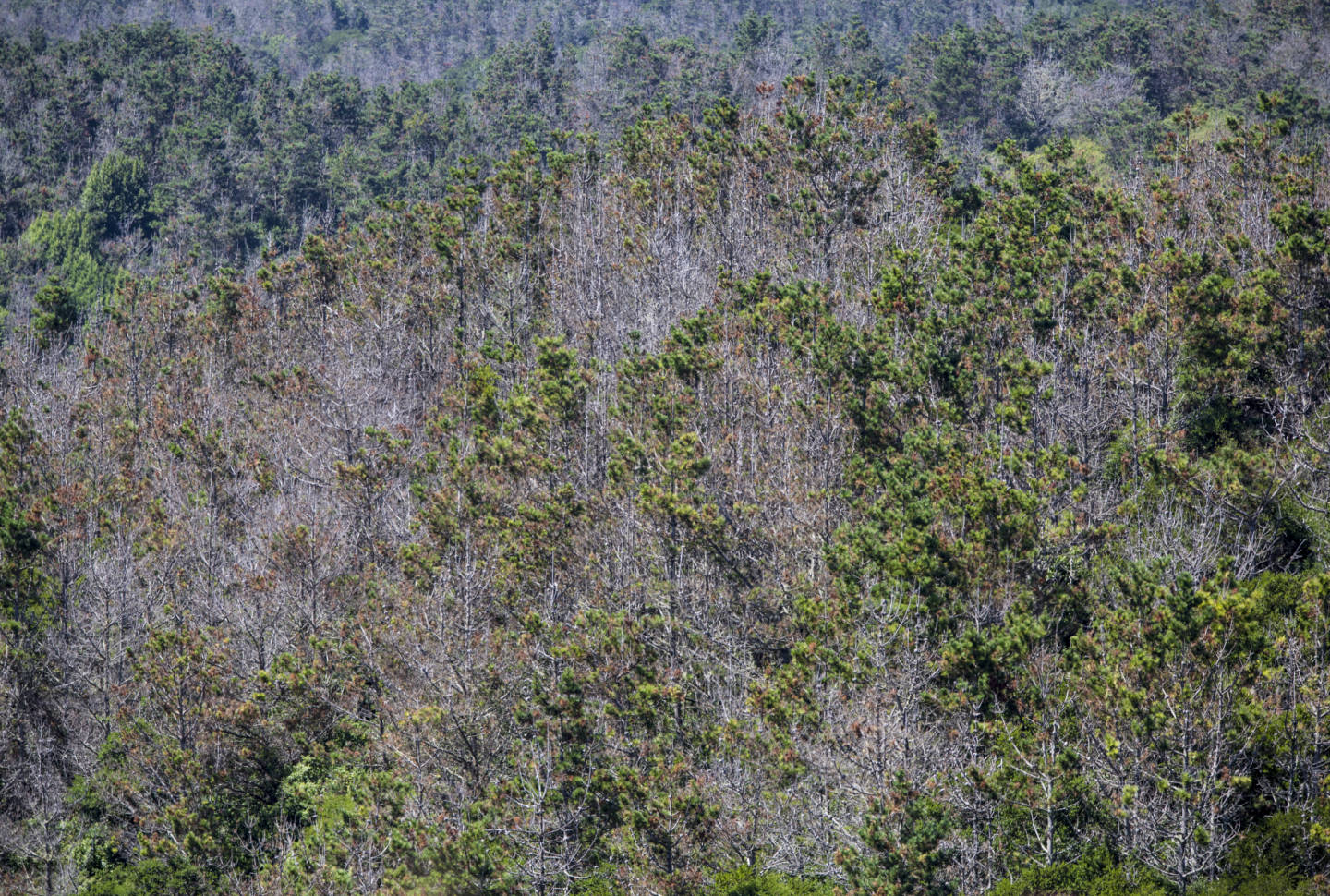
"caption": "A Marin County forest where trees are dying.",
"description": "A Marin County forest where trees are dying.",
"title": "CM_tree_disease",
"credit": "Robert Durell/CALmatters",
"status": "inherit",
"isLoading": false,
"fetchFailed": false
},
"science_911786": {
"type": "attachments",
"id": "science_911786",
"meta": {
"index": "attachments_1716263798",
"site": "science",
"id": "911786",
"found": true
},
"parent": 911782,
"imgSizes": {
"twentyfourteen-full-width": {
"file": "https://ww2.kqed.org/app/uploads/sites/35/2016/08/17092776120_ab94fca6c9_k-1038x576.jpg",
"width": 1038,
"mimeType": "image/jpeg",
"height": 576
},
"thumbnail": {
"file": "https://ww2.kqed.org/app/uploads/sites/35/2016/08/17092776120_ab94fca6c9_k-400x263.jpg",
"width": 400,
"mimeType": "image/jpeg",
"height": 263
},
"fd-sm": {
"file": "https://ww2.kqed.org/app/uploads/sites/35/2016/08/17092776120_ab94fca6c9_k-960x631.jpg",
"width": 960,
"mimeType": "image/jpeg",
"height": 631
},
"post-thumbnail": {
"file": "https://ww2.kqed.org/app/uploads/sites/35/2016/08/17092776120_ab94fca6c9_k-672x372.jpg",
"width": 672,
"mimeType": "image/jpeg",
"height": 372
},
"kqedFullSize": {
"file": "https://ww2.kqed.org/app/uploads/sites/35/2016/08/17092776120_ab94fca6c9_k.jpg",
"width": 2048,
"height": 1346
},
"large": {
"file": "https://ww2.kqed.org/app/uploads/sites/35/2016/08/17092776120_ab94fca6c9_k-1440x946.jpg",
"width": 1440,
"mimeType": "image/jpeg",
"height": 946
},
"guest-author-50": {
"file": "https://ww2.kqed.org/app/uploads/sites/35/2016/08/17092776120_ab94fca6c9_k-50x50.jpg",
"width": 50,
"mimeType": "image/jpeg",
"height": 50
},
"guest-author-96": {
"file": "https://ww2.kqed.org/app/uploads/sites/35/2016/08/17092776120_ab94fca6c9_k-96x96.jpg",
"width": 96,
"mimeType": "image/jpeg",
"height": 96
},
"medium": {
"file": "https://ww2.kqed.org/app/uploads/sites/35/2016/08/17092776120_ab94fca6c9_k-800x526.jpg",
"width": 800,
"mimeType": "image/jpeg",
"height": 526
},
"guest-author-64": {
"file": "https://ww2.kqed.org/app/uploads/sites/35/2016/08/17092776120_ab94fca6c9_k-64x64.jpg",
"width": 64,
"mimeType": "image/jpeg",
"height": 64
},
"guest-author-32": {
"file": "https://ww2.kqed.org/app/uploads/sites/35/2016/08/17092776120_ab94fca6c9_k-32x32.jpg",
"width": 32,
"mimeType": "image/jpeg",
"height": 32
},
"fd-lrg": {
"file": "https://ww2.kqed.org/app/uploads/sites/35/2016/08/17092776120_ab94fca6c9_k-1920x1262.jpg",
"width": 1920,
"mimeType": "image/jpeg",
"height": 1262
},
"fd-med": {
"file": "https://ww2.kqed.org/app/uploads/sites/35/2016/08/17092776120_ab94fca6c9_k-1180x776.jpg",
"width": 1180,
"mimeType": "image/jpeg",
"height": 776
},
"detail": {
"file": "https://ww2.kqed.org/app/uploads/sites/35/2016/08/17092776120_ab94fca6c9_k-150x150.jpg",
"width": 150,
"mimeType": "image/jpeg",
"height": 150
},
"medium_large": {
"file": "https://ww2.kqed.org/app/uploads/sites/35/2016/08/17092776120_ab94fca6c9_k-768x505.jpg",
"width": 768,
"mimeType": "image/jpeg",
"height": 505
},
"guest-author-128": {
"file": "https://ww2.kqed.org/app/uploads/sites/35/2016/08/17092776120_ab94fca6c9_k-128x128.jpg",
"width": 128,
"mimeType": "image/jpeg",
"height": 128
}
},
"publishDate": 1470847075,
"modified": 1470847567,
"caption": "A study published in Environmental Science and Technology Letters reports that 14 states have drinking water that contains at least one chemical commonly found in firefighting foam.",
"description": null,
"title": "17092776120_ab94fca6c9_k",
"credit": "\u003ca href=\"https://www.flickr.com/photos/77108378@N06/17092776120/in/photolist-s3qWQy-jg1Wp3-89bBtk-rmrzYu-hwHyWV-oFz9Xt-bc6rLn-BKmW-5FEJvZ-U7F3V-BKjC-9xir7P-HEKBL7-BKmj-jvtXcp-qvE5Sw-p59TPZ-5yUtok-BKme-eVrjqs-BKmx-b3kVxn-9FgEod-2UR2y-bG3x64-e3uBhu-9xmq5d-2XKNf-BKmE-gxz6my-U7sJv-hhgEho-dy2T2Z-67vHqj-7h4YZe-iyuRCQ-DWJoa-oDLw4x-eJ8JxK-6gqiRz-6cJwx4-pM2MMe-gJPf6L-6BsFcP-dMAjR2-pfM1zo-jHK8Gd-dFgYxH-317qRx-9g3awo/\" target=\"_blank\">lzee/flickr\u003c/a>",
"status": "inherit",
"isLoading": false,
"fetchFailed": false
},
"science_909495": {
"type": "attachments",
"id": "science_909495",
"meta": {
"index": "attachments_1716263798",
"site": "science",
"id": "909495",
"found": true
},
"parent": 909494,
"imgSizes": {
"twentyfourteen-full-width": {
"file": "https://ww2.kqed.org/app/uploads/sites/35/2016/08/e-coli-7d8543b87de533a619bfba5cf95b56e66ab6fe1e-1038x576.jpg",
"width": 1038,
"mimeType": "image/jpeg",
"height": 576
},
"thumbnail": {
"file": "https://ww2.kqed.org/app/uploads/sites/35/2016/08/e-coli-7d8543b87de533a619bfba5cf95b56e66ab6fe1e-400x300.jpg",
"width": 400,
"mimeType": "image/jpeg",
"height": 300
},
"fd-sm": {
"file": "https://ww2.kqed.org/app/uploads/sites/35/2016/08/e-coli-7d8543b87de533a619bfba5cf95b56e66ab6fe1e-960x720.jpg",
"width": 960,
"mimeType": "image/jpeg",
"height": 720
},
"post-thumbnail": {
"file": "https://ww2.kqed.org/app/uploads/sites/35/2016/08/e-coli-7d8543b87de533a619bfba5cf95b56e66ab6fe1e-672x372.jpg",
"width": 672,
"mimeType": "image/jpeg",
"height": 372
},
"kqedFullSize": {
"file": "https://ww2.kqed.org/app/uploads/sites/35/2016/08/e-coli-7d8543b87de533a619bfba5cf95b56e66ab6fe1e.jpg",
"width": 1776,
"height": 1332
},
"large": {
"file": "https://ww2.kqed.org/app/uploads/sites/35/2016/08/e-coli-7d8543b87de533a619bfba5cf95b56e66ab6fe1e-1440x1080.jpg",
"width": 1440,
"mimeType": "image/jpeg",
"height": 1080
},
"guest-author-50": {
"file": "https://ww2.kqed.org/app/uploads/sites/35/2016/08/e-coli-7d8543b87de533a619bfba5cf95b56e66ab6fe1e-50x50.jpg",
"width": 50,
"mimeType": "image/jpeg",
"height": 50
},
"guest-author-96": {
"file": "https://ww2.kqed.org/app/uploads/sites/35/2016/08/e-coli-7d8543b87de533a619bfba5cf95b56e66ab6fe1e-96x96.jpg",
"width": 96,
"mimeType": "image/jpeg",
"height": 96
},
"medium": {
"file": "https://ww2.kqed.org/app/uploads/sites/35/2016/08/e-coli-7d8543b87de533a619bfba5cf95b56e66ab6fe1e-800x600.jpg",
"width": 800,
"mimeType": "image/jpeg",
"height": 600
},
"guest-author-64": {
"file": "https://ww2.kqed.org/app/uploads/sites/35/2016/08/e-coli-7d8543b87de533a619bfba5cf95b56e66ab6fe1e-64x64.jpg",
"width": 64,
"mimeType": "image/jpeg",
"height": 64
},
"guest-author-32": {
"file": "https://ww2.kqed.org/app/uploads/sites/35/2016/08/e-coli-7d8543b87de533a619bfba5cf95b56e66ab6fe1e-32x32.jpg",
"width": 32,
"mimeType": "image/jpeg",
"height": 32
},
"fd-med": {
"file": "https://ww2.kqed.org/app/uploads/sites/35/2016/08/e-coli-7d8543b87de533a619bfba5cf95b56e66ab6fe1e-1180x885.jpg",
"width": 1180,
"mimeType": "image/jpeg",
"height": 885
},
"detail": {
"file": "https://ww2.kqed.org/app/uploads/sites/35/2016/08/e-coli-7d8543b87de533a619bfba5cf95b56e66ab6fe1e-150x150.jpg",
"width": 150,
"mimeType": "image/jpeg",
"height": 150
},
"medium_large": {
"file": "https://ww2.kqed.org/app/uploads/sites/35/2016/08/e-coli-7d8543b87de533a619bfba5cf95b56e66ab6fe1e-768x576.jpg",
"width": 768,
"mimeType": "image/jpeg",
"height": 576
},
"guest-author-128": {
"file": "https://ww2.kqed.org/app/uploads/sites/35/2016/08/e-coli-7d8543b87de533a619bfba5cf95b56e66ab6fe1e-128x128.jpg",
"width": 128,
"mimeType": "image/jpeg",
"height": 128
}
},
"publishDate": 1470758538,
"modified": 1470758538,
"caption": null,
"description": "Colored scanning electron micrograph (SEM) of Escherichia coli bacteria (green) taken from the small intestine of a child. E. coli are rod-shaped bacteria that are part of the normal flora of the human gut.",
"title": "Colored scanning electron micrograph (SEM) of Escherichia coli bacteria (green) taken from the small intestine of a child. E. coli are rod-shaped bacteria that are part of the normal flora of the human gut.",
"credit": null,
"status": "inherit",
"isLoading": false,
"fetchFailed": false
},
"science_909583": {
"type": "attachments",
"id": "science_909583",
"meta": {
"index": "attachments_1716263798",
"site": "science",
"id": "909583",
"found": true
},
"parent": 907490,
"imgSizes": {
"thumbnail": {
"file": "https://ww2.kqed.org/app/uploads/sites/35/2016/08/NOAA_map_Fix-e1470759499889-400x216.jpg",
"width": 400,
"mimeType": "image/jpeg",
"height": 216
},
"post-thumbnail": {
"file": "https://ww2.kqed.org/app/uploads/sites/35/2016/08/NOAA_map_Fix-650x372.jpg",
"width": 650,
"mimeType": "image/jpeg",
"height": 372
},
"kqedFullSize": {
"file": "https://ww2.kqed.org/app/uploads/sites/35/2016/08/NOAA_map_Fix-e1470759499889.jpg",
"width": 650,
"height": 351
},
"guest-author-50": {
"file": "https://ww2.kqed.org/app/uploads/sites/35/2016/08/NOAA_map_Fix-e1470759499889-50x50.jpg",
"width": 50,
"mimeType": "image/jpeg",
"height": 50
},
"guest-author-96": {
"file": "https://ww2.kqed.org/app/uploads/sites/35/2016/08/NOAA_map_Fix-e1470759499889-96x96.jpg",
"width": 96,
"mimeType": "image/jpeg",
"height": 96
},
"guest-author-64": {
"file": "https://ww2.kqed.org/app/uploads/sites/35/2016/08/NOAA_map_Fix-e1470759499889-64x64.jpg",
"width": 64,
"mimeType": "image/jpeg",
"height": 64
},
"detail": {
"file": "https://ww2.kqed.org/app/uploads/sites/35/2016/08/NOAA_map_Fix-e1470759499889-150x150.jpg",
"width": 150,
"mimeType": "image/jpeg",
"height": 150
},
"guest-author-32": {
"file": "https://ww2.kqed.org/app/uploads/sites/35/2016/08/NOAA_map_Fix-e1470759499889-32x32.jpg",
"width": 32,
"mimeType": "image/jpeg",
"height": 32
},
"guest-author-128": {
"file": "https://ww2.kqed.org/app/uploads/sites/35/2016/08/NOAA_map_Fix-e1470759499889-128x128.jpg",
"width": 128,
"mimeType": "image/jpeg",
"height": 128
}
},
"publishDate": 1470759414,
"modified": 1470760047,
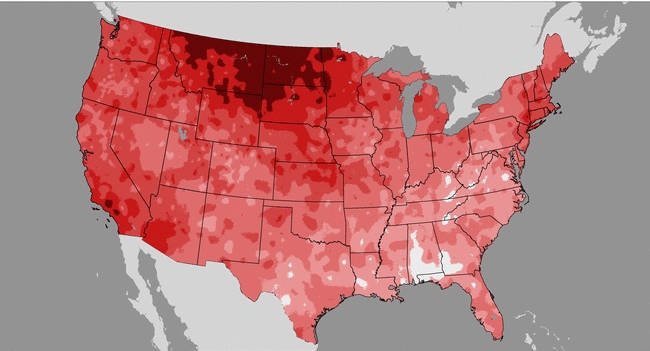
"caption": "A map of the U.S. showing above average temperatures from January through July 2016.\n",
"description": null,
"title": "NOAA_map_Fix",
"credit": "NOAA",
"status": "inherit",
"isLoading": false,
"fetchFailed": false
},
"science_895961": {
"type": "attachments",
"id": "science_895961",
"meta": {
"index": "attachments_1716263798",
"site": "science",
"id": "895961",
"found": true
},
"parent": 877072,
"imgSizes": {
"twentyfourteen-full-width": {
"file": "https://ww2.kqed.org/app/uploads/sites/35/2016/08/Olive-Tambou-backpacking-at-point-reyes-annual-female-backpacking-trip-1038x576.jpg",
"width": 1038,
"mimeType": "image/jpeg",
"height": 576
},
"thumbnail": {
"file": "https://ww2.kqed.org/app/uploads/sites/35/2016/08/Olive-Tambou-backpacking-at-point-reyes-annual-female-backpacking-trip-400x300.jpg",
"width": 400,
"mimeType": "image/jpeg",
"height": 300
},
"fd-sm": {
"file": "https://ww2.kqed.org/app/uploads/sites/35/2016/08/Olive-Tambou-backpacking-at-point-reyes-annual-female-backpacking-trip-960x720.jpg",
"width": 960,
"mimeType": "image/jpeg",
"height": 720
},
"post-thumbnail": {
"file": "https://ww2.kqed.org/app/uploads/sites/35/2016/08/Olive-Tambou-backpacking-at-point-reyes-annual-female-backpacking-trip-672x372.jpg",
"width": 672,
"mimeType": "image/jpeg",
"height": 372
},
"kqedFullSize": {
"file": "https://ww2.kqed.org/app/uploads/sites/35/2016/08/Olive-Tambou-backpacking-at-point-reyes-annual-female-backpacking-trip-e1470692070813.jpg",
"width": 1920,
"height": 1440
},
"large": {
"file": "https://ww2.kqed.org/app/uploads/sites/35/2016/08/Olive-Tambou-backpacking-at-point-reyes-annual-female-backpacking-trip-1440x1080.jpg",
"width": 1440,
"mimeType": "image/jpeg",
"height": 1080
},
"guest-author-50": {
"file": "https://ww2.kqed.org/app/uploads/sites/35/2016/08/Olive-Tambou-backpacking-at-point-reyes-annual-female-backpacking-trip-50x50.jpg",
"width": 50,
"mimeType": "image/jpeg",
"height": 50
},
"guest-author-96": {
"file": "https://ww2.kqed.org/app/uploads/sites/35/2016/08/Olive-Tambou-backpacking-at-point-reyes-annual-female-backpacking-trip-96x96.jpg",
"width": 96,
"mimeType": "image/jpeg",
"height": 96
},
"medium": {
"file": "https://ww2.kqed.org/app/uploads/sites/35/2016/08/Olive-Tambou-backpacking-at-point-reyes-annual-female-backpacking-trip-800x600.jpg",
"width": 800,
"mimeType": "image/jpeg",
"height": 600
},
"guest-author-64": {
"file": "https://ww2.kqed.org/app/uploads/sites/35/2016/08/Olive-Tambou-backpacking-at-point-reyes-annual-female-backpacking-trip-64x64.jpg",
"width": 64,
"mimeType": "image/jpeg",
"height": 64
},
"guest-author-32": {
"file": "https://ww2.kqed.org/app/uploads/sites/35/2016/08/Olive-Tambou-backpacking-at-point-reyes-annual-female-backpacking-trip-32x32.jpg",
"width": 32,
"mimeType": "image/jpeg",
"height": 32
},
"fd-lrg": {
"file": "https://ww2.kqed.org/app/uploads/sites/35/2016/08/Olive-Tambou-backpacking-at-point-reyes-annual-female-backpacking-trip-1920x1440.jpg",
"width": 1920,
"mimeType": "image/jpeg",
"height": 1440
},
"fd-med": {
"file": "https://ww2.kqed.org/app/uploads/sites/35/2016/08/Olive-Tambou-backpacking-at-point-reyes-annual-female-backpacking-trip-1180x885.jpg",
"width": 1180,
"mimeType": "image/jpeg",
"height": 885
},
"detail": {
"file": "https://ww2.kqed.org/app/uploads/sites/35/2016/08/Olive-Tambou-backpacking-at-point-reyes-annual-female-backpacking-trip-150x150.jpg",
"width": 150,
"mimeType": "image/jpeg",
"height": 150
},
"medium_large": {
"file": "https://ww2.kqed.org/app/uploads/sites/35/2016/08/Olive-Tambou-backpacking-at-point-reyes-annual-female-backpacking-trip-768x576.jpg",
"width": 768,
"mimeType": "image/jpeg",
"height": 576
},
"guest-author-128": {
"file": "https://ww2.kqed.org/app/uploads/sites/35/2016/08/Olive-Tambou-backpacking-at-point-reyes-annual-female-backpacking-trip-128x128.jpg",
"width": 128,
"mimeType": "image/jpeg",
"height": 128
}
},
"publishDate": 1470267139,
"modified": 1470425959,
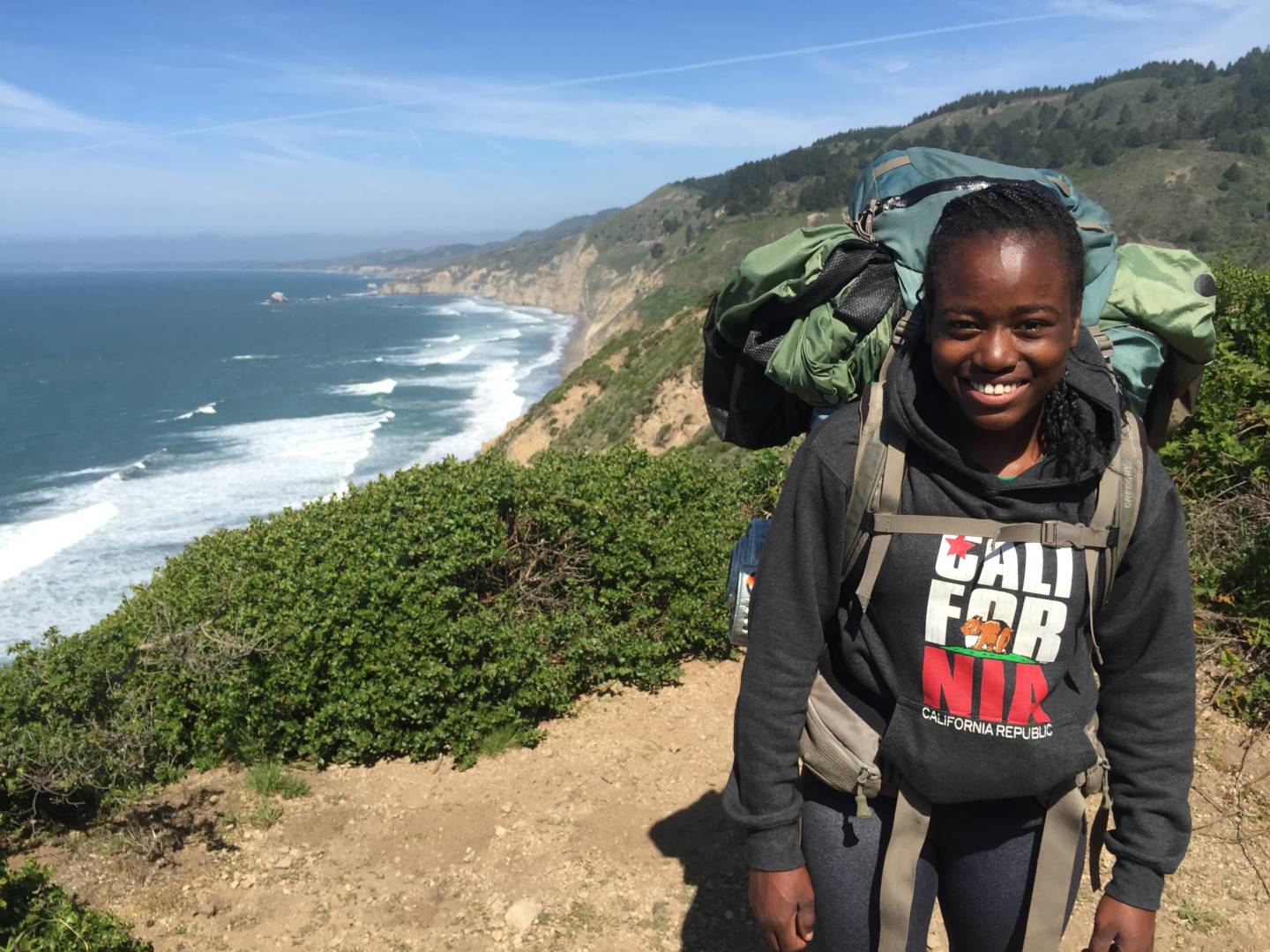
"caption": "Olive Tambou backpacks at Point Reyes National Seashore, about an hour north of San Francisco. ",
"description": "Olive Tambou backpacks at Point Reyes National Seashore, about an hour north of San Francisco. ",
"title": "Olive Tambou backpacking at point reyes -- annual female backpacking trip",
"credit": "Golden Gate National Parks Conservancy",
"status": "inherit",
"isLoading": false,
"fetchFailed": false
},
"science_900593": {
"type": "attachments",
"id": "science_900593",
"meta": {
"index": "attachments_1716263798",
"site": "science",
"id": "900593",
"found": true
},
"parent": 900592,
"imgSizes": {
"twentyfourteen-full-width": {
"file": "https://ww2.kqed.org/app/uploads/sites/35/2016/08/180749660_03d05e1a95_b-21e2b03e8a44b23394e4192030a9a0710c58bcf7-1023x576.jpg",
"width": 1023,
"mimeType": "image/jpeg",
"height": 576
},
"thumbnail": {
"file": "https://ww2.kqed.org/app/uploads/sites/35/2016/08/180749660_03d05e1a95_b-21e2b03e8a44b23394e4192030a9a0710c58bcf7-400x300.jpg",
"width": 400,
"mimeType": "image/jpeg",
"height": 300
},
"fd-sm": {
"file": "https://ww2.kqed.org/app/uploads/sites/35/2016/08/180749660_03d05e1a95_b-21e2b03e8a44b23394e4192030a9a0710c58bcf7-960x720.jpg",
"width": 960,
"mimeType": "image/jpeg",
"height": 720
},
"post-thumbnail": {
"file": "https://ww2.kqed.org/app/uploads/sites/35/2016/08/180749660_03d05e1a95_b-21e2b03e8a44b23394e4192030a9a0710c58bcf7-672x372.jpg",
"width": 672,
"mimeType": "image/jpeg",
"height": 372
},
"kqedFullSize": {
"file": "https://ww2.kqed.org/app/uploads/sites/35/2016/08/180749660_03d05e1a95_b-21e2b03e8a44b23394e4192030a9a0710c58bcf7.jpg",
"width": 1023,
"height": 767
},
"guest-author-50": {
"file": "https://ww2.kqed.org/app/uploads/sites/35/2016/08/180749660_03d05e1a95_b-21e2b03e8a44b23394e4192030a9a0710c58bcf7-50x50.jpg",
"width": 50,
"mimeType": "image/jpeg",
"height": 50
},
"guest-author-96": {
"file": "https://ww2.kqed.org/app/uploads/sites/35/2016/08/180749660_03d05e1a95_b-21e2b03e8a44b23394e4192030a9a0710c58bcf7-96x96.jpg",
"width": 96,
"mimeType": "image/jpeg",
"height": 96
},
"medium": {
"file": "https://ww2.kqed.org/app/uploads/sites/35/2016/08/180749660_03d05e1a95_b-21e2b03e8a44b23394e4192030a9a0710c58bcf7-800x600.jpg",
"width": 800,
"mimeType": "image/jpeg",
"height": 600
},
"guest-author-64": {
"file": "https://ww2.kqed.org/app/uploads/sites/35/2016/08/180749660_03d05e1a95_b-21e2b03e8a44b23394e4192030a9a0710c58bcf7-64x64.jpg",
"width": 64,
"mimeType": "image/jpeg",
"height": 64
},
"guest-author-32": {
"file": "https://ww2.kqed.org/app/uploads/sites/35/2016/08/180749660_03d05e1a95_b-21e2b03e8a44b23394e4192030a9a0710c58bcf7-32x32.jpg",
"width": 32,
"mimeType": "image/jpeg",
"height": 32
},
"detail": {
"file": "https://ww2.kqed.org/app/uploads/sites/35/2016/08/180749660_03d05e1a95_b-21e2b03e8a44b23394e4192030a9a0710c58bcf7-150x150.jpg",
"width": 150,
"mimeType": "image/jpeg",
"height": 150
},
"medium_large": {
"file": "https://ww2.kqed.org/app/uploads/sites/35/2016/08/180749660_03d05e1a95_b-21e2b03e8a44b23394e4192030a9a0710c58bcf7-768x576.jpg",
"width": 768,
"mimeType": "image/jpeg",
"height": 576
},
"guest-author-128": {
"file": "https://ww2.kqed.org/app/uploads/sites/35/2016/08/180749660_03d05e1a95_b-21e2b03e8a44b23394e4192030a9a0710c58bcf7-128x128.jpg",
"width": 128,
"mimeType": "image/jpeg",
"height": 128
}
},
"publishDate": 1470438586,
"modified": 1470438656,
"caption": "Newly published research explains why young sunflowers turn to face the sun as it moves across the sky.",
"description": null,
"title": "Newly published research explains why young sunflowers turn to face the sun as it moves across the sky.",
"credit": "Marcello Semboli",
"status": "inherit",
"isLoading": false,
"fetchFailed": false
},
"science_900175": {
"type": "attachments",
"id": "science_900175",
"meta": {
"index": "attachments_1716263798",
"site": "science",
"id": "900175",
"found": true
},
"parent": 897686,
"imgSizes": {
"thumbnail": {
"file": "https://ww2.kqed.org/app/uploads/sites/35/2016/08/Water-Deeply_farmers-400x224.jpg",
"width": 400,
"mimeType": "image/jpeg",
"height": 224
},
"kqedFullSize": {
"file": "https://ww2.kqed.org/app/uploads/sites/35/2016/08/Water-Deeply_farmers.jpg",
"width": 640,
"height": 359
},
"guest-author-50": {
"file": "https://ww2.kqed.org/app/uploads/sites/35/2016/08/Water-Deeply_farmers-50x50.jpg",
"width": 50,
"mimeType": "image/jpeg",
"height": 50
},
"guest-author-96": {
"file": "https://ww2.kqed.org/app/uploads/sites/35/2016/08/Water-Deeply_farmers-96x96.jpg",
"width": 96,
"mimeType": "image/jpeg",
"height": 96
},
"guest-author-64": {
"file": "https://ww2.kqed.org/app/uploads/sites/35/2016/08/Water-Deeply_farmers-64x64.jpg",
"width": 64,
"mimeType": "image/jpeg",
"height": 64
},
"detail": {
"file": "https://ww2.kqed.org/app/uploads/sites/35/2016/08/Water-Deeply_farmers-150x150.jpg",
"width": 150,
"mimeType": "image/jpeg",
"height": 150
},
"guest-author-32": {
"file": "https://ww2.kqed.org/app/uploads/sites/35/2016/08/Water-Deeply_farmers-32x32.jpg",
"width": 32,
"mimeType": "image/jpeg",
"height": 32
},
"guest-author-128": {
"file": "https://ww2.kqed.org/app/uploads/sites/35/2016/08/Water-Deeply_farmers-128x128.jpg",
"width": 128,
"mimeType": "image/jpeg",
"height": 128
}
},
"publishDate": 1470424251,
"modified": 1470424281,
"caption": "Environmental Defense Fund staff and other conservation collaborators visit Elliott Ranch to track restoration outcomes for Swainson's hawk habitat using the habitat quantification tool. ",
"description": null,
"title": "Water Deeply_farmers",
"credit": "Mathew Grimm",
"status": "inherit",
"isLoading": false,
"fetchFailed": false
},
"science_899863": {
"type": "attachments",
"id": "science_899863",
"meta": {
"index": "attachments_1716263798",
"site": "science",
"id": "899863",
"found": true
},
"parent": 899859,
"imgSizes": {
"thumbnail": {
"file": "https://ww2.kqed.org/app/uploads/sites/35/2016/08/mosquito-400x225.jpg",
"width": 400,
"mimeType": "image/jpeg",
"height": 225
},
"post-thumbnail": {
"file": "https://ww2.kqed.org/app/uploads/sites/35/2016/08/mosquito-672x372.jpg",
"width": 672,
"mimeType": "image/jpeg",
"height": 372
},
"kqedFullSize": {
"file": "https://ww2.kqed.org/app/uploads/sites/35/2016/08/mosquito.jpg",
"width": 720,
"height": 405
},
"guest-author-50": {
"file": "https://ww2.kqed.org/app/uploads/sites/35/2016/08/mosquito-50x50.jpg",
"width": 50,
"mimeType": "image/jpeg",
"height": 50
},
"guest-author-96": {
"file": "https://ww2.kqed.org/app/uploads/sites/35/2016/08/mosquito-96x96.jpg",
"width": 96,
"mimeType": "image/jpeg",
"height": 96
},
"guest-author-64": {
"file": "https://ww2.kqed.org/app/uploads/sites/35/2016/08/mosquito-64x64.jpg",
"width": 64,
"mimeType": "image/jpeg",
"height": 64
},
"detail": {
"file": "https://ww2.kqed.org/app/uploads/sites/35/2016/08/mosquito-150x150.jpg",
"width": 150,
"mimeType": "image/jpeg",
"height": 150
},
"guest-author-32": {
"file": "https://ww2.kqed.org/app/uploads/sites/35/2016/08/mosquito-32x32.jpg",
"width": 32,
"mimeType": "image/jpeg",
"height": 32
},
"guest-author-128": {
"file": "https://ww2.kqed.org/app/uploads/sites/35/2016/08/mosquito-128x128.jpg",
"width": 128,
"mimeType": "image/jpeg",
"height": 128
}
},
"publishDate": 1470410584,
"modified": 1470410609,
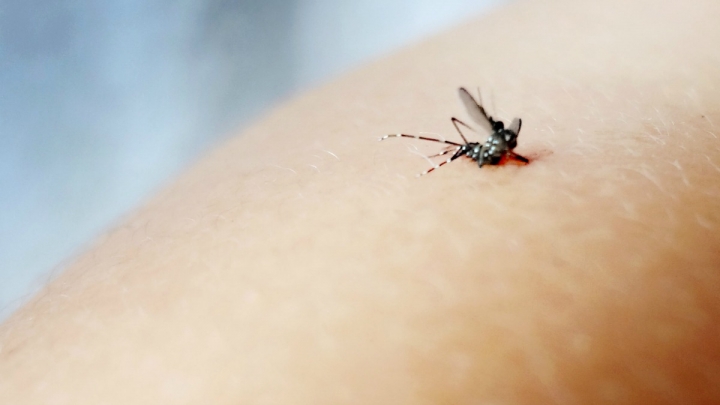
"caption": "A squashed Aedes Aegypti, which can spread Zika and other diseases.",
"description": null,
"title": "mosquito",
"credit": "Laura Domínguez/flickr",
"status": "inherit",
"isLoading": false,
"fetchFailed": false
},
"science_900065": {
"type": "attachments",
"id": "science_900065",
"meta": {
"index": "attachments_1716263798",
"site": "science",
"id": "900065",
"found": true
},
"parent": 0,
"imgSizes": {
"twentyfourteen-full-width": {
"file": "https://ww2.kqed.org/app/uploads/sites/35/2016/08/Orbit_V02-1038x576.gif",
"width": 1038,
"mimeType": "image/gif",
"height": 576
},
"thumbnail": {
"file": "https://ww2.kqed.org/app/uploads/sites/35/2016/08/Orbit_V02-400x250.gif",
"width": 400,
"mimeType": "image/gif",
"height": 250
},
"fd-sm": {
"file": "https://ww2.kqed.org/app/uploads/sites/35/2016/08/Orbit_V02-960x600.gif",
"width": 960,
"mimeType": "image/gif",
"height": 600
},
"post-thumbnail": {
"file": "https://ww2.kqed.org/app/uploads/sites/35/2016/08/Orbit_V02-672x372.gif",
"width": 672,
"mimeType": "image/gif",
"height": 372
},
"kqedFullSize": {
"file": "https://ww2.kqed.org/app/uploads/sites/35/2016/08/Orbit_V02.gif",
"width": 1152,
"height": 720
},
"guest-author-50": {
"file": "https://ww2.kqed.org/app/uploads/sites/35/2016/08/Orbit_V02-50x50.gif",
"width": 50,
"mimeType": "image/gif",
"height": 50
},
"guest-author-96": {
"file": "https://ww2.kqed.org/app/uploads/sites/35/2016/08/Orbit_V02-96x96.gif",
"width": 96,
"mimeType": "image/gif",
"height": 96
},
"medium": {
"file": "https://ww2.kqed.org/app/uploads/sites/35/2016/08/Orbit_V02-800x500.gif",
"width": 800,
"mimeType": "image/gif",
"height": 500
},
"guest-author-64": {
"file": "https://ww2.kqed.org/app/uploads/sites/35/2016/08/Orbit_V02-64x64.gif",
"width": 64,
"mimeType": "image/gif",
"height": 64
},
"guest-author-32": {
"file": "https://ww2.kqed.org/app/uploads/sites/35/2016/08/Orbit_V02-32x32.gif",
"width": 32,
"mimeType": "image/gif",
"height": 32
},
"detail": {
"file": "https://ww2.kqed.org/app/uploads/sites/35/2016/08/Orbit_V02-150x150.gif",
"width": 150,
"mimeType": "image/gif",
"height": 150
},
"medium_large": {
"file": "https://ww2.kqed.org/app/uploads/sites/35/2016/08/Orbit_V02-768x480.gif",
"width": 768,
"mimeType": "image/gif",
"height": 480
},
"guest-author-128": {
"file": "https://ww2.kqed.org/app/uploads/sites/35/2016/08/Orbit_V02-128x128.gif",
"width": 128,
"mimeType": "image/gif",
"height": 128
}
},
"publishDate": 1470419970,
"modified": 1470420572,
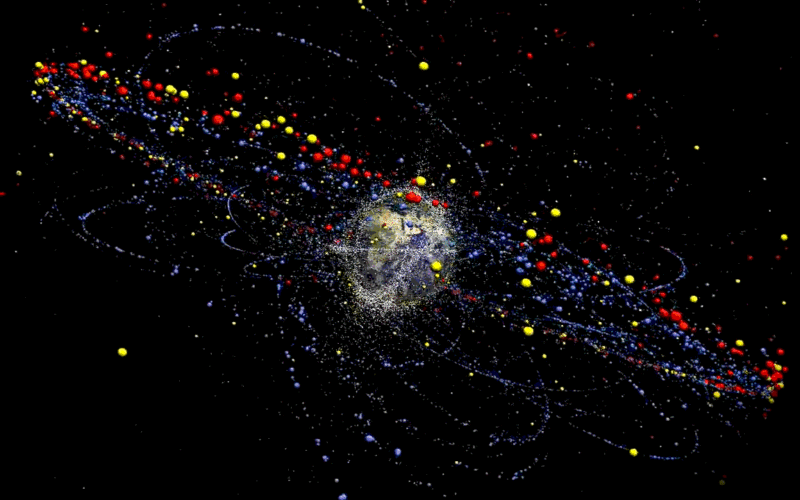
"caption": "Simulation of space debris orbiting Earth. Created by the Institute of Aerospace Systems at the Technische Universität Braunschweig.",
"description": null,
"title": "Orbit_V02",
"credit": "Technische Universität Braunschweig",
"status": "inherit",
"isLoading": false,
"fetchFailed": false
},
"science_893469": {
"type": "attachments",
"id": "science_893469",
"meta": {
"index": "attachments_1716263798",
"site": "science",
"id": "893469",
"found": true
},
"parent": 893464,
"imgSizes": {
"twentyfourteen-full-width": {
"file": "https://ww2.kqed.org/app/uploads/sites/35/2016/08/14303705100_08422e995f_k-1038x576.jpg",
"width": 1038,
"mimeType": "image/jpeg",
"height": 576
},
"thumbnail": {
"file": "https://ww2.kqed.org/app/uploads/sites/35/2016/08/14303705100_08422e995f_k-400x224.jpg",
"width": 400,
"mimeType": "image/jpeg",
"height": 224
},
"fd-sm": {
"file": "https://ww2.kqed.org/app/uploads/sites/35/2016/08/14303705100_08422e995f_k-960x539.jpg",
"width": 960,
"mimeType": "image/jpeg",
"height": 539
},
"post-thumbnail": {
"file": "https://ww2.kqed.org/app/uploads/sites/35/2016/08/14303705100_08422e995f_k-672x372.jpg",
"width": 672,
"mimeType": "image/jpeg",
"height": 372
},
"kqedFullSize": {
"file": "https://ww2.kqed.org/app/uploads/sites/35/2016/08/14303705100_08422e995f_k.jpg",
"width": 2048,
"height": 1149
},
"large": {
"file": "https://ww2.kqed.org/app/uploads/sites/35/2016/08/14303705100_08422e995f_k-1440x808.jpg",
"width": 1440,
"mimeType": "image/jpeg",
"height": 808
},
"guest-author-50": {
"file": "https://ww2.kqed.org/app/uploads/sites/35/2016/08/14303705100_08422e995f_k-50x50.jpg",
"width": 50,
"mimeType": "image/jpeg",
"height": 50
},
"guest-author-96": {
"file": "https://ww2.kqed.org/app/uploads/sites/35/2016/08/14303705100_08422e995f_k-96x96.jpg",
"width": 96,
"mimeType": "image/jpeg",
"height": 96
},
"medium": {
"file": "https://ww2.kqed.org/app/uploads/sites/35/2016/08/14303705100_08422e995f_k-800x449.jpg",
"width": 800,
"mimeType": "image/jpeg",
"height": 449
},
"guest-author-64": {
"file": "https://ww2.kqed.org/app/uploads/sites/35/2016/08/14303705100_08422e995f_k-64x64.jpg",
"width": 64,
"mimeType": "image/jpeg",
"height": 64
},
"guest-author-32": {
"file": "https://ww2.kqed.org/app/uploads/sites/35/2016/08/14303705100_08422e995f_k-32x32.jpg",
"width": 32,
"mimeType": "image/jpeg",
"height": 32
},
"fd-lrg": {
"file": "https://ww2.kqed.org/app/uploads/sites/35/2016/08/14303705100_08422e995f_k-1920x1077.jpg",
"width": 1920,
"mimeType": "image/jpeg",
"height": 1077
},
"fd-med": {
"file": "https://ww2.kqed.org/app/uploads/sites/35/2016/08/14303705100_08422e995f_k-1180x662.jpg",
"width": 1180,
"mimeType": "image/jpeg",
"height": 662
},
"detail": {
"file": "https://ww2.kqed.org/app/uploads/sites/35/2016/08/14303705100_08422e995f_k-150x150.jpg",
"width": 150,
"mimeType": "image/jpeg",
"height": 150
},
"medium_large": {
"file": "https://ww2.kqed.org/app/uploads/sites/35/2016/08/14303705100_08422e995f_k-768x431.jpg",
"width": 768,
"mimeType": "image/jpeg",
"height": 431
},
"guest-author-128": {
"file": "https://ww2.kqed.org/app/uploads/sites/35/2016/08/14303705100_08422e995f_k-128x128.jpg",
"width": 128,
"mimeType": "image/jpeg",
"height": 128
}
},
"publishDate": 1470173789,
"modified": 1470182272,
"caption": "Sand dunes near Stovepipe Wells in Death Valley.",
"description": null,
"title": "14303705100_08422e995f_k",
"credit": "\u003ca href=\"https://www.flickr.com/photos/86755183@N04/14303705100/in/photolist-nMYecb-fbzyqA-7mS7fB-qcriFF-cYAZE9-dW5evq-jL3fbP-baiY6t-jL1QgB-jL3F16-dW5fMG-eELmzb-jL2914-vDP8q-dY73ik-7dhAvy-5AV2rQ-dW5bWq-jL3Lvf-5hQsSK-dY72W2-6Z8Ptu-6Z4Pi2-dW5d2f-5hQA7r-ezzKgu-qgCbiR-2CrCdw-4KETSE-ekbEPM-5NZvW4-pxTkpv-dQrRfg-3qjyGN-evHbEE-bk3jrR-MpnFU-dVGWUD-cWBhTw-c6zy7f-diGsKV-aEVh8J-csKz31-nCsyiG-biyuVF-rgGVGb-avHsTL-eQWf7C-6QJJ6z-cdYuSE/\" target=\"_blank\">Fred Moore/flickr\u003c/a>",
"status": "inherit",
"isLoading": false,
"fetchFailed": false
},
"science_893165": {
"type": "attachments",
"id": "science_893165",
"meta": {
"index": "attachments_1716263798",
"site": "science",
"id": "893165",
"found": true
},
"parent": 846701,
"imgSizes": {
"twentyfourteen-full-width": {
"file": "https://ww2.kqed.org/app/uploads/sites/35/2016/08/IMG_0631-1038x576.jpg",
"width": 1038,
"mimeType": "image/jpeg",
"height": 576
},
"thumbnail": {
"file": "https://ww2.kqed.org/app/uploads/sites/35/2016/08/IMG_0631-400x300.jpg",
"width": 400,
"mimeType": "image/jpeg",
"height": 300
},
"fd-sm": {
"file": "https://ww2.kqed.org/app/uploads/sites/35/2016/08/IMG_0631-960x720.jpg",
"width": 960,
"mimeType": "image/jpeg",
"height": 720
},
"post-thumbnail": {
"file": "https://ww2.kqed.org/app/uploads/sites/35/2016/08/IMG_0631-672x372.jpg",
"width": 672,
"mimeType": "image/jpeg",
"height": 372
},
"kqedFullSize": {
"file": "https://ww2.kqed.org/app/uploads/sites/35/2016/08/IMG_0631.jpg",
"width": 2000,
"height": 1500
},
"large": {
"file": "https://ww2.kqed.org/app/uploads/sites/35/2016/08/IMG_0631-1440x1080.jpg",
"width": 1440,
"mimeType": "image/jpeg",
"height": 1080
},
"guest-author-50": {
"file": "https://ww2.kqed.org/app/uploads/sites/35/2016/08/IMG_0631-50x50.jpg",
"width": 50,
"mimeType": "image/jpeg",
"height": 50
},
"guest-author-96": {
"file": "https://ww2.kqed.org/app/uploads/sites/35/2016/08/IMG_0631-96x96.jpg",
"width": 96,
"mimeType": "image/jpeg",
"height": 96
},
"medium": {
"file": "https://ww2.kqed.org/app/uploads/sites/35/2016/08/IMG_0631-800x600.jpg",
"width": 800,
"mimeType": "image/jpeg",
"height": 600
},
"guest-author-64": {
"file": "https://ww2.kqed.org/app/uploads/sites/35/2016/08/IMG_0631-64x64.jpg",
"width": 64,
"mimeType": "image/jpeg",
"height": 64
},
"guest-author-32": {
"file": "https://ww2.kqed.org/app/uploads/sites/35/2016/08/IMG_0631-32x32.jpg",
"width": 32,
"mimeType": "image/jpeg",
"height": 32
},
"fd-lrg": {
"file": "https://ww2.kqed.org/app/uploads/sites/35/2016/08/IMG_0631-1920x1440.jpg",
"width": 1920,
"mimeType": "image/jpeg",
"height": 1440
},
"fd-med": {
"file": "https://ww2.kqed.org/app/uploads/sites/35/2016/08/IMG_0631-1180x885.jpg",
"width": 1180,
"mimeType": "image/jpeg",
"height": 885
},
"detail": {
"file": "https://ww2.kqed.org/app/uploads/sites/35/2016/08/IMG_0631-150x150.jpg",
"width": 150,
"mimeType": "image/jpeg",
"height": 150
},
"medium_large": {
"file": "https://ww2.kqed.org/app/uploads/sites/35/2016/08/IMG_0631-768x576.jpg",
"width": 768,
"mimeType": "image/jpeg",
"height": 576
},
"guest-author-128": {
"file": "https://ww2.kqed.org/app/uploads/sites/35/2016/08/IMG_0631-128x128.jpg",
"width": 128,
"mimeType": "image/jpeg",
"height": 128
}
},
"publishDate": 1470162514,
"modified": 1470162576,
"caption": "Urban water conservation fell off in June, compared to the same month last year.",
"description": "Urban water conservation fell off in June, compared to the same month last year.",
"title": "IMG_0631",
"credit": "Craig Miller/KQED",
"status": "inherit",
"isLoading": false,
"fetchFailed": false
}
},
"audioPlayerReducer": {
"postId": "stream_live",
"isPaused": true,
"isPlaying": false,
"pfsActive": false,
"pledgeModalIsOpen": true,
"playerDrawerIsOpen": false,
"liveAudioPlayStartedAt": 0,
"liveAudioPlayContext": ""
},
"authorsReducer": {
"byline_science_912163": {
"type": "authors",
"id": "byline_science_912163",
"meta": {
"override": true
},
"slug": "byline_science_912163",
"name": "Julie Cart\u003c/br>CALmatters",
"isLoading": false
},
"byline_science_911782": {
"type": "authors",
"id": "byline_science_911782",
"meta": {
"override": true
},
"slug": "byline_science_911782",
"name": "Christopher Joyce\u003c/br>NPR",
"isLoading": false
},
"byline_science_909494": {
"type": "authors",
"id": "byline_science_909494",
"meta": {
"override": true
},
"slug": "byline_science_909494",
"name": "Carolyn Beans\u003c/br>NPR",
"isLoading": false
},
"byline_science_907490": {
"type": "authors",
"id": "byline_science_907490",
"meta": {
"override": true
},
"slug": "byline_science_907490",
"name": "Andrea Thompson\u003c/br>Climate Central",
"isLoading": false
},
"byline_science_900592": {
"type": "authors",
"id": "byline_science_900592",
"meta": {
"override": true
},
"slug": "byline_science_900592",
"name": "Merrit Kennedy\u003c/br>NPR",
"isLoading": false
},
"byline_science_897686": {
"type": "authors",
"id": "byline_science_897686",
"meta": {
"override": true
},
"slug": "byline_science_897686",
"name": "Tara Lohan\u003c/br>Water Deeply",
"isLoading": false
},
"byline_science_899859": {
"type": "authors",
"id": "byline_science_899859",
"meta": {
"override": true
},
"slug": "byline_science_899859",
"name": "John Upton\u003c/br>Climate Central",
"isLoading": false
},
"byline_science_893464": {
"type": "authors",
"id": "byline_science_893464",
"meta": {
"override": true
},
"slug": "byline_science_893464",
"name": "Andrea Thompson\u003c/br>Climate Central",
"isLoading": false
},
"cmiller": {
"type": "authors",
"id": "221",
"meta": {
"index": "authors_1716337520",
"id": "221",
"found": true
},
"name": "Craig Miller",
"firstName": "Craig",
"lastName": "Miller",
"slug": "cmiller",
"email": "craig@voxterra.net",
"display_author_email": false,
"staff_mastheads": [
"science"
],
"title": "Editor Emeritus, Science",
"bio": "Craig is a former KQED Science editor, specializing in weather, climate, water & energy issues, with a little seismology thrown in just to shake things up. Prior to that, he launched and led the station's award-winning multimedia project, Climate Watch. Craig is also an accomplished writer/producer of television documentaries, with a focus on natural resource issues.",
"avatar": "https://secure.gravatar.com/avatar/b91661df645e001a9cafe0861fa685f9?s=600&d=blank&r=g",
"twitter": "voxterra",
"facebook": null,
"instagram": null,
"linkedin": null,
"sites": [
{
"site": "news",
"roles": [
"author"
]
},
{
"site": "futureofyou",
"roles": [
"editor"
]
},
{
"site": "stateofhealth",
"roles": [
"author"
]
},
{
"site": "science",
"roles": [
"editor"
]
},
{
"site": "quest",
"roles": [
"editor"
]
}
],
"headData": {
"title": "Craig Miller | KQED",
"description": "Editor Emeritus, Science",
"ogImgSrc": "https://secure.gravatar.com/avatar/b91661df645e001a9cafe0861fa685f9?s=600&d=blank&r=g",
"twImgSrc": "https://secure.gravatar.com/avatar/b91661df645e001a9cafe0861fa685f9?s=600&d=blank&r=g"
},
"isLoading": false,
"link": "/author/cmiller"
},
"lindseyhoshaw": {
"type": "authors",
"id": "5432",
"meta": {
"index": "authors_1716337520",
"id": "5432",
"found": true
},
"name": "Lindsey Hoshaw",
"firstName": "Lindsey",
"lastName": "Hoshaw",
"slug": "lindseyhoshaw",
"email": "lhoshaw@kqed.org",
"display_author_email": false,
"staff_mastheads": [],
"title": "KQED Contributor",
"bio": "Lindsey Hoshaw is a former interactive producer for KQED Science. Before joining KQED, Lindsey was a science correspondent for The New York Times, The Boston Globe, Forbes and Scientific American. On Twitter @lindseyhoshaw",
"avatar": "https://secure.gravatar.com/avatar/274b07694c998eaa8f26cfabaa941186?s=600&d=mm&r=g",
"twitter": "lindseyhoshaw",
"facebook": "lindsey.hoshaw.9",
"instagram": null,
"linkedin": null,
"sites": [
{
"site": "arts",
"roles": [
"author"
]
},
{
"site": "news",
"roles": [
"subscriber"
]
},
{
"site": "futureofyou",
"roles": [
"editor"
]
},
{
"site": "bayareabites",
"roles": [
"contributor"
]
},
{
"site": "stateofhealth",
"roles": [
"author"
]
},
{
"site": "science",
"roles": [
"edit_theme_options",
"subscriber"
]
},
{
"site": "quest",
"roles": [
"edit_post_subscriptions",
"edit_usergroups",
"unfiltered_html",
"unfiltered_upload",
"leadcoordinator",
"editor"
]
},
{
"site": "food",
"roles": []
}
],
"headData": {
"title": "Lindsey Hoshaw | KQED",
"description": "KQED Contributor",
"ogImgSrc": "https://secure.gravatar.com/avatar/274b07694c998eaa8f26cfabaa941186?s=600&d=mm&r=g",
"twImgSrc": "https://secure.gravatar.com/avatar/274b07694c998eaa8f26cfabaa941186?s=600&d=mm&r=g"
},
"isLoading": false,
"link": "/author/lindseyhoshaw"
},
"ben-burress": {
"type": "authors",
"id": "6180",
"meta": {
"index": "authors_1716337520",
"id": "6180",
"found": true
},
"name": "Ben Burress",
"firstName": "Ben",
"lastName": "Burress",
"slug": "ben-burress",
"email": "bburress@chabotspace.org",
"display_author_email": false,
"staff_mastheads": [],
"title": null,
"bio": "\u003cstrong>Benjamin Burress\u003c/strong> has been a staff astronomer at Chabot Space & Science Center since July 1999. He graduated from Sonoma State University in 1985 with a bachelor’s degree in physics (and minor in astronomy), after which he signed on for a two-year stint in the Peace Corps, where he taught physics and mathematics in the African nation of Cameroon. From 1989-96 he served on the crew of NASA’s Kuiper Airborne Observatory at Ames Research Center in Mountain View, CA. From 1996-99, he was Head Observer at the Naval Prototype Optical Interferometer program at Lowell Observatory in Flagstaff, AZ.\r\n\r\nRead his \u003ca href=\"http://science.kqed.org/quest/author/ben-burress/\">previous contributions\u003c/a> to \u003ca href=\"http://science.kqed.org/quest/\">QUEST\u003c/a>, a project dedicated to exploring the Science of Sustainability.",
"avatar": "https://secure.gravatar.com/avatar/8263bffa345b7e4923a0b8b9f0f6a161?s=600&d=blank&r=g",
"twitter": null,
"facebook": null,
"instagram": null,
"linkedin": null,
"sites": [
{
"site": "science",
"roles": [
"editor"
]
},
{
"site": "quest",
"roles": [
"subscriber"
]
}
],
"headData": {
"title": "Ben Burress | KQED",
"description": null,
"ogImgSrc": "https://secure.gravatar.com/avatar/8263bffa345b7e4923a0b8b9f0f6a161?s=600&d=blank&r=g",
"twImgSrc": "https://secure.gravatar.com/avatar/8263bffa345b7e4923a0b8b9f0f6a161?s=600&d=blank&r=g"
},
"isLoading": false,
"link": "/author/ben-burress"
},
"lesleymcclurg": {
"type": "authors",
"id": "11229",
"meta": {
"index": "authors_1716337520",
"id": "11229",
"found": true
},
"name": "Lesley McClurg",
"firstName": "Lesley",
"lastName": "McClurg",
"slug": "lesleymcclurg",
"email": "lmcclurg@KQED.org",
"display_author_email": false,
"staff_mastheads": [
"news",
"science"
],
"title": "KQED Health Correspondent",
"bio": "Lesley McClurg is a health correspondent and fill-in host whose work is regularly rebroadcast on NPR and PBS programs. She’s earned multiple regional Emmy awards, a national and a regional Edward R. Murrow award, and was named Best Beat Reporter by the Association of Health Care Journalists. The Society of Professional Journalists has recognized her work several times, and the Society of Environmental Journalists spotlighted her coverage of California’s historic drought.\r\n\r\nBefore joining KQED in 2016, Lesley covered food and sustainability for Capital Public Radio, environmental issues for Colorado Public Radio, and reported for KUOW and KCTS 9 in Seattle. Away from the newsroom, she loves skiing with her daughter, mountain biking with her partner, and playing with Ollie, the family’s goldendoodle. On deadline, she runs almost entirely on chocolate chips.\r\n\r\n ",
"avatar": "https://secure.gravatar.com/avatar/bab49e972ea10c774fe0f5e29dba1722b158f7c0d58a360923d1389d380b2978?s=600&d=blank&r=g",
"twitter": "lesleywmcclurg",
"bluesky": null,
"facebook": null,
"instagram": null,
"linkedin": null,
"sites": [
{
"site": "arts",
"roles": [
"author"
]
},
{
"site": "news",
"roles": [
"editor"
]
},
{
"site": "futureofyou",
"roles": [
"editor"
]
},
{
"site": "stateofhealth",
"roles": [
"author"
]
},
{
"site": "science",
"roles": [
"editor"
]
},
{
"site": "quest",
"roles": [
"subscriber"
]
},
{
"site": "forum",
"roles": [
"administrator"
]
},
{
"site": "liveblog",
"roles": [
"author"
]
}
],
"headData": {
"title": "Lesley McClurg | KQED",
"description": "KQED Health Correspondent",
"ogImgSrc": "https://secure.gravatar.com/avatar/bab49e972ea10c774fe0f5e29dba1722b158f7c0d58a360923d1389d380b2978?s=600&d=blank&r=g",
"twImgSrc": "https://secure.gravatar.com/avatar/bab49e972ea10c774fe0f5e29dba1722b158f7c0d58a360923d1389d380b2978?s=600&d=blank&r=g"
},
"isLoading": false,
"link": "/author/lesleymcclurg"
}
},
"pagesReducer": {
"science_category_news": {
"type": "terms",
"id": "science_40",
"meta": {
"index": "terms_1716263798",
"site": "science",
"id": "40",
"score": 10.814472
},
"featImg": null,
"name": "News",
"description": null,
"taxonomy": "category",
"headData": {
"twImgId": null,
"twTitle": null,
"ogTitle": null,
"ogImgId": null,
"twDescription": null,
"description": null,
"title": "News Archives | KQED Science",
"ogDescription": null
},
"ttid": 42,
"slug": "news",
"isLoading": false,
"title": "News",
"pageMeta": {
"site": "science",
"WpPageTemplate": "page-topic-editorial",
"currentPage": 218
},
"blocks": [
{
"blockName": "kqed/post-list",
"attrs": {
"layout": "cardArticle2",
"query": "posts/science?category=news",
"seeMore": false,
"paginated": true,
"page": 218
}
},
{
"blockName": "kqed/ad"
}
]
}
},
"pfsSessionReducer": {},
"postsReducer": {
"stream_live": {
"type": "live",
"id": "stream_live",
"audioUrl": "https://streams.kqed.org/kqedradio",
"title": "Live Stream",
"excerpt": "Live Stream information currently unavailable.",
"link": "/radio",
"featImg": "",
"label": {
"name": "KQED Live",
"link": "/"
}
},
"stream_kqedNewscast": {
"type": "posts",
"id": "stream_kqedNewscast",
"audioUrl": "https://www.kqed.org/.stream/anon/radio/RDnews/newscast.mp3?_=1",
"title": "KQED Newscast",
"featImg": "",
"label": {
"name": "88.5 FM",
"link": "/"
}
},
"science_909770": {
"type": "posts",
"id": "science_909770",
"meta": {
"index": "posts_1716263798",
"site": "science",
"id": "909770",
"score": null,
"sort": [
1470872414000
]
},
"parent": 0,
"labelTerm": {
"site": "science"
},
"blocks": [],
"publishDate": 1470872414,
"format": "standard",
"title": "When, Where and How to Watch Tonight's Spectacular Perseid Meteor Shower",
"headTitle": "When, Where and How to Watch Tonight’s Spectacular Perseid Meteor Shower | KQED",
"content": "\u003cp>The Perseid meteor shower is back. And this year, scientists say we will see more shooting stars than usual.\u003c/p>\n\u003cp>When the annual meteor shower streaks across the night sky late Thursday and early Friday morning, we could see up to 200 flashes an hour. Normally we would see between 60 and 80. This means the display could be 2016’s biggest meteor shower.\u003c/p>\n\u003cp>That’s thanks to Jupiter’s gravity, which has moved a clump of comet debris closer to Earth’s path through space.\u003c/p>\n\u003cp>The flashes of light are a comet’s dust particles that burn up after entering Earth’s atmosphere. Astronomers lovingly refer to the particles as “comet garbage.”\u003c/p>\n\u003cp>\u003cstrong>How to View the Meteor Shower\u003c/strong>\u003c/p>\n\u003cp>[ad fullwidth]\u003c/p>\n\u003cp>If you’re a night owl, you could be rewarded with a spectacular light-show. But as sky-gazers discover each year, the Bay Area’s \u003ca href=\"http://www.lightpollutionmap.info/#zoom=7&lat=4568753&lon=-13377650&layers=B0TFFFF\" target=\"_blank\" rel=\"noopener\">light pollution\u003c/a>, combined with \u003ca href=\"https://twitter.com/KarlTheFog?ref_src=twsrc%5Egoogle%7Ctwcamp%5Eserp%7Ctwgr%5Eauthor\" target=\"_blank\" rel=\"noopener\">Karl the Fog,\u003c/a> can make the celestial silt harder to see. San Francisco and Oakland are expected to be \u003ca href=\"https://weather.com/weather/5day/l/USCA0987:1:US\" target=\"_blank\" rel=\"noopener\">cloudy overnight on Thursday\u003c/a> but San Jose is predicted to have \u003ca href=\"https://weather.com/weather/5day/l/USCA0993:1:US\" target=\"_blank\" rel=\"noopener\">clear skies\u003c/a>.\u003c/p>\n\u003cp>Astronomers recommend getting away from city lights — especially street lights — and finding a place that’s as dark as possible and ensuring you can see the entire night sky. Some promising spots include Mt. Tamapais, Lick Observatory in San Jose, The Santa Cruz Mountain foothills (including along Skyline Boulevard), and the Altamont Pass in Livermore.\u003c/p>\n\u003cp>You might need to climb Mount Tam or trek up Twin Peaks, however. A dark backyard with a good view may do.\u003c/p>\n\u003cp>The best time to view the shower is after 1:09 a.m., when the waxing young moon sets. After 11 p.m. also works if you can get into a “moon shadow” — a place where something blocks your view of the moon.\u003c/p>\n\u003cp>“\u003cspan style=\"font-weight: 400\">Have the moon be blocked by a tree or a chubby neighbor,” advises Foothill College astronomy professor Andrew Fraknoi.\u003c/span>\u003c/p>\n\u003cp>Once the moon is out of view, give your eyes 10 to 15 minutes to adjust.\u003c/p>\n\u003cp>Looking directly up is fine, but views to the northeast, toward the Perseus constellation, should proffer the most meteors. The Perseids are named after this cluster of galaxies because the meteors appear to originate at this spot, which will appear on the horizon at about 10 p.m. local time.\u003c/p>\n\u003cp>\u003cimg loading=\"lazy\" decoding=\"async\" class=\"aligncenter size-full wp-image-912274\" src=\"http://ww2.kqed.org/science/wp-content/uploads/sites/35/2016/08/Perseids_Vic_HD.jpg\" alt=\"Perseid_Vic_radiants\" width=\"1920\" height=\"1080\" srcset=\"https://cdn.kqed.org/wp-content/uploads/sites/35/2016/08/Perseids_Vic_HD.jpg 1920w, https://cdn.kqed.org/wp-content/uploads/sites/35/2016/08/Perseids_Vic_HD-400x225.jpg 400w, https://cdn.kqed.org/wp-content/uploads/sites/35/2016/08/Perseids_Vic_HD-800x450.jpg 800w, https://cdn.kqed.org/wp-content/uploads/sites/35/2016/08/Perseids_Vic_HD-768x432.jpg 768w, https://cdn.kqed.org/wp-content/uploads/sites/35/2016/08/Perseids_Vic_HD-1440x810.jpg 1440w, https://cdn.kqed.org/wp-content/uploads/sites/35/2016/08/Perseids_Vic_HD-1180x664.jpg 1180w, https://cdn.kqed.org/wp-content/uploads/sites/35/2016/08/Perseids_Vic_HD-960x540.jpg 960w\" sizes=\"(max-width: 1920px) 100vw, 1920px\">\u003c/p>\n\u003cp>\u003cstrong>Ancient Comet Dust\u003c/strong>\u003c/p>\n\u003cp>The flashes of light you’ll be looking for are dust particles from the Swift-Tuttle comet.\u003c/p>\n\u003cp>Swift-Tuttle orbits the sun every 133 years and leaves an enormous trail in its wake. The Earth passes through this debris field once a year as it completes its rotation around the sun.\u003c/p>\n\u003cp>“Debris has become strewn all along the comet’s orbit. It’s like the Charlie Brown character Pig-Pen — its not just that he’s dirty, but everywhere he’s been is dirty,” says Fraknoi.\u003c/p>\n\u003cp>Hence the term “cosmic garbage,” made up of sand-size dust particles.\u003c/p>\n\u003cp>And because comets contain carbon, sand, ice and amino acids from when our solar system formed 4.6 billion years ago, this trail has \u003cspan style=\"font-weight: 400\">“primeval material from which our entire solar system is put together,” says Fraknoi. \u003c/span>\u003c/p>\n\u003cfigure id=\"attachment_912276\" class=\"wp-caption alignright\" style=\"max-width: 1435px\">\u003cimg loading=\"lazy\" decoding=\"async\" class=\"size-full wp-image-912276\" src=\"http://ww2.kqed.org/science/wp-content/uploads/sites/35/2016/08/perseid-plot-2016.jpg\" alt=\"In this diagram, French astronomer Jeremie Vaubaillon has charted the interaction of the Earth through this year's stream of Perseid meteoroids. Earth's orbit is plotted in orange. Dates are indicated as day/month. \" width=\"1435\" height=\"1400\" srcset=\"https://cdn.kqed.org/wp-content/uploads/sites/35/2016/08/perseid-plot-2016.jpg 1435w, https://cdn.kqed.org/wp-content/uploads/sites/35/2016/08/perseid-plot-2016-400x390.jpg 400w, https://cdn.kqed.org/wp-content/uploads/sites/35/2016/08/perseid-plot-2016-800x780.jpg 800w, https://cdn.kqed.org/wp-content/uploads/sites/35/2016/08/perseid-plot-2016-768x749.jpg 768w, https://cdn.kqed.org/wp-content/uploads/sites/35/2016/08/perseid-plot-2016-1180x1151.jpg 1180w, https://cdn.kqed.org/wp-content/uploads/sites/35/2016/08/perseid-plot-2016-960x937.jpg 960w, https://cdn.kqed.org/wp-content/uploads/sites/35/2016/08/perseid-plot-2016-32x32.jpg 32w, https://cdn.kqed.org/wp-content/uploads/sites/35/2016/08/perseid-plot-2016-50x50.jpg 50w\" sizes=\"(max-width: 1435px) 100vw, 1435px\">\u003cfigcaption class=\"wp-caption-text\">In this diagram, French astronomer Jeremie Vaubaillon has charted the interaction of the Earth through this year’s stream of Perseid meteoroids. Earth’s orbit is plotted in orange. Dates are indicated as day/month. \u003ccite>(Jeremie Vaubaillon)\u003c/cite>\u003c/figcaption>\u003c/figure>\n\u003cp>The meteors slam into the Earth’s atmosphere at 132,000 miles per hour. So the white-hot streaks of superheated air are only visible for a fraction of a second to a few seconds.\u003c/p>\n\u003cp>“Some of these are big fireballs, some are small ones,” says UC Davis astrophysicist Patricia\u003cb> \u003c/b>Boeshaar. “They all have their own characteristics,”\u003c/p>\n\u003cp>“This is one of the better meteor showers because it’s summer, the weather is nice, and they’re usually nice streaks, whereas with other meteors showers you just get little ones,” says Boeshaar.\u003c/p>\n\u003cp>\u003c/p>\n\u003cp>If you’re planning to stay awake and watch the meteors, make sure you bundle up. If you’d rather stay indoors, NASA will also live stream the event \u003ca href=\"http://www.ustream.tv/channel/nasa-msfc\" target=\"_blank\" rel=\"noopener\">here\u003c/a>.\u003c/p>\n\n",
"stats": {
"hasVideo": false,
"hasChartOrMap": false,
"hasAudio": false,
"hasPolis": false,
"wordCount": 758,
"hasGoogleForm": false,
"hasGallery": false,
"hasHearkenModule": false,
"iframeSrcs": [],
"paragraphCount": 25
},
"modified": 1704929791,
"excerpt": "Blazes of comet dust will light up the night sky this week and may be bigger and brighter this year thanks to Jupiter.",
"headData": {
"twImgId": "",
"twTitle": "",
"ogTitle": "",
"ogImgId": "",
"twDescription": "",
"description": "Blazes of comet dust will light up the night sky this week and may be bigger and brighter this year thanks to Jupiter.",
"title": "When, Where and How to Watch Tonight's Spectacular Perseid Meteor Shower | KQED",
"ogDescription": "",
"schema": {
"@context": "https://schema.org",
"@type": "Article",
"headline": "When, Where and How to Watch Tonight's Spectacular Perseid Meteor Shower",
"datePublished": "2016-08-10T16:40:14-07:00",
"dateModified": "2024-01-10T15:36:31-08:00",
"image": "https://cdn.kqed.org/wp-content/uploads/2020/02/KQED-OG-Image@1x.png"
}
},
"guestAuthors": [],
"slug": "when-where-and-how-to-watch-this-years-perseid-meteor-shower",
"status": "publish",
"sticky": false,
"path": "/science/909770/when-where-and-how-to-watch-this-years-perseid-meteor-shower",
"audioTrackLength": null,
"parsedContent": [
{
"type": "contentString",
"content": "\u003cdiv class=\"post-body\">\u003cp>\u003cp>The Perseid meteor shower is back. And this year, scientists say we will see more shooting stars than usual.\u003c/p>\n\u003cp>When the annual meteor shower streaks across the night sky late Thursday and early Friday morning, we could see up to 200 flashes an hour. Normally we would see between 60 and 80. This means the display could be 2016’s biggest meteor shower.\u003c/p>\n\u003cp>That’s thanks to Jupiter’s gravity, which has moved a clump of comet debris closer to Earth’s path through space.\u003c/p>\n\u003cp>The flashes of light are a comet’s dust particles that burn up after entering Earth’s atmosphere. Astronomers lovingly refer to the particles as “comet garbage.”\u003c/p>\n\u003cp>\u003cstrong>How to View the Meteor Shower\u003c/strong>\u003c/p>\n\u003cp>\u003c/p>\u003c/div>",
"attributes": {
"named": {},
"numeric": []
}
},
{
"type": "component",
"content": "",
"name": "ad",
"attributes": {
"named": {
"label": "fullwidth"
},
"numeric": [
"fullwidth"
]
}
},
{
"type": "contentString",
"content": "\u003cdiv class=\"post-body\">\u003cp>\u003c/p>\n\u003cp>If you’re a night owl, you could be rewarded with a spectacular light-show. But as sky-gazers discover each year, the Bay Area’s \u003ca href=\"http://www.lightpollutionmap.info/#zoom=7&lat=4568753&lon=-13377650&layers=B0TFFFF\" target=\"_blank\" rel=\"noopener\">light pollution\u003c/a>, combined with \u003ca href=\"https://twitter.com/KarlTheFog?ref_src=twsrc%5Egoogle%7Ctwcamp%5Eserp%7Ctwgr%5Eauthor\" target=\"_blank\" rel=\"noopener\">Karl the Fog,\u003c/a> can make the celestial silt harder to see. San Francisco and Oakland are expected to be \u003ca href=\"https://weather.com/weather/5day/l/USCA0987:1:US\" target=\"_blank\" rel=\"noopener\">cloudy overnight on Thursday\u003c/a> but San Jose is predicted to have \u003ca href=\"https://weather.com/weather/5day/l/USCA0993:1:US\" target=\"_blank\" rel=\"noopener\">clear skies\u003c/a>.\u003c/p>\n\u003cp>Astronomers recommend getting away from city lights — especially street lights — and finding a place that’s as dark as possible and ensuring you can see the entire night sky. Some promising spots include Mt. Tamapais, Lick Observatory in San Jose, The Santa Cruz Mountain foothills (including along Skyline Boulevard), and the Altamont Pass in Livermore.\u003c/p>\n\u003cp>You might need to climb Mount Tam or trek up Twin Peaks, however. A dark backyard with a good view may do.\u003c/p>\n\u003cp>The best time to view the shower is after 1:09 a.m., when the waxing young moon sets. After 11 p.m. also works if you can get into a “moon shadow” — a place where something blocks your view of the moon.\u003c/p>\n\u003cp>“\u003cspan style=\"font-weight: 400\">Have the moon be blocked by a tree or a chubby neighbor,” advises Foothill College astronomy professor Andrew Fraknoi.\u003c/span>\u003c/p>\n\u003cp>Once the moon is out of view, give your eyes 10 to 15 minutes to adjust.\u003c/p>\n\u003cp>Looking directly up is fine, but views to the northeast, toward the Perseus constellation, should proffer the most meteors. The Perseids are named after this cluster of galaxies because the meteors appear to originate at this spot, which will appear on the horizon at about 10 p.m. local time.\u003c/p>\n\u003cp>\u003cimg loading=\"lazy\" decoding=\"async\" class=\"aligncenter size-full wp-image-912274\" src=\"http://ww2.kqed.org/science/wp-content/uploads/sites/35/2016/08/Perseids_Vic_HD.jpg\" alt=\"Perseid_Vic_radiants\" width=\"1920\" height=\"1080\" srcset=\"https://cdn.kqed.org/wp-content/uploads/sites/35/2016/08/Perseids_Vic_HD.jpg 1920w, https://cdn.kqed.org/wp-content/uploads/sites/35/2016/08/Perseids_Vic_HD-400x225.jpg 400w, https://cdn.kqed.org/wp-content/uploads/sites/35/2016/08/Perseids_Vic_HD-800x450.jpg 800w, https://cdn.kqed.org/wp-content/uploads/sites/35/2016/08/Perseids_Vic_HD-768x432.jpg 768w, https://cdn.kqed.org/wp-content/uploads/sites/35/2016/08/Perseids_Vic_HD-1440x810.jpg 1440w, https://cdn.kqed.org/wp-content/uploads/sites/35/2016/08/Perseids_Vic_HD-1180x664.jpg 1180w, https://cdn.kqed.org/wp-content/uploads/sites/35/2016/08/Perseids_Vic_HD-960x540.jpg 960w\" sizes=\"(max-width: 1920px) 100vw, 1920px\">\u003c/p>\n\u003cp>\u003cstrong>Ancient Comet Dust\u003c/strong>\u003c/p>\n\u003cp>The flashes of light you’ll be looking for are dust particles from the Swift-Tuttle comet.\u003c/p>\n\u003cp>Swift-Tuttle orbits the sun every 133 years and leaves an enormous trail in its wake. The Earth passes through this debris field once a year as it completes its rotation around the sun.\u003c/p>\n\u003cp>“Debris has become strewn all along the comet’s orbit. It’s like the Charlie Brown character Pig-Pen — its not just that he’s dirty, but everywhere he’s been is dirty,” says Fraknoi.\u003c/p>\n\u003cp>Hence the term “cosmic garbage,” made up of sand-size dust particles.\u003c/p>\n\u003cp>And because comets contain carbon, sand, ice and amino acids from when our solar system formed 4.6 billion years ago, this trail has \u003cspan style=\"font-weight: 400\">“primeval material from which our entire solar system is put together,” says Fraknoi. \u003c/span>\u003c/p>\n\u003cfigure id=\"attachment_912276\" class=\"wp-caption alignright\" style=\"max-width: 1435px\">\u003cimg loading=\"lazy\" decoding=\"async\" class=\"size-full wp-image-912276\" src=\"http://ww2.kqed.org/science/wp-content/uploads/sites/35/2016/08/perseid-plot-2016.jpg\" alt=\"In this diagram, French astronomer Jeremie Vaubaillon has charted the interaction of the Earth through this year's stream of Perseid meteoroids. Earth's orbit is plotted in orange. Dates are indicated as day/month. \" width=\"1435\" height=\"1400\" srcset=\"https://cdn.kqed.org/wp-content/uploads/sites/35/2016/08/perseid-plot-2016.jpg 1435w, https://cdn.kqed.org/wp-content/uploads/sites/35/2016/08/perseid-plot-2016-400x390.jpg 400w, https://cdn.kqed.org/wp-content/uploads/sites/35/2016/08/perseid-plot-2016-800x780.jpg 800w, https://cdn.kqed.org/wp-content/uploads/sites/35/2016/08/perseid-plot-2016-768x749.jpg 768w, https://cdn.kqed.org/wp-content/uploads/sites/35/2016/08/perseid-plot-2016-1180x1151.jpg 1180w, https://cdn.kqed.org/wp-content/uploads/sites/35/2016/08/perseid-plot-2016-960x937.jpg 960w, https://cdn.kqed.org/wp-content/uploads/sites/35/2016/08/perseid-plot-2016-32x32.jpg 32w, https://cdn.kqed.org/wp-content/uploads/sites/35/2016/08/perseid-plot-2016-50x50.jpg 50w\" sizes=\"(max-width: 1435px) 100vw, 1435px\">\u003cfigcaption class=\"wp-caption-text\">In this diagram, French astronomer Jeremie Vaubaillon has charted the interaction of the Earth through this year’s stream of Perseid meteoroids. Earth’s orbit is plotted in orange. Dates are indicated as day/month. \u003ccite>(Jeremie Vaubaillon)\u003c/cite>\u003c/figcaption>\u003c/figure>\n\u003cp>The meteors slam into the Earth’s atmosphere at 132,000 miles per hour. So the white-hot streaks of superheated air are only visible for a fraction of a second to a few seconds.\u003c/p>\n\u003cp>“Some of these are big fireballs, some are small ones,” says UC Davis astrophysicist Patricia\u003cb> \u003c/b>Boeshaar. “They all have their own characteristics,”\u003c/p>\n\u003cp>“This is one of the better meteor showers because it’s summer, the weather is nice, and they’re usually nice streaks, whereas with other meteors showers you just get little ones,” says Boeshaar.\u003c/p>\n\u003cp>\u003c/p>\n\u003cp>If you’re planning to stay awake and watch the meteors, make sure you bundle up. If you’d rather stay indoors, NASA will also live stream the event \u003ca href=\"http://www.ustream.tv/channel/nasa-msfc\" target=\"_blank\" rel=\"noopener\">here\u003c/a>.\u003c/p>\n\n\u003c/div>\u003c/p>",
"attributes": {
"named": {},
"numeric": []
}
}
],
"link": "/science/909770/when-where-and-how-to-watch-this-years-perseid-meteor-shower",
"authors": [
"5432"
],
"categories": [
"science_28",
"science_40"
],
"featImg": "science_911882",
"label": "science"
},
"science_912163": {
"type": "posts",
"id": "science_912163",
"meta": {
"index": "posts_1716263798",
"site": "science",
"id": "912163",
"score": null,
"sort": [
1470865347000
]
},
"guestAuthors": [],
"slug": "californias-70-million-dead-trees-a-botanical-emergency-room",
"title": "California's 70 Million Dead Trees: A 'Botanical Emergency Room'",
"publishDate": 1470865347,
"format": "standard",
"headTitle": "California’s 70 Million Dead Trees: A ‘Botanical Emergency Room’ | KQED",
"labelTerm": {},
"content": "\u003cp>Until recently, strolling through a California forest meant walking in dappled light along a path strewn with leaves or pine needles.\u003c/p>\n\u003cp>But across the state, once-towering pines have collapsed, their desiccated limbs sprawled across forest floors. Toppled oak and tanoak trees, their trunks bleeding, decomposing from the inside out, litter the ground.\u003c/p>\n\u003cp>Choked with the detritus of at least 70 million dead trees, vast tracts of the landscape have become a botanical emergency room, parched by drought, invaded by damaging insects and infected with a deadly organism that may have piggybacked its way to the state on rhododendron leaves.\u003c/p>\n\u003cp>In many communities of the central and southern Sierra Nevada range, “80 percent of trees are dead,” said Ken Pimlott, the state’s top forester as director of Cal Fire, the state forestry and fire-protection agency. “There will be no conifers [there] when this is done.”\u003c/p>\n\u003caside class=\"pullquote alignright\">‘We are literally one spark away from catastrophic fire in these tree mortality areas.’\u003ccite>Ken Pimlott, Cal Fire\u003c/cite>\u003c/aside>\n\u003cp>The catastrophic tree loss has taken out 66 million pines and other conifers and more than 5 million oak trees and tanoaks, which are relatives in the beech family. Nearly 60 million more water-starved trees are teetering. \u003cstrong> \u003c/strong>\u003c/p>\n\u003cp>[ad fullwidth]\u003c/p>\n\u003cp>The dead and distressed woodlands represent a small fraction of the state’s billions of trees. But the problem is acute because large concentrations of trees — hundreds of acres of forest — are being wiped out. And experts expect the situation to worsen.\u003c/p>\n\u003cp>Scientists say that until they learn more about oak disease, or the drought eases, what is now a botanical calamity threatens to become an environmental disaster:\u003c/p>\n\u003cul>\n\u003cli>Dead and dying trees are exceptionally flammable, amplifying an already severe wildfire threat after five years of drought.\u003c/li>\n\u003c/ul>\n\u003cul>\n\u003cli>Treeless slopes foster soil erosion, perilous landslides and a loss of essential watersheds. More than 60 percent of the state’s water originates in the hard-hit Sierra.\u003c/li>\n\u003c/ul>\n\u003cul>\n\u003cli>Forests absorb carbon dioxide, a greenhouse gas, and long-term tree loss could set back the state’s battle against climate change.\u003c/li>\n\u003c/ul>\n\u003cul>\n\u003cli>When trees burn and decay, they release “black carbon,” a highly destructive emission many thousand times more polluting than other greenhouse gases. A wildfire around Yosemite National Park in 2013 discharged as much carbon as 2.3 million cars emit in a year, state officials say.\u003c/li>\n\u003c/ul>\n\u003cfigure id=\"attachment_912265\" class=\"wp-caption aligncenter\" style=\"max-width: 800px\">\u003cimg loading=\"lazy\" decoding=\"async\" class=\"size-medium wp-image-912265\" src=\"http://ww2.kqed.org/science/wp-content/uploads/sites/35/2016/08/Rizzo2-800x515.jpg\" alt=\"Dave Rizzo, a professor at UC Davis, walks through an area of trees dead from the effects of sudden oak death near Inverness, Calif. \" width=\"800\" height=\"515\" srcset=\"https://cdn.kqed.org/wp-content/uploads/sites/35/2016/08/Rizzo2-800x515.jpg 800w, https://cdn.kqed.org/wp-content/uploads/sites/35/2016/08/Rizzo2-400x257.jpg 400w, https://cdn.kqed.org/wp-content/uploads/sites/35/2016/08/Rizzo2-768x494.jpg 768w, https://cdn.kqed.org/wp-content/uploads/sites/35/2016/08/Rizzo2-1440x927.jpg 1440w, https://cdn.kqed.org/wp-content/uploads/sites/35/2016/08/Rizzo2-1920x1236.jpg 1920w, https://cdn.kqed.org/wp-content/uploads/sites/35/2016/08/Rizzo2-1180x759.jpg 1180w, https://cdn.kqed.org/wp-content/uploads/sites/35/2016/08/Rizzo2-960x618.jpg 960w\" sizes=\"(max-width: 800px) 100vw, 800px\">\u003cfigcaption class=\"wp-caption-text\">Dave Rizzo, a professor at UC Davis, walks through an area of trees dead from the effects of sudden oak death near Inverness, Calif. \u003ccite>( Robert Durell/CALmatters)\u003c/cite>\u003c/figcaption>\u003c/figure>\n\u003cp>The problem is playing out mostly along California’s edges. Coast-hugging oaks are dying from Monterey County north to Humboldt County. Pines and other conifers, dried by drought and attacked by bark beetles, are failing along the state’s \u003ca href=\"https://drive.google.com/file/d/0B07BADv7t15JUGl5dVl2a2wtOHc/view\">eastern spine\u003c/a> from northern Los Angeles County to the Oregon border.\u003c/p>\n\u003cp>“We’ve never experienced a change and impact at this scale,” said Pimlott.\u003c/p>\n\u003cp>State leaders are paying attention. Gov. Jerry Brown has declared a state of emergency. More than 80 federal, state and local agencies, electric utilities and other organizations have formed the \u003ca href=\"http://www.fire.ca.gov/treetaskforce/\">Tree Mortality Task Force\u003c/a>, co-chaired by Pimlott, to combat the problem. Another \u003ca href=\"http://www.suddenoakdeath.org/\">group\u003c/a> is grappling with what has been called “sudden oak death.”\u003c/p>\n\u003cp>Some aspects of the problem are not new. Drought has ravaged the state before. Insects have been opportunistically attacking weakened trees for hundreds of years. Disease takes hold. Trees die.\u003c/p>\n\u003cp>But the current convergence of drought, bark beetles and oak disease is changing ecosystems enough that scientists cannot say when the tree population might be restored. In addition to the millions of oaks that have died since the mid-2000s, an unknown number may have the disease, and infected oaks can take two to five years to exhibit signs of trouble. [contextly_sidebar id=”WznzxFbrnM2angWaEyL24Eecd4eB66vj”]\u003c/p>\n\u003cp>So far, the disease is confined to 15 of California’s 58 counties, their nursery products quarantined to help prevent further spread. Scientists believe sudden oak death, or \u003cem>Phytophthora ramorum\u003c/em>, was brought to California on plants from commercial nurseries elsewhere.\u003c/p>\n\u003cp>While the die-off of pines and other conifers is occurring on a scale unprecedented in recent times, those trees evolved along with invasive insects, and healthy ones have the capacity to fight off attacks. When the drought eventually ends, pines are likely to come back, experts say, but even that is not fully understood.\u003c/p>\n\u003cp>Oak trees have no natural defense against the mold destroying them – it was identified in the state only about a decade ago — although not all infected oaks die. The question is whether, and how many, oaks can return.\u003c/p>\n\u003cfigure id=\"attachment_912268\" class=\"wp-caption aligncenter\" style=\"max-width: 800px\">\u003cimg loading=\"lazy\" decoding=\"async\" class=\"size-medium wp-image-912268\" src=\"http://ww2.kqed.org/science/wp-content/uploads/sites/35/2016/08/bleeding-bark-800x949.jpg\" alt='\"Bleeding\" bark is one sign of sudden oak death. ' width=\"800\" height=\"949\" srcset=\"https://cdn.kqed.org/wp-content/uploads/sites/35/2016/08/bleeding-bark-800x949.jpg 800w, https://cdn.kqed.org/wp-content/uploads/sites/35/2016/08/bleeding-bark-400x475.jpg 400w, https://cdn.kqed.org/wp-content/uploads/sites/35/2016/08/bleeding-bark-768x911.jpg 768w, https://cdn.kqed.org/wp-content/uploads/sites/35/2016/08/bleeding-bark-1440x1708.jpg 1440w, https://cdn.kqed.org/wp-content/uploads/sites/35/2016/08/bleeding-bark-1920x2278.jpg 1920w, https://cdn.kqed.org/wp-content/uploads/sites/35/2016/08/bleeding-bark-1180x1400.jpg 1180w, https://cdn.kqed.org/wp-content/uploads/sites/35/2016/08/bleeding-bark-960x1139.jpg 960w\" sizes=\"(max-width: 800px) 100vw, 800px\">\u003cfigcaption class=\"wp-caption-text\">“Bleeding” bark is one sign of sudden oak death. \u003ccite>(Robert Durell/CALmatters)\u003c/cite>\u003c/figcaption>\u003c/figure>\n\u003cp>Already researchers are seeing diseased oak stands replaced by chaparral and other fast-growing flora. Tanoaks, scientists say, bear the brunt of the epidemic and may not come back at all or, like the chestnut trees that once flourished in the United States, may ultimately become shrubs.\u003c/p>\n\u003cp>Diseased oaks were first observed in the state in 1995, in Marin and Santa Cruz counties. Much of the damage didn’t show up until years later, and officials didn’t recognize the potential for the current epidemic. That may have allowed sudden oak death to gain a stranglehold in the state.\u003c/p>\n\u003cp>A handful of state agencies, county crews and public utilities are removing dead and diseased trees around power lines, roads, bridges and other infrastructure where they might pose a hazard to public safety. The U.S. Forest Service, which manages much of California’s pine forest, has been cutting down dead trees, clearing debris from recreation sites and roads and taking other measures.\u003c/p>\n\u003cp>Cal Fire and other agencies are carting away trees and limbs in places where thousands of dead pines and oaks still stand near homes.\u003c/p>\n\u003cp>“We are literally one spark away from catastrophic fire in these tree mortality areas,” Pimlott said.\u003c/p>\n\u003cp>Homeowners and pest control specialists are spraying or injecting oaks with a chemical concoction aimed at helping them fight infection, hoping to keep the disease at bay.\u003c/p>\n\u003cp>That kind of labor-intensive work is not practical on a forest-wide scale, and aerial spraying of chemicals would likely be unacceptable and ineffective\u003cstrong>.\u003c/strong>\u003c/p>\n\u003cp>Now, the pathogen’s spread is accelerating, despite California’s drought, because many of the affected oaks are in coastal areas with damper climates. Researchers are documenting the advancing destruction and looking for ways to protect still-healthy portions of California’s 32 million forested acres.\u003c/p>\n\u003cp>[ad floatright]\u003c/p>\n\u003cp>\u003cem>CALmatters is a non-profit journalism venture dedicated to exploring state policies and politics. \u003c/em>\u003c/p>\n\n",
"blocks": [],
"excerpt": "Eighty percent of the trees are dead in some forests, suffocated by drought and infected with sudden oak death.",
"status": "publish",
"parent": 0,
"modified": 1721103419,
"stats": {
"hasAudio": false,
"hasVideo": false,
"hasChartOrMap": false,
"iframeSrcs": [],
"hasGoogleForm": false,
"hasGallery": false,
"hasHearkenModule": false,
"hasPolis": false,
"paragraphCount": 26,
"wordCount": 1124
},
"headData": {
"title": "California's 70 Million Dead Trees: A 'Botanical Emergency Room' | KQED",
"description": "Eighty percent of the trees are dead in some forests, suffocated by drought and infected with sudden oak death.",
"ogTitle": "",
"ogDescription": "",
"ogImgId": "",
"twTitle": "",
"twDescription": "",
"twImgId": "",
"schema": {
"@context": "https://schema.org",
"@type": "Article",
"headline": "California's 70 Million Dead Trees: A 'Botanical Emergency Room'",
"datePublished": "2016-08-10T14:42:27-07:00",
"dateModified": "2024-07-15T21:16:59-07:00",
"image": "https://cdn.kqed.org/wp-content/uploads/2020/02/KQED-OG-Image@1x.png"
}
},
"source": "CALmatters",
"sourceUrl": "https://calmatters.org/",
"sticky": false,
"nprByline": "Julie Cart\u003c/br>CALmatters",
"path": "/science/912163/californias-70-million-dead-trees-a-botanical-emergency-room",
"audioTrackLength": null,
"parsedContent": [
{
"type": "contentString",
"content": "\u003cdiv class=\"post-body\">\u003cp>\u003cp>Until recently, strolling through a California forest meant walking in dappled light along a path strewn with leaves or pine needles.\u003c/p>\n\u003cp>But across the state, once-towering pines have collapsed, their desiccated limbs sprawled across forest floors. Toppled oak and tanoak trees, their trunks bleeding, decomposing from the inside out, litter the ground.\u003c/p>\n\u003cp>Choked with the detritus of at least 70 million dead trees, vast tracts of the landscape have become a botanical emergency room, parched by drought, invaded by damaging insects and infected with a deadly organism that may have piggybacked its way to the state on rhododendron leaves.\u003c/p>\n\u003cp>In many communities of the central and southern Sierra Nevada range, “80 percent of trees are dead,” said Ken Pimlott, the state’s top forester as director of Cal Fire, the state forestry and fire-protection agency. “There will be no conifers [there] when this is done.”\u003c/p>\n\u003caside class=\"pullquote alignright\">‘We are literally one spark away from catastrophic fire in these tree mortality areas.’\u003ccite>Ken Pimlott, Cal Fire\u003c/cite>\u003c/aside>\n\u003cp>The catastrophic tree loss has taken out 66 million pines and other conifers and more than 5 million oak trees and tanoaks, which are relatives in the beech family. Nearly 60 million more water-starved trees are teetering. \u003cstrong> \u003c/strong>\u003c/p>\n\u003cp>\u003c/p>\u003c/div>",
"attributes": {
"named": {},
"numeric": []
}
},
{
"type": "component",
"content": "",
"name": "ad",
"attributes": {
"named": {
"label": "fullwidth"
},
"numeric": [
"fullwidth"
]
}
},
{
"type": "contentString",
"content": "\u003cdiv class=\"post-body\">\u003cp>\u003c/p>\n\u003cp>The dead and distressed woodlands represent a small fraction of the state’s billions of trees. But the problem is acute because large concentrations of trees — hundreds of acres of forest — are being wiped out. And experts expect the situation to worsen.\u003c/p>\n\u003cp>Scientists say that until they learn more about oak disease, or the drought eases, what is now a botanical calamity threatens to become an environmental disaster:\u003c/p>\n\u003cul>\n\u003cli>Dead and dying trees are exceptionally flammable, amplifying an already severe wildfire threat after five years of drought.\u003c/li>\n\u003c/ul>\n\u003cul>\n\u003cli>Treeless slopes foster soil erosion, perilous landslides and a loss of essential watersheds. More than 60 percent of the state’s water originates in the hard-hit Sierra.\u003c/li>\n\u003c/ul>\n\u003cul>\n\u003cli>Forests absorb carbon dioxide, a greenhouse gas, and long-term tree loss could set back the state’s battle against climate change.\u003c/li>\n\u003c/ul>\n\u003cul>\n\u003cli>When trees burn and decay, they release “black carbon,” a highly destructive emission many thousand times more polluting than other greenhouse gases. A wildfire around Yosemite National Park in 2013 discharged as much carbon as 2.3 million cars emit in a year, state officials say.\u003c/li>\n\u003c/ul>\n\u003cfigure id=\"attachment_912265\" class=\"wp-caption aligncenter\" style=\"max-width: 800px\">\u003cimg loading=\"lazy\" decoding=\"async\" class=\"size-medium wp-image-912265\" src=\"http://ww2.kqed.org/science/wp-content/uploads/sites/35/2016/08/Rizzo2-800x515.jpg\" alt=\"Dave Rizzo, a professor at UC Davis, walks through an area of trees dead from the effects of sudden oak death near Inverness, Calif. \" width=\"800\" height=\"515\" srcset=\"https://cdn.kqed.org/wp-content/uploads/sites/35/2016/08/Rizzo2-800x515.jpg 800w, https://cdn.kqed.org/wp-content/uploads/sites/35/2016/08/Rizzo2-400x257.jpg 400w, https://cdn.kqed.org/wp-content/uploads/sites/35/2016/08/Rizzo2-768x494.jpg 768w, https://cdn.kqed.org/wp-content/uploads/sites/35/2016/08/Rizzo2-1440x927.jpg 1440w, https://cdn.kqed.org/wp-content/uploads/sites/35/2016/08/Rizzo2-1920x1236.jpg 1920w, https://cdn.kqed.org/wp-content/uploads/sites/35/2016/08/Rizzo2-1180x759.jpg 1180w, https://cdn.kqed.org/wp-content/uploads/sites/35/2016/08/Rizzo2-960x618.jpg 960w\" sizes=\"(max-width: 800px) 100vw, 800px\">\u003cfigcaption class=\"wp-caption-text\">Dave Rizzo, a professor at UC Davis, walks through an area of trees dead from the effects of sudden oak death near Inverness, Calif. \u003ccite>( Robert Durell/CALmatters)\u003c/cite>\u003c/figcaption>\u003c/figure>\n\u003cp>The problem is playing out mostly along California’s edges. Coast-hugging oaks are dying from Monterey County north to Humboldt County. Pines and other conifers, dried by drought and attacked by bark beetles, are failing along the state’s \u003ca href=\"https://drive.google.com/file/d/0B07BADv7t15JUGl5dVl2a2wtOHc/view\">eastern spine\u003c/a> from northern Los Angeles County to the Oregon border.\u003c/p>\n\u003cp>“We’ve never experienced a change and impact at this scale,” said Pimlott.\u003c/p>\n\u003cp>State leaders are paying attention. Gov. Jerry Brown has declared a state of emergency. More than 80 federal, state and local agencies, electric utilities and other organizations have formed the \u003ca href=\"http://www.fire.ca.gov/treetaskforce/\">Tree Mortality Task Force\u003c/a>, co-chaired by Pimlott, to combat the problem. Another \u003ca href=\"http://www.suddenoakdeath.org/\">group\u003c/a> is grappling with what has been called “sudden oak death.”\u003c/p>\n\u003cp>Some aspects of the problem are not new. Drought has ravaged the state before. Insects have been opportunistically attacking weakened trees for hundreds of years. Disease takes hold. Trees die.\u003c/p>\n\u003cp>But the current convergence of drought, bark beetles and oak disease is changing ecosystems enough that scientists cannot say when the tree population might be restored. In addition to the millions of oaks that have died since the mid-2000s, an unknown number may have the disease, and infected oaks can take two to five years to exhibit signs of trouble. \u003c/p>\u003cp>\u003c/p>\u003cp>\u003c/p>\n\u003cp>So far, the disease is confined to 15 of California’s 58 counties, their nursery products quarantined to help prevent further spread. Scientists believe sudden oak death, or \u003cem>Phytophthora ramorum\u003c/em>, was brought to California on plants from commercial nurseries elsewhere.\u003c/p>\n\u003cp>While the die-off of pines and other conifers is occurring on a scale unprecedented in recent times, those trees evolved along with invasive insects, and healthy ones have the capacity to fight off attacks. When the drought eventually ends, pines are likely to come back, experts say, but even that is not fully understood.\u003c/p>\n\u003cp>Oak trees have no natural defense against the mold destroying them – it was identified in the state only about a decade ago — although not all infected oaks die. The question is whether, and how many, oaks can return.\u003c/p>\n\u003cfigure id=\"attachment_912268\" class=\"wp-caption aligncenter\" style=\"max-width: 800px\">\u003cimg loading=\"lazy\" decoding=\"async\" class=\"size-medium wp-image-912268\" src=\"http://ww2.kqed.org/science/wp-content/uploads/sites/35/2016/08/bleeding-bark-800x949.jpg\" alt='\"Bleeding\" bark is one sign of sudden oak death. ' width=\"800\" height=\"949\" srcset=\"https://cdn.kqed.org/wp-content/uploads/sites/35/2016/08/bleeding-bark-800x949.jpg 800w, https://cdn.kqed.org/wp-content/uploads/sites/35/2016/08/bleeding-bark-400x475.jpg 400w, https://cdn.kqed.org/wp-content/uploads/sites/35/2016/08/bleeding-bark-768x911.jpg 768w, https://cdn.kqed.org/wp-content/uploads/sites/35/2016/08/bleeding-bark-1440x1708.jpg 1440w, https://cdn.kqed.org/wp-content/uploads/sites/35/2016/08/bleeding-bark-1920x2278.jpg 1920w, https://cdn.kqed.org/wp-content/uploads/sites/35/2016/08/bleeding-bark-1180x1400.jpg 1180w, https://cdn.kqed.org/wp-content/uploads/sites/35/2016/08/bleeding-bark-960x1139.jpg 960w\" sizes=\"(max-width: 800px) 100vw, 800px\">\u003cfigcaption class=\"wp-caption-text\">“Bleeding” bark is one sign of sudden oak death. \u003ccite>(Robert Durell/CALmatters)\u003c/cite>\u003c/figcaption>\u003c/figure>\n\u003cp>Already researchers are seeing diseased oak stands replaced by chaparral and other fast-growing flora. Tanoaks, scientists say, bear the brunt of the epidemic and may not come back at all or, like the chestnut trees that once flourished in the United States, may ultimately become shrubs.\u003c/p>\n\u003cp>Diseased oaks were first observed in the state in 1995, in Marin and Santa Cruz counties. Much of the damage didn’t show up until years later, and officials didn’t recognize the potential for the current epidemic. That may have allowed sudden oak death to gain a stranglehold in the state.\u003c/p>\n\u003cp>A handful of state agencies, county crews and public utilities are removing dead and diseased trees around power lines, roads, bridges and other infrastructure where they might pose a hazard to public safety. The U.S. Forest Service, which manages much of California’s pine forest, has been cutting down dead trees, clearing debris from recreation sites and roads and taking other measures.\u003c/p>\n\u003cp>Cal Fire and other agencies are carting away trees and limbs in places where thousands of dead pines and oaks still stand near homes.\u003c/p>\n\u003cp>“We are literally one spark away from catastrophic fire in these tree mortality areas,” Pimlott said.\u003c/p>\n\u003cp>Homeowners and pest control specialists are spraying or injecting oaks with a chemical concoction aimed at helping them fight infection, hoping to keep the disease at bay.\u003c/p>\n\u003cp>That kind of labor-intensive work is not practical on a forest-wide scale, and aerial spraying of chemicals would likely be unacceptable and ineffective\u003cstrong>.\u003c/strong>\u003c/p>\n\u003cp>Now, the pathogen’s spread is accelerating, despite California’s drought, because many of the affected oaks are in coastal areas with damper climates. Researchers are documenting the advancing destruction and looking for ways to protect still-healthy portions of California’s 32 million forested acres.\u003c/p>\n\u003cp>\u003c/p>\u003c/div>",
"attributes": {
"named": {},
"numeric": []
}
},
{
"type": "component",
"content": "",
"name": "ad",
"attributes": {
"named": {
"label": "floatright"
},
"numeric": [
"floatright"
]
}
},
{
"type": "contentString",
"content": "\u003cdiv class=\"post-body\">\u003cp>\u003c/p>\n\u003cp>\u003cem>CALmatters is a non-profit journalism venture dedicated to exploring state policies and politics. \u003c/em>\u003c/p>\n\n\u003c/div>\u003c/p>",
"attributes": {
"named": {},
"numeric": []
}
}
],
"link": "/science/912163/californias-70-million-dead-trees-a-botanical-emergency-room",
"authors": [
"byline_science_912163"
],
"categories": [
"science_35",
"science_40"
],
"tags": [
"science_1622",
"science_113"
],
"featImg": "science_912263",
"label": "source_science_912163"
},
"science_911782": {
"type": "posts",
"id": "science_911782",
"meta": {
"index": "posts_1716263798",
"site": "science",
"id": "911782",
"score": null,
"sort": [
1470847595000
]
},
"guestAuthors": [],
"slug": "federal-data-shows-firefighting-chemicals-in-u-s-drinking-water-sources",
"title": "Federal Data Shows Firefighting Chemicals in U.S. Drinking Water Sources",
"publishDate": 1470847595,
"format": "standard",
"headTitle": "Federal Data Shows Firefighting Chemicals in U.S. Drinking Water Sources | KQED",
"labelTerm": {},
"content": "\u003cp>A study of drinking water supplies throughout the U.S. shows that numerous sources are contaminated with firefighting chemicals.\u003c/p>\n\u003cp>A team of scientists examined government data from thousands of public drinking water supplies. The water samples had been collected by the federal Environmental Protection Agency.\u003c/p>\n\u003cp>[contextly_sidebar id=”IBUZE4uCTvjszyvvI2JFO398WFpH8Akq”]The scientists were looking for several types of chemicals from a class of fluorinated substances used commonly in firefighting foam.\u003c/p>\n\u003cp>They found significant amounts of one chemical in 66 water supplies. Two other versions of the chemicals showed up in nearly 200 supplies. In some cases the level was barely above the maximum allowable limit set by the government. Others were far higher. The researchers say some 6 million people in 14 states are served by these water sources.\u003c/p>\n\u003cp>The chemicals showed up more often near sites where these firefighting chemicals are common, such as airports or military bases. “During firefighting practice drills,” says Arlene Blum, a study co-author from the University of California Berkeley, “large volumes of these chemicals wash into surface and ground waters and can end up in our drinking water.” They are also found often near sites where the chemicals are manufactured.\u003c/p>\n\u003cp>[ad fullwidth]\u003c/p>\n\u003cp>These chemicals, called poly- and perfluoroalkyl substances, have been in use for decades and are very persistent once they’re out in the environment.\u003c/p>\n\u003cp>\u003c/p>\n\u003cp>The study, published in Environmental Science and Technology Letters, did not determine people’s actual exposure to the chemicals. And the amounts found in most cases were very low. But the chemicals have been linked to cancer, low birth weight in children born to women who are exposed, and hormonal changes.\u003c/p>\n\u003cdiv class=\"fullattribution\">Copyright 2016 NPR. To see more, visit http://www.npr.org/.\u003cimg decoding=\"async\" src=\"http://www.google-analytics.com/__utm.gif?utmac=UA-5828686-4&utmdt=Federal+Data+Shows+Firefighting+Chemicals+In+U.S.+Drinking+Water+Sources&utme=8(APIKey)9(MDAxOTAwOTE4MDEyMTkxMDAzNjczZDljZA004)\">\u003c/div>\n\u003cdiv class=\"fullattribution\">\u003c/div>\n\u003cdiv class=\"fullattribution\">\u003c/div>\n\n",
"blocks": [],
"excerpt": "The study finds, in many cases, amounts barely higher than government guidelines allow, but significant levels in 66 water supplies. The chemicals are very persistent once in the environment.",
"status": "publish",
"parent": 0,
"modified": 1721106749,
"stats": {
"hasAudio": false,
"hasVideo": false,
"hasChartOrMap": false,
"iframeSrcs": [],
"hasGoogleForm": false,
"hasGallery": false,
"hasHearkenModule": false,
"hasPolis": false,
"paragraphCount": 9,
"wordCount": 291
},
"headData": {
"title": "Federal Data Shows Firefighting Chemicals in U.S. Drinking Water Sources | KQED",
"description": "The study finds, in many cases, amounts barely higher than government guidelines allow, but significant levels in 66 water supplies. The chemicals are very persistent once in the environment.",
"ogTitle": "",
"ogDescription": "",
"ogImgId": "",
"twTitle": "",
"twDescription": "",
"twImgId": "",
"schema": {
"@context": "https://schema.org",
"@type": "Article",
"headline": "Federal Data Shows Firefighting Chemicals in U.S. Drinking Water Sources",
"datePublished": "2016-08-10T09:46:35-07:00",
"dateModified": "2024-07-15T22:12:29-07:00",
"image": "https://cdn.kqed.org/wp-content/uploads/2020/02/KQED-OG-Image@1x.png"
}
},
"source": "NPR",
"sourceUrl": "http://www.npr.org/",
"sticky": false,
"nprImageCredit": "Mike Groll",
"nprByline": "Christopher Joyce\u003c/br>NPR",
"nprImageAgency": "AP",
"nprStoryId": "489369852",
"nprApiLink": "http://api.npr.org/query?id=489369852&apiKey=MDAxOTAwOTE4MDEyMTkxMDAzNjczZDljZA004",
"nprHtmlLink": "http://www.npr.org/sections/thetwo-way/2016/08/09/489369852/federal-data-shows-firefighting-chemicals-in-u-s-drinking-water-sources?ft=nprml&f=489369852",
"nprRetrievedStory": "1",
"nprPubDate": "Tue, 09 Aug 2016 17:14:00 -0400",
"nprStoryDate": "Tue, 09 Aug 2016 17:11:00 -0400",
"nprLastModifiedDate": "Tue, 09 Aug 2016 17:14:11 -0400",
"path": "/science/911782/federal-data-shows-firefighting-chemicals-in-u-s-drinking-water-sources",
"audioTrackLength": null,
"parsedContent": [
{
"type": "contentString",
"content": "\u003cdiv class=\"post-body\">\u003cp>\u003cp>A study of drinking water supplies throughout the U.S. shows that numerous sources are contaminated with firefighting chemicals.\u003c/p>\n\u003cp>A team of scientists examined government data from thousands of public drinking water supplies. The water samples had been collected by the federal Environmental Protection Agency.\u003c/p>\n\u003cp>\u003c/p>\u003cp>\u003c/p>\u003cp>The scientists were looking for several types of chemicals from a class of fluorinated substances used commonly in firefighting foam.\u003c/p>\n\u003cp>They found significant amounts of one chemical in 66 water supplies. Two other versions of the chemicals showed up in nearly 200 supplies. In some cases the level was barely above the maximum allowable limit set by the government. Others were far higher. The researchers say some 6 million people in 14 states are served by these water sources.\u003c/p>\n\u003cp>The chemicals showed up more often near sites where these firefighting chemicals are common, such as airports or military bases. “During firefighting practice drills,” says Arlene Blum, a study co-author from the University of California Berkeley, “large volumes of these chemicals wash into surface and ground waters and can end up in our drinking water.” They are also found often near sites where the chemicals are manufactured.\u003c/p>\n\u003cp>\u003c/p>\u003c/div>",
"attributes": {
"named": {},
"numeric": []
}
},
{
"type": "component",
"content": "",
"name": "ad",
"attributes": {
"named": {
"label": "fullwidth"
},
"numeric": [
"fullwidth"
]
}
},
{
"type": "contentString",
"content": "\u003cdiv class=\"post-body\">\u003cp>\u003c/p>\n\u003cp>These chemicals, called poly- and perfluoroalkyl substances, have been in use for decades and are very persistent once they’re out in the environment.\u003c/p>\n\u003cp>\u003c/p>\n\u003cp>The study, published in Environmental Science and Technology Letters, did not determine people’s actual exposure to the chemicals. And the amounts found in most cases were very low. But the chemicals have been linked to cancer, low birth weight in children born to women who are exposed, and hormonal changes.\u003c/p>\n\u003cdiv class=\"fullattribution\">Copyright 2016 NPR. To see more, visit http://www.npr.org/.\u003cimg decoding=\"async\" src=\"http://www.google-analytics.com/__utm.gif?utmac=UA-5828686-4&utmdt=Federal+Data+Shows+Firefighting+Chemicals+In+U.S.+Drinking+Water+Sources&utme=8(APIKey)9(MDAxOTAwOTE4MDEyMTkxMDAzNjczZDljZA004)\">\u003c/div>\n\u003cdiv class=\"fullattribution\">\u003c/div>\n\u003cdiv class=\"fullattribution\">\u003c/div>\n\n\u003c/div>\u003c/p>",
"attributes": {
"named": {},
"numeric": []
}
}
],
"link": "/science/911782/federal-data-shows-firefighting-chemicals-in-u-s-drinking-water-sources",
"authors": [
"byline_science_911782"
],
"categories": [
"science_29",
"science_35",
"science_40",
"science_98"
],
"featImg": "science_911786",
"label": "source_science_911782"
},
"science_909494": {
"type": "posts",
"id": "science_909494",
"meta": {
"index": "posts_1716263798",
"site": "science",
"id": "909494",
"score": null,
"sort": [
1470761940000
]
},
"parent": 0,
"labelTerm": {},
"blocks": [],
"publishDate": 1470761940,
"format": "standard",
"title": "How the Microbes Inside Us Went From Enemies to Purported Superhealers",
"headTitle": "How the Microbes Inside Us Went From Enemies to Purported Superhealers | KQED",
"content": "\u003cp>“Microbes have always ruled the planet but for the first time in history, they are \u003cem>fashionable\u003c/em>,” writes Ed Yong in his new book, \u003cem>I Contain Multitudes: The Microbes Within Us and a Grander View of Life,\u003c/em> on sale Tuesday.\u003c/p>\n\u003cp>Yong, a U.K.-based science writer, describes how humans ignored, feared and then lauded the “microscopic menagerie” living inside us and other animals. He explains how these resident bacteria, fungi, archaea and viruses, known collectively as the \u003ca href=\"http://www.npr.org/sections/health-shots/2013/11/01/242361826/exploring-the-invisible-universe-that-lives-on-us-and-in-us\">microbiome\u003c/a>, form intimate partnerships with their hosts — contributing to everything from the glow of a squid’s light organ to the development of our own immune systems.\u003c/p>\n\u003cfigure id=\"attachment_909496\" class=\"wp-caption alignleft\" style=\"max-width: 315px\">\u003cimg loading=\"lazy\" decoding=\"async\" class=\" wp-image-909496\" src=\"http://ww2.kqed.org/science/wp-content/uploads/sites/35/2016/08/ed-yong_enl-55e843b9b67543aa574f22023250dbe6c1920420.jpg\" alt=\"Author Ed Yong.\" width=\"315\" height=\"429\" srcset=\"https://cdn.kqed.org/wp-content/uploads/sites/35/2016/08/ed-yong_enl-55e843b9b67543aa574f22023250dbe6c1920420.jpg 1488w, https://cdn.kqed.org/wp-content/uploads/sites/35/2016/08/ed-yong_enl-55e843b9b67543aa574f22023250dbe6c1920420-400x545.jpg 400w, https://cdn.kqed.org/wp-content/uploads/sites/35/2016/08/ed-yong_enl-55e843b9b67543aa574f22023250dbe6c1920420-800x1090.jpg 800w, https://cdn.kqed.org/wp-content/uploads/sites/35/2016/08/ed-yong_enl-55e843b9b67543aa574f22023250dbe6c1920420-768x1047.jpg 768w, https://cdn.kqed.org/wp-content/uploads/sites/35/2016/08/ed-yong_enl-55e843b9b67543aa574f22023250dbe6c1920420-1440x1963.jpg 1440w, https://cdn.kqed.org/wp-content/uploads/sites/35/2016/08/ed-yong_enl-55e843b9b67543aa574f22023250dbe6c1920420-1180x1608.jpg 1180w, https://cdn.kqed.org/wp-content/uploads/sites/35/2016/08/ed-yong_enl-55e843b9b67543aa574f22023250dbe6c1920420-960x1308.jpg 960w\" sizes=\"(max-width: 315px) 100vw, 315px\">\u003cfigcaption class=\"wp-caption-text\">Author Ed Yong. \u003ccite>(Urszula Sołtys/Courtesy of Ecco)\u003c/cite>\u003c/figcaption>\u003c/figure>\n\u003cp>Scientists are testing whether microbes (especially bacteria) have the potential to treat \u003ca href=\"http://www.npr.org/sections/health-shots/2015/09/30/444746094/missing-microbes-provide-clues-about-asthma-risk\">asthma\u003c/a>, allergies, \u003ca href=\"http://www.npr.org/sections/health-shots/2013/09/04/218932421/how-a-change-in-gut-microbes-can-affect-weight\">obesity\u003c/a>, and a range of \u003ca href=\"http://www.npr.org/sections/health-shots/2013/09/10/216553408/microbe-transplants-treat-some-diseases-that-drugs-cant-fix\">hard-to-treat infections\u003c/a>. But Yong questions whether our growing enthusiasm for these microbes has outstripped the scientific evidence.\u003c/p>\n\u003cp>We spoke with Yong about what the latest science says about microbes and human health.\u003c/p>\n\u003cp>\u003cem>The interview has been edited for length and clarity.\u003c/em>\u003c/p>\n\u003cp>[ad fullwidth]\u003c/p>\n\u003cp>\u003cstrong>Does what we eat influence our microbial residents? \u003c/strong>\u003c/p>\n\u003cp>There’ve been many studies showing that when people change their diet, the microbes in their guts also change. And of course they do. If you think of adding a different set of nutrients into an ecosystem, of course it’s going to affect the number and range of species in that place. The critical questions are what kinds of changes are good or bad for health and how can we enact those changes through taking steps in our diet. These are still pretty open questions.\u003c/p>\n\u003cp>It seems that \u003ca href=\"http://www.npr.org/sections/thesalt/2013/11/08/243929866/can-we-eat-our-way-to-a-healthier-microbiome-its-complicated\">dietary fiber\u003c/a> is a really important driver of microbial diversity in our bodies. Fiber consists of large numbers of different carbohydrates — many we can’t digest, but our bacteria in our guts can. If we eat low-fiber diets, we narrow the range of our microbial partners. But the guidance to eat more fiber has been a longstanding part of nutritional advice. The discoveries of the microbiome lend credence to that, but don’t fundamentally change it.\u003c/p>\n\u003cp>\u003cstrong>What about how food influences a baby’s developing microbiome? \u003c/strong>\u003c/p>\n\u003cp>There is a particular subspecies of bacteria called \u003cem>B. infantis\u003c/em> and it seems to have evolved to feed on sugars [in breast milk] known as human milk oligosaccharides. Babies can’t digest [the sugars] so they are food for the microbes, not for the babies. These sugars are sort of a way of setting up a baby’s first microbiome, ensuring that the right species set up shop rather than those that are likely to cause disease. And it’s fascinating to me to think of this very common act, breastfeeding, through this new microbial lens.\u003c/p>\n\u003cp>\u003cstrong>Should we be worried that some of the microbes that have been \u003c/strong>\u003ca href=\"http://www.npr.org/sections/health-shots/2016/01/07/462286732/stomach-of-ancient-iceman-held-microbes-like-ours\">\u003cstrong>living inside us for thousands of years\u003c/strong>\u003c/a>\u003cstrong> are \u003c/strong>\u003ca href=\"http://www.npr.org/sections/goatsandsoda/2015/04/21/400393756/how-modern-life-depletes-our-gut-microbes\">\u003cstrong>becoming scarce\u003c/strong>\u003c/a>\u003cstrong>?\u003c/strong>\u003c/p>\n\u003cp>Many of the trappings of Western civilization have led to a decline in the microbiome — like hand sanitizers, antibiotics, excessive hygiene, changes in diet. A lot of data support this idea, but it’s still not clear whether the fall in diversity is a bad thing. What we know is that the diversity of the gut microbiome is much higher in apes than it is in hunter-gatherers and then much higher in hunter-gatherers than in Westerners. So this decline is part of a trend that has been going on for some time and precedes humans. So does it just reflect changes in evolution and diet? And, if so, to what extent is it actually causing us health problems?\u003c/p>\n\u003cp>\u003cstrong>What’s the evidence behind \u003c/strong>\u003ca href=\"http://www.npr.org/sections/health-shots/2014/10/11/355126926/frozen-poop-pills-fight-life-threatening-infections\">\u003cstrong>fecal transplants\u003c/strong>\u003c/a>\u003cstrong> for treating human illnesses? \u003c/strong>\u003c/p>\n\u003cp>The results are very clear for treating infections of \u003ca href=\"https://vsearch.nlm.nih.gov/vivisimo/cgi-bin/query-meta?v%3Aproject=medlineplus&v%3Asources=medlineplus-bundle&query=Clostridium+difficile+&_ga=1.175818084.770305065.1469127597\">\u003cem>Clostridium difficile\u003c/em>\u003c/a>, a very hardy bacterium that causes recurrent and often intractable cases of diarrhea. Fecal transplants have been used to treat this condition many times over in many countries. It’s been tested in randomized controlled studies, which is the gold standard. The first trial had to be stopped early because [the transplants were so successful that] it seemed unethical to not put all of the patients on this treatment.\u003c/p>\n\u003cp>That said, the results for other conditions like \u003ca href=\"https://vsearch.nlm.nih.gov/vivisimo/cgi-bin/query-meta?v%3Aproject=medlineplus&v%3Asources=medlineplus-bundle&query=irritable+bowel+syndrome\">irritable bowel syndrome\u003c/a> and \u003ca href=\"https://www.cdc.gov/ibd/\">inflammatory bowel disease\u003c/a> have been far more inconsistent. That’s because \u003cem>C. diff.\u003c/em> is kind of a special case. It’s a very invasive microbe that has repeatedly been assaulted by antibiotics which have caused a collapse in other microbes. So it’s an easy environment for [microbes in] a donor stool to invade.\u003c/p>\n\u003cp>It might just be that \u003cem>C. diff. \u003c/em>was the low hanging fruit. That said, fecal transplants are arguably our most successful microbiome-based therapy. They show some important principles that we might like to take heed of like the fact that [the treatment] is a community-based approach. There are lots of questions to be answered. [For example], we don’t know what the long-term risks are, if any.\u003c/p>\n\u003cp>\u003cstrong>It seems like there are a lot of questions remaining about how our microbiomes affect our health. Why don’t we have more answers yet? \u003c/strong>\u003c/p>\n\u003cp>The way I see it, there are many areas in medicine where the math is simple. Say you have a vitamin deficiency, you add a vitamin and then you’re better. With manipulating the microbiome, it is infinitely more complicated because this is an entire world — a community of hundreds if not thousands of microbes interacting with each other and us, their hosts.\u003c/p>\n\u003cp>Tweaking that is understandably very hard. It’s why simple measures like probiotics — adding a few strains of microbes in the hope that they will take hold and remedy health problems — have been largely unsuccessful. It will take more. It will take an understanding of how different microbes interact, whether they feed each other or compete with each other. If we want to add microbes to our bodies, we’ll need to think about whether we need to eat certain foods to nourish the microbes we’re taking.\u003c/p>\n\u003cp>[ad floatright]\u003c/p>\n\u003cp>Our microbiomes are constantly changing, day by day, hour by hour. It’s the flexibility that has people so excited because you should be able to change it so easily — certainly easier than genes. But ecosystems have resilience. You can nudge them and they bounce back.\u003c/p>\n\u003cdiv class=\"fullattribution\">Copyright 2016 NPR. To see more, visit http://www.npr.org/.\u003cimg decoding=\"async\" src=\"http://www.google-analytics.com/__utm.gif?utmac=UA-5828686-4&utmdt=How+the+Microbes+Inside+Us+Went+From+Enemies+To+Purported+Superhealers&utme=8(APIKey)9(MDAxOTAwOTE4MDEyMTkxMDAzNjczZDljZA004)\">\u003c/div>\n\n",
"stats": {
"hasVideo": false,
"hasChartOrMap": false,
"hasAudio": false,
"hasPolis": false,
"wordCount": 1095,
"hasGoogleForm": false,
"hasGallery": false,
"hasHearkenModule": false,
"iframeSrcs": [],
"paragraphCount": 22
},
"modified": 1704929798,
"excerpt": "Science writer Ed Yong talks about his new book, which looks at diet and the microbiome and whether poop transplants and probiotics are all they're cracked up to be.",
"headData": {
"twImgId": "",
"twTitle": "",
"ogTitle": "",
"ogImgId": "",
"twDescription": "",
"description": "Science writer Ed Yong talks about his new book, which looks at diet and the microbiome and whether poop transplants and probiotics are all they're cracked up to be.",
"title": "How the Microbes Inside Us Went From Enemies to Purported Superhealers | KQED",
"ogDescription": "",
"schema": {
"@context": "https://schema.org",
"@type": "Article",
"headline": "How the Microbes Inside Us Went From Enemies to Purported Superhealers",
"datePublished": "2016-08-09T09:59:00-07:00",
"dateModified": "2024-01-10T15:36:38-08:00",
"image": "https://cdn.kqed.org/wp-content/uploads/2020/02/KQED-OG-Image@1x.png"
}
},
"guestAuthors": [],
"slug": "how-the-microbes-inside-us-went-from-enemies-to-purported-superhealers",
"status": "publish",
"nprApiLink": "http://api.npr.org/query?id=489171611&apiKey=MDAxOTAwOTE4MDEyMTkxMDAzNjczZDljZA004",
"nprStoryDate": "Tue, 09 Aug 2016 11:22:39 -0400",
"nprLastModifiedDate": "Tue, 09 Aug 2016 11:22:39 -0400",
"nprHtmlLink": "http://www.npr.org/sections/health-shots/2016/08/09/489171611/how-the-microbes-inside-us-went-from-enemies-to-purported-superhealers?ft=nprml&f=489171611",
"nprImageAgency": "Science Source",
"source": "NPR",
"nprStoryId": "489171611",
"sourceUrl": "http://www.npr.org/",
"nprByline": "Carolyn Beans\u003c/br>NPR",
"sticky": false,
"nprImageCredit": "Stephanie Schuller",
"nprRetrievedStory": "1",
"nprPubDate": "Tue, 09 Aug 2016 11:22:00 -0400",
"path": "/science/909494/how-the-microbes-inside-us-went-from-enemies-to-purported-superhealers",
"audioTrackLength": null,
"parsedContent": [
{
"type": "contentString",
"content": "\u003cdiv class=\"post-body\">\u003cp>\u003cp>“Microbes have always ruled the planet but for the first time in history, they are \u003cem>fashionable\u003c/em>,” writes Ed Yong in his new book, \u003cem>I Contain Multitudes: The Microbes Within Us and a Grander View of Life,\u003c/em> on sale Tuesday.\u003c/p>\n\u003cp>Yong, a U.K.-based science writer, describes how humans ignored, feared and then lauded the “microscopic menagerie” living inside us and other animals. He explains how these resident bacteria, fungi, archaea and viruses, known collectively as the \u003ca href=\"http://www.npr.org/sections/health-shots/2013/11/01/242361826/exploring-the-invisible-universe-that-lives-on-us-and-in-us\">microbiome\u003c/a>, form intimate partnerships with their hosts — contributing to everything from the glow of a squid’s light organ to the development of our own immune systems.\u003c/p>\n\u003cfigure id=\"attachment_909496\" class=\"wp-caption alignleft\" style=\"max-width: 315px\">\u003cimg loading=\"lazy\" decoding=\"async\" class=\" wp-image-909496\" src=\"http://ww2.kqed.org/science/wp-content/uploads/sites/35/2016/08/ed-yong_enl-55e843b9b67543aa574f22023250dbe6c1920420.jpg\" alt=\"Author Ed Yong.\" width=\"315\" height=\"429\" srcset=\"https://cdn.kqed.org/wp-content/uploads/sites/35/2016/08/ed-yong_enl-55e843b9b67543aa574f22023250dbe6c1920420.jpg 1488w, https://cdn.kqed.org/wp-content/uploads/sites/35/2016/08/ed-yong_enl-55e843b9b67543aa574f22023250dbe6c1920420-400x545.jpg 400w, https://cdn.kqed.org/wp-content/uploads/sites/35/2016/08/ed-yong_enl-55e843b9b67543aa574f22023250dbe6c1920420-800x1090.jpg 800w, https://cdn.kqed.org/wp-content/uploads/sites/35/2016/08/ed-yong_enl-55e843b9b67543aa574f22023250dbe6c1920420-768x1047.jpg 768w, https://cdn.kqed.org/wp-content/uploads/sites/35/2016/08/ed-yong_enl-55e843b9b67543aa574f22023250dbe6c1920420-1440x1963.jpg 1440w, https://cdn.kqed.org/wp-content/uploads/sites/35/2016/08/ed-yong_enl-55e843b9b67543aa574f22023250dbe6c1920420-1180x1608.jpg 1180w, https://cdn.kqed.org/wp-content/uploads/sites/35/2016/08/ed-yong_enl-55e843b9b67543aa574f22023250dbe6c1920420-960x1308.jpg 960w\" sizes=\"(max-width: 315px) 100vw, 315px\">\u003cfigcaption class=\"wp-caption-text\">Author Ed Yong. \u003ccite>(Urszula Sołtys/Courtesy of Ecco)\u003c/cite>\u003c/figcaption>\u003c/figure>\n\u003cp>Scientists are testing whether microbes (especially bacteria) have the potential to treat \u003ca href=\"http://www.npr.org/sections/health-shots/2015/09/30/444746094/missing-microbes-provide-clues-about-asthma-risk\">asthma\u003c/a>, allergies, \u003ca href=\"http://www.npr.org/sections/health-shots/2013/09/04/218932421/how-a-change-in-gut-microbes-can-affect-weight\">obesity\u003c/a>, and a range of \u003ca href=\"http://www.npr.org/sections/health-shots/2013/09/10/216553408/microbe-transplants-treat-some-diseases-that-drugs-cant-fix\">hard-to-treat infections\u003c/a>. But Yong questions whether our growing enthusiasm for these microbes has outstripped the scientific evidence.\u003c/p>\n\u003cp>We spoke with Yong about what the latest science says about microbes and human health.\u003c/p>\n\u003cp>\u003cem>The interview has been edited for length and clarity.\u003c/em>\u003c/p>\n\u003cp>\u003c/p>\u003c/div>",
"attributes": {
"named": {},
"numeric": []
}
},
{
"type": "component",
"content": "",
"name": "ad",
"attributes": {
"named": {
"label": "fullwidth"
},
"numeric": [
"fullwidth"
]
}
},
{
"type": "contentString",
"content": "\u003cdiv class=\"post-body\">\u003cp>\u003c/p>\n\u003cp>\u003cstrong>Does what we eat influence our microbial residents? \u003c/strong>\u003c/p>\n\u003cp>There’ve been many studies showing that when people change their diet, the microbes in their guts also change. And of course they do. If you think of adding a different set of nutrients into an ecosystem, of course it’s going to affect the number and range of species in that place. The critical questions are what kinds of changes are good or bad for health and how can we enact those changes through taking steps in our diet. These are still pretty open questions.\u003c/p>\n\u003cp>It seems that \u003ca href=\"http://www.npr.org/sections/thesalt/2013/11/08/243929866/can-we-eat-our-way-to-a-healthier-microbiome-its-complicated\">dietary fiber\u003c/a> is a really important driver of microbial diversity in our bodies. Fiber consists of large numbers of different carbohydrates — many we can’t digest, but our bacteria in our guts can. If we eat low-fiber diets, we narrow the range of our microbial partners. But the guidance to eat more fiber has been a longstanding part of nutritional advice. The discoveries of the microbiome lend credence to that, but don’t fundamentally change it.\u003c/p>\n\u003cp>\u003cstrong>What about how food influences a baby’s developing microbiome? \u003c/strong>\u003c/p>\n\u003cp>There is a particular subspecies of bacteria called \u003cem>B. infantis\u003c/em> and it seems to have evolved to feed on sugars [in breast milk] known as human milk oligosaccharides. Babies can’t digest [the sugars] so they are food for the microbes, not for the babies. These sugars are sort of a way of setting up a baby’s first microbiome, ensuring that the right species set up shop rather than those that are likely to cause disease. And it’s fascinating to me to think of this very common act, breastfeeding, through this new microbial lens.\u003c/p>\n\u003cp>\u003cstrong>Should we be worried that some of the microbes that have been \u003c/strong>\u003ca href=\"http://www.npr.org/sections/health-shots/2016/01/07/462286732/stomach-of-ancient-iceman-held-microbes-like-ours\">\u003cstrong>living inside us for thousands of years\u003c/strong>\u003c/a>\u003cstrong> are \u003c/strong>\u003ca href=\"http://www.npr.org/sections/goatsandsoda/2015/04/21/400393756/how-modern-life-depletes-our-gut-microbes\">\u003cstrong>becoming scarce\u003c/strong>\u003c/a>\u003cstrong>?\u003c/strong>\u003c/p>\n\u003cp>Many of the trappings of Western civilization have led to a decline in the microbiome — like hand sanitizers, antibiotics, excessive hygiene, changes in diet. A lot of data support this idea, but it’s still not clear whether the fall in diversity is a bad thing. What we know is that the diversity of the gut microbiome is much higher in apes than it is in hunter-gatherers and then much higher in hunter-gatherers than in Westerners. So this decline is part of a trend that has been going on for some time and precedes humans. So does it just reflect changes in evolution and diet? And, if so, to what extent is it actually causing us health problems?\u003c/p>\n\u003cp>\u003cstrong>What’s the evidence behind \u003c/strong>\u003ca href=\"http://www.npr.org/sections/health-shots/2014/10/11/355126926/frozen-poop-pills-fight-life-threatening-infections\">\u003cstrong>fecal transplants\u003c/strong>\u003c/a>\u003cstrong> for treating human illnesses? \u003c/strong>\u003c/p>\n\u003cp>The results are very clear for treating infections of \u003ca href=\"https://vsearch.nlm.nih.gov/vivisimo/cgi-bin/query-meta?v%3Aproject=medlineplus&v%3Asources=medlineplus-bundle&query=Clostridium+difficile+&_ga=1.175818084.770305065.1469127597\">\u003cem>Clostridium difficile\u003c/em>\u003c/a>, a very hardy bacterium that causes recurrent and often intractable cases of diarrhea. Fecal transplants have been used to treat this condition many times over in many countries. It’s been tested in randomized controlled studies, which is the gold standard. The first trial had to be stopped early because [the transplants were so successful that] it seemed unethical to not put all of the patients on this treatment.\u003c/p>\n\u003cp>That said, the results for other conditions like \u003ca href=\"https://vsearch.nlm.nih.gov/vivisimo/cgi-bin/query-meta?v%3Aproject=medlineplus&v%3Asources=medlineplus-bundle&query=irritable+bowel+syndrome\">irritable bowel syndrome\u003c/a> and \u003ca href=\"https://www.cdc.gov/ibd/\">inflammatory bowel disease\u003c/a> have been far more inconsistent. That’s because \u003cem>C. diff.\u003c/em> is kind of a special case. It’s a very invasive microbe that has repeatedly been assaulted by antibiotics which have caused a collapse in other microbes. So it’s an easy environment for [microbes in] a donor stool to invade.\u003c/p>\n\u003cp>It might just be that \u003cem>C. diff. \u003c/em>was the low hanging fruit. That said, fecal transplants are arguably our most successful microbiome-based therapy. They show some important principles that we might like to take heed of like the fact that [the treatment] is a community-based approach. There are lots of questions to be answered. [For example], we don’t know what the long-term risks are, if any.\u003c/p>\n\u003cp>\u003cstrong>It seems like there are a lot of questions remaining about how our microbiomes affect our health. Why don’t we have more answers yet? \u003c/strong>\u003c/p>\n\u003cp>The way I see it, there are many areas in medicine where the math is simple. Say you have a vitamin deficiency, you add a vitamin and then you’re better. With manipulating the microbiome, it is infinitely more complicated because this is an entire world — a community of hundreds if not thousands of microbes interacting with each other and us, their hosts.\u003c/p>\n\u003cp>Tweaking that is understandably very hard. It’s why simple measures like probiotics — adding a few strains of microbes in the hope that they will take hold and remedy health problems — have been largely unsuccessful. It will take more. It will take an understanding of how different microbes interact, whether they feed each other or compete with each other. If we want to add microbes to our bodies, we’ll need to think about whether we need to eat certain foods to nourish the microbes we’re taking.\u003c/p>\n\u003cp>\u003c/p>\u003c/div>",
"attributes": {
"named": {},
"numeric": []
}
},
{
"type": "component",
"content": "",
"name": "ad",
"attributes": {
"named": {
"label": "floatright"
},
"numeric": [
"floatright"
]
}
},
{
"type": "contentString",
"content": "\u003cdiv class=\"post-body\">\u003cp>\u003c/p>\n\u003cp>Our microbiomes are constantly changing, day by day, hour by hour. It’s the flexibility that has people so excited because you should be able to change it so easily — certainly easier than genes. But ecosystems have resilience. You can nudge them and they bounce back.\u003c/p>\n\u003cdiv class=\"fullattribution\">Copyright 2016 NPR. To see more, visit http://www.npr.org/.\u003cimg decoding=\"async\" src=\"http://www.google-analytics.com/__utm.gif?utmac=UA-5828686-4&utmdt=How+the+Microbes+Inside+Us+Went+From+Enemies+To+Purported+Superhealers&utme=8(APIKey)9(MDAxOTAwOTE4MDEyMTkxMDAzNjczZDljZA004)\">\u003c/div>\n\n\u003c/div>\u003c/p>",
"attributes": {
"named": {},
"numeric": []
}
}
],
"link": "/science/909494/how-the-microbes-inside-us-went-from-enemies-to-purported-superhealers",
"authors": [
"byline_science_909494"
],
"categories": [
"science_39",
"science_40"
],
"featImg": "science_909495",
"label": "source_science_909494"
},
"science_907490": {
"type": "posts",
"id": "science_907490",
"meta": {
"index": "posts_1716263798",
"site": "science",
"id": "907490",
"score": null,
"sort": [
1470760326000
]
},
"parent": 0,
"labelTerm": {},
"blocks": [],
"publishDate": 1470760326,
"format": "standard",
"title": "Heat Wave Boosts U.S. to Third Warmest Year on Record Through July",
"headTitle": "Heat Wave Boosts U.S. to Third Warmest Year on Record Through July | KQED",
"content": "\u003cp>In the midst of the \u003ca href=\"http://www.climatecentral.org/news/map-peak-summer-heat-17671\">dog days of summer\u003c/a>, the U.S. is still having its third-hottest year on record through July. The month also saw two states — New Mexico and Florida — clinch their hottest July, while Alaska continued to stay on track for its warmest year in the books.\u003c/p>\n\u003cp>For the contiguous U.S., the year-to-date temperature was 54.3°F (12.4°C), or 3.0°F (1.7°C) above the 20th century average, according to \u003ca href=\"https://www.ncdc.noaa.gov/sotc/national/201607\">data released Monday\u003c/a> by the National Oceanic and Atmospheric Administration. Every state was warmer than average for the same period.\u003c/p>\n\u003cp>“The January-July period was the third warmest by a fairly wide margin,” NOAA climatologist Jake Crouch said in an email.\u003c/p>\n\u003cp>The U.S. has been just one hotspot on the planet, which is having its \u003ca href=\"http://www.climatecentral.org/news/first-half-of-2016-record-hot-by-far-20540\">warmest year on record\u003c/a> by a good margin. The globally hot year is largely the \u003ca href=\"http://www.climatecentral.org/2015-global-temp-record\">result of the excess heat trapped\u003c/a> by ever increasing amounts of greenhouse gases in the atmosphere.\u003c/p>\n\u003cfigure id=\"attachment_909589\" class=\"wp-caption aligncenter\" style=\"max-width: 650px\">\u003cimg loading=\"lazy\" decoding=\"async\" class=\"size-full wp-image-909589\" src=\"http://ww2.kqed.org/science/wp-content/uploads/sites/35/2016/08/NOAA_US_map.jpg\" alt=\"How temperatuers across the contiguous U.S. have compared to the 20th century average through July. \" width=\"650\" height=\"490\" srcset=\"https://cdn.kqed.org/wp-content/uploads/sites/35/2016/08/NOAA_US_map.jpg 650w, https://cdn.kqed.org/wp-content/uploads/sites/35/2016/08/NOAA_US_map-400x302.jpg 400w\" sizes=\"(max-width: 650px) 100vw, 650px\">\u003cfigcaption class=\"wp-caption-text\">How temperatuers across the contiguous U.S. have compared to the 20th century average through July. \u003ccite>(NOAA)\u003c/cite>\u003c/figcaption>\u003c/figure>\n\u003cp>Temperatures this year have \u003ca href=\"http://www.climatecentral.org/news/see-earths-temperature-spiral-toward-2c-20332\">edged close to 1.5°C\u003c/a> above the average for the late 19th century, before warming had much of an impact. Nations have agreed to limit warming this century to \u003ca href=\"http://www.climatecentral.org/news/see-earths-temperature-spiral-toward-2c-20332\">below 2°C\u003c/a>, with some discussion of aiming for the tougher 1.5°C threshold.\u003c/p>\n\u003cp>[ad fullwidth]\u003c/p>\n\u003cp>For the Lower 48, July was 75.3°F (24°C), or 1.6°F (0.9°C) above the 20th century average, the 14th warmest on record.\u003c/p>\n\u003cp>The hottest areas of the country were in the southern and eastern regions, courtesy of a ridge of high pressure that ushered in a \u003ca href=\"http://wxshift.com/news/heat-wave-to-blanket-us-next-week\">widespread heat wave\u003c/a> and dry conditions. That heat boosted New Mexico and Florida to their hottest July on record (New Mexico tied with July 2003.) July was the second warmest of any month for Florida, behind only June 1998.\u003c/p>\n\u003cp>“During summer, a dry month is typically accompanied by a warm month with the sun’s energy going into heating the surface, instead of evaporating water,” Crouch said. “The ridge also contributed to more cloud-free days, which caused daytime temperatures to soar.”\u003c/p>\n\u003cp>While much of the country sweltered, “that heat wasn’t felt by everyone,” Crouch said.\u003c/p>\n\u003cp>Parts of the Northwest and central U.S. had above-average precipitation, which helped keep temperatures down to near average. They also partly offset the heat elsewhere and kept July from ranking higher nationwide.\u003c/p>\n\u003cp>While the U.S. has stayed hot all year, it’s too early to say where 2016 will end up in the record books. One source of uncertainty is the possibility of a La Niña developing, which tends to lead to cooler temperatures in some areas. Forecasts have recently backed off on predictions for a La Niña event and have predicted a later appearance for the climate phenomenon than previously.\u003c/p>\n\u003cp>The outlook for the \u003ca href=\"http://www.climatecentral.org/news/warmer-temps-favored-across-entire-us-20561\">next few months\u003c/a> is for above-average temperatures across the U.S., so “it is likely that 2016 year-to-date temperature averages will remain in the top five category during the next couple of months,” Crouch said.\u003c/p>\n\u003cp>Alaska, meanwhile, has continued to be a standout spot for unusually hot temperatures and is on track to see its hottest year on record. Statewide, July was the fourth warmest on record, and several spots surpassed previous marks. Ted Stevens Anchorage International Airport had a monthly average temperature of 62.7°F (17°C), the warmest month observed there since records began in 1953.\u003c/p>\n\u003cp>\u003c/p>\n\u003cp>\u003ca href=\"http://www.climatecentral.org/\">\u003cspan style=\"font-weight: 400\">Climate Central\u003c/span>\u003c/a> \u003ci>\u003cspan style=\"font-weight: 400\">is an independent organization that researches and reports on climate change.\u003c/span>\u003c/i>\u003c/p>\n\n",
"stats": {
"hasVideo": false,
"hasChartOrMap": false,
"hasAudio": false,
"hasPolis": false,
"wordCount": 639,
"hasGoogleForm": false,
"hasGallery": false,
"hasHearkenModule": false,
"iframeSrcs": [],
"paragraphCount": 16
},
"modified": 1704929800,
"excerpt": "The U.S. is having its third-warmest year through July, in part thanks to a major heat wave across much of the country.",
"headData": {
"twImgId": "",
"twTitle": "",
"ogTitle": "",
"ogImgId": "",
"twDescription": "",
"description": "The U.S. is having its third-warmest year through July, in part thanks to a major heat wave across much of the country.",
"title": "Heat Wave Boosts U.S. to Third Warmest Year on Record Through July | KQED",
"ogDescription": "",
"schema": {
"@context": "https://schema.org",
"@type": "Article",
"headline": "Heat Wave Boosts U.S. to Third Warmest Year on Record Through July",
"datePublished": "2016-08-09T09:32:06-07:00",
"dateModified": "2024-01-10T15:36:40-08:00",
"image": "https://cdn.kqed.org/wp-content/uploads/2020/02/KQED-OG-Image@1x.png"
}
},
"guestAuthors": [],
"slug": "heat-wave-boosts-u-s-to-third-warmest-year-on-record-through-july",
"status": "publish",
"sourceUrl": "http://www.climatecentral.org/",
"nprByline": "Andrea Thompson\u003c/br>Climate Central",
"sticky": false,
"source": "Climate Central",
"path": "/science/907490/heat-wave-boosts-u-s-to-third-warmest-year-on-record-through-july",
"audioTrackLength": null,
"parsedContent": [
{
"type": "contentString",
"content": "\u003cdiv class=\"post-body\">\u003cp>\u003cp>In the midst of the \u003ca href=\"http://www.climatecentral.org/news/map-peak-summer-heat-17671\">dog days of summer\u003c/a>, the U.S. is still having its third-hottest year on record through July. The month also saw two states — New Mexico and Florida — clinch their hottest July, while Alaska continued to stay on track for its warmest year in the books.\u003c/p>\n\u003cp>For the contiguous U.S., the year-to-date temperature was 54.3°F (12.4°C), or 3.0°F (1.7°C) above the 20th century average, according to \u003ca href=\"https://www.ncdc.noaa.gov/sotc/national/201607\">data released Monday\u003c/a> by the National Oceanic and Atmospheric Administration. Every state was warmer than average for the same period.\u003c/p>\n\u003cp>“The January-July period was the third warmest by a fairly wide margin,” NOAA climatologist Jake Crouch said in an email.\u003c/p>\n\u003cp>The U.S. has been just one hotspot on the planet, which is having its \u003ca href=\"http://www.climatecentral.org/news/first-half-of-2016-record-hot-by-far-20540\">warmest year on record\u003c/a> by a good margin. The globally hot year is largely the \u003ca href=\"http://www.climatecentral.org/2015-global-temp-record\">result of the excess heat trapped\u003c/a> by ever increasing amounts of greenhouse gases in the atmosphere.\u003c/p>\n\u003cfigure id=\"attachment_909589\" class=\"wp-caption aligncenter\" style=\"max-width: 650px\">\u003cimg loading=\"lazy\" decoding=\"async\" class=\"size-full wp-image-909589\" src=\"http://ww2.kqed.org/science/wp-content/uploads/sites/35/2016/08/NOAA_US_map.jpg\" alt=\"How temperatuers across the contiguous U.S. have compared to the 20th century average through July. \" width=\"650\" height=\"490\" srcset=\"https://cdn.kqed.org/wp-content/uploads/sites/35/2016/08/NOAA_US_map.jpg 650w, https://cdn.kqed.org/wp-content/uploads/sites/35/2016/08/NOAA_US_map-400x302.jpg 400w\" sizes=\"(max-width: 650px) 100vw, 650px\">\u003cfigcaption class=\"wp-caption-text\">How temperatuers across the contiguous U.S. have compared to the 20th century average through July. \u003ccite>(NOAA)\u003c/cite>\u003c/figcaption>\u003c/figure>\n\u003cp>Temperatures this year have \u003ca href=\"http://www.climatecentral.org/news/see-earths-temperature-spiral-toward-2c-20332\">edged close to 1.5°C\u003c/a> above the average for the late 19th century, before warming had much of an impact. Nations have agreed to limit warming this century to \u003ca href=\"http://www.climatecentral.org/news/see-earths-temperature-spiral-toward-2c-20332\">below 2°C\u003c/a>, with some discussion of aiming for the tougher 1.5°C threshold.\u003c/p>\n\u003cp>\u003c/p>\u003c/div>",
"attributes": {
"named": {},
"numeric": []
}
},
{
"type": "component",
"content": "",
"name": "ad",
"attributes": {
"named": {
"label": "fullwidth"
},
"numeric": [
"fullwidth"
]
}
},
{
"type": "contentString",
"content": "\u003cdiv class=\"post-body\">\u003cp>\u003c/p>\n\u003cp>For the Lower 48, July was 75.3°F (24°C), or 1.6°F (0.9°C) above the 20th century average, the 14th warmest on record.\u003c/p>\n\u003cp>The hottest areas of the country were in the southern and eastern regions, courtesy of a ridge of high pressure that ushered in a \u003ca href=\"http://wxshift.com/news/heat-wave-to-blanket-us-next-week\">widespread heat wave\u003c/a> and dry conditions. That heat boosted New Mexico and Florida to their hottest July on record (New Mexico tied with July 2003.) July was the second warmest of any month for Florida, behind only June 1998.\u003c/p>\n\u003cp>“During summer, a dry month is typically accompanied by a warm month with the sun’s energy going into heating the surface, instead of evaporating water,” Crouch said. “The ridge also contributed to more cloud-free days, which caused daytime temperatures to soar.”\u003c/p>\n\u003cp>While much of the country sweltered, “that heat wasn’t felt by everyone,” Crouch said.\u003c/p>\n\u003cp>Parts of the Northwest and central U.S. had above-average precipitation, which helped keep temperatures down to near average. They also partly offset the heat elsewhere and kept July from ranking higher nationwide.\u003c/p>\n\u003cp>While the U.S. has stayed hot all year, it’s too early to say where 2016 will end up in the record books. One source of uncertainty is the possibility of a La Niña developing, which tends to lead to cooler temperatures in some areas. Forecasts have recently backed off on predictions for a La Niña event and have predicted a later appearance for the climate phenomenon than previously.\u003c/p>\n\u003cp>The outlook for the \u003ca href=\"http://www.climatecentral.org/news/warmer-temps-favored-across-entire-us-20561\">next few months\u003c/a> is for above-average temperatures across the U.S., so “it is likely that 2016 year-to-date temperature averages will remain in the top five category during the next couple of months,” Crouch said.\u003c/p>\n\u003cp>Alaska, meanwhile, has continued to be a standout spot for unusually hot temperatures and is on track to see its hottest year on record. Statewide, July was the fourth warmest on record, and several spots surpassed previous marks. Ted Stevens Anchorage International Airport had a monthly average temperature of 62.7°F (17°C), the warmest month observed there since records began in 1953.\u003c/p>\n\u003cp>\u003c/p>\n\u003cp>\u003ca href=\"http://www.climatecentral.org/\">\u003cspan style=\"font-weight: 400\">Climate Central\u003c/span>\u003c/a> \u003ci>\u003cspan style=\"font-weight: 400\">is an independent organization that researches and reports on climate change.\u003c/span>\u003c/i>\u003c/p>\n\n\u003c/div>\u003c/p>",
"attributes": {
"named": {},
"numeric": []
}
}
],
"link": "/science/907490/heat-wave-boosts-u-s-to-third-warmest-year-on-record-through-july",
"authors": [
"byline_science_907490"
],
"categories": [
"science_31",
"science_40"
],
"featImg": "science_909583",
"label": "source_science_907490"
},
"science_877072": {
"type": "posts",
"id": "science_877072",
"meta": {
"index": "posts_1716263798",
"site": "science",
"id": "877072",
"score": null,
"sort": [
1470666654000
]
},
"parent": 0,
"labelTerm": {
"site": "science",
"term": 3081
},
"blocks": [],
"publishDate": 1470666654,
"format": "audio",
"title": "National Parks Have Some Work to Do to Become ‘Parks for All’",
"headTitle": "National Parks Have Some Work to Do to Become ‘Parks for All’ | KQED",
"content": "\u003cp>Olive Tambou was shaking when she set up her tent for the first time, on a middle school field trip in Yosemite. She was terrified bears might visit her overnight, but camping beneath massive pine trees changed her life.\u003c/p>\n\u003cp>“I loved being outdoors,” Tambou says with a huge smile. “It felt natural, really good.”\u003c/p>\n\u003cp>[contextly_sidebar id=”rJWy0QcvIz0xWUmjJRl1Oz84K4T4jvnz”]Tambou is originally from Cameroon in Central Africa, and her family traditionally doesn’t spend much time outside.\u003c/p>\n\u003cp>Now she takes a bus twice a week from her home in Visitacion Valley to the Golden Gate National Recreation Area (GGNRA). Walking along the San Francisco Bay shoreline at Crissy Field, Tambou says she doesn’t mind the three-hour round trip.\u003c/p>\n\u003cp>“I love going to parks!” Tambou exclaims, as she spreads her arms to the sky.\u003c/p>\n\u003cp>[ad fullwidth]\u003c/p>\n\u003cp>She’s part of a high school \u003ca href=\"http://www.parksconservancy.org/learn/youth/leadership/iyel/\" target=\"_blank\" rel=\"noopener\">internship program\u003c/a> designed to inspire people of many ethnic identities to care about national parks.\u003c/p>\n\u003cp>\u003cstrong>Why Our Green Spaces Are Still So White\u003c/strong>\u003c/p>\n\u003cp>Last year, our country’s most scenic parks and cultural monuments drew more than 300 million visitors, but most of them fell in the U.S. census category of “White, non-Hispanic.” The most recent nationwide visitor \u003ca href=\"https://www.nature.nps.gov/socialscience/docs/CompSurvey2008_2009RaceEthnicity.pdf\" target=\"_blank\" rel=\"noopener\">survey\u003c/a> in 2009 showed that only one in five tourists was a person of color. Yet the nation is about twice that diverse.\u003c/p>\n\u003cdiv class=\"sharedaddy show-for-medium-up\">\u003cimg loading=\"lazy\" decoding=\"async\" class=\"aligncenter size-full wp-image-900386\" src=\"http://ww2.kqed.org/science/wp-content/uploads/sites/35/2016/08/Diversity_Desktop.png\" alt=\"Diversity_Desktop\" width=\"1920\" height=\"1223\" srcset=\"https://cdn.kqed.org/wp-content/uploads/sites/35/2016/08/Diversity_Desktop.png 1920w, https://cdn.kqed.org/wp-content/uploads/sites/35/2016/08/Diversity_Desktop-400x255.png 400w, https://cdn.kqed.org/wp-content/uploads/sites/35/2016/08/Diversity_Desktop-800x510.png 800w, https://cdn.kqed.org/wp-content/uploads/sites/35/2016/08/Diversity_Desktop-768x489.png 768w, https://cdn.kqed.org/wp-content/uploads/sites/35/2016/08/Diversity_Desktop-1440x917.png 1440w, https://cdn.kqed.org/wp-content/uploads/sites/35/2016/08/Diversity_Desktop-1180x752.png 1180w, https://cdn.kqed.org/wp-content/uploads/sites/35/2016/08/Diversity_Desktop-960x612.png 960w\" sizes=\"(max-width: 1920px) 100vw, 1920px\">\u003c/div>\n\u003cdiv class=\"show-for-small-only\">\u003cimg loading=\"lazy\" decoding=\"async\" class=\"aligncenter size-full wp-image-900387\" src=\"http://ww2.kqed.org/science/wp-content/uploads/sites/35/2016/08/Diversity_Mobile.png\" alt=\"Diversity_Mobile\" width=\"750\" height=\"1334\" srcset=\"https://cdn.kqed.org/wp-content/uploads/sites/35/2016/08/Diversity_Mobile.png 750w, https://cdn.kqed.org/wp-content/uploads/sites/35/2016/08/Diversity_Mobile-400x711.png 400w\" sizes=\"(max-width: 750px) 100vw, 750px\">\u003c/div>\n\u003cp> \u003c/p>\n\u003cp>“They don’t feel a sense of connection,” says \u003ca href=\"http://userwww.sfsu.edu/nroberts/\" target=\"_blank\" rel=\"noopener\">Nina Roberts\u003c/a>, professor at San Francisco State University. “They just don’t feel that relationship.”\u003c/p>\n\u003cp>Roberts researches race and culture in outdoor recreation. She says the parks have struggled to welcome people of all backgrounds.\u003c/p>\n\u003cp>“‘Parks For All,’ ‘Parks Forever,’ ‘America’s Best Idea’ — a lot of those are clichés in minority communities,” says Roberts, “because they’re still trying to figure out, ‘Okay, I hear that, but I’m not seeing the changes.’”\u003c/p>\n\u003cp>Roberts says the parks \u003ca href=\"https://ww2.kqed.org/forum/2015/03/26/national-park-service-director-on-the-future-of-americas-parks/\" target=\"_blank\" rel=\"noopener\">need to make changes\u003c/a> that would show people of all backgrounds they’re welcome.\u003c/p>\n\u003cp>The National Park Service does preserve places that are historically and culturally significant to many peoples. Think of the \u003ca href=\"https://www.nps.gov/cech/index.htm\" target=\"_blank\" rel=\"noopener\">birthplace of the farmworker movement\u003c/a> in California, \u003ca href=\"https://www.nps.gov/azru/index.htm\" target=\"_blank\" rel=\"noopener\">Aztec ruins \u003c/a>in New Mexico, and an \u003ca href=\"https://www.nps.gov/afbg/index.htm\" target=\"_blank\" rel=\"noopener\">African burial ground\u003c/a> in Manhattan.\u003c/p>\n\u003cfigure id=\"attachment_895965\" class=\"wp-caption aligncenter\" style=\"max-width: 3824px\">\u003cimg loading=\"lazy\" decoding=\"async\" class=\"size-full wp-image-895965\" src=\"http://ww2.kqed.org/science/wp-content/uploads/sites/35/2016/08/nat-parks-rangers.jpg\" alt=\"Park rangers explain flora and fauna at Chrissy Field to a group of visitors from the Mission District who took free shuttles to Chrissy Field. \" width=\"3824\" height=\"2868\" srcset=\"https://cdn.kqed.org/wp-content/uploads/sites/35/2016/08/nat-parks-rangers.jpg 3824w, https://cdn.kqed.org/wp-content/uploads/sites/35/2016/08/nat-parks-rangers-400x300.jpg 400w, https://cdn.kqed.org/wp-content/uploads/sites/35/2016/08/nat-parks-rangers-800x600.jpg 800w, https://cdn.kqed.org/wp-content/uploads/sites/35/2016/08/nat-parks-rangers-768x576.jpg 768w, https://cdn.kqed.org/wp-content/uploads/sites/35/2016/08/nat-parks-rangers-1440x1080.jpg 1440w, https://cdn.kqed.org/wp-content/uploads/sites/35/2016/08/nat-parks-rangers-1920x1440.jpg 1920w, https://cdn.kqed.org/wp-content/uploads/sites/35/2016/08/nat-parks-rangers-1180x885.jpg 1180w, https://cdn.kqed.org/wp-content/uploads/sites/35/2016/08/nat-parks-rangers-960x720.jpg 960w\" sizes=\"(max-width: 3824px) 100vw, 3824px\">\u003cfigcaption class=\"wp-caption-text\">Park rangers explain flora and fauna at Crissy Field to a group of visitors from the Mission District who took free shuttles to Crissy Field. \u003ccite>(Lesley McClurg/KQED)\u003c/cite>\u003c/figcaption>\u003c/figure>\n\u003cp>But across the system, most park employees are Caucasian. The uniforms make rangers look like immigration officials. And, Roberts says, many African-Americans, particularly elders, fear the outdoors and carry the scars of slavery and lynchings.\u003c/p>\n\u003cp>“What people do for leisure, historically, was not spending time in the outdoors,” Roberts says, “because they worked in the outdoors or they were killed in the outdoors.”\u003c/p>\n\u003cp>\u003cstrong>Urban Parks for City People\u003c/strong>\u003c/p>\n\u003cp>Park Service leaders are aware of these barriers and, since the 1970s, they’ve been trying, somewhat unsuccessfully it appears, to increase diversity to catch up with the country’s shifting demographics. During that decade, Congress created the country’s first urban parks — GGNRA was one of them — and one goal was to attract minorities and low-income people to parks that were closer to cities, so people didn’t have to travel for hours to experience a national park.\u003c/p>\n\u003caside class=\"pullquote alignright\">‘What people do for leisure, historically, was not spending time in the outdoors, because they worked in the outdoors or they were killed in the outdoors.’\u003ccite>Nina Roberts, San Francisco State University\u003c/cite>\u003c/aside>\n\u003cp>“We have got to bring the natural world back to the people,” said Interior Secretary Walter Hickel in 1970, “rather than have them live in an environment where everything is paved over with concrete.”\u003c/p>\n\u003cp>Longtime San Francisco activist Amy Meyer remembers a heated Sierra Club meeting one night in the early 1970s, when a woman from Chinatown spoke confidently to the group of white activists discussing land preservation.\u003c/p>\n\u003cp>Meyer says the woman told them, “‘Look if you don’t get the people from Chinatown to understand what you’re talking about, the next generation is going to pave over Yosemite.’”\u003c/p>\n\u003cp>On October 27, 1972 Congress established both the Golden Gate National Recreation Area and the Gateway National Recreation Area in New York City. It was the beginning of a wave of urban parks, such as the \u003ca href=\"https://www.nps.gov/samo/index.htm\" target=\"_blank\" rel=\"noopener\">Santa Monica Mountains\u003c/a> in greater Los Angeles, and the \u003ca href=\"https://www.nps.gov/cuva/index.htm\" target=\"_blank\" rel=\"noopener\">Cuyahoga Valley\u003c/a> near Cleveland. Today you can visit a national park site in \u003ca href=\"https://www.nps.gov/subjects/urban/upload/UrbanAgenda_web.pdf\" target=\"_blank\" rel=\"noopener\">40 of the country’s 50 \u003c/a>most populated cities.\u003c/p>\n\u003cp>\u003cstrong>Strategies to Lure New Visitors\u003c/strong>\u003c/p>\n\u003cp>Over the years the Park Service has tried numerous outreach programs such as summer camps and free days, designed to attract people of color. Currently, GGNRA is offering free shuttles to the park every Saturday from designated libraries in the Bay Area.\u003c/p>\n\u003cp>But the parks have stumbled occasionally in their outreach. For example, youth programs used to accept students on a first-come, first-served basis. So for years, the programs filled with white kids from private schools who had savvy parents. In another example, inner city kids are often recruited for beach clean-ups. So their first experience with the outdoors is picking up someone else’s trash.\u003c/p>\n\u003cp>And there are subtle ways the park has discriminated.\u003c/p>\n\u003cp>“At a local park here in Washington D.C., for a time, the only signs in Spanish were “No drinking allowed in the park,'” says \u003ca href=\"https://www.npca.org/people/alan-spears\" target=\"_blank\" rel=\"noopener\">Alan Spears\u003c/a>, director of cultural resources with the \u003ca href=\"https://www.npca.org/\" target=\"_blank\" rel=\"noopener\">National Parks Conservation Association\u003c/a>.\u003c/p>\n\u003cfigure id=\"attachment_895963\" class=\"wp-caption aligncenter\" style=\"max-width: 3264px\">\u003cimg loading=\"lazy\" decoding=\"async\" class=\"size-full wp-image-895963\" src=\"http://ww2.kqed.org/science/wp-content/uploads/sites/35/2016/08/Point-ReyesFrom-left-to-right-Lurleen-Frazier-Sarah-Hoang-Olive-Tambou-Stela-Zouradakis.jpg\" alt=\"Youth intership camping trip at Point Reyes, CA. From left to right: Lurleen Frazier, Sarah Hoang, Olive Tambou, Stela Zouradakis\" width=\"3264\" height=\"2448\" srcset=\"https://cdn.kqed.org/wp-content/uploads/sites/35/2016/08/Point-ReyesFrom-left-to-right-Lurleen-Frazier-Sarah-Hoang-Olive-Tambou-Stela-Zouradakis.jpg 3264w, https://cdn.kqed.org/wp-content/uploads/sites/35/2016/08/Point-ReyesFrom-left-to-right-Lurleen-Frazier-Sarah-Hoang-Olive-Tambou-Stela-Zouradakis-400x300.jpg 400w, https://cdn.kqed.org/wp-content/uploads/sites/35/2016/08/Point-ReyesFrom-left-to-right-Lurleen-Frazier-Sarah-Hoang-Olive-Tambou-Stela-Zouradakis-800x600.jpg 800w, https://cdn.kqed.org/wp-content/uploads/sites/35/2016/08/Point-ReyesFrom-left-to-right-Lurleen-Frazier-Sarah-Hoang-Olive-Tambou-Stela-Zouradakis-768x576.jpg 768w, https://cdn.kqed.org/wp-content/uploads/sites/35/2016/08/Point-ReyesFrom-left-to-right-Lurleen-Frazier-Sarah-Hoang-Olive-Tambou-Stela-Zouradakis-1440x1080.jpg 1440w, https://cdn.kqed.org/wp-content/uploads/sites/35/2016/08/Point-ReyesFrom-left-to-right-Lurleen-Frazier-Sarah-Hoang-Olive-Tambou-Stela-Zouradakis-1920x1440.jpg 1920w, https://cdn.kqed.org/wp-content/uploads/sites/35/2016/08/Point-ReyesFrom-left-to-right-Lurleen-Frazier-Sarah-Hoang-Olive-Tambou-Stela-Zouradakis-1180x885.jpg 1180w, https://cdn.kqed.org/wp-content/uploads/sites/35/2016/08/Point-ReyesFrom-left-to-right-Lurleen-Frazier-Sarah-Hoang-Olive-Tambou-Stela-Zouradakis-960x720.jpg 960w\" sizes=\"(max-width: 3264px) 100vw, 3264px\">\u003cfigcaption class=\"wp-caption-text\">Youth intership camping trip at Point Reyes, CA. From left to right: Lurleen Frazier, Sarah Hoang, Olive Tambou, Stela Zouradakis \u003ccite>(Golden Gate National Parks Conservancy)\u003c/cite>\u003c/figcaption>\u003c/figure>\n\u003cp>\u003cstrong>Securing the Parks’ Futures\u003cbr>\n\u003c/strong>\u003c/p>\n\u003cp>Spears says the marketing to people of color hasn’t worked. The message has to change.\u003c/p>\n\u003cp>“What we say to them is not, ‘We’ve got a cure for your crappy life with National Parks,’” says Spears. “But rather, ‘We’ve got a park system. It’s increasingly relevant to you and your community and, boy, we really need your help.’”\u003c/p>\n\u003cp>Help in protecting the park’s future.\u003c/p>\n\u003cp>By 2050 whites will no longer be the U.S. majority. So Spears says minority votes will be increasingly important.\u003c/p>\n\u003cp>“Every session of Congress,” he says, “we get someone who thinks it would be a good idea to sell off a portion of a national park in order to put up an outlet mall or something else.”\u003c/p>\n\u003cp>And it’s not just votes to preserve wild lands. It’s votes to preserve the places that tell the stories of all Americans.\u003c/p>\n\u003cp>[ad floatright]\u003c/p>\n\u003cp>To that end, the NPS has published a \u003ca href=\"http://www.nationalparkstraveler.com/2011/08/national-park-service-issues-5-year-call-action-plan-moving-toward-its-second-century8687\" target=\"_blank\" rel=\"noopener\">Call to Action\u003c/a> which outlines priorities for the organization’s future. It states: “In our second century, we will fully represent our nation’s ethnically and culturally diverse communities.”\u003c/p>\n\n",
"stats": {
"hasVideo": false,
"hasChartOrMap": false,
"hasAudio": false,
"hasPolis": false,
"wordCount": 1226,
"hasGoogleForm": false,
"hasGallery": false,
"hasHearkenModule": false,
"iframeSrcs": [],
"paragraphCount": 36
},
"modified": 1704929806,
"excerpt": "As the National Park Service celebrates its 100th year, we look at challenges facing the parks over the next century.",
"headData": {
"twImgId": "",
"twTitle": "",
"ogTitle": "",
"ogImgId": "",
"twDescription": "",
"description": "As the National Park Service celebrates its 100th year, we look at challenges facing the parks over the next century.",
"title": "National Parks Have Some Work to Do to Become ‘Parks for All’ | KQED",
"ogDescription": "",
"schema": {
"@context": "https://schema.org",
"@type": "Article",
"headline": "National Parks Have Some Work to Do to Become ‘Parks for All’",
"datePublished": "2016-08-08T07:30:54-07:00",
"dateModified": "2024-01-10T15:36:46-08:00",
"image": "https://cdn.kqed.org/wp-content/uploads/2020/02/KQED-OG-Image@1x.png"
}
},
"guestAuthors": [],
"slug": "national-parks-have-some-work-to-do-to-become-parks-for-all",
"status": "publish",
"audioUrl": "http://www.kqed.org/.stream/anon/radio/science/2016/08/WEBNationalParksDiversityMcClurg160808.mp3",
"sticky": false,
"path": "/science/877072/national-parks-have-some-work-to-do-to-become-parks-for-all",
"audioTrackLength": null,
"parsedContent": [
{
"type": "contentString",
"content": "\u003cdiv class=\"post-body\">\u003cp>\u003cp>Olive Tambou was shaking when she set up her tent for the first time, on a middle school field trip in Yosemite. She was terrified bears might visit her overnight, but camping beneath massive pine trees changed her life.\u003c/p>\n\u003cp>“I loved being outdoors,” Tambou says with a huge smile. “It felt natural, really good.”\u003c/p>\n\u003cp>\u003c/p>\u003cp>\u003c/p>\u003cp>Tambou is originally from Cameroon in Central Africa, and her family traditionally doesn’t spend much time outside.\u003c/p>\n\u003cp>Now she takes a bus twice a week from her home in Visitacion Valley to the Golden Gate National Recreation Area (GGNRA). Walking along the San Francisco Bay shoreline at Crissy Field, Tambou says she doesn’t mind the three-hour round trip.\u003c/p>\n\u003cp>“I love going to parks!” Tambou exclaims, as she spreads her arms to the sky.\u003c/p>\n\u003cp>\u003c/p>\u003c/div>",
"attributes": {
"named": {},
"numeric": []
}
},
{
"type": "component",
"content": "",
"name": "ad",
"attributes": {
"named": {
"label": "fullwidth"
},
"numeric": [
"fullwidth"
]
}
},
{
"type": "contentString",
"content": "\u003cdiv class=\"post-body\">\u003cp>\u003c/p>\n\u003cp>She’s part of a high school \u003ca href=\"http://www.parksconservancy.org/learn/youth/leadership/iyel/\" target=\"_blank\" rel=\"noopener\">internship program\u003c/a> designed to inspire people of many ethnic identities to care about national parks.\u003c/p>\n\u003cp>\u003cstrong>Why Our Green Spaces Are Still So White\u003c/strong>\u003c/p>\n\u003cp>Last year, our country’s most scenic parks and cultural monuments drew more than 300 million visitors, but most of them fell in the U.S. census category of “White, non-Hispanic.” The most recent nationwide visitor \u003ca href=\"https://www.nature.nps.gov/socialscience/docs/CompSurvey2008_2009RaceEthnicity.pdf\" target=\"_blank\" rel=\"noopener\">survey\u003c/a> in 2009 showed that only one in five tourists was a person of color. Yet the nation is about twice that diverse.\u003c/p>\n\u003cdiv class=\"sharedaddy show-for-medium-up\">\u003cimg loading=\"lazy\" decoding=\"async\" class=\"aligncenter size-full wp-image-900386\" src=\"http://ww2.kqed.org/science/wp-content/uploads/sites/35/2016/08/Diversity_Desktop.png\" alt=\"Diversity_Desktop\" width=\"1920\" height=\"1223\" srcset=\"https://cdn.kqed.org/wp-content/uploads/sites/35/2016/08/Diversity_Desktop.png 1920w, https://cdn.kqed.org/wp-content/uploads/sites/35/2016/08/Diversity_Desktop-400x255.png 400w, https://cdn.kqed.org/wp-content/uploads/sites/35/2016/08/Diversity_Desktop-800x510.png 800w, https://cdn.kqed.org/wp-content/uploads/sites/35/2016/08/Diversity_Desktop-768x489.png 768w, https://cdn.kqed.org/wp-content/uploads/sites/35/2016/08/Diversity_Desktop-1440x917.png 1440w, https://cdn.kqed.org/wp-content/uploads/sites/35/2016/08/Diversity_Desktop-1180x752.png 1180w, https://cdn.kqed.org/wp-content/uploads/sites/35/2016/08/Diversity_Desktop-960x612.png 960w\" sizes=\"(max-width: 1920px) 100vw, 1920px\">\u003c/div>\n\u003cdiv class=\"show-for-small-only\">\u003cimg loading=\"lazy\" decoding=\"async\" class=\"aligncenter size-full wp-image-900387\" src=\"http://ww2.kqed.org/science/wp-content/uploads/sites/35/2016/08/Diversity_Mobile.png\" alt=\"Diversity_Mobile\" width=\"750\" height=\"1334\" srcset=\"https://cdn.kqed.org/wp-content/uploads/sites/35/2016/08/Diversity_Mobile.png 750w, https://cdn.kqed.org/wp-content/uploads/sites/35/2016/08/Diversity_Mobile-400x711.png 400w\" sizes=\"(max-width: 750px) 100vw, 750px\">\u003c/div>\n\u003cp> \u003c/p>\n\u003cp>“They don’t feel a sense of connection,” says \u003ca href=\"http://userwww.sfsu.edu/nroberts/\" target=\"_blank\" rel=\"noopener\">Nina Roberts\u003c/a>, professor at San Francisco State University. “They just don’t feel that relationship.”\u003c/p>\n\u003cp>Roberts researches race and culture in outdoor recreation. She says the parks have struggled to welcome people of all backgrounds.\u003c/p>\n\u003cp>“‘Parks For All,’ ‘Parks Forever,’ ‘America’s Best Idea’ — a lot of those are clichés in minority communities,” says Roberts, “because they’re still trying to figure out, ‘Okay, I hear that, but I’m not seeing the changes.’”\u003c/p>\n\u003cp>Roberts says the parks \u003ca href=\"https://ww2.kqed.org/forum/2015/03/26/national-park-service-director-on-the-future-of-americas-parks/\" target=\"_blank\" rel=\"noopener\">need to make changes\u003c/a> that would show people of all backgrounds they’re welcome.\u003c/p>\n\u003cp>The National Park Service does preserve places that are historically and culturally significant to many peoples. Think of the \u003ca href=\"https://www.nps.gov/cech/index.htm\" target=\"_blank\" rel=\"noopener\">birthplace of the farmworker movement\u003c/a> in California, \u003ca href=\"https://www.nps.gov/azru/index.htm\" target=\"_blank\" rel=\"noopener\">Aztec ruins \u003c/a>in New Mexico, and an \u003ca href=\"https://www.nps.gov/afbg/index.htm\" target=\"_blank\" rel=\"noopener\">African burial ground\u003c/a> in Manhattan.\u003c/p>\n\u003cfigure id=\"attachment_895965\" class=\"wp-caption aligncenter\" style=\"max-width: 3824px\">\u003cimg loading=\"lazy\" decoding=\"async\" class=\"size-full wp-image-895965\" src=\"http://ww2.kqed.org/science/wp-content/uploads/sites/35/2016/08/nat-parks-rangers.jpg\" alt=\"Park rangers explain flora and fauna at Chrissy Field to a group of visitors from the Mission District who took free shuttles to Chrissy Field. \" width=\"3824\" height=\"2868\" srcset=\"https://cdn.kqed.org/wp-content/uploads/sites/35/2016/08/nat-parks-rangers.jpg 3824w, https://cdn.kqed.org/wp-content/uploads/sites/35/2016/08/nat-parks-rangers-400x300.jpg 400w, https://cdn.kqed.org/wp-content/uploads/sites/35/2016/08/nat-parks-rangers-800x600.jpg 800w, https://cdn.kqed.org/wp-content/uploads/sites/35/2016/08/nat-parks-rangers-768x576.jpg 768w, https://cdn.kqed.org/wp-content/uploads/sites/35/2016/08/nat-parks-rangers-1440x1080.jpg 1440w, https://cdn.kqed.org/wp-content/uploads/sites/35/2016/08/nat-parks-rangers-1920x1440.jpg 1920w, https://cdn.kqed.org/wp-content/uploads/sites/35/2016/08/nat-parks-rangers-1180x885.jpg 1180w, https://cdn.kqed.org/wp-content/uploads/sites/35/2016/08/nat-parks-rangers-960x720.jpg 960w\" sizes=\"(max-width: 3824px) 100vw, 3824px\">\u003cfigcaption class=\"wp-caption-text\">Park rangers explain flora and fauna at Crissy Field to a group of visitors from the Mission District who took free shuttles to Crissy Field. \u003ccite>(Lesley McClurg/KQED)\u003c/cite>\u003c/figcaption>\u003c/figure>\n\u003cp>But across the system, most park employees are Caucasian. The uniforms make rangers look like immigration officials. And, Roberts says, many African-Americans, particularly elders, fear the outdoors and carry the scars of slavery and lynchings.\u003c/p>\n\u003cp>“What people do for leisure, historically, was not spending time in the outdoors,” Roberts says, “because they worked in the outdoors or they were killed in the outdoors.”\u003c/p>\n\u003cp>\u003cstrong>Urban Parks for City People\u003c/strong>\u003c/p>\n\u003cp>Park Service leaders are aware of these barriers and, since the 1970s, they’ve been trying, somewhat unsuccessfully it appears, to increase diversity to catch up with the country’s shifting demographics. During that decade, Congress created the country’s first urban parks — GGNRA was one of them — and one goal was to attract minorities and low-income people to parks that were closer to cities, so people didn’t have to travel for hours to experience a national park.\u003c/p>\n\u003caside class=\"pullquote alignright\">‘What people do for leisure, historically, was not spending time in the outdoors, because they worked in the outdoors or they were killed in the outdoors.’\u003ccite>Nina Roberts, San Francisco State University\u003c/cite>\u003c/aside>\n\u003cp>“We have got to bring the natural world back to the people,” said Interior Secretary Walter Hickel in 1970, “rather than have them live in an environment where everything is paved over with concrete.”\u003c/p>\n\u003cp>Longtime San Francisco activist Amy Meyer remembers a heated Sierra Club meeting one night in the early 1970s, when a woman from Chinatown spoke confidently to the group of white activists discussing land preservation.\u003c/p>\n\u003cp>Meyer says the woman told them, “‘Look if you don’t get the people from Chinatown to understand what you’re talking about, the next generation is going to pave over Yosemite.’”\u003c/p>\n\u003cp>On October 27, 1972 Congress established both the Golden Gate National Recreation Area and the Gateway National Recreation Area in New York City. It was the beginning of a wave of urban parks, such as the \u003ca href=\"https://www.nps.gov/samo/index.htm\" target=\"_blank\" rel=\"noopener\">Santa Monica Mountains\u003c/a> in greater Los Angeles, and the \u003ca href=\"https://www.nps.gov/cuva/index.htm\" target=\"_blank\" rel=\"noopener\">Cuyahoga Valley\u003c/a> near Cleveland. Today you can visit a national park site in \u003ca href=\"https://www.nps.gov/subjects/urban/upload/UrbanAgenda_web.pdf\" target=\"_blank\" rel=\"noopener\">40 of the country’s 50 \u003c/a>most populated cities.\u003c/p>\n\u003cp>\u003cstrong>Strategies to Lure New Visitors\u003c/strong>\u003c/p>\n\u003cp>Over the years the Park Service has tried numerous outreach programs such as summer camps and free days, designed to attract people of color. Currently, GGNRA is offering free shuttles to the park every Saturday from designated libraries in the Bay Area.\u003c/p>\n\u003cp>But the parks have stumbled occasionally in their outreach. For example, youth programs used to accept students on a first-come, first-served basis. So for years, the programs filled with white kids from private schools who had savvy parents. In another example, inner city kids are often recruited for beach clean-ups. So their first experience with the outdoors is picking up someone else’s trash.\u003c/p>\n\u003cp>And there are subtle ways the park has discriminated.\u003c/p>\n\u003cp>“At a local park here in Washington D.C., for a time, the only signs in Spanish were “No drinking allowed in the park,'” says \u003ca href=\"https://www.npca.org/people/alan-spears\" target=\"_blank\" rel=\"noopener\">Alan Spears\u003c/a>, director of cultural resources with the \u003ca href=\"https://www.npca.org/\" target=\"_blank\" rel=\"noopener\">National Parks Conservation Association\u003c/a>.\u003c/p>\n\u003cfigure id=\"attachment_895963\" class=\"wp-caption aligncenter\" style=\"max-width: 3264px\">\u003cimg loading=\"lazy\" decoding=\"async\" class=\"size-full wp-image-895963\" src=\"http://ww2.kqed.org/science/wp-content/uploads/sites/35/2016/08/Point-ReyesFrom-left-to-right-Lurleen-Frazier-Sarah-Hoang-Olive-Tambou-Stela-Zouradakis.jpg\" alt=\"Youth intership camping trip at Point Reyes, CA. From left to right: Lurleen Frazier, Sarah Hoang, Olive Tambou, Stela Zouradakis\" width=\"3264\" height=\"2448\" srcset=\"https://cdn.kqed.org/wp-content/uploads/sites/35/2016/08/Point-ReyesFrom-left-to-right-Lurleen-Frazier-Sarah-Hoang-Olive-Tambou-Stela-Zouradakis.jpg 3264w, https://cdn.kqed.org/wp-content/uploads/sites/35/2016/08/Point-ReyesFrom-left-to-right-Lurleen-Frazier-Sarah-Hoang-Olive-Tambou-Stela-Zouradakis-400x300.jpg 400w, https://cdn.kqed.org/wp-content/uploads/sites/35/2016/08/Point-ReyesFrom-left-to-right-Lurleen-Frazier-Sarah-Hoang-Olive-Tambou-Stela-Zouradakis-800x600.jpg 800w, https://cdn.kqed.org/wp-content/uploads/sites/35/2016/08/Point-ReyesFrom-left-to-right-Lurleen-Frazier-Sarah-Hoang-Olive-Tambou-Stela-Zouradakis-768x576.jpg 768w, https://cdn.kqed.org/wp-content/uploads/sites/35/2016/08/Point-ReyesFrom-left-to-right-Lurleen-Frazier-Sarah-Hoang-Olive-Tambou-Stela-Zouradakis-1440x1080.jpg 1440w, https://cdn.kqed.org/wp-content/uploads/sites/35/2016/08/Point-ReyesFrom-left-to-right-Lurleen-Frazier-Sarah-Hoang-Olive-Tambou-Stela-Zouradakis-1920x1440.jpg 1920w, https://cdn.kqed.org/wp-content/uploads/sites/35/2016/08/Point-ReyesFrom-left-to-right-Lurleen-Frazier-Sarah-Hoang-Olive-Tambou-Stela-Zouradakis-1180x885.jpg 1180w, https://cdn.kqed.org/wp-content/uploads/sites/35/2016/08/Point-ReyesFrom-left-to-right-Lurleen-Frazier-Sarah-Hoang-Olive-Tambou-Stela-Zouradakis-960x720.jpg 960w\" sizes=\"(max-width: 3264px) 100vw, 3264px\">\u003cfigcaption class=\"wp-caption-text\">Youth intership camping trip at Point Reyes, CA. From left to right: Lurleen Frazier, Sarah Hoang, Olive Tambou, Stela Zouradakis \u003ccite>(Golden Gate National Parks Conservancy)\u003c/cite>\u003c/figcaption>\u003c/figure>\n\u003cp>\u003cstrong>Securing the Parks’ Futures\u003cbr>\n\u003c/strong>\u003c/p>\n\u003cp>Spears says the marketing to people of color hasn’t worked. The message has to change.\u003c/p>\n\u003cp>“What we say to them is not, ‘We’ve got a cure for your crappy life with National Parks,’” says Spears. “But rather, ‘We’ve got a park system. It’s increasingly relevant to you and your community and, boy, we really need your help.’”\u003c/p>\n\u003cp>Help in protecting the park’s future.\u003c/p>\n\u003cp>By 2050 whites will no longer be the U.S. majority. So Spears says minority votes will be increasingly important.\u003c/p>\n\u003cp>“Every session of Congress,” he says, “we get someone who thinks it would be a good idea to sell off a portion of a national park in order to put up an outlet mall or something else.”\u003c/p>\n\u003cp>And it’s not just votes to preserve wild lands. It’s votes to preserve the places that tell the stories of all Americans.\u003c/p>\n\u003cp>\u003c/p>\u003c/div>",
"attributes": {
"named": {},
"numeric": []
}
},
{
"type": "component",
"content": "",
"name": "ad",
"attributes": {
"named": {
"label": "floatright"
},
"numeric": [
"floatright"
]
}
},
{
"type": "contentString",
"content": "\u003cdiv class=\"post-body\">\u003cp>\u003c/p>\n\u003cp>To that end, the NPS has published a \u003ca href=\"http://www.nationalparkstraveler.com/2011/08/national-park-service-issues-5-year-call-action-plan-moving-toward-its-second-century8687\" target=\"_blank\" rel=\"noopener\">Call to Action\u003c/a> which outlines priorities for the organization’s future. It states: “In our second century, we will fully represent our nation’s ethnically and culturally diverse communities.”\u003c/p>\n\n\u003c/div>\u003c/p>",
"attributes": {
"named": {},
"numeric": []
}
}
],
"link": "/science/877072/national-parks-have-some-work-to-do-to-become-parks-for-all",
"authors": [
"11229"
],
"series": [
"science_3081"
],
"categories": [
"science_35",
"science_40"
],
"tags": [
"science_956",
"science_1349"
],
"featImg": "science_895961",
"label": "science_3081"
},
"science_900592": {
"type": "posts",
"id": "science_900592",
"meta": {
"index": "posts_1716263798",
"site": "science",
"id": "900592",
"score": null,
"sort": [
1470438965000
]
},
"parent": 0,
"labelTerm": {},
"blocks": [],
"publishDate": 1470438965,
"format": "standard",
"title": "The Mystery of Why Sunflowers Turn to Follow the Sun — Solved",
"headTitle": "The Mystery of Why Sunflowers Turn to Follow the Sun — Solved | KQED",
"content": "\u003cp>Scientists have answered a burning question central to the charm of sunflowers: Why do young flowers move their blooms to always face the sun over the course of a day?\u003c/p>\n\u003cp>And then: Once sunflowers reach maturity, why do they \u003cem>stop\u003c/em> tracking the sun and only face east?\u003c/p>\n\u003caside class=\"pullquote alignright\">Researchers found that the plant’s turning is actually a result of different sides of the stem elongating at different times of day.\u003c/aside>\n\u003cp>\u003ca href=\"http://science.sciencemag.org/content/353/6299/587.full.pdf+html\">In a newly-published article in Science\u003c/a>, the researchers say the young plant’s sun-tracking (also called heliotropism) can be explained by circadian rhythms – the behavioral changes tied to an internal clock that humans also have, which follow a roughly 24 hour cycle. A young flower faces east at dawn and greets the sun, then slowly turns west as the sun moves across the sky. During the night, it slowly turns back east to begin the cycle again.\u003c/p>\n\u003cp>“It’s the first example of a plant’s clock modulating growth in a natural environment, and having real repercussions for the plant,” UC Davis professor and study co-author Stacey Harmer \u003ca href=\"https://www.ucdavis.edu/news/sunflowers-move-clock\">says in a press release from the university\u003c/a>.\u003c/p>\n\u003cp>The researchers found that the plant’s \u003cem>turning\u003c/em> is actually a result of different sides of the stem \u003cem>elongating \u003c/em>at different times of day. \u003cem>Science\u003c/em> released this animation to illustrate the phenomenon:\u003c/p>\n\u003cp>[ad fullwidth]\u003c/p>\n\u003cp>https://youtu.be/GCRNHdGXTi4\u003cbr>\n“Growth rates on the east side were high during the day and very low at night, whereas growth rates on the west side were low during the day and higher at night,” the journal article reads. Here’s more:\u003c/p>\n\u003cblockquote>\u003cp>“The higher growth rate on the east versus west side of the stem during the day enables the shoot apex to move gradually from east to west. At night, the higher growth rate on the west side culminates in the apex facing east at dawn.”\u003c/p>\u003c/blockquote>\n\u003cp>The researchers tied plants up so they couldn’t move or turned them away from the sun – and they found those flowers eventually had “decreased biomass and less leave area” than flowers that could move with the sun.\u003c/p>\n\u003cp>And in support of the circadian rhythm theory, plants exposed to artificial light at different intervals “could reliably track the movement and return at night when the artificial day was close to a 24-hour cycle, but not when it was closer to 30 hours,” the press release states.\u003c/p>\n\u003cp>Mature sunflowers respond differently to the sun. According to the press release, “as overall growth slows down, the circadian clock ensures that the plant reacts more strongly to light early in the morning than in the afternoon or evening, so it gradually stops moving westward during the day.”\u003c/p>\n\u003cp>The researchers compared mature flowers facing east with those they turned to face west, and found that the east-facing blooms attracted five times as many helpful pollinators.\u003c/p>\n\u003cp>That’s because the east-facing flowers heat up faster.\u003c/p>\n\u003cp>And, “bees like warm flowers,” as Harmer puts it.\u003c/p>\n\u003cp>“Just like people, plants rely on the daily rhythms of day and night to function,” Anne Sylvester, director of the National Science Foundation’s Plant Genome Research Program, says in a press release. “Sunflowers, like solar panel arrays, follow the sun from east to west. These researchers tap into information in the sunflower genome to understand how and why sunflowers track the sun.”\u003c/p>\n\u003cp>\u003c/p>\n\u003cp>UC Berkeley professor and \u003ca href=\"https://news.berkeley.edu/story_jump/how-sunflowers-follow-the-sun/\">study co-author Benjamin Blackman says\u003c/a> he thinks the connection between circadian rhythms and growth could be applicable to other research. “The more general point, that one of the circadian clock’s adaptive functions is to regulate the timing and strength of growth responses to environmental signals, is one that I think will apply to a broad range of traits and species,” he said.\u003c/p>\n\u003cdiv class=\"fullattribution\">Copyright 2016 NPR. To see more, visit http://www.npr.org/.\u003cimg decoding=\"async\" src=\"http://www.google-analytics.com/__utm.gif?utmac=UA-5828686-4&utmdt=The+Mystery+Of+Why+Sunflowers+Turn+To+Follow+The+Sun+%E2%80%94+Solved&utme=8(APIKey)9(MDAxOTAwOTE4MDEyMTkxMDAzNjczZDljZA004)\">\u003c/div>\n\n",
"stats": {
"hasVideo": false,
"hasChartOrMap": false,
"hasAudio": false,
"hasPolis": false,
"wordCount": 667,
"hasGoogleForm": false,
"hasGallery": false,
"hasHearkenModule": false,
"iframeSrcs": [],
"paragraphCount": 16
},
"modified": 1704929808,
"excerpt": "Scientists have answered a burning question central to the charm of sunflowers: Why do young flowers move their blooms to always face the sun over the course of a day?",
"headData": {
"twImgId": "",
"twTitle": "",
"ogTitle": "",
"ogImgId": "",
"twDescription": "",
"description": "Scientists have answered a burning question central to the charm of sunflowers: Why do young flowers move their blooms to always face the sun over the course of a day?",
"title": "The Mystery of Why Sunflowers Turn to Follow the Sun — Solved | KQED",
"ogDescription": "",
"schema": {
"@context": "https://schema.org",
"@type": "Article",
"headline": "The Mystery of Why Sunflowers Turn to Follow the Sun — Solved",
"datePublished": "2016-08-05T16:16:05-07:00",
"dateModified": "2024-01-10T15:36:48-08:00",
"image": "https://cdn.kqed.org/wp-content/uploads/2020/02/KQED-OG-Image@1x.png"
}
},
"guestAuthors": [],
"slug": "the-mystery-of-why-sunflowers-turn-to-follow-the-sun-solved",
"status": "publish",
"sourceUrl": "http://www.npr.org/",
"nprApiLink": "http://api.npr.org/query?id=488891151&apiKey=MDAxOTAwOTE4MDEyMTkxMDAzNjczZDljZA004",
"nprByline": "Merrit Kennedy\u003c/br>NPR",
"nprStoryDate": "Fri, 05 Aug 2016 18:02:00 -0400",
"nprLastModifiedDate": "Fri, 05 Aug 2016 18:04:48 -0400",
"sticky": false,
"nprHtmlLink": "http://www.npr.org/sections/thetwo-way/2016/08/05/488891151/the-mystery-of-why-sunflowers-turn-to-follow-the-sun-solved?ft=nprml&f=488891151",
"nprImageAgency": "Marcello Semboli",
"source": "NPR",
"nprStoryId": "488891151",
"nprRetrievedStory": "1",
"nprPubDate": "Fri, 05 Aug 2016 18:04:00 -0400",
"path": "/science/900592/the-mystery-of-why-sunflowers-turn-to-follow-the-sun-solved",
"audioTrackLength": null,
"parsedContent": [
{
"type": "contentString",
"content": "\u003cdiv class=\"post-body\">\u003cp>\u003cp>Scientists have answered a burning question central to the charm of sunflowers: Why do young flowers move their blooms to always face the sun over the course of a day?\u003c/p>\n\u003cp>And then: Once sunflowers reach maturity, why do they \u003cem>stop\u003c/em> tracking the sun and only face east?\u003c/p>\n\u003caside class=\"pullquote alignright\">Researchers found that the plant’s turning is actually a result of different sides of the stem elongating at different times of day.\u003c/aside>\n\u003cp>\u003ca href=\"http://science.sciencemag.org/content/353/6299/587.full.pdf+html\">In a newly-published article in Science\u003c/a>, the researchers say the young plant’s sun-tracking (also called heliotropism) can be explained by circadian rhythms – the behavioral changes tied to an internal clock that humans also have, which follow a roughly 24 hour cycle. A young flower faces east at dawn and greets the sun, then slowly turns west as the sun moves across the sky. During the night, it slowly turns back east to begin the cycle again.\u003c/p>\n\u003cp>“It’s the first example of a plant’s clock modulating growth in a natural environment, and having real repercussions for the plant,” UC Davis professor and study co-author Stacey Harmer \u003ca href=\"https://www.ucdavis.edu/news/sunflowers-move-clock\">says in a press release from the university\u003c/a>.\u003c/p>\n\u003cp>The researchers found that the plant’s \u003cem>turning\u003c/em> is actually a result of different sides of the stem \u003cem>elongating \u003c/em>at different times of day. \u003cem>Science\u003c/em> released this animation to illustrate the phenomenon:\u003c/p>\n\u003cp>\u003c/p>\u003c/div>",
"attributes": {
"named": {},
"numeric": []
}
},
{
"type": "component",
"content": "",
"name": "ad",
"attributes": {
"named": {
"label": "fullwidth"
},
"numeric": [
"fullwidth"
]
}
},
{
"type": "contentString",
"content": "\u003cdiv class=\"post-body\">\u003cp>\u003c/p>\n\u003cp>https://youtu.be/GCRNHdGXTi4\u003cbr>\n“Growth rates on the east side were high during the day and very low at night, whereas growth rates on the west side were low during the day and higher at night,” the journal article reads. Here’s more:\u003c/p>\n\u003cblockquote>\u003cp>“The higher growth rate on the east versus west side of the stem during the day enables the shoot apex to move gradually from east to west. At night, the higher growth rate on the west side culminates in the apex facing east at dawn.”\u003c/p>\u003c/blockquote>\n\u003cp>The researchers tied plants up so they couldn’t move or turned them away from the sun – and they found those flowers eventually had “decreased biomass and less leave area” than flowers that could move with the sun.\u003c/p>\n\u003cp>And in support of the circadian rhythm theory, plants exposed to artificial light at different intervals “could reliably track the movement and return at night when the artificial day was close to a 24-hour cycle, but not when it was closer to 30 hours,” the press release states.\u003c/p>\n\u003cp>Mature sunflowers respond differently to the sun. According to the press release, “as overall growth slows down, the circadian clock ensures that the plant reacts more strongly to light early in the morning than in the afternoon or evening, so it gradually stops moving westward during the day.”\u003c/p>\n\u003cp>The researchers compared mature flowers facing east with those they turned to face west, and found that the east-facing blooms attracted five times as many helpful pollinators.\u003c/p>\n\u003cp>That’s because the east-facing flowers heat up faster.\u003c/p>\n\u003cp>And, “bees like warm flowers,” as Harmer puts it.\u003c/p>\n\u003cp>“Just like people, plants rely on the daily rhythms of day and night to function,” Anne Sylvester, director of the National Science Foundation’s Plant Genome Research Program, says in a press release. “Sunflowers, like solar panel arrays, follow the sun from east to west. These researchers tap into information in the sunflower genome to understand how and why sunflowers track the sun.”\u003c/p>\n\u003cp>\u003c/p>\n\u003cp>UC Berkeley professor and \u003ca href=\"https://news.berkeley.edu/story_jump/how-sunflowers-follow-the-sun/\">study co-author Benjamin Blackman says\u003c/a> he thinks the connection between circadian rhythms and growth could be applicable to other research. “The more general point, that one of the circadian clock’s adaptive functions is to regulate the timing and strength of growth responses to environmental signals, is one that I think will apply to a broad range of traits and species,” he said.\u003c/p>\n\u003cdiv class=\"fullattribution\">Copyright 2016 NPR. To see more, visit http://www.npr.org/.\u003cimg decoding=\"async\" src=\"http://www.google-analytics.com/__utm.gif?utmac=UA-5828686-4&utmdt=The+Mystery+Of+Why+Sunflowers+Turn+To+Follow+The+Sun+%E2%80%94+Solved&utme=8(APIKey)9(MDAxOTAwOTE4MDEyMTkxMDAzNjczZDljZA004)\">\u003c/div>\n\n\u003c/div>\u003c/p>",
"attributes": {
"named": {},
"numeric": []
}
}
],
"link": "/science/900592/the-mystery-of-why-sunflowers-turn-to-follow-the-sun-solved",
"authors": [
"byline_science_900592"
],
"categories": [
"science_35",
"science_40"
],
"featImg": "science_900593",
"label": "source_science_900592"
},
"science_897686": {
"type": "posts",
"id": "science_897686",
"meta": {
"index": "posts_1716263798",
"site": "science",
"id": "897686",
"score": null,
"sort": [
1470424979000
]
},
"parent": 0,
"labelTerm": {},
"blocks": [],
"publishDate": 1470424979,
"format": "standard",
"title": "Central Valley Farmers Paid to Grow Wildlife Habitat",
"headTitle": "Central Valley Farmers Paid to Grow Wildlife Habitat | KQED",
"content": "\u003cp>California’s drought is taking its toll on wildlife. Years of sub-par precipitation have cut the amount of water available for wildlife refuges that supply critical habitat and food for \u003ca title=\"Link: http://www.oaklandmagazine.com/Dying-of-Thirst/index.php?cparticle=3&siarticle=2\" href=\"http://www.oaklandmagazine.com/Dying-of-Thirst/index.php?cparticle=3&siarticle=2\" target=\"_blank\" rel=\"noopener\">waterfowl and other migratory birds\u003c/a>. Reduced river flows are pushing endangered fish species to the brink. Riparian forests have also been impacted by the drought, as well as by groundwater over-pumping.\u003c/p>\n\u003cp>As well as the drought, increased development, population growth, pollution and other pressures have almost eliminated most of the vital riparian and wetland habitat that a number of endangered species need to survive.\u003c/p>\n\u003caside class=\"pullquote alignright\">‘Rice farms get a bad rap often for the amount of water used to produce rice in California, but rice farming can produce benefits for waterfowl species.’\u003ccite>Ann Hayden, Environmental Defense Fund\u003c/cite>\u003c/aside>\n\u003cp>To combat this, the Environmental Defense Fund, along with a partner organization, has launched the \u003ca href=\"https://www.edf.org/ecosystems/central-valley-habitat-exchange\" target=\"_blank\" rel=\"noopener\">Central Valley Habitat Exchange\u003c/a>, a voluntary program that gives landowners — farmers and ranchers — incentives to create wildlife habitats on their land.\u003c/p>\n\u003cp>To understand how a market-based system for habitat protection works and who benefits, Water Deeply spoke to Ann Hayden, the senior director of the California Habitat Exchange and Western Water program at the Environmental Defense Fund.\u003c/p>\n\u003cp>\u003cstrong>Water Deeply: Can you explain what the Habitat Exchange is and why you chose to focus efforts in the Central Valley?\u003c/strong>\u003c/p>\n\u003cp>[ad fullwidth]\u003c/p>\n\u003cp>Ann Hayden: The Habitat Exchange program we are developing throughout the country is aimed at creating incentives for farmers and ranchers to create habitat benefits on their land while maintaining agricultural productivity. In a sense, they would be getting paid to grow habitat in the same way they grow crops — it’s an additional commodity they would get paid for.\u003c/p>\n\u003cp>We started looking at the Central Valley out of the recognition that over 90 percent of habitat for wetlands and floodplains and riparian habitat-types have been decimated.\u003c/p>\n\u003cp>Since so much of our state is in farmland, it seems like a natural fit that farmers and ranchers should be brought into the fold to help meet conservation goals, and not just rely on land acquisition or looking to conservation banks. Those are valid tools that exist, but we think bringing farmers and ranchers to the table will bring in so much more habitat, while allowing agricultural productivity to be maintained.\u003c/p>\n\u003cp>\u003cstrong>Water Deeply: What kind of species are you focusing on in trying to create a habitat?\u003c/strong>\u003c/p>\n\u003cp>Hayden: It helps to have a driver like the Endangered Species Act because when listed species are impacted it will have to be mitigated, so there will be a need to offset that habitat somehow. We’ve focused largely on a handful of listed species at the state or federal level — Swainson’s hawk, the giant garter snake, Chinook salmon, Monarch butterflies and riparian songbirds, within which there are a couple of listed species.\u003c/p>\n\u003cp>\u003cstrong>Water Deeply: At what stage of development is the project?\u003c/strong>\u003c/p>\n\u003cp>Hayden: We’ve been in development since 2012. We got a U.S. Department of Agriculture conservation innovation grant, which is a three-year grant that helped develop the infrastructure for the program, and flesh out habitat quantification tools — the mechanism to measure the quality of a parcel of land for a particular species.\u003c/p>\n\u003cp>We’ve developed a better understanding of what sort of legal and financial assurances need to be in place in order to get the regulatory agencies to have confidence in this approach being a viable tool in the toolkit for conservation.\u003c/p>\n\u003cp>We are well under way. We’re at the point where we are developing credit-ready projects. We have a number of parcels in the Central Valley. \u003ca href=\"http://blogs.edf.org/growingreturns/2016/07/27/birds-snakes-and-butterflies-farming-for-more-than-crops-and-cash/?_ga=1.108139010.1473386416.1470251594\" target=\"_blank\" rel=\"noopener\">Davis Ranch\u003c/a> is one of them, where we are working with willing landowners and going out to their property, testing and using the tool on these properties to do a site assessment to understand the baseline of habitat quality on the land. From that can really understand what sort of changes in management practices or additional restoration should happen in to increase that score, the habitat function of that site.\u003c/p>\n\u003cp>Now we are at the point of trying to match it with demand.\u003c/p>\n\u003cp>\u003cstrong>Water Deeply: Are there other landowners who have committed?\u003c/strong>\u003c/p>\n\u003cp>Hayden: One development is a property in Yolo County called Elliott Ranch and we just received funding through the [Sacramento-San Joaquin] Delta Conservancy, as part of their Proposition 1 funding, to implement some restoration on Elliott Ranch. We’ll be doing some crop shifting to pasture that provides better foraging habitat for Swainson’s hawk and then we’ll also be planting some hedgerows to increase the foraging habitat.\u003c/p>\n\u003cp>That is our first transaction through the Habitat Exchange. For the first time we are going to have a clear indication of how our public dollars for restoration are being spent. That’s been a challenge with bond funding, for example, where we’ve had huge amounts of money being invested in restoration efforts with not a very clear idea of the outcomes that have been achieved. We are trying to change that paradigm through the Habitat Exchange.\u003c/p>\n\u003cp>We also have preliminary agreements from a handful of other landowners in the Central Valley to work with us.\u003c/p>\n\u003cp>\u003cstrong>Water Deeply: Besides using Proposition 1 money, how else would the project be funded?\u003c/strong>\u003c/p>\n\u003cp>Hayden: Any entity that is interested in either meeting a conservation goal, such as the Delta Conservancy, or meeting a mitigation mandate, such as a water agency that is doing some levee setback projects or a developer that is implementing a project — those projects that would impact habitat for certain species — would be a buyer of habitat credits through the habitat exchange.\u003c/p>\n\u003cp>\u003cstrong>Water Deeply: What has the response been from the agricultural community?\u003c/strong>\u003c/p>\n\u003cp>Hayden: The feedback we’ve received is that there is a lot of interest to participate in an effort like the Habitat Exchange, but so far the barriers of entry into the conservation mitigation market have been so high that it has been difficult to know how they even get there — it’s complicated or costly. So we are trying to lower the barriers of entry for folks in the agricultural community to be part of the market.\u003c/p>\n\u003cp>\u003cstrong>Water Deeply: What is the process for someone who does want to participate and are there upfront costs?\u003c/strong>\u003c/p>\n\u003cp>Hayden: We would work directly with them to do a site assessment with the use of the habitat quantification tool to understand the existing habitat quality, habitat function on the land. And then we talk with them about what sort of management practices they are currently implementing and where they might be open to shifting those somewhat to increase the habitat quality for species. We’d work with them on developing a management plan. There has to be a willingness to put a conservation easement on their land but that would be paid for by the buyer of credits.\u003c/p>\n\u003cp>\u003cstrong>Water Deeply: How do you measure the success of the projects?\u003c/strong>\u003c/p>\n\u003cp>Hayden: That’s the crux of the Habitat Exchange and where we see this approach being somewhat different from other approaches that exist today. It’s really through the use of the habitat quantification tool that’s a method for tracking and monitoring how the landscape is responding over time.\u003c/p>\n\u003cp>The idea is to use the tool initially to understand the baseline conditions and then have some sort of agreement to go back after a time to the property and run the habitat quantification tool again to see how the habitat is responding. This is not a tool that involves counting populations of species — it’s really looking at the habitat quality on the landscape. That will tell us how well it can support species.\u003c/p>\n\u003cp>\u003cstrong>Water Deeply: One of the species you mentioned is Chinook salmon. Can you explain why fish can benefit from agricultural lands?\u003c/strong>\u003c/p>\n\u003cp>Hayden: There is really innovative work going on at \u003ca href=\"https://www.newsdeeply.com/water/articles/2016/04/01/flooding-rice-fields-provide-hope-for-salmon\" target=\"_blank\" rel=\"noopener\">Knaggs Ranch\u003c/a>, near the Yolo Bypass. Rice farms get a bad rap often for the amount of water used to produce rice in California, but rice farming can produce benefits for waterfowl species; and there are ways you can extend the flooding of rice lands during some critical periods of the year to simulate juvenile salmon-rearing habitat.\u003c/p>\n\u003cp>There have been some experiments done through the work of Trout Unlimited and UC Davis where they have determined that juvenile salmon reared in these rice fields during these critical months end up as “big fatties” — they come out stronger and much bigger than juvenile salmon coming down the Sacramento River which don’t have access to the food or protection from predators [as on the flooded rice fields]. Rice farms can simulate what the floodplain used to do before we changed the plumbing so much in the state and redirected water from these floodplains during these critical times.\u003c/p>\n\u003cp>\u003cstrong>Water Deeply: What’s most exciting about the impact this project can have?\u003c/strong>\u003c/p>\n\u003cp>Hayden: We’re really excited about the Habitat Exchange driving better conservation outcomes on the ground by working side-by-side with farmers who are original stewards. We think they have a critical role to play and we are going to have a much better chance of maintaining, and hopefully restoring, habitat that’s needed by working closely with working landowners.\u003c/p>\n\u003cp>[ad floatright]\u003c/p>\n\u003cp>\u003ci>\u003cspan style=\"font-weight: 400\">This article originally appeared on \u003c/span>\u003c/i>\u003ca href=\"https://mail.kqed.org/owa/redir.aspx?C=9e4bb0e1a7d74f24ba4684ef2533053d&URL=https%3a%2f%2fwww.newsdeeply.com%2fwater\">\u003ci>\u003cspan style=\"font-weight: 400\">Water Deeply\u003c/span>\u003c/i>\u003c/a>\u003ci>\u003cspan style=\"font-weight: 400\">, and you can find it \u003c/span>\u003c/i>\u003ca href=\"https://www.newsdeeply.com/water/articles/2016/08/04/new-program-pays-central-valley-farmers-to-grow-wildlife-habitat\">\u003ci>\u003cspan style=\"font-weight: 400\">here\u003c/span>\u003c/i>\u003c/a>\u003ci>\u003cspan style=\"font-weight: 400\">. For important news about the California drought, you can \u003c/span>\u003c/i>\u003ca href=\"https://mail.kqed.org/owa/redir.aspx?C=9e4bb0e1a7d74f24ba4684ef2533053d&URL=http%3a%2f%2fwaterdeeply.us5.list-manage.com%2fsubscribe%3fu%3d8b78e9a34ff7443ec1e8c62c6%26id%3d2947becb78\">\u003ci>\u003cspan style=\"font-weight: 400\">sign up\u003c/span>\u003c/i>\u003c/a>\u003ci>\u003cspan style=\"font-weight: 400\"> to the Water Deeply email list.\u003c/span>\u003c/i>\u003c/p>\n\n",
"stats": {
"hasVideo": false,
"hasChartOrMap": false,
"hasAudio": false,
"hasPolis": false,
"wordCount": 1622,
"hasGoogleForm": false,
"hasGallery": false,
"hasHearkenModule": false,
"iframeSrcs": [],
"paragraphCount": 36
},
"modified": 1704929810,
"excerpt": "Critical habitat for wildlife has been reduced by drought, development and other pressures. Ann Hayden of the Environmental Defense Fund talks about radical incentives for landowners to help fill the void.",
"headData": {
"twImgId": "",
"twTitle": "",
"ogTitle": "",
"ogImgId": "",
"twDescription": "",
"description": "Critical habitat for wildlife has been reduced by drought, development and other pressures. Ann Hayden of the Environmental Defense Fund talks about radical incentives for landowners to help fill the void.",
"title": "Central Valley Farmers Paid to Grow Wildlife Habitat | KQED",
"ogDescription": "",
"schema": {
"@context": "https://schema.org",
"@type": "Article",
"headline": "Central Valley Farmers Paid to Grow Wildlife Habitat",
"datePublished": "2016-08-05T12:22:59-07:00",
"dateModified": "2024-01-10T15:36:50-08:00",
"image": "https://cdn.kqed.org/wp-content/uploads/2020/02/KQED-OG-Image@1x.png"
}
},
"guestAuthors": [],
"slug": "central-valley-farmers-paid-to-grow-wildlife-habitat",
"status": "publish",
"sourceUrl": "https://www.newsdeeply.com/water/",
"nprByline": "Tara Lohan\u003c/br>Water Deeply",
"sticky": false,
"source": "Water Deeply",
"path": "/science/897686/central-valley-farmers-paid-to-grow-wildlife-habitat",
"audioTrackLength": null,
"parsedContent": [
{
"type": "contentString",
"content": "\u003cdiv class=\"post-body\">\u003cp>\u003cp>California’s drought is taking its toll on wildlife. Years of sub-par precipitation have cut the amount of water available for wildlife refuges that supply critical habitat and food for \u003ca title=\"Link: http://www.oaklandmagazine.com/Dying-of-Thirst/index.php?cparticle=3&siarticle=2\" href=\"http://www.oaklandmagazine.com/Dying-of-Thirst/index.php?cparticle=3&siarticle=2\" target=\"_blank\" rel=\"noopener\">waterfowl and other migratory birds\u003c/a>. Reduced river flows are pushing endangered fish species to the brink. Riparian forests have also been impacted by the drought, as well as by groundwater over-pumping.\u003c/p>\n\u003cp>As well as the drought, increased development, population growth, pollution and other pressures have almost eliminated most of the vital riparian and wetland habitat that a number of endangered species need to survive.\u003c/p>\n\u003caside class=\"pullquote alignright\">‘Rice farms get a bad rap often for the amount of water used to produce rice in California, but rice farming can produce benefits for waterfowl species.’\u003ccite>Ann Hayden, Environmental Defense Fund\u003c/cite>\u003c/aside>\n\u003cp>To combat this, the Environmental Defense Fund, along with a partner organization, has launched the \u003ca href=\"https://www.edf.org/ecosystems/central-valley-habitat-exchange\" target=\"_blank\" rel=\"noopener\">Central Valley Habitat Exchange\u003c/a>, a voluntary program that gives landowners — farmers and ranchers — incentives to create wildlife habitats on their land.\u003c/p>\n\u003cp>To understand how a market-based system for habitat protection works and who benefits, Water Deeply spoke to Ann Hayden, the senior director of the California Habitat Exchange and Western Water program at the Environmental Defense Fund.\u003c/p>\n\u003cp>\u003cstrong>Water Deeply: Can you explain what the Habitat Exchange is and why you chose to focus efforts in the Central Valley?\u003c/strong>\u003c/p>\n\u003cp>\u003c/p>\u003c/div>",
"attributes": {
"named": {},
"numeric": []
}
},
{
"type": "component",
"content": "",
"name": "ad",
"attributes": {
"named": {
"label": "fullwidth"
},
"numeric": [
"fullwidth"
]
}
},
{
"type": "contentString",
"content": "\u003cdiv class=\"post-body\">\u003cp>\u003c/p>\n\u003cp>Ann Hayden: The Habitat Exchange program we are developing throughout the country is aimed at creating incentives for farmers and ranchers to create habitat benefits on their land while maintaining agricultural productivity. In a sense, they would be getting paid to grow habitat in the same way they grow crops — it’s an additional commodity they would get paid for.\u003c/p>\n\u003cp>We started looking at the Central Valley out of the recognition that over 90 percent of habitat for wetlands and floodplains and riparian habitat-types have been decimated.\u003c/p>\n\u003cp>Since so much of our state is in farmland, it seems like a natural fit that farmers and ranchers should be brought into the fold to help meet conservation goals, and not just rely on land acquisition or looking to conservation banks. Those are valid tools that exist, but we think bringing farmers and ranchers to the table will bring in so much more habitat, while allowing agricultural productivity to be maintained.\u003c/p>\n\u003cp>\u003cstrong>Water Deeply: What kind of species are you focusing on in trying to create a habitat?\u003c/strong>\u003c/p>\n\u003cp>Hayden: It helps to have a driver like the Endangered Species Act because when listed species are impacted it will have to be mitigated, so there will be a need to offset that habitat somehow. We’ve focused largely on a handful of listed species at the state or federal level — Swainson’s hawk, the giant garter snake, Chinook salmon, Monarch butterflies and riparian songbirds, within which there are a couple of listed species.\u003c/p>\n\u003cp>\u003cstrong>Water Deeply: At what stage of development is the project?\u003c/strong>\u003c/p>\n\u003cp>Hayden: We’ve been in development since 2012. We got a U.S. Department of Agriculture conservation innovation grant, which is a three-year grant that helped develop the infrastructure for the program, and flesh out habitat quantification tools — the mechanism to measure the quality of a parcel of land for a particular species.\u003c/p>\n\u003cp>We’ve developed a better understanding of what sort of legal and financial assurances need to be in place in order to get the regulatory agencies to have confidence in this approach being a viable tool in the toolkit for conservation.\u003c/p>\n\u003cp>We are well under way. We’re at the point where we are developing credit-ready projects. We have a number of parcels in the Central Valley. \u003ca href=\"http://blogs.edf.org/growingreturns/2016/07/27/birds-snakes-and-butterflies-farming-for-more-than-crops-and-cash/?_ga=1.108139010.1473386416.1470251594\" target=\"_blank\" rel=\"noopener\">Davis Ranch\u003c/a> is one of them, where we are working with willing landowners and going out to their property, testing and using the tool on these properties to do a site assessment to understand the baseline of habitat quality on the land. From that can really understand what sort of changes in management practices or additional restoration should happen in to increase that score, the habitat function of that site.\u003c/p>\n\u003cp>Now we are at the point of trying to match it with demand.\u003c/p>\n\u003cp>\u003cstrong>Water Deeply: Are there other landowners who have committed?\u003c/strong>\u003c/p>\n\u003cp>Hayden: One development is a property in Yolo County called Elliott Ranch and we just received funding through the [Sacramento-San Joaquin] Delta Conservancy, as part of their Proposition 1 funding, to implement some restoration on Elliott Ranch. We’ll be doing some crop shifting to pasture that provides better foraging habitat for Swainson’s hawk and then we’ll also be planting some hedgerows to increase the foraging habitat.\u003c/p>\n\u003cp>That is our first transaction through the Habitat Exchange. For the first time we are going to have a clear indication of how our public dollars for restoration are being spent. That’s been a challenge with bond funding, for example, where we’ve had huge amounts of money being invested in restoration efforts with not a very clear idea of the outcomes that have been achieved. We are trying to change that paradigm through the Habitat Exchange.\u003c/p>\n\u003cp>We also have preliminary agreements from a handful of other landowners in the Central Valley to work with us.\u003c/p>\n\u003cp>\u003cstrong>Water Deeply: Besides using Proposition 1 money, how else would the project be funded?\u003c/strong>\u003c/p>\n\u003cp>Hayden: Any entity that is interested in either meeting a conservation goal, such as the Delta Conservancy, or meeting a mitigation mandate, such as a water agency that is doing some levee setback projects or a developer that is implementing a project — those projects that would impact habitat for certain species — would be a buyer of habitat credits through the habitat exchange.\u003c/p>\n\u003cp>\u003cstrong>Water Deeply: What has the response been from the agricultural community?\u003c/strong>\u003c/p>\n\u003cp>Hayden: The feedback we’ve received is that there is a lot of interest to participate in an effort like the Habitat Exchange, but so far the barriers of entry into the conservation mitigation market have been so high that it has been difficult to know how they even get there — it’s complicated or costly. So we are trying to lower the barriers of entry for folks in the agricultural community to be part of the market.\u003c/p>\n\u003cp>\u003cstrong>Water Deeply: What is the process for someone who does want to participate and are there upfront costs?\u003c/strong>\u003c/p>\n\u003cp>Hayden: We would work directly with them to do a site assessment with the use of the habitat quantification tool to understand the existing habitat quality, habitat function on the land. And then we talk with them about what sort of management practices they are currently implementing and where they might be open to shifting those somewhat to increase the habitat quality for species. We’d work with them on developing a management plan. There has to be a willingness to put a conservation easement on their land but that would be paid for by the buyer of credits.\u003c/p>\n\u003cp>\u003cstrong>Water Deeply: How do you measure the success of the projects?\u003c/strong>\u003c/p>\n\u003cp>Hayden: That’s the crux of the Habitat Exchange and where we see this approach being somewhat different from other approaches that exist today. It’s really through the use of the habitat quantification tool that’s a method for tracking and monitoring how the landscape is responding over time.\u003c/p>\n\u003cp>The idea is to use the tool initially to understand the baseline conditions and then have some sort of agreement to go back after a time to the property and run the habitat quantification tool again to see how the habitat is responding. This is not a tool that involves counting populations of species — it’s really looking at the habitat quality on the landscape. That will tell us how well it can support species.\u003c/p>\n\u003cp>\u003cstrong>Water Deeply: One of the species you mentioned is Chinook salmon. Can you explain why fish can benefit from agricultural lands?\u003c/strong>\u003c/p>\n\u003cp>Hayden: There is really innovative work going on at \u003ca href=\"https://www.newsdeeply.com/water/articles/2016/04/01/flooding-rice-fields-provide-hope-for-salmon\" target=\"_blank\" rel=\"noopener\">Knaggs Ranch\u003c/a>, near the Yolo Bypass. Rice farms get a bad rap often for the amount of water used to produce rice in California, but rice farming can produce benefits for waterfowl species; and there are ways you can extend the flooding of rice lands during some critical periods of the year to simulate juvenile salmon-rearing habitat.\u003c/p>\n\u003cp>There have been some experiments done through the work of Trout Unlimited and UC Davis where they have determined that juvenile salmon reared in these rice fields during these critical months end up as “big fatties” — they come out stronger and much bigger than juvenile salmon coming down the Sacramento River which don’t have access to the food or protection from predators [as on the flooded rice fields]. Rice farms can simulate what the floodplain used to do before we changed the plumbing so much in the state and redirected water from these floodplains during these critical times.\u003c/p>\n\u003cp>\u003cstrong>Water Deeply: What’s most exciting about the impact this project can have?\u003c/strong>\u003c/p>\n\u003cp>Hayden: We’re really excited about the Habitat Exchange driving better conservation outcomes on the ground by working side-by-side with farmers who are original stewards. We think they have a critical role to play and we are going to have a much better chance of maintaining, and hopefully restoring, habitat that’s needed by working closely with working landowners.\u003c/p>\n\u003cp>\u003c/p>\u003c/div>",
"attributes": {
"named": {},
"numeric": []
}
},
{
"type": "component",
"content": "",
"name": "ad",
"attributes": {
"named": {
"label": "floatright"
},
"numeric": [
"floatright"
]
}
},
{
"type": "contentString",
"content": "\u003cdiv class=\"post-body\">\u003cp>\u003c/p>\n\u003cp>\u003ci>\u003cspan style=\"font-weight: 400\">This article originally appeared on \u003c/span>\u003c/i>\u003ca href=\"https://mail.kqed.org/owa/redir.aspx?C=9e4bb0e1a7d74f24ba4684ef2533053d&URL=https%3a%2f%2fwww.newsdeeply.com%2fwater\">\u003ci>\u003cspan style=\"font-weight: 400\">Water Deeply\u003c/span>\u003c/i>\u003c/a>\u003ci>\u003cspan style=\"font-weight: 400\">, and you can find it \u003c/span>\u003c/i>\u003ca href=\"https://www.newsdeeply.com/water/articles/2016/08/04/new-program-pays-central-valley-farmers-to-grow-wildlife-habitat\">\u003ci>\u003cspan style=\"font-weight: 400\">here\u003c/span>\u003c/i>\u003c/a>\u003ci>\u003cspan style=\"font-weight: 400\">. For important news about the California drought, you can \u003c/span>\u003c/i>\u003ca href=\"https://mail.kqed.org/owa/redir.aspx?C=9e4bb0e1a7d74f24ba4684ef2533053d&URL=http%3a%2f%2fwaterdeeply.us5.list-manage.com%2fsubscribe%3fu%3d8b78e9a34ff7443ec1e8c62c6%26id%3d2947becb78\">\u003ci>\u003cspan style=\"font-weight: 400\">sign up\u003c/span>\u003c/i>\u003c/a>\u003ci>\u003cspan style=\"font-weight: 400\"> to the Water Deeply email list.\u003c/span>\u003c/i>\u003c/p>\n\n\u003c/div>\u003c/p>",
"attributes": {
"named": {},
"numeric": []
}
}
],
"link": "/science/897686/central-valley-farmers-paid-to-grow-wildlife-habitat",
"authors": [
"byline_science_897686"
],
"categories": [
"science_2874",
"science_35",
"science_40"
],
"featImg": "science_900175",
"label": "source_science_897686"
},
"science_899859": {
"type": "posts",
"id": "science_899859",
"meta": {
"index": "posts_1716263798",
"site": "science",
"id": "899859",
"score": null,
"sort": [
1470410855000
]
},
"parent": 0,
"labelTerm": {},
"blocks": [],
"publishDate": 1470410855,
"format": "standard",
"title": "Scientists Tease Out Climate Change’s Role in Zika Spread",
"headTitle": "Scientists Tease Out Climate Change’s Role in Zika Spread | KQED",
"content": "\u003cp>Athletes and tourists converging on Brazil this week are crowding into a country where rapid environmental change and natural weather fluctuations nurtured a viral epidemic that has gone global.\u003c/p>\n\u003cp>The Zika virus has exploded throughout South America, up through Mexico and Puerto Rico and into Florida, but the conditions it needed to fester in northern Brazil were rooted in urbanization and poverty. The initial Brazilian outbreak appears to have been aided by a drought driven by El Niño, and by higher temperatures caused by longer-term weather cycles and by rising levels of greenhouse gas pollution.\u003c/p>\n\u003caside class=\"pullquote alignright\">Warming temperatures have lengthened the mosquito seasons in three quarters of major U.S. cities.\u003c/aside>\n\u003cp>This combination of human and natural forces is emerging as the possible incubator of a disease that’s painfully elusive to detect, despite its cruel effects on unborn children.\u003c/p>\n\u003cp>The U.S. Centers for Disease Control and Prevention issued an \u003ca href=\"http://www.nytimes.com/2016/08/02/health/zika-florida.html\">unprecedented domestic travel advisory\u003c/a> this week, warning pregnant women to avoid a Miami neighborhood where more than a dozen Zika cases were confirmed.\u003c/p>\n\u003cp>The warning came six months after the \u003ca href=\"http://www.who.int/mediacentre/news/statements/2016/1st-emergency-committee-zika/en/\">World Health Organization declared\u003c/a> a public health emergency “of international concern” in Brazil, where the opening ceremony for the Summer Olympics is scheduled for Friday.\u003c/p>\n\u003cp>[ad fullwidth]\u003c/p>\n\u003cp>Most Zika infections produce no symptoms, turning their hosts into unwitting harbors for the disease, which is mainly spread through mosquito bites. Unborn children risk microcephaly when their mothers are infected, meaning their heads are small — the result of unusual brain development.\u003c/p>\n\u003cp>While the effects of El Niño and other weather cycles are beyond the control of humans, the recent spread of the disease into the U.S. is a savage reminder of the heavy toll that humans are taking on their planet — and of the potential for those changes to bite back.\u003c/p>\n\u003cp>Climate Central \u003ca href=\"http://www.climatecentral.org/news/more-mosquito-days-increasing-zika-risk-in-us-20553\">research recently showed\u003c/a> that warming temperatures have lengthened the mosquito seasons in three quarters of major cities in the U.S.\u003c/p>\n\u003cp>For Americans unaccustomed to fearing tropical diseases at home, the northward march of the outbreak is delivering an exotic threat. \u003ca href=\"http://undark.org/2016/08/02/peak-mosquito-time-atlantic-coast-will-zika-follow/\">Researchers are warning\u003c/a> that the disease could reach the halls of power in Washington D.C. and the dense metropolis of New York.\u003c/p>\n\u003cp>Mosquitoes rely on water to breed and flourish, yet a drought that beset northern Brazil amid a heatwave in 2014 and 2015 — while the disease was stealthily taking root — is thought to have worked in the mosquitoes’ favor.\u003c/p>\n\u003cp>That’s because households began storing more water, ushering breeding mosquitoes and their larvae inside their homes. Like other developing countries, many in Brazil lack regular access to piped water.\u003c/p>\n\u003cp>“If you have a drought, you don’t have reliable water access, and that makes you go and get water and store,” said \u003ca href=\"http://geog.ufl.edu/faculty/ryan/\">Sadie Ryan\u003c/a>, a medical geographer at the University of Florida. “By storing it, you’re creating mosquito habitat.”\u003c/p>\n\u003cp>Small puddles and ponds of water that accumulate in urbanized areas also tend to favor the lifestyles of the types of mosquitoes that spread Zika, compared with those that tend to thrive in more remote regions. Ryan called these types of mosquitoes “urban capable.”\u003c/p>\n\u003cp>“In South America up to the ‘70s, there was a really big push for vector control,” Ryan said, referring to efforts to control mosquito populations, such as spraying insecticides. “Then the money went away for it.”\u003c/p>\n\u003cp>Meanwhile, temperatures have been rising globally because of the polluting effects of fossil fuel-powered industrialization, deforestation and livestock farming, and natural climate cycles have been exacerbating the rate of warming in some places, such as in northern Brazil and California. That’s significant, because mosquitoes can only survive above certain temperatures.\u003c/p>\n\u003cp>“Once you’re over that minimum temperature, there’s nothing killing the vector,” Ryan said. “There’s nothing slowing it down.”\u003c/p>\n\u003cp>In a February letter \u003ca href=\"http://thelancet.com/journals/lancet/article/PIIS0140-6736(16)00256-7/fulltext\">published in The Lancet\u003c/a>, a British medical journal, the University of Haifa’s \u003ca href=\"http://geo.haifa.ac.il/~spaz/\">Shlomit Paz\u003c/a> and \u003ca href=\"https://www.sei-international.org/staff?staffid=393\">Jan Semenza\u003c/a> of the Stockholm Environment Institute and the European Centre for Disease Prevention and Control reported discovering a “striking overlap” between areas in Brazil that were afflicted by extreme weather linked to El Niño, and areas where Zika was lurking one month later.\u003c/p>\n\u003cp>“We definitely think temperature and climate have an impact on transmission, but that relationship is often complex,” Semenza said. “It’s always very difficult to attribute one single climatic event to climate change, and then draw a causal link to health outcomes.”\u003c/p>\n\u003cp>More recently, a team of American and Venezuelan scientists took a closer statistical look at the relationship between climate and the Zika outbreak, and reported that El Niño and climate change were not the only important factors — though they were both important.\u003c/p>\n\u003cp>While the team blamed El Niño for the drought that fueled the Zika outbreak, they concluded that climate change and long-term weather cycles, such as the Pacific Decadal Oscillation, which is a long-term cycle in trade winds that \u003ca href=\"http://www.climatecentral.org/news/scientists-say-warming-slowdown-was-real-20068\">influences surface temperatures globally\u003c/a>, played important roles in pushing temperatures up to those favored by Zika-carrying mosquitoes.\u003c/p>\n\u003cp>The findings were hurriedly pre-published without being peer reviewed \u003ca href=\"http://biorxiv.org/content/early/2016/06/19/059808\">on the website bioRxiv\u003c/a>. That provided health officials and policymakers with rapid information about the findings while the details continue to be reviewed and improved.\u003c/p>\n\u003cp>\u003ca href=\"http://www.bu.edu/pardee/community/staff/janetos/\">Anthony Janetos\u003c/a>, a professor of earth and environmental studies at Boston University, who wasn’t involved with the recent study, warned that it does not definitively prove the links that the researchers reported.\u003c/p>\n\u003cp>Because of that, Janetos criticized the researchers for their choice of headline for the paper, which states that the Zika epidemic was “fueled by climate variations.”\u003c/p>\n\u003cp>“If they’d been able to show that the same patterns occurred in other outbreak regions, such as Puerto Rico, then their circumstantial case would be stronger,” Janetos said. “But they haven’t done that.”\u003c/p>\n\u003cp>\u003ca href=\"https://www.princeton.edu/cics/people/display_person.xml?netid=agms&display=All\">Ángel Muñoz\u003c/a>, a climate scientist with affiliations at Princeton and Columbia universities who led the research, acknowledged Janetos’s criticisms, and he said the headline would be changed prior to final publication.\u003c/p>\n\u003cp>“This paper is not an answer for a lot of the questions that we have, but it’s an important step,” Muñoz said.\u003c/p>\n\u003cp>“It’s not possible right now to show a formal link between Zika and climate, because no one has enough data,” Muñoz said. “You need years, not months.”\u003c/p>\n\u003cp>With models warning that the epidemic will worsen before it begins to improve, the human suffering that’s expected in the months and years to come may help scientists continue to tease apart roles of natural forces in driving the outbreak from those of climate change and other problems caused by humans.\u003c/p>\n\u003cp>[ad floatright]\u003c/p>\n\u003cp>\u003ca href=\"http://www.climatecentral.org/\">Climate Central\u003c/a> \u003cem>is an independent organization that researches and reports on climate change.\u003c/em>\u003c/p>\n\n",
"stats": {
"hasVideo": false,
"hasChartOrMap": false,
"hasAudio": false,
"hasPolis": false,
"wordCount": 1192,
"hasGoogleForm": false,
"hasGallery": false,
"hasHearkenModule": false,
"iframeSrcs": [],
"paragraphCount": 31
},
"modified": 1704929813,
"excerpt": "As Zika spreads northward, scientists are beginning to understand how human greenhouse gas emissions stoked the epidemic.",
"headData": {
"twImgId": "",
"twTitle": "",
"ogTitle": "",
"ogImgId": "",
"twDescription": "",
"description": "As Zika spreads northward, scientists are beginning to understand how human greenhouse gas emissions stoked the epidemic.",
"title": "Scientists Tease Out Climate Change’s Role in Zika Spread | KQED",
"ogDescription": "",
"schema": {
"@context": "https://schema.org",
"@type": "Article",
"headline": "Scientists Tease Out Climate Change’s Role in Zika Spread",
"datePublished": "2016-08-05T08:27:35-07:00",
"dateModified": "2024-01-10T15:36:53-08:00",
"image": "https://cdn.kqed.org/wp-content/uploads/2020/02/KQED-OG-Image@1x.png"
}
},
"guestAuthors": [],
"slug": "scientists-tease-out-climate-changes-role-in-zika-spread",
"status": "publish",
"sourceUrl": "http://www.climatecentral.org/",
"nprByline": "John Upton\u003c/br>Climate Central",
"sticky": false,
"source": "Climate Central",
"path": "/science/899859/scientists-tease-out-climate-changes-role-in-zika-spread",
"audioTrackLength": null,
"parsedContent": [
{
"type": "contentString",
"content": "\u003cdiv class=\"post-body\">\u003cp>\u003cp>Athletes and tourists converging on Brazil this week are crowding into a country where rapid environmental change and natural weather fluctuations nurtured a viral epidemic that has gone global.\u003c/p>\n\u003cp>The Zika virus has exploded throughout South America, up through Mexico and Puerto Rico and into Florida, but the conditions it needed to fester in northern Brazil were rooted in urbanization and poverty. The initial Brazilian outbreak appears to have been aided by a drought driven by El Niño, and by higher temperatures caused by longer-term weather cycles and by rising levels of greenhouse gas pollution.\u003c/p>\n\u003caside class=\"pullquote alignright\">Warming temperatures have lengthened the mosquito seasons in three quarters of major U.S. cities.\u003c/aside>\n\u003cp>This combination of human and natural forces is emerging as the possible incubator of a disease that’s painfully elusive to detect, despite its cruel effects on unborn children.\u003c/p>\n\u003cp>The U.S. Centers for Disease Control and Prevention issued an \u003ca href=\"http://www.nytimes.com/2016/08/02/health/zika-florida.html\">unprecedented domestic travel advisory\u003c/a> this week, warning pregnant women to avoid a Miami neighborhood where more than a dozen Zika cases were confirmed.\u003c/p>\n\u003cp>The warning came six months after the \u003ca href=\"http://www.who.int/mediacentre/news/statements/2016/1st-emergency-committee-zika/en/\">World Health Organization declared\u003c/a> a public health emergency “of international concern” in Brazil, where the opening ceremony for the Summer Olympics is scheduled for Friday.\u003c/p>\n\u003cp>\u003c/p>\u003c/div>",
"attributes": {
"named": {},
"numeric": []
}
},
{
"type": "component",
"content": "",
"name": "ad",
"attributes": {
"named": {
"label": "fullwidth"
},
"numeric": [
"fullwidth"
]
}
},
{
"type": "contentString",
"content": "\u003cdiv class=\"post-body\">\u003cp>\u003c/p>\n\u003cp>Most Zika infections produce no symptoms, turning their hosts into unwitting harbors for the disease, which is mainly spread through mosquito bites. Unborn children risk microcephaly when their mothers are infected, meaning their heads are small — the result of unusual brain development.\u003c/p>\n\u003cp>While the effects of El Niño and other weather cycles are beyond the control of humans, the recent spread of the disease into the U.S. is a savage reminder of the heavy toll that humans are taking on their planet — and of the potential for those changes to bite back.\u003c/p>\n\u003cp>Climate Central \u003ca href=\"http://www.climatecentral.org/news/more-mosquito-days-increasing-zika-risk-in-us-20553\">research recently showed\u003c/a> that warming temperatures have lengthened the mosquito seasons in three quarters of major cities in the U.S.\u003c/p>\n\u003cp>For Americans unaccustomed to fearing tropical diseases at home, the northward march of the outbreak is delivering an exotic threat. \u003ca href=\"http://undark.org/2016/08/02/peak-mosquito-time-atlantic-coast-will-zika-follow/\">Researchers are warning\u003c/a> that the disease could reach the halls of power in Washington D.C. and the dense metropolis of New York.\u003c/p>\n\u003cp>Mosquitoes rely on water to breed and flourish, yet a drought that beset northern Brazil amid a heatwave in 2014 and 2015 — while the disease was stealthily taking root — is thought to have worked in the mosquitoes’ favor.\u003c/p>\n\u003cp>That’s because households began storing more water, ushering breeding mosquitoes and their larvae inside their homes. Like other developing countries, many in Brazil lack regular access to piped water.\u003c/p>\n\u003cp>“If you have a drought, you don’t have reliable water access, and that makes you go and get water and store,” said \u003ca href=\"http://geog.ufl.edu/faculty/ryan/\">Sadie Ryan\u003c/a>, a medical geographer at the University of Florida. “By storing it, you’re creating mosquito habitat.”\u003c/p>\n\u003cp>Small puddles and ponds of water that accumulate in urbanized areas also tend to favor the lifestyles of the types of mosquitoes that spread Zika, compared with those that tend to thrive in more remote regions. Ryan called these types of mosquitoes “urban capable.”\u003c/p>\n\u003cp>“In South America up to the ‘70s, there was a really big push for vector control,” Ryan said, referring to efforts to control mosquito populations, such as spraying insecticides. “Then the money went away for it.”\u003c/p>\n\u003cp>Meanwhile, temperatures have been rising globally because of the polluting effects of fossil fuel-powered industrialization, deforestation and livestock farming, and natural climate cycles have been exacerbating the rate of warming in some places, such as in northern Brazil and California. That’s significant, because mosquitoes can only survive above certain temperatures.\u003c/p>\n\u003cp>“Once you’re over that minimum temperature, there’s nothing killing the vector,” Ryan said. “There’s nothing slowing it down.”\u003c/p>\n\u003cp>In a February letter \u003ca href=\"http://thelancet.com/journals/lancet/article/PIIS0140-6736(16)00256-7/fulltext\">published in The Lancet\u003c/a>, a British medical journal, the University of Haifa’s \u003ca href=\"http://geo.haifa.ac.il/~spaz/\">Shlomit Paz\u003c/a> and \u003ca href=\"https://www.sei-international.org/staff?staffid=393\">Jan Semenza\u003c/a> of the Stockholm Environment Institute and the European Centre for Disease Prevention and Control reported discovering a “striking overlap” between areas in Brazil that were afflicted by extreme weather linked to El Niño, and areas where Zika was lurking one month later.\u003c/p>\n\u003cp>“We definitely think temperature and climate have an impact on transmission, but that relationship is often complex,” Semenza said. “It’s always very difficult to attribute one single climatic event to climate change, and then draw a causal link to health outcomes.”\u003c/p>\n\u003cp>More recently, a team of American and Venezuelan scientists took a closer statistical look at the relationship between climate and the Zika outbreak, and reported that El Niño and climate change were not the only important factors — though they were both important.\u003c/p>\n\u003cp>While the team blamed El Niño for the drought that fueled the Zika outbreak, they concluded that climate change and long-term weather cycles, such as the Pacific Decadal Oscillation, which is a long-term cycle in trade winds that \u003ca href=\"http://www.climatecentral.org/news/scientists-say-warming-slowdown-was-real-20068\">influences surface temperatures globally\u003c/a>, played important roles in pushing temperatures up to those favored by Zika-carrying mosquitoes.\u003c/p>\n\u003cp>The findings were hurriedly pre-published without being peer reviewed \u003ca href=\"http://biorxiv.org/content/early/2016/06/19/059808\">on the website bioRxiv\u003c/a>. That provided health officials and policymakers with rapid information about the findings while the details continue to be reviewed and improved.\u003c/p>\n\u003cp>\u003ca href=\"http://www.bu.edu/pardee/community/staff/janetos/\">Anthony Janetos\u003c/a>, a professor of earth and environmental studies at Boston University, who wasn’t involved with the recent study, warned that it does not definitively prove the links that the researchers reported.\u003c/p>\n\u003cp>Because of that, Janetos criticized the researchers for their choice of headline for the paper, which states that the Zika epidemic was “fueled by climate variations.”\u003c/p>\n\u003cp>“If they’d been able to show that the same patterns occurred in other outbreak regions, such as Puerto Rico, then their circumstantial case would be stronger,” Janetos said. “But they haven’t done that.”\u003c/p>\n\u003cp>\u003ca href=\"https://www.princeton.edu/cics/people/display_person.xml?netid=agms&display=All\">Ángel Muñoz\u003c/a>, a climate scientist with affiliations at Princeton and Columbia universities who led the research, acknowledged Janetos’s criticisms, and he said the headline would be changed prior to final publication.\u003c/p>\n\u003cp>“This paper is not an answer for a lot of the questions that we have, but it’s an important step,” Muñoz said.\u003c/p>\n\u003cp>“It’s not possible right now to show a formal link between Zika and climate, because no one has enough data,” Muñoz said. “You need years, not months.”\u003c/p>\n\u003cp>With models warning that the epidemic will worsen before it begins to improve, the human suffering that’s expected in the months and years to come may help scientists continue to tease apart roles of natural forces in driving the outbreak from those of climate change and other problems caused by humans.\u003c/p>\n\u003cp>\u003c/p>\u003c/div>",
"attributes": {
"named": {},
"numeric": []
}
},
{
"type": "component",
"content": "",
"name": "ad",
"attributes": {
"named": {
"label": "floatright"
},
"numeric": [
"floatright"
]
}
},
{
"type": "contentString",
"content": "\u003cdiv class=\"post-body\">\u003cp>\u003c/p>\n\u003cp>\u003ca href=\"http://www.climatecentral.org/\">Climate Central\u003c/a> \u003cem>is an independent organization that researches and reports on climate change.\u003c/em>\u003c/p>\n\n\u003c/div>\u003c/p>",
"attributes": {
"named": {},
"numeric": []
}
}
],
"link": "/science/899859/scientists-tease-out-climate-changes-role-in-zika-spread",
"authors": [
"byline_science_899859"
],
"categories": [
"science_31",
"science_39",
"science_40"
],
"featImg": "science_899863",
"label": "source_science_899859"
},
"science_891118": {
"type": "posts",
"id": "science_891118",
"meta": {
"index": "posts_1716263798",
"site": "science",
"id": "891118",
"score": null,
"sort": [
1470402017000
]
},
"parent": 0,
"labelTerm": {
"site": "science"
},
"blocks": [],
"publishDate": 1470402017,
"format": "standard",
"title": "Great Scott! That Fiery Rocket Fragment is Another Bit of Space Junk",
"headTitle": "Great Scott! That Fiery Rocket Fragment is Another Bit of Space Junk | KQED",
"content": "\u003cp>Last week on the evening of Wednesday, July 27 a fiery object blazed a trail across the sky and was visible from Los Angeles to Las Vegas to Sacramento, perhaps even as far east as Colorado. If you were even paying casual attention to the news on Thursday you already know it wasn’t a meteorite, a bird, or a plane, but was a Chinese rocket fragment re-entering the atmosphere after its June 25 launch.\u003c/p>\n\u003cp>The \u003ca href=\"http://www.slate.com/blogs/bad_astronomy/2016/07/29/video_of_a_chinese_rocket_re_entering_over_western_us.html\">spectacular event\u003c/a> inspired many questions. Why did it take a full month for the rocket booster to come down? Why was it glowing so brightly? Was anyone in danger, and where did it land? How much space junk is up there, anyway?\u003c/p>\n\u003caside class=\"pullquote alignright\">There are perhaps half a million objects from paint flakes to satellites to defunct rocket boosters out there.\u003c/aside>\n\u003cp>All great questions.\u003c/p>\n\u003cp>The fact is, in this modern era there’s a large amount of stuff orbiting the Earth. There are perhaps \u003ca href=\"http://www.nasa.gov/mission_pages/station/news/orbital_debris.html\">half a million objects\u003c/a> from paint flakes to satellites to defunct rocket boosters out there — 20,000 of which are larger than a softball and are tracked by the Department of Defense.\u003c/p>\n\u003cp>Their location spans from low-Earth-orbit (in the 200-300 mile range) out to the geosynchronous satellite distance of 26,000 miles, and somewhat beyond. All that material is stuff we put there since the beginning of the Space Age in 1957. Before that the skies were pretty clean.\u003c/p>\n\u003cfigure id=\"attachment_891123\" class=\"wp-caption aligncenter\" style=\"max-width: 1280px\">\u003cimg loading=\"lazy\" decoding=\"async\" class=\"wp-image-891123 size-full\" src=\"http://ww2.kqed.org/science/wp-content/uploads/sites/35/2016/08/Debris-GEO1280.jpg\" alt=\"NASA plot of satellites in orbit around Earth. The ring consists of satellites at the geosynchronous distance (26,000 miles), and the dense shell of dots near Earth are satellites in low-Earth-orbit. \" width=\"1280\" height=\"1024\" srcset=\"https://cdn.kqed.org/wp-content/uploads/sites/35/2016/08/Debris-GEO1280.jpg 1280w, https://cdn.kqed.org/wp-content/uploads/sites/35/2016/08/Debris-GEO1280-400x320.jpg 400w, https://cdn.kqed.org/wp-content/uploads/sites/35/2016/08/Debris-GEO1280-800x640.jpg 800w, https://cdn.kqed.org/wp-content/uploads/sites/35/2016/08/Debris-GEO1280-768x614.jpg 768w, https://cdn.kqed.org/wp-content/uploads/sites/35/2016/08/Debris-GEO1280-1180x944.jpg 1180w, https://cdn.kqed.org/wp-content/uploads/sites/35/2016/08/Debris-GEO1280-960x768.jpg 960w\" sizes=\"(max-width: 1280px) 100vw, 1280px\">\u003cfigcaption class=\"wp-caption-text\">NASA plot of satellites in orbit around Earth. The ring consists of satellites at the geosynchronous distance (26,000 miles), and the dense shell of dots near Earth are satellites in low-Earth-orbit. \u003ccite>(NASA)\u003c/cite>\u003c/figcaption>\u003c/figure>\n\u003cp>In the case of last week’s re-entry event, following the June 25 launch of a \u003ca href=\"https://chinaspacereport.com/launches/launch-vehicles/cz7/\">Chang Zheng-7 rocket\u003c/a>, its second stage (shown in the picture below between the lower first stage and booster rockets, and the third stage on top) fell into a low-Earth-orbit, and has spent the last month circling the Earth in the thin upper reaches of our atmosphere. In that time, the stage’s orbital speed has been constantly slowing due to air drag, forcing it to descend gradually.\u003c/p>\n\u003cp>[ad fullwidth]\u003c/p>\n\u003cp>In the final throes of its decaying orbit, the rocket stage descended deep enough into the thickening atmosphere (perhaps in the 50-mile altitude range) for the high-speed friction to cause a burn-up. Astronauts returning to Earth endure the same forces during re-entry, but their spacecraft are equipped with heat shields and stabilization systems to prevent incineration.\u003c/p>\n\u003cp>Which begs the question of how often this happens since we certainly don’t hear about it in the news every day.\u003c/p>\n\u003cp>Something the size of the Chang Zheng-7 second stage, which is about the size of a school bus\u003cstrong>,\u003c/strong> re-enters perhaps once each year. Most of the time these objects go unnoticed, at least by large numbers of eye witnesses. And the space debris usually break-ups or vaporizes in the atmosphere with only a few smaller pieces reaching the surface. Since 75 percent of the Earth’s surface is ocean, it’s more likely that a junk-fall will strike water, not land — and a considerable portion of dry land is sparsely populated at best.\u003c/p>\n\u003cfigure id=\"attachment_891224\" class=\"wp-caption aligncenter\" style=\"max-width: 768px\">\u003cimg loading=\"lazy\" decoding=\"async\" class=\"size-full wp-image-891224\" src=\"http://ww2.kqed.org/science/wp-content/uploads/sites/35/2016/08/lm7_2ndstage-768x522.jpg\" alt=\"The Chinese Chang-Zheng-7 (Long March) rocket on launch pad, highlighting its second stage.\" width=\"768\" height=\"522\" srcset=\"https://cdn.kqed.org/wp-content/uploads/sites/35/2016/08/lm7_2ndstage-768x522.jpg 768w, https://cdn.kqed.org/wp-content/uploads/sites/35/2016/08/lm7_2ndstage-768x522-400x272.jpg 400w\" sizes=\"(max-width: 768px) 100vw, 768px\">\u003cfigcaption class=\"wp-caption-text\">The Chinese Chang-Zheng-7 (Long March) rocket on launch pad, highlighting its second stage. \u003ccite>(Xinhua)\u003c/cite>\u003c/figcaption>\u003c/figure>\n\u003cp>It is said that what goes up must come down. Though this is not absolutely true (after all, we’ve sent plenty of robotic probes through the solar system that aren’t coming back), this can be said of most Earth-orbiting satellites. The question is, when will they come down? The answer depends on how high their orbits are.\u003c/p>\n\u003cp>Objects in low-Earth-orbit must move at thousands of miles per hour just to remain aloft, but the constant drag of Earth’s thin upper atmosphere continually slows stuff down, causing orbits to decay. Even the International Space Station, 200 miles up and traveling at 17,500 miles per hour, would gradually spiral downward if it were not given a rocket-assisted boost periodically.\u003c/p>\n\u003cp>Satellites and bits of space “junk” orbiting at greater distances can stay up there much longer. One of the earliest artificial satellites ever placed in orbit around Earth, the United States’ \u003ca href=\"http://www.nbcnews.com/id/23639980/ns/technology_and_science-space/t/satellite-turns-years-old-orbit/#.V5-yfvkrK70\">Vanguard 1\u003c/a> in 1958, is still up there almost six decades after its launch, ranging between 400 and 2,400 miles out. The most distant satellites could remain in orbit for thousands of years, or more, and may still be circling long after their makers are gone.\u003c/p>\n\u003cp>To those of us on the ground, most of the half-million pieces of space junk buzzing around the Earth are not a concern, for even when they do re-enter the atmosphere, most of them are small enough to completely burn up before reaching the ground, with a few notable exceptions like Skylab and the Mir space station.\u003c/p>\n\u003cfigure id=\"attachment_898001\" class=\"wp-caption aligncenter\" style=\"max-width: 2835px\">\u003cimg loading=\"lazy\" decoding=\"async\" class=\"size-full wp-image-898001\" src=\"http://ww2.kqed.org/science/wp-content/uploads/sites/35/2016/08/SolarMaxHole.jpg\" alt=\"Hole in a panel of NASA’s Solar Max satellite caused by the impact of tiny particle of space debris.\" width=\"2835\" height=\"2175\" srcset=\"https://cdn.kqed.org/wp-content/uploads/sites/35/2016/08/SolarMaxHole.jpg 2835w, https://cdn.kqed.org/wp-content/uploads/sites/35/2016/08/SolarMaxHole-400x307.jpg 400w, https://cdn.kqed.org/wp-content/uploads/sites/35/2016/08/SolarMaxHole-800x614.jpg 800w, https://cdn.kqed.org/wp-content/uploads/sites/35/2016/08/SolarMaxHole-768x589.jpg 768w, https://cdn.kqed.org/wp-content/uploads/sites/35/2016/08/SolarMaxHole-1440x1105.jpg 1440w, https://cdn.kqed.org/wp-content/uploads/sites/35/2016/08/SolarMaxHole-1920x1473.jpg 1920w, https://cdn.kqed.org/wp-content/uploads/sites/35/2016/08/SolarMaxHole-1180x905.jpg 1180w, https://cdn.kqed.org/wp-content/uploads/sites/35/2016/08/SolarMaxHole-960x737.jpg 960w\" sizes=\"(max-width: 2835px) 100vw, 2835px\">\u003cfigcaption class=\"wp-caption-text\">Hole in a panel of NASA’s Solar Max satellite caused by the impact of tiny particle of space debris. \u003ccite>(NASA)\u003c/cite>\u003c/figcaption>\u003c/figure>\n\u003cp>For most of this space debris, especially those objects whizzing around in lower orbits, the safety concern relates to satellites, spacecraft, the International Space Station.\u003c/p>\n\u003cp>Even something the size and mass of a flake of paint, traveling at speeds of tens of thousands of miles per hour, can cause considerable impact damage. On at least one occasion, the crew of the International Space Station were instructed to board the Soyuz spacecraft for quick evacuation in case a piece of tracked orbital debris collided with the station.\u003c/p>\n\u003cp>The very real danger of orbital collisions with space debris has compelled the space programs of the U.S. and \u003ca href=\"http://www.esa.int/Our_Activities/Space_Engineering_Technology/Clean_Space/Setting_a_satellite_to_catch_a_satellite\">other agencies\u003c/a> to design satellites with a “\u003ca href=\"http://space.gizmodo.com/where-do-satellites-go-to-die-1572821932\">safe self-destruction\u003c/a>” capability — for example, the ability to de-orbit in a safe and controlled manner at the end of their functional missions, or to be placed in a safe “graveyard” orbit far from Earth.\u003c/p>\n\u003cp>\u003c/p>\n\u003cp>So, where did last week’s Chang Zheng-7 rocket stage, or any debris that didn’t burn up, make planet-fall? As of this time, no damage or injury has been reported, so hopefully the spectacle of this re-entry was all in its fiery sky show.\u003c/p>\n\n",
"stats": {
"hasVideo": false,
"hasChartOrMap": false,
"hasAudio": false,
"hasPolis": false,
"wordCount": 1081,
"hasGoogleForm": false,
"hasGallery": false,
"hasHearkenModule": false,
"iframeSrcs": [],
"paragraphCount": 19
},
"modified": 1704929815,
"excerpt": "The brilliant object that blazed a trail across the sky on July 27 is identified as a Chinese rocket fragment re-entering the atmosphere.",
"headData": {
"twImgId": "",
"twTitle": "",
"ogTitle": "",
"ogImgId": "",
"twDescription": "",
"description": "The brilliant object that blazed a trail across the sky on July 27 is identified as a Chinese rocket fragment re-entering the atmosphere.",
"title": "Great Scott! That Fiery Rocket Fragment is Another Bit of Space Junk | KQED",
"ogDescription": "",
"schema": {
"@context": "https://schema.org",
"@type": "Article",
"headline": "Great Scott! That Fiery Rocket Fragment is Another Bit of Space Junk",
"datePublished": "2016-08-05T06:00:17-07:00",
"dateModified": "2024-01-10T15:36:55-08:00",
"image": "https://cdn.kqed.org/wp-content/uploads/2020/02/KQED-OG-Image@1x.png"
}
},
"guestAuthors": [],
"slug": "great-scott-that-fiery-rocket-fragment-is-another-bit-of-space-junk",
"status": "publish",
"sticky": false,
"path": "/science/891118/great-scott-that-fiery-rocket-fragment-is-another-bit-of-space-junk",
"audioTrackLength": null,
"parsedContent": [
{
"type": "contentString",
"content": "\u003cdiv class=\"post-body\">\u003cp>\u003cp>Last week on the evening of Wednesday, July 27 a fiery object blazed a trail across the sky and was visible from Los Angeles to Las Vegas to Sacramento, perhaps even as far east as Colorado. If you were even paying casual attention to the news on Thursday you already know it wasn’t a meteorite, a bird, or a plane, but was a Chinese rocket fragment re-entering the atmosphere after its June 25 launch.\u003c/p>\n\u003cp>The \u003ca href=\"http://www.slate.com/blogs/bad_astronomy/2016/07/29/video_of_a_chinese_rocket_re_entering_over_western_us.html\">spectacular event\u003c/a> inspired many questions. Why did it take a full month for the rocket booster to come down? Why was it glowing so brightly? Was anyone in danger, and where did it land? How much space junk is up there, anyway?\u003c/p>\n\u003caside class=\"pullquote alignright\">There are perhaps half a million objects from paint flakes to satellites to defunct rocket boosters out there.\u003c/aside>\n\u003cp>All great questions.\u003c/p>\n\u003cp>The fact is, in this modern era there’s a large amount of stuff orbiting the Earth. There are perhaps \u003ca href=\"http://www.nasa.gov/mission_pages/station/news/orbital_debris.html\">half a million objects\u003c/a> from paint flakes to satellites to defunct rocket boosters out there — 20,000 of which are larger than a softball and are tracked by the Department of Defense.\u003c/p>\n\u003cp>Their location spans from low-Earth-orbit (in the 200-300 mile range) out to the geosynchronous satellite distance of 26,000 miles, and somewhat beyond. All that material is stuff we put there since the beginning of the Space Age in 1957. Before that the skies were pretty clean.\u003c/p>\n\u003cfigure id=\"attachment_891123\" class=\"wp-caption aligncenter\" style=\"max-width: 1280px\">\u003cimg loading=\"lazy\" decoding=\"async\" class=\"wp-image-891123 size-full\" src=\"http://ww2.kqed.org/science/wp-content/uploads/sites/35/2016/08/Debris-GEO1280.jpg\" alt=\"NASA plot of satellites in orbit around Earth. The ring consists of satellites at the geosynchronous distance (26,000 miles), and the dense shell of dots near Earth are satellites in low-Earth-orbit. \" width=\"1280\" height=\"1024\" srcset=\"https://cdn.kqed.org/wp-content/uploads/sites/35/2016/08/Debris-GEO1280.jpg 1280w, https://cdn.kqed.org/wp-content/uploads/sites/35/2016/08/Debris-GEO1280-400x320.jpg 400w, https://cdn.kqed.org/wp-content/uploads/sites/35/2016/08/Debris-GEO1280-800x640.jpg 800w, https://cdn.kqed.org/wp-content/uploads/sites/35/2016/08/Debris-GEO1280-768x614.jpg 768w, https://cdn.kqed.org/wp-content/uploads/sites/35/2016/08/Debris-GEO1280-1180x944.jpg 1180w, https://cdn.kqed.org/wp-content/uploads/sites/35/2016/08/Debris-GEO1280-960x768.jpg 960w\" sizes=\"(max-width: 1280px) 100vw, 1280px\">\u003cfigcaption class=\"wp-caption-text\">NASA plot of satellites in orbit around Earth. The ring consists of satellites at the geosynchronous distance (26,000 miles), and the dense shell of dots near Earth are satellites in low-Earth-orbit. \u003ccite>(NASA)\u003c/cite>\u003c/figcaption>\u003c/figure>\n\u003cp>In the case of last week’s re-entry event, following the June 25 launch of a \u003ca href=\"https://chinaspacereport.com/launches/launch-vehicles/cz7/\">Chang Zheng-7 rocket\u003c/a>, its second stage (shown in the picture below between the lower first stage and booster rockets, and the third stage on top) fell into a low-Earth-orbit, and has spent the last month circling the Earth in the thin upper reaches of our atmosphere. In that time, the stage’s orbital speed has been constantly slowing due to air drag, forcing it to descend gradually.\u003c/p>\n\u003cp>\u003c/p>\u003c/div>",
"attributes": {
"named": {},
"numeric": []
}
},
{
"type": "component",
"content": "",
"name": "ad",
"attributes": {
"named": {
"label": "fullwidth"
},
"numeric": [
"fullwidth"
]
}
},
{
"type": "contentString",
"content": "\u003cdiv class=\"post-body\">\u003cp>\u003c/p>\n\u003cp>In the final throes of its decaying orbit, the rocket stage descended deep enough into the thickening atmosphere (perhaps in the 50-mile altitude range) for the high-speed friction to cause a burn-up. Astronauts returning to Earth endure the same forces during re-entry, but their spacecraft are equipped with heat shields and stabilization systems to prevent incineration.\u003c/p>\n\u003cp>Which begs the question of how often this happens since we certainly don’t hear about it in the news every day.\u003c/p>\n\u003cp>Something the size of the Chang Zheng-7 second stage, which is about the size of a school bus\u003cstrong>,\u003c/strong> re-enters perhaps once each year. Most of the time these objects go unnoticed, at least by large numbers of eye witnesses. And the space debris usually break-ups or vaporizes in the atmosphere with only a few smaller pieces reaching the surface. Since 75 percent of the Earth’s surface is ocean, it’s more likely that a junk-fall will strike water, not land — and a considerable portion of dry land is sparsely populated at best.\u003c/p>\n\u003cfigure id=\"attachment_891224\" class=\"wp-caption aligncenter\" style=\"max-width: 768px\">\u003cimg loading=\"lazy\" decoding=\"async\" class=\"size-full wp-image-891224\" src=\"http://ww2.kqed.org/science/wp-content/uploads/sites/35/2016/08/lm7_2ndstage-768x522.jpg\" alt=\"The Chinese Chang-Zheng-7 (Long March) rocket on launch pad, highlighting its second stage.\" width=\"768\" height=\"522\" srcset=\"https://cdn.kqed.org/wp-content/uploads/sites/35/2016/08/lm7_2ndstage-768x522.jpg 768w, https://cdn.kqed.org/wp-content/uploads/sites/35/2016/08/lm7_2ndstage-768x522-400x272.jpg 400w\" sizes=\"(max-width: 768px) 100vw, 768px\">\u003cfigcaption class=\"wp-caption-text\">The Chinese Chang-Zheng-7 (Long March) rocket on launch pad, highlighting its second stage. \u003ccite>(Xinhua)\u003c/cite>\u003c/figcaption>\u003c/figure>\n\u003cp>It is said that what goes up must come down. Though this is not absolutely true (after all, we’ve sent plenty of robotic probes through the solar system that aren’t coming back), this can be said of most Earth-orbiting satellites. The question is, when will they come down? The answer depends on how high their orbits are.\u003c/p>\n\u003cp>Objects in low-Earth-orbit must move at thousands of miles per hour just to remain aloft, but the constant drag of Earth’s thin upper atmosphere continually slows stuff down, causing orbits to decay. Even the International Space Station, 200 miles up and traveling at 17,500 miles per hour, would gradually spiral downward if it were not given a rocket-assisted boost periodically.\u003c/p>\n\u003cp>Satellites and bits of space “junk” orbiting at greater distances can stay up there much longer. One of the earliest artificial satellites ever placed in orbit around Earth, the United States’ \u003ca href=\"http://www.nbcnews.com/id/23639980/ns/technology_and_science-space/t/satellite-turns-years-old-orbit/#.V5-yfvkrK70\">Vanguard 1\u003c/a> in 1958, is still up there almost six decades after its launch, ranging between 400 and 2,400 miles out. The most distant satellites could remain in orbit for thousands of years, or more, and may still be circling long after their makers are gone.\u003c/p>\n\u003cp>To those of us on the ground, most of the half-million pieces of space junk buzzing around the Earth are not a concern, for even when they do re-enter the atmosphere, most of them are small enough to completely burn up before reaching the ground, with a few notable exceptions like Skylab and the Mir space station.\u003c/p>\n\u003cfigure id=\"attachment_898001\" class=\"wp-caption aligncenter\" style=\"max-width: 2835px\">\u003cimg loading=\"lazy\" decoding=\"async\" class=\"size-full wp-image-898001\" src=\"http://ww2.kqed.org/science/wp-content/uploads/sites/35/2016/08/SolarMaxHole.jpg\" alt=\"Hole in a panel of NASA’s Solar Max satellite caused by the impact of tiny particle of space debris.\" width=\"2835\" height=\"2175\" srcset=\"https://cdn.kqed.org/wp-content/uploads/sites/35/2016/08/SolarMaxHole.jpg 2835w, https://cdn.kqed.org/wp-content/uploads/sites/35/2016/08/SolarMaxHole-400x307.jpg 400w, https://cdn.kqed.org/wp-content/uploads/sites/35/2016/08/SolarMaxHole-800x614.jpg 800w, https://cdn.kqed.org/wp-content/uploads/sites/35/2016/08/SolarMaxHole-768x589.jpg 768w, https://cdn.kqed.org/wp-content/uploads/sites/35/2016/08/SolarMaxHole-1440x1105.jpg 1440w, https://cdn.kqed.org/wp-content/uploads/sites/35/2016/08/SolarMaxHole-1920x1473.jpg 1920w, https://cdn.kqed.org/wp-content/uploads/sites/35/2016/08/SolarMaxHole-1180x905.jpg 1180w, https://cdn.kqed.org/wp-content/uploads/sites/35/2016/08/SolarMaxHole-960x737.jpg 960w\" sizes=\"(max-width: 2835px) 100vw, 2835px\">\u003cfigcaption class=\"wp-caption-text\">Hole in a panel of NASA’s Solar Max satellite caused by the impact of tiny particle of space debris. \u003ccite>(NASA)\u003c/cite>\u003c/figcaption>\u003c/figure>\n\u003cp>For most of this space debris, especially those objects whizzing around in lower orbits, the safety concern relates to satellites, spacecraft, the International Space Station.\u003c/p>\n\u003cp>Even something the size and mass of a flake of paint, traveling at speeds of tens of thousands of miles per hour, can cause considerable impact damage. On at least one occasion, the crew of the International Space Station were instructed to board the Soyuz spacecraft for quick evacuation in case a piece of tracked orbital debris collided with the station.\u003c/p>\n\u003cp>The very real danger of orbital collisions with space debris has compelled the space programs of the U.S. and \u003ca href=\"http://www.esa.int/Our_Activities/Space_Engineering_Technology/Clean_Space/Setting_a_satellite_to_catch_a_satellite\">other agencies\u003c/a> to design satellites with a “\u003ca href=\"http://space.gizmodo.com/where-do-satellites-go-to-die-1572821932\">safe self-destruction\u003c/a>” capability — for example, the ability to de-orbit in a safe and controlled manner at the end of their functional missions, or to be placed in a safe “graveyard” orbit far from Earth.\u003c/p>\n\u003cp>\u003c/p>\n\u003cp>So, where did last week’s Chang Zheng-7 rocket stage, or any debris that didn’t burn up, make planet-fall? As of this time, no damage or injury has been reported, so hopefully the spectacle of this re-entry was all in its fiery sky show.\u003c/p>\n\n\u003c/div>\u003c/p>",
"attributes": {
"named": {},
"numeric": []
}
}
],
"link": "/science/891118/great-scott-that-fiery-rocket-fragment-is-another-bit-of-space-junk",
"authors": [
"6180"
],
"categories": [
"science_28",
"science_40"
],
"featImg": "science_900065",
"label": "science"
},
"science_893464": {
"type": "posts",
"id": "science_893464",
"meta": {
"index": "posts_1716263798",
"site": "science",
"id": "893464",
"score": null,
"sort": [
1470173982000
]
},
"parent": 0,
"labelTerm": {},
"blocks": [],
"publishDate": 1470173982,
"format": "standard",
"title": "Well, It's Official: 2015 Set Multiple Climate Records",
"headTitle": "Well, It’s Official: 2015 Set Multiple Climate Records | KQED",
"content": "\u003cp>The warming of the world’s climate has reached a fever pitch in recent years, causing records to fall like dominoes. In 2015, the planet saw a number of such records set, from the hottest global temperature measured to the largest annual increase in carbon dioxide.\u003c/p>\n\u003cp>Those records — along with numerous other indicators of the considerable change wrought on land, in the oceans and air, and to ecosystems — are detailed in the annual \u003ca href=\"https://www.ametsoc.org/ams/index.cfm/publications/bulletin-of-the-american-meteorological-society-bams/state-of-the-climate/\">State of the Climate Report\u003c/a> released Tuesday by the U.S. National Oceanic and Atmospheric Administration.\u003c/p>\n\u003caside class=\"pullquote alignright\">‘We have to understand how the planet is changing and varying…in order to understand where we may be going in the future.’\u003ccite>Thomas Karl, NOAA\u003c/cite>\u003c/aside>\n\u003cp>The report, now in its 26th year and published as a special edition of the journal Bulletin of the American Meteorological Society, was put together by 456 authors in 62 countries and provides a checkup of Earth’s health.\u003c/p>\n\u003cp>“We have to understand how the planet is changing and varying . . . in order to understand where we may be going in the future,” Thomas Karl, director of NOAA’s National Centers for Environmental Information, said during a press teleconference.\u003c/p>\n\u003cp>While a strong El Niño provided a boost to global temperatures last year, the \u003ca href=\"http://www.climatecentral.org/news/global-warming-key-driver-record-heat-19734\">main driver of the planet’s temperature surge\u003c/a>, as well as other climate trends, is the warming caused by the buildup of greenhouse gases in the atmosphere.\u003c/p>\n\u003cp>[ad fullwidth]\u003c/p>\n\u003cp>And just as many of the records of 2015 broke those set only one year earlier, 2016 has broken or is poised to break several of 2015’s records:\u003c/p>\n\u003cp>\u003cstrong>Global Temperature\u003c/strong>\u003c/p>\n\u003cp>The average temperature for the world in 2015 was record warm in all four major datasets, which are run independently by different U.S. and international agencies. The year beat out 2014 by 0.2°F (0.1°C) — the highest margin for such a record since 1998.\u003c/p>\n\u003cp>From the perspective of how much temperatures have risen since preindustrial times, 2015 was more than 1°C (1.8°F) above temperatures from the mid- to late-19th century. Nations have pledged to \u003ca href=\"http://www.climatecentral.org/news/see-earths-temperature-spiral-toward-2c-20332\">limit warming to 2°C\u003c/a> above preindustrial temperatures by the end of this century, with some discussion of tightening that cap to 1.5°C.\u003c/p>\n\u003cp>Global temperatures have continued to soar in 2016, which for the first half of the year is \u003ca href=\"http://www.climatecentral.org/news/first-half-of-2016-record-hot-by-far-20540\">ahead of 2015 by a long shot\u003c/a>and has nudged the planet even closer to the \u003ca href=\"http://www.climatecentral.org/news/world-flirts-with-1.5C-threshold-20260\">1.5°C benchmark\u003c/a>.\u003c/p>\n\u003cp>Whether 2016 takes the title of hottest year or not depends on how the second half of the year plays out, with a La Niña event possibly forming in the wake of the exceptionally strong El Niño that held sway in 2015 and early 2016. La Niñas have a cooling effect on global temperatures. The latest model forecasts are less confident that a La Niña will form, which would mean 2016 has a better chance of besting 2015.\u003c/p>\n\u003cp>“It’s quite possible that 2016 will set a new global temperature record,” Jessica Blunden, a NOAA climatologist and lead author of the report, said.\u003c/p>\n\u003cp>\u003cstrong>Carbon Dioxide\u003c/strong>\u003c/p>\n\u003cp>Greenhouse gas levels — the driver behind the steady warming of the planet — also set records in 2015.\u003c/p>\n\u003cp>The annual average of carbon dioxide levels at the Mauna Loa Observatory in Hawaii, which keeps the longest-running record of atmospheric CO2, was 400.8 parts per million. That was the first time the measurement was over 400 ppm for the year. While that benchmark is somewhat symbolic, it shows how far those levels have risen since preindustrial times, when CO2 measured about 280 ppm.\u003c/p>\n\u003cp>The year also saw the \u003ca href=\"http://www.climatecentral.org/news/unprecedented-spike-co2-levels-2015-20125\">biggest year-over-year increase\u003c/a> on record at Mauna Loa, 3.1 ppm. While 2016 is only halfway over, it is slightly ahead of 2015 by this measure.\u003c/p>\n\u003cp>The global CO2 average for 2015 was just under 400 ppm, “which means that 2016 is easily going to surpass this milestone,” Blunden said. In fact, one of the last places on Earth that had yet to cross that mark, the South Pole, finally\u003ca href=\"http://www.climatecentral.org/news/antarctica-co2-400-ppm-million-years-20451\">did so this year\u003c/a>.\u003c/p>\n\u003cp>\u003cstrong>Ocean Heat\u003c/strong>\u003c/p>\n\u003cp>One of the key drivers of 2015’s record heat was the global oceans, which take up \u003ca href=\"http://www.climatecentral.org/news/global-warming-ocean-heat-18905\">90 percent of the excess heat\u003c/a> trapped by the atmosphere.\u003c/p>\n\u003cp>Sea surface temperatures and the heat contained in the upper portion of the oceans both set global records, surpassing those set in 2014.\u003c/p>\n\u003cp>Because water expands as it warms, that heat also meant that sea surface heights were record high, measuring about 2.75 inches higher than at the beginning of the satellite altimeter record in 1993. \u003ca href=\"http://sealevel.climatecentral.org/\">Rising seas\u003c/a> are one of the key concerns of global warming, as they stand to inundate coastal areas that are currently home to millions.\u003c/p>\n\u003cp>\u003cstrong>Arctic Sea Ice\u003c/strong>\u003c/p>\n\u003cp>One of the planet’s hotspots has been the outsized warming in the Arctic, which is seeing a temperature rise double that of the global average.\u003c/p>\n\u003cp>This rapid warming has caused substantial changes, perhaps most notably to the ice that covers the Arctic Ocean. Loss of this ice has ramifications for polar ecosystems, as well as potentially to weather patterns in Europe, Asia, and North America.\u003c/p>\n\u003cp>Arctic sea ice reaches its peak at the end of the winter; last year that winter peak \u003ca href=\"http://www.climatecentral.org/news/arctic-sea-hits-record-low-winter-peak-18795\">set a record low\u003c/a>. That record has \u003ca href=\"http://www.climatecentral.org/news/arctic-sea-ice-peak-record-low-again-20183\">already been beaten this year\u003c/a>.\u003c/p>\n\u003cp>\u003ca href=\"http://www.climatecentral.org/news/arctic-sea-ice-breaks-may-record-20415\">May\u003c/a> and \u003ca href=\"http://www.climatecentral.org/news/arctic-sea-ice-record-low-for-june-20508\">June\u003c/a> this year also saw record low sea ice levels, though the decline eased off in July. Still, sea ice is far below the long-term average and stands to rank among the lowest years on record at its end-of-summer nadir.\u003c/p>\n\u003cp>This spate of records won’t necessarily continue over the next few years, particularly if a La Niña does materialize. Even with a long-term background trend of rising temperatures, other climate factors contribute to yearly ups and downs. But as long as greenhouse gases continue to build up in the atmosphere unabated, the scales are heavily weighted toward \u003ca href=\"http://www.climatecentral.org/news/2014-set-for-record-hot-record-cold-thing-of-the-past-18360\">more record heat\u003c/a>, ever lower sea ice levels and ever higher seas.\u003c/p>\n\u003cp>\u003c/p>\n\u003cp>\u003ca href=\"http://www.climatecentral.org/\">\u003cspan style=\"font-weight: 400\">Climate Central\u003c/span>\u003c/a> \u003ci>\u003cspan style=\"font-weight: 400\">is an independent organization that researches and reports on climate change.\u003c/span>\u003c/i>\u003c/p>\n\n",
"stats": {
"hasVideo": false,
"hasChartOrMap": false,
"hasAudio": false,
"hasPolis": false,
"wordCount": 1055,
"hasGoogleForm": false,
"hasGallery": false,
"hasHearkenModule": false,
"iframeSrcs": [],
"paragraphCount": 30
},
"modified": 1704929824,
"excerpt": null,
"headData": {
"twImgId": "",
"twTitle": "",
"ogTitle": "",
"ogImgId": "",
"twDescription": "",
"description": "The warming of the world’s climate has reached a fever pitch in recent years, causing records to fall like dominoes. In 2015, the planet saw a number of such records set, from the hottest global temperature measured to the largest annual increase in carbon dioxide. Those records — along with numerous other indicators of the",
"title": "Well, It's Official: 2015 Set Multiple Climate Records | KQED",
"ogDescription": "",
"schema": {
"@context": "https://schema.org",
"@type": "Article",
"headline": "Well, It's Official: 2015 Set Multiple Climate Records",
"datePublished": "2016-08-02T14:39:42-07:00",
"dateModified": "2024-01-10T15:37:04-08:00",
"image": "https://cdn.kqed.org/wp-content/uploads/2020/02/KQED-OG-Image@1x.png"
}
},
"guestAuthors": [],
"slug": "well-its-official-2015-set-multiple-climate-records",
"status": "publish",
"sourceUrl": "http://www.climatecentral.org/",
"nprByline": "Andrea Thompson\u003c/br>Climate Central",
"sticky": false,
"source": "Climate Central",
"path": "/science/893464/well-its-official-2015-set-multiple-climate-records",
"audioTrackLength": null,
"parsedContent": [
{
"type": "contentString",
"content": "\u003cdiv class=\"post-body\">\u003cp>\u003cp>The warming of the world’s climate has reached a fever pitch in recent years, causing records to fall like dominoes. In 2015, the planet saw a number of such records set, from the hottest global temperature measured to the largest annual increase in carbon dioxide.\u003c/p>\n\u003cp>Those records — along with numerous other indicators of the considerable change wrought on land, in the oceans and air, and to ecosystems — are detailed in the annual \u003ca href=\"https://www.ametsoc.org/ams/index.cfm/publications/bulletin-of-the-american-meteorological-society-bams/state-of-the-climate/\">State of the Climate Report\u003c/a> released Tuesday by the U.S. National Oceanic and Atmospheric Administration.\u003c/p>\n\u003caside class=\"pullquote alignright\">‘We have to understand how the planet is changing and varying…in order to understand where we may be going in the future.’\u003ccite>Thomas Karl, NOAA\u003c/cite>\u003c/aside>\n\u003cp>The report, now in its 26th year and published as a special edition of the journal Bulletin of the American Meteorological Society, was put together by 456 authors in 62 countries and provides a checkup of Earth’s health.\u003c/p>\n\u003cp>“We have to understand how the planet is changing and varying . . . in order to understand where we may be going in the future,” Thomas Karl, director of NOAA’s National Centers for Environmental Information, said during a press teleconference.\u003c/p>\n\u003cp>While a strong El Niño provided a boost to global temperatures last year, the \u003ca href=\"http://www.climatecentral.org/news/global-warming-key-driver-record-heat-19734\">main driver of the planet’s temperature surge\u003c/a>, as well as other climate trends, is the warming caused by the buildup of greenhouse gases in the atmosphere.\u003c/p>\n\u003cp>\u003c/p>\u003c/div>",
"attributes": {
"named": {},
"numeric": []
}
},
{
"type": "component",
"content": "",
"name": "ad",
"attributes": {
"named": {
"label": "fullwidth"
},
"numeric": [
"fullwidth"
]
}
},
{
"type": "contentString",
"content": "\u003cdiv class=\"post-body\">\u003cp>\u003c/p>\n\u003cp>And just as many of the records of 2015 broke those set only one year earlier, 2016 has broken or is poised to break several of 2015’s records:\u003c/p>\n\u003cp>\u003cstrong>Global Temperature\u003c/strong>\u003c/p>\n\u003cp>The average temperature for the world in 2015 was record warm in all four major datasets, which are run independently by different U.S. and international agencies. The year beat out 2014 by 0.2°F (0.1°C) — the highest margin for such a record since 1998.\u003c/p>\n\u003cp>From the perspective of how much temperatures have risen since preindustrial times, 2015 was more than 1°C (1.8°F) above temperatures from the mid- to late-19th century. Nations have pledged to \u003ca href=\"http://www.climatecentral.org/news/see-earths-temperature-spiral-toward-2c-20332\">limit warming to 2°C\u003c/a> above preindustrial temperatures by the end of this century, with some discussion of tightening that cap to 1.5°C.\u003c/p>\n\u003cp>Global temperatures have continued to soar in 2016, which for the first half of the year is \u003ca href=\"http://www.climatecentral.org/news/first-half-of-2016-record-hot-by-far-20540\">ahead of 2015 by a long shot\u003c/a>and has nudged the planet even closer to the \u003ca href=\"http://www.climatecentral.org/news/world-flirts-with-1.5C-threshold-20260\">1.5°C benchmark\u003c/a>.\u003c/p>\n\u003cp>Whether 2016 takes the title of hottest year or not depends on how the second half of the year plays out, with a La Niña event possibly forming in the wake of the exceptionally strong El Niño that held sway in 2015 and early 2016. La Niñas have a cooling effect on global temperatures. The latest model forecasts are less confident that a La Niña will form, which would mean 2016 has a better chance of besting 2015.\u003c/p>\n\u003cp>“It’s quite possible that 2016 will set a new global temperature record,” Jessica Blunden, a NOAA climatologist and lead author of the report, said.\u003c/p>\n\u003cp>\u003cstrong>Carbon Dioxide\u003c/strong>\u003c/p>\n\u003cp>Greenhouse gas levels — the driver behind the steady warming of the planet — also set records in 2015.\u003c/p>\n\u003cp>The annual average of carbon dioxide levels at the Mauna Loa Observatory in Hawaii, which keeps the longest-running record of atmospheric CO2, was 400.8 parts per million. That was the first time the measurement was over 400 ppm for the year. While that benchmark is somewhat symbolic, it shows how far those levels have risen since preindustrial times, when CO2 measured about 280 ppm.\u003c/p>\n\u003cp>The year also saw the \u003ca href=\"http://www.climatecentral.org/news/unprecedented-spike-co2-levels-2015-20125\">biggest year-over-year increase\u003c/a> on record at Mauna Loa, 3.1 ppm. While 2016 is only halfway over, it is slightly ahead of 2015 by this measure.\u003c/p>\n\u003cp>The global CO2 average for 2015 was just under 400 ppm, “which means that 2016 is easily going to surpass this milestone,” Blunden said. In fact, one of the last places on Earth that had yet to cross that mark, the South Pole, finally\u003ca href=\"http://www.climatecentral.org/news/antarctica-co2-400-ppm-million-years-20451\">did so this year\u003c/a>.\u003c/p>\n\u003cp>\u003cstrong>Ocean Heat\u003c/strong>\u003c/p>\n\u003cp>One of the key drivers of 2015’s record heat was the global oceans, which take up \u003ca href=\"http://www.climatecentral.org/news/global-warming-ocean-heat-18905\">90 percent of the excess heat\u003c/a> trapped by the atmosphere.\u003c/p>\n\u003cp>Sea surface temperatures and the heat contained in the upper portion of the oceans both set global records, surpassing those set in 2014.\u003c/p>\n\u003cp>Because water expands as it warms, that heat also meant that sea surface heights were record high, measuring about 2.75 inches higher than at the beginning of the satellite altimeter record in 1993. \u003ca href=\"http://sealevel.climatecentral.org/\">Rising seas\u003c/a> are one of the key concerns of global warming, as they stand to inundate coastal areas that are currently home to millions.\u003c/p>\n\u003cp>\u003cstrong>Arctic Sea Ice\u003c/strong>\u003c/p>\n\u003cp>One of the planet’s hotspots has been the outsized warming in the Arctic, which is seeing a temperature rise double that of the global average.\u003c/p>\n\u003cp>This rapid warming has caused substantial changes, perhaps most notably to the ice that covers the Arctic Ocean. Loss of this ice has ramifications for polar ecosystems, as well as potentially to weather patterns in Europe, Asia, and North America.\u003c/p>\n\u003cp>Arctic sea ice reaches its peak at the end of the winter; last year that winter peak \u003ca href=\"http://www.climatecentral.org/news/arctic-sea-hits-record-low-winter-peak-18795\">set a record low\u003c/a>. That record has \u003ca href=\"http://www.climatecentral.org/news/arctic-sea-ice-peak-record-low-again-20183\">already been beaten this year\u003c/a>.\u003c/p>\n\u003cp>\u003ca href=\"http://www.climatecentral.org/news/arctic-sea-ice-breaks-may-record-20415\">May\u003c/a> and \u003ca href=\"http://www.climatecentral.org/news/arctic-sea-ice-record-low-for-june-20508\">June\u003c/a> this year also saw record low sea ice levels, though the decline eased off in July. Still, sea ice is far below the long-term average and stands to rank among the lowest years on record at its end-of-summer nadir.\u003c/p>\n\u003cp>This spate of records won’t necessarily continue over the next few years, particularly if a La Niña does materialize. Even with a long-term background trend of rising temperatures, other climate factors contribute to yearly ups and downs. But as long as greenhouse gases continue to build up in the atmosphere unabated, the scales are heavily weighted toward \u003ca href=\"http://www.climatecentral.org/news/2014-set-for-record-hot-record-cold-thing-of-the-past-18360\">more record heat\u003c/a>, ever lower sea ice levels and ever higher seas.\u003c/p>\n\u003cp>\u003c/p>\n\u003cp>\u003ca href=\"http://www.climatecentral.org/\">\u003cspan style=\"font-weight: 400\">Climate Central\u003c/span>\u003c/a> \u003ci>\u003cspan style=\"font-weight: 400\">is an independent organization that researches and reports on climate change.\u003c/span>\u003c/i>\u003c/p>\n\n\u003c/div>\u003c/p>",
"attributes": {
"named": {},
"numeric": []
}
}
],
"link": "/science/893464/well-its-official-2015-set-multiple-climate-records",
"authors": [
"byline_science_893464"
],
"categories": [
"science_31",
"science_40"
],
"featImg": "science_893469",
"label": "source_science_893464"
},
"science_846701": {
"type": "posts",
"id": "science_846701",
"meta": {
"index": "posts_1716263798",
"site": "science",
"id": "846701",
"score": null,
"sort": [
1470162694000
]
},
"parent": 0,
"labelTerm": {
"site": "science",
"term": 1151
},
"blocks": [],
"publishDate": 1470162694,
"format": "standard",
"title": "Water Conservation Wanes in California as Most Mandatory Restrictions End",
"headTitle": "Water Conservation Wanes in California as Most Mandatory Restrictions End | KQED",
"content": "\u003cp>It appears that California water suppliers have by and large abandoned mandatory water conservation — and it may be showing up in the latest monthly statistics on water saving in the state.\u003c/p>\n\u003cp>According to the State Water Resources Control Board, urban customers reduced water use by 21.5 percent in June, compared to the benchmark year of 2013. That’s down from 27.5 percent savings a year ago, when statewide mandatory controls were in place. Savings were down even more compared to May of this year.\u003c/p>\n\u003cp>After months of state-imposed compulsory conservation levels, local water agencies are now setting their own marks — and setting the bar extremely low. While state regulators continue to review the numbers reported to them by local agencies, KQED has surveyed major water suppliers in the Bay Area and Sacramento region and most of them have set their compulsory savings targets at (drum roll, please)…zero.\u003c/p>\n\u003ch2>California Water Agencies’ New Conservation Standards\u003c/h2>\n\u003cp>\u003cb> After state-imposed quotas expired in May, local agencies have come up with their own numbers: overwhelmingly zero. (Largest Bay Area suppliers shown.)\u003c/b>\u003c/p>\n\u003cdiv class=\"sharedaddy show-for-medium-up\">\u003cimg loading=\"lazy\" decoding=\"async\" src=\"http://ww2.kqed.org/science/wp-content/uploads/sites/35/2016/08/Water_numbers_desktop.png\" alt=\"Water_numbers_desktop\" width=\"1730\" height=\"1780\" class=\"aligncenter size-full wp-image-895956\" srcset=\"https://cdn.kqed.org/wp-content/uploads/sites/35/2016/08/Water_numbers_desktop.png 1730w, https://cdn.kqed.org/wp-content/uploads/sites/35/2016/08/Water_numbers_desktop-400x412.png 400w, https://cdn.kqed.org/wp-content/uploads/sites/35/2016/08/Water_numbers_desktop-800x823.png 800w, https://cdn.kqed.org/wp-content/uploads/sites/35/2016/08/Water_numbers_desktop-768x790.png 768w, https://cdn.kqed.org/wp-content/uploads/sites/35/2016/08/Water_numbers_desktop-1440x1482.png 1440w, https://cdn.kqed.org/wp-content/uploads/sites/35/2016/08/Water_numbers_desktop-1180x1214.png 1180w, https://cdn.kqed.org/wp-content/uploads/sites/35/2016/08/Water_numbers_desktop-960x988.png 960w, https://cdn.kqed.org/wp-content/uploads/sites/35/2016/08/Water_numbers_desktop-32x32.png 32w, https://cdn.kqed.org/wp-content/uploads/sites/35/2016/08/Water_numbers_desktop-50x50.png 50w\" sizes=\"(max-width: 1730px) 100vw, 1730px\">\u003c/div>\n\u003cdiv class=\"show-for-small-only\">\u003cimg loading=\"lazy\" decoding=\"async\" src=\"http://ww2.kqed.org/science/wp-content/uploads/sites/35/2016/08/Water_numbers_mobile.png\" alt=\"Water_numbers_mobile\" width=\"750\" height=\"1334\" class=\"aligncenter size-full wp-image-895958\" srcset=\"https://cdn.kqed.org/wp-content/uploads/sites/35/2016/08/Water_numbers_mobile.png 750w, https://cdn.kqed.org/wp-content/uploads/sites/35/2016/08/Water_numbers_mobile-400x711.png 400w\" sizes=\"(max-width: 750px) 100vw, 750px\">\u003c/div>\n\u003cp> \u003c/p>\n\u003cp>[ad fullwidth]\u003c/p>\n\u003cp>\u003cstrong>‘Round’ Numbers\u003c/strong>\u003c/p>\n\u003cp>Northern California’s largest urban supplier, the East Bay Municipal Utility District, had been required to cut water use 16 percent compared to the benchmark year of 2013. Its new self-determined target: zero. The Contra Costa Water District likewise moved its goal posts from 25 percent to zero. The same goes for the City of Sacramento. The Marin Municipal Water District ratcheted back from 20 to zero, Alameda County from 16 to zero, and well, you get the idea.\u003c/p>\n\u003cp>Even in Southern California, where severe drought conditions persist, the story is largely the same. The state’s biggest retailer of urban water, the Los Angeles Dept. of Water and Power had been operating under a 14 percent conservation order. Its new tier: zero.\u003c/p>\n\u003cp>So far, state regulators have stopped short of saying publicly that this isn’t what they had in mind when they decided to stop assigning water savings “tiers” and allow local officials to come up with their own numbers — especially since state water managers continue to emphasize that the drought is not over, and may well worsen in the months to come.\u003c/p>\n\u003cp>“Some relaxation of conservation in light of the relief we got last winter and other supply conditions is appropriate and expected,” said water board chair Felicia Marcus in a statement. “Abandonment of conservation is not.”\u003c/p>\n\u003cp>\u003cstrong>Pushback From Locals\u003c/strong>\u003c/p>\n\u003cp>Water managers have long argued that they are in a better position than Sacramento to know the level of water cutbacks that local conditions demand. And state regulators largely agree, which is why they’ve handed control back to the locals.\u003c/p>\n\u003cp>The State Water Board prescribed the formula used to calculate the local quotas. Agencies were to assume that the next three years resembled the last three in terms of drought and water demand. Any shortage (in percentage terms) at the end of those three imaginary years was to become the new local conservation mark. Water Board officials have taken pains to point out that they will closely monitor the new system and that if it does not work to their satisfaction, they are prepared to return to a system of state-assigned quotas.\u003c/p>\n\u003cp>Many local water managers say they remain committed to conservation with voluntary measures. Jennifer Burke, deputy director of water and engineering resources with the City of Santa Rosa, tells KQED that the city is “committed to water conservation and will continue to offer our many programs, tips and tools as well as continuing to implement water waste prohibitions,” an apparent reference to the handful of water restrictions made permanent by the governor earlier this year. But Santa Rosa has also reset its compulsory conservation mark to zero.\u003c/p>\n\u003cp>The state-imposed “tiers,” as they were called, never went down well with local water suppliers, as selling less water meant a direct hit to their revenues. It’s estimated that over the past year, local water agencies collectively \u003ca href=\"http://www.sacbee.com/news/state/california/water-and-drought/article89747342.html\">lost hundreds of millions\u003c/a> of dollars under the state-imposed cutbacks.\u003c/p>\n\u003cp>\u003c/p>\n\u003cp>Those suppliers might have to rethink their revenue models given the \u003ca href=\"http://www.ppic.org/main/publication_show.asp?i=1108\">long-term trends\u003c/a>. A recent analysis by the nonpartisan Public Policy Institute of California shows that overall water use is declining even as the state’s population grows.\u003c/p>\n\n",
"stats": {
"hasVideo": false,
"hasChartOrMap": false,
"hasAudio": false,
"hasPolis": false,
"wordCount": 747,
"hasGoogleForm": false,
"hasGallery": false,
"hasHearkenModule": false,
"iframeSrcs": [],
"paragraphCount": 17
},
"modified": 1704929827,
"excerpt": "Now that local water agencies are setting their own conservation quotas, the results are underwhelming.",
"headData": {
"twImgId": "",
"twTitle": "",
"ogTitle": "",
"ogImgId": "",
"twDescription": "",
"description": "Now that local water agencies are setting their own conservation quotas, the results are underwhelming.",
"title": "Water Conservation Wanes in California as Most Mandatory Restrictions End | KQED",
"ogDescription": "",
"schema": {
"@context": "https://schema.org",
"@type": "Article",
"headline": "Water Conservation Wanes in California as Most Mandatory Restrictions End",
"datePublished": "2016-08-02T11:31:34-07:00",
"dateModified": "2024-01-10T15:37:07-08:00",
"image": "https://cdn.kqed.org/wp-content/uploads/2020/02/KQED-OG-Image@1x.png"
}
},
"guestAuthors": [],
"slug": "water-conservation-wanes-in-california-as-most-mandatory-restrictions-end",
"status": "publish",
"sticky": false,
"path": "/science/846701/water-conservation-wanes-in-california-as-most-mandatory-restrictions-end",
"audioTrackLength": null,
"parsedContent": [
{
"type": "contentString",
"content": "\u003cdiv class=\"post-body\">\u003cp>\u003cp>It appears that California water suppliers have by and large abandoned mandatory water conservation — and it may be showing up in the latest monthly statistics on water saving in the state.\u003c/p>\n\u003cp>According to the State Water Resources Control Board, urban customers reduced water use by 21.5 percent in June, compared to the benchmark year of 2013. That’s down from 27.5 percent savings a year ago, when statewide mandatory controls were in place. Savings were down even more compared to May of this year.\u003c/p>\n\u003cp>After months of state-imposed compulsory conservation levels, local water agencies are now setting their own marks — and setting the bar extremely low. While state regulators continue to review the numbers reported to them by local agencies, KQED has surveyed major water suppliers in the Bay Area and Sacramento region and most of them have set their compulsory savings targets at (drum roll, please)…zero.\u003c/p>\n\u003ch2>California Water Agencies’ New Conservation Standards\u003c/h2>\n\u003cp>\u003cb> After state-imposed quotas expired in May, local agencies have come up with their own numbers: overwhelmingly zero. (Largest Bay Area suppliers shown.)\u003c/b>\u003c/p>\n\u003cdiv class=\"sharedaddy show-for-medium-up\">\u003cimg loading=\"lazy\" decoding=\"async\" src=\"http://ww2.kqed.org/science/wp-content/uploads/sites/35/2016/08/Water_numbers_desktop.png\" alt=\"Water_numbers_desktop\" width=\"1730\" height=\"1780\" class=\"aligncenter size-full wp-image-895956\" srcset=\"https://cdn.kqed.org/wp-content/uploads/sites/35/2016/08/Water_numbers_desktop.png 1730w, https://cdn.kqed.org/wp-content/uploads/sites/35/2016/08/Water_numbers_desktop-400x412.png 400w, https://cdn.kqed.org/wp-content/uploads/sites/35/2016/08/Water_numbers_desktop-800x823.png 800w, https://cdn.kqed.org/wp-content/uploads/sites/35/2016/08/Water_numbers_desktop-768x790.png 768w, https://cdn.kqed.org/wp-content/uploads/sites/35/2016/08/Water_numbers_desktop-1440x1482.png 1440w, https://cdn.kqed.org/wp-content/uploads/sites/35/2016/08/Water_numbers_desktop-1180x1214.png 1180w, https://cdn.kqed.org/wp-content/uploads/sites/35/2016/08/Water_numbers_desktop-960x988.png 960w, https://cdn.kqed.org/wp-content/uploads/sites/35/2016/08/Water_numbers_desktop-32x32.png 32w, https://cdn.kqed.org/wp-content/uploads/sites/35/2016/08/Water_numbers_desktop-50x50.png 50w\" sizes=\"(max-width: 1730px) 100vw, 1730px\">\u003c/div>\n\u003cdiv class=\"show-for-small-only\">\u003cimg loading=\"lazy\" decoding=\"async\" src=\"http://ww2.kqed.org/science/wp-content/uploads/sites/35/2016/08/Water_numbers_mobile.png\" alt=\"Water_numbers_mobile\" width=\"750\" height=\"1334\" class=\"aligncenter size-full wp-image-895958\" srcset=\"https://cdn.kqed.org/wp-content/uploads/sites/35/2016/08/Water_numbers_mobile.png 750w, https://cdn.kqed.org/wp-content/uploads/sites/35/2016/08/Water_numbers_mobile-400x711.png 400w\" sizes=\"(max-width: 750px) 100vw, 750px\">\u003c/div>\n\u003cp> \u003c/p>\n\u003cp>\u003c/p>\u003c/div>",
"attributes": {
"named": {},
"numeric": []
}
},
{
"type": "component",
"content": "",
"name": "ad",
"attributes": {
"named": {
"label": "fullwidth"
},
"numeric": [
"fullwidth"
]
}
},
{
"type": "contentString",
"content": "\u003cdiv class=\"post-body\">\u003cp>\u003c/p>\n\u003cp>\u003cstrong>‘Round’ Numbers\u003c/strong>\u003c/p>\n\u003cp>Northern California’s largest urban supplier, the East Bay Municipal Utility District, had been required to cut water use 16 percent compared to the benchmark year of 2013. Its new self-determined target: zero. The Contra Costa Water District likewise moved its goal posts from 25 percent to zero. The same goes for the City of Sacramento. The Marin Municipal Water District ratcheted back from 20 to zero, Alameda County from 16 to zero, and well, you get the idea.\u003c/p>\n\u003cp>Even in Southern California, where severe drought conditions persist, the story is largely the same. The state’s biggest retailer of urban water, the Los Angeles Dept. of Water and Power had been operating under a 14 percent conservation order. Its new tier: zero.\u003c/p>\n\u003cp>So far, state regulators have stopped short of saying publicly that this isn’t what they had in mind when they decided to stop assigning water savings “tiers” and allow local officials to come up with their own numbers — especially since state water managers continue to emphasize that the drought is not over, and may well worsen in the months to come.\u003c/p>\n\u003cp>“Some relaxation of conservation in light of the relief we got last winter and other supply conditions is appropriate and expected,” said water board chair Felicia Marcus in a statement. “Abandonment of conservation is not.”\u003c/p>\n\u003cp>\u003cstrong>Pushback From Locals\u003c/strong>\u003c/p>\n\u003cp>Water managers have long argued that they are in a better position than Sacramento to know the level of water cutbacks that local conditions demand. And state regulators largely agree, which is why they’ve handed control back to the locals.\u003c/p>\n\u003cp>The State Water Board prescribed the formula used to calculate the local quotas. Agencies were to assume that the next three years resembled the last three in terms of drought and water demand. Any shortage (in percentage terms) at the end of those three imaginary years was to become the new local conservation mark. Water Board officials have taken pains to point out that they will closely monitor the new system and that if it does not work to their satisfaction, they are prepared to return to a system of state-assigned quotas.\u003c/p>\n\u003cp>Many local water managers say they remain committed to conservation with voluntary measures. Jennifer Burke, deputy director of water and engineering resources with the City of Santa Rosa, tells KQED that the city is “committed to water conservation and will continue to offer our many programs, tips and tools as well as continuing to implement water waste prohibitions,” an apparent reference to the handful of water restrictions made permanent by the governor earlier this year. But Santa Rosa has also reset its compulsory conservation mark to zero.\u003c/p>\n\u003cp>The state-imposed “tiers,” as they were called, never went down well with local water suppliers, as selling less water meant a direct hit to their revenues. It’s estimated that over the past year, local water agencies collectively \u003ca href=\"http://www.sacbee.com/news/state/california/water-and-drought/article89747342.html\">lost hundreds of millions\u003c/a> of dollars under the state-imposed cutbacks.\u003c/p>\n\u003cp>\u003c/p>\n\u003cp>Those suppliers might have to rethink their revenue models given the \u003ca href=\"http://www.ppic.org/main/publication_show.asp?i=1108\">long-term trends\u003c/a>. A recent analysis by the nonpartisan Public Policy Institute of California shows that overall water use is declining even as the state’s population grows.\u003c/p>\n\n\u003c/div>\u003c/p>",
"attributes": {
"named": {},
"numeric": []
}
}
],
"link": "/science/846701/water-conservation-wanes-in-california-as-most-mandatory-restrictions-end",
"authors": [
"221"
],
"series": [
"science_1151"
],
"categories": [
"science_31",
"science_40",
"science_43",
"science_98"
],
"tags": [
"science_1622",
"science_876"
],
"featImg": "science_893165",
"label": "science_1151"
}
},
"podcastsReducer": {
"isFetching": false,
"fetchFailed": false,
"hasFetched": false,
"podcasts": {}
},
"radioProgramsReducer": {
"isFetching": false,
"fetchFailed": false,
"hasFetched": false,
"radioPrograms": {}
},
"radioSearchSegmentsReducer": {},
"programsReducer": {
"all-things-considered": {
"id": "all-things-considered",
"title": "All Things Considered",
"info": "Every weekday, \u003cem>All Things Considered\u003c/em> hosts Robert Siegel, Audie Cornish, Ari Shapiro, and Kelly McEvers present the program's trademark mix of news, interviews, commentaries, reviews, and offbeat features. Michel Martin hosts on the weekends.",
"airtime": "MON-FRI 1pm-2pm, 4:30pm-6:30pm\u003cbr />SAT-SUN 5pm-6pm",
"imageSrc": "https://cdn.kqed.org/wp-content/uploads/2024/04/All-Things-Considered-Podcast-Tile-360x360-1.jpg",
"officialWebsiteLink": "https://www.npr.org/programs/all-things-considered/",
"meta": {
"site": "news",
"source": "npr"
},
"link": "/radio/program/all-things-considered"
},
"american-suburb-podcast": {
"id": "american-suburb-podcast",
"title": "American Suburb: The Podcast",
"tagline": "The flip side of gentrification, told through one town",
"info": "Gentrification is changing cities across America, forcing people from neighborhoods they have long called home. Call them the displaced. Now those priced out of the Bay Area are looking for a better life in an unlikely place. American Suburb follows this migration to one California town along the Delta, 45 miles from San Francisco. But is this once sleepy suburb ready for them?",
"imageSrc": "https://cdn.kqed.org/wp-content/uploads/2024/04/American-Suburb-Podcast-Tile-703x703-1.jpg",
"officialWebsiteLink": "/news/series/american-suburb-podcast",
"meta": {
"site": "news",
"source": "kqed",
"order": 19
},
"link": "/news/series/american-suburb-podcast/",
"subscribe": {
"npr": "https://rpb3r.app.goo.gl/RBrW",
"apple": "https://itunes.apple.com/WebObjects/MZStore.woa/wa/viewPodcast?mt=2&id=1287748328",
"tuneIn": "https://tunein.com/radio/American-Suburb-p1086805/",
"rss": "https://ww2.kqed.org/news/series/american-suburb-podcast/feed/podcast",
"google": "https://podcasts.google.com/feed/aHR0cHM6Ly9mZWVkcy5tZWdhcGhvbmUuZm0vS1FJTkMzMDExODgxNjA5"
}
},
"baycurious": {
"id": "baycurious",
"title": "Bay Curious",
"tagline": "Exploring the Bay Area, one question at a time",
"info": "KQED’s new podcast, Bay Curious, gets to the bottom of the mysteries — both profound and peculiar — that give the Bay Area its unique identity. And we’ll do it with your help! You ask the questions. You decide what Bay Curious investigates. And you join us on the journey to find the answers.",
"imageSrc": "https://cdn.kqed.org/wp-content/uploads/2024/04/Bay-Curious-Podcast-Tile-703x703-1.jpg",
"imageAlt": "KQED Bay Curious",
"officialWebsiteLink": "/news/series/baycurious",
"meta": {
"site": "news",
"source": "kqed",
"order": 3
},
"link": "/podcasts/baycurious",
"subscribe": {
"apple": "https://podcasts.apple.com/us/podcast/bay-curious/id1172473406",
"npr": "https://www.npr.org/podcasts/500557090/bay-curious",
"rss": "https://ww2.kqed.org/news/category/bay-curious-podcast/feed/podcast",
"amazon": "https://music.amazon.com/podcasts/9a90d476-aa04-455d-9a4c-0871ed6216d4/bay-curious",
"stitcher": "https://www.stitcher.com/podcast/kqed/bay-curious",
"spotify": "https://open.spotify.com/show/6O76IdmhixfijmhTZLIJ8k"
}
},
"bbc-world-service": {
"id": "bbc-world-service",
"title": "BBC World Service",
"info": "The day's top stories from BBC News compiled twice daily in the week, once at weekends.",
"airtime": "MON-FRI 9pm-10pm, TUE-FRI 1am-2am",
"imageSrc": "https://cdn.kqed.org/wp-content/uploads/2024/04/BBC-World-Service-Podcast-Tile-360x360-1.jpg",
"officialWebsiteLink": "https://www.bbc.co.uk/sounds/play/live:bbc_world_service",
"meta": {
"site": "news",
"source": "BBC World Service"
},
"link": "/radio/program/bbc-world-service",
"subscribe": {
"apple": "https://itunes.apple.com/us/podcast/global-news-podcast/id135067274?mt=2",
"tuneIn": "https://tunein.com/radio/BBC-World-Service-p455581/",
"rss": "https://podcasts.files.bbci.co.uk/p02nq0gn.rss"
}
},
"californiareport": {
"id": "californiareport",
"title": "The California Report",
"tagline": "California, day by day",
"info": "KQED’s statewide radio news program providing daily coverage of issues, trends and public policy decisions.",
"imageSrc": "https://cdn.kqed.org/wp-content/uploads/2024/04/The-California-Report-Podcast-Tile-703x703-1.jpg",
"imageAlt": "KQED The California Report",
"officialWebsiteLink": "/californiareport",
"meta": {
"site": "news",
"source": "kqed",
"order": 8
},
"link": "/californiareport",
"subscribe": {
"apple": "https://podcasts.apple.com/us/podcast/kqeds-the-california-report/id79681292",
"amazon": "https://music.amazon.com/podcasts/26099305-72af-4542-9dde-ac1807fe36d5/kqed-s-the-california-report",
"npr": "https://www.npr.org/podcasts/432285393/the-california-report",
"stitcher": "https://www.stitcher.com/podcast/kqedfm-kqeds-the-california-report-podcast-8838",
"rss": "https://ww2.kqed.org/news/tag/tcram/feed/podcast"
}
},
"californiareportmagazine": {
"id": "californiareportmagazine",
"title": "The California Report Magazine",
"tagline": "Your state, your stories",
"info": "Every week, The California Report Magazine takes you on a road trip for the ears: to visit the places and meet the people who make California unique. The in-depth storytelling podcast from the California Report.",
"airtime": "FRI 4:30pm-5pm, 6:30pm-7pm, 11pm-11:30pm",
"imageSrc": "https://cdn.kqed.org/wp-content/uploads/2024/04/The-California-Report-Magazine-Podcast-Tile-703x703-1.jpg",
"imageAlt": "KQED The California Report Magazine",
"officialWebsiteLink": "/californiareportmagazine",
"meta": {
"site": "news",
"source": "kqed",
"order": 10
},
"link": "/californiareportmagazine",
"subscribe": {
"apple": "https://podcasts.apple.com/us/podcast/the-california-report-magazine/id1314750545",
"google": "https://podcasts.google.com/feed/aHR0cHM6Ly9mZWVkcy5tZWdhcGhvbmUuZm0vS1FJTkM3NjkwNjk1OTAz",
"npr": "https://www.npr.org/podcasts/564733126/the-california-report-magazine",
"stitcher": "https://www.stitcher.com/podcast/kqed/the-california-report-magazine",
"rss": "https://ww2.kqed.org/news/tag/tcrmag/feed/podcast"
}
},
"city-arts": {
"id": "city-arts",
"title": "City Arts & Lectures",
"info": "A one-hour radio program to hear celebrated writers, artists and thinkers address contemporary ideas and values, often discussing the creative process. Please note: tapes or transcripts are not available",
"imageSrc": "https://ww2.kqed.org/radio/wp-content/uploads/sites/50/2018/05/cityartsandlecture-300x300.jpg",
"officialWebsiteLink": "https://www.cityarts.net/",
"airtime": "SUN 1pm-2pm, TUE 10pm, WED 1am",
"meta": {
"site": "news",
"source": "City Arts & Lectures"
},
"link": "https://www.cityarts.net",
"subscribe": {
"tuneIn": "https://tunein.com/radio/City-Arts-and-Lectures-p692/",
"rss": "https://www.cityarts.net/feed/"
}
},
"closealltabs": {
"id": "closealltabs",
"title": "Close All Tabs",
"tagline": "Your irreverent guide to the trends redefining our world",
"info": "Close All Tabs breaks down how digital culture shapes our world through thoughtful insights and irreverent humor.",
"imageSrc": "https://cdn.kqed.org/wp-content/uploads/2025/02/CAT_2_Tile-scaled.jpg",
"imageAlt": "KQED Close All Tabs",
"officialWebsiteLink": "/podcasts/closealltabs",
"meta": {
"site": "news",
"source": "kqed",
"order": 1
},
"link": "/podcasts/closealltabs",
"subscribe": {
"apple": "https://podcasts.apple.com/us/podcast/close-all-tabs/id214663465",
"rss": "https://feeds.megaphone.fm/KQINC6993880386",
"amazon": "https://music.amazon.com/podcasts/92d9d4ac-67a3-4eed-b10a-fb45d45b1ef2/close-all-tabs",
"spotify": "https://open.spotify.com/show/6LAJFHnGK1pYXYzv6SIol6?si=deb0cae19813417c"
}
},
"code-switch-life-kit": {
"id": "code-switch-life-kit",
"title": "Code Switch / Life Kit",
"info": "\u003cem>Code Switch\u003c/em>, which listeners will hear in the first part of the hour, has fearless and much-needed conversations about race. Hosted by journalists of color, the show tackles the subject of race head-on, exploring how it impacts every part of society — from politics and pop culture to history, sports and more.\u003cbr />\u003cbr />\u003cem>Life Kit\u003c/em>, which will be in the second part of the hour, guides you through spaces and feelings no one prepares you for — from finances to mental health, from workplace microaggressions to imposter syndrome, from relationships to parenting. The show features experts with real world experience and shares their knowledge. Because everyone needs a little help being human.\u003cbr />\u003cbr />\u003ca href=\"https://www.npr.org/podcasts/510312/codeswitch\">\u003cem>Code Switch\u003c/em> offical site and podcast\u003c/a>\u003cbr />\u003ca href=\"https://www.npr.org/lifekit\">\u003cem>Life Kit\u003c/em> offical site and podcast\u003c/a>\u003cbr />",
"airtime": "SUN 9pm-10pm",
"imageSrc": "https://cdn.kqed.org/wp-content/uploads/2024/04/Code-Switch-Life-Kit-Podcast-Tile-360x360-1.jpg",
"meta": {
"site": "radio",
"source": "npr"
},
"link": "/radio/program/code-switch-life-kit",
"subscribe": {
"apple": "https://podcasts.apple.com/podcast/1112190608?mt=2&at=11l79Y&ct=nprdirectory",
"google": "https://podcasts.google.com/feed/aHR0cHM6Ly93d3cubnByLm9yZy9yc3MvcG9kY2FzdC5waHA_aWQ9NTEwMzEy",
"spotify": "https://open.spotify.com/show/3bExJ9JQpkwNhoHvaIIuyV",
"rss": "https://feeds.npr.org/510312/podcast.xml"
}
},
"commonwealth-club": {
"id": "commonwealth-club",
"title": "Commonwealth Club of California Podcast",
"info": "The Commonwealth Club of California is the nation's oldest and largest public affairs forum. As a non-partisan forum, The Club brings to the public airwaves diverse viewpoints on important topics. The Club's weekly radio broadcast - the oldest in the U.S., dating back to 1924 - is carried across the nation on public radio stations and is now podcasting. Our website archive features audio of our recent programs, as well as selected speeches from our long and distinguished history. This podcast feed is usually updated twice a week and is always un-edited.",
"airtime": "THU 10pm, FRI 1am",
"imageSrc": "https://cdn.kqed.org/wp-content/uploads/2024/04/Commonwealth-Club-Podcast-Tile-360x360-1.jpg",
"officialWebsiteLink": "https://www.commonwealthclub.org/podcasts",
"meta": {
"site": "news",
"source": "Commonwealth Club of California"
},
"link": "/radio/program/commonwealth-club",
"subscribe": {
"apple": "https://itunes.apple.com/us/podcast/commonwealth-club-of-california-podcast/id976334034?mt=2",
"google": "https://podcasts.google.com/feed/aHR0cDovL3d3dy5jb21tb253ZWFsdGhjbHViLm9yZy9hdWRpby9wb2RjYXN0L3dlZWtseS54bWw",
"tuneIn": "https://tunein.com/radio/Commonwealth-Club-of-California-p1060/"
}
},
"forum": {
"id": "forum",
"title": "Forum",
"tagline": "The conversation starts here",
"info": "KQED’s live call-in program discussing local, state, national and international issues, as well as in-depth interviews.",
"airtime": "MON-FRI 9am-11am, 10pm-11pm",
"imageSrc": "https://cdn.kqed.org/wp-content/uploads/2024/04/Forum-Podcast-Tile-703x703-1.jpg",
"imageAlt": "KQED Forum with Mina Kim and Alexis Madrigal",
"officialWebsiteLink": "/forum",
"meta": {
"site": "news",
"source": "kqed",
"order": 9
},
"link": "/forum",
"subscribe": {
"apple": "https://podcasts.apple.com/us/podcast/kqeds-forum/id73329719",
"google": "https://podcasts.google.com/feed/aHR0cHM6Ly9mZWVkcy5tZWdhcGhvbmUuZm0vS1FJTkM5NTU3MzgxNjMz",
"npr": "https://www.npr.org/podcasts/432307980/forum",
"stitcher": "https://www.stitcher.com/podcast/kqedfm-kqeds-forum-podcast",
"rss": "https://feeds.megaphone.fm/KQINC9557381633"
}
},
"freakonomics-radio": {
"id": "freakonomics-radio",
"title": "Freakonomics Radio",
"info": "Freakonomics Radio is a one-hour award-winning podcast and public-radio project hosted by Stephen Dubner, with co-author Steve Levitt as a regular guest. It is produced in partnership with WNYC.",
"imageSrc": "https://ww2.kqed.org/news/wp-content/uploads/sites/10/2018/05/freakonomicsRadio.png",
"officialWebsiteLink": "http://freakonomics.com/",
"airtime": "SUN 1am-2am, SAT 3pm-4pm",
"meta": {
"site": "radio",
"source": "WNYC"
},
"link": "/radio/program/freakonomics-radio",
"subscribe": {
"npr": "https://rpb3r.app.goo.gl/4s8b",
"apple": "https://itunes.apple.com/us/podcast/freakonomics-radio/id354668519",
"tuneIn": "https://tunein.com/podcasts/WNYC-Podcasts/Freakonomics-Radio-p272293/",
"rss": "https://feeds.feedburner.com/freakonomicsradio"
}
},
"fresh-air": {
"id": "fresh-air",
"title": "Fresh Air",
"info": "Hosted by Terry Gross, \u003cem>Fresh Air from WHYY\u003c/em> is the Peabody Award-winning weekday magazine of contemporary arts and issues. One of public radio's most popular programs, Fresh Air features intimate conversations with today's biggest luminaries.",
"airtime": "MON-FRI 7pm-8pm",
"imageSrc": "https://cdn.kqed.org/wp-content/uploads/2024/04/Fresh-Air-Podcast-Tile-360x360-1.jpg",
"officialWebsiteLink": "https://www.npr.org/programs/fresh-air/",
"meta": {
"site": "radio",
"source": "npr"
},
"link": "/radio/program/fresh-air",
"subscribe": {
"npr": "https://rpb3r.app.goo.gl/4s8b",
"apple": "https://itunes.apple.com/WebObjects/MZStore.woa/wa/viewPodcast?s=143441&mt=2&id=214089682&at=11l79Y&ct=nprdirectory",
"tuneIn": "https://tunein.com/radio/Fresh-Air-p17/",
"rss": "https://feeds.npr.org/381444908/podcast.xml"
}
},
"here-and-now": {
"id": "here-and-now",
"title": "Here & Now",
"info": "A live production of NPR and WBUR Boston, in collaboration with stations across the country, Here & Now reflects the fluid world of news as it's happening in the middle of the day, with timely, in-depth news, interviews and conversation. Hosted by Robin Young, Jeremy Hobson and Tonya Mosley.",
"airtime": "MON-THU 11am-12pm",
"imageSrc": "https://cdn.kqed.org/wp-content/uploads/2024/04/Here-And-Now-Podcast-Tile-360x360-1.jpg",
"officialWebsiteLink": "http://www.wbur.org/hereandnow",
"meta": {
"site": "news",
"source": "npr"
},
"link": "/radio/program/here-and-now",
"subsdcribe": {
"apple": "https://itunes.apple.com/WebObjects/MZStore.woa/wa/viewPodcast?mt=2&id=426698661",
"tuneIn": "https://tunein.com/radio/Here--Now-p211/",
"rss": "https://feeds.npr.org/510051/podcast.xml"
}
},
"hidden-brain": {
"id": "hidden-brain",
"title": "Hidden Brain",
"info": "Shankar Vedantam uses science and storytelling to reveal the unconscious patterns that drive human behavior, shape our choices and direct our relationships.",
"imageSrc": "https://ww2.kqed.org/radio/wp-content/uploads/sites/50/2018/05/hiddenbrain.jpg",
"officialWebsiteLink": "https://www.npr.org/series/423302056/hidden-brain",
"airtime": "SUN 7pm-8pm",
"meta": {
"site": "news",
"source": "NPR"
},
"link": "/radio/program/hidden-brain",
"subscribe": {
"apple": "https://itunes.apple.com/us/podcast/hidden-brain/id1028908750?mt=2",
"tuneIn": "https://tunein.com/podcasts/Science-Podcasts/Hidden-Brain-p787503/",
"rss": "https://feeds.npr.org/510308/podcast.xml"
}
},
"how-i-built-this": {
"id": "how-i-built-this",
"title": "How I Built This with Guy Raz",
"info": "Guy Raz dives into the stories behind some of the world's best known companies. How I Built This weaves a narrative journey about innovators, entrepreneurs and idealists—and the movements they built.",
"imageSrc": "https://ww2.kqed.org/news/wp-content/uploads/sites/10/2018/05/howIBuiltThis.png",
"officialWebsiteLink": "https://www.npr.org/podcasts/510313/how-i-built-this",
"airtime": "SUN 7:30pm-8pm",
"meta": {
"site": "news",
"source": "npr"
},
"link": "/radio/program/how-i-built-this",
"subscribe": {
"npr": "https://rpb3r.app.goo.gl/3zxy",
"apple": "https://itunes.apple.com/us/podcast/how-i-built-this-with-guy-raz/id1150510297?mt=2",
"tuneIn": "https://tunein.com/podcasts/Arts--Culture-Podcasts/How-I-Built-This-p910896/",
"rss": "https://feeds.npr.org/510313/podcast.xml"
}
},
"hyphenacion": {
"id": "hyphenacion",
"title": "Hyphenación",
"tagline": "Where conversation and cultura meet",
"info": "What kind of no sabo word is Hyphenación? For us, it’s about living within a hyphenation. Like being a third-gen Mexican-American from the Texas border now living that Bay Area Chicano life. Like Xorje! Each week we bring together a couple of hyphenated Latinos to talk all about personal life choices: family, careers, relationships, belonging … everything is on the table. ",
"imageSrc": "https://cdn.kqed.org/wp-content/uploads/2025/03/Hyphenacion_FinalAssets_PodcastTile.png",
"imageAlt": "KQED Hyphenación",
"officialWebsiteLink": "/podcasts/hyphenacion",
"meta": {
"site": "news",
"source": "kqed",
"order": 15
},
"link": "/podcasts/hyphenacion",
"subscribe": {
"apple": "https://podcasts.apple.com/us/podcast/hyphenaci%C3%B3n/id1191591838",
"spotify": "https://open.spotify.com/show/2p3Fifq96nw9BPcmFdIq0o?si=39209f7b25774f38",
"youtube": "https://www.youtube.com/c/kqedarts",
"amazon": "https://music.amazon.com/podcasts/6c3dd23c-93fb-4aab-97ba-1725fa6315f1/hyphenaci%C3%B3n",
"rss": "https://feeds.megaphone.fm/KQINC2275451163"
}
},
"jerrybrown": {
"id": "jerrybrown",
"title": "The Political Mind of Jerry Brown",
"tagline": "Lessons from a lifetime in politics",
"info": "The Political Mind of Jerry Brown brings listeners the wisdom of the former Governor, Mayor, and presidential candidate. Scott Shafer interviewed Brown for more than 40 hours, covering the former governor's life and half-century in the political game – and Brown has some lessons he'd like to share. ",
"imageSrc": "https://cdn.kqed.org/wp-content/uploads/2024/04/The-Political-Mind-of-Jerry-Brown-Podcast-Tile-703x703-1.jpg",
"imageAlt": "KQED The Political Mind of Jerry Brown",
"officialWebsiteLink": "/podcasts/jerrybrown",
"meta": {
"site": "news",
"source": "kqed",
"order": 18
},
"link": "/podcasts/jerrybrown",
"subscribe": {
"npr": "https://www.npr.org/podcasts/790253322/the-political-mind-of-jerry-brown",
"apple": "https://itunes.apple.com/us/podcast/id1492194549",
"rss": "https://ww2.kqed.org/news/series/jerrybrown/feed/podcast/",
"tuneIn": "http://tun.in/pjGcK",
"stitcher": "https://www.stitcher.com/podcast/kqed/the-political-mind-of-jerry-brown",
"spotify": "https://open.spotify.com/show/54C1dmuyFyKMFttY6X2j6r?si=K8SgRCoISNK6ZbjpXrX5-w",
"amazon": "https://music.amazon.com/podcasts/44420f75-3b0e-4301-ab3b-16da6b09e543/the-political-mind-of-jerry-brown"
}
},
"latino-usa": {
"id": "latino-usa",
"title": "Latino USA",
"airtime": "MON 1am-2am, SUN 6pm-7pm",
"info": "Latino USA, the radio journal of news and culture, is the only national, English-language radio program produced from a Latino perspective.",
"imageSrc": "https://ww2.kqed.org/radio/wp-content/uploads/sites/50/2018/04/latinoUsa.jpg",
"officialWebsiteLink": "http://latinousa.org/",
"meta": {
"site": "news",
"source": "npr"
},
"link": "/radio/program/latino-usa",
"subscribe": {
"npr": "https://rpb3r.app.goo.gl/xtTd",
"apple": "https://itunes.apple.com/WebObjects/MZStore.woa/wa/viewPodcast?s=143441&mt=2&id=79681317&at=11l79Y&ct=nprdirectory",
"tuneIn": "https://tunein.com/radio/Latino-USA-p621/",
"rss": "https://feeds.npr.org/510016/podcast.xml"
}
},
"marketplace": {
"id": "marketplace",
"title": "Marketplace",
"info": "Our flagship program, helmed by Kai Ryssdal, examines what the day in money delivered, through stories, conversations, newsworthy numbers and more. Updated Monday through Friday at about 3:30 p.m. PT.",
"airtime": "MON-FRI 4pm-4:30pm, MON-WED 6:30pm-7pm",
"imageSrc": "https://cdn.kqed.org/wp-content/uploads/2024/04/Marketplace-Podcast-Tile-360x360-1.jpg",
"officialWebsiteLink": "https://www.marketplace.org/",
"meta": {
"site": "news",
"source": "American Public Media"
},
"link": "/radio/program/marketplace",
"subscribe": {
"apple": "https://itunes.apple.com/WebObjects/MZStore.woa/wa/viewPodcast?s=143441&mt=2&id=201853034&at=11l79Y&ct=nprdirectory",
"tuneIn": "https://tunein.com/radio/APM-Marketplace-p88/",
"rss": "https://feeds.publicradio.org/public_feeds/marketplace-pm/rss/rss"
}
},
"masters-of-scale": {
"id": "masters-of-scale",
"title": "Masters of Scale",
"info": "Masters of Scale is an original podcast in which LinkedIn co-founder and Greylock Partner Reid Hoffman sets out to describe and prove theories that explain how great entrepreneurs take their companies from zero to a gazillion in ingenious fashion.",
"airtime": "Every other Wednesday June 12 through October 16 at 8pm (repeats Thursdays at 2am)",
"imageSrc": "https://cdn.kqed.org/wp-content/uploads/2024/04/Masters-of-Scale-Podcast-Tile-360x360-1.jpg",
"officialWebsiteLink": "https://mastersofscale.com/",
"meta": {
"site": "radio",
"source": "WaitWhat"
},
"link": "/radio/program/masters-of-scale",
"subscribe": {
"apple": "http://mastersofscale.app.link/",
"rss": "https://rss.art19.com/masters-of-scale"
}
},
"mindshift": {
"id": "mindshift",
"title": "MindShift",
"tagline": "A podcast about the future of learning and how we raise our kids",
"info": "The MindShift podcast explores the innovations in education that are shaping how kids learn. Hosts Ki Sung and Katrina Schwartz introduce listeners to educators, researchers, parents and students who are developing effective ways to improve how kids learn. We cover topics like how fed-up administrators are developing surprising tactics to deal with classroom disruptions; how listening to podcasts are helping kids develop reading skills; the consequences of overparenting; and why interdisciplinary learning can engage students on all ends of the traditional achievement spectrum. This podcast is part of the MindShift education site, a division of KQED News. KQED is an NPR/PBS member station based in San Francisco. You can also visit the MindShift website for episodes and supplemental blog posts or tweet us \u003ca href=\"https://twitter.com/MindShiftKQED\">@MindShiftKQED\u003c/a> or visit us at \u003ca href=\"/mindshift\">MindShift.KQED.org\u003c/a>",
"imageSrc": "https://cdn.kqed.org/wp-content/uploads/2024/04/Mindshift-Podcast-Tile-703x703-1.jpg",
"imageAlt": "KQED MindShift: How We Will Learn",
"officialWebsiteLink": "/mindshift/",
"meta": {
"site": "news",
"source": "kqed",
"order": 12
},
"link": "/podcasts/mindshift",
"subscribe": {
"apple": "https://podcasts.apple.com/us/podcast/mindshift-podcast/id1078765985",
"google": "https://podcasts.google.com/feed/aHR0cHM6Ly9mZWVkcy5tZWdhcGhvbmUuZm0vS1FJTkM1NzY0NjAwNDI5",
"npr": "https://www.npr.org/podcasts/464615685/mind-shift-podcast",
"stitcher": "https://www.stitcher.com/podcast/kqed/stories-teachers-share",
"spotify": "https://open.spotify.com/show/0MxSpNYZKNprFLCl7eEtyx"
}
},
"morning-edition": {
"id": "morning-edition",
"title": "Morning Edition",
"info": "\u003cem>Morning Edition\u003c/em> takes listeners around the country and the world with multi-faceted stories and commentaries every weekday. Hosts Steve Inskeep, David Greene and Rachel Martin bring you the latest breaking news and features to prepare you for the day.",
"airtime": "MON-FRI 3am-9am",
"imageSrc": "https://cdn.kqed.org/wp-content/uploads/2024/04/Morning-Edition-Podcast-Tile-360x360-1.jpg",
"officialWebsiteLink": "https://www.npr.org/programs/morning-edition/",
"meta": {
"site": "news",
"source": "npr"
},
"link": "/radio/program/morning-edition"
},
"onourwatch": {
"id": "onourwatch",
"title": "On Our Watch",
"tagline": "Deeply-reported investigative journalism",
"info": "For decades, the process for how police police themselves has been inconsistent – if not opaque. In some states, like California, these proceedings were completely hidden. After a new police transparency law unsealed scores of internal affairs files, our reporters set out to examine these cases and the shadow world of police discipline. On Our Watch brings listeners into the rooms where officers are questioned and witnesses are interrogated to find out who this system is really protecting. Is it the officers, or the public they've sworn to serve?",
"imageSrc": "https://cdn.kqed.org/wp-content/uploads/2024/04/On-Our-Watch-Podcast-Tile-703x703-1.jpg",
"imageAlt": "On Our Watch from NPR and KQED",
"officialWebsiteLink": "/podcasts/onourwatch",
"meta": {
"site": "news",
"source": "kqed",
"order": 11
},
"link": "/podcasts/onourwatch",
"subscribe": {
"apple": "https://podcasts.apple.com/podcast/id1567098962",
"google": "https://podcasts.google.com/feed/aHR0cHM6Ly9mZWVkcy5ucHIub3JnLzUxMDM2MC9wb2RjYXN0LnhtbD9zYz1nb29nbGVwb2RjYXN0cw",
"npr": "https://rpb3r.app.goo.gl/onourwatch",
"spotify": "https://open.spotify.com/show/0OLWoyizopu6tY1XiuX70x",
"tuneIn": "https://tunein.com/radio/On-Our-Watch-p1436229/",
"stitcher": "https://www.stitcher.com/show/on-our-watch",
"rss": "https://feeds.npr.org/510360/podcast.xml"
}
},
"on-the-media": {
"id": "on-the-media",
"title": "On The Media",
"info": "Our weekly podcast explores how the media 'sausage' is made, casts an incisive eye on fluctuations in the marketplace of ideas, and examines threats to the freedom of information and expression in America and abroad. For one hour a week, the show tries to lift the veil from the process of \"making media,\" especially news media, because it's through that lens that we see the world and the world sees us",
"airtime": "SUN 2pm-3pm, MON 12am-1am",
"imageSrc": "https://ww2.kqed.org/radio/wp-content/uploads/sites/50/2018/04/onTheMedia.png",
"officialWebsiteLink": "https://www.wnycstudios.org/shows/otm",
"meta": {
"site": "news",
"source": "wnyc"
},
"link": "/radio/program/on-the-media",
"subscribe": {
"apple": "https://itunes.apple.com/us/podcast/on-the-media/id73330715?mt=2",
"tuneIn": "https://tunein.com/radio/On-the-Media-p69/",
"rss": "http://feeds.wnyc.org/onthemedia"
}
},
"pbs-newshour": {
"id": "pbs-newshour",
"title": "PBS NewsHour",
"info": "Analysis, background reports and updates from the PBS NewsHour putting today's news in context.",
"airtime": "MON-FRI 3pm-4pm",
"imageSrc": "https://cdn.kqed.org/wp-content/uploads/2024/04/PBS-News-Hour-Podcast-Tile-360x360-1.jpg",
"officialWebsiteLink": "https://www.pbs.org/newshour/",
"meta": {
"site": "news",
"source": "pbs"
},
"link": "/radio/program/pbs-newshour",
"subscribe": {
"apple": "https://itunes.apple.com/us/podcast/pbs-newshour-full-show/id394432287?mt=2",
"tuneIn": "https://tunein.com/radio/PBS-NewsHour---Full-Show-p425698/",
"rss": "https://www.pbs.org/newshour/feeds/rss/podcasts/show"
}
},
"perspectives": {
"id": "perspectives",
"title": "Perspectives",
"tagline": "KQED's series of daily listener commentaries since 1991",
"info": "KQED's series of daily listener commentaries since 1991.",
"imageSrc": "https://cdn.kqed.org/wp-content/uploads/2025/01/Perspectives_Tile_Final.jpg",
"imageAlt": "KQED Perspectives",
"officialWebsiteLink": "/perspectives/",
"meta": {
"site": "radio",
"source": "kqed",
"order": 14
},
"link": "/perspectives",
"subscribe": {
"apple": "https://podcasts.apple.com/us/podcast/id73801135",
"npr": "https://www.npr.org/podcasts/432309616/perspectives",
"rss": "https://ww2.kqed.org/perspectives/category/perspectives/feed/",
"google": "https://podcasts.google.com/feed/aHR0cHM6Ly93dzIua3FlZC5vcmcvcGVyc3BlY3RpdmVzL2NhdGVnb3J5L3BlcnNwZWN0aXZlcy9mZWVkLw"
}
},
"planet-money": {
"id": "planet-money",
"title": "Planet Money",
"info": "The economy explained. Imagine you could call up a friend and say, Meet me at the bar and tell me what's going on with the economy. Now imagine that's actually a fun evening.",
"airtime": "SUN 3pm-4pm",
"imageSrc": "https://ww2.kqed.org/radio/wp-content/uploads/sites/50/2018/04/planetmoney.jpg",
"officialWebsiteLink": "https://www.npr.org/sections/money/",
"meta": {
"site": "news",
"source": "npr"
},
"link": "/radio/program/planet-money",
"subscribe": {
"npr": "https://rpb3r.app.goo.gl/M4f5",
"apple": "https://itunes.apple.com/us/podcast/planet-money/id290783428?mt=2",
"tuneIn": "https://tunein.com/podcasts/Business--Economics-Podcasts/Planet-Money-p164680/",
"rss": "https://feeds.npr.org/510289/podcast.xml"
}
},
"politicalbreakdown": {
"id": "politicalbreakdown",
"title": "Political Breakdown",
"tagline": "Politics from a personal perspective",
"info": "Political Breakdown is a new series that explores the political intersection of California and the nation. Each week hosts Scott Shafer and Marisa Lagos are joined with a new special guest to unpack politics -- with personality — and offer an insider’s glimpse at how politics happens.",
"airtime": "THU 6:30pm-7pm",
"imageSrc": "https://cdn.kqed.org/wp-content/uploads/2024/04/Political-Breakdown-2024-Podcast-Tile-703x703-1.jpg",
"imageAlt": "KQED Political Breakdown",
"officialWebsiteLink": "/podcasts/politicalbreakdown",
"meta": {
"site": "radio",
"source": "kqed",
"order": 5
},
"link": "/podcasts/politicalbreakdown",
"subscribe": {
"apple": "https://podcasts.apple.com/us/podcast/political-breakdown/id1327641087",
"amazon": "https://music.amazon.com/podcasts/e0c2d153-ad36-4c8d-901d-f1da6a724824/political-breakdown",
"npr": "https://www.npr.org/podcasts/572155894/political-breakdown",
"stitcher": "https://www.stitcher.com/podcast/kqed/political-breakdown",
"spotify": "https://open.spotify.com/show/07RVyIjIdk2WDuVehvBMoN",
"rss": "https://ww2.kqed.org/news/tag/political-breakdown/feed/podcast"
}
},
"possible": {
"id": "possible",
"title": "Possible",
"info": "Possible is hosted by entrepreneur Reid Hoffman and writer Aria Finger. Together in Possible, Hoffman and Finger lead enlightening discussions about building a brighter collective future. The show features interviews with visionary guests like Trevor Noah, Sam Altman and Janette Sadik-Khan. Possible paints an optimistic portrait of the world we can create through science, policy, business, art and our shared humanity. It asks: What if everything goes right for once? How can we get there? Each episode also includes a short fiction story generated by advanced AI GPT-4, serving as a thought-provoking springboard to speculate how humanity could leverage technology for good.",
"airtime": "SUN 2pm",
"imageSrc": "https://cdn.kqed.org/wp-content/uploads/2024/04/Possible-Podcast-Tile-360x360-1.jpg",
"officialWebsiteLink": "https://www.possible.fm/",
"meta": {
"site": "news",
"source": "Possible"
},
"link": "/radio/program/possible",
"subscribe": {
"apple": "https://podcasts.apple.com/us/podcast/possible/id1677184070",
"spotify": "https://open.spotify.com/show/730YpdUSNlMyPQwNnyjp4k"
}
},
"pri-the-world": {
"id": "pri-the-world",
"title": "PRI's The World: Latest Edition",
"info": "Each weekday, host Marco Werman and his team of producers bring you the world's most interesting stories in an hour of radio that reminds us just how small our planet really is.",
"airtime": "MON-FRI 2pm-3pm",
"imageSrc": "https://cdn.kqed.org/wp-content/uploads/2024/04/The-World-Podcast-Tile-360x360-1.jpg",
"officialWebsiteLink": "https://www.pri.org/programs/the-world",
"meta": {
"site": "news",
"source": "PRI"
},
"link": "/radio/program/pri-the-world",
"subscribe": {
"apple": "https://itunes.apple.com/us/podcast/pris-the-world-latest-edition/id278196007?mt=2",
"tuneIn": "https://tunein.com/podcasts/News--Politics-Podcasts/PRIs-The-World-p24/",
"rss": "http://feeds.feedburner.com/pri/theworld"
}
},
"radiolab": {
"id": "radiolab",
"title": "Radiolab",
"info": "A two-time Peabody Award-winner, Radiolab is an investigation told through sounds and stories, and centered around one big idea. In the Radiolab world, information sounds like music and science and culture collide. Hosted by Jad Abumrad and Robert Krulwich, the show is designed for listeners who demand skepticism, but appreciate wonder. WNYC Studios is the producer of other leading podcasts including Freakonomics Radio, Death, Sex & Money, On the Media and many more.",
"airtime": "SUN 12am-1am, SAT 2pm-3pm",
"imageSrc": "https://ww2.kqed.org/radio/wp-content/uploads/sites/50/2018/04/radiolab1400.png",
"officialWebsiteLink": "https://www.wnycstudios.org/shows/radiolab/",
"meta": {
"site": "science",
"source": "WNYC"
},
"link": "/radio/program/radiolab",
"subscribe": {
"apple": "https://itunes.apple.com/us/podcast/radiolab/id152249110?mt=2",
"tuneIn": "https://tunein.com/radio/RadioLab-p68032/",
"rss": "https://feeds.wnyc.org/radiolab"
}
},
"reveal": {
"id": "reveal",
"title": "Reveal",
"info": "Created by The Center for Investigative Reporting and PRX, Reveal is public radios first one-hour weekly radio show and podcast dedicated to investigative reporting. Credible, fact based and without a partisan agenda, Reveal combines the power and artistry of driveway moment storytelling with data-rich reporting on critically important issues. The result is stories that inform and inspire, arming our listeners with information to right injustices, hold the powerful accountable and improve lives.Reveal is hosted by Al Letson and showcases the award-winning work of CIR and newsrooms large and small across the nation. In a radio and podcast market crowded with choices, Reveal focuses on important and often surprising stories that illuminate the world for our listeners.",
"airtime": "SAT 4pm-5pm",
"imageSrc": "https://ww2.kqed.org/radio/wp-content/uploads/sites/50/2018/04/reveal300px.png",
"officialWebsiteLink": "https://www.revealnews.org/episodes/",
"meta": {
"site": "news",
"source": "npr"
},
"link": "/radio/program/reveal",
"subscribe": {
"apple": "https://itunes.apple.com/us/podcast/reveal/id886009669",
"tuneIn": "https://tunein.com/radio/Reveal-p679597/",
"rss": "http://feeds.revealradio.org/revealpodcast"
}
},
"rightnowish": {
"id": "rightnowish",
"title": "Rightnowish",
"tagline": "Art is where you find it",
"info": "Rightnowish digs into life in the Bay Area right now… ish. Journalist Pendarvis Harshaw takes us to galleries painted on the sides of liquor stores in West Oakland. We'll dance in warehouses in the Bayview, make smoothies with kids in South Berkeley, and listen to classical music in a 1984 Cutlass Supreme in Richmond. Every week, Pen talks to movers and shakers about how the Bay Area shapes what they create, and how they shape the place we call home.",
"imageSrc": "https://cdn.kqed.org/wp-content/uploads/2024/04/Rightnowish-Podcast-Tile-500x500-1.jpg",
"imageAlt": "KQED Rightnowish with Pendarvis Harshaw",
"officialWebsiteLink": "/podcasts/rightnowish",
"meta": {
"site": "arts",
"source": "kqed",
"order": 16
},
"link": "/podcasts/rightnowish",
"subscribe": {
"npr": "https://www.npr.org/podcasts/721590300/rightnowish",
"rss": "https://ww2.kqed.org/arts/programs/rightnowish/feed/podcast",
"apple": "https://podcasts.apple.com/us/podcast/rightnowish/id1482187648",
"stitcher": "https://www.stitcher.com/podcast/kqed/rightnowish",
"google": "https://podcasts.google.com/feed/aHR0cHM6Ly9mZWVkcy5tZWdhcGhvbmUuZm0vS1FJTkMxMjU5MTY3NDc4",
"spotify": "https://open.spotify.com/show/7kEJuafTzTVan7B78ttz1I"
}
},
"science-friday": {
"id": "science-friday",
"title": "Science Friday",
"info": "Science Friday is a weekly science talk show, broadcast live over public radio stations nationwide. Each week, the show focuses on science topics that are in the news and tries to bring an educated, balanced discussion to bear on the scientific issues at hand. Panels of expert guests join host Ira Flatow, a veteran science journalist, to discuss science and to take questions from listeners during the call-in portion of the program.",
"airtime": "FRI 11am-1pm",
"imageSrc": "https://cdn.kqed.org/wp-content/uploads/2024/04/Science-Friday-Podcast-Tile-360x360-1.jpg",
"officialWebsiteLink": "https://www.wnycstudios.org/shows/science-friday",
"meta": {
"site": "news",
"source": "npr"
},
"link": "/radio/program/science-friday",
"subscribe": {
"apple": "https://itunes.apple.com/WebObjects/MZStore.woa/wa/viewPodcast?s=143441&mt=2&id=73329284&at=11l79Y&ct=nprdirectory",
"tuneIn": "https://tunein.com/radio/Science-Friday-p394/",
"rss": "http://feeds.wnyc.org/science-friday"
}
},
"snap-judgment": {
"id": "snap-judgment",
"title": "Snap Judgment",
"tagline": "Real stories with killer beats",
"info": "The Snap Judgment radio show and podcast mixes real stories with killer beats to produce cinematic, dramatic radio. Snap's musical brand of storytelling dares listeners to see the world through the eyes of another. This is storytelling... with a BEAT!! Snap first aired on public radio stations nationwide in July 2010. Today, Snap Judgment airs on over 450 public radio stations and is brought to the airwaves by KQED & PRX.",
"airtime": "SAT 1pm-2pm, 9pm-10pm",
"imageSrc": "https://cdn.kqed.org/wp-content/uploads/2024/05/Snap-Judgment-Podcast-Tile-703x703-1.jpg",
"imageAlt": "KQED Snap Judgment",
"officialWebsiteLink": "https://snapjudgment.org",
"meta": {
"site": "arts",
"source": "kqed",
"order": 4
},
"link": "https://snapjudgment.org",
"subscribe": {
"apple": "https://podcasts.apple.com/us/podcast/snap-judgment/id283657561",
"npr": "https://www.npr.org/podcasts/449018144/snap-judgment",
"stitcher": "https://www.pandora.com/podcast/snap-judgment/PC:241?source=stitcher-sunset",
"spotify": "https://open.spotify.com/show/3Cct7ZWmxHNAtLgBTqjC5v",
"rss": "https://snap.feed.snapjudgment.org/"
}
},
"soldout": {
"id": "soldout",
"title": "SOLD OUT: Rethinking Housing in America",
"tagline": "A new future for housing",
"info": "Sold Out: Rethinking Housing in America",
"imageSrc": "https://cdn.kqed.org/wp-content/uploads/2024/04/Sold-Out-Podcast-Tile-703x703-1.jpg",
"imageAlt": "KQED Sold Out: Rethinking Housing in America",
"officialWebsiteLink": "/podcasts/soldout",
"meta": {
"site": "news",
"source": "kqed",
"order": 13
},
"link": "/podcasts/soldout",
"subscribe": {
"npr": "https://www.npr.org/podcasts/911586047/s-o-l-d-o-u-t-a-new-future-for-housing",
"apple": "https://podcasts.apple.com/us/podcast/introducing-sold-out-rethinking-housing-in-america/id1531354937",
"rss": "https://feeds.megaphone.fm/soldout",
"spotify": "https://open.spotify.com/show/38dTBSk2ISFoPiyYNoKn1X",
"stitcher": "https://www.stitcher.com/podcast/kqed/sold-out-rethinking-housing-in-america",
"tunein": "https://tunein.com/radio/SOLD-OUT-Rethinking-Housing-in-America-p1365871/"
}
},
"spooked": {
"id": "spooked",
"title": "Spooked",
"tagline": "True-life supernatural stories",
"info": "",
"imageSrc": "https://cdn.kqed.org/wp-content/uploads/2024/10/Spooked-Podcast-Tile-703x703-1.jpg",
"imageAlt": "KQED Spooked",
"officialWebsiteLink": "https://spookedpodcast.org/",
"meta": {
"site": "news",
"source": "kqed",
"order": 7
},
"link": "https://spookedpodcast.org/",
"subscribe": {
"apple": "https://podcasts.apple.com/us/podcast/spooked/id1279361017",
"npr": "https://www.npr.org/podcasts/549547848/snap-judgment-presents-spooked",
"spotify": "https://open.spotify.com/show/76571Rfl3m7PLJQZKQIGCT",
"rss": "https://feeds.simplecast.com/TBotaapn"
}
},
"tech-nation": {
"id": "tech-nation",
"title": "Tech Nation Radio Podcast",
"info": "Tech Nation is a weekly public radio program, hosted by Dr. Moira Gunn. Founded in 1993, it has grown from a simple interview show to a multi-faceted production, featuring conversations with noted technology and science leaders, and a weekly science and technology-related commentary.",
"airtime": "FRI 10pm",
"imageSrc": "https://cdn.kqed.org/wp-content/uploads/2024/04/Tech-Nation-Radio-Podcast-Tile-360x360-1.jpg",
"officialWebsiteLink": "http://technation.podomatic.com/",
"meta": {
"site": "science",
"source": "Tech Nation Media"
},
"link": "/radio/program/tech-nation",
"subscribe": {
"rss": "https://technation.podomatic.com/rss2.xml"
}
},
"ted-radio-hour": {
"id": "ted-radio-hour",
"title": "TED Radio Hour",
"info": "The TED Radio Hour is a journey through fascinating ideas, astonishing inventions, fresh approaches to old problems, and new ways to think and create.",
"airtime": "SUN 3pm-4pm, SAT 10pm-11pm",
"imageSrc": "https://ww2.kqed.org/radio/wp-content/uploads/sites/50/2018/04/tedRadioHour.jpg",
"officialWebsiteLink": "https://www.npr.org/programs/ted-radio-hour/?showDate=2018-06-22",
"meta": {
"site": "news",
"source": "npr"
},
"link": "/radio/program/ted-radio-hour",
"subscribe": {
"npr": "https://rpb3r.app.goo.gl/8vsS",
"apple": "https://itunes.apple.com/WebObjects/MZStore.woa/wa/viewPodcast?s=143441&mt=2&id=523121474&at=11l79Y&ct=nprdirectory",
"tuneIn": "https://tunein.com/radio/TED-Radio-Hour-p418021/",
"rss": "https://feeds.npr.org/510298/podcast.xml"
}
},
"thebay": {
"id": "thebay",
"title": "The Bay",
"tagline": "Local news to keep you rooted",
"info": "Host Devin Katayama walks you through the biggest story of the day with reporters and newsmakers.",
"imageSrc": "https://cdn.kqed.org/wp-content/uploads/2024/04/The-Bay-Podcast-Tile-703x703-1.jpg",
"imageAlt": "KQED The Bay",
"officialWebsiteLink": "/podcasts/thebay",
"meta": {
"site": "radio",
"source": "kqed",
"order": 2
},
"link": "/podcasts/thebay",
"subscribe": {
"apple": "https://podcasts.apple.com/us/podcast/the-bay/id1350043452",
"amazon": "https://music.amazon.com/podcasts/d800ea4c-7a2c-42f2-b861-edaf78a5db0b/the-bay",
"npr": "https://www.npr.org/podcasts/586725995/the-bay",
"stitcher": "https://www.stitcher.com/podcast/kqed/the-bay",
"spotify": "https://open.spotify.com/show/4BIKBKIujizLHlIlBNaAqQ",
"rss": "https://feeds.megaphone.fm/KQINC8259786327"
}
},
"thelatest": {
"id": "thelatest",
"title": "The Latest",
"tagline": "Trusted local news in real time",
"info": "",
"imageSrc": "https://cdn.kqed.org/wp-content/uploads/2025/05/The-Latest-2025-Podcast-Tile-703x703-1.jpg",
"imageAlt": "KQED The Latest",
"officialWebsiteLink": "/thelatest",
"meta": {
"site": "news",
"source": "kqed",
"order": 6
},
"link": "/thelatest",
"subscribe": {
"apple": "https://podcasts.apple.com/us/podcast/the-latest-from-kqed/id1197721799",
"npr": "https://www.npr.org/podcasts/1257949365/the-latest-from-k-q-e-d",
"spotify": "https://open.spotify.com/show/5KIIXMgM9GTi5AepwOYvIZ?si=bd3053fec7244dba",
"rss": "https://feeds.megaphone.fm/KQINC9137121918"
}
},
"theleap": {
"id": "theleap",
"title": "The Leap",
"tagline": "What if you closed your eyes, and jumped?",
"info": "Stories about people making dramatic, risky changes, told by award-winning public radio reporter Judy Campbell.",
"imageSrc": "https://cdn.kqed.org/wp-content/uploads/2024/04/The-Leap-Podcast-Tile-703x703-1.jpg",
"imageAlt": "KQED The Leap",
"officialWebsiteLink": "/podcasts/theleap",
"meta": {
"site": "news",
"source": "kqed",
"order": 17
},
"link": "/podcasts/theleap",
"subscribe": {
"apple": "https://podcasts.apple.com/us/podcast/the-leap/id1046668171",
"npr": "https://www.npr.org/podcasts/447248267/the-leap",
"stitcher": "https://www.stitcher.com/podcast/kqed/the-leap",
"spotify": "https://open.spotify.com/show/3sSlVHHzU0ytLwuGs1SD1U",
"rss": "https://ww2.kqed.org/news/programs/the-leap/feed/podcast"
}
},
"the-moth-radio-hour": {
"id": "the-moth-radio-hour",
"title": "The Moth Radio Hour",
"info": "Since its launch in 1997, The Moth has presented thousands of true stories, told live and without notes, to standing-room-only crowds worldwide. Moth storytellers stand alone, under a spotlight, with only a microphone and a roomful of strangers. The storyteller and the audience embark on a high-wire act of shared experience which is both terrifying and exhilarating. Since 2008, The Moth podcast has featured many of our favorite stories told live on Moth stages around the country. For information on all of our programs and live events, visit themoth.org.",
"airtime": "SAT 8pm-9pm and SUN 11am-12pm",
"imageSrc": "https://ww2.kqed.org/radio/wp-content/uploads/sites/50/2018/04/theMoth.jpg",
"officialWebsiteLink": "https://themoth.org/",
"meta": {
"site": "arts",
"source": "prx"
},
"link": "/radio/program/the-moth-radio-hour",
"subscribe": {
"apple": "https://itunes.apple.com/us/podcast/the-moth-podcast/id275699983?mt=2",
"tuneIn": "https://tunein.com/radio/The-Moth-p273888/",
"rss": "http://feeds.themoth.org/themothpodcast"
}
},
"the-new-yorker-radio-hour": {
"id": "the-new-yorker-radio-hour",
"title": "The New Yorker Radio Hour",
"info": "The New Yorker Radio Hour is a weekly program presented by the magazine's editor, David Remnick, and produced by WNYC Studios and The New Yorker. Each episode features a diverse mix of interviews, profiles, storytelling, and an occasional burst of humor inspired by the magazine, and shaped by its writers, artists, and editors. This isn't a radio version of a magazine, but something all its own, reflecting the rich possibilities of audio storytelling and conversation. Theme music for the show was composed and performed by Merrill Garbus of tUnE-YArDs.",
"airtime": "SAT 10am-11am",
"imageSrc": "https://cdn.kqed.org/wp-content/uploads/2024/04/The-New-Yorker-Podcast-Tile-360x360-1.jpg",
"officialWebsiteLink": "https://www.wnycstudios.org/shows/tnyradiohour",
"meta": {
"site": "arts",
"source": "WNYC"
},
"link": "/radio/program/the-new-yorker-radio-hour",
"subscribe": {
"apple": "https://itunes.apple.com/us/podcast/id1050430296",
"tuneIn": "https://tunein.com/podcasts/WNYC-Podcasts/New-Yorker-Radio-Hour-p803804/",
"rss": "https://feeds.feedburner.com/newyorkerradiohour"
}
},
"the-sam-sanders-show": {
"id": "the-sam-sanders-show",
"title": "The Sam Sanders Show",
"info": "One of public radio's most dynamic voices, Sam Sanders helped launch The NPR Politics Podcast and hosted NPR's hit show It's Been A Minute. Now, the award-winning host returns with something brand new, The Sam Sanders Show. Every week, Sam Sanders and friends dig into the culture that shapes our lives: what's driving the biggest trends, how artists really think, and even the memes you can't stop scrolling past. Sam is beloved for his way of unpacking the world and bringing you up close to fresh currents and engaging conversations. The Sam Sanders Show is smart, funny and always a good time.",
"airtime": "FRI 12-1pm AND SAT 11am-12pm",
"imageSrc": "https://cdn.kqed.org/wp-content/uploads/2025/11/The-Sam-Sanders-Show-Podcast-Tile-400x400-1.jpg",
"officialWebsiteLink": "https://www.kcrw.com/shows/the-sam-sanders-show/latest",
"meta": {
"site": "arts",
"source": "KCRW"
},
"link": "https://www.kcrw.com/shows/the-sam-sanders-show/latest",
"subscribe": {
"rss": "https://feed.cdnstream1.com/zjb/feed/download/ac/28/59/ac28594c-e1d0-4231-8728-61865cdc80e8.xml"
}
},
"the-splendid-table": {
"id": "the-splendid-table",
"title": "The Splendid Table",
"info": "\u003cem>The Splendid Table\u003c/em> hosts our nation's conversations about cooking, sustainability and food culture.",
"imageSrc": "https://cdn.kqed.org/wp-content/uploads/2024/04/The-Splendid-Table-Podcast-Tile-360x360-1.jpg",
"officialWebsiteLink": "https://www.splendidtable.org/",
"airtime": "SUN 10-11 pm",
"meta": {
"site": "radio",
"source": "npr"
},
"link": "/radio/program/the-splendid-table"
},
"this-american-life": {
"id": "this-american-life",
"title": "This American Life",
"info": "This American Life is a weekly public radio show, heard by 2.2 million people on more than 500 stations. Another 2.5 million people download the weekly podcast. It is hosted by Ira Glass, produced in collaboration with Chicago Public Media, delivered to stations by PRX The Public Radio Exchange, and has won all of the major broadcasting awards.",
"airtime": "SAT 12pm-1pm, 7pm-8pm",
"imageSrc": "https://ww2.kqed.org/radio/wp-content/uploads/sites/50/2018/04/thisAmericanLife.png",
"officialWebsiteLink": "https://www.thisamericanlife.org/",
"meta": {
"site": "news",
"source": "wbez"
},
"link": "/radio/program/this-american-life",
"subscribe": {
"apple": "https://itunes.apple.com/WebObjects/MZStore.woa/wa/viewPodcast?s=143441&mt=2&id=201671138&at=11l79Y&ct=nprdirectory",
"rss": "https://www.thisamericanlife.org/podcast/rss.xml"
}
},
"tinydeskradio": {
"id": "tinydeskradio",
"title": "Tiny Desk Radio",
"info": "We're bringing the best of Tiny Desk to the airwaves, only on public radio.",
"airtime": "SUN 8pm and SAT 9pm",
"imageSrc": "https://cdn.kqed.org/wp-content/uploads/2025/04/300x300-For-Member-Station-Logo-Tiny-Desk-Radio-@2x.png",
"officialWebsiteLink": "https://www.npr.org/series/g-s1-52030/tiny-desk-radio",
"meta": {
"site": "news",
"source": "npr"
},
"link": "/radio/program/tinydeskradio",
"subscribe": {
"rss": "https://feeds.npr.org/g-s1-52030/rss.xml"
}
},
"wait-wait-dont-tell-me": {
"id": "wait-wait-dont-tell-me",
"title": "Wait Wait... Don't Tell Me!",
"info": "Peter Sagal and Bill Kurtis host the weekly NPR News quiz show alongside some of the best and brightest news and entertainment personalities.",
"airtime": "SUN 10am-11am, SAT 11am-12pm, SAT 6pm-7pm",
"imageSrc": "https://cdn.kqed.org/wp-content/uploads/2024/04/Wait-Wait-Podcast-Tile-300x300-1.jpg",
"officialWebsiteLink": "https://www.npr.org/programs/wait-wait-dont-tell-me/",
"meta": {
"site": "news",
"source": "npr"
},
"link": "/radio/program/wait-wait-dont-tell-me",
"subscribe": {
"npr": "https://rpb3r.app.goo.gl/Xogv",
"apple": "https://itunes.apple.com/WebObjects/MZStore.woa/wa/viewPodcast?s=143441&mt=2&id=121493804&at=11l79Y&ct=nprdirectory",
"tuneIn": "https://tunein.com/radio/Wait-Wait-Dont-Tell-Me-p46/",
"rss": "https://feeds.npr.org/344098539/podcast.xml"
}
},
"weekend-edition-saturday": {
"id": "weekend-edition-saturday",
"title": "Weekend Edition Saturday",
"info": "Weekend Edition Saturday wraps up the week's news and offers a mix of analysis and features on a wide range of topics, including arts, sports, entertainment, and human interest stories. The two-hour program is hosted by NPR's Peabody Award-winning Scott Simon.",
"airtime": "SAT 5am-10am",
"imageSrc": "https://cdn.kqed.org/wp-content/uploads/2024/04/Weekend-Edition-Podcast-Tile-360x360-1.jpg",
"officialWebsiteLink": "https://www.npr.org/programs/weekend-edition-saturday/",
"meta": {
"site": "news",
"source": "npr"
},
"link": "/radio/program/weekend-edition-saturday"
},
"weekend-edition-sunday": {
"id": "weekend-edition-sunday",
"title": "Weekend Edition Sunday",
"info": "Weekend Edition Sunday features interviews with newsmakers, artists, scientists, politicians, musicians, writers, theologians and historians. The program has covered news events from Nelson Mandela's 1990 release from a South African prison to the capture of Saddam Hussein.",
"airtime": "SUN 5am-10am",
"imageSrc": "https://cdn.kqed.org/wp-content/uploads/2024/04/Weekend-Edition-Podcast-Tile-360x360-1.jpg",
"officialWebsiteLink": "https://www.npr.org/programs/weekend-edition-sunday/",
"meta": {
"site": "news",
"source": "npr"
},
"link": "/radio/program/weekend-edition-sunday"
}
},
"racesReducer": {},
"racesGenElectionReducer": {},
"racesGenElection2026Reducer": {},
"racesGenElection2026PresidentialReducer": {},
"radioSchedulesReducer": {},
"listsReducer": {
"posts/science?category=news": {
"isFetching": false,
"latestQuery": {
"from": 2604,
"size": 12
},
"vitalsOnly": false,
"totalRequested": 12,
"isLoading": false,
"isLoadingMore": true,
"total": {
"value": 3382,
"relation": "eq"
},
"items": [
"science_909770",
"science_912163",
"science_911782",
"science_909494",
"science_907490",
"science_877072",
"science_900592",
"science_897686",
"science_899859",
"science_891118",
"science_893464",
"science_846701"
],
"complete": true
}
},
"recallGuideReducer": {
"intros": {},
"policy": {},
"candidates": {}
},
"savedArticleReducer": {
"articles": [],
"status": {}
},
"newslettersReducer": {
"isFetching": false,
"fetchFailed": false,
"hasFetched": false,
"newsletters": {},
"isSubscribing": false,
"isUnsubscribing": false,
"subscribedNewsletters": {}
},
"termsReducer": {
"about": {
"name": "About",
"type": "terms",
"id": "about",
"slug": "about",
"link": "/about",
"taxonomy": "site"
},
"arts": {
"name": "Arts & Culture",
"grouping": [
"arts",
"pop",
"trulyca"
],
"description": "KQED Arts provides daily in-depth coverage of the Bay Area's music, art, film, performing arts, literature and arts news, as well as cultural commentary and criticism.",
"type": "terms",
"id": "arts",
"slug": "arts",
"link": "/arts",
"taxonomy": "site"
},
"artschool": {
"name": "Art School",
"parent": "arts",
"type": "terms",
"id": "artschool",
"slug": "artschool",
"link": "/artschool",
"taxonomy": "site"
},
"bayareabites": {
"name": "KQED food",
"grouping": [
"food",
"bayareabites",
"checkplease"
],
"parent": "food",
"type": "terms",
"id": "bayareabites",
"slug": "bayareabites",
"link": "/food",
"taxonomy": "site"
},
"bayareahiphop": {
"name": "Bay Area Hiphop",
"type": "terms",
"id": "bayareahiphop",
"slug": "bayareahiphop",
"link": "/bayareahiphop",
"taxonomy": "site"
},
"campaign21": {
"name": "Campaign 21",
"type": "terms",
"id": "campaign21",
"slug": "campaign21",
"link": "/campaign21",
"taxonomy": "site"
},
"careers": {
"name": "Careers",
"type": "terms",
"id": "careers",
"slug": "careers",
"link": "/careers",
"taxonomy": "site"
},
"checkplease": {
"name": "KQED food",
"grouping": [
"food",
"bayareabites",
"checkplease"
],
"parent": "food",
"type": "terms",
"id": "checkplease",
"slug": "checkplease",
"link": "/food",
"taxonomy": "site"
},
"education": {
"name": "Education",
"grouping": [
"education"
],
"type": "terms",
"id": "education",
"slug": "education",
"link": "/education",
"taxonomy": "site"
},
"elections": {
"name": "Elections",
"type": "terms",
"id": "elections",
"slug": "elections",
"link": "/elections",
"taxonomy": "site"
},
"events": {
"name": "Events",
"type": "terms",
"id": "events",
"slug": "events",
"link": "/events",
"taxonomy": "site"
},
"event": {
"name": "Event",
"alias": "events",
"type": "terms",
"id": "event",
"slug": "event",
"link": "/event",
"taxonomy": "site"
},
"filmschoolshorts": {
"name": "Film School Shorts",
"type": "terms",
"id": "filmschoolshorts",
"slug": "filmschoolshorts",
"link": "/filmschoolshorts",
"taxonomy": "site"
},
"food": {
"name": "KQED food",
"grouping": [
"food",
"bayareabites",
"checkplease"
],
"type": "terms",
"id": "food",
"slug": "food",
"link": "/food",
"taxonomy": "site"
},
"forum": {
"name": "Forum",
"relatedContentQuery": "posts/forum?",
"parent": "news",
"type": "terms",
"id": "forum",
"slug": "forum",
"link": "/forum",
"taxonomy": "site"
},
"futureofyou": {
"name": "Future of You",
"grouping": [
"science",
"futureofyou"
],
"parent": "science",
"type": "terms",
"id": "futureofyou",
"slug": "futureofyou",
"link": "/futureofyou",
"taxonomy": "site"
},
"jpepinheart": {
"name": "KQED food",
"relatedContentQuery": "posts/food,bayareabites,checkplease",
"parent": "food",
"type": "terms",
"id": "jpepinheart",
"slug": "jpepinheart",
"link": "/food",
"taxonomy": "site"
},
"liveblog": {
"name": "Live Blog",
"type": "terms",
"id": "liveblog",
"slug": "liveblog",
"link": "/liveblog",
"taxonomy": "site"
},
"livetv": {
"name": "Live TV",
"parent": "tv",
"type": "terms",
"id": "livetv",
"slug": "livetv",
"link": "/livetv",
"taxonomy": "site"
},
"lowdown": {
"name": "The Lowdown",
"relatedContentQuery": "posts/lowdown?",
"parent": "news",
"type": "terms",
"id": "lowdown",
"slug": "lowdown",
"link": "/lowdown",
"taxonomy": "site"
},
"mindshift": {
"name": "Mindshift",
"parent": "news",
"description": "MindShift explores the future of education by highlighting the innovative – and sometimes counterintuitive – ways educators and parents are helping all children succeed.",
"type": "terms",
"id": "mindshift",
"slug": "mindshift",
"link": "/mindshift",
"taxonomy": "site"
},
"news": {
"name": "News",
"grouping": [
"news",
"forum"
],
"type": "terms",
"id": "news",
"slug": "news",
"link": "/news",
"taxonomy": "site"
},
"newsletters": {
"name": "newsletters",
"type": "terms",
"id": "newsletters",
"slug": "newsletters",
"link": "/newsletters",
"taxonomy": "site"
},
"perspectives": {
"name": "Perspectives",
"parent": "radio",
"type": "terms",
"id": "perspectives",
"slug": "perspectives",
"link": "/perspectives",
"taxonomy": "site"
},
"podcasts": {
"name": "Podcasts",
"type": "terms",
"id": "podcasts",
"slug": "podcasts",
"link": "/podcasts",
"taxonomy": "site"
},
"pop": {
"name": "Pop",
"parent": "arts",
"type": "terms",
"id": "pop",
"slug": "pop",
"link": "/pop",
"taxonomy": "site"
},
"pressroom": {
"name": "Pressroom",
"type": "terms",
"id": "pressroom",
"slug": "pressroom",
"link": "/pressroom",
"taxonomy": "site"
},
"quest": {
"name": "Quest",
"parent": "science",
"type": "terms",
"id": "quest",
"slug": "quest",
"link": "/quest",
"taxonomy": "site"
},
"radio": {
"name": "Radio",
"grouping": [
"forum",
"perspectives"
],
"description": "Listen to KQED Public Radio – home of Forum and The California Report – on 88.5 FM in San Francisco, 89.3 FM in Sacramento, 88.3 FM in Santa Rosa and 88.1 FM in Martinez.",
"type": "terms",
"id": "radio",
"slug": "radio",
"link": "/radio",
"taxonomy": "site"
},
"root": {
"name": "KQED",
"image": "https://ww2.kqed.org/app/uploads/2020/02/KQED-OG-Image@1x.png",
"imageWidth": 1200,
"imageHeight": 630,
"headData": {
"title": "KQED | News, Radio, Podcasts, TV | Public Media for Northern California",
"description": "KQED provides public radio, television, and independent reporting on issues that matter to the Bay Area. We’re the NPR and PBS member station for Northern California."
},
"type": "terms",
"id": "root",
"slug": "root",
"link": "/root",
"taxonomy": "site"
},
"science": {
"name": "Science",
"grouping": [
"science",
"futureofyou"
],
"description": "KQED Science brings you award-winning science and environment coverage from the Bay Area and beyond.",
"type": "terms",
"id": "science",
"slug": "science",
"link": "/science",
"taxonomy": "site"
},
"stateofhealth": {
"name": "State of Health",
"parent": "science",
"type": "terms",
"id": "stateofhealth",
"slug": "stateofhealth",
"link": "/stateofhealth",
"taxonomy": "site"
},
"support": {
"name": "Support",
"type": "terms",
"id": "support",
"slug": "support",
"link": "/support",
"taxonomy": "site"
},
"thedolist": {
"name": "The Do List",
"parent": "arts",
"type": "terms",
"id": "thedolist",
"slug": "thedolist",
"link": "/thedolist",
"taxonomy": "site"
},
"trulyca": {
"name": "Truly CA",
"grouping": [
"arts",
"pop",
"trulyca"
],
"parent": "arts",
"type": "terms",
"id": "trulyca",
"slug": "trulyca",
"link": "/trulyca",
"taxonomy": "site"
},
"tv": {
"name": "TV",
"type": "terms",
"id": "tv",
"slug": "tv",
"link": "/tv",
"taxonomy": "site"
},
"voterguide": {
"name": "Voter Guide",
"parent": "elections",
"alias": "elections",
"type": "terms",
"id": "voterguide",
"slug": "voterguide",
"link": "/voterguide",
"taxonomy": "site"
},
"guiaelectoral": {
"name": "Guia Electoral",
"parent": "elections",
"alias": "elections",
"type": "terms",
"id": "guiaelectoral",
"slug": "guiaelectoral",
"link": "/guiaelectoral",
"taxonomy": "site"
},
"science_category_news": {
"isLoading": true
},
"science_40": {
"type": "terms",
"id": "science_40",
"meta": {
"index": "terms_1716263798",
"site": "science",
"id": "40",
"found": true
},
"relationships": {},
"featImg": null,
"name": "News",
"description": null,
"taxonomy": "category",
"headData": {
"twImgId": null,
"twTitle": null,
"ogTitle": null,
"ogImgId": null,
"twDescription": null,
"description": null,
"title": "News Archives | KQED Science",
"ogDescription": null
},
"ttid": 42,
"slug": "news",
"isLoading": false,
"link": "/science/category/news"
},
"source_science_912163": {
"type": "terms",
"id": "source_science_912163",
"meta": {
"override": true
},
"name": "CALmatters",
"link": "https://calmatters.org/",
"isLoading": false
},
"source_science_911782": {
"type": "terms",
"id": "source_science_911782",
"meta": {
"override": true
},
"name": "NPR",
"link": "http://www.npr.org/",
"isLoading": false
},
"source_science_909494": {
"type": "terms",
"id": "source_science_909494",
"meta": {
"override": true
},
"name": "NPR",
"link": "http://www.npr.org/",
"isLoading": false
},
"source_science_907490": {
"type": "terms",
"id": "source_science_907490",
"meta": {
"override": true
},
"name": "Climate Central",
"link": "http://www.climatecentral.org/",
"isLoading": false
},
"source_science_900592": {
"type": "terms",
"id": "source_science_900592",
"meta": {
"override": true
},
"name": "NPR",
"link": "http://www.npr.org/",
"isLoading": false
},
"source_science_897686": {
"type": "terms",
"id": "source_science_897686",
"meta": {
"override": true
},
"name": "Water Deeply",
"link": "https://www.newsdeeply.com/water/",
"isLoading": false
},
"source_science_899859": {
"type": "terms",
"id": "source_science_899859",
"meta": {
"override": true
},
"name": "Climate Central",
"link": "http://www.climatecentral.org/",
"isLoading": false
},
"source_science_893464": {
"type": "terms",
"id": "source_science_893464",
"meta": {
"override": true
},
"name": "Climate Central",
"link": "http://www.climatecentral.org/",
"isLoading": false
},
"science_28": {
"type": "terms",
"id": "science_28",
"meta": {
"index": "terms_1716263798",
"site": "science",
"id": "28",
"found": true
},
"relationships": {},
"featImg": null,
"name": "Astronomy",
"description": "Explore the universe with KQED Science! Dive into the latest astronomy news, discover celestial events, and unravel the mysteries of outer space.",
"taxonomy": "category",
"headData": {
"twImgId": null,
"twTitle": null,
"ogTitle": null,
"ogImgId": null,
"twDescription": null,
"description": "Explore the universe with KQED Science! Dive into the latest astronomy news, discover celestial events, and unravel the mysteries of outer space.",
"title": "Astronomy Articles | KQED Science",
"ogDescription": null
},
"ttid": 30,
"slug": "astronomy",
"isLoading": false,
"link": "/science/category/astronomy"
},
"science_35": {
"type": "terms",
"id": "science_35",
"meta": {
"index": "terms_1716263798",
"site": "science",
"id": "35",
"found": true
},
"relationships": {},
"featImg": null,
"name": "Environment",
"description": null,
"taxonomy": "category",
"headData": {
"twImgId": null,
"twTitle": null,
"ogTitle": null,
"ogImgId": null,
"twDescription": null,
"description": null,
"title": "Environment Archives | KQED Science",
"ogDescription": null
},
"ttid": 37,
"slug": "environment",
"isLoading": false,
"link": "/science/category/environment"
},
"science_1622": {
"type": "terms",
"id": "science_1622",
"meta": {
"index": "terms_1716263798",
"site": "science",
"id": "1622",
"found": true
},
"relationships": {},
"featImg": null,
"name": "California drought",
"description": null,
"taxonomy": "tag",
"headData": {
"twImgId": null,
"twTitle": null,
"ogTitle": null,
"ogImgId": null,
"twDescription": null,
"description": null,
"title": "California drought Archives | KQED Science",
"ogDescription": null
},
"ttid": 1631,
"slug": "california-drought",
"isLoading": false,
"link": "/science/tag/california-drought"
},
"science_113": {
"type": "terms",
"id": "science_113",
"meta": {
"index": "terms_1716263798",
"site": "science",
"id": "113",
"found": true
},
"relationships": {},
"featImg": null,
"name": "wildfire",
"description": null,
"taxonomy": "tag",
"headData": {
"twImgId": null,
"twTitle": null,
"ogTitle": null,
"ogImgId": null,
"twDescription": null,
"description": null,
"title": "wildfire Archives | KQED Science",
"ogDescription": null
},
"ttid": 117,
"slug": "wildfire",
"isLoading": false,
"link": "/science/tag/wildfire"
},
"science_29": {
"type": "terms",
"id": "science_29",
"meta": {
"index": "terms_1716263798",
"site": "science",
"id": "29",
"found": true
},
"relationships": {},
"featImg": null,
"name": "Chemistry",
"description": null,
"taxonomy": "category",
"headData": {
"twImgId": null,
"twTitle": null,
"ogTitle": null,
"ogImgId": null,
"twDescription": null,
"description": null,
"title": "Chemistry Archives | KQED Science",
"ogDescription": null
},
"ttid": 31,
"slug": "chemistry",
"isLoading": false,
"link": "/science/category/chemistry"
},
"science_98": {
"type": "terms",
"id": "science_98",
"meta": {
"index": "terms_1716263798",
"site": "science",
"id": "98",
"found": true
},
"relationships": {},
"featImg": null,
"name": "Water",
"description": null,
"taxonomy": "category",
"headData": {
"twImgId": null,
"twTitle": null,
"ogTitle": null,
"ogImgId": null,
"twDescription": null,
"description": null,
"title": "Water Archives | KQED Science",
"ogDescription": null
},
"ttid": 102,
"slug": "water",
"isLoading": false,
"link": "/science/category/water"
},
"science_39": {
"type": "terms",
"id": "science_39",
"meta": {
"index": "terms_1716263798",
"site": "science",
"id": "39",
"found": true
},
"relationships": {},
"featImg": null,
"name": "Health",
"description": null,
"taxonomy": "category",
"headData": {
"twImgId": null,
"twTitle": null,
"ogTitle": null,
"ogImgId": null,
"twDescription": null,
"description": null,
"title": "Health Archives | KQED Science",
"ogDescription": null
},
"ttid": 41,
"slug": "health",
"isLoading": false,
"link": "/science/category/health"
},
"science_31": {
"type": "terms",
"id": "science_31",
"meta": {
"index": "terms_1716263798",
"site": "science",
"id": "31",
"found": true
},
"relationships": {},
"featImg": null,
"name": "Climate",
"description": null,
"taxonomy": "category",
"headData": {
"twImgId": null,
"twTitle": null,
"ogTitle": null,
"ogImgId": null,
"twDescription": null,
"description": null,
"title": "Climate Archives | KQED Science",
"ogDescription": null
},
"ttid": 33,
"slug": "climate",
"isLoading": false,
"link": "/science/category/climate"
},
"science_3081": {
"type": "terms",
"id": "science_3081",
"meta": {
"index": "terms_1716263798",
"site": "science",
"id": "3081",
"found": true
},
"relationships": {},
"featImg": null,
"name": "National Parks",
"description": null,
"taxonomy": "series",
"headData": {
"twImgId": null,
"twTitle": null,
"ogTitle": null,
"ogImgId": null,
"twDescription": null,
"description": null,
"title": "National Parks Archives | KQED Science",
"ogDescription": null
},
"ttid": 3081,
"slug": "national-parks",
"isLoading": false,
"link": "/science/series/national-parks"
},
"science_956": {
"type": "terms",
"id": "science_956",
"meta": {
"index": "terms_1716263798",
"site": "science",
"id": "956",
"found": true
},
"relationships": {},
"featImg": null,
"name": "national park service",
"description": null,
"taxonomy": "tag",
"headData": {
"twImgId": null,
"twTitle": null,
"ogTitle": null,
"ogImgId": null,
"twDescription": null,
"description": null,
"title": "national park service Archives | KQED Science",
"ogDescription": null
},
"ttid": 963,
"slug": "national-park-service",
"isLoading": false,
"link": "/science/tag/national-park-service"
},
"science_1349": {
"type": "terms",
"id": "science_1349",
"meta": {
"index": "terms_1716263798",
"site": "science",
"id": "1349",
"found": true
},
"relationships": {},
"featImg": null,
"name": "national parks",
"description": null,
"taxonomy": "tag",
"headData": {
"twImgId": null,
"twTitle": null,
"ogTitle": null,
"ogImgId": null,
"twDescription": null,
"description": null,
"title": "national parks Archives | KQED Science",
"ogDescription": null
},
"ttid": 1358,
"slug": "national-parks",
"isLoading": false,
"link": "/science/tag/national-parks"
},
"science_2874": {
"type": "terms",
"id": "science_2874",
"meta": {
"index": "terms_1716263798",
"site": "science",
"id": "2874",
"found": true
},
"relationships": {},
"featImg": null,
"name": "Animals",
"description": null,
"taxonomy": "category",
"headData": {
"twImgId": null,
"twTitle": null,
"ogTitle": null,
"ogImgId": null,
"twDescription": null,
"description": null,
"title": "Animals Archives | KQED Science",
"ogDescription": null
},
"ttid": 2874,
"slug": "animals",
"isLoading": false,
"link": "/science/category/animals"
},
"science_1151": {
"type": "terms",
"id": "science_1151",
"meta": {
"index": "terms_1716263798",
"site": "science",
"id": "1151",
"found": true
},
"relationships": {},
"featImg": null,
"name": "Drought Watch",
"description": "\u003cem>What California's reservoirs look like right now (From KQED's \u003ca href=\"http://ww2.kqed.org/lowdown/\">The Lowdown\u003c/a>)\u003c/em>\r\n\r\n[iframe src=\"http://kroodsma.com/KQED/water-supply-master/public/map.html\" width=\"640\" height=\"720\" frameborder=\"0\" scrolling=\"no\"]\r\n\r\n\u003cem>We’re collecting all of our California drought coverage here, starting with the current state of the drought, then providing the \u003ca href=\"#background\">background\u003c/a> and rounding up \u003ca href=\"#river\">all the stories\u003c/a> we’ve produced.\u003c/em>\r\n\r\n\u003cstrong>Relief at Last\r\n\u003c/strong>\r\n\r\nIn early April, after more than five years of the most withering drought on record, California Governor Jerry Brown finally lifted the emergency drought order he issued in January of 2014. By that time, the record-setting winter of 2016-17 had removed all doubt that the drought was over, though concerns over depleted groundwater levels still remain. According to the \u003ca href=\"http://droughtmonitor.unl.edu/\" target=\"_blank\">U.S. Drought Monitor\u003c/a>, less than 10 percent of California remains in “moderate drought” — compared to nearly 100 percent of the state a year ago.\r\n\r\n[http_redir]",
"taxonomy": "series",
"headData": {
"twImgId": null,
"twTitle": null,
"ogTitle": null,
"ogImgId": null,
"twDescription": null,
"description": "What California's reservoirs look like right now (From KQED's The Lowdown) [iframe src=\"http://kroodsma.com/KQED/water-supply-master/public/map.html\" width=\"640\" height=\"720\" frameborder=\"0\" scrolling=\"no\"] We’re collecting all of our California drought coverage here, starting with the current state of the drought, then providing the background and rounding up all the stories we’ve produced. Relief at Last In early April, after more than five years of the most withering drought on record, California Governor Jerry Brown finally lifted the emergency drought order he issued in January of 2014. By that time, the record-setting winter of 2016-17 had removed all doubt that the drought was over, though concerns over depleted groundwater levels still remain. According to the U.S. Drought Monitor, less than 10 percent of California remains in “moderate drought” — compared to nearly 100 percent of the state a year ago. [http_redir]",
"title": "Drought Watch Archives | KQED Science",
"ogDescription": null
},
"ttid": 1160,
"slug": "california-drought-watch",
"isLoading": false,
"link": "/science/series/california-drought-watch"
},
"science_43": {
"type": "terms",
"id": "science_43",
"meta": {
"index": "terms_1716263798",
"site": "science",
"id": "43",
"found": true
},
"relationships": {},
"featImg": null,
"name": "Radio",
"description": null,
"taxonomy": "category",
"headData": {
"twImgId": null,
"twTitle": null,
"ogTitle": null,
"ogImgId": null,
"twDescription": null,
"description": null,
"title": "Radio Archives | KQED Science",
"ogDescription": null
},
"ttid": 45,
"slug": "radio",
"isLoading": false,
"link": "/science/category/radio"
},
"science_876": {
"type": "terms",
"id": "science_876",
"meta": {
"index": "terms_1716263798",
"site": "science",
"id": "876",
"found": true
},
"relationships": {},
"featImg": null,
"name": "water conservation",
"description": null,
"taxonomy": "tag",
"headData": {
"twImgId": null,
"twTitle": null,
"ogTitle": null,
"ogImgId": null,
"twDescription": null,
"description": null,
"title": "water conservation Archives | KQED Science",
"ogDescription": null
},
"ttid": 882,
"slug": "water-conservation",
"isLoading": false,
"link": "/science/tag/water-conservation"
}
},
"userPermissionsReducer": {
"wpLoggedIn": false
},
"eventsReducer": {},
"fssReducer": {},
"tvDailyScheduleReducer": {},
"tvWeeklyScheduleReducer": {},
"tvPrimetimeScheduleReducer": {},
"tvMonthlyScheduleReducer": {},
"userAccountReducer": {
"user": {
"email": null,
"emailStatus": "EMAIL_UNVALIDATED",
"loggedStatus": "LOGGED_OUT",
"loggingChecked": false,
"articles": [],
"firstName": null,
"lastName": null,
"phoneNumber": null,
"fetchingMembership": false,
"membershipError": false,
"memberships": [
{
"id": null,
"startDate": null,
"firstName": null,
"lastName": null,
"familyNumber": null,
"memberNumber": null,
"memberSince": null,
"expirationDate": null,
"pfsEligible": false,
"isSustaining": false,
"membershipLevel": "Prospect",
"membershipStatus": "Non Member",
"lastGiftDate": null,
"renewalDate": null,
"lastDonationAmount": null
}
]
},
"authModal": {
"isOpen": false,
"view": "LANDING_VIEW"
},
"error": null
},
"youthMediaReducer": {},
"checkPleaseReducer": {
"filterData": {
"region": {
"key": "Restaurant Region",
"filters": [
"Any Region"
]
},
"cuisine": {
"key": "Restaurant Cuisine",
"filters": [
"Any Cuisine"
]
}
},
"restaurantDataById": {},
"restaurantIdsSorted": [],
"error": null
},
"userAgentReducer": {
"userAgent": "Mozilla/5.0 AppleWebKit/537.36 (KHTML, like Gecko; compatible; ClaudeBot/1.0; +claudebot@anthropic.com)",
"isBot": true
},
"requestOutcomesReducer": {
"notFound": []
}
}