window.__IS_SSR__=true
window.__INITIAL_STATE__={
"attachmentsReducer": {
"audio_0": {
"type": "attachments",
"id": "audio_0",
"imgSizes": {
"kqedFullSize": {
"file": "https://ww2.kqed.org/news/wp-content/themes/KQED-unified/img/audio_bgs/background0.jpg"
}
}
},
"audio_1": {
"type": "attachments",
"id": "audio_1",
"imgSizes": {
"kqedFullSize": {
"file": "https://ww2.kqed.org/news/wp-content/themes/KQED-unified/img/audio_bgs/background1.jpg"
}
}
},
"audio_2": {
"type": "attachments",
"id": "audio_2",
"imgSizes": {
"kqedFullSize": {
"file": "https://ww2.kqed.org/news/wp-content/themes/KQED-unified/img/audio_bgs/background2.jpg"
}
}
},
"audio_3": {
"type": "attachments",
"id": "audio_3",
"imgSizes": {
"kqedFullSize": {
"file": "https://ww2.kqed.org/news/wp-content/themes/KQED-unified/img/audio_bgs/background3.jpg"
}
}
},
"audio_4": {
"type": "attachments",
"id": "audio_4",
"imgSizes": {
"kqedFullSize": {
"file": "https://ww2.kqed.org/news/wp-content/themes/KQED-unified/img/audio_bgs/background4.jpg"
}
}
},
"placeholder": {
"type": "attachments",
"id": "placeholder",
"imgSizes": {
"thumbnail": {
"file": "https://cdn.kqed.org/wp-content/uploads/2024/12/KQED-Default-Image-816638274-2000x1333-1-160x107.jpg",
"width": 160,
"height": 107,
"mimeType": "image/jpeg"
},
"medium": {
"file": "https://cdn.kqed.org/wp-content/uploads/2024/12/KQED-Default-Image-816638274-2000x1333-1-800x533.jpg",
"width": 800,
"height": 533,
"mimeType": "image/jpeg"
},
"medium_large": {
"file": "https://cdn.kqed.org/wp-content/uploads/2024/12/KQED-Default-Image-816638274-2000x1333-1-768x512.jpg",
"width": 768,
"height": 512,
"mimeType": "image/jpeg"
},
"large": {
"file": "https://cdn.kqed.org/wp-content/uploads/2024/12/KQED-Default-Image-816638274-2000x1333-1-1020x680.jpg",
"width": 1020,
"height": 680,
"mimeType": "image/jpeg"
},
"1536x1536": {
"file": "https://cdn.kqed.org/wp-content/uploads/2024/12/KQED-Default-Image-816638274-2000x1333-1-1536x1024.jpg",
"width": 1536,
"height": 1024,
"mimeType": "image/jpeg"
},
"fd-lrg": {
"file": "https://cdn.kqed.org/wp-content/uploads/2024/12/KQED-Default-Image-816638274-2000x1333-1-1536x1024.jpg",
"width": 1536,
"height": 1024,
"mimeType": "image/jpeg"
},
"fd-med": {
"file": "https://cdn.kqed.org/wp-content/uploads/2024/12/KQED-Default-Image-816638274-2000x1333-1-1020x680.jpg",
"width": 1020,
"height": 680,
"mimeType": "image/jpeg"
},
"fd-sm": {
"file": "https://cdn.kqed.org/wp-content/uploads/2024/12/KQED-Default-Image-816638274-2000x1333-1-800x533.jpg",
"width": 800,
"height": 533,
"mimeType": "image/jpeg"
},
"post-thumbnail": {
"file": "https://cdn.kqed.org/wp-content/uploads/2024/12/KQED-Default-Image-816638274-2000x1333-1-672x372.jpg",
"width": 672,
"height": 372,
"mimeType": "image/jpeg"
},
"twentyfourteen-full-width": {
"file": "https://cdn.kqed.org/wp-content/uploads/2024/12/KQED-Default-Image-816638274-2000x1333-1-1038x576.jpg",
"width": 1038,
"height": 576,
"mimeType": "image/jpeg"
},
"xxsmall": {
"file": "https://cdn.kqed.org/wp-content/uploads/2024/12/KQED-Default-Image-816638274-2000x1333-1-160x107.jpg",
"width": 160,
"height": 107,
"mimeType": "image/jpeg"
},
"xsmall": {
"file": "https://cdn.kqed.org/wp-content/uploads/2024/12/KQED-Default-Image-816638274-2000x1333-1-672x372.jpg",
"width": 672,
"height": 372,
"mimeType": "image/jpeg"
},
"small": {
"file": "https://cdn.kqed.org/wp-content/uploads/2024/12/KQED-Default-Image-816638274-2000x1333-1-672x372.jpg",
"width": 672,
"height": 372,
"mimeType": "image/jpeg"
},
"xlarge": {
"file": "https://cdn.kqed.org/wp-content/uploads/2024/12/KQED-Default-Image-816638274-2000x1333-1-1020x680.jpg",
"width": 1020,
"height": 680,
"mimeType": "image/jpeg"
},
"full-width": {
"file": "https://cdn.kqed.org/wp-content/uploads/2024/12/KQED-Default-Image-816638274-2000x1333-1-1920x1280.jpg",
"width": 1920,
"height": 1280,
"mimeType": "image/jpeg"
},
"guest-author-32": {
"file": "https://cdn.kqed.org/wp-content/uploads/2025/01/KQED-Default-Image-816638274-1333x1333-1-160x160.jpg",
"width": 32,
"height": 32,
"mimeType": "image/jpeg"
},
"guest-author-50": {
"file": "https://cdn.kqed.org/wp-content/uploads/2025/01/KQED-Default-Image-816638274-1333x1333-1-160x160.jpg",
"width": 50,
"height": 50,
"mimeType": "image/jpeg"
},
"guest-author-64": {
"file": "https://cdn.kqed.org/wp-content/uploads/2025/01/KQED-Default-Image-816638274-1333x1333-1-160x160.jpg",
"width": 64,
"height": 64,
"mimeType": "image/jpeg"
},
"guest-author-96": {
"file": "https://cdn.kqed.org/wp-content/uploads/2025/01/KQED-Default-Image-816638274-1333x1333-1-160x160.jpg",
"width": 96,
"height": 96,
"mimeType": "image/jpeg"
},
"guest-author-128": {
"file": "https://cdn.kqed.org/wp-content/uploads/2025/01/KQED-Default-Image-816638274-1333x1333-1-160x160.jpg",
"width": 128,
"height": 128,
"mimeType": "image/jpeg"
},
"detail": {
"file": "https://cdn.kqed.org/wp-content/uploads/2025/01/KQED-Default-Image-816638274-1333x1333-1-160x160.jpg",
"width": 160,
"height": 160,
"mimeType": "image/jpeg"
},
"kqedFullSize": {
"file": "https://cdn.kqed.org/wp-content/uploads/2024/12/KQED-Default-Image-816638274-2000x1333-1.jpg",
"width": 2000,
"height": 1333
}
}
},
"science_1922093": {
"type": "attachments",
"id": "science_1922093",
"meta": {
"index": "attachments_1716263798",
"site": "science",
"id": "1922093",
"found": true
},
"parent": 1922092,
"imgSizes": {
"small": {
"file": "https://ww2.kqed.org/app/uploads/sites/35/2018/04/iStock-650242456-520x416.jpg",
"width": 520,
"mimeType": "image/jpeg",
"height": 416
},
"twentyfourteen-full-width": {
"file": "https://ww2.kqed.org/app/uploads/sites/35/2018/04/iStock-650242456-1038x576.jpg",
"width": 1038,
"mimeType": "image/jpeg",
"height": 576
},
"thumbnail": {
"file": "https://ww2.kqed.org/app/uploads/sites/35/2018/04/iStock-650242456-160x128.jpg",
"width": 160,
"mimeType": "image/jpeg",
"height": 128
},
"fd-sm": {
"file": "https://ww2.kqed.org/app/uploads/sites/35/2018/04/iStock-650242456-960x768.jpg",
"width": 960,
"mimeType": "image/jpeg",
"height": 768
},
"post-thumbnail": {
"file": "https://ww2.kqed.org/app/uploads/sites/35/2018/04/iStock-650242456-672x372.jpg",
"width": 672,
"mimeType": "image/jpeg",
"height": 372
},
"xsmall": {
"file": "https://ww2.kqed.org/app/uploads/sites/35/2018/04/iStock-650242456-375x300.jpg",
"width": 375,
"mimeType": "image/jpeg",
"height": 300
},
"kqedFullSize": {
"file": "https://ww2.kqed.org/app/uploads/sites/35/2018/04/iStock-650242456.jpg",
"width": 4614,
"height": 3691
},
"large": {
"file": "https://ww2.kqed.org/app/uploads/sites/35/2018/04/iStock-650242456-1020x816.jpg",
"width": 1020,
"mimeType": "image/jpeg",
"height": 816
},
"xlarge": {
"file": "https://ww2.kqed.org/app/uploads/sites/35/2018/04/iStock-650242456-1180x944.jpg",
"width": 1180,
"mimeType": "image/jpeg",
"height": 944
},
"guest-author-50": {
"file": "https://ww2.kqed.org/app/uploads/sites/35/2018/04/iStock-650242456-50x50.jpg",
"width": 50,
"mimeType": "image/jpeg",
"height": 50
},
"guest-author-96": {
"file": "https://ww2.kqed.org/app/uploads/sites/35/2018/04/iStock-650242456-96x96.jpg",
"width": 96,
"mimeType": "image/jpeg",
"height": 96
},
"medium": {
"file": "https://ww2.kqed.org/app/uploads/sites/35/2018/04/iStock-650242456-800x640.jpg",
"width": 800,
"mimeType": "image/jpeg",
"height": 640
},
"guest-author-64": {
"file": "https://ww2.kqed.org/app/uploads/sites/35/2018/04/iStock-650242456-64x64.jpg",
"width": 64,
"mimeType": "image/jpeg",
"height": 64
},
"guest-author-32": {
"file": "https://ww2.kqed.org/app/uploads/sites/35/2018/04/iStock-650242456-32x32.jpg",
"width": 32,
"mimeType": "image/jpeg",
"height": 32
},
"fd-lrg": {
"file": "https://ww2.kqed.org/app/uploads/sites/35/2018/04/iStock-650242456-1920x1536.jpg",
"width": 1920,
"mimeType": "image/jpeg",
"height": 1536
},
"fd-med": {
"file": "https://ww2.kqed.org/app/uploads/sites/35/2018/04/iStock-650242456-1180x944.jpg",
"width": 1180,
"mimeType": "image/jpeg",
"height": 944
},
"full-width": {
"file": "https://ww2.kqed.org/app/uploads/sites/35/2018/04/iStock-650242456-1920x1536.jpg",
"width": 1920,
"mimeType": "image/jpeg",
"height": 1536
},
"detail": {
"file": "https://ww2.kqed.org/app/uploads/sites/35/2018/04/iStock-650242456-150x150.jpg",
"width": 150,
"mimeType": "image/jpeg",
"height": 150
},
"medium_large": {
"file": "https://ww2.kqed.org/app/uploads/sites/35/2018/04/iStock-650242456-768x614.jpg",
"width": 768,
"mimeType": "image/jpeg",
"height": 614
},
"guest-author-128": {
"file": "https://ww2.kqed.org/app/uploads/sites/35/2018/04/iStock-650242456-128x128.jpg",
"width": 128,
"mimeType": "image/jpeg",
"height": 128
},
"xxsmall": {
"file": "https://ww2.kqed.org/app/uploads/sites/35/2018/04/iStock-650242456-240x192.jpg",
"width": 240,
"mimeType": "image/jpeg",
"height": 192
}
},
"publishDate": 1522939600,
"modified": 1532620301,
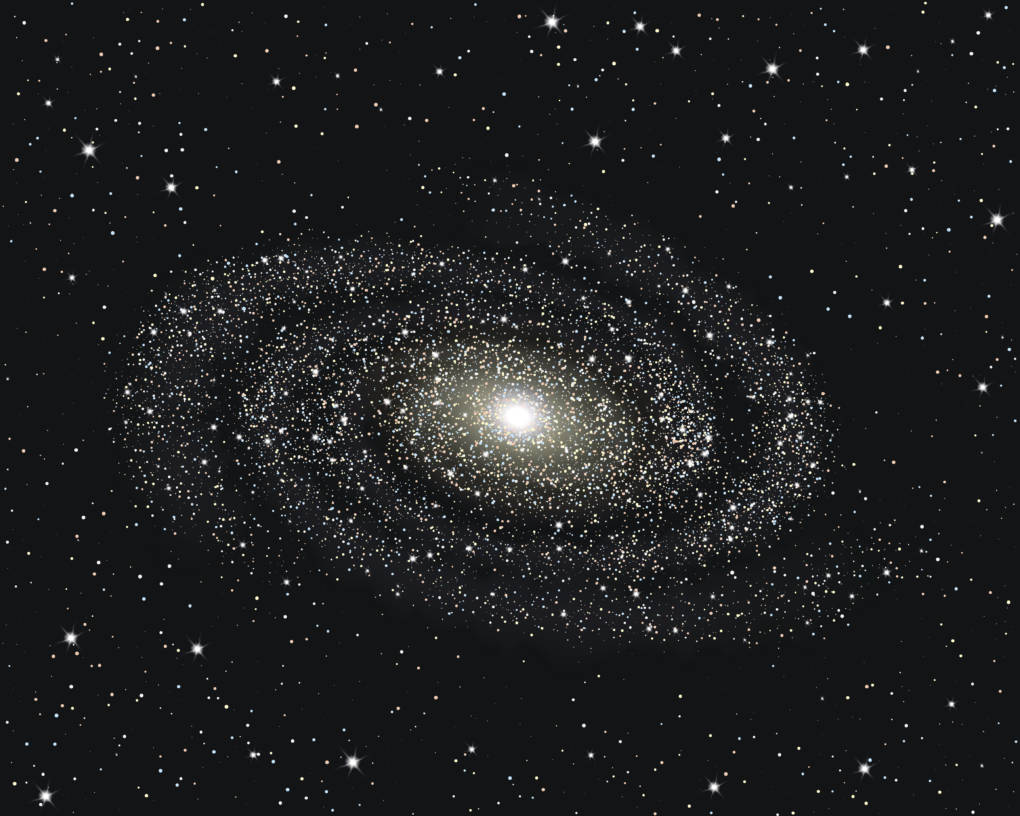
"caption": "With giant telescopes pointed at the center of our galaxy, a team of European researchers observed a fast-moving star that got close to a monstrous black hole. ",
"description": null,
"title": "Spiral Galaxy vector illustration.",
"credit": "iStock",
"status": "inherit",
"isLoading": false,
"fetchFailed": false
},
"science_1927995": {
"type": "attachments",
"id": "science_1927995",
"meta": {
"index": "attachments_1716263798",
"site": "science",
"id": "1927995",
"found": true
},
"parent": 1927986,
"imgSizes": {
"small": {
"file": "https://ww2.kqed.org/app/uploads/sites/35/2018/07/900_01_CA168231-1-520x347.jpg",
"width": 520,
"mimeType": "image/jpeg",
"height": 347
},
"twentyfourteen-full-width": {
"file": "https://ww2.kqed.org/app/uploads/sites/35/2018/07/900_01_CA168231-1-1038x576.jpg",
"width": 1038,
"mimeType": "image/jpeg",
"height": 576
},
"thumbnail": {
"file": "https://ww2.kqed.org/app/uploads/sites/35/2018/07/900_01_CA168231-1-160x107.jpg",
"width": 160,
"mimeType": "image/jpeg",
"height": 107
},
"fd-sm": {
"file": "https://ww2.kqed.org/app/uploads/sites/35/2018/07/900_01_CA168231-1-960x640.jpg",
"width": 960,
"mimeType": "image/jpeg",
"height": 640
},
"post-thumbnail": {
"file": "https://ww2.kqed.org/app/uploads/sites/35/2018/07/900_01_CA168231-1-672x372.jpg",
"width": 672,
"mimeType": "image/jpeg",
"height": 372
},
"xsmall": {
"file": "https://ww2.kqed.org/app/uploads/sites/35/2018/07/900_01_CA168231-1-375x250.jpg",
"width": 375,
"mimeType": "image/jpeg",
"height": 250
},
"kqedFullSize": {
"file": "https://ww2.kqed.org/app/uploads/sites/35/2018/07/900_01_CA168231-1.jpg",
"width": 1800,
"height": 1200
},
"large": {
"file": "https://ww2.kqed.org/app/uploads/sites/35/2018/07/900_01_CA168231-1-1020x680.jpg",
"width": 1020,
"mimeType": "image/jpeg",
"height": 680
},
"xlarge": {
"file": "https://ww2.kqed.org/app/uploads/sites/35/2018/07/900_01_CA168231-1-1180x787.jpg",
"width": 1180,
"mimeType": "image/jpeg",
"height": 787
},
"complete_open_graph": {
"file": "https://ww2.kqed.org/app/uploads/sites/35/2018/07/900_01_CA168231-1-1200x800.jpg",
"width": 1200,
"mimeType": "image/jpeg",
"height": 800
},
"guest-author-50": {
"file": "https://ww2.kqed.org/app/uploads/sites/35/2018/07/900_01_CA168231-1-50x50.jpg",
"width": 50,
"mimeType": "image/jpeg",
"height": 50
},
"guest-author-96": {
"file": "https://ww2.kqed.org/app/uploads/sites/35/2018/07/900_01_CA168231-1-96x96.jpg",
"width": 96,
"mimeType": "image/jpeg",
"height": 96
},
"medium": {
"file": "https://ww2.kqed.org/app/uploads/sites/35/2018/07/900_01_CA168231-1-800x533.jpg",
"width": 800,
"mimeType": "image/jpeg",
"height": 533
},
"guest-author-64": {
"file": "https://ww2.kqed.org/app/uploads/sites/35/2018/07/900_01_CA168231-1-64x64.jpg",
"width": 64,
"mimeType": "image/jpeg",
"height": 64
},
"guest-author-32": {
"file": "https://ww2.kqed.org/app/uploads/sites/35/2018/07/900_01_CA168231-1-32x32.jpg",
"width": 32,
"mimeType": "image/jpeg",
"height": 32
},
"fd-med": {
"file": "https://ww2.kqed.org/app/uploads/sites/35/2018/07/900_01_CA168231-1-1180x787.jpg",
"width": 1180,
"mimeType": "image/jpeg",
"height": 787
},
"detail": {
"file": "https://ww2.kqed.org/app/uploads/sites/35/2018/07/900_01_CA168231-1-150x150.jpg",
"width": 150,
"mimeType": "image/jpeg",
"height": 150
},
"medium_large": {
"file": "https://ww2.kqed.org/app/uploads/sites/35/2018/07/900_01_CA168231-1-768x512.jpg",
"width": 768,
"mimeType": "image/jpeg",
"height": 512
},
"guest-author-128": {
"file": "https://ww2.kqed.org/app/uploads/sites/35/2018/07/900_01_CA168231-1-128x128.jpg",
"width": 128,
"mimeType": "image/jpeg",
"height": 128
},
"xxsmall": {
"file": "https://ww2.kqed.org/app/uploads/sites/35/2018/07/900_01_CA168231-1-240x160.jpg",
"width": 240,
"mimeType": "image/jpeg",
"height": 160
}
},
"publishDate": 1532541921,
"modified": 1532542690,
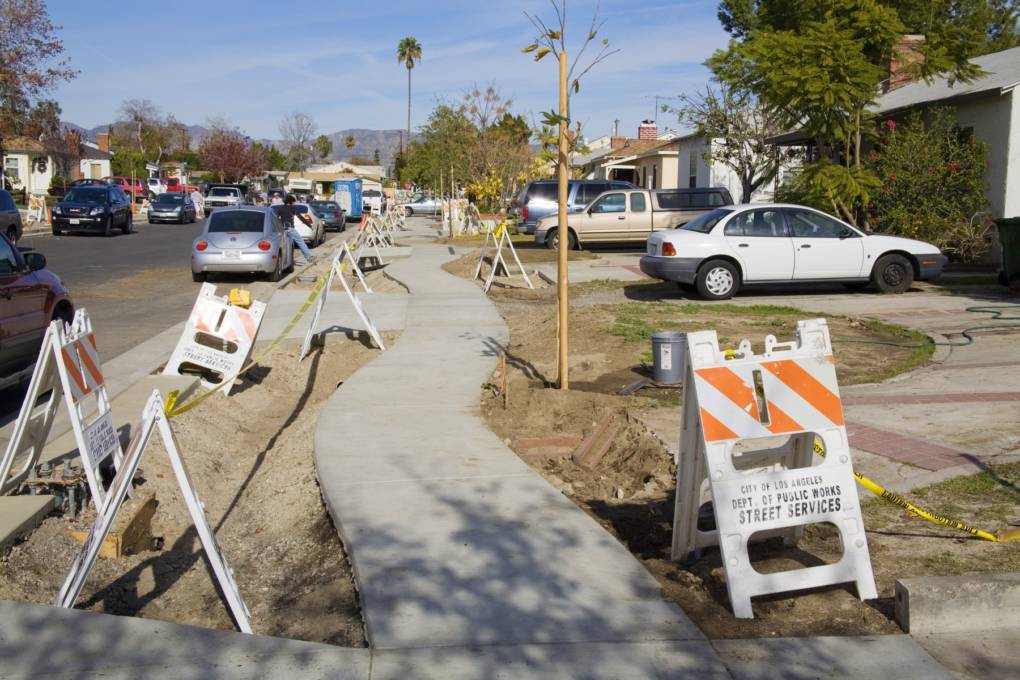
"caption": "Many lots in East Palo Alto are undeveloped because the city didn’t have enough water to accept development proposals. This lot is zoned for office space and light industrial use. ",
"description": null,
"title": "900_01_CA168231",
"credit": "Sarah Craig",
"status": "inherit",
"isLoading": false,
"fetchFailed": false
},
"science_1927898": {
"type": "attachments",
"id": "science_1927898",
"meta": {
"index": "attachments_1716263798",
"site": "science",
"id": "1927898",
"found": true
},
"parent": 1927896,
"imgSizes": {
"small": {
"file": "https://ww2.kqed.org/app/uploads/sites/35/2018/07/GettyImages-994891654-520x402.jpg",
"width": 520,
"mimeType": "image/jpeg",
"height": 402
},
"twentyfourteen-full-width": {
"file": "https://ww2.kqed.org/app/uploads/sites/35/2018/07/GettyImages-994891654-1038x576.jpg",
"width": 1038,
"mimeType": "image/jpeg",
"height": 576
},
"thumbnail": {
"file": "https://ww2.kqed.org/app/uploads/sites/35/2018/07/GettyImages-994891654-160x124.jpg",
"width": 160,
"mimeType": "image/jpeg",
"height": 124
},
"fd-sm": {
"file": "https://ww2.kqed.org/app/uploads/sites/35/2018/07/GettyImages-994891654-960x743.jpg",
"width": 960,
"mimeType": "image/jpeg",
"height": 743
},
"post-thumbnail": {
"file": "https://ww2.kqed.org/app/uploads/sites/35/2018/07/GettyImages-994891654-672x372.jpg",
"width": 672,
"mimeType": "image/jpeg",
"height": 372
},
"xsmall": {
"file": "https://ww2.kqed.org/app/uploads/sites/35/2018/07/GettyImages-994891654-375x290.jpg",
"width": 375,
"mimeType": "image/jpeg",
"height": 290
},
"kqedFullSize": {
"file": "https://ww2.kqed.org/app/uploads/sites/35/2018/07/GettyImages-994891654-e1532467323254.jpg",
"width": 1920,
"height": 1486
},
"large": {
"file": "https://ww2.kqed.org/app/uploads/sites/35/2018/07/GettyImages-994891654-1020x789.jpg",
"width": 1020,
"mimeType": "image/jpeg",
"height": 789
},
"xlarge": {
"file": "https://ww2.kqed.org/app/uploads/sites/35/2018/07/GettyImages-994891654-1180x913.jpg",
"width": 1180,
"mimeType": "image/jpeg",
"height": 913
},
"complete_open_graph": {
"file": "https://ww2.kqed.org/app/uploads/sites/35/2018/07/GettyImages-994891654-1200x929.jpg",
"width": 1200,
"mimeType": "image/jpeg",
"height": 929
},
"guest-author-50": {
"file": "https://ww2.kqed.org/app/uploads/sites/35/2018/07/GettyImages-994891654-50x50.jpg",
"width": 50,
"mimeType": "image/jpeg",
"height": 50
},
"guest-author-96": {
"file": "https://ww2.kqed.org/app/uploads/sites/35/2018/07/GettyImages-994891654-96x96.jpg",
"width": 96,
"mimeType": "image/jpeg",
"height": 96
},
"medium": {
"file": "https://ww2.kqed.org/app/uploads/sites/35/2018/07/GettyImages-994891654-800x619.jpg",
"width": 800,
"mimeType": "image/jpeg",
"height": 619
},
"guest-author-64": {
"file": "https://ww2.kqed.org/app/uploads/sites/35/2018/07/GettyImages-994891654-64x64.jpg",
"width": 64,
"mimeType": "image/jpeg",
"height": 64
},
"guest-author-32": {
"file": "https://ww2.kqed.org/app/uploads/sites/35/2018/07/GettyImages-994891654-32x32.jpg",
"width": 32,
"mimeType": "image/jpeg",
"height": 32
},
"fd-lrg": {
"file": "https://ww2.kqed.org/app/uploads/sites/35/2018/07/GettyImages-994891654-1920x1486.jpg",
"width": 1920,
"mimeType": "image/jpeg",
"height": 1486
},
"fd-med": {
"file": "https://ww2.kqed.org/app/uploads/sites/35/2018/07/GettyImages-994891654-1180x913.jpg",
"width": 1180,
"mimeType": "image/jpeg",
"height": 913
},
"full-width": {
"file": "https://ww2.kqed.org/app/uploads/sites/35/2018/07/GettyImages-994891654-1920x1486.jpg",
"width": 1920,
"mimeType": "image/jpeg",
"height": 1486
},
"detail": {
"file": "https://ww2.kqed.org/app/uploads/sites/35/2018/07/GettyImages-994891654-150x150.jpg",
"width": 150,
"mimeType": "image/jpeg",
"height": 150
},
"medium_large": {
"file": "https://ww2.kqed.org/app/uploads/sites/35/2018/07/GettyImages-994891654-768x594.jpg",
"width": 768,
"mimeType": "image/jpeg",
"height": 594
},
"guest-author-128": {
"file": "https://ww2.kqed.org/app/uploads/sites/35/2018/07/GettyImages-994891654-128x128.jpg",
"width": 128,
"mimeType": "image/jpeg",
"height": 128
},
"xxsmall": {
"file": "https://ww2.kqed.org/app/uploads/sites/35/2018/07/GettyImages-994891654-240x186.jpg",
"width": 240,
"mimeType": "image/jpeg",
"height": 186
}
},
"publishDate": 1532450192,
"modified": 1535062783,
"caption": null,
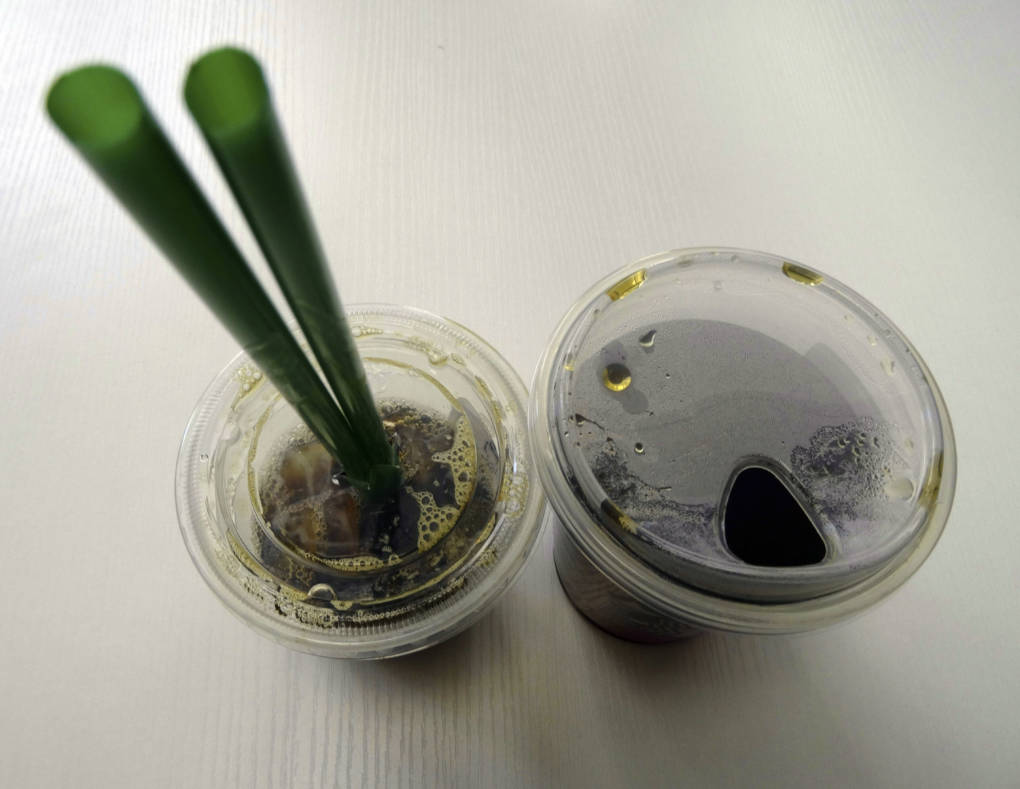
"description": "Eco-conscious San Francisco is expected to join the city of Seattle in banning plastic straws, along with tiny coffee stirrers and cup pluggers, as part of an effort to reduce plastic waste.",
"title": "US-ENVIRONMENT-STARBUCKS-PLASTIC STRAWS",
"credit": "Douglas Curran/AFP/Getty Images",
"status": "inherit",
"isLoading": false,
"fetchFailed": false
},
"science_1927931": {
"type": "attachments",
"id": "science_1927931",
"meta": {
"index": "attachments_1716263798",
"site": "science",
"id": "1927931",
"found": true
},
"parent": 1927929,
"imgSizes": {
"small": {
"file": "https://ww2.kqed.org/app/uploads/sites/35/2018/07/LosVaqueros-520x292.jpg",
"width": 520,
"mimeType": "image/jpeg",
"height": 292
},
"thumbnail": {
"file": "https://ww2.kqed.org/app/uploads/sites/35/2018/07/LosVaqueros-160x90.jpg",
"width": 160,
"mimeType": "image/jpeg",
"height": 90
},
"fd-sm": {
"file": "https://ww2.kqed.org/app/uploads/sites/35/2018/07/LosVaqueros-960x540.jpg",
"width": 960,
"mimeType": "image/jpeg",
"height": 540
},
"post-thumbnail": {
"file": "https://ww2.kqed.org/app/uploads/sites/35/2018/07/LosVaqueros-672x372.jpg",
"width": 672,
"mimeType": "image/jpeg",
"height": 372
},
"xsmall": {
"file": "https://ww2.kqed.org/app/uploads/sites/35/2018/07/LosVaqueros-375x211.jpg",
"width": 375,
"mimeType": "image/jpeg",
"height": 211
},
"kqedFullSize": {
"file": "https://ww2.kqed.org/app/uploads/sites/35/2018/07/LosVaqueros.jpg",
"width": 1000,
"height": 562
},
"guest-author-50": {
"file": "https://ww2.kqed.org/app/uploads/sites/35/2018/07/LosVaqueros-50x50.jpg",
"width": 50,
"mimeType": "image/jpeg",
"height": 50
},
"guest-author-96": {
"file": "https://ww2.kqed.org/app/uploads/sites/35/2018/07/LosVaqueros-96x96.jpg",
"width": 96,
"mimeType": "image/jpeg",
"height": 96
},
"medium": {
"file": "https://ww2.kqed.org/app/uploads/sites/35/2018/07/LosVaqueros-800x450.jpg",
"width": 800,
"mimeType": "image/jpeg",
"height": 450
},
"guest-author-64": {
"file": "https://ww2.kqed.org/app/uploads/sites/35/2018/07/LosVaqueros-64x64.jpg",
"width": 64,
"mimeType": "image/jpeg",
"height": 64
},
"guest-author-32": {
"file": "https://ww2.kqed.org/app/uploads/sites/35/2018/07/LosVaqueros-32x32.jpg",
"width": 32,
"mimeType": "image/jpeg",
"height": 32
},
"detail": {
"file": "https://ww2.kqed.org/app/uploads/sites/35/2018/07/LosVaqueros-150x150.jpg",
"width": 150,
"mimeType": "image/jpeg",
"height": 150
},
"medium_large": {
"file": "https://ww2.kqed.org/app/uploads/sites/35/2018/07/LosVaqueros-768x432.jpg",
"width": 768,
"mimeType": "image/jpeg",
"height": 432
},
"guest-author-128": {
"file": "https://ww2.kqed.org/app/uploads/sites/35/2018/07/LosVaqueros-128x128.jpg",
"width": 128,
"mimeType": "image/jpeg",
"height": 128
},
"xxsmall": {
"file": "https://ww2.kqed.org/app/uploads/sites/35/2018/07/LosVaqueros-240x135.jpg",
"width": 240,
"mimeType": "image/jpeg",
"height": 135
}
},
"publishDate": 1532463060,
"modified": 1532463118,
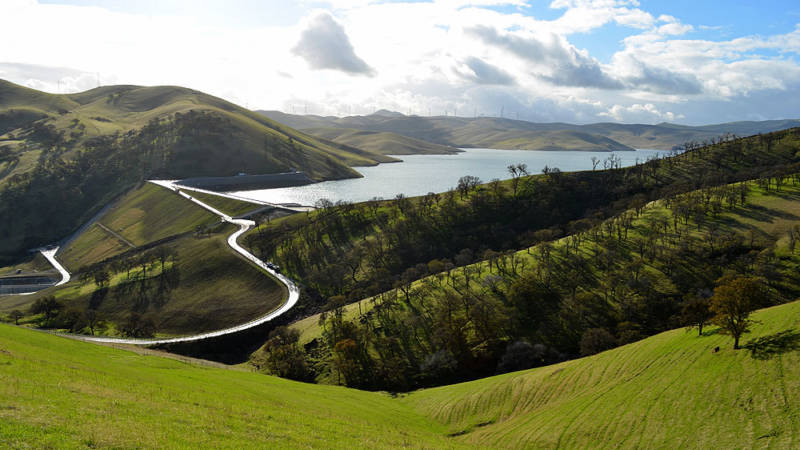
"caption": "Los Vaqueros Reservoir in the east Bay Area will get a big funding boost from Proposition 1.",
"description": null,
"title": "LosVaqueros",
"credit": "Contra Costa Water District",
"status": "inherit",
"isLoading": false,
"fetchFailed": false
},
"science_1927729": {
"type": "attachments",
"id": "science_1927729",
"meta": {
"index": "attachments_1716263798",
"site": "science",
"id": "1927729",
"found": true
},
"parent": 1927677,
"imgSizes": {
"small": {
"file": "https://ww2.kqed.org/app/uploads/sites/35/2018/07/38396203801_970bf10e3b_k-520x280.jpg",
"width": 520,
"mimeType": "image/jpeg",
"height": 280
},
"twentyfourteen-full-width": {
"file": "https://ww2.kqed.org/app/uploads/sites/35/2018/07/38396203801_970bf10e3b_k-1038x576.jpg",
"width": 1038,
"mimeType": "image/jpeg",
"height": 576
},
"thumbnail": {
"file": "https://ww2.kqed.org/app/uploads/sites/35/2018/07/38396203801_970bf10e3b_k-160x86.jpg",
"width": 160,
"mimeType": "image/jpeg",
"height": 86
},
"fd-sm": {
"file": "https://ww2.kqed.org/app/uploads/sites/35/2018/07/38396203801_970bf10e3b_k-960x517.jpg",
"width": 960,
"mimeType": "image/jpeg",
"height": 517
},
"post-thumbnail": {
"file": "https://ww2.kqed.org/app/uploads/sites/35/2018/07/38396203801_970bf10e3b_k-672x372.jpg",
"width": 672,
"mimeType": "image/jpeg",
"height": 372
},
"xsmall": {
"file": "https://ww2.kqed.org/app/uploads/sites/35/2018/07/38396203801_970bf10e3b_k-375x202.jpg",
"width": 375,
"mimeType": "image/jpeg",
"height": 202
},
"kqedFullSize": {
"file": "https://ww2.kqed.org/app/uploads/sites/35/2018/07/38396203801_970bf10e3b_k.jpg",
"width": 2048,
"height": 1102
},
"large": {
"file": "https://ww2.kqed.org/app/uploads/sites/35/2018/07/38396203801_970bf10e3b_k-1020x549.jpg",
"width": 1020,
"mimeType": "image/jpeg",
"height": 549
},
"xlarge": {
"file": "https://ww2.kqed.org/app/uploads/sites/35/2018/07/38396203801_970bf10e3b_k-1180x635.jpg",
"width": 1180,
"mimeType": "image/jpeg",
"height": 635
},
"complete_open_graph": {
"file": "https://ww2.kqed.org/app/uploads/sites/35/2018/07/38396203801_970bf10e3b_k-1200x646.jpg",
"width": 1200,
"mimeType": "image/jpeg",
"height": 646
},
"guest-author-50": {
"file": "https://ww2.kqed.org/app/uploads/sites/35/2018/07/38396203801_970bf10e3b_k-50x50.jpg",
"width": 50,
"mimeType": "image/jpeg",
"height": 50
},
"guest-author-96": {
"file": "https://ww2.kqed.org/app/uploads/sites/35/2018/07/38396203801_970bf10e3b_k-96x96.jpg",
"width": 96,
"mimeType": "image/jpeg",
"height": 96
},
"medium": {
"file": "https://ww2.kqed.org/app/uploads/sites/35/2018/07/38396203801_970bf10e3b_k-800x430.jpg",
"width": 800,
"mimeType": "image/jpeg",
"height": 430
},
"guest-author-64": {
"file": "https://ww2.kqed.org/app/uploads/sites/35/2018/07/38396203801_970bf10e3b_k-64x64.jpg",
"width": 64,
"mimeType": "image/jpeg",
"height": 64
},
"guest-author-32": {
"file": "https://ww2.kqed.org/app/uploads/sites/35/2018/07/38396203801_970bf10e3b_k-32x32.jpg",
"width": 32,
"mimeType": "image/jpeg",
"height": 32
},
"fd-lrg": {
"file": "https://ww2.kqed.org/app/uploads/sites/35/2018/07/38396203801_970bf10e3b_k-1920x1033.jpg",
"width": 1920,
"mimeType": "image/jpeg",
"height": 1033
},
"fd-med": {
"file": "https://ww2.kqed.org/app/uploads/sites/35/2018/07/38396203801_970bf10e3b_k-1180x635.jpg",
"width": 1180,
"mimeType": "image/jpeg",
"height": 635
},
"full-width": {
"file": "https://ww2.kqed.org/app/uploads/sites/35/2018/07/38396203801_970bf10e3b_k-1920x1033.jpg",
"width": 1920,
"mimeType": "image/jpeg",
"height": 1033
},
"detail": {
"file": "https://ww2.kqed.org/app/uploads/sites/35/2018/07/38396203801_970bf10e3b_k-150x150.jpg",
"width": 150,
"mimeType": "image/jpeg",
"height": 150
},
"medium_large": {
"file": "https://ww2.kqed.org/app/uploads/sites/35/2018/07/38396203801_970bf10e3b_k-768x413.jpg",
"width": 768,
"mimeType": "image/jpeg",
"height": 413
},
"guest-author-128": {
"file": "https://ww2.kqed.org/app/uploads/sites/35/2018/07/38396203801_970bf10e3b_k-128x128.jpg",
"width": 128,
"mimeType": "image/jpeg",
"height": 128
},
"xxsmall": {
"file": "https://ww2.kqed.org/app/uploads/sites/35/2018/07/38396203801_970bf10e3b_k-240x129.jpg",
"width": 240,
"mimeType": "image/jpeg",
"height": 129
}
},
"publishDate": 1532129743,
"modified": 1532129956,
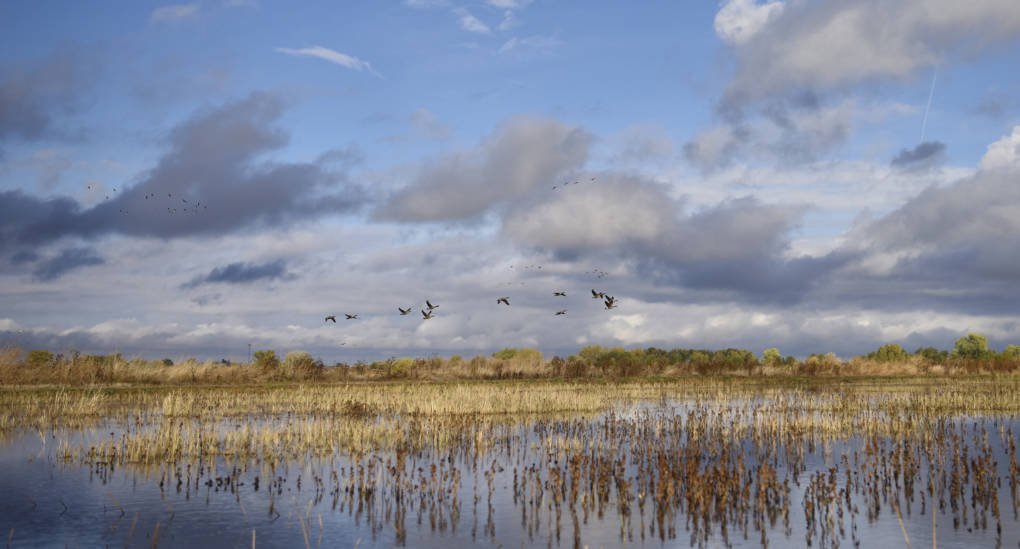
"caption": "Birds fly over the Central Valley's Cosumnes River Preserve, one of the few protected wetland habitat areas in California.",
"description": "Birds fly over a wetland at the Central Valley's Cosumnes River Preserve",
"title": "Cosumnes River Preserve",
"credit": "John Ciccarelli/BLM",
"status": "inherit",
"isLoading": false,
"fetchFailed": false
},
"science_1927906": {
"type": "attachments",
"id": "science_1927906",
"meta": {
"index": "attachments_1716263798",
"site": "science",
"id": "1927906",
"found": true
},
"parent": 1927893,
"imgSizes": {
"small": {
"file": "https://ww2.kqed.org/app/uploads/sites/35/2018/07/GettyImages-71477090-520x328.jpg",
"width": 520,
"mimeType": "image/jpeg",
"height": 328
},
"twentyfourteen-full-width": {
"file": "https://ww2.kqed.org/app/uploads/sites/35/2018/07/GettyImages-71477090-1038x576.jpg",
"width": 1038,
"mimeType": "image/jpeg",
"height": 576
},
"thumbnail": {
"file": "https://ww2.kqed.org/app/uploads/sites/35/2018/07/GettyImages-71477090-160x101.jpg",
"width": 160,
"mimeType": "image/jpeg",
"height": 101
},
"fd-sm": {
"file": "https://ww2.kqed.org/app/uploads/sites/35/2018/07/GettyImages-71477090-960x605.jpg",
"width": 960,
"mimeType": "image/jpeg",
"height": 605
},
"post-thumbnail": {
"file": "https://ww2.kqed.org/app/uploads/sites/35/2018/07/GettyImages-71477090-672x372.jpg",
"width": 672,
"mimeType": "image/jpeg",
"height": 372
},
"xsmall": {
"file": "https://ww2.kqed.org/app/uploads/sites/35/2018/07/GettyImages-71477090-375x236.jpg",
"width": 375,
"mimeType": "image/jpeg",
"height": 236
},
"kqedFullSize": {
"file": "https://ww2.kqed.org/app/uploads/sites/35/2018/07/GettyImages-71477090.jpg",
"width": 3000,
"height": 1890
},
"large": {
"file": "https://ww2.kqed.org/app/uploads/sites/35/2018/07/GettyImages-71477090-1020x643.jpg",
"width": 1020,
"mimeType": "image/jpeg",
"height": 643
},
"xlarge": {
"file": "https://ww2.kqed.org/app/uploads/sites/35/2018/07/GettyImages-71477090-1180x743.jpg",
"width": 1180,
"mimeType": "image/jpeg",
"height": 743
},
"complete_open_graph": {
"file": "https://ww2.kqed.org/app/uploads/sites/35/2018/07/GettyImages-71477090-1200x756.jpg",
"width": 1200,
"mimeType": "image/jpeg",
"height": 756
},
"guest-author-50": {
"file": "https://ww2.kqed.org/app/uploads/sites/35/2018/07/GettyImages-71477090-50x50.jpg",
"width": 50,
"mimeType": "image/jpeg",
"height": 50
},
"guest-author-96": {
"file": "https://ww2.kqed.org/app/uploads/sites/35/2018/07/GettyImages-71477090-96x96.jpg",
"width": 96,
"mimeType": "image/jpeg",
"height": 96
},
"medium": {
"file": "https://ww2.kqed.org/app/uploads/sites/35/2018/07/GettyImages-71477090-800x504.jpg",
"width": 800,
"mimeType": "image/jpeg",
"height": 504
},
"guest-author-64": {
"file": "https://ww2.kqed.org/app/uploads/sites/35/2018/07/GettyImages-71477090-64x64.jpg",
"width": 64,
"mimeType": "image/jpeg",
"height": 64
},
"guest-author-32": {
"file": "https://ww2.kqed.org/app/uploads/sites/35/2018/07/GettyImages-71477090-32x32.jpg",
"width": 32,
"mimeType": "image/jpeg",
"height": 32
},
"fd-lrg": {
"file": "https://ww2.kqed.org/app/uploads/sites/35/2018/07/GettyImages-71477090-1920x1210.jpg",
"width": 1920,
"mimeType": "image/jpeg",
"height": 1210
},
"fd-med": {
"file": "https://ww2.kqed.org/app/uploads/sites/35/2018/07/GettyImages-71477090-1180x743.jpg",
"width": 1180,
"mimeType": "image/jpeg",
"height": 743
},
"full-width": {
"file": "https://ww2.kqed.org/app/uploads/sites/35/2018/07/GettyImages-71477090-1920x1210.jpg",
"width": 1920,
"mimeType": "image/jpeg",
"height": 1210
},
"detail": {
"file": "https://ww2.kqed.org/app/uploads/sites/35/2018/07/GettyImages-71477090-150x150.jpg",
"width": 150,
"mimeType": "image/jpeg",
"height": 150
},
"medium_large": {
"file": "https://ww2.kqed.org/app/uploads/sites/35/2018/07/GettyImages-71477090-768x484.jpg",
"width": 768,
"mimeType": "image/jpeg",
"height": 484
},
"guest-author-128": {
"file": "https://ww2.kqed.org/app/uploads/sites/35/2018/07/GettyImages-71477090-128x128.jpg",
"width": 128,
"mimeType": "image/jpeg",
"height": 128
},
"xxsmall": {
"file": "https://ww2.kqed.org/app/uploads/sites/35/2018/07/GettyImages-71477090-240x151.jpg",
"width": 240,
"mimeType": "image/jpeg",
"height": 151
}
},
"publishDate": 1532450930,
"modified": 1532450967,
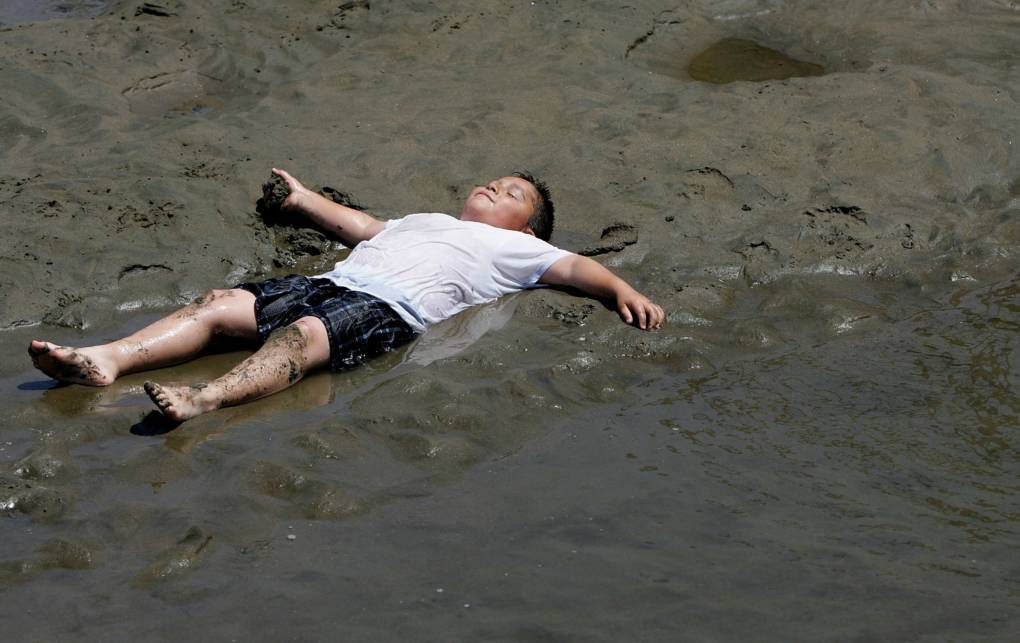
"caption": "A young boy cools off in shallow water at Crissy Fields July 18, 2006 in San Francisco, California. ",
"description": null,
"title": "U.S. Temperatures Hit Upper 90s",
"credit": "Justin Sullivan/Getty Images)",
"status": "inherit",
"isLoading": false,
"fetchFailed": false
},
"science_1927832": {
"type": "attachments",
"id": "science_1927832",
"meta": {
"index": "attachments_1716263798",
"site": "science",
"id": "1927832",
"found": true
},
"parent": 1927766,
"imgSizes": {
"small": {
"file": "https://ww2.kqed.org/app/uploads/sites/35/2018/07/GettyImages-949250044-520x348.jpg",
"width": 520,
"mimeType": "image/jpeg",
"height": 348
},
"twentyfourteen-full-width": {
"file": "https://ww2.kqed.org/app/uploads/sites/35/2018/07/GettyImages-949250044-1038x576.jpg",
"width": 1038,
"mimeType": "image/jpeg",
"height": 576
},
"thumbnail": {
"file": "https://ww2.kqed.org/app/uploads/sites/35/2018/07/GettyImages-949250044-160x107.jpg",
"width": 160,
"mimeType": "image/jpeg",
"height": 107
},
"fd-sm": {
"file": "https://ww2.kqed.org/app/uploads/sites/35/2018/07/GettyImages-949250044-960x642.jpg",
"width": 960,
"mimeType": "image/jpeg",
"height": 642
},
"post-thumbnail": {
"file": "https://ww2.kqed.org/app/uploads/sites/35/2018/07/GettyImages-949250044-672x372.jpg",
"width": 672,
"mimeType": "image/jpeg",
"height": 372
},
"xsmall": {
"file": "https://ww2.kqed.org/app/uploads/sites/35/2018/07/GettyImages-949250044-375x251.jpg",
"width": 375,
"mimeType": "image/jpeg",
"height": 251
},
"kqedFullSize": {
"file": "https://ww2.kqed.org/app/uploads/sites/35/2018/07/GettyImages-949250044.jpg",
"width": 3000,
"height": 2005
},
"large": {
"file": "https://ww2.kqed.org/app/uploads/sites/35/2018/07/GettyImages-949250044-1020x682.jpg",
"width": 1020,
"mimeType": "image/jpeg",
"height": 682
},
"xlarge": {
"file": "https://ww2.kqed.org/app/uploads/sites/35/2018/07/GettyImages-949250044-1180x789.jpg",
"width": 1180,
"mimeType": "image/jpeg",
"height": 789
},
"complete_open_graph": {
"file": "https://ww2.kqed.org/app/uploads/sites/35/2018/07/GettyImages-949250044-1200x802.jpg",
"width": 1200,
"mimeType": "image/jpeg",
"height": 802
},
"guest-author-50": {
"file": "https://ww2.kqed.org/app/uploads/sites/35/2018/07/GettyImages-949250044-50x50.jpg",
"width": 50,
"mimeType": "image/jpeg",
"height": 50
},
"guest-author-96": {
"file": "https://ww2.kqed.org/app/uploads/sites/35/2018/07/GettyImages-949250044-96x96.jpg",
"width": 96,
"mimeType": "image/jpeg",
"height": 96
},
"medium": {
"file": "https://ww2.kqed.org/app/uploads/sites/35/2018/07/GettyImages-949250044-800x535.jpg",
"width": 800,
"mimeType": "image/jpeg",
"height": 535
},
"guest-author-64": {
"file": "https://ww2.kqed.org/app/uploads/sites/35/2018/07/GettyImages-949250044-64x64.jpg",
"width": 64,
"mimeType": "image/jpeg",
"height": 64
},
"guest-author-32": {
"file": "https://ww2.kqed.org/app/uploads/sites/35/2018/07/GettyImages-949250044-32x32.jpg",
"width": 32,
"mimeType": "image/jpeg",
"height": 32
},
"fd-lrg": {
"file": "https://ww2.kqed.org/app/uploads/sites/35/2018/07/GettyImages-949250044-1920x1283.jpg",
"width": 1920,
"mimeType": "image/jpeg",
"height": 1283
},
"fd-med": {
"file": "https://ww2.kqed.org/app/uploads/sites/35/2018/07/GettyImages-949250044-1180x789.jpg",
"width": 1180,
"mimeType": "image/jpeg",
"height": 789
},
"full-width": {
"file": "https://ww2.kqed.org/app/uploads/sites/35/2018/07/GettyImages-949250044-1920x1283.jpg",
"width": 1920,
"mimeType": "image/jpeg",
"height": 1283
},
"detail": {
"file": "https://ww2.kqed.org/app/uploads/sites/35/2018/07/GettyImages-949250044-150x150.jpg",
"width": 150,
"mimeType": "image/jpeg",
"height": 150
},
"medium_large": {
"file": "https://ww2.kqed.org/app/uploads/sites/35/2018/07/GettyImages-949250044-768x513.jpg",
"width": 768,
"mimeType": "image/jpeg",
"height": 513
},
"guest-author-128": {
"file": "https://ww2.kqed.org/app/uploads/sites/35/2018/07/GettyImages-949250044-128x128.jpg",
"width": 128,
"mimeType": "image/jpeg",
"height": 128
},
"xxsmall": {
"file": "https://ww2.kqed.org/app/uploads/sites/35/2018/07/GettyImages-949250044-240x160.jpg",
"width": 240,
"mimeType": "image/jpeg",
"height": 160
}
},
"publishDate": 1532381500,
"modified": 1532381618,
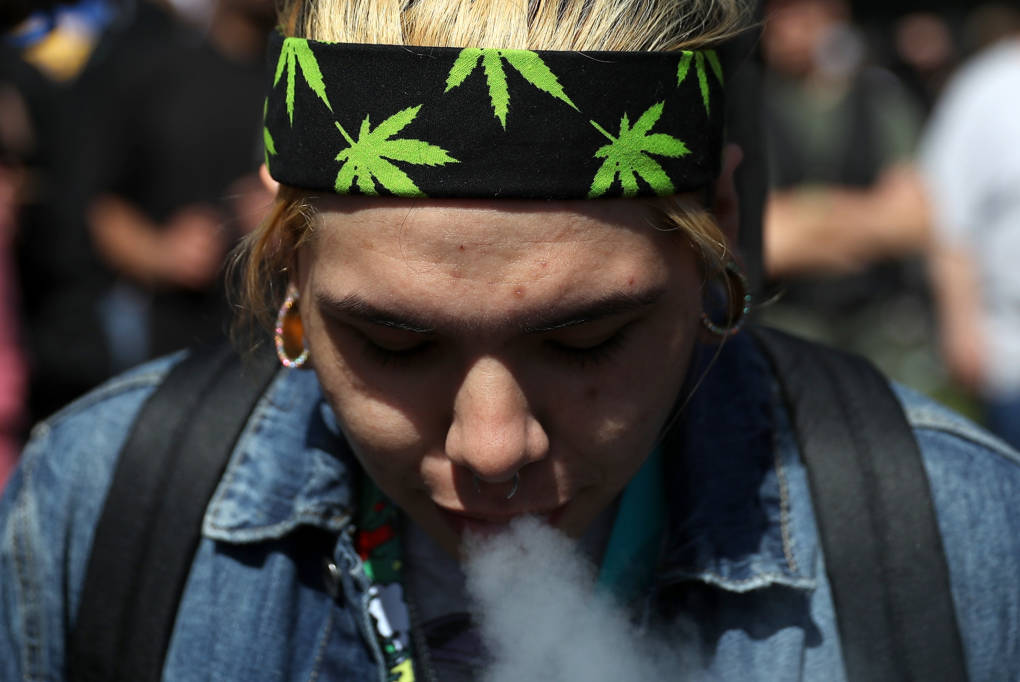
"caption": "A marijuana user blows smoke after taking a hit from a bong during a 420 Day celebration in Golden Gate Park on April 20, 2018 in San Francisco, California. A state funded study aims to determine what levels of marijuana's psychoactive compound THC are enough to impair drivers. ",
"description": null,
"title": "Annual Marijuana \"Holiday\" 4/20 Celebrated In San Francisco",
"credit": "Justin Sullivan/Getty Images",
"status": "inherit",
"isLoading": false,
"fetchFailed": false
},
"science_1927759": {
"type": "attachments",
"id": "science_1927759",
"meta": {
"index": "attachments_1716263798",
"site": "science",
"id": "1927759",
"found": true
},
"parent": 1927756,
"imgSizes": {
"small": {
"file": "https://ww2.kqed.org/app/uploads/sites/35/2018/07/90038198BS064_valley1-520x347.jpg",
"width": 520,
"mimeType": "image/jpeg",
"height": 347
},
"thumbnail": {
"file": "https://ww2.kqed.org/app/uploads/sites/35/2018/07/90038198BS064_valley1-160x107.jpg",
"width": 160,
"mimeType": "image/jpeg",
"height": 107
},
"post-thumbnail": {
"file": "https://ww2.kqed.org/app/uploads/sites/35/2018/07/90038198BS064_valley1-640x372.jpg",
"width": 640,
"mimeType": "image/jpeg",
"height": 372
},
"xsmall": {
"file": "https://ww2.kqed.org/app/uploads/sites/35/2018/07/90038198BS064_valley1-375x250.jpg",
"width": 375,
"mimeType": "image/jpeg",
"height": 250
},
"kqedFullSize": {
"file": "https://ww2.kqed.org/app/uploads/sites/35/2018/07/90038198BS064_valley1.jpg",
"width": 640,
"height": 427
},
"guest-author-50": {
"file": "https://ww2.kqed.org/app/uploads/sites/35/2018/07/90038198BS064_valley1-50x50.jpg",
"width": 50,
"mimeType": "image/jpeg",
"height": 50
},
"guest-author-96": {
"file": "https://ww2.kqed.org/app/uploads/sites/35/2018/07/90038198BS064_valley1-96x96.jpg",
"width": 96,
"mimeType": "image/jpeg",
"height": 96
},
"guest-author-64": {
"file": "https://ww2.kqed.org/app/uploads/sites/35/2018/07/90038198BS064_valley1-64x64.jpg",
"width": 64,
"mimeType": "image/jpeg",
"height": 64
},
"detail": {
"file": "https://ww2.kqed.org/app/uploads/sites/35/2018/07/90038198BS064_valley1-150x150.jpg",
"width": 150,
"mimeType": "image/jpeg",
"height": 150
},
"guest-author-32": {
"file": "https://ww2.kqed.org/app/uploads/sites/35/2018/07/90038198BS064_valley1-32x32.jpg",
"width": 32,
"mimeType": "image/jpeg",
"height": 32
},
"guest-author-128": {
"file": "https://ww2.kqed.org/app/uploads/sites/35/2018/07/90038198BS064_valley1-128x128.jpg",
"width": 128,
"mimeType": "image/jpeg",
"height": 128
},
"xxsmall": {
"file": "https://ww2.kqed.org/app/uploads/sites/35/2018/07/90038198BS064_valley1-240x160.jpg",
"width": 240,
"mimeType": "image/jpeg",
"height": 160
}
},
"publishDate": 1532358865,
"modified": 1532358888,
"caption": "A farmworker patrols an irrigation ditch in California’s Imperial Valley. ",
"description": null,
"title": "90038198BS064_valley1",
"credit": "Brent Stirton/Getty Images",
"status": "inherit",
"isLoading": false,
"fetchFailed": false
},
"science_1927785": {
"type": "attachments",
"id": "science_1927785",
"meta": {
"index": "attachments_1716263798",
"site": "science",
"id": "1927785",
"found": true
},
"parent": 1927783,
"imgSizes": {
"small": {
"file": "https://ww2.kqed.org/app/uploads/sites/35/2018/07/RS23387_GettyImages-591066766-520x346.jpg",
"width": 520,
"mimeType": "image/jpeg",
"height": 346
},
"twentyfourteen-full-width": {
"file": "https://ww2.kqed.org/app/uploads/sites/35/2018/07/RS23387_GettyImages-591066766-1038x576.jpg",
"width": 1038,
"mimeType": "image/jpeg",
"height": 576
},
"thumbnail": {
"file": "https://ww2.kqed.org/app/uploads/sites/35/2018/07/RS23387_GettyImages-591066766-160x107.jpg",
"width": 160,
"mimeType": "image/jpeg",
"height": 107
},
"fd-sm": {
"file": "https://ww2.kqed.org/app/uploads/sites/35/2018/07/RS23387_GettyImages-591066766-960x639.jpg",
"width": 960,
"mimeType": "image/jpeg",
"height": 639
},
"post-thumbnail": {
"file": "https://ww2.kqed.org/app/uploads/sites/35/2018/07/RS23387_GettyImages-591066766-672x372.jpg",
"width": 672,
"mimeType": "image/jpeg",
"height": 372
},
"xsmall": {
"file": "https://ww2.kqed.org/app/uploads/sites/35/2018/07/RS23387_GettyImages-591066766-375x250.jpg",
"width": 375,
"mimeType": "image/jpeg",
"height": 250
},
"kqedFullSize": {
"file": "https://ww2.kqed.org/app/uploads/sites/35/2018/07/RS23387_GettyImages-591066766.jpg",
"width": 5744,
"height": 3826
},
"large": {
"file": "https://ww2.kqed.org/app/uploads/sites/35/2018/07/RS23387_GettyImages-591066766-1020x679.jpg",
"width": 1020,
"mimeType": "image/jpeg",
"height": 679
},
"xlarge": {
"file": "https://ww2.kqed.org/app/uploads/sites/35/2018/07/RS23387_GettyImages-591066766-1180x786.jpg",
"width": 1180,
"mimeType": "image/jpeg",
"height": 786
},
"complete_open_graph": {
"file": "https://ww2.kqed.org/app/uploads/sites/35/2018/07/RS23387_GettyImages-591066766-1200x799.jpg",
"width": 1200,
"mimeType": "image/jpeg",
"height": 799
},
"guest-author-50": {
"file": "https://ww2.kqed.org/app/uploads/sites/35/2018/07/RS23387_GettyImages-591066766-50x50.jpg",
"width": 50,
"mimeType": "image/jpeg",
"height": 50
},
"guest-author-96": {
"file": "https://ww2.kqed.org/app/uploads/sites/35/2018/07/RS23387_GettyImages-591066766-96x96.jpg",
"width": 96,
"mimeType": "image/jpeg",
"height": 96
},
"medium": {
"file": "https://ww2.kqed.org/app/uploads/sites/35/2018/07/RS23387_GettyImages-591066766-800x533.jpg",
"width": 800,
"mimeType": "image/jpeg",
"height": 533
},
"guest-author-64": {
"file": "https://ww2.kqed.org/app/uploads/sites/35/2018/07/RS23387_GettyImages-591066766-64x64.jpg",
"width": 64,
"mimeType": "image/jpeg",
"height": 64
},
"guest-author-32": {
"file": "https://ww2.kqed.org/app/uploads/sites/35/2018/07/RS23387_GettyImages-591066766-32x32.jpg",
"width": 32,
"mimeType": "image/jpeg",
"height": 32
},
"fd-lrg": {
"file": "https://ww2.kqed.org/app/uploads/sites/35/2018/07/RS23387_GettyImages-591066766-1920x1279.jpg",
"width": 1920,
"mimeType": "image/jpeg",
"height": 1279
},
"fd-med": {
"file": "https://ww2.kqed.org/app/uploads/sites/35/2018/07/RS23387_GettyImages-591066766-1180x786.jpg",
"width": 1180,
"mimeType": "image/jpeg",
"height": 786
},
"full-width": {
"file": "https://ww2.kqed.org/app/uploads/sites/35/2018/07/RS23387_GettyImages-591066766-1920x1279.jpg",
"width": 1920,
"mimeType": "image/jpeg",
"height": 1279
},
"detail": {
"file": "https://ww2.kqed.org/app/uploads/sites/35/2018/07/RS23387_GettyImages-591066766-150x150.jpg",
"width": 150,
"mimeType": "image/jpeg",
"height": 150
},
"medium_large": {
"file": "https://ww2.kqed.org/app/uploads/sites/35/2018/07/RS23387_GettyImages-591066766-768x512.jpg",
"width": 768,
"mimeType": "image/jpeg",
"height": 512
},
"guest-author-128": {
"file": "https://ww2.kqed.org/app/uploads/sites/35/2018/07/RS23387_GettyImages-591066766-128x128.jpg",
"width": 128,
"mimeType": "image/jpeg",
"height": 128
},
"xxsmall": {
"file": "https://ww2.kqed.org/app/uploads/sites/35/2018/07/RS23387_GettyImages-591066766-240x160.jpg",
"width": 240,
"mimeType": "image/jpeg",
"height": 160
}
},
"publishDate": 1532370156,
"modified": 1532370215,
"caption": "A firefighter battles the Blue Cut wildfire burning north of San Bernardino, California on August 16, 2016. \n",
"description": null,
"title": "US-WEATHER-FIRES-CALIFORNIA",
"credit": "Ringo Chiu/AFP/Getty Images",
"status": "inherit",
"isLoading": false,
"fetchFailed": false
},
"science_1927714": {
"type": "attachments",
"id": "science_1927714",
"meta": {
"index": "attachments_1716263798",
"site": "science",
"id": "1927714",
"found": true
},
"parent": 1927711,
"imgSizes": {
"small": {
"file": "https://ww2.kqed.org/app/uploads/sites/35/2018/07/news_release_shasta_dam-web-520x342.jpg",
"width": 520,
"mimeType": "image/jpeg",
"height": 342
},
"twentyfourteen-full-width": {
"file": "https://ww2.kqed.org/app/uploads/sites/35/2018/07/news_release_shasta_dam-web-1038x576.jpg",
"width": 1038,
"mimeType": "image/jpeg",
"height": 576
},
"thumbnail": {
"file": "https://ww2.kqed.org/app/uploads/sites/35/2018/07/news_release_shasta_dam-web-160x105.jpg",
"width": 160,
"mimeType": "image/jpeg",
"height": 105
},
"fd-sm": {
"file": "https://ww2.kqed.org/app/uploads/sites/35/2018/07/news_release_shasta_dam-web-960x632.jpg",
"width": 960,
"mimeType": "image/jpeg",
"height": 632
},
"post-thumbnail": {
"file": "https://ww2.kqed.org/app/uploads/sites/35/2018/07/news_release_shasta_dam-web-672x372.jpg",
"width": 672,
"mimeType": "image/jpeg",
"height": 372
},
"xsmall": {
"file": "https://ww2.kqed.org/app/uploads/sites/35/2018/07/news_release_shasta_dam-web-375x247.jpg",
"width": 375,
"mimeType": "image/jpeg",
"height": 247
},
"kqedFullSize": {
"file": "https://ww2.kqed.org/app/uploads/sites/35/2018/07/news_release_shasta_dam-web.jpg",
"width": 1920,
"height": 1263
},
"large": {
"file": "https://ww2.kqed.org/app/uploads/sites/35/2018/07/news_release_shasta_dam-web-1020x671.jpg",
"width": 1020,
"mimeType": "image/jpeg",
"height": 671
},
"xlarge": {
"file": "https://ww2.kqed.org/app/uploads/sites/35/2018/07/news_release_shasta_dam-web-1180x776.jpg",
"width": 1180,
"mimeType": "image/jpeg",
"height": 776
},
"complete_open_graph": {
"file": "https://ww2.kqed.org/app/uploads/sites/35/2018/07/news_release_shasta_dam-web-1200x789.jpg",
"width": 1200,
"mimeType": "image/jpeg",
"height": 789
},
"guest-author-50": {
"file": "https://ww2.kqed.org/app/uploads/sites/35/2018/07/news_release_shasta_dam-web-50x50.jpg",
"width": 50,
"mimeType": "image/jpeg",
"height": 50
},
"guest-author-96": {
"file": "https://ww2.kqed.org/app/uploads/sites/35/2018/07/news_release_shasta_dam-web-96x96.jpg",
"width": 96,
"mimeType": "image/jpeg",
"height": 96
},
"medium": {
"file": "https://ww2.kqed.org/app/uploads/sites/35/2018/07/news_release_shasta_dam-web-800x526.jpg",
"width": 800,
"mimeType": "image/jpeg",
"height": 526
},
"guest-author-64": {
"file": "https://ww2.kqed.org/app/uploads/sites/35/2018/07/news_release_shasta_dam-web-64x64.jpg",
"width": 64,
"mimeType": "image/jpeg",
"height": 64
},
"guest-author-32": {
"file": "https://ww2.kqed.org/app/uploads/sites/35/2018/07/news_release_shasta_dam-web-32x32.jpg",
"width": 32,
"mimeType": "image/jpeg",
"height": 32
},
"fd-lrg": {
"file": "https://ww2.kqed.org/app/uploads/sites/35/2018/07/news_release_shasta_dam-web-1920x1263.jpg",
"width": 1920,
"mimeType": "image/jpeg",
"height": 1263
},
"fd-med": {
"file": "https://ww2.kqed.org/app/uploads/sites/35/2018/07/news_release_shasta_dam-web-1180x776.jpg",
"width": 1180,
"mimeType": "image/jpeg",
"height": 776
},
"full-width": {
"file": "https://ww2.kqed.org/app/uploads/sites/35/2018/07/news_release_shasta_dam-web-1920x1263.jpg",
"width": 1920,
"mimeType": "image/jpeg",
"height": 1263
},
"detail": {
"file": "https://ww2.kqed.org/app/uploads/sites/35/2018/07/news_release_shasta_dam-web-150x150.jpg",
"width": 150,
"mimeType": "image/jpeg",
"height": 150
},
"medium_large": {
"file": "https://ww2.kqed.org/app/uploads/sites/35/2018/07/news_release_shasta_dam-web-768x505.jpg",
"width": 768,
"mimeType": "image/jpeg",
"height": 505
},
"guest-author-128": {
"file": "https://ww2.kqed.org/app/uploads/sites/35/2018/07/news_release_shasta_dam-web-128x128.jpg",
"width": 128,
"mimeType": "image/jpeg",
"height": 128
},
"xxsmall": {
"file": "https://ww2.kqed.org/app/uploads/sites/35/2018/07/news_release_shasta_dam-web-240x158.jpg",
"width": 240,
"mimeType": "image/jpeg",
"height": 158
}
},
"publishDate": 1532125931,
"modified": 1532125948,
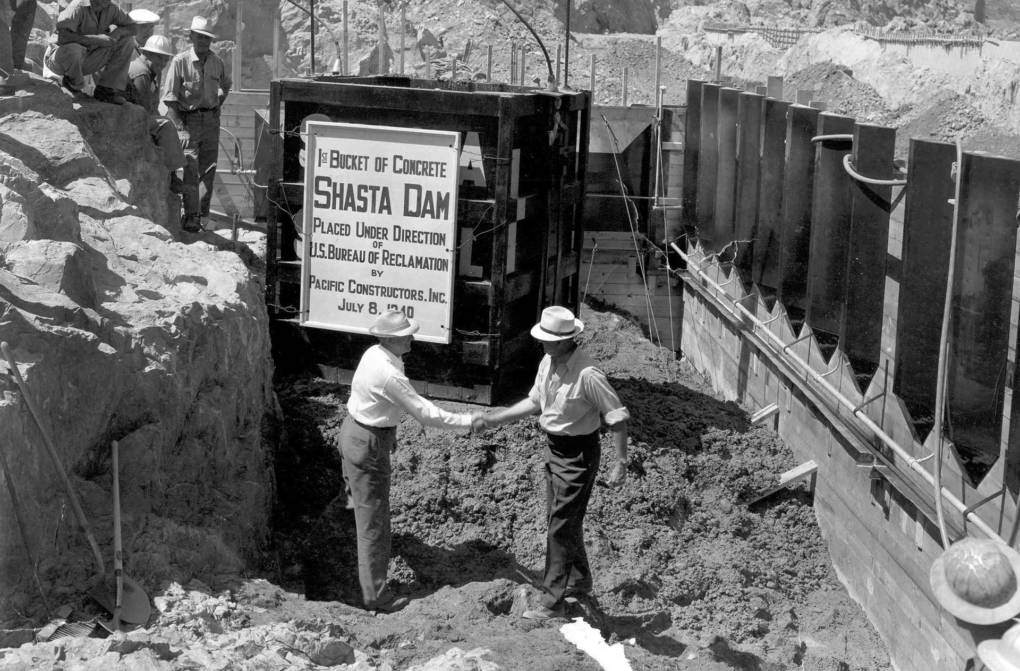
"caption": "Shasta Dam took thousands of workers and holds the largest reservoir in California.",
"description": null,
"title": "news_release_shasta_dam-web",
"credit": "US Bureau of Reclamation",
"status": "inherit",
"isLoading": false,
"fetchFailed": false
},
"science_1927246": {
"type": "attachments",
"id": "science_1927246",
"meta": {
"index": "attachments_1716263798",
"site": "science",
"id": "1927246",
"found": true
},
"title": "New Emissions Controls Seek To Ease Pollution At LA-Area Ports",
"publishDate": 1531347187,
"status": "inherit",
"parent": 1927220,
"modified": 1758301134,
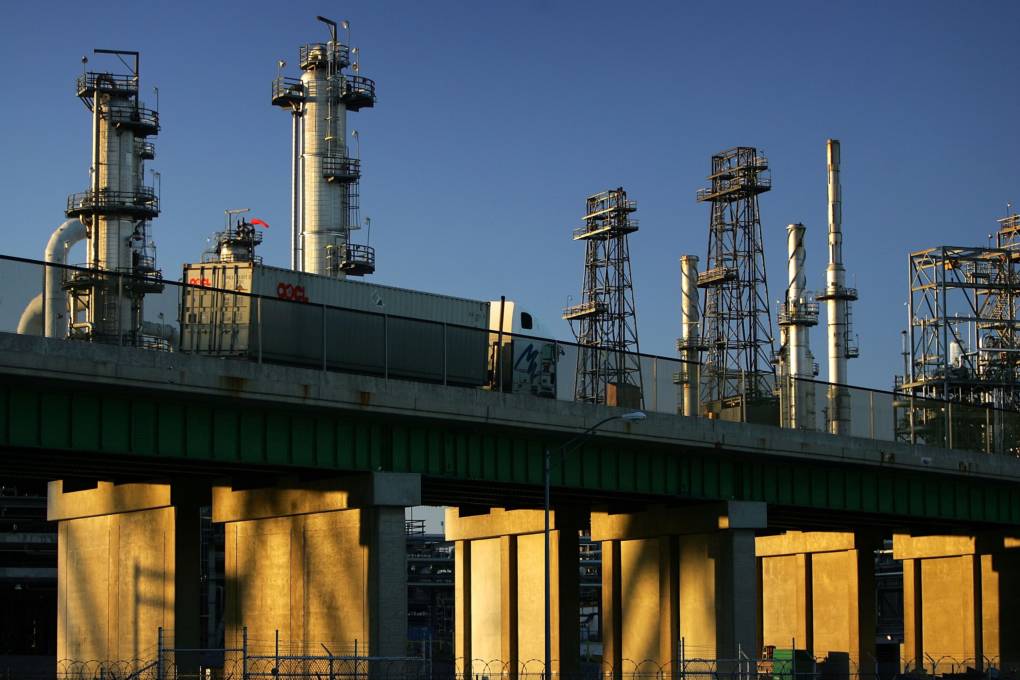
"caption": "A truck carries a shipping container past an oil refinery at the ports of Long Beach and Los Angeles on July 6, 2006, in Long Beach, California.",
"credit": "David McNew/Getty Images",
"altTag": null,
"description": null,
"imgSizes": {
"thumbnail": {
"file": "https://cdn.kqed.org/wp-content/uploads/sites/35/2018/07/GettyImages-71394652-160x107.jpg",
"width": 160,
"height": 107,
"mimeType": "image/jpeg"
},
"medium": {
"file": "https://cdn.kqed.org/wp-content/uploads/sites/35/2018/07/GettyImages-71394652-800x533.jpg",
"width": 800,
"height": 533,
"mimeType": "image/jpeg"
},
"medium_large": {
"file": "https://cdn.kqed.org/wp-content/uploads/sites/35/2018/07/GettyImages-71394652-768x512.jpg",
"width": 768,
"height": 512,
"mimeType": "image/jpeg"
},
"large": {
"file": "https://cdn.kqed.org/wp-content/uploads/sites/35/2018/07/GettyImages-71394652-1020x680.jpg",
"width": 1020,
"height": 680,
"mimeType": "image/jpeg"
},
"complete_open_graph": {
"file": "https://cdn.kqed.org/wp-content/uploads/sites/35/2018/07/GettyImages-71394652-1200x800.jpg",
"width": 1200,
"height": 800,
"mimeType": "image/jpeg"
},
"fd-lrg": {
"file": "https://cdn.kqed.org/wp-content/uploads/sites/35/2018/07/GettyImages-71394652-1920x1280.jpg",
"width": 1920,
"height": 1280,
"mimeType": "image/jpeg"
},
"fd-med": {
"file": "https://cdn.kqed.org/wp-content/uploads/sites/35/2018/07/GettyImages-71394652-1180x787.jpg",
"width": 1180,
"height": 787,
"mimeType": "image/jpeg"
},
"fd-sm": {
"file": "https://cdn.kqed.org/wp-content/uploads/sites/35/2018/07/GettyImages-71394652-960x640.jpg",
"width": 960,
"height": 640,
"mimeType": "image/jpeg"
},
"post-thumbnail": {
"file": "https://cdn.kqed.org/wp-content/uploads/sites/35/2018/07/GettyImages-71394652-672x372.jpg",
"width": 672,
"height": 372,
"mimeType": "image/jpeg"
},
"twentyfourteen-full-width": {
"file": "https://cdn.kqed.org/wp-content/uploads/sites/35/2018/07/GettyImages-71394652-1038x576.jpg",
"width": 1038,
"height": 576,
"mimeType": "image/jpeg"
},
"xxsmall": {
"file": "https://cdn.kqed.org/wp-content/uploads/sites/35/2018/07/GettyImages-71394652-240x160.jpg",
"width": 240,
"height": 160,
"mimeType": "image/jpeg"
},
"xsmall": {
"file": "https://cdn.kqed.org/wp-content/uploads/sites/35/2018/07/GettyImages-71394652-375x250.jpg",
"width": 375,
"height": 250,
"mimeType": "image/jpeg"
},
"small": {
"file": "https://cdn.kqed.org/wp-content/uploads/sites/35/2018/07/GettyImages-71394652-520x347.jpg",
"width": 520,
"height": 347,
"mimeType": "image/jpeg"
},
"xlarge": {
"file": "https://cdn.kqed.org/wp-content/uploads/sites/35/2018/07/GettyImages-71394652-1180x787.jpg",
"width": 1180,
"height": 787,
"mimeType": "image/jpeg"
},
"full-width": {
"file": "https://cdn.kqed.org/wp-content/uploads/sites/35/2018/07/GettyImages-71394652-1920x1280.jpg",
"width": 1920,
"height": 1280,
"mimeType": "image/jpeg"
},
"guest-author-32": {
"file": "https://cdn.kqed.org/wp-content/uploads/sites/35/2018/07/GettyImages-71394652-32x32.jpg",
"width": 32,
"height": 32,
"mimeType": "image/jpeg"
},
"guest-author-50": {
"file": "https://cdn.kqed.org/wp-content/uploads/sites/35/2018/07/GettyImages-71394652-50x50.jpg",
"width": 50,
"height": 50,
"mimeType": "image/jpeg"
},
"guest-author-64": {
"file": "https://cdn.kqed.org/wp-content/uploads/sites/35/2018/07/GettyImages-71394652-64x64.jpg",
"width": 64,
"height": 64,
"mimeType": "image/jpeg"
},
"guest-author-96": {
"file": "https://cdn.kqed.org/wp-content/uploads/sites/35/2018/07/GettyImages-71394652-96x96.jpg",
"width": 96,
"height": 96,
"mimeType": "image/jpeg"
},
"guest-author-128": {
"file": "https://cdn.kqed.org/wp-content/uploads/sites/35/2018/07/GettyImages-71394652-128x128.jpg",
"width": 128,
"height": 128,
"mimeType": "image/jpeg"
},
"detail": {
"file": "https://cdn.kqed.org/wp-content/uploads/sites/35/2018/07/GettyImages-71394652-150x150.jpg",
"width": 150,
"height": 150,
"mimeType": "image/jpeg"
},
"kqedFullSize": {
"file": "https://cdn.kqed.org/wp-content/uploads/sites/35/2018/07/GettyImages-71394652-e1758301123123.jpg",
"width": 2000,
"height": 1333
}
},
"isLoading": false,
"fetchFailed": false
},
"science_1927669": {
"type": "attachments",
"id": "science_1927669",
"meta": {
"index": "attachments_1716263798",
"site": "science",
"id": "1927669",
"found": true
},
"parent": 1927666,
"imgSizes": {
"small": {
"file": "https://ww2.kqed.org/app/uploads/sites/35/2018/07/Copco-No.-1_Credit-Michael-Wier1-520x390.jpg",
"width": 520,
"mimeType": "image/jpeg",
"height": 390
},
"twentyfourteen-full-width": {
"file": "https://ww2.kqed.org/app/uploads/sites/35/2018/07/Copco-No.-1_Credit-Michael-Wier1-1038x576.jpg",
"width": 1038,
"mimeType": "image/jpeg",
"height": 576
},
"thumbnail": {
"file": "https://ww2.kqed.org/app/uploads/sites/35/2018/07/Copco-No.-1_Credit-Michael-Wier1-160x120.jpg",
"width": 160,
"mimeType": "image/jpeg",
"height": 120
},
"fd-sm": {
"file": "https://ww2.kqed.org/app/uploads/sites/35/2018/07/Copco-No.-1_Credit-Michael-Wier1-960x720.jpg",
"width": 960,
"mimeType": "image/jpeg",
"height": 720
},
"post-thumbnail": {
"file": "https://ww2.kqed.org/app/uploads/sites/35/2018/07/Copco-No.-1_Credit-Michael-Wier1-672x372.jpg",
"width": 672,
"mimeType": "image/jpeg",
"height": 372
},
"xsmall": {
"file": "https://ww2.kqed.org/app/uploads/sites/35/2018/07/Copco-No.-1_Credit-Michael-Wier1-375x281.jpg",
"width": 375,
"mimeType": "image/jpeg",
"height": 281
},
"kqedFullSize": {
"file": "https://ww2.kqed.org/app/uploads/sites/35/2018/07/Copco-No.-1_Credit-Michael-Wier1.jpg",
"width": 1280,
"height": 960
},
"large": {
"file": "https://ww2.kqed.org/app/uploads/sites/35/2018/07/Copco-No.-1_Credit-Michael-Wier1-1020x765.jpg",
"width": 1020,
"mimeType": "image/jpeg",
"height": 765
},
"xlarge": {
"file": "https://ww2.kqed.org/app/uploads/sites/35/2018/07/Copco-No.-1_Credit-Michael-Wier1-1180x885.jpg",
"width": 1180,
"mimeType": "image/jpeg",
"height": 885
},
"complete_open_graph": {
"file": "https://ww2.kqed.org/app/uploads/sites/35/2018/07/Copco-No.-1_Credit-Michael-Wier1-1200x900.jpg",
"width": 1200,
"mimeType": "image/jpeg",
"height": 900
},
"guest-author-50": {
"file": "https://ww2.kqed.org/app/uploads/sites/35/2018/07/Copco-No.-1_Credit-Michael-Wier1-50x50.jpg",
"width": 50,
"mimeType": "image/jpeg",
"height": 50
},
"guest-author-96": {
"file": "https://ww2.kqed.org/app/uploads/sites/35/2018/07/Copco-No.-1_Credit-Michael-Wier1-96x96.jpg",
"width": 96,
"mimeType": "image/jpeg",
"height": 96
},
"medium": {
"file": "https://ww2.kqed.org/app/uploads/sites/35/2018/07/Copco-No.-1_Credit-Michael-Wier1-800x600.jpg",
"width": 800,
"mimeType": "image/jpeg",
"height": 600
},
"guest-author-64": {
"file": "https://ww2.kqed.org/app/uploads/sites/35/2018/07/Copco-No.-1_Credit-Michael-Wier1-64x64.jpg",
"width": 64,
"mimeType": "image/jpeg",
"height": 64
},
"guest-author-32": {
"file": "https://ww2.kqed.org/app/uploads/sites/35/2018/07/Copco-No.-1_Credit-Michael-Wier1-32x32.jpg",
"width": 32,
"mimeType": "image/jpeg",
"height": 32
},
"fd-med": {
"file": "https://ww2.kqed.org/app/uploads/sites/35/2018/07/Copco-No.-1_Credit-Michael-Wier1-1180x885.jpg",
"width": 1180,
"mimeType": "image/jpeg",
"height": 885
},
"detail": {
"file": "https://ww2.kqed.org/app/uploads/sites/35/2018/07/Copco-No.-1_Credit-Michael-Wier1-150x150.jpg",
"width": 150,
"mimeType": "image/jpeg",
"height": 150
},
"medium_large": {
"file": "https://ww2.kqed.org/app/uploads/sites/35/2018/07/Copco-No.-1_Credit-Michael-Wier1-768x576.jpg",
"width": 768,
"mimeType": "image/jpeg",
"height": 576
},
"guest-author-128": {
"file": "https://ww2.kqed.org/app/uploads/sites/35/2018/07/Copco-No.-1_Credit-Michael-Wier1-128x128.jpg",
"width": 128,
"mimeType": "image/jpeg",
"height": 128
},
"xxsmall": {
"file": "https://ww2.kqed.org/app/uploads/sites/35/2018/07/Copco-No.-1_Credit-Michael-Wier1-240x180.jpg",
"width": 240,
"mimeType": "image/jpeg",
"height": 180
}
},
"publishDate": 1532037428,
"modified": 1532037463,
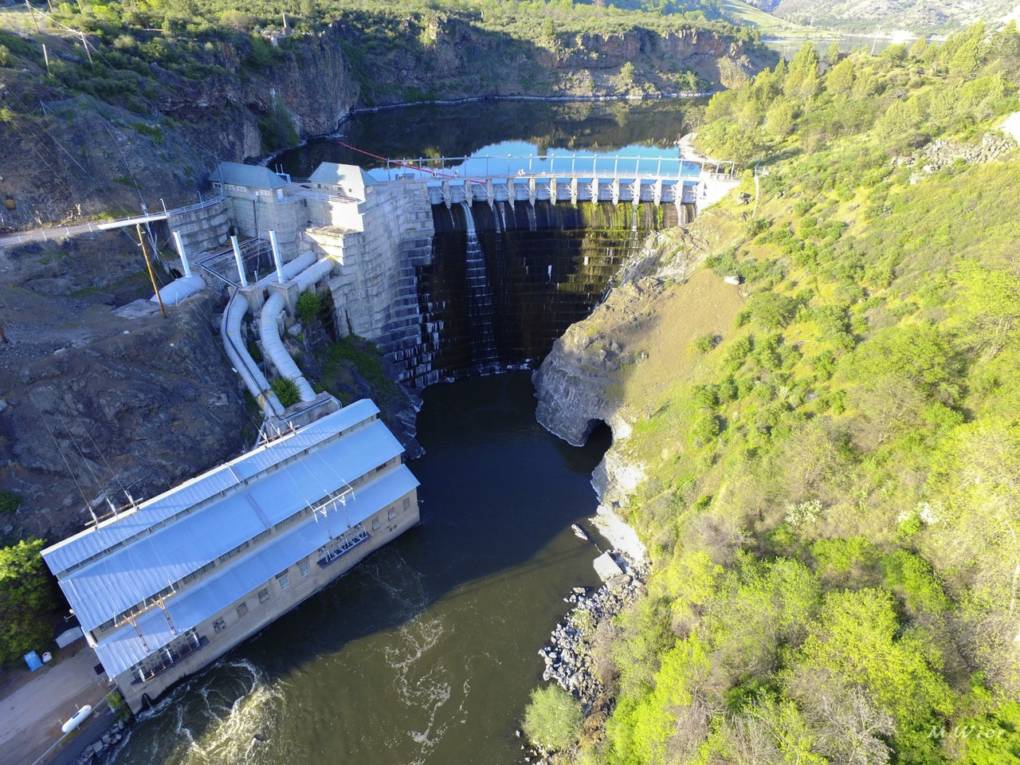
"caption": "An aerial view of Copco 1 Dam on the Klamath River in California. It is one of four dams scheduled to be removed as part of the Klamath Hydroelectric Settlement Agreement.",
"description": null,
"title": "Copco-No.-1_Credit-Michael-Wier1",
"credit": "Michael Wier / CalTrout",
"status": "inherit",
"isLoading": false,
"fetchFailed": false
}
},
"audioPlayerReducer": {
"postId": "stream_live",
"isPaused": true,
"isPlaying": false,
"pfsActive": false,
"pledgeModalIsOpen": true,
"playerDrawerIsOpen": false,
"liveAudioPlayStartedAt": 0,
"liveAudioPlayContext": ""
},
"authorsReducer": {
"byline_science_1928036": {
"type": "authors",
"id": "byline_science_1928036",
"meta": {
"override": true
},
"slug": "byline_science_1928036",
"name": "Emiliano Rodriguez Mega\u003cbr />The Associated Press",
"isLoading": false
},
"byline_science_1927986": {
"type": "authors",
"id": "byline_science_1927986",
"meta": {
"override": true
},
"slug": "byline_science_1927986",
"name": "Tara Lohan\u003cbr />Water Deeply",
"isLoading": false
},
"byline_science_1927896": {
"type": "authors",
"id": "byline_science_1927896",
"meta": {
"override": true
},
"slug": "byline_science_1927896",
"name": "Janie Har\u003cbr />The Associated Press",
"isLoading": false
},
"byline_science_1927893": {
"type": "authors",
"id": "byline_science_1927893",
"meta": {
"override": true
},
"slug": "byline_science_1927893",
"name": "Anita Snow\u003cbr />The Associated Press",
"isLoading": false
},
"byline_science_1927756": {
"type": "authors",
"id": "byline_science_1927756",
"meta": {
"override": true
},
"slug": "byline_science_1927756",
"name": "Matt Weiser\u003cbr />Water Deeply",
"isLoading": false
},
"byline_science_1927783": {
"type": "authors",
"id": "byline_science_1927783",
"meta": {
"override": true
},
"slug": "byline_science_1927783",
"name": "KQED Newsroom",
"isLoading": false
},
"byline_science_1927689": {
"type": "authors",
"id": "byline_science_1927689",
"meta": {
"override": true
},
"slug": "byline_science_1927689",
"name": "The Associated Press",
"isLoading": false
},
"byline_science_1927666": {
"type": "authors",
"id": "byline_science_1927666",
"meta": {
"override": true
},
"slug": "byline_science_1927666",
"name": "Tara Lohan\u003cbr />Water Deeply",
"isLoading": false
},
"laurensommer": {
"type": "authors",
"id": "239",
"meta": {
"index": "authors_1716337520",
"id": "239",
"found": true
},
"name": "Lauren Sommer",
"firstName": "Lauren",
"lastName": "Sommer",
"slug": "laurensommer",
"email": "lsommer@kqed.org",
"display_author_email": false,
"staff_mastheads": [],
"title": "KQED Contributor",
"bio": "Lauren is a radio reporter formerly covering environment, water, and energy for KQED Science. As part of her day job, she has scaled Sierra Nevada peaks, run from charging elephant seals, and desperately tried to get her sea legs - all in pursuit of good radio. Her work has appeared on Marketplace, Living on Earth, Science Friday and NPR's Morning Edition and All Things Considered. You can find her on Twitter at \u003ca href=\"https://twitter.com/lesommer\">@lesommer\u003c/a>.",
"avatar": "https://secure.gravatar.com/avatar/33aa3772bb86c6ad45b8aca6a238bbdf?s=600&d=blank&r=g",
"twitter": null,
"facebook": null,
"instagram": null,
"linkedin": null,
"sites": [
{
"site": "news",
"roles": [
"author"
]
},
{
"site": "science",
"roles": [
"editor",
"manage_content_types",
"manage_taxonomies"
]
},
{
"site": "quest",
"roles": [
"editor"
]
}
],
"headData": {
"title": "Lauren Sommer | KQED",
"description": "KQED Contributor",
"ogImgSrc": "https://secure.gravatar.com/avatar/33aa3772bb86c6ad45b8aca6a238bbdf?s=600&d=blank&r=g",
"twImgSrc": "https://secure.gravatar.com/avatar/33aa3772bb86c6ad45b8aca6a238bbdf?s=600&d=blank&r=g"
},
"isLoading": false,
"link": "/author/laurensommer"
},
"aahmed": {
"type": "authors",
"id": "11428",
"meta": {
"index": "authors_1716337520",
"id": "11428",
"found": true
},
"name": "Amel Ahmed",
"firstName": "Amel",
"lastName": "Ahmed",
"slug": "aahmed",
"email": "aahmed@kqed.org",
"display_author_email": false,
"staff_mastheads": [],
"title": "KQED Contributor",
"bio": "Amel Ahmed is a reporter for KQED. Prior to joining KQED, Amel worked at Al Jazeera America, Al Jazeera English, Democracy Now! and Punched Productions. She also helped produce \u003cem>Changing Face of Harlem\u003c/em>, a documentary that tracked gentrification in Harlem over a period of ten years. She is a 2013 graduate of Brooklyn Law School and is currently researching war on terror prosecutions for an upcoming book.",
"avatar": "https://secure.gravatar.com/avatar/c8b48ebc98e770640f3013c470d23f3e?s=600&d=blank&r=g",
"twitter": "amelscript",
"facebook": null,
"instagram": null,
"linkedin": null,
"sites": [
{
"site": "futureofyou",
"roles": []
},
{
"site": "science",
"roles": []
}
],
"headData": {
"title": "Amel Ahmed | KQED",
"description": "KQED Contributor",
"ogImgSrc": "https://secure.gravatar.com/avatar/c8b48ebc98e770640f3013c470d23f3e?s=600&d=blank&r=g",
"twImgSrc": "https://secure.gravatar.com/avatar/c8b48ebc98e770640f3013c470d23f3e?s=600&d=blank&r=g"
},
"isLoading": false,
"link": "/author/aahmed"
},
"aweill": {
"type": "authors",
"id": "11518",
"meta": {
"index": "authors_1716337520",
"id": "11518",
"found": true
},
"name": "Allie Weill",
"firstName": "Allie",
"lastName": "Weill",
"slug": "aweill",
"email": "aweill@kqed.org",
"display_author_email": false,
"staff_mastheads": [],
"title": "KQED Contributor",
"bio": "Allie Weill is the 2018 AAAS Mass Media Fellow at KQED Science. Allie comes to KQED from the University of California, Davis, where her dissertation research focuses on wildfire in California shrublands. She has a background in youth science education and citizen science and has taught about environmental topics in a wide range of places, from boats on the Hudson River to the forests of the Sierra Nevada. She has a BA in Biological Sciences and a BS in Geophysical Sciences from the University of Chicago. Her interests include plants, fire, lichens, fossils, diversity in science, crossword puzzles, and pie making. Find her on Twitter @Al_R_Wallace",
"avatar": "https://secure.gravatar.com/avatar/f08760c1295c7adfc339c9eb765a3230?s=600&d=blank&r=g",
"twitter": null,
"facebook": null,
"instagram": null,
"linkedin": null,
"sites": [
{
"site": "news",
"roles": [
"contributor"
]
},
{
"site": "science",
"roles": []
}
],
"headData": {
"title": "Allie Weill | KQED",
"description": "KQED Contributor",
"ogImgSrc": "https://secure.gravatar.com/avatar/f08760c1295c7adfc339c9eb765a3230?s=600&d=blank&r=g",
"twImgSrc": "https://secure.gravatar.com/avatar/f08760c1295c7adfc339c9eb765a3230?s=600&d=blank&r=g"
},
"isLoading": false,
"link": "/author/aweill"
}
},
"pagesReducer": {
"science_category_news": {
"type": "terms",
"id": "science_40",
"meta": {
"index": "terms_1716263798",
"site": "science",
"id": "40",
"score": 10.81443
},
"featImg": null,
"name": "News",
"description": null,
"taxonomy": "category",
"headData": {
"twImgId": null,
"twTitle": null,
"ogTitle": null,
"ogImgId": null,
"twDescription": null,
"description": null,
"title": "News Archives | KQED Science",
"ogDescription": null
},
"ttid": 42,
"slug": "news",
"isLoading": false,
"title": "News",
"pageMeta": {
"site": "science",
"WpPageTemplate": "page-topic-editorial",
"currentPage": 166
},
"blocks": [
{
"blockName": "kqed/post-list",
"attrs": {
"layout": "cardArticle2",
"query": "posts/science?category=news",
"seeMore": false,
"paginated": true,
"page": 166
}
},
{
"blockName": "kqed/ad"
}
]
}
},
"pfsSessionReducer": {},
"postsReducer": {
"stream_live": {
"type": "live",
"id": "stream_live",
"audioUrl": "https://streams.kqed.org/kqedradio",
"title": "Live Stream",
"excerpt": "Live Stream information currently unavailable.",
"link": "/radio",
"featImg": "",
"label": {
"name": "KQED Live",
"link": "/"
}
},
"stream_kqedNewscast": {
"type": "posts",
"id": "stream_kqedNewscast",
"audioUrl": "https://www.kqed.org/.stream/anon/radio/RDnews/newscast.mp3?_=1",
"title": "KQED Newscast",
"featImg": "",
"label": {
"name": "88.5 FM",
"link": "/"
}
},
"science_1928036": {
"type": "posts",
"id": "science_1928036",
"meta": {
"index": "posts_1716263798",
"site": "science",
"id": "1928036",
"score": null,
"sort": [
1532620349000
]
},
"parent": 0,
"labelTerm": {
"site": "science"
},
"blocks": [],
"publishDate": 1532620349,
"format": "standard",
"title": "Einstein’s Theory of Relativity Passes Yet Another Test",
"headTitle": "Einstein’s Theory of Relativity Passes Yet Another Test | KQED",
"content": "\u003cp>More than a century after Albert Einstein proposed it, his theory of general relativity has passed another test.[contextly_sidebar id=”fkfiRjO6yXlNEjEtUicgWg4UuiUmyfrt”]\u003c/p>\n\u003cp>With giant telescopes pointed at the center of our galaxy, a team of European researchers observed a fast-moving star that got close to a monstrous black hole. They saw that the black hole distorted the light waves from the star in a way that agrees with Einstein’s theory.\u003c/p>\n\u003cp>The result was reported Thursday in the journal Astronomy & Astrophysics.\u003c/p>\n\u003cp>Einstein’s theory says the fabric of the universe is not simply space, but a more complex entity called space-time, which is warped by the presence of heavy objects.\u003c/p>\n\u003cp>Black holes offer a good opportunity to test that idea. The one that lies at the heart of the Milky Way is 4 million times as massive as our sun.\u003c/p>\n\u003cp>[ad fullwidth]\u003c/p>\n\u003cp>“I, just like every physicist in the world, would have loved to finally see a crack in Einstein’s relativity,” said Ohio State University astrophysicist Paul Sutter. “But he’s outsmarted us.”\u003c/p>\n\u003cp>But confirming Einstein’s work — again, “feels like we’re kind of beating a dead horse,” said Sutter, who wasn’t part of the research team led by Reinhard Genzel of the Max Planck Institute for Extraterrestrial Physics in Garching, Germany.[contextly_sidebar id=”M0OSAHZCWRvNUB344RxoNqvzW8dsPiZy”]\u003c/p>\n\u003cp>Scientists know that the theory still doesn’t explain everything about the universe. So they keep testing it time and again. So far, nobody has been able to overthrow it.\u003c/p>\n\u003cp>Although the effects of general relativity have been seen before, this was the first detection made by observing the motion of a star near a supermassive black hole.\u003c/p>\n\u003cp>“To me, that’s what makes this so cool,” said Clifford Will, a University of Florida physicist who did not participate in the research.\u003c/p>\n\u003cp>Will hopes his colleagues will be able to discover stars even closer to the black hole, where the effects of relativity would be stronger.\u003c/p>\n\u003cp>This finding “is really the opening episode,” he said. “The future, I think, is going to be very exciting.”\u003c/p>\n\u003cp>—\u003c/p>\n\u003cp>\u003c/p>\n\u003cp>The Associated Press Health & Science Department receives \u003ca href=\"https://www.ap.org/press-releases/2018/ap-hhmi-expand-collaboration-to-bolster-health-science-coverage\">support\u003c/a> from the Howard Hughes Medical Institute’s Department of Science Education. The AP is solely responsible for all content.\u003c/p>\n\n",
"stats": {
"hasVideo": false,
"hasChartOrMap": false,
"hasAudio": false,
"hasPolis": false,
"wordCount": 403,
"hasGoogleForm": false,
"hasGallery": false,
"hasHearkenModule": false,
"iframeSrcs": [],
"paragraphCount": 16
},
"modified": 1704927652,
"excerpt": "Einstein’s theory says the fabric of the universe is not simply space, but a more complex entity called space-time. Black holes offer a good opportunity to test that idea.",
"headData": {
"twImgId": "",
"twTitle": "",
"ogTitle": "",
"ogImgId": "",
"twDescription": "",
"description": "Einstein’s theory says the fabric of the universe is not simply space, but a more complex entity called space-time. Black holes offer a good opportunity to test that idea.",
"title": "Einstein’s Theory of Relativity Passes Yet Another Test | KQED",
"ogDescription": "",
"schema": {
"@context": "https://schema.org",
"@type": "Article",
"headline": "Einstein’s Theory of Relativity Passes Yet Another Test",
"datePublished": "2018-07-26T08:52:29-07:00",
"dateModified": "2024-01-10T15:00:52-08:00",
"image": "https://cdn.kqed.org/wp-content/uploads/2020/02/KQED-OG-Image@1x.png"
}
},
"guestAuthors": [],
"slug": "einstein",
"status": "publish",
"nprByline": "Emiliano Rodriguez Mega\u003cbr />The Associated Press",
"sticky": false,
"WpOldSlug": "__trashed-24",
"path": "/science/1928036/einstein",
"audioTrackLength": null,
"parsedContent": [
{
"type": "contentString",
"content": "\u003cdiv class=\"post-body\">\u003cp>\u003cp>More than a century after Albert Einstein proposed it, his theory of general relativity has passed another test.\u003c/p>\u003cp>\u003c/p>\u003cp>\u003c/p>\n\u003cp>With giant telescopes pointed at the center of our galaxy, a team of European researchers observed a fast-moving star that got close to a monstrous black hole. They saw that the black hole distorted the light waves from the star in a way that agrees with Einstein’s theory.\u003c/p>\n\u003cp>The result was reported Thursday in the journal Astronomy & Astrophysics.\u003c/p>\n\u003cp>Einstein’s theory says the fabric of the universe is not simply space, but a more complex entity called space-time, which is warped by the presence of heavy objects.\u003c/p>\n\u003cp>Black holes offer a good opportunity to test that idea. The one that lies at the heart of the Milky Way is 4 million times as massive as our sun.\u003c/p>\n\u003cp>\u003c/p>\u003c/div>",
"attributes": {
"named": {},
"numeric": []
}
},
{
"type": "component",
"content": "",
"name": "ad",
"attributes": {
"named": {
"label": "fullwidth"
},
"numeric": [
"fullwidth"
]
}
},
{
"type": "contentString",
"content": "\u003cdiv class=\"post-body\">\u003cp>\u003c/p>\n\u003cp>“I, just like every physicist in the world, would have loved to finally see a crack in Einstein’s relativity,” said Ohio State University astrophysicist Paul Sutter. “But he’s outsmarted us.”\u003c/p>\n\u003cp>But confirming Einstein’s work — again, “feels like we’re kind of beating a dead horse,” said Sutter, who wasn’t part of the research team led by Reinhard Genzel of the Max Planck Institute for Extraterrestrial Physics in Garching, Germany.\u003c/p>\u003cp>\u003c/p>\u003cp>\u003c/p>\n\u003cp>Scientists know that the theory still doesn’t explain everything about the universe. So they keep testing it time and again. So far, nobody has been able to overthrow it.\u003c/p>\n\u003cp>Although the effects of general relativity have been seen before, this was the first detection made by observing the motion of a star near a supermassive black hole.\u003c/p>\n\u003cp>“To me, that’s what makes this so cool,” said Clifford Will, a University of Florida physicist who did not participate in the research.\u003c/p>\n\u003cp>Will hopes his colleagues will be able to discover stars even closer to the black hole, where the effects of relativity would be stronger.\u003c/p>\n\u003cp>This finding “is really the opening episode,” he said. “The future, I think, is going to be very exciting.”\u003c/p>\n\u003cp>—\u003c/p>\n\u003cp>\u003c/p>\n\u003cp>The Associated Press Health & Science Department receives \u003ca href=\"https://www.ap.org/press-releases/2018/ap-hhmi-expand-collaboration-to-bolster-health-science-coverage\">support\u003c/a> from the Howard Hughes Medical Institute’s Department of Science Education. The AP is solely responsible for all content.\u003c/p>\n\n\u003c/div>\u003c/p>",
"attributes": {
"named": {},
"numeric": []
}
}
],
"link": "/science/1928036/einstein",
"authors": [
"byline_science_1928036"
],
"categories": [
"science_28",
"science_35",
"science_40",
"science_42"
],
"tags": [
"science_672",
"science_577"
],
"featImg": "science_1922093",
"label": "science"
},
"science_1927986": {
"type": "posts",
"id": "science_1927986",
"meta": {
"index": "posts_1716263798",
"site": "science",
"id": "1927986",
"score": null,
"sort": [
1532552445000
]
},
"parent": 0,
"labelTerm": {
"site": "science"
},
"blocks": [],
"publishDate": 1532552445,
"format": "standard",
"title": "How a Silicon Valley City Cut Landmark Deals to Solve a Water Crisis",
"headTitle": "How a Silicon Valley City Cut Landmark Deals to Solve a Water Crisis | KQED",
"content": "\u003cp>Silicon Valley logged seven straight years of economic growth – coming out of the Great Recession like a runner out of the blocks. And the numbers aren’t simply tallied in ledger books and spreadsheets – the growth is visible in the slow slog of daily traffic, in the weekend open houses crammed with would-be buyers eager for $2 million starter homes and in the forest of construction cranes on the suburban horizon.[contextly_sidebar id=”NbJ09yXjXiHjekfYKybcPudhUuS6oQot”]\u003c/p>\n\u003cp>Silicon Valley has been bursting at the seams as developers try to keep pace. But there is one place in the last few years where you wouldn’t have heard the buzz of saws and the pounding of hammers – East Palo Alto, a small city of just 28,000 residents. The city is located roughly halfway between San Francisco and San Jose, at the southern edge of San Mateo County. It neighbors tony Palo Alto, home of Stanford University and Menlo Park, with Facebook’s \u003ca href=\"https://www.menlopark.org/995/Facebook-Campus-Expansion-Project\" target=\"_blank\" rel=\"noopener\">ever-expanding campus\u003c/a> just next door. A \u003ca href=\"https://www.ft.com/content/82bc282e-8790-11e7-bf50-e1c239b45787\" target=\"_blank\" rel=\"noopener\">Financial Times story\u003c/a> called the juxtaposition of Facebook and East Palo Alto “an ocean liner docked on the edge of an undeveloped country.”\u003c/p>\n\u003cp>While East Palo Alto is far from undeveloped, the fruits of the technology boom have mostly bypassed the city, which has been a majority minority community since the 1970s. And just as things seemed to be improving economically, growth stalled.\u003c/p>\n\u003cp>In July 2016, East Palo Alto issued a moratorium on development because the city couldn’t guarantee there would be enough water for new projects. This was when California was still in the midst of drought and abiding by mandatory conservation orders issued by Governor Jerry Brown. But East Palo Alto’s water shortage had nothing to do with the lack of rain.\u003c/p>\n\u003cp>“There is plenty of water, it’s just not ours,” says Carlos Martinez, the city manager.\u003c/p>\n\u003cp>[ad fullwidth]\u003c/p>\n\u003cp>East Palo Alto obtains all of its water from the San Francisco Regional Water System, run by the \u003ca href=\"http://sfwater.org/index.aspx?page=134\" target=\"_blank\" rel=\"noopener\">San Francisco Public Utilities Commission\u003c/a> (SFPUC). It’s the same system that funnels Yosemite snowmelt via Hetch Hetchy Reservoir through a network of pipes, pumps and tunnels to San Francisco residents and 1.7 million others in the Bay Area.[contextly_sidebar id=”X8eNL9QY3heGZZJB32GmPIlSYaoUNXa5″]\u003c/p>\n\u003cp>At the time, East Palo Alto’s water allocation wasn’t enough for the city to keep growing. The hold on development meant that several high-profile projects couldn’t get off the ground, resulting in lost revenue for the city, which already lagged its Silicon Valley neighbors in economic health. The water shortage also meant a halt to plans for building more desperately needed affordable housing.\u003c/p>\n\u003cp>And so city officials began a multiyear journey to find new water sources – a process that would end with an unprecedented partnership involving neighboring cities, wealthy developers and affordable-housing advocates.\u003c/p>\n\u003cp>\u003cstrong>Historical Roots of a Water Crisis\u003c/strong>\u003c/p>\n\u003cp>Whenever Ruben Abrica gets the chance to talk to young people about politics, he tells them that every vote counts – at least at the local level. And it’s not just a platitude. Abrica was part of a group of residents that fought for the incorporation of East Palo Alto – an effort that, after decades of work, finally succeeded in 1983 by a mere 15 votes.\u003c/p>\n\u003cp>“We knocked on every single house and apartment,” says Abrica, who is now doing his second tour as the city’s mayor and was one of the first city councillors elected after incorporation.\u003c/p>\n\u003cp>The vote, though controversial at the time, was monumental. East Palo Alto became the 20th and newest city in San Mateo County. Despite its municipal youthfulness, the community has a much longer history.\u003c/p>\n\u003cp>Previously, East Palo Alto was an unincorporated town, and one that, in the decades after World War II, became a haven for African-Americans looking to settle in the Bay Area who were excluded or displaced from other cities due to racially restrictive covenants, unsavory real estate practices or so-called “redevelopment” efforts.\u003c/p>\n\u003cp>As a result, East Palo Alto’s population went from 70 percent white in 1960 to 60 percent black a decade later. The shifting demographic had economic implications.\u003c/p>\n\u003cp>“During this time of intensifying development in the region, East Palo Alto’s unincorporated status and racially diverse population effectively excluded it from the sources of development capital,” \u003ca href=\"https://arcade.stanford.edu/occasion/reading-whiskey-gulch-meanings-space-and-urban-redevelopment-east-palo-alto\" target=\"_blank\" rel=\"noopener\">writes\u003c/a> Stanford University urban studies lecturer Michael B. Kahan in the humanities journal Arcade.[contextly_sidebar id=”cJhv8NxZPPGWyBG6Psfegpnyi0gzveoB”]\u003c/p>\n\u003cp>While high-technology parks took off in other (majority white) Silicon Valley cities, East Palo Alto – at the mercy of the county – ended up with a lot of dirty development instead. This included the county dump, a hazardous waste disposal facility and other polluting industries. (Other areas of Silicon Valley also experienced an enduring legacy from several decades of high-tech manufacturing, which left Santa Clara County with the most Superfund sites in the nation.)\u003c/p>\n\u003cp>“What does it say to a community that the county designated them as a dump site or designated a toxic waste facility to be there?” asks Tameeka Bennett, who grew up in East Palo Alto and now is executive director of \u003ca href=\"http://youthunited.net/\" target=\"_blank\" rel=\"noopener\">Youth United for Community Action\u003c/a>, a nonprofit that helped shut down the toxic waste facility, Romic, after 43 years of operation. “It kind of says that you don’t care much.”\u003c/p>\n\u003cp>Many residents saw incorporation as a way for the city to forge a better path and tap into the region’s growing prosperity.\u003c/p>\n\u003cp>When East Palo Alto’s newly elected city government took over in the mid-80s it faced numerous challenges, but at the forefront were issues of affordable housing and tenant protections, says Abrica. And while East Palo Alto residents were worried about displacement and unscrupulous landlords, not to mention high crime rates, big decisions about water were taking place in the region.\u003c/p>\n\u003cp>The city’s entire water supply came from the SFPUC, which had been providing water not just to residents of San Francisco but also to roughly two dozen municipalities and water agencies in San Mateo, Santa Clara and Alameda counties.\u003c/p>\n\u003cp>These regional wholesale customers had come to be collectively represented by the Bay Area Water Users Association (later changed to the \u003ca href=\"http://bawsca.org/\" target=\"_blank\" rel=\"noopener\">Bay Area Water Supply and Conservation Agency\u003c/a>). And in 1984 they renegotiated their contract with SFPUC.[contextly_sidebar id=”PN00Ik0EYYviKxs7J7uHfWQPspiWHX65″]\u003c/p>\n\u003cp>Under the terms of the 1984 agreement, which was later updated in 2009, wholesale customers would receive a collective minimum water supply of \u003ca href=\"https://sfwater.org/modules/showdocument.aspx?documentid=8632\" target=\"_blank\" rel=\"noopener\">184 million gallons a day\u003c/a>. Wholesale customers divvied that allotment into shares for each city or agency.\u003c/p>\n\u003cp>The calculation was initially based on past usage and previous contracts. As such, new and slowly developing East Palo Alto received a small allotment of just \u003ca href=\"https://www.ci.east-palo-alto.ca.us/documentcenter/view/37\" target=\"_blank\" rel=\"noopener\">under 2 million gallons\u003c/a> a day. It proved too little to meet rising demand.\u003c/p>\n\u003cp>In 2000 the “Whiskey Gulch” neighborhood – East Palo Alto’s prime retail district, which contained affordable housing, nonprofits and small businesses (some of those liquor stores and bars) – was razed for a massive new development, University Circle, aimed at bringing in more tax revenue.\u003c/p>\n\u003cfigure>\n\u003cfigure class=\"wp-caption aligncenter\" style=\"max-width: 5472px\">\u003cimg loading=\"lazy\" decoding=\"async\" class=\"extendsBeyondTextColumn\" src=\"https://newsdeeply.imgix.net/20180723130240/wd_sv_2.jpg\" alt=\"\" width=\"5472\" height=\"3648\">\u003cfigcaption class=\"wp-caption-text\">The Four Seasons Hotel in East Palo Alto, Calif., which was part of a redevelopment project. (Sarah Craig)\u003c/figcaption>\u003c/figure>\n\u003c/figure>\n\u003cp>By 2006, \u003ca href=\"http://www.ci.east-palo-alto.ca.us/index.aspx?NID=430\" target=\"_blank\" rel=\"noopener\">University Circle\u003c/a> would include 450,000 square feet of class-A office space, 15,000 square feet of retail space and a Four Seasons hotel. At the same time, East Palo Alto began to feel the squeeze on its water supply.\u003c/p>\n\u003cp>Between 2001 and 2015, the city \u003ca href=\"http://www.cityofepa.org/DocumentCenter/View/3404\" target=\"_blank\" rel=\"noopener\">exceeded its supply\u003c/a> allocation four times. Finally, in 2016 East Palo Alto’s water situation reached a critical point. Several large development projects were lining up, and the city badly needed to build more affordable housing, but a water supply assessment showed that the city needed an additional 1.5 million gallons a day of supply.\u003c/p>\n\u003cp>“We had to institute a [development] moratorium because we couldn’t approve projects – we simply couldn’t assure them that we could supply the water,” says city manager Martinez. Affordable housing had to wait, along with developers hoping to build a private school and new commercial properties.\u003c/p>\n\u003cp>East Palo Alto city manager Carlos Martinez shakes hands with a worker at the city’s newly updated Gloria Way well. (Sarah Craig)\u003c/p>\n\u003cp>\u003cstrong>Looking Inward\u003c/strong>\u003c/p>\n\u003cp>When East Palo Alto was examining options to tackle its water problems, that included seeing what it could do within the borders of the 2.5 square-mile city.\u003c/p>\n\u003cp>But it turns out, there wasn’t much.\u003c/p>\n\u003cp>Gross per capita water consumption in East Palo Alto in 2015–16 was 58 gallons a day, one of the lowest in the region (and state). And residential per capita use was just 51.6 gallons a day – a stark contrast to the more than 218 gallons a day consumed by San Jose residents.\u003c/p>\n\u003cp>“We’ve been very good stewards,” says Mayor Abrica. “Generally, it’s wealthy communities which waste water, it’s not poor communities. People are mindful of how much they’re paying.”\u003c/p>\n\u003cp>The city doesn’t have big parks or golf courses that use lots of water, either. Potential gains made from conservation would be minimal.\u003c/p>\n\u003cp>One resource East Palo Alto did have, though, is groundwater. At least some.\u003c/p>\n\u003cfigure>\n\u003cfigure class=\"wp-caption aligncenter\" style=\"max-width: 5302px\">\u003cimg loading=\"lazy\" decoding=\"async\" class=\"extendsBeyondTextColumn\" src=\"https://newsdeeply.imgix.net/20180723130548/wd_sv_4.jpg\" alt=\"\" width=\"5302\" height=\"3535\">\u003cfigcaption class=\"wp-caption-text\">An electrical panel on the construction site of the Gloria Well in East Palo Alto. (Sarah Craig)\u003c/figcaption>\u003c/figure>\n\u003c/figure>\n\u003cp>“We commissioned a scientific study and looked at every inch of land in East Palo Alto that potentially had groundwater and lo and behold we found good water,” on a small slice of land the city owns in a Home Depot parking lot, says Abrica.\u003c/p>\n\u003cp>The city has already started on the design of the well, which they call “Pad D,” and construction is likely to start sometime in 2019. The city also owns an existing well on Gloria Way in a residential neighborhood a few blocks from the town’s library and municipal offices.[contextly_sidebar id=”0n2b2RJnKQkj8sv7TZYC13uFtcmB7aer”]\u003c/p>\n\u003cp>Contamination problems with the well had rendered the water undrinkable for years, but the city got to work on building a new treatment system. The water from the wells, though, was expected to help shrink the water supply gap, or minimally provide a much-needed source of local backup, but it wouldn’t be enough to meet all the East Palo Alto’s needs.\u003c/p>\n\u003cp>\u003cstrong>Looking Outward\u003c/strong>\u003c/p>\n\u003cp>The most obvious place for East Palo Alto to look for more water was its provider, SFPUC.\u003c/p>\n\u003cp>In May 2016, East Palo Alto requested that SFPUC consider increasing its allocation by 1.5 million gallons a day to close its projected shortfall. Others threw their weight behind the request, as well, including local business and community leaders like U.S.Rep. Jackie Speier, whose district includes East Palo Alto.\u003c/p>\n\u003cp>“I view the request of East Palo Alto as the latest chapter in a civil rights struggle that began decades ago when discrimination was lawful and widely practiced,” she wrote in a letter to the SFPUC.\u003c/p>\n\u003cp>But East Palo Alto’s allocation was also enmeshed in a complicated and changing water supply picture across the region. SFPUC was engaged in a multiyear process to update its long-term water supply plan, known as the Water Management Action Plan, which would designate water allotments for 2019 to 2040.\u003c/p>\n\u003cp>In doing so it needed to examine both the needs of its dozens of wholesale customers and also the future water supply picture in the region.\u003c/p>\n\u003cp>In addition to East Palo Alto’s request for more water, the larger cities of San Jose and Santa Clara were also seeking to have their allocations increased and made permanent (they had been classified as temporary, interruptible customers whose supplies could be curtailed).\u003c/p>\n\u003cp>But the biggest issue had to do with the big unknowns in SFPUC’s future water supply because the state was also engaged in a long process of updating a water plan for the Sacramento-San Joaquin Delta that could involve curtailments to the SFPUC’s supply from the Tuolumne River.\u003c/p>\n\u003cp>Given all the balls in the air for SFPUC, East Palo Alto knew a quick decision on its fate from the commission wasn’t coming soon and so it began to look for other options.[contextly_sidebar id=”t0yf1BDSAN32Yv86b06UBJHesoiWA3Wb”]\u003c/p>\n\u003cp>Even though East Palo Alto was consuming all of its supply allocations, it knew that other cities in the region had more water than they regularly used. They just needed to find one or two municipalities willing to part with some of it – something that had never been done before in the region. In California, giving up water is pretty much unheard of – especially in the wake of a five-year drought.\u003c/p>\n\u003cp>East Palo Alto is a small city of 28,000 residents in San Mateo County, California. (Sarah Craig)\u003c/p>\n\u003cp>\u003cstrong>Neighborly Help\u003c/strong>\u003c/p>\n\u003cp>There was nothing to suggest that Mountain View’s monthly city council meeting in May 2017 would be historic – no big crowds, no fanfare. But item number 7.2 on the agenda, coming after information on street resurfacing, was an important order of business: a vote on whether to approve a permanent water rights transfer of 1 million gallons a day to the nearby city of East Palo Alto.\u003c/p>\n\u003cp>“This is our opportunity,” East Palo Alto’s then-mayor Larry Moody said at the meeting. “If we are able to do this water transfer today we can become a community that’s … pursuing our hopes and dreams.”\u003c/p>\n\u003cp>After exhausting other possibilities for securing more water, East Palo Alto officials focused their efforts on two cities, Mountain View and Palo Alto, which were open to talks about a potential water transfer.[contextly_sidebar id=”Kkx7R5UaX8IY3XFSH6NOtOrcJn1FQwW0″]\u003c/p>\n\u003cp>For Mountain View, the water supply picture, even in the midst of drought, was good. The city, home to Google and other tech companies, has an allocation of 13.5million gallons a day, which they hadn’t come close to using in 30 years, according to Gregg Hosfeldt, assistant public works director for the city. During California’s recent drought, Mountain View residents cut consumption by 24 percent in two years.\u003c/p>\n\u003cp>The city currently was using just over 7 million gallons a day. That’s good news on a conservation front, but bad news financially for Mountain View. It is one of four cities in the regional water system with contracts that stipulate that it must purchase a minimum amount of water each year from SFPUC. For Mountain View, its minimum is 8.9 million gallons a day.\u003c/p>\n\u003cp>Mountain View’s staff had calculated that the city was likely to pay $8.5 million over the next four years for water it wouldn’t use. So, they worked out a plan to transfer a water right of 1 million gallons a day to East Palo Alto for a one-time fee of $5 million, which would ease East Palo Alto’s water troubles and help take some of the sting out of paying for unused water.\u003c/p>\n\u003cp>“Knowing what East Palo Alto was facing and knowing what our situation is and knowing that no other agency was stepping up, we kind of made a leap of faith and started working with them to see how we could make this fly,” says Hosfeldt.\u003c/p>\n\u003cp>Mountain View then-mayor Ken Rosenberg closed out the city council meeting by saying, “Access to clean drinkable water is a human right and we’re doing human rights work on this vote.”\u003c/p>\n\u003cp>With a whoop and some clapping from the small audience in attendance, the councillors voted 6-1 in favor of the water transfer.\u003c/p>\n\u003cp>A month later East Palo Alto’s city council approved the transfer, which was subsequently greenlighted by the SFPUC.\u003c/p>\n\u003cp>The deal was advantageous to all sides, but the fact that it was struck was still groundbreaking.\u003c/p>\n\u003cp>“Nobody sells water – you just don’t do that,” says Hosfeldt. And from a negotiating standpoint, there wasn’t a lot of precedent, either. “If you look historically, there is probably none of these deals to look at – we’re breaking new ground.”[contextly_sidebar id=”CxZkrLQTwQ5zF7q6LSK7xNrzovwISUe2″]\u003c/p>\n\u003cp>How East Palo Alto funded the project was a first, too.\u003c/p>\n\u003cp>The city didn’t have $5 million in the bank, so it \u003ca href=\"http://www.cityofepa.org/DocumentCenter/View/3404\" target=\"_blank\" rel=\"noopener\">got creative\u003c/a>. East Palo Alto kicked in $470,000 from its general fund. Another $1.53 million was split between three big developers – the Sobrato Organization, 2020 Bay Road and The Primary School (a project of the Chan Zuckerberg Initiative, the philanthropic organization of Facebook founder Mark Zuckerberg and his wife, pediatrician Priscilla Chan). The Sobrato Organization also agreed to loan the city $1 million and the Chan Zuckerberg Initiative gifted an additional $2 million, $500,000 of which was to be used to create a permanent position for an affordable housing manager for the city.\u003c/p>\n\u003cp>Water and affordable housing in East Palo are intertwined.\u003c/p>\n\u003cp>At the same time East Palo Alto was focused on more water to spur economic development, it was also trying to prevent that development from displacing the city’s residents – many of whom are low- and middle-income. East Palo Alto is one of the most affordable places (relatively speaking) left to live in Silicon Valley, but that’s changing quickly as the tech boom ripples through the region and is likely to accelerate with a stable supply of water.\u003c/p>\n\u003cp>Bennett of Youth United for Community Action called the development moratorium resulting from the city’s water shortage both a blessing and a curse. It prevented the construction of new affordable housing, “which has been a detriment to the community,” she says.\u003c/p>\n\u003cp>But at the same time East Palo Alto is fighting “rapid gentrification,” she says, and the moratorium bought them some time. “It gave us a chance to do some visioning about what we want to see in East Palo Alto and to figure out some tools to get us to what we envision,” she adds.\u003c/p>\n\u003cp>Decades ago East Palo Alto was a city known chiefly for its \u003ca href=\"https://www.mercurynews.com/2018/01/02/how-east-palo-alto-shed-its-crime-rep-and-built-a-new-path-forward/\" target=\"_blank\" rel=\"noopener\">high murder rate\u003c/a>, but community groups and elected officials have worked hard to fight corruption, lower crime rates and bring in more tax dollars through development. As Silicon Valley has become more expensive, East Palo Alto’s allure increased. Over the last five years, the median sales price of a two-bedroom home in East Palo Alto has increased 153 percent to $985,500, according to the real estate company Trulia.\u003c/p>\n\u003cp>Bennett wants to see the community grow, but not at the expense of those who already call it home. “We wanted to become a city because it was our sense of place, of where we could belong, and now people want to take that away from us,” she says. “That’s not that easily put into words – it’s the unseen part of gentrification.”\u003c/p>\n\u003cp>Right now East Palo Alto feels like a city on the cusp of something, and longtime residents want to make sure they have a say in what that something is.[contextly_sidebar id=”w5W2oJBzOUAXlD5N389Dg2qFA7PA4FYd”]\u003c/p>\n\u003cp>“We are receiving all the negative impacts [of Silicon Valley’s growth] – a lack of housing, increased traffic – and yet we remain a community that has a lot of needs, more needs than anyone else,” says Martinez. “But we have less employees and less revenue to provide the services that the community needs.”\u003c/p>\n\u003cp>With more water, he hopes they can create more city revenue and more services and opportunities for residents.\u003c/p>\n\u003cp>\u003cstrong>One Deal Away\u003c/strong>\u003c/p>\n\u003cp>With the Mountain View deal closed in the summer of 2017 and the city about two-thirds of the way to meeting its water supply needs, East Palo Alto then focused on securing one more deal – this time with neighboring Palo Alto.\u003c/p>\n\u003cp>The two cities decided to work on three collaborative projects, one of which was a water transfer agreement of half a million gallons a day from Palo Alto’s allocation with the regional water system, according to Ed Shikada, Palo Alto’s assistant city manager. The other two were a bridge project and traffic signal synchronization.\u003c/p>\n\u003cp>“We thought it would be good to move the three [projects] together,” says Shikada. And because the water deal is part of multiple cooperative projects between the cities, Palo Alto did not seek payment for the water transfer.\u003c/p>\n\u003cp>“Recognizing that East Palo Alto does have economic development needs including low-income housing and educational facilities that have been held up on the basis of the water supply being unavailable, those are valuable community assets we’d like to support,” he says.[contextly_sidebar id=”k17jGGYdVZEgm9c1XkRrXsBedE9S0qlh”]\u003c/p>\n\u003cp>Palo Alto’s City Council voted to approve the water transfer in May.\u003c/p>\n\u003cp>“This action by Palo Alto, combined with previous action in 2017 by the city of Mountain View, provides the water necessary for East Palo Alto to move forward with its sustainable growth plans envisioned in their General Plan to benefit its residents,” says Nicole Sandkulla, chief executive officer of the Bay Area Water Supply and Conservation Agency, of which all three cities are members.\u003c/p>\n\u003cp>For officials in East Palo Alto, a secure source of water means that they can focus more attention on other issues. The city has spent so much time thinking about its physical infrastructure, it’s time to focus on the human infrastructure and services for residents, says Abrica.\u003c/p>\n\u003cp>[ad floatright]\u003c/p>\n\u003cp>“I hope we keep our spirit of trying to look after the most vulnerable people in housing, which is not an easy thing,” he says. “We would like for people to stay here if they want to and not be displaced, and we would like for the fruits of the development to make life good for all of the community.”\u003c/p>\n\n",
"stats": {
"hasVideo": false,
"hasChartOrMap": false,
"hasAudio": false,
"hasPolis": false,
"wordCount": 3755,
"hasGoogleForm": false,
"hasGallery": false,
"hasHearkenModule": false,
"iframeSrcs": [],
"paragraphCount": 84
},
"modified": 1704927654,
"excerpt": "East Palo Alto feels like a city on the cusp of something, and longtime residents want to make sure they have a say. With more water, officials hope they can create more opportunities for residents.",
"headData": {
"twImgId": "",
"twTitle": "",
"ogTitle": "",
"ogImgId": "",
"twDescription": "",
"description": "East Palo Alto feels like a city on the cusp of something, and longtime residents want to make sure they have a say. With more water, officials hope they can create more opportunities for residents.",
"title": "How a Silicon Valley City Cut Landmark Deals to Solve a Water Crisis | KQED",
"ogDescription": "",
"schema": {
"@context": "https://schema.org",
"@type": "Article",
"headline": "How a Silicon Valley City Cut Landmark Deals to Solve a Water Crisis",
"datePublished": "2018-07-25T14:00:45-07:00",
"dateModified": "2024-01-10T15:00:54-08:00",
"image": "https://cdn.kqed.org/wp-content/uploads/2020/02/KQED-OG-Image@1x.png"
}
},
"guestAuthors": [],
"slug": "how-a-silicon-valley-city-cut-landmark-deals-to-solve-a-water-crisis",
"status": "publish",
"nprByline": "Tara Lohan\u003cbr />Water Deeply",
"sticky": false,
"path": "/science/1927986/how-a-silicon-valley-city-cut-landmark-deals-to-solve-a-water-crisis",
"audioTrackLength": null,
"parsedContent": [
{
"type": "contentString",
"content": "\u003cdiv class=\"post-body\">\u003cp>\u003cp>Silicon Valley logged seven straight years of economic growth – coming out of the Great Recession like a runner out of the blocks. And the numbers aren’t simply tallied in ledger books and spreadsheets – the growth is visible in the slow slog of daily traffic, in the weekend open houses crammed with would-be buyers eager for $2 million starter homes and in the forest of construction cranes on the suburban horizon.\u003c/p>\u003cp>\u003c/p>\u003cp>\u003c/p>\n\u003cp>Silicon Valley has been bursting at the seams as developers try to keep pace. But there is one place in the last few years where you wouldn’t have heard the buzz of saws and the pounding of hammers – East Palo Alto, a small city of just 28,000 residents. The city is located roughly halfway between San Francisco and San Jose, at the southern edge of San Mateo County. It neighbors tony Palo Alto, home of Stanford University and Menlo Park, with Facebook’s \u003ca href=\"https://www.menlopark.org/995/Facebook-Campus-Expansion-Project\" target=\"_blank\" rel=\"noopener\">ever-expanding campus\u003c/a> just next door. A \u003ca href=\"https://www.ft.com/content/82bc282e-8790-11e7-bf50-e1c239b45787\" target=\"_blank\" rel=\"noopener\">Financial Times story\u003c/a> called the juxtaposition of Facebook and East Palo Alto “an ocean liner docked on the edge of an undeveloped country.”\u003c/p>\n\u003cp>While East Palo Alto is far from undeveloped, the fruits of the technology boom have mostly bypassed the city, which has been a majority minority community since the 1970s. And just as things seemed to be improving economically, growth stalled.\u003c/p>\n\u003cp>In July 2016, East Palo Alto issued a moratorium on development because the city couldn’t guarantee there would be enough water for new projects. This was when California was still in the midst of drought and abiding by mandatory conservation orders issued by Governor Jerry Brown. But East Palo Alto’s water shortage had nothing to do with the lack of rain.\u003c/p>\n\u003cp>“There is plenty of water, it’s just not ours,” says Carlos Martinez, the city manager.\u003c/p>\n\u003cp>\u003c/p>\u003c/div>",
"attributes": {
"named": {},
"numeric": []
}
},
{
"type": "component",
"content": "",
"name": "ad",
"attributes": {
"named": {
"label": "fullwidth"
},
"numeric": [
"fullwidth"
]
}
},
{
"type": "contentString",
"content": "\u003cdiv class=\"post-body\">\u003cp>\u003c/p>\n\u003cp>East Palo Alto obtains all of its water from the San Francisco Regional Water System, run by the \u003ca href=\"http://sfwater.org/index.aspx?page=134\" target=\"_blank\" rel=\"noopener\">San Francisco Public Utilities Commission\u003c/a> (SFPUC). It’s the same system that funnels Yosemite snowmelt via Hetch Hetchy Reservoir through a network of pipes, pumps and tunnels to San Francisco residents and 1.7 million others in the Bay Area.\u003c/p>\u003cp>\u003c/p>\u003cp>\u003c/p>\n\u003cp>At the time, East Palo Alto’s water allocation wasn’t enough for the city to keep growing. The hold on development meant that several high-profile projects couldn’t get off the ground, resulting in lost revenue for the city, which already lagged its Silicon Valley neighbors in economic health. The water shortage also meant a halt to plans for building more desperately needed affordable housing.\u003c/p>\n\u003cp>And so city officials began a multiyear journey to find new water sources – a process that would end with an unprecedented partnership involving neighboring cities, wealthy developers and affordable-housing advocates.\u003c/p>\n\u003cp>\u003cstrong>Historical Roots of a Water Crisis\u003c/strong>\u003c/p>\n\u003cp>Whenever Ruben Abrica gets the chance to talk to young people about politics, he tells them that every vote counts – at least at the local level. And it’s not just a platitude. Abrica was part of a group of residents that fought for the incorporation of East Palo Alto – an effort that, after decades of work, finally succeeded in 1983 by a mere 15 votes.\u003c/p>\n\u003cp>“We knocked on every single house and apartment,” says Abrica, who is now doing his second tour as the city’s mayor and was one of the first city councillors elected after incorporation.\u003c/p>\n\u003cp>The vote, though controversial at the time, was monumental. East Palo Alto became the 20th and newest city in San Mateo County. Despite its municipal youthfulness, the community has a much longer history.\u003c/p>\n\u003cp>Previously, East Palo Alto was an unincorporated town, and one that, in the decades after World War II, became a haven for African-Americans looking to settle in the Bay Area who were excluded or displaced from other cities due to racially restrictive covenants, unsavory real estate practices or so-called “redevelopment” efforts.\u003c/p>\n\u003cp>As a result, East Palo Alto’s population went from 70 percent white in 1960 to 60 percent black a decade later. The shifting demographic had economic implications.\u003c/p>\n\u003cp>“During this time of intensifying development in the region, East Palo Alto’s unincorporated status and racially diverse population effectively excluded it from the sources of development capital,” \u003ca href=\"https://arcade.stanford.edu/occasion/reading-whiskey-gulch-meanings-space-and-urban-redevelopment-east-palo-alto\" target=\"_blank\" rel=\"noopener\">writes\u003c/a> Stanford University urban studies lecturer Michael B. Kahan in the humanities journal Arcade.\u003c/p>\u003cp>\u003c/p>\u003cp>\u003c/p>\n\u003cp>While high-technology parks took off in other (majority white) Silicon Valley cities, East Palo Alto – at the mercy of the county – ended up with a lot of dirty development instead. This included the county dump, a hazardous waste disposal facility and other polluting industries. (Other areas of Silicon Valley also experienced an enduring legacy from several decades of high-tech manufacturing, which left Santa Clara County with the most Superfund sites in the nation.)\u003c/p>\n\u003cp>“What does it say to a community that the county designated them as a dump site or designated a toxic waste facility to be there?” asks Tameeka Bennett, who grew up in East Palo Alto and now is executive director of \u003ca href=\"http://youthunited.net/\" target=\"_blank\" rel=\"noopener\">Youth United for Community Action\u003c/a>, a nonprofit that helped shut down the toxic waste facility, Romic, after 43 years of operation. “It kind of says that you don’t care much.”\u003c/p>\n\u003cp>Many residents saw incorporation as a way for the city to forge a better path and tap into the region’s growing prosperity.\u003c/p>\n\u003cp>When East Palo Alto’s newly elected city government took over in the mid-80s it faced numerous challenges, but at the forefront were issues of affordable housing and tenant protections, says Abrica. And while East Palo Alto residents were worried about displacement and unscrupulous landlords, not to mention high crime rates, big decisions about water were taking place in the region.\u003c/p>\n\u003cp>The city’s entire water supply came from the SFPUC, which had been providing water not just to residents of San Francisco but also to roughly two dozen municipalities and water agencies in San Mateo, Santa Clara and Alameda counties.\u003c/p>\n\u003cp>These regional wholesale customers had come to be collectively represented by the Bay Area Water Users Association (later changed to the \u003ca href=\"http://bawsca.org/\" target=\"_blank\" rel=\"noopener\">Bay Area Water Supply and Conservation Agency\u003c/a>). And in 1984 they renegotiated their contract with SFPUC.\u003c/p>\u003cp>\u003c/p>\u003cp>\u003c/p>\n\u003cp>Under the terms of the 1984 agreement, which was later updated in 2009, wholesale customers would receive a collective minimum water supply of \u003ca href=\"https://sfwater.org/modules/showdocument.aspx?documentid=8632\" target=\"_blank\" rel=\"noopener\">184 million gallons a day\u003c/a>. Wholesale customers divvied that allotment into shares for each city or agency.\u003c/p>\n\u003cp>The calculation was initially based on past usage and previous contracts. As such, new and slowly developing East Palo Alto received a small allotment of just \u003ca href=\"https://www.ci.east-palo-alto.ca.us/documentcenter/view/37\" target=\"_blank\" rel=\"noopener\">under 2 million gallons\u003c/a> a day. It proved too little to meet rising demand.\u003c/p>\n\u003cp>In 2000 the “Whiskey Gulch” neighborhood – East Palo Alto’s prime retail district, which contained affordable housing, nonprofits and small businesses (some of those liquor stores and bars) – was razed for a massive new development, University Circle, aimed at bringing in more tax revenue.\u003c/p>\n\u003cfigure>\n\u003cfigure class=\"wp-caption aligncenter\" style=\"max-width: 5472px\">\u003cimg loading=\"lazy\" decoding=\"async\" class=\"extendsBeyondTextColumn\" src=\"https://newsdeeply.imgix.net/20180723130240/wd_sv_2.jpg\" alt=\"\" width=\"5472\" height=\"3648\">\u003cfigcaption class=\"wp-caption-text\">The Four Seasons Hotel in East Palo Alto, Calif., which was part of a redevelopment project. (Sarah Craig)\u003c/figcaption>\u003c/figure>\n\u003c/figure>\n\u003cp>By 2006, \u003ca href=\"http://www.ci.east-palo-alto.ca.us/index.aspx?NID=430\" target=\"_blank\" rel=\"noopener\">University Circle\u003c/a> would include 450,000 square feet of class-A office space, 15,000 square feet of retail space and a Four Seasons hotel. At the same time, East Palo Alto began to feel the squeeze on its water supply.\u003c/p>\n\u003cp>Between 2001 and 2015, the city \u003ca href=\"http://www.cityofepa.org/DocumentCenter/View/3404\" target=\"_blank\" rel=\"noopener\">exceeded its supply\u003c/a> allocation four times. Finally, in 2016 East Palo Alto’s water situation reached a critical point. Several large development projects were lining up, and the city badly needed to build more affordable housing, but a water supply assessment showed that the city needed an additional 1.5 million gallons a day of supply.\u003c/p>\n\u003cp>“We had to institute a [development] moratorium because we couldn’t approve projects – we simply couldn’t assure them that we could supply the water,” says city manager Martinez. Affordable housing had to wait, along with developers hoping to build a private school and new commercial properties.\u003c/p>\n\u003cp>East Palo Alto city manager Carlos Martinez shakes hands with a worker at the city’s newly updated Gloria Way well. (Sarah Craig)\u003c/p>\n\u003cp>\u003cstrong>Looking Inward\u003c/strong>\u003c/p>\n\u003cp>When East Palo Alto was examining options to tackle its water problems, that included seeing what it could do within the borders of the 2.5 square-mile city.\u003c/p>\n\u003cp>But it turns out, there wasn’t much.\u003c/p>\n\u003cp>Gross per capita water consumption in East Palo Alto in 2015–16 was 58 gallons a day, one of the lowest in the region (and state). And residential per capita use was just 51.6 gallons a day – a stark contrast to the more than 218 gallons a day consumed by San Jose residents.\u003c/p>\n\u003cp>“We’ve been very good stewards,” says Mayor Abrica. “Generally, it’s wealthy communities which waste water, it’s not poor communities. People are mindful of how much they’re paying.”\u003c/p>\n\u003cp>The city doesn’t have big parks or golf courses that use lots of water, either. Potential gains made from conservation would be minimal.\u003c/p>\n\u003cp>One resource East Palo Alto did have, though, is groundwater. At least some.\u003c/p>\n\u003cfigure>\n\u003cfigure class=\"wp-caption aligncenter\" style=\"max-width: 5302px\">\u003cimg loading=\"lazy\" decoding=\"async\" class=\"extendsBeyondTextColumn\" src=\"https://newsdeeply.imgix.net/20180723130548/wd_sv_4.jpg\" alt=\"\" width=\"5302\" height=\"3535\">\u003cfigcaption class=\"wp-caption-text\">An electrical panel on the construction site of the Gloria Well in East Palo Alto. (Sarah Craig)\u003c/figcaption>\u003c/figure>\n\u003c/figure>\n\u003cp>“We commissioned a scientific study and looked at every inch of land in East Palo Alto that potentially had groundwater and lo and behold we found good water,” on a small slice of land the city owns in a Home Depot parking lot, says Abrica.\u003c/p>\n\u003cp>The city has already started on the design of the well, which they call “Pad D,” and construction is likely to start sometime in 2019. The city also owns an existing well on Gloria Way in a residential neighborhood a few blocks from the town’s library and municipal offices.\u003c/p>\u003cp>\u003c/p>\u003cp>\u003c/p>\n\u003cp>Contamination problems with the well had rendered the water undrinkable for years, but the city got to work on building a new treatment system. The water from the wells, though, was expected to help shrink the water supply gap, or minimally provide a much-needed source of local backup, but it wouldn’t be enough to meet all the East Palo Alto’s needs.\u003c/p>\n\u003cp>\u003cstrong>Looking Outward\u003c/strong>\u003c/p>\n\u003cp>The most obvious place for East Palo Alto to look for more water was its provider, SFPUC.\u003c/p>\n\u003cp>In May 2016, East Palo Alto requested that SFPUC consider increasing its allocation by 1.5 million gallons a day to close its projected shortfall. Others threw their weight behind the request, as well, including local business and community leaders like U.S.Rep. Jackie Speier, whose district includes East Palo Alto.\u003c/p>\n\u003cp>“I view the request of East Palo Alto as the latest chapter in a civil rights struggle that began decades ago when discrimination was lawful and widely practiced,” she wrote in a letter to the SFPUC.\u003c/p>\n\u003cp>But East Palo Alto’s allocation was also enmeshed in a complicated and changing water supply picture across the region. SFPUC was engaged in a multiyear process to update its long-term water supply plan, known as the Water Management Action Plan, which would designate water allotments for 2019 to 2040.\u003c/p>\n\u003cp>In doing so it needed to examine both the needs of its dozens of wholesale customers and also the future water supply picture in the region.\u003c/p>\n\u003cp>In addition to East Palo Alto’s request for more water, the larger cities of San Jose and Santa Clara were also seeking to have their allocations increased and made permanent (they had been classified as temporary, interruptible customers whose supplies could be curtailed).\u003c/p>\n\u003cp>But the biggest issue had to do with the big unknowns in SFPUC’s future water supply because the state was also engaged in a long process of updating a water plan for the Sacramento-San Joaquin Delta that could involve curtailments to the SFPUC’s supply from the Tuolumne River.\u003c/p>\n\u003cp>Given all the balls in the air for SFPUC, East Palo Alto knew a quick decision on its fate from the commission wasn’t coming soon and so it began to look for other options.\u003c/p>\u003cp>\u003c/p>\u003cp>\u003c/p>\n\u003cp>Even though East Palo Alto was consuming all of its supply allocations, it knew that other cities in the region had more water than they regularly used. They just needed to find one or two municipalities willing to part with some of it – something that had never been done before in the region. In California, giving up water is pretty much unheard of – especially in the wake of a five-year drought.\u003c/p>\n\u003cp>East Palo Alto is a small city of 28,000 residents in San Mateo County, California. (Sarah Craig)\u003c/p>\n\u003cp>\u003cstrong>Neighborly Help\u003c/strong>\u003c/p>\n\u003cp>There was nothing to suggest that Mountain View’s monthly city council meeting in May 2017 would be historic – no big crowds, no fanfare. But item number 7.2 on the agenda, coming after information on street resurfacing, was an important order of business: a vote on whether to approve a permanent water rights transfer of 1 million gallons a day to the nearby city of East Palo Alto.\u003c/p>\n\u003cp>“This is our opportunity,” East Palo Alto’s then-mayor Larry Moody said at the meeting. “If we are able to do this water transfer today we can become a community that’s … pursuing our hopes and dreams.”\u003c/p>\n\u003cp>After exhausting other possibilities for securing more water, East Palo Alto officials focused their efforts on two cities, Mountain View and Palo Alto, which were open to talks about a potential water transfer.\u003c/p>\u003cp>\u003c/p>\u003cp>\u003c/p>\n\u003cp>For Mountain View, the water supply picture, even in the midst of drought, was good. The city, home to Google and other tech companies, has an allocation of 13.5million gallons a day, which they hadn’t come close to using in 30 years, according to Gregg Hosfeldt, assistant public works director for the city. During California’s recent drought, Mountain View residents cut consumption by 24 percent in two years.\u003c/p>\n\u003cp>The city currently was using just over 7 million gallons a day. That’s good news on a conservation front, but bad news financially for Mountain View. It is one of four cities in the regional water system with contracts that stipulate that it must purchase a minimum amount of water each year from SFPUC. For Mountain View, its minimum is 8.9 million gallons a day.\u003c/p>\n\u003cp>Mountain View’s staff had calculated that the city was likely to pay $8.5 million over the next four years for water it wouldn’t use. So, they worked out a plan to transfer a water right of 1 million gallons a day to East Palo Alto for a one-time fee of $5 million, which would ease East Palo Alto’s water troubles and help take some of the sting out of paying for unused water.\u003c/p>\n\u003cp>“Knowing what East Palo Alto was facing and knowing what our situation is and knowing that no other agency was stepping up, we kind of made a leap of faith and started working with them to see how we could make this fly,” says Hosfeldt.\u003c/p>\n\u003cp>Mountain View then-mayor Ken Rosenberg closed out the city council meeting by saying, “Access to clean drinkable water is a human right and we’re doing human rights work on this vote.”\u003c/p>\n\u003cp>With a whoop and some clapping from the small audience in attendance, the councillors voted 6-1 in favor of the water transfer.\u003c/p>\n\u003cp>A month later East Palo Alto’s city council approved the transfer, which was subsequently greenlighted by the SFPUC.\u003c/p>\n\u003cp>The deal was advantageous to all sides, but the fact that it was struck was still groundbreaking.\u003c/p>\n\u003cp>“Nobody sells water – you just don’t do that,” says Hosfeldt. And from a negotiating standpoint, there wasn’t a lot of precedent, either. “If you look historically, there is probably none of these deals to look at – we’re breaking new ground.”\u003c/p>\u003cp>\u003c/p>\u003cp>\u003c/p>\n\u003cp>How East Palo Alto funded the project was a first, too.\u003c/p>\n\u003cp>The city didn’t have $5 million in the bank, so it \u003ca href=\"http://www.cityofepa.org/DocumentCenter/View/3404\" target=\"_blank\" rel=\"noopener\">got creative\u003c/a>. East Palo Alto kicked in $470,000 from its general fund. Another $1.53 million was split between three big developers – the Sobrato Organization, 2020 Bay Road and The Primary School (a project of the Chan Zuckerberg Initiative, the philanthropic organization of Facebook founder Mark Zuckerberg and his wife, pediatrician Priscilla Chan). The Sobrato Organization also agreed to loan the city $1 million and the Chan Zuckerberg Initiative gifted an additional $2 million, $500,000 of which was to be used to create a permanent position for an affordable housing manager for the city.\u003c/p>\n\u003cp>Water and affordable housing in East Palo are intertwined.\u003c/p>\n\u003cp>At the same time East Palo Alto was focused on more water to spur economic development, it was also trying to prevent that development from displacing the city’s residents – many of whom are low- and middle-income. East Palo Alto is one of the most affordable places (relatively speaking) left to live in Silicon Valley, but that’s changing quickly as the tech boom ripples through the region and is likely to accelerate with a stable supply of water.\u003c/p>\n\u003cp>Bennett of Youth United for Community Action called the development moratorium resulting from the city’s water shortage both a blessing and a curse. It prevented the construction of new affordable housing, “which has been a detriment to the community,” she says.\u003c/p>\n\u003cp>But at the same time East Palo Alto is fighting “rapid gentrification,” she says, and the moratorium bought them some time. “It gave us a chance to do some visioning about what we want to see in East Palo Alto and to figure out some tools to get us to what we envision,” she adds.\u003c/p>\n\u003cp>Decades ago East Palo Alto was a city known chiefly for its \u003ca href=\"https://www.mercurynews.com/2018/01/02/how-east-palo-alto-shed-its-crime-rep-and-built-a-new-path-forward/\" target=\"_blank\" rel=\"noopener\">high murder rate\u003c/a>, but community groups and elected officials have worked hard to fight corruption, lower crime rates and bring in more tax dollars through development. As Silicon Valley has become more expensive, East Palo Alto’s allure increased. Over the last five years, the median sales price of a two-bedroom home in East Palo Alto has increased 153 percent to $985,500, according to the real estate company Trulia.\u003c/p>\n\u003cp>Bennett wants to see the community grow, but not at the expense of those who already call it home. “We wanted to become a city because it was our sense of place, of where we could belong, and now people want to take that away from us,” she says. “That’s not that easily put into words – it’s the unseen part of gentrification.”\u003c/p>\n\u003cp>Right now East Palo Alto feels like a city on the cusp of something, and longtime residents want to make sure they have a say in what that something is.\u003c/p>\u003cp>\u003c/p>\u003cp>\u003c/p>\n\u003cp>“We are receiving all the negative impacts [of Silicon Valley’s growth] – a lack of housing, increased traffic – and yet we remain a community that has a lot of needs, more needs than anyone else,” says Martinez. “But we have less employees and less revenue to provide the services that the community needs.”\u003c/p>\n\u003cp>With more water, he hopes they can create more city revenue and more services and opportunities for residents.\u003c/p>\n\u003cp>\u003cstrong>One Deal Away\u003c/strong>\u003c/p>\n\u003cp>With the Mountain View deal closed in the summer of 2017 and the city about two-thirds of the way to meeting its water supply needs, East Palo Alto then focused on securing one more deal – this time with neighboring Palo Alto.\u003c/p>\n\u003cp>The two cities decided to work on three collaborative projects, one of which was a water transfer agreement of half a million gallons a day from Palo Alto’s allocation with the regional water system, according to Ed Shikada, Palo Alto’s assistant city manager. The other two were a bridge project and traffic signal synchronization.\u003c/p>\n\u003cp>“We thought it would be good to move the three [projects] together,” says Shikada. And because the water deal is part of multiple cooperative projects between the cities, Palo Alto did not seek payment for the water transfer.\u003c/p>\n\u003cp>“Recognizing that East Palo Alto does have economic development needs including low-income housing and educational facilities that have been held up on the basis of the water supply being unavailable, those are valuable community assets we’d like to support,” he says.\u003c/p>\u003cp>\u003c/p>\u003cp>\u003c/p>\n\u003cp>Palo Alto’s City Council voted to approve the water transfer in May.\u003c/p>\n\u003cp>“This action by Palo Alto, combined with previous action in 2017 by the city of Mountain View, provides the water necessary for East Palo Alto to move forward with its sustainable growth plans envisioned in their General Plan to benefit its residents,” says Nicole Sandkulla, chief executive officer of the Bay Area Water Supply and Conservation Agency, of which all three cities are members.\u003c/p>\n\u003cp>For officials in East Palo Alto, a secure source of water means that they can focus more attention on other issues. The city has spent so much time thinking about its physical infrastructure, it’s time to focus on the human infrastructure and services for residents, says Abrica.\u003c/p>\n\u003cp>\u003c/p>\u003c/div>",
"attributes": {
"named": {},
"numeric": []
}
},
{
"type": "component",
"content": "",
"name": "ad",
"attributes": {
"named": {
"label": "floatright"
},
"numeric": [
"floatright"
]
}
},
{
"type": "contentString",
"content": "\u003cdiv class=\"post-body\">\u003cp>\u003c/p>\n\u003cp>“I hope we keep our spirit of trying to look after the most vulnerable people in housing, which is not an easy thing,” he says. “We would like for people to stay here if they want to and not be displaced, and we would like for the fruits of the development to make life good for all of the community.”\u003c/p>\n\n\u003c/div>\u003c/p>",
"attributes": {
"named": {},
"numeric": []
}
}
],
"link": "/science/1927986/how-a-silicon-valley-city-cut-landmark-deals-to-solve-a-water-crisis",
"authors": [
"byline_science_1927986"
],
"categories": [
"science_40",
"science_98"
],
"tags": [
"science_572",
"science_460",
"science_968",
"science_461",
"science_201"
],
"featImg": "science_1927995",
"label": "science"
},
"science_1927896": {
"type": "posts",
"id": "science_1927896",
"meta": {
"index": "posts_1716263798",
"site": "science",
"id": "1927896",
"score": null,
"sort": [
1532466048000
]
},
"parent": 0,
"labelTerm": {},
"blocks": [],
"publishDate": 1532466048,
"format": "standard",
"title": "San Francisco Outlaws Plastic Straws, Stirrers",
"headTitle": "San Francisco Outlaws Plastic Straws, Stirrers | KQED",
"content": "\u003cp>\u003cstrong>Update, 4:50 p.m. Tuesday: \u003c/strong> San Francisco supervisors have unanimously approved a ban on plastic straws and some takeout containers. The legislation requires a second vote next week.\u003c/p>\n\u003cp>\u003cstrong>Original post: \u003c/strong>In a bid to further cut down on waste, eco-conscious San Francisco is expected to join Seattle in outlawing plastic straws used to suck down Mai Tais and slurp up bubble tea.[contextly_sidebar id=”1p59EY4ymlpIaZlKFkGYQ9mmHJ28c5My”]\u003c/p>\n\u003cp>The proposal, to be taken up by the Board of Supervisors on Tuesday, also would make the novel move to ban vendors from using takeout containers made with fluorinated chemicals. Washington’s governor recently signed legislation approving a possible ban to go into effect in 2022, but San Francisco’s January 2020 deadline would be earlier.\u003c/p>\n\u003cp>The legislation prohibits eateries from using plastic anti-splashers, stirrers and other plastic items that environmentalists say are too small to be recycled properly.\u003c/p>\n\u003cp>Retailers would no longer be able to sell the items starting July 2019. In addition, food and drink vendors would be allowed to dispense cutlery, napkins, condiments and lids only on request or through self-serve stations.\u003c/p>\n\u003cp>[ad fullwidth]\u003c/p>\n\u003cp>People with disabilities have spoken out against the plastic straw ban, saying customers with mobility issues rely on the tubes to drink and paper or metal straws aren’t always appropriate. But businesses in politically progressive San Francisco appear to be largely in support, with Supervisor Katy Tang announcing the legislation at a popular bubble milk tea shop in May.\u003c/p>\n\u003cp>“It’s a movement not just happening in San Francisco but nationally and internationally,” said Peter Gallotta, spokesman for the city’s Department of Environment. “The larger elephant in the room is the single-use disposable culture we find ourselves in, and straws are the epitome of this unnecessary daily waste.”[contextly_sidebar id=”HAngwCuZaFFqA6pQwxGjgZlBBops87uK”]\u003c/p>\n\u003cp>The Washington, D.C.-based Plastics Industry Association issued a statement Monday saying a better solution is to expand recycling technology. “Regardless of what a straw is made of, we can all agree that it should not end up as litter,” it said.\u003c/p>\n\u003cp>Seattle is believed to be the first major U.S. city to shun plastic straws when its ban went into effect this month. Since then, the world’s largest coffee shop and hotel chains — Starbucks and Marriott — announced they too would move away from plastic straws and stirrers.\u003c/p>\n\u003cp>\u003c/p>\n\u003cp>San Francisco has frequently led the way on policies considered eco-friendly. In 2007, it outlawed single-use plastic bags and in 2016, expanded its prohibition on foam food carryout containers to include retail sales of kiddie pool toys and packing peanuts.\u003c/p>\n\u003cdiv id=\"div-gpt-ad-1470255291270-1\" class=\"ad-placeholder\">\n\u003cdiv id=\"google_ads_iframe_/15786418/APNews/site/article/midarticle2_0__container__\">\n\u003cp>Tuesday’s legislation calls for to-go containers and wrappers to be free of fluorinated chemicals. The chemicals are used to ward off grease, but the chemicals do not degrade, said Jen Jackson, toxics reduction manager at the San Francisco Department of Environment.\u003c/p>\n\u003cp>“It doesn’t compost,” she said, “so it will remain and continue to accumulate in the environment.”\u003c/p>\n\u003cp>Jonathan Corley, spokesman for the American Chemistry Council, a trade association, said Monday that the U.S. Food and Drug Administration has deemed the chemicals currently used to package to-go food is safe.[contextly_sidebar id=”E69LbVaRa3zIJP2sM3grFFpLDolTPsBO”]\u003c/p>\n\u003cp>“This potential ban is unnecessary, contrary to sound science and will provide no further benefits to public health or the environment,” he said in a statement.\u003c/p>\n\u003cp>Gwyneth Borden, executive director of the Golden Gate Restaurant Association, said restaurateurs have no desire to pass on toxins through carryout containers. But the higher cost of compostable fluorinated-free containers will drive businesses to return to recyclable plastic containers, she said.\u003c/p>\n\u003cp>“It’s an interesting evolution,” Borden said, “but sometimes making decisions premature to fully understanding the science can be difficult.”\u003c/p>\n\u003c/div>\n\u003c/div>\n\n",
"stats": {
"hasVideo": false,
"hasChartOrMap": false,
"hasAudio": false,
"hasPolis": false,
"wordCount": 654,
"hasGoogleForm": false,
"hasGallery": false,
"hasHearkenModule": false,
"iframeSrcs": [],
"paragraphCount": 18
},
"modified": 1704927656,
"excerpt": "Eco-conscious San Francisco plans to ban plastic straws, along with tiny coffee stirrers and cup pluggers, as part of an effort to reduce plastic waste. The legislation also makes single-use food and drink side items available upon request.",
"headData": {
"twImgId": "",
"twTitle": "",
"ogTitle": "",
"ogImgId": "",
"twDescription": "",
"description": "Eco-conscious San Francisco plans to ban plastic straws, along with tiny coffee stirrers and cup pluggers, as part of an effort to reduce plastic waste. The legislation also makes single-use food and drink side items available upon request.",
"title": "San Francisco Outlaws Plastic Straws, Stirrers | KQED",
"ogDescription": "",
"schema": {
"@context": "https://schema.org",
"@type": "Article",
"headline": "San Francisco Outlaws Plastic Straws, Stirrers",
"datePublished": "2018-07-24T14:00:48-07:00",
"dateModified": "2024-01-10T15:00:56-08:00",
"image": "https://cdn.kqed.org/wp-content/uploads/2020/02/KQED-OG-Image@1x.png"
}
},
"guestAuthors": [],
"slug": "san-francisco-to-consider-outlawing-plastic-straws-stirrers",
"status": "publish",
"nprByline": "Janie Har\u003cbr />The Associated Press",
"sticky": false,
"source": "Environment",
"path": "/science/1927896/san-francisco-to-consider-outlawing-plastic-straws-stirrers",
"audioTrackLength": null,
"parsedContent": [
{
"type": "contentString",
"content": "\u003cdiv class=\"post-body\">\u003cp>\u003cp>\u003cstrong>Update, 4:50 p.m. Tuesday: \u003c/strong> San Francisco supervisors have unanimously approved a ban on plastic straws and some takeout containers. The legislation requires a second vote next week.\u003c/p>\n\u003cp>\u003cstrong>Original post: \u003c/strong>In a bid to further cut down on waste, eco-conscious San Francisco is expected to join Seattle in outlawing plastic straws used to suck down Mai Tais and slurp up bubble tea.\u003c/p>\u003cp>\u003c/p>\u003cp>\u003c/p>\n\u003cp>The proposal, to be taken up by the Board of Supervisors on Tuesday, also would make the novel move to ban vendors from using takeout containers made with fluorinated chemicals. Washington’s governor recently signed legislation approving a possible ban to go into effect in 2022, but San Francisco’s January 2020 deadline would be earlier.\u003c/p>\n\u003cp>The legislation prohibits eateries from using plastic anti-splashers, stirrers and other plastic items that environmentalists say are too small to be recycled properly.\u003c/p>\n\u003cp>Retailers would no longer be able to sell the items starting July 2019. In addition, food and drink vendors would be allowed to dispense cutlery, napkins, condiments and lids only on request or through self-serve stations.\u003c/p>\n\u003cp>\u003c/p>\u003c/div>",
"attributes": {
"named": {},
"numeric": []
}
},
{
"type": "component",
"content": "",
"name": "ad",
"attributes": {
"named": {
"label": "fullwidth"
},
"numeric": [
"fullwidth"
]
}
},
{
"type": "contentString",
"content": "\u003cdiv class=\"post-body\">\u003cp>\u003c/p>\n\u003cp>People with disabilities have spoken out against the plastic straw ban, saying customers with mobility issues rely on the tubes to drink and paper or metal straws aren’t always appropriate. But businesses in politically progressive San Francisco appear to be largely in support, with Supervisor Katy Tang announcing the legislation at a popular bubble milk tea shop in May.\u003c/p>\n\u003cp>“It’s a movement not just happening in San Francisco but nationally and internationally,” said Peter Gallotta, spokesman for the city’s Department of Environment. “The larger elephant in the room is the single-use disposable culture we find ourselves in, and straws are the epitome of this unnecessary daily waste.”\u003c/p>\u003cp>\u003c/p>\u003cp>\u003c/p>\n\u003cp>The Washington, D.C.-based Plastics Industry Association issued a statement Monday saying a better solution is to expand recycling technology. “Regardless of what a straw is made of, we can all agree that it should not end up as litter,” it said.\u003c/p>\n\u003cp>Seattle is believed to be the first major U.S. city to shun plastic straws when its ban went into effect this month. Since then, the world’s largest coffee shop and hotel chains — Starbucks and Marriott — announced they too would move away from plastic straws and stirrers.\u003c/p>\n\u003cp>\u003c/p>\n\u003cp>San Francisco has frequently led the way on policies considered eco-friendly. In 2007, it outlawed single-use plastic bags and in 2016, expanded its prohibition on foam food carryout containers to include retail sales of kiddie pool toys and packing peanuts.\u003c/p>\n\u003cdiv id=\"div-gpt-ad-1470255291270-1\" class=\"ad-placeholder\">\n\u003cdiv id=\"google_ads_iframe_/15786418/APNews/site/article/midarticle2_0__container__\">\n\u003cp>Tuesday’s legislation calls for to-go containers and wrappers to be free of fluorinated chemicals. The chemicals are used to ward off grease, but the chemicals do not degrade, said Jen Jackson, toxics reduction manager at the San Francisco Department of Environment.\u003c/p>\n\u003cp>“It doesn’t compost,” she said, “so it will remain and continue to accumulate in the environment.”\u003c/p>\n\u003cp>Jonathan Corley, spokesman for the American Chemistry Council, a trade association, said Monday that the U.S. Food and Drug Administration has deemed the chemicals currently used to package to-go food is safe.\u003c/p>\u003cp>\u003c/p>\u003cp>\u003c/p>\n\u003cp>“This potential ban is unnecessary, contrary to sound science and will provide no further benefits to public health or the environment,” he said in a statement.\u003c/p>\n\u003cp>Gwyneth Borden, executive director of the Golden Gate Restaurant Association, said restaurateurs have no desire to pass on toxins through carryout containers. But the higher cost of compostable fluorinated-free containers will drive businesses to return to recyclable plastic containers, she said.\u003c/p>\n\u003cp>“It’s an interesting evolution,” Borden said, “but sometimes making decisions premature to fully understanding the science can be difficult.”\u003c/p>\n\u003c/div>\n\u003c/div>\n\n\u003c/div>\u003c/p>",
"attributes": {
"named": {},
"numeric": []
}
}
],
"link": "/science/1927896/san-francisco-to-consider-outlawing-plastic-straws-stirrers",
"authors": [
"byline_science_1927896"
],
"categories": [
"science_31",
"science_35",
"science_37",
"science_40",
"science_2873"
],
"tags": [
"science_192",
"science_507",
"science_1189",
"science_554",
"science_269"
],
"featImg": "science_1927898",
"label": "source_science_1927896"
},
"science_1927929": {
"type": "posts",
"id": "science_1927929",
"meta": {
"index": "posts_1716263798",
"site": "science",
"id": "1927929",
"score": null,
"sort": [
1532465154000
]
},
"parent": 0,
"labelTerm": {
"site": "science"
},
"blocks": [],
"publishDate": 1532465154,
"format": "standard",
"title": "Here Are the Bay Area Water Projects That Got $1 Billion in Funding This Week",
"headTitle": "Here Are the Bay Area Water Projects That Got $1 Billion in Funding This Week | KQED",
"content": "\u003cp>California water officials have approved more than $2.5 billion for eight water projects across the state, marking one of the largest investments in water storage in decades.\u003c/p>\n\u003cp>The proposed projects, including two in the Bay Area, will now begin seeking permits and looking for the remaining funding they need.\u003c/p>\n\u003cp>Half of the eight projects approved on Tuesday by the California Water Commission are more traditional reservoirs and dams, while the other half focus on groundwater storage and recycled water.\u003c/p>\n\u003cp>California voters approved the funding in 2014 as part of Proposition 1, \u003ca href=\"https://www.kqed.org/science/1927711/the-great-era-of-california-dam-building-may-be-over-heres-whats-next\" target=\"_blank\" rel=\"noopener\">a major water bond\u003c/a> that passed during the height of the drought. The funding can only go toward the “public benefits” of the projects, which include ecological restoration, recreation, flood control and emergency water supplies.\u003c/p>\n\u003cp>Five of the projects are eligible for their full funding request, while three projects received partial funding because they scored lower in their overall benefits.\u003c/p>\n\u003cp>[ad fullwidth]\u003c/p>\n\u003cp>Still, checks won’t be heading out the door immediately. The projects must show they’ve gotten commitments for at least 75 percent of their non-Prop 1 funding. If that doesn’t happen by January 2022, the water commission can’t award the funding.\u003c/p>\n\u003cp>\u003cstrong>Bay Area Reservoirs\u003c/strong>\u003c/p>\n\u003cp>In the East Bay, Contra Costa Water District plans to expand Los Vaqueros Reservoir. It’s considered an “off-stream” reservoir because it isn’t located in the middle of a river, which is generally considered less environmentally destructive than a traditional dam.\u003c/p>\n\u003cp>[contextly_sidebar id=”1mlDV0GUJBIABaJbGkpbQ9cUV98KWI56″]Today, the reservoir supplies about half a million residents in the East Bay. The water district would raise the dam by 50 feet, costing $980 Million, almost doubling the capacity of the reservoir.\u003c/p>\n\u003cp>“It’s really represents a positive step forward for greater water reliability for the entire Bay Area region,” says Oliver Symonds, a spokesperson for Contra Costa Water District.\u003c/p>\n\u003cp>The extra storage space would be used by as many as 14 water districts in the Bay Area and Central Valley, who would use it for water from the Sacramento-San Joaquin Delta. The water could also go to wildlife refuges in the Central Valley.\u003c/p>\n\u003cp>The California Water Commission awarded $459 million for the project. The balance would be paid for by the water districts who would use the storage space. Contra Costa Water District would then recoup some of what it paid to build and expand the reservoir in 2012.\u003c/p>\n\u003cp>In the South Bay, Santa Clara Valley Water District is seeking to expand Pacheco Reservoir, outside of Gilroy. Today, it’s a small reservoir on Pacheco Creek.\u003c/p>\n\u003cp>A new 319-foot dam would expand the reservoir’s capacity by 25 times. A connection would be built to San Luis Reservoir, which holds water from the Sacramento-San Joaquin Delta.\u003c/p>\n\u003cp>“This is a chance of a lifetime to preserve water for the next generation,” says Richard Santos, board chair of the Santa Clara Valley Water District. “It’s going to be costly, but we can’t afford not to do it.”\u003c/p>\n\u003cp>The water commission awarded the project $484 million. To reach the overall cost of $969 million, the district will be looking for federal funding and will add to local water rates for its 1.9 million South Bay customers.\u003c/p>\n\u003cp>The project still has several hurdles, including doing a full environmental analysis.\u003c/p>\n\u003cp>\u003c/p>\n\u003cp>“It’s a challenge,” says Santos. “But we believe that we’ll make all the requirements.”\u003c/p>\n\n",
"stats": {
"hasVideo": false,
"hasChartOrMap": false,
"hasAudio": false,
"hasPolis": false,
"wordCount": 597,
"hasGoogleForm": false,
"hasGallery": false,
"hasHearkenModule": false,
"iframeSrcs": [],
"paragraphCount": 20
},
"modified": 1704927658,
"excerpt": "Expanding two Bay Area reservoirs could help with the next drought, but more funding needs to be raised.",
"headData": {
"twImgId": "",
"twTitle": "",
"ogTitle": "",
"ogImgId": "",
"twDescription": "",
"description": "Expanding two Bay Area reservoirs could help with the next drought, but more funding needs to be raised.",
"title": "Here Are the Bay Area Water Projects That Got $1 Billion in Funding This Week | KQED",
"ogDescription": "",
"schema": {
"@context": "https://schema.org",
"@type": "Article",
"headline": "Here Are the Bay Area Water Projects That Got $1 Billion in Funding This Week",
"datePublished": "2018-07-24T13:45:54-07:00",
"dateModified": "2024-01-10T15:00:58-08:00",
"image": "https://cdn.kqed.org/wp-content/uploads/2020/02/KQED-OG-Image@1x.png"
}
},
"guestAuthors": [],
"slug": "bay-area-water-supply-gets-billion-dollar-boost",
"status": "publish",
"sticky": false,
"path": "/science/1927929/bay-area-water-supply-gets-billion-dollar-boost",
"audioTrackLength": null,
"parsedContent": [
{
"type": "contentString",
"content": "\u003cdiv class=\"post-body\">\u003cp>\u003cp>California water officials have approved more than $2.5 billion for eight water projects across the state, marking one of the largest investments in water storage in decades.\u003c/p>\n\u003cp>The proposed projects, including two in the Bay Area, will now begin seeking permits and looking for the remaining funding they need.\u003c/p>\n\u003cp>Half of the eight projects approved on Tuesday by the California Water Commission are more traditional reservoirs and dams, while the other half focus on groundwater storage and recycled water.\u003c/p>\n\u003cp>California voters approved the funding in 2014 as part of Proposition 1, \u003ca href=\"https://www.kqed.org/science/1927711/the-great-era-of-california-dam-building-may-be-over-heres-whats-next\" target=\"_blank\" rel=\"noopener\">a major water bond\u003c/a> that passed during the height of the drought. The funding can only go toward the “public benefits” of the projects, which include ecological restoration, recreation, flood control and emergency water supplies.\u003c/p>\n\u003cp>Five of the projects are eligible for their full funding request, while three projects received partial funding because they scored lower in their overall benefits.\u003c/p>\n\u003cp>\u003c/p>\u003c/div>",
"attributes": {
"named": {},
"numeric": []
}
},
{
"type": "component",
"content": "",
"name": "ad",
"attributes": {
"named": {
"label": "fullwidth"
},
"numeric": [
"fullwidth"
]
}
},
{
"type": "contentString",
"content": "\u003cdiv class=\"post-body\">\u003cp>\u003c/p>\n\u003cp>Still, checks won’t be heading out the door immediately. The projects must show they’ve gotten commitments for at least 75 percent of their non-Prop 1 funding. If that doesn’t happen by January 2022, the water commission can’t award the funding.\u003c/p>\n\u003cp>\u003cstrong>Bay Area Reservoirs\u003c/strong>\u003c/p>\n\u003cp>In the East Bay, Contra Costa Water District plans to expand Los Vaqueros Reservoir. It’s considered an “off-stream” reservoir because it isn’t located in the middle of a river, which is generally considered less environmentally destructive than a traditional dam.\u003c/p>\n\u003cp>\u003c/p>\u003cp>\u003c/p>\u003cp>Today, the reservoir supplies about half a million residents in the East Bay. The water district would raise the dam by 50 feet, costing $980 Million, almost doubling the capacity of the reservoir.\u003c/p>\n\u003cp>“It’s really represents a positive step forward for greater water reliability for the entire Bay Area region,” says Oliver Symonds, a spokesperson for Contra Costa Water District.\u003c/p>\n\u003cp>The extra storage space would be used by as many as 14 water districts in the Bay Area and Central Valley, who would use it for water from the Sacramento-San Joaquin Delta. The water could also go to wildlife refuges in the Central Valley.\u003c/p>\n\u003cp>The California Water Commission awarded $459 million for the project. The balance would be paid for by the water districts who would use the storage space. Contra Costa Water District would then recoup some of what it paid to build and expand the reservoir in 2012.\u003c/p>\n\u003cp>In the South Bay, Santa Clara Valley Water District is seeking to expand Pacheco Reservoir, outside of Gilroy. Today, it’s a small reservoir on Pacheco Creek.\u003c/p>\n\u003cp>A new 319-foot dam would expand the reservoir’s capacity by 25 times. A connection would be built to San Luis Reservoir, which holds water from the Sacramento-San Joaquin Delta.\u003c/p>\n\u003cp>“This is a chance of a lifetime to preserve water for the next generation,” says Richard Santos, board chair of the Santa Clara Valley Water District. “It’s going to be costly, but we can’t afford not to do it.”\u003c/p>\n\u003cp>The water commission awarded the project $484 million. To reach the overall cost of $969 million, the district will be looking for federal funding and will add to local water rates for its 1.9 million South Bay customers.\u003c/p>\n\u003cp>The project still has several hurdles, including doing a full environmental analysis.\u003c/p>\n\u003cp>\u003c/p>\n\u003cp>“It’s a challenge,” says Santos. “But we believe that we’ll make all the requirements.”\u003c/p>\n\n\u003c/div>\u003c/p>",
"attributes": {
"named": {},
"numeric": []
}
}
],
"link": "/science/1927929/bay-area-water-supply-gets-billion-dollar-boost",
"authors": [
"239"
],
"categories": [
"science_89",
"science_35",
"science_40",
"science_98"
],
"tags": [
"science_1195",
"science_572",
"science_3370",
"science_201"
],
"featImg": "science_1927931",
"label": "science"
},
"science_1927677": {
"type": "posts",
"id": "science_1927677",
"meta": {
"index": "posts_1716263798",
"site": "science",
"id": "1927677",
"score": null,
"sort": [
1532462432000
]
},
"parent": 0,
"labelTerm": {},
"blocks": [],
"publishDate": 1532462432,
"format": "standard",
"title": "One Way to Save Birds: Pay Farmers to Flood Their Land",
"headTitle": "One Way to Save Birds: Pay Farmers to Flood Their Land | KQED",
"content": "\u003cp>An innovative scheme to leverage Central Valley farmland as temporary wetlands on the Pacific Flyway helped birds navigate California’s five-year drought, according to \u003ca href=\"https://peerj.com/articles/5147/\">a new analysis\u003c/a>.\u003c/p>\n\u003cp>More than four years ago, in the midst of California’s most punishing drought on record, conservation groups began working with growers and citizen scientists to identify and maintain habitat for wetland birds on agricultural land, as \u003ca href=\"https://ww2.kqed.org/quest/2014/01/27/during-drought-pop-up-wetlands-give-birds-a-break/\">KQED reported.\u003c/a> The Central Valley is in the middle of the Pacific Flyway, and millions of birds stop to rest at wetlands in the region during their migrations.\u003c/p>\n\u003cp>Since more than 90 percent of historically occurring natural wetlands in the Central Valley \u003ca href=\"http://www.fwspubs.org/doi/suppl/10.3996/012014-JFWM-003/suppl_file/012014-jfwm-003.s10.pdf?code=ufws-site\">are gone, largely displaced by agriculture\u003c/a>, the birds have to work with what’s there. So, conservation groups devised a strategy to help them out: The Nature Conservancy and the Natural Resources Conservation Service started paying rice farmers to keep their fields flooded during the post-harvest months, allowing migratory birds to take refuge in these “pop-up wetlands.” For farmers and conservationists, participating in this type of incentive program was risky: farmers had to put in additional labor, the conservation groups offset the estimated costs, and neither group knew for sure whether the plan would actually work.\u003c/p>\n\u003caside class=\"alignright\">\n\u003ch3>\u003ca href=\"https://ww2.kqed.org/quest/2014/01/27/during-drought-pop-up-wetlands-give-birds-a-break/\">Read the backstory of the BirdReturns program in this KQED Quest feature\u003c/a>\u003c/h3>\n\u003c/aside>\n\u003cp>But now enough time has elapsed to get some answers. Researchers used satellite data to understand how wetland bird habitat changed over the course of the drought and to estimate how much the incentive programs for farmers helped.\u003c/p>\n\u003cp>From satellite images taken between 2000 and 2015, the researchers could detect how much open water was available for birds during non-drought, moderate drought, and severe drought years. They found that the severe drought dramatically reduced available wetland habitat, with declines of up to 80 percent in agricultural areas and up to 60 percent in managed wetlands.\u003c/p>\n\u003cp>[ad fullwidth]\u003c/p>\n\u003cp>“I was a little surprised at the magnitude of the decline in some of the wetlands,” recalls Matt Reiter, principal scientist at \u003ca href=\"https://www.pointblue.org/\">Point Blue Conservation Science\u003c/a>, and lead author on the study. “Maybe it shouldn’t have been, given how much coverage the drought was getting and it was the first time we started seeing water curtailment, and certainly the price of water was going up, and so it shouldn’t have surprised me but it did.”\u003c/p>\n\u003cp>To assess the effect of incentives for flooded farms, the researchers honed in on rice fields, calculating what percent of the total flooded rice habitat could be attributed to two incentive programs during times of severe drought. The Nature Conservancy’s \u003ca href=\"http://birdreturns.org/\">BirdReturns\u003c/a> program was responsible for up to 61 percent of available flooded rice habitat in the fall and the Natural Resources Conservation Service’s \u003ca href=\"http://calrice.org/pdf/waterbirdhabitatbro_web.pdf\">Waterbird Habitat Enhancement Program (WHEP)\u003c/a> provided up to 100 percent of available habitat in the winter.\u003c/p>\n\u003caside class=\"pullquote alignright\">The results show that severe drought can have huge impacts on wetland habitat, and incentives programs can help.\u003c/aside>\n\u003cp>The two programs operated at different times of year: BirdReturns focuses on the fall and spring, and WHEP on the winter months. In the analysis, these complementary timelines functioned to maintain wetland habitat in rice fields for much of the year.\u003c/p>\n\u003cp>The results show that severe drought can have huge impacts on wetland habitat, and incentives programs can help. However, the direct effects of drought on birds are not yet clear.\u003c/p>\n\u003cp>“One of our big questions now is, ‘Okay, so what?’” says Reiter. “What does this mean for the birds? Are the birds falling out of the sky? Are the birds declining? Did the drought really impact their populations?”\u003c/p>\n\u003cp>Habitat is a pretty good proxy for population impacts, since habitat loss has been documented to be a \u003ca href=\"https://www.sciencedirect.com/science/article/pii/S0006320713000426\">leading cause of wetland bird declines\u003c/a>, and \u003ca href=\"https://www.annualreviews.org/doi/pdf/10.1146/annurev-ecolsys-112414-054142\">of wildlife declines more generally\u003c/a>. And \u003ca href=\"https://esajournals.onlinelibrary.wiley.com/doi/abs/10.1002/eap.1658\">research has shown\u003c/a> that bird densities can be very high in flooded agricultural fields. But Reiter and his colleagues want to put some real numbers on the effects of severe drought on wetland birds.\u003c/p>\n\u003cfigure id=\"attachment_1927732\" class=\"wp-caption alignnone\" style=\"max-width: 800px\">\u003cimg loading=\"lazy\" decoding=\"async\" class=\"size-medium wp-image-1927732\" src=\"https://ww2.kqed.org/science/wp-content/uploads/sites/35/2018/07/28444533660_7982e33f07_k-800x270.jpg\" alt=\"\" width=\"800\" height=\"270\" srcset=\"https://cdn.kqed.org/wp-content/uploads/sites/35/2018/07/28444533660_7982e33f07_k-800x270.jpg 800w, https://cdn.kqed.org/wp-content/uploads/sites/35/2018/07/28444533660_7982e33f07_k-160x54.jpg 160w, https://cdn.kqed.org/wp-content/uploads/sites/35/2018/07/28444533660_7982e33f07_k-768x259.jpg 768w, https://cdn.kqed.org/wp-content/uploads/sites/35/2018/07/28444533660_7982e33f07_k-1020x344.jpg 1020w, https://cdn.kqed.org/wp-content/uploads/sites/35/2018/07/28444533660_7982e33f07_k-1200x405.jpg 1200w, https://cdn.kqed.org/wp-content/uploads/sites/35/2018/07/28444533660_7982e33f07_k-1920x648.jpg 1920w, https://cdn.kqed.org/wp-content/uploads/sites/35/2018/07/28444533660_7982e33f07_k-1180x398.jpg 1180w, https://cdn.kqed.org/wp-content/uploads/sites/35/2018/07/28444533660_7982e33f07_k-960x324.jpg 960w, https://cdn.kqed.org/wp-content/uploads/sites/35/2018/07/28444533660_7982e33f07_k-240x81.jpg 240w, https://cdn.kqed.org/wp-content/uploads/sites/35/2018/07/28444533660_7982e33f07_k-375x127.jpg 375w, https://cdn.kqed.org/wp-content/uploads/sites/35/2018/07/28444533660_7982e33f07_k-520x175.jpg 520w, https://cdn.kqed.org/wp-content/uploads/sites/35/2018/07/28444533660_7982e33f07_k.jpg 2048w\" sizes=\"(max-width: 800px) 100vw, 800px\">\u003cfigcaption class=\"wp-caption-text\">Sandhill Cranes are one of many wetland bird species that can be found in the flooded rice fields. \u003ccite>(Bob Wick/BLM)\u003c/cite>\u003c/figcaption>\u003c/figure>\n\u003cp>The incentive programs are set to continue for the time being — but both are dependent on ongoing funding: the BirdReturns program relies on funding from the nonprofit Nature Conservancy, and the Natural Resources Conservation Service’s WHEP is counting on a renewal of funds in the federal Farm Bill. Ideally, Reiter says, the incentive programs would be “a short-term thing, that instills a new kind of management ethic that then sort of propagates itself forward.” It’s uncertain whether that will ever happen, so funding is important.\u003c/p>\n\u003cp>But Reiter is optimistic.\u003c/p>\n\u003cp>“Different versions of these incentive programs have been around for a very long time, so it gives you some hope that they will stay around,” he says.\u003c/p>\n\u003cp>Plus, there’s the new analysis, which Reiter hopes will reach people who may be considering similar conservation strategies.\u003c/p>\n\u003cp>“I think our study really shows the value of these incentive programs,” he says, “and so we just hope that managers can see these data and see that — hey — there is real value in doing these programs, and particularly in drought years, as we saw, and think about how we can make sure that these are sustained into the future.”\u003c/p>\n\u003cp>\u003c/p>\n\u003cp>For now, birds visiting the Central Valley have a little more room to roost.\u003c/p>\n\n",
"stats": {
"hasVideo": false,
"hasChartOrMap": false,
"hasAudio": false,
"hasPolis": false,
"wordCount": 932,
"hasGoogleForm": false,
"hasGallery": false,
"hasHearkenModule": false,
"iframeSrcs": [],
"paragraphCount": 19
},
"modified": 1704927659,
"excerpt": "A new analysis shows that an innovative partnership in the Central Valley seems to have paid off.",
"headData": {
"twImgId": "",
"twTitle": "",
"ogTitle": "",
"ogImgId": "",
"twDescription": "",
"description": "A new analysis shows that an innovative partnership in the Central Valley seems to have paid off.",
"title": "One Way to Save Birds: Pay Farmers to Flood Their Land | KQED",
"ogDescription": "",
"schema": {
"@context": "https://schema.org",
"@type": "Article",
"headline": "One Way to Save Birds: Pay Farmers to Flood Their Land",
"datePublished": "2018-07-24T13:00:32-07:00",
"dateModified": "2024-01-10T15:00:59-08:00",
"image": "https://cdn.kqed.org/wp-content/uploads/2020/02/KQED-OG-Image@1x.png"
}
},
"guestAuthors": [],
"slug": "how-pop-up-wetlands-helped-birds-through-californias-5-year-drought",
"status": "publish",
"sticky": false,
"source": "Animals",
"path": "/science/1927677/how-pop-up-wetlands-helped-birds-through-californias-5-year-drought",
"audioTrackLength": null,
"parsedContent": [
{
"type": "contentString",
"content": "\u003cdiv class=\"post-body\">\u003cp>\u003cp>An innovative scheme to leverage Central Valley farmland as temporary wetlands on the Pacific Flyway helped birds navigate California’s five-year drought, according to \u003ca href=\"https://peerj.com/articles/5147/\">a new analysis\u003c/a>.\u003c/p>\n\u003cp>More than four years ago, in the midst of California’s most punishing drought on record, conservation groups began working with growers and citizen scientists to identify and maintain habitat for wetland birds on agricultural land, as \u003ca href=\"https://ww2.kqed.org/quest/2014/01/27/during-drought-pop-up-wetlands-give-birds-a-break/\">KQED reported.\u003c/a> The Central Valley is in the middle of the Pacific Flyway, and millions of birds stop to rest at wetlands in the region during their migrations.\u003c/p>\n\u003cp>Since more than 90 percent of historically occurring natural wetlands in the Central Valley \u003ca href=\"http://www.fwspubs.org/doi/suppl/10.3996/012014-JFWM-003/suppl_file/012014-jfwm-003.s10.pdf?code=ufws-site\">are gone, largely displaced by agriculture\u003c/a>, the birds have to work with what’s there. So, conservation groups devised a strategy to help them out: The Nature Conservancy and the Natural Resources Conservation Service started paying rice farmers to keep their fields flooded during the post-harvest months, allowing migratory birds to take refuge in these “pop-up wetlands.” For farmers and conservationists, participating in this type of incentive program was risky: farmers had to put in additional labor, the conservation groups offset the estimated costs, and neither group knew for sure whether the plan would actually work.\u003c/p>\n\u003caside class=\"alignright\">\n\u003ch3>\u003ca href=\"https://ww2.kqed.org/quest/2014/01/27/during-drought-pop-up-wetlands-give-birds-a-break/\">Read the backstory of the BirdReturns program in this KQED Quest feature\u003c/a>\u003c/h3>\n\u003c/aside>\n\u003cp>But now enough time has elapsed to get some answers. Researchers used satellite data to understand how wetland bird habitat changed over the course of the drought and to estimate how much the incentive programs for farmers helped.\u003c/p>\n\u003cp>From satellite images taken between 2000 and 2015, the researchers could detect how much open water was available for birds during non-drought, moderate drought, and severe drought years. They found that the severe drought dramatically reduced available wetland habitat, with declines of up to 80 percent in agricultural areas and up to 60 percent in managed wetlands.\u003c/p>\n\u003cp>\u003c/p>\u003c/div>",
"attributes": {
"named": {},
"numeric": []
}
},
{
"type": "component",
"content": "",
"name": "ad",
"attributes": {
"named": {
"label": "fullwidth"
},
"numeric": [
"fullwidth"
]
}
},
{
"type": "contentString",
"content": "\u003cdiv class=\"post-body\">\u003cp>\u003c/p>\n\u003cp>“I was a little surprised at the magnitude of the decline in some of the wetlands,” recalls Matt Reiter, principal scientist at \u003ca href=\"https://www.pointblue.org/\">Point Blue Conservation Science\u003c/a>, and lead author on the study. “Maybe it shouldn’t have been, given how much coverage the drought was getting and it was the first time we started seeing water curtailment, and certainly the price of water was going up, and so it shouldn’t have surprised me but it did.”\u003c/p>\n\u003cp>To assess the effect of incentives for flooded farms, the researchers honed in on rice fields, calculating what percent of the total flooded rice habitat could be attributed to two incentive programs during times of severe drought. The Nature Conservancy’s \u003ca href=\"http://birdreturns.org/\">BirdReturns\u003c/a> program was responsible for up to 61 percent of available flooded rice habitat in the fall and the Natural Resources Conservation Service’s \u003ca href=\"http://calrice.org/pdf/waterbirdhabitatbro_web.pdf\">Waterbird Habitat Enhancement Program (WHEP)\u003c/a> provided up to 100 percent of available habitat in the winter.\u003c/p>\n\u003caside class=\"pullquote alignright\">The results show that severe drought can have huge impacts on wetland habitat, and incentives programs can help.\u003c/aside>\n\u003cp>The two programs operated at different times of year: BirdReturns focuses on the fall and spring, and WHEP on the winter months. In the analysis, these complementary timelines functioned to maintain wetland habitat in rice fields for much of the year.\u003c/p>\n\u003cp>The results show that severe drought can have huge impacts on wetland habitat, and incentives programs can help. However, the direct effects of drought on birds are not yet clear.\u003c/p>\n\u003cp>“One of our big questions now is, ‘Okay, so what?’” says Reiter. “What does this mean for the birds? Are the birds falling out of the sky? Are the birds declining? Did the drought really impact their populations?”\u003c/p>\n\u003cp>Habitat is a pretty good proxy for population impacts, since habitat loss has been documented to be a \u003ca href=\"https://www.sciencedirect.com/science/article/pii/S0006320713000426\">leading cause of wetland bird declines\u003c/a>, and \u003ca href=\"https://www.annualreviews.org/doi/pdf/10.1146/annurev-ecolsys-112414-054142\">of wildlife declines more generally\u003c/a>. And \u003ca href=\"https://esajournals.onlinelibrary.wiley.com/doi/abs/10.1002/eap.1658\">research has shown\u003c/a> that bird densities can be very high in flooded agricultural fields. But Reiter and his colleagues want to put some real numbers on the effects of severe drought on wetland birds.\u003c/p>\n\u003cfigure id=\"attachment_1927732\" class=\"wp-caption alignnone\" style=\"max-width: 800px\">\u003cimg loading=\"lazy\" decoding=\"async\" class=\"size-medium wp-image-1927732\" src=\"https://ww2.kqed.org/science/wp-content/uploads/sites/35/2018/07/28444533660_7982e33f07_k-800x270.jpg\" alt=\"\" width=\"800\" height=\"270\" srcset=\"https://cdn.kqed.org/wp-content/uploads/sites/35/2018/07/28444533660_7982e33f07_k-800x270.jpg 800w, https://cdn.kqed.org/wp-content/uploads/sites/35/2018/07/28444533660_7982e33f07_k-160x54.jpg 160w, https://cdn.kqed.org/wp-content/uploads/sites/35/2018/07/28444533660_7982e33f07_k-768x259.jpg 768w, https://cdn.kqed.org/wp-content/uploads/sites/35/2018/07/28444533660_7982e33f07_k-1020x344.jpg 1020w, https://cdn.kqed.org/wp-content/uploads/sites/35/2018/07/28444533660_7982e33f07_k-1200x405.jpg 1200w, https://cdn.kqed.org/wp-content/uploads/sites/35/2018/07/28444533660_7982e33f07_k-1920x648.jpg 1920w, https://cdn.kqed.org/wp-content/uploads/sites/35/2018/07/28444533660_7982e33f07_k-1180x398.jpg 1180w, https://cdn.kqed.org/wp-content/uploads/sites/35/2018/07/28444533660_7982e33f07_k-960x324.jpg 960w, https://cdn.kqed.org/wp-content/uploads/sites/35/2018/07/28444533660_7982e33f07_k-240x81.jpg 240w, https://cdn.kqed.org/wp-content/uploads/sites/35/2018/07/28444533660_7982e33f07_k-375x127.jpg 375w, https://cdn.kqed.org/wp-content/uploads/sites/35/2018/07/28444533660_7982e33f07_k-520x175.jpg 520w, https://cdn.kqed.org/wp-content/uploads/sites/35/2018/07/28444533660_7982e33f07_k.jpg 2048w\" sizes=\"(max-width: 800px) 100vw, 800px\">\u003cfigcaption class=\"wp-caption-text\">Sandhill Cranes are one of many wetland bird species that can be found in the flooded rice fields. \u003ccite>(Bob Wick/BLM)\u003c/cite>\u003c/figcaption>\u003c/figure>\n\u003cp>The incentive programs are set to continue for the time being — but both are dependent on ongoing funding: the BirdReturns program relies on funding from the nonprofit Nature Conservancy, and the Natural Resources Conservation Service’s WHEP is counting on a renewal of funds in the federal Farm Bill. Ideally, Reiter says, the incentive programs would be “a short-term thing, that instills a new kind of management ethic that then sort of propagates itself forward.” It’s uncertain whether that will ever happen, so funding is important.\u003c/p>\n\u003cp>But Reiter is optimistic.\u003c/p>\n\u003cp>“Different versions of these incentive programs have been around for a very long time, so it gives you some hope that they will stay around,” he says.\u003c/p>\n\u003cp>Plus, there’s the new analysis, which Reiter hopes will reach people who may be considering similar conservation strategies.\u003c/p>\n\u003cp>“I think our study really shows the value of these incentive programs,” he says, “and so we just hope that managers can see these data and see that — hey — there is real value in doing these programs, and particularly in drought years, as we saw, and think about how we can make sure that these are sustained into the future.”\u003c/p>\n\u003cp>\u003c/p>\n\u003cp>For now, birds visiting the Central Valley have a little more room to roost.\u003c/p>\n\n\u003c/div>\u003c/p>",
"attributes": {
"named": {},
"numeric": []
}
}
],
"link": "/science/1927677/how-pop-up-wetlands-helped-birds-through-californias-5-year-drought",
"authors": [
"11518"
],
"categories": [
"science_2874",
"science_30",
"science_31",
"science_35",
"science_40",
"science_98"
],
"tags": [
"science_392",
"science_163",
"science_1622",
"science_207"
],
"featImg": "science_1927729",
"label": "source_science_1927677"
},
"science_1927893": {
"type": "posts",
"id": "science_1927893",
"meta": {
"index": "posts_1716263798",
"site": "science",
"id": "1927893",
"score": null,
"sort": [
1532458837000
]
},
"parent": 0,
"labelTerm": {},
"blocks": [],
"publishDate": 1532458837,
"format": "standard",
"title": "California Urges Power Conservation During Heat Wave",
"headTitle": "California Urges Power Conservation During Heat Wave | KQED",
"content": "\u003cp>California’s power grid operators called for cutbacks in electricity usage as parts of the U.S. Southwest braced Tuesday for another day of scorching heat.[contextly_sidebar id=”ZY8Ecu9yuTnHbe3OTqnHOkh3jpoBksNp”]\u003c/p>\n\u003cp>With triple-digit temperatures expected throughout the region, the California Independent System Operator Corp. urged people to ease off blasting the air conditioner or using the washer or other appliances from 5 p.m. to 9 p.m. Tuesday and again on Wednesday. Those are the times of peak power usage.\u003c/p>\n\u003cp>The so-called Flex Alerts are needed to reduce the risk of rotating power outages, Cal-ISO said.\u003c/p>\n\u003cp>Scattered outages during the day and evening Monday left several thousands of people sweltering even though overall state electrical demand never exceeded available power.\u003c/p>\n\u003cp>Officials urged homeowners to keep the thermostat at 78 degrees (26 Celsius) or higher.\u003c/p>\n\u003cp>[ad fullwidth]\u003c/p>\n\u003cp>The Los Angeles County Department of Public Health also urged people to stay out of the sun.\u003c/p>\n\u003cp>“When temperatures are high, even a few hours of exertion may cause severe dehydration, heat cramps, heat exhaustion and heat stroke. Others who are frail or have chronic health conditions may develop serious health problems leading to death if they are exposed to high temperatures over several days,” said Dr. Jeffrey Gunzenhauser, the county’s interim health officer.[contextly_sidebar id=”oZ3czPRTDr1KET89oZoGen2iPHSs9VJR”]\u003c/p>\n\u003cp>Children, the elderly and pets shouldn’t be left in homes without air conditioning or in cars even with open windows because temperatures can quickly soar to life-threatening levels, he said.\u003c/p>\n\u003cp>Highs around the Southwest approached 120 degrees (49 Celsius) Monday, with Phoenix recording a steamy 115 degrees (46 Celsius), breaking the previous record for the day, the National Weather Service reported.\u003c/p>\n\u003cp>“It can be suffocating,” said Don Frey, an employee of the moving company Budget Movers, told KTVK-TV.\u003c/p>\n\u003cp>An important tool of his trade was his water jug, he said.\u003c/p>\n\u003cp>Asked about Tuesday’s forecast of a high of 117 degrees (47 Celsius), Frey said: “Those are the days that you really wish you listened to mom and dad and stayed in school.”\u003c/p>\n\u003cp>Forecasters said southern Arizona will swelter through temperatures from 112 to 119 degrees through Wednesday.\u003c/p>\n\u003cp>In Texas, forecasts called for a high of 108 degrees along the border from Del Rio to Laredo and up to 101 in Central Texas and the Big Bend. However, temperatures were only expected to top out in the upper 90s over much of the state.[contextly_sidebar id=”maO7kGUrliSjBRD9YnzmAI74PrtHd42h”]\u003c/p>\n\u003cp>Parts of Utah were also issued an excessive heat warning with temperatures this week expected to approach 109 degrees. The weather service said the warning for Utah’s Dixie and Lake Powell regions will be in effect Tuesday through Thursday.\u003c/p>\n\u003cp>With some of the highest temperatures over the next few days expected in Phoenix, officials cautioned people to stay hydrated and take advantage of cooler indoor buildings.\u003c/p>\n\u003cp>\u003c/p>\n\u003cp>Maricopa County public health officials say 155 people died in the Phoenix area last year from heat-caused illnesses such heat stroke.\u003c/p>\n\n",
"stats": {
"hasVideo": false,
"hasChartOrMap": false,
"hasAudio": false,
"hasPolis": false,
"wordCount": 512,
"hasGoogleForm": false,
"hasGallery": false,
"hasHearkenModule": false,
"iframeSrcs": [],
"paragraphCount": 19
},
"modified": 1704927661,
"excerpt": "With triple-digit temperatures expected throughout the region, authorities urged people to ease off blasting the air conditioner and other appliances.",
"headData": {
"twImgId": "",
"twTitle": "",
"ogTitle": "",
"ogImgId": "",
"twDescription": "",
"description": "With triple-digit temperatures expected throughout the region, authorities urged people to ease off blasting the air conditioner and other appliances.",
"title": "California Urges Power Conservation During Heat Wave | KQED",
"ogDescription": "",
"schema": {
"@context": "https://schema.org",
"@type": "Article",
"headline": "California Urges Power Conservation During Heat Wave",
"datePublished": "2018-07-24T12:00:37-07:00",
"dateModified": "2024-01-10T15:01:01-08:00",
"image": "https://cdn.kqed.org/wp-content/uploads/2020/02/KQED-OG-Image@1x.png"
}
},
"guestAuthors": [],
"slug": "california-urges-power-conservation-during-heat-wave",
"status": "publish",
"nprByline": "Anita Snow\u003cbr />The Associated Press",
"sticky": false,
"source": "Environment",
"path": "/science/1927893/california-urges-power-conservation-during-heat-wave",
"audioTrackLength": null,
"parsedContent": [
{
"type": "contentString",
"content": "\u003cdiv class=\"post-body\">\u003cp>\u003cp>California’s power grid operators called for cutbacks in electricity usage as parts of the U.S. Southwest braced Tuesday for another day of scorching heat.\u003c/p>\u003cp>\u003c/p>\u003cp>\u003c/p>\n\u003cp>With triple-digit temperatures expected throughout the region, the California Independent System Operator Corp. urged people to ease off blasting the air conditioner or using the washer or other appliances from 5 p.m. to 9 p.m. Tuesday and again on Wednesday. Those are the times of peak power usage.\u003c/p>\n\u003cp>The so-called Flex Alerts are needed to reduce the risk of rotating power outages, Cal-ISO said.\u003c/p>\n\u003cp>Scattered outages during the day and evening Monday left several thousands of people sweltering even though overall state electrical demand never exceeded available power.\u003c/p>\n\u003cp>Officials urged homeowners to keep the thermostat at 78 degrees (26 Celsius) or higher.\u003c/p>\n\u003cp>\u003c/p>\u003c/div>",
"attributes": {
"named": {},
"numeric": []
}
},
{
"type": "component",
"content": "",
"name": "ad",
"attributes": {
"named": {
"label": "fullwidth"
},
"numeric": [
"fullwidth"
]
}
},
{
"type": "contentString",
"content": "\u003cdiv class=\"post-body\">\u003cp>\u003c/p>\n\u003cp>The Los Angeles County Department of Public Health also urged people to stay out of the sun.\u003c/p>\n\u003cp>“When temperatures are high, even a few hours of exertion may cause severe dehydration, heat cramps, heat exhaustion and heat stroke. Others who are frail or have chronic health conditions may develop serious health problems leading to death if they are exposed to high temperatures over several days,” said Dr. Jeffrey Gunzenhauser, the county’s interim health officer.\u003c/p>\u003cp>\u003c/p>\u003cp>\u003c/p>\n\u003cp>Children, the elderly and pets shouldn’t be left in homes without air conditioning or in cars even with open windows because temperatures can quickly soar to life-threatening levels, he said.\u003c/p>\n\u003cp>Highs around the Southwest approached 120 degrees (49 Celsius) Monday, with Phoenix recording a steamy 115 degrees (46 Celsius), breaking the previous record for the day, the National Weather Service reported.\u003c/p>\n\u003cp>“It can be suffocating,” said Don Frey, an employee of the moving company Budget Movers, told KTVK-TV.\u003c/p>\n\u003cp>An important tool of his trade was his water jug, he said.\u003c/p>\n\u003cp>Asked about Tuesday’s forecast of a high of 117 degrees (47 Celsius), Frey said: “Those are the days that you really wish you listened to mom and dad and stayed in school.”\u003c/p>\n\u003cp>Forecasters said southern Arizona will swelter through temperatures from 112 to 119 degrees through Wednesday.\u003c/p>\n\u003cp>In Texas, forecasts called for a high of 108 degrees along the border from Del Rio to Laredo and up to 101 in Central Texas and the Big Bend. However, temperatures were only expected to top out in the upper 90s over much of the state.\u003c/p>\u003cp>\u003c/p>\u003cp>\u003c/p>\n\u003cp>Parts of Utah were also issued an excessive heat warning with temperatures this week expected to approach 109 degrees. The weather service said the warning for Utah’s Dixie and Lake Powell regions will be in effect Tuesday through Thursday.\u003c/p>\n\u003cp>With some of the highest temperatures over the next few days expected in Phoenix, officials cautioned people to stay hydrated and take advantage of cooler indoor buildings.\u003c/p>\n\u003cp>\u003c/p>\n\u003cp>Maricopa County public health officials say 155 people died in the Phoenix area last year from heat-caused illnesses such heat stroke.\u003c/p>\n\n\u003c/div>\u003c/p>",
"attributes": {
"named": {},
"numeric": []
}
}
],
"link": "/science/1927893/california-urges-power-conservation-during-heat-wave",
"authors": [
"byline_science_1927893"
],
"categories": [
"science_31",
"science_33",
"science_35",
"science_40"
],
"tags": [
"science_135",
"science_134",
"science_192",
"science_3811"
],
"featImg": "science_1927906",
"label": "source_science_1927893"
},
"science_1927766": {
"type": "posts",
"id": "science_1927766",
"meta": {
"index": "posts_1716263798",
"site": "science",
"id": "1927766",
"score": null,
"sort": [
1532391650000
]
},
"parent": 0,
"labelTerm": {},
"blocks": [],
"publishDate": 1532391650,
"format": "standard",
"title": "California Will Pay You to Get High for Driving Study",
"headTitle": "California Will Pay You to Get High for Driving Study | KQED",
"content": "\u003cp>California wants to pay you to light up and drive. Sort of.\u003c/p>\n\u003cp>Recreational use of marijuana has been legal in California since January but traffic laws are lagging behind. While current sobriety tests can detect the presence of marijuana in the driver’s system, they can’t test for impairment. That’s because it’s not currently known what level of THC — the psychoactive compound in marijuana called tetrahydrocannabinol — significantly impairs drivers.[contextly_sidebar id=”Fn8sDFZVNFPCdkyTV1gZUay5OsCyXqPl”]\u003c/p>\n\u003cp>To address the problem, the California legislature is funding a UC San Diego study that \u003ca href=\"https://www.cmcr.ucsd.edu/index.php/2015-11-20-20-52-15/active-studies/62-ab266\" target=\"_blank\" rel=\"noopener\">will determine how\u003c/a> pot affects driving performance and how soon after smoking pot is it safe to drive.\u003c/p>\n\u003cp>Researchers are recruiting 180 people for the study, which will consist of having participants smoke varying amounts of marijuana or a placebo and then participate in driving simulations and cognitive tests. Participants will be monitored for 5 to 6 hours after smoking and will be tested about every hour-and-a-half, plus have blood, saliva, and breath samples taken at regular intervals.\u003c/p>\n\u003cp>“We are not only looking at how impaired a driver is at different levels of smoking, but also how long that impairment lasts,” says Tom Marcotte, co-director of the UCSD’s Center for Medicinal Cannabis Research, which is conducting the study.\u003c/p>\n\u003cp>[ad fullwidth]\u003c/p>\n\u003cp>A law that went into effect this year prohibits marijuana use by the driver or passengers but it is difficult to enforce because unlike alcohol, there is no established legal limit for driving while under the influence of marijuana.\u003c/p>\n\u003cp>[emailsignup newslettername='science' align='right']Marcotte says that merely having THC in your system isn’t enough.\u003c/p>\n\u003cp>“The gold standard for any sobriety test is whether the driver is impaired,” he says.\u003c/p>\n\u003cp>Researchers at UC San Diego hope their findings will be used to draft clearer guidelines for police officers.\u003c/p>\n\u003cp>In the case of a drunk driver, a breathalyzer or blood test is used to determine whether a driver has enough alcohol in their system to be impaired. But similar tools don’t exist for marijuana testing.\u003c/p>\n\u003cp>While a blood test can detect the presence of marijuana, the lack of evidence for what constitutes impairment means the blood test alone isn’t helpful, according to Marcotte.\u003c/p>\n\u003cp>A device \u003ca href=\"http://www.latimes.com/local/lanow/la-me-ln-marijuana-dui-20180322-story.html\" target=\"_blank\" rel=\"noopener\">that tests the driver’s saliva,\u003c/a> used by San Diego police, suffers from the same shortcoming.\u003c/p>\n\u003cp>“Current sobriety tests are good but they provide limited information on the impact of smoking on the driver’s performance,” says Marcotte.\u003c/p>\n\u003cp>[contextly_sidebar id=”qqBiZKiwzZwruaM10tMA0qGYLd23a6Fu”]Right now, specially trained officers can perform cognitive tests and look for physical signs of marijuana-induced impairment during a traffic stop. But without an objective standard for determining impairment, it’s left wholly to the officer’s judgement.\u003c/p>\n\u003cp>“There’s a lot of subjectivity on the officers, and it puts a lot of pressure on them, in that moment, to determine what to do without having any forensic evidence to prove it,” Lou Shapiro, a Los Angeles criminal defense attorney,\u003ca href=\"http://www.latimes.com/local/lanow/la-me-ln-marijuana-dui-20180322-story.html\" target=\"_blank\" rel=\"noopener\"> told the\u003c/a> Los Angeles Times in March.\u003c/p>\n\u003cp>Critics of current methods, like cannabis entrepreneur Virgil Grant, worry that the lack of an objective standard could lead to increased racial profiling on the roads.\u003c/p>\n\u003cp>“As a black man in America, I think that’s a no-brainer,” Grant told the Times. “If we left everything up to law enforcement in our community, we would be getting locked up at even more alarming rates.”\u003c/p>\n\u003cp>The study is expected to be completed in spring of 2019. In the future, researchers hope to also examine the effects of marijuana edibles on driving impairment.\u003c/p>\n\u003cp>“Edibles act differently in the body than smoking, which gets in the system more quickly,” says Marcotte. “Edibles take an hour or two to hit you and the effects lasts longer. So testing requires a different approach.”\u003c/p>\n\u003cp>\u003c/p>\n\u003cp>Researchers have already recruited 100 participants for the study and \u003ca href=\"https://www.surveymonkey.com/r/AB266\" target=\"_blank\" rel=\"noopener\">are looking\u003c/a> for the final 80.\u003cbr>\n \u003c/p>\n\n",
"stats": {
"hasVideo": false,
"hasChartOrMap": false,
"hasAudio": false,
"hasPolis": false,
"wordCount": 688,
"hasGoogleForm": false,
"hasGallery": false,
"hasHearkenModule": false,
"iframeSrcs": [],
"paragraphCount": 22
},
"modified": 1704927664,
"excerpt": "California legalized recreational marijuana use this year but traffic laws have not kept up with the changes. A state funded study aims to determine what levels of psychoactive compound THC are enough to impair drivers. ",
"headData": {
"twImgId": "",
"twTitle": "",
"ogTitle": "",
"ogImgId": "",
"twDescription": "",
"description": "California legalized recreational marijuana use this year but traffic laws have not kept up with the changes. A state funded study aims to determine what levels of psychoactive compound THC are enough to impair drivers. ",
"title": "California Will Pay You to Get High for Driving Study | KQED",
"ogDescription": "",
"schema": {
"@context": "https://schema.org",
"@type": "Article",
"headline": "California Will Pay You to Get High for Driving Study",
"datePublished": "2018-07-23T17:20:50-07:00",
"dateModified": "2024-01-10T15:01:04-08:00",
"image": "https://cdn.kqed.org/wp-content/uploads/2020/02/KQED-OG-Image@1x.png"
}
},
"guestAuthors": [],
"slug": "state-funded-marijuana-study-could-lead-to-better-policing-on-roads",
"status": "publish",
"sticky": false,
"source": "Health",
"path": "/science/1927766/state-funded-marijuana-study-could-lead-to-better-policing-on-roads",
"audioTrackLength": null,
"parsedContent": [
{
"type": "contentString",
"content": "\u003cdiv class=\"post-body\">\u003cp>\u003cp>California wants to pay you to light up and drive. Sort of.\u003c/p>\n\u003cp>Recreational use of marijuana has been legal in California since January but traffic laws are lagging behind. While current sobriety tests can detect the presence of marijuana in the driver’s system, they can’t test for impairment. That’s because it’s not currently known what level of THC — the psychoactive compound in marijuana called tetrahydrocannabinol — significantly impairs drivers.\u003c/p>\u003cp>\u003c/p>\u003cp>\u003c/p>\n\u003cp>To address the problem, the California legislature is funding a UC San Diego study that \u003ca href=\"https://www.cmcr.ucsd.edu/index.php/2015-11-20-20-52-15/active-studies/62-ab266\" target=\"_blank\" rel=\"noopener\">will determine how\u003c/a> pot affects driving performance and how soon after smoking pot is it safe to drive.\u003c/p>\n\u003cp>Researchers are recruiting 180 people for the study, which will consist of having participants smoke varying amounts of marijuana or a placebo and then participate in driving simulations and cognitive tests. Participants will be monitored for 5 to 6 hours after smoking and will be tested about every hour-and-a-half, plus have blood, saliva, and breath samples taken at regular intervals.\u003c/p>\n\u003cp>“We are not only looking at how impaired a driver is at different levels of smoking, but also how long that impairment lasts,” says Tom Marcotte, co-director of the UCSD’s Center for Medicinal Cannabis Research, which is conducting the study.\u003c/p>\n\u003cp>\u003c/p>\u003c/div>",
"attributes": {
"named": {},
"numeric": []
}
},
{
"type": "component",
"content": "",
"name": "ad",
"attributes": {
"named": {
"label": "fullwidth"
},
"numeric": [
"fullwidth"
]
}
},
{
"type": "contentString",
"content": "\u003cdiv class=\"post-body\">\u003cp>\u003c/p>\n\u003cp>A law that went into effect this year prohibits marijuana use by the driver or passengers but it is difficult to enforce because unlike alcohol, there is no established legal limit for driving while under the influence of marijuana.\u003c/p>\n\u003cp>\u003c/p>\u003c/div>",
"attributes": {
"named": {},
"numeric": []
}
},
{
"type": "component",
"content": "",
"name": "emailsignup",
"attributes": {
"named": {
"newslettername": "science",
"align": "right",
"label": ""
},
"numeric": []
}
},
{
"type": "contentString",
"content": "\u003cdiv class=\"post-body\">\u003cp>Marcotte says that merely having THC in your system isn’t enough.\u003c/p>\n\u003cp>“The gold standard for any sobriety test is whether the driver is impaired,” he says.\u003c/p>\n\u003cp>Researchers at UC San Diego hope their findings will be used to draft clearer guidelines for police officers.\u003c/p>\n\u003cp>In the case of a drunk driver, a breathalyzer or blood test is used to determine whether a driver has enough alcohol in their system to be impaired. But similar tools don’t exist for marijuana testing.\u003c/p>\n\u003cp>While a blood test can detect the presence of marijuana, the lack of evidence for what constitutes impairment means the blood test alone isn’t helpful, according to Marcotte.\u003c/p>\n\u003cp>A device \u003ca href=\"http://www.latimes.com/local/lanow/la-me-ln-marijuana-dui-20180322-story.html\" target=\"_blank\" rel=\"noopener\">that tests the driver’s saliva,\u003c/a> used by San Diego police, suffers from the same shortcoming.\u003c/p>\n\u003cp>“Current sobriety tests are good but they provide limited information on the impact of smoking on the driver’s performance,” says Marcotte.\u003c/p>\n\u003cp>\u003c/p>\u003cp>\u003c/p>\u003cp>Right now, specially trained officers can perform cognitive tests and look for physical signs of marijuana-induced impairment during a traffic stop. But without an objective standard for determining impairment, it’s left wholly to the officer’s judgement.\u003c/p>\n\u003cp>“There’s a lot of subjectivity on the officers, and it puts a lot of pressure on them, in that moment, to determine what to do without having any forensic evidence to prove it,” Lou Shapiro, a Los Angeles criminal defense attorney,\u003ca href=\"http://www.latimes.com/local/lanow/la-me-ln-marijuana-dui-20180322-story.html\" target=\"_blank\" rel=\"noopener\"> told the\u003c/a> Los Angeles Times in March.\u003c/p>\n\u003cp>Critics of current methods, like cannabis entrepreneur Virgil Grant, worry that the lack of an objective standard could lead to increased racial profiling on the roads.\u003c/p>\n\u003cp>“As a black man in America, I think that’s a no-brainer,” Grant told the Times. “If we left everything up to law enforcement in our community, we would be getting locked up at even more alarming rates.”\u003c/p>\n\u003cp>The study is expected to be completed in spring of 2019. In the future, researchers hope to also examine the effects of marijuana edibles on driving impairment.\u003c/p>\n\u003cp>“Edibles act differently in the body than smoking, which gets in the system more quickly,” says Marcotte. “Edibles take an hour or two to hit you and the effects lasts longer. So testing requires a different approach.”\u003c/p>\n\u003cp>\u003c/p>\n\u003cp>Researchers have already recruited 100 participants for the study and \u003ca href=\"https://www.surveymonkey.com/r/AB266\" target=\"_blank\" rel=\"noopener\">are looking\u003c/a> for the final 80.\u003cbr>\n \u003c/p>\n\n\u003c/div>\u003c/p>",
"attributes": {
"named": {},
"numeric": []
}
}
],
"link": "/science/1927766/state-funded-marijuana-study-could-lead-to-better-policing-on-roads",
"authors": [
"11428"
],
"categories": [
"science_39",
"science_3424",
"science_40"
],
"tags": [
"science_5181"
],
"featImg": "science_1927832",
"label": "source_science_1927766"
},
"science_1927756": {
"type": "posts",
"id": "science_1927756",
"meta": {
"index": "posts_1716263798",
"site": "science",
"id": "1927756",
"score": null,
"sort": [
1532378756000
]
},
"parent": 0,
"labelTerm": {},
"blocks": [],
"publishDate": 1532378756,
"format": "standard",
"title": "Monitoring Agricultural Water Use Remains Challenging Despite New Oversight Rules",
"headTitle": "Monitoring Agricultural Water Use Remains Challenging Despite New Oversight Rules | KQED",
"content": "\u003cp>A new program in California aimed at tracking agricultural water consumption is off to a bumpy start, highlighting the challenges of monitoring an industry that has historically enjoyed limited oversight.[contextly_sidebar id=”9GyCzsqYD2KoprBkRhX1TmaNWhg3fJ5D”]\u003c/p>\n\u003cp>\u003cspan class=\"s1\">Agriculture is the biggest consumer of water in the West, with many states using more than 70 percent of developed freshwater supplies for agriculture. So you would think state governments watch water consumption on farms carefully to look for conservation opportunities. In fact, some do not.\u003c/span>\u003c/p>\n\u003cp>\u003cspan class=\"s1\">California generates more farm revenue than any other state. Yet until recently there was no requirement to report agricultural water consumption. That changed in 2007, when a new state law required irrigation districts to file annual reports on water delivered to their farm customers, beginning in 2012.\u003c/span>\u003c/p>\n\u003cp>\u003cspan class=\"s1\">The program became known as “farm-gate” reporting, because irrigation districts must document monthly deliveries to the diversion gates where water leaves the district’s distribution canal and moves onto private farmland.\u003c/span>\u003c/p>\n\u003cp>\u003cspan class=\"s1\">However, follow-up laws confused the rules, and there has never been any penalty for failing to comply.\u003c/span>\u003c/p>\n\u003cp>[ad fullwidth]\u003c/p>\n\u003cp>\u003cspan class=\"s1\">As a result, only 48 percent of irrigation districts complied with the law in 2016, the most recent reporting year, according to the state Department of Water Resources, which oversees the program.[contextly_sidebar id=”546RAah7jhtbJmKX9zbrA0NYjbFHMnqP”]\u003c/span>\u003c/p>\n\u003cp>\u003cspan class=\"s1\">In addition, tech-savvy California did not require irrigation districts to file their reports online. Instead, it allowed them to send paper forms by mail. And the law did not require the \u003cspan class=\"caps\">DWR\u003c/span>\u003c/span> to post any of the data online. So it did not do so until May of this year, when it launched a crude beta-stage \u003ca href=\"https://wuedata.water.ca.gov/ag_farm_plans\" target=\"_blank\" rel=\"noopener\">\u003cspan class=\"s2\">website\u003c/span>\u003c/a> that includes only some of the data reported so far.\u003c/p>\n\u003cp>\u003cspan class=\"s1\">“This is the agency that’s responsible for managing, I would argue, the most precious natural resource in the state,” said Arohi Sharma, a water policy analyst at the Natural Resources Defense Council. “The agency has the ability to fill all of these gaps. It’s just a matter of flexing its muscles and holding water districts accountable.”\u003c/span>\u003c/p>\n\u003cp>\u003cspan class=\"s1\">Sharma is lead author of a new \u003cspan class=\"caps\">NRDC\u003c/span> \u003ca href=\"https://www.nrdc.org/experts/arohi-sharma/report-ca-ag-water-data-leaks-through-mismanagement-cracks?utm_source=tw&utm_medium=tweet&utm_campaign=Water\" target=\"_blank\" rel=\"noopener\">\u003cspan class=\"s2\">report\u003c/span>\u003c/a> critical of the state’s program. In its analysis, compliance with the law was even lower than the \u003cspan class=\"caps\">DWR\u003c/span>\u003c/span>\u003cspan class=\"s1\"> estimate. Using \u003cspan class=\"caps\">DWR\u003c/span> data, the group focused on 123 “large” irrigation districts \u003c/span>\u003cspan class=\"s1\">\u003cspan class=\"st\">–\u003c/span> those with at least 10,000 irrigated acres \u003c/span>\u003cspan class=\"s1\">\u003cspan class=\"st\">–\u003c/span> in order to compare consistent data. It found only 30 percent of these districts submitted water delivery data in 2016.\u003c/span>\u003c/p>\n\u003cp>\u003cspan class=\"s1\">“While these numbers are obviously not satisfactory, we think it’s going to improve because of the changes in the legislation,” said Manucher Alemi, a \u003cspan class=\"caps\">DWR\u003c/span> policy adviser on water use efficiency, who manages the program. “These things take time. We are making progress.”\u003c/span>\u003c/p>\n\u003cp>\u003cspan class=\"s1\">The data available on the state’s website also contains errors. Anthea Hansen, general manager of Del Puerto Water District, said she has filed the water delivery reports every year since the requirement began. But only one \u003c/span>\u003cspan class=\"s1\">\u003cspan class=\"st\">–\u003c/span> from 2014 \u003c/span>\u003cspan class=\"s1\">\u003cspan class=\"st\">–\u003c/span> is posted online, giving the impression the district is out of compliance. And that record shows the 2014 report was submitted in April 2018, suggesting it was filed late.[contextly_sidebar id=”ZcvvWCEH5tdLJhwGhRY75uNyvVYPLobc”]\u003c/span>\u003c/p>\n\u003cp>\u003cspan class=\"s1\">That appears to be a data entry error, because the \u003cspan class=\"caps\">DWR\u003c/span>\u003c/span> website shows 2014 reports from other irrigation districts were also submitted in April 2018.\u003c/p>\n\u003cp>\u003cspan class=\"s1\">“Last year, \u003cspan class=\"caps\">DWR\u003c/span> did a report to the Legislature, and our name popped up as being delinquent,” said Hansen, whose district irrigates some 45,000 acres in the Modesto area. “And I was quite taken aback, because I don’t like our name to pop up in a negative light on anything. We strive to do everything right here.”\u003c/span>\u003c/p>\n\u003cp>\u003cspan class=\"s1\">\u003cspan class=\"caps\">DWR\u003c/span> officials say they send annual reminders by letter and email to encourage irrigation districts to submit the required data. But Hansen said she has never received one.\u003c/span>\u003c/p>\n\u003cdiv id=\"attachment_133958\" class=\"wp-caption aligncenter\">\n\u003cfigure id=\"attachment_133958\" class=\"wp-caption aligncenter\" style=\"max-width: 2256px\">\u003cimg loading=\"lazy\" decoding=\"async\" class=\"wp-image-133958 size-full\" src=\"https://newsdeeply.imgix.net/20180720100226/Hkg22059571.jpg\" alt=\"\" width=\"2256\" height=\"1501\">\u003cfigcaption class=\"wp-caption-text\">Farm gates like this one in Firebaugh, California, control the flow of water in irrigation canals. They’re also the point at which the state’s irrigation districts are supposed to measure annual water deliveries to farms. But fewer than half are meeting the annual reporting requirement, and the state Department of Water Resources has limited enforcement power. (ROBYNBECK/AFP/Getty Images)\u003c/figcaption>\u003c/figure>\n\u003c/div>\n\u003cp>\u003cspan class=\"s1\">“I don’t think it’s so much that water agencies can’t or don’t want to do it,\u003c/span>\u003cspan class=\"s1\">” she said. \u003c/span>\u003cspan class=\"s1\">“It could be they don’t know or forgot. It’s not a real highly publicized thing.\u003c/span>\u003cspan class=\"s1\">”\u003c/span>\u003c/p>\n\u003cp>\u003cspan class=\"s1\">Alvar Escriva-Bou, a water policy research fellow at the Public Policy Institute of California, called the state’s approach a “bottom-up” method of water accounting. That’s because it relies on good-faith reporting by water users at the end of the distribution system.\u003c/span>\u003c/p>\n\u003cp>\u003cspan class=\"s1\">“When there’s not good oversight, you have to be really careful on what users tell you,” he said, “because they just fill out the form and send it in. You need good oversight to rely on these requirements.”[contextly_sidebar id=”j4vOVuwyqamsK4XJhvMhdHwMAnNhCUJP”]\u003c/span>\u003c/p>\n\u003cp>\u003cspan class=\"s1\">Escriva-Bou was the lead author of a \u003ca href=\"http://www.ppic.org/publication/accounting-for-californias-water/\" target=\"_blank\" rel=\"noopener\">\u003cspan class=\"s2\">2016 study\u003c/span>\u003c/a> that examined California’s water accounting systems. It includes an exhaustive technical appendix, illuminating methods used by nearly every other Western state.\u003c/span>\u003c/p>\n\u003cp>\u003cspan class=\"s1\">He said Colorado and Idaho are good examples of what he calls top-down water accounting. In both cases, the state collects its own data on water distribution by maintaining hundreds of measurement devices on irrigation canals. Irrigators are not required to send in any reports, because the state gathers the data itself \u003c/span>\u003cspan class=\"s1\">\u003cspan class=\"st\">–\u003c/span> in many cases using real-time sensors linked to state computers by telemetry devices.\u003c/span>\u003c/p>\n\u003cp>\u003cspan class=\"s1\">Both states also maintain comprehensive information portals, offering public access to a vast trove of current information on water distribution and water rights.\u003c/span>\u003c/p>\n\u003cp>\u003cspan class=\"s1\">California offers good data on water movement by major state and federal plumbing systems, but very little at the local level.\u003c/span>\u003c/p>\n\u003cp>\u003cspan class=\"s1\">“Sometimes centralized systems can help, especially during droughts, and we don’t have that in California,” Escriva-Bou said. “We struggled during the last drought to know exactly how much water we have, and how much water farmers were using.”[contextly_sidebar id=”tpvBQfeAwuTSO3mKu95hfsdQsSBdUKJM”]\u003c/span>\u003c/p>\n\u003cp>\u003cspan class=\"s1\">The California farm water reporting program is governed by no fewer than three laws. In some ways, each has clarified the requirements. In other ways, they have added complications.\u003c/span>\u003c/p>\n\u003cp>\u003cspan class=\"s1\">The farm-gate reporting requirement first came into effect in 2007 with the passage of \u003ca href=\"http://www.leginfo.ca.gov/pub/07-08/bill/asm/ab_1401-1450/ab_1404_bill_20071014_chaptered.html\" target=\"_blank\" rel=\"nofollow noopener\">Assembly Bill 1404\u003c/a>. It required irrigation districts serving 2,000 or more acres to measure water deliveries according to “best professional practices,” which were never defined. They were required to report the data annually to the state, starting in 2012, according to “water year.” For Hansen’s district that is March through February.\u003c/span>\u003c/p>\n\u003cp>\u003cspan class=\"s1\">In 2009, a comprehensive water law (\u003ca href=\"http://wdl.water.ca.gov/wateruseefficiency/sb7/projects.cfm\" target=\"_blank\" rel=\"nofollow noopener\">Senate Bill \u003cspan class=\"caps\">X7\u003c/span>-7\u003c/a>) added requirements for districts serving more than 25,000 acres. These larger districts were directed to measure and report water deliveries according to standards developed by the \u003cspan class=\"caps\">DWR\u003c/span>, and the reporting period was switched to calendar year.\u003c/span>\u003c/p>\n\u003cp>\u003cspan class=\"s1\">It took the \u003cspan class=\"caps\">DWR\u003c/span> three years to develop those standards, and the first reporting year was 2013. The requirements called for the water delivery data to be reported on a paper form, with email submission as an option.\u003c/span>\u003c/p>\n\u003cp>\u003cspan class=\"s1\">The latest changes were imposed on May 31 when Governor Jerry Brown signed \u003ca href=\"https://leginfo.legislature.ca.gov/faces/billTextClient.xhtml?bill_id=201720180AB1668\" target=\"_blank\" rel=\"nofollow noopener\">Assembly Bill 1668\u003c/a>. Starting January 1, 2019, irrigation districts must report their water deliveries according to groundwater basin. Some large irrigation districts may encompass four or five basins, which means they must file four or five reports.\u003c/span>\u003c/p>\n\u003cp>\u003cspan class=\"s1\">For the first time, this new law requires water delivery reports to be filed online.[contextly_sidebar id=”cl4h0CjokjqoGFf5ptSA9NLb9nY38QDy”]\u003c/span>\u003c/p>\n\u003cp>\u003cspan class=\"s1\">“The requirements have been evolving and there has been a lack of clarity on what districts have been required to do,” said Mike Wade, executive director of the California Farm Water Coalition. “As a moving target, it was hard to keep up.”\u003c/span>\u003c/p>\n\u003cp>\u003cspan class=\"s1\">None of these laws allows the \u003cspan class=\"caps\">DWR\u003c/span> to fine or penalize water districts that miss deadlines or fail to file.\u003c/span>\u003c/p>\n\u003cp>\u003cspan class=\"s1\">However, the 2009 law did allow the \u003cspan class=\"caps\">DWR\u003c/span> to use its grantmaking power as a hammer: irrigation districts with service areas between 10,000 acres and 25,000 acres are not eligible to receive state grants for water projects unless they submit annual water delivery reports.\u003c/span>\u003c/p>\n\u003cp>\u003cspan class=\"s1\">“Our only leverage is through encouragement and incentives for compliance,” Alemi said. “And we don’t have the resources to monitor every one of them all the time. So we just communicate with them and tell them when it is due.”\u003c/span>\u003c/p>\n\u003cp>\u003cspan class=\"s1\">In short, the mosaic of laws has saddled the \u003cspan class=\"caps\">DWR\u003c/span> with enforcing three different sets of requirements, depending on the size of the irrigation district.\u003c/span>\u003c/p>\n\u003cp>\u003cspan class=\"s1\">One result is that the data gathered from irrigation districts so far is not consistent. Some reflects a calendar year, some a water year. Some is on paper, and some is electronic.\u003c/span>\u003c/p>\n\u003cp>\u003cspan class=\"s1\">“The earliest data is not being posted, simply because we’re trying to verify accuracy,” Alemi said. “And that’s taking time because there was some confusion around the change to calendar year.”\u003c/span>\u003c/p>\n\u003cp>\u003cspan class=\"s1\">There is also some question about how useful the data will be when it does get compiled.\u003c/span>\u003c/p>\n\u003cp>\u003cspan class=\"s1\">The law requires irrigation districts to report monthly deliveries to farm gates – the points where water leaves the district’s distribution canal and flows onto private farmland. Each record shows the total number of farm gates and total water volume delivered to those gates each month. The records do not show how much was diverted at each gate, or how the water was used on each farm.[contextly_sidebar id=”spgfMUImxhbxxR1rg9URe335RARElOmh”]\u003c/span>\u003c/p>\n\u003cp>\u003cspan class=\"s1\">“I think it can be a valuable tool and help improve management and tighten standards down, so people are assured they’re doing a good job,” said Wade. “But I don’t know, in the big scheme of things, that it’s going to change a lot in terms of our understanding of water supply in California.”\u003c/span>\u003c/p>\n\u003cp>\u003cspan class=\"s1\">The records also say nothing about return flow. This is the water not consumed by crops that may run off the field and return to a stream. Idaho collects this information, but California does not.\u003c/span>\u003c/p>\n\u003cp>\u003cspan class=\"s1\">Knowing return flows, if any, is important to determine agriculture’s net effect on fisheries and aquatic habitat. And if it is known that return flows are augmenting streamflow, said Escriva-Bou, it may also avoid the pain of water diversion curtailments during drought.\u003c/span>\u003c/p>\n\u003cp>\u003cspan class=\"s1\">Even so, Alemi said the state’s data collection program will lead to useful reforms.\u003c/span>\u003c/p>\n\u003cp class=\"fin\">\u003cspan class=\"s1\">“It helps us to understand what the agricultural demand is, and also project how we are going to close the gap between supply and demand in the future,” he said.\u003c/span>\u003c/p>\n\u003cp>[ad floatright]\u003c/p>\n\u003cp>\u003ci>\u003cspan style=\"font-weight: 400\">This article originally appeared on \u003c/span>\u003c/i>\u003ca href=\"https://www.newsdeeply.com/water/articles/2018/07/23/california-farms-water-use-still-unclear-despite-new-reporting-rules\" target=\"_blank\" rel=\"noopener\">\u003ci>\u003cspan style=\"font-weight: 400\">Water Deeply\u003c/span>\u003c/i>\u003c/a>\u003ci>\u003cspan style=\"font-weight: 400\">, and you can find it \u003c/span>\u003c/i>\u003ca href=\"https://mail.kqed.org/owa/redir.aspx?C=9e4bb0e1a7d74f24ba4684ef2533053d&URL=https%3a%2f%2fwww.newsdeeply.com%2fwater%2farticles%2f2016%2f07%2f07%2fnine-experts-to-watch-on-california-water-policy\">\u003ci>\u003cspan style=\"font-weight: 400\">here\u003c/span>\u003c/i>\u003c/a>\u003ci>\u003cspan style=\"font-weight: 400\">. For important news about the California drought, you can \u003c/span>\u003c/i>\u003ca href=\"http://waterdeeply.us5.list-manage.com/subscribe?u=8b78e9a34ff7443ec1e8c62c6&id=2947becb78\">\u003ci>\u003cspan style=\"font-weight: 400\">sign up\u003c/span>\u003c/i>\u003c/a>\u003ci>\u003cspan style=\"font-weight: 400\"> to the Water Deeply email list.\u003c/span>\u003c/i>\u003c/p>\n\n",
"stats": {
"hasVideo": false,
"hasChartOrMap": false,
"hasAudio": false,
"hasPolis": false,
"wordCount": 1946,
"hasGoogleForm": false,
"hasGallery": false,
"hasHearkenModule": false,
"iframeSrcs": [],
"paragraphCount": 44
},
"modified": 1704927666,
"excerpt": "While some other states monitor water deliveries to farms in real time, California has allowed irrigation districts to submit annual reports on paper. According to one recent analysis, fewer than half are even doing that much.",
"headData": {
"twImgId": "",
"twTitle": "",
"ogTitle": "",
"ogImgId": "",
"twDescription": "",
"description": "While some other states monitor water deliveries to farms in real time, California has allowed irrigation districts to submit annual reports on paper. According to one recent analysis, fewer than half are even doing that much.",
"title": "Monitoring Agricultural Water Use Remains Challenging Despite New Oversight Rules | KQED",
"ogDescription": "",
"schema": {
"@context": "https://schema.org",
"@type": "Article",
"headline": "Monitoring Agricultural Water Use Remains Challenging Despite New Oversight Rules",
"datePublished": "2018-07-23T13:45:56-07:00",
"dateModified": "2024-01-10T15:01:06-08:00",
"image": "https://cdn.kqed.org/wp-content/uploads/2020/02/KQED-OG-Image@1x.png"
}
},
"guestAuthors": [],
"slug": "california-farms-water-use-still-unclear-despite-new-reporting-rules",
"status": "publish",
"nprByline": "Matt Weiser\u003cbr />Water Deeply",
"sticky": false,
"source": "Water",
"path": "/science/1927756/california-farms-water-use-still-unclear-despite-new-reporting-rules",
"audioTrackLength": null,
"parsedContent": [
{
"type": "contentString",
"content": "\u003cdiv class=\"post-body\">\u003cp>\u003cp>A new program in California aimed at tracking agricultural water consumption is off to a bumpy start, highlighting the challenges of monitoring an industry that has historically enjoyed limited oversight.\u003c/p>\u003cp>\u003c/p>\u003cp>\u003c/p>\n\u003cp>\u003cspan class=\"s1\">Agriculture is the biggest consumer of water in the West, with many states using more than 70 percent of developed freshwater supplies for agriculture. So you would think state governments watch water consumption on farms carefully to look for conservation opportunities. In fact, some do not.\u003c/span>\u003c/p>\n\u003cp>\u003cspan class=\"s1\">California generates more farm revenue than any other state. Yet until recently there was no requirement to report agricultural water consumption. That changed in 2007, when a new state law required irrigation districts to file annual reports on water delivered to their farm customers, beginning in 2012.\u003c/span>\u003c/p>\n\u003cp>\u003cspan class=\"s1\">The program became known as “farm-gate” reporting, because irrigation districts must document monthly deliveries to the diversion gates where water leaves the district’s distribution canal and moves onto private farmland.\u003c/span>\u003c/p>\n\u003cp>\u003cspan class=\"s1\">However, follow-up laws confused the rules, and there has never been any penalty for failing to comply.\u003c/span>\u003c/p>\n\u003cp>\u003c/p>\u003c/div>",
"attributes": {
"named": {},
"numeric": []
}
},
{
"type": "component",
"content": "",
"name": "ad",
"attributes": {
"named": {
"label": "fullwidth"
},
"numeric": [
"fullwidth"
]
}
},
{
"type": "contentString",
"content": "\u003cdiv class=\"post-body\">\u003cp>\u003c/p>\n\u003cp>\u003cspan class=\"s1\">As a result, only 48 percent of irrigation districts complied with the law in 2016, the most recent reporting year, according to the state Department of Water Resources, which oversees the program.\u003c/p>\u003cp>\u003c/p>\u003cp>\u003c/span>\u003c/p>\n\u003cp>\u003cspan class=\"s1\">In addition, tech-savvy California did not require irrigation districts to file their reports online. Instead, it allowed them to send paper forms by mail. And the law did not require the \u003cspan class=\"caps\">DWR\u003c/span>\u003c/span> to post any of the data online. So it did not do so until May of this year, when it launched a crude beta-stage \u003ca href=\"https://wuedata.water.ca.gov/ag_farm_plans\" target=\"_blank\" rel=\"noopener\">\u003cspan class=\"s2\">website\u003c/span>\u003c/a> that includes only some of the data reported so far.\u003c/p>\n\u003cp>\u003cspan class=\"s1\">“This is the agency that’s responsible for managing, I would argue, the most precious natural resource in the state,” said Arohi Sharma, a water policy analyst at the Natural Resources Defense Council. “The agency has the ability to fill all of these gaps. It’s just a matter of flexing its muscles and holding water districts accountable.”\u003c/span>\u003c/p>\n\u003cp>\u003cspan class=\"s1\">Sharma is lead author of a new \u003cspan class=\"caps\">NRDC\u003c/span> \u003ca href=\"https://www.nrdc.org/experts/arohi-sharma/report-ca-ag-water-data-leaks-through-mismanagement-cracks?utm_source=tw&utm_medium=tweet&utm_campaign=Water\" target=\"_blank\" rel=\"noopener\">\u003cspan class=\"s2\">report\u003c/span>\u003c/a> critical of the state’s program. In its analysis, compliance with the law was even lower than the \u003cspan class=\"caps\">DWR\u003c/span>\u003c/span>\u003cspan class=\"s1\"> estimate. Using \u003cspan class=\"caps\">DWR\u003c/span> data, the group focused on 123 “large” irrigation districts \u003c/span>\u003cspan class=\"s1\">\u003cspan class=\"st\">–\u003c/span> those with at least 10,000 irrigated acres \u003c/span>\u003cspan class=\"s1\">\u003cspan class=\"st\">–\u003c/span> in order to compare consistent data. It found only 30 percent of these districts submitted water delivery data in 2016.\u003c/span>\u003c/p>\n\u003cp>\u003cspan class=\"s1\">“While these numbers are obviously not satisfactory, we think it’s going to improve because of the changes in the legislation,” said Manucher Alemi, a \u003cspan class=\"caps\">DWR\u003c/span> policy adviser on water use efficiency, who manages the program. “These things take time. We are making progress.”\u003c/span>\u003c/p>\n\u003cp>\u003cspan class=\"s1\">The data available on the state’s website also contains errors. Anthea Hansen, general manager of Del Puerto Water District, said she has filed the water delivery reports every year since the requirement began. But only one \u003c/span>\u003cspan class=\"s1\">\u003cspan class=\"st\">–\u003c/span> from 2014 \u003c/span>\u003cspan class=\"s1\">\u003cspan class=\"st\">–\u003c/span> is posted online, giving the impression the district is out of compliance. And that record shows the 2014 report was submitted in April 2018, suggesting it was filed late.\u003c/p>\u003cp>\u003c/p>\u003cp>\u003c/span>\u003c/p>\n\u003cp>\u003cspan class=\"s1\">That appears to be a data entry error, because the \u003cspan class=\"caps\">DWR\u003c/span>\u003c/span> website shows 2014 reports from other irrigation districts were also submitted in April 2018.\u003c/p>\n\u003cp>\u003cspan class=\"s1\">“Last year, \u003cspan class=\"caps\">DWR\u003c/span> did a report to the Legislature, and our name popped up as being delinquent,” said Hansen, whose district irrigates some 45,000 acres in the Modesto area. “And I was quite taken aback, because I don’t like our name to pop up in a negative light on anything. We strive to do everything right here.”\u003c/span>\u003c/p>\n\u003cp>\u003cspan class=\"s1\">\u003cspan class=\"caps\">DWR\u003c/span> officials say they send annual reminders by letter and email to encourage irrigation districts to submit the required data. But Hansen said she has never received one.\u003c/span>\u003c/p>\n\u003cdiv id=\"attachment_133958\" class=\"wp-caption aligncenter\">\n\u003cfigure id=\"attachment_133958\" class=\"wp-caption aligncenter\" style=\"max-width: 2256px\">\u003cimg loading=\"lazy\" decoding=\"async\" class=\"wp-image-133958 size-full\" src=\"https://newsdeeply.imgix.net/20180720100226/Hkg22059571.jpg\" alt=\"\" width=\"2256\" height=\"1501\">\u003cfigcaption class=\"wp-caption-text\">Farm gates like this one in Firebaugh, California, control the flow of water in irrigation canals. They’re also the point at which the state’s irrigation districts are supposed to measure annual water deliveries to farms. But fewer than half are meeting the annual reporting requirement, and the state Department of Water Resources has limited enforcement power. (ROBYNBECK/AFP/Getty Images)\u003c/figcaption>\u003c/figure>\n\u003c/div>\n\u003cp>\u003cspan class=\"s1\">“I don’t think it’s so much that water agencies can’t or don’t want to do it,\u003c/span>\u003cspan class=\"s1\">” she said. \u003c/span>\u003cspan class=\"s1\">“It could be they don’t know or forgot. It’s not a real highly publicized thing.\u003c/span>\u003cspan class=\"s1\">”\u003c/span>\u003c/p>\n\u003cp>\u003cspan class=\"s1\">Alvar Escriva-Bou, a water policy research fellow at the Public Policy Institute of California, called the state’s approach a “bottom-up” method of water accounting. That’s because it relies on good-faith reporting by water users at the end of the distribution system.\u003c/span>\u003c/p>\n\u003cp>\u003cspan class=\"s1\">“When there’s not good oversight, you have to be really careful on what users tell you,” he said, “because they just fill out the form and send it in. You need good oversight to rely on these requirements.”\u003c/p>\u003cp>\u003c/p>\u003cp>\u003c/span>\u003c/p>\n\u003cp>\u003cspan class=\"s1\">Escriva-Bou was the lead author of a \u003ca href=\"http://www.ppic.org/publication/accounting-for-californias-water/\" target=\"_blank\" rel=\"noopener\">\u003cspan class=\"s2\">2016 study\u003c/span>\u003c/a> that examined California’s water accounting systems. It includes an exhaustive technical appendix, illuminating methods used by nearly every other Western state.\u003c/span>\u003c/p>\n\u003cp>\u003cspan class=\"s1\">He said Colorado and Idaho are good examples of what he calls top-down water accounting. In both cases, the state collects its own data on water distribution by maintaining hundreds of measurement devices on irrigation canals. Irrigators are not required to send in any reports, because the state gathers the data itself \u003c/span>\u003cspan class=\"s1\">\u003cspan class=\"st\">–\u003c/span> in many cases using real-time sensors linked to state computers by telemetry devices.\u003c/span>\u003c/p>\n\u003cp>\u003cspan class=\"s1\">Both states also maintain comprehensive information portals, offering public access to a vast trove of current information on water distribution and water rights.\u003c/span>\u003c/p>\n\u003cp>\u003cspan class=\"s1\">California offers good data on water movement by major state and federal plumbing systems, but very little at the local level.\u003c/span>\u003c/p>\n\u003cp>\u003cspan class=\"s1\">“Sometimes centralized systems can help, especially during droughts, and we don’t have that in California,” Escriva-Bou said. “We struggled during the last drought to know exactly how much water we have, and how much water farmers were using.”\u003c/p>\u003cp>\u003c/p>\u003cp>\u003c/span>\u003c/p>\n\u003cp>\u003cspan class=\"s1\">The California farm water reporting program is governed by no fewer than three laws. In some ways, each has clarified the requirements. In other ways, they have added complications.\u003c/span>\u003c/p>\n\u003cp>\u003cspan class=\"s1\">The farm-gate reporting requirement first came into effect in 2007 with the passage of \u003ca href=\"http://www.leginfo.ca.gov/pub/07-08/bill/asm/ab_1401-1450/ab_1404_bill_20071014_chaptered.html\" target=\"_blank\" rel=\"nofollow noopener\">Assembly Bill 1404\u003c/a>. It required irrigation districts serving 2,000 or more acres to measure water deliveries according to “best professional practices,” which were never defined. They were required to report the data annually to the state, starting in 2012, according to “water year.” For Hansen’s district that is March through February.\u003c/span>\u003c/p>\n\u003cp>\u003cspan class=\"s1\">In 2009, a comprehensive water law (\u003ca href=\"http://wdl.water.ca.gov/wateruseefficiency/sb7/projects.cfm\" target=\"_blank\" rel=\"nofollow noopener\">Senate Bill \u003cspan class=\"caps\">X7\u003c/span>-7\u003c/a>) added requirements for districts serving more than 25,000 acres. These larger districts were directed to measure and report water deliveries according to standards developed by the \u003cspan class=\"caps\">DWR\u003c/span>, and the reporting period was switched to calendar year.\u003c/span>\u003c/p>\n\u003cp>\u003cspan class=\"s1\">It took the \u003cspan class=\"caps\">DWR\u003c/span> three years to develop those standards, and the first reporting year was 2013. The requirements called for the water delivery data to be reported on a paper form, with email submission as an option.\u003c/span>\u003c/p>\n\u003cp>\u003cspan class=\"s1\">The latest changes were imposed on May 31 when Governor Jerry Brown signed \u003ca href=\"https://leginfo.legislature.ca.gov/faces/billTextClient.xhtml?bill_id=201720180AB1668\" target=\"_blank\" rel=\"nofollow noopener\">Assembly Bill 1668\u003c/a>. Starting January 1, 2019, irrigation districts must report their water deliveries according to groundwater basin. Some large irrigation districts may encompass four or five basins, which means they must file four or five reports.\u003c/span>\u003c/p>\n\u003cp>\u003cspan class=\"s1\">For the first time, this new law requires water delivery reports to be filed online.\u003c/p>\u003cp>\u003c/p>\u003cp>\u003c/span>\u003c/p>\n\u003cp>\u003cspan class=\"s1\">“The requirements have been evolving and there has been a lack of clarity on what districts have been required to do,” said Mike Wade, executive director of the California Farm Water Coalition. “As a moving target, it was hard to keep up.”\u003c/span>\u003c/p>\n\u003cp>\u003cspan class=\"s1\">None of these laws allows the \u003cspan class=\"caps\">DWR\u003c/span> to fine or penalize water districts that miss deadlines or fail to file.\u003c/span>\u003c/p>\n\u003cp>\u003cspan class=\"s1\">However, the 2009 law did allow the \u003cspan class=\"caps\">DWR\u003c/span> to use its grantmaking power as a hammer: irrigation districts with service areas between 10,000 acres and 25,000 acres are not eligible to receive state grants for water projects unless they submit annual water delivery reports.\u003c/span>\u003c/p>\n\u003cp>\u003cspan class=\"s1\">“Our only leverage is through encouragement and incentives for compliance,” Alemi said. “And we don’t have the resources to monitor every one of them all the time. So we just communicate with them and tell them when it is due.”\u003c/span>\u003c/p>\n\u003cp>\u003cspan class=\"s1\">In short, the mosaic of laws has saddled the \u003cspan class=\"caps\">DWR\u003c/span> with enforcing three different sets of requirements, depending on the size of the irrigation district.\u003c/span>\u003c/p>\n\u003cp>\u003cspan class=\"s1\">One result is that the data gathered from irrigation districts so far is not consistent. Some reflects a calendar year, some a water year. Some is on paper, and some is electronic.\u003c/span>\u003c/p>\n\u003cp>\u003cspan class=\"s1\">“The earliest data is not being posted, simply because we’re trying to verify accuracy,” Alemi said. “And that’s taking time because there was some confusion around the change to calendar year.”\u003c/span>\u003c/p>\n\u003cp>\u003cspan class=\"s1\">There is also some question about how useful the data will be when it does get compiled.\u003c/span>\u003c/p>\n\u003cp>\u003cspan class=\"s1\">The law requires irrigation districts to report monthly deliveries to farm gates – the points where water leaves the district’s distribution canal and flows onto private farmland. Each record shows the total number of farm gates and total water volume delivered to those gates each month. The records do not show how much was diverted at each gate, or how the water was used on each farm.\u003c/p>\u003cp>\u003c/p>\u003cp>\u003c/span>\u003c/p>\n\u003cp>\u003cspan class=\"s1\">“I think it can be a valuable tool and help improve management and tighten standards down, so people are assured they’re doing a good job,” said Wade. “But I don’t know, in the big scheme of things, that it’s going to change a lot in terms of our understanding of water supply in California.”\u003c/span>\u003c/p>\n\u003cp>\u003cspan class=\"s1\">The records also say nothing about return flow. This is the water not consumed by crops that may run off the field and return to a stream. Idaho collects this information, but California does not.\u003c/span>\u003c/p>\n\u003cp>\u003cspan class=\"s1\">Knowing return flows, if any, is important to determine agriculture’s net effect on fisheries and aquatic habitat. And if it is known that return flows are augmenting streamflow, said Escriva-Bou, it may also avoid the pain of water diversion curtailments during drought.\u003c/span>\u003c/p>\n\u003cp>\u003cspan class=\"s1\">Even so, Alemi said the state’s data collection program will lead to useful reforms.\u003c/span>\u003c/p>\n\u003cp class=\"fin\">\u003cspan class=\"s1\">“It helps us to understand what the agricultural demand is, and also project how we are going to close the gap between supply and demand in the future,” he said.\u003c/span>\u003c/p>\n\u003cp>\u003c/p>\u003c/div>",
"attributes": {
"named": {},
"numeric": []
}
},
{
"type": "component",
"content": "",
"name": "ad",
"attributes": {
"named": {
"label": "floatright"
},
"numeric": [
"floatright"
]
}
},
{
"type": "contentString",
"content": "\u003cdiv class=\"post-body\">\u003cp>\u003c/p>\n\u003cp>\u003ci>\u003cspan style=\"font-weight: 400\">This article originally appeared on \u003c/span>\u003c/i>\u003ca href=\"https://www.newsdeeply.com/water/articles/2018/07/23/california-farms-water-use-still-unclear-despite-new-reporting-rules\" target=\"_blank\" rel=\"noopener\">\u003ci>\u003cspan style=\"font-weight: 400\">Water Deeply\u003c/span>\u003c/i>\u003c/a>\u003ci>\u003cspan style=\"font-weight: 400\">, and you can find it \u003c/span>\u003c/i>\u003ca href=\"https://mail.kqed.org/owa/redir.aspx?C=9e4bb0e1a7d74f24ba4684ef2533053d&URL=https%3a%2f%2fwww.newsdeeply.com%2fwater%2farticles%2f2016%2f07%2f07%2fnine-experts-to-watch-on-california-water-policy\">\u003ci>\u003cspan style=\"font-weight: 400\">here\u003c/span>\u003c/i>\u003c/a>\u003ci>\u003cspan style=\"font-weight: 400\">. For important news about the California drought, you can \u003c/span>\u003c/i>\u003ca href=\"http://waterdeeply.us5.list-manage.com/subscribe?u=8b78e9a34ff7443ec1e8c62c6&id=2947becb78\">\u003ci>\u003cspan style=\"font-weight: 400\">sign up\u003c/span>\u003c/i>\u003c/a>\u003ci>\u003cspan style=\"font-weight: 400\"> to the Water Deeply email list.\u003c/span>\u003c/i>\u003c/p>\n\n\u003c/div>\u003c/p>",
"attributes": {
"named": {},
"numeric": []
}
}
],
"link": "/science/1927756/california-farms-water-use-still-unclear-despite-new-reporting-rules",
"authors": [
"byline_science_1927756"
],
"categories": [
"science_31",
"science_35",
"science_40",
"science_98"
],
"tags": [
"science_572",
"science_192",
"science_201"
],
"featImg": "science_1927759",
"label": "source_science_1927756"
},
"science_1927783": {
"type": "posts",
"id": "science_1927783",
"meta": {
"index": "posts_1716263798",
"site": "science",
"id": "1927783",
"score": null,
"sort": [
1532378707000
]
},
"parent": 0,
"labelTerm": {},
"blocks": [],
"publishDate": 1532378707,
"format": "aside",
"title": "Video: How Climate Change Is Wreaking Havoc on California",
"headTitle": "Video: How Climate Change Is Wreaking Havoc on California | KQED",
"content": "\u003cp>[youtube https://www.youtube.com/watch?v=tla4E8-DGRs?start=1225]\u003c/p>\n\u003cp>KQED Science Editor Craig Miller talks with Newsroom host Thuy Vu about the early start to this year’s fire season, and its connections to higher nighttime temperatures and climate change. They also discuss recent attempts by U.S. cities to sue fossil fuel companies for the costs of climate change impacts.\u003c/p>\n\u003cp>“Scientists are already noting a shrinkage of the Sierra snowpack and the transition line between rain and snow moving uphill,” says Miller. “Then there’s the massive tree die-off in the Sierra and reduced flows in rivers and streams — both driven by drought, down to an extended fire season and all the way to the coast, where rising seas are causing cliff erosion and high-tide flooding.”\u003c/p>\n\u003cp>Given this reality, Miller says that California is probably experiencing “a wider range of climate effects than any other state in the nation.”\u003c/p>\n\u003cp>[ad fullwidth]\u003c/p>\u003cp>\u003c/p>\n",
"stats": {
"hasVideo": true,
"hasChartOrMap": false,
"hasAudio": false,
"hasPolis": false,
"wordCount": 165,
"hasGoogleForm": false,
"hasGallery": false,
"hasHearkenModule": false,
"iframeSrcs": [],
"paragraphCount": 6
},
"modified": 1704927667,
"excerpt": "In an interview on KQED's Newsroom, Science Editor Craig Miller says California is seeing a wider range of climate effects than any other state. ",
"headData": {
"twImgId": "",
"twTitle": "",
"ogTitle": "",
"ogImgId": "",
"twDescription": "",
"description": "In an interview on KQED's Newsroom, Science Editor Craig Miller says California is seeing a wider range of climate effects than any other state. ",
"title": "Video: How Climate Change Is Wreaking Havoc on California | KQED",
"ogDescription": "",
"schema": {
"@context": "https://schema.org",
"@type": "Article",
"headline": "Video: How Climate Change Is Wreaking Havoc on California",
"datePublished": "2018-07-23T13:45:07-07:00",
"dateModified": "2024-01-10T15:01:07-08:00",
"image": "https://cdn.kqed.org/wp-content/uploads/2020/02/KQED-OG-Image@1x.png"
}
},
"guestAuthors": [],
"slug": "video-how-climate-change-is-wreaking-havoc-on-california",
"status": "publish",
"nprByline": "KQED Newsroom",
"sticky": false,
"source": "Climate Change",
"path": "/science/1927783/video-how-climate-change-is-wreaking-havoc-on-california",
"audioTrackLength": null,
"parsedContent": [
{
"type": "contentString",
"content": "\u003cdiv class=\"post-body\">\u003cp>\u003cp>\u003c/p>\u003cp>\u003cspan class='utils-parseShortcode-shortcodes-__youtubeShortcode__embedYoutube'>\n \u003cspan class='utils-parseShortcode-shortcodes-__youtubeShortcode__embedYoutubeInside'>\n \u003ciframe\n loading='lazy'\n class='utils-parseShortcode-shortcodes-__youtubeShortcode__youtubePlayer'\n type='text/html'\n src='//www.youtube.com/embed/tla4E8-DGRs?start=1225'\n title='//www.youtube.com/embed/tla4E8-DGRs?start=1225'\n allowfullscreen='true'\n style='border:0;'>\u003c/iframe>\n \u003c/span>\n \u003c/span>\u003c/p>\u003cp>\u003c/p>\n\u003cp>KQED Science Editor Craig Miller talks with Newsroom host Thuy Vu about the early start to this year’s fire season, and its connections to higher nighttime temperatures and climate change. They also discuss recent attempts by U.S. cities to sue fossil fuel companies for the costs of climate change impacts.\u003c/p>\n\u003cp>“Scientists are already noting a shrinkage of the Sierra snowpack and the transition line between rain and snow moving uphill,” says Miller. “Then there’s the massive tree die-off in the Sierra and reduced flows in rivers and streams — both driven by drought, down to an extended fire season and all the way to the coast, where rising seas are causing cliff erosion and high-tide flooding.”\u003c/p>\n\u003cp>Given this reality, Miller says that California is probably experiencing “a wider range of climate effects than any other state in the nation.”\u003c/p>\n\u003cp>\u003c/p>\u003c/div>",
"attributes": {
"named": {},
"numeric": []
}
},
{
"type": "component",
"content": "",
"name": "ad",
"attributes": {
"named": {
"label": "fullwidth"
},
"numeric": [
"fullwidth"
]
}
},
{
"type": "contentString",
"content": "\u003cdiv class=\"post-body\">\u003cp>\u003c/p>\u003cp>\u003c/p>\n\u003c/div>\u003c/p>",
"attributes": {
"named": {},
"numeric": []
}
}
],
"link": "/science/1927783/video-how-climate-change-is-wreaking-havoc-on-california",
"authors": [
"byline_science_1927783"
],
"categories": [
"science_31",
"science_35",
"science_40"
],
"tags": [
"science_194",
"science_572",
"science_192",
"science_206",
"science_1462"
],
"featImg": "science_1927785",
"label": "source_science_1927783"
},
"science_1927711": {
"type": "posts",
"id": "science_1927711",
"meta": {
"index": "posts_1716263798",
"site": "science",
"id": "1927711",
"score": null,
"sort": [
1532329287000
]
},
"guestAuthors": [],
"slug": "the-great-era-of-california-dam-building-may-be-over-heres-whats-next",
"title": "The Great Era of California Dam Building May Be Over. Here's What's Next",
"publishDate": 1532329287,
"format": "audio",
"headTitle": "The Great Era of California Dam Building May Be Over. Here’s What’s Next | KQED",
"labelTerm": {},
"content": "\u003cp>For a century, California has harnessed its water with concrete, building dams and reservoirs on an epic scale.\u003c/p>\n\u003cp>Now, as the state prepares to hand out $2.7 billion for new water storage projects, it looks as though that era of dam-building might be ending.\u003c/p>\n\u003cp>During the height of the California’s 5-year drought, state voters approved new funding for water storage as part of Proposition 1. This week, the California Water Commission will allocate those funds to the \u003ca href=\"https://cwc.ca.gov/Documents/2018/WSIP/RankTable_Final.pdf\" target=\"_blank\" rel=\"noopener\">eight projects\u003c/a> that have qualified after a lengthy analysis.\u003c/p>\n\u003cp>Some projects are classic dams, but several won’t get the windfall they’d been hoping for. Instead, next-generation projects are in the running, like using the state’s vast network of natural underground aquifers for water storage.\u003c/p>\n\u003cp>That’s sparked a fierce debate over how California can get more water.\u003c/p>\n\u003cp>[ad fullwidth]\u003c/p>\n\u003cp>\u003cstrong>Era of Dam-Building\u003c/strong>\u003c/p>\n\u003cp>After the Depression, California’s first major dam rose on a river of federal money. At the time, Shasta Dam on the Sacramento River was the second tallest in the country.\u003c/p>\n\u003cp>The dam-building era stretched into the 1970s, as California’s major water projects were built. Canals and aqueducts stretched across the state. One promotional film dubbed it “one of the greatest engineering and construction achievements of the modern age,” providing “water to protect the health of generations to come.”\u003c/p>\n\u003cfigure id=\"attachment_1927718\" class=\"wp-caption aligncenter\" style=\"max-width: 800px\">\u003cimg loading=\"lazy\" decoding=\"async\" class=\"size-medium wp-image-1927718\" src=\"https://ww2.kqed.org/science/wp-content/uploads/sites/35/2018/07/Santoyo-800x471.jpg\" alt=\"\" width=\"800\" height=\"471\" srcset=\"https://cdn.kqed.org/wp-content/uploads/sites/35/2018/07/Santoyo-800x471.jpg 800w, https://cdn.kqed.org/wp-content/uploads/sites/35/2018/07/Santoyo-160x94.jpg 160w, https://cdn.kqed.org/wp-content/uploads/sites/35/2018/07/Santoyo-768x452.jpg 768w, https://cdn.kqed.org/wp-content/uploads/sites/35/2018/07/Santoyo-1020x601.jpg 1020w, https://cdn.kqed.org/wp-content/uploads/sites/35/2018/07/Santoyo-1200x707.jpg 1200w, https://cdn.kqed.org/wp-content/uploads/sites/35/2018/07/Santoyo.jpg 1920w, https://cdn.kqed.org/wp-content/uploads/sites/35/2018/07/Santoyo-1180x695.jpg 1180w, https://cdn.kqed.org/wp-content/uploads/sites/35/2018/07/Santoyo-960x566.jpg 960w, https://cdn.kqed.org/wp-content/uploads/sites/35/2018/07/Santoyo-240x141.jpg 240w, https://cdn.kqed.org/wp-content/uploads/sites/35/2018/07/Santoyo-375x221.jpg 375w, https://cdn.kqed.org/wp-content/uploads/sites/35/2018/07/Santoyo-520x306.jpg 520w\" sizes=\"(max-width: 800px) 100vw, 800px\">\u003cfigcaption class=\"wp-caption-text\">Mario Santoyo points to the site proposed for Temperance Flat Dam, which would essentially create an extension of Millerton Lake near Fresno. \u003ccite>(Jeffrey Hess)\u003c/cite>\u003c/figcaption>\u003c/figure>\n\u003cp>“That’s all we’re trying to do today,” says Mario Santoyo, executive director of the San Joaquin Valley Water Infrastructure Authority. “We’re trying to build these things not for us in particular, but for our children.”\u003c/p>\n\u003ch5>New Water Projects in California\u003c/h5>\n\u003cp style=\"line-height: 90%\">\u003cspan style=\"font-size: small\">\u003cem>Projects competed for state funding, scored partly on the basis of ‘public benefits’ they offered. These are the eight finalists, a combination of traditional dams, groundwater banking and recycling.\u003c/em>\u003c/span>\u003cbr>\n\u003c!-- iframe plugin v.4.3 wordpress.org/plugins/iframe/ -->\u003cbr>\n\u003ciframe loading=\"lazy\" src=\"https://kqednews.carto.com/builder/b523ddf1-3f0a-4886-a1cf-fde8f3696803/embed\" width=\"100%\" height=\"500\" scrolling=\"yes\" class=\"iframe-class\" frameborder=\"0\">\u003c/iframe>\u003cbr>\n\u003cem>\u003cspan style=\"font-size: small\">Source: California Water Commmission\u003c/span>\u003c/em>\u003c/p>\n\u003cp>The group is championing a new dam project known as Temperance Flat. It would sit just upriver from the 300-foot-tall wall of concrete known as Friant Dam.\u003c/p>\n\u003cp>That dam, built in the 1940s, helped turn the San Joaquin Valley into an agricultural powerhouse. Almost all of the country’s almonds, pistachios and raisins come from just nearby.\u003c/p>\n\u003cp>“This is, for all practical purposes, one of the best prime agricultural areas in the world,” says Santoyo.\u003c/p>\n\u003cfigure id=\"attachment_1927720\" class=\"wp-caption alignleft\" style=\"max-width: 800px\">\u003cimg loading=\"lazy\" decoding=\"async\" class=\"wp-image-1927720 size-medium\" src=\"https://ww2.kqed.org/science/wp-content/uploads/sites/35/2018/07/Shasta2-web-800x819.jpg\" alt=\"\" width=\"800\" height=\"819\" srcset=\"https://cdn.kqed.org/wp-content/uploads/sites/35/2018/07/Shasta2-web-800x819.jpg 800w, https://cdn.kqed.org/wp-content/uploads/sites/35/2018/07/Shasta2-web-160x164.jpg 160w, https://cdn.kqed.org/wp-content/uploads/sites/35/2018/07/Shasta2-web-768x787.jpg 768w, https://cdn.kqed.org/wp-content/uploads/sites/35/2018/07/Shasta2-web-1020x1045.jpg 1020w, https://cdn.kqed.org/wp-content/uploads/sites/35/2018/07/Shasta2-web-1172x1200.jpg 1172w, https://cdn.kqed.org/wp-content/uploads/sites/35/2018/07/Shasta2-web-1180x1209.jpg 1180w, https://cdn.kqed.org/wp-content/uploads/sites/35/2018/07/Shasta2-web-960x983.jpg 960w, https://cdn.kqed.org/wp-content/uploads/sites/35/2018/07/Shasta2-web-240x246.jpg 240w, https://cdn.kqed.org/wp-content/uploads/sites/35/2018/07/Shasta2-web-375x384.jpg 375w, https://cdn.kqed.org/wp-content/uploads/sites/35/2018/07/Shasta2-web-520x533.jpg 520w, https://cdn.kqed.org/wp-content/uploads/sites/35/2018/07/Shasta2-web-32x32.jpg 32w, https://cdn.kqed.org/wp-content/uploads/sites/35/2018/07/Shasta2-web-50x50.jpg 50w, https://cdn.kqed.org/wp-content/uploads/sites/35/2018/07/Shasta2-web.jpg 1482w\" sizes=\"(max-width: 800px) 100vw, 800px\">\u003cfigcaption class=\"wp-caption-text\">Shasta Dam under construction in the 1940s. \u003ccite>(Russel Lee, US Farm Security Administration)\u003c/cite>\u003c/figcaption>\u003c/figure>\n\u003cp>Santoyo says to keep crops growing, California needs the new dam, a project that supporters have had their eye on for decades.\u003c/p>\n\u003cp>“It’s a V-shaped canyon area which is almost perfect for placing a dam,” he says.\u003c/p>\n\u003cp>Faced with a price tag for that of about $3 billion, the San Joaquin Valley Water Infrastructure Authority applied for $1 billion in Prop 1 funding.\u003c/p>\n\u003cp>But after the California Water Commission analyzed the project under a new scoring system, it determined that Temperance Flat wasn’t eligible for the full amount. The funding request was dropped to $171 million.\u003c/p>\n\u003cp>“It was a major blow for us ’cause we didn’t see it coming,” says Santoyo.\u003c/p>\n\u003cp>And the reason? This water bond has a dramatically different approach to funding infrastructure.\u003c/p>\n\u003cp>\u003cstrong>Broader Benefits\u003c/strong>\u003c/p>\n\u003cp>“The bond was really clear: fund the projects that could provide the most public benefits,” says Rachel Zwillinger, who works on water policy for the environmental advocacy group, Defenders of Wildlife.\u003c/p>\n\u003cp>In the past, many water bonds supported the building of particular projects. But the way state lawmakers wrote Prop 1, funding can only go toward the public benefits that a project provides. That includes things like flood control, recreation, or improving habitat for endangered species.\u003c/p>\n\u003cp>[contextly_sidebar id=”5pFi75De6xCXlL1AmyzKkkija66FNFtt”]To Zwillinger, it’s a sign that California is learning from its past.\u003c/p>\n\u003cp>“We didn’t really think about and perhaps understand the impact that these dams would have on the environment,” she reflects. “We’ve seen native wildlife species crashing.”\u003c/p>\n\u003cp>California’s major dams blocked salmon from reaching their historic spawning grounds. Today, several iconic salmon runs are endangered.\u003c/p>\n\u003cp>Plus, the water in most rivers is already spoken for, so even if a new dam captures water, Zwillinger says most of it already belongs to someone else.\u003c/p>\n\u003cp>“We’re thinking about storage in new ways in California,” she says. “And hopefully moving past the era of on-river dams to other forms of storage that are going to serve us much better as we see more climate change and longer droughts.”\u003c/p>\n\u003cp>\u003cstrong>Underground Reservoirs\u003c/strong>\u003c/p>\n\u003cp>“The wastewater industry as a whole is learning that it’s not wastewater,” says Christoph Dobson, as he walks around Regional San’s wastewater treatment plant in Sacramento. It’s the end of the line for sewage from 1.4 million Sacramento residents — but not for long.\u003c/p>\n\u003cp>[emailsignup newslettername='science' align='right']“Right now, we’re in the middle of the EchoWater project construction area,” he says, pointing to a battalion of cranes and trucks.\u003c/p>\n\u003cp>The plant is getting an almost-$2 billion upgrade. When it’s done, the treated wastewater coming out of the plant will be much cleaner than it used to be.\u003c/p>\n\u003cp>“It is not potable, so you can’t drink it, but you can do a lot with it,” he says. “So why not reuse this water?”\u003c/p>\n\u003cfigure id=\"attachment_1927722\" class=\"wp-caption aligncenter\" style=\"max-width: 800px\">\u003cimg loading=\"lazy\" decoding=\"async\" class=\"size-medium wp-image-1927722\" src=\"https://ww2.kqed.org/science/wp-content/uploads/sites/35/2018/07/regional-san-800x439.jpg\" alt=\"\" width=\"800\" height=\"439\" srcset=\"https://cdn.kqed.org/wp-content/uploads/sites/35/2018/07/regional-san-800x439.jpg 800w, https://cdn.kqed.org/wp-content/uploads/sites/35/2018/07/regional-san-160x88.jpg 160w, https://cdn.kqed.org/wp-content/uploads/sites/35/2018/07/regional-san-768x421.jpg 768w, https://cdn.kqed.org/wp-content/uploads/sites/35/2018/07/regional-san-1020x559.jpg 1020w, https://cdn.kqed.org/wp-content/uploads/sites/35/2018/07/regional-san-1200x658.jpg 1200w, https://cdn.kqed.org/wp-content/uploads/sites/35/2018/07/regional-san.jpg 1920w, https://cdn.kqed.org/wp-content/uploads/sites/35/2018/07/regional-san-1180x647.jpg 1180w, https://cdn.kqed.org/wp-content/uploads/sites/35/2018/07/regional-san-960x527.jpg 960w, https://cdn.kqed.org/wp-content/uploads/sites/35/2018/07/regional-san-240x132.jpg 240w, https://cdn.kqed.org/wp-content/uploads/sites/35/2018/07/regional-san-375x206.jpg 375w, https://cdn.kqed.org/wp-content/uploads/sites/35/2018/07/regional-san-520x285.jpg 520w\" sizes=\"(max-width: 800px) 100vw, 800px\">\u003cfigcaption class=\"wp-caption-text\">Christoph Dobson looks over the construction upgrade for Sacramento’s wastewater treatment plant. \u003ccite>(Lauren Sommer/KQED)\u003c/cite>\u003c/figcaption>\u003c/figure>\n\u003cp>In a dry state like California, it’s not hard to find someone who wants it. Just a few miles away are acres of grapes, alfalfa, and almond fields. Currently, farmers there get water by pumping it out of the ground.\u003c/p>\n\u003cp>“The water under the ground is going down, there’s less of it,” Dobson says. “So, the idea is that we’ll take our high-quality recycled water and provide that to the farmers.”\u003c/p>\n\u003cp>In theory, farmers would then use the recycled water instead of over-drafting the groundwater. The $280 million in Prop 1 funding would go toward building a pipeline and distribution network to deliver the recycled water.\u003c/p>\n\u003cp>Raising the groundwater levels in the area could also be an ecological boon. If the water table is higher, it might improve the flow of the nearby Cosumnes River, which would benefit fish and wildlife.\u003c/p>\n\u003cp>Dobson admits that the project doesn’t seem to have a lot in common with a dam.\u003c/p>\n\u003cp>“But really it’s the same thing,” he says. “It’s just another reservoir. It’s just that reservoir is underground and you can’t see it. The scarcity of water has really made this project more possible.”\u003c/p>\n\u003cp>[ad floatright]\u003c/p>\n\u003cp>Three other projects expecting Prop 1 funding are based on groundwater storage or recycled water. The California Water Commission will make a final funding determination this week.\u003c/p>\n\n",
"blocks": [],
"excerpt": "Storing water doesn't necessarily mean pouring a lot of concrete anymore -- and that's affecting which projects get funded.",
"status": "publish",
"parent": 0,
"modified": 1727135664,
"stats": {
"hasAudio": false,
"hasVideo": false,
"hasChartOrMap": true,
"iframeSrcs": [
"https://kqednews.carto.com/builder/b523ddf1-3f0a-4886-a1cf-fde8f3696803/embed"
],
"hasGoogleForm": false,
"hasGallery": false,
"hasHearkenModule": false,
"hasPolis": false,
"paragraphCount": 40,
"wordCount": 1220
},
"headData": {
"title": "The Great Era of California Dam Building May Be Over. Here's What's Next | KQED",
"description": "Storing water doesn't necessarily mean pouring a lot of concrete anymore -- and that's affecting which projects get funded.",
"ogTitle": "",
"ogDescription": "",
"ogImgId": "",
"twTitle": "",
"twDescription": "",
"twImgId": "",
"schema": {
"@context": "https://schema.org",
"@type": "Article",
"headline": "The Great Era of California Dam Building May Be Over. Here's What's Next",
"datePublished": "2018-07-23T00:01:27-07:00",
"dateModified": "2024-09-23T16:54:24-07:00",
"image": "https://cdn.kqed.org/wp-content/uploads/2020/02/KQED-OG-Image@1x.png"
}
},
"source": "Water",
"audioUrl": "https://www.kqed.org/.stream/anon/radio/science/2018/07/CaliforniaDamsFORWEB.mp3",
"sticky": false,
"audioTrackLength": 442,
"path": "/science/1927711/the-great-era-of-california-dam-building-may-be-over-heres-whats-next",
"audioDuration": 459000,
"parsedContent": [
{
"type": "contentString",
"content": "\u003cdiv class=\"post-body\">\u003cp>\u003cp>For a century, California has harnessed its water with concrete, building dams and reservoirs on an epic scale.\u003c/p>\n\u003cp>Now, as the state prepares to hand out $2.7 billion for new water storage projects, it looks as though that era of dam-building might be ending.\u003c/p>\n\u003cp>During the height of the California’s 5-year drought, state voters approved new funding for water storage as part of Proposition 1. This week, the California Water Commission will allocate those funds to the \u003ca href=\"https://cwc.ca.gov/Documents/2018/WSIP/RankTable_Final.pdf\" target=\"_blank\" rel=\"noopener\">eight projects\u003c/a> that have qualified after a lengthy analysis.\u003c/p>\n\u003cp>Some projects are classic dams, but several won’t get the windfall they’d been hoping for. Instead, next-generation projects are in the running, like using the state’s vast network of natural underground aquifers for water storage.\u003c/p>\n\u003cp>That’s sparked a fierce debate over how California can get more water.\u003c/p>\n\u003cp>\u003c/p>\u003c/div>",
"attributes": {
"named": {},
"numeric": []
}
},
{
"type": "component",
"content": "",
"name": "ad",
"attributes": {
"named": {
"label": "fullwidth"
},
"numeric": [
"fullwidth"
]
}
},
{
"type": "contentString",
"content": "\u003cdiv class=\"post-body\">\u003cp>\u003c/p>\n\u003cp>\u003cstrong>Era of Dam-Building\u003c/strong>\u003c/p>\n\u003cp>After the Depression, California’s first major dam rose on a river of federal money. At the time, Shasta Dam on the Sacramento River was the second tallest in the country.\u003c/p>\n\u003cp>The dam-building era stretched into the 1970s, as California’s major water projects were built. Canals and aqueducts stretched across the state. One promotional film dubbed it “one of the greatest engineering and construction achievements of the modern age,” providing “water to protect the health of generations to come.”\u003c/p>\n\u003cfigure id=\"attachment_1927718\" class=\"wp-caption aligncenter\" style=\"max-width: 800px\">\u003cimg loading=\"lazy\" decoding=\"async\" class=\"size-medium wp-image-1927718\" src=\"https://ww2.kqed.org/science/wp-content/uploads/sites/35/2018/07/Santoyo-800x471.jpg\" alt=\"\" width=\"800\" height=\"471\" srcset=\"https://cdn.kqed.org/wp-content/uploads/sites/35/2018/07/Santoyo-800x471.jpg 800w, https://cdn.kqed.org/wp-content/uploads/sites/35/2018/07/Santoyo-160x94.jpg 160w, https://cdn.kqed.org/wp-content/uploads/sites/35/2018/07/Santoyo-768x452.jpg 768w, https://cdn.kqed.org/wp-content/uploads/sites/35/2018/07/Santoyo-1020x601.jpg 1020w, https://cdn.kqed.org/wp-content/uploads/sites/35/2018/07/Santoyo-1200x707.jpg 1200w, https://cdn.kqed.org/wp-content/uploads/sites/35/2018/07/Santoyo.jpg 1920w, https://cdn.kqed.org/wp-content/uploads/sites/35/2018/07/Santoyo-1180x695.jpg 1180w, https://cdn.kqed.org/wp-content/uploads/sites/35/2018/07/Santoyo-960x566.jpg 960w, https://cdn.kqed.org/wp-content/uploads/sites/35/2018/07/Santoyo-240x141.jpg 240w, https://cdn.kqed.org/wp-content/uploads/sites/35/2018/07/Santoyo-375x221.jpg 375w, https://cdn.kqed.org/wp-content/uploads/sites/35/2018/07/Santoyo-520x306.jpg 520w\" sizes=\"(max-width: 800px) 100vw, 800px\">\u003cfigcaption class=\"wp-caption-text\">Mario Santoyo points to the site proposed for Temperance Flat Dam, which would essentially create an extension of Millerton Lake near Fresno. \u003ccite>(Jeffrey Hess)\u003c/cite>\u003c/figcaption>\u003c/figure>\n\u003cp>“That’s all we’re trying to do today,” says Mario Santoyo, executive director of the San Joaquin Valley Water Infrastructure Authority. “We’re trying to build these things not for us in particular, but for our children.”\u003c/p>\n\u003ch5>New Water Projects in California\u003c/h5>\n\u003cp style=\"line-height: 90%\">\u003cspan style=\"font-size: small\">\u003cem>Projects competed for state funding, scored partly on the basis of ‘public benefits’ they offered. These are the eight finalists, a combination of traditional dams, groundwater banking and recycling.\u003c/em>\u003c/span>\u003cbr>\n\u003c!-- iframe plugin v.4.3 wordpress.org/plugins/iframe/ -->\u003cbr>\n\u003ciframe loading=\"lazy\" src=\"https://kqednews.carto.com/builder/b523ddf1-3f0a-4886-a1cf-fde8f3696803/embed\" width=\"100%\" height=\"500\" scrolling=\"yes\" class=\"iframe-class\" frameborder=\"0\">\u003c/iframe>\u003cbr>\n\u003cem>\u003cspan style=\"font-size: small\">Source: California Water Commmission\u003c/span>\u003c/em>\u003c/p>\n\u003cp>The group is championing a new dam project known as Temperance Flat. It would sit just upriver from the 300-foot-tall wall of concrete known as Friant Dam.\u003c/p>\n\u003cp>That dam, built in the 1940s, helped turn the San Joaquin Valley into an agricultural powerhouse. Almost all of the country’s almonds, pistachios and raisins come from just nearby.\u003c/p>\n\u003cp>“This is, for all practical purposes, one of the best prime agricultural areas in the world,” says Santoyo.\u003c/p>\n\u003cfigure id=\"attachment_1927720\" class=\"wp-caption alignleft\" style=\"max-width: 800px\">\u003cimg loading=\"lazy\" decoding=\"async\" class=\"wp-image-1927720 size-medium\" src=\"https://ww2.kqed.org/science/wp-content/uploads/sites/35/2018/07/Shasta2-web-800x819.jpg\" alt=\"\" width=\"800\" height=\"819\" srcset=\"https://cdn.kqed.org/wp-content/uploads/sites/35/2018/07/Shasta2-web-800x819.jpg 800w, https://cdn.kqed.org/wp-content/uploads/sites/35/2018/07/Shasta2-web-160x164.jpg 160w, https://cdn.kqed.org/wp-content/uploads/sites/35/2018/07/Shasta2-web-768x787.jpg 768w, https://cdn.kqed.org/wp-content/uploads/sites/35/2018/07/Shasta2-web-1020x1045.jpg 1020w, https://cdn.kqed.org/wp-content/uploads/sites/35/2018/07/Shasta2-web-1172x1200.jpg 1172w, https://cdn.kqed.org/wp-content/uploads/sites/35/2018/07/Shasta2-web-1180x1209.jpg 1180w, https://cdn.kqed.org/wp-content/uploads/sites/35/2018/07/Shasta2-web-960x983.jpg 960w, https://cdn.kqed.org/wp-content/uploads/sites/35/2018/07/Shasta2-web-240x246.jpg 240w, https://cdn.kqed.org/wp-content/uploads/sites/35/2018/07/Shasta2-web-375x384.jpg 375w, https://cdn.kqed.org/wp-content/uploads/sites/35/2018/07/Shasta2-web-520x533.jpg 520w, https://cdn.kqed.org/wp-content/uploads/sites/35/2018/07/Shasta2-web-32x32.jpg 32w, https://cdn.kqed.org/wp-content/uploads/sites/35/2018/07/Shasta2-web-50x50.jpg 50w, https://cdn.kqed.org/wp-content/uploads/sites/35/2018/07/Shasta2-web.jpg 1482w\" sizes=\"(max-width: 800px) 100vw, 800px\">\u003cfigcaption class=\"wp-caption-text\">Shasta Dam under construction in the 1940s. \u003ccite>(Russel Lee, US Farm Security Administration)\u003c/cite>\u003c/figcaption>\u003c/figure>\n\u003cp>Santoyo says to keep crops growing, California needs the new dam, a project that supporters have had their eye on for decades.\u003c/p>\n\u003cp>“It’s a V-shaped canyon area which is almost perfect for placing a dam,” he says.\u003c/p>\n\u003cp>Faced with a price tag for that of about $3 billion, the San Joaquin Valley Water Infrastructure Authority applied for $1 billion in Prop 1 funding.\u003c/p>\n\u003cp>But after the California Water Commission analyzed the project under a new scoring system, it determined that Temperance Flat wasn’t eligible for the full amount. The funding request was dropped to $171 million.\u003c/p>\n\u003cp>“It was a major blow for us ’cause we didn’t see it coming,” says Santoyo.\u003c/p>\n\u003cp>And the reason? This water bond has a dramatically different approach to funding infrastructure.\u003c/p>\n\u003cp>\u003cstrong>Broader Benefits\u003c/strong>\u003c/p>\n\u003cp>“The bond was really clear: fund the projects that could provide the most public benefits,” says Rachel Zwillinger, who works on water policy for the environmental advocacy group, Defenders of Wildlife.\u003c/p>\n\u003cp>In the past, many water bonds supported the building of particular projects. But the way state lawmakers wrote Prop 1, funding can only go toward the public benefits that a project provides. That includes things like flood control, recreation, or improving habitat for endangered species.\u003c/p>\n\u003cp>\u003c/p>\u003cp>\u003c/p>\u003cp>To Zwillinger, it’s a sign that California is learning from its past.\u003c/p>\n\u003cp>“We didn’t really think about and perhaps understand the impact that these dams would have on the environment,” she reflects. “We’ve seen native wildlife species crashing.”\u003c/p>\n\u003cp>California’s major dams blocked salmon from reaching their historic spawning grounds. Today, several iconic salmon runs are endangered.\u003c/p>\n\u003cp>Plus, the water in most rivers is already spoken for, so even if a new dam captures water, Zwillinger says most of it already belongs to someone else.\u003c/p>\n\u003cp>“We’re thinking about storage in new ways in California,” she says. “And hopefully moving past the era of on-river dams to other forms of storage that are going to serve us much better as we see more climate change and longer droughts.”\u003c/p>\n\u003cp>\u003cstrong>Underground Reservoirs\u003c/strong>\u003c/p>\n\u003cp>“The wastewater industry as a whole is learning that it’s not wastewater,” says Christoph Dobson, as he walks around Regional San’s wastewater treatment plant in Sacramento. It’s the end of the line for sewage from 1.4 million Sacramento residents — but not for long.\u003c/p>\n\u003cp>\u003c/p>\u003c/div>",
"attributes": {
"named": {},
"numeric": []
}
},
{
"type": "component",
"content": "",
"name": "emailsignup",
"attributes": {
"named": {
"newslettername": "science",
"align": "right",
"label": ""
},
"numeric": []
}
},
{
"type": "contentString",
"content": "\u003cdiv class=\"post-body\">\u003cp>“Right now, we’re in the middle of the EchoWater project construction area,” he says, pointing to a battalion of cranes and trucks.\u003c/p>\n\u003cp>The plant is getting an almost-$2 billion upgrade. When it’s done, the treated wastewater coming out of the plant will be much cleaner than it used to be.\u003c/p>\n\u003cp>“It is not potable, so you can’t drink it, but you can do a lot with it,” he says. “So why not reuse this water?”\u003c/p>\n\u003cfigure id=\"attachment_1927722\" class=\"wp-caption aligncenter\" style=\"max-width: 800px\">\u003cimg loading=\"lazy\" decoding=\"async\" class=\"size-medium wp-image-1927722\" src=\"https://ww2.kqed.org/science/wp-content/uploads/sites/35/2018/07/regional-san-800x439.jpg\" alt=\"\" width=\"800\" height=\"439\" srcset=\"https://cdn.kqed.org/wp-content/uploads/sites/35/2018/07/regional-san-800x439.jpg 800w, https://cdn.kqed.org/wp-content/uploads/sites/35/2018/07/regional-san-160x88.jpg 160w, https://cdn.kqed.org/wp-content/uploads/sites/35/2018/07/regional-san-768x421.jpg 768w, https://cdn.kqed.org/wp-content/uploads/sites/35/2018/07/regional-san-1020x559.jpg 1020w, https://cdn.kqed.org/wp-content/uploads/sites/35/2018/07/regional-san-1200x658.jpg 1200w, https://cdn.kqed.org/wp-content/uploads/sites/35/2018/07/regional-san.jpg 1920w, https://cdn.kqed.org/wp-content/uploads/sites/35/2018/07/regional-san-1180x647.jpg 1180w, https://cdn.kqed.org/wp-content/uploads/sites/35/2018/07/regional-san-960x527.jpg 960w, https://cdn.kqed.org/wp-content/uploads/sites/35/2018/07/regional-san-240x132.jpg 240w, https://cdn.kqed.org/wp-content/uploads/sites/35/2018/07/regional-san-375x206.jpg 375w, https://cdn.kqed.org/wp-content/uploads/sites/35/2018/07/regional-san-520x285.jpg 520w\" sizes=\"(max-width: 800px) 100vw, 800px\">\u003cfigcaption class=\"wp-caption-text\">Christoph Dobson looks over the construction upgrade for Sacramento’s wastewater treatment plant. \u003ccite>(Lauren Sommer/KQED)\u003c/cite>\u003c/figcaption>\u003c/figure>\n\u003cp>In a dry state like California, it’s not hard to find someone who wants it. Just a few miles away are acres of grapes, alfalfa, and almond fields. Currently, farmers there get water by pumping it out of the ground.\u003c/p>\n\u003cp>“The water under the ground is going down, there’s less of it,” Dobson says. “So, the idea is that we’ll take our high-quality recycled water and provide that to the farmers.”\u003c/p>\n\u003cp>In theory, farmers would then use the recycled water instead of over-drafting the groundwater. The $280 million in Prop 1 funding would go toward building a pipeline and distribution network to deliver the recycled water.\u003c/p>\n\u003cp>Raising the groundwater levels in the area could also be an ecological boon. If the water table is higher, it might improve the flow of the nearby Cosumnes River, which would benefit fish and wildlife.\u003c/p>\n\u003cp>Dobson admits that the project doesn’t seem to have a lot in common with a dam.\u003c/p>\n\u003cp>“But really it’s the same thing,” he says. “It’s just another reservoir. It’s just that reservoir is underground and you can’t see it. The scarcity of water has really made this project more possible.”\u003c/p>\n\u003cp>\u003c/p>\u003c/div>",
"attributes": {
"named": {},
"numeric": []
}
},
{
"type": "component",
"content": "",
"name": "ad",
"attributes": {
"named": {
"label": "floatright"
},
"numeric": [
"floatright"
]
}
},
{
"type": "contentString",
"content": "\u003cdiv class=\"post-body\">\u003cp>\u003c/p>\n\u003cp>Three other projects expecting Prop 1 funding are based on groundwater storage or recycled water. The California Water Commission will make a final funding determination this week.\u003c/p>\n\n\u003c/div>\u003c/p>",
"attributes": {
"named": {},
"numeric": []
}
}
],
"link": "/science/1927711/the-great-era-of-california-dam-building-may-be-over-heres-whats-next",
"authors": [
"239"
],
"programs": [
"science_5376"
],
"categories": [
"science_89",
"science_35",
"science_40",
"science_5141",
"science_43",
"science_3423",
"science_98"
],
"tags": [
"science_182",
"science_1195",
"science_3370",
"science_490",
"science_201"
],
"featImg": "science_1927714",
"label": "source_science_1927711"
},
"science_1927689": {
"type": "posts",
"id": "science_1927689",
"meta": {
"index": "posts_1716263798",
"site": "science",
"id": "1927689",
"score": null,
"sort": [
1532105645000
]
},
"parent": 0,
"labelTerm": {},
"blocks": [],
"publishDate": 1532105645,
"format": "standard",
"title": "California Sues Over Trump Halt to Truck Pollution Rule",
"headTitle": "California Sues Over Trump Halt to Truck Pollution Rule | KQED",
"content": "\u003cdiv id=\"articleContent\" class=\"articleContent\">\n\u003carticle id=\"contentArea\" class=\" \">\n\u003cdiv class=\"articleBody\">\n\u003cp>California and 14 other states sued the U.S. Environmental Protection Agency Thursday over its decision to suspend an Obama-era rule aimed at limiting pollution from trucks.\u003c/p>\n\u003cp>The July 6 decision by the Trump EPA was illegal and could put thousands of additional highly polluting trucks on the roads, the states and the District of Columbia said in the lawsuit filed in the U.S. Court of Appeals for the District of Columbia Circuit.\u003c/p>\n\u003cp>The EPA said it does not comment on pending litigation.\u003c/p>\n\u003cp>The rule at issue limited production of heavy-duty freight trucks outfitted with older engines that don’t meet today’s emissions standards.\u003c/p>\n\u003cp>An EPA official said in a memo that the suspension was in the public interest to avoid disruption to small businesses that make the trucks.\u003c/p>\n\u003cp>Former EPA Chief Scott Pruitt had called the Obama administration’s ban on the dirtier truck engines an example of regulatory overreach that “threatened to put an entire industry of specialized truck manufacturers out of business.”\u003c/p>\n\u003cp>The Obama administration said pollution from the retrofitted trucks could lead to 1,600 early deaths each year.[contextly_sidebar id=”01NjmQu5GrOV4eJMPCXbLXtjqCh3O5td”]\u003c/p>\n\u003cp>“As EPA administrator, Scott Pruitt’s job was to act as out country’s chief environmental prosecutor,” California’s attorney general, Democrat Xavier Becerra, said in a statement. “At every turn — even until the bitter end — he failed to carry out this important duty and instead put the profits of major polluters above the health of our families.”\u003c/p>\n\u003cp>The D.C. appeals court has already blocked the suspension of the rule temporarily in a separate lawsuit filed by environmental groups, according to Becerra.\u003c/p>\n\u003c/div>\n\u003c/article>\n\u003cdiv id=\"taboolaContainer\" class=\"taboolaContainer\">\n\u003cdiv id=\"taboola-below-article-thumbnails-2nd\">\u003c/div>\n\u003cdiv id=\"taboola-below-article-thumbnails\">\u003c/div>\n\u003c/div>\n\u003c/div>\n\u003cp>[ad fullwidth]\u003c/p>\u003cp>\u003c/p>\n",
"stats": {
"hasVideo": false,
"hasChartOrMap": false,
"hasAudio": false,
"hasPolis": false,
"wordCount": 291,
"hasGoogleForm": false,
"hasGallery": false,
"hasHearkenModule": false,
"iframeSrcs": [],
"paragraphCount": 11
},
"modified": 1704927674,
"excerpt": "The Obama administration said pollution from the retrofitted trucks could lead to 1,600 early deaths each year.",
"headData": {
"twImgId": "",
"twTitle": "",
"ogTitle": "",
"ogImgId": "",
"twDescription": "",
"description": "The Obama administration said pollution from the retrofitted trucks could lead to 1,600 early deaths each year.",
"title": "California Sues Over Trump Halt to Truck Pollution Rule | KQED",
"ogDescription": "",
"schema": {
"@context": "https://schema.org",
"@type": "Article",
"headline": "California Sues Over Trump Halt to Truck Pollution Rule",
"datePublished": "2018-07-20T09:54:05-07:00",
"dateModified": "2024-01-10T15:01:14-08:00",
"image": "https://cdn.kqed.org/wp-content/uploads/2020/02/KQED-OG-Image@1x.png"
}
},
"guestAuthors": [],
"slug": "california-sues-over-trump-halt-to-truck-pollution-rule",
"status": "publish",
"nprByline": "The Associated Press",
"sticky": false,
"source": "Environment",
"path": "/science/1927689/california-sues-over-trump-halt-to-truck-pollution-rule",
"audioTrackLength": null,
"parsedContent": [
{
"type": "contentString",
"content": "\u003cdiv class=\"post-body\">\u003cp>\u003cdiv id=\"articleContent\" class=\"articleContent\">\n\u003carticle id=\"contentArea\" class=\" \">\n\u003cdiv class=\"articleBody\">\n\u003cp>California and 14 other states sued the U.S. Environmental Protection Agency Thursday over its decision to suspend an Obama-era rule aimed at limiting pollution from trucks.\u003c/p>\n\u003cp>The July 6 decision by the Trump EPA was illegal and could put thousands of additional highly polluting trucks on the roads, the states and the District of Columbia said in the lawsuit filed in the U.S. Court of Appeals for the District of Columbia Circuit.\u003c/p>\n\u003cp>The EPA said it does not comment on pending litigation.\u003c/p>\n\u003cp>The rule at issue limited production of heavy-duty freight trucks outfitted with older engines that don’t meet today’s emissions standards.\u003c/p>\n\u003cp>An EPA official said in a memo that the suspension was in the public interest to avoid disruption to small businesses that make the trucks.\u003c/p>\n\u003cp>Former EPA Chief Scott Pruitt had called the Obama administration’s ban on the dirtier truck engines an example of regulatory overreach that “threatened to put an entire industry of specialized truck manufacturers out of business.”\u003c/p>\n\u003cp>The Obama administration said pollution from the retrofitted trucks could lead to 1,600 early deaths each year.\u003c/p>\u003cp>\u003c/p>\u003cp>\u003c/p>\n\u003cp>“As EPA administrator, Scott Pruitt’s job was to act as out country’s chief environmental prosecutor,” California’s attorney general, Democrat Xavier Becerra, said in a statement. “At every turn — even until the bitter end — he failed to carry out this important duty and instead put the profits of major polluters above the health of our families.”\u003c/p>\n\u003cp>The D.C. appeals court has already blocked the suspension of the rule temporarily in a separate lawsuit filed by environmental groups, according to Becerra.\u003c/p>\n\u003c/div>\n\u003c/article>\n\u003cdiv id=\"taboolaContainer\" class=\"taboolaContainer\">\n\u003cdiv id=\"taboola-below-article-thumbnails-2nd\">\u003c/div>\n\u003cdiv id=\"taboola-below-article-thumbnails\">\u003c/div>\n\u003c/div>\n\u003c/div>\n\u003cp>\u003c/p>\u003c/div>",
"attributes": {
"named": {},
"numeric": []
}
},
{
"type": "component",
"content": "",
"name": "ad",
"attributes": {
"named": {
"label": "fullwidth"
},
"numeric": [
"fullwidth"
]
}
},
{
"type": "contentString",
"content": "\u003cdiv class=\"post-body\">\u003cp>\u003c/p>\u003cp>\u003c/p>\n\u003c/div>\u003c/p>",
"attributes": {
"named": {},
"numeric": []
}
}
],
"link": "/science/1927689/california-sues-over-trump-halt-to-truck-pollution-rule",
"authors": [
"byline_science_1927689"
],
"categories": [
"science_31",
"science_35",
"science_40"
],
"tags": [
"science_505",
"science_3514"
],
"featImg": "science_1927246",
"label": "source_science_1927689"
},
"science_1927666": {
"type": "posts",
"id": "science_1927666",
"meta": {
"index": "posts_1716263798",
"site": "science",
"id": "1927666",
"score": null,
"sort": [
1532102401000
]
},
"parent": 0,
"labelTerm": {},
"blocks": [],
"publishDate": 1532102401,
"format": "standard",
"title": "Here’s How the Largest Dam Removal Project in the U.S. Would Work",
"headTitle": "Here’s How the Largest Dam Removal Project in the U.S. Would Work | KQED",
"content": "\u003cp>Four dams on the Klamath River may be simultaneously removed as early as 2021, after years of planning. It’s being hailed as a crucial effort to save salmon, but it won’t solve all the basin’s water problems.[contextly_sidebar id=”Zeuphy79Z2zdDCV3oDvKRaMB09ldtHht”]\u003c/p>\n\u003cp>No one is popping the champagne corks just yet, but the process to remove four hydroelectric dams on the Klamath River just took a big step forward. On June 28, the \u003ca href=\"http://www.klamathrenewal.org/about-the-project/\" target=\"_blank\" rel=\"noopener\">Klamath River Renewal Corporation\u003c/a> released the \u003ca href=\"http://www.klamathrenewal.org/definite-plan/\" target=\"_blank\" rel=\"noopener\">Definite Plan for the Lower Klamath Project\u003c/a>, a 2,300-page detailed analysis of how the reservoirs would be drawn down, the dams removed, the materials disposed of and the formerly inundated land restored.\u003c/p>\n\u003cp>The document will be reviewed by the \u003ca href=\"https://www.ferc.gov/\" target=\"_blank\" rel=\"nofollow noopener\">Federal Energy Regulatory Commission\u003c/a> (FERC) and an independent board of consultants. After any necessary revisions are made – and if no further regulatory hurdles emerge – removal of the dams would begin in 2021.\u003c/p>\n\u003cp>For many, that moment will be the culmination of two decades of talks, coalition building and planning. Curtis Knight, executive director of the nonprofit \u003ca href=\"http://caltrout.org/\" target=\"_blank\" rel=\"noopener\">California Trout\u003c/a>, remembers going to his first meeting regarding the dams’ future in 2000. “I marked that date with the birth of my daughter,” he said. “She’s now a senior in high school next year – that’s how long it’s been going on.”\u003c/p>\n\u003cp>The dams – Iron Gate, Copco 1, Copco 2 and J.C. Boyle – are four of six dams along the mainstem of the Klamath River, which runs for more than 250 miles from Oregon’s Upper Klamath Lake to the Pacific Ocean in Requa, California, just south of Crescent City. The dams have been blamed for failing populations of wild fish runs, such as salmon and steelhead, as well as exacerbating water quality problems in the river.\u003c/p>\n\u003cp>[ad fullwidth]\u003c/p>\n\u003cp>Their removal would open up 400 miles of mainstem and tributary habitat and would be an unprecedented endeavor. “There’s never been four dams removed simultaneously anywhere in the U.S. or beyond,” said Steve Rothert, California regional director at the nonprofit \u003ca href=\"https://www.americanrivers.org/\" target=\"_blank\" rel=\"noopener\">American Rivers\u003c/a>.\u003c/p>\n\u003cfigure id=\"attachment_1927667\" class=\"wp-caption alignnone\" style=\"max-width: 800px\">\u003cimg loading=\"lazy\" decoding=\"async\" class=\"size-medium wp-image-1927667\" src=\"https://ww2.kqed.org/science/wp-content/uploads/sites/35/2018/07/Klamath_map-7.20.171-800x618.png\" alt=\"\" width=\"800\" height=\"618\" srcset=\"https://cdn.kqed.org/wp-content/uploads/sites/35/2018/07/Klamath_map-7.20.171-800x618.png 800w, https://cdn.kqed.org/wp-content/uploads/sites/35/2018/07/Klamath_map-7.20.171-160x124.png 160w, https://cdn.kqed.org/wp-content/uploads/sites/35/2018/07/Klamath_map-7.20.171-768x594.png 768w, https://cdn.kqed.org/wp-content/uploads/sites/35/2018/07/Klamath_map-7.20.171-1020x788.png 1020w, https://cdn.kqed.org/wp-content/uploads/sites/35/2018/07/Klamath_map-7.20.171-1200x927.png 1200w, https://cdn.kqed.org/wp-content/uploads/sites/35/2018/07/Klamath_map-7.20.171-1180x912.png 1180w, https://cdn.kqed.org/wp-content/uploads/sites/35/2018/07/Klamath_map-7.20.171-960x742.png 960w, https://cdn.kqed.org/wp-content/uploads/sites/35/2018/07/Klamath_map-7.20.171-240x185.png 240w, https://cdn.kqed.org/wp-content/uploads/sites/35/2018/07/Klamath_map-7.20.171-375x290.png 375w, https://cdn.kqed.org/wp-content/uploads/sites/35/2018/07/Klamath_map-7.20.171-520x402.png 520w, https://cdn.kqed.org/wp-content/uploads/sites/35/2018/07/Klamath_map-7.20.171.png 1400w\" sizes=\"(max-width: 800px) 100vw, 800px\">\u003cfigcaption class=\"wp-caption-text\">A project map showing the dams along the Klamath River, including four that are scheduled to be removed. \u003ccite>(Klamath River Renewal Corporation)\u003c/cite>\u003c/figcaption>\u003c/figure>\n\u003cp>Rothert is eager to finally see the dams removed. And he’s not alone.\u003c/p>\n\u003cp>“To hear the tribes talk about the loss, the devastation when the first dam went up – it was 1918 when \u003ca href=\"https://www.pacificorp.com/content/dam/pacificorp/doc/Energy_Sources/Hydro/Hydro_Licensing/Klamath_River/Exhibit_E_Appendices_E_6E_Attachment_3_Copco_No_1.pdf\" target=\"_blank\" rel=\"noopener\">Copco 1\u003c/a> was built and first blocked the fish,” he said. “They’ve been waiting a century for this. It puts my impatience in perspective.”\u003c/p>\n\u003cp>\u003cb>A Long Time Coming\u003c/b>\u003c/p>\n\u003cp>For Craig Tucker, media spokesperson for the \u003ca href=\"http://www.karuk.us/\" target=\"_blank\" rel=\"noopener\">Karuk Tribe\u003c/a>, dam removal on the river can’t come soon enough. “Our fish runs are struggling,” he said. “Last year was one of the worst salmon runs we ever had; we had massive disease outbreaks. These fish aren’t going to last much longer if we don’t do something significant.”[contextly_sidebar id=”bPAm727weHPVijorX0CyRoDQ5oRXTJAp”]\u003c/p>\n\u003cp>The Karuk and other Klamath River tribes have long opposed the dams, which blocked fish migration to the Upper Basin. But the effort to remove them took on renewed fervor in the early 2000s when stakeholder meetings first began, triggered by the relicensing process for the dams, owned by \u003ca href=\"https://www.pacificorp.com/index.html\" target=\"_blank\" rel=\"noopener\">PacifiCorp\u003c/a>, as part of the 50-year review process by FERC.\u003c/p>\n\u003cp>In 2004, the Karuk took their fight against the dams to Scotland to protest at shareholder meetings of Scottish Power, which owned PacifiCorp. A few years later, Scottish Power sold PacifiCorp to Berkshire Hathaway Energy, and the fight moved to Warren Buffett’s hometown of Omaha, Nebraska.\u003c/p>\n\u003cp>“The work with the company started out being very confrontational,” said Tucker. But over time that changed, driven largely by economics and a growing coalition in the Klamath River Basin interested in dam removal and restoration.\u003c/p>\n\u003cp>By 2010, estimates to address new requirements for fish passage and water quality, including reducing toxic algae blooms, put the cost of keeping the dams at more than $400 million – higher than the current costs for removing the dams and the subsequent restoration work.\u003c/p>\n\u003cp>The dams are used only for hydropower and not water supply or flood control, and so the expense to upgrade them to obtain a new operational license from FERC didn’t seem to justify the amount of electricity they generated for PacifiCorp, according to Tucker.\u003c/p>\n\u003cdiv id=\"attachment_133829\" class=\"wp-caption aligncenter\">\n\u003cp>\u003cimg loading=\"lazy\" decoding=\"async\" src=\"https://newsdeeply.imgix.net/20180718085555/20170630_120443_Credit_KRRC1.jpg\" alt=\"\" width=\"1299\" height=\"974\">\u003c/p>\n\u003cp class=\"wp-caption-text\">A stretch of the Klamath River, which flows 250 miles from Upper Klamath Lake in Oregon to the Pacific Ocean in Northern California. (Anna Murveit / KRRC)\u003c/p>\n\u003c/div>\n\u003cp>A statement by the energy company said it entered into the current agreement, known as the Klamath Hydroelectric Settlement Agreement, “based upon its assessment that the KHSA provided superior cost and risk protections for PacifiCorp and its customers as compared to continuing on a path of relicensing.”\u003c/p>\n\u003cp>For a number of years, efforts to remove the dams were tied to a larger plan, the proposed Klamath Basin Restoration Act, which dealt with other issues of water management in the Upper Klamath Basin, but that fell through after Congress failed to authorize it in 2015.[contextly_sidebar id=”SrYJ1hYtquZVZ4OaHhsrOh7WmCeyv4tw”]\u003c/p>\n\u003cp>Dam removal efforts pushed forward, however, and in 2016 an amended Klamath Hydroelectric Settlement Agreement was finalized. PacifiCorp agreed to transfer the dam licenses to a newly created entity, the Klamath River Renewal Corporation, which would then take over the decommissioning and removal of the facilities, pending approval by FERC.\u003c/p>\n\u003cp>The project will be paid for by two primary sources: $200 million that comes from PacifiCorp ratepayers and up to $250 million from Proposition 1, a water bond passed in California in 2014. The project estimate puts costs now at $398 million.\u003c/p>\n\u003cp>\u003cb>Getting the Job Done\u003c/b>\u003c/p>\n\u003cp>There’s no doubt that the removal of the four dams is a big deal. “It sounds like an epic undertaking, and in some ways it is,” said Rothert. “But it’s also just a matter of putting more people and big yellow machines on the job.”\u003c/p>\n\u003cp>But before the dams are breached, considerable work will take place to improve local roads to handle the construction traffic, and to prepare the sites that will be used for staging and disposing of materials – all of which is detailed in the Definite Plan.\u003c/p>\n\u003cp>All four reservoirs will be drawn down simultaneously in a roughly eight-week period beginning in January, currently scheduled for 2021, explained Mark Bransom, executive director of the Klamath River Renewal Corporation.[contextly_sidebar id=”nnF29LSKNppBOySJpbKLlk8AwwaTaSzN”]\u003c/p>\n\u003cp>“We fully appreciate that it is going to be something of a significant impact,” he said. The time of year was chosen to minimize risks to fish, many of which are likely to be in tributaries or the ocean at that time.\u003c/p>\n\u003cp>The best-case scenario would be a wet winter with a number of high-flow events that can help move the sediment that’s been trapped behind the dams, said Rothert.\u003c/p>\n\u003cp>The removal of sediment is one of the biggest wild cards in dam removal, according to California Trout’s Knight. “Is there unfound toxicity in there? We haven’t found any yet, but that doesn’t mean there isn’t some there,” he said. “What is the composition of the sediment really like and how is that going to move itself downriver? What are the impacts on fish? Those are some of the bigger unknowns.”\u003c/p>\n\u003cp>There will inevitably be some fish mortality in the process, but “I think everyone understands the trade-off there – it’s a short-term hit for a long-term benefit,” Knight said.\u003c/p>\n\u003cp>In addition to ecological considerations and technical concerns, the Definite Plan also specifically addresses how to deal with the cultural resources of the tribes that are around the edges of the reservoirs or even inundated by the reservoirs themselves.\u003c/p>\n\u003cp>There are also some private property issues related to flood risk in a section of the river 18 miles below Iron Gate Dam. “We’re undertaking efforts to protect structures that are likely to be at some increased risk” of a 100-year flood, said Bransom.\u003c/p>\n\u003cp>The dams themselves will then be removed – with Iron Gate the tallest at 173ft high and Copco 2 the shortest at 33ft – but so too will all the other associated infrastructure, including canals, turbines, powerhouses, water intakes and a fish hatchery.\u003c/p>\n\u003cdiv id=\"attachment_133827\" class=\"wp-caption aligncenter\">\n\u003cp>\u003cimg loading=\"lazy\" decoding=\"async\" src=\"https://newsdeeply.imgix.net/20180718085553/Iron-Gate-Dam_Credit-Michael-Wier1.jpg\" alt=\"\" width=\"2048\" height=\"1536\">\u003c/p>\n\u003cp class=\"wp-caption-text\">At 173ft, the earthen Iron Gate Dam is the tallest of four dams planned to be removed from the Klamath River in California and Oregon. (Michael Wier / CalTrout)\u003c/p>\n\u003c/div>\n\u003cp>Then the process of restoration of the formerly inundated lands will begin. “There are many, many square miles that will be exposed upon drawdown of the reservoirs, and so we have to have a detailed proposal on how we will reestablish native vegetation and stabilize the site and do work to provide habitat where appropriate to assure tributary connectivity,” said Bransom. The largest reservoir area is Copco 1 at 1,000 acres.\u003c/p>\n\u003cp>\u003cb>More Work Ahead\u003c/b>\u003c/p>\n\u003cp>With the four dams gone, fisheries groups believe that fish populations are likely to rebound quickly.\u003c/p>\n\u003cp>“What American Rivers has seen hundreds of times across the country is that the fish that have been blocked for decades, and sometimes over a century, just instinctively know that they need to swim past where the dam used to be and keep going and will repopulate and recolonize historic spawning grounds often in the first years and even the first weeks of access,” said Rothert.\u003c/p>\n\u003cp>But no one believes dam removal will be a cure-all for larger environmental and water management problems in the Klamath Basin. Rothert said that more needs to be done to address tributaries such as the Shasta and Scott rivers. “That’s really where fish spawn, rear and get fat and big, and those two small rivers crank out the lion’s share of Klamath River wild salmon,” he said. “And they are just being destroyed to grow cows and alfalfa. I think a lot of the attention needs to be focused on those rivers.”\u003c/p>\n\u003cp>Knight agrees that “tributary restoration is one of the big things that needs to be done to fully realize the potential” of the river.\u003c/p>\n\u003cdiv id=\"attachment_133826\" class=\"wp-caption aligncenter\">\n\u003cp>\u003cimg loading=\"lazy\" decoding=\"async\" src=\"https://newsdeeply.imgix.net/20180718085551/diseased-salmon-03_Karuk1.jpg\" alt=\"\" width=\"2816\" height=\"2112\">\u003c/p>\n\u003cp class=\"wp-caption-text\">The planned removal of four dams on the Klamath River is intended to help improve fish runs and prevent disease outbreaks like the one that has stricken these juvenile salmon. (Karuk Tribe)\u003c/p>\n\u003c/div>\n\u003cp>Addressing flow issues in the Upper Klamath Basin where water is diverted for farming and ranching is another long-term problem that needs to be solved. Tribes, environmental groups, agricultural groups and federal agencies have butted heads over disagreements there for years.\u003c/p>\n\u003cp>There is currently a “lot of tension around water rights” in the basin, said Rothert.\u003c/p>\n\u003cp>On Friday, a federal judge in San Francisco will \u003ca href=\"https://www.heraldandnews.com/members/forum/editorials/finding-a-balance-for-the-basin-s-water-is-key/article_60713784-fa1c-5763-ae21-fc8a650e355a.html\" target=\"_blank\" rel=\"noopener\">hear a case\u003c/a> brought by the Klamath Tribes against federal agencies to protect water levels in Upper Klamath Lake for endangered fish. A ruling in the Klamath Tribes’ favor could cut off water for irrigators in the Upper Klamath Basin and reignite a regional water war. “Things could get really ugly this summer on the Klamath,” said Tucker.\u003c/p>\n\u003cp>“The removal of the dams is an important step, but just a step in what needs to be a comprehensive basin approach to recovery and stability,” said Rothert. “Not only for commercial and recreation fishermen and tribes who depend on a healthy fishery, but also the farmers and ranchers who use water from the Klamath to irrigate, and who need a more predictable and reliable business environment with water supply being key for them to really succeed.”\u003c/p>\n\u003cp>[ad floatright]\u003c/p>\n\u003cp>\u003ci>This article originally appeared on \u003c/i>\u003ca href=\"https://www.kqed.org/science/1927666\" target=\"_blank\" rel=\"noopener\">\u003ci>Water Deeply\u003c/i>\u003c/a>\u003ci>, and you can find it \u003c/i>\u003ca href=\"https://mail.kqed.org/owa/redir.aspx?C=9e4bb0e1a7d74f24ba4684ef2533053d&URL=https%3a%2f%2fwww.newsdeeply.com%2fwater%2farticles%2f2016%2f07%2f07%2fnine-experts-to-watch-on-california-water-policy\">\u003ci>here\u003c/i>\u003c/a>\u003ci>. For important news about the California drought, you can \u003c/i>\u003ca href=\"http://waterdeeply.us5.list-manage.com/subscribe?u=8b78e9a34ff7443ec1e8c62c6&id=2947becb78\">\u003ci>sign up\u003c/i>\u003c/a>\u003ci> to the Water Deeply email list.\u003c/i>\u003c/p>\n\n",
"stats": {
"hasVideo": false,
"hasChartOrMap": false,
"hasAudio": false,
"hasPolis": false,
"wordCount": 2041,
"hasGoogleForm": false,
"hasGallery": false,
"hasHearkenModule": false,
"iframeSrcs": [],
"paragraphCount": 46
},
"modified": 1704927676,
"excerpt": "Four dams on the Klamath River may be simultaneously removed as early as 2021, after years of planning. It’s being hailed as a crucial effort to save salmon, but it won’t solve all the basin’s water problems.",
"headData": {
"twImgId": "",
"twTitle": "",
"ogTitle": "",
"ogImgId": "",
"twDescription": "",
"description": "Four dams on the Klamath River may be simultaneously removed as early as 2021, after years of planning. It’s being hailed as a crucial effort to save salmon, but it won’t solve all the basin’s water problems.",
"title": "Here’s How the Largest Dam Removal Project in the U.S. Would Work | KQED",
"ogDescription": "",
"schema": {
"@context": "https://schema.org",
"@type": "Article",
"headline": "Here’s How the Largest Dam Removal Project in the U.S. Would Work",
"datePublished": "2018-07-20T09:00:01-07:00",
"dateModified": "2024-01-10T15:01:16-08:00",
"image": "https://cdn.kqed.org/wp-content/uploads/2020/02/KQED-OG-Image@1x.png"
}
},
"guestAuthors": [],
"slug": "heres-how-the-largest-dam-removal-project-in-the-u-s-would-work",
"status": "publish",
"nprByline": "Tara Lohan\u003cbr />Water Deeply",
"sticky": false,
"source": "Environment",
"path": "/science/1927666/heres-how-the-largest-dam-removal-project-in-the-u-s-would-work",
"audioTrackLength": null,
"parsedContent": [
{
"type": "contentString",
"content": "\u003cdiv class=\"post-body\">\u003cp>\u003cp>Four dams on the Klamath River may be simultaneously removed as early as 2021, after years of planning. It’s being hailed as a crucial effort to save salmon, but it won’t solve all the basin’s water problems.\u003c/p>\u003cp>\u003c/p>\u003cp>\u003c/p>\n\u003cp>No one is popping the champagne corks just yet, but the process to remove four hydroelectric dams on the Klamath River just took a big step forward. On June 28, the \u003ca href=\"http://www.klamathrenewal.org/about-the-project/\" target=\"_blank\" rel=\"noopener\">Klamath River Renewal Corporation\u003c/a> released the \u003ca href=\"http://www.klamathrenewal.org/definite-plan/\" target=\"_blank\" rel=\"noopener\">Definite Plan for the Lower Klamath Project\u003c/a>, a 2,300-page detailed analysis of how the reservoirs would be drawn down, the dams removed, the materials disposed of and the formerly inundated land restored.\u003c/p>\n\u003cp>The document will be reviewed by the \u003ca href=\"https://www.ferc.gov/\" target=\"_blank\" rel=\"nofollow noopener\">Federal Energy Regulatory Commission\u003c/a> (FERC) and an independent board of consultants. After any necessary revisions are made – and if no further regulatory hurdles emerge – removal of the dams would begin in 2021.\u003c/p>\n\u003cp>For many, that moment will be the culmination of two decades of talks, coalition building and planning. Curtis Knight, executive director of the nonprofit \u003ca href=\"http://caltrout.org/\" target=\"_blank\" rel=\"noopener\">California Trout\u003c/a>, remembers going to his first meeting regarding the dams’ future in 2000. “I marked that date with the birth of my daughter,” he said. “She’s now a senior in high school next year – that’s how long it’s been going on.”\u003c/p>\n\u003cp>The dams – Iron Gate, Copco 1, Copco 2 and J.C. Boyle – are four of six dams along the mainstem of the Klamath River, which runs for more than 250 miles from Oregon’s Upper Klamath Lake to the Pacific Ocean in Requa, California, just south of Crescent City. The dams have been blamed for failing populations of wild fish runs, such as salmon and steelhead, as well as exacerbating water quality problems in the river.\u003c/p>\n\u003cp>\u003c/p>\u003c/div>",
"attributes": {
"named": {},
"numeric": []
}
},
{
"type": "component",
"content": "",
"name": "ad",
"attributes": {
"named": {
"label": "fullwidth"
},
"numeric": [
"fullwidth"
]
}
},
{
"type": "contentString",
"content": "\u003cdiv class=\"post-body\">\u003cp>\u003c/p>\n\u003cp>Their removal would open up 400 miles of mainstem and tributary habitat and would be an unprecedented endeavor. “There’s never been four dams removed simultaneously anywhere in the U.S. or beyond,” said Steve Rothert, California regional director at the nonprofit \u003ca href=\"https://www.americanrivers.org/\" target=\"_blank\" rel=\"noopener\">American Rivers\u003c/a>.\u003c/p>\n\u003cfigure id=\"attachment_1927667\" class=\"wp-caption alignnone\" style=\"max-width: 800px\">\u003cimg loading=\"lazy\" decoding=\"async\" class=\"size-medium wp-image-1927667\" src=\"https://ww2.kqed.org/science/wp-content/uploads/sites/35/2018/07/Klamath_map-7.20.171-800x618.png\" alt=\"\" width=\"800\" height=\"618\" srcset=\"https://cdn.kqed.org/wp-content/uploads/sites/35/2018/07/Klamath_map-7.20.171-800x618.png 800w, https://cdn.kqed.org/wp-content/uploads/sites/35/2018/07/Klamath_map-7.20.171-160x124.png 160w, https://cdn.kqed.org/wp-content/uploads/sites/35/2018/07/Klamath_map-7.20.171-768x594.png 768w, https://cdn.kqed.org/wp-content/uploads/sites/35/2018/07/Klamath_map-7.20.171-1020x788.png 1020w, https://cdn.kqed.org/wp-content/uploads/sites/35/2018/07/Klamath_map-7.20.171-1200x927.png 1200w, https://cdn.kqed.org/wp-content/uploads/sites/35/2018/07/Klamath_map-7.20.171-1180x912.png 1180w, https://cdn.kqed.org/wp-content/uploads/sites/35/2018/07/Klamath_map-7.20.171-960x742.png 960w, https://cdn.kqed.org/wp-content/uploads/sites/35/2018/07/Klamath_map-7.20.171-240x185.png 240w, https://cdn.kqed.org/wp-content/uploads/sites/35/2018/07/Klamath_map-7.20.171-375x290.png 375w, https://cdn.kqed.org/wp-content/uploads/sites/35/2018/07/Klamath_map-7.20.171-520x402.png 520w, https://cdn.kqed.org/wp-content/uploads/sites/35/2018/07/Klamath_map-7.20.171.png 1400w\" sizes=\"(max-width: 800px) 100vw, 800px\">\u003cfigcaption class=\"wp-caption-text\">A project map showing the dams along the Klamath River, including four that are scheduled to be removed. \u003ccite>(Klamath River Renewal Corporation)\u003c/cite>\u003c/figcaption>\u003c/figure>\n\u003cp>Rothert is eager to finally see the dams removed. And he’s not alone.\u003c/p>\n\u003cp>“To hear the tribes talk about the loss, the devastation when the first dam went up – it was 1918 when \u003ca href=\"https://www.pacificorp.com/content/dam/pacificorp/doc/Energy_Sources/Hydro/Hydro_Licensing/Klamath_River/Exhibit_E_Appendices_E_6E_Attachment_3_Copco_No_1.pdf\" target=\"_blank\" rel=\"noopener\">Copco 1\u003c/a> was built and first blocked the fish,” he said. “They’ve been waiting a century for this. It puts my impatience in perspective.”\u003c/p>\n\u003cp>\u003cb>A Long Time Coming\u003c/b>\u003c/p>\n\u003cp>For Craig Tucker, media spokesperson for the \u003ca href=\"http://www.karuk.us/\" target=\"_blank\" rel=\"noopener\">Karuk Tribe\u003c/a>, dam removal on the river can’t come soon enough. “Our fish runs are struggling,” he said. “Last year was one of the worst salmon runs we ever had; we had massive disease outbreaks. These fish aren’t going to last much longer if we don’t do something significant.”\u003c/p>\u003cp>\u003c/p>\u003cp>\u003c/p>\n\u003cp>The Karuk and other Klamath River tribes have long opposed the dams, which blocked fish migration to the Upper Basin. But the effort to remove them took on renewed fervor in the early 2000s when stakeholder meetings first began, triggered by the relicensing process for the dams, owned by \u003ca href=\"https://www.pacificorp.com/index.html\" target=\"_blank\" rel=\"noopener\">PacifiCorp\u003c/a>, as part of the 50-year review process by FERC.\u003c/p>\n\u003cp>In 2004, the Karuk took their fight against the dams to Scotland to protest at shareholder meetings of Scottish Power, which owned PacifiCorp. A few years later, Scottish Power sold PacifiCorp to Berkshire Hathaway Energy, and the fight moved to Warren Buffett’s hometown of Omaha, Nebraska.\u003c/p>\n\u003cp>“The work with the company started out being very confrontational,” said Tucker. But over time that changed, driven largely by economics and a growing coalition in the Klamath River Basin interested in dam removal and restoration.\u003c/p>\n\u003cp>By 2010, estimates to address new requirements for fish passage and water quality, including reducing toxic algae blooms, put the cost of keeping the dams at more than $400 million – higher than the current costs for removing the dams and the subsequent restoration work.\u003c/p>\n\u003cp>The dams are used only for hydropower and not water supply or flood control, and so the expense to upgrade them to obtain a new operational license from FERC didn’t seem to justify the amount of electricity they generated for PacifiCorp, according to Tucker.\u003c/p>\n\u003cdiv id=\"attachment_133829\" class=\"wp-caption aligncenter\">\n\u003cp>\u003cimg loading=\"lazy\" decoding=\"async\" src=\"https://newsdeeply.imgix.net/20180718085555/20170630_120443_Credit_KRRC1.jpg\" alt=\"\" width=\"1299\" height=\"974\">\u003c/p>\n\u003cp class=\"wp-caption-text\">A stretch of the Klamath River, which flows 250 miles from Upper Klamath Lake in Oregon to the Pacific Ocean in Northern California. (Anna Murveit / KRRC)\u003c/p>\n\u003c/div>\n\u003cp>A statement by the energy company said it entered into the current agreement, known as the Klamath Hydroelectric Settlement Agreement, “based upon its assessment that the KHSA provided superior cost and risk protections for PacifiCorp and its customers as compared to continuing on a path of relicensing.”\u003c/p>\n\u003cp>For a number of years, efforts to remove the dams were tied to a larger plan, the proposed Klamath Basin Restoration Act, which dealt with other issues of water management in the Upper Klamath Basin, but that fell through after Congress failed to authorize it in 2015.\u003c/p>\u003cp>\u003c/p>\u003cp>\u003c/p>\n\u003cp>Dam removal efforts pushed forward, however, and in 2016 an amended Klamath Hydroelectric Settlement Agreement was finalized. PacifiCorp agreed to transfer the dam licenses to a newly created entity, the Klamath River Renewal Corporation, which would then take over the decommissioning and removal of the facilities, pending approval by FERC.\u003c/p>\n\u003cp>The project will be paid for by two primary sources: $200 million that comes from PacifiCorp ratepayers and up to $250 million from Proposition 1, a water bond passed in California in 2014. The project estimate puts costs now at $398 million.\u003c/p>\n\u003cp>\u003cb>Getting the Job Done\u003c/b>\u003c/p>\n\u003cp>There’s no doubt that the removal of the four dams is a big deal. “It sounds like an epic undertaking, and in some ways it is,” said Rothert. “But it’s also just a matter of putting more people and big yellow machines on the job.”\u003c/p>\n\u003cp>But before the dams are breached, considerable work will take place to improve local roads to handle the construction traffic, and to prepare the sites that will be used for staging and disposing of materials – all of which is detailed in the Definite Plan.\u003c/p>\n\u003cp>All four reservoirs will be drawn down simultaneously in a roughly eight-week period beginning in January, currently scheduled for 2021, explained Mark Bransom, executive director of the Klamath River Renewal Corporation.\u003c/p>\u003cp>\u003c/p>\u003cp>\u003c/p>\n\u003cp>“We fully appreciate that it is going to be something of a significant impact,” he said. The time of year was chosen to minimize risks to fish, many of which are likely to be in tributaries or the ocean at that time.\u003c/p>\n\u003cp>The best-case scenario would be a wet winter with a number of high-flow events that can help move the sediment that’s been trapped behind the dams, said Rothert.\u003c/p>\n\u003cp>The removal of sediment is one of the biggest wild cards in dam removal, according to California Trout’s Knight. “Is there unfound toxicity in there? We haven’t found any yet, but that doesn’t mean there isn’t some there,” he said. “What is the composition of the sediment really like and how is that going to move itself downriver? What are the impacts on fish? Those are some of the bigger unknowns.”\u003c/p>\n\u003cp>There will inevitably be some fish mortality in the process, but “I think everyone understands the trade-off there – it’s a short-term hit for a long-term benefit,” Knight said.\u003c/p>\n\u003cp>In addition to ecological considerations and technical concerns, the Definite Plan also specifically addresses how to deal with the cultural resources of the tribes that are around the edges of the reservoirs or even inundated by the reservoirs themselves.\u003c/p>\n\u003cp>There are also some private property issues related to flood risk in a section of the river 18 miles below Iron Gate Dam. “We’re undertaking efforts to protect structures that are likely to be at some increased risk” of a 100-year flood, said Bransom.\u003c/p>\n\u003cp>The dams themselves will then be removed – with Iron Gate the tallest at 173ft high and Copco 2 the shortest at 33ft – but so too will all the other associated infrastructure, including canals, turbines, powerhouses, water intakes and a fish hatchery.\u003c/p>\n\u003cdiv id=\"attachment_133827\" class=\"wp-caption aligncenter\">\n\u003cp>\u003cimg loading=\"lazy\" decoding=\"async\" src=\"https://newsdeeply.imgix.net/20180718085553/Iron-Gate-Dam_Credit-Michael-Wier1.jpg\" alt=\"\" width=\"2048\" height=\"1536\">\u003c/p>\n\u003cp class=\"wp-caption-text\">At 173ft, the earthen Iron Gate Dam is the tallest of four dams planned to be removed from the Klamath River in California and Oregon. (Michael Wier / CalTrout)\u003c/p>\n\u003c/div>\n\u003cp>Then the process of restoration of the formerly inundated lands will begin. “There are many, many square miles that will be exposed upon drawdown of the reservoirs, and so we have to have a detailed proposal on how we will reestablish native vegetation and stabilize the site and do work to provide habitat where appropriate to assure tributary connectivity,” said Bransom. The largest reservoir area is Copco 1 at 1,000 acres.\u003c/p>\n\u003cp>\u003cb>More Work Ahead\u003c/b>\u003c/p>\n\u003cp>With the four dams gone, fisheries groups believe that fish populations are likely to rebound quickly.\u003c/p>\n\u003cp>“What American Rivers has seen hundreds of times across the country is that the fish that have been blocked for decades, and sometimes over a century, just instinctively know that they need to swim past where the dam used to be and keep going and will repopulate and recolonize historic spawning grounds often in the first years and even the first weeks of access,” said Rothert.\u003c/p>\n\u003cp>But no one believes dam removal will be a cure-all for larger environmental and water management problems in the Klamath Basin. Rothert said that more needs to be done to address tributaries such as the Shasta and Scott rivers. “That’s really where fish spawn, rear and get fat and big, and those two small rivers crank out the lion’s share of Klamath River wild salmon,” he said. “And they are just being destroyed to grow cows and alfalfa. I think a lot of the attention needs to be focused on those rivers.”\u003c/p>\n\u003cp>Knight agrees that “tributary restoration is one of the big things that needs to be done to fully realize the potential” of the river.\u003c/p>\n\u003cdiv id=\"attachment_133826\" class=\"wp-caption aligncenter\">\n\u003cp>\u003cimg loading=\"lazy\" decoding=\"async\" src=\"https://newsdeeply.imgix.net/20180718085551/diseased-salmon-03_Karuk1.jpg\" alt=\"\" width=\"2816\" height=\"2112\">\u003c/p>\n\u003cp class=\"wp-caption-text\">The planned removal of four dams on the Klamath River is intended to help improve fish runs and prevent disease outbreaks like the one that has stricken these juvenile salmon. (Karuk Tribe)\u003c/p>\n\u003c/div>\n\u003cp>Addressing flow issues in the Upper Klamath Basin where water is diverted for farming and ranching is another long-term problem that needs to be solved. Tribes, environmental groups, agricultural groups and federal agencies have butted heads over disagreements there for years.\u003c/p>\n\u003cp>There is currently a “lot of tension around water rights” in the basin, said Rothert.\u003c/p>\n\u003cp>On Friday, a federal judge in San Francisco will \u003ca href=\"https://www.heraldandnews.com/members/forum/editorials/finding-a-balance-for-the-basin-s-water-is-key/article_60713784-fa1c-5763-ae21-fc8a650e355a.html\" target=\"_blank\" rel=\"noopener\">hear a case\u003c/a> brought by the Klamath Tribes against federal agencies to protect water levels in Upper Klamath Lake for endangered fish. A ruling in the Klamath Tribes’ favor could cut off water for irrigators in the Upper Klamath Basin and reignite a regional water war. “Things could get really ugly this summer on the Klamath,” said Tucker.\u003c/p>\n\u003cp>“The removal of the dams is an important step, but just a step in what needs to be a comprehensive basin approach to recovery and stability,” said Rothert. “Not only for commercial and recreation fishermen and tribes who depend on a healthy fishery, but also the farmers and ranchers who use water from the Klamath to irrigate, and who need a more predictable and reliable business environment with water supply being key for them to really succeed.”\u003c/p>\n\u003cp>\u003c/p>\u003c/div>",
"attributes": {
"named": {},
"numeric": []
}
},
{
"type": "component",
"content": "",
"name": "ad",
"attributes": {
"named": {
"label": "floatright"
},
"numeric": [
"floatright"
]
}
},
{
"type": "contentString",
"content": "\u003cdiv class=\"post-body\">\u003cp>\u003c/p>\n\u003cp>\u003ci>This article originally appeared on \u003c/i>\u003ca href=\"https://www.kqed.org/science/1927666\" target=\"_blank\" rel=\"noopener\">\u003ci>Water Deeply\u003c/i>\u003c/a>\u003ci>, and you can find it \u003c/i>\u003ca href=\"https://mail.kqed.org/owa/redir.aspx?C=9e4bb0e1a7d74f24ba4684ef2533053d&URL=https%3a%2f%2fwww.newsdeeply.com%2fwater%2farticles%2f2016%2f07%2f07%2fnine-experts-to-watch-on-california-water-policy\">\u003ci>here\u003c/i>\u003c/a>\u003ci>. For important news about the California drought, you can \u003c/i>\u003ca href=\"http://waterdeeply.us5.list-manage.com/subscribe?u=8b78e9a34ff7443ec1e8c62c6&id=2947becb78\">\u003ci>sign up\u003c/i>\u003c/a>\u003ci> to the Water Deeply email list.\u003c/i>\u003c/p>\n\n\u003c/div>\u003c/p>",
"attributes": {
"named": {},
"numeric": []
}
}
],
"link": "/science/1927666/heres-how-the-largest-dam-removal-project-in-the-u-s-would-work",
"authors": [
"byline_science_1927666"
],
"categories": [
"science_31",
"science_89",
"science_35",
"science_40",
"science_2873"
],
"tags": [
"science_1195",
"science_247",
"science_201"
],
"featImg": "science_1927669",
"label": "source_science_1927666"
}
},
"podcastsReducer": {
"isFetching": false,
"fetchFailed": false,
"hasFetched": false,
"podcasts": {}
},
"radioProgramsReducer": {
"isFetching": false,
"fetchFailed": false,
"hasFetched": false,
"radioPrograms": {}
},
"radioSearchSegmentsReducer": {},
"programsReducer": {
"all-things-considered": {
"id": "all-things-considered",
"title": "All Things Considered",
"info": "Every weekday, \u003cem>All Things Considered\u003c/em> hosts Robert Siegel, Audie Cornish, Ari Shapiro, and Kelly McEvers present the program's trademark mix of news, interviews, commentaries, reviews, and offbeat features. Michel Martin hosts on the weekends.",
"airtime": "MON-FRI 1pm-2pm, 4:30pm-6:30pm\u003cbr />SAT-SUN 5pm-6pm",
"imageSrc": "https://cdn.kqed.org/wp-content/uploads/2024/04/All-Things-Considered-Podcast-Tile-360x360-1.jpg",
"officialWebsiteLink": "https://www.npr.org/programs/all-things-considered/",
"meta": {
"site": "news",
"source": "npr"
},
"link": "/radio/program/all-things-considered"
},
"american-suburb-podcast": {
"id": "american-suburb-podcast",
"title": "American Suburb: The Podcast",
"tagline": "The flip side of gentrification, told through one town",
"info": "Gentrification is changing cities across America, forcing people from neighborhoods they have long called home. Call them the displaced. Now those priced out of the Bay Area are looking for a better life in an unlikely place. American Suburb follows this migration to one California town along the Delta, 45 miles from San Francisco. But is this once sleepy suburb ready for them?",
"imageSrc": "https://cdn.kqed.org/wp-content/uploads/2024/04/American-Suburb-Podcast-Tile-703x703-1.jpg",
"officialWebsiteLink": "/news/series/american-suburb-podcast",
"meta": {
"site": "news",
"source": "kqed",
"order": 19
},
"link": "/news/series/american-suburb-podcast/",
"subscribe": {
"npr": "https://rpb3r.app.goo.gl/RBrW",
"apple": "https://itunes.apple.com/WebObjects/MZStore.woa/wa/viewPodcast?mt=2&id=1287748328",
"tuneIn": "https://tunein.com/radio/American-Suburb-p1086805/",
"rss": "https://ww2.kqed.org/news/series/american-suburb-podcast/feed/podcast",
"google": "https://podcasts.google.com/feed/aHR0cHM6Ly9mZWVkcy5tZWdhcGhvbmUuZm0vS1FJTkMzMDExODgxNjA5"
}
},
"baycurious": {
"id": "baycurious",
"title": "Bay Curious",
"tagline": "Exploring the Bay Area, one question at a time",
"info": "KQED’s new podcast, Bay Curious, gets to the bottom of the mysteries — both profound and peculiar — that give the Bay Area its unique identity. And we’ll do it with your help! You ask the questions. You decide what Bay Curious investigates. And you join us on the journey to find the answers.",
"imageSrc": "https://cdn.kqed.org/wp-content/uploads/2024/04/Bay-Curious-Podcast-Tile-703x703-1.jpg",
"imageAlt": "KQED Bay Curious",
"officialWebsiteLink": "/news/series/baycurious",
"meta": {
"site": "news",
"source": "kqed",
"order": 3
},
"link": "/podcasts/baycurious",
"subscribe": {
"apple": "https://podcasts.apple.com/us/podcast/bay-curious/id1172473406",
"npr": "https://www.npr.org/podcasts/500557090/bay-curious",
"rss": "https://ww2.kqed.org/news/category/bay-curious-podcast/feed/podcast",
"amazon": "https://music.amazon.com/podcasts/9a90d476-aa04-455d-9a4c-0871ed6216d4/bay-curious",
"stitcher": "https://www.stitcher.com/podcast/kqed/bay-curious",
"spotify": "https://open.spotify.com/show/6O76IdmhixfijmhTZLIJ8k"
}
},
"bbc-world-service": {
"id": "bbc-world-service",
"title": "BBC World Service",
"info": "The day's top stories from BBC News compiled twice daily in the week, once at weekends.",
"airtime": "MON-FRI 9pm-10pm, TUE-FRI 1am-2am",
"imageSrc": "https://cdn.kqed.org/wp-content/uploads/2024/04/BBC-World-Service-Podcast-Tile-360x360-1.jpg",
"officialWebsiteLink": "https://www.bbc.co.uk/sounds/play/live:bbc_world_service",
"meta": {
"site": "news",
"source": "BBC World Service"
},
"link": "/radio/program/bbc-world-service",
"subscribe": {
"apple": "https://itunes.apple.com/us/podcast/global-news-podcast/id135067274?mt=2",
"tuneIn": "https://tunein.com/radio/BBC-World-Service-p455581/",
"rss": "https://podcasts.files.bbci.co.uk/p02nq0gn.rss"
}
},
"californiareport": {
"id": "californiareport",
"title": "The California Report",
"tagline": "California, day by day",
"info": "KQED’s statewide radio news program providing daily coverage of issues, trends and public policy decisions.",
"imageSrc": "https://cdn.kqed.org/wp-content/uploads/2024/04/The-California-Report-Podcast-Tile-703x703-1.jpg",
"imageAlt": "KQED The California Report",
"officialWebsiteLink": "/californiareport",
"meta": {
"site": "news",
"source": "kqed",
"order": 8
},
"link": "/californiareport",
"subscribe": {
"apple": "https://podcasts.apple.com/us/podcast/kqeds-the-california-report/id79681292",
"amazon": "https://music.amazon.com/podcasts/26099305-72af-4542-9dde-ac1807fe36d5/kqed-s-the-california-report",
"npr": "https://www.npr.org/podcasts/432285393/the-california-report",
"stitcher": "https://www.stitcher.com/podcast/kqedfm-kqeds-the-california-report-podcast-8838",
"rss": "https://ww2.kqed.org/news/tag/tcram/feed/podcast"
}
},
"californiareportmagazine": {
"id": "californiareportmagazine",
"title": "The California Report Magazine",
"tagline": "Your state, your stories",
"info": "Every week, The California Report Magazine takes you on a road trip for the ears: to visit the places and meet the people who make California unique. The in-depth storytelling podcast from the California Report.",
"airtime": "FRI 4:30pm-5pm, 6:30pm-7pm, 11pm-11:30pm",
"imageSrc": "https://cdn.kqed.org/wp-content/uploads/2024/04/The-California-Report-Magazine-Podcast-Tile-703x703-1.jpg",
"imageAlt": "KQED The California Report Magazine",
"officialWebsiteLink": "/californiareportmagazine",
"meta": {
"site": "news",
"source": "kqed",
"order": 10
},
"link": "/californiareportmagazine",
"subscribe": {
"apple": "https://podcasts.apple.com/us/podcast/the-california-report-magazine/id1314750545",
"google": "https://podcasts.google.com/feed/aHR0cHM6Ly9mZWVkcy5tZWdhcGhvbmUuZm0vS1FJTkM3NjkwNjk1OTAz",
"npr": "https://www.npr.org/podcasts/564733126/the-california-report-magazine",
"stitcher": "https://www.stitcher.com/podcast/kqed/the-california-report-magazine",
"rss": "https://ww2.kqed.org/news/tag/tcrmag/feed/podcast"
}
},
"city-arts": {
"id": "city-arts",
"title": "City Arts & Lectures",
"info": "A one-hour radio program to hear celebrated writers, artists and thinkers address contemporary ideas and values, often discussing the creative process. Please note: tapes or transcripts are not available",
"imageSrc": "https://ww2.kqed.org/radio/wp-content/uploads/sites/50/2018/05/cityartsandlecture-300x300.jpg",
"officialWebsiteLink": "https://www.cityarts.net/",
"airtime": "SUN 1pm-2pm, TUE 10pm, WED 1am",
"meta": {
"site": "news",
"source": "City Arts & Lectures"
},
"link": "https://www.cityarts.net",
"subscribe": {
"tuneIn": "https://tunein.com/radio/City-Arts-and-Lectures-p692/",
"rss": "https://www.cityarts.net/feed/"
}
},
"closealltabs": {
"id": "closealltabs",
"title": "Close All Tabs",
"tagline": "Your irreverent guide to the trends redefining our world",
"info": "Close All Tabs breaks down how digital culture shapes our world through thoughtful insights and irreverent humor.",
"imageSrc": "https://cdn.kqed.org/wp-content/uploads/2025/02/CAT_2_Tile-scaled.jpg",
"imageAlt": "KQED Close All Tabs",
"officialWebsiteLink": "/podcasts/closealltabs",
"meta": {
"site": "news",
"source": "kqed",
"order": 1
},
"link": "/podcasts/closealltabs",
"subscribe": {
"apple": "https://podcasts.apple.com/us/podcast/close-all-tabs/id214663465",
"rss": "https://feeds.megaphone.fm/KQINC6993880386",
"amazon": "https://music.amazon.com/podcasts/92d9d4ac-67a3-4eed-b10a-fb45d45b1ef2/close-all-tabs",
"spotify": "https://open.spotify.com/show/6LAJFHnGK1pYXYzv6SIol6?si=deb0cae19813417c"
}
},
"code-switch-life-kit": {
"id": "code-switch-life-kit",
"title": "Code Switch / Life Kit",
"info": "\u003cem>Code Switch\u003c/em>, which listeners will hear in the first part of the hour, has fearless and much-needed conversations about race. Hosted by journalists of color, the show tackles the subject of race head-on, exploring how it impacts every part of society — from politics and pop culture to history, sports and more.\u003cbr />\u003cbr />\u003cem>Life Kit\u003c/em>, which will be in the second part of the hour, guides you through spaces and feelings no one prepares you for — from finances to mental health, from workplace microaggressions to imposter syndrome, from relationships to parenting. The show features experts with real world experience and shares their knowledge. Because everyone needs a little help being human.\u003cbr />\u003cbr />\u003ca href=\"https://www.npr.org/podcasts/510312/codeswitch\">\u003cem>Code Switch\u003c/em> offical site and podcast\u003c/a>\u003cbr />\u003ca href=\"https://www.npr.org/lifekit\">\u003cem>Life Kit\u003c/em> offical site and podcast\u003c/a>\u003cbr />",
"airtime": "SUN 9pm-10pm",
"imageSrc": "https://cdn.kqed.org/wp-content/uploads/2024/04/Code-Switch-Life-Kit-Podcast-Tile-360x360-1.jpg",
"meta": {
"site": "radio",
"source": "npr"
},
"link": "/radio/program/code-switch-life-kit",
"subscribe": {
"apple": "https://podcasts.apple.com/podcast/1112190608?mt=2&at=11l79Y&ct=nprdirectory",
"google": "https://podcasts.google.com/feed/aHR0cHM6Ly93d3cubnByLm9yZy9yc3MvcG9kY2FzdC5waHA_aWQ9NTEwMzEy",
"spotify": "https://open.spotify.com/show/3bExJ9JQpkwNhoHvaIIuyV",
"rss": "https://feeds.npr.org/510312/podcast.xml"
}
},
"commonwealth-club": {
"id": "commonwealth-club",
"title": "Commonwealth Club of California Podcast",
"info": "The Commonwealth Club of California is the nation's oldest and largest public affairs forum. As a non-partisan forum, The Club brings to the public airwaves diverse viewpoints on important topics. The Club's weekly radio broadcast - the oldest in the U.S., dating back to 1924 - is carried across the nation on public radio stations and is now podcasting. Our website archive features audio of our recent programs, as well as selected speeches from our long and distinguished history. This podcast feed is usually updated twice a week and is always un-edited.",
"airtime": "THU 10pm, FRI 1am",
"imageSrc": "https://cdn.kqed.org/wp-content/uploads/2024/04/Commonwealth-Club-Podcast-Tile-360x360-1.jpg",
"officialWebsiteLink": "https://www.commonwealthclub.org/podcasts",
"meta": {
"site": "news",
"source": "Commonwealth Club of California"
},
"link": "/radio/program/commonwealth-club",
"subscribe": {
"apple": "https://itunes.apple.com/us/podcast/commonwealth-club-of-california-podcast/id976334034?mt=2",
"google": "https://podcasts.google.com/feed/aHR0cDovL3d3dy5jb21tb253ZWFsdGhjbHViLm9yZy9hdWRpby9wb2RjYXN0L3dlZWtseS54bWw",
"tuneIn": "https://tunein.com/radio/Commonwealth-Club-of-California-p1060/"
}
},
"forum": {
"id": "forum",
"title": "Forum",
"tagline": "The conversation starts here",
"info": "KQED’s live call-in program discussing local, state, national and international issues, as well as in-depth interviews.",
"airtime": "MON-FRI 9am-11am, 10pm-11pm",
"imageSrc": "https://cdn.kqed.org/wp-content/uploads/2024/04/Forum-Podcast-Tile-703x703-1.jpg",
"imageAlt": "KQED Forum with Mina Kim and Alexis Madrigal",
"officialWebsiteLink": "/forum",
"meta": {
"site": "news",
"source": "kqed",
"order": 9
},
"link": "/forum",
"subscribe": {
"apple": "https://podcasts.apple.com/us/podcast/kqeds-forum/id73329719",
"google": "https://podcasts.google.com/feed/aHR0cHM6Ly9mZWVkcy5tZWdhcGhvbmUuZm0vS1FJTkM5NTU3MzgxNjMz",
"npr": "https://www.npr.org/podcasts/432307980/forum",
"stitcher": "https://www.stitcher.com/podcast/kqedfm-kqeds-forum-podcast",
"rss": "https://feeds.megaphone.fm/KQINC9557381633"
}
},
"freakonomics-radio": {
"id": "freakonomics-radio",
"title": "Freakonomics Radio",
"info": "Freakonomics Radio is a one-hour award-winning podcast and public-radio project hosted by Stephen Dubner, with co-author Steve Levitt as a regular guest. It is produced in partnership with WNYC.",
"imageSrc": "https://ww2.kqed.org/news/wp-content/uploads/sites/10/2018/05/freakonomicsRadio.png",
"officialWebsiteLink": "http://freakonomics.com/",
"airtime": "SUN 1am-2am, SAT 3pm-4pm",
"meta": {
"site": "radio",
"source": "WNYC"
},
"link": "/radio/program/freakonomics-radio",
"subscribe": {
"npr": "https://rpb3r.app.goo.gl/4s8b",
"apple": "https://itunes.apple.com/us/podcast/freakonomics-radio/id354668519",
"tuneIn": "https://tunein.com/podcasts/WNYC-Podcasts/Freakonomics-Radio-p272293/",
"rss": "https://feeds.feedburner.com/freakonomicsradio"
}
},
"fresh-air": {
"id": "fresh-air",
"title": "Fresh Air",
"info": "Hosted by Terry Gross, \u003cem>Fresh Air from WHYY\u003c/em> is the Peabody Award-winning weekday magazine of contemporary arts and issues. One of public radio's most popular programs, Fresh Air features intimate conversations with today's biggest luminaries.",
"airtime": "MON-FRI 7pm-8pm",
"imageSrc": "https://cdn.kqed.org/wp-content/uploads/2024/04/Fresh-Air-Podcast-Tile-360x360-1.jpg",
"officialWebsiteLink": "https://www.npr.org/programs/fresh-air/",
"meta": {
"site": "radio",
"source": "npr"
},
"link": "/radio/program/fresh-air",
"subscribe": {
"npr": "https://rpb3r.app.goo.gl/4s8b",
"apple": "https://itunes.apple.com/WebObjects/MZStore.woa/wa/viewPodcast?s=143441&mt=2&id=214089682&at=11l79Y&ct=nprdirectory",
"tuneIn": "https://tunein.com/radio/Fresh-Air-p17/",
"rss": "https://feeds.npr.org/381444908/podcast.xml"
}
},
"here-and-now": {
"id": "here-and-now",
"title": "Here & Now",
"info": "A live production of NPR and WBUR Boston, in collaboration with stations across the country, Here & Now reflects the fluid world of news as it's happening in the middle of the day, with timely, in-depth news, interviews and conversation. Hosted by Robin Young, Jeremy Hobson and Tonya Mosley.",
"airtime": "MON-THU 11am-12pm",
"imageSrc": "https://cdn.kqed.org/wp-content/uploads/2024/04/Here-And-Now-Podcast-Tile-360x360-1.jpg",
"officialWebsiteLink": "http://www.wbur.org/hereandnow",
"meta": {
"site": "news",
"source": "npr"
},
"link": "/radio/program/here-and-now",
"subsdcribe": {
"apple": "https://itunes.apple.com/WebObjects/MZStore.woa/wa/viewPodcast?mt=2&id=426698661",
"tuneIn": "https://tunein.com/radio/Here--Now-p211/",
"rss": "https://feeds.npr.org/510051/podcast.xml"
}
},
"hidden-brain": {
"id": "hidden-brain",
"title": "Hidden Brain",
"info": "Shankar Vedantam uses science and storytelling to reveal the unconscious patterns that drive human behavior, shape our choices and direct our relationships.",
"imageSrc": "https://ww2.kqed.org/radio/wp-content/uploads/sites/50/2018/05/hiddenbrain.jpg",
"officialWebsiteLink": "https://www.npr.org/series/423302056/hidden-brain",
"airtime": "SUN 7pm-8pm",
"meta": {
"site": "news",
"source": "NPR"
},
"link": "/radio/program/hidden-brain",
"subscribe": {
"apple": "https://itunes.apple.com/us/podcast/hidden-brain/id1028908750?mt=2",
"tuneIn": "https://tunein.com/podcasts/Science-Podcasts/Hidden-Brain-p787503/",
"rss": "https://feeds.npr.org/510308/podcast.xml"
}
},
"how-i-built-this": {
"id": "how-i-built-this",
"title": "How I Built This with Guy Raz",
"info": "Guy Raz dives into the stories behind some of the world's best known companies. How I Built This weaves a narrative journey about innovators, entrepreneurs and idealists—and the movements they built.",
"imageSrc": "https://ww2.kqed.org/news/wp-content/uploads/sites/10/2018/05/howIBuiltThis.png",
"officialWebsiteLink": "https://www.npr.org/podcasts/510313/how-i-built-this",
"airtime": "SUN 7:30pm-8pm",
"meta": {
"site": "news",
"source": "npr"
},
"link": "/radio/program/how-i-built-this",
"subscribe": {
"npr": "https://rpb3r.app.goo.gl/3zxy",
"apple": "https://itunes.apple.com/us/podcast/how-i-built-this-with-guy-raz/id1150510297?mt=2",
"tuneIn": "https://tunein.com/podcasts/Arts--Culture-Podcasts/How-I-Built-This-p910896/",
"rss": "https://feeds.npr.org/510313/podcast.xml"
}
},
"hyphenacion": {
"id": "hyphenacion",
"title": "Hyphenación",
"tagline": "Where conversation and cultura meet",
"info": "What kind of no sabo word is Hyphenación? For us, it’s about living within a hyphenation. Like being a third-gen Mexican-American from the Texas border now living that Bay Area Chicano life. Like Xorje! Each week we bring together a couple of hyphenated Latinos to talk all about personal life choices: family, careers, relationships, belonging … everything is on the table. ",
"imageSrc": "https://cdn.kqed.org/wp-content/uploads/2025/03/Hyphenacion_FinalAssets_PodcastTile.png",
"imageAlt": "KQED Hyphenación",
"officialWebsiteLink": "/podcasts/hyphenacion",
"meta": {
"site": "news",
"source": "kqed",
"order": 15
},
"link": "/podcasts/hyphenacion",
"subscribe": {
"apple": "https://podcasts.apple.com/us/podcast/hyphenaci%C3%B3n/id1191591838",
"spotify": "https://open.spotify.com/show/2p3Fifq96nw9BPcmFdIq0o?si=39209f7b25774f38",
"youtube": "https://www.youtube.com/c/kqedarts",
"amazon": "https://music.amazon.com/podcasts/6c3dd23c-93fb-4aab-97ba-1725fa6315f1/hyphenaci%C3%B3n",
"rss": "https://feeds.megaphone.fm/KQINC2275451163"
}
},
"jerrybrown": {
"id": "jerrybrown",
"title": "The Political Mind of Jerry Brown",
"tagline": "Lessons from a lifetime in politics",
"info": "The Political Mind of Jerry Brown brings listeners the wisdom of the former Governor, Mayor, and presidential candidate. Scott Shafer interviewed Brown for more than 40 hours, covering the former governor's life and half-century in the political game – and Brown has some lessons he'd like to share. ",
"imageSrc": "https://cdn.kqed.org/wp-content/uploads/2024/04/The-Political-Mind-of-Jerry-Brown-Podcast-Tile-703x703-1.jpg",
"imageAlt": "KQED The Political Mind of Jerry Brown",
"officialWebsiteLink": "/podcasts/jerrybrown",
"meta": {
"site": "news",
"source": "kqed",
"order": 18
},
"link": "/podcasts/jerrybrown",
"subscribe": {
"npr": "https://www.npr.org/podcasts/790253322/the-political-mind-of-jerry-brown",
"apple": "https://itunes.apple.com/us/podcast/id1492194549",
"rss": "https://ww2.kqed.org/news/series/jerrybrown/feed/podcast/",
"tuneIn": "http://tun.in/pjGcK",
"stitcher": "https://www.stitcher.com/podcast/kqed/the-political-mind-of-jerry-brown",
"spotify": "https://open.spotify.com/show/54C1dmuyFyKMFttY6X2j6r?si=K8SgRCoISNK6ZbjpXrX5-w",
"amazon": "https://music.amazon.com/podcasts/44420f75-3b0e-4301-ab3b-16da6b09e543/the-political-mind-of-jerry-brown"
}
},
"latino-usa": {
"id": "latino-usa",
"title": "Latino USA",
"airtime": "MON 1am-2am, SUN 6pm-7pm",
"info": "Latino USA, the radio journal of news and culture, is the only national, English-language radio program produced from a Latino perspective.",
"imageSrc": "https://ww2.kqed.org/radio/wp-content/uploads/sites/50/2018/04/latinoUsa.jpg",
"officialWebsiteLink": "http://latinousa.org/",
"meta": {
"site": "news",
"source": "npr"
},
"link": "/radio/program/latino-usa",
"subscribe": {
"npr": "https://rpb3r.app.goo.gl/xtTd",
"apple": "https://itunes.apple.com/WebObjects/MZStore.woa/wa/viewPodcast?s=143441&mt=2&id=79681317&at=11l79Y&ct=nprdirectory",
"tuneIn": "https://tunein.com/radio/Latino-USA-p621/",
"rss": "https://feeds.npr.org/510016/podcast.xml"
}
},
"marketplace": {
"id": "marketplace",
"title": "Marketplace",
"info": "Our flagship program, helmed by Kai Ryssdal, examines what the day in money delivered, through stories, conversations, newsworthy numbers and more. Updated Monday through Friday at about 3:30 p.m. PT.",
"airtime": "MON-FRI 4pm-4:30pm, MON-WED 6:30pm-7pm",
"imageSrc": "https://cdn.kqed.org/wp-content/uploads/2024/04/Marketplace-Podcast-Tile-360x360-1.jpg",
"officialWebsiteLink": "https://www.marketplace.org/",
"meta": {
"site": "news",
"source": "American Public Media"
},
"link": "/radio/program/marketplace",
"subscribe": {
"apple": "https://itunes.apple.com/WebObjects/MZStore.woa/wa/viewPodcast?s=143441&mt=2&id=201853034&at=11l79Y&ct=nprdirectory",
"tuneIn": "https://tunein.com/radio/APM-Marketplace-p88/",
"rss": "https://feeds.publicradio.org/public_feeds/marketplace-pm/rss/rss"
}
},
"masters-of-scale": {
"id": "masters-of-scale",
"title": "Masters of Scale",
"info": "Masters of Scale is an original podcast in which LinkedIn co-founder and Greylock Partner Reid Hoffman sets out to describe and prove theories that explain how great entrepreneurs take their companies from zero to a gazillion in ingenious fashion.",
"airtime": "Every other Wednesday June 12 through October 16 at 8pm (repeats Thursdays at 2am)",
"imageSrc": "https://cdn.kqed.org/wp-content/uploads/2024/04/Masters-of-Scale-Podcast-Tile-360x360-1.jpg",
"officialWebsiteLink": "https://mastersofscale.com/",
"meta": {
"site": "radio",
"source": "WaitWhat"
},
"link": "/radio/program/masters-of-scale",
"subscribe": {
"apple": "http://mastersofscale.app.link/",
"rss": "https://rss.art19.com/masters-of-scale"
}
},
"mindshift": {
"id": "mindshift",
"title": "MindShift",
"tagline": "A podcast about the future of learning and how we raise our kids",
"info": "The MindShift podcast explores the innovations in education that are shaping how kids learn. Hosts Ki Sung and Katrina Schwartz introduce listeners to educators, researchers, parents and students who are developing effective ways to improve how kids learn. We cover topics like how fed-up administrators are developing surprising tactics to deal with classroom disruptions; how listening to podcasts are helping kids develop reading skills; the consequences of overparenting; and why interdisciplinary learning can engage students on all ends of the traditional achievement spectrum. This podcast is part of the MindShift education site, a division of KQED News. KQED is an NPR/PBS member station based in San Francisco. You can also visit the MindShift website for episodes and supplemental blog posts or tweet us \u003ca href=\"https://twitter.com/MindShiftKQED\">@MindShiftKQED\u003c/a> or visit us at \u003ca href=\"/mindshift\">MindShift.KQED.org\u003c/a>",
"imageSrc": "https://cdn.kqed.org/wp-content/uploads/2024/04/Mindshift-Podcast-Tile-703x703-1.jpg",
"imageAlt": "KQED MindShift: How We Will Learn",
"officialWebsiteLink": "/mindshift/",
"meta": {
"site": "news",
"source": "kqed",
"order": 12
},
"link": "/podcasts/mindshift",
"subscribe": {
"apple": "https://podcasts.apple.com/us/podcast/mindshift-podcast/id1078765985",
"google": "https://podcasts.google.com/feed/aHR0cHM6Ly9mZWVkcy5tZWdhcGhvbmUuZm0vS1FJTkM1NzY0NjAwNDI5",
"npr": "https://www.npr.org/podcasts/464615685/mind-shift-podcast",
"stitcher": "https://www.stitcher.com/podcast/kqed/stories-teachers-share",
"spotify": "https://open.spotify.com/show/0MxSpNYZKNprFLCl7eEtyx"
}
},
"morning-edition": {
"id": "morning-edition",
"title": "Morning Edition",
"info": "\u003cem>Morning Edition\u003c/em> takes listeners around the country and the world with multi-faceted stories and commentaries every weekday. Hosts Steve Inskeep, David Greene and Rachel Martin bring you the latest breaking news and features to prepare you for the day.",
"airtime": "MON-FRI 3am-9am",
"imageSrc": "https://cdn.kqed.org/wp-content/uploads/2024/04/Morning-Edition-Podcast-Tile-360x360-1.jpg",
"officialWebsiteLink": "https://www.npr.org/programs/morning-edition/",
"meta": {
"site": "news",
"source": "npr"
},
"link": "/radio/program/morning-edition"
},
"onourwatch": {
"id": "onourwatch",
"title": "On Our Watch",
"tagline": "Deeply-reported investigative journalism",
"info": "For decades, the process for how police police themselves has been inconsistent – if not opaque. In some states, like California, these proceedings were completely hidden. After a new police transparency law unsealed scores of internal affairs files, our reporters set out to examine these cases and the shadow world of police discipline. On Our Watch brings listeners into the rooms where officers are questioned and witnesses are interrogated to find out who this system is really protecting. Is it the officers, or the public they've sworn to serve?",
"imageSrc": "https://cdn.kqed.org/wp-content/uploads/2024/04/On-Our-Watch-Podcast-Tile-703x703-1.jpg",
"imageAlt": "On Our Watch from NPR and KQED",
"officialWebsiteLink": "/podcasts/onourwatch",
"meta": {
"site": "news",
"source": "kqed",
"order": 11
},
"link": "/podcasts/onourwatch",
"subscribe": {
"apple": "https://podcasts.apple.com/podcast/id1567098962",
"google": "https://podcasts.google.com/feed/aHR0cHM6Ly9mZWVkcy5ucHIub3JnLzUxMDM2MC9wb2RjYXN0LnhtbD9zYz1nb29nbGVwb2RjYXN0cw",
"npr": "https://rpb3r.app.goo.gl/onourwatch",
"spotify": "https://open.spotify.com/show/0OLWoyizopu6tY1XiuX70x",
"tuneIn": "https://tunein.com/radio/On-Our-Watch-p1436229/",
"stitcher": "https://www.stitcher.com/show/on-our-watch",
"rss": "https://feeds.npr.org/510360/podcast.xml"
}
},
"on-the-media": {
"id": "on-the-media",
"title": "On The Media",
"info": "Our weekly podcast explores how the media 'sausage' is made, casts an incisive eye on fluctuations in the marketplace of ideas, and examines threats to the freedom of information and expression in America and abroad. For one hour a week, the show tries to lift the veil from the process of \"making media,\" especially news media, because it's through that lens that we see the world and the world sees us",
"airtime": "SUN 2pm-3pm, MON 12am-1am",
"imageSrc": "https://ww2.kqed.org/radio/wp-content/uploads/sites/50/2018/04/onTheMedia.png",
"officialWebsiteLink": "https://www.wnycstudios.org/shows/otm",
"meta": {
"site": "news",
"source": "wnyc"
},
"link": "/radio/program/on-the-media",
"subscribe": {
"apple": "https://itunes.apple.com/us/podcast/on-the-media/id73330715?mt=2",
"tuneIn": "https://tunein.com/radio/On-the-Media-p69/",
"rss": "http://feeds.wnyc.org/onthemedia"
}
},
"pbs-newshour": {
"id": "pbs-newshour",
"title": "PBS NewsHour",
"info": "Analysis, background reports and updates from the PBS NewsHour putting today's news in context.",
"airtime": "MON-FRI 3pm-4pm",
"imageSrc": "https://cdn.kqed.org/wp-content/uploads/2024/04/PBS-News-Hour-Podcast-Tile-360x360-1.jpg",
"officialWebsiteLink": "https://www.pbs.org/newshour/",
"meta": {
"site": "news",
"source": "pbs"
},
"link": "/radio/program/pbs-newshour",
"subscribe": {
"apple": "https://itunes.apple.com/us/podcast/pbs-newshour-full-show/id394432287?mt=2",
"tuneIn": "https://tunein.com/radio/PBS-NewsHour---Full-Show-p425698/",
"rss": "https://www.pbs.org/newshour/feeds/rss/podcasts/show"
}
},
"perspectives": {
"id": "perspectives",
"title": "Perspectives",
"tagline": "KQED's series of daily listener commentaries since 1991",
"info": "KQED's series of daily listener commentaries since 1991.",
"imageSrc": "https://cdn.kqed.org/wp-content/uploads/2025/01/Perspectives_Tile_Final.jpg",
"imageAlt": "KQED Perspectives",
"officialWebsiteLink": "/perspectives/",
"meta": {
"site": "radio",
"source": "kqed",
"order": 14
},
"link": "/perspectives",
"subscribe": {
"apple": "https://podcasts.apple.com/us/podcast/id73801135",
"npr": "https://www.npr.org/podcasts/432309616/perspectives",
"rss": "https://ww2.kqed.org/perspectives/category/perspectives/feed/",
"google": "https://podcasts.google.com/feed/aHR0cHM6Ly93dzIua3FlZC5vcmcvcGVyc3BlY3RpdmVzL2NhdGVnb3J5L3BlcnNwZWN0aXZlcy9mZWVkLw"
}
},
"planet-money": {
"id": "planet-money",
"title": "Planet Money",
"info": "The economy explained. Imagine you could call up a friend and say, Meet me at the bar and tell me what's going on with the economy. Now imagine that's actually a fun evening.",
"airtime": "SUN 3pm-4pm",
"imageSrc": "https://ww2.kqed.org/radio/wp-content/uploads/sites/50/2018/04/planetmoney.jpg",
"officialWebsiteLink": "https://www.npr.org/sections/money/",
"meta": {
"site": "news",
"source": "npr"
},
"link": "/radio/program/planet-money",
"subscribe": {
"npr": "https://rpb3r.app.goo.gl/M4f5",
"apple": "https://itunes.apple.com/us/podcast/planet-money/id290783428?mt=2",
"tuneIn": "https://tunein.com/podcasts/Business--Economics-Podcasts/Planet-Money-p164680/",
"rss": "https://feeds.npr.org/510289/podcast.xml"
}
},
"politicalbreakdown": {
"id": "politicalbreakdown",
"title": "Political Breakdown",
"tagline": "Politics from a personal perspective",
"info": "Political Breakdown is a new series that explores the political intersection of California and the nation. Each week hosts Scott Shafer and Marisa Lagos are joined with a new special guest to unpack politics -- with personality — and offer an insider’s glimpse at how politics happens.",
"airtime": "THU 6:30pm-7pm",
"imageSrc": "https://cdn.kqed.org/wp-content/uploads/2024/04/Political-Breakdown-2024-Podcast-Tile-703x703-1.jpg",
"imageAlt": "KQED Political Breakdown",
"officialWebsiteLink": "/podcasts/politicalbreakdown",
"meta": {
"site": "radio",
"source": "kqed",
"order": 5
},
"link": "/podcasts/politicalbreakdown",
"subscribe": {
"apple": "https://podcasts.apple.com/us/podcast/political-breakdown/id1327641087",
"amazon": "https://music.amazon.com/podcasts/e0c2d153-ad36-4c8d-901d-f1da6a724824/political-breakdown",
"npr": "https://www.npr.org/podcasts/572155894/political-breakdown",
"stitcher": "https://www.stitcher.com/podcast/kqed/political-breakdown",
"spotify": "https://open.spotify.com/show/07RVyIjIdk2WDuVehvBMoN",
"rss": "https://ww2.kqed.org/news/tag/political-breakdown/feed/podcast"
}
},
"possible": {
"id": "possible",
"title": "Possible",
"info": "Possible is hosted by entrepreneur Reid Hoffman and writer Aria Finger. Together in Possible, Hoffman and Finger lead enlightening discussions about building a brighter collective future. The show features interviews with visionary guests like Trevor Noah, Sam Altman and Janette Sadik-Khan. Possible paints an optimistic portrait of the world we can create through science, policy, business, art and our shared humanity. It asks: What if everything goes right for once? How can we get there? Each episode also includes a short fiction story generated by advanced AI GPT-4, serving as a thought-provoking springboard to speculate how humanity could leverage technology for good.",
"airtime": "SUN 2pm",
"imageSrc": "https://cdn.kqed.org/wp-content/uploads/2024/04/Possible-Podcast-Tile-360x360-1.jpg",
"officialWebsiteLink": "https://www.possible.fm/",
"meta": {
"site": "news",
"source": "Possible"
},
"link": "/radio/program/possible",
"subscribe": {
"apple": "https://podcasts.apple.com/us/podcast/possible/id1677184070",
"spotify": "https://open.spotify.com/show/730YpdUSNlMyPQwNnyjp4k"
}
},
"pri-the-world": {
"id": "pri-the-world",
"title": "PRI's The World: Latest Edition",
"info": "Each weekday, host Marco Werman and his team of producers bring you the world's most interesting stories in an hour of radio that reminds us just how small our planet really is.",
"airtime": "MON-FRI 2pm-3pm",
"imageSrc": "https://cdn.kqed.org/wp-content/uploads/2024/04/The-World-Podcast-Tile-360x360-1.jpg",
"officialWebsiteLink": "https://www.pri.org/programs/the-world",
"meta": {
"site": "news",
"source": "PRI"
},
"link": "/radio/program/pri-the-world",
"subscribe": {
"apple": "https://itunes.apple.com/us/podcast/pris-the-world-latest-edition/id278196007?mt=2",
"tuneIn": "https://tunein.com/podcasts/News--Politics-Podcasts/PRIs-The-World-p24/",
"rss": "http://feeds.feedburner.com/pri/theworld"
}
},
"radiolab": {
"id": "radiolab",
"title": "Radiolab",
"info": "A two-time Peabody Award-winner, Radiolab is an investigation told through sounds and stories, and centered around one big idea. In the Radiolab world, information sounds like music and science and culture collide. Hosted by Jad Abumrad and Robert Krulwich, the show is designed for listeners who demand skepticism, but appreciate wonder. WNYC Studios is the producer of other leading podcasts including Freakonomics Radio, Death, Sex & Money, On the Media and many more.",
"airtime": "SUN 12am-1am, SAT 2pm-3pm",
"imageSrc": "https://ww2.kqed.org/radio/wp-content/uploads/sites/50/2018/04/radiolab1400.png",
"officialWebsiteLink": "https://www.wnycstudios.org/shows/radiolab/",
"meta": {
"site": "science",
"source": "WNYC"
},
"link": "/radio/program/radiolab",
"subscribe": {
"apple": "https://itunes.apple.com/us/podcast/radiolab/id152249110?mt=2",
"tuneIn": "https://tunein.com/radio/RadioLab-p68032/",
"rss": "https://feeds.wnyc.org/radiolab"
}
},
"reveal": {
"id": "reveal",
"title": "Reveal",
"info": "Created by The Center for Investigative Reporting and PRX, Reveal is public radios first one-hour weekly radio show and podcast dedicated to investigative reporting. Credible, fact based and without a partisan agenda, Reveal combines the power and artistry of driveway moment storytelling with data-rich reporting on critically important issues. The result is stories that inform and inspire, arming our listeners with information to right injustices, hold the powerful accountable and improve lives.Reveal is hosted by Al Letson and showcases the award-winning work of CIR and newsrooms large and small across the nation. In a radio and podcast market crowded with choices, Reveal focuses on important and often surprising stories that illuminate the world for our listeners.",
"airtime": "SAT 4pm-5pm",
"imageSrc": "https://ww2.kqed.org/radio/wp-content/uploads/sites/50/2018/04/reveal300px.png",
"officialWebsiteLink": "https://www.revealnews.org/episodes/",
"meta": {
"site": "news",
"source": "npr"
},
"link": "/radio/program/reveal",
"subscribe": {
"apple": "https://itunes.apple.com/us/podcast/reveal/id886009669",
"tuneIn": "https://tunein.com/radio/Reveal-p679597/",
"rss": "http://feeds.revealradio.org/revealpodcast"
}
},
"rightnowish": {
"id": "rightnowish",
"title": "Rightnowish",
"tagline": "Art is where you find it",
"info": "Rightnowish digs into life in the Bay Area right now… ish. Journalist Pendarvis Harshaw takes us to galleries painted on the sides of liquor stores in West Oakland. We'll dance in warehouses in the Bayview, make smoothies with kids in South Berkeley, and listen to classical music in a 1984 Cutlass Supreme in Richmond. Every week, Pen talks to movers and shakers about how the Bay Area shapes what they create, and how they shape the place we call home.",
"imageSrc": "https://cdn.kqed.org/wp-content/uploads/2024/04/Rightnowish-Podcast-Tile-500x500-1.jpg",
"imageAlt": "KQED Rightnowish with Pendarvis Harshaw",
"officialWebsiteLink": "/podcasts/rightnowish",
"meta": {
"site": "arts",
"source": "kqed",
"order": 16
},
"link": "/podcasts/rightnowish",
"subscribe": {
"npr": "https://www.npr.org/podcasts/721590300/rightnowish",
"rss": "https://ww2.kqed.org/arts/programs/rightnowish/feed/podcast",
"apple": "https://podcasts.apple.com/us/podcast/rightnowish/id1482187648",
"stitcher": "https://www.stitcher.com/podcast/kqed/rightnowish",
"google": "https://podcasts.google.com/feed/aHR0cHM6Ly9mZWVkcy5tZWdhcGhvbmUuZm0vS1FJTkMxMjU5MTY3NDc4",
"spotify": "https://open.spotify.com/show/7kEJuafTzTVan7B78ttz1I"
}
},
"science-friday": {
"id": "science-friday",
"title": "Science Friday",
"info": "Science Friday is a weekly science talk show, broadcast live over public radio stations nationwide. Each week, the show focuses on science topics that are in the news and tries to bring an educated, balanced discussion to bear on the scientific issues at hand. Panels of expert guests join host Ira Flatow, a veteran science journalist, to discuss science and to take questions from listeners during the call-in portion of the program.",
"airtime": "FRI 11am-1pm",
"imageSrc": "https://cdn.kqed.org/wp-content/uploads/2024/04/Science-Friday-Podcast-Tile-360x360-1.jpg",
"officialWebsiteLink": "https://www.wnycstudios.org/shows/science-friday",
"meta": {
"site": "news",
"source": "npr"
},
"link": "/radio/program/science-friday",
"subscribe": {
"apple": "https://itunes.apple.com/WebObjects/MZStore.woa/wa/viewPodcast?s=143441&mt=2&id=73329284&at=11l79Y&ct=nprdirectory",
"tuneIn": "https://tunein.com/radio/Science-Friday-p394/",
"rss": "http://feeds.wnyc.org/science-friday"
}
},
"snap-judgment": {
"id": "snap-judgment",
"title": "Snap Judgment",
"tagline": "Real stories with killer beats",
"info": "The Snap Judgment radio show and podcast mixes real stories with killer beats to produce cinematic, dramatic radio. Snap's musical brand of storytelling dares listeners to see the world through the eyes of another. This is storytelling... with a BEAT!! Snap first aired on public radio stations nationwide in July 2010. Today, Snap Judgment airs on over 450 public radio stations and is brought to the airwaves by KQED & PRX.",
"airtime": "SAT 1pm-2pm, 9pm-10pm",
"imageSrc": "https://cdn.kqed.org/wp-content/uploads/2024/05/Snap-Judgment-Podcast-Tile-703x703-1.jpg",
"imageAlt": "KQED Snap Judgment",
"officialWebsiteLink": "https://snapjudgment.org",
"meta": {
"site": "arts",
"source": "kqed",
"order": 4
},
"link": "https://snapjudgment.org",
"subscribe": {
"apple": "https://podcasts.apple.com/us/podcast/snap-judgment/id283657561",
"npr": "https://www.npr.org/podcasts/449018144/snap-judgment",
"stitcher": "https://www.pandora.com/podcast/snap-judgment/PC:241?source=stitcher-sunset",
"spotify": "https://open.spotify.com/show/3Cct7ZWmxHNAtLgBTqjC5v",
"rss": "https://snap.feed.snapjudgment.org/"
}
},
"soldout": {
"id": "soldout",
"title": "SOLD OUT: Rethinking Housing in America",
"tagline": "A new future for housing",
"info": "Sold Out: Rethinking Housing in America",
"imageSrc": "https://cdn.kqed.org/wp-content/uploads/2024/04/Sold-Out-Podcast-Tile-703x703-1.jpg",
"imageAlt": "KQED Sold Out: Rethinking Housing in America",
"officialWebsiteLink": "/podcasts/soldout",
"meta": {
"site": "news",
"source": "kqed",
"order": 13
},
"link": "/podcasts/soldout",
"subscribe": {
"npr": "https://www.npr.org/podcasts/911586047/s-o-l-d-o-u-t-a-new-future-for-housing",
"apple": "https://podcasts.apple.com/us/podcast/introducing-sold-out-rethinking-housing-in-america/id1531354937",
"rss": "https://feeds.megaphone.fm/soldout",
"spotify": "https://open.spotify.com/show/38dTBSk2ISFoPiyYNoKn1X",
"stitcher": "https://www.stitcher.com/podcast/kqed/sold-out-rethinking-housing-in-america",
"tunein": "https://tunein.com/radio/SOLD-OUT-Rethinking-Housing-in-America-p1365871/"
}
},
"spooked": {
"id": "spooked",
"title": "Spooked",
"tagline": "True-life supernatural stories",
"info": "",
"imageSrc": "https://cdn.kqed.org/wp-content/uploads/2024/10/Spooked-Podcast-Tile-703x703-1.jpg",
"imageAlt": "KQED Spooked",
"officialWebsiteLink": "https://spookedpodcast.org/",
"meta": {
"site": "news",
"source": "kqed",
"order": 7
},
"link": "https://spookedpodcast.org/",
"subscribe": {
"apple": "https://podcasts.apple.com/us/podcast/spooked/id1279361017",
"npr": "https://www.npr.org/podcasts/549547848/snap-judgment-presents-spooked",
"spotify": "https://open.spotify.com/show/76571Rfl3m7PLJQZKQIGCT",
"rss": "https://feeds.simplecast.com/TBotaapn"
}
},
"tech-nation": {
"id": "tech-nation",
"title": "Tech Nation Radio Podcast",
"info": "Tech Nation is a weekly public radio program, hosted by Dr. Moira Gunn. Founded in 1993, it has grown from a simple interview show to a multi-faceted production, featuring conversations with noted technology and science leaders, and a weekly science and technology-related commentary.",
"airtime": "FRI 10pm",
"imageSrc": "https://cdn.kqed.org/wp-content/uploads/2024/04/Tech-Nation-Radio-Podcast-Tile-360x360-1.jpg",
"officialWebsiteLink": "http://technation.podomatic.com/",
"meta": {
"site": "science",
"source": "Tech Nation Media"
},
"link": "/radio/program/tech-nation",
"subscribe": {
"rss": "https://technation.podomatic.com/rss2.xml"
}
},
"ted-radio-hour": {
"id": "ted-radio-hour",
"title": "TED Radio Hour",
"info": "The TED Radio Hour is a journey through fascinating ideas, astonishing inventions, fresh approaches to old problems, and new ways to think and create.",
"airtime": "SUN 3pm-4pm, SAT 10pm-11pm",
"imageSrc": "https://ww2.kqed.org/radio/wp-content/uploads/sites/50/2018/04/tedRadioHour.jpg",
"officialWebsiteLink": "https://www.npr.org/programs/ted-radio-hour/?showDate=2018-06-22",
"meta": {
"site": "news",
"source": "npr"
},
"link": "/radio/program/ted-radio-hour",
"subscribe": {
"npr": "https://rpb3r.app.goo.gl/8vsS",
"apple": "https://itunes.apple.com/WebObjects/MZStore.woa/wa/viewPodcast?s=143441&mt=2&id=523121474&at=11l79Y&ct=nprdirectory",
"tuneIn": "https://tunein.com/radio/TED-Radio-Hour-p418021/",
"rss": "https://feeds.npr.org/510298/podcast.xml"
}
},
"thebay": {
"id": "thebay",
"title": "The Bay",
"tagline": "Local news to keep you rooted",
"info": "Host Devin Katayama walks you through the biggest story of the day with reporters and newsmakers.",
"imageSrc": "https://cdn.kqed.org/wp-content/uploads/2024/04/The-Bay-Podcast-Tile-703x703-1.jpg",
"imageAlt": "KQED The Bay",
"officialWebsiteLink": "/podcasts/thebay",
"meta": {
"site": "radio",
"source": "kqed",
"order": 2
},
"link": "/podcasts/thebay",
"subscribe": {
"apple": "https://podcasts.apple.com/us/podcast/the-bay/id1350043452",
"amazon": "https://music.amazon.com/podcasts/d800ea4c-7a2c-42f2-b861-edaf78a5db0b/the-bay",
"npr": "https://www.npr.org/podcasts/586725995/the-bay",
"stitcher": "https://www.stitcher.com/podcast/kqed/the-bay",
"spotify": "https://open.spotify.com/show/4BIKBKIujizLHlIlBNaAqQ",
"rss": "https://feeds.megaphone.fm/KQINC8259786327"
}
},
"thelatest": {
"id": "thelatest",
"title": "The Latest",
"tagline": "Trusted local news in real time",
"info": "",
"imageSrc": "https://cdn.kqed.org/wp-content/uploads/2025/05/The-Latest-2025-Podcast-Tile-703x703-1.jpg",
"imageAlt": "KQED The Latest",
"officialWebsiteLink": "/thelatest",
"meta": {
"site": "news",
"source": "kqed",
"order": 6
},
"link": "/thelatest",
"subscribe": {
"apple": "https://podcasts.apple.com/us/podcast/the-latest-from-kqed/id1197721799",
"npr": "https://www.npr.org/podcasts/1257949365/the-latest-from-k-q-e-d",
"spotify": "https://open.spotify.com/show/5KIIXMgM9GTi5AepwOYvIZ?si=bd3053fec7244dba",
"rss": "https://feeds.megaphone.fm/KQINC9137121918"
}
},
"theleap": {
"id": "theleap",
"title": "The Leap",
"tagline": "What if you closed your eyes, and jumped?",
"info": "Stories about people making dramatic, risky changes, told by award-winning public radio reporter Judy Campbell.",
"imageSrc": "https://cdn.kqed.org/wp-content/uploads/2024/04/The-Leap-Podcast-Tile-703x703-1.jpg",
"imageAlt": "KQED The Leap",
"officialWebsiteLink": "/podcasts/theleap",
"meta": {
"site": "news",
"source": "kqed",
"order": 17
},
"link": "/podcasts/theleap",
"subscribe": {
"apple": "https://podcasts.apple.com/us/podcast/the-leap/id1046668171",
"npr": "https://www.npr.org/podcasts/447248267/the-leap",
"stitcher": "https://www.stitcher.com/podcast/kqed/the-leap",
"spotify": "https://open.spotify.com/show/3sSlVHHzU0ytLwuGs1SD1U",
"rss": "https://ww2.kqed.org/news/programs/the-leap/feed/podcast"
}
},
"the-moth-radio-hour": {
"id": "the-moth-radio-hour",
"title": "The Moth Radio Hour",
"info": "Since its launch in 1997, The Moth has presented thousands of true stories, told live and without notes, to standing-room-only crowds worldwide. Moth storytellers stand alone, under a spotlight, with only a microphone and a roomful of strangers. The storyteller and the audience embark on a high-wire act of shared experience which is both terrifying and exhilarating. Since 2008, The Moth podcast has featured many of our favorite stories told live on Moth stages around the country. For information on all of our programs and live events, visit themoth.org.",
"airtime": "SAT 8pm-9pm and SUN 11am-12pm",
"imageSrc": "https://ww2.kqed.org/radio/wp-content/uploads/sites/50/2018/04/theMoth.jpg",
"officialWebsiteLink": "https://themoth.org/",
"meta": {
"site": "arts",
"source": "prx"
},
"link": "/radio/program/the-moth-radio-hour",
"subscribe": {
"apple": "https://itunes.apple.com/us/podcast/the-moth-podcast/id275699983?mt=2",
"tuneIn": "https://tunein.com/radio/The-Moth-p273888/",
"rss": "http://feeds.themoth.org/themothpodcast"
}
},
"the-new-yorker-radio-hour": {
"id": "the-new-yorker-radio-hour",
"title": "The New Yorker Radio Hour",
"info": "The New Yorker Radio Hour is a weekly program presented by the magazine's editor, David Remnick, and produced by WNYC Studios and The New Yorker. Each episode features a diverse mix of interviews, profiles, storytelling, and an occasional burst of humor inspired by the magazine, and shaped by its writers, artists, and editors. This isn't a radio version of a magazine, but something all its own, reflecting the rich possibilities of audio storytelling and conversation. Theme music for the show was composed and performed by Merrill Garbus of tUnE-YArDs.",
"airtime": "SAT 10am-11am",
"imageSrc": "https://cdn.kqed.org/wp-content/uploads/2024/04/The-New-Yorker-Podcast-Tile-360x360-1.jpg",
"officialWebsiteLink": "https://www.wnycstudios.org/shows/tnyradiohour",
"meta": {
"site": "arts",
"source": "WNYC"
},
"link": "/radio/program/the-new-yorker-radio-hour",
"subscribe": {
"apple": "https://itunes.apple.com/us/podcast/id1050430296",
"tuneIn": "https://tunein.com/podcasts/WNYC-Podcasts/New-Yorker-Radio-Hour-p803804/",
"rss": "https://feeds.feedburner.com/newyorkerradiohour"
}
},
"the-sam-sanders-show": {
"id": "the-sam-sanders-show",
"title": "The Sam Sanders Show",
"info": "One of public radio's most dynamic voices, Sam Sanders helped launch The NPR Politics Podcast and hosted NPR's hit show It's Been A Minute. Now, the award-winning host returns with something brand new, The Sam Sanders Show. Every week, Sam Sanders and friends dig into the culture that shapes our lives: what's driving the biggest trends, how artists really think, and even the memes you can't stop scrolling past. Sam is beloved for his way of unpacking the world and bringing you up close to fresh currents and engaging conversations. The Sam Sanders Show is smart, funny and always a good time.",
"airtime": "FRI 12-1pm AND SAT 11am-12pm",
"imageSrc": "https://cdn.kqed.org/wp-content/uploads/2025/11/The-Sam-Sanders-Show-Podcast-Tile-400x400-1.jpg",
"officialWebsiteLink": "https://www.kcrw.com/shows/the-sam-sanders-show/latest",
"meta": {
"site": "arts",
"source": "KCRW"
},
"link": "https://www.kcrw.com/shows/the-sam-sanders-show/latest",
"subscribe": {
"rss": "https://feed.cdnstream1.com/zjb/feed/download/ac/28/59/ac28594c-e1d0-4231-8728-61865cdc80e8.xml"
}
},
"the-splendid-table": {
"id": "the-splendid-table",
"title": "The Splendid Table",
"info": "\u003cem>The Splendid Table\u003c/em> hosts our nation's conversations about cooking, sustainability and food culture.",
"imageSrc": "https://cdn.kqed.org/wp-content/uploads/2024/04/The-Splendid-Table-Podcast-Tile-360x360-1.jpg",
"officialWebsiteLink": "https://www.splendidtable.org/",
"airtime": "SUN 10-11 pm",
"meta": {
"site": "radio",
"source": "npr"
},
"link": "/radio/program/the-splendid-table"
},
"this-american-life": {
"id": "this-american-life",
"title": "This American Life",
"info": "This American Life is a weekly public radio show, heard by 2.2 million people on more than 500 stations. Another 2.5 million people download the weekly podcast. It is hosted by Ira Glass, produced in collaboration with Chicago Public Media, delivered to stations by PRX The Public Radio Exchange, and has won all of the major broadcasting awards.",
"airtime": "SAT 12pm-1pm, 7pm-8pm",
"imageSrc": "https://ww2.kqed.org/radio/wp-content/uploads/sites/50/2018/04/thisAmericanLife.png",
"officialWebsiteLink": "https://www.thisamericanlife.org/",
"meta": {
"site": "news",
"source": "wbez"
},
"link": "/radio/program/this-american-life",
"subscribe": {
"apple": "https://itunes.apple.com/WebObjects/MZStore.woa/wa/viewPodcast?s=143441&mt=2&id=201671138&at=11l79Y&ct=nprdirectory",
"rss": "https://www.thisamericanlife.org/podcast/rss.xml"
}
},
"tinydeskradio": {
"id": "tinydeskradio",
"title": "Tiny Desk Radio",
"info": "We're bringing the best of Tiny Desk to the airwaves, only on public radio.",
"airtime": "SUN 8pm and SAT 9pm",
"imageSrc": "https://cdn.kqed.org/wp-content/uploads/2025/04/300x300-For-Member-Station-Logo-Tiny-Desk-Radio-@2x.png",
"officialWebsiteLink": "https://www.npr.org/series/g-s1-52030/tiny-desk-radio",
"meta": {
"site": "news",
"source": "npr"
},
"link": "/radio/program/tinydeskradio",
"subscribe": {
"rss": "https://feeds.npr.org/g-s1-52030/rss.xml"
}
},
"wait-wait-dont-tell-me": {
"id": "wait-wait-dont-tell-me",
"title": "Wait Wait... Don't Tell Me!",
"info": "Peter Sagal and Bill Kurtis host the weekly NPR News quiz show alongside some of the best and brightest news and entertainment personalities.",
"airtime": "SUN 10am-11am, SAT 11am-12pm, SAT 6pm-7pm",
"imageSrc": "https://cdn.kqed.org/wp-content/uploads/2024/04/Wait-Wait-Podcast-Tile-300x300-1.jpg",
"officialWebsiteLink": "https://www.npr.org/programs/wait-wait-dont-tell-me/",
"meta": {
"site": "news",
"source": "npr"
},
"link": "/radio/program/wait-wait-dont-tell-me",
"subscribe": {
"npr": "https://rpb3r.app.goo.gl/Xogv",
"apple": "https://itunes.apple.com/WebObjects/MZStore.woa/wa/viewPodcast?s=143441&mt=2&id=121493804&at=11l79Y&ct=nprdirectory",
"tuneIn": "https://tunein.com/radio/Wait-Wait-Dont-Tell-Me-p46/",
"rss": "https://feeds.npr.org/344098539/podcast.xml"
}
},
"weekend-edition-saturday": {
"id": "weekend-edition-saturday",
"title": "Weekend Edition Saturday",
"info": "Weekend Edition Saturday wraps up the week's news and offers a mix of analysis and features on a wide range of topics, including arts, sports, entertainment, and human interest stories. The two-hour program is hosted by NPR's Peabody Award-winning Scott Simon.",
"airtime": "SAT 5am-10am",
"imageSrc": "https://cdn.kqed.org/wp-content/uploads/2024/04/Weekend-Edition-Podcast-Tile-360x360-1.jpg",
"officialWebsiteLink": "https://www.npr.org/programs/weekend-edition-saturday/",
"meta": {
"site": "news",
"source": "npr"
},
"link": "/radio/program/weekend-edition-saturday"
},
"weekend-edition-sunday": {
"id": "weekend-edition-sunday",
"title": "Weekend Edition Sunday",
"info": "Weekend Edition Sunday features interviews with newsmakers, artists, scientists, politicians, musicians, writers, theologians and historians. The program has covered news events from Nelson Mandela's 1990 release from a South African prison to the capture of Saddam Hussein.",
"airtime": "SUN 5am-10am",
"imageSrc": "https://cdn.kqed.org/wp-content/uploads/2024/04/Weekend-Edition-Podcast-Tile-360x360-1.jpg",
"officialWebsiteLink": "https://www.npr.org/programs/weekend-edition-sunday/",
"meta": {
"site": "news",
"source": "npr"
},
"link": "/radio/program/weekend-edition-sunday"
}
},
"racesReducer": {},
"racesGenElectionReducer": {},
"racesGenElection2026Reducer": {},
"racesGenElection2026PresidentialReducer": {},
"radioSchedulesReducer": {},
"listsReducer": {
"posts/science?category=news": {
"isFetching": false,
"latestQuery": {
"from": 1980,
"size": 12
},
"vitalsOnly": false,
"totalRequested": 12,
"isLoading": false,
"isLoadingMore": true,
"total": {
"value": 3382,
"relation": "eq"
},
"items": [
"science_1928036",
"science_1927986",
"science_1927896",
"science_1927929",
"science_1927677",
"science_1927893",
"science_1927766",
"science_1927756",
"science_1927783",
"science_1927711",
"science_1927689",
"science_1927666"
],
"complete": true
}
},
"recallGuideReducer": {
"intros": {},
"policy": {},
"candidates": {}
},
"savedArticleReducer": {
"articles": [],
"status": {}
},
"newslettersReducer": {
"isFetching": false,
"fetchFailed": false,
"hasFetched": false,
"newsletters": {},
"isSubscribing": false,
"isUnsubscribing": false,
"subscribedNewsletters": {}
},
"termsReducer": {
"about": {
"name": "About",
"type": "terms",
"id": "about",
"slug": "about",
"link": "/about",
"taxonomy": "site"
},
"arts": {
"name": "Arts & Culture",
"grouping": [
"arts",
"pop",
"trulyca"
],
"description": "KQED Arts provides daily in-depth coverage of the Bay Area's music, art, film, performing arts, literature and arts news, as well as cultural commentary and criticism.",
"type": "terms",
"id": "arts",
"slug": "arts",
"link": "/arts",
"taxonomy": "site"
},
"artschool": {
"name": "Art School",
"parent": "arts",
"type": "terms",
"id": "artschool",
"slug": "artschool",
"link": "/artschool",
"taxonomy": "site"
},
"bayareabites": {
"name": "KQED food",
"grouping": [
"food",
"bayareabites",
"checkplease"
],
"parent": "food",
"type": "terms",
"id": "bayareabites",
"slug": "bayareabites",
"link": "/food",
"taxonomy": "site"
},
"bayareahiphop": {
"name": "Bay Area Hiphop",
"type": "terms",
"id": "bayareahiphop",
"slug": "bayareahiphop",
"link": "/bayareahiphop",
"taxonomy": "site"
},
"campaign21": {
"name": "Campaign 21",
"type": "terms",
"id": "campaign21",
"slug": "campaign21",
"link": "/campaign21",
"taxonomy": "site"
},
"careers": {
"name": "Careers",
"type": "terms",
"id": "careers",
"slug": "careers",
"link": "/careers",
"taxonomy": "site"
},
"checkplease": {
"name": "KQED food",
"grouping": [
"food",
"bayareabites",
"checkplease"
],
"parent": "food",
"type": "terms",
"id": "checkplease",
"slug": "checkplease",
"link": "/food",
"taxonomy": "site"
},
"education": {
"name": "Education",
"grouping": [
"education"
],
"type": "terms",
"id": "education",
"slug": "education",
"link": "/education",
"taxonomy": "site"
},
"elections": {
"name": "Elections",
"type": "terms",
"id": "elections",
"slug": "elections",
"link": "/elections",
"taxonomy": "site"
},
"events": {
"name": "Events",
"type": "terms",
"id": "events",
"slug": "events",
"link": "/events",
"taxonomy": "site"
},
"event": {
"name": "Event",
"alias": "events",
"type": "terms",
"id": "event",
"slug": "event",
"link": "/event",
"taxonomy": "site"
},
"filmschoolshorts": {
"name": "Film School Shorts",
"type": "terms",
"id": "filmschoolshorts",
"slug": "filmschoolshorts",
"link": "/filmschoolshorts",
"taxonomy": "site"
},
"food": {
"name": "KQED food",
"grouping": [
"food",
"bayareabites",
"checkplease"
],
"type": "terms",
"id": "food",
"slug": "food",
"link": "/food",
"taxonomy": "site"
},
"forum": {
"name": "Forum",
"relatedContentQuery": "posts/forum?",
"parent": "news",
"type": "terms",
"id": "forum",
"slug": "forum",
"link": "/forum",
"taxonomy": "site"
},
"futureofyou": {
"name": "Future of You",
"grouping": [
"science",
"futureofyou"
],
"parent": "science",
"type": "terms",
"id": "futureofyou",
"slug": "futureofyou",
"link": "/futureofyou",
"taxonomy": "site"
},
"jpepinheart": {
"name": "KQED food",
"relatedContentQuery": "posts/food,bayareabites,checkplease",
"parent": "food",
"type": "terms",
"id": "jpepinheart",
"slug": "jpepinheart",
"link": "/food",
"taxonomy": "site"
},
"liveblog": {
"name": "Live Blog",
"type": "terms",
"id": "liveblog",
"slug": "liveblog",
"link": "/liveblog",
"taxonomy": "site"
},
"livetv": {
"name": "Live TV",
"parent": "tv",
"type": "terms",
"id": "livetv",
"slug": "livetv",
"link": "/livetv",
"taxonomy": "site"
},
"lowdown": {
"name": "The Lowdown",
"relatedContentQuery": "posts/lowdown?",
"parent": "news",
"type": "terms",
"id": "lowdown",
"slug": "lowdown",
"link": "/lowdown",
"taxonomy": "site"
},
"mindshift": {
"name": "Mindshift",
"parent": "news",
"description": "MindShift explores the future of education by highlighting the innovative – and sometimes counterintuitive – ways educators and parents are helping all children succeed.",
"type": "terms",
"id": "mindshift",
"slug": "mindshift",
"link": "/mindshift",
"taxonomy": "site"
},
"news": {
"name": "News",
"grouping": [
"news",
"forum"
],
"type": "terms",
"id": "news",
"slug": "news",
"link": "/news",
"taxonomy": "site"
},
"newsletters": {
"name": "newsletters",
"type": "terms",
"id": "newsletters",
"slug": "newsletters",
"link": "/newsletters",
"taxonomy": "site"
},
"perspectives": {
"name": "Perspectives",
"parent": "radio",
"type": "terms",
"id": "perspectives",
"slug": "perspectives",
"link": "/perspectives",
"taxonomy": "site"
},
"podcasts": {
"name": "Podcasts",
"type": "terms",
"id": "podcasts",
"slug": "podcasts",
"link": "/podcasts",
"taxonomy": "site"
},
"pop": {
"name": "Pop",
"parent": "arts",
"type": "terms",
"id": "pop",
"slug": "pop",
"link": "/pop",
"taxonomy": "site"
},
"pressroom": {
"name": "Pressroom",
"type": "terms",
"id": "pressroom",
"slug": "pressroom",
"link": "/pressroom",
"taxonomy": "site"
},
"quest": {
"name": "Quest",
"parent": "science",
"type": "terms",
"id": "quest",
"slug": "quest",
"link": "/quest",
"taxonomy": "site"
},
"radio": {
"name": "Radio",
"grouping": [
"forum",
"perspectives"
],
"description": "Listen to KQED Public Radio – home of Forum and The California Report – on 88.5 FM in San Francisco, 89.3 FM in Sacramento, 88.3 FM in Santa Rosa and 88.1 FM in Martinez.",
"type": "terms",
"id": "radio",
"slug": "radio",
"link": "/radio",
"taxonomy": "site"
},
"root": {
"name": "KQED",
"image": "https://ww2.kqed.org/app/uploads/2020/02/KQED-OG-Image@1x.png",
"imageWidth": 1200,
"imageHeight": 630,
"headData": {
"title": "KQED | News, Radio, Podcasts, TV | Public Media for Northern California",
"description": "KQED provides public radio, television, and independent reporting on issues that matter to the Bay Area. We’re the NPR and PBS member station for Northern California."
},
"type": "terms",
"id": "root",
"slug": "root",
"link": "/root",
"taxonomy": "site"
},
"science": {
"name": "Science",
"grouping": [
"science",
"futureofyou"
],
"description": "KQED Science brings you award-winning science and environment coverage from the Bay Area and beyond.",
"type": "terms",
"id": "science",
"slug": "science",
"link": "/science",
"taxonomy": "site"
},
"stateofhealth": {
"name": "State of Health",
"parent": "science",
"type": "terms",
"id": "stateofhealth",
"slug": "stateofhealth",
"link": "/stateofhealth",
"taxonomy": "site"
},
"support": {
"name": "Support",
"type": "terms",
"id": "support",
"slug": "support",
"link": "/support",
"taxonomy": "site"
},
"thedolist": {
"name": "The Do List",
"parent": "arts",
"type": "terms",
"id": "thedolist",
"slug": "thedolist",
"link": "/thedolist",
"taxonomy": "site"
},
"trulyca": {
"name": "Truly CA",
"grouping": [
"arts",
"pop",
"trulyca"
],
"parent": "arts",
"type": "terms",
"id": "trulyca",
"slug": "trulyca",
"link": "/trulyca",
"taxonomy": "site"
},
"tv": {
"name": "TV",
"type": "terms",
"id": "tv",
"slug": "tv",
"link": "/tv",
"taxonomy": "site"
},
"voterguide": {
"name": "Voter Guide",
"parent": "elections",
"alias": "elections",
"type": "terms",
"id": "voterguide",
"slug": "voterguide",
"link": "/voterguide",
"taxonomy": "site"
},
"guiaelectoral": {
"name": "Guia Electoral",
"parent": "elections",
"alias": "elections",
"type": "terms",
"id": "guiaelectoral",
"slug": "guiaelectoral",
"link": "/guiaelectoral",
"taxonomy": "site"
},
"science_category_news": {
"isLoading": true
},
"science_40": {
"type": "terms",
"id": "science_40",
"meta": {
"index": "terms_1716263798",
"site": "science",
"id": "40",
"found": true
},
"relationships": {},
"featImg": null,
"name": "News",
"description": null,
"taxonomy": "category",
"headData": {
"twImgId": null,
"twTitle": null,
"ogTitle": null,
"ogImgId": null,
"twDescription": null,
"description": null,
"title": "News Archives | KQED Science",
"ogDescription": null
},
"ttid": 42,
"slug": "news",
"isLoading": false,
"link": "/science/category/news"
},
"source_science_1927896": {
"type": "terms",
"id": "source_science_1927896",
"meta": {
"override": true
},
"name": "Environment",
"isLoading": false
},
"source_science_1927677": {
"type": "terms",
"id": "source_science_1927677",
"meta": {
"override": true
},
"name": "Animals",
"isLoading": false
},
"source_science_1927893": {
"type": "terms",
"id": "source_science_1927893",
"meta": {
"override": true
},
"name": "Environment",
"isLoading": false
},
"source_science_1927766": {
"type": "terms",
"id": "source_science_1927766",
"meta": {
"override": true
},
"name": "Health",
"isLoading": false
},
"source_science_1927756": {
"type": "terms",
"id": "source_science_1927756",
"meta": {
"override": true
},
"name": "Water",
"isLoading": false
},
"source_science_1927783": {
"type": "terms",
"id": "source_science_1927783",
"meta": {
"override": true
},
"name": "Climate Change",
"isLoading": false
},
"source_science_1927711": {
"type": "terms",
"id": "source_science_1927711",
"meta": {
"override": true
},
"name": "Water",
"isLoading": false
},
"source_science_1927689": {
"type": "terms",
"id": "source_science_1927689",
"meta": {
"override": true
},
"name": "Environment",
"isLoading": false
},
"source_science_1927666": {
"type": "terms",
"id": "source_science_1927666",
"meta": {
"override": true
},
"name": "Environment",
"isLoading": false
},
"science_28": {
"type": "terms",
"id": "science_28",
"meta": {
"index": "terms_1716263798",
"site": "science",
"id": "28",
"found": true
},
"relationships": {},
"featImg": null,
"name": "Astronomy",
"description": "Explore the universe with KQED Science! Dive into the latest astronomy news, discover celestial events, and unravel the mysteries of outer space.",
"taxonomy": "category",
"headData": {
"twImgId": null,
"twTitle": null,
"ogTitle": null,
"ogImgId": null,
"twDescription": null,
"description": "Explore the universe with KQED Science! Dive into the latest astronomy news, discover celestial events, and unravel the mysteries of outer space.",
"title": "Astronomy Articles | KQED Science",
"ogDescription": null
},
"ttid": 30,
"slug": "astronomy",
"isLoading": false,
"link": "/science/category/astronomy"
},
"science_35": {
"type": "terms",
"id": "science_35",
"meta": {
"index": "terms_1716263798",
"site": "science",
"id": "35",
"found": true
},
"relationships": {},
"featImg": null,
"name": "Environment",
"description": null,
"taxonomy": "category",
"headData": {
"twImgId": null,
"twTitle": null,
"ogTitle": null,
"ogImgId": null,
"twDescription": null,
"description": null,
"title": "Environment Archives | KQED Science",
"ogDescription": null
},
"ttid": 37,
"slug": "environment",
"isLoading": false,
"link": "/science/category/environment"
},
"science_42": {
"type": "terms",
"id": "science_42",
"meta": {
"index": "terms_1716263798",
"site": "science",
"id": "42",
"found": true
},
"relationships": {},
"featImg": null,
"name": "Physics",
"description": null,
"taxonomy": "category",
"headData": {
"twImgId": null,
"twTitle": null,
"ogTitle": null,
"ogImgId": null,
"twDescription": null,
"description": null,
"title": "Physics Archives | KQED Science",
"ogDescription": null
},
"ttid": 44,
"slug": "physics",
"isLoading": false,
"link": "/science/category/physics"
},
"science_672": {
"type": "terms",
"id": "science_672",
"meta": {
"index": "terms_1716263798",
"site": "science",
"id": "672",
"found": true
},
"relationships": {},
"featImg": null,
"name": "physics",
"description": null,
"taxonomy": "tag",
"headData": {
"twImgId": null,
"twTitle": null,
"ogTitle": null,
"ogImgId": null,
"twDescription": null,
"description": null,
"title": "physics Archives | KQED Science",
"ogDescription": null
},
"ttid": 678,
"slug": "physics-2",
"isLoading": false,
"link": "/science/tag/physics-2"
},
"science_577": {
"type": "terms",
"id": "science_577",
"meta": {
"index": "terms_1716263798",
"site": "science",
"id": "577",
"found": true
},
"relationships": {},
"featImg": null,
"name": "space",
"description": null,
"taxonomy": "tag",
"headData": {
"twImgId": null,
"twTitle": null,
"ogTitle": null,
"ogImgId": null,
"twDescription": null,
"description": null,
"title": "space Archives | KQED Science",
"ogDescription": null
},
"ttid": 583,
"slug": "space",
"isLoading": false,
"link": "/science/tag/space"
},
"science_98": {
"type": "terms",
"id": "science_98",
"meta": {
"index": "terms_1716263798",
"site": "science",
"id": "98",
"found": true
},
"relationships": {},
"featImg": null,
"name": "Water",
"description": null,
"taxonomy": "category",
"headData": {
"twImgId": null,
"twTitle": null,
"ogTitle": null,
"ogImgId": null,
"twDescription": null,
"description": null,
"title": "Water Archives | KQED Science",
"ogDescription": null
},
"ttid": 102,
"slug": "water",
"isLoading": false,
"link": "/science/category/water"
},
"science_572": {
"type": "terms",
"id": "science_572",
"meta": {
"index": "terms_1716263798",
"site": "science",
"id": "572",
"found": true
},
"relationships": {},
"featImg": null,
"name": "drought",
"description": null,
"taxonomy": "tag",
"headData": {
"twImgId": null,
"twTitle": null,
"ogTitle": null,
"ogImgId": null,
"twDescription": null,
"description": null,
"title": "drought Archives | KQED Science",
"ogDescription": null
},
"ttid": 578,
"slug": "drought",
"isLoading": false,
"link": "/science/tag/drought"
},
"science_460": {
"type": "terms",
"id": "science_460",
"meta": {
"index": "terms_1716263798",
"site": "science",
"id": "460",
"found": true
},
"relationships": {},
"featImg": null,
"name": "engineering",
"description": null,
"taxonomy": "tag",
"headData": {
"twImgId": null,
"twTitle": null,
"ogTitle": null,
"ogImgId": null,
"twDescription": null,
"description": null,
"title": "engineering Archives | KQED Science",
"ogDescription": null
},
"ttid": 466,
"slug": "engineering-2",
"isLoading": false,
"link": "/science/tag/engineering-2"
},
"science_968": {
"type": "terms",
"id": "science_968",
"meta": {
"index": "terms_1716263798",
"site": "science",
"id": "968",
"found": true
},
"relationships": {},
"featImg": null,
"name": "silicon valley",
"description": null,
"taxonomy": "tag",
"headData": {
"twImgId": null,
"twTitle": null,
"ogTitle": null,
"ogImgId": null,
"twDescription": null,
"description": null,
"title": "silicon valley Archives | KQED Science",
"ogDescription": null
},
"ttid": 975,
"slug": "silicon-valley",
"isLoading": false,
"link": "/science/tag/silicon-valley"
},
"science_461": {
"type": "terms",
"id": "science_461",
"meta": {
"index": "terms_1716263798",
"site": "science",
"id": "461",
"found": true
},
"relationships": {},
"featImg": null,
"name": "technology",
"description": null,
"taxonomy": "tag",
"headData": {
"twImgId": null,
"twTitle": null,
"ogTitle": null,
"ogImgId": null,
"twDescription": null,
"description": null,
"title": "technology Archives | KQED Science",
"ogDescription": null
},
"ttid": 467,
"slug": "technology",
"isLoading": false,
"link": "/science/tag/technology"
},
"science_201": {
"type": "terms",
"id": "science_201",
"meta": {
"index": "terms_1716263798",
"site": "science",
"id": "201",
"found": true
},
"relationships": {},
"featImg": null,
"name": "water",
"description": null,
"taxonomy": "tag",
"headData": {
"twImgId": null,
"twTitle": null,
"ogTitle": null,
"ogImgId": null,
"twDescription": null,
"description": null,
"title": "water Archives | KQED Science",
"ogDescription": null
},
"ttid": 205,
"slug": "water-2",
"isLoading": false,
"link": "/science/tag/water-2"
},
"science_31": {
"type": "terms",
"id": "science_31",
"meta": {
"index": "terms_1716263798",
"site": "science",
"id": "31",
"found": true
},
"relationships": {},
"featImg": null,
"name": "Climate",
"description": null,
"taxonomy": "category",
"headData": {
"twImgId": null,
"twTitle": null,
"ogTitle": null,
"ogImgId": null,
"twDescription": null,
"description": null,
"title": "Climate Archives | KQED Science",
"ogDescription": null
},
"ttid": 33,
"slug": "climate",
"isLoading": false,
"link": "/science/category/climate"
},
"science_37": {
"type": "terms",
"id": "science_37",
"meta": {
"index": "terms_1716263798",
"site": "science",
"id": "37",
"found": true
},
"relationships": {},
"featImg": null,
"name": "Events",
"description": null,
"taxonomy": "category",
"headData": {
"twImgId": null,
"twTitle": null,
"ogTitle": null,
"ogImgId": null,
"twDescription": null,
"description": null,
"title": "Events Archives | KQED Science",
"ogDescription": null
},
"ttid": 39,
"slug": "events",
"isLoading": false,
"link": "/science/category/events"
},
"science_2873": {
"type": "terms",
"id": "science_2873",
"meta": {
"index": "terms_1716263798",
"site": "science",
"id": "2873",
"found": true
},
"relationships": {},
"featImg": null,
"name": "Oceans",
"description": null,
"taxonomy": "category",
"headData": {
"twImgId": null,
"twTitle": null,
"ogTitle": null,
"ogImgId": null,
"twDescription": null,
"description": null,
"title": "Oceans Archives | KQED Science",
"ogDescription": null
},
"ttid": 2873,
"slug": "oceans",
"isLoading": false,
"link": "/science/category/oceans"
},
"science_192": {
"type": "terms",
"id": "science_192",
"meta": {
"index": "terms_1716263798",
"site": "science",
"id": "192",
"found": true
},
"relationships": {},
"featImg": null,
"name": "environment",
"description": null,
"taxonomy": "tag",
"headData": {
"twImgId": null,
"twTitle": null,
"ogTitle": null,
"ogImgId": null,
"twDescription": null,
"description": null,
"title": "environment Archives | KQED Science",
"ogDescription": null
},
"ttid": 196,
"slug": "environment-2",
"isLoading": false,
"link": "/science/tag/environment-2"
},
"science_507": {
"type": "terms",
"id": "science_507",
"meta": {
"index": "terms_1716263798",
"site": "science",
"id": "507",
"found": true
},
"relationships": {},
"featImg": null,
"name": "food",
"description": null,
"taxonomy": "tag",
"headData": {
"twImgId": null,
"twTitle": null,
"ogTitle": null,
"ogImgId": null,
"twDescription": null,
"description": null,
"title": "food Archives | KQED Science",
"ogDescription": null
},
"ttid": 513,
"slug": "food-2",
"isLoading": false,
"link": "/science/tag/food-2"
},
"science_1189": {
"type": "terms",
"id": "science_1189",
"meta": {
"index": "terms_1716263798",
"site": "science",
"id": "1189",
"found": true
},
"relationships": {},
"featImg": null,
"name": "plastic",
"description": null,
"taxonomy": "tag",
"headData": {
"twImgId": null,
"twTitle": null,
"ogTitle": null,
"ogImgId": null,
"twDescription": null,
"description": null,
"title": "plastic Archives | KQED Science",
"ogDescription": null
},
"ttid": 1198,
"slug": "plastic",
"isLoading": false,
"link": "/science/tag/plastic"
},
"science_554": {
"type": "terms",
"id": "science_554",
"meta": {
"index": "terms_1716263798",
"site": "science",
"id": "554",
"found": true
},
"relationships": {},
"featImg": null,
"name": "pollution",
"description": null,
"taxonomy": "tag",
"headData": {
"twImgId": null,
"twTitle": null,
"ogTitle": null,
"ogImgId": null,
"twDescription": null,
"description": null,
"title": "pollution Archives | KQED Science",
"ogDescription": null
},
"ttid": 560,
"slug": "pollution",
"isLoading": false,
"link": "/science/tag/pollution"
},
"science_269": {
"type": "terms",
"id": "science_269",
"meta": {
"index": "terms_1716263798",
"site": "science",
"id": "269",
"found": true
},
"relationships": {},
"featImg": null,
"name": "recycling",
"description": null,
"taxonomy": "tag",
"headData": {
"twImgId": null,
"twTitle": null,
"ogTitle": null,
"ogImgId": null,
"twDescription": null,
"description": null,
"title": "recycling Archives | KQED Science",
"ogDescription": null
},
"ttid": 273,
"slug": "recycling",
"isLoading": false,
"link": "/science/tag/recycling"
},
"science_89": {
"type": "terms",
"id": "science_89",
"meta": {
"index": "terms_1716263798",
"site": "science",
"id": "89",
"found": true
},
"relationships": {},
"featImg": null,
"name": "Engineering",
"description": null,
"taxonomy": "category",
"headData": {
"twImgId": null,
"twTitle": null,
"ogTitle": null,
"ogImgId": null,
"twDescription": null,
"description": null,
"title": "Engineering Archives | KQED Science",
"ogDescription": null
},
"ttid": 92,
"slug": "engineering",
"isLoading": false,
"link": "/science/category/engineering"
},
"science_1195": {
"type": "terms",
"id": "science_1195",
"meta": {
"index": "terms_1716263798",
"site": "science",
"id": "1195",
"found": true
},
"relationships": {},
"featImg": null,
"name": "dams",
"description": null,
"taxonomy": "tag",
"headData": {
"twImgId": null,
"twTitle": null,
"ogTitle": null,
"ogImgId": null,
"twDescription": null,
"description": null,
"title": "dams Archives | KQED Science",
"ogDescription": null
},
"ttid": 1204,
"slug": "dams",
"isLoading": false,
"link": "/science/tag/dams"
},
"science_3370": {
"type": "terms",
"id": "science_3370",
"meta": {
"index": "terms_1716263798",
"site": "science",
"id": "3370",
"found": true
},
"relationships": {},
"featImg": null,
"name": "featured",
"description": null,
"taxonomy": "tag",
"headData": {
"twImgId": null,
"twTitle": null,
"ogTitle": null,
"ogImgId": null,
"twDescription": null,
"description": null,
"title": "featured Archives | KQED Science",
"ogDescription": null
},
"ttid": 3370,
"slug": "featured",
"isLoading": false,
"link": "/science/tag/featured"
},
"science_2874": {
"type": "terms",
"id": "science_2874",
"meta": {
"index": "terms_1716263798",
"site": "science",
"id": "2874",
"found": true
},
"relationships": {},
"featImg": null,
"name": "Animals",
"description": null,
"taxonomy": "category",
"headData": {
"twImgId": null,
"twTitle": null,
"ogTitle": null,
"ogImgId": null,
"twDescription": null,
"description": null,
"title": "Animals Archives | KQED Science",
"ogDescription": null
},
"ttid": 2874,
"slug": "animals",
"isLoading": false,
"link": "/science/category/animals"
},
"science_30": {
"type": "terms",
"id": "science_30",
"meta": {
"index": "terms_1716263798",
"site": "science",
"id": "30",
"found": true
},
"relationships": {},
"featImg": null,
"name": "Biology",
"description": null,
"taxonomy": "category",
"headData": {
"twImgId": null,
"twTitle": null,
"ogTitle": null,
"ogImgId": null,
"twDescription": null,
"description": null,
"title": "Biology Archives | KQED Science",
"ogDescription": null
},
"ttid": 32,
"slug": "biology",
"isLoading": false,
"link": "/science/category/biology"
},
"science_392": {
"type": "terms",
"id": "science_392",
"meta": {
"index": "terms_1716263798",
"site": "science",
"id": "392",
"found": true
},
"relationships": {},
"featImg": null,
"name": "agriculture",
"description": null,
"taxonomy": "tag",
"headData": {
"twImgId": null,
"twTitle": null,
"ogTitle": null,
"ogImgId": null,
"twDescription": null,
"description": null,
"title": "agriculture Archives | KQED Science",
"ogDescription": null
},
"ttid": 398,
"slug": "agriculture",
"isLoading": false,
"link": "/science/tag/agriculture"
},
"science_163": {
"type": "terms",
"id": "science_163",
"meta": {
"index": "terms_1716263798",
"site": "science",
"id": "163",
"found": true
},
"relationships": {},
"featImg": null,
"name": "birds",
"description": null,
"taxonomy": "tag",
"headData": {
"twImgId": null,
"twTitle": null,
"ogTitle": null,
"ogImgId": null,
"twDescription": null,
"description": null,
"title": "birds Archives | KQED Science",
"ogDescription": null
},
"ttid": 167,
"slug": "birds",
"isLoading": false,
"link": "/science/tag/birds"
},
"science_1622": {
"type": "terms",
"id": "science_1622",
"meta": {
"index": "terms_1716263798",
"site": "science",
"id": "1622",
"found": true
},
"relationships": {},
"featImg": null,
"name": "California drought",
"description": null,
"taxonomy": "tag",
"headData": {
"twImgId": null,
"twTitle": null,
"ogTitle": null,
"ogImgId": null,
"twDescription": null,
"description": null,
"title": "California drought Archives | KQED Science",
"ogDescription": null
},
"ttid": 1631,
"slug": "california-drought",
"isLoading": false,
"link": "/science/tag/california-drought"
},
"science_207": {
"type": "terms",
"id": "science_207",
"meta": {
"index": "terms_1716263798",
"site": "science",
"id": "207",
"found": true
},
"relationships": {},
"featImg": null,
"name": "wetlands",
"description": null,
"taxonomy": "tag",
"headData": {
"twImgId": null,
"twTitle": null,
"ogTitle": null,
"ogImgId": null,
"twDescription": null,
"description": null,
"title": "wetlands Archives | KQED Science",
"ogDescription": null
},
"ttid": 211,
"slug": "wetlands",
"isLoading": false,
"link": "/science/tag/wetlands"
},
"science_33": {
"type": "terms",
"id": "science_33",
"meta": {
"index": "terms_1716263798",
"site": "science",
"id": "33",
"found": true
},
"relationships": {},
"featImg": null,
"name": "Energy",
"description": null,
"taxonomy": "category",
"headData": {
"twImgId": null,
"twTitle": null,
"ogTitle": null,
"ogImgId": null,
"twDescription": null,
"description": null,
"title": "Energy Archives | KQED Science",
"ogDescription": null
},
"ttid": 35,
"slug": "energy",
"isLoading": false,
"link": "/science/category/energy"
},
"science_135": {
"type": "terms",
"id": "science_135",
"meta": {
"index": "terms_1716263798",
"site": "science",
"id": "135",
"found": true
},
"relationships": {},
"featImg": null,
"name": "electricity",
"description": null,
"taxonomy": "tag",
"headData": {
"twImgId": null,
"twTitle": null,
"ogTitle": null,
"ogImgId": null,
"twDescription": null,
"description": null,
"title": "electricity Archives | KQED Science",
"ogDescription": null
},
"ttid": 139,
"slug": "electricity",
"isLoading": false,
"link": "/science/tag/electricity"
},
"science_134": {
"type": "terms",
"id": "science_134",
"meta": {
"index": "terms_1716263798",
"site": "science",
"id": "134",
"found": true
},
"relationships": {},
"featImg": null,
"name": "energy",
"description": null,
"taxonomy": "tag",
"headData": {
"twImgId": null,
"twTitle": null,
"ogTitle": null,
"ogImgId": null,
"twDescription": null,
"description": null,
"title": "energy Archives | KQED Science",
"ogDescription": null
},
"ttid": 138,
"slug": "energy-2",
"isLoading": false,
"link": "/science/tag/energy-2"
},
"science_3811": {
"type": "terms",
"id": "science_3811",
"meta": {
"index": "terms_1716263798",
"site": "science",
"id": "3811",
"found": true
},
"relationships": {},
"featImg": null,
"name": "notheat",
"description": null,
"taxonomy": "tag",
"headData": {
"twImgId": null,
"twTitle": null,
"ogTitle": null,
"ogImgId": null,
"twDescription": null,
"description": null,
"title": "notheat Archives | KQED Science",
"ogDescription": null
},
"ttid": 3811,
"slug": "notheat",
"isLoading": false,
"link": "/science/tag/notheat"
},
"science_39": {
"type": "terms",
"id": "science_39",
"meta": {
"index": "terms_1716263798",
"site": "science",
"id": "39",
"found": true
},
"relationships": {},
"featImg": null,
"name": "Health",
"description": null,
"taxonomy": "category",
"headData": {
"twImgId": null,
"twTitle": null,
"ogTitle": null,
"ogImgId": null,
"twDescription": null,
"description": null,
"title": "Health Archives | KQED Science",
"ogDescription": null
},
"ttid": 41,
"slug": "health",
"isLoading": false,
"link": "/science/category/health"
},
"science_3424": {
"type": "terms",
"id": "science_3424",
"meta": {
"index": "terms_1716263798",
"site": "science",
"id": "3424",
"found": true
},
"relationships": {},
"featImg": null,
"name": "KQED Future of You",
"description": null,
"taxonomy": "category",
"headData": {
"twImgId": null,
"twTitle": null,
"ogTitle": null,
"ogImgId": null,
"twDescription": null,
"description": null,
"title": "KQED Future of You Archives | KQED Science",
"ogDescription": null
},
"ttid": 3424,
"slug": "kqed-future-of-you",
"isLoading": false,
"link": "/science/category/kqed-future-of-you"
},
"science_5181": {
"type": "terms",
"id": "science_5181",
"meta": {
"index": "terms_1716263798",
"site": "science",
"id": "5181",
"found": true
},
"relationships": {},
"featImg": null,
"name": "health",
"description": null,
"taxonomy": "tag",
"headData": {
"twImgId": null,
"twTitle": null,
"ogTitle": null,
"ogImgId": null,
"twDescription": null,
"description": null,
"title": "health Archives | KQED Science",
"ogDescription": null
},
"ttid": 5181,
"slug": "health",
"isLoading": false,
"link": "/science/tag/health"
},
"science_194": {
"type": "terms",
"id": "science_194",
"meta": {
"index": "terms_1716263798",
"site": "science",
"id": "194",
"found": true
},
"relationships": {},
"featImg": null,
"name": "climate change",
"description": null,
"taxonomy": "tag",
"headData": {
"twImgId": null,
"twTitle": null,
"ogTitle": null,
"ogImgId": null,
"twDescription": null,
"description": null,
"title": "climate change Archives | KQED Science",
"ogDescription": null
},
"ttid": 198,
"slug": "climate-change",
"isLoading": false,
"link": "/science/tag/climate-change"
},
"science_206": {
"type": "terms",
"id": "science_206",
"meta": {
"index": "terms_1716263798",
"site": "science",
"id": "206",
"found": true
},
"relationships": {},
"featImg": null,
"name": "sea level rise",
"description": null,
"taxonomy": "tag",
"headData": {
"twImgId": null,
"twTitle": null,
"ogTitle": null,
"ogImgId": null,
"twDescription": null,
"description": null,
"title": "sea level rise Archives | KQED Science",
"ogDescription": null
},
"ttid": 210,
"slug": "sea-level-rise",
"isLoading": false,
"link": "/science/tag/sea-level-rise"
},
"science_1462": {
"type": "terms",
"id": "science_1462",
"meta": {
"index": "terms_1716263798",
"site": "science",
"id": "1462",
"found": true
},
"relationships": {},
"featImg": null,
"name": "Sierra snowpack",
"description": null,
"taxonomy": "tag",
"headData": {
"twImgId": null,
"twTitle": null,
"ogTitle": null,
"ogImgId": null,
"twDescription": null,
"description": null,
"title": "Sierra snowpack Archives | KQED Science",
"ogDescription": null
},
"ttid": 1471,
"slug": "sierra-snowpack",
"isLoading": false,
"link": "/science/tag/sierra-snowpack"
},
"science_5376": {
"type": "terms",
"id": "science_5376",
"meta": {
"index": "terms_1716263798",
"site": "science",
"id": "5376",
"found": true
},
"relationships": {},
"name": "Science Podcast",
"slug": "science-podcast",
"taxonomy": "program",
"description": null,
"featImg": null,
"headData": {
"title": "Science Podcast | KQED Science",
"description": null,
"ogTitle": null,
"ogDescription": null,
"ogImgId": null,
"twTitle": null,
"twDescription": null,
"twImgId": null
},
"ttid": 5376,
"isLoading": false,
"link": "/science/program/science-podcast"
},
"science_5141": {
"type": "terms",
"id": "science_5141",
"meta": {
"index": "terms_1716263798",
"site": "science",
"id": "5141",
"found": true
},
"relationships": {},
"featImg": null,
"name": "Podcast",
"description": null,
"taxonomy": "category",
"headData": {
"twImgId": null,
"twTitle": null,
"ogTitle": null,
"ogImgId": null,
"twDescription": null,
"description": null,
"title": "Podcast Archives | KQED Science",
"ogDescription": null
},
"ttid": 5141,
"slug": "podcast",
"isLoading": false,
"link": "/science/category/podcast"
},
"science_43": {
"type": "terms",
"id": "science_43",
"meta": {
"index": "terms_1716263798",
"site": "science",
"id": "43",
"found": true
},
"relationships": {},
"featImg": null,
"name": "Radio",
"description": null,
"taxonomy": "category",
"headData": {
"twImgId": null,
"twTitle": null,
"ogTitle": null,
"ogImgId": null,
"twDescription": null,
"description": null,
"title": "Radio Archives | KQED Science",
"ogDescription": null
},
"ttid": 45,
"slug": "radio",
"isLoading": false,
"link": "/science/category/radio"
},
"science_3423": {
"type": "terms",
"id": "science_3423",
"meta": {
"index": "terms_1716263798",
"site": "science",
"id": "3423",
"found": true
},
"relationships": {},
"featImg": null,
"name": "Science Podcast",
"description": null,
"taxonomy": "category",
"headData": {
"twImgId": null,
"twTitle": null,
"socialTitle": "Bay Area Science: Stories & Insights with KQED's Science Podcasts",
"ogTitle": null,
"ogImgId": null,
"twDescription": null,
"description": "Our captivating podcasts take you on a journey through the Bay Area's vibrant scientific landscape. Discover groundbreaking research & hear expert insights.",
"title": "Bay Area Science: Stories & Insights with KQED's Science Podcasts",
"ogDescription": null
},
"ttid": 3423,
"slug": "science-podcast",
"isLoading": false,
"link": "/science/category/science-podcast"
},
"science_182": {
"type": "terms",
"id": "science_182",
"meta": {
"index": "terms_1716263798",
"site": "science",
"id": "182",
"found": true
},
"relationships": {},
"featImg": null,
"name": "climate",
"description": null,
"taxonomy": "tag",
"headData": {
"twImgId": null,
"twTitle": null,
"ogTitle": null,
"ogImgId": null,
"twDescription": null,
"description": null,
"title": "climate Archives | KQED Science",
"ogDescription": null
},
"ttid": 186,
"slug": "climate-2",
"isLoading": false,
"link": "/science/tag/climate-2"
},
"science_490": {
"type": "terms",
"id": "science_490",
"meta": {
"index": "terms_1716263798",
"site": "science",
"id": "490",
"found": true
},
"relationships": {},
"featImg": null,
"name": "groundwater",
"description": null,
"taxonomy": "tag",
"headData": {
"twImgId": null,
"twTitle": null,
"ogTitle": null,
"ogImgId": null,
"twDescription": null,
"description": null,
"title": "groundwater Archives | KQED Science",
"ogDescription": null
},
"ttid": 496,
"slug": "groundwater",
"isLoading": false,
"link": "/science/tag/groundwater"
},
"science_505": {
"type": "terms",
"id": "science_505",
"meta": {
"index": "terms_1716263798",
"site": "science",
"id": "505",
"found": true
},
"relationships": {},
"featImg": null,
"name": "air pollution",
"description": null,
"taxonomy": "tag",
"headData": {
"twImgId": null,
"twTitle": null,
"ogTitle": null,
"ogImgId": null,
"twDescription": null,
"description": null,
"title": "air pollution Archives | KQED Science",
"ogDescription": null
},
"ttid": 511,
"slug": "air-pollution",
"isLoading": false,
"link": "/science/tag/air-pollution"
},
"science_3514": {
"type": "terms",
"id": "science_3514",
"meta": {
"index": "terms_1716263798",
"site": "science",
"id": "3514",
"found": true
},
"relationships": {},
"featImg": null,
"name": "Trump Administration",
"description": null,
"taxonomy": "tag",
"headData": {
"twImgId": null,
"twTitle": null,
"ogTitle": null,
"ogImgId": null,
"twDescription": null,
"description": null,
"title": "Trump Administration Archives | KQED Science",
"ogDescription": null
},
"ttid": 3514,
"slug": "trump-administration",
"isLoading": false,
"link": "/science/tag/trump-administration"
},
"science_247": {
"type": "terms",
"id": "science_247",
"meta": {
"index": "terms_1716263798",
"site": "science",
"id": "247",
"found": true
},
"relationships": {},
"featImg": null,
"name": "salmon",
"description": null,
"taxonomy": "tag",
"headData": {
"twImgId": null,
"twTitle": null,
"ogTitle": null,
"ogImgId": null,
"twDescription": null,
"description": null,
"title": "salmon Archives | KQED Science",
"ogDescription": null
},
"ttid": 251,
"slug": "salmon",
"isLoading": false,
"link": "/science/tag/salmon"
}
},
"userPermissionsReducer": {
"wpLoggedIn": false
},
"eventsReducer": {},
"fssReducer": {},
"tvDailyScheduleReducer": {},
"tvWeeklyScheduleReducer": {},
"tvPrimetimeScheduleReducer": {},
"tvMonthlyScheduleReducer": {},
"userAccountReducer": {
"user": {
"email": null,
"emailStatus": "EMAIL_UNVALIDATED",
"loggedStatus": "LOGGED_OUT",
"loggingChecked": false,
"articles": [],
"firstName": null,
"lastName": null,
"phoneNumber": null,
"fetchingMembership": false,
"membershipError": false,
"memberships": [
{
"id": null,
"startDate": null,
"firstName": null,
"lastName": null,
"familyNumber": null,
"memberNumber": null,
"memberSince": null,
"expirationDate": null,
"pfsEligible": false,
"isSustaining": false,
"membershipLevel": "Prospect",
"membershipStatus": "Non Member",
"lastGiftDate": null,
"renewalDate": null,
"lastDonationAmount": null
}
]
},
"authModal": {
"isOpen": false,
"view": "LANDING_VIEW"
},
"error": null
},
"youthMediaReducer": {},
"checkPleaseReducer": {
"filterData": {
"region": {
"key": "Restaurant Region",
"filters": [
"Any Region"
]
},
"cuisine": {
"key": "Restaurant Cuisine",
"filters": [
"Any Cuisine"
]
}
},
"restaurantDataById": {},
"restaurantIdsSorted": [],
"error": null
},
"userAgentReducer": {
"userAgent": "Mozilla/5.0 AppleWebKit/537.36 (KHTML, like Gecko; compatible; ClaudeBot/1.0; +claudebot@anthropic.com)",
"isBot": true
},
"requestOutcomesReducer": {
"notFound": []
}
}