window.__IS_SSR__=true
window.__INITIAL_STATE__={
"attachmentsReducer": {
"audio_0": {
"type": "attachments",
"id": "audio_0",
"imgSizes": {
"kqedFullSize": {
"file": "https://ww2.kqed.org/news/wp-content/themes/KQED-unified/img/audio_bgs/background0.jpg"
}
}
},
"audio_1": {
"type": "attachments",
"id": "audio_1",
"imgSizes": {
"kqedFullSize": {
"file": "https://ww2.kqed.org/news/wp-content/themes/KQED-unified/img/audio_bgs/background1.jpg"
}
}
},
"audio_2": {
"type": "attachments",
"id": "audio_2",
"imgSizes": {
"kqedFullSize": {
"file": "https://ww2.kqed.org/news/wp-content/themes/KQED-unified/img/audio_bgs/background2.jpg"
}
}
},
"audio_3": {
"type": "attachments",
"id": "audio_3",
"imgSizes": {
"kqedFullSize": {
"file": "https://ww2.kqed.org/news/wp-content/themes/KQED-unified/img/audio_bgs/background3.jpg"
}
}
},
"audio_4": {
"type": "attachments",
"id": "audio_4",
"imgSizes": {
"kqedFullSize": {
"file": "https://ww2.kqed.org/news/wp-content/themes/KQED-unified/img/audio_bgs/background4.jpg"
}
}
},
"placeholder": {
"type": "attachments",
"id": "placeholder",
"imgSizes": {
"thumbnail": {
"file": "https://cdn.kqed.org/wp-content/uploads/2024/12/KQED-Default-Image-816638274-2000x1333-1-160x107.jpg",
"width": 160,
"height": 107,
"mimeType": "image/jpeg"
},
"medium": {
"file": "https://cdn.kqed.org/wp-content/uploads/2024/12/KQED-Default-Image-816638274-2000x1333-1-800x533.jpg",
"width": 800,
"height": 533,
"mimeType": "image/jpeg"
},
"medium_large": {
"file": "https://cdn.kqed.org/wp-content/uploads/2024/12/KQED-Default-Image-816638274-2000x1333-1-768x512.jpg",
"width": 768,
"height": 512,
"mimeType": "image/jpeg"
},
"large": {
"file": "https://cdn.kqed.org/wp-content/uploads/2024/12/KQED-Default-Image-816638274-2000x1333-1-1020x680.jpg",
"width": 1020,
"height": 680,
"mimeType": "image/jpeg"
},
"1536x1536": {
"file": "https://cdn.kqed.org/wp-content/uploads/2024/12/KQED-Default-Image-816638274-2000x1333-1-1536x1024.jpg",
"width": 1536,
"height": 1024,
"mimeType": "image/jpeg"
},
"fd-lrg": {
"file": "https://cdn.kqed.org/wp-content/uploads/2024/12/KQED-Default-Image-816638274-2000x1333-1-1536x1024.jpg",
"width": 1536,
"height": 1024,
"mimeType": "image/jpeg"
},
"fd-med": {
"file": "https://cdn.kqed.org/wp-content/uploads/2024/12/KQED-Default-Image-816638274-2000x1333-1-1020x680.jpg",
"width": 1020,
"height": 680,
"mimeType": "image/jpeg"
},
"fd-sm": {
"file": "https://cdn.kqed.org/wp-content/uploads/2024/12/KQED-Default-Image-816638274-2000x1333-1-800x533.jpg",
"width": 800,
"height": 533,
"mimeType": "image/jpeg"
},
"post-thumbnail": {
"file": "https://cdn.kqed.org/wp-content/uploads/2024/12/KQED-Default-Image-816638274-2000x1333-1-672x372.jpg",
"width": 672,
"height": 372,
"mimeType": "image/jpeg"
},
"twentyfourteen-full-width": {
"file": "https://cdn.kqed.org/wp-content/uploads/2024/12/KQED-Default-Image-816638274-2000x1333-1-1038x576.jpg",
"width": 1038,
"height": 576,
"mimeType": "image/jpeg"
},
"xxsmall": {
"file": "https://cdn.kqed.org/wp-content/uploads/2024/12/KQED-Default-Image-816638274-2000x1333-1-160x107.jpg",
"width": 160,
"height": 107,
"mimeType": "image/jpeg"
},
"xsmall": {
"file": "https://cdn.kqed.org/wp-content/uploads/2024/12/KQED-Default-Image-816638274-2000x1333-1-672x372.jpg",
"width": 672,
"height": 372,
"mimeType": "image/jpeg"
},
"small": {
"file": "https://cdn.kqed.org/wp-content/uploads/2024/12/KQED-Default-Image-816638274-2000x1333-1-672x372.jpg",
"width": 672,
"height": 372,
"mimeType": "image/jpeg"
},
"xlarge": {
"file": "https://cdn.kqed.org/wp-content/uploads/2024/12/KQED-Default-Image-816638274-2000x1333-1-1020x680.jpg",
"width": 1020,
"height": 680,
"mimeType": "image/jpeg"
},
"full-width": {
"file": "https://cdn.kqed.org/wp-content/uploads/2024/12/KQED-Default-Image-816638274-2000x1333-1-1920x1280.jpg",
"width": 1920,
"height": 1280,
"mimeType": "image/jpeg"
},
"guest-author-32": {
"file": "https://cdn.kqed.org/wp-content/uploads/2025/01/KQED-Default-Image-816638274-1333x1333-1-160x160.jpg",
"width": 32,
"height": 32,
"mimeType": "image/jpeg"
},
"guest-author-50": {
"file": "https://cdn.kqed.org/wp-content/uploads/2025/01/KQED-Default-Image-816638274-1333x1333-1-160x160.jpg",
"width": 50,
"height": 50,
"mimeType": "image/jpeg"
},
"guest-author-64": {
"file": "https://cdn.kqed.org/wp-content/uploads/2025/01/KQED-Default-Image-816638274-1333x1333-1-160x160.jpg",
"width": 64,
"height": 64,
"mimeType": "image/jpeg"
},
"guest-author-96": {
"file": "https://cdn.kqed.org/wp-content/uploads/2025/01/KQED-Default-Image-816638274-1333x1333-1-160x160.jpg",
"width": 96,
"height": 96,
"mimeType": "image/jpeg"
},
"guest-author-128": {
"file": "https://cdn.kqed.org/wp-content/uploads/2025/01/KQED-Default-Image-816638274-1333x1333-1-160x160.jpg",
"width": 128,
"height": 128,
"mimeType": "image/jpeg"
},
"detail": {
"file": "https://cdn.kqed.org/wp-content/uploads/2025/01/KQED-Default-Image-816638274-1333x1333-1-160x160.jpg",
"width": 160,
"height": 160,
"mimeType": "image/jpeg"
},
"kqedFullSize": {
"file": "https://cdn.kqed.org/wp-content/uploads/2024/12/KQED-Default-Image-816638274-2000x1333-1.jpg",
"width": 2000,
"height": 1333
}
}
},
"science_1998029": {
"type": "attachments",
"id": "science_1998029",
"meta": {
"index": "attachments_1716263798",
"site": "science",
"id": "1998029",
"found": true
},
"title": "240109-CAWindStorm-069_qed",
"publishDate": 1754065151,
"status": "inherit",
"parent": 1998021,
"modified": 1754065167,
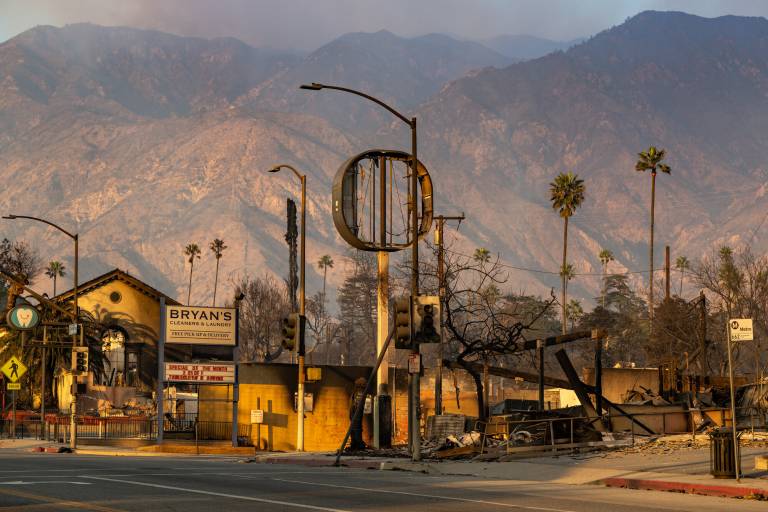
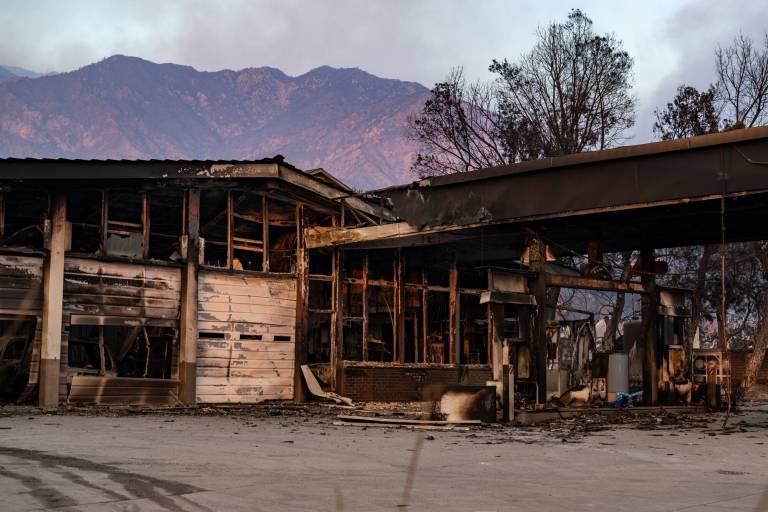
"caption": "Fire destruction in downtown Altadena, after the Eaton Fire swept through the area northeast of Los Angeles, on Jan. 9, 2025. California lawmakers are crafting legislation to replenish the state’s wildfire fund in preparation. ",
"credit": "Beth LaBerge/KQED",
"altTag": null,
"description": null,
"imgSizes": {
"thumbnail": {
"file": "https://cdn.kqed.org/wp-content/uploads/sites/35/2025/08/240109-CAWindStorm-069_qed-160x107.jpg",
"width": 160,
"height": 107,
"mimeType": "image/jpeg"
},
"medium_large": {
"file": "https://cdn.kqed.org/wp-content/uploads/sites/35/2025/08/240109-CAWindStorm-069_qed-768x512.jpg",
"width": 768,
"height": 512,
"mimeType": "image/jpeg"
},
"1536x1536": {
"file": "https://cdn.kqed.org/wp-content/uploads/sites/35/2025/08/240109-CAWindStorm-069_qed-1536x1024.jpg",
"width": 1536,
"height": 1024,
"mimeType": "image/jpeg"
},
"post-thumbnail": {
"file": "https://cdn.kqed.org/wp-content/uploads/sites/35/2025/08/240109-CAWindStorm-069_qed-672x372.jpg",
"width": 672,
"height": 372,
"mimeType": "image/jpeg"
},
"twentyfourteen-full-width": {
"file": "https://cdn.kqed.org/wp-content/uploads/sites/35/2025/08/240109-CAWindStorm-069_qed-1038x576.jpg",
"width": 1038,
"height": 576,
"mimeType": "image/jpeg"
},
"kqedFullSize": {
"file": "https://cdn.kqed.org/wp-content/uploads/sites/35/2025/08/240109-CAWindStorm-069_qed.jpg",
"width": 1999,
"height": 1333
}
},
"isLoading": false,
"fetchFailed": false
},
"science_1997997": {
"type": "attachments",
"id": "science_1997997",
"meta": {
"index": "attachments_1716263798",
"site": "science",
"id": "1997997",
"found": true
},
"title": "A home in the Berkeley hills on April 15, 2025.",
"publishDate": 1753982613,
"status": "inherit",
"parent": 1997994,
"modified": 1753982624,
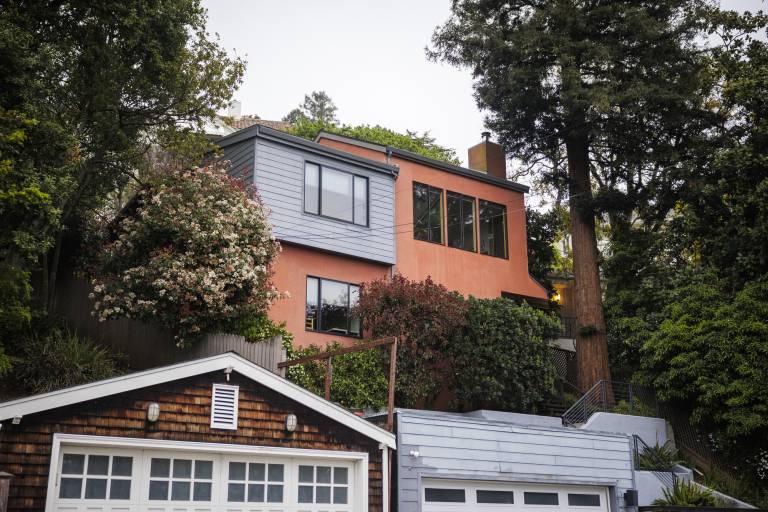
"caption": "A home in the Berkeley hills on April 15, 2025.",
"credit": "Martin do Nascimento/KQED",
"altTag": null,
"description": null,
"imgSizes": {
"thumbnail": {
"file": "https://cdn.kqed.org/wp-content/uploads/sites/35/2025/07/250415-BERKELEY-PLANTS-MD-05_qed-160x107.jpg",
"width": 160,
"height": 107,
"mimeType": "image/jpeg"
},
"medium_large": {
"file": "https://cdn.kqed.org/wp-content/uploads/sites/35/2025/07/250415-BERKELEY-PLANTS-MD-05_qed-768x512.jpg",
"width": 768,
"height": 512,
"mimeType": "image/jpeg"
},
"1536x1536": {
"file": "https://cdn.kqed.org/wp-content/uploads/sites/35/2025/07/250415-BERKELEY-PLANTS-MD-05_qed-1536x1024.jpg",
"width": 1536,
"height": 1024,
"mimeType": "image/jpeg"
},
"post-thumbnail": {
"file": "https://cdn.kqed.org/wp-content/uploads/sites/35/2025/07/250415-BERKELEY-PLANTS-MD-05_qed-672x372.jpg",
"width": 672,
"height": 372,
"mimeType": "image/jpeg"
},
"twentyfourteen-full-width": {
"file": "https://cdn.kqed.org/wp-content/uploads/sites/35/2025/07/250415-BERKELEY-PLANTS-MD-05_qed-1038x576.jpg",
"width": 1038,
"height": 576,
"mimeType": "image/jpeg"
},
"kqedFullSize": {
"file": "https://cdn.kqed.org/wp-content/uploads/sites/35/2025/07/250415-BERKELEY-PLANTS-MD-05_qed.jpg",
"width": 1999,
"height": 1333
}
},
"isLoading": false,
"fetchFailed": false
},
"science_1997982": {
"type": "attachments",
"id": "science_1997982",
"meta": {
"index": "attachments_1716263798",
"site": "science",
"id": "1997982",
"found": true
},
"title": "US-ASTRONOMY-METEOR-PERSEIDS",
"publishDate": 1753821357,
"status": "inherit",
"parent": 1997977,
"modified": 1753821398,
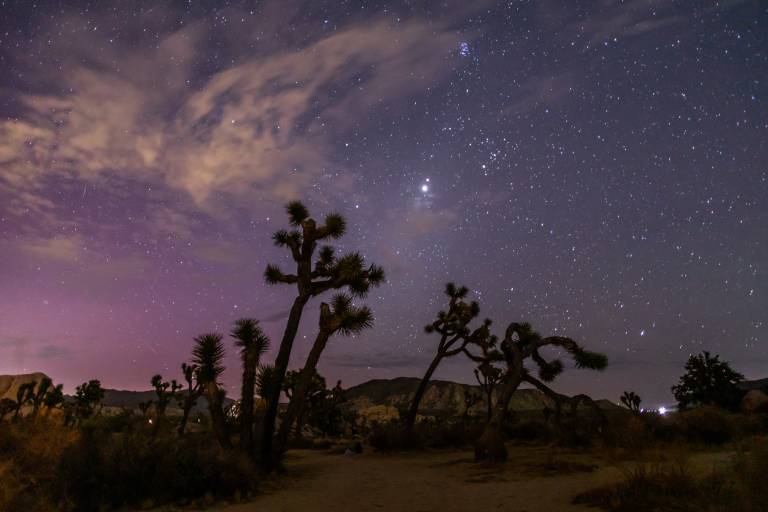
"caption": "Northern Lights (Aurora Borealis) illuminate the sky above Joshua Tree National Park during the Perseids Meteor shower in Joshua Tree, California, on Aug. 12, 2024. ",
"credit": "Apu Gomes/AFP via Getty Images",
"altTag": null,
"description": null,
"imgSizes": {
"thumbnail": {
"file": "https://cdn.kqed.org/wp-content/uploads/sites/35/2025/07/PerseidsGetty-160x107.jpg",
"width": 160,
"height": 107,
"mimeType": "image/jpeg"
},
"medium_large": {
"file": "https://cdn.kqed.org/wp-content/uploads/sites/35/2025/07/PerseidsGetty-768x512.jpg",
"width": 768,
"height": 512,
"mimeType": "image/jpeg"
},
"1536x1536": {
"file": "https://cdn.kqed.org/wp-content/uploads/sites/35/2025/07/PerseidsGetty-1536x1024.jpg",
"width": 1536,
"height": 1024,
"mimeType": "image/jpeg"
},
"post-thumbnail": {
"file": "https://cdn.kqed.org/wp-content/uploads/sites/35/2025/07/PerseidsGetty-672x372.jpg",
"width": 672,
"height": 372,
"mimeType": "image/jpeg"
},
"twentyfourteen-full-width": {
"file": "https://cdn.kqed.org/wp-content/uploads/sites/35/2025/07/PerseidsGetty-1038x576.jpg",
"width": 1038,
"height": 576,
"mimeType": "image/jpeg"
},
"kqedFullSize": {
"file": "https://cdn.kqed.org/wp-content/uploads/sites/35/2025/07/PerseidsGetty.jpg",
"width": 2000,
"height": 1333
}
},
"isLoading": false,
"fetchFailed": false
},
"science_1997969": {
"type": "attachments",
"id": "science_1997969",
"meta": {
"index": "attachments_1716263798",
"site": "science",
"id": "1997969",
"found": true
},
"title": "IMG_9142_qed",
"publishDate": 1753809090,
"status": "inherit",
"parent": 1997954,
"modified": 1753809103,
"caption": null,
"credit": "Molly Peterson/KQED",
"altTag": null,
"description": null,
"imgSizes": {
"thumbnail": {
"file": "https://cdn.kqed.org/wp-content/uploads/sites/35/2025/07/IMG_9142_qed-160x120.jpg",
"width": 160,
"height": 120,
"mimeType": "image/jpeg"
},
"medium_large": {
"file": "https://cdn.kqed.org/wp-content/uploads/sites/35/2025/07/IMG_9142_qed-768x576.jpg",
"width": 768,
"height": 576,
"mimeType": "image/jpeg"
},
"1536x1536": {
"file": "https://cdn.kqed.org/wp-content/uploads/sites/35/2025/07/IMG_9142_qed-1536x1152.jpg",
"width": 1536,
"height": 1152,
"mimeType": "image/jpeg"
},
"post-thumbnail": {
"file": "https://cdn.kqed.org/wp-content/uploads/sites/35/2025/07/IMG_9142_qed-672x372.jpg",
"width": 672,
"height": 372,
"mimeType": "image/jpeg"
},
"twentyfourteen-full-width": {
"file": "https://cdn.kqed.org/wp-content/uploads/sites/35/2025/07/IMG_9142_qed-1038x576.jpg",
"width": 1038,
"height": 576,
"mimeType": "image/jpeg"
},
"kqedFullSize": {
"file": "https://cdn.kqed.org/wp-content/uploads/sites/35/2025/07/IMG_9142_qed.jpg",
"width": 1778,
"height": 1333
}
},
"isLoading": false,
"fetchFailed": false
},
"science_1997021": {
"type": "attachments",
"id": "science_1997021",
"meta": {
"index": "attachments_1716263798",
"site": "science",
"id": "1997021",
"found": true
},
"title": "250523-SOLAR BALCONY-MD-01-KQED",
"publishDate": 1748034612,
"status": "inherit",
"parent": 0,
"modified": 1776720034,
"caption": "Matthew Milner (left) and Rupert Mayer work to install solar panels in Milner's backyard in Kensington on May 23, 2025.",
"credit": "Martin do Nascimento/KQED",
"altTag": null,
"description": null,
"imgSizes": {
"medium": {
"file": "https://cdn.kqed.org/wp-content/uploads/sites/35/2025/05/250523-SOLAR-BALCONY-MD-01-KQED-800x534.jpg",
"width": 800,
"height": 534,
"mimeType": "image/jpeg"
},
"large": {
"file": "https://cdn.kqed.org/wp-content/uploads/sites/35/2025/05/250523-SOLAR-BALCONY-MD-01-KQED-1020x680.jpg",
"width": 1020,
"height": 680,
"mimeType": "image/jpeg"
},
"thumbnail": {
"file": "https://cdn.kqed.org/wp-content/uploads/sites/35/2025/05/250523-SOLAR-BALCONY-MD-01-KQED-160x107.jpg",
"width": 160,
"height": 107,
"mimeType": "image/jpeg"
},
"medium_large": {
"file": "https://cdn.kqed.org/wp-content/uploads/sites/35/2025/05/250523-SOLAR-BALCONY-MD-01-KQED-768x512.jpg",
"width": 768,
"height": 512,
"mimeType": "image/jpeg"
},
"1536x1536": {
"file": "https://cdn.kqed.org/wp-content/uploads/sites/35/2025/05/250523-SOLAR-BALCONY-MD-01-KQED-1536x1025.jpg",
"width": 1536,
"height": 1025,
"mimeType": "image/jpeg"
},
"post-thumbnail": {
"file": "https://cdn.kqed.org/wp-content/uploads/sites/35/2025/05/250523-SOLAR-BALCONY-MD-01-KQED-672x372.jpg",
"width": 672,
"height": 372,
"mimeType": "image/jpeg"
},
"twentyfourteen-full-width": {
"file": "https://cdn.kqed.org/wp-content/uploads/sites/35/2025/05/250523-SOLAR-BALCONY-MD-01-KQED-1038x576.jpg",
"width": 1038,
"height": 576,
"mimeType": "image/jpeg"
},
"full-width": {
"file": "https://cdn.kqed.org/wp-content/uploads/sites/35/2025/05/250523-SOLAR-BALCONY-MD-01-KQED-1920x1281.jpg",
"width": 1920,
"height": 1281,
"mimeType": "image/jpeg"
},
"kqedFullSize": {
"file": "https://cdn.kqed.org/wp-content/uploads/sites/35/2025/05/250523-SOLAR-BALCONY-MD-01-KQED.jpg",
"width": 2000,
"height": 1334
}
},
"isLoading": false,
"fetchFailed": false
},
"science_1997914": {
"type": "attachments",
"id": "science_1997914",
"meta": {
"index": "attachments_1716263798",
"site": "science",
"id": "1997914",
"found": true
},
"title": "BRIDGE_008_qed",
"publishDate": 1753464368,
"status": "inherit",
"parent": 1997911,
"modified": 1753464405,
"caption": "The Golden Gate Bridge, connecting Marin County with San Francisco County.",
"credit": "Lauren Hanussak/KQED",
"altTag": null,
"description": null,
"imgSizes": {
"thumbnail": {
"file": "https://cdn.kqed.org/wp-content/uploads/sites/35/2025/07/BRIDGE_008_qed-160x107.jpg",
"width": 160,
"height": 107,
"mimeType": "image/jpeg"
},
"medium_large": {
"file": "https://cdn.kqed.org/wp-content/uploads/sites/35/2025/07/BRIDGE_008_qed-768x511.jpg",
"width": 768,
"height": 511,
"mimeType": "image/jpeg"
},
"1536x1536": {
"file": "https://cdn.kqed.org/wp-content/uploads/sites/35/2025/07/BRIDGE_008_qed-1536x1023.jpg",
"width": 1536,
"height": 1023,
"mimeType": "image/jpeg"
},
"post-thumbnail": {
"file": "https://cdn.kqed.org/wp-content/uploads/sites/35/2025/07/BRIDGE_008_qed-672x372.jpg",
"width": 672,
"height": 372,
"mimeType": "image/jpeg"
},
"twentyfourteen-full-width": {
"file": "https://cdn.kqed.org/wp-content/uploads/sites/35/2025/07/BRIDGE_008_qed-1038x576.jpg",
"width": 1038,
"height": 576,
"mimeType": "image/jpeg"
},
"kqedFullSize": {
"file": "https://cdn.kqed.org/wp-content/uploads/sites/35/2025/07/BRIDGE_008_qed.jpg",
"width": 2000,
"height": 1332
}
},
"isLoading": false,
"fetchFailed": false
},
"science_1985188": {
"type": "attachments",
"id": "science_1985188",
"meta": {
"index": "attachments_1716263798",
"site": "science",
"id": "1985188",
"found": true
},
"title": "RS66774_230627-HousingNevadaCoWildfire-24-BL-KQED",
"publishDate": 1699619757,
"status": "inherit",
"parent": 0,
"modified": 1753482842,
"caption": "Tree stumps fill the front yard of Mike Smith's home on the San Juan Ridge near Nevada City, California, on June 27, 2023, after he hired crews to create defensible space to help protect his home from wildfire.",
"credit": "Beth LaBerge/KQED",
"altTag": "An outdoor scene of cut tree trunks and cut grass in the foreground with a home up a hillside in the background.",
"description": null,
"imgSizes": {
"medium": {
"file": "https://cdn.kqed.org/wp-content/uploads/sites/35/2023/11/RS66774_230627-HousingNevadaCoWildfire-24-BL-KQED-800x533.jpg",
"width": 800,
"height": 533,
"mimeType": "image/jpeg"
},
"large": {
"file": "https://cdn.kqed.org/wp-content/uploads/sites/35/2023/11/RS66774_230627-HousingNevadaCoWildfire-24-BL-KQED-1020x680.jpg",
"width": 1020,
"height": 680,
"mimeType": "image/jpeg"
},
"thumbnail": {
"file": "https://cdn.kqed.org/wp-content/uploads/sites/35/2023/11/RS66774_230627-HousingNevadaCoWildfire-24-BL-KQED-160x107.jpg",
"width": 160,
"height": 107,
"mimeType": "image/jpeg"
},
"medium_large": {
"file": "https://cdn.kqed.org/wp-content/uploads/sites/35/2023/11/RS66774_230627-HousingNevadaCoWildfire-24-BL-KQED-768x512.jpg",
"width": 768,
"height": 512,
"mimeType": "image/jpeg"
},
"1536x1536": {
"file": "https://cdn.kqed.org/wp-content/uploads/sites/35/2023/11/RS66774_230627-HousingNevadaCoWildfire-24-BL-KQED-1536x1024.jpg",
"width": 1536,
"height": 1024,
"mimeType": "image/jpeg"
},
"post-thumbnail": {
"file": "https://cdn.kqed.org/wp-content/uploads/sites/35/2023/11/RS66774_230627-HousingNevadaCoWildfire-24-BL-KQED-672x372.jpg",
"width": 672,
"height": 372,
"mimeType": "image/jpeg"
},
"twentyfourteen-full-width": {
"file": "https://cdn.kqed.org/wp-content/uploads/sites/35/2023/11/RS66774_230627-HousingNevadaCoWildfire-24-BL-KQED-1038x576.jpg",
"width": 1038,
"height": 576,
"mimeType": "image/jpeg"
},
"full-width": {
"file": "https://cdn.kqed.org/wp-content/uploads/sites/35/2023/11/RS66774_230627-HousingNevadaCoWildfire-24-BL-KQED-1920x1280.jpg",
"width": 1920,
"height": 1280,
"mimeType": "image/jpeg"
},
"kqedFullSize": {
"file": "https://cdn.kqed.org/wp-content/uploads/sites/35/2023/11/RS66774_230627-HousingNevadaCoWildfire-24-BL-KQED.jpg",
"width": 2000,
"height": 1333
}
},
"isLoading": false,
"fetchFailed": false
},
"science_1997880": {
"type": "attachments",
"id": "science_1997880",
"meta": {
"index": "attachments_1716263798",
"site": "science",
"id": "1997880",
"found": true
},
"title": "20240604_FloodedSchool-16_qed",
"publishDate": 1753210603,
"status": "inherit",
"parent": 0,
"modified": 1753217104,
"caption": "Flood warning signs are posted at the Mill Valley Middle School staff parking lot on June 4, 2024. In October 2021, Mill Valley Middle School closed down for two days due to flooding and storm damage caused by rain-induced flooding and high tides.",
"credit": "Gina Castro/KQED",
"altTag": null,
"description": null,
"imgSizes": {
"thumbnail": {
"file": "https://cdn.kqed.org/wp-content/uploads/sites/35/2025/07/20240604_FloodedSchool-16_qed-160x107.jpg",
"width": 160,
"height": 107,
"mimeType": "image/jpeg"
},
"medium_large": {
"file": "https://cdn.kqed.org/wp-content/uploads/sites/35/2025/07/20240604_FloodedSchool-16_qed-768x512.jpg",
"width": 768,
"height": 512,
"mimeType": "image/jpeg"
},
"1536x1536": {
"file": "https://cdn.kqed.org/wp-content/uploads/sites/35/2025/07/20240604_FloodedSchool-16_qed-1536x1024.jpg",
"width": 1536,
"height": 1024,
"mimeType": "image/jpeg"
},
"post-thumbnail": {
"file": "https://cdn.kqed.org/wp-content/uploads/sites/35/2025/07/20240604_FloodedSchool-16_qed-672x372.jpg",
"width": 672,
"height": 372,
"mimeType": "image/jpeg"
},
"twentyfourteen-full-width": {
"file": "https://cdn.kqed.org/wp-content/uploads/sites/35/2025/07/20240604_FloodedSchool-16_qed-1038x576.jpg",
"width": 1038,
"height": 576,
"mimeType": "image/jpeg"
},
"kqedFullSize": {
"file": "https://cdn.kqed.org/wp-content/uploads/sites/35/2025/07/20240604_FloodedSchool-16_qed.jpg",
"width": 2000,
"height": 1333
}
},
"isLoading": false,
"fetchFailed": false
},
"science_1997855": {
"type": "attachments",
"id": "science_1997855",
"meta": {
"index": "attachments_1716263798",
"site": "science",
"id": "1997855",
"found": true
},
"title": "240109-CAWindStorm-081_qed (1)",
"publishDate": 1752782567,
"status": "inherit",
"parent": 1997852,
"modified": 1752782579,
"caption": "A Chevron gas station in Altadena, California, after the Eaton Fire swept through the area northeast of Los Angeles, California, on Thursday, Jan. 9, 2025.",
"credit": "Beth LaBerge/KQED",
"altTag": null,
"description": null,
"imgSizes": {
"thumbnail": {
"file": "https://cdn.kqed.org/wp-content/uploads/sites/35/2025/07/240109-CAWindStorm-081_qed-1-160x107.jpg",
"width": 160,
"height": 107,
"mimeType": "image/jpeg"
},
"medium_large": {
"file": "https://cdn.kqed.org/wp-content/uploads/sites/35/2025/07/240109-CAWindStorm-081_qed-1-768x512.jpg",
"width": 768,
"height": 512,
"mimeType": "image/jpeg"
},
"1536x1536": {
"file": "https://cdn.kqed.org/wp-content/uploads/sites/35/2025/07/240109-CAWindStorm-081_qed-1-1536x1024.jpg",
"width": 1536,
"height": 1024,
"mimeType": "image/jpeg"
},
"post-thumbnail": {
"file": "https://cdn.kqed.org/wp-content/uploads/sites/35/2025/07/240109-CAWindStorm-081_qed-1-672x372.jpg",
"width": 672,
"height": 372,
"mimeType": "image/jpeg"
},
"twentyfourteen-full-width": {
"file": "https://cdn.kqed.org/wp-content/uploads/sites/35/2025/07/240109-CAWindStorm-081_qed-1-1038x576.jpg",
"width": 1038,
"height": 576,
"mimeType": "image/jpeg"
},
"kqedFullSize": {
"file": "https://cdn.kqed.org/wp-content/uploads/sites/35/2025/07/240109-CAWindStorm-081_qed-1.jpg",
"width": 2000,
"height": 1333
}
},
"isLoading": false,
"fetchFailed": false
},
"science_1997768": {
"type": "attachments",
"id": "science_1997768",
"meta": {
"index": "attachments_1716263798",
"site": "science",
"id": "1997768",
"found": true
},
"title": "Care Court",
"publishDate": 1752527568,
"status": "inherit",
"parent": 0,
"modified": 1766617056,
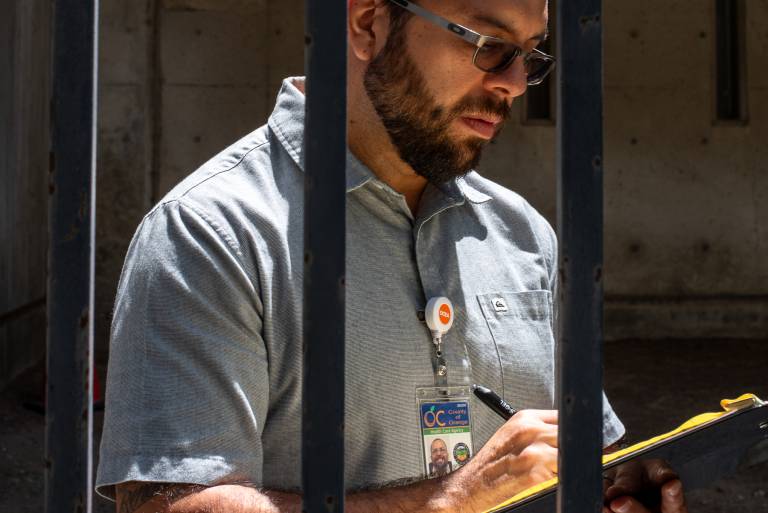
"caption": "Giovanni Figueroa, a mental health specialist with the Orange County Health Care Agency, writes a to-do list before meeting with a client at the Central Men’s & Women’s Jails in Orange County on July 7, 2025.",
"credit": "David Rodriguez for KQED",
"altTag": null,
"description": null,
"imgSizes": {
"thumbnail": {
"file": "https://cdn.kqed.org/wp-content/uploads/sites/35/2025/07/Rodriguez_CARE_07_07_2025-4-160x107.jpg",
"width": 160,
"height": 107,
"mimeType": "image/jpeg"
},
"medium_large": {
"file": "https://cdn.kqed.org/wp-content/uploads/sites/35/2025/07/Rodriguez_CARE_07_07_2025-4-768x513.jpg",
"width": 768,
"height": 513,
"mimeType": "image/jpeg"
},
"1536x1536": {
"file": "https://cdn.kqed.org/wp-content/uploads/sites/35/2025/07/Rodriguez_CARE_07_07_2025-4-1536x1026.jpg",
"width": 1536,
"height": 1026,
"mimeType": "image/jpeg"
},
"post-thumbnail": {
"file": "https://cdn.kqed.org/wp-content/uploads/sites/35/2025/07/Rodriguez_CARE_07_07_2025-4-672x372.jpg",
"width": 672,
"height": 372,
"mimeType": "image/jpeg"
},
"twentyfourteen-full-width": {
"file": "https://cdn.kqed.org/wp-content/uploads/sites/35/2025/07/Rodriguez_CARE_07_07_2025-4-1038x576.jpg",
"width": 1038,
"height": 576,
"mimeType": "image/jpeg"
},
"kqedFullSize": {
"file": "https://cdn.kqed.org/wp-content/uploads/sites/35/2025/07/Rodriguez_CARE_07_07_2025-4.jpg",
"width": 1800,
"height": 1202
}
},
"isLoading": false,
"fetchFailed": false
},
"science_1997819": {
"type": "attachments",
"id": "science_1997819",
"meta": {
"index": "attachments_1716263798",
"site": "science",
"id": "1997819",
"found": true
},
"title": "It's so much more than flu these days",
"publishDate": 1752614640,
"status": "inherit",
"parent": 1997803,
"modified": 1752614640,
"caption": "Shot of a young woman blowing her nose with a tissue at home",
"credit": null,
"altTag": null,
"description": null,
"imgSizes": {
"thumbnail": {
"file": "https://cdn.kqed.org/wp-content/uploads/sites/35/2025/07/GettyImages-1217583991_qed-160x107.jpg",
"width": 160,
"height": 107,
"mimeType": "image/jpeg"
},
"medium_large": {
"file": "https://cdn.kqed.org/wp-content/uploads/sites/35/2025/07/GettyImages-1217583991_qed-768x513.jpg",
"width": 768,
"height": 513,
"mimeType": "image/jpeg"
},
"1536x1536": {
"file": "https://cdn.kqed.org/wp-content/uploads/sites/35/2025/07/GettyImages-1217583991_qed-1536x1025.jpg",
"width": 1536,
"height": 1025,
"mimeType": "image/jpeg"
},
"post-thumbnail": {
"file": "https://cdn.kqed.org/wp-content/uploads/sites/35/2025/07/GettyImages-1217583991_qed-672x372.jpg",
"width": 672,
"height": 372,
"mimeType": "image/jpeg"
},
"twentyfourteen-full-width": {
"file": "https://cdn.kqed.org/wp-content/uploads/sites/35/2025/07/GettyImages-1217583991_qed-1038x576.jpg",
"width": 1038,
"height": 576,
"mimeType": "image/jpeg"
},
"kqedFullSize": {
"file": "https://cdn.kqed.org/wp-content/uploads/sites/35/2025/07/GettyImages-1217583991_qed.jpg",
"width": 1997,
"height": 1333
}
},
"isLoading": false,
"fetchFailed": false
},
"science_1997793": {
"type": "attachments",
"id": "science_1997793",
"meta": {
"index": "attachments_1716263798",
"site": "science",
"id": "1997793",
"found": true
},
"title": "Living Seawall",
"publishDate": 1752536416,
"status": "inherit",
"parent": 0,
"modified": 1752596717,
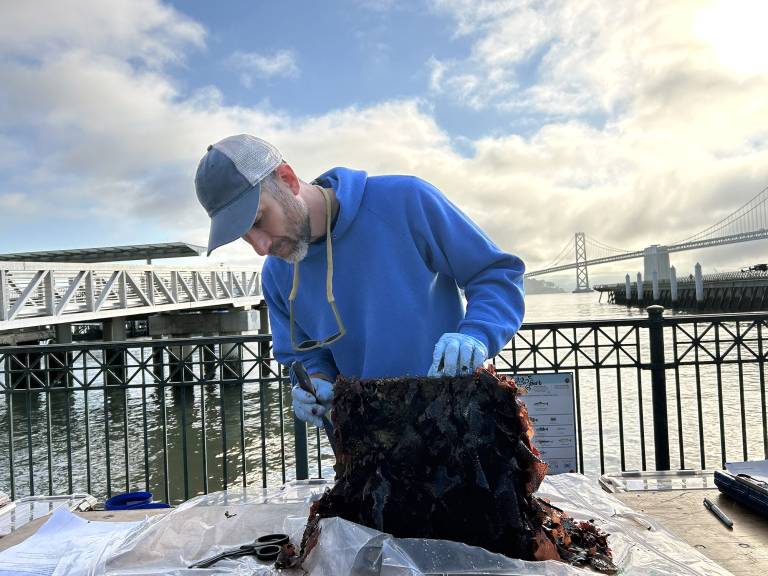
"caption": "Biological sciences technician Jeffrey Blumenthal inspects specially designed tiles, which are part of an innovative study led by the Port of San Francisco and Smithsonian Environmental Research Center, to learn how we can make San Francisco's seawalls more ecologically friendly in the future.",
"credit": "Ezra David Romero/KQED",
"altTag": null,
"description": null,
"imgSizes": {
"thumbnail": {
"file": "https://cdn.kqed.org/wp-content/uploads/sites/35/2025/07/IMG_2320-160x120.jpg",
"width": 160,
"height": 120,
"mimeType": "image/jpeg"
},
"medium_large": {
"file": "https://cdn.kqed.org/wp-content/uploads/sites/35/2025/07/IMG_2320-768x576.jpg",
"width": 768,
"height": 576,
"mimeType": "image/jpeg"
},
"1536x1536": {
"file": "https://cdn.kqed.org/wp-content/uploads/sites/35/2025/07/IMG_2320-1536x1152.jpg",
"width": 1536,
"height": 1152,
"mimeType": "image/jpeg"
},
"post-thumbnail": {
"file": "https://cdn.kqed.org/wp-content/uploads/sites/35/2025/07/IMG_2320-672x372.jpg",
"width": 672,
"height": 372,
"mimeType": "image/jpeg"
},
"twentyfourteen-full-width": {
"file": "https://cdn.kqed.org/wp-content/uploads/sites/35/2025/07/IMG_2320-1038x576.jpg",
"width": 1038,
"height": 576,
"mimeType": "image/jpeg"
},
"kqedFullSize": {
"file": "https://cdn.kqed.org/wp-content/uploads/sites/35/2025/07/IMG_2320.jpg",
"width": 2000,
"height": 1500
}
},
"isLoading": false,
"fetchFailed": false
}
},
"audioPlayerReducer": {
"postId": "stream_live",
"isPaused": true,
"isPlaying": false,
"pfsActive": false,
"pledgeModalIsOpen": true,
"playerDrawerIsOpen": false,
"liveAudioPlayStartedAt": 0,
"liveAudioPlayContext": ""
},
"authorsReducer": {
"adembosky": {
"type": "authors",
"id": "3205",
"meta": {
"index": "authors_1716337520",
"id": "3205",
"found": true
},
"name": "April Dembosky",
"firstName": "April",
"lastName": "Dembosky",
"slug": "adembosky",
"email": "adembosky@kqed.org",
"display_author_email": false,
"staff_mastheads": [
"news",
"science"
],
"title": "KQED Health Correspondent",
"bio": "April Dembosky is the health correspondent for KQED News and a regular contributor to NPR. She specializes in covering altered states of mind, from postpartum depression to methamphetamine-induced psychosis to the insanity defense. Her investigative series on insurance companies sidestepping mental health laws won multiple awards, including first place in beat reporting from the national Association of Health Care Journalists. She is the recipient of numerous other prizes and fellowships, including a national Edward R. Murrow award for investigative reporting, a Society of Professional Journalists award for long-form storytelling, and a Carter Center Fellowship for Mental Health Journalism.\r\n\r\nDembosky reported and produced \u003cem>Soundtrack of Silence\u003c/em>, an audio documentary about music and memory that is currently being made into a feature film by Paramount Pictures.\r\n\r\nBefore joining KQED in 2013, Dembosky covered technology and Silicon Valley for \u003cem>The Financial Times of London,\u003c/em> and contributed business and arts stories to \u003cem>Marketplace \u003c/em>and \u003cem>The New York Times.\u003c/em> She got her undergraduate degree in philosophy from Smith College and her master's in journalism from the University of California, Berkeley. She is a classically trained violinist and proud alum of the first symphony orchestra at Burning Man.",
"avatar": "https://secure.gravatar.com/avatar/ef92999be4ceb9ea60701e7dc276f813?s=600&d=blank&r=g",
"twitter": "adembosky",
"facebook": null,
"instagram": null,
"linkedin": null,
"sites": [
{
"site": "arts",
"roles": [
"author"
]
},
{
"site": "news",
"roles": [
"editor"
]
},
{
"site": "futureofyou",
"roles": [
"author"
]
},
{
"site": "stateofhealth",
"roles": [
"editor"
]
},
{
"site": "science",
"roles": [
"editor"
]
},
{
"site": "forum",
"roles": [
"editor"
]
}
],
"headData": {
"title": "April Dembosky | KQED",
"description": "KQED Health Correspondent",
"ogImgSrc": "https://secure.gravatar.com/avatar/ef92999be4ceb9ea60701e7dc276f813?s=600&d=blank&r=g",
"twImgSrc": "https://secure.gravatar.com/avatar/ef92999be4ceb9ea60701e7dc276f813?s=600&d=blank&r=g"
},
"isLoading": false,
"link": "/author/adembosky"
},
"lklivans": {
"type": "authors",
"id": "8648",
"meta": {
"index": "authors_1716337520",
"id": "8648",
"found": true
},
"name": "Laura Klivans",
"firstName": "Laura",
"lastName": "Klivans",
"slug": "lklivans",
"email": "lklivans@kqed.org",
"display_author_email": true,
"staff_mastheads": [
"news",
"science"
],
"title": "Reporter",
"bio": "Laura Klivans is an award-winning science reporter for KQED News, where she covers climate change with an eye on both groundbreaking progress and gaps in action. She is the former host of KQED's blockbuster video series about tiny, amazing animals, \u003cem>Deep Look\u003c/em>. Her work reaches national audiences through NPR, \u003cem>Here & Now, \u003c/em>PRI, and other major outlets. \r\n\r\nLaura’s won five Northern California Area Emmy Awards for Deep Look and First Place in the Greater Bay Area Journalism Awards for a podcast exploring how one Oakland neighborhood teamed up to reduce planet-heating pollution.\r\n\r\nBeyond her reporting, she hosts and moderates events. In the past, she taught audio storytelling at the UC Berkeley Graduate School of Journalism, led international education programs, worked with immigrants and refugees along the Thai-Burmese border, taught high schoolers sex ed, and was an actress. \r\n\r\nShe's a former UC Berkeley Human Rights Fellow, USC Center for Health Journalism's California Fellow and Coro Fellow in Public Affairs. Laura has a master’s in journalism from UC Berkeley, a master’s in education from Harvard, and an undergraduate degree from Northwestern University.\r\n\r\nShe loves trying to riddle the meaning out of vanity license plates.",
"avatar": "https://secure.gravatar.com/avatar/2d2ecd1550a494cc10ad4a503406965585902124739e775a9b3817eebf1d88be?s=600&d=blank&r=g",
"twitter": "lauraklivans",
"bluesky": null,
"facebook": null,
"instagram": null,
"linkedin": null,
"sites": [
{
"site": "news",
"roles": [
"editor"
]
},
{
"site": "stateofhealth",
"roles": [
"contributor",
"editor"
]
},
{
"site": "science",
"roles": [
"editor"
]
},
{
"site": "forum",
"roles": [
"editor"
]
}
],
"headData": {
"title": "Laura Klivans | KQED",
"description": "Reporter",
"ogImgSrc": "https://secure.gravatar.com/avatar/2d2ecd1550a494cc10ad4a503406965585902124739e775a9b3817eebf1d88be?s=600&d=blank&r=g",
"twImgSrc": "https://secure.gravatar.com/avatar/2d2ecd1550a494cc10ad4a503406965585902124739e775a9b3817eebf1d88be?s=600&d=blank&r=g"
},
"isLoading": false,
"link": "/author/lklivans"
},
"dventon": {
"type": "authors",
"id": "11088",
"meta": {
"index": "authors_1716337520",
"id": "11088",
"found": true
},
"name": "Danielle Venton",
"firstName": "Danielle",
"lastName": "Venton",
"slug": "dventon",
"email": "dventon@kqed.org",
"display_author_email": true,
"staff_mastheads": [
"science"
],
"title": "Science reporter",
"bio": "Danielle Venton is a reporter for KQED Science. She covers wildfires, space and oceans (though she is prone to sea sickness).\r\n\r\nBefore joining KQED in 2015, Danielle was a staff reporter at KRCB in Sonoma County and a freelancer. She studied science communication at UC Santa Cruz and formerly worked at CERN in Geneva, Switzerland where she wrote about computing. She lives in Sonoma County and enjoys backpacking.",
"avatar": "https://secure.gravatar.com/avatar/37b292b5c40c8d93959c4f48d73b5286f41b7abd8588277e941905a3ed4c801c?s=600&d=blank&r=g",
"twitter": "DanielleVenton",
"bluesky": null,
"facebook": null,
"instagram": null,
"linkedin": null,
"sites": [
{
"site": "arts",
"roles": [
"contributor"
]
},
{
"site": "news",
"roles": [
"editor"
]
},
{
"site": "futureofyou",
"roles": [
"editor"
]
},
{
"site": "science",
"roles": [
"editor"
]
},
{
"site": "liveblog",
"roles": [
"contributor"
]
}
],
"headData": {
"title": "Danielle Venton | KQED",
"description": "Science reporter",
"ogImgSrc": "https://secure.gravatar.com/avatar/37b292b5c40c8d93959c4f48d73b5286f41b7abd8588277e941905a3ed4c801c?s=600&d=blank&r=g",
"twImgSrc": "https://secure.gravatar.com/avatar/37b292b5c40c8d93959c4f48d73b5286f41b7abd8588277e941905a3ed4c801c?s=600&d=blank&r=g"
},
"isLoading": false,
"link": "/author/dventon"
},
"dcronin": {
"type": "authors",
"id": "11362",
"meta": {
"index": "authors_1716337520",
"id": "11362",
"found": true
},
"name": "Dana Cronin",
"firstName": "Dana",
"lastName": "Cronin",
"slug": "dcronin",
"email": "dcronin@KQED.org",
"display_author_email": true,
"staff_mastheads": [],
"title": "KQED Contributor",
"bio": "Dana Cronin is a reporter for KQED News. She loves writing stories about climate change, environmental issues, food and agriculture. She's reported across the country, from Colorado to Washington D.C. to Illinois, and has won numerous awards for her coverage. Her work is regularly featured on national broadcasts, including NPR’s Morning Edition, All Things Considered, PBS Newshour and Science Friday. She lives in Oakland and has an avocado tree in her back yard.",
"avatar": "https://secure.gravatar.com/avatar/bcf89e3455ff7235f96ab6fa7258dd95?s=600&d=blank&r=g",
"twitter": "DanaHCronin",
"facebook": null,
"instagram": null,
"linkedin": null,
"sites": [
{
"site": "arts",
"roles": [
"author"
]
},
{
"site": "news",
"roles": [
"editor"
]
},
{
"site": "science",
"roles": [
"author"
]
},
{
"site": "liveblog",
"roles": [
"author"
]
}
],
"headData": {
"title": "Dana Cronin | KQED",
"description": "KQED Contributor",
"ogImgSrc": "https://secure.gravatar.com/avatar/bcf89e3455ff7235f96ab6fa7258dd95?s=600&d=blank&r=g",
"twImgSrc": "https://secure.gravatar.com/avatar/bcf89e3455ff7235f96ab6fa7258dd95?s=600&d=blank&r=g"
},
"isLoading": false,
"link": "/author/dcronin"
},
"smohamad": {
"type": "authors",
"id": "11631",
"meta": {
"index": "authors_1716337520",
"id": "11631",
"found": true
},
"name": "Sarah Mohamad",
"firstName": "Sarah",
"lastName": "Mohamad",
"slug": "smohamad",
"email": "smohamad@KQED.org",
"display_author_email": true,
"staff_mastheads": [],
"title": "Engagement Producer and Reporter, KQED Science",
"bio": "Sarah Mohamad is an audience engagement reporter and producer for KQED Science. She reports on audience-focused science and environment stories and manages the team's social media, newsletter, and engagement efforts. Prior to this role, she played a key role as project manager for NSF's \u003ca href=\"https://www.kqed.org/crackingthecode\">\u003cem>Cracking the Code: Influencing Millennial Science Engagement\u003c/em> \u003c/a>audience research.",
"avatar": "https://secure.gravatar.com/avatar/e6224957cd82d015183756ddde1f928013a563d7ca2e4565f8c4de1ec64886c5?s=600&d=blank&r=g",
"twitter": "sarahkmohamad",
"bluesky": null,
"facebook": null,
"instagram": null,
"linkedin": null,
"sites": [
{
"site": "",
"roles": [
"editor"
]
},
{
"site": "arts",
"roles": [
"editor"
]
},
{
"site": "news",
"roles": [
"editor"
]
},
{
"site": "about",
"roles": [
"editor"
]
},
{
"site": "science",
"roles": [
"editor"
]
}
],
"headData": {
"title": "Sarah Mohamad | KQED",
"description": "Engagement Producer and Reporter, KQED Science",
"ogImgSrc": "https://secure.gravatar.com/avatar/e6224957cd82d015183756ddde1f928013a563d7ca2e4565f8c4de1ec64886c5?s=600&d=blank&r=g",
"twImgSrc": "https://secure.gravatar.com/avatar/e6224957cd82d015183756ddde1f928013a563d7ca2e4565f8c4de1ec64886c5?s=600&d=blank&r=g"
},
"isLoading": false,
"link": "/author/smohamad"
},
"eromero": {
"type": "authors",
"id": "11746",
"meta": {
"index": "authors_1716337520",
"id": "11746",
"found": true
},
"name": "Ezra David Romero",
"firstName": "Ezra David",
"lastName": "Romero",
"slug": "eromero",
"email": "eromero@kqed.org",
"display_author_email": true,
"staff_mastheads": [
"news",
"science"
],
"title": "Climate Reporter",
"bio": "Ezra David Romero is a climate reporter for KQED News. He covers the absence and excess of water in the Bay Area — think sea level rise, flooding and drought. For nearly a decade he’s covered how warming temperatures are altering the lives of Californians. He’s reported on farmers worried their pistachio trees aren’t getting enough sleep, families desperate for water, scientists studying dying giant sequoias, and alongside firefighters containing wildfires. His work has appeared on local stations across California and nationally on public radio shows like Morning Edition, Here and Now, All Things Considered and Science Friday. ",
"avatar": "https://secure.gravatar.com/avatar/c76404d287c10ed40224227551ac36e24352c7306f106632caf6fead76f8801f?s=600&d=blank&r=g",
"twitter": "ezraromero",
"bluesky": null,
"facebook": null,
"instagram": null,
"linkedin": null,
"sites": [
{
"site": "arts",
"roles": [
"editor"
]
},
{
"site": "news",
"roles": [
"editor"
]
},
{
"site": "science",
"roles": [
"editor"
]
},
{
"site": "liveblog",
"roles": [
"author"
]
}
],
"headData": {
"title": "Ezra David Romero | KQED",
"description": "Climate Reporter",
"ogImgSrc": "https://secure.gravatar.com/avatar/c76404d287c10ed40224227551ac36e24352c7306f106632caf6fead76f8801f?s=600&d=blank&r=g",
"twImgSrc": "https://secure.gravatar.com/avatar/c76404d287c10ed40224227551ac36e24352c7306f106632caf6fead76f8801f?s=600&d=blank&r=g"
},
"isLoading": false,
"link": "/author/eromero"
}
},
"pagesReducer": {
"science_category_news": {
"type": "terms",
"id": "science_40",
"meta": {
"index": "terms_1716263798",
"site": "science",
"id": "40",
"score": 10.813291
},
"featImg": null,
"name": "News",
"description": null,
"taxonomy": "category",
"headData": {
"twImgId": null,
"twTitle": null,
"ogTitle": null,
"ogImgId": null,
"twDescription": null,
"description": null,
"title": "News Archives | KQED Science",
"ogDescription": null
},
"ttid": 42,
"slug": "news",
"isLoading": false,
"title": "News",
"pageMeta": {
"site": "science",
"WpPageTemplate": "page-topic-editorial",
"currentPage": 16
},
"blocks": [
{
"blockName": "kqed/post-list",
"attrs": {
"layout": "cardArticle2",
"query": "posts/science?category=news",
"seeMore": false,
"paginated": true,
"page": 16
}
},
{
"blockName": "kqed/ad"
}
]
}
},
"pfsSessionReducer": {},
"postsReducer": {
"stream_live": {
"type": "live",
"id": "stream_live",
"audioUrl": "https://streams.kqed.org/kqedradio",
"title": "Live Stream",
"excerpt": "Live Stream information currently unavailable.",
"link": "/radio",
"featImg": "",
"label": {
"name": "KQED Live",
"link": "/"
}
},
"stream_kqedNewscast": {
"type": "posts",
"id": "stream_kqedNewscast",
"audioUrl": "https://www.kqed.org/.stream/anon/radio/RDnews/newscast.mp3?_=1",
"title": "KQED Newscast",
"featImg": "",
"label": {
"name": "88.5 FM",
"link": "/"
}
},
"science_1998021": {
"type": "posts",
"id": "science_1998021",
"meta": {
"index": "posts_1716263798",
"site": "science",
"id": "1998021",
"score": null,
"sort": [
1754065444000
]
},
"guestAuthors": [],
"slug": "socal-edisons-liability-from-the-eaton-fire-threatens-to-gobble-up-states-safety-fund",
"title": "SoCal Edison’s Liability From the Eaton Fire Threatens to Gobble Up State’s Safety Fund",
"publishDate": 1754065444,
"format": "standard",
"headTitle": "SoCal Edison’s Liability From the Eaton Fire Threatens to Gobble Up State’s Safety Fund | KQED",
"labelTerm": {},
"content": "\u003cp>\u003ca href=\"https://www.kqed.org/news/tag/california\">California\u003c/a> lawmakers are crafting legislation to replenish the state’s wildfire fund as Southern California Edison’s liabilities stemming from the Eaton Fire threaten to wipe it out.\u003c/p>\n\u003cp>This pool of money was created in 2019 after PG&E filed for bankruptcy as it faced billions of dollars in liabilities from two years of devastating Northern California wildfires ignited by its equipment.\u003c/p>\n\u003cp>The wildfire fund is meant to help utilities avoid bankruptcy in the future by giving them something to draw on when they’re sued because their electrical equipment started a wildfire.\u003c/p>\n\u003cp>[ad fullwidth]\u003c/p>\n\u003cp>Last week,\u003ca href=\"https://newsroom.edison.com/releases/southern-california-edison-announces-wildfire-recovery-compensation-program-for-eaton-fire-launching-this-fall\"> SoCal Edison announced\u003c/a> it was creating a claims fund to have a pot of money to pay people impacted by the Eaton fire. While CalFire hasn’t officially ruled on the cause of the fire, the announcement is a reasonable signal that the utility thinks it started the fire.\u003c/p>\n\u003cp>Without the state’s wildfire fund, Edison would probably need to declare bankruptcy. Once it’s gone, other utilities that are parties to the fund — San Diego Gas & Electric and Pacific Gas & Electric — will have no cushion if their equipment starts a bad fire.\u003c/p>\n\u003cfigure id=\"attachment_1997385\" class=\"wp-caption aligncenter\" style=\"max-width: 2000px\">\u003cimg loading=\"lazy\" decoding=\"async\" class=\"size-full wp-image-1997385\" src=\"https://cdn.kqed.org/wp-content/uploads/sites/35/2025/06/240109-CAWindStorm-055_qed.jpg\" alt=\"\" width=\"2000\" height=\"1333\" srcset=\"https://cdn.kqed.org/wp-content/uploads/sites/35/2025/06/240109-CAWindStorm-055_qed.jpg 2000w, https://cdn.kqed.org/wp-content/uploads/sites/35/2025/06/240109-CAWindStorm-055_qed-160x107.jpg 160w, https://cdn.kqed.org/wp-content/uploads/sites/35/2025/06/240109-CAWindStorm-055_qed-768x512.jpg 768w, https://cdn.kqed.org/wp-content/uploads/sites/35/2025/06/240109-CAWindStorm-055_qed-1536x1024.jpg 1536w\" sizes=\"auto, (max-width: 2000px) 100vw, 2000px\">\u003cfigcaption class=\"wp-caption-text\">The remains of a house in Altadena, California, after the Eaton Fire swept through the area northeast of Los Angeles, California, on Jan. 9, 2025. \u003ccite>(Beth LaBerge/KQED)\u003c/cite>\u003c/figcaption>\u003c/figure>\n\u003cp>“The utilities have been calling loudly for some sort of a fix, PG&E in particular,” said Michael Wara, an energy expert who is familiar with the discussions.\u003c/p>\n\u003cp>PG&E’s \u003ca href=\"https://www.google.com/search?q=pge+stock&rlz=1C1GCCW_en&oq=pge+st&gs_lcrp=EgZjaHJvbWUqDQgAEAAYgwEYsQMYgAQyDQgAEAAYgwEYsQMYgAQyBwgBEAAYgAQyBwgCEAAYgAQyBwgDEAAYgAQyBwgEEAAYgAQyBwgFEAAYgAQyBwgGEAAYgAQyBggHEEUYOagCALACAA&sourceid=chrome&ie=UTF-8&safe=active&ssui=on\">stock has fallen\u003c/a> considerably since January because of the concern that the wildfire fund will be depleted\u003cem>.\u003c/em>\u003c/p>\n\u003cp>Gov. Gavin Newsom would also like to see a fix, said Wara, although he did not address it Thursday during public comments about California’s firefighting capabilities.\u003c/p>\n\u003cp>“It’s bad for California when utilities go bankrupt,” Wara said, who directs the Climate and Energy Policy Program and is a senior research scholar at the Woods Institute for the Environment at Stanford University.[aside postID=science_1997852 hero='https://cdn.kqed.org/wp-content/uploads/sites/35/2025/07/240109-CAWindStorm-081_qed-1.jpg']The current proposal involves channeling an additional $18 billion to the state’s fund. Half of that is to come from the utility companies. Half coming from ratepayers. Currently, utility customers see a fee on their monthly bill, which is called “non-bypassable charges,” that are set to end in 2035. For the average California ratepayer, this is $2.50 per month. The proposed legislation would extend these charges to 2045.\u003c/p>\n\u003cp>The utilities — despite needing the funds to be fixed — do not like the proposal that their shareholders pay half of the contributions and would prefer ratepayers to contribute the entire amount, according to\u003ca href=\"https://www.bloomberg.com/news/articles/2025-07-31/pg-e-falls-on-newsom-plan-for-investors-payment-into-fire-fund?srnd=undefined\"> reporting in Bloomberg\u003c/a>.\u003c/p>\n\u003cp>“This is a negotiation and they are negotiating,” Wara said, noting that back in 2019, utilities said they could not pay so much money into the fund but found a way to do it. “Otherwise, their shareholders would be in an untenable situation.”\u003c/p>\n\u003cp>A second, and possibly more significant aspect of the agreement being hammered out is that it places limits on how much money insurance companies can recover against fire-sparking utilities. Currently, those settlements are a negotiation, generally 50 to 70 cents on the dollar. This agreement would cap that at 40 cents on the dollar. So, if State Farm paid out $1 million to a policyholder for a loss on a utility-caused fire, they could recoup a maximum of $400,000 from that utility.\u003c/p>\n\u003cp>That will mean that the cost of recovering from wildfires will shift slightly from electric-utility ratepayers, who live everywhere in the state, to insurance policyholders, who pay more in areas with high fire risk.\u003c/p>\n\u003cp>The legislation being crafted also proposes studying how to best manage wildfire costs.\u003c/p>\n\u003cp>If SoCal Edison admits fault for starting the Eaton Fire, it would put Altadena residents in a very different position from Pacific Palisades residents. There, the fire was likely caused by a flare-up from week-old fireworks. That means no utility can be held liable.\u003c/p>\n\u003cp>\u003c/p>\n",
"blocks": [],
"excerpt": "California lawmakers are crafting legislation to replenish the state’s wildfire fund in preparation. ",
"status": "publish",
"parent": 0,
"modified": 1754069650,
"stats": {
"hasAudio": false,
"hasVideo": false,
"hasChartOrMap": false,
"iframeSrcs": [],
"hasGoogleForm": false,
"hasGallery": false,
"hasHearkenModule": false,
"hasPolis": false,
"paragraphCount": 17,
"wordCount": 706
},
"headData": {
"title": "SoCal Edison’s Liability From the Eaton Fire Threatens to Gobble Up State’s Safety Fund | KQED",
"description": "California lawmakers are crafting legislation to replenish the state’s wildfire fund in preparation. ",
"ogTitle": "",
"ogDescription": "",
"ogImgId": "",
"twTitle": "",
"twDescription": "",
"twImgId": "",
"schema": {
"@context": "https://schema.org",
"@type": "Article",
"headline": "SoCal Edison’s Liability From the Eaton Fire Threatens to Gobble Up State’s Safety Fund",
"datePublished": "2025-08-01T09:24:04-07:00",
"dateModified": "2025-08-01T10:34:10-07:00",
"image": "https://cdn.kqed.org/wp-content/uploads/2020/02/KQED-OG-Image@1x.png"
}
},
"primaryCategory": {
"termId": 40,
"slug": "news",
"name": "News"
},
"source": "News",
"sticky": false,
"nprStoryId": "kqed-1998021",
"templateType": "standard",
"featuredImageType": "standard",
"excludeFromSiteSearch": "Include",
"articleAge": "0",
"path": "/science/1998021/socal-edisons-liability-from-the-eaton-fire-threatens-to-gobble-up-states-safety-fund",
"audioTrackLength": null,
"parsedContent": [
{
"type": "contentString",
"content": "\u003cdiv class=\"post-body\">\u003cp>\u003cp>\u003ca href=\"https://www.kqed.org/news/tag/california\">California\u003c/a> lawmakers are crafting legislation to replenish the state’s wildfire fund as Southern California Edison’s liabilities stemming from the Eaton Fire threaten to wipe it out.\u003c/p>\n\u003cp>This pool of money was created in 2019 after PG&E filed for bankruptcy as it faced billions of dollars in liabilities from two years of devastating Northern California wildfires ignited by its equipment.\u003c/p>\n\u003cp>The wildfire fund is meant to help utilities avoid bankruptcy in the future by giving them something to draw on when they’re sued because their electrical equipment started a wildfire.\u003c/p>\n\u003cp>\u003c/p>\u003c/div>",
"attributes": {
"named": {},
"numeric": []
}
},
{
"type": "component",
"content": "",
"name": "ad",
"attributes": {
"named": {
"label": "fullwidth"
},
"numeric": [
"fullwidth"
]
}
},
{
"type": "contentString",
"content": "\u003cdiv class=\"post-body\">\u003cp>\u003c/p>\n\u003cp>Last week,\u003ca href=\"https://newsroom.edison.com/releases/southern-california-edison-announces-wildfire-recovery-compensation-program-for-eaton-fire-launching-this-fall\"> SoCal Edison announced\u003c/a> it was creating a claims fund to have a pot of money to pay people impacted by the Eaton fire. While CalFire hasn’t officially ruled on the cause of the fire, the announcement is a reasonable signal that the utility thinks it started the fire.\u003c/p>\n\u003cp>Without the state’s wildfire fund, Edison would probably need to declare bankruptcy. Once it’s gone, other utilities that are parties to the fund — San Diego Gas & Electric and Pacific Gas & Electric — will have no cushion if their equipment starts a bad fire.\u003c/p>\n\u003cfigure id=\"attachment_1997385\" class=\"wp-caption aligncenter\" style=\"max-width: 2000px\">\u003cimg loading=\"lazy\" decoding=\"async\" class=\"size-full wp-image-1997385\" src=\"https://cdn.kqed.org/wp-content/uploads/sites/35/2025/06/240109-CAWindStorm-055_qed.jpg\" alt=\"\" width=\"2000\" height=\"1333\" srcset=\"https://cdn.kqed.org/wp-content/uploads/sites/35/2025/06/240109-CAWindStorm-055_qed.jpg 2000w, https://cdn.kqed.org/wp-content/uploads/sites/35/2025/06/240109-CAWindStorm-055_qed-160x107.jpg 160w, https://cdn.kqed.org/wp-content/uploads/sites/35/2025/06/240109-CAWindStorm-055_qed-768x512.jpg 768w, https://cdn.kqed.org/wp-content/uploads/sites/35/2025/06/240109-CAWindStorm-055_qed-1536x1024.jpg 1536w\" sizes=\"auto, (max-width: 2000px) 100vw, 2000px\">\u003cfigcaption class=\"wp-caption-text\">The remains of a house in Altadena, California, after the Eaton Fire swept through the area northeast of Los Angeles, California, on Jan. 9, 2025. \u003ccite>(Beth LaBerge/KQED)\u003c/cite>\u003c/figcaption>\u003c/figure>\n\u003cp>“The utilities have been calling loudly for some sort of a fix, PG&E in particular,” said Michael Wara, an energy expert who is familiar with the discussions.\u003c/p>\n\u003cp>PG&E’s \u003ca href=\"https://www.google.com/search?q=pge+stock&rlz=1C1GCCW_en&oq=pge+st&gs_lcrp=EgZjaHJvbWUqDQgAEAAYgwEYsQMYgAQyDQgAEAAYgwEYsQMYgAQyBwgBEAAYgAQyBwgCEAAYgAQyBwgDEAAYgAQyBwgEEAAYgAQyBwgFEAAYgAQyBwgGEAAYgAQyBggHEEUYOagCALACAA&sourceid=chrome&ie=UTF-8&safe=active&ssui=on\">stock has fallen\u003c/a> considerably since January because of the concern that the wildfire fund will be depleted\u003cem>.\u003c/em>\u003c/p>\n\u003cp>Gov. Gavin Newsom would also like to see a fix, said Wara, although he did not address it Thursday during public comments about California’s firefighting capabilities.\u003c/p>\n\u003cp>“It’s bad for California when utilities go bankrupt,” Wara said, who directs the Climate and Energy Policy Program and is a senior research scholar at the Woods Institute for the Environment at Stanford University.\u003c/p>\u003c/div>",
"attributes": {
"named": {},
"numeric": []
}
},
{
"type": "component",
"content": "",
"name": "aside",
"attributes": {
"named": {
"postid": "science_1997852",
"hero": "https://cdn.kqed.org/wp-content/uploads/sites/35/2025/07/240109-CAWindStorm-081_qed-1.jpg",
"label": ""
},
"numeric": []
}
},
{
"type": "contentString",
"content": "\u003cdiv class=\"post-body\">\u003cp>The current proposal involves channeling an additional $18 billion to the state’s fund. Half of that is to come from the utility companies. Half coming from ratepayers. Currently, utility customers see a fee on their monthly bill, which is called “non-bypassable charges,” that are set to end in 2035. For the average California ratepayer, this is $2.50 per month. The proposed legislation would extend these charges to 2045.\u003c/p>\n\u003cp>The utilities — despite needing the funds to be fixed — do not like the proposal that their shareholders pay half of the contributions and would prefer ratepayers to contribute the entire amount, according to\u003ca href=\"https://www.bloomberg.com/news/articles/2025-07-31/pg-e-falls-on-newsom-plan-for-investors-payment-into-fire-fund?srnd=undefined\"> reporting in Bloomberg\u003c/a>.\u003c/p>\n\u003cp>“This is a negotiation and they are negotiating,” Wara said, noting that back in 2019, utilities said they could not pay so much money into the fund but found a way to do it. “Otherwise, their shareholders would be in an untenable situation.”\u003c/p>\n\u003cp>A second, and possibly more significant aspect of the agreement being hammered out is that it places limits on how much money insurance companies can recover against fire-sparking utilities. Currently, those settlements are a negotiation, generally 50 to 70 cents on the dollar. This agreement would cap that at 40 cents on the dollar. So, if State Farm paid out $1 million to a policyholder for a loss on a utility-caused fire, they could recoup a maximum of $400,000 from that utility.\u003c/p>\n\u003cp>That will mean that the cost of recovering from wildfires will shift slightly from electric-utility ratepayers, who live everywhere in the state, to insurance policyholders, who pay more in areas with high fire risk.\u003c/p>\n\u003cp>The legislation being crafted also proposes studying how to best manage wildfire costs.\u003c/p>\n\u003cp>If SoCal Edison admits fault for starting the Eaton Fire, it would put Altadena residents in a very different position from Pacific Palisades residents. There, the fire was likely caused by a flare-up from week-old fireworks. That means no utility can be held liable.\u003c/p>\n\u003cp>\u003c/p>\n\u003c/div>\u003c/p>",
"attributes": {
"named": {},
"numeric": []
}
}
],
"link": "/science/1998021/socal-edisons-liability-from-the-eaton-fire-threatens-to-gobble-up-states-safety-fund",
"authors": [
"11088"
],
"categories": [
"science_31",
"science_40",
"science_3730"
],
"tags": [
"science_5194",
"science_5178",
"science_4417",
"science_4414",
"science_5371",
"science_5347"
],
"featImg": "science_1998029",
"label": "source_science_1998021"
},
"science_1997994": {
"type": "posts",
"id": "science_1997994",
"meta": {
"index": "posts_1716263798",
"site": "science",
"id": "1997994",
"score": null,
"sort": [
1754053205000
]
},
"guestAuthors": [],
"slug": "wildfire-evacuation-from-berkeley-hills-could-take-over-4-hours-study-finds",
"title": "Wildfire Evacuation From Berkeley Hills Could Take Over 4 Hours, Study Finds",
"publishDate": 1754053205,
"format": "standard",
"headTitle": "Wildfire Evacuation From Berkeley Hills Could Take Over 4 Hours, Study Finds | KQED",
"labelTerm": {},
"content": "\u003cp>\u003ca href=\"https://www.kqed.org/news/tag/berkeley\">Berkeley\u003c/a>’s roadways don’t have the capacity for large-scale evacuation and, as a result, fleeing from the hills during a wildfire could take longer than four hours, according to a new study commissioned by the city.\u003c/p>\n\u003cp>\u003ca href=\"https://berkeleyca.gov/sites/default/files/documents/Evacuation%20Time%20Study.pdf\">The study conducted by KLD Associates mapped evacuation patterns\u003c/a> and simulated escape times based on a repeat of the \u003ca href=\"https://www.berkeleypubliclibrary.org/sites/default/files/files/inline/bplhstrm_979.467_st76_the_story_of_the_berkeley_fire.pdf\">1923 Berkeley Fire\u003c/a>, which burned north of the UC Berkeley campus, destroying over 600 structures and displacing thousands of residents. Depending on where a fire ignites, researchers identified specific chokepoints on busy intersections and freeway onramps, where cars would likely gridlock in an urgent evacuation.\u003c/p>\n\u003cp>“The streets were built a long time ago,” said Keith May, deputy fire chief of the Berkeley Fire Department. “So the road capacity is tight already. And then when you factor in evacuating residents out and also getting emergency vehicles in to fight the fire or to do evacuations, that’s a tight network.”\u003c/p>\n\u003cp>[ad fullwidth]\u003c/p>\n\u003cp>\u003ca href=\"https://www.kqed.org/news/12020808/as-la-fires-rage-harrowing-evacuations-play-out-on-traffic-choked-roads\">Harrowing evacuations through traffic-choked roads\u003c/a> are unfortunately common in California, with its many hillside communities that often only have one or a handful of roads in and out. That has led to some of the state’s most deadly fires, including the Camp Fire, when over 25,000 Paradise residents attempted to evacuate the area only to get caught in a massive traffic jam. Eighty-five people were killed.\u003c/p>\n\u003cp>The Berkeley study also estimated how long it would take residents to evacuate during large-scale tsunamis, which exceeded two hours for residents fleeing low-lying coastal areas in the middle of the day.\u003c/p>\n\u003cfigure id=\"attachment_1997999\" class=\"wp-caption aligncenter\" style=\"max-width: 2000px\">\u003cimg loading=\"lazy\" decoding=\"async\" class=\"size-full wp-image-1997999\" src=\"https://cdn.kqed.org/wp-content/uploads/sites/35/2025/07/drought_3_140115.jpg\" alt=\"\" width=\"2000\" height=\"1333\" srcset=\"https://cdn.kqed.org/wp-content/uploads/sites/35/2025/07/drought_3_140115.jpg 2000w, https://cdn.kqed.org/wp-content/uploads/sites/35/2025/07/drought_3_140115-160x107.jpg 160w, https://cdn.kqed.org/wp-content/uploads/sites/35/2025/07/drought_3_140115-768x512.jpg 768w, https://cdn.kqed.org/wp-content/uploads/sites/35/2025/07/drought_3_140115-1536x1024.jpg 1536w\" sizes=\"auto, (max-width: 2000px) 100vw, 2000px\">\u003cfigcaption class=\"wp-caption-text\">Fire warning signs in the Berkeley and Oakland Hills. \u003ccite>(Mark Andrew Boyer/KQED)\u003c/cite>\u003c/figcaption>\u003c/figure>\n\u003cp>In the case of both wildfires and tsunamis, the report emphasized the need for residents to evacuate as early as possible.\u003c/p>\n\u003cp>“Leave early if you can,” May said. He suggested residents leave the hills even before a fire ignites on red flag days. “Just get out of the hills so you’re not part of that evacuation problem. The less cars on the roadway, the faster the evacuation time will go.”\u003c/p>\n\u003cp>The evacuation times laid out in the study could be a dramatic underestimate, according to Stanford wildfire researcher Michael Wara, who was not involved in the Berkeley study.[aside postID=news_12035866 hero='https://cdn.kqed.org/wp-content/uploads/sites/10/2025/04/250415-BERKELEY-PLANTS-MD-04-KQED-1020x680.jpg']“I would interpret this study as an absolute minimum on the evacuation time,” he said. “I would say this is the floor, and in reality, things would be worse.”\u003c/p>\n\u003cp>That’s because researchers only took into consideration the outflow of traffic from the hills, Wara said, and not the inflow of emergency response vehicles.\u003c/p>\n\u003cp>“If you pretend in your model that the fire trucks aren’t there, you’re gonna miss the places where it may be most significant because it’s really hard to get fire trucks up the hill and people down the hill at the same time,” he said.\u003c/p>\n\u003cp>Still, Wara said, knowing where the traffic chokepoints will be during a rapid evacuation is critical for getting people out safely. He pointed to the emergency response during the Palisades Fire in Los Angeles earlier this year, including the use of bulldozers to push abandoned vehicles to the sides of the roads.\u003c/p>\n\u003cp>“That was a remarkable display of evacuation preparedness and acumen on the part of the fire department in Los Angeles,” he said. “If those bulldozers had not been prepositioned at the places where the city thought there would be a gridlock, who knows what would have happened?”\u003c/p>\n\u003cfigure id=\"attachment_1998006\" class=\"wp-caption aligncenter\" style=\"max-width: 2000px\">\u003cimg loading=\"lazy\" decoding=\"async\" class=\"size-full wp-image-1998006\" src=\"https://cdn.kqed.org/wp-content/uploads/sites/35/2025/07/250415-BERKELEY-PLANTS-MD-03_qed.jpg\" alt=\"\" width=\"2000\" height=\"1333\" srcset=\"https://cdn.kqed.org/wp-content/uploads/sites/35/2025/07/250415-BERKELEY-PLANTS-MD-03_qed.jpg 2000w, https://cdn.kqed.org/wp-content/uploads/sites/35/2025/07/250415-BERKELEY-PLANTS-MD-03_qed-160x107.jpg 160w, https://cdn.kqed.org/wp-content/uploads/sites/35/2025/07/250415-BERKELEY-PLANTS-MD-03_qed-768x512.jpg 768w, https://cdn.kqed.org/wp-content/uploads/sites/35/2025/07/250415-BERKELEY-PLANTS-MD-03_qed-1536x1024.jpg 1536w\" sizes=\"auto, (max-width: 2000px) 100vw, 2000px\">\u003cfigcaption class=\"wp-caption-text\">A home in the Berkeley hills on April 15, 2025. \u003ccite>(Martin do Nascimento/KQED)\u003c/cite>\u003c/figcaption>\u003c/figure>\n\u003cp>Another potentially helpful tool, Wara said, is implementing parking restrictions on certain roadways to open them up as evacuation routes.\u003c/p>\n\u003cp>In Mill Valley, for example, parking is limited on certain streets during high fire danger days.\u003c/p>\n\u003cp>Berkeley has similar restrictions on the Fourth of July, but May said the city is looking to expand those restrictions.\u003c/p>\n\u003cp>“Right now we’re trying to get every one of our county partners in sync with the idea,” he said. “And then we have to socialize it and get it out to the public, because they are the ones that are gonna be directly affected from the enforcement side of it.”\u003c/p>\n\u003cp>In the meantime, May said Berkeley residents should \u003ca href=\"https://member.everbridge.net/453003085612570/new\">sign up for emergency alerts\u003c/a> and \u003ca href=\"https://protect.genasys.com/download\">download the city’s evacuation map\u003c/a> to plan out their routes. He advises familiarizing yourself with your neighborhood and having at least two different evacuation routes in mind.\u003c/p>\n\u003cp>The city will also hold \u003ca href=\"https://berkeleyca.gov/community-recreation/news/study-stresses-need-household-fire-and-evacuation-plans\">a series of workshops\u003c/a> beginning in August for residents to get help in their evacuation preparations.\u003c/p>\n\u003cp>\u003c/p>\n",
"blocks": [],
"excerpt": "The study highlights the need for residents to have an evacuation plan and to leave early in case of emergency. ",
"status": "publish",
"parent": 0,
"modified": 1754510489,
"stats": {
"hasAudio": false,
"hasVideo": false,
"hasChartOrMap": false,
"iframeSrcs": [],
"hasGoogleForm": false,
"hasGallery": false,
"hasHearkenModule": false,
"hasPolis": false,
"paragraphCount": 20,
"wordCount": 815
},
"headData": {
"title": "Wildfire Evacuation From Berkeley Hills Could Take Over 4 Hours, Study Finds | KQED",
"description": "The study highlights the need for residents to have an evacuation plan and to leave early in case of emergency. ",
"ogTitle": "",
"ogDescription": "",
"ogImgId": "",
"twTitle": "",
"twDescription": "",
"twImgId": "",
"schema": {
"@context": "https://schema.org",
"@type": "Article",
"headline": "Wildfire Evacuation From Berkeley Hills Could Take Over 4 Hours, Study Finds",
"datePublished": "2025-08-01T06:00:05-07:00",
"dateModified": "2025-08-06T13:01:29-07:00",
"image": "https://cdn.kqed.org/wp-content/uploads/2020/02/KQED-OG-Image@1x.png"
}
},
"primaryCategory": {
"termId": 40,
"slug": "news",
"name": "News"
},
"source": "News",
"audioUrl": "https://traffic.omny.fm/d/clips/0af137ef-751e-4b19-a055-aaef00d2d578/ffca7e9f-6831-4[…]f-aaef00f5a073/1be0f8d7-45a6-4f3d-9e53-b3300108a097/audio.mp3",
"sticky": false,
"nprStoryId": "kqed-1997994",
"templateType": "standard",
"featuredImageType": "standard",
"excludeFromSiteSearch": "Include",
"articleAge": "0",
"path": "/science/1997994/wildfire-evacuation-from-berkeley-hills-could-take-over-4-hours-study-finds",
"audioTrackLength": null,
"parsedContent": [
{
"type": "contentString",
"content": "\u003cdiv class=\"post-body\">\u003cp>\u003cp>\u003ca href=\"https://www.kqed.org/news/tag/berkeley\">Berkeley\u003c/a>’s roadways don’t have the capacity for large-scale evacuation and, as a result, fleeing from the hills during a wildfire could take longer than four hours, according to a new study commissioned by the city.\u003c/p>\n\u003cp>\u003ca href=\"https://berkeleyca.gov/sites/default/files/documents/Evacuation%20Time%20Study.pdf\">The study conducted by KLD Associates mapped evacuation patterns\u003c/a> and simulated escape times based on a repeat of the \u003ca href=\"https://www.berkeleypubliclibrary.org/sites/default/files/files/inline/bplhstrm_979.467_st76_the_story_of_the_berkeley_fire.pdf\">1923 Berkeley Fire\u003c/a>, which burned north of the UC Berkeley campus, destroying over 600 structures and displacing thousands of residents. Depending on where a fire ignites, researchers identified specific chokepoints on busy intersections and freeway onramps, where cars would likely gridlock in an urgent evacuation.\u003c/p>\n\u003cp>“The streets were built a long time ago,” said Keith May, deputy fire chief of the Berkeley Fire Department. “So the road capacity is tight already. And then when you factor in evacuating residents out and also getting emergency vehicles in to fight the fire or to do evacuations, that’s a tight network.”\u003c/p>\n\u003cp>\u003c/p>\u003c/div>",
"attributes": {
"named": {},
"numeric": []
}
},
{
"type": "component",
"content": "",
"name": "ad",
"attributes": {
"named": {
"label": "fullwidth"
},
"numeric": [
"fullwidth"
]
}
},
{
"type": "contentString",
"content": "\u003cdiv class=\"post-body\">\u003cp>\u003c/p>\n\u003cp>\u003ca href=\"https://www.kqed.org/news/12020808/as-la-fires-rage-harrowing-evacuations-play-out-on-traffic-choked-roads\">Harrowing evacuations through traffic-choked roads\u003c/a> are unfortunately common in California, with its many hillside communities that often only have one or a handful of roads in and out. That has led to some of the state’s most deadly fires, including the Camp Fire, when over 25,000 Paradise residents attempted to evacuate the area only to get caught in a massive traffic jam. Eighty-five people were killed.\u003c/p>\n\u003cp>The Berkeley study also estimated how long it would take residents to evacuate during large-scale tsunamis, which exceeded two hours for residents fleeing low-lying coastal areas in the middle of the day.\u003c/p>\n\u003cfigure id=\"attachment_1997999\" class=\"wp-caption aligncenter\" style=\"max-width: 2000px\">\u003cimg loading=\"lazy\" decoding=\"async\" class=\"size-full wp-image-1997999\" src=\"https://cdn.kqed.org/wp-content/uploads/sites/35/2025/07/drought_3_140115.jpg\" alt=\"\" width=\"2000\" height=\"1333\" srcset=\"https://cdn.kqed.org/wp-content/uploads/sites/35/2025/07/drought_3_140115.jpg 2000w, https://cdn.kqed.org/wp-content/uploads/sites/35/2025/07/drought_3_140115-160x107.jpg 160w, https://cdn.kqed.org/wp-content/uploads/sites/35/2025/07/drought_3_140115-768x512.jpg 768w, https://cdn.kqed.org/wp-content/uploads/sites/35/2025/07/drought_3_140115-1536x1024.jpg 1536w\" sizes=\"auto, (max-width: 2000px) 100vw, 2000px\">\u003cfigcaption class=\"wp-caption-text\">Fire warning signs in the Berkeley and Oakland Hills. \u003ccite>(Mark Andrew Boyer/KQED)\u003c/cite>\u003c/figcaption>\u003c/figure>\n\u003cp>In the case of both wildfires and tsunamis, the report emphasized the need for residents to evacuate as early as possible.\u003c/p>\n\u003cp>“Leave early if you can,” May said. He suggested residents leave the hills even before a fire ignites on red flag days. “Just get out of the hills so you’re not part of that evacuation problem. The less cars on the roadway, the faster the evacuation time will go.”\u003c/p>\n\u003cp>The evacuation times laid out in the study could be a dramatic underestimate, according to Stanford wildfire researcher Michael Wara, who was not involved in the Berkeley study.\u003c/p>\u003c/div>",
"attributes": {
"named": {},
"numeric": []
}
},
{
"type": "component",
"content": "",
"name": "aside",
"attributes": {
"named": {
"postid": "news_12035866",
"hero": "https://cdn.kqed.org/wp-content/uploads/sites/10/2025/04/250415-BERKELEY-PLANTS-MD-04-KQED-1020x680.jpg",
"label": ""
},
"numeric": []
}
},
{
"type": "contentString",
"content": "\u003cdiv class=\"post-body\">\u003cp>“I would interpret this study as an absolute minimum on the evacuation time,” he said. “I would say this is the floor, and in reality, things would be worse.”\u003c/p>\n\u003cp>That’s because researchers only took into consideration the outflow of traffic from the hills, Wara said, and not the inflow of emergency response vehicles.\u003c/p>\n\u003cp>“If you pretend in your model that the fire trucks aren’t there, you’re gonna miss the places where it may be most significant because it’s really hard to get fire trucks up the hill and people down the hill at the same time,” he said.\u003c/p>\n\u003cp>Still, Wara said, knowing where the traffic chokepoints will be during a rapid evacuation is critical for getting people out safely. He pointed to the emergency response during the Palisades Fire in Los Angeles earlier this year, including the use of bulldozers to push abandoned vehicles to the sides of the roads.\u003c/p>\n\u003cp>“That was a remarkable display of evacuation preparedness and acumen on the part of the fire department in Los Angeles,” he said. “If those bulldozers had not been prepositioned at the places where the city thought there would be a gridlock, who knows what would have happened?”\u003c/p>\n\u003cfigure id=\"attachment_1998006\" class=\"wp-caption aligncenter\" style=\"max-width: 2000px\">\u003cimg loading=\"lazy\" decoding=\"async\" class=\"size-full wp-image-1998006\" src=\"https://cdn.kqed.org/wp-content/uploads/sites/35/2025/07/250415-BERKELEY-PLANTS-MD-03_qed.jpg\" alt=\"\" width=\"2000\" height=\"1333\" srcset=\"https://cdn.kqed.org/wp-content/uploads/sites/35/2025/07/250415-BERKELEY-PLANTS-MD-03_qed.jpg 2000w, https://cdn.kqed.org/wp-content/uploads/sites/35/2025/07/250415-BERKELEY-PLANTS-MD-03_qed-160x107.jpg 160w, https://cdn.kqed.org/wp-content/uploads/sites/35/2025/07/250415-BERKELEY-PLANTS-MD-03_qed-768x512.jpg 768w, https://cdn.kqed.org/wp-content/uploads/sites/35/2025/07/250415-BERKELEY-PLANTS-MD-03_qed-1536x1024.jpg 1536w\" sizes=\"auto, (max-width: 2000px) 100vw, 2000px\">\u003cfigcaption class=\"wp-caption-text\">A home in the Berkeley hills on April 15, 2025. \u003ccite>(Martin do Nascimento/KQED)\u003c/cite>\u003c/figcaption>\u003c/figure>\n\u003cp>Another potentially helpful tool, Wara said, is implementing parking restrictions on certain roadways to open them up as evacuation routes.\u003c/p>\n\u003cp>In Mill Valley, for example, parking is limited on certain streets during high fire danger days.\u003c/p>\n\u003cp>Berkeley has similar restrictions on the Fourth of July, but May said the city is looking to expand those restrictions.\u003c/p>\n\u003cp>“Right now we’re trying to get every one of our county partners in sync with the idea,” he said. “And then we have to socialize it and get it out to the public, because they are the ones that are gonna be directly affected from the enforcement side of it.”\u003c/p>\n\u003cp>In the meantime, May said Berkeley residents should \u003ca href=\"https://member.everbridge.net/453003085612570/new\">sign up for emergency alerts\u003c/a> and \u003ca href=\"https://protect.genasys.com/download\">download the city’s evacuation map\u003c/a> to plan out their routes. He advises familiarizing yourself with your neighborhood and having at least two different evacuation routes in mind.\u003c/p>\n\u003cp>The city will also hold \u003ca href=\"https://berkeleyca.gov/community-recreation/news/study-stresses-need-household-fire-and-evacuation-plans\">a series of workshops\u003c/a> beginning in August for residents to get help in their evacuation preparations.\u003c/p>\n\u003cp>\u003c/p>\n\u003c/div>\u003c/p>",
"attributes": {
"named": {},
"numeric": []
}
}
],
"link": "/science/1997994/wildfire-evacuation-from-berkeley-hills-could-take-over-4-hours-study-finds",
"authors": [
"11362"
],
"categories": [
"science_31",
"science_35",
"science_4550",
"science_40",
"science_4450"
],
"tags": [
"science_2924",
"science_1665",
"science_182",
"science_194",
"science_1888",
"science_257",
"science_529",
"science_427",
"science_4414",
"science_258",
"science_365"
],
"featImg": "science_1997997",
"label": "source_science_1997994"
},
"science_1997977": {
"type": "posts",
"id": "science_1997977",
"meta": {
"index": "posts_1716263798",
"site": "science",
"id": "1997977",
"score": null,
"sort": [
1753873205000
]
},
"guestAuthors": [],
"slug": "how-to-see-the-perseid-meteor-shower-in-the-bay-area",
"title": "How to See the Perseid Meteor Shower in the Bay Area",
"publishDate": 1753873205,
"format": "standard",
"headTitle": "How to See the Perseid Meteor Shower in the Bay Area | KQED",
"labelTerm": {
"site": "science"
},
"content": "\u003cp>The \u003ca href=\"https://www.kqed.org/science/tag/perseids\">Perseids\u003c/a>, one of the most dazzling and reliable meteor showers of the year, are streaking across the Bay Area night sky, and this summer, Venus and Jupiter will join the cosmic show in a rare pre-dawn pairing.\u003c/p>\n\u003cp>The meteor shower is active from now until the end of August, and will be at its brightest, producing up to 100 meteors per hour, from Aug. 11 until Aug. 13.\u003c/p>\n\u003cp>While the shower peaks between August 11 and 13, a bright, nearly full moon will make meteors more challenging to spot; technically, it will be a waning gibbous moon, a lunar phase that follows a full moon.\u003c/p>\n\u003cp>[ad fullwidth]\u003c/p>\n\u003cp>The darkest skies will arrive between when the sun sets around 8:15 p.m. and the moon rises a couple of hours later, but meteor activity is relatively low during that window, according to Andrew Fraknoi, astronomer and professor at the University of San Francisco’s Fromm Institute.\u003c/p>\n\u003cp>Your best bet? Aim for the pre-dawn hours after moonset, when the sky begins to darken again, especially between midnight and 5:00 a.m.\u003c/p>\n\u003cfigure id=\"attachment_1997984\" class=\"wp-caption aligncenter\" style=\"max-width: 2000px\">\u003cimg loading=\"lazy\" decoding=\"async\" class=\"size-full wp-image-1997984\" src=\"https://cdn.kqed.org/wp-content/uploads/sites/35/2025/07/Perseids2.jpg\" alt=\"\" width=\"2000\" height=\"1333\" srcset=\"https://cdn.kqed.org/wp-content/uploads/sites/35/2025/07/Perseids2.jpg 2000w, https://cdn.kqed.org/wp-content/uploads/sites/35/2025/07/Perseids2-160x107.jpg 160w, https://cdn.kqed.org/wp-content/uploads/sites/35/2025/07/Perseids2-768x512.jpg 768w, https://cdn.kqed.org/wp-content/uploads/sites/35/2025/07/Perseids2-1536x1024.jpg 1536w\" sizes=\"auto, (max-width: 2000px) 100vw, 2000px\">\u003cfigcaption class=\"wp-caption-text\">The Perseid meteor shower on Aug. 12, 2013. The event occurs every year in August when the Earth passes through the debris and dust of the Swift-Tuttle comet. \u003ccite>(Ye Aung Thu/AFP via Getty Images)\u003c/cite>\u003c/figcaption>\u003c/figure>\n\u003cp>“It will be a tough year for stargazers,” Fraknoi said. “But even with a bright moon, you might catch a few brilliant meteors, especially after midnight, when activity picks up.”\u003c/p>\n\u003cp>While the luminous full moon will limit viewing of the meteors during their peak, Fraknoi said it’s still worth trying to observe them. “It’s still possible to see an occasional meteor during the maximum time,” he said.\u003c/p>\n\u003cp>As a cosmic bonus, Venus and Jupiter, the two brightest planets in the sky, will appear close together just before dawn on Aug. 12. Look to the eastern sky between 5 and 6 a.m. to catch the planets rise side by side near the horizon, which is called a conjunction.\u003c/p>\n\u003ch2>Where to watch the Perseid meteor shower in the Bay Area\u003c/h2>\n\u003cp>For meteor spotting, you want to choose a dark location away from city lights.\u003c/p>\n\u003cp>Here are a few popular dark locations for watching meteor showers in the Bay Area:\u003c/p>\n\u003cul>\n\u003cli>Henry Coe State Park, South Bay\u003c/li>\n\u003cli>Tilden Park, East Bay\u003c/li>\n\u003cli>Sunol Regional Wilderness, East Bay\u003c/li>\n\u003cli>Mount Diablo, East Bay\u003c/li>\n\u003cli>Skyline Boulevard, Peninsula\u003c/li>\n\u003cli>Montara Beach, Peninsula\u003c/li>\n\u003cli>Pescadero, Peninsula\u003c/li>\n\u003cli>Point Reyes National Seashore, North Bay\u003c/li>\n\u003cli>Bodega Bay, North Bay\u003c/li>\n\u003c/ul>\n\u003cp>In the North Bay, you can find miles of darkened skies from the rural coast eastward. But note that fog in coastal areas might disrupt your views of the night sky.\u003c/p>\n\u003cp>State parks, national forests, and rural areas are also ideal for night sky watching. And if you’re looking to go beyond the Bay Area, popular spots in California include Pinnacles National Park, Joshua Tree National Park, Death Valley National Park, and the Sierra Nevada mountains.\u003c/p>\n\u003cp>\u003ca href=\"https://www.kqed.org/news/11953853/how-to-find-a-camping-spot-in-california-when-they-always-seem-to-be-fully-booked#walkincampsites\">Read our tips for finding a last-minute camping reservation near the Bay Area.\u003c/a>\u003c/p>\n\u003ch2>Where to look in the sky to see the Perseid meteor shower\u003c/h2>\n\u003cp>If you’re heading out to see the meteor shower, be prepared to be outdoors for at least a few hours. Bring a reclining chair or a blanket to lie on for comfort.[aside postID=science_1997579 hero='https://cdn.kqed.org/wp-content/uploads/sites/35/2025/07/GettyImages-1267735347-2000x1125.jpg']Dress warmly as temperatures can drop at night, even in summer. Make sure to check the weather forecast — clear skies are essential for optimal viewing.\u003c/p>\n\u003cp>Once you’re situated, allow your eyes to adjust to the darkness for about 20–30 minutes and avoid looking at your phone or any other bright lights, as this can reduce night vision.\u003c/p>\n\u003cp>Look toward the northeast horizon, where the constellation Perseus will be rising, and enjoy the show.\u003c/p>\n\u003ch2>What is a meteor shower?\u003c/h2>\n\u003cp>A meteor shower occurs when Earth passes through a stream of debris left behind by a comet or, in some cases, an asteroid. As Earth moves through the debris, these particles enter our atmosphere at high speeds and burn up, creating striking streaks of light.\u003c/p>\n\u003cp>The Perseids are named after the constellation Perseus, the point from which the meteors appear to radiate, and are fragments of the comet Swift-Tuttle. This comet last passed near Earth in 1992 and won’t return until 2126.\u003c/p>\n\u003cp>\u003c/p>\n",
"blocks": [],
"excerpt": "It’s that time of year again: One of the most popular summer shows will be lighting up the Bay Area night sky. Plus, Venus and Jupiter will pair up for a grand appearance during the peak of the shower. ",
"status": "publish",
"parent": 0,
"modified": 1753829261,
"stats": {
"hasAudio": false,
"hasVideo": false,
"hasChartOrMap": false,
"iframeSrcs": [],
"hasGoogleForm": false,
"hasGallery": false,
"hasHearkenModule": false,
"hasPolis": false,
"paragraphCount": 20,
"wordCount": 751
},
"headData": {
"title": "How to See the Perseid Meteor Shower in the Bay Area | KQED",
"description": "It’s that time of year again: One of the most popular summer shows will be lighting up the Bay Area night sky. Plus, Venus and Jupiter will pair up for a grand appearance during the peak of the shower. ",
"ogTitle": "",
"ogDescription": "",
"ogImgId": "",
"twTitle": "",
"twDescription": "",
"twImgId": "",
"schema": {
"@context": "https://schema.org",
"@type": "Article",
"headline": "How to See the Perseid Meteor Shower in the Bay Area",
"datePublished": "2025-07-30T04:00:05-07:00",
"dateModified": "2025-07-29T15:47:41-07:00",
"image": "https://cdn.kqed.org/wp-content/uploads/2020/02/KQED-OG-Image@1x.png"
}
},
"primaryCategory": {
"termId": 40,
"slug": "news",
"name": "News"
},
"sticky": false,
"templateType": "standard",
"featuredImageType": "standard",
"excludeFromSiteSearch": "Include",
"articleAge": "0",
"path": "/science/1997977/how-to-see-the-perseid-meteor-shower-in-the-bay-area",
"audioTrackLength": null,
"parsedContent": [
{
"type": "contentString",
"content": "\u003cdiv class=\"post-body\">\u003cp>\u003cp>The \u003ca href=\"https://www.kqed.org/science/tag/perseids\">Perseids\u003c/a>, one of the most dazzling and reliable meteor showers of the year, are streaking across the Bay Area night sky, and this summer, Venus and Jupiter will join the cosmic show in a rare pre-dawn pairing.\u003c/p>\n\u003cp>The meteor shower is active from now until the end of August, and will be at its brightest, producing up to 100 meteors per hour, from Aug. 11 until Aug. 13.\u003c/p>\n\u003cp>While the shower peaks between August 11 and 13, a bright, nearly full moon will make meteors more challenging to spot; technically, it will be a waning gibbous moon, a lunar phase that follows a full moon.\u003c/p>\n\u003cp>\u003c/p>\u003c/div>",
"attributes": {
"named": {},
"numeric": []
}
},
{
"type": "component",
"content": "",
"name": "ad",
"attributes": {
"named": {
"label": "fullwidth"
},
"numeric": [
"fullwidth"
]
}
},
{
"type": "contentString",
"content": "\u003cdiv class=\"post-body\">\u003cp>\u003c/p>\n\u003cp>The darkest skies will arrive between when the sun sets around 8:15 p.m. and the moon rises a couple of hours later, but meteor activity is relatively low during that window, according to Andrew Fraknoi, astronomer and professor at the University of San Francisco’s Fromm Institute.\u003c/p>\n\u003cp>Your best bet? Aim for the pre-dawn hours after moonset, when the sky begins to darken again, especially between midnight and 5:00 a.m.\u003c/p>\n\u003cfigure id=\"attachment_1997984\" class=\"wp-caption aligncenter\" style=\"max-width: 2000px\">\u003cimg loading=\"lazy\" decoding=\"async\" class=\"size-full wp-image-1997984\" src=\"https://cdn.kqed.org/wp-content/uploads/sites/35/2025/07/Perseids2.jpg\" alt=\"\" width=\"2000\" height=\"1333\" srcset=\"https://cdn.kqed.org/wp-content/uploads/sites/35/2025/07/Perseids2.jpg 2000w, https://cdn.kqed.org/wp-content/uploads/sites/35/2025/07/Perseids2-160x107.jpg 160w, https://cdn.kqed.org/wp-content/uploads/sites/35/2025/07/Perseids2-768x512.jpg 768w, https://cdn.kqed.org/wp-content/uploads/sites/35/2025/07/Perseids2-1536x1024.jpg 1536w\" sizes=\"auto, (max-width: 2000px) 100vw, 2000px\">\u003cfigcaption class=\"wp-caption-text\">The Perseid meteor shower on Aug. 12, 2013. The event occurs every year in August when the Earth passes through the debris and dust of the Swift-Tuttle comet. \u003ccite>(Ye Aung Thu/AFP via Getty Images)\u003c/cite>\u003c/figcaption>\u003c/figure>\n\u003cp>“It will be a tough year for stargazers,” Fraknoi said. “But even with a bright moon, you might catch a few brilliant meteors, especially after midnight, when activity picks up.”\u003c/p>\n\u003cp>While the luminous full moon will limit viewing of the meteors during their peak, Fraknoi said it’s still worth trying to observe them. “It’s still possible to see an occasional meteor during the maximum time,” he said.\u003c/p>\n\u003cp>As a cosmic bonus, Venus and Jupiter, the two brightest planets in the sky, will appear close together just before dawn on Aug. 12. Look to the eastern sky between 5 and 6 a.m. to catch the planets rise side by side near the horizon, which is called a conjunction.\u003c/p>\n\u003ch2>Where to watch the Perseid meteor shower in the Bay Area\u003c/h2>\n\u003cp>For meteor spotting, you want to choose a dark location away from city lights.\u003c/p>\n\u003cp>Here are a few popular dark locations for watching meteor showers in the Bay Area:\u003c/p>\n\u003cul>\n\u003cli>Henry Coe State Park, South Bay\u003c/li>\n\u003cli>Tilden Park, East Bay\u003c/li>\n\u003cli>Sunol Regional Wilderness, East Bay\u003c/li>\n\u003cli>Mount Diablo, East Bay\u003c/li>\n\u003cli>Skyline Boulevard, Peninsula\u003c/li>\n\u003cli>Montara Beach, Peninsula\u003c/li>\n\u003cli>Pescadero, Peninsula\u003c/li>\n\u003cli>Point Reyes National Seashore, North Bay\u003c/li>\n\u003cli>Bodega Bay, North Bay\u003c/li>\n\u003c/ul>\n\u003cp>In the North Bay, you can find miles of darkened skies from the rural coast eastward. But note that fog in coastal areas might disrupt your views of the night sky.\u003c/p>\n\u003cp>State parks, national forests, and rural areas are also ideal for night sky watching. And if you’re looking to go beyond the Bay Area, popular spots in California include Pinnacles National Park, Joshua Tree National Park, Death Valley National Park, and the Sierra Nevada mountains.\u003c/p>\n\u003cp>\u003ca href=\"https://www.kqed.org/news/11953853/how-to-find-a-camping-spot-in-california-when-they-always-seem-to-be-fully-booked#walkincampsites\">Read our tips for finding a last-minute camping reservation near the Bay Area.\u003c/a>\u003c/p>\n\u003ch2>Where to look in the sky to see the Perseid meteor shower\u003c/h2>\n\u003cp>If you’re heading out to see the meteor shower, be prepared to be outdoors for at least a few hours. Bring a reclining chair or a blanket to lie on for comfort.\u003c/p>\u003c/div>",
"attributes": {
"named": {},
"numeric": []
}
},
{
"type": "component",
"content": "",
"name": "aside",
"attributes": {
"named": {
"postid": "science_1997579",
"hero": "https://cdn.kqed.org/wp-content/uploads/sites/35/2025/07/GettyImages-1267735347-2000x1125.jpg",
"label": ""
},
"numeric": []
}
},
{
"type": "contentString",
"content": "\u003cdiv class=\"post-body\">\u003cp>Dress warmly as temperatures can drop at night, even in summer. Make sure to check the weather forecast — clear skies are essential for optimal viewing.\u003c/p>\n\u003cp>Once you’re situated, allow your eyes to adjust to the darkness for about 20–30 minutes and avoid looking at your phone or any other bright lights, as this can reduce night vision.\u003c/p>\n\u003cp>Look toward the northeast horizon, where the constellation Perseus will be rising, and enjoy the show.\u003c/p>\n\u003ch2>What is a meteor shower?\u003c/h2>\n\u003cp>A meteor shower occurs when Earth passes through a stream of debris left behind by a comet or, in some cases, an asteroid. As Earth moves through the debris, these particles enter our atmosphere at high speeds and burn up, creating striking streaks of light.\u003c/p>\n\u003cp>The Perseids are named after the constellation Perseus, the point from which the meteors appear to radiate, and are fragments of the comet Swift-Tuttle. This comet last passed near Earth in 1992 and won’t return until 2126.\u003c/p>\n\u003cp>\u003c/p>\n\u003c/div>\u003c/p>",
"attributes": {
"named": {},
"numeric": []
}
}
],
"link": "/science/1997977/how-to-see-the-perseid-meteor-shower-in-the-bay-area",
"authors": [
"11631"
],
"categories": [
"science_28",
"science_37",
"science_4550",
"science_40",
"science_4450",
"science_3947"
],
"tags": [
"science_1073",
"science_5178",
"science_4417",
"science_4414",
"science_5180",
"science_2648",
"science_2651",
"science_577",
"science_3416",
"science_5195"
],
"featImg": "science_1997982",
"label": "science"
},
"science_1997954": {
"type": "posts",
"id": "science_1997954",
"meta": {
"index": "posts_1716263798",
"site": "science",
"id": "1997954",
"score": null,
"sort": [
1753809569000
]
},
"guestAuthors": [],
"slug": "lawmakers-push-to-map-groundwater-before-it-swamps-americas-infrastructure",
"title": "Lawmakers Push to Map Groundwater Before It Swamps America’s Infrastructure",
"publishDate": 1753809569,
"format": "standard",
"headTitle": "Lawmakers Push to Map Groundwater Before It Swamps America’s Infrastructure | KQED",
"labelTerm": {},
"content": "\u003cp>\u003cem>Updated 2:25 p.m. Tuesday\u003c/em>\u003c/p>\n\u003cp>A Bay Area representative and other federal lawmakers mounted a push on Tuesday for action on \u003ca href=\"https://www.kqed.org/science/1980255/a-lesson-in-discrimination-a-toxic-sea-level-rise-crisis-threatens-west-oakland\">groundwater rise\u003c/a>, which they warned will worsen flooding across the United States in the decades to come, with the potential to \u003ca href=\"https://www.kqed.org/science/1982875/rising-seas-and-underground-perils-san-leandros-fight-for-climate-resilience\">damage critical infrastructure\u003c/a>, harm freshwater supplies and spread toxic chemicals into communities.\u003c/p>\n\u003cp>Rising seas and extreme rainfall press the thin layer of water just below the ground up all along the country’s coasts. In Virginia, sewage stored in septic tanks has already \u003ca href=\"https://www.whro.org/environment/2024-05-08/in-rural-virginia-sea-level-rise-swamps-septic-systems-a-local-partnership-is-testing-a-solution\">overflowed into homes\u003c/a> and spilled onto lawns. Flooding from below could affect the lives of around \u003ca href=\"https://www.wlrn.org/environment/2024-11-27/climate-change-rising-groundwater-study\">7 million people in South Florida\u003c/a>. California climate scientists warn that future groundwater rise could \u003ca href=\"https://www.kqed.org/science/1993783/schools-in-deep-water-bay-area-faces-uphill-battle-against-climate-change\">move dangerous contaminants into schoolyards\u003c/a>.\u003c/p>\n\u003cp>“Drinking water systems are compromised, roadways are deteriorating and wastewater infrastructure is failing, leading to sewage spills and leaks polluting coastal waterways, posing danger to the public,” Emma Haydocy, senior manager with Surfrider Foundation, said in a statement.\u003c/p>\n\u003cp>[ad fullwidth]\u003c/p>\n\u003cp>U.S. Reps. Kevin Mullin, D-San Mateo, and Andrew Garbarino, R-N.Y., introduced legislation in June that would set aside $5 million over the next year for the United States Geological Survey to study and map groundwater rise nationally through 2100. The agency would also need to identify priority areas that are at increased risk of flooding.\u003c/p>\n\u003cp>They held a press conference on Tuesday in South San Francisco in San Mateo County — considered the most at-risk county to sea level rise in California — to push for Congress to advance the legislation, which they dubbed the \u003ca href=\"https://www.congress.gov/bill/119th-congress/house-bill/4144/all-actions\">Groundwater Rise and Infrastructure Preparedness Act of 2025\u003c/a>.\u003c/p>\n\u003cfigure id=\"attachment_1997879\" class=\"wp-caption aligncenter\" style=\"max-width: 2000px\">\u003cimg loading=\"lazy\" decoding=\"async\" class=\"wp-image-1997879 size-full\" src=\"https://cdn.kqed.org/wp-content/uploads/sites/35/2025/07/20240604_FloodedSchool-15_qed.jpg\" alt=\"\" width=\"2000\" height=\"1333\" srcset=\"https://cdn.kqed.org/wp-content/uploads/sites/35/2025/07/20240604_FloodedSchool-15_qed.jpg 2000w, https://cdn.kqed.org/wp-content/uploads/sites/35/2025/07/20240604_FloodedSchool-15_qed-160x107.jpg 160w, https://cdn.kqed.org/wp-content/uploads/sites/35/2025/07/20240604_FloodedSchool-15_qed-768x512.jpg 768w, https://cdn.kqed.org/wp-content/uploads/sites/35/2025/07/20240604_FloodedSchool-15_qed-1536x1024.jpg 1536w\" sizes=\"auto, (max-width: 2000px) 100vw, 2000px\">\u003cfigcaption class=\"wp-caption-text\">Richardson Bay, with Mill Valley Middle School seen in the distance on Tuesday, June 4, 2024. In October 2021, Mill Valley Middle School closed down for two days due to flooding and storm damage caused by rain-induced flooding and high tides. \u003ccite>(Gina Castro/KQED)\u003c/cite>\u003c/figcaption>\u003c/figure>\n\u003cp>“Climate change is going to cause water levels to rise, but there’s more to this challenge, and the truth is it’s mostly hidden from plain sight until it’s too late — there is groundwater under our feet,” Mullin said at Oyster Point Marina along the bay.\u003c/p>\n\u003cp>Passing the legislation is likely to be difficult, Mullin acknowledged, saying that the Trump administration is ignoring science and partly defunding agencies like the U.S. Environmental Protection Agency and the National Oceanic and Atmospheric Administration that play a pivotal role in tracking warming temperatures.\u003c/p>\n\u003cp>“We may have a more friendly Congress in a couple of years, but we’re going to keep moving this because we can’t afford to wait,” Mullin said.\u003c/p>\n\u003cp>Allison Chan, political director with Save the Bay, said the bill is a bold stand in taking the effects of climate change seriously when the federal government is deemphasizing science nationally.\u003c/p>\n\u003cp>“Flooding from groundwater rise does not have to be a climate impact that our communities suffer from,” Chan said. “Using the right data and resources, we can prevent damage to our homes, schools, and public spaces and prepare people who are at risk instead of spending precious funding on disaster recovery.”\u003c/p>\n\u003cp>Under the bill, the USGS would study how the phenomenon may affect infrastructure, such as roads, utilities and sewers.\u003c/p>\n\u003cp>Scientists use an uneven network of wells dug into a complex underground coastal geography to gauge the depth of the water table, which makes forecasting groundwater rise difficult. A mix of urban and rural coastal zones complicates that work.\u003c/p>\n\u003cp>The scientists would also need to assess public health risks, particularly those associated with the spread of underground pollutants and the contamination of drinking water. For example, in West Oakland, a \u003ca href=\"https://www.kqed.org/science/1980255/a-lesson-in-discrimination-a-toxic-sea-level-rise-crisis-threatens-west-oakland\">KQED investigation identified more than 100 sites\u003c/a> that could be disturbed by rising groundwater as the bay level rises in the 7-square-mile neighborhood.[aside postID=science_1997869 hero='https://cdn.kqed.org/wp-content/uploads/sites/35/2025/07/20240604_FloodedSchool-16_qed.jpg']USGS scientists would also need to recommend mitigation strategies for communities and create a public-facing website displaying their maps. Within three years, the agency would need to submit a report of its findings to Congress.\u003c/p>\n\u003cp>In San Mateo County, migrating groundwater already affects private property and public infrastructure, said Len Materman, CEO of the San Mateo County Flood and Sea Level Rise Resiliency District, or OneShoreline.\u003c/p>\n\u003cp>“To overcome these hurdles and build protection, we need the best tools at our disposal, and in regard to groundwater, we do not yet have this,” Materman said of areas in the county where groundwater is already close to the surface.\u003c/p>\n\u003cp>Last year, the San Francisco Bay Area Planning and Urban Research Association, or SPUR, partnered with local organizations to publish a study about \u003ca href=\"https://www.spur.org/publications/spur-report/2024-06-12/look-out-below\">East Palo Alto’s flood risk \u003c/a>due to groundwater rise. They found that migrating water below ground could burst pipes and flood basements and mobilize contaminants from toxic sites.\u003c/p>\n\u003cp>Since the 1880s, the Pacific Ocean has risen by approximately 8 inches along the West Coast. However, state scientists predict more than a foot of bay rise by 2050 and over 6 feet by the end of the century \u003ca href=\"https://opc.ca.gov/wp-content/uploads/2024/05/California-Sea-Level-Rise-Guidance-2024-508.pdf\">in the worst-case scenario\u003c/a>. But sea level rise won’t just mean water lapping over shorelines. As the bay rises, it will push up groundwater inland.\u003c/p>\n\u003cfigure id=\"attachment_1997972\" class=\"wp-caption aligncenter\" style=\"max-width: 1999px\">\u003cimg loading=\"lazy\" decoding=\"async\" class=\"size-full wp-image-1997972\" src=\"https://cdn.kqed.org/wp-content/uploads/sites/35/2025/07/IMG_0717_Edit_qed.jpg\" alt=\"\" width=\"1999\" height=\"1333\" srcset=\"https://cdn.kqed.org/wp-content/uploads/sites/35/2025/07/IMG_0717_Edit_qed.jpg 1999w, https://cdn.kqed.org/wp-content/uploads/sites/35/2025/07/IMG_0717_Edit_qed-160x107.jpg 160w, https://cdn.kqed.org/wp-content/uploads/sites/35/2025/07/IMG_0717_Edit_qed-768x512.jpg 768w, https://cdn.kqed.org/wp-content/uploads/sites/35/2025/07/IMG_0717_Edit_qed-1536x1024.jpg 1536w\" sizes=\"auto, (max-width: 1999px) 100vw, 1999px\">\u003cfigcaption class=\"wp-caption-text\">Housing developments along the beachfront of Alameda, California, across an estuary of the San Leandro Bay, as viewed from Bay Farm Island in Alameda, along Shoreline Park on Aug. 16, 2021. Climate change activists worry that rising sea levels will flood out housing along this trail if more is not done to counteract climate change’s damaging effects. \u003ccite>(Joyce Tsai/KQED)\u003c/cite>\u003c/figcaption>\u003c/figure>\n\u003cp>Groundwater levels during storms have already caused flooding in South San Francisco and are affecting underground infrastructure in the city’s biotech corridor and residential neighborhoods. But to fully understand the impacts, South San Francisco Mayor Eddie Flores said more study is needed.\u003c/p>\n\u003cp>“We cannot protect what we don’t fully understand,” Flores said. “This legislation ensures we no longer have to choose between preparedness and uncertainty. Climate resilience is not aspirational. It’s operational.”\u003c/p>\n\u003cp>According to a 2023 study by the San Francisco Estuary Institute, scientists expect \u003ca href=\"https://www.kqed.org/news/11938215/new-study-finds-rising-groundwater-is-a-major-bay-area-flooding-risk\">rising groundwater levels to occur many years before they reach the surface\u003c/a> in Alameda, Marin, San Francisco and San Mateo counties, based on current groundwater levels and global climate projections.\u003c/p>\n\u003cp>However, the effects of groundwater rise will be visible around the entire rim of the bay. Climate scientists have long warned that the region’s industrial past has resulted in \u003ca href=\"https://www.kqed.org/science/1983106/map-more-than-5000-toxic-sites-along-sf-bay-are-threatened-by-rising-groundwater-new-study-finds\">more than 5,000 contaminated sites\u003c/a> at risk of groundwater rise, which could spread pollutants into communities.\u003c/p>\n\u003cp>Industry left sites contaminated with everything from \u003ca href=\"https://www.kqed.org/science/1994526/navys-hunters-point-shipyard-cleanup-in-san-francisco-moves-underwater\">radioactive materials\u003c/a> to petroleum, as well as toxic chemicals that can vaporize and enter pipes leading directly to homes — some sites date back to the 19th century.\u003c/p>\n\u003cp>“It’s like a graveyard,” said Kristina Hill, director of UC Berkeley’s Institute of Urban and Regional Development. “Everything we’ve done in the past is coming up with that groundwater to haunt us in the present.”\u003c/p>\n\u003cp>[ad floatright]\u003c/p>\n",
"blocks": [],
"excerpt": "A Bay Area representative wants to map rising groundwater, a hidden climate threat for the region that could flood infrastructure and spread pollution.",
"status": "publish",
"parent": 0,
"modified": 1753824367,
"stats": {
"hasAudio": false,
"hasVideo": false,
"hasChartOrMap": false,
"iframeSrcs": [],
"hasGoogleForm": false,
"hasGallery": false,
"hasHearkenModule": false,
"hasPolis": false,
"paragraphCount": 26,
"wordCount": 1215
},
"headData": {
"title": "Lawmakers Push to Map Groundwater Before It Swamps America’s Infrastructure | KQED",
"description": "A Bay Area representative wants to map rising groundwater, a hidden climate threat for the region that could flood infrastructure and spread pollution.",
"ogTitle": "",
"ogDescription": "",
"ogImgId": "",
"twTitle": "",
"twDescription": "",
"twImgId": "",
"schema": {
"@context": "https://schema.org",
"@type": "Article",
"headline": "Lawmakers Push to Map Groundwater Before It Swamps America’s Infrastructure",
"datePublished": "2025-07-29T10:19:29-07:00",
"dateModified": "2025-07-29T14:26:07-07:00",
"image": "https://cdn.kqed.org/wp-content/uploads/2020/02/KQED-OG-Image@1x.png"
}
},
"primaryCategory": {
"termId": 40,
"slug": "news",
"name": "News"
},
"source": "News",
"sticky": false,
"nprStoryId": "kqed-1997954",
"templateType": "standard",
"featuredImageType": "standard",
"excludeFromSiteSearch": "Include",
"articleAge": "0",
"path": "/science/1997954/lawmakers-push-to-map-groundwater-before-it-swamps-americas-infrastructure",
"audioTrackLength": null,
"parsedContent": [
{
"type": "contentString",
"content": "\u003cdiv class=\"post-body\">\u003cp>\u003cp>\u003cem>Updated 2:25 p.m. Tuesday\u003c/em>\u003c/p>\n\u003cp>A Bay Area representative and other federal lawmakers mounted a push on Tuesday for action on \u003ca href=\"https://www.kqed.org/science/1980255/a-lesson-in-discrimination-a-toxic-sea-level-rise-crisis-threatens-west-oakland\">groundwater rise\u003c/a>, which they warned will worsen flooding across the United States in the decades to come, with the potential to \u003ca href=\"https://www.kqed.org/science/1982875/rising-seas-and-underground-perils-san-leandros-fight-for-climate-resilience\">damage critical infrastructure\u003c/a>, harm freshwater supplies and spread toxic chemicals into communities.\u003c/p>\n\u003cp>Rising seas and extreme rainfall press the thin layer of water just below the ground up all along the country’s coasts. In Virginia, sewage stored in septic tanks has already \u003ca href=\"https://www.whro.org/environment/2024-05-08/in-rural-virginia-sea-level-rise-swamps-septic-systems-a-local-partnership-is-testing-a-solution\">overflowed into homes\u003c/a> and spilled onto lawns. Flooding from below could affect the lives of around \u003ca href=\"https://www.wlrn.org/environment/2024-11-27/climate-change-rising-groundwater-study\">7 million people in South Florida\u003c/a>. California climate scientists warn that future groundwater rise could \u003ca href=\"https://www.kqed.org/science/1993783/schools-in-deep-water-bay-area-faces-uphill-battle-against-climate-change\">move dangerous contaminants into schoolyards\u003c/a>.\u003c/p>\n\u003cp>“Drinking water systems are compromised, roadways are deteriorating and wastewater infrastructure is failing, leading to sewage spills and leaks polluting coastal waterways, posing danger to the public,” Emma Haydocy, senior manager with Surfrider Foundation, said in a statement.\u003c/p>\n\u003cp>\u003c/p>\u003c/div>",
"attributes": {
"named": {},
"numeric": []
}
},
{
"type": "component",
"content": "",
"name": "ad",
"attributes": {
"named": {
"label": "fullwidth"
},
"numeric": [
"fullwidth"
]
}
},
{
"type": "contentString",
"content": "\u003cdiv class=\"post-body\">\u003cp>\u003c/p>\n\u003cp>U.S. Reps. Kevin Mullin, D-San Mateo, and Andrew Garbarino, R-N.Y., introduced legislation in June that would set aside $5 million over the next year for the United States Geological Survey to study and map groundwater rise nationally through 2100. The agency would also need to identify priority areas that are at increased risk of flooding.\u003c/p>\n\u003cp>They held a press conference on Tuesday in South San Francisco in San Mateo County — considered the most at-risk county to sea level rise in California — to push for Congress to advance the legislation, which they dubbed the \u003ca href=\"https://www.congress.gov/bill/119th-congress/house-bill/4144/all-actions\">Groundwater Rise and Infrastructure Preparedness Act of 2025\u003c/a>.\u003c/p>\n\u003cfigure id=\"attachment_1997879\" class=\"wp-caption aligncenter\" style=\"max-width: 2000px\">\u003cimg loading=\"lazy\" decoding=\"async\" class=\"wp-image-1997879 size-full\" src=\"https://cdn.kqed.org/wp-content/uploads/sites/35/2025/07/20240604_FloodedSchool-15_qed.jpg\" alt=\"\" width=\"2000\" height=\"1333\" srcset=\"https://cdn.kqed.org/wp-content/uploads/sites/35/2025/07/20240604_FloodedSchool-15_qed.jpg 2000w, https://cdn.kqed.org/wp-content/uploads/sites/35/2025/07/20240604_FloodedSchool-15_qed-160x107.jpg 160w, https://cdn.kqed.org/wp-content/uploads/sites/35/2025/07/20240604_FloodedSchool-15_qed-768x512.jpg 768w, https://cdn.kqed.org/wp-content/uploads/sites/35/2025/07/20240604_FloodedSchool-15_qed-1536x1024.jpg 1536w\" sizes=\"auto, (max-width: 2000px) 100vw, 2000px\">\u003cfigcaption class=\"wp-caption-text\">Richardson Bay, with Mill Valley Middle School seen in the distance on Tuesday, June 4, 2024. In October 2021, Mill Valley Middle School closed down for two days due to flooding and storm damage caused by rain-induced flooding and high tides. \u003ccite>(Gina Castro/KQED)\u003c/cite>\u003c/figcaption>\u003c/figure>\n\u003cp>“Climate change is going to cause water levels to rise, but there’s more to this challenge, and the truth is it’s mostly hidden from plain sight until it’s too late — there is groundwater under our feet,” Mullin said at Oyster Point Marina along the bay.\u003c/p>\n\u003cp>Passing the legislation is likely to be difficult, Mullin acknowledged, saying that the Trump administration is ignoring science and partly defunding agencies like the U.S. Environmental Protection Agency and the National Oceanic and Atmospheric Administration that play a pivotal role in tracking warming temperatures.\u003c/p>\n\u003cp>“We may have a more friendly Congress in a couple of years, but we’re going to keep moving this because we can’t afford to wait,” Mullin said.\u003c/p>\n\u003cp>Allison Chan, political director with Save the Bay, said the bill is a bold stand in taking the effects of climate change seriously when the federal government is deemphasizing science nationally.\u003c/p>\n\u003cp>“Flooding from groundwater rise does not have to be a climate impact that our communities suffer from,” Chan said. “Using the right data and resources, we can prevent damage to our homes, schools, and public spaces and prepare people who are at risk instead of spending precious funding on disaster recovery.”\u003c/p>\n\u003cp>Under the bill, the USGS would study how the phenomenon may affect infrastructure, such as roads, utilities and sewers.\u003c/p>\n\u003cp>Scientists use an uneven network of wells dug into a complex underground coastal geography to gauge the depth of the water table, which makes forecasting groundwater rise difficult. A mix of urban and rural coastal zones complicates that work.\u003c/p>\n\u003cp>The scientists would also need to assess public health risks, particularly those associated with the spread of underground pollutants and the contamination of drinking water. For example, in West Oakland, a \u003ca href=\"https://www.kqed.org/science/1980255/a-lesson-in-discrimination-a-toxic-sea-level-rise-crisis-threatens-west-oakland\">KQED investigation identified more than 100 sites\u003c/a> that could be disturbed by rising groundwater as the bay level rises in the 7-square-mile neighborhood.\u003c/p>\u003c/div>",
"attributes": {
"named": {},
"numeric": []
}
},
{
"type": "component",
"content": "",
"name": "aside",
"attributes": {
"named": {
"postid": "science_1997869",
"hero": "https://cdn.kqed.org/wp-content/uploads/sites/35/2025/07/20240604_FloodedSchool-16_qed.jpg",
"label": ""
},
"numeric": []
}
},
{
"type": "contentString",
"content": "\u003cdiv class=\"post-body\">\u003cp>USGS scientists would also need to recommend mitigation strategies for communities and create a public-facing website displaying their maps. Within three years, the agency would need to submit a report of its findings to Congress.\u003c/p>\n\u003cp>In San Mateo County, migrating groundwater already affects private property and public infrastructure, said Len Materman, CEO of the San Mateo County Flood and Sea Level Rise Resiliency District, or OneShoreline.\u003c/p>\n\u003cp>“To overcome these hurdles and build protection, we need the best tools at our disposal, and in regard to groundwater, we do not yet have this,” Materman said of areas in the county where groundwater is already close to the surface.\u003c/p>\n\u003cp>Last year, the San Francisco Bay Area Planning and Urban Research Association, or SPUR, partnered with local organizations to publish a study about \u003ca href=\"https://www.spur.org/publications/spur-report/2024-06-12/look-out-below\">East Palo Alto’s flood risk \u003c/a>due to groundwater rise. They found that migrating water below ground could burst pipes and flood basements and mobilize contaminants from toxic sites.\u003c/p>\n\u003cp>Since the 1880s, the Pacific Ocean has risen by approximately 8 inches along the West Coast. However, state scientists predict more than a foot of bay rise by 2050 and over 6 feet by the end of the century \u003ca href=\"https://opc.ca.gov/wp-content/uploads/2024/05/California-Sea-Level-Rise-Guidance-2024-508.pdf\">in the worst-case scenario\u003c/a>. But sea level rise won’t just mean water lapping over shorelines. As the bay rises, it will push up groundwater inland.\u003c/p>\n\u003cfigure id=\"attachment_1997972\" class=\"wp-caption aligncenter\" style=\"max-width: 1999px\">\u003cimg loading=\"lazy\" decoding=\"async\" class=\"size-full wp-image-1997972\" src=\"https://cdn.kqed.org/wp-content/uploads/sites/35/2025/07/IMG_0717_Edit_qed.jpg\" alt=\"\" width=\"1999\" height=\"1333\" srcset=\"https://cdn.kqed.org/wp-content/uploads/sites/35/2025/07/IMG_0717_Edit_qed.jpg 1999w, https://cdn.kqed.org/wp-content/uploads/sites/35/2025/07/IMG_0717_Edit_qed-160x107.jpg 160w, https://cdn.kqed.org/wp-content/uploads/sites/35/2025/07/IMG_0717_Edit_qed-768x512.jpg 768w, https://cdn.kqed.org/wp-content/uploads/sites/35/2025/07/IMG_0717_Edit_qed-1536x1024.jpg 1536w\" sizes=\"auto, (max-width: 1999px) 100vw, 1999px\">\u003cfigcaption class=\"wp-caption-text\">Housing developments along the beachfront of Alameda, California, across an estuary of the San Leandro Bay, as viewed from Bay Farm Island in Alameda, along Shoreline Park on Aug. 16, 2021. Climate change activists worry that rising sea levels will flood out housing along this trail if more is not done to counteract climate change’s damaging effects. \u003ccite>(Joyce Tsai/KQED)\u003c/cite>\u003c/figcaption>\u003c/figure>\n\u003cp>Groundwater levels during storms have already caused flooding in South San Francisco and are affecting underground infrastructure in the city’s biotech corridor and residential neighborhoods. But to fully understand the impacts, South San Francisco Mayor Eddie Flores said more study is needed.\u003c/p>\n\u003cp>“We cannot protect what we don’t fully understand,” Flores said. “This legislation ensures we no longer have to choose between preparedness and uncertainty. Climate resilience is not aspirational. It’s operational.”\u003c/p>\n\u003cp>According to a 2023 study by the San Francisco Estuary Institute, scientists expect \u003ca href=\"https://www.kqed.org/news/11938215/new-study-finds-rising-groundwater-is-a-major-bay-area-flooding-risk\">rising groundwater levels to occur many years before they reach the surface\u003c/a> in Alameda, Marin, San Francisco and San Mateo counties, based on current groundwater levels and global climate projections.\u003c/p>\n\u003cp>However, the effects of groundwater rise will be visible around the entire rim of the bay. Climate scientists have long warned that the region’s industrial past has resulted in \u003ca href=\"https://www.kqed.org/science/1983106/map-more-than-5000-toxic-sites-along-sf-bay-are-threatened-by-rising-groundwater-new-study-finds\">more than 5,000 contaminated sites\u003c/a> at risk of groundwater rise, which could spread pollutants into communities.\u003c/p>\n\u003cp>Industry left sites contaminated with everything from \u003ca href=\"https://www.kqed.org/science/1994526/navys-hunters-point-shipyard-cleanup-in-san-francisco-moves-underwater\">radioactive materials\u003c/a> to petroleum, as well as toxic chemicals that can vaporize and enter pipes leading directly to homes — some sites date back to the 19th century.\u003c/p>\n\u003cp>“It’s like a graveyard,” said Kristina Hill, director of UC Berkeley’s Institute of Urban and Regional Development. “Everything we’ve done in the past is coming up with that groundwater to haunt us in the present.”\u003c/p>\n\u003cp>\u003c/p>\u003c/div>",
"attributes": {
"named": {},
"numeric": []
}
},
{
"type": "component",
"content": "",
"name": "ad",
"attributes": {
"named": {
"label": "floatright"
},
"numeric": [
"floatright"
]
}
},
{
"type": "contentString",
"content": "\u003cdiv class=\"post-body\">\u003cp>\u003c/p>\n\u003c/div>\u003c/p>",
"attributes": {
"named": {},
"numeric": []
}
}
],
"link": "/science/1997954/lawmakers-push-to-map-groundwater-before-it-swamps-americas-infrastructure",
"authors": [
"11746"
],
"categories": [
"science_31",
"science_35",
"science_4550",
"science_40",
"science_98"
],
"tags": [
"science_5178",
"science_182",
"science_194",
"science_4414",
"science_2114",
"science_2828",
"science_490",
"science_4859",
"science_5181",
"science_3779",
"science_4277",
"science_1213",
"science_1126",
"science_4833",
"science_206"
],
"featImg": "science_1997969",
"label": "source_science_1997954"
},
"science_1997918": {
"type": "posts",
"id": "science_1997918",
"meta": {
"index": "posts_1716263798",
"site": "science",
"id": "1997918",
"score": null,
"sort": [
1753722045000
]
},
"guestAuthors": [],
"slug": "forget-rooftops-bay-area-residents-are-plugging-solar-into-the-wall",
"title": "Forget Rooftops — Bay Area Residents Are Plugging Solar Into the Wall",
"publishDate": 1753722045,
"format": "audio",
"headTitle": "Forget Rooftops — Bay Area Residents Are Plugging Solar Into the Wall | KQED",
"labelTerm": {
"site": "science"
},
"content": "\u003cp>On a sunny, early summer morning, Matthew Milner waited in his driveway in the \u003ca href=\"https://www.kqed.org/news/tag/berkeley\">Berkeley\u003c/a> hills. It was his solar install day, and he was excited. He greeted the installers and walked them around to the back of his house. But instead of pointing to his roof, he pointed to his wooden backyard fence. That is where these solar panels would go, tilted, with their bottom edge on the ground, and top leaning against the fence’s wooden planks.\u003c/p>\n\u003cp>The installation wrapped up in two hours, demanded minimal paperwork, and damaged Milner’s wallet only marginally, as far as solar installations go. By noon, he plugged in an electrical cord that snaked from the panels into an outlet on the outside of his house. Immediately, solar power coursed toward his electrical panel and then flowed back through his home.\u003c/p>\n\u003cp>With that, he was offsetting his home’s energy use.\u003c/p>\n\u003cp>Milner is one of the solar-curious, who are testing the waters by purchasing a small, portable, plug-in display.\u003c/p>\n\u003cp>[ad fullwidth]\u003c/p>\n\u003cp>“We’d wanted to get rooftop solar, but it’s so expensive,” said Milner, a scientist. The price of rooftop solar in California ranges widely and can cost tens of thousands of dollars. “This allows us to dip our toe in a little bit without having a huge financial cost and see how it works for us.”\u003c/p>\n\u003cp>Plug-in solar, also called balcony solar, is a new take on an old technology. For years, panels that turn sunshine into electricity have been bolted onto rooftops and largely limited to people who own homes, have well-maintained roofs in prime positions, and a decent amount of cash or good credit.\u003c/p>\n\u003cfigure id=\"attachment_1997036\" class=\"wp-caption aligncenter\" style=\"max-width: 2500px\">\u003cimg loading=\"lazy\" decoding=\"async\" class=\"size-full wp-image-1997036\" src=\"https://cdn.kqed.org/wp-content/uploads/sites/35/2025/05/250523-SOLAR-BALCONY-MD-DIPTYCH-02-KQED.jpg\" alt=\"\" width=\"2500\" height=\"830\" srcset=\"https://cdn.kqed.org/wp-content/uploads/sites/35/2025/05/250523-SOLAR-BALCONY-MD-DIPTYCH-02-KQED.jpg 2500w, https://cdn.kqed.org/wp-content/uploads/sites/35/2025/05/250523-SOLAR-BALCONY-MD-DIPTYCH-02-KQED-800x266.jpg 800w, https://cdn.kqed.org/wp-content/uploads/sites/35/2025/05/250523-SOLAR-BALCONY-MD-DIPTYCH-02-KQED-1020x339.jpg 1020w, https://cdn.kqed.org/wp-content/uploads/sites/35/2025/05/250523-SOLAR-BALCONY-MD-DIPTYCH-02-KQED-160x53.jpg 160w, https://cdn.kqed.org/wp-content/uploads/sites/35/2025/05/250523-SOLAR-BALCONY-MD-DIPTYCH-02-KQED-768x255.jpg 768w, https://cdn.kqed.org/wp-content/uploads/sites/35/2025/05/250523-SOLAR-BALCONY-MD-DIPTYCH-02-KQED-1536x510.jpg 1536w, https://cdn.kqed.org/wp-content/uploads/sites/35/2025/05/250523-SOLAR-BALCONY-MD-DIPTYCH-02-KQED-2048x680.jpg 2048w, https://cdn.kqed.org/wp-content/uploads/sites/35/2025/05/250523-SOLAR-BALCONY-MD-DIPTYCH-02-KQED-1920x637.jpg 1920w\" sizes=\"auto, (max-width: 2500px) 100vw, 2500px\">\u003cfigcaption class=\"wp-caption-text\">Rupert Mayer walks Matthew Milner through using an app that monitors the power produced by the newly installed solar panels at Milner’s home in Kensington on May 23, 2025. \u003ccite>(Martin do Nascimento/KQED)\u003c/cite>\u003c/figcaption>\u003c/figure>\n\u003cp>But plug-and-play solar can hang from an apartment balcony, out a window, or be tented in the backyard — the smaller, more affordable displays offer an attractive alternative for renters and people with no roof at all. They may even appeal to Californians who would have bought rooftop solar but are hesitant after state regulators reduced how much someone can earn by selling excess power back to the grid.\u003c/p>\n\u003cp>For a long time, the economics of rooftop solar penciled out, said Bernadette del Chiaro, senior vice president for California at Environmental Working Group, who headed California’s trade association for rooftop solar for years. “I think it’s very different now for a consumer.”\u003c/p>\n\u003cp>On top of this, Congress’s recent budget bill reduced or eliminated solar tax credits.[aside postID=science_1996563 hero='https://cdn.kqed.org/wp-content/uploads/sites/35/2025/04/250321-VIRTUALPOWERPLANT-04-BL-KQED-1020x680.jpg']Now, del Chiaro said, consumers are more likely to say: “‘I’m just going to install my own system, hang it on my own balcony and PG&E never needs to know.’”\u003c/p>\n\u003cp>Californians, struggling with soaring electricity bills, are eager to adopt the technology.\u003c/p>\n\u003cp>Advocates believe the state’s market has massive potential. They’re motivated by two examples: Utah, which recently passed legislation allowing the technology to take off once additional safety measures are implemented, and Germany, where millions of solar panels dot balconies across the country.\u003c/p>\n\u003cp>But there are clear hurdles, and fuzzy ones too. State regulators and utility PG&E said its customers must register the technology before they plug it in. But small solar advocates argue the registration process should be faster for these systems than it is for rooftop solar. It’s time-consuming, costly, and exactly the type of bureaucracy they’re trying to cut out.\u003c/p>\n\u003cp>A nonprofit called \u003ca href=\"https://www.brightsaver.org/\">Bright Saver\u003c/a> installed Milner’s system — it’s one of the many start-ups championing the small arrays. The organization is hoping to create a movement and plays an umbrella role for companies, policymakers and safety certification organizations.\u003c/p>\n\u003cp>Bright Saver’s first product is two solar panels and accessories, which can power about a fifth of the average Californian’s energy needs: covering lights and small electronics, maybe even an efficient refrigerator. It can produce 800 watts and costs $2100, but the founders think the costs will drop in the coming years.\u003c/p>\n\u003cfigure id=\"attachment_1997028\" class=\"wp-caption aligncenter\" style=\"max-width: 2000px\">\u003cimg loading=\"lazy\" decoding=\"async\" class=\"size-full wp-image-1997028\" src=\"https://cdn.kqed.org/wp-content/uploads/sites/35/2025/05/250523-SOLAR-BALCONY-MD-08-KQED.jpg\" alt=\"\" width=\"2000\" height=\"1334\" srcset=\"https://cdn.kqed.org/wp-content/uploads/sites/35/2025/05/250523-SOLAR-BALCONY-MD-08-KQED.jpg 2000w, https://cdn.kqed.org/wp-content/uploads/sites/35/2025/05/250523-SOLAR-BALCONY-MD-08-KQED-800x534.jpg 800w, https://cdn.kqed.org/wp-content/uploads/sites/35/2025/05/250523-SOLAR-BALCONY-MD-08-KQED-1020x680.jpg 1020w, https://cdn.kqed.org/wp-content/uploads/sites/35/2025/05/250523-SOLAR-BALCONY-MD-08-KQED-160x107.jpg 160w, https://cdn.kqed.org/wp-content/uploads/sites/35/2025/05/250523-SOLAR-BALCONY-MD-08-KQED-768x512.jpg 768w, https://cdn.kqed.org/wp-content/uploads/sites/35/2025/05/250523-SOLAR-BALCONY-MD-08-KQED-1536x1025.jpg 1536w, https://cdn.kqed.org/wp-content/uploads/sites/35/2025/05/250523-SOLAR-BALCONY-MD-08-KQED-1920x1281.jpg 1920w\" sizes=\"auto, (max-width: 2000px) 100vw, 2000px\">\u003cfigcaption class=\"wp-caption-text\">Rupert Mayer tests the newly installed solar panels at Matthew Milner’s home in Kensington on May 23, 2025. \u003ccite>(Martin do Nascimento/KQED)\u003c/cite>\u003c/figcaption>\u003c/figure>\n\u003cp>The organization estimates it will take Milner, who purchased his system at a discounted rate of $1700, four to five years to make back the upfront investment in the panels through bill savings. That’s about \u003ca href=\"https://www.woodmac.com/press-releases/nem-3.0-pd-will-cut-california-solar-market-in-half-by-2024/\">three \u003c/a>times faster than how long it takes to recoup the investment from rooftop solar.\u003c/p>\n\u003cp>Milner was motivated to try out solar because, as a father of two young kids, he wants to take action on climate change. And like most Californians, his energy bills are high, about $75 to $80 per month.\u003c/p>\n\u003cp>“It fixes our energy cost a little bit, because rates keep rising,” Milner said.\u003c/p>\n\u003ch2>As easy as buying an IKEA-style table\u003c/h2>\n\u003cp>Pranav Myana, 21-year-old founder of \u003ca href=\"https://zoltux.com/\">Zoltux\u003c/a>, an energy company based in San Francisco, is working on his own version of this technology: a shippable set of two lightweight panels, just millimeters thick, together about the size of a medium dining room table top. Myana said you can assemble it in five minutes.\u003c/p>\n\u003cp>He calls it an “instant solar pod” and is pricing it at $1199, which he estimates will pay for itself in three to four years. The company is taking pre-orders now and plans to ship the product in early fall.\u003c/p>\n\u003cp>Myana was inspired to build Zoltux after visiting his family’s homeland in India, a town called Sircilla, where the main industry is weaving with electric looms. When power became expensive and inconsistent, mounting debts led to many suicides that, Myana said, included some of his family members.\u003c/p>\n\u003cfigure id=\"attachment_1997032\" class=\"wp-caption aligncenter\" style=\"max-width: 2500px\">\u003cimg loading=\"lazy\" decoding=\"async\" class=\"size-full wp-image-1997032\" src=\"https://cdn.kqed.org/wp-content/uploads/sites/35/2025/05/250523-SOLAR-BALCONY-MD-DIPTYCH-01-KQED.jpg\" alt=\"\" width=\"2500\" height=\"825\" srcset=\"https://cdn.kqed.org/wp-content/uploads/sites/35/2025/05/250523-SOLAR-BALCONY-MD-DIPTYCH-01-KQED.jpg 2500w, https://cdn.kqed.org/wp-content/uploads/sites/35/2025/05/250523-SOLAR-BALCONY-MD-DIPTYCH-01-KQED-800x264.jpg 800w, https://cdn.kqed.org/wp-content/uploads/sites/35/2025/05/250523-SOLAR-BALCONY-MD-DIPTYCH-01-KQED-1020x337.jpg 1020w, https://cdn.kqed.org/wp-content/uploads/sites/35/2025/05/250523-SOLAR-BALCONY-MD-DIPTYCH-01-KQED-160x53.jpg 160w, https://cdn.kqed.org/wp-content/uploads/sites/35/2025/05/250523-SOLAR-BALCONY-MD-DIPTYCH-01-KQED-768x253.jpg 768w, https://cdn.kqed.org/wp-content/uploads/sites/35/2025/05/250523-SOLAR-BALCONY-MD-DIPTYCH-01-KQED-1536x507.jpg 1536w, https://cdn.kqed.org/wp-content/uploads/sites/35/2025/05/250523-SOLAR-BALCONY-MD-DIPTYCH-01-KQED-2048x676.jpg 2048w, https://cdn.kqed.org/wp-content/uploads/sites/35/2025/05/250523-SOLAR-BALCONY-MD-DIPTYCH-01-KQED-1920x634.jpg 1920w\" sizes=\"auto, (max-width: 2500px) 100vw, 2500px\">\u003cfigcaption class=\"wp-caption-text\">Rupert Mayer installs power inverters on the solar panels at Matthew Milner’s home in Kensington on May 23, 2025. \u003ccite>(Martin do Nascimento/KQED)\u003c/cite>\u003c/figcaption>\u003c/figure>\n\u003cp>“It showed me just how fundamental energy was to everything we do,” he said.\u003c/p>\n\u003cp>Some companies like Bright Saver employ staff to install their panels, but a goal is to cut out professionals altogether. That’s because \u003ca href=\"https://www.mdpi.com/1996-1073/18/8/2132\">roughly half\u003c/a> the price of getting solar is in labor and “soft costs” like permitting.\u003c/p>\n\u003cp>The dream is for plug-in solar to be purchased off the shelf and set up by the customer, IKEA-style.\u003c/p>\n\u003cp>Already, plug-in solar companies are working to add a small battery to their setups to gather extra power, store it and deploy it when the sun goes down.\u003c/p>\n\u003cp>But plug-in solar has risks, like most appliances. Without safety measures or proper equipment, wires could overheat and ignite a fire, or the systems could send power back to the grid when there’s a power outage, endangering a line worker sent out to make repairs.\u003c/p>\n\u003cp>Start-ups address these by plugging into a dedicated circuit, using a “smart plug” that can shut the solar panels off if there’s excessive current on the system, or a sensor to shut it off when the larger grid goes down.\u003c/p>\n\u003ch2>Why isn’t plug-in solar already everywhere?\u003c/h2>\n\u003cp>For one thing, there’s no safety standard for a complete plug-in solar system. Safety standards are typically shown by a “UL” stamp, or similar marking, on the back of products, indicating they’ve met requirements set by Underwriters Laboratories, an independent testing organization.\u003c/p>\n\u003cp>These exist for individual parts of the system only, which some companies assemble and view as sufficiently safe. UL said they are working on a safety standard for a full system.\u003c/p>\n\u003cfigure id=\"attachment_1997035\" class=\"wp-caption aligncenter\" style=\"max-width: 2000px\">\u003cimg loading=\"lazy\" decoding=\"async\" class=\"size-full wp-image-1997035\" src=\"https://cdn.kqed.org/wp-content/uploads/sites/35/2025/05/250523-SOLAR-BALCONY-MD-13-KQED.jpg\" alt=\"\" width=\"2000\" height=\"1334\" srcset=\"https://cdn.kqed.org/wp-content/uploads/sites/35/2025/05/250523-SOLAR-BALCONY-MD-13-KQED.jpg 2000w, https://cdn.kqed.org/wp-content/uploads/sites/35/2025/05/250523-SOLAR-BALCONY-MD-13-KQED-800x534.jpg 800w, https://cdn.kqed.org/wp-content/uploads/sites/35/2025/05/250523-SOLAR-BALCONY-MD-13-KQED-1020x680.jpg 1020w, https://cdn.kqed.org/wp-content/uploads/sites/35/2025/05/250523-SOLAR-BALCONY-MD-13-KQED-160x107.jpg 160w, https://cdn.kqed.org/wp-content/uploads/sites/35/2025/05/250523-SOLAR-BALCONY-MD-13-KQED-768x512.jpg 768w, https://cdn.kqed.org/wp-content/uploads/sites/35/2025/05/250523-SOLAR-BALCONY-MD-13-KQED-1536x1025.jpg 1536w, https://cdn.kqed.org/wp-content/uploads/sites/35/2025/05/250523-SOLAR-BALCONY-MD-13-KQED-1920x1281.jpg 1920w\" sizes=\"auto, (max-width: 2000px) 100vw, 2000px\">\u003cfigcaption class=\"wp-caption-text\">Rupert Mayer installs power inverters on the solar panels at Matthew Milner’s home in Kensington on May 23, 2025. \u003ccite>(Martin do Nascimento/KQED)\u003c/cite>\u003c/figcaption>\u003c/figure>\n\u003cp>Plug-in solar does not fit easily into layers of national, state, and local electric code and operates in a regulatory gray area in California, where utilities want customers to register the product as they would a rooftop system.\u003c/p>\n\u003cp>“There’s these big gaps where it’s certainly not that you can’t do this, but it’s also not clear that you can absolutely do this,” without registering the system, said Kevin Chou, a co-founder of Bright Saver.\u003c/p>\n\u003cp>To stay within California\u003ca href=\"https://www.cpuc.ca.gov/Rule21/\"> rules\u003c/a> and skirt filling out an interconnection agreement with utilities, Bright Saver’s technology prevents excess power from feeding back into the grid.[aside postID=news_11957170 hero='https://ww2.kqed.org/app/uploads/sites/10/2023/08/RS681_IMG_0523-1020x765.jpg']PG&E representatives said registration costs roughly $100 to $800 and shouldn’t take much time at all: just an hour if you have all your documents ready to go, with a standard approval time of three days.\u003c/p>\n\u003cp>Spokesperson Paul Doherty said the utility “supports new technology to make interconnecting [distributed energy resources like plug-in solar] to the utility grid as easy as possible,” but added that “it is essential” for customers to \u003ca href=\"https://www.yourprojects-pge.com/login\">apply\u003c/a> for an interconnection agreement, citing safety and reliability.\u003c/p>\n\u003cp>The California Public Utility Commission also requires an interconnection agreement to connect to the state’s grid, even for systems with UL-certified components, like an inverter. “UL certification ensures the inverter meets safety standards, but it does not eliminate the need for interconnection review and approval,” the agency said in statement.\u003c/p>\n\u003cp>“They tell you you should, but they do not provide a practical means for it,” said Rupert Mayer, another Bright Saver co-founder. In Germany, customers register their name, address, system size and meter number, he added. It allows a utility to plan its electric load for a neighborhood.\u003c/p>\n\u003cp>“That is legitimate for the power company to want to know. But if you require someone who plugs in a single solar panel to go through the whole very bureaucratic interconnection process that they would need to go with rooftop solar,” Mayer said, as is the current case in California, “you basically make it prohibitive and put up an unnecessary hurdle.”\u003c/p>\n\u003cp>As his organization has grown more aware of PG&E’s interpretation of state rules, Mayer said Bright Saver has paused installations like Milner’s, at least in California, and is focused on education instead.\u003c/p>\n\u003ch2>A breakthrough in Utah, inspired by Germany\u003cstrong>\u003cbr>\n\u003c/strong>\u003c/h2>\n\u003cp>One way to cut through the gray areas surrounding rooftop solar is to allow it, very clearly, in writing.\u003c/p>\n\u003cp>That’s what Utah state Rep. \u003ca href=\"https://house.utleg.gov/rep/WARDR/\">Raymond Ward\u003c/a> did.\u003c/p>\n\u003cp>Ward wrote legislation to allow balcony solar after reading an \u003ca href=\"https://www.nytimes.com/2024/07/29/business/germany-solar-panels-climate-change.html\">article\u003c/a> about its ubiquity abroad.\u003c/p>\n\u003cp>“I’m interested in anything that helps move towards more abundant energy,” said Ward, a Republican. “Anything that moves towards more clean power, with how that relates to the climate, is important to me.”\u003c/p>\n\u003cp>He championed \u003ca href=\"https://le.utah.gov/~2025/bills/static/HB0340.html\">legislation\u003c/a> allowing people to plug in small solar arrays without a permit or utility fee, so long as they comply with the national electric code and third-party product safety standards. Products with certified components are already \u003ca href=\"https://us.ecoflow.com/products/stream-microinverter?variant=54376091975753\">on the market\u003c/a>.\u003c/p>\n\u003cfigure id=\"attachment_1997025\" class=\"wp-caption aligncenter\" style=\"max-width: 2000px\">\u003cimg loading=\"lazy\" decoding=\"async\" class=\"size-full wp-image-1997025\" src=\"https://cdn.kqed.org/wp-content/uploads/sites/35/2025/05/250523-SOLAR-BALCONY-MD-05-KQED.jpg\" alt=\"\" width=\"2000\" height=\"1334\" srcset=\"https://cdn.kqed.org/wp-content/uploads/sites/35/2025/05/250523-SOLAR-BALCONY-MD-05-KQED.jpg 2000w, https://cdn.kqed.org/wp-content/uploads/sites/35/2025/05/250523-SOLAR-BALCONY-MD-05-KQED-800x534.jpg 800w, https://cdn.kqed.org/wp-content/uploads/sites/35/2025/05/250523-SOLAR-BALCONY-MD-05-KQED-1020x680.jpg 1020w, https://cdn.kqed.org/wp-content/uploads/sites/35/2025/05/250523-SOLAR-BALCONY-MD-05-KQED-160x107.jpg 160w, https://cdn.kqed.org/wp-content/uploads/sites/35/2025/05/250523-SOLAR-BALCONY-MD-05-KQED-768x512.jpg 768w, https://cdn.kqed.org/wp-content/uploads/sites/35/2025/05/250523-SOLAR-BALCONY-MD-05-KQED-1536x1025.jpg 1536w, https://cdn.kqed.org/wp-content/uploads/sites/35/2025/05/250523-SOLAR-BALCONY-MD-05-KQED-1920x1281.jpg 1920w\" sizes=\"auto, (max-width: 2000px) 100vw, 2000px\">\u003cfigcaption class=\"wp-caption-text\">Matthew Milner in his backyard in Kensington on May 23, 2025. \u003ccite>(Martin do Nascimento/KQED)\u003c/cite>\u003c/figcaption>\u003c/figure>\n\u003cp>The bill passed Utah’s state legislature with unanimous, bipartisan support in March. It was quickly signed into law by Republican Gov. Spencer Cox.\u003c/p>\n\u003cp>“It has turned out to be pretty important, right? A lot of people were watching,” Ward said.\u003c/p>\n\u003cp>Christian Ofenheusle is one of the architects of Germany’s plug-in solar movement. When he started in 2017, he estimated there were around 40,000 plug-in solar installations. He struggled with many of the problems facing plug-in solar in the U.S. now.\u003c/p>\n\u003cp>But movement leaders have made the process of getting plug-in solar straightforward through concerted effort. The product is even \u003ca href=\"https://www.pv-magazine.com/2025/06/25/ikea-begins-offering-balcony-solar-kits/#:~:text=Swedish%20furniture%20retailer%20Ikea%20is,vary%20by%20capacity%20and%20configuration.\">on sale at IKEA\u003c/a>. Now, there are one million \u003ca href=\"https://www.deutschland.de/en/news/one-million-balcony-solar-systems-in-germany\">documented\u003c/a>, and several million more running without formally registering with the government, Ofenheusle said.\u003c/p>\n\u003cp>Collectively, those panels generate the same amount of electricity as a small power plant that did not have to be built.\u003c/p>\n\u003cp>But even if there is widespread adoption of this technology, in terms of overall power needs, “balcony solar is a small, small piece” of overall demand, cautioned Dan Kammen, an energy professor at UC Berkeley.\u003c/p>\n\u003cp>Still, Kammen said plug-in solar matters, in part because “every bit helps.” And also, because panels hanging off your balcony are a talking point.\u003c/p>\n\u003cp>“A lot of what we do is not just signaling to others, but it’s signaling to ourselves,” he said. And it’s a way to take tangible action.\u003c/p>\n\u003cp>“The more you learn about solar panels for your home purchases, the more that you can translate that into the business world. And that education is invaluable,” Kammen said.\u003c/p>\n\u003cp>[ad floatright]\u003c/p>\n",
"blocks": [],
"excerpt": "A movement is growing to bring small, portable, affordable solar to a balcony or backyard near you. But before you see them everywhere, advocates must break through significant barriers. ",
"status": "publish",
"parent": 0,
"modified": 1776723836,
"stats": {
"hasAudio": false,
"hasVideo": false,
"hasChartOrMap": false,
"iframeSrcs": [],
"hasGoogleForm": false,
"hasGallery": false,
"hasHearkenModule": false,
"hasPolis": false,
"paragraphCount": 52,
"wordCount": 2229
},
"headData": {
"title": "Forget Rooftops — Bay Area Residents Are Plugging Solar Into the Wall | KQED",
"description": "A movement is growing to bring small, portable, affordable solar to a balcony or backyard near you. But before you see them everywhere, advocates must break through significant barriers. ",
"ogTitle": "",
"ogDescription": "",
"ogImgId": "",
"twTitle": "",
"twDescription": "",
"twImgId": "",
"schema": {
"@context": "https://schema.org",
"@type": "Article",
"headline": "Forget Rooftops — Bay Area Residents Are Plugging Solar Into the Wall",
"datePublished": "2025-07-28T10:00:45-07:00",
"dateModified": "2026-04-20T15:23:56-07:00",
"image": "https://cdn.kqed.org/wp-content/uploads/2020/02/KQED-OG-Image@1x.png"
}
},
"primaryCategory": {
"termId": 40,
"slug": "news",
"name": "News"
},
"audioUrl": "https://traffic.omny.fm/d/clips/0af137ef-751e-4b19-a055-aaef00d2d578/ffca7e9f-6831-4[…]f-aaef00f5a073/33fa7f45-b95b-4a90-955a-b332010b43b0/audio.mp3",
"sticky": false,
"nprStoryId": "kqed-1997918",
"templateType": "standard",
"featuredImageType": "standard",
"excludeFromSiteSearch": "Include",
"articleAge": "0",
"path": "/science/1997918/forget-rooftops-bay-area-residents-are-plugging-solar-into-the-wall",
"audioTrackLength": null,
"parsedContent": [
{
"type": "contentString",
"content": "\u003cdiv class=\"post-body\">\u003cp>\u003cp>On a sunny, early summer morning, Matthew Milner waited in his driveway in the \u003ca href=\"https://www.kqed.org/news/tag/berkeley\">Berkeley\u003c/a> hills. It was his solar install day, and he was excited. He greeted the installers and walked them around to the back of his house. But instead of pointing to his roof, he pointed to his wooden backyard fence. That is where these solar panels would go, tilted, with their bottom edge on the ground, and top leaning against the fence’s wooden planks.\u003c/p>\n\u003cp>The installation wrapped up in two hours, demanded minimal paperwork, and damaged Milner’s wallet only marginally, as far as solar installations go. By noon, he plugged in an electrical cord that snaked from the panels into an outlet on the outside of his house. Immediately, solar power coursed toward his electrical panel and then flowed back through his home.\u003c/p>\n\u003cp>With that, he was offsetting his home’s energy use.\u003c/p>\n\u003cp>Milner is one of the solar-curious, who are testing the waters by purchasing a small, portable, plug-in display.\u003c/p>\n\u003cp>\u003c/p>\u003c/div>",
"attributes": {
"named": {},
"numeric": []
}
},
{
"type": "component",
"content": "",
"name": "ad",
"attributes": {
"named": {
"label": "fullwidth"
},
"numeric": [
"fullwidth"
]
}
},
{
"type": "contentString",
"content": "\u003cdiv class=\"post-body\">\u003cp>\u003c/p>\n\u003cp>“We’d wanted to get rooftop solar, but it’s so expensive,” said Milner, a scientist. The price of rooftop solar in California ranges widely and can cost tens of thousands of dollars. “This allows us to dip our toe in a little bit without having a huge financial cost and see how it works for us.”\u003c/p>\n\u003cp>Plug-in solar, also called balcony solar, is a new take on an old technology. For years, panels that turn sunshine into electricity have been bolted onto rooftops and largely limited to people who own homes, have well-maintained roofs in prime positions, and a decent amount of cash or good credit.\u003c/p>\n\u003cfigure id=\"attachment_1997036\" class=\"wp-caption aligncenter\" style=\"max-width: 2500px\">\u003cimg loading=\"lazy\" decoding=\"async\" class=\"size-full wp-image-1997036\" src=\"https://cdn.kqed.org/wp-content/uploads/sites/35/2025/05/250523-SOLAR-BALCONY-MD-DIPTYCH-02-KQED.jpg\" alt=\"\" width=\"2500\" height=\"830\" srcset=\"https://cdn.kqed.org/wp-content/uploads/sites/35/2025/05/250523-SOLAR-BALCONY-MD-DIPTYCH-02-KQED.jpg 2500w, https://cdn.kqed.org/wp-content/uploads/sites/35/2025/05/250523-SOLAR-BALCONY-MD-DIPTYCH-02-KQED-800x266.jpg 800w, https://cdn.kqed.org/wp-content/uploads/sites/35/2025/05/250523-SOLAR-BALCONY-MD-DIPTYCH-02-KQED-1020x339.jpg 1020w, https://cdn.kqed.org/wp-content/uploads/sites/35/2025/05/250523-SOLAR-BALCONY-MD-DIPTYCH-02-KQED-160x53.jpg 160w, https://cdn.kqed.org/wp-content/uploads/sites/35/2025/05/250523-SOLAR-BALCONY-MD-DIPTYCH-02-KQED-768x255.jpg 768w, https://cdn.kqed.org/wp-content/uploads/sites/35/2025/05/250523-SOLAR-BALCONY-MD-DIPTYCH-02-KQED-1536x510.jpg 1536w, https://cdn.kqed.org/wp-content/uploads/sites/35/2025/05/250523-SOLAR-BALCONY-MD-DIPTYCH-02-KQED-2048x680.jpg 2048w, https://cdn.kqed.org/wp-content/uploads/sites/35/2025/05/250523-SOLAR-BALCONY-MD-DIPTYCH-02-KQED-1920x637.jpg 1920w\" sizes=\"auto, (max-width: 2500px) 100vw, 2500px\">\u003cfigcaption class=\"wp-caption-text\">Rupert Mayer walks Matthew Milner through using an app that monitors the power produced by the newly installed solar panels at Milner’s home in Kensington on May 23, 2025. \u003ccite>(Martin do Nascimento/KQED)\u003c/cite>\u003c/figcaption>\u003c/figure>\n\u003cp>But plug-and-play solar can hang from an apartment balcony, out a window, or be tented in the backyard — the smaller, more affordable displays offer an attractive alternative for renters and people with no roof at all. They may even appeal to Californians who would have bought rooftop solar but are hesitant after state regulators reduced how much someone can earn by selling excess power back to the grid.\u003c/p>\n\u003cp>For a long time, the economics of rooftop solar penciled out, said Bernadette del Chiaro, senior vice president for California at Environmental Working Group, who headed California’s trade association for rooftop solar for years. “I think it’s very different now for a consumer.”\u003c/p>\n\u003cp>On top of this, Congress’s recent budget bill reduced or eliminated solar tax credits.\u003c/p>\u003c/div>",
"attributes": {
"named": {},
"numeric": []
}
},
{
"type": "component",
"content": "",
"name": "aside",
"attributes": {
"named": {
"postid": "science_1996563",
"hero": "https://cdn.kqed.org/wp-content/uploads/sites/35/2025/04/250321-VIRTUALPOWERPLANT-04-BL-KQED-1020x680.jpg",
"label": ""
},
"numeric": []
}
},
{
"type": "contentString",
"content": "\u003cdiv class=\"post-body\">\u003cp>Now, del Chiaro said, consumers are more likely to say: “‘I’m just going to install my own system, hang it on my own balcony and PG&E never needs to know.’”\u003c/p>\n\u003cp>Californians, struggling with soaring electricity bills, are eager to adopt the technology.\u003c/p>\n\u003cp>Advocates believe the state’s market has massive potential. They’re motivated by two examples: Utah, which recently passed legislation allowing the technology to take off once additional safety measures are implemented, and Germany, where millions of solar panels dot balconies across the country.\u003c/p>\n\u003cp>But there are clear hurdles, and fuzzy ones too. State regulators and utility PG&E said its customers must register the technology before they plug it in. But small solar advocates argue the registration process should be faster for these systems than it is for rooftop solar. It’s time-consuming, costly, and exactly the type of bureaucracy they’re trying to cut out.\u003c/p>\n\u003cp>A nonprofit called \u003ca href=\"https://www.brightsaver.org/\">Bright Saver\u003c/a> installed Milner’s system — it’s one of the many start-ups championing the small arrays. The organization is hoping to create a movement and plays an umbrella role for companies, policymakers and safety certification organizations.\u003c/p>\n\u003cp>Bright Saver’s first product is two solar panels and accessories, which can power about a fifth of the average Californian’s energy needs: covering lights and small electronics, maybe even an efficient refrigerator. It can produce 800 watts and costs $2100, but the founders think the costs will drop in the coming years.\u003c/p>\n\u003cfigure id=\"attachment_1997028\" class=\"wp-caption aligncenter\" style=\"max-width: 2000px\">\u003cimg loading=\"lazy\" decoding=\"async\" class=\"size-full wp-image-1997028\" src=\"https://cdn.kqed.org/wp-content/uploads/sites/35/2025/05/250523-SOLAR-BALCONY-MD-08-KQED.jpg\" alt=\"\" width=\"2000\" height=\"1334\" srcset=\"https://cdn.kqed.org/wp-content/uploads/sites/35/2025/05/250523-SOLAR-BALCONY-MD-08-KQED.jpg 2000w, https://cdn.kqed.org/wp-content/uploads/sites/35/2025/05/250523-SOLAR-BALCONY-MD-08-KQED-800x534.jpg 800w, https://cdn.kqed.org/wp-content/uploads/sites/35/2025/05/250523-SOLAR-BALCONY-MD-08-KQED-1020x680.jpg 1020w, https://cdn.kqed.org/wp-content/uploads/sites/35/2025/05/250523-SOLAR-BALCONY-MD-08-KQED-160x107.jpg 160w, https://cdn.kqed.org/wp-content/uploads/sites/35/2025/05/250523-SOLAR-BALCONY-MD-08-KQED-768x512.jpg 768w, https://cdn.kqed.org/wp-content/uploads/sites/35/2025/05/250523-SOLAR-BALCONY-MD-08-KQED-1536x1025.jpg 1536w, https://cdn.kqed.org/wp-content/uploads/sites/35/2025/05/250523-SOLAR-BALCONY-MD-08-KQED-1920x1281.jpg 1920w\" sizes=\"auto, (max-width: 2000px) 100vw, 2000px\">\u003cfigcaption class=\"wp-caption-text\">Rupert Mayer tests the newly installed solar panels at Matthew Milner’s home in Kensington on May 23, 2025. \u003ccite>(Martin do Nascimento/KQED)\u003c/cite>\u003c/figcaption>\u003c/figure>\n\u003cp>The organization estimates it will take Milner, who purchased his system at a discounted rate of $1700, four to five years to make back the upfront investment in the panels through bill savings. That’s about \u003ca href=\"https://www.woodmac.com/press-releases/nem-3.0-pd-will-cut-california-solar-market-in-half-by-2024/\">three \u003c/a>times faster than how long it takes to recoup the investment from rooftop solar.\u003c/p>\n\u003cp>Milner was motivated to try out solar because, as a father of two young kids, he wants to take action on climate change. And like most Californians, his energy bills are high, about $75 to $80 per month.\u003c/p>\n\u003cp>“It fixes our energy cost a little bit, because rates keep rising,” Milner said.\u003c/p>\n\u003ch2>As easy as buying an IKEA-style table\u003c/h2>\n\u003cp>Pranav Myana, 21-year-old founder of \u003ca href=\"https://zoltux.com/\">Zoltux\u003c/a>, an energy company based in San Francisco, is working on his own version of this technology: a shippable set of two lightweight panels, just millimeters thick, together about the size of a medium dining room table top. Myana said you can assemble it in five minutes.\u003c/p>\n\u003cp>He calls it an “instant solar pod” and is pricing it at $1199, which he estimates will pay for itself in three to four years. The company is taking pre-orders now and plans to ship the product in early fall.\u003c/p>\n\u003cp>Myana was inspired to build Zoltux after visiting his family’s homeland in India, a town called Sircilla, where the main industry is weaving with electric looms. When power became expensive and inconsistent, mounting debts led to many suicides that, Myana said, included some of his family members.\u003c/p>\n\u003cfigure id=\"attachment_1997032\" class=\"wp-caption aligncenter\" style=\"max-width: 2500px\">\u003cimg loading=\"lazy\" decoding=\"async\" class=\"size-full wp-image-1997032\" src=\"https://cdn.kqed.org/wp-content/uploads/sites/35/2025/05/250523-SOLAR-BALCONY-MD-DIPTYCH-01-KQED.jpg\" alt=\"\" width=\"2500\" height=\"825\" srcset=\"https://cdn.kqed.org/wp-content/uploads/sites/35/2025/05/250523-SOLAR-BALCONY-MD-DIPTYCH-01-KQED.jpg 2500w, https://cdn.kqed.org/wp-content/uploads/sites/35/2025/05/250523-SOLAR-BALCONY-MD-DIPTYCH-01-KQED-800x264.jpg 800w, https://cdn.kqed.org/wp-content/uploads/sites/35/2025/05/250523-SOLAR-BALCONY-MD-DIPTYCH-01-KQED-1020x337.jpg 1020w, https://cdn.kqed.org/wp-content/uploads/sites/35/2025/05/250523-SOLAR-BALCONY-MD-DIPTYCH-01-KQED-160x53.jpg 160w, https://cdn.kqed.org/wp-content/uploads/sites/35/2025/05/250523-SOLAR-BALCONY-MD-DIPTYCH-01-KQED-768x253.jpg 768w, https://cdn.kqed.org/wp-content/uploads/sites/35/2025/05/250523-SOLAR-BALCONY-MD-DIPTYCH-01-KQED-1536x507.jpg 1536w, https://cdn.kqed.org/wp-content/uploads/sites/35/2025/05/250523-SOLAR-BALCONY-MD-DIPTYCH-01-KQED-2048x676.jpg 2048w, https://cdn.kqed.org/wp-content/uploads/sites/35/2025/05/250523-SOLAR-BALCONY-MD-DIPTYCH-01-KQED-1920x634.jpg 1920w\" sizes=\"auto, (max-width: 2500px) 100vw, 2500px\">\u003cfigcaption class=\"wp-caption-text\">Rupert Mayer installs power inverters on the solar panels at Matthew Milner’s home in Kensington on May 23, 2025. \u003ccite>(Martin do Nascimento/KQED)\u003c/cite>\u003c/figcaption>\u003c/figure>\n\u003cp>“It showed me just how fundamental energy was to everything we do,” he said.\u003c/p>\n\u003cp>Some companies like Bright Saver employ staff to install their panels, but a goal is to cut out professionals altogether. That’s because \u003ca href=\"https://www.mdpi.com/1996-1073/18/8/2132\">roughly half\u003c/a> the price of getting solar is in labor and “soft costs” like permitting.\u003c/p>\n\u003cp>The dream is for plug-in solar to be purchased off the shelf and set up by the customer, IKEA-style.\u003c/p>\n\u003cp>Already, plug-in solar companies are working to add a small battery to their setups to gather extra power, store it and deploy it when the sun goes down.\u003c/p>\n\u003cp>But plug-in solar has risks, like most appliances. Without safety measures or proper equipment, wires could overheat and ignite a fire, or the systems could send power back to the grid when there’s a power outage, endangering a line worker sent out to make repairs.\u003c/p>\n\u003cp>Start-ups address these by plugging into a dedicated circuit, using a “smart plug” that can shut the solar panels off if there’s excessive current on the system, or a sensor to shut it off when the larger grid goes down.\u003c/p>\n\u003ch2>Why isn’t plug-in solar already everywhere?\u003c/h2>\n\u003cp>For one thing, there’s no safety standard for a complete plug-in solar system. Safety standards are typically shown by a “UL” stamp, or similar marking, on the back of products, indicating they’ve met requirements set by Underwriters Laboratories, an independent testing organization.\u003c/p>\n\u003cp>These exist for individual parts of the system only, which some companies assemble and view as sufficiently safe. UL said they are working on a safety standard for a full system.\u003c/p>\n\u003cfigure id=\"attachment_1997035\" class=\"wp-caption aligncenter\" style=\"max-width: 2000px\">\u003cimg loading=\"lazy\" decoding=\"async\" class=\"size-full wp-image-1997035\" src=\"https://cdn.kqed.org/wp-content/uploads/sites/35/2025/05/250523-SOLAR-BALCONY-MD-13-KQED.jpg\" alt=\"\" width=\"2000\" height=\"1334\" srcset=\"https://cdn.kqed.org/wp-content/uploads/sites/35/2025/05/250523-SOLAR-BALCONY-MD-13-KQED.jpg 2000w, https://cdn.kqed.org/wp-content/uploads/sites/35/2025/05/250523-SOLAR-BALCONY-MD-13-KQED-800x534.jpg 800w, https://cdn.kqed.org/wp-content/uploads/sites/35/2025/05/250523-SOLAR-BALCONY-MD-13-KQED-1020x680.jpg 1020w, https://cdn.kqed.org/wp-content/uploads/sites/35/2025/05/250523-SOLAR-BALCONY-MD-13-KQED-160x107.jpg 160w, https://cdn.kqed.org/wp-content/uploads/sites/35/2025/05/250523-SOLAR-BALCONY-MD-13-KQED-768x512.jpg 768w, https://cdn.kqed.org/wp-content/uploads/sites/35/2025/05/250523-SOLAR-BALCONY-MD-13-KQED-1536x1025.jpg 1536w, https://cdn.kqed.org/wp-content/uploads/sites/35/2025/05/250523-SOLAR-BALCONY-MD-13-KQED-1920x1281.jpg 1920w\" sizes=\"auto, (max-width: 2000px) 100vw, 2000px\">\u003cfigcaption class=\"wp-caption-text\">Rupert Mayer installs power inverters on the solar panels at Matthew Milner’s home in Kensington on May 23, 2025. \u003ccite>(Martin do Nascimento/KQED)\u003c/cite>\u003c/figcaption>\u003c/figure>\n\u003cp>Plug-in solar does not fit easily into layers of national, state, and local electric code and operates in a regulatory gray area in California, where utilities want customers to register the product as they would a rooftop system.\u003c/p>\n\u003cp>“There’s these big gaps where it’s certainly not that you can’t do this, but it’s also not clear that you can absolutely do this,” without registering the system, said Kevin Chou, a co-founder of Bright Saver.\u003c/p>\n\u003cp>To stay within California\u003ca href=\"https://www.cpuc.ca.gov/Rule21/\"> rules\u003c/a> and skirt filling out an interconnection agreement with utilities, Bright Saver’s technology prevents excess power from feeding back into the grid.\u003c/p>\u003c/div>",
"attributes": {
"named": {},
"numeric": []
}
},
{
"type": "component",
"content": "",
"name": "aside",
"attributes": {
"named": {
"postid": "news_11957170",
"hero": "https://ww2.kqed.org/app/uploads/sites/10/2023/08/RS681_IMG_0523-1020x765.jpg",
"label": ""
},
"numeric": []
}
},
{
"type": "contentString",
"content": "\u003cdiv class=\"post-body\">\u003cp>PG&E representatives said registration costs roughly $100 to $800 and shouldn’t take much time at all: just an hour if you have all your documents ready to go, with a standard approval time of three days.\u003c/p>\n\u003cp>Spokesperson Paul Doherty said the utility “supports new technology to make interconnecting [distributed energy resources like plug-in solar] to the utility grid as easy as possible,” but added that “it is essential” for customers to \u003ca href=\"https://www.yourprojects-pge.com/login\">apply\u003c/a> for an interconnection agreement, citing safety and reliability.\u003c/p>\n\u003cp>The California Public Utility Commission also requires an interconnection agreement to connect to the state’s grid, even for systems with UL-certified components, like an inverter. “UL certification ensures the inverter meets safety standards, but it does not eliminate the need for interconnection review and approval,” the agency said in statement.\u003c/p>\n\u003cp>“They tell you you should, but they do not provide a practical means for it,” said Rupert Mayer, another Bright Saver co-founder. In Germany, customers register their name, address, system size and meter number, he added. It allows a utility to plan its electric load for a neighborhood.\u003c/p>\n\u003cp>“That is legitimate for the power company to want to know. But if you require someone who plugs in a single solar panel to go through the whole very bureaucratic interconnection process that they would need to go with rooftop solar,” Mayer said, as is the current case in California, “you basically make it prohibitive and put up an unnecessary hurdle.”\u003c/p>\n\u003cp>As his organization has grown more aware of PG&E’s interpretation of state rules, Mayer said Bright Saver has paused installations like Milner’s, at least in California, and is focused on education instead.\u003c/p>\n\u003ch2>A breakthrough in Utah, inspired by Germany\u003cstrong>\u003cbr>\n\u003c/strong>\u003c/h2>\n\u003cp>One way to cut through the gray areas surrounding rooftop solar is to allow it, very clearly, in writing.\u003c/p>\n\u003cp>That’s what Utah state Rep. \u003ca href=\"https://house.utleg.gov/rep/WARDR/\">Raymond Ward\u003c/a> did.\u003c/p>\n\u003cp>Ward wrote legislation to allow balcony solar after reading an \u003ca href=\"https://www.nytimes.com/2024/07/29/business/germany-solar-panels-climate-change.html\">article\u003c/a> about its ubiquity abroad.\u003c/p>\n\u003cp>“I’m interested in anything that helps move towards more abundant energy,” said Ward, a Republican. “Anything that moves towards more clean power, with how that relates to the climate, is important to me.”\u003c/p>\n\u003cp>He championed \u003ca href=\"https://le.utah.gov/~2025/bills/static/HB0340.html\">legislation\u003c/a> allowing people to plug in small solar arrays without a permit or utility fee, so long as they comply with the national electric code and third-party product safety standards. Products with certified components are already \u003ca href=\"https://us.ecoflow.com/products/stream-microinverter?variant=54376091975753\">on the market\u003c/a>.\u003c/p>\n\u003cfigure id=\"attachment_1997025\" class=\"wp-caption aligncenter\" style=\"max-width: 2000px\">\u003cimg loading=\"lazy\" decoding=\"async\" class=\"size-full wp-image-1997025\" src=\"https://cdn.kqed.org/wp-content/uploads/sites/35/2025/05/250523-SOLAR-BALCONY-MD-05-KQED.jpg\" alt=\"\" width=\"2000\" height=\"1334\" srcset=\"https://cdn.kqed.org/wp-content/uploads/sites/35/2025/05/250523-SOLAR-BALCONY-MD-05-KQED.jpg 2000w, https://cdn.kqed.org/wp-content/uploads/sites/35/2025/05/250523-SOLAR-BALCONY-MD-05-KQED-800x534.jpg 800w, https://cdn.kqed.org/wp-content/uploads/sites/35/2025/05/250523-SOLAR-BALCONY-MD-05-KQED-1020x680.jpg 1020w, https://cdn.kqed.org/wp-content/uploads/sites/35/2025/05/250523-SOLAR-BALCONY-MD-05-KQED-160x107.jpg 160w, https://cdn.kqed.org/wp-content/uploads/sites/35/2025/05/250523-SOLAR-BALCONY-MD-05-KQED-768x512.jpg 768w, https://cdn.kqed.org/wp-content/uploads/sites/35/2025/05/250523-SOLAR-BALCONY-MD-05-KQED-1536x1025.jpg 1536w, https://cdn.kqed.org/wp-content/uploads/sites/35/2025/05/250523-SOLAR-BALCONY-MD-05-KQED-1920x1281.jpg 1920w\" sizes=\"auto, (max-width: 2000px) 100vw, 2000px\">\u003cfigcaption class=\"wp-caption-text\">Matthew Milner in his backyard in Kensington on May 23, 2025. \u003ccite>(Martin do Nascimento/KQED)\u003c/cite>\u003c/figcaption>\u003c/figure>\n\u003cp>The bill passed Utah’s state legislature with unanimous, bipartisan support in March. It was quickly signed into law by Republican Gov. Spencer Cox.\u003c/p>\n\u003cp>“It has turned out to be pretty important, right? A lot of people were watching,” Ward said.\u003c/p>\n\u003cp>Christian Ofenheusle is one of the architects of Germany’s plug-in solar movement. When he started in 2017, he estimated there were around 40,000 plug-in solar installations. He struggled with many of the problems facing plug-in solar in the U.S. now.\u003c/p>\n\u003cp>But movement leaders have made the process of getting plug-in solar straightforward through concerted effort. The product is even \u003ca href=\"https://www.pv-magazine.com/2025/06/25/ikea-begins-offering-balcony-solar-kits/#:~:text=Swedish%20furniture%20retailer%20Ikea%20is,vary%20by%20capacity%20and%20configuration.\">on sale at IKEA\u003c/a>. Now, there are one million \u003ca href=\"https://www.deutschland.de/en/news/one-million-balcony-solar-systems-in-germany\">documented\u003c/a>, and several million more running without formally registering with the government, Ofenheusle said.\u003c/p>\n\u003cp>Collectively, those panels generate the same amount of electricity as a small power plant that did not have to be built.\u003c/p>\n\u003cp>But even if there is widespread adoption of this technology, in terms of overall power needs, “balcony solar is a small, small piece” of overall demand, cautioned Dan Kammen, an energy professor at UC Berkeley.\u003c/p>\n\u003cp>Still, Kammen said plug-in solar matters, in part because “every bit helps.” And also, because panels hanging off your balcony are a talking point.\u003c/p>\n\u003cp>“A lot of what we do is not just signaling to others, but it’s signaling to ourselves,” he said. And it’s a way to take tangible action.\u003c/p>\n\u003cp>“The more you learn about solar panels for your home purchases, the more that you can translate that into the business world. And that education is invaluable,” Kammen said.\u003c/p>\n\u003cp>\u003c/p>\u003c/div>",
"attributes": {
"named": {},
"numeric": []
}
},
{
"type": "component",
"content": "",
"name": "ad",
"attributes": {
"named": {
"label": "floatright"
},
"numeric": [
"floatright"
]
}
},
{
"type": "contentString",
"content": "\u003cdiv class=\"post-body\">\u003cp>\u003c/p>\n\u003c/div>\u003c/p>",
"attributes": {
"named": {},
"numeric": []
}
}
],
"link": "/science/1997918/forget-rooftops-bay-area-residents-are-plugging-solar-into-the-wall",
"authors": [
"8648"
],
"categories": [
"science_31",
"science_33",
"science_4550",
"science_40",
"science_4450"
],
"tags": [
"science_5473",
"science_5178",
"science_182",
"science_5492",
"science_354",
"science_4417",
"science_4414",
"science_3779",
"science_138"
],
"featImg": "science_1997021",
"label": "science"
},
"science_1997911": {
"type": "posts",
"id": "science_1997911",
"meta": {
"index": "posts_1716263798",
"site": "science",
"id": "1997911",
"score": null,
"sort": [
1753545632000
]
},
"guestAuthors": [],
"slug": "cool-for-the-summer-bay-area-sweater-weather-could-linger-into-august",
"title": "Cool for the Summer: Bay Area Sweater Weather Could Linger Into August",
"publishDate": 1753545632,
"format": "standard",
"headTitle": "Cool for the Summer: Bay Area Sweater Weather Could Linger Into August | KQED",
"labelTerm": {},
"content": "\u003cp>There’s a big question on many Bay Area residents’ minds: When will the \u003ca href=\"https://www.kqed.org/science/1997437/why-is-the-bay-area-so-chilly-compared-to-inland-california-blame-karl\">summer gloom\u003c/a> end?\u003c/p>\n\u003cp>While forecasters expect a small warm-up next week, they say the majority of the region is in for at least a few more weeks of cool temperatures.\u003c/p>\n\u003cp>“We’re not seeing any strong signal of warming,” said Rick Canepa, a meteorologist with the National Weather Service’s Bay Area office.\u003c/p>\n\u003cp>So far this summer, average temperatures in the region have been the coolest since 1999, according to Canepa.\u003c/p>\n\u003cp>[ad fullwidth]\u003c/p>\n\u003cp>And, “July 2025 may end up in the coldest 10% of Julys on record,” Bay Area National Weather Service meteorologists wrote in their \u003ca href=\"https://forecast.weather.gov/product.php?site=mtr&issuedby=MTR&product=AFD\">daily forecast discussion\u003c/a>. They add the odds favor a warm-up late in August or September.\u003c/p>\n\u003cp>But why are this summer’s temperatures so chilly?\u003c/p>\n\u003cp>Forecasters attribute the greyscale shrouding the Bay Area to the sprawling \u003ca href=\"https://www.kqed.org/science/1997579/bay-area-hikes-views-clouds-marine-inversion-layer\">marine layer\u003c/a> created by a low-pressure system delivering cool air from the Pacific Ocean inland, and the lack of a persistent high-pressure system pushing against it from the East. This combination results in cooler temperatures.\u003c/p>\n\u003cfigure id=\"attachment_1993117\" class=\"wp-caption aligncenter\" style=\"max-width: 1920px\">\u003cimg loading=\"lazy\" decoding=\"async\" class=\"wp-image-1993117 size-full\" src=\"https://cdn.kqed.org/wp-content/uploads/sites/35/2024/05/240531-CrissyField-12-BL_qut.jpg\" alt=\"\" width=\"1920\" height=\"1280\" srcset=\"https://cdn.kqed.org/wp-content/uploads/sites/35/2024/05/240531-CrissyField-12-BL_qut.jpg 1920w, https://cdn.kqed.org/wp-content/uploads/sites/35/2024/05/240531-CrissyField-12-BL_qut-800x533.jpg 800w, https://cdn.kqed.org/wp-content/uploads/sites/35/2024/05/240531-CrissyField-12-BL_qut-1020x680.jpg 1020w, https://cdn.kqed.org/wp-content/uploads/sites/35/2024/05/240531-CrissyField-12-BL_qut-160x107.jpg 160w, https://cdn.kqed.org/wp-content/uploads/sites/35/2024/05/240531-CrissyField-12-BL_qut-768x512.jpg 768w, https://cdn.kqed.org/wp-content/uploads/sites/35/2024/05/240531-CrissyField-12-BL_qut-1536x1024.jpg 1536w\" sizes=\"auto, (max-width: 1920px) 100vw, 1920px\">\u003cfigcaption class=\"wp-caption-text\">People bundled up in sweaters walk their dogs on Golden Gate Beach near Crissy Field in San Francisco on May 31. \u003ccite>(Beth LaBerge/KQED)\u003c/cite>\u003c/figcaption>\u003c/figure>\n\u003cp>The \u003ca href=\"https://www.kqed.org/news/12047555/two-days-of-northern-california-heat-kick-off-after-a-warm-night#:~:text=People%20enjoying%20the%20sun%20at,area%2C%E2%80%9D%20he%20told%20KQED.\">opposite occurred last summer\u003c/a> when a high-pressure system forced the marine layer to retreat, resulting in triple-digit heat inland and elevated temperatures along the coast.\u003c/p>\n\u003cp>While most of the country roasts under a high-pressure system, Canepa said it hasn’t “wobbled to the West quite yet, and really there’s no indication of that happening any time soon.”\u003c/p>\n\u003cp>“It’s early enough yet that in August things could shift, and cause the West to warm up more substantially, but we’ll have to just wait and se\u003cem>e\u003c/em>,” Canepa said.\u003c/p>\n\u003cp>Weather models suggest that the ridge of high pressure pushing against low pressure along the coast “will become (unseasonably) intense over” California in early August, wrote Daniel Swain, a UC Agriculture and Natural Resources climate scientist, in a \u003ca href=\"https://weatherwest.com/archives/43457\">recent blog post\u003c/a>.[aside postID=science_1997869 hero='https://cdn.kqed.org/wp-content/uploads/sites/35/2025/07/20240604_FloodedSchool-16_qed.jpg']Swain expects this pattern to “emerge later this summer and bring much more widespread anomalous heat to California.” He notes this change has already taken place across “the Great Basin and the Western interior, but coastal California keeps missing these heatwaves.”\u003c/p>\n\u003cp>For now, Jan Null, a meteorologist who founded Golden Gate Weather Service, said he doesn’t expect the marine layer to break fully within the next 10 days.\u003c/p>\n\u003cp>“That’s gonna take us into the first week of August, and after that, the models are really sending mixed messages — nothing that I would bet money on,” Null said.\u003c/p>\n\u003cp>Next week, forecasters expect temperatures to slightly warm up in inland parts of the Bay Area. Livermore, Concord and Santa Rosa could reach the low 90s. Then, a cooling trend returns late in the week.\u003c/p>\n\u003cp>“I wouldn’t expect any kind of heat wave anytime soon,” said Roger Gass, a meteorologist with the National Weather Service’s Bay Area office. “We’re seeing this pattern really stick in place as the rest of the country bakes.”\u003c/p>\n\u003cp>This summer cooling isn’t all gloom and sweater weather. It has had a positive effect on slightly lowering wildfire risk, Gass said.\u003c/p>\n\u003cp>“The general trend as we head into August and October is that we’re going to continue to see the risk, and that will potentially increase as we head into the fall,” Gass said.\u003c/p>\n\u003cp>\u003c/p>\n",
"blocks": [],
"excerpt": "The Bay Area’s unusually cool summer is expected to linger into August, making July 2025 one of the coldest in nearly 30 years. ",
"status": "publish",
"parent": 0,
"modified": 1753719261,
"stats": {
"hasAudio": false,
"hasVideo": false,
"hasChartOrMap": false,
"iframeSrcs": [],
"hasGoogleForm": false,
"hasGallery": false,
"hasHearkenModule": false,
"hasPolis": false,
"paragraphCount": 19,
"wordCount": 631
},
"headData": {
"title": "Cool for the Summer: Bay Area Sweater Weather Could Linger Into August | KQED",
"description": "The Bay Area’s unusually cool summer is expected to linger into August, making July 2025 one of the coldest in nearly 30 years. ",
"ogTitle": "",
"ogDescription": "",
"ogImgId": "",
"twTitle": "",
"twDescription": "",
"twImgId": "",
"schema": {
"@context": "https://schema.org",
"@type": "Article",
"headline": "Cool for the Summer: Bay Area Sweater Weather Could Linger Into August",
"datePublished": "2025-07-26T09:00:32-07:00",
"dateModified": "2025-07-28T09:14:21-07:00",
"image": "https://cdn.kqed.org/wp-content/uploads/2020/02/KQED-OG-Image@1x.png"
}
},
"primaryCategory": {
"termId": 40,
"slug": "news",
"name": "News"
},
"source": "News",
"sticky": false,
"nprStoryId": "kqed-1997911",
"templateType": "standard",
"featuredImageType": "standard",
"excludeFromSiteSearch": "Include",
"articleAge": "0",
"path": "/science/1997911/cool-for-the-summer-bay-area-sweater-weather-could-linger-into-august",
"audioTrackLength": null,
"parsedContent": [
{
"type": "contentString",
"content": "\u003cdiv class=\"post-body\">\u003cp>\u003cp>There’s a big question on many Bay Area residents’ minds: When will the \u003ca href=\"https://www.kqed.org/science/1997437/why-is-the-bay-area-so-chilly-compared-to-inland-california-blame-karl\">summer gloom\u003c/a> end?\u003c/p>\n\u003cp>While forecasters expect a small warm-up next week, they say the majority of the region is in for at least a few more weeks of cool temperatures.\u003c/p>\n\u003cp>“We’re not seeing any strong signal of warming,” said Rick Canepa, a meteorologist with the National Weather Service’s Bay Area office.\u003c/p>\n\u003cp>So far this summer, average temperatures in the region have been the coolest since 1999, according to Canepa.\u003c/p>\n\u003cp>\u003c/p>\u003c/div>",
"attributes": {
"named": {},
"numeric": []
}
},
{
"type": "component",
"content": "",
"name": "ad",
"attributes": {
"named": {
"label": "fullwidth"
},
"numeric": [
"fullwidth"
]
}
},
{
"type": "contentString",
"content": "\u003cdiv class=\"post-body\">\u003cp>\u003c/p>\n\u003cp>And, “July 2025 may end up in the coldest 10% of Julys on record,” Bay Area National Weather Service meteorologists wrote in their \u003ca href=\"https://forecast.weather.gov/product.php?site=mtr&issuedby=MTR&product=AFD\">daily forecast discussion\u003c/a>. They add the odds favor a warm-up late in August or September.\u003c/p>\n\u003cp>But why are this summer’s temperatures so chilly?\u003c/p>\n\u003cp>Forecasters attribute the greyscale shrouding the Bay Area to the sprawling \u003ca href=\"https://www.kqed.org/science/1997579/bay-area-hikes-views-clouds-marine-inversion-layer\">marine layer\u003c/a> created by a low-pressure system delivering cool air from the Pacific Ocean inland, and the lack of a persistent high-pressure system pushing against it from the East. This combination results in cooler temperatures.\u003c/p>\n\u003cfigure id=\"attachment_1993117\" class=\"wp-caption aligncenter\" style=\"max-width: 1920px\">\u003cimg loading=\"lazy\" decoding=\"async\" class=\"wp-image-1993117 size-full\" src=\"https://cdn.kqed.org/wp-content/uploads/sites/35/2024/05/240531-CrissyField-12-BL_qut.jpg\" alt=\"\" width=\"1920\" height=\"1280\" srcset=\"https://cdn.kqed.org/wp-content/uploads/sites/35/2024/05/240531-CrissyField-12-BL_qut.jpg 1920w, https://cdn.kqed.org/wp-content/uploads/sites/35/2024/05/240531-CrissyField-12-BL_qut-800x533.jpg 800w, https://cdn.kqed.org/wp-content/uploads/sites/35/2024/05/240531-CrissyField-12-BL_qut-1020x680.jpg 1020w, https://cdn.kqed.org/wp-content/uploads/sites/35/2024/05/240531-CrissyField-12-BL_qut-160x107.jpg 160w, https://cdn.kqed.org/wp-content/uploads/sites/35/2024/05/240531-CrissyField-12-BL_qut-768x512.jpg 768w, https://cdn.kqed.org/wp-content/uploads/sites/35/2024/05/240531-CrissyField-12-BL_qut-1536x1024.jpg 1536w\" sizes=\"auto, (max-width: 1920px) 100vw, 1920px\">\u003cfigcaption class=\"wp-caption-text\">People bundled up in sweaters walk their dogs on Golden Gate Beach near Crissy Field in San Francisco on May 31. \u003ccite>(Beth LaBerge/KQED)\u003c/cite>\u003c/figcaption>\u003c/figure>\n\u003cp>The \u003ca href=\"https://www.kqed.org/news/12047555/two-days-of-northern-california-heat-kick-off-after-a-warm-night#:~:text=People%20enjoying%20the%20sun%20at,area%2C%E2%80%9D%20he%20told%20KQED.\">opposite occurred last summer\u003c/a> when a high-pressure system forced the marine layer to retreat, resulting in triple-digit heat inland and elevated temperatures along the coast.\u003c/p>\n\u003cp>While most of the country roasts under a high-pressure system, Canepa said it hasn’t “wobbled to the West quite yet, and really there’s no indication of that happening any time soon.”\u003c/p>\n\u003cp>“It’s early enough yet that in August things could shift, and cause the West to warm up more substantially, but we’ll have to just wait and se\u003cem>e\u003c/em>,” Canepa said.\u003c/p>\n\u003cp>Weather models suggest that the ridge of high pressure pushing against low pressure along the coast “will become (unseasonably) intense over” California in early August, wrote Daniel Swain, a UC Agriculture and Natural Resources climate scientist, in a \u003ca href=\"https://weatherwest.com/archives/43457\">recent blog post\u003c/a>.\u003c/p>\u003c/div>",
"attributes": {
"named": {},
"numeric": []
}
},
{
"type": "component",
"content": "",
"name": "aside",
"attributes": {
"named": {
"postid": "science_1997869",
"hero": "https://cdn.kqed.org/wp-content/uploads/sites/35/2025/07/20240604_FloodedSchool-16_qed.jpg",
"label": ""
},
"numeric": []
}
},
{
"type": "contentString",
"content": "\u003cdiv class=\"post-body\">\u003cp>Swain expects this pattern to “emerge later this summer and bring much more widespread anomalous heat to California.” He notes this change has already taken place across “the Great Basin and the Western interior, but coastal California keeps missing these heatwaves.”\u003c/p>\n\u003cp>For now, Jan Null, a meteorologist who founded Golden Gate Weather Service, said he doesn’t expect the marine layer to break fully within the next 10 days.\u003c/p>\n\u003cp>“That’s gonna take us into the first week of August, and after that, the models are really sending mixed messages — nothing that I would bet money on,” Null said.\u003c/p>\n\u003cp>Next week, forecasters expect temperatures to slightly warm up in inland parts of the Bay Area. Livermore, Concord and Santa Rosa could reach the low 90s. Then, a cooling trend returns late in the week.\u003c/p>\n\u003cp>“I wouldn’t expect any kind of heat wave anytime soon,” said Roger Gass, a meteorologist with the National Weather Service’s Bay Area office. “We’re seeing this pattern really stick in place as the rest of the country bakes.”\u003c/p>\n\u003cp>This summer cooling isn’t all gloom and sweater weather. It has had a positive effect on slightly lowering wildfire risk, Gass said.\u003c/p>\n\u003cp>“The general trend as we head into August and October is that we’re going to continue to see the risk, and that will potentially increase as we head into the fall,” Gass said.\u003c/p>\n\u003cp>\u003c/p>\n\u003c/div>\u003c/p>",
"attributes": {
"named": {},
"numeric": []
}
}
],
"link": "/science/1997911/cool-for-the-summer-bay-area-sweater-weather-could-linger-into-august",
"authors": [
"11746"
],
"categories": [
"science_31",
"science_4550",
"science_40",
"science_4450"
],
"tags": [
"science_856",
"science_2924",
"science_2455",
"science_182",
"science_4417",
"science_4414",
"science_5183",
"science_365"
],
"featImg": "science_1997914",
"label": "source_science_1997911"
},
"science_1997904": {
"type": "posts",
"id": "science_1997904",
"meta": {
"index": "posts_1716263798",
"site": "science",
"id": "1997904",
"score": null,
"sort": [
1753482955000
]
},
"guestAuthors": [],
"slug": "californians-are-worried-about-wildfire-and-growing-costs-of-climate-change",
"title": "Californians Are Worried About Wildfire and Growing Costs of Climate Change",
"publishDate": 1753482955,
"format": "audio",
"headTitle": "Californians Are Worried About Wildfire and Growing Costs of Climate Change | KQED",
"labelTerm": {},
"content": "\u003cp>Californians are most likely to name \u003ca href=\"https://www.kqed.org/wildfires\">wildfires\u003c/a> as the top environmental issue facing the state and are very concerned about the rising costs associated with climate change, according to a \u003ca href=\"https://www.ppic.org/publication/ppic-statewide-survey-californians-and-the-environment-july-2025/\">survey released this week\u003c/a> by the Public Policy Institute of California.\u003c/p>\n\u003cp>Although Californians understand climate change poses a personal and financial risk to their lives and generally want state and local governments to do more to address it, when asked if they’re willing to spend more money on renewable energy, most respondents said “no.”\u003c/p>\n\u003cp>This marks a continuing decline. In 2016, 56% of respondents were willing to spend more. Today, just 40% are.\u003c/p>\n\u003cp>[ad fullwidth]\u003c/p>\n\u003cp>While renewable energy is generally cheaper than oil and gas, investing in the infrastructure to transition from a fossil fuel economy to a renewable energy economy \u003ca href=\"https://www.kqed.org/news/12027878/california-lawmakers-aim-lower-electricity-bills-but-theyll-face-tough-choices\">is pricey\u003c/a>. That includes the costs like installing high-speed \u003ca href=\"https://www.kqed.org/news/12049202/san-francisco-approves-plan-to-add-hundreds-of-ev-chargers-at-city-facilities\">EV chargers\u003c/a> and reinforcing the electric grid. How to fund those projects is a conundrum for policymakers.\u003c/p>\n\u003cp>“Affordability and cost of living are generally the top issues that Californians say the state is facing,” said Lauren Mora, a survey analyst at the Public Policy Institute of California.\u003c/p>\n\u003cfigure id=\"attachment_1995539\" class=\"wp-caption aligncenter\" style=\"max-width: 2000px\">\u003cimg loading=\"lazy\" decoding=\"async\" class=\"size-full wp-image-1995539\" src=\"https://cdn.kqed.org/wp-content/uploads/sites/35/2025/01/250126-EcoBlock-34-BL.jpg\" alt=\"\" width=\"2000\" height=\"1334\" srcset=\"https://cdn.kqed.org/wp-content/uploads/sites/35/2025/01/250126-EcoBlock-34-BL.jpg 2000w, https://cdn.kqed.org/wp-content/uploads/sites/35/2025/01/250126-EcoBlock-34-BL-800x534.jpg 800w, https://cdn.kqed.org/wp-content/uploads/sites/35/2025/01/250126-EcoBlock-34-BL-1020x680.jpg 1020w, https://cdn.kqed.org/wp-content/uploads/sites/35/2025/01/250126-EcoBlock-34-BL-160x107.jpg 160w, https://cdn.kqed.org/wp-content/uploads/sites/35/2025/01/250126-EcoBlock-34-BL-768x512.jpg 768w, https://cdn.kqed.org/wp-content/uploads/sites/35/2025/01/250126-EcoBlock-34-BL-1536x1025.jpg 1536w, https://cdn.kqed.org/wp-content/uploads/sites/35/2025/01/250126-EcoBlock-34-BL-1920x1281.jpg 1920w\" sizes=\"auto, (max-width: 2000px) 100vw, 2000px\">\u003cfigcaption class=\"wp-caption-text\">Solar panels fill the roofs of 2 homes in Oakland on Jan. 26, 2025. These houses are a part of EcoBlock, a collaborative project bringing together academics, professionals, government agencies, utilities, private donors, and residents. The initiative aims to help an entire city block reduce emissions through insulation upgrades, electric appliances, and solar panels. \u003ccite>(Beth LaBerge/KQED)\u003c/cite>\u003c/figcaption>\u003c/figure>\n\u003cp>“Californians are already not happy with the costs that they’re paying on energy bills. And when we ask about the possibility of paying more, Californians are just not for it.”\u003c/p>\n\u003cp>Still, as climate disasters become more frequent and more intense due to the \u003ca href=\"https://www.kqed.org/science/1995420/climate-scientists-warn-of-growing-whiplash-effect-on-weather-patterns\">effects of human-caused climate change\u003c/a>, many are worried that they’ll have to pay more for home insurance.\u003c/p>\n\u003cp>Out of roughly 1,700 respondents polled earlier this month, 60% said they were very concerned that home insurance will become \u003ca href=\"https://www.kqed.org/news/12031375/express-desk-state-farm-rate-hike\">more expensive\u003c/a>, and almost as many said they will be unable to obtain home insurance due to climate change risks.\u003c/p>\n\u003cp>“A lot of people are understandably concerned about how this may affect their ability to afford their home,” said Michael Wara, \u003ca href=\"https://profiles.stanford.edu/michael-wara\">climate and energy expert\u003c/a> at Stanford. “And, of course, everyone in California is struggling to afford their home in the first place. So this is like a wild card that they’re being dealt by climate change and wildfire.”[aside postID=science_1997869 hero='https://cdn.kqed.org/wp-content/uploads/sites/35/2025/07/20240604_FloodedSchool-16_qed.jpg']There were clear partisan differences in survey responses. While about a third of Democrats named global warming as the top environmental issue facing the state, 42% of Republicans chose government overregulation. Independents were most likely to choose wildfires.\u003c/p>\n\u003cp>Despite their concerns about rising costs, 55% of Californians surveyed believe that stricter state environmental regulations are worth it. (Generally, environmental regulations can cause some short-term loss of profit for businesses but \u003ca href=\"https://www.epa.gov/clean-air-act-overview/benefits-and-costs-clean-air-act-1970-1990-study-design-and-summary-results\">pay for themselves\u003c/a> with healthier people, averted hospital visits and fewer premature deaths.)\u003c/p>\n\u003cp>Most surveyed by PPIC, 6 in 10, favor the state government making its own policies, separate from the federal government, on climate change, and a similar majority said they want to see the government do more.\u003c/p>\n\u003cp>“I thought it was really interesting, there was a general dissatisfaction expressed with the amount of effort that the state and local governments are putting into this problem,” Wara said. “I think the state has been trying to do a lot. Local governments have been trying to do a lot as well. But there’s a recognition that we need to do even more. And so what does that look like?”\u003c/p>\n\u003cp>That could mean \u003ca href=\"https://www.kqed.org/science/1997565/california-has-invested-billions-in-forest-fire-efforts-newsom-wants-the-us-to-follow\">spending more money\u003c/a> on local fire departments or the California Department of Forestry and Fire Protection. It could also mean paying more to prepare neighborhoods and cities for fire or \u003ca href=\"https://www.kqed.org/news/12016813/bay-area-now-has-first-ever-regional-sea-level-rise-plan\">sea level rise\u003c/a>.\u003c/p>\n\u003cp>While Californians seem to want more action on climate change and are willing to support it — notably, state voters \u003ca href=\"https://www.kqed.org/news/12012256/californias-10-billion-climate-bond-ahead-with-a-strong-lead\">passed a $10 billion climate bond\u003c/a> with almost 60% support last November — they are simultaneously and understandably wary of paying more money for anything. That could include paying higher prices for more sustainable home insurance or extra fees for electrical infrastructure investments.\u003c/p>\n\u003cp>“Californians have a preference for environmental quality, that’s been true forever,” Wara said. “[But] can they afford to express that preference in their choices? It’s getting harder and harder for them to afford that.”\u003c/p>\n\u003cp>PPIC published a \u003ca href=\"https://www.ppic.org/publication/ppic-statewide-survey-californians-and-the-environment-july-2025/\">detailed analysis of the survey\u003c/a> on its website.\u003c/p>\n\u003cp>\u003c/p>\n",
"blocks": [],
"excerpt": "A new survey shows state residents believe climate change poses a personal and financial risk, and they want more action from the government — though cost is a concern.",
"status": "publish",
"parent": 0,
"modified": 1768415412,
"stats": {
"hasAudio": false,
"hasVideo": false,
"hasChartOrMap": false,
"iframeSrcs": [],
"hasGoogleForm": false,
"hasGallery": false,
"hasHearkenModule": false,
"hasPolis": false,
"paragraphCount": 18,
"wordCount": 790
},
"headData": {
"title": "Californians Are Worried About Wildfire and Growing Costs of Climate Change | KQED",
"description": "A new survey shows state residents believe climate change poses a personal and financial risk, and they want more action from the government — though cost is a concern.",
"ogTitle": "",
"ogDescription": "",
"ogImgId": "",
"twTitle": "",
"twDescription": "",
"twImgId": "",
"schema": {
"@context": "https://schema.org",
"@type": "Article",
"headline": "Californians Are Worried About Wildfire and Growing Costs of Climate Change",
"datePublished": "2025-07-25T15:35:55-07:00",
"dateModified": "2026-01-14T10:30:12-08:00",
"image": "https://cdn.kqed.org/wp-content/uploads/2020/02/KQED-OG-Image@1x.png"
}
},
"primaryCategory": {
"termId": 40,
"slug": "news",
"name": "News"
},
"source": "News",
"audioUrl": "https://traffic.omny.fm/d/clips/0af137ef-751e-4b19-a055-aaef00d2d578/ffca7e9f-6831-4[…]f-aaef00f5a073/9857edda-5994-413f-a207-b325010d5865/audio.mp3",
"sticky": false,
"nprStoryId": "kqed-1997904",
"templateType": "standard",
"featuredImageType": "standard",
"excludeFromSiteSearch": "Include",
"articleAge": "0",
"path": "/science/1997904/californians-are-worried-about-wildfire-and-growing-costs-of-climate-change",
"audioTrackLength": null,
"parsedContent": [
{
"type": "contentString",
"content": "\u003cdiv class=\"post-body\">\u003cp>\u003cp>Californians are most likely to name \u003ca href=\"https://www.kqed.org/wildfires\">wildfires\u003c/a> as the top environmental issue facing the state and are very concerned about the rising costs associated with climate change, according to a \u003ca href=\"https://www.ppic.org/publication/ppic-statewide-survey-californians-and-the-environment-july-2025/\">survey released this week\u003c/a> by the Public Policy Institute of California.\u003c/p>\n\u003cp>Although Californians understand climate change poses a personal and financial risk to their lives and generally want state and local governments to do more to address it, when asked if they’re willing to spend more money on renewable energy, most respondents said “no.”\u003c/p>\n\u003cp>This marks a continuing decline. In 2016, 56% of respondents were willing to spend more. Today, just 40% are.\u003c/p>\n\u003cp>\u003c/p>\u003c/div>",
"attributes": {
"named": {},
"numeric": []
}
},
{
"type": "component",
"content": "",
"name": "ad",
"attributes": {
"named": {
"label": "fullwidth"
},
"numeric": [
"fullwidth"
]
}
},
{
"type": "contentString",
"content": "\u003cdiv class=\"post-body\">\u003cp>\u003c/p>\n\u003cp>While renewable energy is generally cheaper than oil and gas, investing in the infrastructure to transition from a fossil fuel economy to a renewable energy economy \u003ca href=\"https://www.kqed.org/news/12027878/california-lawmakers-aim-lower-electricity-bills-but-theyll-face-tough-choices\">is pricey\u003c/a>. That includes the costs like installing high-speed \u003ca href=\"https://www.kqed.org/news/12049202/san-francisco-approves-plan-to-add-hundreds-of-ev-chargers-at-city-facilities\">EV chargers\u003c/a> and reinforcing the electric grid. How to fund those projects is a conundrum for policymakers.\u003c/p>\n\u003cp>“Affordability and cost of living are generally the top issues that Californians say the state is facing,” said Lauren Mora, a survey analyst at the Public Policy Institute of California.\u003c/p>\n\u003cfigure id=\"attachment_1995539\" class=\"wp-caption aligncenter\" style=\"max-width: 2000px\">\u003cimg loading=\"lazy\" decoding=\"async\" class=\"size-full wp-image-1995539\" src=\"https://cdn.kqed.org/wp-content/uploads/sites/35/2025/01/250126-EcoBlock-34-BL.jpg\" alt=\"\" width=\"2000\" height=\"1334\" srcset=\"https://cdn.kqed.org/wp-content/uploads/sites/35/2025/01/250126-EcoBlock-34-BL.jpg 2000w, https://cdn.kqed.org/wp-content/uploads/sites/35/2025/01/250126-EcoBlock-34-BL-800x534.jpg 800w, https://cdn.kqed.org/wp-content/uploads/sites/35/2025/01/250126-EcoBlock-34-BL-1020x680.jpg 1020w, https://cdn.kqed.org/wp-content/uploads/sites/35/2025/01/250126-EcoBlock-34-BL-160x107.jpg 160w, https://cdn.kqed.org/wp-content/uploads/sites/35/2025/01/250126-EcoBlock-34-BL-768x512.jpg 768w, https://cdn.kqed.org/wp-content/uploads/sites/35/2025/01/250126-EcoBlock-34-BL-1536x1025.jpg 1536w, https://cdn.kqed.org/wp-content/uploads/sites/35/2025/01/250126-EcoBlock-34-BL-1920x1281.jpg 1920w\" sizes=\"auto, (max-width: 2000px) 100vw, 2000px\">\u003cfigcaption class=\"wp-caption-text\">Solar panels fill the roofs of 2 homes in Oakland on Jan. 26, 2025. These houses are a part of EcoBlock, a collaborative project bringing together academics, professionals, government agencies, utilities, private donors, and residents. The initiative aims to help an entire city block reduce emissions through insulation upgrades, electric appliances, and solar panels. \u003ccite>(Beth LaBerge/KQED)\u003c/cite>\u003c/figcaption>\u003c/figure>\n\u003cp>“Californians are already not happy with the costs that they’re paying on energy bills. And when we ask about the possibility of paying more, Californians are just not for it.”\u003c/p>\n\u003cp>Still, as climate disasters become more frequent and more intense due to the \u003ca href=\"https://www.kqed.org/science/1995420/climate-scientists-warn-of-growing-whiplash-effect-on-weather-patterns\">effects of human-caused climate change\u003c/a>, many are worried that they’ll have to pay more for home insurance.\u003c/p>\n\u003cp>Out of roughly 1,700 respondents polled earlier this month, 60% said they were very concerned that home insurance will become \u003ca href=\"https://www.kqed.org/news/12031375/express-desk-state-farm-rate-hike\">more expensive\u003c/a>, and almost as many said they will be unable to obtain home insurance due to climate change risks.\u003c/p>\n\u003cp>“A lot of people are understandably concerned about how this may affect their ability to afford their home,” said Michael Wara, \u003ca href=\"https://profiles.stanford.edu/michael-wara\">climate and energy expert\u003c/a> at Stanford. “And, of course, everyone in California is struggling to afford their home in the first place. So this is like a wild card that they’re being dealt by climate change and wildfire.”\u003c/p>\u003c/div>",
"attributes": {
"named": {},
"numeric": []
}
},
{
"type": "component",
"content": "",
"name": "aside",
"attributes": {
"named": {
"postid": "science_1997869",
"hero": "https://cdn.kqed.org/wp-content/uploads/sites/35/2025/07/20240604_FloodedSchool-16_qed.jpg",
"label": ""
},
"numeric": []
}
},
{
"type": "contentString",
"content": "\u003cdiv class=\"post-body\">\u003cp>There were clear partisan differences in survey responses. While about a third of Democrats named global warming as the top environmental issue facing the state, 42% of Republicans chose government overregulation. Independents were most likely to choose wildfires.\u003c/p>\n\u003cp>Despite their concerns about rising costs, 55% of Californians surveyed believe that stricter state environmental regulations are worth it. (Generally, environmental regulations can cause some short-term loss of profit for businesses but \u003ca href=\"https://www.epa.gov/clean-air-act-overview/benefits-and-costs-clean-air-act-1970-1990-study-design-and-summary-results\">pay for themselves\u003c/a> with healthier people, averted hospital visits and fewer premature deaths.)\u003c/p>\n\u003cp>Most surveyed by PPIC, 6 in 10, favor the state government making its own policies, separate from the federal government, on climate change, and a similar majority said they want to see the government do more.\u003c/p>\n\u003cp>“I thought it was really interesting, there was a general dissatisfaction expressed with the amount of effort that the state and local governments are putting into this problem,” Wara said. “I think the state has been trying to do a lot. Local governments have been trying to do a lot as well. But there’s a recognition that we need to do even more. And so what does that look like?”\u003c/p>\n\u003cp>That could mean \u003ca href=\"https://www.kqed.org/science/1997565/california-has-invested-billions-in-forest-fire-efforts-newsom-wants-the-us-to-follow\">spending more money\u003c/a> on local fire departments or the California Department of Forestry and Fire Protection. It could also mean paying more to prepare neighborhoods and cities for fire or \u003ca href=\"https://www.kqed.org/news/12016813/bay-area-now-has-first-ever-regional-sea-level-rise-plan\">sea level rise\u003c/a>.\u003c/p>\n\u003cp>While Californians seem to want more action on climate change and are willing to support it — notably, state voters \u003ca href=\"https://www.kqed.org/news/12012256/californias-10-billion-climate-bond-ahead-with-a-strong-lead\">passed a $10 billion climate bond\u003c/a> with almost 60% support last November — they are simultaneously and understandably wary of paying more money for anything. That could include paying higher prices for more sustainable home insurance or extra fees for electrical infrastructure investments.\u003c/p>\n\u003cp>“Californians have a preference for environmental quality, that’s been true forever,” Wara said. “[But] can they afford to express that preference in their choices? It’s getting harder and harder for them to afford that.”\u003c/p>\n\u003cp>PPIC published a \u003ca href=\"https://www.ppic.org/publication/ppic-statewide-survey-californians-and-the-environment-july-2025/\">detailed analysis of the survey\u003c/a> on its website.\u003c/p>\n\u003cp>\u003c/p>\n\u003c/div>\u003c/p>",
"attributes": {
"named": {},
"numeric": []
}
}
],
"link": "/science/1997904/californians-are-worried-about-wildfire-and-growing-costs-of-climate-change",
"authors": [
"11088"
],
"categories": [
"science_31",
"science_35",
"science_40"
],
"tags": [
"science_5473",
"science_5178",
"science_182",
"science_194",
"science_3780",
"science_4414",
"science_140"
],
"featImg": "science_1985188",
"label": "source_science_1997904"
},
"science_1997869": {
"type": "posts",
"id": "science_1997869",
"meta": {
"index": "posts_1716263798",
"site": "science",
"id": "1997869",
"score": null,
"sort": [
1753215853000
]
},
"guestAuthors": [],
"slug": "the-bay-is-rising-and-marins-most-traveled-roads-are-in-its-way",
"title": "The Bay Is Rising, and Marin’s Most Traveled Roads Are in Its Way",
"publishDate": 1753215853,
"format": "standard",
"headTitle": "The Bay Is Rising, and Marin’s Most Traveled Roads Are in Its Way | KQED",
"labelTerm": {},
"content": "\u003cp>Highways. Trails. Roads. Ferry terminals. Bike paths. Train lines. Much of Marin County’s spiderweb of coastal and bayside transit options is at risk of inundation from \u003ca href=\"https://www.kqed.org/news/12018103/king-tides-foreshadow-far-wetter-future-sf-shoreline\">rising sea levels\u003c/a> in the coming decades, according to a \u003ca href=\"https://www.tam.ca.gov/wp-content/uploads/2025/06/TAM-SLR-Study-May2025-Final.pdf\">recent study\u003c/a> identifying the climate vulnerabilities of its built infrastructure.\u003c/p>\n\u003cp>The county, surrounded by water on three sides, is already plagued by flooding during high tides several times a year. Now it has a greater understanding of its \u003ca href=\"https://www.kqed.org/news/12016813/bay-area-now-has-first-ever-regional-sea-level-rise-plan\">future sea level rise risk\u003c/a> due to the effects of human-caused climate change, thanks to the study unveiled last week by the Transportation Authority of Marin, or TAM, in collaboration with environmental consulting firm Arup.\u003c/p>\n\u003cp>Researchers identified 19 areas along the Marin County shoreline that are prone to flooding, sea level rise and \u003ca href=\"https://www.kqed.org/news/11938215/new-study-finds-rising-groundwater-is-a-major-bay-area-flooding-risk\">groundwater rise\u003c/a>, noting that “tipping points” at which flooding becomes permanent are just decades out in some locations. In others, temporary flooding could spike in the years to come.\u003c/p>\n\u003cp>[ad fullwidth]\u003c/p>\n\u003cp>“The transportation system is connecting all of these places, and if it fails in one community, then it fails to work for the entire county and the region,” said Mikaela Hiatt, a senior transportation planner with TAM.\u003c/p>\n\u003cp>On the bayside of Marin, the researchers found a long stretch of spots that face an outsize flood risk: Sausalito, Tiburon, Belvedere, Marin City, Manzanita, Mill Valley, Corte Madera, Larkspur, Kentfield, San Rafael, Santa Venetia, Novato, Bel Marin Keys, Hamilton Wetlands, Bel Marin Keys, Highway 37 and Highway 101. On the Pacific coast, they found far fewer: Stinson Beach, Bolinas and Inverness.\u003c/p>\n\u003cfigure id=\"attachment_1982386\" class=\"wp-caption aligncenter\" style=\"max-width: 2000px\">\u003cimg loading=\"lazy\" decoding=\"async\" class=\"size-full wp-image-1982386\" src=\"https://cdn.kqed.org/wp-content/uploads/sites/35/2028/06/GettyImages-1237523373-scaled-e1753215508590.jpg\" alt=\"A man wearing a white bike helmet, yellow jacket and black pants rides through several inches of water on a submerged bike trail. Hills and clouds are in the foreground.\" width=\"2000\" height=\"1364\">\u003cfigcaption class=\"wp-caption-text\">An aerial picture taken Jan. 3, 2022, shows a man riding a bike along a flooded Sausalito/Mill Valley bike path during a king tide in Mill Valley. King tides occur when the Earth, moon and sun align in orbit to produce unusually high water levels and can cause local tidal flooding. Over time, sea level rise is raising the height of tidal systems. \u003ccite>(Josh Edelson/AFP via Getty Images)\u003c/cite>\u003c/figcaption>\u003c/figure>\n\u003cp>It’s no surprise that most of the areas set to flood in the coming decades nearly perfectly align with the county’s densest population centers, where advocates in places like Marin City and San Rafael have long called for solutions for existing floodwaters.\u003c/p>\n\u003cp>\u003cem>“\u003c/em>The populations at risk are in some of the most beautiful parts of the county right by the water,” said Meg Ackerson, senior climate resilience engineer with Arup. She noted that county leaders and developers built much of the bayside infrastructure on fill or in low-lying areas that were once marshland.\u003c/p>\n\u003cp>“It’s like the water wants to reclaim what was once there,” Ackerson said.\u003c/p>\n\u003cp>The transportation agency’s study doesn’t set any must-dos for the vulnerable areas because the agency doesn’t own roads, highways, ferry terminals, rail lines or trails but acts as a technical advisor. Instead, the study’s authors list hazards and a suite of solutions to curb flooding, including an outline of ongoing work by other agencies.[aside postID=science_1997729 hero='https://cdn.kqed.org/wp-content/uploads/sites/35/2025/07/IMG_2320.jpg']For example, Marin City, located just west of Highway 101 and Richardson Bay, has long been plagued by floodwaters. When it rains heavily and tides are high, \u003ca href=\"https://www.kqed.org/science/1980525/it-comes-to-race-marin-city-residents-demand-flood-protections\">floodwaters can block the only road in and out of the neighborhood\u003c/a>, spill onto Highway 101 and flood part of a shopping center.\u003c/p>\n\u003cp>There, researchers found a “tipping point” by midcentury where “we start to see permanent inundation,” Hiatt said.\u003c/p>\n\u003cp>Strategies that could protect the area include building a sea wall, raising streets, elevating the shoreline, creating a second evacuation route, breaching creek channels, and deepening the capacity of the area’s stormwater pond, according to the researchers. Caltrans is also conducting a study to address the issue.\u003c/p>\n\u003cp>Another area that already floods on “sunny days” during high tides is the Mill Valley area, “where there’s a kind of well-known photo with the kayaker next to the bicyclist,” said Anne Richman, TAM’s executive director.\u003c/p>\n\u003cp>The tipping point for Mill Valley is generally around 2050, “though temporary flooding and closures are anticipated sooner,” the authors wrote.\u003c/p>\n\u003cp>The agency identified at least two existing ongoing flood mitigation plans for the area, developed by county and city officials. Solutions could include elevating roads and trails, and Richman said local authorities could also explore the use of a horizontal levee, which is a wide, gradually sloping land buffer meant to soak up floodwaters and stop them from moving inland.\u003c/p>\n\u003cfigure id=\"attachment_1997879\" class=\"wp-caption aligncenter\" style=\"max-width: 2000px\">\u003cimg loading=\"lazy\" decoding=\"async\" class=\"wp-image-1997879 size-full\" src=\"https://cdn.kqed.org/wp-content/uploads/sites/35/2025/07/20240604_FloodedSchool-15_qed.jpg\" alt=\"\" width=\"2000\" height=\"1333\" srcset=\"https://cdn.kqed.org/wp-content/uploads/sites/35/2025/07/20240604_FloodedSchool-15_qed.jpg 2000w, https://cdn.kqed.org/wp-content/uploads/sites/35/2025/07/20240604_FloodedSchool-15_qed-160x107.jpg 160w, https://cdn.kqed.org/wp-content/uploads/sites/35/2025/07/20240604_FloodedSchool-15_qed-768x512.jpg 768w, https://cdn.kqed.org/wp-content/uploads/sites/35/2025/07/20240604_FloodedSchool-15_qed-1536x1024.jpg 1536w\" sizes=\"auto, (max-width: 2000px) 100vw, 2000px\">\u003cfigcaption class=\"wp-caption-text\">Richardson Bay, with Mill Valley Middle School seen in the distance on Tuesday, June 4, 2024. In October 2021, Mill Valley Middle School closed down for two days due to flooding and storm damage caused by rain-induced flooding and high tides. \u003ccite>(Gina Castro/KQED)\u003c/cite>\u003c/figcaption>\u003c/figure>\n\u003cp>San Rafael is a third hotspot for future flooding, with significant effects on transportation corridors by 2050 due to its proximity to San Rafael Bay and San Rafael Creek, which splits a large portion of the city’s densely populated area.\u003c/p>\n\u003cp>Future floodwaters could cut off access to downtown, inundate the low-lying Canal neighborhood, and complicate access to Highway 101, Highway 580, and the Richmond-San Rafael Bridge. Solutions here could include creating horizontal levees, elevating transportation routes and building out ponds on public property to capture excess stormwater.\u003c/p>\n\u003cp>“The 580-101 connection is critical to how people move in and out of the county,” Hiatt said. “These solutions could protect the thousands of people who live in the Canal neighborhood and who use the transportation system.”\u003c/p>\n\u003cp>Throughout the study, agency officials prioritized nature-based solutions to keep them at the forefront of the planning process as coastal cities work toward a state mandate to \u003ca href=\"https://www.kqed.org/science/1984830/california-mandates-coastal-cities-plan-for-future-sea-level-rise\">develop assessments of their vulnerability to sea level rise\u003c/a>.\u003c/p>\n\u003cp>While the study doesn’t force cities to adapt to rising tides, Richman hopes the research serves as a launching point as communities begin to take the topic seriously.\u003c/p>\n\u003cp>“We’re in kind of an interesting position because we don’t actually own any of the roadways or pathways or bus stops,” Richman said. “Ultimately, it’s going to take all of these agencies pulling together to make these projects happen over time.”\u003c/p>\n\u003cp>[ad floatright]\u003c/p>\n",
"blocks": [],
"excerpt": "Within decades, rising seas threaten to flood Marin County’s transportation network and isolate communities unless action is taken, according to a recent study of climate vulnerabilities. ",
"status": "publish",
"parent": 0,
"modified": 1754688197,
"stats": {
"hasAudio": false,
"hasVideo": false,
"hasChartOrMap": false,
"iframeSrcs": [],
"hasGoogleForm": false,
"hasGallery": false,
"hasHearkenModule": false,
"hasPolis": false,
"paragraphCount": 22,
"wordCount": 1077
},
"headData": {
"title": "The Bay Is Rising, and Marin’s Most Traveled Roads Are in Its Way | KQED",
"description": "Within decades, rising seas threaten to flood Marin County’s transportation network and isolate communities unless action is taken, according to a recent study of climate vulnerabilities. ",
"ogTitle": "",
"ogDescription": "",
"ogImgId": "",
"twTitle": "",
"twDescription": "",
"twImgId": "",
"schema": {
"@context": "https://schema.org",
"@type": "Article",
"headline": "The Bay Is Rising, and Marin’s Most Traveled Roads Are in Its Way",
"datePublished": "2025-07-22T13:24:13-07:00",
"dateModified": "2025-08-08T14:23:17-07:00",
"image": "https://cdn.kqed.org/wp-content/uploads/2020/02/KQED-OG-Image@1x.png"
}
},
"primaryCategory": {
"termId": 40,
"slug": "news",
"name": "News"
},
"source": "News",
"audioUrl": "https://traffic.omny.fm/d/clips/0af137ef-751e-4b19-a055-aaef00d2d578/ffca7e9f-6831-4[…]f-aaef00f5a073/7b27c73a-81e1-47a6-9b84-b32f010c9fc8/audio.mp3",
"sticky": false,
"nprStoryId": "kqed-1997869",
"templateType": "standard",
"featuredImageType": "standard",
"excludeFromSiteSearch": "Include",
"articleAge": "0",
"path": "/science/1997869/the-bay-is-rising-and-marins-most-traveled-roads-are-in-its-way",
"audioTrackLength": null,
"parsedContent": [
{
"type": "contentString",
"content": "\u003cdiv class=\"post-body\">\u003cp>\u003cp>Highways. Trails. Roads. Ferry terminals. Bike paths. Train lines. Much of Marin County’s spiderweb of coastal and bayside transit options is at risk of inundation from \u003ca href=\"https://www.kqed.org/news/12018103/king-tides-foreshadow-far-wetter-future-sf-shoreline\">rising sea levels\u003c/a> in the coming decades, according to a \u003ca href=\"https://www.tam.ca.gov/wp-content/uploads/2025/06/TAM-SLR-Study-May2025-Final.pdf\">recent study\u003c/a> identifying the climate vulnerabilities of its built infrastructure.\u003c/p>\n\u003cp>The county, surrounded by water on three sides, is already plagued by flooding during high tides several times a year. Now it has a greater understanding of its \u003ca href=\"https://www.kqed.org/news/12016813/bay-area-now-has-first-ever-regional-sea-level-rise-plan\">future sea level rise risk\u003c/a> due to the effects of human-caused climate change, thanks to the study unveiled last week by the Transportation Authority of Marin, or TAM, in collaboration with environmental consulting firm Arup.\u003c/p>\n\u003cp>Researchers identified 19 areas along the Marin County shoreline that are prone to flooding, sea level rise and \u003ca href=\"https://www.kqed.org/news/11938215/new-study-finds-rising-groundwater-is-a-major-bay-area-flooding-risk\">groundwater rise\u003c/a>, noting that “tipping points” at which flooding becomes permanent are just decades out in some locations. In others, temporary flooding could spike in the years to come.\u003c/p>\n\u003cp>\u003c/p>\u003c/div>",
"attributes": {
"named": {},
"numeric": []
}
},
{
"type": "component",
"content": "",
"name": "ad",
"attributes": {
"named": {
"label": "fullwidth"
},
"numeric": [
"fullwidth"
]
}
},
{
"type": "contentString",
"content": "\u003cdiv class=\"post-body\">\u003cp>\u003c/p>\n\u003cp>“The transportation system is connecting all of these places, and if it fails in one community, then it fails to work for the entire county and the region,” said Mikaela Hiatt, a senior transportation planner with TAM.\u003c/p>\n\u003cp>On the bayside of Marin, the researchers found a long stretch of spots that face an outsize flood risk: Sausalito, Tiburon, Belvedere, Marin City, Manzanita, Mill Valley, Corte Madera, Larkspur, Kentfield, San Rafael, Santa Venetia, Novato, Bel Marin Keys, Hamilton Wetlands, Bel Marin Keys, Highway 37 and Highway 101. On the Pacific coast, they found far fewer: Stinson Beach, Bolinas and Inverness.\u003c/p>\n\u003cfigure id=\"attachment_1982386\" class=\"wp-caption aligncenter\" style=\"max-width: 2000px\">\u003cimg loading=\"lazy\" decoding=\"async\" class=\"size-full wp-image-1982386\" src=\"https://cdn.kqed.org/wp-content/uploads/sites/35/2028/06/GettyImages-1237523373-scaled-e1753215508590.jpg\" alt=\"A man wearing a white bike helmet, yellow jacket and black pants rides through several inches of water on a submerged bike trail. Hills and clouds are in the foreground.\" width=\"2000\" height=\"1364\">\u003cfigcaption class=\"wp-caption-text\">An aerial picture taken Jan. 3, 2022, shows a man riding a bike along a flooded Sausalito/Mill Valley bike path during a king tide in Mill Valley. King tides occur when the Earth, moon and sun align in orbit to produce unusually high water levels and can cause local tidal flooding. Over time, sea level rise is raising the height of tidal systems. \u003ccite>(Josh Edelson/AFP via Getty Images)\u003c/cite>\u003c/figcaption>\u003c/figure>\n\u003cp>It’s no surprise that most of the areas set to flood in the coming decades nearly perfectly align with the county’s densest population centers, where advocates in places like Marin City and San Rafael have long called for solutions for existing floodwaters.\u003c/p>\n\u003cp>\u003cem>“\u003c/em>The populations at risk are in some of the most beautiful parts of the county right by the water,” said Meg Ackerson, senior climate resilience engineer with Arup. She noted that county leaders and developers built much of the bayside infrastructure on fill or in low-lying areas that were once marshland.\u003c/p>\n\u003cp>“It’s like the water wants to reclaim what was once there,” Ackerson said.\u003c/p>\n\u003cp>The transportation agency’s study doesn’t set any must-dos for the vulnerable areas because the agency doesn’t own roads, highways, ferry terminals, rail lines or trails but acts as a technical advisor. Instead, the study’s authors list hazards and a suite of solutions to curb flooding, including an outline of ongoing work by other agencies.\u003c/p>\u003c/div>",
"attributes": {
"named": {},
"numeric": []
}
},
{
"type": "component",
"content": "",
"name": "aside",
"attributes": {
"named": {
"postid": "science_1997729",
"hero": "https://cdn.kqed.org/wp-content/uploads/sites/35/2025/07/IMG_2320.jpg",
"label": ""
},
"numeric": []
}
},
{
"type": "contentString",
"content": "\u003cdiv class=\"post-body\">\u003cp>For example, Marin City, located just west of Highway 101 and Richardson Bay, has long been plagued by floodwaters. When it rains heavily and tides are high, \u003ca href=\"https://www.kqed.org/science/1980525/it-comes-to-race-marin-city-residents-demand-flood-protections\">floodwaters can block the only road in and out of the neighborhood\u003c/a>, spill onto Highway 101 and flood part of a shopping center.\u003c/p>\n\u003cp>There, researchers found a “tipping point” by midcentury where “we start to see permanent inundation,” Hiatt said.\u003c/p>\n\u003cp>Strategies that could protect the area include building a sea wall, raising streets, elevating the shoreline, creating a second evacuation route, breaching creek channels, and deepening the capacity of the area’s stormwater pond, according to the researchers. Caltrans is also conducting a study to address the issue.\u003c/p>\n\u003cp>Another area that already floods on “sunny days” during high tides is the Mill Valley area, “where there’s a kind of well-known photo with the kayaker next to the bicyclist,” said Anne Richman, TAM’s executive director.\u003c/p>\n\u003cp>The tipping point for Mill Valley is generally around 2050, “though temporary flooding and closures are anticipated sooner,” the authors wrote.\u003c/p>\n\u003cp>The agency identified at least two existing ongoing flood mitigation plans for the area, developed by county and city officials. Solutions could include elevating roads and trails, and Richman said local authorities could also explore the use of a horizontal levee, which is a wide, gradually sloping land buffer meant to soak up floodwaters and stop them from moving inland.\u003c/p>\n\u003cfigure id=\"attachment_1997879\" class=\"wp-caption aligncenter\" style=\"max-width: 2000px\">\u003cimg loading=\"lazy\" decoding=\"async\" class=\"wp-image-1997879 size-full\" src=\"https://cdn.kqed.org/wp-content/uploads/sites/35/2025/07/20240604_FloodedSchool-15_qed.jpg\" alt=\"\" width=\"2000\" height=\"1333\" srcset=\"https://cdn.kqed.org/wp-content/uploads/sites/35/2025/07/20240604_FloodedSchool-15_qed.jpg 2000w, https://cdn.kqed.org/wp-content/uploads/sites/35/2025/07/20240604_FloodedSchool-15_qed-160x107.jpg 160w, https://cdn.kqed.org/wp-content/uploads/sites/35/2025/07/20240604_FloodedSchool-15_qed-768x512.jpg 768w, https://cdn.kqed.org/wp-content/uploads/sites/35/2025/07/20240604_FloodedSchool-15_qed-1536x1024.jpg 1536w\" sizes=\"auto, (max-width: 2000px) 100vw, 2000px\">\u003cfigcaption class=\"wp-caption-text\">Richardson Bay, with Mill Valley Middle School seen in the distance on Tuesday, June 4, 2024. In October 2021, Mill Valley Middle School closed down for two days due to flooding and storm damage caused by rain-induced flooding and high tides. \u003ccite>(Gina Castro/KQED)\u003c/cite>\u003c/figcaption>\u003c/figure>\n\u003cp>San Rafael is a third hotspot for future flooding, with significant effects on transportation corridors by 2050 due to its proximity to San Rafael Bay and San Rafael Creek, which splits a large portion of the city’s densely populated area.\u003c/p>\n\u003cp>Future floodwaters could cut off access to downtown, inundate the low-lying Canal neighborhood, and complicate access to Highway 101, Highway 580, and the Richmond-San Rafael Bridge. Solutions here could include creating horizontal levees, elevating transportation routes and building out ponds on public property to capture excess stormwater.\u003c/p>\n\u003cp>“The 580-101 connection is critical to how people move in and out of the county,” Hiatt said. “These solutions could protect the thousands of people who live in the Canal neighborhood and who use the transportation system.”\u003c/p>\n\u003cp>Throughout the study, agency officials prioritized nature-based solutions to keep them at the forefront of the planning process as coastal cities work toward a state mandate to \u003ca href=\"https://www.kqed.org/science/1984830/california-mandates-coastal-cities-plan-for-future-sea-level-rise\">develop assessments of their vulnerability to sea level rise\u003c/a>.\u003c/p>\n\u003cp>While the study doesn’t force cities to adapt to rising tides, Richman hopes the research serves as a launching point as communities begin to take the topic seriously.\u003c/p>\n\u003cp>“We’re in kind of an interesting position because we don’t actually own any of the roadways or pathways or bus stops,” Richman said. “Ultimately, it’s going to take all of these agencies pulling together to make these projects happen over time.”\u003c/p>\n\u003cp>\u003c/p>\u003c/div>",
"attributes": {
"named": {},
"numeric": []
}
},
{
"type": "component",
"content": "",
"name": "ad",
"attributes": {
"named": {
"label": "floatright"
},
"numeric": [
"floatright"
]
}
},
{
"type": "contentString",
"content": "\u003cdiv class=\"post-body\">\u003cp>\u003c/p>\n\u003c/div>\u003c/p>",
"attributes": {
"named": {},
"numeric": []
}
}
],
"link": "/science/1997869/the-bay-is-rising-and-marins-most-traveled-roads-are-in-its-way",
"authors": [
"11746"
],
"categories": [
"science_31",
"science_35",
"science_4550",
"science_40",
"science_4450"
],
"tags": [
"science_5178",
"science_2455",
"science_182",
"science_194",
"science_603",
"science_4417",
"science_4414",
"science_206",
"science_450"
],
"featImg": "science_1997880",
"label": "source_science_1997869"
},
"science_1997852": {
"type": "posts",
"id": "science_1997852",
"meta": {
"index": "posts_1716263798",
"site": "science",
"id": "1997852",
"score": null,
"sort": [
1752847219000
]
},
"guestAuthors": [],
"slug": "bonta-sues-trump-again-this-time-for-torching-disaster-prep-in-crisis-prone-summer",
"title": "Bonta Sues Trump (Again), This Time for Torching Disaster Prep in Crisis-Prone Summer",
"publishDate": 1752847219,
"format": "standard",
"headTitle": "Bonta Sues Trump (Again), This Time for Torching Disaster Prep in Crisis-Prone Summer | KQED",
"labelTerm": {},
"content": "\u003cp>In the middle of an already disaster-laden summer, California — along with 19 other states — \u003ca href=\"https://www.kqed.org/news/12047925/california-sues-trump-administration-again-this-time-over-withheld-school-funds\">sued the Trump administration on Wednesday\u003c/a> over what they say is the illegal termination of a program that helps communities pay for projects that avoid the worst damages from natural disasters.\u003c/p>\n\u003cp>The \u003ca href=\"https://oag.ca.gov/system/files/attachments/press-docs/001%20Complaint%20%28FEMA%20BRIC%29.pdf\" target=\"_blank\" rel=\"noopener\">lawsuit\u003c/a> said FEMA, the Federal Emergency Management Agency, has ended the program known as Building Resilient Infrastructure and Communities, or BRIC, without required approval from Congress.\u003c/p>\n\u003cp>“The BRIC program proactively fortifies communities before a natural disaster strikes,” Attorney General Rob Bonta said at a July 16 press conference.\u003c/p>\n\u003cp>[ad fullwidth]\u003c/p>\n\u003cp>“In doing so, it saves lives, reduces injuries, protects property and saves our municipalities, states and nation untold amounts of money.”\u003c/p>\n\u003cp>According to FEMA’s own \u003ca href=\"https://www.fema.gov/sites/default/files/2020-07/fema_mitsaves-factsheet_2018.pdf\" target=\"_blank\" rel=\"noopener\">fact sheets\u003c/a>, every $1 spent on federal mitigation grants saves $6. After Hurricane Katrina, Congress \u003ca href=\"https://eelp.law.harvard.edu/proposed-changes-to-fema-and-the-future-of-federal-disaster-response/\">passed laws\u003c/a> to give FEMA the ability to better help areas prepare for natural disasters and give it greater autonomy and authority.\u003c/p>\n\u003cp>Those laws “bar the executive branch, including the president, from substantially or significantly reducing FEMA’s ability to carry out its mission, reserving that right for Congress,” Bonta said. “The Trump administration has broken the law by preventing FEMA from mitigating and preparing for disaster and entirely cutting Congress out of the picture.”\u003c/p>\n\u003cp>[aside postID=forum_2010101910625 hero='https://cdn.kqed.org/wp-content/uploads/sites/43/2025/07/241107-AttorneyGeneralBonta-01-BL_qed.jpg']\u003c/p>\n\u003cp>The lawsuit is just the latest in a steady stream, perhaps even a firehose, of legal actions Bonta and other attorneys general and governors have taken against the current administration.\u003c/p>\n\u003cp>“It’s becoming a hallmark of Trump’s presidency,” Bonta said. “Trampling over the separation of power, sidelining a Congress led by Trump’s own party, violating the Constitution and putting the American people in harm’s way.”\u003c/p>\n\u003cp>On \u003ca href=\"https://www.kqed.org/forum/2010101910625/california-attorney-general-rob-bonta-on-standing-up-to-the-trump-administration\">KQED’s Forum on Thursday\u003c/a>, Bonta said his office had filed 33 lawsuits against the administration so far this year, more than one a week. He said the reason they’d filed so many suits was simply because the administration was so frequently breaking laws.\u003c/p>\n\u003cp>The BRIC program, which rebranded and reformed prior disaster mitigation and funding efforts, was established in 2018 during Trump’s first administration, with broad bipartisan support. It was given additional funding in 2021 as part of the Infrastructure Investment and Jobs Act.\u003c/p>\n\u003cp>Considering how valuable pre-planning is in a disaster, and how hard it has historically been for states to fund infrastructure projects, BRIC was a milestone in foresight, according to Jeffrey Schlegelmilch, associate professor at the Columbia Climate School and director of the National Center for Disaster Preparedness.\u003c/p>\n\u003cp>“What the BRIC funding did was it created a standing mechanism where states and localities, through the states, could get funding for these really sort of large, kind of expensive infrastructure projects that would actually build resilience and prevent the loss of lives and loss of livelihood,” Schlegelmilch said. “So it marked a really important turning point. It was actually a very forward-looking achievement.”\u003c/p>\n\u003cp>According to the lawsuit, in the past four years, the program picked nearly 2,000 projects across the country to receive a total of $4.5 billion in BRIC funding. Every state has received some federally funded mitigation grants. And four — Louisiana, New Jersey, New York and Texas — have each avoided at least $10 billion in post-disaster costs thanks to the grants.\u003c/p>\n\u003cfigure id=\"attachment_1997639\" class=\"wp-caption aligncenter\" style=\"max-width: 2000px\">\u003cimg loading=\"lazy\" decoding=\"async\" class=\"size-full wp-image-1997639\" src=\"https://cdn.kqed.org/wp-content/uploads/sites/35/2025/07/CampMysticAP2.jpg\" alt=\"\" width=\"2000\" height=\"1333\" srcset=\"https://cdn.kqed.org/wp-content/uploads/sites/35/2025/07/CampMysticAP2.jpg 2000w, https://cdn.kqed.org/wp-content/uploads/sites/35/2025/07/CampMysticAP2-160x107.jpg 160w, https://cdn.kqed.org/wp-content/uploads/sites/35/2025/07/CampMysticAP2-768x512.jpg 768w, https://cdn.kqed.org/wp-content/uploads/sites/35/2025/07/CampMysticAP2-1536x1024.jpg 1536w\" sizes=\"auto, (max-width: 2000px) 100vw, 2000px\">\u003cfigcaption class=\"wp-caption-text\">A sheriff’s deputy pauses while combing through the banks of the Guadalupe River near Camp Mystic, on Saturday, July 5, 2025, in Hunt, Texas, after a flash flood swept through the area. \u003ccite>(Julio Cortez/AP Photo)\u003c/cite>\u003c/figcaption>\u003c/figure>\n\u003cp>The lawsuit comes days after severe flooding around the country, and two weeks after tragic flooding in Texas that took the lives of more than 100 people.\u003c/p>\n\u003cp>Coastal communities have received the largest portion of funds over the past four years, especially California, Louisiana, Texas, New York, New Jersey, Florida, North Carolina and Washington.\u003c/p>\n\u003cp>An analysis done by Schlegelmilch of past BRIC funding cycles indicated that projects to address flooding received the most money. Energy projects, including projects like removing vegetation to ensure electric-grid resilience during wildfires, were also some of the best-funded.\u003c/p>\n\u003cp>In California, Bonta \u003ca href=\"https://oag.ca.gov/news/press-releases/attorney-general-bonta-sues-trump-administration-illegally-shutting-down\">highlighted\u003c/a> three projects that have been approved but may not get their promised funding:\u003c/p>\n\u003cul>\n\u003cli>A project in the city of Rancho Palos Verdes to reduce landslides, aiming to protect homes, roads, sewer, water, gas, electricity and communication lines.\u003c/li>\n\u003cli>A project in the city of Sacramento to reduce the danger of flooding by improving floodwalls, levees and moving a pump station. The project aims to protect 4 miles of interstate highway, an airport runway and 27,000 homes.\u003c/li>\n\u003cli>A project in Kern County to retrofit the Kern Valley Healthcare District’s hospital for earthquakes. If it cannot be retrofitted, the hospital may soon need to close. Thousands in this district would then need to drive to hospitals over two hours away to seek care.\u003c/li>\n\u003c/ul>\n\u003cp>FEMA \u003ca href=\"https://www.fema.gov/press-release/20250404/fema-ends-wasteful-politicized-grant-program-returning-agency-core-mission\">announced in April\u003c/a> that they would close the program, saying it was rife with “waste, fraud and abuse,” without providing examples or data. In a since-removed press release, the administration said the BRIC program had partisan political aims. FEMA is not only closing future funding rounds, but they are also not giving out already promised funds.\u003c/p>\n\u003cp>While the Trump administration’s goal is to get states to take care of their own disasters, Schlegelmilch believes shuttering this program makes that target much harder to hit.\u003c/p>\n\u003cp>“I don’t disagree that states do need to do more in the disaster space,” he said, “but this is one of those key programs that were designed to help states help themselves.”\u003c/p>\n\u003cp>If the administration is allowed to strip this funding away completely, it may be years before we know the full effect of the harm.\u003c/p>\n\u003cp>“Really, of all the disaster interventions that are damaging our resilience as a nation, I think this is the most damaging of the programs that have been cut.”\u003c/p>\n\u003cp>\u003c/p>\n",
"blocks": [],
"excerpt": "California Attorney General Rob Bonta joins 19 states in accusing the Trump administration of unlawfully gutting one of the nation’s most effective tools for preventing flood, earthquake and wildfire damage.",
"status": "publish",
"parent": 0,
"modified": 1752859345,
"stats": {
"hasAudio": false,
"hasVideo": false,
"hasChartOrMap": false,
"iframeSrcs": [],
"hasGoogleForm": false,
"hasGallery": false,
"hasHearkenModule": false,
"hasPolis": false,
"paragraphCount": 25,
"wordCount": 1036
},
"headData": {
"title": "Bonta Sues Trump (Again), This Time for Torching Disaster Prep in Crisis-Prone Summer | KQED",
"description": "California Attorney General Rob Bonta joins 19 states in accusing the Trump administration of unlawfully gutting one of the nation’s most effective tools for preventing flood, earthquake and wildfire damage.",
"ogTitle": "",
"ogDescription": "",
"ogImgId": "",
"twTitle": "",
"twDescription": "",
"twImgId": "",
"schema": {
"@context": "https://schema.org",
"@type": "Article",
"headline": "Bonta Sues Trump (Again), This Time for Torching Disaster Prep in Crisis-Prone Summer",
"datePublished": "2025-07-18T07:00:19-07:00",
"dateModified": "2025-07-18T10:22:25-07:00",
"image": "https://cdn.kqed.org/wp-content/uploads/2020/02/KQED-OG-Image@1x.png"
}
},
"primaryCategory": {
"termId": 40,
"slug": "news",
"name": "News"
},
"source": "News",
"sticky": false,
"nprStoryId": "kqed-1997852",
"templateType": "standard",
"featuredImageType": "standard",
"excludeFromSiteSearch": "Include",
"articleAge": "0",
"path": "/science/1997852/bonta-sues-trump-again-this-time-for-torching-disaster-prep-in-crisis-prone-summer",
"audioTrackLength": null,
"parsedContent": [
{
"type": "contentString",
"content": "\u003cdiv class=\"post-body\">\u003cp>\u003cp>In the middle of an already disaster-laden summer, California — along with 19 other states — \u003ca href=\"https://www.kqed.org/news/12047925/california-sues-trump-administration-again-this-time-over-withheld-school-funds\">sued the Trump administration on Wednesday\u003c/a> over what they say is the illegal termination of a program that helps communities pay for projects that avoid the worst damages from natural disasters.\u003c/p>\n\u003cp>The \u003ca href=\"https://oag.ca.gov/system/files/attachments/press-docs/001%20Complaint%20%28FEMA%20BRIC%29.pdf\" target=\"_blank\" rel=\"noopener\">lawsuit\u003c/a> said FEMA, the Federal Emergency Management Agency, has ended the program known as Building Resilient Infrastructure and Communities, or BRIC, without required approval from Congress.\u003c/p>\n\u003cp>“The BRIC program proactively fortifies communities before a natural disaster strikes,” Attorney General Rob Bonta said at a July 16 press conference.\u003c/p>\n\u003cp>\u003c/p>\u003c/div>",
"attributes": {
"named": {},
"numeric": []
}
},
{
"type": "component",
"content": "",
"name": "ad",
"attributes": {
"named": {
"label": "fullwidth"
},
"numeric": [
"fullwidth"
]
}
},
{
"type": "contentString",
"content": "\u003cdiv class=\"post-body\">\u003cp>\u003c/p>\n\u003cp>“In doing so, it saves lives, reduces injuries, protects property and saves our municipalities, states and nation untold amounts of money.”\u003c/p>\n\u003cp>According to FEMA’s own \u003ca href=\"https://www.fema.gov/sites/default/files/2020-07/fema_mitsaves-factsheet_2018.pdf\" target=\"_blank\" rel=\"noopener\">fact sheets\u003c/a>, every $1 spent on federal mitigation grants saves $6. After Hurricane Katrina, Congress \u003ca href=\"https://eelp.law.harvard.edu/proposed-changes-to-fema-and-the-future-of-federal-disaster-response/\">passed laws\u003c/a> to give FEMA the ability to better help areas prepare for natural disasters and give it greater autonomy and authority.\u003c/p>\n\u003cp>Those laws “bar the executive branch, including the president, from substantially or significantly reducing FEMA’s ability to carry out its mission, reserving that right for Congress,” Bonta said. “The Trump administration has broken the law by preventing FEMA from mitigating and preparing for disaster and entirely cutting Congress out of the picture.”\u003c/p>\n\u003cp>\u003c/p>\u003c/div>",
"attributes": {
"named": {},
"numeric": []
}
},
{
"type": "component",
"content": "",
"name": "aside",
"attributes": {
"named": {
"postid": "forum_2010101910625",
"hero": "https://cdn.kqed.org/wp-content/uploads/sites/43/2025/07/241107-AttorneyGeneralBonta-01-BL_qed.jpg",
"label": ""
},
"numeric": []
}
},
{
"type": "contentString",
"content": "\u003cdiv class=\"post-body\">\u003cp>\u003c/p>\n\u003cp>The lawsuit is just the latest in a steady stream, perhaps even a firehose, of legal actions Bonta and other attorneys general and governors have taken against the current administration.\u003c/p>\n\u003cp>“It’s becoming a hallmark of Trump’s presidency,” Bonta said. “Trampling over the separation of power, sidelining a Congress led by Trump’s own party, violating the Constitution and putting the American people in harm’s way.”\u003c/p>\n\u003cp>On \u003ca href=\"https://www.kqed.org/forum/2010101910625/california-attorney-general-rob-bonta-on-standing-up-to-the-trump-administration\">KQED’s Forum on Thursday\u003c/a>, Bonta said his office had filed 33 lawsuits against the administration so far this year, more than one a week. He said the reason they’d filed so many suits was simply because the administration was so frequently breaking laws.\u003c/p>\n\u003cp>The BRIC program, which rebranded and reformed prior disaster mitigation and funding efforts, was established in 2018 during Trump’s first administration, with broad bipartisan support. It was given additional funding in 2021 as part of the Infrastructure Investment and Jobs Act.\u003c/p>\n\u003cp>Considering how valuable pre-planning is in a disaster, and how hard it has historically been for states to fund infrastructure projects, BRIC was a milestone in foresight, according to Jeffrey Schlegelmilch, associate professor at the Columbia Climate School and director of the National Center for Disaster Preparedness.\u003c/p>\n\u003cp>“What the BRIC funding did was it created a standing mechanism where states and localities, through the states, could get funding for these really sort of large, kind of expensive infrastructure projects that would actually build resilience and prevent the loss of lives and loss of livelihood,” Schlegelmilch said. “So it marked a really important turning point. It was actually a very forward-looking achievement.”\u003c/p>\n\u003cp>According to the lawsuit, in the past four years, the program picked nearly 2,000 projects across the country to receive a total of $4.5 billion in BRIC funding. Every state has received some federally funded mitigation grants. And four — Louisiana, New Jersey, New York and Texas — have each avoided at least $10 billion in post-disaster costs thanks to the grants.\u003c/p>\n\u003cfigure id=\"attachment_1997639\" class=\"wp-caption aligncenter\" style=\"max-width: 2000px\">\u003cimg loading=\"lazy\" decoding=\"async\" class=\"size-full wp-image-1997639\" src=\"https://cdn.kqed.org/wp-content/uploads/sites/35/2025/07/CampMysticAP2.jpg\" alt=\"\" width=\"2000\" height=\"1333\" srcset=\"https://cdn.kqed.org/wp-content/uploads/sites/35/2025/07/CampMysticAP2.jpg 2000w, https://cdn.kqed.org/wp-content/uploads/sites/35/2025/07/CampMysticAP2-160x107.jpg 160w, https://cdn.kqed.org/wp-content/uploads/sites/35/2025/07/CampMysticAP2-768x512.jpg 768w, https://cdn.kqed.org/wp-content/uploads/sites/35/2025/07/CampMysticAP2-1536x1024.jpg 1536w\" sizes=\"auto, (max-width: 2000px) 100vw, 2000px\">\u003cfigcaption class=\"wp-caption-text\">A sheriff’s deputy pauses while combing through the banks of the Guadalupe River near Camp Mystic, on Saturday, July 5, 2025, in Hunt, Texas, after a flash flood swept through the area. \u003ccite>(Julio Cortez/AP Photo)\u003c/cite>\u003c/figcaption>\u003c/figure>\n\u003cp>The lawsuit comes days after severe flooding around the country, and two weeks after tragic flooding in Texas that took the lives of more than 100 people.\u003c/p>\n\u003cp>Coastal communities have received the largest portion of funds over the past four years, especially California, Louisiana, Texas, New York, New Jersey, Florida, North Carolina and Washington.\u003c/p>\n\u003cp>An analysis done by Schlegelmilch of past BRIC funding cycles indicated that projects to address flooding received the most money. Energy projects, including projects like removing vegetation to ensure electric-grid resilience during wildfires, were also some of the best-funded.\u003c/p>\n\u003cp>In California, Bonta \u003ca href=\"https://oag.ca.gov/news/press-releases/attorney-general-bonta-sues-trump-administration-illegally-shutting-down\">highlighted\u003c/a> three projects that have been approved but may not get their promised funding:\u003c/p>\n\u003cul>\n\u003cli>A project in the city of Rancho Palos Verdes to reduce landslides, aiming to protect homes, roads, sewer, water, gas, electricity and communication lines.\u003c/li>\n\u003cli>A project in the city of Sacramento to reduce the danger of flooding by improving floodwalls, levees and moving a pump station. The project aims to protect 4 miles of interstate highway, an airport runway and 27,000 homes.\u003c/li>\n\u003cli>A project in Kern County to retrofit the Kern Valley Healthcare District’s hospital for earthquakes. If it cannot be retrofitted, the hospital may soon need to close. Thousands in this district would then need to drive to hospitals over two hours away to seek care.\u003c/li>\n\u003c/ul>\n\u003cp>FEMA \u003ca href=\"https://www.fema.gov/press-release/20250404/fema-ends-wasteful-politicized-grant-program-returning-agency-core-mission\">announced in April\u003c/a> that they would close the program, saying it was rife with “waste, fraud and abuse,” without providing examples or data. In a since-removed press release, the administration said the BRIC program had partisan political aims. FEMA is not only closing future funding rounds, but they are also not giving out already promised funds.\u003c/p>\n\u003cp>While the Trump administration’s goal is to get states to take care of their own disasters, Schlegelmilch believes shuttering this program makes that target much harder to hit.\u003c/p>\n\u003cp>“I don’t disagree that states do need to do more in the disaster space,” he said, “but this is one of those key programs that were designed to help states help themselves.”\u003c/p>\n\u003cp>If the administration is allowed to strip this funding away completely, it may be years before we know the full effect of the harm.\u003c/p>\n\u003cp>“Really, of all the disaster interventions that are damaging our resilience as a nation, I think this is the most damaging of the programs that have been cut.”\u003c/p>\n\u003cp>\u003c/p>\n\u003c/div>\u003c/p>",
"attributes": {
"named": {},
"numeric": []
}
}
],
"link": "/science/1997852/bonta-sues-trump-again-this-time-for-torching-disaster-prep-in-crisis-prone-summer",
"authors": [
"11088"
],
"categories": [
"science_31",
"science_35",
"science_4550",
"science_40",
"science_4450",
"science_3730"
],
"tags": [
"science_5178",
"science_182",
"science_194",
"science_1888",
"science_3221",
"science_5426",
"science_2828",
"science_5371",
"science_5375",
"science_2878",
"science_5347"
],
"featImg": "science_1997855",
"label": "source_science_1997852"
},
"science_1997759": {
"type": "posts",
"id": "science_1997759",
"meta": {
"index": "posts_1716263798",
"site": "science",
"id": "1997759",
"score": null,
"sort": [
1752772508000
]
},
"guestAuthors": [],
"slug": "he-relentlessly-drove-30000-miles-asking-one-question-do-you-want-help",
"title": "‘Do You Want Help?’: Inside Orange County’s Bet on Voluntary Mental Health Care",
"publishDate": 1752772508,
"format": "standard",
"headTitle": "‘Do You Want Help?’: Inside Orange County’s Bet on Voluntary Mental Health Care | KQED",
"labelTerm": {},
"content": "\u003cp>Giovanni Figueroa put 30,000 miles on his car last year.\u003c/p>\n\u003cp>Driving past cheap motels and abandoned parking lots in Santa Ana, the \u003ca href=\"https://www.kqed.org/news/tag/orange-county\">Orange County\u003c/a> social worker scanned the sidewalks for tents and shopping carts, making frequent U-turns to examine men sleeping in doorways wrapped in Mexican blankets — trying to determine whether they were one of his missing clients with schizophrenia.\u003c/p>\n\u003cp>“I will pull over and I will say the individual’s name, just their first name,” Figueroa said. “And if I see any movement, then I’ll be like, ‘Hey, it’s Giovanni!’ And if I see further movement, then I know that’s my person.”\u003c/p>\n\u003cp>[ad fullwidth]\u003c/p>\n\u003cp>Figueroa is among the first to work for California’s \u003ca href=\"https://www.kqed.org/news/12007175/care-court-was-supposed-to-help-those-hardest-to-treat-heres-how-its-going\">brand new CARE Courts\u003c/a>, the state’s grand experiment wading into one of medicine’s \u003ca href=\"https://www.kqed.org/news/11944448/a-war-of-compassion-debate-over-forced-treatment-of-mental-illness-splits-california-liberals\">most vexing debates\u003c/a>: how to help people whose psychotic illness makes them unable to recognize that they’re ill, whose fixed delusions make them believe doctors are part of an alien conspiracy, or whose voices tell them medication is poison.\u003c/p>\n\u003cp>While the 2022 law gives judges authority to force people into treatment, \u003ca href=\"https://www.kqed.org/news/11955211/californias-new-care-courts-prompt-orange-county-to-weigh-best-practices\">Orange County decided early on\u003c/a> that its program would be utterly voluntary, leaning on the tenets of relentless outreach to coax, rather than coerce, people into care.\u003c/p>\n\u003cfigure id=\"attachment_1997766\" class=\"wp-caption aligncenter\" style=\"max-width: 1800px\">\u003cimg loading=\"lazy\" decoding=\"async\" class=\"size-full wp-image-1997766\" src=\"https://cdn.kqed.org/wp-content/uploads/sites/35/2025/07/Rodriguez_CARE_07_07_2025-1-2.jpg\" alt=\"\" width=\"1800\" height=\"1202\" srcset=\"https://cdn.kqed.org/wp-content/uploads/sites/35/2025/07/Rodriguez_CARE_07_07_2025-1-2.jpg 1800w, https://cdn.kqed.org/wp-content/uploads/sites/35/2025/07/Rodriguez_CARE_07_07_2025-1-2-160x107.jpg 160w, https://cdn.kqed.org/wp-content/uploads/sites/35/2025/07/Rodriguez_CARE_07_07_2025-1-2-768x513.jpg 768w, https://cdn.kqed.org/wp-content/uploads/sites/35/2025/07/Rodriguez_CARE_07_07_2025-1-2-1536x1026.jpg 1536w\" sizes=\"auto, (max-width: 1800px) 100vw, 1800px\">\u003cfigcaption class=\"wp-caption-text\">Giovanni Figueroa, a mental health specialist with the Orange County Health Care Agency, at the Central Men’s & Women’s Jails in Orange County on July 7, 2025. \u003ccite>(David Rodriguez for KQED)\u003c/cite>\u003c/figcaption>\u003c/figure>\n\u003cp>For Figueroa, this means no matter how many times in a year a client tells him to get lost, he visits again the following week. No matter how many times a client spits on him or threatens him, he comes back with an offer of a hot meal, a permanent place to sleep, a doctor’s appointment. And no matter how many times a stabilized client relapses and ends up back in the hospital or jail or on the street, Figueroa returns to start the process all over again.\u003c/p>\n\u003cp>It could take 20, 30 or 40 visits before a client accepts a bottle of water, let alone a prescription for antipsychotic medication, but Orange County officials say this is the only way to build trust with a population that is paranoid and distrustful by nature, or has had very real traumatic experiences of being forcibly treated or hospitalized in the past.\u003c/p>\n\u003cp>“Coercion does not work if we want to change things long term,” said Veronica Kelley, director of the Orange County Health Care Agency. “If someone said to you, ‘I need you to stop everything and come with me. I have a different way of life, and you’ll be so much better for it.’ You’re not going to hop in my van! But for some reason, we think that someone who has a mental illness should just do it. That misses the point of how humans connect.”\u003c/p>\n\u003cfigure id=\"attachment_1997764\" class=\"wp-caption aligncenter\" style=\"max-width: 2000px\">\u003cimg loading=\"lazy\" decoding=\"async\" class=\"wp-image-1997764 size-full\" src=\"https://cdn.kqed.org/wp-content/uploads/sites/35/2025/07/GettyImages-1612098398.jpg\" alt=\"\" width=\"2000\" height=\"1356\" srcset=\"https://cdn.kqed.org/wp-content/uploads/sites/35/2025/07/GettyImages-1612098398.jpg 2000w, https://cdn.kqed.org/wp-content/uploads/sites/35/2025/07/GettyImages-1612098398-160x108.jpg 160w, https://cdn.kqed.org/wp-content/uploads/sites/35/2025/07/GettyImages-1612098398-768x521.jpg 768w, https://cdn.kqed.org/wp-content/uploads/sites/35/2025/07/GettyImages-1612098398-1536x1041.jpg 1536w\" sizes=\"auto, (max-width: 2000px) 100vw, 2000px\">\u003cfigcaption class=\"wp-caption-text\">Dr. Veronica Kelley, director of Behavioral Health Services for Orange County, right, listens as Orange County Superior Judge Ebrahim Baytieh speaks during a CARE court information session at Behavioral Health Training Center on Aug. 16, 2023, in Orange, California. \u003ccite>(Gina Ferazzi/Los Angeles Times via Getty Images)\u003c/cite>\u003c/figcaption>\u003c/figure>\n\u003cp>Figueroa stops to talk to the people lying on the street that most pedestrians step over and walk past. He said social work is his calling. His younger brother developed schizophrenia in his late teens, and when he was hearing voices or feeling paranoid, he sometimes became aggressive, broke furniture or threatened to harm his parents and siblings.\u003c/p>\n\u003cp>Over and over, Figueroa watched his family call the doctor and the police only to be told the law was very strict and, unless their loved one presented an imminent danger to himself or others, there was nothing they could do to intervene.\u003c/p>\n\u003cp>“We’re reaching out, we’re asking for help and no one is helping us,” he said. “Until now.”\u003c/p>\n\u003cp>CARE Court created a new legal pathway to intervene sooner, and the moment Figueroa heard about it, he wanted to be part of it. The goal of the \u003ca href=\"https://www.dhcs.ca.gov/Pages/CARE-ACT.aspx#:~:text=Senate%20Bill%20(SB)%201338%20(,who%20meet%20health%20and%20safety\">Community Assistance Recovery and Empowerment legislation\u003c/a>, championed by Gov. Gavin Newsom, was to get people with schizophrenia into outpatient treatment before their illness reaches a crisis — and before more restrictive interventions were warranted, like involuntary hospitalization or conservatorship, where people lose all decision-making rights to a family member or public guardian.[aside postID=news_12007175 hero='https://cdn.kqed.org/wp-content/uploads/sites/10/2024/09/240917-CARECourt-13-BL_qed-1020x680.jpg']Family members, doctors or police can file a petition to bring a person into the program, and when Figueroa gets assigned to the case, he gives the family his cell phone number and promises he will do whatever he can, for however long it takes, to persuade their loved one to accept help.\u003c/p>\n\u003cp>“We tell them, ‘Look, you’ve been carrying this bag of bricks for so long, sometimes decades, give it to us now,’” he said.\u003c/p>\n\u003cp>When Figueroa finally found one client he was looking for — a young, homeless man with chronic schizophrenia who fell into street drugs to quell his symptoms — he was hostile. He told Figueroa, “Get away from me. Leave me alone.”\u003c/p>\n\u003cp>Figueroa respected his wishes and left. Then he came back the next week and then the next, chatting for 10 to 15 minutes each time. Then he heard from the client’s mother that he had been hospitalized in San Bernardino.\u003c/p>\n\u003cp>Figueroa drove an hour and a half to get there, and because they had met and talked a few times already, the client agreed to see him.\u003c/p>\n\u003cp>“The first thing he says is ‘Giovanni!’ and he starts throwing his hands in the air, he’s excited to see me,” he said. “One minute later, he’s spitting on the ground, telling me to get the F out of there.”\u003c/p>\n\u003cp>Figueroa let him vent, and when he came back the next week, his client was crying. The following week, as the medications started to take hold, he was more stable. The week after that, Figueroa broached the subject of ongoing treatment and the client agreed. When he was discharged, Figueroa arranged to meet him at a clinic in Orange County, where he saw a doctor, got medication and was placed in housing.\u003c/p>\n\u003cp>“Relentless pursuit and engagement,” Figueroa said. “When they see you, one time, two times, three times, then they see you in San Bernardino County one week, two weeks, three weeks, four weeks, and then they see you at the provider upon discharge, that’s when they realize, ‘Oh wow, they really are here to help me. They actually do care. And I’m not invisible.’”\u003c/p>\n\u003cfigure id=\"attachment_1997783\" class=\"wp-caption aligncenter\" style=\"max-width: 2000px\">\u003cimg loading=\"lazy\" decoding=\"async\" class=\"wp-image-1997783 size-full\" src=\"https://cdn.kqed.org/wp-content/uploads/sites/35/2025/07/GettyImages-1612098426.jpg\" alt=\"\" width=\"2000\" height=\"1357\" srcset=\"https://cdn.kqed.org/wp-content/uploads/sites/35/2025/07/GettyImages-1612098426.jpg 2000w, https://cdn.kqed.org/wp-content/uploads/sites/35/2025/07/GettyImages-1612098426-160x109.jpg 160w, https://cdn.kqed.org/wp-content/uploads/sites/35/2025/07/GettyImages-1612098426-768x521.jpg 768w, https://cdn.kqed.org/wp-content/uploads/sites/35/2025/07/GettyImages-1612098426-1536x1042.jpg 1536w\" sizes=\"auto, (max-width: 2000px) 100vw, 2000px\">\u003cfigcaption class=\"wp-caption-text\">Orange County Superior Judge Ebrahim Baytieh listens to questions during a CARE court information session at Behavioral Health Training Center on Aug.16, 2023, in Orange, California. \u003ccite>(Gina Ferazzi/Los Angeles Times via Getty Images)\u003c/cite>\u003c/figcaption>\u003c/figure>\n\u003cp>Orange County Superior Court Judge Ebrahim Baytieh hears CARE Court cases on Tuesday mornings. The cases that actually get to him, that is. Of the eligible petitions filed in Orange County, about 10% — or 12 people — are actively engaged in treatment. The county is still looking for — or relentlessly reaching out to — the other 60, with Baytieh’s full support.\u003c/p>\n\u003cp>“It takes time. You have to be patient,” he said.\u003c/p>\n\u003cp>Even though the law gives Baytieh the power to \u003ca href=\"https://www.chhs.ca.gov/wp-content/uploads/2022/09/CARE-Court-FAQ_web-1.pdf\">fine the county\u003c/a> $1,000 for each day it doesn’t produce a client, he doesn’t do it. The law also gives him the power to order people into treatment, but he doesn’t do that either.\u003c/p>\n\u003cp>“We’ve had cases where somebody says, ‘I don’t wanna take medication.’ They need it, we all agree that they need it,” he said, referring to lawyers and clinicians from the county and the public defender’s office. “The court can order it, but the court cannot enforce that order. If they refuse to do it, there’s nothing the court can do, so to me it’s counterproductive to do that.”\u003c/p>\n\u003cp>Data collected by the Judicial Council of California from the state’s 58 county courts suggests this philosophy is widespread. As of September 30, 2025, 620 people across the state have entered care voluntarily, but only 19 people have been court-ordered into treatment.\u003c/p>\n\u003cfigure id=\"attachment_1997763\" class=\"wp-caption aligncenter\" style=\"max-width: 2000px\">\u003cimg loading=\"lazy\" decoding=\"async\" class=\"wp-image-1997763 size-full\" src=\"https://cdn.kqed.org/wp-content/uploads/sites/35/2025/07/GettyImages-1244278587.jpg\" alt=\"\" width=\"2000\" height=\"1333\" srcset=\"https://cdn.kqed.org/wp-content/uploads/sites/35/2025/07/GettyImages-1244278587.jpg 2000w, https://cdn.kqed.org/wp-content/uploads/sites/35/2025/07/GettyImages-1244278587-160x107.jpg 160w, https://cdn.kqed.org/wp-content/uploads/sites/35/2025/07/GettyImages-1244278587-768x512.jpg 768w, https://cdn.kqed.org/wp-content/uploads/sites/35/2025/07/GettyImages-1244278587-1536x1024.jpg 1536w\" sizes=\"auto, (max-width: 2000px) 100vw, 2000px\">\u003cfigcaption class=\"wp-caption-text\">California State Sen. Tom Umberg during the opening of the Hope Center in Fullerton, California, on Oct. 27, 2022. The facility is a new unified command center for health care workers, CBOs and local law enforcement to address homelessness collaboratively. \u003ccite>(Jeff Gritchen/MediaNews Group/Orange County Register via Getty Images)\u003c/cite>\u003c/figcaption>\u003c/figure>\n\u003cp>CARE Court is a civil process, and people cannot be held in contempt or sent to jail for refusing care. However, the law does create a \u003ca href=\"https://www.chhs.ca.gov/wp-content/uploads/2022/09/CARE-Court-FAQ_web-1.pdf\">pathway to conservatorship\u003c/a> for people who don’t comply with a judge’s treatment orders. State Sen. Tom Umberg, who authored the law, intended the threat of conservatorship to be a “negative incentive,” but officials in his own Orange County district, and several other counties, have refused to use this lever.\u003c/p>\n\u003cp>“Conservatorship is a dramatic move. Basically, you’ve lost your free will,” Umberg said. “But for many folks who are gravely mentally ill and a danger to themselves or others, it’s better than just letting them live under a bridge.”\u003c/p>\n\u003cp>Orange County’s purely voluntary approach exasperates some families. They want more results, more quickly. They beg workers at CARE Court clinics to use a heavier hand or to help conserve their loved one. Some are bypassing CARE Court altogether and pursuing conservatorships on their own.\u003c/p>\n\u003cp>“They’re frustrated, they’re tired. They don’t know what else to try,” said Lei Portugal Calloway, a CARE Court peer counselor and supervisor. “Maybe they’re getting along in age, and they’re asking, ‘What will my son do? Who’s going to take care of him when I’m gone?’”\u003c/p>\n\u003cp>Some people are simply too sick, too overwhelmed by voices in their heads or too divorced from reality to ever make a rational decision to accept or reject care. More than 50% of people with schizophrenia have\u003ca href=\"https://pmc.ncbi.nlm.nih.gov/articles/PMC4140620/#:~:text=Poor%20insight%20is%20a%20core,violence%20toward%20self%20or%20others.\"> no awareness that they’re ill\u003c/a>. This is not denial or obstinacy, but a symptom of the disease. No amount of persuasion will ever convince them.\u003c/p>\n\u003cfigure id=\"attachment_1997769\" class=\"wp-caption aligncenter\" style=\"max-width: 1800px\">\u003cimg loading=\"lazy\" decoding=\"async\" class=\"size-full wp-image-1997769\" src=\"https://cdn.kqed.org/wp-content/uploads/sites/35/2025/07/Rodriguez_CARE_07_11_2025-3.jpg\" alt=\"\" width=\"1800\" height=\"1200\" srcset=\"https://cdn.kqed.org/wp-content/uploads/sites/35/2025/07/Rodriguez_CARE_07_11_2025-3.jpg 1800w, https://cdn.kqed.org/wp-content/uploads/sites/35/2025/07/Rodriguez_CARE_07_11_2025-3-160x107.jpg 160w, https://cdn.kqed.org/wp-content/uploads/sites/35/2025/07/Rodriguez_CARE_07_11_2025-3-768x512.jpg 768w, https://cdn.kqed.org/wp-content/uploads/sites/35/2025/07/Rodriguez_CARE_07_11_2025-3-1536x1024.jpg 1536w\" sizes=\"auto, (max-width: 1800px) 100vw, 1800px\">\u003cfigcaption class=\"wp-caption-text\">Living Word of Garden Grove church members pray for Angela during a homeless outreach event in a DMV parking lot in Santa Ana, California, on July 11, 2025. \u003ccite>(David Rodriguez for KQED)\u003c/cite>\u003c/figcaption>\u003c/figure>\n\u003cp>“If you build a system that is entirely dependent on the idea that eventually people will seek care, that very ill segment of the population is just trapped outside of it,” said Lisa Dailey, executive director of the nonprofit Treatment Advocacy Center.\u003c/p>\n\u003cp>Relentless outreach that drags on for more than a year is more like never-ending outreach, she said. Involuntary tools or “light coercion,” like inducements or leaning on the threat of conservatorship, may be necessary to get some people well, Dailey argued. To simply dismiss cases where people won’t or can’t agree to treatment is unethical.\u003c/p>\n\u003cp>“You’re really just prolonging a miserable state for people,” she said.\u003c/p>\n\u003cp>Research on mandatory treatment programs in other states shows\u003ca href=\"https://pubmed.ncbi.nlm.nih.gov/24881685/\"> mixed results\u003c/a>, but with solid funding and court oversight, approaches similar to Orange County’s that meet people where they are and surround them with services and support tend to be the most effective at\u003ca href=\"https://pubmed.ncbi.nlm.nih.gov/20889634/\"> reducing hospitalization and incarceration\u003c/a>.\u003c/p>\n\u003cp>While there is little research examining whether relentless outreach alone is effective at getting people to accept comprehensive treatment, \u003ca href=\"https://www.sciencedirect.com/science/article/abs/pii/S0272735818303271\">other studies\u003c/a> show that people who have a consistent and trusted ally — such as a clinician, a peer or a social worker like Figueroa — are more likely to participate in their own care.\u003c/p>\n\u003cp>One of the biggest victories of the CARE Court legislation, even to some skeptics of the law, was the new reimbursement structure it created to pay counties to do relentless outreach. The state typically doesn’t reimburse for street searches, casual visits or taking calls from family members, \u003ca href=\"https://care-act.org/wp-content/uploads/2024/07/CARE-Act-Training_CARE-Claiming-Process.pdf\">but CARE does\u003c/a>. It incentivizes sticking with hard-to-reach clients rather than moving on to the next person.\u003c/p>\n\u003cfigure id=\"attachment_1997765\" class=\"wp-caption alignleft\" style=\"max-width: 998px\">\u003cimg loading=\"lazy\" decoding=\"async\" class=\"size-full wp-image-1997765\" src=\"https://cdn.kqed.org/wp-content/uploads/sites/35/2025/07/IMG_0165.jpg\" alt=\"\" width=\"998\" height=\"781\" srcset=\"https://cdn.kqed.org/wp-content/uploads/sites/35/2025/07/IMG_0165.jpg 998w, https://cdn.kqed.org/wp-content/uploads/sites/35/2025/07/IMG_0165-160x125.jpg 160w, https://cdn.kqed.org/wp-content/uploads/sites/35/2025/07/IMG_0165-768x601.jpg 768w\" sizes=\"auto, (max-width: 998px) 100vw, 998px\">\u003cfigcaption class=\"wp-caption-text\">Keris Myrick, right, who has schizophrenia, with her father, Dr. Howard Myrick, in June 2015. \u003ccite>(Courtesy of Keris Myrick)\u003c/cite>\u003c/figcaption>\u003c/figure>\n\u003cp>“Relentless outreach, to me, means you don’t abandon the person,” said Keris Myrick, a mental health advocate who has schizophrenia. “The beauty of the CARE Act was lifting this thing up and putting a magnifying glass on it.”\u003c/p>\n\u003cp>But even ardent supporters of relentless outreach, like Myrick, are still critical of using it in a legal context, saying any involvement of judges in black robes is inherently coercive.\u003c/p>\n\u003cp>“The idea of court and voluntary is an oxymoron to me,” Myrick said. “It’s everything imposed on the person, even if it’s voluntary. As I get better, I might be grateful, but I also might look back and go, ‘Wait, what the f—? That wasn’t voluntary. Why was I in court? Why was I talking to a judge?’”\u003c/p>\n\u003cp>Even in counties like Orange, where judges are aligned with the long and slow approach to winning consent, she argued the court’s involvement is still manipulative, and funneling money into it is misdirected.\u003c/p>\n\u003cp>“I don’t get why we’re paying a judge to be a social worker,” Myrick said. “The social worker should be the social worker.”\u003c/p>\n\u003cp>Figueroa said he is sympathetic to people on both sides of the debate. He relates to the frustration of families after witnessing his brother get tossed around the health care system like a hot potato. But he said violating people’s civil liberties is not the answer. He believes the court can split the difference.\u003c/p>\n\u003cp>“Accountability,” he said. “This is more about accountability for the county and the provider.”\u003c/p>\n\u003cp>The specter of a judge staring down from the bench helps him do his job better, he said. Not by instilling fear in his client, but in his client’s doctors and therapists instead. After six months of relentless outreach, Figueroa finally convinced one client to return to therapy — but the clinic refused to take him back.\u003c/p>\n\u003cp>“Once they know that the CARE Act is involved, once they know that the judge is overseeing them and there’s the possibility of sanctions or fines, they play ball,” he said.\u003c/p>\n\u003cp>[ad floatright]\u003c/p>\n",
"blocks": [],
"excerpt": "In Orange County, where the local CARE Court refuses to force people with psychosis into treatment, one social worker drove 30,000 miles last year searching for unhoused clients with schizophrenia — asking if they want help, again and again and again.",
"status": "publish",
"parent": 0,
"modified": 1762561101,
"stats": {
"hasAudio": false,
"hasVideo": false,
"hasChartOrMap": false,
"iframeSrcs": [],
"hasGoogleForm": false,
"hasGallery": false,
"hasHearkenModule": false,
"hasPolis": false,
"paragraphCount": 46,
"wordCount": 2546
},
"headData": {
"title": "‘Do You Want Help?’: Inside Orange County’s Bet on Voluntary Mental Health Care | KQED",
"description": "In Orange County, where the local CARE Court refuses to force people with psychosis into treatment, one social worker drove 30,000 miles last year searching for unhoused clients with schizophrenia — asking if they want help, again and again and again.",
"ogTitle": "",
"ogDescription": "",
"ogImgId": "",
"twTitle": "",
"twDescription": "",
"twImgId": "",
"schema": {
"@context": "https://schema.org",
"@type": "Article",
"headline": "‘Do You Want Help?’: Inside Orange County’s Bet on Voluntary Mental Health Care",
"datePublished": "2025-07-17T10:15:08-07:00",
"dateModified": "2025-11-07T16:18:21-08:00",
"image": "https://cdn.kqed.org/wp-content/uploads/2020/02/KQED-OG-Image@1x.png"
}
},
"primaryCategory": {
"termId": 40,
"slug": "news",
"name": "News"
},
"source": "News",
"audioUrl": "https://traffic.omny.fm/d/clips/0af137ef-751e-4b19-a055-aaef00d2d578/ffca7e9f-6831-41c5-bcaf-aaef00f5a073/5eff911e-e608-4e57-bab1-b31b0111431d/audio.mp3",
"sticky": false,
"nprStoryId": "kqed-1997759",
"templateType": "standard",
"featuredImageType": "standard",
"excludeFromSiteSearch": "Include",
"articleAge": "0",
"path": "/science/1997759/he-relentlessly-drove-30000-miles-asking-one-question-do-you-want-help",
"audioTrackLength": null,
"parsedContent": [
{
"type": "contentString",
"content": "\u003cdiv class=\"post-body\">\u003cp>\u003cp>Giovanni Figueroa put 30,000 miles on his car last year.\u003c/p>\n\u003cp>Driving past cheap motels and abandoned parking lots in Santa Ana, the \u003ca href=\"https://www.kqed.org/news/tag/orange-county\">Orange County\u003c/a> social worker scanned the sidewalks for tents and shopping carts, making frequent U-turns to examine men sleeping in doorways wrapped in Mexican blankets — trying to determine whether they were one of his missing clients with schizophrenia.\u003c/p>\n\u003cp>“I will pull over and I will say the individual’s name, just their first name,” Figueroa said. “And if I see any movement, then I’ll be like, ‘Hey, it’s Giovanni!’ And if I see further movement, then I know that’s my person.”\u003c/p>\n\u003cp>\u003c/p>\u003c/div>",
"attributes": {
"named": {},
"numeric": []
}
},
{
"type": "component",
"content": "",
"name": "ad",
"attributes": {
"named": {
"label": "fullwidth"
},
"numeric": [
"fullwidth"
]
}
},
{
"type": "contentString",
"content": "\u003cdiv class=\"post-body\">\u003cp>\u003c/p>\n\u003cp>Figueroa is among the first to work for California’s \u003ca href=\"https://www.kqed.org/news/12007175/care-court-was-supposed-to-help-those-hardest-to-treat-heres-how-its-going\">brand new CARE Courts\u003c/a>, the state’s grand experiment wading into one of medicine’s \u003ca href=\"https://www.kqed.org/news/11944448/a-war-of-compassion-debate-over-forced-treatment-of-mental-illness-splits-california-liberals\">most vexing debates\u003c/a>: how to help people whose psychotic illness makes them unable to recognize that they’re ill, whose fixed delusions make them believe doctors are part of an alien conspiracy, or whose voices tell them medication is poison.\u003c/p>\n\u003cp>While the 2022 law gives judges authority to force people into treatment, \u003ca href=\"https://www.kqed.org/news/11955211/californias-new-care-courts-prompt-orange-county-to-weigh-best-practices\">Orange County decided early on\u003c/a> that its program would be utterly voluntary, leaning on the tenets of relentless outreach to coax, rather than coerce, people into care.\u003c/p>\n\u003cfigure id=\"attachment_1997766\" class=\"wp-caption aligncenter\" style=\"max-width: 1800px\">\u003cimg loading=\"lazy\" decoding=\"async\" class=\"size-full wp-image-1997766\" src=\"https://cdn.kqed.org/wp-content/uploads/sites/35/2025/07/Rodriguez_CARE_07_07_2025-1-2.jpg\" alt=\"\" width=\"1800\" height=\"1202\" srcset=\"https://cdn.kqed.org/wp-content/uploads/sites/35/2025/07/Rodriguez_CARE_07_07_2025-1-2.jpg 1800w, https://cdn.kqed.org/wp-content/uploads/sites/35/2025/07/Rodriguez_CARE_07_07_2025-1-2-160x107.jpg 160w, https://cdn.kqed.org/wp-content/uploads/sites/35/2025/07/Rodriguez_CARE_07_07_2025-1-2-768x513.jpg 768w, https://cdn.kqed.org/wp-content/uploads/sites/35/2025/07/Rodriguez_CARE_07_07_2025-1-2-1536x1026.jpg 1536w\" sizes=\"auto, (max-width: 1800px) 100vw, 1800px\">\u003cfigcaption class=\"wp-caption-text\">Giovanni Figueroa, a mental health specialist with the Orange County Health Care Agency, at the Central Men’s & Women’s Jails in Orange County on July 7, 2025. \u003ccite>(David Rodriguez for KQED)\u003c/cite>\u003c/figcaption>\u003c/figure>\n\u003cp>For Figueroa, this means no matter how many times in a year a client tells him to get lost, he visits again the following week. No matter how many times a client spits on him or threatens him, he comes back with an offer of a hot meal, a permanent place to sleep, a doctor’s appointment. And no matter how many times a stabilized client relapses and ends up back in the hospital or jail or on the street, Figueroa returns to start the process all over again.\u003c/p>\n\u003cp>It could take 20, 30 or 40 visits before a client accepts a bottle of water, let alone a prescription for antipsychotic medication, but Orange County officials say this is the only way to build trust with a population that is paranoid and distrustful by nature, or has had very real traumatic experiences of being forcibly treated or hospitalized in the past.\u003c/p>\n\u003cp>“Coercion does not work if we want to change things long term,” said Veronica Kelley, director of the Orange County Health Care Agency. “If someone said to you, ‘I need you to stop everything and come with me. I have a different way of life, and you’ll be so much better for it.’ You’re not going to hop in my van! But for some reason, we think that someone who has a mental illness should just do it. That misses the point of how humans connect.”\u003c/p>\n\u003cfigure id=\"attachment_1997764\" class=\"wp-caption aligncenter\" style=\"max-width: 2000px\">\u003cimg loading=\"lazy\" decoding=\"async\" class=\"wp-image-1997764 size-full\" src=\"https://cdn.kqed.org/wp-content/uploads/sites/35/2025/07/GettyImages-1612098398.jpg\" alt=\"\" width=\"2000\" height=\"1356\" srcset=\"https://cdn.kqed.org/wp-content/uploads/sites/35/2025/07/GettyImages-1612098398.jpg 2000w, https://cdn.kqed.org/wp-content/uploads/sites/35/2025/07/GettyImages-1612098398-160x108.jpg 160w, https://cdn.kqed.org/wp-content/uploads/sites/35/2025/07/GettyImages-1612098398-768x521.jpg 768w, https://cdn.kqed.org/wp-content/uploads/sites/35/2025/07/GettyImages-1612098398-1536x1041.jpg 1536w\" sizes=\"auto, (max-width: 2000px) 100vw, 2000px\">\u003cfigcaption class=\"wp-caption-text\">Dr. Veronica Kelley, director of Behavioral Health Services for Orange County, right, listens as Orange County Superior Judge Ebrahim Baytieh speaks during a CARE court information session at Behavioral Health Training Center on Aug. 16, 2023, in Orange, California. \u003ccite>(Gina Ferazzi/Los Angeles Times via Getty Images)\u003c/cite>\u003c/figcaption>\u003c/figure>\n\u003cp>Figueroa stops to talk to the people lying on the street that most pedestrians step over and walk past. He said social work is his calling. His younger brother developed schizophrenia in his late teens, and when he was hearing voices or feeling paranoid, he sometimes became aggressive, broke furniture or threatened to harm his parents and siblings.\u003c/p>\n\u003cp>Over and over, Figueroa watched his family call the doctor and the police only to be told the law was very strict and, unless their loved one presented an imminent danger to himself or others, there was nothing they could do to intervene.\u003c/p>\n\u003cp>“We’re reaching out, we’re asking for help and no one is helping us,” he said. “Until now.”\u003c/p>\n\u003cp>CARE Court created a new legal pathway to intervene sooner, and the moment Figueroa heard about it, he wanted to be part of it. The goal of the \u003ca href=\"https://www.dhcs.ca.gov/Pages/CARE-ACT.aspx#:~:text=Senate%20Bill%20(SB)%201338%20(,who%20meet%20health%20and%20safety\">Community Assistance Recovery and Empowerment legislation\u003c/a>, championed by Gov. Gavin Newsom, was to get people with schizophrenia into outpatient treatment before their illness reaches a crisis — and before more restrictive interventions were warranted, like involuntary hospitalization or conservatorship, where people lose all decision-making rights to a family member or public guardian.\u003c/p>\u003c/div>",
"attributes": {
"named": {},
"numeric": []
}
},
{
"type": "component",
"content": "",
"name": "aside",
"attributes": {
"named": {
"postid": "news_12007175",
"hero": "https://cdn.kqed.org/wp-content/uploads/sites/10/2024/09/240917-CARECourt-13-BL_qed-1020x680.jpg",
"label": ""
},
"numeric": []
}
},
{
"type": "contentString",
"content": "\u003cdiv class=\"post-body\">\u003cp>Family members, doctors or police can file a petition to bring a person into the program, and when Figueroa gets assigned to the case, he gives the family his cell phone number and promises he will do whatever he can, for however long it takes, to persuade their loved one to accept help.\u003c/p>\n\u003cp>“We tell them, ‘Look, you’ve been carrying this bag of bricks for so long, sometimes decades, give it to us now,’” he said.\u003c/p>\n\u003cp>When Figueroa finally found one client he was looking for — a young, homeless man with chronic schizophrenia who fell into street drugs to quell his symptoms — he was hostile. He told Figueroa, “Get away from me. Leave me alone.”\u003c/p>\n\u003cp>Figueroa respected his wishes and left. Then he came back the next week and then the next, chatting for 10 to 15 minutes each time. Then he heard from the client’s mother that he had been hospitalized in San Bernardino.\u003c/p>\n\u003cp>Figueroa drove an hour and a half to get there, and because they had met and talked a few times already, the client agreed to see him.\u003c/p>\n\u003cp>“The first thing he says is ‘Giovanni!’ and he starts throwing his hands in the air, he’s excited to see me,” he said. “One minute later, he’s spitting on the ground, telling me to get the F out of there.”\u003c/p>\n\u003cp>Figueroa let him vent, and when he came back the next week, his client was crying. The following week, as the medications started to take hold, he was more stable. The week after that, Figueroa broached the subject of ongoing treatment and the client agreed. When he was discharged, Figueroa arranged to meet him at a clinic in Orange County, where he saw a doctor, got medication and was placed in housing.\u003c/p>\n\u003cp>“Relentless pursuit and engagement,” Figueroa said. “When they see you, one time, two times, three times, then they see you in San Bernardino County one week, two weeks, three weeks, four weeks, and then they see you at the provider upon discharge, that’s when they realize, ‘Oh wow, they really are here to help me. They actually do care. And I’m not invisible.’”\u003c/p>\n\u003cfigure id=\"attachment_1997783\" class=\"wp-caption aligncenter\" style=\"max-width: 2000px\">\u003cimg loading=\"lazy\" decoding=\"async\" class=\"wp-image-1997783 size-full\" src=\"https://cdn.kqed.org/wp-content/uploads/sites/35/2025/07/GettyImages-1612098426.jpg\" alt=\"\" width=\"2000\" height=\"1357\" srcset=\"https://cdn.kqed.org/wp-content/uploads/sites/35/2025/07/GettyImages-1612098426.jpg 2000w, https://cdn.kqed.org/wp-content/uploads/sites/35/2025/07/GettyImages-1612098426-160x109.jpg 160w, https://cdn.kqed.org/wp-content/uploads/sites/35/2025/07/GettyImages-1612098426-768x521.jpg 768w, https://cdn.kqed.org/wp-content/uploads/sites/35/2025/07/GettyImages-1612098426-1536x1042.jpg 1536w\" sizes=\"auto, (max-width: 2000px) 100vw, 2000px\">\u003cfigcaption class=\"wp-caption-text\">Orange County Superior Judge Ebrahim Baytieh listens to questions during a CARE court information session at Behavioral Health Training Center on Aug.16, 2023, in Orange, California. \u003ccite>(Gina Ferazzi/Los Angeles Times via Getty Images)\u003c/cite>\u003c/figcaption>\u003c/figure>\n\u003cp>Orange County Superior Court Judge Ebrahim Baytieh hears CARE Court cases on Tuesday mornings. The cases that actually get to him, that is. Of the eligible petitions filed in Orange County, about 10% — or 12 people — are actively engaged in treatment. The county is still looking for — or relentlessly reaching out to — the other 60, with Baytieh’s full support.\u003c/p>\n\u003cp>“It takes time. You have to be patient,” he said.\u003c/p>\n\u003cp>Even though the law gives Baytieh the power to \u003ca href=\"https://www.chhs.ca.gov/wp-content/uploads/2022/09/CARE-Court-FAQ_web-1.pdf\">fine the county\u003c/a> $1,000 for each day it doesn’t produce a client, he doesn’t do it. The law also gives him the power to order people into treatment, but he doesn’t do that either.\u003c/p>\n\u003cp>“We’ve had cases where somebody says, ‘I don’t wanna take medication.’ They need it, we all agree that they need it,” he said, referring to lawyers and clinicians from the county and the public defender’s office. “The court can order it, but the court cannot enforce that order. If they refuse to do it, there’s nothing the court can do, so to me it’s counterproductive to do that.”\u003c/p>\n\u003cp>Data collected by the Judicial Council of California from the state’s 58 county courts suggests this philosophy is widespread. As of September 30, 2025, 620 people across the state have entered care voluntarily, but only 19 people have been court-ordered into treatment.\u003c/p>\n\u003cfigure id=\"attachment_1997763\" class=\"wp-caption aligncenter\" style=\"max-width: 2000px\">\u003cimg loading=\"lazy\" decoding=\"async\" class=\"wp-image-1997763 size-full\" src=\"https://cdn.kqed.org/wp-content/uploads/sites/35/2025/07/GettyImages-1244278587.jpg\" alt=\"\" width=\"2000\" height=\"1333\" srcset=\"https://cdn.kqed.org/wp-content/uploads/sites/35/2025/07/GettyImages-1244278587.jpg 2000w, https://cdn.kqed.org/wp-content/uploads/sites/35/2025/07/GettyImages-1244278587-160x107.jpg 160w, https://cdn.kqed.org/wp-content/uploads/sites/35/2025/07/GettyImages-1244278587-768x512.jpg 768w, https://cdn.kqed.org/wp-content/uploads/sites/35/2025/07/GettyImages-1244278587-1536x1024.jpg 1536w\" sizes=\"auto, (max-width: 2000px) 100vw, 2000px\">\u003cfigcaption class=\"wp-caption-text\">California State Sen. Tom Umberg during the opening of the Hope Center in Fullerton, California, on Oct. 27, 2022. The facility is a new unified command center for health care workers, CBOs and local law enforcement to address homelessness collaboratively. \u003ccite>(Jeff Gritchen/MediaNews Group/Orange County Register via Getty Images)\u003c/cite>\u003c/figcaption>\u003c/figure>\n\u003cp>CARE Court is a civil process, and people cannot be held in contempt or sent to jail for refusing care. However, the law does create a \u003ca href=\"https://www.chhs.ca.gov/wp-content/uploads/2022/09/CARE-Court-FAQ_web-1.pdf\">pathway to conservatorship\u003c/a> for people who don’t comply with a judge’s treatment orders. State Sen. Tom Umberg, who authored the law, intended the threat of conservatorship to be a “negative incentive,” but officials in his own Orange County district, and several other counties, have refused to use this lever.\u003c/p>\n\u003cp>“Conservatorship is a dramatic move. Basically, you’ve lost your free will,” Umberg said. “But for many folks who are gravely mentally ill and a danger to themselves or others, it’s better than just letting them live under a bridge.”\u003c/p>\n\u003cp>Orange County’s purely voluntary approach exasperates some families. They want more results, more quickly. They beg workers at CARE Court clinics to use a heavier hand or to help conserve their loved one. Some are bypassing CARE Court altogether and pursuing conservatorships on their own.\u003c/p>\n\u003cp>“They’re frustrated, they’re tired. They don’t know what else to try,” said Lei Portugal Calloway, a CARE Court peer counselor and supervisor. “Maybe they’re getting along in age, and they’re asking, ‘What will my son do? Who’s going to take care of him when I’m gone?’”\u003c/p>\n\u003cp>Some people are simply too sick, too overwhelmed by voices in their heads or too divorced from reality to ever make a rational decision to accept or reject care. More than 50% of people with schizophrenia have\u003ca href=\"https://pmc.ncbi.nlm.nih.gov/articles/PMC4140620/#:~:text=Poor%20insight%20is%20a%20core,violence%20toward%20self%20or%20others.\"> no awareness that they’re ill\u003c/a>. This is not denial or obstinacy, but a symptom of the disease. No amount of persuasion will ever convince them.\u003c/p>\n\u003cfigure id=\"attachment_1997769\" class=\"wp-caption aligncenter\" style=\"max-width: 1800px\">\u003cimg loading=\"lazy\" decoding=\"async\" class=\"size-full wp-image-1997769\" src=\"https://cdn.kqed.org/wp-content/uploads/sites/35/2025/07/Rodriguez_CARE_07_11_2025-3.jpg\" alt=\"\" width=\"1800\" height=\"1200\" srcset=\"https://cdn.kqed.org/wp-content/uploads/sites/35/2025/07/Rodriguez_CARE_07_11_2025-3.jpg 1800w, https://cdn.kqed.org/wp-content/uploads/sites/35/2025/07/Rodriguez_CARE_07_11_2025-3-160x107.jpg 160w, https://cdn.kqed.org/wp-content/uploads/sites/35/2025/07/Rodriguez_CARE_07_11_2025-3-768x512.jpg 768w, https://cdn.kqed.org/wp-content/uploads/sites/35/2025/07/Rodriguez_CARE_07_11_2025-3-1536x1024.jpg 1536w\" sizes=\"auto, (max-width: 1800px) 100vw, 1800px\">\u003cfigcaption class=\"wp-caption-text\">Living Word of Garden Grove church members pray for Angela during a homeless outreach event in a DMV parking lot in Santa Ana, California, on July 11, 2025. \u003ccite>(David Rodriguez for KQED)\u003c/cite>\u003c/figcaption>\u003c/figure>\n\u003cp>“If you build a system that is entirely dependent on the idea that eventually people will seek care, that very ill segment of the population is just trapped outside of it,” said Lisa Dailey, executive director of the nonprofit Treatment Advocacy Center.\u003c/p>\n\u003cp>Relentless outreach that drags on for more than a year is more like never-ending outreach, she said. Involuntary tools or “light coercion,” like inducements or leaning on the threat of conservatorship, may be necessary to get some people well, Dailey argued. To simply dismiss cases where people won’t or can’t agree to treatment is unethical.\u003c/p>\n\u003cp>“You’re really just prolonging a miserable state for people,” she said.\u003c/p>\n\u003cp>Research on mandatory treatment programs in other states shows\u003ca href=\"https://pubmed.ncbi.nlm.nih.gov/24881685/\"> mixed results\u003c/a>, but with solid funding and court oversight, approaches similar to Orange County’s that meet people where they are and surround them with services and support tend to be the most effective at\u003ca href=\"https://pubmed.ncbi.nlm.nih.gov/20889634/\"> reducing hospitalization and incarceration\u003c/a>.\u003c/p>\n\u003cp>While there is little research examining whether relentless outreach alone is effective at getting people to accept comprehensive treatment, \u003ca href=\"https://www.sciencedirect.com/science/article/abs/pii/S0272735818303271\">other studies\u003c/a> show that people who have a consistent and trusted ally — such as a clinician, a peer or a social worker like Figueroa — are more likely to participate in their own care.\u003c/p>\n\u003cp>One of the biggest victories of the CARE Court legislation, even to some skeptics of the law, was the new reimbursement structure it created to pay counties to do relentless outreach. The state typically doesn’t reimburse for street searches, casual visits or taking calls from family members, \u003ca href=\"https://care-act.org/wp-content/uploads/2024/07/CARE-Act-Training_CARE-Claiming-Process.pdf\">but CARE does\u003c/a>. It incentivizes sticking with hard-to-reach clients rather than moving on to the next person.\u003c/p>\n\u003cfigure id=\"attachment_1997765\" class=\"wp-caption alignleft\" style=\"max-width: 998px\">\u003cimg loading=\"lazy\" decoding=\"async\" class=\"size-full wp-image-1997765\" src=\"https://cdn.kqed.org/wp-content/uploads/sites/35/2025/07/IMG_0165.jpg\" alt=\"\" width=\"998\" height=\"781\" srcset=\"https://cdn.kqed.org/wp-content/uploads/sites/35/2025/07/IMG_0165.jpg 998w, https://cdn.kqed.org/wp-content/uploads/sites/35/2025/07/IMG_0165-160x125.jpg 160w, https://cdn.kqed.org/wp-content/uploads/sites/35/2025/07/IMG_0165-768x601.jpg 768w\" sizes=\"auto, (max-width: 998px) 100vw, 998px\">\u003cfigcaption class=\"wp-caption-text\">Keris Myrick, right, who has schizophrenia, with her father, Dr. Howard Myrick, in June 2015. \u003ccite>(Courtesy of Keris Myrick)\u003c/cite>\u003c/figcaption>\u003c/figure>\n\u003cp>“Relentless outreach, to me, means you don’t abandon the person,” said Keris Myrick, a mental health advocate who has schizophrenia. “The beauty of the CARE Act was lifting this thing up and putting a magnifying glass on it.”\u003c/p>\n\u003cp>But even ardent supporters of relentless outreach, like Myrick, are still critical of using it in a legal context, saying any involvement of judges in black robes is inherently coercive.\u003c/p>\n\u003cp>“The idea of court and voluntary is an oxymoron to me,” Myrick said. “It’s everything imposed on the person, even if it’s voluntary. As I get better, I might be grateful, but I also might look back and go, ‘Wait, what the f—? That wasn’t voluntary. Why was I in court? Why was I talking to a judge?’”\u003c/p>\n\u003cp>Even in counties like Orange, where judges are aligned with the long and slow approach to winning consent, she argued the court’s involvement is still manipulative, and funneling money into it is misdirected.\u003c/p>\n\u003cp>“I don’t get why we’re paying a judge to be a social worker,” Myrick said. “The social worker should be the social worker.”\u003c/p>\n\u003cp>Figueroa said he is sympathetic to people on both sides of the debate. He relates to the frustration of families after witnessing his brother get tossed around the health care system like a hot potato. But he said violating people’s civil liberties is not the answer. He believes the court can split the difference.\u003c/p>\n\u003cp>“Accountability,” he said. “This is more about accountability for the county and the provider.”\u003c/p>\n\u003cp>The specter of a judge staring down from the bench helps him do his job better, he said. Not by instilling fear in his client, but in his client’s doctors and therapists instead. After six months of relentless outreach, Figueroa finally convinced one client to return to therapy — but the clinic refused to take him back.\u003c/p>\n\u003cp>“Once they know that the CARE Act is involved, once they know that the judge is overseeing them and there’s the possibility of sanctions or fines, they play ball,” he said.\u003c/p>\n\u003cp>\u003c/p>\u003c/div>",
"attributes": {
"named": {},
"numeric": []
}
},
{
"type": "component",
"content": "",
"name": "ad",
"attributes": {
"named": {
"label": "floatright"
},
"numeric": [
"floatright"
]
}
},
{
"type": "contentString",
"content": "\u003cdiv class=\"post-body\">\u003cp>\u003c/p>\n\u003c/div>\u003c/p>",
"attributes": {
"named": {},
"numeric": []
}
}
],
"link": "/science/1997759/he-relentlessly-drove-30000-miles-asking-one-question-do-you-want-help",
"authors": [
"3205"
],
"categories": [
"science_39",
"science_4550",
"science_40",
"science_4450"
],
"tags": [
"science_5178",
"science_4417",
"science_4414",
"science_5371",
"science_5181",
"science_3779",
"science_249",
"science_4277"
],
"featImg": "science_1997768",
"label": "source_science_1997759"
},
"science_1997803": {
"type": "posts",
"id": "science_1997803",
"meta": {
"index": "posts_1716263798",
"site": "science",
"id": "1997803",
"score": null,
"sort": [
1752681602000
]
},
"guestAuthors": [],
"slug": "getting-sneezier-blame-climate-change-for-making-fungal-allergy-season-longer",
"title": "Getting Sneezier? Blame Climate Change for Making Fungal Allergy Season Longer",
"publishDate": 1752681602,
"format": "standard",
"headTitle": "Getting Sneezier? Blame Climate Change for Making Fungal Allergy Season Longer | KQED",
"labelTerm": {},
"content": "\u003cp>If your \u003ca href=\"https://www.kqed.org/news/12041142/why-do-bay-area-allergies-feel-worse-this-spring\">springtime allergies have felt sneezier and sneezier\u003c/a>, you might be right. And pollen is likely not the only culprit.\u003c/p>\n\u003cp>Mold and other fungi release microscopic spores that can also trigger allergy symptoms, and a new \u003ca href=\"http://dx.doi.org/10.1029/2024GH001323\">study\u003c/a> found the invisible allergens are now showing up earlier each year.\u003c/p>\n\u003cp>Researchers at the University of Michigan found that fungal spore season in the U.S. is starting nearly a month earlier than it did two decades ago, thanks to climate change. The trend is even more pronounced in California.\u003c/p>\n\u003cp>“Over the past two decades, fungal spore seasons in the U.S. have shifted significantly due to climate change,” said Ruoyu Wu, who led the research while earning her master’s at the University of Michigan’s School for Environment and Sustainability.\u003c/p>\n\u003cp>[ad fullwidth]\u003c/p>\n\u003cp>Wu and her team analyzed nearly 20 years of data from 55 pollen-monitoring stations across the continental U.S. These sites, part of the \u003ca href=\"https://pollen.aaaai.org/#/\">National Allergy Bureau\u003c/a> network, track airborne allergens like pollen and spores. They found that by 2022, the average fungal spore season began 22 days earlier than it did in 2003.\u003c/p>\n\u003cp>“The fungal spore season across the country from many sites has advanced,” said Kai Zhu, the study’s senior author and an associate professor of sustainability, environment, and ecology at the University of Michigan. “One of the places they were especially strong was actually in California,” said Dan Katz, researcher on the study and assistant professor at Cornell University.\u003c/p>\n\u003cp>Four out of the five stations monitored in California showed some of the strongest advancements, which were, in some cases, arriving a full month earlier than they had previously, Katz said.\u003c/p>\n\u003cp>The reason for this, according to Zhu, is California’s Mediterranean climate, which leads to a different spore calendar than the rest of the country. “With higher concentrations in the winter and springtime and lower in the summer. This is different from the other states, other areas where the climate is different,” Zhu said.\u003c/p>\n\u003cfigure id=\"attachment_1997807\" class=\"wp-caption aligncenter\" style=\"max-width: 2000px\">\u003cimg loading=\"lazy\" decoding=\"async\" class=\"size-full wp-image-1997807\" src=\"https://cdn.kqed.org/wp-content/uploads/sites/35/2025/07/04262023_ksuzuki_warmweather-103_qed.jpg\" alt=\"\" width=\"2000\" height=\"1331\" srcset=\"https://cdn.kqed.org/wp-content/uploads/sites/35/2025/07/04262023_ksuzuki_warmweather-103_qed.jpg 2000w, https://cdn.kqed.org/wp-content/uploads/sites/35/2025/07/04262023_ksuzuki_warmweather-103_qed-160x106.jpg 160w, https://cdn.kqed.org/wp-content/uploads/sites/35/2025/07/04262023_ksuzuki_warmweather-103_qed-768x511.jpg 768w, https://cdn.kqed.org/wp-content/uploads/sites/35/2025/07/04262023_ksuzuki_warmweather-103_qed-1536x1022.jpg 1536w\" sizes=\"auto, (max-width: 2000px) 100vw, 2000px\">\u003cfigcaption class=\"wp-caption-text\">Stems of purple lupine blossom along Grizzly Peak Boulevard in Berkeley, California. \u003ccite>(Kori Suzuki/KQED)\u003c/cite>\u003c/figcaption>\u003c/figure>\n\u003cp>Spore release is influenced by climate conditions like temperature, humidity, and wind, but responses vary by species, according to Zhu. And this shift matters to many people. A \u003ca href=\"https://pmc.ncbi.nlm.nih.gov/articles/PMC10052331/\">2023 study\u003c/a> found that roughly 1 in 5 Americans show sensitivity to fungal allergens after they analyzed clinical samples from more than 1.6 million patients in the U.S. “We know pollen is a big part [of allergy season]and that’s certainly true, but then there are 20% of people who actually suffer from fungal spore allergy,” Zhu said.\u003c/p>\n\u003cp>“If you’re somebody who has allergies to fungal spores, this is bad news for you because it means a longer period of exposure,” Katz said.[aside postID=news_12041142 hero='https://cdn.kqed.org/wp-content/uploads/sites/35/2019/03/superbloom-lake-elsinore-e1553018080703.jpg']Finding that the allergy season starts 22 days earlier on average is going to raise concerns about how we manage allergies in vulnerable populations, Zhu added.\u003c/p>\n\u003cp>But the implications of this study go beyond health. The study also examined the fungal spore season through an ecological lens, analyzing when spores begin accumulating in high concentrations. Even by that measure, the season is starting sooner. The ecological spore season — the period when fungal spores are most abundant in the environment — now begins about 11 days earlier than it did in 2003, according to the study.\u003c/p>\n\u003cp>“The goal of our study is twofold. One is to assess the public health impacts, but on the other hand, we also want to look at the ecological impact,” Zhu said.\u003c/p>\n\u003cp>And while spores are starting to appear earlier, overall spore counts are actually declining. “The total amount of the fungal spores is actually getting lower. This is related to [a decrease] in rainfall,” Zhu said, adding that this is a very visible fingerprint of climate change.\u003c/p>\n\u003cp>That decrease in spore count is a concern for ecosystems. Fungi play a crucial role in nature by breaking down organic matter and facilitating the cycling of nutrients through food webs. “They matter for decomposition, nutrient cycling, and plant-fungi interactions,” Zhu added.\u003c/p>\n\u003cp>This study was inspired by a \u003ca href=\"https://pubmed.ncbi.nlm.nih.gov/34140579/\">2021 study\u003c/a> that found climate change to be a major driver of changes in pollen spore seasons, Zhu said. He adds that there is still much to learn.\u003c/p>\n\u003cp>“I think if we are talking about potential for future studies, I think it will be super interesting to explore the correlation between actual hospital records — people that actually suffer from the allergies — and the change in fungal spore season as we’ve shown here, to understand better the health impacts of the changing environment and human health,” Zhu said.\u003c/p>\n\u003cp>\u003c/p>\n",
"blocks": [],
"excerpt": "Fungal spores, a significant but often overlooked allergy, are now appearing earlier in the year due to climate change. New research suggests that the season has shifted by nearly a month in some parts of California, with significant implications for health and ecosystems.",
"status": "publish",
"parent": 0,
"modified": 1752687837,
"stats": {
"hasAudio": false,
"hasVideo": false,
"hasChartOrMap": false,
"iframeSrcs": [],
"hasGoogleForm": false,
"hasGallery": false,
"hasHearkenModule": false,
"hasPolis": false,
"paragraphCount": 18,
"wordCount": 820
},
"headData": {
"title": "Getting Sneezier? Blame Climate Change for Making Fungal Allergy Season Longer | KQED",
"description": "Fungal spores, a significant but often overlooked allergy, are now appearing earlier in the year due to climate change. New research suggests that the season has shifted by nearly a month in some parts of California, with significant implications for health and ecosystems.",
"ogTitle": "",
"ogDescription": "",
"ogImgId": "",
"twTitle": "",
"twDescription": "",
"twImgId": "",
"schema": {
"@context": "https://schema.org",
"@type": "Article",
"headline": "Getting Sneezier? Blame Climate Change for Making Fungal Allergy Season Longer",
"datePublished": "2025-07-16T09:00:02-07:00",
"dateModified": "2025-07-16T10:43:57-07:00",
"image": "https://cdn.kqed.org/wp-content/uploads/2020/02/KQED-OG-Image@1x.png"
}
},
"primaryCategory": {
"termId": 40,
"slug": "news",
"name": "News"
},
"source": "News",
"sticky": false,
"nprStoryId": "kqed-1997803",
"templateType": "standard",
"featuredImageType": "standard",
"excludeFromSiteSearch": "Include",
"articleAge": "0",
"path": "/science/1997803/getting-sneezier-blame-climate-change-for-making-fungal-allergy-season-longer",
"audioTrackLength": null,
"parsedContent": [
{
"type": "contentString",
"content": "\u003cdiv class=\"post-body\">\u003cp>\u003cp>If your \u003ca href=\"https://www.kqed.org/news/12041142/why-do-bay-area-allergies-feel-worse-this-spring\">springtime allergies have felt sneezier and sneezier\u003c/a>, you might be right. And pollen is likely not the only culprit.\u003c/p>\n\u003cp>Mold and other fungi release microscopic spores that can also trigger allergy symptoms, and a new \u003ca href=\"http://dx.doi.org/10.1029/2024GH001323\">study\u003c/a> found the invisible allergens are now showing up earlier each year.\u003c/p>\n\u003cp>Researchers at the University of Michigan found that fungal spore season in the U.S. is starting nearly a month earlier than it did two decades ago, thanks to climate change. The trend is even more pronounced in California.\u003c/p>\n\u003cp>“Over the past two decades, fungal spore seasons in the U.S. have shifted significantly due to climate change,” said Ruoyu Wu, who led the research while earning her master’s at the University of Michigan’s School for Environment and Sustainability.\u003c/p>\n\u003cp>\u003c/p>\u003c/div>",
"attributes": {
"named": {},
"numeric": []
}
},
{
"type": "component",
"content": "",
"name": "ad",
"attributes": {
"named": {
"label": "fullwidth"
},
"numeric": [
"fullwidth"
]
}
},
{
"type": "contentString",
"content": "\u003cdiv class=\"post-body\">\u003cp>\u003c/p>\n\u003cp>Wu and her team analyzed nearly 20 years of data from 55 pollen-monitoring stations across the continental U.S. These sites, part of the \u003ca href=\"https://pollen.aaaai.org/#/\">National Allergy Bureau\u003c/a> network, track airborne allergens like pollen and spores. They found that by 2022, the average fungal spore season began 22 days earlier than it did in 2003.\u003c/p>\n\u003cp>“The fungal spore season across the country from many sites has advanced,” said Kai Zhu, the study’s senior author and an associate professor of sustainability, environment, and ecology at the University of Michigan. “One of the places they were especially strong was actually in California,” said Dan Katz, researcher on the study and assistant professor at Cornell University.\u003c/p>\n\u003cp>Four out of the five stations monitored in California showed some of the strongest advancements, which were, in some cases, arriving a full month earlier than they had previously, Katz said.\u003c/p>\n\u003cp>The reason for this, according to Zhu, is California’s Mediterranean climate, which leads to a different spore calendar than the rest of the country. “With higher concentrations in the winter and springtime and lower in the summer. This is different from the other states, other areas where the climate is different,” Zhu said.\u003c/p>\n\u003cfigure id=\"attachment_1997807\" class=\"wp-caption aligncenter\" style=\"max-width: 2000px\">\u003cimg loading=\"lazy\" decoding=\"async\" class=\"size-full wp-image-1997807\" src=\"https://cdn.kqed.org/wp-content/uploads/sites/35/2025/07/04262023_ksuzuki_warmweather-103_qed.jpg\" alt=\"\" width=\"2000\" height=\"1331\" srcset=\"https://cdn.kqed.org/wp-content/uploads/sites/35/2025/07/04262023_ksuzuki_warmweather-103_qed.jpg 2000w, https://cdn.kqed.org/wp-content/uploads/sites/35/2025/07/04262023_ksuzuki_warmweather-103_qed-160x106.jpg 160w, https://cdn.kqed.org/wp-content/uploads/sites/35/2025/07/04262023_ksuzuki_warmweather-103_qed-768x511.jpg 768w, https://cdn.kqed.org/wp-content/uploads/sites/35/2025/07/04262023_ksuzuki_warmweather-103_qed-1536x1022.jpg 1536w\" sizes=\"auto, (max-width: 2000px) 100vw, 2000px\">\u003cfigcaption class=\"wp-caption-text\">Stems of purple lupine blossom along Grizzly Peak Boulevard in Berkeley, California. \u003ccite>(Kori Suzuki/KQED)\u003c/cite>\u003c/figcaption>\u003c/figure>\n\u003cp>Spore release is influenced by climate conditions like temperature, humidity, and wind, but responses vary by species, according to Zhu. And this shift matters to many people. A \u003ca href=\"https://pmc.ncbi.nlm.nih.gov/articles/PMC10052331/\">2023 study\u003c/a> found that roughly 1 in 5 Americans show sensitivity to fungal allergens after they analyzed clinical samples from more than 1.6 million patients in the U.S. “We know pollen is a big part [of allergy season]and that’s certainly true, but then there are 20% of people who actually suffer from fungal spore allergy,” Zhu said.\u003c/p>\n\u003cp>“If you’re somebody who has allergies to fungal spores, this is bad news for you because it means a longer period of exposure,” Katz said.\u003c/p>\u003c/div>",
"attributes": {
"named": {},
"numeric": []
}
},
{
"type": "component",
"content": "",
"name": "aside",
"attributes": {
"named": {
"postid": "news_12041142",
"hero": "https://cdn.kqed.org/wp-content/uploads/sites/35/2019/03/superbloom-lake-elsinore-e1553018080703.jpg",
"label": ""
},
"numeric": []
}
},
{
"type": "contentString",
"content": "\u003cdiv class=\"post-body\">\u003cp>Finding that the allergy season starts 22 days earlier on average is going to raise concerns about how we manage allergies in vulnerable populations, Zhu added.\u003c/p>\n\u003cp>But the implications of this study go beyond health. The study also examined the fungal spore season through an ecological lens, analyzing when spores begin accumulating in high concentrations. Even by that measure, the season is starting sooner. The ecological spore season — the period when fungal spores are most abundant in the environment — now begins about 11 days earlier than it did in 2003, according to the study.\u003c/p>\n\u003cp>“The goal of our study is twofold. One is to assess the public health impacts, but on the other hand, we also want to look at the ecological impact,” Zhu said.\u003c/p>\n\u003cp>And while spores are starting to appear earlier, overall spore counts are actually declining. “The total amount of the fungal spores is actually getting lower. This is related to [a decrease] in rainfall,” Zhu said, adding that this is a very visible fingerprint of climate change.\u003c/p>\n\u003cp>That decrease in spore count is a concern for ecosystems. Fungi play a crucial role in nature by breaking down organic matter and facilitating the cycling of nutrients through food webs. “They matter for decomposition, nutrient cycling, and plant-fungi interactions,” Zhu added.\u003c/p>\n\u003cp>This study was inspired by a \u003ca href=\"https://pubmed.ncbi.nlm.nih.gov/34140579/\">2021 study\u003c/a> that found climate change to be a major driver of changes in pollen spore seasons, Zhu said. He adds that there is still much to learn.\u003c/p>\n\u003cp>“I think if we are talking about potential for future studies, I think it will be super interesting to explore the correlation between actual hospital records — people that actually suffer from the allergies — and the change in fungal spore season as we’ve shown here, to understand better the health impacts of the changing environment and human health,” Zhu said.\u003c/p>\n\u003cp>\u003c/p>\n\u003c/div>\u003c/p>",
"attributes": {
"named": {},
"numeric": []
}
}
],
"link": "/science/1997803/getting-sneezier-blame-climate-change-for-making-fungal-allergy-season-longer",
"authors": [
"11631"
],
"categories": [
"science_31",
"science_39",
"science_4550",
"science_40",
"science_4450"
],
"tags": [
"science_5178",
"science_182",
"science_194",
"science_5181",
"science_4277"
],
"featImg": "science_1997819",
"label": "source_science_1997803"
},
"science_1997729": {
"type": "posts",
"id": "science_1997729",
"meta": {
"index": "posts_1716263798",
"site": "science",
"id": "1997729",
"score": null,
"sort": [
1752602007000
]
},
"guestAuthors": [],
"slug": "oysters-snails-and-a-wall-that-protects-against-climate-change-one-tile-at-a-time",
"title": "Oysters, Snails and a Wall That Protects Against Climate Change — 1 Tile at a Time",
"publishDate": 1752602007,
"format": "standard",
"headTitle": "Oysters, Snails and a Wall That Protects Against Climate Change — 1 Tile at a Time | KQED",
"labelTerm": {
"site": "science"
},
"content": "\u003cp>Crabs. Mussels. Mustard-yellow sea slugs. These sea critters are just some of the organisms scientists discovered living on temporary cement tiles attached to San Francisco’s \u003ca href=\"https://www.kqed.org/news/12018004/how-three-coastal-cities-are-tackling-sea-level-rise\">seawall\u003c/a> this week. Divers removed them from underwater near the Ferry Building as part of a marine-life census.\u003c/p>\n\u003cp>The partnership between the Port of San Francisco and the Smithsonian Environmental Research Center aims to boost biodiversity around a reconstructed seawall, which the city needs here to protect the busy financial district from rising bay water, a result \u003ca href=\"https://www.kqed.org/news/12018103/king-tides-foreshadow-far-wetter-future-sf-shoreline\">of human-caused climate change\u003c/a>. Scientists inspected the frilly 1-foot concrete tiles on Monday and rushed them to the lab for further testing.\u003c/p>\n\u003cp>They found a few native seaweed species, including Turkish towel, rainbow seaweed, and the crisscross network, or \u003cem>Polyneura latissima\u003c/em> — a type that resembles a pile of reddish-brown leaves fallen from a tree and soaked with autumn rain.\u003c/p>\n\u003cp>[ad fullwidth]\u003c/p>\n\u003cp>Skittering in the seaweed were hermit crabs, juvenile crabs of many native species, native limpets, chitons and angular unicorn snails. As well as gunnel, a small, lithe fish species. So far, they’ve discovered more than 100 creatures at each of the three test locations.\u003c/p>\n\u003cp>“We’re going to need a new seawall eventually,” said Kelley Capone, the flood study project manager in the Waterfront Resilience Program at the Port of San Francisco. “We’re looking at how texture affects the growth of species.”\u003c/p>\n\u003cfigure id=\"attachment_1997792\" class=\"wp-caption aligncenter\" style=\"max-width: 2000px\">\u003cimg loading=\"lazy\" decoding=\"async\" class=\"wp-image-1997792 size-full\" src=\"https://cdn.kqed.org/wp-content/uploads/sites/35/2025/07/IMG_2302.jpg\" alt=\"\" width=\"2000\" height=\"1500\" srcset=\"https://cdn.kqed.org/wp-content/uploads/sites/35/2025/07/IMG_2302.jpg 2000w, https://cdn.kqed.org/wp-content/uploads/sites/35/2025/07/IMG_2302-160x120.jpg 160w, https://cdn.kqed.org/wp-content/uploads/sites/35/2025/07/IMG_2302-768x576.jpg 768w, https://cdn.kqed.org/wp-content/uploads/sites/35/2025/07/IMG_2302-1536x1152.jpg 1536w\" sizes=\"auto, (max-width: 2000px) 100vw, 2000px\">\u003cfigcaption class=\"wp-caption-text\">Biological sciences technician Jeffrey Blumenthal inspects various sea critters and organisms found living on many specially designed tiles to learn more about how to make San Francisco’s seawalls more ecologically friendly in the future. \u003ccite>(Ezra David Romero/KQED)\u003c/cite>\u003c/figcaption>\u003c/figure>\n\u003cp>The scientists installed hundreds of football-sized tiles with \u003ca href=\"https://www.sfport.com/about/news/port-san-francisco-and-smithsonian-environmental-research-center-announce-promising\">three different formats\u003c/a>: a smooth surface meant to replicate a traditional seawall, a flat exterior made with a “special sauce” of marine-friendly materials to promote growth, and a textured tile with nooks and crannies that’s also constructed using the proprietary goop.\u003c/p>\n\u003cp>The tiles were placed at different tidal elevations to see which attracts more native marine life. San Francisco modeled this approach on similar efforts in Seattle and Sydney.[aside postID=news_12036970 hero='https://cdn.kqed.org/wp-content/uploads/sites/10/2025/04/20250423_MARINELAB_GC-2-KQED-1020x680.jpg']“We’ve seen an evolution of the community,” said Andrew Chang, a marine biologist with the Smithsonian. “There do appear to be a few more species that are on the more complex tiles, especially native Olympia oysters, which are a species of conservation concern in this area.”\u003c/p>\n\u003cp>Chang said they also found non-native species, which he expected “since this is the most invaded estuary in the world.”\u003c/p>\n\u003cp>The team gathered data along the Pier 45 breakwater, at the Agricultural Building seawall near Pier 14, as well as adjacent to the South Beach Harbor East breakwater.\u003c/p>\n\u003cp>Over the next year, they will produce a report to show the Port how it can incorporate their findings into its plan to rebuild much of the city’s 7.5-mile seawall.\u003c/p>\n\u003cp>“We’re interested in making the marine area around the city a better habitat than it currently is, particularly for native shore species, which would be here if this were a natural rock shoreline versus a seawall shoreline,” said Chela Zabin, a marine ecologist with the Smithsonian Environmental Research Center.\u003c/p>\n\u003cfigure id=\"attachment_1997795\" class=\"wp-caption aligncenter\" style=\"max-width: 2000px\">\u003cimg loading=\"lazy\" decoding=\"async\" class=\"wp-image-1997795 size-full\" src=\"https://cdn.kqed.org/wp-content/uploads/sites/35/2025/07/IMG_2353.jpg\" alt=\"\" width=\"2000\" height=\"1500\" srcset=\"https://cdn.kqed.org/wp-content/uploads/sites/35/2025/07/IMG_2353.jpg 2000w, https://cdn.kqed.org/wp-content/uploads/sites/35/2025/07/IMG_2353-160x120.jpg 160w, https://cdn.kqed.org/wp-content/uploads/sites/35/2025/07/IMG_2353-768x576.jpg 768w, https://cdn.kqed.org/wp-content/uploads/sites/35/2025/07/IMG_2353-1536x1152.jpg 1536w\" sizes=\"auto, (max-width: 2000px) 100vw, 2000px\">\u003cfigcaption class=\"wp-caption-text\">To prepare for sea level rise, scientists installed these textured tiles on San Francisco’s seawall to see what material best attracts marine life and boosts biodiversity. \u003ccite>(Ezra David Romero/KQED)\u003c/cite>\u003c/figcaption>\u003c/figure>\n\u003cp>Zabin said she hopes to keep large tiles in the bay for at least two more years to gather more data, but said her organization is seeking funding to continue the work.\u003c/p>\n\u003cp>“It will cost a lot less to monitor them, but that will give us a better idea of the benefits of the textured tile and how that holds up over time,” Zabin said.\u003c/p>\n\u003cp>The Port of San Francisco anticipates completing its sea level rise feasibility plan by mid-next year, with construction slated to begin as early as 2028.\u003c/p>\n\u003cp>This plan will include measures to increase biodiversity in the bay, and this pilot project of counting species on tiles is just the beginning of San Francisco reshaping its shoreline for the water that’s yet to come.\u003c/p>\n\u003cp>“There’s absolutely no way in which sea level rise is not coming for San Francisco, and the ecology of the bay is this endurable resource that we must protect,” said Elaine Forbes, director of the Port of San Francisco.\u003c/p>\n\u003cp>\u003c/p>\n",
"blocks": [],
"excerpt": "To prepare for sea level rise, scientists installed textured tiles on San Francisco’s seawall to see what material best attracts marine life and boosts biodiversity.",
"status": "publish",
"parent": 0,
"modified": 1752625372,
"stats": {
"hasAudio": false,
"hasVideo": false,
"hasChartOrMap": false,
"iframeSrcs": [],
"hasGoogleForm": false,
"hasGallery": false,
"hasHearkenModule": false,
"hasPolis": false,
"paragraphCount": 18,
"wordCount": 782
},
"headData": {
"title": "Oysters, Snails and a Wall That Protects Against Climate Change — 1 Tile at a Time | KQED",
"description": "To prepare for sea level rise, scientists installed textured tiles on San Francisco’s seawall to see what material best attracts marine life and boosts biodiversity.",
"ogTitle": "",
"ogDescription": "",
"ogImgId": "",
"twTitle": "",
"twDescription": "",
"twImgId": "",
"schema": {
"@context": "https://schema.org",
"@type": "Article",
"headline": "Oysters, Snails and a Wall That Protects Against Climate Change — 1 Tile at a Time",
"datePublished": "2025-07-15T10:53:27-07:00",
"dateModified": "2025-07-15T17:22:52-07:00",
"image": "https://cdn.kqed.org/wp-content/uploads/2020/02/KQED-OG-Image@1x.png"
}
},
"primaryCategory": {
"termId": 40,
"slug": "news",
"name": "News"
},
"audioUrl": "https://traffic.omny.fm/d/clips/0af137ef-751e-4b19-a055-aaef00d2d578/ffca7e9f-6831-41c5-bcaf-aaef00f5a073/96f81475-d2bf-473a-b430-b31b0111431a/audio.mp3",
"sticky": false,
"nprStoryId": "kqed-1997729",
"templateType": "standard",
"featuredImageType": "standard",
"excludeFromSiteSearch": "Include",
"articleAge": "0",
"path": "/science/1997729/oysters-snails-and-a-wall-that-protects-against-climate-change-one-tile-at-a-time",
"audioTrackLength": null,
"parsedContent": [
{
"type": "contentString",
"content": "\u003cdiv class=\"post-body\">\u003cp>\u003cp>Crabs. Mussels. Mustard-yellow sea slugs. These sea critters are just some of the organisms scientists discovered living on temporary cement tiles attached to San Francisco’s \u003ca href=\"https://www.kqed.org/news/12018004/how-three-coastal-cities-are-tackling-sea-level-rise\">seawall\u003c/a> this week. Divers removed them from underwater near the Ferry Building as part of a marine-life census.\u003c/p>\n\u003cp>The partnership between the Port of San Francisco and the Smithsonian Environmental Research Center aims to boost biodiversity around a reconstructed seawall, which the city needs here to protect the busy financial district from rising bay water, a result \u003ca href=\"https://www.kqed.org/news/12018103/king-tides-foreshadow-far-wetter-future-sf-shoreline\">of human-caused climate change\u003c/a>. Scientists inspected the frilly 1-foot concrete tiles on Monday and rushed them to the lab for further testing.\u003c/p>\n\u003cp>They found a few native seaweed species, including Turkish towel, rainbow seaweed, and the crisscross network, or \u003cem>Polyneura latissima\u003c/em> — a type that resembles a pile of reddish-brown leaves fallen from a tree and soaked with autumn rain.\u003c/p>\n\u003cp>\u003c/p>\u003c/div>",
"attributes": {
"named": {},
"numeric": []
}
},
{
"type": "component",
"content": "",
"name": "ad",
"attributes": {
"named": {
"label": "fullwidth"
},
"numeric": [
"fullwidth"
]
}
},
{
"type": "contentString",
"content": "\u003cdiv class=\"post-body\">\u003cp>\u003c/p>\n\u003cp>Skittering in the seaweed were hermit crabs, juvenile crabs of many native species, native limpets, chitons and angular unicorn snails. As well as gunnel, a small, lithe fish species. So far, they’ve discovered more than 100 creatures at each of the three test locations.\u003c/p>\n\u003cp>“We’re going to need a new seawall eventually,” said Kelley Capone, the flood study project manager in the Waterfront Resilience Program at the Port of San Francisco. “We’re looking at how texture affects the growth of species.”\u003c/p>\n\u003cfigure id=\"attachment_1997792\" class=\"wp-caption aligncenter\" style=\"max-width: 2000px\">\u003cimg loading=\"lazy\" decoding=\"async\" class=\"wp-image-1997792 size-full\" src=\"https://cdn.kqed.org/wp-content/uploads/sites/35/2025/07/IMG_2302.jpg\" alt=\"\" width=\"2000\" height=\"1500\" srcset=\"https://cdn.kqed.org/wp-content/uploads/sites/35/2025/07/IMG_2302.jpg 2000w, https://cdn.kqed.org/wp-content/uploads/sites/35/2025/07/IMG_2302-160x120.jpg 160w, https://cdn.kqed.org/wp-content/uploads/sites/35/2025/07/IMG_2302-768x576.jpg 768w, https://cdn.kqed.org/wp-content/uploads/sites/35/2025/07/IMG_2302-1536x1152.jpg 1536w\" sizes=\"auto, (max-width: 2000px) 100vw, 2000px\">\u003cfigcaption class=\"wp-caption-text\">Biological sciences technician Jeffrey Blumenthal inspects various sea critters and organisms found living on many specially designed tiles to learn more about how to make San Francisco’s seawalls more ecologically friendly in the future. \u003ccite>(Ezra David Romero/KQED)\u003c/cite>\u003c/figcaption>\u003c/figure>\n\u003cp>The scientists installed hundreds of football-sized tiles with \u003ca href=\"https://www.sfport.com/about/news/port-san-francisco-and-smithsonian-environmental-research-center-announce-promising\">three different formats\u003c/a>: a smooth surface meant to replicate a traditional seawall, a flat exterior made with a “special sauce” of marine-friendly materials to promote growth, and a textured tile with nooks and crannies that’s also constructed using the proprietary goop.\u003c/p>\n\u003cp>The tiles were placed at different tidal elevations to see which attracts more native marine life. San Francisco modeled this approach on similar efforts in Seattle and Sydney.\u003c/p>\u003c/div>",
"attributes": {
"named": {},
"numeric": []
}
},
{
"type": "component",
"content": "",
"name": "aside",
"attributes": {
"named": {
"postid": "news_12036970",
"hero": "https://cdn.kqed.org/wp-content/uploads/sites/10/2025/04/20250423_MARINELAB_GC-2-KQED-1020x680.jpg",
"label": ""
},
"numeric": []
}
},
{
"type": "contentString",
"content": "\u003cdiv class=\"post-body\">\u003cp>“We’ve seen an evolution of the community,” said Andrew Chang, a marine biologist with the Smithsonian. “There do appear to be a few more species that are on the more complex tiles, especially native Olympia oysters, which are a species of conservation concern in this area.”\u003c/p>\n\u003cp>Chang said they also found non-native species, which he expected “since this is the most invaded estuary in the world.”\u003c/p>\n\u003cp>The team gathered data along the Pier 45 breakwater, at the Agricultural Building seawall near Pier 14, as well as adjacent to the South Beach Harbor East breakwater.\u003c/p>\n\u003cp>Over the next year, they will produce a report to show the Port how it can incorporate their findings into its plan to rebuild much of the city’s 7.5-mile seawall.\u003c/p>\n\u003cp>“We’re interested in making the marine area around the city a better habitat than it currently is, particularly for native shore species, which would be here if this were a natural rock shoreline versus a seawall shoreline,” said Chela Zabin, a marine ecologist with the Smithsonian Environmental Research Center.\u003c/p>\n\u003cfigure id=\"attachment_1997795\" class=\"wp-caption aligncenter\" style=\"max-width: 2000px\">\u003cimg loading=\"lazy\" decoding=\"async\" class=\"wp-image-1997795 size-full\" src=\"https://cdn.kqed.org/wp-content/uploads/sites/35/2025/07/IMG_2353.jpg\" alt=\"\" width=\"2000\" height=\"1500\" srcset=\"https://cdn.kqed.org/wp-content/uploads/sites/35/2025/07/IMG_2353.jpg 2000w, https://cdn.kqed.org/wp-content/uploads/sites/35/2025/07/IMG_2353-160x120.jpg 160w, https://cdn.kqed.org/wp-content/uploads/sites/35/2025/07/IMG_2353-768x576.jpg 768w, https://cdn.kqed.org/wp-content/uploads/sites/35/2025/07/IMG_2353-1536x1152.jpg 1536w\" sizes=\"auto, (max-width: 2000px) 100vw, 2000px\">\u003cfigcaption class=\"wp-caption-text\">To prepare for sea level rise, scientists installed these textured tiles on San Francisco’s seawall to see what material best attracts marine life and boosts biodiversity. \u003ccite>(Ezra David Romero/KQED)\u003c/cite>\u003c/figcaption>\u003c/figure>\n\u003cp>Zabin said she hopes to keep large tiles in the bay for at least two more years to gather more data, but said her organization is seeking funding to continue the work.\u003c/p>\n\u003cp>“It will cost a lot less to monitor them, but that will give us a better idea of the benefits of the textured tile and how that holds up over time,” Zabin said.\u003c/p>\n\u003cp>The Port of San Francisco anticipates completing its sea level rise feasibility plan by mid-next year, with construction slated to begin as early as 2028.\u003c/p>\n\u003cp>This plan will include measures to increase biodiversity in the bay, and this pilot project of counting species on tiles is just the beginning of San Francisco reshaping its shoreline for the water that’s yet to come.\u003c/p>\n\u003cp>“There’s absolutely no way in which sea level rise is not coming for San Francisco, and the ecology of the bay is this endurable resource that we must protect,” said Elaine Forbes, director of the Port of San Francisco.\u003c/p>\n\u003cp>\u003c/p>\n\u003c/div>\u003c/p>",
"attributes": {
"named": {},
"numeric": []
}
}
],
"link": "/science/1997729/oysters-snails-and-a-wall-that-protects-against-climate-change-one-tile-at-a-time",
"authors": [
"11746"
],
"categories": [
"science_31",
"science_35",
"science_4550",
"science_40",
"science_2873",
"science_4450",
"science_98"
],
"tags": [
"science_856",
"science_5178",
"science_182",
"science_194",
"science_4414",
"science_2688",
"science_843",
"science_324",
"science_208",
"science_206"
],
"featImg": "science_1997793",
"label": "science"
}
},
"podcastsReducer": {
"isFetching": false,
"fetchFailed": false,
"hasFetched": false,
"podcasts": {}
},
"radioProgramsReducer": {
"isFetching": false,
"fetchFailed": false,
"hasFetched": false,
"radioPrograms": {}
},
"radioSearchSegmentsReducer": {},
"programsReducer": {
"all-things-considered": {
"id": "all-things-considered",
"title": "All Things Considered",
"info": "Every weekday, \u003cem>All Things Considered\u003c/em> hosts Robert Siegel, Audie Cornish, Ari Shapiro, and Kelly McEvers present the program's trademark mix of news, interviews, commentaries, reviews, and offbeat features. Michel Martin hosts on the weekends.",
"airtime": "MON-FRI 1pm-2pm, 4:30pm-6:30pm\u003cbr />SAT-SUN 5pm-6pm",
"imageSrc": "https://cdn.kqed.org/wp-content/uploads/2024/04/All-Things-Considered-Podcast-Tile-360x360-1.jpg",
"officialWebsiteLink": "https://www.npr.org/programs/all-things-considered/",
"meta": {
"site": "news",
"source": "npr"
},
"link": "/radio/program/all-things-considered"
},
"american-suburb-podcast": {
"id": "american-suburb-podcast",
"title": "American Suburb: The Podcast",
"tagline": "The flip side of gentrification, told through one town",
"info": "Gentrification is changing cities across America, forcing people from neighborhoods they have long called home. Call them the displaced. Now those priced out of the Bay Area are looking for a better life in an unlikely place. American Suburb follows this migration to one California town along the Delta, 45 miles from San Francisco. But is this once sleepy suburb ready for them?",
"imageSrc": "https://cdn.kqed.org/wp-content/uploads/2024/04/American-Suburb-Podcast-Tile-703x703-1.jpg",
"officialWebsiteLink": "/news/series/american-suburb-podcast",
"meta": {
"site": "news",
"source": "kqed",
"order": 19
},
"link": "/news/series/american-suburb-podcast/",
"subscribe": {
"npr": "https://rpb3r.app.goo.gl/RBrW",
"apple": "https://itunes.apple.com/WebObjects/MZStore.woa/wa/viewPodcast?mt=2&id=1287748328",
"tuneIn": "https://tunein.com/radio/American-Suburb-p1086805/",
"rss": "https://ww2.kqed.org/news/series/american-suburb-podcast/feed/podcast",
"google": "https://podcasts.google.com/feed/aHR0cHM6Ly9mZWVkcy5tZWdhcGhvbmUuZm0vS1FJTkMzMDExODgxNjA5"
}
},
"baycurious": {
"id": "baycurious",
"title": "Bay Curious",
"tagline": "Exploring the Bay Area, one question at a time",
"info": "KQED’s new podcast, Bay Curious, gets to the bottom of the mysteries — both profound and peculiar — that give the Bay Area its unique identity. And we’ll do it with your help! You ask the questions. You decide what Bay Curious investigates. And you join us on the journey to find the answers.",
"imageSrc": "https://cdn.kqed.org/wp-content/uploads/2024/04/Bay-Curious-Podcast-Tile-703x703-1.jpg",
"imageAlt": "KQED Bay Curious",
"officialWebsiteLink": "/news/series/baycurious",
"meta": {
"site": "news",
"source": "kqed",
"order": 3
},
"link": "/podcasts/baycurious",
"subscribe": {
"apple": "https://podcasts.apple.com/us/podcast/bay-curious/id1172473406",
"npr": "https://www.npr.org/podcasts/500557090/bay-curious",
"rss": "https://ww2.kqed.org/news/category/bay-curious-podcast/feed/podcast",
"amazon": "https://music.amazon.com/podcasts/9a90d476-aa04-455d-9a4c-0871ed6216d4/bay-curious",
"stitcher": "https://www.stitcher.com/podcast/kqed/bay-curious",
"spotify": "https://open.spotify.com/show/6O76IdmhixfijmhTZLIJ8k"
}
},
"bbc-world-service": {
"id": "bbc-world-service",
"title": "BBC World Service",
"info": "The day's top stories from BBC News compiled twice daily in the week, once at weekends.",
"airtime": "MON-FRI 9pm-10pm, TUE-FRI 1am-2am",
"imageSrc": "https://cdn.kqed.org/wp-content/uploads/2024/04/BBC-World-Service-Podcast-Tile-360x360-1.jpg",
"officialWebsiteLink": "https://www.bbc.co.uk/sounds/play/live:bbc_world_service",
"meta": {
"site": "news",
"source": "BBC World Service"
},
"link": "/radio/program/bbc-world-service",
"subscribe": {
"apple": "https://itunes.apple.com/us/podcast/global-news-podcast/id135067274?mt=2",
"tuneIn": "https://tunein.com/radio/BBC-World-Service-p455581/",
"rss": "https://podcasts.files.bbci.co.uk/p02nq0gn.rss"
}
},
"californiareport": {
"id": "californiareport",
"title": "The California Report",
"tagline": "California, day by day",
"info": "KQED’s statewide radio news program providing daily coverage of issues, trends and public policy decisions.",
"imageSrc": "https://cdn.kqed.org/wp-content/uploads/2024/04/The-California-Report-Podcast-Tile-703x703-1.jpg",
"imageAlt": "KQED The California Report",
"officialWebsiteLink": "/californiareport",
"meta": {
"site": "news",
"source": "kqed",
"order": 8
},
"link": "/californiareport",
"subscribe": {
"apple": "https://podcasts.apple.com/us/podcast/kqeds-the-california-report/id79681292",
"amazon": "https://music.amazon.com/podcasts/26099305-72af-4542-9dde-ac1807fe36d5/kqed-s-the-california-report",
"npr": "https://www.npr.org/podcasts/432285393/the-california-report",
"stitcher": "https://www.stitcher.com/podcast/kqedfm-kqeds-the-california-report-podcast-8838",
"rss": "https://ww2.kqed.org/news/tag/tcram/feed/podcast"
}
},
"californiareportmagazine": {
"id": "californiareportmagazine",
"title": "The California Report Magazine",
"tagline": "Your state, your stories",
"info": "Every week, The California Report Magazine takes you on a road trip for the ears: to visit the places and meet the people who make California unique. The in-depth storytelling podcast from the California Report.",
"airtime": "FRI 4:30pm-5pm, 6:30pm-7pm, 11pm-11:30pm",
"imageSrc": "https://cdn.kqed.org/wp-content/uploads/2024/04/The-California-Report-Magazine-Podcast-Tile-703x703-1.jpg",
"imageAlt": "KQED The California Report Magazine",
"officialWebsiteLink": "/californiareportmagazine",
"meta": {
"site": "news",
"source": "kqed",
"order": 10
},
"link": "/californiareportmagazine",
"subscribe": {
"apple": "https://podcasts.apple.com/us/podcast/the-california-report-magazine/id1314750545",
"google": "https://podcasts.google.com/feed/aHR0cHM6Ly9mZWVkcy5tZWdhcGhvbmUuZm0vS1FJTkM3NjkwNjk1OTAz",
"npr": "https://www.npr.org/podcasts/564733126/the-california-report-magazine",
"stitcher": "https://www.stitcher.com/podcast/kqed/the-california-report-magazine",
"rss": "https://ww2.kqed.org/news/tag/tcrmag/feed/podcast"
}
},
"city-arts": {
"id": "city-arts",
"title": "City Arts & Lectures",
"info": "A one-hour radio program to hear celebrated writers, artists and thinkers address contemporary ideas and values, often discussing the creative process. Please note: tapes or transcripts are not available",
"imageSrc": "https://ww2.kqed.org/radio/wp-content/uploads/sites/50/2018/05/cityartsandlecture-300x300.jpg",
"officialWebsiteLink": "https://www.cityarts.net/",
"airtime": "SUN 1pm-2pm, TUE 10pm, WED 1am",
"meta": {
"site": "news",
"source": "City Arts & Lectures"
},
"link": "https://www.cityarts.net",
"subscribe": {
"tuneIn": "https://tunein.com/radio/City-Arts-and-Lectures-p692/",
"rss": "https://www.cityarts.net/feed/"
}
},
"closealltabs": {
"id": "closealltabs",
"title": "Close All Tabs",
"tagline": "Your irreverent guide to the trends redefining our world",
"info": "Close All Tabs breaks down how digital culture shapes our world through thoughtful insights and irreverent humor.",
"imageSrc": "https://cdn.kqed.org/wp-content/uploads/2025/02/CAT_2_Tile-scaled.jpg",
"imageAlt": "KQED Close All Tabs",
"officialWebsiteLink": "/podcasts/closealltabs",
"meta": {
"site": "news",
"source": "kqed",
"order": 1
},
"link": "/podcasts/closealltabs",
"subscribe": {
"apple": "https://podcasts.apple.com/us/podcast/close-all-tabs/id214663465",
"rss": "https://feeds.megaphone.fm/KQINC6993880386",
"amazon": "https://music.amazon.com/podcasts/92d9d4ac-67a3-4eed-b10a-fb45d45b1ef2/close-all-tabs",
"spotify": "https://open.spotify.com/show/6LAJFHnGK1pYXYzv6SIol6?si=deb0cae19813417c"
}
},
"code-switch-life-kit": {
"id": "code-switch-life-kit",
"title": "Code Switch / Life Kit",
"info": "\u003cem>Code Switch\u003c/em>, which listeners will hear in the first part of the hour, has fearless and much-needed conversations about race. Hosted by journalists of color, the show tackles the subject of race head-on, exploring how it impacts every part of society — from politics and pop culture to history, sports and more.\u003cbr />\u003cbr />\u003cem>Life Kit\u003c/em>, which will be in the second part of the hour, guides you through spaces and feelings no one prepares you for — from finances to mental health, from workplace microaggressions to imposter syndrome, from relationships to parenting. The show features experts with real world experience and shares their knowledge. Because everyone needs a little help being human.\u003cbr />\u003cbr />\u003ca href=\"https://www.npr.org/podcasts/510312/codeswitch\">\u003cem>Code Switch\u003c/em> offical site and podcast\u003c/a>\u003cbr />\u003ca href=\"https://www.npr.org/lifekit\">\u003cem>Life Kit\u003c/em> offical site and podcast\u003c/a>\u003cbr />",
"airtime": "SUN 9pm-10pm",
"imageSrc": "https://cdn.kqed.org/wp-content/uploads/2024/04/Code-Switch-Life-Kit-Podcast-Tile-360x360-1.jpg",
"meta": {
"site": "radio",
"source": "npr"
},
"link": "/radio/program/code-switch-life-kit",
"subscribe": {
"apple": "https://podcasts.apple.com/podcast/1112190608?mt=2&at=11l79Y&ct=nprdirectory",
"google": "https://podcasts.google.com/feed/aHR0cHM6Ly93d3cubnByLm9yZy9yc3MvcG9kY2FzdC5waHA_aWQ9NTEwMzEy",
"spotify": "https://open.spotify.com/show/3bExJ9JQpkwNhoHvaIIuyV",
"rss": "https://feeds.npr.org/510312/podcast.xml"
}
},
"commonwealth-club": {
"id": "commonwealth-club",
"title": "Commonwealth Club of California Podcast",
"info": "The Commonwealth Club of California is the nation's oldest and largest public affairs forum. As a non-partisan forum, The Club brings to the public airwaves diverse viewpoints on important topics. The Club's weekly radio broadcast - the oldest in the U.S., dating back to 1924 - is carried across the nation on public radio stations and is now podcasting. Our website archive features audio of our recent programs, as well as selected speeches from our long and distinguished history. This podcast feed is usually updated twice a week and is always un-edited.",
"airtime": "THU 10pm, FRI 1am",
"imageSrc": "https://cdn.kqed.org/wp-content/uploads/2024/04/Commonwealth-Club-Podcast-Tile-360x360-1.jpg",
"officialWebsiteLink": "https://www.commonwealthclub.org/podcasts",
"meta": {
"site": "news",
"source": "Commonwealth Club of California"
},
"link": "/radio/program/commonwealth-club",
"subscribe": {
"apple": "https://itunes.apple.com/us/podcast/commonwealth-club-of-california-podcast/id976334034?mt=2",
"google": "https://podcasts.google.com/feed/aHR0cDovL3d3dy5jb21tb253ZWFsdGhjbHViLm9yZy9hdWRpby9wb2RjYXN0L3dlZWtseS54bWw",
"tuneIn": "https://tunein.com/radio/Commonwealth-Club-of-California-p1060/"
}
},
"forum": {
"id": "forum",
"title": "Forum",
"tagline": "The conversation starts here",
"info": "KQED’s live call-in program discussing local, state, national and international issues, as well as in-depth interviews.",
"airtime": "MON-FRI 9am-11am, 10pm-11pm",
"imageSrc": "https://cdn.kqed.org/wp-content/uploads/2024/04/Forum-Podcast-Tile-703x703-1.jpg",
"imageAlt": "KQED Forum with Mina Kim and Alexis Madrigal",
"officialWebsiteLink": "/forum",
"meta": {
"site": "news",
"source": "kqed",
"order": 9
},
"link": "/forum",
"subscribe": {
"apple": "https://podcasts.apple.com/us/podcast/kqeds-forum/id73329719",
"google": "https://podcasts.google.com/feed/aHR0cHM6Ly9mZWVkcy5tZWdhcGhvbmUuZm0vS1FJTkM5NTU3MzgxNjMz",
"npr": "https://www.npr.org/podcasts/432307980/forum",
"stitcher": "https://www.stitcher.com/podcast/kqedfm-kqeds-forum-podcast",
"rss": "https://feeds.megaphone.fm/KQINC9557381633"
}
},
"freakonomics-radio": {
"id": "freakonomics-radio",
"title": "Freakonomics Radio",
"info": "Freakonomics Radio is a one-hour award-winning podcast and public-radio project hosted by Stephen Dubner, with co-author Steve Levitt as a regular guest. It is produced in partnership with WNYC.",
"imageSrc": "https://ww2.kqed.org/news/wp-content/uploads/sites/10/2018/05/freakonomicsRadio.png",
"officialWebsiteLink": "http://freakonomics.com/",
"airtime": "SUN 1am-2am, SAT 3pm-4pm",
"meta": {
"site": "radio",
"source": "WNYC"
},
"link": "/radio/program/freakonomics-radio",
"subscribe": {
"npr": "https://rpb3r.app.goo.gl/4s8b",
"apple": "https://itunes.apple.com/us/podcast/freakonomics-radio/id354668519",
"tuneIn": "https://tunein.com/podcasts/WNYC-Podcasts/Freakonomics-Radio-p272293/",
"rss": "https://feeds.feedburner.com/freakonomicsradio"
}
},
"fresh-air": {
"id": "fresh-air",
"title": "Fresh Air",
"info": "Hosted by Terry Gross, \u003cem>Fresh Air from WHYY\u003c/em> is the Peabody Award-winning weekday magazine of contemporary arts and issues. One of public radio's most popular programs, Fresh Air features intimate conversations with today's biggest luminaries.",
"airtime": "MON-FRI 7pm-8pm",
"imageSrc": "https://cdn.kqed.org/wp-content/uploads/2024/04/Fresh-Air-Podcast-Tile-360x360-1.jpg",
"officialWebsiteLink": "https://www.npr.org/programs/fresh-air/",
"meta": {
"site": "radio",
"source": "npr"
},
"link": "/radio/program/fresh-air",
"subscribe": {
"npr": "https://rpb3r.app.goo.gl/4s8b",
"apple": "https://itunes.apple.com/WebObjects/MZStore.woa/wa/viewPodcast?s=143441&mt=2&id=214089682&at=11l79Y&ct=nprdirectory",
"tuneIn": "https://tunein.com/radio/Fresh-Air-p17/",
"rss": "https://feeds.npr.org/381444908/podcast.xml"
}
},
"here-and-now": {
"id": "here-and-now",
"title": "Here & Now",
"info": "A live production of NPR and WBUR Boston, in collaboration with stations across the country, Here & Now reflects the fluid world of news as it's happening in the middle of the day, with timely, in-depth news, interviews and conversation. Hosted by Robin Young, Jeremy Hobson and Tonya Mosley.",
"airtime": "MON-THU 11am-12pm",
"imageSrc": "https://cdn.kqed.org/wp-content/uploads/2024/04/Here-And-Now-Podcast-Tile-360x360-1.jpg",
"officialWebsiteLink": "http://www.wbur.org/hereandnow",
"meta": {
"site": "news",
"source": "npr"
},
"link": "/radio/program/here-and-now",
"subsdcribe": {
"apple": "https://itunes.apple.com/WebObjects/MZStore.woa/wa/viewPodcast?mt=2&id=426698661",
"tuneIn": "https://tunein.com/radio/Here--Now-p211/",
"rss": "https://feeds.npr.org/510051/podcast.xml"
}
},
"hidden-brain": {
"id": "hidden-brain",
"title": "Hidden Brain",
"info": "Shankar Vedantam uses science and storytelling to reveal the unconscious patterns that drive human behavior, shape our choices and direct our relationships.",
"imageSrc": "https://ww2.kqed.org/radio/wp-content/uploads/sites/50/2018/05/hiddenbrain.jpg",
"officialWebsiteLink": "https://www.npr.org/series/423302056/hidden-brain",
"airtime": "SUN 7pm-8pm",
"meta": {
"site": "news",
"source": "NPR"
},
"link": "/radio/program/hidden-brain",
"subscribe": {
"apple": "https://itunes.apple.com/us/podcast/hidden-brain/id1028908750?mt=2",
"tuneIn": "https://tunein.com/podcasts/Science-Podcasts/Hidden-Brain-p787503/",
"rss": "https://feeds.npr.org/510308/podcast.xml"
}
},
"how-i-built-this": {
"id": "how-i-built-this",
"title": "How I Built This with Guy Raz",
"info": "Guy Raz dives into the stories behind some of the world's best known companies. How I Built This weaves a narrative journey about innovators, entrepreneurs and idealists—and the movements they built.",
"imageSrc": "https://ww2.kqed.org/news/wp-content/uploads/sites/10/2018/05/howIBuiltThis.png",
"officialWebsiteLink": "https://www.npr.org/podcasts/510313/how-i-built-this",
"airtime": "SUN 7:30pm-8pm",
"meta": {
"site": "news",
"source": "npr"
},
"link": "/radio/program/how-i-built-this",
"subscribe": {
"npr": "https://rpb3r.app.goo.gl/3zxy",
"apple": "https://itunes.apple.com/us/podcast/how-i-built-this-with-guy-raz/id1150510297?mt=2",
"tuneIn": "https://tunein.com/podcasts/Arts--Culture-Podcasts/How-I-Built-This-p910896/",
"rss": "https://feeds.npr.org/510313/podcast.xml"
}
},
"hyphenacion": {
"id": "hyphenacion",
"title": "Hyphenación",
"tagline": "Where conversation and cultura meet",
"info": "What kind of no sabo word is Hyphenación? For us, it’s about living within a hyphenation. Like being a third-gen Mexican-American from the Texas border now living that Bay Area Chicano life. Like Xorje! Each week we bring together a couple of hyphenated Latinos to talk all about personal life choices: family, careers, relationships, belonging … everything is on the table. ",
"imageSrc": "https://cdn.kqed.org/wp-content/uploads/2025/03/Hyphenacion_FinalAssets_PodcastTile.png",
"imageAlt": "KQED Hyphenación",
"officialWebsiteLink": "/podcasts/hyphenacion",
"meta": {
"site": "news",
"source": "kqed",
"order": 15
},
"link": "/podcasts/hyphenacion",
"subscribe": {
"apple": "https://podcasts.apple.com/us/podcast/hyphenaci%C3%B3n/id1191591838",
"spotify": "https://open.spotify.com/show/2p3Fifq96nw9BPcmFdIq0o?si=39209f7b25774f38",
"youtube": "https://www.youtube.com/c/kqedarts",
"amazon": "https://music.amazon.com/podcasts/6c3dd23c-93fb-4aab-97ba-1725fa6315f1/hyphenaci%C3%B3n",
"rss": "https://feeds.megaphone.fm/KQINC2275451163"
}
},
"jerrybrown": {
"id": "jerrybrown",
"title": "The Political Mind of Jerry Brown",
"tagline": "Lessons from a lifetime in politics",
"info": "The Political Mind of Jerry Brown brings listeners the wisdom of the former Governor, Mayor, and presidential candidate. Scott Shafer interviewed Brown for more than 40 hours, covering the former governor's life and half-century in the political game – and Brown has some lessons he'd like to share. ",
"imageSrc": "https://cdn.kqed.org/wp-content/uploads/2024/04/The-Political-Mind-of-Jerry-Brown-Podcast-Tile-703x703-1.jpg",
"imageAlt": "KQED The Political Mind of Jerry Brown",
"officialWebsiteLink": "/podcasts/jerrybrown",
"meta": {
"site": "news",
"source": "kqed",
"order": 18
},
"link": "/podcasts/jerrybrown",
"subscribe": {
"npr": "https://www.npr.org/podcasts/790253322/the-political-mind-of-jerry-brown",
"apple": "https://itunes.apple.com/us/podcast/id1492194549",
"rss": "https://ww2.kqed.org/news/series/jerrybrown/feed/podcast/",
"tuneIn": "http://tun.in/pjGcK",
"stitcher": "https://www.stitcher.com/podcast/kqed/the-political-mind-of-jerry-brown",
"spotify": "https://open.spotify.com/show/54C1dmuyFyKMFttY6X2j6r?si=K8SgRCoISNK6ZbjpXrX5-w",
"amazon": "https://music.amazon.com/podcasts/44420f75-3b0e-4301-ab3b-16da6b09e543/the-political-mind-of-jerry-brown"
}
},
"latino-usa": {
"id": "latino-usa",
"title": "Latino USA",
"airtime": "MON 1am-2am, SUN 6pm-7pm",
"info": "Latino USA, the radio journal of news and culture, is the only national, English-language radio program produced from a Latino perspective.",
"imageSrc": "https://ww2.kqed.org/radio/wp-content/uploads/sites/50/2018/04/latinoUsa.jpg",
"officialWebsiteLink": "http://latinousa.org/",
"meta": {
"site": "news",
"source": "npr"
},
"link": "/radio/program/latino-usa",
"subscribe": {
"npr": "https://rpb3r.app.goo.gl/xtTd",
"apple": "https://itunes.apple.com/WebObjects/MZStore.woa/wa/viewPodcast?s=143441&mt=2&id=79681317&at=11l79Y&ct=nprdirectory",
"tuneIn": "https://tunein.com/radio/Latino-USA-p621/",
"rss": "https://feeds.npr.org/510016/podcast.xml"
}
},
"marketplace": {
"id": "marketplace",
"title": "Marketplace",
"info": "Our flagship program, helmed by Kai Ryssdal, examines what the day in money delivered, through stories, conversations, newsworthy numbers and more. Updated Monday through Friday at about 3:30 p.m. PT.",
"airtime": "MON-FRI 4pm-4:30pm, MON-WED 6:30pm-7pm",
"imageSrc": "https://cdn.kqed.org/wp-content/uploads/2024/04/Marketplace-Podcast-Tile-360x360-1.jpg",
"officialWebsiteLink": "https://www.marketplace.org/",
"meta": {
"site": "news",
"source": "American Public Media"
},
"link": "/radio/program/marketplace",
"subscribe": {
"apple": "https://itunes.apple.com/WebObjects/MZStore.woa/wa/viewPodcast?s=143441&mt=2&id=201853034&at=11l79Y&ct=nprdirectory",
"tuneIn": "https://tunein.com/radio/APM-Marketplace-p88/",
"rss": "https://feeds.publicradio.org/public_feeds/marketplace-pm/rss/rss"
}
},
"masters-of-scale": {
"id": "masters-of-scale",
"title": "Masters of Scale",
"info": "Masters of Scale is an original podcast in which LinkedIn co-founder and Greylock Partner Reid Hoffman sets out to describe and prove theories that explain how great entrepreneurs take their companies from zero to a gazillion in ingenious fashion.",
"airtime": "Every other Wednesday June 12 through October 16 at 8pm (repeats Thursdays at 2am)",
"imageSrc": "https://cdn.kqed.org/wp-content/uploads/2024/04/Masters-of-Scale-Podcast-Tile-360x360-1.jpg",
"officialWebsiteLink": "https://mastersofscale.com/",
"meta": {
"site": "radio",
"source": "WaitWhat"
},
"link": "/radio/program/masters-of-scale",
"subscribe": {
"apple": "http://mastersofscale.app.link/",
"rss": "https://rss.art19.com/masters-of-scale"
}
},
"mindshift": {
"id": "mindshift",
"title": "MindShift",
"tagline": "A podcast about the future of learning and how we raise our kids",
"info": "The MindShift podcast explores the innovations in education that are shaping how kids learn. Hosts Ki Sung and Katrina Schwartz introduce listeners to educators, researchers, parents and students who are developing effective ways to improve how kids learn. We cover topics like how fed-up administrators are developing surprising tactics to deal with classroom disruptions; how listening to podcasts are helping kids develop reading skills; the consequences of overparenting; and why interdisciplinary learning can engage students on all ends of the traditional achievement spectrum. This podcast is part of the MindShift education site, a division of KQED News. KQED is an NPR/PBS member station based in San Francisco. You can also visit the MindShift website for episodes and supplemental blog posts or tweet us \u003ca href=\"https://twitter.com/MindShiftKQED\">@MindShiftKQED\u003c/a> or visit us at \u003ca href=\"/mindshift\">MindShift.KQED.org\u003c/a>",
"imageSrc": "https://cdn.kqed.org/wp-content/uploads/2024/04/Mindshift-Podcast-Tile-703x703-1.jpg",
"imageAlt": "KQED MindShift: How We Will Learn",
"officialWebsiteLink": "/mindshift/",
"meta": {
"site": "news",
"source": "kqed",
"order": 12
},
"link": "/podcasts/mindshift",
"subscribe": {
"apple": "https://podcasts.apple.com/us/podcast/mindshift-podcast/id1078765985",
"google": "https://podcasts.google.com/feed/aHR0cHM6Ly9mZWVkcy5tZWdhcGhvbmUuZm0vS1FJTkM1NzY0NjAwNDI5",
"npr": "https://www.npr.org/podcasts/464615685/mind-shift-podcast",
"stitcher": "https://www.stitcher.com/podcast/kqed/stories-teachers-share",
"spotify": "https://open.spotify.com/show/0MxSpNYZKNprFLCl7eEtyx"
}
},
"morning-edition": {
"id": "morning-edition",
"title": "Morning Edition",
"info": "\u003cem>Morning Edition\u003c/em> takes listeners around the country and the world with multi-faceted stories and commentaries every weekday. Hosts Steve Inskeep, David Greene and Rachel Martin bring you the latest breaking news and features to prepare you for the day.",
"airtime": "MON-FRI 3am-9am",
"imageSrc": "https://cdn.kqed.org/wp-content/uploads/2024/04/Morning-Edition-Podcast-Tile-360x360-1.jpg",
"officialWebsiteLink": "https://www.npr.org/programs/morning-edition/",
"meta": {
"site": "news",
"source": "npr"
},
"link": "/radio/program/morning-edition"
},
"onourwatch": {
"id": "onourwatch",
"title": "On Our Watch",
"tagline": "Deeply-reported investigative journalism",
"info": "For decades, the process for how police police themselves has been inconsistent – if not opaque. In some states, like California, these proceedings were completely hidden. After a new police transparency law unsealed scores of internal affairs files, our reporters set out to examine these cases and the shadow world of police discipline. On Our Watch brings listeners into the rooms where officers are questioned and witnesses are interrogated to find out who this system is really protecting. Is it the officers, or the public they've sworn to serve?",
"imageSrc": "https://cdn.kqed.org/wp-content/uploads/2024/04/On-Our-Watch-Podcast-Tile-703x703-1.jpg",
"imageAlt": "On Our Watch from NPR and KQED",
"officialWebsiteLink": "/podcasts/onourwatch",
"meta": {
"site": "news",
"source": "kqed",
"order": 11
},
"link": "/podcasts/onourwatch",
"subscribe": {
"apple": "https://podcasts.apple.com/podcast/id1567098962",
"google": "https://podcasts.google.com/feed/aHR0cHM6Ly9mZWVkcy5ucHIub3JnLzUxMDM2MC9wb2RjYXN0LnhtbD9zYz1nb29nbGVwb2RjYXN0cw",
"npr": "https://rpb3r.app.goo.gl/onourwatch",
"spotify": "https://open.spotify.com/show/0OLWoyizopu6tY1XiuX70x",
"tuneIn": "https://tunein.com/radio/On-Our-Watch-p1436229/",
"stitcher": "https://www.stitcher.com/show/on-our-watch",
"rss": "https://feeds.npr.org/510360/podcast.xml"
}
},
"on-the-media": {
"id": "on-the-media",
"title": "On The Media",
"info": "Our weekly podcast explores how the media 'sausage' is made, casts an incisive eye on fluctuations in the marketplace of ideas, and examines threats to the freedom of information and expression in America and abroad. For one hour a week, the show tries to lift the veil from the process of \"making media,\" especially news media, because it's through that lens that we see the world and the world sees us",
"airtime": "SUN 2pm-3pm, MON 12am-1am",
"imageSrc": "https://ww2.kqed.org/radio/wp-content/uploads/sites/50/2018/04/onTheMedia.png",
"officialWebsiteLink": "https://www.wnycstudios.org/shows/otm",
"meta": {
"site": "news",
"source": "wnyc"
},
"link": "/radio/program/on-the-media",
"subscribe": {
"apple": "https://itunes.apple.com/us/podcast/on-the-media/id73330715?mt=2",
"tuneIn": "https://tunein.com/radio/On-the-Media-p69/",
"rss": "http://feeds.wnyc.org/onthemedia"
}
},
"pbs-newshour": {
"id": "pbs-newshour",
"title": "PBS NewsHour",
"info": "Analysis, background reports and updates from the PBS NewsHour putting today's news in context.",
"airtime": "MON-FRI 3pm-4pm",
"imageSrc": "https://cdn.kqed.org/wp-content/uploads/2024/04/PBS-News-Hour-Podcast-Tile-360x360-1.jpg",
"officialWebsiteLink": "https://www.pbs.org/newshour/",
"meta": {
"site": "news",
"source": "pbs"
},
"link": "/radio/program/pbs-newshour",
"subscribe": {
"apple": "https://itunes.apple.com/us/podcast/pbs-newshour-full-show/id394432287?mt=2",
"tuneIn": "https://tunein.com/radio/PBS-NewsHour---Full-Show-p425698/",
"rss": "https://www.pbs.org/newshour/feeds/rss/podcasts/show"
}
},
"perspectives": {
"id": "perspectives",
"title": "Perspectives",
"tagline": "KQED's series of daily listener commentaries since 1991",
"info": "KQED's series of daily listener commentaries since 1991.",
"imageSrc": "https://cdn.kqed.org/wp-content/uploads/2025/01/Perspectives_Tile_Final.jpg",
"imageAlt": "KQED Perspectives",
"officialWebsiteLink": "/perspectives/",
"meta": {
"site": "radio",
"source": "kqed",
"order": 14
},
"link": "/perspectives",
"subscribe": {
"apple": "https://podcasts.apple.com/us/podcast/id73801135",
"npr": "https://www.npr.org/podcasts/432309616/perspectives",
"rss": "https://ww2.kqed.org/perspectives/category/perspectives/feed/",
"google": "https://podcasts.google.com/feed/aHR0cHM6Ly93dzIua3FlZC5vcmcvcGVyc3BlY3RpdmVzL2NhdGVnb3J5L3BlcnNwZWN0aXZlcy9mZWVkLw"
}
},
"planet-money": {
"id": "planet-money",
"title": "Planet Money",
"info": "The economy explained. Imagine you could call up a friend and say, Meet me at the bar and tell me what's going on with the economy. Now imagine that's actually a fun evening.",
"airtime": "SUN 3pm-4pm",
"imageSrc": "https://ww2.kqed.org/radio/wp-content/uploads/sites/50/2018/04/planetmoney.jpg",
"officialWebsiteLink": "https://www.npr.org/sections/money/",
"meta": {
"site": "news",
"source": "npr"
},
"link": "/radio/program/planet-money",
"subscribe": {
"npr": "https://rpb3r.app.goo.gl/M4f5",
"apple": "https://itunes.apple.com/us/podcast/planet-money/id290783428?mt=2",
"tuneIn": "https://tunein.com/podcasts/Business--Economics-Podcasts/Planet-Money-p164680/",
"rss": "https://feeds.npr.org/510289/podcast.xml"
}
},
"politicalbreakdown": {
"id": "politicalbreakdown",
"title": "Political Breakdown",
"tagline": "Politics from a personal perspective",
"info": "Political Breakdown is a new series that explores the political intersection of California and the nation. Each week hosts Scott Shafer and Marisa Lagos are joined with a new special guest to unpack politics -- with personality — and offer an insider’s glimpse at how politics happens.",
"airtime": "THU 6:30pm-7pm",
"imageSrc": "https://cdn.kqed.org/wp-content/uploads/2024/04/Political-Breakdown-2024-Podcast-Tile-703x703-1.jpg",
"imageAlt": "KQED Political Breakdown",
"officialWebsiteLink": "/podcasts/politicalbreakdown",
"meta": {
"site": "radio",
"source": "kqed",
"order": 5
},
"link": "/podcasts/politicalbreakdown",
"subscribe": {
"apple": "https://podcasts.apple.com/us/podcast/political-breakdown/id1327641087",
"amazon": "https://music.amazon.com/podcasts/e0c2d153-ad36-4c8d-901d-f1da6a724824/political-breakdown",
"npr": "https://www.npr.org/podcasts/572155894/political-breakdown",
"stitcher": "https://www.stitcher.com/podcast/kqed/political-breakdown",
"spotify": "https://open.spotify.com/show/07RVyIjIdk2WDuVehvBMoN",
"rss": "https://ww2.kqed.org/news/tag/political-breakdown/feed/podcast"
}
},
"possible": {
"id": "possible",
"title": "Possible",
"info": "Possible is hosted by entrepreneur Reid Hoffman and writer Aria Finger. Together in Possible, Hoffman and Finger lead enlightening discussions about building a brighter collective future. The show features interviews with visionary guests like Trevor Noah, Sam Altman and Janette Sadik-Khan. Possible paints an optimistic portrait of the world we can create through science, policy, business, art and our shared humanity. It asks: What if everything goes right for once? How can we get there? Each episode also includes a short fiction story generated by advanced AI GPT-4, serving as a thought-provoking springboard to speculate how humanity could leverage technology for good.",
"airtime": "SUN 2pm",
"imageSrc": "https://cdn.kqed.org/wp-content/uploads/2024/04/Possible-Podcast-Tile-360x360-1.jpg",
"officialWebsiteLink": "https://www.possible.fm/",
"meta": {
"site": "news",
"source": "Possible"
},
"link": "/radio/program/possible",
"subscribe": {
"apple": "https://podcasts.apple.com/us/podcast/possible/id1677184070",
"spotify": "https://open.spotify.com/show/730YpdUSNlMyPQwNnyjp4k"
}
},
"pri-the-world": {
"id": "pri-the-world",
"title": "PRI's The World: Latest Edition",
"info": "Each weekday, host Marco Werman and his team of producers bring you the world's most interesting stories in an hour of radio that reminds us just how small our planet really is.",
"airtime": "MON-FRI 2pm-3pm",
"imageSrc": "https://cdn.kqed.org/wp-content/uploads/2024/04/The-World-Podcast-Tile-360x360-1.jpg",
"officialWebsiteLink": "https://www.pri.org/programs/the-world",
"meta": {
"site": "news",
"source": "PRI"
},
"link": "/radio/program/pri-the-world",
"subscribe": {
"apple": "https://itunes.apple.com/us/podcast/pris-the-world-latest-edition/id278196007?mt=2",
"tuneIn": "https://tunein.com/podcasts/News--Politics-Podcasts/PRIs-The-World-p24/",
"rss": "http://feeds.feedburner.com/pri/theworld"
}
},
"radiolab": {
"id": "radiolab",
"title": "Radiolab",
"info": "A two-time Peabody Award-winner, Radiolab is an investigation told through sounds and stories, and centered around one big idea. In the Radiolab world, information sounds like music and science and culture collide. Hosted by Jad Abumrad and Robert Krulwich, the show is designed for listeners who demand skepticism, but appreciate wonder. WNYC Studios is the producer of other leading podcasts including Freakonomics Radio, Death, Sex & Money, On the Media and many more.",
"airtime": "SUN 12am-1am, SAT 2pm-3pm",
"imageSrc": "https://ww2.kqed.org/radio/wp-content/uploads/sites/50/2018/04/radiolab1400.png",
"officialWebsiteLink": "https://www.wnycstudios.org/shows/radiolab/",
"meta": {
"site": "science",
"source": "WNYC"
},
"link": "/radio/program/radiolab",
"subscribe": {
"apple": "https://itunes.apple.com/us/podcast/radiolab/id152249110?mt=2",
"tuneIn": "https://tunein.com/radio/RadioLab-p68032/",
"rss": "https://feeds.wnyc.org/radiolab"
}
},
"reveal": {
"id": "reveal",
"title": "Reveal",
"info": "Created by The Center for Investigative Reporting and PRX, Reveal is public radios first one-hour weekly radio show and podcast dedicated to investigative reporting. Credible, fact based and without a partisan agenda, Reveal combines the power and artistry of driveway moment storytelling with data-rich reporting on critically important issues. The result is stories that inform and inspire, arming our listeners with information to right injustices, hold the powerful accountable and improve lives.Reveal is hosted by Al Letson and showcases the award-winning work of CIR and newsrooms large and small across the nation. In a radio and podcast market crowded with choices, Reveal focuses on important and often surprising stories that illuminate the world for our listeners.",
"airtime": "SAT 4pm-5pm",
"imageSrc": "https://ww2.kqed.org/radio/wp-content/uploads/sites/50/2018/04/reveal300px.png",
"officialWebsiteLink": "https://www.revealnews.org/episodes/",
"meta": {
"site": "news",
"source": "npr"
},
"link": "/radio/program/reveal",
"subscribe": {
"apple": "https://itunes.apple.com/us/podcast/reveal/id886009669",
"tuneIn": "https://tunein.com/radio/Reveal-p679597/",
"rss": "http://feeds.revealradio.org/revealpodcast"
}
},
"rightnowish": {
"id": "rightnowish",
"title": "Rightnowish",
"tagline": "Art is where you find it",
"info": "Rightnowish digs into life in the Bay Area right now… ish. Journalist Pendarvis Harshaw takes us to galleries painted on the sides of liquor stores in West Oakland. We'll dance in warehouses in the Bayview, make smoothies with kids in South Berkeley, and listen to classical music in a 1984 Cutlass Supreme in Richmond. Every week, Pen talks to movers and shakers about how the Bay Area shapes what they create, and how they shape the place we call home.",
"imageSrc": "https://cdn.kqed.org/wp-content/uploads/2024/04/Rightnowish-Podcast-Tile-500x500-1.jpg",
"imageAlt": "KQED Rightnowish with Pendarvis Harshaw",
"officialWebsiteLink": "/podcasts/rightnowish",
"meta": {
"site": "arts",
"source": "kqed",
"order": 16
},
"link": "/podcasts/rightnowish",
"subscribe": {
"npr": "https://www.npr.org/podcasts/721590300/rightnowish",
"rss": "https://ww2.kqed.org/arts/programs/rightnowish/feed/podcast",
"apple": "https://podcasts.apple.com/us/podcast/rightnowish/id1482187648",
"stitcher": "https://www.stitcher.com/podcast/kqed/rightnowish",
"google": "https://podcasts.google.com/feed/aHR0cHM6Ly9mZWVkcy5tZWdhcGhvbmUuZm0vS1FJTkMxMjU5MTY3NDc4",
"spotify": "https://open.spotify.com/show/7kEJuafTzTVan7B78ttz1I"
}
},
"science-friday": {
"id": "science-friday",
"title": "Science Friday",
"info": "Science Friday is a weekly science talk show, broadcast live over public radio stations nationwide. Each week, the show focuses on science topics that are in the news and tries to bring an educated, balanced discussion to bear on the scientific issues at hand. Panels of expert guests join host Ira Flatow, a veteran science journalist, to discuss science and to take questions from listeners during the call-in portion of the program.",
"airtime": "FRI 11am-1pm",
"imageSrc": "https://cdn.kqed.org/wp-content/uploads/2024/04/Science-Friday-Podcast-Tile-360x360-1.jpg",
"officialWebsiteLink": "https://www.wnycstudios.org/shows/science-friday",
"meta": {
"site": "news",
"source": "npr"
},
"link": "/radio/program/science-friday",
"subscribe": {
"apple": "https://itunes.apple.com/WebObjects/MZStore.woa/wa/viewPodcast?s=143441&mt=2&id=73329284&at=11l79Y&ct=nprdirectory",
"tuneIn": "https://tunein.com/radio/Science-Friday-p394/",
"rss": "http://feeds.wnyc.org/science-friday"
}
},
"snap-judgment": {
"id": "snap-judgment",
"title": "Snap Judgment",
"tagline": "Real stories with killer beats",
"info": "The Snap Judgment radio show and podcast mixes real stories with killer beats to produce cinematic, dramatic radio. Snap's musical brand of storytelling dares listeners to see the world through the eyes of another. This is storytelling... with a BEAT!! Snap first aired on public radio stations nationwide in July 2010. Today, Snap Judgment airs on over 450 public radio stations and is brought to the airwaves by KQED & PRX.",
"airtime": "SAT 1pm-2pm, 9pm-10pm",
"imageSrc": "https://cdn.kqed.org/wp-content/uploads/2024/05/Snap-Judgment-Podcast-Tile-703x703-1.jpg",
"imageAlt": "KQED Snap Judgment",
"officialWebsiteLink": "https://snapjudgment.org",
"meta": {
"site": "arts",
"source": "kqed",
"order": 4
},
"link": "https://snapjudgment.org",
"subscribe": {
"apple": "https://podcasts.apple.com/us/podcast/snap-judgment/id283657561",
"npr": "https://www.npr.org/podcasts/449018144/snap-judgment",
"stitcher": "https://www.pandora.com/podcast/snap-judgment/PC:241?source=stitcher-sunset",
"spotify": "https://open.spotify.com/show/3Cct7ZWmxHNAtLgBTqjC5v",
"rss": "https://snap.feed.snapjudgment.org/"
}
},
"soldout": {
"id": "soldout",
"title": "SOLD OUT: Rethinking Housing in America",
"tagline": "A new future for housing",
"info": "Sold Out: Rethinking Housing in America",
"imageSrc": "https://cdn.kqed.org/wp-content/uploads/2024/04/Sold-Out-Podcast-Tile-703x703-1.jpg",
"imageAlt": "KQED Sold Out: Rethinking Housing in America",
"officialWebsiteLink": "/podcasts/soldout",
"meta": {
"site": "news",
"source": "kqed",
"order": 13
},
"link": "/podcasts/soldout",
"subscribe": {
"npr": "https://www.npr.org/podcasts/911586047/s-o-l-d-o-u-t-a-new-future-for-housing",
"apple": "https://podcasts.apple.com/us/podcast/introducing-sold-out-rethinking-housing-in-america/id1531354937",
"rss": "https://feeds.megaphone.fm/soldout",
"spotify": "https://open.spotify.com/show/38dTBSk2ISFoPiyYNoKn1X",
"stitcher": "https://www.stitcher.com/podcast/kqed/sold-out-rethinking-housing-in-america",
"tunein": "https://tunein.com/radio/SOLD-OUT-Rethinking-Housing-in-America-p1365871/"
}
},
"spooked": {
"id": "spooked",
"title": "Spooked",
"tagline": "True-life supernatural stories",
"info": "",
"imageSrc": "https://cdn.kqed.org/wp-content/uploads/2024/10/Spooked-Podcast-Tile-703x703-1.jpg",
"imageAlt": "KQED Spooked",
"officialWebsiteLink": "https://spookedpodcast.org/",
"meta": {
"site": "news",
"source": "kqed",
"order": 7
},
"link": "https://spookedpodcast.org/",
"subscribe": {
"apple": "https://podcasts.apple.com/us/podcast/spooked/id1279361017",
"npr": "https://www.npr.org/podcasts/549547848/snap-judgment-presents-spooked",
"spotify": "https://open.spotify.com/show/76571Rfl3m7PLJQZKQIGCT",
"rss": "https://feeds.simplecast.com/TBotaapn"
}
},
"tech-nation": {
"id": "tech-nation",
"title": "Tech Nation Radio Podcast",
"info": "Tech Nation is a weekly public radio program, hosted by Dr. Moira Gunn. Founded in 1993, it has grown from a simple interview show to a multi-faceted production, featuring conversations with noted technology and science leaders, and a weekly science and technology-related commentary.",
"airtime": "FRI 10pm",
"imageSrc": "https://cdn.kqed.org/wp-content/uploads/2024/04/Tech-Nation-Radio-Podcast-Tile-360x360-1.jpg",
"officialWebsiteLink": "http://technation.podomatic.com/",
"meta": {
"site": "science",
"source": "Tech Nation Media"
},
"link": "/radio/program/tech-nation",
"subscribe": {
"rss": "https://technation.podomatic.com/rss2.xml"
}
},
"ted-radio-hour": {
"id": "ted-radio-hour",
"title": "TED Radio Hour",
"info": "The TED Radio Hour is a journey through fascinating ideas, astonishing inventions, fresh approaches to old problems, and new ways to think and create.",
"airtime": "SUN 3pm-4pm, SAT 10pm-11pm",
"imageSrc": "https://ww2.kqed.org/radio/wp-content/uploads/sites/50/2018/04/tedRadioHour.jpg",
"officialWebsiteLink": "https://www.npr.org/programs/ted-radio-hour/?showDate=2018-06-22",
"meta": {
"site": "news",
"source": "npr"
},
"link": "/radio/program/ted-radio-hour",
"subscribe": {
"npr": "https://rpb3r.app.goo.gl/8vsS",
"apple": "https://itunes.apple.com/WebObjects/MZStore.woa/wa/viewPodcast?s=143441&mt=2&id=523121474&at=11l79Y&ct=nprdirectory",
"tuneIn": "https://tunein.com/radio/TED-Radio-Hour-p418021/",
"rss": "https://feeds.npr.org/510298/podcast.xml"
}
},
"thebay": {
"id": "thebay",
"title": "The Bay",
"tagline": "Local news to keep you rooted",
"info": "Host Devin Katayama walks you through the biggest story of the day with reporters and newsmakers.",
"imageSrc": "https://cdn.kqed.org/wp-content/uploads/2024/04/The-Bay-Podcast-Tile-703x703-1.jpg",
"imageAlt": "KQED The Bay",
"officialWebsiteLink": "/podcasts/thebay",
"meta": {
"site": "radio",
"source": "kqed",
"order": 2
},
"link": "/podcasts/thebay",
"subscribe": {
"apple": "https://podcasts.apple.com/us/podcast/the-bay/id1350043452",
"amazon": "https://music.amazon.com/podcasts/d800ea4c-7a2c-42f2-b861-edaf78a5db0b/the-bay",
"npr": "https://www.npr.org/podcasts/586725995/the-bay",
"stitcher": "https://www.stitcher.com/podcast/kqed/the-bay",
"spotify": "https://open.spotify.com/show/4BIKBKIujizLHlIlBNaAqQ",
"rss": "https://feeds.megaphone.fm/KQINC8259786327"
}
},
"thelatest": {
"id": "thelatest",
"title": "The Latest",
"tagline": "Trusted local news in real time",
"info": "",
"imageSrc": "https://cdn.kqed.org/wp-content/uploads/2025/05/The-Latest-2025-Podcast-Tile-703x703-1.jpg",
"imageAlt": "KQED The Latest",
"officialWebsiteLink": "/thelatest",
"meta": {
"site": "news",
"source": "kqed",
"order": 6
},
"link": "/thelatest",
"subscribe": {
"apple": "https://podcasts.apple.com/us/podcast/the-latest-from-kqed/id1197721799",
"npr": "https://www.npr.org/podcasts/1257949365/the-latest-from-k-q-e-d",
"spotify": "https://open.spotify.com/show/5KIIXMgM9GTi5AepwOYvIZ?si=bd3053fec7244dba",
"rss": "https://feeds.megaphone.fm/KQINC9137121918"
}
},
"theleap": {
"id": "theleap",
"title": "The Leap",
"tagline": "What if you closed your eyes, and jumped?",
"info": "Stories about people making dramatic, risky changes, told by award-winning public radio reporter Judy Campbell.",
"imageSrc": "https://cdn.kqed.org/wp-content/uploads/2024/04/The-Leap-Podcast-Tile-703x703-1.jpg",
"imageAlt": "KQED The Leap",
"officialWebsiteLink": "/podcasts/theleap",
"meta": {
"site": "news",
"source": "kqed",
"order": 17
},
"link": "/podcasts/theleap",
"subscribe": {
"apple": "https://podcasts.apple.com/us/podcast/the-leap/id1046668171",
"npr": "https://www.npr.org/podcasts/447248267/the-leap",
"stitcher": "https://www.stitcher.com/podcast/kqed/the-leap",
"spotify": "https://open.spotify.com/show/3sSlVHHzU0ytLwuGs1SD1U",
"rss": "https://ww2.kqed.org/news/programs/the-leap/feed/podcast"
}
},
"the-moth-radio-hour": {
"id": "the-moth-radio-hour",
"title": "The Moth Radio Hour",
"info": "Since its launch in 1997, The Moth has presented thousands of true stories, told live and without notes, to standing-room-only crowds worldwide. Moth storytellers stand alone, under a spotlight, with only a microphone and a roomful of strangers. The storyteller and the audience embark on a high-wire act of shared experience which is both terrifying and exhilarating. Since 2008, The Moth podcast has featured many of our favorite stories told live on Moth stages around the country. For information on all of our programs and live events, visit themoth.org.",
"airtime": "SAT 8pm-9pm and SUN 11am-12pm",
"imageSrc": "https://ww2.kqed.org/radio/wp-content/uploads/sites/50/2018/04/theMoth.jpg",
"officialWebsiteLink": "https://themoth.org/",
"meta": {
"site": "arts",
"source": "prx"
},
"link": "/radio/program/the-moth-radio-hour",
"subscribe": {
"apple": "https://itunes.apple.com/us/podcast/the-moth-podcast/id275699983?mt=2",
"tuneIn": "https://tunein.com/radio/The-Moth-p273888/",
"rss": "http://feeds.themoth.org/themothpodcast"
}
},
"the-new-yorker-radio-hour": {
"id": "the-new-yorker-radio-hour",
"title": "The New Yorker Radio Hour",
"info": "The New Yorker Radio Hour is a weekly program presented by the magazine's editor, David Remnick, and produced by WNYC Studios and The New Yorker. Each episode features a diverse mix of interviews, profiles, storytelling, and an occasional burst of humor inspired by the magazine, and shaped by its writers, artists, and editors. This isn't a radio version of a magazine, but something all its own, reflecting the rich possibilities of audio storytelling and conversation. Theme music for the show was composed and performed by Merrill Garbus of tUnE-YArDs.",
"airtime": "SAT 10am-11am",
"imageSrc": "https://cdn.kqed.org/wp-content/uploads/2024/04/The-New-Yorker-Podcast-Tile-360x360-1.jpg",
"officialWebsiteLink": "https://www.wnycstudios.org/shows/tnyradiohour",
"meta": {
"site": "arts",
"source": "WNYC"
},
"link": "/radio/program/the-new-yorker-radio-hour",
"subscribe": {
"apple": "https://itunes.apple.com/us/podcast/id1050430296",
"tuneIn": "https://tunein.com/podcasts/WNYC-Podcasts/New-Yorker-Radio-Hour-p803804/",
"rss": "https://feeds.feedburner.com/newyorkerradiohour"
}
},
"the-sam-sanders-show": {
"id": "the-sam-sanders-show",
"title": "The Sam Sanders Show",
"info": "One of public radio's most dynamic voices, Sam Sanders helped launch The NPR Politics Podcast and hosted NPR's hit show It's Been A Minute. Now, the award-winning host returns with something brand new, The Sam Sanders Show. Every week, Sam Sanders and friends dig into the culture that shapes our lives: what's driving the biggest trends, how artists really think, and even the memes you can't stop scrolling past. Sam is beloved for his way of unpacking the world and bringing you up close to fresh currents and engaging conversations. The Sam Sanders Show is smart, funny and always a good time.",
"airtime": "FRI 12-1pm AND SAT 11am-12pm",
"imageSrc": "https://cdn.kqed.org/wp-content/uploads/2025/11/The-Sam-Sanders-Show-Podcast-Tile-400x400-1.jpg",
"officialWebsiteLink": "https://www.kcrw.com/shows/the-sam-sanders-show/latest",
"meta": {
"site": "arts",
"source": "KCRW"
},
"link": "https://www.kcrw.com/shows/the-sam-sanders-show/latest",
"subscribe": {
"rss": "https://feed.cdnstream1.com/zjb/feed/download/ac/28/59/ac28594c-e1d0-4231-8728-61865cdc80e8.xml"
}
},
"the-splendid-table": {
"id": "the-splendid-table",
"title": "The Splendid Table",
"info": "\u003cem>The Splendid Table\u003c/em> hosts our nation's conversations about cooking, sustainability and food culture.",
"imageSrc": "https://cdn.kqed.org/wp-content/uploads/2024/04/The-Splendid-Table-Podcast-Tile-360x360-1.jpg",
"officialWebsiteLink": "https://www.splendidtable.org/",
"airtime": "SUN 10-11 pm",
"meta": {
"site": "radio",
"source": "npr"
},
"link": "/radio/program/the-splendid-table"
},
"this-american-life": {
"id": "this-american-life",
"title": "This American Life",
"info": "This American Life is a weekly public radio show, heard by 2.2 million people on more than 500 stations. Another 2.5 million people download the weekly podcast. It is hosted by Ira Glass, produced in collaboration with Chicago Public Media, delivered to stations by PRX The Public Radio Exchange, and has won all of the major broadcasting awards.",
"airtime": "SAT 12pm-1pm, 7pm-8pm",
"imageSrc": "https://ww2.kqed.org/radio/wp-content/uploads/sites/50/2018/04/thisAmericanLife.png",
"officialWebsiteLink": "https://www.thisamericanlife.org/",
"meta": {
"site": "news",
"source": "wbez"
},
"link": "/radio/program/this-american-life",
"subscribe": {
"apple": "https://itunes.apple.com/WebObjects/MZStore.woa/wa/viewPodcast?s=143441&mt=2&id=201671138&at=11l79Y&ct=nprdirectory",
"rss": "https://www.thisamericanlife.org/podcast/rss.xml"
}
},
"tinydeskradio": {
"id": "tinydeskradio",
"title": "Tiny Desk Radio",
"info": "We're bringing the best of Tiny Desk to the airwaves, only on public radio.",
"airtime": "SUN 8pm and SAT 9pm",
"imageSrc": "https://cdn.kqed.org/wp-content/uploads/2025/04/300x300-For-Member-Station-Logo-Tiny-Desk-Radio-@2x.png",
"officialWebsiteLink": "https://www.npr.org/series/g-s1-52030/tiny-desk-radio",
"meta": {
"site": "news",
"source": "npr"
},
"link": "/radio/program/tinydeskradio",
"subscribe": {
"rss": "https://feeds.npr.org/g-s1-52030/rss.xml"
}
},
"wait-wait-dont-tell-me": {
"id": "wait-wait-dont-tell-me",
"title": "Wait Wait... Don't Tell Me!",
"info": "Peter Sagal and Bill Kurtis host the weekly NPR News quiz show alongside some of the best and brightest news and entertainment personalities.",
"airtime": "SUN 10am-11am, SAT 11am-12pm, SAT 6pm-7pm",
"imageSrc": "https://cdn.kqed.org/wp-content/uploads/2024/04/Wait-Wait-Podcast-Tile-300x300-1.jpg",
"officialWebsiteLink": "https://www.npr.org/programs/wait-wait-dont-tell-me/",
"meta": {
"site": "news",
"source": "npr"
},
"link": "/radio/program/wait-wait-dont-tell-me",
"subscribe": {
"npr": "https://rpb3r.app.goo.gl/Xogv",
"apple": "https://itunes.apple.com/WebObjects/MZStore.woa/wa/viewPodcast?s=143441&mt=2&id=121493804&at=11l79Y&ct=nprdirectory",
"tuneIn": "https://tunein.com/radio/Wait-Wait-Dont-Tell-Me-p46/",
"rss": "https://feeds.npr.org/344098539/podcast.xml"
}
},
"weekend-edition-saturday": {
"id": "weekend-edition-saturday",
"title": "Weekend Edition Saturday",
"info": "Weekend Edition Saturday wraps up the week's news and offers a mix of analysis and features on a wide range of topics, including arts, sports, entertainment, and human interest stories. The two-hour program is hosted by NPR's Peabody Award-winning Scott Simon.",
"airtime": "SAT 5am-10am",
"imageSrc": "https://cdn.kqed.org/wp-content/uploads/2024/04/Weekend-Edition-Podcast-Tile-360x360-1.jpg",
"officialWebsiteLink": "https://www.npr.org/programs/weekend-edition-saturday/",
"meta": {
"site": "news",
"source": "npr"
},
"link": "/radio/program/weekend-edition-saturday"
},
"weekend-edition-sunday": {
"id": "weekend-edition-sunday",
"title": "Weekend Edition Sunday",
"info": "Weekend Edition Sunday features interviews with newsmakers, artists, scientists, politicians, musicians, writers, theologians and historians. The program has covered news events from Nelson Mandela's 1990 release from a South African prison to the capture of Saddam Hussein.",
"airtime": "SUN 5am-10am",
"imageSrc": "https://cdn.kqed.org/wp-content/uploads/2024/04/Weekend-Edition-Podcast-Tile-360x360-1.jpg",
"officialWebsiteLink": "https://www.npr.org/programs/weekend-edition-sunday/",
"meta": {
"site": "news",
"source": "npr"
},
"link": "/radio/program/weekend-edition-sunday"
}
},
"racesReducer": {},
"racesGenElectionReducer": {},
"racesGenElection2026Reducer": {},
"radioSchedulesReducer": {},
"listsReducer": {
"posts/science?category=news": {
"isFetching": false,
"latestQuery": {
"from": 180,
"size": 12
},
"vitalsOnly": false,
"totalRequested": 12,
"isLoading": false,
"isLoadingMore": true,
"total": {
"value": 3378,
"relation": "eq"
},
"items": [
"science_1998021",
"science_1997994",
"science_1997977",
"science_1997954",
"science_1997918",
"science_1997911",
"science_1997904",
"science_1997869",
"science_1997852",
"science_1997759",
"science_1997803",
"science_1997729"
],
"complete": true
}
},
"recallGuideReducer": {
"intros": {},
"policy": {},
"candidates": {}
},
"savedArticleReducer": {
"articles": [],
"status": {}
},
"newslettersReducer": {
"isFetching": false,
"fetchFailed": false,
"hasFetched": false,
"newsletters": {},
"isSubscribing": false,
"isUnsubscribing": false,
"subscribedNewsletters": {}
},
"termsReducer": {
"about": {
"name": "About",
"type": "terms",
"id": "about",
"slug": "about",
"link": "/about",
"taxonomy": "site"
},
"arts": {
"name": "Arts & Culture",
"grouping": [
"arts",
"pop",
"trulyca"
],
"description": "KQED Arts provides daily in-depth coverage of the Bay Area's music, art, film, performing arts, literature and arts news, as well as cultural commentary and criticism.",
"type": "terms",
"id": "arts",
"slug": "arts",
"link": "/arts",
"taxonomy": "site"
},
"artschool": {
"name": "Art School",
"parent": "arts",
"type": "terms",
"id": "artschool",
"slug": "artschool",
"link": "/artschool",
"taxonomy": "site"
},
"bayareabites": {
"name": "KQED food",
"grouping": [
"food",
"bayareabites",
"checkplease"
],
"parent": "food",
"type": "terms",
"id": "bayareabites",
"slug": "bayareabites",
"link": "/food",
"taxonomy": "site"
},
"bayareahiphop": {
"name": "Bay Area Hiphop",
"type": "terms",
"id": "bayareahiphop",
"slug": "bayareahiphop",
"link": "/bayareahiphop",
"taxonomy": "site"
},
"campaign21": {
"name": "Campaign 21",
"type": "terms",
"id": "campaign21",
"slug": "campaign21",
"link": "/campaign21",
"taxonomy": "site"
},
"careers": {
"name": "Careers",
"type": "terms",
"id": "careers",
"slug": "careers",
"link": "/careers",
"taxonomy": "site"
},
"checkplease": {
"name": "KQED food",
"grouping": [
"food",
"bayareabites",
"checkplease"
],
"parent": "food",
"type": "terms",
"id": "checkplease",
"slug": "checkplease",
"link": "/food",
"taxonomy": "site"
},
"education": {
"name": "Education",
"grouping": [
"education"
],
"type": "terms",
"id": "education",
"slug": "education",
"link": "/education",
"taxonomy": "site"
},
"elections": {
"name": "Elections",
"type": "terms",
"id": "elections",
"slug": "elections",
"link": "/elections",
"taxonomy": "site"
},
"events": {
"name": "Events",
"type": "terms",
"id": "events",
"slug": "events",
"link": "/events",
"taxonomy": "site"
},
"event": {
"name": "Event",
"alias": "events",
"type": "terms",
"id": "event",
"slug": "event",
"link": "/event",
"taxonomy": "site"
},
"filmschoolshorts": {
"name": "Film School Shorts",
"type": "terms",
"id": "filmschoolshorts",
"slug": "filmschoolshorts",
"link": "/filmschoolshorts",
"taxonomy": "site"
},
"food": {
"name": "KQED food",
"grouping": [
"food",
"bayareabites",
"checkplease"
],
"type": "terms",
"id": "food",
"slug": "food",
"link": "/food",
"taxonomy": "site"
},
"forum": {
"name": "Forum",
"relatedContentQuery": "posts/forum?",
"parent": "news",
"type": "terms",
"id": "forum",
"slug": "forum",
"link": "/forum",
"taxonomy": "site"
},
"futureofyou": {
"name": "Future of You",
"grouping": [
"science",
"futureofyou"
],
"parent": "science",
"type": "terms",
"id": "futureofyou",
"slug": "futureofyou",
"link": "/futureofyou",
"taxonomy": "site"
},
"jpepinheart": {
"name": "KQED food",
"relatedContentQuery": "posts/food,bayareabites,checkplease",
"parent": "food",
"type": "terms",
"id": "jpepinheart",
"slug": "jpepinheart",
"link": "/food",
"taxonomy": "site"
},
"liveblog": {
"name": "Live Blog",
"type": "terms",
"id": "liveblog",
"slug": "liveblog",
"link": "/liveblog",
"taxonomy": "site"
},
"livetv": {
"name": "Live TV",
"parent": "tv",
"type": "terms",
"id": "livetv",
"slug": "livetv",
"link": "/livetv",
"taxonomy": "site"
},
"lowdown": {
"name": "The Lowdown",
"relatedContentQuery": "posts/lowdown?",
"parent": "news",
"type": "terms",
"id": "lowdown",
"slug": "lowdown",
"link": "/lowdown",
"taxonomy": "site"
},
"mindshift": {
"name": "Mindshift",
"parent": "news",
"description": "MindShift explores the future of education by highlighting the innovative – and sometimes counterintuitive – ways educators and parents are helping all children succeed.",
"type": "terms",
"id": "mindshift",
"slug": "mindshift",
"link": "/mindshift",
"taxonomy": "site"
},
"news": {
"name": "News",
"grouping": [
"news",
"forum"
],
"type": "terms",
"id": "news",
"slug": "news",
"link": "/news",
"taxonomy": "site"
},
"newsletters": {
"name": "newsletters",
"type": "terms",
"id": "newsletters",
"slug": "newsletters",
"link": "/newsletters",
"taxonomy": "site"
},
"perspectives": {
"name": "Perspectives",
"parent": "radio",
"type": "terms",
"id": "perspectives",
"slug": "perspectives",
"link": "/perspectives",
"taxonomy": "site"
},
"podcasts": {
"name": "Podcasts",
"type": "terms",
"id": "podcasts",
"slug": "podcasts",
"link": "/podcasts",
"taxonomy": "site"
},
"pop": {
"name": "Pop",
"parent": "arts",
"type": "terms",
"id": "pop",
"slug": "pop",
"link": "/pop",
"taxonomy": "site"
},
"pressroom": {
"name": "Pressroom",
"type": "terms",
"id": "pressroom",
"slug": "pressroom",
"link": "/pressroom",
"taxonomy": "site"
},
"quest": {
"name": "Quest",
"parent": "science",
"type": "terms",
"id": "quest",
"slug": "quest",
"link": "/quest",
"taxonomy": "site"
},
"radio": {
"name": "Radio",
"grouping": [
"forum",
"perspectives"
],
"description": "Listen to KQED Public Radio – home of Forum and The California Report – on 88.5 FM in San Francisco, 89.3 FM in Sacramento, 88.3 FM in Santa Rosa and 88.1 FM in Martinez.",
"type": "terms",
"id": "radio",
"slug": "radio",
"link": "/radio",
"taxonomy": "site"
},
"root": {
"name": "KQED",
"image": "https://ww2.kqed.org/app/uploads/2020/02/KQED-OG-Image@1x.png",
"imageWidth": 1200,
"imageHeight": 630,
"headData": {
"title": "KQED | News, Radio, Podcasts, TV | Public Media for Northern California",
"description": "KQED provides public radio, television, and independent reporting on issues that matter to the Bay Area. We’re the NPR and PBS member station for Northern California."
},
"type": "terms",
"id": "root",
"slug": "root",
"link": "/root",
"taxonomy": "site"
},
"science": {
"name": "Science",
"grouping": [
"science",
"futureofyou"
],
"description": "KQED Science brings you award-winning science and environment coverage from the Bay Area and beyond.",
"type": "terms",
"id": "science",
"slug": "science",
"link": "/science",
"taxonomy": "site"
},
"stateofhealth": {
"name": "State of Health",
"parent": "science",
"type": "terms",
"id": "stateofhealth",
"slug": "stateofhealth",
"link": "/stateofhealth",
"taxonomy": "site"
},
"support": {
"name": "Support",
"type": "terms",
"id": "support",
"slug": "support",
"link": "/support",
"taxonomy": "site"
},
"thedolist": {
"name": "The Do List",
"parent": "arts",
"type": "terms",
"id": "thedolist",
"slug": "thedolist",
"link": "/thedolist",
"taxonomy": "site"
},
"trulyca": {
"name": "Truly CA",
"grouping": [
"arts",
"pop",
"trulyca"
],
"parent": "arts",
"type": "terms",
"id": "trulyca",
"slug": "trulyca",
"link": "/trulyca",
"taxonomy": "site"
},
"tv": {
"name": "TV",
"type": "terms",
"id": "tv",
"slug": "tv",
"link": "/tv",
"taxonomy": "site"
},
"voterguide": {
"name": "Voter Guide",
"parent": "elections",
"alias": "elections",
"type": "terms",
"id": "voterguide",
"slug": "voterguide",
"link": "/voterguide",
"taxonomy": "site"
},
"guiaelectoral": {
"name": "Guia Electoral",
"parent": "elections",
"alias": "elections",
"type": "terms",
"id": "guiaelectoral",
"slug": "guiaelectoral",
"link": "/guiaelectoral",
"taxonomy": "site"
},
"science_category_news": {
"isLoading": true
},
"science_40": {
"type": "terms",
"id": "science_40",
"meta": {
"index": "terms_1716263798",
"site": "science",
"id": "40",
"found": true
},
"relationships": {},
"featImg": null,
"name": "News",
"description": null,
"taxonomy": "category",
"headData": {
"twImgId": null,
"twTitle": null,
"ogTitle": null,
"ogImgId": null,
"twDescription": null,
"description": null,
"title": "News Archives | KQED Science",
"ogDescription": null
},
"ttid": 42,
"slug": "news",
"isLoading": false,
"link": "/science/category/news"
},
"source_science_1998021": {
"type": "terms",
"id": "source_science_1998021",
"meta": {
"override": true
},
"name": "News",
"isLoading": false
},
"source_science_1997994": {
"type": "terms",
"id": "source_science_1997994",
"meta": {
"override": true
},
"name": "News",
"isLoading": false
},
"source_science_1997954": {
"type": "terms",
"id": "source_science_1997954",
"meta": {
"override": true
},
"name": "News",
"isLoading": false
},
"source_science_1997911": {
"type": "terms",
"id": "source_science_1997911",
"meta": {
"override": true
},
"name": "News",
"isLoading": false
},
"source_science_1997904": {
"type": "terms",
"id": "source_science_1997904",
"meta": {
"override": true
},
"name": "News",
"isLoading": false
},
"source_science_1997869": {
"type": "terms",
"id": "source_science_1997869",
"meta": {
"override": true
},
"name": "News",
"isLoading": false
},
"source_science_1997852": {
"type": "terms",
"id": "source_science_1997852",
"meta": {
"override": true
},
"name": "News",
"isLoading": false
},
"source_science_1997759": {
"type": "terms",
"id": "source_science_1997759",
"meta": {
"override": true
},
"name": "News",
"isLoading": false
},
"source_science_1997803": {
"type": "terms",
"id": "source_science_1997803",
"meta": {
"override": true
},
"name": "News",
"isLoading": false
},
"science_31": {
"type": "terms",
"id": "science_31",
"meta": {
"index": "terms_1716263798",
"site": "science",
"id": "31",
"found": true
},
"relationships": {},
"featImg": null,
"name": "Climate",
"description": null,
"taxonomy": "category",
"headData": {
"twImgId": null,
"twTitle": null,
"ogTitle": null,
"ogImgId": null,
"twDescription": null,
"description": null,
"title": "Climate Archives | KQED Science",
"ogDescription": null
},
"ttid": 33,
"slug": "climate",
"isLoading": false,
"link": "/science/category/climate"
},
"science_3730": {
"type": "terms",
"id": "science_3730",
"meta": {
"index": "terms_1716263798",
"site": "science",
"id": "3730",
"found": true
},
"relationships": {},
"featImg": null,
"name": "Wildfires",
"description": null,
"taxonomy": "category",
"headData": {
"twImgId": null,
"twTitle": null,
"ogTitle": null,
"ogImgId": null,
"twDescription": null,
"description": null,
"title": "Wildfires Archives | KQED Science",
"ogDescription": null
},
"ttid": 3730,
"slug": "wildfires",
"isLoading": false,
"link": "/science/category/wildfires"
},
"science_5194": {
"type": "terms",
"id": "science_5194",
"meta": {
"index": "terms_1716263798",
"site": "science",
"id": "5194",
"found": true
},
"relationships": {},
"featImg": null,
"name": "CAL FIRE",
"description": null,
"taxonomy": "tag",
"headData": {
"twImgId": null,
"twTitle": null,
"ogTitle": null,
"ogImgId": null,
"twDescription": null,
"description": null,
"title": "CAL FIRE Archives | KQED Science",
"ogDescription": null
},
"ttid": 5194,
"slug": "cal-fire",
"isLoading": false,
"link": "/science/tag/cal-fire"
},
"science_5178": {
"type": "terms",
"id": "science_5178",
"meta": {
"index": "terms_1716263798",
"site": "science",
"id": "5178",
"found": true
},
"relationships": {},
"featImg": null,
"name": "California",
"description": null,
"taxonomy": "tag",
"headData": {
"twImgId": null,
"twTitle": null,
"ogTitle": null,
"ogImgId": null,
"twDescription": null,
"description": null,
"title": "California Archives | KQED Science",
"ogDescription": null
},
"ttid": 5178,
"slug": "california",
"isLoading": false,
"link": "/science/tag/california"
},
"science_4417": {
"type": "terms",
"id": "science_4417",
"meta": {
"index": "terms_1716263798",
"site": "science",
"id": "4417",
"found": true
},
"relationships": {},
"featImg": null,
"name": "featured-news",
"description": null,
"taxonomy": "tag",
"headData": {
"twImgId": null,
"twTitle": null,
"ogTitle": null,
"ogImgId": null,
"twDescription": null,
"description": null,
"title": "featured-news Archives | KQED Science",
"ogDescription": null
},
"ttid": 4417,
"slug": "featured-news",
"isLoading": false,
"link": "/science/tag/featured-news"
},
"science_4414": {
"type": "terms",
"id": "science_4414",
"meta": {
"index": "terms_1716263798",
"site": "science",
"id": "4414",
"found": true
},
"relationships": {},
"featImg": null,
"name": "featured-science",
"description": null,
"taxonomy": "tag",
"headData": {
"twImgId": null,
"twTitle": null,
"ogTitle": null,
"ogImgId": null,
"twDescription": null,
"description": null,
"title": "featured-science Archives | KQED Science",
"ogDescription": null
},
"ttid": 4414,
"slug": "featured-science",
"isLoading": false,
"link": "/science/tag/featured-science"
},
"science_5371": {
"type": "terms",
"id": "science_5371",
"meta": {
"index": "terms_1716263798",
"site": "science",
"id": "5371",
"found": true
},
"relationships": {},
"name": "Gavin Newsom",
"slug": "gavin-newsom",
"taxonomy": "tag",
"description": null,
"featImg": null,
"headData": {
"title": "Gavin Newsom | KQED Science",
"description": null,
"ogTitle": null,
"ogDescription": null,
"ogImgId": null,
"twTitle": null,
"twDescription": null,
"twImgId": null
},
"ttid": 5371,
"isLoading": false,
"link": "/science/tag/gavin-newsom"
},
"science_5347": {
"type": "terms",
"id": "science_5347",
"meta": {
"index": "terms_1716263798",
"site": "science",
"id": "5347",
"found": true
},
"relationships": {},
"name": "wildfires",
"slug": "wildfires",
"taxonomy": "tag",
"description": null,
"featImg": null,
"headData": {
"title": "wildfires Archives | KQED Science",
"description": null,
"ogTitle": null,
"ogDescription": null,
"ogImgId": null,
"twTitle": null,
"twDescription": null,
"twImgId": null
},
"ttid": 5347,
"isLoading": false,
"link": "/science/tag/wildfires"
},
"science_5217": {
"type": "terms",
"id": "science_5217",
"meta": {
"index": "terms_1716263798",
"site": "science",
"id": "5217",
"found": true
},
"relationships": {},
"featImg": null,
"name": "California",
"description": null,
"taxonomy": "interest",
"headData": {
"twImgId": null,
"twTitle": null,
"ogTitle": null,
"ogImgId": null,
"twDescription": null,
"description": null,
"title": "California Archives | KQED Science",
"ogDescription": null
},
"ttid": 5217,
"slug": "california",
"isLoading": false,
"link": "/science/interest/california"
},
"science_5229": {
"type": "terms",
"id": "science_5229",
"meta": {
"index": "terms_1716263798",
"site": "science",
"id": "5229",
"found": true
},
"relationships": {},
"featImg": null,
"name": "Climate",
"description": null,
"taxonomy": "interest",
"headData": {
"twImgId": null,
"twTitle": null,
"ogTitle": null,
"ogImgId": null,
"twDescription": null,
"description": null,
"title": "Climate Archives | KQED Science",
"ogDescription": null
},
"ttid": 5229,
"slug": "climate",
"isLoading": false,
"link": "/science/interest/climate"
},
"science_5212": {
"type": "terms",
"id": "science_5212",
"meta": {
"index": "terms_1716263798",
"site": "science",
"id": "5212",
"found": true
},
"relationships": {},
"featImg": null,
"name": "News",
"description": null,
"taxonomy": "interest",
"headData": {
"twImgId": null,
"twTitle": null,
"ogTitle": null,
"ogImgId": null,
"twDescription": null,
"description": null,
"title": "News Archives | KQED Science",
"ogDescription": null
},
"ttid": 5212,
"slug": "news",
"isLoading": false,
"link": "/science/interest/news"
},
"science_35": {
"type": "terms",
"id": "science_35",
"meta": {
"index": "terms_1716263798",
"site": "science",
"id": "35",
"found": true
},
"relationships": {},
"featImg": null,
"name": "Environment",
"description": null,
"taxonomy": "category",
"headData": {
"twImgId": null,
"twTitle": null,
"ogTitle": null,
"ogImgId": null,
"twDescription": null,
"description": null,
"title": "Environment Archives | KQED Science",
"ogDescription": null
},
"ttid": 37,
"slug": "environment",
"isLoading": false,
"link": "/science/category/environment"
},
"science_4550": {
"type": "terms",
"id": "science_4550",
"meta": {
"index": "terms_1716263798",
"site": "science",
"id": "4550",
"found": true
},
"relationships": {},
"featImg": null,
"name": "Local",
"description": null,
"taxonomy": "category",
"headData": {
"twImgId": null,
"twTitle": null,
"ogTitle": null,
"ogImgId": null,
"twDescription": null,
"description": null,
"title": "Local Archives | KQED Science",
"ogDescription": null
},
"ttid": 4550,
"slug": "local",
"isLoading": false,
"link": "/science/category/local"
},
"science_4450": {
"type": "terms",
"id": "science_4450",
"meta": {
"index": "terms_1716263798",
"site": "science",
"id": "4450",
"found": true
},
"relationships": {},
"featImg": null,
"name": "Science",
"description": null,
"taxonomy": "category",
"headData": {
"twImgId": null,
"twTitle": null,
"ogTitle": null,
"ogImgId": null,
"twDescription": null,
"description": null,
"title": "Science Archives | KQED Science",
"ogDescription": null
},
"ttid": 4450,
"slug": "science",
"isLoading": false,
"link": "/science/category/science"
},
"science_2924": {
"type": "terms",
"id": "science_2924",
"meta": {
"index": "terms_1716263798",
"site": "science",
"id": "2924",
"found": true
},
"relationships": {},
"featImg": null,
"name": "Bay Area weather",
"description": null,
"taxonomy": "tag",
"headData": {
"twImgId": null,
"twTitle": null,
"ogTitle": null,
"ogImgId": null,
"twDescription": null,
"description": null,
"title": "Bay Area weather Archives | KQED Science",
"ogDescription": null
},
"ttid": 2924,
"slug": "bay-area-weather",
"isLoading": false,
"link": "/science/tag/bay-area-weather"
},
"science_1665": {
"type": "terms",
"id": "science_1665",
"meta": {
"index": "terms_1716263798",
"site": "science",
"id": "1665",
"found": true
},
"relationships": {},
"featImg": null,
"name": "Berkeley",
"description": null,
"taxonomy": "tag",
"headData": {
"twImgId": null,
"twTitle": null,
"ogTitle": null,
"ogImgId": null,
"twDescription": null,
"description": null,
"title": "Berkeley Archives | KQED Science",
"ogDescription": null
},
"ttid": 1674,
"slug": "berkeley",
"isLoading": false,
"link": "/science/tag/berkeley"
},
"science_182": {
"type": "terms",
"id": "science_182",
"meta": {
"index": "terms_1716263798",
"site": "science",
"id": "182",
"found": true
},
"relationships": {},
"featImg": null,
"name": "climate",
"description": null,
"taxonomy": "tag",
"headData": {
"twImgId": null,
"twTitle": null,
"ogTitle": null,
"ogImgId": null,
"twDescription": null,
"description": null,
"title": "climate Archives | KQED Science",
"ogDescription": null
},
"ttid": 186,
"slug": "climate-2",
"isLoading": false,
"link": "/science/tag/climate-2"
},
"science_194": {
"type": "terms",
"id": "science_194",
"meta": {
"index": "terms_1716263798",
"site": "science",
"id": "194",
"found": true
},
"relationships": {},
"featImg": null,
"name": "climate change",
"description": null,
"taxonomy": "tag",
"headData": {
"twImgId": null,
"twTitle": null,
"ogTitle": null,
"ogImgId": null,
"twDescription": null,
"description": null,
"title": "climate change Archives | KQED Science",
"ogDescription": null
},
"ttid": 198,
"slug": "climate-change",
"isLoading": false,
"link": "/science/tag/climate-change"
},
"science_1888": {
"type": "terms",
"id": "science_1888",
"meta": {
"index": "terms_1716263798",
"site": "science",
"id": "1888",
"found": true
},
"relationships": {},
"featImg": null,
"name": "disaster preparedness",
"description": null,
"taxonomy": "tag",
"headData": {
"twImgId": null,
"twTitle": null,
"ogTitle": null,
"ogImgId": null,
"twDescription": null,
"description": null,
"title": "disaster preparedness Archives | KQED Science",
"ogDescription": null
},
"ttid": 1899,
"slug": "disaster-preparedness",
"isLoading": false,
"link": "/science/tag/disaster-preparedness"
},
"science_257": {
"type": "terms",
"id": "science_257",
"meta": {
"index": "terms_1716263798",
"site": "science",
"id": "257",
"found": true
},
"relationships": {},
"featImg": null,
"name": "earthquake",
"description": null,
"taxonomy": "tag",
"headData": {
"twImgId": null,
"twTitle": null,
"ogTitle": null,
"ogImgId": null,
"twDescription": null,
"description": null,
"title": "earthquake Archives | KQED Science",
"ogDescription": null
},
"ttid": 261,
"slug": "earthquake",
"isLoading": false,
"link": "/science/tag/earthquake"
},
"science_529": {
"type": "terms",
"id": "science_529",
"meta": {
"index": "terms_1716263798",
"site": "science",
"id": "529",
"found": true
},
"relationships": {},
"featImg": null,
"name": "earthquake prediction",
"description": null,
"taxonomy": "tag",
"headData": {
"twImgId": null,
"twTitle": null,
"ogTitle": null,
"ogImgId": null,
"twDescription": null,
"description": null,
"title": "earthquake prediction Archives | KQED Science",
"ogDescription": null
},
"ttid": 535,
"slug": "earthquake-prediction",
"isLoading": false,
"link": "/science/tag/earthquake-prediction"
},
"science_427": {
"type": "terms",
"id": "science_427",
"meta": {
"index": "terms_1716263798",
"site": "science",
"id": "427",
"found": true
},
"relationships": {},
"featImg": null,
"name": "earthquakes",
"description": null,
"taxonomy": "tag",
"headData": {
"twImgId": null,
"twTitle": null,
"ogTitle": null,
"ogImgId": null,
"twDescription": null,
"description": null,
"title": "earthquakes Archives | KQED Science",
"ogDescription": null
},
"ttid": 433,
"slug": "earthquakes",
"isLoading": false,
"link": "/science/tag/earthquakes"
},
"science_258": {
"type": "terms",
"id": "science_258",
"meta": {
"index": "terms_1716263798",
"site": "science",
"id": "258",
"found": true
},
"relationships": {},
"featImg": null,
"name": "tsunami",
"description": null,
"taxonomy": "tag",
"headData": {
"twImgId": null,
"twTitle": null,
"ogTitle": null,
"ogImgId": null,
"twDescription": null,
"description": null,
"title": "tsunami Archives | KQED Science",
"ogDescription": null
},
"ttid": 262,
"slug": "tsunami",
"isLoading": false,
"link": "/science/tag/tsunami"
},
"science_365": {
"type": "terms",
"id": "science_365",
"meta": {
"index": "terms_1716263798",
"site": "science",
"id": "365",
"found": true
},
"relationships": {},
"featImg": null,
"name": "weather",
"description": null,
"taxonomy": "tag",
"headData": {
"twImgId": null,
"twTitle": null,
"ogTitle": null,
"ogImgId": null,
"twDescription": null,
"description": null,
"title": "weather Archives | KQED Science",
"ogDescription": null
},
"ttid": 371,
"slug": "weather",
"isLoading": false,
"link": "/science/tag/weather"
},
"science_5221": {
"type": "terms",
"id": "science_5221",
"meta": {
"index": "terms_1716263798",
"site": "science",
"id": "5221",
"found": true
},
"relationships": {},
"featImg": null,
"name": "Berkeley",
"description": null,
"taxonomy": "interest",
"headData": {
"twImgId": null,
"twTitle": null,
"ogTitle": null,
"ogImgId": null,
"twDescription": null,
"description": null,
"title": "Berkeley Archives | KQED Science",
"ogDescription": null
},
"ttid": 5221,
"slug": "berkeley",
"isLoading": false,
"link": "/science/interest/berkeley"
},
"science_28": {
"type": "terms",
"id": "science_28",
"meta": {
"index": "terms_1716263798",
"site": "science",
"id": "28",
"found": true
},
"relationships": {},
"featImg": null,
"name": "Astronomy",
"description": "Explore the universe with KQED Science! Dive into the latest astronomy news, discover celestial events, and unravel the mysteries of outer space.",
"taxonomy": "category",
"headData": {
"twImgId": null,
"twTitle": null,
"ogTitle": null,
"ogImgId": null,
"twDescription": null,
"description": "Explore the universe with KQED Science! Dive into the latest astronomy news, discover celestial events, and unravel the mysteries of outer space.",
"title": "Astronomy Articles | KQED Science",
"ogDescription": null
},
"ttid": 30,
"slug": "astronomy",
"isLoading": false,
"link": "/science/category/astronomy"
},
"science_37": {
"type": "terms",
"id": "science_37",
"meta": {
"index": "terms_1716263798",
"site": "science",
"id": "37",
"found": true
},
"relationships": {},
"featImg": null,
"name": "Events",
"description": null,
"taxonomy": "category",
"headData": {
"twImgId": null,
"twTitle": null,
"ogTitle": null,
"ogImgId": null,
"twDescription": null,
"description": null,
"title": "Events Archives | KQED Science",
"ogDescription": null
},
"ttid": 39,
"slug": "events",
"isLoading": false,
"link": "/science/category/events"
},
"science_3947": {
"type": "terms",
"id": "science_3947",
"meta": {
"index": "terms_1716263798",
"site": "science",
"id": "3947",
"found": true
},
"relationships": {},
"featImg": null,
"name": "Space",
"description": null,
"taxonomy": "category",
"headData": {
"twImgId": null,
"twTitle": null,
"ogTitle": null,
"ogImgId": null,
"twDescription": null,
"description": null,
"title": "Space Archives | KQED Science",
"ogDescription": null
},
"ttid": 3947,
"slug": "space",
"isLoading": false,
"link": "/science/category/space"
},
"science_1073": {
"type": "terms",
"id": "science_1073",
"meta": {
"index": "terms_1716263798",
"site": "science",
"id": "1073",
"found": true
},
"relationships": {},
"featImg": null,
"name": "astronomy",
"description": null,
"taxonomy": "tag",
"headData": {
"twImgId": null,
"twTitle": null,
"ogTitle": null,
"ogImgId": null,
"twDescription": null,
"description": null,
"title": "astronomy Archives | KQED Science",
"ogDescription": null
},
"ttid": 1081,
"slug": "astronomy-2",
"isLoading": false,
"link": "/science/tag/astronomy-2"
},
"science_5180": {
"type": "terms",
"id": "science_5180",
"meta": {
"index": "terms_1716263798",
"site": "science",
"id": "5180",
"found": true
},
"relationships": {},
"featImg": null,
"name": "Jupiter",
"description": null,
"taxonomy": "tag",
"headData": {
"twImgId": null,
"twTitle": null,
"ogTitle": null,
"ogImgId": null,
"twDescription": null,
"description": null,
"title": "Jupiter Archives | KQED Science",
"ogDescription": null
},
"ttid": 5180,
"slug": "jupiter",
"isLoading": false,
"link": "/science/tag/jupiter"
},
"science_2648": {
"type": "terms",
"id": "science_2648",
"meta": {
"index": "terms_1716263798",
"site": "science",
"id": "2648",
"found": true
},
"relationships": {},
"featImg": null,
"name": "meteor shower",
"description": null,
"taxonomy": "tag",
"headData": {
"twImgId": null,
"twTitle": null,
"ogTitle": null,
"ogImgId": null,
"twDescription": null,
"description": null,
"title": "meteor shower Archives | KQED Science",
"ogDescription": null
},
"ttid": 2660,
"slug": "meteor-shower",
"isLoading": false,
"link": "/science/tag/meteor-shower"
},
"science_2651": {
"type": "terms",
"id": "science_2651",
"meta": {
"index": "terms_1716263798",
"site": "science",
"id": "2651",
"found": true
},
"relationships": {},
"featImg": null,
"name": "perseids",
"description": null,
"taxonomy": "tag",
"headData": {
"twImgId": null,
"twTitle": null,
"ogTitle": null,
"ogImgId": null,
"twDescription": null,
"description": null,
"title": "perseids Archives | KQED Science",
"ogDescription": null
},
"ttid": 2663,
"slug": "perseids",
"isLoading": false,
"link": "/science/tag/perseids"
},
"science_577": {
"type": "terms",
"id": "science_577",
"meta": {
"index": "terms_1716263798",
"site": "science",
"id": "577",
"found": true
},
"relationships": {},
"featImg": null,
"name": "space",
"description": null,
"taxonomy": "tag",
"headData": {
"twImgId": null,
"twTitle": null,
"ogTitle": null,
"ogImgId": null,
"twDescription": null,
"description": null,
"title": "space Archives | KQED Science",
"ogDescription": null
},
"ttid": 583,
"slug": "space",
"isLoading": false,
"link": "/science/tag/space"
},
"science_3416": {
"type": "terms",
"id": "science_3416",
"meta": {
"index": "terms_1716263798",
"site": "science",
"id": "3416",
"found": true
},
"relationships": {},
"featImg": null,
"name": "stars",
"description": null,
"taxonomy": "tag",
"headData": {
"twImgId": null,
"twTitle": null,
"ogTitle": null,
"ogImgId": null,
"twDescription": null,
"description": null,
"title": "stars Archives | KQED Science",
"ogDescription": null
},
"ttid": 3416,
"slug": "stars",
"isLoading": false,
"link": "/science/tag/stars"
},
"science_5195": {
"type": "terms",
"id": "science_5195",
"meta": {
"index": "terms_1716263798",
"site": "science",
"id": "5195",
"found": true
},
"relationships": {},
"featImg": null,
"name": "Venus",
"description": null,
"taxonomy": "tag",
"headData": {
"twImgId": null,
"twTitle": null,
"ogTitle": null,
"ogImgId": null,
"twDescription": null,
"description": null,
"title": "Venus Archives | KQED Science",
"ogDescription": null
},
"ttid": 5195,
"slug": "venus",
"isLoading": false,
"link": "/science/tag/venus"
},
"science_5219": {
"type": "terms",
"id": "science_5219",
"meta": {
"index": "terms_1716263798",
"site": "science",
"id": "5219",
"found": true
},
"relationships": {},
"featImg": null,
"name": "Events",
"description": null,
"taxonomy": "interest",
"headData": {
"twImgId": null,
"twTitle": null,
"ogTitle": null,
"ogImgId": null,
"twDescription": null,
"description": null,
"title": "Events Archives | KQED Science",
"ogDescription": null
},
"ttid": 5219,
"slug": "events",
"isLoading": false,
"link": "/science/interest/events"
},
"science_5216": {
"type": "terms",
"id": "science_5216",
"meta": {
"index": "terms_1716263798",
"site": "science",
"id": "5216",
"found": true
},
"relationships": {},
"featImg": null,
"name": "Science",
"description": null,
"taxonomy": "interest",
"headData": {
"twImgId": null,
"twTitle": null,
"ogTitle": null,
"ogImgId": null,
"twDescription": null,
"description": null,
"title": "Science Archives | KQED Science",
"ogDescription": null
},
"ttid": 5216,
"slug": "science",
"isLoading": false,
"link": "/science/interest/science"
},
"science_98": {
"type": "terms",
"id": "science_98",
"meta": {
"index": "terms_1716263798",
"site": "science",
"id": "98",
"found": true
},
"relationships": {},
"featImg": null,
"name": "Water",
"description": null,
"taxonomy": "category",
"headData": {
"twImgId": null,
"twTitle": null,
"ogTitle": null,
"ogImgId": null,
"twDescription": null,
"description": null,
"title": "Water Archives | KQED Science",
"ogDescription": null
},
"ttid": 102,
"slug": "water",
"isLoading": false,
"link": "/science/category/water"
},
"science_2114": {
"type": "terms",
"id": "science_2114",
"meta": {
"index": "terms_1716263798",
"site": "science",
"id": "2114",
"found": true
},
"relationships": {},
"featImg": null,
"name": "flooding",
"description": null,
"taxonomy": "tag",
"headData": {
"twImgId": null,
"twTitle": null,
"ogTitle": null,
"ogImgId": null,
"twDescription": null,
"description": null,
"title": "flooding Archives | KQED Science",
"ogDescription": null
},
"ttid": 2125,
"slug": "flooding",
"isLoading": false,
"link": "/science/tag/flooding"
},
"science_2828": {
"type": "terms",
"id": "science_2828",
"meta": {
"index": "terms_1716263798",
"site": "science",
"id": "2828",
"found": true
},
"relationships": {},
"featImg": null,
"name": "floods",
"description": null,
"taxonomy": "tag",
"headData": {
"twImgId": null,
"twTitle": null,
"ogTitle": null,
"ogImgId": null,
"twDescription": null,
"description": null,
"title": "floods Archives | KQED Science",
"ogDescription": null
},
"ttid": 2828,
"slug": "floods",
"isLoading": false,
"link": "/science/tag/floods"
},
"science_490": {
"type": "terms",
"id": "science_490",
"meta": {
"index": "terms_1716263798",
"site": "science",
"id": "490",
"found": true
},
"relationships": {},
"featImg": null,
"name": "groundwater",
"description": null,
"taxonomy": "tag",
"headData": {
"twImgId": null,
"twTitle": null,
"ogTitle": null,
"ogImgId": null,
"twDescription": null,
"description": null,
"title": "groundwater Archives | KQED Science",
"ogDescription": null
},
"ttid": 496,
"slug": "groundwater",
"isLoading": false,
"link": "/science/tag/groundwater"
},
"science_4859": {
"type": "terms",
"id": "science_4859",
"meta": {
"index": "terms_1716263798",
"site": "science",
"id": "4859",
"found": true
},
"relationships": {},
"featImg": null,
"name": "groundwater rise",
"description": null,
"taxonomy": "tag",
"headData": {
"twImgId": null,
"twTitle": null,
"ogTitle": null,
"ogImgId": null,
"twDescription": null,
"description": null,
"title": "groundwater rise Archives | KQED Science",
"ogDescription": null
},
"ttid": 4859,
"slug": "groundwater-rise",
"isLoading": false,
"link": "/science/tag/groundwater-rise"
},
"science_5181": {
"type": "terms",
"id": "science_5181",
"meta": {
"index": "terms_1716263798",
"site": "science",
"id": "5181",
"found": true
},
"relationships": {},
"featImg": null,
"name": "health",
"description": null,
"taxonomy": "tag",
"headData": {
"twImgId": null,
"twTitle": null,
"ogTitle": null,
"ogImgId": null,
"twDescription": null,
"description": null,
"title": "health Archives | KQED Science",
"ogDescription": null
},
"ttid": 5181,
"slug": "health",
"isLoading": false,
"link": "/science/tag/health"
},
"science_3779": {
"type": "terms",
"id": "science_3779",
"meta": {
"index": "terms_1716263798",
"site": "science",
"id": "3779",
"found": true
},
"relationships": {},
"featImg": null,
"name": "housing",
"description": null,
"taxonomy": "tag",
"headData": {
"twImgId": null,
"twTitle": null,
"ogTitle": null,
"ogImgId": null,
"twDescription": null,
"description": null,
"title": "housing Archives | KQED Science",
"ogDescription": null
},
"ttid": 3779,
"slug": "housing",
"isLoading": false,
"link": "/science/tag/housing"
},
"science_4277": {
"type": "terms",
"id": "science_4277",
"meta": {
"index": "terms_1716263798",
"site": "science",
"id": "4277",
"found": true
},
"relationships": {},
"featImg": null,
"name": "Public health",
"description": null,
"taxonomy": "tag",
"headData": {
"twImgId": null,
"twTitle": null,
"ogTitle": null,
"ogImgId": null,
"twDescription": null,
"description": null,
"title": "Public health Archives | KQED Science",
"ogDescription": null
},
"ttid": 4277,
"slug": "public-health",
"isLoading": false,
"link": "/science/tag/public-health"
},
"science_1213": {
"type": "terms",
"id": "science_1213",
"meta": {
"index": "terms_1716263798",
"site": "science",
"id": "1213",
"found": true
},
"relationships": {},
"featImg": null,
"name": "rain",
"description": null,
"taxonomy": "tag",
"headData": {
"twImgId": null,
"twTitle": null,
"ogTitle": null,
"ogImgId": null,
"twDescription": null,
"description": null,
"title": "rain Archives | KQED Science",
"ogDescription": null
},
"ttid": 1222,
"slug": "rain",
"isLoading": false,
"link": "/science/tag/rain"
},
"science_1126": {
"type": "terms",
"id": "science_1126",
"meta": {
"index": "terms_1716263798",
"site": "science",
"id": "1126",
"found": true
},
"relationships": {},
"featImg": null,
"name": "rainfall",
"description": null,
"taxonomy": "tag",
"headData": {
"twImgId": null,
"twTitle": null,
"ogTitle": null,
"ogImgId": null,
"twDescription": null,
"description": null,
"title": "rainfall Archives | KQED Science",
"ogDescription": null
},
"ttid": 1134,
"slug": "rainfall",
"isLoading": false,
"link": "/science/tag/rainfall"
},
"science_4833": {
"type": "terms",
"id": "science_4833",
"meta": {
"index": "terms_1716263798",
"site": "science",
"id": "4833",
"found": true
},
"relationships": {},
"featImg": null,
"name": "rising sea levels",
"description": null,
"taxonomy": "tag",
"headData": {
"twImgId": null,
"twTitle": null,
"ogTitle": null,
"ogImgId": null,
"twDescription": null,
"description": null,
"title": "rising sea levels Archives | KQED Science",
"ogDescription": null
},
"ttid": 4833,
"slug": "rising-sea-levels",
"isLoading": false,
"link": "/science/tag/rising-sea-levels"
},
"science_206": {
"type": "terms",
"id": "science_206",
"meta": {
"index": "terms_1716263798",
"site": "science",
"id": "206",
"found": true
},
"relationships": {},
"featImg": null,
"name": "sea level rise",
"description": null,
"taxonomy": "tag",
"headData": {
"twImgId": null,
"twTitle": null,
"ogTitle": null,
"ogImgId": null,
"twDescription": null,
"description": null,
"title": "sea level rise Archives | KQED Science",
"ogDescription": null
},
"ttid": 210,
"slug": "sea-level-rise",
"isLoading": false,
"link": "/science/tag/sea-level-rise"
},
"science_33": {
"type": "terms",
"id": "science_33",
"meta": {
"index": "terms_1716263798",
"site": "science",
"id": "33",
"found": true
},
"relationships": {},
"featImg": null,
"name": "Energy",
"description": null,
"taxonomy": "category",
"headData": {
"twImgId": null,
"twTitle": null,
"ogTitle": null,
"ogImgId": null,
"twDescription": null,
"description": null,
"title": "Energy Archives | KQED Science",
"ogDescription": null
},
"ttid": 35,
"slug": "energy",
"isLoading": false,
"link": "/science/category/energy"
},
"science_5473": {
"type": "terms",
"id": "science_5473",
"meta": {
"index": "terms_1716263798",
"site": "science",
"id": "5473",
"found": true
},
"relationships": {},
"name": "affordability",
"slug": "affordability",
"taxonomy": "tag",
"description": null,
"featImg": null,
"headData": {
"title": "affordability | KQED Science",
"description": null,
"ogTitle": null,
"ogDescription": null,
"ogImgId": null,
"twTitle": null,
"twDescription": null,
"twImgId": null
},
"ttid": 5473,
"isLoading": false,
"link": "/science/tag/affordability"
},
"science_5492": {
"type": "terms",
"id": "science_5492",
"meta": {
"index": "terms_1716263798",
"site": "science",
"id": "5492",
"found": true
},
"relationships": {},
"name": "climate solutions",
"slug": "climate-solutions",
"taxonomy": "tag",
"description": null,
"featImg": null,
"headData": {
"title": "climate solutions | KQED Science",
"description": null,
"ogTitle": null,
"ogDescription": null,
"ogImgId": null,
"twTitle": null,
"twDescription": null,
"twImgId": null
},
"ttid": 5492,
"isLoading": false,
"link": "/science/tag/climate-solutions"
},
"science_354": {
"type": "terms",
"id": "science_354",
"meta": {
"index": "terms_1716263798",
"site": "science",
"id": "354",
"found": true
},
"relationships": {},
"featImg": null,
"name": "emissions",
"description": null,
"taxonomy": "tag",
"headData": {
"twImgId": null,
"twTitle": null,
"ogTitle": null,
"ogImgId": null,
"twDescription": null,
"description": null,
"title": "emissions Archives | KQED Science",
"ogDescription": null
},
"ttid": 360,
"slug": "emissions",
"isLoading": false,
"link": "/science/tag/emissions"
},
"science_138": {
"type": "terms",
"id": "science_138",
"meta": {
"index": "terms_1716263798",
"site": "science",
"id": "138",
"found": true
},
"relationships": {},
"featImg": null,
"name": "solar",
"description": null,
"taxonomy": "tag",
"headData": {
"twImgId": null,
"twTitle": null,
"ogTitle": null,
"ogImgId": null,
"twDescription": null,
"description": null,
"title": "solar Archives | KQED Science",
"ogDescription": null
},
"ttid": 142,
"slug": "solar",
"isLoading": false,
"link": "/science/tag/solar"
},
"science_856": {
"type": "terms",
"id": "science_856",
"meta": {
"index": "terms_1716263798",
"site": "science",
"id": "856",
"found": true
},
"relationships": {},
"featImg": null,
"name": "bay area",
"description": null,
"taxonomy": "tag",
"headData": {
"twImgId": null,
"twTitle": null,
"ogTitle": null,
"ogImgId": null,
"twDescription": null,
"description": null,
"title": "bay area Archives | KQED Science",
"ogDescription": null
},
"ttid": 862,
"slug": "bay-area",
"isLoading": false,
"link": "/science/tag/bay-area"
},
"science_2455": {
"type": "terms",
"id": "science_2455",
"meta": {
"index": "terms_1716263798",
"site": "science",
"id": "2455",
"found": true
},
"relationships": {},
"featImg": null,
"name": "California climate",
"description": null,
"taxonomy": "tag",
"headData": {
"twImgId": null,
"twTitle": null,
"ogTitle": null,
"ogImgId": null,
"twDescription": null,
"description": null,
"title": "California climate Archives | KQED Science",
"ogDescription": null
},
"ttid": 2467,
"slug": "california-climate",
"isLoading": false,
"link": "/science/tag/california-climate"
},
"science_5183": {
"type": "terms",
"id": "science_5183",
"meta": {
"index": "terms_1716263798",
"site": "science",
"id": "5183",
"found": true
},
"relationships": {},
"featImg": null,
"name": "San Francisco",
"description": null,
"taxonomy": "tag",
"headData": {
"twImgId": null,
"twTitle": null,
"ogTitle": null,
"ogImgId": null,
"twDescription": null,
"description": null,
"title": "San Francisco Archives | KQED Science",
"ogDescription": null
},
"ttid": 5183,
"slug": "san-francisco",
"isLoading": false,
"link": "/science/tag/san-francisco"
},
"science_3780": {
"type": "terms",
"id": "science_3780",
"meta": {
"index": "terms_1716263798",
"site": "science",
"id": "3780",
"found": true
},
"relationships": {},
"featImg": null,
"name": "economics",
"description": null,
"taxonomy": "tag",
"headData": {
"twImgId": null,
"twTitle": null,
"ogTitle": null,
"ogImgId": null,
"twDescription": null,
"description": null,
"title": "economics Archives | KQED Science",
"ogDescription": null
},
"ttid": 3780,
"slug": "economics",
"isLoading": false,
"link": "/science/tag/economics"
},
"science_140": {
"type": "terms",
"id": "science_140",
"meta": {
"index": "terms_1716263798",
"site": "science",
"id": "140",
"found": true
},
"relationships": {},
"featImg": null,
"name": "renewable energy",
"description": null,
"taxonomy": "tag",
"headData": {
"twImgId": null,
"twTitle": null,
"ogTitle": null,
"ogImgId": null,
"twDescription": null,
"description": null,
"title": "renewable energy Archives | KQED Science",
"ogDescription": null
},
"ttid": 144,
"slug": "renewable-energy",
"isLoading": false,
"link": "/science/tag/renewable-energy"
},
"science_603": {
"type": "terms",
"id": "science_603",
"meta": {
"index": "terms_1716263798",
"site": "science",
"id": "603",
"found": true
},
"relationships": {},
"featImg": null,
"name": "climate change impacts",
"description": null,
"taxonomy": "tag",
"headData": {
"twImgId": null,
"twTitle": null,
"ogTitle": null,
"ogImgId": null,
"twDescription": null,
"description": null,
"title": "climate change impacts Archives | KQED Science",
"ogDescription": null
},
"ttid": 609,
"slug": "climate-change-impacts",
"isLoading": false,
"link": "/science/tag/climate-change-impacts"
},
"science_450": {
"type": "terms",
"id": "science_450",
"meta": {
"index": "terms_1716263798",
"site": "science",
"id": "450",
"found": true
},
"relationships": {},
"featImg": null,
"name": "transportation",
"description": null,
"taxonomy": "tag",
"headData": {
"twImgId": null,
"twTitle": null,
"ogTitle": null,
"ogImgId": null,
"twDescription": null,
"description": null,
"title": "transportation Archives | KQED Science",
"ogDescription": null
},
"ttid": 456,
"slug": "transportation",
"isLoading": false,
"link": "/science/tag/transportation"
},
"science_3221": {
"type": "terms",
"id": "science_3221",
"meta": {
"index": "terms_1716263798",
"site": "science",
"id": "3221",
"found": true
},
"relationships": {},
"featImg": null,
"name": "Donald Trump",
"description": null,
"taxonomy": "tag",
"headData": {
"twImgId": null,
"twTitle": null,
"ogTitle": null,
"ogImgId": null,
"twDescription": null,
"description": null,
"title": "Donald Trump Archives | KQED Science",
"ogDescription": null
},
"ttid": 3221,
"slug": "donald-trump",
"isLoading": false,
"link": "/science/tag/donald-trump"
},
"science_5426": {
"type": "terms",
"id": "science_5426",
"meta": {
"index": "terms_1716263798",
"site": "science",
"id": "5426",
"found": true
},
"relationships": {},
"name": "featured-politics",
"slug": "featured-politics",
"taxonomy": "tag",
"description": null,
"featImg": null,
"headData": {
"title": "featured-politics | KQED Science",
"description": null,
"ogTitle": null,
"ogDescription": null,
"ogImgId": null,
"twTitle": null,
"twDescription": null,
"twImgId": null
},
"ttid": 5426,
"isLoading": false,
"link": "/science/tag/featured-politics"
},
"science_5375": {
"type": "terms",
"id": "science_5375",
"meta": {
"index": "terms_1716263798",
"site": "science",
"id": "5375",
"found": true
},
"relationships": {},
"name": "politics",
"slug": "politics",
"taxonomy": "tag",
"description": null,
"featImg": null,
"headData": {
"title": "politics | KQED Science",
"description": null,
"ogTitle": null,
"ogDescription": null,
"ogImgId": null,
"twTitle": null,
"twDescription": null,
"twImgId": null
},
"ttid": 5375,
"isLoading": false,
"link": "/science/tag/politics"
},
"science_2878": {
"type": "terms",
"id": "science_2878",
"meta": {
"index": "terms_1716263798",
"site": "science",
"id": "2878",
"found": true
},
"relationships": {},
"featImg": null,
"name": "storms",
"description": null,
"taxonomy": "tag",
"headData": {
"twImgId": null,
"twTitle": null,
"ogTitle": null,
"ogImgId": null,
"twDescription": null,
"description": null,
"title": "storms Archives | KQED Science",
"ogDescription": null
},
"ttid": 2878,
"slug": "storms",
"isLoading": false,
"link": "/science/tag/storms"
},
"science_39": {
"type": "terms",
"id": "science_39",
"meta": {
"index": "terms_1716263798",
"site": "science",
"id": "39",
"found": true
},
"relationships": {},
"featImg": null,
"name": "Health",
"description": null,
"taxonomy": "category",
"headData": {
"twImgId": null,
"twTitle": null,
"ogTitle": null,
"ogImgId": null,
"twDescription": null,
"description": null,
"title": "Health Archives | KQED Science",
"ogDescription": null
},
"ttid": 41,
"slug": "health",
"isLoading": false,
"link": "/science/category/health"
},
"science_249": {
"type": "terms",
"id": "science_249",
"meta": {
"index": "terms_1716263798",
"site": "science",
"id": "249",
"found": true
},
"relationships": {},
"featImg": null,
"name": "mental health",
"description": null,
"taxonomy": "tag",
"headData": {
"twImgId": null,
"twTitle": null,
"ogTitle": null,
"ogImgId": null,
"twDescription": null,
"description": null,
"title": "mental health Archives | KQED Science",
"ogDescription": null
},
"ttid": 253,
"slug": "mental-health",
"isLoading": false,
"link": "/science/tag/mental-health"
},
"science_5226": {
"type": "terms",
"id": "science_5226",
"meta": {
"index": "terms_1716263798",
"site": "science",
"id": "5226",
"found": true
},
"relationships": {},
"featImg": null,
"name": "Health",
"description": null,
"taxonomy": "interest",
"headData": {
"twImgId": null,
"twTitle": null,
"ogTitle": null,
"ogImgId": null,
"twDescription": null,
"description": null,
"title": "Health Archives | KQED Science",
"ogDescription": null
},
"ttid": 5226,
"slug": "health",
"isLoading": false,
"link": "/science/interest/health"
},
"science_2873": {
"type": "terms",
"id": "science_2873",
"meta": {
"index": "terms_1716263798",
"site": "science",
"id": "2873",
"found": true
},
"relationships": {},
"featImg": null,
"name": "Oceans",
"description": null,
"taxonomy": "category",
"headData": {
"twImgId": null,
"twTitle": null,
"ogTitle": null,
"ogImgId": null,
"twDescription": null,
"description": null,
"title": "Oceans Archives | KQED Science",
"ogDescription": null
},
"ttid": 2873,
"slug": "oceans",
"isLoading": false,
"link": "/science/category/oceans"
},
"science_2688": {
"type": "terms",
"id": "science_2688",
"meta": {
"index": "terms_1716263798",
"site": "science",
"id": "2688",
"found": true
},
"relationships": {},
"featImg": null,
"name": "marine life",
"description": null,
"taxonomy": "tag",
"headData": {
"twImgId": null,
"twTitle": null,
"ogTitle": null,
"ogImgId": null,
"twDescription": null,
"description": null,
"title": "marine life Archives | KQED Science",
"ogDescription": null
},
"ttid": 2700,
"slug": "marine-life",
"isLoading": false,
"link": "/science/tag/marine-life"
},
"science_843": {
"type": "terms",
"id": "science_843",
"meta": {
"index": "terms_1716263798",
"site": "science",
"id": "843",
"found": true
},
"relationships": {},
"featImg": null,
"name": "ocean",
"description": null,
"taxonomy": "tag",
"headData": {
"twImgId": null,
"twTitle": null,
"ogTitle": null,
"ogImgId": null,
"twDescription": null,
"description": null,
"title": "ocean Archives | KQED Science",
"ogDescription": null
},
"ttid": 849,
"slug": "ocean",
"isLoading": false,
"link": "/science/tag/ocean"
},
"science_324": {
"type": "terms",
"id": "science_324",
"meta": {
"index": "terms_1716263798",
"site": "science",
"id": "324",
"found": true
},
"relationships": {},
"featImg": null,
"name": "oceans",
"description": null,
"taxonomy": "tag",
"headData": {
"twImgId": null,
"twTitle": null,
"ogTitle": null,
"ogImgId": null,
"twDescription": null,
"description": null,
"title": "oceans Archives | KQED Science",
"ogDescription": null
},
"ttid": 330,
"slug": "oceans",
"isLoading": false,
"link": "/science/tag/oceans"
},
"science_208": {
"type": "terms",
"id": "science_208",
"meta": {
"index": "terms_1716263798",
"site": "science",
"id": "208",
"found": true
},
"relationships": {},
"featImg": null,
"name": "San Francisco Bay",
"description": null,
"taxonomy": "tag",
"headData": {
"twImgId": null,
"twTitle": null,
"ogTitle": null,
"ogImgId": null,
"twDescription": null,
"description": null,
"title": "San Francisco Bay Archives | KQED Science",
"ogDescription": null
},
"ttid": 212,
"slug": "san-francisco-bay",
"isLoading": false,
"link": "/science/tag/san-francisco-bay"
},
"science_5208": {
"type": "terms",
"id": "science_5208",
"meta": {
"index": "terms_1716263798",
"site": "science",
"id": "5208",
"found": true
},
"relationships": {},
"featImg": null,
"name": "San Francisco",
"description": null,
"taxonomy": "interest",
"headData": {
"twImgId": null,
"twTitle": null,
"ogTitle": null,
"ogImgId": null,
"twDescription": null,
"description": null,
"title": "San Francisco Archives | KQED Science",
"ogDescription": null
},
"ttid": 5208,
"slug": "san-francisco",
"isLoading": false,
"link": "/science/interest/san-francisco"
}
},
"userPermissionsReducer": {
"wpLoggedIn": false
},
"eventsReducer": {},
"fssReducer": {},
"tvDailyScheduleReducer": {},
"tvWeeklyScheduleReducer": {},
"tvPrimetimeScheduleReducer": {},
"tvMonthlyScheduleReducer": {},
"userAccountReducer": {
"user": {
"email": null,
"emailStatus": "EMAIL_UNVALIDATED",
"loggedStatus": "LOGGED_OUT",
"loggingChecked": false,
"articles": [],
"firstName": null,
"lastName": null,
"phoneNumber": null,
"fetchingMembership": false,
"membershipError": false,
"memberships": [
{
"id": null,
"startDate": null,
"firstName": null,
"lastName": null,
"familyNumber": null,
"memberNumber": null,
"memberSince": null,
"expirationDate": null,
"pfsEligible": false,
"isSustaining": false,
"membershipLevel": "Prospect",
"membershipStatus": "Non Member",
"lastGiftDate": null,
"renewalDate": null,
"lastDonationAmount": null
}
]
},
"authModal": {
"isOpen": false,
"view": "LANDING_VIEW"
},
"error": null
},
"youthMediaReducer": {},
"checkPleaseReducer": {
"filterData": {
"region": {
"key": "Restaurant Region",
"filters": [
"Any Region"
]
},
"cuisine": {
"key": "Restaurant Cuisine",
"filters": [
"Any Cuisine"
]
}
},
"restaurantDataById": {},
"restaurantIdsSorted": [],
"error": null
},
"userAgentReducer": {
"userAgent": "Mozilla/5.0 AppleWebKit/537.36 (KHTML, like Gecko; compatible; ClaudeBot/1.0; +claudebot@anthropic.com)",
"isBot": true
},
"requestOutcomesReducer": {
"notFound": []
}
}