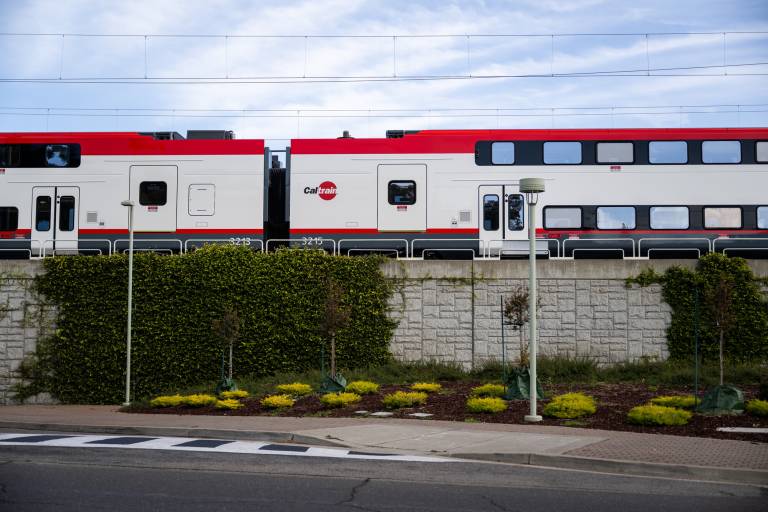
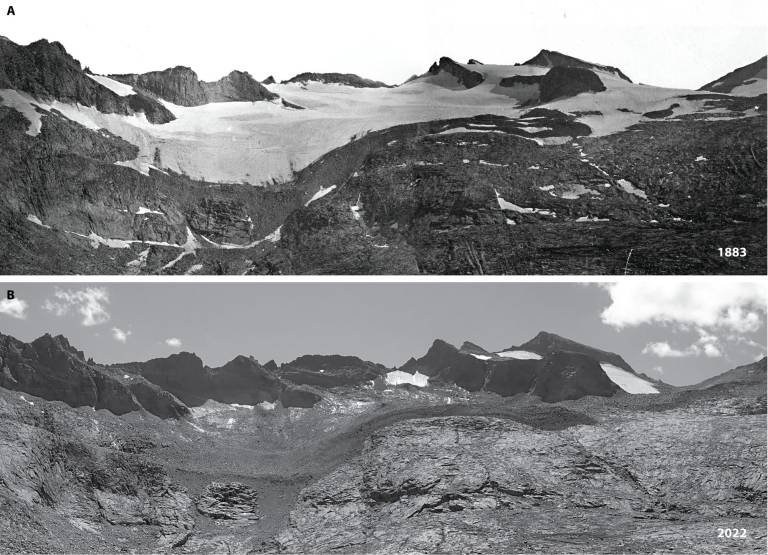
window.__IS_SSR__=true
window.__INITIAL_STATE__={
"attachmentsReducer": {
"audio_0": {
"type": "attachments",
"id": "audio_0",
"imgSizes": {
"kqedFullSize": {
"file": "https://ww2.kqed.org/news/wp-content/themes/KQED-unified/img/audio_bgs/background0.jpg"
}
}
},
"audio_1": {
"type": "attachments",
"id": "audio_1",
"imgSizes": {
"kqedFullSize": {
"file": "https://ww2.kqed.org/news/wp-content/themes/KQED-unified/img/audio_bgs/background1.jpg"
}
}
},
"audio_2": {
"type": "attachments",
"id": "audio_2",
"imgSizes": {
"kqedFullSize": {
"file": "https://ww2.kqed.org/news/wp-content/themes/KQED-unified/img/audio_bgs/background2.jpg"
}
}
},
"audio_3": {
"type": "attachments",
"id": "audio_3",
"imgSizes": {
"kqedFullSize": {
"file": "https://ww2.kqed.org/news/wp-content/themes/KQED-unified/img/audio_bgs/background3.jpg"
}
}
},
"audio_4": {
"type": "attachments",
"id": "audio_4",
"imgSizes": {
"kqedFullSize": {
"file": "https://ww2.kqed.org/news/wp-content/themes/KQED-unified/img/audio_bgs/background4.jpg"
}
}
},
"placeholder": {
"type": "attachments",
"id": "placeholder",
"imgSizes": {
"thumbnail": {
"file": "https://cdn.kqed.org/wp-content/uploads/2024/12/KQED-Default-Image-816638274-2000x1333-1-160x107.jpg",
"width": 160,
"height": 107,
"mimeType": "image/jpeg"
},
"medium": {
"file": "https://cdn.kqed.org/wp-content/uploads/2024/12/KQED-Default-Image-816638274-2000x1333-1-800x533.jpg",
"width": 800,
"height": 533,
"mimeType": "image/jpeg"
},
"medium_large": {
"file": "https://cdn.kqed.org/wp-content/uploads/2024/12/KQED-Default-Image-816638274-2000x1333-1-768x512.jpg",
"width": 768,
"height": 512,
"mimeType": "image/jpeg"
},
"large": {
"file": "https://cdn.kqed.org/wp-content/uploads/2024/12/KQED-Default-Image-816638274-2000x1333-1-1020x680.jpg",
"width": 1020,
"height": 680,
"mimeType": "image/jpeg"
},
"1536x1536": {
"file": "https://cdn.kqed.org/wp-content/uploads/2024/12/KQED-Default-Image-816638274-2000x1333-1-1536x1024.jpg",
"width": 1536,
"height": 1024,
"mimeType": "image/jpeg"
},
"fd-lrg": {
"file": "https://cdn.kqed.org/wp-content/uploads/2024/12/KQED-Default-Image-816638274-2000x1333-1-1536x1024.jpg",
"width": 1536,
"height": 1024,
"mimeType": "image/jpeg"
},
"fd-med": {
"file": "https://cdn.kqed.org/wp-content/uploads/2024/12/KQED-Default-Image-816638274-2000x1333-1-1020x680.jpg",
"width": 1020,
"height": 680,
"mimeType": "image/jpeg"
},
"fd-sm": {
"file": "https://cdn.kqed.org/wp-content/uploads/2024/12/KQED-Default-Image-816638274-2000x1333-1-800x533.jpg",
"width": 800,
"height": 533,
"mimeType": "image/jpeg"
},
"post-thumbnail": {
"file": "https://cdn.kqed.org/wp-content/uploads/2024/12/KQED-Default-Image-816638274-2000x1333-1-672x372.jpg",
"width": 672,
"height": 372,
"mimeType": "image/jpeg"
},
"twentyfourteen-full-width": {
"file": "https://cdn.kqed.org/wp-content/uploads/2024/12/KQED-Default-Image-816638274-2000x1333-1-1038x576.jpg",
"width": 1038,
"height": 576,
"mimeType": "image/jpeg"
},
"xxsmall": {
"file": "https://cdn.kqed.org/wp-content/uploads/2024/12/KQED-Default-Image-816638274-2000x1333-1-160x107.jpg",
"width": 160,
"height": 107,
"mimeType": "image/jpeg"
},
"xsmall": {
"file": "https://cdn.kqed.org/wp-content/uploads/2024/12/KQED-Default-Image-816638274-2000x1333-1-672x372.jpg",
"width": 672,
"height": 372,
"mimeType": "image/jpeg"
},
"small": {
"file": "https://cdn.kqed.org/wp-content/uploads/2024/12/KQED-Default-Image-816638274-2000x1333-1-672x372.jpg",
"width": 672,
"height": 372,
"mimeType": "image/jpeg"
},
"xlarge": {
"file": "https://cdn.kqed.org/wp-content/uploads/2024/12/KQED-Default-Image-816638274-2000x1333-1-1020x680.jpg",
"width": 1020,
"height": 680,
"mimeType": "image/jpeg"
},
"full-width": {
"file": "https://cdn.kqed.org/wp-content/uploads/2024/12/KQED-Default-Image-816638274-2000x1333-1-1920x1280.jpg",
"width": 1920,
"height": 1280,
"mimeType": "image/jpeg"
},
"guest-author-32": {
"file": "https://cdn.kqed.org/wp-content/uploads/2025/01/KQED-Default-Image-816638274-1333x1333-1-160x160.jpg",
"width": 32,
"height": 32,
"mimeType": "image/jpeg"
},
"guest-author-50": {
"file": "https://cdn.kqed.org/wp-content/uploads/2025/01/KQED-Default-Image-816638274-1333x1333-1-160x160.jpg",
"width": 50,
"height": 50,
"mimeType": "image/jpeg"
},
"guest-author-64": {
"file": "https://cdn.kqed.org/wp-content/uploads/2025/01/KQED-Default-Image-816638274-1333x1333-1-160x160.jpg",
"width": 64,
"height": 64,
"mimeType": "image/jpeg"
},
"guest-author-96": {
"file": "https://cdn.kqed.org/wp-content/uploads/2025/01/KQED-Default-Image-816638274-1333x1333-1-160x160.jpg",
"width": 96,
"height": 96,
"mimeType": "image/jpeg"
},
"guest-author-128": {
"file": "https://cdn.kqed.org/wp-content/uploads/2025/01/KQED-Default-Image-816638274-1333x1333-1-160x160.jpg",
"width": 128,
"height": 128,
"mimeType": "image/jpeg"
},
"detail": {
"file": "https://cdn.kqed.org/wp-content/uploads/2025/01/KQED-Default-Image-816638274-1333x1333-1-160x160.jpg",
"width": 160,
"height": 160,
"mimeType": "image/jpeg"
},
"kqedFullSize": {
"file": "https://cdn.kqed.org/wp-content/uploads/2024/12/KQED-Default-Image-816638274-2000x1333-1.jpg",
"width": 2000,
"height": 1333
}
}
},
"science_1998736": {
"type": "attachments",
"id": "science_1998736",
"meta": {
"index": "attachments_1716263798",
"site": "science",
"id": "1998736",
"found": true
},
"title": "CalTrain passes through Belmont on Nov. 1, 2024.",
"publishDate": 1759952187,
"status": "inherit",
"parent": 1998733,
"modified": 1759952197,
"caption": "Caltrain passes through Belmont on Nov. 1, 2024. Caltrain’s regenerative braking is performing better than anticipated, returning 23% of the power used by its new electric trains. Policy changes will allow it to be compensated.",
"credit": "Beth LaBerge/KQED",
"altTag": null,
"description": null,
"imgSizes": {
"thumbnail": {
"file": "https://cdn.kqed.org/wp-content/uploads/sites/35/2025/10/241101-CalTrain-01-BL_qed-160x107.jpg",
"width": 160,
"height": 107,
"mimeType": "image/jpeg"
},
"medium_large": {
"file": "https://cdn.kqed.org/wp-content/uploads/sites/35/2025/10/241101-CalTrain-01-BL_qed-768x512.jpg",
"width": 768,
"height": 512,
"mimeType": "image/jpeg"
},
"1536x1536": {
"file": "https://cdn.kqed.org/wp-content/uploads/sites/35/2025/10/241101-CalTrain-01-BL_qed-1536x1024.jpg",
"width": 1536,
"height": 1024,
"mimeType": "image/jpeg"
},
"post-thumbnail": {
"file": "https://cdn.kqed.org/wp-content/uploads/sites/35/2025/10/241101-CalTrain-01-BL_qed-672x372.jpg",
"width": 672,
"height": 372,
"mimeType": "image/jpeg"
},
"twentyfourteen-full-width": {
"file": "https://cdn.kqed.org/wp-content/uploads/sites/35/2025/10/241101-CalTrain-01-BL_qed-1038x576.jpg",
"width": 1038,
"height": 576,
"mimeType": "image/jpeg"
},
"kqedFullSize": {
"file": "https://cdn.kqed.org/wp-content/uploads/sites/35/2025/10/241101-CalTrain-01-BL_qed.jpg",
"width": 2000,
"height": 1333
}
},
"isLoading": false,
"fetchFailed": false
},
"science_1998702": {
"type": "attachments",
"id": "science_1998702",
"meta": {
"index": "attachments_1716263798",
"site": "science",
"id": "1998702",
"found": true
},
"title": "250930-MACLURE GLACIER-02-KQED",
"publishDate": 1759273994,
"status": "inherit",
"parent": 0,
"modified": 1759274232,
"caption": "Repeat photography of East Lyell Glacier in Yosemite National Park. September 1883 versus September 2022.\n",
"credit": "Courtesy of Israel Russell, United States Geological Survey, and Greg Stock, National Park Service",
"altTag": null,
"description": null,
"imgSizes": {
"thumbnail": {
"file": "https://cdn.kqed.org/wp-content/uploads/sites/35/2025/09/250930-MACLURE-GLACIER-02-KQED-160x116.jpg",
"width": 160,
"height": 116,
"mimeType": "image/jpeg"
},
"medium_large": {
"file": "https://cdn.kqed.org/wp-content/uploads/sites/35/2025/09/250930-MACLURE-GLACIER-02-KQED-768x555.jpg",
"width": 768,
"height": 555,
"mimeType": "image/jpeg"
},
"1536x1536": {
"file": "https://cdn.kqed.org/wp-content/uploads/sites/35/2025/09/250930-MACLURE-GLACIER-02-KQED-1536x1111.jpg",
"width": 1536,
"height": 1111,
"mimeType": "image/jpeg"
},
"post-thumbnail": {
"file": "https://cdn.kqed.org/wp-content/uploads/sites/35/2025/09/250930-MACLURE-GLACIER-02-KQED-672x372.jpg",
"width": 672,
"height": 372,
"mimeType": "image/jpeg"
},
"twentyfourteen-full-width": {
"file": "https://cdn.kqed.org/wp-content/uploads/sites/35/2025/09/250930-MACLURE-GLACIER-02-KQED-1038x576.jpg",
"width": 1038,
"height": 576,
"mimeType": "image/jpeg"
},
"kqedFullSize": {
"file": "https://cdn.kqed.org/wp-content/uploads/sites/35/2025/09/250930-MACLURE-GLACIER-02-KQED.jpg",
"width": 2000,
"height": 1446
}
},
"isLoading": false,
"fetchFailed": false
},
"science_1998643": {
"type": "attachments",
"id": "science_1998643",
"meta": {
"index": "attachments_1716263798",
"site": "science",
"id": "1998643",
"found": true
},
"title": "20250925_MARSSATELLITE_GC-3-KQED",
"publishDate": 1758904284,
"status": "inherit",
"parent": 0,
"modified": 1758929784,
"caption": "Engineers work in the Mission Operations Center at the Space Sciences Laboratory at UC Berkeley on Sept. 25, 2025.",
"credit": "Gina Castro/KQED",
"altTag": null,
"description": null,
"imgSizes": {
"thumbnail": {
"file": "https://cdn.kqed.org/wp-content/uploads/sites/35/2025/09/20250925_MARSSATELLITE_GC-3-KQED-160x107.jpg",
"width": 160,
"height": 107,
"mimeType": "image/jpeg"
},
"medium_large": {
"file": "https://cdn.kqed.org/wp-content/uploads/sites/35/2025/09/20250925_MARSSATELLITE_GC-3-KQED-768x512.jpg",
"width": 768,
"height": 512,
"mimeType": "image/jpeg"
},
"1536x1536": {
"file": "https://cdn.kqed.org/wp-content/uploads/sites/35/2025/09/20250925_MARSSATELLITE_GC-3-KQED-1536x1024.jpg",
"width": 1536,
"height": 1024,
"mimeType": "image/jpeg"
},
"post-thumbnail": {
"file": "https://cdn.kqed.org/wp-content/uploads/sites/35/2025/09/20250925_MARSSATELLITE_GC-3-KQED-672x372.jpg",
"width": 672,
"height": 372,
"mimeType": "image/jpeg"
},
"twentyfourteen-full-width": {
"file": "https://cdn.kqed.org/wp-content/uploads/sites/35/2025/09/20250925_MARSSATELLITE_GC-3-KQED-1038x576.jpg",
"width": 1038,
"height": 576,
"mimeType": "image/jpeg"
},
"kqedFullSize": {
"file": "https://cdn.kqed.org/wp-content/uploads/sites/35/2025/09/20250925_MARSSATELLITE_GC-3-KQED.jpg",
"width": 2000,
"height": 1333
}
},
"isLoading": false,
"fetchFailed": false
},
"science_1998504": {
"type": "attachments",
"id": "science_1998504",
"meta": {
"index": "attachments_1716263798",
"site": "science",
"id": "1998504",
"found": true
},
"title": "250910-CANCERTEENS01313_TV-KQED",
"publishDate": 1757952445,
"status": "inherit",
"parent": 0,
"modified": 1758564637,
"caption": "Rayaan Kolte poses for a portrait in his front yard in Pleasanton on Sept. 9, 2025. South Bay teens Sahil Mehta and Rayaan Kolte, who lost their siblings to brain cancer, turned their grief into a statewide campaign that began with a lemonade stand and grew into lobbying efforts that led to a new California law allowing residents to donate to pediatric cancer research through their tax returns.",
"credit": "Tâm Vũ/KQED",
"altTag": null,
"description": null,
"imgSizes": {
"thumbnail": {
"file": "https://cdn.kqed.org/wp-content/uploads/sites/35/2025/09/250910-CANCERTEENS01313_TV-KQED-160x107.jpg",
"width": 160,
"height": 107,
"mimeType": "image/jpeg"
},
"medium_large": {
"file": "https://cdn.kqed.org/wp-content/uploads/sites/35/2025/09/250910-CANCERTEENS01313_TV-KQED-768x512.jpg",
"width": 768,
"height": 512,
"mimeType": "image/jpeg"
},
"1536x1536": {
"file": "https://cdn.kqed.org/wp-content/uploads/sites/35/2025/09/250910-CANCERTEENS01313_TV-KQED-1536x1024.jpg",
"width": 1536,
"height": 1024,
"mimeType": "image/jpeg"
},
"post-thumbnail": {
"file": "https://cdn.kqed.org/wp-content/uploads/sites/35/2025/09/250910-CANCERTEENS01313_TV-KQED-672x372.jpg",
"width": 672,
"height": 372,
"mimeType": "image/jpeg"
},
"twentyfourteen-full-width": {
"file": "https://cdn.kqed.org/wp-content/uploads/sites/35/2025/09/250910-CANCERTEENS01313_TV-KQED-1038x576.jpg",
"width": 1038,
"height": 576,
"mimeType": "image/jpeg"
},
"kqedFullSize": {
"file": "https://cdn.kqed.org/wp-content/uploads/sites/35/2025/09/250910-CANCERTEENS01313_TV-KQED.jpg",
"width": 2000,
"height": 1333
}
},
"isLoading": false,
"fetchFailed": false
},
"science_1998635": {
"type": "attachments",
"id": "science_1998635",
"meta": {
"index": "attachments_1716263798",
"site": "science",
"id": "1998635",
"found": true
},
"title": "Fiber optic network of the company GlobalConnect",
"publishDate": 1758820898,
"status": "inherit",
"parent": 1998623,
"modified": 1758821013,
"caption": "A fiber optic cable was brought ashore from the cable-laying ship Pleijel at the entrance to the port of Sassnitz on Nov. 29, 2023.",
"credit": "Stefan Sauer/Picture Alliance via Getty Images",
"altTag": null,
"description": null,
"imgSizes": {
"thumbnail": {
"file": "https://cdn.kqed.org/wp-content/uploads/sites/35/2025/09/EarthquakeScienceGetty-160x98.jpg",
"width": 160,
"height": 98,
"mimeType": "image/jpeg"
},
"medium_large": {
"file": "https://cdn.kqed.org/wp-content/uploads/sites/35/2025/09/EarthquakeScienceGetty-768x470.jpg",
"width": 768,
"height": 470,
"mimeType": "image/jpeg"
},
"1536x1536": {
"file": "https://cdn.kqed.org/wp-content/uploads/sites/35/2025/09/EarthquakeScienceGetty-1536x940.jpg",
"width": 1536,
"height": 940,
"mimeType": "image/jpeg"
},
"post-thumbnail": {
"file": "https://cdn.kqed.org/wp-content/uploads/sites/35/2025/09/EarthquakeScienceGetty-672x372.jpg",
"width": 672,
"height": 372,
"mimeType": "image/jpeg"
},
"twentyfourteen-full-width": {
"file": "https://cdn.kqed.org/wp-content/uploads/sites/35/2025/09/EarthquakeScienceGetty-1038x576.jpg",
"width": 1038,
"height": 576,
"mimeType": "image/jpeg"
},
"kqedFullSize": {
"file": "https://cdn.kqed.org/wp-content/uploads/sites/35/2025/09/EarthquakeScienceGetty.jpg",
"width": 2000,
"height": 1224
}
},
"isLoading": false,
"fetchFailed": false
},
"science_1937339": {
"type": "attachments",
"id": "science_1937339",
"meta": {
"index": "attachments_1716263798",
"site": "science",
"id": "1937339",
"found": true
},
"parent": 1936949,
"imgSizes": {
"twentyfourteen-full-width": {
"file": "https://ww2.kqed.org/app/uploads/sites/35/2019/01/05-1038x576.jpg",
"width": 1038,
"mimeType": "image/jpeg",
"height": 576
},
"thumbnail": {
"file": "https://ww2.kqed.org/app/uploads/sites/35/2019/01/05-160x90.jpg",
"width": 160,
"mimeType": "image/jpeg",
"height": 90
},
"post-thumbnail": {
"file": "https://ww2.kqed.org/app/uploads/sites/35/2019/01/05-672x372.jpg",
"width": 672,
"mimeType": "image/jpeg",
"height": 372
},
"kqedFullSize": {
"file": "https://ww2.kqed.org/app/uploads/sites/35/2019/01/05.jpg",
"width": 1920,
"height": 1080
},
"large": {
"file": "https://ww2.kqed.org/app/uploads/sites/35/2019/01/05-1020x574.jpg",
"width": 1020,
"mimeType": "image/jpeg",
"height": 574
},
"complete_open_graph": {
"file": "https://ww2.kqed.org/app/uploads/sites/35/2019/01/05-1200x675.jpg",
"width": 1200,
"mimeType": "image/jpeg",
"height": 675
},
"guest-author-50": {
"file": "https://ww2.kqed.org/app/uploads/sites/35/2019/01/05-50x50.jpg",
"width": 50,
"mimeType": "image/jpeg",
"height": 50
},
"guest-author-96": {
"file": "https://ww2.kqed.org/app/uploads/sites/35/2019/01/05-96x96.jpg",
"width": 96,
"mimeType": "image/jpeg",
"height": 96
},
"medium": {
"file": "https://ww2.kqed.org/app/uploads/sites/35/2019/01/05-800x450.jpg",
"width": 800,
"mimeType": "image/jpeg",
"height": 450
},
"guest-author-64": {
"file": "https://ww2.kqed.org/app/uploads/sites/35/2019/01/05-64x64.jpg",
"width": 64,
"mimeType": "image/jpeg",
"height": 64
},
"guest-author-32": {
"file": "https://ww2.kqed.org/app/uploads/sites/35/2019/01/05-32x32.jpg",
"width": 32,
"mimeType": "image/jpeg",
"height": 32
},
"full-width": {
"file": "https://ww2.kqed.org/app/uploads/sites/35/2019/01/05-1920x1080.jpg",
"width": 1920,
"mimeType": "image/jpeg",
"height": 1080
},
"detail": {
"file": "https://ww2.kqed.org/app/uploads/sites/35/2019/01/05-150x150.jpg",
"width": 150,
"mimeType": "image/jpeg",
"height": 150
},
"medium_large": {
"file": "https://ww2.kqed.org/app/uploads/sites/35/2019/01/05-768x432.jpg",
"width": 768,
"mimeType": "image/jpeg",
"height": 432
},
"guest-author-128": {
"file": "https://ww2.kqed.org/app/uploads/sites/35/2019/01/05-128x128.jpg",
"width": 128,
"mimeType": "image/jpeg",
"height": 128
}
},
"publishDate": 1548719601,
"modified": 1548719732,
"caption": "Scientists say the Hayward Fault is due for another major earthquake.",
"description": "Scientists say the Hayward Fault is due for another major earthquake.",
"title": "05",
"credit": "Teodros Hailye",
"status": "inherit",
"isLoading": false,
"fetchFailed": false
},
"science_1998490": {
"type": "attachments",
"id": "science_1998490",
"meta": {
"index": "attachments_1716263798",
"site": "science",
"id": "1998490",
"found": true
},
"title": "250910-CANCERHEALTH-04-BL-KQED",
"publishDate": 1757951739,
"status": "inherit",
"parent": 0,
"modified": 1758565448,
"caption": "CannaCraft’s cannabis manufacturing facility in Santa Rosa, on Sept. 10, 2025, where the company develops and produces its products.",
"credit": "Beth LaBerge/KQED",
"altTag": null,
"description": null,
"imgSizes": {
"thumbnail": {
"file": "https://cdn.kqed.org/wp-content/uploads/sites/35/2025/09/250910-CANCERHEALTH-04-BL-KQED-160x107.jpg",
"width": 160,
"height": 107,
"mimeType": "image/jpeg"
},
"medium_large": {
"file": "https://cdn.kqed.org/wp-content/uploads/sites/35/2025/09/250910-CANCERHEALTH-04-BL-KQED-768x512.jpg",
"width": 768,
"height": 512,
"mimeType": "image/jpeg"
},
"1536x1536": {
"file": "https://cdn.kqed.org/wp-content/uploads/sites/35/2025/09/250910-CANCERHEALTH-04-BL-KQED-1536x1024.jpg",
"width": 1536,
"height": 1024,
"mimeType": "image/jpeg"
},
"post-thumbnail": {
"file": "https://cdn.kqed.org/wp-content/uploads/sites/35/2025/09/250910-CANCERHEALTH-04-BL-KQED-672x372.jpg",
"width": 672,
"height": 372,
"mimeType": "image/jpeg"
},
"twentyfourteen-full-width": {
"file": "https://cdn.kqed.org/wp-content/uploads/sites/35/2025/09/250910-CANCERHEALTH-04-BL-KQED-1038x576.jpg",
"width": 1038,
"height": 576,
"mimeType": "image/jpeg"
},
"kqedFullSize": {
"file": "https://cdn.kqed.org/wp-content/uploads/sites/35/2025/09/250910-CANCERHEALTH-04-BL-KQED.jpg",
"width": 2000,
"height": 1333
}
},
"isLoading": false,
"fetchFailed": false
},
"science_1997571": {
"type": "attachments",
"id": "science_1997571",
"meta": {
"index": "attachments_1716263798",
"site": "science",
"id": "1997571",
"found": true
},
"title": "Governor Gavin Newsom signs legislation related to oversight of oil and gas wells, and community protections",
"publishDate": 1751401816,
"status": "inherit",
"parent": 1997565,
"modified": 1751404129,
"caption": "Gov. Gavin Newsom speaks at a press conference where he signs legislation related to oversight of oil and gas wells, and community protections on Sept. 25, 2024, in Los Angeles.",
"credit": "Jason Armond/Los Angeles Times via Getty Images",
"altTag": null,
"description": null,
"imgSizes": {
"thumbnail": {
"file": "https://cdn.kqed.org/wp-content/uploads/sites/35/2025/07/GavinNewsomGetty-160x111.jpg",
"width": 160,
"height": 111,
"mimeType": "image/jpeg"
},
"medium_large": {
"file": "https://cdn.kqed.org/wp-content/uploads/sites/35/2025/07/GavinNewsomGetty-768x533.jpg",
"width": 768,
"height": 533,
"mimeType": "image/jpeg"
},
"1536x1536": {
"file": "https://cdn.kqed.org/wp-content/uploads/sites/35/2025/07/GavinNewsomGetty-1536x1065.jpg",
"width": 1536,
"height": 1065,
"mimeType": "image/jpeg"
},
"post-thumbnail": {
"file": "https://cdn.kqed.org/wp-content/uploads/sites/35/2025/07/GavinNewsomGetty-672x372.jpg",
"width": 672,
"height": 372,
"mimeType": "image/jpeg"
},
"twentyfourteen-full-width": {
"file": "https://cdn.kqed.org/wp-content/uploads/sites/35/2025/07/GavinNewsomGetty-1038x576.jpg",
"width": 1038,
"height": 576,
"mimeType": "image/jpeg"
},
"kqedFullSize": {
"file": "https://cdn.kqed.org/wp-content/uploads/sites/35/2025/07/GavinNewsomGetty.jpg",
"width": 2000,
"height": 1387
}
},
"isLoading": false,
"fetchFailed": false
},
"science_1998524": {
"type": "attachments",
"id": "science_1998524",
"meta": {
"index": "attachments_1716263798",
"site": "science",
"id": "1998524",
"found": true
},
"title": "Lightning illuminates the sky over the eastern span of the Bay Bridge as a storm passed through the area on Sunday morning in San Francisco, Calif., on Sunday, August 16, 2020",
"publishDate": 1757967581,
"status": "inherit",
"parent": 1998512,
"modified": 1757967611,
"caption": "Lightning illuminates the sky over the eastern span of the Bay Bridge as a storm passed through the area on August 16, 2020. ",
"credit": "Carlos Avila Gonzalez/The San Francisco Chronicle via Getty Images",
"altTag": null,
"description": null,
"imgSizes": {
"thumbnail": {
"file": "https://cdn.kqed.org/wp-content/uploads/sites/35/2025/09/GETTYIMAGES-1409142795-KQED-160x105.jpg",
"width": 160,
"height": 105,
"mimeType": "image/jpeg"
},
"medium_large": {
"file": "https://cdn.kqed.org/wp-content/uploads/sites/35/2025/09/GETTYIMAGES-1409142795-KQED-768x504.jpg",
"width": 768,
"height": 504,
"mimeType": "image/jpeg"
},
"1536x1536": {
"file": "https://cdn.kqed.org/wp-content/uploads/sites/35/2025/09/GETTYIMAGES-1409142795-KQED-1536x1008.jpg",
"width": 1536,
"height": 1008,
"mimeType": "image/jpeg"
},
"post-thumbnail": {
"file": "https://cdn.kqed.org/wp-content/uploads/sites/35/2025/09/GETTYIMAGES-1409142795-KQED-672x372.jpg",
"width": 672,
"height": 372,
"mimeType": "image/jpeg"
},
"twentyfourteen-full-width": {
"file": "https://cdn.kqed.org/wp-content/uploads/sites/35/2025/09/GETTYIMAGES-1409142795-KQED-1038x576.jpg",
"width": 1038,
"height": 576,
"mimeType": "image/jpeg"
},
"kqedFullSize": {
"file": "https://cdn.kqed.org/wp-content/uploads/sites/35/2025/09/GETTYIMAGES-1409142795-KQED.jpg",
"width": 2000,
"height": 1312
}
},
"isLoading": false,
"fetchFailed": false
},
"science_1998311": {
"type": "attachments",
"id": "science_1998311",
"meta": {
"index": "attachments_1716263798",
"site": "science",
"id": "1998311",
"found": true
},
"title": "250826_ALAMEDASWEEPS_GH-20-KQED",
"publishDate": 1756330415,
"status": "inherit",
"parent": 0,
"modified": 1766617866,
"caption": "Donald Sims rests under a tree with his belongings across from St. Vincent de Paul of Alameda County in Oakland on Aug. 26, 2025.",
"credit": "Gustavo Hernandez/KQED",
"altTag": null,
"description": null,
"imgSizes": {
"thumbnail": {
"file": "https://cdn.kqed.org/wp-content/uploads/sites/35/2025/08/250826_ALAMEDASWEEPS_GH-20-KQED-160x107.jpg",
"width": 160,
"height": 107,
"mimeType": "image/jpeg"
},
"medium_large": {
"file": "https://cdn.kqed.org/wp-content/uploads/sites/35/2025/08/250826_ALAMEDASWEEPS_GH-20-KQED-768x512.jpg",
"width": 768,
"height": 512,
"mimeType": "image/jpeg"
},
"1536x1536": {
"file": "https://cdn.kqed.org/wp-content/uploads/sites/35/2025/08/250826_ALAMEDASWEEPS_GH-20-KQED-1536x1024.jpg",
"width": 1536,
"height": 1024,
"mimeType": "image/jpeg"
},
"post-thumbnail": {
"file": "https://cdn.kqed.org/wp-content/uploads/sites/35/2025/08/250826_ALAMEDASWEEPS_GH-20-KQED-672x372.jpg",
"width": 672,
"height": 372,
"mimeType": "image/jpeg"
},
"twentyfourteen-full-width": {
"file": "https://cdn.kqed.org/wp-content/uploads/sites/35/2025/08/250826_ALAMEDASWEEPS_GH-20-KQED-1038x576.jpg",
"width": 1038,
"height": 576,
"mimeType": "image/jpeg"
},
"kqedFullSize": {
"file": "https://cdn.kqed.org/wp-content/uploads/sites/35/2025/08/250826_ALAMEDASWEEPS_GH-20-KQED.jpg",
"width": 2000,
"height": 1333
}
},
"isLoading": false,
"fetchFailed": false
},
"science_1998076": {
"type": "attachments",
"id": "science_1998076",
"meta": {
"index": "attachments_1716263798",
"site": "science",
"id": "1998076",
"found": true
},
"title": "Warm weather in San Francisco",
"publishDate": 1754584292,
"status": "inherit",
"parent": 1998073,
"modified": 1773252256,
"caption": "People enjoy the warm weather at Crissy Field near the Golden Gate Bridge as a heat wave warning is issued in San Francisco, California, on July 11, 2024.",
"credit": "Tayfun Coskun/Anadolu via Getty Images",
"altTag": null,
"description": null,
"imgSizes": {
"thumbnail": {
"file": "https://cdn.kqed.org/wp-content/uploads/sites/35/2025/08/BayAreaHeatWaveGetty-160x107.jpg",
"width": 160,
"height": 107,
"mimeType": "image/jpeg"
},
"medium_large": {
"file": "https://cdn.kqed.org/wp-content/uploads/sites/35/2025/08/BayAreaHeatWaveGetty-768x512.jpg",
"width": 768,
"height": 512,
"mimeType": "image/jpeg"
},
"1536x1536": {
"file": "https://cdn.kqed.org/wp-content/uploads/sites/35/2025/08/BayAreaHeatWaveGetty-1536x1024.jpg",
"width": 1536,
"height": 1024,
"mimeType": "image/jpeg"
},
"post-thumbnail": {
"file": "https://cdn.kqed.org/wp-content/uploads/sites/35/2025/08/BayAreaHeatWaveGetty-672x372.jpg",
"width": 672,
"height": 372,
"mimeType": "image/jpeg"
},
"twentyfourteen-full-width": {
"file": "https://cdn.kqed.org/wp-content/uploads/sites/35/2025/08/BayAreaHeatWaveGetty-1038x576.jpg",
"width": 1038,
"height": 576,
"mimeType": "image/jpeg"
},
"kqedFullSize": {
"file": "https://cdn.kqed.org/wp-content/uploads/sites/35/2025/08/BayAreaHeatWaveGetty.jpg",
"width": 2000,
"height": 1333
}
},
"isLoading": false,
"fetchFailed": false
},
"science_1998447": {
"type": "attachments",
"id": "science_1998447",
"meta": {
"index": "attachments_1716263798",
"site": "science",
"id": "1998447",
"found": true
},
"title": "Delta",
"publishDate": 1757533422,
"status": "inherit",
"parent": 1998445,
"modified": 1757533576,
"caption": "The Sacramento River in December 2019, in Clarksburg. The area is near a potential site for a new single tunnel beneath the Sacramento-San Joaquin River Delta that will help move Northern California water south to cities and farms, say state water officials.",
"credit": "Santiago Mejia/The San Francisco Chronicle via Getty Images",
"altTag": null,
"description": null,
"imgSizes": {
"medium": {
"file": "https://cdn.kqed.org/wp-content/uploads/sites/35/2025/09/Delta-2000x1334.jpg",
"width": 2000,
"height": 1334,
"mimeType": "image/jpeg"
},
"large": {
"file": "https://cdn.kqed.org/wp-content/uploads/sites/35/2025/09/Delta-2000x1334.jpg",
"width": 2000,
"height": 1334,
"mimeType": "image/jpeg"
},
"thumbnail": {
"file": "https://cdn.kqed.org/wp-content/uploads/sites/35/2025/09/Delta-160x107.jpg",
"width": 160,
"height": 107,
"mimeType": "image/jpeg"
},
"medium_large": {
"file": "https://cdn.kqed.org/wp-content/uploads/sites/35/2025/09/Delta-768x512.jpg",
"width": 768,
"height": 512,
"mimeType": "image/jpeg"
},
"1536x1536": {
"file": "https://cdn.kqed.org/wp-content/uploads/sites/35/2025/09/Delta-1536x1024.jpg",
"width": 1536,
"height": 1024,
"mimeType": "image/jpeg"
},
"2048x2048": {
"file": "https://cdn.kqed.org/wp-content/uploads/sites/35/2025/09/Delta-2048x1366.jpg",
"width": 2048,
"height": 1366,
"mimeType": "image/jpeg"
},
"post-thumbnail": {
"file": "https://cdn.kqed.org/wp-content/uploads/sites/35/2025/09/Delta-672x372.jpg",
"width": 672,
"height": 372,
"mimeType": "image/jpeg"
},
"twentyfourteen-full-width": {
"file": "https://cdn.kqed.org/wp-content/uploads/sites/35/2025/09/Delta-1038x576.jpg",
"width": 1038,
"height": 576,
"mimeType": "image/jpeg"
},
"full-width": {
"file": "https://cdn.kqed.org/wp-content/uploads/sites/35/2025/09/Delta-2000x1334.jpg",
"width": 2000,
"height": 1334,
"mimeType": "image/jpeg"
},
"kqedFullSize": {
"file": "https://cdn.kqed.org/wp-content/uploads/sites/35/2025/09/Delta-e1757533440936.jpg",
"width": 2000,
"height": 1334
}
},
"isLoading": false,
"fetchFailed": false
}
},
"audioPlayerReducer": {
"postId": "stream_live",
"isPaused": true,
"isPlaying": false,
"pfsActive": false,
"pledgeModalIsOpen": true,
"playerDrawerIsOpen": false,
"liveAudioPlayStartedAt": 0,
"liveAudioPlayContext": ""
},
"authorsReducer": {
"gmarzorati": {
"type": "authors",
"id": "227",
"meta": {
"index": "authors_1716337520",
"id": "227",
"found": true
},
"name": "Guy Marzorati",
"firstName": "Guy",
"lastName": "Marzorati",
"slug": "gmarzorati",
"email": "gmarzorati@KQED.org",
"display_author_email": true,
"staff_mastheads": [
"news"
],
"title": "Correspondent",
"bio": "Guy Marzorati is a correspondent on KQED's California Politics and Government Desk, based in San Jose. A graduate of Santa Clara University, Guy joined KQED in 2013. He reports on state and local politics and produces KQED's digital voter guide.",
"avatar": "https://secure.gravatar.com/avatar/771cddf45ce3a8ed533d82dcc214e9ef925d76d2af5794a33da1ce439eb54a32?s=600&d=blank&r=g",
"twitter": "guymarzorati",
"bluesky": null,
"facebook": null,
"instagram": null,
"linkedin": null,
"sites": [
{
"site": "",
"roles": [
"editor"
]
},
{
"site": "news",
"roles": [
"editor"
]
},
{
"site": "science",
"roles": [
"editor"
]
},
{
"site": "forum",
"roles": [
"editor"
]
},
{
"site": "elections",
"roles": [
"editor"
]
},
{
"site": "liveblog",
"roles": [
"editor"
]
}
],
"headData": {
"title": "Guy Marzorati | KQED",
"description": "Correspondent",
"ogImgSrc": "https://secure.gravatar.com/avatar/771cddf45ce3a8ed533d82dcc214e9ef925d76d2af5794a33da1ce439eb54a32?s=600&d=blank&r=g",
"twImgSrc": "https://secure.gravatar.com/avatar/771cddf45ce3a8ed533d82dcc214e9ef925d76d2af5794a33da1ce439eb54a32?s=600&d=blank&r=g"
},
"isLoading": false,
"link": "/author/gmarzorati"
},
"adembosky": {
"type": "authors",
"id": "3205",
"meta": {
"index": "authors_1716337520",
"id": "3205",
"found": true
},
"name": "April Dembosky",
"firstName": "April",
"lastName": "Dembosky",
"slug": "adembosky",
"email": "adembosky@kqed.org",
"display_author_email": false,
"staff_mastheads": [
"news",
"science"
],
"title": "KQED Health Correspondent",
"bio": "April Dembosky is the health correspondent for KQED News and a regular contributor to NPR. She specializes in covering altered states of mind, from postpartum depression to methamphetamine-induced psychosis to the insanity defense. Her investigative series on insurance companies sidestepping mental health laws won multiple awards, including first place in beat reporting from the national Association of Health Care Journalists. She is the recipient of numerous other prizes and fellowships, including a national Edward R. Murrow award for investigative reporting, a Society of Professional Journalists award for long-form storytelling, and a Carter Center Fellowship for Mental Health Journalism.\r\n\r\nDembosky reported and produced \u003cem>Soundtrack of Silence\u003c/em>, an audio documentary about music and memory that is currently being made into a feature film by Paramount Pictures.\r\n\r\nBefore joining KQED in 2013, Dembosky covered technology and Silicon Valley for \u003cem>The Financial Times of London,\u003c/em> and contributed business and arts stories to \u003cem>Marketplace \u003c/em>and \u003cem>The New York Times.\u003c/em> She got her undergraduate degree in philosophy from Smith College and her master's in journalism from the University of California, Berkeley. She is a classically trained violinist and proud alum of the first symphony orchestra at Burning Man.",
"avatar": "https://secure.gravatar.com/avatar/d6593cd737b732102fe0b6250b5351c2d3bc9b2987566514aa3c9a106494d684?s=600&d=blank&r=g",
"twitter": "adembosky",
"bluesky": null,
"facebook": null,
"instagram": null,
"linkedin": null,
"sites": [
{
"site": "arts",
"roles": [
"author"
]
},
{
"site": "news",
"roles": [
"editor"
]
},
{
"site": "futureofyou",
"roles": [
"author"
]
},
{
"site": "stateofhealth",
"roles": [
"editor"
]
},
{
"site": "science",
"roles": [
"editor"
]
},
{
"site": "forum",
"roles": [
"editor"
]
}
],
"headData": {
"title": "April Dembosky | KQED",
"description": "KQED Health Correspondent",
"ogImgSrc": "https://secure.gravatar.com/avatar/d6593cd737b732102fe0b6250b5351c2d3bc9b2987566514aa3c9a106494d684?s=600&d=blank&r=g",
"twImgSrc": "https://secure.gravatar.com/avatar/d6593cd737b732102fe0b6250b5351c2d3bc9b2987566514aa3c9a106494d684?s=600&d=blank&r=g"
},
"isLoading": false,
"link": "/author/adembosky"
},
"lklivans": {
"type": "authors",
"id": "8648",
"meta": {
"index": "authors_1716337520",
"id": "8648",
"found": true
},
"name": "Laura Klivans",
"firstName": "Laura",
"lastName": "Klivans",
"slug": "lklivans",
"email": "lklivans@kqed.org",
"display_author_email": true,
"staff_mastheads": [
"news",
"science"
],
"title": "Reporter",
"bio": "Laura Klivans is an award-winning science reporter for KQED News, where she covers climate change with an eye on both groundbreaking progress and gaps in action. She is the former host of KQED's blockbuster video series about tiny, amazing animals, \u003cem>Deep Look\u003c/em>. Her work reaches national audiences through NPR, \u003cem>Here & Now, \u003c/em>PRI, and other major outlets. \r\n\r\nLaura’s won five Northern California Area Emmy Awards for Deep Look and First Place in the Greater Bay Area Journalism Awards for a podcast exploring how one Oakland neighborhood teamed up to reduce planet-heating pollution.\r\n\r\nBeyond her reporting, she hosts and moderates events. In the past, she taught audio storytelling at the UC Berkeley Graduate School of Journalism, led international education programs, worked with immigrants and refugees along the Thai-Burmese border, taught high schoolers sex ed, and was an actress. \r\n\r\nShe's a former UC Berkeley Human Rights Fellow, USC Center for Health Journalism's California Fellow and Coro Fellow in Public Affairs. Laura has a master’s in journalism from UC Berkeley, a master’s in education from Harvard, and an undergraduate degree from Northwestern University.\r\n\r\nShe loves trying to riddle the meaning out of vanity license plates.",
"avatar": "https://secure.gravatar.com/avatar/2d2ecd1550a494cc10ad4a503406965585902124739e775a9b3817eebf1d88be?s=600&d=blank&r=g",
"twitter": "lauraklivans",
"bluesky": null,
"facebook": null,
"instagram": null,
"linkedin": null,
"sites": [
{
"site": "news",
"roles": [
"editor"
]
},
{
"site": "stateofhealth",
"roles": [
"contributor",
"editor"
]
},
{
"site": "science",
"roles": [
"editor"
]
},
{
"site": "forum",
"roles": [
"editor"
]
}
],
"headData": {
"title": "Laura Klivans | KQED",
"description": "Reporter",
"ogImgSrc": "https://secure.gravatar.com/avatar/2d2ecd1550a494cc10ad4a503406965585902124739e775a9b3817eebf1d88be?s=600&d=blank&r=g",
"twImgSrc": "https://secure.gravatar.com/avatar/2d2ecd1550a494cc10ad4a503406965585902124739e775a9b3817eebf1d88be?s=600&d=blank&r=g"
},
"isLoading": false,
"link": "/author/lklivans"
},
"dventon": {
"type": "authors",
"id": "11088",
"meta": {
"index": "authors_1716337520",
"id": "11088",
"found": true
},
"name": "Danielle Venton",
"firstName": "Danielle",
"lastName": "Venton",
"slug": "dventon",
"email": "dventon@kqed.org",
"display_author_email": true,
"staff_mastheads": [
"science"
],
"title": "Science reporter",
"bio": "Danielle Venton is a reporter for KQED Science. She covers wildfires, space and oceans (though she is prone to sea sickness).\r\n\r\nBefore joining KQED in 2015, Danielle was a staff reporter at KRCB in Sonoma County and a freelancer. She studied science communication at UC Santa Cruz and formerly worked at CERN in Geneva, Switzerland where she wrote about computing. She lives in Sonoma County and enjoys backpacking.",
"avatar": "https://secure.gravatar.com/avatar/37b292b5c40c8d93959c4f48d73b5286f41b7abd8588277e941905a3ed4c801c?s=600&d=blank&r=g",
"twitter": "DanielleVenton",
"bluesky": null,
"facebook": null,
"instagram": null,
"linkedin": null,
"sites": [
{
"site": "arts",
"roles": [
"contributor"
]
},
{
"site": "news",
"roles": [
"editor"
]
},
{
"site": "futureofyou",
"roles": [
"editor"
]
},
{
"site": "science",
"roles": [
"editor"
]
},
{
"site": "liveblog",
"roles": [
"contributor"
]
}
],
"headData": {
"title": "Danielle Venton | KQED",
"description": "Science reporter",
"ogImgSrc": "https://secure.gravatar.com/avatar/37b292b5c40c8d93959c4f48d73b5286f41b7abd8588277e941905a3ed4c801c?s=600&d=blank&r=g",
"twImgSrc": "https://secure.gravatar.com/avatar/37b292b5c40c8d93959c4f48d73b5286f41b7abd8588277e941905a3ed4c801c?s=600&d=blank&r=g"
},
"isLoading": false,
"link": "/author/dventon"
},
"lesleymcclurg": {
"type": "authors",
"id": "11229",
"meta": {
"index": "authors_1716337520",
"id": "11229",
"found": true
},
"name": "Lesley McClurg",
"firstName": "Lesley",
"lastName": "McClurg",
"slug": "lesleymcclurg",
"email": "lmcclurg@KQED.org",
"display_author_email": false,
"staff_mastheads": [],
"title": "KQED Health Correspondent",
"bio": "Lesley McClurg is a health correspondent and fill-in host whose work is regularly rebroadcast on NPR and PBS programs. She’s earned multiple regional Emmy awards, a national and a regional Edward R. Murrow award, and was named Best Beat Reporter by the Association of Health Care Journalists. The Society of Professional Journalists has recognized her work several times, and the Society of Environmental Journalists spotlighted her coverage of California’s historic drought.\r\n\r\nBefore joining KQED in 2016, Lesley covered food and sustainability for Capital Public Radio, environmental issues for Colorado Public Radio, and reported for KUOW and KCTS 9 in Seattle. Away from the newsroom, she loves skiing with her daughter, mountain biking with her partner, and playing with Ollie, the family’s goldendoodle. On deadline, she runs almost entirely on chocolate chips.\r\n\r\n ",
"avatar": "https://secure.gravatar.com/avatar/bab49e972ea10c774fe0f5e29dba1722b158f7c0d58a360923d1389d380b2978?s=600&d=blank&r=g",
"twitter": "lesleywmcclurg",
"bluesky": null,
"facebook": null,
"instagram": null,
"linkedin": null,
"sites": [
{
"site": "arts",
"roles": [
"subscriber"
]
},
{
"site": "news",
"roles": [
"subscriber"
]
},
{
"site": "futureofyou",
"roles": [
"subscriber"
]
},
{
"site": "stateofhealth",
"roles": [
"subscriber"
]
},
{
"site": "science",
"roles": [
"subscriber"
]
},
{
"site": "quest",
"roles": [
"subscriber"
]
},
{
"site": "forum",
"roles": [
"subscriber"
]
},
{
"site": "liveblog",
"roles": [
"subscriber"
]
}
],
"headData": {
"title": "Lesley McClurg | KQED",
"description": "KQED Health Correspondent",
"ogImgSrc": "https://secure.gravatar.com/avatar/bab49e972ea10c774fe0f5e29dba1722b158f7c0d58a360923d1389d380b2978?s=600&d=blank&r=g",
"twImgSrc": "https://secure.gravatar.com/avatar/bab49e972ea10c774fe0f5e29dba1722b158f7c0d58a360923d1389d380b2978?s=600&d=blank&r=g"
},
"isLoading": false,
"link": "/author/lesleymcclurg"
},
"parcuni": {
"type": "authors",
"id": "11368",
"meta": {
"index": "authors_1716337520",
"id": "11368",
"found": true
},
"name": "Peter Arcuni",
"firstName": "Peter",
"lastName": "Arcuni",
"slug": "parcuni",
"email": "parcuni@KQED.org",
"display_author_email": false,
"staff_mastheads": [
"science"
],
"title": "Reporter",
"bio": "Peter reports radio and online stories for \u003cem>KQED Science\u003c/em>. His work has also appeared on the \u003cem>The California Report\u003c/em> morning show and \u003cem>KQED News\u003c/em>. His production credits include \u003cem>The California Report, The California Report Magazine\u003c/em> and KQED's local news podcast \u003cem>The Bay\u003c/em>. Other credits include NPR's \u003cem>All Things Considered\u003c/em>, WNYC's \u003cem>Science Friday\u003c/em>, WBUR's \u003cem>Here & Now\u003c/em>, WIRED and SFGate. Peter graduated from Brown University and earned a master's degree in journalism from Stanford. He's covered everything from homelessness to wildfires, health, the environment, arts and Thanksgiving in San Quentin prison. In other lives, he played rock n roll music and studied neuroscience. You can email him at: parcuni@kqed.org",
"avatar": "https://secure.gravatar.com/avatar/d5032f6f27199d478af34ad2e1d98732?s=600&d=blank&r=g",
"twitter": "peterarcuni",
"facebook": null,
"instagram": null,
"linkedin": null,
"sites": [
{
"site": "news",
"roles": [
"editor"
]
},
{
"site": "science",
"roles": [
"editor"
]
}
],
"headData": {
"title": "Peter Arcuni | KQED",
"description": "Reporter",
"ogImgSrc": "https://secure.gravatar.com/avatar/d5032f6f27199d478af34ad2e1d98732?s=600&d=blank&r=g",
"twImgSrc": "https://secure.gravatar.com/avatar/d5032f6f27199d478af34ad2e1d98732?s=600&d=blank&r=g"
},
"isLoading": false,
"link": "/author/parcuni"
},
"kevinstark": {
"type": "authors",
"id": "11608",
"meta": {
"index": "authors_1716337520",
"id": "11608",
"found": true
},
"name": "Kevin Stark",
"firstName": "Kevin",
"lastName": "Stark",
"slug": "kevinstark",
"email": "kstark@kqed.org",
"display_author_email": true,
"staff_mastheads": [
"science"
],
"title": "Senior Editor",
"bio": "Kevin is a senior editor for KQED Science, managing the station's health and climate desks. His journalism career began in the Pacific Northwest, and he later became a lead reporter for the San Francisco Public Press. His work has appeared in Pacific Standard magazine, the Energy News Network, the Center for Investigative Reporting's Reveal and WBEZ in Chicago. Kevin joined KQED in 2019, and has covered issues related to energy, wildfire, climate change and the environment.",
"avatar": "https://secure.gravatar.com/avatar/365aaa4b597d3a8374f67504ff0facd323d7906e8eb4be0a7efd2427408e802c?s=600&d=blank&r=g",
"twitter": "starkkev",
"bluesky": null,
"facebook": null,
"instagram": null,
"linkedin": null,
"sites": [
{
"site": "",
"roles": [
"editor"
]
},
{
"site": "news",
"roles": [
"editor"
]
},
{
"site": "science",
"roles": [
"administrator"
]
}
],
"headData": {
"title": "Kevin Stark | KQED",
"description": "Senior Editor",
"ogImgSrc": "https://secure.gravatar.com/avatar/365aaa4b597d3a8374f67504ff0facd323d7906e8eb4be0a7efd2427408e802c?s=600&d=blank&r=g",
"twImgSrc": "https://secure.gravatar.com/avatar/365aaa4b597d3a8374f67504ff0facd323d7906e8eb4be0a7efd2427408e802c?s=600&d=blank&r=g"
},
"isLoading": false,
"link": "/author/kevinstark"
},
"eromero": {
"type": "authors",
"id": "11746",
"meta": {
"index": "authors_1716337520",
"id": "11746",
"found": true
},
"name": "Ezra David Romero",
"firstName": "Ezra David",
"lastName": "Romero",
"slug": "eromero",
"email": "eromero@kqed.org",
"display_author_email": true,
"staff_mastheads": [
"news",
"science"
],
"title": "Climate Reporter",
"bio": "Ezra David Romero is a climate reporter for KQED News. He covers the absence and excess of water in the Bay Area — think sea level rise, flooding and drought. For nearly a decade he’s covered how warming temperatures are altering the lives of Californians. He’s reported on farmers worried their pistachio trees aren’t getting enough sleep, families desperate for water, scientists studying dying giant sequoias, and alongside firefighters containing wildfires. His work has appeared on local stations across California and nationally on public radio shows like Morning Edition, Here and Now, All Things Considered and Science Friday. ",
"avatar": "https://secure.gravatar.com/avatar/c76404d287c10ed40224227551ac36e24352c7306f106632caf6fead76f8801f?s=600&d=blank&r=g",
"twitter": "ezraromero",
"bluesky": null,
"facebook": null,
"instagram": null,
"linkedin": null,
"sites": [
{
"site": "arts",
"roles": [
"editor"
]
},
{
"site": "news",
"roles": [
"editor"
]
},
{
"site": "science",
"roles": [
"editor"
]
},
{
"site": "liveblog",
"roles": [
"author"
]
}
],
"headData": {
"title": "Ezra David Romero | KQED",
"description": "Climate Reporter",
"ogImgSrc": "https://secure.gravatar.com/avatar/c76404d287c10ed40224227551ac36e24352c7306f106632caf6fead76f8801f?s=600&d=blank&r=g",
"twImgSrc": "https://secure.gravatar.com/avatar/c76404d287c10ed40224227551ac36e24352c7306f106632caf6fead76f8801f?s=600&d=blank&r=g"
},
"isLoading": false,
"link": "/author/eromero"
}
},
"pagesReducer": {
"science_category_news": {
"type": "terms",
"id": "science_40",
"meta": {
"index": "terms_1716263798",
"site": "science",
"id": "40",
"score": 10.811016
},
"featImg": null,
"name": "News",
"description": null,
"taxonomy": "category",
"headData": {
"twImgId": null,
"twTitle": null,
"ogTitle": null,
"ogImgId": null,
"twDescription": null,
"description": null,
"title": "News Archives | KQED Science",
"ogDescription": null
},
"ttid": 42,
"slug": "news",
"isLoading": false,
"title": "News",
"pageMeta": {
"site": "science",
"WpPageTemplate": "page-topic-editorial",
"currentPage": 15
},
"blocks": [
{
"blockName": "kqed/post-list",
"attrs": {
"layout": "cardArticle2",
"query": "posts/science?category=news",
"seeMore": false,
"paginated": true,
"page": 15
}
},
{
"blockName": "kqed/ad"
}
]
}
},
"pfsSessionReducer": {},
"postsReducer": {
"stream_live": {
"type": "live",
"id": "stream_live",
"audioUrl": "https://hls.kqed.org/hls/kqed_app/playlist.m3u8",
"title": "Live Stream",
"excerpt": "Live Stream information currently unavailable.",
"link": "/radio",
"featImg": "",
"label": {
"name": "KQED Live",
"link": "/"
}
},
"stream_kqedNewscast": {
"type": "posts",
"id": "stream_kqedNewscast",
"audioUrl": "https://www.kqed.org/.stream/anon/radio/RDnews/newscast.mp3?_=1",
"title": "KQED Newscast",
"featImg": "",
"label": {
"name": "88.5 FM",
"link": "/"
}
},
"science_1998733": {
"type": "posts",
"id": "science_1998733",
"meta": {
"index": "posts_1716263798",
"site": "science",
"id": "1998733",
"score": null,
"sort": [
1759964404000
]
},
"guestAuthors": [],
"slug": "caltrains-brakes-feed-power-back-to-the-grid-and-now-theyll-reduce-its-cost",
"title": "Caltrain’s Brakes Feed Power Back to the Grid. And Now They’ll Reduce Its Cost",
"publishDate": 1759964404,
"format": "standard",
"headTitle": "Caltrain’s Brakes Feed Power Back to the Grid. And Now They’ll Reduce Its Cost | KQED",
"labelTerm": {},
"content": "\u003cp>When \u003ca href=\"https://www.kqed.org/news/tag/caltrain\">Caltrain\u003c/a> rolled out its electrified fleet last year, the new, more eco-friendly trains also came with the ability to recapture energy as they slow down and return it to the grid.\u003c/p>\n\u003cp>Now, the agency will start to be compensated for that power, following policy changes from local providers Peninsula Clean Energy and San José Clean Energy announced Wednesday.\u003c/p>\n\u003cp>Caltrain’s regenerative braking is performing better than officials originally anticipated, returning 23% of the power used by its new electric trains. As a result, the commuter rail line revised down its estimated annual power cost from $19.5 million to $16.5 million. Caltrain’s service runs on 100% renewable energy.\u003c/p>\n\u003cp>[ad fullwidth]\u003c/p>\n\u003cp>There is no legal requirement for the transit agency to be reimbursed for the energy generated by its trains; until now, Caltrain was providing that power back to the grid free of charge.\u003c/p>\n\u003cp>“It’s exciting and will bring down costs for Caltrain, compensate the system for the energy it’s giving back to the grid,” said San José Mayor Matt Mahan, who spoke to KQED after a press conference at the city’s Diridon Station.\u003c/p>\n\u003cp>State lawmakers are considering legislation that would make this a standard model for any public agency, allowing them to be compensated for all the power they return to the grid. AB 1372, a two-year bill by Assemblymember Diane Papan, D-San Mateo, would also identify regenerative braking from electric trains as a renewable electrical generation facility.[aside postID=news_12058994 hero='https://cdn.kqed.org/wp-content/uploads/sites/10/2025/10/NobelPrizePhysicsGetty1.jpg']Papan introduced the bill in February to fill what she called a “gap in the system.”\u003c/p>\n\u003cp>“Caltrain was sending clean, renewable energy back to the grid, but it wasn’t getting credit for it,” Papan said. “If this were a rooftop solar situation, we would certainly be getting the credit for what we sent back to grid.”\u003c/p>\n\u003cp>The bill did not pass this legislative session, but it will be considered next year.\u003c/p>\n\u003cp>Meanwhile, Peninsula Clean Energy and San José Clean Energy voluntarily changed their policies to allow for a net billing tariff to compensate the transit agency for energy returned to the grid. “I’m delighted about it because it really does give Caltrain the credit that it deserves,” Papan said.\u003c/p>\n\u003cp>Mahan said that this model points to a more innovative future that extends to people’s homes, “where we have a connected grid with electric vehicles and devices on the grid that can charge two ways.”\u003c/p>\n\u003cp>He recently installed two batteries at his house, which are capable of storing power and putting it back on the grid. “But the market and the financing structure still is not mature enough,” he said. “That’s a policy innovation that we need.”\u003c/p>\n\u003cp>\u003c/p>\n",
"blocks": [],
"excerpt": "Caltrain’s regenerative braking is performing better than anticipated, returning 23% of the power used by its new electric trains. Policy changes will allow it to be compensated.",
"status": "publish",
"parent": 0,
"modified": 1760115549,
"stats": {
"hasAudio": false,
"hasVideo": false,
"hasChartOrMap": false,
"iframeSrcs": [],
"hasGoogleForm": false,
"hasGallery": false,
"hasHearkenModule": false,
"hasPolis": false,
"paragraphCount": 13,
"wordCount": 492
},
"headData": {
"title": "Caltrain’s Brakes Feed Power Back to the Grid. And Now They’ll Reduce Its Cost | KQED",
"description": "Caltrain’s regenerative braking is performing better than anticipated, returning 23% of the power used by its new electric trains. Policy changes will allow it to be compensated.",
"ogTitle": "",
"ogDescription": "",
"ogImgId": "",
"twTitle": "",
"twDescription": "",
"twImgId": "",
"schema": {
"@context": "https://schema.org",
"@type": "Article",
"headline": "Caltrain’s Brakes Feed Power Back to the Grid. And Now They’ll Reduce Its Cost",
"datePublished": "2025-10-08T16:00:04-07:00",
"dateModified": "2025-10-10T09:59:09-07:00",
"image": "https://cdn.kqed.org/wp-content/uploads/2020/02/KQED-OG-Image@1x.png"
}
},
"primaryCategory": {
"termId": 35,
"slug": "environment",
"name": "Environment"
},
"source": "News",
"sticky": false,
"nprStoryId": "kqed-1998733",
"templateType": "standard",
"featuredImageType": "standard",
"excludeFromSiteSearch": "Include",
"articleAge": "0",
"path": "/science/1998733/caltrains-brakes-feed-power-back-to-the-grid-and-now-theyll-reduce-its-cost",
"audioTrackLength": null,
"parsedContent": [
{
"type": "contentString",
"content": "\u003cdiv class=\"post-body\">\u003cp>\u003cp>When \u003ca href=\"https://www.kqed.org/news/tag/caltrain\">Caltrain\u003c/a> rolled out its electrified fleet last year, the new, more eco-friendly trains also came with the ability to recapture energy as they slow down and return it to the grid.\u003c/p>\n\u003cp>Now, the agency will start to be compensated for that power, following policy changes from local providers Peninsula Clean Energy and San José Clean Energy announced Wednesday.\u003c/p>\n\u003cp>Caltrain’s regenerative braking is performing better than officials originally anticipated, returning 23% of the power used by its new electric trains. As a result, the commuter rail line revised down its estimated annual power cost from $19.5 million to $16.5 million. Caltrain’s service runs on 100% renewable energy.\u003c/p>\n\u003cp>\u003c/p>\u003c/div>",
"attributes": {
"named": {},
"numeric": []
}
},
{
"type": "component",
"content": "",
"name": "ad",
"attributes": {
"named": {
"label": "fullwidth"
},
"numeric": [
"fullwidth"
]
}
},
{
"type": "contentString",
"content": "\u003cdiv class=\"post-body\">\u003cp>\u003c/p>\n\u003cp>There is no legal requirement for the transit agency to be reimbursed for the energy generated by its trains; until now, Caltrain was providing that power back to the grid free of charge.\u003c/p>\n\u003cp>“It’s exciting and will bring down costs for Caltrain, compensate the system for the energy it’s giving back to the grid,” said San José Mayor Matt Mahan, who spoke to KQED after a press conference at the city’s Diridon Station.\u003c/p>\n\u003cp>State lawmakers are considering legislation that would make this a standard model for any public agency, allowing them to be compensated for all the power they return to the grid. AB 1372, a two-year bill by Assemblymember Diane Papan, D-San Mateo, would also identify regenerative braking from electric trains as a renewable electrical generation facility.\u003c/p>\u003c/div>",
"attributes": {
"named": {},
"numeric": []
}
},
{
"type": "component",
"content": "",
"name": "aside",
"attributes": {
"named": {
"postid": "news_12058994",
"hero": "https://cdn.kqed.org/wp-content/uploads/sites/10/2025/10/NobelPrizePhysicsGetty1.jpg",
"label": ""
},
"numeric": []
}
},
{
"type": "contentString",
"content": "\u003cdiv class=\"post-body\">\u003cp>Papan introduced the bill in February to fill what she called a “gap in the system.”\u003c/p>\n\u003cp>“Caltrain was sending clean, renewable energy back to the grid, but it wasn’t getting credit for it,” Papan said. “If this were a rooftop solar situation, we would certainly be getting the credit for what we sent back to grid.”\u003c/p>\n\u003cp>The bill did not pass this legislative session, but it will be considered next year.\u003c/p>\n\u003cp>Meanwhile, Peninsula Clean Energy and San José Clean Energy voluntarily changed their policies to allow for a net billing tariff to compensate the transit agency for energy returned to the grid. “I’m delighted about it because it really does give Caltrain the credit that it deserves,” Papan said.\u003c/p>\n\u003cp>Mahan said that this model points to a more innovative future that extends to people’s homes, “where we have a connected grid with electric vehicles and devices on the grid that can charge two ways.”\u003c/p>\n\u003cp>He recently installed two batteries at his house, which are capable of storing power and putting it back on the grid. “But the market and the financing structure still is not mature enough,” he said. “That’s a policy innovation that we need.”\u003c/p>\n\u003cp>\u003c/p>\n\u003c/div>\u003c/p>",
"attributes": {
"named": {},
"numeric": []
}
}
],
"link": "/science/1998733/caltrains-brakes-feed-power-back-to-the-grid-and-now-theyll-reduce-its-cost",
"authors": [
"11608"
],
"categories": [
"science_31",
"science_35",
"science_4550",
"science_40",
"science_4450"
],
"tags": [
"science_5178",
"science_2889",
"science_1133",
"science_4414",
"science_283",
"science_140",
"science_450"
],
"featImg": "science_1998736",
"label": "source_science_1998733"
},
"science_1998695": {
"type": "posts",
"id": "science_1998695",
"meta": {
"index": "posts_1716263798",
"site": "science",
"id": "1998695",
"score": null,
"sort": [
1759341612000
]
},
"guestAuthors": [],
"slug": "californias-ancient-glaciers-are-melting-away-for-the-first-time-in-human-history",
"title": "California’s Ancient Glaciers Are Melting Away for the First Time in Human History",
"publishDate": 1759341612,
"format": "standard",
"headTitle": "California’s Ancient Glaciers Are Melting Away for the First Time in Human History | KQED",
"labelTerm": {
"site": "science"
},
"content": "\u003cp>Glaciers in California’s mountains are \u003ca href=\"https://www.kqed.org/science/3284/californias-vanishing-glaciers-a-defining-moment\">disappearing fast and will likely be gone\u003c/a> by the end of the century. Geologists found that these glaciers have been in place since before humans came to the Americas. This means there is no precedent in the last 20,000 years for their disappearance.\u003c/p>\n\u003cp>The new research challenges a previous assumption that California’s glaciers had waxed and waned into disappearance since the end of the last glacial period, offering a new understanding of their history.\u003c/p>\n\u003cp>Glaciers offer a touchstone — something we can literally hike to and touch — providing a link between our past and present.\u003c/p>\n\u003cp>[ad fullwidth]\u003c/p>\n\u003cp>“The reason this work is important is because climate change feels abstract and nebulous,” said Andrew Jones, a Ph.D. candidate at the University of Wisconsin-Madison and lead author on a study\u003ca href=\"https://www.science.org/doi/10.1126/sciadv.adx9442\"> published Wednesday in \u003cem>Science Advances\u003c/em>\u003c/a>. “You hear about two degrees Celsius of warming. To most people, that’s just an imperceivable difference on their home thermostat. But our findings here are tangible.”\u003c/p>\n\u003cp>To accompany the paper, Jones and his co-authors released comparative photographs showing before and after pictures. For instance, in the late 1880s, when John Muir was studying glacial flow with wooden stakes, the East Lyell Glacier in Yosemite covered a broad sweep of the mountainside. Today, it is just a few blobs clinging on in the hollows.\u003c/p>\n\u003cfigure id=\"attachment_1998701\" class=\"wp-caption aligncenter\" style=\"max-width: 2000px\">\u003ca href=\"https://cdn.kqed.org/wp-content/uploads/sites/35/2025/09/250930-MACLURE-GLACIER-01-KQED.jpg\">\u003cimg loading=\"lazy\" decoding=\"async\" class=\"size-full wp-image-1998701\" src=\"https://cdn.kqed.org/wp-content/uploads/sites/35/2025/09/250930-MACLURE-GLACIER-01-KQED.jpg\" alt=\"\" width=\"2000\" height=\"1500\" srcset=\"https://cdn.kqed.org/wp-content/uploads/sites/35/2025/09/250930-MACLURE-GLACIER-01-KQED.jpg 2000w, https://cdn.kqed.org/wp-content/uploads/sites/35/2025/09/250930-MACLURE-GLACIER-01-KQED-160x120.jpg 160w, https://cdn.kqed.org/wp-content/uploads/sites/35/2025/09/250930-MACLURE-GLACIER-01-KQED-768x576.jpg 768w, https://cdn.kqed.org/wp-content/uploads/sites/35/2025/09/250930-MACLURE-GLACIER-01-KQED-1536x1152.jpg 1536w\" sizes=\"auto, (max-width: 2000px) 100vw, 2000px\">\u003c/a>\u003cfigcaption class=\"wp-caption-text\">Maclure Glacier in Yosemite National Park. \u003ccite>(Courtesy of Andrew Jones)\u003c/cite>\u003c/figcaption>\u003c/figure>\n\u003cp>This glacier will be familiar to anyone who has hiked south from Tuolumne Meadows toward Donahue Pass. Backpackers who love the Sierra Nevada may be likewise familiar with other glaciers evaluated by the research team: Maclure, Conness and Palisade.\u003c/p>\n\u003cp>The researchers, however, had to access these glaciers without the benefit of trails. The fieldwork was grueling, Jones admitted with a laugh: “Man, the hiking was really difficult, honestly.”\u003c/p>\n\u003cp>The research team traversed glacial moraines — large deposits of rock out in front of glaciers — places that had been covered by ice until a few decades ago. From there, they collected samples of bedrock just below glaciers to determine, through isotopes, how long it had been since that rock was last exposed to sunlight. “The [moraines] are very loose, very treacherous. You step on a boulder and it slides,” said Jones. “You’re like, ‘Oh that’s not good.’”\u003c/p>\n\u003cp>Jones also said he had to laugh at the effort he and other members of the research team put into packing ultralight, bare bones gear. They did things like snap toothbrushes in half to save a few ounces, only to then carry out backpacks full of pounds of rock for testing.\u003c/p>\n\u003cp>“It was all the sacrifice of ultralight for none of the benefit,” he said.\u003c/p>\n\u003cp>To determine whether California’s glaciers had disappeared and reemerged since the last glacial maximum, the team used carbon-beryllium isotopes to evaluate those recently exposed rocks. Jones uses a battery analogy to explain. When the ice is gone and rock is exposed, the sun can “charge up” the rock. When the glacier comes back, the charge slowly recedes. But they found no “charge” at all in the glaciers tested in and around Yosemite.[aside postID=science_1992917 hero='https://cdn.kqed.org/wp-content/uploads/sites/35/2024/05/2014-05-12t120000z_163168172_gm1ea5d0e0o01_rtrmadp_3_climatechange-antarctica_wide-dc872b259e838b06facf859b790dcd5ad4af35cf-1020x573.jpg']“That tells us that rock has not seen the light of day for a very, very long time.” They estimate at least 10,000 years, probably 30,000 years. That’s before humans began living on this continent.\u003c/p>\n\u003cp>This finding contrasts with the history of glaciers in the Swiss Alps, which have expanded, shrunk, expanded, and then, with global heating, begun to shrink again.\u003c/p>\n\u003cp>Many of the glaciers in the Sierra Nevada have shrunk so much that they no longer flow or move, which geologists consider “alive.” A slow slide downhill is a hallmark of normal glacial behavior — and it results in beautiful glacial carving of rock — but to do that, it has to be of a certain thickness. Many of California’s glaciers are now too small and thin.\u003c/p>\n\u003cp>When the Sierra Nevada glaciers are all gone, as projected in 2100, the generation of kids living now will be the first humans ever to see the rocks below.\u003c/p>\n\u003cp>Glacial loss feels like emotional loss for many who love the mountains. But here, amid the sadness, there is room for perspective and hope.\u003c/p>\n\u003cp>Mountain glaciers are more sensitive to climate signals than other indicators, like the polar ice sheets. Changing the trend of an ice sheet is a huge undertaking — like turning a colossal ship. A glacier, like Lyell, is comparatively a small boat — one that can turn quickly.\u003c/p>\n\u003cp>“Our decisions really do matter in how many glaciers survive,” Jones said.\u003c/p>\n\u003cp>If we succeed in bringing down the concentration of warming gases in our atmosphere closer to levels we saw in the late 1980s (350 parts per million), glaciers globally would have a good shot at stabilizing, perhaps even starting to grow again. Just as their loss has heralded a heating planet, one that is suffering as if from a fever, their reappearance one day could be an early signal of a planet returning to health.\u003c/p>\n\u003cp>\u003c/p>\n",
"blocks": [],
"excerpt": "New research shows that California's Sierra Nevada glaciers, which will vanish in decades, have remained intact for at least 10,000 years.",
"status": "publish",
"parent": 0,
"modified": 1759342010,
"stats": {
"hasAudio": false,
"hasVideo": false,
"hasChartOrMap": false,
"iframeSrcs": [],
"hasGoogleForm": false,
"hasGallery": false,
"hasHearkenModule": false,
"hasPolis": false,
"paragraphCount": 20,
"wordCount": 901
},
"headData": {
"title": "California’s Ancient Glaciers Are Melting Away for the First Time in Human History | KQED",
"description": "New research shows that California's Sierra Nevada glaciers, which will vanish in decades, have remained intact for at least 10,000 years.",
"ogTitle": "",
"ogDescription": "",
"ogImgId": "",
"twTitle": "",
"twDescription": "",
"twImgId": "",
"schema": {
"@context": "https://schema.org",
"@type": "Article",
"headline": "California’s Ancient Glaciers Are Melting Away for the First Time in Human History",
"datePublished": "2025-10-01T11:00:12-07:00",
"dateModified": "2025-10-01T11:06:50-07:00",
"image": "https://cdn.kqed.org/wp-content/uploads/2020/02/KQED-OG-Image@1x.png"
}
},
"primaryCategory": {
"termId": 31,
"slug": "climate",
"name": "Climate"
},
"sticky": false,
"nprStoryId": "kqed-1998695",
"templateType": "standard",
"featuredImageType": "standard",
"excludeFromSiteSearch": "Include",
"articleAge": "0",
"path": "/science/1998695/californias-ancient-glaciers-are-melting-away-for-the-first-time-in-human-history",
"audioTrackLength": null,
"parsedContent": [
{
"type": "contentString",
"content": "\u003cdiv class=\"post-body\">\u003cp>\u003cp>Glaciers in California’s mountains are \u003ca href=\"https://www.kqed.org/science/3284/californias-vanishing-glaciers-a-defining-moment\">disappearing fast and will likely be gone\u003c/a> by the end of the century. Geologists found that these glaciers have been in place since before humans came to the Americas. This means there is no precedent in the last 20,000 years for their disappearance.\u003c/p>\n\u003cp>The new research challenges a previous assumption that California’s glaciers had waxed and waned into disappearance since the end of the last glacial period, offering a new understanding of their history.\u003c/p>\n\u003cp>Glaciers offer a touchstone — something we can literally hike to and touch — providing a link between our past and present.\u003c/p>\n\u003cp>\u003c/p>\u003c/div>",
"attributes": {
"named": {},
"numeric": []
}
},
{
"type": "component",
"content": "",
"name": "ad",
"attributes": {
"named": {
"label": "fullwidth"
},
"numeric": [
"fullwidth"
]
}
},
{
"type": "contentString",
"content": "\u003cdiv class=\"post-body\">\u003cp>\u003c/p>\n\u003cp>“The reason this work is important is because climate change feels abstract and nebulous,” said Andrew Jones, a Ph.D. candidate at the University of Wisconsin-Madison and lead author on a study\u003ca href=\"https://www.science.org/doi/10.1126/sciadv.adx9442\"> published Wednesday in \u003cem>Science Advances\u003c/em>\u003c/a>. “You hear about two degrees Celsius of warming. To most people, that’s just an imperceivable difference on their home thermostat. But our findings here are tangible.”\u003c/p>\n\u003cp>To accompany the paper, Jones and his co-authors released comparative photographs showing before and after pictures. For instance, in the late 1880s, when John Muir was studying glacial flow with wooden stakes, the East Lyell Glacier in Yosemite covered a broad sweep of the mountainside. Today, it is just a few blobs clinging on in the hollows.\u003c/p>\n\u003cfigure id=\"attachment_1998701\" class=\"wp-caption aligncenter\" style=\"max-width: 2000px\">\u003ca href=\"https://cdn.kqed.org/wp-content/uploads/sites/35/2025/09/250930-MACLURE-GLACIER-01-KQED.jpg\">\u003cimg loading=\"lazy\" decoding=\"async\" class=\"size-full wp-image-1998701\" src=\"https://cdn.kqed.org/wp-content/uploads/sites/35/2025/09/250930-MACLURE-GLACIER-01-KQED.jpg\" alt=\"\" width=\"2000\" height=\"1500\" srcset=\"https://cdn.kqed.org/wp-content/uploads/sites/35/2025/09/250930-MACLURE-GLACIER-01-KQED.jpg 2000w, https://cdn.kqed.org/wp-content/uploads/sites/35/2025/09/250930-MACLURE-GLACIER-01-KQED-160x120.jpg 160w, https://cdn.kqed.org/wp-content/uploads/sites/35/2025/09/250930-MACLURE-GLACIER-01-KQED-768x576.jpg 768w, https://cdn.kqed.org/wp-content/uploads/sites/35/2025/09/250930-MACLURE-GLACIER-01-KQED-1536x1152.jpg 1536w\" sizes=\"auto, (max-width: 2000px) 100vw, 2000px\">\u003c/a>\u003cfigcaption class=\"wp-caption-text\">Maclure Glacier in Yosemite National Park. \u003ccite>(Courtesy of Andrew Jones)\u003c/cite>\u003c/figcaption>\u003c/figure>\n\u003cp>This glacier will be familiar to anyone who has hiked south from Tuolumne Meadows toward Donahue Pass. Backpackers who love the Sierra Nevada may be likewise familiar with other glaciers evaluated by the research team: Maclure, Conness and Palisade.\u003c/p>\n\u003cp>The researchers, however, had to access these glaciers without the benefit of trails. The fieldwork was grueling, Jones admitted with a laugh: “Man, the hiking was really difficult, honestly.”\u003c/p>\n\u003cp>The research team traversed glacial moraines — large deposits of rock out in front of glaciers — places that had been covered by ice until a few decades ago. From there, they collected samples of bedrock just below glaciers to determine, through isotopes, how long it had been since that rock was last exposed to sunlight. “The [moraines] are very loose, very treacherous. You step on a boulder and it slides,” said Jones. “You’re like, ‘Oh that’s not good.’”\u003c/p>\n\u003cp>Jones also said he had to laugh at the effort he and other members of the research team put into packing ultralight, bare bones gear. They did things like snap toothbrushes in half to save a few ounces, only to then carry out backpacks full of pounds of rock for testing.\u003c/p>\n\u003cp>“It was all the sacrifice of ultralight for none of the benefit,” he said.\u003c/p>\n\u003cp>To determine whether California’s glaciers had disappeared and reemerged since the last glacial maximum, the team used carbon-beryllium isotopes to evaluate those recently exposed rocks. Jones uses a battery analogy to explain. When the ice is gone and rock is exposed, the sun can “charge up” the rock. When the glacier comes back, the charge slowly recedes. But they found no “charge” at all in the glaciers tested in and around Yosemite.\u003c/p>\u003c/div>",
"attributes": {
"named": {},
"numeric": []
}
},
{
"type": "component",
"content": "",
"name": "aside",
"attributes": {
"named": {
"postid": "science_1992917",
"hero": "https://cdn.kqed.org/wp-content/uploads/sites/35/2024/05/2014-05-12t120000z_163168172_gm1ea5d0e0o01_rtrmadp_3_climatechange-antarctica_wide-dc872b259e838b06facf859b790dcd5ad4af35cf-1020x573.jpg",
"label": ""
},
"numeric": []
}
},
{
"type": "contentString",
"content": "\u003cdiv class=\"post-body\">\u003cp>“That tells us that rock has not seen the light of day for a very, very long time.” They estimate at least 10,000 years, probably 30,000 years. That’s before humans began living on this continent.\u003c/p>\n\u003cp>This finding contrasts with the history of glaciers in the Swiss Alps, which have expanded, shrunk, expanded, and then, with global heating, begun to shrink again.\u003c/p>\n\u003cp>Many of the glaciers in the Sierra Nevada have shrunk so much that they no longer flow or move, which geologists consider “alive.” A slow slide downhill is a hallmark of normal glacial behavior — and it results in beautiful glacial carving of rock — but to do that, it has to be of a certain thickness. Many of California’s glaciers are now too small and thin.\u003c/p>\n\u003cp>When the Sierra Nevada glaciers are all gone, as projected in 2100, the generation of kids living now will be the first humans ever to see the rocks below.\u003c/p>\n\u003cp>Glacial loss feels like emotional loss for many who love the mountains. But here, amid the sadness, there is room for perspective and hope.\u003c/p>\n\u003cp>Mountain glaciers are more sensitive to climate signals than other indicators, like the polar ice sheets. Changing the trend of an ice sheet is a huge undertaking — like turning a colossal ship. A glacier, like Lyell, is comparatively a small boat — one that can turn quickly.\u003c/p>\n\u003cp>“Our decisions really do matter in how many glaciers survive,” Jones said.\u003c/p>\n\u003cp>If we succeed in bringing down the concentration of warming gases in our atmosphere closer to levels we saw in the late 1980s (350 parts per million), glaciers globally would have a good shot at stabilizing, perhaps even starting to grow again. Just as their loss has heralded a heating planet, one that is suffering as if from a fever, their reappearance one day could be an early signal of a planet returning to health.\u003c/p>\n\u003cp>\u003c/p>\n\u003c/div>\u003c/p>",
"attributes": {
"named": {},
"numeric": []
}
}
],
"link": "/science/1998695/californias-ancient-glaciers-are-melting-away-for-the-first-time-in-human-history",
"authors": [
"11088"
],
"categories": [
"science_31",
"science_40",
"science_2873",
"science_4450",
"science_98"
],
"tags": [
"science_182",
"science_194",
"science_4414",
"science_5317",
"science_324"
],
"featImg": "science_1998702",
"label": "science"
},
"science_1998619": {
"type": "posts",
"id": "science_1998619",
"meta": {
"index": "posts_1716263798",
"site": "science",
"id": "1998619",
"score": null,
"sort": [
1759064454000
]
},
"guestAuthors": [],
"slug": "a-new-eye-on-earths-edge-uc-berkeley-guided-space-telescope-has-liftoff",
"title": "A New Eye on Earth's Edge: UC Berkeley-Guided Space Telescope Has Liftoff",
"publishDate": 1759064454,
"format": "standard",
"headTitle": "A New Eye on Earth’s Edge: UC Berkeley-Guided Space Telescope Has Liftoff | KQED",
"labelTerm": {
"site": "science"
},
"content": "\u003cp>This week, a rocket lifted off from Florida’s Kennedy Space Center \u003ca href=\"https://www.kqed.org/news/12057720/nasa-mission-with-help-from-uc-berkeley-to-explore-earths-exosphere\">carrying a new space telescope\u003c/a> to its parking spot about 1 million miles from Earth, guided by mission operators at the Space Sciences Laboratory at \u003ca href=\"https://www.kqed.org/news/tag/uc-berkeley\">UC Berkeley\u003c/a>.\u003c/p>\n\u003cp>Once it reaches its permanent home, the Carruthers Geocorona Observatory will turn its eyes back to Earth to study the exosphere — the outermost layer of our atmosphere, where satellites orbit. Researchers hope that by better understanding how this region interacts with space weather from the Sun, they’ll be able to improve protections for satellites, which can be knocked offline by solar activity.\u003c/p>\n\u003cp>The telescope got a ride into space along with equipment for two other missions, each designed to study a different aspect of the Sun’s influence on our solar system.\u003c/p>\n\u003cp>[ad fullwidth]\u003c/p>\n\u003cp>During a visit to the Berkeley lab’s mission control room on Thursday, everything appeared calm and smooth as operators and technicians worked to bring the Carruthers systems online in a process known as “commissioning” the spacecraft.\u003c/p>\n\u003cp>On large display screens, boxes of colors, text and graphs indicated the status of systems on the spacecraft with lots of green. That means all is well, said Abhi Tripathi, director of mission operations.\u003c/p>\n\u003cfigure id=\"attachment_1998642\" class=\"wp-caption aligncenter\" style=\"max-width: 2000px\">\u003ca href=\"https://cdn.kqed.org/wp-content/uploads/sites/35/2025/09/20250925_MARSSATELLITE_GC-2-KQED.jpg\">\u003cimg loading=\"lazy\" decoding=\"async\" class=\"size-full wp-image-1998642\" src=\"https://cdn.kqed.org/wp-content/uploads/sites/35/2025/09/20250925_MARSSATELLITE_GC-2-KQED.jpg\" alt=\"\" width=\"2000\" height=\"1333\" srcset=\"https://cdn.kqed.org/wp-content/uploads/sites/35/2025/09/20250925_MARSSATELLITE_GC-2-KQED.jpg 2000w, https://cdn.kqed.org/wp-content/uploads/sites/35/2025/09/20250925_MARSSATELLITE_GC-2-KQED-160x107.jpg 160w, https://cdn.kqed.org/wp-content/uploads/sites/35/2025/09/20250925_MARSSATELLITE_GC-2-KQED-768x512.jpg 768w, https://cdn.kqed.org/wp-content/uploads/sites/35/2025/09/20250925_MARSSATELLITE_GC-2-KQED-1536x1024.jpg 1536w\" sizes=\"auto, (max-width: 2000px) 100vw, 2000px\">\u003c/a>\u003cfigcaption class=\"wp-caption-text\">Engineers work in the Mission Operations Center at the Space Sciences Laboratory at UC Berkeley on Sept. 25, 2025. \u003ccite>(Gina Castro/KQED)\u003c/cite>\u003c/figcaption>\u003c/figure>\n\u003cp>“All the displays have been designed to get your attention the moment something is off,” he said of the graphical user interfaces, or GUIs (pronounced “gooeys”). “If something flashes red, we have to quickly diagnose what is the issue and then figure out what we want to do to get it back within limits.”\u003c/p>\n\u003cp>Operators were in the middle of a “pass,” a window of time during which NASA’s Deep Space Network allows for communication with the spacecraft. Mission operators send commands and receive data, images and navigation updates with the global network. On average, they get about two passes per day.\u003c/p>\n\u003cp>Earlier that day, Tripathi said, the room buzzed with activity when the spacecraft communicated in a slightly unexpected way. Fortunately, the team quickly resolved the issue.\u003c/p>\n\u003cp>Of course, the biggest excitement of the week was the launch early Wednesday.\u003c/p>\n\u003cp>“The entire team in here came as early as 1:30 in the morning to watch the 4:30 a.m. launch,” Tripathi said. “The energy was high. I don’t think anyone had coffee. Everyone was working off of adrenaline.”[aside postID=news_12036237 hero='https://cdn.kqed.org/wp-content/uploads/sites/10/2025/04/JupiterGetty-1020x673.jpg']About an hour and a half after the launch, the spacecraft cleanly separated from the rocket.\u003c/p>\n\u003cp>“And we gave a big round of applause, of course,” he said.\u003c/p>\n\u003cp>About 30 minutes later, the team achieved what they call first contact — a nerve-wracking moment in any mission when they establish communication.\u003c/p>\n\u003cp>“Will the spacecraft respond? Is it still alive?” Tripathi said. “And it was. So we all finally exhaled. After that, we got down to business.”\u003c/p>\n\u003cp>Operating a mission like Carruthers is a source of pride for the Berkeley lab, which has been home to four Nobel Prize winners.\u003c/p>\n\u003cp>“There are maybe two universities in the country that can run a mission like this,” said Lindy Elkins-Tanton, \u003ca href=\"https://www.ssl.berkeley.edu/planetary-scientist-lindy-elkins-tanton-to-head-space-sciences-laboratory/\">newly installed director\u003c/a> of the lab.\u003c/p>\n\u003cp>“Our big strength over time has been space weather. What does the sun do to space?” she said. “What kind of radiation does it put out? How does it affect our Earth’s atmosphere? How does it interact with the magnetic field? Things that surprisingly we don’t understand even though they affect us every single day.”\u003c/p>\n\u003cp>The Carruthers mission will continue the lab’s legacy in space weather research, but with a focus on a part of Earth’s atmosphere we haven’t seen clearly since Apollo 16. That mission, the fifth and one of the last to land on the Moon, carried a camera designed by NASA scientist George Carruthers.\u003c/p>\n\u003cfigure id=\"attachment_1998660\" class=\"wp-caption alignright\" style=\"max-width: 985px\">\u003ca href=\"https://cdn.kqed.org/wp-content/uploads/sites/35/2025/09/moon-based-telescope.jpg\">\u003cimg loading=\"lazy\" decoding=\"async\" class=\"size-full wp-image-1998660\" src=\"https://cdn.kqed.org/wp-content/uploads/sites/35/2025/09/moon-based-telescope.jpg\" alt=\"\" width=\"985\" height=\"985\" srcset=\"https://cdn.kqed.org/wp-content/uploads/sites/35/2025/09/moon-based-telescope.jpg 985w, https://cdn.kqed.org/wp-content/uploads/sites/35/2025/09/moon-based-telescope-160x160.jpg 160w, https://cdn.kqed.org/wp-content/uploads/sites/35/2025/09/moon-based-telescope-768x768.jpg 768w\" sizes=\"auto, (max-width: 985px) 100vw, 985px\">\u003c/a>\u003cfigcaption class=\"wp-caption-text\">April 1972, Apollo 16 astronaut John Young on the surface of the Moon with George Carruthers’ gold-plated Far Ultraviolet Camera/Spectrograph, the first Moon-based observatory. \u003ccite>(Courtesy of NASA)\u003c/cite>\u003c/figcaption>\u003c/figure>\n\u003cp>The camera, capable of capturing ultraviolet light, was placed in the shadow of the lunar module to block scattered light. From there, astronauts pointed it back toward Earth and captured the first — and so far only — images of the geocorona: a faint glow around Earth caused by the outermost reaches of the atmosphere.\u003c/p>\n\u003cp>“That imager was remarkable; it worked amazingly well,” said Thomas Immel, project scientist for the Carruthers observatory mission. “But it was just a snapshot.”\u003c/p>\n\u003cp>This new mission will be able to capture what is going on, in incredible detail, over time.\u003c/p>\n\u003cp>The upper atmosphere is composed mostly of hydrogen and helium. These gases help shield Earth from solar storms, but scientists aren’t sure if they’re gradually being stripped away by the solar wind. It’s also unclear how this region interacts with ions and particles from the Sun.\u003c/p>\n\u003cp>In 2022, for instance, a solar storm destroyed about \u003ca href=\"https://www.nytimes.com/2022/02/09/science/spacex-satellites-storm.html\">40 SpaceX satellites in orbit\u003c/a>.\u003c/p>\n\u003cp>To prevent such losses in the future, scientists need a clearer picture of this barely understood region of space.\u003c/p>\n\u003cp>“And that’s exactly what we’re going to be looking at,” Elkins-Tanton said. “It’s really a blank spot in human knowledge.”\u003c/p>\n\u003cp>The Carruthers team hopes to unveil the mission’s first images at the American Geophysical Union conference this winter in New Orleans.\u003c/p>\n\u003cp>\u003c/p>\n",
"blocks": [],
"excerpt": "A UC Berkeley lab is controlling a NASA mission to study the farthest reaches of Earth’s atmosphere from afar using the Carruthers Geocorona Observatory.\r\n",
"status": "publish",
"parent": 0,
"modified": 1759342080,
"stats": {
"hasAudio": false,
"hasVideo": false,
"hasChartOrMap": false,
"iframeSrcs": [],
"hasGoogleForm": false,
"hasGallery": false,
"hasHearkenModule": false,
"hasPolis": false,
"paragraphCount": 27,
"wordCount": 973
},
"headData": {
"title": "A New Eye on Earth's Edge: UC Berkeley-Guided Space Telescope Has Liftoff | KQED",
"description": "A UC Berkeley lab is controlling a NASA mission to study the farthest reaches of Earth’s atmosphere from afar using the Carruthers Geocorona Observatory.\r\n",
"ogTitle": "",
"ogDescription": "",
"ogImgId": "",
"twTitle": "",
"twDescription": "",
"twImgId": "",
"schema": {
"@context": "https://schema.org",
"@type": "Article",
"headline": "A New Eye on Earth's Edge: UC Berkeley-Guided Space Telescope Has Liftoff",
"datePublished": "2025-09-28T06:00:54-07:00",
"dateModified": "2025-10-01T11:08:00-07:00",
"image": "https://cdn.kqed.org/wp-content/uploads/2020/02/KQED-OG-Image@1x.png"
}
},
"primaryCategory": {
"termId": 28,
"slug": "astronomy",
"name": "Astronomy"
},
"sticky": false,
"nprStoryId": "kqed-1998619",
"templateType": "standard",
"featuredImageType": "standard",
"excludeFromSiteSearch": "Include",
"articleAge": "0",
"path": "/science/1998619/a-new-eye-on-earths-edge-uc-berkeley-guided-space-telescope-has-liftoff",
"audioTrackLength": null,
"parsedContent": [
{
"type": "contentString",
"content": "\u003cdiv class=\"post-body\">\u003cp>\u003cp>This week, a rocket lifted off from Florida’s Kennedy Space Center \u003ca href=\"https://www.kqed.org/news/12057720/nasa-mission-with-help-from-uc-berkeley-to-explore-earths-exosphere\">carrying a new space telescope\u003c/a> to its parking spot about 1 million miles from Earth, guided by mission operators at the Space Sciences Laboratory at \u003ca href=\"https://www.kqed.org/news/tag/uc-berkeley\">UC Berkeley\u003c/a>.\u003c/p>\n\u003cp>Once it reaches its permanent home, the Carruthers Geocorona Observatory will turn its eyes back to Earth to study the exosphere — the outermost layer of our atmosphere, where satellites orbit. Researchers hope that by better understanding how this region interacts with space weather from the Sun, they’ll be able to improve protections for satellites, which can be knocked offline by solar activity.\u003c/p>\n\u003cp>The telescope got a ride into space along with equipment for two other missions, each designed to study a different aspect of the Sun’s influence on our solar system.\u003c/p>\n\u003cp>\u003c/p>\u003c/div>",
"attributes": {
"named": {},
"numeric": []
}
},
{
"type": "component",
"content": "",
"name": "ad",
"attributes": {
"named": {
"label": "fullwidth"
},
"numeric": [
"fullwidth"
]
}
},
{
"type": "contentString",
"content": "\u003cdiv class=\"post-body\">\u003cp>\u003c/p>\n\u003cp>During a visit to the Berkeley lab’s mission control room on Thursday, everything appeared calm and smooth as operators and technicians worked to bring the Carruthers systems online in a process known as “commissioning” the spacecraft.\u003c/p>\n\u003cp>On large display screens, boxes of colors, text and graphs indicated the status of systems on the spacecraft with lots of green. That means all is well, said Abhi Tripathi, director of mission operations.\u003c/p>\n\u003cfigure id=\"attachment_1998642\" class=\"wp-caption aligncenter\" style=\"max-width: 2000px\">\u003ca href=\"https://cdn.kqed.org/wp-content/uploads/sites/35/2025/09/20250925_MARSSATELLITE_GC-2-KQED.jpg\">\u003cimg loading=\"lazy\" decoding=\"async\" class=\"size-full wp-image-1998642\" src=\"https://cdn.kqed.org/wp-content/uploads/sites/35/2025/09/20250925_MARSSATELLITE_GC-2-KQED.jpg\" alt=\"\" width=\"2000\" height=\"1333\" srcset=\"https://cdn.kqed.org/wp-content/uploads/sites/35/2025/09/20250925_MARSSATELLITE_GC-2-KQED.jpg 2000w, https://cdn.kqed.org/wp-content/uploads/sites/35/2025/09/20250925_MARSSATELLITE_GC-2-KQED-160x107.jpg 160w, https://cdn.kqed.org/wp-content/uploads/sites/35/2025/09/20250925_MARSSATELLITE_GC-2-KQED-768x512.jpg 768w, https://cdn.kqed.org/wp-content/uploads/sites/35/2025/09/20250925_MARSSATELLITE_GC-2-KQED-1536x1024.jpg 1536w\" sizes=\"auto, (max-width: 2000px) 100vw, 2000px\">\u003c/a>\u003cfigcaption class=\"wp-caption-text\">Engineers work in the Mission Operations Center at the Space Sciences Laboratory at UC Berkeley on Sept. 25, 2025. \u003ccite>(Gina Castro/KQED)\u003c/cite>\u003c/figcaption>\u003c/figure>\n\u003cp>“All the displays have been designed to get your attention the moment something is off,” he said of the graphical user interfaces, or GUIs (pronounced “gooeys”). “If something flashes red, we have to quickly diagnose what is the issue and then figure out what we want to do to get it back within limits.”\u003c/p>\n\u003cp>Operators were in the middle of a “pass,” a window of time during which NASA’s Deep Space Network allows for communication with the spacecraft. Mission operators send commands and receive data, images and navigation updates with the global network. On average, they get about two passes per day.\u003c/p>\n\u003cp>Earlier that day, Tripathi said, the room buzzed with activity when the spacecraft communicated in a slightly unexpected way. Fortunately, the team quickly resolved the issue.\u003c/p>\n\u003cp>Of course, the biggest excitement of the week was the launch early Wednesday.\u003c/p>\n\u003cp>“The entire team in here came as early as 1:30 in the morning to watch the 4:30 a.m. launch,” Tripathi said. “The energy was high. I don’t think anyone had coffee. Everyone was working off of adrenaline.”\u003c/p>\u003c/div>",
"attributes": {
"named": {},
"numeric": []
}
},
{
"type": "component",
"content": "",
"name": "aside",
"attributes": {
"named": {
"postid": "news_12036237",
"hero": "https://cdn.kqed.org/wp-content/uploads/sites/10/2025/04/JupiterGetty-1020x673.jpg",
"label": ""
},
"numeric": []
}
},
{
"type": "contentString",
"content": "\u003cdiv class=\"post-body\">\u003cp>About an hour and a half after the launch, the spacecraft cleanly separated from the rocket.\u003c/p>\n\u003cp>“And we gave a big round of applause, of course,” he said.\u003c/p>\n\u003cp>About 30 minutes later, the team achieved what they call first contact — a nerve-wracking moment in any mission when they establish communication.\u003c/p>\n\u003cp>“Will the spacecraft respond? Is it still alive?” Tripathi said. “And it was. So we all finally exhaled. After that, we got down to business.”\u003c/p>\n\u003cp>Operating a mission like Carruthers is a source of pride for the Berkeley lab, which has been home to four Nobel Prize winners.\u003c/p>\n\u003cp>“There are maybe two universities in the country that can run a mission like this,” said Lindy Elkins-Tanton, \u003ca href=\"https://www.ssl.berkeley.edu/planetary-scientist-lindy-elkins-tanton-to-head-space-sciences-laboratory/\">newly installed director\u003c/a> of the lab.\u003c/p>\n\u003cp>“Our big strength over time has been space weather. What does the sun do to space?” she said. “What kind of radiation does it put out? How does it affect our Earth’s atmosphere? How does it interact with the magnetic field? Things that surprisingly we don’t understand even though they affect us every single day.”\u003c/p>\n\u003cp>The Carruthers mission will continue the lab’s legacy in space weather research, but with a focus on a part of Earth’s atmosphere we haven’t seen clearly since Apollo 16. That mission, the fifth and one of the last to land on the Moon, carried a camera designed by NASA scientist George Carruthers.\u003c/p>\n\u003cfigure id=\"attachment_1998660\" class=\"wp-caption alignright\" style=\"max-width: 985px\">\u003ca href=\"https://cdn.kqed.org/wp-content/uploads/sites/35/2025/09/moon-based-telescope.jpg\">\u003cimg loading=\"lazy\" decoding=\"async\" class=\"size-full wp-image-1998660\" src=\"https://cdn.kqed.org/wp-content/uploads/sites/35/2025/09/moon-based-telescope.jpg\" alt=\"\" width=\"985\" height=\"985\" srcset=\"https://cdn.kqed.org/wp-content/uploads/sites/35/2025/09/moon-based-telescope.jpg 985w, https://cdn.kqed.org/wp-content/uploads/sites/35/2025/09/moon-based-telescope-160x160.jpg 160w, https://cdn.kqed.org/wp-content/uploads/sites/35/2025/09/moon-based-telescope-768x768.jpg 768w\" sizes=\"auto, (max-width: 985px) 100vw, 985px\">\u003c/a>\u003cfigcaption class=\"wp-caption-text\">April 1972, Apollo 16 astronaut John Young on the surface of the Moon with George Carruthers’ gold-plated Far Ultraviolet Camera/Spectrograph, the first Moon-based observatory. \u003ccite>(Courtesy of NASA)\u003c/cite>\u003c/figcaption>\u003c/figure>\n\u003cp>The camera, capable of capturing ultraviolet light, was placed in the shadow of the lunar module to block scattered light. From there, astronauts pointed it back toward Earth and captured the first — and so far only — images of the geocorona: a faint glow around Earth caused by the outermost reaches of the atmosphere.\u003c/p>\n\u003cp>“That imager was remarkable; it worked amazingly well,” said Thomas Immel, project scientist for the Carruthers observatory mission. “But it was just a snapshot.”\u003c/p>\n\u003cp>This new mission will be able to capture what is going on, in incredible detail, over time.\u003c/p>\n\u003cp>The upper atmosphere is composed mostly of hydrogen and helium. These gases help shield Earth from solar storms, but scientists aren’t sure if they’re gradually being stripped away by the solar wind. It’s also unclear how this region interacts with ions and particles from the Sun.\u003c/p>\n\u003cp>In 2022, for instance, a solar storm destroyed about \u003ca href=\"https://www.nytimes.com/2022/02/09/science/spacex-satellites-storm.html\">40 SpaceX satellites in orbit\u003c/a>.\u003c/p>\n\u003cp>To prevent such losses in the future, scientists need a clearer picture of this barely understood region of space.\u003c/p>\n\u003cp>“And that’s exactly what we’re going to be looking at,” Elkins-Tanton said. “It’s really a blank spot in human knowledge.”\u003c/p>\n\u003cp>The Carruthers team hopes to unveil the mission’s first images at the American Geophysical Union conference this winter in New Orleans.\u003c/p>\n\u003cp>\u003c/p>\n\u003c/div>\u003c/p>",
"attributes": {
"named": {},
"numeric": []
}
}
],
"link": "/science/1998619/a-new-eye-on-earths-edge-uc-berkeley-guided-space-telescope-has-liftoff",
"authors": [
"11088"
],
"categories": [
"science_28",
"science_4550",
"science_40",
"science_4450",
"science_3947"
],
"tags": [
"science_182",
"science_4417",
"science_4414",
"science_5179",
"science_5175",
"science_813",
"science_577",
"science_190"
],
"featImg": "science_1998643",
"label": "science"
},
"science_1998573": {
"type": "posts",
"id": "science_1998573",
"meta": {
"index": "posts_1716263798",
"site": "science",
"id": "1998573",
"score": null,
"sort": [
1758905454000
]
},
"guestAuthors": [],
"slug": "their-brothers-died-of-cancer-their-fight-changed-california-law",
"title": "After Losing Brothers to Cancer, 2 Bay Area Teens Fought to Change California Law",
"publishDate": 1758905454,
"format": "standard",
"headTitle": "After Losing Brothers to Cancer, 2 Bay Area Teens Fought to Change California Law | KQED",
"labelTerm": {
"site": "science"
},
"content": "\u003cp>On July 4, 2022, Rayaan Kolte hoisted a lemonade pitcher onto a wobbly green folding table in front of his house in Pleasanton. He taped up a handwritten sign that read in rainbow paint, “Drink to support childhood cancer — $1 a cup.” The tang of citrus hung in the air, mingling with the sweetness of peaches piled in a metal basket from the family’s tree — free for anyone willing to stop and learn about the rare brain cancer that stole his little brother the year before.\u003c/p>\n\u003cp>“I miss him every day,” Rayaan told strolling neighbors. “He was my best friend.”\u003c/p>\n\u003cp>By the time dusk fell and fireworks cracked in the distance, the jar on the table brimmed with crumpled bills and coins, and more poured in through Venmo. Rayaan counted out about $400, money he used to purchase gifts for siblings of kids with cancer. He was determined that no other brothers and sisters felt overlooked.\u003c/p>\n\u003cp>[ad fullwidth]\u003c/p>\n\u003cp>“My life was difficult after the diagnosis,” the 13-year-old said softly at his home earlier this month. “My parents were focusing all their attention on my brother, so I felt like I wasn’t heard or seen, and I didn’t get much attention.\u003c/p>\n\u003cp>Not long after, he met Sahil Mehta, a South Bay teen who had also lost his brother to the same brain cancer. Their parents began talking about launching a \u003ca href=\"https://www.neevronil.org/\">foundation\u003c/a>, and the boys’ paths kept crossing — at each other’s homes, on ski trips, at fundraising events. Over time, their friendship deepened, rooted in the kind of loss few others their age could understand.\u003c/p>\n\u003cfigure id=\"attachment_1998503\" class=\"wp-caption aligncenter\" style=\"max-width: 2000px\">\u003cimg loading=\"lazy\" decoding=\"async\" class=\"wp-image-1998503 size-full\" src=\"https://cdn.kqed.org/wp-content/uploads/sites/35/2025/09/250910-CANCERTEENS01086_TV-KQED.jpg\" alt=\"\" width=\"2000\" height=\"1333\" srcset=\"https://cdn.kqed.org/wp-content/uploads/sites/35/2025/09/250910-CANCERTEENS01086_TV-KQED.jpg 2000w, https://cdn.kqed.org/wp-content/uploads/sites/35/2025/09/250910-CANCERTEENS01086_TV-KQED-160x107.jpg 160w, https://cdn.kqed.org/wp-content/uploads/sites/35/2025/09/250910-CANCERTEENS01086_TV-KQED-768x512.jpg 768w, https://cdn.kqed.org/wp-content/uploads/sites/35/2025/09/250910-CANCERTEENS01086_TV-KQED-1536x1024.jpg 1536w\" sizes=\"auto, (max-width: 2000px) 100vw, 2000px\">\u003cfigcaption class=\"wp-caption-text\">Sahil Mehta poses for a portrait in front of a photo of his older brother, Ronil Mehta, who died from brain cancer, in their Fremont home on Sept. 9, 2025. \u003ccite>(Tâm Vũ/KQED)\u003c/cite>\u003c/figcaption>\u003c/figure>\n\u003cp>A sidewalk lemonade stand was just the beginning. Before long, the friends teamed up on toy drives. Then, last winter, they persuaded Assemblymember Alex Lee of Fremont to sponsor \u003ca href=\"https://legiscan.com/CA/text/AB703/id/3217349\">AB 703\u003c/a> to create a new checkbox on California tax forms that allows residents to send money directly to childhood cancer research. The measure sailed through the Legislature this summer.\u003c/p>\n\u003cp>“The stories of Sahil and Rayaan highlight the power of our young leaders in driving real and meaningful change,” Lee told KQED in a statement. “AB 703 is a testament to their commitment of bringing hope to all those impacted by childhood cancer.”\u003c/p>\n\u003ch2>Standing in for Santa\u003c/h2>\n\u003cp>Rayaan was just starting third grade when doctors told his family that his little brother, Neev, had a rare brain cancer called diffuse intrinsic pontine glioma, or DIPG. While their parents agonized over treatments, the boys built Minecraft worlds side by side, chased each other through the yard, and curled up to binge Pokémon cartoons. Even when the tumor in the 4-year-old’s brainstem buckled his legs and slurred his speech, Neev still insisted on playing with his big brother.\u003c/p>\n\u003cp>“Neev loved his brother,” their mom, Misha Mehta, said. “We would always joke that they only had one brain. Neev would just follow Rayaan everywhere.”\u003c/p>\n\u003cp>By the winter holidays, Neev was tethered to an IV pole in the hospital, where pandemic-era rules prevented more than one visitor at a time. On Christmas Eve, Rayaan waved to his little brother from the cold parking lot. Inside, Neev whispered through tears to his mom that he was afraid Santa wouldn’t be able to find him in the maze of hallways and machines. His mom could hardly get the words out as she cried, but she managed to explain that she had directed Santa to the hospital with a letter.\u003c/p>\n\u003cfigure id=\"attachment_1998505\" class=\"wp-caption aligncenter\" style=\"max-width: 2000px\">\u003cimg loading=\"lazy\" decoding=\"async\" class=\"wp-image-1998505 size-full\" src=\"https://cdn.kqed.org/wp-content/uploads/sites/35/2025/09/250910-CANCERTEENS01378_TV-KQED.jpg\" alt=\"\" width=\"2000\" height=\"1333\" srcset=\"https://cdn.kqed.org/wp-content/uploads/sites/35/2025/09/250910-CANCERTEENS01378_TV-KQED.jpg 2000w, https://cdn.kqed.org/wp-content/uploads/sites/35/2025/09/250910-CANCERTEENS01378_TV-KQED-160x107.jpg 160w, https://cdn.kqed.org/wp-content/uploads/sites/35/2025/09/250910-CANCERTEENS01378_TV-KQED-768x512.jpg 768w, https://cdn.kqed.org/wp-content/uploads/sites/35/2025/09/250910-CANCERTEENS01378_TV-KQED-1536x1024.jpg 1536w\" sizes=\"auto, (max-width: 2000px) 100vw, 2000px\">\u003cfigcaption class=\"wp-caption-text\">An old photo of Neev Kolte (left), who died from brain cancer, and his brother Rayaan Kolte (right) hangs on the wall of their Pleasanton home on Sept. 9, 2025. \u003ccite>(Tâm Vũ/KQED)\u003c/cite>\u003c/figcaption>\u003c/figure>\n\u003cp>Over the course of his treatment, Neev endured three brain surgeries, 15 MRIs, and countless needle pokes — his tiny arms covered in needle marks. He died on Nov. 30, 2021.\u003c/p>\n\u003cp>“That was hard and scary,” Rayaan said. “I couldn’t imagine living without him for some time.”\u003c/p>\n\u003cp>By the summer of fifth grade, Rayaan resolved to do something. That summer, he launched the lemonade stand, and that fall, he lobbied his teacher to run a toy drive for kids stuck in the hospital over Christmas. His father expected a handful of donations. Instead, hundreds of toys flooded the classroom, spilling into the hall. The family had to call for extra cars to haul the boxes to the oncology floor at UCSF Benioff Children’s Hospital, where Neev had been treated.\u003c/p>\n\u003cp>“What began as the tender empathy of a big brother has become an annual community tradition,” Mehta said. “A reminder that even in the face of devastating loss, compassion can ripple outward. Each toy delivered to a child in the hospital carries with it a message that they are seen, remembered and loved.”\u003c/p>\n\u003cp>Over the past four years, with help from classmates and friends, Rayaan has donated more than a thousand toys.\u003c/p>\n\u003ch2>Carrying Ronil’s spirit\u003c/h2>\n\u003cp>Sahil Mehta was in second grade when his big brother Ronil suddenly collapsed at their Fremont home in early January 2016 and slipped into a coma. Until then, Ronil was seemingly a healthy 12-year-old. But in the hospital, doctors delivered a shocking prognosis: He had DIPG. He had less than a week to live and urged the family to take him off life support.\u003c/p>\n\u003cp>“My brain refused to listen,” said their mom, Manisha Mehta (no relation to Rayaan’s mom Misha Mehta). “The night before, he had gone to a Boy Scout meeting, and we had played ‘Game of Life.’ What an irony. Life certainly turned upside down for us.”\u003c/p>\n\u003cfigure id=\"attachment_1998508\" class=\"wp-caption aligncenter\" style=\"max-width: 2000px\">\u003cimg loading=\"lazy\" decoding=\"async\" class=\"wp-image-1998508 size-full\" src=\"https://cdn.kqed.org/wp-content/uploads/sites/35/2025/09/250910-CANCERTEENS01557_TV-KQED.jpg\" alt=\"\" width=\"2000\" height=\"1333\" srcset=\"https://cdn.kqed.org/wp-content/uploads/sites/35/2025/09/250910-CANCERTEENS01557_TV-KQED.jpg 2000w, https://cdn.kqed.org/wp-content/uploads/sites/35/2025/09/250910-CANCERTEENS01557_TV-KQED-160x107.jpg 160w, https://cdn.kqed.org/wp-content/uploads/sites/35/2025/09/250910-CANCERTEENS01557_TV-KQED-768x512.jpg 768w, https://cdn.kqed.org/wp-content/uploads/sites/35/2025/09/250910-CANCERTEENS01557_TV-KQED-1536x1024.jpg 1536w\" sizes=\"auto, (max-width: 2000px) 100vw, 2000px\">\u003cfigcaption class=\"wp-caption-text\">A family photo of Neev Kolte’s family, including Neev, who died from brain cancer, sits on a table in their Pleasanton home on Sept. 9, 2025. \u003ccite>(Tâm Vũ/KQED)\u003c/cite>\u003c/figcaption>\u003c/figure>\n\u003cp>Miraculously, four days later, Ronil opened his eyes. He fought to hold onto life for 31 months — through strokes, radiation, surgeries, even experimental treatments in Mexico. When the doctors exhausted all options, Ronil’s family stopped treatment and brought him home. He died on Sept. 1, 2018, in the same room where the brothers once built Lego castles and laughed under blanket forts. His last wish was to donate his tumor to Stanford for research, so that other children might have the chance he never did.\u003c/p>\n\u003cp>For years afterward, the family ached in silence. Sahil was just 10 years old, unsure what to do with his grief. But by the time he entered Irvington High School in Fremont, he had begun putting his emotions to work. He started a club at school called the “Childhood Cancer Crusaders,” and before long, 50 members were showing up to raise awareness.\u003c/p>\n\u003cp>“Ronil’s spirit of giving is really what inspired me to take action,” Sahil said.\u003c/p>\n\u003ch2>Teaming up for change\u003c/h2>\n\u003cp>This past Christmas, Sahil organized a holiday toy drive, taking a cue from Rayaan’s earlier effort. Together, they collected boxes of dolls, puzzles, and board games for kids in the hospital.\u003c/p>\n\u003cp>In the spring, Sahil’s school club hosted a Relay for Life — a walkathon where students lit candles, played music, and circled the track, raising thousands of dollars for cancer research.\u003c/p>\n\u003cfigure id=\"attachment_1998502\" class=\"wp-caption aligncenter\" style=\"max-width: 2000px\">\u003cimg loading=\"lazy\" decoding=\"async\" class=\"wp-image-1998502 size-full\" src=\"https://cdn.kqed.org/wp-content/uploads/sites/35/2025/09/250910-CANCERTEENS00997_TV-KQED.jpg\" alt=\"\" width=\"2000\" height=\"1333\" srcset=\"https://cdn.kqed.org/wp-content/uploads/sites/35/2025/09/250910-CANCERTEENS00997_TV-KQED.jpg 2000w, https://cdn.kqed.org/wp-content/uploads/sites/35/2025/09/250910-CANCERTEENS00997_TV-KQED-160x107.jpg 160w, https://cdn.kqed.org/wp-content/uploads/sites/35/2025/09/250910-CANCERTEENS00997_TV-KQED-768x512.jpg 768w, https://cdn.kqed.org/wp-content/uploads/sites/35/2025/09/250910-CANCERTEENS00997_TV-KQED-1536x1024.jpg 1536w\" sizes=\"auto, (max-width: 2000px) 100vw, 2000px\">\u003cfigcaption class=\"wp-caption-text\">Old decorations from past birthdays, photos, and artwork honor the memory of Ronil Mehta, who died of brain cancer, in his room in Fremont on Sept. 9, 2025. \u003ccite>(Tâm Vũ/KQED)\u003c/cite>\u003c/figcaption>\u003c/figure>\n\u003cp>He didn’t stop there — for an Eagle Scout project, he assembled care kits stuffed with books and games, small comforts to ease the endless hours families spend at Stanford Hospital. His dedication drew national recognition when he was named a Gold Ambassador, one of just a handful of teens selected by the American Cancer Society to press lawmakers for more pediatric research funding.\u003c/p>\n\u003cp>Still, the boys wanted to expand their efforts. After attending Curefest, an advocacy event in Washington, D.C., Sahil came home restless. Why wasn’t California doing more? Digging around online, he discovered a voluntary contribution fund — a simple checkbox on tax forms that lets residents direct money to specific causes. Breast cancer had one.[aside postID=news_12024582 hero='https://cdn.kqed.org/wp-content/uploads/sites/10/2024/02/UCSFHealth-1020x680.jpg']Alzheimer’s had one. In states like Maine, Missouri, and New Jersey, pediatric cancer even had one. But in California? Nowhere on the list.\u003c/p>\n\u003cp>He built a presentation, scheduled a meeting with Assemblymember Lee and pitched the idea. Within a couple of months, Lee’s office drafted AB 703.\u003c/p>\n\u003cp>When it came time to testify, Sahil invited Rayaan to join him. Side by side, the two boys told lawmakers about the death of their brothers. Sahil explained in a measured voice that less than 8% of federal cancer research dollars go to children, and California earmarked none.\u003c/p>\n\u003cp>“These children are not numbers,” he told the lawmakers. “They are sons. They are daughters. They are brothers and sisters whose lives are being left behind without a chance to grow up.”\u003c/p>\n\u003cp>Gov. Gavin Newsom signed AB 703 in July. Beginning next year, a checkbox will appear on California tax forms.\u003c/p>\n\u003cp>“I never thought I could influence policy,” Sahil said. “But it shows that even if you’re a kid or a teenager, there are ways to make an impact.”\u003c/p>\n\u003cp>[ad floatright]\u003c/p>\n",
"blocks": [],
"excerpt": "From a July Fourth lemonade stand to the state Capitol, two Bay Area teens turned the loss of their brothers into a new law funding childhood cancer research.",
"status": "publish",
"parent": 0,
"modified": 1763582423,
"stats": {
"hasAudio": false,
"hasVideo": false,
"hasChartOrMap": false,
"iframeSrcs": [],
"hasGoogleForm": false,
"hasGallery": false,
"hasHearkenModule": false,
"hasPolis": false,
"paragraphCount": 31,
"wordCount": 1653
},
"headData": {
"title": "After Losing Brothers to Cancer, 2 Bay Area Teens Fought to Change California Law | KQED",
"description": "From a July Fourth lemonade stand to the state Capitol, two Bay Area teens turned the loss of their brothers into a new law funding childhood cancer research.",
"ogTitle": "",
"ogDescription": "",
"ogImgId": "",
"twTitle": "",
"twDescription": "",
"twImgId": "",
"schema": {
"@context": "https://schema.org",
"@type": "Article",
"headline": "After Losing Brothers to Cancer, 2 Bay Area Teens Fought to Change California Law",
"datePublished": "2025-09-26T09:50:54-07:00",
"dateModified": "2025-11-19T12:00:23-08:00",
"image": "https://cdn.kqed.org/wp-content/uploads/2020/02/KQED-OG-Image@1x.png"
}
},
"primaryCategory": {
"termId": 39,
"slug": "health",
"name": "Health"
},
"audioUrl": "https://traffic.omny.fm/d/clips/0af137ef-751e-4b19-a055-aaef00d2d578/ffca7e9f-6831-41c5-bcaf-aaef00f5a073/5f9093de-784f-45e7-8185-b39a0119f926/audio.mp3",
"sticky": false,
"nprStoryId": "kqed-1998573",
"templateType": "standard",
"featuredImageType": "standard",
"excludeFromSiteSearch": "Include",
"articleAge": "0",
"path": "/science/1998573/their-brothers-died-of-cancer-their-fight-changed-california-law",
"audioTrackLength": null,
"parsedContent": [
{
"type": "contentString",
"content": "\u003cdiv class=\"post-body\">\u003cp>\u003cp>On July 4, 2022, Rayaan Kolte hoisted a lemonade pitcher onto a wobbly green folding table in front of his house in Pleasanton. He taped up a handwritten sign that read in rainbow paint, “Drink to support childhood cancer — $1 a cup.” The tang of citrus hung in the air, mingling with the sweetness of peaches piled in a metal basket from the family’s tree — free for anyone willing to stop and learn about the rare brain cancer that stole his little brother the year before.\u003c/p>\n\u003cp>“I miss him every day,” Rayaan told strolling neighbors. “He was my best friend.”\u003c/p>\n\u003cp>By the time dusk fell and fireworks cracked in the distance, the jar on the table brimmed with crumpled bills and coins, and more poured in through Venmo. Rayaan counted out about $400, money he used to purchase gifts for siblings of kids with cancer. He was determined that no other brothers and sisters felt overlooked.\u003c/p>\n\u003cp>\u003c/p>\u003c/div>",
"attributes": {
"named": {},
"numeric": []
}
},
{
"type": "component",
"content": "",
"name": "ad",
"attributes": {
"named": {
"label": "fullwidth"
},
"numeric": [
"fullwidth"
]
}
},
{
"type": "contentString",
"content": "\u003cdiv class=\"post-body\">\u003cp>\u003c/p>\n\u003cp>“My life was difficult after the diagnosis,” the 13-year-old said softly at his home earlier this month. “My parents were focusing all their attention on my brother, so I felt like I wasn’t heard or seen, and I didn’t get much attention.\u003c/p>\n\u003cp>Not long after, he met Sahil Mehta, a South Bay teen who had also lost his brother to the same brain cancer. Their parents began talking about launching a \u003ca href=\"https://www.neevronil.org/\">foundation\u003c/a>, and the boys’ paths kept crossing — at each other’s homes, on ski trips, at fundraising events. Over time, their friendship deepened, rooted in the kind of loss few others their age could understand.\u003c/p>\n\u003cfigure id=\"attachment_1998503\" class=\"wp-caption aligncenter\" style=\"max-width: 2000px\">\u003cimg loading=\"lazy\" decoding=\"async\" class=\"wp-image-1998503 size-full\" src=\"https://cdn.kqed.org/wp-content/uploads/sites/35/2025/09/250910-CANCERTEENS01086_TV-KQED.jpg\" alt=\"\" width=\"2000\" height=\"1333\" srcset=\"https://cdn.kqed.org/wp-content/uploads/sites/35/2025/09/250910-CANCERTEENS01086_TV-KQED.jpg 2000w, https://cdn.kqed.org/wp-content/uploads/sites/35/2025/09/250910-CANCERTEENS01086_TV-KQED-160x107.jpg 160w, https://cdn.kqed.org/wp-content/uploads/sites/35/2025/09/250910-CANCERTEENS01086_TV-KQED-768x512.jpg 768w, https://cdn.kqed.org/wp-content/uploads/sites/35/2025/09/250910-CANCERTEENS01086_TV-KQED-1536x1024.jpg 1536w\" sizes=\"auto, (max-width: 2000px) 100vw, 2000px\">\u003cfigcaption class=\"wp-caption-text\">Sahil Mehta poses for a portrait in front of a photo of his older brother, Ronil Mehta, who died from brain cancer, in their Fremont home on Sept. 9, 2025. \u003ccite>(Tâm Vũ/KQED)\u003c/cite>\u003c/figcaption>\u003c/figure>\n\u003cp>A sidewalk lemonade stand was just the beginning. Before long, the friends teamed up on toy drives. Then, last winter, they persuaded Assemblymember Alex Lee of Fremont to sponsor \u003ca href=\"https://legiscan.com/CA/text/AB703/id/3217349\">AB 703\u003c/a> to create a new checkbox on California tax forms that allows residents to send money directly to childhood cancer research. The measure sailed through the Legislature this summer.\u003c/p>\n\u003cp>“The stories of Sahil and Rayaan highlight the power of our young leaders in driving real and meaningful change,” Lee told KQED in a statement. “AB 703 is a testament to their commitment of bringing hope to all those impacted by childhood cancer.”\u003c/p>\n\u003ch2>Standing in for Santa\u003c/h2>\n\u003cp>Rayaan was just starting third grade when doctors told his family that his little brother, Neev, had a rare brain cancer called diffuse intrinsic pontine glioma, or DIPG. While their parents agonized over treatments, the boys built Minecraft worlds side by side, chased each other through the yard, and curled up to binge Pokémon cartoons. Even when the tumor in the 4-year-old’s brainstem buckled his legs and slurred his speech, Neev still insisted on playing with his big brother.\u003c/p>\n\u003cp>“Neev loved his brother,” their mom, Misha Mehta, said. “We would always joke that they only had one brain. Neev would just follow Rayaan everywhere.”\u003c/p>\n\u003cp>By the winter holidays, Neev was tethered to an IV pole in the hospital, where pandemic-era rules prevented more than one visitor at a time. On Christmas Eve, Rayaan waved to his little brother from the cold parking lot. Inside, Neev whispered through tears to his mom that he was afraid Santa wouldn’t be able to find him in the maze of hallways and machines. His mom could hardly get the words out as she cried, but she managed to explain that she had directed Santa to the hospital with a letter.\u003c/p>\n\u003cfigure id=\"attachment_1998505\" class=\"wp-caption aligncenter\" style=\"max-width: 2000px\">\u003cimg loading=\"lazy\" decoding=\"async\" class=\"wp-image-1998505 size-full\" src=\"https://cdn.kqed.org/wp-content/uploads/sites/35/2025/09/250910-CANCERTEENS01378_TV-KQED.jpg\" alt=\"\" width=\"2000\" height=\"1333\" srcset=\"https://cdn.kqed.org/wp-content/uploads/sites/35/2025/09/250910-CANCERTEENS01378_TV-KQED.jpg 2000w, https://cdn.kqed.org/wp-content/uploads/sites/35/2025/09/250910-CANCERTEENS01378_TV-KQED-160x107.jpg 160w, https://cdn.kqed.org/wp-content/uploads/sites/35/2025/09/250910-CANCERTEENS01378_TV-KQED-768x512.jpg 768w, https://cdn.kqed.org/wp-content/uploads/sites/35/2025/09/250910-CANCERTEENS01378_TV-KQED-1536x1024.jpg 1536w\" sizes=\"auto, (max-width: 2000px) 100vw, 2000px\">\u003cfigcaption class=\"wp-caption-text\">An old photo of Neev Kolte (left), who died from brain cancer, and his brother Rayaan Kolte (right) hangs on the wall of their Pleasanton home on Sept. 9, 2025. \u003ccite>(Tâm Vũ/KQED)\u003c/cite>\u003c/figcaption>\u003c/figure>\n\u003cp>Over the course of his treatment, Neev endured three brain surgeries, 15 MRIs, and countless needle pokes — his tiny arms covered in needle marks. He died on Nov. 30, 2021.\u003c/p>\n\u003cp>“That was hard and scary,” Rayaan said. “I couldn’t imagine living without him for some time.”\u003c/p>\n\u003cp>By the summer of fifth grade, Rayaan resolved to do something. That summer, he launched the lemonade stand, and that fall, he lobbied his teacher to run a toy drive for kids stuck in the hospital over Christmas. His father expected a handful of donations. Instead, hundreds of toys flooded the classroom, spilling into the hall. The family had to call for extra cars to haul the boxes to the oncology floor at UCSF Benioff Children’s Hospital, where Neev had been treated.\u003c/p>\n\u003cp>“What began as the tender empathy of a big brother has become an annual community tradition,” Mehta said. “A reminder that even in the face of devastating loss, compassion can ripple outward. Each toy delivered to a child in the hospital carries with it a message that they are seen, remembered and loved.”\u003c/p>\n\u003cp>Over the past four years, with help from classmates and friends, Rayaan has donated more than a thousand toys.\u003c/p>\n\u003ch2>Carrying Ronil’s spirit\u003c/h2>\n\u003cp>Sahil Mehta was in second grade when his big brother Ronil suddenly collapsed at their Fremont home in early January 2016 and slipped into a coma. Until then, Ronil was seemingly a healthy 12-year-old. But in the hospital, doctors delivered a shocking prognosis: He had DIPG. He had less than a week to live and urged the family to take him off life support.\u003c/p>\n\u003cp>“My brain refused to listen,” said their mom, Manisha Mehta (no relation to Rayaan’s mom Misha Mehta). “The night before, he had gone to a Boy Scout meeting, and we had played ‘Game of Life.’ What an irony. Life certainly turned upside down for us.”\u003c/p>\n\u003cfigure id=\"attachment_1998508\" class=\"wp-caption aligncenter\" style=\"max-width: 2000px\">\u003cimg loading=\"lazy\" decoding=\"async\" class=\"wp-image-1998508 size-full\" src=\"https://cdn.kqed.org/wp-content/uploads/sites/35/2025/09/250910-CANCERTEENS01557_TV-KQED.jpg\" alt=\"\" width=\"2000\" height=\"1333\" srcset=\"https://cdn.kqed.org/wp-content/uploads/sites/35/2025/09/250910-CANCERTEENS01557_TV-KQED.jpg 2000w, https://cdn.kqed.org/wp-content/uploads/sites/35/2025/09/250910-CANCERTEENS01557_TV-KQED-160x107.jpg 160w, https://cdn.kqed.org/wp-content/uploads/sites/35/2025/09/250910-CANCERTEENS01557_TV-KQED-768x512.jpg 768w, https://cdn.kqed.org/wp-content/uploads/sites/35/2025/09/250910-CANCERTEENS01557_TV-KQED-1536x1024.jpg 1536w\" sizes=\"auto, (max-width: 2000px) 100vw, 2000px\">\u003cfigcaption class=\"wp-caption-text\">A family photo of Neev Kolte’s family, including Neev, who died from brain cancer, sits on a table in their Pleasanton home on Sept. 9, 2025. \u003ccite>(Tâm Vũ/KQED)\u003c/cite>\u003c/figcaption>\u003c/figure>\n\u003cp>Miraculously, four days later, Ronil opened his eyes. He fought to hold onto life for 31 months — through strokes, radiation, surgeries, even experimental treatments in Mexico. When the doctors exhausted all options, Ronil’s family stopped treatment and brought him home. He died on Sept. 1, 2018, in the same room where the brothers once built Lego castles and laughed under blanket forts. His last wish was to donate his tumor to Stanford for research, so that other children might have the chance he never did.\u003c/p>\n\u003cp>For years afterward, the family ached in silence. Sahil was just 10 years old, unsure what to do with his grief. But by the time he entered Irvington High School in Fremont, he had begun putting his emotions to work. He started a club at school called the “Childhood Cancer Crusaders,” and before long, 50 members were showing up to raise awareness.\u003c/p>\n\u003cp>“Ronil’s spirit of giving is really what inspired me to take action,” Sahil said.\u003c/p>\n\u003ch2>Teaming up for change\u003c/h2>\n\u003cp>This past Christmas, Sahil organized a holiday toy drive, taking a cue from Rayaan’s earlier effort. Together, they collected boxes of dolls, puzzles, and board games for kids in the hospital.\u003c/p>\n\u003cp>In the spring, Sahil’s school club hosted a Relay for Life — a walkathon where students lit candles, played music, and circled the track, raising thousands of dollars for cancer research.\u003c/p>\n\u003cfigure id=\"attachment_1998502\" class=\"wp-caption aligncenter\" style=\"max-width: 2000px\">\u003cimg loading=\"lazy\" decoding=\"async\" class=\"wp-image-1998502 size-full\" src=\"https://cdn.kqed.org/wp-content/uploads/sites/35/2025/09/250910-CANCERTEENS00997_TV-KQED.jpg\" alt=\"\" width=\"2000\" height=\"1333\" srcset=\"https://cdn.kqed.org/wp-content/uploads/sites/35/2025/09/250910-CANCERTEENS00997_TV-KQED.jpg 2000w, https://cdn.kqed.org/wp-content/uploads/sites/35/2025/09/250910-CANCERTEENS00997_TV-KQED-160x107.jpg 160w, https://cdn.kqed.org/wp-content/uploads/sites/35/2025/09/250910-CANCERTEENS00997_TV-KQED-768x512.jpg 768w, https://cdn.kqed.org/wp-content/uploads/sites/35/2025/09/250910-CANCERTEENS00997_TV-KQED-1536x1024.jpg 1536w\" sizes=\"auto, (max-width: 2000px) 100vw, 2000px\">\u003cfigcaption class=\"wp-caption-text\">Old decorations from past birthdays, photos, and artwork honor the memory of Ronil Mehta, who died of brain cancer, in his room in Fremont on Sept. 9, 2025. \u003ccite>(Tâm Vũ/KQED)\u003c/cite>\u003c/figcaption>\u003c/figure>\n\u003cp>He didn’t stop there — for an Eagle Scout project, he assembled care kits stuffed with books and games, small comforts to ease the endless hours families spend at Stanford Hospital. His dedication drew national recognition when he was named a Gold Ambassador, one of just a handful of teens selected by the American Cancer Society to press lawmakers for more pediatric research funding.\u003c/p>\n\u003cp>Still, the boys wanted to expand their efforts. After attending Curefest, an advocacy event in Washington, D.C., Sahil came home restless. Why wasn’t California doing more? Digging around online, he discovered a voluntary contribution fund — a simple checkbox on tax forms that lets residents direct money to specific causes. Breast cancer had one.\u003c/p>\u003c/div>",
"attributes": {
"named": {},
"numeric": []
}
},
{
"type": "component",
"content": "",
"name": "aside",
"attributes": {
"named": {
"postid": "news_12024582",
"hero": "https://cdn.kqed.org/wp-content/uploads/sites/10/2024/02/UCSFHealth-1020x680.jpg",
"label": ""
},
"numeric": []
}
},
{
"type": "contentString",
"content": "\u003cdiv class=\"post-body\">\u003cp>Alzheimer’s had one. In states like Maine, Missouri, and New Jersey, pediatric cancer even had one. But in California? Nowhere on the list.\u003c/p>\n\u003cp>He built a presentation, scheduled a meeting with Assemblymember Lee and pitched the idea. Within a couple of months, Lee’s office drafted AB 703.\u003c/p>\n\u003cp>When it came time to testify, Sahil invited Rayaan to join him. Side by side, the two boys told lawmakers about the death of their brothers. Sahil explained in a measured voice that less than 8% of federal cancer research dollars go to children, and California earmarked none.\u003c/p>\n\u003cp>“These children are not numbers,” he told the lawmakers. “They are sons. They are daughters. They are brothers and sisters whose lives are being left behind without a chance to grow up.”\u003c/p>\n\u003cp>Gov. Gavin Newsom signed AB 703 in July. Beginning next year, a checkbox will appear on California tax forms.\u003c/p>\n\u003cp>“I never thought I could influence policy,” Sahil said. “But it shows that even if you’re a kid or a teenager, there are ways to make an impact.”\u003c/p>\n\u003cp>\u003c/p>\u003c/div>",
"attributes": {
"named": {},
"numeric": []
}
},
{
"type": "component",
"content": "",
"name": "ad",
"attributes": {
"named": {
"label": "floatright"
},
"numeric": [
"floatright"
]
}
},
{
"type": "contentString",
"content": "\u003cdiv class=\"post-body\">\u003cp>\u003c/p>\n\u003c/div>\u003c/p>",
"attributes": {
"named": {},
"numeric": []
}
}
],
"link": "/science/1998573/their-brothers-died-of-cancer-their-fight-changed-california-law",
"authors": [
"11229"
],
"categories": [
"science_39",
"science_4550",
"science_3890",
"science_40",
"science_4450"
],
"tags": [
"science_374",
"science_512",
"science_5181",
"science_5249",
"science_3543",
"science_5155"
],
"featImg": "science_1998504",
"label": "science"
},
"science_1998623": {
"type": "posts",
"id": "science_1998623",
"meta": {
"index": "posts_1716263798",
"site": "science",
"id": "1998623",
"score": null,
"sort": [
1758823202000
]
},
"guestAuthors": [],
"slug": "fiber-optic-cables-could-revolutionize-earthquake-detection-and-monitoring",
"title": "Fiber Optic Cables Could Revolutionize Earthquake Detection and Monitoring",
"publishDate": 1758823202,
"format": "standard",
"headTitle": "Fiber Optic Cables Could Revolutionize Earthquake Detection and Monitoring | KQED",
"labelTerm": {},
"content": "\u003cp>Many of the world’s largest and most devastating \u003ca href=\"https://www.kqed.org/news/tag/earthquake\">earthquakes\u003c/a> strike beneath the ocean, where the lack of sensors makes quick warnings difficult. Most monitoring stations are on land.\u003c/p>\n\u003cp>“If we have a big earthquake under the water, like that Kamchatka earthquake [this summer], our sensors that tell us an earthquake just happened are really quite far away,” said \u003ca href=\"https://seismo.sites.ucsc.edu/emily-brodsky/\">Emily Brodsky\u003c/a>, a geophysicist at UC Santa Cruz. “And so we’re sort of looking through this very fuzzy pair of glasses at the earthquake and making our best guess on what it’s gonna mean in terms of tsunamis or anything else.”\u003c/p>\n\u003cp>New \u003ca href=\"https://www.science.org/doi/10.1126/science.adx6858\">research published Thursday\u003c/a> suggests fiber optic cables on the ocean floor could serve as earthquake sensors, Brodsky said. She \u003ca href=\"https://www.science.org/doi/10.1126/science.aeb1414\">co-authored a commentary\u003c/a> accompanying the paper.\u003c/p>\n\u003cp>[ad fullwidth]\u003c/p>\n\u003cp>With 70% of the planet covered by water, using telecommunications infrastructure as seismometers could fill major blind spots in earthquake detection in a relatively affordable and scientifically robust way.\u003c/p>\n\u003cp>While this is not the first paper describing the technique, it pushes the technology to new limits, focusing on how faults rupture underwater. That’s important because researchers could see that the fault was rupturing super fast, casting new light on the physics of earthquakes.\u003c/p>\n\u003cp>To use fiber optic cables this way, researchers partner with a company running the cables — in this case, \u003ca href=\"https://www.verofiber.com/\">Vero Fiber Networks\u003c/a> — and attach a box containing a laser and a computer. The laser sends pulses into the fiber that echo all along its length.[aside postID=news_12057001 hero='https://cdn.kqed.org/wp-content/uploads/sites/10/2025/09/250922-BERKELEY-EARTHQUAKE-KQED-1.jpg']If the cable stretches due to earthquake movements, the light echoes change. The changes can be converted into measurements, giving a fine-grained view of the event. Even in California, which is relatively well-covered by seismometers, stations are spaced several miles apart. Fiber optic sensing allows measurements down to the scale of feet.\u003c/p>\n\u003cp>With this higher resolution, earthquake early warning alerts, like \u003ca href=\"https://www.kqed.org/science/1994754/emergency-alert-phone-earthquake-test-2024-myshake\">Californians receive through MyShake\u003c/a>, could improve.\u003c/p>\n\u003cp>“Traditionally, it’s very, very hard to see for big earthquakes, how long is the fault that’s rupturing, in what direction is it going?” said \u003ca href=\"https://www.usgs.gov/staff-profiles/james-w-atterholt\">James Atterholt\u003c/a>, a seismologist with the U.S. Geological Survey and author on the research paper. “And this technology shows that with modifications, with advancements, that this could be done in real time.”\u003c/p>\n\u003cp>Some experts are skeptical that predicting earthquakes is possible. Others, including Brodsky, are cautiously optimistic.\u003c/p>\n\u003cp>“Just to be clear, no, we do not know how to predict earthquakes. But we do want to study whether or not they’re predictable,” she said. “We are in a totally different place than we were 15 years ago.”\u003c/p>\n\u003cp>Scientists now have better hypotheses for how prediction could work, Brodsky said, but “to a large extent, we’re instrumentally limited and we need the investment. And it’s kind of that simple.”\u003c/p>\n\u003cp>\u003c/p>\n",
"blocks": [],
"excerpt": "A new study suggests using fiber optic cables on the ocean floor could track underwater fault ruptures and improve earthquake early warning systems.",
"status": "publish",
"parent": 0,
"modified": 1758826432,
"stats": {
"hasAudio": false,
"hasVideo": false,
"hasChartOrMap": false,
"iframeSrcs": [],
"hasGoogleForm": false,
"hasGallery": false,
"hasHearkenModule": false,
"hasPolis": false,
"paragraphCount": 13,
"wordCount": 511
},
"headData": {
"title": "Fiber Optic Cables Could Revolutionize Earthquake Detection and Monitoring | KQED",
"description": "A new study suggests using fiber optic cables on the ocean floor could track underwater fault ruptures and improve earthquake early warning systems.",
"ogTitle": "",
"ogDescription": "",
"ogImgId": "",
"twTitle": "",
"twDescription": "",
"twImgId": "",
"schema": {
"@context": "https://schema.org",
"@type": "Article",
"headline": "Fiber Optic Cables Could Revolutionize Earthquake Detection and Monitoring",
"datePublished": "2025-09-25T11:00:02-07:00",
"dateModified": "2025-09-25T11:53:52-07:00",
"image": "https://cdn.kqed.org/wp-content/uploads/2020/02/KQED-OG-Image@1x.png"
}
},
"primaryCategory": {
"termId": 31,
"slug": "climate",
"name": "Climate"
},
"source": "News",
"sticky": false,
"nprStoryId": "kqed-1998623",
"templateType": "standard",
"featuredImageType": "standard",
"excludeFromSiteSearch": "Include",
"articleAge": "0",
"path": "/science/1998623/fiber-optic-cables-could-revolutionize-earthquake-detection-and-monitoring",
"audioTrackLength": null,
"parsedContent": [
{
"type": "contentString",
"content": "\u003cdiv class=\"post-body\">\u003cp>\u003cp>Many of the world’s largest and most devastating \u003ca href=\"https://www.kqed.org/news/tag/earthquake\">earthquakes\u003c/a> strike beneath the ocean, where the lack of sensors makes quick warnings difficult. Most monitoring stations are on land.\u003c/p>\n\u003cp>“If we have a big earthquake under the water, like that Kamchatka earthquake [this summer], our sensors that tell us an earthquake just happened are really quite far away,” said \u003ca href=\"https://seismo.sites.ucsc.edu/emily-brodsky/\">Emily Brodsky\u003c/a>, a geophysicist at UC Santa Cruz. “And so we’re sort of looking through this very fuzzy pair of glasses at the earthquake and making our best guess on what it’s gonna mean in terms of tsunamis or anything else.”\u003c/p>\n\u003cp>New \u003ca href=\"https://www.science.org/doi/10.1126/science.adx6858\">research published Thursday\u003c/a> suggests fiber optic cables on the ocean floor could serve as earthquake sensors, Brodsky said. She \u003ca href=\"https://www.science.org/doi/10.1126/science.aeb1414\">co-authored a commentary\u003c/a> accompanying the paper.\u003c/p>\n\u003cp>\u003c/p>\u003c/div>",
"attributes": {
"named": {},
"numeric": []
}
},
{
"type": "component",
"content": "",
"name": "ad",
"attributes": {
"named": {
"label": "fullwidth"
},
"numeric": [
"fullwidth"
]
}
},
{
"type": "contentString",
"content": "\u003cdiv class=\"post-body\">\u003cp>\u003c/p>\n\u003cp>With 70% of the planet covered by water, using telecommunications infrastructure as seismometers could fill major blind spots in earthquake detection in a relatively affordable and scientifically robust way.\u003c/p>\n\u003cp>While this is not the first paper describing the technique, it pushes the technology to new limits, focusing on how faults rupture underwater. That’s important because researchers could see that the fault was rupturing super fast, casting new light on the physics of earthquakes.\u003c/p>\n\u003cp>To use fiber optic cables this way, researchers partner with a company running the cables — in this case, \u003ca href=\"https://www.verofiber.com/\">Vero Fiber Networks\u003c/a> — and attach a box containing a laser and a computer. The laser sends pulses into the fiber that echo all along its length.\u003c/p>\u003c/div>",
"attributes": {
"named": {},
"numeric": []
}
},
{
"type": "component",
"content": "",
"name": "aside",
"attributes": {
"named": {
"postid": "news_12057001",
"hero": "https://cdn.kqed.org/wp-content/uploads/sites/10/2025/09/250922-BERKELEY-EARTHQUAKE-KQED-1.jpg",
"label": ""
},
"numeric": []
}
},
{
"type": "contentString",
"content": "\u003cdiv class=\"post-body\">\u003cp>If the cable stretches due to earthquake movements, the light echoes change. The changes can be converted into measurements, giving a fine-grained view of the event. Even in California, which is relatively well-covered by seismometers, stations are spaced several miles apart. Fiber optic sensing allows measurements down to the scale of feet.\u003c/p>\n\u003cp>With this higher resolution, earthquake early warning alerts, like \u003ca href=\"https://www.kqed.org/science/1994754/emergency-alert-phone-earthquake-test-2024-myshake\">Californians receive through MyShake\u003c/a>, could improve.\u003c/p>\n\u003cp>“Traditionally, it’s very, very hard to see for big earthquakes, how long is the fault that’s rupturing, in what direction is it going?” said \u003ca href=\"https://www.usgs.gov/staff-profiles/james-w-atterholt\">James Atterholt\u003c/a>, a seismologist with the U.S. Geological Survey and author on the research paper. “And this technology shows that with modifications, with advancements, that this could be done in real time.”\u003c/p>\n\u003cp>Some experts are skeptical that predicting earthquakes is possible. Others, including Brodsky, are cautiously optimistic.\u003c/p>\n\u003cp>“Just to be clear, no, we do not know how to predict earthquakes. But we do want to study whether or not they’re predictable,” she said. “We are in a totally different place than we were 15 years ago.”\u003c/p>\n\u003cp>Scientists now have better hypotheses for how prediction could work, Brodsky said, but “to a large extent, we’re instrumentally limited and we need the investment. And it’s kind of that simple.”\u003c/p>\n\u003cp>\u003c/p>\n\u003c/div>\u003c/p>",
"attributes": {
"named": {},
"numeric": []
}
}
],
"link": "/science/1998623/fiber-optic-cables-could-revolutionize-earthquake-detection-and-monitoring",
"authors": [
"11088"
],
"categories": [
"science_31",
"science_35",
"science_40",
"science_4450"
],
"tags": [
"science_856",
"science_5178",
"science_182",
"science_3253",
"science_257",
"science_529",
"science_427",
"science_4414",
"science_309"
],
"featImg": "science_1998635",
"label": "source_science_1998623"
},
"science_1936949": {
"type": "posts",
"id": "science_1936949",
"meta": {
"index": "posts_1716263798",
"site": "science",
"id": "1936949",
"score": null,
"sort": [
1758567111000
]
},
"guestAuthors": [],
"slug": "do-little-quakes-mean-the-big-one-is-close-at-hand",
"title": "Do Little Earthquakes Mean the Big One Is Close at Hand?",
"publishDate": 1758567111,
"format": "standard",
"headTitle": "Do Little Earthquakes Mean the Big One Is Close at Hand? | KQED",
"labelTerm": {},
"content": "\u003cp>\u003cem>This story was originally published in January 2019. It is being republished after a magnitude 4.3 earthquake centered near Berkeley rattled the Bay Area on Monday morning. Read more\u003ca href=\"https://www.kqed.org/news/12057001/bay-area-earthquake-was-near-fault-thats-overdue-for-intense-quake\"> here\u003c/a>.\u003c/em>\u003c/p>\n\u003cp>On two straight mornings in January 2019, residents awoke to the familiar rock and roll from a\u003ca href=\"https://www.kqed.org/news/11718873/another-morning-another-wake-up-quake-in-the-east-bay-hills\" target=\"_blank\" rel=\"noopener noreferrer\"> cluster of relatively small earthquakes\u003c/a> along the Hayward Fault, across the bay from San Francisco. It’s not the first time, nor will it be the last.\u003c/p>\n\u003cp>While neither the magnitude 3.4 nor 3.5 quakes broke the seismograph, the two events struck in essentially the same spot. Both had epicenters nestled in the Oakland-Berkeley Hills, just a few miles from the UC Berkeley campus.\u003c/p>\n\u003cp>Such cluster quakes always get people wondering if they mean more than the usual random jiggling. To get a read on this, we spoke to earthquake experts with UC Berkeley’s \u003ca href=\"http://earthquakes.berkeley.edu/blog/2015/10/13/weak-stresses-strong-earthquakes.html\" target=\"_blank\" rel=\"noopener noreferrer\">Seismology Lab\u003c/a> about what it means, if anything, when it comes to forecasting the next Big One.\u003c/p>\n\u003cp>According to Peggy Hellweg with UC Berkeley’s Seismology Lab, there’s minor earthquake activity occurring almost continuously along the Hayward Fault, though most of it goes unnoticed.\u003c/p>\n\u003cp>And while January’s “felt quakes” were reported as individual events, they can be thought of as belonging to the same sequence of earthquakes.\u003c/p>\n\u003cp>“I would actually group them together since they’re so close together on the fault and call one the foreshock, and then the one from Thursday morning, the main shock,” Hellweg says.\u003c/p>\n\u003cp>\u003cstrong>What Kind of Fault?\u003c/strong>\u003c/p>\n\u003cp>The trouble with terms like “foreshock” and “aftershock” is that scientists never know how to categorize one or the other until after the shaking settles down.\u003c/p>\n\u003cp>Hellweg says she wouldn’t have been surprised to see tiny quakes or even another of similar size in the days following to finish out the sequence.\u003c/p>\n\u003cp>“If you look at the history of earthquakes along this section of the Hayward Fault, there can be from one to four earthquakes felt by the people who live here,” Hellweg says.\u003c/p>\n\u003cp>\u003cstrong>What do minor “felt quakes” foretell about the likelihood of the next Big One hitting the Hayward Fault?\u003c/strong>\u003c/p>\n\u003cp>Short answer: There’s no way to know for sure.\u003c/p>\n\u003cp>On the one hand, Hellweg says, in the last 20 to 30 years, “no big earthquake has happened on the Hayward Fault associated with one of these little sequences of earthquakes.”\u003c/p>\n\u003cp>But here’s the bad news: pressure has been building up on the Hayward Fault. It’s been more than 150 years since the\u003ca href=\"https://www.kqed.org/science/1933064/map-are-you-in-the-severe-damage-zone-for-the-bay-areas-next-big-earthquake\" target=\"_blank\" rel=\"noopener noreferrer\"> last major earthquake\u003c/a> to rattle the fault, which stretches through the most \u003ca href=\"http://seismo.berkeley.edu/hayward/\">densely populated\u003c/a> stretch of the East Bay.\u003c/p>\n\u003cp>Geological studies put the average interval between big quakes on the Hayward Fault at about 140 years, give or take 50 years. Meaning the Big One could happen any day now or not in the lifetime of many middle-aged residents. Scientists who developed the \u003ca href=\"https://pubs.usgs.gov/fs/2016/3020/fs20163020.pdf\" target=\"_blank\" rel=\"noopener noreferrer\">HayWired\u003c/a>\u003ca href=\"https://pubs.usgs.gov/fs/2016/3020/fs20163020.pdf\" target=\"_blank\" rel=\"noopener noreferrer\"> modeling scenario\u003c/a> estimate that there’s about a one-in-three chance of a magnitude-7 quake on the Hayward within the next 30 years.\u003c/p>\n\u003cp>And here’s the other bad news: the oft-repeated idea that minor temblors serve to relieve pressure on the fault and lessen the chances of a major event, is a myth.\u003c/p>\n\u003cp>On the question of whether it happens tomorrow, Hellweg says, “Do I expect it? No. Would I be surprised? No.”\u003c/p>\n\u003cp>https://twitter.com/thepaintgrammer/status/1085905639077928969\u003c/p>\n\u003cp>\u003cstrong>Where does that leave the current state of the Hayward Fault?\u003c/strong>\u003c/p>\n\u003cp>Reports from the U.S. Geological Survey suggest that damage caused by the next major quake along the Hayward Fault could be \u003ca href=\"https://www.latimes.com/local/lanow/la-me-hayward-fault-20180417-htmlstory.html\" target=\"_blank\" rel=\"noopener noreferrer\">catastrophic\u003c/a>.\u003c/p>\n\u003cp>What concerns UC Berkeley seismologist Roland Burgmann is where recent small quakes occurred on the fault line.\u003c/p>\n\u003cp>“They’re right next to part of the Hayward Fault that — from the kind of research we do here at Berkeley — we know to be the part that’s fully locked,” Burgman says. “That’s the part that, when a really big earthquake — magnitude 7 or so — happens again on the Hayward Fault, it will likely rupture.”\u003c/p>\n\u003cp>Fault lines — or different portions of the same fault — can be classified as \u003ca href=\"https://geomaps.wr.usgs.gov/sfgeo/quaternary/stories/hayward_creep.html\" target=\"_blank\" rel=\"noopener noreferrer\">locked or creeping\u003c/a>. Creeping faults shift slowly over time, and may undergo smaller quakes like the ones observed this week. Locked faults, however, don’t move, causing pressure to build until a large-magnitude earthquake releases it. The Hayward Fault is considered a mixed fault line, with sections that creep and ones that don’t. The ones that don’t pose the biggest danger.\u003c/p>\n\u003cp>“This [latest] pair of events is small, but they’re right next to the sleeping beast of the Hayward Fault that we know is essentially ready to have a big earthquake today or in a couple of decades.”\u003c/p>\n\u003cp>The danger, according to Burgmann, is that a cluster of small quakes adjacent to the locked portion of the fault could be “possible foreshocks” to a major quake. Unfortunately, he says, there’s no real way to predict this scenario.\u003c/p>\n\u003cp>\u003cstrong>Get those earthquake kits ready\u003c/strong>\u003c/p>\n\u003cp>The takeaway here is probably already clear; Burgmann says small quakes are a good signal to get prepared — that whenever we have one, it boosts the probability of another occurring within a week by about 10 percent.\u003c/p>\n\u003cp>“Essentially what that means for people is whenever you feel an earthquake, that’s a good time to check on your earthquake kit.” Burgmann says. “It shouldn’t be a cause for true alarm, but it should be a reason to reassess.”\u003c/p>\n\u003cp>And for what it’s worth: Burgmann muses that after years of studying the fault, a recent series of small shakers on the Hayward finally prompted him to buy earthquake insurance himself.\u003c/p>\n\u003cp>\u003cem>KQED Science Editor Craig Miller contributed to this post.\u003c/em>\u003c/p>\n\u003cp>[ad fullwidth]\u003c/p>\n\u003cp>\u003c/p>\n",
"blocks": [],
"excerpt": "When smaller earthquakes strike, how does it affect forecasting the next 'Big One'?",
"status": "publish",
"parent": 0,
"modified": 1759338865,
"stats": {
"hasAudio": false,
"hasVideo": false,
"hasChartOrMap": false,
"iframeSrcs": [],
"hasGoogleForm": false,
"hasGallery": false,
"hasHearkenModule": false,
"hasPolis": false,
"paragraphCount": 32,
"wordCount": 1017
},
"headData": {
"title": "Do Little Earthquakes Mean the Big One Is Close at Hand? | KQED",
"description": "When smaller earthquakes strike, how does it affect forecasting the next 'Big One'?",
"ogTitle": "",
"ogDescription": "",
"ogImgId": "",
"twTitle": "",
"twDescription": "",
"twImgId": "",
"schema": {
"@context": "https://schema.org",
"@type": "Article",
"headline": "Do Little Earthquakes Mean the Big One Is Close at Hand?",
"datePublished": "2025-09-22T11:51:51-07:00",
"dateModified": "2025-10-01T10:14:25-07:00",
"image": "https://cdn.kqed.org/wp-content/uploads/2020/02/KQED-OG-Image@1x.png"
}
},
"primaryCategory": {
"termId": 35,
"slug": "environment",
"name": "Environment"
},
"source": "Science",
"sticky": false,
"templateType": "standard",
"featuredImageType": "standard",
"excludeFromSiteSearch": "Include",
"articleAge": "0",
"path": "/science/1936949/do-little-quakes-mean-the-big-one-is-close-at-hand",
"audioTrackLength": null,
"parsedContent": [
{
"type": "contentString",
"content": "\u003cdiv class=\"post-body\">\u003cp>\u003cp>\u003cem>This story was originally published in January 2019. It is being republished after a magnitude 4.3 earthquake centered near Berkeley rattled the Bay Area on Monday morning. Read more\u003ca href=\"https://www.kqed.org/news/12057001/bay-area-earthquake-was-near-fault-thats-overdue-for-intense-quake\"> here\u003c/a>.\u003c/em>\u003c/p>\n\u003cp>On two straight mornings in January 2019, residents awoke to the familiar rock and roll from a\u003ca href=\"https://www.kqed.org/news/11718873/another-morning-another-wake-up-quake-in-the-east-bay-hills\" target=\"_blank\" rel=\"noopener noreferrer\"> cluster of relatively small earthquakes\u003c/a> along the Hayward Fault, across the bay from San Francisco. It’s not the first time, nor will it be the last.\u003c/p>\n\u003cp>While neither the magnitude 3.4 nor 3.5 quakes broke the seismograph, the two events struck in essentially the same spot. Both had epicenters nestled in the Oakland-Berkeley Hills, just a few miles from the UC Berkeley campus.\u003c/p>\n\u003cp>Such cluster quakes always get people wondering if they mean more than the usual random jiggling. To get a read on this, we spoke to earthquake experts with UC Berkeley’s \u003ca href=\"http://earthquakes.berkeley.edu/blog/2015/10/13/weak-stresses-strong-earthquakes.html\" target=\"_blank\" rel=\"noopener noreferrer\">Seismology Lab\u003c/a> about what it means, if anything, when it comes to forecasting the next Big One.\u003c/p>\n\u003cp>According to Peggy Hellweg with UC Berkeley’s Seismology Lab, there’s minor earthquake activity occurring almost continuously along the Hayward Fault, though most of it goes unnoticed.\u003c/p>\n\u003cp>And while January’s “felt quakes” were reported as individual events, they can be thought of as belonging to the same sequence of earthquakes.\u003c/p>\n\u003cp>“I would actually group them together since they’re so close together on the fault and call one the foreshock, and then the one from Thursday morning, the main shock,” Hellweg says.\u003c/p>\n\u003cp>\u003cstrong>What Kind of Fault?\u003c/strong>\u003c/p>\n\u003cp>The trouble with terms like “foreshock” and “aftershock” is that scientists never know how to categorize one or the other until after the shaking settles down.\u003c/p>\n\u003cp>Hellweg says she wouldn’t have been surprised to see tiny quakes or even another of similar size in the days following to finish out the sequence.\u003c/p>\n\u003cp>“If you look at the history of earthquakes along this section of the Hayward Fault, there can be from one to four earthquakes felt by the people who live here,” Hellweg says.\u003c/p>\n\u003cp>\u003cstrong>What do minor “felt quakes” foretell about the likelihood of the next Big One hitting the Hayward Fault?\u003c/strong>\u003c/p>\n\u003cp>Short answer: There’s no way to know for sure.\u003c/p>\n\u003cp>On the one hand, Hellweg says, in the last 20 to 30 years, “no big earthquake has happened on the Hayward Fault associated with one of these little sequences of earthquakes.”\u003c/p>\n\u003cp>But here’s the bad news: pressure has been building up on the Hayward Fault. It’s been more than 150 years since the\u003ca href=\"https://www.kqed.org/science/1933064/map-are-you-in-the-severe-damage-zone-for-the-bay-areas-next-big-earthquake\" target=\"_blank\" rel=\"noopener noreferrer\"> last major earthquake\u003c/a> to rattle the fault, which stretches through the most \u003ca href=\"http://seismo.berkeley.edu/hayward/\">densely populated\u003c/a> stretch of the East Bay.\u003c/p>\n\u003cp>Geological studies put the average interval between big quakes on the Hayward Fault at about 140 years, give or take 50 years. Meaning the Big One could happen any day now or not in the lifetime of many middle-aged residents. Scientists who developed the \u003ca href=\"https://pubs.usgs.gov/fs/2016/3020/fs20163020.pdf\" target=\"_blank\" rel=\"noopener noreferrer\">HayWired\u003c/a>\u003ca href=\"https://pubs.usgs.gov/fs/2016/3020/fs20163020.pdf\" target=\"_blank\" rel=\"noopener noreferrer\"> modeling scenario\u003c/a> estimate that there’s about a one-in-three chance of a magnitude-7 quake on the Hayward within the next 30 years.\u003c/p>\n\u003cp>And here’s the other bad news: the oft-repeated idea that minor temblors serve to relieve pressure on the fault and lessen the chances of a major event, is a myth.\u003c/p>\n\u003cp>On the question of whether it happens tomorrow, Hellweg says, “Do I expect it? No. Would I be surprised? No.”\u003c/p>\u003c/p>\u003c/div>",
"attributes": {
"named": {},
"numeric": []
}
},
{
"type": "component",
"content": "",
"name": "singleTwitterStatus",
"attributes": {
"named": {
"id": "1085905639077928969"
},
"numeric": []
}
},
{
"type": "contentString",
"content": "\u003cdiv class=\"post-body\">\u003cp>\n\u003cp>\u003cstrong>Where does that leave the current state of the Hayward Fault?\u003c/strong>\u003c/p>\n\u003cp>Reports from the U.S. Geological Survey suggest that damage caused by the next major quake along the Hayward Fault could be \u003ca href=\"https://www.latimes.com/local/lanow/la-me-hayward-fault-20180417-htmlstory.html\" target=\"_blank\" rel=\"noopener noreferrer\">catastrophic\u003c/a>.\u003c/p>\n\u003cp>What concerns UC Berkeley seismologist Roland Burgmann is where recent small quakes occurred on the fault line.\u003c/p>\n\u003cp>“They’re right next to part of the Hayward Fault that — from the kind of research we do here at Berkeley — we know to be the part that’s fully locked,” Burgman says. “That’s the part that, when a really big earthquake — magnitude 7 or so — happens again on the Hayward Fault, it will likely rupture.”\u003c/p>\n\u003cp>Fault lines — or different portions of the same fault — can be classified as \u003ca href=\"https://geomaps.wr.usgs.gov/sfgeo/quaternary/stories/hayward_creep.html\" target=\"_blank\" rel=\"noopener noreferrer\">locked or creeping\u003c/a>. Creeping faults shift slowly over time, and may undergo smaller quakes like the ones observed this week. Locked faults, however, don’t move, causing pressure to build until a large-magnitude earthquake releases it. The Hayward Fault is considered a mixed fault line, with sections that creep and ones that don’t. The ones that don’t pose the biggest danger.\u003c/p>\n\u003cp>“This [latest] pair of events is small, but they’re right next to the sleeping beast of the Hayward Fault that we know is essentially ready to have a big earthquake today or in a couple of decades.”\u003c/p>\n\u003cp>The danger, according to Burgmann, is that a cluster of small quakes adjacent to the locked portion of the fault could be “possible foreshocks” to a major quake. Unfortunately, he says, there’s no real way to predict this scenario.\u003c/p>\n\u003cp>\u003cstrong>Get those earthquake kits ready\u003c/strong>\u003c/p>\n\u003cp>The takeaway here is probably already clear; Burgmann says small quakes are a good signal to get prepared — that whenever we have one, it boosts the probability of another occurring within a week by about 10 percent.\u003c/p>\n\u003cp>“Essentially what that means for people is whenever you feel an earthquake, that’s a good time to check on your earthquake kit.” Burgmann says. “It shouldn’t be a cause for true alarm, but it should be a reason to reassess.”\u003c/p>\n\u003cp>And for what it’s worth: Burgmann muses that after years of studying the fault, a recent series of small shakers on the Hayward finally prompted him to buy earthquake insurance himself.\u003c/p>\n\u003cp>\u003cem>KQED Science Editor Craig Miller contributed to this post.\u003c/em>\u003c/p>\n\u003cp>\u003c/p>\u003c/div>",
"attributes": {
"named": {},
"numeric": []
}
},
{
"type": "component",
"content": "",
"name": "ad",
"attributes": {
"named": {
"label": "fullwidth"
},
"numeric": [
"fullwidth"
]
}
},
{
"type": "contentString",
"content": "\u003cdiv class=\"post-body\">\u003cp>\u003c/p>\n\u003cp>\u003c/p>\n\u003c/div>\u003c/p>",
"attributes": {
"named": {},
"numeric": []
}
}
],
"link": "/science/1936949/do-little-quakes-mean-the-big-one-is-close-at-hand",
"authors": [
"11368"
],
"categories": [
"science_31",
"science_35",
"science_38",
"science_40",
"science_4450"
],
"tags": [
"science_257",
"science_427",
"science_192",
"science_3832",
"science_3834",
"science_654"
],
"featImg": "science_1937339",
"label": "source_science_1936949"
},
"science_1998551": {
"type": "posts",
"id": "science_1998551",
"meta": {
"index": "posts_1716263798",
"site": "science",
"id": "1998551",
"score": null,
"sort": [
1758564044000
]
},
"guestAuthors": [],
"slug": "california-cuts-tax-for-legal-weed-youth-groups-cry-foul",
"title": "California Cuts Tax for Legal Weed, Youth Groups Cry Foul",
"publishDate": 1758564044,
"format": "standard",
"headTitle": "California Cuts Tax for Legal Weed, Youth Groups Cry Foul | KQED",
"labelTerm": {},
"content": "\u003cp>The manufacturing floor at Santa Rosa’s CannaCraft is a scene out of Willy Wonka’s \u003ca href=\"https://www.kqed.org/forum/tag/marijuana\">weed factory\u003c/a>.\u003c/p>\n\u003cp>Gloved, bonneted workers sort pills in the gel cap room, shiny silver cans twirl down a conveyor belt in the beverage canning room. A merry-go-round-shaped industrial machine grunts and gasps in the infusion room as it sorts watermelon pot gummies into 3-ounce portions, then sends them up a roller coaster ramp to be dumped and sealed into electric green and pink packages.\u003c/p>\n\u003cp>The investment in automation equipment originally designed for packaging M&Ms or potato chips has helped the company stay afloat in \u003ca href=\"https://www.kqed.org/news/tag/cannabis\">California’s legal cannabis market\u003c/a>, where the cost of labor, regulation compliance, and taxes levied at almost every stop in the supply chain adds a threefold price differential to legal pot products compared to illegal ones.\u003c/p>\n\u003cp>[ad fullwidth]\u003c/p>\n\u003cp>“If we weren’t able to do that, our razor-thin margins would not be tenable,” said Tiffany Devitt,\u003ca href=\"https://cannacraft.com/\"> CannaCraft\u003c/a>’s director of regulatory affairs.\u003c/p>\n\u003cp>Arguing their industry is overtaxed and overregulated, nearly a hundred legal cannabis companies and their allies convinced the California legislature to give them a break, lowering the state excise tax from 19% to 15%. Gov. Gavin Newsom \u003ca href=\"https://www.gov.ca.gov/2025/09/22/governor-newsom-signs-legislation-cutting-taxes-on-cannabis-promoting-the-long-term-success-of-the-legal-industry/\">approved the cut\u003c/a>, which will take effect Oct. 1 of this year. But on the other side of the aisle, more than a hundred youth and environmental groups funded by cannabis tax revenues said kids are being betrayed.\u003c/p>\n\u003cfigure id=\"attachment_1998500\" class=\"wp-caption aligncenter\" style=\"max-width: 2000px\">\u003cimg loading=\"lazy\" decoding=\"async\" class=\"size-full wp-image-1998500\" src=\"https://cdn.kqed.org/wp-content/uploads/sites/35/2025/09/250910-CANCERHEALTH-36-BL-KQED.jpg\" alt=\"\" width=\"2000\" height=\"1333\" srcset=\"https://cdn.kqed.org/wp-content/uploads/sites/35/2025/09/250910-CANCERHEALTH-36-BL-KQED.jpg 2000w, https://cdn.kqed.org/wp-content/uploads/sites/35/2025/09/250910-CANCERHEALTH-36-BL-KQED-160x107.jpg 160w, https://cdn.kqed.org/wp-content/uploads/sites/35/2025/09/250910-CANCERHEALTH-36-BL-KQED-768x512.jpg 768w, https://cdn.kqed.org/wp-content/uploads/sites/35/2025/09/250910-CANCERHEALTH-36-BL-KQED-1536x1024.jpg 1536w\" sizes=\"auto, (max-width: 2000px) 100vw, 2000px\">\u003cfigcaption class=\"wp-caption-text\">Tiffany Devitt, chief of regulatory affairs, at the CannaCraft manufacturing facility in Santa Rosa on Sept. 10, 2025. \u003ccite>(Beth LaBerge/KQED)\u003c/cite>\u003c/figcaption>\u003c/figure>\n\u003cp>“It’s taking directly from our youth,” said Leticia Aguilar, founder of Native Sisters Circle, a substance use prevention nonprofit for Indigenous girls that gets 80% of its funding from the pot tax.\u003c/p>\n\u003cp>California voters struck a deal when they voted to legalize recreational cannabis in 2016. \u003ca href=\"https://slper.senate.ca.gov/sites/slper.senate.ca.gov/files/Background%20Supplemental%20-%20Prop%2064%20Text.pdf\">Proposition 64\u003c/a> promised to create a marijuana tax fund, with 60% of revenues benefitting youth groups.\u003c/p>\n\u003cp>But over the years, that financial bargain has come into conflict with another promise in that proposition: one that allows cities and counties across the state to apply whatever local cannabis taxes they wish on top of the state taxes.[aside postID=science_1997425 hero='https://cdn.kqed.org/wp-content/uploads/sites/35/2025/06/CannabisStudy.jpg']For a company like CannaCraft, this means they pay the cost of Sonoma County’s\u003ca href=\"https://sonomacounty.gov/administrative-support-and-fiscal-services/county-administrators-office/projects/cannabis-program\"> local cannabis cultivation tax\u003c/a> — 36 cents per square foot of outdoor crop, and $3 per foot indoors — when they buy cannabis from local farmers.\u003c/p>\n\u003cp>Then they pay a 1%\u003ca href=\"https://www.srcity.org/2511/Cannabis-Industry-Taxes-Reports-and-Back\"> manufacturing tax\u003c/a> to the city of Santa Rosa, a 2%\u003ca href=\"https://www.sdttc.com/content/ttc/en/tax-collection/cannabis-tax.html\"> distribution tax\u003c/a> to San Diego County, where most of their dispensaries are, and another 10% \u003ca href=\"https://www.sandiego.gov/treasurer/taxesfees/cannabistax\">retail tax\u003c/a> to the city of San Diego when they sell them. All of these taxes are compounded, meaning they get baked into the price at each stage before the 19% state excise tax is added on top.\u003c/p>\n\u003cp>“At the end of the day, you end up with a total tax burden of around 40%,” Devitt said.\u003c/p>\n\u003cp>This breaks the first and most fundamental promise made to voters, she argued, to establish and protect a legal, regulated market.\u003c/p>\n\u003cp>“Consumers are price sensitive. You raise the prices, they go to the illicit market, and it’s hard to get them back,” Devitt said. “They find their hook up and they’re like, ‘Ah, this works for me, it’s a lot cheaper. Buy it from Uncle Joe.’”\u003c/p>\n\u003cfigure id=\"attachment_1998495\" class=\"wp-caption aligncenter\" style=\"max-width: 2000px\">\u003cimg loading=\"lazy\" decoding=\"async\" class=\"size-full wp-image-1998495\" src=\"https://cdn.kqed.org/wp-content/uploads/sites/35/2025/09/250910-CANCERHEALTH-26-BL-KQED.jpg\" alt=\"\" width=\"2000\" height=\"1333\" srcset=\"https://cdn.kqed.org/wp-content/uploads/sites/35/2025/09/250910-CANCERHEALTH-26-BL-KQED.jpg 2000w, https://cdn.kqed.org/wp-content/uploads/sites/35/2025/09/250910-CANCERHEALTH-26-BL-KQED-160x107.jpg 160w, https://cdn.kqed.org/wp-content/uploads/sites/35/2025/09/250910-CANCERHEALTH-26-BL-KQED-768x512.jpg 768w, https://cdn.kqed.org/wp-content/uploads/sites/35/2025/09/250910-CANCERHEALTH-26-BL-KQED-1536x1024.jpg 1536w\" sizes=\"auto, (max-width: 2000px) 100vw, 2000px\">\u003cfigcaption class=\"wp-caption-text\">A production area for cannabis-infused sparkling water at CannaCraft’s manufacturing facility in Santa Rosa on Sept. 10, 2025. \u003ccite>(Beth LaBerge/KQED)\u003c/cite>\u003c/figcaption>\u003c/figure>\n\u003cfigure id=\"attachment_1998559\" class=\"wp-caption aligncenter\" style=\"max-width: 2500px\">\u003cimg loading=\"lazy\" decoding=\"async\" class=\"size-full wp-image-1998559\" src=\"https://cdn.kqed.org/wp-content/uploads/sites/35/3333/09/Side-by-side-Downpage.jpg\" alt=\"\" width=\"2500\" height=\"833\" srcset=\"https://cdn.kqed.org/wp-content/uploads/sites/35/3333/09/Side-by-side-Downpage.jpg 2500w, https://cdn.kqed.org/wp-content/uploads/sites/35/3333/09/Side-by-side-Downpage-2000x666.jpg 2000w, https://cdn.kqed.org/wp-content/uploads/sites/35/3333/09/Side-by-side-Downpage-160x53.jpg 160w, https://cdn.kqed.org/wp-content/uploads/sites/35/3333/09/Side-by-side-Downpage-768x256.jpg 768w, https://cdn.kqed.org/wp-content/uploads/sites/35/3333/09/Side-by-side-Downpage-1536x512.jpg 1536w, https://cdn.kqed.org/wp-content/uploads/sites/35/3333/09/Side-by-side-Downpage-2048x682.jpg 2048w\" sizes=\"auto, (max-width: 2500px) 100vw, 2500px\">\u003cfigcaption class=\"wp-caption-text\">CannaCraft’s cannabis infused sour chews are prepared at the company’s manufacturing facility (left), and a CannaCraft employee works with CBD softgel capsules (right) at the cannabis manufacturing facility in Santa Rosa on Sept. 10, 2025, where the company develops and produces its products. \u003ccite>(Beth LaBerge/KQED)\u003c/cite>\u003c/figcaption>\u003c/figure>\n\u003cp>\u003ca href=\"https://cannabis.ca.gov/wp-content/uploads/sites/2/2025/03/Report-on-the-Condition-and-Health-of-the-Cannabis-Industry-FNL-03.06.25.pdf\">Only 40%\u003c/a> of cannabis consumed in California comes from licensed dealers, according to the state Department of Cannabis Control. Lawmakers, including the governor, argued that lowering the state tax would help stem closures and bankruptcies of legal businesses and help them regain enough of a foothold to compete with the illicit market.\u003c/p>\n\u003cp>“If we continue to pile on more taxes and fees onto our struggling small cannabis businesses, California’s cannabis culture is under serious threat of extinction,” \u003ca href=\"https://a17.asmdc.org/press-releases/20250911-bill-giving-tax-relief-dying-california-cannabis-industry-heads-governors\">state Assemblymember Matt Haney\u003c/a>, D-San Francisco, said in a statement. “Instead, we should be looking at how we can support this industry.”\u003c/p>\n\u003cp>At the same time, the legal market has continued to grow every year, with the total volume of retail sales for nearly all products going up, according to\u003ca href=\"https://cannabis.ca.gov/wp-content/uploads/sites/2/2025/03/California-Cannabis-Market-Outlook-FNL.pdf\"> a report\u003c/a> prepared for the state by a consultancy firm, ERA Economics. Groups that oppose the tax cut argue that business turmoil should be expected for the new industry.\u003c/p>\n\u003cfigure id=\"attachment_1998498\" class=\"wp-caption aligncenter\" style=\"max-width: 2000px\">\u003cimg loading=\"lazy\" decoding=\"async\" class=\"size-full wp-image-1998498\" src=\"https://cdn.kqed.org/wp-content/uploads/sites/35/2025/09/250910-CANCERHEALTH-31-BL-KQED.jpg\" alt=\"\" width=\"2000\" height=\"1333\" srcset=\"https://cdn.kqed.org/wp-content/uploads/sites/35/2025/09/250910-CANCERHEALTH-31-BL-KQED.jpg 2000w, https://cdn.kqed.org/wp-content/uploads/sites/35/2025/09/250910-CANCERHEALTH-31-BL-KQED-160x107.jpg 160w, https://cdn.kqed.org/wp-content/uploads/sites/35/2025/09/250910-CANCERHEALTH-31-BL-KQED-768x512.jpg 768w, https://cdn.kqed.org/wp-content/uploads/sites/35/2025/09/250910-CANCERHEALTH-31-BL-KQED-1536x1024.jpg 1536w\" sizes=\"auto, (max-width: 2000px) 100vw, 2000px\">\u003cfigcaption class=\"wp-caption-text\">Nicale Wunderlich (right), vice president of production and bulk sales at CannaCraft, speaks with Tiffany Devitt, chief of regulatory affairs, in a production area for cannabis-infused sparkling water at the company’s manufacturing facility in Santa Rosa on Sept. 10, 2025. \u003ccite>(Beth LaBerge/KQED)\u003c/cite>\u003c/figcaption>\u003c/figure>\n\u003cp>“It’s sort of like the restaurant industry, where restaurants open, restaurants close. There’s a settling out going on,” said Jim Keddy, executive director of Youth Forward. “We’re trying to take the long view here.”\u003c/p>\n\u003cp>Reducing the cannabis excise tax will strip the marijuana tax fund of \u003ca href=\"///Users/aprildembosky/Downloads/202520260AB564_Senate%20Floor%20Analyses%20(1).pdf\">$180 million per year\u003c/a>, according to the California Department of Tax and Fee Administration, and Keddy said groups that focus on substance use prevention will be among those hit the hardest by the funding loss.\u003c/p>\n\u003cp>“I’m not a reefer madness person,” Keddy said. “I do think as a society, we do better to have a legal industry, but I also believe in an industry that has to give something back.”\u003c/p>\n\u003ch2>Not your parents’ drug prevention\u003c/h2>\n\u003cp>Youth prevention has come a long way since the Reagan-era “Just Say No” campaigns of the 1980s.\u003ca href=\"https://www.sciencedirect.com/science/article/abs/pii/S0883941724001225\"> Research shows\u003c/a> that what keeps kids away from drugs is a strong sense of\u003ca href=\"https://pmc.ncbi.nlm.nih.gov/articles/PMC2916744/#:~:text=Youth%2Dfocused%20prevention%20initiatives%20include,programs%20for%20adolescent%20substance%20abuse.\"> community\u003c/a> and purpose.\u003c/p>\n\u003cp>For the last seven years, Angelina Hinojosa, 20, has spent her Tuesday afternoons with the \u003ca href=\"https://sites.google.com/nativesisterscircle.org/nativesisterscircle/home\">Native Sisters Circle\u003c/a>. The group of Native teens and young women meets in a modular classroom behind a former elementary school shuttered by previous government funding cuts.\u003c/p>\n\u003cfigure id=\"attachment_1998549\" class=\"wp-caption aligncenter\" style=\"max-width: 2000px\">\u003cimg loading=\"lazy\" decoding=\"async\" class=\"size-full wp-image-1998549\" src=\"https://cdn.kqed.org/wp-content/uploads/sites/35/2025/09/250919-Cannabis-Tax-AD-01-KQED.jpg\" alt=\"\" width=\"2000\" height=\"1500\" srcset=\"https://cdn.kqed.org/wp-content/uploads/sites/35/2025/09/250919-Cannabis-Tax-AD-01-KQED.jpg 2000w, https://cdn.kqed.org/wp-content/uploads/sites/35/2025/09/250919-Cannabis-Tax-AD-01-KQED-160x120.jpg 160w, https://cdn.kqed.org/wp-content/uploads/sites/35/2025/09/250919-Cannabis-Tax-AD-01-KQED-768x576.jpg 768w, https://cdn.kqed.org/wp-content/uploads/sites/35/2025/09/250919-Cannabis-Tax-AD-01-KQED-1536x1152.jpg 1536w\" sizes=\"auto, (max-width: 2000px) 100vw, 2000px\">\u003cfigcaption class=\"wp-caption-text\">Angelina Hinojosa, a member of Native Sisters Circle, shows an American Girl doll that she has re-dressed in traditional Native clothes and jewelry in Sacramento on Sept. 8, 2025. \u003ccite>(April Dembosky/KQED)\u003c/cite>\u003c/figcaption>\u003c/figure>\n\u003cp>Shelves are lined with beads, abalone, and feathers for making jewelry; two sewing machines, where many girls learn to sew for the first time, sit at the ready in the back of the room; and the refrigerator and cabinets are fully stocked with sandwiches, snacks, and popsicles.\u003c/p>\n\u003cp>Hinojosa and the other girls said it is the only place in their lives where making friends and fitting in has nothing to do with weed.\u003c/p>\n\u003cp>“At my high school, everybody smoked, even people that played sports smoked,” said Hinojosa, now a college student at Sacramento State. “If you’re already in a marginalized group, it’s so easy for you to get sucked into that crowd. It’s so easy.”\u003c/p>\n\u003cp>But learning how to sew traditional skirts, to weave baskets and make jewelry gave her a new sense of identity and belonging outside of drug circles.\u003c/p>\n\u003cp>“Nothing helped me. Therapy didn’t help me. Counseling didn’t help me,” Hinojosa said. “For me, when I basket-weave, everything goes away. I feel like that’s prevention. Culture is prevention.”\u003c/p>\n\u003cp>Native Sisters Circle was founded with Proposition 64 money. It formed its own nonprofit with Proposition 64 money. The next three-year grant that the organization will apply for comes from Proposition 64 money. Aguilar said cutting that funding violates the agreement California made to reinvest in tribal communities harmed by illegal cannabis production. “It just further damages our community,” she said.\u003c/p>\n\u003cfigure id=\"attachment_1998550\" class=\"wp-caption aligncenter\" style=\"max-width: 2000px\">\u003cimg loading=\"lazy\" decoding=\"async\" class=\"size-full wp-image-1998550\" src=\"https://cdn.kqed.org/wp-content/uploads/sites/35/2025/09/250919-Cannabis-Tax-AD-02-KQED.jpg\" alt=\"\" width=\"2000\" height=\"1500\" srcset=\"https://cdn.kqed.org/wp-content/uploads/sites/35/2025/09/250919-Cannabis-Tax-AD-02-KQED.jpg 2000w, https://cdn.kqed.org/wp-content/uploads/sites/35/2025/09/250919-Cannabis-Tax-AD-02-KQED-160x120.jpg 160w, https://cdn.kqed.org/wp-content/uploads/sites/35/2025/09/250919-Cannabis-Tax-AD-02-KQED-768x576.jpg 768w, https://cdn.kqed.org/wp-content/uploads/sites/35/2025/09/250919-Cannabis-Tax-AD-02-KQED-1536x1152.jpg 1536w\" sizes=\"auto, (max-width: 2000px) 100vw, 2000px\">\u003cfigcaption class=\"wp-caption-text\">Leticia Aguilar, founder of Native Sisters Circle, displays a dance skirt one of the teenage members of the group is working in Sacramento on Sept. 8, 2025. \u003ccite>(April Dembosky/KQED)\u003c/cite>\u003c/figcaption>\u003c/figure>\n\u003cp>But it may not be that simple. Though it may seem counterintuitive, higher tax rates do not always result in higher tax revenues, said Robin Goldstein, an economist at UC Davis and co-author of the book \u003cem>Can Legal Weed Win? The Blunt Realities of Cannabis Economics\u003c/em>.\u003c/p>\n\u003cp>“If you raise the tax enough, then you just have so little product in the legal market that you could even collect less tax,” he said. “Every additional percent you raise the taxes is just another giveaway to the illegal market.”\u003c/p>\n\u003cp>There is a sweet spot in this economic theory: an optimal tax rate that incentivizes buyers and sellers to stay in the legal market and drives tax revenues to their peak. The thing is, no one knows exactly what that magic number is, and it varies depending on the economic context and other policies at play.\u003c/p>\n\u003cp>“It’s a judgment call,” Goldstein said.\u003c/p>\n\u003cp>California lawmakers have placed their bets on 15%, in the hope that cutting the state cannabis tax will actually yield more money for youth groups in the long run.\u003c/p>\n\u003cp>[ad floatright]\u003c/p>\n",
"blocks": [],
"excerpt": "State lawmakers say lowering the state cannabis tax is the only way to save the legal market, but youth groups funded by the tax call it a betrayal. ",
"status": "publish",
"parent": 0,
"modified": 1758567113,
"stats": {
"hasAudio": false,
"hasVideo": false,
"hasChartOrMap": false,
"iframeSrcs": [],
"hasGoogleForm": false,
"hasGallery": false,
"hasHearkenModule": false,
"hasPolis": false,
"paragraphCount": 33,
"wordCount": 1611
},
"headData": {
"title": "California Cuts Tax for Legal Weed, Youth Groups Cry Foul | KQED",
"description": "State lawmakers say lowering the state cannabis tax is the only way to save the legal market, but youth groups funded by the tax call it a betrayal. ",
"ogTitle": "",
"ogDescription": "",
"ogImgId": "",
"twTitle": "",
"twDescription": "",
"twImgId": "",
"schema": {
"@context": "https://schema.org",
"@type": "Article",
"headline": "California Cuts Tax for Legal Weed, Youth Groups Cry Foul",
"datePublished": "2025-09-22T11:00:44-07:00",
"dateModified": "2025-09-22T11:51:53-07:00",
"image": "https://cdn.kqed.org/wp-content/uploads/2020/02/KQED-OG-Image@1x.png"
}
},
"primaryCategory": {
"termId": 40,
"slug": "news",
"name": "News"
},
"source": "News",
"audioUrl": "https://traffic.omny.fm/d/clips/0af137ef-751e-4b19-a055-aaef00d2d578/ffca7e9f-6831-41c5-bcaf-aaef00f5a073/c9d45cce-a5fe-48dc-97c8-b360010e088a/audio.mp3",
"sticky": false,
"nprStoryId": "kqed-1998551",
"templateType": "standard",
"featuredImageType": "standard",
"excludeFromSiteSearch": "Include",
"articleAge": "0",
"path": "/science/1998551/california-cuts-tax-for-legal-weed-youth-groups-cry-foul",
"audioTrackLength": null,
"parsedContent": [
{
"type": "contentString",
"content": "\u003cdiv class=\"post-body\">\u003cp>\u003cp>The manufacturing floor at Santa Rosa’s CannaCraft is a scene out of Willy Wonka’s \u003ca href=\"https://www.kqed.org/forum/tag/marijuana\">weed factory\u003c/a>.\u003c/p>\n\u003cp>Gloved, bonneted workers sort pills in the gel cap room, shiny silver cans twirl down a conveyor belt in the beverage canning room. A merry-go-round-shaped industrial machine grunts and gasps in the infusion room as it sorts watermelon pot gummies into 3-ounce portions, then sends them up a roller coaster ramp to be dumped and sealed into electric green and pink packages.\u003c/p>\n\u003cp>The investment in automation equipment originally designed for packaging M&Ms or potato chips has helped the company stay afloat in \u003ca href=\"https://www.kqed.org/news/tag/cannabis\">California’s legal cannabis market\u003c/a>, where the cost of labor, regulation compliance, and taxes levied at almost every stop in the supply chain adds a threefold price differential to legal pot products compared to illegal ones.\u003c/p>\n\u003cp>\u003c/p>\u003c/div>",
"attributes": {
"named": {},
"numeric": []
}
},
{
"type": "component",
"content": "",
"name": "ad",
"attributes": {
"named": {
"label": "fullwidth"
},
"numeric": [
"fullwidth"
]
}
},
{
"type": "contentString",
"content": "\u003cdiv class=\"post-body\">\u003cp>\u003c/p>\n\u003cp>“If we weren’t able to do that, our razor-thin margins would not be tenable,” said Tiffany Devitt,\u003ca href=\"https://cannacraft.com/\"> CannaCraft\u003c/a>’s director of regulatory affairs.\u003c/p>\n\u003cp>Arguing their industry is overtaxed and overregulated, nearly a hundred legal cannabis companies and their allies convinced the California legislature to give them a break, lowering the state excise tax from 19% to 15%. Gov. Gavin Newsom \u003ca href=\"https://www.gov.ca.gov/2025/09/22/governor-newsom-signs-legislation-cutting-taxes-on-cannabis-promoting-the-long-term-success-of-the-legal-industry/\">approved the cut\u003c/a>, which will take effect Oct. 1 of this year. But on the other side of the aisle, more than a hundred youth and environmental groups funded by cannabis tax revenues said kids are being betrayed.\u003c/p>\n\u003cfigure id=\"attachment_1998500\" class=\"wp-caption aligncenter\" style=\"max-width: 2000px\">\u003cimg loading=\"lazy\" decoding=\"async\" class=\"size-full wp-image-1998500\" src=\"https://cdn.kqed.org/wp-content/uploads/sites/35/2025/09/250910-CANCERHEALTH-36-BL-KQED.jpg\" alt=\"\" width=\"2000\" height=\"1333\" srcset=\"https://cdn.kqed.org/wp-content/uploads/sites/35/2025/09/250910-CANCERHEALTH-36-BL-KQED.jpg 2000w, https://cdn.kqed.org/wp-content/uploads/sites/35/2025/09/250910-CANCERHEALTH-36-BL-KQED-160x107.jpg 160w, https://cdn.kqed.org/wp-content/uploads/sites/35/2025/09/250910-CANCERHEALTH-36-BL-KQED-768x512.jpg 768w, https://cdn.kqed.org/wp-content/uploads/sites/35/2025/09/250910-CANCERHEALTH-36-BL-KQED-1536x1024.jpg 1536w\" sizes=\"auto, (max-width: 2000px) 100vw, 2000px\">\u003cfigcaption class=\"wp-caption-text\">Tiffany Devitt, chief of regulatory affairs, at the CannaCraft manufacturing facility in Santa Rosa on Sept. 10, 2025. \u003ccite>(Beth LaBerge/KQED)\u003c/cite>\u003c/figcaption>\u003c/figure>\n\u003cp>“It’s taking directly from our youth,” said Leticia Aguilar, founder of Native Sisters Circle, a substance use prevention nonprofit for Indigenous girls that gets 80% of its funding from the pot tax.\u003c/p>\n\u003cp>California voters struck a deal when they voted to legalize recreational cannabis in 2016. \u003ca href=\"https://slper.senate.ca.gov/sites/slper.senate.ca.gov/files/Background%20Supplemental%20-%20Prop%2064%20Text.pdf\">Proposition 64\u003c/a> promised to create a marijuana tax fund, with 60% of revenues benefitting youth groups.\u003c/p>\n\u003cp>But over the years, that financial bargain has come into conflict with another promise in that proposition: one that allows cities and counties across the state to apply whatever local cannabis taxes they wish on top of the state taxes.\u003c/p>\u003c/div>",
"attributes": {
"named": {},
"numeric": []
}
},
{
"type": "component",
"content": "",
"name": "aside",
"attributes": {
"named": {
"postid": "science_1997425",
"hero": "https://cdn.kqed.org/wp-content/uploads/sites/35/2025/06/CannabisStudy.jpg",
"label": ""
},
"numeric": []
}
},
{
"type": "contentString",
"content": "\u003cdiv class=\"post-body\">\u003cp>For a company like CannaCraft, this means they pay the cost of Sonoma County’s\u003ca href=\"https://sonomacounty.gov/administrative-support-and-fiscal-services/county-administrators-office/projects/cannabis-program\"> local cannabis cultivation tax\u003c/a> — 36 cents per square foot of outdoor crop, and $3 per foot indoors — when they buy cannabis from local farmers.\u003c/p>\n\u003cp>Then they pay a 1%\u003ca href=\"https://www.srcity.org/2511/Cannabis-Industry-Taxes-Reports-and-Back\"> manufacturing tax\u003c/a> to the city of Santa Rosa, a 2%\u003ca href=\"https://www.sdttc.com/content/ttc/en/tax-collection/cannabis-tax.html\"> distribution tax\u003c/a> to San Diego County, where most of their dispensaries are, and another 10% \u003ca href=\"https://www.sandiego.gov/treasurer/taxesfees/cannabistax\">retail tax\u003c/a> to the city of San Diego when they sell them. All of these taxes are compounded, meaning they get baked into the price at each stage before the 19% state excise tax is added on top.\u003c/p>\n\u003cp>“At the end of the day, you end up with a total tax burden of around 40%,” Devitt said.\u003c/p>\n\u003cp>This breaks the first and most fundamental promise made to voters, she argued, to establish and protect a legal, regulated market.\u003c/p>\n\u003cp>“Consumers are price sensitive. You raise the prices, they go to the illicit market, and it’s hard to get them back,” Devitt said. “They find their hook up and they’re like, ‘Ah, this works for me, it’s a lot cheaper. Buy it from Uncle Joe.’”\u003c/p>\n\u003cfigure id=\"attachment_1998495\" class=\"wp-caption aligncenter\" style=\"max-width: 2000px\">\u003cimg loading=\"lazy\" decoding=\"async\" class=\"size-full wp-image-1998495\" src=\"https://cdn.kqed.org/wp-content/uploads/sites/35/2025/09/250910-CANCERHEALTH-26-BL-KQED.jpg\" alt=\"\" width=\"2000\" height=\"1333\" srcset=\"https://cdn.kqed.org/wp-content/uploads/sites/35/2025/09/250910-CANCERHEALTH-26-BL-KQED.jpg 2000w, https://cdn.kqed.org/wp-content/uploads/sites/35/2025/09/250910-CANCERHEALTH-26-BL-KQED-160x107.jpg 160w, https://cdn.kqed.org/wp-content/uploads/sites/35/2025/09/250910-CANCERHEALTH-26-BL-KQED-768x512.jpg 768w, https://cdn.kqed.org/wp-content/uploads/sites/35/2025/09/250910-CANCERHEALTH-26-BL-KQED-1536x1024.jpg 1536w\" sizes=\"auto, (max-width: 2000px) 100vw, 2000px\">\u003cfigcaption class=\"wp-caption-text\">A production area for cannabis-infused sparkling water at CannaCraft’s manufacturing facility in Santa Rosa on Sept. 10, 2025. \u003ccite>(Beth LaBerge/KQED)\u003c/cite>\u003c/figcaption>\u003c/figure>\n\u003cfigure id=\"attachment_1998559\" class=\"wp-caption aligncenter\" style=\"max-width: 2500px\">\u003cimg loading=\"lazy\" decoding=\"async\" class=\"size-full wp-image-1998559\" src=\"https://cdn.kqed.org/wp-content/uploads/sites/35/3333/09/Side-by-side-Downpage.jpg\" alt=\"\" width=\"2500\" height=\"833\" srcset=\"https://cdn.kqed.org/wp-content/uploads/sites/35/3333/09/Side-by-side-Downpage.jpg 2500w, https://cdn.kqed.org/wp-content/uploads/sites/35/3333/09/Side-by-side-Downpage-2000x666.jpg 2000w, https://cdn.kqed.org/wp-content/uploads/sites/35/3333/09/Side-by-side-Downpage-160x53.jpg 160w, https://cdn.kqed.org/wp-content/uploads/sites/35/3333/09/Side-by-side-Downpage-768x256.jpg 768w, https://cdn.kqed.org/wp-content/uploads/sites/35/3333/09/Side-by-side-Downpage-1536x512.jpg 1536w, https://cdn.kqed.org/wp-content/uploads/sites/35/3333/09/Side-by-side-Downpage-2048x682.jpg 2048w\" sizes=\"auto, (max-width: 2500px) 100vw, 2500px\">\u003cfigcaption class=\"wp-caption-text\">CannaCraft’s cannabis infused sour chews are prepared at the company’s manufacturing facility (left), and a CannaCraft employee works with CBD softgel capsules (right) at the cannabis manufacturing facility in Santa Rosa on Sept. 10, 2025, where the company develops and produces its products. \u003ccite>(Beth LaBerge/KQED)\u003c/cite>\u003c/figcaption>\u003c/figure>\n\u003cp>\u003ca href=\"https://cannabis.ca.gov/wp-content/uploads/sites/2/2025/03/Report-on-the-Condition-and-Health-of-the-Cannabis-Industry-FNL-03.06.25.pdf\">Only 40%\u003c/a> of cannabis consumed in California comes from licensed dealers, according to the state Department of Cannabis Control. Lawmakers, including the governor, argued that lowering the state tax would help stem closures and bankruptcies of legal businesses and help them regain enough of a foothold to compete with the illicit market.\u003c/p>\n\u003cp>“If we continue to pile on more taxes and fees onto our struggling small cannabis businesses, California’s cannabis culture is under serious threat of extinction,” \u003ca href=\"https://a17.asmdc.org/press-releases/20250911-bill-giving-tax-relief-dying-california-cannabis-industry-heads-governors\">state Assemblymember Matt Haney\u003c/a>, D-San Francisco, said in a statement. “Instead, we should be looking at how we can support this industry.”\u003c/p>\n\u003cp>At the same time, the legal market has continued to grow every year, with the total volume of retail sales for nearly all products going up, according to\u003ca href=\"https://cannabis.ca.gov/wp-content/uploads/sites/2/2025/03/California-Cannabis-Market-Outlook-FNL.pdf\"> a report\u003c/a> prepared for the state by a consultancy firm, ERA Economics. Groups that oppose the tax cut argue that business turmoil should be expected for the new industry.\u003c/p>\n\u003cfigure id=\"attachment_1998498\" class=\"wp-caption aligncenter\" style=\"max-width: 2000px\">\u003cimg loading=\"lazy\" decoding=\"async\" class=\"size-full wp-image-1998498\" src=\"https://cdn.kqed.org/wp-content/uploads/sites/35/2025/09/250910-CANCERHEALTH-31-BL-KQED.jpg\" alt=\"\" width=\"2000\" height=\"1333\" srcset=\"https://cdn.kqed.org/wp-content/uploads/sites/35/2025/09/250910-CANCERHEALTH-31-BL-KQED.jpg 2000w, https://cdn.kqed.org/wp-content/uploads/sites/35/2025/09/250910-CANCERHEALTH-31-BL-KQED-160x107.jpg 160w, https://cdn.kqed.org/wp-content/uploads/sites/35/2025/09/250910-CANCERHEALTH-31-BL-KQED-768x512.jpg 768w, https://cdn.kqed.org/wp-content/uploads/sites/35/2025/09/250910-CANCERHEALTH-31-BL-KQED-1536x1024.jpg 1536w\" sizes=\"auto, (max-width: 2000px) 100vw, 2000px\">\u003cfigcaption class=\"wp-caption-text\">Nicale Wunderlich (right), vice president of production and bulk sales at CannaCraft, speaks with Tiffany Devitt, chief of regulatory affairs, in a production area for cannabis-infused sparkling water at the company’s manufacturing facility in Santa Rosa on Sept. 10, 2025. \u003ccite>(Beth LaBerge/KQED)\u003c/cite>\u003c/figcaption>\u003c/figure>\n\u003cp>“It’s sort of like the restaurant industry, where restaurants open, restaurants close. There’s a settling out going on,” said Jim Keddy, executive director of Youth Forward. “We’re trying to take the long view here.”\u003c/p>\n\u003cp>Reducing the cannabis excise tax will strip the marijuana tax fund of \u003ca href=\"///Users/aprildembosky/Downloads/202520260AB564_Senate%20Floor%20Analyses%20(1).pdf\">$180 million per year\u003c/a>, according to the California Department of Tax and Fee Administration, and Keddy said groups that focus on substance use prevention will be among those hit the hardest by the funding loss.\u003c/p>\n\u003cp>“I’m not a reefer madness person,” Keddy said. “I do think as a society, we do better to have a legal industry, but I also believe in an industry that has to give something back.”\u003c/p>\n\u003ch2>Not your parents’ drug prevention\u003c/h2>\n\u003cp>Youth prevention has come a long way since the Reagan-era “Just Say No” campaigns of the 1980s.\u003ca href=\"https://www.sciencedirect.com/science/article/abs/pii/S0883941724001225\"> Research shows\u003c/a> that what keeps kids away from drugs is a strong sense of\u003ca href=\"https://pmc.ncbi.nlm.nih.gov/articles/PMC2916744/#:~:text=Youth%2Dfocused%20prevention%20initiatives%20include,programs%20for%20adolescent%20substance%20abuse.\"> community\u003c/a> and purpose.\u003c/p>\n\u003cp>For the last seven years, Angelina Hinojosa, 20, has spent her Tuesday afternoons with the \u003ca href=\"https://sites.google.com/nativesisterscircle.org/nativesisterscircle/home\">Native Sisters Circle\u003c/a>. The group of Native teens and young women meets in a modular classroom behind a former elementary school shuttered by previous government funding cuts.\u003c/p>\n\u003cfigure id=\"attachment_1998549\" class=\"wp-caption aligncenter\" style=\"max-width: 2000px\">\u003cimg loading=\"lazy\" decoding=\"async\" class=\"size-full wp-image-1998549\" src=\"https://cdn.kqed.org/wp-content/uploads/sites/35/2025/09/250919-Cannabis-Tax-AD-01-KQED.jpg\" alt=\"\" width=\"2000\" height=\"1500\" srcset=\"https://cdn.kqed.org/wp-content/uploads/sites/35/2025/09/250919-Cannabis-Tax-AD-01-KQED.jpg 2000w, https://cdn.kqed.org/wp-content/uploads/sites/35/2025/09/250919-Cannabis-Tax-AD-01-KQED-160x120.jpg 160w, https://cdn.kqed.org/wp-content/uploads/sites/35/2025/09/250919-Cannabis-Tax-AD-01-KQED-768x576.jpg 768w, https://cdn.kqed.org/wp-content/uploads/sites/35/2025/09/250919-Cannabis-Tax-AD-01-KQED-1536x1152.jpg 1536w\" sizes=\"auto, (max-width: 2000px) 100vw, 2000px\">\u003cfigcaption class=\"wp-caption-text\">Angelina Hinojosa, a member of Native Sisters Circle, shows an American Girl doll that she has re-dressed in traditional Native clothes and jewelry in Sacramento on Sept. 8, 2025. \u003ccite>(April Dembosky/KQED)\u003c/cite>\u003c/figcaption>\u003c/figure>\n\u003cp>Shelves are lined with beads, abalone, and feathers for making jewelry; two sewing machines, where many girls learn to sew for the first time, sit at the ready in the back of the room; and the refrigerator and cabinets are fully stocked with sandwiches, snacks, and popsicles.\u003c/p>\n\u003cp>Hinojosa and the other girls said it is the only place in their lives where making friends and fitting in has nothing to do with weed.\u003c/p>\n\u003cp>“At my high school, everybody smoked, even people that played sports smoked,” said Hinojosa, now a college student at Sacramento State. “If you’re already in a marginalized group, it’s so easy for you to get sucked into that crowd. It’s so easy.”\u003c/p>\n\u003cp>But learning how to sew traditional skirts, to weave baskets and make jewelry gave her a new sense of identity and belonging outside of drug circles.\u003c/p>\n\u003cp>“Nothing helped me. Therapy didn’t help me. Counseling didn’t help me,” Hinojosa said. “For me, when I basket-weave, everything goes away. I feel like that’s prevention. Culture is prevention.”\u003c/p>\n\u003cp>Native Sisters Circle was founded with Proposition 64 money. It formed its own nonprofit with Proposition 64 money. The next three-year grant that the organization will apply for comes from Proposition 64 money. Aguilar said cutting that funding violates the agreement California made to reinvest in tribal communities harmed by illegal cannabis production. “It just further damages our community,” she said.\u003c/p>\n\u003cfigure id=\"attachment_1998550\" class=\"wp-caption aligncenter\" style=\"max-width: 2000px\">\u003cimg loading=\"lazy\" decoding=\"async\" class=\"size-full wp-image-1998550\" src=\"https://cdn.kqed.org/wp-content/uploads/sites/35/2025/09/250919-Cannabis-Tax-AD-02-KQED.jpg\" alt=\"\" width=\"2000\" height=\"1500\" srcset=\"https://cdn.kqed.org/wp-content/uploads/sites/35/2025/09/250919-Cannabis-Tax-AD-02-KQED.jpg 2000w, https://cdn.kqed.org/wp-content/uploads/sites/35/2025/09/250919-Cannabis-Tax-AD-02-KQED-160x120.jpg 160w, https://cdn.kqed.org/wp-content/uploads/sites/35/2025/09/250919-Cannabis-Tax-AD-02-KQED-768x576.jpg 768w, https://cdn.kqed.org/wp-content/uploads/sites/35/2025/09/250919-Cannabis-Tax-AD-02-KQED-1536x1152.jpg 1536w\" sizes=\"auto, (max-width: 2000px) 100vw, 2000px\">\u003cfigcaption class=\"wp-caption-text\">Leticia Aguilar, founder of Native Sisters Circle, displays a dance skirt one of the teenage members of the group is working in Sacramento on Sept. 8, 2025. \u003ccite>(April Dembosky/KQED)\u003c/cite>\u003c/figcaption>\u003c/figure>\n\u003cp>But it may not be that simple. Though it may seem counterintuitive, higher tax rates do not always result in higher tax revenues, said Robin Goldstein, an economist at UC Davis and co-author of the book \u003cem>Can Legal Weed Win? The Blunt Realities of Cannabis Economics\u003c/em>.\u003c/p>\n\u003cp>“If you raise the tax enough, then you just have so little product in the legal market that you could even collect less tax,” he said. “Every additional percent you raise the taxes is just another giveaway to the illegal market.”\u003c/p>\n\u003cp>There is a sweet spot in this economic theory: an optimal tax rate that incentivizes buyers and sellers to stay in the legal market and drives tax revenues to their peak. The thing is, no one knows exactly what that magic number is, and it varies depending on the economic context and other policies at play.\u003c/p>\n\u003cp>“It’s a judgment call,” Goldstein said.\u003c/p>\n\u003cp>California lawmakers have placed their bets on 15%, in the hope that cutting the state cannabis tax will actually yield more money for youth groups in the long run.\u003c/p>\n\u003cp>\u003c/p>\u003c/div>",
"attributes": {
"named": {},
"numeric": []
}
},
{
"type": "component",
"content": "",
"name": "ad",
"attributes": {
"named": {
"label": "floatright"
},
"numeric": [
"floatright"
]
}
},
{
"type": "contentString",
"content": "\u003cdiv class=\"post-body\">\u003cp>\u003c/p>\n\u003c/div>\u003c/p>",
"attributes": {
"named": {},
"numeric": []
}
}
],
"link": "/science/1998551/california-cuts-tax-for-legal-weed-youth-groups-cry-foul",
"authors": [
"3205"
],
"categories": [
"science_40",
"science_4450"
],
"tags": [
"science_5178",
"science_4417",
"science_5371"
],
"featImg": "science_1998490",
"label": "source_science_1998551"
},
"science_1998536": {
"type": "posts",
"id": "science_1998536",
"meta": {
"index": "posts_1716263798",
"site": "science",
"id": "1998536",
"score": null,
"sort": [
1758303060000
]
},
"guestAuthors": [],
"slug": "newsom-signs-climate-energy-bills-charting-state-course-through-perilous-mid-transition",
"title": "Newsom Signs Climate, Energy Bills Charting State Course Through Perilous ‘Mid-Transition’",
"publishDate": 1758303060,
"format": "standard",
"headTitle": "Newsom Signs Climate, Energy Bills Charting State Course Through Perilous ‘Mid-Transition’ | KQED",
"labelTerm": {},
"content": "\u003cp>California embarked on a new phase of climate leadership on Friday, as Gov. Gavin Newsom signed a \u003ca href=\"https://www.kqed.org/news/12055461/california-lawmakers-reach-last-minute-deals-on-climate-energy\">package of bills\u003c/a> aimed at charting the state’s course through a perilous energy transition.\u003c/p>\n\u003cp>The legislation includes an extension of California’s \u003ca href=\"https://www.kqed.org/news/12053867/affordability-concerns-at-center-of-cap-and-trade-renewal-debate\">marquee program\u003c/a> to reduce pollution from refineries and power plants, reaffirming the state’s commitment to limit planet-warming emissions.\u003c/p>\n\u003cp>But changes to that cap-and-trade program — and accompanying bills on electricity and fuel supply — reflect a \u003ca href=\"https://www.kqed.org/news/12055786/energy-climate-and-ai-regulation-take-center-stage-in-sacramento\">struggle\u003c/a> by lawmakers to manage both the impacts of climate change and the move away from fossil fuels, which each threaten to drive up energy costs for residents.\u003c/p>\n\u003cp>[ad fullwidth]\u003c/p>\n\u003cp>“We have to effectively transition,” Newsom said before signing the bills at the Academy of Sciences in San Francisco. “This is not an ideological endeavor.”\u003c/p>\n\u003cp>“We are in the practical application business,” he said. “We have got to manifest our ideals and our goals. And so this lays it out, but it lays it out without laying tracks over folks.”\u003c/p>\n\u003cp>California has reached a unique moment, state leaders and analysts argue. The state is far enough along in its transition away from fossil fuels that it needs to maintain two energy delivery systems at once: oil and gas on one side and electricity built on carbon-free energy on the other. The \u003ca href=\"https://www.kqed.org/news/12023129/how-climate-change-complicating-california-democrats-affordability-agenda\">juggling act\u003c/a> is costly, messy, and requires intentional planning and often unsavory compromises.\u003c/p>\n\u003cfigure id=\"attachment_1927246\" class=\"wp-caption aligncenter\" style=\"max-width: 2000px\">\u003cimg loading=\"lazy\" decoding=\"async\" class=\"size-full wp-image-1927246\" src=\"https://cdn.kqed.org/wp-content/uploads/sites/35/2018/07/GettyImages-71394652-e1758301123123.jpg\" alt=\"\" width=\"2000\" height=\"1333\">\u003cfigcaption class=\"wp-caption-text\">A truck carries a shipping container past an oil refinery at the ports of Long Beach and Los Angeles on July 6, 2006, in Long Beach, California. \u003ccite>(David McNew/Getty Images)\u003c/cite>\u003c/figcaption>\u003c/figure>\n\u003cp>The state of limbo, which will likely last decades in California, has been labeled “\u003ca href=\"https://emilygrubert.org/wp-content/uploads/2022/10/Grubert-and-Hastings-Simon-2022-Designing-the-mid-transition-A-review-of-medium-t.pdf\">mid-transition\u003c/a>” by Emily Grubert, a sustainable energy researcher at the University of Notre Dame. Grubert said California is among the first places “actually dealing with many of these questions of managed transition” away from fossil fuels.\u003c/p>\n\u003cp>“How the state of California deals with the transition of [oil] refining really is going to inform the way that many, many other transitions occur,” Grubert told lawmakers last month, including how the state will move away from gas and towards electricity for tasks like heating and cooling homes.\u003c/p>\n\u003cp>Newsom and fellow Democrats faced a bevy of challenges as they \u003ca href=\"https://www.kqed.org/news/12052825/whats-next-for-californias-landmark-climate-program\">negotiated\u003c/a> the climate package in the waning hours of the legislative year. Voters remain anxious about rising energy costs. Two \u003ca href=\"https://www.kqed.org/forum/2010101910826/california-considers-more-drilling-and-other-concessions-to-big-oil-as-gas-prices-rise\">refineries\u003c/a>, Phillips 66 in Los Angeles and Valero in Benicia, announced plans to close, threatening a spike in gas prices. And wildfires made more intense by climate change have devastated California communities and driven up insurance and electricity \u003ca href=\"https://www.kqed.org/news/12027878/california-lawmakers-aim-lower-electricity-bills-but-theyll-face-tough-choices\">costs\u003c/a>.\u003c/p>\n\u003ch2>Balancing acts, political compromises\u003c/h2>\n\u003cp>The five bills Newsom signed on Friday reflect the delicate balancing act facing lawmakers during this transitory period. The agreements brought both wins and losses for the state’s powerful utilities and oil and gas companies — and left many environmental justice advocates frustrated over the lack of emphasis on reducing local air pollution in low-income communities.\u003c/p>\n\u003cp>“We had five huge planes all circling, and we had to make sure they didn’t crash into each other,” said Sen. Josh Becker, a Democrat representing the Peninsula. “Really, the feeling was they were all going to land or none of them were going to land.”\u003c/p>\n\u003cfigure id=\"attachment_1971419\" class=\"wp-caption aligncenter\" style=\"max-width: 1920px\">\u003cimg loading=\"lazy\" decoding=\"async\" class=\"size-full wp-image-1971419\" src=\"https://cdn.kqed.org/wp-content/uploads/sites/35/2020/12/RS46184_GettyImages-2823144-qut.jpg\" alt=\"\" width=\"1920\" height=\"1283\" srcset=\"https://cdn.kqed.org/wp-content/uploads/sites/35/2020/12/RS46184_GettyImages-2823144-qut.jpg 1920w, https://cdn.kqed.org/wp-content/uploads/sites/35/2020/12/RS46184_GettyImages-2823144-qut-800x535.jpg 800w, https://cdn.kqed.org/wp-content/uploads/sites/35/2020/12/RS46184_GettyImages-2823144-qut-1020x682.jpg 1020w, https://cdn.kqed.org/wp-content/uploads/sites/35/2020/12/RS46184_GettyImages-2823144-qut-160x107.jpg 160w, https://cdn.kqed.org/wp-content/uploads/sites/35/2020/12/RS46184_GettyImages-2823144-qut-768x513.jpg 768w, https://cdn.kqed.org/wp-content/uploads/sites/35/2020/12/RS46184_GettyImages-2823144-qut-1536x1026.jpg 1536w\" sizes=\"auto, (max-width: 1920px) 100vw, 1920px\">\u003cfigcaption class=\"wp-caption-text\">The Wilmington ARCO refinery is seen before dawn on Dec. 19, 2003, in Los Angeles, California. \u003ccite>(David McNew/Getty Images)\u003c/cite>\u003c/figcaption>\u003c/figure>\n\u003cp>Under Assembly Bill 1207, companies will face more strict pollution limits each year until 2045 — that’s the “cap” in the renamed Cap-and-Invest program. State regulators will more closely monitor the financial help oil companies get to follow the program’s rules.\u003c/p>\n\u003cp>“This is the most important U.S. climate policy for the foreseeable future,” said Kyle Meng, a professor at UC Santa Barbara. “In the absence of any climate action from D.C., for California to signal this commitment for two decades, that’s a really big deal.”\u003c/p>\n\u003cp>But a separate bill, Senate Bill 237, eases regulations on oil drilling in Kern County and gives the governor new powers to loosen clean fuel standards if gas prices spike.\u003c/p>\n\u003cp>The compromise is an attempt to appease both environmental advocates and oil companies and address the upcoming \u003ca href=\"https://www.kqed.org/news/12036695/shocking-news-valero-announces-plans-to-end-operations-at-benicia-refinery\">refinery closures\u003c/a>. The state’s demand for gas has consistently declined in recent years, peaking in 2017, according to California Energy Commission data. But supply of both crude and refined oil from California is dropping far faster, leaving a yawning gap that is concerning to state leaders.\u003c/p>\n\u003cp>In addition to legislative concessions, the Energy Commission voted last month to \u003ca href=\"https://apnews.com/article/oil-gas-newsom-profits-prices-california-435d63922284a93130c40bac9558f093\">delay\u003c/a> capping oil company profits until at least 2030 — an about-face from two years earlier, when Newsom called a special session that resulted in that very law.\u003c/p>\n\u003cp>Taken all together, the package of bills and policy changes is by no means a reversal of the state’s aggressive plan to wean itself off of fossil fuels. But the course correction showed that some leading Democrats are worried that the pace of its transition was too rapid.\u003c/p>\n\u003cp>“I probably voted for every bill that went through the legislature to get us off of fossil fuels,” said Lorena Gonzalez, a former Assembly member, while speaking at a Public Policy Institute of California conference last month.\u003c/p>\n\u003cp>“I was very much and am very supportive of a transition to a new energy economy,” said Gonzalez, who is now president of the California Labor Federation. “That being said, the legislature, myself included, rushed this idea.”\u003c/p>\n\u003ch2>Real-time policy for real-time problems\u003c/h2>\n\u003cp>Senate Bill 254 adds $18 billion to the state’s Wildfire Fund, which utilities can tap into to stave off bankruptcy if their equipment has been found to spark a wildfire. With Southern California Edison facing potential exposure from the Eaton Fire, lawmakers leveraged the desire from utilities to replenish the fund to include reforms that aim to lower electricity rates.\u003c/p>\n\u003cp>UC Berkeley professor Meredith Fowlie said Senate Bill 254 is an example of California acting as a laboratory for policies to make electricity more affordable.\u003c/p>\n\u003cfigure id=\"attachment_1995288\" class=\"wp-caption aligncenter\" style=\"max-width: 2000px\">\u003cimg loading=\"lazy\" decoding=\"async\" class=\"size-full wp-image-1995288\" src=\"https://cdn.kqed.org/wp-content/uploads/sites/35/2024/12/84004858_qed.jpg\" alt=\"\" width=\"2000\" height=\"1333\" srcset=\"https://cdn.kqed.org/wp-content/uploads/sites/35/2024/12/84004858_qed.jpg 2000w, https://cdn.kqed.org/wp-content/uploads/sites/35/2024/12/84004858_qed-800x533.jpg 800w, https://cdn.kqed.org/wp-content/uploads/sites/35/2024/12/84004858_qed-1020x680.jpg 1020w, https://cdn.kqed.org/wp-content/uploads/sites/35/2024/12/84004858_qed-160x107.jpg 160w, https://cdn.kqed.org/wp-content/uploads/sites/35/2024/12/84004858_qed-768x512.jpg 768w, https://cdn.kqed.org/wp-content/uploads/sites/35/2024/12/84004858_qed-1536x1024.jpg 1536w, https://cdn.kqed.org/wp-content/uploads/sites/35/2024/12/84004858_qed-1920x1280.jpg 1920w\" sizes=\"auto, (max-width: 2000px) 100vw, 2000px\">\u003cfigcaption class=\"wp-caption-text\">The Department of Water and Power (DWP) San Fernando Valley Generating Station on Dec. 11, 2008, in Sun Valley, California. \u003ccite>(David McNew/Getty Images)\u003c/cite>\u003c/figcaption>\u003c/figure>\n\u003cp>“A lot of this policy is being made in real time in response to challenges that are manifesting in real time,” she said.\u003c/p>\n\u003cp>Senate Bill 254 will allow the state to issue bonds to finance the construction of transmission lines at a cheaper price than utilities. The legislation also gives regulators more tools to rein in the money power companies spend to prevent wildfires, a key driver of higher electricity rates.\u003c/p>\n\u003cp>The new cap-and-invest program will shift the biannual “climate credit” rebate that appears on customers’ bills to the hottest months of the year when Californians are using the most electricity. It will also boost the credit on electric bills by reducing it on gas bills — further incentivizing the energy transition at a household level.[aside postID=news_12056655 hero='https://cdn.kqed.org/wp-content/uploads/sites/10/2021/08/Middlebrook-2-1020x765.jpg']“You’ve got these too-high electricity prices distorting consumer incentives,” Fowlie said. “So when I’m choosing between a heat pump and a natural gas furnace, electricity sure looks expensive. It would be really nice to bring the differences and those prices closer to the true differences in costs.”\u003c/p>\n\u003cp>Still, some analysts said Newsom and legislative leaders failed to strike the right balance in the climate-energy deal.\u003c/p>\n\u003cp>“We have been producing oil for almost 140 years,” said Paasha Mahdavi, an associate professor in political science at UC Santa Barbara. Allowing the companies to drill more in Kern County is like “squeezing a lemon at its dear end.”\u003c/p>\n\u003cp>Mahdavi said the easier-to-reach fuel has already been extracted there, which means companies must rely on techniques that are energy-intensive. This creates significant pollution for nearby communities and the planet overall.\u003c/p>\n\u003cp>Through his own \u003ca href=\"https://static1.squarespace.com/static/60e06de426582d24ad4e2ab7/t/68bb4c15f1beef2669830de8/1757105173357/Mahdavi+-+Analysis+of+Californias+oil+refineries+amid+declining+demand.pdf\">analysis\u003c/a>, Mahdavi found that gasoline demand could be met by supply from in-state refineries and by imports.\u003c/p>\n\u003cp>Mahdavi is on the side of a coalition of environmental justice groups that \u003ca href=\"https://mavensnotebook.com/2025/09/11/press-release-ca-environmental-groups-decry-this-year-as-the-states-worst-legislative-year-for-the-environment-and-climate-in-recent-history/\">labeled \u003c/a>the outcome “the worst legislative year for climate and environmental protection in recent memory.” The coalition said the balancing act between climate leadership and consumer prices failed to reduce\u003ca href=\"https://www.kqed.org/news/12050096/californias-clean-air-program-for-polluted-communities-faces-crossroads\"> local pollution\u003c/a> for Californians who live near hotspots such as refineries.\u003c/p>\n\u003cp>“We have a real responsibility to ensure that the fourth largest economy in the world, a progressive leader on climate, is really committed to not only climate policies, but ensuring that they’re deployed equitably,” said Asha Sharma, state policy manager with the Leadership Counsel for Justice and Accountability.\u003c/p>\n\u003cp>\u003cem>KQED’s \u003c/em>\u003ca href=\"https://www.kqed.org/author/jlara\">\u003cem>Juan Carlos Lara\u003c/em>\u003c/a>\u003cem> contributed to this story.\u003c/em>\u003c/p>\n\u003cp>[ad floatright]\u003c/p>\n",
"blocks": [],
"excerpt": "California has been at the forefront of bold climate policy. Now, the state is one of the first to face a messy transition from fossil fuels to clean energy. ",
"status": "publish",
"parent": 0,
"modified": 1758305301,
"stats": {
"hasAudio": false,
"hasVideo": false,
"hasChartOrMap": false,
"iframeSrcs": [],
"hasGoogleForm": false,
"hasGallery": false,
"hasHearkenModule": false,
"hasPolis": false,
"paragraphCount": 33,
"wordCount": 1519
},
"headData": {
"title": "Newsom Signs Climate, Energy Bills Charting State Course Through Perilous ‘Mid-Transition’ | KQED",
"description": "California has been at the forefront of bold climate policy. Now, the state is one of the first to face a messy transition from fossil fuels to clean energy. ",
"ogTitle": "",
"ogDescription": "",
"ogImgId": "",
"twTitle": "",
"twDescription": "",
"twImgId": "",
"schema": {
"@context": "https://schema.org",
"@type": "Article",
"headline": "Newsom Signs Climate, Energy Bills Charting State Course Through Perilous ‘Mid-Transition’",
"datePublished": "2025-09-19T10:31:00-07:00",
"dateModified": "2025-09-19T11:08:21-07:00",
"image": "https://cdn.kqed.org/wp-content/uploads/2020/02/KQED-OG-Image@1x.png"
}
},
"primaryCategory": {
"termId": 31,
"slug": "climate",
"name": "Climate"
},
"source": "News",
"sticky": false,
"nprStoryId": "kqed-1998536",
"templateType": "standard",
"featuredImageType": "standard",
"excludeFromSiteSearch": "Include",
"articleAge": "0",
"path": "/science/1998536/newsom-signs-climate-energy-bills-charting-state-course-through-perilous-mid-transition",
"audioTrackLength": null,
"parsedContent": [
{
"type": "contentString",
"content": "\u003cdiv class=\"post-body\">\u003cp>\u003cp>California embarked on a new phase of climate leadership on Friday, as Gov. Gavin Newsom signed a \u003ca href=\"https://www.kqed.org/news/12055461/california-lawmakers-reach-last-minute-deals-on-climate-energy\">package of bills\u003c/a> aimed at charting the state’s course through a perilous energy transition.\u003c/p>\n\u003cp>The legislation includes an extension of California’s \u003ca href=\"https://www.kqed.org/news/12053867/affordability-concerns-at-center-of-cap-and-trade-renewal-debate\">marquee program\u003c/a> to reduce pollution from refineries and power plants, reaffirming the state’s commitment to limit planet-warming emissions.\u003c/p>\n\u003cp>But changes to that cap-and-trade program — and accompanying bills on electricity and fuel supply — reflect a \u003ca href=\"https://www.kqed.org/news/12055786/energy-climate-and-ai-regulation-take-center-stage-in-sacramento\">struggle\u003c/a> by lawmakers to manage both the impacts of climate change and the move away from fossil fuels, which each threaten to drive up energy costs for residents.\u003c/p>\n\u003cp>\u003c/p>\u003c/div>",
"attributes": {
"named": {},
"numeric": []
}
},
{
"type": "component",
"content": "",
"name": "ad",
"attributes": {
"named": {
"label": "fullwidth"
},
"numeric": [
"fullwidth"
]
}
},
{
"type": "contentString",
"content": "\u003cdiv class=\"post-body\">\u003cp>\u003c/p>\n\u003cp>“We have to effectively transition,” Newsom said before signing the bills at the Academy of Sciences in San Francisco. “This is not an ideological endeavor.”\u003c/p>\n\u003cp>“We are in the practical application business,” he said. “We have got to manifest our ideals and our goals. And so this lays it out, but it lays it out without laying tracks over folks.”\u003c/p>\n\u003cp>California has reached a unique moment, state leaders and analysts argue. The state is far enough along in its transition away from fossil fuels that it needs to maintain two energy delivery systems at once: oil and gas on one side and electricity built on carbon-free energy on the other. The \u003ca href=\"https://www.kqed.org/news/12023129/how-climate-change-complicating-california-democrats-affordability-agenda\">juggling act\u003c/a> is costly, messy, and requires intentional planning and often unsavory compromises.\u003c/p>\n\u003cfigure id=\"attachment_1927246\" class=\"wp-caption aligncenter\" style=\"max-width: 2000px\">\u003cimg loading=\"lazy\" decoding=\"async\" class=\"size-full wp-image-1927246\" src=\"https://cdn.kqed.org/wp-content/uploads/sites/35/2018/07/GettyImages-71394652-e1758301123123.jpg\" alt=\"\" width=\"2000\" height=\"1333\">\u003cfigcaption class=\"wp-caption-text\">A truck carries a shipping container past an oil refinery at the ports of Long Beach and Los Angeles on July 6, 2006, in Long Beach, California. \u003ccite>(David McNew/Getty Images)\u003c/cite>\u003c/figcaption>\u003c/figure>\n\u003cp>The state of limbo, which will likely last decades in California, has been labeled “\u003ca href=\"https://emilygrubert.org/wp-content/uploads/2022/10/Grubert-and-Hastings-Simon-2022-Designing-the-mid-transition-A-review-of-medium-t.pdf\">mid-transition\u003c/a>” by Emily Grubert, a sustainable energy researcher at the University of Notre Dame. Grubert said California is among the first places “actually dealing with many of these questions of managed transition” away from fossil fuels.\u003c/p>\n\u003cp>“How the state of California deals with the transition of [oil] refining really is going to inform the way that many, many other transitions occur,” Grubert told lawmakers last month, including how the state will move away from gas and towards electricity for tasks like heating and cooling homes.\u003c/p>\n\u003cp>Newsom and fellow Democrats faced a bevy of challenges as they \u003ca href=\"https://www.kqed.org/news/12052825/whats-next-for-californias-landmark-climate-program\">negotiated\u003c/a> the climate package in the waning hours of the legislative year. Voters remain anxious about rising energy costs. Two \u003ca href=\"https://www.kqed.org/forum/2010101910826/california-considers-more-drilling-and-other-concessions-to-big-oil-as-gas-prices-rise\">refineries\u003c/a>, Phillips 66 in Los Angeles and Valero in Benicia, announced plans to close, threatening a spike in gas prices. And wildfires made more intense by climate change have devastated California communities and driven up insurance and electricity \u003ca href=\"https://www.kqed.org/news/12027878/california-lawmakers-aim-lower-electricity-bills-but-theyll-face-tough-choices\">costs\u003c/a>.\u003c/p>\n\u003ch2>Balancing acts, political compromises\u003c/h2>\n\u003cp>The five bills Newsom signed on Friday reflect the delicate balancing act facing lawmakers during this transitory period. The agreements brought both wins and losses for the state’s powerful utilities and oil and gas companies — and left many environmental justice advocates frustrated over the lack of emphasis on reducing local air pollution in low-income communities.\u003c/p>\n\u003cp>“We had five huge planes all circling, and we had to make sure they didn’t crash into each other,” said Sen. Josh Becker, a Democrat representing the Peninsula. “Really, the feeling was they were all going to land or none of them were going to land.”\u003c/p>\n\u003cfigure id=\"attachment_1971419\" class=\"wp-caption aligncenter\" style=\"max-width: 1920px\">\u003cimg loading=\"lazy\" decoding=\"async\" class=\"size-full wp-image-1971419\" src=\"https://cdn.kqed.org/wp-content/uploads/sites/35/2020/12/RS46184_GettyImages-2823144-qut.jpg\" alt=\"\" width=\"1920\" height=\"1283\" srcset=\"https://cdn.kqed.org/wp-content/uploads/sites/35/2020/12/RS46184_GettyImages-2823144-qut.jpg 1920w, https://cdn.kqed.org/wp-content/uploads/sites/35/2020/12/RS46184_GettyImages-2823144-qut-800x535.jpg 800w, https://cdn.kqed.org/wp-content/uploads/sites/35/2020/12/RS46184_GettyImages-2823144-qut-1020x682.jpg 1020w, https://cdn.kqed.org/wp-content/uploads/sites/35/2020/12/RS46184_GettyImages-2823144-qut-160x107.jpg 160w, https://cdn.kqed.org/wp-content/uploads/sites/35/2020/12/RS46184_GettyImages-2823144-qut-768x513.jpg 768w, https://cdn.kqed.org/wp-content/uploads/sites/35/2020/12/RS46184_GettyImages-2823144-qut-1536x1026.jpg 1536w\" sizes=\"auto, (max-width: 1920px) 100vw, 1920px\">\u003cfigcaption class=\"wp-caption-text\">The Wilmington ARCO refinery is seen before dawn on Dec. 19, 2003, in Los Angeles, California. \u003ccite>(David McNew/Getty Images)\u003c/cite>\u003c/figcaption>\u003c/figure>\n\u003cp>Under Assembly Bill 1207, companies will face more strict pollution limits each year until 2045 — that’s the “cap” in the renamed Cap-and-Invest program. State regulators will more closely monitor the financial help oil companies get to follow the program’s rules.\u003c/p>\n\u003cp>“This is the most important U.S. climate policy for the foreseeable future,” said Kyle Meng, a professor at UC Santa Barbara. “In the absence of any climate action from D.C., for California to signal this commitment for two decades, that’s a really big deal.”\u003c/p>\n\u003cp>But a separate bill, Senate Bill 237, eases regulations on oil drilling in Kern County and gives the governor new powers to loosen clean fuel standards if gas prices spike.\u003c/p>\n\u003cp>The compromise is an attempt to appease both environmental advocates and oil companies and address the upcoming \u003ca href=\"https://www.kqed.org/news/12036695/shocking-news-valero-announces-plans-to-end-operations-at-benicia-refinery\">refinery closures\u003c/a>. The state’s demand for gas has consistently declined in recent years, peaking in 2017, according to California Energy Commission data. But supply of both crude and refined oil from California is dropping far faster, leaving a yawning gap that is concerning to state leaders.\u003c/p>\n\u003cp>In addition to legislative concessions, the Energy Commission voted last month to \u003ca href=\"https://apnews.com/article/oil-gas-newsom-profits-prices-california-435d63922284a93130c40bac9558f093\">delay\u003c/a> capping oil company profits until at least 2030 — an about-face from two years earlier, when Newsom called a special session that resulted in that very law.\u003c/p>\n\u003cp>Taken all together, the package of bills and policy changes is by no means a reversal of the state’s aggressive plan to wean itself off of fossil fuels. But the course correction showed that some leading Democrats are worried that the pace of its transition was too rapid.\u003c/p>\n\u003cp>“I probably voted for every bill that went through the legislature to get us off of fossil fuels,” said Lorena Gonzalez, a former Assembly member, while speaking at a Public Policy Institute of California conference last month.\u003c/p>\n\u003cp>“I was very much and am very supportive of a transition to a new energy economy,” said Gonzalez, who is now president of the California Labor Federation. “That being said, the legislature, myself included, rushed this idea.”\u003c/p>\n\u003ch2>Real-time policy for real-time problems\u003c/h2>\n\u003cp>Senate Bill 254 adds $18 billion to the state’s Wildfire Fund, which utilities can tap into to stave off bankruptcy if their equipment has been found to spark a wildfire. With Southern California Edison facing potential exposure from the Eaton Fire, lawmakers leveraged the desire from utilities to replenish the fund to include reforms that aim to lower electricity rates.\u003c/p>\n\u003cp>UC Berkeley professor Meredith Fowlie said Senate Bill 254 is an example of California acting as a laboratory for policies to make electricity more affordable.\u003c/p>\n\u003cfigure id=\"attachment_1995288\" class=\"wp-caption aligncenter\" style=\"max-width: 2000px\">\u003cimg loading=\"lazy\" decoding=\"async\" class=\"size-full wp-image-1995288\" src=\"https://cdn.kqed.org/wp-content/uploads/sites/35/2024/12/84004858_qed.jpg\" alt=\"\" width=\"2000\" height=\"1333\" srcset=\"https://cdn.kqed.org/wp-content/uploads/sites/35/2024/12/84004858_qed.jpg 2000w, https://cdn.kqed.org/wp-content/uploads/sites/35/2024/12/84004858_qed-800x533.jpg 800w, https://cdn.kqed.org/wp-content/uploads/sites/35/2024/12/84004858_qed-1020x680.jpg 1020w, https://cdn.kqed.org/wp-content/uploads/sites/35/2024/12/84004858_qed-160x107.jpg 160w, https://cdn.kqed.org/wp-content/uploads/sites/35/2024/12/84004858_qed-768x512.jpg 768w, https://cdn.kqed.org/wp-content/uploads/sites/35/2024/12/84004858_qed-1536x1024.jpg 1536w, https://cdn.kqed.org/wp-content/uploads/sites/35/2024/12/84004858_qed-1920x1280.jpg 1920w\" sizes=\"auto, (max-width: 2000px) 100vw, 2000px\">\u003cfigcaption class=\"wp-caption-text\">The Department of Water and Power (DWP) San Fernando Valley Generating Station on Dec. 11, 2008, in Sun Valley, California. \u003ccite>(David McNew/Getty Images)\u003c/cite>\u003c/figcaption>\u003c/figure>\n\u003cp>“A lot of this policy is being made in real time in response to challenges that are manifesting in real time,” she said.\u003c/p>\n\u003cp>Senate Bill 254 will allow the state to issue bonds to finance the construction of transmission lines at a cheaper price than utilities. The legislation also gives regulators more tools to rein in the money power companies spend to prevent wildfires, a key driver of higher electricity rates.\u003c/p>\n\u003cp>The new cap-and-invest program will shift the biannual “climate credit” rebate that appears on customers’ bills to the hottest months of the year when Californians are using the most electricity. It will also boost the credit on electric bills by reducing it on gas bills — further incentivizing the energy transition at a household level.\u003c/p>\u003c/div>",
"attributes": {
"named": {},
"numeric": []
}
},
{
"type": "component",
"content": "",
"name": "aside",
"attributes": {
"named": {
"postid": "news_12056655",
"hero": "https://cdn.kqed.org/wp-content/uploads/sites/10/2021/08/Middlebrook-2-1020x765.jpg",
"label": ""
},
"numeric": []
}
},
{
"type": "contentString",
"content": "\u003cdiv class=\"post-body\">\u003cp>“You’ve got these too-high electricity prices distorting consumer incentives,” Fowlie said. “So when I’m choosing between a heat pump and a natural gas furnace, electricity sure looks expensive. It would be really nice to bring the differences and those prices closer to the true differences in costs.”\u003c/p>\n\u003cp>Still, some analysts said Newsom and legislative leaders failed to strike the right balance in the climate-energy deal.\u003c/p>\n\u003cp>“We have been producing oil for almost 140 years,” said Paasha Mahdavi, an associate professor in political science at UC Santa Barbara. Allowing the companies to drill more in Kern County is like “squeezing a lemon at its dear end.”\u003c/p>\n\u003cp>Mahdavi said the easier-to-reach fuel has already been extracted there, which means companies must rely on techniques that are energy-intensive. This creates significant pollution for nearby communities and the planet overall.\u003c/p>\n\u003cp>Through his own \u003ca href=\"https://static1.squarespace.com/static/60e06de426582d24ad4e2ab7/t/68bb4c15f1beef2669830de8/1757105173357/Mahdavi+-+Analysis+of+Californias+oil+refineries+amid+declining+demand.pdf\">analysis\u003c/a>, Mahdavi found that gasoline demand could be met by supply from in-state refineries and by imports.\u003c/p>\n\u003cp>Mahdavi is on the side of a coalition of environmental justice groups that \u003ca href=\"https://mavensnotebook.com/2025/09/11/press-release-ca-environmental-groups-decry-this-year-as-the-states-worst-legislative-year-for-the-environment-and-climate-in-recent-history/\">labeled \u003c/a>the outcome “the worst legislative year for climate and environmental protection in recent memory.” The coalition said the balancing act between climate leadership and consumer prices failed to reduce\u003ca href=\"https://www.kqed.org/news/12050096/californias-clean-air-program-for-polluted-communities-faces-crossroads\"> local pollution\u003c/a> for Californians who live near hotspots such as refineries.\u003c/p>\n\u003cp>“We have a real responsibility to ensure that the fourth largest economy in the world, a progressive leader on climate, is really committed to not only climate policies, but ensuring that they’re deployed equitably,” said Asha Sharma, state policy manager with the Leadership Counsel for Justice and Accountability.\u003c/p>\n\u003cp>\u003cem>KQED’s \u003c/em>\u003ca href=\"https://www.kqed.org/author/jlara\">\u003cem>Juan Carlos Lara\u003c/em>\u003c/a>\u003cem> contributed to this story.\u003c/em>\u003c/p>\n\u003cp>\u003c/p>\u003c/div>",
"attributes": {
"named": {},
"numeric": []
}
},
{
"type": "component",
"content": "",
"name": "ad",
"attributes": {
"named": {
"label": "floatright"
},
"numeric": [
"floatright"
]
}
},
{
"type": "contentString",
"content": "\u003cdiv class=\"post-body\">\u003cp>\u003c/p>\n\u003c/div>\u003c/p>",
"attributes": {
"named": {},
"numeric": []
}
}
],
"link": "/science/1998536/newsom-signs-climate-energy-bills-charting-state-course-through-perilous-mid-transition",
"authors": [
"8648",
"227"
],
"categories": [
"science_31",
"science_35",
"science_40"
],
"tags": [
"science_505",
"science_5178",
"science_2455",
"science_2889",
"science_182",
"science_194",
"science_5426",
"science_4414",
"science_3301",
"science_5371",
"science_5375"
],
"featImg": "science_1997571",
"label": "source_science_1998536"
},
"science_1998512": {
"type": "posts",
"id": "science_1998512",
"meta": {
"index": "posts_1716263798",
"site": "science",
"id": "1998512",
"score": null,
"sort": [
1757960821000
]
},
"guestAuthors": [],
"slug": "bay-area-turns-up-the-heat-as-dry-lightning-looms-later-this-week",
"title": "Bay Area Turns Up the Heat as Dry Lightning Looms Later This Week",
"publishDate": 1757960821,
"format": "standard",
"headTitle": "Bay Area Turns Up the Heat as Dry Lightning Looms Later This Week | KQED",
"labelTerm": {},
"content": "\u003cp>Above average heat. A baby \u003ca href=\"https://www.kqed.org/news/11682057/how-the-bay-areas-fog-came-to-be-named-karl\">Karl the fog\u003c/a>. Dry lightning. That’s the story meteorologists are forecasting through Friday for the entire Bay Area.\u003c/p>\n\u003cp>A high-pressure system moving into the region is causing the three-day warmup on Monday through Wednesday, with offshore winds keeping the marine layer at bay and allowing incoming tropical moisture to gradually enter the atmosphere.\u003c/p>\n\u003cp>Later this week, the fire risk increases after days of heat due to the chance of \u003ca href=\"https://www.kqed.org/news/12054466/lightning-sparked-fires-tear-through-historic-california-gold-rush-town\">thunderstorms and dry lightning\u003c/a>.\u003c/p>\n\u003cp>[ad fullwidth]\u003c/p>\n\u003cp>Forecasters expect Tuesday to be the hottest day of the week with temperatures about 5 degrees above average along the coast and 15 degrees above average inland. The National Weather Service issued a moderate heat risk warning through Wednesday, which means the general public should be able to handle the warmth. Still, sensitive groups, such as older adults and children, should exercise caution.\u003c/p>\n\u003cp>“We’ve had hotter temperatures so far this summer, so we’re really not considering a heat advisory at this time unless it were to be significantly warmer,” said Roger Gass, a meteorologist with the weather service’s Bay Area office.\u003c/p>\n\u003cp>The strength of offshore winds will help determine how hot coastal areas will become through Wednesday. Forecasters said San Francisco could reach into the low 80s, while places like Santa Rosa, Livermore, Concord and San José could all get into the 90s.[aside postID=science_1998472 hero='https://cdn.kqed.org/wp-content/uploads/sites/35/2025/08/BayAreaHeatWaveGetty.jpg']Higher elevations may not cool below 70 degrees overnight inland, and forecasters expect relative humidity to be low, which would aid in drying out grasses that could easily burn if ignited.\u003c/p>\n\u003cp>“We’re not expecting really strong offshore winds at this time, which should keep the conditions cooler near the coast, but it’ll still be warm,” Gass said.\u003c/p>\n\u003cp>However, the weather service anticipates conditions to shift on Thursday as tropical moisture moves into the region, increasing instability and potentially bringing thunderstorms. The primary concern is that the storms could bring dry lightning and erratic, gusty winds.\u003c/p>\n\u003cp>“These conditions could lead to new fire starts, especially given the increasingly dry fuels across the region,” meteorologists wrote in the weather service’s daily forecast email.\u003c/p>\n\u003cp>Still, Gass said the dry lightning is not a certainty, and he expects Thursday and Friday to “generally trend wetter” due to the amount of moisture entering the region later in the week. Gass also expects the weather to cool down this weekend and early next week.\u003c/p>\n\u003cp>\u003c/p>\n",
"blocks": [],
"excerpt": "Forecasters expect Tuesday to be the Bay Area’s hottest day of the week, with a chance of thunderstorms and dry lightning stirring trouble by Thursday.\r\n",
"status": "publish",
"parent": 0,
"modified": 1757967688,
"stats": {
"hasAudio": false,
"hasVideo": false,
"hasChartOrMap": false,
"iframeSrcs": [],
"hasGoogleForm": false,
"hasGallery": false,
"hasHearkenModule": false,
"hasPolis": false,
"paragraphCount": 12,
"wordCount": 433
},
"headData": {
"title": "Bay Area Turns Up the Heat as Dry Lightning Looms Later This Week | KQED",
"description": "Forecasters expect Tuesday to be the Bay Area’s hottest day of the week, with a chance of thunderstorms and dry lightning stirring trouble by Thursday.\r\n",
"ogTitle": "",
"ogDescription": "",
"ogImgId": "",
"twTitle": "",
"twDescription": "",
"twImgId": "",
"schema": {
"@context": "https://schema.org",
"@type": "Article",
"headline": "Bay Area Turns Up the Heat as Dry Lightning Looms Later This Week",
"datePublished": "2025-09-15T11:27:01-07:00",
"dateModified": "2025-09-15T13:21:28-07:00",
"image": "https://cdn.kqed.org/wp-content/uploads/2020/02/KQED-OG-Image@1x.png"
}
},
"primaryCategory": {
"termId": 31,
"slug": "climate",
"name": "Climate"
},
"source": "News",
"sticky": false,
"nprStoryId": "kqed-1998512",
"templateType": "standard",
"featuredImageType": "standard",
"excludeFromSiteSearch": "Include",
"articleAge": "0",
"path": "/science/1998512/bay-area-turns-up-the-heat-as-dry-lightning-looms-later-this-week",
"audioTrackLength": null,
"parsedContent": [
{
"type": "contentString",
"content": "\u003cdiv class=\"post-body\">\u003cp>\u003cp>Above average heat. A baby \u003ca href=\"https://www.kqed.org/news/11682057/how-the-bay-areas-fog-came-to-be-named-karl\">Karl the fog\u003c/a>. Dry lightning. That’s the story meteorologists are forecasting through Friday for the entire Bay Area.\u003c/p>\n\u003cp>A high-pressure system moving into the region is causing the three-day warmup on Monday through Wednesday, with offshore winds keeping the marine layer at bay and allowing incoming tropical moisture to gradually enter the atmosphere.\u003c/p>\n\u003cp>Later this week, the fire risk increases after days of heat due to the chance of \u003ca href=\"https://www.kqed.org/news/12054466/lightning-sparked-fires-tear-through-historic-california-gold-rush-town\">thunderstorms and dry lightning\u003c/a>.\u003c/p>\n\u003cp>\u003c/p>\u003c/div>",
"attributes": {
"named": {},
"numeric": []
}
},
{
"type": "component",
"content": "",
"name": "ad",
"attributes": {
"named": {
"label": "fullwidth"
},
"numeric": [
"fullwidth"
]
}
},
{
"type": "contentString",
"content": "\u003cdiv class=\"post-body\">\u003cp>\u003c/p>\n\u003cp>Forecasters expect Tuesday to be the hottest day of the week with temperatures about 5 degrees above average along the coast and 15 degrees above average inland. The National Weather Service issued a moderate heat risk warning through Wednesday, which means the general public should be able to handle the warmth. Still, sensitive groups, such as older adults and children, should exercise caution.\u003c/p>\n\u003cp>“We’ve had hotter temperatures so far this summer, so we’re really not considering a heat advisory at this time unless it were to be significantly warmer,” said Roger Gass, a meteorologist with the weather service’s Bay Area office.\u003c/p>\n\u003cp>The strength of offshore winds will help determine how hot coastal areas will become through Wednesday. Forecasters said San Francisco could reach into the low 80s, while places like Santa Rosa, Livermore, Concord and San José could all get into the 90s.\u003c/p>\u003c/div>",
"attributes": {
"named": {},
"numeric": []
}
},
{
"type": "component",
"content": "",
"name": "aside",
"attributes": {
"named": {
"postid": "science_1998472",
"hero": "https://cdn.kqed.org/wp-content/uploads/sites/35/2025/08/BayAreaHeatWaveGetty.jpg",
"label": ""
},
"numeric": []
}
},
{
"type": "contentString",
"content": "\u003cdiv class=\"post-body\">\u003cp>Higher elevations may not cool below 70 degrees overnight inland, and forecasters expect relative humidity to be low, which would aid in drying out grasses that could easily burn if ignited.\u003c/p>\n\u003cp>“We’re not expecting really strong offshore winds at this time, which should keep the conditions cooler near the coast, but it’ll still be warm,” Gass said.\u003c/p>\n\u003cp>However, the weather service anticipates conditions to shift on Thursday as tropical moisture moves into the region, increasing instability and potentially bringing thunderstorms. The primary concern is that the storms could bring dry lightning and erratic, gusty winds.\u003c/p>\n\u003cp>“These conditions could lead to new fire starts, especially given the increasingly dry fuels across the region,” meteorologists wrote in the weather service’s daily forecast email.\u003c/p>\n\u003cp>Still, Gass said the dry lightning is not a certainty, and he expects Thursday and Friday to “generally trend wetter” due to the amount of moisture entering the region later in the week. Gass also expects the weather to cool down this weekend and early next week.\u003c/p>\n\u003cp>\u003c/p>\n\u003c/div>\u003c/p>",
"attributes": {
"named": {},
"numeric": []
}
}
],
"link": "/science/1998512/bay-area-turns-up-the-heat-as-dry-lightning-looms-later-this-week",
"authors": [
"11746"
],
"categories": [
"science_31",
"science_35",
"science_4550",
"science_40",
"science_3730"
],
"tags": [
"science_5178",
"science_182",
"science_4414",
"science_2184",
"science_1746",
"science_5347"
],
"featImg": "science_1998524",
"label": "source_science_1998512"
},
"science_1998435": {
"type": "posts",
"id": "science_1998435",
"meta": {
"index": "posts_1716263798",
"site": "science",
"id": "1998435",
"score": null,
"sort": [
1757944834000
]
},
"guestAuthors": [],
"slug": "the-hidden-health-risk-behind-bay-area-homeless-encampment-sweeps",
"title": "The Hidden Health Risk Behind Bay Area Homeless Encampment Sweeps",
"publishDate": 1757944834,
"format": "audio",
"headTitle": "The Hidden Health Risk Behind Bay Area Homeless Encampment Sweeps | KQED",
"labelTerm": {},
"content": "\u003cp>Sycamore Street in \u003ca href=\"https://www.kqed.org/news/tag/west-oakland\">West Oakland\u003c/a> sat eerily quiet under a scorching August sun.\u003c/p>\n\u003cp>Here, tents once spilled across sidewalks and RVs butted into intersections, but now a few scattered plastic bags and scraps of trash remain after the city cleared an encampment.\u003c/p>\n\u003cp>Crews demolished wooden structures, fed heaps of garbage into compactors, and hauled away vehicles with forklifts.\u003c/p>\n\u003cp>Donald Sims used to sleep in an SUV and stored his belongings in a tent on the sidewalk. He said he lost everything he owned in about ten minutes. “One officer told me that he wasn’t gonna tow my car because I was living in it,” Sims said, gray-streaked dreadlocks framing his weathered face. “Next thing you know, [the city] came the next day and towed a bunch of cars.”\u003c/p>\n\u003cp>[ad fullwidth]\u003c/p>\n\u003cp>Gone were his clothes and toiletries, along with paperwork for disability benefits and the Narcan he kept for emergencies. Sims said he uses fentanyl to cope with PTSD and depression stemming from three gunshot wounds. “I’ve been kind of self-medicating, and I know that’s not the way to go.” Last night, he said he crashed behind a dumpster out of sight.\u003c/p>\n\u003cp>Bay Area leaders have \u003ca href=\"https://www.kqed.org/news/11991340/supreme-court-says-laws-criminalizing-homeless-camping-do-not-violate-constitution\">accelerated encampment sweeps\u003c/a> following the U.S. Supreme Court’s \u003ca href=\"https://www.supremecourt.gov/opinions/23pdf/23-175_19m2.pdf\">decision\u003c/a> last summer granting cities permission to cite or arrest people for sleeping in public, even when shelters are full. Afterward, Gov. Gavin Newsom swiftly issued an \u003ca href=\"https://www.gov.ca.gov/2024/07/25/governor-newsom-orders-state-agencies-to-address-encampments-in-their-communities-with-urgency-and-dignity/?utm_\">executive order\u003c/a> directing state agencies to “move urgently to address dangerous encampments.” Oakland’s \u003ca href=\"https://data.oaklandca.gov/dataset/Completed-Encampment-Management-Team-Operations-Si/2e3d-5f6k/about_data\">count\u003c/a> jumped from 19 last July to 132 this July — a nearly seven-fold increase.\u003c/p>\n\u003cfigure id=\"attachment_1998307\" class=\"wp-caption aligncenter\" style=\"max-width: 2000px\">\u003cimg loading=\"lazy\" decoding=\"async\" class=\"size-full wp-image-1998307\" src=\"https://cdn.kqed.org/wp-content/uploads/sites/35/2025/08/250826_ALAMEDASWEEPS_GH-12-KQED.jpg\" alt=\"\" width=\"2000\" height=\"1333\" srcset=\"https://cdn.kqed.org/wp-content/uploads/sites/35/2025/08/250826_ALAMEDASWEEPS_GH-12-KQED.jpg 2000w, https://cdn.kqed.org/wp-content/uploads/sites/35/2025/08/250826_ALAMEDASWEEPS_GH-12-KQED-160x107.jpg 160w, https://cdn.kqed.org/wp-content/uploads/sites/35/2025/08/250826_ALAMEDASWEEPS_GH-12-KQED-768x512.jpg 768w, https://cdn.kqed.org/wp-content/uploads/sites/35/2025/08/250826_ALAMEDASWEEPS_GH-12-KQED-1536x1024.jpg 1536w\" sizes=\"auto, (max-width: 2000px) 100vw, 2000px\">\u003cfigcaption class=\"wp-caption-text\">A tent is pitched across from St. Vincent de Paul of Alameda County, the county’s largest emergency shelter, in Oakland on Aug. 26, 2025. The shelter operates year-round. \u003ccite>(Gustavo Hernandez/KQED)\u003c/cite>\u003c/figcaption>\u003c/figure>\n\u003cp>“We are compassionate, we are supportive, we continue to help people,” former San Francisco Mayor London Breed said at the time. “But this is not the way. It is not humane to let people live on our streets in tents, use drugs … We have found dead bodies. We have seen people in really awful conditions, and we are not standing for it anymore.”\u003c/p>\n\u003cp>The local surge mirrors what’s happening nationally. Over the summer, President Donald Trump deployed over 2,000 National Guard troops to police the streets of Washington, D.C., which included clearing encampments. Officials forced people to leave who were sleeping near the Kennedy Center and fenced off blocks near the New York Avenue Presbyterian Church, a longtime hub of services for unhoused residents.\u003c/p>\n\u003cp>“We will rebuild our once great cities,” President Trump said during a political rally. “Including our capital in Washington, D.C., making them safe, clean, and beautiful again.”[aside postID=news_12028502 hero='https://cdn.kqed.org/wp-content/uploads/sites/10/2025/02/Evelyn-Alfred-3-1020x765.jpg']The hidden cost behind newly cleaned streets is an increase in health risks. People lose \u003ca href=\"https://pubmed.ncbi.nlm.nih.gov/35296981/\">vital medical devices\u003c/a>—wheelchairs, canes, and oxygen tanks. Many end up farther from the clinics and treatment programs they rely on. That can mean missed appointments, lapsed prescriptions, or untreated wounds — crises that drive people to the emergency room. For people using illicit drugs, it can mean losing contact with street medicine teams—or using alone, which is especially dangerous when trusted friends aren’t nearby to administer Narcan. A national \u003ca href=\"https://jamanetwork.com/journals/jama/fullarticle/2803839?utm_\">study\u003c/a> projected that sweeps could fuel hundreds, maybe thousands, of extra overdose deaths in the next decade. On the ground, research in \u003ca href=\"https://bmcpublichealth.biomedcentral.com/articles/10.1186/s12889-022-13227-4\">California\u003c/a> and \u003ca href=\"https://pubmed.ncbi.nlm.nih.gov/38664800/\">Colorado\u003c/a> found that encampment closures led to spikes in overdoses, hospitalizations, and worsening health.\u003c/p>\n\u003cp>“Feeling like at any moment that someone might come in and take your belongings and ask you to move, creates a deep sense of instability, which has mental health implications,” said Kelly Knight, a medical anthropologist at UCSF. “People feel a sense of futility being moved from place to place.”\u003c/p>\n\u003cp>Encampment closures can sever the tethers people rely on. Oakland’s policy requires officials to provide 72 hours’ notice in advance of a sweep, but in practice, residents said they’re still caught off guard, forced to make hasty decisions under police supervision about what to carry and what to leave behind. The result is often the loss of both essential items and the social ties that once provided stability. \u003ca href=\"https://projects.propublica.org/homeless-encampment-sweeps-taken-belongings/?a\">Greg Adams\u003c/a>, a Sacramento resident, said he lost his seizure medication during a sweep, and then days later, he suffered an episode and injured his head.\u003c/p>\n\u003cfigure id=\"attachment_1998309\" class=\"wp-caption aligncenter\" style=\"max-width: 2000px\">\u003cimg loading=\"lazy\" decoding=\"async\" class=\"size-full wp-image-1998309\" src=\"https://cdn.kqed.org/wp-content/uploads/sites/35/2025/08/250826_ALAMEDASWEEPS_GH-15-KQED.jpg\" alt=\"\" width=\"2000\" height=\"1333\" srcset=\"https://cdn.kqed.org/wp-content/uploads/sites/35/2025/08/250826_ALAMEDASWEEPS_GH-15-KQED.jpg 2000w, https://cdn.kqed.org/wp-content/uploads/sites/35/2025/08/250826_ALAMEDASWEEPS_GH-15-KQED-160x107.jpg 160w, https://cdn.kqed.org/wp-content/uploads/sites/35/2025/08/250826_ALAMEDASWEEPS_GH-15-KQED-768x512.jpg 768w, https://cdn.kqed.org/wp-content/uploads/sites/35/2025/08/250826_ALAMEDASWEEPS_GH-15-KQED-1536x1024.jpg 1536w\" sizes=\"auto, (max-width: 2000px) 100vw, 2000px\">\u003cfigcaption class=\"wp-caption-text\">Former encampment sites under overpasses and along West Oakland streets, some with concrete barricades to block vehicles, remain cleared months after city sweeps. The question of where displaced residents went remains unanswered. \u003ccite>(Gustavo Hernandez/KQED)\u003c/cite>\u003c/figcaption>\u003c/figure>\n\u003cp>“As a health care provider, it’s incredibly distressing and upsetting,” said Dr. Aislinn Bird, director of integrated care for Alameda County Health Care for the Homeless. City leaders notify the county’s street response teams before an encampment closure, but Bird said her team can still easily lose contact with patients afterwards.\u003c/p>\n\u003cp>“Before we would pull up to a large encampment and people would come to us; they knew that we were going to be there and provide care,” Bird said. “Now that folks are so dispersed, we often lose track of them, so the level of complexities we’re seeing has really increased.”\u003c/p>\n\u003cp>She worries about one of her patients, who she has not seen since he lost his shelter. The man had lived in the same encampment near downtown Oakland for two decades, long enough that he had gone to kindergarten with many of his neighbors.\u003c/p>\n\u003cfigure id=\"attachment_1998305\" class=\"wp-caption aligncenter\" style=\"max-width: 2000px\">\u003cimg loading=\"lazy\" decoding=\"async\" class=\"size-full wp-image-1998305\" src=\"https://cdn.kqed.org/wp-content/uploads/sites/35/2025/08/250826_ALAMEDASWEEPS_GH-6-KQED.jpg\" alt=\"\" width=\"2000\" height=\"1333\" srcset=\"https://cdn.kqed.org/wp-content/uploads/sites/35/2025/08/250826_ALAMEDASWEEPS_GH-6-KQED.jpg 2000w, https://cdn.kqed.org/wp-content/uploads/sites/35/2025/08/250826_ALAMEDASWEEPS_GH-6-KQED-160x107.jpg 160w, https://cdn.kqed.org/wp-content/uploads/sites/35/2025/08/250826_ALAMEDASWEEPS_GH-6-KQED-768x512.jpg 768w, https://cdn.kqed.org/wp-content/uploads/sites/35/2025/08/250826_ALAMEDASWEEPS_GH-6-KQED-1536x1024.jpg 1536w\" sizes=\"auto, (max-width: 2000px) 100vw, 2000px\">\u003cfigcaption class=\"wp-caption-text\">Tony Carroll closes the doors of the Alameda County Health Care for the Homeless mobile clinic in Oakland on Aug. 26, 2025. Dr. Aislinn Bird has served as lead psychiatrist since 2017, helping expand street-based health and substance use services. \u003ccite>(Gustavo Hernandez/KQED)\u003c/cite>\u003c/figcaption>\u003c/figure>\n\u003cp>Bird could reliably find him to treat several mental health conditions. But when city workers cleared the area six months ago, he refused an indoor shelter because crowded spaces set off his PTSD. Since then, Bird has checked soup kitchens and jails without any luck.\u003c/p>\n\u003cp>“I’m sure he’s not on his psych meds,” she said. “Or his hypertension medication. We’re in a heat wave right now. Does he have enough water? Does he have access to food?”\u003c/p>\n\u003cp>“There used to be dozens and dozens of people along here,” said Tony Carroll, a community health worker for Alameda County, as he pointed to rows of concrete bins strategically placed on several streets in the West Oakland neighborhood. “I don’t know where they’re at. It’s almost like people are being disappeared.”\u003c/p>\n\u003cfigure id=\"attachment_1998306\" class=\"wp-caption aligncenter\" style=\"max-width: 2000px\">\u003cimg loading=\"lazy\" decoding=\"async\" class=\"size-full wp-image-1998306\" src=\"https://cdn.kqed.org/wp-content/uploads/sites/35/2025/08/250826_ALAMEDASWEEPS_GH-7-KQED.jpg\" alt=\"\" width=\"2000\" height=\"1333\" srcset=\"https://cdn.kqed.org/wp-content/uploads/sites/35/2025/08/250826_ALAMEDASWEEPS_GH-7-KQED.jpg 2000w, https://cdn.kqed.org/wp-content/uploads/sites/35/2025/08/250826_ALAMEDASWEEPS_GH-7-KQED-160x107.jpg 160w, https://cdn.kqed.org/wp-content/uploads/sites/35/2025/08/250826_ALAMEDASWEEPS_GH-7-KQED-768x512.jpg 768w, https://cdn.kqed.org/wp-content/uploads/sites/35/2025/08/250826_ALAMEDASWEEPS_GH-7-KQED-1536x1024.jpg 1536w\" sizes=\"auto, (max-width: 2000px) 100vw, 2000px\">\u003cfigcaption class=\"wp-caption-text\">Tony Carroll shows supplies often requested by unhoused patients — clean socks, protein bars, electrolyte packs and Narcan — inside the mobile clinic in Oakland on Aug. 26, 2025. \u003ccite>(Gustavo Hernandez/KQED)\u003c/cite>\u003c/figcaption>\u003c/figure>\n\u003cp>Bay Area cities have said they conduct sweeps humanely — by storing belongings and offering services. Yet advocates are critical of “bag and tag” policies.\u003c/p>\n\u003cp>A 2022 \u003ca href=\"https://www.kqed.org/news/12049434/sf-agrees-to-2-8-million-settlement-plans-reform-of-homeless-encampment-sweeps?\">lawsuit\u003c/a> filed by the Coalition on Homelessness claimed San Francisco cleared camps without offering people a place to stay and seizing personal items.\u003c/p>\n\u003cp>The case settled this summer for $2.8 million, and recently the Board of Supervisors unanimously approved an agreement to give people a chance to reclaim their belongings before they are destroyed.\u003c/p>\n\u003cfigure id=\"attachment_1998308\" class=\"wp-caption aligncenter\" style=\"max-width: 2000px\">\u003cimg loading=\"lazy\" decoding=\"async\" class=\"size-full wp-image-1998308\" src=\"https://cdn.kqed.org/wp-content/uploads/sites/35/2025/08/250826_ALAMEDASWEEPS_GH-14-KQED.jpg\" alt=\"\" width=\"2000\" height=\"1333\" srcset=\"https://cdn.kqed.org/wp-content/uploads/sites/35/2025/08/250826_ALAMEDASWEEPS_GH-14-KQED.jpg 2000w, https://cdn.kqed.org/wp-content/uploads/sites/35/2025/08/250826_ALAMEDASWEEPS_GH-14-KQED-160x107.jpg 160w, https://cdn.kqed.org/wp-content/uploads/sites/35/2025/08/250826_ALAMEDASWEEPS_GH-14-KQED-768x512.jpg 768w, https://cdn.kqed.org/wp-content/uploads/sites/35/2025/08/250826_ALAMEDASWEEPS_GH-14-KQED-1536x1024.jpg 1536w\" sizes=\"auto, (max-width: 2000px) 100vw, 2000px\">\u003cfigcaption class=\"wp-caption-text\">A fenced and overgrown lot sits vacant in West Oakland on Aug. 26, 2025, one of several sites cleared of encampments by city sweeps earlier this year. \u003ccite>(Gustavo Hernandez/KQED)\u003c/cite>\u003c/figcaption>\u003c/figure>\n\u003cp>One of the plaintiffs in the suit, Toro Castaño, 51, \u003ca href=\"https://www.kqed.org/news/11926891/unhoused-san-francisco-residents-sue-city-over-displacement-rights-violations\">told KQED\u003c/a> that the encampment sweeps would happen at “four in the morning, five in the morning. “It was very traumatic because it’s very cold outside and a lot of things they’re taking are warm clothes, warm jackets, blankets, things that you need just to survive,” he said.\u003c/p>\n\u003cp>San Francisco police have increased monthly arrests connected to encampments tenfold from just a few dozen in the spring of 2024 to nearly 300 by April 2025.\u003c/p>\n\u003cp>In the last year, officers issued more than 2,200 citations and arrests, more than half for illegal lodging. The rest were tied to outstanding warrants, narcotics possession, resisting officers or violating stay-away orders.\u003c/p>\n\u003cp>“Residents, visitors and businesses deserve to have clean and healthy streets in San Francisco,” Evan Sernoffsky, spokesperson for the San Francisco Police Department, wrote in an email. “Our goal is always to connect individuals with services and get people into shelter. If individuals do not accept services and are in violation of the law, they may be cited or arrested.”\u003c/p>\n\u003cp>Officials often justify closing encampments to support public health, pointing to the lack of bathrooms, running water, and trash. But the National Health Care for the Homeless Council argues that sweeps \u003ca href=\"https://nhchc.org/wp-content/uploads/2022/12/NHCHC-encampment-sweeps-issue-brief-12-22.pdf\">waste millions of dollars\u003c/a> that could go to housing and health care instead.\u003c/p>\n\u003cp>“We don’t have a homeless problem — we have a problem where we can see homeless people,” said Paul Boden, who was unhoused in San Francisco for six years and now leads the Western Regional Advocacy Project. “If we can make it so we don’t see so many of these people, we’ve solved the problem. People get hurt.”\u003c/p>\n\u003cp>[ad floatright]\u003c/p>\n",
"blocks": [],
"excerpt": "Cities have accelerated the clearing of tent cities as leaders press for cleaner neighborhoods. But are they pushing people out of sight and into danger? ",
"status": "publish",
"parent": 0,
"modified": 1761242818,
"stats": {
"hasAudio": false,
"hasVideo": false,
"hasChartOrMap": false,
"iframeSrcs": [],
"hasGoogleForm": false,
"hasGallery": false,
"hasHearkenModule": false,
"hasPolis": false,
"paragraphCount": 28,
"wordCount": 1619
},
"headData": {
"title": "The Hidden Health Risk Behind Bay Area Homeless Encampment Sweeps | KQED",
"description": "Cities have accelerated the clearing of tent cities as leaders press for cleaner neighborhoods. But are they pushing people out of sight and into danger? ",
"ogTitle": "",
"ogDescription": "",
"ogImgId": "",
"twTitle": "",
"twDescription": "",
"twImgId": "",
"schema": {
"@context": "https://schema.org",
"@type": "Article",
"headline": "The Hidden Health Risk Behind Bay Area Homeless Encampment Sweeps",
"datePublished": "2025-09-15T07:00:34-07:00",
"dateModified": "2025-10-23T11:06:58-07:00",
"image": "https://cdn.kqed.org/wp-content/uploads/2020/02/KQED-OG-Image@1x.png"
}
},
"primaryCategory": {
"termId": 39,
"slug": "health",
"name": "Health"
},
"source": "News",
"audioUrl": "https://traffic.omny.fm/d/clips/0af137ef-751e-4b19-a055-aaef00d2d578/ffca7e9f-6831-41c5-bcaf-aaef00f5a073/7fa70f5f-85fa-41ef-84ea-b37e0109d0fd/audio.mp3",
"sticky": false,
"nprStoryId": "kqed-1998435",
"templateType": "standard",
"featuredImageType": "standard",
"excludeFromSiteSearch": "Include",
"articleAge": "0",
"path": "/science/1998435/the-hidden-health-risk-behind-bay-area-homeless-encampment-sweeps",
"audioTrackLength": null,
"parsedContent": [
{
"type": "contentString",
"content": "\u003cdiv class=\"post-body\">\u003cp>\u003cp>Sycamore Street in \u003ca href=\"https://www.kqed.org/news/tag/west-oakland\">West Oakland\u003c/a> sat eerily quiet under a scorching August sun.\u003c/p>\n\u003cp>Here, tents once spilled across sidewalks and RVs butted into intersections, but now a few scattered plastic bags and scraps of trash remain after the city cleared an encampment.\u003c/p>\n\u003cp>Crews demolished wooden structures, fed heaps of garbage into compactors, and hauled away vehicles with forklifts.\u003c/p>\n\u003cp>Donald Sims used to sleep in an SUV and stored his belongings in a tent on the sidewalk. He said he lost everything he owned in about ten minutes. “One officer told me that he wasn’t gonna tow my car because I was living in it,” Sims said, gray-streaked dreadlocks framing his weathered face. “Next thing you know, [the city] came the next day and towed a bunch of cars.”\u003c/p>\n\u003cp>\u003c/p>\u003c/div>",
"attributes": {
"named": {},
"numeric": []
}
},
{
"type": "component",
"content": "",
"name": "ad",
"attributes": {
"named": {
"label": "fullwidth"
},
"numeric": [
"fullwidth"
]
}
},
{
"type": "contentString",
"content": "\u003cdiv class=\"post-body\">\u003cp>\u003c/p>\n\u003cp>Gone were his clothes and toiletries, along with paperwork for disability benefits and the Narcan he kept for emergencies. Sims said he uses fentanyl to cope with PTSD and depression stemming from three gunshot wounds. “I’ve been kind of self-medicating, and I know that’s not the way to go.” Last night, he said he crashed behind a dumpster out of sight.\u003c/p>\n\u003cp>Bay Area leaders have \u003ca href=\"https://www.kqed.org/news/11991340/supreme-court-says-laws-criminalizing-homeless-camping-do-not-violate-constitution\">accelerated encampment sweeps\u003c/a> following the U.S. Supreme Court’s \u003ca href=\"https://www.supremecourt.gov/opinions/23pdf/23-175_19m2.pdf\">decision\u003c/a> last summer granting cities permission to cite or arrest people for sleeping in public, even when shelters are full. Afterward, Gov. Gavin Newsom swiftly issued an \u003ca href=\"https://www.gov.ca.gov/2024/07/25/governor-newsom-orders-state-agencies-to-address-encampments-in-their-communities-with-urgency-and-dignity/?utm_\">executive order\u003c/a> directing state agencies to “move urgently to address dangerous encampments.” Oakland’s \u003ca href=\"https://data.oaklandca.gov/dataset/Completed-Encampment-Management-Team-Operations-Si/2e3d-5f6k/about_data\">count\u003c/a> jumped from 19 last July to 132 this July — a nearly seven-fold increase.\u003c/p>\n\u003cfigure id=\"attachment_1998307\" class=\"wp-caption aligncenter\" style=\"max-width: 2000px\">\u003cimg loading=\"lazy\" decoding=\"async\" class=\"size-full wp-image-1998307\" src=\"https://cdn.kqed.org/wp-content/uploads/sites/35/2025/08/250826_ALAMEDASWEEPS_GH-12-KQED.jpg\" alt=\"\" width=\"2000\" height=\"1333\" srcset=\"https://cdn.kqed.org/wp-content/uploads/sites/35/2025/08/250826_ALAMEDASWEEPS_GH-12-KQED.jpg 2000w, https://cdn.kqed.org/wp-content/uploads/sites/35/2025/08/250826_ALAMEDASWEEPS_GH-12-KQED-160x107.jpg 160w, https://cdn.kqed.org/wp-content/uploads/sites/35/2025/08/250826_ALAMEDASWEEPS_GH-12-KQED-768x512.jpg 768w, https://cdn.kqed.org/wp-content/uploads/sites/35/2025/08/250826_ALAMEDASWEEPS_GH-12-KQED-1536x1024.jpg 1536w\" sizes=\"auto, (max-width: 2000px) 100vw, 2000px\">\u003cfigcaption class=\"wp-caption-text\">A tent is pitched across from St. Vincent de Paul of Alameda County, the county’s largest emergency shelter, in Oakland on Aug. 26, 2025. The shelter operates year-round. \u003ccite>(Gustavo Hernandez/KQED)\u003c/cite>\u003c/figcaption>\u003c/figure>\n\u003cp>“We are compassionate, we are supportive, we continue to help people,” former San Francisco Mayor London Breed said at the time. “But this is not the way. It is not humane to let people live on our streets in tents, use drugs … We have found dead bodies. We have seen people in really awful conditions, and we are not standing for it anymore.”\u003c/p>\n\u003cp>The local surge mirrors what’s happening nationally. Over the summer, President Donald Trump deployed over 2,000 National Guard troops to police the streets of Washington, D.C., which included clearing encampments. Officials forced people to leave who were sleeping near the Kennedy Center and fenced off blocks near the New York Avenue Presbyterian Church, a longtime hub of services for unhoused residents.\u003c/p>\n\u003cp>“We will rebuild our once great cities,” President Trump said during a political rally. “Including our capital in Washington, D.C., making them safe, clean, and beautiful again.”\u003c/p>\u003c/div>",
"attributes": {
"named": {},
"numeric": []
}
},
{
"type": "component",
"content": "",
"name": "aside",
"attributes": {
"named": {
"postid": "news_12028502",
"hero": "https://cdn.kqed.org/wp-content/uploads/sites/10/2025/02/Evelyn-Alfred-3-1020x765.jpg",
"label": ""
},
"numeric": []
}
},
{
"type": "contentString",
"content": "\u003cdiv class=\"post-body\">\u003cp>The hidden cost behind newly cleaned streets is an increase in health risks. People lose \u003ca href=\"https://pubmed.ncbi.nlm.nih.gov/35296981/\">vital medical devices\u003c/a>—wheelchairs, canes, and oxygen tanks. Many end up farther from the clinics and treatment programs they rely on. That can mean missed appointments, lapsed prescriptions, or untreated wounds — crises that drive people to the emergency room. For people using illicit drugs, it can mean losing contact with street medicine teams—or using alone, which is especially dangerous when trusted friends aren’t nearby to administer Narcan. A national \u003ca href=\"https://jamanetwork.com/journals/jama/fullarticle/2803839?utm_\">study\u003c/a> projected that sweeps could fuel hundreds, maybe thousands, of extra overdose deaths in the next decade. On the ground, research in \u003ca href=\"https://bmcpublichealth.biomedcentral.com/articles/10.1186/s12889-022-13227-4\">California\u003c/a> and \u003ca href=\"https://pubmed.ncbi.nlm.nih.gov/38664800/\">Colorado\u003c/a> found that encampment closures led to spikes in overdoses, hospitalizations, and worsening health.\u003c/p>\n\u003cp>“Feeling like at any moment that someone might come in and take your belongings and ask you to move, creates a deep sense of instability, which has mental health implications,” said Kelly Knight, a medical anthropologist at UCSF. “People feel a sense of futility being moved from place to place.”\u003c/p>\n\u003cp>Encampment closures can sever the tethers people rely on. Oakland’s policy requires officials to provide 72 hours’ notice in advance of a sweep, but in practice, residents said they’re still caught off guard, forced to make hasty decisions under police supervision about what to carry and what to leave behind. The result is often the loss of both essential items and the social ties that once provided stability. \u003ca href=\"https://projects.propublica.org/homeless-encampment-sweeps-taken-belongings/?a\">Greg Adams\u003c/a>, a Sacramento resident, said he lost his seizure medication during a sweep, and then days later, he suffered an episode and injured his head.\u003c/p>\n\u003cfigure id=\"attachment_1998309\" class=\"wp-caption aligncenter\" style=\"max-width: 2000px\">\u003cimg loading=\"lazy\" decoding=\"async\" class=\"size-full wp-image-1998309\" src=\"https://cdn.kqed.org/wp-content/uploads/sites/35/2025/08/250826_ALAMEDASWEEPS_GH-15-KQED.jpg\" alt=\"\" width=\"2000\" height=\"1333\" srcset=\"https://cdn.kqed.org/wp-content/uploads/sites/35/2025/08/250826_ALAMEDASWEEPS_GH-15-KQED.jpg 2000w, https://cdn.kqed.org/wp-content/uploads/sites/35/2025/08/250826_ALAMEDASWEEPS_GH-15-KQED-160x107.jpg 160w, https://cdn.kqed.org/wp-content/uploads/sites/35/2025/08/250826_ALAMEDASWEEPS_GH-15-KQED-768x512.jpg 768w, https://cdn.kqed.org/wp-content/uploads/sites/35/2025/08/250826_ALAMEDASWEEPS_GH-15-KQED-1536x1024.jpg 1536w\" sizes=\"auto, (max-width: 2000px) 100vw, 2000px\">\u003cfigcaption class=\"wp-caption-text\">Former encampment sites under overpasses and along West Oakland streets, some with concrete barricades to block vehicles, remain cleared months after city sweeps. The question of where displaced residents went remains unanswered. \u003ccite>(Gustavo Hernandez/KQED)\u003c/cite>\u003c/figcaption>\u003c/figure>\n\u003cp>“As a health care provider, it’s incredibly distressing and upsetting,” said Dr. Aislinn Bird, director of integrated care for Alameda County Health Care for the Homeless. City leaders notify the county’s street response teams before an encampment closure, but Bird said her team can still easily lose contact with patients afterwards.\u003c/p>\n\u003cp>“Before we would pull up to a large encampment and people would come to us; they knew that we were going to be there and provide care,” Bird said. “Now that folks are so dispersed, we often lose track of them, so the level of complexities we’re seeing has really increased.”\u003c/p>\n\u003cp>She worries about one of her patients, who she has not seen since he lost his shelter. The man had lived in the same encampment near downtown Oakland for two decades, long enough that he had gone to kindergarten with many of his neighbors.\u003c/p>\n\u003cfigure id=\"attachment_1998305\" class=\"wp-caption aligncenter\" style=\"max-width: 2000px\">\u003cimg loading=\"lazy\" decoding=\"async\" class=\"size-full wp-image-1998305\" src=\"https://cdn.kqed.org/wp-content/uploads/sites/35/2025/08/250826_ALAMEDASWEEPS_GH-6-KQED.jpg\" alt=\"\" width=\"2000\" height=\"1333\" srcset=\"https://cdn.kqed.org/wp-content/uploads/sites/35/2025/08/250826_ALAMEDASWEEPS_GH-6-KQED.jpg 2000w, https://cdn.kqed.org/wp-content/uploads/sites/35/2025/08/250826_ALAMEDASWEEPS_GH-6-KQED-160x107.jpg 160w, https://cdn.kqed.org/wp-content/uploads/sites/35/2025/08/250826_ALAMEDASWEEPS_GH-6-KQED-768x512.jpg 768w, https://cdn.kqed.org/wp-content/uploads/sites/35/2025/08/250826_ALAMEDASWEEPS_GH-6-KQED-1536x1024.jpg 1536w\" sizes=\"auto, (max-width: 2000px) 100vw, 2000px\">\u003cfigcaption class=\"wp-caption-text\">Tony Carroll closes the doors of the Alameda County Health Care for the Homeless mobile clinic in Oakland on Aug. 26, 2025. Dr. Aislinn Bird has served as lead psychiatrist since 2017, helping expand street-based health and substance use services. \u003ccite>(Gustavo Hernandez/KQED)\u003c/cite>\u003c/figcaption>\u003c/figure>\n\u003cp>Bird could reliably find him to treat several mental health conditions. But when city workers cleared the area six months ago, he refused an indoor shelter because crowded spaces set off his PTSD. Since then, Bird has checked soup kitchens and jails without any luck.\u003c/p>\n\u003cp>“I’m sure he’s not on his psych meds,” she said. “Or his hypertension medication. We’re in a heat wave right now. Does he have enough water? Does he have access to food?”\u003c/p>\n\u003cp>“There used to be dozens and dozens of people along here,” said Tony Carroll, a community health worker for Alameda County, as he pointed to rows of concrete bins strategically placed on several streets in the West Oakland neighborhood. “I don’t know where they’re at. It’s almost like people are being disappeared.”\u003c/p>\n\u003cfigure id=\"attachment_1998306\" class=\"wp-caption aligncenter\" style=\"max-width: 2000px\">\u003cimg loading=\"lazy\" decoding=\"async\" class=\"size-full wp-image-1998306\" src=\"https://cdn.kqed.org/wp-content/uploads/sites/35/2025/08/250826_ALAMEDASWEEPS_GH-7-KQED.jpg\" alt=\"\" width=\"2000\" height=\"1333\" srcset=\"https://cdn.kqed.org/wp-content/uploads/sites/35/2025/08/250826_ALAMEDASWEEPS_GH-7-KQED.jpg 2000w, https://cdn.kqed.org/wp-content/uploads/sites/35/2025/08/250826_ALAMEDASWEEPS_GH-7-KQED-160x107.jpg 160w, https://cdn.kqed.org/wp-content/uploads/sites/35/2025/08/250826_ALAMEDASWEEPS_GH-7-KQED-768x512.jpg 768w, https://cdn.kqed.org/wp-content/uploads/sites/35/2025/08/250826_ALAMEDASWEEPS_GH-7-KQED-1536x1024.jpg 1536w\" sizes=\"auto, (max-width: 2000px) 100vw, 2000px\">\u003cfigcaption class=\"wp-caption-text\">Tony Carroll shows supplies often requested by unhoused patients — clean socks, protein bars, electrolyte packs and Narcan — inside the mobile clinic in Oakland on Aug. 26, 2025. \u003ccite>(Gustavo Hernandez/KQED)\u003c/cite>\u003c/figcaption>\u003c/figure>\n\u003cp>Bay Area cities have said they conduct sweeps humanely — by storing belongings and offering services. Yet advocates are critical of “bag and tag” policies.\u003c/p>\n\u003cp>A 2022 \u003ca href=\"https://www.kqed.org/news/12049434/sf-agrees-to-2-8-million-settlement-plans-reform-of-homeless-encampment-sweeps?\">lawsuit\u003c/a> filed by the Coalition on Homelessness claimed San Francisco cleared camps without offering people a place to stay and seizing personal items.\u003c/p>\n\u003cp>The case settled this summer for $2.8 million, and recently the Board of Supervisors unanimously approved an agreement to give people a chance to reclaim their belongings before they are destroyed.\u003c/p>\n\u003cfigure id=\"attachment_1998308\" class=\"wp-caption aligncenter\" style=\"max-width: 2000px\">\u003cimg loading=\"lazy\" decoding=\"async\" class=\"size-full wp-image-1998308\" src=\"https://cdn.kqed.org/wp-content/uploads/sites/35/2025/08/250826_ALAMEDASWEEPS_GH-14-KQED.jpg\" alt=\"\" width=\"2000\" height=\"1333\" srcset=\"https://cdn.kqed.org/wp-content/uploads/sites/35/2025/08/250826_ALAMEDASWEEPS_GH-14-KQED.jpg 2000w, https://cdn.kqed.org/wp-content/uploads/sites/35/2025/08/250826_ALAMEDASWEEPS_GH-14-KQED-160x107.jpg 160w, https://cdn.kqed.org/wp-content/uploads/sites/35/2025/08/250826_ALAMEDASWEEPS_GH-14-KQED-768x512.jpg 768w, https://cdn.kqed.org/wp-content/uploads/sites/35/2025/08/250826_ALAMEDASWEEPS_GH-14-KQED-1536x1024.jpg 1536w\" sizes=\"auto, (max-width: 2000px) 100vw, 2000px\">\u003cfigcaption class=\"wp-caption-text\">A fenced and overgrown lot sits vacant in West Oakland on Aug. 26, 2025, one of several sites cleared of encampments by city sweeps earlier this year. \u003ccite>(Gustavo Hernandez/KQED)\u003c/cite>\u003c/figcaption>\u003c/figure>\n\u003cp>One of the plaintiffs in the suit, Toro Castaño, 51, \u003ca href=\"https://www.kqed.org/news/11926891/unhoused-san-francisco-residents-sue-city-over-displacement-rights-violations\">told KQED\u003c/a> that the encampment sweeps would happen at “four in the morning, five in the morning. “It was very traumatic because it’s very cold outside and a lot of things they’re taking are warm clothes, warm jackets, blankets, things that you need just to survive,” he said.\u003c/p>\n\u003cp>San Francisco police have increased monthly arrests connected to encampments tenfold from just a few dozen in the spring of 2024 to nearly 300 by April 2025.\u003c/p>\n\u003cp>In the last year, officers issued more than 2,200 citations and arrests, more than half for illegal lodging. The rest were tied to outstanding warrants, narcotics possession, resisting officers or violating stay-away orders.\u003c/p>\n\u003cp>“Residents, visitors and businesses deserve to have clean and healthy streets in San Francisco,” Evan Sernoffsky, spokesperson for the San Francisco Police Department, wrote in an email. “Our goal is always to connect individuals with services and get people into shelter. If individuals do not accept services and are in violation of the law, they may be cited or arrested.”\u003c/p>\n\u003cp>Officials often justify closing encampments to support public health, pointing to the lack of bathrooms, running water, and trash. But the National Health Care for the Homeless Council argues that sweeps \u003ca href=\"https://nhchc.org/wp-content/uploads/2022/12/NHCHC-encampment-sweeps-issue-brief-12-22.pdf\">waste millions of dollars\u003c/a> that could go to housing and health care instead.\u003c/p>\n\u003cp>“We don’t have a homeless problem — we have a problem where we can see homeless people,” said Paul Boden, who was unhoused in San Francisco for six years and now leads the Western Regional Advocacy Project. “If we can make it so we don’t see so many of these people, we’ve solved the problem. People get hurt.”\u003c/p>\n\u003cp>\u003c/p>\u003c/div>",
"attributes": {
"named": {},
"numeric": []
}
},
{
"type": "component",
"content": "",
"name": "ad",
"attributes": {
"named": {
"label": "floatright"
},
"numeric": [
"floatright"
]
}
},
{
"type": "contentString",
"content": "\u003cdiv class=\"post-body\">\u003cp>\u003c/p>\n\u003c/div>\u003c/p>",
"attributes": {
"named": {},
"numeric": []
}
}
],
"link": "/science/1998435/the-hidden-health-risk-behind-bay-area-homeless-encampment-sweeps",
"authors": [
"11229"
],
"categories": [
"science_39",
"science_4550",
"science_40",
"science_4450"
],
"tags": [
"science_5178",
"science_4417",
"science_4414",
"science_5181",
"science_3779"
],
"featImg": "science_1998311",
"label": "source_science_1998435"
},
"science_1998472": {
"type": "posts",
"id": "science_1998472",
"meta": {
"index": "posts_1716263798",
"site": "science",
"id": "1998472",
"score": null,
"sort": [
1757700867000
]
},
"guestAuthors": [],
"slug": "bay-area-to-warm-up-in-time-for-a-short-summer-fling",
"title": "Bay Area to Warm Up in Time for a Short Summer Fling",
"publishDate": 1757700867,
"format": "standard",
"headTitle": "Bay Area to Warm Up in Time for a Short Summer Fling | KQED",
"labelTerm": {},
"content": "\u003cp>Don’t stash away your summer swimsuit, sunscreen and towel just yet; Bay Area summer is almost here. After a week of gloomy \u003ca href=\"https://www.kqed.org/news/tag/bay-area-weather\">weather\u003c/a>, forecasters expect the region to warm up this weekend.\u003c/p>\n\u003cp>The warm-up will likely come as the low-pressure system that has been enveloping the region in gloomy, muggy, and rainy weather is displaced by a high-pressure system. Although the transition to hotter days will be gradual, forecasters said temperatures could spike if offshore winds present themselves early next week.\u003c/p>\n\u003cp>Dial Hoang, a meteorologist with the National Weather Service’s Bay Area office, said temperatures could reach the 70s in San Francisco and the 80s in inland areas such as Napa by Sunday. If the high-pressure system develops as models suggest, Hoang said the region could experience a few days of summertime temperatures, but he doesn’t expect extreme heat.\u003c/p>\n\u003cp>[ad fullwidth]\u003c/p>\n\u003cp>“We might see the temperatures reach the upper 80s in downtown Oakland, and for San Francisco, we might get into the mid-80s,” Hoang said.\u003c/p>\n\u003cp>By Tuesday, inland areas such as Walnut Creek could reach the low 90s.[aside postID=science_1998445 hero='https://cdn.kqed.org/wp-content/uploads/sites/35/2025/09/Delta-2000x1334.jpg']The high-pressure system forming isn’t the same as the type that creates record-breaking heat, but it will still likely push the marine layer farther out to sea, allowing for offshore winds to bring hotter days to the region.\u003c/p>\n\u003cp>Hoang said the warm-up is typical for what people call “Bay Area summer,” when the warmest temperatures of the year usually occur.\u003c/p>\n\u003cp>“If we do get that offshore flow, we might just see temperatures rising above what we currently expect,” Hoang said.\u003c/p>\n\u003cp>However, the heat is likely to last only a few days. Meteorologists wrote in \u003ca href=\"https://forecast.weather.gov/product.php?format=ci&glossary=1&issuedby=mtr&product=afd&site=mtr&version=1\">Friday’s daily forecast discussion\u003c/a> that while the end of the week’s weather is still “kind of fantasy land at this point,” another round of rain could be in the picture for the end of the week and into next weekend.\u003c/p>\n\u003cp>“It’s worth keeping an eye on,” forecasters wrote. “Timing would be bad from a fire weather standpoint as warmer weather develops over the weekend and peaks early next week.”\u003c/p>\n\u003cp>\u003c/p>\n",
"blocks": [],
"excerpt": "After a week of gray skies, forecasters expect the Bay Area to warm up with a few days of summer sunshine before the fog and rain may return.",
"status": "publish",
"parent": 0,
"modified": 1757702217,
"stats": {
"hasAudio": false,
"hasVideo": false,
"hasChartOrMap": false,
"iframeSrcs": [],
"hasGoogleForm": false,
"hasGallery": false,
"hasHearkenModule": false,
"hasPolis": false,
"paragraphCount": 11,
"wordCount": 393
},
"headData": {
"title": "Bay Area to Warm Up in Time for a Short Summer Fling | KQED",
"description": "After a week of gray skies, forecasters expect the Bay Area to warm up with a few days of summer sunshine before the fog and rain may return.",
"ogTitle": "",
"ogDescription": "",
"ogImgId": "",
"twTitle": "",
"twDescription": "",
"twImgId": "",
"schema": {
"@context": "https://schema.org",
"@type": "Article",
"headline": "Bay Area to Warm Up in Time for a Short Summer Fling",
"datePublished": "2025-09-12T11:14:27-07:00",
"dateModified": "2025-09-12T11:36:57-07:00",
"image": "https://cdn.kqed.org/wp-content/uploads/2020/02/KQED-OG-Image@1x.png"
}
},
"primaryCategory": {
"termId": 31,
"slug": "climate",
"name": "Climate"
},
"source": "News",
"sticky": false,
"nprStoryId": "kqed-1998472",
"templateType": "standard",
"featuredImageType": "standard",
"excludeFromSiteSearch": "Include",
"articleAge": "0",
"path": "/science/1998472/bay-area-to-warm-up-in-time-for-a-short-summer-fling",
"audioTrackLength": null,
"parsedContent": [
{
"type": "contentString",
"content": "\u003cdiv class=\"post-body\">\u003cp>\u003cp>Don’t stash away your summer swimsuit, sunscreen and towel just yet; Bay Area summer is almost here. After a week of gloomy \u003ca href=\"https://www.kqed.org/news/tag/bay-area-weather\">weather\u003c/a>, forecasters expect the region to warm up this weekend.\u003c/p>\n\u003cp>The warm-up will likely come as the low-pressure system that has been enveloping the region in gloomy, muggy, and rainy weather is displaced by a high-pressure system. Although the transition to hotter days will be gradual, forecasters said temperatures could spike if offshore winds present themselves early next week.\u003c/p>\n\u003cp>Dial Hoang, a meteorologist with the National Weather Service’s Bay Area office, said temperatures could reach the 70s in San Francisco and the 80s in inland areas such as Napa by Sunday. If the high-pressure system develops as models suggest, Hoang said the region could experience a few days of summertime temperatures, but he doesn’t expect extreme heat.\u003c/p>\n\u003cp>\u003c/p>\u003c/div>",
"attributes": {
"named": {},
"numeric": []
}
},
{
"type": "component",
"content": "",
"name": "ad",
"attributes": {
"named": {
"label": "fullwidth"
},
"numeric": [
"fullwidth"
]
}
},
{
"type": "contentString",
"content": "\u003cdiv class=\"post-body\">\u003cp>\u003c/p>\n\u003cp>“We might see the temperatures reach the upper 80s in downtown Oakland, and for San Francisco, we might get into the mid-80s,” Hoang said.\u003c/p>\n\u003cp>By Tuesday, inland areas such as Walnut Creek could reach the low 90s.\u003c/p>\u003c/div>",
"attributes": {
"named": {},
"numeric": []
}
},
{
"type": "component",
"content": "",
"name": "aside",
"attributes": {
"named": {
"postid": "science_1998445",
"hero": "https://cdn.kqed.org/wp-content/uploads/sites/35/2025/09/Delta-2000x1334.jpg",
"label": ""
},
"numeric": []
}
},
{
"type": "contentString",
"content": "\u003cdiv class=\"post-body\">\u003cp>The high-pressure system forming isn’t the same as the type that creates record-breaking heat, but it will still likely push the marine layer farther out to sea, allowing for offshore winds to bring hotter days to the region.\u003c/p>\n\u003cp>Hoang said the warm-up is typical for what people call “Bay Area summer,” when the warmest temperatures of the year usually occur.\u003c/p>\n\u003cp>“If we do get that offshore flow, we might just see temperatures rising above what we currently expect,” Hoang said.\u003c/p>\n\u003cp>However, the heat is likely to last only a few days. Meteorologists wrote in \u003ca href=\"https://forecast.weather.gov/product.php?format=ci&glossary=1&issuedby=mtr&product=afd&site=mtr&version=1\">Friday’s daily forecast discussion\u003c/a> that while the end of the week’s weather is still “kind of fantasy land at this point,” another round of rain could be in the picture for the end of the week and into next weekend.\u003c/p>\n\u003cp>“It’s worth keeping an eye on,” forecasters wrote. “Timing would be bad from a fire weather standpoint as warmer weather develops over the weekend and peaks early next week.”\u003c/p>\n\u003cp>\u003c/p>\n\u003c/div>\u003c/p>",
"attributes": {
"named": {},
"numeric": []
}
}
],
"link": "/science/1998472/bay-area-to-warm-up-in-time-for-a-short-summer-fling",
"authors": [
"11746"
],
"categories": [
"science_31",
"science_40",
"science_4450"
],
"tags": [
"science_4992",
"science_5178",
"science_182",
"science_194",
"science_4417",
"science_4414"
],
"featImg": "science_1998076",
"label": "source_science_1998472"
},
"science_1998445": {
"type": "posts",
"id": "science_1998445",
"meta": {
"index": "posts_1716263798",
"site": "science",
"id": "1998445",
"score": null,
"sort": [
1757539528000
]
},
"guestAuthors": [],
"slug": "newsoms-push-to-fast-track-delta-tunnel-fails-moving-fight-to-high-stakes-hearing",
"title": "Newsom’s Push to Fast-Track Delta Tunnel Fails, Moving Fight to High-Stakes Hearing",
"publishDate": 1757539528,
"format": "standard",
"headTitle": "Newsom’s Push to Fast-Track Delta Tunnel Fails, Moving Fight to High-Stakes Hearing | KQED",
"labelTerm": {},
"content": "\u003cp>Gov. Gavin Newsom’s attempt to fast-track his proposal for a \u003ca href=\"https://www.kqed.org/science/1996769/newsom-pushes-fast-track-20-billion-delta-tunnel-california-water\">45-mile tunnel\u003c/a> under the Sacramento-San Joaquin River Delta failed to pass the Legislature before its deadline overnight Tuesday.\u003c/p>\n\u003cp>The Newsom administration’s tunnel plan aims to send more Northern California water south and prop up the State Water Project as climate change threatens water supplies. Some water agencies are supportive of the plan, along with agricultural and business groups.\u003c/p>\n\u003cp>After the trailer bill failed to pass before midnight, the fate of the tunnel plan is now in the hands of the State Water Resources Control Board, which is holding a monthslong hearing on the project’s viability and the delicate balance of water rights. That hearing, which is set to conclude next month but may be extended, will produce an opinion from the hearing officer as early as 2026 and a decision from the board members on whether to oppose the tunnel or side with Newsom.\u003c/p>\n\u003cp>[ad fullwidth]\u003c/p>\n\u003cp>At the same time, the board is updating the \u003ca href=\"https://mavensnotebook.com/explainers/statewide-and-delta-planning-processes/bay-delta-water-quality-control-plan-bay-delta-plan/\">Bay Delta Water Quality Control Plan\u003c/a>, a massive proposal for protecting the estuary that could reduce the likelihood of extracting water from the river system, essentially making a tunnel project less feasible.\u003c/p>\n\u003cp>California leaders are grappling with an enormous question due to the significant alterations in the state’s waterways and the threat posed by human-caused climate change: How much water needs to remain in rivers to keep the system safe from environmental collapse?\u003c/p>\n\u003cp>“That’s how far we’ve let this go,” said Ashley Overhouse, water policy adviser at Defenders of Wildlife. “We are at the point where we want to make sure that we are keeping the delta functional on a last lifeline.”\u003c/p>\n\u003cfigure id=\"attachment_1996925\" class=\"wp-caption aligncenter\" style=\"max-width: 2000px\">\u003cimg loading=\"lazy\" decoding=\"async\" class=\"size-full wp-image-1996925\" src=\"https://cdn.kqed.org/wp-content/uploads/sites/35/2025/05/GavinNewsom2025AP2.jpg\" alt=\"\" width=\"2000\" height=\"1333\" srcset=\"https://cdn.kqed.org/wp-content/uploads/sites/35/2025/05/GavinNewsom2025AP2.jpg 2000w, https://cdn.kqed.org/wp-content/uploads/sites/35/2025/05/GavinNewsom2025AP2-800x533.jpg 800w, https://cdn.kqed.org/wp-content/uploads/sites/35/2025/05/GavinNewsom2025AP2-1020x680.jpg 1020w, https://cdn.kqed.org/wp-content/uploads/sites/35/2025/05/GavinNewsom2025AP2-160x107.jpg 160w, https://cdn.kqed.org/wp-content/uploads/sites/35/2025/05/GavinNewsom2025AP2-768x512.jpg 768w, https://cdn.kqed.org/wp-content/uploads/sites/35/2025/05/GavinNewsom2025AP2-1536x1024.jpg 1536w, https://cdn.kqed.org/wp-content/uploads/sites/35/2025/05/GavinNewsom2025AP2-1920x1280.jpg 1920w\" sizes=\"auto, (max-width: 2000px) 100vw, 2000px\">\u003cfigcaption class=\"wp-caption-text\">Gov. Gavin Newsom stands in front of a state flag during a press conference about President Donald Trump’s tariffs on April 16, 2025, at an almond farm in Ceres, California. \u003ccite>(Noah Berger/AP Photo)\u003c/cite>\u003c/figcaption>\u003c/figure>\n\u003cp>As part of the board’s water quality control plan process, it’s considering a request from the Newsom administration to relax regulations on the amount of water that must stay in the delta ecosystem, Overhouse said.\u003c/p>\n\u003cp>Water advocates and environmental organizers are highly critical of Newsom’s plan, arguing that it would devastate riverine ecosystems and surrounding communities. They are dubious of the administration’s argument that the tunnel is the right solution to make the state system more resilient to climate change.\u003c/p>\n\u003cp>San Francisco Baykeeper Science Director Jon Rosenfield applauded the Legislature’s decision to rely on processes that would require the tunnel project to undergo environmental review.\u003c/p>\n\u003cp>“I think the Legislature got that message, understood it, and recognized it as true to California’s values and spurned the governor’s efforts to waive California laws for pet projects,” Rosenfield said.[aside postID=science_1996769 hero='https://cdn.kqed.org/wp-content/uploads/sites/35/2025/05/DeltaGetty-1020x574.jpg']Newsom’s trailer bill could have streamlined water rights and other aspects of the project, which his administration estimates could cost $20 billion. In June, Newsom tried to tie similar bills to the passage of the state budget, but legislators pushed those plans out.\u003c/p>\n\u003cp>He continued to call on the Legislature to ease the permitting process, but his administration failed to get it passed during this legislative session. The Newsom administration did not respond to KQED’s request for comment.\u003c/p>\n\u003cp>The State Water Contractors association of public water agencies, among the supporters of the tunnel project, said it would have helped save its customers millions of dollars and vowed to support legislation next year.\u003c/p>\n\u003cp>“Even if action is delayed this year, the need for modern delta conveyance has never been greater, and the sooner we are able to make a decision on construction, the less that construction will cost,” said Jennifer Pierre, general manager of the State Water Contractors.\u003c/p>\n\u003cp>Californians for Water Security, a coalition of dozens of local governments, family farms, labor unions and business groups, said they are “disappointed that the negotiations” stalled. The group said the tunnel project could have captured enough water during last year’s atmospheric rivers “to meet the needs of 9.8 million people.”\u003c/p>\n\u003cfigure id=\"attachment_1996804\" class=\"wp-caption aligncenter\" style=\"max-width: 2000px\">\u003cimg loading=\"lazy\" decoding=\"async\" class=\"size-full wp-image-1996804\" src=\"https://cdn.kqed.org/wp-content/uploads/sites/35/2025/05/DeltaGetty.jpg\" alt=\"\" width=\"2000\" height=\"1125\" srcset=\"https://cdn.kqed.org/wp-content/uploads/sites/35/2025/05/DeltaGetty.jpg 2000w, https://cdn.kqed.org/wp-content/uploads/sites/35/2025/05/DeltaGetty-800x450.jpg 800w, https://cdn.kqed.org/wp-content/uploads/sites/35/2025/05/DeltaGetty-1020x574.jpg 1020w, https://cdn.kqed.org/wp-content/uploads/sites/35/2025/05/DeltaGetty-160x90.jpg 160w, https://cdn.kqed.org/wp-content/uploads/sites/35/2025/05/DeltaGetty-768x432.jpg 768w, https://cdn.kqed.org/wp-content/uploads/sites/35/2025/05/DeltaGetty-1536x864.jpg 1536w, https://cdn.kqed.org/wp-content/uploads/sites/35/2025/05/DeltaGetty-1920x1080.jpg 1920w\" sizes=\"auto, (max-width: 2000px) 100vw, 2000px\">\u003cfigcaption class=\"wp-caption-text\">The potential site of the water tunnel center intake on the Sacramento River on Sunday, March 1, 2020, in Courtland, California. Fishermen, water sports advocates, farmers and environmentalists are lining up on differing sides of the issue regarding plans to build a tunnel system to move San Joaquin River Delta water to southern California. \u003ccite>(Santiago Mejia/The San Francisco Chronicle via Getty Images)\u003c/cite>\u003c/figcaption>\u003c/figure>\n\u003cp>Newsom said the tunnel is imperative for adapting the state to a hotter and drier climate that could result in a 10% reduction in water by the 2040s. California’s current water system is outdated and unprepared to handle the supercharged storms and droughts of the future, Newsom said in May, adding that not investing in a new tunnel would cost Californians more in the long run.\u003c/p>\n\u003cp>For at least six decades, and multiple governors, California leaders have sought to export more water from Northern California to the south. The proposal for the delta water project has had several transformations, including plans for a canal and twin tunnels. When Newsom came into office, he promoted the idea of a single tunnel, known as the \u003ca href=\"https://water.ca.gov/deltaconveyance\">Delta Conveyance Project.\u003c/a>\u003c/p>\n\u003cp>Today, the State Water Project captures, moves and stores enough water to be used by 27 million people and service 750,000 acres of farmland.\u003c/p>\n\u003cp>Richard Walker, professor emeritus of economic and urban geography at UC Berkeley, who said he helped defeat the original canal project with his research, called the project a “zombie idea that won’t … go away” because of Central Valley agribusiness and developers in Southern California who want more water to make more money.\u003c/p>\n\u003cp>“I don’t care what the water board decides,” Walker said. “It won’t solve a problem that can’t be solved. We have to live within our variability.”\u003c/p>\n\u003cfigure id=\"attachment_1996921\" class=\"wp-caption aligncenter\" style=\"max-width: 2000px\">\u003cimg loading=\"lazy\" decoding=\"async\" class=\"size-full wp-image-1996921\" src=\"https://cdn.kqed.org/wp-content/uploads/sites/35/2025/05/SacramentoDelta-8_qed.jpg\" alt=\"\" width=\"2000\" height=\"1333\" srcset=\"https://cdn.kqed.org/wp-content/uploads/sites/35/2025/05/SacramentoDelta-8_qed.jpg 2000w, https://cdn.kqed.org/wp-content/uploads/sites/35/2025/05/SacramentoDelta-8_qed-800x533.jpg 800w, https://cdn.kqed.org/wp-content/uploads/sites/35/2025/05/SacramentoDelta-8_qed-1020x680.jpg 1020w, https://cdn.kqed.org/wp-content/uploads/sites/35/2025/05/SacramentoDelta-8_qed-160x107.jpg 160w, https://cdn.kqed.org/wp-content/uploads/sites/35/2025/05/SacramentoDelta-8_qed-768x512.jpg 768w, https://cdn.kqed.org/wp-content/uploads/sites/35/2025/05/SacramentoDelta-8_qed-1536x1024.jpg 1536w, https://cdn.kqed.org/wp-content/uploads/sites/35/2025/05/SacramentoDelta-8_qed-1920x1280.jpg 1920w\" sizes=\"auto, (max-width: 2000px) 100vw, 2000px\">\u003cfigcaption class=\"wp-caption-text\">Three Mile Slough Bridge on Sept. 10, 2021. The bridge runs alongside the Sacramento River, which is a main tributary of the Sacramento-San Joaquin Delta. The Delta is the hub of California’s water supply, distributing fresh water to two-thirds of the state’s population and millions of acres of farmland. \u003ccite>(Joyce Tsai/KQED)\u003c/cite>\u003c/figcaption>\u003c/figure>\n\u003cp>Walker called the single tunnel the “ugly stepchild” of an idea that Californians defeated more than half a century ago and has “no business being built because it’s a bad investment that will not do what it’s supposed to do, which is solve the water problems for California south of the Bay Area.”\u003c/p>\n\u003cp>Opponents framed Newsom’s tunnel plan as one that aligns with President Donald Trump’s January \u003ca href=\"https://www.kqed.org/news/12023248/trump-again-wades-into-california-water-use-fight-drawing-skepticism-from-experts\">executive action\u003c/a> that aimed to redirect more water from Northern California southward to farms and cities. At a rally last Friday on the steps of the Capitol, one opponent of the tunnels said the Legislature needs to stop Newsom from “turning into Trump in order to defeat Trump.”\u003c/p>\n\u003cp>Rosenfield, with San Francisco Baykeeper, said the tunnel project is likely to cost as much as $\u003ca href=\"https://baykeeper.org/press_release/tribal-leaders-and-environmental-advocates-demand-lawmakers-reject-delta-tunnel-fast-tracking-legislation-in-day-of-action-for-water-justice/#:~:text=Advocates%20cited%20a%20recent%20report,greater%20burdens%20on%20working%20families.\">100\u003c/a> billion, which is \u003ca href=\"https://www.kqed.org/science/1996769/newsom-pushes-fast-track-20-billion-delta-tunnel-california-water\">five times higher than the amount\u003c/a> the Newsom administration proposed.\u003c/p>\n\u003cp>“Newsom desperately wants to win approval for his tunnel so he can claim that he’s done more than President Trump to help the Central Valley industrial nut farms and corporate landowners who export water from San Francisco Bay’s estuary,” Rosenfield said.\u003c/p>\n\u003cp>Opponents said sucking more water out of the Sacramento River and into the tunnel would eviscerate delta communities, adding that the water is needed for the viability of fish and wildlife.\u003c/p>\n\u003cp>Tribal leaders also believe diverting more water from the Sacramento River will put “tribes in a position of lacking access to the things that we need for our cultural practices,” said Malissa Tayaba, vice chair and director of traditional ecological knowledge of the Shingle Springs Band of Miwok Indians. “Everything that we need comes from the river. Our baskets come from the rivers. Our food sources came from the river.”\u003c/p>\n\u003cp>Laurie Riggio and James Renwick farm 80 acres of asparagus and other crops on Sherman Island on the edge of Sacramento County. Holding a sign that read “Stop the Suck” at a recent rally against the project, Riggio said the tunnel would have “very severe” effects on the region, including allowing more saltwater to intrude deeper into the Delta where they live.\u003c/p>\n\u003cp>“It will destroy Northern California farmland, and that’s one of the most pressing issues,” Riggio said. “The other is going to be loss of habitat for fish, including delta smelt, but also salmon.”\u003c/p>\n\u003cp>[ad floatright]\u003c/p>\n",
"blocks": [],
"excerpt": "Gov. Gavin Newsom's plan for a 45-mile tunnel under the Sacramento-San Joaquin River Delta to move water south faces delays and growing opposition. ",
"status": "publish",
"parent": 0,
"modified": 1757541066,
"stats": {
"hasAudio": false,
"hasVideo": false,
"hasChartOrMap": false,
"iframeSrcs": [],
"hasGoogleForm": false,
"hasGallery": false,
"hasHearkenModule": false,
"hasPolis": false,
"paragraphCount": 29,
"wordCount": 1508
},
"headData": {
"title": "Newsom’s Push to Fast-Track Delta Tunnel Fails, Moving Fight to High-Stakes Hearing | KQED",
"description": "Gov. Gavin Newsom's plan for a 45-mile tunnel under the Sacramento-San Joaquin River Delta to move water south faces delays and growing opposition. ",
"ogTitle": "",
"ogDescription": "",
"ogImgId": "",
"twTitle": "",
"twDescription": "",
"twImgId": "",
"schema": {
"@context": "https://schema.org",
"@type": "Article",
"headline": "Newsom’s Push to Fast-Track Delta Tunnel Fails, Moving Fight to High-Stakes Hearing",
"datePublished": "2025-09-10T14:25:28-07:00",
"dateModified": "2025-09-10T14:51:06-07:00",
"image": "https://cdn.kqed.org/wp-content/uploads/2020/02/KQED-OG-Image@1x.png"
}
},
"primaryCategory": {
"termId": 31,
"slug": "climate",
"name": "Climate"
},
"source": "News",
"sticky": false,
"nprStoryId": "kqed-1998445",
"templateType": "standard",
"featuredImageType": "standard",
"excludeFromSiteSearch": "Include",
"articleAge": "0",
"path": "/science/1998445/newsoms-push-to-fast-track-delta-tunnel-fails-moving-fight-to-high-stakes-hearing",
"audioTrackLength": null,
"parsedContent": [
{
"type": "contentString",
"content": "\u003cdiv class=\"post-body\">\u003cp>\u003cp>Gov. Gavin Newsom’s attempt to fast-track his proposal for a \u003ca href=\"https://www.kqed.org/science/1996769/newsom-pushes-fast-track-20-billion-delta-tunnel-california-water\">45-mile tunnel\u003c/a> under the Sacramento-San Joaquin River Delta failed to pass the Legislature before its deadline overnight Tuesday.\u003c/p>\n\u003cp>The Newsom administration’s tunnel plan aims to send more Northern California water south and prop up the State Water Project as climate change threatens water supplies. Some water agencies are supportive of the plan, along with agricultural and business groups.\u003c/p>\n\u003cp>After the trailer bill failed to pass before midnight, the fate of the tunnel plan is now in the hands of the State Water Resources Control Board, which is holding a monthslong hearing on the project’s viability and the delicate balance of water rights. That hearing, which is set to conclude next month but may be extended, will produce an opinion from the hearing officer as early as 2026 and a decision from the board members on whether to oppose the tunnel or side with Newsom.\u003c/p>\n\u003cp>\u003c/p>\u003c/div>",
"attributes": {
"named": {},
"numeric": []
}
},
{
"type": "component",
"content": "",
"name": "ad",
"attributes": {
"named": {
"label": "fullwidth"
},
"numeric": [
"fullwidth"
]
}
},
{
"type": "contentString",
"content": "\u003cdiv class=\"post-body\">\u003cp>\u003c/p>\n\u003cp>At the same time, the board is updating the \u003ca href=\"https://mavensnotebook.com/explainers/statewide-and-delta-planning-processes/bay-delta-water-quality-control-plan-bay-delta-plan/\">Bay Delta Water Quality Control Plan\u003c/a>, a massive proposal for protecting the estuary that could reduce the likelihood of extracting water from the river system, essentially making a tunnel project less feasible.\u003c/p>\n\u003cp>California leaders are grappling with an enormous question due to the significant alterations in the state’s waterways and the threat posed by human-caused climate change: How much water needs to remain in rivers to keep the system safe from environmental collapse?\u003c/p>\n\u003cp>“That’s how far we’ve let this go,” said Ashley Overhouse, water policy adviser at Defenders of Wildlife. “We are at the point where we want to make sure that we are keeping the delta functional on a last lifeline.”\u003c/p>\n\u003cfigure id=\"attachment_1996925\" class=\"wp-caption aligncenter\" style=\"max-width: 2000px\">\u003cimg loading=\"lazy\" decoding=\"async\" class=\"size-full wp-image-1996925\" src=\"https://cdn.kqed.org/wp-content/uploads/sites/35/2025/05/GavinNewsom2025AP2.jpg\" alt=\"\" width=\"2000\" height=\"1333\" srcset=\"https://cdn.kqed.org/wp-content/uploads/sites/35/2025/05/GavinNewsom2025AP2.jpg 2000w, https://cdn.kqed.org/wp-content/uploads/sites/35/2025/05/GavinNewsom2025AP2-800x533.jpg 800w, https://cdn.kqed.org/wp-content/uploads/sites/35/2025/05/GavinNewsom2025AP2-1020x680.jpg 1020w, https://cdn.kqed.org/wp-content/uploads/sites/35/2025/05/GavinNewsom2025AP2-160x107.jpg 160w, https://cdn.kqed.org/wp-content/uploads/sites/35/2025/05/GavinNewsom2025AP2-768x512.jpg 768w, https://cdn.kqed.org/wp-content/uploads/sites/35/2025/05/GavinNewsom2025AP2-1536x1024.jpg 1536w, https://cdn.kqed.org/wp-content/uploads/sites/35/2025/05/GavinNewsom2025AP2-1920x1280.jpg 1920w\" sizes=\"auto, (max-width: 2000px) 100vw, 2000px\">\u003cfigcaption class=\"wp-caption-text\">Gov. Gavin Newsom stands in front of a state flag during a press conference about President Donald Trump’s tariffs on April 16, 2025, at an almond farm in Ceres, California. \u003ccite>(Noah Berger/AP Photo)\u003c/cite>\u003c/figcaption>\u003c/figure>\n\u003cp>As part of the board’s water quality control plan process, it’s considering a request from the Newsom administration to relax regulations on the amount of water that must stay in the delta ecosystem, Overhouse said.\u003c/p>\n\u003cp>Water advocates and environmental organizers are highly critical of Newsom’s plan, arguing that it would devastate riverine ecosystems and surrounding communities. They are dubious of the administration’s argument that the tunnel is the right solution to make the state system more resilient to climate change.\u003c/p>\n\u003cp>San Francisco Baykeeper Science Director Jon Rosenfield applauded the Legislature’s decision to rely on processes that would require the tunnel project to undergo environmental review.\u003c/p>\n\u003cp>“I think the Legislature got that message, understood it, and recognized it as true to California’s values and spurned the governor’s efforts to waive California laws for pet projects,” Rosenfield said.\u003c/p>\u003c/div>",
"attributes": {
"named": {},
"numeric": []
}
},
{
"type": "component",
"content": "",
"name": "aside",
"attributes": {
"named": {
"postid": "science_1996769",
"hero": "https://cdn.kqed.org/wp-content/uploads/sites/35/2025/05/DeltaGetty-1020x574.jpg",
"label": ""
},
"numeric": []
}
},
{
"type": "contentString",
"content": "\u003cdiv class=\"post-body\">\u003cp>Newsom’s trailer bill could have streamlined water rights and other aspects of the project, which his administration estimates could cost $20 billion. In June, Newsom tried to tie similar bills to the passage of the state budget, but legislators pushed those plans out.\u003c/p>\n\u003cp>He continued to call on the Legislature to ease the permitting process, but his administration failed to get it passed during this legislative session. The Newsom administration did not respond to KQED’s request for comment.\u003c/p>\n\u003cp>The State Water Contractors association of public water agencies, among the supporters of the tunnel project, said it would have helped save its customers millions of dollars and vowed to support legislation next year.\u003c/p>\n\u003cp>“Even if action is delayed this year, the need for modern delta conveyance has never been greater, and the sooner we are able to make a decision on construction, the less that construction will cost,” said Jennifer Pierre, general manager of the State Water Contractors.\u003c/p>\n\u003cp>Californians for Water Security, a coalition of dozens of local governments, family farms, labor unions and business groups, said they are “disappointed that the negotiations” stalled. The group said the tunnel project could have captured enough water during last year’s atmospheric rivers “to meet the needs of 9.8 million people.”\u003c/p>\n\u003cfigure id=\"attachment_1996804\" class=\"wp-caption aligncenter\" style=\"max-width: 2000px\">\u003cimg loading=\"lazy\" decoding=\"async\" class=\"size-full wp-image-1996804\" src=\"https://cdn.kqed.org/wp-content/uploads/sites/35/2025/05/DeltaGetty.jpg\" alt=\"\" width=\"2000\" height=\"1125\" srcset=\"https://cdn.kqed.org/wp-content/uploads/sites/35/2025/05/DeltaGetty.jpg 2000w, https://cdn.kqed.org/wp-content/uploads/sites/35/2025/05/DeltaGetty-800x450.jpg 800w, https://cdn.kqed.org/wp-content/uploads/sites/35/2025/05/DeltaGetty-1020x574.jpg 1020w, https://cdn.kqed.org/wp-content/uploads/sites/35/2025/05/DeltaGetty-160x90.jpg 160w, https://cdn.kqed.org/wp-content/uploads/sites/35/2025/05/DeltaGetty-768x432.jpg 768w, https://cdn.kqed.org/wp-content/uploads/sites/35/2025/05/DeltaGetty-1536x864.jpg 1536w, https://cdn.kqed.org/wp-content/uploads/sites/35/2025/05/DeltaGetty-1920x1080.jpg 1920w\" sizes=\"auto, (max-width: 2000px) 100vw, 2000px\">\u003cfigcaption class=\"wp-caption-text\">The potential site of the water tunnel center intake on the Sacramento River on Sunday, March 1, 2020, in Courtland, California. Fishermen, water sports advocates, farmers and environmentalists are lining up on differing sides of the issue regarding plans to build a tunnel system to move San Joaquin River Delta water to southern California. \u003ccite>(Santiago Mejia/The San Francisco Chronicle via Getty Images)\u003c/cite>\u003c/figcaption>\u003c/figure>\n\u003cp>Newsom said the tunnel is imperative for adapting the state to a hotter and drier climate that could result in a 10% reduction in water by the 2040s. California’s current water system is outdated and unprepared to handle the supercharged storms and droughts of the future, Newsom said in May, adding that not investing in a new tunnel would cost Californians more in the long run.\u003c/p>\n\u003cp>For at least six decades, and multiple governors, California leaders have sought to export more water from Northern California to the south. The proposal for the delta water project has had several transformations, including plans for a canal and twin tunnels. When Newsom came into office, he promoted the idea of a single tunnel, known as the \u003ca href=\"https://water.ca.gov/deltaconveyance\">Delta Conveyance Project.\u003c/a>\u003c/p>\n\u003cp>Today, the State Water Project captures, moves and stores enough water to be used by 27 million people and service 750,000 acres of farmland.\u003c/p>\n\u003cp>Richard Walker, professor emeritus of economic and urban geography at UC Berkeley, who said he helped defeat the original canal project with his research, called the project a “zombie idea that won’t … go away” because of Central Valley agribusiness and developers in Southern California who want more water to make more money.\u003c/p>\n\u003cp>“I don’t care what the water board decides,” Walker said. “It won’t solve a problem that can’t be solved. We have to live within our variability.”\u003c/p>\n\u003cfigure id=\"attachment_1996921\" class=\"wp-caption aligncenter\" style=\"max-width: 2000px\">\u003cimg loading=\"lazy\" decoding=\"async\" class=\"size-full wp-image-1996921\" src=\"https://cdn.kqed.org/wp-content/uploads/sites/35/2025/05/SacramentoDelta-8_qed.jpg\" alt=\"\" width=\"2000\" height=\"1333\" srcset=\"https://cdn.kqed.org/wp-content/uploads/sites/35/2025/05/SacramentoDelta-8_qed.jpg 2000w, https://cdn.kqed.org/wp-content/uploads/sites/35/2025/05/SacramentoDelta-8_qed-800x533.jpg 800w, https://cdn.kqed.org/wp-content/uploads/sites/35/2025/05/SacramentoDelta-8_qed-1020x680.jpg 1020w, https://cdn.kqed.org/wp-content/uploads/sites/35/2025/05/SacramentoDelta-8_qed-160x107.jpg 160w, https://cdn.kqed.org/wp-content/uploads/sites/35/2025/05/SacramentoDelta-8_qed-768x512.jpg 768w, https://cdn.kqed.org/wp-content/uploads/sites/35/2025/05/SacramentoDelta-8_qed-1536x1024.jpg 1536w, https://cdn.kqed.org/wp-content/uploads/sites/35/2025/05/SacramentoDelta-8_qed-1920x1280.jpg 1920w\" sizes=\"auto, (max-width: 2000px) 100vw, 2000px\">\u003cfigcaption class=\"wp-caption-text\">Three Mile Slough Bridge on Sept. 10, 2021. The bridge runs alongside the Sacramento River, which is a main tributary of the Sacramento-San Joaquin Delta. The Delta is the hub of California’s water supply, distributing fresh water to two-thirds of the state’s population and millions of acres of farmland. \u003ccite>(Joyce Tsai/KQED)\u003c/cite>\u003c/figcaption>\u003c/figure>\n\u003cp>Walker called the single tunnel the “ugly stepchild” of an idea that Californians defeated more than half a century ago and has “no business being built because it’s a bad investment that will not do what it’s supposed to do, which is solve the water problems for California south of the Bay Area.”\u003c/p>\n\u003cp>Opponents framed Newsom’s tunnel plan as one that aligns with President Donald Trump’s January \u003ca href=\"https://www.kqed.org/news/12023248/trump-again-wades-into-california-water-use-fight-drawing-skepticism-from-experts\">executive action\u003c/a> that aimed to redirect more water from Northern California southward to farms and cities. At a rally last Friday on the steps of the Capitol, one opponent of the tunnels said the Legislature needs to stop Newsom from “turning into Trump in order to defeat Trump.”\u003c/p>\n\u003cp>Rosenfield, with San Francisco Baykeeper, said the tunnel project is likely to cost as much as $\u003ca href=\"https://baykeeper.org/press_release/tribal-leaders-and-environmental-advocates-demand-lawmakers-reject-delta-tunnel-fast-tracking-legislation-in-day-of-action-for-water-justice/#:~:text=Advocates%20cited%20a%20recent%20report,greater%20burdens%20on%20working%20families.\">100\u003c/a> billion, which is \u003ca href=\"https://www.kqed.org/science/1996769/newsom-pushes-fast-track-20-billion-delta-tunnel-california-water\">five times higher than the amount\u003c/a> the Newsom administration proposed.\u003c/p>\n\u003cp>“Newsom desperately wants to win approval for his tunnel so he can claim that he’s done more than President Trump to help the Central Valley industrial nut farms and corporate landowners who export water from San Francisco Bay’s estuary,” Rosenfield said.\u003c/p>\n\u003cp>Opponents said sucking more water out of the Sacramento River and into the tunnel would eviscerate delta communities, adding that the water is needed for the viability of fish and wildlife.\u003c/p>\n\u003cp>Tribal leaders also believe diverting more water from the Sacramento River will put “tribes in a position of lacking access to the things that we need for our cultural practices,” said Malissa Tayaba, vice chair and director of traditional ecological knowledge of the Shingle Springs Band of Miwok Indians. “Everything that we need comes from the river. Our baskets come from the rivers. Our food sources came from the river.”\u003c/p>\n\u003cp>Laurie Riggio and James Renwick farm 80 acres of asparagus and other crops on Sherman Island on the edge of Sacramento County. Holding a sign that read “Stop the Suck” at a recent rally against the project, Riggio said the tunnel would have “very severe” effects on the region, including allowing more saltwater to intrude deeper into the Delta where they live.\u003c/p>\n\u003cp>“It will destroy Northern California farmland, and that’s one of the most pressing issues,” Riggio said. “The other is going to be loss of habitat for fish, including delta smelt, but also salmon.”\u003c/p>\n\u003cp>\u003c/p>\u003c/div>",
"attributes": {
"named": {},
"numeric": []
}
},
{
"type": "component",
"content": "",
"name": "ad",
"attributes": {
"named": {
"label": "floatright"
},
"numeric": [
"floatright"
]
}
},
{
"type": "contentString",
"content": "\u003cdiv class=\"post-body\">\u003cp>\u003c/p>\n\u003c/div>\u003c/p>",
"attributes": {
"named": {},
"numeric": []
}
}
],
"link": "/science/1998445/newsoms-push-to-fast-track-delta-tunnel-fails-moving-fight-to-high-stakes-hearing",
"authors": [
"11746"
],
"categories": [
"science_31",
"science_40"
],
"tags": [
"science_5178",
"science_182",
"science_194",
"science_202",
"science_4417",
"science_5371",
"science_5375",
"science_100"
],
"featImg": "science_1998447",
"label": "source_science_1998445"
}
},
"podcastsReducer": {
"isFetching": false,
"fetchFailed": false,
"hasFetched": false,
"podcasts": {}
},
"radioProgramsReducer": {
"isFetching": false,
"fetchFailed": false,
"hasFetched": false,
"radioPrograms": {}
},
"radioSearchSegmentsReducer": {},
"programsReducer": {
"all-things-considered": {
"id": "all-things-considered",
"title": "All Things Considered",
"info": "Every weekday, \u003cem>All Things Considered\u003c/em> hosts Robert Siegel, Audie Cornish, Ari Shapiro, and Kelly McEvers present the program's trademark mix of news, interviews, commentaries, reviews, and offbeat features. Michel Martin hosts on the weekends.",
"airtime": "MON-FRI 1pm-2pm, 4:30pm-6:30pm\u003cbr />SAT-SUN 5pm-6pm",
"imageSrc": "https://cdn.kqed.org/wp-content/uploads/2024/04/All-Things-Considered-Podcast-Tile-360x360-1.jpg",
"officialWebsiteLink": "https://www.npr.org/programs/all-things-considered/",
"meta": {
"site": "news",
"source": "npr"
},
"link": "/radio/program/all-things-considered"
},
"american-suburb-podcast": {
"id": "american-suburb-podcast",
"title": "American Suburb: The Podcast",
"tagline": "The flip side of gentrification, told through one town",
"info": "Gentrification is changing cities across America, forcing people from neighborhoods they have long called home. Call them the displaced. Now those priced out of the Bay Area are looking for a better life in an unlikely place. American Suburb follows this migration to one California town along the Delta, 45 miles from San Francisco. But is this once sleepy suburb ready for them?",
"imageSrc": "https://cdn.kqed.org/wp-content/uploads/2024/04/American-Suburb-Podcast-Tile-703x703-1.jpg",
"officialWebsiteLink": "/news/series/american-suburb-podcast",
"meta": {
"site": "news",
"source": "kqed",
"order": 19
},
"link": "/news/series/american-suburb-podcast/",
"subscribe": {
"npr": "https://rpb3r.app.goo.gl/RBrW",
"apple": "https://itunes.apple.com/WebObjects/MZStore.woa/wa/viewPodcast?mt=2&id=1287748328",
"tuneIn": "https://tunein.com/radio/American-Suburb-p1086805/",
"rss": "https://ww2.kqed.org/news/series/american-suburb-podcast/feed/podcast",
"google": "https://podcasts.google.com/feed/aHR0cHM6Ly9mZWVkcy5tZWdhcGhvbmUuZm0vS1FJTkMzMDExODgxNjA5"
}
},
"baycurious": {
"id": "baycurious",
"title": "Bay Curious",
"tagline": "Exploring the Bay Area, one question at a time",
"info": "KQED’s new podcast, Bay Curious, gets to the bottom of the mysteries — both profound and peculiar — that give the Bay Area its unique identity. And we’ll do it with your help! You ask the questions. You decide what Bay Curious investigates. And you join us on the journey to find the answers.",
"imageSrc": "https://cdn.kqed.org/wp-content/uploads/2024/04/Bay-Curious-Podcast-Tile-703x703-1.jpg",
"imageAlt": "KQED Bay Curious",
"officialWebsiteLink": "/news/series/baycurious",
"meta": {
"site": "news",
"source": "kqed",
"order": 3
},
"link": "/podcasts/baycurious",
"subscribe": {
"apple": "https://podcasts.apple.com/us/podcast/bay-curious/id1172473406",
"npr": "https://www.npr.org/podcasts/500557090/bay-curious",
"rss": "https://ww2.kqed.org/news/category/bay-curious-podcast/feed/podcast",
"amazon": "https://music.amazon.com/podcasts/9a90d476-aa04-455d-9a4c-0871ed6216d4/bay-curious",
"stitcher": "https://www.stitcher.com/podcast/kqed/bay-curious",
"spotify": "https://open.spotify.com/show/6O76IdmhixfijmhTZLIJ8k"
}
},
"bbc-world-service": {
"id": "bbc-world-service",
"title": "BBC World Service",
"info": "The day's top stories from BBC News compiled twice daily in the week, once at weekends.",
"airtime": "MON-FRI 9pm-10pm, TUE-FRI 1am-2am",
"imageSrc": "https://cdn.kqed.org/wp-content/uploads/2024/04/BBC-World-Service-Podcast-Tile-360x360-1.jpg",
"officialWebsiteLink": "https://www.bbc.co.uk/sounds/play/live:bbc_world_service",
"meta": {
"site": "news",
"source": "BBC World Service"
},
"link": "/radio/program/bbc-world-service",
"subscribe": {
"apple": "https://itunes.apple.com/us/podcast/global-news-podcast/id135067274?mt=2",
"tuneIn": "https://tunein.com/radio/BBC-World-Service-p455581/",
"rss": "https://podcasts.files.bbci.co.uk/p02nq0gn.rss"
}
},
"californiareport": {
"id": "californiareport",
"title": "The California Report",
"tagline": "California, day by day",
"info": "KQED’s statewide radio news program providing daily coverage of issues, trends and public policy decisions.",
"imageSrc": "https://cdn.kqed.org/wp-content/uploads/2024/04/The-California-Report-Podcast-Tile-703x703-1.jpg",
"imageAlt": "KQED The California Report",
"officialWebsiteLink": "/californiareport",
"meta": {
"site": "news",
"source": "kqed",
"order": 8
},
"link": "/californiareport",
"subscribe": {
"apple": "https://podcasts.apple.com/us/podcast/kqeds-the-california-report/id79681292",
"amazon": "https://music.amazon.com/podcasts/26099305-72af-4542-9dde-ac1807fe36d5/kqed-s-the-california-report",
"npr": "https://www.npr.org/podcasts/432285393/the-california-report",
"stitcher": "https://www.stitcher.com/podcast/kqedfm-kqeds-the-california-report-podcast-8838",
"rss": "https://ww2.kqed.org/news/tag/tcram/feed/podcast"
}
},
"californiareportmagazine": {
"id": "californiareportmagazine",
"title": "The California Report Magazine",
"tagline": "Your state, your stories",
"info": "Every week, The California Report Magazine takes you on a road trip for the ears: to visit the places and meet the people who make California unique. The in-depth storytelling podcast from the California Report.",
"airtime": "FRI 4:30pm-5pm, 6:30pm-7pm, 11pm-11:30pm",
"imageSrc": "https://cdn.kqed.org/wp-content/uploads/2024/04/The-California-Report-Magazine-Podcast-Tile-703x703-1.jpg",
"imageAlt": "KQED The California Report Magazine",
"officialWebsiteLink": "/californiareportmagazine",
"meta": {
"site": "news",
"source": "kqed",
"order": 10
},
"link": "/californiareportmagazine",
"subscribe": {
"apple": "https://podcasts.apple.com/us/podcast/the-california-report-magazine/id1314750545",
"google": "https://podcasts.google.com/feed/aHR0cHM6Ly9mZWVkcy5tZWdhcGhvbmUuZm0vS1FJTkM3NjkwNjk1OTAz",
"npr": "https://www.npr.org/podcasts/564733126/the-california-report-magazine",
"stitcher": "https://www.stitcher.com/podcast/kqed/the-california-report-magazine",
"rss": "https://ww2.kqed.org/news/tag/tcrmag/feed/podcast"
}
},
"city-arts": {
"id": "city-arts",
"title": "City Arts & Lectures",
"info": "A one-hour radio program to hear celebrated writers, artists and thinkers address contemporary ideas and values, often discussing the creative process. Please note: tapes or transcripts are not available",
"imageSrc": "https://ww2.kqed.org/radio/wp-content/uploads/sites/50/2018/05/cityartsandlecture-300x300.jpg",
"officialWebsiteLink": "https://www.cityarts.net/",
"airtime": "SUN 1pm-2pm, TUE 10pm, WED 1am",
"meta": {
"site": "news",
"source": "City Arts & Lectures"
},
"link": "https://www.cityarts.net",
"subscribe": {
"tuneIn": "https://tunein.com/radio/City-Arts-and-Lectures-p692/",
"rss": "https://www.cityarts.net/feed/"
}
},
"closealltabs": {
"id": "closealltabs",
"title": "Close All Tabs",
"tagline": "Your irreverent guide to the trends redefining our world",
"info": "Close All Tabs breaks down how digital culture shapes our world through thoughtful insights and irreverent humor.",
"imageSrc": "https://cdn.kqed.org/wp-content/uploads/2025/02/CAT_2_Tile-scaled.jpg",
"imageAlt": "KQED Close All Tabs",
"officialWebsiteLink": "/podcasts/closealltabs",
"meta": {
"site": "news",
"source": "kqed",
"order": 1
},
"link": "/podcasts/closealltabs",
"subscribe": {
"apple": "https://podcasts.apple.com/us/podcast/close-all-tabs/id214663465",
"rss": "https://feeds.megaphone.fm/KQINC6993880386",
"amazon": "https://music.amazon.com/podcasts/92d9d4ac-67a3-4eed-b10a-fb45d45b1ef2/close-all-tabs",
"spotify": "https://open.spotify.com/show/6LAJFHnGK1pYXYzv6SIol6?si=deb0cae19813417c"
}
},
"code-switch-life-kit": {
"id": "code-switch-life-kit",
"title": "Code Switch / Life Kit",
"info": "\u003cem>Code Switch\u003c/em>, which listeners will hear in the first part of the hour, has fearless and much-needed conversations about race. Hosted by journalists of color, the show tackles the subject of race head-on, exploring how it impacts every part of society — from politics and pop culture to history, sports and more.\u003cbr />\u003cbr />\u003cem>Life Kit\u003c/em>, which will be in the second part of the hour, guides you through spaces and feelings no one prepares you for — from finances to mental health, from workplace microaggressions to imposter syndrome, from relationships to parenting. The show features experts with real world experience and shares their knowledge. Because everyone needs a little help being human.\u003cbr />\u003cbr />\u003ca href=\"https://www.npr.org/podcasts/510312/codeswitch\">\u003cem>Code Switch\u003c/em> offical site and podcast\u003c/a>\u003cbr />\u003ca href=\"https://www.npr.org/lifekit\">\u003cem>Life Kit\u003c/em> offical site and podcast\u003c/a>\u003cbr />",
"airtime": "SUN 9pm-10pm",
"imageSrc": "https://cdn.kqed.org/wp-content/uploads/2024/04/Code-Switch-Life-Kit-Podcast-Tile-360x360-1.jpg",
"meta": {
"site": "radio",
"source": "npr"
},
"link": "/radio/program/code-switch-life-kit",
"subscribe": {
"apple": "https://podcasts.apple.com/podcast/1112190608?mt=2&at=11l79Y&ct=nprdirectory",
"google": "https://podcasts.google.com/feed/aHR0cHM6Ly93d3cubnByLm9yZy9yc3MvcG9kY2FzdC5waHA_aWQ9NTEwMzEy",
"spotify": "https://open.spotify.com/show/3bExJ9JQpkwNhoHvaIIuyV",
"rss": "https://feeds.npr.org/510312/podcast.xml"
}
},
"commonwealth-club": {
"id": "commonwealth-club",
"title": "Commonwealth Club of California Podcast",
"info": "The Commonwealth Club of California is the nation's oldest and largest public affairs forum. As a non-partisan forum, The Club brings to the public airwaves diverse viewpoints on important topics. The Club's weekly radio broadcast - the oldest in the U.S., dating back to 1924 - is carried across the nation on public radio stations and is now podcasting. Our website archive features audio of our recent programs, as well as selected speeches from our long and distinguished history. This podcast feed is usually updated twice a week and is always un-edited.",
"airtime": "THU 10pm, FRI 1am",
"imageSrc": "https://cdn.kqed.org/wp-content/uploads/2024/04/Commonwealth-Club-Podcast-Tile-360x360-1.jpg",
"officialWebsiteLink": "https://www.commonwealthclub.org/podcasts",
"meta": {
"site": "news",
"source": "Commonwealth Club of California"
},
"link": "/radio/program/commonwealth-club",
"subscribe": {
"apple": "https://itunes.apple.com/us/podcast/commonwealth-club-of-california-podcast/id976334034?mt=2",
"google": "https://podcasts.google.com/feed/aHR0cDovL3d3dy5jb21tb253ZWFsdGhjbHViLm9yZy9hdWRpby9wb2RjYXN0L3dlZWtseS54bWw",
"tuneIn": "https://tunein.com/radio/Commonwealth-Club-of-California-p1060/"
}
},
"forum": {
"id": "forum",
"title": "Forum",
"tagline": "The conversation starts here",
"info": "KQED’s live call-in program discussing local, state, national and international issues, as well as in-depth interviews.",
"airtime": "MON-FRI 9am-11am, 10pm-11pm",
"imageSrc": "https://cdn.kqed.org/wp-content/uploads/2024/04/Forum-Podcast-Tile-703x703-1.jpg",
"imageAlt": "KQED Forum with Mina Kim and Alexis Madrigal",
"officialWebsiteLink": "/forum",
"meta": {
"site": "news",
"source": "kqed",
"order": 9
},
"link": "/forum",
"subscribe": {
"apple": "https://podcasts.apple.com/us/podcast/kqeds-forum/id73329719",
"google": "https://podcasts.google.com/feed/aHR0cHM6Ly9mZWVkcy5tZWdhcGhvbmUuZm0vS1FJTkM5NTU3MzgxNjMz",
"npr": "https://www.npr.org/podcasts/432307980/forum",
"stitcher": "https://www.stitcher.com/podcast/kqedfm-kqeds-forum-podcast",
"rss": "https://feeds.megaphone.fm/KQINC9557381633"
}
},
"freakonomics-radio": {
"id": "freakonomics-radio",
"title": "Freakonomics Radio",
"info": "Freakonomics Radio is a one-hour award-winning podcast and public-radio project hosted by Stephen Dubner, with co-author Steve Levitt as a regular guest. It is produced in partnership with WNYC.",
"imageSrc": "https://ww2.kqed.org/news/wp-content/uploads/sites/10/2018/05/freakonomicsRadio.png",
"officialWebsiteLink": "http://freakonomics.com/",
"airtime": "SUN 1am-2am, SAT 3pm-4pm",
"meta": {
"site": "radio",
"source": "WNYC"
},
"link": "/radio/program/freakonomics-radio",
"subscribe": {
"npr": "https://rpb3r.app.goo.gl/4s8b",
"apple": "https://itunes.apple.com/us/podcast/freakonomics-radio/id354668519",
"tuneIn": "https://tunein.com/podcasts/WNYC-Podcasts/Freakonomics-Radio-p272293/",
"rss": "https://feeds.feedburner.com/freakonomicsradio"
}
},
"fresh-air": {
"id": "fresh-air",
"title": "Fresh Air",
"info": "Hosted by Terry Gross, \u003cem>Fresh Air from WHYY\u003c/em> is the Peabody Award-winning weekday magazine of contemporary arts and issues. One of public radio's most popular programs, Fresh Air features intimate conversations with today's biggest luminaries.",
"airtime": "MON-FRI 7pm-8pm",
"imageSrc": "https://cdn.kqed.org/wp-content/uploads/2024/04/Fresh-Air-Podcast-Tile-360x360-1.jpg",
"officialWebsiteLink": "https://www.npr.org/programs/fresh-air/",
"meta": {
"site": "radio",
"source": "npr"
},
"link": "/radio/program/fresh-air",
"subscribe": {
"npr": "https://rpb3r.app.goo.gl/4s8b",
"apple": "https://itunes.apple.com/WebObjects/MZStore.woa/wa/viewPodcast?s=143441&mt=2&id=214089682&at=11l79Y&ct=nprdirectory",
"tuneIn": "https://tunein.com/radio/Fresh-Air-p17/",
"rss": "https://feeds.npr.org/381444908/podcast.xml"
}
},
"here-and-now": {
"id": "here-and-now",
"title": "Here & Now",
"info": "A live production of NPR and WBUR Boston, in collaboration with stations across the country, Here & Now reflects the fluid world of news as it's happening in the middle of the day, with timely, in-depth news, interviews and conversation. Hosted by Robin Young, Jeremy Hobson and Tonya Mosley.",
"airtime": "MON-THU 11am-12pm",
"imageSrc": "https://cdn.kqed.org/wp-content/uploads/2024/04/Here-And-Now-Podcast-Tile-360x360-1.jpg",
"officialWebsiteLink": "http://www.wbur.org/hereandnow",
"meta": {
"site": "news",
"source": "npr"
},
"link": "/radio/program/here-and-now",
"subsdcribe": {
"apple": "https://itunes.apple.com/WebObjects/MZStore.woa/wa/viewPodcast?mt=2&id=426698661",
"tuneIn": "https://tunein.com/radio/Here--Now-p211/",
"rss": "https://feeds.npr.org/510051/podcast.xml"
}
},
"hidden-brain": {
"id": "hidden-brain",
"title": "Hidden Brain",
"info": "Shankar Vedantam uses science and storytelling to reveal the unconscious patterns that drive human behavior, shape our choices and direct our relationships.",
"imageSrc": "https://ww2.kqed.org/radio/wp-content/uploads/sites/50/2018/05/hiddenbrain.jpg",
"officialWebsiteLink": "https://www.npr.org/series/423302056/hidden-brain",
"airtime": "SUN 7pm-8pm",
"meta": {
"site": "news",
"source": "NPR"
},
"link": "/radio/program/hidden-brain",
"subscribe": {
"apple": "https://itunes.apple.com/us/podcast/hidden-brain/id1028908750?mt=2",
"tuneIn": "https://tunein.com/podcasts/Science-Podcasts/Hidden-Brain-p787503/",
"rss": "https://feeds.npr.org/510308/podcast.xml"
}
},
"how-i-built-this": {
"id": "how-i-built-this",
"title": "How I Built This with Guy Raz",
"info": "Guy Raz dives into the stories behind some of the world's best known companies. How I Built This weaves a narrative journey about innovators, entrepreneurs and idealists—and the movements they built.",
"imageSrc": "https://ww2.kqed.org/news/wp-content/uploads/sites/10/2018/05/howIBuiltThis.png",
"officialWebsiteLink": "https://www.npr.org/podcasts/510313/how-i-built-this",
"airtime": "SUN 7:30pm-8pm",
"meta": {
"site": "news",
"source": "npr"
},
"link": "/radio/program/how-i-built-this",
"subscribe": {
"npr": "https://rpb3r.app.goo.gl/3zxy",
"apple": "https://itunes.apple.com/us/podcast/how-i-built-this-with-guy-raz/id1150510297?mt=2",
"tuneIn": "https://tunein.com/podcasts/Arts--Culture-Podcasts/How-I-Built-This-p910896/",
"rss": "https://feeds.npr.org/510313/podcast.xml"
}
},
"hyphenacion": {
"id": "hyphenacion",
"title": "Hyphenación",
"tagline": "Where conversation and cultura meet",
"info": "What kind of no sabo word is Hyphenación? For us, it’s about living within a hyphenation. Like being a third-gen Mexican-American from the Texas border now living that Bay Area Chicano life. Like Xorje! Each week we bring together a couple of hyphenated Latinos to talk all about personal life choices: family, careers, relationships, belonging … everything is on the table. ",
"imageSrc": "https://cdn.kqed.org/wp-content/uploads/2025/03/Hyphenacion_FinalAssets_PodcastTile.png",
"imageAlt": "KQED Hyphenación",
"officialWebsiteLink": "/podcasts/hyphenacion",
"meta": {
"site": "news",
"source": "kqed",
"order": 15
},
"link": "/podcasts/hyphenacion",
"subscribe": {
"apple": "https://podcasts.apple.com/us/podcast/hyphenaci%C3%B3n/id1191591838",
"spotify": "https://open.spotify.com/show/2p3Fifq96nw9BPcmFdIq0o?si=39209f7b25774f38",
"youtube": "https://www.youtube.com/c/kqedarts",
"amazon": "https://music.amazon.com/podcasts/6c3dd23c-93fb-4aab-97ba-1725fa6315f1/hyphenaci%C3%B3n",
"rss": "https://feeds.megaphone.fm/KQINC2275451163"
}
},
"jerrybrown": {
"id": "jerrybrown",
"title": "The Political Mind of Jerry Brown",
"tagline": "Lessons from a lifetime in politics",
"info": "The Political Mind of Jerry Brown brings listeners the wisdom of the former Governor, Mayor, and presidential candidate. Scott Shafer interviewed Brown for more than 40 hours, covering the former governor's life and half-century in the political game – and Brown has some lessons he'd like to share. ",
"imageSrc": "https://cdn.kqed.org/wp-content/uploads/2024/04/The-Political-Mind-of-Jerry-Brown-Podcast-Tile-703x703-1.jpg",
"imageAlt": "KQED The Political Mind of Jerry Brown",
"officialWebsiteLink": "/podcasts/jerrybrown",
"meta": {
"site": "news",
"source": "kqed",
"order": 18
},
"link": "/podcasts/jerrybrown",
"subscribe": {
"npr": "https://www.npr.org/podcasts/790253322/the-political-mind-of-jerry-brown",
"apple": "https://itunes.apple.com/us/podcast/id1492194549",
"rss": "https://ww2.kqed.org/news/series/jerrybrown/feed/podcast/",
"tuneIn": "http://tun.in/pjGcK",
"stitcher": "https://www.stitcher.com/podcast/kqed/the-political-mind-of-jerry-brown",
"spotify": "https://open.spotify.com/show/54C1dmuyFyKMFttY6X2j6r?si=K8SgRCoISNK6ZbjpXrX5-w",
"amazon": "https://music.amazon.com/podcasts/44420f75-3b0e-4301-ab3b-16da6b09e543/the-political-mind-of-jerry-brown"
}
},
"latino-usa": {
"id": "latino-usa",
"title": "Latino USA",
"airtime": "MON 1am-2am, SUN 6pm-7pm",
"info": "Latino USA, the radio journal of news and culture, is the only national, English-language radio program produced from a Latino perspective.",
"imageSrc": "https://ww2.kqed.org/radio/wp-content/uploads/sites/50/2018/04/latinoUsa.jpg",
"officialWebsiteLink": "http://latinousa.org/",
"meta": {
"site": "news",
"source": "npr"
},
"link": "/radio/program/latino-usa",
"subscribe": {
"npr": "https://rpb3r.app.goo.gl/xtTd",
"apple": "https://itunes.apple.com/WebObjects/MZStore.woa/wa/viewPodcast?s=143441&mt=2&id=79681317&at=11l79Y&ct=nprdirectory",
"tuneIn": "https://tunein.com/radio/Latino-USA-p621/",
"rss": "https://feeds.npr.org/510016/podcast.xml"
}
},
"marketplace": {
"id": "marketplace",
"title": "Marketplace",
"info": "Our flagship program, helmed by Kai Ryssdal, examines what the day in money delivered, through stories, conversations, newsworthy numbers and more. Updated Monday through Friday at about 3:30 p.m. PT.",
"airtime": "MON-FRI 4pm-4:30pm, MON-WED 6:30pm-7pm",
"imageSrc": "https://cdn.kqed.org/wp-content/uploads/2024/04/Marketplace-Podcast-Tile-360x360-1.jpg",
"officialWebsiteLink": "https://www.marketplace.org/",
"meta": {
"site": "news",
"source": "American Public Media"
},
"link": "/radio/program/marketplace",
"subscribe": {
"apple": "https://itunes.apple.com/WebObjects/MZStore.woa/wa/viewPodcast?s=143441&mt=2&id=201853034&at=11l79Y&ct=nprdirectory",
"tuneIn": "https://tunein.com/radio/APM-Marketplace-p88/",
"rss": "https://feeds.publicradio.org/public_feeds/marketplace-pm/rss/rss"
}
},
"masters-of-scale": {
"id": "masters-of-scale",
"title": "Masters of Scale",
"info": "Masters of Scale is an original podcast in which LinkedIn co-founder and Greylock Partner Reid Hoffman sets out to describe and prove theories that explain how great entrepreneurs take their companies from zero to a gazillion in ingenious fashion.",
"airtime": "Every other Wednesday June 12 through October 16 at 8pm (repeats Thursdays at 2am)",
"imageSrc": "https://cdn.kqed.org/wp-content/uploads/2024/04/Masters-of-Scale-Podcast-Tile-360x360-1.jpg",
"officialWebsiteLink": "https://mastersofscale.com/",
"meta": {
"site": "radio",
"source": "WaitWhat"
},
"link": "/radio/program/masters-of-scale",
"subscribe": {
"apple": "http://mastersofscale.app.link/",
"rss": "https://rss.art19.com/masters-of-scale"
}
},
"mindshift": {
"id": "mindshift",
"title": "MindShift",
"tagline": "A podcast about the future of learning and how we raise our kids",
"info": "The MindShift podcast explores the innovations in education that are shaping how kids learn. Hosts Ki Sung and Katrina Schwartz introduce listeners to educators, researchers, parents and students who are developing effective ways to improve how kids learn. We cover topics like how fed-up administrators are developing surprising tactics to deal with classroom disruptions; how listening to podcasts are helping kids develop reading skills; the consequences of overparenting; and why interdisciplinary learning can engage students on all ends of the traditional achievement spectrum. This podcast is part of the MindShift education site, a division of KQED News. KQED is an NPR/PBS member station based in San Francisco. You can also visit the MindShift website for episodes and supplemental blog posts or tweet us \u003ca href=\"https://twitter.com/MindShiftKQED\">@MindShiftKQED\u003c/a> or visit us at \u003ca href=\"/mindshift\">MindShift.KQED.org\u003c/a>",
"imageSrc": "https://cdn.kqed.org/wp-content/uploads/2024/04/Mindshift-Podcast-Tile-703x703-1.jpg",
"imageAlt": "KQED MindShift: How We Will Learn",
"officialWebsiteLink": "/mindshift/",
"meta": {
"site": "news",
"source": "kqed",
"order": 12
},
"link": "/podcasts/mindshift",
"subscribe": {
"apple": "https://podcasts.apple.com/us/podcast/mindshift-podcast/id1078765985",
"google": "https://podcasts.google.com/feed/aHR0cHM6Ly9mZWVkcy5tZWdhcGhvbmUuZm0vS1FJTkM1NzY0NjAwNDI5",
"npr": "https://www.npr.org/podcasts/464615685/mind-shift-podcast",
"stitcher": "https://www.stitcher.com/podcast/kqed/stories-teachers-share",
"spotify": "https://open.spotify.com/show/0MxSpNYZKNprFLCl7eEtyx"
}
},
"morning-edition": {
"id": "morning-edition",
"title": "Morning Edition",
"info": "\u003cem>Morning Edition\u003c/em> takes listeners around the country and the world with multi-faceted stories and commentaries every weekday. Hosts Steve Inskeep, David Greene and Rachel Martin bring you the latest breaking news and features to prepare you for the day.",
"airtime": "MON-FRI 3am-9am",
"imageSrc": "https://cdn.kqed.org/wp-content/uploads/2024/04/Morning-Edition-Podcast-Tile-360x360-1.jpg",
"officialWebsiteLink": "https://www.npr.org/programs/morning-edition/",
"meta": {
"site": "news",
"source": "npr"
},
"link": "/radio/program/morning-edition"
},
"onourwatch": {
"id": "onourwatch",
"title": "On Our Watch",
"tagline": "Deeply-reported investigative journalism",
"info": "For decades, the process for how police police themselves has been inconsistent – if not opaque. In some states, like California, these proceedings were completely hidden. After a new police transparency law unsealed scores of internal affairs files, our reporters set out to examine these cases and the shadow world of police discipline. On Our Watch brings listeners into the rooms where officers are questioned and witnesses are interrogated to find out who this system is really protecting. Is it the officers, or the public they've sworn to serve?",
"imageSrc": "https://cdn.kqed.org/wp-content/uploads/2024/04/On-Our-Watch-Podcast-Tile-703x703-1.jpg",
"imageAlt": "On Our Watch from NPR and KQED",
"officialWebsiteLink": "/podcasts/onourwatch",
"meta": {
"site": "news",
"source": "kqed",
"order": 11
},
"link": "/podcasts/onourwatch",
"subscribe": {
"apple": "https://podcasts.apple.com/podcast/id1567098962",
"google": "https://podcasts.google.com/feed/aHR0cHM6Ly9mZWVkcy5ucHIub3JnLzUxMDM2MC9wb2RjYXN0LnhtbD9zYz1nb29nbGVwb2RjYXN0cw",
"npr": "https://rpb3r.app.goo.gl/onourwatch",
"spotify": "https://open.spotify.com/show/0OLWoyizopu6tY1XiuX70x",
"tuneIn": "https://tunein.com/radio/On-Our-Watch-p1436229/",
"stitcher": "https://www.stitcher.com/show/on-our-watch",
"rss": "https://feeds.npr.org/510360/podcast.xml"
}
},
"on-the-media": {
"id": "on-the-media",
"title": "On The Media",
"info": "Our weekly podcast explores how the media 'sausage' is made, casts an incisive eye on fluctuations in the marketplace of ideas, and examines threats to the freedom of information and expression in America and abroad. For one hour a week, the show tries to lift the veil from the process of \"making media,\" especially news media, because it's through that lens that we see the world and the world sees us",
"airtime": "SUN 2pm-3pm, MON 12am-1am",
"imageSrc": "https://ww2.kqed.org/radio/wp-content/uploads/sites/50/2018/04/onTheMedia.png",
"officialWebsiteLink": "https://www.wnycstudios.org/shows/otm",
"meta": {
"site": "news",
"source": "wnyc"
},
"link": "/radio/program/on-the-media",
"subscribe": {
"apple": "https://itunes.apple.com/us/podcast/on-the-media/id73330715?mt=2",
"tuneIn": "https://tunein.com/radio/On-the-Media-p69/",
"rss": "http://feeds.wnyc.org/onthemedia"
}
},
"pbs-newshour": {
"id": "pbs-newshour",
"title": "PBS NewsHour",
"info": "Analysis, background reports and updates from the PBS NewsHour putting today's news in context.",
"airtime": "MON-FRI 3pm-4pm",
"imageSrc": "https://cdn.kqed.org/wp-content/uploads/2024/04/PBS-News-Hour-Podcast-Tile-360x360-1.jpg",
"officialWebsiteLink": "https://www.pbs.org/newshour/",
"meta": {
"site": "news",
"source": "pbs"
},
"link": "/radio/program/pbs-newshour",
"subscribe": {
"apple": "https://itunes.apple.com/us/podcast/pbs-newshour-full-show/id394432287?mt=2",
"tuneIn": "https://tunein.com/radio/PBS-NewsHour---Full-Show-p425698/",
"rss": "https://www.pbs.org/newshour/feeds/rss/podcasts/show"
}
},
"perspectives": {
"id": "perspectives",
"title": "Perspectives",
"tagline": "KQED's series of daily listener commentaries since 1991",
"info": "KQED's series of daily listener commentaries since 1991.",
"imageSrc": "https://cdn.kqed.org/wp-content/uploads/2025/01/Perspectives_Tile_Final.jpg",
"imageAlt": "KQED Perspectives",
"officialWebsiteLink": "/perspectives/",
"meta": {
"site": "radio",
"source": "kqed",
"order": 14
},
"link": "/perspectives",
"subscribe": {
"apple": "https://podcasts.apple.com/us/podcast/id73801135",
"npr": "https://www.npr.org/podcasts/432309616/perspectives",
"rss": "https://ww2.kqed.org/perspectives/category/perspectives/feed/",
"google": "https://podcasts.google.com/feed/aHR0cHM6Ly93dzIua3FlZC5vcmcvcGVyc3BlY3RpdmVzL2NhdGVnb3J5L3BlcnNwZWN0aXZlcy9mZWVkLw"
}
},
"planet-money": {
"id": "planet-money",
"title": "Planet Money",
"info": "The economy explained. Imagine you could call up a friend and say, Meet me at the bar and tell me what's going on with the economy. Now imagine that's actually a fun evening.",
"airtime": "SUN 3pm-4pm",
"imageSrc": "https://ww2.kqed.org/radio/wp-content/uploads/sites/50/2018/04/planetmoney.jpg",
"officialWebsiteLink": "https://www.npr.org/sections/money/",
"meta": {
"site": "news",
"source": "npr"
},
"link": "/radio/program/planet-money",
"subscribe": {
"npr": "https://rpb3r.app.goo.gl/M4f5",
"apple": "https://itunes.apple.com/us/podcast/planet-money/id290783428?mt=2",
"tuneIn": "https://tunein.com/podcasts/Business--Economics-Podcasts/Planet-Money-p164680/",
"rss": "https://feeds.npr.org/510289/podcast.xml"
}
},
"politicalbreakdown": {
"id": "politicalbreakdown",
"title": "Political Breakdown",
"tagline": "Politics from a personal perspective",
"info": "Political Breakdown is a new series that explores the political intersection of California and the nation. Each week hosts Scott Shafer and Marisa Lagos are joined with a new special guest to unpack politics -- with personality — and offer an insider’s glimpse at how politics happens.",
"airtime": "THU 6:30pm-7pm",
"imageSrc": "https://cdn.kqed.org/wp-content/uploads/2024/04/Political-Breakdown-2024-Podcast-Tile-703x703-1.jpg",
"imageAlt": "KQED Political Breakdown",
"officialWebsiteLink": "/podcasts/politicalbreakdown",
"meta": {
"site": "radio",
"source": "kqed",
"order": 5
},
"link": "/podcasts/politicalbreakdown",
"subscribe": {
"apple": "https://podcasts.apple.com/us/podcast/political-breakdown/id1327641087",
"amazon": "https://music.amazon.com/podcasts/e0c2d153-ad36-4c8d-901d-f1da6a724824/political-breakdown",
"npr": "https://www.npr.org/podcasts/572155894/political-breakdown",
"stitcher": "https://www.stitcher.com/podcast/kqed/political-breakdown",
"spotify": "https://open.spotify.com/show/07RVyIjIdk2WDuVehvBMoN",
"rss": "https://ww2.kqed.org/news/tag/political-breakdown/feed/podcast"
}
},
"possible": {
"id": "possible",
"title": "Possible",
"info": "Possible is hosted by entrepreneur Reid Hoffman and writer Aria Finger. Together in Possible, Hoffman and Finger lead enlightening discussions about building a brighter collective future. The show features interviews with visionary guests like Trevor Noah, Sam Altman and Janette Sadik-Khan. Possible paints an optimistic portrait of the world we can create through science, policy, business, art and our shared humanity. It asks: What if everything goes right for once? How can we get there? Each episode also includes a short fiction story generated by advanced AI GPT-4, serving as a thought-provoking springboard to speculate how humanity could leverage technology for good.",
"airtime": "SUN 2pm",
"imageSrc": "https://cdn.kqed.org/wp-content/uploads/2024/04/Possible-Podcast-Tile-360x360-1.jpg",
"officialWebsiteLink": "https://www.possible.fm/",
"meta": {
"site": "news",
"source": "Possible"
},
"link": "/radio/program/possible",
"subscribe": {
"apple": "https://podcasts.apple.com/us/podcast/possible/id1677184070",
"spotify": "https://open.spotify.com/show/730YpdUSNlMyPQwNnyjp4k"
}
},
"pri-the-world": {
"id": "pri-the-world",
"title": "PRI's The World: Latest Edition",
"info": "Each weekday, host Marco Werman and his team of producers bring you the world's most interesting stories in an hour of radio that reminds us just how small our planet really is.",
"airtime": "MON-FRI 2pm-3pm",
"imageSrc": "https://cdn.kqed.org/wp-content/uploads/2024/04/The-World-Podcast-Tile-360x360-1.jpg",
"officialWebsiteLink": "https://www.pri.org/programs/the-world",
"meta": {
"site": "news",
"source": "PRI"
},
"link": "/radio/program/pri-the-world",
"subscribe": {
"apple": "https://itunes.apple.com/us/podcast/pris-the-world-latest-edition/id278196007?mt=2",
"tuneIn": "https://tunein.com/podcasts/News--Politics-Podcasts/PRIs-The-World-p24/",
"rss": "http://feeds.feedburner.com/pri/theworld"
}
},
"radiolab": {
"id": "radiolab",
"title": "Radiolab",
"info": "A two-time Peabody Award-winner, Radiolab is an investigation told through sounds and stories, and centered around one big idea. In the Radiolab world, information sounds like music and science and culture collide. Hosted by Jad Abumrad and Robert Krulwich, the show is designed for listeners who demand skepticism, but appreciate wonder. WNYC Studios is the producer of other leading podcasts including Freakonomics Radio, Death, Sex & Money, On the Media and many more.",
"airtime": "SUN 12am-1am, SAT 2pm-3pm",
"imageSrc": "https://ww2.kqed.org/radio/wp-content/uploads/sites/50/2018/04/radiolab1400.png",
"officialWebsiteLink": "https://www.wnycstudios.org/shows/radiolab/",
"meta": {
"site": "science",
"source": "WNYC"
},
"link": "/radio/program/radiolab",
"subscribe": {
"apple": "https://itunes.apple.com/us/podcast/radiolab/id152249110?mt=2",
"tuneIn": "https://tunein.com/radio/RadioLab-p68032/",
"rss": "https://feeds.wnyc.org/radiolab"
}
},
"reveal": {
"id": "reveal",
"title": "Reveal",
"info": "Created by The Center for Investigative Reporting and PRX, Reveal is public radios first one-hour weekly radio show and podcast dedicated to investigative reporting. Credible, fact based and without a partisan agenda, Reveal combines the power and artistry of driveway moment storytelling with data-rich reporting on critically important issues. The result is stories that inform and inspire, arming our listeners with information to right injustices, hold the powerful accountable and improve lives.Reveal is hosted by Al Letson and showcases the award-winning work of CIR and newsrooms large and small across the nation. In a radio and podcast market crowded with choices, Reveal focuses on important and often surprising stories that illuminate the world for our listeners.",
"airtime": "SAT 4pm-5pm",
"imageSrc": "https://ww2.kqed.org/radio/wp-content/uploads/sites/50/2018/04/reveal300px.png",
"officialWebsiteLink": "https://www.revealnews.org/episodes/",
"meta": {
"site": "news",
"source": "npr"
},
"link": "/radio/program/reveal",
"subscribe": {
"apple": "https://itunes.apple.com/us/podcast/reveal/id886009669",
"tuneIn": "https://tunein.com/radio/Reveal-p679597/",
"rss": "http://feeds.revealradio.org/revealpodcast"
}
},
"rightnowish": {
"id": "rightnowish",
"title": "Rightnowish",
"tagline": "Art is where you find it",
"info": "Rightnowish digs into life in the Bay Area right now… ish. Journalist Pendarvis Harshaw takes us to galleries painted on the sides of liquor stores in West Oakland. We'll dance in warehouses in the Bayview, make smoothies with kids in South Berkeley, and listen to classical music in a 1984 Cutlass Supreme in Richmond. Every week, Pen talks to movers and shakers about how the Bay Area shapes what they create, and how they shape the place we call home.",
"imageSrc": "https://cdn.kqed.org/wp-content/uploads/2024/04/Rightnowish-Podcast-Tile-500x500-1.jpg",
"imageAlt": "KQED Rightnowish with Pendarvis Harshaw",
"officialWebsiteLink": "/podcasts/rightnowish",
"meta": {
"site": "arts",
"source": "kqed",
"order": 16
},
"link": "/podcasts/rightnowish",
"subscribe": {
"npr": "https://www.npr.org/podcasts/721590300/rightnowish",
"rss": "https://ww2.kqed.org/arts/programs/rightnowish/feed/podcast",
"apple": "https://podcasts.apple.com/us/podcast/rightnowish/id1482187648",
"stitcher": "https://www.stitcher.com/podcast/kqed/rightnowish",
"google": "https://podcasts.google.com/feed/aHR0cHM6Ly9mZWVkcy5tZWdhcGhvbmUuZm0vS1FJTkMxMjU5MTY3NDc4",
"spotify": "https://open.spotify.com/show/7kEJuafTzTVan7B78ttz1I"
}
},
"science-friday": {
"id": "science-friday",
"title": "Science Friday",
"info": "Science Friday is a weekly science talk show, broadcast live over public radio stations nationwide. Each week, the show focuses on science topics that are in the news and tries to bring an educated, balanced discussion to bear on the scientific issues at hand. Panels of expert guests join host Ira Flatow, a veteran science journalist, to discuss science and to take questions from listeners during the call-in portion of the program.",
"airtime": "FRI 11am-1pm",
"imageSrc": "https://cdn.kqed.org/wp-content/uploads/2024/04/Science-Friday-Podcast-Tile-360x360-1.jpg",
"officialWebsiteLink": "https://www.wnycstudios.org/shows/science-friday",
"meta": {
"site": "news",
"source": "npr"
},
"link": "/radio/program/science-friday",
"subscribe": {
"apple": "https://itunes.apple.com/WebObjects/MZStore.woa/wa/viewPodcast?s=143441&mt=2&id=73329284&at=11l79Y&ct=nprdirectory",
"tuneIn": "https://tunein.com/radio/Science-Friday-p394/",
"rss": "http://feeds.wnyc.org/science-friday"
}
},
"snap-judgment": {
"id": "snap-judgment",
"title": "Snap Judgment",
"tagline": "Real stories with killer beats",
"info": "The Snap Judgment radio show and podcast mixes real stories with killer beats to produce cinematic, dramatic radio. Snap's musical brand of storytelling dares listeners to see the world through the eyes of another. This is storytelling... with a BEAT!! Snap first aired on public radio stations nationwide in July 2010. Today, Snap Judgment airs on over 450 public radio stations and is brought to the airwaves by KQED & PRX.",
"airtime": "SAT 1pm-2pm, 9pm-10pm",
"imageSrc": "https://cdn.kqed.org/wp-content/uploads/2024/05/Snap-Judgment-Podcast-Tile-703x703-1.jpg",
"imageAlt": "KQED Snap Judgment",
"officialWebsiteLink": "https://snapjudgment.org",
"meta": {
"site": "arts",
"source": "kqed",
"order": 4
},
"link": "https://snapjudgment.org",
"subscribe": {
"apple": "https://podcasts.apple.com/us/podcast/snap-judgment/id283657561",
"npr": "https://www.npr.org/podcasts/449018144/snap-judgment",
"stitcher": "https://www.pandora.com/podcast/snap-judgment/PC:241?source=stitcher-sunset",
"spotify": "https://open.spotify.com/show/3Cct7ZWmxHNAtLgBTqjC5v",
"rss": "https://snap.feed.snapjudgment.org/"
}
},
"soldout": {
"id": "soldout",
"title": "SOLD OUT: Rethinking Housing in America",
"tagline": "A new future for housing",
"info": "Sold Out: Rethinking Housing in America",
"imageSrc": "https://cdn.kqed.org/wp-content/uploads/2024/04/Sold-Out-Podcast-Tile-703x703-1.jpg",
"imageAlt": "KQED Sold Out: Rethinking Housing in America",
"officialWebsiteLink": "/podcasts/soldout",
"meta": {
"site": "news",
"source": "kqed",
"order": 13
},
"link": "/podcasts/soldout",
"subscribe": {
"npr": "https://www.npr.org/podcasts/911586047/s-o-l-d-o-u-t-a-new-future-for-housing",
"apple": "https://podcasts.apple.com/us/podcast/introducing-sold-out-rethinking-housing-in-america/id1531354937",
"rss": "https://feeds.megaphone.fm/soldout",
"spotify": "https://open.spotify.com/show/38dTBSk2ISFoPiyYNoKn1X",
"stitcher": "https://www.stitcher.com/podcast/kqed/sold-out-rethinking-housing-in-america",
"tunein": "https://tunein.com/radio/SOLD-OUT-Rethinking-Housing-in-America-p1365871/"
}
},
"spooked": {
"id": "spooked",
"title": "Spooked",
"tagline": "True-life supernatural stories",
"info": "",
"imageSrc": "https://cdn.kqed.org/wp-content/uploads/2024/10/Spooked-Podcast-Tile-703x703-1.jpg",
"imageAlt": "KQED Spooked",
"officialWebsiteLink": "https://spookedpodcast.org/",
"meta": {
"site": "news",
"source": "kqed",
"order": 7
},
"link": "https://spookedpodcast.org/",
"subscribe": {
"apple": "https://podcasts.apple.com/us/podcast/spooked/id1279361017",
"npr": "https://www.npr.org/podcasts/549547848/snap-judgment-presents-spooked",
"spotify": "https://open.spotify.com/show/76571Rfl3m7PLJQZKQIGCT",
"rss": "https://feeds.simplecast.com/TBotaapn"
}
},
"tech-nation": {
"id": "tech-nation",
"title": "Tech Nation Radio Podcast",
"info": "Tech Nation is a weekly public radio program, hosted by Dr. Moira Gunn. Founded in 1993, it has grown from a simple interview show to a multi-faceted production, featuring conversations with noted technology and science leaders, and a weekly science and technology-related commentary.",
"airtime": "FRI 10pm",
"imageSrc": "https://cdn.kqed.org/wp-content/uploads/2024/04/Tech-Nation-Radio-Podcast-Tile-360x360-1.jpg",
"officialWebsiteLink": "http://technation.podomatic.com/",
"meta": {
"site": "science",
"source": "Tech Nation Media"
},
"link": "/radio/program/tech-nation",
"subscribe": {
"rss": "https://technation.podomatic.com/rss2.xml"
}
},
"ted-radio-hour": {
"id": "ted-radio-hour",
"title": "TED Radio Hour",
"info": "The TED Radio Hour is a journey through fascinating ideas, astonishing inventions, fresh approaches to old problems, and new ways to think and create.",
"airtime": "SUN 3pm-4pm, SAT 10pm-11pm",
"imageSrc": "https://ww2.kqed.org/radio/wp-content/uploads/sites/50/2018/04/tedRadioHour.jpg",
"officialWebsiteLink": "https://www.npr.org/programs/ted-radio-hour/?showDate=2018-06-22",
"meta": {
"site": "news",
"source": "npr"
},
"link": "/radio/program/ted-radio-hour",
"subscribe": {
"npr": "https://rpb3r.app.goo.gl/8vsS",
"apple": "https://itunes.apple.com/WebObjects/MZStore.woa/wa/viewPodcast?s=143441&mt=2&id=523121474&at=11l79Y&ct=nprdirectory",
"tuneIn": "https://tunein.com/radio/TED-Radio-Hour-p418021/",
"rss": "https://feeds.npr.org/510298/podcast.xml"
}
},
"thebay": {
"id": "thebay",
"title": "The Bay",
"tagline": "Local news to keep you rooted",
"info": "Host Devin Katayama walks you through the biggest story of the day with reporters and newsmakers.",
"imageSrc": "https://cdn.kqed.org/wp-content/uploads/2024/04/The-Bay-Podcast-Tile-703x703-1.jpg",
"imageAlt": "KQED The Bay",
"officialWebsiteLink": "/podcasts/thebay",
"meta": {
"site": "radio",
"source": "kqed",
"order": 2
},
"link": "/podcasts/thebay",
"subscribe": {
"apple": "https://podcasts.apple.com/us/podcast/the-bay/id1350043452",
"amazon": "https://music.amazon.com/podcasts/d800ea4c-7a2c-42f2-b861-edaf78a5db0b/the-bay",
"npr": "https://www.npr.org/podcasts/586725995/the-bay",
"stitcher": "https://www.stitcher.com/podcast/kqed/the-bay",
"spotify": "https://open.spotify.com/show/4BIKBKIujizLHlIlBNaAqQ",
"rss": "https://feeds.megaphone.fm/KQINC8259786327"
}
},
"thelatest": {
"id": "thelatest",
"title": "The Latest",
"tagline": "Trusted local news in real time",
"info": "",
"imageSrc": "https://cdn.kqed.org/wp-content/uploads/2025/05/The-Latest-2025-Podcast-Tile-703x703-1.jpg",
"imageAlt": "KQED The Latest",
"officialWebsiteLink": "/thelatest",
"meta": {
"site": "news",
"source": "kqed",
"order": 6
},
"link": "/thelatest",
"subscribe": {
"apple": "https://podcasts.apple.com/us/podcast/the-latest-from-kqed/id1197721799",
"npr": "https://www.npr.org/podcasts/1257949365/the-latest-from-k-q-e-d",
"spotify": "https://open.spotify.com/show/5KIIXMgM9GTi5AepwOYvIZ?si=bd3053fec7244dba",
"rss": "https://feeds.megaphone.fm/KQINC9137121918"
}
},
"theleap": {
"id": "theleap",
"title": "The Leap",
"tagline": "What if you closed your eyes, and jumped?",
"info": "Stories about people making dramatic, risky changes, told by award-winning public radio reporter Judy Campbell.",
"imageSrc": "https://cdn.kqed.org/wp-content/uploads/2024/04/The-Leap-Podcast-Tile-703x703-1.jpg",
"imageAlt": "KQED The Leap",
"officialWebsiteLink": "/podcasts/theleap",
"meta": {
"site": "news",
"source": "kqed",
"order": 17
},
"link": "/podcasts/theleap",
"subscribe": {
"apple": "https://podcasts.apple.com/us/podcast/the-leap/id1046668171",
"npr": "https://www.npr.org/podcasts/447248267/the-leap",
"stitcher": "https://www.stitcher.com/podcast/kqed/the-leap",
"spotify": "https://open.spotify.com/show/3sSlVHHzU0ytLwuGs1SD1U",
"rss": "https://ww2.kqed.org/news/programs/the-leap/feed/podcast"
}
},
"the-moth-radio-hour": {
"id": "the-moth-radio-hour",
"title": "The Moth Radio Hour",
"info": "Since its launch in 1997, The Moth has presented thousands of true stories, told live and without notes, to standing-room-only crowds worldwide. Moth storytellers stand alone, under a spotlight, with only a microphone and a roomful of strangers. The storyteller and the audience embark on a high-wire act of shared experience which is both terrifying and exhilarating. Since 2008, The Moth podcast has featured many of our favorite stories told live on Moth stages around the country. For information on all of our programs and live events, visit themoth.org.",
"airtime": "SAT 8pm-9pm and SUN 11am-12pm",
"imageSrc": "https://ww2.kqed.org/radio/wp-content/uploads/sites/50/2018/04/theMoth.jpg",
"officialWebsiteLink": "https://themoth.org/",
"meta": {
"site": "arts",
"source": "prx"
},
"link": "/radio/program/the-moth-radio-hour",
"subscribe": {
"apple": "https://itunes.apple.com/us/podcast/the-moth-podcast/id275699983?mt=2",
"tuneIn": "https://tunein.com/radio/The-Moth-p273888/",
"rss": "http://feeds.themoth.org/themothpodcast"
}
},
"the-new-yorker-radio-hour": {
"id": "the-new-yorker-radio-hour",
"title": "The New Yorker Radio Hour",
"info": "The New Yorker Radio Hour is a weekly program presented by the magazine's editor, David Remnick, and produced by WNYC Studios and The New Yorker. Each episode features a diverse mix of interviews, profiles, storytelling, and an occasional burst of humor inspired by the magazine, and shaped by its writers, artists, and editors. This isn't a radio version of a magazine, but something all its own, reflecting the rich possibilities of audio storytelling and conversation. Theme music for the show was composed and performed by Merrill Garbus of tUnE-YArDs.",
"airtime": "SAT 10am-11am",
"imageSrc": "https://cdn.kqed.org/wp-content/uploads/2024/04/The-New-Yorker-Podcast-Tile-360x360-1.jpg",
"officialWebsiteLink": "https://www.wnycstudios.org/shows/tnyradiohour",
"meta": {
"site": "arts",
"source": "WNYC"
},
"link": "/radio/program/the-new-yorker-radio-hour",
"subscribe": {
"apple": "https://itunes.apple.com/us/podcast/id1050430296",
"tuneIn": "https://tunein.com/podcasts/WNYC-Podcasts/New-Yorker-Radio-Hour-p803804/",
"rss": "https://feeds.feedburner.com/newyorkerradiohour"
}
},
"the-sam-sanders-show": {
"id": "the-sam-sanders-show",
"title": "The Sam Sanders Show",
"info": "One of public radio's most dynamic voices, Sam Sanders helped launch The NPR Politics Podcast and hosted NPR's hit show It's Been A Minute. Now, the award-winning host returns with something brand new, The Sam Sanders Show. Every week, Sam Sanders and friends dig into the culture that shapes our lives: what's driving the biggest trends, how artists really think, and even the memes you can't stop scrolling past. Sam is beloved for his way of unpacking the world and bringing you up close to fresh currents and engaging conversations. The Sam Sanders Show is smart, funny and always a good time.",
"airtime": "FRI 12-1pm AND SAT 11am-12pm",
"imageSrc": "https://cdn.kqed.org/wp-content/uploads/2025/11/The-Sam-Sanders-Show-Podcast-Tile-400x400-1.jpg",
"officialWebsiteLink": "https://www.kcrw.com/shows/the-sam-sanders-show/latest",
"meta": {
"site": "arts",
"source": "KCRW"
},
"link": "https://www.kcrw.com/shows/the-sam-sanders-show/latest",
"subscribe": {
"rss": "https://feed.cdnstream1.com/zjb/feed/download/ac/28/59/ac28594c-e1d0-4231-8728-61865cdc80e8.xml"
}
},
"the-splendid-table": {
"id": "the-splendid-table",
"title": "The Splendid Table",
"info": "\u003cem>The Splendid Table\u003c/em> hosts our nation's conversations about cooking, sustainability and food culture.",
"imageSrc": "https://cdn.kqed.org/wp-content/uploads/2024/04/The-Splendid-Table-Podcast-Tile-360x360-1.jpg",
"officialWebsiteLink": "https://www.splendidtable.org/",
"airtime": "SUN 10-11 pm",
"meta": {
"site": "radio",
"source": "npr"
},
"link": "/radio/program/the-splendid-table"
},
"this-american-life": {
"id": "this-american-life",
"title": "This American Life",
"info": "This American Life is a weekly public radio show, heard by 2.2 million people on more than 500 stations. Another 2.5 million people download the weekly podcast. It is hosted by Ira Glass, produced in collaboration with Chicago Public Media, delivered to stations by PRX The Public Radio Exchange, and has won all of the major broadcasting awards.",
"airtime": "SAT 12pm-1pm, 7pm-8pm",
"imageSrc": "https://ww2.kqed.org/radio/wp-content/uploads/sites/50/2018/04/thisAmericanLife.png",
"officialWebsiteLink": "https://www.thisamericanlife.org/",
"meta": {
"site": "news",
"source": "wbez"
},
"link": "/radio/program/this-american-life",
"subscribe": {
"apple": "https://itunes.apple.com/WebObjects/MZStore.woa/wa/viewPodcast?s=143441&mt=2&id=201671138&at=11l79Y&ct=nprdirectory",
"rss": "https://www.thisamericanlife.org/podcast/rss.xml"
}
},
"tinydeskradio": {
"id": "tinydeskradio",
"title": "Tiny Desk Radio",
"info": "We're bringing the best of Tiny Desk to the airwaves, only on public radio.",
"airtime": "SUN 8pm and SAT 9pm",
"imageSrc": "https://cdn.kqed.org/wp-content/uploads/2025/04/300x300-For-Member-Station-Logo-Tiny-Desk-Radio-@2x.png",
"officialWebsiteLink": "https://www.npr.org/series/g-s1-52030/tiny-desk-radio",
"meta": {
"site": "news",
"source": "npr"
},
"link": "/radio/program/tinydeskradio",
"subscribe": {
"rss": "https://feeds.npr.org/g-s1-52030/rss.xml"
}
},
"wait-wait-dont-tell-me": {
"id": "wait-wait-dont-tell-me",
"title": "Wait Wait... Don't Tell Me!",
"info": "Peter Sagal and Bill Kurtis host the weekly NPR News quiz show alongside some of the best and brightest news and entertainment personalities.",
"airtime": "SUN 10am-11am, SAT 11am-12pm, SAT 6pm-7pm",
"imageSrc": "https://cdn.kqed.org/wp-content/uploads/2024/04/Wait-Wait-Podcast-Tile-300x300-1.jpg",
"officialWebsiteLink": "https://www.npr.org/programs/wait-wait-dont-tell-me/",
"meta": {
"site": "news",
"source": "npr"
},
"link": "/radio/program/wait-wait-dont-tell-me",
"subscribe": {
"npr": "https://rpb3r.app.goo.gl/Xogv",
"apple": "https://itunes.apple.com/WebObjects/MZStore.woa/wa/viewPodcast?s=143441&mt=2&id=121493804&at=11l79Y&ct=nprdirectory",
"tuneIn": "https://tunein.com/radio/Wait-Wait-Dont-Tell-Me-p46/",
"rss": "https://feeds.npr.org/344098539/podcast.xml"
}
},
"weekend-edition-saturday": {
"id": "weekend-edition-saturday",
"title": "Weekend Edition Saturday",
"info": "Weekend Edition Saturday wraps up the week's news and offers a mix of analysis and features on a wide range of topics, including arts, sports, entertainment, and human interest stories. The two-hour program is hosted by NPR's Peabody Award-winning Scott Simon.",
"airtime": "SAT 5am-10am",
"imageSrc": "https://cdn.kqed.org/wp-content/uploads/2024/04/Weekend-Edition-Podcast-Tile-360x360-1.jpg",
"officialWebsiteLink": "https://www.npr.org/programs/weekend-edition-saturday/",
"meta": {
"site": "news",
"source": "npr"
},
"link": "/radio/program/weekend-edition-saturday"
},
"weekend-edition-sunday": {
"id": "weekend-edition-sunday",
"title": "Weekend Edition Sunday",
"info": "Weekend Edition Sunday features interviews with newsmakers, artists, scientists, politicians, musicians, writers, theologians and historians. The program has covered news events from Nelson Mandela's 1990 release from a South African prison to the capture of Saddam Hussein.",
"airtime": "SUN 5am-10am",
"imageSrc": "https://cdn.kqed.org/wp-content/uploads/2024/04/Weekend-Edition-Podcast-Tile-360x360-1.jpg",
"officialWebsiteLink": "https://www.npr.org/programs/weekend-edition-sunday/",
"meta": {
"site": "news",
"source": "npr"
},
"link": "/radio/program/weekend-edition-sunday"
}
},
"racesReducer": {},
"racesGenElectionReducer": {},
"racesGenElection2026Reducer": {},
"racesGeneralEl2026Reducer": {},
"radioSchedulesReducer": {},
"listsReducer": {
"posts/science?category=news": {
"isFetching": false,
"latestQuery": {
"from": 168,
"size": 12
},
"vitalsOnly": false,
"totalRequested": 12,
"isLoading": false,
"isLoadingMore": true,
"total": {
"value": 3396,
"relation": "eq"
},
"items": [
"science_1998733",
"science_1998695",
"science_1998619",
"science_1998573",
"science_1998623",
"science_1936949",
"science_1998551",
"science_1998536",
"science_1998512",
"science_1998435",
"science_1998472",
"science_1998445"
],
"complete": true
}
},
"recallGuideReducer": {
"intros": {},
"policy": {},
"candidates": {}
},
"savedArticleReducer": {
"articles": [],
"status": {}
},
"newslettersReducer": {
"isFetching": false,
"fetchFailed": false,
"hasFetched": false,
"newsletters": {},
"isSubscribing": false,
"isUnsubscribing": false,
"subscribedNewsletters": {}
},
"termsReducer": {
"about": {
"name": "About",
"type": "terms",
"id": "about",
"slug": "about",
"link": "/about",
"taxonomy": "site"
},
"arts": {
"name": "Arts & Culture",
"grouping": [
"arts",
"pop",
"trulyca"
],
"description": "KQED Arts provides daily in-depth coverage of the Bay Area's music, art, film, performing arts, literature and arts news, as well as cultural commentary and criticism.",
"type": "terms",
"id": "arts",
"slug": "arts",
"link": "/arts",
"taxonomy": "site"
},
"artschool": {
"name": "Art School",
"parent": "arts",
"type": "terms",
"id": "artschool",
"slug": "artschool",
"link": "/artschool",
"taxonomy": "site"
},
"bayareabites": {
"name": "KQED food",
"grouping": [
"food",
"bayareabites",
"checkplease"
],
"parent": "food",
"type": "terms",
"id": "bayareabites",
"slug": "bayareabites",
"link": "/food",
"taxonomy": "site"
},
"bayareahiphop": {
"name": "Bay Area Hiphop",
"type": "terms",
"id": "bayareahiphop",
"slug": "bayareahiphop",
"link": "/bayareahiphop",
"taxonomy": "site"
},
"campaign21": {
"name": "Campaign 21",
"type": "terms",
"id": "campaign21",
"slug": "campaign21",
"link": "/campaign21",
"taxonomy": "site"
},
"careers": {
"name": "Careers",
"type": "terms",
"id": "careers",
"slug": "careers",
"link": "/careers",
"taxonomy": "site"
},
"checkplease": {
"name": "KQED food",
"grouping": [
"food",
"bayareabites",
"checkplease"
],
"parent": "food",
"type": "terms",
"id": "checkplease",
"slug": "checkplease",
"link": "/food",
"taxonomy": "site"
},
"education": {
"name": "Education",
"grouping": [
"education"
],
"type": "terms",
"id": "education",
"slug": "education",
"link": "/education",
"taxonomy": "site"
},
"elections": {
"name": "Elections",
"type": "terms",
"id": "elections",
"slug": "elections",
"link": "/elections",
"taxonomy": "site"
},
"events": {
"name": "Events",
"type": "terms",
"id": "events",
"slug": "events",
"link": "/events",
"taxonomy": "site"
},
"event": {
"name": "Event",
"alias": "events",
"type": "terms",
"id": "event",
"slug": "event",
"link": "/event",
"taxonomy": "site"
},
"filmschoolshorts": {
"name": "Film School Shorts",
"type": "terms",
"id": "filmschoolshorts",
"slug": "filmschoolshorts",
"link": "/filmschoolshorts",
"taxonomy": "site"
},
"food": {
"name": "KQED food",
"grouping": [
"food",
"bayareabites",
"checkplease"
],
"type": "terms",
"id": "food",
"slug": "food",
"link": "/food",
"taxonomy": "site"
},
"forum": {
"name": "Forum",
"relatedContentQuery": "posts/forum?",
"parent": "news",
"type": "terms",
"id": "forum",
"slug": "forum",
"link": "/forum",
"taxonomy": "site"
},
"futureofyou": {
"name": "Future of You",
"grouping": [
"science",
"futureofyou"
],
"parent": "science",
"type": "terms",
"id": "futureofyou",
"slug": "futureofyou",
"link": "/futureofyou",
"taxonomy": "site"
},
"jpepinheart": {
"name": "KQED food",
"relatedContentQuery": "posts/food,bayareabites,checkplease",
"parent": "food",
"type": "terms",
"id": "jpepinheart",
"slug": "jpepinheart",
"link": "/food",
"taxonomy": "site"
},
"liveblog": {
"name": "Live Blog",
"type": "terms",
"id": "liveblog",
"slug": "liveblog",
"link": "/liveblog",
"taxonomy": "site"
},
"livetv": {
"name": "Live TV",
"parent": "tv",
"type": "terms",
"id": "livetv",
"slug": "livetv",
"link": "/livetv",
"taxonomy": "site"
},
"lowdown": {
"name": "The Lowdown",
"relatedContentQuery": "posts/lowdown?",
"parent": "news",
"type": "terms",
"id": "lowdown",
"slug": "lowdown",
"link": "/lowdown",
"taxonomy": "site"
},
"mindshift": {
"name": "Mindshift",
"parent": "news",
"description": "MindShift explores the future of education by highlighting the innovative – and sometimes counterintuitive – ways educators and parents are helping all children succeed.",
"type": "terms",
"id": "mindshift",
"slug": "mindshift",
"link": "/mindshift",
"taxonomy": "site"
},
"news": {
"name": "News",
"grouping": [
"news",
"forum"
],
"type": "terms",
"id": "news",
"slug": "news",
"link": "/news",
"taxonomy": "site"
},
"newsletters": {
"name": "newsletters",
"type": "terms",
"id": "newsletters",
"slug": "newsletters",
"link": "/newsletters",
"taxonomy": "site"
},
"perspectives": {
"name": "Perspectives",
"parent": "radio",
"type": "terms",
"id": "perspectives",
"slug": "perspectives",
"link": "/perspectives",
"taxonomy": "site"
},
"podcasts": {
"name": "Podcasts",
"type": "terms",
"id": "podcasts",
"slug": "podcasts",
"link": "/podcasts",
"taxonomy": "site"
},
"pop": {
"name": "Pop",
"parent": "arts",
"type": "terms",
"id": "pop",
"slug": "pop",
"link": "/pop",
"taxonomy": "site"
},
"pressroom": {
"name": "Pressroom",
"type": "terms",
"id": "pressroom",
"slug": "pressroom",
"link": "/pressroom",
"taxonomy": "site"
},
"quest": {
"name": "Quest",
"parent": "science",
"type": "terms",
"id": "quest",
"slug": "quest",
"link": "/quest",
"taxonomy": "site"
},
"radio": {
"name": "Radio",
"grouping": [
"forum",
"perspectives"
],
"description": "Listen to KQED Public Radio – home of Forum and The California Report – on 88.5 FM in San Francisco, 89.3 FM in Sacramento, 88.3 FM in Santa Rosa and 88.1 FM in Martinez.",
"type": "terms",
"id": "radio",
"slug": "radio",
"link": "/radio",
"taxonomy": "site"
},
"root": {
"name": "KQED",
"image": "https://ww2.kqed.org/app/uploads/2020/02/KQED-OG-Image@1x.png",
"imageWidth": 1200,
"imageHeight": 630,
"headData": {
"title": "KQED | News, Radio, Podcasts, TV | Public Media for Northern California",
"description": "KQED provides public radio, television, and independent reporting on issues that matter to the Bay Area. We’re the NPR and PBS member station for Northern California."
},
"type": "terms",
"id": "root",
"slug": "root",
"link": "/root",
"taxonomy": "site"
},
"science": {
"name": "Science",
"grouping": [
"science",
"futureofyou"
],
"description": "KQED Science brings you award-winning science and environment coverage from the Bay Area and beyond.",
"type": "terms",
"id": "science",
"slug": "science",
"link": "/science",
"taxonomy": "site"
},
"stateofhealth": {
"name": "State of Health",
"parent": "science",
"type": "terms",
"id": "stateofhealth",
"slug": "stateofhealth",
"link": "/stateofhealth",
"taxonomy": "site"
},
"support": {
"name": "Support",
"type": "terms",
"id": "support",
"slug": "support",
"link": "/support",
"taxonomy": "site"
},
"thedolist": {
"name": "The Do List",
"parent": "arts",
"type": "terms",
"id": "thedolist",
"slug": "thedolist",
"link": "/thedolist",
"taxonomy": "site"
},
"trulyca": {
"name": "Truly CA",
"grouping": [
"arts",
"pop",
"trulyca"
],
"parent": "arts",
"type": "terms",
"id": "trulyca",
"slug": "trulyca",
"link": "/trulyca",
"taxonomy": "site"
},
"tv": {
"name": "TV",
"type": "terms",
"id": "tv",
"slug": "tv",
"link": "/tv",
"taxonomy": "site"
},
"voterguide": {
"name": "Voter Guide",
"parent": "elections",
"alias": "elections",
"type": "terms",
"id": "voterguide",
"slug": "voterguide",
"link": "/voterguide",
"taxonomy": "site"
},
"guiaelectoral": {
"name": "Guia Electoral",
"parent": "elections",
"alias": "elections",
"type": "terms",
"id": "guiaelectoral",
"slug": "guiaelectoral",
"link": "/guiaelectoral",
"taxonomy": "site"
},
"science_category_news": {
"isLoading": true
},
"science_40": {
"type": "terms",
"id": "science_40",
"meta": {
"index": "terms_1716263798",
"site": "science",
"id": "40",
"found": true
},
"relationships": {},
"featImg": null,
"name": "News",
"description": null,
"taxonomy": "category",
"headData": {
"twImgId": null,
"twTitle": null,
"ogTitle": null,
"ogImgId": null,
"twDescription": null,
"description": null,
"title": "News Archives | KQED Science",
"ogDescription": null
},
"ttid": 42,
"slug": "news",
"isLoading": false,
"link": "/science/category/news"
},
"source_science_1998733": {
"type": "terms",
"id": "source_science_1998733",
"meta": {
"override": true
},
"name": "News",
"isLoading": false
},
"source_science_1998623": {
"type": "terms",
"id": "source_science_1998623",
"meta": {
"override": true
},
"name": "News",
"isLoading": false
},
"source_science_1936949": {
"type": "terms",
"id": "source_science_1936949",
"meta": {
"override": true
},
"name": "Science",
"isLoading": false
},
"source_science_1998551": {
"type": "terms",
"id": "source_science_1998551",
"meta": {
"override": true
},
"name": "News",
"isLoading": false
},
"source_science_1998536": {
"type": "terms",
"id": "source_science_1998536",
"meta": {
"override": true
},
"name": "News",
"isLoading": false
},
"source_science_1998512": {
"type": "terms",
"id": "source_science_1998512",
"meta": {
"override": true
},
"name": "News",
"isLoading": false
},
"source_science_1998435": {
"type": "terms",
"id": "source_science_1998435",
"meta": {
"override": true
},
"name": "News",
"isLoading": false
},
"source_science_1998472": {
"type": "terms",
"id": "source_science_1998472",
"meta": {
"override": true
},
"name": "News",
"isLoading": false
},
"source_science_1998445": {
"type": "terms",
"id": "source_science_1998445",
"meta": {
"override": true
},
"name": "News",
"isLoading": false
},
"science_31": {
"type": "terms",
"id": "science_31",
"meta": {
"index": "terms_1716263798",
"site": "science",
"id": "31",
"found": true
},
"relationships": {},
"featImg": null,
"name": "Climate",
"description": null,
"taxonomy": "category",
"headData": {
"twImgId": null,
"twTitle": null,
"ogTitle": null,
"ogImgId": null,
"twDescription": null,
"description": null,
"title": "Climate Archives | KQED Science",
"ogDescription": null
},
"ttid": 33,
"slug": "climate",
"isLoading": false,
"link": "/science/category/climate"
},
"science_35": {
"type": "terms",
"id": "science_35",
"meta": {
"index": "terms_1716263798",
"site": "science",
"id": "35",
"found": true
},
"relationships": {},
"featImg": null,
"name": "Environment",
"description": null,
"taxonomy": "category",
"headData": {
"twImgId": null,
"twTitle": null,
"ogTitle": null,
"ogImgId": null,
"twDescription": null,
"description": null,
"title": "Environment Archives | KQED Science",
"ogDescription": null
},
"ttid": 37,
"slug": "environment",
"isLoading": false,
"link": "/science/category/environment"
},
"science_4550": {
"type": "terms",
"id": "science_4550",
"meta": {
"index": "terms_1716263798",
"site": "science",
"id": "4550",
"found": true
},
"relationships": {},
"featImg": null,
"name": "Local",
"description": null,
"taxonomy": "category",
"headData": {
"twImgId": null,
"twTitle": null,
"ogTitle": null,
"ogImgId": null,
"twDescription": null,
"description": null,
"title": "Local Archives | KQED Science",
"ogDescription": null
},
"ttid": 4550,
"slug": "local",
"isLoading": false,
"link": "/science/category/local"
},
"science_4450": {
"type": "terms",
"id": "science_4450",
"meta": {
"index": "terms_1716263798",
"site": "science",
"id": "4450",
"found": true
},
"relationships": {},
"featImg": null,
"name": "Science",
"description": null,
"taxonomy": "category",
"headData": {
"twImgId": null,
"twTitle": null,
"ogTitle": null,
"ogImgId": null,
"twDescription": null,
"description": null,
"title": "Science Archives | KQED Science",
"ogDescription": null
},
"ttid": 4450,
"slug": "science",
"isLoading": false,
"link": "/science/category/science"
},
"science_5178": {
"type": "terms",
"id": "science_5178",
"meta": {
"index": "terms_1716263798",
"site": "science",
"id": "5178",
"found": true
},
"relationships": {},
"featImg": null,
"name": "California",
"description": null,
"taxonomy": "tag",
"headData": {
"twImgId": null,
"twTitle": null,
"ogTitle": null,
"ogImgId": null,
"twDescription": null,
"description": null,
"title": "California Archives | KQED Science",
"ogDescription": null
},
"ttid": 5178,
"slug": "california",
"isLoading": false,
"link": "/science/tag/california"
},
"science_2889": {
"type": "terms",
"id": "science_2889",
"meta": {
"index": "terms_1716263798",
"site": "science",
"id": "2889",
"found": true
},
"relationships": {},
"featImg": null,
"name": "clean energy",
"description": null,
"taxonomy": "tag",
"headData": {
"twImgId": null,
"twTitle": null,
"ogTitle": null,
"ogImgId": null,
"twDescription": null,
"description": null,
"title": "clean energy Archives | KQED Science",
"ogDescription": null
},
"ttid": 2889,
"slug": "clean-energy",
"isLoading": false,
"link": "/science/tag/clean-energy"
},
"science_1133": {
"type": "terms",
"id": "science_1133",
"meta": {
"index": "terms_1716263798",
"site": "science",
"id": "1133",
"found": true
},
"relationships": {},
"featImg": null,
"name": "electric vehicles",
"description": null,
"taxonomy": "tag",
"headData": {
"twImgId": null,
"twTitle": null,
"ogTitle": null,
"ogImgId": null,
"twDescription": null,
"description": null,
"title": "electric vehicles Archives | KQED Science",
"ogDescription": null
},
"ttid": 1141,
"slug": "electric-vehicles",
"isLoading": false,
"link": "/science/tag/electric-vehicles"
},
"science_4414": {
"type": "terms",
"id": "science_4414",
"meta": {
"index": "terms_1716263798",
"site": "science",
"id": "4414",
"found": true
},
"relationships": {},
"featImg": null,
"name": "featured-science",
"description": null,
"taxonomy": "tag",
"headData": {
"twImgId": null,
"twTitle": null,
"ogTitle": null,
"ogImgId": null,
"twDescription": null,
"description": null,
"title": "featured-science Archives | KQED Science",
"ogDescription": null
},
"ttid": 4414,
"slug": "featured-science",
"isLoading": false,
"link": "/science/tag/featured-science"
},
"science_283": {
"type": "terms",
"id": "science_283",
"meta": {
"index": "terms_1716263798",
"site": "science",
"id": "283",
"found": true
},
"relationships": {},
"featImg": null,
"name": "power grid",
"description": null,
"taxonomy": "tag",
"headData": {
"twImgId": null,
"twTitle": null,
"ogTitle": null,
"ogImgId": null,
"twDescription": null,
"description": null,
"title": "power grid Archives | KQED Science",
"ogDescription": null
},
"ttid": 288,
"slug": "power-grid",
"isLoading": false,
"link": "/science/tag/power-grid"
},
"science_140": {
"type": "terms",
"id": "science_140",
"meta": {
"index": "terms_1716263798",
"site": "science",
"id": "140",
"found": true
},
"relationships": {},
"featImg": null,
"name": "renewable energy",
"description": null,
"taxonomy": "tag",
"headData": {
"twImgId": null,
"twTitle": null,
"ogTitle": null,
"ogImgId": null,
"twDescription": null,
"description": null,
"title": "renewable energy Archives | KQED Science",
"ogDescription": null
},
"ttid": 144,
"slug": "renewable-energy",
"isLoading": false,
"link": "/science/tag/renewable-energy"
},
"science_450": {
"type": "terms",
"id": "science_450",
"meta": {
"index": "terms_1716263798",
"site": "science",
"id": "450",
"found": true
},
"relationships": {},
"featImg": null,
"name": "transportation",
"description": null,
"taxonomy": "tag",
"headData": {
"twImgId": null,
"twTitle": null,
"ogTitle": null,
"ogImgId": null,
"twDescription": null,
"description": null,
"title": "transportation Archives | KQED Science",
"ogDescription": null
},
"ttid": 456,
"slug": "transportation",
"isLoading": false,
"link": "/science/tag/transportation"
},
"science_5217": {
"type": "terms",
"id": "science_5217",
"meta": {
"index": "terms_1716263798",
"site": "science",
"id": "5217",
"found": true
},
"relationships": {},
"featImg": null,
"name": "California",
"description": null,
"taxonomy": "interest",
"headData": {
"twImgId": null,
"twTitle": null,
"ogTitle": null,
"ogImgId": null,
"twDescription": null,
"description": null,
"title": "California Archives | KQED Science",
"ogDescription": null
},
"ttid": 5217,
"slug": "california",
"isLoading": false,
"link": "/science/interest/california"
},
"science_5229": {
"type": "terms",
"id": "science_5229",
"meta": {
"index": "terms_1716263798",
"site": "science",
"id": "5229",
"found": true
},
"relationships": {},
"featImg": null,
"name": "Climate",
"description": null,
"taxonomy": "interest",
"headData": {
"twImgId": null,
"twTitle": null,
"ogTitle": null,
"ogImgId": null,
"twDescription": null,
"description": null,
"title": "Climate Archives | KQED Science",
"ogDescription": null
},
"ttid": 5229,
"slug": "climate",
"isLoading": false,
"link": "/science/interest/climate"
},
"science_5212": {
"type": "terms",
"id": "science_5212",
"meta": {
"index": "terms_1716263798",
"site": "science",
"id": "5212",
"found": true
},
"relationships": {},
"featImg": null,
"name": "News",
"description": null,
"taxonomy": "interest",
"headData": {
"twImgId": null,
"twTitle": null,
"ogTitle": null,
"ogImgId": null,
"twDescription": null,
"description": null,
"title": "News Archives | KQED Science",
"ogDescription": null
},
"ttid": 5212,
"slug": "news",
"isLoading": false,
"link": "/science/interest/news"
},
"science_2873": {
"type": "terms",
"id": "science_2873",
"meta": {
"index": "terms_1716263798",
"site": "science",
"id": "2873",
"found": true
},
"relationships": {},
"featImg": null,
"name": "Oceans",
"description": null,
"taxonomy": "category",
"headData": {
"twImgId": null,
"twTitle": null,
"ogTitle": null,
"ogImgId": null,
"twDescription": null,
"description": null,
"title": "Oceans Archives | KQED Science",
"ogDescription": null
},
"ttid": 2873,
"slug": "oceans",
"isLoading": false,
"link": "/science/category/oceans"
},
"science_98": {
"type": "terms",
"id": "science_98",
"meta": {
"index": "terms_1716263798",
"site": "science",
"id": "98",
"found": true
},
"relationships": {},
"featImg": null,
"name": "Water",
"description": null,
"taxonomy": "category",
"headData": {
"twImgId": null,
"twTitle": null,
"ogTitle": null,
"ogImgId": null,
"twDescription": null,
"description": null,
"title": "Water Archives | KQED Science",
"ogDescription": null
},
"ttid": 102,
"slug": "water",
"isLoading": false,
"link": "/science/category/water"
},
"science_182": {
"type": "terms",
"id": "science_182",
"meta": {
"index": "terms_1716263798",
"site": "science",
"id": "182",
"found": true
},
"relationships": {},
"featImg": null,
"name": "climate",
"description": null,
"taxonomy": "tag",
"headData": {
"twImgId": null,
"twTitle": null,
"ogTitle": null,
"ogImgId": null,
"twDescription": null,
"description": null,
"title": "climate Archives | KQED Science",
"ogDescription": null
},
"ttid": 186,
"slug": "climate-2",
"isLoading": false,
"link": "/science/tag/climate-2"
},
"science_194": {
"type": "terms",
"id": "science_194",
"meta": {
"index": "terms_1716263798",
"site": "science",
"id": "194",
"found": true
},
"relationships": {},
"featImg": null,
"name": "climate change",
"description": null,
"taxonomy": "tag",
"headData": {
"twImgId": null,
"twTitle": null,
"ogTitle": null,
"ogImgId": null,
"twDescription": null,
"description": null,
"title": "climate change Archives | KQED Science",
"ogDescription": null
},
"ttid": 198,
"slug": "climate-change",
"isLoading": false,
"link": "/science/tag/climate-change"
},
"science_5317": {
"type": "terms",
"id": "science_5317",
"meta": {
"index": "terms_1716263798",
"site": "science",
"id": "5317",
"found": true
},
"relationships": {},
"name": "glaciers",
"slug": "glaciers",
"taxonomy": "tag",
"description": null,
"featImg": null,
"headData": {
"title": "glaciers Archives | KQED Science",
"description": null,
"ogTitle": null,
"ogDescription": null,
"ogImgId": null,
"twTitle": null,
"twDescription": null,
"twImgId": null
},
"ttid": 5317,
"isLoading": false,
"link": "/science/tag/glaciers"
},
"science_324": {
"type": "terms",
"id": "science_324",
"meta": {
"index": "terms_1716263798",
"site": "science",
"id": "324",
"found": true
},
"relationships": {},
"featImg": null,
"name": "oceans",
"description": null,
"taxonomy": "tag",
"headData": {
"twImgId": null,
"twTitle": null,
"ogTitle": null,
"ogImgId": null,
"twDescription": null,
"description": null,
"title": "oceans Archives | KQED Science",
"ogDescription": null
},
"ttid": 330,
"slug": "oceans",
"isLoading": false,
"link": "/science/tag/oceans"
},
"science_5216": {
"type": "terms",
"id": "science_5216",
"meta": {
"index": "terms_1716263798",
"site": "science",
"id": "5216",
"found": true
},
"relationships": {},
"featImg": null,
"name": "Science",
"description": null,
"taxonomy": "interest",
"headData": {
"twImgId": null,
"twTitle": null,
"ogTitle": null,
"ogImgId": null,
"twDescription": null,
"description": null,
"title": "Science Archives | KQED Science",
"ogDescription": null
},
"ttid": 5216,
"slug": "science",
"isLoading": false,
"link": "/science/interest/science"
},
"science_28": {
"type": "terms",
"id": "science_28",
"meta": {
"index": "terms_1716263798",
"site": "science",
"id": "28",
"found": true
},
"relationships": {},
"featImg": null,
"name": "Astronomy",
"description": "Explore the universe with KQED Science! Dive into the latest astronomy news, discover celestial events, and unravel the mysteries of outer space.",
"taxonomy": "category",
"headData": {
"twImgId": null,
"twTitle": null,
"ogTitle": null,
"ogImgId": null,
"twDescription": null,
"description": "Explore the universe with KQED Science! Dive into the latest astronomy news, discover celestial events, and unravel the mysteries of outer space.",
"title": "Astronomy Articles | KQED Science",
"ogDescription": null
},
"ttid": 30,
"slug": "astronomy",
"isLoading": false,
"link": "/science/category/astronomy"
},
"science_3947": {
"type": "terms",
"id": "science_3947",
"meta": {
"index": "terms_1716263798",
"site": "science",
"id": "3947",
"found": true
},
"relationships": {},
"featImg": null,
"name": "Space",
"description": null,
"taxonomy": "category",
"headData": {
"twImgId": null,
"twTitle": null,
"ogTitle": null,
"ogImgId": null,
"twDescription": null,
"description": null,
"title": "Space Archives | KQED Science",
"ogDescription": null
},
"ttid": 3947,
"slug": "space",
"isLoading": false,
"link": "/science/category/space"
},
"science_4417": {
"type": "terms",
"id": "science_4417",
"meta": {
"index": "terms_1716263798",
"site": "science",
"id": "4417",
"found": true
},
"relationships": {},
"featImg": null,
"name": "featured-news",
"description": null,
"taxonomy": "tag",
"headData": {
"twImgId": null,
"twTitle": null,
"ogTitle": null,
"ogImgId": null,
"twDescription": null,
"description": null,
"title": "featured-news Archives | KQED Science",
"ogDescription": null
},
"ttid": 4417,
"slug": "featured-news",
"isLoading": false,
"link": "/science/tag/featured-news"
},
"science_5179": {
"type": "terms",
"id": "science_5179",
"meta": {
"index": "terms_1716263798",
"site": "science",
"id": "5179",
"found": true
},
"relationships": {},
"featImg": null,
"name": "Mars",
"description": null,
"taxonomy": "tag",
"headData": {
"twImgId": null,
"twTitle": null,
"ogTitle": null,
"ogImgId": null,
"twDescription": null,
"description": null,
"title": "Mars Archives | KQED Science",
"ogDescription": null
},
"ttid": 5179,
"slug": "mars",
"isLoading": false,
"link": "/science/tag/mars"
},
"science_5175": {
"type": "terms",
"id": "science_5175",
"meta": {
"index": "terms_1716263798",
"site": "science",
"id": "5175",
"found": true
},
"relationships": {},
"featImg": null,
"name": "NASA",
"description": null,
"taxonomy": "tag",
"headData": {
"twImgId": null,
"twTitle": null,
"ogTitle": null,
"ogImgId": null,
"twDescription": null,
"description": null,
"title": "NASA Archives | KQED Science",
"ogDescription": null
},
"ttid": 5175,
"slug": "nasa",
"isLoading": false,
"link": "/science/tag/nasa"
},
"science_813": {
"type": "terms",
"id": "science_813",
"meta": {
"index": "terms_1716263798",
"site": "science",
"id": "813",
"found": true
},
"relationships": {},
"featImg": null,
"name": "news",
"description": null,
"taxonomy": "tag",
"headData": {
"twImgId": null,
"twTitle": null,
"ogTitle": null,
"ogImgId": null,
"twDescription": null,
"description": null,
"title": "news Archives | KQED Science",
"ogDescription": null
},
"ttid": 820,
"slug": "news-2",
"isLoading": false,
"link": "/science/tag/news-2"
},
"science_577": {
"type": "terms",
"id": "science_577",
"meta": {
"index": "terms_1716263798",
"site": "science",
"id": "577",
"found": true
},
"relationships": {},
"featImg": null,
"name": "space",
"description": null,
"taxonomy": "tag",
"headData": {
"twImgId": null,
"twTitle": null,
"ogTitle": null,
"ogImgId": null,
"twDescription": null,
"description": null,
"title": "space Archives | KQED Science",
"ogDescription": null
},
"ttid": 583,
"slug": "space",
"isLoading": false,
"link": "/science/tag/space"
},
"science_190": {
"type": "terms",
"id": "science_190",
"meta": {
"index": "terms_1716263798",
"site": "science",
"id": "190",
"found": true
},
"relationships": {},
"featImg": null,
"name": "UC Berkeley",
"description": null,
"taxonomy": "tag",
"headData": {
"twImgId": null,
"twTitle": null,
"ogTitle": null,
"ogImgId": null,
"twDescription": null,
"description": null,
"title": "UC Berkeley Archives | KQED Science",
"ogDescription": null
},
"ttid": 194,
"slug": "uc-berkeley",
"isLoading": false,
"link": "/science/tag/uc-berkeley"
},
"science_5221": {
"type": "terms",
"id": "science_5221",
"meta": {
"index": "terms_1716263798",
"site": "science",
"id": "5221",
"found": true
},
"relationships": {},
"featImg": null,
"name": "Berkeley",
"description": null,
"taxonomy": "interest",
"headData": {
"twImgId": null,
"twTitle": null,
"ogTitle": null,
"ogImgId": null,
"twDescription": null,
"description": null,
"title": "Berkeley Archives | KQED Science",
"ogDescription": null
},
"ttid": 5221,
"slug": "berkeley",
"isLoading": false,
"link": "/science/interest/berkeley"
},
"science_39": {
"type": "terms",
"id": "science_39",
"meta": {
"index": "terms_1716263798",
"site": "science",
"id": "39",
"found": true
},
"relationships": {},
"featImg": null,
"name": "Health",
"description": null,
"taxonomy": "category",
"headData": {
"twImgId": null,
"twTitle": null,
"ogTitle": null,
"ogImgId": null,
"twDescription": null,
"description": null,
"title": "Health Archives | KQED Science",
"ogDescription": null
},
"ttid": 41,
"slug": "health",
"isLoading": false,
"link": "/science/category/health"
},
"science_3890": {
"type": "terms",
"id": "science_3890",
"meta": {
"index": "terms_1716263798",
"site": "science",
"id": "3890",
"found": true
},
"relationships": {},
"featImg": null,
"name": "Medical Science",
"description": null,
"taxonomy": "category",
"headData": {
"twImgId": null,
"twTitle": null,
"ogTitle": null,
"ogImgId": null,
"twDescription": null,
"description": null,
"title": "Medical Science Archives | KQED Science",
"ogDescription": null
},
"ttid": 3890,
"slug": "medical-science",
"isLoading": false,
"link": "/science/category/medical-science"
},
"science_374": {
"type": "terms",
"id": "science_374",
"meta": {
"index": "terms_1716263798",
"site": "science",
"id": "374",
"found": true
},
"relationships": {},
"featImg": null,
"name": "cancer",
"description": null,
"taxonomy": "tag",
"headData": {
"twImgId": null,
"twTitle": null,
"ogTitle": null,
"ogImgId": null,
"twDescription": null,
"description": null,
"title": "cancer Archives | KQED Science",
"ogDescription": null
},
"ttid": 380,
"slug": "cancer",
"isLoading": false,
"link": "/science/tag/cancer"
},
"science_512": {
"type": "terms",
"id": "science_512",
"meta": {
"index": "terms_1716263798",
"site": "science",
"id": "512",
"found": true
},
"relationships": {},
"featImg": null,
"name": "children",
"description": null,
"taxonomy": "tag",
"headData": {
"twImgId": null,
"twTitle": null,
"ogTitle": null,
"ogImgId": null,
"twDescription": null,
"description": null,
"title": "children Archives | KQED Science",
"ogDescription": null
},
"ttid": 518,
"slug": "children",
"isLoading": false,
"link": "/science/tag/children"
},
"science_5181": {
"type": "terms",
"id": "science_5181",
"meta": {
"index": "terms_1716263798",
"site": "science",
"id": "5181",
"found": true
},
"relationships": {},
"featImg": null,
"name": "health",
"description": null,
"taxonomy": "tag",
"headData": {
"twImgId": null,
"twTitle": null,
"ogTitle": null,
"ogImgId": null,
"twDescription": null,
"description": null,
"title": "health Archives | KQED Science",
"ogDescription": null
},
"ttid": 5181,
"slug": "health",
"isLoading": false,
"link": "/science/tag/health"
},
"science_5249": {
"type": "terms",
"id": "science_5249",
"meta": {
"index": "terms_1716263798",
"site": "science",
"id": "5249",
"found": true
},
"relationships": {},
"featImg": null,
"name": "legislation",
"description": null,
"taxonomy": "tag",
"headData": {
"twImgId": null,
"twTitle": null,
"ogTitle": null,
"ogImgId": null,
"twDescription": null,
"description": null,
"title": "legislation Archives | KQED Science",
"ogDescription": null
},
"ttid": 5249,
"slug": "legislation",
"isLoading": false,
"link": "/science/tag/legislation"
},
"science_3543": {
"type": "terms",
"id": "science_3543",
"meta": {
"index": "terms_1716263798",
"site": "science",
"id": "3543",
"found": true
},
"relationships": {},
"featImg": null,
"name": "research",
"description": null,
"taxonomy": "tag",
"headData": {
"twImgId": null,
"twTitle": null,
"ogTitle": null,
"ogImgId": null,
"twDescription": null,
"description": null,
"title": "research Archives | KQED Science",
"ogDescription": null
},
"ttid": 3543,
"slug": "research",
"isLoading": false,
"link": "/science/tag/research"
},
"science_5155": {
"type": "terms",
"id": "science_5155",
"meta": {
"index": "terms_1716263798",
"site": "science",
"id": "5155",
"found": true
},
"relationships": {},
"featImg": null,
"name": "UCSF",
"description": null,
"taxonomy": "tag",
"headData": {
"twImgId": null,
"twTitle": null,
"ogTitle": null,
"ogImgId": null,
"twDescription": null,
"description": null,
"title": "UCSF Archives | KQED Science",
"ogDescription": null
},
"ttid": 5155,
"slug": "ucsf",
"isLoading": false,
"link": "/science/tag/ucsf"
},
"science_5226": {
"type": "terms",
"id": "science_5226",
"meta": {
"index": "terms_1716263798",
"site": "science",
"id": "5226",
"found": true
},
"relationships": {},
"featImg": null,
"name": "Health",
"description": null,
"taxonomy": "interest",
"headData": {
"twImgId": null,
"twTitle": null,
"ogTitle": null,
"ogImgId": null,
"twDescription": null,
"description": null,
"title": "Health Archives | KQED Science",
"ogDescription": null
},
"ttid": 5226,
"slug": "health",
"isLoading": false,
"link": "/science/interest/health"
},
"science_5213": {
"type": "terms",
"id": "science_5213",
"meta": {
"index": "terms_1716263798",
"site": "science",
"id": "5213",
"found": true
},
"relationships": {},
"featImg": null,
"name": "Local Politics",
"description": null,
"taxonomy": "interest",
"headData": {
"twImgId": null,
"twTitle": null,
"ogTitle": null,
"ogImgId": null,
"twDescription": null,
"description": null,
"title": "Local Politics Archives | KQED Science",
"ogDescription": null
},
"ttid": 5213,
"slug": "local-politics",
"isLoading": false,
"link": "/science/interest/local-politics"
},
"science_856": {
"type": "terms",
"id": "science_856",
"meta": {
"index": "terms_1716263798",
"site": "science",
"id": "856",
"found": true
},
"relationships": {},
"featImg": null,
"name": "bay area",
"description": null,
"taxonomy": "tag",
"headData": {
"twImgId": null,
"twTitle": null,
"ogTitle": null,
"ogImgId": null,
"twDescription": null,
"description": null,
"title": "bay area Archives | KQED Science",
"ogDescription": null
},
"ttid": 862,
"slug": "bay-area",
"isLoading": false,
"link": "/science/tag/bay-area"
},
"science_3253": {
"type": "terms",
"id": "science_3253",
"meta": {
"index": "terms_1716263798",
"site": "science",
"id": "3253",
"found": true
},
"relationships": {},
"featImg": null,
"name": "climate science",
"description": null,
"taxonomy": "tag",
"headData": {
"twImgId": null,
"twTitle": null,
"ogTitle": null,
"ogImgId": null,
"twDescription": null,
"description": null,
"title": "climate science Archives | KQED Science",
"ogDescription": null
},
"ttid": 3253,
"slug": "climate-science",
"isLoading": false,
"link": "/science/tag/climate-science"
},
"science_257": {
"type": "terms",
"id": "science_257",
"meta": {
"index": "terms_1716263798",
"site": "science",
"id": "257",
"found": true
},
"relationships": {},
"featImg": null,
"name": "earthquake",
"description": null,
"taxonomy": "tag",
"headData": {
"twImgId": null,
"twTitle": null,
"ogTitle": null,
"ogImgId": null,
"twDescription": null,
"description": null,
"title": "earthquake Archives | KQED Science",
"ogDescription": null
},
"ttid": 261,
"slug": "earthquake",
"isLoading": false,
"link": "/science/tag/earthquake"
},
"science_529": {
"type": "terms",
"id": "science_529",
"meta": {
"index": "terms_1716263798",
"site": "science",
"id": "529",
"found": true
},
"relationships": {},
"featImg": null,
"name": "earthquake prediction",
"description": null,
"taxonomy": "tag",
"headData": {
"twImgId": null,
"twTitle": null,
"ogTitle": null,
"ogImgId": null,
"twDescription": null,
"description": null,
"title": "earthquake prediction Archives | KQED Science",
"ogDescription": null
},
"ttid": 535,
"slug": "earthquake-prediction",
"isLoading": false,
"link": "/science/tag/earthquake-prediction"
},
"science_427": {
"type": "terms",
"id": "science_427",
"meta": {
"index": "terms_1716263798",
"site": "science",
"id": "427",
"found": true
},
"relationships": {},
"featImg": null,
"name": "earthquakes",
"description": null,
"taxonomy": "tag",
"headData": {
"twImgId": null,
"twTitle": null,
"ogTitle": null,
"ogImgId": null,
"twDescription": null,
"description": null,
"title": "earthquakes Archives | KQED Science",
"ogDescription": null
},
"ttid": 433,
"slug": "earthquakes",
"isLoading": false,
"link": "/science/tag/earthquakes"
},
"science_309": {
"type": "terms",
"id": "science_309",
"meta": {
"index": "terms_1716263798",
"site": "science",
"id": "309",
"found": true
},
"relationships": {},
"featImg": null,
"name": "science",
"description": null,
"taxonomy": "tag",
"headData": {
"twImgId": null,
"twTitle": null,
"ogTitle": null,
"ogImgId": null,
"twDescription": null,
"description": null,
"title": "science Archives | KQED Science",
"ogDescription": null
},
"ttid": 314,
"slug": "science",
"isLoading": false,
"link": "/science/tag/science"
},
"science_38": {
"type": "terms",
"id": "science_38",
"meta": {
"index": "terms_1716263798",
"site": "science",
"id": "38",
"found": true
},
"relationships": {},
"featImg": null,
"name": "Geology",
"description": null,
"taxonomy": "category",
"headData": {
"twImgId": null,
"twTitle": null,
"ogTitle": null,
"ogImgId": null,
"twDescription": null,
"description": null,
"title": "Geology Archives | KQED Science",
"ogDescription": null
},
"ttid": 40,
"slug": "geology",
"isLoading": false,
"link": "/science/category/geology"
},
"science_192": {
"type": "terms",
"id": "science_192",
"meta": {
"index": "terms_1716263798",
"site": "science",
"id": "192",
"found": true
},
"relationships": {},
"featImg": null,
"name": "environment",
"description": null,
"taxonomy": "tag",
"headData": {
"twImgId": null,
"twTitle": null,
"ogTitle": null,
"ogImgId": null,
"twDescription": null,
"description": null,
"title": "environment Archives | KQED Science",
"ogDescription": null
},
"ttid": 196,
"slug": "environment-2",
"isLoading": false,
"link": "/science/tag/environment-2"
},
"science_3832": {
"type": "terms",
"id": "science_3832",
"meta": {
"index": "terms_1716263798",
"site": "science",
"id": "3832",
"found": true
},
"relationships": {},
"featImg": null,
"name": "FeatureText",
"description": null,
"taxonomy": "tag",
"headData": {
"twImgId": null,
"twTitle": null,
"ogTitle": null,
"ogImgId": null,
"twDescription": null,
"description": null,
"title": "FeatureText Archives | KQED Science",
"ogDescription": null
},
"ttid": 3832,
"slug": "featuretext",
"isLoading": false,
"link": "/science/tag/featuretext"
},
"science_3834": {
"type": "terms",
"id": "science_3834",
"meta": {
"index": "terms_1716263798",
"site": "science",
"id": "3834",
"found": true
},
"relationships": {},
"featImg": null,
"name": "Freelance",
"description": null,
"taxonomy": "tag",
"headData": {
"twImgId": null,
"twTitle": null,
"ogTitle": null,
"ogImgId": null,
"twDescription": null,
"description": null,
"title": "Freelance Archives | KQED Science",
"ogDescription": null
},
"ttid": 3834,
"slug": "freelance",
"isLoading": false,
"link": "/science/tag/freelance"
},
"science_654": {
"type": "terms",
"id": "science_654",
"meta": {
"index": "terms_1716263798",
"site": "science",
"id": "654",
"found": true
},
"relationships": {},
"featImg": null,
"name": "hayward fault",
"description": null,
"taxonomy": "tag",
"headData": {
"twImgId": null,
"twTitle": null,
"ogTitle": null,
"ogImgId": null,
"twDescription": null,
"description": null,
"title": "hayward fault Archives | KQED Science",
"ogDescription": null
},
"ttid": 660,
"slug": "hayward-fault",
"isLoading": false,
"link": "/science/tag/hayward-fault"
},
"science_5371": {
"type": "terms",
"id": "science_5371",
"meta": {
"index": "terms_1716263798",
"site": "science",
"id": "5371",
"found": true
},
"relationships": {},
"name": "Gavin Newsom",
"slug": "gavin-newsom",
"taxonomy": "tag",
"description": null,
"featImg": null,
"headData": {
"title": "Gavin Newsom | KQED Science",
"description": null,
"ogTitle": null,
"ogDescription": null,
"ogImgId": null,
"twTitle": null,
"twDescription": null,
"twImgId": null
},
"ttid": 5371,
"isLoading": false,
"link": "/science/tag/gavin-newsom"
},
"science_505": {
"type": "terms",
"id": "science_505",
"meta": {
"index": "terms_1716263798",
"site": "science",
"id": "505",
"found": true
},
"relationships": {},
"featImg": null,
"name": "air pollution",
"description": null,
"taxonomy": "tag",
"headData": {
"twImgId": null,
"twTitle": null,
"ogTitle": null,
"ogImgId": null,
"twDescription": null,
"description": null,
"title": "air pollution Archives | KQED Science",
"ogDescription": null
},
"ttid": 511,
"slug": "air-pollution",
"isLoading": false,
"link": "/science/tag/air-pollution"
},
"science_2455": {
"type": "terms",
"id": "science_2455",
"meta": {
"index": "terms_1716263798",
"site": "science",
"id": "2455",
"found": true
},
"relationships": {},
"featImg": null,
"name": "California climate",
"description": null,
"taxonomy": "tag",
"headData": {
"twImgId": null,
"twTitle": null,
"ogTitle": null,
"ogImgId": null,
"twDescription": null,
"description": null,
"title": "California climate Archives | KQED Science",
"ogDescription": null
},
"ttid": 2467,
"slug": "california-climate",
"isLoading": false,
"link": "/science/tag/california-climate"
},
"science_5426": {
"type": "terms",
"id": "science_5426",
"meta": {
"index": "terms_1716263798",
"site": "science",
"id": "5426",
"found": true
},
"relationships": {},
"name": "featured-politics",
"slug": "featured-politics",
"taxonomy": "tag",
"description": null,
"featImg": null,
"headData": {
"title": "featured-politics | KQED Science",
"description": null,
"ogTitle": null,
"ogDescription": null,
"ogImgId": null,
"twTitle": null,
"twDescription": null,
"twImgId": null
},
"ttid": 5426,
"isLoading": false,
"link": "/science/tag/featured-politics"
},
"science_3301": {
"type": "terms",
"id": "science_3301",
"meta": {
"index": "terms_1716263798",
"site": "science",
"id": "3301",
"found": true
},
"relationships": {},
"featImg": null,
"name": "fossil fuels",
"description": null,
"taxonomy": "tag",
"headData": {
"twImgId": null,
"twTitle": null,
"ogTitle": null,
"ogImgId": null,
"twDescription": null,
"description": null,
"title": "fossil fuels Archives | KQED Science",
"ogDescription": null
},
"ttid": 3301,
"slug": "fossil-fuels",
"isLoading": false,
"link": "/science/tag/fossil-fuels"
},
"science_5375": {
"type": "terms",
"id": "science_5375",
"meta": {
"index": "terms_1716263798",
"site": "science",
"id": "5375",
"found": true
},
"relationships": {},
"name": "politics",
"slug": "politics",
"taxonomy": "tag",
"description": null,
"featImg": null,
"headData": {
"title": "politics | KQED Science",
"description": null,
"ogTitle": null,
"ogDescription": null,
"ogImgId": null,
"twTitle": null,
"twDescription": null,
"twImgId": null
},
"ttid": 5375,
"isLoading": false,
"link": "/science/tag/politics"
},
"science_3730": {
"type": "terms",
"id": "science_3730",
"meta": {
"index": "terms_1716263798",
"site": "science",
"id": "3730",
"found": true
},
"relationships": {},
"featImg": null,
"name": "Wildfires",
"description": null,
"taxonomy": "category",
"headData": {
"twImgId": null,
"twTitle": null,
"ogTitle": null,
"ogImgId": null,
"twDescription": null,
"description": null,
"title": "Wildfires Archives | KQED Science",
"ogDescription": null
},
"ttid": 3730,
"slug": "wildfires",
"isLoading": false,
"link": "/science/category/wildfires"
},
"science_2184": {
"type": "terms",
"id": "science_2184",
"meta": {
"index": "terms_1716263798",
"site": "science",
"id": "2184",
"found": true
},
"relationships": {},
"featImg": null,
"name": "heat",
"description": null,
"taxonomy": "tag",
"headData": {
"twImgId": null,
"twTitle": null,
"ogTitle": null,
"ogImgId": null,
"twDescription": null,
"description": null,
"title": "heat Archives | KQED Science",
"ogDescription": null
},
"ttid": 2196,
"slug": "heat",
"isLoading": false,
"link": "/science/tag/heat"
},
"science_1746": {
"type": "terms",
"id": "science_1746",
"meta": {
"index": "terms_1716263798",
"site": "science",
"id": "1746",
"found": true
},
"relationships": {},
"featImg": null,
"name": "lightning",
"description": null,
"taxonomy": "tag",
"headData": {
"twImgId": null,
"twTitle": null,
"ogTitle": null,
"ogImgId": null,
"twDescription": null,
"description": null,
"title": "lightning Archives | KQED Science",
"ogDescription": null
},
"ttid": 1756,
"slug": "lightning",
"isLoading": false,
"link": "/science/tag/lightning"
},
"science_5347": {
"type": "terms",
"id": "science_5347",
"meta": {
"index": "terms_1716263798",
"site": "science",
"id": "5347",
"found": true
},
"relationships": {},
"name": "wildfires",
"slug": "wildfires",
"taxonomy": "tag",
"description": null,
"featImg": null,
"headData": {
"title": "wildfires Archives | KQED Science",
"description": null,
"ogTitle": null,
"ogDescription": null,
"ogImgId": null,
"twTitle": null,
"twDescription": null,
"twImgId": null
},
"ttid": 5347,
"isLoading": false,
"link": "/science/tag/wildfires"
},
"science_3779": {
"type": "terms",
"id": "science_3779",
"meta": {
"index": "terms_1716263798",
"site": "science",
"id": "3779",
"found": true
},
"relationships": {},
"featImg": null,
"name": "housing",
"description": null,
"taxonomy": "tag",
"headData": {
"twImgId": null,
"twTitle": null,
"ogTitle": null,
"ogImgId": null,
"twDescription": null,
"description": null,
"title": "housing Archives | KQED Science",
"ogDescription": null
},
"ttid": 3779,
"slug": "housing",
"isLoading": false,
"link": "/science/tag/housing"
},
"science_5218": {
"type": "terms",
"id": "science_5218",
"meta": {
"index": "terms_1716263798",
"site": "science",
"id": "5218",
"found": true
},
"relationships": {},
"featImg": null,
"name": "Housing",
"description": null,
"taxonomy": "interest",
"headData": {
"twImgId": null,
"twTitle": null,
"ogTitle": null,
"ogImgId": null,
"twDescription": null,
"description": null,
"title": "Housing Archives | KQED Science",
"ogDescription": null
},
"ttid": 5218,
"slug": "housing",
"isLoading": false,
"link": "/science/interest/housing"
},
"science_4992": {
"type": "terms",
"id": "science_4992",
"meta": {
"index": "terms_1716263798",
"site": "science",
"id": "4992",
"found": true
},
"relationships": {},
"featImg": null,
"name": "audience-news",
"description": null,
"taxonomy": "tag",
"headData": {
"twImgId": null,
"twTitle": null,
"ogTitle": null,
"ogImgId": null,
"twDescription": null,
"description": null,
"title": "audience-news Archives | KQED Science",
"ogDescription": null
},
"ttid": 4992,
"slug": "audience-news",
"isLoading": false,
"link": "/science/tag/audience-news"
},
"science_202": {
"type": "terms",
"id": "science_202",
"meta": {
"index": "terms_1716263798",
"site": "science",
"id": "202",
"found": true
},
"relationships": {},
"featImg": null,
"name": "delta",
"description": null,
"taxonomy": "tag",
"headData": {
"twImgId": null,
"twTitle": null,
"ogTitle": null,
"ogImgId": null,
"twDescription": null,
"description": null,
"title": "delta Archives | KQED Science",
"ogDescription": null
},
"ttid": 206,
"slug": "delta",
"isLoading": false,
"link": "/science/tag/delta"
},
"science_100": {
"type": "terms",
"id": "science_100",
"meta": {
"index": "terms_1716263798",
"site": "science",
"id": "100",
"found": true
},
"relationships": {},
"featImg": null,
"name": "Sacramento-San Joaquin Delta",
"description": null,
"taxonomy": "tag",
"headData": {
"twImgId": null,
"twTitle": null,
"ogTitle": null,
"ogImgId": null,
"twDescription": null,
"description": null,
"title": "Sacramento-San Joaquin Delta Archives | KQED Science",
"ogDescription": null
},
"ttid": 104,
"slug": "sacramento-san-joaquin-delta",
"isLoading": false,
"link": "/science/tag/sacramento-san-joaquin-delta"
}
},
"userPermissionsReducer": {
"wpLoggedIn": false
},
"eventsReducer": {},
"fssReducer": {},
"tvDailyScheduleReducer": {},
"tvWeeklyScheduleReducer": {},
"tvPrimetimeScheduleReducer": {},
"tvMonthlyScheduleReducer": {},
"userAccountReducer": {
"user": {
"email": null,
"emailStatus": "EMAIL_UNVALIDATED",
"loggedStatus": "LOGGED_OUT",
"loggingChecked": false,
"articles": [],
"firstName": null,
"lastName": null,
"phoneNumber": null,
"fetchingMembership": false,
"membershipError": false,
"memberships": [
{
"id": null,
"startDate": null,
"firstName": null,
"lastName": null,
"familyNumber": null,
"memberNumber": null,
"memberSince": null,
"expirationDate": null,
"pfsEligible": false,
"isSustaining": false,
"membershipLevel": "Prospect",
"membershipStatus": "Non Member",
"lastGiftDate": null,
"renewalDate": null,
"lastDonationAmount": null
}
]
},
"authModal": {
"isOpen": false,
"view": "LANDING_VIEW"
},
"error": null
},
"youthMediaReducer": {},
"checkPleaseReducer": {
"filterData": {
"region": {
"key": "Restaurant Region",
"filters": [
"Any Region"
]
},
"cuisine": {
"key": "Restaurant Cuisine",
"filters": [
"Any Cuisine"
]
}
},
"restaurantDataById": {},
"restaurantIdsSorted": [],
"error": null
},
"userAgentReducer": {
"userAgent": "Mozilla/5.0 AppleWebKit/537.36 (KHTML, like Gecko; compatible; ClaudeBot/1.0; +claudebot@anthropic.com)",
"isBot": true
},
"requestOutcomesReducer": {
"notFound": []
},
"navPromosReducer": {
"isFetching": false,
"fetchFailed": false,
"hasFetched": true,
"promos": {
"news": {},
"podcasts-radio": {},
"video-tv": {},
"events": {},
"support": {
"name": "Shop exclusive Bay Area offers",
"link": "https://shop.kqed.org/",
"imageURL": "https://cdn.kqed.org/wp-content/uploads/2026/11/Nav-Support-KQED-Marketplace@2x-e29b8111.png",
"description": "100% of net proceeds go to support KQED’s mission."
}
}
}
}