window.__IS_SSR__=true
window.__INITIAL_STATE__={
"attachmentsReducer": {
"audio_0": {
"type": "attachments",
"id": "audio_0",
"imgSizes": {
"kqedFullSize": {
"file": "https://ww2.kqed.org/news/wp-content/themes/KQED-unified/img/audio_bgs/background0.jpg"
}
}
},
"audio_1": {
"type": "attachments",
"id": "audio_1",
"imgSizes": {
"kqedFullSize": {
"file": "https://ww2.kqed.org/news/wp-content/themes/KQED-unified/img/audio_bgs/background1.jpg"
}
}
},
"audio_2": {
"type": "attachments",
"id": "audio_2",
"imgSizes": {
"kqedFullSize": {
"file": "https://ww2.kqed.org/news/wp-content/themes/KQED-unified/img/audio_bgs/background2.jpg"
}
}
},
"audio_3": {
"type": "attachments",
"id": "audio_3",
"imgSizes": {
"kqedFullSize": {
"file": "https://ww2.kqed.org/news/wp-content/themes/KQED-unified/img/audio_bgs/background3.jpg"
}
}
},
"audio_4": {
"type": "attachments",
"id": "audio_4",
"imgSizes": {
"kqedFullSize": {
"file": "https://ww2.kqed.org/news/wp-content/themes/KQED-unified/img/audio_bgs/background4.jpg"
}
}
},
"placeholder": {
"type": "attachments",
"id": "placeholder",
"imgSizes": {
"thumbnail": {
"file": "https://cdn.kqed.org/wp-content/uploads/2024/12/KQED-Default-Image-816638274-2000x1333-1-160x107.jpg",
"width": 160,
"height": 107,
"mimeType": "image/jpeg"
},
"medium": {
"file": "https://cdn.kqed.org/wp-content/uploads/2024/12/KQED-Default-Image-816638274-2000x1333-1-800x533.jpg",
"width": 800,
"height": 533,
"mimeType": "image/jpeg"
},
"medium_large": {
"file": "https://cdn.kqed.org/wp-content/uploads/2024/12/KQED-Default-Image-816638274-2000x1333-1-768x512.jpg",
"width": 768,
"height": 512,
"mimeType": "image/jpeg"
},
"large": {
"file": "https://cdn.kqed.org/wp-content/uploads/2024/12/KQED-Default-Image-816638274-2000x1333-1-1020x680.jpg",
"width": 1020,
"height": 680,
"mimeType": "image/jpeg"
},
"1536x1536": {
"file": "https://cdn.kqed.org/wp-content/uploads/2024/12/KQED-Default-Image-816638274-2000x1333-1-1536x1024.jpg",
"width": 1536,
"height": 1024,
"mimeType": "image/jpeg"
},
"fd-lrg": {
"file": "https://cdn.kqed.org/wp-content/uploads/2024/12/KQED-Default-Image-816638274-2000x1333-1-1536x1024.jpg",
"width": 1536,
"height": 1024,
"mimeType": "image/jpeg"
},
"fd-med": {
"file": "https://cdn.kqed.org/wp-content/uploads/2024/12/KQED-Default-Image-816638274-2000x1333-1-1020x680.jpg",
"width": 1020,
"height": 680,
"mimeType": "image/jpeg"
},
"fd-sm": {
"file": "https://cdn.kqed.org/wp-content/uploads/2024/12/KQED-Default-Image-816638274-2000x1333-1-800x533.jpg",
"width": 800,
"height": 533,
"mimeType": "image/jpeg"
},
"post-thumbnail": {
"file": "https://cdn.kqed.org/wp-content/uploads/2024/12/KQED-Default-Image-816638274-2000x1333-1-672x372.jpg",
"width": 672,
"height": 372,
"mimeType": "image/jpeg"
},
"twentyfourteen-full-width": {
"file": "https://cdn.kqed.org/wp-content/uploads/2024/12/KQED-Default-Image-816638274-2000x1333-1-1038x576.jpg",
"width": 1038,
"height": 576,
"mimeType": "image/jpeg"
},
"xxsmall": {
"file": "https://cdn.kqed.org/wp-content/uploads/2024/12/KQED-Default-Image-816638274-2000x1333-1-160x107.jpg",
"width": 160,
"height": 107,
"mimeType": "image/jpeg"
},
"xsmall": {
"file": "https://cdn.kqed.org/wp-content/uploads/2024/12/KQED-Default-Image-816638274-2000x1333-1-672x372.jpg",
"width": 672,
"height": 372,
"mimeType": "image/jpeg"
},
"small": {
"file": "https://cdn.kqed.org/wp-content/uploads/2024/12/KQED-Default-Image-816638274-2000x1333-1-672x372.jpg",
"width": 672,
"height": 372,
"mimeType": "image/jpeg"
},
"xlarge": {
"file": "https://cdn.kqed.org/wp-content/uploads/2024/12/KQED-Default-Image-816638274-2000x1333-1-1020x680.jpg",
"width": 1020,
"height": 680,
"mimeType": "image/jpeg"
},
"full-width": {
"file": "https://cdn.kqed.org/wp-content/uploads/2024/12/KQED-Default-Image-816638274-2000x1333-1-1920x1280.jpg",
"width": 1920,
"height": 1280,
"mimeType": "image/jpeg"
},
"guest-author-32": {
"file": "https://cdn.kqed.org/wp-content/uploads/2025/01/KQED-Default-Image-816638274-1333x1333-1-160x160.jpg",
"width": 32,
"height": 32,
"mimeType": "image/jpeg"
},
"guest-author-50": {
"file": "https://cdn.kqed.org/wp-content/uploads/2025/01/KQED-Default-Image-816638274-1333x1333-1-160x160.jpg",
"width": 50,
"height": 50,
"mimeType": "image/jpeg"
},
"guest-author-64": {
"file": "https://cdn.kqed.org/wp-content/uploads/2025/01/KQED-Default-Image-816638274-1333x1333-1-160x160.jpg",
"width": 64,
"height": 64,
"mimeType": "image/jpeg"
},
"guest-author-96": {
"file": "https://cdn.kqed.org/wp-content/uploads/2025/01/KQED-Default-Image-816638274-1333x1333-1-160x160.jpg",
"width": 96,
"height": 96,
"mimeType": "image/jpeg"
},
"guest-author-128": {
"file": "https://cdn.kqed.org/wp-content/uploads/2025/01/KQED-Default-Image-816638274-1333x1333-1-160x160.jpg",
"width": 128,
"height": 128,
"mimeType": "image/jpeg"
},
"detail": {
"file": "https://cdn.kqed.org/wp-content/uploads/2025/01/KQED-Default-Image-816638274-1333x1333-1-160x160.jpg",
"width": 160,
"height": 160,
"mimeType": "image/jpeg"
},
"kqedFullSize": {
"file": "https://cdn.kqed.org/wp-content/uploads/2024/12/KQED-Default-Image-816638274-2000x1333-1.jpg",
"width": 2000,
"height": 1333
}
}
},
"science_1934616": {
"type": "attachments",
"id": "science_1934616",
"meta": {
"index": "attachments_1716263798",
"site": "science",
"id": "1934616",
"found": true
},
"parent": 1934614,
"imgSizes": {
"small": {
"file": "https://ww2.kqed.org/app/uploads/sites/35/2018/11/RS33903_paradise_AW_20-qut-520x347.jpg",
"width": 520,
"mimeType": "image/jpeg",
"height": 347
},
"twentyfourteen-full-width": {
"file": "https://ww2.kqed.org/app/uploads/sites/35/2018/11/RS33903_paradise_AW_20-qut-1038x576.jpg",
"width": 1038,
"mimeType": "image/jpeg",
"height": 576
},
"thumbnail": {
"file": "https://ww2.kqed.org/app/uploads/sites/35/2018/11/RS33903_paradise_AW_20-qut-160x107.jpg",
"width": 160,
"mimeType": "image/jpeg",
"height": 107
},
"fd-sm": {
"file": "https://ww2.kqed.org/app/uploads/sites/35/2018/11/RS33903_paradise_AW_20-qut-960x640.jpg",
"width": 960,
"mimeType": "image/jpeg",
"height": 640
},
"post-thumbnail": {
"file": "https://ww2.kqed.org/app/uploads/sites/35/2018/11/RS33903_paradise_AW_20-qut-672x372.jpg",
"width": 672,
"mimeType": "image/jpeg",
"height": 372
},
"xsmall": {
"file": "https://ww2.kqed.org/app/uploads/sites/35/2018/11/RS33903_paradise_AW_20-qut-375x250.jpg",
"width": 375,
"mimeType": "image/jpeg",
"height": 250
},
"kqedFullSize": {
"file": "https://ww2.kqed.org/app/uploads/sites/35/2018/11/RS33903_paradise_AW_20-qut.jpg",
"width": 1920,
"height": 1280
},
"large": {
"file": "https://ww2.kqed.org/app/uploads/sites/35/2018/11/RS33903_paradise_AW_20-qut-1020x680.jpg",
"width": 1020,
"mimeType": "image/jpeg",
"height": 680
},
"xlarge": {
"file": "https://ww2.kqed.org/app/uploads/sites/35/2018/11/RS33903_paradise_AW_20-qut-1180x787.jpg",
"width": 1180,
"mimeType": "image/jpeg",
"height": 787
},
"complete_open_graph": {
"file": "https://ww2.kqed.org/app/uploads/sites/35/2018/11/RS33903_paradise_AW_20-qut-1200x800.jpg",
"width": 1200,
"mimeType": "image/jpeg",
"height": 800
},
"guest-author-50": {
"file": "https://ww2.kqed.org/app/uploads/sites/35/2018/11/RS33903_paradise_AW_20-qut-50x50.jpg",
"width": 50,
"mimeType": "image/jpeg",
"height": 50
},
"guest-author-96": {
"file": "https://ww2.kqed.org/app/uploads/sites/35/2018/11/RS33903_paradise_AW_20-qut-96x96.jpg",
"width": 96,
"mimeType": "image/jpeg",
"height": 96
},
"medium": {
"file": "https://ww2.kqed.org/app/uploads/sites/35/2018/11/RS33903_paradise_AW_20-qut-800x533.jpg",
"width": 800,
"mimeType": "image/jpeg",
"height": 533
},
"guest-author-64": {
"file": "https://ww2.kqed.org/app/uploads/sites/35/2018/11/RS33903_paradise_AW_20-qut-64x64.jpg",
"width": 64,
"mimeType": "image/jpeg",
"height": 64
},
"guest-author-32": {
"file": "https://ww2.kqed.org/app/uploads/sites/35/2018/11/RS33903_paradise_AW_20-qut-32x32.jpg",
"width": 32,
"mimeType": "image/jpeg",
"height": 32
},
"fd-lrg": {
"file": "https://ww2.kqed.org/app/uploads/sites/35/2018/11/RS33903_paradise_AW_20-qut-1920x1280.jpg",
"width": 1920,
"mimeType": "image/jpeg",
"height": 1280
},
"fd-med": {
"file": "https://ww2.kqed.org/app/uploads/sites/35/2018/11/RS33903_paradise_AW_20-qut-1180x787.jpg",
"width": 1180,
"mimeType": "image/jpeg",
"height": 787
},
"full-width": {
"file": "https://ww2.kqed.org/app/uploads/sites/35/2018/11/RS33903_paradise_AW_20-qut-1920x1280.jpg",
"width": 1920,
"mimeType": "image/jpeg",
"height": 1280
},
"detail": {
"file": "https://ww2.kqed.org/app/uploads/sites/35/2018/11/RS33903_paradise_AW_20-qut-150x150.jpg",
"width": 150,
"mimeType": "image/jpeg",
"height": 150
},
"medium_large": {
"file": "https://ww2.kqed.org/app/uploads/sites/35/2018/11/RS33903_paradise_AW_20-qut-768x512.jpg",
"width": 768,
"mimeType": "image/jpeg",
"height": 512
},
"guest-author-128": {
"file": "https://ww2.kqed.org/app/uploads/sites/35/2018/11/RS33903_paradise_AW_20-qut-128x128.jpg",
"width": 128,
"mimeType": "image/jpeg",
"height": 128
},
"xxsmall": {
"file": "https://ww2.kqed.org/app/uploads/sites/35/2018/11/RS33903_paradise_AW_20-qut-240x160.jpg",
"width": 240,
"mimeType": "image/jpeg",
"height": 160
}
},
"publishDate": 1542708711,
"modified": 1542708740,
"caption": "The Paradise city limit stands in front of burned-out landscape on Nov. 13, 2018. High rains expected to hit that charred ground could lead to flooding and mudslides in the burn area.",
"description": "The Paradise city limit stands in front of burned-out landscape on Nov. 13, 2018. High rains expected to hit that charred ground could lead to flooding and mudslides in the burn area.",
"title": "Paradise city limit along Skyway on November 13, 2018.",
"credit": "Anne Wernikoff/KQED",
"status": "inherit",
"isLoading": false,
"fetchFailed": false
},
"science_1934657": {
"type": "attachments",
"id": "science_1934657",
"meta": {
"index": "attachments_1716263798",
"site": "science",
"id": "1934657",
"found": true
},
"parent": 1934639,
"imgSizes": {
"small": {
"file": "https://ww2.kqed.org/app/uploads/sites/35/2018/11/NOAA_FI02-520x293.jpg",
"width": 520,
"mimeType": "image/jpeg",
"height": 293
},
"twentyfourteen-full-width": {
"file": "https://ww2.kqed.org/app/uploads/sites/35/2018/11/NOAA_FI02-1038x576.jpg",
"width": 1038,
"mimeType": "image/jpeg",
"height": 576
},
"thumbnail": {
"file": "https://ww2.kqed.org/app/uploads/sites/35/2018/11/NOAA_FI02-160x90.jpg",
"width": 160,
"mimeType": "image/jpeg",
"height": 90
},
"fd-sm": {
"file": "https://ww2.kqed.org/app/uploads/sites/35/2018/11/NOAA_FI02-960x540.jpg",
"width": 960,
"mimeType": "image/jpeg",
"height": 540
},
"post-thumbnail": {
"file": "https://ww2.kqed.org/app/uploads/sites/35/2018/11/NOAA_FI02-672x372.jpg",
"width": 672,
"mimeType": "image/jpeg",
"height": 372
},
"xsmall": {
"file": "https://ww2.kqed.org/app/uploads/sites/35/2018/11/NOAA_FI02-375x211.jpg",
"width": 375,
"mimeType": "image/jpeg",
"height": 211
},
"kqedFullSize": {
"file": "https://ww2.kqed.org/app/uploads/sites/35/2018/11/NOAA_FI02.jpg",
"width": 1920,
"height": 1080
},
"large": {
"file": "https://ww2.kqed.org/app/uploads/sites/35/2018/11/NOAA_FI02-1020x574.jpg",
"width": 1020,
"mimeType": "image/jpeg",
"height": 574
},
"xlarge": {
"file": "https://ww2.kqed.org/app/uploads/sites/35/2018/11/NOAA_FI02-1180x664.jpg",
"width": 1180,
"mimeType": "image/jpeg",
"height": 664
},
"complete_open_graph": {
"file": "https://ww2.kqed.org/app/uploads/sites/35/2018/11/NOAA_FI02-1200x675.jpg",
"width": 1200,
"mimeType": "image/jpeg",
"height": 675
},
"guest-author-50": {
"file": "https://ww2.kqed.org/app/uploads/sites/35/2018/11/NOAA_FI02-50x50.jpg",
"width": 50,
"mimeType": "image/jpeg",
"height": 50
},
"guest-author-96": {
"file": "https://ww2.kqed.org/app/uploads/sites/35/2018/11/NOAA_FI02-96x96.jpg",
"width": 96,
"mimeType": "image/jpeg",
"height": 96
},
"medium": {
"file": "https://ww2.kqed.org/app/uploads/sites/35/2018/11/NOAA_FI02-800x450.jpg",
"width": 800,
"mimeType": "image/jpeg",
"height": 450
},
"guest-author-64": {
"file": "https://ww2.kqed.org/app/uploads/sites/35/2018/11/NOAA_FI02-64x64.jpg",
"width": 64,
"mimeType": "image/jpeg",
"height": 64
},
"guest-author-32": {
"file": "https://ww2.kqed.org/app/uploads/sites/35/2018/11/NOAA_FI02-32x32.jpg",
"width": 32,
"mimeType": "image/jpeg",
"height": 32
},
"fd-lrg": {
"file": "https://ww2.kqed.org/app/uploads/sites/35/2018/11/NOAA_FI02-1920x1080.jpg",
"width": 1920,
"mimeType": "image/jpeg",
"height": 1080
},
"fd-med": {
"file": "https://ww2.kqed.org/app/uploads/sites/35/2018/11/NOAA_FI02-1180x664.jpg",
"width": 1180,
"mimeType": "image/jpeg",
"height": 664
},
"full-width": {
"file": "https://ww2.kqed.org/app/uploads/sites/35/2018/11/NOAA_FI02-1920x1080.jpg",
"width": 1920,
"mimeType": "image/jpeg",
"height": 1080
},
"detail": {
"file": "https://ww2.kqed.org/app/uploads/sites/35/2018/11/NOAA_FI02-150x150.jpg",
"width": 150,
"mimeType": "image/jpeg",
"height": 150
},
"medium_large": {
"file": "https://ww2.kqed.org/app/uploads/sites/35/2018/11/NOAA_FI02-768x432.jpg",
"width": 768,
"mimeType": "image/jpeg",
"height": 432
},
"guest-author-128": {
"file": "https://ww2.kqed.org/app/uploads/sites/35/2018/11/NOAA_FI02-128x128.jpg",
"width": 128,
"mimeType": "image/jpeg",
"height": 128
},
"xxsmall": {
"file": "https://ww2.kqed.org/app/uploads/sites/35/2018/11/NOAA_FI02-240x135.jpg",
"width": 240,
"mimeType": "image/jpeg",
"height": 135
}
},
"publishDate": 1542745384,
"modified": 1542745384,
"caption": null,
"description": null,
"title": "NOAA_FI02",
"credit": null,
"status": "inherit",
"isLoading": false,
"fetchFailed": false
},
"science_1934744": {
"type": "attachments",
"id": "science_1934744",
"meta": {
"index": "attachments_1716263798",
"site": "science",
"id": "1934744",
"found": true
},
"parent": 1934155,
"imgSizes": {
"small": {
"file": "https://ww2.kqed.org/app/uploads/sites/35/2018/11/rain-520x347.jpg",
"width": 520,
"mimeType": "image/jpeg",
"height": 347
},
"twentyfourteen-full-width": {
"file": "https://ww2.kqed.org/app/uploads/sites/35/2018/11/rain-1038x576.jpg",
"width": 1038,
"mimeType": "image/jpeg",
"height": 576
},
"thumbnail": {
"file": "https://ww2.kqed.org/app/uploads/sites/35/2018/11/rain-160x107.jpg",
"width": 160,
"mimeType": "image/jpeg",
"height": 107
},
"fd-sm": {
"file": "https://ww2.kqed.org/app/uploads/sites/35/2018/11/rain-960x640.jpg",
"width": 960,
"mimeType": "image/jpeg",
"height": 640
},
"post-thumbnail": {
"file": "https://ww2.kqed.org/app/uploads/sites/35/2018/11/rain-672x372.jpg",
"width": 672,
"mimeType": "image/jpeg",
"height": 372
},
"xsmall": {
"file": "https://ww2.kqed.org/app/uploads/sites/35/2018/11/rain-375x250.jpg",
"width": 375,
"mimeType": "image/jpeg",
"height": 250
},
"kqedFullSize": {
"file": "https://ww2.kqed.org/app/uploads/sites/35/2018/11/rain.jpg",
"width": 1180,
"height": 787
},
"large": {
"file": "https://ww2.kqed.org/app/uploads/sites/35/2018/11/rain-1020x680.jpg",
"width": 1020,
"mimeType": "image/jpeg",
"height": 680
},
"xlarge": {
"file": "https://ww2.kqed.org/app/uploads/sites/35/2018/11/rain-1180x787.jpg",
"width": 1180,
"mimeType": "image/jpeg",
"height": 787
},
"guest-author-50": {
"file": "https://ww2.kqed.org/app/uploads/sites/35/2018/11/rain-50x50.jpg",
"width": 50,
"mimeType": "image/jpeg",
"height": 50
},
"guest-author-96": {
"file": "https://ww2.kqed.org/app/uploads/sites/35/2018/11/rain-96x96.jpg",
"width": 96,
"mimeType": "image/jpeg",
"height": 96
},
"medium": {
"file": "https://ww2.kqed.org/app/uploads/sites/35/2018/11/rain-800x534.jpg",
"width": 800,
"mimeType": "image/jpeg",
"height": 534
},
"guest-author-64": {
"file": "https://ww2.kqed.org/app/uploads/sites/35/2018/11/rain-64x64.jpg",
"width": 64,
"mimeType": "image/jpeg",
"height": 64
},
"guest-author-32": {
"file": "https://ww2.kqed.org/app/uploads/sites/35/2018/11/rain-32x32.jpg",
"width": 32,
"mimeType": "image/jpeg",
"height": 32
},
"fd-med": {
"file": "https://ww2.kqed.org/app/uploads/sites/35/2018/11/rain-1180x787.jpg",
"width": 1180,
"mimeType": "image/jpeg",
"height": 787
},
"detail": {
"file": "https://ww2.kqed.org/app/uploads/sites/35/2018/11/rain-150x150.jpg",
"width": 150,
"mimeType": "image/jpeg",
"height": 150
},
"medium_large": {
"file": "https://ww2.kqed.org/app/uploads/sites/35/2018/11/rain-768x512.jpg",
"width": 768,
"mimeType": "image/jpeg",
"height": 512
},
"guest-author-128": {
"file": "https://ww2.kqed.org/app/uploads/sites/35/2018/11/rain-128x128.jpg",
"width": 128,
"mimeType": "image/jpeg",
"height": 128
},
"xxsmall": {
"file": "https://ww2.kqed.org/app/uploads/sites/35/2018/11/rain-240x160.jpg",
"width": 240,
"mimeType": "image/jpeg",
"height": 160
}
},
"publishDate": 1542831728,
"modified": 1548371088,
"caption": "Recent storms have brought in around 580 billion gallons of water to California reservoirs.",
"description": "flooded cobblestone sidewalk with puddles of water and raindrops",
"title": "raindrops rippling background",
"credit": "iStock",
"status": "inherit",
"isLoading": false,
"fetchFailed": false
},
"science_1934486": {
"type": "attachments",
"id": "science_1934486",
"meta": {
"index": "attachments_1716263798",
"site": "science",
"id": "1934486",
"found": true
},
"parent": 1934484,
"imgSizes": {
"small": {
"file": "https://ww2.kqed.org/app/uploads/sites/35/2018/11/PR20160926_Firemap_LAFD-520x323.jpg",
"width": 520,
"mimeType": "image/jpeg",
"height": 323
},
"thumbnail": {
"file": "https://ww2.kqed.org/app/uploads/sites/35/2018/11/PR20160926_Firemap_LAFD-160x99.jpg",
"width": 160,
"mimeType": "image/jpeg",
"height": 99
},
"post-thumbnail": {
"file": "https://ww2.kqed.org/app/uploads/sites/35/2018/11/PR20160926_Firemap_LAFD-672x372.jpg",
"width": 672,
"mimeType": "image/jpeg",
"height": 372
},
"xsmall": {
"file": "https://ww2.kqed.org/app/uploads/sites/35/2018/11/PR20160926_Firemap_LAFD-375x233.jpg",
"width": 375,
"mimeType": "image/jpeg",
"height": 233
},
"kqedFullSize": {
"file": "https://ww2.kqed.org/app/uploads/sites/35/2018/11/PR20160926_Firemap_LAFD.jpg",
"width": 900,
"height": 559
},
"guest-author-50": {
"file": "https://ww2.kqed.org/app/uploads/sites/35/2018/11/PR20160926_Firemap_LAFD-50x50.jpg",
"width": 50,
"mimeType": "image/jpeg",
"height": 50
},
"guest-author-96": {
"file": "https://ww2.kqed.org/app/uploads/sites/35/2018/11/PR20160926_Firemap_LAFD-96x96.jpg",
"width": 96,
"mimeType": "image/jpeg",
"height": 96
},
"medium": {
"file": "https://ww2.kqed.org/app/uploads/sites/35/2018/11/PR20160926_Firemap_LAFD-800x497.jpg",
"width": 800,
"mimeType": "image/jpeg",
"height": 497
},
"guest-author-64": {
"file": "https://ww2.kqed.org/app/uploads/sites/35/2018/11/PR20160926_Firemap_LAFD-64x64.jpg",
"width": 64,
"mimeType": "image/jpeg",
"height": 64
},
"guest-author-32": {
"file": "https://ww2.kqed.org/app/uploads/sites/35/2018/11/PR20160926_Firemap_LAFD-32x32.jpg",
"width": 32,
"mimeType": "image/jpeg",
"height": 32
},
"detail": {
"file": "https://ww2.kqed.org/app/uploads/sites/35/2018/11/PR20160926_Firemap_LAFD-150x150.jpg",
"width": 150,
"mimeType": "image/jpeg",
"height": 150
},
"medium_large": {
"file": "https://ww2.kqed.org/app/uploads/sites/35/2018/11/PR20160926_Firemap_LAFD-768x477.jpg",
"width": 768,
"mimeType": "image/jpeg",
"height": 477
},
"guest-author-128": {
"file": "https://ww2.kqed.org/app/uploads/sites/35/2018/11/PR20160926_Firemap_LAFD-128x128.jpg",
"width": 128,
"mimeType": "image/jpeg",
"height": 128
},
"xxsmall": {
"file": "https://ww2.kqed.org/app/uploads/sites/35/2018/11/PR20160926_Firemap_LAFD-240x149.jpg",
"width": 240,
"mimeType": "image/jpeg",
"height": 149
}
},
"publishDate": 1542406619,
"modified": 1542406731,
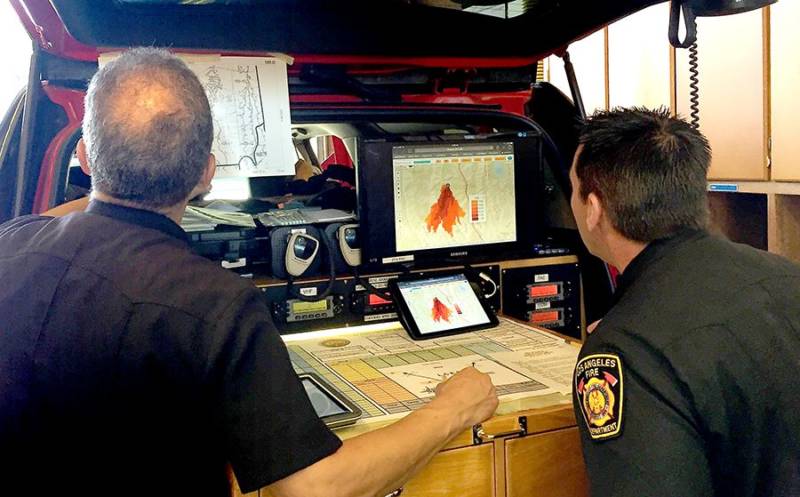
"caption": "Los Angeles Fire Department staff look at a new fire prediction tool, powered by supercomputers. ",
"description": null,
"title": "PR20160926_Firemap_LAFD",
"credit": "San Diego Supercomputer Center",
"status": "inherit",
"isLoading": false,
"fetchFailed": false
},
"science_1934501": {
"type": "attachments",
"id": "science_1934501",
"meta": {
"index": "attachments_1716263798",
"site": "science",
"id": "1934501",
"found": true
},
"parent": 1934487,
"imgSizes": {
"small": {
"file": "https://ww2.kqed.org/app/uploads/sites/35/2018/11/Image-from-iOS-520x390.jpg",
"width": 520,
"mimeType": "image/jpeg",
"height": 390
},
"twentyfourteen-full-width": {
"file": "https://ww2.kqed.org/app/uploads/sites/35/2018/11/Image-from-iOS-1038x576.jpg",
"width": 1038,
"mimeType": "image/jpeg",
"height": 576
},
"thumbnail": {
"file": "https://ww2.kqed.org/app/uploads/sites/35/2018/11/Image-from-iOS-160x120.jpg",
"width": 160,
"mimeType": "image/jpeg",
"height": 120
},
"fd-sm": {
"file": "https://ww2.kqed.org/app/uploads/sites/35/2018/11/Image-from-iOS-960x720.jpg",
"width": 960,
"mimeType": "image/jpeg",
"height": 720
},
"post-thumbnail": {
"file": "https://ww2.kqed.org/app/uploads/sites/35/2018/11/Image-from-iOS-672x372.jpg",
"width": 672,
"mimeType": "image/jpeg",
"height": 372
},
"xsmall": {
"file": "https://ww2.kqed.org/app/uploads/sites/35/2018/11/Image-from-iOS-375x281.jpg",
"width": 375,
"mimeType": "image/jpeg",
"height": 281
},
"kqedFullSize": {
"file": "https://ww2.kqed.org/app/uploads/sites/35/2018/11/Image-from-iOS-e1556145524872.jpg",
"width": 1920,
"height": 1440
},
"large": {
"file": "https://ww2.kqed.org/app/uploads/sites/35/2018/11/Image-from-iOS-1020x765.jpg",
"width": 1020,
"mimeType": "image/jpeg",
"height": 765
},
"xlarge": {
"file": "https://ww2.kqed.org/app/uploads/sites/35/2018/11/Image-from-iOS-1180x885.jpg",
"width": 1180,
"mimeType": "image/jpeg",
"height": 885
},
"complete_open_graph": {
"file": "https://ww2.kqed.org/app/uploads/sites/35/2018/11/Image-from-iOS-1200x900.jpg",
"width": 1200,
"mimeType": "image/jpeg",
"height": 900
},
"guest-author-50": {
"file": "https://ww2.kqed.org/app/uploads/sites/35/2018/11/Image-from-iOS-50x50.jpg",
"width": 50,
"mimeType": "image/jpeg",
"height": 50
},
"guest-author-96": {
"file": "https://ww2.kqed.org/app/uploads/sites/35/2018/11/Image-from-iOS-96x96.jpg",
"width": 96,
"mimeType": "image/jpeg",
"height": 96
},
"medium": {
"file": "https://ww2.kqed.org/app/uploads/sites/35/2018/11/Image-from-iOS-800x600.jpg",
"width": 800,
"mimeType": "image/jpeg",
"height": 600
},
"guest-author-64": {
"file": "https://ww2.kqed.org/app/uploads/sites/35/2018/11/Image-from-iOS-64x64.jpg",
"width": 64,
"mimeType": "image/jpeg",
"height": 64
},
"guest-author-32": {
"file": "https://ww2.kqed.org/app/uploads/sites/35/2018/11/Image-from-iOS-32x32.jpg",
"width": 32,
"mimeType": "image/jpeg",
"height": 32
},
"fd-lrg": {
"file": "https://ww2.kqed.org/app/uploads/sites/35/2018/11/Image-from-iOS-1920x1440.jpg",
"width": 1920,
"mimeType": "image/jpeg",
"height": 1440
},
"fd-med": {
"file": "https://ww2.kqed.org/app/uploads/sites/35/2018/11/Image-from-iOS-1180x885.jpg",
"width": 1180,
"mimeType": "image/jpeg",
"height": 885
},
"full-width": {
"file": "https://ww2.kqed.org/app/uploads/sites/35/2018/11/Image-from-iOS-1920x1440.jpg",
"width": 1920,
"mimeType": "image/jpeg",
"height": 1440
},
"detail": {
"file": "https://ww2.kqed.org/app/uploads/sites/35/2018/11/Image-from-iOS-150x150.jpg",
"width": 150,
"mimeType": "image/jpeg",
"height": 150
},
"medium_large": {
"file": "https://ww2.kqed.org/app/uploads/sites/35/2018/11/Image-from-iOS-768x576.jpg",
"width": 768,
"mimeType": "image/jpeg",
"height": 576
},
"guest-author-128": {
"file": "https://ww2.kqed.org/app/uploads/sites/35/2018/11/Image-from-iOS-128x128.jpg",
"width": 128,
"mimeType": "image/jpeg",
"height": 128
},
"xxsmall": {
"file": "https://ww2.kqed.org/app/uploads/sites/35/2018/11/Image-from-iOS-240x180.jpg",
"width": 240,
"mimeType": "image/jpeg",
"height": 180
}
},
"publishDate": 1542410927,
"modified": 1556128779,
"caption": "Smoke from the Carr Fire obscures the view of the Golden Gate Bridge, November, 2018. ",
"description": "Smoke obscures the view of the Golden Gate Bridge. Air quality is so bad in the Bay Area this week it's attracted international attention.",
"title": "Image from iOS",
"credit": "Olivia Allen-Price/KQED",
"status": "inherit",
"isLoading": false,
"fetchFailed": false
},
"science_1934418": {
"type": "attachments",
"id": "science_1934418",
"meta": {
"index": "attachments_1716263798",
"site": "science",
"id": "1934418",
"found": true
},
"parent": 0,
"imgSizes": {
"small": {
"file": "https://ww2.kqed.org/app/uploads/sites/35/2018/11/KQED_181111_FI-520x293.jpg",
"width": 520,
"mimeType": "image/jpeg",
"height": 293
},
"twentyfourteen-full-width": {
"file": "https://ww2.kqed.org/app/uploads/sites/35/2018/11/KQED_181111_FI-1038x576.jpg",
"width": 1038,
"mimeType": "image/jpeg",
"height": 576
},
"thumbnail": {
"file": "https://ww2.kqed.org/app/uploads/sites/35/2018/11/KQED_181111_FI-160x90.jpg",
"width": 160,
"mimeType": "image/jpeg",
"height": 90
},
"fd-sm": {
"file": "https://ww2.kqed.org/app/uploads/sites/35/2018/11/KQED_181111_FI-960x540.jpg",
"width": 960,
"mimeType": "image/jpeg",
"height": 540
},
"post-thumbnail": {
"file": "https://ww2.kqed.org/app/uploads/sites/35/2018/11/KQED_181111_FI-672x372.jpg",
"width": 672,
"mimeType": "image/jpeg",
"height": 372
},
"xsmall": {
"file": "https://ww2.kqed.org/app/uploads/sites/35/2018/11/KQED_181111_FI-375x211.jpg",
"width": 375,
"mimeType": "image/jpeg",
"height": 211
},
"kqedFullSize": {
"file": "https://ww2.kqed.org/app/uploads/sites/35/2018/11/KQED_181111_FI.jpg",
"width": 1920,
"height": 1080
},
"large": {
"file": "https://ww2.kqed.org/app/uploads/sites/35/2018/11/KQED_181111_FI-1020x574.jpg",
"width": 1020,
"mimeType": "image/jpeg",
"height": 574
},
"xlarge": {
"file": "https://ww2.kqed.org/app/uploads/sites/35/2018/11/KQED_181111_FI-1180x664.jpg",
"width": 1180,
"mimeType": "image/jpeg",
"height": 664
},
"complete_open_graph": {
"file": "https://ww2.kqed.org/app/uploads/sites/35/2018/11/KQED_181111_FI-1200x675.jpg",
"width": 1200,
"mimeType": "image/jpeg",
"height": 675
},
"guest-author-50": {
"file": "https://ww2.kqed.org/app/uploads/sites/35/2018/11/KQED_181111_FI-50x50.jpg",
"width": 50,
"mimeType": "image/jpeg",
"height": 50
},
"guest-author-96": {
"file": "https://ww2.kqed.org/app/uploads/sites/35/2018/11/KQED_181111_FI-96x96.jpg",
"width": 96,
"mimeType": "image/jpeg",
"height": 96
},
"medium": {
"file": "https://ww2.kqed.org/app/uploads/sites/35/2018/11/KQED_181111_FI-800x450.jpg",
"width": 800,
"mimeType": "image/jpeg",
"height": 450
},
"guest-author-64": {
"file": "https://ww2.kqed.org/app/uploads/sites/35/2018/11/KQED_181111_FI-64x64.jpg",
"width": 64,
"mimeType": "image/jpeg",
"height": 64
},
"guest-author-32": {
"file": "https://ww2.kqed.org/app/uploads/sites/35/2018/11/KQED_181111_FI-32x32.jpg",
"width": 32,
"mimeType": "image/jpeg",
"height": 32
},
"fd-lrg": {
"file": "https://ww2.kqed.org/app/uploads/sites/35/2018/11/KQED_181111_FI-1920x1080.jpg",
"width": 1920,
"mimeType": "image/jpeg",
"height": 1080
},
"fd-med": {
"file": "https://ww2.kqed.org/app/uploads/sites/35/2018/11/KQED_181111_FI-1180x664.jpg",
"width": 1180,
"mimeType": "image/jpeg",
"height": 664
},
"full-width": {
"file": "https://ww2.kqed.org/app/uploads/sites/35/2018/11/KQED_181111_FI-1920x1080.jpg",
"width": 1920,
"mimeType": "image/jpeg",
"height": 1080
},
"detail": {
"file": "https://ww2.kqed.org/app/uploads/sites/35/2018/11/KQED_181111_FI-150x150.jpg",
"width": 150,
"mimeType": "image/jpeg",
"height": 150
},
"medium_large": {
"file": "https://ww2.kqed.org/app/uploads/sites/35/2018/11/KQED_181111_FI-768x432.jpg",
"width": 768,
"mimeType": "image/jpeg",
"height": 432
},
"guest-author-128": {
"file": "https://ww2.kqed.org/app/uploads/sites/35/2018/11/KQED_181111_FI-128x128.jpg",
"width": 128,
"mimeType": "image/jpeg",
"height": 128
},
"xxsmall": {
"file": "https://ww2.kqed.org/app/uploads/sites/35/2018/11/KQED_181111_FI-240x135.jpg",
"width": 240,
"mimeType": "image/jpeg",
"height": 135
}
},
"publishDate": 1542384450,
"modified": 1542384450,
"caption": null,
"description": null,
"title": "KQED_181111_FI",
"credit": null,
"status": "inherit",
"isLoading": false,
"fetchFailed": false
},
"science_1934379": {
"type": "attachments",
"id": "science_1934379",
"meta": {
"index": "attachments_1716263798",
"site": "science",
"id": "1934379",
"found": true
},
"parent": 1934364,
"imgSizes": {
"small": {
"file": "https://ww2.kqed.org/app/uploads/sites/35/2018/11/RS33891_SFBridge-qut-520x347.jpg",
"width": 520,
"mimeType": "image/jpeg",
"height": 347
},
"twentyfourteen-full-width": {
"file": "https://ww2.kqed.org/app/uploads/sites/35/2018/11/RS33891_SFBridge-qut-1038x576.jpg",
"width": 1038,
"mimeType": "image/jpeg",
"height": 576
},
"thumbnail": {
"file": "https://ww2.kqed.org/app/uploads/sites/35/2018/11/RS33891_SFBridge-qut-160x107.jpg",
"width": 160,
"mimeType": "image/jpeg",
"height": 107
},
"fd-sm": {
"file": "https://ww2.kqed.org/app/uploads/sites/35/2018/11/RS33891_SFBridge-qut-960x640.jpg",
"width": 960,
"mimeType": "image/jpeg",
"height": 640
},
"post-thumbnail": {
"file": "https://ww2.kqed.org/app/uploads/sites/35/2018/11/RS33891_SFBridge-qut-672x372.jpg",
"width": 672,
"mimeType": "image/jpeg",
"height": 372
},
"xsmall": {
"file": "https://ww2.kqed.org/app/uploads/sites/35/2018/11/RS33891_SFBridge-qut-375x250.jpg",
"width": 375,
"mimeType": "image/jpeg",
"height": 250
},
"kqedFullSize": {
"file": "https://ww2.kqed.org/app/uploads/sites/35/2018/11/RS33891_SFBridge-qut.jpg",
"width": 1100,
"height": 733
},
"large": {
"file": "https://ww2.kqed.org/app/uploads/sites/35/2018/11/RS33891_SFBridge-qut-1020x680.jpg",
"width": 1020,
"mimeType": "image/jpeg",
"height": 680
},
"guest-author-50": {
"file": "https://ww2.kqed.org/app/uploads/sites/35/2018/11/RS33891_SFBridge-qut-50x50.jpg",
"width": 50,
"mimeType": "image/jpeg",
"height": 50
},
"guest-author-96": {
"file": "https://ww2.kqed.org/app/uploads/sites/35/2018/11/RS33891_SFBridge-qut-96x96.jpg",
"width": 96,
"mimeType": "image/jpeg",
"height": 96
},
"medium": {
"file": "https://ww2.kqed.org/app/uploads/sites/35/2018/11/RS33891_SFBridge-qut-800x533.jpg",
"width": 800,
"mimeType": "image/jpeg",
"height": 533
},
"guest-author-64": {
"file": "https://ww2.kqed.org/app/uploads/sites/35/2018/11/RS33891_SFBridge-qut-64x64.jpg",
"width": 64,
"mimeType": "image/jpeg",
"height": 64
},
"guest-author-32": {
"file": "https://ww2.kqed.org/app/uploads/sites/35/2018/11/RS33891_SFBridge-qut-32x32.jpg",
"width": 32,
"mimeType": "image/jpeg",
"height": 32
},
"detail": {
"file": "https://ww2.kqed.org/app/uploads/sites/35/2018/11/RS33891_SFBridge-qut-150x150.jpg",
"width": 150,
"mimeType": "image/jpeg",
"height": 150
},
"medium_large": {
"file": "https://ww2.kqed.org/app/uploads/sites/35/2018/11/RS33891_SFBridge-qut-768x512.jpg",
"width": 768,
"mimeType": "image/jpeg",
"height": 512
},
"guest-author-128": {
"file": "https://ww2.kqed.org/app/uploads/sites/35/2018/11/RS33891_SFBridge-qut-128x128.jpg",
"width": 128,
"mimeType": "image/jpeg",
"height": 128
},
"xxsmall": {
"file": "https://ww2.kqed.org/app/uploads/sites/35/2018/11/RS33891_SFBridge-qut-240x160.jpg",
"width": 240,
"mimeType": "image/jpeg",
"height": 160
}
},
"publishDate": 1542323515,
"modified": 1542323559,
"caption": "Smoke blankets the Bay Bridge and San Francisco.",
"description": "Smoke blankets the Bay Bridge and San Francisco.",
"title": "RS33891_SFBridge-qut",
"credit": "Samantha Shanahan/KQED",
"status": "inherit",
"isLoading": false,
"fetchFailed": false
},
"science_1934338": {
"type": "attachments",
"id": "science_1934338",
"meta": {
"index": "attachments_1716263798",
"site": "science",
"id": "1934338",
"found": true
},
"parent": 1934332,
"imgSizes": {
"small": {
"file": "https://ww2.kqed.org/app/uploads/sites/35/2018/11/RS33764_GettyImages-1059345696-qut-520x345.jpg",
"width": 520,
"mimeType": "image/jpeg",
"height": 345
},
"twentyfourteen-full-width": {
"file": "https://ww2.kqed.org/app/uploads/sites/35/2018/11/RS33764_GettyImages-1059345696-qut-1038x576.jpg",
"width": 1038,
"mimeType": "image/jpeg",
"height": 576
},
"thumbnail": {
"file": "https://ww2.kqed.org/app/uploads/sites/35/2018/11/RS33764_GettyImages-1059345696-qut-160x106.jpg",
"width": 160,
"mimeType": "image/jpeg",
"height": 106
},
"fd-sm": {
"file": "https://ww2.kqed.org/app/uploads/sites/35/2018/11/RS33764_GettyImages-1059345696-qut-960x637.jpg",
"width": 960,
"mimeType": "image/jpeg",
"height": 637
},
"post-thumbnail": {
"file": "https://ww2.kqed.org/app/uploads/sites/35/2018/11/RS33764_GettyImages-1059345696-qut-672x372.jpg",
"width": 672,
"mimeType": "image/jpeg",
"height": 372
},
"xsmall": {
"file": "https://ww2.kqed.org/app/uploads/sites/35/2018/11/RS33764_GettyImages-1059345696-qut-375x249.jpg",
"width": 375,
"mimeType": "image/jpeg",
"height": 249
},
"kqedFullSize": {
"file": "https://ww2.kqed.org/app/uploads/sites/35/2018/11/RS33764_GettyImages-1059345696-qut.jpg",
"width": 1920,
"height": 1273
},
"large": {
"file": "https://ww2.kqed.org/app/uploads/sites/35/2018/11/RS33764_GettyImages-1059345696-qut-1020x676.jpg",
"width": 1020,
"mimeType": "image/jpeg",
"height": 676
},
"xlarge": {
"file": "https://ww2.kqed.org/app/uploads/sites/35/2018/11/RS33764_GettyImages-1059345696-qut-1180x782.jpg",
"width": 1180,
"mimeType": "image/jpeg",
"height": 782
},
"complete_open_graph": {
"file": "https://ww2.kqed.org/app/uploads/sites/35/2018/11/RS33764_GettyImages-1059345696-qut-1200x796.jpg",
"width": 1200,
"mimeType": "image/jpeg",
"height": 796
},
"guest-author-50": {
"file": "https://ww2.kqed.org/app/uploads/sites/35/2018/11/RS33764_GettyImages-1059345696-qut-50x50.jpg",
"width": 50,
"mimeType": "image/jpeg",
"height": 50
},
"guest-author-96": {
"file": "https://ww2.kqed.org/app/uploads/sites/35/2018/11/RS33764_GettyImages-1059345696-qut-96x96.jpg",
"width": 96,
"mimeType": "image/jpeg",
"height": 96
},
"medium": {
"file": "https://ww2.kqed.org/app/uploads/sites/35/2018/11/RS33764_GettyImages-1059345696-qut-800x530.jpg",
"width": 800,
"mimeType": "image/jpeg",
"height": 530
},
"guest-author-64": {
"file": "https://ww2.kqed.org/app/uploads/sites/35/2018/11/RS33764_GettyImages-1059345696-qut-64x64.jpg",
"width": 64,
"mimeType": "image/jpeg",
"height": 64
},
"guest-author-32": {
"file": "https://ww2.kqed.org/app/uploads/sites/35/2018/11/RS33764_GettyImages-1059345696-qut-32x32.jpg",
"width": 32,
"mimeType": "image/jpeg",
"height": 32
},
"fd-lrg": {
"file": "https://ww2.kqed.org/app/uploads/sites/35/2018/11/RS33764_GettyImages-1059345696-qut-1920x1273.jpg",
"width": 1920,
"mimeType": "image/jpeg",
"height": 1273
},
"fd-med": {
"file": "https://ww2.kqed.org/app/uploads/sites/35/2018/11/RS33764_GettyImages-1059345696-qut-1180x782.jpg",
"width": 1180,
"mimeType": "image/jpeg",
"height": 782
},
"full-width": {
"file": "https://ww2.kqed.org/app/uploads/sites/35/2018/11/RS33764_GettyImages-1059345696-qut-1920x1273.jpg",
"width": 1920,
"mimeType": "image/jpeg",
"height": 1273
},
"detail": {
"file": "https://ww2.kqed.org/app/uploads/sites/35/2018/11/RS33764_GettyImages-1059345696-qut-150x150.jpg",
"width": 150,
"mimeType": "image/jpeg",
"height": 150
},
"medium_large": {
"file": "https://ww2.kqed.org/app/uploads/sites/35/2018/11/RS33764_GettyImages-1059345696-qut-768x509.jpg",
"width": 768,
"mimeType": "image/jpeg",
"height": 509
},
"guest-author-128": {
"file": "https://ww2.kqed.org/app/uploads/sites/35/2018/11/RS33764_GettyImages-1059345696-qut-128x128.jpg",
"width": 128,
"mimeType": "image/jpeg",
"height": 128
},
"xxsmall": {
"file": "https://ww2.kqed.org/app/uploads/sites/35/2018/11/RS33764_GettyImages-1059345696-qut-240x159.jpg",
"width": 240,
"mimeType": "image/jpeg",
"height": 159
}
},
"publishDate": 1542311468,
"modified": 1542311485,
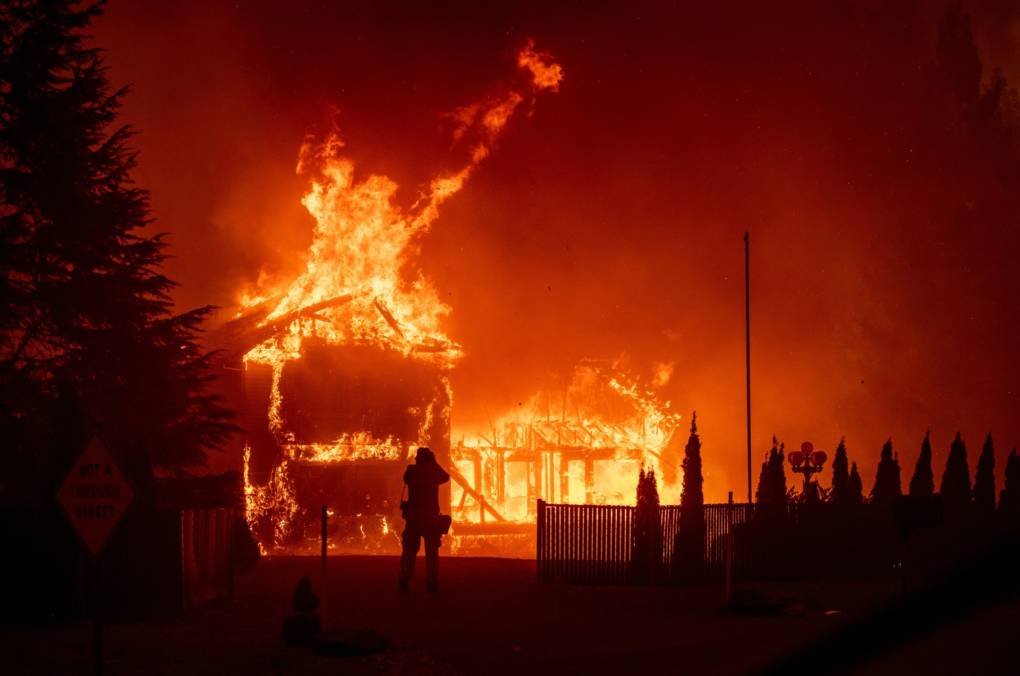
"caption": "A home burns during the Camp fire in Paradise, California.",
"description": "A home burns during the Camp fire in Paradise, California.",
"title": "US-FIRE-WEATHER",
"credit": "Josh Edelson / AFP",
"status": "inherit",
"isLoading": false,
"fetchFailed": false
},
"science_1929286": {
"type": "attachments",
"id": "science_1929286",
"meta": {
"index": "attachments_1716263798",
"site": "science",
"id": "1929286",
"found": true
},
"parent": 1929271,
"imgSizes": {
"small": {
"file": "https://ww2.kqed.org/app/uploads/sites/35/2018/08/JCP_2026-X2-960x640-520x347.jpg",
"width": 520,
"mimeType": "image/jpeg",
"height": 347
},
"twentyfourteen-full-width": {
"file": "https://ww2.kqed.org/app/uploads/sites/35/2018/08/JCP_2026-X2-960x640-960x576.jpg",
"width": 960,
"mimeType": "image/jpeg",
"height": 576
},
"thumbnail": {
"file": "https://ww2.kqed.org/app/uploads/sites/35/2018/08/JCP_2026-X2-960x640-160x107.jpg",
"width": 160,
"mimeType": "image/jpeg",
"height": 107
},
"fd-sm": {
"file": "https://ww2.kqed.org/app/uploads/sites/35/2018/08/JCP_2026-X2-960x640-960x640.jpg",
"width": 960,
"mimeType": "image/jpeg",
"height": 640
},
"post-thumbnail": {
"file": "https://ww2.kqed.org/app/uploads/sites/35/2018/08/JCP_2026-X2-960x640-672x372.jpg",
"width": 672,
"mimeType": "image/jpeg",
"height": 372
},
"xsmall": {
"file": "https://ww2.kqed.org/app/uploads/sites/35/2018/08/JCP_2026-X2-960x640-375x250.jpg",
"width": 375,
"mimeType": "image/jpeg",
"height": 250
},
"kqedFullSize": {
"file": "https://ww2.kqed.org/app/uploads/sites/35/2018/08/JCP_2026-X2-960x640.jpg",
"width": 960,
"height": 640
},
"guest-author-50": {
"file": "https://ww2.kqed.org/app/uploads/sites/35/2018/08/JCP_2026-X2-960x640-50x50.jpg",
"width": 50,
"mimeType": "image/jpeg",
"height": 50
},
"guest-author-96": {
"file": "https://ww2.kqed.org/app/uploads/sites/35/2018/08/JCP_2026-X2-960x640-96x96.jpg",
"width": 96,
"mimeType": "image/jpeg",
"height": 96
},
"medium": {
"file": "https://ww2.kqed.org/app/uploads/sites/35/2018/08/JCP_2026-X2-960x640-800x533.jpg",
"width": 800,
"mimeType": "image/jpeg",
"height": 533
},
"guest-author-64": {
"file": "https://ww2.kqed.org/app/uploads/sites/35/2018/08/JCP_2026-X2-960x640-64x64.jpg",
"width": 64,
"mimeType": "image/jpeg",
"height": 64
},
"guest-author-32": {
"file": "https://ww2.kqed.org/app/uploads/sites/35/2018/08/JCP_2026-X2-960x640-32x32.jpg",
"width": 32,
"mimeType": "image/jpeg",
"height": 32
},
"detail": {
"file": "https://ww2.kqed.org/app/uploads/sites/35/2018/08/JCP_2026-X2-960x640-150x150.jpg",
"width": 150,
"mimeType": "image/jpeg",
"height": 150
},
"medium_large": {
"file": "https://ww2.kqed.org/app/uploads/sites/35/2018/08/JCP_2026-X2-960x640-768x512.jpg",
"width": 768,
"mimeType": "image/jpeg",
"height": 512
},
"guest-author-128": {
"file": "https://ww2.kqed.org/app/uploads/sites/35/2018/08/JCP_2026-X2-960x640-128x128.jpg",
"width": 128,
"mimeType": "image/jpeg",
"height": 128
},
"xxsmall": {
"file": "https://ww2.kqed.org/app/uploads/sites/35/2018/08/JCP_2026-X2-960x640-240x160.jpg",
"width": 240,
"mimeType": "image/jpeg",
"height": 160
}
},
"publishDate": 1533853599,
"modified": 1533853622,
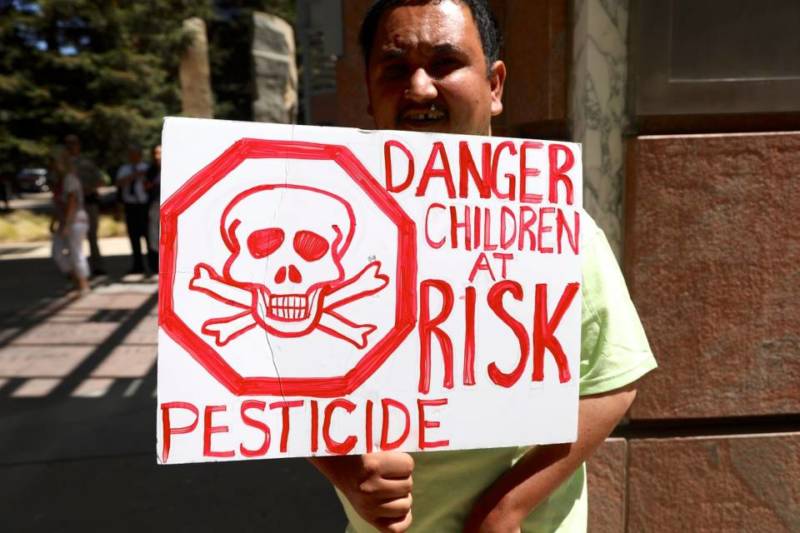
"caption": "California farmworker protests use of chlorpyrifos at the state capitol in July 2017. ",
"description": null,
"title": "JCP_2026-X2-960x640",
"credit": "Joan Cusick",
"status": "inherit",
"isLoading": false,
"fetchFailed": false
},
"science_1923160": {
"type": "attachments",
"id": "science_1923160",
"meta": {
"index": "attachments_1716263798",
"site": "science",
"id": "1923160",
"found": true
},
"parent": 1923154,
"imgSizes": {
"small": {
"file": "https://ww2.kqed.org/app/uploads/sites/35/2018/04/900_01_ca170561-520x346.jpg",
"width": 520,
"mimeType": "image/jpeg",
"height": 346
},
"thumbnail": {
"file": "https://ww2.kqed.org/app/uploads/sites/35/2018/04/900_01_ca170561-160x107.jpg",
"width": 160,
"mimeType": "image/jpeg",
"height": 107
},
"post-thumbnail": {
"file": "https://ww2.kqed.org/app/uploads/sites/35/2018/04/900_01_ca170561-672x372.jpg",
"width": 672,
"mimeType": "image/jpeg",
"height": 372
},
"xsmall": {
"file": "https://ww2.kqed.org/app/uploads/sites/35/2018/04/900_01_ca170561-375x250.jpg",
"width": 375,
"mimeType": "image/jpeg",
"height": 250
},
"kqedFullSize": {
"file": "https://ww2.kqed.org/app/uploads/sites/35/2018/04/900_01_ca170561.jpg",
"width": 800,
"height": 533
},
"guest-author-50": {
"file": "https://ww2.kqed.org/app/uploads/sites/35/2018/04/900_01_ca170561-50x50.jpg",
"width": 50,
"mimeType": "image/jpeg",
"height": 50
},
"guest-author-96": {
"file": "https://ww2.kqed.org/app/uploads/sites/35/2018/04/900_01_ca170561-96x96.jpg",
"width": 96,
"mimeType": "image/jpeg",
"height": 96
},
"medium": {
"file": "https://ww2.kqed.org/app/uploads/sites/35/2018/04/900_01_ca170561-800x533.jpg",
"width": 800,
"mimeType": "image/jpeg",
"height": 533
},
"guest-author-64": {
"file": "https://ww2.kqed.org/app/uploads/sites/35/2018/04/900_01_ca170561-64x64.jpg",
"width": 64,
"mimeType": "image/jpeg",
"height": 64
},
"guest-author-32": {
"file": "https://ww2.kqed.org/app/uploads/sites/35/2018/04/900_01_ca170561-32x32.jpg",
"width": 32,
"mimeType": "image/jpeg",
"height": 32
},
"detail": {
"file": "https://ww2.kqed.org/app/uploads/sites/35/2018/04/900_01_ca170561-150x150.jpg",
"width": 150,
"mimeType": "image/jpeg",
"height": 150
},
"medium_large": {
"file": "https://ww2.kqed.org/app/uploads/sites/35/2018/04/900_01_ca170561-768x512.jpg",
"width": 768,
"mimeType": "image/jpeg",
"height": 512
},
"guest-author-128": {
"file": "https://ww2.kqed.org/app/uploads/sites/35/2018/04/900_01_ca170561-128x128.jpg",
"width": 128,
"mimeType": "image/jpeg",
"height": 128
},
"xxsmall": {
"file": "https://ww2.kqed.org/app/uploads/sites/35/2018/04/900_01_ca170561-240x160.jpg",
"width": 240,
"mimeType": "image/jpeg",
"height": 160
}
},
"publishDate": 1524843773,
"modified": 1528386974,
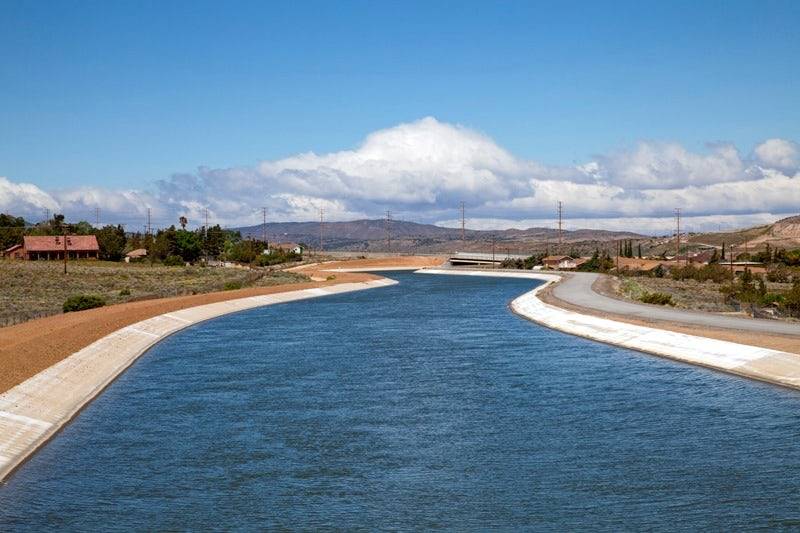
"caption": "The California Aqueduct is the state’s largest and longest water transport system, fed by the Sacramento-San Joaquin Delta.",
"description": null,
"title": "900_01_ca170561",
"credit": "Citizens of the Planet/Education Images/UIG via Getty Images",
"status": "inherit",
"isLoading": false,
"fetchFailed": false
},
"science_1933571": {
"type": "attachments",
"id": "science_1933571",
"meta": {
"index": "attachments_1716263798",
"site": "science",
"id": "1933571",
"found": true
},
"parent": 1933480,
"imgSizes": {
"small": {
"file": "https://ww2.kqed.org/app/uploads/sites/35/2018/10/1-Seawall_SanFranciscoBayView_SFPort_448KB-520x275.png",
"width": 520,
"mimeType": "image/png",
"height": 275
},
"thumbnail": {
"file": "https://ww2.kqed.org/app/uploads/sites/35/2018/10/1-Seawall_SanFranciscoBayView_SFPort_448KB-160x84.png",
"width": 160,
"mimeType": "image/png",
"height": 84
},
"fd-sm": {
"file": "https://ww2.kqed.org/app/uploads/sites/35/2018/10/1-Seawall_SanFranciscoBayView_SFPort_448KB-960x507.png",
"width": 960,
"mimeType": "image/png",
"height": 507
},
"post-thumbnail": {
"file": "https://ww2.kqed.org/app/uploads/sites/35/2018/10/1-Seawall_SanFranciscoBayView_SFPort_448KB-672x372.png",
"width": 672,
"mimeType": "image/png",
"height": 372
},
"xsmall": {
"file": "https://ww2.kqed.org/app/uploads/sites/35/2018/10/1-Seawall_SanFranciscoBayView_SFPort_448KB-375x198.png",
"width": 375,
"mimeType": "image/png",
"height": 198
},
"kqedFullSize": {
"file": "https://ww2.kqed.org/app/uploads/sites/35/2018/10/1-Seawall_SanFranciscoBayView_SFPort_448KB.png",
"width": 1000,
"height": 528
},
"guest-author-50": {
"file": "https://ww2.kqed.org/app/uploads/sites/35/2018/10/1-Seawall_SanFranciscoBayView_SFPort_448KB-50x50.png",
"width": 50,
"mimeType": "image/png",
"height": 50
},
"guest-author-96": {
"file": "https://ww2.kqed.org/app/uploads/sites/35/2018/10/1-Seawall_SanFranciscoBayView_SFPort_448KB-96x96.png",
"width": 96,
"mimeType": "image/png",
"height": 96
},
"medium": {
"file": "https://ww2.kqed.org/app/uploads/sites/35/2018/10/1-Seawall_SanFranciscoBayView_SFPort_448KB-800x422.png",
"width": 800,
"mimeType": "image/png",
"height": 422
},
"guest-author-64": {
"file": "https://ww2.kqed.org/app/uploads/sites/35/2018/10/1-Seawall_SanFranciscoBayView_SFPort_448KB-64x64.png",
"width": 64,
"mimeType": "image/png",
"height": 64
},
"guest-author-32": {
"file": "https://ww2.kqed.org/app/uploads/sites/35/2018/10/1-Seawall_SanFranciscoBayView_SFPort_448KB-32x32.png",
"width": 32,
"mimeType": "image/png",
"height": 32
},
"detail": {
"file": "https://ww2.kqed.org/app/uploads/sites/35/2018/10/1-Seawall_SanFranciscoBayView_SFPort_448KB-150x150.png",
"width": 150,
"mimeType": "image/png",
"height": 150
},
"medium_large": {
"file": "https://ww2.kqed.org/app/uploads/sites/35/2018/10/1-Seawall_SanFranciscoBayView_SFPort_448KB-768x406.png",
"width": 768,
"mimeType": "image/png",
"height": 406
},
"guest-author-128": {
"file": "https://ww2.kqed.org/app/uploads/sites/35/2018/10/1-Seawall_SanFranciscoBayView_SFPort_448KB-128x128.png",
"width": 128,
"mimeType": "image/png",
"height": 128
},
"xxsmall": {
"file": "https://ww2.kqed.org/app/uploads/sites/35/2018/10/1-Seawall_SanFranciscoBayView_SFPort_448KB-240x127.png",
"width": 240,
"mimeType": "image/png",
"height": 127
}
},
"publishDate": 1540415501,
"modified": 1540415583,
"caption": "San Francisco's original waterfront was nearly a half-mile inland from the present Embarcadero.",
"description": "San Francisco's original waterfront was nearly a half-mile inland from the present Embarcadero.",
"title": "1-Seawall_SanFranciscoBayView_SF+Port_448+KB",
"credit": "Yes on A",
"status": "inherit",
"isLoading": false,
"fetchFailed": false
},
"science_1933950": {
"type": "attachments",
"id": "science_1933950",
"meta": {
"index": "attachments_1716263798",
"site": "science",
"id": "1933950",
"found": true
},
"parent": 1933945,
"imgSizes": {
"small": {
"file": "https://ww2.kqed.org/app/uploads/sites/35/2018/11/GettyImages-106475765-520x346.jpg",
"width": 520,
"mimeType": "image/jpeg",
"height": 346
},
"twentyfourteen-full-width": {
"file": "https://ww2.kqed.org/app/uploads/sites/35/2018/11/GettyImages-106475765-1038x576.jpg",
"width": 1038,
"mimeType": "image/jpeg",
"height": 576
},
"thumbnail": {
"file": "https://ww2.kqed.org/app/uploads/sites/35/2018/11/GettyImages-106475765-160x106.jpg",
"width": 160,
"mimeType": "image/jpeg",
"height": 106
},
"fd-sm": {
"file": "https://ww2.kqed.org/app/uploads/sites/35/2018/11/GettyImages-106475765-960x639.jpg",
"width": 960,
"mimeType": "image/jpeg",
"height": 639
},
"post-thumbnail": {
"file": "https://ww2.kqed.org/app/uploads/sites/35/2018/11/GettyImages-106475765-672x372.jpg",
"width": 672,
"mimeType": "image/jpeg",
"height": 372
},
"xsmall": {
"file": "https://ww2.kqed.org/app/uploads/sites/35/2018/11/GettyImages-106475765-375x250.jpg",
"width": 375,
"mimeType": "image/jpeg",
"height": 250
},
"kqedFullSize": {
"file": "https://ww2.kqed.org/app/uploads/sites/35/2018/11/GettyImages-106475765.jpg",
"width": 4800,
"height": 3194
},
"large": {
"file": "https://ww2.kqed.org/app/uploads/sites/35/2018/11/GettyImages-106475765-1020x679.jpg",
"width": 1020,
"mimeType": "image/jpeg",
"height": 679
},
"xlarge": {
"file": "https://ww2.kqed.org/app/uploads/sites/35/2018/11/GettyImages-106475765-1180x785.jpg",
"width": 1180,
"mimeType": "image/jpeg",
"height": 785
},
"complete_open_graph": {
"file": "https://ww2.kqed.org/app/uploads/sites/35/2018/11/GettyImages-106475765-1200x799.jpg",
"width": 1200,
"mimeType": "image/jpeg",
"height": 799
},
"guest-author-50": {
"file": "https://ww2.kqed.org/app/uploads/sites/35/2018/11/GettyImages-106475765-50x50.jpg",
"width": 50,
"mimeType": "image/jpeg",
"height": 50
},
"guest-author-96": {
"file": "https://ww2.kqed.org/app/uploads/sites/35/2018/11/GettyImages-106475765-96x96.jpg",
"width": 96,
"mimeType": "image/jpeg",
"height": 96
},
"medium": {
"file": "https://ww2.kqed.org/app/uploads/sites/35/2018/11/GettyImages-106475765-800x532.jpg",
"width": 800,
"mimeType": "image/jpeg",
"height": 532
},
"guest-author-64": {
"file": "https://ww2.kqed.org/app/uploads/sites/35/2018/11/GettyImages-106475765-64x64.jpg",
"width": 64,
"mimeType": "image/jpeg",
"height": 64
},
"guest-author-32": {
"file": "https://ww2.kqed.org/app/uploads/sites/35/2018/11/GettyImages-106475765-32x32.jpg",
"width": 32,
"mimeType": "image/jpeg",
"height": 32
},
"fd-lrg": {
"file": "https://ww2.kqed.org/app/uploads/sites/35/2018/11/GettyImages-106475765-1920x1278.jpg",
"width": 1920,
"mimeType": "image/jpeg",
"height": 1278
},
"fd-med": {
"file": "https://ww2.kqed.org/app/uploads/sites/35/2018/11/GettyImages-106475765-1180x785.jpg",
"width": 1180,
"mimeType": "image/jpeg",
"height": 785
},
"full-width": {
"file": "https://ww2.kqed.org/app/uploads/sites/35/2018/11/GettyImages-106475765-1920x1278.jpg",
"width": 1920,
"mimeType": "image/jpeg",
"height": 1278
},
"detail": {
"file": "https://ww2.kqed.org/app/uploads/sites/35/2018/11/GettyImages-106475765-150x150.jpg",
"width": 150,
"mimeType": "image/jpeg",
"height": 150
},
"medium_large": {
"file": "https://ww2.kqed.org/app/uploads/sites/35/2018/11/GettyImages-106475765-768x511.jpg",
"width": 768,
"mimeType": "image/jpeg",
"height": 511
},
"guest-author-128": {
"file": "https://ww2.kqed.org/app/uploads/sites/35/2018/11/GettyImages-106475765-128x128.jpg",
"width": 128,
"mimeType": "image/jpeg",
"height": 128
},
"xxsmall": {
"file": "https://ww2.kqed.org/app/uploads/sites/35/2018/11/GettyImages-106475765-240x160.jpg",
"width": 240,
"mimeType": "image/jpeg",
"height": 160
}
},
"publishDate": 1541451620,
"modified": 1541451643,
"caption": null,
"description": "Picture taken on October 29, 2010 in Paris of an alarm clock, as Europe moved to winter time at 0100 GMT on October 31, when clocks move back one hour. Clocks change in North America on November 7. AFP PHOTO / JEFF PACHOUD (Photo credit should read JEFF PACHOUD/AFP/Getty Images)",
"title": "Picture taken on October 29, 2010 in Par",
"credit": "JEFF PACHOUD/AFP/Getty Images",
"status": "inherit",
"isLoading": false,
"fetchFailed": false
}
},
"audioPlayerReducer": {
"postId": "stream_live",
"isPaused": true,
"isPlaying": false,
"pfsActive": false,
"pledgeModalIsOpen": true,
"playerDrawerIsOpen": false,
"liveAudioPlayStartedAt": 0,
"liveAudioPlayContext": ""
},
"authorsReducer": {
"byline_science_1934639": {
"type": "authors",
"id": "byline_science_1934639",
"meta": {
"override": true
},
"slug": "byline_science_1934639",
"name": "Teodros Hailye and Jon Brooks",
"isLoading": false
},
"byline_science_1934155": {
"type": "authors",
"id": "byline_science_1934155",
"meta": {
"override": true
},
"slug": "byline_science_1934155",
"name": "KQED Science and KQED News",
"isLoading": false
},
"byline_science_1934349": {
"type": "authors",
"id": "byline_science_1934349",
"meta": {
"override": true
},
"slug": "byline_science_1934349",
"name": "Brian Melley\u003cbr />Associated Press",
"isLoading": false
},
"laurensommer": {
"type": "authors",
"id": "239",
"meta": {
"index": "authors_1716337520",
"id": "239",
"found": true
},
"name": "Lauren Sommer",
"firstName": "Lauren",
"lastName": "Sommer",
"slug": "laurensommer",
"email": "lsommer@kqed.org",
"display_author_email": false,
"staff_mastheads": [],
"title": "KQED Contributor",
"bio": "Lauren is a radio reporter formerly covering environment, water, and energy for KQED Science. As part of her day job, she has scaled Sierra Nevada peaks, run from charging elephant seals, and desperately tried to get her sea legs - all in pursuit of good radio. Her work has appeared on Marketplace, Living on Earth, Science Friday and NPR's Morning Edition and All Things Considered. You can find her on Twitter at \u003ca href=\"https://twitter.com/lesommer\">@lesommer\u003c/a>.",
"avatar": "https://secure.gravatar.com/avatar/33aa3772bb86c6ad45b8aca6a238bbdf?s=600&d=blank&r=g",
"twitter": null,
"facebook": null,
"instagram": null,
"linkedin": null,
"sites": [
{
"site": "news",
"roles": [
"author"
]
},
{
"site": "science",
"roles": [
"editor",
"manage_content_types",
"manage_taxonomies"
]
},
{
"site": "quest",
"roles": [
"editor"
]
}
],
"headData": {
"title": "Lauren Sommer | KQED",
"description": "KQED Contributor",
"ogImgSrc": "https://secure.gravatar.com/avatar/33aa3772bb86c6ad45b8aca6a238bbdf?s=600&d=blank&r=g",
"twImgSrc": "https://secure.gravatar.com/avatar/33aa3772bb86c6ad45b8aca6a238bbdf?s=600&d=blank&r=g"
},
"isLoading": false,
"link": "/author/laurensommer"
},
"kdomara": {
"type": "authors",
"id": "1459",
"meta": {
"index": "authors_1716337520",
"id": "1459",
"found": true
},
"name": "Kelly O'Mara",
"firstName": "Kelly",
"lastName": "O'Mara",
"slug": "kdomara",
"email": "komara@kqed.org",
"display_author_email": false,
"staff_mastheads": [
"news"
],
"title": "KQED Contributor",
"bio": "Kelly O'Mara is a writer and reporter in the San Francisco Bay Area. She writes about food, health, sports, travel, business and California news. Her work has appeared on KQED, online for Outside Magazine, epsnW, VICE and in Competitor Magazine, among others. Follow Kelly on Twitter \u003ca href=\"https://twitter.com/kellydomara\">@kellydomara\u003c/a>.",
"avatar": "https://secure.gravatar.com/avatar/768fec7412028b72f13bdd0f5f9d8186?s=600&d=blank&r=g",
"twitter": null,
"facebook": null,
"instagram": null,
"linkedin": null,
"sites": [
{
"site": "arts",
"roles": []
},
{
"site": "news",
"roles": []
},
{
"site": "bayareabites",
"roles": []
},
{
"site": "stateofhealth",
"roles": []
},
{
"site": "science",
"roles": []
},
{
"site": "checkplease",
"roles": [
"editor"
]
},
{
"site": "food",
"roles": []
},
{
"site": "forum",
"roles": [
"editor"
]
},
{
"site": "liveblog",
"roles": [
"editor"
]
}
],
"headData": {
"title": "Kelly O'Mara | KQED",
"description": "KQED Contributor",
"ogImgSrc": "https://secure.gravatar.com/avatar/768fec7412028b72f13bdd0f5f9d8186?s=600&d=blank&r=g",
"twImgSrc": "https://secure.gravatar.com/avatar/768fec7412028b72f13bdd0f5f9d8186?s=600&d=blank&r=g"
},
"isLoading": false,
"link": "/author/kdomara"
},
"kqedscience": {
"type": "authors",
"id": "6387",
"meta": {
"index": "authors_1716337520",
"id": "6387",
"found": true
},
"name": "KQED Science",
"firstName": "KQED",
"lastName": "Science",
"slug": "kqedscience",
"email": "kqedscience@gmail.com",
"display_author_email": false,
"staff_mastheads": [],
"title": null,
"bio": "KQED Science brings you award-winning science and environment coverage from the Bay Area and beyond by the flagship Northern California PBS and NPR affiliate.",
"avatar": "https://secure.gravatar.com/avatar/5a295ff49cf82a8c0f30937d3f788b2f?s=600&d=blank&r=g",
"twitter": null,
"facebook": null,
"instagram": null,
"linkedin": null,
"sites": [
{
"site": "science",
"roles": [
"contributor"
]
},
{
"site": "quest",
"roles": [
"editor"
]
},
{
"site": "food",
"roles": [
"contributor"
]
}
],
"headData": {
"title": "KQED Science | KQED",
"description": null,
"ogImgSrc": "https://secure.gravatar.com/avatar/5a295ff49cf82a8c0f30937d3f788b2f?s=600&d=blank&r=g",
"twImgSrc": "https://secure.gravatar.com/avatar/5a295ff49cf82a8c0f30937d3f788b2f?s=600&d=blank&r=g"
},
"isLoading": false,
"link": "/author/kqedscience"
},
"dventon": {
"type": "authors",
"id": "11088",
"meta": {
"index": "authors_1716337520",
"id": "11088",
"found": true
},
"name": "Danielle Venton",
"firstName": "Danielle",
"lastName": "Venton",
"slug": "dventon",
"email": "dventon@kqed.org",
"display_author_email": true,
"staff_mastheads": [
"science"
],
"title": "Science reporter",
"bio": "Danielle Venton is a reporter for KQED Science. She covers wildfires, space and oceans (though she is prone to sea sickness).\r\n\r\nBefore joining KQED in 2015, Danielle was a staff reporter at KRCB in Sonoma County and a freelancer. She studied science communication at UC Santa Cruz and formerly worked at CERN in Geneva, Switzerland where she wrote about computing. She lives in Sonoma County and enjoys backpacking.",
"avatar": "https://secure.gravatar.com/avatar/37b292b5c40c8d93959c4f48d73b5286f41b7abd8588277e941905a3ed4c801c?s=600&d=blank&r=g",
"twitter": "DanielleVenton",
"bluesky": null,
"facebook": null,
"instagram": null,
"linkedin": null,
"sites": [
{
"site": "arts",
"roles": [
"contributor"
]
},
{
"site": "news",
"roles": [
"editor"
]
},
{
"site": "futureofyou",
"roles": [
"editor"
]
},
{
"site": "science",
"roles": [
"editor"
]
},
{
"site": "liveblog",
"roles": [
"contributor"
]
}
],
"headData": {
"title": "Danielle Venton | KQED",
"description": "Science reporter",
"ogImgSrc": "https://secure.gravatar.com/avatar/37b292b5c40c8d93959c4f48d73b5286f41b7abd8588277e941905a3ed4c801c?s=600&d=blank&r=g",
"twImgSrc": "https://secure.gravatar.com/avatar/37b292b5c40c8d93959c4f48d73b5286f41b7abd8588277e941905a3ed4c801c?s=600&d=blank&r=g"
},
"isLoading": false,
"link": "/author/dventon"
},
"mpeterson": {
"type": "authors",
"id": "11223",
"meta": {
"index": "authors_1716337520",
"id": "11223",
"found": true
},
"name": "Molly Peterson",
"firstName": "Molly",
"lastName": "Peterson",
"slug": "mpeterson",
"email": "mpeterson@kqed.org",
"display_author_email": false,
"staff_mastheads": [],
"title": null,
"bio": "Molly Peterson reports for KQED science and news on climate change, catastrophe and risk. Previously she was environment correspondent at Southern California Public Radio. Her work has also appeared at The New York Times, The Guardian, on NPR, at High Country News, on Code Switch, and other national outlets. She has been honored with awards from Public Radio News Directors Incorporated, Investigative Reporters and Editors, the Society for Professional Journalists, the Los Angeles Press Club, and RTNDA Edward R. Murrow awards, among others.",
"avatar": "https://secure.gravatar.com/avatar/7908e2807131f776cc8165c649530b05?s=600&d=blank&r=g",
"twitter": "Mollydacious",
"facebook": null,
"instagram": "https://www.instagram.com/radiomolly/",
"linkedin": null,
"sites": [
{
"site": "news",
"roles": [
"subscriber"
]
},
{
"site": "futureofyou",
"roles": [
"editor"
]
},
{
"site": "science",
"roles": [
"editor"
]
}
],
"headData": {
"title": "Molly Peterson | KQED",
"description": null,
"ogImgSrc": "https://secure.gravatar.com/avatar/7908e2807131f776cc8165c649530b05?s=600&d=blank&r=g",
"twImgSrc": "https://secure.gravatar.com/avatar/7908e2807131f776cc8165c649530b05?s=600&d=blank&r=g"
},
"isLoading": false,
"link": "/author/mpeterson"
},
"rlevi": {
"type": "authors",
"id": "11260",
"meta": {
"index": "authors_1716337520",
"id": "11260",
"found": true
},
"name": "Ryan Levi",
"firstName": "Ryan",
"lastName": "Levi",
"slug": "rlevi",
"email": "rlevi@KQED.org",
"display_author_email": false,
"staff_mastheads": [],
"title": "KQED Contributor",
"bio": "Ryan Levi was a reporter and podcast producer at KQED News from 2016-2019. He worked on \u003ca href=\"https://www.kqed.org/news/series/baycurious\">Bay Curious\u003c/a>, \u003ca href=\"https://www.kqed.org/news/tag/the-bay/\">The Bay, \u003c/a>and \u003ca href=\"https://podcasts.apple.com/us/podcast/the-california-report-magazine/id1314750545\">The California Report Magazine\u003c/a>, as well as hosting and producing the weekly \u003ca href=\"https://www.kqed.org/news/program/qedup/\">Q'ed Up podcast. \u003c/a>He also helped inaugurate KQED's weekend news coverage in 2017 as one of two original digital producers. Ryan holds degrees in multimedia journalism and Spanish from the University of Missouri.",
"avatar": "https://secure.gravatar.com/avatar/4cb2ddd028ac8807d1adf09609c5555d?s=600&d=blank&r=g",
"twitter": "ryan_levi",
"facebook": null,
"instagram": null,
"linkedin": null,
"sites": [
{
"site": "arts",
"roles": [
"editor"
]
},
{
"site": "news",
"roles": [
"subscriber"
]
},
{
"site": "stateofhealth",
"roles": [
"editor"
]
},
{
"site": "science",
"roles": [
"editor"
]
},
{
"site": "forum",
"roles": [
"administrator"
]
},
{
"site": "perspectives",
"roles": [
"administrator"
]
}
],
"headData": {
"title": "Ryan Levi | KQED",
"description": "KQED Contributor",
"ogImgSrc": "https://secure.gravatar.com/avatar/4cb2ddd028ac8807d1adf09609c5555d?s=600&d=blank&r=g",
"twImgSrc": "https://secure.gravatar.com/avatar/4cb2ddd028ac8807d1adf09609c5555d?s=600&d=blank&r=g"
},
"isLoading": false,
"link": "/author/rlevi"
}
},
"pagesReducer": {
"science_category_news": {
"type": "terms",
"id": "science_40",
"meta": {
"index": "terms_1716263798",
"site": "science",
"id": "40",
"score": 10.814472
},
"featImg": null,
"name": "News",
"description": null,
"taxonomy": "category",
"headData": {
"twImgId": null,
"twTitle": null,
"ogTitle": null,
"ogImgId": null,
"twDescription": null,
"description": null,
"title": "News Archives | KQED Science",
"ogDescription": null
},
"ttid": 42,
"slug": "news",
"isLoading": false,
"title": "News",
"pageMeta": {
"site": "science",
"WpPageTemplate": "page-topic-editorial",
"currentPage": 152
},
"blocks": [
{
"blockName": "kqed/post-list",
"attrs": {
"layout": "cardArticle2",
"query": "posts/science?category=news",
"seeMore": false,
"paginated": true,
"page": 152
}
},
{
"blockName": "kqed/ad"
}
]
}
},
"pfsSessionReducer": {},
"postsReducer": {
"stream_live": {
"type": "live",
"id": "stream_live",
"audioUrl": "https://streams.kqed.org/kqedradio",
"title": "Live Stream",
"excerpt": "Live Stream information currently unavailable.",
"link": "/radio",
"featImg": "",
"label": {
"name": "KQED Live",
"link": "/"
}
},
"stream_kqedNewscast": {
"type": "posts",
"id": "stream_kqedNewscast",
"audioUrl": "https://www.kqed.org/.stream/anon/radio/RDnews/newscast.mp3?_=1",
"title": "KQED Newscast",
"featImg": "",
"label": {
"name": "88.5 FM",
"link": "/"
}
},
"science_1934614": {
"type": "posts",
"id": "science_1934614",
"meta": {
"index": "posts_1716263798",
"site": "science",
"id": "1934614",
"score": null,
"sort": [
1542747239000
]
},
"parent": 0,
"labelTerm": {
"site": "science"
},
"blocks": [],
"publishDate": 1542747239,
"format": "image",
"title": "Heavy Rains Bring Flood Risk to Fire-Ravaged Landscape",
"headTitle": "Heavy Rains Bring Flood Risk to Fire-Ravaged Landscape | KQED",
"content": "\u003cp>A series of storms expected to arrive in California starting Tuesday night could bring heavy rains onto landscapes denuded by wildfires. Officials are warning that could mean flooding, mudslides, and more dangerous “debris flows,” where the flowing mud picks up loose debris on the surface, like trees, boulders and remains of destroyed buildings.\u003c/p>\n\u003cp>A storm forecast to arrive tonight and continue through Wednesday could bring several inches of rain to Butte County, where the deadly \u003ca href=\"https://www.kqed.org/news/11705243/california-wildfires-what-you-need-to-know\" target=\"_blank\" rel=\"noopener\">Camp Fire\u003c/a> has scorched more than 150,000 acres.\u003c/p>\n\u003cp>“This could quickly become a dangerous situation,” says the National Weather Service \u003ca href=\"https://alerts.weather.gov/cap/wwacapget.php?x=CA125AC870FB04.FlashFloodWatch.125AC8ADF400CA.STOFFASTO.24b972a619f458a4712af52b8853f2a1\" target=\"_blank\" rel=\"noopener\">flood watch\u003c/a>. “Residents, emergency responders, persons traveling within the burn area should remain alert, and take action should heavy rain develop.”\u003c/p>\n\u003cp>There are few residents in the fire zone who could be affected by flooding, says Tony Hernandez, Cal Fire public information officer. “Some residents have been allowed to return to their homes,” he says, but “the fire impact area has virtually no public access granted so far.”\u003c/p>\n\u003cp>The rain could pose a threat to teams working in the fire zone — including utility workers and people working to find and identify human remains — who will have to contend with, at minimum, slick roadways. People traveling along portions of Highway 70 and the Skyway in Butte County should be prepared for flooding, rock falls, or debris flows.\u003c/p>\n\u003cfigure id=\"attachment_1934653\" class=\"wp-caption aligncenter\" style=\"max-width: 800px\">\u003ca href=\"https://ww2.kqed.org/science/wp-content/uploads/sites/35/2018/11/GettyImages-1063108314.jpg\">\u003cimg loading=\"lazy\" decoding=\"async\" class=\"size-medium wp-image-1934653\" src=\"https://ww2.kqed.org/science/wp-content/uploads/sites/35/2018/11/GettyImages-1063108314-800x532.jpg\" alt=\"Evacuees rest in their tents for the night in a Walmart parking lot in Chico, California on November 17, 2018. Nearly 700 people remain listed as missing in the worst-ever wildfire to hit the state. \" width=\"800\" height=\"532\" srcset=\"https://cdn.kqed.org/wp-content/uploads/sites/35/2018/11/GettyImages-1063108314-800x532.jpg 800w, https://cdn.kqed.org/wp-content/uploads/sites/35/2018/11/GettyImages-1063108314-160x106.jpg 160w, https://cdn.kqed.org/wp-content/uploads/sites/35/2018/11/GettyImages-1063108314-768x510.jpg 768w, https://cdn.kqed.org/wp-content/uploads/sites/35/2018/11/GettyImages-1063108314-1020x678.jpg 1020w, https://cdn.kqed.org/wp-content/uploads/sites/35/2018/11/GettyImages-1063108314-1200x798.jpg 1200w, https://cdn.kqed.org/wp-content/uploads/sites/35/2018/11/GettyImages-1063108314-1920x1276.jpg 1920w, https://cdn.kqed.org/wp-content/uploads/sites/35/2018/11/GettyImages-1063108314-1180x784.jpg 1180w, https://cdn.kqed.org/wp-content/uploads/sites/35/2018/11/GettyImages-1063108314-960x638.jpg 960w, https://cdn.kqed.org/wp-content/uploads/sites/35/2018/11/GettyImages-1063108314-240x160.jpg 240w, https://cdn.kqed.org/wp-content/uploads/sites/35/2018/11/GettyImages-1063108314-375x249.jpg 375w, https://cdn.kqed.org/wp-content/uploads/sites/35/2018/11/GettyImages-1063108314-520x346.jpg 520w\" sizes=\"(max-width: 800px) 100vw, 800px\">\u003c/a>\u003cfigcaption class=\"wp-caption-text\">Evacuees rest in their tents for the night in a Walmart parking lot in Chico, California on November 17, 2018. Nearly 700 people remain listed as missing in the worst-ever wildfire to hit the state. \u003ccite>(JOSH EDELSON/AFP/Getty Images)\u003c/cite>\u003c/figcaption>\u003c/figure>\n\u003cp>At a \u003ca href=\"https://www.kqed.org/news/11707224/shunning-shelters-evacuees-find-freedom-but-no-comfort-in-walmart-tent-encampment\" target=\"_blank\" rel=\"noopener\">tent encampment\u003c/a> near a Walmart in Chico, set in a vacant lot that’s known to flood, some evacuees have left ahead of the rain. But others are staying. Volunteers have been bringing in tarps, as well as pallets to get sleeping bags up off the ground.\u003c/p>\n\u003cp>[ad fullwidth]\u003c/p>\n\u003cp>Crews from an array of state, regional and local departments — emergency services, transportation, roads, water — are spread across Butte County, assessing the potential for damage and beginning prevention: cleaning culverts, installing straw barriers around burn scars to prevent ash from getting into rivers, and prepping crews to clear storm drains during the rains and monitor for danger.\u003c/p>\n\u003cp>\u003cstrong>Flood Risk Extends to Former Wildfire Areas\u003c/strong>\u003c/p>\n\u003cp>A \u003ca href=\"https://alerts.weather.gov/cap/wwacapget.php?x=CA125AC870FB04.FlashFloodWatch.125AC8ADF400CA.STOFFASTO.24b972a619f458a4712af52b8853f2a1\" target=\"_blank\" rel=\"noopener\">flash flood watch\u003c/a> is in effect through Friday morning for the burn zones of not just the Camp Fire, but also the Carr, Delta and Hirz fires that burned in Shasta County earlier this year, and the Mendocino Complex Fire which scorched Lake and Mendocino counties this summer.\u003c/p>\n\u003cp>“A wildfire really affects the landscape, especially these intense wildfires that we’ve had over the last year,” says Chris Orrock, a public information officer with the California Department of Water Resources. “Areas like Sonoma and Napa that had the wildfire last year, they’re still at risk for two to five years of flooding in those areas.”\u003c/p>\n\u003cp>https://www.youtube.com/watch?v=I9q-1OKL1gk\u003c/p>\n\u003cp>Wildfires destroy trees, brush and plants that would normally soak up the rain. According to Orrock, wildfires also prevent the soil itself from being able to absorb water, instead creating a waxy surface that repels rain and can lead to flooding.\u003c/p>\n\u003cp>Orrock says people need to \u003ca href=\"https://alerts.weather.gov/cap/wwacapget.php?x=CA125AC870FB04.FlashFloodWatch.125AC8ADF400CA.STOFFASTO.24b972a619f458a4712af52b8853f2a1\" target=\"_blank\" rel=\"noopener\">be aware\u003c/a> if they’re in an area at risk for flooding and should be prepared to evacuate if conditions demand it, though the damage will depend on how much rain actually falls.\u003c/p>\n\u003cp>“A light amount of rain might just pool up in the landscape,” he says. “If we get to a moderate amount, it might create some flooding. If we get some of these huge microcells like they saw down in Santa Barbara last year, it could start mud flows.”\u003c/p>\n\u003cp>At least \u003ca href=\"https://www.sanluisobispo.com/news/state/california/article195814174.html\" target=\"_blank\" rel=\"noopener\">21 people died\u003c/a> in January in mudslides and debris flows formed when heavy rains hit the Santa Barbara landscape that had been torched by the \u003ca href=\"http://cdfdata.fire.ca.gov/incidents/incidents_details_info?incident_id=1922\" target=\"_blank\" rel=\"noopener\">Thomas Fire\u003c/a> the previous month.\u003c/p>\n\u003cp>“So that’s what we’re worried about in these areas that have not been able to recover,” Orrock says. “They don’t have the root structure, they might still have debris on top, [including] dead trees, dead vegetation and burnt out homes that can turn that flooding to mud flow into a dangerous debris flow.”\u003c/p>\n\u003cp>Napa County established a flood preparedness plan last year after the deadly North Bay fires, and that plan is still in place, says Kevin Twohey, Office of Emergency Services coordinator for Napa County. He says the county isn’t expecting any problems with this week’s storms.\u003c/p>\n\u003cp>“We actually welcome the rain,” he says.\u003c/p>\n\u003cp>\u003c/p>\n\u003cp>There’s reason to welcome rain. With the exception of the Inland Empire, California has been dry this fall, with \u003ca href=\"https://wrcc.dri.edu\" target=\"_blank\" rel=\"noopener\">little rain\u003c/a> across the state’s major watersheds. In fact, over the past 30 days, most of California has had \u003ca href=\"https://wrcc.dri.edu/anom/cal_anom.html\" target=\"_blank\" rel=\"noopener\">less than 5 percent\u003c/a> of the average rainfall.\u003c/p>\n\n",
"stats": {
"hasVideo": true,
"hasChartOrMap": false,
"hasAudio": false,
"hasPolis": false,
"wordCount": 854,
"hasGoogleForm": false,
"hasGallery": false,
"hasHearkenModule": false,
"iframeSrcs": [],
"paragraphCount": 20
},
"modified": 1704927303,
"excerpt": "Wildfires destroy trees, brush and plants that would normally soak in rain, leading to a greater risk of flooding.",
"headData": {
"twImgId": "",
"twTitle": "",
"ogTitle": "",
"ogImgId": "",
"twDescription": "",
"description": "Wildfires destroy trees, brush and plants that would normally soak in rain, leading to a greater risk of flooding.",
"title": "Heavy Rains Bring Flood Risk to Fire-Ravaged Landscape | KQED",
"ogDescription": "",
"schema": {
"@context": "https://schema.org",
"@type": "Article",
"headline": "Heavy Rains Bring Flood Risk to Fire-Ravaged Landscape",
"datePublished": "2018-11-20T12:53:59-08:00",
"dateModified": "2024-01-10T14:55:03-08:00",
"image": "https://cdn.kqed.org/wp-content/uploads/2020/02/KQED-OG-Image@1x.png"
}
},
"guestAuthors": [],
"slug": "heavy-rains-bring-flood-risk-to-fire-ravaged-landscape",
"status": "publish",
"sticky": false,
"path": "/science/1934614/heavy-rains-bring-flood-risk-to-fire-ravaged-landscape",
"audioTrackLength": null,
"parsedContent": [
{
"type": "contentString",
"content": "\u003cdiv class=\"post-body\">\u003cp>\u003cp>A series of storms expected to arrive in California starting Tuesday night could bring heavy rains onto landscapes denuded by wildfires. Officials are warning that could mean flooding, mudslides, and more dangerous “debris flows,” where the flowing mud picks up loose debris on the surface, like trees, boulders and remains of destroyed buildings.\u003c/p>\n\u003cp>A storm forecast to arrive tonight and continue through Wednesday could bring several inches of rain to Butte County, where the deadly \u003ca href=\"https://www.kqed.org/news/11705243/california-wildfires-what-you-need-to-know\" target=\"_blank\" rel=\"noopener\">Camp Fire\u003c/a> has scorched more than 150,000 acres.\u003c/p>\n\u003cp>“This could quickly become a dangerous situation,” says the National Weather Service \u003ca href=\"https://alerts.weather.gov/cap/wwacapget.php?x=CA125AC870FB04.FlashFloodWatch.125AC8ADF400CA.STOFFASTO.24b972a619f458a4712af52b8853f2a1\" target=\"_blank\" rel=\"noopener\">flood watch\u003c/a>. “Residents, emergency responders, persons traveling within the burn area should remain alert, and take action should heavy rain develop.”\u003c/p>\n\u003cp>There are few residents in the fire zone who could be affected by flooding, says Tony Hernandez, Cal Fire public information officer. “Some residents have been allowed to return to their homes,” he says, but “the fire impact area has virtually no public access granted so far.”\u003c/p>\n\u003cp>The rain could pose a threat to teams working in the fire zone — including utility workers and people working to find and identify human remains — who will have to contend with, at minimum, slick roadways. People traveling along portions of Highway 70 and the Skyway in Butte County should be prepared for flooding, rock falls, or debris flows.\u003c/p>\n\u003cfigure id=\"attachment_1934653\" class=\"wp-caption aligncenter\" style=\"max-width: 800px\">\u003ca href=\"https://ww2.kqed.org/science/wp-content/uploads/sites/35/2018/11/GettyImages-1063108314.jpg\">\u003cimg loading=\"lazy\" decoding=\"async\" class=\"size-medium wp-image-1934653\" src=\"https://ww2.kqed.org/science/wp-content/uploads/sites/35/2018/11/GettyImages-1063108314-800x532.jpg\" alt=\"Evacuees rest in their tents for the night in a Walmart parking lot in Chico, California on November 17, 2018. Nearly 700 people remain listed as missing in the worst-ever wildfire to hit the state. \" width=\"800\" height=\"532\" srcset=\"https://cdn.kqed.org/wp-content/uploads/sites/35/2018/11/GettyImages-1063108314-800x532.jpg 800w, https://cdn.kqed.org/wp-content/uploads/sites/35/2018/11/GettyImages-1063108314-160x106.jpg 160w, https://cdn.kqed.org/wp-content/uploads/sites/35/2018/11/GettyImages-1063108314-768x510.jpg 768w, https://cdn.kqed.org/wp-content/uploads/sites/35/2018/11/GettyImages-1063108314-1020x678.jpg 1020w, https://cdn.kqed.org/wp-content/uploads/sites/35/2018/11/GettyImages-1063108314-1200x798.jpg 1200w, https://cdn.kqed.org/wp-content/uploads/sites/35/2018/11/GettyImages-1063108314-1920x1276.jpg 1920w, https://cdn.kqed.org/wp-content/uploads/sites/35/2018/11/GettyImages-1063108314-1180x784.jpg 1180w, https://cdn.kqed.org/wp-content/uploads/sites/35/2018/11/GettyImages-1063108314-960x638.jpg 960w, https://cdn.kqed.org/wp-content/uploads/sites/35/2018/11/GettyImages-1063108314-240x160.jpg 240w, https://cdn.kqed.org/wp-content/uploads/sites/35/2018/11/GettyImages-1063108314-375x249.jpg 375w, https://cdn.kqed.org/wp-content/uploads/sites/35/2018/11/GettyImages-1063108314-520x346.jpg 520w\" sizes=\"(max-width: 800px) 100vw, 800px\">\u003c/a>\u003cfigcaption class=\"wp-caption-text\">Evacuees rest in their tents for the night in a Walmart parking lot in Chico, California on November 17, 2018. Nearly 700 people remain listed as missing in the worst-ever wildfire to hit the state. \u003ccite>(JOSH EDELSON/AFP/Getty Images)\u003c/cite>\u003c/figcaption>\u003c/figure>\n\u003cp>At a \u003ca href=\"https://www.kqed.org/news/11707224/shunning-shelters-evacuees-find-freedom-but-no-comfort-in-walmart-tent-encampment\" target=\"_blank\" rel=\"noopener\">tent encampment\u003c/a> near a Walmart in Chico, set in a vacant lot that’s known to flood, some evacuees have left ahead of the rain. But others are staying. Volunteers have been bringing in tarps, as well as pallets to get sleeping bags up off the ground.\u003c/p>\n\u003cp>\u003c/p>\u003c/div>",
"attributes": {
"named": {},
"numeric": []
}
},
{
"type": "component",
"content": "",
"name": "ad",
"attributes": {
"named": {
"label": "fullwidth"
},
"numeric": [
"fullwidth"
]
}
},
{
"type": "contentString",
"content": "\u003cdiv class=\"post-body\">\u003cp>\u003c/p>\n\u003cp>Crews from an array of state, regional and local departments — emergency services, transportation, roads, water — are spread across Butte County, assessing the potential for damage and beginning prevention: cleaning culverts, installing straw barriers around burn scars to prevent ash from getting into rivers, and prepping crews to clear storm drains during the rains and monitor for danger.\u003c/p>\n\u003cp>\u003cstrong>Flood Risk Extends to Former Wildfire Areas\u003c/strong>\u003c/p>\n\u003cp>A \u003ca href=\"https://alerts.weather.gov/cap/wwacapget.php?x=CA125AC870FB04.FlashFloodWatch.125AC8ADF400CA.STOFFASTO.24b972a619f458a4712af52b8853f2a1\" target=\"_blank\" rel=\"noopener\">flash flood watch\u003c/a> is in effect through Friday morning for the burn zones of not just the Camp Fire, but also the Carr, Delta and Hirz fires that burned in Shasta County earlier this year, and the Mendocino Complex Fire which scorched Lake and Mendocino counties this summer.\u003c/p>\n\u003cp>“A wildfire really affects the landscape, especially these intense wildfires that we’ve had over the last year,” says Chris Orrock, a public information officer with the California Department of Water Resources. “Areas like Sonoma and Napa that had the wildfire last year, they’re still at risk for two to five years of flooding in those areas.”\u003c/p>\u003c/p>\u003cp>\u003cspan class='utils-parseShortcode-shortcodes-__youtubeShortcode__embedYoutube'>\n \u003cspan class='utils-parseShortcode-shortcodes-__youtubeShortcode__embedYoutubeInside'>\n \u003ciframe\n loading='lazy'\n class='utils-parseShortcode-shortcodes-__youtubeShortcode__youtubePlayer'\n type='text/html'\n src='//www.youtube.com/embed/I9q-1OKL1gk'\n title='//www.youtube.com/embed/I9q-1OKL1gk'\n allowfullscreen='true'\n style='border:0;'>\u003c/iframe>\n \u003c/span>\n \u003c/span>\u003c/p>\u003cp>\u003cp>Wildfires destroy trees, brush and plants that would normally soak up the rain. According to Orrock, wildfires also prevent the soil itself from being able to absorb water, instead creating a waxy surface that repels rain and can lead to flooding.\u003c/p>\n\u003cp>Orrock says people need to \u003ca href=\"https://alerts.weather.gov/cap/wwacapget.php?x=CA125AC870FB04.FlashFloodWatch.125AC8ADF400CA.STOFFASTO.24b972a619f458a4712af52b8853f2a1\" target=\"_blank\" rel=\"noopener\">be aware\u003c/a> if they’re in an area at risk for flooding and should be prepared to evacuate if conditions demand it, though the damage will depend on how much rain actually falls.\u003c/p>\n\u003cp>“A light amount of rain might just pool up in the landscape,” he says. “If we get to a moderate amount, it might create some flooding. If we get some of these huge microcells like they saw down in Santa Barbara last year, it could start mud flows.”\u003c/p>\n\u003cp>At least \u003ca href=\"https://www.sanluisobispo.com/news/state/california/article195814174.html\" target=\"_blank\" rel=\"noopener\">21 people died\u003c/a> in January in mudslides and debris flows formed when heavy rains hit the Santa Barbara landscape that had been torched by the \u003ca href=\"http://cdfdata.fire.ca.gov/incidents/incidents_details_info?incident_id=1922\" target=\"_blank\" rel=\"noopener\">Thomas Fire\u003c/a> the previous month.\u003c/p>\n\u003cp>“So that’s what we’re worried about in these areas that have not been able to recover,” Orrock says. “They don’t have the root structure, they might still have debris on top, [including] dead trees, dead vegetation and burnt out homes that can turn that flooding to mud flow into a dangerous debris flow.”\u003c/p>\n\u003cp>Napa County established a flood preparedness plan last year after the deadly North Bay fires, and that plan is still in place, says Kevin Twohey, Office of Emergency Services coordinator for Napa County. He says the county isn’t expecting any problems with this week’s storms.\u003c/p>\n\u003cp>“We actually welcome the rain,” he says.\u003c/p>\n\u003cp>\u003c/p>\n\u003cp>There’s reason to welcome rain. With the exception of the Inland Empire, California has been dry this fall, with \u003ca href=\"https://wrcc.dri.edu\" target=\"_blank\" rel=\"noopener\">little rain\u003c/a> across the state’s major watersheds. In fact, over the past 30 days, most of California has had \u003ca href=\"https://wrcc.dri.edu/anom/cal_anom.html\" target=\"_blank\" rel=\"noopener\">less than 5 percent\u003c/a> of the average rainfall.\u003c/p>\n\n\u003c/div>\u003c/p>",
"attributes": {
"named": {},
"numeric": []
}
}
],
"link": "/science/1934614/heavy-rains-bring-flood-risk-to-fire-ravaged-landscape",
"authors": [
"11260"
],
"categories": [
"science_35",
"science_40",
"science_3730"
],
"tags": [
"science_3820",
"science_3370",
"science_2114",
"science_113"
],
"featImg": "science_1934616",
"label": "science"
},
"science_1934639": {
"type": "posts",
"id": "science_1934639",
"meta": {
"index": "posts_1716263798",
"site": "science",
"id": "1934639",
"score": null,
"sort": [
1542744752000
]
},
"parent": 0,
"labelTerm": {
"site": "science"
},
"blocks": [],
"publishDate": 1542744752,
"format": "video",
"title": "VIDEO: Watch How Smoke From Camp Fire Disperses Over U.S.",
"headTitle": "VIDEO: Watch How Smoke From Camp Fire Disperses Over U.S. | KQED",
"content": "\u003cp>Bay Area residents experiencing some of the worst air quality in the world due to particulate matter from the Camp Fire have found themselves inordinately interested in the concept of smoke: what’s in it, what it does, and, especially, where it’s going to be.\u003c/p>\n\u003cp>To that last point, the National Oceanic and Atmospheric Administration uses a supercomputer to predict smoke dispersal over the U.S. It’s called the\u003ca href=\"https://rapidrefresh.noaa.gov/\" target=\"_blank\" rel=\"noopener\"> Rapid Refresh-Smoke model\u003c/a>, and it’s run out of NOAA’s Global Systems Division in Boulder, Colorado. The forecasts take into account weather data gleaned from radar, airplanes and other sources to predict dispersion patterns over the next 36 hours; new forecasts are issued every six hours. The model is still designated experimental but is due to go operational in 2020, and it’s currently used by the National Weather Service to share information about air quality and visibility risks and to brief local emergency management offices, the Global Systems Division says.\u003c/p>\n\u003cp>To create the video above, vertically integrated smoke model fields from NOAA’s Earth System Research Laboratory were downloaded for November 5–18, 2018 and then composited into a video display.\u003c/p>\n\u003cp>[ad fullwidth]\u003c/p>\u003cp>\u003c/p>\n",
"stats": {
"hasVideo": false,
"hasChartOrMap": false,
"hasAudio": false,
"hasPolis": false,
"wordCount": 206,
"hasGoogleForm": false,
"hasGallery": false,
"hasHearkenModule": false,
"iframeSrcs": [],
"paragraphCount": 5
},
"modified": 1704927305,
"excerpt": "Time-lapse video created from predictions of smoke dispersal by NOAA's Earth System Research Laboratory.",
"headData": {
"twImgId": "",
"twTitle": "",
"ogTitle": "",
"ogImgId": "",
"twDescription": "",
"description": "Time-lapse video created from predictions of smoke dispersal by NOAA's Earth System Research Laboratory.",
"title": "VIDEO: Watch How Smoke From Camp Fire Disperses Over U.S. | KQED",
"ogDescription": "",
"schema": {
"@context": "https://schema.org",
"@type": "Article",
"headline": "VIDEO: Watch How Smoke From Camp Fire Disperses Over U.S.",
"datePublished": "2018-11-20T12:12:32-08:00",
"dateModified": "2024-01-10T14:55:05-08:00",
"image": "https://cdn.kqed.org/wp-content/uploads/2020/02/KQED-OG-Image@1x.png"
}
},
"guestAuthors": [],
"slug": "video-watch-smoke-from-camp-fire-disperse-over-u-s",
"status": "publish",
"videoEmbed": "https://youtu.be/gJkbTn13YFA",
"nprByline": "Teodros Hailye and Jon Brooks",
"sticky": false,
"path": "/science/1934639/video-watch-smoke-from-camp-fire-disperse-over-u-s",
"audioTrackLength": null,
"parsedContent": [
{
"type": "contentString",
"content": "\u003cdiv class=\"post-body\">\u003cp>\u003cp>Bay Area residents experiencing some of the worst air quality in the world due to particulate matter from the Camp Fire have found themselves inordinately interested in the concept of smoke: what’s in it, what it does, and, especially, where it’s going to be.\u003c/p>\n\u003cp>To that last point, the National Oceanic and Atmospheric Administration uses a supercomputer to predict smoke dispersal over the U.S. It’s called the\u003ca href=\"https://rapidrefresh.noaa.gov/\" target=\"_blank\" rel=\"noopener\"> Rapid Refresh-Smoke model\u003c/a>, and it’s run out of NOAA’s Global Systems Division in Boulder, Colorado. The forecasts take into account weather data gleaned from radar, airplanes and other sources to predict dispersion patterns over the next 36 hours; new forecasts are issued every six hours. The model is still designated experimental but is due to go operational in 2020, and it’s currently used by the National Weather Service to share information about air quality and visibility risks and to brief local emergency management offices, the Global Systems Division says.\u003c/p>\n\u003cp>To create the video above, vertically integrated smoke model fields from NOAA’s Earth System Research Laboratory were downloaded for November 5–18, 2018 and then composited into a video display.\u003c/p>\n\u003cp>\u003c/p>\u003c/div>",
"attributes": {
"named": {},
"numeric": []
}
},
{
"type": "component",
"content": "",
"name": "ad",
"attributes": {
"named": {
"label": "fullwidth"
},
"numeric": [
"fullwidth"
]
}
},
{
"type": "contentString",
"content": "\u003cdiv class=\"post-body\">\u003cp>\u003c/p>\u003cp>\u003c/p>\n\u003c/div>\u003c/p>",
"attributes": {
"named": {},
"numeric": []
}
}
],
"link": "/science/1934639/video-watch-smoke-from-camp-fire-disperse-over-u-s",
"authors": [
"byline_science_1934639"
],
"categories": [
"science_31",
"science_35",
"science_40"
],
"tags": [
"science_3463",
"science_113"
],
"featImg": "science_1934657",
"label": "science"
},
"science_1934155": {
"type": "posts",
"id": "science_1934155",
"meta": {
"index": "posts_1716263798",
"site": "science",
"id": "1934155",
"score": null,
"sort": [
1542731429000
]
},
"parent": 0,
"labelTerm": {
"site": "science"
},
"blocks": [],
"publishDate": 1542731429,
"format": "standard",
"title": "Wind, Rain Clear Out Smoke in Most of Bay Area",
"headTitle": "Wind, Rain Clear Out Smoke in Most of Bay Area | KQED",
"content": "\u003cp>\u003cstrong>Update Wednesday, Nov. 21, 8:30 a.m.\u003c/strong>\u003c/p>\n\u003cp>As expected, the rain and wind have cleared out the smoke in most of the Bay Area, bringing relief to millions of people forced to breathe air heavy with harmful particulate matter emanating from the Camp Fire in Butte County. But patches of red, categorized as “unhealthy,” do remain on the\u003ca href=\"https://www.kqed.org/science/1930023/map-heres-your-daily-air-quality-report-for-the-bay-area\" target=\"_blank\" rel=\"noopener\"> Air Quality Index map\u003c/a>.\u003c/p>\n\u003cp>Now that the smoke has cleared, here’s \u003ca href=\"https://www.kqed.org/science/1934660/no-the-coming-rain-wont-be-toxic-heres-what-to-do-when-the-smoke-clears\" target=\"_blank\" rel=\"noopener\">what you should do in terms of housecleaning\u003c/a> to rid yourself of the remnants of this week-plus of pollution.\u003c/p>\n\u003cp>And if, perhaps out of necessity, you’ve become an air quality nerd during this period, here’s the\u003ca href=\"https://airnow.gov/state/ca/index.cfm\" target=\"_blank\" rel=\"noopener\"> Air Quality Index for dozens of California cities \u003c/a>(the site has gone down intermittently due to high web traffic). The BAAQMD has \u003ca href=\"http://www.baaqmd.gov/about-air-quality/current-air-quality/air-monitoring-data?DataViewFormat=daily&DataView=aqi&StartDate=11/16/2018&ParameterId=316\" target=\"_blank\" rel=\"noopener\">current and recent AQI \u003c/a>from individual monitoring stations. The private company PurpleAir maintains an \u003ca href=\"https://www.purpleair.com/map?#5.48/36.751/-117.255\" target=\"_blank\" rel=\"noopener\">interactive, crowdsourced AQI map\u003c/a> with highly localized air quality numbers. Click here for a \u003ca href=\"https://www.kqed.org/science/1934487/why-air-quality-monitoring-sites-kept-crashing-and-where-to-find-info-now\" target=\"_blank\" rel=\"noopener\">complete list\u003c/a> of resources.\u003c/p>\n\u003cp>\u003cstrong>Update Tuesday, Nov. 20, 8:30 a.m.\u003c/strong>\u003c/p>\n\u003cp>[ad fullwidth]\u003c/p>\n\u003cp>“Today will be the final day of hazy/smoky conditions.”\u003c/p>\n\u003cp>And that’s not \u003cem>us\u003c/em> blowing smoke; that’s a direct quote from today’s National Weather Service \u003ca href=\"https://forecast.weather.gov/product.php?site=NWS&issuedby=mtr&product=AFD&format=CI&glossary=1\" target=\"_blank\" rel=\"noopener\">forecast\u003c/a>.\u003c/p>\n\u003cp>NWS says widespread rain will arrive late tonight and Wednesday, with scattered showers continuing through tomorrow. Then, a second system is expected to bring more rain Thanksgiving afternoon through Friday.\u003c/p>\n\u003cp>We’ve seen some concern on social media that the coming rain may be “toxic” due to the smoke.\u003c/p>\n\u003cp>The California Air Resources Board says that’s \u003ca href=\"https://www.kqed.org/science/1934660/no-the-coming-rain-wont-be-toxic-heres-what-to-do-when-the-smoke-clears\" target=\"_blank\" rel=\"noopener\">unlikely\u003c/a>.\u003c/p>\n\u003cp>\u003cspan style=\"font-weight: 400\">“Although Paradise experienced a large wildfire, that’s not enough smoke to cause acid rain,” said Dar Mims, meteorologist for the board. \u003cstrong>“\u003c/strong>As the winds and rain start to arrive you’re going to wash out the pollution. We will end up with a clean environment after this storm.”\u003c/span>\u003c/p>\n\u003cp>Meanwhile, right now, air quality is still \u003ca href=\"https://www.kqed.org/science/1930023/map-heres-your-daily-air-quality-report-for-the-bay-area\" target=\"_blank\" rel=\"noopener\">unhealthy\u003c/a>, so staying indoors is still recommended.\u003c/p>\n\u003cp>Check out the National Oceanic and Atmospheric Administration’s \u003ca href=\"https://hwp-viz.gsd.esrl.noaa.gov/smoke/index.html#\" target=\"_blank\" rel=\"noopener\">smoke forecast\u003c/a> to see how smoke from the California fires has spread. (Click on “Near Surface Smoke” in the toolbar on the upper-left.)\u003c/p>\n\u003cp>\u003cimg loading=\"lazy\" decoding=\"async\" class=\"aligncenter size-large wp-image-1934630\" src=\"https://ww2.kqed.org/science/wp-content/uploads/sites/35/2018/11/smokedrifgt-1020x534.png\" alt=\"\" width=\"640\" height=\"335\" srcset=\"https://cdn.kqed.org/wp-content/uploads/sites/35/2018/11/smokedrifgt-1020x534.png 1020w, https://cdn.kqed.org/wp-content/uploads/sites/35/2018/11/smokedrifgt-160x84.png 160w, https://cdn.kqed.org/wp-content/uploads/sites/35/2018/11/smokedrifgt-800x419.png 800w, https://cdn.kqed.org/wp-content/uploads/sites/35/2018/11/smokedrifgt-768x402.png 768w, https://cdn.kqed.org/wp-content/uploads/sites/35/2018/11/smokedrifgt-1200x629.png 1200w, https://cdn.kqed.org/wp-content/uploads/sites/35/2018/11/smokedrifgt-1180x618.png 1180w, https://cdn.kqed.org/wp-content/uploads/sites/35/2018/11/smokedrifgt-960x503.png 960w, https://cdn.kqed.org/wp-content/uploads/sites/35/2018/11/smokedrifgt-240x126.png 240w, https://cdn.kqed.org/wp-content/uploads/sites/35/2018/11/smokedrifgt-375x196.png 375w, https://cdn.kqed.org/wp-content/uploads/sites/35/2018/11/smokedrifgt-520x272.png 520w, https://cdn.kqed.org/wp-content/uploads/sites/35/2018/11/smokedrifgt.png 1882w\" sizes=\"(max-width: 640px) 100vw, 640px\">\u003c/p>\n\u003cp>In other bad-air news, some San Jose State University students are unhappy with the administration’s decision to reopen school Monday after shutting down last week due to the region’s poor air quality.\u003c/p>\n\u003cp>Thousands of students signed an online petition demanding the school cancel classes this week after administrators announced plans to reopen. The students noted that the air quality index in San Jose remains in the red zone — which Santa Clara County Public Health Officer Dr. Sara Cody says is unhealthy for everyone.\u003c/p>\n\u003cp>“When it’s at this level, the wildfire smoke can make anyone feel sick,” Cody said.\u003c/p>\n\u003cp>University Vice President Charlie Faas says the air quality has improved significantly since last week and with the end of term less than a month away, the school wants to make sure students about to graduate can do so.\u003c/p>\n\u003cp>“We are monitoring this on an hour-by-hour basis,” Faas said.\u003c/p>\n\u003cp>The unhealthy air is also leading a group of advocates for the homeless to give away masks in Oakland.\u003c/p>\n\u003cp>“Mask Oakland” co-founder Jay Redwoods says the group has given away 30,000 since the Camp Fire began.\u003c/p>\n\u003cp>Today, he says the group has 60,000 additional masks ready for volunteers to distribute on the streets and through organizations.\u003c/p>\n\u003cp>“Mostly, we have focused on delivering to the most marginalized,” Redwoods said. “We work through community partners. We don’t want to just have a run on masks by people who just have the best access to Twitter.”\u003c/p>\n\u003cp>Redwoods says Mask Oakland has raised about $80,000 through online crowdfunding in addition to company donations.\u003c/p>\n\u003cp>He says the group plans to stockpile any leftover masks for future emergencies.\u003c/p>\n\u003cp>\u003cem>Jon Brooks, Peter Jon Shuler and Ryan Levi contributed to this report.\u003c/em>\u003c/p>\n\u003cp>\u003cstrong>Update Monday, Nov. 19, 9:55 a.m.\u003c/strong> The National Weather Service says lingering smoke will continue today. A break in the weather pattern is forecast for late Tuesday and widespread rainfall is likely early Wednesday with showers possibly throughout the day. More rain may come Thanksgiving evening through Friday.\u003c/p>\n\u003cp>Rainfall totals are expected to be 0.25 to 0.75 inches in the general Bay Area and 1 inch to 1.5 inches at elevations greater than 1,000 feet in the North Bay, Santa Cruz Mountains and Big Sur areas.\u003c/p>\n\u003cp>Right now, \u003ca href=\"https://www.kqed.org/science/1930023/map-heres-your-daily-air-quality-report-for-the-bay-area\" target=\"_blank\" rel=\"noopener\">air quality for much of the Bay Area\u003c/a> is still in the red zone, signifying “unhealthy” conditions. That means you should continue to limit outdoor exertion, and it’s still best to stay indoors as much as possible.\u003c/p>\n\u003cp>Here’s the \u003ca href=\"https://www.kqed.org/news/11707300/some-bay-area-colleges-universities-remain-closed-due-to-poor-air-quality\" target=\"_blank\" rel=\"noopener\">latest on school and college closures\u003c/a>.\u003c/p>\n\u003cp>\u003cstrong>Update Saturday, Nov. 17, 2:40 p.m.\u003c/strong>\u003c/p>\n\u003cp>Weather and air quality conditions in the Bay Area have improved slightly on Saturday, but aren’t expected to change much moving into Sunday, according to the National Weather Service.\u003c/p>\n\u003cp>“Widespread smoke and haze at times combining with coastal fog resulting in extended poor air quality and low visibilities over the San Francisco Bay Area should show some improvement first along the immediate coast today then inland Sunday,” the weather service said.\u003c/p>\n\u003cp>Expectations of high winds in the Chico area have triggered a red flag warning in Butte County. The winds to the north could fuel the spread of the Camp Fire and continue bringing smoke into the Bay Area. With little to no wind coming in from the ocean, the smoke is expected to continue to blanket the region.\u003c/p>\n\u003cp>The Air Quality Index for most of the Bay Area is in the red “unhealthy” zone, down slightly from the purple “very unhealthy” zone from Thursday and Friday. This week, San Francisco and Oakland recorded the poorest air quality since the Air District started measuring it 20 years ago.\u003c/p>\n\u003cp>Local air officials on Friday extended the winter Spare the Air alert through Tuesday. Burning wood and other solid fuels is prohibited during this period, because it contributes to the poor air.\u003c/p>\n\u003cp>The situation caused school systems and colleges around the Bay Area to \u003ca href=\"https://www.kqed.org/news/11706584/friday-school-closures-and-restrictions-announced-for-the-bay-area\" target=\"_blank\" rel=\"noopener\">shut down\u003c/a> on Friday, and the annual Big Game between Stanford and California that had been scheduled for Saturday has been postponed two weeks due to the smoke.\u003c/p>\n\u003cp>Forecasters continue to \u003ca href=\"https://forecast.weather.gov/product.php?site=NWS&issuedby=mtr&product=AFD&format=CI&glossary=1\" target=\"_blank\" rel=\"noopener\">look ahead to rain\u003c/a> that’s expected to come starting on Wednesday and lasting through the weekend.\u003c/p>\n\u003cp>See our \u003ca href=\"https://www.kqed.org/science/1930023/map-heres-your-daily-air-quality-report-for-the-bay-area\" target=\"_blank\" rel=\"noopener\">air quality map\u003c/a>, updated hourly, for air quality conditions in your area. The EPA has the \u003ca href=\"https://airnow.gov/state/ca/index.cfm\" target=\"_blank\" rel=\"noopener\">current Air Quality Index for dozens of California cities.\u003c/a> The BAAQMD has \u003ca href=\"http://www.baaqmd.gov/about-air-quality/current-air-quality/air-monitoring-data?DataViewFormat=daily&DataView=aqi&StartDate=11/16/2018&ParameterId=316\" target=\"_blank\" rel=\"noopener\">current and historical AQI from individual monitoring stations\u003c/a>. The private company PurpleAir maintains an \u003ca href=\"https://www.purpleair.com/map?#5.48/36.751/-117.255\" target=\"_blank\" rel=\"noopener\">interactive, crowdsourced AQI map\u003c/a>. More \u003ca href=\"https://www.kqed.org/science/1934487/why-air-quality-monitoring-sites-kept-crashing-and-where-to-find-info-now\" target=\"_blank\" rel=\"noopener\">air quality resources\u003c/a> here.\u003c/p>\n\u003cp>Santa Clara County officials have opened a number of \u003ca href=\"https://www.sccgov.org/sites/osh/NeedAssistance/Documents/CleanAirCentersShelters_2018-11-16.pdf\" target=\"_blank\" rel=\"noopener\">clean air centers\u003c/a> for the public on the Peninsula and in the South Bay.\u003c/p>\n\u003cp>Several museums in San Francisco are \u003ca href=\"https://www.kqed.org/arts/13845085/escape-the-smoke-these-san-francisco-museums-are-free-this-weekend\" target=\"_blank\" rel=\"noopener\">free this weekend\u003c/a> for people looking to get out of the smoke. Here is a map of air “havens” in San Francisco, where you can breathe filtered air:\u003c/p>\n\u003cp>[googlemaps https://www.google.com/maps/d/embed?mid=1pCHFBbTTp7btPH9iJRkMLHjA5hQ&w=640&h=480]\u003c/p>\n\u003cp>Here is how to \u003ca href=\"https://www.kqed.org/science/1926793/protecting-your-health-from-toxic-wildfire-smoke\" target=\"_blank\" rel=\"noopener\">protect yourself from wildfire smoke\u003c/a>.\u003c/p>\n\u003cp>Visitor operations at Alcatraz Island, Fort Point National Historic Site and Muir Woods National Monument have been suspended through Sunday, the Golden Gate National Recreation Area announced Friday.\u003c/p>\n\u003cp>Alcatraz Island posted this amazing but disheartening before-and-after view from the island on its \u003ca href=\"https://www.facebook.com/alcatraznps/\" target=\"_blank\" rel=\"noopener\">Facebook page\u003c/a>:\u003c/p>\n\u003cp>\u003cimg loading=\"lazy\" decoding=\"async\" class=\"aligncenter size-full wp-image-1934385\" src=\"https://ww2.kqed.org/science/wp-content/uploads/sites/35/2018/11/alcatraz.jpg\" alt=\"\" width=\"2048\" height=\"2048\" srcset=\"https://cdn.kqed.org/wp-content/uploads/sites/35/2018/11/alcatraz.jpg 2048w, https://cdn.kqed.org/wp-content/uploads/sites/35/2018/11/alcatraz-160x160.jpg 160w, https://cdn.kqed.org/wp-content/uploads/sites/35/2018/11/alcatraz-800x800.jpg 800w, https://cdn.kqed.org/wp-content/uploads/sites/35/2018/11/alcatraz-768x768.jpg 768w, https://cdn.kqed.org/wp-content/uploads/sites/35/2018/11/alcatraz-1020x1020.jpg 1020w, https://cdn.kqed.org/wp-content/uploads/sites/35/2018/11/alcatraz-1200x1200.jpg 1200w, https://cdn.kqed.org/wp-content/uploads/sites/35/2018/11/alcatraz-1920x1920.jpg 1920w, https://cdn.kqed.org/wp-content/uploads/sites/35/2018/11/alcatraz-1180x1180.jpg 1180w, https://cdn.kqed.org/wp-content/uploads/sites/35/2018/11/alcatraz-960x960.jpg 960w, https://cdn.kqed.org/wp-content/uploads/sites/35/2018/11/alcatraz-240x240.jpg 240w, https://cdn.kqed.org/wp-content/uploads/sites/35/2018/11/alcatraz-375x375.jpg 375w, https://cdn.kqed.org/wp-content/uploads/sites/35/2018/11/alcatraz-520x520.jpg 520w, https://cdn.kqed.org/wp-content/uploads/sites/35/2018/11/alcatraz-32x32.jpg 32w, https://cdn.kqed.org/wp-content/uploads/sites/35/2018/11/alcatraz-50x50.jpg 50w, https://cdn.kqed.org/wp-content/uploads/sites/35/2018/11/alcatraz-64x64.jpg 64w, https://cdn.kqed.org/wp-content/uploads/sites/35/2018/11/alcatraz-96x96.jpg 96w, https://cdn.kqed.org/wp-content/uploads/sites/35/2018/11/alcatraz-128x128.jpg 128w, https://cdn.kqed.org/wp-content/uploads/sites/35/2018/11/alcatraz-150x150.jpg 150w\" sizes=\"(max-width: 2048px) 100vw, 2048px\">\u003c/p>\n\u003cp>But no matter how bad the air gets here, it’s better than the situation in \u003ca href=\"https://mobile.arb.ca.gov/breathewell/default.aspx?city=Chico#\" target=\"_blank\" rel=\"noopener\">Chico\u003c/a>.\u003c/p>\n\u003cp>\u003cem>Bay City News contributed to this report.\u003c/em>\u003c/p>\n\u003cp>\u003cstrong>Original post\u003c/strong>\u003c/p>\n\u003cp>Smoke from the \u003ca href=\"https://www.kqed.org/news/11705243/california-wildfires-what-you-need-to-know\" target=\"_blank\" rel=\"noopener\">Camp Fire\u003c/a> is still fouling the air in much of the Bay Area, and officials have extended the current Spare the Air alert through Friday. During this period, burning wood and manufactured logs is prohibited.\u003c/p>\n\u003caside class=\"pullquote alignright\">Wearing masks outdoors are a second-best option, say air quality officials — it’s better to stay indoors.\u003c/aside>\n\u003cp>“Air quality continues to be unhealthy through much of the region and these conditions are expected to persist through Friday at least,” the Bay Area Air Quality Management District announced Monday. “While weather conditions will vary somewhat throughout the week, air quality is expected to remain unhealthy because there is so much smoke trapped at the surface and surrounding the region.”\u003c/p>\n\u003caside class=\"pullquote alignright\">\n\u003cul>\n\u003cli>\u003ca href=\"http://www.bepreparedcalifornia.ca.gov/ResourcesAndLinks/Languages/Documents/English/ENG_ProtectLungsSmoke7208color.pdf\" rel=\"noopener\">How to choose and use a protective air mask\u003c/a>\u003c/li>\n\u003cli>\u003ca href=\"https://www.kqed.org/science/1930023/map-heres-your-daily-air-quality-report-for-the-bay-area\" target=\"_blank\" rel=\"noopener\">Map: Current Air Quality Report for the Bay Area\u003c/a>\u003c/li>\n\u003c/ul>\n\u003c/aside>\n\u003cp>“This is the worst air quality we’ve had this year,” the BAAQMD’s Kristine Roselius, told listeners of KQED Forum on Friday. “It’s quite unhealthy.”\u003c/p>\n\u003cp>But you didn’t have to be an air quality professional to render the same judgment.\u003c/p>\n\u003cp>[contextly_sidebar id=”NB9Nh0RAqB8wURckGQLGkr1CP2qadPcg”]Smoke generated by the Butte County fire has blanketed much of the Bay Area for going on a week now, turning the sky a faintly pink or orange hue and the air quality maps an ominous red. The acrid air closed schools in Sonoma County and kept students in many districts indoors on Friday.\u003c/p>\n\u003cp>Many people walked the streets outfitted with the N95 masks, certified to filter out toxic particles, that are becoming critical household items due to more frequent wildfires.\u003c/p>\n\u003cp>Cole Hardware in North Beach has sold thousands of respirator masks, said store manager Tina Rotolo, cleaning out its suppliers.\u003c/p>\n\u003cp>“We bought as many as they would sell us,” Rotol said. “Eight hundred, 700, 500 at a time of any mask we could get our hands on.”\u003c/p>\n\u003cp>Giselle Smith, who works in KQED’s garage, wore an N95 Friday as she checked in visitors to the station in San Francisco’s Mission District.\u003c/p>\n\u003cp>“I couldn’t breathe,” she said. “A lot of people who suffer from asthma had to call in and have asthma treatments.”\u003c/p>\n\u003cp>St. Anthony’s soup kitchen and clinic in San Francisco has converted its dining room into an overnight emergency shelter for the homeless, something it usually doesn’t do until winter.\u003c/p>\n\u003cp>Opening early “is something we’ve never done before,” said St. Anthony’s spokeswoman Rachel Ball.\u003c/p>\n\u003cp>In Oakland, volunteers are giving out respirator masks to the city’s homeless. A group called Mask Oakland has given out 5,000 masks since Friday, says Cassandra Williams, a volunteer with the group.\u003c/p>\n\u003cp>\u003cstrong>Best to Stay Home\u003c/strong>\u003c/p>\n\u003cp>But the masks are a second-best option, said Roselius, from the air district.\u003c/p>\n\u003cp>“Stay indoors, if at all possible,” she advised. “That’s your first and best defense. The masks are not always effective.”\u003c/p>\n\u003cp>Roselius said masks need to be securely strapped, fit closely to your face, and pinched snugly around your nose to be effective.\u003c/p>\n\u003cp>They’re also not designed for men with beards or for young children, she said. Nor should they be reused, if it’s avoidable.\u003c/p>\n\u003cp>To protect yourself at home, keep your windows closed. The California Air Resources Board recommends HEPA air cleaners, which can greatly reduce indoor particle levels. If you’re in a car, close your windows and put your air conditioning on recirculate, which will help keep out the smoke.\u003c/p>\n\u003cp>[ad floatright]\u003c/p>\n\u003cp>\u003cem>Tara Siler, Anna Kusmer, Marissa Shieh and Queena Kim contributed to this post.\u003c/em>\u003c/p>\n\n",
"stats": {
"hasVideo": false,
"hasChartOrMap": true,
"hasAudio": false,
"hasPolis": false,
"wordCount": 1967,
"hasGoogleForm": false,
"hasGallery": false,
"hasHearkenModule": false,
"iframeSrcs": [
"https://www.google.com/maps/d/embed"
],
"paragraphCount": 71
},
"modified": 1704927306,
"excerpt": "The changing weather has improved what were unhealthy levels of polluted air in much of the Bay Area.",
"headData": {
"twImgId": "",
"twTitle": "",
"ogTitle": "",
"ogImgId": "",
"twDescription": "",
"description": "The changing weather has improved what were unhealthy levels of polluted air in much of the Bay Area.",
"title": "Wind, Rain Clear Out Smoke in Most of Bay Area | KQED",
"ogDescription": "",
"schema": {
"@context": "https://schema.org",
"@type": "Article",
"headline": "Wind, Rain Clear Out Smoke in Most of Bay Area",
"datePublished": "2018-11-20T08:30:29-08:00",
"dateModified": "2024-01-10T14:55:06-08:00",
"image": "https://cdn.kqed.org/wp-content/uploads/2020/02/KQED-OG-Image@1x.png"
}
},
"guestAuthors": [],
"slug": "smoke-from-camp-fire-blankets-bay-area",
"status": "publish",
"nprByline": "KQED Science and KQED News",
"sticky": false,
"path": "/science/1934155/smoke-from-camp-fire-blankets-bay-area",
"audioTrackLength": null,
"parsedContent": [
{
"type": "contentString",
"content": "\u003cdiv class=\"post-body\">\u003cp>\u003cp>\u003cstrong>Update Wednesday, Nov. 21, 8:30 a.m.\u003c/strong>\u003c/p>\n\u003cp>As expected, the rain and wind have cleared out the smoke in most of the Bay Area, bringing relief to millions of people forced to breathe air heavy with harmful particulate matter emanating from the Camp Fire in Butte County. But patches of red, categorized as “unhealthy,” do remain on the\u003ca href=\"https://www.kqed.org/science/1930023/map-heres-your-daily-air-quality-report-for-the-bay-area\" target=\"_blank\" rel=\"noopener\"> Air Quality Index map\u003c/a>.\u003c/p>\n\u003cp>Now that the smoke has cleared, here’s \u003ca href=\"https://www.kqed.org/science/1934660/no-the-coming-rain-wont-be-toxic-heres-what-to-do-when-the-smoke-clears\" target=\"_blank\" rel=\"noopener\">what you should do in terms of housecleaning\u003c/a> to rid yourself of the remnants of this week-plus of pollution.\u003c/p>\n\u003cp>And if, perhaps out of necessity, you’ve become an air quality nerd during this period, here’s the\u003ca href=\"https://airnow.gov/state/ca/index.cfm\" target=\"_blank\" rel=\"noopener\"> Air Quality Index for dozens of California cities \u003c/a>(the site has gone down intermittently due to high web traffic). The BAAQMD has \u003ca href=\"http://www.baaqmd.gov/about-air-quality/current-air-quality/air-monitoring-data?DataViewFormat=daily&DataView=aqi&StartDate=11/16/2018&ParameterId=316\" target=\"_blank\" rel=\"noopener\">current and recent AQI \u003c/a>from individual monitoring stations. The private company PurpleAir maintains an \u003ca href=\"https://www.purpleair.com/map?#5.48/36.751/-117.255\" target=\"_blank\" rel=\"noopener\">interactive, crowdsourced AQI map\u003c/a> with highly localized air quality numbers. Click here for a \u003ca href=\"https://www.kqed.org/science/1934487/why-air-quality-monitoring-sites-kept-crashing-and-where-to-find-info-now\" target=\"_blank\" rel=\"noopener\">complete list\u003c/a> of resources.\u003c/p>\n\u003cp>\u003cstrong>Update Tuesday, Nov. 20, 8:30 a.m.\u003c/strong>\u003c/p>\n\u003cp>\u003c/p>\u003c/div>",
"attributes": {
"named": {},
"numeric": []
}
},
{
"type": "component",
"content": "",
"name": "ad",
"attributes": {
"named": {
"label": "fullwidth"
},
"numeric": [
"fullwidth"
]
}
},
{
"type": "contentString",
"content": "\u003cdiv class=\"post-body\">\u003cp>\u003c/p>\n\u003cp>“Today will be the final day of hazy/smoky conditions.”\u003c/p>\n\u003cp>And that’s not \u003cem>us\u003c/em> blowing smoke; that’s a direct quote from today’s National Weather Service \u003ca href=\"https://forecast.weather.gov/product.php?site=NWS&issuedby=mtr&product=AFD&format=CI&glossary=1\" target=\"_blank\" rel=\"noopener\">forecast\u003c/a>.\u003c/p>\n\u003cp>NWS says widespread rain will arrive late tonight and Wednesday, with scattered showers continuing through tomorrow. Then, a second system is expected to bring more rain Thanksgiving afternoon through Friday.\u003c/p>\n\u003cp>We’ve seen some concern on social media that the coming rain may be “toxic” due to the smoke.\u003c/p>\n\u003cp>The California Air Resources Board says that’s \u003ca href=\"https://www.kqed.org/science/1934660/no-the-coming-rain-wont-be-toxic-heres-what-to-do-when-the-smoke-clears\" target=\"_blank\" rel=\"noopener\">unlikely\u003c/a>.\u003c/p>\n\u003cp>\u003cspan style=\"font-weight: 400\">“Although Paradise experienced a large wildfire, that’s not enough smoke to cause acid rain,” said Dar Mims, meteorologist for the board. \u003cstrong>“\u003c/strong>As the winds and rain start to arrive you’re going to wash out the pollution. We will end up with a clean environment after this storm.”\u003c/span>\u003c/p>\n\u003cp>Meanwhile, right now, air quality is still \u003ca href=\"https://www.kqed.org/science/1930023/map-heres-your-daily-air-quality-report-for-the-bay-area\" target=\"_blank\" rel=\"noopener\">unhealthy\u003c/a>, so staying indoors is still recommended.\u003c/p>\n\u003cp>Check out the National Oceanic and Atmospheric Administration’s \u003ca href=\"https://hwp-viz.gsd.esrl.noaa.gov/smoke/index.html#\" target=\"_blank\" rel=\"noopener\">smoke forecast\u003c/a> to see how smoke from the California fires has spread. (Click on “Near Surface Smoke” in the toolbar on the upper-left.)\u003c/p>\n\u003cp>\u003cimg loading=\"lazy\" decoding=\"async\" class=\"aligncenter size-large wp-image-1934630\" src=\"https://ww2.kqed.org/science/wp-content/uploads/sites/35/2018/11/smokedrifgt-1020x534.png\" alt=\"\" width=\"640\" height=\"335\" srcset=\"https://cdn.kqed.org/wp-content/uploads/sites/35/2018/11/smokedrifgt-1020x534.png 1020w, https://cdn.kqed.org/wp-content/uploads/sites/35/2018/11/smokedrifgt-160x84.png 160w, https://cdn.kqed.org/wp-content/uploads/sites/35/2018/11/smokedrifgt-800x419.png 800w, https://cdn.kqed.org/wp-content/uploads/sites/35/2018/11/smokedrifgt-768x402.png 768w, https://cdn.kqed.org/wp-content/uploads/sites/35/2018/11/smokedrifgt-1200x629.png 1200w, https://cdn.kqed.org/wp-content/uploads/sites/35/2018/11/smokedrifgt-1180x618.png 1180w, https://cdn.kqed.org/wp-content/uploads/sites/35/2018/11/smokedrifgt-960x503.png 960w, https://cdn.kqed.org/wp-content/uploads/sites/35/2018/11/smokedrifgt-240x126.png 240w, https://cdn.kqed.org/wp-content/uploads/sites/35/2018/11/smokedrifgt-375x196.png 375w, https://cdn.kqed.org/wp-content/uploads/sites/35/2018/11/smokedrifgt-520x272.png 520w, https://cdn.kqed.org/wp-content/uploads/sites/35/2018/11/smokedrifgt.png 1882w\" sizes=\"(max-width: 640px) 100vw, 640px\">\u003c/p>\n\u003cp>In other bad-air news, some San Jose State University students are unhappy with the administration’s decision to reopen school Monday after shutting down last week due to the region’s poor air quality.\u003c/p>\n\u003cp>Thousands of students signed an online petition demanding the school cancel classes this week after administrators announced plans to reopen. The students noted that the air quality index in San Jose remains in the red zone — which Santa Clara County Public Health Officer Dr. Sara Cody says is unhealthy for everyone.\u003c/p>\n\u003cp>“When it’s at this level, the wildfire smoke can make anyone feel sick,” Cody said.\u003c/p>\n\u003cp>University Vice President Charlie Faas says the air quality has improved significantly since last week and with the end of term less than a month away, the school wants to make sure students about to graduate can do so.\u003c/p>\n\u003cp>“We are monitoring this on an hour-by-hour basis,” Faas said.\u003c/p>\n\u003cp>The unhealthy air is also leading a group of advocates for the homeless to give away masks in Oakland.\u003c/p>\n\u003cp>“Mask Oakland” co-founder Jay Redwoods says the group has given away 30,000 since the Camp Fire began.\u003c/p>\n\u003cp>Today, he says the group has 60,000 additional masks ready for volunteers to distribute on the streets and through organizations.\u003c/p>\n\u003cp>“Mostly, we have focused on delivering to the most marginalized,” Redwoods said. “We work through community partners. We don’t want to just have a run on masks by people who just have the best access to Twitter.”\u003c/p>\n\u003cp>Redwoods says Mask Oakland has raised about $80,000 through online crowdfunding in addition to company donations.\u003c/p>\n\u003cp>He says the group plans to stockpile any leftover masks for future emergencies.\u003c/p>\n\u003cp>\u003cem>Jon Brooks, Peter Jon Shuler and Ryan Levi contributed to this report.\u003c/em>\u003c/p>\n\u003cp>\u003cstrong>Update Monday, Nov. 19, 9:55 a.m.\u003c/strong> The National Weather Service says lingering smoke will continue today. A break in the weather pattern is forecast for late Tuesday and widespread rainfall is likely early Wednesday with showers possibly throughout the day. More rain may come Thanksgiving evening through Friday.\u003c/p>\n\u003cp>Rainfall totals are expected to be 0.25 to 0.75 inches in the general Bay Area and 1 inch to 1.5 inches at elevations greater than 1,000 feet in the North Bay, Santa Cruz Mountains and Big Sur areas.\u003c/p>\n\u003cp>Right now, \u003ca href=\"https://www.kqed.org/science/1930023/map-heres-your-daily-air-quality-report-for-the-bay-area\" target=\"_blank\" rel=\"noopener\">air quality for much of the Bay Area\u003c/a> is still in the red zone, signifying “unhealthy” conditions. That means you should continue to limit outdoor exertion, and it’s still best to stay indoors as much as possible.\u003c/p>\n\u003cp>Here’s the \u003ca href=\"https://www.kqed.org/news/11707300/some-bay-area-colleges-universities-remain-closed-due-to-poor-air-quality\" target=\"_blank\" rel=\"noopener\">latest on school and college closures\u003c/a>.\u003c/p>\n\u003cp>\u003cstrong>Update Saturday, Nov. 17, 2:40 p.m.\u003c/strong>\u003c/p>\n\u003cp>Weather and air quality conditions in the Bay Area have improved slightly on Saturday, but aren’t expected to change much moving into Sunday, according to the National Weather Service.\u003c/p>\n\u003cp>“Widespread smoke and haze at times combining with coastal fog resulting in extended poor air quality and low visibilities over the San Francisco Bay Area should show some improvement first along the immediate coast today then inland Sunday,” the weather service said.\u003c/p>\n\u003cp>Expectations of high winds in the Chico area have triggered a red flag warning in Butte County. The winds to the north could fuel the spread of the Camp Fire and continue bringing smoke into the Bay Area. With little to no wind coming in from the ocean, the smoke is expected to continue to blanket the region.\u003c/p>\n\u003cp>The Air Quality Index for most of the Bay Area is in the red “unhealthy” zone, down slightly from the purple “very unhealthy” zone from Thursday and Friday. This week, San Francisco and Oakland recorded the poorest air quality since the Air District started measuring it 20 years ago.\u003c/p>\n\u003cp>Local air officials on Friday extended the winter Spare the Air alert through Tuesday. Burning wood and other solid fuels is prohibited during this period, because it contributes to the poor air.\u003c/p>\n\u003cp>The situation caused school systems and colleges around the Bay Area to \u003ca href=\"https://www.kqed.org/news/11706584/friday-school-closures-and-restrictions-announced-for-the-bay-area\" target=\"_blank\" rel=\"noopener\">shut down\u003c/a> on Friday, and the annual Big Game between Stanford and California that had been scheduled for Saturday has been postponed two weeks due to the smoke.\u003c/p>\n\u003cp>Forecasters continue to \u003ca href=\"https://forecast.weather.gov/product.php?site=NWS&issuedby=mtr&product=AFD&format=CI&glossary=1\" target=\"_blank\" rel=\"noopener\">look ahead to rain\u003c/a> that’s expected to come starting on Wednesday and lasting through the weekend.\u003c/p>\n\u003cp>See our \u003ca href=\"https://www.kqed.org/science/1930023/map-heres-your-daily-air-quality-report-for-the-bay-area\" target=\"_blank\" rel=\"noopener\">air quality map\u003c/a>, updated hourly, for air quality conditions in your area. The EPA has the \u003ca href=\"https://airnow.gov/state/ca/index.cfm\" target=\"_blank\" rel=\"noopener\">current Air Quality Index for dozens of California cities.\u003c/a> The BAAQMD has \u003ca href=\"http://www.baaqmd.gov/about-air-quality/current-air-quality/air-monitoring-data?DataViewFormat=daily&DataView=aqi&StartDate=11/16/2018&ParameterId=316\" target=\"_blank\" rel=\"noopener\">current and historical AQI from individual monitoring stations\u003c/a>. The private company PurpleAir maintains an \u003ca href=\"https://www.purpleair.com/map?#5.48/36.751/-117.255\" target=\"_blank\" rel=\"noopener\">interactive, crowdsourced AQI map\u003c/a>. More \u003ca href=\"https://www.kqed.org/science/1934487/why-air-quality-monitoring-sites-kept-crashing-and-where-to-find-info-now\" target=\"_blank\" rel=\"noopener\">air quality resources\u003c/a> here.\u003c/p>\n\u003cp>Santa Clara County officials have opened a number of \u003ca href=\"https://www.sccgov.org/sites/osh/NeedAssistance/Documents/CleanAirCentersShelters_2018-11-16.pdf\" target=\"_blank\" rel=\"noopener\">clean air centers\u003c/a> for the public on the Peninsula and in the South Bay.\u003c/p>\n\u003cp>Several museums in San Francisco are \u003ca href=\"https://www.kqed.org/arts/13845085/escape-the-smoke-these-san-francisco-museums-are-free-this-weekend\" target=\"_blank\" rel=\"noopener\">free this weekend\u003c/a> for people looking to get out of the smoke. Here is a map of air “havens” in San Francisco, where you can breathe filtered air:\u003c/p>\n\u003cp>\u003c/p>\u003cp>\u003ciframe\n src='https://www.google.com/maps/d/embed?mid=1pCHFBbTTp7btPH9iJRkMLHjA5hQ&w=640&h=480'\n title='https://www.google.com/maps/d/embed?mid=1pCHFBbTTp7btPH9iJRkMLHjA5hQ&w=640&h=480'\n width='640'\n height='480'\n scrolling='no'\n frameborder='no'>\u003c/iframe>\u003c/p>\u003cp>\u003c/p>\n\u003cp>Here is how to \u003ca href=\"https://www.kqed.org/science/1926793/protecting-your-health-from-toxic-wildfire-smoke\" target=\"_blank\" rel=\"noopener\">protect yourself from wildfire smoke\u003c/a>.\u003c/p>\n\u003cp>Visitor operations at Alcatraz Island, Fort Point National Historic Site and Muir Woods National Monument have been suspended through Sunday, the Golden Gate National Recreation Area announced Friday.\u003c/p>\n\u003cp>Alcatraz Island posted this amazing but disheartening before-and-after view from the island on its \u003ca href=\"https://www.facebook.com/alcatraznps/\" target=\"_blank\" rel=\"noopener\">Facebook page\u003c/a>:\u003c/p>\n\u003cp>\u003cimg loading=\"lazy\" decoding=\"async\" class=\"aligncenter size-full wp-image-1934385\" src=\"https://ww2.kqed.org/science/wp-content/uploads/sites/35/2018/11/alcatraz.jpg\" alt=\"\" width=\"2048\" height=\"2048\" srcset=\"https://cdn.kqed.org/wp-content/uploads/sites/35/2018/11/alcatraz.jpg 2048w, https://cdn.kqed.org/wp-content/uploads/sites/35/2018/11/alcatraz-160x160.jpg 160w, https://cdn.kqed.org/wp-content/uploads/sites/35/2018/11/alcatraz-800x800.jpg 800w, https://cdn.kqed.org/wp-content/uploads/sites/35/2018/11/alcatraz-768x768.jpg 768w, https://cdn.kqed.org/wp-content/uploads/sites/35/2018/11/alcatraz-1020x1020.jpg 1020w, https://cdn.kqed.org/wp-content/uploads/sites/35/2018/11/alcatraz-1200x1200.jpg 1200w, https://cdn.kqed.org/wp-content/uploads/sites/35/2018/11/alcatraz-1920x1920.jpg 1920w, https://cdn.kqed.org/wp-content/uploads/sites/35/2018/11/alcatraz-1180x1180.jpg 1180w, https://cdn.kqed.org/wp-content/uploads/sites/35/2018/11/alcatraz-960x960.jpg 960w, https://cdn.kqed.org/wp-content/uploads/sites/35/2018/11/alcatraz-240x240.jpg 240w, https://cdn.kqed.org/wp-content/uploads/sites/35/2018/11/alcatraz-375x375.jpg 375w, https://cdn.kqed.org/wp-content/uploads/sites/35/2018/11/alcatraz-520x520.jpg 520w, https://cdn.kqed.org/wp-content/uploads/sites/35/2018/11/alcatraz-32x32.jpg 32w, https://cdn.kqed.org/wp-content/uploads/sites/35/2018/11/alcatraz-50x50.jpg 50w, https://cdn.kqed.org/wp-content/uploads/sites/35/2018/11/alcatraz-64x64.jpg 64w, https://cdn.kqed.org/wp-content/uploads/sites/35/2018/11/alcatraz-96x96.jpg 96w, https://cdn.kqed.org/wp-content/uploads/sites/35/2018/11/alcatraz-128x128.jpg 128w, https://cdn.kqed.org/wp-content/uploads/sites/35/2018/11/alcatraz-150x150.jpg 150w\" sizes=\"(max-width: 2048px) 100vw, 2048px\">\u003c/p>\n\u003cp>But no matter how bad the air gets here, it’s better than the situation in \u003ca href=\"https://mobile.arb.ca.gov/breathewell/default.aspx?city=Chico#\" target=\"_blank\" rel=\"noopener\">Chico\u003c/a>.\u003c/p>\n\u003cp>\u003cem>Bay City News contributed to this report.\u003c/em>\u003c/p>\n\u003cp>\u003cstrong>Original post\u003c/strong>\u003c/p>\n\u003cp>Smoke from the \u003ca href=\"https://www.kqed.org/news/11705243/california-wildfires-what-you-need-to-know\" target=\"_blank\" rel=\"noopener\">Camp Fire\u003c/a> is still fouling the air in much of the Bay Area, and officials have extended the current Spare the Air alert through Friday. During this period, burning wood and manufactured logs is prohibited.\u003c/p>\n\u003caside class=\"pullquote alignright\">Wearing masks outdoors are a second-best option, say air quality officials — it’s better to stay indoors.\u003c/aside>\n\u003cp>“Air quality continues to be unhealthy through much of the region and these conditions are expected to persist through Friday at least,” the Bay Area Air Quality Management District announced Monday. “While weather conditions will vary somewhat throughout the week, air quality is expected to remain unhealthy because there is so much smoke trapped at the surface and surrounding the region.”\u003c/p>\n\u003caside class=\"pullquote alignright\">\n\u003cul>\n\u003cli>\u003ca href=\"http://www.bepreparedcalifornia.ca.gov/ResourcesAndLinks/Languages/Documents/English/ENG_ProtectLungsSmoke7208color.pdf\" rel=\"noopener\">How to choose and use a protective air mask\u003c/a>\u003c/li>\n\u003cli>\u003ca href=\"https://www.kqed.org/science/1930023/map-heres-your-daily-air-quality-report-for-the-bay-area\" target=\"_blank\" rel=\"noopener\">Map: Current Air Quality Report for the Bay Area\u003c/a>\u003c/li>\n\u003c/ul>\n\u003c/aside>\n\u003cp>“This is the worst air quality we’ve had this year,” the BAAQMD’s Kristine Roselius, told listeners of KQED Forum on Friday. “It’s quite unhealthy.”\u003c/p>\n\u003cp>But you didn’t have to be an air quality professional to render the same judgment.\u003c/p>\n\u003cp>\u003c/p>\u003cp>\u003c/p>\u003cp>Smoke generated by the Butte County fire has blanketed much of the Bay Area for going on a week now, turning the sky a faintly pink or orange hue and the air quality maps an ominous red. The acrid air closed schools in Sonoma County and kept students in many districts indoors on Friday.\u003c/p>\n\u003cp>Many people walked the streets outfitted with the N95 masks, certified to filter out toxic particles, that are becoming critical household items due to more frequent wildfires.\u003c/p>\n\u003cp>Cole Hardware in North Beach has sold thousands of respirator masks, said store manager Tina Rotolo, cleaning out its suppliers.\u003c/p>\n\u003cp>“We bought as many as they would sell us,” Rotol said. “Eight hundred, 700, 500 at a time of any mask we could get our hands on.”\u003c/p>\n\u003cp>Giselle Smith, who works in KQED’s garage, wore an N95 Friday as she checked in visitors to the station in San Francisco’s Mission District.\u003c/p>\n\u003cp>“I couldn’t breathe,” she said. “A lot of people who suffer from asthma had to call in and have asthma treatments.”\u003c/p>\n\u003cp>St. Anthony’s soup kitchen and clinic in San Francisco has converted its dining room into an overnight emergency shelter for the homeless, something it usually doesn’t do until winter.\u003c/p>\n\u003cp>Opening early “is something we’ve never done before,” said St. Anthony’s spokeswoman Rachel Ball.\u003c/p>\n\u003cp>In Oakland, volunteers are giving out respirator masks to the city’s homeless. A group called Mask Oakland has given out 5,000 masks since Friday, says Cassandra Williams, a volunteer with the group.\u003c/p>\n\u003cp>\u003cstrong>Best to Stay Home\u003c/strong>\u003c/p>\n\u003cp>But the masks are a second-best option, said Roselius, from the air district.\u003c/p>\n\u003cp>“Stay indoors, if at all possible,” she advised. “That’s your first and best defense. The masks are not always effective.”\u003c/p>\n\u003cp>Roselius said masks need to be securely strapped, fit closely to your face, and pinched snugly around your nose to be effective.\u003c/p>\n\u003cp>They’re also not designed for men with beards or for young children, she said. Nor should they be reused, if it’s avoidable.\u003c/p>\n\u003cp>To protect yourself at home, keep your windows closed. The California Air Resources Board recommends HEPA air cleaners, which can greatly reduce indoor particle levels. If you’re in a car, close your windows and put your air conditioning on recirculate, which will help keep out the smoke.\u003c/p>\n\u003cp>\u003c/p>\u003c/div>",
"attributes": {
"named": {},
"numeric": []
}
},
{
"type": "component",
"content": "",
"name": "ad",
"attributes": {
"named": {
"label": "floatright"
},
"numeric": [
"floatright"
]
}
},
{
"type": "contentString",
"content": "\u003cdiv class=\"post-body\">\u003cp>\u003c/p>\n\u003cp>\u003cem>Tara Siler, Anna Kusmer, Marissa Shieh and Queena Kim contributed to this post.\u003c/em>\u003c/p>\n\n\u003c/div>\u003c/p>",
"attributes": {
"named": {},
"numeric": []
}
}
],
"link": "/science/1934155/smoke-from-camp-fire-blankets-bay-area",
"authors": [
"byline_science_1934155"
],
"categories": [
"science_35",
"science_40"
],
"tags": [
"science_524"
],
"featImg": "science_1934744",
"label": "science"
},
"science_1934484": {
"type": "posts",
"id": "science_1934484",
"meta": {
"index": "posts_1716263798",
"site": "science",
"id": "1934484",
"score": null,
"sort": [
1542618049000
]
},
"parent": 0,
"labelTerm": {},
"blocks": [],
"publishDate": 1542618049,
"format": "standard",
"title": "California Firefighters Use Supercomputers to Forecast Wildfires",
"headTitle": "California Firefighters Use Supercomputers to Forecast Wildfires | KQED",
"content": "\u003cp>The deadly blazes burning in California have put a spotlight on the crucial role of evacuation. To save lives and property, firefighters must predict where a fire will spread within moments after it starts.\u003c/p>\n\u003cp>Now, California firefighters are getting some help from a powerful new tool: supercomputers.\u003c/p>\n\u003cp>Crunching real-time data from satellites and weather stations, banks of servers are providing forecasts of how wildfires could behave over the next few hours.\u003c/p>\n\u003cp>Those predictions could help fire agencies add crucial minutes to evacuation orders.\u003c/p>\n\u003cp>Like other recent fires fanned by extreme weather and a warming climate, the still-burning Camp Fire in Butte County spread at a terrifying speed,\u003c/p>\n\u003cp>[ad fullwidth]\u003c/p>\n\u003cp>“The abnormal is the new normal,” says Jonathan Cox, division chief with Cal Fire. “It’s something that 30-year firefighters have never seen.”\u003c/p>\n\u003cp>\u003cstrong>Computing Fires\u003c/strong>\u003c/p>\n\u003cp>Today, fire agencies predict how a fire will move by looking at the weather, terrain and fuel moisture, as well as relying on the decades of experience of fire analysts.\u003c/p>\n\u003cp>“This is an inexact science that is having to be done during the middle of an emergency,” says Cox. “So it can be extremely difficult to get a really precise idea of where a fire is going.”\u003c/p>\n\u003cfigure id=\"attachment_1934490\" class=\"wp-caption alignleft\" style=\"max-width: 800px\">\u003cimg loading=\"lazy\" decoding=\"async\" class=\"wp-image-1934490 size-medium\" src=\"https://ww2.kqed.org/science/wp-content/uploads/sites/35/2018/11/Comet-blue-800x656.jpg\" alt=\"\" width=\"800\" height=\"656\" srcset=\"https://cdn.kqed.org/wp-content/uploads/sites/35/2018/11/Comet-blue-800x656.jpg 800w, https://cdn.kqed.org/wp-content/uploads/sites/35/2018/11/Comet-blue-160x131.jpg 160w, https://cdn.kqed.org/wp-content/uploads/sites/35/2018/11/Comet-blue-768x630.jpg 768w, https://cdn.kqed.org/wp-content/uploads/sites/35/2018/11/Comet-blue-1020x836.jpg 1020w, https://cdn.kqed.org/wp-content/uploads/sites/35/2018/11/Comet-blue.jpg 1200w, https://cdn.kqed.org/wp-content/uploads/sites/35/2018/11/Comet-blue-1180x968.jpg 1180w, https://cdn.kqed.org/wp-content/uploads/sites/35/2018/11/Comet-blue-960x787.jpg 960w, https://cdn.kqed.org/wp-content/uploads/sites/35/2018/11/Comet-blue-240x197.jpg 240w, https://cdn.kqed.org/wp-content/uploads/sites/35/2018/11/Comet-blue-375x308.jpg 375w, https://cdn.kqed.org/wp-content/uploads/sites/35/2018/11/Comet-blue-520x426.jpg 520w\" sizes=\"(max-width: 800px) 100vw, 800px\">\u003cfigcaption class=\"wp-caption-text\">The Comet supercomputer at the San Diego Supercomputer Center. \u003ccite>(San Diego Supercomputer Center)\u003c/cite>\u003c/figcaption>\u003c/figure>\n\u003cp>For years, many fire agencies have used basic software that can produce projections of the fire on laptop computers. But in recent years, the availability of real-time fire data has mushroomed. NASA satellites are providing detailed images of fire perimeters. Weather stations, field cameras and aerial reconnaissance flights provide even more.\u003c/p>\n\u003cp>That’s where supercomputers come in.\u003c/p>\n\u003cp>“Our current supercomputer is called Comet,” says Ilkay Altintas of the \u003ca href=\"http://www.sdsc.edu/about_sdsc/overview.html\" target=\"_blank\" rel=\"noopener\">San Diego Supercomputer Center\u003c/a> at UC San Diego. Comet has 2.76 petaflops of computing power — about the same as two million smartphones stuck together.\u003c/p>\n\u003cp>The supercomputer center has developed \u003ca href=\"https://wifire.ucsd.edu/\" target=\"_blank\" rel=\"noopener\">WIFIRE\u003c/a>, a fire behavior model that builds on existing models and adds in real-time data. It can run many simulations simultaneously, as soon as a fire breaks out.\u003c/p>\n\u003cp>“We can understand where the fire will be, its rate of spread, its direction for the next couple of hours,” Altintas says. “Having that information in a matter of minutes, in your hand, as fast as possible, is very important.”\u003c/p>\n\u003cp>Lately Comet has been churning out forecasts for the \u003ca href=\"https://la.curbed.com/2018/11/9/18080362/woolsey-fire-map-ventura-los-angeles\" target=\"_blank\" rel=\"noopener\">Woolsey Fire\u003c/a> burning in Southern California, and turning them over to Cal Fire. The agency has been reluctant to talk about their efficacy, saying use of the model is still experimental, but it’s part of a growing trend of more technology in firefighting.\u003c/p>\n\u003cp>“The more information we can get and decisions we can make based on technology is obviously the future,” Cox says.\u003c/p>\n\u003cp>Still, he doesn’t think machines will take the place of human judgment on the fire lines.\u003c/p>\n\u003cp>“It’s one more way that we can make decisions, but I don’t think it will ever replace the human factor because of the dynamics that come with these fires,” he says.\u003c/p>\n\u003cp>\u003cstrong>Predicting Erratic Fires\u003c/strong>\u003c/p>\n\u003cp>There are some wildfires that today’s computer models can’t predict well: in particular those that create their own weather.\u003c/p>\n\u003cp>California firefighters saw this back in July, battling the \u003ca href=\"https://www.kqed.org/news/11689687/deadly-carr-fire-fully-contained-but-work-is-far-from-over\" target=\"_blank\" rel=\"noopener\">Carr Fire\u003c/a> near Redding. It was “unpredictable,” according to Cal Fire, spreading erratically.\u003c/p>\n\u003cfigure id=\"attachment_1934492\" class=\"wp-caption aligncenter\" style=\"max-width: 800px\">\u003cimg loading=\"lazy\" decoding=\"async\" class=\"size-medium wp-image-1934492\" src=\"https://ww2.kqed.org/science/wp-content/uploads/sites/35/2018/11/RS33838_GettyImages-1059684614-800x491.jpg\" alt=\"\" width=\"800\" height=\"491\" srcset=\"https://cdn.kqed.org/wp-content/uploads/sites/35/2018/11/RS33838_GettyImages-1059684614-800x491.jpg 800w, https://cdn.kqed.org/wp-content/uploads/sites/35/2018/11/RS33838_GettyImages-1059684614-160x98.jpg 160w, https://cdn.kqed.org/wp-content/uploads/sites/35/2018/11/RS33838_GettyImages-1059684614-768x471.jpg 768w, https://cdn.kqed.org/wp-content/uploads/sites/35/2018/11/RS33838_GettyImages-1059684614-1020x626.jpg 1020w, https://cdn.kqed.org/wp-content/uploads/sites/35/2018/11/RS33838_GettyImages-1059684614-1200x736.jpg 1200w, https://cdn.kqed.org/wp-content/uploads/sites/35/2018/11/RS33838_GettyImages-1059684614.jpg 1920w, https://cdn.kqed.org/wp-content/uploads/sites/35/2018/11/RS33838_GettyImages-1059684614-1180x724.jpg 1180w, https://cdn.kqed.org/wp-content/uploads/sites/35/2018/11/RS33838_GettyImages-1059684614-960x589.jpg 960w, https://cdn.kqed.org/wp-content/uploads/sites/35/2018/11/RS33838_GettyImages-1059684614-240x147.jpg 240w, https://cdn.kqed.org/wp-content/uploads/sites/35/2018/11/RS33838_GettyImages-1059684614-375x230.jpg 375w, https://cdn.kqed.org/wp-content/uploads/sites/35/2018/11/RS33838_GettyImages-1059684614-520x319.jpg 520w\" sizes=\"(max-width: 800px) 100vw, 800px\">\u003cfigcaption class=\"wp-caption-text\">New fire computer models could help provide precious extra minutes for evacuation. \u003ccite>(JOSH EDELSON/AFP/Getty Images)\u003c/cite>\u003c/figcaption>\u003c/figure>\n\u003cp>It also produced a massive “\u003ca href=\"https://www.kqed.org/science/1928143/reddings-firenado-was-not-your-garden-variety-fire-whirl\" target=\"_blank\" rel=\"noopener\">fire tornado\u003c/a>” with winds over 160 miles per hour. It claimed the life of fire inspector Jeremy Stoke of the Redding Fire Department.\u003c/p>\n\u003cp>“We’ve seen a lot of fires that are driven primarily by these winds that are created by the fire itself,” says Janice Coen, scientist at the \u003ca href=\"https://ncar.ucar.edu/\" target=\"_blank\" rel=\"noopener\">National Center for Atmospheric Research\u003c/a> in Colorado.\u003c/p>\n\u003cp>In these “plume-dominated” conditions, fire-generated winds propel the flames forward. Those winds can top 50 miles per hour, even though the winds outside may be much weaker. Current fire behavior models don’t account for that in their forecasts.\u003c/p>\n\u003cp>“In some of the most destructive, most important cases, they come up short,” Coen says.\u003c/p>\n\u003cp>Coen is working on a computer model that simulates fire-driven weather, known as \u003ca href=\"https://ral.ucar.edu/solutions/products/coupled-atmosphere-wildland-fire-environment-cawfe\" target=\"_blank\" rel=\"noopener\">CAWFE\u003c/a>. She says it’s shown promise, but the hard part is rolling it out to fire agencies, because adopting new technology is risky for them.\u003c/p>\n\u003cp>“It’s difficult to integrate new technology in firefighting in particular,” she says.\u003c/p>\n\u003cp>The potential, she says, is that communities in fire-prone areas will be a bit safer.\u003c/p>\n\u003cp>\u003c/p>\n\u003cp>“I have a lot of hope that we’ll be able to understand fires and anticipate their behavior,” says Coen, “so that we can learn from it and avoid more catastrophes in the future.”\u003c/p>\n\n",
"stats": {
"hasVideo": false,
"hasChartOrMap": false,
"hasAudio": false,
"hasPolis": false,
"wordCount": 840,
"hasGoogleForm": false,
"hasGallery": false,
"hasHearkenModule": false,
"iframeSrcs": [],
"paragraphCount": 31
},
"modified": 1704927308,
"excerpt": "They can harness a flood of real-time data to make better forecasts for wildfires. But getting fire agencies to trust them is a challenge.",
"headData": {
"twImgId": "",
"twTitle": "",
"ogTitle": "",
"ogImgId": "",
"twDescription": "",
"description": "They can harness a flood of real-time data to make better forecasts for wildfires. But getting fire agencies to trust them is a challenge.",
"title": "California Firefighters Use Supercomputers to Forecast Wildfires | KQED",
"ogDescription": "",
"schema": {
"@context": "https://schema.org",
"@type": "Article",
"headline": "California Firefighters Use Supercomputers to Forecast Wildfires",
"datePublished": "2018-11-19T01:00:49-08:00",
"dateModified": "2024-01-10T14:55:08-08:00",
"image": "https://cdn.kqed.org/wp-content/uploads/2020/02/KQED-OG-Image@1x.png"
}
},
"guestAuthors": [],
"slug": "california-firefighters-use-supercomputers-to-forecast-wildfires",
"status": "publish",
"sticky": false,
"source": "Wildfires",
"path": "/science/1934484/california-firefighters-use-supercomputers-to-forecast-wildfires",
"audioTrackLength": null,
"parsedContent": [
{
"type": "contentString",
"content": "\u003cdiv class=\"post-body\">\u003cp>\u003cp>The deadly blazes burning in California have put a spotlight on the crucial role of evacuation. To save lives and property, firefighters must predict where a fire will spread within moments after it starts.\u003c/p>\n\u003cp>Now, California firefighters are getting some help from a powerful new tool: supercomputers.\u003c/p>\n\u003cp>Crunching real-time data from satellites and weather stations, banks of servers are providing forecasts of how wildfires could behave over the next few hours.\u003c/p>\n\u003cp>Those predictions could help fire agencies add crucial minutes to evacuation orders.\u003c/p>\n\u003cp>Like other recent fires fanned by extreme weather and a warming climate, the still-burning Camp Fire in Butte County spread at a terrifying speed,\u003c/p>\n\u003cp>\u003c/p>\u003c/div>",
"attributes": {
"named": {},
"numeric": []
}
},
{
"type": "component",
"content": "",
"name": "ad",
"attributes": {
"named": {
"label": "fullwidth"
},
"numeric": [
"fullwidth"
]
}
},
{
"type": "contentString",
"content": "\u003cdiv class=\"post-body\">\u003cp>\u003c/p>\n\u003cp>“The abnormal is the new normal,” says Jonathan Cox, division chief with Cal Fire. “It’s something that 30-year firefighters have never seen.”\u003c/p>\n\u003cp>\u003cstrong>Computing Fires\u003c/strong>\u003c/p>\n\u003cp>Today, fire agencies predict how a fire will move by looking at the weather, terrain and fuel moisture, as well as relying on the decades of experience of fire analysts.\u003c/p>\n\u003cp>“This is an inexact science that is having to be done during the middle of an emergency,” says Cox. “So it can be extremely difficult to get a really precise idea of where a fire is going.”\u003c/p>\n\u003cfigure id=\"attachment_1934490\" class=\"wp-caption alignleft\" style=\"max-width: 800px\">\u003cimg loading=\"lazy\" decoding=\"async\" class=\"wp-image-1934490 size-medium\" src=\"https://ww2.kqed.org/science/wp-content/uploads/sites/35/2018/11/Comet-blue-800x656.jpg\" alt=\"\" width=\"800\" height=\"656\" srcset=\"https://cdn.kqed.org/wp-content/uploads/sites/35/2018/11/Comet-blue-800x656.jpg 800w, https://cdn.kqed.org/wp-content/uploads/sites/35/2018/11/Comet-blue-160x131.jpg 160w, https://cdn.kqed.org/wp-content/uploads/sites/35/2018/11/Comet-blue-768x630.jpg 768w, https://cdn.kqed.org/wp-content/uploads/sites/35/2018/11/Comet-blue-1020x836.jpg 1020w, https://cdn.kqed.org/wp-content/uploads/sites/35/2018/11/Comet-blue.jpg 1200w, https://cdn.kqed.org/wp-content/uploads/sites/35/2018/11/Comet-blue-1180x968.jpg 1180w, https://cdn.kqed.org/wp-content/uploads/sites/35/2018/11/Comet-blue-960x787.jpg 960w, https://cdn.kqed.org/wp-content/uploads/sites/35/2018/11/Comet-blue-240x197.jpg 240w, https://cdn.kqed.org/wp-content/uploads/sites/35/2018/11/Comet-blue-375x308.jpg 375w, https://cdn.kqed.org/wp-content/uploads/sites/35/2018/11/Comet-blue-520x426.jpg 520w\" sizes=\"(max-width: 800px) 100vw, 800px\">\u003cfigcaption class=\"wp-caption-text\">The Comet supercomputer at the San Diego Supercomputer Center. \u003ccite>(San Diego Supercomputer Center)\u003c/cite>\u003c/figcaption>\u003c/figure>\n\u003cp>For years, many fire agencies have used basic software that can produce projections of the fire on laptop computers. But in recent years, the availability of real-time fire data has mushroomed. NASA satellites are providing detailed images of fire perimeters. Weather stations, field cameras and aerial reconnaissance flights provide even more.\u003c/p>\n\u003cp>That’s where supercomputers come in.\u003c/p>\n\u003cp>“Our current supercomputer is called Comet,” says Ilkay Altintas of the \u003ca href=\"http://www.sdsc.edu/about_sdsc/overview.html\" target=\"_blank\" rel=\"noopener\">San Diego Supercomputer Center\u003c/a> at UC San Diego. Comet has 2.76 petaflops of computing power — about the same as two million smartphones stuck together.\u003c/p>\n\u003cp>The supercomputer center has developed \u003ca href=\"https://wifire.ucsd.edu/\" target=\"_blank\" rel=\"noopener\">WIFIRE\u003c/a>, a fire behavior model that builds on existing models and adds in real-time data. It can run many simulations simultaneously, as soon as a fire breaks out.\u003c/p>\n\u003cp>“We can understand where the fire will be, its rate of spread, its direction for the next couple of hours,” Altintas says. “Having that information in a matter of minutes, in your hand, as fast as possible, is very important.”\u003c/p>\n\u003cp>Lately Comet has been churning out forecasts for the \u003ca href=\"https://la.curbed.com/2018/11/9/18080362/woolsey-fire-map-ventura-los-angeles\" target=\"_blank\" rel=\"noopener\">Woolsey Fire\u003c/a> burning in Southern California, and turning them over to Cal Fire. The agency has been reluctant to talk about their efficacy, saying use of the model is still experimental, but it’s part of a growing trend of more technology in firefighting.\u003c/p>\n\u003cp>“The more information we can get and decisions we can make based on technology is obviously the future,” Cox says.\u003c/p>\n\u003cp>Still, he doesn’t think machines will take the place of human judgment on the fire lines.\u003c/p>\n\u003cp>“It’s one more way that we can make decisions, but I don’t think it will ever replace the human factor because of the dynamics that come with these fires,” he says.\u003c/p>\n\u003cp>\u003cstrong>Predicting Erratic Fires\u003c/strong>\u003c/p>\n\u003cp>There are some wildfires that today’s computer models can’t predict well: in particular those that create their own weather.\u003c/p>\n\u003cp>California firefighters saw this back in July, battling the \u003ca href=\"https://www.kqed.org/news/11689687/deadly-carr-fire-fully-contained-but-work-is-far-from-over\" target=\"_blank\" rel=\"noopener\">Carr Fire\u003c/a> near Redding. It was “unpredictable,” according to Cal Fire, spreading erratically.\u003c/p>\n\u003cfigure id=\"attachment_1934492\" class=\"wp-caption aligncenter\" style=\"max-width: 800px\">\u003cimg loading=\"lazy\" decoding=\"async\" class=\"size-medium wp-image-1934492\" src=\"https://ww2.kqed.org/science/wp-content/uploads/sites/35/2018/11/RS33838_GettyImages-1059684614-800x491.jpg\" alt=\"\" width=\"800\" height=\"491\" srcset=\"https://cdn.kqed.org/wp-content/uploads/sites/35/2018/11/RS33838_GettyImages-1059684614-800x491.jpg 800w, https://cdn.kqed.org/wp-content/uploads/sites/35/2018/11/RS33838_GettyImages-1059684614-160x98.jpg 160w, https://cdn.kqed.org/wp-content/uploads/sites/35/2018/11/RS33838_GettyImages-1059684614-768x471.jpg 768w, https://cdn.kqed.org/wp-content/uploads/sites/35/2018/11/RS33838_GettyImages-1059684614-1020x626.jpg 1020w, https://cdn.kqed.org/wp-content/uploads/sites/35/2018/11/RS33838_GettyImages-1059684614-1200x736.jpg 1200w, https://cdn.kqed.org/wp-content/uploads/sites/35/2018/11/RS33838_GettyImages-1059684614.jpg 1920w, https://cdn.kqed.org/wp-content/uploads/sites/35/2018/11/RS33838_GettyImages-1059684614-1180x724.jpg 1180w, https://cdn.kqed.org/wp-content/uploads/sites/35/2018/11/RS33838_GettyImages-1059684614-960x589.jpg 960w, https://cdn.kqed.org/wp-content/uploads/sites/35/2018/11/RS33838_GettyImages-1059684614-240x147.jpg 240w, https://cdn.kqed.org/wp-content/uploads/sites/35/2018/11/RS33838_GettyImages-1059684614-375x230.jpg 375w, https://cdn.kqed.org/wp-content/uploads/sites/35/2018/11/RS33838_GettyImages-1059684614-520x319.jpg 520w\" sizes=\"(max-width: 800px) 100vw, 800px\">\u003cfigcaption class=\"wp-caption-text\">New fire computer models could help provide precious extra minutes for evacuation. \u003ccite>(JOSH EDELSON/AFP/Getty Images)\u003c/cite>\u003c/figcaption>\u003c/figure>\n\u003cp>It also produced a massive “\u003ca href=\"https://www.kqed.org/science/1928143/reddings-firenado-was-not-your-garden-variety-fire-whirl\" target=\"_blank\" rel=\"noopener\">fire tornado\u003c/a>” with winds over 160 miles per hour. It claimed the life of fire inspector Jeremy Stoke of the Redding Fire Department.\u003c/p>\n\u003cp>“We’ve seen a lot of fires that are driven primarily by these winds that are created by the fire itself,” says Janice Coen, scientist at the \u003ca href=\"https://ncar.ucar.edu/\" target=\"_blank\" rel=\"noopener\">National Center for Atmospheric Research\u003c/a> in Colorado.\u003c/p>\n\u003cp>In these “plume-dominated” conditions, fire-generated winds propel the flames forward. Those winds can top 50 miles per hour, even though the winds outside may be much weaker. Current fire behavior models don’t account for that in their forecasts.\u003c/p>\n\u003cp>“In some of the most destructive, most important cases, they come up short,” Coen says.\u003c/p>\n\u003cp>Coen is working on a computer model that simulates fire-driven weather, known as \u003ca href=\"https://ral.ucar.edu/solutions/products/coupled-atmosphere-wildland-fire-environment-cawfe\" target=\"_blank\" rel=\"noopener\">CAWFE\u003c/a>. She says it’s shown promise, but the hard part is rolling it out to fire agencies, because adopting new technology is risky for them.\u003c/p>\n\u003cp>“It’s difficult to integrate new technology in firefighting in particular,” she says.\u003c/p>\n\u003cp>The potential, she says, is that communities in fire-prone areas will be a bit safer.\u003c/p>\n\u003cp>\u003c/p>\n\u003cp>“I have a lot of hope that we’ll be able to understand fires and anticipate their behavior,” says Coen, “so that we can learn from it and avoid more catastrophes in the future.”\u003c/p>\n\n\u003c/div>\u003c/p>",
"attributes": {
"named": {},
"numeric": []
}
}
],
"link": "/science/1934484/california-firefighters-use-supercomputers-to-forecast-wildfires",
"authors": [
"239"
],
"categories": [
"science_35",
"science_40",
"science_3730"
],
"tags": [
"science_5194",
"science_3820",
"science_3370",
"science_5175",
"science_461",
"science_113"
],
"featImg": "science_1934486",
"label": "source_science_1934484"
},
"science_1934487": {
"type": "posts",
"id": "science_1934487",
"meta": {
"index": "posts_1716263798",
"site": "science",
"id": "1934487",
"score": null,
"sort": [
1542416887000
]
},
"parent": 0,
"labelTerm": {
"site": "science"
},
"blocks": [],
"publishDate": 1542416887,
"format": "standard",
"title": "Why Air Quality Monitoring Sites Kept Crashing and Where to Find Info Now",
"headTitle": "Why Air Quality Monitoring Sites Kept Crashing and Where to Find Info Now | KQED",
"content": "\u003cp>Smoke from \u003ca href=\"https://www.kqed.org/news/11705243/california-wildfires-what-you-need-to-know\" target=\"_blank\" rel=\"noopener\">the Camp Fire\u003c/a> in Butte County has created \u003ca href=\"https://www.kqed.org/science/1934155/smoke-from-camp-fire-blankets-bay-area\" target=\"_blank\" rel=\"noopener\">“very unhealthy” and “hazardous” levels of air quality in the Bay Area\u003c/a>, per EPA standards, and it’s not expected to get much better until next week.\u003c/p>\n\u003caside class=\"alignright\">\n\u003ch3>Resources to Check Air Quality\u003c/h3>\n\u003cp> \u003c/p>\n\u003cul>\n\u003cli>\u003ca href=\"https://tools.airfire.org/monitoring/v4/#!/?category=PM2.5_nowcast¢erlat=42¢erlon=-95&zoom=4\" target=\"_blank\" rel=\"noopener\">U.S. Forest Service Air Monitoring Program\u003c/a>\u003c/li>\n\u003cli>\u003ca href=\"https://mobile.arb.ca.gov/breathewell/CityList.aspx\" target=\"_blank\" rel=\"noopener\">Air Resource Board Breathewell for Mobile\u003c/a>\u003c/li>\n\u003cli>\u003ca href=\"http://www.baaqmd.gov/about-air-quality/current-air-quality/air-monitoring-data?DataViewFormat=daily&DataView=aqi&ParameterId=316\" target=\"_blank\" rel=\"noopener\">BAAQMD AQI Stations\u003c/a>\u003c/li>\n\u003cli>\u003ca href=\"http://aqicn.org/city/california/san-francisco/san-francisco-arkansas-street/\" target=\"_blank\" rel=\"noopener\">World Air Quality Index\u003c/a>\u003c/li>\n\u003cli>\u003ca href=\"https://www.purpleair.com/map#1/25/-30\" target=\"_blank\" rel=\"noopener\">PurpleAir\u003c/a>\u003c/li>\n\u003cli>\u003ca href=\"https://airnow.gov/\" target=\"_blank\" rel=\"noopener\">AirNow\u003c/a>\u003c/li>\n\u003cli>\u003ca href=\"https://www.kqed.org/science/1930023/map-heres-your-daily-air-quality-report-for-the-bay-area\" target=\"_blank\" rel=\"noopener\">KQED’s Air Quality Map\u003c/a>\u003c/li>\n\u003c/ul>\n\u003c/aside>\n\u003cp>It’s no wonder, then, that residents around the Bay have been trying to access more information about their air. Most of us have been clicking on the EPA’s air quality website,\u003ca href=\"https://airnow.gov/\" target=\"_blank\" rel=\"noopener\"> AirNow,\u003c/a> which allows you to type in your zip code and see the Air Quality Index (AQI) for your area. AirNow hasn’t been able to handle the crush of traffic, and the site has been crashing intermittently since the smoke descended upon the Bay Area.\u003c/p>\n\u003cp>“The AirNow website is still experiencing very heavy traffic and may be slow,” the agency said on Facebook and \u003ca href=\"https://twitter.com/AIRNow/status/1061781457235075077\" target=\"_blank\" rel=\"noopener\">in a tweet\u003c/a>.\u003c/p>\n\u003cp>According to a spokesperson from the EPA, 3.2 million visitors hit the website from Nov. 9 to 15, with as many as 21,000 concurrent users. That’s 100 times more simultaneous users than usual, the EPA said.\u003c/p>\n\u003cp>The outages have prompted some very angry comments from the public.\u003c/p>\n\u003cp>[contextly_sidebar id=”1GthEx6ZkGk0ffVFzig56hRo2SDzVRWC”]”Your website is broken. We are kind of in a state of emergency right now,” wrote one user \u003ca href=\"https://www.facebook.com/airnow/posts/10157280698459769?comment_id=10157282509934769&comment_tracking=%7B%22tn%22%3A%22R0%22%7D\" target=\"_blank\" rel=\"noopener\">on Facebook\u003c/a>. Wrote \u003ca href=\"https://www.facebook.com/airnow/posts/10157280698459769?comment_id=10157281121744769&comment_tracking=%7B%22tn%22%3A%22R%2310%22%7D\" target=\"_blank\" rel=\"noopener\">another\u003c/a>: “Please fix it. You are depriving people from accessing crucial info that will affect their health. Hire adequate developers who would run it normally.\u003c/p>\n\u003cp>One of the factors affecting the site’s performance was that AirNow upgraded to a new interface in September, and the site’s expanded functionality required more server resources. When the site became overloaded this week, AirNow started redirecting users to parts of the old site to spread out the traffic. But some of the new links didn’t work on the old site and some of the old maps wouldn’t load. So AirNow decided to revert fully to the old site, which has made the service more stable.\u003c/p>\n\u003cp>It’s not just AirNow site that’s struggled to meet the demand. \u003ca href=\"http://www.baaqmd.gov/\" target=\"_blank\" rel=\"noopener\">The Bay Area Air Quality Management District’s website\u003c/a> has been getting 300,000 page views per day, according to a spokesperson, a 6,000 percent increase in traffic. The agency had to increase server and database capacity to handle the load.\u003c/p>\n\u003cp>\u003ca href=\"https://www.purpleair.com/\" target=\"_blank\" rel=\"noopener\">PurpleAir\u003c/a>, which is a small private company that creates portable personal air monitors and uses a wi-fi open source network to map the air quality via that equipment, also succumbed to traffic overload Thursday night.\u003c/p>\n\u003cp>[contextly_sidebar id=”Kkqn03fC9rIQWVIvaFgWfWSvg2bUAJP6″]”This is much bigger than expected. Through the fires this summer we did not experience this sort of traffic,” said Amanda Hawkins, one of the company’s founders.\u003c/p>\n\u003cp>The good news: Most of the sites have now upgraded their back-ends to handle the traffic. AirNow, for instance, is back to providing AQIs on a more granular geographical level.\u003c/p>\n\u003cp>The other good news: There are other places to get your air quality information, if one site isn’t loading.\u003c/p>\n\u003cp>Some options:\u003c/p>\n\u003cul>\n\u003cli>AirNow partnered with the\u003ca href=\"https://sites.google.com/firenet.gov/wfaqrp-external/home\" target=\"_blank\" rel=\"noopener\"> U.S. Forest Service’s Wildland Fire Air Quality Response Program\u003c/a> to send users to its site when necessary. The U.S. Forest Service increased their service capacity Thursday to take on some of the additional traffic. \u003ca href=\"https://tools.airfire.org/monitoring/v4/#!/?category=PM2.5_nowcast¢erlat=42¢erlon=-95&zoom=4\" target=\"_blank\" rel=\"noopener\">See the U.S. Forest Service’s Air Monitoring site here\u003c/a>.\u003c/li>\n\u003cli>The California Air Resources Board also runs a \u003ca href=\"https://mobile.arb.ca.gov/breathewell/CityList.aspx\" target=\"_blank\" rel=\"noopener\">Breathewell site\u003c/a> designed for mobile users.\u003c/li>\n\u003cli>\u003ca href=\"http://www.baaqmd.gov/\" target=\"_blank\" rel=\"noopener\">BAAQMD.gov\u003c/a> increased its server capacity and provides an air quality map, as well as pure data. The 31 actual air monitors around the Bay Area that feed the AirNow site come from BAAQMD.\u003c/li>\n\u003cli>The World Air Quality Index is a global project, based in Beijing, that provides AQI information for 1,000 cities around the world. You can view the\u003ca href=\"http://aqicn.org/city/california/san-francisco/san-francisco-arkansas-street/\" target=\"_blank\" rel=\"noopener\"> AQI at the nearest station to you\u003c/a>.\u003c/li>\n\u003cli>\u003ca href=\"https://www.purpleair.com/map#1/25/-30\" target=\"_blank\" rel=\"noopener\">PurpleAir\u003c/a> also provides a map made up of data from its own network of personal air monitors. The difference, though, is PurpleAir provides rolling updates—so the AQI is the most recent 80-second average—whereas the AQI on AirNow or BAAQMD is often a 24-hour average with an hourly estimate based on calculations. PurpleAir uses a different type of monitor, a cheaper and more portable laser particle counter, which can read slightly higher than sensors that measure particulate matter by mass concentration.\u003c/li>\n\u003cli>\u003ca href=\"https://www.kqed.org/science/1930023/map-heres-your-daily-air-quality-report-for-the-bay-area\" target=\"_blank\" rel=\"noopener\">KQED’s map\u003c/a> is updated hourly, based on the open data from AirNow, and includes info about the air quality categories.\u003c/li>\n\u003cli>You can also try \u003ca href=\"https://airnow.gov/index.cfm?action=airnow.local_city&zipcode=94102&submit=Go\" target=\"_blank\" rel=\"noopener\">the AirNow website\u003c/a> again. It appeared to be working more reliably throughout Friday.\u003c/li>\n\u003c/ul>\n\u003cp>[ad fullwidth]\u003cbr />\n[ad floatright]\u003c/p>\n",
"stats": {
"hasVideo": false,
"hasChartOrMap": false,
"hasAudio": false,
"hasPolis": false,
"wordCount": 828,
"hasGoogleForm": false,
"hasGallery": false,
"hasHearkenModule": false,
"iframeSrcs": [],
"paragraphCount": 14
},
"modified": 1704927310,
"excerpt": "With so many people looking for air quality data, websites can't handle the traffic. Here are some options.",
"headData": {
"twImgId": "",
"twTitle": "",
"ogTitle": "",
"ogImgId": "",
"twDescription": "",
"description": "With so many people looking for air quality data, websites can't handle the traffic. Here are some options.",
"title": "Why Air Quality Monitoring Sites Kept Crashing and Where to Find Info Now | KQED",
"ogDescription": "",
"schema": {
"@context": "https://schema.org",
"@type": "Article",
"headline": "Why Air Quality Monitoring Sites Kept Crashing and Where to Find Info Now",
"datePublished": "2018-11-16T17:08:07-08:00",
"dateModified": "2024-01-10T14:55:10-08:00",
"image": "https://cdn.kqed.org/wp-content/uploads/2020/02/KQED-OG-Image@1x.png"
}
},
"guestAuthors": [],
"slug": "why-air-quality-monitoring-sites-kept-crashing-and-where-to-find-info-now",
"status": "publish",
"sticky": false,
"path": "/science/1934487/why-air-quality-monitoring-sites-kept-crashing-and-where-to-find-info-now",
"audioTrackLength": null,
"parsedContent": [
{
"type": "contentString",
"content": "\u003cdiv class=\"post-body\">\u003cp>\u003cp>Smoke from \u003ca href=\"https://www.kqed.org/news/11705243/california-wildfires-what-you-need-to-know\" target=\"_blank\" rel=\"noopener\">the Camp Fire\u003c/a> in Butte County has created \u003ca href=\"https://www.kqed.org/science/1934155/smoke-from-camp-fire-blankets-bay-area\" target=\"_blank\" rel=\"noopener\">“very unhealthy” and “hazardous” levels of air quality in the Bay Area\u003c/a>, per EPA standards, and it’s not expected to get much better until next week.\u003c/p>\n\u003caside class=\"alignright\">\n\u003ch3>Resources to Check Air Quality\u003c/h3>\n\u003cp> \u003c/p>\n\u003cul>\n\u003cli>\u003ca href=\"https://tools.airfire.org/monitoring/v4/#!/?category=PM2.5_nowcast¢erlat=42¢erlon=-95&zoom=4\" target=\"_blank\" rel=\"noopener\">U.S. Forest Service Air Monitoring Program\u003c/a>\u003c/li>\n\u003cli>\u003ca href=\"https://mobile.arb.ca.gov/breathewell/CityList.aspx\" target=\"_blank\" rel=\"noopener\">Air Resource Board Breathewell for Mobile\u003c/a>\u003c/li>\n\u003cli>\u003ca href=\"http://www.baaqmd.gov/about-air-quality/current-air-quality/air-monitoring-data?DataViewFormat=daily&DataView=aqi&ParameterId=316\" target=\"_blank\" rel=\"noopener\">BAAQMD AQI Stations\u003c/a>\u003c/li>\n\u003cli>\u003ca href=\"http://aqicn.org/city/california/san-francisco/san-francisco-arkansas-street/\" target=\"_blank\" rel=\"noopener\">World Air Quality Index\u003c/a>\u003c/li>\n\u003cli>\u003ca href=\"https://www.purpleair.com/map#1/25/-30\" target=\"_blank\" rel=\"noopener\">PurpleAir\u003c/a>\u003c/li>\n\u003cli>\u003ca href=\"https://airnow.gov/\" target=\"_blank\" rel=\"noopener\">AirNow\u003c/a>\u003c/li>\n\u003cli>\u003ca href=\"https://www.kqed.org/science/1930023/map-heres-your-daily-air-quality-report-for-the-bay-area\" target=\"_blank\" rel=\"noopener\">KQED’s Air Quality Map\u003c/a>\u003c/li>\n\u003c/ul>\n\u003c/aside>\n\u003cp>It’s no wonder, then, that residents around the Bay have been trying to access more information about their air. Most of us have been clicking on the EPA’s air quality website,\u003ca href=\"https://airnow.gov/\" target=\"_blank\" rel=\"noopener\"> AirNow,\u003c/a> which allows you to type in your zip code and see the Air Quality Index (AQI) for your area. AirNow hasn’t been able to handle the crush of traffic, and the site has been crashing intermittently since the smoke descended upon the Bay Area.\u003c/p>\n\u003cp>“The AirNow website is still experiencing very heavy traffic and may be slow,” the agency said on Facebook and \u003ca href=\"https://twitter.com/AIRNow/status/1061781457235075077\" target=\"_blank\" rel=\"noopener\">in a tweet\u003c/a>.\u003c/p>\n\u003cp>According to a spokesperson from the EPA, 3.2 million visitors hit the website from Nov. 9 to 15, with as many as 21,000 concurrent users. That’s 100 times more simultaneous users than usual, the EPA said.\u003c/p>\n\u003cp>The outages have prompted some very angry comments from the public.\u003c/p>\n\u003cp>\u003c/p>\u003cp>\u003c/p>\u003cp>”Your website is broken. We are kind of in a state of emergency right now,” wrote one user \u003ca href=\"https://www.facebook.com/airnow/posts/10157280698459769?comment_id=10157282509934769&comment_tracking=%7B%22tn%22%3A%22R0%22%7D\" target=\"_blank\" rel=\"noopener\">on Facebook\u003c/a>. Wrote \u003ca href=\"https://www.facebook.com/airnow/posts/10157280698459769?comment_id=10157281121744769&comment_tracking=%7B%22tn%22%3A%22R%2310%22%7D\" target=\"_blank\" rel=\"noopener\">another\u003c/a>: “Please fix it. You are depriving people from accessing crucial info that will affect their health. Hire adequate developers who would run it normally.\u003c/p>\n\u003cp>One of the factors affecting the site’s performance was that AirNow upgraded to a new interface in September, and the site’s expanded functionality required more server resources. When the site became overloaded this week, AirNow started redirecting users to parts of the old site to spread out the traffic. But some of the new links didn’t work on the old site and some of the old maps wouldn’t load. So AirNow decided to revert fully to the old site, which has made the service more stable.\u003c/p>\n\u003cp>It’s not just AirNow site that’s struggled to meet the demand. \u003ca href=\"http://www.baaqmd.gov/\" target=\"_blank\" rel=\"noopener\">The Bay Area Air Quality Management District’s website\u003c/a> has been getting 300,000 page views per day, according to a spokesperson, a 6,000 percent increase in traffic. The agency had to increase server and database capacity to handle the load.\u003c/p>\n\u003cp>\u003ca href=\"https://www.purpleair.com/\" target=\"_blank\" rel=\"noopener\">PurpleAir\u003c/a>, which is a small private company that creates portable personal air monitors and uses a wi-fi open source network to map the air quality via that equipment, also succumbed to traffic overload Thursday night.\u003c/p>\n\u003cp>\u003c/p>\u003cp>\u003c/p>\u003cp>”This is much bigger than expected. Through the fires this summer we did not experience this sort of traffic,” said Amanda Hawkins, one of the company’s founders.\u003c/p>\n\u003cp>The good news: Most of the sites have now upgraded their back-ends to handle the traffic. AirNow, for instance, is back to providing AQIs on a more granular geographical level.\u003c/p>\n\u003cp>The other good news: There are other places to get your air quality information, if one site isn’t loading.\u003c/p>\n\u003cp>Some options:\u003c/p>\n\u003cul>\n\u003cli>AirNow partnered with the\u003ca href=\"https://sites.google.com/firenet.gov/wfaqrp-external/home\" target=\"_blank\" rel=\"noopener\"> U.S. Forest Service’s Wildland Fire Air Quality Response Program\u003c/a> to send users to its site when necessary. The U.S. Forest Service increased their service capacity Thursday to take on some of the additional traffic. \u003ca href=\"https://tools.airfire.org/monitoring/v4/#!/?category=PM2.5_nowcast¢erlat=42¢erlon=-95&zoom=4\" target=\"_blank\" rel=\"noopener\">See the U.S. Forest Service’s Air Monitoring site here\u003c/a>.\u003c/li>\n\u003cli>The California Air Resources Board also runs a \u003ca href=\"https://mobile.arb.ca.gov/breathewell/CityList.aspx\" target=\"_blank\" rel=\"noopener\">Breathewell site\u003c/a> designed for mobile users.\u003c/li>\n\u003cli>\u003ca href=\"http://www.baaqmd.gov/\" target=\"_blank\" rel=\"noopener\">BAAQMD.gov\u003c/a> increased its server capacity and provides an air quality map, as well as pure data. The 31 actual air monitors around the Bay Area that feed the AirNow site come from BAAQMD.\u003c/li>\n\u003cli>The World Air Quality Index is a global project, based in Beijing, that provides AQI information for 1,000 cities around the world. You can view the\u003ca href=\"http://aqicn.org/city/california/san-francisco/san-francisco-arkansas-street/\" target=\"_blank\" rel=\"noopener\"> AQI at the nearest station to you\u003c/a>.\u003c/li>\n\u003cli>\u003ca href=\"https://www.purpleair.com/map#1/25/-30\" target=\"_blank\" rel=\"noopener\">PurpleAir\u003c/a> also provides a map made up of data from its own network of personal air monitors. The difference, though, is PurpleAir provides rolling updates—so the AQI is the most recent 80-second average—whereas the AQI on AirNow or BAAQMD is often a 24-hour average with an hourly estimate based on calculations. PurpleAir uses a different type of monitor, a cheaper and more portable laser particle counter, which can read slightly higher than sensors that measure particulate matter by mass concentration.\u003c/li>\n\u003cli>\u003ca href=\"https://www.kqed.org/science/1930023/map-heres-your-daily-air-quality-report-for-the-bay-area\" target=\"_blank\" rel=\"noopener\">KQED’s map\u003c/a> is updated hourly, based on the open data from AirNow, and includes info about the air quality categories.\u003c/li>\n\u003cli>You can also try \u003ca href=\"https://airnow.gov/index.cfm?action=airnow.local_city&zipcode=94102&submit=Go\" target=\"_blank\" rel=\"noopener\">the AirNow website\u003c/a> again. It appeared to be working more reliably throughout Friday.\u003c/li>\n\u003c/ul>\n\u003cp>\u003c/p>\u003c/div>",
"attributes": {
"named": {},
"numeric": []
}
},
{
"type": "component",
"content": "",
"name": "ad",
"attributes": {
"named": {
"label": "fullwidth"
},
"numeric": [
"fullwidth"
]
}
},
{
"type": "contentString",
"content": "\u003cdiv class=\"post-body\">\u003cp>\u003cbr />\n\u003c/p>\u003c/div>",
"attributes": {
"named": {},
"numeric": []
}
},
{
"type": "component",
"content": "",
"name": "ad",
"attributes": {
"named": {
"label": "floatright"
},
"numeric": [
"floatright"
]
}
},
{
"type": "contentString",
"content": "\u003cdiv class=\"post-body\">\u003cp>\u003c/p>\n\u003c/div>\u003c/p>",
"attributes": {
"named": {},
"numeric": []
}
}
],
"link": "/science/1934487/why-air-quality-monitoring-sites-kept-crashing-and-where-to-find-info-now",
"authors": [
"1459"
],
"categories": [
"science_31",
"science_35",
"science_39",
"science_40",
"science_3730"
],
"tags": [
"science_524",
"science_3463",
"science_113"
],
"featImg": "science_1934501",
"label": "science"
},
"science_1934405": {
"type": "posts",
"id": "science_1934405",
"meta": {
"index": "posts_1716263798",
"site": "science",
"id": "1934405",
"score": null,
"sort": [
1542397320000
]
},
"parent": 0,
"labelTerm": {
"site": "science"
},
"blocks": [],
"publishDate": 1542397320,
"format": "aside",
"title": "See the Camp Fire Smoke From Space",
"headTitle": "See the Camp Fire Smoke From Space | KQED",
"content": "\u003cp>Move the slider below to view the Camp Fire’s smoke blowing over 300 miles across Northern California. The first satellite image was taken Oct. 21, 2018 and the second on Nov. 11 by the European Space Agency’s Sentinel-2 satellite; both are provided by the Earth-imaging company \u003ca href=\"https://www.planet.com/\" target=\"_blank\" rel=\"noopener\">Planet\u003c/a>. The images were taken approximately 500 miles above the Earth. The \u003ca href=\"https://www.kqed.org/news/11705243/california-wildfires-what-you-need-to-know\" target=\"_blank\" rel=\"noopener\">Camp Fire\u003c/a>, which started Nov. 8 in Butte County, is now the \u003ca href=\"https://www.kqed.org/science/1934332/the-largest-deadliest-and-most-destructive-fires-in-california-history\" target=\"_blank\" rel=\"noopener\">deadliest and most destructive\u003c/a> fire in California history.\u003cbr>\n\u003c!-- iframe plugin v.4.3 wordpress.org/plugins/iframe/ -->\u003cbr>\n\u003ciframe loading=\"lazy\" width=\"90%\" height=\"1335\" src=\"https://cdn.knightlab.com/libs/juxtapose/latest/embed/index.html?uid=91058622-e9ba-11e8-9dba-0edaf8f81e27\" scrolling=\"yes\" class=\"iframe-class\" frameborder=\"0\">\u003c/iframe>\u003c/p>\n\u003cp>[ad fullwidth]\u003c/p>\n\u003cp>\u003c/p>\n",
"stats": {
"hasVideo": false,
"hasChartOrMap": true,
"hasAudio": false,
"hasPolis": false,
"wordCount": 88,
"hasGoogleForm": false,
"hasGallery": false,
"hasHearkenModule": false,
"iframeSrcs": [
"https://cdn.knightlab.com/libs/juxtapose/latest/embed/index.html"
],
"paragraphCount": 3
},
"modified": 1704927312,
"excerpt": "Before and after images show smoke covering the Bay Area and beyond.",
"headData": {
"twImgId": "",
"twTitle": "",
"ogTitle": "",
"ogImgId": "",
"twDescription": "",
"description": "Before and after images show smoke covering the Bay Area and beyond.",
"title": "See the Camp Fire Smoke From Space | KQED",
"ogDescription": "",
"schema": {
"@context": "https://schema.org",
"@type": "Article",
"headline": "See the Camp Fire Smoke From Space",
"datePublished": "2018-11-16T11:42:00-08:00",
"dateModified": "2024-01-10T14:55:12-08:00",
"image": "https://cdn.kqed.org/wp-content/uploads/2020/02/KQED-OG-Image@1x.png"
}
},
"guestAuthors": [],
"slug": "see-the-camp-fire-smoke-from-space",
"status": "publish",
"sticky": false,
"path": "/science/1934405/see-the-camp-fire-smoke-from-space",
"audioTrackLength": null,
"parsedContent": [
{
"type": "contentString",
"content": "\u003cdiv class=\"post-body\">\u003cp>\u003cp>Move the slider below to view the Camp Fire’s smoke blowing over 300 miles across Northern California. The first satellite image was taken Oct. 21, 2018 and the second on Nov. 11 by the European Space Agency’s Sentinel-2 satellite; both are provided by the Earth-imaging company \u003ca href=\"https://www.planet.com/\" target=\"_blank\" rel=\"noopener\">Planet\u003c/a>. The images were taken approximately 500 miles above the Earth. The \u003ca href=\"https://www.kqed.org/news/11705243/california-wildfires-what-you-need-to-know\" target=\"_blank\" rel=\"noopener\">Camp Fire\u003c/a>, which started Nov. 8 in Butte County, is now the \u003ca href=\"https://www.kqed.org/science/1934332/the-largest-deadliest-and-most-destructive-fires-in-california-history\" target=\"_blank\" rel=\"noopener\">deadliest and most destructive\u003c/a> fire in California history.\u003cbr>\n\u003c!-- iframe plugin v.4.3 wordpress.org/plugins/iframe/ -->\u003cbr>\n\u003ciframe loading=\"lazy\" width=\"90%\" height=\"1335\" src=\"https://cdn.knightlab.com/libs/juxtapose/latest/embed/index.html?uid=91058622-e9ba-11e8-9dba-0edaf8f81e27\" scrolling=\"yes\" class=\"iframe-class\" frameborder=\"0\">\u003c/iframe>\u003c/p>\n\u003cp>\u003c/p>\u003c/div>",
"attributes": {
"named": {},
"numeric": []
}
},
{
"type": "component",
"content": "",
"name": "ad",
"attributes": {
"named": {
"label": "fullwidth"
},
"numeric": [
"fullwidth"
]
}
},
{
"type": "contentString",
"content": "\u003cdiv class=\"post-body\">\u003cp>\u003c/p>\n\u003cp>\u003c/p>\n\u003c/div>\u003c/p>",
"attributes": {
"named": {},
"numeric": []
}
}
],
"link": "/science/1934405/see-the-camp-fire-smoke-from-space",
"authors": [
"6387"
],
"categories": [
"science_35",
"science_40"
],
"tags": [
"science_3820"
],
"featImg": "science_1934418",
"label": "science"
},
"science_1934364": {
"type": "posts",
"id": "science_1934364",
"meta": {
"index": "posts_1716263798",
"site": "science",
"id": "1934364",
"score": null,
"sort": [
1542330930000
]
},
"parent": 0,
"labelTerm": {
"site": "science"
},
"blocks": [],
"publishDate": 1542330930,
"format": "standard",
"title": "What You Need to Know About the Bay Area's Current Abysmal Air Quality",
"headTitle": "What You Need to Know About the Bay Area’s Current Abysmal Air Quality | KQED",
"content": "\u003cp>Since \u003ca href=\"https://www.kqed.org/news/11705243/california-wildfires-what-you-need-to-know\" target=\"_blank\" rel=\"noopener\">the Camp Fire\u003c/a> in Butte County blew up a week ago, the Bay Area has been choked with smoke, fouling the air quality throughout the region. As of Thursday afternoon, air quality readings had gotten so bad in San Francisco that it reached “hazardous” levels per EPA standards. Due to the smoke, a number of Bay Area school districts have \u003ca href=\"https://www.kqed.org/news/11706584/friday-school-closures-and-restrictions-announced-for-the-bay-area\" target=\"_blank\" rel=\"noopener\">canceled classes on Friday.\u003c/a>\u003c/p>\n\u003cp>Conditions are expected \u003ca href=\"https://www.kqed.org/science/1934155/smoke-from-camp-fire-blankets-bay-area\" target=\"_blank\" rel=\"noopener\">to remain smoky at least through the weekend\u003c/a>, stretching the current stint of bad air to nearly two weeks, and leaving many residents wondering how to cope.\u003c/p>\n\u003cp>[contextly_sidebar id=”pDXbVZZoq1WjaMJkElnjfAXBMcSLtJSw”]Sharon Chinthrajah, a clinical associate professor in allergy and immunology at Stanford, and Kirk Smith, a professor of global environmental health at UC Berkeley, appeared on \u003ca href=\"https://www.kqed.org/forum/2010101868246/wildfire-smoke-air-quality-and-your-health\" target=\"_blank\" rel=\"noopener\">KQED’s Forum program\u003c/a> Wednesday to answer questions about smoke, air quality and the resulting health effects from exposure to toxic particles.\u003c/p>\n\u003cp>Some key takeaways:\u003c/p>\n\u003ch3>What Exactly is in the Air?\u003c/h3>\n\u003cp>When wildfires burn, they release a range of particles into the air. Wood smoke also contains chemicals like formaldehyde and benzene, especially when fire sweeps through urban areas.\u003c/p>\n\u003cp>[ad fullwidth]\u003c/p>\n\u003cp>Most of the ash consists of visible particles, but “really it’s the small particles we worry about,” said Chinthrajah. In “particular,” she means \u003ca href=\"http://www.npi.gov.au/resource/particulate-matter-pm10-and-pm25\" target=\"_blank\" rel=\"noopener\">particles less than 2.5 microns\u003c/a> in diameter. (A micron is 1/1,000,000th of a meter, or .00004 inches. For comparison, a human red blood cell is about five microns across.) When you breathe in particles smaller than 2.5 microns in diameter, they can readily enter your lungs and bloodstream.\u003c/p>\n\u003ch3>Long-term v. Short-term Health Effects\u003c/h3>\n\u003cp>While there are a number of studies that have tracked the long-term effects of breathing in chronic air pollution, said Smith, it’s more difficult to pin down the short-term effects. In the long-term, chronic exposure to small particles has been linked to early morbidity, decreased lung function, and compromised immune cells. \u003ca href=\"https://www.eurekalert.org/pub_releases/2017-10/tl-tlp101817.php\" target=\"_blank\" rel=\"noopener\">One study\u003c/a> suggested that 6.5 million people die each year prematurely due to poor air quality. In the short-term, however, it’s difficult to pin down what the effects are to those who aren’t already vulnerable to existing heart or lung disease.\u003c/p>\n\u003ch3>How to Keep Track of the Air Quality\u003c/h3>\n\u003cp>There are a number of sites that track air quality, such as \u003ca href=\"https://airnow.gov\" target=\"_blank\" rel=\"noopener\">AirNow.gov\u003c/a>, which uses sensors and data from the Bay Area Air Quality Management District, and the privately run \u003ca href=\"https://www.purpleair.com/map?#11/37.7846/-122.3379\" target=\"_blank\" rel=\"noopener\">PurpleAir\u003c/a>, and uses crowd-sourced data from its own network of for-sale air quality sensors. Many of them have been overrun with web traffic, however. You can also use\u003ca href=\"https://www.kqed.org/science/1930023/map-heres-your-daily-air-quality-report-for-the-bay-area\" target=\"_blank\" rel=\"noopener\"> the KQED air quality map\u003c/a>, which is updated continually with AirNow data.\u003c/p>\n\u003cp>[contextly_sidebar id=”szYmvQahwNmXyG8eZRFOmSVPE8fyri4S”]All of these sites allow you to type in your zip code and see the AQI, or Air Quality Index number, with a description of what that number means. The AQI is a standard calculation that quantifies both ozone pollution and PM 2.5, or particles 2.5 microns wide. AQI numbers over 100 are considered unhealthy for sensitive groups, over 150 is considered unhealthy even for healthy people, and over 200 is considered hazardous.\u003c/p>\n\u003cp>While we are currently experiencing values in the high-100s and low-200s, other parts of the world regularly have AQI numbers higher than that. New Delhi, where Smith lives half of the year, had a 340 AQI when he looked it up before coming on the program. It’s a “\u003ca href=\"https://waqi.info/\" target=\"_blank\" rel=\"noopener\">global phenomenon\u003c/a>,” he said, adding for perspective that the worst air-quality days in the Bay Area are probably comparable to the best days in New Delhi.\u003c/p>\n\u003ch3>How to Protect Yourself\u003c/h3>\n\u003cp>Limit your outdoor exposure. Even in a drafty house, the amount of air pollution is less than outdoors, because particles are absorbed partially by walls and don’t penetrate fully. Indoor air in the average house in the U.S., said Smith, is typically 15 percent less polluted than outside.\u003c/p>\n\u003cp>[contextly_sidebar id=”fNL3Os6xjtEbhZRcgtol0ySPLqslM08y”]However, if you have HEPA-certified air filters running, doors and windows closed, gaps sealed, and the air recirculating inside the house, then you can bring the air pollution levels down to 3-4 times lower than outside, Smith noted. Most air conditioners, heaters and air circulation units bring air in from the outdoors. You want to turn off that function and let the system recirculate indoor air.\u003c/p>\n\u003cp>Don’t go in and out of the house frequently, so as not to bring in outside air, and don’t burn things inside the house, like candles or incense. Unfortunately there hasn’t been a consistent government standard for testing air filters, but you want to have a filter rated to at least PM 2.5 and from a reputable company. Additionally, said Smith, you’ll want to consider the CADR (clean air delivery rate) of your air filter; a small filter in the corner won’t deliver enough cubic feet of clean air to fill a large room. And you need to replace the filters in the units regularly, both in your furnace, portable air filters and in your car.\u003c/p>\n\u003cp>If you have to be outside, then a mask rated at least N95 can catch many of the particles, if it fits well, said Chinthrajah. Health professionals will even get their masks fitted to make sure there is a good seal that doesn’t let air in. However, over-the-counter masks can fit badly, particularly for small kids or adults with facial hair.\u003c/p>\n\u003cp>\u003c/p>\n\u003cp>“Unless it’s very uncomfortable, it’s not working,” said Smith. Masks also don’t last forever. Particles get trapped in them over time and the masks have to be replaced. Although it depends on the pollution levels, Smith suggested replacing them every few days or over a week at most, in conditions like this.\u003c/p>\n\n",
"stats": {
"hasVideo": false,
"hasChartOrMap": false,
"hasAudio": false,
"hasPolis": false,
"wordCount": 1007,
"hasGoogleForm": false,
"hasGallery": false,
"hasHearkenModule": false,
"iframeSrcs": [],
"paragraphCount": 17
},
"modified": 1704927313,
"excerpt": "Two experts on KQED's Forum program answer questions about smoke, air quality, and how to protect yourself.",
"headData": {
"twImgId": "",
"twTitle": "",
"ogTitle": "",
"ogImgId": "",
"twDescription": "",
"description": "Two experts on KQED's Forum program answer questions about smoke, air quality, and how to protect yourself.",
"title": "What You Need to Know About the Bay Area's Current Abysmal Air Quality | KQED",
"ogDescription": "",
"schema": {
"@context": "https://schema.org",
"@type": "Article",
"headline": "What You Need to Know About the Bay Area's Current Abysmal Air Quality",
"datePublished": "2018-11-15T17:15:30-08:00",
"dateModified": "2024-01-10T14:55:13-08:00",
"image": "https://cdn.kqed.org/wp-content/uploads/2020/02/KQED-OG-Image@1x.png"
}
},
"guestAuthors": [],
"slug": "what-you-need-to-know-about-the-bay-areas-current-abysmal-air-quality",
"status": "publish",
"sticky": false,
"path": "/science/1934364/what-you-need-to-know-about-the-bay-areas-current-abysmal-air-quality",
"audioTrackLength": null,
"parsedContent": [
{
"type": "contentString",
"content": "\u003cdiv class=\"post-body\">\u003cp>\u003cp>Since \u003ca href=\"https://www.kqed.org/news/11705243/california-wildfires-what-you-need-to-know\" target=\"_blank\" rel=\"noopener\">the Camp Fire\u003c/a> in Butte County blew up a week ago, the Bay Area has been choked with smoke, fouling the air quality throughout the region. As of Thursday afternoon, air quality readings had gotten so bad in San Francisco that it reached “hazardous” levels per EPA standards. Due to the smoke, a number of Bay Area school districts have \u003ca href=\"https://www.kqed.org/news/11706584/friday-school-closures-and-restrictions-announced-for-the-bay-area\" target=\"_blank\" rel=\"noopener\">canceled classes on Friday.\u003c/a>\u003c/p>\n\u003cp>Conditions are expected \u003ca href=\"https://www.kqed.org/science/1934155/smoke-from-camp-fire-blankets-bay-area\" target=\"_blank\" rel=\"noopener\">to remain smoky at least through the weekend\u003c/a>, stretching the current stint of bad air to nearly two weeks, and leaving many residents wondering how to cope.\u003c/p>\n\u003cp>\u003c/p>\u003cp>\u003c/p>\u003cp>Sharon Chinthrajah, a clinical associate professor in allergy and immunology at Stanford, and Kirk Smith, a professor of global environmental health at UC Berkeley, appeared on \u003ca href=\"https://www.kqed.org/forum/2010101868246/wildfire-smoke-air-quality-and-your-health\" target=\"_blank\" rel=\"noopener\">KQED’s Forum program\u003c/a> Wednesday to answer questions about smoke, air quality and the resulting health effects from exposure to toxic particles.\u003c/p>\n\u003cp>Some key takeaways:\u003c/p>\n\u003ch3>What Exactly is in the Air?\u003c/h3>\n\u003cp>When wildfires burn, they release a range of particles into the air. Wood smoke also contains chemicals like formaldehyde and benzene, especially when fire sweeps through urban areas.\u003c/p>\n\u003cp>\u003c/p>\u003c/div>",
"attributes": {
"named": {},
"numeric": []
}
},
{
"type": "component",
"content": "",
"name": "ad",
"attributes": {
"named": {
"label": "fullwidth"
},
"numeric": [
"fullwidth"
]
}
},
{
"type": "contentString",
"content": "\u003cdiv class=\"post-body\">\u003cp>\u003c/p>\n\u003cp>Most of the ash consists of visible particles, but “really it’s the small particles we worry about,” said Chinthrajah. In “particular,” she means \u003ca href=\"http://www.npi.gov.au/resource/particulate-matter-pm10-and-pm25\" target=\"_blank\" rel=\"noopener\">particles less than 2.5 microns\u003c/a> in diameter. (A micron is 1/1,000,000th of a meter, or .00004 inches. For comparison, a human red blood cell is about five microns across.) When you breathe in particles smaller than 2.5 microns in diameter, they can readily enter your lungs and bloodstream.\u003c/p>\n\u003ch3>Long-term v. Short-term Health Effects\u003c/h3>\n\u003cp>While there are a number of studies that have tracked the long-term effects of breathing in chronic air pollution, said Smith, it’s more difficult to pin down the short-term effects. In the long-term, chronic exposure to small particles has been linked to early morbidity, decreased lung function, and compromised immune cells. \u003ca href=\"https://www.eurekalert.org/pub_releases/2017-10/tl-tlp101817.php\" target=\"_blank\" rel=\"noopener\">One study\u003c/a> suggested that 6.5 million people die each year prematurely due to poor air quality. In the short-term, however, it’s difficult to pin down what the effects are to those who aren’t already vulnerable to existing heart or lung disease.\u003c/p>\n\u003ch3>How to Keep Track of the Air Quality\u003c/h3>\n\u003cp>There are a number of sites that track air quality, such as \u003ca href=\"https://airnow.gov\" target=\"_blank\" rel=\"noopener\">AirNow.gov\u003c/a>, which uses sensors and data from the Bay Area Air Quality Management District, and the privately run \u003ca href=\"https://www.purpleair.com/map?#11/37.7846/-122.3379\" target=\"_blank\" rel=\"noopener\">PurpleAir\u003c/a>, and uses crowd-sourced data from its own network of for-sale air quality sensors. Many of them have been overrun with web traffic, however. You can also use\u003ca href=\"https://www.kqed.org/science/1930023/map-heres-your-daily-air-quality-report-for-the-bay-area\" target=\"_blank\" rel=\"noopener\"> the KQED air quality map\u003c/a>, which is updated continually with AirNow data.\u003c/p>\n\u003cp>\u003c/p>\u003cp>\u003c/p>\u003cp>All of these sites allow you to type in your zip code and see the AQI, or Air Quality Index number, with a description of what that number means. The AQI is a standard calculation that quantifies both ozone pollution and PM 2.5, or particles 2.5 microns wide. AQI numbers over 100 are considered unhealthy for sensitive groups, over 150 is considered unhealthy even for healthy people, and over 200 is considered hazardous.\u003c/p>\n\u003cp>While we are currently experiencing values in the high-100s and low-200s, other parts of the world regularly have AQI numbers higher than that. New Delhi, where Smith lives half of the year, had a 340 AQI when he looked it up before coming on the program. It’s a “\u003ca href=\"https://waqi.info/\" target=\"_blank\" rel=\"noopener\">global phenomenon\u003c/a>,” he said, adding for perspective that the worst air-quality days in the Bay Area are probably comparable to the best days in New Delhi.\u003c/p>\n\u003ch3>How to Protect Yourself\u003c/h3>\n\u003cp>Limit your outdoor exposure. Even in a drafty house, the amount of air pollution is less than outdoors, because particles are absorbed partially by walls and don’t penetrate fully. Indoor air in the average house in the U.S., said Smith, is typically 15 percent less polluted than outside.\u003c/p>\n\u003cp>\u003c/p>\u003cp>\u003c/p>\u003cp>However, if you have HEPA-certified air filters running, doors and windows closed, gaps sealed, and the air recirculating inside the house, then you can bring the air pollution levels down to 3-4 times lower than outside, Smith noted. Most air conditioners, heaters and air circulation units bring air in from the outdoors. You want to turn off that function and let the system recirculate indoor air.\u003c/p>\n\u003cp>Don’t go in and out of the house frequently, so as not to bring in outside air, and don’t burn things inside the house, like candles or incense. Unfortunately there hasn’t been a consistent government standard for testing air filters, but you want to have a filter rated to at least PM 2.5 and from a reputable company. Additionally, said Smith, you’ll want to consider the CADR (clean air delivery rate) of your air filter; a small filter in the corner won’t deliver enough cubic feet of clean air to fill a large room. And you need to replace the filters in the units regularly, both in your furnace, portable air filters and in your car.\u003c/p>\n\u003cp>If you have to be outside, then a mask rated at least N95 can catch many of the particles, if it fits well, said Chinthrajah. Health professionals will even get their masks fitted to make sure there is a good seal that doesn’t let air in. However, over-the-counter masks can fit badly, particularly for small kids or adults with facial hair.\u003c/p>\n\u003cp>\u003c/p>\n\u003cp>“Unless it’s very uncomfortable, it’s not working,” said Smith. Masks also don’t last forever. Particles get trapped in them over time and the masks have to be replaced. Although it depends on the pollution levels, Smith suggested replacing them every few days or over a week at most, in conditions like this.\u003c/p>\n\n\u003c/div>\u003c/p>",
"attributes": {
"named": {},
"numeric": []
}
}
],
"link": "/science/1934364/what-you-need-to-know-about-the-bay-areas-current-abysmal-air-quality",
"authors": [
"1459"
],
"categories": [
"science_35",
"science_40",
"science_3730"
],
"tags": [
"science_524",
"science_3820",
"science_3370",
"science_113"
],
"featImg": "science_1934379",
"label": "science"
},
"science_1934332": {
"type": "posts",
"id": "science_1934332",
"meta": {
"index": "posts_1716263798",
"site": "science",
"id": "1934332",
"score": null,
"sort": [
1542326473000
]
},
"parent": 0,
"labelTerm": {
"site": "science"
},
"blocks": [],
"publishDate": 1542326473,
"format": "standard",
"title": "The Largest, Deadliest and Most Destructive Fires in California History",
"headTitle": "The Largest, Deadliest and Most Destructive Fires in California History | KQED",
"content": "\u003cp>\u003cstrong>UPDATED: Monday, Dec. 5\u003c/strong>\u003c/p>\n\u003cp>This week \u003ca href=\"https://www.kqed.org/news/11705243/california-wildfires-what-you-need-to-know\" target=\"_blank\" rel=\"noopener\">the Camp Fire burning in Butte County\u003c/a> became the deadliest and most destructive wildfire in California history, with 85 deaths reported to date.\u003c/p>\n\u003cp>Five of the most destructive fires and two of the deadliest have occurred in the last two years, according to Cal Fire records. That doesn’t count the Thomas Fire in Southern California last year, in which just two people died as a direct result of the fire, but 21 more deaths were attributed to the mudslides that followed the fire.\u003c/p>\n\u003cp>“I’ve been doing this job for 31 years and probably in the last five, maybe seven years, every year seems to get worse,” Cal Fire Chief Scott Jalbert \u003ca href=\"https://www.youtube.com/watch?v=2Lej-NG9Qb4\" target=\"_blank\" rel=\"noopener\">told the \u003cem>Associated Press\u003c/em> recently\u003c/a>. He attributed some of the extreme fires to drought conditions and strong winds.\u003c/p>\n\u003cp>[contextly_sidebar id=”eFcWMsVCKbrP5A0zx4EcbJ5R8rPwZe2Y”]Over the weekend President Trump twice \u003ca href=\"https://twitter.com/realDonaldTrump/status/1061168803218948096\">tweeted \u003c/a>that the \u003ca href=\"https://twitter.com/realDonaldTrump/status/1061554334276747264\">fires \u003c/a>were the result of poor forest management, threatening to withhold federal aid if the problem wasn’t remedied. But forest management is just one factor in fire prevention — with \u003ca href=\"https://www.kqed.org/news/11705903/megafires-more-frequent-because-of-climate-change-and-forest-management\" target=\"_blank\" rel=\"noopener\">climate change and global warming contributing to an increase in the number of large fires\u003c/a>.\u003c/p>\n\u003cp>[ad fullwidth]\u003c/p>\n\u003cp>“Managing all the forests in every way we can does not stop climate change, and those who deny that are definitely contributing to the tragedies that we are now witnessing and will continue to witness,” Gov. Jerry Brown said during a news conference over the weekend.\u003c/p>\n\u003cp>Human-driven warming is \u003ca href=\"https://www.sfchronicle.com/bayarea/article/Wildfires-getting-worse-due-to-climate-change-9961409.php\" target=\"_blank\" rel=\"noopener\">drying out forests\u003c/a> to the point that peak fire seasons in the region have increased every year by about nine days since 2000, according to a 2017 study. Since 1970, average annual temperatures for the region have increased by 1.9 degree Farenheit, \u003ca href=\"https://www.ucsusa.org/global-warming/science-and-impacts/impacts/infographic-wildfires-climate-change.html#.W2thz_5KjOQ\" target=\"_blank\" rel=\"noopener\">about twice the pace\u003c/a> of the global average warming, according to data from the Union of Concerned Scientists. Meanwhile urbanization is contributing to the destructiveness of wildfires \u003ca href=\"https://www.kqed.org/science/1928770\" target=\"_blank\" rel=\"noopener\">as more people\u003c/a> move into harm’s way.\u003c/p>\n\u003cp>[contextly_sidebar id=”sAMHMv8j4MaXTDuTDFQaD5FcHgfSpODc”]What this means is the list of biggest and most destructive fires may need more updating soon. Below are the current top ten largest, most destructive and deadliest wildfires, according to Cal Fire records.\u003c/p>\n\u003cp>\u003cem>See all of our ongoing \u003ca href=\"https://www.kqed.org/news/tag/wildfires/\" target=\"_blank\" rel=\"noopener\">wildfire coverage\u003c/a>.\u003c/em>\u003c/p>\n\u003cfigure id=\"attachment_1934341\" class=\"wp-caption aligncenter\" style=\"max-width: 800px\">\u003cimg loading=\"lazy\" decoding=\"async\" class=\"size-medium wp-image-1934341\" src=\"https://ww2.kqed.org/science/wp-content/uploads/sites/35/2018/11/RS28632_Thomas-Fire-1-800x532.jpg\" alt=\"\" width=\"800\" height=\"532\" srcset=\"https://cdn.kqed.org/wp-content/uploads/sites/35/2018/11/RS28632_Thomas-Fire-1-800x532.jpg 800w, https://cdn.kqed.org/wp-content/uploads/sites/35/2018/11/RS28632_Thomas-Fire-1-160x106.jpg 160w, https://cdn.kqed.org/wp-content/uploads/sites/35/2018/11/RS28632_Thomas-Fire-1-768x511.jpg 768w, https://cdn.kqed.org/wp-content/uploads/sites/35/2018/11/RS28632_Thomas-Fire-1-1020x678.jpg 1020w, https://cdn.kqed.org/wp-content/uploads/sites/35/2018/11/RS28632_Thomas-Fire-1-960x638.jpg 960w, https://cdn.kqed.org/wp-content/uploads/sites/35/2018/11/RS28632_Thomas-Fire-1-240x160.jpg 240w, https://cdn.kqed.org/wp-content/uploads/sites/35/2018/11/RS28632_Thomas-Fire-1-375x249.jpg 375w, https://cdn.kqed.org/wp-content/uploads/sites/35/2018/11/RS28632_Thomas-Fire-1-520x346.jpg 520w, https://cdn.kqed.org/wp-content/uploads/sites/35/2018/11/RS28632_Thomas-Fire-1.jpg 1024w\" sizes=\"(max-width: 800px) 100vw, 800px\">\u003cfigcaption class=\"wp-caption-text\">Firefighters monitor the flames during the Thomas Fire in Dec. 2017. \u003ccite>(ROBYN BECK/AFP/GETTY IMAGES)\u003c/cite>\u003c/figcaption>\u003c/figure>\n\u003ch3>Top 10 Largest Fires\u003c/h3>\n\u003col>\n\u003cli>\u003cstrong>Mendocino Complex, July 2018.\u003c/strong> Mendocino, Lake, Glenn and Colusa counties. 459,123 acres burned. 280 structures destroyed. One death. Cause is still under investigation\u003c/li>\n\u003cli>\u003cstrong>Thomas Fire, December 2017.\u003c/strong> Ventura and Santa Barbara counties. 281,893 acres burned. 1,063 structures destroyed. Two deaths (with an additional 21 deaths attributed to the mudslides that followed the fire). Cause is still under investigation.\u003c/li>\n\u003cli>\u003cstrong>Cedar Fire, October 2003.\u003c/strong> San Diego County. 273,246 acres burned. 2,820 structures destroyed. Fifteen deaths. Sparked by a signal fire from lost hunter.\u003c/li>\n\u003cli>\u003cstrong>Rush Fire, August 2012.\u003c/strong> Lassen County. 271,911 acres burned (with an additional 43,665 acres burned in Nevada). No structures destroyed. Zero deaths. Sparked by lightning.\u003c/li>\n\u003cli>\u003cstrong>Rim Fire, August 2013.\u003c/strong> Tuolumne County. 257,314 acres burned. 112 structures destroyed. Zero deaths. Sparked by camp fire.\u003c/li>\n\u003cli>\u003cstrong>Zaca Fire, July 2007.\u003c/strong> Santa Barbara County. 240,207 acres burned. One structure destroyed. Zero deaths. The fire was caused by sparks from a grinding machine on private property.\u003c/li>\n\u003cli>\u003cstrong>Carr Fire, July 2018\u003c/strong>. Shasta and Trinity counties. 229,651 acres. 1,604 structures destroyed. Eight deaths. Sparked by a tractor trailer scraping against pavement.\u003c/li>\n\u003cli>\u003cstrong>Matilija Fire, September 1932.\u003c/strong> Ventura County. 220,000 acres burned. No structures destroyed. Zero deaths. Unknown cause.\u003c/li>\n\u003cli>\u003cstrong>Witch Fire, October 2007.\u003c/strong> San Diego County. 197,990 acres burned. 1,650 structures destroyed. Two deaths. Sparked by power lines.\u003c/li>\n\u003cli>\u003cstrong>Klamath Theater Complex, June 2008.\u003c/strong> Siskiyou County. 192,038 acres. Zero structures destroyed. Two deaths. Sparked by lightning.\u003c/li>\n\u003c/ol>\n\u003cfigure id=\"attachment_1934339\" class=\"wp-caption aligncenter\" style=\"max-width: 800px\">\u003cimg loading=\"lazy\" decoding=\"async\" class=\"size-medium wp-image-1934339\" src=\"https://ww2.kqed.org/science/wp-content/uploads/sites/35/2018/11/RS33883_IMG_1259-qut-800x533.jpg\" alt=\"\" width=\"800\" height=\"533\" srcset=\"https://cdn.kqed.org/wp-content/uploads/sites/35/2018/11/RS33883_IMG_1259-qut-800x533.jpg 800w, https://cdn.kqed.org/wp-content/uploads/sites/35/2018/11/RS33883_IMG_1259-qut-160x107.jpg 160w, https://cdn.kqed.org/wp-content/uploads/sites/35/2018/11/RS33883_IMG_1259-qut-768x512.jpg 768w, https://cdn.kqed.org/wp-content/uploads/sites/35/2018/11/RS33883_IMG_1259-qut-1020x680.jpg 1020w, https://cdn.kqed.org/wp-content/uploads/sites/35/2018/11/RS33883_IMG_1259-qut-1200x800.jpg 1200w, https://cdn.kqed.org/wp-content/uploads/sites/35/2018/11/RS33883_IMG_1259-qut.jpg 1920w, https://cdn.kqed.org/wp-content/uploads/sites/35/2018/11/RS33883_IMG_1259-qut-1180x787.jpg 1180w, https://cdn.kqed.org/wp-content/uploads/sites/35/2018/11/RS33883_IMG_1259-qut-960x640.jpg 960w, https://cdn.kqed.org/wp-content/uploads/sites/35/2018/11/RS33883_IMG_1259-qut-240x160.jpg 240w, https://cdn.kqed.org/wp-content/uploads/sites/35/2018/11/RS33883_IMG_1259-qut-375x250.jpg 375w, https://cdn.kqed.org/wp-content/uploads/sites/35/2018/11/RS33883_IMG_1259-qut-520x347.jpg 520w\" sizes=\"(max-width: 800px) 100vw, 800px\">\u003cfigcaption class=\"wp-caption-text\">The destruction in Paradise has wiped out nearly the entire town. \u003ccite>(Danielle Venton/KQED)\u003c/cite>\u003c/figcaption>\u003c/figure>\n\u003ch3>Top 10 Most Destructive Fires\u003c/h3>\n\u003col>\n\u003cli>\u003cstrong>Camp Fire, November 2018 (ongoing).\u003c/strong> Butte County. As of Nov. 16, About 16,000 structures destroyed. 151,000 acres burned. 77 deaths. Cause is still under investigation.\u003c/li>\n\u003cli>\u003cstrong>Tubbs Fire, October 2017\u003c/strong>. Napa and Sonoma counties. 5,643 structures destroyed. 36,807 acres burned. 22 deaths. Cause is still under investigation.\u003c/li>\n\u003cli>\u003cstrong>Tunnel-Oakland Hills Fire, October 1991\u003c/strong>. Alameda County. 2,900 structures destroyed. 1,600 acres burned. 25 deaths. Sparked by a rekindled grassfire and spread by heavy winds.\u003c/li>\n\u003cli>\u003cstrong>Cedar Fire, October 2003\u003c/strong>. San Diego. 2,820 structures destroyed. 273,246 acres burned. Fifteen deaths. Sparked by a signal fire from lost hunter.\u003c/li>\n\u003cli>\u003cstrong>Valley Fire, September 2015\u003c/strong>. Lake, Napa and Sonoma counties. 1,955, structures destroyed. 76,067 acres burned. Four deaths. Sparked by faulty wiring in a hot tub installation.\u003c/li>\n\u003cli>\u003cstrong>Witch Fire, October 2007.\u003c/strong> San Diego County. 1,650 structures destroyed. 197,990 acres burned. Two deaths. Sparked by power lines.\u003c/li>\n\u003cli>\u003cstrong>Carr Fire, July 2018.\u003c/strong> Shasta and Trinity counties. 1,604 structures destroyed. 229,651 acres burned. Eight deaths. Sparked by a tractor trailer scraping against pavement.\u003c/li>\n\u003cli>\u003cstrong>Nuns Fire, October 2017.\u003c/strong> Sonoma County. 1,355 structures destroyed. 54,382 acres burned. Three deaths. Cause still under investigation.\u003c/li>\n\u003cli>\u003cstrong>Thomas Fire, December 2017.\u003c/strong> Ventura and Santa Barbara counties. 1,063 structures destroyed. 281,893 acres burned. Two deaths (with an additional 21 deaths attributed to the mudslides that followed the fire). Cause is still under investigation.\u003c/li>\n\u003cli>\u003cstrong>Old Fire, October 2003\u003c/strong>. San Bernardino County. 1,003 structures destroyed. 91,281 acres burned. Six deaths. One man convicted of arson for starting the fire.\u003c/li>\n\u003c/ol>\n\u003cfigure id=\"attachment_1934383\" class=\"wp-caption aligncenter\" style=\"max-width: 800px\">\u003cimg loading=\"lazy\" decoding=\"async\" class=\"size-medium wp-image-1934383\" src=\"https://ww2.kqed.org/science/wp-content/uploads/sites/35/2018/11/RS27478_journeys-end3-qut-800x450.jpg\" alt=\"\" width=\"800\" height=\"450\" srcset=\"https://cdn.kqed.org/wp-content/uploads/sites/35/2018/11/RS27478_journeys-end3-qut-800x450.jpg 800w, https://cdn.kqed.org/wp-content/uploads/sites/35/2018/11/RS27478_journeys-end3-qut-160x90.jpg 160w, https://cdn.kqed.org/wp-content/uploads/sites/35/2018/11/RS27478_journeys-end3-qut-768x432.jpg 768w, https://cdn.kqed.org/wp-content/uploads/sites/35/2018/11/RS27478_journeys-end3-qut-1020x574.jpg 1020w, https://cdn.kqed.org/wp-content/uploads/sites/35/2018/11/RS27478_journeys-end3-qut-1200x675.jpg 1200w, https://cdn.kqed.org/wp-content/uploads/sites/35/2018/11/RS27478_journeys-end3-qut.jpg 1920w, https://cdn.kqed.org/wp-content/uploads/sites/35/2018/11/RS27478_journeys-end3-qut-1180x664.jpg 1180w, https://cdn.kqed.org/wp-content/uploads/sites/35/2018/11/RS27478_journeys-end3-qut-960x540.jpg 960w, https://cdn.kqed.org/wp-content/uploads/sites/35/2018/11/RS27478_journeys-end3-qut-240x135.jpg 240w, https://cdn.kqed.org/wp-content/uploads/sites/35/2018/11/RS27478_journeys-end3-qut-375x211.jpg 375w, https://cdn.kqed.org/wp-content/uploads/sites/35/2018/11/RS27478_journeys-end3-qut-520x293.jpg 520w\" sizes=\"(max-width: 800px) 100vw, 800px\">\u003cfigcaption class=\"wp-caption-text\">Two women look through the remains of the Tubbs Fire at Journey’s End Mobile Home Park in Santa Rosa. \u003ccite>(Adam Grossberg/KQED)\u003c/cite>\u003c/figcaption>\u003c/figure>\n\u003ch3>Top 10 Deadliest Fires\u003c/h3>\n\u003col>\n\u003cli>\u003cstrong>Camp Fire, November 2018 (ongoing).\u003c/strong> Butte County. As of Nov. 19, 77 deaths. 151,000 acres burned. About 16,000 structures destroyed. Cause is still under investigation.\u003c/li>\n\u003cli>\u003cstrong>Griffith Park, October 1933.\u003c/strong> Los Angeles. 29 deaths. 47 acres burned. Zero structures destroyed. Started as a brush fire, unknown was sparked the fire.\u003c/li>\n\u003cli>\u003cstrong>Tunnel-Oakland Hills Fire, October 1991\u003c/strong>. Alameda County. 25 deaths. 1,600 acres burned. 2,900 structures destroyed. Sparked by a rekindled grassfire and spread by heavy winds.\u003c/li>\n\u003cli>\u003cstrong>Tubbs Fire, October 2017\u003c/strong>. Napa and Sonoma counties. 22 deaths. 36,807 acres burned. 5,643 structures destroyed. Cause is still under investigation.\u003c/li>\n\u003cli>\u003cstrong>Cedar Fire, October 2003\u003c/strong>. San Diego. Fifteen deaths. 273,246 acres burned. 2,820 structures destroyed. Sparked by a signal fire from lost hunter.\u003c/li>\n\u003cli>\u003cstrong>Rattlesnake Fire, July 1953. \u003c/strong>Glenn County. Fifteen deaths. 1,340 acres burned. Zero structures destroyed. Started as arson.\u003c/li>\n\u003cli>\u003cstrong>Loop Fire, November 1966. \u003c/strong>Los Angeles County. Twelve deaths. 2,028 acres burned. Zero structures destroyed. Sparked by power lines.\u003c/li>\n\u003cli>\u003cstrong>Hauser Creek, October 1943.\u003c/strong> San Diego County. Eleven deaths. 43,904 acres burned. Zero structures destroyed. Cause unknown, likely sparked by a wayward bullet from a military training exercise.\u003c/li>\n\u003cli>\u003cstrong>Inaja Fire, November 1956.\u003c/strong> San Diego County. Eleven deaths. 1,345 acres burned. Zero structures destroyed. Sparked by a match at a campfire site.\u003c/li>\n\u003cli>\u003cstrong>Iron Alps Complex, August 2008.\u003c/strong> Trinity County. Ten deaths. 105,855 acres burned. Ten structures destroyed. Sparked by lightning.\u003c/li>\n\u003c/ol>\n\u003cp>[ad floatright]\u003c/p>\n\u003cp>\u003cem>*Though only two deaths were attributed to the Thomas Fire in December 2017 in Ventura and Santa Barbara counties, 21 people died as a result of the mudslides that followed the fire.\u003c/em>\u003c/p>\n\n",
"stats": {
"hasVideo": false,
"hasChartOrMap": false,
"hasAudio": false,
"hasPolis": false,
"wordCount": 1264,
"hasGoogleForm": false,
"hasGallery": false,
"hasHearkenModule": false,
"iframeSrcs": [],
"paragraphCount": 12
},
"modified": 1704927315,
"excerpt": "The number of deadly and destructive megafires has increased in recent years.",
"headData": {
"twImgId": "",
"twTitle": "",
"ogTitle": "",
"ogImgId": "",
"twDescription": "",
"description": "The number of deadly and destructive megafires has increased in recent years.",
"title": "The Largest, Deadliest and Most Destructive Fires in California History | KQED",
"ogDescription": "",
"schema": {
"@context": "https://schema.org",
"@type": "Article",
"headline": "The Largest, Deadliest and Most Destructive Fires in California History",
"datePublished": "2018-11-15T16:01:13-08:00",
"dateModified": "2024-01-10T14:55:15-08:00",
"image": "https://cdn.kqed.org/wp-content/uploads/2020/02/KQED-OG-Image@1x.png"
}
},
"guestAuthors": [],
"slug": "the-largest-deadliest-and-most-destructive-fires-in-california-history",
"status": "publish",
"sticky": false,
"path": "/science/1934332/the-largest-deadliest-and-most-destructive-fires-in-california-history",
"audioTrackLength": null,
"parsedContent": [
{
"type": "contentString",
"content": "\u003cdiv class=\"post-body\">\u003cp>\u003cp>\u003cstrong>UPDATED: Monday, Dec. 5\u003c/strong>\u003c/p>\n\u003cp>This week \u003ca href=\"https://www.kqed.org/news/11705243/california-wildfires-what-you-need-to-know\" target=\"_blank\" rel=\"noopener\">the Camp Fire burning in Butte County\u003c/a> became the deadliest and most destructive wildfire in California history, with 85 deaths reported to date.\u003c/p>\n\u003cp>Five of the most destructive fires and two of the deadliest have occurred in the last two years, according to Cal Fire records. That doesn’t count the Thomas Fire in Southern California last year, in which just two people died as a direct result of the fire, but 21 more deaths were attributed to the mudslides that followed the fire.\u003c/p>\n\u003cp>“I’ve been doing this job for 31 years and probably in the last five, maybe seven years, every year seems to get worse,” Cal Fire Chief Scott Jalbert \u003ca href=\"https://www.youtube.com/watch?v=2Lej-NG9Qb4\" target=\"_blank\" rel=\"noopener\">told the \u003cem>Associated Press\u003c/em> recently\u003c/a>. He attributed some of the extreme fires to drought conditions and strong winds.\u003c/p>\n\u003cp>\u003c/p>\u003cp>\u003c/p>\u003cp>Over the weekend President Trump twice \u003ca href=\"https://twitter.com/realDonaldTrump/status/1061168803218948096\">tweeted \u003c/a>that the \u003ca href=\"https://twitter.com/realDonaldTrump/status/1061554334276747264\">fires \u003c/a>were the result of poor forest management, threatening to withhold federal aid if the problem wasn’t remedied. But forest management is just one factor in fire prevention — with \u003ca href=\"https://www.kqed.org/news/11705903/megafires-more-frequent-because-of-climate-change-and-forest-management\" target=\"_blank\" rel=\"noopener\">climate change and global warming contributing to an increase in the number of large fires\u003c/a>.\u003c/p>\n\u003cp>\u003c/p>\u003c/div>",
"attributes": {
"named": {},
"numeric": []
}
},
{
"type": "component",
"content": "",
"name": "ad",
"attributes": {
"named": {
"label": "fullwidth"
},
"numeric": [
"fullwidth"
]
}
},
{
"type": "contentString",
"content": "\u003cdiv class=\"post-body\">\u003cp>\u003c/p>\n\u003cp>“Managing all the forests in every way we can does not stop climate change, and those who deny that are definitely contributing to the tragedies that we are now witnessing and will continue to witness,” Gov. Jerry Brown said during a news conference over the weekend.\u003c/p>\n\u003cp>Human-driven warming is \u003ca href=\"https://www.sfchronicle.com/bayarea/article/Wildfires-getting-worse-due-to-climate-change-9961409.php\" target=\"_blank\" rel=\"noopener\">drying out forests\u003c/a> to the point that peak fire seasons in the region have increased every year by about nine days since 2000, according to a 2017 study. Since 1970, average annual temperatures for the region have increased by 1.9 degree Farenheit, \u003ca href=\"https://www.ucsusa.org/global-warming/science-and-impacts/impacts/infographic-wildfires-climate-change.html#.W2thz_5KjOQ\" target=\"_blank\" rel=\"noopener\">about twice the pace\u003c/a> of the global average warming, according to data from the Union of Concerned Scientists. Meanwhile urbanization is contributing to the destructiveness of wildfires \u003ca href=\"https://www.kqed.org/science/1928770\" target=\"_blank\" rel=\"noopener\">as more people\u003c/a> move into harm’s way.\u003c/p>\n\u003cp>\u003c/p>\u003cp>\u003c/p>\u003cp>What this means is the list of biggest and most destructive fires may need more updating soon. Below are the current top ten largest, most destructive and deadliest wildfires, according to Cal Fire records.\u003c/p>\n\u003cp>\u003cem>See all of our ongoing \u003ca href=\"https://www.kqed.org/news/tag/wildfires/\" target=\"_blank\" rel=\"noopener\">wildfire coverage\u003c/a>.\u003c/em>\u003c/p>\n\u003cfigure id=\"attachment_1934341\" class=\"wp-caption aligncenter\" style=\"max-width: 800px\">\u003cimg loading=\"lazy\" decoding=\"async\" class=\"size-medium wp-image-1934341\" src=\"https://ww2.kqed.org/science/wp-content/uploads/sites/35/2018/11/RS28632_Thomas-Fire-1-800x532.jpg\" alt=\"\" width=\"800\" height=\"532\" srcset=\"https://cdn.kqed.org/wp-content/uploads/sites/35/2018/11/RS28632_Thomas-Fire-1-800x532.jpg 800w, https://cdn.kqed.org/wp-content/uploads/sites/35/2018/11/RS28632_Thomas-Fire-1-160x106.jpg 160w, https://cdn.kqed.org/wp-content/uploads/sites/35/2018/11/RS28632_Thomas-Fire-1-768x511.jpg 768w, https://cdn.kqed.org/wp-content/uploads/sites/35/2018/11/RS28632_Thomas-Fire-1-1020x678.jpg 1020w, https://cdn.kqed.org/wp-content/uploads/sites/35/2018/11/RS28632_Thomas-Fire-1-960x638.jpg 960w, https://cdn.kqed.org/wp-content/uploads/sites/35/2018/11/RS28632_Thomas-Fire-1-240x160.jpg 240w, https://cdn.kqed.org/wp-content/uploads/sites/35/2018/11/RS28632_Thomas-Fire-1-375x249.jpg 375w, https://cdn.kqed.org/wp-content/uploads/sites/35/2018/11/RS28632_Thomas-Fire-1-520x346.jpg 520w, https://cdn.kqed.org/wp-content/uploads/sites/35/2018/11/RS28632_Thomas-Fire-1.jpg 1024w\" sizes=\"(max-width: 800px) 100vw, 800px\">\u003cfigcaption class=\"wp-caption-text\">Firefighters monitor the flames during the Thomas Fire in Dec. 2017. \u003ccite>(ROBYN BECK/AFP/GETTY IMAGES)\u003c/cite>\u003c/figcaption>\u003c/figure>\n\u003ch3>Top 10 Largest Fires\u003c/h3>\n\u003col>\n\u003cli>\u003cstrong>Mendocino Complex, July 2018.\u003c/strong> Mendocino, Lake, Glenn and Colusa counties. 459,123 acres burned. 280 structures destroyed. One death. Cause is still under investigation\u003c/li>\n\u003cli>\u003cstrong>Thomas Fire, December 2017.\u003c/strong> Ventura and Santa Barbara counties. 281,893 acres burned. 1,063 structures destroyed. Two deaths (with an additional 21 deaths attributed to the mudslides that followed the fire). Cause is still under investigation.\u003c/li>\n\u003cli>\u003cstrong>Cedar Fire, October 2003.\u003c/strong> San Diego County. 273,246 acres burned. 2,820 structures destroyed. Fifteen deaths. Sparked by a signal fire from lost hunter.\u003c/li>\n\u003cli>\u003cstrong>Rush Fire, August 2012.\u003c/strong> Lassen County. 271,911 acres burned (with an additional 43,665 acres burned in Nevada). No structures destroyed. Zero deaths. Sparked by lightning.\u003c/li>\n\u003cli>\u003cstrong>Rim Fire, August 2013.\u003c/strong> Tuolumne County. 257,314 acres burned. 112 structures destroyed. Zero deaths. Sparked by camp fire.\u003c/li>\n\u003cli>\u003cstrong>Zaca Fire, July 2007.\u003c/strong> Santa Barbara County. 240,207 acres burned. One structure destroyed. Zero deaths. The fire was caused by sparks from a grinding machine on private property.\u003c/li>\n\u003cli>\u003cstrong>Carr Fire, July 2018\u003c/strong>. Shasta and Trinity counties. 229,651 acres. 1,604 structures destroyed. Eight deaths. Sparked by a tractor trailer scraping against pavement.\u003c/li>\n\u003cli>\u003cstrong>Matilija Fire, September 1932.\u003c/strong> Ventura County. 220,000 acres burned. No structures destroyed. Zero deaths. Unknown cause.\u003c/li>\n\u003cli>\u003cstrong>Witch Fire, October 2007.\u003c/strong> San Diego County. 197,990 acres burned. 1,650 structures destroyed. Two deaths. Sparked by power lines.\u003c/li>\n\u003cli>\u003cstrong>Klamath Theater Complex, June 2008.\u003c/strong> Siskiyou County. 192,038 acres. Zero structures destroyed. Two deaths. Sparked by lightning.\u003c/li>\n\u003c/ol>\n\u003cfigure id=\"attachment_1934339\" class=\"wp-caption aligncenter\" style=\"max-width: 800px\">\u003cimg loading=\"lazy\" decoding=\"async\" class=\"size-medium wp-image-1934339\" src=\"https://ww2.kqed.org/science/wp-content/uploads/sites/35/2018/11/RS33883_IMG_1259-qut-800x533.jpg\" alt=\"\" width=\"800\" height=\"533\" srcset=\"https://cdn.kqed.org/wp-content/uploads/sites/35/2018/11/RS33883_IMG_1259-qut-800x533.jpg 800w, https://cdn.kqed.org/wp-content/uploads/sites/35/2018/11/RS33883_IMG_1259-qut-160x107.jpg 160w, https://cdn.kqed.org/wp-content/uploads/sites/35/2018/11/RS33883_IMG_1259-qut-768x512.jpg 768w, https://cdn.kqed.org/wp-content/uploads/sites/35/2018/11/RS33883_IMG_1259-qut-1020x680.jpg 1020w, https://cdn.kqed.org/wp-content/uploads/sites/35/2018/11/RS33883_IMG_1259-qut-1200x800.jpg 1200w, https://cdn.kqed.org/wp-content/uploads/sites/35/2018/11/RS33883_IMG_1259-qut.jpg 1920w, https://cdn.kqed.org/wp-content/uploads/sites/35/2018/11/RS33883_IMG_1259-qut-1180x787.jpg 1180w, https://cdn.kqed.org/wp-content/uploads/sites/35/2018/11/RS33883_IMG_1259-qut-960x640.jpg 960w, https://cdn.kqed.org/wp-content/uploads/sites/35/2018/11/RS33883_IMG_1259-qut-240x160.jpg 240w, https://cdn.kqed.org/wp-content/uploads/sites/35/2018/11/RS33883_IMG_1259-qut-375x250.jpg 375w, https://cdn.kqed.org/wp-content/uploads/sites/35/2018/11/RS33883_IMG_1259-qut-520x347.jpg 520w\" sizes=\"(max-width: 800px) 100vw, 800px\">\u003cfigcaption class=\"wp-caption-text\">The destruction in Paradise has wiped out nearly the entire town. \u003ccite>(Danielle Venton/KQED)\u003c/cite>\u003c/figcaption>\u003c/figure>\n\u003ch3>Top 10 Most Destructive Fires\u003c/h3>\n\u003col>\n\u003cli>\u003cstrong>Camp Fire, November 2018 (ongoing).\u003c/strong> Butte County. As of Nov. 16, About 16,000 structures destroyed. 151,000 acres burned. 77 deaths. Cause is still under investigation.\u003c/li>\n\u003cli>\u003cstrong>Tubbs Fire, October 2017\u003c/strong>. Napa and Sonoma counties. 5,643 structures destroyed. 36,807 acres burned. 22 deaths. Cause is still under investigation.\u003c/li>\n\u003cli>\u003cstrong>Tunnel-Oakland Hills Fire, October 1991\u003c/strong>. Alameda County. 2,900 structures destroyed. 1,600 acres burned. 25 deaths. Sparked by a rekindled grassfire and spread by heavy winds.\u003c/li>\n\u003cli>\u003cstrong>Cedar Fire, October 2003\u003c/strong>. San Diego. 2,820 structures destroyed. 273,246 acres burned. Fifteen deaths. Sparked by a signal fire from lost hunter.\u003c/li>\n\u003cli>\u003cstrong>Valley Fire, September 2015\u003c/strong>. Lake, Napa and Sonoma counties. 1,955, structures destroyed. 76,067 acres burned. Four deaths. Sparked by faulty wiring in a hot tub installation.\u003c/li>\n\u003cli>\u003cstrong>Witch Fire, October 2007.\u003c/strong> San Diego County. 1,650 structures destroyed. 197,990 acres burned. Two deaths. Sparked by power lines.\u003c/li>\n\u003cli>\u003cstrong>Carr Fire, July 2018.\u003c/strong> Shasta and Trinity counties. 1,604 structures destroyed. 229,651 acres burned. Eight deaths. Sparked by a tractor trailer scraping against pavement.\u003c/li>\n\u003cli>\u003cstrong>Nuns Fire, October 2017.\u003c/strong> Sonoma County. 1,355 structures destroyed. 54,382 acres burned. Three deaths. Cause still under investigation.\u003c/li>\n\u003cli>\u003cstrong>Thomas Fire, December 2017.\u003c/strong> Ventura and Santa Barbara counties. 1,063 structures destroyed. 281,893 acres burned. Two deaths (with an additional 21 deaths attributed to the mudslides that followed the fire). Cause is still under investigation.\u003c/li>\n\u003cli>\u003cstrong>Old Fire, October 2003\u003c/strong>. San Bernardino County. 1,003 structures destroyed. 91,281 acres burned. Six deaths. One man convicted of arson for starting the fire.\u003c/li>\n\u003c/ol>\n\u003cfigure id=\"attachment_1934383\" class=\"wp-caption aligncenter\" style=\"max-width: 800px\">\u003cimg loading=\"lazy\" decoding=\"async\" class=\"size-medium wp-image-1934383\" src=\"https://ww2.kqed.org/science/wp-content/uploads/sites/35/2018/11/RS27478_journeys-end3-qut-800x450.jpg\" alt=\"\" width=\"800\" height=\"450\" srcset=\"https://cdn.kqed.org/wp-content/uploads/sites/35/2018/11/RS27478_journeys-end3-qut-800x450.jpg 800w, https://cdn.kqed.org/wp-content/uploads/sites/35/2018/11/RS27478_journeys-end3-qut-160x90.jpg 160w, https://cdn.kqed.org/wp-content/uploads/sites/35/2018/11/RS27478_journeys-end3-qut-768x432.jpg 768w, https://cdn.kqed.org/wp-content/uploads/sites/35/2018/11/RS27478_journeys-end3-qut-1020x574.jpg 1020w, https://cdn.kqed.org/wp-content/uploads/sites/35/2018/11/RS27478_journeys-end3-qut-1200x675.jpg 1200w, https://cdn.kqed.org/wp-content/uploads/sites/35/2018/11/RS27478_journeys-end3-qut.jpg 1920w, https://cdn.kqed.org/wp-content/uploads/sites/35/2018/11/RS27478_journeys-end3-qut-1180x664.jpg 1180w, https://cdn.kqed.org/wp-content/uploads/sites/35/2018/11/RS27478_journeys-end3-qut-960x540.jpg 960w, https://cdn.kqed.org/wp-content/uploads/sites/35/2018/11/RS27478_journeys-end3-qut-240x135.jpg 240w, https://cdn.kqed.org/wp-content/uploads/sites/35/2018/11/RS27478_journeys-end3-qut-375x211.jpg 375w, https://cdn.kqed.org/wp-content/uploads/sites/35/2018/11/RS27478_journeys-end3-qut-520x293.jpg 520w\" sizes=\"(max-width: 800px) 100vw, 800px\">\u003cfigcaption class=\"wp-caption-text\">Two women look through the remains of the Tubbs Fire at Journey’s End Mobile Home Park in Santa Rosa. \u003ccite>(Adam Grossberg/KQED)\u003c/cite>\u003c/figcaption>\u003c/figure>\n\u003ch3>Top 10 Deadliest Fires\u003c/h3>\n\u003col>\n\u003cli>\u003cstrong>Camp Fire, November 2018 (ongoing).\u003c/strong> Butte County. As of Nov. 19, 77 deaths. 151,000 acres burned. About 16,000 structures destroyed. Cause is still under investigation.\u003c/li>\n\u003cli>\u003cstrong>Griffith Park, October 1933.\u003c/strong> Los Angeles. 29 deaths. 47 acres burned. Zero structures destroyed. Started as a brush fire, unknown was sparked the fire.\u003c/li>\n\u003cli>\u003cstrong>Tunnel-Oakland Hills Fire, October 1991\u003c/strong>. Alameda County. 25 deaths. 1,600 acres burned. 2,900 structures destroyed. Sparked by a rekindled grassfire and spread by heavy winds.\u003c/li>\n\u003cli>\u003cstrong>Tubbs Fire, October 2017\u003c/strong>. Napa and Sonoma counties. 22 deaths. 36,807 acres burned. 5,643 structures destroyed. Cause is still under investigation.\u003c/li>\n\u003cli>\u003cstrong>Cedar Fire, October 2003\u003c/strong>. San Diego. Fifteen deaths. 273,246 acres burned. 2,820 structures destroyed. Sparked by a signal fire from lost hunter.\u003c/li>\n\u003cli>\u003cstrong>Rattlesnake Fire, July 1953. \u003c/strong>Glenn County. Fifteen deaths. 1,340 acres burned. Zero structures destroyed. Started as arson.\u003c/li>\n\u003cli>\u003cstrong>Loop Fire, November 1966. \u003c/strong>Los Angeles County. Twelve deaths. 2,028 acres burned. Zero structures destroyed. Sparked by power lines.\u003c/li>\n\u003cli>\u003cstrong>Hauser Creek, October 1943.\u003c/strong> San Diego County. Eleven deaths. 43,904 acres burned. Zero structures destroyed. Cause unknown, likely sparked by a wayward bullet from a military training exercise.\u003c/li>\n\u003cli>\u003cstrong>Inaja Fire, November 1956.\u003c/strong> San Diego County. Eleven deaths. 1,345 acres burned. Zero structures destroyed. Sparked by a match at a campfire site.\u003c/li>\n\u003cli>\u003cstrong>Iron Alps Complex, August 2008.\u003c/strong> Trinity County. Ten deaths. 105,855 acres burned. Ten structures destroyed. Sparked by lightning.\u003c/li>\n\u003c/ol>\n\u003cp>\u003c/p>\u003c/div>",
"attributes": {
"named": {},
"numeric": []
}
},
{
"type": "component",
"content": "",
"name": "ad",
"attributes": {
"named": {
"label": "floatright"
},
"numeric": [
"floatright"
]
}
},
{
"type": "contentString",
"content": "\u003cdiv class=\"post-body\">\u003cp>\u003c/p>\n\u003cp>\u003cem>*Though only two deaths were attributed to the Thomas Fire in December 2017 in Ventura and Santa Barbara counties, 21 people died as a result of the mudslides that followed the fire.\u003c/em>\u003c/p>\n\n\u003c/div>\u003c/p>",
"attributes": {
"named": {},
"numeric": []
}
}
],
"link": "/science/1934332/the-largest-deadliest-and-most-destructive-fires-in-california-history",
"authors": [
"1459"
],
"categories": [
"science_31",
"science_35",
"science_40",
"science_3730"
],
"tags": [
"science_5194",
"science_3820",
"science_113"
],
"featImg": "science_1934338",
"label": "science"
},
"science_1934349": {
"type": "posts",
"id": "science_1934349",
"meta": {
"index": "posts_1716263798",
"site": "science",
"id": "1934349",
"score": null,
"sort": [
1542319370000
]
},
"parent": 0,
"labelTerm": {
"site": "science"
},
"blocks": [],
"publishDate": 1542319370,
"format": "standard",
"title": "California Recommends Ending Use of Chlorpyrifos on Most Crops",
"headTitle": "California Recommends Ending Use of Chlorpyrifos on Most Crops | KQED",
"content": "\u003cp>California regulators recommended new restrictions Thursday on a widely used pesticide blamed for harming the brains of babies.\u003c/p>\n\u003cp>[contextly_sidebar id=”86B0jBZVsmhJ2V0GFCFFp5G9kgnpThDj”]The Department of Pesticide Regulation issued temporary guidelines for chlorpyrifos that include banning it from crop dusting, discontinuing its use on most crops and increasing perimeters around where it’s applied.\u003c/p>\n\u003cp>The Dow Chemical Co. pesticide currently used on about 60 different crops — including grapes, almonds and oranges — has increasingly come under fire from regulators, lawmakers and courts.\u003c/p>\n\u003cp>A federal appeals court in August ordered the U.S. Environmental Protection Agency to remove the pesticide from sale in the United States after it ruled the Trump administration endangered public health by reversing an Obama-era effort to ban the chemical. The EPA is appealing that 2-1 ruling to a full panel of the 9th U.S. Circuit Court of Appeals.\u003c/p>\n\u003cp>Hawaii passed legislation in June that will ban the use of the pesticide in January.\u003c/p>\n\u003cp>[ad fullwidth]\u003c/p>\n\u003cp>An environmental group blasted the new recommendations as toothless and said California should be taking the pesticide off the market after scientists for three state agencies found it was toxic and couldn’t be safely used at any levels.\u003c/p>\n\u003cp>“Unfortunately, these are voluntary recommendations for local officials that have no weight of law behind them,” said Paul Towers of the Pesticide Action Network. “Instead of taking this brain-harming pesticide off the market, California officials are again passing the buck.”\u003c/p>\n\u003cp>The California action comes as the state considers long-term regulations to restrict the use of chlorpyrifos and designate it as a “toxic air contaminant” that poses a risk of serious illness or death.\u003c/p>\n\u003cp>Farmworkers in the nation’s leading agricultural state have been sickened several times in recent years when the pesticide drifted.\u003c/p>\n\u003cp>More than three dozen workers harvesting cabbage in Kern County last year were affected when the pesticide drifted from neighboring farms, causing some to become nauseous and vomit and sending some for medical treatment, the department said.\u003c/p>\n\u003cp>At least 13 people were affected in four incidents this year, including 10 workers in Solano County where the pesticide was applied to an almond orchard in July.\u003c/p>\n\u003cp>The pesticide is in a class of organophosphates chemically similar to a nerve gas developed by Nazi Germany before World War II. Its heavy use has often left traces in drinking water sources. A University of California at Berkeley study in 2012 found that 87 percent of umbilical-cord blood samples tested from newborn babies contained detectable levels of the pesticide.\u003c/p>\n\u003cp>Under pressure from federal regulators, Dow voluntarily withdrew chlorpyrifos for use as a home insecticide in 2000. EPA also placed “no-spray” buffer zones around sensitive sites, such as schools, in 2012.\u003c/p>\n\u003cp>Dow did not immediately respond to a request for comment.\u003c/p>\n\u003cp>The action by California comes as the state proposes designating chlorpyrifos as a “toxic air contaminant” that poses a risk of serious illness or death.\u003c/p>\n\u003cp>In the meantime, the department is recommending county agriculture commissioners, who issue pesticide application permits, adopt the restrictions in January so they can protect health.\u003c/p>\n\u003cp>“This is like our short-term fix,” said department spokeswoman Charlotte Fadipe. “We’ve already started down a longer road to a permanent fix.”\u003c/p>\n\u003cp>Other recommendations include creating a 150-foot setback from homes, businesses and schools where the pesticide is applied. During applications, there would have to be a quarter-mile buffer zone for 24 hours around any field where the pesticide is applied and the only people allowed inside the area would be authorized applicators.\u003c/p>\n\u003cp>\u003c/p>\n\u003cp>The department also recommended limiting use of chlorpyrifos to certain crops to combat specific pests, such as weevils and certain types of aphids on alfalfa, stink bugs on almonds and maggots on leafy vegetables and onions..\u003c/p>\n\n",
"stats": {
"hasVideo": false,
"hasChartOrMap": false,
"hasAudio": false,
"hasPolis": false,
"wordCount": 646,
"hasGoogleForm": false,
"hasGallery": false,
"hasHearkenModule": false,
"iframeSrcs": [],
"paragraphCount": 21
},
"modified": 1704927317,
"excerpt": "The Department of Pesticide Regulation issued temporary guidelines for county agriculture commissioners to restrict the widely used pesticide.",
"headData": {
"twImgId": "",
"twTitle": "",
"ogTitle": "",
"ogImgId": "",
"twDescription": "",
"description": "The Department of Pesticide Regulation issued temporary guidelines for county agriculture commissioners to restrict the widely used pesticide.",
"title": "California Recommends Ending Use of Chlorpyrifos on Most Crops | KQED",
"ogDescription": "",
"schema": {
"@context": "https://schema.org",
"@type": "Article",
"headline": "California Recommends Ending Use of Chlorpyrifos on Most Crops",
"datePublished": "2018-11-15T14:02:50-08:00",
"dateModified": "2024-01-10T14:55:17-08:00",
"image": "https://cdn.kqed.org/wp-content/uploads/2020/02/KQED-OG-Image@1x.png"
}
},
"guestAuthors": [],
"slug": "california-recommends-ending-use-of-chlorpyrifos-on-most-crops",
"status": "publish",
"nprByline": "Brian Melley\u003cbr />Associated Press",
"sticky": false,
"path": "/science/1934349/california-recommends-ending-use-of-chlorpyrifos-on-most-crops",
"audioTrackLength": null,
"parsedContent": [
{
"type": "contentString",
"content": "\u003cdiv class=\"post-body\">\u003cp>\u003cp>California regulators recommended new restrictions Thursday on a widely used pesticide blamed for harming the brains of babies.\u003c/p>\n\u003cp>\u003c/p>\u003cp>\u003c/p>\u003cp>The Department of Pesticide Regulation issued temporary guidelines for chlorpyrifos that include banning it from crop dusting, discontinuing its use on most crops and increasing perimeters around where it’s applied.\u003c/p>\n\u003cp>The Dow Chemical Co. pesticide currently used on about 60 different crops — including grapes, almonds and oranges — has increasingly come under fire from regulators, lawmakers and courts.\u003c/p>\n\u003cp>A federal appeals court in August ordered the U.S. Environmental Protection Agency to remove the pesticide from sale in the United States after it ruled the Trump administration endangered public health by reversing an Obama-era effort to ban the chemical. The EPA is appealing that 2-1 ruling to a full panel of the 9th U.S. Circuit Court of Appeals.\u003c/p>\n\u003cp>Hawaii passed legislation in June that will ban the use of the pesticide in January.\u003c/p>\n\u003cp>\u003c/p>\u003c/div>",
"attributes": {
"named": {},
"numeric": []
}
},
{
"type": "component",
"content": "",
"name": "ad",
"attributes": {
"named": {
"label": "fullwidth"
},
"numeric": [
"fullwidth"
]
}
},
{
"type": "contentString",
"content": "\u003cdiv class=\"post-body\">\u003cp>\u003c/p>\n\u003cp>An environmental group blasted the new recommendations as toothless and said California should be taking the pesticide off the market after scientists for three state agencies found it was toxic and couldn’t be safely used at any levels.\u003c/p>\n\u003cp>“Unfortunately, these are voluntary recommendations for local officials that have no weight of law behind them,” said Paul Towers of the Pesticide Action Network. “Instead of taking this brain-harming pesticide off the market, California officials are again passing the buck.”\u003c/p>\n\u003cp>The California action comes as the state considers long-term regulations to restrict the use of chlorpyrifos and designate it as a “toxic air contaminant” that poses a risk of serious illness or death.\u003c/p>\n\u003cp>Farmworkers in the nation’s leading agricultural state have been sickened several times in recent years when the pesticide drifted.\u003c/p>\n\u003cp>More than three dozen workers harvesting cabbage in Kern County last year were affected when the pesticide drifted from neighboring farms, causing some to become nauseous and vomit and sending some for medical treatment, the department said.\u003c/p>\n\u003cp>At least 13 people were affected in four incidents this year, including 10 workers in Solano County where the pesticide was applied to an almond orchard in July.\u003c/p>\n\u003cp>The pesticide is in a class of organophosphates chemically similar to a nerve gas developed by Nazi Germany before World War II. Its heavy use has often left traces in drinking water sources. A University of California at Berkeley study in 2012 found that 87 percent of umbilical-cord blood samples tested from newborn babies contained detectable levels of the pesticide.\u003c/p>\n\u003cp>Under pressure from federal regulators, Dow voluntarily withdrew chlorpyrifos for use as a home insecticide in 2000. EPA also placed “no-spray” buffer zones around sensitive sites, such as schools, in 2012.\u003c/p>\n\u003cp>Dow did not immediately respond to a request for comment.\u003c/p>\n\u003cp>The action by California comes as the state proposes designating chlorpyrifos as a “toxic air contaminant” that poses a risk of serious illness or death.\u003c/p>\n\u003cp>In the meantime, the department is recommending county agriculture commissioners, who issue pesticide application permits, adopt the restrictions in January so they can protect health.\u003c/p>\n\u003cp>“This is like our short-term fix,” said department spokeswoman Charlotte Fadipe. “We’ve already started down a longer road to a permanent fix.”\u003c/p>\n\u003cp>Other recommendations include creating a 150-foot setback from homes, businesses and schools where the pesticide is applied. During applications, there would have to be a quarter-mile buffer zone for 24 hours around any field where the pesticide is applied and the only people allowed inside the area would be authorized applicators.\u003c/p>\n\u003cp>\u003c/p>\n\u003cp>The department also recommended limiting use of chlorpyrifos to certain crops to combat specific pests, such as weevils and certain types of aphids on alfalfa, stink bugs on almonds and maggots on leafy vegetables and onions..\u003c/p>\n\n\u003c/div>\u003c/p>",
"attributes": {
"named": {},
"numeric": []
}
}
],
"link": "/science/1934349/california-recommends-ending-use-of-chlorpyrifos-on-most-crops",
"authors": [
"byline_science_1934349"
],
"categories": [
"science_35",
"science_40"
],
"tags": [
"science_521"
],
"featImg": "science_1929286",
"label": "science"
},
"science_1933951": {
"type": "posts",
"id": "science_1933951",
"meta": {
"index": "posts_1716263798",
"site": "science",
"id": "1933951",
"score": null,
"sort": [
1541574896000
]
},
"parent": 0,
"labelTerm": {},
"blocks": [],
"publishDate": 1541574896,
"format": "standard",
"title": "Proposition 3: State Voters Douse Hopes for Big Water Bond",
"headTitle": "Proposition 3: State Voters Douse Hopes for Big Water Bond | KQED",
"content": "\u003cp>California voters appear to be rejecting a multi-billion-dollar borrowing plan for a grab bag of water projects.\u003c/p>\n\u003cp>Proposition 3, an $8.9 billion water bond, was failing late on Election Night by a 52 percent to 48 percent margin.\u003cbr>\n[election2018result race=8744]\u003c/p>\n\u003cp>The largest share, more than $2 billion, would have gone to protecting watersheds through land restoration, including in the Sierra Nevada, San Francisco Bay and Southern California.\u003c/p>\n\u003cp>Other projects include water conservation programs, water recycling and funding to improve drinking water quality. The bond would have provided $675 million for groundwater management and another $200 million to underwrite repairs at Oroville Dam.\u003c/p>\n\u003cp>But the deal breaker might have been the $750 million for repairs to the Friant-Kern Canal. The federally owned project carries water to Central Valley farms. Growers in the area have overpumped the area’s groundwater, causing the land to sink and damaging the canal. It’s lost 60 percent of its capacity to deliver water to farmers.\u003c/p>\n\u003cp>[ad fullwidth]\u003c/p>\n\u003cp>Opponents of Proposition 3, including the Sierra Club, objected to having state taxpayer funds go a federal project. Generally, the users of a water project, like farmers or water districts, pay for their infrastructure.\u003c/p>\n\u003cp>Proposition 3 was also criticized for lack of oversight. Previous water bonds, including Proposition 1, a $7.5 billion dollar bond passed in 2014, were placed on the ballot after hearings in the state legislature.\u003c/p>\n\u003cp>Opponents of this latest funding proposal called it a “pay-to-play” measure, a hodgepodge of pet projects from interest groups around the state. The bond’s largest contributions came from Ducks Unlimited, the California Waterfowl Association and Western Growers.\u003c/p>\n\u003cp>\u003c/p>\n\u003cp>The bond would’ve cost the state a total of $17.3 billion over 40 years, including interest, according California’s Secretary of State.\u003c/p>\n\n",
"stats": {
"hasVideo": false,
"hasChartOrMap": false,
"hasAudio": false,
"hasPolis": false,
"wordCount": 308,
"hasGoogleForm": false,
"hasGallery": false,
"hasHearkenModule": false,
"iframeSrcs": [],
"paragraphCount": 11
},
"modified": 1704927320,
"excerpt": "California voters appear to be rejecting a multi-billion-dollar borrowing plan for a grab bag of water projects.",
"headData": {
"twImgId": "",
"twTitle": "",
"ogTitle": "",
"ogImgId": "",
"twDescription": "",
"description": "California voters appear to be rejecting a multi-billion-dollar borrowing plan for a grab bag of water projects.",
"title": "Proposition 3: State Voters Douse Hopes for Big Water Bond | KQED",
"ogDescription": "",
"schema": {
"@context": "https://schema.org",
"@type": "Article",
"headline": "Proposition 3: State Voters Douse Hopes for Big Water Bond",
"datePublished": "2018-11-06T23:14:56-08:00",
"dateModified": "2024-01-10T14:55:20-08:00",
"image": "https://cdn.kqed.org/wp-content/uploads/2020/02/KQED-OG-Image@1x.png"
}
},
"guestAuthors": [],
"slug": "proposition-3-state-voters-douse-hopes-for-big-water-bond",
"status": "publish",
"sticky": false,
"source": "Election 2018",
"path": "/science/1933951/proposition-3-state-voters-douse-hopes-for-big-water-bond",
"audioTrackLength": null,
"parsedContent": [
{
"type": "contentString",
"content": "\u003cdiv class=\"post-body\">\u003cp>\u003cp>California voters appear to be rejecting a multi-billion-dollar borrowing plan for a grab bag of water projects.\u003c/p>\n\u003cp>Proposition 3, an $8.9 billion water bond, was failing late on Election Night by a 52 percent to 48 percent margin.\u003cbr>\n\u003c/p>\u003cp>\u003c/p>\u003cp>\u003c/p>\n\u003cp>The largest share, more than $2 billion, would have gone to protecting watersheds through land restoration, including in the Sierra Nevada, San Francisco Bay and Southern California.\u003c/p>\n\u003cp>Other projects include water conservation programs, water recycling and funding to improve drinking water quality. The bond would have provided $675 million for groundwater management and another $200 million to underwrite repairs at Oroville Dam.\u003c/p>\n\u003cp>But the deal breaker might have been the $750 million for repairs to the Friant-Kern Canal. The federally owned project carries water to Central Valley farms. Growers in the area have overpumped the area’s groundwater, causing the land to sink and damaging the canal. It’s lost 60 percent of its capacity to deliver water to farmers.\u003c/p>\n\u003cp>\u003c/p>\u003c/div>",
"attributes": {
"named": {},
"numeric": []
}
},
{
"type": "component",
"content": "",
"name": "ad",
"attributes": {
"named": {
"label": "fullwidth"
},
"numeric": [
"fullwidth"
]
}
},
{
"type": "contentString",
"content": "\u003cdiv class=\"post-body\">\u003cp>\u003c/p>\n\u003cp>Opponents of Proposition 3, including the Sierra Club, objected to having state taxpayer funds go a federal project. Generally, the users of a water project, like farmers or water districts, pay for their infrastructure.\u003c/p>\n\u003cp>Proposition 3 was also criticized for lack of oversight. Previous water bonds, including Proposition 1, a $7.5 billion dollar bond passed in 2014, were placed on the ballot after hearings in the state legislature.\u003c/p>\n\u003cp>Opponents of this latest funding proposal called it a “pay-to-play” measure, a hodgepodge of pet projects from interest groups around the state. The bond’s largest contributions came from Ducks Unlimited, the California Waterfowl Association and Western Growers.\u003c/p>\n\u003cp>\u003c/p>\n\u003cp>The bond would’ve cost the state a total of $17.3 billion over 40 years, including interest, according California’s Secretary of State.\u003c/p>\n\n\u003c/div>\u003c/p>",
"attributes": {
"named": {},
"numeric": []
}
}
],
"link": "/science/1933951/proposition-3-state-voters-douse-hopes-for-big-water-bond",
"authors": [
"239"
],
"categories": [
"science_40",
"science_98"
],
"tags": [
"science_2006",
"science_813",
"science_201"
],
"featImg": "science_1923160",
"label": "source_science_1933951"
},
"science_1933956": {
"type": "posts",
"id": "science_1933956",
"meta": {
"index": "posts_1716263798",
"site": "science",
"id": "1933956",
"score": null,
"sort": [
1541572643000
]
},
"parent": 0,
"labelTerm": {},
"blocks": [],
"publishDate": 1541572643,
"format": "standard",
"title": "Proposition A: San Franciscans Want a New Seawall and Vote to Pay For It",
"headTitle": "Proposition A: San Franciscans Want a New Seawall and Vote to Pay For It | KQED",
"content": "\u003cp>San Franciscans have dispelled any doubt that they’re willing to pay the price to armor their beloved waterfront against earthquakes and rising waters.\u003c/p>\n\u003cp>Voters approved by more than a 4 to 1 margin a $425 million general obligation bond aimed at strengthening the crumbling Embarcadero seawall, an essential but mostly-invisible retaining structure that holds the city along the waterfront together.\u003c/p>\n\u003cp>Port officials have argued that an earthquake could\u003ca href=\"https://www.kqed.org/science/1933480/proposition-a-hundreds-of-millions-to-fix-san-franciscos-feeble-sea-wall\"> cause\u003c/a> bay mud behind the wall to liquefy and the wall itself to pancake. Sea level rise also threatens more intense storms and rising tides, both of which batter the 3 ½ mile-long piece of infrastructure.\u003c/p>\n\u003cp>The San Francisco Board of Supervisors\u003ca href=\"https://sfbos.org/sites/default/files/r0183-18.pdf\"> proposed\u003c/a> the bond in May, after port officials found that\u003ca href=\"https://sfport.com/sites/default/files/PRESS&MEDIA/2018%20PRESS%20&%20%20MEDIA/City%20Residents%20Overwhelmingly%20Support%20for%20Improvements%20to%20SF's%20Seawall%2002-12-18%20final.pdf\"> nearly three-quarters of voters\u003c/a> thought fixing the seawall was a good idea. City economists \u003ca href=\"https://sfcontroller.org/sites/default/files/Documents/Economic%20Analysis/180454_economic_impact_final.pdf\">estimate\u003c/a> that an earthquake with a 1 percent chance of occurring annually would cause $608 million in business and structural losses. The bond debt will be paid by existing parcel taxes, as older bonds retire.\u003c/p>\n\u003cp>Measure A’s bond will fund most of Phase 1 of the Port of San Francisco’s seawall facelift. Work planned through 2026 will reduce seismic risk, potentially beginning around the Ferry Building, where some of the oldest sections of the wall are cracking. In the longer term, port officials say protecting the waterfront against earthquakes and sea level rise could take decades, and cost close to $5 billion.\u003c/p>\n\u003cp>[ad fullwidth]\u003c/p>\u003cp>\u003c/p>\n",
"stats": {
"hasVideo": false,
"hasChartOrMap": false,
"hasAudio": false,
"hasPolis": false,
"wordCount": 247,
"hasGoogleForm": false,
"hasGallery": false,
"hasHearkenModule": false,
"iframeSrcs": [],
"paragraphCount": 7
},
"modified": 1704927324,
"excerpt": "San Francisco voters leave no doubt that they're willing to pay to protect their iconic waterfront.",
"headData": {
"twImgId": "",
"twTitle": "",
"ogTitle": "",
"ogImgId": "",
"twDescription": "",
"description": "San Francisco voters leave no doubt that they're willing to pay to protect their iconic waterfront.",
"title": "Proposition A: San Franciscans Want a New Seawall and Vote to Pay For It | KQED",
"ogDescription": "",
"schema": {
"@context": "https://schema.org",
"@type": "Article",
"headline": "Proposition A: San Franciscans Want a New Seawall and Vote to Pay For It",
"datePublished": "2018-11-06T22:37:23-08:00",
"dateModified": "2024-01-10T14:55:24-08:00",
"image": "https://cdn.kqed.org/wp-content/uploads/2020/02/KQED-OG-Image@1x.png"
}
},
"guestAuthors": [],
"slug": "proposition-a-san-franciscans-want-a-new-seawall-and-vote-to-pay-for-it",
"status": "publish",
"sticky": false,
"source": "Election 2018",
"path": "/science/1933956/proposition-a-san-franciscans-want-a-new-seawall-and-vote-to-pay-for-it",
"audioTrackLength": null,
"parsedContent": [
{
"type": "contentString",
"content": "\u003cdiv class=\"post-body\">\u003cp>\u003cp>San Franciscans have dispelled any doubt that they’re willing to pay the price to armor their beloved waterfront against earthquakes and rising waters.\u003c/p>\n\u003cp>Voters approved by more than a 4 to 1 margin a $425 million general obligation bond aimed at strengthening the crumbling Embarcadero seawall, an essential but mostly-invisible retaining structure that holds the city along the waterfront together.\u003c/p>\n\u003cp>Port officials have argued that an earthquake could\u003ca href=\"https://www.kqed.org/science/1933480/proposition-a-hundreds-of-millions-to-fix-san-franciscos-feeble-sea-wall\"> cause\u003c/a> bay mud behind the wall to liquefy and the wall itself to pancake. Sea level rise also threatens more intense storms and rising tides, both of which batter the 3 ½ mile-long piece of infrastructure.\u003c/p>\n\u003cp>The San Francisco Board of Supervisors\u003ca href=\"https://sfbos.org/sites/default/files/r0183-18.pdf\"> proposed\u003c/a> the bond in May, after port officials found that\u003ca href=\"https://sfport.com/sites/default/files/PRESS&MEDIA/2018%20PRESS%20&%20%20MEDIA/City%20Residents%20Overwhelmingly%20Support%20for%20Improvements%20to%20SF's%20Seawall%2002-12-18%20final.pdf\"> nearly three-quarters of voters\u003c/a> thought fixing the seawall was a good idea. City economists \u003ca href=\"https://sfcontroller.org/sites/default/files/Documents/Economic%20Analysis/180454_economic_impact_final.pdf\">estimate\u003c/a> that an earthquake with a 1 percent chance of occurring annually would cause $608 million in business and structural losses. The bond debt will be paid by existing parcel taxes, as older bonds retire.\u003c/p>\n\u003cp>Measure A’s bond will fund most of Phase 1 of the Port of San Francisco’s seawall facelift. Work planned through 2026 will reduce seismic risk, potentially beginning around the Ferry Building, where some of the oldest sections of the wall are cracking. In the longer term, port officials say protecting the waterfront against earthquakes and sea level rise could take decades, and cost close to $5 billion.\u003c/p>\n\u003cp>\u003c/p>\u003c/div>",
"attributes": {
"named": {},
"numeric": []
}
},
{
"type": "component",
"content": "",
"name": "ad",
"attributes": {
"named": {
"label": "fullwidth"
},
"numeric": [
"fullwidth"
]
}
},
{
"type": "contentString",
"content": "\u003cdiv class=\"post-body\">\u003cp>\u003c/p>\u003cp>\u003c/p>\n\u003c/div>\u003c/p>",
"attributes": {
"named": {},
"numeric": []
}
}
],
"link": "/science/1933956/proposition-a-san-franciscans-want-a-new-seawall-and-vote-to-pay-for-it",
"authors": [
"11223"
],
"categories": [
"science_40",
"science_2873"
],
"tags": [
"science_2006",
"science_813",
"science_206"
],
"featImg": "science_1933571",
"label": "source_science_1933956"
},
"science_1933945": {
"type": "posts",
"id": "science_1933945",
"meta": {
"index": "posts_1716263798",
"site": "science",
"id": "1933945",
"score": null,
"sort": [
1541570602000
]
},
"parent": 0,
"labelTerm": {},
"blocks": [],
"publishDate": 1541570602,
"format": "standard",
"title": "Proposition 7: California Edges Toward Year-Round Daylight Time",
"headTitle": "Proposition 7: California Edges Toward Year-Round Daylight Time | KQED",
"content": "\u003cp>California’s days of “springing forward” and “falling back” may be numbered. In a strong rejection of biannual clock-setting, voters overwhelmingly favored Proposition 7, a bill to lay the groundwork for year-round Daylight Saving Time.\u003c/p>\n\u003cp>Californians endorsed the idea by a 60 to 40 percent margin.\u003c/p>\n\u003cp>Proposition 7 was in response to constituent concerns, according to Democratic sponsor Kansen Chu, who complained about the inconvenience and hazards of the biannual chronological shakeup. Proposition 7 authorizes the California legislature to change (if approved by a two-thirds margin) to permanent Daylight Saving Time. If the legislature takes this step, California will still need Congressional approval.\u003c/p>\n\u003cp>California voters enacted Daylight Saving Time in 1949, by proposition, which is why the issue must go before voters again if the current system is going to change.\u003c/p>\n\u003cp>The practice of alternating between standard and daylight saving time has come under increased scrutiny as studies link the loss of an hour of sleep when we spring forward to increased \u003ca href=\"https://www.aeaweb.org/conference/2015/retrieve.php?pdfid=544\" target=\"_blank\" rel=\"noopener\">traffic accidents,\u003c/a> \u003ca href=\"https://www.aan.com/PressRoom/Home/PressRelease/1440\" target=\"_blank\" rel=\"noopener\">stroke\u003c/a> and \u003ca href=\"http://cal-access.sos.ca.gov/Campaign/Measures/Detail.aspx?id=1407102&session=2017\" target=\"_blank\" rel=\"noopener\">heart attack\u003c/a>. Some studies have also reported a \u003ca href=\"https://www.oregonlive.com/data/2015/10/daylight_saving_time_linked_to.html\" target=\"_blank\" rel=\"noopener\">decrease in crime during DST\u003c/a>, as lighter evenings deter would-be criminals. The energy savings that were once seen during DST, when it first came to the United States as a wartime measure, are now \u003ca href=\"https://fas.org/sgp/crs/misc/R45208.pdf\" target=\"_blank\" rel=\"noopener\">essentially a wash\u003c/a>.\u003c/p>\n\u003cp>[ad fullwidth]\u003c/p>\n\u003cp>Opponents of the proposition have pointed to the last time the U.S. instituted year-round DST, during the OPEC oil embargo, and it was fairly unpopular.\u003c/p>\n\u003cp>“Public opinion polls showed that everybody liked daylight saving time from March to October,” says David Prerau, author of Seize the Daylight: The Curious and Contentious Story of Daylight Saving Time, “but nobody liked it in the middle of winter.”\u003c/p>\n\u003cp>\u003c/p>\n\u003cp>Unlike many other propositions on the California ballot, Proposition 7 has been remarkably free from big spending or partisan rhetoric. \u003ca href=\"http://cal-access.sos.ca.gov/Campaign/Measures/Detail.aspx?id=1407102&session=2017\" target=\"_blank\" rel=\"noopener\">No ballot measure committees registered\u003c/a> to either support or oppose the measure.\u003c/p>\n\n",
"stats": {
"hasVideo": false,
"hasChartOrMap": false,
"hasAudio": false,
"hasPolis": false,
"wordCount": 325,
"hasGoogleForm": false,
"hasGallery": false,
"hasHearkenModule": false,
"iframeSrcs": [],
"paragraphCount": 10
},
"modified": 1704927325,
"excerpt": "In one of the most lopsided votes among statewide propositions on the ballot, voters declared that they're sick of changing their clocks twice a year.",
"headData": {
"twImgId": "",
"twTitle": "",
"ogTitle": "",
"ogImgId": "",
"twDescription": "",
"description": "In one of the most lopsided votes among statewide propositions on the ballot, voters declared that they're sick of changing their clocks twice a year.",
"title": "Proposition 7: California Edges Toward Year-Round Daylight Time | KQED",
"ogDescription": "",
"schema": {
"@context": "https://schema.org",
"@type": "Article",
"headline": "Proposition 7: California Edges Toward Year-Round Daylight Time",
"datePublished": "2018-11-06T22:03:22-08:00",
"dateModified": "2024-01-10T14:55:25-08:00",
"image": "https://cdn.kqed.org/wp-content/uploads/2020/02/KQED-OG-Image@1x.png"
}
},
"guestAuthors": [],
"slug": "proposition-7-california-favors-year-round-daylight-time",
"status": "publish",
"sticky": false,
"source": "Election 2018",
"path": "/science/1933945/proposition-7-california-favors-year-round-daylight-time",
"audioTrackLength": null,
"parsedContent": [
{
"type": "contentString",
"content": "\u003cdiv class=\"post-body\">\u003cp>\u003cp>California’s days of “springing forward” and “falling back” may be numbered. In a strong rejection of biannual clock-setting, voters overwhelmingly favored Proposition 7, a bill to lay the groundwork for year-round Daylight Saving Time.\u003c/p>\n\u003cp>Californians endorsed the idea by a 60 to 40 percent margin.\u003c/p>\n\u003cp>Proposition 7 was in response to constituent concerns, according to Democratic sponsor Kansen Chu, who complained about the inconvenience and hazards of the biannual chronological shakeup. Proposition 7 authorizes the California legislature to change (if approved by a two-thirds margin) to permanent Daylight Saving Time. If the legislature takes this step, California will still need Congressional approval.\u003c/p>\n\u003cp>California voters enacted Daylight Saving Time in 1949, by proposition, which is why the issue must go before voters again if the current system is going to change.\u003c/p>\n\u003cp>The practice of alternating between standard and daylight saving time has come under increased scrutiny as studies link the loss of an hour of sleep when we spring forward to increased \u003ca href=\"https://www.aeaweb.org/conference/2015/retrieve.php?pdfid=544\" target=\"_blank\" rel=\"noopener\">traffic accidents,\u003c/a> \u003ca href=\"https://www.aan.com/PressRoom/Home/PressRelease/1440\" target=\"_blank\" rel=\"noopener\">stroke\u003c/a> and \u003ca href=\"http://cal-access.sos.ca.gov/Campaign/Measures/Detail.aspx?id=1407102&session=2017\" target=\"_blank\" rel=\"noopener\">heart attack\u003c/a>. Some studies have also reported a \u003ca href=\"https://www.oregonlive.com/data/2015/10/daylight_saving_time_linked_to.html\" target=\"_blank\" rel=\"noopener\">decrease in crime during DST\u003c/a>, as lighter evenings deter would-be criminals. The energy savings that were once seen during DST, when it first came to the United States as a wartime measure, are now \u003ca href=\"https://fas.org/sgp/crs/misc/R45208.pdf\" target=\"_blank\" rel=\"noopener\">essentially a wash\u003c/a>.\u003c/p>\n\u003cp>\u003c/p>\u003c/div>",
"attributes": {
"named": {},
"numeric": []
}
},
{
"type": "component",
"content": "",
"name": "ad",
"attributes": {
"named": {
"label": "fullwidth"
},
"numeric": [
"fullwidth"
]
}
},
{
"type": "contentString",
"content": "\u003cdiv class=\"post-body\">\u003cp>\u003c/p>\n\u003cp>Opponents of the proposition have pointed to the last time the U.S. instituted year-round DST, during the OPEC oil embargo, and it was fairly unpopular.\u003c/p>\n\u003cp>“Public opinion polls showed that everybody liked daylight saving time from March to October,” says David Prerau, author of Seize the Daylight: The Curious and Contentious Story of Daylight Saving Time, “but nobody liked it in the middle of winter.”\u003c/p>\n\u003cp>\u003c/p>\n\u003cp>Unlike many other propositions on the California ballot, Proposition 7 has been remarkably free from big spending or partisan rhetoric. \u003ca href=\"http://cal-access.sos.ca.gov/Campaign/Measures/Detail.aspx?id=1407102&session=2017\" target=\"_blank\" rel=\"noopener\">No ballot measure committees registered\u003c/a> to either support or oppose the measure.\u003c/p>\n\n\u003c/div>\u003c/p>",
"attributes": {
"named": {},
"numeric": []
}
}
],
"link": "/science/1933945/proposition-7-california-favors-year-round-daylight-time",
"authors": [
"11088"
],
"categories": [
"science_40"
],
"tags": [
"science_2006",
"science_813"
],
"featImg": "science_1933950",
"label": "source_science_1933945"
}
},
"podcastsReducer": {
"isFetching": false,
"fetchFailed": false,
"hasFetched": false,
"podcasts": {}
},
"radioProgramsReducer": {
"isFetching": false,
"fetchFailed": false,
"hasFetched": false,
"radioPrograms": {}
},
"radioSearchSegmentsReducer": {},
"programsReducer": {
"all-things-considered": {
"id": "all-things-considered",
"title": "All Things Considered",
"info": "Every weekday, \u003cem>All Things Considered\u003c/em> hosts Robert Siegel, Audie Cornish, Ari Shapiro, and Kelly McEvers present the program's trademark mix of news, interviews, commentaries, reviews, and offbeat features. Michel Martin hosts on the weekends.",
"airtime": "MON-FRI 1pm-2pm, 4:30pm-6:30pm\u003cbr />SAT-SUN 5pm-6pm",
"imageSrc": "https://cdn.kqed.org/wp-content/uploads/2024/04/All-Things-Considered-Podcast-Tile-360x360-1.jpg",
"officialWebsiteLink": "https://www.npr.org/programs/all-things-considered/",
"meta": {
"site": "news",
"source": "npr"
},
"link": "/radio/program/all-things-considered"
},
"american-suburb-podcast": {
"id": "american-suburb-podcast",
"title": "American Suburb: The Podcast",
"tagline": "The flip side of gentrification, told through one town",
"info": "Gentrification is changing cities across America, forcing people from neighborhoods they have long called home. Call them the displaced. Now those priced out of the Bay Area are looking for a better life in an unlikely place. American Suburb follows this migration to one California town along the Delta, 45 miles from San Francisco. But is this once sleepy suburb ready for them?",
"imageSrc": "https://cdn.kqed.org/wp-content/uploads/2024/04/American-Suburb-Podcast-Tile-703x703-1.jpg",
"officialWebsiteLink": "/news/series/american-suburb-podcast",
"meta": {
"site": "news",
"source": "kqed",
"order": 19
},
"link": "/news/series/american-suburb-podcast/",
"subscribe": {
"npr": "https://rpb3r.app.goo.gl/RBrW",
"apple": "https://itunes.apple.com/WebObjects/MZStore.woa/wa/viewPodcast?mt=2&id=1287748328",
"tuneIn": "https://tunein.com/radio/American-Suburb-p1086805/",
"rss": "https://ww2.kqed.org/news/series/american-suburb-podcast/feed/podcast",
"google": "https://podcasts.google.com/feed/aHR0cHM6Ly9mZWVkcy5tZWdhcGhvbmUuZm0vS1FJTkMzMDExODgxNjA5"
}
},
"baycurious": {
"id": "baycurious",
"title": "Bay Curious",
"tagline": "Exploring the Bay Area, one question at a time",
"info": "KQED’s new podcast, Bay Curious, gets to the bottom of the mysteries — both profound and peculiar — that give the Bay Area its unique identity. And we’ll do it with your help! You ask the questions. You decide what Bay Curious investigates. And you join us on the journey to find the answers.",
"imageSrc": "https://cdn.kqed.org/wp-content/uploads/2024/04/Bay-Curious-Podcast-Tile-703x703-1.jpg",
"imageAlt": "KQED Bay Curious",
"officialWebsiteLink": "/news/series/baycurious",
"meta": {
"site": "news",
"source": "kqed",
"order": 3
},
"link": "/podcasts/baycurious",
"subscribe": {
"apple": "https://podcasts.apple.com/us/podcast/bay-curious/id1172473406",
"npr": "https://www.npr.org/podcasts/500557090/bay-curious",
"rss": "https://ww2.kqed.org/news/category/bay-curious-podcast/feed/podcast",
"amazon": "https://music.amazon.com/podcasts/9a90d476-aa04-455d-9a4c-0871ed6216d4/bay-curious",
"stitcher": "https://www.stitcher.com/podcast/kqed/bay-curious",
"spotify": "https://open.spotify.com/show/6O76IdmhixfijmhTZLIJ8k"
}
},
"bbc-world-service": {
"id": "bbc-world-service",
"title": "BBC World Service",
"info": "The day's top stories from BBC News compiled twice daily in the week, once at weekends.",
"airtime": "MON-FRI 9pm-10pm, TUE-FRI 1am-2am",
"imageSrc": "https://cdn.kqed.org/wp-content/uploads/2024/04/BBC-World-Service-Podcast-Tile-360x360-1.jpg",
"officialWebsiteLink": "https://www.bbc.co.uk/sounds/play/live:bbc_world_service",
"meta": {
"site": "news",
"source": "BBC World Service"
},
"link": "/radio/program/bbc-world-service",
"subscribe": {
"apple": "https://itunes.apple.com/us/podcast/global-news-podcast/id135067274?mt=2",
"tuneIn": "https://tunein.com/radio/BBC-World-Service-p455581/",
"rss": "https://podcasts.files.bbci.co.uk/p02nq0gn.rss"
}
},
"californiareport": {
"id": "californiareport",
"title": "The California Report",
"tagline": "California, day by day",
"info": "KQED’s statewide radio news program providing daily coverage of issues, trends and public policy decisions.",
"imageSrc": "https://cdn.kqed.org/wp-content/uploads/2024/04/The-California-Report-Podcast-Tile-703x703-1.jpg",
"imageAlt": "KQED The California Report",
"officialWebsiteLink": "/californiareport",
"meta": {
"site": "news",
"source": "kqed",
"order": 8
},
"link": "/californiareport",
"subscribe": {
"apple": "https://podcasts.apple.com/us/podcast/kqeds-the-california-report/id79681292",
"amazon": "https://music.amazon.com/podcasts/26099305-72af-4542-9dde-ac1807fe36d5/kqed-s-the-california-report",
"npr": "https://www.npr.org/podcasts/432285393/the-california-report",
"stitcher": "https://www.stitcher.com/podcast/kqedfm-kqeds-the-california-report-podcast-8838",
"rss": "https://ww2.kqed.org/news/tag/tcram/feed/podcast"
}
},
"californiareportmagazine": {
"id": "californiareportmagazine",
"title": "The California Report Magazine",
"tagline": "Your state, your stories",
"info": "Every week, The California Report Magazine takes you on a road trip for the ears: to visit the places and meet the people who make California unique. The in-depth storytelling podcast from the California Report.",
"airtime": "FRI 4:30pm-5pm, 6:30pm-7pm, 11pm-11:30pm",
"imageSrc": "https://cdn.kqed.org/wp-content/uploads/2024/04/The-California-Report-Magazine-Podcast-Tile-703x703-1.jpg",
"imageAlt": "KQED The California Report Magazine",
"officialWebsiteLink": "/californiareportmagazine",
"meta": {
"site": "news",
"source": "kqed",
"order": 10
},
"link": "/californiareportmagazine",
"subscribe": {
"apple": "https://podcasts.apple.com/us/podcast/the-california-report-magazine/id1314750545",
"google": "https://podcasts.google.com/feed/aHR0cHM6Ly9mZWVkcy5tZWdhcGhvbmUuZm0vS1FJTkM3NjkwNjk1OTAz",
"npr": "https://www.npr.org/podcasts/564733126/the-california-report-magazine",
"stitcher": "https://www.stitcher.com/podcast/kqed/the-california-report-magazine",
"rss": "https://ww2.kqed.org/news/tag/tcrmag/feed/podcast"
}
},
"city-arts": {
"id": "city-arts",
"title": "City Arts & Lectures",
"info": "A one-hour radio program to hear celebrated writers, artists and thinkers address contemporary ideas and values, often discussing the creative process. Please note: tapes or transcripts are not available",
"imageSrc": "https://ww2.kqed.org/radio/wp-content/uploads/sites/50/2018/05/cityartsandlecture-300x300.jpg",
"officialWebsiteLink": "https://www.cityarts.net/",
"airtime": "SUN 1pm-2pm, TUE 10pm, WED 1am",
"meta": {
"site": "news",
"source": "City Arts & Lectures"
},
"link": "https://www.cityarts.net",
"subscribe": {
"tuneIn": "https://tunein.com/radio/City-Arts-and-Lectures-p692/",
"rss": "https://www.cityarts.net/feed/"
}
},
"closealltabs": {
"id": "closealltabs",
"title": "Close All Tabs",
"tagline": "Your irreverent guide to the trends redefining our world",
"info": "Close All Tabs breaks down how digital culture shapes our world through thoughtful insights and irreverent humor.",
"imageSrc": "https://cdn.kqed.org/wp-content/uploads/2025/02/CAT_2_Tile-scaled.jpg",
"imageAlt": "KQED Close All Tabs",
"officialWebsiteLink": "/podcasts/closealltabs",
"meta": {
"site": "news",
"source": "kqed",
"order": 1
},
"link": "/podcasts/closealltabs",
"subscribe": {
"apple": "https://podcasts.apple.com/us/podcast/close-all-tabs/id214663465",
"rss": "https://feeds.megaphone.fm/KQINC6993880386",
"amazon": "https://music.amazon.com/podcasts/92d9d4ac-67a3-4eed-b10a-fb45d45b1ef2/close-all-tabs",
"spotify": "https://open.spotify.com/show/6LAJFHnGK1pYXYzv6SIol6?si=deb0cae19813417c"
}
},
"code-switch-life-kit": {
"id": "code-switch-life-kit",
"title": "Code Switch / Life Kit",
"info": "\u003cem>Code Switch\u003c/em>, which listeners will hear in the first part of the hour, has fearless and much-needed conversations about race. Hosted by journalists of color, the show tackles the subject of race head-on, exploring how it impacts every part of society — from politics and pop culture to history, sports and more.\u003cbr />\u003cbr />\u003cem>Life Kit\u003c/em>, which will be in the second part of the hour, guides you through spaces and feelings no one prepares you for — from finances to mental health, from workplace microaggressions to imposter syndrome, from relationships to parenting. The show features experts with real world experience and shares their knowledge. Because everyone needs a little help being human.\u003cbr />\u003cbr />\u003ca href=\"https://www.npr.org/podcasts/510312/codeswitch\">\u003cem>Code Switch\u003c/em> offical site and podcast\u003c/a>\u003cbr />\u003ca href=\"https://www.npr.org/lifekit\">\u003cem>Life Kit\u003c/em> offical site and podcast\u003c/a>\u003cbr />",
"airtime": "SUN 9pm-10pm",
"imageSrc": "https://cdn.kqed.org/wp-content/uploads/2024/04/Code-Switch-Life-Kit-Podcast-Tile-360x360-1.jpg",
"meta": {
"site": "radio",
"source": "npr"
},
"link": "/radio/program/code-switch-life-kit",
"subscribe": {
"apple": "https://podcasts.apple.com/podcast/1112190608?mt=2&at=11l79Y&ct=nprdirectory",
"google": "https://podcasts.google.com/feed/aHR0cHM6Ly93d3cubnByLm9yZy9yc3MvcG9kY2FzdC5waHA_aWQ9NTEwMzEy",
"spotify": "https://open.spotify.com/show/3bExJ9JQpkwNhoHvaIIuyV",
"rss": "https://feeds.npr.org/510312/podcast.xml"
}
},
"commonwealth-club": {
"id": "commonwealth-club",
"title": "Commonwealth Club of California Podcast",
"info": "The Commonwealth Club of California is the nation's oldest and largest public affairs forum. As a non-partisan forum, The Club brings to the public airwaves diverse viewpoints on important topics. The Club's weekly radio broadcast - the oldest in the U.S., dating back to 1924 - is carried across the nation on public radio stations and is now podcasting. Our website archive features audio of our recent programs, as well as selected speeches from our long and distinguished history. This podcast feed is usually updated twice a week and is always un-edited.",
"airtime": "THU 10pm, FRI 1am",
"imageSrc": "https://cdn.kqed.org/wp-content/uploads/2024/04/Commonwealth-Club-Podcast-Tile-360x360-1.jpg",
"officialWebsiteLink": "https://www.commonwealthclub.org/podcasts",
"meta": {
"site": "news",
"source": "Commonwealth Club of California"
},
"link": "/radio/program/commonwealth-club",
"subscribe": {
"apple": "https://itunes.apple.com/us/podcast/commonwealth-club-of-california-podcast/id976334034?mt=2",
"google": "https://podcasts.google.com/feed/aHR0cDovL3d3dy5jb21tb253ZWFsdGhjbHViLm9yZy9hdWRpby9wb2RjYXN0L3dlZWtseS54bWw",
"tuneIn": "https://tunein.com/radio/Commonwealth-Club-of-California-p1060/"
}
},
"forum": {
"id": "forum",
"title": "Forum",
"tagline": "The conversation starts here",
"info": "KQED’s live call-in program discussing local, state, national and international issues, as well as in-depth interviews.",
"airtime": "MON-FRI 9am-11am, 10pm-11pm",
"imageSrc": "https://cdn.kqed.org/wp-content/uploads/2024/04/Forum-Podcast-Tile-703x703-1.jpg",
"imageAlt": "KQED Forum with Mina Kim and Alexis Madrigal",
"officialWebsiteLink": "/forum",
"meta": {
"site": "news",
"source": "kqed",
"order": 9
},
"link": "/forum",
"subscribe": {
"apple": "https://podcasts.apple.com/us/podcast/kqeds-forum/id73329719",
"google": "https://podcasts.google.com/feed/aHR0cHM6Ly9mZWVkcy5tZWdhcGhvbmUuZm0vS1FJTkM5NTU3MzgxNjMz",
"npr": "https://www.npr.org/podcasts/432307980/forum",
"stitcher": "https://www.stitcher.com/podcast/kqedfm-kqeds-forum-podcast",
"rss": "https://feeds.megaphone.fm/KQINC9557381633"
}
},
"freakonomics-radio": {
"id": "freakonomics-radio",
"title": "Freakonomics Radio",
"info": "Freakonomics Radio is a one-hour award-winning podcast and public-radio project hosted by Stephen Dubner, with co-author Steve Levitt as a regular guest. It is produced in partnership with WNYC.",
"imageSrc": "https://ww2.kqed.org/news/wp-content/uploads/sites/10/2018/05/freakonomicsRadio.png",
"officialWebsiteLink": "http://freakonomics.com/",
"airtime": "SUN 1am-2am, SAT 3pm-4pm",
"meta": {
"site": "radio",
"source": "WNYC"
},
"link": "/radio/program/freakonomics-radio",
"subscribe": {
"npr": "https://rpb3r.app.goo.gl/4s8b",
"apple": "https://itunes.apple.com/us/podcast/freakonomics-radio/id354668519",
"tuneIn": "https://tunein.com/podcasts/WNYC-Podcasts/Freakonomics-Radio-p272293/",
"rss": "https://feeds.feedburner.com/freakonomicsradio"
}
},
"fresh-air": {
"id": "fresh-air",
"title": "Fresh Air",
"info": "Hosted by Terry Gross, \u003cem>Fresh Air from WHYY\u003c/em> is the Peabody Award-winning weekday magazine of contemporary arts and issues. One of public radio's most popular programs, Fresh Air features intimate conversations with today's biggest luminaries.",
"airtime": "MON-FRI 7pm-8pm",
"imageSrc": "https://cdn.kqed.org/wp-content/uploads/2024/04/Fresh-Air-Podcast-Tile-360x360-1.jpg",
"officialWebsiteLink": "https://www.npr.org/programs/fresh-air/",
"meta": {
"site": "radio",
"source": "npr"
},
"link": "/radio/program/fresh-air",
"subscribe": {
"npr": "https://rpb3r.app.goo.gl/4s8b",
"apple": "https://itunes.apple.com/WebObjects/MZStore.woa/wa/viewPodcast?s=143441&mt=2&id=214089682&at=11l79Y&ct=nprdirectory",
"tuneIn": "https://tunein.com/radio/Fresh-Air-p17/",
"rss": "https://feeds.npr.org/381444908/podcast.xml"
}
},
"here-and-now": {
"id": "here-and-now",
"title": "Here & Now",
"info": "A live production of NPR and WBUR Boston, in collaboration with stations across the country, Here & Now reflects the fluid world of news as it's happening in the middle of the day, with timely, in-depth news, interviews and conversation. Hosted by Robin Young, Jeremy Hobson and Tonya Mosley.",
"airtime": "MON-THU 11am-12pm",
"imageSrc": "https://cdn.kqed.org/wp-content/uploads/2024/04/Here-And-Now-Podcast-Tile-360x360-1.jpg",
"officialWebsiteLink": "http://www.wbur.org/hereandnow",
"meta": {
"site": "news",
"source": "npr"
},
"link": "/radio/program/here-and-now",
"subsdcribe": {
"apple": "https://itunes.apple.com/WebObjects/MZStore.woa/wa/viewPodcast?mt=2&id=426698661",
"tuneIn": "https://tunein.com/radio/Here--Now-p211/",
"rss": "https://feeds.npr.org/510051/podcast.xml"
}
},
"hidden-brain": {
"id": "hidden-brain",
"title": "Hidden Brain",
"info": "Shankar Vedantam uses science and storytelling to reveal the unconscious patterns that drive human behavior, shape our choices and direct our relationships.",
"imageSrc": "https://ww2.kqed.org/radio/wp-content/uploads/sites/50/2018/05/hiddenbrain.jpg",
"officialWebsiteLink": "https://www.npr.org/series/423302056/hidden-brain",
"airtime": "SUN 7pm-8pm",
"meta": {
"site": "news",
"source": "NPR"
},
"link": "/radio/program/hidden-brain",
"subscribe": {
"apple": "https://itunes.apple.com/us/podcast/hidden-brain/id1028908750?mt=2",
"tuneIn": "https://tunein.com/podcasts/Science-Podcasts/Hidden-Brain-p787503/",
"rss": "https://feeds.npr.org/510308/podcast.xml"
}
},
"how-i-built-this": {
"id": "how-i-built-this",
"title": "How I Built This with Guy Raz",
"info": "Guy Raz dives into the stories behind some of the world's best known companies. How I Built This weaves a narrative journey about innovators, entrepreneurs and idealists—and the movements they built.",
"imageSrc": "https://ww2.kqed.org/news/wp-content/uploads/sites/10/2018/05/howIBuiltThis.png",
"officialWebsiteLink": "https://www.npr.org/podcasts/510313/how-i-built-this",
"airtime": "SUN 7:30pm-8pm",
"meta": {
"site": "news",
"source": "npr"
},
"link": "/radio/program/how-i-built-this",
"subscribe": {
"npr": "https://rpb3r.app.goo.gl/3zxy",
"apple": "https://itunes.apple.com/us/podcast/how-i-built-this-with-guy-raz/id1150510297?mt=2",
"tuneIn": "https://tunein.com/podcasts/Arts--Culture-Podcasts/How-I-Built-This-p910896/",
"rss": "https://feeds.npr.org/510313/podcast.xml"
}
},
"hyphenacion": {
"id": "hyphenacion",
"title": "Hyphenación",
"tagline": "Where conversation and cultura meet",
"info": "What kind of no sabo word is Hyphenación? For us, it’s about living within a hyphenation. Like being a third-gen Mexican-American from the Texas border now living that Bay Area Chicano life. Like Xorje! Each week we bring together a couple of hyphenated Latinos to talk all about personal life choices: family, careers, relationships, belonging … everything is on the table. ",
"imageSrc": "https://cdn.kqed.org/wp-content/uploads/2025/03/Hyphenacion_FinalAssets_PodcastTile.png",
"imageAlt": "KQED Hyphenación",
"officialWebsiteLink": "/podcasts/hyphenacion",
"meta": {
"site": "news",
"source": "kqed",
"order": 15
},
"link": "/podcasts/hyphenacion",
"subscribe": {
"apple": "https://podcasts.apple.com/us/podcast/hyphenaci%C3%B3n/id1191591838",
"spotify": "https://open.spotify.com/show/2p3Fifq96nw9BPcmFdIq0o?si=39209f7b25774f38",
"youtube": "https://www.youtube.com/c/kqedarts",
"amazon": "https://music.amazon.com/podcasts/6c3dd23c-93fb-4aab-97ba-1725fa6315f1/hyphenaci%C3%B3n",
"rss": "https://feeds.megaphone.fm/KQINC2275451163"
}
},
"jerrybrown": {
"id": "jerrybrown",
"title": "The Political Mind of Jerry Brown",
"tagline": "Lessons from a lifetime in politics",
"info": "The Political Mind of Jerry Brown brings listeners the wisdom of the former Governor, Mayor, and presidential candidate. Scott Shafer interviewed Brown for more than 40 hours, covering the former governor's life and half-century in the political game – and Brown has some lessons he'd like to share. ",
"imageSrc": "https://cdn.kqed.org/wp-content/uploads/2024/04/The-Political-Mind-of-Jerry-Brown-Podcast-Tile-703x703-1.jpg",
"imageAlt": "KQED The Political Mind of Jerry Brown",
"officialWebsiteLink": "/podcasts/jerrybrown",
"meta": {
"site": "news",
"source": "kqed",
"order": 18
},
"link": "/podcasts/jerrybrown",
"subscribe": {
"npr": "https://www.npr.org/podcasts/790253322/the-political-mind-of-jerry-brown",
"apple": "https://itunes.apple.com/us/podcast/id1492194549",
"rss": "https://ww2.kqed.org/news/series/jerrybrown/feed/podcast/",
"tuneIn": "http://tun.in/pjGcK",
"stitcher": "https://www.stitcher.com/podcast/kqed/the-political-mind-of-jerry-brown",
"spotify": "https://open.spotify.com/show/54C1dmuyFyKMFttY6X2j6r?si=K8SgRCoISNK6ZbjpXrX5-w",
"amazon": "https://music.amazon.com/podcasts/44420f75-3b0e-4301-ab3b-16da6b09e543/the-political-mind-of-jerry-brown"
}
},
"latino-usa": {
"id": "latino-usa",
"title": "Latino USA",
"airtime": "MON 1am-2am, SUN 6pm-7pm",
"info": "Latino USA, the radio journal of news and culture, is the only national, English-language radio program produced from a Latino perspective.",
"imageSrc": "https://ww2.kqed.org/radio/wp-content/uploads/sites/50/2018/04/latinoUsa.jpg",
"officialWebsiteLink": "http://latinousa.org/",
"meta": {
"site": "news",
"source": "npr"
},
"link": "/radio/program/latino-usa",
"subscribe": {
"npr": "https://rpb3r.app.goo.gl/xtTd",
"apple": "https://itunes.apple.com/WebObjects/MZStore.woa/wa/viewPodcast?s=143441&mt=2&id=79681317&at=11l79Y&ct=nprdirectory",
"tuneIn": "https://tunein.com/radio/Latino-USA-p621/",
"rss": "https://feeds.npr.org/510016/podcast.xml"
}
},
"marketplace": {
"id": "marketplace",
"title": "Marketplace",
"info": "Our flagship program, helmed by Kai Ryssdal, examines what the day in money delivered, through stories, conversations, newsworthy numbers and more. Updated Monday through Friday at about 3:30 p.m. PT.",
"airtime": "MON-FRI 4pm-4:30pm, MON-WED 6:30pm-7pm",
"imageSrc": "https://cdn.kqed.org/wp-content/uploads/2024/04/Marketplace-Podcast-Tile-360x360-1.jpg",
"officialWebsiteLink": "https://www.marketplace.org/",
"meta": {
"site": "news",
"source": "American Public Media"
},
"link": "/radio/program/marketplace",
"subscribe": {
"apple": "https://itunes.apple.com/WebObjects/MZStore.woa/wa/viewPodcast?s=143441&mt=2&id=201853034&at=11l79Y&ct=nprdirectory",
"tuneIn": "https://tunein.com/radio/APM-Marketplace-p88/",
"rss": "https://feeds.publicradio.org/public_feeds/marketplace-pm/rss/rss"
}
},
"masters-of-scale": {
"id": "masters-of-scale",
"title": "Masters of Scale",
"info": "Masters of Scale is an original podcast in which LinkedIn co-founder and Greylock Partner Reid Hoffman sets out to describe and prove theories that explain how great entrepreneurs take their companies from zero to a gazillion in ingenious fashion.",
"airtime": "Every other Wednesday June 12 through October 16 at 8pm (repeats Thursdays at 2am)",
"imageSrc": "https://cdn.kqed.org/wp-content/uploads/2024/04/Masters-of-Scale-Podcast-Tile-360x360-1.jpg",
"officialWebsiteLink": "https://mastersofscale.com/",
"meta": {
"site": "radio",
"source": "WaitWhat"
},
"link": "/radio/program/masters-of-scale",
"subscribe": {
"apple": "http://mastersofscale.app.link/",
"rss": "https://rss.art19.com/masters-of-scale"
}
},
"mindshift": {
"id": "mindshift",
"title": "MindShift",
"tagline": "A podcast about the future of learning and how we raise our kids",
"info": "The MindShift podcast explores the innovations in education that are shaping how kids learn. Hosts Ki Sung and Katrina Schwartz introduce listeners to educators, researchers, parents and students who are developing effective ways to improve how kids learn. We cover topics like how fed-up administrators are developing surprising tactics to deal with classroom disruptions; how listening to podcasts are helping kids develop reading skills; the consequences of overparenting; and why interdisciplinary learning can engage students on all ends of the traditional achievement spectrum. This podcast is part of the MindShift education site, a division of KQED News. KQED is an NPR/PBS member station based in San Francisco. You can also visit the MindShift website for episodes and supplemental blog posts or tweet us \u003ca href=\"https://twitter.com/MindShiftKQED\">@MindShiftKQED\u003c/a> or visit us at \u003ca href=\"/mindshift\">MindShift.KQED.org\u003c/a>",
"imageSrc": "https://cdn.kqed.org/wp-content/uploads/2024/04/Mindshift-Podcast-Tile-703x703-1.jpg",
"imageAlt": "KQED MindShift: How We Will Learn",
"officialWebsiteLink": "/mindshift/",
"meta": {
"site": "news",
"source": "kqed",
"order": 12
},
"link": "/podcasts/mindshift",
"subscribe": {
"apple": "https://podcasts.apple.com/us/podcast/mindshift-podcast/id1078765985",
"google": "https://podcasts.google.com/feed/aHR0cHM6Ly9mZWVkcy5tZWdhcGhvbmUuZm0vS1FJTkM1NzY0NjAwNDI5",
"npr": "https://www.npr.org/podcasts/464615685/mind-shift-podcast",
"stitcher": "https://www.stitcher.com/podcast/kqed/stories-teachers-share",
"spotify": "https://open.spotify.com/show/0MxSpNYZKNprFLCl7eEtyx"
}
},
"morning-edition": {
"id": "morning-edition",
"title": "Morning Edition",
"info": "\u003cem>Morning Edition\u003c/em> takes listeners around the country and the world with multi-faceted stories and commentaries every weekday. Hosts Steve Inskeep, David Greene and Rachel Martin bring you the latest breaking news and features to prepare you for the day.",
"airtime": "MON-FRI 3am-9am",
"imageSrc": "https://cdn.kqed.org/wp-content/uploads/2024/04/Morning-Edition-Podcast-Tile-360x360-1.jpg",
"officialWebsiteLink": "https://www.npr.org/programs/morning-edition/",
"meta": {
"site": "news",
"source": "npr"
},
"link": "/radio/program/morning-edition"
},
"onourwatch": {
"id": "onourwatch",
"title": "On Our Watch",
"tagline": "Deeply-reported investigative journalism",
"info": "For decades, the process for how police police themselves has been inconsistent – if not opaque. In some states, like California, these proceedings were completely hidden. After a new police transparency law unsealed scores of internal affairs files, our reporters set out to examine these cases and the shadow world of police discipline. On Our Watch brings listeners into the rooms where officers are questioned and witnesses are interrogated to find out who this system is really protecting. Is it the officers, or the public they've sworn to serve?",
"imageSrc": "https://cdn.kqed.org/wp-content/uploads/2024/04/On-Our-Watch-Podcast-Tile-703x703-1.jpg",
"imageAlt": "On Our Watch from NPR and KQED",
"officialWebsiteLink": "/podcasts/onourwatch",
"meta": {
"site": "news",
"source": "kqed",
"order": 11
},
"link": "/podcasts/onourwatch",
"subscribe": {
"apple": "https://podcasts.apple.com/podcast/id1567098962",
"google": "https://podcasts.google.com/feed/aHR0cHM6Ly9mZWVkcy5ucHIub3JnLzUxMDM2MC9wb2RjYXN0LnhtbD9zYz1nb29nbGVwb2RjYXN0cw",
"npr": "https://rpb3r.app.goo.gl/onourwatch",
"spotify": "https://open.spotify.com/show/0OLWoyizopu6tY1XiuX70x",
"tuneIn": "https://tunein.com/radio/On-Our-Watch-p1436229/",
"stitcher": "https://www.stitcher.com/show/on-our-watch",
"rss": "https://feeds.npr.org/510360/podcast.xml"
}
},
"on-the-media": {
"id": "on-the-media",
"title": "On The Media",
"info": "Our weekly podcast explores how the media 'sausage' is made, casts an incisive eye on fluctuations in the marketplace of ideas, and examines threats to the freedom of information and expression in America and abroad. For one hour a week, the show tries to lift the veil from the process of \"making media,\" especially news media, because it's through that lens that we see the world and the world sees us",
"airtime": "SUN 2pm-3pm, MON 12am-1am",
"imageSrc": "https://ww2.kqed.org/radio/wp-content/uploads/sites/50/2018/04/onTheMedia.png",
"officialWebsiteLink": "https://www.wnycstudios.org/shows/otm",
"meta": {
"site": "news",
"source": "wnyc"
},
"link": "/radio/program/on-the-media",
"subscribe": {
"apple": "https://itunes.apple.com/us/podcast/on-the-media/id73330715?mt=2",
"tuneIn": "https://tunein.com/radio/On-the-Media-p69/",
"rss": "http://feeds.wnyc.org/onthemedia"
}
},
"pbs-newshour": {
"id": "pbs-newshour",
"title": "PBS NewsHour",
"info": "Analysis, background reports and updates from the PBS NewsHour putting today's news in context.",
"airtime": "MON-FRI 3pm-4pm",
"imageSrc": "https://cdn.kqed.org/wp-content/uploads/2024/04/PBS-News-Hour-Podcast-Tile-360x360-1.jpg",
"officialWebsiteLink": "https://www.pbs.org/newshour/",
"meta": {
"site": "news",
"source": "pbs"
},
"link": "/radio/program/pbs-newshour",
"subscribe": {
"apple": "https://itunes.apple.com/us/podcast/pbs-newshour-full-show/id394432287?mt=2",
"tuneIn": "https://tunein.com/radio/PBS-NewsHour---Full-Show-p425698/",
"rss": "https://www.pbs.org/newshour/feeds/rss/podcasts/show"
}
},
"perspectives": {
"id": "perspectives",
"title": "Perspectives",
"tagline": "KQED's series of daily listener commentaries since 1991",
"info": "KQED's series of daily listener commentaries since 1991.",
"imageSrc": "https://cdn.kqed.org/wp-content/uploads/2025/01/Perspectives_Tile_Final.jpg",
"imageAlt": "KQED Perspectives",
"officialWebsiteLink": "/perspectives/",
"meta": {
"site": "radio",
"source": "kqed",
"order": 14
},
"link": "/perspectives",
"subscribe": {
"apple": "https://podcasts.apple.com/us/podcast/id73801135",
"npr": "https://www.npr.org/podcasts/432309616/perspectives",
"rss": "https://ww2.kqed.org/perspectives/category/perspectives/feed/",
"google": "https://podcasts.google.com/feed/aHR0cHM6Ly93dzIua3FlZC5vcmcvcGVyc3BlY3RpdmVzL2NhdGVnb3J5L3BlcnNwZWN0aXZlcy9mZWVkLw"
}
},
"planet-money": {
"id": "planet-money",
"title": "Planet Money",
"info": "The economy explained. Imagine you could call up a friend and say, Meet me at the bar and tell me what's going on with the economy. Now imagine that's actually a fun evening.",
"airtime": "SUN 3pm-4pm",
"imageSrc": "https://ww2.kqed.org/radio/wp-content/uploads/sites/50/2018/04/planetmoney.jpg",
"officialWebsiteLink": "https://www.npr.org/sections/money/",
"meta": {
"site": "news",
"source": "npr"
},
"link": "/radio/program/planet-money",
"subscribe": {
"npr": "https://rpb3r.app.goo.gl/M4f5",
"apple": "https://itunes.apple.com/us/podcast/planet-money/id290783428?mt=2",
"tuneIn": "https://tunein.com/podcasts/Business--Economics-Podcasts/Planet-Money-p164680/",
"rss": "https://feeds.npr.org/510289/podcast.xml"
}
},
"politicalbreakdown": {
"id": "politicalbreakdown",
"title": "Political Breakdown",
"tagline": "Politics from a personal perspective",
"info": "Political Breakdown is a new series that explores the political intersection of California and the nation. Each week hosts Scott Shafer and Marisa Lagos are joined with a new special guest to unpack politics -- with personality — and offer an insider’s glimpse at how politics happens.",
"airtime": "THU 6:30pm-7pm",
"imageSrc": "https://cdn.kqed.org/wp-content/uploads/2024/04/Political-Breakdown-2024-Podcast-Tile-703x703-1.jpg",
"imageAlt": "KQED Political Breakdown",
"officialWebsiteLink": "/podcasts/politicalbreakdown",
"meta": {
"site": "radio",
"source": "kqed",
"order": 5
},
"link": "/podcasts/politicalbreakdown",
"subscribe": {
"apple": "https://podcasts.apple.com/us/podcast/political-breakdown/id1327641087",
"amazon": "https://music.amazon.com/podcasts/e0c2d153-ad36-4c8d-901d-f1da6a724824/political-breakdown",
"npr": "https://www.npr.org/podcasts/572155894/political-breakdown",
"stitcher": "https://www.stitcher.com/podcast/kqed/political-breakdown",
"spotify": "https://open.spotify.com/show/07RVyIjIdk2WDuVehvBMoN",
"rss": "https://ww2.kqed.org/news/tag/political-breakdown/feed/podcast"
}
},
"possible": {
"id": "possible",
"title": "Possible",
"info": "Possible is hosted by entrepreneur Reid Hoffman and writer Aria Finger. Together in Possible, Hoffman and Finger lead enlightening discussions about building a brighter collective future. The show features interviews with visionary guests like Trevor Noah, Sam Altman and Janette Sadik-Khan. Possible paints an optimistic portrait of the world we can create through science, policy, business, art and our shared humanity. It asks: What if everything goes right for once? How can we get there? Each episode also includes a short fiction story generated by advanced AI GPT-4, serving as a thought-provoking springboard to speculate how humanity could leverage technology for good.",
"airtime": "SUN 2pm",
"imageSrc": "https://cdn.kqed.org/wp-content/uploads/2024/04/Possible-Podcast-Tile-360x360-1.jpg",
"officialWebsiteLink": "https://www.possible.fm/",
"meta": {
"site": "news",
"source": "Possible"
},
"link": "/radio/program/possible",
"subscribe": {
"apple": "https://podcasts.apple.com/us/podcast/possible/id1677184070",
"spotify": "https://open.spotify.com/show/730YpdUSNlMyPQwNnyjp4k"
}
},
"pri-the-world": {
"id": "pri-the-world",
"title": "PRI's The World: Latest Edition",
"info": "Each weekday, host Marco Werman and his team of producers bring you the world's most interesting stories in an hour of radio that reminds us just how small our planet really is.",
"airtime": "MON-FRI 2pm-3pm",
"imageSrc": "https://cdn.kqed.org/wp-content/uploads/2024/04/The-World-Podcast-Tile-360x360-1.jpg",
"officialWebsiteLink": "https://www.pri.org/programs/the-world",
"meta": {
"site": "news",
"source": "PRI"
},
"link": "/radio/program/pri-the-world",
"subscribe": {
"apple": "https://itunes.apple.com/us/podcast/pris-the-world-latest-edition/id278196007?mt=2",
"tuneIn": "https://tunein.com/podcasts/News--Politics-Podcasts/PRIs-The-World-p24/",
"rss": "http://feeds.feedburner.com/pri/theworld"
}
},
"radiolab": {
"id": "radiolab",
"title": "Radiolab",
"info": "A two-time Peabody Award-winner, Radiolab is an investigation told through sounds and stories, and centered around one big idea. In the Radiolab world, information sounds like music and science and culture collide. Hosted by Jad Abumrad and Robert Krulwich, the show is designed for listeners who demand skepticism, but appreciate wonder. WNYC Studios is the producer of other leading podcasts including Freakonomics Radio, Death, Sex & Money, On the Media and many more.",
"airtime": "SUN 12am-1am, SAT 2pm-3pm",
"imageSrc": "https://ww2.kqed.org/radio/wp-content/uploads/sites/50/2018/04/radiolab1400.png",
"officialWebsiteLink": "https://www.wnycstudios.org/shows/radiolab/",
"meta": {
"site": "science",
"source": "WNYC"
},
"link": "/radio/program/radiolab",
"subscribe": {
"apple": "https://itunes.apple.com/us/podcast/radiolab/id152249110?mt=2",
"tuneIn": "https://tunein.com/radio/RadioLab-p68032/",
"rss": "https://feeds.wnyc.org/radiolab"
}
},
"reveal": {
"id": "reveal",
"title": "Reveal",
"info": "Created by The Center for Investigative Reporting and PRX, Reveal is public radios first one-hour weekly radio show and podcast dedicated to investigative reporting. Credible, fact based and without a partisan agenda, Reveal combines the power and artistry of driveway moment storytelling with data-rich reporting on critically important issues. The result is stories that inform and inspire, arming our listeners with information to right injustices, hold the powerful accountable and improve lives.Reveal is hosted by Al Letson and showcases the award-winning work of CIR and newsrooms large and small across the nation. In a radio and podcast market crowded with choices, Reveal focuses on important and often surprising stories that illuminate the world for our listeners.",
"airtime": "SAT 4pm-5pm",
"imageSrc": "https://ww2.kqed.org/radio/wp-content/uploads/sites/50/2018/04/reveal300px.png",
"officialWebsiteLink": "https://www.revealnews.org/episodes/",
"meta": {
"site": "news",
"source": "npr"
},
"link": "/radio/program/reveal",
"subscribe": {
"apple": "https://itunes.apple.com/us/podcast/reveal/id886009669",
"tuneIn": "https://tunein.com/radio/Reveal-p679597/",
"rss": "http://feeds.revealradio.org/revealpodcast"
}
},
"rightnowish": {
"id": "rightnowish",
"title": "Rightnowish",
"tagline": "Art is where you find it",
"info": "Rightnowish digs into life in the Bay Area right now… ish. Journalist Pendarvis Harshaw takes us to galleries painted on the sides of liquor stores in West Oakland. We'll dance in warehouses in the Bayview, make smoothies with kids in South Berkeley, and listen to classical music in a 1984 Cutlass Supreme in Richmond. Every week, Pen talks to movers and shakers about how the Bay Area shapes what they create, and how they shape the place we call home.",
"imageSrc": "https://cdn.kqed.org/wp-content/uploads/2024/04/Rightnowish-Podcast-Tile-500x500-1.jpg",
"imageAlt": "KQED Rightnowish with Pendarvis Harshaw",
"officialWebsiteLink": "/podcasts/rightnowish",
"meta": {
"site": "arts",
"source": "kqed",
"order": 16
},
"link": "/podcasts/rightnowish",
"subscribe": {
"npr": "https://www.npr.org/podcasts/721590300/rightnowish",
"rss": "https://ww2.kqed.org/arts/programs/rightnowish/feed/podcast",
"apple": "https://podcasts.apple.com/us/podcast/rightnowish/id1482187648",
"stitcher": "https://www.stitcher.com/podcast/kqed/rightnowish",
"google": "https://podcasts.google.com/feed/aHR0cHM6Ly9mZWVkcy5tZWdhcGhvbmUuZm0vS1FJTkMxMjU5MTY3NDc4",
"spotify": "https://open.spotify.com/show/7kEJuafTzTVan7B78ttz1I"
}
},
"science-friday": {
"id": "science-friday",
"title": "Science Friday",
"info": "Science Friday is a weekly science talk show, broadcast live over public radio stations nationwide. Each week, the show focuses on science topics that are in the news and tries to bring an educated, balanced discussion to bear on the scientific issues at hand. Panels of expert guests join host Ira Flatow, a veteran science journalist, to discuss science and to take questions from listeners during the call-in portion of the program.",
"airtime": "FRI 11am-1pm",
"imageSrc": "https://cdn.kqed.org/wp-content/uploads/2024/04/Science-Friday-Podcast-Tile-360x360-1.jpg",
"officialWebsiteLink": "https://www.wnycstudios.org/shows/science-friday",
"meta": {
"site": "news",
"source": "npr"
},
"link": "/radio/program/science-friday",
"subscribe": {
"apple": "https://itunes.apple.com/WebObjects/MZStore.woa/wa/viewPodcast?s=143441&mt=2&id=73329284&at=11l79Y&ct=nprdirectory",
"tuneIn": "https://tunein.com/radio/Science-Friday-p394/",
"rss": "http://feeds.wnyc.org/science-friday"
}
},
"snap-judgment": {
"id": "snap-judgment",
"title": "Snap Judgment",
"tagline": "Real stories with killer beats",
"info": "The Snap Judgment radio show and podcast mixes real stories with killer beats to produce cinematic, dramatic radio. Snap's musical brand of storytelling dares listeners to see the world through the eyes of another. This is storytelling... with a BEAT!! Snap first aired on public radio stations nationwide in July 2010. Today, Snap Judgment airs on over 450 public radio stations and is brought to the airwaves by KQED & PRX.",
"airtime": "SAT 1pm-2pm, 9pm-10pm",
"imageSrc": "https://cdn.kqed.org/wp-content/uploads/2024/05/Snap-Judgment-Podcast-Tile-703x703-1.jpg",
"imageAlt": "KQED Snap Judgment",
"officialWebsiteLink": "https://snapjudgment.org",
"meta": {
"site": "arts",
"source": "kqed",
"order": 4
},
"link": "https://snapjudgment.org",
"subscribe": {
"apple": "https://podcasts.apple.com/us/podcast/snap-judgment/id283657561",
"npr": "https://www.npr.org/podcasts/449018144/snap-judgment",
"stitcher": "https://www.pandora.com/podcast/snap-judgment/PC:241?source=stitcher-sunset",
"spotify": "https://open.spotify.com/show/3Cct7ZWmxHNAtLgBTqjC5v",
"rss": "https://snap.feed.snapjudgment.org/"
}
},
"soldout": {
"id": "soldout",
"title": "SOLD OUT: Rethinking Housing in America",
"tagline": "A new future for housing",
"info": "Sold Out: Rethinking Housing in America",
"imageSrc": "https://cdn.kqed.org/wp-content/uploads/2024/04/Sold-Out-Podcast-Tile-703x703-1.jpg",
"imageAlt": "KQED Sold Out: Rethinking Housing in America",
"officialWebsiteLink": "/podcasts/soldout",
"meta": {
"site": "news",
"source": "kqed",
"order": 13
},
"link": "/podcasts/soldout",
"subscribe": {
"npr": "https://www.npr.org/podcasts/911586047/s-o-l-d-o-u-t-a-new-future-for-housing",
"apple": "https://podcasts.apple.com/us/podcast/introducing-sold-out-rethinking-housing-in-america/id1531354937",
"rss": "https://feeds.megaphone.fm/soldout",
"spotify": "https://open.spotify.com/show/38dTBSk2ISFoPiyYNoKn1X",
"stitcher": "https://www.stitcher.com/podcast/kqed/sold-out-rethinking-housing-in-america",
"tunein": "https://tunein.com/radio/SOLD-OUT-Rethinking-Housing-in-America-p1365871/"
}
},
"spooked": {
"id": "spooked",
"title": "Spooked",
"tagline": "True-life supernatural stories",
"info": "",
"imageSrc": "https://cdn.kqed.org/wp-content/uploads/2024/10/Spooked-Podcast-Tile-703x703-1.jpg",
"imageAlt": "KQED Spooked",
"officialWebsiteLink": "https://spookedpodcast.org/",
"meta": {
"site": "news",
"source": "kqed",
"order": 7
},
"link": "https://spookedpodcast.org/",
"subscribe": {
"apple": "https://podcasts.apple.com/us/podcast/spooked/id1279361017",
"npr": "https://www.npr.org/podcasts/549547848/snap-judgment-presents-spooked",
"spotify": "https://open.spotify.com/show/76571Rfl3m7PLJQZKQIGCT",
"rss": "https://feeds.simplecast.com/TBotaapn"
}
},
"tech-nation": {
"id": "tech-nation",
"title": "Tech Nation Radio Podcast",
"info": "Tech Nation is a weekly public radio program, hosted by Dr. Moira Gunn. Founded in 1993, it has grown from a simple interview show to a multi-faceted production, featuring conversations with noted technology and science leaders, and a weekly science and technology-related commentary.",
"airtime": "FRI 10pm",
"imageSrc": "https://cdn.kqed.org/wp-content/uploads/2024/04/Tech-Nation-Radio-Podcast-Tile-360x360-1.jpg",
"officialWebsiteLink": "http://technation.podomatic.com/",
"meta": {
"site": "science",
"source": "Tech Nation Media"
},
"link": "/radio/program/tech-nation",
"subscribe": {
"rss": "https://technation.podomatic.com/rss2.xml"
}
},
"ted-radio-hour": {
"id": "ted-radio-hour",
"title": "TED Radio Hour",
"info": "The TED Radio Hour is a journey through fascinating ideas, astonishing inventions, fresh approaches to old problems, and new ways to think and create.",
"airtime": "SUN 3pm-4pm, SAT 10pm-11pm",
"imageSrc": "https://ww2.kqed.org/radio/wp-content/uploads/sites/50/2018/04/tedRadioHour.jpg",
"officialWebsiteLink": "https://www.npr.org/programs/ted-radio-hour/?showDate=2018-06-22",
"meta": {
"site": "news",
"source": "npr"
},
"link": "/radio/program/ted-radio-hour",
"subscribe": {
"npr": "https://rpb3r.app.goo.gl/8vsS",
"apple": "https://itunes.apple.com/WebObjects/MZStore.woa/wa/viewPodcast?s=143441&mt=2&id=523121474&at=11l79Y&ct=nprdirectory",
"tuneIn": "https://tunein.com/radio/TED-Radio-Hour-p418021/",
"rss": "https://feeds.npr.org/510298/podcast.xml"
}
},
"thebay": {
"id": "thebay",
"title": "The Bay",
"tagline": "Local news to keep you rooted",
"info": "Host Devin Katayama walks you through the biggest story of the day with reporters and newsmakers.",
"imageSrc": "https://cdn.kqed.org/wp-content/uploads/2024/04/The-Bay-Podcast-Tile-703x703-1.jpg",
"imageAlt": "KQED The Bay",
"officialWebsiteLink": "/podcasts/thebay",
"meta": {
"site": "radio",
"source": "kqed",
"order": 2
},
"link": "/podcasts/thebay",
"subscribe": {
"apple": "https://podcasts.apple.com/us/podcast/the-bay/id1350043452",
"amazon": "https://music.amazon.com/podcasts/d800ea4c-7a2c-42f2-b861-edaf78a5db0b/the-bay",
"npr": "https://www.npr.org/podcasts/586725995/the-bay",
"stitcher": "https://www.stitcher.com/podcast/kqed/the-bay",
"spotify": "https://open.spotify.com/show/4BIKBKIujizLHlIlBNaAqQ",
"rss": "https://feeds.megaphone.fm/KQINC8259786327"
}
},
"thelatest": {
"id": "thelatest",
"title": "The Latest",
"tagline": "Trusted local news in real time",
"info": "",
"imageSrc": "https://cdn.kqed.org/wp-content/uploads/2025/05/The-Latest-2025-Podcast-Tile-703x703-1.jpg",
"imageAlt": "KQED The Latest",
"officialWebsiteLink": "/thelatest",
"meta": {
"site": "news",
"source": "kqed",
"order": 6
},
"link": "/thelatest",
"subscribe": {
"apple": "https://podcasts.apple.com/us/podcast/the-latest-from-kqed/id1197721799",
"npr": "https://www.npr.org/podcasts/1257949365/the-latest-from-k-q-e-d",
"spotify": "https://open.spotify.com/show/5KIIXMgM9GTi5AepwOYvIZ?si=bd3053fec7244dba",
"rss": "https://feeds.megaphone.fm/KQINC9137121918"
}
},
"theleap": {
"id": "theleap",
"title": "The Leap",
"tagline": "What if you closed your eyes, and jumped?",
"info": "Stories about people making dramatic, risky changes, told by award-winning public radio reporter Judy Campbell.",
"imageSrc": "https://cdn.kqed.org/wp-content/uploads/2024/04/The-Leap-Podcast-Tile-703x703-1.jpg",
"imageAlt": "KQED The Leap",
"officialWebsiteLink": "/podcasts/theleap",
"meta": {
"site": "news",
"source": "kqed",
"order": 17
},
"link": "/podcasts/theleap",
"subscribe": {
"apple": "https://podcasts.apple.com/us/podcast/the-leap/id1046668171",
"npr": "https://www.npr.org/podcasts/447248267/the-leap",
"stitcher": "https://www.stitcher.com/podcast/kqed/the-leap",
"spotify": "https://open.spotify.com/show/3sSlVHHzU0ytLwuGs1SD1U",
"rss": "https://ww2.kqed.org/news/programs/the-leap/feed/podcast"
}
},
"the-moth-radio-hour": {
"id": "the-moth-radio-hour",
"title": "The Moth Radio Hour",
"info": "Since its launch in 1997, The Moth has presented thousands of true stories, told live and without notes, to standing-room-only crowds worldwide. Moth storytellers stand alone, under a spotlight, with only a microphone and a roomful of strangers. The storyteller and the audience embark on a high-wire act of shared experience which is both terrifying and exhilarating. Since 2008, The Moth podcast has featured many of our favorite stories told live on Moth stages around the country. For information on all of our programs and live events, visit themoth.org.",
"airtime": "SAT 8pm-9pm and SUN 11am-12pm",
"imageSrc": "https://ww2.kqed.org/radio/wp-content/uploads/sites/50/2018/04/theMoth.jpg",
"officialWebsiteLink": "https://themoth.org/",
"meta": {
"site": "arts",
"source": "prx"
},
"link": "/radio/program/the-moth-radio-hour",
"subscribe": {
"apple": "https://itunes.apple.com/us/podcast/the-moth-podcast/id275699983?mt=2",
"tuneIn": "https://tunein.com/radio/The-Moth-p273888/",
"rss": "http://feeds.themoth.org/themothpodcast"
}
},
"the-new-yorker-radio-hour": {
"id": "the-new-yorker-radio-hour",
"title": "The New Yorker Radio Hour",
"info": "The New Yorker Radio Hour is a weekly program presented by the magazine's editor, David Remnick, and produced by WNYC Studios and The New Yorker. Each episode features a diverse mix of interviews, profiles, storytelling, and an occasional burst of humor inspired by the magazine, and shaped by its writers, artists, and editors. This isn't a radio version of a magazine, but something all its own, reflecting the rich possibilities of audio storytelling and conversation. Theme music for the show was composed and performed by Merrill Garbus of tUnE-YArDs.",
"airtime": "SAT 10am-11am",
"imageSrc": "https://cdn.kqed.org/wp-content/uploads/2024/04/The-New-Yorker-Podcast-Tile-360x360-1.jpg",
"officialWebsiteLink": "https://www.wnycstudios.org/shows/tnyradiohour",
"meta": {
"site": "arts",
"source": "WNYC"
},
"link": "/radio/program/the-new-yorker-radio-hour",
"subscribe": {
"apple": "https://itunes.apple.com/us/podcast/id1050430296",
"tuneIn": "https://tunein.com/podcasts/WNYC-Podcasts/New-Yorker-Radio-Hour-p803804/",
"rss": "https://feeds.feedburner.com/newyorkerradiohour"
}
},
"the-sam-sanders-show": {
"id": "the-sam-sanders-show",
"title": "The Sam Sanders Show",
"info": "One of public radio's most dynamic voices, Sam Sanders helped launch The NPR Politics Podcast and hosted NPR's hit show It's Been A Minute. Now, the award-winning host returns with something brand new, The Sam Sanders Show. Every week, Sam Sanders and friends dig into the culture that shapes our lives: what's driving the biggest trends, how artists really think, and even the memes you can't stop scrolling past. Sam is beloved for his way of unpacking the world and bringing you up close to fresh currents and engaging conversations. The Sam Sanders Show is smart, funny and always a good time.",
"airtime": "FRI 12-1pm AND SAT 11am-12pm",
"imageSrc": "https://cdn.kqed.org/wp-content/uploads/2025/11/The-Sam-Sanders-Show-Podcast-Tile-400x400-1.jpg",
"officialWebsiteLink": "https://www.kcrw.com/shows/the-sam-sanders-show/latest",
"meta": {
"site": "arts",
"source": "KCRW"
},
"link": "https://www.kcrw.com/shows/the-sam-sanders-show/latest",
"subscribe": {
"rss": "https://feed.cdnstream1.com/zjb/feed/download/ac/28/59/ac28594c-e1d0-4231-8728-61865cdc80e8.xml"
}
},
"the-splendid-table": {
"id": "the-splendid-table",
"title": "The Splendid Table",
"info": "\u003cem>The Splendid Table\u003c/em> hosts our nation's conversations about cooking, sustainability and food culture.",
"imageSrc": "https://cdn.kqed.org/wp-content/uploads/2024/04/The-Splendid-Table-Podcast-Tile-360x360-1.jpg",
"officialWebsiteLink": "https://www.splendidtable.org/",
"airtime": "SUN 10-11 pm",
"meta": {
"site": "radio",
"source": "npr"
},
"link": "/radio/program/the-splendid-table"
},
"this-american-life": {
"id": "this-american-life",
"title": "This American Life",
"info": "This American Life is a weekly public radio show, heard by 2.2 million people on more than 500 stations. Another 2.5 million people download the weekly podcast. It is hosted by Ira Glass, produced in collaboration with Chicago Public Media, delivered to stations by PRX The Public Radio Exchange, and has won all of the major broadcasting awards.",
"airtime": "SAT 12pm-1pm, 7pm-8pm",
"imageSrc": "https://ww2.kqed.org/radio/wp-content/uploads/sites/50/2018/04/thisAmericanLife.png",
"officialWebsiteLink": "https://www.thisamericanlife.org/",
"meta": {
"site": "news",
"source": "wbez"
},
"link": "/radio/program/this-american-life",
"subscribe": {
"apple": "https://itunes.apple.com/WebObjects/MZStore.woa/wa/viewPodcast?s=143441&mt=2&id=201671138&at=11l79Y&ct=nprdirectory",
"rss": "https://www.thisamericanlife.org/podcast/rss.xml"
}
},
"tinydeskradio": {
"id": "tinydeskradio",
"title": "Tiny Desk Radio",
"info": "We're bringing the best of Tiny Desk to the airwaves, only on public radio.",
"airtime": "SUN 8pm and SAT 9pm",
"imageSrc": "https://cdn.kqed.org/wp-content/uploads/2025/04/300x300-For-Member-Station-Logo-Tiny-Desk-Radio-@2x.png",
"officialWebsiteLink": "https://www.npr.org/series/g-s1-52030/tiny-desk-radio",
"meta": {
"site": "news",
"source": "npr"
},
"link": "/radio/program/tinydeskradio",
"subscribe": {
"rss": "https://feeds.npr.org/g-s1-52030/rss.xml"
}
},
"wait-wait-dont-tell-me": {
"id": "wait-wait-dont-tell-me",
"title": "Wait Wait... Don't Tell Me!",
"info": "Peter Sagal and Bill Kurtis host the weekly NPR News quiz show alongside some of the best and brightest news and entertainment personalities.",
"airtime": "SUN 10am-11am, SAT 11am-12pm, SAT 6pm-7pm",
"imageSrc": "https://cdn.kqed.org/wp-content/uploads/2024/04/Wait-Wait-Podcast-Tile-300x300-1.jpg",
"officialWebsiteLink": "https://www.npr.org/programs/wait-wait-dont-tell-me/",
"meta": {
"site": "news",
"source": "npr"
},
"link": "/radio/program/wait-wait-dont-tell-me",
"subscribe": {
"npr": "https://rpb3r.app.goo.gl/Xogv",
"apple": "https://itunes.apple.com/WebObjects/MZStore.woa/wa/viewPodcast?s=143441&mt=2&id=121493804&at=11l79Y&ct=nprdirectory",
"tuneIn": "https://tunein.com/radio/Wait-Wait-Dont-Tell-Me-p46/",
"rss": "https://feeds.npr.org/344098539/podcast.xml"
}
},
"weekend-edition-saturday": {
"id": "weekend-edition-saturday",
"title": "Weekend Edition Saturday",
"info": "Weekend Edition Saturday wraps up the week's news and offers a mix of analysis and features on a wide range of topics, including arts, sports, entertainment, and human interest stories. The two-hour program is hosted by NPR's Peabody Award-winning Scott Simon.",
"airtime": "SAT 5am-10am",
"imageSrc": "https://cdn.kqed.org/wp-content/uploads/2024/04/Weekend-Edition-Podcast-Tile-360x360-1.jpg",
"officialWebsiteLink": "https://www.npr.org/programs/weekend-edition-saturday/",
"meta": {
"site": "news",
"source": "npr"
},
"link": "/radio/program/weekend-edition-saturday"
},
"weekend-edition-sunday": {
"id": "weekend-edition-sunday",
"title": "Weekend Edition Sunday",
"info": "Weekend Edition Sunday features interviews with newsmakers, artists, scientists, politicians, musicians, writers, theologians and historians. The program has covered news events from Nelson Mandela's 1990 release from a South African prison to the capture of Saddam Hussein.",
"airtime": "SUN 5am-10am",
"imageSrc": "https://cdn.kqed.org/wp-content/uploads/2024/04/Weekend-Edition-Podcast-Tile-360x360-1.jpg",
"officialWebsiteLink": "https://www.npr.org/programs/weekend-edition-sunday/",
"meta": {
"site": "news",
"source": "npr"
},
"link": "/radio/program/weekend-edition-sunday"
}
},
"racesReducer": {},
"racesGenElectionReducer": {},
"racesGenElection2026Reducer": {},
"racesGenElection2026PresidentialReducer": {},
"radioSchedulesReducer": {},
"listsReducer": {
"posts/science?category=news": {
"isFetching": false,
"latestQuery": {
"from": 1812,
"size": 12
},
"vitalsOnly": false,
"totalRequested": 12,
"isLoading": false,
"isLoadingMore": true,
"total": {
"value": 3382,
"relation": "eq"
},
"items": [
"science_1934614",
"science_1934639",
"science_1934155",
"science_1934484",
"science_1934487",
"science_1934405",
"science_1934364",
"science_1934332",
"science_1934349",
"science_1933951",
"science_1933956",
"science_1933945"
],
"complete": true
}
},
"recallGuideReducer": {
"intros": {},
"policy": {},
"candidates": {}
},
"savedArticleReducer": {
"articles": [],
"status": {}
},
"newslettersReducer": {
"isFetching": false,
"fetchFailed": false,
"hasFetched": false,
"newsletters": {},
"isSubscribing": false,
"isUnsubscribing": false,
"subscribedNewsletters": {}
},
"termsReducer": {
"about": {
"name": "About",
"type": "terms",
"id": "about",
"slug": "about",
"link": "/about",
"taxonomy": "site"
},
"arts": {
"name": "Arts & Culture",
"grouping": [
"arts",
"pop",
"trulyca"
],
"description": "KQED Arts provides daily in-depth coverage of the Bay Area's music, art, film, performing arts, literature and arts news, as well as cultural commentary and criticism.",
"type": "terms",
"id": "arts",
"slug": "arts",
"link": "/arts",
"taxonomy": "site"
},
"artschool": {
"name": "Art School",
"parent": "arts",
"type": "terms",
"id": "artschool",
"slug": "artschool",
"link": "/artschool",
"taxonomy": "site"
},
"bayareabites": {
"name": "KQED food",
"grouping": [
"food",
"bayareabites",
"checkplease"
],
"parent": "food",
"type": "terms",
"id": "bayareabites",
"slug": "bayareabites",
"link": "/food",
"taxonomy": "site"
},
"bayareahiphop": {
"name": "Bay Area Hiphop",
"type": "terms",
"id": "bayareahiphop",
"slug": "bayareahiphop",
"link": "/bayareahiphop",
"taxonomy": "site"
},
"campaign21": {
"name": "Campaign 21",
"type": "terms",
"id": "campaign21",
"slug": "campaign21",
"link": "/campaign21",
"taxonomy": "site"
},
"careers": {
"name": "Careers",
"type": "terms",
"id": "careers",
"slug": "careers",
"link": "/careers",
"taxonomy": "site"
},
"checkplease": {
"name": "KQED food",
"grouping": [
"food",
"bayareabites",
"checkplease"
],
"parent": "food",
"type": "terms",
"id": "checkplease",
"slug": "checkplease",
"link": "/food",
"taxonomy": "site"
},
"education": {
"name": "Education",
"grouping": [
"education"
],
"type": "terms",
"id": "education",
"slug": "education",
"link": "/education",
"taxonomy": "site"
},
"elections": {
"name": "Elections",
"type": "terms",
"id": "elections",
"slug": "elections",
"link": "/elections",
"taxonomy": "site"
},
"events": {
"name": "Events",
"type": "terms",
"id": "events",
"slug": "events",
"link": "/events",
"taxonomy": "site"
},
"event": {
"name": "Event",
"alias": "events",
"type": "terms",
"id": "event",
"slug": "event",
"link": "/event",
"taxonomy": "site"
},
"filmschoolshorts": {
"name": "Film School Shorts",
"type": "terms",
"id": "filmschoolshorts",
"slug": "filmschoolshorts",
"link": "/filmschoolshorts",
"taxonomy": "site"
},
"food": {
"name": "KQED food",
"grouping": [
"food",
"bayareabites",
"checkplease"
],
"type": "terms",
"id": "food",
"slug": "food",
"link": "/food",
"taxonomy": "site"
},
"forum": {
"name": "Forum",
"relatedContentQuery": "posts/forum?",
"parent": "news",
"type": "terms",
"id": "forum",
"slug": "forum",
"link": "/forum",
"taxonomy": "site"
},
"futureofyou": {
"name": "Future of You",
"grouping": [
"science",
"futureofyou"
],
"parent": "science",
"type": "terms",
"id": "futureofyou",
"slug": "futureofyou",
"link": "/futureofyou",
"taxonomy": "site"
},
"jpepinheart": {
"name": "KQED food",
"relatedContentQuery": "posts/food,bayareabites,checkplease",
"parent": "food",
"type": "terms",
"id": "jpepinheart",
"slug": "jpepinheart",
"link": "/food",
"taxonomy": "site"
},
"liveblog": {
"name": "Live Blog",
"type": "terms",
"id": "liveblog",
"slug": "liveblog",
"link": "/liveblog",
"taxonomy": "site"
},
"livetv": {
"name": "Live TV",
"parent": "tv",
"type": "terms",
"id": "livetv",
"slug": "livetv",
"link": "/livetv",
"taxonomy": "site"
},
"lowdown": {
"name": "The Lowdown",
"relatedContentQuery": "posts/lowdown?",
"parent": "news",
"type": "terms",
"id": "lowdown",
"slug": "lowdown",
"link": "/lowdown",
"taxonomy": "site"
},
"mindshift": {
"name": "Mindshift",
"parent": "news",
"description": "MindShift explores the future of education by highlighting the innovative – and sometimes counterintuitive – ways educators and parents are helping all children succeed.",
"type": "terms",
"id": "mindshift",
"slug": "mindshift",
"link": "/mindshift",
"taxonomy": "site"
},
"news": {
"name": "News",
"grouping": [
"news",
"forum"
],
"type": "terms",
"id": "news",
"slug": "news",
"link": "/news",
"taxonomy": "site"
},
"newsletters": {
"name": "newsletters",
"type": "terms",
"id": "newsletters",
"slug": "newsletters",
"link": "/newsletters",
"taxonomy": "site"
},
"perspectives": {
"name": "Perspectives",
"parent": "radio",
"type": "terms",
"id": "perspectives",
"slug": "perspectives",
"link": "/perspectives",
"taxonomy": "site"
},
"podcasts": {
"name": "Podcasts",
"type": "terms",
"id": "podcasts",
"slug": "podcasts",
"link": "/podcasts",
"taxonomy": "site"
},
"pop": {
"name": "Pop",
"parent": "arts",
"type": "terms",
"id": "pop",
"slug": "pop",
"link": "/pop",
"taxonomy": "site"
},
"pressroom": {
"name": "Pressroom",
"type": "terms",
"id": "pressroom",
"slug": "pressroom",
"link": "/pressroom",
"taxonomy": "site"
},
"quest": {
"name": "Quest",
"parent": "science",
"type": "terms",
"id": "quest",
"slug": "quest",
"link": "/quest",
"taxonomy": "site"
},
"radio": {
"name": "Radio",
"grouping": [
"forum",
"perspectives"
],
"description": "Listen to KQED Public Radio – home of Forum and The California Report – on 88.5 FM in San Francisco, 89.3 FM in Sacramento, 88.3 FM in Santa Rosa and 88.1 FM in Martinez.",
"type": "terms",
"id": "radio",
"slug": "radio",
"link": "/radio",
"taxonomy": "site"
},
"root": {
"name": "KQED",
"image": "https://ww2.kqed.org/app/uploads/2020/02/KQED-OG-Image@1x.png",
"imageWidth": 1200,
"imageHeight": 630,
"headData": {
"title": "KQED | News, Radio, Podcasts, TV | Public Media for Northern California",
"description": "KQED provides public radio, television, and independent reporting on issues that matter to the Bay Area. We’re the NPR and PBS member station for Northern California."
},
"type": "terms",
"id": "root",
"slug": "root",
"link": "/root",
"taxonomy": "site"
},
"science": {
"name": "Science",
"grouping": [
"science",
"futureofyou"
],
"description": "KQED Science brings you award-winning science and environment coverage from the Bay Area and beyond.",
"type": "terms",
"id": "science",
"slug": "science",
"link": "/science",
"taxonomy": "site"
},
"stateofhealth": {
"name": "State of Health",
"parent": "science",
"type": "terms",
"id": "stateofhealth",
"slug": "stateofhealth",
"link": "/stateofhealth",
"taxonomy": "site"
},
"support": {
"name": "Support",
"type": "terms",
"id": "support",
"slug": "support",
"link": "/support",
"taxonomy": "site"
},
"thedolist": {
"name": "The Do List",
"parent": "arts",
"type": "terms",
"id": "thedolist",
"slug": "thedolist",
"link": "/thedolist",
"taxonomy": "site"
},
"trulyca": {
"name": "Truly CA",
"grouping": [
"arts",
"pop",
"trulyca"
],
"parent": "arts",
"type": "terms",
"id": "trulyca",
"slug": "trulyca",
"link": "/trulyca",
"taxonomy": "site"
},
"tv": {
"name": "TV",
"type": "terms",
"id": "tv",
"slug": "tv",
"link": "/tv",
"taxonomy": "site"
},
"voterguide": {
"name": "Voter Guide",
"parent": "elections",
"alias": "elections",
"type": "terms",
"id": "voterguide",
"slug": "voterguide",
"link": "/voterguide",
"taxonomy": "site"
},
"guiaelectoral": {
"name": "Guia Electoral",
"parent": "elections",
"alias": "elections",
"type": "terms",
"id": "guiaelectoral",
"slug": "guiaelectoral",
"link": "/guiaelectoral",
"taxonomy": "site"
},
"science_category_news": {
"isLoading": true
},
"science_40": {
"type": "terms",
"id": "science_40",
"meta": {
"index": "terms_1716263798",
"site": "science",
"id": "40",
"found": true
},
"relationships": {},
"featImg": null,
"name": "News",
"description": null,
"taxonomy": "category",
"headData": {
"twImgId": null,
"twTitle": null,
"ogTitle": null,
"ogImgId": null,
"twDescription": null,
"description": null,
"title": "News Archives | KQED Science",
"ogDescription": null
},
"ttid": 42,
"slug": "news",
"isLoading": false,
"link": "/science/category/news"
},
"source_science_1934484": {
"type": "terms",
"id": "source_science_1934484",
"meta": {
"override": true
},
"name": "Wildfires",
"isLoading": false
},
"source_science_1933951": {
"type": "terms",
"id": "source_science_1933951",
"meta": {
"override": true
},
"name": "Election 2018",
"isLoading": false
},
"source_science_1933956": {
"type": "terms",
"id": "source_science_1933956",
"meta": {
"override": true
},
"name": "Election 2018",
"isLoading": false
},
"source_science_1933945": {
"type": "terms",
"id": "source_science_1933945",
"meta": {
"override": true
},
"name": "Election 2018",
"isLoading": false
},
"science_35": {
"type": "terms",
"id": "science_35",
"meta": {
"index": "terms_1716263798",
"site": "science",
"id": "35",
"found": true
},
"relationships": {},
"featImg": null,
"name": "Environment",
"description": null,
"taxonomy": "category",
"headData": {
"twImgId": null,
"twTitle": null,
"ogTitle": null,
"ogImgId": null,
"twDescription": null,
"description": null,
"title": "Environment Archives | KQED Science",
"ogDescription": null
},
"ttid": 37,
"slug": "environment",
"isLoading": false,
"link": "/science/category/environment"
},
"science_3730": {
"type": "terms",
"id": "science_3730",
"meta": {
"index": "terms_1716263798",
"site": "science",
"id": "3730",
"found": true
},
"relationships": {},
"featImg": null,
"name": "Wildfires",
"description": null,
"taxonomy": "category",
"headData": {
"twImgId": null,
"twTitle": null,
"ogTitle": null,
"ogImgId": null,
"twDescription": null,
"description": null,
"title": "Wildfires Archives | KQED Science",
"ogDescription": null
},
"ttid": 3730,
"slug": "wildfires",
"isLoading": false,
"link": "/science/category/wildfires"
},
"science_3820": {
"type": "terms",
"id": "science_3820",
"meta": {
"index": "terms_1716263798",
"site": "science",
"id": "3820",
"found": true
},
"relationships": {},
"featImg": null,
"name": "camp fire",
"description": null,
"taxonomy": "tag",
"headData": {
"twImgId": null,
"twTitle": null,
"ogTitle": null,
"ogImgId": null,
"twDescription": null,
"description": null,
"title": "camp fire Archives | KQED Science",
"ogDescription": null
},
"ttid": 3820,
"slug": "camp-fire",
"isLoading": false,
"link": "/science/tag/camp-fire"
},
"science_3370": {
"type": "terms",
"id": "science_3370",
"meta": {
"index": "terms_1716263798",
"site": "science",
"id": "3370",
"found": true
},
"relationships": {},
"featImg": null,
"name": "featured",
"description": null,
"taxonomy": "tag",
"headData": {
"twImgId": null,
"twTitle": null,
"ogTitle": null,
"ogImgId": null,
"twDescription": null,
"description": null,
"title": "featured Archives | KQED Science",
"ogDescription": null
},
"ttid": 3370,
"slug": "featured",
"isLoading": false,
"link": "/science/tag/featured"
},
"science_2114": {
"type": "terms",
"id": "science_2114",
"meta": {
"index": "terms_1716263798",
"site": "science",
"id": "2114",
"found": true
},
"relationships": {},
"featImg": null,
"name": "flooding",
"description": null,
"taxonomy": "tag",
"headData": {
"twImgId": null,
"twTitle": null,
"ogTitle": null,
"ogImgId": null,
"twDescription": null,
"description": null,
"title": "flooding Archives | KQED Science",
"ogDescription": null
},
"ttid": 2125,
"slug": "flooding",
"isLoading": false,
"link": "/science/tag/flooding"
},
"science_113": {
"type": "terms",
"id": "science_113",
"meta": {
"index": "terms_1716263798",
"site": "science",
"id": "113",
"found": true
},
"relationships": {},
"featImg": null,
"name": "wildfire",
"description": null,
"taxonomy": "tag",
"headData": {
"twImgId": null,
"twTitle": null,
"ogTitle": null,
"ogImgId": null,
"twDescription": null,
"description": null,
"title": "wildfire Archives | KQED Science",
"ogDescription": null
},
"ttid": 117,
"slug": "wildfire",
"isLoading": false,
"link": "/science/tag/wildfire"
},
"science_31": {
"type": "terms",
"id": "science_31",
"meta": {
"index": "terms_1716263798",
"site": "science",
"id": "31",
"found": true
},
"relationships": {},
"featImg": null,
"name": "Climate",
"description": null,
"taxonomy": "category",
"headData": {
"twImgId": null,
"twTitle": null,
"ogTitle": null,
"ogImgId": null,
"twDescription": null,
"description": null,
"title": "Climate Archives | KQED Science",
"ogDescription": null
},
"ttid": 33,
"slug": "climate",
"isLoading": false,
"link": "/science/category/climate"
},
"science_3463": {
"type": "terms",
"id": "science_3463",
"meta": {
"index": "terms_1716263798",
"site": "science",
"id": "3463",
"found": true
},
"relationships": {},
"featImg": null,
"name": "smoke",
"description": null,
"taxonomy": "tag",
"headData": {
"twImgId": null,
"twTitle": null,
"ogTitle": null,
"ogImgId": null,
"twDescription": null,
"description": null,
"title": "smoke Archives | KQED Science",
"ogDescription": null
},
"ttid": 3463,
"slug": "smoke",
"isLoading": false,
"link": "/science/tag/smoke"
},
"science_524": {
"type": "terms",
"id": "science_524",
"meta": {
"index": "terms_1716263798",
"site": "science",
"id": "524",
"found": true
},
"relationships": {},
"featImg": null,
"name": "air quality",
"description": null,
"taxonomy": "tag",
"headData": {
"twImgId": null,
"twTitle": null,
"ogTitle": null,
"ogImgId": null,
"twDescription": null,
"description": null,
"title": "air quality Archives | KQED Science",
"ogDescription": null
},
"ttid": 530,
"slug": "air-quality",
"isLoading": false,
"link": "/science/tag/air-quality"
},
"science_5194": {
"type": "terms",
"id": "science_5194",
"meta": {
"index": "terms_1716263798",
"site": "science",
"id": "5194",
"found": true
},
"relationships": {},
"featImg": null,
"name": "CAL FIRE",
"description": null,
"taxonomy": "tag",
"headData": {
"twImgId": null,
"twTitle": null,
"ogTitle": null,
"ogImgId": null,
"twDescription": null,
"description": null,
"title": "CAL FIRE Archives | KQED Science",
"ogDescription": null
},
"ttid": 5194,
"slug": "cal-fire",
"isLoading": false,
"link": "/science/tag/cal-fire"
},
"science_5175": {
"type": "terms",
"id": "science_5175",
"meta": {
"index": "terms_1716263798",
"site": "science",
"id": "5175",
"found": true
},
"relationships": {},
"featImg": null,
"name": "NASA",
"description": null,
"taxonomy": "tag",
"headData": {
"twImgId": null,
"twTitle": null,
"ogTitle": null,
"ogImgId": null,
"twDescription": null,
"description": null,
"title": "NASA Archives | KQED Science",
"ogDescription": null
},
"ttid": 5175,
"slug": "nasa",
"isLoading": false,
"link": "/science/tag/nasa"
},
"science_461": {
"type": "terms",
"id": "science_461",
"meta": {
"index": "terms_1716263798",
"site": "science",
"id": "461",
"found": true
},
"relationships": {},
"featImg": null,
"name": "technology",
"description": null,
"taxonomy": "tag",
"headData": {
"twImgId": null,
"twTitle": null,
"ogTitle": null,
"ogImgId": null,
"twDescription": null,
"description": null,
"title": "technology Archives | KQED Science",
"ogDescription": null
},
"ttid": 467,
"slug": "technology",
"isLoading": false,
"link": "/science/tag/technology"
},
"science_39": {
"type": "terms",
"id": "science_39",
"meta": {
"index": "terms_1716263798",
"site": "science",
"id": "39",
"found": true
},
"relationships": {},
"featImg": null,
"name": "Health",
"description": null,
"taxonomy": "category",
"headData": {
"twImgId": null,
"twTitle": null,
"ogTitle": null,
"ogImgId": null,
"twDescription": null,
"description": null,
"title": "Health Archives | KQED Science",
"ogDescription": null
},
"ttid": 41,
"slug": "health",
"isLoading": false,
"link": "/science/category/health"
},
"science_521": {
"type": "terms",
"id": "science_521",
"meta": {
"index": "terms_1716263798",
"site": "science",
"id": "521",
"found": true
},
"relationships": {},
"featImg": null,
"name": "pesticides",
"description": null,
"taxonomy": "tag",
"headData": {
"twImgId": null,
"twTitle": null,
"ogTitle": null,
"ogImgId": null,
"twDescription": null,
"description": null,
"title": "pesticides Archives | KQED Science",
"ogDescription": null
},
"ttid": 527,
"slug": "pesticides",
"isLoading": false,
"link": "/science/tag/pesticides"
},
"science_98": {
"type": "terms",
"id": "science_98",
"meta": {
"index": "terms_1716263798",
"site": "science",
"id": "98",
"found": true
},
"relationships": {},
"featImg": null,
"name": "Water",
"description": null,
"taxonomy": "category",
"headData": {
"twImgId": null,
"twTitle": null,
"ogTitle": null,
"ogImgId": null,
"twDescription": null,
"description": null,
"title": "Water Archives | KQED Science",
"ogDescription": null
},
"ttid": 102,
"slug": "water",
"isLoading": false,
"link": "/science/category/water"
},
"science_2006": {
"type": "terms",
"id": "science_2006",
"meta": {
"index": "terms_1716263798",
"site": "science",
"id": "2006",
"found": true
},
"relationships": {},
"featImg": null,
"name": "election",
"description": null,
"taxonomy": "tag",
"headData": {
"twImgId": null,
"twTitle": null,
"ogTitle": null,
"ogImgId": null,
"twDescription": null,
"description": null,
"title": "election Archives | KQED Science",
"ogDescription": null
},
"ttid": 2017,
"slug": "election",
"isLoading": false,
"link": "/science/tag/election"
},
"science_813": {
"type": "terms",
"id": "science_813",
"meta": {
"index": "terms_1716263798",
"site": "science",
"id": "813",
"found": true
},
"relationships": {},
"featImg": null,
"name": "news",
"description": null,
"taxonomy": "tag",
"headData": {
"twImgId": null,
"twTitle": null,
"ogTitle": null,
"ogImgId": null,
"twDescription": null,
"description": null,
"title": "news Archives | KQED Science",
"ogDescription": null
},
"ttid": 820,
"slug": "news-2",
"isLoading": false,
"link": "/science/tag/news-2"
},
"science_201": {
"type": "terms",
"id": "science_201",
"meta": {
"index": "terms_1716263798",
"site": "science",
"id": "201",
"found": true
},
"relationships": {},
"featImg": null,
"name": "water",
"description": null,
"taxonomy": "tag",
"headData": {
"twImgId": null,
"twTitle": null,
"ogTitle": null,
"ogImgId": null,
"twDescription": null,
"description": null,
"title": "water Archives | KQED Science",
"ogDescription": null
},
"ttid": 205,
"slug": "water-2",
"isLoading": false,
"link": "/science/tag/water-2"
},
"science_2873": {
"type": "terms",
"id": "science_2873",
"meta": {
"index": "terms_1716263798",
"site": "science",
"id": "2873",
"found": true
},
"relationships": {},
"featImg": null,
"name": "Oceans",
"description": null,
"taxonomy": "category",
"headData": {
"twImgId": null,
"twTitle": null,
"ogTitle": null,
"ogImgId": null,
"twDescription": null,
"description": null,
"title": "Oceans Archives | KQED Science",
"ogDescription": null
},
"ttid": 2873,
"slug": "oceans",
"isLoading": false,
"link": "/science/category/oceans"
},
"science_206": {
"type": "terms",
"id": "science_206",
"meta": {
"index": "terms_1716263798",
"site": "science",
"id": "206",
"found": true
},
"relationships": {},
"featImg": null,
"name": "sea level rise",
"description": null,
"taxonomy": "tag",
"headData": {
"twImgId": null,
"twTitle": null,
"ogTitle": null,
"ogImgId": null,
"twDescription": null,
"description": null,
"title": "sea level rise Archives | KQED Science",
"ogDescription": null
},
"ttid": 210,
"slug": "sea-level-rise",
"isLoading": false,
"link": "/science/tag/sea-level-rise"
}
},
"userPermissionsReducer": {
"wpLoggedIn": false
},
"eventsReducer": {},
"fssReducer": {},
"tvDailyScheduleReducer": {},
"tvWeeklyScheduleReducer": {},
"tvPrimetimeScheduleReducer": {},
"tvMonthlyScheduleReducer": {},
"userAccountReducer": {
"user": {
"email": null,
"emailStatus": "EMAIL_UNVALIDATED",
"loggedStatus": "LOGGED_OUT",
"loggingChecked": false,
"articles": [],
"firstName": null,
"lastName": null,
"phoneNumber": null,
"fetchingMembership": false,
"membershipError": false,
"memberships": [
{
"id": null,
"startDate": null,
"firstName": null,
"lastName": null,
"familyNumber": null,
"memberNumber": null,
"memberSince": null,
"expirationDate": null,
"pfsEligible": false,
"isSustaining": false,
"membershipLevel": "Prospect",
"membershipStatus": "Non Member",
"lastGiftDate": null,
"renewalDate": null,
"lastDonationAmount": null
}
]
},
"authModal": {
"isOpen": false,
"view": "LANDING_VIEW"
},
"error": null
},
"youthMediaReducer": {},
"checkPleaseReducer": {
"filterData": {
"region": {
"key": "Restaurant Region",
"filters": [
"Any Region"
]
},
"cuisine": {
"key": "Restaurant Cuisine",
"filters": [
"Any Cuisine"
]
}
},
"restaurantDataById": {},
"restaurantIdsSorted": [],
"error": null
},
"userAgentReducer": {
"userAgent": "Mozilla/5.0 AppleWebKit/537.36 (KHTML, like Gecko; compatible; ClaudeBot/1.0; +claudebot@anthropic.com)",
"isBot": true
},
"requestOutcomesReducer": {
"notFound": []
}
}