window.__IS_SSR__=true
window.__INITIAL_STATE__={
"attachmentsReducer": {
"audio_0": {
"type": "attachments",
"id": "audio_0",
"imgSizes": {
"kqedFullSize": {
"file": "https://ww2.kqed.org/news/wp-content/themes/KQED-unified/img/audio_bgs/background0.jpg"
}
}
},
"audio_1": {
"type": "attachments",
"id": "audio_1",
"imgSizes": {
"kqedFullSize": {
"file": "https://ww2.kqed.org/news/wp-content/themes/KQED-unified/img/audio_bgs/background1.jpg"
}
}
},
"audio_2": {
"type": "attachments",
"id": "audio_2",
"imgSizes": {
"kqedFullSize": {
"file": "https://ww2.kqed.org/news/wp-content/themes/KQED-unified/img/audio_bgs/background2.jpg"
}
}
},
"audio_3": {
"type": "attachments",
"id": "audio_3",
"imgSizes": {
"kqedFullSize": {
"file": "https://ww2.kqed.org/news/wp-content/themes/KQED-unified/img/audio_bgs/background3.jpg"
}
}
},
"audio_4": {
"type": "attachments",
"id": "audio_4",
"imgSizes": {
"kqedFullSize": {
"file": "https://ww2.kqed.org/news/wp-content/themes/KQED-unified/img/audio_bgs/background4.jpg"
}
}
},
"placeholder": {
"type": "attachments",
"id": "placeholder",
"imgSizes": {
"thumbnail": {
"file": "https://cdn.kqed.org/wp-content/uploads/2024/12/KQED-Default-Image-816638274-2000x1333-1-160x107.jpg",
"width": 160,
"height": 107,
"mimeType": "image/jpeg"
},
"medium": {
"file": "https://cdn.kqed.org/wp-content/uploads/2024/12/KQED-Default-Image-816638274-2000x1333-1-800x533.jpg",
"width": 800,
"height": 533,
"mimeType": "image/jpeg"
},
"medium_large": {
"file": "https://cdn.kqed.org/wp-content/uploads/2024/12/KQED-Default-Image-816638274-2000x1333-1-768x512.jpg",
"width": 768,
"height": 512,
"mimeType": "image/jpeg"
},
"large": {
"file": "https://cdn.kqed.org/wp-content/uploads/2024/12/KQED-Default-Image-816638274-2000x1333-1-1020x680.jpg",
"width": 1020,
"height": 680,
"mimeType": "image/jpeg"
},
"1536x1536": {
"file": "https://cdn.kqed.org/wp-content/uploads/2024/12/KQED-Default-Image-816638274-2000x1333-1-1536x1024.jpg",
"width": 1536,
"height": 1024,
"mimeType": "image/jpeg"
},
"fd-lrg": {
"file": "https://cdn.kqed.org/wp-content/uploads/2024/12/KQED-Default-Image-816638274-2000x1333-1-1536x1024.jpg",
"width": 1536,
"height": 1024,
"mimeType": "image/jpeg"
},
"fd-med": {
"file": "https://cdn.kqed.org/wp-content/uploads/2024/12/KQED-Default-Image-816638274-2000x1333-1-1020x680.jpg",
"width": 1020,
"height": 680,
"mimeType": "image/jpeg"
},
"fd-sm": {
"file": "https://cdn.kqed.org/wp-content/uploads/2024/12/KQED-Default-Image-816638274-2000x1333-1-800x533.jpg",
"width": 800,
"height": 533,
"mimeType": "image/jpeg"
},
"post-thumbnail": {
"file": "https://cdn.kqed.org/wp-content/uploads/2024/12/KQED-Default-Image-816638274-2000x1333-1-672x372.jpg",
"width": 672,
"height": 372,
"mimeType": "image/jpeg"
},
"twentyfourteen-full-width": {
"file": "https://cdn.kqed.org/wp-content/uploads/2024/12/KQED-Default-Image-816638274-2000x1333-1-1038x576.jpg",
"width": 1038,
"height": 576,
"mimeType": "image/jpeg"
},
"xxsmall": {
"file": "https://cdn.kqed.org/wp-content/uploads/2024/12/KQED-Default-Image-816638274-2000x1333-1-160x107.jpg",
"width": 160,
"height": 107,
"mimeType": "image/jpeg"
},
"xsmall": {
"file": "https://cdn.kqed.org/wp-content/uploads/2024/12/KQED-Default-Image-816638274-2000x1333-1-672x372.jpg",
"width": 672,
"height": 372,
"mimeType": "image/jpeg"
},
"small": {
"file": "https://cdn.kqed.org/wp-content/uploads/2024/12/KQED-Default-Image-816638274-2000x1333-1-672x372.jpg",
"width": 672,
"height": 372,
"mimeType": "image/jpeg"
},
"xlarge": {
"file": "https://cdn.kqed.org/wp-content/uploads/2024/12/KQED-Default-Image-816638274-2000x1333-1-1020x680.jpg",
"width": 1020,
"height": 680,
"mimeType": "image/jpeg"
},
"full-width": {
"file": "https://cdn.kqed.org/wp-content/uploads/2024/12/KQED-Default-Image-816638274-2000x1333-1-1920x1280.jpg",
"width": 1920,
"height": 1280,
"mimeType": "image/jpeg"
},
"guest-author-32": {
"file": "https://cdn.kqed.org/wp-content/uploads/2025/01/KQED-Default-Image-816638274-1333x1333-1-160x160.jpg",
"width": 32,
"height": 32,
"mimeType": "image/jpeg"
},
"guest-author-50": {
"file": "https://cdn.kqed.org/wp-content/uploads/2025/01/KQED-Default-Image-816638274-1333x1333-1-160x160.jpg",
"width": 50,
"height": 50,
"mimeType": "image/jpeg"
},
"guest-author-64": {
"file": "https://cdn.kqed.org/wp-content/uploads/2025/01/KQED-Default-Image-816638274-1333x1333-1-160x160.jpg",
"width": 64,
"height": 64,
"mimeType": "image/jpeg"
},
"guest-author-96": {
"file": "https://cdn.kqed.org/wp-content/uploads/2025/01/KQED-Default-Image-816638274-1333x1333-1-160x160.jpg",
"width": 96,
"height": 96,
"mimeType": "image/jpeg"
},
"guest-author-128": {
"file": "https://cdn.kqed.org/wp-content/uploads/2025/01/KQED-Default-Image-816638274-1333x1333-1-160x160.jpg",
"width": 128,
"height": 128,
"mimeType": "image/jpeg"
},
"detail": {
"file": "https://cdn.kqed.org/wp-content/uploads/2025/01/KQED-Default-Image-816638274-1333x1333-1-160x160.jpg",
"width": 160,
"height": 160,
"mimeType": "image/jpeg"
},
"kqedFullSize": {
"file": "https://cdn.kqed.org/wp-content/uploads/2024/12/KQED-Default-Image-816638274-2000x1333-1.jpg",
"width": 2000,
"height": 1333
}
}
},
"science_1938773": {
"type": "attachments",
"id": "science_1938773",
"meta": {
"index": "attachments_1716263798",
"site": "science",
"id": "1938773",
"found": true
},
"parent": 1938750,
"imgSizes": {
"twentyfourteen-full-width": {
"file": "https://ww2.kqed.org/app/uploads/sites/35/2020/03/FL_Aqueduct_Y_Split-8042-web-1038x576.jpg",
"width": 1038,
"mimeType": "image/jpeg",
"height": 576
},
"thumbnail": {
"file": "https://ww2.kqed.org/app/uploads/sites/35/2020/03/FL_Aqueduct_Y_Split-8042-web-160x90.jpg",
"width": 160,
"mimeType": "image/jpeg",
"height": 90
},
"post-thumbnail": {
"file": "https://ww2.kqed.org/app/uploads/sites/35/2020/03/FL_Aqueduct_Y_Split-8042-web-672x372.jpg",
"width": 672,
"mimeType": "image/jpeg",
"height": 372
},
"kqedFullSize": {
"file": "https://ww2.kqed.org/app/uploads/sites/35/2020/03/FL_Aqueduct_Y_Split-8042-web.jpg",
"width": 1920,
"height": 1080
},
"large": {
"file": "https://ww2.kqed.org/app/uploads/sites/35/2020/03/FL_Aqueduct_Y_Split-8042-web-1020x574.jpg",
"width": 1020,
"mimeType": "image/jpeg",
"height": 574
},
"complete_open_graph": {
"file": "https://ww2.kqed.org/app/uploads/sites/35/2020/03/FL_Aqueduct_Y_Split-8042-web-1200x675.jpg",
"width": 1200,
"mimeType": "image/jpeg",
"height": 675
},
"guest-author-50": {
"file": "https://ww2.kqed.org/app/uploads/sites/35/2020/03/FL_Aqueduct_Y_Split-8042-web-50x50.jpg",
"width": 50,
"mimeType": "image/jpeg",
"height": 50
},
"guest-author-96": {
"file": "https://ww2.kqed.org/app/uploads/sites/35/2020/03/FL_Aqueduct_Y_Split-8042-web-96x96.jpg",
"width": 96,
"mimeType": "image/jpeg",
"height": 96
},
"medium": {
"file": "https://ww2.kqed.org/app/uploads/sites/35/2020/03/FL_Aqueduct_Y_Split-8042-web-800x450.jpg",
"width": 800,
"mimeType": "image/jpeg",
"height": 450
},
"guest-author-64": {
"file": "https://ww2.kqed.org/app/uploads/sites/35/2020/03/FL_Aqueduct_Y_Split-8042-web-64x64.jpg",
"width": 64,
"mimeType": "image/jpeg",
"height": 64
},
"guest-author-32": {
"file": "https://ww2.kqed.org/app/uploads/sites/35/2020/03/FL_Aqueduct_Y_Split-8042-web-32x32.jpg",
"width": 32,
"mimeType": "image/jpeg",
"height": 32
},
"full-width": {
"file": "https://ww2.kqed.org/app/uploads/sites/35/2020/03/FL_Aqueduct_Y_Split-8042-web-1920x1080.jpg",
"width": 1920,
"mimeType": "image/jpeg",
"height": 1080
},
"medium_large": {
"file": "https://ww2.kqed.org/app/uploads/sites/35/2020/03/FL_Aqueduct_Y_Split-8042-web-768x432.jpg",
"width": 768,
"mimeType": "image/jpeg",
"height": 432
},
"guest-author-128": {
"file": "https://ww2.kqed.org/app/uploads/sites/35/2020/03/FL_Aqueduct_Y_Split-8042-web-128x128.jpg",
"width": 128,
"mimeType": "image/jpeg",
"height": 128
}
},
"publishDate": 1551916125,
"modified": 1551937430,
"caption": "Under a presidential memo, federal biologists are under unprecedented time pressure to make key water decisions that control how much flows through the California Aqueduct.",
"description": null,
"title": "FL_Aqueduct_Y_Split-8042-web",
"credit": "Florence Low / California Department of Water Resources",
"status": "inherit",
"isLoading": false,
"fetchFailed": false
},
"science_1938763": {
"type": "attachments",
"id": "science_1938763",
"meta": {
"index": "attachments_1716263798",
"site": "science",
"id": "1938763",
"found": true
},
"parent": 1938753,
"imgSizes": {
"twentyfourteen-full-width": {
"file": "https://ww2.kqed.org/app/uploads/sites/35/2019/03/ketamine-2-1ea0cad420a4f5f45a5b33afa819eee3536fa353-s800-c85-800x576.jpg",
"width": 800,
"mimeType": "image/jpeg",
"height": 576
},
"thumbnail": {
"file": "https://ww2.kqed.org/app/uploads/sites/35/2019/03/ketamine-2-1ea0cad420a4f5f45a5b33afa819eee3536fa353-s800-c85-160x120.jpg",
"width": 160,
"mimeType": "image/jpeg",
"height": 120
},
"post-thumbnail": {
"file": "https://ww2.kqed.org/app/uploads/sites/35/2019/03/ketamine-2-1ea0cad420a4f5f45a5b33afa819eee3536fa353-s800-c85-672x372.jpg",
"width": 672,
"mimeType": "image/jpeg",
"height": 372
},
"kqedFullSize": {
"file": "https://ww2.kqed.org/app/uploads/sites/35/2019/03/ketamine-2-1ea0cad420a4f5f45a5b33afa819eee3536fa353-s800-c85.jpg",
"width": 800,
"height": 599
},
"guest-author-50": {
"file": "https://ww2.kqed.org/app/uploads/sites/35/2019/03/ketamine-2-1ea0cad420a4f5f45a5b33afa819eee3536fa353-s800-c85-50x50.jpg",
"width": 50,
"mimeType": "image/jpeg",
"height": 50
},
"guest-author-96": {
"file": "https://ww2.kqed.org/app/uploads/sites/35/2019/03/ketamine-2-1ea0cad420a4f5f45a5b33afa819eee3536fa353-s800-c85-96x96.jpg",
"width": 96,
"mimeType": "image/jpeg",
"height": 96
},
"medium": {
"file": "https://ww2.kqed.org/app/uploads/sites/35/2019/03/ketamine-2-1ea0cad420a4f5f45a5b33afa819eee3536fa353-s800-c85-800x599.jpg",
"width": 800,
"mimeType": "image/jpeg",
"height": 599
},
"guest-author-64": {
"file": "https://ww2.kqed.org/app/uploads/sites/35/2019/03/ketamine-2-1ea0cad420a4f5f45a5b33afa819eee3536fa353-s800-c85-64x64.jpg",
"width": 64,
"mimeType": "image/jpeg",
"height": 64
},
"guest-author-32": {
"file": "https://ww2.kqed.org/app/uploads/sites/35/2019/03/ketamine-2-1ea0cad420a4f5f45a5b33afa819eee3536fa353-s800-c85-32x32.jpg",
"width": 32,
"mimeType": "image/jpeg",
"height": 32
},
"medium_large": {
"file": "https://ww2.kqed.org/app/uploads/sites/35/2019/03/ketamine-2-1ea0cad420a4f5f45a5b33afa819eee3536fa353-s800-c85-768x575.jpg",
"width": 768,
"mimeType": "image/jpeg",
"height": 575
},
"guest-author-128": {
"file": "https://ww2.kqed.org/app/uploads/sites/35/2019/03/ketamine-2-1ea0cad420a4f5f45a5b33afa819eee3536fa353-s800-c85-128x128.jpg",
"width": 128,
"mimeType": "image/jpeg",
"height": 128
}
},
"publishDate": 1551898290,
"modified": 1551898820,
"caption": "The FDA on Tuesday approved the drug esketamine to treat depression. Johnson & Johnson's Spravato will be administered as a nasal spray.",
"description": null,
"title": "ketamine-2-1ea0cad420a4f5f45a5b33afa819eee3536fa353-s800-c85",
"credit": "Janssen Pharmaceutica",
"status": "inherit",
"isLoading": false,
"fetchFailed": false
},
"science_1938726": {
"type": "attachments",
"id": "science_1938726",
"meta": {
"index": "attachments_1716263798",
"site": "science",
"id": "1938726",
"found": true
},
"parent": 1938724,
"imgSizes": {
"twentyfourteen-full-width": {
"file": "https://ww2.kqed.org/app/uploads/sites/35/2019/03/timbrown-1024x576.jpg",
"width": 1024,
"mimeType": "image/jpeg",
"height": 576
},
"thumbnail": {
"file": "https://ww2.kqed.org/app/uploads/sites/35/2019/03/timbrown-160x90.jpg",
"width": 160,
"mimeType": "image/jpeg",
"height": 90
},
"post-thumbnail": {
"file": "https://ww2.kqed.org/app/uploads/sites/35/2019/03/timbrown-672x372.jpg",
"width": 672,
"mimeType": "image/jpeg",
"height": 372
},
"kqedFullSize": {
"file": "https://ww2.kqed.org/app/uploads/sites/35/2019/03/timbrown.jpg",
"width": 1024,
"height": 576
},
"large": {
"file": "https://ww2.kqed.org/app/uploads/sites/35/2019/03/timbrown-1020x574.jpg",
"width": 1020,
"mimeType": "image/jpeg",
"height": 574
},
"guest-author-50": {
"file": "https://ww2.kqed.org/app/uploads/sites/35/2019/03/timbrown-50x50.jpg",
"width": 50,
"mimeType": "image/jpeg",
"height": 50
},
"guest-author-96": {
"file": "https://ww2.kqed.org/app/uploads/sites/35/2019/03/timbrown-96x96.jpg",
"width": 96,
"mimeType": "image/jpeg",
"height": 96
},
"medium": {
"file": "https://ww2.kqed.org/app/uploads/sites/35/2019/03/timbrown-800x450.jpg",
"width": 800,
"mimeType": "image/jpeg",
"height": 450
},
"guest-author-64": {
"file": "https://ww2.kqed.org/app/uploads/sites/35/2019/03/timbrown-64x64.jpg",
"width": 64,
"mimeType": "image/jpeg",
"height": 64
},
"guest-author-32": {
"file": "https://ww2.kqed.org/app/uploads/sites/35/2019/03/timbrown-32x32.jpg",
"width": 32,
"mimeType": "image/jpeg",
"height": 32
},
"medium_large": {
"file": "https://ww2.kqed.org/app/uploads/sites/35/2019/03/timbrown-768x432.jpg",
"width": 768,
"mimeType": "image/jpeg",
"height": 432
},
"guest-author-128": {
"file": "https://ww2.kqed.org/app/uploads/sites/35/2019/03/timbrown-128x128.jpg",
"width": 128,
"mimeType": "image/jpeg",
"height": 128
}
},
"publishDate": 1551805052,
"modified": 1551805107,
"caption": "Timothy Ray Brown (L), also known as “The Berlin Patient”, considered the first person to be cured of HIV.",
"description": null,
"title": "timbrown",
"credit": "GERARD JULIEN/AFP/GETTYIMAGES",
"status": "inherit",
"isLoading": false,
"fetchFailed": false
},
"science_1936460": {
"type": "attachments",
"id": "science_1936460",
"meta": {
"index": "attachments_1716263798",
"site": "science",
"id": "1936460",
"found": true
},
"parent": 1936450,
"imgSizes": {
"small": {
"file": "https://ww2.kqed.org/app/uploads/sites/35/2019/01/SatherGate-1180x776-520x342.jpg",
"width": 520,
"mimeType": "image/jpeg",
"height": 342
},
"twentyfourteen-full-width": {
"file": "https://ww2.kqed.org/app/uploads/sites/35/2019/01/SatherGate-1180x776-1038x576.jpg",
"width": 1038,
"mimeType": "image/jpeg",
"height": 576
},
"thumbnail": {
"file": "https://ww2.kqed.org/app/uploads/sites/35/2019/01/SatherGate-1180x776-160x105.jpg",
"width": 160,
"mimeType": "image/jpeg",
"height": 105
},
"fd-sm": {
"file": "https://ww2.kqed.org/app/uploads/sites/35/2019/01/SatherGate-1180x776-960x631.jpg",
"width": 960,
"mimeType": "image/jpeg",
"height": 631
},
"post-thumbnail": {
"file": "https://ww2.kqed.org/app/uploads/sites/35/2019/01/SatherGate-1180x776-672x372.jpg",
"width": 672,
"mimeType": "image/jpeg",
"height": 372
},
"xsmall": {
"file": "https://ww2.kqed.org/app/uploads/sites/35/2019/01/SatherGate-1180x776-375x247.jpg",
"width": 375,
"mimeType": "image/jpeg",
"height": 247
},
"kqedFullSize": {
"file": "https://ww2.kqed.org/app/uploads/sites/35/2019/01/SatherGate-1180x776.jpg",
"width": 1180,
"height": 776
},
"large": {
"file": "https://ww2.kqed.org/app/uploads/sites/35/2019/01/SatherGate-1180x776-1020x671.jpg",
"width": 1020,
"mimeType": "image/jpeg",
"height": 671
},
"xlarge": {
"file": "https://ww2.kqed.org/app/uploads/sites/35/2019/01/SatherGate-1180x776-1180x776.jpg",
"width": 1180,
"mimeType": "image/jpeg",
"height": 776
},
"guest-author-50": {
"file": "https://ww2.kqed.org/app/uploads/sites/35/2019/01/SatherGate-1180x776-50x50.jpg",
"width": 50,
"mimeType": "image/jpeg",
"height": 50
},
"guest-author-96": {
"file": "https://ww2.kqed.org/app/uploads/sites/35/2019/01/SatherGate-1180x776-96x96.jpg",
"width": 96,
"mimeType": "image/jpeg",
"height": 96
},
"medium": {
"file": "https://ww2.kqed.org/app/uploads/sites/35/2019/01/SatherGate-1180x776-800x526.jpg",
"width": 800,
"mimeType": "image/jpeg",
"height": 526
},
"guest-author-64": {
"file": "https://ww2.kqed.org/app/uploads/sites/35/2019/01/SatherGate-1180x776-64x64.jpg",
"width": 64,
"mimeType": "image/jpeg",
"height": 64
},
"guest-author-32": {
"file": "https://ww2.kqed.org/app/uploads/sites/35/2019/01/SatherGate-1180x776-32x32.jpg",
"width": 32,
"mimeType": "image/jpeg",
"height": 32
},
"fd-med": {
"file": "https://ww2.kqed.org/app/uploads/sites/35/2019/01/SatherGate-1180x776-1180x776.jpg",
"width": 1180,
"mimeType": "image/jpeg",
"height": 776
},
"detail": {
"file": "https://ww2.kqed.org/app/uploads/sites/35/2019/01/SatherGate-1180x776-150x150.jpg",
"width": 150,
"mimeType": "image/jpeg",
"height": 150
},
"medium_large": {
"file": "https://ww2.kqed.org/app/uploads/sites/35/2019/01/SatherGate-1180x776-768x505.jpg",
"width": 768,
"mimeType": "image/jpeg",
"height": 505
},
"guest-author-128": {
"file": "https://ww2.kqed.org/app/uploads/sites/35/2019/01/SatherGate-1180x776-128x128.jpg",
"width": 128,
"mimeType": "image/jpeg",
"height": 128
},
"xxsmall": {
"file": "https://ww2.kqed.org/app/uploads/sites/35/2019/01/SatherGate-1180x776-240x158.jpg",
"width": 240,
"mimeType": "image/jpeg",
"height": 158
}
},
"publishDate": 1546908550,
"modified": 1614900330,
"caption": "Students walk through Sproul Plaza on the UC Berkeley campus.",
"description": null,
"title": null,
"credit": "Justin Sullivan/Getty Images",
"status": "inherit",
"altTag": null,
"isLoading": false,
"fetchFailed": false
},
"science_1938672": {
"type": "attachments",
"id": "science_1938672",
"meta": {
"index": "attachments_1716263798",
"site": "science",
"id": "1938672",
"found": true
},
"parent": 1938632,
"imgSizes": {
"twentyfourteen-full-width": {
"file": "https://ww2.kqed.org/app/uploads/sites/35/2020/03/Joshua_Landscape-1038x576.jpg",
"width": 1038,
"mimeType": "image/jpeg",
"height": 576
},
"thumbnail": {
"file": "https://ww2.kqed.org/app/uploads/sites/35/2020/03/Joshua_Landscape-160x90.jpg",
"width": 160,
"mimeType": "image/jpeg",
"height": 90
},
"post-thumbnail": {
"file": "https://ww2.kqed.org/app/uploads/sites/35/2020/03/Joshua_Landscape-672x372.jpg",
"width": 672,
"mimeType": "image/jpeg",
"height": 372
},
"kqedFullSize": {
"file": "https://ww2.kqed.org/app/uploads/sites/35/2020/03/Joshua_Landscape.jpg",
"width": 1920,
"height": 1080
},
"large": {
"file": "https://ww2.kqed.org/app/uploads/sites/35/2020/03/Joshua_Landscape-1020x574.jpg",
"width": 1020,
"mimeType": "image/jpeg",
"height": 574
},
"complete_open_graph": {
"file": "https://ww2.kqed.org/app/uploads/sites/35/2020/03/Joshua_Landscape-1200x675.jpg",
"width": 1200,
"mimeType": "image/jpeg",
"height": 675
},
"guest-author-50": {
"file": "https://ww2.kqed.org/app/uploads/sites/35/2020/03/Joshua_Landscape-50x50.jpg",
"width": 50,
"mimeType": "image/jpeg",
"height": 50
},
"guest-author-96": {
"file": "https://ww2.kqed.org/app/uploads/sites/35/2020/03/Joshua_Landscape-96x96.jpg",
"width": 96,
"mimeType": "image/jpeg",
"height": 96
},
"medium": {
"file": "https://ww2.kqed.org/app/uploads/sites/35/2020/03/Joshua_Landscape-800x450.jpg",
"width": 800,
"mimeType": "image/jpeg",
"height": 450
},
"guest-author-64": {
"file": "https://ww2.kqed.org/app/uploads/sites/35/2020/03/Joshua_Landscape-64x64.jpg",
"width": 64,
"mimeType": "image/jpeg",
"height": 64
},
"guest-author-32": {
"file": "https://ww2.kqed.org/app/uploads/sites/35/2020/03/Joshua_Landscape-32x32.jpg",
"width": 32,
"mimeType": "image/jpeg",
"height": 32
},
"full-width": {
"file": "https://ww2.kqed.org/app/uploads/sites/35/2020/03/Joshua_Landscape-1920x1080.jpg",
"width": 1920,
"mimeType": "image/jpeg",
"height": 1080
},
"medium_large": {
"file": "https://ww2.kqed.org/app/uploads/sites/35/2020/03/Joshua_Landscape-768x432.jpg",
"width": 768,
"mimeType": "image/jpeg",
"height": 432
},
"guest-author-128": {
"file": "https://ww2.kqed.org/app/uploads/sites/35/2020/03/Joshua_Landscape-128x128.jpg",
"width": 128,
"mimeType": "image/jpeg",
"height": 128
}
},
"publishDate": 1551489730,
"modified": 1551490047,
"caption": "Joshua Tree National Park is one of the areas that will benefit from newly passed legislation expanding protected wilderness across the country. ",
"description": null,
"title": "Joshua_Landscape",
"credit": "Mojave Desert Land Trust Headquarters",
"status": "inherit",
"isLoading": false,
"fetchFailed": false
},
"science_1938608": {
"type": "attachments",
"id": "science_1938608",
"meta": {
"index": "attachments_1716263798",
"site": "science",
"id": "1938608",
"found": true
},
"parent": 1938601,
"imgSizes": {
"thumbnail": {
"file": "https://ww2.kqed.org/app/uploads/sites/35/2019/02/sunfish-3_custom-c1d0009dc99fa30c0a2a4e40483e4ea6eb4ac975-s800-c85-160x120.jpg",
"width": 160,
"mimeType": "image/jpeg",
"height": 120
},
"post-thumbnail": {
"file": "https://ww2.kqed.org/app/uploads/sites/35/2019/02/sunfish-3_custom-c1d0009dc99fa30c0a2a4e40483e4ea6eb4ac975-s800-c85-640x372.jpg",
"width": 640,
"mimeType": "image/jpeg",
"height": 372
},
"kqedFullSize": {
"file": "https://ww2.kqed.org/app/uploads/sites/35/2019/02/sunfish-3_custom-c1d0009dc99fa30c0a2a4e40483e4ea6eb4ac975-s800-c85.jpg",
"width": 640,
"height": 479
},
"guest-author-50": {
"file": "https://ww2.kqed.org/app/uploads/sites/35/2019/02/sunfish-3_custom-c1d0009dc99fa30c0a2a4e40483e4ea6eb4ac975-s800-c85-50x50.jpg",
"width": 50,
"mimeType": "image/jpeg",
"height": 50
},
"guest-author-96": {
"file": "https://ww2.kqed.org/app/uploads/sites/35/2019/02/sunfish-3_custom-c1d0009dc99fa30c0a2a4e40483e4ea6eb4ac975-s800-c85-96x96.jpg",
"width": 96,
"mimeType": "image/jpeg",
"height": 96
},
"guest-author-64": {
"file": "https://ww2.kqed.org/app/uploads/sites/35/2019/02/sunfish-3_custom-c1d0009dc99fa30c0a2a4e40483e4ea6eb4ac975-s800-c85-64x64.jpg",
"width": 64,
"mimeType": "image/jpeg",
"height": 64
},
"guest-author-32": {
"file": "https://ww2.kqed.org/app/uploads/sites/35/2019/02/sunfish-3_custom-c1d0009dc99fa30c0a2a4e40483e4ea6eb4ac975-s800-c85-32x32.jpg",
"width": 32,
"mimeType": "image/jpeg",
"height": 32
},
"guest-author-128": {
"file": "https://ww2.kqed.org/app/uploads/sites/35/2019/02/sunfish-3_custom-c1d0009dc99fa30c0a2a4e40483e4ea6eb4ac975-s800-c85-128x128.jpg",
"width": 128,
"mimeType": "image/jpeg",
"height": 128
}
},
"publishDate": 1551400250,
"modified": 1551400290,
"caption": "The animal, identified as a hoodwinker sunfish, washed up on a shore last week at UC Santa Barbara's Coal Oil Point Reserve.",
"description": null,
"title": "sunfish-3_custom-c1d0009dc99fa30c0a2a4e40483e4ea6eb4ac975-s800-c85",
"credit": "Thomas Turner",
"status": "inherit",
"isLoading": false,
"fetchFailed": false
},
"science_1938591": {
"type": "attachments",
"id": "science_1938591",
"meta": {
"index": "attachments_1716263798",
"site": "science",
"id": "1938591",
"found": true
},
"parent": 1938578,
"imgSizes": {
"twentyfourteen-full-width": {
"file": "https://ww2.kqed.org/app/uploads/sites/35/2019/02/FTR_SNOWPACK-1038x576.jpg",
"width": 1038,
"mimeType": "image/jpeg",
"height": 576
},
"thumbnail": {
"file": "https://ww2.kqed.org/app/uploads/sites/35/2019/02/FTR_SNOWPACK-160x90.jpg",
"width": 160,
"mimeType": "image/jpeg",
"height": 90
},
"post-thumbnail": {
"file": "https://ww2.kqed.org/app/uploads/sites/35/2019/02/FTR_SNOWPACK-672x372.jpg",
"width": 672,
"mimeType": "image/jpeg",
"height": 372
},
"kqedFullSize": {
"file": "https://ww2.kqed.org/app/uploads/sites/35/2019/02/FTR_SNOWPACK.jpg",
"width": 1920,
"height": 1080
},
"large": {
"file": "https://ww2.kqed.org/app/uploads/sites/35/2019/02/FTR_SNOWPACK-1020x574.jpg",
"width": 1020,
"mimeType": "image/jpeg",
"height": 574
},
"complete_open_graph": {
"file": "https://ww2.kqed.org/app/uploads/sites/35/2019/02/FTR_SNOWPACK-1200x675.jpg",
"width": 1200,
"mimeType": "image/jpeg",
"height": 675
},
"guest-author-50": {
"file": "https://ww2.kqed.org/app/uploads/sites/35/2019/02/FTR_SNOWPACK-50x50.jpg",
"width": 50,
"mimeType": "image/jpeg",
"height": 50
},
"guest-author-96": {
"file": "https://ww2.kqed.org/app/uploads/sites/35/2019/02/FTR_SNOWPACK-96x96.jpg",
"width": 96,
"mimeType": "image/jpeg",
"height": 96
},
"medium": {
"file": "https://ww2.kqed.org/app/uploads/sites/35/2019/02/FTR_SNOWPACK-800x450.jpg",
"width": 800,
"mimeType": "image/jpeg",
"height": 450
},
"guest-author-64": {
"file": "https://ww2.kqed.org/app/uploads/sites/35/2019/02/FTR_SNOWPACK-64x64.jpg",
"width": 64,
"mimeType": "image/jpeg",
"height": 64
},
"guest-author-32": {
"file": "https://ww2.kqed.org/app/uploads/sites/35/2019/02/FTR_SNOWPACK-32x32.jpg",
"width": 32,
"mimeType": "image/jpeg",
"height": 32
},
"full-width": {
"file": "https://ww2.kqed.org/app/uploads/sites/35/2019/02/FTR_SNOWPACK-1920x1080.jpg",
"width": 1920,
"mimeType": "image/jpeg",
"height": 1080
},
"medium_large": {
"file": "https://ww2.kqed.org/app/uploads/sites/35/2019/02/FTR_SNOWPACK-768x432.jpg",
"width": 768,
"mimeType": "image/jpeg",
"height": 432
},
"guest-author-128": {
"file": "https://ww2.kqed.org/app/uploads/sites/35/2019/02/FTR_SNOWPACK-128x128.jpg",
"width": 128,
"mimeType": "image/jpeg",
"height": 128
}
},
"publishDate": 1551391593,
"modified": 1551391725,
"caption": "Satellite image of the Sierra Nevada.",
"description": null,
"title": "FTR_SNOWPACK",
"credit": "NASA",
"status": "inherit",
"isLoading": false,
"fetchFailed": false
},
"science_1938497": {
"type": "attachments",
"id": "science_1938497",
"meta": {
"index": "attachments_1716263798",
"site": "science",
"id": "1938497",
"found": true
},
"parent": 1938496,
"imgSizes": {
"twentyfourteen-full-width": {
"file": "https://ww2.kqed.org/app/uploads/sites/35/2019/02/grandmother-1_enl-9fc121820404197bbae50a16e9363940e4a7e6a3-1038x576.jpe",
"width": 1038,
"mimeType": "image/jpeg",
"height": 576
},
"thumbnail": {
"file": "https://ww2.kqed.org/app/uploads/sites/35/2019/02/grandmother-1_enl-9fc121820404197bbae50a16e9363940e4a7e6a3-160x90.jpe",
"width": 160,
"mimeType": "image/jpeg",
"height": 90
},
"post-thumbnail": {
"file": "https://ww2.kqed.org/app/uploads/sites/35/2019/02/grandmother-1_enl-9fc121820404197bbae50a16e9363940e4a7e6a3-672x372.jpe",
"width": 672,
"mimeType": "image/jpeg",
"height": 372
},
"kqedFullSize": {
"file": "https://ww2.kqed.org/app/uploads/sites/35/2019/02/grandmother-1_enl-9fc121820404197bbae50a16e9363940e4a7e6a3.jpe",
"width": 2048,
"height": 1150
},
"large": {
"file": "https://ww2.kqed.org/app/uploads/sites/35/2019/02/grandmother-1_enl-9fc121820404197bbae50a16e9363940e4a7e6a3-1020x573.jpe",
"width": 1020,
"mimeType": "image/jpeg",
"height": 573
},
"complete_open_graph": {
"file": "https://ww2.kqed.org/app/uploads/sites/35/2019/02/grandmother-1_enl-9fc121820404197bbae50a16e9363940e4a7e6a3-1200x674.jpe",
"width": 1200,
"mimeType": "image/jpeg",
"height": 674
},
"guest-author-50": {
"file": "https://ww2.kqed.org/app/uploads/sites/35/2019/02/grandmother-1_enl-9fc121820404197bbae50a16e9363940e4a7e6a3-50x50.jpe",
"width": 50,
"mimeType": "image/jpeg",
"height": 50
},
"guest-author-96": {
"file": "https://ww2.kqed.org/app/uploads/sites/35/2019/02/grandmother-1_enl-9fc121820404197bbae50a16e9363940e4a7e6a3-96x96.jpe",
"width": 96,
"mimeType": "image/jpeg",
"height": 96
},
"medium": {
"file": "https://ww2.kqed.org/app/uploads/sites/35/2019/02/grandmother-1_enl-9fc121820404197bbae50a16e9363940e4a7e6a3-800x449.jpe",
"width": 800,
"mimeType": "image/jpeg",
"height": 449
},
"guest-author-64": {
"file": "https://ww2.kqed.org/app/uploads/sites/35/2019/02/grandmother-1_enl-9fc121820404197bbae50a16e9363940e4a7e6a3-64x64.jpe",
"width": 64,
"mimeType": "image/jpeg",
"height": 64
},
"guest-author-32": {
"file": "https://ww2.kqed.org/app/uploads/sites/35/2019/02/grandmother-1_enl-9fc121820404197bbae50a16e9363940e4a7e6a3-32x32.jpe",
"width": 32,
"mimeType": "image/jpeg",
"height": 32
},
"full-width": {
"file": "https://ww2.kqed.org/app/uploads/sites/35/2019/02/grandmother-1_enl-9fc121820404197bbae50a16e9363940e4a7e6a3-1920x1078.jpe",
"width": 1920,
"mimeType": "image/jpeg",
"height": 1078
},
"medium_large": {
"file": "https://ww2.kqed.org/app/uploads/sites/35/2019/02/grandmother-1_enl-9fc121820404197bbae50a16e9363940e4a7e6a3-768x431.jpe",
"width": 768,
"mimeType": "image/jpeg",
"height": 431
},
"guest-author-128": {
"file": "https://ww2.kqed.org/app/uploads/sites/35/2019/02/grandmother-1_enl-9fc121820404197bbae50a16e9363940e4a7e6a3-128x128.jpe",
"width": 128,
"mimeType": "image/jpeg",
"height": 128
}
},
"publishDate": 1551300185,
"modified": 1551300897,
"caption": "Two new studies published in the journal Current Biology show the evolutionary benefits of living near your grandmother.",
"description": "Nicole Xu for NPR",
"title": "Nicole Xu for NPR",
"credit": null,
"status": "inherit",
"isLoading": false,
"fetchFailed": false
},
"science_1938486": {
"type": "attachments",
"id": "science_1938486",
"meta": {
"index": "attachments_1716263798",
"site": "science",
"id": "1938486",
"found": true
},
"parent": 1938485,
"imgSizes": {
"twentyfourteen-full-width": {
"file": "https://ww2.kqed.org/app/uploads/sites/35/2019/02/pesticide-2-11_enl-765dfd3a77d0c06d6b75e201aac192c24305a279-1038x576.jpg",
"width": 1038,
"mimeType": "image/jpeg",
"height": 576
},
"thumbnail": {
"file": "https://ww2.kqed.org/app/uploads/sites/35/2019/02/pesticide-2-11_enl-765dfd3a77d0c06d6b75e201aac192c24305a279-160x109.jpg",
"width": 160,
"mimeType": "image/jpeg",
"height": 109
},
"post-thumbnail": {
"file": "https://ww2.kqed.org/app/uploads/sites/35/2019/02/pesticide-2-11_enl-765dfd3a77d0c06d6b75e201aac192c24305a279-672x372.jpg",
"width": 672,
"mimeType": "image/jpeg",
"height": 372
},
"kqedFullSize": {
"file": "https://ww2.kqed.org/app/uploads/sites/35/2019/02/pesticide-2-11_enl-765dfd3a77d0c06d6b75e201aac192c24305a279.jpg",
"width": 2048,
"height": 1395
},
"large": {
"file": "https://ww2.kqed.org/app/uploads/sites/35/2019/02/pesticide-2-11_enl-765dfd3a77d0c06d6b75e201aac192c24305a279-1020x695.jpg",
"width": 1020,
"mimeType": "image/jpeg",
"height": 695
},
"complete_open_graph": {
"file": "https://ww2.kqed.org/app/uploads/sites/35/2019/02/pesticide-2-11_enl-765dfd3a77d0c06d6b75e201aac192c24305a279-1200x817.jpg",
"width": 1200,
"mimeType": "image/jpeg",
"height": 817
},
"guest-author-50": {
"file": "https://ww2.kqed.org/app/uploads/sites/35/2019/02/pesticide-2-11_enl-765dfd3a77d0c06d6b75e201aac192c24305a279-50x50.jpg",
"width": 50,
"mimeType": "image/jpeg",
"height": 50
},
"guest-author-96": {
"file": "https://ww2.kqed.org/app/uploads/sites/35/2019/02/pesticide-2-11_enl-765dfd3a77d0c06d6b75e201aac192c24305a279-96x96.jpg",
"width": 96,
"mimeType": "image/jpeg",
"height": 96
},
"medium": {
"file": "https://ww2.kqed.org/app/uploads/sites/35/2019/02/pesticide-2-11_enl-765dfd3a77d0c06d6b75e201aac192c24305a279-800x545.jpg",
"width": 800,
"mimeType": "image/jpeg",
"height": 545
},
"guest-author-64": {
"file": "https://ww2.kqed.org/app/uploads/sites/35/2019/02/pesticide-2-11_enl-765dfd3a77d0c06d6b75e201aac192c24305a279-64x64.jpg",
"width": 64,
"mimeType": "image/jpeg",
"height": 64
},
"guest-author-32": {
"file": "https://ww2.kqed.org/app/uploads/sites/35/2019/02/pesticide-2-11_enl-765dfd3a77d0c06d6b75e201aac192c24305a279-32x32.jpg",
"width": 32,
"mimeType": "image/jpeg",
"height": 32
},
"full-width": {
"file": "https://ww2.kqed.org/app/uploads/sites/35/2019/02/pesticide-2-11_enl-765dfd3a77d0c06d6b75e201aac192c24305a279-1920x1308.jpg",
"width": 1920,
"mimeType": "image/jpeg",
"height": 1308
},
"medium_large": {
"file": "https://ww2.kqed.org/app/uploads/sites/35/2019/02/pesticide-2-11_enl-765dfd3a77d0c06d6b75e201aac192c24305a279-768x523.jpg",
"width": 768,
"mimeType": "image/jpeg",
"height": 523
},
"guest-author-128": {
"file": "https://ww2.kqed.org/app/uploads/sites/35/2019/02/pesticide-2-11_enl-765dfd3a77d0c06d6b75e201aac192c24305a279-128x128.jpg",
"width": 128,
"mimeType": "image/jpeg",
"height": 128
}
},
"publishDate": 1551298453,
"modified": 1551298970,
"caption": "A pesticide warning sign in an orange grove warns in English and Spanish that the pesticide chlorpyrifos, or Lorsban, has been applied to these orange trees.",
"description": null,
"title": "A pesticide warning sign in an orange grove warns in English and Spanish that the pesticide chlorpyrifos, or Lorsban, has been applied to these orange trees.",
"credit": "Jim West/Science Source",
"status": "inherit",
"isLoading": false,
"fetchFailed": false
},
"science_1938197": {
"type": "attachments",
"id": "science_1938197",
"meta": {
"index": "attachments_1716263798",
"site": "science",
"id": "1938197",
"found": true
},
"parent": 1938135,
"imgSizes": {
"twentyfourteen-full-width": {
"file": "https://ww2.kqed.org/app/uploads/sites/35/2019/02/iStock-864106820-1038x576.jpg",
"width": 1038,
"mimeType": "image/jpeg",
"height": 576
},
"thumbnail": {
"file": "https://ww2.kqed.org/app/uploads/sites/35/2019/02/iStock-864106820-160x107.jpg",
"width": 160,
"mimeType": "image/jpeg",
"height": 107
},
"post-thumbnail": {
"file": "https://ww2.kqed.org/app/uploads/sites/35/2019/02/iStock-864106820-672x372.jpg",
"width": 672,
"mimeType": "image/jpeg",
"height": 372
},
"kqedFullSize": {
"file": "https://ww2.kqed.org/app/uploads/sites/35/2019/02/iStock-864106820.jpg",
"width": 2048,
"height": 1366
},
"large": {
"file": "https://ww2.kqed.org/app/uploads/sites/35/2019/02/iStock-864106820-1020x680.jpg",
"width": 1020,
"mimeType": "image/jpeg",
"height": 680
},
"complete_open_graph": {
"file": "https://ww2.kqed.org/app/uploads/sites/35/2019/02/iStock-864106820-1200x800.jpg",
"width": 1200,
"mimeType": "image/jpeg",
"height": 800
},
"guest-author-50": {
"file": "https://ww2.kqed.org/app/uploads/sites/35/2019/02/iStock-864106820-50x50.jpg",
"width": 50,
"mimeType": "image/jpeg",
"height": 50
},
"guest-author-96": {
"file": "https://ww2.kqed.org/app/uploads/sites/35/2019/02/iStock-864106820-96x96.jpg",
"width": 96,
"mimeType": "image/jpeg",
"height": 96
},
"medium": {
"file": "https://ww2.kqed.org/app/uploads/sites/35/2019/02/iStock-864106820-800x533.jpg",
"width": 800,
"mimeType": "image/jpeg",
"height": 533
},
"guest-author-64": {
"file": "https://ww2.kqed.org/app/uploads/sites/35/2019/02/iStock-864106820-64x64.jpg",
"width": 64,
"mimeType": "image/jpeg",
"height": 64
},
"guest-author-32": {
"file": "https://ww2.kqed.org/app/uploads/sites/35/2019/02/iStock-864106820-32x32.jpg",
"width": 32,
"mimeType": "image/jpeg",
"height": 32
},
"full-width": {
"file": "https://ww2.kqed.org/app/uploads/sites/35/2019/02/iStock-864106820-1920x1280.jpg",
"width": 1920,
"mimeType": "image/jpeg",
"height": 1280
},
"detail": {
"file": "https://ww2.kqed.org/app/uploads/sites/35/2019/02/iStock-864106820-150x150.jpg",
"width": 150,
"mimeType": "image/jpeg",
"height": 150
},
"medium_large": {
"file": "https://ww2.kqed.org/app/uploads/sites/35/2019/02/iStock-864106820-768x512.jpg",
"width": 768,
"mimeType": "image/jpeg",
"height": 512
},
"guest-author-128": {
"file": "https://ww2.kqed.org/app/uploads/sites/35/2019/02/iStock-864106820-128x128.jpg",
"width": 128,
"mimeType": "image/jpeg",
"height": 128
}
},
"publishDate": 1550623701,
"modified": 1550624150,
"caption": "KQED Forum's Michael Krasny hosted a panel this month at the Night of Ideas festival in San Francisco to discuss how we can design cities for a changing climate.",
"description": null,
"title": "Green city of the future.",
"credit": "iStock",
"status": "inherit",
"isLoading": false,
"fetchFailed": false
},
"science_1934262": {
"type": "attachments",
"id": "science_1934262",
"meta": {
"index": "attachments_1716263798",
"site": "science",
"id": "1934262",
"found": true
},
"parent": 1934110,
"imgSizes": {
"small": {
"file": "https://ww2.kqed.org/app/uploads/sites/35/2018/11/HeatWorker-520x293.jpg",
"width": 520,
"mimeType": "image/jpeg",
"height": 293
},
"twentyfourteen-full-width": {
"file": "https://ww2.kqed.org/app/uploads/sites/35/2018/11/HeatWorker-1038x576.jpg",
"width": 1038,
"mimeType": "image/jpeg",
"height": 576
},
"thumbnail": {
"file": "https://ww2.kqed.org/app/uploads/sites/35/2018/11/HeatWorker-160x90.jpg",
"width": 160,
"mimeType": "image/jpeg",
"height": 90
},
"fd-sm": {
"file": "https://ww2.kqed.org/app/uploads/sites/35/2018/11/HeatWorker-960x540.jpg",
"width": 960,
"mimeType": "image/jpeg",
"height": 540
},
"post-thumbnail": {
"file": "https://ww2.kqed.org/app/uploads/sites/35/2018/11/HeatWorker-672x372.jpg",
"width": 672,
"mimeType": "image/jpeg",
"height": 372
},
"xsmall": {
"file": "https://ww2.kqed.org/app/uploads/sites/35/2018/11/HeatWorker-375x211.jpg",
"width": 375,
"mimeType": "image/jpeg",
"height": 211
},
"kqedFullSize": {
"file": "https://ww2.kqed.org/app/uploads/sites/35/2018/11/HeatWorker.jpg",
"width": 1920,
"height": 1080
},
"large": {
"file": "https://ww2.kqed.org/app/uploads/sites/35/2018/11/HeatWorker-1020x574.jpg",
"width": 1020,
"mimeType": "image/jpeg",
"height": 574
},
"xlarge": {
"file": "https://ww2.kqed.org/app/uploads/sites/35/2018/11/HeatWorker-1180x664.jpg",
"width": 1180,
"mimeType": "image/jpeg",
"height": 664
},
"complete_open_graph": {
"file": "https://ww2.kqed.org/app/uploads/sites/35/2018/11/HeatWorker-1200x675.jpg",
"width": 1200,
"mimeType": "image/jpeg",
"height": 675
},
"guest-author-50": {
"file": "https://ww2.kqed.org/app/uploads/sites/35/2018/11/HeatWorker-50x50.jpg",
"width": 50,
"mimeType": "image/jpeg",
"height": 50
},
"guest-author-96": {
"file": "https://ww2.kqed.org/app/uploads/sites/35/2018/11/HeatWorker-96x96.jpg",
"width": 96,
"mimeType": "image/jpeg",
"height": 96
},
"medium": {
"file": "https://ww2.kqed.org/app/uploads/sites/35/2018/11/HeatWorker-800x450.jpg",
"width": 800,
"mimeType": "image/jpeg",
"height": 450
},
"guest-author-64": {
"file": "https://ww2.kqed.org/app/uploads/sites/35/2018/11/HeatWorker-64x64.jpg",
"width": 64,
"mimeType": "image/jpeg",
"height": 64
},
"guest-author-32": {
"file": "https://ww2.kqed.org/app/uploads/sites/35/2018/11/HeatWorker-32x32.jpg",
"width": 32,
"mimeType": "image/jpeg",
"height": 32
},
"fd-lrg": {
"file": "https://ww2.kqed.org/app/uploads/sites/35/2018/11/HeatWorker-1920x1080.jpg",
"width": 1920,
"mimeType": "image/jpeg",
"height": 1080
},
"fd-med": {
"file": "https://ww2.kqed.org/app/uploads/sites/35/2018/11/HeatWorker-1180x664.jpg",
"width": 1180,
"mimeType": "image/jpeg",
"height": 664
},
"full-width": {
"file": "https://ww2.kqed.org/app/uploads/sites/35/2018/11/HeatWorker-1920x1080.jpg",
"width": 1920,
"mimeType": "image/jpeg",
"height": 1080
},
"detail": {
"file": "https://ww2.kqed.org/app/uploads/sites/35/2018/11/HeatWorker-150x150.jpg",
"width": 150,
"mimeType": "image/jpeg",
"height": 150
},
"medium_large": {
"file": "https://ww2.kqed.org/app/uploads/sites/35/2018/11/HeatWorker-768x432.jpg",
"width": 768,
"mimeType": "image/jpeg",
"height": 432
},
"guest-author-128": {
"file": "https://ww2.kqed.org/app/uploads/sites/35/2018/11/HeatWorker-128x128.jpg",
"width": 128,
"mimeType": "image/jpeg",
"height": 128
},
"xxsmall": {
"file": "https://ww2.kqed.org/app/uploads/sites/35/2018/11/HeatWorker-240x135.jpg",
"width": 240,
"mimeType": "image/jpeg",
"height": 135
}
},
"publishDate": 1542151426,
"modified": 1550875834,
"caption": "At California Cartage near the Port of Long Beach, 68-year-old Jose Rodriguez said it gets so hot inside the shipping containers he unloads that his sweat sizzles on the metal. California will soon regulate heat at workplaces like the warehouse where Rodriguez works.",
"description": null,
"title": "HeatWorker",
"credit": "Molly Peterson/KQED",
"status": "inherit",
"isLoading": false,
"fetchFailed": false
},
"science_1938332": {
"type": "attachments",
"id": "science_1938332",
"meta": {
"index": "attachments_1716263798",
"site": "science",
"id": "1938332",
"found": true
},
"parent": 1938303,
"imgSizes": {
"twentyfourteen-full-width": {
"file": "https://ww2.kqed.org/app/uploads/sites/35/2029/02/Wheeler-820x576.jpg",
"width": 820,
"mimeType": "image/jpeg",
"height": 576
},
"thumbnail": {
"file": "https://ww2.kqed.org/app/uploads/sites/35/2029/02/Wheeler-160x120.jpg",
"width": 160,
"mimeType": "image/jpeg",
"height": 120
},
"post-thumbnail": {
"file": "https://ww2.kqed.org/app/uploads/sites/35/2029/02/Wheeler-672x372.jpg",
"width": 672,
"mimeType": "image/jpeg",
"height": 372
},
"kqedFullSize": {
"file": "https://ww2.kqed.org/app/uploads/sites/35/2029/02/Wheeler.jpg",
"width": 820,
"height": 615
},
"guest-author-50": {
"file": "https://ww2.kqed.org/app/uploads/sites/35/2029/02/Wheeler-50x50.jpg",
"width": 50,
"mimeType": "image/jpeg",
"height": 50
},
"guest-author-96": {
"file": "https://ww2.kqed.org/app/uploads/sites/35/2029/02/Wheeler-96x96.jpg",
"width": 96,
"mimeType": "image/jpeg",
"height": 96
},
"medium": {
"file": "https://ww2.kqed.org/app/uploads/sites/35/2029/02/Wheeler-800x600.jpg",
"width": 800,
"mimeType": "image/jpeg",
"height": 600
},
"guest-author-64": {
"file": "https://ww2.kqed.org/app/uploads/sites/35/2029/02/Wheeler-64x64.jpg",
"width": 64,
"mimeType": "image/jpeg",
"height": 64
},
"detail": {
"file": "https://ww2.kqed.org/app/uploads/sites/35/2029/02/Wheeler-150x150.jpg",
"width": 150,
"mimeType": "image/jpeg",
"height": 150
},
"guest-author-32": {
"file": "https://ww2.kqed.org/app/uploads/sites/35/2029/02/Wheeler-32x32.jpg",
"width": 32,
"mimeType": "image/jpeg",
"height": 32
},
"medium_large": {
"file": "https://ww2.kqed.org/app/uploads/sites/35/2029/02/Wheeler-768x576.jpg",
"width": 768,
"mimeType": "image/jpeg",
"height": 576
},
"guest-author-128": {
"file": "https://ww2.kqed.org/app/uploads/sites/35/2029/02/Wheeler-128x128.jpg",
"width": 128,
"mimeType": "image/jpeg",
"height": 128
}
},
"publishDate": 1550803522,
"modified": 1550807736,
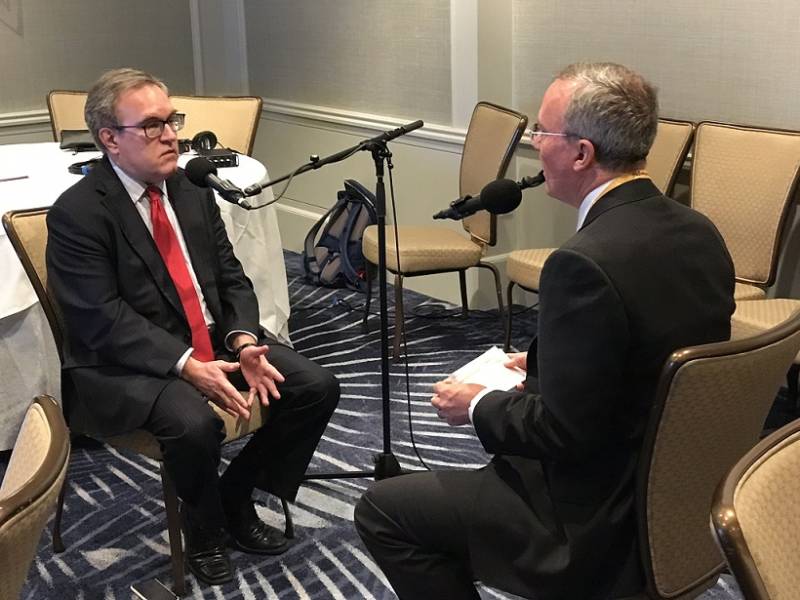
"caption": "EPA Acting Director Andrew Wheeler, Left, interviewed in January by Climate One's Greg Dalton, in San Francisco.",
"description": null,
"title": "Wheeler",
"credit": "Tyler Reed/Climate One",
"status": "inherit",
"isLoading": false,
"fetchFailed": false
}
},
"audioPlayerReducer": {
"postId": "stream_live",
"isPaused": true,
"isPlaying": false,
"pfsActive": false,
"pledgeModalIsOpen": true,
"playerDrawerIsOpen": false,
"liveAudioPlayStartedAt": 0,
"liveAudioPlayContext": ""
},
"authorsReducer": {
"byline_science_1938753": {
"type": "authors",
"id": "byline_science_1938753",
"meta": {
"override": true
},
"slug": "byline_science_1938753",
"name": "Megan Thielking\u003c/br>STAT",
"isLoading": false
},
"byline_science_1938724": {
"type": "authors",
"id": "byline_science_1938724",
"meta": {
"override": true
},
"slug": "byline_science_1938724",
"name": "Kate Sheridan\u003cbr />STAT",
"isLoading": false
},
"byline_science_1938601": {
"type": "authors",
"id": "byline_science_1938601",
"meta": {
"override": true
},
"slug": "byline_science_1938601",
"name": "Merrit Kennedy, NPR",
"isLoading": false
},
"byline_science_1938496": {
"type": "authors",
"id": "byline_science_1938496",
"meta": {
"override": true
},
"slug": "byline_science_1938496",
"name": "Jonathan Lambert\u003c/br>NPR",
"isLoading": false
},
"byline_science_1938485": {
"type": "authors",
"id": "byline_science_1938485",
"meta": {
"override": true
},
"slug": "byline_science_1938485",
"name": "Eilís O'Neill\u003cbr/>NPR",
"isLoading": false
},
"jbrooks": {
"type": "authors",
"id": "80",
"meta": {
"index": "authors_1716337520",
"id": "80",
"found": true
},
"name": "Jon Brooks",
"firstName": "Jon",
"lastName": "Brooks",
"slug": "jbrooks",
"email": "jbrooks@kqed.org",
"display_author_email": true,
"staff_mastheads": [
"science"
],
"title": "Digital Editor",
"bio": "Jon Brooks is a former Digital Editor for KQED Science. He is the former editor of KQED’s daily news blog, News Fix. In 2014, he won a California Journalism Award for his coverage of ride services like Uber and Lyft and the taxi industry. A veteran blogger, he previously worked for Yahoo! in various news writing and editing roles. Jon is also a playwright whose work has been produced in San Francisco, New York, Italy, and around the U.S. He has written about film for his own blog and studied film at Boston University.",
"avatar": "https://secure.gravatar.com/avatar/98887f7ed1c876ed414d4c915e969584?s=600&d=blank&r=g",
"twitter": "jbrooksfoy",
"facebook": null,
"instagram": null,
"linkedin": null,
"sites": [
{
"site": "arts",
"roles": [
"Contributor",
"editor"
]
},
{
"site": "news",
"roles": [
"author"
]
},
{
"site": "futureofyou",
"roles": [
"administrator"
]
},
{
"site": "mindshift",
"roles": [
"editor"
]
},
{
"site": "stateofhealth",
"roles": [
"editor"
]
},
{
"site": "science",
"roles": [
"administrator"
]
},
{
"site": "quest",
"roles": [
"editor"
]
}
],
"headData": {
"title": "Jon Brooks | KQED",
"description": "Digital Editor",
"ogImgSrc": "https://secure.gravatar.com/avatar/98887f7ed1c876ed414d4c915e969584?s=600&d=blank&r=g",
"twImgSrc": "https://secure.gravatar.com/avatar/98887f7ed1c876ed414d4c915e969584?s=600&d=blank&r=g"
},
"isLoading": false,
"link": "/author/jbrooks"
},
"laurensommer": {
"type": "authors",
"id": "239",
"meta": {
"index": "authors_1716337520",
"id": "239",
"found": true
},
"name": "Lauren Sommer",
"firstName": "Lauren",
"lastName": "Sommer",
"slug": "laurensommer",
"email": "lsommer@kqed.org",
"display_author_email": false,
"staff_mastheads": [],
"title": "KQED Contributor",
"bio": "Lauren is a radio reporter formerly covering environment, water, and energy for KQED Science. As part of her day job, she has scaled Sierra Nevada peaks, run from charging elephant seals, and desperately tried to get her sea legs - all in pursuit of good radio. Her work has appeared on Marketplace, Living on Earth, Science Friday and NPR's Morning Edition and All Things Considered. You can find her on Twitter at \u003ca href=\"https://twitter.com/lesommer\">@lesommer\u003c/a>.",
"avatar": "https://secure.gravatar.com/avatar/33aa3772bb86c6ad45b8aca6a238bbdf?s=600&d=blank&r=g",
"twitter": null,
"facebook": null,
"instagram": null,
"linkedin": null,
"sites": [
{
"site": "news",
"roles": [
"author"
]
},
{
"site": "science",
"roles": [
"editor",
"manage_content_types",
"manage_taxonomies"
]
},
{
"site": "quest",
"roles": [
"editor"
]
}
],
"headData": {
"title": "Lauren Sommer | KQED",
"description": "KQED Contributor",
"ogImgSrc": "https://secure.gravatar.com/avatar/33aa3772bb86c6ad45b8aca6a238bbdf?s=600&d=blank&r=g",
"twImgSrc": "https://secure.gravatar.com/avatar/33aa3772bb86c6ad45b8aca6a238bbdf?s=600&d=blank&r=g"
},
"isLoading": false,
"link": "/author/laurensommer"
},
"kqedscience": {
"type": "authors",
"id": "6387",
"meta": {
"index": "authors_1716337520",
"id": "6387",
"found": true
},
"name": "KQED Science",
"firstName": "KQED",
"lastName": "Science",
"slug": "kqedscience",
"email": "kqedscience@gmail.com",
"display_author_email": false,
"staff_mastheads": [],
"title": null,
"bio": "KQED Science brings you award-winning science and environment coverage from the Bay Area and beyond by the flagship Northern California PBS and NPR affiliate.",
"avatar": "https://secure.gravatar.com/avatar/5a295ff49cf82a8c0f30937d3f788b2f?s=600&d=blank&r=g",
"twitter": null,
"facebook": null,
"instagram": null,
"linkedin": null,
"sites": [
{
"site": "science",
"roles": [
"contributor"
]
},
{
"site": "quest",
"roles": [
"editor"
]
},
{
"site": "food",
"roles": [
"contributor"
]
}
],
"headData": {
"title": "KQED Science | KQED",
"description": null,
"ogImgSrc": "https://secure.gravatar.com/avatar/5a295ff49cf82a8c0f30937d3f788b2f?s=600&d=blank&r=g",
"twImgSrc": "https://secure.gravatar.com/avatar/5a295ff49cf82a8c0f30937d3f788b2f?s=600&d=blank&r=g"
},
"isLoading": false,
"link": "/author/kqedscience"
},
"mpeterson": {
"type": "authors",
"id": "11223",
"meta": {
"index": "authors_1716337520",
"id": "11223",
"found": true
},
"name": "Molly Peterson",
"firstName": "Molly",
"lastName": "Peterson",
"slug": "mpeterson",
"email": "mpeterson@kqed.org",
"display_author_email": false,
"staff_mastheads": [],
"title": null,
"bio": "Molly Peterson reports for KQED science and news on climate change, catastrophe and risk. Previously she was environment correspondent at Southern California Public Radio. Her work has also appeared at The New York Times, The Guardian, on NPR, at High Country News, on Code Switch, and other national outlets. She has been honored with awards from Public Radio News Directors Incorporated, Investigative Reporters and Editors, the Society for Professional Journalists, the Los Angeles Press Club, and RTNDA Edward R. Murrow awards, among others.",
"avatar": "https://secure.gravatar.com/avatar/7908e2807131f776cc8165c649530b05?s=600&d=blank&r=g",
"twitter": "Mollydacious",
"facebook": null,
"instagram": "https://www.instagram.com/radiomolly/",
"linkedin": null,
"sites": [
{
"site": "news",
"roles": [
"subscriber"
]
},
{
"site": "futureofyou",
"roles": [
"editor"
]
},
{
"site": "science",
"roles": [
"editor"
]
}
],
"headData": {
"title": "Molly Peterson | KQED",
"description": null,
"ogImgSrc": "https://secure.gravatar.com/avatar/7908e2807131f776cc8165c649530b05?s=600&d=blank&r=g",
"twImgSrc": "https://secure.gravatar.com/avatar/7908e2807131f776cc8165c649530b05?s=600&d=blank&r=g"
},
"isLoading": false,
"link": "/author/mpeterson"
},
"parcuni": {
"type": "authors",
"id": "11368",
"meta": {
"index": "authors_1716337520",
"id": "11368",
"found": true
},
"name": "Peter Arcuni",
"firstName": "Peter",
"lastName": "Arcuni",
"slug": "parcuni",
"email": "parcuni@KQED.org",
"display_author_email": false,
"staff_mastheads": [
"science"
],
"title": "Reporter",
"bio": "Peter reports radio and online stories for \u003cem>KQED Science\u003c/em>. His work has also appeared on the \u003cem>The California Report\u003c/em> morning show and \u003cem>KQED News\u003c/em>. His production credits include \u003cem>The California Report, The California Report Magazine\u003c/em> and KQED's local news podcast \u003cem>The Bay\u003c/em>. Other credits include NPR's \u003cem>All Things Considered\u003c/em>, WNYC's \u003cem>Science Friday\u003c/em>, WBUR's \u003cem>Here & Now\u003c/em>, WIRED and SFGate. Peter graduated from Brown University and earned a master's degree in journalism from Stanford. He's covered everything from homelessness to wildfires, health, the environment, arts and Thanksgiving in San Quentin prison. In other lives, he played rock n roll music and studied neuroscience. You can email him at: parcuni@kqed.org",
"avatar": "https://secure.gravatar.com/avatar/d5032f6f27199d478af34ad2e1d98732?s=600&d=blank&r=g",
"twitter": "peterarcuni",
"facebook": null,
"instagram": null,
"linkedin": null,
"sites": [
{
"site": "news",
"roles": [
"editor"
]
},
{
"site": "science",
"roles": [
"editor"
]
}
],
"headData": {
"title": "Peter Arcuni | KQED",
"description": "Reporter",
"ogImgSrc": "https://secure.gravatar.com/avatar/d5032f6f27199d478af34ad2e1d98732?s=600&d=blank&r=g",
"twImgSrc": "https://secure.gravatar.com/avatar/d5032f6f27199d478af34ad2e1d98732?s=600&d=blank&r=g"
},
"isLoading": false,
"link": "/author/parcuni"
},
"hhagemann": {
"type": "authors",
"id": "11578",
"meta": {
"index": "authors_1716337520",
"id": "11578",
"found": true
},
"name": "Hannah Hagemann",
"firstName": "Hannah",
"lastName": "Hagemann",
"slug": "hhagemann",
"email": "hhagemann@KQED.org",
"display_author_email": false,
"staff_mastheads": [],
"title": "KQED Contributor",
"bio": null,
"avatar": "https://secure.gravatar.com/avatar/c3af389deff545c719141a87524965d8?s=600&d=blank&r=g",
"twitter": null,
"facebook": null,
"instagram": null,
"linkedin": null,
"sites": [
{
"site": "news",
"roles": [
"author"
]
},
{
"site": "science",
"roles": [
"editor"
]
}
],
"headData": {
"title": "Hannah Hagemann | KQED",
"description": "KQED Contributor",
"ogImgSrc": "https://secure.gravatar.com/avatar/c3af389deff545c719141a87524965d8?s=600&d=blank&r=g",
"twImgSrc": "https://secure.gravatar.com/avatar/c3af389deff545c719141a87524965d8?s=600&d=blank&r=g"
},
"isLoading": false,
"link": "/author/hhagemann"
}
},
"pagesReducer": {
"science_category_news": {
"type": "terms",
"id": "science_40",
"meta": {
"index": "terms_1716263798",
"site": "science",
"id": "40",
"score": 10.814219
},
"featImg": null,
"name": "News",
"description": null,
"taxonomy": "category",
"headData": {
"twImgId": null,
"twTitle": null,
"ogTitle": null,
"ogImgId": null,
"twDescription": null,
"description": null,
"title": "News Archives | KQED Science",
"ogDescription": null
},
"ttid": 42,
"slug": "news",
"isLoading": false,
"title": "News",
"pageMeta": {
"site": "science",
"WpPageTemplate": "page-topic-editorial",
"currentPage": 144
},
"blocks": [
{
"blockName": "kqed/post-list",
"attrs": {
"layout": "cardArticle2",
"query": "posts/science?category=news",
"seeMore": false,
"paginated": true,
"page": 144
}
},
{
"blockName": "kqed/ad"
}
]
}
},
"pfsSessionReducer": {},
"postsReducer": {
"stream_live": {
"type": "live",
"id": "stream_live",
"audioUrl": "https://streams.kqed.org/kqedradio",
"title": "Live Stream",
"excerpt": "Live Stream information currently unavailable.",
"link": "/radio",
"featImg": "",
"label": {
"name": "KQED Live",
"link": "/"
}
},
"stream_kqedNewscast": {
"type": "posts",
"id": "stream_kqedNewscast",
"audioUrl": "https://www.kqed.org/.stream/anon/radio/RDnews/newscast.mp3?_=1",
"title": "KQED Newscast",
"featImg": "",
"label": {
"name": "88.5 FM",
"link": "/"
}
},
"science_1938750": {
"type": "posts",
"id": "science_1938750",
"meta": {
"index": "posts_1716263798",
"site": "science",
"id": "1938750",
"score": null,
"sort": [
1551945705000
]
},
"guestAuthors": [],
"slug": "trump-pressure-on-california-water-plan-excludes-public-rushes-science-emails-show",
"title": "Trump's California Water Order Rushes Science and Cuts Out Public, Emails Show",
"publishDate": 1551945705,
"format": "image",
"headTitle": "Trump’s California Water Order Rushes Science and Cuts Out Public, Emails Show | KQED",
"labelTerm": {},
"content": "\u003cp>The Trump Administration has ordered federal biologists to speed up critical decisions about whether to send more water from Northern California to farmers in the Central Valley, a move that critics say threatens the integrity of the science and cuts the public out of the process.\u003c/p>\n\u003cp>The decisions will control irrigation for millions of acres of farmland in the country’s biggest agricultural economy, drinking water for two-thirds of Californians from Silicon Valley to San Diego, and the fate of endangered salmon and other fish.\u003c/p>\n\u003cp>Federal biologists will set these rules after completing an intricate scientific analysis, and they are the final word on how much and when water can be pumped out of the Sacramento-San Joaquin River Delta.\u003c/p>\n\u003caside class=\"pullquote alignright\">‘I think this is a proposal for extinction.’\u003cbr>\n\u003ccite>Doug Obegi, Natural Resources Defense Council\u003c/cite>\u003c/aside>\n\u003cp>An investigation by KQED found that the analysis will be done under unprecedented time pressure, with less transparency, less outside scientific scrutiny, and without, say federal scientists, the resources to do it properly.\u003c/p>\n\u003cp>“It’s a very aggressive schedule,” said a former federal biologist familiar with the matter who did not want to be identified. “And I think it runs the risk of forcing them to make dangerous shortcuts in the scientific analysis that the decisions demand.”\u003c/p>\n\u003cp>[ad fullwidth]\u003c/p>\n\u003cp>According to internal emails obtained under the Freedom of Information Act, federal scientists raised two major concerns: that their agency lacks the staff to undertake the analysis and that the Trump Administration is skewing the rules to boost the water supply for Central Valley farms.\u003c/p>\n\u003cp>Some see the fingerprints of acting interior secretary David Bernhardt, who once helped lead the charge to increase pumping and weaken environmental standards in the Delta. He was then a lawyer for the Fresno-based Westlands Water District, the largest agricultural water agency in the country.\u003c/p>\n\u003cp>Bernhardt is already under scrutiny after a \u003ca href=\"https://www.nytimes.com/2019/02/12/climate/david-bernhardt-endangered-species.html\" target=\"_blank\" rel=\"noopener\">recent New York Times story\u003c/a> reported that, shortly after joining the Interior Department in 2017, he directly advocated on Westlands’ behalf to get more water for farmers at the expense of endangered fish, even though federal rules precluded him from lobbying.\u003c/p>\n\u003cp>Last week, the Campaign Legal Center, a non-profit ethics organization in Washington, D.C., \u003ca href=\"https://campaignlegal.org/sites/default/files/2019-02/2-28-19%20Bernhardt%20CLC%20Complaint%20FINAL.pdf\" target=\"_blank\" rel=\"noopener\">filed a complaint\u003c/a> demanding that the Interior Department’s inspector general open an investigation into whether Bernhardt is using his public office to benefit his former client.\u003c/p>\n\u003cp>Bernhardt now oversees two of the three agencies under orders from the White House to expedite the new rules shaping California’s water future: the U.S. Fish and Wildlife Service and the U.S. Bureau of Reclamation.\u003c/p>\n\u003cp>At stake is the future of fish teetering on the edge of existence, a salmon fishing industry in crisis, and the ample supply of water flowing through millions of California faucets and fields.\u003c/p>\n\u003cp>\u003cstrong>Trump’s Campaign Promise\u003c/strong>\u003c/p>\n\u003cp>Just five years ago, Bernhardt stood before a panel of judges on the Ninth Circuit U.S. Court of Appeals. He was there arguing on behalf of Westlands Water District, and its 600,000 acres of farmland, that federal environmental rules protecting salmon should be thrown out.\u003c/p>\n\u003cp>Now, as head of the agency that controls decisions affecting his former client, Bernhardt is leading the charge to replace those rules.\u003c/p>\n\u003cp>Agricultural water districts have long disdained the current rules (called “biological opinions” and written in \u003ca href=\"https://www.fws.gov/sfbaydelta/cvp-swp/index.htm\" target=\"_blank\" rel=\"noopener\">2008\u003c/a> and \u003ca href=\"https://www.westcoast.fisheries.noaa.gov/central_valley/water_operations/ocap.html\" target=\"_blank\" rel=\"noopener\">2009\u003c/a>). The rules require state and federal pumps in the Delta to slow down when endangered salmon, smelt and other fish are nearby, in order to protect them. That diminishes the water supply for farmers, leaving them scrambling to fill the gap. When people shout “fish vs. farms,” that’s usually what they’re talking about.\u003c/p>\n\u003cp>During President Trump’s 2016 campaign, he promised Central Valley farmers he would send them more water. As a step toward keeping that promise, Trump signed an \u003ca href=\"https://www.whitehouse.gov/presidential-actions/presidential-memorandum-promoting-reliable-supply-delivery-water-west/\" target=\"_blank\" rel=\"noopener\">October 2018 memo\u003c/a> ordering the rapid scientific review.\u003c/p>\n\u003cfigure id=\"attachment_1938792\" class=\"wp-caption aligncenter\" style=\"max-width: 800px\">\u003cimg loading=\"lazy\" decoding=\"async\" class=\"size-medium wp-image-1938792\" src=\"https://ww2.kqed.org/science/wp-content/uploads/sites/35/2020/03/PJH_Intertie-076-web2-800x450.jpg\" alt=\"\" width=\"800\" height=\"450\" srcset=\"https://cdn.kqed.org/wp-content/uploads/sites/35/2020/03/PJH_Intertie-076-web2-800x450.jpg 800w, https://cdn.kqed.org/wp-content/uploads/sites/35/2020/03/PJH_Intertie-076-web2-160x90.jpg 160w, https://cdn.kqed.org/wp-content/uploads/sites/35/2020/03/PJH_Intertie-076-web2-768x432.jpg 768w, https://cdn.kqed.org/wp-content/uploads/sites/35/2020/03/PJH_Intertie-076-web2-1020x574.jpg 1020w, https://cdn.kqed.org/wp-content/uploads/sites/35/2020/03/PJH_Intertie-076-web2-1200x675.jpg 1200w, https://cdn.kqed.org/wp-content/uploads/sites/35/2020/03/PJH_Intertie-076-web2.jpg 1920w\" sizes=\"(max-width: 800px) 100vw, 800px\">\u003cfigcaption class=\"wp-caption-text\">Water from the Delta reaches millions of Californians and millions of acres of farmland. \u003ccite>(Paul Hames / California Department of Water Resources)\u003c/cite>\u003c/figcaption>\u003c/figure>\n\u003cp>“That’s definitely on our mind,” says Erin Curtis, spokeswoman for the U.S. Bureau of Reclamation. “The president has outlined in his memo that we need to take a new look at how we’re operating these projects in a way that we can maximize water deliveries.”\u003c/p>\n\u003cp>As a first step, the Bureau, which operates dams and water pumps, released an \u003ca href=\"https://www.usbr.gov/newsroom/newsrelease/detail.cfm?RecordID=64503\" target=\"_blank\" rel=\"noopener\">871-page proposal\u003c/a> in early February for how it would like the rules to operate.\u003c/p>\n\u003cp>The plan, called a “biological assessment,” would provide billions of gallons more water for agricultural and urban water districts, an increase of 10 to 15 percent depending on the year. That would leave less in the Delta for endangered fish.\u003c/p>\n\u003cp>Environmental groups are alarmed at the proposal.\u003c/p>\n\u003cp>“I think this is a proposal for extinction,” says Doug Obegi, an attorney at the Natural Resources Defense Council in San Francisco. “What we decide to do in the Delta really will determine if we drive our native species extinct and threaten thousands of fishing jobs.”\u003c/p>\n\u003cp>\u003cstrong>Not Enough Staff To Do the Job\u003c/strong>\u003c/p>\n\u003cp>According to federal law, two federal wildlife agencies, the National Oceanic and Atmospheric Administration and the U.S. Fish and Wildlife Service, must now review the Bureau of Reclamation’s plan.\u003c/p>\n\u003cp>If it doesn’t do enough to protect threatened fish, the agencies have the obligation and legal authority to write rules that do. These biological opinions will replace the current ones, although they could be challenged in court.\u003c/p>\n\u003cp>Under President Trump’s decree, federal biologists must write those opinions in 135 days, the minimal amount of time guaranteed under the Endangered Species Act.\u003c/p>\n\u003cp>Given the complexity of the issues, the agencies have previously needed more time than that to complete their analysis, from 60 to 80 percent more time.\u003c/p>\n\u003cp>They must look at how water flows across hundreds of miles through different rivers, dams and levees, and then forecast how it would affect the life cycle of half a dozen threatened species. These include endangered Chinook salmon and threatened steelhead and green sturgeon, as well as endangered killer whales in the Pacific Ocean, which depend on salmon for food.\u003c/p>\n\u003cp>“How often does the interior secretary write a memo forcing that an opinion happens in 135 days?” says Cay Goude, former assistant field supervisor for the U.S. Fish and Wildlife Service office in Sacramento. “It’s never happened to my knowledge.”\u003c/p>\n\u003cp>Goude worked on a previous biological opinion for the agency, on the Delta smelt, before retiring. “You don’t want to rush anything and do a poor job,” she said, “because it’s very important to have the scientific facts accurate and appropriate.”\u003c/p>\n\u003cp>Even before Trump tightened the timeline, one of the agencies, NOAA Fisheries, warned that it did not have the resources to do the analysis.\u003c/p>\n\u003cfigure id=\"attachment_1938778\" class=\"wp-caption aligncenter\" style=\"max-width: 800px\">\u003cimg loading=\"lazy\" decoding=\"async\" class=\"size-medium wp-image-1938778\" src=\"https://ww2.kqed.org/science/wp-content/uploads/sites/35/2020/03/email-3-800x314.jpg\" alt=\"\" width=\"800\" height=\"314\" srcset=\"https://cdn.kqed.org/wp-content/uploads/sites/35/2020/03/email-3-800x314.jpg 800w, https://cdn.kqed.org/wp-content/uploads/sites/35/2020/03/email-3-160x63.jpg 160w, https://cdn.kqed.org/wp-content/uploads/sites/35/2020/03/email-3-768x302.jpg 768w, https://cdn.kqed.org/wp-content/uploads/sites/35/2020/03/email-3-1020x401.jpg 1020w, https://cdn.kqed.org/wp-content/uploads/sites/35/2020/03/email-3-1200x471.jpg 1200w, https://cdn.kqed.org/wp-content/uploads/sites/35/2020/03/email-3.jpg 1576w\" sizes=\"(max-width: 800px) 100vw, 800px\">\u003cfigcaption class=\"wp-caption-text\">Excerpt from an internal NOAA email.\u003c/figcaption>\u003c/figure>\n\u003cp>In July 2018, Maria Rea, the assistant regional administrator in the California Central Valley Office of NOAA, described the agency’s dilemma in an email to her internal staff. She said it took 30 part-time staff and 10 full-time staff to complete the previous biological opinion in 2009, which took 246 days.\u003c/p>\n\u003cp>“We do not have resources to undertake this consultation,” Rea wrote.\u003c/p>\n\u003cp>NOAA is working to reassign staff, currently on other projects, to at least achieve similar staffing levels, according to agency staff who spoke on the condition they not be identified. The federal government shutdown in January slowed that process.\u003c/p>\n\u003cp>\u003cstrong>Eliminating Protections for Fish\u003c/strong>\u003c/p>\n\u003cp>According to the emails obtained by KQED, federal wildlife scientists also are concerned that the Bureau of Reclamation is pushing to give more water to agriculture at the expense of threatened species.\u003c/p>\n\u003cp>In an email to fellow NOAA Fisheries staff last summer, Water Operations and Delta Consultations Branch Chief Garwin Yip outlined his misgivings about cases where there is scientific debate about what the fish need.\u003c/p>\n\u003cp>“Absence of definitive science should not be the reason to propose actions more aggressive towards water supply,” Yip wrote.\u003c/p>\n\u003cp>Both Yip and Rea declined to comment about their emails.\u003c/p>\n\u003cp>While the Bureau of Reclamation has updated its proposal since then, it’s unclear whether those concerns have been addressed. Some say the agency has cherry-picked the science in favor of boosting water for farmers.\u003c/p>\n\u003cp>“It’s not science, basically,” says Jon Rosenfield, senior scientist with San Francisco Baykeeper, an environmental group in San Francisco. “It’s an extraordinarily selective read and deliberate misinterpretation of the information that we have.”\u003c/p>\n\u003cp>Rosenfield points to several of the protections the Bureau of Reclamation is proposing to eliminate, such as rules that guarantee water flows through crucial parts of the estuary when fish are most at risk because they are closer to the pumps.\u003c/p>\n\u003cfigure id=\"attachment_1938783\" class=\"wp-caption aligncenter\" style=\"max-width: 800px\">\u003cimg loading=\"lazy\" decoding=\"async\" class=\"size-medium wp-image-1938783\" src=\"https://ww2.kqed.org/science/wp-content/uploads/sites/35/2020/03/pumpingplant-800x458.jpg\" alt=\"\" width=\"800\" height=\"458\" srcset=\"https://cdn.kqed.org/wp-content/uploads/sites/35/2020/03/pumpingplant-800x458.jpg 800w, https://cdn.kqed.org/wp-content/uploads/sites/35/2020/03/pumpingplant-160x92.jpg 160w, https://cdn.kqed.org/wp-content/uploads/sites/35/2020/03/pumpingplant-768x440.jpg 768w, https://cdn.kqed.org/wp-content/uploads/sites/35/2020/03/pumpingplant-1020x584.jpg 1020w, https://cdn.kqed.org/wp-content/uploads/sites/35/2020/03/pumpingplant-1200x688.jpg 1200w, https://cdn.kqed.org/wp-content/uploads/sites/35/2020/03/pumpingplant.jpg 1920w\" sizes=\"(max-width: 800px) 100vw, 800px\">\u003cfigcaption class=\"wp-caption-text\">The Trump Administration is rewriting rules governing how water flows through massive pumping plants in the Delta. \u003ccite>(Lauren Sommer/KQED)\u003c/cite>\u003c/figcaption>\u003c/figure>\n\u003cp>The agency says “dynamic rules,” which rely on new technology that monitors where the fish are in the Delta, can do a better job than fixed rules.\u003c/p>\n\u003cp>“We feel that what we’ve proposed both helps protect listed species as well as provides more water supply flexibility,” says Russ Callejo, assistant regional director for the Mid-Pacific Region of the Bureau of Reclamation in Sacramento. “We think it does both.”\u003c/p>\n\u003cp>Environmental groups are skeptical of that claim, saying the Bureau is proposing to dial back water pumping only after the fish are significantly harmed. The wildlife agencies will have to evaluate that during their biological reviews.\u003c/p>\n\u003cp>This is where some see the influence of Bernhardt, \u003ca href=\"https://www.nytimes.com/2019/02/12/climate/david-bernhardt-endangered-species.html\" target=\"_blank\" rel=\"noopener\">who told\u003c/a> The New York Times that he directed a senior official to weaken protections for fish and divert water to farms as part of a broader administration policy to help rural America.\u003c/p>\n\u003cp>\u003cstrong>No Public Review\u003c/strong>\u003c/p>\n\u003cp>The internal emails also show the new environmental rules will receive less outside scientific review than ever before, which eliminates public involvement.\u003c/p>\n\u003cp>Peer review, in which independent scientists assess other researchers’ work, is a core practice of science, and previous biological opinions have received that scrutiny.\u003c/p>\n\u003cp>When the current rules were written in 2008, the draft biological opinion from NOAA Fisheries \u003ca href=\"http://www.science.calwater.ca.gov/events/reviews/review_ocap.html\" target=\"_blank\" rel=\"noopener\">underwent an independent review by a panel of scientists\u003c/a>. The review included a meeting where the public could attend and comment.\u003c/p>\n\u003cp>This time, wildlife agencies say the Trump Administration’s deadline won’t allow for that.\u003c/p>\n\u003cp>NOAA Fisheries, which is writing the environmental rules for salmon and other fish, plans to have some independent scientific review, according to agency staff. The draft biological opinion will be sent out to individual scientists, but without public involvement or comment.\u003c/p>\n\u003cp>The U.S. Fish and Wildlife Service, which is writing the environmental rules for delta smelt, says the agency is planning some form of peer review as well.\u003c/p>\n\u003cp>“We intend to incorporate peer review into the development of our biological opinion,” said Shane Hunt, spokesman for the federal agency’s Bay-Delta Fish & Wildlife Office. “We are still ironing out the details.”\u003c/p>\n\u003cp>\u003cstrong>Water Districts Gain Access\u003c/strong>\u003c/p>\n\u003cp>Meanwhile, as the public is frozen out, water districts will be given unprecedented access.\u003c/p>\n\u003cp>For the first time, public water agencies, keen to boost their supply, are invited to be heavily involved in the development of the environmental rules in the biological opinions, which are legally mandated to protect fish.\u003c/p>\n\u003cp>In 2016, Congress passed, and President Obama signed, the \u003ca href=\"https://www.congress.gov/bill/114th-congress/senate-bill/612/text\" target=\"_blank\" rel=\"noopener\">WIIN Act\u003c/a>, giving water contractors the power to “have routine and continuing opportunities to discuss and submit information” to federal agencies developing the biological opinions. The act, pushed by Senator Dianne Feinstein and Central Valley Republicans, was an effort at compromise after years of water battles in California.\u003c/p>\n\u003cp>Before the Bureau of Reclamation even finished its proposed plan, water agencies had the chance to submit their take on endangered species protections.\u003c/p>\n\u003cp>“We have adhered to the WIIN Act,” says the Bureau’s Callejo. “We have involved the public water agencies.”\u003c/p>\n\u003cp>Westlands Water District did not respond to questions about its involvement.\u003c/p>\n\u003cp>Water agencies will also receive drafts of the biological opinions from wildlife agencies. Under the law, their comments must be “afforded due consideration” by wildlife biologists. If the comments aren’t adopted, those biologists must explain why.\u003c/p>\n\u003cp>There are no plans to release the drafts to the public.\u003c/p>\n\u003cp>[ad floatright]\u003c/p>\n\u003cp>“It’s always a red flag when you have the regulated entity, the entity that stands to lose something, having control over the regulation process,” says Rosenfield. “We don’t let the tobacco companies determine what level of smoking is safe.”\u003c/p>\n\n",
"blocks": [],
"excerpt": "KQED investigation finds federal biologists concerned that shortened deadline from president cuts time needed to protect fish on brink of extinction. ",
"status": "publish",
"parent": 0,
"modified": 1727135594,
"stats": {
"hasAudio": false,
"hasVideo": false,
"hasChartOrMap": false,
"iframeSrcs": [],
"hasGoogleForm": false,
"hasGallery": false,
"hasHearkenModule": false,
"hasPolis": false,
"paragraphCount": 65,
"wordCount": 2171
},
"headData": {
"title": "Trump's California Water Order Rushes Science and Cuts Out Public, Emails Show | KQED",
"description": "KQED investigation finds federal biologists concerned that shortened deadline from president cuts time needed to protect fish on brink of extinction. ",
"ogTitle": "",
"ogDescription": "",
"ogImgId": "",
"twTitle": "",
"twDescription": "",
"twImgId": "",
"schema": {
"@context": "https://schema.org",
"@type": "Article",
"headline": "Trump's California Water Order Rushes Science and Cuts Out Public, Emails Show",
"datePublished": "2019-03-07T00:01:45-08:00",
"dateModified": "2024-09-23T16:53:14-07:00",
"image": "https://cdn.kqed.org/wp-content/uploads/2020/02/KQED-OG-Image@1x.png"
}
},
"source": "Water",
"audioUrl": "https://www.kqed.org/.stream/anon/radio/RDnews/2019/03/SomnerWaterInvestigation.mp3",
"sticky": false,
"audioTrackLength": 231,
"path": "/science/1938750/trump-pressure-on-california-water-plan-excludes-public-rushes-science-emails-show",
"parsedContent": [
{
"type": "contentString",
"content": "\u003cdiv class=\"post-body\">\u003cp>\u003cp>The Trump Administration has ordered federal biologists to speed up critical decisions about whether to send more water from Northern California to farmers in the Central Valley, a move that critics say threatens the integrity of the science and cuts the public out of the process.\u003c/p>\n\u003cp>The decisions will control irrigation for millions of acres of farmland in the country’s biggest agricultural economy, drinking water for two-thirds of Californians from Silicon Valley to San Diego, and the fate of endangered salmon and other fish.\u003c/p>\n\u003cp>Federal biologists will set these rules after completing an intricate scientific analysis, and they are the final word on how much and when water can be pumped out of the Sacramento-San Joaquin River Delta.\u003c/p>\n\u003caside class=\"pullquote alignright\">‘I think this is a proposal for extinction.’\u003cbr>\n\u003ccite>Doug Obegi, Natural Resources Defense Council\u003c/cite>\u003c/aside>\n\u003cp>An investigation by KQED found that the analysis will be done under unprecedented time pressure, with less transparency, less outside scientific scrutiny, and without, say federal scientists, the resources to do it properly.\u003c/p>\n\u003cp>“It’s a very aggressive schedule,” said a former federal biologist familiar with the matter who did not want to be identified. “And I think it runs the risk of forcing them to make dangerous shortcuts in the scientific analysis that the decisions demand.”\u003c/p>\n\u003cp>\u003c/p>\u003c/div>",
"attributes": {
"named": {},
"numeric": []
}
},
{
"type": "component",
"content": "",
"name": "ad",
"attributes": {
"named": {
"label": "fullwidth"
},
"numeric": [
"fullwidth"
]
}
},
{
"type": "contentString",
"content": "\u003cdiv class=\"post-body\">\u003cp>\u003c/p>\n\u003cp>According to internal emails obtained under the Freedom of Information Act, federal scientists raised two major concerns: that their agency lacks the staff to undertake the analysis and that the Trump Administration is skewing the rules to boost the water supply for Central Valley farms.\u003c/p>\n\u003cp>Some see the fingerprints of acting interior secretary David Bernhardt, who once helped lead the charge to increase pumping and weaken environmental standards in the Delta. He was then a lawyer for the Fresno-based Westlands Water District, the largest agricultural water agency in the country.\u003c/p>\n\u003cp>Bernhardt is already under scrutiny after a \u003ca href=\"https://www.nytimes.com/2019/02/12/climate/david-bernhardt-endangered-species.html\" target=\"_blank\" rel=\"noopener\">recent New York Times story\u003c/a> reported that, shortly after joining the Interior Department in 2017, he directly advocated on Westlands’ behalf to get more water for farmers at the expense of endangered fish, even though federal rules precluded him from lobbying.\u003c/p>\n\u003cp>Last week, the Campaign Legal Center, a non-profit ethics organization in Washington, D.C., \u003ca href=\"https://campaignlegal.org/sites/default/files/2019-02/2-28-19%20Bernhardt%20CLC%20Complaint%20FINAL.pdf\" target=\"_blank\" rel=\"noopener\">filed a complaint\u003c/a> demanding that the Interior Department’s inspector general open an investigation into whether Bernhardt is using his public office to benefit his former client.\u003c/p>\n\u003cp>Bernhardt now oversees two of the three agencies under orders from the White House to expedite the new rules shaping California’s water future: the U.S. Fish and Wildlife Service and the U.S. Bureau of Reclamation.\u003c/p>\n\u003cp>At stake is the future of fish teetering on the edge of existence, a salmon fishing industry in crisis, and the ample supply of water flowing through millions of California faucets and fields.\u003c/p>\n\u003cp>\u003cstrong>Trump’s Campaign Promise\u003c/strong>\u003c/p>\n\u003cp>Just five years ago, Bernhardt stood before a panel of judges on the Ninth Circuit U.S. Court of Appeals. He was there arguing on behalf of Westlands Water District, and its 600,000 acres of farmland, that federal environmental rules protecting salmon should be thrown out.\u003c/p>\n\u003cp>Now, as head of the agency that controls decisions affecting his former client, Bernhardt is leading the charge to replace those rules.\u003c/p>\n\u003cp>Agricultural water districts have long disdained the current rules (called “biological opinions” and written in \u003ca href=\"https://www.fws.gov/sfbaydelta/cvp-swp/index.htm\" target=\"_blank\" rel=\"noopener\">2008\u003c/a> and \u003ca href=\"https://www.westcoast.fisheries.noaa.gov/central_valley/water_operations/ocap.html\" target=\"_blank\" rel=\"noopener\">2009\u003c/a>). The rules require state and federal pumps in the Delta to slow down when endangered salmon, smelt and other fish are nearby, in order to protect them. That diminishes the water supply for farmers, leaving them scrambling to fill the gap. When people shout “fish vs. farms,” that’s usually what they’re talking about.\u003c/p>\n\u003cp>During President Trump’s 2016 campaign, he promised Central Valley farmers he would send them more water. As a step toward keeping that promise, Trump signed an \u003ca href=\"https://www.whitehouse.gov/presidential-actions/presidential-memorandum-promoting-reliable-supply-delivery-water-west/\" target=\"_blank\" rel=\"noopener\">October 2018 memo\u003c/a> ordering the rapid scientific review.\u003c/p>\n\u003cfigure id=\"attachment_1938792\" class=\"wp-caption aligncenter\" style=\"max-width: 800px\">\u003cimg loading=\"lazy\" decoding=\"async\" class=\"size-medium wp-image-1938792\" src=\"https://ww2.kqed.org/science/wp-content/uploads/sites/35/2020/03/PJH_Intertie-076-web2-800x450.jpg\" alt=\"\" width=\"800\" height=\"450\" srcset=\"https://cdn.kqed.org/wp-content/uploads/sites/35/2020/03/PJH_Intertie-076-web2-800x450.jpg 800w, https://cdn.kqed.org/wp-content/uploads/sites/35/2020/03/PJH_Intertie-076-web2-160x90.jpg 160w, https://cdn.kqed.org/wp-content/uploads/sites/35/2020/03/PJH_Intertie-076-web2-768x432.jpg 768w, https://cdn.kqed.org/wp-content/uploads/sites/35/2020/03/PJH_Intertie-076-web2-1020x574.jpg 1020w, https://cdn.kqed.org/wp-content/uploads/sites/35/2020/03/PJH_Intertie-076-web2-1200x675.jpg 1200w, https://cdn.kqed.org/wp-content/uploads/sites/35/2020/03/PJH_Intertie-076-web2.jpg 1920w\" sizes=\"(max-width: 800px) 100vw, 800px\">\u003cfigcaption class=\"wp-caption-text\">Water from the Delta reaches millions of Californians and millions of acres of farmland. \u003ccite>(Paul Hames / California Department of Water Resources)\u003c/cite>\u003c/figcaption>\u003c/figure>\n\u003cp>“That’s definitely on our mind,” says Erin Curtis, spokeswoman for the U.S. Bureau of Reclamation. “The president has outlined in his memo that we need to take a new look at how we’re operating these projects in a way that we can maximize water deliveries.”\u003c/p>\n\u003cp>As a first step, the Bureau, which operates dams and water pumps, released an \u003ca href=\"https://www.usbr.gov/newsroom/newsrelease/detail.cfm?RecordID=64503\" target=\"_blank\" rel=\"noopener\">871-page proposal\u003c/a> in early February for how it would like the rules to operate.\u003c/p>\n\u003cp>The plan, called a “biological assessment,” would provide billions of gallons more water for agricultural and urban water districts, an increase of 10 to 15 percent depending on the year. That would leave less in the Delta for endangered fish.\u003c/p>\n\u003cp>Environmental groups are alarmed at the proposal.\u003c/p>\n\u003cp>“I think this is a proposal for extinction,” says Doug Obegi, an attorney at the Natural Resources Defense Council in San Francisco. “What we decide to do in the Delta really will determine if we drive our native species extinct and threaten thousands of fishing jobs.”\u003c/p>\n\u003cp>\u003cstrong>Not Enough Staff To Do the Job\u003c/strong>\u003c/p>\n\u003cp>According to federal law, two federal wildlife agencies, the National Oceanic and Atmospheric Administration and the U.S. Fish and Wildlife Service, must now review the Bureau of Reclamation’s plan.\u003c/p>\n\u003cp>If it doesn’t do enough to protect threatened fish, the agencies have the obligation and legal authority to write rules that do. These biological opinions will replace the current ones, although they could be challenged in court.\u003c/p>\n\u003cp>Under President Trump’s decree, federal biologists must write those opinions in 135 days, the minimal amount of time guaranteed under the Endangered Species Act.\u003c/p>\n\u003cp>Given the complexity of the issues, the agencies have previously needed more time than that to complete their analysis, from 60 to 80 percent more time.\u003c/p>\n\u003cp>They must look at how water flows across hundreds of miles through different rivers, dams and levees, and then forecast how it would affect the life cycle of half a dozen threatened species. These include endangered Chinook salmon and threatened steelhead and green sturgeon, as well as endangered killer whales in the Pacific Ocean, which depend on salmon for food.\u003c/p>\n\u003cp>“How often does the interior secretary write a memo forcing that an opinion happens in 135 days?” says Cay Goude, former assistant field supervisor for the U.S. Fish and Wildlife Service office in Sacramento. “It’s never happened to my knowledge.”\u003c/p>\n\u003cp>Goude worked on a previous biological opinion for the agency, on the Delta smelt, before retiring. “You don’t want to rush anything and do a poor job,” she said, “because it’s very important to have the scientific facts accurate and appropriate.”\u003c/p>\n\u003cp>Even before Trump tightened the timeline, one of the agencies, NOAA Fisheries, warned that it did not have the resources to do the analysis.\u003c/p>\n\u003cfigure id=\"attachment_1938778\" class=\"wp-caption aligncenter\" style=\"max-width: 800px\">\u003cimg loading=\"lazy\" decoding=\"async\" class=\"size-medium wp-image-1938778\" src=\"https://ww2.kqed.org/science/wp-content/uploads/sites/35/2020/03/email-3-800x314.jpg\" alt=\"\" width=\"800\" height=\"314\" srcset=\"https://cdn.kqed.org/wp-content/uploads/sites/35/2020/03/email-3-800x314.jpg 800w, https://cdn.kqed.org/wp-content/uploads/sites/35/2020/03/email-3-160x63.jpg 160w, https://cdn.kqed.org/wp-content/uploads/sites/35/2020/03/email-3-768x302.jpg 768w, https://cdn.kqed.org/wp-content/uploads/sites/35/2020/03/email-3-1020x401.jpg 1020w, https://cdn.kqed.org/wp-content/uploads/sites/35/2020/03/email-3-1200x471.jpg 1200w, https://cdn.kqed.org/wp-content/uploads/sites/35/2020/03/email-3.jpg 1576w\" sizes=\"(max-width: 800px) 100vw, 800px\">\u003cfigcaption class=\"wp-caption-text\">Excerpt from an internal NOAA email.\u003c/figcaption>\u003c/figure>\n\u003cp>In July 2018, Maria Rea, the assistant regional administrator in the California Central Valley Office of NOAA, described the agency’s dilemma in an email to her internal staff. She said it took 30 part-time staff and 10 full-time staff to complete the previous biological opinion in 2009, which took 246 days.\u003c/p>\n\u003cp>“We do not have resources to undertake this consultation,” Rea wrote.\u003c/p>\n\u003cp>NOAA is working to reassign staff, currently on other projects, to at least achieve similar staffing levels, according to agency staff who spoke on the condition they not be identified. The federal government shutdown in January slowed that process.\u003c/p>\n\u003cp>\u003cstrong>Eliminating Protections for Fish\u003c/strong>\u003c/p>\n\u003cp>According to the emails obtained by KQED, federal wildlife scientists also are concerned that the Bureau of Reclamation is pushing to give more water to agriculture at the expense of threatened species.\u003c/p>\n\u003cp>In an email to fellow NOAA Fisheries staff last summer, Water Operations and Delta Consultations Branch Chief Garwin Yip outlined his misgivings about cases where there is scientific debate about what the fish need.\u003c/p>\n\u003cp>“Absence of definitive science should not be the reason to propose actions more aggressive towards water supply,” Yip wrote.\u003c/p>\n\u003cp>Both Yip and Rea declined to comment about their emails.\u003c/p>\n\u003cp>While the Bureau of Reclamation has updated its proposal since then, it’s unclear whether those concerns have been addressed. Some say the agency has cherry-picked the science in favor of boosting water for farmers.\u003c/p>\n\u003cp>“It’s not science, basically,” says Jon Rosenfield, senior scientist with San Francisco Baykeeper, an environmental group in San Francisco. “It’s an extraordinarily selective read and deliberate misinterpretation of the information that we have.”\u003c/p>\n\u003cp>Rosenfield points to several of the protections the Bureau of Reclamation is proposing to eliminate, such as rules that guarantee water flows through crucial parts of the estuary when fish are most at risk because they are closer to the pumps.\u003c/p>\n\u003cfigure id=\"attachment_1938783\" class=\"wp-caption aligncenter\" style=\"max-width: 800px\">\u003cimg loading=\"lazy\" decoding=\"async\" class=\"size-medium wp-image-1938783\" src=\"https://ww2.kqed.org/science/wp-content/uploads/sites/35/2020/03/pumpingplant-800x458.jpg\" alt=\"\" width=\"800\" height=\"458\" srcset=\"https://cdn.kqed.org/wp-content/uploads/sites/35/2020/03/pumpingplant-800x458.jpg 800w, https://cdn.kqed.org/wp-content/uploads/sites/35/2020/03/pumpingplant-160x92.jpg 160w, https://cdn.kqed.org/wp-content/uploads/sites/35/2020/03/pumpingplant-768x440.jpg 768w, https://cdn.kqed.org/wp-content/uploads/sites/35/2020/03/pumpingplant-1020x584.jpg 1020w, https://cdn.kqed.org/wp-content/uploads/sites/35/2020/03/pumpingplant-1200x688.jpg 1200w, https://cdn.kqed.org/wp-content/uploads/sites/35/2020/03/pumpingplant.jpg 1920w\" sizes=\"(max-width: 800px) 100vw, 800px\">\u003cfigcaption class=\"wp-caption-text\">The Trump Administration is rewriting rules governing how water flows through massive pumping plants in the Delta. \u003ccite>(Lauren Sommer/KQED)\u003c/cite>\u003c/figcaption>\u003c/figure>\n\u003cp>The agency says “dynamic rules,” which rely on new technology that monitors where the fish are in the Delta, can do a better job than fixed rules.\u003c/p>\n\u003cp>“We feel that what we’ve proposed both helps protect listed species as well as provides more water supply flexibility,” says Russ Callejo, assistant regional director for the Mid-Pacific Region of the Bureau of Reclamation in Sacramento. “We think it does both.”\u003c/p>\n\u003cp>Environmental groups are skeptical of that claim, saying the Bureau is proposing to dial back water pumping only after the fish are significantly harmed. The wildlife agencies will have to evaluate that during their biological reviews.\u003c/p>\n\u003cp>This is where some see the influence of Bernhardt, \u003ca href=\"https://www.nytimes.com/2019/02/12/climate/david-bernhardt-endangered-species.html\" target=\"_blank\" rel=\"noopener\">who told\u003c/a> The New York Times that he directed a senior official to weaken protections for fish and divert water to farms as part of a broader administration policy to help rural America.\u003c/p>\n\u003cp>\u003cstrong>No Public Review\u003c/strong>\u003c/p>\n\u003cp>The internal emails also show the new environmental rules will receive less outside scientific review than ever before, which eliminates public involvement.\u003c/p>\n\u003cp>Peer review, in which independent scientists assess other researchers’ work, is a core practice of science, and previous biological opinions have received that scrutiny.\u003c/p>\n\u003cp>When the current rules were written in 2008, the draft biological opinion from NOAA Fisheries \u003ca href=\"http://www.science.calwater.ca.gov/events/reviews/review_ocap.html\" target=\"_blank\" rel=\"noopener\">underwent an independent review by a panel of scientists\u003c/a>. The review included a meeting where the public could attend and comment.\u003c/p>\n\u003cp>This time, wildlife agencies say the Trump Administration’s deadline won’t allow for that.\u003c/p>\n\u003cp>NOAA Fisheries, which is writing the environmental rules for salmon and other fish, plans to have some independent scientific review, according to agency staff. The draft biological opinion will be sent out to individual scientists, but without public involvement or comment.\u003c/p>\n\u003cp>The U.S. Fish and Wildlife Service, which is writing the environmental rules for delta smelt, says the agency is planning some form of peer review as well.\u003c/p>\n\u003cp>“We intend to incorporate peer review into the development of our biological opinion,” said Shane Hunt, spokesman for the federal agency’s Bay-Delta Fish & Wildlife Office. “We are still ironing out the details.”\u003c/p>\n\u003cp>\u003cstrong>Water Districts Gain Access\u003c/strong>\u003c/p>\n\u003cp>Meanwhile, as the public is frozen out, water districts will be given unprecedented access.\u003c/p>\n\u003cp>For the first time, public water agencies, keen to boost their supply, are invited to be heavily involved in the development of the environmental rules in the biological opinions, which are legally mandated to protect fish.\u003c/p>\n\u003cp>In 2016, Congress passed, and President Obama signed, the \u003ca href=\"https://www.congress.gov/bill/114th-congress/senate-bill/612/text\" target=\"_blank\" rel=\"noopener\">WIIN Act\u003c/a>, giving water contractors the power to “have routine and continuing opportunities to discuss and submit information” to federal agencies developing the biological opinions. The act, pushed by Senator Dianne Feinstein and Central Valley Republicans, was an effort at compromise after years of water battles in California.\u003c/p>\n\u003cp>Before the Bureau of Reclamation even finished its proposed plan, water agencies had the chance to submit their take on endangered species protections.\u003c/p>\n\u003cp>“We have adhered to the WIIN Act,” says the Bureau’s Callejo. “We have involved the public water agencies.”\u003c/p>\n\u003cp>Westlands Water District did not respond to questions about its involvement.\u003c/p>\n\u003cp>Water agencies will also receive drafts of the biological opinions from wildlife agencies. Under the law, their comments must be “afforded due consideration” by wildlife biologists. If the comments aren’t adopted, those biologists must explain why.\u003c/p>\n\u003cp>There are no plans to release the drafts to the public.\u003c/p>\n\u003cp>\u003c/p>\u003c/div>",
"attributes": {
"named": {},
"numeric": []
}
},
{
"type": "component",
"content": "",
"name": "ad",
"attributes": {
"named": {
"label": "floatright"
},
"numeric": [
"floatright"
]
}
},
{
"type": "contentString",
"content": "\u003cdiv class=\"post-body\">\u003cp>\u003c/p>\n\u003cp>“It’s always a red flag when you have the regulated entity, the entity that stands to lose something, having control over the regulation process,” says Rosenfield. “We don’t let the tobacco companies determine what level of smoking is safe.”\u003c/p>\n\n\u003c/div>\u003c/p>",
"attributes": {
"named": {},
"numeric": []
}
}
],
"link": "/science/1938750/trump-pressure-on-california-water-plan-excludes-public-rushes-science-emails-show",
"authors": [
"239"
],
"programs": [
"science_5376"
],
"categories": [
"science_2874",
"science_46",
"science_40",
"science_5141",
"science_43",
"science_3423",
"science_98"
],
"tags": [
"science_3905",
"science_202",
"science_3370",
"science_3832",
"science_248",
"science_247",
"science_3830",
"science_804"
],
"featImg": "science_1938773",
"label": "source_science_1938750"
},
"science_1938753": {
"type": "posts",
"id": "science_1938753",
"meta": {
"index": "posts_1716263798",
"site": "science",
"id": "1938753",
"score": null,
"sort": [
1551898675000
]
},
"parent": 0,
"labelTerm": {},
"blocks": [],
"publishDate": 1551898675,
"format": "standard",
"title": "FDA Approves First Major Depression Treatment in Decades",
"headTitle": "FDA Approves First Major Depression Treatment in Decades | KQED",
"content": "\u003cp>The Food and Drug Administration on Tuesday approved esketamine, the first major depression treatment to hit the U.S. market in decades and a new option for patients who haven’t responded to existing therapies.\u003c/p>\n\u003cp>Esketamine — developed by Johnson & Johnson and delivered as a nasal spray — was tested in combination with oral antidepressants in patients with what’s known as treatment-resistant depression. The drug is related to ketamine, a common anesthetic that’s sometimes misused recreationally. Many experts have hailed esketamine as a critical option for patients in dire need of new treatments — particularly because it might \u003ca href=\"https://www.statnews.com/2018/07/03/fast-acting-antidepressants-clinical-trials/\" target=\"_blank\" rel=\"noopener\">work faster\u003c/a> than existing antidepressants.[contextly_sidebar id=”wpaMiTiEavHYfZeJHTCfjFSpMgrPcXap”]\u003c/p>\n\u003cp>“The unmet need is really huge,” said Dr. Husseini Manji, the global head of neuroscience therapeutics at Janssen, the subsidiary of Johnson & Johnson that developed the drug, which will be called Spravato.\u003c/p>\n\u003cp>Janssen said the cost of the treatment will depend on the dose used per session and how many sessions a person will need, both of which can vary. The wholesale acquisition cost: between $590 and $885 per treatment session. That means the wholesale acquisition cost for the first month of treatment — which includes two sessions a week — will range from $4,720 to $6,785.\u003c/p>\n\u003cp>But an approval — and subsequently, anticipated insurance coverage for esketamine — is welcome news for the growing number of patients who have \u003ca href=\"https://www.statnews.com/2018/09/24/ketamine-clinics-severe-depression-treatment/\" target=\"_blank\" rel=\"noopener\">paid thousands of dollars\u003c/a> out of pocket in recent years to receive off-label infusions of ketamine as a treatment for depression.\u003c/p>\n\u003cp>[ad fullwidth]\u003c/p>\n\u003cp>The drug’s labeling will include a warning that patients who take esketamine are at risk for sedation and issues with attention, judgement, and thinking. It will also warn that there is a risk of misuse, abuse, and suicidal thoughts after taking esketamine. Patients who receive the drug will have to be monitored for at least two hours every time they get esketamine.\u003c/p>\n\u003cp>Johnson & Johnson submitted five Phase 3 studies on the drug: three-short term studies, one maintenance study, and a long-term safety study. Aside from the safety study, two of those turned up positive, clinically significant results. One was a randomized trial in adults under age 65 with treatment-resistant depression who were started on an oral antidepressant and esketamine. After a month, roughly 70 percent of patients who received the treatment responded, compared to just over half in a placebo group. An improvement of 50 percent or more on a common depression rating scale was seen as a successful response.\u003c/p>\n\u003cp>The other positive study was a maintenance-of-effect study, in which participants who responded to esketamine in one of the short-term studies were randomly assigned to either keep taking it or be switched to a placebo. The FDA generally wants to see two successful studies for approval — but historically, withdrawal studies haven’t counted toward that total.\u003c/p>\n\u003cp>But the FDA said the evidence — and input from external advisers — played a role in the decision to approve the drug.\u003c/p>\n\u003cp>“Controlled clinical trials that studied the safety and efficacy of this drug, along with careful review through the FDA’s drug approval process including a robust discussion with our external advisory committees, were important to our decision to approve this treatment,” Dr. Tiffany Farchione, acting director of the Division of Psychiatry Products in the FDA’s Center for Drug Evaluation and Research, said in a statement.\u003c/p>\n\u003cp>Not all experts are convinced there was enough data to approve esketamine yet.\u003c/p>\n\u003cp>“The threshold has been two adequate and well-controlled trials. In this case, they only got one,” Dr. Erick Turner, a psychiatrist at Oregon Health and Science University, told STAT in an interview last month. Turner serves on the FDA advisory committee that recommended last month that the FDA approve esketamine, but didn’t take part in that meeting.\u003c/p>\n\u003cp>The committee emphasized the need for a robust strategy to prevent diversion and misuse, given that ketamine is commonly abused. Ketamine is a combination of two enantiomers, or mirror image molecules. Esketamine is what’s known as the s-enantiomer. But the experts generally agreed that the risk of abuse with esketamine seems to be low.\u003c/p>\n\u003cp>“There will be all kinds of monitoring to make sure the drug doesn’t get diverted,” Manji said. That includes strict distribution requirements and a suspicious order monitoring program.\u003c/p>\n\u003cp>The FDA has also expressed concern that patients could be harmed if they experience dissociation, or an out-of-body experience that can leave people less aware of their surroundings. In briefing documents submitted before the advisory committee meeting, the agency also noted six deaths — including three suicides — among patients who were taking the drug. But FDA reviewers said that given that the patients had severe illnesses and there wasn’t a pattern seen in the deaths, it’s “difficult to consider these deaths as drug related.”\u003c/p>\n\u003cp>\u003c/p>\n\u003cp>Johnson & Johnson is also testing esketamine as a treatment for people with depression who are at risk of suicide, and is expected to release results from a study on suicidal patients this year. Allergan is also in the late stages of testing an experimental, fast-acting antidepressant called rapastinel. An Allergan spokesperson said that the company anticipates that the need to monitor patients and restrict activities after rapastinel will be “minimal” compared to the requirements for esketamine. The company also said there seems to be a lower rate of dissociative effects with rapastinel. The drug is being tested alone, in combination with other treatments for major depression, and in patients with depression who are at risk of suicide.\u003c/p>\n\n",
"stats": {
"hasVideo": false,
"hasChartOrMap": false,
"hasAudio": false,
"hasPolis": false,
"wordCount": 963,
"hasGoogleForm": false,
"hasGallery": false,
"hasHearkenModule": false,
"iframeSrcs": [],
"paragraphCount": 18
},
"modified": 1704848819,
"excerpt": "On Tuesday, the Food and Drug Administration approved esketamine, the first major depression treatment to hit the U.S. market in decades.",
"headData": {
"twImgId": "",
"twTitle": "",
"ogTitle": "",
"ogImgId": "",
"twDescription": "",
"description": "On Tuesday, the Food and Drug Administration approved esketamine, the first major depression treatment to hit the U.S. market in decades.",
"title": "FDA Approves First Major Depression Treatment in Decades | KQED",
"ogDescription": "",
"schema": {
"@context": "https://schema.org",
"@type": "Article",
"headline": "FDA Approves First Major Depression Treatment in Decades",
"datePublished": "2019-03-06T10:57:55-08:00",
"dateModified": "2024-01-09T17:06:59-08:00",
"image": "https://cdn.kqed.org/wp-content/uploads/2020/02/KQED-OG-Image@1x.png"
}
},
"guestAuthors": [],
"slug": "fda-approves-first-major-depression-treatment-in-decades",
"status": "publish",
"nprByline": "Megan Thielking\u003c/br>STAT",
"sticky": false,
"source": "Health",
"path": "/science/1938753/fda-approves-first-major-depression-treatment-in-decades",
"audioTrackLength": null,
"parsedContent": [
{
"type": "contentString",
"content": "\u003cdiv class=\"post-body\">\u003cp>\u003cp>The Food and Drug Administration on Tuesday approved esketamine, the first major depression treatment to hit the U.S. market in decades and a new option for patients who haven’t responded to existing therapies.\u003c/p>\n\u003cp>Esketamine — developed by Johnson & Johnson and delivered as a nasal spray — was tested in combination with oral antidepressants in patients with what’s known as treatment-resistant depression. The drug is related to ketamine, a common anesthetic that’s sometimes misused recreationally. Many experts have hailed esketamine as a critical option for patients in dire need of new treatments — particularly because it might \u003ca href=\"https://www.statnews.com/2018/07/03/fast-acting-antidepressants-clinical-trials/\" target=\"_blank\" rel=\"noopener\">work faster\u003c/a> than existing antidepressants.\u003c/p>\u003cp>\u003c/p>\u003cp>\u003c/p>\n\u003cp>“The unmet need is really huge,” said Dr. Husseini Manji, the global head of neuroscience therapeutics at Janssen, the subsidiary of Johnson & Johnson that developed the drug, which will be called Spravato.\u003c/p>\n\u003cp>Janssen said the cost of the treatment will depend on the dose used per session and how many sessions a person will need, both of which can vary. The wholesale acquisition cost: between $590 and $885 per treatment session. That means the wholesale acquisition cost for the first month of treatment — which includes two sessions a week — will range from $4,720 to $6,785.\u003c/p>\n\u003cp>But an approval — and subsequently, anticipated insurance coverage for esketamine — is welcome news for the growing number of patients who have \u003ca href=\"https://www.statnews.com/2018/09/24/ketamine-clinics-severe-depression-treatment/\" target=\"_blank\" rel=\"noopener\">paid thousands of dollars\u003c/a> out of pocket in recent years to receive off-label infusions of ketamine as a treatment for depression.\u003c/p>\n\u003cp>\u003c/p>\u003c/div>",
"attributes": {
"named": {},
"numeric": []
}
},
{
"type": "component",
"content": "",
"name": "ad",
"attributes": {
"named": {
"label": "fullwidth"
},
"numeric": [
"fullwidth"
]
}
},
{
"type": "contentString",
"content": "\u003cdiv class=\"post-body\">\u003cp>\u003c/p>\n\u003cp>The drug’s labeling will include a warning that patients who take esketamine are at risk for sedation and issues with attention, judgement, and thinking. It will also warn that there is a risk of misuse, abuse, and suicidal thoughts after taking esketamine. Patients who receive the drug will have to be monitored for at least two hours every time they get esketamine.\u003c/p>\n\u003cp>Johnson & Johnson submitted five Phase 3 studies on the drug: three-short term studies, one maintenance study, and a long-term safety study. Aside from the safety study, two of those turned up positive, clinically significant results. One was a randomized trial in adults under age 65 with treatment-resistant depression who were started on an oral antidepressant and esketamine. After a month, roughly 70 percent of patients who received the treatment responded, compared to just over half in a placebo group. An improvement of 50 percent or more on a common depression rating scale was seen as a successful response.\u003c/p>\n\u003cp>The other positive study was a maintenance-of-effect study, in which participants who responded to esketamine in one of the short-term studies were randomly assigned to either keep taking it or be switched to a placebo. The FDA generally wants to see two successful studies for approval — but historically, withdrawal studies haven’t counted toward that total.\u003c/p>\n\u003cp>But the FDA said the evidence — and input from external advisers — played a role in the decision to approve the drug.\u003c/p>\n\u003cp>“Controlled clinical trials that studied the safety and efficacy of this drug, along with careful review through the FDA’s drug approval process including a robust discussion with our external advisory committees, were important to our decision to approve this treatment,” Dr. Tiffany Farchione, acting director of the Division of Psychiatry Products in the FDA’s Center for Drug Evaluation and Research, said in a statement.\u003c/p>\n\u003cp>Not all experts are convinced there was enough data to approve esketamine yet.\u003c/p>\n\u003cp>“The threshold has been two adequate and well-controlled trials. In this case, they only got one,” Dr. Erick Turner, a psychiatrist at Oregon Health and Science University, told STAT in an interview last month. Turner serves on the FDA advisory committee that recommended last month that the FDA approve esketamine, but didn’t take part in that meeting.\u003c/p>\n\u003cp>The committee emphasized the need for a robust strategy to prevent diversion and misuse, given that ketamine is commonly abused. Ketamine is a combination of two enantiomers, or mirror image molecules. Esketamine is what’s known as the s-enantiomer. But the experts generally agreed that the risk of abuse with esketamine seems to be low.\u003c/p>\n\u003cp>“There will be all kinds of monitoring to make sure the drug doesn’t get diverted,” Manji said. That includes strict distribution requirements and a suspicious order monitoring program.\u003c/p>\n\u003cp>The FDA has also expressed concern that patients could be harmed if they experience dissociation, or an out-of-body experience that can leave people less aware of their surroundings. In briefing documents submitted before the advisory committee meeting, the agency also noted six deaths — including three suicides — among patients who were taking the drug. But FDA reviewers said that given that the patients had severe illnesses and there wasn’t a pattern seen in the deaths, it’s “difficult to consider these deaths as drug related.”\u003c/p>\n\u003cp>\u003c/p>\n\u003cp>Johnson & Johnson is also testing esketamine as a treatment for people with depression who are at risk of suicide, and is expected to release results from a study on suicidal patients this year. Allergan is also in the late stages of testing an experimental, fast-acting antidepressant called rapastinel. An Allergan spokesperson said that the company anticipates that the need to monitor patients and restrict activities after rapastinel will be “minimal” compared to the requirements for esketamine. The company also said there seems to be a lower rate of dissociative effects with rapastinel. The drug is being tested alone, in combination with other treatments for major depression, and in patients with depression who are at risk of suicide.\u003c/p>\n\n\u003c/div>\u003c/p>",
"attributes": {
"named": {},
"numeric": []
}
}
],
"link": "/science/1938753/fda-approves-first-major-depression-treatment-in-decades",
"authors": [
"byline_science_1938753"
],
"categories": [
"science_39",
"science_16",
"science_3890",
"science_40"
],
"tags": [
"science_1050",
"science_3838",
"science_249"
],
"featImg": "science_1938763",
"label": "source_science_1938753"
},
"science_1938724": {
"type": "posts",
"id": "science_1938724",
"meta": {
"index": "posts_1716263798",
"site": "science",
"id": "1938724",
"score": null,
"sort": [
1551805373000
]
},
"parent": 0,
"labelTerm": {},
"blocks": [],
"publishDate": 1551805373,
"format": "standard",
"title": "Second Patient is Reported Effectively Cured of HIV",
"headTitle": "Second Patient is Reported Effectively Cured of HIV | KQED",
"content": "\u003cp class=\"danger-zone\">For the second time, doctors appear to have put HIV into “sustained remission” with a stem cell transplant — effectively curing the recipient.\u003c/p>\n\u003cp class=\"danger-zone\">Their work, which was published in \u003cem>Nature\u003c/em> and will be presented at the annual Conference on Retroviruses and Opportunistic Infections in Seattle on Tuesday, may encourage scientists working on new gene therapies based on similar principles and give hope to those living with the infection.\u003c/p>\n\u003cp class=\"danger-zone\">The case comes nearly 10 years after Timothy Ray Brown announced he was the so-called “Berlin Patient” — the first person who was functionally cured of HIV and able to stop taking antiretroviral drugs after an intensive round of chemotherapy and radiation and two bone marrow transplants.\u003c/p>\n\u003cp class=\"danger-zone\">The person who received this latest transplant in London has not taken antiretroviral drugs since September 2017; he is not identified in the paper.\u003c/p>\n\u003cp class=\"danger-zone\">“Those of us in the field have been waiting for a second cure via this approach,” said Dr. Keith Jerome, one of the leaders of HIV cure research at the Fred Hutchinson Cancer Research Center. “As long as Timothy Brown was the only [one], we’d have always wondered if there something unique about it.”\u003c/p>\n\u003cp>[ad fullwidth]\u003c/p>\n\u003cp class=\"danger-zone\">Jerome was not involved in the research published Tuesday.\u003c/p>\n\u003cp class=\"danger-zone\">The researchers behind the paper are from an array of British, Spanish, Dutch and Singaporean institutions; the lead author is \u003ca href=\"https://www.ucl.ac.uk/infection-immunity/people/professor-ravindra-gupta\" target=\"_blank\" rel=\"noopener\">Ravindra K. Gupta\u003c/a>, who is affiliated with the University of Cambridge, Imperial College London, and University College London.\u003c/p>\n\u003cp>Experts caution that this news should not be interpreted as having found a cure for everyone with HIV.\u003c/p>\n\u003cp>“It doesn’t change things for the average person with HIV right now,” said Dr. Bruce Walker, the director of the \u003ca href=\"http://www.ragoninstitute.org/\" target=\"_blank\" rel=\"noopener\">Ragon Institute\u003c/a>, a research institute affiliated with Massachusetts General Hospital, Harvard, and MIT that specializes in HIV/AIDS and infectious diseases. (Walker was also uninvolved with the Nature research.) “It does change things in terms of the research agenda, because it further indicates that this is a potentially viable pathway forward to achieve a cure.”\u003c/p>\n\u003cp>That potentially viable pathway runs through a receptor called CCR5. CCR5 is one of a handful of receptors that HIV can use to get into a particular kind of cell.\u003c/p>\n\u003cp>Those cells, called CD4-positive T-cells, are vital to a person’s immune system. “You can sort of think of [these] cells as the generals that are helping to orchestrate an effective defense,” Walker said. “If they’re not there, things tend to go haywire.”\u003c/p>\n\u003cp>Some people have a particular mutation in the genes that encode the CCR5 receptor that prevents the HIV virus from using it to get in to these T-cells — and no entry means no infection.\u003c/p>\n\u003cp>The person whose case is described in Tuesday’s paper got a transplant of the stem cells that produce blood and immune system cells — typically found in a person’s bone marrow — with this mutation from a donor; about \u003ca href=\"https://journals.plos.org/plosbiology/article?id=10.1371/journal.pbio.0030339\" target=\"_blank\" rel=\"noopener\">10 percent of people\u003c/a> in some Northern European countries naturally carry the mutation.\u003c/p>\n\u003cp>Like Timothy Brown, this person’s transplant happened as part of his cancer treatment. After doctors diagnosed him with an advanced case of Hodgkin’s lymphoma, the person went through chemotherapy and a transplant from a donor picked in part for his or her CCR5 mutation.\u003c/p>\n\u003cp>Unlike Brown, though, this person’s cancer treatment didn’t involve full-body radiation, and his chemotherapy was also far gentler. That’s encouraging, but Walker, the Ragon researcher, noted the risks from even this regimen were still too great to offer these kind of stem cell transplants outside of cancer treatment. Given that the life expectancy for people with HIV on antiretroviral medications has increased dramatically — and, \u003ca href=\"https://www.statnews.com/2017/05/10/hiv-life-expectancy-study/\">one study found\u003c/a>, is now a nearly normal one, “there’s a very high bar for subjecting people to any additional risk,” he said. “This wasn’t without risk, but was much less [risky].”\u003c/p>\n\u003cp>The CCR5 mutation’s virus-blocking power can be simulated with a drug. Since 2007, Viiv Healthcare, a joint venture initially formed by Pfizer and GlaxoSmithKline, has marketed a drug, called Selzentry in the United States, that prevents HIV from using the CCR5 receptor by binding to the receptor itself.\u003c/p>\n\u003cp>But that drug has the same issues that most drugs have: it needs to be taken every day. “Just like any other suppressive therapy for HIV, as soon as a person stops taking the drug, the virus comes roaring back,” said Fred Hutchinson’s Jerome. In an ideal world, the treatment for HIV would look more like Luxturna, a recently approved gene therapy for a form of blindness \u003ca href=\"https://www.statnews.com/2018/03/21/gene-therapy-luxturna-launch/\">that’s injected just once\u003c/a> into a person’s eye, and less like Lipitor.\u003c/p>\n\u003cp>“The beauty of a transplantation or a gene therapy approach targeting CCR5 — that’s the kind of thing that looks like you can do it once, and then the person’s cured,” Jerome said. “They don’t need to worry about the virus any more, they don’t need to worry about their access to drugs or remembering to take it every day.”\u003c/p>\n\u003cp>The most infamous gene therapy experiment targeting CCR5 is undoubtedly He Jiankui’s, which \u003ca href=\"https://www.statnews.com/2018/11/26/claim-of-crispred-baby-girls-stuns-genome-editing-summit/\">created human embryos\u003c/a> — and, later, actual children — with a CRISPR-mutated CCR5 gene. His announcement triggered a massive backlash from \u003ca href=\"https://www.statnews.com/2019/01/24/crispr-babies-show-need-for-more-specific-rules/\">scientists, ethicists\u003c/a>, and \u003ca href=\"https://www.statnews.com/2019/02/25/crispr-babies-study-china-government-funding/\">the Chinese government\u003c/a>.\u003c/p>\n\u003cp>Less controversial gene editing work is ongoing, too. Sangamo Therapeutics, for example, is working on genetically editing \u003ca href=\"https://www.sangamo.com/pipeline\" target=\"_blank\" rel=\"noopener\">T-cells and stem cells\u003c/a> to carry the CCR5 mutation. According to the company’s pipeline chart, that treatment is in early-stage clinical trials.\u003c/p>\n\u003cp>Tuesday’s paper — and the concept of using CCR5 as the basis for future treatments — comes with caveats. For one thing, not all HIV viruses use CCR5 receptors to get into a cell; viruses that use other co-receptors exist, though they’re rarer. And even if a treatment can stop the virus from infecting new cells, it tends to linger in previously infected ones.\u003c/p>\n\u003cp>“The virus may still be hiding out someplace and it may come back 10 years from now,” Walker noted. “You can never be absolutely certain that a cure has been achieved.”\u003c/p>\n\u003cp>But to Jerome, the Fred Hutchinson Cancer Research Center researcher, a new report of even an uncertain cure is meaningful. “It’s a reminder about how difficult this challenge is and how difficult this virus is to deal with, but at the same time, it provides hope,” he said.\u003c/p>\n\u003cp>“Now there’s not one, but two people that others living with HIV can look toward for encouragement,” he added.\u003c/p>\n\u003cp>\u003cem>\u003cspan style=\"font-weight: 400\">This \u003ca href=\"https://www.statnews.com/2019/03/04/second-person-effectively-cured-of-hiv/?utm_source=STAT+Newsletters&utm_campaign=68de2d8f55-MR_COPY_08&utm_medium=email&utm_term=0_8cab1d7961-68de2d8f55-149648249\" target=\"_blank\" rel=\"noopener\">story\u003c/a> was originally published by\u003ca href=\"https://www.statnews.com/\" target=\"_blank\" rel=\"noopener\"> STAT\u003c/a>, an online publication of Boston Globe Media that covers health, medicine, and scientific discovery. \u003c/span>\u003c/em>\u003c/p>\n\u003cp>[ad floatright]\u003c/p>\n\u003cp> \u003c/p>\n\n",
"stats": {
"hasVideo": false,
"hasChartOrMap": false,
"hasAudio": false,
"hasPolis": false,
"wordCount": 1201,
"hasGoogleForm": false,
"hasGallery": false,
"hasHearkenModule": false,
"iframeSrcs": [],
"paragraphCount": 20
},
"modified": 1704848821,
"excerpt": "For the second time, doctors appear to have put HIV into “sustained remission” with a stem cell transplant. The treatment comes 10 years after the cure of Timothy Ray Brown, the so-called Berlin Patient, pictured above.",
"headData": {
"twImgId": "",
"twTitle": "",
"ogTitle": "",
"ogImgId": "",
"twDescription": "",
"description": "For the second time, doctors appear to have put HIV into “sustained remission” with a stem cell transplant. The treatment comes 10 years after the cure of Timothy Ray Brown, the so-called Berlin Patient, pictured above.",
"title": "Second Patient is Reported Effectively Cured of HIV | KQED",
"ogDescription": "",
"schema": {
"@context": "https://schema.org",
"@type": "Article",
"headline": "Second Patient is Reported Effectively Cured of HIV",
"datePublished": "2019-03-05T09:02:53-08:00",
"dateModified": "2024-01-09T17:07:01-08:00",
"image": "https://cdn.kqed.org/wp-content/uploads/2020/02/KQED-OG-Image@1x.png"
}
},
"guestAuthors": [],
"slug": "second-patient-is-effectively-cured-of-hiv",
"status": "publish",
"nprByline": "Kate Sheridan\u003cbr />STAT",
"sticky": false,
"source": "STAT",
"path": "/science/1938724/second-patient-is-effectively-cured-of-hiv",
"audioTrackLength": null,
"parsedContent": [
{
"type": "contentString",
"content": "\u003cdiv class=\"post-body\">\u003cp>\u003cp class=\"danger-zone\">For the second time, doctors appear to have put HIV into “sustained remission” with a stem cell transplant — effectively curing the recipient.\u003c/p>\n\u003cp class=\"danger-zone\">Their work, which was published in \u003cem>Nature\u003c/em> and will be presented at the annual Conference on Retroviruses and Opportunistic Infections in Seattle on Tuesday, may encourage scientists working on new gene therapies based on similar principles and give hope to those living with the infection.\u003c/p>\n\u003cp class=\"danger-zone\">The case comes nearly 10 years after Timothy Ray Brown announced he was the so-called “Berlin Patient” — the first person who was functionally cured of HIV and able to stop taking antiretroviral drugs after an intensive round of chemotherapy and radiation and two bone marrow transplants.\u003c/p>\n\u003cp class=\"danger-zone\">The person who received this latest transplant in London has not taken antiretroviral drugs since September 2017; he is not identified in the paper.\u003c/p>\n\u003cp class=\"danger-zone\">“Those of us in the field have been waiting for a second cure via this approach,” said Dr. Keith Jerome, one of the leaders of HIV cure research at the Fred Hutchinson Cancer Research Center. “As long as Timothy Brown was the only [one], we’d have always wondered if there something unique about it.”\u003c/p>\n\u003cp>\u003c/p>\u003c/div>",
"attributes": {
"named": {},
"numeric": []
}
},
{
"type": "component",
"content": "",
"name": "ad",
"attributes": {
"named": {
"label": "fullwidth"
},
"numeric": [
"fullwidth"
]
}
},
{
"type": "contentString",
"content": "\u003cdiv class=\"post-body\">\u003cp>\u003c/p>\n\u003cp class=\"danger-zone\">Jerome was not involved in the research published Tuesday.\u003c/p>\n\u003cp class=\"danger-zone\">The researchers behind the paper are from an array of British, Spanish, Dutch and Singaporean institutions; the lead author is \u003ca href=\"https://www.ucl.ac.uk/infection-immunity/people/professor-ravindra-gupta\" target=\"_blank\" rel=\"noopener\">Ravindra K. Gupta\u003c/a>, who is affiliated with the University of Cambridge, Imperial College London, and University College London.\u003c/p>\n\u003cp>Experts caution that this news should not be interpreted as having found a cure for everyone with HIV.\u003c/p>\n\u003cp>“It doesn’t change things for the average person with HIV right now,” said Dr. Bruce Walker, the director of the \u003ca href=\"http://www.ragoninstitute.org/\" target=\"_blank\" rel=\"noopener\">Ragon Institute\u003c/a>, a research institute affiliated with Massachusetts General Hospital, Harvard, and MIT that specializes in HIV/AIDS and infectious diseases. (Walker was also uninvolved with the Nature research.) “It does change things in terms of the research agenda, because it further indicates that this is a potentially viable pathway forward to achieve a cure.”\u003c/p>\n\u003cp>That potentially viable pathway runs through a receptor called CCR5. CCR5 is one of a handful of receptors that HIV can use to get into a particular kind of cell.\u003c/p>\n\u003cp>Those cells, called CD4-positive T-cells, are vital to a person’s immune system. “You can sort of think of [these] cells as the generals that are helping to orchestrate an effective defense,” Walker said. “If they’re not there, things tend to go haywire.”\u003c/p>\n\u003cp>Some people have a particular mutation in the genes that encode the CCR5 receptor that prevents the HIV virus from using it to get in to these T-cells — and no entry means no infection.\u003c/p>\n\u003cp>The person whose case is described in Tuesday’s paper got a transplant of the stem cells that produce blood and immune system cells — typically found in a person’s bone marrow — with this mutation from a donor; about \u003ca href=\"https://journals.plos.org/plosbiology/article?id=10.1371/journal.pbio.0030339\" target=\"_blank\" rel=\"noopener\">10 percent of people\u003c/a> in some Northern European countries naturally carry the mutation.\u003c/p>\n\u003cp>Like Timothy Brown, this person’s transplant happened as part of his cancer treatment. After doctors diagnosed him with an advanced case of Hodgkin’s lymphoma, the person went through chemotherapy and a transplant from a donor picked in part for his or her CCR5 mutation.\u003c/p>\n\u003cp>Unlike Brown, though, this person’s cancer treatment didn’t involve full-body radiation, and his chemotherapy was also far gentler. That’s encouraging, but Walker, the Ragon researcher, noted the risks from even this regimen were still too great to offer these kind of stem cell transplants outside of cancer treatment. Given that the life expectancy for people with HIV on antiretroviral medications has increased dramatically — and, \u003ca href=\"https://www.statnews.com/2017/05/10/hiv-life-expectancy-study/\">one study found\u003c/a>, is now a nearly normal one, “there’s a very high bar for subjecting people to any additional risk,” he said. “This wasn’t without risk, but was much less [risky].”\u003c/p>\n\u003cp>The CCR5 mutation’s virus-blocking power can be simulated with a drug. Since 2007, Viiv Healthcare, a joint venture initially formed by Pfizer and GlaxoSmithKline, has marketed a drug, called Selzentry in the United States, that prevents HIV from using the CCR5 receptor by binding to the receptor itself.\u003c/p>\n\u003cp>But that drug has the same issues that most drugs have: it needs to be taken every day. “Just like any other suppressive therapy for HIV, as soon as a person stops taking the drug, the virus comes roaring back,” said Fred Hutchinson’s Jerome. In an ideal world, the treatment for HIV would look more like Luxturna, a recently approved gene therapy for a form of blindness \u003ca href=\"https://www.statnews.com/2018/03/21/gene-therapy-luxturna-launch/\">that’s injected just once\u003c/a> into a person’s eye, and less like Lipitor.\u003c/p>\n\u003cp>“The beauty of a transplantation or a gene therapy approach targeting CCR5 — that’s the kind of thing that looks like you can do it once, and then the person’s cured,” Jerome said. “They don’t need to worry about the virus any more, they don’t need to worry about their access to drugs or remembering to take it every day.”\u003c/p>\n\u003cp>The most infamous gene therapy experiment targeting CCR5 is undoubtedly He Jiankui’s, which \u003ca href=\"https://www.statnews.com/2018/11/26/claim-of-crispred-baby-girls-stuns-genome-editing-summit/\">created human embryos\u003c/a> — and, later, actual children — with a CRISPR-mutated CCR5 gene. His announcement triggered a massive backlash from \u003ca href=\"https://www.statnews.com/2019/01/24/crispr-babies-show-need-for-more-specific-rules/\">scientists, ethicists\u003c/a>, and \u003ca href=\"https://www.statnews.com/2019/02/25/crispr-babies-study-china-government-funding/\">the Chinese government\u003c/a>.\u003c/p>\n\u003cp>Less controversial gene editing work is ongoing, too. Sangamo Therapeutics, for example, is working on genetically editing \u003ca href=\"https://www.sangamo.com/pipeline\" target=\"_blank\" rel=\"noopener\">T-cells and stem cells\u003c/a> to carry the CCR5 mutation. According to the company’s pipeline chart, that treatment is in early-stage clinical trials.\u003c/p>\n\u003cp>Tuesday’s paper — and the concept of using CCR5 as the basis for future treatments — comes with caveats. For one thing, not all HIV viruses use CCR5 receptors to get into a cell; viruses that use other co-receptors exist, though they’re rarer. And even if a treatment can stop the virus from infecting new cells, it tends to linger in previously infected ones.\u003c/p>\n\u003cp>“The virus may still be hiding out someplace and it may come back 10 years from now,” Walker noted. “You can never be absolutely certain that a cure has been achieved.”\u003c/p>\n\u003cp>But to Jerome, the Fred Hutchinson Cancer Research Center researcher, a new report of even an uncertain cure is meaningful. “It’s a reminder about how difficult this challenge is and how difficult this virus is to deal with, but at the same time, it provides hope,” he said.\u003c/p>\n\u003cp>“Now there’s not one, but two people that others living with HIV can look toward for encouragement,” he added.\u003c/p>\n\u003cp>\u003cem>\u003cspan style=\"font-weight: 400\">This \u003ca href=\"https://www.statnews.com/2019/03/04/second-person-effectively-cured-of-hiv/?utm_source=STAT+Newsletters&utm_campaign=68de2d8f55-MR_COPY_08&utm_medium=email&utm_term=0_8cab1d7961-68de2d8f55-149648249\" target=\"_blank\" rel=\"noopener\">story\u003c/a> was originally published by\u003ca href=\"https://www.statnews.com/\" target=\"_blank\" rel=\"noopener\"> STAT\u003c/a>, an online publication of Boston Globe Media that covers health, medicine, and scientific discovery. \u003c/span>\u003c/em>\u003c/p>\n\u003cp>\u003c/p>\u003c/div>",
"attributes": {
"named": {},
"numeric": []
}
},
{
"type": "component",
"content": "",
"name": "ad",
"attributes": {
"named": {
"label": "floatright"
},
"numeric": [
"floatright"
]
}
},
{
"type": "contentString",
"content": "\u003cdiv class=\"post-body\">\u003cp>\u003c/p>\n\u003cp> \u003c/p>\n\n\u003c/div>\u003c/p>",
"attributes": {
"named": {},
"numeric": []
}
}
],
"link": "/science/1938724/second-patient-is-effectively-cured-of-hiv",
"authors": [
"byline_science_1938724"
],
"categories": [
"science_39",
"science_3890",
"science_40"
],
"tags": [
"science_3370",
"science_660",
"science_3838"
],
"featImg": "science_1938726",
"label": "source_science_1938724"
},
"science_1936450": {
"type": "posts",
"id": "science_1936450",
"meta": {
"index": "posts_1716263798",
"site": "science",
"id": "1936450",
"score": null,
"sort": [
1551729255000
]
},
"parent": 0,
"labelTerm": {},
"blocks": [],
"publishDate": 1551729255,
"format": "standard",
"title": "University of California Won't Renew Subscription With Academic Publishing Giant Elsevier",
"headTitle": "University of California Won’t Renew Subscription With Academic Publishing Giant Elsevier | KQED",
"content": "\u003cp>\u003cstrong>Update March 4: \u003c/strong>Researchers at University of California schools may soon lose access to research appearing in journals published by Elsevier, one of the largest academic publishers in the world.\u003c/p>\n\u003cp>UC announced on Thursday that it was not renewing its subscriptions with the academic publishing giant. The two sides had been in drawn-out negotiations to forge a new deal after extensions were granted upon the expiration of the old contract at the end of last year.\u003c/p>\n\u003cp>Free access to UC research paid for by public funds was a major sticking point during the negotiations.\u003c/p>\n\u003cp>“Despite months of contract negotiations, Elsevier was unwilling to meet UC’s key goal: securing universal open access to UC research while containing the rapidly escalating costs associated with for-profit journals,” UC said in its \u003ca href=\"https://www.universityofcalifornia.edu/press-room/uc-terminates-subscriptions-worlds-largest-scientific-publisher-push-open-access-publicly\" target=\"_blank\" rel=\"noopener\">announcement\u003c/a>.\u003c/p>\n\u003cp>Randy Schekman, a professor of molecular and cell biology at UC Berkeley, explained the university’s position on “\u003ca href=\"https://www.kqed.org/forum/2010101868974/uc-takes-on-publishing-conglomerate-fights-for-open-access-to-publicly-funded-research\" target=\"_blank\" rel=\"noopener\">KQED Forum\u003c/a>” last month.\u003c/p>\n\u003cp>“Very often … physicians who are not connected to an institution that may have a license for scientific literature will not have the ability to read a paper on a subject of direct relevance to their clinical practice,” Schekman said. “They’ll find they have to pay a fee of $30 or more to a journal published by Elsevier or Springer Nature just for the privilege of reading a paper. \u003cstrong>\u003cbr>\n\u003c/strong>\u003c/p>\n\u003cp>“This is largely work that has been funded, in the case of the U.S., by the National Institutes of Health. That is, by taxpayer funds.”\u003c/p>\n\u003cp>An Elsevier spokesperson told \u003ca href=\"https://www.chronicle.com/article/U-of-California-System/245798\" target=\"_blank\" rel=\"noopener\">The Chronicle of Higher Education\u003c/a> that it was “disappointing” that UC “has broken off negotiations unilaterally, but we hope we can bridge this divide with them soon.”\u003c/p>\n\u003cp>Meanwhile, UC’s Office of Scholarly Communications has posted a web page called “\u003ca href=\"https://osc.universityofcalifornia.edu/open-access-at-uc/publisher-negotiations/alternative-access-to-articles/\" target=\"_blank\" rel=\"noopener\">Alternative Access to Elsevier Communications\u003c/a>.”\u003c/p>\n\u003cp>“Elsevier is expected to begin limiting UC’s access to new articles through its online platform, ScienceDirect, possibly very soon,” the post says. “If Elsevier were to reduce access to subscribed content, access to articles published from 2019 forward, as well as a limited amount of historical content, would no longer be available directly on Elsevier’s ScienceDirect platform.”\u003c/p>\n\u003cp>The page goes on to list \u003ca href=\"https://osc.universityofcalifornia.edu/wp-content/uploads/2019/01/AlternativeAccess_UC.pdf\" target=\"_blank\" rel=\"noopener\">four alternatives\u003c/a> to accessing papers published by one of Elseiver’s titles, including searching for open access copies, contacting authors, and securing them from libraries.\u003c/p>\n\u003cp>The UC Berkeley Library also has a page up delineating \u003ca href=\"https://news.lib.berkeley.edu/elsevier-outcome\" target=\"_blank\" rel=\"noopener\">which Elsevier content will and won’t be affected\u003c/a>.\u003c/p>\n\u003cp>\u003cstrong>Original post\u003c/strong>\u003c/p>\n\u003cp>The University of California is trying to negotiate free public access to scientific research conducted by its publicly funded schools.\u003c/p>\n\u003cp>UC, which publishes about 10 percent of the country’s science studies, paid more than $10 million in 2018 to access and publish its own research in journals owned by the academic publishing giant Elsevier.\u003c/p>\n\u003cp>“Open access” has been a major sticking point during UC’s contract negotiations with Elsevier. The previous contract expired at the end of 2018, but access to the publisher’s journals was extended to the end of January.\u003c/p>\n\u003cp>Representatives from both UC and from Elsevier’s advisory board joined\u003ca href=\"https://www.kqed.org/forum/2010101868974/uc-takes-on-publishing-conglomerate-fights-for-open-access-to-publicly-funded-research\"> KQED Forum\u003c/a> host Michael Krasny last week to discuss the debate over open access and who gets to set the terms for the scientific publishing industry.\u003c/p>\n\u003cp>Here are excepts from their conversation, edited for length and clarity.\u003c/p>\n\u003ch3>What does the term “open access” mean?\u003c/h3>\n\u003cp>\u003cstrong>Randy Schekman (professor of molecular and cell biology, UC Berkeley): \u003c/strong>Open access is the idea that scientific literature paid for largely by public taxpayer funds should be available for all. Not only to those at universities, but also to the public.\u003c/p>\n\u003cp>Very often, for instance, physicians who are not connected to an institution that may have a license for scientific literature will not have the ability to read a paper on a subject of direct relevance to their clinical practice. They’ll find they have to pay a fee of $30 or more to a journal published by Elsevier or Springer Nature just for the privilege of reading a paper. \u003cstrong>\u003cbr>\n\u003c/strong>\u003c/p>\n\u003cp>This is largely work that has been funded, in the case of the U.S., by the National Institutes of Health. That is, by taxpayer funds. So those of us who are associated with the open access movement feel very strongly that it’s about time that people have access to the literature that they paid for.\u003c/p>\n\u003cp>Lower subscription prices were also an issue. Elseiver “has one of the highest profit margins of any company in the world — the \u003ca href=\"https://www.theguardian.com/science/2017/jun/27/profitable-business-scientific-publishing-bad-for-science\" target=\"_blank\" rel=\"noopener\">profit margin is higher\u003c/a> than Apple’s,” said Jeff MacKie-Mason, co-chair, of UC’s Publisher Negotiation Task Force, on the same program. “So Elsevier is getting an enormous amount of profit out of what they’re charging us to read articles that, to a large extent, we wrote.”\u003c/p>\n\u003cp>[ad fullwidth]\u003c/p>\n\u003ch3>What is the University of California asking for in its contract negotiations with Elsevier?\u003c/h3>\n\u003cp>\u003cstrong>Jeff MacKie-Mason (university librarian, UC Berkeley, and co-chair, UC Publisher Negotiation Task Force): \u003c/strong>We have two main goals. One is what we call “default open access” for all publications by University of California authors. By default, we mean that unless the author objects and chooses not to publish open access, their research will be available to the entire world for free.\u003c/p>\n\u003caside class=\"alignright\">\n\u003cul>\n\u003cli>\u003ca href=\"https://dailybruin.com/2019/01/08/uc-in-negotiations-with-publisher-elsevier-for-open-access-to-journal-articles/\">More on the dispute from the UCLA Daily Bruin\u003c/a>\u003c/li>\n\u003cli>\u003ca href=\"https://sparcopen.org/our-work/big-deal-cancellation-tracking/\" target=\"_blank\" rel=\"noopener\">Big Deal Cancellation Tracking\u003c/a>\u003c/li>\n\u003c/ul>\n\u003c/aside>\n\u003cp>We’ll still pay Elsevier money to publish it, but nobody will have to pay to read it. In the proposal, we offer authors the option to opt out of that.\u003c/p>\n\u003cp>The second thing is that Elsevier is a for-profit company. It has one of the highest profit margins of any company in the world — the \u003ca href=\"https://www.theguardian.com/science/2017/jun/27/profitable-business-scientific-publishing-bad-for-science\" target=\"_blank\" rel=\"noopener\">profit margin is higher\u003c/a> than Apple’s.\u003c/p>\n\u003cp>So Elsevier is getting an enormous amount of profit out of what they’re charging us to read articles that, to a large extent, we wrote. And so we would like to see lower prices as well.\u003c/p>\n\u003ch3>How does Elsevier see open access?\u003c/h3>\n\u003cp>\u003cstrong>Rick Anderson (associate dean, University of Utah Library, and member of Elsevier advisory board): \u003c/strong>I should clarify upfront that while I do serve on Elsevier’s advisory board, I am not representing Elsevier in any way. I’m not advocating for Elsevier.\u003c/p>\n\u003cp>As far as the question of public money, the reality is a little more complicated. Public money pays for the research to be conducted. The gap then comes between what happens after the research has been completed and a publishable article is prepared by the publisher.\u003c/p>\n\u003cp>It’s not as simple as ‘the public has paid for the research so the public ought to have access to the research.’ What you’re getting is access to a product that is created after the research is done. Publishers do an awful lot more than just a little bit of editing and then putting the articles online. The peer review process is very involved and expensive to manage. The rejection of papers is also an expensive process.\u003c/p>\n\u003cp>Managing the submission process, monitoring for plagiarism, archiving and curating the published content, managing compliance with funder requirements, applying and managing metadata — these are all things that publishers do that add value to manuscripts.\u003c/p>\n\u003cp>(Read Elsevier’s full response, below.)\u003c/p>\n\u003cp>\u003cstrong>Randy Schekman (UC Berkeley)\u003c/strong>: There are legitimate expenses. But all these things are done by all journals, not just the Elsevier journals. All journals rely to a large extent on free labor provided by academics, who do most of the reviewing for the journals as part of their academic responsibility.\u003c/p>\n\u003cp>So the question is not, ‘Are there other legitimate expenses?’ Absolutely there are. But other journals find other ways to publish without the very large profit margin that Elsevier enjoys.\u003c/p>\n\u003cp>\u003cstrong>Rick Anderson (Elsevier advisory board):\u003c/strong> Are Elsevier journals worth what they cost? That’s a completely legitimate question that every subscriber to Elsevier journals has to ask and every library has to ask as it considers renewing. The UC system, like many libraries, has what Elsevier calls a ‘big DEAL’ package. It’s basically access to their entire journal list at a deeply discounted per unit price, but of course at a very high cost for the whole package.\u003c/p>\n\u003cp>Nobody is required to subscribe to the big deal. Elsevier continues to sell individual subscriptions to any individual or library who wants them. So the fact that UC is in tough negotiations with Elsevier right now over the terms of their big deal renewal is what libraries as consumers in the scholarly communication ecosystem ought to do.\u003c/p>\n\u003ch3>What’s the outlook for the negotiaions between UC and Berkeley, and the academic publishing industry at large?\u003c/h3>\n\u003cp>\u003cstrong>Jeff MacKie-Mason (UC Publisher Negotiation Task Force):\u003c/strong> Elsevier and many other publishers have been raising prices above the rate of general inflation, which has been really devastating to university budgets, which have been declining over the past 15 years. University library budgets are declining even faster. And the publishers have been raising prices faster than inflation.\u003c/p>\n\u003cp>We’re not the only ones negotiating with Elsevier in this fashion. The entire nation of Germany has canceled its contract with Elsevier. Last spring, the nation of Sweden \u003ca href=\"https://www.the-scientist.com/news-opinion/universities-in-germany-and-sweden-lose-access-to-elsevier-journals--64522\" target=\"_blank\" rel=\"noopener\">also canceled\u003c/a>. Florida State canceled their contract last year. So there’s a lot of pressure and we think that the leverage is growing largely because the economics don’t make sense anymore.\u003c/p>\n\u003cp>\u003cem>Elsevier declined to appear on the show, but the company sent this statement: \u003c/em>\u003c/p>\n\u003cblockquote>\u003cp>\u003cem>Elsevier supports open access and a more inclusive, collaborative, and transparent world of research through open science. Elsevier is also strongly supportive of our authors having options to publish their work for free, as around 85% of them currently prefer, or to choose to have to pay a fee to publish. We serve the needs of customers and researchers around the globe so we have to be careful about uprooting the way most researchers prefer to publish for free in well regarded journals.\u003c/em>\u003c/p>\u003c/blockquote>\n\u003cp>[ad floatright]\u003c/p>\n",
"stats": {
"hasVideo": false,
"hasChartOrMap": false,
"hasAudio": false,
"hasPolis": false,
"wordCount": 1730,
"hasGoogleForm": false,
"hasGallery": false,
"hasHearkenModule": false,
"iframeSrcs": [],
"paragraphCount": 41
},
"modified": 1704848823,
"excerpt": "UC and Elsevier couldn't resolve the major sticking point of open access to research conducted by the university's researchers. ",
"headData": {
"twImgId": "",
"twTitle": "",
"ogTitle": "",
"ogImgId": "",
"twDescription": "",
"description": "UC and Elsevier couldn't resolve the major sticking point of open access to research conducted by the university's researchers. ",
"title": "University of California Won't Renew Subscription With Academic Publishing Giant Elsevier | KQED",
"ogDescription": "",
"schema": {
"@context": "https://schema.org",
"@type": "Article",
"headline": "University of California Won't Renew Subscription With Academic Publishing Giant Elsevier",
"datePublished": "2019-03-04T11:54:15-08:00",
"dateModified": "2024-01-09T17:07:03-08:00",
"image": "https://cdn.kqed.org/wp-content/uploads/2020/02/KQED-OG-Image@1x.png"
}
},
"guestAuthors": [],
"slug": "uc-battles-with-publishing-giant-over-free-access-to-research",
"status": "publish",
"sticky": false,
"source": "Science",
"path": "/science/1936450/uc-battles-with-publishing-giant-over-free-access-to-research",
"audioTrackLength": null,
"parsedContent": [
{
"type": "contentString",
"content": "\u003cdiv class=\"post-body\">\u003cp>\u003cp>\u003cstrong>Update March 4: \u003c/strong>Researchers at University of California schools may soon lose access to research appearing in journals published by Elsevier, one of the largest academic publishers in the world.\u003c/p>\n\u003cp>UC announced on Thursday that it was not renewing its subscriptions with the academic publishing giant. The two sides had been in drawn-out negotiations to forge a new deal after extensions were granted upon the expiration of the old contract at the end of last year.\u003c/p>\n\u003cp>Free access to UC research paid for by public funds was a major sticking point during the negotiations.\u003c/p>\n\u003cp>“Despite months of contract negotiations, Elsevier was unwilling to meet UC’s key goal: securing universal open access to UC research while containing the rapidly escalating costs associated with for-profit journals,” UC said in its \u003ca href=\"https://www.universityofcalifornia.edu/press-room/uc-terminates-subscriptions-worlds-largest-scientific-publisher-push-open-access-publicly\" target=\"_blank\" rel=\"noopener\">announcement\u003c/a>.\u003c/p>\n\u003cp>Randy Schekman, a professor of molecular and cell biology at UC Berkeley, explained the university’s position on “\u003ca href=\"https://www.kqed.org/forum/2010101868974/uc-takes-on-publishing-conglomerate-fights-for-open-access-to-publicly-funded-research\" target=\"_blank\" rel=\"noopener\">KQED Forum\u003c/a>” last month.\u003c/p>\n\u003cp>“Very often … physicians who are not connected to an institution that may have a license for scientific literature will not have the ability to read a paper on a subject of direct relevance to their clinical practice,” Schekman said. “They’ll find they have to pay a fee of $30 or more to a journal published by Elsevier or Springer Nature just for the privilege of reading a paper. \u003cstrong>\u003cbr>\n\u003c/strong>\u003c/p>\n\u003cp>“This is largely work that has been funded, in the case of the U.S., by the National Institutes of Health. That is, by taxpayer funds.”\u003c/p>\n\u003cp>An Elsevier spokesperson told \u003ca href=\"https://www.chronicle.com/article/U-of-California-System/245798\" target=\"_blank\" rel=\"noopener\">The Chronicle of Higher Education\u003c/a> that it was “disappointing” that UC “has broken off negotiations unilaterally, but we hope we can bridge this divide with them soon.”\u003c/p>\n\u003cp>Meanwhile, UC’s Office of Scholarly Communications has posted a web page called “\u003ca href=\"https://osc.universityofcalifornia.edu/open-access-at-uc/publisher-negotiations/alternative-access-to-articles/\" target=\"_blank\" rel=\"noopener\">Alternative Access to Elsevier Communications\u003c/a>.”\u003c/p>\n\u003cp>“Elsevier is expected to begin limiting UC’s access to new articles through its online platform, ScienceDirect, possibly very soon,” the post says. “If Elsevier were to reduce access to subscribed content, access to articles published from 2019 forward, as well as a limited amount of historical content, would no longer be available directly on Elsevier’s ScienceDirect platform.”\u003c/p>\n\u003cp>The page goes on to list \u003ca href=\"https://osc.universityofcalifornia.edu/wp-content/uploads/2019/01/AlternativeAccess_UC.pdf\" target=\"_blank\" rel=\"noopener\">four alternatives\u003c/a> to accessing papers published by one of Elseiver’s titles, including searching for open access copies, contacting authors, and securing them from libraries.\u003c/p>\n\u003cp>The UC Berkeley Library also has a page up delineating \u003ca href=\"https://news.lib.berkeley.edu/elsevier-outcome\" target=\"_blank\" rel=\"noopener\">which Elsevier content will and won’t be affected\u003c/a>.\u003c/p>\n\u003cp>\u003cstrong>Original post\u003c/strong>\u003c/p>\n\u003cp>The University of California is trying to negotiate free public access to scientific research conducted by its publicly funded schools.\u003c/p>\n\u003cp>UC, which publishes about 10 percent of the country’s science studies, paid more than $10 million in 2018 to access and publish its own research in journals owned by the academic publishing giant Elsevier.\u003c/p>\n\u003cp>“Open access” has been a major sticking point during UC’s contract negotiations with Elsevier. The previous contract expired at the end of 2018, but access to the publisher’s journals was extended to the end of January.\u003c/p>\n\u003cp>Representatives from both UC and from Elsevier’s advisory board joined\u003ca href=\"https://www.kqed.org/forum/2010101868974/uc-takes-on-publishing-conglomerate-fights-for-open-access-to-publicly-funded-research\"> KQED Forum\u003c/a> host Michael Krasny last week to discuss the debate over open access and who gets to set the terms for the scientific publishing industry.\u003c/p>\n\u003cp>Here are excepts from their conversation, edited for length and clarity.\u003c/p>\n\u003ch3>What does the term “open access” mean?\u003c/h3>\n\u003cp>\u003cstrong>Randy Schekman (professor of molecular and cell biology, UC Berkeley): \u003c/strong>Open access is the idea that scientific literature paid for largely by public taxpayer funds should be available for all. Not only to those at universities, but also to the public.\u003c/p>\n\u003cp>Very often, for instance, physicians who are not connected to an institution that may have a license for scientific literature will not have the ability to read a paper on a subject of direct relevance to their clinical practice. They’ll find they have to pay a fee of $30 or more to a journal published by Elsevier or Springer Nature just for the privilege of reading a paper. \u003cstrong>\u003cbr>\n\u003c/strong>\u003c/p>\n\u003cp>This is largely work that has been funded, in the case of the U.S., by the National Institutes of Health. That is, by taxpayer funds. So those of us who are associated with the open access movement feel very strongly that it’s about time that people have access to the literature that they paid for.\u003c/p>\n\u003cp>Lower subscription prices were also an issue. Elseiver “has one of the highest profit margins of any company in the world — the \u003ca href=\"https://www.theguardian.com/science/2017/jun/27/profitable-business-scientific-publishing-bad-for-science\" target=\"_blank\" rel=\"noopener\">profit margin is higher\u003c/a> than Apple’s,” said Jeff MacKie-Mason, co-chair, of UC’s Publisher Negotiation Task Force, on the same program. “So Elsevier is getting an enormous amount of profit out of what they’re charging us to read articles that, to a large extent, we wrote.”\u003c/p>\n\u003cp>\u003c/p>\u003c/div>",
"attributes": {
"named": {},
"numeric": []
}
},
{
"type": "component",
"content": "",
"name": "ad",
"attributes": {
"named": {
"label": "fullwidth"
},
"numeric": [
"fullwidth"
]
}
},
{
"type": "contentString",
"content": "\u003cdiv class=\"post-body\">\u003cp>\u003c/p>\n\u003ch3>What is the University of California asking for in its contract negotiations with Elsevier?\u003c/h3>\n\u003cp>\u003cstrong>Jeff MacKie-Mason (university librarian, UC Berkeley, and co-chair, UC Publisher Negotiation Task Force): \u003c/strong>We have two main goals. One is what we call “default open access” for all publications by University of California authors. By default, we mean that unless the author objects and chooses not to publish open access, their research will be available to the entire world for free.\u003c/p>\n\u003caside class=\"alignright\">\n\u003cul>\n\u003cli>\u003ca href=\"https://dailybruin.com/2019/01/08/uc-in-negotiations-with-publisher-elsevier-for-open-access-to-journal-articles/\">More on the dispute from the UCLA Daily Bruin\u003c/a>\u003c/li>\n\u003cli>\u003ca href=\"https://sparcopen.org/our-work/big-deal-cancellation-tracking/\" target=\"_blank\" rel=\"noopener\">Big Deal Cancellation Tracking\u003c/a>\u003c/li>\n\u003c/ul>\n\u003c/aside>\n\u003cp>We’ll still pay Elsevier money to publish it, but nobody will have to pay to read it. In the proposal, we offer authors the option to opt out of that.\u003c/p>\n\u003cp>The second thing is that Elsevier is a for-profit company. It has one of the highest profit margins of any company in the world — the \u003ca href=\"https://www.theguardian.com/science/2017/jun/27/profitable-business-scientific-publishing-bad-for-science\" target=\"_blank\" rel=\"noopener\">profit margin is higher\u003c/a> than Apple’s.\u003c/p>\n\u003cp>So Elsevier is getting an enormous amount of profit out of what they’re charging us to read articles that, to a large extent, we wrote. And so we would like to see lower prices as well.\u003c/p>\n\u003ch3>How does Elsevier see open access?\u003c/h3>\n\u003cp>\u003cstrong>Rick Anderson (associate dean, University of Utah Library, and member of Elsevier advisory board): \u003c/strong>I should clarify upfront that while I do serve on Elsevier’s advisory board, I am not representing Elsevier in any way. I’m not advocating for Elsevier.\u003c/p>\n\u003cp>As far as the question of public money, the reality is a little more complicated. Public money pays for the research to be conducted. The gap then comes between what happens after the research has been completed and a publishable article is prepared by the publisher.\u003c/p>\n\u003cp>It’s not as simple as ‘the public has paid for the research so the public ought to have access to the research.’ What you’re getting is access to a product that is created after the research is done. Publishers do an awful lot more than just a little bit of editing and then putting the articles online. The peer review process is very involved and expensive to manage. The rejection of papers is also an expensive process.\u003c/p>\n\u003cp>Managing the submission process, monitoring for plagiarism, archiving and curating the published content, managing compliance with funder requirements, applying and managing metadata — these are all things that publishers do that add value to manuscripts.\u003c/p>\n\u003cp>(Read Elsevier’s full response, below.)\u003c/p>\n\u003cp>\u003cstrong>Randy Schekman (UC Berkeley)\u003c/strong>: There are legitimate expenses. But all these things are done by all journals, not just the Elsevier journals. All journals rely to a large extent on free labor provided by academics, who do most of the reviewing for the journals as part of their academic responsibility.\u003c/p>\n\u003cp>So the question is not, ‘Are there other legitimate expenses?’ Absolutely there are. But other journals find other ways to publish without the very large profit margin that Elsevier enjoys.\u003c/p>\n\u003cp>\u003cstrong>Rick Anderson (Elsevier advisory board):\u003c/strong> Are Elsevier journals worth what they cost? That’s a completely legitimate question that every subscriber to Elsevier journals has to ask and every library has to ask as it considers renewing. The UC system, like many libraries, has what Elsevier calls a ‘big DEAL’ package. It’s basically access to their entire journal list at a deeply discounted per unit price, but of course at a very high cost for the whole package.\u003c/p>\n\u003cp>Nobody is required to subscribe to the big deal. Elsevier continues to sell individual subscriptions to any individual or library who wants them. So the fact that UC is in tough negotiations with Elsevier right now over the terms of their big deal renewal is what libraries as consumers in the scholarly communication ecosystem ought to do.\u003c/p>\n\u003ch3>What’s the outlook for the negotiaions between UC and Berkeley, and the academic publishing industry at large?\u003c/h3>\n\u003cp>\u003cstrong>Jeff MacKie-Mason (UC Publisher Negotiation Task Force):\u003c/strong> Elsevier and many other publishers have been raising prices above the rate of general inflation, which has been really devastating to university budgets, which have been declining over the past 15 years. University library budgets are declining even faster. And the publishers have been raising prices faster than inflation.\u003c/p>\n\u003cp>We’re not the only ones negotiating with Elsevier in this fashion. The entire nation of Germany has canceled its contract with Elsevier. Last spring, the nation of Sweden \u003ca href=\"https://www.the-scientist.com/news-opinion/universities-in-germany-and-sweden-lose-access-to-elsevier-journals--64522\" target=\"_blank\" rel=\"noopener\">also canceled\u003c/a>. Florida State canceled their contract last year. So there’s a lot of pressure and we think that the leverage is growing largely because the economics don’t make sense anymore.\u003c/p>\n\u003cp>\u003cem>Elsevier declined to appear on the show, but the company sent this statement: \u003c/em>\u003c/p>\n\u003cblockquote>\u003cp>\u003cem>Elsevier supports open access and a more inclusive, collaborative, and transparent world of research through open science. Elsevier is also strongly supportive of our authors having options to publish their work for free, as around 85% of them currently prefer, or to choose to have to pay a fee to publish. We serve the needs of customers and researchers around the globe so we have to be careful about uprooting the way most researchers prefer to publish for free in well regarded journals.\u003c/em>\u003c/p>\u003c/blockquote>\n\u003cp>\u003c/p>\u003c/div>",
"attributes": {
"named": {},
"numeric": []
}
},
{
"type": "component",
"content": "",
"name": "ad",
"attributes": {
"named": {
"label": "floatright"
},
"numeric": [
"floatright"
]
}
},
{
"type": "contentString",
"content": "\u003cdiv class=\"post-body\">\u003cp>\u003c/p>\n\u003c/div>\u003c/p>",
"attributes": {
"named": {},
"numeric": []
}
}
],
"link": "/science/1936450/uc-battles-with-publishing-giant-over-free-access-to-research",
"authors": [
"80",
"11368"
],
"categories": [
"science_32",
"science_40"
],
"tags": [
"science_5178",
"science_3840",
"science_1947",
"science_3834"
],
"featImg": "science_1936460",
"label": "source_science_1936450"
},
"science_1938632": {
"type": "posts",
"id": "science_1938632",
"meta": {
"index": "posts_1716263798",
"site": "science",
"id": "1938632",
"score": null,
"sort": [
1551686468000
]
},
"guestAuthors": [],
"slug": "surprise-its-a-bipartisan-bill-and-a-gift-for-californias-desert-wildlife",
"title": "Surprise! It’s a Bipartisan Bill, and a Gift for California's Desert Wildlife",
"publishDate": 1551686468,
"format": "image",
"headTitle": "Surprise! It’s a Bipartisan Bill, and a Gift for California’s Desert Wildlife | KQED",
"labelTerm": {},
"content": "\u003cp>As anyone who has access to broadcast media, the internet, or gradeschool friend they have blocked on Facebook knows, we live in an era of hyperpartisanship. Which makes particularly noteworthy Congress’ recent \u003cem>bipartisan\u003c/em> passage of the biggest\u003ca href=\"https://www.congress.gov/bill/116th-congress/senate-bill/47/text\" target=\"_blank\" rel=\"noopener\"> land conservation bill\u003c/a> in a decade.\u003c/p>\n\u003caside class=\"pullquote alignright\">‘There will be long, beautiful vistas in a place that is really an intact ecosystem. We’re protecting the very best of what remains.’\u003ccite>David Lamfrom, National Parks Conservation Association\u003c/cite>\u003c/aside>\n\u003cp>The bill protects more than 1 million acres of wilderness across the country. It also permanently reauthorizes a program that uses revenue from oil and gas drilling leases to pay for conservation initiatives. And it closes off some areas to mining, permanently.\u003c/p>\n\u003cp>In California, the bill dramatically expands desert wilderness, and protects dozens of miles of waterways that will be newly designated as \u003ca href=\"https://www.kqed.org/science/1927927/californias-wild-and-scenic-rivers-can-they-stay-that-way\" target=\"_blank\" rel=\"noopener\">wild and scenic rivers\u003c/a>.\u003c/p>\n\u003cp>\u003ca href=\"https://www.npca.org/people/david-lamfrom\" target=\"_blank\" rel=\"noopener\">\u003cstrong>David Lamfrom\u003c/strong>\u003c/a> is the California desert and national wildlife director of the National Parks Conservation Association, and he’s worked for a decade on this legislation. He talked last week with KQED’s Brian Watt about what the bill means for the state. The following is a transcript of their conversation, edited for length and clarity.\u003c/p>\n\u003cp>\u003cstrong>So how did a bipartisan conservation bill ever get through Congress?\u003c/strong>\u003c/p>\n\u003cp>It’s a great question. The reality is nowadays you don’t see individual pieces of public lands legislation generally moving through the House or the Senate. What you see are these larger packages being put together, what are called omnibus public lands bills. Many of the pieces of legislation represented within that larger package had been waiting up to a decade to be passed. So it’s not just a matter of ‘Why now?” It’s the fact that there has been a significant backlog of legislation related to public lands. The legislation is a profound conservation victory for areas all across the country.\u003c/p>\n\u003cp>\u003cstrong>And there’s something for almost every state in this?\u003c/strong>\u003c/p>\n\u003cp>Very much so. The proof is in the pudding, in that it passed the Senate 92 to 8, and the House 363-62. So it had incredibly bipartisan support, and it basically flew through both houses of Congress.\u003c/p>\n\u003cp>\u003c!-- iframe plugin v.4.3 wordpress.org/plugins/iframe/ -->\u003cbr>\n\u003ciframe loading=\"lazy\" src=\"//datawrapper.dwcdn.net/tCsI9/23/\" scrolling=\"no\" frameborder=\"0\" style=\"width: 0; min-width: 100% !important;\" height=\"555\" width=\"100%\" class=\"iframe-class\">\u003c/iframe>\u003c/p>\n\u003cp>\u003cstrong>We’re talking about a big expansion of wilderness protection. Will any private property be taken ?\u003c/strong>\u003c/p>\n\u003cp>When we’re talking about public lands, they’re already owned by the federal government. Now there will be new levels of designation or protections added to them, but no private property was taken.\u003c/p>\n\u003cp>\u003cstrong>The legislation adds thousands of acres to \u003ca href=\"https://www.nps.gov/jotr/index.htm\" target=\"_blank\" rel=\"noopener\">Joshua Tree\u003c/a> and \u003ca href=\"https://www.nps.gov/deva/index.htm\" target=\"_blank\" rel=\"noopener\">Death Valley\u003c/a> national parks. What does that mean for people who visit those areas and for wildlife?\u003c/strong>\u003c/p>\n\u003cp>What we’ve seen in the California desert, especially over the past five years, is millions and millions more visitors every year.\u003c/p>\n\u003cp>Now we’re going to have just more remarkable landscape for people to explore, and I think visitors are going to be very excited.\u003c/p>\n\u003cp>The other piece is that this is really important as wildlife habitat and for the ecological integrity of the park. The additions to both Joshua Tree and Death Valley are really significant ecological pieces that were missing. We now have an opportunity to connect a large landscape through conservation. For example, the designation of \u003ca href=\"https://www.blm.gov/visit/soda-mountain-wilderness\" target=\"_blank\" rel=\"noopener\">Soda Mountains Wilderness\u003c/a> and \u003ca href=\"https://www.calwild.org/portfolio/avawatz-mountains-wilderness/\" target=\"_blank\" rel=\"noopener\">Avawatz Mountains Wilderness\u003c/a>, and the expansion of \u003ca href=\"https://www.nps.gov/deva/index.htm\" target=\"_blank\" rel=\"noopener\">Death Valley National Park\u003c/a>, means that the area between \u003ca href=\"https://www.nps.gov/moja/index.htm\" target=\"_blank\" rel=\"noopener\">Mojave National Preserve\u003c/a> and Death Valley will be protected in perpetuity, creating a pathway that wildlife uses and that will protect incredible cultural resources. There will also be long, beautiful vistas in a place that is really an intact ecosystem. We’re protecting the very best of what remains.\u003c/p>\n\u003cp>[ad fullwidth]\u003c/p>\n\u003cp>\u003cstrong>We heard last August that bird populations in the Mojave were \u003ca href=\"https://www.kqed.org/science/1929188/bird-species-collapse-in-the-mojave-driven-by-climate-change\" target=\"_blank\" rel=\"noopener\">collapsing\u003c/a> due to climate change. Will these new protections help animals survive the coming changes?\u003c/strong>\u003c/p>\n\u003cp>Here in the California desert, our ecosystem is going to be disproportionately affected by climate change. It’s going to affect species; it’s going to affect vegetation.\u003c/p>\n\u003cp>Connecting the areas is a core strategy to avoiding the worst impacts, so that species can move to high elevations or low elevations to avoid temperatures that aren’t as favorable as they may have once been.\u003c/p>\n\u003cp>But if we’re being really honest, that doesn’t mean every species might do well in this new regime. But at least on the landscape level, it will create opportunities for species to thrive in a rapidly changing world.\u003c/p>\n\u003cp>\u003cstrong>I understand the legislation is a really big deal for something called the \u003ca href=\"https://www.doi.gov/lwcf\" target=\"_blank\" rel=\"noopener\">Land and Water Conservation Fund\u003c/a>. Can you tell us about that?\u003c/strong>\u003c/p>\n\u003cp>Decades ago a deal was struck, as offshore drilling and leasing moved forward, to dedicate some of those revenues to conservation of land and water in the continental United States. That’s the Land and Water Conservation Fund. It’s a very, very important program, which in the California desert has been used to conserve a lot of land inside of desert national parks like Mojave National Preserve, \u003ca href=\"https://www.nps.gov/jotr/index.htm\" target=\"_blank\" rel=\"noopener\">Joshua Tree National Park\u003c/a> and \u003ca href=\"https://www.fs.fed.us/visit/sand-to-snow-national-monument\" target=\"_blank\" rel=\"noopener\">Sand to Stone National Monument\u003c/a>,\u003c/p>\n\u003cp>But every single year, in addition to the legislators having had to appropriate money to this fund, they had to reauthorize the fund itself. This new legislation permanently reauthorizes it. We’re not going to have to go through that step each and every time, and we can move forward with appropriating those funds.\u003c/p>\n\u003cp>\u003c/p>\n",
"blocks": [],
"excerpt": "The legislation, which President Trump is expected to sign, protects more than 1 million acres of wilderness across the country, including a dramatic expansion in California.",
"status": "publish",
"parent": 0,
"modified": 1727135596,
"stats": {
"hasAudio": false,
"hasVideo": false,
"hasChartOrMap": true,
"iframeSrcs": [
"//datawrapper.dwcdn.net/tCsI9/23/"
],
"hasGoogleForm": false,
"hasGallery": false,
"hasHearkenModule": false,
"hasPolis": false,
"paragraphCount": 24,
"wordCount": 928
},
"headData": {
"title": "Surprise! It’s a Bipartisan Bill, and a Gift for California's Desert Wildlife | KQED",
"description": "The legislation, which President Trump is expected to sign, protects more than 1 million acres of wilderness across the country, including a dramatic expansion in California.",
"ogTitle": "",
"ogDescription": "",
"ogImgId": "",
"twTitle": "",
"twDescription": "",
"twImgId": "",
"schema": {
"@context": "https://schema.org",
"@type": "Article",
"headline": "Surprise! It’s a Bipartisan Bill, and a Gift for California's Desert Wildlife",
"datePublished": "2019-03-04T00:01:08-08:00",
"dateModified": "2024-09-23T16:53:16-07:00",
"image": "https://cdn.kqed.org/wp-content/uploads/2020/02/KQED-OG-Image@1x.png"
}
},
"source": "Conservation",
"audioUrl": "https://www.kqed.org/.stream/anon/radio/science/2019/03/Watt2wayParksBill.mp3",
"sticky": false,
"audioTrackLength": 294,
"path": "/science/1938632/surprise-its-a-bipartisan-bill-and-a-gift-for-californias-desert-wildlife",
"parsedContent": [
{
"type": "contentString",
"content": "\u003cdiv class=\"post-body\">\u003cp>\u003cp>As anyone who has access to broadcast media, the internet, or gradeschool friend they have blocked on Facebook knows, we live in an era of hyperpartisanship. Which makes particularly noteworthy Congress’ recent \u003cem>bipartisan\u003c/em> passage of the biggest\u003ca href=\"https://www.congress.gov/bill/116th-congress/senate-bill/47/text\" target=\"_blank\" rel=\"noopener\"> land conservation bill\u003c/a> in a decade.\u003c/p>\n\u003caside class=\"pullquote alignright\">‘There will be long, beautiful vistas in a place that is really an intact ecosystem. We’re protecting the very best of what remains.’\u003ccite>David Lamfrom, National Parks Conservation Association\u003c/cite>\u003c/aside>\n\u003cp>The bill protects more than 1 million acres of wilderness across the country. It also permanently reauthorizes a program that uses revenue from oil and gas drilling leases to pay for conservation initiatives. And it closes off some areas to mining, permanently.\u003c/p>\n\u003cp>In California, the bill dramatically expands desert wilderness, and protects dozens of miles of waterways that will be newly designated as \u003ca href=\"https://www.kqed.org/science/1927927/californias-wild-and-scenic-rivers-can-they-stay-that-way\" target=\"_blank\" rel=\"noopener\">wild and scenic rivers\u003c/a>.\u003c/p>\n\u003cp>\u003ca href=\"https://www.npca.org/people/david-lamfrom\" target=\"_blank\" rel=\"noopener\">\u003cstrong>David Lamfrom\u003c/strong>\u003c/a> is the California desert and national wildlife director of the National Parks Conservation Association, and he’s worked for a decade on this legislation. He talked last week with KQED’s Brian Watt about what the bill means for the state. The following is a transcript of their conversation, edited for length and clarity.\u003c/p>\n\u003cp>\u003cstrong>So how did a bipartisan conservation bill ever get through Congress?\u003c/strong>\u003c/p>\n\u003cp>It’s a great question. The reality is nowadays you don’t see individual pieces of public lands legislation generally moving through the House or the Senate. What you see are these larger packages being put together, what are called omnibus public lands bills. Many of the pieces of legislation represented within that larger package had been waiting up to a decade to be passed. So it’s not just a matter of ‘Why now?” It’s the fact that there has been a significant backlog of legislation related to public lands. The legislation is a profound conservation victory for areas all across the country.\u003c/p>\n\u003cp>\u003cstrong>And there’s something for almost every state in this?\u003c/strong>\u003c/p>\n\u003cp>Very much so. The proof is in the pudding, in that it passed the Senate 92 to 8, and the House 363-62. So it had incredibly bipartisan support, and it basically flew through both houses of Congress.\u003c/p>\n\u003cp>\u003c!-- iframe plugin v.4.3 wordpress.org/plugins/iframe/ -->\u003cbr>\n\u003ciframe loading=\"lazy\" src=\"//datawrapper.dwcdn.net/tCsI9/23/\" scrolling=\"no\" frameborder=\"0\" style=\"width: 0; min-width: 100% !important;\" height=\"555\" width=\"100%\" class=\"iframe-class\">\u003c/iframe>\u003c/p>\n\u003cp>\u003cstrong>We’re talking about a big expansion of wilderness protection. Will any private property be taken ?\u003c/strong>\u003c/p>\n\u003cp>When we’re talking about public lands, they’re already owned by the federal government. Now there will be new levels of designation or protections added to them, but no private property was taken.\u003c/p>\n\u003cp>\u003cstrong>The legislation adds thousands of acres to \u003ca href=\"https://www.nps.gov/jotr/index.htm\" target=\"_blank\" rel=\"noopener\">Joshua Tree\u003c/a> and \u003ca href=\"https://www.nps.gov/deva/index.htm\" target=\"_blank\" rel=\"noopener\">Death Valley\u003c/a> national parks. What does that mean for people who visit those areas and for wildlife?\u003c/strong>\u003c/p>\n\u003cp>What we’ve seen in the California desert, especially over the past five years, is millions and millions more visitors every year.\u003c/p>\n\u003cp>Now we’re going to have just more remarkable landscape for people to explore, and I think visitors are going to be very excited.\u003c/p>\n\u003cp>The other piece is that this is really important as wildlife habitat and for the ecological integrity of the park. The additions to both Joshua Tree and Death Valley are really significant ecological pieces that were missing. We now have an opportunity to connect a large landscape through conservation. For example, the designation of \u003ca href=\"https://www.blm.gov/visit/soda-mountain-wilderness\" target=\"_blank\" rel=\"noopener\">Soda Mountains Wilderness\u003c/a> and \u003ca href=\"https://www.calwild.org/portfolio/avawatz-mountains-wilderness/\" target=\"_blank\" rel=\"noopener\">Avawatz Mountains Wilderness\u003c/a>, and the expansion of \u003ca href=\"https://www.nps.gov/deva/index.htm\" target=\"_blank\" rel=\"noopener\">Death Valley National Park\u003c/a>, means that the area between \u003ca href=\"https://www.nps.gov/moja/index.htm\" target=\"_blank\" rel=\"noopener\">Mojave National Preserve\u003c/a> and Death Valley will be protected in perpetuity, creating a pathway that wildlife uses and that will protect incredible cultural resources. There will also be long, beautiful vistas in a place that is really an intact ecosystem. We’re protecting the very best of what remains.\u003c/p>\n\u003cp>\u003c/p>\u003c/div>",
"attributes": {
"named": {},
"numeric": []
}
},
{
"type": "component",
"content": "",
"name": "ad",
"attributes": {
"named": {
"label": "fullwidth"
},
"numeric": [
"fullwidth"
]
}
},
{
"type": "contentString",
"content": "\u003cdiv class=\"post-body\">\u003cp>\u003c/p>\n\u003cp>\u003cstrong>We heard last August that bird populations in the Mojave were \u003ca href=\"https://www.kqed.org/science/1929188/bird-species-collapse-in-the-mojave-driven-by-climate-change\" target=\"_blank\" rel=\"noopener\">collapsing\u003c/a> due to climate change. Will these new protections help animals survive the coming changes?\u003c/strong>\u003c/p>\n\u003cp>Here in the California desert, our ecosystem is going to be disproportionately affected by climate change. It’s going to affect species; it’s going to affect vegetation.\u003c/p>\n\u003cp>Connecting the areas is a core strategy to avoiding the worst impacts, so that species can move to high elevations or low elevations to avoid temperatures that aren’t as favorable as they may have once been.\u003c/p>\n\u003cp>But if we’re being really honest, that doesn’t mean every species might do well in this new regime. But at least on the landscape level, it will create opportunities for species to thrive in a rapidly changing world.\u003c/p>\n\u003cp>\u003cstrong>I understand the legislation is a really big deal for something called the \u003ca href=\"https://www.doi.gov/lwcf\" target=\"_blank\" rel=\"noopener\">Land and Water Conservation Fund\u003c/a>. Can you tell us about that?\u003c/strong>\u003c/p>\n\u003cp>Decades ago a deal was struck, as offshore drilling and leasing moved forward, to dedicate some of those revenues to conservation of land and water in the continental United States. That’s the Land and Water Conservation Fund. It’s a very, very important program, which in the California desert has been used to conserve a lot of land inside of desert national parks like Mojave National Preserve, \u003ca href=\"https://www.nps.gov/jotr/index.htm\" target=\"_blank\" rel=\"noopener\">Joshua Tree National Park\u003c/a> and \u003ca href=\"https://www.fs.fed.us/visit/sand-to-snow-national-monument\" target=\"_blank\" rel=\"noopener\">Sand to Stone National Monument\u003c/a>,\u003c/p>\n\u003cp>But every single year, in addition to the legislators having had to appropriate money to this fund, they had to reauthorize the fund itself. This new legislation permanently reauthorizes it. We’re not going to have to go through that step each and every time, and we can move forward with appropriating those funds.\u003c/p>\n\u003cp>\u003c/p>\n\u003c/div>\u003c/p>",
"attributes": {
"named": {},
"numeric": []
}
}
],
"link": "/science/1938632/surprise-its-a-bipartisan-bill-and-a-gift-for-californias-desert-wildlife",
"authors": [
"6387"
],
"programs": [
"science_5376"
],
"categories": [
"science_2874",
"science_46",
"science_31",
"science_35",
"science_40",
"science_5141",
"science_43",
"science_3423"
],
"tags": [
"science_3841",
"science_3370",
"science_1349",
"science_3830"
],
"featImg": "science_1938672",
"label": "source_science_1938632"
},
"science_1938601": {
"type": "posts",
"id": "science_1938601",
"meta": {
"index": "posts_1716263798",
"site": "science",
"id": "1938601",
"score": null,
"sort": [
1551401103000
]
},
"parent": 0,
"labelTerm": {},
"blocks": [],
"publishDate": 1551401103,
"format": "standard",
"title": "'Strangest Fish I've Ever Seen': Rare Giant Sunfish Found in California",
"headTitle": "‘Strangest Fish I’ve Ever Seen’: Rare Giant Sunfish Found in California | KQED",
"content": "\u003cp>Stumbling upon a seven-foot-long sunfish while walking on a beach is already pretty surprising.\u003c/p>\n\u003cp>But what researchers initially thought was a common type of sunfish turned out to be much rarer – a newly discovered species thought to make its home almost entirely in the oceans of the Southern Hemisphere. This was in Santa Barbara, California — much further north than anyone expected to find it.\u003c/p>\n\u003cp>“I literally, nearly fell off my chair,” Marianne Nyegaard of Murdoch University in Australia\u003ca href=\"https://www.news.ucsb.edu/2019/019361/hoodwinked?fbclid=IwAR2WSB3QHNH9MyV9arjdUcUtflOuUQtsgf_4lHaBDSRukS1u7LyOmTqOT4M\"> said in a statement\u003c/a>. Nyegaard, a sunfish expert, discovered and described the \u003cem>Mola tecta \u003c/em>sunfish — commonly known as the hoodwinker sunfish — in 2017.\u003c/p>\n\u003cp>The more common \u003cem>Mola mola\u003c/em> ocean sunfish is known to swim in the Santa Barbara Channel. The hoodwinker has only been found in the Southern Hemisphere, aside from just \u003ca href=\"https://science.naturalis.nl/en/about-us/news/collection/new-autumn-collection-naturalis-mola-tecta/\">one known example\u003c/a> that washed up in The Netherlands in 1889.\u003c/p>\n\u003cp>Thomas Turner, an evolutionary biologist at the University of California, Santa Barbara, heard from a colleague last week about what they thought was a dead \u003cem>Mola mola\u003c/em> that had washed up at UCSB’s Coal Oil Point Reserve.\u003c/p>\n\u003cp>[ad fullwidth]\u003c/p>\n\u003cp>“I went down there with my family, my young four-year-old son and my wife, as soon as I got off work to just check it out because I wanted him to get to see a \u003cem>Mola mola\u003c/em> up close,” Turner told NPR.\u003c/p>\n\u003cp>He uploaded photos of the animal onto a \u003ca href=\"https://www.inaturalist.org/observations/20509929\" target=\"_blank\" rel=\"noopener\">website called iNaturalist\u003c/a> – a site where scientists and amateurs alike can post photos of plants and animals they observe, to help researchers track where species live.\u003c/p>\n\u003cp>“It’s the strangest fish I’ve ever seen,” he says. The creature is huge, he adds, but “they’re basically shaped like a disc. So they’re flat, and they’ve lost their tail, completely, and they just have sharp fins that stick up off the top and the bottom that they use to flap kind of like a bird’s wings.” Their faces have a “permanently surprised expression,” he says. They dive deep into the open ocean to feed, then pop up onto the surface to bask in the sun.\u003c/p>\n\u003cp>Ralph Foster, a fish expert at the South Australian Museum, saw Turner’s post on iNaturalist and said he was puzzled. “To me it looks like M. tecta,” he wrote. “It’d be quite a turn up for the books if it really is M. tecta, I think.”\u003c/p>\n\u003cp>\u003cimg loading=\"lazy\" decoding=\"async\" class=\"wp-image-1938602 size-full\" src=\"https://ww2.kqed.org/science/wp-content/uploads/sites/35/2019/02/sunfish-2_custom-181e569a4db9d9420f26c483fffdc644016b2551.jpg\" alt=\"\" width=\"640\" height=\"479\" srcset=\"https://cdn.kqed.org/wp-content/uploads/sites/35/2019/02/sunfish-2_custom-181e569a4db9d9420f26c483fffdc644016b2551.jpg 640w, https://cdn.kqed.org/wp-content/uploads/sites/35/2019/02/sunfish-2_custom-181e569a4db9d9420f26c483fffdc644016b2551-160x120.jpg 160w\" sizes=\"(max-width: 640px) 100vw, 640px\">\u003c/p>\n\u003cp>He flagged the post for Nyegaard, the scientist who discovered the hoodwinker. She replied that it “does superficially look a lot like Mola tecta,” though she needed a closer look at parts of the fish to figure out what it was.\u003c/p>\n\u003cp>“After Marianne and Ralph saw my photos, they got quite excited but were hesitant to say it’s a hoodwinker because as far as we know it doesn’t appear anywhere nearby, never been reported in the Americas,” said Turner.\u003c/p>\n\u003cp>He and his colleague Jessica Nielsen returned to the beach to try to find the fish again, and found it washed up a few hundred yards down the beach. They took photos, collected tissue samples, and a UCSB scientist dissected the dead animal.\u003c/p>\n\u003cfigure id=\"attachment_1938614\" class=\"wp-caption aligncenter\" style=\"max-width: 640px\">\u003cimg loading=\"lazy\" decoding=\"async\" class=\"wp-image-1938614 size-full\" src=\"https://ww2.kqed.org/science/wp-content/uploads/sites/35/2019/02/sunfish3.jpg\" alt=\"\" width=\"640\" height=\"479\" srcset=\"https://cdn.kqed.org/wp-content/uploads/sites/35/2019/02/sunfish3.jpg 640w, https://cdn.kqed.org/wp-content/uploads/sites/35/2019/02/sunfish3-160x120.jpg 160w\" sizes=\"(max-width: 640px) 100vw, 640px\">\u003cfigcaption class=\"wp-caption-text\">Thomas Turner, shown here with his young son, says the animal measures some seven feet long. \u003ccite>(Thomas Turner)\u003c/cite>\u003c/figcaption>\u003c/figure>\n\u003cp>Nyegaard’s response was immediate: “HOLY MOLA!!!” It was definitely a hoodwinker. While neither type has a tail, she could see that this animal still has a “back-fold,” leaving a flap-like structure, which is absent in the common type. The two species also have different types of scales.\u003c/p>\n\u003cp>“Eyes and ears and hands on the ground half a world away – wow,” Nyegaard said in the UCSB statement.\u003c/p>\n\u003cp>She’s going to test the tissue samples, Turner says, to see how closely it’s related to examples of the species found in Australia. “It’s possible we don’t really understand the range of this fish as well as we think because she so recently discovered it, or it’s possible that they just occasionally range very far out of their usual space,” he said.\u003c/p>\n\u003cp>\u003c/p>\n\u003cp>Turner’s work typically focuses on invertebrates like insects. “I’m not a fish expert,” he says. “What’s really great about this story is that anyone could have made the same discovery by posting on this site.”\u003c/p>\n\u003cdiv class=\"fullattribution\">Copyright 2019 NPR. To see more, visit https://www.npr.org.\u003cimg decoding=\"async\" src=\"https://www.google-analytics.com/__utm.gif?utmac=UA-5828686-4&utmdt=Scientists+Shocked+By+Rare%2C+Giant+Sunfish+Washed+Up+On+California+Beach&utme=8(APIKey)9(MDAxOTAwOTE4MDEyMTkxMDAzNjczZDljZA004)\">\u003c/div>\n\n",
"stats": {
"hasVideo": false,
"hasChartOrMap": false,
"hasAudio": false,
"hasPolis": false,
"wordCount": 784,
"hasGoogleForm": false,
"hasGallery": false,
"hasHearkenModule": false,
"iframeSrcs": [],
"paragraphCount": 19
},
"modified": 1704848826,
"excerpt": "Scientists initially thought it was a type of fish known to swim near Santa Barbara. But by collaborating with Australian researchers, they found it was a species never before documented in North America. ",
"headData": {
"twImgId": "",
"twTitle": "",
"ogTitle": "",
"ogImgId": "",
"twDescription": "",
"description": "Scientists initially thought it was a type of fish known to swim near Santa Barbara. But by collaborating with Australian researchers, they found it was a species never before documented in North America. ",
"title": "'Strangest Fish I've Ever Seen': Rare Giant Sunfish Found in California | KQED",
"ogDescription": "",
"schema": {
"@context": "https://schema.org",
"@type": "Article",
"headline": "'Strangest Fish I've Ever Seen': Rare Giant Sunfish Found in California",
"datePublished": "2019-02-28T16:45:03-08:00",
"dateModified": "2024-01-09T17:07:06-08:00",
"image": "https://cdn.kqed.org/wp-content/uploads/2020/02/KQED-OG-Image@1x.png"
}
},
"guestAuthors": [],
"slug": "strangest-fish-ive-ever-seen-scientists-shocked-by-rare-giant-sunfish-in-california",
"status": "publish",
"nprApiLink": "http://api.npr.org/query?id=699004730&apiKey=MDAxOTAwOTE4MDEyMTkxMDAzNjczZDljZA004",
"nprByline": "Merrit Kennedy, NPR",
"nprStoryDate": "Thu, 28 Feb 2019 18:22:34 -0500",
"nprLastModifiedDate": "Thu, 28 Feb 2019 18:22:34 -0500",
"sticky": false,
"nprHtmlLink": "https://www.npr.org/2019/02/28/699004730/scientists-shocked-by-rare-giant-sunfish-washed-up-on-california-beach?ft=nprml&f=699004730",
"nprImageAgency": "Thomas Turner",
"source": "NPR",
"nprStoryId": "699004730",
"nprRetrievedStory": "1",
"nprPubDate": "Thu, 28 Feb 2019 18:22:00 -0500",
"path": "/science/1938601/strangest-fish-ive-ever-seen-scientists-shocked-by-rare-giant-sunfish-in-california",
"audioTrackLength": null,
"parsedContent": [
{
"type": "contentString",
"content": "\u003cdiv class=\"post-body\">\u003cp>\u003cp>Stumbling upon a seven-foot-long sunfish while walking on a beach is already pretty surprising.\u003c/p>\n\u003cp>But what researchers initially thought was a common type of sunfish turned out to be much rarer – a newly discovered species thought to make its home almost entirely in the oceans of the Southern Hemisphere. This was in Santa Barbara, California — much further north than anyone expected to find it.\u003c/p>\n\u003cp>“I literally, nearly fell off my chair,” Marianne Nyegaard of Murdoch University in Australia\u003ca href=\"https://www.news.ucsb.edu/2019/019361/hoodwinked?fbclid=IwAR2WSB3QHNH9MyV9arjdUcUtflOuUQtsgf_4lHaBDSRukS1u7LyOmTqOT4M\"> said in a statement\u003c/a>. Nyegaard, a sunfish expert, discovered and described the \u003cem>Mola tecta \u003c/em>sunfish — commonly known as the hoodwinker sunfish — in 2017.\u003c/p>\n\u003cp>The more common \u003cem>Mola mola\u003c/em> ocean sunfish is known to swim in the Santa Barbara Channel. The hoodwinker has only been found in the Southern Hemisphere, aside from just \u003ca href=\"https://science.naturalis.nl/en/about-us/news/collection/new-autumn-collection-naturalis-mola-tecta/\">one known example\u003c/a> that washed up in The Netherlands in 1889.\u003c/p>\n\u003cp>Thomas Turner, an evolutionary biologist at the University of California, Santa Barbara, heard from a colleague last week about what they thought was a dead \u003cem>Mola mola\u003c/em> that had washed up at UCSB’s Coal Oil Point Reserve.\u003c/p>\n\u003cp>\u003c/p>\u003c/div>",
"attributes": {
"named": {},
"numeric": []
}
},
{
"type": "component",
"content": "",
"name": "ad",
"attributes": {
"named": {
"label": "fullwidth"
},
"numeric": [
"fullwidth"
]
}
},
{
"type": "contentString",
"content": "\u003cdiv class=\"post-body\">\u003cp>\u003c/p>\n\u003cp>“I went down there with my family, my young four-year-old son and my wife, as soon as I got off work to just check it out because I wanted him to get to see a \u003cem>Mola mola\u003c/em> up close,” Turner told NPR.\u003c/p>\n\u003cp>He uploaded photos of the animal onto a \u003ca href=\"https://www.inaturalist.org/observations/20509929\" target=\"_blank\" rel=\"noopener\">website called iNaturalist\u003c/a> – a site where scientists and amateurs alike can post photos of plants and animals they observe, to help researchers track where species live.\u003c/p>\n\u003cp>“It’s the strangest fish I’ve ever seen,” he says. The creature is huge, he adds, but “they’re basically shaped like a disc. So they’re flat, and they’ve lost their tail, completely, and they just have sharp fins that stick up off the top and the bottom that they use to flap kind of like a bird’s wings.” Their faces have a “permanently surprised expression,” he says. They dive deep into the open ocean to feed, then pop up onto the surface to bask in the sun.\u003c/p>\n\u003cp>Ralph Foster, a fish expert at the South Australian Museum, saw Turner’s post on iNaturalist and said he was puzzled. “To me it looks like M. tecta,” he wrote. “It’d be quite a turn up for the books if it really is M. tecta, I think.”\u003c/p>\n\u003cp>\u003cimg loading=\"lazy\" decoding=\"async\" class=\"wp-image-1938602 size-full\" src=\"https://ww2.kqed.org/science/wp-content/uploads/sites/35/2019/02/sunfish-2_custom-181e569a4db9d9420f26c483fffdc644016b2551.jpg\" alt=\"\" width=\"640\" height=\"479\" srcset=\"https://cdn.kqed.org/wp-content/uploads/sites/35/2019/02/sunfish-2_custom-181e569a4db9d9420f26c483fffdc644016b2551.jpg 640w, https://cdn.kqed.org/wp-content/uploads/sites/35/2019/02/sunfish-2_custom-181e569a4db9d9420f26c483fffdc644016b2551-160x120.jpg 160w\" sizes=\"(max-width: 640px) 100vw, 640px\">\u003c/p>\n\u003cp>He flagged the post for Nyegaard, the scientist who discovered the hoodwinker. She replied that it “does superficially look a lot like Mola tecta,” though she needed a closer look at parts of the fish to figure out what it was.\u003c/p>\n\u003cp>“After Marianne and Ralph saw my photos, they got quite excited but were hesitant to say it’s a hoodwinker because as far as we know it doesn’t appear anywhere nearby, never been reported in the Americas,” said Turner.\u003c/p>\n\u003cp>He and his colleague Jessica Nielsen returned to the beach to try to find the fish again, and found it washed up a few hundred yards down the beach. They took photos, collected tissue samples, and a UCSB scientist dissected the dead animal.\u003c/p>\n\u003cfigure id=\"attachment_1938614\" class=\"wp-caption aligncenter\" style=\"max-width: 640px\">\u003cimg loading=\"lazy\" decoding=\"async\" class=\"wp-image-1938614 size-full\" src=\"https://ww2.kqed.org/science/wp-content/uploads/sites/35/2019/02/sunfish3.jpg\" alt=\"\" width=\"640\" height=\"479\" srcset=\"https://cdn.kqed.org/wp-content/uploads/sites/35/2019/02/sunfish3.jpg 640w, https://cdn.kqed.org/wp-content/uploads/sites/35/2019/02/sunfish3-160x120.jpg 160w\" sizes=\"(max-width: 640px) 100vw, 640px\">\u003cfigcaption class=\"wp-caption-text\">Thomas Turner, shown here with his young son, says the animal measures some seven feet long. \u003ccite>(Thomas Turner)\u003c/cite>\u003c/figcaption>\u003c/figure>\n\u003cp>Nyegaard’s response was immediate: “HOLY MOLA!!!” It was definitely a hoodwinker. While neither type has a tail, she could see that this animal still has a “back-fold,” leaving a flap-like structure, which is absent in the common type. The two species also have different types of scales.\u003c/p>\n\u003cp>“Eyes and ears and hands on the ground half a world away – wow,” Nyegaard said in the UCSB statement.\u003c/p>\n\u003cp>She’s going to test the tissue samples, Turner says, to see how closely it’s related to examples of the species found in Australia. “It’s possible we don’t really understand the range of this fish as well as we think because she so recently discovered it, or it’s possible that they just occasionally range very far out of their usual space,” he said.\u003c/p>\n\u003cp>\u003c/p>\n\u003cp>Turner’s work typically focuses on invertebrates like insects. “I’m not a fish expert,” he says. “What’s really great about this story is that anyone could have made the same discovery by posting on this site.”\u003c/p>\n\u003cdiv class=\"fullattribution\">Copyright 2019 NPR. To see more, visit https://www.npr.org.\u003cimg decoding=\"async\" src=\"https://www.google-analytics.com/__utm.gif?utmac=UA-5828686-4&utmdt=Scientists+Shocked+By+Rare%2C+Giant+Sunfish+Washed+Up+On+California+Beach&utme=8(APIKey)9(MDAxOTAwOTE4MDEyMTkxMDAzNjczZDljZA004)\">\u003c/div>\n\n\u003c/div>\u003c/p>",
"attributes": {
"named": {},
"numeric": []
}
}
],
"link": "/science/1938601/strangest-fish-ive-ever-seen-scientists-shocked-by-rare-giant-sunfish-in-california",
"authors": [
"byline_science_1938601"
],
"categories": [
"science_2874",
"science_40"
],
"tags": [
"science_3838"
],
"featImg": "science_1938608",
"label": "source_science_1938601"
},
"science_1938578": {
"type": "posts",
"id": "science_1938578",
"meta": {
"index": "posts_1716263798",
"site": "science",
"id": "1938578",
"score": null,
"sort": [
1551390011000
]
},
"parent": 0,
"labelTerm": {},
"blocks": [],
"publishDate": 1551390011,
"format": "aside",
"title": "California's Huge Snow Season Continues, as Satellite Images Show Its Progression",
"headTitle": "California’s Huge Snow Season Continues, as Satellite Images Show Its Progression | KQED",
"content": "\u003cp>It’s raining, it’s pouring and snowpack levels are soaring. Let us demonstrate …\u003c/p>\n\u003cp>\u003cimg decoding=\"async\" class=\"aligncenter wp-image-1938558\" src=\"https://ww2.kqed.org/science/wp-content/uploads/sites/35/2019/02/KQEDScience_Sierra_2019.gif\" alt=\"\" width=\"100%\">\u003c/p>\n\u003cp>The heavy atmospheric river storms dumping on Northern California since January have increased the Sierra Nevada \u003ca href=\"https://www.kqed.org/science/1936797/why-we-cant-stop-talking-about-californias-sierra-snowpack\">snowpack\u003c/a> to 153 percent of its historical average for this date.\u003c/p>\n\u003cp>That’s according to sensors from the Department of Water Resources spread across the Sierra that give daily preliminary readings.\u003c/p>\n\u003cp>The measurement is good news for water districts and for snow aficionados alike, since Sierra snow makes up 30 to 50 percent of California’s water supply. Winter storms bolstered the Sierra snowpack by 114 percent in the last 3 months.\u003c/p>\n\u003cp>[ad fullwidth]\u003c/p>\n\u003cp>DWR manually measures snowpack in the field using a steel tube that takes a core of the snow. Experts measure the snowpack from surface to soil, and how much water is in the snow, by weighing the snow core.\u003c/p>\n\u003cp>Today at Philips Station, DWR measured snow at 113 inches deep and a \u003ca href=\"https://www.nrcs.usda.gov/wps/portal/nrcs/detail/null/?cid=nrcseprd1314833\">snow water equivalent\u003c/a> of 43 percent.\u003c/p>\n\u003cp>“T\u003cspan style=\"font-weight: 400\">hat’s a great sign,” Chris Orrick with DWR said of the snow water equivalent measurement, “It’s at levels we haven’t seen before.”\u003c/span>\u003c/p>\n\u003cp>The winter wonderland conditions are in stark contrast to what they were a year ago, when the outlook for California’s reservoirs looked bleak. Sierra snowpack was at 19 percent of historical levels and many parts of the state were experiencing drought conditions.\u003c/p>\n\u003cp>\u003cspan style=\"font-weight: 400\">“Right now we’re not concerned about drought at all,” Pete Fickenscher, a senior hydrologist at National Oceanic and Atmospheric Administration Weather Service, said. \u003c/span>\u003c/p>\n\u003cp>\u003cspan style=\"font-weight: 400\">But, if the snow dumping continues into April, it could be too much of a good thing. \u003c/span>\u003c/p>\n\u003cp>\u003cspan style=\"font-weight: 400\">Fickenscher explained managing spring snowmelt can be challenging in California.\u003c/span>\u003c/p>\n\u003cp>\u003cspan style=\"font-weight: 400\">“\u003c/span>One hundred-fifty percent at this time in the year is a little concerning,” he said “because if we continue to build snowpack in the next month or two, springtime flooding could be a greater concern.”\u003c/p>\n\u003cp>\u003c/p>\n\u003cp> \u003c/p>\n\n",
"stats": {
"hasVideo": false,
"hasChartOrMap": false,
"hasAudio": false,
"hasPolis": false,
"wordCount": 340,
"hasGoogleForm": false,
"hasGallery": false,
"hasHearkenModule": false,
"iframeSrcs": [],
"paragraphCount": 15
},
"modified": 1704848827,
"excerpt": "The snowpack is currently 153 percent of normal, good news for water districts and snow aficionados alike. Watch what it looked like from space as a slow snow season turned into a monster one.",
"headData": {
"twImgId": "",
"twTitle": "",
"ogTitle": "",
"ogImgId": "",
"twDescription": "",
"description": "The snowpack is currently 153 percent of normal, good news for water districts and snow aficionados alike. Watch what it looked like from space as a slow snow season turned into a monster one.",
"title": "California's Huge Snow Season Continues, as Satellite Images Show Its Progression | KQED",
"ogDescription": "",
"schema": {
"@context": "https://schema.org",
"@type": "Article",
"headline": "California's Huge Snow Season Continues, as Satellite Images Show Its Progression",
"datePublished": "2019-02-28T13:40:11-08:00",
"dateModified": "2024-01-09T17:07:07-08:00",
"image": "https://cdn.kqed.org/wp-content/uploads/2020/02/KQED-OG-Image@1x.png"
}
},
"guestAuthors": [],
"slug": "heres-what-the-sierra-nevadas-huge-snow-season-looks-like-from-space",
"status": "publish",
"sticky": false,
"source": "Snowpack",
"path": "/science/1938578/heres-what-the-sierra-nevadas-huge-snow-season-looks-like-from-space",
"audioTrackLength": null,
"parsedContent": [
{
"type": "contentString",
"content": "\u003cdiv class=\"post-body\">\u003cp>\u003cp>It’s raining, it’s pouring and snowpack levels are soaring. Let us demonstrate …\u003c/p>\n\u003cp>\u003cimg decoding=\"async\" class=\"aligncenter wp-image-1938558\" src=\"https://ww2.kqed.org/science/wp-content/uploads/sites/35/2019/02/KQEDScience_Sierra_2019.gif\" alt=\"\" width=\"100%\">\u003c/p>\n\u003cp>The heavy atmospheric river storms dumping on Northern California since January have increased the Sierra Nevada \u003ca href=\"https://www.kqed.org/science/1936797/why-we-cant-stop-talking-about-californias-sierra-snowpack\">snowpack\u003c/a> to 153 percent of its historical average for this date.\u003c/p>\n\u003cp>That’s according to sensors from the Department of Water Resources spread across the Sierra that give daily preliminary readings.\u003c/p>\n\u003cp>The measurement is good news for water districts and for snow aficionados alike, since Sierra snow makes up 30 to 50 percent of California’s water supply. Winter storms bolstered the Sierra snowpack by 114 percent in the last 3 months.\u003c/p>\n\u003cp>\u003c/p>\u003c/div>",
"attributes": {
"named": {},
"numeric": []
}
},
{
"type": "component",
"content": "",
"name": "ad",
"attributes": {
"named": {
"label": "fullwidth"
},
"numeric": [
"fullwidth"
]
}
},
{
"type": "contentString",
"content": "\u003cdiv class=\"post-body\">\u003cp>\u003c/p>\n\u003cp>DWR manually measures snowpack in the field using a steel tube that takes a core of the snow. Experts measure the snowpack from surface to soil, and how much water is in the snow, by weighing the snow core.\u003c/p>\n\u003cp>Today at Philips Station, DWR measured snow at 113 inches deep and a \u003ca href=\"https://www.nrcs.usda.gov/wps/portal/nrcs/detail/null/?cid=nrcseprd1314833\">snow water equivalent\u003c/a> of 43 percent.\u003c/p>\n\u003cp>“T\u003cspan style=\"font-weight: 400\">hat’s a great sign,” Chris Orrick with DWR said of the snow water equivalent measurement, “It’s at levels we haven’t seen before.”\u003c/span>\u003c/p>\n\u003cp>The winter wonderland conditions are in stark contrast to what they were a year ago, when the outlook for California’s reservoirs looked bleak. Sierra snowpack was at 19 percent of historical levels and many parts of the state were experiencing drought conditions.\u003c/p>\n\u003cp>\u003cspan style=\"font-weight: 400\">“Right now we’re not concerned about drought at all,” Pete Fickenscher, a senior hydrologist at National Oceanic and Atmospheric Administration Weather Service, said. \u003c/span>\u003c/p>\n\u003cp>\u003cspan style=\"font-weight: 400\">But, if the snow dumping continues into April, it could be too much of a good thing. \u003c/span>\u003c/p>\n\u003cp>\u003cspan style=\"font-weight: 400\">Fickenscher explained managing spring snowmelt can be challenging in California.\u003c/span>\u003c/p>\n\u003cp>\u003cspan style=\"font-weight: 400\">“\u003c/span>One hundred-fifty percent at this time in the year is a little concerning,” he said “because if we continue to build snowpack in the next month or two, springtime flooding could be a greater concern.”\u003c/p>\n\u003cp>\u003c/p>\n\u003cp> \u003c/p>\n\n\u003c/div>\u003c/p>",
"attributes": {
"named": {},
"numeric": []
}
}
],
"link": "/science/1938578/heres-what-the-sierra-nevadas-huge-snow-season-looks-like-from-space",
"authors": [
"11578"
],
"categories": [
"science_40",
"science_98"
],
"tags": [
"science_3370",
"science_1127",
"science_365"
],
"featImg": "science_1938591",
"label": "source_science_1938578"
},
"science_1938496": {
"type": "posts",
"id": "science_1938496",
"meta": {
"index": "posts_1716263798",
"site": "science",
"id": "1938496",
"score": null,
"sort": [
1551304821000
]
},
"parent": 0,
"labelTerm": {},
"blocks": [],
"publishDate": 1551304821,
"format": "standard",
"title": "Grandmothers May Be Key to Understanding Human Longevity",
"headTitle": "Grandmothers May Be Key to Understanding Human Longevity | KQED",
"content": "\u003cp>Killer whales, Japanese aphids and \u003cem>Homo sapiens\u003c/em> \u003cem>—\u003c/em> they’re among the few organisms whose females live on long past the age of reproduction.\u003c/p>\n\u003cp>Since the name of the evolutionary game is survival and reproduction, the phenomenon begs explanation — why live longer than you can reproduce? In the 1960s, researchers came up with the “grandmother hypothesis” to explain the human side of things. The hypothesis is that the help of grandmothers enables mothers to have more children. So women who had the genetic makeup for longer living would ultimately have more grandchildren carrying their longevity genes. (Sorry, grandfathers, you’re not included in this picture.)\u003c/p>\n\u003cp>\u003ca href=\"https://www.cell.com/current-biology/fulltext/S0960-9822(19)30008-9\" target=\"_blank\" rel=\"noopener\">Two studies\u003c/a> published Thursday in \u003cem>Current Biology\u003c/em> take another look at this hypothesis and add new insights into the role grandmothers play.\u003c/p>\n\u003cp>The first hard evidence for the grandmother hypothesis was gathered by \u003ca href=\"https://faculty.utah.edu/u0030555-KRISTEN_HAWKES/research/index.hml\" target=\"_blank\" rel=\"noopener\">Kristen Hawkes\u003c/a>, an anthropologist at the University of Utah who was studying the Hadza people, a group of hunter-gatherers in northern Tanzania. Hawkes was struck by “how productive these old ladies were” at foraging for food, and she later documented how their help allowed mothers to have more children.\u003c/p>\n\u003cp>If our long post-reproductive lives evolved because of grandmothers, we should be able to find fingerprints of the benefits of grandmothering in many cultures. But the circumstances of modern life differ drastically from those we faced at the beginning of our evolutionary story.\u003c/p>\n\u003cp>[ad fullwidth]\u003c/p>\n\u003cp>The studies in \u003cem>Current Biology\u003c/em> turned to the detailed records of two preindustrial populations, one in what is now Quebec and the other in Finland. The researchers mined these rich databases to quantify the reproductive boost that grandmothers provide and to help us better understand the limits of their help.\u003c/p>\n\u003cp>In 1608, French Catholic priests in what is present-day Quebec began recording every birth, death and marriage in their parish. As settlers continued to arrive, multiply and fill the St. Lawrence Valley, parish records ballooned. “We had the data set of the first French settlers coming off the first boat,” says \u003ca href=\"https://www.ubishops.ca/academic-programs/faculty-of-arts-and-science/natural-sciences-and-mathematics/biological-sciences/faculty/name/patrick-bergeron/\" target=\"_blank\" rel=\"noopener\">Patrick Bergeron\u003c/a>, an evolutionary biologist at Bishop’s University, who co-authored the study.\u003c/p>\n\u003cp>The population was mostly French and mostly farmers and was fairly mobile. That homogeneity helped the researchers isolate the effect of grandmothers and see if it mattered how close, geographically, a daughter was to her mother.\u003c/p>\n\u003cp>Hawkes explains that this approach adds nuance to previous studies of the grandmother hypothesis, which didn’t directly measure proximity. “After all, if you’re in Quebec but your grandma’s in Cleveland, she may not be much help,” she says.\u003c/p>\n\u003cp>\u003ca href=\"http://www.iee.unibe.ch/about_us/team/index_eng.html\" target=\"_blank\" rel=\"noopener\">Sacha Engelhardt\u003c/a>, a postdoctoral researcher at the University of Bern who conducted research for this study at Université de Sherbrooke, looked for groups of sisters in which some left home and others stayed put. If being close to grandma helps, the homebodies should have had more kids than their adventurous sisters.\u003c/p>\n\u003cp>It turned out that staying close to grandma paid off in family size. Women who lived 200 miles from mom had, on average, 1.75 fewer children than their sisters who lived in the same parish as their mother. “Women in those days had a lot of kids, on average almost eight,” says Engelhardt. But times were tough, and about half of a woman’s offspring died before age 15. Such harsh conditions led to a range of reproductive success; the number of grandkids per grandmother in this database ranged from one to 195.\u003c/p>\n\u003cp>Being geographically close to grandma curbed child mortality too and allowed mothers to start having kids at a younger age.\u003c/p>\n\u003cp>Altogether, these results are what you’d expect if the grandmother hypothesis is true. “These results are really interesting,” says Hawkes. “They took a much more fine-grained approach, and it gives us a clearer picture of the effect of grandmothers.”\u003c/p>\n\u003cp>But if grandmas are so beneficial, why don’t they live even longer — long enough to help their great-grandchildren grow up and have kids of their own?\u003c/p>\n\u003cp>To answer that question, you need to consider not only how much help a grandmother can give but also how the opportunity for a grandmother to help changes over time. If a grandmother’s abilities deteriorate with age or if there just aren’t as many grandkids around to help, the evolutionary benefits of living longer might disappear.\u003c/p>\n\u003cp>The second study, conducted by Simon Chapman, a Ph.D. student at the University of Turku in Finland, looked at a database of preindustrial Finns to answer this question. From 1731 to 1895, all births, deaths and marriages were recorded by the state. Finns moved around much less than the French settlers of the previous study, so most grandchildren lived close to their grandparents.\u003c/p>\n\u003cp>In Finland too, the presence of a grandmother boosted a daughter’s total number of offspring. But closer inspection revealed some caveats.\u003c/p>\n\u003cp>The study shows that the opportunity for grandmas to help was not constant over the years. On average, a woman became a grandmother in her 40s, and the number of grandkids she cared for steadily rose, peaking in her early 60s and then diminishing into her mid-70s.\u003c/p>\n\u003cp>Having a grandmother age 50 to 75 increased a toddler’s chance of surviving from age 2 to 5 by 30 percent. But the researchers found that the benefits of having a grandmother petered out after she passed age 75. In fact, the presence of an older paternal grandmother reduced a newborn’s probability of surviving to age 2 by 37 percent.\u003c/p>\n\u003cp>Why? Too many mouths to feed, according to Chapman. “At this time, paternal grandmothers often lived in the same home as their son and may have required extra care,” he says. That may have shifted resources away from younger grandchildren.\u003c/p>\n\u003cp>Chapman says that together, these results help explain why selection has extended human lives past our reproductive prime, but only up to a point. Grandma can help when her grandchildren are growing up and she is likely in her 50s, 60s and early 70s. As both these studies demonstrate, grandmas can make a big difference in these years, and that reproductive boost helps push human life past the normal finish line of old age.\u003c/p>\n\u003cp>But as grandkids grow older, grandma’s help doesn’t have the same impact, and the evolutionary value of living much longer decreases. Chapman found that grandmothers’ mortality rates shoot up just when this dip in opportunity for helping arrives.\u003c/p>\n\u003cp>\u003ca href=\"https://www.rosalynlapier.com/\" target=\"_blank\" rel=\"noopener\">Rosalyn LaPier\u003c/a> is intrigued by the results of these new studies. She examines the benefits of grandmothers on a societal and cultural level. Currently a professor at the University of Montana who studies how indigenous cultures transmit knowledge, LaPier grew up on the Blackfeet reservation in Montana and spent countless afternoons with her grandmother learning about the land and plants that sustain their culture.\u003c/p>\n\u003cp>For most of human history, this kind of knowledge was transmitted orally. “In North American indigenous communities, you see the transmission of agricultural knowledge across generations,” she says. “In many cases from grandmother to grandchild.”\u003c/p>\n\u003cp>[ad floatright]\u003c/p>\n\u003cp>\u003cem>\u003cem>Jonathan Lambert is an intern on NPR’s Science Desk.\u003c/em> \u003cem>You can follow him on Twitter:\u003c/em> \u003ca href=\"https://twitter.com/evolambert\" target=\"_blank\" rel=\"noopener\">@evolambert\u003c/a>\u003c/em>\u003c/p>\n\u003cdiv class=\"fullattribution\">\u003cem>Copyright 2019 \u003ca href=\"https://www.npr.org\" target=\"_blank\" rel=\"noopener\">NPR\u003c/a>.\u003c/em>\u003c/div>\n\n",
"stats": {
"hasVideo": false,
"hasChartOrMap": false,
"hasAudio": false,
"hasPolis": false,
"wordCount": 1231,
"hasGoogleForm": false,
"hasGallery": false,
"hasHearkenModule": false,
"iframeSrcs": [],
"paragraphCount": 27
},
"modified": 1704848829,
"excerpt": "Humans are evolutionary oddballs for living long past our reproductive prime. New research explains how grandmothers might be the reason why.",
"headData": {
"twImgId": "",
"twTitle": "",
"ogTitle": "",
"ogImgId": "",
"twDescription": "",
"description": "Humans are evolutionary oddballs for living long past our reproductive prime. New research explains how grandmothers might be the reason why.",
"title": "Grandmothers May Be Key to Understanding Human Longevity | KQED",
"ogDescription": "",
"schema": {
"@context": "https://schema.org",
"@type": "Article",
"headline": "Grandmothers May Be Key to Understanding Human Longevity",
"datePublished": "2019-02-27T14:00:21-08:00",
"dateModified": "2024-01-09T17:07:09-08:00",
"image": "https://cdn.kqed.org/wp-content/uploads/2020/02/KQED-OG-Image@1x.png"
}
},
"guestAuthors": [],
"slug": "grandmothers-may-be-key-to-understanding-human-longevity",
"status": "publish",
"nprApiLink": "http://api.npr.org/query?id=692088371&apiKey=MDAxOTAwOTE4MDEyMTkxMDAzNjczZDljZA004",
"nprByline": "Jonathan Lambert\u003c/br>NPR",
"nprStoryDate": "Thu, 07 Feb 2019 14:41:00 -0500",
"nprLastModifiedDate": "Fri, 08 Feb 2019 14:53:03 -0500",
"sticky": false,
"nprHtmlLink": "https://www.npr.org/sections/goatsandsoda/2019/02/07/692088371/living-near-your-grandmother-has-evolutionary-benefits?ft=nprml&f=692088371",
"nprImageAgency": "Nicole Xu for NPR",
"source": "Evolution",
"nprStoryId": "692088371",
"nprRetrievedStory": "1",
"nprPubDate": "Fri, 08 Feb 2019 14:53:00 -0500",
"path": "/science/1938496/grandmothers-may-be-key-to-understanding-human-longevity",
"audioTrackLength": null,
"parsedContent": [
{
"type": "contentString",
"content": "\u003cdiv class=\"post-body\">\u003cp>\u003cp>Killer whales, Japanese aphids and \u003cem>Homo sapiens\u003c/em> \u003cem>—\u003c/em> they’re among the few organisms whose females live on long past the age of reproduction.\u003c/p>\n\u003cp>Since the name of the evolutionary game is survival and reproduction, the phenomenon begs explanation — why live longer than you can reproduce? In the 1960s, researchers came up with the “grandmother hypothesis” to explain the human side of things. The hypothesis is that the help of grandmothers enables mothers to have more children. So women who had the genetic makeup for longer living would ultimately have more grandchildren carrying their longevity genes. (Sorry, grandfathers, you’re not included in this picture.)\u003c/p>\n\u003cp>\u003ca href=\"https://www.cell.com/current-biology/fulltext/S0960-9822(19)30008-9\" target=\"_blank\" rel=\"noopener\">Two studies\u003c/a> published Thursday in \u003cem>Current Biology\u003c/em> take another look at this hypothesis and add new insights into the role grandmothers play.\u003c/p>\n\u003cp>The first hard evidence for the grandmother hypothesis was gathered by \u003ca href=\"https://faculty.utah.edu/u0030555-KRISTEN_HAWKES/research/index.hml\" target=\"_blank\" rel=\"noopener\">Kristen Hawkes\u003c/a>, an anthropologist at the University of Utah who was studying the Hadza people, a group of hunter-gatherers in northern Tanzania. Hawkes was struck by “how productive these old ladies were” at foraging for food, and she later documented how their help allowed mothers to have more children.\u003c/p>\n\u003cp>If our long post-reproductive lives evolved because of grandmothers, we should be able to find fingerprints of the benefits of grandmothering in many cultures. But the circumstances of modern life differ drastically from those we faced at the beginning of our evolutionary story.\u003c/p>\n\u003cp>\u003c/p>\u003c/div>",
"attributes": {
"named": {},
"numeric": []
}
},
{
"type": "component",
"content": "",
"name": "ad",
"attributes": {
"named": {
"label": "fullwidth"
},
"numeric": [
"fullwidth"
]
}
},
{
"type": "contentString",
"content": "\u003cdiv class=\"post-body\">\u003cp>\u003c/p>\n\u003cp>The studies in \u003cem>Current Biology\u003c/em> turned to the detailed records of two preindustrial populations, one in what is now Quebec and the other in Finland. The researchers mined these rich databases to quantify the reproductive boost that grandmothers provide and to help us better understand the limits of their help.\u003c/p>\n\u003cp>In 1608, French Catholic priests in what is present-day Quebec began recording every birth, death and marriage in their parish. As settlers continued to arrive, multiply and fill the St. Lawrence Valley, parish records ballooned. “We had the data set of the first French settlers coming off the first boat,” says \u003ca href=\"https://www.ubishops.ca/academic-programs/faculty-of-arts-and-science/natural-sciences-and-mathematics/biological-sciences/faculty/name/patrick-bergeron/\" target=\"_blank\" rel=\"noopener\">Patrick Bergeron\u003c/a>, an evolutionary biologist at Bishop’s University, who co-authored the study.\u003c/p>\n\u003cp>The population was mostly French and mostly farmers and was fairly mobile. That homogeneity helped the researchers isolate the effect of grandmothers and see if it mattered how close, geographically, a daughter was to her mother.\u003c/p>\n\u003cp>Hawkes explains that this approach adds nuance to previous studies of the grandmother hypothesis, which didn’t directly measure proximity. “After all, if you’re in Quebec but your grandma’s in Cleveland, she may not be much help,” she says.\u003c/p>\n\u003cp>\u003ca href=\"http://www.iee.unibe.ch/about_us/team/index_eng.html\" target=\"_blank\" rel=\"noopener\">Sacha Engelhardt\u003c/a>, a postdoctoral researcher at the University of Bern who conducted research for this study at Université de Sherbrooke, looked for groups of sisters in which some left home and others stayed put. If being close to grandma helps, the homebodies should have had more kids than their adventurous sisters.\u003c/p>\n\u003cp>It turned out that staying close to grandma paid off in family size. Women who lived 200 miles from mom had, on average, 1.75 fewer children than their sisters who lived in the same parish as their mother. “Women in those days had a lot of kids, on average almost eight,” says Engelhardt. But times were tough, and about half of a woman’s offspring died before age 15. Such harsh conditions led to a range of reproductive success; the number of grandkids per grandmother in this database ranged from one to 195.\u003c/p>\n\u003cp>Being geographically close to grandma curbed child mortality too and allowed mothers to start having kids at a younger age.\u003c/p>\n\u003cp>Altogether, these results are what you’d expect if the grandmother hypothesis is true. “These results are really interesting,” says Hawkes. “They took a much more fine-grained approach, and it gives us a clearer picture of the effect of grandmothers.”\u003c/p>\n\u003cp>But if grandmas are so beneficial, why don’t they live even longer — long enough to help their great-grandchildren grow up and have kids of their own?\u003c/p>\n\u003cp>To answer that question, you need to consider not only how much help a grandmother can give but also how the opportunity for a grandmother to help changes over time. If a grandmother’s abilities deteriorate with age or if there just aren’t as many grandkids around to help, the evolutionary benefits of living longer might disappear.\u003c/p>\n\u003cp>The second study, conducted by Simon Chapman, a Ph.D. student at the University of Turku in Finland, looked at a database of preindustrial Finns to answer this question. From 1731 to 1895, all births, deaths and marriages were recorded by the state. Finns moved around much less than the French settlers of the previous study, so most grandchildren lived close to their grandparents.\u003c/p>\n\u003cp>In Finland too, the presence of a grandmother boosted a daughter’s total number of offspring. But closer inspection revealed some caveats.\u003c/p>\n\u003cp>The study shows that the opportunity for grandmas to help was not constant over the years. On average, a woman became a grandmother in her 40s, and the number of grandkids she cared for steadily rose, peaking in her early 60s and then diminishing into her mid-70s.\u003c/p>\n\u003cp>Having a grandmother age 50 to 75 increased a toddler’s chance of surviving from age 2 to 5 by 30 percent. But the researchers found that the benefits of having a grandmother petered out after she passed age 75. In fact, the presence of an older paternal grandmother reduced a newborn’s probability of surviving to age 2 by 37 percent.\u003c/p>\n\u003cp>Why? Too many mouths to feed, according to Chapman. “At this time, paternal grandmothers often lived in the same home as their son and may have required extra care,” he says. That may have shifted resources away from younger grandchildren.\u003c/p>\n\u003cp>Chapman says that together, these results help explain why selection has extended human lives past our reproductive prime, but only up to a point. Grandma can help when her grandchildren are growing up and she is likely in her 50s, 60s and early 70s. As both these studies demonstrate, grandmas can make a big difference in these years, and that reproductive boost helps push human life past the normal finish line of old age.\u003c/p>\n\u003cp>But as grandkids grow older, grandma’s help doesn’t have the same impact, and the evolutionary value of living much longer decreases. Chapman found that grandmothers’ mortality rates shoot up just when this dip in opportunity for helping arrives.\u003c/p>\n\u003cp>\u003ca href=\"https://www.rosalynlapier.com/\" target=\"_blank\" rel=\"noopener\">Rosalyn LaPier\u003c/a> is intrigued by the results of these new studies. She examines the benefits of grandmothers on a societal and cultural level. Currently a professor at the University of Montana who studies how indigenous cultures transmit knowledge, LaPier grew up on the Blackfeet reservation in Montana and spent countless afternoons with her grandmother learning about the land and plants that sustain their culture.\u003c/p>\n\u003cp>For most of human history, this kind of knowledge was transmitted orally. “In North American indigenous communities, you see the transmission of agricultural knowledge across generations,” she says. “In many cases from grandmother to grandchild.”\u003c/p>\n\u003cp>\u003c/p>\u003c/div>",
"attributes": {
"named": {},
"numeric": []
}
},
{
"type": "component",
"content": "",
"name": "ad",
"attributes": {
"named": {
"label": "floatright"
},
"numeric": [
"floatright"
]
}
},
{
"type": "contentString",
"content": "\u003cdiv class=\"post-body\">\u003cp>\u003c/p>\n\u003cp>\u003cem>\u003cem>Jonathan Lambert is an intern on NPR’s Science Desk.\u003c/em> \u003cem>You can follow him on Twitter:\u003c/em> \u003ca href=\"https://twitter.com/evolambert\" target=\"_blank\" rel=\"noopener\">@evolambert\u003c/a>\u003c/em>\u003c/p>\n\u003cdiv class=\"fullattribution\">\u003cem>Copyright 2019 \u003ca href=\"https://www.npr.org\" target=\"_blank\" rel=\"noopener\">NPR\u003c/a>.\u003c/em>\u003c/div>\n\n\u003c/div>\u003c/p>",
"attributes": {
"named": {},
"numeric": []
}
}
],
"link": "/science/1938496/grandmothers-may-be-key-to-understanding-human-longevity",
"authors": [
"byline_science_1938496"
],
"categories": [
"science_30",
"science_3151",
"science_39",
"science_16",
"science_3890",
"science_40"
],
"tags": [
"science_116",
"science_3838"
],
"featImg": "science_1938497",
"label": "source_science_1938496"
},
"science_1938485": {
"type": "posts",
"id": "science_1938485",
"meta": {
"index": "posts_1716263798",
"site": "science",
"id": "1938485",
"score": null,
"sort": [
1551299971000
]
},
"parent": 0,
"labelTerm": {},
"blocks": [],
"publishDate": 1551299971,
"format": "standard",
"title": "9th Circuit Court Could Make EPA Ban Toxic Pesticide",
"headTitle": "9th Circuit Court Could Make EPA Ban Toxic Pesticide | KQED",
"content": "\u003cp>Eric Perez and his wife, Mari, live with their five children in the Wenatchee Valley in central Washington state. Their house is just feet from an orchard. A couple of years ago, the kids were having an Easter egg hunt in the yard when they smelled something “plasticky,” Perez remembers — like “rotten eggs.”\u003c/p>\n\u003cp>Perez says they realized the orchard must have been sprayed while the family was away for their Easter lunch.[contextly_sidebar id=”8xy4ziZR6lxYJeZXgfWEDHlXJXjI2x6Z”]\u003c/p>\n\u003cp>Perez says they got stomachaches, started throwing up and having trouble breathing and got diarrhea and scratchy throats.\u003c/p>\n\u003cp>“I think we all went to the doctor,” he remembers.\u003c/p>\n\u003cp>Washington’s Department of Agriculture investigated and found evidence that a pesticide called chlorpyrifos had drifted onto the Perez’s property from the neighboring orchard.\u003c/p>\n\u003cp>[ad fullwidth]\u003c/p>\n\u003cp>Crops like apples, corn, soybeans and Christmas trees are sprayed with chlorpyrifos. The Environmental Protection Agency decided to phase the popular pesticide out of household use back in 2000, but it’s still allowed in agriculture.\u003ca href=\"https://www.law360.com/foodbeverage/articles/1126615/full-9th-circ-to-reconsider-forcing-epa-action-on-pesticide\" target=\"_blank\" rel=\"noopener\"> Now\u003c/a>, the 9th U.S. Circuit Court of Appeals will decide whether the EPA has to ban it.\u003c/p>\n\u003cp>When chlorpyrifos drifts onto farmworkers and rural residents, the immediate symptoms can include “nausea, vomiting, diarrhea, abdominal cramps, muscle weakness, muscle twitching, coughing, wheezing,” says \u003ca href=\"https://deohs.washington.edu/faculty/fenske_richard\" target=\"_blank\" rel=\"noopener\">Richard Fenske\u003c/a>, a University of Washington professor who has studied the chemical.\u003c/p>\n\u003cp>For babies and children, the pesticide can be even more dangerous.\u003c/p>\n\u003cp>“There are developmental effects in children and in the fetus during pregnancy,” he says. “We may see slower learning, not making progress in school as quickly as other students.”\u003c/p>\n\u003cp>Specifically, children with more chlorpyrifos in their blood at birth and in early childhood scored lower on memory, verbal comprehension and reasoning tests. They also had lower IQs and higher rates of attention deficit hyperactivity disorder and impulsive behavior than children exposed to less chlorpyrifos.\u003c/p>\n\u003cp>EPA scientists \u003ca href=\"https://www.npr.org/sections/thesalt/2017/03/29/521898976/will-the-epa-reject-a-pesticide-or-its-own-scientific-evidence\" target=\"_blank\" rel=\"noopener\">recommended a total ban\u003c/a> on the chemical. But in March 2017, President Trump’s new EPA administrator at the time, Scott Pruitt, decided against that.\u003c/p>\n\u003cp>A group of environmental and farmworkers organizations that want a total ban sued the EPA. Last August, a three-judge panel ruled 2-1 that the EPA had to ban chlorpyrifos. But the EPA appealed that decision, and now the full 9th Circuit is reconsidering the ruling.\u003c/p>\n\u003cp>Farmers applaud that decision, saying they need chlorpyrifos.\u003c/p>\n\u003cp>Sean Gilbert is a fifth-generation farmer in Yakima, Washington. He grows apples and other tree fruit. He says he sometimes uses chlorpyrifos in his orchards.\u003c/p>\n\u003cp>“It will primarily go after a pest called scale,” Gilbert says. “Scale irritates the skin of the apple and creates bright red spots on it. It would look like it had the measles.”\u003c/p>\n\u003cp>“Scale, in particular, if left unchecked can kill your tree,” says \u003ca href=\"http://www.tfrec.wsu.edu/pages/ebeers\" target=\"_blank\" rel=\"noopener\">Betsy Beers\u003c/a>, an entomologist at Washington State University who studies pest management. “So it is something that growers have to take very seriously.”\u003c/p>\n\u003cp>Not just apple growers use chlorpyrifos. Christmas tree farmers also depend on the chemical; they use it to kill aphids, which can leave trees black, gnarled and pretty much unsellable.\u003c/p>\n\u003cp>Beers says there are alternatives to chlorpyrifos, but they’re more expensive.\u003c/p>\n\u003cp>“We can’t count on there being an effective replacement coming anytime soon,” she says.\u003c/p>\n\u003cp>It’s unclear how much chlorpyrifos residue remains on fruit and Christmas trees when they reach consumers. One study found chlorpyrifos derivatives in the urine of kids who eat produce that is not labeled organic. But there’s no evidence linking that level of exposure to actual harm.\u003c/p>\n\u003cp>In the Wenatchee Valley, Eric Perez got tired of the pesticide blowing over onto his house.\u003c/p>\n\u003cp>“I saw my kids go to the doctor so many times,” he says. “I failed them as a parent.”\u003c/p>\n\u003cp>He wishes he had said or done more, sooner, to keep the chemical away from his family.\u003c/p>\n\u003cp>A year and a half ago, in September 2017, he bought the orchard next to his house. Now it’s farmed organically.\u003c/p>\n\u003cp>The 9th Circuit is scheduled to hear oral arguments in the case against the EPA on March 25.\u003c/p>\n\u003cp>\u003c/p>\n\u003cp>\u003cem>Tony Schick of Oregon Public Broadcasting contributed to this story.\u003c/em>\u003c/p>\n\u003cdiv class=\"fullattribution\">\u003cem>Copyright 2019 \u003ca href=\"https://www.kuow.org/\" target=\"_blank\" rel=\"noopener\">KUOW\u003c/a>.\u003c/em>\u003c/div>\n\n",
"stats": {
"hasVideo": false,
"hasChartOrMap": false,
"hasAudio": false,
"hasPolis": false,
"wordCount": 729,
"hasGoogleForm": false,
"hasGallery": false,
"hasHearkenModule": false,
"iframeSrcs": [],
"paragraphCount": 28
},
"modified": 1704848830,
"excerpt": "Chlorpyrifos has been linked to developmental delays in kids and other health problems. The EPA is fighting a lower court's ruling that it must ban the pesticide, which farmers say they need.",
"headData": {
"twImgId": "",
"twTitle": "",
"ogTitle": "",
"ogImgId": "",
"twDescription": "",
"description": "Chlorpyrifos has been linked to developmental delays in kids and other health problems. The EPA is fighting a lower court's ruling that it must ban the pesticide, which farmers say they need.",
"title": "9th Circuit Court Could Make EPA Ban Toxic Pesticide | KQED",
"ogDescription": "",
"schema": {
"@context": "https://schema.org",
"@type": "Article",
"headline": "9th Circuit Court Could Make EPA Ban Toxic Pesticide",
"datePublished": "2019-02-27T12:39:31-08:00",
"dateModified": "2024-01-09T17:07:10-08:00",
"image": "https://cdn.kqed.org/wp-content/uploads/2020/02/KQED-OG-Image@1x.png"
}
},
"guestAuthors": [],
"slug": "9th-circuit-court-could-make-epa-ban-toxic-pesticide",
"status": "publish",
"nprApiLink": "http://api.npr.org/query?id=698227414&apiKey=MDAxOTAwOTE4MDEyMTkxMDAzNjczZDljZA004",
"nprByline": "Eilís O'Neill\u003cbr/>NPR",
"nprStoryDate": "Tue, 26 Feb 2019 15:32:09 -0500",
"nprLastModifiedDate": "Tue, 26 Feb 2019 17:26:29 -0500",
"sticky": false,
"nprHtmlLink": "https://www.npr.org/sections/thesalt/2019/02/26/698227414/will-an-appeals-court-make-the-epa-ban-a-pesticide-linked-to-serious-health-risk?ft=nprml&f=698227414",
"nprImageAgency": "Jim West/Science Source",
"source": "NPR",
"nprStoryId": "698227414",
"nprRetrievedStory": "1",
"nprPubDate": "Tue, 26 Feb 2019 17:26:00 -0500",
"path": "/science/1938485/9th-circuit-court-could-make-epa-ban-toxic-pesticide",
"audioTrackLength": null,
"parsedContent": [
{
"type": "contentString",
"content": "\u003cdiv class=\"post-body\">\u003cp>\u003cp>Eric Perez and his wife, Mari, live with their five children in the Wenatchee Valley in central Washington state. Their house is just feet from an orchard. A couple of years ago, the kids were having an Easter egg hunt in the yard when they smelled something “plasticky,” Perez remembers — like “rotten eggs.”\u003c/p>\n\u003cp>Perez says they realized the orchard must have been sprayed while the family was away for their Easter lunch.\u003c/p>\u003cp>\u003c/p>\u003cp>\u003c/p>\n\u003cp>Perez says they got stomachaches, started throwing up and having trouble breathing and got diarrhea and scratchy throats.\u003c/p>\n\u003cp>“I think we all went to the doctor,” he remembers.\u003c/p>\n\u003cp>Washington’s Department of Agriculture investigated and found evidence that a pesticide called chlorpyrifos had drifted onto the Perez’s property from the neighboring orchard.\u003c/p>\n\u003cp>\u003c/p>\u003c/div>",
"attributes": {
"named": {},
"numeric": []
}
},
{
"type": "component",
"content": "",
"name": "ad",
"attributes": {
"named": {
"label": "fullwidth"
},
"numeric": [
"fullwidth"
]
}
},
{
"type": "contentString",
"content": "\u003cdiv class=\"post-body\">\u003cp>\u003c/p>\n\u003cp>Crops like apples, corn, soybeans and Christmas trees are sprayed with chlorpyrifos. The Environmental Protection Agency decided to phase the popular pesticide out of household use back in 2000, but it’s still allowed in agriculture.\u003ca href=\"https://www.law360.com/foodbeverage/articles/1126615/full-9th-circ-to-reconsider-forcing-epa-action-on-pesticide\" target=\"_blank\" rel=\"noopener\"> Now\u003c/a>, the 9th U.S. Circuit Court of Appeals will decide whether the EPA has to ban it.\u003c/p>\n\u003cp>When chlorpyrifos drifts onto farmworkers and rural residents, the immediate symptoms can include “nausea, vomiting, diarrhea, abdominal cramps, muscle weakness, muscle twitching, coughing, wheezing,” says \u003ca href=\"https://deohs.washington.edu/faculty/fenske_richard\" target=\"_blank\" rel=\"noopener\">Richard Fenske\u003c/a>, a University of Washington professor who has studied the chemical.\u003c/p>\n\u003cp>For babies and children, the pesticide can be even more dangerous.\u003c/p>\n\u003cp>“There are developmental effects in children and in the fetus during pregnancy,” he says. “We may see slower learning, not making progress in school as quickly as other students.”\u003c/p>\n\u003cp>Specifically, children with more chlorpyrifos in their blood at birth and in early childhood scored lower on memory, verbal comprehension and reasoning tests. They also had lower IQs and higher rates of attention deficit hyperactivity disorder and impulsive behavior than children exposed to less chlorpyrifos.\u003c/p>\n\u003cp>EPA scientists \u003ca href=\"https://www.npr.org/sections/thesalt/2017/03/29/521898976/will-the-epa-reject-a-pesticide-or-its-own-scientific-evidence\" target=\"_blank\" rel=\"noopener\">recommended a total ban\u003c/a> on the chemical. But in March 2017, President Trump’s new EPA administrator at the time, Scott Pruitt, decided against that.\u003c/p>\n\u003cp>A group of environmental and farmworkers organizations that want a total ban sued the EPA. Last August, a three-judge panel ruled 2-1 that the EPA had to ban chlorpyrifos. But the EPA appealed that decision, and now the full 9th Circuit is reconsidering the ruling.\u003c/p>\n\u003cp>Farmers applaud that decision, saying they need chlorpyrifos.\u003c/p>\n\u003cp>Sean Gilbert is a fifth-generation farmer in Yakima, Washington. He grows apples and other tree fruit. He says he sometimes uses chlorpyrifos in his orchards.\u003c/p>\n\u003cp>“It will primarily go after a pest called scale,” Gilbert says. “Scale irritates the skin of the apple and creates bright red spots on it. It would look like it had the measles.”\u003c/p>\n\u003cp>“Scale, in particular, if left unchecked can kill your tree,” says \u003ca href=\"http://www.tfrec.wsu.edu/pages/ebeers\" target=\"_blank\" rel=\"noopener\">Betsy Beers\u003c/a>, an entomologist at Washington State University who studies pest management. “So it is something that growers have to take very seriously.”\u003c/p>\n\u003cp>Not just apple growers use chlorpyrifos. Christmas tree farmers also depend on the chemical; they use it to kill aphids, which can leave trees black, gnarled and pretty much unsellable.\u003c/p>\n\u003cp>Beers says there are alternatives to chlorpyrifos, but they’re more expensive.\u003c/p>\n\u003cp>“We can’t count on there being an effective replacement coming anytime soon,” she says.\u003c/p>\n\u003cp>It’s unclear how much chlorpyrifos residue remains on fruit and Christmas trees when they reach consumers. One study found chlorpyrifos derivatives in the urine of kids who eat produce that is not labeled organic. But there’s no evidence linking that level of exposure to actual harm.\u003c/p>\n\u003cp>In the Wenatchee Valley, Eric Perez got tired of the pesticide blowing over onto his house.\u003c/p>\n\u003cp>“I saw my kids go to the doctor so many times,” he says. “I failed them as a parent.”\u003c/p>\n\u003cp>He wishes he had said or done more, sooner, to keep the chemical away from his family.\u003c/p>\n\u003cp>A year and a half ago, in September 2017, he bought the orchard next to his house. Now it’s farmed organically.\u003c/p>\n\u003cp>The 9th Circuit is scheduled to hear oral arguments in the case against the EPA on March 25.\u003c/p>\n\u003cp>\u003c/p>\n\u003cp>\u003cem>Tony Schick of Oregon Public Broadcasting contributed to this story.\u003c/em>\u003c/p>\n\u003cdiv class=\"fullattribution\">\u003cem>Copyright 2019 \u003ca href=\"https://www.kuow.org/\" target=\"_blank\" rel=\"noopener\">KUOW\u003c/a>.\u003c/em>\u003c/div>\n\n\u003c/div>\u003c/p>",
"attributes": {
"named": {},
"numeric": []
}
}
],
"link": "/science/1938485/9th-circuit-court-could-make-epa-ban-toxic-pesticide",
"authors": [
"byline_science_1938485"
],
"categories": [
"science_35",
"science_39",
"science_16",
"science_40"
],
"tags": [
"science_392",
"science_2080",
"science_3838",
"science_521"
],
"featImg": "science_1938486",
"label": "source_science_1938485"
},
"science_1938135": {
"type": "posts",
"id": "science_1938135",
"meta": {
"index": "posts_1716263798",
"site": "science",
"id": "1938135",
"score": null,
"sort": [
1551131922000
]
},
"parent": 0,
"labelTerm": {},
"blocks": [],
"publishDate": 1551131922,
"format": "image",
"title": "Big Ideas for How Cities Can Adapt to a Changing Climate",
"headTitle": "Big Ideas for How Cities Can Adapt to a Changing Climate | KQED",
"content": "\u003cp>Rising temperatures, rising sea levels, increased flooding and natural disasters are hallmarks of global climate change. As the effects of the warming climate become more acute, cities, where people, industry and development are densely packed, may be particularly impacted.\u003c/p>\n\u003caside class=\"pullquote alignright\">‘In the past if you wanted to think long-term, you thought long-term. Now if you want to think long-term, you get busy.’\u003ccite>Alex Steffen\u003c/cite>\u003c/aside>\n\u003cp>Earlier this month, \u003ca href=\"https://www.kqed.org/forum/2010101869473/special-broadcast-future-of-cities-in-a-changing-climate\" target=\"_blank\" rel=\"noopener\">KQED Forum’s\u003c/a> Michael Krasny hosted a panel of guests at the \u003ca href=\"https://www.nightofideassf.com/\" target=\"_blank\" rel=\"noopener\">Night of Ideas\u003c/a> festival at the San Francisco Public Library to examine bold actions cities might take in the face of climate change.\u003c/p>\n\u003cp>Guests included a landscape architect, a futurist, a designer and a science fiction author. Here are some of their insights, edited for length and clarity.\u003c/p>\n\u003cp>\u003cstrong>Act Now\u003c/strong>\u003c/p>\n\u003cp>\u003cstrong>Alex Steffen, \u003c/strong>planetary futurist, \u003ca href=\"https://thenearlynow.com/\" target=\"_blank\" rel=\"noopener\">The Nearly Now\u003c/a>; author, “Carbon Zero: Imagining Cities that Can Save the Planet”\u003c/p>\n\u003cp>We are in a planetary crisis and the choices we make in just the next few years will have profound implications for centuries and millennia. One of the difficult things to really grasp is how we’re used to thinking the world works — the speed of change that we tend to think is reasonable — is just right out the window. We’re now in a different world where change is fast. The impacts are very serious, and the stakes are high.\u003c/p>\n\u003cp>So we want to think about the things that we need to do to make 200 years from now livable. In the past if you wanted to think long- term you thought long-term. Now if you want to think long-term you get busy; you go out there and start doing things. So much of the political fight around this is not really whether or not we will end up doing something, it’s how fast.\u003c/p>\n\u003cp>There are a lot of people now who are recognizing that by acting much more quickly than we’re comfortable with we open up huge opportunities for the future.\u003c/p>\n\u003cp>[ad fullwidth]\u003c/p>\n\u003cp>\u003cstrong>Where do we begin and what big changes can we make?\u003cbr>\n\u003c/strong>\u003c/p>\n\u003cp>\u003cstrong>Alex Steffen\u003c/strong>: Build. That is at the top of the list.\u003c/p>\n\u003cp>We have a massive housing crisis here in the state in almost every city. We know that adding dense affordable green housing to cities is possible. And if we do it right, we can decrease auto dependence. We can drop emissions. And we can have the money to build the kinds of systems we are going to need to not only bring our CO2 down with clean energy, but also prepare for the very serious consequences that are already hitting our shores.\u003c/p>\n\u003cp>\u003cstrong>Richard Kennedy, \u003c/strong>landscape architect; senior principal, James Corner Field Operations\u003c/p>\n\u003cp>I am absolutely an optimist about the pressures and challenges ahead. I think cities are where the action is, but they are also the most sustainable way of living. They’re compact and dense and tied to transit. But cities can be better. They can be healthier, they can be greener, and they can be more equitable.\u003c/p>\n\u003cp>I think we all in some sense like being surrounded by people, being cheek to jowl with others. We go to popular restaurants and we come to events like this filled with people.\u003c/p>\n\u003cp>And so the solution is to actually make these housing projects and new development more compact, more dense, and to create more space that can be retained as nature, as green space, parks, trails, running spaces, playgrounds. And when the tides come in, these places get flooded. When storms come and rainwater comes from the hills, they get flooded. But when those storms stop and the tides recede, those places dry up.\u003c/p>\n\u003cp>So it’s just more dense but at the same time more green and I think more vibrant. It’s doing it in a way where you’re identifying where there’s space for green resources and where there’s space for development.\u003c/p>\n\u003cp>And we do need to build. We do need to be creating those spaces where cities can grow and populations can live.\u003c/p>\n\u003cp>\u003cstrong>Annalee Newitz\u003c/strong>, author, “Scatter, Adapt, and Remember: How Humans Will Survive a Mass Extinction; founder of \u003ca href=\"https://io9.gizmodo.com/\" target=\"_blank\" rel=\"noopener\">io9\u003c/a>\u003c/p>\n\u003cp>I think right now in the United States we have a model where most of our food is imported from another place. In San Franisco, we do have a whole locavore culture, which is kind of boutique food that’s grown locally, but most people get food that’s trucked or shipped in.\u003c/p>\n\u003cp>A lot of arguments have been made that if we want to reduce our carbon footprint, one way to do that is to try to have not necessarily farming on your roof, but farms located near the city. That would make the city or a set of cities able to sustain themselves within a local region.\u003c/p>\n\u003cp>And so you aren’t depending on truck routes, for example, to get your tomatoes or to get your oranges or to get your grapes. I don’t think we’re ever going to have a moment, at least in our lifetimes, where everyone in San Francisco is eating food only grown locally, but I think that that’s what we have to work toward\u003cem>.\u003c/em>\u003c/p>\n\u003cp>\u003cstrong>It’s not just a technology problem; it’s also a ‘people problem\u003c/strong>‘\u003c/p>\n\u003cp>\u003cstrong>Liz Ogbu, \u003c/strong>designer, urbanist; founder and princicpal, Studio O\u003c/p>\n\u003cp>From an architecture perspective, we actually have the capacity to build better. We have made lots of advances in technology, and our buildings have a possibility of being carbon neutral.\u003c/p>\n\u003cp>The buildings that we design today make a much lighter footprint on the Earth than the ones from many years ago. In Silicon Valley we can talk about what it might look like to have a city without cars. That is all within our grasp. I think the challenge, however, is that it is not just a technology problem; it’s also a people problem.\u003c/p>\n\u003cp>So as an architect I can tell you the things designed to make that better city. But the other piece of it is: What are the things that keep people poor? What are the things that keep us leading a wasteful existence? Are we at the point where we’re ready to make those big sacrifices?\u003c/p>\n\u003cp>Right now most of us with privilege are causing harm for those who are without. So what are we willing to give up? What are we willing to spend more on, in terms of taxes or in terms of us completely re-configuring the ways in which we design our cities. Maybe it’s not having such huge sprawl. Maybe our cities need to be much more compact and we have to be willing to let go of having such a large footprint. We could have lots of green life all around. We can have no cars on this street.\u003c/p>\n\u003cp>The way that we’re going, those who have already benefited from the system the way it is now will probably be the ones who continue to benefit, and the poor will continue to remain poor unless we do something about changing our social systems. I think the city of the future may have Jetsons-like scenery, but you’re probably still going to have some homeless people on the street.\u003c/p>\n\u003cp>\u003cb>\u003cstrong>Annalee Newitz\u003c/strong>: \u003c/b> I think borders are the enemy of survival. And I mean that in many different ways. But I think that we are looking toward a future where there is going to be mass migration due to climate change and political instability. We’re going to have to be thinking about more than the questions around developing more places for them to live, which I think absolutely we do.\u003c/p>\n\u003cp>\u003cstrong>So what could the city of the future look like?\u003c/strong>\u003c/p>\n\u003cp>\u003cb>\u003cstrong>Annalee Newitz\u003c/strong>: \u003c/b>A lot of designers now are thinking about incorporating biological materials into city design. There’s a really interesting group in New York called \u003ca href=\"http://www.thelivingnewyork.com/\" target=\"_blank\" rel=\"noopener\">The Living\u003c/a>, and they’re working on the idea that maybe one day you would plant a seed and grow a house.\u003c/p>\n\u003cp>That’s a kind of extreme version of what they’re working on. But the idea would be that you might be able to build with living materials with semipermeable membranes and self-healing materials so that you wouldn’t have to just rip down your house and build a new one. It could work with the environment instead of against the environment. And I think that stuff is quite exciting.\u003c/p>\n\u003cp>I love the idea of a city which itself is alive, and also a city that maybe is built to contain nonhuman animals. We do live with animals all the time, but we don’t build our cities in harmony with them. I love the notion of a city that might build a migration pathway for animals to pass through because this is a huge issue in cities often, where we kind of wreck natural habitats and the natural pathways of the other animals that want to get through.\u003c/p>\n\u003cp>\u003cstrong>Learning from the past\u003c/strong>\u003c/p>\n\u003cp>\u003cb>\u003cstrong>Annalee Newitz\u003c/strong>:\u003c/b> The past several years I’ve been visiting archaeological sites and talking with folks who work on ancient urban sites where people left. I looked at four cities in particular — \u003ca href=\"https://www.britannica.com/place/Pompeii\" target=\"_blank\" rel=\"noopener\">Pompeii\u003c/a> was one of them. And you think you know why people left Pompeii. But actually it’s more complicated than that.\u003c/p>\n\u003cp>What really united all of these cities, one of which is 9,000 years old, is that people would start to leave those cities. They abandoned city life, often at great expense and personal cost, when there were environmental problems and infrastructure problems combined with political problems. And that’s pretty much the recipe for wrecking a city, when you combine those two things.\u003c/p>\n\u003cp>A lot of cities survive massive environmental problems, infrastructure that’s crumbling, if they have a healthy political or community structure. For example, Rome has survived thousands of years of political instability. But they have managed to maintain a healthy infrastructure through that time. So really what I found was that climate change and infrastructure maintenance are a huge theme throughout the history of cities.\u003c/p>\n\u003cp>I think what history shows us is that as we look to the future we constantly have to weigh both the nuts and bolts of environmental sustainability and the more heady work of thinking through our political system and thinking through how we handle the most vulnerable people in our society.\u003c/p>\n\u003cp>\u003cstrong>Start Locally\u003c/strong>\u003c/p>\n\u003cp>\u003cb>\u003c/b>\u003cstrong>Liz Ogbu:\u003c/strong> It’s been very interesting since this current administration came into power how all of a sudden you saw action happening at the city and at the state level. People stopped expecting the federal government to do stuff for us, and we started to invest more in our local systems and talk about how we can make change at that level. We need to double down on that.\u003c/p>\n\u003cp>If you try to think about all of this stuff at the federal level, it’s almost too overwhelming. We just stop because it’s like there’s nothing we can do about that. Whereas at the local level we actually do have the capacity to start to make a change. And so if we start to talk about not just what are we passing but what are we doing to actually heal the social structures at the local level, we actually might have a chance of eventually making our way up to completely redoing what’s coming from the federal level\u003cem>.\u003c/em>\u003c/p>\n\u003cp> \u003c/p>\n\u003cp>[ad floatright]\u003c/p>\n",
"stats": {
"hasVideo": false,
"hasChartOrMap": false,
"hasAudio": false,
"hasPolis": false,
"wordCount": 1979,
"hasGoogleForm": false,
"hasGallery": false,
"hasHearkenModule": false,
"iframeSrcs": [],
"paragraphCount": 43
},
"modified": 1704848834,
"excerpt": "How can the city of the future be reimagined for living in the face of climate change?",
"headData": {
"twImgId": "",
"twTitle": "",
"ogTitle": "",
"ogImgId": "",
"twDescription": "",
"description": "How can the city of the future be reimagined for living in the face of climate change?",
"title": "Big Ideas for How Cities Can Adapt to a Changing Climate | KQED",
"ogDescription": "",
"schema": {
"@context": "https://schema.org",
"@type": "Article",
"headline": "Big Ideas for How Cities Can Adapt to a Changing Climate",
"datePublished": "2019-02-25T13:58:42-08:00",
"dateModified": "2024-01-09T17:07:14-08:00",
"image": "https://cdn.kqed.org/wp-content/uploads/2020/02/KQED-OG-Image@1x.png"
}
},
"guestAuthors": [],
"slug": "big-ideas-for-how-cities-can-cope-with-a-changing-climate",
"status": "publish",
"sticky": false,
"source": "Climate",
"path": "/science/1938135/big-ideas-for-how-cities-can-cope-with-a-changing-climate",
"audioTrackLength": null,
"parsedContent": [
{
"type": "contentString",
"content": "\u003cdiv class=\"post-body\">\u003cp>\u003cp>Rising temperatures, rising sea levels, increased flooding and natural disasters are hallmarks of global climate change. As the effects of the warming climate become more acute, cities, where people, industry and development are densely packed, may be particularly impacted.\u003c/p>\n\u003caside class=\"pullquote alignright\">‘In the past if you wanted to think long-term, you thought long-term. Now if you want to think long-term, you get busy.’\u003ccite>Alex Steffen\u003c/cite>\u003c/aside>\n\u003cp>Earlier this month, \u003ca href=\"https://www.kqed.org/forum/2010101869473/special-broadcast-future-of-cities-in-a-changing-climate\" target=\"_blank\" rel=\"noopener\">KQED Forum’s\u003c/a> Michael Krasny hosted a panel of guests at the \u003ca href=\"https://www.nightofideassf.com/\" target=\"_blank\" rel=\"noopener\">Night of Ideas\u003c/a> festival at the San Francisco Public Library to examine bold actions cities might take in the face of climate change.\u003c/p>\n\u003cp>Guests included a landscape architect, a futurist, a designer and a science fiction author. Here are some of their insights, edited for length and clarity.\u003c/p>\n\u003cp>\u003cstrong>Act Now\u003c/strong>\u003c/p>\n\u003cp>\u003cstrong>Alex Steffen, \u003c/strong>planetary futurist, \u003ca href=\"https://thenearlynow.com/\" target=\"_blank\" rel=\"noopener\">The Nearly Now\u003c/a>; author, “Carbon Zero: Imagining Cities that Can Save the Planet”\u003c/p>\n\u003cp>We are in a planetary crisis and the choices we make in just the next few years will have profound implications for centuries and millennia. One of the difficult things to really grasp is how we’re used to thinking the world works — the speed of change that we tend to think is reasonable — is just right out the window. We’re now in a different world where change is fast. The impacts are very serious, and the stakes are high.\u003c/p>\n\u003cp>So we want to think about the things that we need to do to make 200 years from now livable. In the past if you wanted to think long- term you thought long-term. Now if you want to think long-term you get busy; you go out there and start doing things. So much of the political fight around this is not really whether or not we will end up doing something, it’s how fast.\u003c/p>\n\u003cp>There are a lot of people now who are recognizing that by acting much more quickly than we’re comfortable with we open up huge opportunities for the future.\u003c/p>\n\u003cp>\u003c/p>\u003c/div>",
"attributes": {
"named": {},
"numeric": []
}
},
{
"type": "component",
"content": "",
"name": "ad",
"attributes": {
"named": {
"label": "fullwidth"
},
"numeric": [
"fullwidth"
]
}
},
{
"type": "contentString",
"content": "\u003cdiv class=\"post-body\">\u003cp>\u003c/p>\n\u003cp>\u003cstrong>Where do we begin and what big changes can we make?\u003cbr>\n\u003c/strong>\u003c/p>\n\u003cp>\u003cstrong>Alex Steffen\u003c/strong>: Build. That is at the top of the list.\u003c/p>\n\u003cp>We have a massive housing crisis here in the state in almost every city. We know that adding dense affordable green housing to cities is possible. And if we do it right, we can decrease auto dependence. We can drop emissions. And we can have the money to build the kinds of systems we are going to need to not only bring our CO2 down with clean energy, but also prepare for the very serious consequences that are already hitting our shores.\u003c/p>\n\u003cp>\u003cstrong>Richard Kennedy, \u003c/strong>landscape architect; senior principal, James Corner Field Operations\u003c/p>\n\u003cp>I am absolutely an optimist about the pressures and challenges ahead. I think cities are where the action is, but they are also the most sustainable way of living. They’re compact and dense and tied to transit. But cities can be better. They can be healthier, they can be greener, and they can be more equitable.\u003c/p>\n\u003cp>I think we all in some sense like being surrounded by people, being cheek to jowl with others. We go to popular restaurants and we come to events like this filled with people.\u003c/p>\n\u003cp>And so the solution is to actually make these housing projects and new development more compact, more dense, and to create more space that can be retained as nature, as green space, parks, trails, running spaces, playgrounds. And when the tides come in, these places get flooded. When storms come and rainwater comes from the hills, they get flooded. But when those storms stop and the tides recede, those places dry up.\u003c/p>\n\u003cp>So it’s just more dense but at the same time more green and I think more vibrant. It’s doing it in a way where you’re identifying where there’s space for green resources and where there’s space for development.\u003c/p>\n\u003cp>And we do need to build. We do need to be creating those spaces where cities can grow and populations can live.\u003c/p>\n\u003cp>\u003cstrong>Annalee Newitz\u003c/strong>, author, “Scatter, Adapt, and Remember: How Humans Will Survive a Mass Extinction; founder of \u003ca href=\"https://io9.gizmodo.com/\" target=\"_blank\" rel=\"noopener\">io9\u003c/a>\u003c/p>\n\u003cp>I think right now in the United States we have a model where most of our food is imported from another place. In San Franisco, we do have a whole locavore culture, which is kind of boutique food that’s grown locally, but most people get food that’s trucked or shipped in.\u003c/p>\n\u003cp>A lot of arguments have been made that if we want to reduce our carbon footprint, one way to do that is to try to have not necessarily farming on your roof, but farms located near the city. That would make the city or a set of cities able to sustain themselves within a local region.\u003c/p>\n\u003cp>And so you aren’t depending on truck routes, for example, to get your tomatoes or to get your oranges or to get your grapes. I don’t think we’re ever going to have a moment, at least in our lifetimes, where everyone in San Francisco is eating food only grown locally, but I think that that’s what we have to work toward\u003cem>.\u003c/em>\u003c/p>\n\u003cp>\u003cstrong>It’s not just a technology problem; it’s also a ‘people problem\u003c/strong>‘\u003c/p>\n\u003cp>\u003cstrong>Liz Ogbu, \u003c/strong>designer, urbanist; founder and princicpal, Studio O\u003c/p>\n\u003cp>From an architecture perspective, we actually have the capacity to build better. We have made lots of advances in technology, and our buildings have a possibility of being carbon neutral.\u003c/p>\n\u003cp>The buildings that we design today make a much lighter footprint on the Earth than the ones from many years ago. In Silicon Valley we can talk about what it might look like to have a city without cars. That is all within our grasp. I think the challenge, however, is that it is not just a technology problem; it’s also a people problem.\u003c/p>\n\u003cp>So as an architect I can tell you the things designed to make that better city. But the other piece of it is: What are the things that keep people poor? What are the things that keep us leading a wasteful existence? Are we at the point where we’re ready to make those big sacrifices?\u003c/p>\n\u003cp>Right now most of us with privilege are causing harm for those who are without. So what are we willing to give up? What are we willing to spend more on, in terms of taxes or in terms of us completely re-configuring the ways in which we design our cities. Maybe it’s not having such huge sprawl. Maybe our cities need to be much more compact and we have to be willing to let go of having such a large footprint. We could have lots of green life all around. We can have no cars on this street.\u003c/p>\n\u003cp>The way that we’re going, those who have already benefited from the system the way it is now will probably be the ones who continue to benefit, and the poor will continue to remain poor unless we do something about changing our social systems. I think the city of the future may have Jetsons-like scenery, but you’re probably still going to have some homeless people on the street.\u003c/p>\n\u003cp>\u003cb>\u003cstrong>Annalee Newitz\u003c/strong>: \u003c/b> I think borders are the enemy of survival. And I mean that in many different ways. But I think that we are looking toward a future where there is going to be mass migration due to climate change and political instability. We’re going to have to be thinking about more than the questions around developing more places for them to live, which I think absolutely we do.\u003c/p>\n\u003cp>\u003cstrong>So what could the city of the future look like?\u003c/strong>\u003c/p>\n\u003cp>\u003cb>\u003cstrong>Annalee Newitz\u003c/strong>: \u003c/b>A lot of designers now are thinking about incorporating biological materials into city design. There’s a really interesting group in New York called \u003ca href=\"http://www.thelivingnewyork.com/\" target=\"_blank\" rel=\"noopener\">The Living\u003c/a>, and they’re working on the idea that maybe one day you would plant a seed and grow a house.\u003c/p>\n\u003cp>That’s a kind of extreme version of what they’re working on. But the idea would be that you might be able to build with living materials with semipermeable membranes and self-healing materials so that you wouldn’t have to just rip down your house and build a new one. It could work with the environment instead of against the environment. And I think that stuff is quite exciting.\u003c/p>\n\u003cp>I love the idea of a city which itself is alive, and also a city that maybe is built to contain nonhuman animals. We do live with animals all the time, but we don’t build our cities in harmony with them. I love the notion of a city that might build a migration pathway for animals to pass through because this is a huge issue in cities often, where we kind of wreck natural habitats and the natural pathways of the other animals that want to get through.\u003c/p>\n\u003cp>\u003cstrong>Learning from the past\u003c/strong>\u003c/p>\n\u003cp>\u003cb>\u003cstrong>Annalee Newitz\u003c/strong>:\u003c/b> The past several years I’ve been visiting archaeological sites and talking with folks who work on ancient urban sites where people left. I looked at four cities in particular — \u003ca href=\"https://www.britannica.com/place/Pompeii\" target=\"_blank\" rel=\"noopener\">Pompeii\u003c/a> was one of them. And you think you know why people left Pompeii. But actually it’s more complicated than that.\u003c/p>\n\u003cp>What really united all of these cities, one of which is 9,000 years old, is that people would start to leave those cities. They abandoned city life, often at great expense and personal cost, when there were environmental problems and infrastructure problems combined with political problems. And that’s pretty much the recipe for wrecking a city, when you combine those two things.\u003c/p>\n\u003cp>A lot of cities survive massive environmental problems, infrastructure that’s crumbling, if they have a healthy political or community structure. For example, Rome has survived thousands of years of political instability. But they have managed to maintain a healthy infrastructure through that time. So really what I found was that climate change and infrastructure maintenance are a huge theme throughout the history of cities.\u003c/p>\n\u003cp>I think what history shows us is that as we look to the future we constantly have to weigh both the nuts and bolts of environmental sustainability and the more heady work of thinking through our political system and thinking through how we handle the most vulnerable people in our society.\u003c/p>\n\u003cp>\u003cstrong>Start Locally\u003c/strong>\u003c/p>\n\u003cp>\u003cb>\u003c/b>\u003cstrong>Liz Ogbu:\u003c/strong> It’s been very interesting since this current administration came into power how all of a sudden you saw action happening at the city and at the state level. People stopped expecting the federal government to do stuff for us, and we started to invest more in our local systems and talk about how we can make change at that level. We need to double down on that.\u003c/p>\n\u003cp>If you try to think about all of this stuff at the federal level, it’s almost too overwhelming. We just stop because it’s like there’s nothing we can do about that. Whereas at the local level we actually do have the capacity to start to make a change. And so if we start to talk about not just what are we passing but what are we doing to actually heal the social structures at the local level, we actually might have a chance of eventually making our way up to completely redoing what’s coming from the federal level\u003cem>.\u003c/em>\u003c/p>\n\u003cp> \u003c/p>\n\u003cp>\u003c/p>\u003c/div>",
"attributes": {
"named": {},
"numeric": []
}
},
{
"type": "component",
"content": "",
"name": "ad",
"attributes": {
"named": {
"label": "floatright"
},
"numeric": [
"floatright"
]
}
},
{
"type": "contentString",
"content": "\u003cdiv class=\"post-body\">\u003cp>\u003c/p>\n\u003c/div>\u003c/p>",
"attributes": {
"named": {},
"numeric": []
}
}
],
"link": "/science/1938135/big-ideas-for-how-cities-can-cope-with-a-changing-climate",
"authors": [
"6387"
],
"categories": [
"science_31",
"science_33",
"science_35",
"science_37",
"science_40"
],
"tags": [
"science_194",
"science_3834",
"science_556",
"science_206"
],
"featImg": "science_1938197",
"label": "source_science_1938135"
},
"science_1938362": {
"type": "posts",
"id": "science_1938362",
"meta": {
"index": "posts_1716263798",
"site": "science",
"id": "1938362",
"score": null,
"sort": [
1551081661000
]
},
"parent": 0,
"labelTerm": {},
"blocks": [],
"publishDate": 1551081661,
"format": "audio",
"title": "New Rule Would Require Employers to Protect Indoor Workers From Heat Illness",
"headTitle": "New Rule Would Require Employers to Protect Indoor Workers From Heat Illness | KQED",
"content": "\u003cp>The last five years have been the hottest on record in California, and state officials say climate change is raising heat-related health and safety concerns for hundreds of thousands of workers.\u003c/p>\n\u003caside class=\"alignright\">\u003cimg loading=\"lazy\" decoding=\"async\" width=\"1020\" height=\"710\" class=\"size-large wp-image-1932919\" src=\"https://ww2.kqed.org/science/wp-content/uploads/sites/35/2018/10/GettyImages-452576530-1020x710.jpg\" srcset=\"https://cdn.kqed.org/wp-content/uploads/sites/35/2018/10/GettyImages-452576530-1020x710.jpg 1020w, https://cdn.kqed.org/wp-content/uploads/sites/35/2018/10/GettyImages-452576530-160x111.jpg 160w, https://cdn.kqed.org/wp-content/uploads/sites/35/2018/10/GettyImages-452576530-800x557.jpg 800w, https://cdn.kqed.org/wp-content/uploads/sites/35/2018/10/GettyImages-452576530-768x535.jpg 768w, https://cdn.kqed.org/wp-content/uploads/sites/35/2018/10/GettyImages-452576530-1200x835.jpg 1200w, https://cdn.kqed.org/wp-content/uploads/sites/35/2018/10/GettyImages-452576530-1920x1336.jpg 1920w, https://cdn.kqed.org/wp-content/uploads/sites/35/2018/10/GettyImages-452576530-1180x821.jpg 1180w, https://cdn.kqed.org/wp-content/uploads/sites/35/2018/10/GettyImages-452576530-960x668.jpg 960w, https://cdn.kqed.org/wp-content/uploads/sites/35/2018/10/GettyImages-452576530-240x167.jpg 240w, https://cdn.kqed.org/wp-content/uploads/sites/35/2018/10/GettyImages-452576530-375x261.jpg 375w, https://cdn.kqed.org/wp-content/uploads/sites/35/2018/10/GettyImages-452576530-520x362.jpg 520w\" sizes=\"(max-width: 1020px) 100vw, 1020px\">\n\u003cul>\n\u003cli>\u003ca href=\"https://www.kqed.org/science/1934110/rising-heat-is-making-workers-sick\" target=\"_blank\" rel=\"noopener\">Rising Heat Is Making Workers Sick, Even Indoors\u003c/a>\u003c/li>\n\u003cli>\u003ca href=\"https://www.kqed.org/science/tag/heat\" target=\"_blank\" rel=\"noopener\">More from KQED’s series on the increasing danger of extreme heat\u003c/a>\u003c/li>\n\u003c/ul>\n\u003c/aside>\n\u003cp>California was the first in the nation to set heat safety limits outdoors, and now workplace regulators have a \u003ca href=\"https://www.dir.ca.gov/dosh/doshreg/Heat-Illness-Prevention-Indoors/\" target=\"_blank\" rel=\"noopener\">new proposal\u003c/a> to keep employees safe indoors as well. These rules would also be the first of their kind in the country.\u003c/p>\n\u003cp>KQED Science reporter Molly Peterson has been investigating climate-driven heat in homes and on the job around California. Her investigation into the heat experienced by 16 workers in workplaces around the state found that they spent nearly half their time on average in heat above the state’s currently proposed heat standard, resulting in fainting spells, heat sickness, unexpected doctors’ visits and lost wages.\u003c/p>\n\u003cp>Here, Peterson breaks down what the state is considering and why.\u003c/p>\n\u003cp>\u003cstrong>Who’s affected by hot workplaces?\u003c/strong>\u003c/p>\n\u003cp>This isn’t just about canneries in the Central Valley and roasting-hot warehouse in San Bernardino. This is about restaurants in the South Bay and factories in the East Bay, and any office building where there’s no air conditioning and the sun gets brutal behind big windows. That could mean a lot of workplaces in Northern California.\u003c/p>\n\u003cp>It might be more obvious to think about workers outdoors, but in recent years there’s been a national movement to recognize the problem of people getting sick and even dying from heat indoors. So all eyes are on how California will deal with the issue.\u003c/p>\n\u003cp>\u003cstrong>What are the state’s workplace regulators (Cal/OSHA, in the Department of Industrial Regulation) considering?\u003c/strong>\u003c/p>\n\u003cp>The \u003ca href=\"https://www.dir.ca.gov/dosh/doshreg/Heat-Illness-Prevention-Indoors/Draft-revisions-Jan-29-2019.pdf\" target=\"_blank\" rel=\"noopener\">latest version\u003c/a> of the proposed rule says that when the heat index is measured at 87 — heat index is temperature modified by humidity — employers must have a plan in place to protect workers. The rule says the best way to protect workers is to cool the workplace itself, and beyond that, to offer workers a break in a cooler location. If those options aren’t feasible, companies may supply their workers with protective gear like water-cooled garments or cooling vests to guard against the heat if it’s going to persist for a long time. Employers also have to measure and keep records about the temperatures indoors.\u003c/p>\n\u003cp>The state had earlier proposed a higher heat index of 90 as the trigger point for mandatory heat safety protection. Advocacy groups used scientific studies and other evidence, as well as data collected by KQED, to \u003ca href=\"https://www.dir.ca.gov/dosh/doshreg/Heat-Illness-Prevention-Indoors/Comments-Oct-24-2018.html\" target=\"_blank\" rel=\"noopener\">argue\u003c/a> that workers would still be at risk for injury at that heat level.\u003c/p>\n\u003cp>“We also know from recorded incidences of heat illness, from OSHA records and studies of those, that people really start to become vulnerable to heat illness at a heat index of around 85 degrees,” says Tim Shadix, attorney for Oakland-based Worksafe.\u003c/p>\n\u003cp>[ad fullwidth]\u003c/p>\n\u003cp>\u003cstrong>How has KQED investigated excessive heat at indoor workplaces?\u003c/strong>\u003c/p>\n\u003cp>We gave out sensors to measure the heat index to 16 workers in the most impacted industries, including garment factories, indoor car washes, a cannery, and, yes, warehouses in the Inland Empire. On average, the workers we talked to spent more than half their time in heat above the state’s currently proposed heat standard; if the rule is adopted, employers would have to take steps to protect every one of them. We’re talking about hourly wage employees without great health care. Worker advocates told us they were surprised at how much of the day workers spent in high heat, even in the morning or late at night.\u003c/p>\n\u003cp>\u003cstrong>What happens now?\u003c/strong>\u003c/p>\n\u003cp>Cal/OSHA finished taking public comments last Friday about its latest draft. The next step is to complete an economic impact analysis and figure out how much it will cost to implement the rule. Eventually, there will be a hearing and a vote.\u003c/p>\n\u003cp>\u003c/p>\n",
"stats": {
"hasVideo": false,
"hasChartOrMap": false,
"hasAudio": false,
"hasPolis": false,
"wordCount": 679,
"hasGoogleForm": false,
"hasGallery": false,
"hasHearkenModule": false,
"iframeSrcs": [],
"paragraphCount": 17
},
"modified": 1704848836,
"excerpt": "A KQED investigation found indoor workers laboring at dangerous temperatures for nearly half their shifts. Reporter Molly Peterson clues us in on what would be first-in-the-nation protections against the rising threat of extreme heat in the era of climate change.",
"headData": {
"twImgId": "",
"twTitle": "",
"ogTitle": "",
"ogImgId": "",
"twDescription": "",
"description": "A KQED investigation found indoor workers laboring at dangerous temperatures for nearly half their shifts. Reporter Molly Peterson clues us in on what would be first-in-the-nation protections against the rising threat of extreme heat in the era of climate change.",
"title": "New Rule Would Require Employers to Protect Indoor Workers From Heat Illness | KQED",
"ogDescription": "",
"schema": {
"@context": "https://schema.org",
"@type": "Article",
"headline": "New Rule Would Require Employers to Protect Indoor Workers From Heat Illness",
"datePublished": "2019-02-25T00:01:01-08:00",
"dateModified": "2024-01-09T17:07:16-08:00",
"image": "https://cdn.kqed.org/wp-content/uploads/2020/02/KQED-OG-Image@1x.png"
}
},
"guestAuthors": [],
"slug": "in-a-hotter-california-employers-may-soon-have-to-protect-workers-indoors",
"status": "publish",
"audioUrl": "https://www.kqed.org/.stream/anon/radio/science/2019/02/PetersonHeatWorkerProtections.mp3",
"sticky": false,
"audioTrackLength": 424,
"source": "Heat",
"path": "/science/1938362/in-a-hotter-california-employers-may-soon-have-to-protect-workers-indoors",
"audioDuration": 442000,
"parsedContent": [
{
"type": "contentString",
"content": "\u003cdiv class=\"post-body\">\u003cp>\u003cp>The last five years have been the hottest on record in California, and state officials say climate change is raising heat-related health and safety concerns for hundreds of thousands of workers.\u003c/p>\n\u003caside class=\"alignright\">\u003cimg loading=\"lazy\" decoding=\"async\" width=\"1020\" height=\"710\" class=\"size-large wp-image-1932919\" src=\"https://ww2.kqed.org/science/wp-content/uploads/sites/35/2018/10/GettyImages-452576530-1020x710.jpg\" srcset=\"https://cdn.kqed.org/wp-content/uploads/sites/35/2018/10/GettyImages-452576530-1020x710.jpg 1020w, https://cdn.kqed.org/wp-content/uploads/sites/35/2018/10/GettyImages-452576530-160x111.jpg 160w, https://cdn.kqed.org/wp-content/uploads/sites/35/2018/10/GettyImages-452576530-800x557.jpg 800w, https://cdn.kqed.org/wp-content/uploads/sites/35/2018/10/GettyImages-452576530-768x535.jpg 768w, https://cdn.kqed.org/wp-content/uploads/sites/35/2018/10/GettyImages-452576530-1200x835.jpg 1200w, https://cdn.kqed.org/wp-content/uploads/sites/35/2018/10/GettyImages-452576530-1920x1336.jpg 1920w, https://cdn.kqed.org/wp-content/uploads/sites/35/2018/10/GettyImages-452576530-1180x821.jpg 1180w, https://cdn.kqed.org/wp-content/uploads/sites/35/2018/10/GettyImages-452576530-960x668.jpg 960w, https://cdn.kqed.org/wp-content/uploads/sites/35/2018/10/GettyImages-452576530-240x167.jpg 240w, https://cdn.kqed.org/wp-content/uploads/sites/35/2018/10/GettyImages-452576530-375x261.jpg 375w, https://cdn.kqed.org/wp-content/uploads/sites/35/2018/10/GettyImages-452576530-520x362.jpg 520w\" sizes=\"(max-width: 1020px) 100vw, 1020px\">\n\u003cul>\n\u003cli>\u003ca href=\"https://www.kqed.org/science/1934110/rising-heat-is-making-workers-sick\" target=\"_blank\" rel=\"noopener\">Rising Heat Is Making Workers Sick, Even Indoors\u003c/a>\u003c/li>\n\u003cli>\u003ca href=\"https://www.kqed.org/science/tag/heat\" target=\"_blank\" rel=\"noopener\">More from KQED’s series on the increasing danger of extreme heat\u003c/a>\u003c/li>\n\u003c/ul>\n\u003c/aside>\n\u003cp>California was the first in the nation to set heat safety limits outdoors, and now workplace regulators have a \u003ca href=\"https://www.dir.ca.gov/dosh/doshreg/Heat-Illness-Prevention-Indoors/\" target=\"_blank\" rel=\"noopener\">new proposal\u003c/a> to keep employees safe indoors as well. These rules would also be the first of their kind in the country.\u003c/p>\n\u003cp>KQED Science reporter Molly Peterson has been investigating climate-driven heat in homes and on the job around California. Her investigation into the heat experienced by 16 workers in workplaces around the state found that they spent nearly half their time on average in heat above the state’s currently proposed heat standard, resulting in fainting spells, heat sickness, unexpected doctors’ visits and lost wages.\u003c/p>\n\u003cp>Here, Peterson breaks down what the state is considering and why.\u003c/p>\n\u003cp>\u003cstrong>Who’s affected by hot workplaces?\u003c/strong>\u003c/p>\n\u003cp>This isn’t just about canneries in the Central Valley and roasting-hot warehouse in San Bernardino. This is about restaurants in the South Bay and factories in the East Bay, and any office building where there’s no air conditioning and the sun gets brutal behind big windows. That could mean a lot of workplaces in Northern California.\u003c/p>\n\u003cp>It might be more obvious to think about workers outdoors, but in recent years there’s been a national movement to recognize the problem of people getting sick and even dying from heat indoors. So all eyes are on how California will deal with the issue.\u003c/p>\n\u003cp>\u003cstrong>What are the state’s workplace regulators (Cal/OSHA, in the Department of Industrial Regulation) considering?\u003c/strong>\u003c/p>\n\u003cp>The \u003ca href=\"https://www.dir.ca.gov/dosh/doshreg/Heat-Illness-Prevention-Indoors/Draft-revisions-Jan-29-2019.pdf\" target=\"_blank\" rel=\"noopener\">latest version\u003c/a> of the proposed rule says that when the heat index is measured at 87 — heat index is temperature modified by humidity — employers must have a plan in place to protect workers. The rule says the best way to protect workers is to cool the workplace itself, and beyond that, to offer workers a break in a cooler location. If those options aren’t feasible, companies may supply their workers with protective gear like water-cooled garments or cooling vests to guard against the heat if it’s going to persist for a long time. Employers also have to measure and keep records about the temperatures indoors.\u003c/p>\n\u003cp>The state had earlier proposed a higher heat index of 90 as the trigger point for mandatory heat safety protection. Advocacy groups used scientific studies and other evidence, as well as data collected by KQED, to \u003ca href=\"https://www.dir.ca.gov/dosh/doshreg/Heat-Illness-Prevention-Indoors/Comments-Oct-24-2018.html\" target=\"_blank\" rel=\"noopener\">argue\u003c/a> that workers would still be at risk for injury at that heat level.\u003c/p>\n\u003cp>“We also know from recorded incidences of heat illness, from OSHA records and studies of those, that people really start to become vulnerable to heat illness at a heat index of around 85 degrees,” says Tim Shadix, attorney for Oakland-based Worksafe.\u003c/p>\n\u003cp>\u003c/p>\u003c/div>",
"attributes": {
"named": {},
"numeric": []
}
},
{
"type": "component",
"content": "",
"name": "ad",
"attributes": {
"named": {
"label": "fullwidth"
},
"numeric": [
"fullwidth"
]
}
},
{
"type": "contentString",
"content": "\u003cdiv class=\"post-body\">\u003cp>\u003c/p>\n\u003cp>\u003cstrong>How has KQED investigated excessive heat at indoor workplaces?\u003c/strong>\u003c/p>\n\u003cp>We gave out sensors to measure the heat index to 16 workers in the most impacted industries, including garment factories, indoor car washes, a cannery, and, yes, warehouses in the Inland Empire. On average, the workers we talked to spent more than half their time in heat above the state’s currently proposed heat standard; if the rule is adopted, employers would have to take steps to protect every one of them. We’re talking about hourly wage employees without great health care. Worker advocates told us they were surprised at how much of the day workers spent in high heat, even in the morning or late at night.\u003c/p>\n\u003cp>\u003cstrong>What happens now?\u003c/strong>\u003c/p>\n\u003cp>Cal/OSHA finished taking public comments last Friday about its latest draft. The next step is to complete an economic impact analysis and figure out how much it will cost to implement the rule. Eventually, there will be a hearing and a vote.\u003c/p>\n\u003cp>\u003c/p>\n\u003c/div>\u003c/p>",
"attributes": {
"named": {},
"numeric": []
}
}
],
"link": "/science/1938362/in-a-hotter-california-employers-may-soon-have-to-protect-workers-indoors",
"authors": [
"6387"
],
"categories": [
"science_31",
"science_35",
"science_39",
"science_40"
],
"tags": [
"science_3841",
"science_194",
"science_3370",
"science_2184",
"science_3830"
],
"featImg": "science_1934262",
"label": "source_science_1938362"
},
"science_1938303": {
"type": "posts",
"id": "science_1938303",
"meta": {
"index": "posts_1716263798",
"site": "science",
"id": "1938303",
"score": null,
"sort": [
1550805349000
]
},
"parent": 0,
"labelTerm": {},
"blocks": [],
"publishDate": 1550805349,
"format": "standard",
"title": "Here's Trump's EPA Pick Talking Climate Change. And Yes, We Fact-Checked Him",
"headTitle": "Here’s Trump’s EPA Pick Talking Climate Change. And Yes, We Fact-Checked Him | KQED",
"content": "\u003cp>The Trump Administration has ended negotiations with California over fuel-efficiency regulations, and that’s no surprise, given recent events.\u003c/p>\n\u003cp>Andrew Wheeler, acting administrator for the Environmental Protection Agency, appeared in San Francisco at the Bloomberg Mobility Conference in January. As KQED and other outlets reported at the time, the \u003ca href=\"https://www.kqed.org/science/1933612/california-escalates-battle-with-trump-epa-over-clean-car-rules\" target=\"_blank\" rel=\"noopener\">relationship\u003c/a> between California and the EPA was already well and truly frosty.\u003c/p>\n\u003cp>We thought it would be useful to look more closely at what Wheeler says on issues central to California. In a rare interview, he spoke to \u003ca href=\"https://climateone.org/\" target=\"_blank\" rel=\"noopener\">Climate One\u003c/a>’s \u003ca href=\"https://climateone.org/people/greg-dalton\" target=\"_blank\" rel=\"noopener\">Greg Dalton\u003c/a> in San Francisco, and KQED reporter Molly Peterson has annotated the following excerpts from the interview. The excerpts were chosen for their relevance to Californians.\u003c/p>\n\u003ch3>On Power Plants\u003c/h3>\n\u003cp>\u003cstrong>Greg Dalton:\u003c/strong> During your Senate confirmation testimony, you said that climate change is not the greatest risk facing humanity, but it’s somewhere around an eight or nine on a scale of 10. So what is the Trump Administration doing to address that eight or nine challenge for humanity?\u003c/p>\n\u003cp>\u003cstrong>Andrew Wheeler: \u003c/strong>Sure, we’re moving forward with our ACE proposal, the \u003ca href=\"https://www.epa.gov/stationary-sources-air-pollution/proposal-affordable-clean-energy-ace-rule\">Affordable Clean Energy [Rule]\u003c/a>, which will reduce CO2 from the electric power segment. We’re also moving forth our \u003ca href=\"https://www.kqed.org/science/1927865/trump-epa-ready-to-throw-down-gauntlet-on-calif-auto-emissions\" target=\"_blank\" rel=\"noopener\">CAFE standard\u003c/a>, which will also reduce CO2. On the ACE proposal, it’s projected to get 33 to 34 percent reduction in CO2 from the electric power sector over the life of the regulation.\u003c/p>\n\u003cp>\u003cstrong>Dalton: \u003c/strong>Though, I think a \u003ca href=\"https://iopscience.iop.org/article/10.1088/1748-9326/aafe25\">Harvard study\u003c/a> that questioned whether that will really reduce CO2 compared to the Obama Clean Power Plan, which I think that’s trying to replace.\u003c/p>\n\u003cp>\u003cstrong>Wheeler: \u003c/strong>Well, you got to remember the Obama \u003ca href=\"https://www.eenews.net/interactive/clean_power_plan\" target=\"_blank\" rel=\"noopener\">Clean Power Plan\u003c/a> never took effect. It was stayed by the Supreme Court because, in my opinion, it went outside the Clean Air Act. It’s really hard to compare apples and oranges when you have a regulation that was never implemented outside the jurisdiction of the agency and the outside of the authority of the Clean Air Act versus a proposed regulation that follows the law, follows the Supreme Court precedents, and will reduce CO2.\u003c/p>\n\u003caside class=\"aligncenter\">Wheeler’s right about one thing: It’s hard to compare the Obama-era Clean Power Plan and the Affordable Clean Energy Rule, but not for the reasons he cites. The two plans are based on dramatically different assumptions, both about how fast carbon emissions are already dropping, and how low they’ll be in the future.Wheeler’s pledge that ACE will reduce carbon in the electric power sector by “33 to 34 percent” comes from the \u003ca href=\"https://www.epa.gov/sites/production/files/2018-08/documents/utilities_ria_proposed_ace_2018-08.pdf\">EPA’s analysis of its rule\u003c/a>. But reading the fine print in that analysis, it’s clear that almost all of those emissions will go away whether or not the ACE rule takes effect: less than 1 percent of emissions reductions will come directly from the Trump-era rule.\n\u003cp>And EPA’s own analysis offers evidence the ACE rule won’t be as effective as the Clean Power Plan. I scratched out a tons-to-tons comparison of the projected emissions and promised reductions in each proposal from data tables in the analysis, and it comes out like this: By 2030, emissions under the Affordable Clean Energy Rule may be 5 to 6 percent higher than under the Clean Power Plan. On top of that, loopholes in the ACE rule could increase carbon emissions in 19 states and the District of Columbia, \u003ca href=\"https://iopscience.iop.org/article/10.1088/1748-9326/aafe25\">according to researchers at Resources for the Future and Harvard.\u003c/a>\u003c/p>\n\u003c/aside>\n\u003ch3>On How Far EPA’s Authority Goes\u003c/h3>\n\u003cp>\u003cstrong>Dalton:\u003c/strong> Coal production — coal capacity — in the United States is down about a third from 2010. Banks, insurance companies, hedge funds are all moving away from coal, as you well know. Do you really think that that easing regulations on coal will help bring back an industry that’s in decline for lots of reasons?\u003c/p>\n\u003cp>\u003cstrong>Wheeler: \u003c/strong>I think the important thing here is that we’re not tipping the scales. The Obama Administration tipped the scales away from coal. It’s not the job of the EPA — the authority of the EPA — to pick winners and losers between the different fuel sources. That would be either Department of Energy or FERC [Federal Energy Regulatory Commission], or even more likely, the state PUCs [Public Utility Commissions]. Our job is to set the regulations that govern the industry, and that’s what we’re doing, and we believe we have a responsible regulation that will reduce CO2 in the electrical power segment, following both the Clean Air Act and the \u003ca href=\"https://www.oyez.org/cases/2006/05-1120\">Massachusetts vs. EPA decision\u003c/a>.\u003c/p>\n\u003caside class=\"aligncenter\">As Wheeler himself points out, the \u003ca href=\"https://www.eenews.net/interactive/clean_power_plan\" target=\"_blank\" rel=\"noopener\">Clean Power Plan\u003c/a>, the regulatory scheme that presented the greatest existential threat to coal-fired power plants, never took effect. What really tipped the scales against coal was the market itself: \u003ca href=\"https://www.eia.gov/todayinenergy/detail.php?id=38172\">more than half\u003c/a> of mines that were open a decade ago have closed, and the Energy Information Authority \u003ca href=\"https://www.eia.gov/todayinenergy/detail.php?id=37817\">reports\u003c/a> that U.S. coal consumption was the lowest last year in 39 years.Wheeler says it’s not the job of the EPA to pick winners and losers among fuel sources. That’s not entirely accurate. It \u003cu>is\u003c/u> the job of the EPA to regulate greenhouse gases. In 2014, an opinion by Justice Antonin Scalia in the case \u003ca href=\"https://apps.washingtonpost.com/g/page/politics/supreme-court-decision-limiting-epa-regulation-of-greenhouse-gas-emissions/1117/\">Utility Air Regulatory Group vs. EPA\u003c/a> found that greenhouse gas emissions don’t automatically trigger federal regulation. But the court also decided that the EPA could limit greenhouse gas as a “pollutant subject to regulation” for big power plants that were already regulated for other pollutants.\n\u003cp>So, in effect, regulation can tip the scale toward cleaner fuel sources, because it’s meant to limit pollution.\u003c/p>\n\u003c/aside>\n\u003ch3>On Clean Car Standards\u003c/h3>\n\u003cp>\u003cstrong>Dalton: \u003c/strong>[W]e’re here talking at a Bloomberg Conference on Mobility — a lot of talk about the California waiver, clean car standards. California and the federal government are kind of at a deadlock there. How’s that gonna play out? \u003cem>[Editor’s Note: This interview happened before the break in talks.]\u003c/em>\u003c/p>\n\u003cp>\u003cstrong>Wheeler:\u003c/strong> Well, hopefully we can end up with something as a regulation that California likes and can agree with, but, you know, California’s only looking at it as one policy issue and that is energy efficiency. The Trump Administration, the federal government, we’re looking at more than just one policy issue, including highway safety, lives saved. Our proposal will save 1,000 lives per year as opposed — over and above the Obama proposal.\u003c/p>\n\u003cp>\u003cstrong>Dalton: \u003c/strong>Is that because of bigger cars? What’s the basis for that?\u003c/p>\n\u003cp>\u003cstrong>Wheeler:\u003c/strong> It’s older cars. Right now, people are keeping their cars longer because the high price of cars. The average lifespan for a car on the on the road, the average age of a car on the road, today is 12 years. It used to be eight years. People are holding onto their cars longer. When you buy a new car, you buy a more energy-efficient car, you buy a safer car, and what we’re trying to do with our CAFE proposal is bring down the cost of a new car, which would bring us down [by] around $2,300 per car on average. That will incentivize more people to buy newer, safer, more energy-efficient cars.\u003c/p>\n\u003caside class=\"aligncenter\">This is a little confusing. Wheeler is relying on a major public analysis \u003ca href=\"https://www.nhtsa.gov/sites/nhtsa.dot.gov/files/documents/ld-cafe-co2-nhtsa-2127-al76-epa-pria-180823.pdf\">released\u003c/a> \u003ca href=\"https://www.nhtsa.gov/sites/nhtsa.dot.gov/files/documents/ld-cafe-co2-nhtsa-2127-al76-epa-pria-180823.pdf\">jointly\u003c/a> by the EPA and the National Transportation Safety Highway Authority that \u003ca href=\"https://www.epa.gov/sites/production/files/2018-09/documents/caaac_presentation_on_safe_nprm_sept_26_2018_final.pdf\">essentially\u003c/a> argues that it saves lives for fuel-efficient cars to come onto the market more slowly than the current standards require.The Trump Administration’s \u003ca href=\"https://www.nhtsa.gov/sites/nhtsa.dot.gov/files/documents/ld-cafe-co2-nhtsa-2127-al76-epa-pria-180823.pdf\">analysis\u003c/a> found that EPA’s CAFE proposal would reduce expected road fatalities by 1,000 a year, if it takes effect, because it assumes that people driving energy-efficient cars would drive far more often, raising their risk for fatal accidents. For this and other reasons, scholars \u003ca href=\"https://www.nytimes.com/2018/08/02/climate/trump-fuel-economy.html\">on whose work the EPA relies \u003c/a> disagree, \u003ca href=\"http://environment.yale.edu/news/article/economist-on-the-flaws-large-and-small-in-trumps-fuel-economy-rollback/\">saying\u003c/a> that this analysis is “botching the equation” and “flies in the face of economic logic.”\n\u003cp>In fact, an internal EPA staff presentation sent to the Office of Management and Budget \u003ca href=\"http://www.4cleanair.org/sites/default/files/Documents/EPA_Staff_Memo_to_NHTSA_on_Draft_NPRM-61818.pdf\">concluded\u003c/a> that the agency’s proposal would actually increase road fatalities by 17 a year. EPA director of standards William Charmley wrote that the “proposed standards are detrimental to safety, rather than beneficial.”\u003c/p>\n\u003cp>Then there’s the cost question. EPA does conclude that its CAFE standards would make cars, on average, $2,340 cheaper, which also helps justify its record-breaking auto sales projections. But economists and consumer advocates say \u003ca href=\"https://consumerfed.org/wp-content/uploads/2017/07/on-the-road-to-2025-cafe-standards.pdf\">the\u003c/a> \u003ca href=\"https://consumerfed.org/wp-content/uploads/2017/07/on-the-road-to-2025-cafe-standards.pdf\">cost\u003c/a> \u003ca href=\"https://consumerfed.org/wp-content/uploads/2017/07/on-the-road-to-2025-cafe-standards.pdf\">of\u003c/a> \u003ca href=\"https://consumerfed.org/wp-content/uploads/2017/07/on-the-road-to-2025-cafe-standards.pdf\">fuel\u003c/a> and the \u003ca href=\"https://energyathaas.wordpress.com/2018/09/08/rebounds-role-in-trumps-fuel-economy-rollback/\">depreciation\u003c/a> of the cheaper cars would offset that initial benefit, a point that Greg Dalton makes in his follow up question, below:\u003c/p>\n\u003c/aside>\n\u003cp>\u003cstrong>Dalton:\u003c/strong> The cars that get better gas mileage cost less to operate over the lifetime of that car. People who have more fuel-efficient cars spend less on gas, so isn’t that also saving Americans money, if they have more efficient cars?\u003c/p>\n\u003cp>\u003cstrong>Wheeler: \u003c/strong>If they actually buy the newer cars. As we’ve seen over the last 10 years, people aren’t buying the newer cars. Part of that is the Obama Administration looked at some faulty — we believe — looked at some faulty consumer profiling information as far as what people want to buy, what people are purchasing today. And right now electric cars make up about two percent of the sales. In order to completely comply with the Obama CAFE standards by 2025, you’d have to jumpstart the electric cars up to 30 percent. We just don’t – you know, the data we’ve seen about what the American public wants to buy, what they’re interested in buying, doesn’t match that.\u003c/p>\n\u003caside class=\"aligncenter\">Wheeler’s interpretation of consumer behavior isn’t the only or dominant one. \u003ca href=\"https://www.kqed.org/science/1931169/governor-browns-biggest-climate-foe-isnt-trump-its-car-loving-californians\">Check out Lauren Sommer’s story\u003c/a> for a wide-ranging understanding of the obstacles to getting consumers to drive an electric vehicle home. She found that interest in electric cars is growing, but knowledge of them isn’t. And a key reason why is the absence of national advertising.(Let us know what you think! See reporter email below.)\n\u003c/aside>\n\u003cp>\u003cstrong>Dalton:\u003c/strong> [Auto manufacturers] also have said that they don’t want to roll back the auto-emission standards. Ford has come out and said that. Other auto companies have said, “We want certainty. It’s not good for industry, for the federal government and California to fight it out in court,” and they don’t know who’s gonna win. So what about the voice of industry here, who’s saying, “Hey, we want some clarity,” which is what they always want?\u003c/p>\n\u003cp>\u003cstrong>Wheeler:\u003c/strong> Well, industry came to us the beginning of this administration and said that they can’t meet the Obama standards going forward. And you know, right now, they’re not. If you look at the 2016 data, they paid $77,000,000 in penalties because they did not meet the 2016 Obama CAFE standard, and that amount is supposed to increase dramatically over the next 10 years.\u003c/p>\n\u003caside class=\"aligncenter\">The source of Wheeler’s penalty number isn’t clear. For the years between 2010 and 2014, auto makers \u003ca href=\"https://one.nhtsa.gov/cafe_pic/CAFE_PIC_Fines_LIVE.html\">paid about $100 million\u003c/a> in CAFE penalties. Fiat Chrysler \u003ca href=\"https://www.bloomberg.com/news/articles/2019-02-07/fiat-chrysler-pays-77-million-for-missing-fuel-economy-target\">has paid\u003c/a> $77 million for the model year 2016 alone, after penalties rose to match inflation, but was the only automaker to fall short in 2016.Wheeler is mischaracterizing the industry’s perspective. Manufacturers may have asked for some regulatory relief in private, but in public they’re singing a different tune.“We support increasing clean car standards through 2025 and are not asking for a rollback,” \u003ca href=\"https://medium.com/cityoftomorrow/a-measure-of-progress-bc34ad2b0ed\">wrote Bill Ford\u003c/a> about his company’s position, almost a year ago. Honda \u003ca href=\"https://www.nytimes.com/2018/03/30/climate/epa-auto-pollution-pruitt.html\">says\u003c/a> they’re not asking for a rollback. Mitch Bainwol, CEO for the industry’s lobbying umbrella, the Auto Alliance, \u003ca href=\"https://web.archive.org/web/20180928033730/https:/docs.house.gov/meetings/IF/IF18/20180508/108270/HHRG-115-IF18-Wstate-BainwolM-20180508.pdf\">told Congress\u003c/a> that meeting CAFE standards was challenging — but he didn’t say they can’t do it.\n\u003c/aside>\n\u003ch3>On a Carbon Tax\u003c/h3>\n\u003cp>\u003cstrong>Dalton:\u003c/strong> There’s legislation in Congress now. Pricing carbon pollution is now on the table again; it hasn’t been that way in about ten years or so. There’s something called the Carbon Dividend Plan that was co-authored by James Baker, George Shultz and supported by one of your predecessors, Christine Todd Whitman; as well as Rob Walton, the scion of the of the Walmart family; Ben Bernanke; also corporations: ExxonMobil, Shell, BP, Excellon, AT&T. This is the corporate and political establishment. What do you think of that plan?\u003c/p>\n\u003cp>\u003cstrong>Wheeler: …\u003c/strong>A carbon tax is one of the most regressive taxes you can put on the American public because lower income people, people on a fixed income, end up paying more of a percentage of their income. Well first of all, they paid more of a percentage of their income for energy today than people in upper brackets, so it really does hurt lower income people, people on a fixed budget. And it’s not just – I know they’re talking about paying dividends back to people, so they have a rebate for their gasoline, or a rebate for their home heating and air conditioning, but what about the dividends to make up for the increased price on goods from the small businesses, from the restaurants they go to? From the local McDonald’s, where they’re paying more for their electricity? So it’s a regressive form of taxation. It may be economically one of the easier ways of addressing CO2, but it’s really harmful to low-income people.\u003c/p>\n\u003caside class=\"aligncenter\">Supporters of carbon taxes argue that this way of framing a discussion around the costs of climate change is misleading. An argument for a carbon tax is that we already pay one, through negative externalities, like the concentration of asthma-inducing smog, and increased vulnerabilities to heat. Those costs of climate change already affect the health and economic well-being of poor people disproportionately. A carbon tax would more accurately reflect the economic, social and health costs to these emissions.Economic studies show a carbon tax could be regressive, and to address that, economists propose methods to prevent pain in low- and middle-income tax brackets. Lump-sum rebates, targeted rebates, or cuts to existing regressive taxes could blunt the regressive effect, and acknowledge the costs that some Americans already pay more than others.\n\u003c/aside>\n\u003ch3>On Forest Management and Fire in California\u003c/h3>\n\u003cp>\u003cstrong>Dalton:\u003c/strong>And what is the way — if you say climate change is an eight or a nine, I heard you talk about the clean energy plan — what are the other ways to tackle climate change? Because we’re seeing storms, fires and deaths in California. Storms are more severe, Houston, et cetera. It’s getting very expensive.\u003c/p>\n\u003cp>\u003cstrong>Wheeler:\u003c/strong>It is a global problem. It needs to be addressed globally…But also equally important is looking at adaptation, and making sure that when a natural disaster strikes, we rebuild to sustain a larger storm surge…As far as the California fires, and this is a topic that I got into in my confirmation, I believe the unofficial name is the Little Hoover Institute here in California, that drafted a report based upon the fires, and they blame the forest management practices of the last hundred years more than climate change. I think it’s important not to lose sight of that aspect because we really do need to have better forest management in order to stop the wild, destructive fires that we’ve seen in recent years.\u003c/p>\n\u003caside class=\"aligncenter\">This is a mischaracterization of the Little Hoover Commission report, whose authors \u003ca href=\"https://lhc.ca.gov/sites/lhc.ca.gov/files/Reports/242/Report242.pdf\">wrote last May\u003c/a> that “[p]oor management policies that interrupted the natural and historical cycle of fire, combined now with a changing climate, have left forests vulnerable to disease, insects, catastrophic fire and drought.”According to the Congressional Research Service, the federal government owns about 46% of California’s total land, much of it forested. Federal and state forest managers and fire authorities have emphasized that they’re working together to shift away from managing only by suppressing fires. Public officials also have reiterated in the last year that climate change compounds the urgency of the problem.\n\u003cp>All of that work comes as President Trump has \u003ca href=\"https://twitter.com/realdonaldtrump/status/1026587142989008897?lang=en\">blamed\u003c/a> California for \u003ca href=\"https://twitter.com/realDonaldTrump/status/1061554334276747264?ref_src=twsrc%5Etfw%7Ctwcamp%5Etweetembed%7Ctwterm%5E1061554334276747264&ref_url=https%3A%2F%2Fdeadline.com%2F2018%2F11%2Fdonald-trumps-latest-california-wildfires-twitter-do-over-first-responders-very-brave-1202500249%2F\">“poor”\u003c/a>” forest management, \u003ca href=\"https://twitter.com/realDonaldTrump/status/1061168803218948096?ref_src=twsrc%5Etfw%7Ctwcamp%5Etweetembed%7Ctwterm%5E1061168803218948096&ref_url=https%3A%2F%2Fwww.cnn.com%2F2018%2F11%2F11%2Fpolitics%2Fcalifornia-wildfires-trump-tweets%2Findex.html\">threatening\u003c/a> on Twitter to \u003ca href=\"https://twitter.com/realDonaldTrump/status/1083022011574747137?ref_src=twsrc%5Etfw%7Ctwcamp%5Etweetembed&ref_url=https%3A%2F%2Fwww.buzzfeednews.com%2Farticle%2Fbriannasacks%2Ftrump-california-disaster-aid-order-no-record\" target=\"_blank\" rel=\"noopener\">take away\u003c/a> federal money. According to a \u003ca href=\"https://www.buzzfeednews.com/article/briannasacks/trump-california-disaster-aid-order-no-record\" target=\"_blank\" rel=\"noopener\">recent Buzzfeed report\u003c/a>, FEMA says the President never did issue that order.\u003c/p>\n\u003c/aside>\n\u003cp>\u003cem>\u003ca href=\"https://climateone.org/people/greg-dalton\" target=\"_blank\" rel=\"noopener\">Greg Dalton\u003c/a> is the host and founder of Climate One, a \u003ca href=\"https://climateone.org/watch-and-listen/podcasts\" target=\"_blank\" rel=\"noopener\">podcast\u003c/a> and radio show on \u003ca href=\"https://www.npr.org/podcasts/500005/npr-news-now\" target=\"_blank\" rel=\"noopener\">NPR Now\u003c/a> that engages high-level leaders from business, policy, advocacy and academic circles in a conversation about building a sustainable economy and stabilizing the Earth’s climate. Climate One is recorded with a live audience at \u003ca href=\"https://www.commonwealthclub.org/\" target=\"_blank\" rel=\"noopener\">The Commonwealth Club\u003c/a>.\u003c/em>\u003c/p>\n\u003cp>\u003cem>Do you have thoughts about the story? \u003ca href=\"mailto:mpeterson@kqed.org\">Email Molly Peterson\u003c/a>\u003c/em>\u003cbr>\n[ad fullwidth]\u003c/p>\n\u003cp>[ad floatright]\u003c/p>\n",
"stats": {
"hasVideo": false,
"hasChartOrMap": false,
"hasAudio": false,
"hasPolis": false,
"wordCount": 2907,
"hasGoogleForm": false,
"hasGallery": false,
"hasHearkenModule": false,
"iframeSrcs": [],
"paragraphCount": 29
},
"modified": 1704848838,
"excerpt": "EPA Acting Administrator Andrew Wheeler spoke in San Francisco recently on fires, cars, and energy. We checked his claims ... it's complicated.",
"headData": {
"twImgId": "",
"twTitle": "",
"ogTitle": "",
"ogImgId": "",
"twDescription": "",
"description": "EPA Acting Administrator Andrew Wheeler spoke in San Francisco recently on fires, cars, and energy. We checked his claims ... it's complicated.",
"title": "Here's Trump's EPA Pick Talking Climate Change. And Yes, We Fact-Checked Him | KQED",
"ogDescription": "",
"schema": {
"@context": "https://schema.org",
"@type": "Article",
"headline": "Here's Trump's EPA Pick Talking Climate Change. And Yes, We Fact-Checked Him",
"datePublished": "2019-02-21T19:15:49-08:00",
"dateModified": "2024-01-09T17:07:18-08:00",
"image": "https://cdn.kqed.org/wp-content/uploads/2020/02/KQED-OG-Image@1x.png"
}
},
"guestAuthors": [],
"slug": "heres-trumps-epa-pick-talking-climate-change-and-yes-we-fact-checked-him",
"status": "publish",
"sticky": false,
"source": "Climate",
"path": "/science/1938303/heres-trumps-epa-pick-talking-climate-change-and-yes-we-fact-checked-him",
"audioTrackLength": null,
"parsedContent": [
{
"type": "contentString",
"content": "\u003cdiv class=\"post-body\">\u003cp>\u003cp>The Trump Administration has ended negotiations with California over fuel-efficiency regulations, and that’s no surprise, given recent events.\u003c/p>\n\u003cp>Andrew Wheeler, acting administrator for the Environmental Protection Agency, appeared in San Francisco at the Bloomberg Mobility Conference in January. As KQED and other outlets reported at the time, the \u003ca href=\"https://www.kqed.org/science/1933612/california-escalates-battle-with-trump-epa-over-clean-car-rules\" target=\"_blank\" rel=\"noopener\">relationship\u003c/a> between California and the EPA was already well and truly frosty.\u003c/p>\n\u003cp>We thought it would be useful to look more closely at what Wheeler says on issues central to California. In a rare interview, he spoke to \u003ca href=\"https://climateone.org/\" target=\"_blank\" rel=\"noopener\">Climate One\u003c/a>’s \u003ca href=\"https://climateone.org/people/greg-dalton\" target=\"_blank\" rel=\"noopener\">Greg Dalton\u003c/a> in San Francisco, and KQED reporter Molly Peterson has annotated the following excerpts from the interview. The excerpts were chosen for their relevance to Californians.\u003c/p>\n\u003ch3>On Power Plants\u003c/h3>\n\u003cp>\u003cstrong>Greg Dalton:\u003c/strong> During your Senate confirmation testimony, you said that climate change is not the greatest risk facing humanity, but it’s somewhere around an eight or nine on a scale of 10. So what is the Trump Administration doing to address that eight or nine challenge for humanity?\u003c/p>\n\u003cp>\u003cstrong>Andrew Wheeler: \u003c/strong>Sure, we’re moving forward with our ACE proposal, the \u003ca href=\"https://www.epa.gov/stationary-sources-air-pollution/proposal-affordable-clean-energy-ace-rule\">Affordable Clean Energy [Rule]\u003c/a>, which will reduce CO2 from the electric power segment. We’re also moving forth our \u003ca href=\"https://www.kqed.org/science/1927865/trump-epa-ready-to-throw-down-gauntlet-on-calif-auto-emissions\" target=\"_blank\" rel=\"noopener\">CAFE standard\u003c/a>, which will also reduce CO2. On the ACE proposal, it’s projected to get 33 to 34 percent reduction in CO2 from the electric power sector over the life of the regulation.\u003c/p>\n\u003cp>\u003cstrong>Dalton: \u003c/strong>Though, I think a \u003ca href=\"https://iopscience.iop.org/article/10.1088/1748-9326/aafe25\">Harvard study\u003c/a> that questioned whether that will really reduce CO2 compared to the Obama Clean Power Plan, which I think that’s trying to replace.\u003c/p>\n\u003cp>\u003cstrong>Wheeler: \u003c/strong>Well, you got to remember the Obama \u003ca href=\"https://www.eenews.net/interactive/clean_power_plan\" target=\"_blank\" rel=\"noopener\">Clean Power Plan\u003c/a> never took effect. It was stayed by the Supreme Court because, in my opinion, it went outside the Clean Air Act. It’s really hard to compare apples and oranges when you have a regulation that was never implemented outside the jurisdiction of the agency and the outside of the authority of the Clean Air Act versus a proposed regulation that follows the law, follows the Supreme Court precedents, and will reduce CO2.\u003c/p>\n\u003caside class=\"aligncenter\">Wheeler’s right about one thing: It’s hard to compare the Obama-era Clean Power Plan and the Affordable Clean Energy Rule, but not for the reasons he cites. The two plans are based on dramatically different assumptions, both about how fast carbon emissions are already dropping, and how low they’ll be in the future.Wheeler’s pledge that ACE will reduce carbon in the electric power sector by “33 to 34 percent” comes from the \u003ca href=\"https://www.epa.gov/sites/production/files/2018-08/documents/utilities_ria_proposed_ace_2018-08.pdf\">EPA’s analysis of its rule\u003c/a>. But reading the fine print in that analysis, it’s clear that almost all of those emissions will go away whether or not the ACE rule takes effect: less than 1 percent of emissions reductions will come directly from the Trump-era rule.\n\u003cp>And EPA’s own analysis offers evidence the ACE rule won’t be as effective as the Clean Power Plan. I scratched out a tons-to-tons comparison of the projected emissions and promised reductions in each proposal from data tables in the analysis, and it comes out like this: By 2030, emissions under the Affordable Clean Energy Rule may be 5 to 6 percent higher than under the Clean Power Plan. On top of that, loopholes in the ACE rule could increase carbon emissions in 19 states and the District of Columbia, \u003ca href=\"https://iopscience.iop.org/article/10.1088/1748-9326/aafe25\">according to researchers at Resources for the Future and Harvard.\u003c/a>\u003c/p>\n\u003c/aside>\n\u003ch3>On How Far EPA’s Authority Goes\u003c/h3>\n\u003cp>\u003cstrong>Dalton:\u003c/strong> Coal production — coal capacity — in the United States is down about a third from 2010. Banks, insurance companies, hedge funds are all moving away from coal, as you well know. Do you really think that that easing regulations on coal will help bring back an industry that’s in decline for lots of reasons?\u003c/p>\n\u003cp>\u003cstrong>Wheeler: \u003c/strong>I think the important thing here is that we’re not tipping the scales. The Obama Administration tipped the scales away from coal. It’s not the job of the EPA — the authority of the EPA — to pick winners and losers between the different fuel sources. That would be either Department of Energy or FERC [Federal Energy Regulatory Commission], or even more likely, the state PUCs [Public Utility Commissions]. Our job is to set the regulations that govern the industry, and that’s what we’re doing, and we believe we have a responsible regulation that will reduce CO2 in the electrical power segment, following both the Clean Air Act and the \u003ca href=\"https://www.oyez.org/cases/2006/05-1120\">Massachusetts vs. EPA decision\u003c/a>.\u003c/p>\n\u003caside class=\"aligncenter\">As Wheeler himself points out, the \u003ca href=\"https://www.eenews.net/interactive/clean_power_plan\" target=\"_blank\" rel=\"noopener\">Clean Power Plan\u003c/a>, the regulatory scheme that presented the greatest existential threat to coal-fired power plants, never took effect. What really tipped the scales against coal was the market itself: \u003ca href=\"https://www.eia.gov/todayinenergy/detail.php?id=38172\">more than half\u003c/a> of mines that were open a decade ago have closed, and the Energy Information Authority \u003ca href=\"https://www.eia.gov/todayinenergy/detail.php?id=37817\">reports\u003c/a> that U.S. coal consumption was the lowest last year in 39 years.Wheeler says it’s not the job of the EPA to pick winners and losers among fuel sources. That’s not entirely accurate. It \u003cu>is\u003c/u> the job of the EPA to regulate greenhouse gases. In 2014, an opinion by Justice Antonin Scalia in the case \u003ca href=\"https://apps.washingtonpost.com/g/page/politics/supreme-court-decision-limiting-epa-regulation-of-greenhouse-gas-emissions/1117/\">Utility Air Regulatory Group vs. EPA\u003c/a> found that greenhouse gas emissions don’t automatically trigger federal regulation. But the court also decided that the EPA could limit greenhouse gas as a “pollutant subject to regulation” for big power plants that were already regulated for other pollutants.\n\u003cp>So, in effect, regulation can tip the scale toward cleaner fuel sources, because it’s meant to limit pollution.\u003c/p>\n\u003c/aside>\n\u003ch3>On Clean Car Standards\u003c/h3>\n\u003cp>\u003cstrong>Dalton: \u003c/strong>[W]e’re here talking at a Bloomberg Conference on Mobility — a lot of talk about the California waiver, clean car standards. California and the federal government are kind of at a deadlock there. How’s that gonna play out? \u003cem>[Editor’s Note: This interview happened before the break in talks.]\u003c/em>\u003c/p>\n\u003cp>\u003cstrong>Wheeler:\u003c/strong> Well, hopefully we can end up with something as a regulation that California likes and can agree with, but, you know, California’s only looking at it as one policy issue and that is energy efficiency. The Trump Administration, the federal government, we’re looking at more than just one policy issue, including highway safety, lives saved. Our proposal will save 1,000 lives per year as opposed — over and above the Obama proposal.\u003c/p>\n\u003cp>\u003cstrong>Dalton: \u003c/strong>Is that because of bigger cars? What’s the basis for that?\u003c/p>\n\u003cp>\u003cstrong>Wheeler:\u003c/strong> It’s older cars. Right now, people are keeping their cars longer because the high price of cars. The average lifespan for a car on the on the road, the average age of a car on the road, today is 12 years. It used to be eight years. People are holding onto their cars longer. When you buy a new car, you buy a more energy-efficient car, you buy a safer car, and what we’re trying to do with our CAFE proposal is bring down the cost of a new car, which would bring us down [by] around $2,300 per car on average. That will incentivize more people to buy newer, safer, more energy-efficient cars.\u003c/p>\n\u003caside class=\"aligncenter\">This is a little confusing. Wheeler is relying on a major public analysis \u003ca href=\"https://www.nhtsa.gov/sites/nhtsa.dot.gov/files/documents/ld-cafe-co2-nhtsa-2127-al76-epa-pria-180823.pdf\">released\u003c/a> \u003ca href=\"https://www.nhtsa.gov/sites/nhtsa.dot.gov/files/documents/ld-cafe-co2-nhtsa-2127-al76-epa-pria-180823.pdf\">jointly\u003c/a> by the EPA and the National Transportation Safety Highway Authority that \u003ca href=\"https://www.epa.gov/sites/production/files/2018-09/documents/caaac_presentation_on_safe_nprm_sept_26_2018_final.pdf\">essentially\u003c/a> argues that it saves lives for fuel-efficient cars to come onto the market more slowly than the current standards require.The Trump Administration’s \u003ca href=\"https://www.nhtsa.gov/sites/nhtsa.dot.gov/files/documents/ld-cafe-co2-nhtsa-2127-al76-epa-pria-180823.pdf\">analysis\u003c/a> found that EPA’s CAFE proposal would reduce expected road fatalities by 1,000 a year, if it takes effect, because it assumes that people driving energy-efficient cars would drive far more often, raising their risk for fatal accidents. For this and other reasons, scholars \u003ca href=\"https://www.nytimes.com/2018/08/02/climate/trump-fuel-economy.html\">on whose work the EPA relies \u003c/a> disagree, \u003ca href=\"http://environment.yale.edu/news/article/economist-on-the-flaws-large-and-small-in-trumps-fuel-economy-rollback/\">saying\u003c/a> that this analysis is “botching the equation” and “flies in the face of economic logic.”\n\u003cp>In fact, an internal EPA staff presentation sent to the Office of Management and Budget \u003ca href=\"http://www.4cleanair.org/sites/default/files/Documents/EPA_Staff_Memo_to_NHTSA_on_Draft_NPRM-61818.pdf\">concluded\u003c/a> that the agency’s proposal would actually increase road fatalities by 17 a year. EPA director of standards William Charmley wrote that the “proposed standards are detrimental to safety, rather than beneficial.”\u003c/p>\n\u003cp>Then there’s the cost question. EPA does conclude that its CAFE standards would make cars, on average, $2,340 cheaper, which also helps justify its record-breaking auto sales projections. But economists and consumer advocates say \u003ca href=\"https://consumerfed.org/wp-content/uploads/2017/07/on-the-road-to-2025-cafe-standards.pdf\">the\u003c/a> \u003ca href=\"https://consumerfed.org/wp-content/uploads/2017/07/on-the-road-to-2025-cafe-standards.pdf\">cost\u003c/a> \u003ca href=\"https://consumerfed.org/wp-content/uploads/2017/07/on-the-road-to-2025-cafe-standards.pdf\">of\u003c/a> \u003ca href=\"https://consumerfed.org/wp-content/uploads/2017/07/on-the-road-to-2025-cafe-standards.pdf\">fuel\u003c/a> and the \u003ca href=\"https://energyathaas.wordpress.com/2018/09/08/rebounds-role-in-trumps-fuel-economy-rollback/\">depreciation\u003c/a> of the cheaper cars would offset that initial benefit, a point that Greg Dalton makes in his follow up question, below:\u003c/p>\n\u003c/aside>\n\u003cp>\u003cstrong>Dalton:\u003c/strong> The cars that get better gas mileage cost less to operate over the lifetime of that car. People who have more fuel-efficient cars spend less on gas, so isn’t that also saving Americans money, if they have more efficient cars?\u003c/p>\n\u003cp>\u003cstrong>Wheeler: \u003c/strong>If they actually buy the newer cars. As we’ve seen over the last 10 years, people aren’t buying the newer cars. Part of that is the Obama Administration looked at some faulty — we believe — looked at some faulty consumer profiling information as far as what people want to buy, what people are purchasing today. And right now electric cars make up about two percent of the sales. In order to completely comply with the Obama CAFE standards by 2025, you’d have to jumpstart the electric cars up to 30 percent. We just don’t – you know, the data we’ve seen about what the American public wants to buy, what they’re interested in buying, doesn’t match that.\u003c/p>\n\u003caside class=\"aligncenter\">Wheeler’s interpretation of consumer behavior isn’t the only or dominant one. \u003ca href=\"https://www.kqed.org/science/1931169/governor-browns-biggest-climate-foe-isnt-trump-its-car-loving-californians\">Check out Lauren Sommer’s story\u003c/a> for a wide-ranging understanding of the obstacles to getting consumers to drive an electric vehicle home. She found that interest in electric cars is growing, but knowledge of them isn’t. And a key reason why is the absence of national advertising.(Let us know what you think! See reporter email below.)\n\u003c/aside>\n\u003cp>\u003cstrong>Dalton:\u003c/strong> [Auto manufacturers] also have said that they don’t want to roll back the auto-emission standards. Ford has come out and said that. Other auto companies have said, “We want certainty. It’s not good for industry, for the federal government and California to fight it out in court,” and they don’t know who’s gonna win. So what about the voice of industry here, who’s saying, “Hey, we want some clarity,” which is what they always want?\u003c/p>\n\u003cp>\u003cstrong>Wheeler:\u003c/strong> Well, industry came to us the beginning of this administration and said that they can’t meet the Obama standards going forward. And you know, right now, they’re not. If you look at the 2016 data, they paid $77,000,000 in penalties because they did not meet the 2016 Obama CAFE standard, and that amount is supposed to increase dramatically over the next 10 years.\u003c/p>\n\u003caside class=\"aligncenter\">The source of Wheeler’s penalty number isn’t clear. For the years between 2010 and 2014, auto makers \u003ca href=\"https://one.nhtsa.gov/cafe_pic/CAFE_PIC_Fines_LIVE.html\">paid about $100 million\u003c/a> in CAFE penalties. Fiat Chrysler \u003ca href=\"https://www.bloomberg.com/news/articles/2019-02-07/fiat-chrysler-pays-77-million-for-missing-fuel-economy-target\">has paid\u003c/a> $77 million for the model year 2016 alone, after penalties rose to match inflation, but was the only automaker to fall short in 2016.Wheeler is mischaracterizing the industry’s perspective. Manufacturers may have asked for some regulatory relief in private, but in public they’re singing a different tune.“We support increasing clean car standards through 2025 and are not asking for a rollback,” \u003ca href=\"https://medium.com/cityoftomorrow/a-measure-of-progress-bc34ad2b0ed\">wrote Bill Ford\u003c/a> about his company’s position, almost a year ago. Honda \u003ca href=\"https://www.nytimes.com/2018/03/30/climate/epa-auto-pollution-pruitt.html\">says\u003c/a> they’re not asking for a rollback. Mitch Bainwol, CEO for the industry’s lobbying umbrella, the Auto Alliance, \u003ca href=\"https://web.archive.org/web/20180928033730/https:/docs.house.gov/meetings/IF/IF18/20180508/108270/HHRG-115-IF18-Wstate-BainwolM-20180508.pdf\">told Congress\u003c/a> that meeting CAFE standards was challenging — but he didn’t say they can’t do it.\n\u003c/aside>\n\u003ch3>On a Carbon Tax\u003c/h3>\n\u003cp>\u003cstrong>Dalton:\u003c/strong> There’s legislation in Congress now. Pricing carbon pollution is now on the table again; it hasn’t been that way in about ten years or so. There’s something called the Carbon Dividend Plan that was co-authored by James Baker, George Shultz and supported by one of your predecessors, Christine Todd Whitman; as well as Rob Walton, the scion of the of the Walmart family; Ben Bernanke; also corporations: ExxonMobil, Shell, BP, Excellon, AT&T. This is the corporate and political establishment. What do you think of that plan?\u003c/p>\n\u003cp>\u003cstrong>Wheeler: …\u003c/strong>A carbon tax is one of the most regressive taxes you can put on the American public because lower income people, people on a fixed income, end up paying more of a percentage of their income. Well first of all, they paid more of a percentage of their income for energy today than people in upper brackets, so it really does hurt lower income people, people on a fixed budget. And it’s not just – I know they’re talking about paying dividends back to people, so they have a rebate for their gasoline, or a rebate for their home heating and air conditioning, but what about the dividends to make up for the increased price on goods from the small businesses, from the restaurants they go to? From the local McDonald’s, where they’re paying more for their electricity? So it’s a regressive form of taxation. It may be economically one of the easier ways of addressing CO2, but it’s really harmful to low-income people.\u003c/p>\n\u003caside class=\"aligncenter\">Supporters of carbon taxes argue that this way of framing a discussion around the costs of climate change is misleading. An argument for a carbon tax is that we already pay one, through negative externalities, like the concentration of asthma-inducing smog, and increased vulnerabilities to heat. Those costs of climate change already affect the health and economic well-being of poor people disproportionately. A carbon tax would more accurately reflect the economic, social and health costs to these emissions.Economic studies show a carbon tax could be regressive, and to address that, economists propose methods to prevent pain in low- and middle-income tax brackets. Lump-sum rebates, targeted rebates, or cuts to existing regressive taxes could blunt the regressive effect, and acknowledge the costs that some Americans already pay more than others.\n\u003c/aside>\n\u003ch3>On Forest Management and Fire in California\u003c/h3>\n\u003cp>\u003cstrong>Dalton:\u003c/strong>And what is the way — if you say climate change is an eight or a nine, I heard you talk about the clean energy plan — what are the other ways to tackle climate change? Because we’re seeing storms, fires and deaths in California. Storms are more severe, Houston, et cetera. It’s getting very expensive.\u003c/p>\n\u003cp>\u003cstrong>Wheeler:\u003c/strong>It is a global problem. It needs to be addressed globally…But also equally important is looking at adaptation, and making sure that when a natural disaster strikes, we rebuild to sustain a larger storm surge…As far as the California fires, and this is a topic that I got into in my confirmation, I believe the unofficial name is the Little Hoover Institute here in California, that drafted a report based upon the fires, and they blame the forest management practices of the last hundred years more than climate change. I think it’s important not to lose sight of that aspect because we really do need to have better forest management in order to stop the wild, destructive fires that we’ve seen in recent years.\u003c/p>\n\u003caside class=\"aligncenter\">This is a mischaracterization of the Little Hoover Commission report, whose authors \u003ca href=\"https://lhc.ca.gov/sites/lhc.ca.gov/files/Reports/242/Report242.pdf\">wrote last May\u003c/a> that “[p]oor management policies that interrupted the natural and historical cycle of fire, combined now with a changing climate, have left forests vulnerable to disease, insects, catastrophic fire and drought.”According to the Congressional Research Service, the federal government owns about 46% of California’s total land, much of it forested. Federal and state forest managers and fire authorities have emphasized that they’re working together to shift away from managing only by suppressing fires. Public officials also have reiterated in the last year that climate change compounds the urgency of the problem.\n\u003cp>All of that work comes as President Trump has \u003ca href=\"https://twitter.com/realdonaldtrump/status/1026587142989008897?lang=en\">blamed\u003c/a> California for \u003ca href=\"https://twitter.com/realDonaldTrump/status/1061554334276747264?ref_src=twsrc%5Etfw%7Ctwcamp%5Etweetembed%7Ctwterm%5E1061554334276747264&ref_url=https%3A%2F%2Fdeadline.com%2F2018%2F11%2Fdonald-trumps-latest-california-wildfires-twitter-do-over-first-responders-very-brave-1202500249%2F\">“poor”\u003c/a>” forest management, \u003ca href=\"https://twitter.com/realDonaldTrump/status/1061168803218948096?ref_src=twsrc%5Etfw%7Ctwcamp%5Etweetembed%7Ctwterm%5E1061168803218948096&ref_url=https%3A%2F%2Fwww.cnn.com%2F2018%2F11%2F11%2Fpolitics%2Fcalifornia-wildfires-trump-tweets%2Findex.html\">threatening\u003c/a> on Twitter to \u003ca href=\"https://twitter.com/realDonaldTrump/status/1083022011574747137?ref_src=twsrc%5Etfw%7Ctwcamp%5Etweetembed&ref_url=https%3A%2F%2Fwww.buzzfeednews.com%2Farticle%2Fbriannasacks%2Ftrump-california-disaster-aid-order-no-record\" target=\"_blank\" rel=\"noopener\">take away\u003c/a> federal money. According to a \u003ca href=\"https://www.buzzfeednews.com/article/briannasacks/trump-california-disaster-aid-order-no-record\" target=\"_blank\" rel=\"noopener\">recent Buzzfeed report\u003c/a>, FEMA says the President never did issue that order.\u003c/p>\n\u003c/aside>\n\u003cp>\u003cem>\u003ca href=\"https://climateone.org/people/greg-dalton\" target=\"_blank\" rel=\"noopener\">Greg Dalton\u003c/a> is the host and founder of Climate One, a \u003ca href=\"https://climateone.org/watch-and-listen/podcasts\" target=\"_blank\" rel=\"noopener\">podcast\u003c/a> and radio show on \u003ca href=\"https://www.npr.org/podcasts/500005/npr-news-now\" target=\"_blank\" rel=\"noopener\">NPR Now\u003c/a> that engages high-level leaders from business, policy, advocacy and academic circles in a conversation about building a sustainable economy and stabilizing the Earth’s climate. Climate One is recorded with a live audience at \u003ca href=\"https://www.commonwealthclub.org/\" target=\"_blank\" rel=\"noopener\">The Commonwealth Club\u003c/a>.\u003c/em>\u003c/p>\n\u003cp>\u003cem>Do you have thoughts about the story? \u003ca href=\"mailto:mpeterson@kqed.org\">Email Molly Peterson\u003c/a>\u003c/em>\u003cbr>\n\u003c/p>\u003c/div>",
"attributes": {
"named": {},
"numeric": []
}
},
{
"type": "component",
"content": "",
"name": "ad",
"attributes": {
"named": {
"label": "fullwidth"
},
"numeric": [
"fullwidth"
]
}
},
{
"type": "contentString",
"content": "\u003cdiv class=\"post-body\">\u003cp>\u003c/p>\n\u003cp>\u003c/p>\u003c/div>",
"attributes": {
"named": {},
"numeric": []
}
},
{
"type": "component",
"content": "",
"name": "ad",
"attributes": {
"named": {
"label": "floatright"
},
"numeric": [
"floatright"
]
}
},
{
"type": "contentString",
"content": "\u003cdiv class=\"post-body\">\u003cp>\u003c/p>\n\u003c/div>\u003c/p>",
"attributes": {
"named": {},
"numeric": []
}
}
],
"link": "/science/1938303/heres-trumps-epa-pick-talking-climate-change-and-yes-we-fact-checked-him",
"authors": [
"11223"
],
"categories": [
"science_31",
"science_40",
"science_3730"
],
"tags": [
"science_194",
"science_3832",
"science_3830"
],
"featImg": "science_1938332",
"label": "source_science_1938303"
}
},
"podcastsReducer": {
"isFetching": false,
"fetchFailed": false,
"hasFetched": false,
"podcasts": {}
},
"radioProgramsReducer": {
"isFetching": false,
"fetchFailed": false,
"hasFetched": false,
"radioPrograms": {}
},
"radioSearchSegmentsReducer": {},
"programsReducer": {
"all-things-considered": {
"id": "all-things-considered",
"title": "All Things Considered",
"info": "Every weekday, \u003cem>All Things Considered\u003c/em> hosts Robert Siegel, Audie Cornish, Ari Shapiro, and Kelly McEvers present the program's trademark mix of news, interviews, commentaries, reviews, and offbeat features. Michel Martin hosts on the weekends.",
"airtime": "MON-FRI 1pm-2pm, 4:30pm-6:30pm\u003cbr />SAT-SUN 5pm-6pm",
"imageSrc": "https://cdn.kqed.org/wp-content/uploads/2024/04/All-Things-Considered-Podcast-Tile-360x360-1.jpg",
"officialWebsiteLink": "https://www.npr.org/programs/all-things-considered/",
"meta": {
"site": "news",
"source": "npr"
},
"link": "/radio/program/all-things-considered"
},
"american-suburb-podcast": {
"id": "american-suburb-podcast",
"title": "American Suburb: The Podcast",
"tagline": "The flip side of gentrification, told through one town",
"info": "Gentrification is changing cities across America, forcing people from neighborhoods they have long called home. Call them the displaced. Now those priced out of the Bay Area are looking for a better life in an unlikely place. American Suburb follows this migration to one California town along the Delta, 45 miles from San Francisco. But is this once sleepy suburb ready for them?",
"imageSrc": "https://cdn.kqed.org/wp-content/uploads/2024/04/American-Suburb-Podcast-Tile-703x703-1.jpg",
"officialWebsiteLink": "/news/series/american-suburb-podcast",
"meta": {
"site": "news",
"source": "kqed",
"order": 19
},
"link": "/news/series/american-suburb-podcast/",
"subscribe": {
"npr": "https://rpb3r.app.goo.gl/RBrW",
"apple": "https://itunes.apple.com/WebObjects/MZStore.woa/wa/viewPodcast?mt=2&id=1287748328",
"tuneIn": "https://tunein.com/radio/American-Suburb-p1086805/",
"rss": "https://ww2.kqed.org/news/series/american-suburb-podcast/feed/podcast",
"google": "https://podcasts.google.com/feed/aHR0cHM6Ly9mZWVkcy5tZWdhcGhvbmUuZm0vS1FJTkMzMDExODgxNjA5"
}
},
"baycurious": {
"id": "baycurious",
"title": "Bay Curious",
"tagline": "Exploring the Bay Area, one question at a time",
"info": "KQED’s new podcast, Bay Curious, gets to the bottom of the mysteries — both profound and peculiar — that give the Bay Area its unique identity. And we’ll do it with your help! You ask the questions. You decide what Bay Curious investigates. And you join us on the journey to find the answers.",
"imageSrc": "https://cdn.kqed.org/wp-content/uploads/2024/04/Bay-Curious-Podcast-Tile-703x703-1.jpg",
"imageAlt": "KQED Bay Curious",
"officialWebsiteLink": "/news/series/baycurious",
"meta": {
"site": "news",
"source": "kqed",
"order": 3
},
"link": "/podcasts/baycurious",
"subscribe": {
"apple": "https://podcasts.apple.com/us/podcast/bay-curious/id1172473406",
"npr": "https://www.npr.org/podcasts/500557090/bay-curious",
"rss": "https://ww2.kqed.org/news/category/bay-curious-podcast/feed/podcast",
"amazon": "https://music.amazon.com/podcasts/9a90d476-aa04-455d-9a4c-0871ed6216d4/bay-curious",
"stitcher": "https://www.stitcher.com/podcast/kqed/bay-curious",
"spotify": "https://open.spotify.com/show/6O76IdmhixfijmhTZLIJ8k"
}
},
"bbc-world-service": {
"id": "bbc-world-service",
"title": "BBC World Service",
"info": "The day's top stories from BBC News compiled twice daily in the week, once at weekends.",
"airtime": "MON-FRI 9pm-10pm, TUE-FRI 1am-2am",
"imageSrc": "https://cdn.kqed.org/wp-content/uploads/2024/04/BBC-World-Service-Podcast-Tile-360x360-1.jpg",
"officialWebsiteLink": "https://www.bbc.co.uk/sounds/play/live:bbc_world_service",
"meta": {
"site": "news",
"source": "BBC World Service"
},
"link": "/radio/program/bbc-world-service",
"subscribe": {
"apple": "https://itunes.apple.com/us/podcast/global-news-podcast/id135067274?mt=2",
"tuneIn": "https://tunein.com/radio/BBC-World-Service-p455581/",
"rss": "https://podcasts.files.bbci.co.uk/p02nq0gn.rss"
}
},
"californiareport": {
"id": "californiareport",
"title": "The California Report",
"tagline": "California, day by day",
"info": "KQED’s statewide radio news program providing daily coverage of issues, trends and public policy decisions.",
"imageSrc": "https://cdn.kqed.org/wp-content/uploads/2024/04/The-California-Report-Podcast-Tile-703x703-1.jpg",
"imageAlt": "KQED The California Report",
"officialWebsiteLink": "/californiareport",
"meta": {
"site": "news",
"source": "kqed",
"order": 8
},
"link": "/californiareport",
"subscribe": {
"apple": "https://podcasts.apple.com/us/podcast/kqeds-the-california-report/id79681292",
"amazon": "https://music.amazon.com/podcasts/26099305-72af-4542-9dde-ac1807fe36d5/kqed-s-the-california-report",
"npr": "https://www.npr.org/podcasts/432285393/the-california-report",
"stitcher": "https://www.stitcher.com/podcast/kqedfm-kqeds-the-california-report-podcast-8838",
"rss": "https://ww2.kqed.org/news/tag/tcram/feed/podcast"
}
},
"californiareportmagazine": {
"id": "californiareportmagazine",
"title": "The California Report Magazine",
"tagline": "Your state, your stories",
"info": "Every week, The California Report Magazine takes you on a road trip for the ears: to visit the places and meet the people who make California unique. The in-depth storytelling podcast from the California Report.",
"airtime": "FRI 4:30pm-5pm, 6:30pm-7pm, 11pm-11:30pm",
"imageSrc": "https://cdn.kqed.org/wp-content/uploads/2024/04/The-California-Report-Magazine-Podcast-Tile-703x703-1.jpg",
"imageAlt": "KQED The California Report Magazine",
"officialWebsiteLink": "/californiareportmagazine",
"meta": {
"site": "news",
"source": "kqed",
"order": 10
},
"link": "/californiareportmagazine",
"subscribe": {
"apple": "https://podcasts.apple.com/us/podcast/the-california-report-magazine/id1314750545",
"google": "https://podcasts.google.com/feed/aHR0cHM6Ly9mZWVkcy5tZWdhcGhvbmUuZm0vS1FJTkM3NjkwNjk1OTAz",
"npr": "https://www.npr.org/podcasts/564733126/the-california-report-magazine",
"stitcher": "https://www.stitcher.com/podcast/kqed/the-california-report-magazine",
"rss": "https://ww2.kqed.org/news/tag/tcrmag/feed/podcast"
}
},
"city-arts": {
"id": "city-arts",
"title": "City Arts & Lectures",
"info": "A one-hour radio program to hear celebrated writers, artists and thinkers address contemporary ideas and values, often discussing the creative process. Please note: tapes or transcripts are not available",
"imageSrc": "https://ww2.kqed.org/radio/wp-content/uploads/sites/50/2018/05/cityartsandlecture-300x300.jpg",
"officialWebsiteLink": "https://www.cityarts.net/",
"airtime": "SUN 1pm-2pm, TUE 10pm, WED 1am",
"meta": {
"site": "news",
"source": "City Arts & Lectures"
},
"link": "https://www.cityarts.net",
"subscribe": {
"tuneIn": "https://tunein.com/radio/City-Arts-and-Lectures-p692/",
"rss": "https://www.cityarts.net/feed/"
}
},
"closealltabs": {
"id": "closealltabs",
"title": "Close All Tabs",
"tagline": "Your irreverent guide to the trends redefining our world",
"info": "Close All Tabs breaks down how digital culture shapes our world through thoughtful insights and irreverent humor.",
"imageSrc": "https://cdn.kqed.org/wp-content/uploads/2025/02/CAT_2_Tile-scaled.jpg",
"imageAlt": "KQED Close All Tabs",
"officialWebsiteLink": "/podcasts/closealltabs",
"meta": {
"site": "news",
"source": "kqed",
"order": 1
},
"link": "/podcasts/closealltabs",
"subscribe": {
"apple": "https://podcasts.apple.com/us/podcast/close-all-tabs/id214663465",
"rss": "https://feeds.megaphone.fm/KQINC6993880386",
"amazon": "https://music.amazon.com/podcasts/92d9d4ac-67a3-4eed-b10a-fb45d45b1ef2/close-all-tabs",
"spotify": "https://open.spotify.com/show/6LAJFHnGK1pYXYzv6SIol6?si=deb0cae19813417c"
}
},
"code-switch-life-kit": {
"id": "code-switch-life-kit",
"title": "Code Switch / Life Kit",
"info": "\u003cem>Code Switch\u003c/em>, which listeners will hear in the first part of the hour, has fearless and much-needed conversations about race. Hosted by journalists of color, the show tackles the subject of race head-on, exploring how it impacts every part of society — from politics and pop culture to history, sports and more.\u003cbr />\u003cbr />\u003cem>Life Kit\u003c/em>, which will be in the second part of the hour, guides you through spaces and feelings no one prepares you for — from finances to mental health, from workplace microaggressions to imposter syndrome, from relationships to parenting. The show features experts with real world experience and shares their knowledge. Because everyone needs a little help being human.\u003cbr />\u003cbr />\u003ca href=\"https://www.npr.org/podcasts/510312/codeswitch\">\u003cem>Code Switch\u003c/em> offical site and podcast\u003c/a>\u003cbr />\u003ca href=\"https://www.npr.org/lifekit\">\u003cem>Life Kit\u003c/em> offical site and podcast\u003c/a>\u003cbr />",
"airtime": "SUN 9pm-10pm",
"imageSrc": "https://cdn.kqed.org/wp-content/uploads/2024/04/Code-Switch-Life-Kit-Podcast-Tile-360x360-1.jpg",
"meta": {
"site": "radio",
"source": "npr"
},
"link": "/radio/program/code-switch-life-kit",
"subscribe": {
"apple": "https://podcasts.apple.com/podcast/1112190608?mt=2&at=11l79Y&ct=nprdirectory",
"google": "https://podcasts.google.com/feed/aHR0cHM6Ly93d3cubnByLm9yZy9yc3MvcG9kY2FzdC5waHA_aWQ9NTEwMzEy",
"spotify": "https://open.spotify.com/show/3bExJ9JQpkwNhoHvaIIuyV",
"rss": "https://feeds.npr.org/510312/podcast.xml"
}
},
"commonwealth-club": {
"id": "commonwealth-club",
"title": "Commonwealth Club of California Podcast",
"info": "The Commonwealth Club of California is the nation's oldest and largest public affairs forum. As a non-partisan forum, The Club brings to the public airwaves diverse viewpoints on important topics. The Club's weekly radio broadcast - the oldest in the U.S., dating back to 1924 - is carried across the nation on public radio stations and is now podcasting. Our website archive features audio of our recent programs, as well as selected speeches from our long and distinguished history. This podcast feed is usually updated twice a week and is always un-edited.",
"airtime": "THU 10pm, FRI 1am",
"imageSrc": "https://cdn.kqed.org/wp-content/uploads/2024/04/Commonwealth-Club-Podcast-Tile-360x360-1.jpg",
"officialWebsiteLink": "https://www.commonwealthclub.org/podcasts",
"meta": {
"site": "news",
"source": "Commonwealth Club of California"
},
"link": "/radio/program/commonwealth-club",
"subscribe": {
"apple": "https://itunes.apple.com/us/podcast/commonwealth-club-of-california-podcast/id976334034?mt=2",
"google": "https://podcasts.google.com/feed/aHR0cDovL3d3dy5jb21tb253ZWFsdGhjbHViLm9yZy9hdWRpby9wb2RjYXN0L3dlZWtseS54bWw",
"tuneIn": "https://tunein.com/radio/Commonwealth-Club-of-California-p1060/"
}
},
"forum": {
"id": "forum",
"title": "Forum",
"tagline": "The conversation starts here",
"info": "KQED’s live call-in program discussing local, state, national and international issues, as well as in-depth interviews.",
"airtime": "MON-FRI 9am-11am, 10pm-11pm",
"imageSrc": "https://cdn.kqed.org/wp-content/uploads/2024/04/Forum-Podcast-Tile-703x703-1.jpg",
"imageAlt": "KQED Forum with Mina Kim and Alexis Madrigal",
"officialWebsiteLink": "/forum",
"meta": {
"site": "news",
"source": "kqed",
"order": 9
},
"link": "/forum",
"subscribe": {
"apple": "https://podcasts.apple.com/us/podcast/kqeds-forum/id73329719",
"google": "https://podcasts.google.com/feed/aHR0cHM6Ly9mZWVkcy5tZWdhcGhvbmUuZm0vS1FJTkM5NTU3MzgxNjMz",
"npr": "https://www.npr.org/podcasts/432307980/forum",
"stitcher": "https://www.stitcher.com/podcast/kqedfm-kqeds-forum-podcast",
"rss": "https://feeds.megaphone.fm/KQINC9557381633"
}
},
"freakonomics-radio": {
"id": "freakonomics-radio",
"title": "Freakonomics Radio",
"info": "Freakonomics Radio is a one-hour award-winning podcast and public-radio project hosted by Stephen Dubner, with co-author Steve Levitt as a regular guest. It is produced in partnership with WNYC.",
"imageSrc": "https://ww2.kqed.org/news/wp-content/uploads/sites/10/2018/05/freakonomicsRadio.png",
"officialWebsiteLink": "http://freakonomics.com/",
"airtime": "SUN 1am-2am, SAT 3pm-4pm",
"meta": {
"site": "radio",
"source": "WNYC"
},
"link": "/radio/program/freakonomics-radio",
"subscribe": {
"npr": "https://rpb3r.app.goo.gl/4s8b",
"apple": "https://itunes.apple.com/us/podcast/freakonomics-radio/id354668519",
"tuneIn": "https://tunein.com/podcasts/WNYC-Podcasts/Freakonomics-Radio-p272293/",
"rss": "https://feeds.feedburner.com/freakonomicsradio"
}
},
"fresh-air": {
"id": "fresh-air",
"title": "Fresh Air",
"info": "Hosted by Terry Gross, \u003cem>Fresh Air from WHYY\u003c/em> is the Peabody Award-winning weekday magazine of contemporary arts and issues. One of public radio's most popular programs, Fresh Air features intimate conversations with today's biggest luminaries.",
"airtime": "MON-FRI 7pm-8pm",
"imageSrc": "https://cdn.kqed.org/wp-content/uploads/2024/04/Fresh-Air-Podcast-Tile-360x360-1.jpg",
"officialWebsiteLink": "https://www.npr.org/programs/fresh-air/",
"meta": {
"site": "radio",
"source": "npr"
},
"link": "/radio/program/fresh-air",
"subscribe": {
"npr": "https://rpb3r.app.goo.gl/4s8b",
"apple": "https://itunes.apple.com/WebObjects/MZStore.woa/wa/viewPodcast?s=143441&mt=2&id=214089682&at=11l79Y&ct=nprdirectory",
"tuneIn": "https://tunein.com/radio/Fresh-Air-p17/",
"rss": "https://feeds.npr.org/381444908/podcast.xml"
}
},
"here-and-now": {
"id": "here-and-now",
"title": "Here & Now",
"info": "A live production of NPR and WBUR Boston, in collaboration with stations across the country, Here & Now reflects the fluid world of news as it's happening in the middle of the day, with timely, in-depth news, interviews and conversation. Hosted by Robin Young, Jeremy Hobson and Tonya Mosley.",
"airtime": "MON-THU 11am-12pm",
"imageSrc": "https://cdn.kqed.org/wp-content/uploads/2024/04/Here-And-Now-Podcast-Tile-360x360-1.jpg",
"officialWebsiteLink": "http://www.wbur.org/hereandnow",
"meta": {
"site": "news",
"source": "npr"
},
"link": "/radio/program/here-and-now",
"subsdcribe": {
"apple": "https://itunes.apple.com/WebObjects/MZStore.woa/wa/viewPodcast?mt=2&id=426698661",
"tuneIn": "https://tunein.com/radio/Here--Now-p211/",
"rss": "https://feeds.npr.org/510051/podcast.xml"
}
},
"hidden-brain": {
"id": "hidden-brain",
"title": "Hidden Brain",
"info": "Shankar Vedantam uses science and storytelling to reveal the unconscious patterns that drive human behavior, shape our choices and direct our relationships.",
"imageSrc": "https://ww2.kqed.org/radio/wp-content/uploads/sites/50/2018/05/hiddenbrain.jpg",
"officialWebsiteLink": "https://www.npr.org/series/423302056/hidden-brain",
"airtime": "SUN 7pm-8pm",
"meta": {
"site": "news",
"source": "NPR"
},
"link": "/radio/program/hidden-brain",
"subscribe": {
"apple": "https://itunes.apple.com/us/podcast/hidden-brain/id1028908750?mt=2",
"tuneIn": "https://tunein.com/podcasts/Science-Podcasts/Hidden-Brain-p787503/",
"rss": "https://feeds.npr.org/510308/podcast.xml"
}
},
"how-i-built-this": {
"id": "how-i-built-this",
"title": "How I Built This with Guy Raz",
"info": "Guy Raz dives into the stories behind some of the world's best known companies. How I Built This weaves a narrative journey about innovators, entrepreneurs and idealists—and the movements they built.",
"imageSrc": "https://ww2.kqed.org/news/wp-content/uploads/sites/10/2018/05/howIBuiltThis.png",
"officialWebsiteLink": "https://www.npr.org/podcasts/510313/how-i-built-this",
"airtime": "SUN 7:30pm-8pm",
"meta": {
"site": "news",
"source": "npr"
},
"link": "/radio/program/how-i-built-this",
"subscribe": {
"npr": "https://rpb3r.app.goo.gl/3zxy",
"apple": "https://itunes.apple.com/us/podcast/how-i-built-this-with-guy-raz/id1150510297?mt=2",
"tuneIn": "https://tunein.com/podcasts/Arts--Culture-Podcasts/How-I-Built-This-p910896/",
"rss": "https://feeds.npr.org/510313/podcast.xml"
}
},
"hyphenacion": {
"id": "hyphenacion",
"title": "Hyphenación",
"tagline": "Where conversation and cultura meet",
"info": "What kind of no sabo word is Hyphenación? For us, it’s about living within a hyphenation. Like being a third-gen Mexican-American from the Texas border now living that Bay Area Chicano life. Like Xorje! Each week we bring together a couple of hyphenated Latinos to talk all about personal life choices: family, careers, relationships, belonging … everything is on the table. ",
"imageSrc": "https://cdn.kqed.org/wp-content/uploads/2025/03/Hyphenacion_FinalAssets_PodcastTile.png",
"imageAlt": "KQED Hyphenación",
"officialWebsiteLink": "/podcasts/hyphenacion",
"meta": {
"site": "news",
"source": "kqed",
"order": 15
},
"link": "/podcasts/hyphenacion",
"subscribe": {
"apple": "https://podcasts.apple.com/us/podcast/hyphenaci%C3%B3n/id1191591838",
"spotify": "https://open.spotify.com/show/2p3Fifq96nw9BPcmFdIq0o?si=39209f7b25774f38",
"youtube": "https://www.youtube.com/c/kqedarts",
"amazon": "https://music.amazon.com/podcasts/6c3dd23c-93fb-4aab-97ba-1725fa6315f1/hyphenaci%C3%B3n",
"rss": "https://feeds.megaphone.fm/KQINC2275451163"
}
},
"jerrybrown": {
"id": "jerrybrown",
"title": "The Political Mind of Jerry Brown",
"tagline": "Lessons from a lifetime in politics",
"info": "The Political Mind of Jerry Brown brings listeners the wisdom of the former Governor, Mayor, and presidential candidate. Scott Shafer interviewed Brown for more than 40 hours, covering the former governor's life and half-century in the political game – and Brown has some lessons he'd like to share. ",
"imageSrc": "https://cdn.kqed.org/wp-content/uploads/2024/04/The-Political-Mind-of-Jerry-Brown-Podcast-Tile-703x703-1.jpg",
"imageAlt": "KQED The Political Mind of Jerry Brown",
"officialWebsiteLink": "/podcasts/jerrybrown",
"meta": {
"site": "news",
"source": "kqed",
"order": 18
},
"link": "/podcasts/jerrybrown",
"subscribe": {
"npr": "https://www.npr.org/podcasts/790253322/the-political-mind-of-jerry-brown",
"apple": "https://itunes.apple.com/us/podcast/id1492194549",
"rss": "https://ww2.kqed.org/news/series/jerrybrown/feed/podcast/",
"tuneIn": "http://tun.in/pjGcK",
"stitcher": "https://www.stitcher.com/podcast/kqed/the-political-mind-of-jerry-brown",
"spotify": "https://open.spotify.com/show/54C1dmuyFyKMFttY6X2j6r?si=K8SgRCoISNK6ZbjpXrX5-w",
"amazon": "https://music.amazon.com/podcasts/44420f75-3b0e-4301-ab3b-16da6b09e543/the-political-mind-of-jerry-brown"
}
},
"latino-usa": {
"id": "latino-usa",
"title": "Latino USA",
"airtime": "MON 1am-2am, SUN 6pm-7pm",
"info": "Latino USA, the radio journal of news and culture, is the only national, English-language radio program produced from a Latino perspective.",
"imageSrc": "https://ww2.kqed.org/radio/wp-content/uploads/sites/50/2018/04/latinoUsa.jpg",
"officialWebsiteLink": "http://latinousa.org/",
"meta": {
"site": "news",
"source": "npr"
},
"link": "/radio/program/latino-usa",
"subscribe": {
"npr": "https://rpb3r.app.goo.gl/xtTd",
"apple": "https://itunes.apple.com/WebObjects/MZStore.woa/wa/viewPodcast?s=143441&mt=2&id=79681317&at=11l79Y&ct=nprdirectory",
"tuneIn": "https://tunein.com/radio/Latino-USA-p621/",
"rss": "https://feeds.npr.org/510016/podcast.xml"
}
},
"marketplace": {
"id": "marketplace",
"title": "Marketplace",
"info": "Our flagship program, helmed by Kai Ryssdal, examines what the day in money delivered, through stories, conversations, newsworthy numbers and more. Updated Monday through Friday at about 3:30 p.m. PT.",
"airtime": "MON-FRI 4pm-4:30pm, MON-WED 6:30pm-7pm",
"imageSrc": "https://cdn.kqed.org/wp-content/uploads/2024/04/Marketplace-Podcast-Tile-360x360-1.jpg",
"officialWebsiteLink": "https://www.marketplace.org/",
"meta": {
"site": "news",
"source": "American Public Media"
},
"link": "/radio/program/marketplace",
"subscribe": {
"apple": "https://itunes.apple.com/WebObjects/MZStore.woa/wa/viewPodcast?s=143441&mt=2&id=201853034&at=11l79Y&ct=nprdirectory",
"tuneIn": "https://tunein.com/radio/APM-Marketplace-p88/",
"rss": "https://feeds.publicradio.org/public_feeds/marketplace-pm/rss/rss"
}
},
"masters-of-scale": {
"id": "masters-of-scale",
"title": "Masters of Scale",
"info": "Masters of Scale is an original podcast in which LinkedIn co-founder and Greylock Partner Reid Hoffman sets out to describe and prove theories that explain how great entrepreneurs take their companies from zero to a gazillion in ingenious fashion.",
"airtime": "Every other Wednesday June 12 through October 16 at 8pm (repeats Thursdays at 2am)",
"imageSrc": "https://cdn.kqed.org/wp-content/uploads/2024/04/Masters-of-Scale-Podcast-Tile-360x360-1.jpg",
"officialWebsiteLink": "https://mastersofscale.com/",
"meta": {
"site": "radio",
"source": "WaitWhat"
},
"link": "/radio/program/masters-of-scale",
"subscribe": {
"apple": "http://mastersofscale.app.link/",
"rss": "https://rss.art19.com/masters-of-scale"
}
},
"mindshift": {
"id": "mindshift",
"title": "MindShift",
"tagline": "A podcast about the future of learning and how we raise our kids",
"info": "The MindShift podcast explores the innovations in education that are shaping how kids learn. Hosts Ki Sung and Katrina Schwartz introduce listeners to educators, researchers, parents and students who are developing effective ways to improve how kids learn. We cover topics like how fed-up administrators are developing surprising tactics to deal with classroom disruptions; how listening to podcasts are helping kids develop reading skills; the consequences of overparenting; and why interdisciplinary learning can engage students on all ends of the traditional achievement spectrum. This podcast is part of the MindShift education site, a division of KQED News. KQED is an NPR/PBS member station based in San Francisco. You can also visit the MindShift website for episodes and supplemental blog posts or tweet us \u003ca href=\"https://twitter.com/MindShiftKQED\">@MindShiftKQED\u003c/a> or visit us at \u003ca href=\"/mindshift\">MindShift.KQED.org\u003c/a>",
"imageSrc": "https://cdn.kqed.org/wp-content/uploads/2024/04/Mindshift-Podcast-Tile-703x703-1.jpg",
"imageAlt": "KQED MindShift: How We Will Learn",
"officialWebsiteLink": "/mindshift/",
"meta": {
"site": "news",
"source": "kqed",
"order": 12
},
"link": "/podcasts/mindshift",
"subscribe": {
"apple": "https://podcasts.apple.com/us/podcast/mindshift-podcast/id1078765985",
"google": "https://podcasts.google.com/feed/aHR0cHM6Ly9mZWVkcy5tZWdhcGhvbmUuZm0vS1FJTkM1NzY0NjAwNDI5",
"npr": "https://www.npr.org/podcasts/464615685/mind-shift-podcast",
"stitcher": "https://www.stitcher.com/podcast/kqed/stories-teachers-share",
"spotify": "https://open.spotify.com/show/0MxSpNYZKNprFLCl7eEtyx"
}
},
"morning-edition": {
"id": "morning-edition",
"title": "Morning Edition",
"info": "\u003cem>Morning Edition\u003c/em> takes listeners around the country and the world with multi-faceted stories and commentaries every weekday. Hosts Steve Inskeep, David Greene and Rachel Martin bring you the latest breaking news and features to prepare you for the day.",
"airtime": "MON-FRI 3am-9am",
"imageSrc": "https://cdn.kqed.org/wp-content/uploads/2024/04/Morning-Edition-Podcast-Tile-360x360-1.jpg",
"officialWebsiteLink": "https://www.npr.org/programs/morning-edition/",
"meta": {
"site": "news",
"source": "npr"
},
"link": "/radio/program/morning-edition"
},
"onourwatch": {
"id": "onourwatch",
"title": "On Our Watch",
"tagline": "Deeply-reported investigative journalism",
"info": "For decades, the process for how police police themselves has been inconsistent – if not opaque. In some states, like California, these proceedings were completely hidden. After a new police transparency law unsealed scores of internal affairs files, our reporters set out to examine these cases and the shadow world of police discipline. On Our Watch brings listeners into the rooms where officers are questioned and witnesses are interrogated to find out who this system is really protecting. Is it the officers, or the public they've sworn to serve?",
"imageSrc": "https://cdn.kqed.org/wp-content/uploads/2024/04/On-Our-Watch-Podcast-Tile-703x703-1.jpg",
"imageAlt": "On Our Watch from NPR and KQED",
"officialWebsiteLink": "/podcasts/onourwatch",
"meta": {
"site": "news",
"source": "kqed",
"order": 11
},
"link": "/podcasts/onourwatch",
"subscribe": {
"apple": "https://podcasts.apple.com/podcast/id1567098962",
"google": "https://podcasts.google.com/feed/aHR0cHM6Ly9mZWVkcy5ucHIub3JnLzUxMDM2MC9wb2RjYXN0LnhtbD9zYz1nb29nbGVwb2RjYXN0cw",
"npr": "https://rpb3r.app.goo.gl/onourwatch",
"spotify": "https://open.spotify.com/show/0OLWoyizopu6tY1XiuX70x",
"tuneIn": "https://tunein.com/radio/On-Our-Watch-p1436229/",
"stitcher": "https://www.stitcher.com/show/on-our-watch",
"rss": "https://feeds.npr.org/510360/podcast.xml"
}
},
"on-the-media": {
"id": "on-the-media",
"title": "On The Media",
"info": "Our weekly podcast explores how the media 'sausage' is made, casts an incisive eye on fluctuations in the marketplace of ideas, and examines threats to the freedom of information and expression in America and abroad. For one hour a week, the show tries to lift the veil from the process of \"making media,\" especially news media, because it's through that lens that we see the world and the world sees us",
"airtime": "SUN 2pm-3pm, MON 12am-1am",
"imageSrc": "https://ww2.kqed.org/radio/wp-content/uploads/sites/50/2018/04/onTheMedia.png",
"officialWebsiteLink": "https://www.wnycstudios.org/shows/otm",
"meta": {
"site": "news",
"source": "wnyc"
},
"link": "/radio/program/on-the-media",
"subscribe": {
"apple": "https://itunes.apple.com/us/podcast/on-the-media/id73330715?mt=2",
"tuneIn": "https://tunein.com/radio/On-the-Media-p69/",
"rss": "http://feeds.wnyc.org/onthemedia"
}
},
"pbs-newshour": {
"id": "pbs-newshour",
"title": "PBS NewsHour",
"info": "Analysis, background reports and updates from the PBS NewsHour putting today's news in context.",
"airtime": "MON-FRI 3pm-4pm",
"imageSrc": "https://cdn.kqed.org/wp-content/uploads/2024/04/PBS-News-Hour-Podcast-Tile-360x360-1.jpg",
"officialWebsiteLink": "https://www.pbs.org/newshour/",
"meta": {
"site": "news",
"source": "pbs"
},
"link": "/radio/program/pbs-newshour",
"subscribe": {
"apple": "https://itunes.apple.com/us/podcast/pbs-newshour-full-show/id394432287?mt=2",
"tuneIn": "https://tunein.com/radio/PBS-NewsHour---Full-Show-p425698/",
"rss": "https://www.pbs.org/newshour/feeds/rss/podcasts/show"
}
},
"perspectives": {
"id": "perspectives",
"title": "Perspectives",
"tagline": "KQED's series of daily listener commentaries since 1991",
"info": "KQED's series of daily listener commentaries since 1991.",
"imageSrc": "https://cdn.kqed.org/wp-content/uploads/2025/01/Perspectives_Tile_Final.jpg",
"imageAlt": "KQED Perspectives",
"officialWebsiteLink": "/perspectives/",
"meta": {
"site": "radio",
"source": "kqed",
"order": 14
},
"link": "/perspectives",
"subscribe": {
"apple": "https://podcasts.apple.com/us/podcast/id73801135",
"npr": "https://www.npr.org/podcasts/432309616/perspectives",
"rss": "https://ww2.kqed.org/perspectives/category/perspectives/feed/",
"google": "https://podcasts.google.com/feed/aHR0cHM6Ly93dzIua3FlZC5vcmcvcGVyc3BlY3RpdmVzL2NhdGVnb3J5L3BlcnNwZWN0aXZlcy9mZWVkLw"
}
},
"planet-money": {
"id": "planet-money",
"title": "Planet Money",
"info": "The economy explained. Imagine you could call up a friend and say, Meet me at the bar and tell me what's going on with the economy. Now imagine that's actually a fun evening.",
"airtime": "SUN 3pm-4pm",
"imageSrc": "https://ww2.kqed.org/radio/wp-content/uploads/sites/50/2018/04/planetmoney.jpg",
"officialWebsiteLink": "https://www.npr.org/sections/money/",
"meta": {
"site": "news",
"source": "npr"
},
"link": "/radio/program/planet-money",
"subscribe": {
"npr": "https://rpb3r.app.goo.gl/M4f5",
"apple": "https://itunes.apple.com/us/podcast/planet-money/id290783428?mt=2",
"tuneIn": "https://tunein.com/podcasts/Business--Economics-Podcasts/Planet-Money-p164680/",
"rss": "https://feeds.npr.org/510289/podcast.xml"
}
},
"politicalbreakdown": {
"id": "politicalbreakdown",
"title": "Political Breakdown",
"tagline": "Politics from a personal perspective",
"info": "Political Breakdown is a new series that explores the political intersection of California and the nation. Each week hosts Scott Shafer and Marisa Lagos are joined with a new special guest to unpack politics -- with personality — and offer an insider’s glimpse at how politics happens.",
"airtime": "THU 6:30pm-7pm",
"imageSrc": "https://cdn.kqed.org/wp-content/uploads/2024/04/Political-Breakdown-2024-Podcast-Tile-703x703-1.jpg",
"imageAlt": "KQED Political Breakdown",
"officialWebsiteLink": "/podcasts/politicalbreakdown",
"meta": {
"site": "radio",
"source": "kqed",
"order": 5
},
"link": "/podcasts/politicalbreakdown",
"subscribe": {
"apple": "https://podcasts.apple.com/us/podcast/political-breakdown/id1327641087",
"amazon": "https://music.amazon.com/podcasts/e0c2d153-ad36-4c8d-901d-f1da6a724824/political-breakdown",
"npr": "https://www.npr.org/podcasts/572155894/political-breakdown",
"stitcher": "https://www.stitcher.com/podcast/kqed/political-breakdown",
"spotify": "https://open.spotify.com/show/07RVyIjIdk2WDuVehvBMoN",
"rss": "https://ww2.kqed.org/news/tag/political-breakdown/feed/podcast"
}
},
"possible": {
"id": "possible",
"title": "Possible",
"info": "Possible is hosted by entrepreneur Reid Hoffman and writer Aria Finger. Together in Possible, Hoffman and Finger lead enlightening discussions about building a brighter collective future. The show features interviews with visionary guests like Trevor Noah, Sam Altman and Janette Sadik-Khan. Possible paints an optimistic portrait of the world we can create through science, policy, business, art and our shared humanity. It asks: What if everything goes right for once? How can we get there? Each episode also includes a short fiction story generated by advanced AI GPT-4, serving as a thought-provoking springboard to speculate how humanity could leverage technology for good.",
"airtime": "SUN 2pm",
"imageSrc": "https://cdn.kqed.org/wp-content/uploads/2024/04/Possible-Podcast-Tile-360x360-1.jpg",
"officialWebsiteLink": "https://www.possible.fm/",
"meta": {
"site": "news",
"source": "Possible"
},
"link": "/radio/program/possible",
"subscribe": {
"apple": "https://podcasts.apple.com/us/podcast/possible/id1677184070",
"spotify": "https://open.spotify.com/show/730YpdUSNlMyPQwNnyjp4k"
}
},
"pri-the-world": {
"id": "pri-the-world",
"title": "PRI's The World: Latest Edition",
"info": "Each weekday, host Marco Werman and his team of producers bring you the world's most interesting stories in an hour of radio that reminds us just how small our planet really is.",
"airtime": "MON-FRI 2pm-3pm",
"imageSrc": "https://cdn.kqed.org/wp-content/uploads/2024/04/The-World-Podcast-Tile-360x360-1.jpg",
"officialWebsiteLink": "https://www.pri.org/programs/the-world",
"meta": {
"site": "news",
"source": "PRI"
},
"link": "/radio/program/pri-the-world",
"subscribe": {
"apple": "https://itunes.apple.com/us/podcast/pris-the-world-latest-edition/id278196007?mt=2",
"tuneIn": "https://tunein.com/podcasts/News--Politics-Podcasts/PRIs-The-World-p24/",
"rss": "http://feeds.feedburner.com/pri/theworld"
}
},
"radiolab": {
"id": "radiolab",
"title": "Radiolab",
"info": "A two-time Peabody Award-winner, Radiolab is an investigation told through sounds and stories, and centered around one big idea. In the Radiolab world, information sounds like music and science and culture collide. Hosted by Jad Abumrad and Robert Krulwich, the show is designed for listeners who demand skepticism, but appreciate wonder. WNYC Studios is the producer of other leading podcasts including Freakonomics Radio, Death, Sex & Money, On the Media and many more.",
"airtime": "SUN 12am-1am, SAT 2pm-3pm",
"imageSrc": "https://ww2.kqed.org/radio/wp-content/uploads/sites/50/2018/04/radiolab1400.png",
"officialWebsiteLink": "https://www.wnycstudios.org/shows/radiolab/",
"meta": {
"site": "science",
"source": "WNYC"
},
"link": "/radio/program/radiolab",
"subscribe": {
"apple": "https://itunes.apple.com/us/podcast/radiolab/id152249110?mt=2",
"tuneIn": "https://tunein.com/radio/RadioLab-p68032/",
"rss": "https://feeds.wnyc.org/radiolab"
}
},
"reveal": {
"id": "reveal",
"title": "Reveal",
"info": "Created by The Center for Investigative Reporting and PRX, Reveal is public radios first one-hour weekly radio show and podcast dedicated to investigative reporting. Credible, fact based and without a partisan agenda, Reveal combines the power and artistry of driveway moment storytelling with data-rich reporting on critically important issues. The result is stories that inform and inspire, arming our listeners with information to right injustices, hold the powerful accountable and improve lives.Reveal is hosted by Al Letson and showcases the award-winning work of CIR and newsrooms large and small across the nation. In a radio and podcast market crowded with choices, Reveal focuses on important and often surprising stories that illuminate the world for our listeners.",
"airtime": "SAT 4pm-5pm",
"imageSrc": "https://ww2.kqed.org/radio/wp-content/uploads/sites/50/2018/04/reveal300px.png",
"officialWebsiteLink": "https://www.revealnews.org/episodes/",
"meta": {
"site": "news",
"source": "npr"
},
"link": "/radio/program/reveal",
"subscribe": {
"apple": "https://itunes.apple.com/us/podcast/reveal/id886009669",
"tuneIn": "https://tunein.com/radio/Reveal-p679597/",
"rss": "http://feeds.revealradio.org/revealpodcast"
}
},
"rightnowish": {
"id": "rightnowish",
"title": "Rightnowish",
"tagline": "Art is where you find it",
"info": "Rightnowish digs into life in the Bay Area right now… ish. Journalist Pendarvis Harshaw takes us to galleries painted on the sides of liquor stores in West Oakland. We'll dance in warehouses in the Bayview, make smoothies with kids in South Berkeley, and listen to classical music in a 1984 Cutlass Supreme in Richmond. Every week, Pen talks to movers and shakers about how the Bay Area shapes what they create, and how they shape the place we call home.",
"imageSrc": "https://cdn.kqed.org/wp-content/uploads/2024/04/Rightnowish-Podcast-Tile-500x500-1.jpg",
"imageAlt": "KQED Rightnowish with Pendarvis Harshaw",
"officialWebsiteLink": "/podcasts/rightnowish",
"meta": {
"site": "arts",
"source": "kqed",
"order": 16
},
"link": "/podcasts/rightnowish",
"subscribe": {
"npr": "https://www.npr.org/podcasts/721590300/rightnowish",
"rss": "https://ww2.kqed.org/arts/programs/rightnowish/feed/podcast",
"apple": "https://podcasts.apple.com/us/podcast/rightnowish/id1482187648",
"stitcher": "https://www.stitcher.com/podcast/kqed/rightnowish",
"google": "https://podcasts.google.com/feed/aHR0cHM6Ly9mZWVkcy5tZWdhcGhvbmUuZm0vS1FJTkMxMjU5MTY3NDc4",
"spotify": "https://open.spotify.com/show/7kEJuafTzTVan7B78ttz1I"
}
},
"science-friday": {
"id": "science-friday",
"title": "Science Friday",
"info": "Science Friday is a weekly science talk show, broadcast live over public radio stations nationwide. Each week, the show focuses on science topics that are in the news and tries to bring an educated, balanced discussion to bear on the scientific issues at hand. Panels of expert guests join host Ira Flatow, a veteran science journalist, to discuss science and to take questions from listeners during the call-in portion of the program.",
"airtime": "FRI 11am-1pm",
"imageSrc": "https://cdn.kqed.org/wp-content/uploads/2024/04/Science-Friday-Podcast-Tile-360x360-1.jpg",
"officialWebsiteLink": "https://www.wnycstudios.org/shows/science-friday",
"meta": {
"site": "news",
"source": "npr"
},
"link": "/radio/program/science-friday",
"subscribe": {
"apple": "https://itunes.apple.com/WebObjects/MZStore.woa/wa/viewPodcast?s=143441&mt=2&id=73329284&at=11l79Y&ct=nprdirectory",
"tuneIn": "https://tunein.com/radio/Science-Friday-p394/",
"rss": "http://feeds.wnyc.org/science-friday"
}
},
"snap-judgment": {
"id": "snap-judgment",
"title": "Snap Judgment",
"tagline": "Real stories with killer beats",
"info": "The Snap Judgment radio show and podcast mixes real stories with killer beats to produce cinematic, dramatic radio. Snap's musical brand of storytelling dares listeners to see the world through the eyes of another. This is storytelling... with a BEAT!! Snap first aired on public radio stations nationwide in July 2010. Today, Snap Judgment airs on over 450 public radio stations and is brought to the airwaves by KQED & PRX.",
"airtime": "SAT 1pm-2pm, 9pm-10pm",
"imageSrc": "https://cdn.kqed.org/wp-content/uploads/2024/05/Snap-Judgment-Podcast-Tile-703x703-1.jpg",
"imageAlt": "KQED Snap Judgment",
"officialWebsiteLink": "https://snapjudgment.org",
"meta": {
"site": "arts",
"source": "kqed",
"order": 4
},
"link": "https://snapjudgment.org",
"subscribe": {
"apple": "https://podcasts.apple.com/us/podcast/snap-judgment/id283657561",
"npr": "https://www.npr.org/podcasts/449018144/snap-judgment",
"stitcher": "https://www.pandora.com/podcast/snap-judgment/PC:241?source=stitcher-sunset",
"spotify": "https://open.spotify.com/show/3Cct7ZWmxHNAtLgBTqjC5v",
"rss": "https://snap.feed.snapjudgment.org/"
}
},
"soldout": {
"id": "soldout",
"title": "SOLD OUT: Rethinking Housing in America",
"tagline": "A new future for housing",
"info": "Sold Out: Rethinking Housing in America",
"imageSrc": "https://cdn.kqed.org/wp-content/uploads/2024/04/Sold-Out-Podcast-Tile-703x703-1.jpg",
"imageAlt": "KQED Sold Out: Rethinking Housing in America",
"officialWebsiteLink": "/podcasts/soldout",
"meta": {
"site": "news",
"source": "kqed",
"order": 13
},
"link": "/podcasts/soldout",
"subscribe": {
"npr": "https://www.npr.org/podcasts/911586047/s-o-l-d-o-u-t-a-new-future-for-housing",
"apple": "https://podcasts.apple.com/us/podcast/introducing-sold-out-rethinking-housing-in-america/id1531354937",
"rss": "https://feeds.megaphone.fm/soldout",
"spotify": "https://open.spotify.com/show/38dTBSk2ISFoPiyYNoKn1X",
"stitcher": "https://www.stitcher.com/podcast/kqed/sold-out-rethinking-housing-in-america",
"tunein": "https://tunein.com/radio/SOLD-OUT-Rethinking-Housing-in-America-p1365871/"
}
},
"spooked": {
"id": "spooked",
"title": "Spooked",
"tagline": "True-life supernatural stories",
"info": "",
"imageSrc": "https://cdn.kqed.org/wp-content/uploads/2024/10/Spooked-Podcast-Tile-703x703-1.jpg",
"imageAlt": "KQED Spooked",
"officialWebsiteLink": "https://spookedpodcast.org/",
"meta": {
"site": "news",
"source": "kqed",
"order": 7
},
"link": "https://spookedpodcast.org/",
"subscribe": {
"apple": "https://podcasts.apple.com/us/podcast/spooked/id1279361017",
"npr": "https://www.npr.org/podcasts/549547848/snap-judgment-presents-spooked",
"spotify": "https://open.spotify.com/show/76571Rfl3m7PLJQZKQIGCT",
"rss": "https://feeds.simplecast.com/TBotaapn"
}
},
"tech-nation": {
"id": "tech-nation",
"title": "Tech Nation Radio Podcast",
"info": "Tech Nation is a weekly public radio program, hosted by Dr. Moira Gunn. Founded in 1993, it has grown from a simple interview show to a multi-faceted production, featuring conversations with noted technology and science leaders, and a weekly science and technology-related commentary.",
"airtime": "FRI 10pm",
"imageSrc": "https://cdn.kqed.org/wp-content/uploads/2024/04/Tech-Nation-Radio-Podcast-Tile-360x360-1.jpg",
"officialWebsiteLink": "http://technation.podomatic.com/",
"meta": {
"site": "science",
"source": "Tech Nation Media"
},
"link": "/radio/program/tech-nation",
"subscribe": {
"rss": "https://technation.podomatic.com/rss2.xml"
}
},
"ted-radio-hour": {
"id": "ted-radio-hour",
"title": "TED Radio Hour",
"info": "The TED Radio Hour is a journey through fascinating ideas, astonishing inventions, fresh approaches to old problems, and new ways to think and create.",
"airtime": "SUN 3pm-4pm, SAT 10pm-11pm",
"imageSrc": "https://ww2.kqed.org/radio/wp-content/uploads/sites/50/2018/04/tedRadioHour.jpg",
"officialWebsiteLink": "https://www.npr.org/programs/ted-radio-hour/?showDate=2018-06-22",
"meta": {
"site": "news",
"source": "npr"
},
"link": "/radio/program/ted-radio-hour",
"subscribe": {
"npr": "https://rpb3r.app.goo.gl/8vsS",
"apple": "https://itunes.apple.com/WebObjects/MZStore.woa/wa/viewPodcast?s=143441&mt=2&id=523121474&at=11l79Y&ct=nprdirectory",
"tuneIn": "https://tunein.com/radio/TED-Radio-Hour-p418021/",
"rss": "https://feeds.npr.org/510298/podcast.xml"
}
},
"thebay": {
"id": "thebay",
"title": "The Bay",
"tagline": "Local news to keep you rooted",
"info": "Host Devin Katayama walks you through the biggest story of the day with reporters and newsmakers.",
"imageSrc": "https://cdn.kqed.org/wp-content/uploads/2024/04/The-Bay-Podcast-Tile-703x703-1.jpg",
"imageAlt": "KQED The Bay",
"officialWebsiteLink": "/podcasts/thebay",
"meta": {
"site": "radio",
"source": "kqed",
"order": 2
},
"link": "/podcasts/thebay",
"subscribe": {
"apple": "https://podcasts.apple.com/us/podcast/the-bay/id1350043452",
"amazon": "https://music.amazon.com/podcasts/d800ea4c-7a2c-42f2-b861-edaf78a5db0b/the-bay",
"npr": "https://www.npr.org/podcasts/586725995/the-bay",
"stitcher": "https://www.stitcher.com/podcast/kqed/the-bay",
"spotify": "https://open.spotify.com/show/4BIKBKIujizLHlIlBNaAqQ",
"rss": "https://feeds.megaphone.fm/KQINC8259786327"
}
},
"thelatest": {
"id": "thelatest",
"title": "The Latest",
"tagline": "Trusted local news in real time",
"info": "",
"imageSrc": "https://cdn.kqed.org/wp-content/uploads/2025/05/The-Latest-2025-Podcast-Tile-703x703-1.jpg",
"imageAlt": "KQED The Latest",
"officialWebsiteLink": "/thelatest",
"meta": {
"site": "news",
"source": "kqed",
"order": 6
},
"link": "/thelatest",
"subscribe": {
"apple": "https://podcasts.apple.com/us/podcast/the-latest-from-kqed/id1197721799",
"npr": "https://www.npr.org/podcasts/1257949365/the-latest-from-k-q-e-d",
"spotify": "https://open.spotify.com/show/5KIIXMgM9GTi5AepwOYvIZ?si=bd3053fec7244dba",
"rss": "https://feeds.megaphone.fm/KQINC9137121918"
}
},
"theleap": {
"id": "theleap",
"title": "The Leap",
"tagline": "What if you closed your eyes, and jumped?",
"info": "Stories about people making dramatic, risky changes, told by award-winning public radio reporter Judy Campbell.",
"imageSrc": "https://cdn.kqed.org/wp-content/uploads/2024/04/The-Leap-Podcast-Tile-703x703-1.jpg",
"imageAlt": "KQED The Leap",
"officialWebsiteLink": "/podcasts/theleap",
"meta": {
"site": "news",
"source": "kqed",
"order": 17
},
"link": "/podcasts/theleap",
"subscribe": {
"apple": "https://podcasts.apple.com/us/podcast/the-leap/id1046668171",
"npr": "https://www.npr.org/podcasts/447248267/the-leap",
"stitcher": "https://www.stitcher.com/podcast/kqed/the-leap",
"spotify": "https://open.spotify.com/show/3sSlVHHzU0ytLwuGs1SD1U",
"rss": "https://ww2.kqed.org/news/programs/the-leap/feed/podcast"
}
},
"the-moth-radio-hour": {
"id": "the-moth-radio-hour",
"title": "The Moth Radio Hour",
"info": "Since its launch in 1997, The Moth has presented thousands of true stories, told live and without notes, to standing-room-only crowds worldwide. Moth storytellers stand alone, under a spotlight, with only a microphone and a roomful of strangers. The storyteller and the audience embark on a high-wire act of shared experience which is both terrifying and exhilarating. Since 2008, The Moth podcast has featured many of our favorite stories told live on Moth stages around the country. For information on all of our programs and live events, visit themoth.org.",
"airtime": "SAT 8pm-9pm and SUN 11am-12pm",
"imageSrc": "https://ww2.kqed.org/radio/wp-content/uploads/sites/50/2018/04/theMoth.jpg",
"officialWebsiteLink": "https://themoth.org/",
"meta": {
"site": "arts",
"source": "prx"
},
"link": "/radio/program/the-moth-radio-hour",
"subscribe": {
"apple": "https://itunes.apple.com/us/podcast/the-moth-podcast/id275699983?mt=2",
"tuneIn": "https://tunein.com/radio/The-Moth-p273888/",
"rss": "http://feeds.themoth.org/themothpodcast"
}
},
"the-new-yorker-radio-hour": {
"id": "the-new-yorker-radio-hour",
"title": "The New Yorker Radio Hour",
"info": "The New Yorker Radio Hour is a weekly program presented by the magazine's editor, David Remnick, and produced by WNYC Studios and The New Yorker. Each episode features a diverse mix of interviews, profiles, storytelling, and an occasional burst of humor inspired by the magazine, and shaped by its writers, artists, and editors. This isn't a radio version of a magazine, but something all its own, reflecting the rich possibilities of audio storytelling and conversation. Theme music for the show was composed and performed by Merrill Garbus of tUnE-YArDs.",
"airtime": "SAT 10am-11am",
"imageSrc": "https://cdn.kqed.org/wp-content/uploads/2024/04/The-New-Yorker-Podcast-Tile-360x360-1.jpg",
"officialWebsiteLink": "https://www.wnycstudios.org/shows/tnyradiohour",
"meta": {
"site": "arts",
"source": "WNYC"
},
"link": "/radio/program/the-new-yorker-radio-hour",
"subscribe": {
"apple": "https://itunes.apple.com/us/podcast/id1050430296",
"tuneIn": "https://tunein.com/podcasts/WNYC-Podcasts/New-Yorker-Radio-Hour-p803804/",
"rss": "https://feeds.feedburner.com/newyorkerradiohour"
}
},
"the-sam-sanders-show": {
"id": "the-sam-sanders-show",
"title": "The Sam Sanders Show",
"info": "One of public radio's most dynamic voices, Sam Sanders helped launch The NPR Politics Podcast and hosted NPR's hit show It's Been A Minute. Now, the award-winning host returns with something brand new, The Sam Sanders Show. Every week, Sam Sanders and friends dig into the culture that shapes our lives: what's driving the biggest trends, how artists really think, and even the memes you can't stop scrolling past. Sam is beloved for his way of unpacking the world and bringing you up close to fresh currents and engaging conversations. The Sam Sanders Show is smart, funny and always a good time.",
"airtime": "FRI 12-1pm AND SAT 11am-12pm",
"imageSrc": "https://cdn.kqed.org/wp-content/uploads/2025/11/The-Sam-Sanders-Show-Podcast-Tile-400x400-1.jpg",
"officialWebsiteLink": "https://www.kcrw.com/shows/the-sam-sanders-show/latest",
"meta": {
"site": "arts",
"source": "KCRW"
},
"link": "https://www.kcrw.com/shows/the-sam-sanders-show/latest",
"subscribe": {
"rss": "https://feed.cdnstream1.com/zjb/feed/download/ac/28/59/ac28594c-e1d0-4231-8728-61865cdc80e8.xml"
}
},
"the-splendid-table": {
"id": "the-splendid-table",
"title": "The Splendid Table",
"info": "\u003cem>The Splendid Table\u003c/em> hosts our nation's conversations about cooking, sustainability and food culture.",
"imageSrc": "https://cdn.kqed.org/wp-content/uploads/2024/04/The-Splendid-Table-Podcast-Tile-360x360-1.jpg",
"officialWebsiteLink": "https://www.splendidtable.org/",
"airtime": "SUN 10-11 pm",
"meta": {
"site": "radio",
"source": "npr"
},
"link": "/radio/program/the-splendid-table"
},
"this-american-life": {
"id": "this-american-life",
"title": "This American Life",
"info": "This American Life is a weekly public radio show, heard by 2.2 million people on more than 500 stations. Another 2.5 million people download the weekly podcast. It is hosted by Ira Glass, produced in collaboration with Chicago Public Media, delivered to stations by PRX The Public Radio Exchange, and has won all of the major broadcasting awards.",
"airtime": "SAT 12pm-1pm, 7pm-8pm",
"imageSrc": "https://ww2.kqed.org/radio/wp-content/uploads/sites/50/2018/04/thisAmericanLife.png",
"officialWebsiteLink": "https://www.thisamericanlife.org/",
"meta": {
"site": "news",
"source": "wbez"
},
"link": "/radio/program/this-american-life",
"subscribe": {
"apple": "https://itunes.apple.com/WebObjects/MZStore.woa/wa/viewPodcast?s=143441&mt=2&id=201671138&at=11l79Y&ct=nprdirectory",
"rss": "https://www.thisamericanlife.org/podcast/rss.xml"
}
},
"tinydeskradio": {
"id": "tinydeskradio",
"title": "Tiny Desk Radio",
"info": "We're bringing the best of Tiny Desk to the airwaves, only on public radio.",
"airtime": "SUN 8pm and SAT 9pm",
"imageSrc": "https://cdn.kqed.org/wp-content/uploads/2025/04/300x300-For-Member-Station-Logo-Tiny-Desk-Radio-@2x.png",
"officialWebsiteLink": "https://www.npr.org/series/g-s1-52030/tiny-desk-radio",
"meta": {
"site": "news",
"source": "npr"
},
"link": "/radio/program/tinydeskradio",
"subscribe": {
"rss": "https://feeds.npr.org/g-s1-52030/rss.xml"
}
},
"wait-wait-dont-tell-me": {
"id": "wait-wait-dont-tell-me",
"title": "Wait Wait... Don't Tell Me!",
"info": "Peter Sagal and Bill Kurtis host the weekly NPR News quiz show alongside some of the best and brightest news and entertainment personalities.",
"airtime": "SUN 10am-11am, SAT 11am-12pm, SAT 6pm-7pm",
"imageSrc": "https://cdn.kqed.org/wp-content/uploads/2024/04/Wait-Wait-Podcast-Tile-300x300-1.jpg",
"officialWebsiteLink": "https://www.npr.org/programs/wait-wait-dont-tell-me/",
"meta": {
"site": "news",
"source": "npr"
},
"link": "/radio/program/wait-wait-dont-tell-me",
"subscribe": {
"npr": "https://rpb3r.app.goo.gl/Xogv",
"apple": "https://itunes.apple.com/WebObjects/MZStore.woa/wa/viewPodcast?s=143441&mt=2&id=121493804&at=11l79Y&ct=nprdirectory",
"tuneIn": "https://tunein.com/radio/Wait-Wait-Dont-Tell-Me-p46/",
"rss": "https://feeds.npr.org/344098539/podcast.xml"
}
},
"weekend-edition-saturday": {
"id": "weekend-edition-saturday",
"title": "Weekend Edition Saturday",
"info": "Weekend Edition Saturday wraps up the week's news and offers a mix of analysis and features on a wide range of topics, including arts, sports, entertainment, and human interest stories. The two-hour program is hosted by NPR's Peabody Award-winning Scott Simon.",
"airtime": "SAT 5am-10am",
"imageSrc": "https://cdn.kqed.org/wp-content/uploads/2024/04/Weekend-Edition-Podcast-Tile-360x360-1.jpg",
"officialWebsiteLink": "https://www.npr.org/programs/weekend-edition-saturday/",
"meta": {
"site": "news",
"source": "npr"
},
"link": "/radio/program/weekend-edition-saturday"
},
"weekend-edition-sunday": {
"id": "weekend-edition-sunday",
"title": "Weekend Edition Sunday",
"info": "Weekend Edition Sunday features interviews with newsmakers, artists, scientists, politicians, musicians, writers, theologians and historians. The program has covered news events from Nelson Mandela's 1990 release from a South African prison to the capture of Saddam Hussein.",
"airtime": "SUN 5am-10am",
"imageSrc": "https://cdn.kqed.org/wp-content/uploads/2024/04/Weekend-Edition-Podcast-Tile-360x360-1.jpg",
"officialWebsiteLink": "https://www.npr.org/programs/weekend-edition-sunday/",
"meta": {
"site": "news",
"source": "npr"
},
"link": "/radio/program/weekend-edition-sunday"
}
},
"racesReducer": {},
"racesGenElectionReducer": {},
"racesGenElection2026Reducer": {},
"racesGenElection2026PresidentialReducer": {},
"radioSchedulesReducer": {},
"listsReducer": {
"posts/science?category=news": {
"isFetching": false,
"latestQuery": {
"from": 1716,
"size": 12
},
"vitalsOnly": false,
"totalRequested": 12,
"isLoading": false,
"isLoadingMore": true,
"total": {
"value": 3381,
"relation": "eq"
},
"items": [
"science_1938750",
"science_1938753",
"science_1938724",
"science_1936450",
"science_1938632",
"science_1938601",
"science_1938578",
"science_1938496",
"science_1938485",
"science_1938135",
"science_1938362",
"science_1938303"
],
"complete": true
}
},
"recallGuideReducer": {
"intros": {},
"policy": {},
"candidates": {}
},
"savedArticleReducer": {
"articles": [],
"status": {}
},
"newslettersReducer": {
"isFetching": false,
"fetchFailed": false,
"hasFetched": false,
"newsletters": {},
"isSubscribing": false,
"isUnsubscribing": false,
"subscribedNewsletters": {}
},
"termsReducer": {
"about": {
"name": "About",
"type": "terms",
"id": "about",
"slug": "about",
"link": "/about",
"taxonomy": "site"
},
"arts": {
"name": "Arts & Culture",
"grouping": [
"arts",
"pop",
"trulyca"
],
"description": "KQED Arts provides daily in-depth coverage of the Bay Area's music, art, film, performing arts, literature and arts news, as well as cultural commentary and criticism.",
"type": "terms",
"id": "arts",
"slug": "arts",
"link": "/arts",
"taxonomy": "site"
},
"artschool": {
"name": "Art School",
"parent": "arts",
"type": "terms",
"id": "artschool",
"slug": "artschool",
"link": "/artschool",
"taxonomy": "site"
},
"bayareabites": {
"name": "KQED food",
"grouping": [
"food",
"bayareabites",
"checkplease"
],
"parent": "food",
"type": "terms",
"id": "bayareabites",
"slug": "bayareabites",
"link": "/food",
"taxonomy": "site"
},
"bayareahiphop": {
"name": "Bay Area Hiphop",
"type": "terms",
"id": "bayareahiphop",
"slug": "bayareahiphop",
"link": "/bayareahiphop",
"taxonomy": "site"
},
"campaign21": {
"name": "Campaign 21",
"type": "terms",
"id": "campaign21",
"slug": "campaign21",
"link": "/campaign21",
"taxonomy": "site"
},
"careers": {
"name": "Careers",
"type": "terms",
"id": "careers",
"slug": "careers",
"link": "/careers",
"taxonomy": "site"
},
"checkplease": {
"name": "KQED food",
"grouping": [
"food",
"bayareabites",
"checkplease"
],
"parent": "food",
"type": "terms",
"id": "checkplease",
"slug": "checkplease",
"link": "/food",
"taxonomy": "site"
},
"education": {
"name": "Education",
"grouping": [
"education"
],
"type": "terms",
"id": "education",
"slug": "education",
"link": "/education",
"taxonomy": "site"
},
"elections": {
"name": "Elections",
"type": "terms",
"id": "elections",
"slug": "elections",
"link": "/elections",
"taxonomy": "site"
},
"events": {
"name": "Events",
"type": "terms",
"id": "events",
"slug": "events",
"link": "/events",
"taxonomy": "site"
},
"event": {
"name": "Event",
"alias": "events",
"type": "terms",
"id": "event",
"slug": "event",
"link": "/event",
"taxonomy": "site"
},
"filmschoolshorts": {
"name": "Film School Shorts",
"type": "terms",
"id": "filmschoolshorts",
"slug": "filmschoolshorts",
"link": "/filmschoolshorts",
"taxonomy": "site"
},
"food": {
"name": "KQED food",
"grouping": [
"food",
"bayareabites",
"checkplease"
],
"type": "terms",
"id": "food",
"slug": "food",
"link": "/food",
"taxonomy": "site"
},
"forum": {
"name": "Forum",
"relatedContentQuery": "posts/forum?",
"parent": "news",
"type": "terms",
"id": "forum",
"slug": "forum",
"link": "/forum",
"taxonomy": "site"
},
"futureofyou": {
"name": "Future of You",
"grouping": [
"science",
"futureofyou"
],
"parent": "science",
"type": "terms",
"id": "futureofyou",
"slug": "futureofyou",
"link": "/futureofyou",
"taxonomy": "site"
},
"jpepinheart": {
"name": "KQED food",
"relatedContentQuery": "posts/food,bayareabites,checkplease",
"parent": "food",
"type": "terms",
"id": "jpepinheart",
"slug": "jpepinheart",
"link": "/food",
"taxonomy": "site"
},
"liveblog": {
"name": "Live Blog",
"type": "terms",
"id": "liveblog",
"slug": "liveblog",
"link": "/liveblog",
"taxonomy": "site"
},
"livetv": {
"name": "Live TV",
"parent": "tv",
"type": "terms",
"id": "livetv",
"slug": "livetv",
"link": "/livetv",
"taxonomy": "site"
},
"lowdown": {
"name": "The Lowdown",
"relatedContentQuery": "posts/lowdown?",
"parent": "news",
"type": "terms",
"id": "lowdown",
"slug": "lowdown",
"link": "/lowdown",
"taxonomy": "site"
},
"mindshift": {
"name": "Mindshift",
"parent": "news",
"description": "MindShift explores the future of education by highlighting the innovative – and sometimes counterintuitive – ways educators and parents are helping all children succeed.",
"type": "terms",
"id": "mindshift",
"slug": "mindshift",
"link": "/mindshift",
"taxonomy": "site"
},
"news": {
"name": "News",
"grouping": [
"news",
"forum"
],
"type": "terms",
"id": "news",
"slug": "news",
"link": "/news",
"taxonomy": "site"
},
"newsletters": {
"name": "newsletters",
"type": "terms",
"id": "newsletters",
"slug": "newsletters",
"link": "/newsletters",
"taxonomy": "site"
},
"perspectives": {
"name": "Perspectives",
"parent": "radio",
"type": "terms",
"id": "perspectives",
"slug": "perspectives",
"link": "/perspectives",
"taxonomy": "site"
},
"podcasts": {
"name": "Podcasts",
"type": "terms",
"id": "podcasts",
"slug": "podcasts",
"link": "/podcasts",
"taxonomy": "site"
},
"pop": {
"name": "Pop",
"parent": "arts",
"type": "terms",
"id": "pop",
"slug": "pop",
"link": "/pop",
"taxonomy": "site"
},
"pressroom": {
"name": "Pressroom",
"type": "terms",
"id": "pressroom",
"slug": "pressroom",
"link": "/pressroom",
"taxonomy": "site"
},
"quest": {
"name": "Quest",
"parent": "science",
"type": "terms",
"id": "quest",
"slug": "quest",
"link": "/quest",
"taxonomy": "site"
},
"radio": {
"name": "Radio",
"grouping": [
"forum",
"perspectives"
],
"description": "Listen to KQED Public Radio – home of Forum and The California Report – on 88.5 FM in San Francisco, 89.3 FM in Sacramento, 88.3 FM in Santa Rosa and 88.1 FM in Martinez.",
"type": "terms",
"id": "radio",
"slug": "radio",
"link": "/radio",
"taxonomy": "site"
},
"root": {
"name": "KQED",
"image": "https://ww2.kqed.org/app/uploads/2020/02/KQED-OG-Image@1x.png",
"imageWidth": 1200,
"imageHeight": 630,
"headData": {
"title": "KQED | News, Radio, Podcasts, TV | Public Media for Northern California",
"description": "KQED provides public radio, television, and independent reporting on issues that matter to the Bay Area. We’re the NPR and PBS member station for Northern California."
},
"type": "terms",
"id": "root",
"slug": "root",
"link": "/root",
"taxonomy": "site"
},
"science": {
"name": "Science",
"grouping": [
"science",
"futureofyou"
],
"description": "KQED Science brings you award-winning science and environment coverage from the Bay Area and beyond.",
"type": "terms",
"id": "science",
"slug": "science",
"link": "/science",
"taxonomy": "site"
},
"stateofhealth": {
"name": "State of Health",
"parent": "science",
"type": "terms",
"id": "stateofhealth",
"slug": "stateofhealth",
"link": "/stateofhealth",
"taxonomy": "site"
},
"support": {
"name": "Support",
"type": "terms",
"id": "support",
"slug": "support",
"link": "/support",
"taxonomy": "site"
},
"thedolist": {
"name": "The Do List",
"parent": "arts",
"type": "terms",
"id": "thedolist",
"slug": "thedolist",
"link": "/thedolist",
"taxonomy": "site"
},
"trulyca": {
"name": "Truly CA",
"grouping": [
"arts",
"pop",
"trulyca"
],
"parent": "arts",
"type": "terms",
"id": "trulyca",
"slug": "trulyca",
"link": "/trulyca",
"taxonomy": "site"
},
"tv": {
"name": "TV",
"type": "terms",
"id": "tv",
"slug": "tv",
"link": "/tv",
"taxonomy": "site"
},
"voterguide": {
"name": "Voter Guide",
"parent": "elections",
"alias": "elections",
"type": "terms",
"id": "voterguide",
"slug": "voterguide",
"link": "/voterguide",
"taxonomy": "site"
},
"guiaelectoral": {
"name": "Guia Electoral",
"parent": "elections",
"alias": "elections",
"type": "terms",
"id": "guiaelectoral",
"slug": "guiaelectoral",
"link": "/guiaelectoral",
"taxonomy": "site"
},
"science_category_news": {
"isLoading": true
},
"science_40": {
"type": "terms",
"id": "science_40",
"meta": {
"index": "terms_1716263798",
"site": "science",
"id": "40",
"found": true
},
"relationships": {},
"featImg": null,
"name": "News",
"description": null,
"taxonomy": "category",
"headData": {
"twImgId": null,
"twTitle": null,
"ogTitle": null,
"ogImgId": null,
"twDescription": null,
"description": null,
"title": "News Archives | KQED Science",
"ogDescription": null
},
"ttid": 42,
"slug": "news",
"isLoading": false,
"link": "/science/category/news"
},
"source_science_1938750": {
"type": "terms",
"id": "source_science_1938750",
"meta": {
"override": true
},
"name": "Water",
"isLoading": false
},
"source_science_1938753": {
"type": "terms",
"id": "source_science_1938753",
"meta": {
"override": true
},
"name": "Health",
"isLoading": false
},
"source_science_1938724": {
"type": "terms",
"id": "source_science_1938724",
"meta": {
"override": true
},
"name": "STAT",
"isLoading": false
},
"source_science_1936450": {
"type": "terms",
"id": "source_science_1936450",
"meta": {
"override": true
},
"name": "Science",
"isLoading": false
},
"source_science_1938632": {
"type": "terms",
"id": "source_science_1938632",
"meta": {
"override": true
},
"name": "Conservation",
"isLoading": false
},
"source_science_1938601": {
"type": "terms",
"id": "source_science_1938601",
"meta": {
"override": true
},
"name": "NPR",
"isLoading": false
},
"source_science_1938578": {
"type": "terms",
"id": "source_science_1938578",
"meta": {
"override": true
},
"name": "Snowpack",
"isLoading": false
},
"source_science_1938496": {
"type": "terms",
"id": "source_science_1938496",
"meta": {
"override": true
},
"name": "Evolution",
"isLoading": false
},
"source_science_1938485": {
"type": "terms",
"id": "source_science_1938485",
"meta": {
"override": true
},
"name": "NPR",
"isLoading": false
},
"source_science_1938135": {
"type": "terms",
"id": "source_science_1938135",
"meta": {
"override": true
},
"name": "Climate",
"isLoading": false
},
"source_science_1938362": {
"type": "terms",
"id": "source_science_1938362",
"meta": {
"override": true
},
"name": "Heat",
"isLoading": false
},
"source_science_1938303": {
"type": "terms",
"id": "source_science_1938303",
"meta": {
"override": true
},
"name": "Climate",
"isLoading": false
},
"science_5376": {
"type": "terms",
"id": "science_5376",
"meta": {
"index": "terms_1716263798",
"site": "science",
"id": "5376",
"found": true
},
"relationships": {},
"name": "Science Podcast",
"slug": "science-podcast",
"taxonomy": "program",
"description": null,
"featImg": null,
"headData": {
"title": "Science Podcast | KQED Science",
"description": null,
"ogTitle": null,
"ogDescription": null,
"ogImgId": null,
"twTitle": null,
"twDescription": null,
"twImgId": null
},
"ttid": 5376,
"isLoading": false,
"link": "/science/program/science-podcast"
},
"science_2874": {
"type": "terms",
"id": "science_2874",
"meta": {
"index": "terms_1716263798",
"site": "science",
"id": "2874",
"found": true
},
"relationships": {},
"featImg": null,
"name": "Animals",
"description": null,
"taxonomy": "category",
"headData": {
"twImgId": null,
"twTitle": null,
"ogTitle": null,
"ogImgId": null,
"twDescription": null,
"description": null,
"title": "Animals Archives | KQED Science",
"ogDescription": null
},
"ttid": 2874,
"slug": "animals",
"isLoading": false,
"link": "/science/category/animals"
},
"science_46": {
"type": "terms",
"id": "science_46",
"meta": {
"index": "terms_1716263798",
"site": "science",
"id": "46",
"found": true
},
"relationships": {},
"featImg": null,
"name": "Audio",
"description": null,
"taxonomy": "category",
"headData": {
"twImgId": null,
"twTitle": null,
"ogTitle": null,
"ogImgId": null,
"twDescription": null,
"description": null,
"title": "Audio Archives | KQED Science",
"ogDescription": null
},
"ttid": 48,
"slug": "audio",
"isLoading": false,
"link": "/science/category/audio"
},
"science_5141": {
"type": "terms",
"id": "science_5141",
"meta": {
"index": "terms_1716263798",
"site": "science",
"id": "5141",
"found": true
},
"relationships": {},
"featImg": null,
"name": "Podcast",
"description": null,
"taxonomy": "category",
"headData": {
"twImgId": null,
"twTitle": null,
"ogTitle": null,
"ogImgId": null,
"twDescription": null,
"description": null,
"title": "Podcast Archives | KQED Science",
"ogDescription": null
},
"ttid": 5141,
"slug": "podcast",
"isLoading": false,
"link": "/science/category/podcast"
},
"science_43": {
"type": "terms",
"id": "science_43",
"meta": {
"index": "terms_1716263798",
"site": "science",
"id": "43",
"found": true
},
"relationships": {},
"featImg": null,
"name": "Radio",
"description": null,
"taxonomy": "category",
"headData": {
"twImgId": null,
"twTitle": null,
"ogTitle": null,
"ogImgId": null,
"twDescription": null,
"description": null,
"title": "Radio Archives | KQED Science",
"ogDescription": null
},
"ttid": 45,
"slug": "radio",
"isLoading": false,
"link": "/science/category/radio"
},
"science_3423": {
"type": "terms",
"id": "science_3423",
"meta": {
"index": "terms_1716263798",
"site": "science",
"id": "3423",
"found": true
},
"relationships": {},
"featImg": null,
"name": "Science Podcast",
"description": null,
"taxonomy": "category",
"headData": {
"twImgId": null,
"twTitle": null,
"socialTitle": "Bay Area Science: Stories & Insights with KQED's Science Podcasts",
"ogTitle": null,
"ogImgId": null,
"twDescription": null,
"description": "Our captivating podcasts take you on a journey through the Bay Area's vibrant scientific landscape. Discover groundbreaking research & hear expert insights.",
"title": "Bay Area Science: Stories & Insights with KQED's Science Podcasts",
"ogDescription": null
},
"ttid": 3423,
"slug": "science-podcast",
"isLoading": false,
"link": "/science/category/science-podcast"
},
"science_98": {
"type": "terms",
"id": "science_98",
"meta": {
"index": "terms_1716263798",
"site": "science",
"id": "98",
"found": true
},
"relationships": {},
"featImg": null,
"name": "Water",
"description": null,
"taxonomy": "category",
"headData": {
"twImgId": null,
"twTitle": null,
"ogTitle": null,
"ogImgId": null,
"twDescription": null,
"description": null,
"title": "Water Archives | KQED Science",
"ogDescription": null
},
"ttid": 102,
"slug": "water",
"isLoading": false,
"link": "/science/category/water"
},
"science_3905": {
"type": "terms",
"id": "science_3905",
"meta": {
"index": "terms_1716263798",
"site": "science",
"id": "3905",
"found": true
},
"relationships": {},
"featImg": null,
"name": "California water",
"description": null,
"taxonomy": "tag",
"headData": {
"twImgId": null,
"twTitle": null,
"ogTitle": null,
"ogImgId": null,
"twDescription": null,
"description": null,
"title": "California water Archives | KQED Science",
"ogDescription": null
},
"ttid": 3905,
"slug": "california-water",
"isLoading": false,
"link": "/science/tag/california-water"
},
"science_202": {
"type": "terms",
"id": "science_202",
"meta": {
"index": "terms_1716263798",
"site": "science",
"id": "202",
"found": true
},
"relationships": {},
"featImg": null,
"name": "delta",
"description": null,
"taxonomy": "tag",
"headData": {
"twImgId": null,
"twTitle": null,
"ogTitle": null,
"ogImgId": null,
"twDescription": null,
"description": null,
"title": "delta Archives | KQED Science",
"ogDescription": null
},
"ttid": 206,
"slug": "delta",
"isLoading": false,
"link": "/science/tag/delta"
},
"science_3370": {
"type": "terms",
"id": "science_3370",
"meta": {
"index": "terms_1716263798",
"site": "science",
"id": "3370",
"found": true
},
"relationships": {},
"featImg": null,
"name": "featured",
"description": null,
"taxonomy": "tag",
"headData": {
"twImgId": null,
"twTitle": null,
"ogTitle": null,
"ogImgId": null,
"twDescription": null,
"description": null,
"title": "featured Archives | KQED Science",
"ogDescription": null
},
"ttid": 3370,
"slug": "featured",
"isLoading": false,
"link": "/science/tag/featured"
},
"science_3832": {
"type": "terms",
"id": "science_3832",
"meta": {
"index": "terms_1716263798",
"site": "science",
"id": "3832",
"found": true
},
"relationships": {},
"featImg": null,
"name": "FeatureText",
"description": null,
"taxonomy": "tag",
"headData": {
"twImgId": null,
"twTitle": null,
"ogTitle": null,
"ogImgId": null,
"twDescription": null,
"description": null,
"title": "FeatureText Archives | KQED Science",
"ogDescription": null
},
"ttid": 3832,
"slug": "featuretext",
"isLoading": false,
"link": "/science/tag/featuretext"
},
"science_248": {
"type": "terms",
"id": "science_248",
"meta": {
"index": "terms_1716263798",
"site": "science",
"id": "248",
"found": true
},
"relationships": {},
"featImg": null,
"name": "fish",
"description": null,
"taxonomy": "tag",
"headData": {
"twImgId": null,
"twTitle": null,
"ogTitle": null,
"ogImgId": null,
"twDescription": null,
"description": null,
"title": "fish Archives | KQED Science",
"ogDescription": null
},
"ttid": 252,
"slug": "fish",
"isLoading": false,
"link": "/science/tag/fish"
},
"science_247": {
"type": "terms",
"id": "science_247",
"meta": {
"index": "terms_1716263798",
"site": "science",
"id": "247",
"found": true
},
"relationships": {},
"featImg": null,
"name": "salmon",
"description": null,
"taxonomy": "tag",
"headData": {
"twImgId": null,
"twTitle": null,
"ogTitle": null,
"ogImgId": null,
"twDescription": null,
"description": null,
"title": "salmon Archives | KQED Science",
"ogDescription": null
},
"ttid": 251,
"slug": "salmon",
"isLoading": false,
"link": "/science/tag/salmon"
},
"science_3830": {
"type": "terms",
"id": "science_3830",
"meta": {
"index": "terms_1716263798",
"site": "science",
"id": "3830",
"found": true
},
"relationships": {},
"featImg": null,
"name": "Staff",
"description": null,
"taxonomy": "tag",
"headData": {
"twImgId": null,
"twTitle": null,
"ogTitle": null,
"ogImgId": null,
"twDescription": null,
"description": null,
"title": "Staff Archives | KQED Science",
"ogDescription": null
},
"ttid": 3830,
"slug": "staff",
"isLoading": false,
"link": "/science/tag/staff"
},
"science_804": {
"type": "terms",
"id": "science_804",
"meta": {
"index": "terms_1716263798",
"site": "science",
"id": "804",
"found": true
},
"relationships": {},
"featImg": null,
"name": "wildlife",
"description": null,
"taxonomy": "tag",
"headData": {
"twImgId": null,
"twTitle": null,
"ogTitle": null,
"ogImgId": null,
"twDescription": null,
"description": null,
"title": "wildlife Archives | KQED Science",
"ogDescription": null
},
"ttid": 811,
"slug": "wildlife",
"isLoading": false,
"link": "/science/tag/wildlife"
},
"science_39": {
"type": "terms",
"id": "science_39",
"meta": {
"index": "terms_1716263798",
"site": "science",
"id": "39",
"found": true
},
"relationships": {},
"featImg": null,
"name": "Health",
"description": null,
"taxonomy": "category",
"headData": {
"twImgId": null,
"twTitle": null,
"ogTitle": null,
"ogImgId": null,
"twDescription": null,
"description": null,
"title": "Health Archives | KQED Science",
"ogDescription": null
},
"ttid": 41,
"slug": "health",
"isLoading": false,
"link": "/science/category/health"
},
"science_16": {
"type": "terms",
"id": "science_16",
"meta": {
"index": "terms_1716263798",
"site": "science",
"id": "16",
"found": true
},
"relationships": {},
"featImg": null,
"name": "Import",
"description": null,
"taxonomy": "category",
"headData": {
"twImgId": null,
"twTitle": null,
"ogTitle": null,
"ogImgId": null,
"twDescription": null,
"description": null,
"title": "Import Archives | KQED Science",
"ogDescription": null
},
"ttid": 17,
"slug": "import",
"isLoading": false,
"link": "/science/category/import"
},
"science_3890": {
"type": "terms",
"id": "science_3890",
"meta": {
"index": "terms_1716263798",
"site": "science",
"id": "3890",
"found": true
},
"relationships": {},
"featImg": null,
"name": "Medical Science",
"description": null,
"taxonomy": "category",
"headData": {
"twImgId": null,
"twTitle": null,
"ogTitle": null,
"ogImgId": null,
"twDescription": null,
"description": null,
"title": "Medical Science Archives | KQED Science",
"ogDescription": null
},
"ttid": 3890,
"slug": "medical-science",
"isLoading": false,
"link": "/science/category/medical-science"
},
"science_1050": {
"type": "terms",
"id": "science_1050",
"meta": {
"index": "terms_1716263798",
"site": "science",
"id": "1050",
"found": true
},
"relationships": {},
"featImg": null,
"name": "FDA",
"description": null,
"taxonomy": "tag",
"headData": {
"twImgId": null,
"twTitle": null,
"ogTitle": null,
"ogImgId": null,
"twDescription": null,
"description": null,
"title": "FDA Archives | KQED Science",
"ogDescription": null
},
"ttid": 1058,
"slug": "fda",
"isLoading": false,
"link": "/science/tag/fda"
},
"science_3838": {
"type": "terms",
"id": "science_3838",
"meta": {
"index": "terms_1716263798",
"site": "science",
"id": "3838",
"found": true
},
"relationships": {},
"featImg": null,
"name": "ingest",
"description": null,
"taxonomy": "tag",
"headData": {
"twImgId": null,
"twTitle": null,
"ogTitle": null,
"ogImgId": null,
"twDescription": null,
"description": null,
"title": "ingest Archives | KQED Science",
"ogDescription": null
},
"ttid": 3838,
"slug": "ingest",
"isLoading": false,
"link": "/science/tag/ingest"
},
"science_249": {
"type": "terms",
"id": "science_249",
"meta": {
"index": "terms_1716263798",
"site": "science",
"id": "249",
"found": true
},
"relationships": {},
"featImg": null,
"name": "mental health",
"description": null,
"taxonomy": "tag",
"headData": {
"twImgId": null,
"twTitle": null,
"ogTitle": null,
"ogImgId": null,
"twDescription": null,
"description": null,
"title": "mental health Archives | KQED Science",
"ogDescription": null
},
"ttid": 253,
"slug": "mental-health",
"isLoading": false,
"link": "/science/tag/mental-health"
},
"science_660": {
"type": "terms",
"id": "science_660",
"meta": {
"index": "terms_1716263798",
"site": "science",
"id": "660",
"found": true
},
"relationships": {},
"featImg": null,
"name": "HIV",
"description": null,
"taxonomy": "tag",
"headData": {
"twImgId": null,
"twTitle": null,
"ogTitle": null,
"ogImgId": null,
"twDescription": null,
"description": null,
"title": "HIV Archives | KQED Science",
"ogDescription": null
},
"ttid": 666,
"slug": "hiv",
"isLoading": false,
"link": "/science/tag/hiv"
},
"science_32": {
"type": "terms",
"id": "science_32",
"meta": {
"index": "terms_1716263798",
"site": "science",
"id": "32",
"found": true
},
"relationships": {},
"featImg": null,
"name": "Education",
"description": null,
"taxonomy": "category",
"headData": {
"twImgId": null,
"twTitle": null,
"ogTitle": null,
"ogImgId": null,
"twDescription": null,
"description": null,
"title": "Education Archives | KQED Science",
"ogDescription": null
},
"ttid": 34,
"slug": "education",
"isLoading": false,
"link": "/science/category/education"
},
"science_5178": {
"type": "terms",
"id": "science_5178",
"meta": {
"index": "terms_1716263798",
"site": "science",
"id": "5178",
"found": true
},
"relationships": {},
"featImg": null,
"name": "California",
"description": null,
"taxonomy": "tag",
"headData": {
"twImgId": null,
"twTitle": null,
"ogTitle": null,
"ogImgId": null,
"twDescription": null,
"description": null,
"title": "California Archives | KQED Science",
"ogDescription": null
},
"ttid": 5178,
"slug": "california",
"isLoading": false,
"link": "/science/tag/california"
},
"science_3840": {
"type": "terms",
"id": "science_3840",
"meta": {
"index": "terms_1716263798",
"site": "science",
"id": "3840",
"found": true
},
"relationships": {},
"featImg": null,
"name": "daily",
"description": null,
"taxonomy": "tag",
"headData": {
"twImgId": null,
"twTitle": null,
"ogTitle": null,
"ogImgId": null,
"twDescription": null,
"description": null,
"title": "daily Archives | KQED Science",
"ogDescription": null
},
"ttid": 3840,
"slug": "daily",
"isLoading": false,
"link": "/science/tag/daily"
},
"science_1947": {
"type": "terms",
"id": "science_1947",
"meta": {
"index": "terms_1716263798",
"site": "science",
"id": "1947",
"found": true
},
"relationships": {},
"featImg": null,
"name": "education",
"description": null,
"taxonomy": "tag",
"headData": {
"twImgId": null,
"twTitle": null,
"ogTitle": null,
"ogImgId": null,
"twDescription": null,
"description": null,
"title": "education Archives | KQED Science",
"ogDescription": null
},
"ttid": 1958,
"slug": "education-2",
"isLoading": false,
"link": "/science/tag/education-2"
},
"science_3834": {
"type": "terms",
"id": "science_3834",
"meta": {
"index": "terms_1716263798",
"site": "science",
"id": "3834",
"found": true
},
"relationships": {},
"featImg": null,
"name": "Freelance",
"description": null,
"taxonomy": "tag",
"headData": {
"twImgId": null,
"twTitle": null,
"ogTitle": null,
"ogImgId": null,
"twDescription": null,
"description": null,
"title": "Freelance Archives | KQED Science",
"ogDescription": null
},
"ttid": 3834,
"slug": "freelance",
"isLoading": false,
"link": "/science/tag/freelance"
},
"science_31": {
"type": "terms",
"id": "science_31",
"meta": {
"index": "terms_1716263798",
"site": "science",
"id": "31",
"found": true
},
"relationships": {},
"featImg": null,
"name": "Climate",
"description": null,
"taxonomy": "category",
"headData": {
"twImgId": null,
"twTitle": null,
"ogTitle": null,
"ogImgId": null,
"twDescription": null,
"description": null,
"title": "Climate Archives | KQED Science",
"ogDescription": null
},
"ttid": 33,
"slug": "climate",
"isLoading": false,
"link": "/science/category/climate"
},
"science_35": {
"type": "terms",
"id": "science_35",
"meta": {
"index": "terms_1716263798",
"site": "science",
"id": "35",
"found": true
},
"relationships": {},
"featImg": null,
"name": "Environment",
"description": null,
"taxonomy": "category",
"headData": {
"twImgId": null,
"twTitle": null,
"ogTitle": null,
"ogImgId": null,
"twDescription": null,
"description": null,
"title": "Environment Archives | KQED Science",
"ogDescription": null
},
"ttid": 37,
"slug": "environment",
"isLoading": false,
"link": "/science/category/environment"
},
"science_3841": {
"type": "terms",
"id": "science_3841",
"meta": {
"index": "terms_1716263798",
"site": "science",
"id": "3841",
"found": true
},
"relationships": {},
"featImg": null,
"name": "2way",
"description": null,
"taxonomy": "tag",
"headData": {
"twImgId": null,
"twTitle": null,
"ogTitle": null,
"ogImgId": null,
"twDescription": null,
"description": null,
"title": "2way Archives | KQED Science",
"ogDescription": null
},
"ttid": 3841,
"slug": "2way",
"isLoading": false,
"link": "/science/tag/2way"
},
"science_1349": {
"type": "terms",
"id": "science_1349",
"meta": {
"index": "terms_1716263798",
"site": "science",
"id": "1349",
"found": true
},
"relationships": {},
"featImg": null,
"name": "national parks",
"description": null,
"taxonomy": "tag",
"headData": {
"twImgId": null,
"twTitle": null,
"ogTitle": null,
"ogImgId": null,
"twDescription": null,
"description": null,
"title": "national parks Archives | KQED Science",
"ogDescription": null
},
"ttid": 1358,
"slug": "national-parks",
"isLoading": false,
"link": "/science/tag/national-parks"
},
"science_1127": {
"type": "terms",
"id": "science_1127",
"meta": {
"index": "terms_1716263798",
"site": "science",
"id": "1127",
"found": true
},
"relationships": {},
"featImg": null,
"name": "snowpack",
"description": null,
"taxonomy": "tag",
"headData": {
"twImgId": null,
"twTitle": null,
"ogTitle": null,
"ogImgId": null,
"twDescription": null,
"description": null,
"title": "snowpack Archives | KQED Science",
"ogDescription": null
},
"ttid": 1135,
"slug": "snowpack",
"isLoading": false,
"link": "/science/tag/snowpack"
},
"science_365": {
"type": "terms",
"id": "science_365",
"meta": {
"index": "terms_1716263798",
"site": "science",
"id": "365",
"found": true
},
"relationships": {},
"featImg": null,
"name": "weather",
"description": null,
"taxonomy": "tag",
"headData": {
"twImgId": null,
"twTitle": null,
"ogTitle": null,
"ogImgId": null,
"twDescription": null,
"description": null,
"title": "weather Archives | KQED Science",
"ogDescription": null
},
"ttid": 371,
"slug": "weather",
"isLoading": false,
"link": "/science/tag/weather"
},
"science_30": {
"type": "terms",
"id": "science_30",
"meta": {
"index": "terms_1716263798",
"site": "science",
"id": "30",
"found": true
},
"relationships": {},
"featImg": null,
"name": "Biology",
"description": null,
"taxonomy": "category",
"headData": {
"twImgId": null,
"twTitle": null,
"ogTitle": null,
"ogImgId": null,
"twDescription": null,
"description": null,
"title": "Biology Archives | KQED Science",
"ogDescription": null
},
"ttid": 32,
"slug": "biology",
"isLoading": false,
"link": "/science/category/biology"
},
"science_3151": {
"type": "terms",
"id": "science_3151",
"meta": {
"index": "terms_1716263798",
"site": "science",
"id": "3151",
"found": true
},
"relationships": {},
"featImg": null,
"name": "Future of You",
"description": null,
"taxonomy": "category",
"headData": {
"twImgId": null,
"twTitle": null,
"ogTitle": null,
"ogImgId": null,
"twDescription": null,
"description": null,
"title": "Future of You Archives | KQED Science",
"ogDescription": null
},
"ttid": 3151,
"slug": "future-of-you",
"isLoading": false,
"link": "/science/category/future-of-you"
},
"science_116": {
"type": "terms",
"id": "science_116",
"meta": {
"index": "terms_1716263798",
"site": "science",
"id": "116",
"found": true
},
"relationships": {},
"featImg": null,
"name": "evolution",
"description": null,
"taxonomy": "tag",
"headData": {
"twImgId": null,
"twTitle": null,
"ogTitle": null,
"ogImgId": null,
"twDescription": null,
"description": null,
"title": "evolution Archives | KQED Science",
"ogDescription": null
},
"ttid": 120,
"slug": "evolution",
"isLoading": false,
"link": "/science/tag/evolution"
},
"science_392": {
"type": "terms",
"id": "science_392",
"meta": {
"index": "terms_1716263798",
"site": "science",
"id": "392",
"found": true
},
"relationships": {},
"featImg": null,
"name": "agriculture",
"description": null,
"taxonomy": "tag",
"headData": {
"twImgId": null,
"twTitle": null,
"ogTitle": null,
"ogImgId": null,
"twDescription": null,
"description": null,
"title": "agriculture Archives | KQED Science",
"ogDescription": null
},
"ttid": 398,
"slug": "agriculture",
"isLoading": false,
"link": "/science/tag/agriculture"
},
"science_2080": {
"type": "terms",
"id": "science_2080",
"meta": {
"index": "terms_1716263798",
"site": "science",
"id": "2080",
"found": true
},
"relationships": {},
"featImg": null,
"name": "EPA",
"description": null,
"taxonomy": "tag",
"headData": {
"twImgId": null,
"twTitle": null,
"ogTitle": null,
"ogImgId": null,
"twDescription": null,
"description": null,
"title": "EPA Archives | KQED Science",
"ogDescription": null
},
"ttid": 2091,
"slug": "epa",
"isLoading": false,
"link": "/science/tag/epa"
},
"science_521": {
"type": "terms",
"id": "science_521",
"meta": {
"index": "terms_1716263798",
"site": "science",
"id": "521",
"found": true
},
"relationships": {},
"featImg": null,
"name": "pesticides",
"description": null,
"taxonomy": "tag",
"headData": {
"twImgId": null,
"twTitle": null,
"ogTitle": null,
"ogImgId": null,
"twDescription": null,
"description": null,
"title": "pesticides Archives | KQED Science",
"ogDescription": null
},
"ttid": 527,
"slug": "pesticides",
"isLoading": false,
"link": "/science/tag/pesticides"
},
"science_33": {
"type": "terms",
"id": "science_33",
"meta": {
"index": "terms_1716263798",
"site": "science",
"id": "33",
"found": true
},
"relationships": {},
"featImg": null,
"name": "Energy",
"description": null,
"taxonomy": "category",
"headData": {
"twImgId": null,
"twTitle": null,
"ogTitle": null,
"ogImgId": null,
"twDescription": null,
"description": null,
"title": "Energy Archives | KQED Science",
"ogDescription": null
},
"ttid": 35,
"slug": "energy",
"isLoading": false,
"link": "/science/category/energy"
},
"science_37": {
"type": "terms",
"id": "science_37",
"meta": {
"index": "terms_1716263798",
"site": "science",
"id": "37",
"found": true
},
"relationships": {},
"featImg": null,
"name": "Events",
"description": null,
"taxonomy": "category",
"headData": {
"twImgId": null,
"twTitle": null,
"ogTitle": null,
"ogImgId": null,
"twDescription": null,
"description": null,
"title": "Events Archives | KQED Science",
"ogDescription": null
},
"ttid": 39,
"slug": "events",
"isLoading": false,
"link": "/science/category/events"
},
"science_194": {
"type": "terms",
"id": "science_194",
"meta": {
"index": "terms_1716263798",
"site": "science",
"id": "194",
"found": true
},
"relationships": {},
"featImg": null,
"name": "climate change",
"description": null,
"taxonomy": "tag",
"headData": {
"twImgId": null,
"twTitle": null,
"ogTitle": null,
"ogImgId": null,
"twDescription": null,
"description": null,
"title": "climate change Archives | KQED Science",
"ogDescription": null
},
"ttid": 198,
"slug": "climate-change",
"isLoading": false,
"link": "/science/tag/climate-change"
},
"science_556": {
"type": "terms",
"id": "science_556",
"meta": {
"index": "terms_1716263798",
"site": "science",
"id": "556",
"found": true
},
"relationships": {},
"featImg": null,
"name": "global warming",
"description": null,
"taxonomy": "tag",
"headData": {
"twImgId": null,
"twTitle": null,
"ogTitle": null,
"ogImgId": null,
"twDescription": null,
"description": null,
"title": "global warming Archives | KQED Science",
"ogDescription": null
},
"ttid": 562,
"slug": "global-warming",
"isLoading": false,
"link": "/science/tag/global-warming"
},
"science_206": {
"type": "terms",
"id": "science_206",
"meta": {
"index": "terms_1716263798",
"site": "science",
"id": "206",
"found": true
},
"relationships": {},
"featImg": null,
"name": "sea level rise",
"description": null,
"taxonomy": "tag",
"headData": {
"twImgId": null,
"twTitle": null,
"ogTitle": null,
"ogImgId": null,
"twDescription": null,
"description": null,
"title": "sea level rise Archives | KQED Science",
"ogDescription": null
},
"ttid": 210,
"slug": "sea-level-rise",
"isLoading": false,
"link": "/science/tag/sea-level-rise"
},
"science_2184": {
"type": "terms",
"id": "science_2184",
"meta": {
"index": "terms_1716263798",
"site": "science",
"id": "2184",
"found": true
},
"relationships": {},
"featImg": null,
"name": "heat",
"description": null,
"taxonomy": "tag",
"headData": {
"twImgId": null,
"twTitle": null,
"ogTitle": null,
"ogImgId": null,
"twDescription": null,
"description": null,
"title": "heat Archives | KQED Science",
"ogDescription": null
},
"ttid": 2196,
"slug": "heat",
"isLoading": false,
"link": "/science/tag/heat"
},
"science_3730": {
"type": "terms",
"id": "science_3730",
"meta": {
"index": "terms_1716263798",
"site": "science",
"id": "3730",
"found": true
},
"relationships": {},
"featImg": null,
"name": "Wildfires",
"description": null,
"taxonomy": "category",
"headData": {
"twImgId": null,
"twTitle": null,
"ogTitle": null,
"ogImgId": null,
"twDescription": null,
"description": null,
"title": "Wildfires Archives | KQED Science",
"ogDescription": null
},
"ttid": 3730,
"slug": "wildfires",
"isLoading": false,
"link": "/science/category/wildfires"
}
},
"userPermissionsReducer": {
"wpLoggedIn": false
},
"eventsReducer": {},
"fssReducer": {},
"tvDailyScheduleReducer": {},
"tvWeeklyScheduleReducer": {},
"tvPrimetimeScheduleReducer": {},
"tvMonthlyScheduleReducer": {},
"userAccountReducer": {
"user": {
"email": null,
"emailStatus": "EMAIL_UNVALIDATED",
"loggedStatus": "LOGGED_OUT",
"loggingChecked": false,
"articles": [],
"firstName": null,
"lastName": null,
"phoneNumber": null,
"fetchingMembership": false,
"membershipError": false,
"memberships": [
{
"id": null,
"startDate": null,
"firstName": null,
"lastName": null,
"familyNumber": null,
"memberNumber": null,
"memberSince": null,
"expirationDate": null,
"pfsEligible": false,
"isSustaining": false,
"membershipLevel": "Prospect",
"membershipStatus": "Non Member",
"lastGiftDate": null,
"renewalDate": null,
"lastDonationAmount": null
}
]
},
"authModal": {
"isOpen": false,
"view": "LANDING_VIEW"
},
"error": null
},
"youthMediaReducer": {},
"checkPleaseReducer": {
"filterData": {
"region": {
"key": "Restaurant Region",
"filters": [
"Any Region"
]
},
"cuisine": {
"key": "Restaurant Cuisine",
"filters": [
"Any Cuisine"
]
}
},
"restaurantDataById": {},
"restaurantIdsSorted": [],
"error": null
},
"userAgentReducer": {
"userAgent": "Mozilla/5.0 AppleWebKit/537.36 (KHTML, like Gecko; compatible; ClaudeBot/1.0; +claudebot@anthropic.com)",
"isBot": true
},
"requestOutcomesReducer": {
"notFound": []
}
}