window.__IS_SSR__=true
window.__INITIAL_STATE__={
"attachmentsReducer": {
"audio_0": {
"type": "attachments",
"id": "audio_0",
"imgSizes": {
"kqedFullSize": {
"file": "https://ww2.kqed.org/news/wp-content/themes/KQED-unified/img/audio_bgs/background0.jpg"
}
}
},
"audio_1": {
"type": "attachments",
"id": "audio_1",
"imgSizes": {
"kqedFullSize": {
"file": "https://ww2.kqed.org/news/wp-content/themes/KQED-unified/img/audio_bgs/background1.jpg"
}
}
},
"audio_2": {
"type": "attachments",
"id": "audio_2",
"imgSizes": {
"kqedFullSize": {
"file": "https://ww2.kqed.org/news/wp-content/themes/KQED-unified/img/audio_bgs/background2.jpg"
}
}
},
"audio_3": {
"type": "attachments",
"id": "audio_3",
"imgSizes": {
"kqedFullSize": {
"file": "https://ww2.kqed.org/news/wp-content/themes/KQED-unified/img/audio_bgs/background3.jpg"
}
}
},
"audio_4": {
"type": "attachments",
"id": "audio_4",
"imgSizes": {
"kqedFullSize": {
"file": "https://ww2.kqed.org/news/wp-content/themes/KQED-unified/img/audio_bgs/background4.jpg"
}
}
},
"placeholder": {
"type": "attachments",
"id": "placeholder",
"imgSizes": {
"thumbnail": {
"file": "https://cdn.kqed.org/wp-content/uploads/2024/12/KQED-Default-Image-816638274-2000x1333-1-160x107.jpg",
"width": 160,
"height": 107,
"mimeType": "image/jpeg"
},
"medium": {
"file": "https://cdn.kqed.org/wp-content/uploads/2024/12/KQED-Default-Image-816638274-2000x1333-1-800x533.jpg",
"width": 800,
"height": 533,
"mimeType": "image/jpeg"
},
"medium_large": {
"file": "https://cdn.kqed.org/wp-content/uploads/2024/12/KQED-Default-Image-816638274-2000x1333-1-768x512.jpg",
"width": 768,
"height": 512,
"mimeType": "image/jpeg"
},
"large": {
"file": "https://cdn.kqed.org/wp-content/uploads/2024/12/KQED-Default-Image-816638274-2000x1333-1-1020x680.jpg",
"width": 1020,
"height": 680,
"mimeType": "image/jpeg"
},
"1536x1536": {
"file": "https://cdn.kqed.org/wp-content/uploads/2024/12/KQED-Default-Image-816638274-2000x1333-1-1536x1024.jpg",
"width": 1536,
"height": 1024,
"mimeType": "image/jpeg"
},
"fd-lrg": {
"file": "https://cdn.kqed.org/wp-content/uploads/2024/12/KQED-Default-Image-816638274-2000x1333-1-1536x1024.jpg",
"width": 1536,
"height": 1024,
"mimeType": "image/jpeg"
},
"fd-med": {
"file": "https://cdn.kqed.org/wp-content/uploads/2024/12/KQED-Default-Image-816638274-2000x1333-1-1020x680.jpg",
"width": 1020,
"height": 680,
"mimeType": "image/jpeg"
},
"fd-sm": {
"file": "https://cdn.kqed.org/wp-content/uploads/2024/12/KQED-Default-Image-816638274-2000x1333-1-800x533.jpg",
"width": 800,
"height": 533,
"mimeType": "image/jpeg"
},
"post-thumbnail": {
"file": "https://cdn.kqed.org/wp-content/uploads/2024/12/KQED-Default-Image-816638274-2000x1333-1-672x372.jpg",
"width": 672,
"height": 372,
"mimeType": "image/jpeg"
},
"twentyfourteen-full-width": {
"file": "https://cdn.kqed.org/wp-content/uploads/2024/12/KQED-Default-Image-816638274-2000x1333-1-1038x576.jpg",
"width": 1038,
"height": 576,
"mimeType": "image/jpeg"
},
"xxsmall": {
"file": "https://cdn.kqed.org/wp-content/uploads/2024/12/KQED-Default-Image-816638274-2000x1333-1-160x107.jpg",
"width": 160,
"height": 107,
"mimeType": "image/jpeg"
},
"xsmall": {
"file": "https://cdn.kqed.org/wp-content/uploads/2024/12/KQED-Default-Image-816638274-2000x1333-1-672x372.jpg",
"width": 672,
"height": 372,
"mimeType": "image/jpeg"
},
"small": {
"file": "https://cdn.kqed.org/wp-content/uploads/2024/12/KQED-Default-Image-816638274-2000x1333-1-672x372.jpg",
"width": 672,
"height": 372,
"mimeType": "image/jpeg"
},
"xlarge": {
"file": "https://cdn.kqed.org/wp-content/uploads/2024/12/KQED-Default-Image-816638274-2000x1333-1-1020x680.jpg",
"width": 1020,
"height": 680,
"mimeType": "image/jpeg"
},
"full-width": {
"file": "https://cdn.kqed.org/wp-content/uploads/2024/12/KQED-Default-Image-816638274-2000x1333-1-1920x1280.jpg",
"width": 1920,
"height": 1280,
"mimeType": "image/jpeg"
},
"guest-author-32": {
"file": "https://cdn.kqed.org/wp-content/uploads/2025/01/KQED-Default-Image-816638274-1333x1333-1-160x160.jpg",
"width": 32,
"height": 32,
"mimeType": "image/jpeg"
},
"guest-author-50": {
"file": "https://cdn.kqed.org/wp-content/uploads/2025/01/KQED-Default-Image-816638274-1333x1333-1-160x160.jpg",
"width": 50,
"height": 50,
"mimeType": "image/jpeg"
},
"guest-author-64": {
"file": "https://cdn.kqed.org/wp-content/uploads/2025/01/KQED-Default-Image-816638274-1333x1333-1-160x160.jpg",
"width": 64,
"height": 64,
"mimeType": "image/jpeg"
},
"guest-author-96": {
"file": "https://cdn.kqed.org/wp-content/uploads/2025/01/KQED-Default-Image-816638274-1333x1333-1-160x160.jpg",
"width": 96,
"height": 96,
"mimeType": "image/jpeg"
},
"guest-author-128": {
"file": "https://cdn.kqed.org/wp-content/uploads/2025/01/KQED-Default-Image-816638274-1333x1333-1-160x160.jpg",
"width": 128,
"height": 128,
"mimeType": "image/jpeg"
},
"detail": {
"file": "https://cdn.kqed.org/wp-content/uploads/2025/01/KQED-Default-Image-816638274-1333x1333-1-160x160.jpg",
"width": 160,
"height": 160,
"mimeType": "image/jpeg"
},
"kqedFullSize": {
"file": "https://cdn.kqed.org/wp-content/uploads/2024/12/KQED-Default-Image-816638274-2000x1333-1.jpg",
"width": 2000,
"height": 1333
}
}
},
"science_1943580": {
"type": "attachments",
"id": "science_1943580",
"meta": {
"index": "attachments_1716263798",
"site": "science",
"id": "1943580",
"found": true
},
"parent": 1943578,
"imgSizes": {
"twentyfourteen-full-width": {
"file": "https://ww2.kqed.org/app/uploads/sites/35/2019/06/GettyImages-603968516-1038x576.jpg",
"width": 1038,
"mimeType": "image/jpeg",
"height": 576
},
"thumbnail": {
"file": "https://ww2.kqed.org/app/uploads/sites/35/2019/06/GettyImages-603968516-160x106.jpg",
"width": 160,
"mimeType": "image/jpeg",
"height": 106
},
"post-thumbnail": {
"file": "https://ww2.kqed.org/app/uploads/sites/35/2019/06/GettyImages-603968516-672x372.jpg",
"width": 672,
"mimeType": "image/jpeg",
"height": 372
},
"kqedFullSize": {
"file": "https://ww2.kqed.org/app/uploads/sites/35/2019/06/GettyImages-603968516.jpg",
"width": 2048,
"height": 1363
},
"large": {
"file": "https://ww2.kqed.org/app/uploads/sites/35/2019/06/GettyImages-603968516-1020x679.jpg",
"width": 1020,
"mimeType": "image/jpeg",
"height": 679
},
"complete_open_graph": {
"file": "https://ww2.kqed.org/app/uploads/sites/35/2019/06/GettyImages-603968516-1200x799.jpg",
"width": 1200,
"mimeType": "image/jpeg",
"height": 799
},
"full-width": {
"file": "https://ww2.kqed.org/app/uploads/sites/35/2019/06/GettyImages-603968516-1920x1278.jpg",
"width": 1920,
"mimeType": "image/jpeg",
"height": 1278
},
"medium": {
"file": "https://ww2.kqed.org/app/uploads/sites/35/2019/06/GettyImages-603968516-800x532.jpg",
"width": 800,
"mimeType": "image/jpeg",
"height": 532
},
"medium_large": {
"file": "https://ww2.kqed.org/app/uploads/sites/35/2019/06/GettyImages-603968516-768x511.jpg",
"width": 768,
"mimeType": "image/jpeg",
"height": 511
}
},
"publishDate": 1560965989,
"modified": 1560966033,
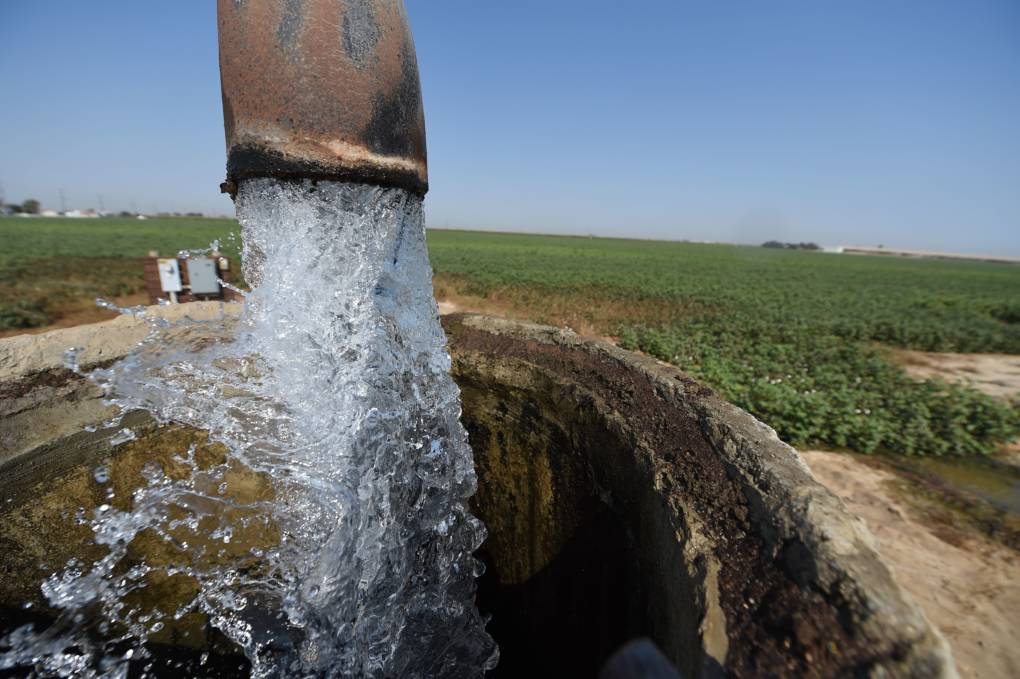
"caption": "Irrigation water at a cotton field in Porterville, California August 24, 2016. \nAgricultural fertilizers as well as cow manure from dairy farms have led to domestic wells in California's Central Valley having dangerously high levels of nitrates making it unsafe to drink. ",
"description": null,
"title": "GettyImages-603968516",
"credit": "ROBYN BECK/AFP/Getty Images",
"status": "inherit",
"isLoading": false,
"fetchFailed": false
},
"science_1943573": {
"type": "attachments",
"id": "science_1943573",
"meta": {
"index": "attachments_1716263798",
"site": "science",
"id": "1943573",
"found": true
},
"parent": 1943570,
"imgSizes": {
"twentyfourteen-full-width": {
"file": "https://ww2.kqed.org/app/uploads/sites/35/2019/06/coal-power-plant-capitol-1038x576.jpg",
"width": 1038,
"mimeType": "image/jpeg",
"height": 576
},
"thumbnail": {
"file": "https://ww2.kqed.org/app/uploads/sites/35/2019/06/coal-power-plant-capitol-160x91.jpg",
"width": 160,
"mimeType": "image/jpeg",
"height": 91
},
"post-thumbnail": {
"file": "https://ww2.kqed.org/app/uploads/sites/35/2019/06/coal-power-plant-capitol-672x372.jpg",
"width": 672,
"mimeType": "image/jpeg",
"height": 372
},
"kqedFullSize": {
"file": "https://ww2.kqed.org/app/uploads/sites/35/2019/06/coal-power-plant-capitol.jpg",
"width": 2048,
"height": 1168
},
"large": {
"file": "https://ww2.kqed.org/app/uploads/sites/35/2019/06/coal-power-plant-capitol-1020x582.jpg",
"width": 1020,
"mimeType": "image/jpeg",
"height": 582
},
"complete_open_graph": {
"file": "https://ww2.kqed.org/app/uploads/sites/35/2019/06/coal-power-plant-capitol-1200x685.jpg",
"width": 1200,
"mimeType": "image/jpeg",
"height": 685
},
"full-width": {
"file": "https://ww2.kqed.org/app/uploads/sites/35/2019/06/coal-power-plant-capitol-1920x1095.jpg",
"width": 1920,
"mimeType": "image/jpeg",
"height": 1095
},
"medium": {
"file": "https://ww2.kqed.org/app/uploads/sites/35/2019/06/coal-power-plant-capitol-800x456.jpg",
"width": 800,
"mimeType": "image/jpeg",
"height": 456
},
"medium_large": {
"file": "https://ww2.kqed.org/app/uploads/sites/35/2019/06/coal-power-plant-capitol-768x438.jpg",
"width": 768,
"mimeType": "image/jpeg",
"height": 438
}
},
"publishDate": 1560958299,
"modified": 1560958380,
"caption": "The chimney stacks of the Capitol Power Plant, a natural gas and coal burning power plant, is seen near the U.S. Capitol in Washington, DC, August 22, 2018.",
"description": null,
"title": "US-GOVERNMENT-CAPITOL-PLANT",
"credit": "SAUL LOEB/AFP/Getty Images",
"status": "inherit",
"isLoading": false,
"fetchFailed": false
},
"science_1943484": {
"type": "attachments",
"id": "science_1943484",
"meta": {
"index": "attachments_1716263798",
"site": "science",
"id": "1943484",
"found": true
},
"parent": 1943483,
"imgSizes": {
"twentyfourteen-full-width": {
"file": "https://ww2.kqed.org/app/uploads/sites/35/2019/06/img_4362-best-copy_custom-71ad498c76be3766c1955a88ddc4f68d5ec8a6e5-1038x576.jpg",
"width": 1038,
"mimeType": "image/jpeg",
"height": 576
},
"thumbnail": {
"file": "https://ww2.kqed.org/app/uploads/sites/35/2019/06/img_4362-best-copy_custom-71ad498c76be3766c1955a88ddc4f68d5ec8a6e5-160x120.jpg",
"width": 160,
"mimeType": "image/jpeg",
"height": 120
},
"post-thumbnail": {
"file": "https://ww2.kqed.org/app/uploads/sites/35/2019/06/img_4362-best-copy_custom-71ad498c76be3766c1955a88ddc4f68d5ec8a6e5-672x372.jpg",
"width": 672,
"mimeType": "image/jpeg",
"height": 372
},
"kqedFullSize": {
"file": "https://ww2.kqed.org/app/uploads/sites/35/2019/06/img_4362-best-copy_custom-71ad498c76be3766c1955a88ddc4f68d5ec8a6e5.jpg",
"width": 2048,
"height": 1535
},
"large": {
"file": "https://ww2.kqed.org/app/uploads/sites/35/2019/06/img_4362-best-copy_custom-71ad498c76be3766c1955a88ddc4f68d5ec8a6e5-1020x764.jpg",
"width": 1020,
"mimeType": "image/jpeg",
"height": 764
},
"complete_open_graph": {
"file": "https://ww2.kqed.org/app/uploads/sites/35/2019/06/img_4362-best-copy_custom-71ad498c76be3766c1955a88ddc4f68d5ec8a6e5-1200x899.jpg",
"width": 1200,
"mimeType": "image/jpeg",
"height": 899
},
"full-width": {
"file": "https://ww2.kqed.org/app/uploads/sites/35/2019/06/img_4362-best-copy_custom-71ad498c76be3766c1955a88ddc4f68d5ec8a6e5-1920x1439.jpg",
"width": 1920,
"mimeType": "image/jpeg",
"height": 1439
},
"medium": {
"file": "https://ww2.kqed.org/app/uploads/sites/35/2019/06/img_4362-best-copy_custom-71ad498c76be3766c1955a88ddc4f68d5ec8a6e5-800x600.jpg",
"width": 800,
"mimeType": "image/jpeg",
"height": 600
},
"medium_large": {
"file": "https://ww2.kqed.org/app/uploads/sites/35/2019/06/img_4362-best-copy_custom-71ad498c76be3766c1955a88ddc4f68d5ec8a6e5-768x576.jpg",
"width": 768,
"mimeType": "image/jpeg",
"height": 576
}
},
"publishDate": 1560807615,
"modified": 1560816523,
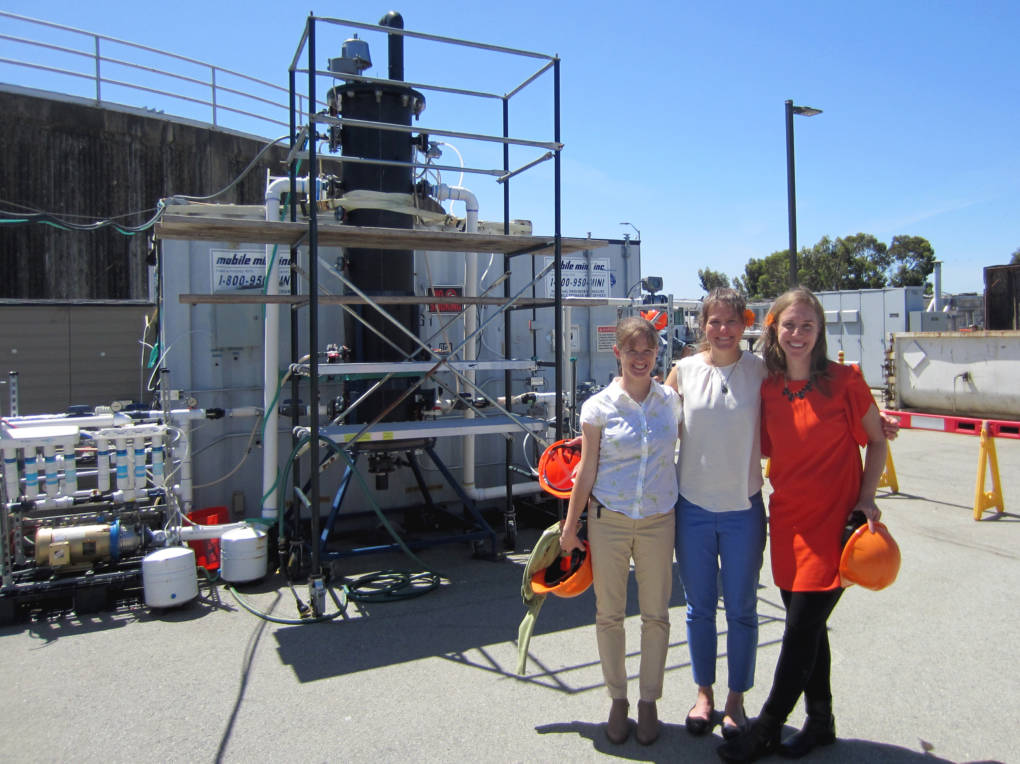
"caption": "Anne Schauer-Gimenez (from left) Allison Pieja and Molly Morse of Mango Materials stand next to the biopolymer fermenter at a sewage treatment plant next to San Francisco Bay. The fermenter feeds bacteria the methane they need to produce a biological form of plastic.",
"description": "Anne Schauer-Gimenez (from left) Allison Pieja and Molly Morse of Mango Materials stand next to the biopolymer fermenter at a sewage treatment plant next to San Francisco Bay. The fermenter feeds bacteria the methane they need to produce a biological form of plastic. ",
"title": "Anne Schauer-Gimenez (from left) Allison Pieja and Molly Morse of Mango Materials stand next to the biopolymer fermenter at a sewage treatment plant next to San Francisco Bay. The fermenter feeds bacteria the methane they need to produce a biological form of plastic.",
"credit": "Chris Joyce/NPR",
"status": "inherit",
"isLoading": false,
"fetchFailed": false
},
"science_1943598": {
"type": "attachments",
"id": "science_1943598",
"meta": {
"index": "attachments_1716263798",
"site": "science",
"id": "1943598",
"found": true
},
"parent": 1943477,
"imgSizes": {
"twentyfourteen-full-width": {
"file": "https://ww2.kqed.org/app/uploads/sites/35/2019/06/Shoe-study-dust-1038x576.jpg",
"width": 1038,
"mimeType": "image/jpeg",
"height": 576
},
"thumbnail": {
"file": "https://ww2.kqed.org/app/uploads/sites/35/2019/06/Shoe-study-dust-160x107.jpg",
"width": 160,
"mimeType": "image/jpeg",
"height": 107
},
"post-thumbnail": {
"file": "https://ww2.kqed.org/app/uploads/sites/35/2019/06/Shoe-study-dust-672x372.jpg",
"width": 672,
"mimeType": "image/jpeg",
"height": 372
},
"kqedFullSize": {
"file": "https://ww2.kqed.org/app/uploads/sites/35/2019/06/Shoe-study-dust.jpg",
"width": 1920,
"height": 1280
},
"large": {
"file": "https://ww2.kqed.org/app/uploads/sites/35/2019/06/Shoe-study-dust-1020x680.jpg",
"width": 1020,
"mimeType": "image/jpeg",
"height": 680
},
"complete_open_graph": {
"file": "https://ww2.kqed.org/app/uploads/sites/35/2019/06/Shoe-study-dust-1200x800.jpg",
"width": 1200,
"mimeType": "image/jpeg",
"height": 800
},
"full-width": {
"file": "https://ww2.kqed.org/app/uploads/sites/35/2019/06/Shoe-study-dust-1920x1280.jpg",
"width": 1920,
"mimeType": "image/jpeg",
"height": 1280
},
"medium": {
"file": "https://ww2.kqed.org/app/uploads/sites/35/2019/06/Shoe-study-dust-800x533.jpg",
"width": 800,
"mimeType": "image/jpeg",
"height": 533
},
"medium_large": {
"file": "https://ww2.kqed.org/app/uploads/sites/35/2019/06/Shoe-study-dust-768x512.jpg",
"width": 768,
"mimeType": "image/jpeg",
"height": 512
}
},
"publishDate": 1560979840,
"modified": 1560979989,
"caption": "Dirty shoes worn indoors are just one factor in making household dust unhealthy.",
"description": null,
"title": "Shoe-study-dust",
"credit": "Maarten Van Damme/Flickr",
"status": "inherit",
"isLoading": false,
"fetchFailed": false
},
"science_1943415": {
"type": "attachments",
"id": "science_1943415",
"meta": {
"index": "attachments_1716263798",
"site": "science",
"id": "1943415",
"found": true
},
"parent": 1943386,
"imgSizes": {
"twentyfourteen-full-width": {
"file": "https://ww2.kqed.org/app/uploads/sites/35/2019/06/RS37502_Sunol_019-1038x576.jpg",
"width": 1038,
"mimeType": "image/jpeg",
"height": 576
},
"thumbnail": {
"file": "https://ww2.kqed.org/app/uploads/sites/35/2019/06/RS37502_Sunol_019-160x117.jpg",
"width": 160,
"mimeType": "image/jpeg",
"height": 117
},
"post-thumbnail": {
"file": "https://ww2.kqed.org/app/uploads/sites/35/2019/06/RS37502_Sunol_019-672x372.jpg",
"width": 672,
"mimeType": "image/jpeg",
"height": 372
},
"kqedFullSize": {
"file": "https://ww2.kqed.org/app/uploads/sites/35/2019/06/RS37502_Sunol_019.jpg",
"width": 1920,
"height": 1403
},
"large": {
"file": "https://ww2.kqed.org/app/uploads/sites/35/2019/06/RS37502_Sunol_019-1020x745.jpg",
"width": 1020,
"mimeType": "image/jpeg",
"height": 745
},
"complete_open_graph": {
"file": "https://ww2.kqed.org/app/uploads/sites/35/2019/06/RS37502_Sunol_019-1200x877.jpg",
"width": 1200,
"mimeType": "image/jpeg",
"height": 877
},
"full-width": {
"file": "https://ww2.kqed.org/app/uploads/sites/35/2019/06/RS37502_Sunol_019-1920x1403.jpg",
"width": 1920,
"mimeType": "image/jpeg",
"height": 1403
},
"medium": {
"file": "https://ww2.kqed.org/app/uploads/sites/35/2019/06/RS37502_Sunol_019-800x585.jpg",
"width": 800,
"mimeType": "image/jpeg",
"height": 585
},
"medium_large": {
"file": "https://ww2.kqed.org/app/uploads/sites/35/2019/06/RS37502_Sunol_019-768x561.jpg",
"width": 768,
"mimeType": "image/jpeg",
"height": 561
}
},
"publishDate": 1560462822,
"modified": 1560530596,
"caption": "Leanne Feely works to separate the roots of a California native plant at the Sunol Native Plant Nursery on May 31, 2019. ",
"description": null,
"title": "RS37502_Sunol_019",
"credit": "Lindsey Moore/KQED",
"status": "inherit",
"isLoading": false,
"fetchFailed": false
},
"science_1943337": {
"type": "attachments",
"id": "science_1943337",
"meta": {
"index": "attachments_1716263798",
"site": "science",
"id": "1943337",
"found": true
},
"parent": 1943331,
"imgSizes": {
"twentyfourteen-full-width": {
"file": "https://ww2.kqed.org/app/uploads/sites/35/2019/06/RS7666_IMG_5021-1038x576.jpg",
"width": 1038,
"mimeType": "image/jpeg",
"height": 576
},
"thumbnail": {
"file": "https://ww2.kqed.org/app/uploads/sites/35/2019/06/RS7666_IMG_5021-160x90.jpg",
"width": 160,
"mimeType": "image/jpeg",
"height": 90
},
"post-thumbnail": {
"file": "https://ww2.kqed.org/app/uploads/sites/35/2019/06/RS7666_IMG_5021-672x372.jpg",
"width": 672,
"mimeType": "image/jpeg",
"height": 372
},
"kqedFullSize": {
"file": "https://ww2.kqed.org/app/uploads/sites/35/2019/06/RS7666_IMG_5021.jpg",
"width": 2048,
"height": 1152
},
"large": {
"file": "https://ww2.kqed.org/app/uploads/sites/35/2019/06/RS7666_IMG_5021-1020x574.jpg",
"width": 1020,
"mimeType": "image/jpeg",
"height": 574
},
"complete_open_graph": {
"file": "https://ww2.kqed.org/app/uploads/sites/35/2019/06/RS7666_IMG_5021-1200x675.jpg",
"width": 1200,
"mimeType": "image/jpeg",
"height": 675
},
"full-width": {
"file": "https://ww2.kqed.org/app/uploads/sites/35/2019/06/RS7666_IMG_5021-1920x1080.jpg",
"width": 1920,
"mimeType": "image/jpeg",
"height": 1080
},
"medium": {
"file": "https://ww2.kqed.org/app/uploads/sites/35/2019/06/RS7666_IMG_5021-800x450.jpg",
"width": 800,
"mimeType": "image/jpeg",
"height": 450
},
"medium_large": {
"file": "https://ww2.kqed.org/app/uploads/sites/35/2019/06/RS7666_IMG_5021-768x432.jpg",
"width": 768,
"mimeType": "image/jpeg",
"height": 432
}
},
"publishDate": 1560376197,
"modified": 1560376235,
"caption": "Forest Service firefighters work a prescribed burn in the Shasta National Forest.",
"description": null,
"title": "RS7666_IMG_5021",
"credit": "Molly Samuel/KQED",
"status": "inherit",
"isLoading": false,
"fetchFailed": false
},
"science_1943397": {
"type": "attachments",
"id": "science_1943397",
"meta": {
"index": "attachments_1716263798",
"site": "science",
"id": "1943397",
"found": true
},
"parent": 1943376,
"imgSizes": {
"twentyfourteen-full-width": {
"file": "https://ww2.kqed.org/app/uploads/sites/35/2019/06/Jon-Snow-Deep-Fake-Video-1038x576.png",
"width": 1038,
"mimeType": "image/png",
"height": 576
},
"thumbnail": {
"file": "https://ww2.kqed.org/app/uploads/sites/35/2019/06/Jon-Snow-Deep-Fake-Video-160x92.png",
"width": 160,
"mimeType": "image/png",
"height": 92
},
"post-thumbnail": {
"file": "https://ww2.kqed.org/app/uploads/sites/35/2019/06/Jon-Snow-Deep-Fake-Video-672x372.png",
"width": 672,
"mimeType": "image/png",
"height": 372
},
"kqedFullSize": {
"file": "https://ww2.kqed.org/app/uploads/sites/35/2019/06/Jon-Snow-Deep-Fake-Video-e1560458613135.png",
"width": 1920,
"height": 1105
},
"large": {
"file": "https://ww2.kqed.org/app/uploads/sites/35/2019/06/Jon-Snow-Deep-Fake-Video-1020x587.png",
"width": 1020,
"mimeType": "image/png",
"height": 587
},
"complete_open_graph": {
"file": "https://ww2.kqed.org/app/uploads/sites/35/2019/06/Jon-Snow-Deep-Fake-Video-1200x691.png",
"width": 1200,
"mimeType": "image/png",
"height": 691
},
"full-width": {
"file": "https://ww2.kqed.org/app/uploads/sites/35/2019/06/Jon-Snow-Deep-Fake-Video-1920x1105.png",
"width": 1920,
"mimeType": "image/png",
"height": 1105
},
"medium": {
"file": "https://ww2.kqed.org/app/uploads/sites/35/2019/06/Jon-Snow-Deep-Fake-Video-800x460.png",
"width": 800,
"mimeType": "image/png",
"height": 460
},
"medium_large": {
"file": "https://ww2.kqed.org/app/uploads/sites/35/2019/06/Jon-Snow-Deep-Fake-Video-768x442.png",
"width": 768,
"mimeType": "image/png",
"height": 442
}
},
"publishDate": 1560458549,
"modified": 1560458549,
"caption": null,
"description": null,
"title": "Jon Snow Deep Fake Video",
"credit": null,
"status": "inherit",
"isLoading": false,
"fetchFailed": false
},
"science_1943363": {
"type": "attachments",
"id": "science_1943363",
"meta": {
"index": "attachments_1716263798",
"site": "science",
"id": "1943363",
"found": true
},
"parent": 1943360,
"imgSizes": {
"twentyfourteen-full-width": {
"file": "https://ww2.kqed.org/app/uploads/sites/35/2019/06/RedFlags-1024x576.jpg",
"width": 1024,
"mimeType": "image/jpeg",
"height": 576
},
"thumbnail": {
"file": "https://ww2.kqed.org/app/uploads/sites/35/2019/06/RedFlags-160x107.jpg",
"width": 160,
"mimeType": "image/jpeg",
"height": 107
},
"post-thumbnail": {
"file": "https://ww2.kqed.org/app/uploads/sites/35/2019/06/RedFlags-672x372.jpg",
"width": 672,
"mimeType": "image/jpeg",
"height": 372
},
"kqedFullSize": {
"file": "https://ww2.kqed.org/app/uploads/sites/35/2019/06/RedFlags.jpg",
"width": 1024,
"height": 683
},
"large": {
"file": "https://ww2.kqed.org/app/uploads/sites/35/2019/06/RedFlags-1020x680.jpg",
"width": 1020,
"mimeType": "image/jpeg",
"height": 680
},
"medium": {
"file": "https://ww2.kqed.org/app/uploads/sites/35/2019/06/RedFlags-800x534.jpg",
"width": 800,
"mimeType": "image/jpeg",
"height": 534
},
"medium_large": {
"file": "https://ww2.kqed.org/app/uploads/sites/35/2019/06/RedFlags-768x512.jpg",
"width": 768,
"mimeType": "image/jpeg",
"height": 512
}
},
"publishDate": 1560444548,
"modified": 1560444637,
"caption": null,
"description": null,
"title": "RedFlags",
"credit": "Lydia Zuraw/California Healthline illustration; Getty Images",
"status": "inherit",
"isLoading": false,
"fetchFailed": false
},
"science_1943306": {
"type": "attachments",
"id": "science_1943306",
"meta": {
"index": "attachments_1716263798",
"site": "science",
"id": "1943306",
"found": true
},
"parent": 1943302,
"imgSizes": {
"twentyfourteen-full-width": {
"file": "https://ww2.kqed.org/app/uploads/sites/35/2019/06/GettyImages-693524758-1038x576.jpg",
"width": 1038,
"mimeType": "image/jpeg",
"height": 576
},
"thumbnail": {
"file": "https://ww2.kqed.org/app/uploads/sites/35/2019/06/GettyImages-693524758-160x113.jpg",
"width": 160,
"mimeType": "image/jpeg",
"height": 113
},
"post-thumbnail": {
"file": "https://ww2.kqed.org/app/uploads/sites/35/2019/06/GettyImages-693524758-672x372.jpg",
"width": 672,
"mimeType": "image/jpeg",
"height": 372
},
"kqedFullSize": {
"file": "https://ww2.kqed.org/app/uploads/sites/35/2019/06/GettyImages-693524758.jpg",
"width": 2048,
"height": 1447
},
"large": {
"file": "https://ww2.kqed.org/app/uploads/sites/35/2019/06/GettyImages-693524758-1020x721.jpg",
"width": 1020,
"mimeType": "image/jpeg",
"height": 721
},
"complete_open_graph": {
"file": "https://ww2.kqed.org/app/uploads/sites/35/2019/06/GettyImages-693524758-1200x848.jpg",
"width": 1200,
"mimeType": "image/jpeg",
"height": 848
},
"full-width": {
"file": "https://ww2.kqed.org/app/uploads/sites/35/2019/06/GettyImages-693524758-1920x1357.jpg",
"width": 1920,
"mimeType": "image/jpeg",
"height": 1357
},
"medium": {
"file": "https://ww2.kqed.org/app/uploads/sites/35/2019/06/GettyImages-693524758-800x565.jpg",
"width": 800,
"mimeType": "image/jpeg",
"height": 565
},
"medium_large": {
"file": "https://ww2.kqed.org/app/uploads/sites/35/2019/06/GettyImages-693524758-768x543.jpg",
"width": 768,
"mimeType": "image/jpeg",
"height": 543
}
},
"publishDate": 1560371949,
"modified": 1585618805,
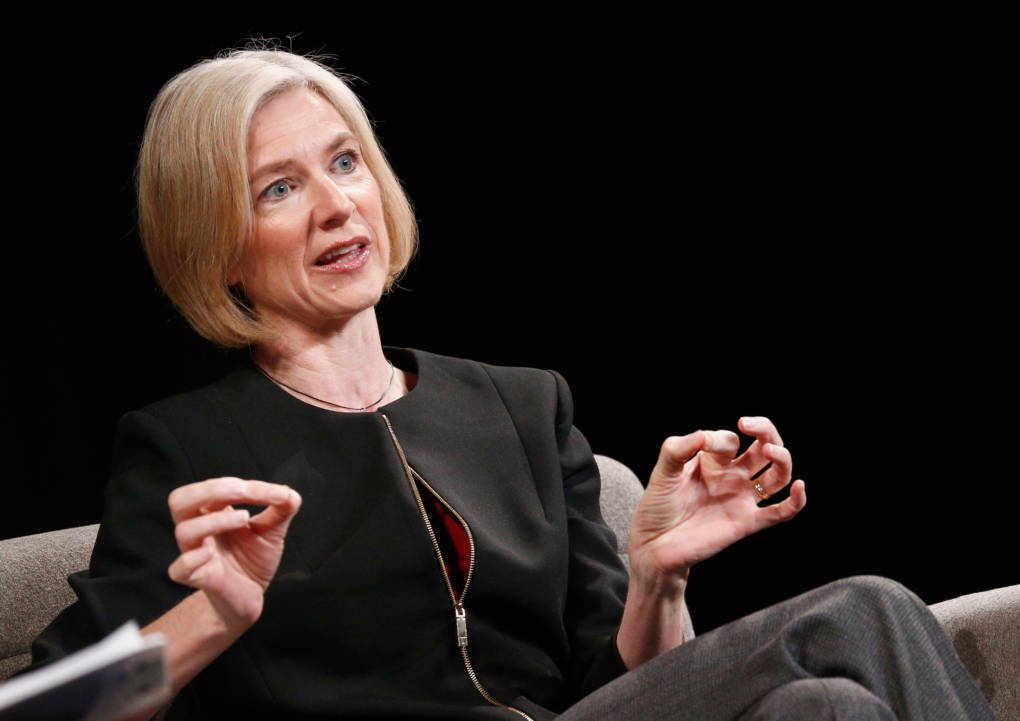
"caption": "Jennifer Doudna (Brian Ach/Getty Images)",
"description": null,
"title": "GettyImages-693524758",
"credit": "Brian Ach/Getty Images",
"status": "inherit",
"isLoading": false,
"fetchFailed": false
},
"science_1943269": {
"type": "attachments",
"id": "science_1943269",
"meta": {
"index": "attachments_1716263798",
"site": "science",
"id": "1943269",
"found": true
},
"parent": 1943266,
"imgSizes": {
"twentyfourteen-full-width": {
"file": "https://ww2.kqed.org/app/uploads/sites/35/2019/06/Santa-Barbara-Wildfire-1038x576.jpg",
"width": 1038,
"mimeType": "image/jpeg",
"height": 576
},
"thumbnail": {
"file": "https://ww2.kqed.org/app/uploads/sites/35/2019/06/Santa-Barbara-Wildfire-160x106.jpg",
"width": 160,
"mimeType": "image/jpeg",
"height": 106
},
"post-thumbnail": {
"file": "https://ww2.kqed.org/app/uploads/sites/35/2019/06/Santa-Barbara-Wildfire-672x372.jpg",
"width": 672,
"mimeType": "image/jpeg",
"height": 372
},
"kqedFullSize": {
"file": "https://ww2.kqed.org/app/uploads/sites/35/2019/06/Santa-Barbara-Wildfire-e1560298313550.jpg",
"width": 1920,
"height": 1278
},
"large": {
"file": "https://ww2.kqed.org/app/uploads/sites/35/2019/06/Santa-Barbara-Wildfire-1020x679.jpg",
"width": 1020,
"mimeType": "image/jpeg",
"height": 679
},
"complete_open_graph": {
"file": "https://ww2.kqed.org/app/uploads/sites/35/2019/06/Santa-Barbara-Wildfire-1200x798.jpg",
"width": 1200,
"mimeType": "image/jpeg",
"height": 798
},
"full-width": {
"file": "https://ww2.kqed.org/app/uploads/sites/35/2019/06/Santa-Barbara-Wildfire-1920x1278.jpg",
"width": 1920,
"mimeType": "image/jpeg",
"height": 1278
},
"medium": {
"file": "https://ww2.kqed.org/app/uploads/sites/35/2019/06/Santa-Barbara-Wildfire-800x532.jpg",
"width": 800,
"mimeType": "image/jpeg",
"height": 532
},
"medium_large": {
"file": "https://ww2.kqed.org/app/uploads/sites/35/2019/06/Santa-Barbara-Wildfire-768x511.jpg",
"width": 768,
"mimeType": "image/jpeg",
"height": 511
}
},
"publishDate": 1560298298,
"modified": 1560298469,
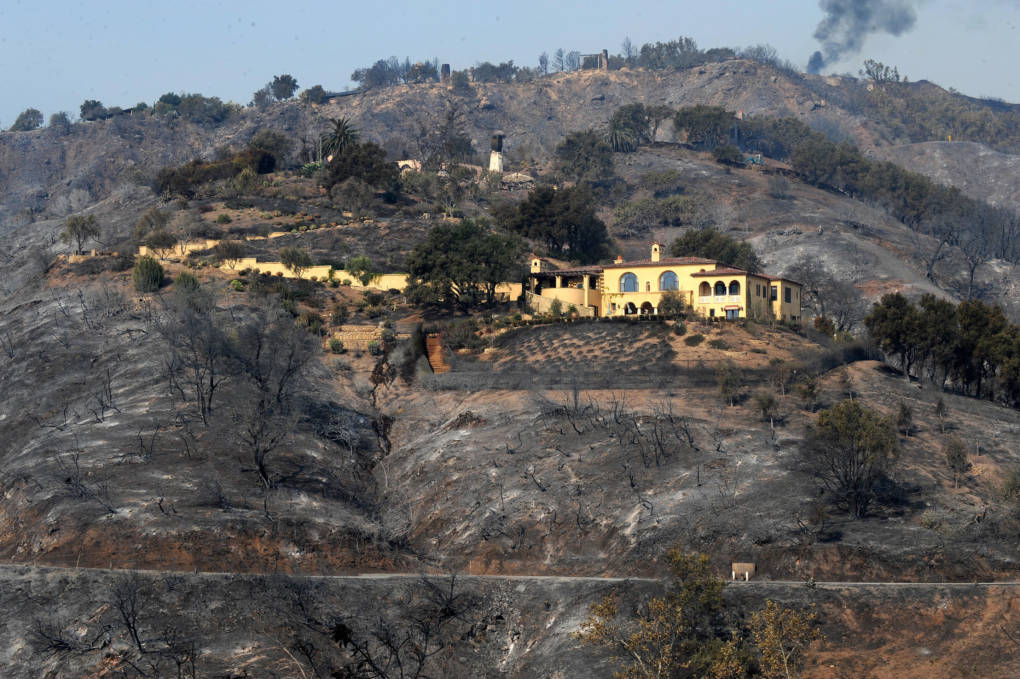
"caption": "A mansion saved from a raging wildfire sits on a scorched hillside in Santa Barbara, November 2008. ",
"description": null,
"title": "A mansion that was saved from a fire sit",
"credit": "Robyn Beck/AFP/Getty Images",
"status": "inherit",
"isLoading": false,
"fetchFailed": false
},
"science_1943194": {
"type": "attachments",
"id": "science_1943194",
"meta": {
"index": "attachments_1716263798",
"site": "science",
"id": "1943194",
"found": true
},
"parent": 1943187,
"imgSizes": {
"twentyfourteen-full-width": {
"file": "https://ww2.kqed.org/app/uploads/sites/35/2019/06/Microplastics-1038x576.jpg",
"width": 1038,
"mimeType": "image/jpeg",
"height": 576
},
"thumbnail": {
"file": "https://ww2.kqed.org/app/uploads/sites/35/2019/06/Microplastics-160x117.jpg",
"width": 160,
"mimeType": "image/jpeg",
"height": 117
},
"post-thumbnail": {
"file": "https://ww2.kqed.org/app/uploads/sites/35/2019/06/Microplastics-672x372.jpg",
"width": 672,
"mimeType": "image/jpeg",
"height": 372
},
"kqedFullSize": {
"file": "https://ww2.kqed.org/app/uploads/sites/35/2019/06/Microplastics.jpg",
"width": 1920,
"height": 1407
},
"large": {
"file": "https://ww2.kqed.org/app/uploads/sites/35/2019/06/Microplastics-1020x747.jpg",
"width": 1020,
"mimeType": "image/jpeg",
"height": 747
},
"complete_open_graph": {
"file": "https://ww2.kqed.org/app/uploads/sites/35/2019/06/Microplastics-1200x879.jpg",
"width": 1200,
"mimeType": "image/jpeg",
"height": 879
},
"full-width": {
"file": "https://ww2.kqed.org/app/uploads/sites/35/2019/06/Microplastics-1920x1407.jpg",
"width": 1920,
"mimeType": "image/jpeg",
"height": 1407
},
"medium": {
"file": "https://ww2.kqed.org/app/uploads/sites/35/2019/06/Microplastics-800x586.jpg",
"width": 800,
"mimeType": "image/jpeg",
"height": 586
},
"medium_large": {
"file": "https://ww2.kqed.org/app/uploads/sites/35/2019/06/Microplastics-768x563.jpg",
"width": 768,
"mimeType": "image/jpeg",
"height": 563
}
},
"publishDate": 1560206742,
"modified": 1560206880,
"caption": "Bits of plastic bottles and straws that break down overtime are finding their way into our food, according to researchers at the University of Victoria in British Columbia.",
"description": null,
"title": "Microplastics",
"credit": "Lindsey Moore/KQED",
"status": "inherit",
"isLoading": false,
"fetchFailed": false
},
"science_1943211": {
"type": "attachments",
"id": "science_1943211",
"meta": {
"index": "attachments_1716263798",
"site": "science",
"id": "1943211",
"found": true
},
"parent": 1943180,
"imgSizes": {
"twentyfourteen-full-width": {
"file": "https://ww2.kqed.org/app/uploads/sites/35/2019/06/California-fire-insurance-1038x576.jpg",
"width": 1038,
"mimeType": "image/jpeg",
"height": 576
},
"thumbnail": {
"file": "https://ww2.kqed.org/app/uploads/sites/35/2019/06/California-fire-insurance-160x99.jpg",
"width": 160,
"mimeType": "image/jpeg",
"height": 99
},
"post-thumbnail": {
"file": "https://ww2.kqed.org/app/uploads/sites/35/2019/06/California-fire-insurance-672x372.jpg",
"width": 672,
"mimeType": "image/jpeg",
"height": 372
},
"kqedFullSize": {
"file": "https://ww2.kqed.org/app/uploads/sites/35/2019/06/California-fire-insurance.jpg",
"width": 2048,
"height": 1273
},
"large": {
"file": "https://ww2.kqed.org/app/uploads/sites/35/2019/06/California-fire-insurance-1020x634.jpg",
"width": 1020,
"mimeType": "image/jpeg",
"height": 634
},
"complete_open_graph": {
"file": "https://ww2.kqed.org/app/uploads/sites/35/2019/06/California-fire-insurance-1200x746.jpg",
"width": 1200,
"mimeType": "image/jpeg",
"height": 746
},
"full-width": {
"file": "https://ww2.kqed.org/app/uploads/sites/35/2019/06/California-fire-insurance-1920x1193.jpg",
"width": 1920,
"mimeType": "image/jpeg",
"height": 1193
},
"medium": {
"file": "https://ww2.kqed.org/app/uploads/sites/35/2019/06/California-fire-insurance-800x497.jpg",
"width": 800,
"mimeType": "image/jpeg",
"height": 497
},
"medium_large": {
"file": "https://ww2.kqed.org/app/uploads/sites/35/2019/06/California-fire-insurance-768x477.jpg",
"width": 768,
"mimeType": "image/jpeg",
"height": 477
}
},
"publishDate": 1560210296,
"modified": 1560210701,
"caption": "A firefighter, seen here in the distance, right side, is watering down burning embers on a hillside overlooking homes in West Hills, California, during the Woolsey Fire of November 2018.",
"description": null,
"title": "US-FIRE-CALIFORNIA-ENVIRONMENT-WEATHER",
"credit": "Frederic J. Brown/AFP/Getty Images",
"status": "inherit",
"isLoading": false,
"fetchFailed": false
}
},
"audioPlayerReducer": {
"postId": "stream_live",
"isPaused": true,
"isPlaying": false,
"pfsActive": false,
"pledgeModalIsOpen": true,
"playerDrawerIsOpen": false,
"liveAudioPlayStartedAt": 0,
"liveAudioPlayContext": ""
},
"authorsReducer": {
"byline_science_1943570": {
"type": "authors",
"id": "byline_science_1943570",
"meta": {
"override": true
},
"slug": "byline_science_1943570",
"name": "Ellen Knickmeyer \u003cbr />Associated Press",
"isLoading": false
},
"byline_science_1943483": {
"type": "authors",
"id": "byline_science_1943483",
"meta": {
"override": true
},
"slug": "byline_science_1943483",
"name": "Christopher Joyce\u003cbr />NPR",
"isLoading": false
},
"byline_science_1943477": {
"type": "authors",
"id": "byline_science_1943477",
"meta": {
"override": true
},
"slug": "byline_science_1943477",
"name": "Gabriel Filippelli",
"isLoading": false
},
"byline_science_1943331": {
"type": "authors",
"id": "byline_science_1943331",
"meta": {
"override": true
},
"slug": "byline_science_1943331",
"name": "Kirk Siegler \u003cbr/> NPR \u003cbr>",
"isLoading": false
},
"byline_science_1943376": {
"type": "authors",
"id": "byline_science_1943376",
"meta": {
"override": true
},
"slug": "byline_science_1943376",
"name": "Miles O'Brien \u003cBR/> PBS NewsHour",
"isLoading": false
},
"byline_science_1943360": {
"type": "authors",
"id": "byline_science_1943360",
"meta": {
"override": true
},
"slug": "byline_science_1943360",
"name": "Emmarie Huetteman \u003cbr/> Kaiser Health News",
"isLoading": false
},
"mlagos": {
"type": "authors",
"id": "3239",
"meta": {
"index": "authors_1716337520",
"id": "3239",
"found": true
},
"name": "Marisa Lagos",
"firstName": "Marisa",
"lastName": "Lagos",
"slug": "mlagos",
"email": "mlagos@kqed.org",
"display_author_email": false,
"staff_mastheads": [
"news"
],
"title": "KQED Contributor",
"bio": "Marisa Lagos is a correspondent for KQED’s California Politics and Government Desk and co-hosts the award-winning show and podcast, Political Breakdown. At KQED, Lagos also conducts reporting, analysis and investigations into state, local and national politics for radio, TV, online and onstage. In 2022, she and co-host, Scott Shafer, moderated the only gubernatorial debate in California. In 2020, the \u003ci>Washington Post\u003c/i> named her one of the top political journalists in California; she was nominated for a Peabody and won several other awards for her work investigating the 2017 California wildfires. She has worked at the \u003ci>San Francisco Chronicle\u003c/i>, \u003ci>San Francisco Examiner\u003c/i> and \u003ci>Los Angeles Times\u003c/i>. A UC Santa Barbara graduate, she lives in San Francisco with her two sons and husband.",
"avatar": "https://secure.gravatar.com/avatar/a261a0d3696fc066871ef96b85b5e7d2?s=600&d=blank&r=g",
"twitter": "@mlagos",
"facebook": null,
"instagram": null,
"linkedin": null,
"sites": [
{
"site": "arts",
"roles": [
"author"
]
},
{
"site": "news",
"roles": [
"editor"
]
},
{
"site": "science",
"roles": [
"editor"
]
},
{
"site": "forum",
"roles": [
"author"
]
},
{
"site": "liveblog",
"roles": [
"author"
]
}
],
"headData": {
"title": "Marisa Lagos | KQED",
"description": "KQED Contributor",
"ogImgSrc": "https://secure.gravatar.com/avatar/a261a0d3696fc066871ef96b85b5e7d2?s=600&d=blank&r=g",
"twImgSrc": "https://secure.gravatar.com/avatar/a261a0d3696fc066871ef96b85b5e7d2?s=600&d=blank&r=g"
},
"isLoading": false,
"link": "/author/mlagos"
},
"mpeterson": {
"type": "authors",
"id": "11223",
"meta": {
"index": "authors_1716337520",
"id": "11223",
"found": true
},
"name": "Molly Peterson",
"firstName": "Molly",
"lastName": "Peterson",
"slug": "mpeterson",
"email": "mpeterson@kqed.org",
"display_author_email": false,
"staff_mastheads": [],
"title": null,
"bio": "Molly Peterson reports for KQED science and news on climate change, catastrophe and risk. Previously she was environment correspondent at Southern California Public Radio. Her work has also appeared at The New York Times, The Guardian, on NPR, at High Country News, on Code Switch, and other national outlets. She has been honored with awards from Public Radio News Directors Incorporated, Investigative Reporters and Editors, the Society for Professional Journalists, the Los Angeles Press Club, and RTNDA Edward R. Murrow awards, among others.",
"avatar": "https://secure.gravatar.com/avatar/7908e2807131f776cc8165c649530b05?s=600&d=blank&r=g",
"twitter": "Mollydacious",
"facebook": null,
"instagram": "https://www.instagram.com/radiomolly/",
"linkedin": null,
"sites": [
{
"site": "news",
"roles": [
"subscriber"
]
},
{
"site": "futureofyou",
"roles": [
"editor"
]
},
{
"site": "science",
"roles": [
"editor"
]
}
],
"headData": {
"title": "Molly Peterson | KQED",
"description": null,
"ogImgSrc": "https://secure.gravatar.com/avatar/7908e2807131f776cc8165c649530b05?s=600&d=blank&r=g",
"twImgSrc": "https://secure.gravatar.com/avatar/7908e2807131f776cc8165c649530b05?s=600&d=blank&r=g"
},
"isLoading": false,
"link": "/author/mpeterson"
},
"hhagemann": {
"type": "authors",
"id": "11578",
"meta": {
"index": "authors_1716337520",
"id": "11578",
"found": true
},
"name": "Hannah Hagemann",
"firstName": "Hannah",
"lastName": "Hagemann",
"slug": "hhagemann",
"email": "hhagemann@KQED.org",
"display_author_email": false,
"staff_mastheads": [],
"title": "KQED Contributor",
"bio": null,
"avatar": "https://secure.gravatar.com/avatar/c3af389deff545c719141a87524965d8?s=600&d=blank&r=g",
"twitter": null,
"facebook": null,
"instagram": null,
"linkedin": null,
"sites": [
{
"site": "news",
"roles": [
"author"
]
},
{
"site": "science",
"roles": [
"editor"
]
}
],
"headData": {
"title": "Hannah Hagemann | KQED",
"description": "KQED Contributor",
"ogImgSrc": "https://secure.gravatar.com/avatar/c3af389deff545c719141a87524965d8?s=600&d=blank&r=g",
"twImgSrc": "https://secure.gravatar.com/avatar/c3af389deff545c719141a87524965d8?s=600&d=blank&r=g"
},
"isLoading": false,
"link": "/author/hhagemann"
},
"kevinstark": {
"type": "authors",
"id": "11608",
"meta": {
"index": "authors_1716337520",
"id": "11608",
"found": true
},
"name": "Kevin Stark",
"firstName": "Kevin",
"lastName": "Stark",
"slug": "kevinstark",
"email": "kstark@kqed.org",
"display_author_email": true,
"staff_mastheads": [
"science"
],
"title": "Senior Editor",
"bio": "Kevin is a senior editor for KQED Science, managing the station's health and climate desks. His journalism career began in the Pacific Northwest, and he later became a lead reporter for the San Francisco Public Press. His work has appeared in Pacific Standard magazine, the Energy News Network, the Center for Investigative Reporting's Reveal and WBEZ in Chicago. Kevin joined KQED in 2019, and has covered issues related to energy, wildfire, climate change and the environment.",
"avatar": "https://secure.gravatar.com/avatar/365aaa4b597d3a8374f67504ff0facd323d7906e8eb4be0a7efd2427408e802c?s=600&d=blank&r=g",
"twitter": "starkkev",
"bluesky": null,
"facebook": null,
"instagram": null,
"linkedin": null,
"sites": [
{
"site": "",
"roles": [
"editor"
]
},
{
"site": "news",
"roles": [
"editor"
]
},
{
"site": "science",
"roles": [
"administrator"
]
}
],
"headData": {
"title": "Kevin Stark | KQED",
"description": "Senior Editor",
"ogImgSrc": "https://secure.gravatar.com/avatar/365aaa4b597d3a8374f67504ff0facd323d7906e8eb4be0a7efd2427408e802c?s=600&d=blank&r=g",
"twImgSrc": "https://secure.gravatar.com/avatar/365aaa4b597d3a8374f67504ff0facd323d7906e8eb4be0a7efd2427408e802c?s=600&d=blank&r=g"
},
"isLoading": false,
"link": "/author/kevinstark"
}
},
"pagesReducer": {
"science_category_news": {
"type": "terms",
"id": "science_40",
"meta": {
"index": "terms_1716263798",
"site": "science",
"id": "40",
"score": 10.8141775
},
"featImg": null,
"name": "News",
"description": null,
"taxonomy": "category",
"headData": {
"twImgId": null,
"twTitle": null,
"ogTitle": null,
"ogImgId": null,
"twDescription": null,
"description": null,
"title": "News Archives | KQED Science",
"ogDescription": null
},
"ttid": 42,
"slug": "news",
"isLoading": false,
"title": "News",
"pageMeta": {
"site": "science",
"WpPageTemplate": "page-topic-editorial",
"currentPage": 135
},
"blocks": [
{
"blockName": "kqed/post-list",
"attrs": {
"layout": "cardArticle2",
"query": "posts/science?category=news",
"seeMore": false,
"paginated": true,
"page": 135
}
},
{
"blockName": "kqed/ad"
}
]
}
},
"pfsSessionReducer": {},
"postsReducer": {
"stream_live": {
"type": "live",
"id": "stream_live",
"audioUrl": "https://streams.kqed.org/kqedradio",
"title": "Live Stream",
"excerpt": "Live Stream information currently unavailable.",
"link": "/radio",
"featImg": "",
"label": {
"name": "KQED Live",
"link": "/"
}
},
"stream_kqedNewscast": {
"type": "posts",
"id": "stream_kqedNewscast",
"audioUrl": "https://www.kqed.org/.stream/anon/radio/RDnews/newscast.mp3?_=1",
"title": "KQED Newscast",
"featImg": "",
"label": {
"name": "88.5 FM",
"link": "/"
}
},
"science_1943578": {
"type": "posts",
"id": "science_1943578",
"meta": {
"index": "posts_1716263798",
"site": "science",
"id": "1943578",
"score": null,
"sort": [
1560974843000
]
},
"guestAuthors": [],
"slug": "climate-funds-for-clean-water-democrats-enviro-groups-are-split",
"title": "Newsom Catches Heat for Using Climate Funds on Drinking Water Plan",
"publishDate": 1560974843,
"format": "standard",
"headTitle": "Newsom Catches Heat for Using Climate Funds on Drinking Water Plan | KQED",
"labelTerm": {},
"content": "\u003cp>California lawmakers are poised to fund the cleanup of dirty drinking water in the state’s poorest communities — a problem most everyone agrees needs to be addressed.\u003c/p>\n\u003cp>[pullquote align=\"right\" citation=\"State Sen. Bob Wieckowski, D-Fremont\" size=\"small\"]‘I would caution that every worthy cause should not be financed through this fund.’[/pullquote] Not everyone, however, agrees on where the money should come from to pay for it.\u003c/p>\n\u003cp>The issue? The Legislature wants to use revenue from California’s cap-and-trade climate change program, which was created to reduce greenhouse gases in the atmosphere by making companies pay for the right to emit them.\u003c/p>\n\u003cp>The money the program generates is required by law to go toward programs that reduce the planet-warming gases. While that mandate hasn’t stopped lawmakers in the past from allocating funds to projects that are, arguably, only marginally related to greenhouse gas reduction, it could leave the funding for water cleanup open to a legal challenge.\u003c/p>\n\u003cp>State attorneys made that clear to the Legislature last year in a legal opinion asserting cap-and trade money can, for the time being, only be spent “for purposes that reasonably relate to the reduction of [greenhouse gas] emissions.”\u003c/p>\n\u003cp>[ad fullwidth]\u003c/p>\n\u003cp>The Legislative Counsel prepared the opinion for state Sen. Bob Wieckowski, the chair of the subcommittee that oversees the cap-and-trade program.\u003c/p>\n\u003cp>He voiced his frustration with the state’s plan to spend the funds on water cleanup on the Senate floor last week, saying it “further weakens the integrity of our Greenhouse Gas Reduction Fund.”\u003c/p>\n\u003cp>“AB 32 requires the Governor and the Legislature to only use revenues from the auctions of Cap and Trade for programs that reduce carbon emissions into our atmosphere,” Wieckowski said. AB 32 is California’s landmark climate change law, which sets targets for reductions in the state’s greenhouse gas emissions.\u003c/p>\n\u003cp>“Obviously, this does not bode well for future GGRF budgets,” he said.\u003c/p>\n\u003cp>\u003cspan style=\"font-weight: 400\">While AB 32 was set to expire in 2020, the \u003c/span>\u003cspan style=\"font-weight: 400\">Legislature\u003c/span>\u003cspan style=\"font-weight: 400\"> passed an \u003c/span>\u003ca href=\"https://www.kqed.org/news/11593491/brown-schwarzenegger-celebrate-extension-of-cap-and-trade\">\u003cspan style=\"font-weight: 400\">extension\u003c/span>\u003c/a> through 2030 \u003cspan style=\"font-weight: 400\">two years ago.\u003c/span>\u003c/p>\n\u003cp>\u003cspan style=\"font-weight: 400\">That bill, AB 398, also removes the limits on how cap-and-trade money is spent \u003c/span>\u003cspan style=\"font-weight: 400\">as of Jan. 1, 2021, according to the Legislative Counsel’s opinion. The analysis attributes the freeing of those funds to the way AB 398 was written and because of its passage by a supermajority, both of which transformed cap-and-trade revenue from a fee, designated for specific use, into a tax, available for general spending. \u003c/span>\u003c/p>\n\u003cp>\u003cspan style=\"font-weight: 400\">Wieckowski said on the Senate floor he was worried about how cap-and-trade money might be “broadened to include other uses” after 2021. \u003c/span>\u003cspan style=\"font-weight: 400\">\u003cbr>\n\u003c/span>\u003cspan style=\"font-weight: 400\">\u003cbr>\n\u003c/span>“I would caution that every worthy cause should not be financed through this fund,” he said. “We have been instructed by the scientific community that our window is closing, and we may even be at the point of no return on permanent, irreversible climate consequences.”\u003c/p>\n\u003cp>But the Newsom administration doesn’t see it that way.\u003c/p>\n\u003cp>Kate Gordon, director of the Governor’s Office of Planning and Research, said it’s time for California to stop thinking about climate issues in a “segregated budget box” with separate policies for reducing emissions and addressing climate impacts.\u003c/p>\n\u003cp>She said the administration is looking to integrate climate considerations into housing, fire management and water policy. “I don’t think that’s a bad thing,” she said.\u003c/p>\n\u003cp>“The governor’s focus on putting new funds into the infill infrastructure fund is a climate policy, because it’s about building housing in denser areas so people drive less,” she said. “That’s climate policy. How do we think about fire management as a climate policy? How do we think about water movement as a climate policy?”\u003c/p>\n\u003cp>\u003cstrong>Clean Drinking Water\u003c/strong>\u003c/p>\n\u003cp>Across California, about a million people lack access to safe drinking water, even though the state has spent $3 billion since 2010 to solve the problem.\u003c/p>\n\u003cp>For years, state lawmakers have fought over plans to address the issue.\u003c/p>\n\u003cp>Earlier this year, Gov. Gavin Newsom proposed a tax on water bills that would fund programs to rebuild broken drinking water infrastructure in some of the state’s poorest communities.\u003c/p>\n\u003cp>But the Legislature didn’t approve the plan, with some lawmakers worried that their constituents wouldn’t accept a new monthly tax given the state’s huge budget surplus. (The political peril entailed in voting for new taxes was driven home last June, when Orange County voters \u003ca href=\"https://voiceofoc.org/2018/06/josh-newman-is-recalled-ending-democrats-supermajority-in-state-senate/\" target=\"_blank\" rel=\"noopener\">recalled\u003c/a> Democratic state Sen. Josh Newman after his vote to increase the gas tax.)\u003c/p>\n\u003cp>So instead of the new water tax, lawmakers crafted a compromise that includes $100 million from cap-and-trade revenue and $33.4 million from the general fund. A trailer bill also seeks to use 5% of the cap-and-trade proceeds, up to $130 million annually, for clean water projects until 2030.\u003c/p>\n\u003cp>Danny Cullenward, an energy economist and a member of the cap-and-trade oversight committee, said the new plan marks a “real shift,” and not for the good.\u003c/p>\n\u003cp>“We are moving towards something that very clearly is not about climate,” he said. “It’s about water quality and it’s about water access. It’s not really about reducing greenhouse gas emissions.”\u003c/p>\n\u003cp>The Newsom administration originally argued the expenditure on the water plan is in compliance with the cap-and-trade directive because trucks will no longer have to deliver bottled water to people whose tap water is undrinkable, and so will reduce emissions.\u003c/p>\n\u003cp>Cullenward, who in addition to being on the cap-and-trade oversight committee is the policy director for the climate group \u003ca href=\"http://www.nearzero.org/\" target=\"_blank\" rel=\"noopener\">Near Zero\u003c/a>, said that’s a stretch.\u003c/p>\n\u003cp>“This is getting much closer to the line, if it’s not over the line,” he said.\u003c/p>\n\u003cp>But Gordon, who also advises Newsom on climate issues, said the water plan would also replace the existing water delivery system with one that’s more energy efficient.\u003c/p>\n\u003cp>“A massive amount of our energy goes into moving water, and making that more efficient would have a huge impact,” she said. “If you’re not resilient, then your systems fall apart. We have a climate impact that’s creating this situation and we need to solve this situation in a way that reduces emissions.”\u003c/p>\n\u003cp>The water expenditure is just the latest appropriation to rile critics of the way cap-and-trade money is spent. Former Gov. Jerry Brown drew \u003ca href=\"https://sacramento.cbslocal.com/2014/01/10/critics-uniting-against-california-high-speed-rail-funding-plan/\" target=\"_blank\" rel=\"noopener\">criticism\u003c/a> when he spent more than $1 billion from the fund on the state’s beleaguered high-speed rail project. More questionable was Brown’s 2013 \u003ca href=\"https://www.eenews.net/stories/1059992624\" target=\"_blank\" rel=\"noopener\">diver\u003c/a>\u003ca href=\"https://www.eenews.net/stories/1059992624\">sion\u003c/a> of $500 million cap-and-trade dollars to help balance the state’s budget, although the money was eventually repaid. Last week the Los Angeles Times published an \u003ca href=\"https://www.latimes.com/opinion/editorials/la-ed-cap-and-trade-safe-drinking-water-budget-20190614-story.html\" target=\"_blank\" rel=\"noopener\">editorial\u003c/a> saying that lawmakers are turning cap-and-trade revenue into a “slush fund.”\u003c/p>\n\u003cp>\u003cstrong>Enviro Groups Split\u003c/strong>\u003c/p>\n\u003cp>The debate over using cap-and-trade funds on clean drinking water has \u003ca href=\"https://calmatters.org/articles/california-clean-drinking-water-funding-greenhouse-gas-fund-climate-change/\">split\u003c/a> \u003ca href=\"https://calmatters.org/articles/california-clean-drinking-water-funding-greenhouse-gas-fund-climate-change/\">the\u003c/a> \u003ca href=\"https://calmatters.org/articles/california-clean-drinking-water-funding-greenhouse-gas-fund-climate-change/\" target=\"_blank\" rel=\"noopener\">environmental\u003c/a> \u003ca href=\"https://calmatters.org/articles/california-clean-drinking-water-funding-greenhouse-gas-fund-climate-change/\">community\u003c/a>.\u003c/p>\n\u003cp>Some of the state’s largest environmental groups, such as the Sierra Club, argue that the program should primarily be used to stave off the worst impacts of climate change by curbing emissions. Kathryn Phillips, director of the Sierra Club California, told \u003ca href=\"https://calmatters.org/articles/california-clean-drinking-water-funding-greenhouse-gas-fund-climate-change/\" target=\"_blank\" rel=\"noopener\">CALmatters\u003c/a> that the money for the water project should have been taken out of the general fund instead of cap-and-trade.\u003c/p>\n\u003cp>But environmental justice groups have fought cap and trade for years, arguing that it allows industry to pay to pollute in communities already burdened with pollution. These groups have also advocated that any funds from the program be used to meet the needs of communities most impacted by dirty air.\u003c/p>\n\u003cp>“That includes places like Fresno and the Central Valley, where they are struggling not only with toxic drinking water, but also some of the worst air quality in the state,” said Marie Choi, spokesperson for Asian Pacific Environmental Network. “For us, solutions aren’t about carbon counting, it’s about making our neighborhoods and people healthy and whole again.”\u003c/p>\n\u003cp>For the last three years, Leadership Counsel for Justice and Accountability, an advocacy group for lower-income communities, pushed state lawmakers to approve a water tax, with the money going to pay for clean water programs in the San Joaquin and Coachella valleys, among other areas.\u003c/p>\n\u003cp>These places are most impacted by the hot, dry conditions exacerbated by climate change, the group argues, and in light of the tax plan’s failure, the group wants to see the current proposal to use cap-and-trade money enacted.\u003c/p>\n\u003cp>“Drought in particular has impacted drinking water quantity and quality,” said Phoebe Seaton, the group’s co-director. “We have seen since the Greenhouse Gas Reduction Fund’s inception the link between drinking water and climate, from an adaptation side and from a climate mitigation side,”\u003c/p>\n\u003cp>When Newsom \u003ca href=\"https://www.kqed.org/science/1941438/millions-for-climate-environmental-priorities-in-newsoms-may-budget\" target=\"_blank\" rel=\"noopener\">presented\u003c/a> his May budget revision, he defended his proposed tax on water bills, saying it would be a “proud day, when the Legislature and the governor can align on providing a basic fundamental right. That’s clean and drinkable water at an affordable price for the most vulnerable Californians.”\u003c/p>\n\u003cp>[ad floatright]\u003c/p>\n\u003cp>But even then, he signaled an openness to alternatives. “I’m not consumed by process, but by outcome,” he said in answer to a reporter’s question. “But we will get to a solution.”\u003c/p>\n\n",
"blocks": [],
"excerpt": "Everyone agrees that California's dirty drinking water is a crisis. Not everyone agrees on how to pay to clean it up. ",
"status": "publish",
"parent": 0,
"modified": 1725578038,
"stats": {
"hasAudio": false,
"hasVideo": false,
"hasChartOrMap": false,
"iframeSrcs": [],
"hasGoogleForm": false,
"hasGallery": false,
"hasHearkenModule": false,
"hasPolis": false,
"paragraphCount": 42,
"wordCount": 1642
},
"headData": {
"title": "Newsom Catches Heat for Using Climate Funds on Drinking Water Plan | KQED",
"description": "Everyone agrees that California's dirty drinking water is a crisis. Not everyone agrees on how to pay to clean it up. ",
"ogTitle": "",
"ogDescription": "",
"ogImgId": "",
"twTitle": "",
"twDescription": "",
"twImgId": "",
"schema": {
"@context": "https://schema.org",
"@type": "Article",
"headline": "Newsom Catches Heat for Using Climate Funds on Drinking Water Plan",
"datePublished": "2019-06-19T13:07:23-07:00",
"dateModified": "2024-09-05T16:13:58-07:00",
"image": "https://cdn.kqed.org/wp-content/uploads/2020/02/KQED-OG-Image@1x.png"
}
},
"source": "Polluted water",
"audioUrl": "https://www.kqed.org/.stream/anon/radio/RDnews/2019/06/CamhiStarkWater.mp3",
"sticky": false,
"path": "/science/1943578/climate-funds-for-clean-water-democrats-enviro-groups-are-split",
"audioTrackLength": null,
"parsedContent": [
{
"type": "contentString",
"content": "\u003cdiv class=\"post-body\">\u003cp>\u003cp>California lawmakers are poised to fund the cleanup of dirty drinking water in the state’s poorest communities — a problem most everyone agrees needs to be addressed.\u003c/p>\n\u003cp>\u003c/p>\u003c/div>",
"attributes": {
"named": {},
"numeric": []
}
},
{
"type": "component",
"content": "‘I would caution that every worthy cause should not be financed through this fund.’",
"name": "pullquote",
"attributes": {
"named": {
"align": "right",
"citation": "State Sen. Bob Wieckowski, D-Fremont",
"size": "small",
"label": ""
},
"numeric": []
}
},
{
"type": "contentString",
"content": "\u003cdiv class=\"post-body\">\u003cp> Not everyone, however, agrees on where the money should come from to pay for it.\u003c/p>\n\u003cp>The issue? The Legislature wants to use revenue from California’s cap-and-trade climate change program, which was created to reduce greenhouse gases in the atmosphere by making companies pay for the right to emit them.\u003c/p>\n\u003cp>The money the program generates is required by law to go toward programs that reduce the planet-warming gases. While that mandate hasn’t stopped lawmakers in the past from allocating funds to projects that are, arguably, only marginally related to greenhouse gas reduction, it could leave the funding for water cleanup open to a legal challenge.\u003c/p>\n\u003cp>State attorneys made that clear to the Legislature last year in a legal opinion asserting cap-and trade money can, for the time being, only be spent “for purposes that reasonably relate to the reduction of [greenhouse gas] emissions.”\u003c/p>\n\u003cp>\u003c/p>\u003c/div>",
"attributes": {
"named": {},
"numeric": []
}
},
{
"type": "component",
"content": "",
"name": "ad",
"attributes": {
"named": {
"label": "fullwidth"
},
"numeric": [
"fullwidth"
]
}
},
{
"type": "contentString",
"content": "\u003cdiv class=\"post-body\">\u003cp>\u003c/p>\n\u003cp>The Legislative Counsel prepared the opinion for state Sen. Bob Wieckowski, the chair of the subcommittee that oversees the cap-and-trade program.\u003c/p>\n\u003cp>He voiced his frustration with the state’s plan to spend the funds on water cleanup on the Senate floor last week, saying it “further weakens the integrity of our Greenhouse Gas Reduction Fund.”\u003c/p>\n\u003cp>“AB 32 requires the Governor and the Legislature to only use revenues from the auctions of Cap and Trade for programs that reduce carbon emissions into our atmosphere,” Wieckowski said. AB 32 is California’s landmark climate change law, which sets targets for reductions in the state’s greenhouse gas emissions.\u003c/p>\n\u003cp>“Obviously, this does not bode well for future GGRF budgets,” he said.\u003c/p>\n\u003cp>\u003cspan style=\"font-weight: 400\">While AB 32 was set to expire in 2020, the \u003c/span>\u003cspan style=\"font-weight: 400\">Legislature\u003c/span>\u003cspan style=\"font-weight: 400\"> passed an \u003c/span>\u003ca href=\"https://www.kqed.org/news/11593491/brown-schwarzenegger-celebrate-extension-of-cap-and-trade\">\u003cspan style=\"font-weight: 400\">extension\u003c/span>\u003c/a> through 2030 \u003cspan style=\"font-weight: 400\">two years ago.\u003c/span>\u003c/p>\n\u003cp>\u003cspan style=\"font-weight: 400\">That bill, AB 398, also removes the limits on how cap-and-trade money is spent \u003c/span>\u003cspan style=\"font-weight: 400\">as of Jan. 1, 2021, according to the Legislative Counsel’s opinion. The analysis attributes the freeing of those funds to the way AB 398 was written and because of its passage by a supermajority, both of which transformed cap-and-trade revenue from a fee, designated for specific use, into a tax, available for general spending. \u003c/span>\u003c/p>\n\u003cp>\u003cspan style=\"font-weight: 400\">Wieckowski said on the Senate floor he was worried about how cap-and-trade money might be “broadened to include other uses” after 2021. \u003c/span>\u003cspan style=\"font-weight: 400\">\u003cbr>\n\u003c/span>\u003cspan style=\"font-weight: 400\">\u003cbr>\n\u003c/span>“I would caution that every worthy cause should not be financed through this fund,” he said. “We have been instructed by the scientific community that our window is closing, and we may even be at the point of no return on permanent, irreversible climate consequences.”\u003c/p>\n\u003cp>But the Newsom administration doesn’t see it that way.\u003c/p>\n\u003cp>Kate Gordon, director of the Governor’s Office of Planning and Research, said it’s time for California to stop thinking about climate issues in a “segregated budget box” with separate policies for reducing emissions and addressing climate impacts.\u003c/p>\n\u003cp>She said the administration is looking to integrate climate considerations into housing, fire management and water policy. “I don’t think that’s a bad thing,” she said.\u003c/p>\n\u003cp>“The governor’s focus on putting new funds into the infill infrastructure fund is a climate policy, because it’s about building housing in denser areas so people drive less,” she said. “That’s climate policy. How do we think about fire management as a climate policy? How do we think about water movement as a climate policy?”\u003c/p>\n\u003cp>\u003cstrong>Clean Drinking Water\u003c/strong>\u003c/p>\n\u003cp>Across California, about a million people lack access to safe drinking water, even though the state has spent $3 billion since 2010 to solve the problem.\u003c/p>\n\u003cp>For years, state lawmakers have fought over plans to address the issue.\u003c/p>\n\u003cp>Earlier this year, Gov. Gavin Newsom proposed a tax on water bills that would fund programs to rebuild broken drinking water infrastructure in some of the state’s poorest communities.\u003c/p>\n\u003cp>But the Legislature didn’t approve the plan, with some lawmakers worried that their constituents wouldn’t accept a new monthly tax given the state’s huge budget surplus. (The political peril entailed in voting for new taxes was driven home last June, when Orange County voters \u003ca href=\"https://voiceofoc.org/2018/06/josh-newman-is-recalled-ending-democrats-supermajority-in-state-senate/\" target=\"_blank\" rel=\"noopener\">recalled\u003c/a> Democratic state Sen. Josh Newman after his vote to increase the gas tax.)\u003c/p>\n\u003cp>So instead of the new water tax, lawmakers crafted a compromise that includes $100 million from cap-and-trade revenue and $33.4 million from the general fund. A trailer bill also seeks to use 5% of the cap-and-trade proceeds, up to $130 million annually, for clean water projects until 2030.\u003c/p>\n\u003cp>Danny Cullenward, an energy economist and a member of the cap-and-trade oversight committee, said the new plan marks a “real shift,” and not for the good.\u003c/p>\n\u003cp>“We are moving towards something that very clearly is not about climate,” he said. “It’s about water quality and it’s about water access. It’s not really about reducing greenhouse gas emissions.”\u003c/p>\n\u003cp>The Newsom administration originally argued the expenditure on the water plan is in compliance with the cap-and-trade directive because trucks will no longer have to deliver bottled water to people whose tap water is undrinkable, and so will reduce emissions.\u003c/p>\n\u003cp>Cullenward, who in addition to being on the cap-and-trade oversight committee is the policy director for the climate group \u003ca href=\"http://www.nearzero.org/\" target=\"_blank\" rel=\"noopener\">Near Zero\u003c/a>, said that’s a stretch.\u003c/p>\n\u003cp>“This is getting much closer to the line, if it’s not over the line,” he said.\u003c/p>\n\u003cp>But Gordon, who also advises Newsom on climate issues, said the water plan would also replace the existing water delivery system with one that’s more energy efficient.\u003c/p>\n\u003cp>“A massive amount of our energy goes into moving water, and making that more efficient would have a huge impact,” she said. “If you’re not resilient, then your systems fall apart. We have a climate impact that’s creating this situation and we need to solve this situation in a way that reduces emissions.”\u003c/p>\n\u003cp>The water expenditure is just the latest appropriation to rile critics of the way cap-and-trade money is spent. Former Gov. Jerry Brown drew \u003ca href=\"https://sacramento.cbslocal.com/2014/01/10/critics-uniting-against-california-high-speed-rail-funding-plan/\" target=\"_blank\" rel=\"noopener\">criticism\u003c/a> when he spent more than $1 billion from the fund on the state’s beleaguered high-speed rail project. More questionable was Brown’s 2013 \u003ca href=\"https://www.eenews.net/stories/1059992624\" target=\"_blank\" rel=\"noopener\">diver\u003c/a>\u003ca href=\"https://www.eenews.net/stories/1059992624\">sion\u003c/a> of $500 million cap-and-trade dollars to help balance the state’s budget, although the money was eventually repaid. Last week the Los Angeles Times published an \u003ca href=\"https://www.latimes.com/opinion/editorials/la-ed-cap-and-trade-safe-drinking-water-budget-20190614-story.html\" target=\"_blank\" rel=\"noopener\">editorial\u003c/a> saying that lawmakers are turning cap-and-trade revenue into a “slush fund.”\u003c/p>\n\u003cp>\u003cstrong>Enviro Groups Split\u003c/strong>\u003c/p>\n\u003cp>The debate over using cap-and-trade funds on clean drinking water has \u003ca href=\"https://calmatters.org/articles/california-clean-drinking-water-funding-greenhouse-gas-fund-climate-change/\">split\u003c/a> \u003ca href=\"https://calmatters.org/articles/california-clean-drinking-water-funding-greenhouse-gas-fund-climate-change/\">the\u003c/a> \u003ca href=\"https://calmatters.org/articles/california-clean-drinking-water-funding-greenhouse-gas-fund-climate-change/\" target=\"_blank\" rel=\"noopener\">environmental\u003c/a> \u003ca href=\"https://calmatters.org/articles/california-clean-drinking-water-funding-greenhouse-gas-fund-climate-change/\">community\u003c/a>.\u003c/p>\n\u003cp>Some of the state’s largest environmental groups, such as the Sierra Club, argue that the program should primarily be used to stave off the worst impacts of climate change by curbing emissions. Kathryn Phillips, director of the Sierra Club California, told \u003ca href=\"https://calmatters.org/articles/california-clean-drinking-water-funding-greenhouse-gas-fund-climate-change/\" target=\"_blank\" rel=\"noopener\">CALmatters\u003c/a> that the money for the water project should have been taken out of the general fund instead of cap-and-trade.\u003c/p>\n\u003cp>But environmental justice groups have fought cap and trade for years, arguing that it allows industry to pay to pollute in communities already burdened with pollution. These groups have also advocated that any funds from the program be used to meet the needs of communities most impacted by dirty air.\u003c/p>\n\u003cp>“That includes places like Fresno and the Central Valley, where they are struggling not only with toxic drinking water, but also some of the worst air quality in the state,” said Marie Choi, spokesperson for Asian Pacific Environmental Network. “For us, solutions aren’t about carbon counting, it’s about making our neighborhoods and people healthy and whole again.”\u003c/p>\n\u003cp>For the last three years, Leadership Counsel for Justice and Accountability, an advocacy group for lower-income communities, pushed state lawmakers to approve a water tax, with the money going to pay for clean water programs in the San Joaquin and Coachella valleys, among other areas.\u003c/p>\n\u003cp>These places are most impacted by the hot, dry conditions exacerbated by climate change, the group argues, and in light of the tax plan’s failure, the group wants to see the current proposal to use cap-and-trade money enacted.\u003c/p>\n\u003cp>“Drought in particular has impacted drinking water quantity and quality,” said Phoebe Seaton, the group’s co-director. “We have seen since the Greenhouse Gas Reduction Fund’s inception the link between drinking water and climate, from an adaptation side and from a climate mitigation side,”\u003c/p>\n\u003cp>When Newsom \u003ca href=\"https://www.kqed.org/science/1941438/millions-for-climate-environmental-priorities-in-newsoms-may-budget\" target=\"_blank\" rel=\"noopener\">presented\u003c/a> his May budget revision, he defended his proposed tax on water bills, saying it would be a “proud day, when the Legislature and the governor can align on providing a basic fundamental right. That’s clean and drinkable water at an affordable price for the most vulnerable Californians.”\u003c/p>\n\u003cp>\u003c/p>\u003c/div>",
"attributes": {
"named": {},
"numeric": []
}
},
{
"type": "component",
"content": "",
"name": "ad",
"attributes": {
"named": {
"label": "floatright"
},
"numeric": [
"floatright"
]
}
},
{
"type": "contentString",
"content": "\u003cdiv class=\"post-body\">\u003cp>\u003c/p>\n\u003cp>But even then, he signaled an openness to alternatives. “I’m not consumed by process, but by outcome,” he said in answer to a reporter’s question. “But we will get to a solution.”\u003c/p>\n\n\u003c/div>\u003c/p>",
"attributes": {
"named": {},
"numeric": []
}
}
],
"link": "/science/1943578/climate-funds-for-clean-water-democrats-enviro-groups-are-split",
"authors": [
"11608"
],
"categories": [
"science_31",
"science_33",
"science_35",
"science_39",
"science_40",
"science_98",
"science_3730"
],
"tags": [
"science_121",
"science_194",
"science_3832",
"science_554",
"science_3830"
],
"featImg": "science_1943580",
"label": "source_science_1943578"
},
"science_1943570": {
"type": "posts",
"id": "science_1943570",
"meta": {
"index": "posts_1716263798",
"site": "science",
"id": "1943570",
"score": null,
"sort": [
1560958521000
]
},
"parent": 0,
"labelTerm": {},
"blocks": [],
"publishDate": 1560958521,
"format": "standard",
"title": "Trump Administration Guts Obama Rule on Coal-Fired Power Plants",
"headTitle": "Trump Administration Guts Obama Rule on Coal-Fired Power Plants | KQED",
"content": "\u003cp>The Trump administration has rolled back a landmark Obama-era rule that sought to wean the nation’s electrical grid off coal-fired power plants and their climate-damaging pollution.\u003c/p>\n\u003cp>Its replacement gives individual states wide discretion to decide whether to require limited efficiency upgrades at individual coal-fired power plants.\u003c/p>\n\u003cp>Environmental Protection Agency chief Andrew Wheeler calls it a sign that “fossil fuels will continue to be an important part of the mix” in the U.S. energy supply.\u003c/p>\n\u003cp>Joseph Goffman, an EPA official under President Barack Obama, said he feared that the Trump administration was trying to set a legal precedent that the Clean Air Act gives the federal government “next to no authority to do anything” about climate-changing emissions from the country’s power grid. The Obama rule, adopted in 2015, sought to reshape the country’s power system by encouraging utilities to rely less on dirtier-burning coal-fired power plants and more on electricity from natural gas, solar, wind and other lower or no-carbon sources.\u003c/p>\n\u003cp>Burning of fossil fuels for electricity, transportation and heat is the main human source of heat-trapping carbon emissions.\u003c/p>\n\u003cp>[ad fullwidth]\u003c/p>\n\u003cp>Supporters of the revised rule say the Obama-era plan overstepped the EPA’s authority.\u003c/p>\n\u003cp>“This action is recalibrating EPA so it aligns with being the agency to protect public health and the environment in a way that respects the limits of the law,” said Mandy Gunasekara, a former senior official at the EPA who helped write the replacement rule. She now runs a nonprofit, Energy45, that supports President Donald Trump’s energy initiatives.\u003c/p>\n\u003cp>“The Clean Power Plan was designed largely to put coal out of business,” Gunasekara said. Trump’s overhaul is meant to let states “figure out what is best for their mission in terms of meeting modern environmental standards” and providing affordable energy, she said.\u003c/p>\n\u003cp>Democrats and environmentalists say the Trump administration has repeatedly sought to use the power of government to protect the sagging U.S. coal industry from competition against cheaper, cleaner-burning natural gas and solar and wind power while ignoring scientific warnings about climate change.\u003c/p>\n\u003cp>With coal miners at his side , Trump signed an order in March 2017 directing the EPA to scrap the Obama rule. It was one of the first acts of his presidency.\u003c/p>\n\u003cp>His pledge to roll back regulation for the coal industry helped cement support from owners and workers in the coal industry, and others. Despite his promise, market forces have frustrated Trump’s efforts . Competition from cheaper natural gas and renewable fuel has continued a yearslong trend driving U.S. coal plant closings to near-record levels last year, according to the U.S. Energy Information Administration.\u003c/p>\n\u003cp>The final rule is expected to closely follow the draft released in August.\u003c/p>\n\u003cp>By encouraging utilities to consider spending money to upgrade aging coal plants, environmental groups argue, the Trump rule could prompt the companies to run existing coal plants harder and longer rather than retiring them.\u003c/p>\n\u003cp>“It’s a rule to increase emissions because it’s a rule to extend the life of coal plants,” said Conrad Schneider, advocacy director of the Clean Air Task Force. “You invest in updating an old coal plant, it makes it more economic” to run it more to pay off that investment.\u003c/p>\n\u003cp>An Associated Press analysis Tuesday of federal air data showed U.S. progress on cleaning the air may be stagnating after decades of improvement. There were 15% more days with unhealthy air in America both last year and the year before than there were on average from 2013 through 2016, the four years when America had its fewest number of those days since at least 1980.\u003c/p>\n\u003cp>Trump has repeatedly claimed just the opposite, saying earlier this month in Ireland: “We have the cleanest air in the world, in the United States, and it’s gotten better since I’m president.”\u003c/p>\n\u003cp>Along with an initiative requiring tougher mileage standards for cars and light trucks, the Clean Power Plan was one of Obama’s two legacy efforts to slow climate change. The Trump administration also is proposing to roll back the Obama-era mileage standards, with a final rule expected shortly. Environmental groups promise court challenges to both rollbacks.\u003c/p>\n\u003cp>\u003c/p>\n\u003cp>Trump has rejected scientific warnings on climate change, including a report this year from scientists at more than a dozen federal agencies noting that global warming from fossil fuels “presents growing challenges to human health and quality of life.”\u003cbr>\nEPA’s own regulatory analysis last year estimated that Trump’s replacement ACE rule would kill an extra 300 to 1,500 people each year by 2030, owing to additional air pollution from the power grid.\u003c/p>\n\n",
"stats": {
"hasVideo": false,
"hasChartOrMap": false,
"hasAudio": false,
"hasPolis": false,
"wordCount": 815,
"hasGoogleForm": false,
"hasGallery": false,
"hasHearkenModule": false,
"iframeSrcs": [],
"paragraphCount": 20
},
"modified": 1704848587,
"excerpt": "The replacement rule gives individual states wide discretion to decide whether to require limited efficiency upgrades at individual coal-fired power plants.",
"headData": {
"twImgId": "",
"twTitle": "",
"ogTitle": "",
"ogImgId": "",
"twDescription": "",
"description": "The replacement rule gives individual states wide discretion to decide whether to require limited efficiency upgrades at individual coal-fired power plants.",
"title": "Trump Administration Guts Obama Rule on Coal-Fired Power Plants | KQED",
"ogDescription": "",
"schema": {
"@context": "https://schema.org",
"@type": "Article",
"headline": "Trump Administration Guts Obama Rule on Coal-Fired Power Plants",
"datePublished": "2019-06-19T08:35:21-07:00",
"dateModified": "2024-01-09T17:03:07-08:00",
"image": "https://cdn.kqed.org/wp-content/uploads/2020/02/KQED-OG-Image@1x.png"
}
},
"guestAuthors": [],
"slug": "trump-administration-guts-obama-rule-on-coal-fired-power-plants",
"status": "publish",
"audioUrl": "https://www.kqed.org/.stream/anon/radio/tcr/2019/06/VentonCACleanEnergy.mp3",
"nprByline": "Ellen Knickmeyer \u003cbr />Associated Press",
"sticky": false,
"audioTrackLength": 82,
"source": "Associated Press",
"path": "/science/1943570/trump-administration-guts-obama-rule-on-coal-fired-power-plants",
"audioDuration": 82000,
"parsedContent": [
{
"type": "contentString",
"content": "\u003cdiv class=\"post-body\">\u003cp>\u003cp>The Trump administration has rolled back a landmark Obama-era rule that sought to wean the nation’s electrical grid off coal-fired power plants and their climate-damaging pollution.\u003c/p>\n\u003cp>Its replacement gives individual states wide discretion to decide whether to require limited efficiency upgrades at individual coal-fired power plants.\u003c/p>\n\u003cp>Environmental Protection Agency chief Andrew Wheeler calls it a sign that “fossil fuels will continue to be an important part of the mix” in the U.S. energy supply.\u003c/p>\n\u003cp>Joseph Goffman, an EPA official under President Barack Obama, said he feared that the Trump administration was trying to set a legal precedent that the Clean Air Act gives the federal government “next to no authority to do anything” about climate-changing emissions from the country’s power grid. The Obama rule, adopted in 2015, sought to reshape the country’s power system by encouraging utilities to rely less on dirtier-burning coal-fired power plants and more on electricity from natural gas, solar, wind and other lower or no-carbon sources.\u003c/p>\n\u003cp>Burning of fossil fuels for electricity, transportation and heat is the main human source of heat-trapping carbon emissions.\u003c/p>\n\u003cp>\u003c/p>\u003c/div>",
"attributes": {
"named": {},
"numeric": []
}
},
{
"type": "component",
"content": "",
"name": "ad",
"attributes": {
"named": {
"label": "fullwidth"
},
"numeric": [
"fullwidth"
]
}
},
{
"type": "contentString",
"content": "\u003cdiv class=\"post-body\">\u003cp>\u003c/p>\n\u003cp>Supporters of the revised rule say the Obama-era plan overstepped the EPA’s authority.\u003c/p>\n\u003cp>“This action is recalibrating EPA so it aligns with being the agency to protect public health and the environment in a way that respects the limits of the law,” said Mandy Gunasekara, a former senior official at the EPA who helped write the replacement rule. She now runs a nonprofit, Energy45, that supports President Donald Trump’s energy initiatives.\u003c/p>\n\u003cp>“The Clean Power Plan was designed largely to put coal out of business,” Gunasekara said. Trump’s overhaul is meant to let states “figure out what is best for their mission in terms of meeting modern environmental standards” and providing affordable energy, she said.\u003c/p>\n\u003cp>Democrats and environmentalists say the Trump administration has repeatedly sought to use the power of government to protect the sagging U.S. coal industry from competition against cheaper, cleaner-burning natural gas and solar and wind power while ignoring scientific warnings about climate change.\u003c/p>\n\u003cp>With coal miners at his side , Trump signed an order in March 2017 directing the EPA to scrap the Obama rule. It was one of the first acts of his presidency.\u003c/p>\n\u003cp>His pledge to roll back regulation for the coal industry helped cement support from owners and workers in the coal industry, and others. Despite his promise, market forces have frustrated Trump’s efforts . Competition from cheaper natural gas and renewable fuel has continued a yearslong trend driving U.S. coal plant closings to near-record levels last year, according to the U.S. Energy Information Administration.\u003c/p>\n\u003cp>The final rule is expected to closely follow the draft released in August.\u003c/p>\n\u003cp>By encouraging utilities to consider spending money to upgrade aging coal plants, environmental groups argue, the Trump rule could prompt the companies to run existing coal plants harder and longer rather than retiring them.\u003c/p>\n\u003cp>“It’s a rule to increase emissions because it’s a rule to extend the life of coal plants,” said Conrad Schneider, advocacy director of the Clean Air Task Force. “You invest in updating an old coal plant, it makes it more economic” to run it more to pay off that investment.\u003c/p>\n\u003cp>An Associated Press analysis Tuesday of federal air data showed U.S. progress on cleaning the air may be stagnating after decades of improvement. There were 15% more days with unhealthy air in America both last year and the year before than there were on average from 2013 through 2016, the four years when America had its fewest number of those days since at least 1980.\u003c/p>\n\u003cp>Trump has repeatedly claimed just the opposite, saying earlier this month in Ireland: “We have the cleanest air in the world, in the United States, and it’s gotten better since I’m president.”\u003c/p>\n\u003cp>Along with an initiative requiring tougher mileage standards for cars and light trucks, the Clean Power Plan was one of Obama’s two legacy efforts to slow climate change. The Trump administration also is proposing to roll back the Obama-era mileage standards, with a final rule expected shortly. Environmental groups promise court challenges to both rollbacks.\u003c/p>\n\u003cp>\u003c/p>\n\u003cp>Trump has rejected scientific warnings on climate change, including a report this year from scientists at more than a dozen federal agencies noting that global warming from fossil fuels “presents growing challenges to human health and quality of life.”\u003cbr>\nEPA’s own regulatory analysis last year estimated that Trump’s replacement ACE rule would kill an extra 300 to 1,500 people each year by 2030, owing to additional air pollution from the power grid.\u003c/p>\n\n\u003c/div>\u003c/p>",
"attributes": {
"named": {},
"numeric": []
}
}
],
"link": "/science/1943570/trump-administration-guts-obama-rule-on-coal-fired-power-plants",
"authors": [
"byline_science_1943570"
],
"categories": [
"science_31",
"science_40"
],
"tags": [
"science_3370",
"science_3838"
],
"featImg": "science_1943573",
"label": "source_science_1943570"
},
"science_1943483": {
"type": "posts",
"id": "science_1943483",
"meta": {
"index": "posts_1716263798",
"site": "science",
"id": "1943483",
"score": null,
"sort": [
1560885909000
]
},
"parent": 0,
"labelTerm": {},
"blocks": [],
"publishDate": 1560885909,
"format": "standard",
"title": "Bay Area Company Wants to Replace Plastics in Textiles by Using Bacteria",
"headTitle": "Bay Area Company Wants to Replace Plastics in Textiles by Using Bacteria | KQED",
"content": "\u003cp>If civilizations are remembered for what they leave behind, our time might be labeled the Plastic Age. Plastic can endure for centuries. It’s everywhere, even in our clothes, from polyester leisure suits to fleece jackets.\u003c/p>\n\u003cp>A Silicon Valley startup is trying to get the plastic out of clothing and put something else in: biopolymers.\u003c/p>\n\u003cp>A polymer is a long-chain molecule made of lots of identical units. Polymers are durable and often elastic. Plastic is a polymer made from petroleum products. But biopolymers occur often in nature — cellulose in wood or silk from silkworms — and unlike plastic, they can be broken down into natural materials.\u003c/p>\n\u003cp>Molly Morse manufactures biopolymers that she hopes will replace some kinds of plastic. She runs a small company called Mango Materials. Mango is her favorite fruit, and she wanted her company to sound different from other tech enterprises in the San Francisco Bay Area. “We’re not your typical Silicon Valley startup company,” Morse says. “We’re manufacturing polymers at a waste-water treatment plant. We’re not a bunch of guys in a garage coding.”\u003c/p>\n\u003cp>How did she end up making bioplastic at a sewage treatment plant?\u003c/p>\n\u003cp>[ad fullwidth]\u003c/p>\n\u003cp>Morse says it started when she was in elementary school. She went to an aquarium and stumbled on an exhibit about plastic trash floating in the ocean. “There was this huge, gigantic-like fish-tank-type structure full of clamshells, like [plastic foam] clamshells from McDonald’s,” she recalls. “And I was floored … completely horrified. It changed my life and I was like, that is freaking ridiculous, and I’m going to change it.”\u003c/p>\n\u003cfigure id=\"attachment_21550\" class=\"wp-caption aligncenter\" style=\"max-width: 1280px\">\u003cimg loading=\"lazy\" decoding=\"async\" class=\"wp-image-21550 size-full\" src=\"https://ww2.kqed.org/science/wp-content/uploads/sites/35/2014/09/photo-2.jpg\" alt=\"\" width=\"1280\" height=\"960\">\u003cfigcaption class=\"wp-caption-text\">Representing the Pacific Gyre, a suspended ceiling of plastic trash floats over the heads of viewers at “Washed Ashore” exhibit at the San Francisco Zoo. (Sharol Nelson/Embry)\u003c/figcaption>\u003c/figure>\n\u003cp>She followed through. She went to Stanford University and got a doctorate in environmental engineering. At a scientific conference in 2006, she met another young engineer, Anne Schauer-Gimenez. “I think we were up to like 4 in the morning or something,” Schauer-Gimenez says, “just talking about research and how this process works.”\u003c/p>\n\u003cp>The process was how to manufacture biopolymers — using bacteria.\u003c/p>\n\u003cp>There are certain kinds of bacteria that eat methane. The bacteria use it to make their own biopolymers in their cells, especially if you feed them well. “If we were to get really fat from eating a lot of ice cream or chocolate,” Morse explains, “we’d accumulate fat inside our bodies. These bacteria, same thing.”\u003c/p>\n\u003cp>Schauer-Gimenez adds: “To me, microorganisms kind of run the show on planet Earth anyway, so why not let them help us with this process?”\u003c/p>\n\u003cp>To make biopolymers, the bacteria need lots of food. That’s why Mango Materials set up a field site at a sewage treatment plant called Silicon Valley Clean Water in Redwood City, Calif., next to the San Francisco Bay. They got funding from the National Science Foundation, among other backers.\u003c/p>\n\u003cp>[pullquote size='medium' align='left' citation='Molly Morse']‘And I was floored … completely horrified. It changed my life and I was like, that is freaking ridiculous, and I’m going to change it.’[/pullquote]\u003c/p>\n\u003cp>Sewage, or at least the methane gas that sewage emits, is food for bacteria. Treatment plants usually burn off the methane or just vent it into the air. Methane is a potent greenhouse gas that contributes to global warming when it goes into the atmosphere. Mango feeds it to the bacteria.\u003c/p>\n\u003cp>That’s done in a fermenter set up outside, nestled between big steel tanks full of sewage. Engineer Allison Pieja, a third member of the Mango leadership team, shows off their invention. It looks kind of like a big beer keg with pipes sticking in it like intravenous drips. “This is where the magic happens,” she says.\u003c/p>\n\u003cp>Pieja is the bug expert at Mango. “We add the methane and oxygen continuously and kind of drip in our secret sauce based on how the bacteria are growing,” she says. The secret sauce is an additive the team developed to keep the process going.\u003c/p>\n\u003cp>Eventually, when the bacteria are fattened up, the team breaks them open and harvests the biopolymer. They dry it and turn it into pellets.\u003c/p>\n\u003cp>So far, they’ve shipped almost 2,000 pounds of their biopolymer to companies interested in using it. Their principal target market is textiles (though they say the biopolymer works for packaging, too). They’ve produced brightly colored threads that look and feel “plasticky,” like polyester maybe. The hope is to weave the biopolymer into clothing to replace plastics in textiles.\u003c/p>\n\u003cfigure id=\"attachment_1943493\" class=\"wp-caption alignnone\" style=\"max-width: 800px\">\u003cimg loading=\"lazy\" decoding=\"async\" class=\"size-medium wp-image-1943493\" src=\"https://ww2.kqed.org/science/wp-content/uploads/sites/35/2019/06/pha-knitted-sleeve_cut-800x599.png\" alt=\"\" width=\"800\" height=\"599\" srcset=\"https://cdn.kqed.org/wp-content/uploads/sites/35/2019/06/pha-knitted-sleeve_cut.png 800w, https://cdn.kqed.org/wp-content/uploads/sites/35/2019/06/pha-knitted-sleeve_cut-160x120.png 160w, https://cdn.kqed.org/wp-content/uploads/sites/35/2019/06/pha-knitted-sleeve_cut-768x575.png 768w\" sizes=\"(max-width: 800px) 100vw, 800px\">\u003cfigcaption class=\"wp-caption-text\">A sleeve made from biopolymer for clothing. The Mango team is working with several companies to test how well their biopolymer will work in textiles. \u003ccite>(Chris Joyce/NPR)\u003c/cite>\u003c/figcaption>\u003c/figure>\n\u003cp>It would be biodegradable clothing, which Schauer-Gimenez says freaks people out. ” ‘Oh my gosh, you’re going to make a swimsuit out of your material? I’m going into the ocean and it’s going to biodegrade off my body!’ And I’m like, ‘No, no, no, no, no, it doesn’t quite work like that.’ ”\u003c/p>\n\u003cp>To degrade, biopolymers need warm temperatures and the right bacteria around to chew them up, and the process takes weeks or months of constant exposure. Morse acknowledges that if conditions aren’t right, though — say in a dry Arizona desert or at the bottom of the ocean — it will take longer.\u003c/p>\n\u003cp>That’s one of the drawbacks of biopolymers so far; some haven’t lived up to their promise to biodegrade quickly.\u003c/p>\n\u003cp>Biology professor \u003ca href=\"http://www.citadel.edu/root/biology-facultystaff/47-academics/schools/ssm/biology/2436-weinstein-bio\">John Weinstein\u003c/a> at The Citadel in South Carolina put corn-based polymer bags in a wetland and found they degraded even more slowly than regular plastic bags. “You’ve created a new material,” he says of the bioplastic, “but how does it break down? I was surprised.”\u003c/p>\n\u003cp>The federal government and the state of California have penalized companies for selling biodegradable “plastic” that actually takes years to break down.\u003c/p>\n\u003cp>“Making a statement — ‘biodegradable’ — that is misleading, especially to the general public,” says \u003ca href=\"https://www.egr.msu.edu/people/profile/narayan\">Ramani Narayan\u003c/a>, a chemical engineer at Michigan State University and an expert on bioplastics.\u003c/p>\n\u003cp>He says it’s all about the environmental conditions. And the longer something takes to biodegrade, the longer it’s litter. “In that intervening period, it is going to have impacts, and that is what needs to be carefully considered,” Narayan says.\u003c/p>\n\u003cp>Moreover, a big market in biopolymers made from feedstocks such as corn could raise food prices.\u003c/p>\n\u003cp>[pullquote size='medium' align='right' citation='Schauer-Gimenez']‘To me, microorganisms kind of run the show on planet Earth anyway, so why not let them help us with this process?’[/pullquote]\u003c/p>\n\u003cp>Plant-based biopolymers can be composted at an industrial facility that uses high heat and pressure. But Narayan points out that the industry in the U.S. is in its infancy. As for recycling them, he says the recycling industry is already overwhelmed. The Environmental Protection Agency’s latest figures, for 2015, show only 9.1% of U.S. plastic waste was recycled. That number is thought to be even lower now that China and other countries have stopped recycling the waste — as little as 2.2% is recycled in the U.S., according to research by engineer Jan Dell, founder of the anti-pollution group The Last Beach Cleanup.\u003c/p>\n\u003cp>“If we don’t have the right waste management infrastructure in play” to recycle new plastic replacements, Narayan says, “then all the things we do at the top end of it is going to be useless.”\u003c/p>\n\u003cp>The team at Mango Materials says their material (a form of polyhydroxyalkanoate, or PHA) is different from most biopolymers and doesn’t need to be recycled, but will biodegrade in a month or two in the right conditions. Their products are currently being tested independently to confirm that.\u003c/p>\n\u003cp>Morse acknowledges there’s a lot more to do to pave the way for biopolymers, and she urges people to use less plastic and reuse things instead of throwing them away. But she’s following that childhood dream — to find something better than plastic.\u003c/p>\n\u003cp>“We wouldn’t be [doing this] unless we firmly believed that this is a solution to a massive global problem,” Morse says.\u003c/p>\n\u003cp>[ad floatright]\u003c/p>\n\u003cp>A problem that won’t go away on its own.\u003c/p>\n\u003cdiv class=\"fullattribution\">Copyright 2019 NPR. To see more, visit https://www.npr.org.\u003cimg decoding=\"async\" src=\"https://www.google-analytics.com/__utm.gif?utmac=UA-5828686-4&utmdt=Replacing+Plastic%3A+Can+Bacteria+Help+Us+Break+The+Habit%3F&utme=8(APIKey)9(MDAxOTAwOTE4MDEyMTkxMDAzNjczZDljZA004)\">\u003c/div>\n\n",
"stats": {
"hasVideo": false,
"hasChartOrMap": false,
"hasAudio": false,
"hasPolis": false,
"wordCount": 1487,
"hasGoogleForm": false,
"hasGallery": false,
"hasHearkenModule": false,
"iframeSrcs": [],
"paragraphCount": 34
},
"modified": 1704848589,
"excerpt": "Entrepreneurs are eager to find substitutes for plastic that naturally degrade. One option is a \"natural\" plastic made by microbes and then eaten by them. But the process is still in the early days.",
"headData": {
"twImgId": "",
"twTitle": "",
"ogTitle": "",
"ogImgId": "",
"twDescription": "",
"description": "Entrepreneurs are eager to find substitutes for plastic that naturally degrade. One option is a "natural" plastic made by microbes and then eaten by them. But the process is still in the early days.",
"title": "Bay Area Company Wants to Replace Plastics in Textiles by Using Bacteria | KQED",
"ogDescription": "",
"schema": {
"@context": "https://schema.org",
"@type": "Article",
"headline": "Bay Area Company Wants to Replace Plastics in Textiles by Using Bacteria",
"datePublished": "2019-06-18T12:25:09-07:00",
"dateModified": "2024-01-09T17:03:09-08:00",
"image": "https://cdn.kqed.org/wp-content/uploads/2020/02/KQED-OG-Image@1x.png"
}
},
"guestAuthors": [],
"slug": "bay-area-company-wants-to-replace-plastics-in-textiles-by-using-bacteria",
"status": "publish",
"nprApiLink": "http://api.npr.org/query?id=728599455&apiKey=MDAxOTAwOTE4MDEyMTkxMDAzNjczZDljZA004",
"nprStoryDate": "Mon, 17 Jun 2019 07:17:00 -0400",
"nprLastModifiedDate": "Mon, 17 Jun 2019 11:11:11 -0400",
"nprHtmlLink": "https://www.npr.org/2019/06/17/728599455/replacing-plastic-can-bacteria-help-us-break-the-habit?ft=nprml&f=728599455",
"nprAudio": "https://ondemand.npr.org/anon.npr-mp3/npr/me/2019/06/20190617_me_replacing_plastic_can_bacteria_help_us_break_the_habit.mp3?orgId=1&topicId=1025&aggIds=684530164&d=312&p=3&story=728599455&ft=nprml&f=728599455",
"nprImageAgency": "Chris Joyce/NPR",
"source": "NPR",
"nprAudioM3u": "http://api.npr.org/m3u/1733317729-663272.m3u?orgId=1&topicId=1025&aggIds=684530164&d=312&p=3&story=728599455&ft=nprml&f=728599455",
"nprStoryId": "728599455",
"sourceUrl": "https://www.npr.org",
"nprByline": "Christopher Joyce\u003cbr />NPR",
"sticky": false,
"audioTrackLength": 312,
"nprRetrievedStory": "1",
"nprPubDate": "Mon, 17 Jun 2019 11:06:00 -0400",
"path": "/science/1943483/bay-area-company-wants-to-replace-plastics-in-textiles-by-using-bacteria",
"audioUrl": "https://ondemand.npr.org/anon.npr-mp3/npr/me/2019/06/20190617_me_replacing_plastic_can_bacteria_help_us_break_the_habit.mp3?orgId=1&topicId=1025&aggIds=684530164&d=312&p=3&story=728599455&ft=nprml&f=728599455",
"parsedContent": [
{
"type": "contentString",
"content": "\u003cdiv class=\"post-body\">\u003cp>\u003cp>If civilizations are remembered for what they leave behind, our time might be labeled the Plastic Age. Plastic can endure for centuries. It’s everywhere, even in our clothes, from polyester leisure suits to fleece jackets.\u003c/p>\n\u003cp>A Silicon Valley startup is trying to get the plastic out of clothing and put something else in: biopolymers.\u003c/p>\n\u003cp>A polymer is a long-chain molecule made of lots of identical units. Polymers are durable and often elastic. Plastic is a polymer made from petroleum products. But biopolymers occur often in nature — cellulose in wood or silk from silkworms — and unlike plastic, they can be broken down into natural materials.\u003c/p>\n\u003cp>Molly Morse manufactures biopolymers that she hopes will replace some kinds of plastic. She runs a small company called Mango Materials. Mango is her favorite fruit, and she wanted her company to sound different from other tech enterprises in the San Francisco Bay Area. “We’re not your typical Silicon Valley startup company,” Morse says. “We’re manufacturing polymers at a waste-water treatment plant. We’re not a bunch of guys in a garage coding.”\u003c/p>\n\u003cp>How did she end up making bioplastic at a sewage treatment plant?\u003c/p>\n\u003cp>\u003c/p>\u003c/div>",
"attributes": {
"named": {},
"numeric": []
}
},
{
"type": "component",
"content": "",
"name": "ad",
"attributes": {
"named": {
"label": "fullwidth"
},
"numeric": [
"fullwidth"
]
}
},
{
"type": "contentString",
"content": "\u003cdiv class=\"post-body\">\u003cp>\u003c/p>\n\u003cp>Morse says it started when she was in elementary school. She went to an aquarium and stumbled on an exhibit about plastic trash floating in the ocean. “There was this huge, gigantic-like fish-tank-type structure full of clamshells, like [plastic foam] clamshells from McDonald’s,” she recalls. “And I was floored … completely horrified. It changed my life and I was like, that is freaking ridiculous, and I’m going to change it.”\u003c/p>\n\u003cfigure id=\"attachment_21550\" class=\"wp-caption aligncenter\" style=\"max-width: 1280px\">\u003cimg loading=\"lazy\" decoding=\"async\" class=\"wp-image-21550 size-full\" src=\"https://ww2.kqed.org/science/wp-content/uploads/sites/35/2014/09/photo-2.jpg\" alt=\"\" width=\"1280\" height=\"960\">\u003cfigcaption class=\"wp-caption-text\">Representing the Pacific Gyre, a suspended ceiling of plastic trash floats over the heads of viewers at “Washed Ashore” exhibit at the San Francisco Zoo. (Sharol Nelson/Embry)\u003c/figcaption>\u003c/figure>\n\u003cp>She followed through. She went to Stanford University and got a doctorate in environmental engineering. At a scientific conference in 2006, she met another young engineer, Anne Schauer-Gimenez. “I think we were up to like 4 in the morning or something,” Schauer-Gimenez says, “just talking about research and how this process works.”\u003c/p>\n\u003cp>The process was how to manufacture biopolymers — using bacteria.\u003c/p>\n\u003cp>There are certain kinds of bacteria that eat methane. The bacteria use it to make their own biopolymers in their cells, especially if you feed them well. “If we were to get really fat from eating a lot of ice cream or chocolate,” Morse explains, “we’d accumulate fat inside our bodies. These bacteria, same thing.”\u003c/p>\n\u003cp>Schauer-Gimenez adds: “To me, microorganisms kind of run the show on planet Earth anyway, so why not let them help us with this process?”\u003c/p>\n\u003cp>To make biopolymers, the bacteria need lots of food. That’s why Mango Materials set up a field site at a sewage treatment plant called Silicon Valley Clean Water in Redwood City, Calif., next to the San Francisco Bay. They got funding from the National Science Foundation, among other backers.\u003c/p>\n\u003cp>\u003c/p>\u003c/div>",
"attributes": {
"named": {},
"numeric": []
}
},
{
"type": "component",
"content": "‘And I was floored … completely horrified. It changed my life and I was like, that is freaking ridiculous, and I’m going to change it.’",
"name": "pullquote",
"attributes": {
"named": {
"size": "medium",
"align": "left",
"citation": "Molly Morse",
"label": ""
},
"numeric": []
}
},
{
"type": "contentString",
"content": "\u003cdiv class=\"post-body\">\u003cp>\u003c/p>\n\u003cp>Sewage, or at least the methane gas that sewage emits, is food for bacteria. Treatment plants usually burn off the methane or just vent it into the air. Methane is a potent greenhouse gas that contributes to global warming when it goes into the atmosphere. Mango feeds it to the bacteria.\u003c/p>\n\u003cp>That’s done in a fermenter set up outside, nestled between big steel tanks full of sewage. Engineer Allison Pieja, a third member of the Mango leadership team, shows off their invention. It looks kind of like a big beer keg with pipes sticking in it like intravenous drips. “This is where the magic happens,” she says.\u003c/p>\n\u003cp>Pieja is the bug expert at Mango. “We add the methane and oxygen continuously and kind of drip in our secret sauce based on how the bacteria are growing,” she says. The secret sauce is an additive the team developed to keep the process going.\u003c/p>\n\u003cp>Eventually, when the bacteria are fattened up, the team breaks them open and harvests the biopolymer. They dry it and turn it into pellets.\u003c/p>\n\u003cp>So far, they’ve shipped almost 2,000 pounds of their biopolymer to companies interested in using it. Their principal target market is textiles (though they say the biopolymer works for packaging, too). They’ve produced brightly colored threads that look and feel “plasticky,” like polyester maybe. The hope is to weave the biopolymer into clothing to replace plastics in textiles.\u003c/p>\n\u003cfigure id=\"attachment_1943493\" class=\"wp-caption alignnone\" style=\"max-width: 800px\">\u003cimg loading=\"lazy\" decoding=\"async\" class=\"size-medium wp-image-1943493\" src=\"https://ww2.kqed.org/science/wp-content/uploads/sites/35/2019/06/pha-knitted-sleeve_cut-800x599.png\" alt=\"\" width=\"800\" height=\"599\" srcset=\"https://cdn.kqed.org/wp-content/uploads/sites/35/2019/06/pha-knitted-sleeve_cut.png 800w, https://cdn.kqed.org/wp-content/uploads/sites/35/2019/06/pha-knitted-sleeve_cut-160x120.png 160w, https://cdn.kqed.org/wp-content/uploads/sites/35/2019/06/pha-knitted-sleeve_cut-768x575.png 768w\" sizes=\"(max-width: 800px) 100vw, 800px\">\u003cfigcaption class=\"wp-caption-text\">A sleeve made from biopolymer for clothing. The Mango team is working with several companies to test how well their biopolymer will work in textiles. \u003ccite>(Chris Joyce/NPR)\u003c/cite>\u003c/figcaption>\u003c/figure>\n\u003cp>It would be biodegradable clothing, which Schauer-Gimenez says freaks people out. ” ‘Oh my gosh, you’re going to make a swimsuit out of your material? I’m going into the ocean and it’s going to biodegrade off my body!’ And I’m like, ‘No, no, no, no, no, it doesn’t quite work like that.’ ”\u003c/p>\n\u003cp>To degrade, biopolymers need warm temperatures and the right bacteria around to chew them up, and the process takes weeks or months of constant exposure. Morse acknowledges that if conditions aren’t right, though — say in a dry Arizona desert or at the bottom of the ocean — it will take longer.\u003c/p>\n\u003cp>That’s one of the drawbacks of biopolymers so far; some haven’t lived up to their promise to biodegrade quickly.\u003c/p>\n\u003cp>Biology professor \u003ca href=\"http://www.citadel.edu/root/biology-facultystaff/47-academics/schools/ssm/biology/2436-weinstein-bio\">John Weinstein\u003c/a> at The Citadel in South Carolina put corn-based polymer bags in a wetland and found they degraded even more slowly than regular plastic bags. “You’ve created a new material,” he says of the bioplastic, “but how does it break down? I was surprised.”\u003c/p>\n\u003cp>The federal government and the state of California have penalized companies for selling biodegradable “plastic” that actually takes years to break down.\u003c/p>\n\u003cp>“Making a statement — ‘biodegradable’ — that is misleading, especially to the general public,” says \u003ca href=\"https://www.egr.msu.edu/people/profile/narayan\">Ramani Narayan\u003c/a>, a chemical engineer at Michigan State University and an expert on bioplastics.\u003c/p>\n\u003cp>He says it’s all about the environmental conditions. And the longer something takes to biodegrade, the longer it’s litter. “In that intervening period, it is going to have impacts, and that is what needs to be carefully considered,” Narayan says.\u003c/p>\n\u003cp>Moreover, a big market in biopolymers made from feedstocks such as corn could raise food prices.\u003c/p>\n\u003cp>\u003c/p>\u003c/div>",
"attributes": {
"named": {},
"numeric": []
}
},
{
"type": "component",
"content": "‘To me, microorganisms kind of run the show on planet Earth anyway, so why not let them help us with this process?’",
"name": "pullquote",
"attributes": {
"named": {
"size": "medium",
"align": "right",
"citation": "Schauer-Gimenez",
"label": ""
},
"numeric": []
}
},
{
"type": "contentString",
"content": "\u003cdiv class=\"post-body\">\u003cp>\u003c/p>\n\u003cp>Plant-based biopolymers can be composted at an industrial facility that uses high heat and pressure. But Narayan points out that the industry in the U.S. is in its infancy. As for recycling them, he says the recycling industry is already overwhelmed. The Environmental Protection Agency’s latest figures, for 2015, show only 9.1% of U.S. plastic waste was recycled. That number is thought to be even lower now that China and other countries have stopped recycling the waste — as little as 2.2% is recycled in the U.S., according to research by engineer Jan Dell, founder of the anti-pollution group The Last Beach Cleanup.\u003c/p>\n\u003cp>“If we don’t have the right waste management infrastructure in play” to recycle new plastic replacements, Narayan says, “then all the things we do at the top end of it is going to be useless.”\u003c/p>\n\u003cp>The team at Mango Materials says their material (a form of polyhydroxyalkanoate, or PHA) is different from most biopolymers and doesn’t need to be recycled, but will biodegrade in a month or two in the right conditions. Their products are currently being tested independently to confirm that.\u003c/p>\n\u003cp>Morse acknowledges there’s a lot more to do to pave the way for biopolymers, and she urges people to use less plastic and reuse things instead of throwing them away. But she’s following that childhood dream — to find something better than plastic.\u003c/p>\n\u003cp>“We wouldn’t be [doing this] unless we firmly believed that this is a solution to a massive global problem,” Morse says.\u003c/p>\n\u003cp>\u003c/p>\u003c/div>",
"attributes": {
"named": {},
"numeric": []
}
},
{
"type": "component",
"content": "",
"name": "ad",
"attributes": {
"named": {
"label": "floatright"
},
"numeric": [
"floatright"
]
}
},
{
"type": "contentString",
"content": "\u003cdiv class=\"post-body\">\u003cp>\u003c/p>\n\u003cp>A problem that won’t go away on its own.\u003c/p>\n\u003cdiv class=\"fullattribution\">Copyright 2019 NPR. To see more, visit https://www.npr.org.\u003cimg decoding=\"async\" src=\"https://www.google-analytics.com/__utm.gif?utmac=UA-5828686-4&utmdt=Replacing+Plastic%3A+Can+Bacteria+Help+Us+Break+The+Habit%3F&utme=8(APIKey)9(MDAxOTAwOTE4MDEyMTkxMDAzNjczZDljZA004)\">\u003c/div>\n\n\u003c/div>\u003c/p>",
"attributes": {
"named": {},
"numeric": []
}
}
],
"link": "/science/1943483/bay-area-company-wants-to-replace-plastics-in-textiles-by-using-bacteria",
"authors": [
"byline_science_1943483"
],
"categories": [
"science_30",
"science_35",
"science_40"
],
"tags": [
"science_246",
"science_3838",
"science_1189",
"science_968"
],
"featImg": "science_1943484",
"label": "source_science_1943483"
},
"science_1943477": {
"type": "posts",
"id": "science_1943477",
"meta": {
"index": "posts_1716263798",
"site": "science",
"id": "1943477",
"score": null,
"sort": [
1560885396000
]
},
"parent": 0,
"labelTerm": {},
"blocks": [],
"publishDate": 1560885396,
"format": "standard",
"title": "Commentary: The Research Seems Pretty Clear -- Take Your Shoes Off at Home",
"headTitle": "Commentary: The Research Seems Pretty Clear — Take Your Shoes Off at Home | KQED",
"content": "\u003cp>You vacuum it, sweep it and wipe it off your furniture. But do you know what it actually is – and how it may affect your health?\u003c/p>\n\u003cp>[pullquote size='small' align='right']Shoe bottoms are gross: 96% of shoes have traces of feces bacteria on their soles, including the antimicrobial resistant C. diff, and over 90% of these bacteria are transferred to floors. Add in cancer-causing toxins from asphalt road residue and endocrine-disrupting lawn chemicals, and the recommendation becomes even clearer – no outdoor shoes inside.[/pullquote]Don’t feel bad if you’re clueless about your dust. Scientists are not that far ahead of you in terms of understanding the sources and health risks of indoor air and particles.\u003c/p>\n\u003cp>That’s an issue, because people spend a lot of time indoors. Indeed, the average American stays within four walls for \u003ca href=\"https://www.nature.com/articles/7500165\">almost 90% of their day\u003c/a>. So knowing more about how your indoor environment affects your health is vital.\u003c/p>\n\u003cp>To better quantify environmental influences on health, researchers have begun using an\u003ca href=\"https://academic.oup.com/ije/article/41/1/24/650703\">“exposome” approach\u003c/a>, which considers every last environmental exposure an individual experiences over a lifetime. Your own exposome includes everything from secondhand smoke when you were a baby to lead exposure in your childhood to particulate matter if you grew up near a major roadway or industrial facility.\u003c/p>\n\u003cp>Dust is a big component of the exposome. What particles are you inhaling and ingesting as you go about your day?\u003c/p>\n\u003cp>\u003ca href=\"https://scholar.google.com/citations?user=MEp4948AAAAJ&hl=en&oi=ao\">I’m a geochemist\u003c/a>, and my lab studies environmental health at the household level. Along with environmental scientist \u003ca href=\"https://scholar.google.com/citations?user=d_ZBfxYAAAAJ&hl=en&oi=ao\">Mark Taylor\u003c/a> at Macquarie University and other international partners, I’m conducting a research project on the indoor exposome.\u003c/p>\n\u003cp>Instead of dumping their vacuum canister into the trash, citizen-scientists put it into a sealable bag and send it off to our lab for analysis. This project, called \u003ca href=\"https://www.360dustanalysis.com/\">360 Dust Analysis\u003c/a>, is one of a number of recent efforts that are starting to crack the code on indoor dust.\u003c/p>\n\u003cfigure id=\"attachment_1943494\" class=\"wp-caption alignnone\" style=\"max-width: 754px\">\u003cimg loading=\"lazy\" decoding=\"async\" class=\"size-full wp-image-1943494\" src=\"https://ww2.kqed.org/science/wp-content/uploads/sites/35/2019/06/file-20190613-32317-3ujy96.jpg\" alt=\"\" width=\"754\" height=\"566\" srcset=\"https://cdn.kqed.org/wp-content/uploads/sites/35/2019/06/file-20190613-32317-3ujy96.jpg 754w, https://cdn.kqed.org/wp-content/uploads/sites/35/2019/06/file-20190613-32317-3ujy96-160x120.jpg 160w\" sizes=\"(max-width: 754px) 100vw, 754px\">\u003cfigcaption class=\"wp-caption-text\">360 Dust workers unpack a donated sample. \u003ccite>(Gabriel Filippelli/ The Conversation)\u003c/cite>\u003c/figcaption>\u003c/figure>\n\u003cp>\u003cstrong>The Dust Is Coming From Inside\u003c/strong>\u003c/p>\n\u003cp>About one-third of household dust is created inside your home. The components differ depending on the construction and age of your home, the climate and the cleaning and smoking habits of occupants, so there’s no standard formula for dust.\u003c/p>\n\u003cp>First, you and your pets generate some of that detritus. Sloughed off human skin cells are part of the debris. So are \u003ca href=\"https://www.jacionline.org/article/S0091-6749(10)00907-3/fulltext\">pet skin cells\u003c/a>, called dander, and dust mites that feed on skin – both of which are strong human allergens.\u003c/p>\n\u003cp>Overall, you can be sure that \u003ca href=\"http://content.time.com/time/health/article/0,8599,1966870,00.html\">your dust also includes some\u003c/a> decomposed insects, food debris (especially in the kitchen), fibers from carpet, bedding and clothes, and particulate matter from smoking and cooking. We hope our 360 Dust Analysis program will help solve more of the riddle of just what else goes into dust.\u003c/p>\n\u003cp>So far, so gross. And there are humanmade chemicals in the mix as well. For decades, manufacturers have chemically treated clothing and furniture with flame retardants and surface protectants. In fact, for some time, the \u003ca href=\"https://www.cpsc.gov/Business--Manufacturing/Business-Education/Business-Guidance/Childrens-Sleepwear-Regulations\">flame retardants were required by law\u003c/a> in furniture and children’s sleepwear.\u003c/p>\n\u003cp>But then researchers started identifying them in human blood and tissue, and even newborns showed \u003ca href=\"https://pubs.acs.org/doi/10.1021/acs.est.5b01793\">evidence of exposure in utero\u003c/a>. How did these molecules end up in people’s bodies? Mostly via inhalation or ingestion of indoor dust.\u003c/p>\n\u003cp>\u003cstrong>Health Concerns About What We Put in Our Homes\u003c/strong>\u003c/p>\n\u003cp>Here’s one place new science and new techniques are starting to raise serious health red flags. A flurry of research is currently underway to \u003ca href=\"https://www.nature.com/articles/s41370-018-0113-2\">determine the potential toxicity\u003c/a> of these chemicals in the human system. Scientists are also developing new techniques \u003ca href=\"https://www.nature.com/articles/jes20179\">using wearables\u003c/a>, such as \u003ca href=\"https://greensciencepolicy.org/monitoring-chemicals-in-our-environment-with-wristbands/\">silicone wrist bands\u003c/a>, to determine the relationship between these dust sources and how much of them winds up in a person’s body.\u003c/p>\n\u003cp>A pet-free and fiber-free indoor environment would be one way to reduce the amount and potential toxicity of indoor dust. But there’s an additional concern that’s emerged from recent research: the rise of antimicrobial resistance.\u003c/p>\n\u003cp>Research has linked several indoor disinfection products to antimicrobial resistance. At least one study found that elevated levels of triclosan, a common antimicrobial agent in hand soaps, were correlated with high levels of \u003ca href=\"https://pubs.acs.org/doi/10.1021/acs.est.6b00262\">antibiotic-resistant genes in dust\u003c/a>, presumably from bacteria that live in your home and dust. This relationship is due to repeated partial, but not complete, destruction of bacteria and other microbes that go on to grow and proliferate, carrying resistant genes.\u003c/p>\n\u003cfigure id=\"attachment_1943500\" class=\"wp-caption alignnone\" style=\"max-width: 507px\">\u003cimg loading=\"lazy\" decoding=\"async\" class=\"wp-image-1943500 size-full\" src=\"https://ww2.kqed.org/science/wp-content/uploads/sites/35/2019/06/gettyimages-523835605-170667a.jpg\" alt=\"\" width=\"507\" height=\"338\" srcset=\"https://cdn.kqed.org/wp-content/uploads/sites/35/2019/06/gettyimages-523835605-170667a.jpg 507w, https://cdn.kqed.org/wp-content/uploads/sites/35/2019/06/gettyimages-523835605-170667a-160x107.jpg 160w\" sizes=\"(max-width: 507px) 100vw, 507px\">\u003cfigcaption class=\"wp-caption-text\">Young woman cleaning surfaces with green cleaning products. \u003ccite>(heshphoto/Getty Images)\u003c/cite>\u003c/figcaption>\u003c/figure>\n\u003cp>\u003cstrong>The Dust That Comes in From Outside\u003c/strong>\u003c/p>\n\u003cp>To get a full picture of dust sources and hazards, you need to consider the other two-thirds of the indoor dust load, which \u003ca href=\"https://pubs.acs.org/doi/10.1021/es9003735\">actually come from outside\u003c/a>. This dirt and dust is tracked in on shoes and on the feet and fur of pets. It blows in through open windows and doorways and vents. And it \u003ca href=\"https://pubs.acs.org/doi/10.1021/es9003735\">ranges in size and composition\u003c/a> from gritty silt to irritating pollen to the finest of soil particles.\u003c/p>\n\u003cp>One of the most widespread health issues related to outdoor sources is lead. This potent neurotoxin has \u003ca href=\"https://www.elementascience.org/articles/10.12952/journal.elementa.000059/\">accumulated to sometimes extremely high levels\u003c/a> in soils and dust after a century of emissions from industrial sources, vehicles burning leaded gasoline and degraded lead-based paints. The hazard is particularly great in cities and near mining or other industrial point sources of lead.\u003c/p>\n\u003cp>Lead-contaminated soils, and dust generated from them, are tightly linked to \u003ca href=\"https://www.jstor.org/stable/24927721?seq=1#page_scan_tab_contents\">lead poisoning of children\u003c/a>. Owing to their active neural development, \u003ca href=\"https://www.annualreviews.org/doi/10.1146/annurev.med.55.091902.103653\">lead can permanently disable exposed children\u003c/a>.\u003c/p>\n\u003cp>In the drive to prevent lead poisoning, scientists have focused on what they call point sources: relatively easily identifiable things like peeling paint and lead water pipes. Soil and dust exposures are less well known.\u003c/p>\n\u003cp>Researchers have recently found correlations between \u003ca href=\"https://pubs.acs.org/doi/10.1021/es303854c\">lead in air and blood lead levels in children\u003c/a>. Now several lab groups are taking a careful look not just at exposures in outdoor settings but also at how \u003ca href=\"https://pubs.acs.org/doi/10.1021/es9003735\">lead may seep into homes\u003c/a> and become part of the indoor exposome.\u003c/p>\n\u003cp>\u003cstrong>Limit What You Can\u003c/strong>\u003c/p>\n\u003cp>Much as \u003ca href=\"https://science.sciencemag.org/content/187/4176/535\">Freon in refrigerants and other products\u003c/a> caused the \u003ca href=\"https://link.springer.com/chapter/10.1007%2F978-1-4939-6710-0_2\">degradation of Earth’s protective stratospheric ozone layer\u003c/a> and \u003ca href=\"https://www.sciencedirect.com/science/article/pii/S0890623807002377?via%3Dihub\">bisphenol A, a plasticizer used in bottles\u003c/a> and other consumer products ended up in people’s bodies, there’s concern among scientists that “better living through chemistry” might result in a string of \u003ca href=\"https://www.ehn.org/chemical-exposures-are-small-doses-harm-2518446452.html\">unintended human health consequences\u003c/a> in the realm of dust.\u003c/p>\n\u003cp>Taking off outdoor clothing like jackets and adopting a shoeless household policy is one way to reduce indoor exposure to outdoor pollutants. \u003ca href=\"https://www.ciriscience.org/a_96-Study-Reveals-High-Bacteria-Levels-on-Footwear\">Shoe bottoms are gross\u003c/a>: 96% of shoes have traces of feces bacteria on their soles, including the antimicrobial resistant \u003cem>C. diff\u003c/em>, and over 90% of these bacteria are transferred to floors. Add in cancer-causing \u003ca href=\"https://www.tandfonline.com/doi/abs/10.1080/10408444.2018.1528208?journalCode=itxc20\">toxins from asphalt road residue\u003c/a> and \u003ca href=\"https://www.tandfonline.com/doi/full/10.1080/23273747.2016.1148803\">endocrine-disrupting lawn chemicals\u003c/a>, and the recommendation becomes even clearer – no outdoor shoes inside.\u003c/p>\n\u003cp>[ad fullwidth]\u003c/p>\n\u003cp>[ad floatright]\u003c/p>\n",
"stats": {
"hasVideo": false,
"hasChartOrMap": false,
"hasAudio": false,
"hasPolis": false,
"wordCount": 1186,
"hasGoogleForm": false,
"hasGallery": false,
"hasHearkenModule": false,
"iframeSrcs": [],
"paragraphCount": 28
},
"modified": 1704848590,
"excerpt": "What particles in your home's dust are you inhaling and ingesting as you go about your day? Well, it's not a pretty picture ...",
"headData": {
"twImgId": "",
"twTitle": "",
"ogTitle": "",
"ogImgId": "",
"twDescription": "",
"description": "What particles in your home's dust are you inhaling and ingesting as you go about your day? Well, it's not a pretty picture ...",
"title": "Commentary: The Research Seems Pretty Clear -- Take Your Shoes Off at Home | KQED",
"ogDescription": "",
"schema": {
"@context": "https://schema.org",
"@type": "Article",
"headline": "Commentary: The Research Seems Pretty Clear -- Take Your Shoes Off at Home",
"datePublished": "2019-06-18T12:16:36-07:00",
"dateModified": "2024-01-09T17:03:10-08:00",
"image": "https://cdn.kqed.org/wp-content/uploads/2020/02/KQED-OG-Image@1x.png"
}
},
"guestAuthors": [],
"slug": "commentary-the-research-seems-pretty-clear-take-your-shoes-off-at-home",
"status": "publish",
"sourceUrl": "https://theconversation.com/us",
"nprByline": "Gabriel Filippelli",
"sticky": false,
"source": "The Conversation\u003cbr />The Conversation",
"path": "/science/1943477/commentary-the-research-seems-pretty-clear-take-your-shoes-off-at-home",
"audioTrackLength": null,
"parsedContent": [
{
"type": "contentString",
"content": "\u003cdiv class=\"post-body\">\u003cp>\u003cp>You vacuum it, sweep it and wipe it off your furniture. But do you know what it actually is – and how it may affect your health?\u003c/p>\n\u003cp>\u003c/p>\u003c/div>",
"attributes": {
"named": {},
"numeric": []
}
},
{
"type": "component",
"content": "Shoe bottoms are gross: 96% of shoes have traces of feces bacteria on their soles, including the antimicrobial resistant C. diff, and over 90% of these bacteria are transferred to floors. Add in cancer-causing toxins from asphalt road residue and endocrine-disrupting lawn chemicals, and the recommendation becomes even clearer – no outdoor shoes inside.",
"name": "pullquote",
"attributes": {
"named": {
"size": "small",
"align": "right",
"label": ""
},
"numeric": []
}
},
{
"type": "contentString",
"content": "\u003cdiv class=\"post-body\">\u003cp>Don’t feel bad if you’re clueless about your dust. Scientists are not that far ahead of you in terms of understanding the sources and health risks of indoor air and particles.\u003c/p>\n\u003cp>That’s an issue, because people spend a lot of time indoors. Indeed, the average American stays within four walls for \u003ca href=\"https://www.nature.com/articles/7500165\">almost 90% of their day\u003c/a>. So knowing more about how your indoor environment affects your health is vital.\u003c/p>\n\u003cp>To better quantify environmental influences on health, researchers have begun using an\u003ca href=\"https://academic.oup.com/ije/article/41/1/24/650703\">“exposome” approach\u003c/a>, which considers every last environmental exposure an individual experiences over a lifetime. Your own exposome includes everything from secondhand smoke when you were a baby to lead exposure in your childhood to particulate matter if you grew up near a major roadway or industrial facility.\u003c/p>\n\u003cp>Dust is a big component of the exposome. What particles are you inhaling and ingesting as you go about your day?\u003c/p>\n\u003cp>\u003ca href=\"https://scholar.google.com/citations?user=MEp4948AAAAJ&hl=en&oi=ao\">I’m a geochemist\u003c/a>, and my lab studies environmental health at the household level. Along with environmental scientist \u003ca href=\"https://scholar.google.com/citations?user=d_ZBfxYAAAAJ&hl=en&oi=ao\">Mark Taylor\u003c/a> at Macquarie University and other international partners, I’m conducting a research project on the indoor exposome.\u003c/p>\n\u003cp>Instead of dumping their vacuum canister into the trash, citizen-scientists put it into a sealable bag and send it off to our lab for analysis. This project, called \u003ca href=\"https://www.360dustanalysis.com/\">360 Dust Analysis\u003c/a>, is one of a number of recent efforts that are starting to crack the code on indoor dust.\u003c/p>\n\u003cfigure id=\"attachment_1943494\" class=\"wp-caption alignnone\" style=\"max-width: 754px\">\u003cimg loading=\"lazy\" decoding=\"async\" class=\"size-full wp-image-1943494\" src=\"https://ww2.kqed.org/science/wp-content/uploads/sites/35/2019/06/file-20190613-32317-3ujy96.jpg\" alt=\"\" width=\"754\" height=\"566\" srcset=\"https://cdn.kqed.org/wp-content/uploads/sites/35/2019/06/file-20190613-32317-3ujy96.jpg 754w, https://cdn.kqed.org/wp-content/uploads/sites/35/2019/06/file-20190613-32317-3ujy96-160x120.jpg 160w\" sizes=\"(max-width: 754px) 100vw, 754px\">\u003cfigcaption class=\"wp-caption-text\">360 Dust workers unpack a donated sample. \u003ccite>(Gabriel Filippelli/ The Conversation)\u003c/cite>\u003c/figcaption>\u003c/figure>\n\u003cp>\u003cstrong>The Dust Is Coming From Inside\u003c/strong>\u003c/p>\n\u003cp>About one-third of household dust is created inside your home. The components differ depending on the construction and age of your home, the climate and the cleaning and smoking habits of occupants, so there’s no standard formula for dust.\u003c/p>\n\u003cp>First, you and your pets generate some of that detritus. Sloughed off human skin cells are part of the debris. So are \u003ca href=\"https://www.jacionline.org/article/S0091-6749(10)00907-3/fulltext\">pet skin cells\u003c/a>, called dander, and dust mites that feed on skin – both of which are strong human allergens.\u003c/p>\n\u003cp>Overall, you can be sure that \u003ca href=\"http://content.time.com/time/health/article/0,8599,1966870,00.html\">your dust also includes some\u003c/a> decomposed insects, food debris (especially in the kitchen), fibers from carpet, bedding and clothes, and particulate matter from smoking and cooking. We hope our 360 Dust Analysis program will help solve more of the riddle of just what else goes into dust.\u003c/p>\n\u003cp>So far, so gross. And there are humanmade chemicals in the mix as well. For decades, manufacturers have chemically treated clothing and furniture with flame retardants and surface protectants. In fact, for some time, the \u003ca href=\"https://www.cpsc.gov/Business--Manufacturing/Business-Education/Business-Guidance/Childrens-Sleepwear-Regulations\">flame retardants were required by law\u003c/a> in furniture and children’s sleepwear.\u003c/p>\n\u003cp>But then researchers started identifying them in human blood and tissue, and even newborns showed \u003ca href=\"https://pubs.acs.org/doi/10.1021/acs.est.5b01793\">evidence of exposure in utero\u003c/a>. How did these molecules end up in people’s bodies? Mostly via inhalation or ingestion of indoor dust.\u003c/p>\n\u003cp>\u003cstrong>Health Concerns About What We Put in Our Homes\u003c/strong>\u003c/p>\n\u003cp>Here’s one place new science and new techniques are starting to raise serious health red flags. A flurry of research is currently underway to \u003ca href=\"https://www.nature.com/articles/s41370-018-0113-2\">determine the potential toxicity\u003c/a> of these chemicals in the human system. Scientists are also developing new techniques \u003ca href=\"https://www.nature.com/articles/jes20179\">using wearables\u003c/a>, such as \u003ca href=\"https://greensciencepolicy.org/monitoring-chemicals-in-our-environment-with-wristbands/\">silicone wrist bands\u003c/a>, to determine the relationship between these dust sources and how much of them winds up in a person’s body.\u003c/p>\n\u003cp>A pet-free and fiber-free indoor environment would be one way to reduce the amount and potential toxicity of indoor dust. But there’s an additional concern that’s emerged from recent research: the rise of antimicrobial resistance.\u003c/p>\n\u003cp>Research has linked several indoor disinfection products to antimicrobial resistance. At least one study found that elevated levels of triclosan, a common antimicrobial agent in hand soaps, were correlated with high levels of \u003ca href=\"https://pubs.acs.org/doi/10.1021/acs.est.6b00262\">antibiotic-resistant genes in dust\u003c/a>, presumably from bacteria that live in your home and dust. This relationship is due to repeated partial, but not complete, destruction of bacteria and other microbes that go on to grow and proliferate, carrying resistant genes.\u003c/p>\n\u003cfigure id=\"attachment_1943500\" class=\"wp-caption alignnone\" style=\"max-width: 507px\">\u003cimg loading=\"lazy\" decoding=\"async\" class=\"wp-image-1943500 size-full\" src=\"https://ww2.kqed.org/science/wp-content/uploads/sites/35/2019/06/gettyimages-523835605-170667a.jpg\" alt=\"\" width=\"507\" height=\"338\" srcset=\"https://cdn.kqed.org/wp-content/uploads/sites/35/2019/06/gettyimages-523835605-170667a.jpg 507w, https://cdn.kqed.org/wp-content/uploads/sites/35/2019/06/gettyimages-523835605-170667a-160x107.jpg 160w\" sizes=\"(max-width: 507px) 100vw, 507px\">\u003cfigcaption class=\"wp-caption-text\">Young woman cleaning surfaces with green cleaning products. \u003ccite>(heshphoto/Getty Images)\u003c/cite>\u003c/figcaption>\u003c/figure>\n\u003cp>\u003cstrong>The Dust That Comes in From Outside\u003c/strong>\u003c/p>\n\u003cp>To get a full picture of dust sources and hazards, you need to consider the other two-thirds of the indoor dust load, which \u003ca href=\"https://pubs.acs.org/doi/10.1021/es9003735\">actually come from outside\u003c/a>. This dirt and dust is tracked in on shoes and on the feet and fur of pets. It blows in through open windows and doorways and vents. And it \u003ca href=\"https://pubs.acs.org/doi/10.1021/es9003735\">ranges in size and composition\u003c/a> from gritty silt to irritating pollen to the finest of soil particles.\u003c/p>\n\u003cp>One of the most widespread health issues related to outdoor sources is lead. This potent neurotoxin has \u003ca href=\"https://www.elementascience.org/articles/10.12952/journal.elementa.000059/\">accumulated to sometimes extremely high levels\u003c/a> in soils and dust after a century of emissions from industrial sources, vehicles burning leaded gasoline and degraded lead-based paints. The hazard is particularly great in cities and near mining or other industrial point sources of lead.\u003c/p>\n\u003cp>Lead-contaminated soils, and dust generated from them, are tightly linked to \u003ca href=\"https://www.jstor.org/stable/24927721?seq=1#page_scan_tab_contents\">lead poisoning of children\u003c/a>. Owing to their active neural development, \u003ca href=\"https://www.annualreviews.org/doi/10.1146/annurev.med.55.091902.103653\">lead can permanently disable exposed children\u003c/a>.\u003c/p>\n\u003cp>In the drive to prevent lead poisoning, scientists have focused on what they call point sources: relatively easily identifiable things like peeling paint and lead water pipes. Soil and dust exposures are less well known.\u003c/p>\n\u003cp>Researchers have recently found correlations between \u003ca href=\"https://pubs.acs.org/doi/10.1021/es303854c\">lead in air and blood lead levels in children\u003c/a>. Now several lab groups are taking a careful look not just at exposures in outdoor settings but also at how \u003ca href=\"https://pubs.acs.org/doi/10.1021/es9003735\">lead may seep into homes\u003c/a> and become part of the indoor exposome.\u003c/p>\n\u003cp>\u003cstrong>Limit What You Can\u003c/strong>\u003c/p>\n\u003cp>Much as \u003ca href=\"https://science.sciencemag.org/content/187/4176/535\">Freon in refrigerants and other products\u003c/a> caused the \u003ca href=\"https://link.springer.com/chapter/10.1007%2F978-1-4939-6710-0_2\">degradation of Earth’s protective stratospheric ozone layer\u003c/a> and \u003ca href=\"https://www.sciencedirect.com/science/article/pii/S0890623807002377?via%3Dihub\">bisphenol A, a plasticizer used in bottles\u003c/a> and other consumer products ended up in people’s bodies, there’s concern among scientists that “better living through chemistry” might result in a string of \u003ca href=\"https://www.ehn.org/chemical-exposures-are-small-doses-harm-2518446452.html\">unintended human health consequences\u003c/a> in the realm of dust.\u003c/p>\n\u003cp>Taking off outdoor clothing like jackets and adopting a shoeless household policy is one way to reduce indoor exposure to outdoor pollutants. \u003ca href=\"https://www.ciriscience.org/a_96-Study-Reveals-High-Bacteria-Levels-on-Footwear\">Shoe bottoms are gross\u003c/a>: 96% of shoes have traces of feces bacteria on their soles, including the antimicrobial resistant \u003cem>C. diff\u003c/em>, and over 90% of these bacteria are transferred to floors. Add in cancer-causing \u003ca href=\"https://www.tandfonline.com/doi/abs/10.1080/10408444.2018.1528208?journalCode=itxc20\">toxins from asphalt road residue\u003c/a> and \u003ca href=\"https://www.tandfonline.com/doi/full/10.1080/23273747.2016.1148803\">endocrine-disrupting lawn chemicals\u003c/a>, and the recommendation becomes even clearer – no outdoor shoes inside.\u003c/p>\n\u003cp>\u003c/p>\u003c/div>",
"attributes": {
"named": {},
"numeric": []
}
},
{
"type": "component",
"content": "",
"name": "ad",
"attributes": {
"named": {
"label": "fullwidth"
},
"numeric": [
"fullwidth"
]
}
},
{
"type": "contentString",
"content": "\u003cdiv class=\"post-body\">\u003cp>\u003c/p>\n\u003cp>\u003c/p>\u003c/div>",
"attributes": {
"named": {},
"numeric": []
}
},
{
"type": "component",
"content": "",
"name": "ad",
"attributes": {
"named": {
"label": "floatright"
},
"numeric": [
"floatright"
]
}
},
{
"type": "contentString",
"content": "\u003cdiv class=\"post-body\">\u003cp>\u003c/p>\n\u003c/div>\u003c/p>",
"attributes": {
"named": {},
"numeric": []
}
}
],
"link": "/science/1943477/commentary-the-research-seems-pretty-clear-take-your-shoes-off-at-home",
"authors": [
"byline_science_1943477"
],
"categories": [
"science_39",
"science_40"
],
"tags": [
"science_505",
"science_524",
"science_3838"
],
"featImg": "science_1943598",
"label": "source_science_1943477"
},
"science_1943386": {
"type": "posts",
"id": "science_1943386",
"meta": {
"index": "posts_1716263798",
"site": "science",
"id": "1943386",
"score": null,
"sort": [
1560530209000
]
},
"parent": 0,
"labelTerm": {},
"blocks": [],
"publishDate": 1560530209,
"format": "standard",
"title": "SFPUC Growing Plants in Hospital-Like Nursery to Protect Water Quality",
"headTitle": "SFPUC Growing Plants in Hospital-Like Nursery to Protect Water Quality | KQED",
"content": "\u003cp>Most plant nurseries are a scene of colorful chaos — bags of soil strewn about, pools of water collecting beneath ceramic pots, and a patchwork of plants existing in tight quarters. But these conditions can create a breeding ground for plant diseases.\u003c/p>\n\u003cp>So, the San Francisco Public Utilities Commission is trying something different at its new native plant nursery in Sunol. To avoid infecting plants, the botanists here take precautions more akin to a laboratory than a commercial nursery.\u003c/p>\n\u003cp>The nursery sits atop the Alameda Creek Watershed, which lies east of Fremont. Here, dry grasses paint the surrounding Diablo hills golden, with dense patches of dark green oak trees.\u003c/p>\n\u003cp>The SFPUC owns 35,000 acres of land in the watershed, which supplies up to 30 million gallons of water a day to Bay Area residents.\u003c/p>\n\u003cp>But beneath the surface of the grass, funguses that have spread through the soil attack plant roots, causing decay and ultimately death. Up to half of the tan oaks and 1 in 5 coast live oaks in this area died over a 10-year period due to sudden oak death, according to the SFPUC.\u003c/p>\n\u003cp>[ad fullwidth]\u003c/p>\n\u003cp>Native California flora such as oaks, mugwort and monkeyflower are vital in watershed habitats to filter pollutants and prevent erosion. But theses species have often succumbed to quickly spreading disease. When the commission had to plant these natives in the Alameda Creek Watershed, it took extreme measures to prevent infection, but they were ineffective. So now, the commission is growing its own native plants. If successful, the project could provide a new model for restoring disease-ravaged ecosystems.\u003c/p>\n\u003cp>The commission will finish planting the first batch of Sunol nursery- grown natives, like rushes and iris-grasses, by the end of June.\u003c/p>\n\u003cfigure id=\"attachment_1943409\" class=\"wp-caption alignnone\" style=\"max-width: 800px\">\u003cimg loading=\"lazy\" decoding=\"async\" class=\"wp-image-1943409 size-medium\" src=\"https://ww2.kqed.org/science/wp-content/uploads/sites/35/2019/06/Sunol_001-800x573.jpg\" alt=\"\" width=\"800\" height=\"573\" srcset=\"https://cdn.kqed.org/wp-content/uploads/sites/35/2019/06/Sunol_001-800x573.jpg 800w, https://cdn.kqed.org/wp-content/uploads/sites/35/2019/06/Sunol_001-160x115.jpg 160w, https://cdn.kqed.org/wp-content/uploads/sites/35/2019/06/Sunol_001-768x550.jpg 768w, https://cdn.kqed.org/wp-content/uploads/sites/35/2019/06/Sunol_001-1020x730.jpg 1020w, https://cdn.kqed.org/wp-content/uploads/sites/35/2019/06/Sunol_001-1200x859.jpg 1200w, https://cdn.kqed.org/wp-content/uploads/sites/35/2019/06/Sunol_001.jpg 1920w\" sizes=\"(max-width: 800px) 100vw, 800px\">\u003cfigcaption class=\"wp-caption-text\">Zenaido Rios and Jose Pulido plant California native plants on the Sunol property of the San Francisco Public Utilities Commission. The native plants were grown at the Sunol Native Plant Nursery, which was built on the property. (Lindsey Moore/KQED)\u003c/figcaption>\u003c/figure>\n\u003cp>\u003cstrong>Stringent Measures Were Ineffective\u003c/strong>\u003c/p>\n\u003cp>Under state and federal law, when the commission wants to build anything on watershed land, subtracting habitat, it has to compensate by planting additional native plants, says Tim Ramirez who manages the SFPUC’s natural resources and lands division. When the commission undertook such a project in the Alameda Creek Watershed, it knew native plants coming from commercial nurseries might spread botanical diseases in the landscape.\u003c/p>\n\u003cp>So it required nurseries growing the plants to place the natives over 3 feet off the ground and for nursery employees to disinfect their shoes. It also asked contractors working in the field to wear clean clothes, and clean their boots and equipment before work. The PUC also tested natives for pathogens before and after they were planted in the watershed. But still, nursery-raised trees such as oaks and sycamores and shrubs like mugwort and monkeyflower brought disease into the landscape.\u003c/p>\n\u003cp>“It’s counter-intuitive to the goal of restoration, if you’re planting plants that are already sick,” says Mia Ingolia, a biologist and botanist with SFPUC.\u003c/p>\n\u003cp>The commission decided to try growing its own plants.\u003c/p>\n\u003cp>\u003cstrong>Nursery Like a Hospital\u003c/strong>\u003c/p>\n\u003cp>To keep plants disease-free, the Sunol Nursery uses sterile techniques more often seen in labs. Any seeds entering the nursery must be bathed in bleach, and botanists use latex gloves and spray stainless steel planting tools with disinfectants.\u003c/p>\n\u003cp>On entering and exiting the nursery, all visitors must bathe their shoes in soapy water. No trucks or contractors can enter the grounds. Trucks dump soil from outside, over a gate and into a loading station. From there, the team takes buckets of soil to a “steamwagon,” where dirt is steam-cleaned to get rid of weed seeds and plant diseases.\u003c/p>\n\u003cp>\u003cspan style=\"background-color: transparent;\">Before the native plants are put in the soil, they’re certified to be root-rot free. To do this nursery workers water the plants and catch the water. They then take an organic green pear, prick it with a needle, and place it in the captured water.\u003c/span>\u003c/p>\n\u003cp>“After three days, if you look at that pear, and it has a lesion on it, that looks like a rotting pear that you see on your counter … and it’s not mushy, it’s hard, then you know that you have a positive,” Ingolia said.\u003c/p>\n\u003cp>So far no plants grown in the Sunol nursery have tested positive.\u003c/p>\n\u003cp>\u003cstrong>Seed to Soil\u003c/strong>\u003c/p>\n\u003cp>SFPUC contractors will finish planting the first batch of plants in June. These plants are being used to create areas in an on-site industrial yard where runoff and rainfall can collect and be filtered through the native plants before entering the watershed. This will help improve the clarity of water moving from the yard into the watershed.\u003c/p>\n\u003cfigure id=\"attachment_1943410\" class=\"wp-caption alignright\" style=\"max-width: 800px\">\u003cimg loading=\"lazy\" decoding=\"async\" class=\"wp-image-1943410 size-medium\" src=\"https://ww2.kqed.org/science/wp-content/uploads/sites/35/2019/06/RS37489_Sunol_006-800x559.jpg\" alt=\"\" width=\"800\" height=\"559\" srcset=\"https://cdn.kqed.org/wp-content/uploads/sites/35/2019/06/RS37489_Sunol_006-800x559.jpg 800w, https://cdn.kqed.org/wp-content/uploads/sites/35/2019/06/RS37489_Sunol_006-160x112.jpg 160w, https://cdn.kqed.org/wp-content/uploads/sites/35/2019/06/RS37489_Sunol_006-768x536.jpg 768w, https://cdn.kqed.org/wp-content/uploads/sites/35/2019/06/RS37489_Sunol_006-1020x712.jpg 1020w, https://cdn.kqed.org/wp-content/uploads/sites/35/2019/06/RS37489_Sunol_006-1200x838.jpg 1200w, https://cdn.kqed.org/wp-content/uploads/sites/35/2019/06/RS37489_Sunol_006.jpg 1920w\" sizes=\"(max-width: 800px) 100vw, 800px\">\u003cfigcaption class=\"wp-caption-text\">Mia Ingolia, a biologist and botanist for the Sunol Native Plant Nursery, looks out over a new planting area on SFPUC property. (Lindsey Moore/KQED)\u003c/figcaption>\u003c/figure>\n\u003cp>But “it may be a while until native species like oaks are able to be planted in the watershed,” said Ramirez.\u003c/p>\n\u003cp>While state and federal regulators like to see oaks that are already mature being planted, the commission is taking a different route. In the future, it wants to plant certified disease-free acorns in the ground.\u003c/p>\n\u003cp>“They want you to mitigate right away and plant and have it be restored as quickly as possible,” says Ramirez, “so we have to ask them also to be patient.”\u003c/p>\n\u003cp>But, he says, the extra time it takes to grow your own native plants is worth it in the fight against plant diseases.\u003c/p>\n\u003cp>“Because once you have [diseases] in your watershed, or you bring them into your watershed, it’s even more expensive and time- consuming to try to minimize the risk, or if you are brave, to try to eradicate some of these things.”\u003c/p>\n\u003cp>\u003c/p>\n\u003cp>This summer, the team will head back out to the watershed to collect more native plant seeds. This time they’ll collect flowers like California poppies, fiddlenecks and lupines, and start the next round of plantings in 2020.\u003c/p>\n\n",
"stats": {
"hasVideo": false,
"hasChartOrMap": false,
"hasAudio": false,
"hasPolis": false,
"wordCount": 1038,
"hasGoogleForm": false,
"hasGallery": false,
"hasHearkenModule": false,
"iframeSrcs": [],
"paragraphCount": 28
},
"modified": 1704848594,
"excerpt": "The San Francisco Public Utilities Commission is trying something different at its new native plant nursery in Sunol. To avoid infecting plants, the botanists here take precautions more akin to a laboratory than a commercial nursery.",
"headData": {
"twImgId": "",
"twTitle": "",
"ogTitle": "",
"ogImgId": "",
"twDescription": "",
"description": "The San Francisco Public Utilities Commission is trying something different at its new native plant nursery in Sunol. To avoid infecting plants, the botanists here take precautions more akin to a laboratory than a commercial nursery.",
"title": "SFPUC Growing Plants in Hospital-Like Nursery to Protect Water Quality | KQED",
"ogDescription": "",
"schema": {
"@context": "https://schema.org",
"@type": "Article",
"headline": "SFPUC Growing Plants in Hospital-Like Nursery to Protect Water Quality",
"datePublished": "2019-06-14T09:36:49-07:00",
"dateModified": "2024-01-09T17:03:14-08:00",
"image": "https://cdn.kqed.org/wp-content/uploads/2020/02/KQED-OG-Image@1x.png"
}
},
"guestAuthors": [],
"slug": "sfpuc-growing-plants-in-hospital-like-nursery-to-protect-water-quality",
"status": "publish",
"sticky": false,
"source": "Plants",
"path": "/science/1943386/sfpuc-growing-plants-in-hospital-like-nursery-to-protect-water-quality",
"audioTrackLength": null,
"parsedContent": [
{
"type": "contentString",
"content": "\u003cdiv class=\"post-body\">\u003cp>\u003cp>Most plant nurseries are a scene of colorful chaos — bags of soil strewn about, pools of water collecting beneath ceramic pots, and a patchwork of plants existing in tight quarters. But these conditions can create a breeding ground for plant diseases.\u003c/p>\n\u003cp>So, the San Francisco Public Utilities Commission is trying something different at its new native plant nursery in Sunol. To avoid infecting plants, the botanists here take precautions more akin to a laboratory than a commercial nursery.\u003c/p>\n\u003cp>The nursery sits atop the Alameda Creek Watershed, which lies east of Fremont. Here, dry grasses paint the surrounding Diablo hills golden, with dense patches of dark green oak trees.\u003c/p>\n\u003cp>The SFPUC owns 35,000 acres of land in the watershed, which supplies up to 30 million gallons of water a day to Bay Area residents.\u003c/p>\n\u003cp>But beneath the surface of the grass, funguses that have spread through the soil attack plant roots, causing decay and ultimately death. Up to half of the tan oaks and 1 in 5 coast live oaks in this area died over a 10-year period due to sudden oak death, according to the SFPUC.\u003c/p>\n\u003cp>\u003c/p>\u003c/div>",
"attributes": {
"named": {},
"numeric": []
}
},
{
"type": "component",
"content": "",
"name": "ad",
"attributes": {
"named": {
"label": "fullwidth"
},
"numeric": [
"fullwidth"
]
}
},
{
"type": "contentString",
"content": "\u003cdiv class=\"post-body\">\u003cp>\u003c/p>\n\u003cp>Native California flora such as oaks, mugwort and monkeyflower are vital in watershed habitats to filter pollutants and prevent erosion. But theses species have often succumbed to quickly spreading disease. When the commission had to plant these natives in the Alameda Creek Watershed, it took extreme measures to prevent infection, but they were ineffective. So now, the commission is growing its own native plants. If successful, the project could provide a new model for restoring disease-ravaged ecosystems.\u003c/p>\n\u003cp>The commission will finish planting the first batch of Sunol nursery- grown natives, like rushes and iris-grasses, by the end of June.\u003c/p>\n\u003cfigure id=\"attachment_1943409\" class=\"wp-caption alignnone\" style=\"max-width: 800px\">\u003cimg loading=\"lazy\" decoding=\"async\" class=\"wp-image-1943409 size-medium\" src=\"https://ww2.kqed.org/science/wp-content/uploads/sites/35/2019/06/Sunol_001-800x573.jpg\" alt=\"\" width=\"800\" height=\"573\" srcset=\"https://cdn.kqed.org/wp-content/uploads/sites/35/2019/06/Sunol_001-800x573.jpg 800w, https://cdn.kqed.org/wp-content/uploads/sites/35/2019/06/Sunol_001-160x115.jpg 160w, https://cdn.kqed.org/wp-content/uploads/sites/35/2019/06/Sunol_001-768x550.jpg 768w, https://cdn.kqed.org/wp-content/uploads/sites/35/2019/06/Sunol_001-1020x730.jpg 1020w, https://cdn.kqed.org/wp-content/uploads/sites/35/2019/06/Sunol_001-1200x859.jpg 1200w, https://cdn.kqed.org/wp-content/uploads/sites/35/2019/06/Sunol_001.jpg 1920w\" sizes=\"(max-width: 800px) 100vw, 800px\">\u003cfigcaption class=\"wp-caption-text\">Zenaido Rios and Jose Pulido plant California native plants on the Sunol property of the San Francisco Public Utilities Commission. The native plants were grown at the Sunol Native Plant Nursery, which was built on the property. (Lindsey Moore/KQED)\u003c/figcaption>\u003c/figure>\n\u003cp>\u003cstrong>Stringent Measures Were Ineffective\u003c/strong>\u003c/p>\n\u003cp>Under state and federal law, when the commission wants to build anything on watershed land, subtracting habitat, it has to compensate by planting additional native plants, says Tim Ramirez who manages the SFPUC’s natural resources and lands division. When the commission undertook such a project in the Alameda Creek Watershed, it knew native plants coming from commercial nurseries might spread botanical diseases in the landscape.\u003c/p>\n\u003cp>So it required nurseries growing the plants to place the natives over 3 feet off the ground and for nursery employees to disinfect their shoes. It also asked contractors working in the field to wear clean clothes, and clean their boots and equipment before work. The PUC also tested natives for pathogens before and after they were planted in the watershed. But still, nursery-raised trees such as oaks and sycamores and shrubs like mugwort and monkeyflower brought disease into the landscape.\u003c/p>\n\u003cp>“It’s counter-intuitive to the goal of restoration, if you’re planting plants that are already sick,” says Mia Ingolia, a biologist and botanist with SFPUC.\u003c/p>\n\u003cp>The commission decided to try growing its own plants.\u003c/p>\n\u003cp>\u003cstrong>Nursery Like a Hospital\u003c/strong>\u003c/p>\n\u003cp>To keep plants disease-free, the Sunol Nursery uses sterile techniques more often seen in labs. Any seeds entering the nursery must be bathed in bleach, and botanists use latex gloves and spray stainless steel planting tools with disinfectants.\u003c/p>\n\u003cp>On entering and exiting the nursery, all visitors must bathe their shoes in soapy water. No trucks or contractors can enter the grounds. Trucks dump soil from outside, over a gate and into a loading station. From there, the team takes buckets of soil to a “steamwagon,” where dirt is steam-cleaned to get rid of weed seeds and plant diseases.\u003c/p>\n\u003cp>\u003cspan style=\"background-color: transparent;\">Before the native plants are put in the soil, they’re certified to be root-rot free. To do this nursery workers water the plants and catch the water. They then take an organic green pear, prick it with a needle, and place it in the captured water.\u003c/span>\u003c/p>\n\u003cp>“After three days, if you look at that pear, and it has a lesion on it, that looks like a rotting pear that you see on your counter … and it’s not mushy, it’s hard, then you know that you have a positive,” Ingolia said.\u003c/p>\n\u003cp>So far no plants grown in the Sunol nursery have tested positive.\u003c/p>\n\u003cp>\u003cstrong>Seed to Soil\u003c/strong>\u003c/p>\n\u003cp>SFPUC contractors will finish planting the first batch of plants in June. These plants are being used to create areas in an on-site industrial yard where runoff and rainfall can collect and be filtered through the native plants before entering the watershed. This will help improve the clarity of water moving from the yard into the watershed.\u003c/p>\n\u003cfigure id=\"attachment_1943410\" class=\"wp-caption alignright\" style=\"max-width: 800px\">\u003cimg loading=\"lazy\" decoding=\"async\" class=\"wp-image-1943410 size-medium\" src=\"https://ww2.kqed.org/science/wp-content/uploads/sites/35/2019/06/RS37489_Sunol_006-800x559.jpg\" alt=\"\" width=\"800\" height=\"559\" srcset=\"https://cdn.kqed.org/wp-content/uploads/sites/35/2019/06/RS37489_Sunol_006-800x559.jpg 800w, https://cdn.kqed.org/wp-content/uploads/sites/35/2019/06/RS37489_Sunol_006-160x112.jpg 160w, https://cdn.kqed.org/wp-content/uploads/sites/35/2019/06/RS37489_Sunol_006-768x536.jpg 768w, https://cdn.kqed.org/wp-content/uploads/sites/35/2019/06/RS37489_Sunol_006-1020x712.jpg 1020w, https://cdn.kqed.org/wp-content/uploads/sites/35/2019/06/RS37489_Sunol_006-1200x838.jpg 1200w, https://cdn.kqed.org/wp-content/uploads/sites/35/2019/06/RS37489_Sunol_006.jpg 1920w\" sizes=\"(max-width: 800px) 100vw, 800px\">\u003cfigcaption class=\"wp-caption-text\">Mia Ingolia, a biologist and botanist for the Sunol Native Plant Nursery, looks out over a new planting area on SFPUC property. (Lindsey Moore/KQED)\u003c/figcaption>\u003c/figure>\n\u003cp>But “it may be a while until native species like oaks are able to be planted in the watershed,” said Ramirez.\u003c/p>\n\u003cp>While state and federal regulators like to see oaks that are already mature being planted, the commission is taking a different route. In the future, it wants to plant certified disease-free acorns in the ground.\u003c/p>\n\u003cp>“They want you to mitigate right away and plant and have it be restored as quickly as possible,” says Ramirez, “so we have to ask them also to be patient.”\u003c/p>\n\u003cp>But, he says, the extra time it takes to grow your own native plants is worth it in the fight against plant diseases.\u003c/p>\n\u003cp>“Because once you have [diseases] in your watershed, or you bring them into your watershed, it’s even more expensive and time- consuming to try to minimize the risk, or if you are brave, to try to eradicate some of these things.”\u003c/p>\n\u003cp>\u003c/p>\n\u003cp>This summer, the team will head back out to the watershed to collect more native plant seeds. This time they’ll collect flowers like California poppies, fiddlenecks and lupines, and start the next round of plantings in 2020.\u003c/p>\n\n\u003c/div>\u003c/p>",
"attributes": {
"named": {},
"numeric": []
}
}
],
"link": "/science/1943386/sfpuc-growing-plants-in-hospital-like-nursery-to-protect-water-quality",
"authors": [
"11578"
],
"categories": [
"science_35",
"science_40",
"science_98"
],
"tags": [
"science_3840",
"science_3370",
"science_3832",
"science_3834"
],
"featImg": "science_1943415",
"label": "source_science_1943386"
},
"science_1943331": {
"type": "posts",
"id": "science_1943331",
"meta": {
"index": "posts_1716263798",
"site": "science",
"id": "1943331",
"score": null,
"sort": [
1560529206000
]
},
"parent": 0,
"labelTerm": {},
"blocks": [],
"publishDate": 1560529206,
"format": "standard",
"title": "Federal Government Wants to Accelerate Wildfire Protections",
"headTitle": "Federal Government Wants to Accelerate Wildfire Protections | KQED",
"content": "\u003cp>Federal land managers on Wednesday proposed sweeping rule changes to a landmark environmental law that would allow them to fast-track certain forest management projects, including logging and prescribed burning.\u003c/p>\n\u003cp>The U.S. Forest Service, under Chief Vicki Christiansen, is proposing revisions to its National Environmental Policy Act regulations that could limit environmental review and public input on projects ranging from forest health and wildfire mitigation to infrastructure upgrades to commercial logging on federal land.\u003c/p>\n\u003cp>“We do more analysis than we need, we take more time than we need and we slow down important work to protect communities,” Christiansen told NPR.\u003c/p>\n\u003cp>The proposed rule changes include an expansion of “categorical exclusions.” These are often billed as tools that give land managers the discretion to \u003ca href=\"https://www.npr.org/2018/11/28/671572816/fast-tracking-logging-on-federal-lands-may-not-lessen-wildfire-risk\">bypass full-blown environmental studies\u003c/a> in places where they can demonstrate there would be no severe impacts or degradation to the land.\u003c/p>\n\u003cp>John Gale, with the conservation group \u003ca href=\"https://www.backcountryhunters.org/\">Backcountry Hunters & Anglers\u003c/a>, says that if applied carefully and narrowly to certain projects, these exclusions could help lower the fire risk. But he’s skeptical because the administration recently rolled back \u003ca href=\"https://www.npr.org/2019/04/15/713616827/trump-administration-moves-forward-with-proposal-to-re-define-waterway-protectio\">protections for clean water and wildlife\u003c/a>.\u003c/p>\n\u003cp>[ad fullwidth]\u003c/p>\n\u003cp>“We also don’t want to see this become the Trojan horse for unchecked resource extraction,” Gale says.\u003c/p>\n\u003cp>The Forest Service insists this is not about ramping up commercial logging in public forests. On average, according to Christiansen, it can take big restoration projects that generally have broad support as long as two years to approve. She predicts that time could be cut by more than half if the rule changes move forward.\u003c/p>\n\u003cp>“Let me be clear that the Forest Service will continue to deliver high-quality, science-based analysis,” she said. “We’re proposing more efficiency, not shortcutting. In fact, [we’re] enhancing, where we can, public involvement.”\u003c/p>\n\u003cp>Federal agencies have long complained of “analysis paralysis” when it comes to getting large landscape-scale projects approved. Policymakers frequently decry what they call frivolous lawsuits by litigious-minded environmental groups who \u003ca href=\"https://www.sidneyherald.com/national/news/environmental-groups-challenge-bridger-mountains-logging-project/article_b1fdc1a4-347d-53e8-ae29-104aa2c6177e.html\">use the courts to try to stop logging\u003c/a> on public land.\u003c/p>\n\u003cp>But according to the government’s \u003ca href=\"https://www.gao.gov/products/GAO-10-337\">own analysis\u003c/a> — the last done in 2010 during the Obama administration — fewer than one-fifth of all timber and forest projects are appealed by citizens or environmental groups. A bigger holdup is budget cuts, particularly in the Forest Service, where money has been diverted away from wildlife, habitat and forestry programs to pay for the skyrocketing costs of wildfire suppression.\u003c/p>\n\u003cp>\u003c/p>\n\u003cp>The proposed rule changes are subject to a 60-day public comment period. Barring litigation or other holdups, the Forest Service hopes to finalize them by summer of next year.\u003c/p>\n\u003cdiv class=\"fullattribution\">Copyright 2019 NPR. To see more, visit https://www.npr.org.\u003cimg decoding=\"async\" src=\"https://www.google-analytics.com/__utm.gif?utmac=UA-5828686-4&utmdt=Trump+Administration+Seeking+To+Overhaul+Forest+Management+Rules+&utme=8(APIKey)9(MDAxOTAwOTE4MDEyMTkxMDAzNjczZDljZA004)\">\u003c/div>\n\n",
"stats": {
"hasVideo": false,
"hasChartOrMap": false,
"hasAudio": false,
"hasPolis": false,
"wordCount": 470,
"hasGoogleForm": false,
"hasGallery": false,
"hasHearkenModule": false,
"iframeSrcs": [],
"paragraphCount": 13
},
"modified": 1704848596,
"excerpt": "The U.S. Forest Service is proposing changes to a landmark environmental law that would allow it to fast-track some forest management projects, including logging and prescribed burning.",
"headData": {
"twImgId": "",
"twTitle": "",
"ogTitle": "",
"ogImgId": "",
"twDescription": "",
"description": "The U.S. Forest Service is proposing changes to a landmark environmental law that would allow it to fast-track some forest management projects, including logging and prescribed burning.",
"title": "Federal Government Wants to Accelerate Wildfire Protections | KQED",
"ogDescription": "",
"schema": {
"@context": "https://schema.org",
"@type": "Article",
"headline": "Federal Government Wants to Accelerate Wildfire Protections",
"datePublished": "2019-06-14T09:20:06-07:00",
"dateModified": "2024-01-09T17:03:16-08:00",
"image": "https://cdn.kqed.org/wp-content/uploads/2020/02/KQED-OG-Image@1x.png"
}
},
"guestAuthors": [],
"slug": "federal-government-wants-to-accelerate-wildfire-protections",
"status": "publish",
"nprApiLink": "http://api.npr.org/query?id=731713229&apiKey=MDAxOTAwOTE4MDEyMTkxMDAzNjczZDljZA004",
"nprByline": "Kirk Siegler \u003cbr/> NPR \u003cbr>",
"nprStoryDate": "Wed, 12 Jun 2019 12:30:56 -0400",
"nprLastModifiedDate": "Wed, 12 Jun 2019 16:39:01 -0400",
"sticky": false,
"nprHtmlLink": "https://www.npr.org/2019/06/12/731713229/trump-administration-seeking-to-overhaul-forest-management-rules?ft=nprml&f=731713229",
"nprImageAgency": "AP",
"nprImageCredit": "Don Ryan",
"source": "NPR",
"nprStoryId": "731713229",
"nprRetrievedStory": "1",
"nprPubDate": "Wed, 12 Jun 2019 16:39:00 -0400",
"path": "/science/1943331/federal-government-wants-to-accelerate-wildfire-protections",
"audioTrackLength": null,
"parsedContent": [
{
"type": "contentString",
"content": "\u003cdiv class=\"post-body\">\u003cp>\u003cp>Federal land managers on Wednesday proposed sweeping rule changes to a landmark environmental law that would allow them to fast-track certain forest management projects, including logging and prescribed burning.\u003c/p>\n\u003cp>The U.S. Forest Service, under Chief Vicki Christiansen, is proposing revisions to its National Environmental Policy Act regulations that could limit environmental review and public input on projects ranging from forest health and wildfire mitigation to infrastructure upgrades to commercial logging on federal land.\u003c/p>\n\u003cp>“We do more analysis than we need, we take more time than we need and we slow down important work to protect communities,” Christiansen told NPR.\u003c/p>\n\u003cp>The proposed rule changes include an expansion of “categorical exclusions.” These are often billed as tools that give land managers the discretion to \u003ca href=\"https://www.npr.org/2018/11/28/671572816/fast-tracking-logging-on-federal-lands-may-not-lessen-wildfire-risk\">bypass full-blown environmental studies\u003c/a> in places where they can demonstrate there would be no severe impacts or degradation to the land.\u003c/p>\n\u003cp>John Gale, with the conservation group \u003ca href=\"https://www.backcountryhunters.org/\">Backcountry Hunters & Anglers\u003c/a>, says that if applied carefully and narrowly to certain projects, these exclusions could help lower the fire risk. But he’s skeptical because the administration recently rolled back \u003ca href=\"https://www.npr.org/2019/04/15/713616827/trump-administration-moves-forward-with-proposal-to-re-define-waterway-protectio\">protections for clean water and wildlife\u003c/a>.\u003c/p>\n\u003cp>\u003c/p>\u003c/div>",
"attributes": {
"named": {},
"numeric": []
}
},
{
"type": "component",
"content": "",
"name": "ad",
"attributes": {
"named": {
"label": "fullwidth"
},
"numeric": [
"fullwidth"
]
}
},
{
"type": "contentString",
"content": "\u003cdiv class=\"post-body\">\u003cp>\u003c/p>\n\u003cp>“We also don’t want to see this become the Trojan horse for unchecked resource extraction,” Gale says.\u003c/p>\n\u003cp>The Forest Service insists this is not about ramping up commercial logging in public forests. On average, according to Christiansen, it can take big restoration projects that generally have broad support as long as two years to approve. She predicts that time could be cut by more than half if the rule changes move forward.\u003c/p>\n\u003cp>“Let me be clear that the Forest Service will continue to deliver high-quality, science-based analysis,” she said. “We’re proposing more efficiency, not shortcutting. In fact, [we’re] enhancing, where we can, public involvement.”\u003c/p>\n\u003cp>Federal agencies have long complained of “analysis paralysis” when it comes to getting large landscape-scale projects approved. Policymakers frequently decry what they call frivolous lawsuits by litigious-minded environmental groups who \u003ca href=\"https://www.sidneyherald.com/national/news/environmental-groups-challenge-bridger-mountains-logging-project/article_b1fdc1a4-347d-53e8-ae29-104aa2c6177e.html\">use the courts to try to stop logging\u003c/a> on public land.\u003c/p>\n\u003cp>But according to the government’s \u003ca href=\"https://www.gao.gov/products/GAO-10-337\">own analysis\u003c/a> — the last done in 2010 during the Obama administration — fewer than one-fifth of all timber and forest projects are appealed by citizens or environmental groups. A bigger holdup is budget cuts, particularly in the Forest Service, where money has been diverted away from wildlife, habitat and forestry programs to pay for the skyrocketing costs of wildfire suppression.\u003c/p>\n\u003cp>\u003c/p>\n\u003cp>The proposed rule changes are subject to a 60-day public comment period. Barring litigation or other holdups, the Forest Service hopes to finalize them by summer of next year.\u003c/p>\n\u003cdiv class=\"fullattribution\">Copyright 2019 NPR. To see more, visit https://www.npr.org.\u003cimg decoding=\"async\" src=\"https://www.google-analytics.com/__utm.gif?utmac=UA-5828686-4&utmdt=Trump+Administration+Seeking+To+Overhaul+Forest+Management+Rules+&utme=8(APIKey)9(MDAxOTAwOTE4MDEyMTkxMDAzNjczZDljZA004)\">\u003c/div>\n\n\u003c/div>\u003c/p>",
"attributes": {
"named": {},
"numeric": []
}
}
],
"link": "/science/1943331/federal-government-wants-to-accelerate-wildfire-protections",
"authors": [
"byline_science_1943331"
],
"categories": [
"science_31",
"science_35",
"science_40",
"science_3730"
],
"tags": [
"science_3514",
"science_113"
],
"featImg": "science_1943337",
"label": "source_science_1943331"
},
"science_1943376": {
"type": "posts",
"id": "science_1943376",
"meta": {
"index": "posts_1716263798",
"site": "science",
"id": "1943376",
"score": null,
"sort": [
1560458895000
]
},
"parent": 0,
"labelTerm": {
"site": "science"
},
"blocks": [],
"publishDate": 1560458895,
"format": "aside",
"title": "AI Is Making It More Difficult Than Ever to Spot a Fake Video",
"headTitle": "AI Is Making It More Difficult Than Ever to Spot a Fake Video | KQED",
"content": "\u003cp>[youtube https://www.youtube.com/watch?v=9OIFVm0dPLw]\u003c/p>\n\u003cp>Sophisticated and inaccurate altered videos known as “deepfakes” are causing alarm in the digital realm. The highly realistic manipulated videos are the subject of a House Intelligence Committee hearing on Thursday. As Miles O’Brien reports, the accelerating speed of computers and advances in machine learning make deepfakes ever more difficult to detect, among growing fears of their weaponization.\u003c/p>\n\u003cp>\u003cem>Transcript\u003c/em>\u003c/p>\n\u003cp>\u003cstrong>Judy Woodruff:\u003c/strong>\u003c/p>\n\u003cp>There is growing alarm over the use of altered videos online, especially those known as deepfakes, which are highly realistic looking and inaccurate.\u003c/p>\n\u003cp>There are concerns about their growing sophistication and the risks they pose to national security.\u003c/p>\n\u003cp>It’s the focus of a hearing tomorrow in the House Intelligence Committee.\u003c/p>\n\u003cp>Miles O’Brien has a look at how those videos, once the source of some fun, are being manipulated and how artificial intelligence scientists are trying to respond.\u003c/p>\n\u003cp>It’s part of our weekly segment on the Leading Edge of science.\u003c/p>\n\u003cp>\u003cstrong>Hao Li:\u003c/strong>\u003c/p>\n\u003cp>All right, let’s see you being me.\u003c/p>\n\u003cp>(LAUGHTER)\u003c/p>\n\u003cp>\u003cstrong>Miles O’Brien:\u003c/strong>\u003c/p>\n\u003cp>Scary as deepfake videos may be, there are times when they can be fun, a place where a 3-D model of my face gets electronically plastered onto computer scientist Hao Li’s head, making him the puppet master and me the dummy.\u003c/p>\n\u003cp>Really a scary looking individual overall. What do you think?\u003c/p>\n\u003cp>I do need to change my hair, don’t I, yes?\u003c/p>\n\u003cp>Li is an associate professor at the University of Southern California, and co-founder of Pinscreen, an app that allows consumers to make instant custom 3-D avatars for virtual reality gaming and shopping.\u003c/p>\n\u003cp>\u003cem>‘Deep fake’ video of Jon Snow apologizing for the ‘Game of Thrones’ finale.\u003c/em>\u003cbr>\nhttps://www.youtube.com/watch?v=4GdWD0yxvqw&ab_channel=EatingThingsWithFamousPeople\u003c/p>\n\u003cp>\u003cstrong>Hao Li:\u003c/strong>\u003c/p>\n\u003cp>So now I created your avatar, right? So, we have your…\u003c/p>\n\u003cp>\u003cstrong>Miles O’Brien:\u003c/strong>\u003c/p>\n\u003cp>A nice, trim Miles O’Brien.\u003c/p>\n\u003cp>But the real-time puppet master trick is how he refines the technology.\u003c/p>\n\u003cp>And here I am as our president. Yes, Shinzo Abe, prime minister of Japan. Leader of China. Trudeau. It’s not a bad look for me. Me as Justin Bieber. What do you think?\u003c/p>\n\u003cp>I think I’m going to do this on the “NewsHour” all the time now. This will be good for my career, don’t you think?\u003c/p>\n\u003cp>(LAUGHTER)\u003c/p>\n\u003cp>\u003cstrong>Miles O’Brien:\u003c/strong>\u003c/p>\n\u003cp>Li says he never saw it as anything more than entertainment.\u003c/p>\n\u003cp>\u003cstrong>Hao Li:\u003c/strong>\u003c/p>\n\u003cp>Of course, it can be used for something really bad, but the main purpose was never for that. It was used — to use for entertainment, a fun tool that could give us more things to do for fashion, lifestyle, et cetera.\u003c/p>\n\u003cp>Miles O’Brien:\u003c/p>\n\u003cp>Deepfake videos cleverly combine what’s real with what is synthesized by a computer to make people appear to say things they never did or never would.\u003c/p>\n\u003cp>[ad fullwidth]\u003c/p>\n\u003cp>\u003cstrong>Hao Li:\u003c/strong>\u003c/p>\n\u003cp>I like vodka.\u003c/p>\n\u003cp>Miles O’Brien:\u003c/p>\n\u003cp>The ever increasing speed of computers, along with the advancement of the artificial intelligence technique called machine learning, is making these composites harder and harder to detect with the naked eye.\u003c/p>\n\u003cp>\u003cstrong>Hao Li:\u003c/strong>\u003c/p>\n\u003cp>We all assume that there will be a point where there’s no way to tell the difference. I mean, for visual effects, I think you can get pretty close already. It’s just the question of how much effort you put into it.\u003c/p>\n\u003cp>But in terms of content that it can be created by anyone, I think it’s getting very close to the point.\u003c/p>\n\u003cp>\u003cstrong>Miles O’Brien:\u003c/strong>\u003c/p>\n\u003cp>One technique is the face swap, which put Steve Buscemi’s face on Jennifer Lawrence’s body, Nicolas Cage onto a series of marquee stars in iconic roles, or Jimmy Kimmel’s mug on mine.\u003c/p>\n\u003cp>I have had to relearn very simple things.\u003c/p>\n\u003cp>But there is a deep, dark side as well. Indeed, the technology has been used to paste the faces of celebrities onto the bodies of porn stars.\u003c/p>\n\u003cp>Computer scientist Hany Farid is a professor at Dartmouth College:\u003c/p>\n\u003cp>\u003cstrong>Hany Farid:\u003c/strong>\u003c/p>\n\u003cp>I am worried about the weaponization and I’m worried about how it’s impacting us as a society. So, we are working as hard as possible to detect these things.\u003c/p>\n\u003cp>\u003cstrong>Jordan Peele:\u003c/strong>\u003c/p>\n\u003cp>Killmonger was right.\u003c/p>\n\u003cp>\u003cstrong>Miles O’Brien:\u003c/strong>\u003c/p>\n\u003cp>This video crystallized much of the deep concern, what seems to be President Barack Obama making a speech…\u003c/p>\n\u003cp>\u003cstrong>Jordan Peele:\u003c/strong>\u003c/p>\n\u003cp>You see, I would never say these things.\u003c/p>\n\u003cp>\u003cstrong>Miles O’Brien:\u003c/strong>\u003c/p>\n\u003cp>… is actually comedian and filmmaker Jordan Peele doing his excellent Obama impersonation synched with software created with artificial intelligence, or A.I.\u003c/p>\n\u003cp>\u003cstrong>Hany Farid:\u003c/strong>\u003c/p>\n\u003cp>The A.I. system synthesized the mouth of President Obama to be consistent with the audio stream, and it made it look like President Obama was saying things that he never said. That’s called a lip synch deepfake.\u003c/p>\n\u003cp>\u003cstrong>Miles O’Brien:\u003c/strong>\u003c/p>\n\u003cp>Just this week, the technique was used to put some pretty outrageous and comical words into the mouth of Facebook founder Mark Zuckerberg.\u003c/p>\n\u003cp>\u003cstrong>Man:\u003c/strong>\u003c/p>\n\u003cp>Specter showed me that whoever controls the data controls the future.\u003c/p>\n\u003cp>\u003cstrong>Miles O’Brien:\u003c/strong>\u003c/p>\n\u003cp>It’s a potent technology that is ripening at a time of deep polarization and suspicion fueled by social media.\u003c/p>\n\u003cp>\u003cstrong>Rep. Nancy Pelosi, D-Calif.:\u003c/strong>\u003c/p>\n\u003cp>So it’s really sad. And here’s the thing.\u003c/p>\n\u003cp>\u003cstrong>Miles O’Brien:\u003c/strong>\u003c/p>\n\u003cp>Just last month, something much less sophisticated than a deepfake, a doctored video of House Speaker Nancy Pelosi making her seen drunk went viral.\u003c/p>\n\u003cp>\u003cstrong>Rep. Nancy Pelosi, D-Calif.:\u003c/strong>\u003c/p>\n\u003cp>We want to get this president the opportunity to do something historic.\u003c/p>\n\u003cp>\u003cstrong>Miles O’Brien:\u003c/strong>\u003c/p>\n\u003cp>Deepfakes ratchet up the risks.\u003c/p>\n\u003cp>\u003cstrong>Hany Farid:\u003c/strong>\u003c/p>\n\u003cp>The nightmare situation is that there’s a video of President Trump saying, “I have launched nuclear weapons against North Korea.” And somebody hacks his Twitter account, and that goes viral, and, in 30 seconds, we have global nuclear meltdown.\u003c/p>\n\u003cp>Do I think it’s likely? No. But it’s not a zero probability, and that should scare the bejesus out of you, right? Because the fact that that is not impossible is really worrisome.\u003c/p>\n\u003cp>\u003cstrong>Miles O’Brien:\u003c/strong>\u003c/p>\n\u003cp>Farid is most worried about deepfakes rearing their ugly head during the 2020 election. So he and his team are carefully learning the candidates’ patterns of speech and how they correlate with gestures as a way to spot deepfakes.\u003c/p>\n\u003cp>\u003cstrong>Hany Farid:\u003c/strong>\u003c/p>\n\u003cp>We do that, of course, by analyzing hundreds of hours of hours of video of individuals.\u003c/p>\n\u003cp>We’re focused on building models for all of the major party candidates, so that enough we can upload a video to our system. We can analyze it by comparing it to previous interviews, and then asking, what is the probability that this is consistent with everything we have seen before?\u003c/p>\n\u003cp>\u003cstrong>Miles O’Brien:\u003c/strong>\u003c/p>\n\u003cp>Computer scientists have pushed this technology using generative adversarial networks, or GANs.\u003c/p>\n\u003cp>A GAN pits two artificial intelligence algorithms against each other. One strives to create realistic fake images, while the other grades the effort.\u003c/p>\n\u003cp>\u003cstrong>Hany Farid:\u003c/strong>\u003c/p>\n\u003cp>So, the synthesis engine says, I’m going to create a fake image, I give it to this A.I. system that says, this looks fake to me. So it goes back and you change it. And you do that a few billion times in rapid succession, and the computers are teaching each other how to make better fakes. And that’s what has democratized access.\u003c/p>\n\u003cp>\u003cstrong>Miles O’Brien:\u003c/strong>\u003c/p>\n\u003cp>And that’s why the Pentagon is interested in deepfakes.\u003c/p>\n\u003cp>Its research enterprise, the Defense Advanced Research Projects Agency, or DARPA, is exploring ways to defend against the threat of deepfakes.\u003c/p>\n\u003cp>Computer scientist Matt Turek runs DARPA’s media forensics, or MediFor, project.\u003c/p>\n\u003cp>\u003cstrong>Matt Turek:\u003c/strong>\u003c/p>\n\u003cp>So, there’s an opportunity here for us to essentially lose all trust in images and video.\u003c/p>\n\u003cp>\u003cstrong>Miles O’Brien:\u003c/strong>\u003c/p>\n\u003cp>Turek showed me some of the 70 counter-deepfake techniques DARPA is helping nurture.\u003c/p>\n\u003cp>\u003cstrong>Woman:\u003c/strong>\u003c/p>\n\u003cp>Necessary for one people to dissolve the political bands which have connected them with another.\u003c/p>\n\u003cp>\u003cstrong>Miles O’Brien:\u003c/strong>\u003c/p>\n\u003cp>This software is designed to characterize lip movement and compare it to the audio.\u003c/p>\n\u003cp>\u003cstrong>Matt Turek:\u003c/strong>\u003c/p>\n\u003cp>And so, when see these red bars, that means actually that sounds of the speaker are not actually consistent with the movement of the lips.\u003c/p>\n\u003cp>\u003cstrong>Miles O’Brien:\u003c/strong>\u003c/p>\n\u003cp>Take a look at this video, supposedly two people sitting together. But software that determines the lighting angle on faces concludes it is a composite.\u003c/p>\n\u003cp>\u003cstrong>Matt Turek:\u003c/strong>\u003c/p>\n\u003cp>So, it estimates a 3-D model for the face. Along with that 3-D model, it estimates the reflectance properties of the face, and also the lighting angles.\u003c/p>\n\u003cp>And so here we’re primarily using the lightning angles to see whether those are consistent or not.\u003c/p>\n\u003cp>\u003cstrong>Miles O’Brien:\u003c/strong>\u003c/p>\n\u003cp>In this example, video apparently gathered by a security camera shows only one car. This artificial intelligence algorithm is designed to predict how things should move.\u003c/p>\n\u003cp>\u003cstrong>Matt Turek:\u003c/strong>\u003c/p>\n\u003cp>What that is triggering off of is discontinuities in the motion. And so that gives us a signal to look at an image or a video and say, well, perhaps frames were removed here.\u003c/p>\n\u003cp>\u003cstrong>Miles O’Brien:\u003c/strong>\u003c/p>\n\u003cp>And it flags the video as altered. Another vehicle was edited out.\u003c/p>\n\u003cp>\u003cstrong>Matt Turek:\u003c/strong>\u003c/p>\n\u003cp>There’s a cat-and-mouse game. The more aspects that you can use to debunk an image or video, the more burden that you put on the manipulator.\u003c/p>\n\u003cp>\u003cstrong>Miles O’Brien:\u003c/strong>\u003c/p>\n\u003cp>But none of these ideas will work without the cooperation of the big social media platforms YouTube and Facebook, which would need to deploy the software and delete the fakes, something Facebook refused to do when the Pelosi video emerged.\u003c/p>\n\u003cp>\u003cstrong>Hany Farid:\u003c/strong>\u003c/p>\n\u003cp>And the platforms have been, for the most part, very cavalier about how they deal with this type of illegal content, harmful content, misinformation, fake news, election tampering, non-consensual pornography, and the list goes on and on, because it gets eyes on the platform, and that’s good for business.\u003c/p>\n\u003cp>\u003cstrong>Miles O’Brien:\u003c/strong>\u003c/p>\n\u003cp>A fake video amplified in an echo chamber can go an awfully long way before the facts even enter the picture.\u003c/p>\n\u003cp>For the “PBS NewsHour,” I’m Miles O’Brien in Los Angeles.\u003c/p>\n\u003cp>[ad floatright]\u003c/p>\n",
"stats": {
"hasVideo": true,
"hasChartOrMap": false,
"hasAudio": false,
"hasPolis": false,
"wordCount": 1770,
"hasGoogleForm": false,
"hasGallery": false,
"hasHearkenModule": false,
"iframeSrcs": [],
"paragraphCount": 119
},
"modified": 1704848598,
"excerpt": "Sophisticated and inaccurate altered videos known as 'deepfakes' are causing alarm in the digital realm.",
"headData": {
"twImgId": "",
"twTitle": "",
"ogTitle": "",
"ogImgId": "",
"twDescription": "",
"description": "Sophisticated and inaccurate altered videos known as 'deepfakes' are causing alarm in the digital realm.",
"title": "AI Is Making It More Difficult Than Ever to Spot a Fake Video | KQED",
"ogDescription": "",
"schema": {
"@context": "https://schema.org",
"@type": "Article",
"headline": "AI Is Making It More Difficult Than Ever to Spot a Fake Video",
"datePublished": "2019-06-13T13:48:15-07:00",
"dateModified": "2024-01-09T17:03:18-08:00",
"image": "https://cdn.kqed.org/wp-content/uploads/2020/02/KQED-OG-Image@1x.png"
}
},
"guestAuthors": [],
"slug": "ai-is-making-it-more-difficult-than-ever-to-spot-a-fake-video",
"status": "publish",
"nprByline": "Miles O'Brien \u003cBR/> PBS NewsHour",
"sticky": false,
"path": "/science/1943376/ai-is-making-it-more-difficult-than-ever-to-spot-a-fake-video",
"audioTrackLength": null,
"parsedContent": [
{
"type": "contentString",
"content": "\u003cdiv class=\"post-body\">\u003cp>\u003cp>\u003c/p>\u003cp>\u003cspan class='utils-parseShortcode-shortcodes-__youtubeShortcode__embedYoutube'>\n \u003cspan class='utils-parseShortcode-shortcodes-__youtubeShortcode__embedYoutubeInside'>\n \u003ciframe\n loading='lazy'\n class='utils-parseShortcode-shortcodes-__youtubeShortcode__youtubePlayer'\n type='text/html'\n src='//www.youtube.com/embed/9OIFVm0dPLw'\n title='//www.youtube.com/embed/9OIFVm0dPLw'\n allowfullscreen='true'\n style='border:0;'>\u003c/iframe>\n \u003c/span>\n \u003c/span>\u003c/p>\u003cp>\u003c/p>\n\u003cp>Sophisticated and inaccurate altered videos known as “deepfakes” are causing alarm in the digital realm. The highly realistic manipulated videos are the subject of a House Intelligence Committee hearing on Thursday. As Miles O’Brien reports, the accelerating speed of computers and advances in machine learning make deepfakes ever more difficult to detect, among growing fears of their weaponization.\u003c/p>\n\u003cp>\u003cem>Transcript\u003c/em>\u003c/p>\n\u003cp>\u003cstrong>Judy Woodruff:\u003c/strong>\u003c/p>\n\u003cp>There is growing alarm over the use of altered videos online, especially those known as deepfakes, which are highly realistic looking and inaccurate.\u003c/p>\n\u003cp>There are concerns about their growing sophistication and the risks they pose to national security.\u003c/p>\n\u003cp>It’s the focus of a hearing tomorrow in the House Intelligence Committee.\u003c/p>\n\u003cp>Miles O’Brien has a look at how those videos, once the source of some fun, are being manipulated and how artificial intelligence scientists are trying to respond.\u003c/p>\n\u003cp>It’s part of our weekly segment on the Leading Edge of science.\u003c/p>\n\u003cp>\u003cstrong>Hao Li:\u003c/strong>\u003c/p>\n\u003cp>All right, let’s see you being me.\u003c/p>\n\u003cp>(LAUGHTER)\u003c/p>\n\u003cp>\u003cstrong>Miles O’Brien:\u003c/strong>\u003c/p>\n\u003cp>Scary as deepfake videos may be, there are times when they can be fun, a place where a 3-D model of my face gets electronically plastered onto computer scientist Hao Li’s head, making him the puppet master and me the dummy.\u003c/p>\n\u003cp>Really a scary looking individual overall. What do you think?\u003c/p>\n\u003cp>I do need to change my hair, don’t I, yes?\u003c/p>\n\u003cp>Li is an associate professor at the University of Southern California, and co-founder of Pinscreen, an app that allows consumers to make instant custom 3-D avatars for virtual reality gaming and shopping.\u003c/p>\n\u003cp>\u003cem>‘Deep fake’ video of Jon Snow apologizing for the ‘Game of Thrones’ finale.\u003c/em>\u003cbr>\u003c/p>\u003cp>\u003cspan class='utils-parseShortcode-shortcodes-__youtubeShortcode__embedYoutube'>\n \u003cspan class='utils-parseShortcode-shortcodes-__youtubeShortcode__embedYoutubeInside'>\n \u003ciframe\n loading='lazy'\n class='utils-parseShortcode-shortcodes-__youtubeShortcode__youtubePlayer'\n type='text/html'\n src='//www.youtube.com/embed/4GdWD0yxvqw'\n title='//www.youtube.com/embed/4GdWD0yxvqw'\n allowfullscreen='true'\n style='border:0;'>\u003c/iframe>\n \u003c/span>\n \u003c/span>\u003c/p>\u003cp>\u003cp>\u003cstrong>Hao Li:\u003c/strong>\u003c/p>\n\u003cp>So now I created your avatar, right? So, we have your…\u003c/p>\n\u003cp>\u003cstrong>Miles O’Brien:\u003c/strong>\u003c/p>\n\u003cp>A nice, trim Miles O’Brien.\u003c/p>\n\u003cp>But the real-time puppet master trick is how he refines the technology.\u003c/p>\n\u003cp>And here I am as our president. Yes, Shinzo Abe, prime minister of Japan. Leader of China. Trudeau. It’s not a bad look for me. Me as Justin Bieber. What do you think?\u003c/p>\n\u003cp>I think I’m going to do this on the “NewsHour” all the time now. This will be good for my career, don’t you think?\u003c/p>\n\u003cp>(LAUGHTER)\u003c/p>\n\u003cp>\u003cstrong>Miles O’Brien:\u003c/strong>\u003c/p>\n\u003cp>Li says he never saw it as anything more than entertainment.\u003c/p>\n\u003cp>\u003cstrong>Hao Li:\u003c/strong>\u003c/p>\n\u003cp>Of course, it can be used for something really bad, but the main purpose was never for that. It was used — to use for entertainment, a fun tool that could give us more things to do for fashion, lifestyle, et cetera.\u003c/p>\n\u003cp>Miles O’Brien:\u003c/p>\n\u003cp>Deepfake videos cleverly combine what’s real with what is synthesized by a computer to make people appear to say things they never did or never would.\u003c/p>\n\u003cp>\u003c/p>\u003c/div>",
"attributes": {
"named": {},
"numeric": []
}
},
{
"type": "component",
"content": "",
"name": "ad",
"attributes": {
"named": {
"label": "fullwidth"
},
"numeric": [
"fullwidth"
]
}
},
{
"type": "contentString",
"content": "\u003cdiv class=\"post-body\">\u003cp>\u003c/p>\n\u003cp>\u003cstrong>Hao Li:\u003c/strong>\u003c/p>\n\u003cp>I like vodka.\u003c/p>\n\u003cp>Miles O’Brien:\u003c/p>\n\u003cp>The ever increasing speed of computers, along with the advancement of the artificial intelligence technique called machine learning, is making these composites harder and harder to detect with the naked eye.\u003c/p>\n\u003cp>\u003cstrong>Hao Li:\u003c/strong>\u003c/p>\n\u003cp>We all assume that there will be a point where there’s no way to tell the difference. I mean, for visual effects, I think you can get pretty close already. It’s just the question of how much effort you put into it.\u003c/p>\n\u003cp>But in terms of content that it can be created by anyone, I think it’s getting very close to the point.\u003c/p>\n\u003cp>\u003cstrong>Miles O’Brien:\u003c/strong>\u003c/p>\n\u003cp>One technique is the face swap, which put Steve Buscemi’s face on Jennifer Lawrence’s body, Nicolas Cage onto a series of marquee stars in iconic roles, or Jimmy Kimmel’s mug on mine.\u003c/p>\n\u003cp>I have had to relearn very simple things.\u003c/p>\n\u003cp>But there is a deep, dark side as well. Indeed, the technology has been used to paste the faces of celebrities onto the bodies of porn stars.\u003c/p>\n\u003cp>Computer scientist Hany Farid is a professor at Dartmouth College:\u003c/p>\n\u003cp>\u003cstrong>Hany Farid:\u003c/strong>\u003c/p>\n\u003cp>I am worried about the weaponization and I’m worried about how it’s impacting us as a society. So, we are working as hard as possible to detect these things.\u003c/p>\n\u003cp>\u003cstrong>Jordan Peele:\u003c/strong>\u003c/p>\n\u003cp>Killmonger was right.\u003c/p>\n\u003cp>\u003cstrong>Miles O’Brien:\u003c/strong>\u003c/p>\n\u003cp>This video crystallized much of the deep concern, what seems to be President Barack Obama making a speech…\u003c/p>\n\u003cp>\u003cstrong>Jordan Peele:\u003c/strong>\u003c/p>\n\u003cp>You see, I would never say these things.\u003c/p>\n\u003cp>\u003cstrong>Miles O’Brien:\u003c/strong>\u003c/p>\n\u003cp>… is actually comedian and filmmaker Jordan Peele doing his excellent Obama impersonation synched with software created with artificial intelligence, or A.I.\u003c/p>\n\u003cp>\u003cstrong>Hany Farid:\u003c/strong>\u003c/p>\n\u003cp>The A.I. system synthesized the mouth of President Obama to be consistent with the audio stream, and it made it look like President Obama was saying things that he never said. That’s called a lip synch deepfake.\u003c/p>\n\u003cp>\u003cstrong>Miles O’Brien:\u003c/strong>\u003c/p>\n\u003cp>Just this week, the technique was used to put some pretty outrageous and comical words into the mouth of Facebook founder Mark Zuckerberg.\u003c/p>\n\u003cp>\u003cstrong>Man:\u003c/strong>\u003c/p>\n\u003cp>Specter showed me that whoever controls the data controls the future.\u003c/p>\n\u003cp>\u003cstrong>Miles O’Brien:\u003c/strong>\u003c/p>\n\u003cp>It’s a potent technology that is ripening at a time of deep polarization and suspicion fueled by social media.\u003c/p>\n\u003cp>\u003cstrong>Rep. Nancy Pelosi, D-Calif.:\u003c/strong>\u003c/p>\n\u003cp>So it’s really sad. And here’s the thing.\u003c/p>\n\u003cp>\u003cstrong>Miles O’Brien:\u003c/strong>\u003c/p>\n\u003cp>Just last month, something much less sophisticated than a deepfake, a doctored video of House Speaker Nancy Pelosi making her seen drunk went viral.\u003c/p>\n\u003cp>\u003cstrong>Rep. Nancy Pelosi, D-Calif.:\u003c/strong>\u003c/p>\n\u003cp>We want to get this president the opportunity to do something historic.\u003c/p>\n\u003cp>\u003cstrong>Miles O’Brien:\u003c/strong>\u003c/p>\n\u003cp>Deepfakes ratchet up the risks.\u003c/p>\n\u003cp>\u003cstrong>Hany Farid:\u003c/strong>\u003c/p>\n\u003cp>The nightmare situation is that there’s a video of President Trump saying, “I have launched nuclear weapons against North Korea.” And somebody hacks his Twitter account, and that goes viral, and, in 30 seconds, we have global nuclear meltdown.\u003c/p>\n\u003cp>Do I think it’s likely? No. But it’s not a zero probability, and that should scare the bejesus out of you, right? Because the fact that that is not impossible is really worrisome.\u003c/p>\n\u003cp>\u003cstrong>Miles O’Brien:\u003c/strong>\u003c/p>\n\u003cp>Farid is most worried about deepfakes rearing their ugly head during the 2020 election. So he and his team are carefully learning the candidates’ patterns of speech and how they correlate with gestures as a way to spot deepfakes.\u003c/p>\n\u003cp>\u003cstrong>Hany Farid:\u003c/strong>\u003c/p>\n\u003cp>We do that, of course, by analyzing hundreds of hours of hours of video of individuals.\u003c/p>\n\u003cp>We’re focused on building models for all of the major party candidates, so that enough we can upload a video to our system. We can analyze it by comparing it to previous interviews, and then asking, what is the probability that this is consistent with everything we have seen before?\u003c/p>\n\u003cp>\u003cstrong>Miles O’Brien:\u003c/strong>\u003c/p>\n\u003cp>Computer scientists have pushed this technology using generative adversarial networks, or GANs.\u003c/p>\n\u003cp>A GAN pits two artificial intelligence algorithms against each other. One strives to create realistic fake images, while the other grades the effort.\u003c/p>\n\u003cp>\u003cstrong>Hany Farid:\u003c/strong>\u003c/p>\n\u003cp>So, the synthesis engine says, I’m going to create a fake image, I give it to this A.I. system that says, this looks fake to me. So it goes back and you change it. And you do that a few billion times in rapid succession, and the computers are teaching each other how to make better fakes. And that’s what has democratized access.\u003c/p>\n\u003cp>\u003cstrong>Miles O’Brien:\u003c/strong>\u003c/p>\n\u003cp>And that’s why the Pentagon is interested in deepfakes.\u003c/p>\n\u003cp>Its research enterprise, the Defense Advanced Research Projects Agency, or DARPA, is exploring ways to defend against the threat of deepfakes.\u003c/p>\n\u003cp>Computer scientist Matt Turek runs DARPA’s media forensics, or MediFor, project.\u003c/p>\n\u003cp>\u003cstrong>Matt Turek:\u003c/strong>\u003c/p>\n\u003cp>So, there’s an opportunity here for us to essentially lose all trust in images and video.\u003c/p>\n\u003cp>\u003cstrong>Miles O’Brien:\u003c/strong>\u003c/p>\n\u003cp>Turek showed me some of the 70 counter-deepfake techniques DARPA is helping nurture.\u003c/p>\n\u003cp>\u003cstrong>Woman:\u003c/strong>\u003c/p>\n\u003cp>Necessary for one people to dissolve the political bands which have connected them with another.\u003c/p>\n\u003cp>\u003cstrong>Miles O’Brien:\u003c/strong>\u003c/p>\n\u003cp>This software is designed to characterize lip movement and compare it to the audio.\u003c/p>\n\u003cp>\u003cstrong>Matt Turek:\u003c/strong>\u003c/p>\n\u003cp>And so, when see these red bars, that means actually that sounds of the speaker are not actually consistent with the movement of the lips.\u003c/p>\n\u003cp>\u003cstrong>Miles O’Brien:\u003c/strong>\u003c/p>\n\u003cp>Take a look at this video, supposedly two people sitting together. But software that determines the lighting angle on faces concludes it is a composite.\u003c/p>\n\u003cp>\u003cstrong>Matt Turek:\u003c/strong>\u003c/p>\n\u003cp>So, it estimates a 3-D model for the face. Along with that 3-D model, it estimates the reflectance properties of the face, and also the lighting angles.\u003c/p>\n\u003cp>And so here we’re primarily using the lightning angles to see whether those are consistent or not.\u003c/p>\n\u003cp>\u003cstrong>Miles O’Brien:\u003c/strong>\u003c/p>\n\u003cp>In this example, video apparently gathered by a security camera shows only one car. This artificial intelligence algorithm is designed to predict how things should move.\u003c/p>\n\u003cp>\u003cstrong>Matt Turek:\u003c/strong>\u003c/p>\n\u003cp>What that is triggering off of is discontinuities in the motion. And so that gives us a signal to look at an image or a video and say, well, perhaps frames were removed here.\u003c/p>\n\u003cp>\u003cstrong>Miles O’Brien:\u003c/strong>\u003c/p>\n\u003cp>And it flags the video as altered. Another vehicle was edited out.\u003c/p>\n\u003cp>\u003cstrong>Matt Turek:\u003c/strong>\u003c/p>\n\u003cp>There’s a cat-and-mouse game. The more aspects that you can use to debunk an image or video, the more burden that you put on the manipulator.\u003c/p>\n\u003cp>\u003cstrong>Miles O’Brien:\u003c/strong>\u003c/p>\n\u003cp>But none of these ideas will work without the cooperation of the big social media platforms YouTube and Facebook, which would need to deploy the software and delete the fakes, something Facebook refused to do when the Pelosi video emerged.\u003c/p>\n\u003cp>\u003cstrong>Hany Farid:\u003c/strong>\u003c/p>\n\u003cp>And the platforms have been, for the most part, very cavalier about how they deal with this type of illegal content, harmful content, misinformation, fake news, election tampering, non-consensual pornography, and the list goes on and on, because it gets eyes on the platform, and that’s good for business.\u003c/p>\n\u003cp>\u003cstrong>Miles O’Brien:\u003c/strong>\u003c/p>\n\u003cp>A fake video amplified in an echo chamber can go an awfully long way before the facts even enter the picture.\u003c/p>\n\u003cp>For the “PBS NewsHour,” I’m Miles O’Brien in Los Angeles.\u003c/p>\n\u003cp>\u003c/p>\u003c/div>",
"attributes": {
"named": {},
"numeric": []
}
},
{
"type": "component",
"content": "",
"name": "ad",
"attributes": {
"named": {
"label": "floatright"
},
"numeric": [
"floatright"
]
}
},
{
"type": "contentString",
"content": "\u003cdiv class=\"post-body\">\u003cp>\u003c/p>\n\u003c/div>\u003c/p>",
"attributes": {
"named": {},
"numeric": []
}
}
],
"link": "/science/1943376/ai-is-making-it-more-difficult-than-ever-to-spot-a-fake-video",
"authors": [
"byline_science_1943376"
],
"categories": [
"science_40",
"science_44",
"science_86"
],
"tags": [
"science_3838",
"science_3674"
],
"featImg": "science_1943397",
"label": "science"
},
"science_1943360": {
"type": "posts",
"id": "science_1943360",
"meta": {
"index": "posts_1716263798",
"site": "science",
"id": "1943360",
"score": null,
"sort": [
1560448994000
]
},
"parent": 0,
"labelTerm": {},
"blocks": [],
"publishDate": 1560448994,
"format": "standard",
"title": "Ketamine Cousin Was Approved for Depression Despite Warning Signs",
"headTitle": "Ketamine Cousin Was Approved for Depression Despite Warning Signs | KQED",
"content": "\u003cp>Ketamine is a darling of combat medics and clubgoers, an anesthetic that can quiet your pain without suppressing breathing and a hallucinogenic that can get you high with little risk of a fatal overdose.\u003c/p>\n\u003cp>For some patients, it also has dwelled in the shadows of conventional medicine as a depression treatment — prescribed by their doctors, but not approved for that purpose by the federal agency responsible for determining which treatments are “safe and effective.”\u003c/p>\n\u003cp>That effectively changed in March, when the Food and Drug Administration approved a ketamine cousin called esketamine, taken as a nasal spray, for patients with intractable depression. With that, the esketamine nasal spray, under the brand name Spravato, was introduced as a miracle drug — announced in press releases, celebrated on the evening news and embraced by major health care providers \u003ca href=\"https://www.va.gov/opa/pressrel/pressrelease.cfm?id=5220\" target=\"_blank\" rel=\"noopener\">like the Department of Veterans Affairs\u003c/a>.\u003c/p>\n\u003cp>The problem, critics say, is that the drug’s manufacturer, Janssen, provided the FDA at best modest evidence it worked and then only in limited trials. It presented no information about the safety of Spravato for long-term use beyond 60 weeks. And three patients who received the drug died by suicide during clinical trials, compared with none in the control group, raising red flags Janssen and the FDA dismissed.\u003c/p>\n\u003cp>The FDA, under political pressure to rapidly greenlight drugs that treat life-threatening conditions, approved it anyway. And, though Spravato’s appearance on the market was greeted with public applause, some deep misgivings were expressed at its day-long review meeting and in the agency’s own briefing materials, according to public recordings, documents and interviews with participants, KHN found.\u003c/p>\n\u003cp>[ad fullwidth]\u003c/p>\n\u003cp>Dr. Jess Fiedorowicz, director of the Mood Disorders Center at the University of Iowa and a member of the FDA advisory committee that reviewed the drug, described its benefit as “almost certainly exaggerated” after hearing the evidence.\u003c/p>\n\u003cp>Fiedorowicz said he expected at least a split decision by the committee. “And then it went strongly in favor, which surprised me,” he said in an interview.\u003c/p>\n\u003cp>Esketamine’s trajectory to approval shows — step by step — how drugmakers can take advantage of shortcuts in the FDA process with the agency’s blessing and maneuver through safety and efficacy reviews to bring a lucrative drug to market.\u003c/p>\n\u003cp>Step 1: In late 2013, Janssen got the FDA to designate esketamine a “breakthrough therapy” because it showed the potential to reverse depression rapidly — a holy grail for suicidal patients, such as those in an emergency room. That potential was based on a two-day study during which 30 patients were given esketamine intravenously.\u003c/p>\n\u003cp>\u003ca href=\"https://www.fda.gov/patients/fast-track-breakthrough-therapy-accelerated-approval-priority-review/breakthrough-therapy\" target=\"_blank\" rel=\"noopener\">“Breakthrough therapy” status\u003c/a> puts drugs on a fast track to approval, with more frequent input from the FDA.\u003c/p>\n\u003cp>Step 2: But discussions between regulators and drug manufacturers can affect the amount and quality of evidence required by the agency. In the case of Spravato, they involved questions like, how many drugs must fail before a patient’s depression is considered intractable or “treatment-resistant”? And how many successful clinical trials are necessary for FDA approval?\u003c/p>\n\u003cp>Step 3: Any prior agreements can leave the FDA’s expert advisory committees hamstrung in reaching a verdict. Fiedorowicz abstained on Spravato because, though he considered Janssen’s study design flawed, the FDA had approved it.\u003c/p>\n\u003cp>The expert panel cleared the drug according to the evidence that the agency and Janssen had determined was sufficient. Dr. Matthew Rudorfer, an associate director at the National Institute of Mental Health, concluded that the “benefits outweighed the risks.” Explaining his “yes” vote, he said: “I think we’re all agreeing on the very important, and sometimes life-or-death, risk of inadequately treated depression that factored into my equation.”\u003c/p>\n\u003cp>But others who also voted “yes” were more explicit in their qualms. “I don’t think that we really understand what happens when you take this week after week for weeks and months and years,” said Steven Meisel, the system director of medication safety for Fairview Health Services based in Minneapolis.\u003c/p>\n\u003cp>\u003cstrong>A Nasal Spray Offers a Path to a Patent\u003c/strong>\u003c/p>\n\u003cp>Spravato is available only under supervision at a certified facility, like a doctor’s office, where patients must be monitored for at least two hours after taking the drug to watch for side effects like dizziness, detachment from reality and increased blood pressure, as well as to reduce the risk of abuse. Patients must take it with an oral antidepressant.\u003c/p>\n\u003cp>Despite those requirements, Janssen, part of Johnson & Johnson, defended its new offering. “Until the recent FDA approval of Spravato, health care providers haven’t had any new medication options,” Kristina Chang, a Janssen spokeswoman, wrote in an emailed statement.\u003c/p>\n\u003cp>Esketamine is the first new type of drug approved to treat severe depression in about three decades.\u003c/p>\n\u003cp>Although ketamine has been used off-label for years to treat depression and post-traumatic stress disorder, drugmakers saw little profit in doing the studies to prove to the FDA that it worked for that purpose. But a nasal spray of esketamine, which is derived from ketamine and (in some studies) more potent, could be patented as a new drug.\u003c/p>\n\u003cp>Although Spravato costs more than $4,700 for the first month of treatment (not including the cost of monitoring or the oral antidepressant), insurers are more likely to reimburse for Spravato than for ketamine, since the latter is not approved for depression.\u003c/p>\n\u003cp>Shortly before the committee began voting, a study participant identifying herself only as “Patient 20015525” said: “I am offering real-world proof of efficacy, and that is I am both alive and here today.”\u003c/p>\n\u003cp>The drug did not work “for the majority of people who took it,” Meisel, the medication safety expert, said in an interview. “But for a subset of those for whom it did work, it was dramatic.”\u003c/p>\n\u003cp>\u003cstrong>Concerns About Testing Precedents\u003c/strong>\u003c/p>\n\u003cp>Those considerations apparently helped outweigh several scientific red flags that committee members called out at the hearing.\u003c/p>\n\u003cp>Although the drug had gotten breakthrough status because of its potential for results within 24 hours, the trials were not persuasive enough for the FDA to label it “rapid-acting.”\u003c/p>\n\u003cp>The FDA typically requires that applicants provide at least two clinical trials demonstrating the drug’s efficacy, “\u003ca href=\"https://www.fda.gov/regulatory-information/search-fda-guidance-documents/providing-clinical-evidence-effectiveness-human-drug-and-biological-products\" target=\"_blank\" rel=\"noopener\">each convincing on its own.\u003c/a>” Janssen provided just one successful short-term, double-blind trial of esketamine. Two other trials it ran to test efficacy fell short.\u003c/p>\n\u003cp>To reach the two-trial threshold, the FDA broke its precedent for psychiatric drugs and allowed the company to count a trial conducted to study a different topic: relapse and remission trends. But, by definition, every patient in the trial had already taken and seen improvement from esketamine.\u003c/p>\n\u003cp>What’s more, that single positive efficacy trial showed just a 4-point improvement in depression symptoms compared with the placebo treatment on a 60-point scale some clinicians use to measure depression severity. Some committee members noted the trial wasn’t really blind since participants could recognize they were getting the drug from side effects like a temporary out-of-body sensation.\u003c/p>\n\u003cp>Finally, the FDA lowered the bar for “treatment-resistant depression.” Initially, for inclusion, trial participants would have had to have failed two classes of oral antidepressants.\u003c/p>\n\u003cp>Less than two years later, the FDA loosened that definition, saying a patient needed only to have taken two different pills, no matter the class.\u003c/p>\n\u003cp>Forty-nine of the 227 people who participated in Janssen’s only successful efficacy trial had failed just one class of oral antidepressants. “They weeded out the true treatment-resistant patients,” said Dr. Erick Turner, a former FDA reviewer who serves on the committee but did not attend the meeting.\u003c/p>\n\u003cp>Six participants died during the studies, three by suicide. Janssen and the FDA dismissed the deaths as unrelated to the drug, noting the low number and lack of a pattern among hundreds of participants. They also pointed out that suicidal behavior is associated with severe depression — even though those who had suicidal ideation with some intent to act in the previous six months, or a history of suicidal behavior in the previous year, were excluded from the studies.\u003c/p>\n\u003cp>In \u003ca href=\"https://ajp.psychiatryonline.org/doi/10.1176/appi.ajp.2019.19040423\" target=\"_blank\" rel=\"noopener\">a recent commentary in the American Journal of Psychiatry\u003c/a>, Dr. Alan Schatzberg, a Stanford University researcher who has studied ketamine, suggested there might be a link due to “a protracted withdrawal reaction, as has been reported with opioids,” since ketamine appears to interact with the brain’s opioid receptors.\u003c/p>\n\u003cp>Kim Witczak, the committee’s consumer representative, found Janssen’s conclusion about the suicides unsatisfying. “I just feel like it was kind of a quick brush-over,” Witczak said in an interview. She voted against the drug.\u003c/p>\n\u003cp>\u003cem>This story was produced by \u003ca href=\"http://khn.org/\" target=\"_blank\" rel=\"noopener\">Kaiser Health News\u003c/a>, an editorially independent program of the \u003ca href=\"https://www.kff.org/\" target=\"_blank\" rel=\"noopener\">Kaiser Family Foundation\u003c/a>.\u003c/em>\u003c/p>\n\u003cp>[ad floatright]\u003c/p>\n\u003cp>\u003cem>\u003ca href=\"http://www.kaiserhealthnews.org/\" target=\"_blank\" rel=\"noopener\">Kaiser Health News\u003c/a> (KHN) is a national health policy news service. It is an editorially independent program of the \u003ca href=\"http://www.kff.org/\" target=\"_blank\" rel=\"noopener\">Henry J. Kaiser Family Foundation\u003c/a> which is not affiliated with Kaiser Permanente.\u003c/em>\u003c/p>\n\n",
"stats": {
"hasVideo": false,
"hasChartOrMap": false,
"hasAudio": false,
"hasPolis": false,
"wordCount": 1558,
"hasGoogleForm": false,
"hasGallery": false,
"hasHearkenModule": false,
"iframeSrcs": [],
"paragraphCount": 38
},
"modified": 1704848599,
"excerpt": "The Federal Drug Administration approved a ketamine cousin for patients with intractable depression. But the drug’s manufacturer provided the FDA with only modest evidence it worked.",
"headData": {
"twImgId": "",
"twTitle": "",
"ogTitle": "",
"ogImgId": "",
"twDescription": "",
"description": "The Federal Drug Administration approved a ketamine cousin for patients with intractable depression. But the drug’s manufacturer provided the FDA with only modest evidence it worked.",
"title": "Ketamine Cousin Was Approved for Depression Despite Warning Signs | KQED",
"ogDescription": "",
"schema": {
"@context": "https://schema.org",
"@type": "Article",
"headline": "Ketamine Cousin Was Approved for Depression Despite Warning Signs",
"datePublished": "2019-06-13T11:03:14-07:00",
"dateModified": "2024-01-09T17:03:19-08:00",
"image": "https://cdn.kqed.org/wp-content/uploads/2020/02/KQED-OG-Image@1x.png"
}
},
"guestAuthors": [],
"slug": "ketamine-cousin-approved-by-fda-for-depression-despite-warning-signs",
"status": "publish",
"nprByline": "Emmarie Huetteman \u003cbr/> Kaiser Health News",
"sticky": false,
"source": "Kaiser Health News",
"path": "/science/1943360/ketamine-cousin-approved-by-fda-for-depression-despite-warning-signs",
"audioTrackLength": null,
"parsedContent": [
{
"type": "contentString",
"content": "\u003cdiv class=\"post-body\">\u003cp>\u003cp>Ketamine is a darling of combat medics and clubgoers, an anesthetic that can quiet your pain without suppressing breathing and a hallucinogenic that can get you high with little risk of a fatal overdose.\u003c/p>\n\u003cp>For some patients, it also has dwelled in the shadows of conventional medicine as a depression treatment — prescribed by their doctors, but not approved for that purpose by the federal agency responsible for determining which treatments are “safe and effective.”\u003c/p>\n\u003cp>That effectively changed in March, when the Food and Drug Administration approved a ketamine cousin called esketamine, taken as a nasal spray, for patients with intractable depression. With that, the esketamine nasal spray, under the brand name Spravato, was introduced as a miracle drug — announced in press releases, celebrated on the evening news and embraced by major health care providers \u003ca href=\"https://www.va.gov/opa/pressrel/pressrelease.cfm?id=5220\" target=\"_blank\" rel=\"noopener\">like the Department of Veterans Affairs\u003c/a>.\u003c/p>\n\u003cp>The problem, critics say, is that the drug’s manufacturer, Janssen, provided the FDA at best modest evidence it worked and then only in limited trials. It presented no information about the safety of Spravato for long-term use beyond 60 weeks. And three patients who received the drug died by suicide during clinical trials, compared with none in the control group, raising red flags Janssen and the FDA dismissed.\u003c/p>\n\u003cp>The FDA, under political pressure to rapidly greenlight drugs that treat life-threatening conditions, approved it anyway. And, though Spravato’s appearance on the market was greeted with public applause, some deep misgivings were expressed at its day-long review meeting and in the agency’s own briefing materials, according to public recordings, documents and interviews with participants, KHN found.\u003c/p>\n\u003cp>\u003c/p>\u003c/div>",
"attributes": {
"named": {},
"numeric": []
}
},
{
"type": "component",
"content": "",
"name": "ad",
"attributes": {
"named": {
"label": "fullwidth"
},
"numeric": [
"fullwidth"
]
}
},
{
"type": "contentString",
"content": "\u003cdiv class=\"post-body\">\u003cp>\u003c/p>\n\u003cp>Dr. Jess Fiedorowicz, director of the Mood Disorders Center at the University of Iowa and a member of the FDA advisory committee that reviewed the drug, described its benefit as “almost certainly exaggerated” after hearing the evidence.\u003c/p>\n\u003cp>Fiedorowicz said he expected at least a split decision by the committee. “And then it went strongly in favor, which surprised me,” he said in an interview.\u003c/p>\n\u003cp>Esketamine’s trajectory to approval shows — step by step — how drugmakers can take advantage of shortcuts in the FDA process with the agency’s blessing and maneuver through safety and efficacy reviews to bring a lucrative drug to market.\u003c/p>\n\u003cp>Step 1: In late 2013, Janssen got the FDA to designate esketamine a “breakthrough therapy” because it showed the potential to reverse depression rapidly — a holy grail for suicidal patients, such as those in an emergency room. That potential was based on a two-day study during which 30 patients were given esketamine intravenously.\u003c/p>\n\u003cp>\u003ca href=\"https://www.fda.gov/patients/fast-track-breakthrough-therapy-accelerated-approval-priority-review/breakthrough-therapy\" target=\"_blank\" rel=\"noopener\">“Breakthrough therapy” status\u003c/a> puts drugs on a fast track to approval, with more frequent input from the FDA.\u003c/p>\n\u003cp>Step 2: But discussions between regulators and drug manufacturers can affect the amount and quality of evidence required by the agency. In the case of Spravato, they involved questions like, how many drugs must fail before a patient’s depression is considered intractable or “treatment-resistant”? And how many successful clinical trials are necessary for FDA approval?\u003c/p>\n\u003cp>Step 3: Any prior agreements can leave the FDA’s expert advisory committees hamstrung in reaching a verdict. Fiedorowicz abstained on Spravato because, though he considered Janssen’s study design flawed, the FDA had approved it.\u003c/p>\n\u003cp>The expert panel cleared the drug according to the evidence that the agency and Janssen had determined was sufficient. Dr. Matthew Rudorfer, an associate director at the National Institute of Mental Health, concluded that the “benefits outweighed the risks.” Explaining his “yes” vote, he said: “I think we’re all agreeing on the very important, and sometimes life-or-death, risk of inadequately treated depression that factored into my equation.”\u003c/p>\n\u003cp>But others who also voted “yes” were more explicit in their qualms. “I don’t think that we really understand what happens when you take this week after week for weeks and months and years,” said Steven Meisel, the system director of medication safety for Fairview Health Services based in Minneapolis.\u003c/p>\n\u003cp>\u003cstrong>A Nasal Spray Offers a Path to a Patent\u003c/strong>\u003c/p>\n\u003cp>Spravato is available only under supervision at a certified facility, like a doctor’s office, where patients must be monitored for at least two hours after taking the drug to watch for side effects like dizziness, detachment from reality and increased blood pressure, as well as to reduce the risk of abuse. Patients must take it with an oral antidepressant.\u003c/p>\n\u003cp>Despite those requirements, Janssen, part of Johnson & Johnson, defended its new offering. “Until the recent FDA approval of Spravato, health care providers haven’t had any new medication options,” Kristina Chang, a Janssen spokeswoman, wrote in an emailed statement.\u003c/p>\n\u003cp>Esketamine is the first new type of drug approved to treat severe depression in about three decades.\u003c/p>\n\u003cp>Although ketamine has been used off-label for years to treat depression and post-traumatic stress disorder, drugmakers saw little profit in doing the studies to prove to the FDA that it worked for that purpose. But a nasal spray of esketamine, which is derived from ketamine and (in some studies) more potent, could be patented as a new drug.\u003c/p>\n\u003cp>Although Spravato costs more than $4,700 for the first month of treatment (not including the cost of monitoring or the oral antidepressant), insurers are more likely to reimburse for Spravato than for ketamine, since the latter is not approved for depression.\u003c/p>\n\u003cp>Shortly before the committee began voting, a study participant identifying herself only as “Patient 20015525” said: “I am offering real-world proof of efficacy, and that is I am both alive and here today.”\u003c/p>\n\u003cp>The drug did not work “for the majority of people who took it,” Meisel, the medication safety expert, said in an interview. “But for a subset of those for whom it did work, it was dramatic.”\u003c/p>\n\u003cp>\u003cstrong>Concerns About Testing Precedents\u003c/strong>\u003c/p>\n\u003cp>Those considerations apparently helped outweigh several scientific red flags that committee members called out at the hearing.\u003c/p>\n\u003cp>Although the drug had gotten breakthrough status because of its potential for results within 24 hours, the trials were not persuasive enough for the FDA to label it “rapid-acting.”\u003c/p>\n\u003cp>The FDA typically requires that applicants provide at least two clinical trials demonstrating the drug’s efficacy, “\u003ca href=\"https://www.fda.gov/regulatory-information/search-fda-guidance-documents/providing-clinical-evidence-effectiveness-human-drug-and-biological-products\" target=\"_blank\" rel=\"noopener\">each convincing on its own.\u003c/a>” Janssen provided just one successful short-term, double-blind trial of esketamine. Two other trials it ran to test efficacy fell short.\u003c/p>\n\u003cp>To reach the two-trial threshold, the FDA broke its precedent for psychiatric drugs and allowed the company to count a trial conducted to study a different topic: relapse and remission trends. But, by definition, every patient in the trial had already taken and seen improvement from esketamine.\u003c/p>\n\u003cp>What’s more, that single positive efficacy trial showed just a 4-point improvement in depression symptoms compared with the placebo treatment on a 60-point scale some clinicians use to measure depression severity. Some committee members noted the trial wasn’t really blind since participants could recognize they were getting the drug from side effects like a temporary out-of-body sensation.\u003c/p>\n\u003cp>Finally, the FDA lowered the bar for “treatment-resistant depression.” Initially, for inclusion, trial participants would have had to have failed two classes of oral antidepressants.\u003c/p>\n\u003cp>Less than two years later, the FDA loosened that definition, saying a patient needed only to have taken two different pills, no matter the class.\u003c/p>\n\u003cp>Forty-nine of the 227 people who participated in Janssen’s only successful efficacy trial had failed just one class of oral antidepressants. “They weeded out the true treatment-resistant patients,” said Dr. Erick Turner, a former FDA reviewer who serves on the committee but did not attend the meeting.\u003c/p>\n\u003cp>Six participants died during the studies, three by suicide. Janssen and the FDA dismissed the deaths as unrelated to the drug, noting the low number and lack of a pattern among hundreds of participants. They also pointed out that suicidal behavior is associated with severe depression — even though those who had suicidal ideation with some intent to act in the previous six months, or a history of suicidal behavior in the previous year, were excluded from the studies.\u003c/p>\n\u003cp>In \u003ca href=\"https://ajp.psychiatryonline.org/doi/10.1176/appi.ajp.2019.19040423\" target=\"_blank\" rel=\"noopener\">a recent commentary in the American Journal of Psychiatry\u003c/a>, Dr. Alan Schatzberg, a Stanford University researcher who has studied ketamine, suggested there might be a link due to “a protracted withdrawal reaction, as has been reported with opioids,” since ketamine appears to interact with the brain’s opioid receptors.\u003c/p>\n\u003cp>Kim Witczak, the committee’s consumer representative, found Janssen’s conclusion about the suicides unsatisfying. “I just feel like it was kind of a quick brush-over,” Witczak said in an interview. She voted against the drug.\u003c/p>\n\u003cp>\u003cem>This story was produced by \u003ca href=\"http://khn.org/\" target=\"_blank\" rel=\"noopener\">Kaiser Health News\u003c/a>, an editorially independent program of the \u003ca href=\"https://www.kff.org/\" target=\"_blank\" rel=\"noopener\">Kaiser Family Foundation\u003c/a>.\u003c/em>\u003c/p>\n\u003cp>\u003c/p>\u003c/div>",
"attributes": {
"named": {},
"numeric": []
}
},
{
"type": "component",
"content": "",
"name": "ad",
"attributes": {
"named": {
"label": "floatright"
},
"numeric": [
"floatright"
]
}
},
{
"type": "contentString",
"content": "\u003cdiv class=\"post-body\">\u003cp>\u003c/p>\n\u003cp>\u003cem>\u003ca href=\"http://www.kaiserhealthnews.org/\" target=\"_blank\" rel=\"noopener\">Kaiser Health News\u003c/a> (KHN) is a national health policy news service. It is an editorially independent program of the \u003ca href=\"http://www.kff.org/\" target=\"_blank\" rel=\"noopener\">Henry J. Kaiser Family Foundation\u003c/a> which is not affiliated with Kaiser Permanente.\u003c/em>\u003c/p>\n\n\u003c/div>\u003c/p>",
"attributes": {
"named": {},
"numeric": []
}
}
],
"link": "/science/1943360/ketamine-cousin-approved-by-fda-for-depression-despite-warning-signs",
"authors": [
"byline_science_1943360"
],
"categories": [
"science_39",
"science_3890",
"science_40"
],
"tags": [
"science_1050",
"science_3838"
],
"featImg": "science_1943363",
"label": "source_science_1943360"
},
"science_1943302": {
"type": "posts",
"id": "science_1943302",
"meta": {
"index": "posts_1716263798",
"site": "science",
"id": "1943302",
"score": null,
"sort": [
1560420917000
]
},
"parent": 0,
"labelTerm": {},
"blocks": [],
"publishDate": 1560420917,
"format": "aside",
"title": "UC Partners With Pharmaceutical Giant on $67 Million CRISPR Lab",
"headTitle": "UC Partners With Pharmaceutical Giant on $67 Million CRISPR Lab | KQED",
"content": "\u003cp>The University of California and the British pharmaceutical giant GlaxoSmithKline on Thursday announced plans to build a new $67 million genetics laboratory focused on the gene-editing technology CRISPR.\u003c/p>\n\u003cp>Scientists at what will be called the Laboratory for Genomics Research, to be built over the next five years in San Francisco’s Mission Bay, will explore how genetic mutations cause disease, while developing new gene therapies and other treatments.\u003c/p>\n\u003cp>The study of human genetics has exploded in the last decade, and scientists can now identify mutations in DNA that cause a wide range of disease, from cancer to Huntington’s to muscular dystrophy.\u003c/p>\n\u003cp>“But turning that into an actionable item where you can develop a therapy has been challenging,” said Jonathan Weissman, a biochemist at UCSF. Weissman is designing the laboratory with UC Berkeley’s Jennifer Doudna, a CRISPR pioneer, and Hal Barron, chief science officer and president of GSK.\u003c/p>\n\u003cp>Weissman hopes the lab will enable researchers to more fully understand genetic differences through the advancement of functional genomics — the study of gene relationships and interactions — that relies on CRISPR technology.\u003c/p>\n\u003cp>CRISPR is so powerful because it targets specific genes with precise edits in DNA.\u003c/p>\n\u003cp>\u003cimg loading=\"lazy\" decoding=\"async\" class=\"size-medium wp-image-1943305 alignright\" src=\"https://ww2.kqed.org/science/wp-content/uploads/sites/35/2019/06/DESKTOP_CRISPR_171115-800x531.jpg\" alt=\"\" width=\"800\" height=\"531\" srcset=\"https://cdn.kqed.org/wp-content/uploads/sites/35/2019/06/DESKTOP_CRISPR_171115-800x531.jpg 800w, https://cdn.kqed.org/wp-content/uploads/sites/35/2019/06/DESKTOP_CRISPR_171115-160x106.jpg 160w, https://cdn.kqed.org/wp-content/uploads/sites/35/2019/06/DESKTOP_CRISPR_171115-768x510.jpg 768w, https://cdn.kqed.org/wp-content/uploads/sites/35/2019/06/DESKTOP_CRISPR_171115-1020x677.jpg 1020w, https://cdn.kqed.org/wp-content/uploads/sites/35/2019/06/DESKTOP_CRISPR_171115-1200x797.jpg 1200w, https://cdn.kqed.org/wp-content/uploads/sites/35/2019/06/DESKTOP_CRISPR_171115.jpg 1280w\" sizes=\"(max-width: 800px) 100vw, 800px\">\u003c/p>\n\u003cp>“CRISPR is a great discovery tool that lets us understand why changes in our DNA can cause disease and then give us clues as to how we might be able to intervene to prevent it,” said Weissman.\u003c/p>\n\u003cp>Recent advances in machine learning have given scientists the ability to use powerful computers to analyze the massive amount of data generated by CRISPR applications. The hope is that these supercomputers can help unlock the mysteries of cell biology and rapidly accelerate the discovery of new treatments.\u003c/p>\n\u003cp>“We think that human genetics, functional genomics and machine learning will allow us to identify novel targets that will result in medicines that will have a profound effect ,” said Barron.\u003c/p>\n\u003cp>GSK’s Barron said he hopes the lab will spur advancements in gene therapy at “a pace previously thought impossible.”\u003c/p>\n\u003cp>The lab will employ about 40 people, GSK and UC said, and will be located between UCSF’s Mission Bay campus and the new Warriors \u003ca href=\"http://www.gswconstruction.com/webcam/\">stadium\u003c/a>.\u003c/p>\n\u003cp>\u003cstrong>CRISPR and Ethics\u003c/strong>\u003c/p>\n\u003cp>With CRISPR technology, scientists can modify or add entirely new genes.\u003c/p>\n\u003cp>CRISPR is different from other gene-editing tools in that its applications can alter the DNA of somatic cells and germ cells.\u003c/p>\n\u003cp>Somatic cells are found in organs and tissues and are not passed on through reproduction. Germ cells hold genes that are heritable.\u003c/p>\n\u003cp>Doudna said the focus of the new lab will be on fundamental discovery science, and not on germ cell editing.\u003c/p>\n\u003cfigure id=\"attachment_1943306\" class=\"wp-caption alignright\" style=\"max-width: 800px\">\u003cimg loading=\"lazy\" decoding=\"async\" class=\"size-medium wp-image-1943306\" src=\"https://ww2.kqed.org/science/wp-content/uploads/sites/35/2019/06/GettyImages-693524758-800x565.jpg\" alt=\"\" width=\"800\" height=\"565\" srcset=\"https://cdn.kqed.org/wp-content/uploads/sites/35/2019/06/GettyImages-693524758-800x565.jpg 800w, https://cdn.kqed.org/wp-content/uploads/sites/35/2019/06/GettyImages-693524758-160x113.jpg 160w, https://cdn.kqed.org/wp-content/uploads/sites/35/2019/06/GettyImages-693524758-768x543.jpg 768w, https://cdn.kqed.org/wp-content/uploads/sites/35/2019/06/GettyImages-693524758-1020x721.jpg 1020w, https://cdn.kqed.org/wp-content/uploads/sites/35/2019/06/GettyImages-693524758-1200x848.jpg 1200w, https://cdn.kqed.org/wp-content/uploads/sites/35/2019/06/GettyImages-693524758-1920x1357.jpg 1920w, https://cdn.kqed.org/wp-content/uploads/sites/35/2019/06/GettyImages-693524758.jpg 2048w\" sizes=\"(max-width: 800px) 100vw, 800px\">\u003cfigcaption class=\"wp-caption-text\">Jennifer Doudna will spearhead a new CRISPR lab in the Mission Bay neighborhood of San Francisco. speaks onstage at WIRED Business Conference Presented By Visa At Spring Studios In New York City on June 7, 2017 in New York City. (Photo by Brian Ach/Getty \u003ccite>(Brian Ach/Getty Images)\u003c/cite>\u003c/figcaption>\u003c/figure>\n\u003cp>“I don’t think there’s any intention right now to be editing human embryos in the center,” she said. “I think our goal is actually to work on various kinds of disease-related questions that would be addressable using primary cells and tissues.”\u003c/p>\n\u003cp>Last year, controversy swarmed around He Jiankui, a biochemist with Southern University of Science and Technology in Shenzhen, China, who used CRISPR to perform germline editing to modify genes in a human embryo.\u003c/p>\n\u003cp>At the time, Doudna was one of the scientists who quickly criticized Jiankui, telling NPR that his work is a “break from the cautious and transparent approach of the global scientific community’s application of CRISPR-Cas9 for human germline editing.”\u003c/p>\n\u003cp>Doudna has declared a need to confine the use of gene-editing in human embryos to situations in which there is a clear medical need with zero alternative viable approach.\u003c/p>\n\u003cp>Additionally, Doudna says there’s a lot of fundamental research that needs to be done prior to any use of genome editing for clinical purposes in human embryos. “In that regard, the [lab] will play a very important role in stimulating fundamental, curiosity-driven research that needs to be done,” she said. “It will both advance our understanding of the human genome and we’ll also advance the potential in the power of the technology.”\u003c/p>\n\u003cp>[ad fullwidth]\u003c/p>\n\u003cp>\u003c/p>\n",
"stats": {
"hasVideo": false,
"hasChartOrMap": false,
"hasAudio": false,
"hasPolis": false,
"wordCount": 738,
"hasGoogleForm": false,
"hasGallery": false,
"hasHearkenModule": false,
"iframeSrcs": [],
"paragraphCount": 24
},
"modified": 1704848601,
"excerpt": "The new Laboratory for Genomics Research will focus on studying how genetic mutations cause disease and searching for treatments. ",
"headData": {
"twImgId": "",
"twTitle": "",
"ogTitle": "",
"ogImgId": "",
"twDescription": "",
"description": "The new Laboratory for Genomics Research will focus on studying how genetic mutations cause disease and searching for treatments. ",
"title": "UC Partners With Pharmaceutical Giant on $67 Million CRISPR Lab | KQED",
"ogDescription": "",
"schema": {
"@context": "https://schema.org",
"@type": "Article",
"headline": "UC Partners With Pharmaceutical Giant on $67 Million CRISPR Lab",
"datePublished": "2019-06-13T03:15:17-07:00",
"dateModified": "2024-01-09T17:03:21-08:00",
"image": "https://cdn.kqed.org/wp-content/uploads/2020/02/KQED-OG-Image@1x.png"
}
},
"guestAuthors": [],
"slug": "uc-partners-with-pharmaceutical-giant-on-67-million-crispr-lab",
"status": "publish",
"audioUrl": "https://www.kqed.org/.stream/anon/radio/science/2019/06/StarkUCCrisprLab.mp3",
"sticky": false,
"source": "CRISPR",
"path": "/science/1943302/uc-partners-with-pharmaceutical-giant-on-67-million-crispr-lab",
"audioTrackLength": null,
"parsedContent": [
{
"type": "contentString",
"content": "\u003cdiv class=\"post-body\">\u003cp>\u003cp>The University of California and the British pharmaceutical giant GlaxoSmithKline on Thursday announced plans to build a new $67 million genetics laboratory focused on the gene-editing technology CRISPR.\u003c/p>\n\u003cp>Scientists at what will be called the Laboratory for Genomics Research, to be built over the next five years in San Francisco’s Mission Bay, will explore how genetic mutations cause disease, while developing new gene therapies and other treatments.\u003c/p>\n\u003cp>The study of human genetics has exploded in the last decade, and scientists can now identify mutations in DNA that cause a wide range of disease, from cancer to Huntington’s to muscular dystrophy.\u003c/p>\n\u003cp>“But turning that into an actionable item where you can develop a therapy has been challenging,” said Jonathan Weissman, a biochemist at UCSF. Weissman is designing the laboratory with UC Berkeley’s Jennifer Doudna, a CRISPR pioneer, and Hal Barron, chief science officer and president of GSK.\u003c/p>\n\u003cp>Weissman hopes the lab will enable researchers to more fully understand genetic differences through the advancement of functional genomics — the study of gene relationships and interactions — that relies on CRISPR technology.\u003c/p>\n\u003cp>CRISPR is so powerful because it targets specific genes with precise edits in DNA.\u003c/p>\n\u003cp>\u003cimg loading=\"lazy\" decoding=\"async\" class=\"size-medium wp-image-1943305 alignright\" src=\"https://ww2.kqed.org/science/wp-content/uploads/sites/35/2019/06/DESKTOP_CRISPR_171115-800x531.jpg\" alt=\"\" width=\"800\" height=\"531\" srcset=\"https://cdn.kqed.org/wp-content/uploads/sites/35/2019/06/DESKTOP_CRISPR_171115-800x531.jpg 800w, https://cdn.kqed.org/wp-content/uploads/sites/35/2019/06/DESKTOP_CRISPR_171115-160x106.jpg 160w, https://cdn.kqed.org/wp-content/uploads/sites/35/2019/06/DESKTOP_CRISPR_171115-768x510.jpg 768w, https://cdn.kqed.org/wp-content/uploads/sites/35/2019/06/DESKTOP_CRISPR_171115-1020x677.jpg 1020w, https://cdn.kqed.org/wp-content/uploads/sites/35/2019/06/DESKTOP_CRISPR_171115-1200x797.jpg 1200w, https://cdn.kqed.org/wp-content/uploads/sites/35/2019/06/DESKTOP_CRISPR_171115.jpg 1280w\" sizes=\"(max-width: 800px) 100vw, 800px\">\u003c/p>\n\u003cp>“CRISPR is a great discovery tool that lets us understand why changes in our DNA can cause disease and then give us clues as to how we might be able to intervene to prevent it,” said Weissman.\u003c/p>\n\u003cp>Recent advances in machine learning have given scientists the ability to use powerful computers to analyze the massive amount of data generated by CRISPR applications. The hope is that these supercomputers can help unlock the mysteries of cell biology and rapidly accelerate the discovery of new treatments.\u003c/p>\n\u003cp>“We think that human genetics, functional genomics and machine learning will allow us to identify novel targets that will result in medicines that will have a profound effect ,” said Barron.\u003c/p>\n\u003cp>GSK’s Barron said he hopes the lab will spur advancements in gene therapy at “a pace previously thought impossible.”\u003c/p>\n\u003cp>The lab will employ about 40 people, GSK and UC said, and will be located between UCSF’s Mission Bay campus and the new Warriors \u003ca href=\"http://www.gswconstruction.com/webcam/\">stadium\u003c/a>.\u003c/p>\n\u003cp>\u003cstrong>CRISPR and Ethics\u003c/strong>\u003c/p>\n\u003cp>With CRISPR technology, scientists can modify or add entirely new genes.\u003c/p>\n\u003cp>CRISPR is different from other gene-editing tools in that its applications can alter the DNA of somatic cells and germ cells.\u003c/p>\n\u003cp>Somatic cells are found in organs and tissues and are not passed on through reproduction. Germ cells hold genes that are heritable.\u003c/p>\n\u003cp>Doudna said the focus of the new lab will be on fundamental discovery science, and not on germ cell editing.\u003c/p>\n\u003cfigure id=\"attachment_1943306\" class=\"wp-caption alignright\" style=\"max-width: 800px\">\u003cimg loading=\"lazy\" decoding=\"async\" class=\"size-medium wp-image-1943306\" src=\"https://ww2.kqed.org/science/wp-content/uploads/sites/35/2019/06/GettyImages-693524758-800x565.jpg\" alt=\"\" width=\"800\" height=\"565\" srcset=\"https://cdn.kqed.org/wp-content/uploads/sites/35/2019/06/GettyImages-693524758-800x565.jpg 800w, https://cdn.kqed.org/wp-content/uploads/sites/35/2019/06/GettyImages-693524758-160x113.jpg 160w, https://cdn.kqed.org/wp-content/uploads/sites/35/2019/06/GettyImages-693524758-768x543.jpg 768w, https://cdn.kqed.org/wp-content/uploads/sites/35/2019/06/GettyImages-693524758-1020x721.jpg 1020w, https://cdn.kqed.org/wp-content/uploads/sites/35/2019/06/GettyImages-693524758-1200x848.jpg 1200w, https://cdn.kqed.org/wp-content/uploads/sites/35/2019/06/GettyImages-693524758-1920x1357.jpg 1920w, https://cdn.kqed.org/wp-content/uploads/sites/35/2019/06/GettyImages-693524758.jpg 2048w\" sizes=\"(max-width: 800px) 100vw, 800px\">\u003cfigcaption class=\"wp-caption-text\">Jennifer Doudna will spearhead a new CRISPR lab in the Mission Bay neighborhood of San Francisco. speaks onstage at WIRED Business Conference Presented By Visa At Spring Studios In New York City on June 7, 2017 in New York City. (Photo by Brian Ach/Getty \u003ccite>(Brian Ach/Getty Images)\u003c/cite>\u003c/figcaption>\u003c/figure>\n\u003cp>“I don’t think there’s any intention right now to be editing human embryos in the center,” she said. “I think our goal is actually to work on various kinds of disease-related questions that would be addressable using primary cells and tissues.”\u003c/p>\n\u003cp>Last year, controversy swarmed around He Jiankui, a biochemist with Southern University of Science and Technology in Shenzhen, China, who used CRISPR to perform germline editing to modify genes in a human embryo.\u003c/p>\n\u003cp>At the time, Doudna was one of the scientists who quickly criticized Jiankui, telling NPR that his work is a “break from the cautious and transparent approach of the global scientific community’s application of CRISPR-Cas9 for human germline editing.”\u003c/p>\n\u003cp>Doudna has declared a need to confine the use of gene-editing in human embryos to situations in which there is a clear medical need with zero alternative viable approach.\u003c/p>\n\u003cp>Additionally, Doudna says there’s a lot of fundamental research that needs to be done prior to any use of genome editing for clinical purposes in human embryos. “In that regard, the [lab] will play a very important role in stimulating fundamental, curiosity-driven research that needs to be done,” she said. “It will both advance our understanding of the human genome and we’ll also advance the potential in the power of the technology.”\u003c/p>\n\u003cp>\u003c/p>\u003c/div>",
"attributes": {
"named": {},
"numeric": []
}
},
{
"type": "component",
"content": "",
"name": "ad",
"attributes": {
"named": {
"label": "fullwidth"
},
"numeric": [
"fullwidth"
]
}
},
{
"type": "contentString",
"content": "\u003cdiv class=\"post-body\">\u003cp>\u003c/p>\n\u003cp>\u003c/p>\n\u003c/div>\u003c/p>",
"attributes": {
"named": {},
"numeric": []
}
}
],
"link": "/science/1943302/uc-partners-with-pharmaceutical-giant-on-67-million-crispr-lab",
"authors": [
"11608"
],
"categories": [
"science_30",
"science_29",
"science_39",
"science_3890",
"science_40"
],
"tags": [
"science_1287",
"science_3840",
"science_190",
"science_5155"
],
"featImg": "science_1943306",
"label": "source_science_1943302"
},
"science_1943266": {
"type": "posts",
"id": "science_1943266",
"meta": {
"index": "posts_1716263798",
"site": "science",
"id": "1943266",
"score": null,
"sort": [
1560364207000
]
},
"parent": 0,
"labelTerm": {},
"blocks": [],
"publishDate": 1560364207,
"format": "image",
"title": "One Potential Solution to Deadly Fires in the Wilderness: Don't Build There",
"headTitle": "One Potential Solution to Deadly Fires in the Wilderness: Don’t Build There | KQED",
"content": "\u003cp>As the riskiest areas for wildfire expand, Californians keep pouring into them. By midcentury, builders \u003ca href=\"https://www.sciencedirect.com/science/article/pii/S0264837714001409\">may add\u003c/a> as many as 1.2 million new homes in geographic areas most at risk.\u003c/p>\n\u003cp>It’s a contradiction, and the state’s showing no signs of resolving it. Almost as incendiary as wildfire itself is the idea that we shouldn’t build — or in many cases rebuild — because of it.\u003c/p>\n\u003cp>[pullquote align=\"right\" size=\"small\" citation=\"Kurt Henke, retired Sacramento Metropolitan Fire District chief\"]‘Are there areas that shouldn’t be built? Absolutely. If the last two or three years doesn’t change it, what more do they need to see?’[/pullquote]Even as California demands \u003ca href=\"https://www.kqed.org/science/1941685/this-california-neighborhood-was-built-to-survive-a-wildfire-and-it-worked\" target=\"_blank\" rel=\"noopener\">hardened homes\u003c/a> through tougher building codes, \u003ca href=\"https://www.kqed.org/science/1943058/whos-checking-homes-for-flammable-brush-in-some-high-risk-areas-maybe-no-one\" target=\"_blank\" rel=\"noopener\">struggles\u003c/a> with enforcing existing requirements for defensible space, \u003ca href=\"https://www.kqed.org/science/1942547/in-the-age-of-the-crazy-fast-fire-a-good-evacuation-plan-may-not-be-enough\" target=\"_blank\" rel=\"noopener\">begins to consider\u003c/a> the role of evacuation routes in community safety, and \u003ca href=\"https://www.kqed.org/science/1942299/onetime-enemies-over-logging-are-now-a-community-to-prevent-wildfire\" target=\"_blank\" rel=\"noopener\">reconsiders\u003c/a> its relationship with the forests and grasslands where people spark fires, the hardest question remains unspoken.\u003c/p>\n\u003cp>Should California communities retreat from the growing risk of fire?\u003c/p>\n\u003cp>“Retreat seems to grate on the American psyche; we don’t like to go backwards,” said Nicholas Pinter, a geology professor at UC Davis who \u003ca href=\"https://www.universityofcalifornia.edu/news/small-towns-big-flood-waters\" target=\"_blank\" rel=\"noopener\">studies\u003c/a> repeat flooding, another natural hazard whose frequency is affected by human behavior and climate change.\u003c/p>\n\u003cp>[pullquote align=\"small\"]\u003ca href=\"mailto:mpeterson@kqed.org\">Contact Molly Peterson\u003c/a>[/pullquote]While California has \u003ca href=\"https://www.kqed.org/science/1917374/map-see-if-you-live-in-a-high-risk-fire-zone-and-what-that-means\" target=\"_blank\" rel=\"noopener\">mapped\u003c/a> fire risk and boosted scrutiny of local fire response in \u003ca href=\"http://opr.ca.gov/planning/general-plan/\" target=\"_blank\" rel=\"noopener\">general plans\u003c/a>, the road maps for development that officials use, nothing prevents local communities from rebuilding in places that have burned over and over, like Paradise in Butte County, and Fountaingrove in the city of Santa Rosa.\u003c/p>\n\u003cp>Some experts say the state’s land use and planning practices demand reconsideration.\u003c/p>\n\u003cp>“I think it’s mature and it’s a mark of intelligence that we can actually say … let’s do this better, let’s do it radically different, different enough that this isn’t actually that big a problem anymore,” said Max Moritz, a cooperative extension fire specialist at UC Santa Barbara’s Bren School.\u003c/p>\n\u003cp>[ad fullwidth]\u003c/p>\n\u003cp>\u003cstrong>Our Vulnerabilities Are Our Choices\u003c/strong>\u003c/p>\n\u003cp>Ninety percent of buildings in Paradise burned down. Established in the Sierra Nevada foothills in the 1800s, the town grew in the 20th century without much in the way of zoning or planning for fire risk.\u003c/p>\n\u003cfigure id=\"attachment_1943271\" class=\"wp-caption alignright\" style=\"max-width: 425px\">\u003cimg loading=\"lazy\" decoding=\"async\" class=\"wp-image-1943271\" src=\"https://ww2.kqed.org/science/wp-content/uploads/sites/35/2019/06/RS37628_IMG_6088-qut-1200x900.jpg\" alt=\"\" width=\"425\" height=\"319\" srcset=\"https://cdn.kqed.org/wp-content/uploads/sites/35/2019/06/RS37628_IMG_6088-qut-1200x900.jpg 1200w, https://cdn.kqed.org/wp-content/uploads/sites/35/2019/06/RS37628_IMG_6088-qut-160x120.jpg 160w, https://cdn.kqed.org/wp-content/uploads/sites/35/2019/06/RS37628_IMG_6088-qut-800x600.jpg 800w, https://cdn.kqed.org/wp-content/uploads/sites/35/2019/06/RS37628_IMG_6088-qut-768x576.jpg 768w, https://cdn.kqed.org/wp-content/uploads/sites/35/2019/06/RS37628_IMG_6088-qut-1020x765.jpg 1020w, https://cdn.kqed.org/wp-content/uploads/sites/35/2019/06/RS37628_IMG_6088-qut.jpg 1920w\" sizes=\"(max-width: 425px) 100vw, 425px\">\u003cfigcaption class=\"wp-caption-text\">Claire Gottsdanker lost her home in Santa Barbara County’s Tea Fire. Immediately after a fire is a ‘terrible time to make a decision,’ about rebuilding, she said. \u003ccite>(Molly Peterson/KQED)\u003c/cite>\u003c/figcaption>\u003c/figure>\n\u003cp>That’s normal for California. No codified guidance tells communities where and how to build to reduce the threat from natural disasters.\u003c/p>\n\u003cp>The state’s recently updated building codes do minimize hazards in the “building envelope,” the outer elements in the structure itself. To aid in fighting fires, the state also \u003ca href=\"https://www.caloes.ca.gov/HazardMitigationSite/Documents/011-2018%20SHMP_FINAL_Ch%208.pdf\" target=\"_blank\" rel=\"noopener\">requires\u003c/a> water supplies and certain features related to road access.\u003c/p>\n\u003cp>But some planners now say these mitigation efforts aren’t enough to guarantee the safety of new development. Pete Parkinson, who lost a home in Santa Rosa and has led planning departments in Napa, Sonoma and Santa Cruz counties before retiring, sounded an alarm last fall.\u003c/p>\n\u003cp>“I cannot recall any development project that was denied, or where the density was substantially reduced, because of known wildfire hazards,” he \u003ca href=\"http://winewaterwatch.org/wp1/wp-content/uploads/2018/09/PParkinson-AICP-We-Planned-We-Were-Wrong.pdf\" target=\"_blank\" rel=\"noopener\">wrote\u003c/a> in a regional newsletter for the American Planning Association. “The fire hazards in some areas of our state are simply too great to allow additional residential development.”\u003c/p>\n\u003cp>Max Moritz has talked to local planners and fire officials who sign off on developments and recognize weaknesses in the current system.\u003c/p>\n\u003cp>“They don’t have the authority to do what they know is right, and so they have to let some of these developments proceed without being able to say anything about how it could be done better,” he said. “From the people I’ve talked to, I know that that’s hard to sleep with really, when you play that out.”\u003c/p>\n\u003cp>[aside postID='science_1941376,science_1943058'] [/aside]Since January, the state has made counties consult with fire officials on planning, but it’s not clear how much that will affect decisions. Under a law passed last year, counties with very high risk fire severity zones and state responsibility areas must submit the safety elements of their general plans to the Board of Forestry and Fire Protection for review. If counties don’t incorporate the fire marshall’s recommendations, they \u003ca href=\"https://leginfo.legislature.ca.gov/faces/billNavClient.xhtml?bill_id=201720180AB2911\" target=\"_blank\" rel=\"noopener\">must meet\u003c/a> with officials from the board, but the law provides no penalties or substantive requirements.\u003c/p>\n\u003cp>California produces several maps that include information potentially useful to planning, but none includes guidance about how planners might use them, says Moritz. Cal Fire has \u003ca href=\"http://www.fire.ca.gov/fire_prevention/fire_prevention_wildland_zones\" target=\"_blank\" rel=\"noopener\">maps\u003c/a> on fire hazard severity zones and has analyzed \u003ca href=\"http://frap.fire.ca.gov/projects/fireprobability\" target=\"_blank\" rel=\"noopener\">fire probability\u003c/a>; the California Public Utilities Commission has created fire threat \u003ca href=\"http://www.cpuc.ca.gov/firethreatmaps/\" target=\"_blank\" rel=\"noopener\">maps\u003c/a>.\u003c/p>\n\u003cp>Moritz says these maps focus on just parts of what makes up fire risk. That risk, he says, is a calculation based both on hazards — the steepness of canyons and the dryness of vegetation — and on vulnerabilities — the systems that communities build to cope with the hazards.\u003c/p>\n\u003cp>So whether San Diego County is waiving requirements for multiple roads in and out of a new development next to the steep canyons of \u003ca href=\"https://www.biologicaldiversity.org/programs/urban/pdfs/San-Diego-BoS-Wildfire-Comment-Letter.pdf\" target=\"_blank\" rel=\"noopener\">Harmony Grove\u003c/a>, or Los Angeles County is approving thousands of new homes in the fire-prone grasslands of \u003ca href=\"https://finance.yahoo.com/news/statement-tejon-ranch-co-regarding-214500538.html\" target=\"_blank\" rel=\"noopener\">Centennial at Tejon Ranch\u003c/a>, our vulnerabilities — our choices, really — aren’t on any map.\u003c/p>\n\u003cp>https://www.kqed.org/.stream/anon/radio/science/2019/06/Peterson2wayWildfireRetreat.mp3\u003c/p>\n\u003cp>\u003cstrong>Limits on Rebuilding?\u003c/strong>\u003c/p>\n\u003cp>Politicians would have to act if counties are to set limits on where developers build, or the state is to set limits on what counties could permit. But elected officials are rarely caught talking about such limits in the wild. Instead, we rely on retired fire officials to speak truth.\u003c/p>\n\u003cp>“Are there areas that shouldn’t be built? Absolutely,” said Kurt Henke, who retired as chief from the Sacramento Metropolitan Fire District after a 35-year career. “If the last two or three years doesn’t change it, what more do they need to see?”\u003c/p>\n\u003cfigure id=\"attachment_1943274\" class=\"wp-caption alignleft\" style=\"max-width: 640px\">\u003cimg loading=\"lazy\" decoding=\"async\" class=\"size-complete_open_graph wp-image-1943274\" src=\"https://ww2.kqed.org/science/wp-content/uploads/sites/35/2019/06/California-Wildfire-Policies-1200x900.jpg\" alt=\"\" width=\"640\" height=\"480\" srcset=\"https://cdn.kqed.org/wp-content/uploads/sites/35/2019/06/California-Wildfire-Policies-1200x900.jpg 1200w, https://cdn.kqed.org/wp-content/uploads/sites/35/2019/06/California-Wildfire-Policies-160x120.jpg 160w, https://cdn.kqed.org/wp-content/uploads/sites/35/2019/06/California-Wildfire-Policies-800x600.jpg 800w, https://cdn.kqed.org/wp-content/uploads/sites/35/2019/06/California-Wildfire-Policies-768x576.jpg 768w, https://cdn.kqed.org/wp-content/uploads/sites/35/2019/06/California-Wildfire-Policies-1020x765.jpg 1020w, https://cdn.kqed.org/wp-content/uploads/sites/35/2019/06/California-Wildfire-Policies.jpg 1920w\" sizes=\"(max-width: 640px) 100vw, 640px\">\u003cfigcaption class=\"wp-caption-text\">Former city of Santa Barbara fire chief Pat McElroy. ‘Hoping it doesn’t happen again isn’t a strategy.’ \u003ccite>(Molly Peterson/KQED)\u003c/cite>\u003c/figcaption>\u003c/figure>\n\u003cp>Fire officials stress that public safety isn’t just the work of first responders. In planning, though, safety concerns compete with the need for both housing and the local property taxes that fund essential services.\u003c/p>\n\u003cp>Local control over planning and development is sacrosanct in California. But one fire-safety argument is that the state could take some of that authority over land use back.\u003c/p>\n\u003cp>On his way into retirement last December, Cal Fire chief Ken Pimlott \u003ca href=\"https://apnews.com/d2f76432db1749d4918e55624a47c654\" target=\"_blank\" rel=\"noopener\">told AP\u003c/a> that the state must consider prohibiting building in wildfire-prone areas.\u003c/p>\n\u003cp>Hours into his new job in January, Gov. Gavin Newsom was in Colfax, standing with Placer County supervisors and Auburn mayor Cheryl Maki, as he \u003ca href=\"https://www.facebook.com/CaliforniaOES/videos/1808489912589772/\" target=\"_blank\" rel=\"noopener\">was asked\u003c/a> about Pimlott’s remarks.\u003c/p>\n\u003cp>Newsom turned to face the local officials as he said he recognized the stresses they face in permitting development in the wildland-urban interface.\u003c/p>\n\u003cp>“The last thing you want is, you know, some guy in Sacramento there telling you what to do in Auburn,” Newsom said. “That said, if, you know, there’s a point where common sense … is not in evidence, maybe we can lean in a little, and encourage and incentivize better behavior.”\u003c/p>\n\u003cp>In the U.S., the Constitution prevents government taking of private property without compensation. But natural hazards change the value of compensation all of the time, and limits on zoning or development can occur. While it’s very rare that a public official will propose an outright ban on rebuilding after a fire, it does happen.\u003c/p>\n\u003cp>In 2017, a fire that sparked in a Los Angeles County homeless camp wrapped the hills around the 405 freeway in flames. After that blaze, called the Skirball Fire, and the neighboring Rye and Creek Fires, the longtime head of the Santa Monica Mountains Conservancy, Joe Edmiston, \u003ca href=\"https://www.latimes.com/local/lanow/la-me-ln-rebuilding-in-hazard-zones-20171216-story.html\" target=\"_blank\" rel=\"noopener\">spoke to the Los Angeles Times\u003c/a> about scorched properties.\u003c/p>\n\u003cp>“I think two strikes is enough and they ought to be bought out,” he said. It wasn’t the first time he had floated the idea — 24 years earlier, after another fire, he \u003ca href=\"https://www.latimes.com/opinion/editorials/la-ed-wildfire-rebuild-20181124-story.html\" target=\"_blank\" rel=\"noopener\">called for\u003c/a> a “three strikes” rule, under which homeowners could obtain recovery funds for no more than three disasters.\u003c/p>\n\u003cp>Edmiston is now part of a task force evaluating local response to the 2017 Woolsey Fire, which killed three people and destroyed 1,500 buildings. A spokeswoman for the conservancy said Edmiston wouldn’t comment further on planning and rebuilding until that work is complete.\u003c/p>\n\u003cp>\u003cstrong>Montecito: Redefining Resilience\u003c/strong>\u003c/p>\n\u003cp>In January of last year, heavy rain let loose a punch: Mud and water poured down from the Santa Ynez mountains into Montecito, a town of about 9,000 people in Santa Barbara County. Former Santa Barbara City fire chief Pat McElroy says the debris flow slapped the bark off sycamore trees and bowled sandstone rocks the size of SUVs into houses. Twenty-three people died as the Thomas fire still burned in backcountry.\u003c/p>\n\u003cp>That fire was the county’s fifth in a decade. McElroy counts a cumulative toll from those years, from the 2007 Zaca Fire, the Tea and Gap Fires in 2008, the 2009 Jesusita Fire, and the Thomas in 2017. “It was a really shattering experience,” he said.\u003c/p>\n\u003cp>Now Montecito residents want to redefine resilience, by boosting physical protections against the cycle of fire, mud, repeat. McElroy helped found the Partnership for Resilient Communities, and people in the wealthy town have privately raised nearly $5 million to pay for six steel hoop retention nets that could slow the destructive crush of mud and debris that fire can cause.\u003c/p>\n\u003cfigure id=\"attachment_1943283\" class=\"wp-caption aligncenter\" style=\"max-width: 640px\">\u003ca href=\"https://ww2.kqed.org/science/wp-content/uploads/sites/35/2019/06/San-Ysidro-mud-wildfire.jpg\">\u003cimg loading=\"lazy\" decoding=\"async\" class=\"wp-image-1943283 size-large\" src=\"https://ww2.kqed.org/science/wp-content/uploads/sites/35/2019/06/San-Ysidro-mud-wildfire-1020x655.jpg\" alt=\"\" width=\"640\" height=\"411\" srcset=\"https://cdn.kqed.org/wp-content/uploads/sites/35/2019/06/San-Ysidro-mud-wildfire-1020x655.jpg 1020w, https://cdn.kqed.org/wp-content/uploads/sites/35/2019/06/San-Ysidro-mud-wildfire-160x103.jpg 160w, https://cdn.kqed.org/wp-content/uploads/sites/35/2019/06/San-Ysidro-mud-wildfire-800x514.jpg 800w, https://cdn.kqed.org/wp-content/uploads/sites/35/2019/06/San-Ysidro-mud-wildfire-768x493.jpg 768w, https://cdn.kqed.org/wp-content/uploads/sites/35/2019/06/San-Ysidro-mud-wildfire-1200x771.jpg 1200w, https://cdn.kqed.org/wp-content/uploads/sites/35/2019/06/San-Ysidro-mud-wildfire.jpg 1920w\" sizes=\"(max-width: 640px) 100vw, 640px\">\u003c/a>\u003cfigcaption class=\"wp-caption-text\">Crews stretch a mesh of steel hoops like chain mail across San Ysidro Creek in Montecito. The nets won’t block all debris that rain after a fire can release, but will slow it down.\u003c/figcaption>\u003c/figure>\n\u003cp>In early May, a helicopter hovered over San Ysidro Creek dangling a long mesh net of rings. Across the creek canyon, crews stood on wires stretched like tightropes, 70 feet across. The workers linked the mesh to the wires where they stood, then pulled the rings taut, like chainmail. These nets won’t stop debris rolling down the creek, but they will slow it down.\u003c/p>\n\u003cp>“Hoping it doesn’t happen again isn’t a strategy,” McElroy said, beaming as the operation unfolded.\u003c/p>\n\u003cp>Others in Montecito wonder whether county planning practices need an even more radical shift.\u003c/p>\n\u003cp>Ten years ago, Santa Barbara County’s Tea Fire stole Claire Gottsdanker’s home, burning it to the ground as she watched.\u003c/p>\n\u003cp>Gottsdanker, a landscape designer, says she was one of the first people in Montecito to pull a permit to rebuild.\u003c/p>\n\u003cp>She rebuilt quickly. But the trauma clung to her. Three years after the Tea Fire, she had a stroke.\u003c/p>\n\u003cp>All of that was on her mind a decade later, immediately after the Thomas Fire.\u003c/p>\n\u003cp>“I think it’s a terrible time to make a decision,” Gottsdanker said.\u003c/p>\n\u003cp>After seeing the impacts of the Thomas Fire, she says, she wouldn’t want to rebuild again.\u003c/p>\n\u003cp>Santa Barbara County’s flood control district made it clear that everyone who wanted to could rebuild. As a member of the Montecito Board of Architectural Review, Gottsdanker was one of the first to review plans for one property along Montecito Creek, another canyon creek pounded by mudflows. In a public hearing, she asked the homeowner why she would want to do that.\u003c/p>\n\u003cp>“Here she was getting her house reviewed and she can’t even get to it,” said Gottsdanker. “The county issued these … permits really fast. And I’m going, slow down, having been there 10 years ago, you need to slow down.”\u003c/p>\n\u003cp>The architectural review board and the planning board approved the project. No construction has begun; the once-verdant site remains brown and scrubby, with a camper tucked under a massive tree.\u003c/p>\n\u003cp>\u003cstrong>A Window of Opportunity, But Short-Lived\u003c/strong>\u003c/p>\n\u003cp>When Ryan Miller was growing up in the heart of Paradise, he thought of fire as something that happened to other people, on the edge of town. His family hadn’t moved to the Butte County town seeking a wildland experience. Rather, they were like a lot of his neighbors, wanting to be close to jobs in Chico: people who were “priced out,” he said, of the urban center.\u003c/p>\n\u003cp>Now, Miller’s a UC Davis Ph.D. student whose work focuses in part on natural hazards and how they impact housing disparity. His childhood home was one of thousands burned to the ground during the Camp Fire, and his mother has moved 30 miles away; she isn’t sure yet whether she will return.\u003c/p>\n\u003cp>Miller worries that people in his community will feel pressured socially and economically into rebuilding.\u003c/p>\n\u003cp>“There’s this growing sense that, you know, your duty is to go back and be resilient and go back to Paradise,” he said. “So I think we need to be more comfortable with the word ‘retreat.’”\u003c/p>\n\u003cp>Focusing on rebuilding is a narrow idea about community resilience after a wildfire. UC Davis geology professor Nicholas Pinter suggests a broader approach, with every question put on the table.\u003c/p>\n\u003cp>Pinter studies repeat flooding and how communities respond to it, including by “managed retreat” — a term used often in the context of flood and sea level rise to describe backing away from a natural hazard. But he says maybe retreat isn’t the right word to encourage people to think differently about their risk, and to rely less on engineered mitigations that can often fail. Instead, California could think about heading toward a better understanding of resilience.\u003c/p>\n\u003cp>“What we’re really talking about is fixing these old planning errors, moving people to a more appropriate location, and balancing human occupation of the landscape with the hazards that exist out there,” he said.\u003c/p>\n\u003cp>Flood risk and fire risk are very different, but Pinter says in both contexts the time after the disaster is a crucial one.\u003c/p>\n\u003cp>“There really is this short-lived window of opportunity following a major natural disaster to have some sort of transformative change, to make things different afterwards,” he said.\u003c/p>\n\u003cp>After California’s fires last year, that window is open. But for how long is anybody’s guess.\u003c/p>\n\u003cp>[ad floatright]\u003c/p>\n",
"stats": {
"hasVideo": false,
"hasChartOrMap": false,
"hasAudio": true,
"hasPolis": false,
"wordCount": 2506,
"hasGoogleForm": false,
"hasGallery": false,
"hasHearkenModule": false,
"iframeSrcs": [],
"paragraphCount": 62
},
"modified": 1704848603,
"excerpt": "Almost as incendiary as wildfire itself is the idea that we shouldn’t build — or in many cases rebuild — because of it. But some people are beginning to speak out that retreating from the 'Wildland-Urban Interface' needs to be on the table.",
"headData": {
"twImgId": "",
"twTitle": "",
"ogTitle": "",
"ogImgId": "",
"twDescription": "",
"description": "Almost as incendiary as wildfire itself is the idea that we shouldn’t build — or in many cases rebuild — because of it. But some people are beginning to speak out that retreating from the 'Wildland-Urban Interface' needs to be on the table.",
"title": "One Potential Solution to Deadly Fires in the Wilderness: Don't Build There | KQED",
"ogDescription": "",
"schema": {
"@context": "https://schema.org",
"@type": "Article",
"headline": "One Potential Solution to Deadly Fires in the Wilderness: Don't Build There",
"datePublished": "2019-06-12T11:30:07-07:00",
"dateModified": "2024-01-09T17:03:23-08:00",
"image": "https://cdn.kqed.org/wp-content/uploads/2020/02/KQED-OG-Image@1x.png"
}
},
"guestAuthors": [],
"slug": "one-potential-solution-to-fires-in-the-wilderness-dont-build-there",
"status": "publish",
"sourceUrl": "https://www.kqed.org/science/tag/livingwithwildfire",
"audioUrl": "https://www.kqed.org/.stream/anon/radio/science/2019/06/PetersonQuestionOfRetreat.mp3",
"sticky": false,
"audioTrackLength": 426,
"source": "Living With Wildfire",
"path": "/science/1943266/one-potential-solution-to-fires-in-the-wilderness-dont-build-there",
"audioDuration": 426000,
"parsedContent": [
{
"type": "contentString",
"content": "\u003cdiv class=\"post-body\">\u003cp>\u003cp>As the riskiest areas for wildfire expand, Californians keep pouring into them. By midcentury, builders \u003ca href=\"https://www.sciencedirect.com/science/article/pii/S0264837714001409\">may add\u003c/a> as many as 1.2 million new homes in geographic areas most at risk.\u003c/p>\n\u003cp>It’s a contradiction, and the state’s showing no signs of resolving it. Almost as incendiary as wildfire itself is the idea that we shouldn’t build — or in many cases rebuild — because of it.\u003c/p>\n\u003cp>\u003c/p>\u003c/div>",
"attributes": {
"named": {},
"numeric": []
}
},
{
"type": "component",
"content": "‘Are there areas that shouldn’t be built? Absolutely. If the last two or three years doesn’t change it, what more do they need to see?’",
"name": "pullquote",
"attributes": {
"named": {
"align": "right",
"size": "small",
"citation": "Kurt Henke, retired Sacramento Metropolitan Fire District chief",
"label": ""
},
"numeric": []
}
},
{
"type": "contentString",
"content": "\u003cdiv class=\"post-body\">\u003cp>Even as California demands \u003ca href=\"https://www.kqed.org/science/1941685/this-california-neighborhood-was-built-to-survive-a-wildfire-and-it-worked\" target=\"_blank\" rel=\"noopener\">hardened homes\u003c/a> through tougher building codes, \u003ca href=\"https://www.kqed.org/science/1943058/whos-checking-homes-for-flammable-brush-in-some-high-risk-areas-maybe-no-one\" target=\"_blank\" rel=\"noopener\">struggles\u003c/a> with enforcing existing requirements for defensible space, \u003ca href=\"https://www.kqed.org/science/1942547/in-the-age-of-the-crazy-fast-fire-a-good-evacuation-plan-may-not-be-enough\" target=\"_blank\" rel=\"noopener\">begins to consider\u003c/a> the role of evacuation routes in community safety, and \u003ca href=\"https://www.kqed.org/science/1942299/onetime-enemies-over-logging-are-now-a-community-to-prevent-wildfire\" target=\"_blank\" rel=\"noopener\">reconsiders\u003c/a> its relationship with the forests and grasslands where people spark fires, the hardest question remains unspoken.\u003c/p>\n\u003cp>Should California communities retreat from the growing risk of fire?\u003c/p>\n\u003cp>“Retreat seems to grate on the American psyche; we don’t like to go backwards,” said Nicholas Pinter, a geology professor at UC Davis who \u003ca href=\"https://www.universityofcalifornia.edu/news/small-towns-big-flood-waters\" target=\"_blank\" rel=\"noopener\">studies\u003c/a> repeat flooding, another natural hazard whose frequency is affected by human behavior and climate change.\u003c/p>\n\u003cp>\u003c/p>\u003c/div>",
"attributes": {
"named": {},
"numeric": []
}
},
{
"type": "component",
"content": "\u003ca href=\"mailto:mpeterson@kqed.org\">Contact Molly Peterson\u003c/a>",
"name": "pullquote",
"attributes": {
"named": {
"align": "small",
"label": ""
},
"numeric": []
}
},
{
"type": "contentString",
"content": "\u003cdiv class=\"post-body\">\u003cp>While California has \u003ca href=\"https://www.kqed.org/science/1917374/map-see-if-you-live-in-a-high-risk-fire-zone-and-what-that-means\" target=\"_blank\" rel=\"noopener\">mapped\u003c/a> fire risk and boosted scrutiny of local fire response in \u003ca href=\"http://opr.ca.gov/planning/general-plan/\" target=\"_blank\" rel=\"noopener\">general plans\u003c/a>, the road maps for development that officials use, nothing prevents local communities from rebuilding in places that have burned over and over, like Paradise in Butte County, and Fountaingrove in the city of Santa Rosa.\u003c/p>\n\u003cp>Some experts say the state’s land use and planning practices demand reconsideration.\u003c/p>\n\u003cp>“I think it’s mature and it’s a mark of intelligence that we can actually say … let’s do this better, let’s do it radically different, different enough that this isn’t actually that big a problem anymore,” said Max Moritz, a cooperative extension fire specialist at UC Santa Barbara’s Bren School.\u003c/p>\n\u003cp>\u003c/p>\u003c/div>",
"attributes": {
"named": {},
"numeric": []
}
},
{
"type": "component",
"content": "",
"name": "ad",
"attributes": {
"named": {
"label": "fullwidth"
},
"numeric": [
"fullwidth"
]
}
},
{
"type": "contentString",
"content": "\u003cdiv class=\"post-body\">\u003cp>\u003c/p>\n\u003cp>\u003cstrong>Our Vulnerabilities Are Our Choices\u003c/strong>\u003c/p>\n\u003cp>Ninety percent of buildings in Paradise burned down. Established in the Sierra Nevada foothills in the 1800s, the town grew in the 20th century without much in the way of zoning or planning for fire risk.\u003c/p>\n\u003cfigure id=\"attachment_1943271\" class=\"wp-caption alignright\" style=\"max-width: 425px\">\u003cimg loading=\"lazy\" decoding=\"async\" class=\"wp-image-1943271\" src=\"https://ww2.kqed.org/science/wp-content/uploads/sites/35/2019/06/RS37628_IMG_6088-qut-1200x900.jpg\" alt=\"\" width=\"425\" height=\"319\" srcset=\"https://cdn.kqed.org/wp-content/uploads/sites/35/2019/06/RS37628_IMG_6088-qut-1200x900.jpg 1200w, https://cdn.kqed.org/wp-content/uploads/sites/35/2019/06/RS37628_IMG_6088-qut-160x120.jpg 160w, https://cdn.kqed.org/wp-content/uploads/sites/35/2019/06/RS37628_IMG_6088-qut-800x600.jpg 800w, https://cdn.kqed.org/wp-content/uploads/sites/35/2019/06/RS37628_IMG_6088-qut-768x576.jpg 768w, https://cdn.kqed.org/wp-content/uploads/sites/35/2019/06/RS37628_IMG_6088-qut-1020x765.jpg 1020w, https://cdn.kqed.org/wp-content/uploads/sites/35/2019/06/RS37628_IMG_6088-qut.jpg 1920w\" sizes=\"(max-width: 425px) 100vw, 425px\">\u003cfigcaption class=\"wp-caption-text\">Claire Gottsdanker lost her home in Santa Barbara County’s Tea Fire. Immediately after a fire is a ‘terrible time to make a decision,’ about rebuilding, she said. \u003ccite>(Molly Peterson/KQED)\u003c/cite>\u003c/figcaption>\u003c/figure>\n\u003cp>That’s normal for California. No codified guidance tells communities where and how to build to reduce the threat from natural disasters.\u003c/p>\n\u003cp>The state’s recently updated building codes do minimize hazards in the “building envelope,” the outer elements in the structure itself. To aid in fighting fires, the state also \u003ca href=\"https://www.caloes.ca.gov/HazardMitigationSite/Documents/011-2018%20SHMP_FINAL_Ch%208.pdf\" target=\"_blank\" rel=\"noopener\">requires\u003c/a> water supplies and certain features related to road access.\u003c/p>\n\u003cp>But some planners now say these mitigation efforts aren’t enough to guarantee the safety of new development. Pete Parkinson, who lost a home in Santa Rosa and has led planning departments in Napa, Sonoma and Santa Cruz counties before retiring, sounded an alarm last fall.\u003c/p>\n\u003cp>“I cannot recall any development project that was denied, or where the density was substantially reduced, because of known wildfire hazards,” he \u003ca href=\"http://winewaterwatch.org/wp1/wp-content/uploads/2018/09/PParkinson-AICP-We-Planned-We-Were-Wrong.pdf\" target=\"_blank\" rel=\"noopener\">wrote\u003c/a> in a regional newsletter for the American Planning Association. “The fire hazards in some areas of our state are simply too great to allow additional residential development.”\u003c/p>\n\u003cp>Max Moritz has talked to local planners and fire officials who sign off on developments and recognize weaknesses in the current system.\u003c/p>\n\u003cp>“They don’t have the authority to do what they know is right, and so they have to let some of these developments proceed without being able to say anything about how it could be done better,” he said. “From the people I’ve talked to, I know that that’s hard to sleep with really, when you play that out.”\u003c/p>\n\u003cp>\u003c/p>\u003c/div>",
"attributes": {
"named": {},
"numeric": []
}
},
{
"type": "component",
"content": " ",
"name": "aside",
"attributes": {
"named": {
"postid": "science_1941376,science_1943058",
"label": ""
},
"numeric": []
}
},
{
"type": "contentString",
"content": "\u003cdiv class=\"post-body\">\u003cp>Since January, the state has made counties consult with fire officials on planning, but it’s not clear how much that will affect decisions. Under a law passed last year, counties with very high risk fire severity zones and state responsibility areas must submit the safety elements of their general plans to the Board of Forestry and Fire Protection for review. If counties don’t incorporate the fire marshall’s recommendations, they \u003ca href=\"https://leginfo.legislature.ca.gov/faces/billNavClient.xhtml?bill_id=201720180AB2911\" target=\"_blank\" rel=\"noopener\">must meet\u003c/a> with officials from the board, but the law provides no penalties or substantive requirements.\u003c/p>\n\u003cp>California produces several maps that include information potentially useful to planning, but none includes guidance about how planners might use them, says Moritz. Cal Fire has \u003ca href=\"http://www.fire.ca.gov/fire_prevention/fire_prevention_wildland_zones\" target=\"_blank\" rel=\"noopener\">maps\u003c/a> on fire hazard severity zones and has analyzed \u003ca href=\"http://frap.fire.ca.gov/projects/fireprobability\" target=\"_blank\" rel=\"noopener\">fire probability\u003c/a>; the California Public Utilities Commission has created fire threat \u003ca href=\"http://www.cpuc.ca.gov/firethreatmaps/\" target=\"_blank\" rel=\"noopener\">maps\u003c/a>.\u003c/p>\n\u003cp>Moritz says these maps focus on just parts of what makes up fire risk. That risk, he says, is a calculation based both on hazards — the steepness of canyons and the dryness of vegetation — and on vulnerabilities — the systems that communities build to cope with the hazards.\u003c/p>\n\u003cp>So whether San Diego County is waiving requirements for multiple roads in and out of a new development next to the steep canyons of \u003ca href=\"https://www.biologicaldiversity.org/programs/urban/pdfs/San-Diego-BoS-Wildfire-Comment-Letter.pdf\" target=\"_blank\" rel=\"noopener\">Harmony Grove\u003c/a>, or Los Angeles County is approving thousands of new homes in the fire-prone grasslands of \u003ca href=\"https://finance.yahoo.com/news/statement-tejon-ranch-co-regarding-214500538.html\" target=\"_blank\" rel=\"noopener\">Centennial at Tejon Ranch\u003c/a>, our vulnerabilities — our choices, really — aren’t on any map.\u003c/p>\u003c/p>\u003c/div>",
"attributes": {
"named": {},
"numeric": []
}
},
{
"type": "component",
"content": "",
"name": "audioLink",
"attributes": {
"named": {
"src": "https://www.kqed.org/.stream/anon/radio/science/2019/06/Peterson2wayWildfireRetreat.mp3"
},
"numeric": []
}
},
{
"type": "contentString",
"content": "\u003cdiv class=\"post-body\">\u003cp>\u003cp>\u003cstrong>Limits on Rebuilding?\u003c/strong>\u003c/p>\n\u003cp>Politicians would have to act if counties are to set limits on where developers build, or the state is to set limits on what counties could permit. But elected officials are rarely caught talking about such limits in the wild. Instead, we rely on retired fire officials to speak truth.\u003c/p>\n\u003cp>“Are there areas that shouldn’t be built? Absolutely,” said Kurt Henke, who retired as chief from the Sacramento Metropolitan Fire District after a 35-year career. “If the last two or three years doesn’t change it, what more do they need to see?”\u003c/p>\n\u003cfigure id=\"attachment_1943274\" class=\"wp-caption alignleft\" style=\"max-width: 640px\">\u003cimg loading=\"lazy\" decoding=\"async\" class=\"size-complete_open_graph wp-image-1943274\" src=\"https://ww2.kqed.org/science/wp-content/uploads/sites/35/2019/06/California-Wildfire-Policies-1200x900.jpg\" alt=\"\" width=\"640\" height=\"480\" srcset=\"https://cdn.kqed.org/wp-content/uploads/sites/35/2019/06/California-Wildfire-Policies-1200x900.jpg 1200w, https://cdn.kqed.org/wp-content/uploads/sites/35/2019/06/California-Wildfire-Policies-160x120.jpg 160w, https://cdn.kqed.org/wp-content/uploads/sites/35/2019/06/California-Wildfire-Policies-800x600.jpg 800w, https://cdn.kqed.org/wp-content/uploads/sites/35/2019/06/California-Wildfire-Policies-768x576.jpg 768w, https://cdn.kqed.org/wp-content/uploads/sites/35/2019/06/California-Wildfire-Policies-1020x765.jpg 1020w, https://cdn.kqed.org/wp-content/uploads/sites/35/2019/06/California-Wildfire-Policies.jpg 1920w\" sizes=\"(max-width: 640px) 100vw, 640px\">\u003cfigcaption class=\"wp-caption-text\">Former city of Santa Barbara fire chief Pat McElroy. ‘Hoping it doesn’t happen again isn’t a strategy.’ \u003ccite>(Molly Peterson/KQED)\u003c/cite>\u003c/figcaption>\u003c/figure>\n\u003cp>Fire officials stress that public safety isn’t just the work of first responders. In planning, though, safety concerns compete with the need for both housing and the local property taxes that fund essential services.\u003c/p>\n\u003cp>Local control over planning and development is sacrosanct in California. But one fire-safety argument is that the state could take some of that authority over land use back.\u003c/p>\n\u003cp>On his way into retirement last December, Cal Fire chief Ken Pimlott \u003ca href=\"https://apnews.com/d2f76432db1749d4918e55624a47c654\" target=\"_blank\" rel=\"noopener\">told AP\u003c/a> that the state must consider prohibiting building in wildfire-prone areas.\u003c/p>\n\u003cp>Hours into his new job in January, Gov. Gavin Newsom was in Colfax, standing with Placer County supervisors and Auburn mayor Cheryl Maki, as he \u003ca href=\"https://www.facebook.com/CaliforniaOES/videos/1808489912589772/\" target=\"_blank\" rel=\"noopener\">was asked\u003c/a> about Pimlott’s remarks.\u003c/p>\n\u003cp>Newsom turned to face the local officials as he said he recognized the stresses they face in permitting development in the wildland-urban interface.\u003c/p>\n\u003cp>“The last thing you want is, you know, some guy in Sacramento there telling you what to do in Auburn,” Newsom said. “That said, if, you know, there’s a point where common sense … is not in evidence, maybe we can lean in a little, and encourage and incentivize better behavior.”\u003c/p>\n\u003cp>In the U.S., the Constitution prevents government taking of private property without compensation. But natural hazards change the value of compensation all of the time, and limits on zoning or development can occur. While it’s very rare that a public official will propose an outright ban on rebuilding after a fire, it does happen.\u003c/p>\n\u003cp>In 2017, a fire that sparked in a Los Angeles County homeless camp wrapped the hills around the 405 freeway in flames. After that blaze, called the Skirball Fire, and the neighboring Rye and Creek Fires, the longtime head of the Santa Monica Mountains Conservancy, Joe Edmiston, \u003ca href=\"https://www.latimes.com/local/lanow/la-me-ln-rebuilding-in-hazard-zones-20171216-story.html\" target=\"_blank\" rel=\"noopener\">spoke to the Los Angeles Times\u003c/a> about scorched properties.\u003c/p>\n\u003cp>“I think two strikes is enough and they ought to be bought out,” he said. It wasn’t the first time he had floated the idea — 24 years earlier, after another fire, he \u003ca href=\"https://www.latimes.com/opinion/editorials/la-ed-wildfire-rebuild-20181124-story.html\" target=\"_blank\" rel=\"noopener\">called for\u003c/a> a “three strikes” rule, under which homeowners could obtain recovery funds for no more than three disasters.\u003c/p>\n\u003cp>Edmiston is now part of a task force evaluating local response to the 2017 Woolsey Fire, which killed three people and destroyed 1,500 buildings. A spokeswoman for the conservancy said Edmiston wouldn’t comment further on planning and rebuilding until that work is complete.\u003c/p>\n\u003cp>\u003cstrong>Montecito: Redefining Resilience\u003c/strong>\u003c/p>\n\u003cp>In January of last year, heavy rain let loose a punch: Mud and water poured down from the Santa Ynez mountains into Montecito, a town of about 9,000 people in Santa Barbara County. Former Santa Barbara City fire chief Pat McElroy says the debris flow slapped the bark off sycamore trees and bowled sandstone rocks the size of SUVs into houses. Twenty-three people died as the Thomas fire still burned in backcountry.\u003c/p>\n\u003cp>That fire was the county’s fifth in a decade. McElroy counts a cumulative toll from those years, from the 2007 Zaca Fire, the Tea and Gap Fires in 2008, the 2009 Jesusita Fire, and the Thomas in 2017. “It was a really shattering experience,” he said.\u003c/p>\n\u003cp>Now Montecito residents want to redefine resilience, by boosting physical protections against the cycle of fire, mud, repeat. McElroy helped found the Partnership for Resilient Communities, and people in the wealthy town have privately raised nearly $5 million to pay for six steel hoop retention nets that could slow the destructive crush of mud and debris that fire can cause.\u003c/p>\n\u003cfigure id=\"attachment_1943283\" class=\"wp-caption aligncenter\" style=\"max-width: 640px\">\u003ca href=\"https://ww2.kqed.org/science/wp-content/uploads/sites/35/2019/06/San-Ysidro-mud-wildfire.jpg\">\u003cimg loading=\"lazy\" decoding=\"async\" class=\"wp-image-1943283 size-large\" src=\"https://ww2.kqed.org/science/wp-content/uploads/sites/35/2019/06/San-Ysidro-mud-wildfire-1020x655.jpg\" alt=\"\" width=\"640\" height=\"411\" srcset=\"https://cdn.kqed.org/wp-content/uploads/sites/35/2019/06/San-Ysidro-mud-wildfire-1020x655.jpg 1020w, https://cdn.kqed.org/wp-content/uploads/sites/35/2019/06/San-Ysidro-mud-wildfire-160x103.jpg 160w, https://cdn.kqed.org/wp-content/uploads/sites/35/2019/06/San-Ysidro-mud-wildfire-800x514.jpg 800w, https://cdn.kqed.org/wp-content/uploads/sites/35/2019/06/San-Ysidro-mud-wildfire-768x493.jpg 768w, https://cdn.kqed.org/wp-content/uploads/sites/35/2019/06/San-Ysidro-mud-wildfire-1200x771.jpg 1200w, https://cdn.kqed.org/wp-content/uploads/sites/35/2019/06/San-Ysidro-mud-wildfire.jpg 1920w\" sizes=\"(max-width: 640px) 100vw, 640px\">\u003c/a>\u003cfigcaption class=\"wp-caption-text\">Crews stretch a mesh of steel hoops like chain mail across San Ysidro Creek in Montecito. The nets won’t block all debris that rain after a fire can release, but will slow it down.\u003c/figcaption>\u003c/figure>\n\u003cp>In early May, a helicopter hovered over San Ysidro Creek dangling a long mesh net of rings. Across the creek canyon, crews stood on wires stretched like tightropes, 70 feet across. The workers linked the mesh to the wires where they stood, then pulled the rings taut, like chainmail. These nets won’t stop debris rolling down the creek, but they will slow it down.\u003c/p>\n\u003cp>“Hoping it doesn’t happen again isn’t a strategy,” McElroy said, beaming as the operation unfolded.\u003c/p>\n\u003cp>Others in Montecito wonder whether county planning practices need an even more radical shift.\u003c/p>\n\u003cp>Ten years ago, Santa Barbara County’s Tea Fire stole Claire Gottsdanker’s home, burning it to the ground as she watched.\u003c/p>\n\u003cp>Gottsdanker, a landscape designer, says she was one of the first people in Montecito to pull a permit to rebuild.\u003c/p>\n\u003cp>She rebuilt quickly. But the trauma clung to her. Three years after the Tea Fire, she had a stroke.\u003c/p>\n\u003cp>All of that was on her mind a decade later, immediately after the Thomas Fire.\u003c/p>\n\u003cp>“I think it’s a terrible time to make a decision,” Gottsdanker said.\u003c/p>\n\u003cp>After seeing the impacts of the Thomas Fire, she says, she wouldn’t want to rebuild again.\u003c/p>\n\u003cp>Santa Barbara County’s flood control district made it clear that everyone who wanted to could rebuild. As a member of the Montecito Board of Architectural Review, Gottsdanker was one of the first to review plans for one property along Montecito Creek, another canyon creek pounded by mudflows. In a public hearing, she asked the homeowner why she would want to do that.\u003c/p>\n\u003cp>“Here she was getting her house reviewed and she can’t even get to it,” said Gottsdanker. “The county issued these … permits really fast. And I’m going, slow down, having been there 10 years ago, you need to slow down.”\u003c/p>\n\u003cp>The architectural review board and the planning board approved the project. No construction has begun; the once-verdant site remains brown and scrubby, with a camper tucked under a massive tree.\u003c/p>\n\u003cp>\u003cstrong>A Window of Opportunity, But Short-Lived\u003c/strong>\u003c/p>\n\u003cp>When Ryan Miller was growing up in the heart of Paradise, he thought of fire as something that happened to other people, on the edge of town. His family hadn’t moved to the Butte County town seeking a wildland experience. Rather, they were like a lot of his neighbors, wanting to be close to jobs in Chico: people who were “priced out,” he said, of the urban center.\u003c/p>\n\u003cp>Now, Miller’s a UC Davis Ph.D. student whose work focuses in part on natural hazards and how they impact housing disparity. His childhood home was one of thousands burned to the ground during the Camp Fire, and his mother has moved 30 miles away; she isn’t sure yet whether she will return.\u003c/p>\n\u003cp>Miller worries that people in his community will feel pressured socially and economically into rebuilding.\u003c/p>\n\u003cp>“There’s this growing sense that, you know, your duty is to go back and be resilient and go back to Paradise,” he said. “So I think we need to be more comfortable with the word ‘retreat.’”\u003c/p>\n\u003cp>Focusing on rebuilding is a narrow idea about community resilience after a wildfire. UC Davis geology professor Nicholas Pinter suggests a broader approach, with every question put on the table.\u003c/p>\n\u003cp>Pinter studies repeat flooding and how communities respond to it, including by “managed retreat” — a term used often in the context of flood and sea level rise to describe backing away from a natural hazard. But he says maybe retreat isn’t the right word to encourage people to think differently about their risk, and to rely less on engineered mitigations that can often fail. Instead, California could think about heading toward a better understanding of resilience.\u003c/p>\n\u003cp>“What we’re really talking about is fixing these old planning errors, moving people to a more appropriate location, and balancing human occupation of the landscape with the hazards that exist out there,” he said.\u003c/p>\n\u003cp>Flood risk and fire risk are very different, but Pinter says in both contexts the time after the disaster is a crucial one.\u003c/p>\n\u003cp>“There really is this short-lived window of opportunity following a major natural disaster to have some sort of transformative change, to make things different afterwards,” he said.\u003c/p>\n\u003cp>After California’s fires last year, that window is open. But for how long is anybody’s guess.\u003c/p>\n\u003cp>\u003c/p>\u003c/div>",
"attributes": {
"named": {},
"numeric": []
}
},
{
"type": "component",
"content": "",
"name": "ad",
"attributes": {
"named": {
"label": "floatright"
},
"numeric": [
"floatright"
]
}
},
{
"type": "contentString",
"content": "\u003cdiv class=\"post-body\">\u003cp>\u003c/p>\n\u003c/div>\u003c/p>",
"attributes": {
"named": {},
"numeric": []
}
}
],
"link": "/science/1943266/one-potential-solution-to-fires-in-the-wilderness-dont-build-there",
"authors": [
"11223"
],
"categories": [
"science_40",
"science_3730"
],
"tags": [
"science_3833",
"science_3988",
"science_113"
],
"featImg": "science_1943269",
"label": "source_science_1943266"
},
"science_1943187": {
"type": "posts",
"id": "science_1943187",
"meta": {
"index": "posts_1716263798",
"site": "science",
"id": "1943187",
"score": null,
"sort": [
1560287715000
]
},
"parent": 0,
"labelTerm": {},
"blocks": [],
"publishDate": 1560287715,
"format": "standard",
"title": "There May Be Way More Plastic in Your Diet Than You Thought",
"headTitle": "There May Be Way More Plastic in Your Diet Than You Thought | KQED",
"content": "\u003cp>It’s no secret that plastic pollution litters the streets, fouls rivers, and drifts across oceans.\u003c/p>\n\u003cp>Now, it’s in people, too.\u003c/p>\n\u003cp>The average person in the U.S. consumes between 74,000 and 121,000 particles of plastic every year through food that they eat, the beverages that they drink, and the air that they breathe, according to new research from marine biologists at the University of Victoria in British Columbia.\u003c/p>\n\u003cp>Adults consume more than children, and men consume more than women, the researchers said.\u003c/p>\n\u003cp>“Plastics are everywhere,” Garth Covernton, a co-author on the paper. “We need to re-evaluate our relationship with plastics as a society. We’ve been irresponsibly using plastics for the last 70 or so years, and exponentially increasing our plastic production every single year.”\u003c/p>\n\u003cp>[ad fullwidth]\u003c/p>\n\u003cp>According to \u003ca href=\"https://advances.sciencemag.org/content/3/7/e1700782\" target=\"_blank\" rel=\"noopener\">research\u003c/a> from UC Santa Barbara, published two years ago, half of all the plastic that ever existed was produced within the prior 13 years.\u003c/p>\n\u003cp>The \u003ca href=\"https://pubs.acs.org/doi/abs/10.1021/acs.est.9b01517\" target=\"_blank\" rel=\"noopener\">estimate\u003c/a> from the new study, which appeared last week in the scientific journal \u003cem>Environmental Science & Technology\u003c/em>, is based on 402 data points from 26 different studies that examined plastics in things that people might consume.\u003c/p>\n\u003cp>Studies show that these tiny particles, known as microplastic, have been found in ambient air, salt, sugar, bottled water, honey, seafood, and tap water — one study even found it in beer. Scientists define microplastics as any particles up to 5 millimeters across, or about the size of a single piece of confetti, though many are so small they’re invisible to the human eye.\u003c/p>\n\u003cp>To come up with his consumption estimates, Covernton correlated the documented presence of microplastics in food with the recommended dietary intake for people in the U.S., as determined by the federal Department of Health and Human Services.\u003c/p>\n\u003cp>If anything, he says, it’s a low-ball estimate.\u003c/p>\n\u003cp>Scientists don’t know how much plastic is in red meat, poultry, grains, dairy, fruits and vegetables, so Covernton’s estimate accounts for only 15% of the average person’s caloric intake. He says the actual amount is likely far higher.\u003c/p>\n\u003cp>“I think we need to start really reconsidering whether we want to keep making this huge amount of plastic which continually contaminates our environment and our food,” Covernton said.\u003c/p>\n\u003cp>The study draws a “rational estimate in terms of [plastic consumption] count” for the average American, according to John Torkelson, a chemical engineer with a focus on plastics at Northwestern University , who was not involved in the study. “They did a service.”\u003c/p>\n\u003cp>However, some of the study’s research conclusions might be too strong, says Torkelson, who is involved in a new plastic and public health \u003ca href=\"https://isen.northwestern.edu/program-on-plastics-ecosystems-and-public-health\">program\u003c/a> at the \u003ca href=\"https://isen.northwestern.edu/program-on-plastics-ecosystems-and-public-health\">Institute for Sustainability and Energy\u003c/a>.\u003c/p>\n\u003cp>For example, better recycling programs might be a more effective way to reduce human consumption of microplastic, rather than reducing plastic production and use, as suggested in the paper.\u003c/p>\n\u003cp>For example, Torkelson suggests that the \u003ca href=\"https://oceanservice.noaa.gov/facts/garbagepatch.html\" target=\"_blank\" rel=\"noopener\">Great Pacific Garbage Patch\u003c/a> is not so much an issue of general use plastic, “but how waste is handled in places like the Philippines, Indonesia, China, Vietnam and Bangladesh.”\u003c/p>\n\u003cp>Though he agrees that plastic in the ocean is a significant problem, Torkelson says more research is needed.\u003c/p>\n\u003cp>Last week, marine biologists in California published a separate study that found that Monterey Bay is \u003ca href=\"https://www.kqed.org/science/1943007/the-new-pollution-monterey-bay-is-swimming-in-microplastic\" target=\"_blank\" rel=\"noopener\">swimming in microplastic\u003c/a> and suggests that the deep sea, the Earth’s largest habitat, could be its biggest \u003ca href=\"https://www.kqed.org/forum/2010101871514/study-monterey-bay-infested-by-microplastic-pollution\" target=\"_blank\" rel=\"noopener\">repository of small plastic-debris\u003c/a>.\u003c/p>\n\u003cp>In 2017, the \u003ca href=\"https://www.sfei.org/projects/microplastic-pollution#sthash.HVX6YVS4.35Vdgyzi.dpbs\" target=\"_blank\" rel=\"noopener\">Microplastic Project\u003c/a> at the San Francisco Estuary Institute \u003ca href=\"https://www.kqed.org/science/1915692/hunting-for-plastic-in-californias-protected-ocean-waters\" target=\"_blank\" rel=\"noopener\">found\u003c/a> that wastewater treatment plants discharged 7 million plastic particles into San Francisco Bay each day, possibly more than any other major water body in the U.S.\u003c/p>\n\u003cp>Plastic in the ocean is a particular problem because it’s consumed by mussels, sponges and other \u003ca href=\"https://www.britannica.com/science/filter-feeding\" target=\"_blank\" rel=\"noopener\">filter feeders\u003c/a>. The plastic is indistinguishable from the food normally consumed by these small ocean creatures.\u003c/p>\n\u003cp>From there, plastics can enter the larger food web. In 2014, \u003ca href=\"/www.expeditionmed.eu/fr/wp-content/uploads/2015/02/Van-Cauwenberghe-2014-microplastics-in-cultured-shellfish1.pdf\">one study\u003c/a> found an average portion of oysters from the Atlantic Ocean contains around 50 plastic bits, while mussels from a farm in Germany had 90.\u003c/p>\n\u003cp>Covernton’s paper mostly focused on the American diet, but it notes that seafood is a significant source of ingested plastic for people anywhere.\u003c/p>\n\u003cp>“That could mean that in certain parts of the world where seafood is a much greater part of the diet — Japan, or other parts of Asia — there could be a greater impact,” Torkelson said.\u003c/p>\n\u003cp>But is all that plastic harmful to humans? Covernton says more research is needed on that, as well.\u003c/p>\n\u003cp>“We don’t fully understand it yet,” he says. “It’s early days in terms of the risk to human health.”\u003c/p>\n\u003cp>\u003c/p>\n\u003cp>\u003cem>KQED Fuhs Fellow Jazmine Mejia Munoz contributed to this report.\u003c/em>\u003cstrong>\u003cbr>\n\u003c/strong>\u003c/p>\n\n",
"stats": {
"hasVideo": false,
"hasChartOrMap": false,
"hasAudio": false,
"hasPolis": false,
"wordCount": 834,
"hasGoogleForm": false,
"hasGallery": false,
"hasHearkenModule": false,
"iframeSrcs": [],
"paragraphCount": 28
},
"modified": 1704848605,
"excerpt": "Scientists found confetti-sized bits of plastic in salt, sugar, ambient air, bottled water, honey, seafood and tap water -- one study even found it in beer.",
"headData": {
"twImgId": "",
"twTitle": "",
"ogTitle": "",
"ogImgId": "",
"twDescription": "",
"description": "Scientists found confetti-sized bits of plastic in salt, sugar, ambient air, bottled water, honey, seafood and tap water -- one study even found it in beer.",
"title": "There May Be Way More Plastic in Your Diet Than You Thought | KQED",
"ogDescription": "",
"schema": {
"@context": "https://schema.org",
"@type": "Article",
"headline": "There May Be Way More Plastic in Your Diet Than You Thought",
"datePublished": "2019-06-11T14:15:15-07:00",
"dateModified": "2024-01-09T17:03:25-08:00",
"image": "https://cdn.kqed.org/wp-content/uploads/2020/02/KQED-OG-Image@1x.png"
}
},
"guestAuthors": [],
"slug": "there-may-be-way-more-plastic-in-your-diet-than-you-thought",
"status": "publish",
"sticky": false,
"source": "Plastics",
"path": "/science/1943187/there-may-be-way-more-plastic-in-your-diet-than-you-thought",
"audioTrackLength": null,
"parsedContent": [
{
"type": "contentString",
"content": "\u003cdiv class=\"post-body\">\u003cp>\u003cp>It’s no secret that plastic pollution litters the streets, fouls rivers, and drifts across oceans.\u003c/p>\n\u003cp>Now, it’s in people, too.\u003c/p>\n\u003cp>The average person in the U.S. consumes between 74,000 and 121,000 particles of plastic every year through food that they eat, the beverages that they drink, and the air that they breathe, according to new research from marine biologists at the University of Victoria in British Columbia.\u003c/p>\n\u003cp>Adults consume more than children, and men consume more than women, the researchers said.\u003c/p>\n\u003cp>“Plastics are everywhere,” Garth Covernton, a co-author on the paper. “We need to re-evaluate our relationship with plastics as a society. We’ve been irresponsibly using plastics for the last 70 or so years, and exponentially increasing our plastic production every single year.”\u003c/p>\n\u003cp>\u003c/p>\u003c/div>",
"attributes": {
"named": {},
"numeric": []
}
},
{
"type": "component",
"content": "",
"name": "ad",
"attributes": {
"named": {
"label": "fullwidth"
},
"numeric": [
"fullwidth"
]
}
},
{
"type": "contentString",
"content": "\u003cdiv class=\"post-body\">\u003cp>\u003c/p>\n\u003cp>According to \u003ca href=\"https://advances.sciencemag.org/content/3/7/e1700782\" target=\"_blank\" rel=\"noopener\">research\u003c/a> from UC Santa Barbara, published two years ago, half of all the plastic that ever existed was produced within the prior 13 years.\u003c/p>\n\u003cp>The \u003ca href=\"https://pubs.acs.org/doi/abs/10.1021/acs.est.9b01517\" target=\"_blank\" rel=\"noopener\">estimate\u003c/a> from the new study, which appeared last week in the scientific journal \u003cem>Environmental Science & Technology\u003c/em>, is based on 402 data points from 26 different studies that examined plastics in things that people might consume.\u003c/p>\n\u003cp>Studies show that these tiny particles, known as microplastic, have been found in ambient air, salt, sugar, bottled water, honey, seafood, and tap water — one study even found it in beer. Scientists define microplastics as any particles up to 5 millimeters across, or about the size of a single piece of confetti, though many are so small they’re invisible to the human eye.\u003c/p>\n\u003cp>To come up with his consumption estimates, Covernton correlated the documented presence of microplastics in food with the recommended dietary intake for people in the U.S., as determined by the federal Department of Health and Human Services.\u003c/p>\n\u003cp>If anything, he says, it’s a low-ball estimate.\u003c/p>\n\u003cp>Scientists don’t know how much plastic is in red meat, poultry, grains, dairy, fruits and vegetables, so Covernton’s estimate accounts for only 15% of the average person’s caloric intake. He says the actual amount is likely far higher.\u003c/p>\n\u003cp>“I think we need to start really reconsidering whether we want to keep making this huge amount of plastic which continually contaminates our environment and our food,” Covernton said.\u003c/p>\n\u003cp>The study draws a “rational estimate in terms of [plastic consumption] count” for the average American, according to John Torkelson, a chemical engineer with a focus on plastics at Northwestern University , who was not involved in the study. “They did a service.”\u003c/p>\n\u003cp>However, some of the study’s research conclusions might be too strong, says Torkelson, who is involved in a new plastic and public health \u003ca href=\"https://isen.northwestern.edu/program-on-plastics-ecosystems-and-public-health\">program\u003c/a> at the \u003ca href=\"https://isen.northwestern.edu/program-on-plastics-ecosystems-and-public-health\">Institute for Sustainability and Energy\u003c/a>.\u003c/p>\n\u003cp>For example, better recycling programs might be a more effective way to reduce human consumption of microplastic, rather than reducing plastic production and use, as suggested in the paper.\u003c/p>\n\u003cp>For example, Torkelson suggests that the \u003ca href=\"https://oceanservice.noaa.gov/facts/garbagepatch.html\" target=\"_blank\" rel=\"noopener\">Great Pacific Garbage Patch\u003c/a> is not so much an issue of general use plastic, “but how waste is handled in places like the Philippines, Indonesia, China, Vietnam and Bangladesh.”\u003c/p>\n\u003cp>Though he agrees that plastic in the ocean is a significant problem, Torkelson says more research is needed.\u003c/p>\n\u003cp>Last week, marine biologists in California published a separate study that found that Monterey Bay is \u003ca href=\"https://www.kqed.org/science/1943007/the-new-pollution-monterey-bay-is-swimming-in-microplastic\" target=\"_blank\" rel=\"noopener\">swimming in microplastic\u003c/a> and suggests that the deep sea, the Earth’s largest habitat, could be its biggest \u003ca href=\"https://www.kqed.org/forum/2010101871514/study-monterey-bay-infested-by-microplastic-pollution\" target=\"_blank\" rel=\"noopener\">repository of small plastic-debris\u003c/a>.\u003c/p>\n\u003cp>In 2017, the \u003ca href=\"https://www.sfei.org/projects/microplastic-pollution#sthash.HVX6YVS4.35Vdgyzi.dpbs\" target=\"_blank\" rel=\"noopener\">Microplastic Project\u003c/a> at the San Francisco Estuary Institute \u003ca href=\"https://www.kqed.org/science/1915692/hunting-for-plastic-in-californias-protected-ocean-waters\" target=\"_blank\" rel=\"noopener\">found\u003c/a> that wastewater treatment plants discharged 7 million plastic particles into San Francisco Bay each day, possibly more than any other major water body in the U.S.\u003c/p>\n\u003cp>Plastic in the ocean is a particular problem because it’s consumed by mussels, sponges and other \u003ca href=\"https://www.britannica.com/science/filter-feeding\" target=\"_blank\" rel=\"noopener\">filter feeders\u003c/a>. The plastic is indistinguishable from the food normally consumed by these small ocean creatures.\u003c/p>\n\u003cp>From there, plastics can enter the larger food web. In 2014, \u003ca href=\"/www.expeditionmed.eu/fr/wp-content/uploads/2015/02/Van-Cauwenberghe-2014-microplastics-in-cultured-shellfish1.pdf\">one study\u003c/a> found an average portion of oysters from the Atlantic Ocean contains around 50 plastic bits, while mussels from a farm in Germany had 90.\u003c/p>\n\u003cp>Covernton’s paper mostly focused on the American diet, but it notes that seafood is a significant source of ingested plastic for people anywhere.\u003c/p>\n\u003cp>“That could mean that in certain parts of the world where seafood is a much greater part of the diet — Japan, or other parts of Asia — there could be a greater impact,” Torkelson said.\u003c/p>\n\u003cp>But is all that plastic harmful to humans? Covernton says more research is needed on that, as well.\u003c/p>\n\u003cp>“We don’t fully understand it yet,” he says. “It’s early days in terms of the risk to human health.”\u003c/p>\n\u003cp>\u003c/p>\n\u003cp>\u003cem>KQED Fuhs Fellow Jazmine Mejia Munoz contributed to this report.\u003c/em>\u003cstrong>\u003cbr>\n\u003c/strong>\u003c/p>\n\n\u003c/div>\u003c/p>",
"attributes": {
"named": {},
"numeric": []
}
}
],
"link": "/science/1943187/there-may-be-way-more-plastic-in-your-diet-than-you-thought",
"authors": [
"11608"
],
"categories": [
"science_2874",
"science_30",
"science_35",
"science_36",
"science_40"
],
"tags": [
"science_3840",
"science_507",
"science_3103",
"science_3830"
],
"featImg": "science_1943194",
"label": "source_science_1943187"
},
"science_1943180": {
"type": "posts",
"id": "science_1943180",
"meta": {
"index": "posts_1716263798",
"site": "science",
"id": "1943180",
"score": null,
"sort": [
1560247208000
]
},
"guestAuthors": [],
"slug": "increasingly-unavailable-and-unaffordable-home-insurance-threatened-amid-wildfire-crisis",
"title": "'Increasingly Unavailable and Unaffordable': Home Insurance Threatened Amid Wildfire Crisis",
"publishDate": 1560247208,
"format": "audio",
"headTitle": "‘Increasingly Unavailable and Unaffordable’: Home Insurance Threatened Amid Wildfire Crisis | KQED",
"labelTerm": {},
"content": "\u003cp>David Bevacqua never had trouble insuring a home in California, but he was in for a rude surprise after recently buying a house in Bass Lake, in the Sierra Nevada foothills.\u003c/p>\n\u003cp>[pullquote align=\"right\" size=\"small\" citation=\"California homeowner David Bevacqua\"]‘I’m paying twice as much as I expected, and now I have to deal with three separate policies on this one house.’[/pullquote] “None of the insurance companies would quote me,” he said. “I didn’t know what was going on.”\u003c/p>\n\u003cp>Bevacqua is not alone. As more and more destructive wildfires have whipped through the state in recent years, Californians living in areas considered a high wildfire risk are seeing their insurance rates creep up \u003cem>—\u003c/em> or in cases like Bevacqua’s, having insurers simply pull out of some communities altogether.\u003c/p>\n\u003cp>Between 2015 and 2016 alone, according to the state insurance commissioner’s office, there was a 15 percent increase in “insurer initiated non-renewals” in fire-prone areas. That means homeowners wanted to keep their insurance but the companies refused to renew their policies.\u003c/p>\n\u003cp>Since Bevacqua couldn’t get a policy on the “admitted” market, where rates are regulated by the state, he ended up going with an alternative known as the FAIR Plan. Created in the 1960s, it’s a very limited, expensive option-of-last resort for consumers who cannot find insurance elsewhere.\u003c/p>\n\u003cp>[ad fullwidth]\u003c/p>\n\u003cp>“I’m paying twice as much as I expected, and now I have to deal with three separate policies on this one house,” he said, referring to yet another policy he bought covering earthquakes.\u003c/p>\n\u003cp>Ah, California.\u003c/p>\n\u003cp>Stories like Bevacqua’s have caught the attention of policymakers in Sacramento, who have made a number of tweaks to laws governing personal property insurance in recent years, including legislation prohibiting insurers from canceling policies after a home burns down, and laws aimed at making sure people understand their policies and are not underinsured.\u003c/p>\n\u003cp>[pullquote align=\"right\" size=\"small\" citation=\"Mark Sektnan, American Property Casualty Insurance Association\"]‘Wildfire is the one catastrophe where you may take all the correct actions, but if none of your neighbors do, the effectiveness of your own mitigations are not as good.’[/pullquote]But more sweeping insurance reforms have died under pressure from the insurance industry, and as of yet, no one seems to be ready to completely overhaul the state’s insurance market. According to the industry, 98 percent of Californians with home insurance are still covered by the traditional, regulated market, with the other 2% using the FAIR Plan and other policies not regulated by the state.\u003c/p>\n\u003cp>“The reason I hesitate about rethinking the entire insurance industry is that in California — despite these fires, despite the challenges — we have a robust market,” said California Insurance Commissioner Ricardo Lara. “We still feel comfortable that our insurance market is strong and healthy enough to be able to pay out claims.”\u003c/p>\n\u003cp>Mark Sektnan, of the American Property Casualty Insurance Association, agrees.\u003c/p>\n\u003cp>“Overall we still see the market as very competitive, very viable,” he said. “But we do understand that homeowners in certain areas may be facing challenges.”\u003c/p>\n\u003cp>\u003cb>‘Increasingly Unavailable and Unaffordable’\u003c/b>\u003c/p>\n\u003cp>California actually has some of the most consumer-friendly insurance laws in the nation, thanks to a 30-year-old ballot measure that set the rules still in effect today.\u003c/p>\n\u003cp>[aside postID='science_1943266,science_1943058'] [/aside]Those rules require insurance companies participating in the regulated market to base insurance rates on a customer’s individual level of risk.\u003c/p>\n\u003cp>And while the state insurance commissioner must approve the amount insurers can charge, he can’t force them to offer insurance if they think the risk is too high.\u003c/p>\n\u003cp>Those restrictions make sense, Lara said, to ensure that the insurance market stays financially healthy. So while he is concerned about the cost and availability of insurance in wildfire-prone areas, he said that basing prices on the level of risk that a home poses makes sense, even if it is driving up costs for those who are the most vulnerable.\u003c/p>\n\u003cp>The Commission on Catastrophic Wildfire Cost and Recovery, set up by the state Legislature and governor to study wildfire costs, agreed with Lara, warning that if California “artificially masks” expensive insurance in high-risk regions by subsidizing rates, it will incentivize risky behavior and make insurance more expensive for people in other parts of the state where wildfires are not a threat.\u003c/p>\n\u003cp>Still, the commission’s recent report said that while “the home insurance market is not in crisis yet,” the state is “marching toward a future where home insurance will be increasingly unavailable and/or unaffordable” for Californians in high-risk fire areas.\u003c/p>\n\u003cp>The commission focused on areas known as the wildland urban interface, or WUI, which refers to regions where homes are built near forests or other wildlands threatened by wildfire.\u003c/p>\n\u003cp>“In evaluating whether to subsidize homeowners insurance in the WUI, policymakers need to consider whether the state wants to encourage more people to move into the WUI,” the report states. “We believe doing so will lead to more deaths and injuries of both residents and first responders, destruction of property, loss of homes, more damages to be paid by utilities … consequent costs to shareholders and utility ratepayers, and more costs for local, state and federal governments and taxpayers.”\u003c/p>\n\u003cp>\u003cstrong>Discounts for Clearing Brush?\u003c/strong>\u003c/p>\n\u003cp>Consumer advocate Amy Bach, executive director of the insurance consumer group United Policyholders, agrees that the current risk-based system should not be changed.\u003c/p>\n\u003cp>That’s because at its core, she says, insurance is “basically just a very kind of informed gambling.”\u003c/p>\n\u003cp>“When you buy insurance, you’re basically transferring your risk onto the insurance company,” she said. “The insurance company looks at you and says, ‘OK what is this person’s risk profile? How old are they? How responsible are they? What’s their history? … ‘ They’re just deciding, what is this risk worth that I’m taking on, and what am I going to charge this person?”\u003c/p>\n\u003cp>Lara, the insurance commissioner, said he is trying to figure out how to “incentivize more of the admitted market insurers to stay in” high-risk areas to ensure lower prices and consumer protections.\u003c/p>\n\u003cp>“I know that’s a lot to ask in some of these communities,” he said.\u003c/p>\n\u003cp>But he noted that California is the largest market in the country.\u003c/p>\n\u003cp>“It is a massive market for the insurance companies. I don’t think it behooves them to leave the market. But also we have to figure out how we learn to coexist and how do we ensure that the market is robust so that they can pay out the claims and we can continue with our daily lives.”\u003c/p>\n\u003cp>One way to do that could be requiring insurance companies to offer lower prices to individuals and communities that invest in materials and initiatives that make them less vulnerable to fire. That could include \u003ca href=\"https://www.kqed.org/science/1943058/whos-checking-homes-for-flammable-brush-in-some-high-risk-areas-maybe-no-one\" target=\"_blank\" rel=\"noopener\">clearing the area\u003c/a> around a home of dangerous brush that can ignite during a wildfire, or building homes with more fire-resistant materials.\u003c/p>\n\u003cp>Lara said his office is pushing insurance companies to consider those sorts of discounts, similar to the discounts they give good drivers, for example. He said the industry is open to the concept.\u003c/p>\n\u003cp>The industry is indeed exploring the idea, says Mark Sektnan, of the American Property Casualty Insurance Association. But to make it work, companies would need entire communities to participate in reducing a wildfire threat, because fires come with a uniquely unfortunate risk compared to other natural disasters.\u003c/p>\n\u003cp>“If you mitigate your house for a hurricane or earthquake — whatever you do for your house directly benefits you, whatever your neighbors don’t do, doesn’t negatively impact you,” Sektnan said. “Wildfire is the one catastrophe where you may take all the correct actions, but if none of your neighbors do, the effectiveness of your own mitigations are not as good.”\u003c/p>\n\u003cp>Sektnan said this kind of communitywide approach is already being taken in at least one market, where the county of Boulder in Colorado is partnering with insurers to bring down everyone’s rates.\u003c/p>\n\u003cp>Lara agreed that collective action is key, saying the state now needs to think about how to ensure communities work together to harden themselves against wildfire.\u003c/p>\n\u003cp>He also wants to simplify insurance contracts so that consumers have a better idea of their coverage ahead of a disaster.\u003c/p>\n\u003cp>“How do we create smarter contracts so that people can clearly understand what they’re covered [for], what they’re paying?” he said.\u003c/p>\n\u003cp>\u003cstrong>Climate Questions Loom\u003c/strong>\u003c/p>\n\u003cp>Of course, personal property insurance isn’t the only insurance question looming over California, as climate change is not only making wildfires more destructive, but it’s raising broader questions about the state’s resilience.\u003c/p>\n\u003cp>For one, state firefighting costs have exploded in recent years, so Lara is pushing legislation that would let the state take out insurance to cover those cost overruns.\u003c/p>\n\u003cp>State leaders are also debating the possibility of a multibillion dollar wildfire insurance fund that would help protect the state’s utilities against financial ruin when they’re found liable for fires.\u003c/p>\n\u003cp>And Lara is also exploring more out-of-the-box ideas, such as taking out insurance policies on natural resource like wetlands or forests that are threatened by climate change but whose existence actually helps mitigate its effects.\u003c/p>\n\u003cp>Lara, a former state lawmaker, authored legislation in 2018 to create a working group to address the broader question of climate change and insurance; that group will start meeting soon.\u003c/p>\n\u003cp>“Where are we most vulnerable as a state? Where are we most at risk? ” he said. “We know, for example in the Bay Area, the wetlands around the bay are critical, and we have to make sure that they’re strong and they’re thriving so that we could defend against potential flooding or sea level rise.”\u003c/p>\n\u003cp>In other parts of the world, this is already happening. For example, a coral reef off the coast of Cancun, Mexico, was recently insured in a collaboration between the government and nongovernmental organizations.\u003c/p>\n\u003cp>“The world’s already starting to figure out how do we bring in the insurance industry in our united front against climate change,” Lara said.\u003c/p>\n\u003cp>Now, California must do the same.\u003c/p>\n\u003cp>[ad floatright]\u003c/p>\n\u003cp>\u003cem>Jon Brooks contributed to this post.\u003c/em>\u003c/p>\n\n",
"blocks": [],
"excerpt": "Despite an increase in insurance companies dropping coverage in fire-prone areas, nobody's ready to blow up the entire system yet. But some reforms may be on the way.",
"status": "publish",
"parent": 0,
"modified": 1727135582,
"stats": {
"hasAudio": false,
"hasVideo": false,
"hasChartOrMap": false,
"iframeSrcs": [],
"hasGoogleForm": false,
"hasGallery": false,
"hasHearkenModule": false,
"hasPolis": false,
"paragraphCount": 50,
"wordCount": 1811
},
"headData": {
"title": "'Increasingly Unavailable and Unaffordable': Home Insurance Threatened Amid Wildfire Crisis | KQED",
"description": "Despite an increase in insurance companies dropping coverage in fire-prone areas, nobody's ready to blow up the entire system yet. But some reforms may be on the way.",
"ogTitle": "",
"ogDescription": "",
"ogImgId": "",
"twTitle": "",
"twDescription": "",
"twImgId": "",
"schema": {
"@context": "https://schema.org",
"@type": "Article",
"headline": "'Increasingly Unavailable and Unaffordable': Home Insurance Threatened Amid Wildfire Crisis",
"datePublished": "2019-06-11T03:00:08-07:00",
"dateModified": "2024-09-23T16:53:02-07:00",
"image": "https://cdn.kqed.org/wp-content/uploads/2020/02/KQED-OG-Image@1x.png"
}
},
"source": "Living With Wildfire",
"sourceUrl": "https://www.kqed.org/wildfires",
"audioUrl": "https://www.kqed.org/.stream/anon/radio/science/2019/06/LagosLwWInsurance.mp3",
"sticky": false,
"audioTrackLength": 431,
"templateType": "standard",
"featuredImageType": "standard",
"excludeFromSiteSearch": "Include",
"articleAge": "0",
"path": "/science/1943180/increasingly-unavailable-and-unaffordable-home-insurance-threatened-amid-wildfire-crisis",
"audioDuration": 431000,
"parsedContent": [
{
"type": "contentString",
"content": "\u003cdiv class=\"post-body\">\u003cp>\u003cp>David Bevacqua never had trouble insuring a home in California, but he was in for a rude surprise after recently buying a house in Bass Lake, in the Sierra Nevada foothills.\u003c/p>\n\u003cp>\u003c/p>\u003c/div>",
"attributes": {
"named": {},
"numeric": []
}
},
{
"type": "component",
"content": "‘I’m paying twice as much as I expected, and now I have to deal with three separate policies on this one house.’",
"name": "pullquote",
"attributes": {
"named": {
"align": "right",
"size": "small",
"citation": "California homeowner David Bevacqua",
"label": ""
},
"numeric": []
}
},
{
"type": "contentString",
"content": "\u003cdiv class=\"post-body\">\u003cp> “None of the insurance companies would quote me,” he said. “I didn’t know what was going on.”\u003c/p>\n\u003cp>Bevacqua is not alone. As more and more destructive wildfires have whipped through the state in recent years, Californians living in areas considered a high wildfire risk are seeing their insurance rates creep up \u003cem>—\u003c/em> or in cases like Bevacqua’s, having insurers simply pull out of some communities altogether.\u003c/p>\n\u003cp>Between 2015 and 2016 alone, according to the state insurance commissioner’s office, there was a 15 percent increase in “insurer initiated non-renewals” in fire-prone areas. That means homeowners wanted to keep their insurance but the companies refused to renew their policies.\u003c/p>\n\u003cp>Since Bevacqua couldn’t get a policy on the “admitted” market, where rates are regulated by the state, he ended up going with an alternative known as the FAIR Plan. Created in the 1960s, it’s a very limited, expensive option-of-last resort for consumers who cannot find insurance elsewhere.\u003c/p>\n\u003cp>\u003c/p>\u003c/div>",
"attributes": {
"named": {},
"numeric": []
}
},
{
"type": "component",
"content": "",
"name": "ad",
"attributes": {
"named": {
"label": "fullwidth"
},
"numeric": [
"fullwidth"
]
}
},
{
"type": "contentString",
"content": "\u003cdiv class=\"post-body\">\u003cp>\u003c/p>\n\u003cp>“I’m paying twice as much as I expected, and now I have to deal with three separate policies on this one house,” he said, referring to yet another policy he bought covering earthquakes.\u003c/p>\n\u003cp>Ah, California.\u003c/p>\n\u003cp>Stories like Bevacqua’s have caught the attention of policymakers in Sacramento, who have made a number of tweaks to laws governing personal property insurance in recent years, including legislation prohibiting insurers from canceling policies after a home burns down, and laws aimed at making sure people understand their policies and are not underinsured.\u003c/p>\n\u003cp>\u003c/p>\u003c/div>",
"attributes": {
"named": {},
"numeric": []
}
},
{
"type": "component",
"content": "‘Wildfire is the one catastrophe where you may take all the correct actions, but if none of your neighbors do, the effectiveness of your own mitigations are not as good.’",
"name": "pullquote",
"attributes": {
"named": {
"align": "right",
"size": "small",
"citation": "Mark Sektnan, American Property Casualty Insurance Association",
"label": ""
},
"numeric": []
}
},
{
"type": "contentString",
"content": "\u003cdiv class=\"post-body\">\u003cp>But more sweeping insurance reforms have died under pressure from the insurance industry, and as of yet, no one seems to be ready to completely overhaul the state’s insurance market. According to the industry, 98 percent of Californians with home insurance are still covered by the traditional, regulated market, with the other 2% using the FAIR Plan and other policies not regulated by the state.\u003c/p>\n\u003cp>“The reason I hesitate about rethinking the entire insurance industry is that in California — despite these fires, despite the challenges — we have a robust market,” said California Insurance Commissioner Ricardo Lara. “We still feel comfortable that our insurance market is strong and healthy enough to be able to pay out claims.”\u003c/p>\n\u003cp>Mark Sektnan, of the American Property Casualty Insurance Association, agrees.\u003c/p>\n\u003cp>“Overall we still see the market as very competitive, very viable,” he said. “But we do understand that homeowners in certain areas may be facing challenges.”\u003c/p>\n\u003cp>\u003cb>‘Increasingly Unavailable and Unaffordable’\u003c/b>\u003c/p>\n\u003cp>California actually has some of the most consumer-friendly insurance laws in the nation, thanks to a 30-year-old ballot measure that set the rules still in effect today.\u003c/p>\n\u003cp>\u003c/p>\u003c/div>",
"attributes": {
"named": {},
"numeric": []
}
},
{
"type": "component",
"content": " ",
"name": "aside",
"attributes": {
"named": {
"postid": "science_1943266,science_1943058",
"label": ""
},
"numeric": []
}
},
{
"type": "contentString",
"content": "\u003cdiv class=\"post-body\">\u003cp>Those rules require insurance companies participating in the regulated market to base insurance rates on a customer’s individual level of risk.\u003c/p>\n\u003cp>And while the state insurance commissioner must approve the amount insurers can charge, he can’t force them to offer insurance if they think the risk is too high.\u003c/p>\n\u003cp>Those restrictions make sense, Lara said, to ensure that the insurance market stays financially healthy. So while he is concerned about the cost and availability of insurance in wildfire-prone areas, he said that basing prices on the level of risk that a home poses makes sense, even if it is driving up costs for those who are the most vulnerable.\u003c/p>\n\u003cp>The Commission on Catastrophic Wildfire Cost and Recovery, set up by the state Legislature and governor to study wildfire costs, agreed with Lara, warning that if California “artificially masks” expensive insurance in high-risk regions by subsidizing rates, it will incentivize risky behavior and make insurance more expensive for people in other parts of the state where wildfires are not a threat.\u003c/p>\n\u003cp>Still, the commission’s recent report said that while “the home insurance market is not in crisis yet,” the state is “marching toward a future where home insurance will be increasingly unavailable and/or unaffordable” for Californians in high-risk fire areas.\u003c/p>\n\u003cp>The commission focused on areas known as the wildland urban interface, or WUI, which refers to regions where homes are built near forests or other wildlands threatened by wildfire.\u003c/p>\n\u003cp>“In evaluating whether to subsidize homeowners insurance in the WUI, policymakers need to consider whether the state wants to encourage more people to move into the WUI,” the report states. “We believe doing so will lead to more deaths and injuries of both residents and first responders, destruction of property, loss of homes, more damages to be paid by utilities … consequent costs to shareholders and utility ratepayers, and more costs for local, state and federal governments and taxpayers.”\u003c/p>\n\u003cp>\u003cstrong>Discounts for Clearing Brush?\u003c/strong>\u003c/p>\n\u003cp>Consumer advocate Amy Bach, executive director of the insurance consumer group United Policyholders, agrees that the current risk-based system should not be changed.\u003c/p>\n\u003cp>That’s because at its core, she says, insurance is “basically just a very kind of informed gambling.”\u003c/p>\n\u003cp>“When you buy insurance, you’re basically transferring your risk onto the insurance company,” she said. “The insurance company looks at you and says, ‘OK what is this person’s risk profile? How old are they? How responsible are they? What’s their history? … ‘ They’re just deciding, what is this risk worth that I’m taking on, and what am I going to charge this person?”\u003c/p>\n\u003cp>Lara, the insurance commissioner, said he is trying to figure out how to “incentivize more of the admitted market insurers to stay in” high-risk areas to ensure lower prices and consumer protections.\u003c/p>\n\u003cp>“I know that’s a lot to ask in some of these communities,” he said.\u003c/p>\n\u003cp>But he noted that California is the largest market in the country.\u003c/p>\n\u003cp>“It is a massive market for the insurance companies. I don’t think it behooves them to leave the market. But also we have to figure out how we learn to coexist and how do we ensure that the market is robust so that they can pay out the claims and we can continue with our daily lives.”\u003c/p>\n\u003cp>One way to do that could be requiring insurance companies to offer lower prices to individuals and communities that invest in materials and initiatives that make them less vulnerable to fire. That could include \u003ca href=\"https://www.kqed.org/science/1943058/whos-checking-homes-for-flammable-brush-in-some-high-risk-areas-maybe-no-one\" target=\"_blank\" rel=\"noopener\">clearing the area\u003c/a> around a home of dangerous brush that can ignite during a wildfire, or building homes with more fire-resistant materials.\u003c/p>\n\u003cp>Lara said his office is pushing insurance companies to consider those sorts of discounts, similar to the discounts they give good drivers, for example. He said the industry is open to the concept.\u003c/p>\n\u003cp>The industry is indeed exploring the idea, says Mark Sektnan, of the American Property Casualty Insurance Association. But to make it work, companies would need entire communities to participate in reducing a wildfire threat, because fires come with a uniquely unfortunate risk compared to other natural disasters.\u003c/p>\n\u003cp>“If you mitigate your house for a hurricane or earthquake — whatever you do for your house directly benefits you, whatever your neighbors don’t do, doesn’t negatively impact you,” Sektnan said. “Wildfire is the one catastrophe where you may take all the correct actions, but if none of your neighbors do, the effectiveness of your own mitigations are not as good.”\u003c/p>\n\u003cp>Sektnan said this kind of communitywide approach is already being taken in at least one market, where the county of Boulder in Colorado is partnering with insurers to bring down everyone’s rates.\u003c/p>\n\u003cp>Lara agreed that collective action is key, saying the state now needs to think about how to ensure communities work together to harden themselves against wildfire.\u003c/p>\n\u003cp>He also wants to simplify insurance contracts so that consumers have a better idea of their coverage ahead of a disaster.\u003c/p>\n\u003cp>“How do we create smarter contracts so that people can clearly understand what they’re covered [for], what they’re paying?” he said.\u003c/p>\n\u003cp>\u003cstrong>Climate Questions Loom\u003c/strong>\u003c/p>\n\u003cp>Of course, personal property insurance isn’t the only insurance question looming over California, as climate change is not only making wildfires more destructive, but it’s raising broader questions about the state’s resilience.\u003c/p>\n\u003cp>For one, state firefighting costs have exploded in recent years, so Lara is pushing legislation that would let the state take out insurance to cover those cost overruns.\u003c/p>\n\u003cp>State leaders are also debating the possibility of a multibillion dollar wildfire insurance fund that would help protect the state’s utilities against financial ruin when they’re found liable for fires.\u003c/p>\n\u003cp>And Lara is also exploring more out-of-the-box ideas, such as taking out insurance policies on natural resource like wetlands or forests that are threatened by climate change but whose existence actually helps mitigate its effects.\u003c/p>\n\u003cp>Lara, a former state lawmaker, authored legislation in 2018 to create a working group to address the broader question of climate change and insurance; that group will start meeting soon.\u003c/p>\n\u003cp>“Where are we most vulnerable as a state? Where are we most at risk? ” he said. “We know, for example in the Bay Area, the wetlands around the bay are critical, and we have to make sure that they’re strong and they’re thriving so that we could defend against potential flooding or sea level rise.”\u003c/p>\n\u003cp>In other parts of the world, this is already happening. For example, a coral reef off the coast of Cancun, Mexico, was recently insured in a collaboration between the government and nongovernmental organizations.\u003c/p>\n\u003cp>“The world’s already starting to figure out how do we bring in the insurance industry in our united front against climate change,” Lara said.\u003c/p>\n\u003cp>Now, California must do the same.\u003c/p>\n\u003cp>\u003c/p>\u003c/div>",
"attributes": {
"named": {},
"numeric": []
}
},
{
"type": "component",
"content": "",
"name": "ad",
"attributes": {
"named": {
"label": "floatright"
},
"numeric": [
"floatright"
]
}
},
{
"type": "contentString",
"content": "\u003cdiv class=\"post-body\">\u003cp>\u003c/p>\n\u003cp>\u003cem>Jon Brooks contributed to this post.\u003c/em>\u003c/p>\n\n\u003c/div>\u003c/p>",
"attributes": {
"named": {},
"numeric": []
}
}
],
"link": "/science/1943180/increasingly-unavailable-and-unaffordable-home-insurance-threatened-amid-wildfire-crisis",
"authors": [
"3239"
],
"programs": [
"science_5376"
],
"categories": [
"science_31",
"science_40",
"science_5141",
"science_3423",
"science_3730"
],
"tags": [
"science_194",
"science_3832",
"science_3988"
],
"featImg": "science_1943211",
"label": "source_science_1943180"
}
},
"podcastsReducer": {
"isFetching": false,
"fetchFailed": false,
"hasFetched": false,
"podcasts": {}
},
"radioProgramsReducer": {
"isFetching": false,
"fetchFailed": false,
"hasFetched": false,
"radioPrograms": {}
},
"radioSearchSegmentsReducer": {},
"programsReducer": {
"all-things-considered": {
"id": "all-things-considered",
"title": "All Things Considered",
"info": "Every weekday, \u003cem>All Things Considered\u003c/em> hosts Robert Siegel, Audie Cornish, Ari Shapiro, and Kelly McEvers present the program's trademark mix of news, interviews, commentaries, reviews, and offbeat features. Michel Martin hosts on the weekends.",
"airtime": "MON-FRI 1pm-2pm, 4:30pm-6:30pm\u003cbr />SAT-SUN 5pm-6pm",
"imageSrc": "https://cdn.kqed.org/wp-content/uploads/2024/04/All-Things-Considered-Podcast-Tile-360x360-1.jpg",
"officialWebsiteLink": "https://www.npr.org/programs/all-things-considered/",
"meta": {
"site": "news",
"source": "npr"
},
"link": "/radio/program/all-things-considered"
},
"american-suburb-podcast": {
"id": "american-suburb-podcast",
"title": "American Suburb: The Podcast",
"tagline": "The flip side of gentrification, told through one town",
"info": "Gentrification is changing cities across America, forcing people from neighborhoods they have long called home. Call them the displaced. Now those priced out of the Bay Area are looking for a better life in an unlikely place. American Suburb follows this migration to one California town along the Delta, 45 miles from San Francisco. But is this once sleepy suburb ready for them?",
"imageSrc": "https://cdn.kqed.org/wp-content/uploads/2024/04/American-Suburb-Podcast-Tile-703x703-1.jpg",
"officialWebsiteLink": "/news/series/american-suburb-podcast",
"meta": {
"site": "news",
"source": "kqed",
"order": 19
},
"link": "/news/series/american-suburb-podcast/",
"subscribe": {
"npr": "https://rpb3r.app.goo.gl/RBrW",
"apple": "https://itunes.apple.com/WebObjects/MZStore.woa/wa/viewPodcast?mt=2&id=1287748328",
"tuneIn": "https://tunein.com/radio/American-Suburb-p1086805/",
"rss": "https://ww2.kqed.org/news/series/american-suburb-podcast/feed/podcast",
"google": "https://podcasts.google.com/feed/aHR0cHM6Ly9mZWVkcy5tZWdhcGhvbmUuZm0vS1FJTkMzMDExODgxNjA5"
}
},
"baycurious": {
"id": "baycurious",
"title": "Bay Curious",
"tagline": "Exploring the Bay Area, one question at a time",
"info": "KQED’s new podcast, Bay Curious, gets to the bottom of the mysteries — both profound and peculiar — that give the Bay Area its unique identity. And we’ll do it with your help! You ask the questions. You decide what Bay Curious investigates. And you join us on the journey to find the answers.",
"imageSrc": "https://cdn.kqed.org/wp-content/uploads/2024/04/Bay-Curious-Podcast-Tile-703x703-1.jpg",
"imageAlt": "KQED Bay Curious",
"officialWebsiteLink": "/news/series/baycurious",
"meta": {
"site": "news",
"source": "kqed",
"order": 3
},
"link": "/podcasts/baycurious",
"subscribe": {
"apple": "https://podcasts.apple.com/us/podcast/bay-curious/id1172473406",
"npr": "https://www.npr.org/podcasts/500557090/bay-curious",
"rss": "https://ww2.kqed.org/news/category/bay-curious-podcast/feed/podcast",
"amazon": "https://music.amazon.com/podcasts/9a90d476-aa04-455d-9a4c-0871ed6216d4/bay-curious",
"stitcher": "https://www.stitcher.com/podcast/kqed/bay-curious",
"spotify": "https://open.spotify.com/show/6O76IdmhixfijmhTZLIJ8k"
}
},
"bbc-world-service": {
"id": "bbc-world-service",
"title": "BBC World Service",
"info": "The day's top stories from BBC News compiled twice daily in the week, once at weekends.",
"airtime": "MON-FRI 9pm-10pm, TUE-FRI 1am-2am",
"imageSrc": "https://cdn.kqed.org/wp-content/uploads/2024/04/BBC-World-Service-Podcast-Tile-360x360-1.jpg",
"officialWebsiteLink": "https://www.bbc.co.uk/sounds/play/live:bbc_world_service",
"meta": {
"site": "news",
"source": "BBC World Service"
},
"link": "/radio/program/bbc-world-service",
"subscribe": {
"apple": "https://itunes.apple.com/us/podcast/global-news-podcast/id135067274?mt=2",
"tuneIn": "https://tunein.com/radio/BBC-World-Service-p455581/",
"rss": "https://podcasts.files.bbci.co.uk/p02nq0gn.rss"
}
},
"californiareport": {
"id": "californiareport",
"title": "The California Report",
"tagline": "California, day by day",
"info": "KQED’s statewide radio news program providing daily coverage of issues, trends and public policy decisions.",
"imageSrc": "https://cdn.kqed.org/wp-content/uploads/2024/04/The-California-Report-Podcast-Tile-703x703-1.jpg",
"imageAlt": "KQED The California Report",
"officialWebsiteLink": "/californiareport",
"meta": {
"site": "news",
"source": "kqed",
"order": 8
},
"link": "/californiareport",
"subscribe": {
"apple": "https://podcasts.apple.com/us/podcast/kqeds-the-california-report/id79681292",
"amazon": "https://music.amazon.com/podcasts/26099305-72af-4542-9dde-ac1807fe36d5/kqed-s-the-california-report",
"npr": "https://www.npr.org/podcasts/432285393/the-california-report",
"stitcher": "https://www.stitcher.com/podcast/kqedfm-kqeds-the-california-report-podcast-8838",
"rss": "https://ww2.kqed.org/news/tag/tcram/feed/podcast"
}
},
"californiareportmagazine": {
"id": "californiareportmagazine",
"title": "The California Report Magazine",
"tagline": "Your state, your stories",
"info": "Every week, The California Report Magazine takes you on a road trip for the ears: to visit the places and meet the people who make California unique. The in-depth storytelling podcast from the California Report.",
"airtime": "FRI 4:30pm-5pm, 6:30pm-7pm, 11pm-11:30pm",
"imageSrc": "https://cdn.kqed.org/wp-content/uploads/2024/04/The-California-Report-Magazine-Podcast-Tile-703x703-1.jpg",
"imageAlt": "KQED The California Report Magazine",
"officialWebsiteLink": "/californiareportmagazine",
"meta": {
"site": "news",
"source": "kqed",
"order": 10
},
"link": "/californiareportmagazine",
"subscribe": {
"apple": "https://podcasts.apple.com/us/podcast/the-california-report-magazine/id1314750545",
"google": "https://podcasts.google.com/feed/aHR0cHM6Ly9mZWVkcy5tZWdhcGhvbmUuZm0vS1FJTkM3NjkwNjk1OTAz",
"npr": "https://www.npr.org/podcasts/564733126/the-california-report-magazine",
"stitcher": "https://www.stitcher.com/podcast/kqed/the-california-report-magazine",
"rss": "https://ww2.kqed.org/news/tag/tcrmag/feed/podcast"
}
},
"city-arts": {
"id": "city-arts",
"title": "City Arts & Lectures",
"info": "A one-hour radio program to hear celebrated writers, artists and thinkers address contemporary ideas and values, often discussing the creative process. Please note: tapes or transcripts are not available",
"imageSrc": "https://ww2.kqed.org/radio/wp-content/uploads/sites/50/2018/05/cityartsandlecture-300x300.jpg",
"officialWebsiteLink": "https://www.cityarts.net/",
"airtime": "SUN 1pm-2pm, TUE 10pm, WED 1am",
"meta": {
"site": "news",
"source": "City Arts & Lectures"
},
"link": "https://www.cityarts.net",
"subscribe": {
"tuneIn": "https://tunein.com/radio/City-Arts-and-Lectures-p692/",
"rss": "https://www.cityarts.net/feed/"
}
},
"closealltabs": {
"id": "closealltabs",
"title": "Close All Tabs",
"tagline": "Your irreverent guide to the trends redefining our world",
"info": "Close All Tabs breaks down how digital culture shapes our world through thoughtful insights and irreverent humor.",
"imageSrc": "https://cdn.kqed.org/wp-content/uploads/2025/02/CAT_2_Tile-scaled.jpg",
"imageAlt": "KQED Close All Tabs",
"officialWebsiteLink": "/podcasts/closealltabs",
"meta": {
"site": "news",
"source": "kqed",
"order": 1
},
"link": "/podcasts/closealltabs",
"subscribe": {
"apple": "https://podcasts.apple.com/us/podcast/close-all-tabs/id214663465",
"rss": "https://feeds.megaphone.fm/KQINC6993880386",
"amazon": "https://music.amazon.com/podcasts/92d9d4ac-67a3-4eed-b10a-fb45d45b1ef2/close-all-tabs",
"spotify": "https://open.spotify.com/show/6LAJFHnGK1pYXYzv6SIol6?si=deb0cae19813417c"
}
},
"code-switch-life-kit": {
"id": "code-switch-life-kit",
"title": "Code Switch / Life Kit",
"info": "\u003cem>Code Switch\u003c/em>, which listeners will hear in the first part of the hour, has fearless and much-needed conversations about race. Hosted by journalists of color, the show tackles the subject of race head-on, exploring how it impacts every part of society — from politics and pop culture to history, sports and more.\u003cbr />\u003cbr />\u003cem>Life Kit\u003c/em>, which will be in the second part of the hour, guides you through spaces and feelings no one prepares you for — from finances to mental health, from workplace microaggressions to imposter syndrome, from relationships to parenting. The show features experts with real world experience and shares their knowledge. Because everyone needs a little help being human.\u003cbr />\u003cbr />\u003ca href=\"https://www.npr.org/podcasts/510312/codeswitch\">\u003cem>Code Switch\u003c/em> offical site and podcast\u003c/a>\u003cbr />\u003ca href=\"https://www.npr.org/lifekit\">\u003cem>Life Kit\u003c/em> offical site and podcast\u003c/a>\u003cbr />",
"airtime": "SUN 9pm-10pm",
"imageSrc": "https://cdn.kqed.org/wp-content/uploads/2024/04/Code-Switch-Life-Kit-Podcast-Tile-360x360-1.jpg",
"meta": {
"site": "radio",
"source": "npr"
},
"link": "/radio/program/code-switch-life-kit",
"subscribe": {
"apple": "https://podcasts.apple.com/podcast/1112190608?mt=2&at=11l79Y&ct=nprdirectory",
"google": "https://podcasts.google.com/feed/aHR0cHM6Ly93d3cubnByLm9yZy9yc3MvcG9kY2FzdC5waHA_aWQ9NTEwMzEy",
"spotify": "https://open.spotify.com/show/3bExJ9JQpkwNhoHvaIIuyV",
"rss": "https://feeds.npr.org/510312/podcast.xml"
}
},
"commonwealth-club": {
"id": "commonwealth-club",
"title": "Commonwealth Club of California Podcast",
"info": "The Commonwealth Club of California is the nation's oldest and largest public affairs forum. As a non-partisan forum, The Club brings to the public airwaves diverse viewpoints on important topics. The Club's weekly radio broadcast - the oldest in the U.S., dating back to 1924 - is carried across the nation on public radio stations and is now podcasting. Our website archive features audio of our recent programs, as well as selected speeches from our long and distinguished history. This podcast feed is usually updated twice a week and is always un-edited.",
"airtime": "THU 10pm, FRI 1am",
"imageSrc": "https://cdn.kqed.org/wp-content/uploads/2024/04/Commonwealth-Club-Podcast-Tile-360x360-1.jpg",
"officialWebsiteLink": "https://www.commonwealthclub.org/podcasts",
"meta": {
"site": "news",
"source": "Commonwealth Club of California"
},
"link": "/radio/program/commonwealth-club",
"subscribe": {
"apple": "https://itunes.apple.com/us/podcast/commonwealth-club-of-california-podcast/id976334034?mt=2",
"google": "https://podcasts.google.com/feed/aHR0cDovL3d3dy5jb21tb253ZWFsdGhjbHViLm9yZy9hdWRpby9wb2RjYXN0L3dlZWtseS54bWw",
"tuneIn": "https://tunein.com/radio/Commonwealth-Club-of-California-p1060/"
}
},
"forum": {
"id": "forum",
"title": "Forum",
"tagline": "The conversation starts here",
"info": "KQED’s live call-in program discussing local, state, national and international issues, as well as in-depth interviews.",
"airtime": "MON-FRI 9am-11am, 10pm-11pm",
"imageSrc": "https://cdn.kqed.org/wp-content/uploads/2024/04/Forum-Podcast-Tile-703x703-1.jpg",
"imageAlt": "KQED Forum with Mina Kim and Alexis Madrigal",
"officialWebsiteLink": "/forum",
"meta": {
"site": "news",
"source": "kqed",
"order": 9
},
"link": "/forum",
"subscribe": {
"apple": "https://podcasts.apple.com/us/podcast/kqeds-forum/id73329719",
"google": "https://podcasts.google.com/feed/aHR0cHM6Ly9mZWVkcy5tZWdhcGhvbmUuZm0vS1FJTkM5NTU3MzgxNjMz",
"npr": "https://www.npr.org/podcasts/432307980/forum",
"stitcher": "https://www.stitcher.com/podcast/kqedfm-kqeds-forum-podcast",
"rss": "https://feeds.megaphone.fm/KQINC9557381633"
}
},
"freakonomics-radio": {
"id": "freakonomics-radio",
"title": "Freakonomics Radio",
"info": "Freakonomics Radio is a one-hour award-winning podcast and public-radio project hosted by Stephen Dubner, with co-author Steve Levitt as a regular guest. It is produced in partnership with WNYC.",
"imageSrc": "https://ww2.kqed.org/news/wp-content/uploads/sites/10/2018/05/freakonomicsRadio.png",
"officialWebsiteLink": "http://freakonomics.com/",
"airtime": "SUN 1am-2am, SAT 3pm-4pm",
"meta": {
"site": "radio",
"source": "WNYC"
},
"link": "/radio/program/freakonomics-radio",
"subscribe": {
"npr": "https://rpb3r.app.goo.gl/4s8b",
"apple": "https://itunes.apple.com/us/podcast/freakonomics-radio/id354668519",
"tuneIn": "https://tunein.com/podcasts/WNYC-Podcasts/Freakonomics-Radio-p272293/",
"rss": "https://feeds.feedburner.com/freakonomicsradio"
}
},
"fresh-air": {
"id": "fresh-air",
"title": "Fresh Air",
"info": "Hosted by Terry Gross, \u003cem>Fresh Air from WHYY\u003c/em> is the Peabody Award-winning weekday magazine of contemporary arts and issues. One of public radio's most popular programs, Fresh Air features intimate conversations with today's biggest luminaries.",
"airtime": "MON-FRI 7pm-8pm",
"imageSrc": "https://cdn.kqed.org/wp-content/uploads/2024/04/Fresh-Air-Podcast-Tile-360x360-1.jpg",
"officialWebsiteLink": "https://www.npr.org/programs/fresh-air/",
"meta": {
"site": "radio",
"source": "npr"
},
"link": "/radio/program/fresh-air",
"subscribe": {
"npr": "https://rpb3r.app.goo.gl/4s8b",
"apple": "https://itunes.apple.com/WebObjects/MZStore.woa/wa/viewPodcast?s=143441&mt=2&id=214089682&at=11l79Y&ct=nprdirectory",
"tuneIn": "https://tunein.com/radio/Fresh-Air-p17/",
"rss": "https://feeds.npr.org/381444908/podcast.xml"
}
},
"here-and-now": {
"id": "here-and-now",
"title": "Here & Now",
"info": "A live production of NPR and WBUR Boston, in collaboration with stations across the country, Here & Now reflects the fluid world of news as it's happening in the middle of the day, with timely, in-depth news, interviews and conversation. Hosted by Robin Young, Jeremy Hobson and Tonya Mosley.",
"airtime": "MON-THU 11am-12pm",
"imageSrc": "https://cdn.kqed.org/wp-content/uploads/2024/04/Here-And-Now-Podcast-Tile-360x360-1.jpg",
"officialWebsiteLink": "http://www.wbur.org/hereandnow",
"meta": {
"site": "news",
"source": "npr"
},
"link": "/radio/program/here-and-now",
"subsdcribe": {
"apple": "https://itunes.apple.com/WebObjects/MZStore.woa/wa/viewPodcast?mt=2&id=426698661",
"tuneIn": "https://tunein.com/radio/Here--Now-p211/",
"rss": "https://feeds.npr.org/510051/podcast.xml"
}
},
"hidden-brain": {
"id": "hidden-brain",
"title": "Hidden Brain",
"info": "Shankar Vedantam uses science and storytelling to reveal the unconscious patterns that drive human behavior, shape our choices and direct our relationships.",
"imageSrc": "https://ww2.kqed.org/radio/wp-content/uploads/sites/50/2018/05/hiddenbrain.jpg",
"officialWebsiteLink": "https://www.npr.org/series/423302056/hidden-brain",
"airtime": "SUN 7pm-8pm",
"meta": {
"site": "news",
"source": "NPR"
},
"link": "/radio/program/hidden-brain",
"subscribe": {
"apple": "https://itunes.apple.com/us/podcast/hidden-brain/id1028908750?mt=2",
"tuneIn": "https://tunein.com/podcasts/Science-Podcasts/Hidden-Brain-p787503/",
"rss": "https://feeds.npr.org/510308/podcast.xml"
}
},
"how-i-built-this": {
"id": "how-i-built-this",
"title": "How I Built This with Guy Raz",
"info": "Guy Raz dives into the stories behind some of the world's best known companies. How I Built This weaves a narrative journey about innovators, entrepreneurs and idealists—and the movements they built.",
"imageSrc": "https://ww2.kqed.org/news/wp-content/uploads/sites/10/2018/05/howIBuiltThis.png",
"officialWebsiteLink": "https://www.npr.org/podcasts/510313/how-i-built-this",
"airtime": "SUN 7:30pm-8pm",
"meta": {
"site": "news",
"source": "npr"
},
"link": "/radio/program/how-i-built-this",
"subscribe": {
"npr": "https://rpb3r.app.goo.gl/3zxy",
"apple": "https://itunes.apple.com/us/podcast/how-i-built-this-with-guy-raz/id1150510297?mt=2",
"tuneIn": "https://tunein.com/podcasts/Arts--Culture-Podcasts/How-I-Built-This-p910896/",
"rss": "https://feeds.npr.org/510313/podcast.xml"
}
},
"hyphenacion": {
"id": "hyphenacion",
"title": "Hyphenación",
"tagline": "Where conversation and cultura meet",
"info": "What kind of no sabo word is Hyphenación? For us, it’s about living within a hyphenation. Like being a third-gen Mexican-American from the Texas border now living that Bay Area Chicano life. Like Xorje! Each week we bring together a couple of hyphenated Latinos to talk all about personal life choices: family, careers, relationships, belonging … everything is on the table. ",
"imageSrc": "https://cdn.kqed.org/wp-content/uploads/2025/03/Hyphenacion_FinalAssets_PodcastTile.png",
"imageAlt": "KQED Hyphenación",
"officialWebsiteLink": "/podcasts/hyphenacion",
"meta": {
"site": "news",
"source": "kqed",
"order": 15
},
"link": "/podcasts/hyphenacion",
"subscribe": {
"apple": "https://podcasts.apple.com/us/podcast/hyphenaci%C3%B3n/id1191591838",
"spotify": "https://open.spotify.com/show/2p3Fifq96nw9BPcmFdIq0o?si=39209f7b25774f38",
"youtube": "https://www.youtube.com/c/kqedarts",
"amazon": "https://music.amazon.com/podcasts/6c3dd23c-93fb-4aab-97ba-1725fa6315f1/hyphenaci%C3%B3n",
"rss": "https://feeds.megaphone.fm/KQINC2275451163"
}
},
"jerrybrown": {
"id": "jerrybrown",
"title": "The Political Mind of Jerry Brown",
"tagline": "Lessons from a lifetime in politics",
"info": "The Political Mind of Jerry Brown brings listeners the wisdom of the former Governor, Mayor, and presidential candidate. Scott Shafer interviewed Brown for more than 40 hours, covering the former governor's life and half-century in the political game – and Brown has some lessons he'd like to share. ",
"imageSrc": "https://cdn.kqed.org/wp-content/uploads/2024/04/The-Political-Mind-of-Jerry-Brown-Podcast-Tile-703x703-1.jpg",
"imageAlt": "KQED The Political Mind of Jerry Brown",
"officialWebsiteLink": "/podcasts/jerrybrown",
"meta": {
"site": "news",
"source": "kqed",
"order": 18
},
"link": "/podcasts/jerrybrown",
"subscribe": {
"npr": "https://www.npr.org/podcasts/790253322/the-political-mind-of-jerry-brown",
"apple": "https://itunes.apple.com/us/podcast/id1492194549",
"rss": "https://ww2.kqed.org/news/series/jerrybrown/feed/podcast/",
"tuneIn": "http://tun.in/pjGcK",
"stitcher": "https://www.stitcher.com/podcast/kqed/the-political-mind-of-jerry-brown",
"spotify": "https://open.spotify.com/show/54C1dmuyFyKMFttY6X2j6r?si=K8SgRCoISNK6ZbjpXrX5-w",
"amazon": "https://music.amazon.com/podcasts/44420f75-3b0e-4301-ab3b-16da6b09e543/the-political-mind-of-jerry-brown"
}
},
"latino-usa": {
"id": "latino-usa",
"title": "Latino USA",
"airtime": "MON 1am-2am, SUN 6pm-7pm",
"info": "Latino USA, the radio journal of news and culture, is the only national, English-language radio program produced from a Latino perspective.",
"imageSrc": "https://ww2.kqed.org/radio/wp-content/uploads/sites/50/2018/04/latinoUsa.jpg",
"officialWebsiteLink": "http://latinousa.org/",
"meta": {
"site": "news",
"source": "npr"
},
"link": "/radio/program/latino-usa",
"subscribe": {
"npr": "https://rpb3r.app.goo.gl/xtTd",
"apple": "https://itunes.apple.com/WebObjects/MZStore.woa/wa/viewPodcast?s=143441&mt=2&id=79681317&at=11l79Y&ct=nprdirectory",
"tuneIn": "https://tunein.com/radio/Latino-USA-p621/",
"rss": "https://feeds.npr.org/510016/podcast.xml"
}
},
"marketplace": {
"id": "marketplace",
"title": "Marketplace",
"info": "Our flagship program, helmed by Kai Ryssdal, examines what the day in money delivered, through stories, conversations, newsworthy numbers and more. Updated Monday through Friday at about 3:30 p.m. PT.",
"airtime": "MON-FRI 4pm-4:30pm, MON-WED 6:30pm-7pm",
"imageSrc": "https://cdn.kqed.org/wp-content/uploads/2024/04/Marketplace-Podcast-Tile-360x360-1.jpg",
"officialWebsiteLink": "https://www.marketplace.org/",
"meta": {
"site": "news",
"source": "American Public Media"
},
"link": "/radio/program/marketplace",
"subscribe": {
"apple": "https://itunes.apple.com/WebObjects/MZStore.woa/wa/viewPodcast?s=143441&mt=2&id=201853034&at=11l79Y&ct=nprdirectory",
"tuneIn": "https://tunein.com/radio/APM-Marketplace-p88/",
"rss": "https://feeds.publicradio.org/public_feeds/marketplace-pm/rss/rss"
}
},
"masters-of-scale": {
"id": "masters-of-scale",
"title": "Masters of Scale",
"info": "Masters of Scale is an original podcast in which LinkedIn co-founder and Greylock Partner Reid Hoffman sets out to describe and prove theories that explain how great entrepreneurs take their companies from zero to a gazillion in ingenious fashion.",
"airtime": "Every other Wednesday June 12 through October 16 at 8pm (repeats Thursdays at 2am)",
"imageSrc": "https://cdn.kqed.org/wp-content/uploads/2024/04/Masters-of-Scale-Podcast-Tile-360x360-1.jpg",
"officialWebsiteLink": "https://mastersofscale.com/",
"meta": {
"site": "radio",
"source": "WaitWhat"
},
"link": "/radio/program/masters-of-scale",
"subscribe": {
"apple": "http://mastersofscale.app.link/",
"rss": "https://rss.art19.com/masters-of-scale"
}
},
"mindshift": {
"id": "mindshift",
"title": "MindShift",
"tagline": "A podcast about the future of learning and how we raise our kids",
"info": "The MindShift podcast explores the innovations in education that are shaping how kids learn. Hosts Ki Sung and Katrina Schwartz introduce listeners to educators, researchers, parents and students who are developing effective ways to improve how kids learn. We cover topics like how fed-up administrators are developing surprising tactics to deal with classroom disruptions; how listening to podcasts are helping kids develop reading skills; the consequences of overparenting; and why interdisciplinary learning can engage students on all ends of the traditional achievement spectrum. This podcast is part of the MindShift education site, a division of KQED News. KQED is an NPR/PBS member station based in San Francisco. You can also visit the MindShift website for episodes and supplemental blog posts or tweet us \u003ca href=\"https://twitter.com/MindShiftKQED\">@MindShiftKQED\u003c/a> or visit us at \u003ca href=\"/mindshift\">MindShift.KQED.org\u003c/a>",
"imageSrc": "https://cdn.kqed.org/wp-content/uploads/2024/04/Mindshift-Podcast-Tile-703x703-1.jpg",
"imageAlt": "KQED MindShift: How We Will Learn",
"officialWebsiteLink": "/mindshift/",
"meta": {
"site": "news",
"source": "kqed",
"order": 12
},
"link": "/podcasts/mindshift",
"subscribe": {
"apple": "https://podcasts.apple.com/us/podcast/mindshift-podcast/id1078765985",
"google": "https://podcasts.google.com/feed/aHR0cHM6Ly9mZWVkcy5tZWdhcGhvbmUuZm0vS1FJTkM1NzY0NjAwNDI5",
"npr": "https://www.npr.org/podcasts/464615685/mind-shift-podcast",
"stitcher": "https://www.stitcher.com/podcast/kqed/stories-teachers-share",
"spotify": "https://open.spotify.com/show/0MxSpNYZKNprFLCl7eEtyx"
}
},
"morning-edition": {
"id": "morning-edition",
"title": "Morning Edition",
"info": "\u003cem>Morning Edition\u003c/em> takes listeners around the country and the world with multi-faceted stories and commentaries every weekday. Hosts Steve Inskeep, David Greene and Rachel Martin bring you the latest breaking news and features to prepare you for the day.",
"airtime": "MON-FRI 3am-9am",
"imageSrc": "https://cdn.kqed.org/wp-content/uploads/2024/04/Morning-Edition-Podcast-Tile-360x360-1.jpg",
"officialWebsiteLink": "https://www.npr.org/programs/morning-edition/",
"meta": {
"site": "news",
"source": "npr"
},
"link": "/radio/program/morning-edition"
},
"onourwatch": {
"id": "onourwatch",
"title": "On Our Watch",
"tagline": "Deeply-reported investigative journalism",
"info": "For decades, the process for how police police themselves has been inconsistent – if not opaque. In some states, like California, these proceedings were completely hidden. After a new police transparency law unsealed scores of internal affairs files, our reporters set out to examine these cases and the shadow world of police discipline. On Our Watch brings listeners into the rooms where officers are questioned and witnesses are interrogated to find out who this system is really protecting. Is it the officers, or the public they've sworn to serve?",
"imageSrc": "https://cdn.kqed.org/wp-content/uploads/2024/04/On-Our-Watch-Podcast-Tile-703x703-1.jpg",
"imageAlt": "On Our Watch from NPR and KQED",
"officialWebsiteLink": "/podcasts/onourwatch",
"meta": {
"site": "news",
"source": "kqed",
"order": 11
},
"link": "/podcasts/onourwatch",
"subscribe": {
"apple": "https://podcasts.apple.com/podcast/id1567098962",
"google": "https://podcasts.google.com/feed/aHR0cHM6Ly9mZWVkcy5ucHIub3JnLzUxMDM2MC9wb2RjYXN0LnhtbD9zYz1nb29nbGVwb2RjYXN0cw",
"npr": "https://rpb3r.app.goo.gl/onourwatch",
"spotify": "https://open.spotify.com/show/0OLWoyizopu6tY1XiuX70x",
"tuneIn": "https://tunein.com/radio/On-Our-Watch-p1436229/",
"stitcher": "https://www.stitcher.com/show/on-our-watch",
"rss": "https://feeds.npr.org/510360/podcast.xml"
}
},
"on-the-media": {
"id": "on-the-media",
"title": "On The Media",
"info": "Our weekly podcast explores how the media 'sausage' is made, casts an incisive eye on fluctuations in the marketplace of ideas, and examines threats to the freedom of information and expression in America and abroad. For one hour a week, the show tries to lift the veil from the process of \"making media,\" especially news media, because it's through that lens that we see the world and the world sees us",
"airtime": "SUN 2pm-3pm, MON 12am-1am",
"imageSrc": "https://ww2.kqed.org/radio/wp-content/uploads/sites/50/2018/04/onTheMedia.png",
"officialWebsiteLink": "https://www.wnycstudios.org/shows/otm",
"meta": {
"site": "news",
"source": "wnyc"
},
"link": "/radio/program/on-the-media",
"subscribe": {
"apple": "https://itunes.apple.com/us/podcast/on-the-media/id73330715?mt=2",
"tuneIn": "https://tunein.com/radio/On-the-Media-p69/",
"rss": "http://feeds.wnyc.org/onthemedia"
}
},
"pbs-newshour": {
"id": "pbs-newshour",
"title": "PBS NewsHour",
"info": "Analysis, background reports and updates from the PBS NewsHour putting today's news in context.",
"airtime": "MON-FRI 3pm-4pm",
"imageSrc": "https://cdn.kqed.org/wp-content/uploads/2024/04/PBS-News-Hour-Podcast-Tile-360x360-1.jpg",
"officialWebsiteLink": "https://www.pbs.org/newshour/",
"meta": {
"site": "news",
"source": "pbs"
},
"link": "/radio/program/pbs-newshour",
"subscribe": {
"apple": "https://itunes.apple.com/us/podcast/pbs-newshour-full-show/id394432287?mt=2",
"tuneIn": "https://tunein.com/radio/PBS-NewsHour---Full-Show-p425698/",
"rss": "https://www.pbs.org/newshour/feeds/rss/podcasts/show"
}
},
"perspectives": {
"id": "perspectives",
"title": "Perspectives",
"tagline": "KQED's series of daily listener commentaries since 1991",
"info": "KQED's series of daily listener commentaries since 1991.",
"imageSrc": "https://cdn.kqed.org/wp-content/uploads/2025/01/Perspectives_Tile_Final.jpg",
"imageAlt": "KQED Perspectives",
"officialWebsiteLink": "/perspectives/",
"meta": {
"site": "radio",
"source": "kqed",
"order": 14
},
"link": "/perspectives",
"subscribe": {
"apple": "https://podcasts.apple.com/us/podcast/id73801135",
"npr": "https://www.npr.org/podcasts/432309616/perspectives",
"rss": "https://ww2.kqed.org/perspectives/category/perspectives/feed/",
"google": "https://podcasts.google.com/feed/aHR0cHM6Ly93dzIua3FlZC5vcmcvcGVyc3BlY3RpdmVzL2NhdGVnb3J5L3BlcnNwZWN0aXZlcy9mZWVkLw"
}
},
"planet-money": {
"id": "planet-money",
"title": "Planet Money",
"info": "The economy explained. Imagine you could call up a friend and say, Meet me at the bar and tell me what's going on with the economy. Now imagine that's actually a fun evening.",
"airtime": "SUN 3pm-4pm",
"imageSrc": "https://ww2.kqed.org/radio/wp-content/uploads/sites/50/2018/04/planetmoney.jpg",
"officialWebsiteLink": "https://www.npr.org/sections/money/",
"meta": {
"site": "news",
"source": "npr"
},
"link": "/radio/program/planet-money",
"subscribe": {
"npr": "https://rpb3r.app.goo.gl/M4f5",
"apple": "https://itunes.apple.com/us/podcast/planet-money/id290783428?mt=2",
"tuneIn": "https://tunein.com/podcasts/Business--Economics-Podcasts/Planet-Money-p164680/",
"rss": "https://feeds.npr.org/510289/podcast.xml"
}
},
"politicalbreakdown": {
"id": "politicalbreakdown",
"title": "Political Breakdown",
"tagline": "Politics from a personal perspective",
"info": "Political Breakdown is a new series that explores the political intersection of California and the nation. Each week hosts Scott Shafer and Marisa Lagos are joined with a new special guest to unpack politics -- with personality — and offer an insider’s glimpse at how politics happens.",
"airtime": "THU 6:30pm-7pm",
"imageSrc": "https://cdn.kqed.org/wp-content/uploads/2024/04/Political-Breakdown-2024-Podcast-Tile-703x703-1.jpg",
"imageAlt": "KQED Political Breakdown",
"officialWebsiteLink": "/podcasts/politicalbreakdown",
"meta": {
"site": "radio",
"source": "kqed",
"order": 5
},
"link": "/podcasts/politicalbreakdown",
"subscribe": {
"apple": "https://podcasts.apple.com/us/podcast/political-breakdown/id1327641087",
"amazon": "https://music.amazon.com/podcasts/e0c2d153-ad36-4c8d-901d-f1da6a724824/political-breakdown",
"npr": "https://www.npr.org/podcasts/572155894/political-breakdown",
"stitcher": "https://www.stitcher.com/podcast/kqed/political-breakdown",
"spotify": "https://open.spotify.com/show/07RVyIjIdk2WDuVehvBMoN",
"rss": "https://ww2.kqed.org/news/tag/political-breakdown/feed/podcast"
}
},
"possible": {
"id": "possible",
"title": "Possible",
"info": "Possible is hosted by entrepreneur Reid Hoffman and writer Aria Finger. Together in Possible, Hoffman and Finger lead enlightening discussions about building a brighter collective future. The show features interviews with visionary guests like Trevor Noah, Sam Altman and Janette Sadik-Khan. Possible paints an optimistic portrait of the world we can create through science, policy, business, art and our shared humanity. It asks: What if everything goes right for once? How can we get there? Each episode also includes a short fiction story generated by advanced AI GPT-4, serving as a thought-provoking springboard to speculate how humanity could leverage technology for good.",
"airtime": "SUN 2pm",
"imageSrc": "https://cdn.kqed.org/wp-content/uploads/2024/04/Possible-Podcast-Tile-360x360-1.jpg",
"officialWebsiteLink": "https://www.possible.fm/",
"meta": {
"site": "news",
"source": "Possible"
},
"link": "/radio/program/possible",
"subscribe": {
"apple": "https://podcasts.apple.com/us/podcast/possible/id1677184070",
"spotify": "https://open.spotify.com/show/730YpdUSNlMyPQwNnyjp4k"
}
},
"pri-the-world": {
"id": "pri-the-world",
"title": "PRI's The World: Latest Edition",
"info": "Each weekday, host Marco Werman and his team of producers bring you the world's most interesting stories in an hour of radio that reminds us just how small our planet really is.",
"airtime": "MON-FRI 2pm-3pm",
"imageSrc": "https://cdn.kqed.org/wp-content/uploads/2024/04/The-World-Podcast-Tile-360x360-1.jpg",
"officialWebsiteLink": "https://www.pri.org/programs/the-world",
"meta": {
"site": "news",
"source": "PRI"
},
"link": "/radio/program/pri-the-world",
"subscribe": {
"apple": "https://itunes.apple.com/us/podcast/pris-the-world-latest-edition/id278196007?mt=2",
"tuneIn": "https://tunein.com/podcasts/News--Politics-Podcasts/PRIs-The-World-p24/",
"rss": "http://feeds.feedburner.com/pri/theworld"
}
},
"radiolab": {
"id": "radiolab",
"title": "Radiolab",
"info": "A two-time Peabody Award-winner, Radiolab is an investigation told through sounds and stories, and centered around one big idea. In the Radiolab world, information sounds like music and science and culture collide. Hosted by Jad Abumrad and Robert Krulwich, the show is designed for listeners who demand skepticism, but appreciate wonder. WNYC Studios is the producer of other leading podcasts including Freakonomics Radio, Death, Sex & Money, On the Media and many more.",
"airtime": "SUN 12am-1am, SAT 2pm-3pm",
"imageSrc": "https://ww2.kqed.org/radio/wp-content/uploads/sites/50/2018/04/radiolab1400.png",
"officialWebsiteLink": "https://www.wnycstudios.org/shows/radiolab/",
"meta": {
"site": "science",
"source": "WNYC"
},
"link": "/radio/program/radiolab",
"subscribe": {
"apple": "https://itunes.apple.com/us/podcast/radiolab/id152249110?mt=2",
"tuneIn": "https://tunein.com/radio/RadioLab-p68032/",
"rss": "https://feeds.wnyc.org/radiolab"
}
},
"reveal": {
"id": "reveal",
"title": "Reveal",
"info": "Created by The Center for Investigative Reporting and PRX, Reveal is public radios first one-hour weekly radio show and podcast dedicated to investigative reporting. Credible, fact based and without a partisan agenda, Reveal combines the power and artistry of driveway moment storytelling with data-rich reporting on critically important issues. The result is stories that inform and inspire, arming our listeners with information to right injustices, hold the powerful accountable and improve lives.Reveal is hosted by Al Letson and showcases the award-winning work of CIR and newsrooms large and small across the nation. In a radio and podcast market crowded with choices, Reveal focuses on important and often surprising stories that illuminate the world for our listeners.",
"airtime": "SAT 4pm-5pm",
"imageSrc": "https://ww2.kqed.org/radio/wp-content/uploads/sites/50/2018/04/reveal300px.png",
"officialWebsiteLink": "https://www.revealnews.org/episodes/",
"meta": {
"site": "news",
"source": "npr"
},
"link": "/radio/program/reveal",
"subscribe": {
"apple": "https://itunes.apple.com/us/podcast/reveal/id886009669",
"tuneIn": "https://tunein.com/radio/Reveal-p679597/",
"rss": "http://feeds.revealradio.org/revealpodcast"
}
},
"rightnowish": {
"id": "rightnowish",
"title": "Rightnowish",
"tagline": "Art is where you find it",
"info": "Rightnowish digs into life in the Bay Area right now… ish. Journalist Pendarvis Harshaw takes us to galleries painted on the sides of liquor stores in West Oakland. We'll dance in warehouses in the Bayview, make smoothies with kids in South Berkeley, and listen to classical music in a 1984 Cutlass Supreme in Richmond. Every week, Pen talks to movers and shakers about how the Bay Area shapes what they create, and how they shape the place we call home.",
"imageSrc": "https://cdn.kqed.org/wp-content/uploads/2024/04/Rightnowish-Podcast-Tile-500x500-1.jpg",
"imageAlt": "KQED Rightnowish with Pendarvis Harshaw",
"officialWebsiteLink": "/podcasts/rightnowish",
"meta": {
"site": "arts",
"source": "kqed",
"order": 16
},
"link": "/podcasts/rightnowish",
"subscribe": {
"npr": "https://www.npr.org/podcasts/721590300/rightnowish",
"rss": "https://ww2.kqed.org/arts/programs/rightnowish/feed/podcast",
"apple": "https://podcasts.apple.com/us/podcast/rightnowish/id1482187648",
"stitcher": "https://www.stitcher.com/podcast/kqed/rightnowish",
"google": "https://podcasts.google.com/feed/aHR0cHM6Ly9mZWVkcy5tZWdhcGhvbmUuZm0vS1FJTkMxMjU5MTY3NDc4",
"spotify": "https://open.spotify.com/show/7kEJuafTzTVan7B78ttz1I"
}
},
"science-friday": {
"id": "science-friday",
"title": "Science Friday",
"info": "Science Friday is a weekly science talk show, broadcast live over public radio stations nationwide. Each week, the show focuses on science topics that are in the news and tries to bring an educated, balanced discussion to bear on the scientific issues at hand. Panels of expert guests join host Ira Flatow, a veteran science journalist, to discuss science and to take questions from listeners during the call-in portion of the program.",
"airtime": "FRI 11am-1pm",
"imageSrc": "https://cdn.kqed.org/wp-content/uploads/2024/04/Science-Friday-Podcast-Tile-360x360-1.jpg",
"officialWebsiteLink": "https://www.wnycstudios.org/shows/science-friday",
"meta": {
"site": "news",
"source": "npr"
},
"link": "/radio/program/science-friday",
"subscribe": {
"apple": "https://itunes.apple.com/WebObjects/MZStore.woa/wa/viewPodcast?s=143441&mt=2&id=73329284&at=11l79Y&ct=nprdirectory",
"tuneIn": "https://tunein.com/radio/Science-Friday-p394/",
"rss": "http://feeds.wnyc.org/science-friday"
}
},
"snap-judgment": {
"id": "snap-judgment",
"title": "Snap Judgment",
"tagline": "Real stories with killer beats",
"info": "The Snap Judgment radio show and podcast mixes real stories with killer beats to produce cinematic, dramatic radio. Snap's musical brand of storytelling dares listeners to see the world through the eyes of another. This is storytelling... with a BEAT!! Snap first aired on public radio stations nationwide in July 2010. Today, Snap Judgment airs on over 450 public radio stations and is brought to the airwaves by KQED & PRX.",
"airtime": "SAT 1pm-2pm, 9pm-10pm",
"imageSrc": "https://cdn.kqed.org/wp-content/uploads/2024/05/Snap-Judgment-Podcast-Tile-703x703-1.jpg",
"imageAlt": "KQED Snap Judgment",
"officialWebsiteLink": "https://snapjudgment.org",
"meta": {
"site": "arts",
"source": "kqed",
"order": 4
},
"link": "https://snapjudgment.org",
"subscribe": {
"apple": "https://podcasts.apple.com/us/podcast/snap-judgment/id283657561",
"npr": "https://www.npr.org/podcasts/449018144/snap-judgment",
"stitcher": "https://www.pandora.com/podcast/snap-judgment/PC:241?source=stitcher-sunset",
"spotify": "https://open.spotify.com/show/3Cct7ZWmxHNAtLgBTqjC5v",
"rss": "https://snap.feed.snapjudgment.org/"
}
},
"soldout": {
"id": "soldout",
"title": "SOLD OUT: Rethinking Housing in America",
"tagline": "A new future for housing",
"info": "Sold Out: Rethinking Housing in America",
"imageSrc": "https://cdn.kqed.org/wp-content/uploads/2024/04/Sold-Out-Podcast-Tile-703x703-1.jpg",
"imageAlt": "KQED Sold Out: Rethinking Housing in America",
"officialWebsiteLink": "/podcasts/soldout",
"meta": {
"site": "news",
"source": "kqed",
"order": 13
},
"link": "/podcasts/soldout",
"subscribe": {
"npr": "https://www.npr.org/podcasts/911586047/s-o-l-d-o-u-t-a-new-future-for-housing",
"apple": "https://podcasts.apple.com/us/podcast/introducing-sold-out-rethinking-housing-in-america/id1531354937",
"rss": "https://feeds.megaphone.fm/soldout",
"spotify": "https://open.spotify.com/show/38dTBSk2ISFoPiyYNoKn1X",
"stitcher": "https://www.stitcher.com/podcast/kqed/sold-out-rethinking-housing-in-america",
"tunein": "https://tunein.com/radio/SOLD-OUT-Rethinking-Housing-in-America-p1365871/"
}
},
"spooked": {
"id": "spooked",
"title": "Spooked",
"tagline": "True-life supernatural stories",
"info": "",
"imageSrc": "https://cdn.kqed.org/wp-content/uploads/2024/10/Spooked-Podcast-Tile-703x703-1.jpg",
"imageAlt": "KQED Spooked",
"officialWebsiteLink": "https://spookedpodcast.org/",
"meta": {
"site": "news",
"source": "kqed",
"order": 7
},
"link": "https://spookedpodcast.org/",
"subscribe": {
"apple": "https://podcasts.apple.com/us/podcast/spooked/id1279361017",
"npr": "https://www.npr.org/podcasts/549547848/snap-judgment-presents-spooked",
"spotify": "https://open.spotify.com/show/76571Rfl3m7PLJQZKQIGCT",
"rss": "https://feeds.simplecast.com/TBotaapn"
}
},
"tech-nation": {
"id": "tech-nation",
"title": "Tech Nation Radio Podcast",
"info": "Tech Nation is a weekly public radio program, hosted by Dr. Moira Gunn. Founded in 1993, it has grown from a simple interview show to a multi-faceted production, featuring conversations with noted technology and science leaders, and a weekly science and technology-related commentary.",
"airtime": "FRI 10pm",
"imageSrc": "https://cdn.kqed.org/wp-content/uploads/2024/04/Tech-Nation-Radio-Podcast-Tile-360x360-1.jpg",
"officialWebsiteLink": "http://technation.podomatic.com/",
"meta": {
"site": "science",
"source": "Tech Nation Media"
},
"link": "/radio/program/tech-nation",
"subscribe": {
"rss": "https://technation.podomatic.com/rss2.xml"
}
},
"ted-radio-hour": {
"id": "ted-radio-hour",
"title": "TED Radio Hour",
"info": "The TED Radio Hour is a journey through fascinating ideas, astonishing inventions, fresh approaches to old problems, and new ways to think and create.",
"airtime": "SUN 3pm-4pm, SAT 10pm-11pm",
"imageSrc": "https://ww2.kqed.org/radio/wp-content/uploads/sites/50/2018/04/tedRadioHour.jpg",
"officialWebsiteLink": "https://www.npr.org/programs/ted-radio-hour/?showDate=2018-06-22",
"meta": {
"site": "news",
"source": "npr"
},
"link": "/radio/program/ted-radio-hour",
"subscribe": {
"npr": "https://rpb3r.app.goo.gl/8vsS",
"apple": "https://itunes.apple.com/WebObjects/MZStore.woa/wa/viewPodcast?s=143441&mt=2&id=523121474&at=11l79Y&ct=nprdirectory",
"tuneIn": "https://tunein.com/radio/TED-Radio-Hour-p418021/",
"rss": "https://feeds.npr.org/510298/podcast.xml"
}
},
"thebay": {
"id": "thebay",
"title": "The Bay",
"tagline": "Local news to keep you rooted",
"info": "Host Devin Katayama walks you through the biggest story of the day with reporters and newsmakers.",
"imageSrc": "https://cdn.kqed.org/wp-content/uploads/2024/04/The-Bay-Podcast-Tile-703x703-1.jpg",
"imageAlt": "KQED The Bay",
"officialWebsiteLink": "/podcasts/thebay",
"meta": {
"site": "radio",
"source": "kqed",
"order": 2
},
"link": "/podcasts/thebay",
"subscribe": {
"apple": "https://podcasts.apple.com/us/podcast/the-bay/id1350043452",
"amazon": "https://music.amazon.com/podcasts/d800ea4c-7a2c-42f2-b861-edaf78a5db0b/the-bay",
"npr": "https://www.npr.org/podcasts/586725995/the-bay",
"stitcher": "https://www.stitcher.com/podcast/kqed/the-bay",
"spotify": "https://open.spotify.com/show/4BIKBKIujizLHlIlBNaAqQ",
"rss": "https://feeds.megaphone.fm/KQINC8259786327"
}
},
"thelatest": {
"id": "thelatest",
"title": "The Latest",
"tagline": "Trusted local news in real time",
"info": "",
"imageSrc": "https://cdn.kqed.org/wp-content/uploads/2025/05/The-Latest-2025-Podcast-Tile-703x703-1.jpg",
"imageAlt": "KQED The Latest",
"officialWebsiteLink": "/thelatest",
"meta": {
"site": "news",
"source": "kqed",
"order": 6
},
"link": "/thelatest",
"subscribe": {
"apple": "https://podcasts.apple.com/us/podcast/the-latest-from-kqed/id1197721799",
"npr": "https://www.npr.org/podcasts/1257949365/the-latest-from-k-q-e-d",
"spotify": "https://open.spotify.com/show/5KIIXMgM9GTi5AepwOYvIZ?si=bd3053fec7244dba",
"rss": "https://feeds.megaphone.fm/KQINC9137121918"
}
},
"theleap": {
"id": "theleap",
"title": "The Leap",
"tagline": "What if you closed your eyes, and jumped?",
"info": "Stories about people making dramatic, risky changes, told by award-winning public radio reporter Judy Campbell.",
"imageSrc": "https://cdn.kqed.org/wp-content/uploads/2024/04/The-Leap-Podcast-Tile-703x703-1.jpg",
"imageAlt": "KQED The Leap",
"officialWebsiteLink": "/podcasts/theleap",
"meta": {
"site": "news",
"source": "kqed",
"order": 17
},
"link": "/podcasts/theleap",
"subscribe": {
"apple": "https://podcasts.apple.com/us/podcast/the-leap/id1046668171",
"npr": "https://www.npr.org/podcasts/447248267/the-leap",
"stitcher": "https://www.stitcher.com/podcast/kqed/the-leap",
"spotify": "https://open.spotify.com/show/3sSlVHHzU0ytLwuGs1SD1U",
"rss": "https://ww2.kqed.org/news/programs/the-leap/feed/podcast"
}
},
"the-moth-radio-hour": {
"id": "the-moth-radio-hour",
"title": "The Moth Radio Hour",
"info": "Since its launch in 1997, The Moth has presented thousands of true stories, told live and without notes, to standing-room-only crowds worldwide. Moth storytellers stand alone, under a spotlight, with only a microphone and a roomful of strangers. The storyteller and the audience embark on a high-wire act of shared experience which is both terrifying and exhilarating. Since 2008, The Moth podcast has featured many of our favorite stories told live on Moth stages around the country. For information on all of our programs and live events, visit themoth.org.",
"airtime": "SAT 8pm-9pm and SUN 11am-12pm",
"imageSrc": "https://ww2.kqed.org/radio/wp-content/uploads/sites/50/2018/04/theMoth.jpg",
"officialWebsiteLink": "https://themoth.org/",
"meta": {
"site": "arts",
"source": "prx"
},
"link": "/radio/program/the-moth-radio-hour",
"subscribe": {
"apple": "https://itunes.apple.com/us/podcast/the-moth-podcast/id275699983?mt=2",
"tuneIn": "https://tunein.com/radio/The-Moth-p273888/",
"rss": "http://feeds.themoth.org/themothpodcast"
}
},
"the-new-yorker-radio-hour": {
"id": "the-new-yorker-radio-hour",
"title": "The New Yorker Radio Hour",
"info": "The New Yorker Radio Hour is a weekly program presented by the magazine's editor, David Remnick, and produced by WNYC Studios and The New Yorker. Each episode features a diverse mix of interviews, profiles, storytelling, and an occasional burst of humor inspired by the magazine, and shaped by its writers, artists, and editors. This isn't a radio version of a magazine, but something all its own, reflecting the rich possibilities of audio storytelling and conversation. Theme music for the show was composed and performed by Merrill Garbus of tUnE-YArDs.",
"airtime": "SAT 10am-11am",
"imageSrc": "https://cdn.kqed.org/wp-content/uploads/2024/04/The-New-Yorker-Podcast-Tile-360x360-1.jpg",
"officialWebsiteLink": "https://www.wnycstudios.org/shows/tnyradiohour",
"meta": {
"site": "arts",
"source": "WNYC"
},
"link": "/radio/program/the-new-yorker-radio-hour",
"subscribe": {
"apple": "https://itunes.apple.com/us/podcast/id1050430296",
"tuneIn": "https://tunein.com/podcasts/WNYC-Podcasts/New-Yorker-Radio-Hour-p803804/",
"rss": "https://feeds.feedburner.com/newyorkerradiohour"
}
},
"the-sam-sanders-show": {
"id": "the-sam-sanders-show",
"title": "The Sam Sanders Show",
"info": "One of public radio's most dynamic voices, Sam Sanders helped launch The NPR Politics Podcast and hosted NPR's hit show It's Been A Minute. Now, the award-winning host returns with something brand new, The Sam Sanders Show. Every week, Sam Sanders and friends dig into the culture that shapes our lives: what's driving the biggest trends, how artists really think, and even the memes you can't stop scrolling past. Sam is beloved for his way of unpacking the world and bringing you up close to fresh currents and engaging conversations. The Sam Sanders Show is smart, funny and always a good time.",
"airtime": "FRI 12-1pm AND SAT 11am-12pm",
"imageSrc": "https://cdn.kqed.org/wp-content/uploads/2025/11/The-Sam-Sanders-Show-Podcast-Tile-400x400-1.jpg",
"officialWebsiteLink": "https://www.kcrw.com/shows/the-sam-sanders-show/latest",
"meta": {
"site": "arts",
"source": "KCRW"
},
"link": "https://www.kcrw.com/shows/the-sam-sanders-show/latest",
"subscribe": {
"rss": "https://feed.cdnstream1.com/zjb/feed/download/ac/28/59/ac28594c-e1d0-4231-8728-61865cdc80e8.xml"
}
},
"the-splendid-table": {
"id": "the-splendid-table",
"title": "The Splendid Table",
"info": "\u003cem>The Splendid Table\u003c/em> hosts our nation's conversations about cooking, sustainability and food culture.",
"imageSrc": "https://cdn.kqed.org/wp-content/uploads/2024/04/The-Splendid-Table-Podcast-Tile-360x360-1.jpg",
"officialWebsiteLink": "https://www.splendidtable.org/",
"airtime": "SUN 10-11 pm",
"meta": {
"site": "radio",
"source": "npr"
},
"link": "/radio/program/the-splendid-table"
},
"this-american-life": {
"id": "this-american-life",
"title": "This American Life",
"info": "This American Life is a weekly public radio show, heard by 2.2 million people on more than 500 stations. Another 2.5 million people download the weekly podcast. It is hosted by Ira Glass, produced in collaboration with Chicago Public Media, delivered to stations by PRX The Public Radio Exchange, and has won all of the major broadcasting awards.",
"airtime": "SAT 12pm-1pm, 7pm-8pm",
"imageSrc": "https://ww2.kqed.org/radio/wp-content/uploads/sites/50/2018/04/thisAmericanLife.png",
"officialWebsiteLink": "https://www.thisamericanlife.org/",
"meta": {
"site": "news",
"source": "wbez"
},
"link": "/radio/program/this-american-life",
"subscribe": {
"apple": "https://itunes.apple.com/WebObjects/MZStore.woa/wa/viewPodcast?s=143441&mt=2&id=201671138&at=11l79Y&ct=nprdirectory",
"rss": "https://www.thisamericanlife.org/podcast/rss.xml"
}
},
"tinydeskradio": {
"id": "tinydeskradio",
"title": "Tiny Desk Radio",
"info": "We're bringing the best of Tiny Desk to the airwaves, only on public radio.",
"airtime": "SUN 8pm and SAT 9pm",
"imageSrc": "https://cdn.kqed.org/wp-content/uploads/2025/04/300x300-For-Member-Station-Logo-Tiny-Desk-Radio-@2x.png",
"officialWebsiteLink": "https://www.npr.org/series/g-s1-52030/tiny-desk-radio",
"meta": {
"site": "news",
"source": "npr"
},
"link": "/radio/program/tinydeskradio",
"subscribe": {
"rss": "https://feeds.npr.org/g-s1-52030/rss.xml"
}
},
"wait-wait-dont-tell-me": {
"id": "wait-wait-dont-tell-me",
"title": "Wait Wait... Don't Tell Me!",
"info": "Peter Sagal and Bill Kurtis host the weekly NPR News quiz show alongside some of the best and brightest news and entertainment personalities.",
"airtime": "SUN 10am-11am, SAT 11am-12pm, SAT 6pm-7pm",
"imageSrc": "https://cdn.kqed.org/wp-content/uploads/2024/04/Wait-Wait-Podcast-Tile-300x300-1.jpg",
"officialWebsiteLink": "https://www.npr.org/programs/wait-wait-dont-tell-me/",
"meta": {
"site": "news",
"source": "npr"
},
"link": "/radio/program/wait-wait-dont-tell-me",
"subscribe": {
"npr": "https://rpb3r.app.goo.gl/Xogv",
"apple": "https://itunes.apple.com/WebObjects/MZStore.woa/wa/viewPodcast?s=143441&mt=2&id=121493804&at=11l79Y&ct=nprdirectory",
"tuneIn": "https://tunein.com/radio/Wait-Wait-Dont-Tell-Me-p46/",
"rss": "https://feeds.npr.org/344098539/podcast.xml"
}
},
"weekend-edition-saturday": {
"id": "weekend-edition-saturday",
"title": "Weekend Edition Saturday",
"info": "Weekend Edition Saturday wraps up the week's news and offers a mix of analysis and features on a wide range of topics, including arts, sports, entertainment, and human interest stories. The two-hour program is hosted by NPR's Peabody Award-winning Scott Simon.",
"airtime": "SAT 5am-10am",
"imageSrc": "https://cdn.kqed.org/wp-content/uploads/2024/04/Weekend-Edition-Podcast-Tile-360x360-1.jpg",
"officialWebsiteLink": "https://www.npr.org/programs/weekend-edition-saturday/",
"meta": {
"site": "news",
"source": "npr"
},
"link": "/radio/program/weekend-edition-saturday"
},
"weekend-edition-sunday": {
"id": "weekend-edition-sunday",
"title": "Weekend Edition Sunday",
"info": "Weekend Edition Sunday features interviews with newsmakers, artists, scientists, politicians, musicians, writers, theologians and historians. The program has covered news events from Nelson Mandela's 1990 release from a South African prison to the capture of Saddam Hussein.",
"airtime": "SUN 5am-10am",
"imageSrc": "https://cdn.kqed.org/wp-content/uploads/2024/04/Weekend-Edition-Podcast-Tile-360x360-1.jpg",
"officialWebsiteLink": "https://www.npr.org/programs/weekend-edition-sunday/",
"meta": {
"site": "news",
"source": "npr"
},
"link": "/radio/program/weekend-edition-sunday"
}
},
"racesReducer": {},
"racesGenElectionReducer": {},
"racesGenElection2026Reducer": {},
"racesGenElection2026PresidentialReducer": {},
"radioSchedulesReducer": {},
"listsReducer": {
"posts/science?category=news": {
"isFetching": false,
"latestQuery": {
"from": 1608,
"size": 12
},
"vitalsOnly": false,
"totalRequested": 12,
"isLoading": false,
"isLoadingMore": true,
"total": {
"value": 3381,
"relation": "eq"
},
"items": [
"science_1943578",
"science_1943570",
"science_1943483",
"science_1943477",
"science_1943386",
"science_1943331",
"science_1943376",
"science_1943360",
"science_1943302",
"science_1943266",
"science_1943187",
"science_1943180"
],
"complete": true
}
},
"recallGuideReducer": {
"intros": {},
"policy": {},
"candidates": {}
},
"savedArticleReducer": {
"articles": [],
"status": {}
},
"newslettersReducer": {
"isFetching": false,
"fetchFailed": false,
"hasFetched": false,
"newsletters": {},
"isSubscribing": false,
"isUnsubscribing": false,
"subscribedNewsletters": {}
},
"termsReducer": {
"about": {
"name": "About",
"type": "terms",
"id": "about",
"slug": "about",
"link": "/about",
"taxonomy": "site"
},
"arts": {
"name": "Arts & Culture",
"grouping": [
"arts",
"pop",
"trulyca"
],
"description": "KQED Arts provides daily in-depth coverage of the Bay Area's music, art, film, performing arts, literature and arts news, as well as cultural commentary and criticism.",
"type": "terms",
"id": "arts",
"slug": "arts",
"link": "/arts",
"taxonomy": "site"
},
"artschool": {
"name": "Art School",
"parent": "arts",
"type": "terms",
"id": "artschool",
"slug": "artschool",
"link": "/artschool",
"taxonomy": "site"
},
"bayareabites": {
"name": "KQED food",
"grouping": [
"food",
"bayareabites",
"checkplease"
],
"parent": "food",
"type": "terms",
"id": "bayareabites",
"slug": "bayareabites",
"link": "/food",
"taxonomy": "site"
},
"bayareahiphop": {
"name": "Bay Area Hiphop",
"type": "terms",
"id": "bayareahiphop",
"slug": "bayareahiphop",
"link": "/bayareahiphop",
"taxonomy": "site"
},
"campaign21": {
"name": "Campaign 21",
"type": "terms",
"id": "campaign21",
"slug": "campaign21",
"link": "/campaign21",
"taxonomy": "site"
},
"careers": {
"name": "Careers",
"type": "terms",
"id": "careers",
"slug": "careers",
"link": "/careers",
"taxonomy": "site"
},
"checkplease": {
"name": "KQED food",
"grouping": [
"food",
"bayareabites",
"checkplease"
],
"parent": "food",
"type": "terms",
"id": "checkplease",
"slug": "checkplease",
"link": "/food",
"taxonomy": "site"
},
"education": {
"name": "Education",
"grouping": [
"education"
],
"type": "terms",
"id": "education",
"slug": "education",
"link": "/education",
"taxonomy": "site"
},
"elections": {
"name": "Elections",
"type": "terms",
"id": "elections",
"slug": "elections",
"link": "/elections",
"taxonomy": "site"
},
"events": {
"name": "Events",
"type": "terms",
"id": "events",
"slug": "events",
"link": "/events",
"taxonomy": "site"
},
"event": {
"name": "Event",
"alias": "events",
"type": "terms",
"id": "event",
"slug": "event",
"link": "/event",
"taxonomy": "site"
},
"filmschoolshorts": {
"name": "Film School Shorts",
"type": "terms",
"id": "filmschoolshorts",
"slug": "filmschoolshorts",
"link": "/filmschoolshorts",
"taxonomy": "site"
},
"food": {
"name": "KQED food",
"grouping": [
"food",
"bayareabites",
"checkplease"
],
"type": "terms",
"id": "food",
"slug": "food",
"link": "/food",
"taxonomy": "site"
},
"forum": {
"name": "Forum",
"relatedContentQuery": "posts/forum?",
"parent": "news",
"type": "terms",
"id": "forum",
"slug": "forum",
"link": "/forum",
"taxonomy": "site"
},
"futureofyou": {
"name": "Future of You",
"grouping": [
"science",
"futureofyou"
],
"parent": "science",
"type": "terms",
"id": "futureofyou",
"slug": "futureofyou",
"link": "/futureofyou",
"taxonomy": "site"
},
"jpepinheart": {
"name": "KQED food",
"relatedContentQuery": "posts/food,bayareabites,checkplease",
"parent": "food",
"type": "terms",
"id": "jpepinheart",
"slug": "jpepinheart",
"link": "/food",
"taxonomy": "site"
},
"liveblog": {
"name": "Live Blog",
"type": "terms",
"id": "liveblog",
"slug": "liveblog",
"link": "/liveblog",
"taxonomy": "site"
},
"livetv": {
"name": "Live TV",
"parent": "tv",
"type": "terms",
"id": "livetv",
"slug": "livetv",
"link": "/livetv",
"taxonomy": "site"
},
"lowdown": {
"name": "The Lowdown",
"relatedContentQuery": "posts/lowdown?",
"parent": "news",
"type": "terms",
"id": "lowdown",
"slug": "lowdown",
"link": "/lowdown",
"taxonomy": "site"
},
"mindshift": {
"name": "Mindshift",
"parent": "news",
"description": "MindShift explores the future of education by highlighting the innovative – and sometimes counterintuitive – ways educators and parents are helping all children succeed.",
"type": "terms",
"id": "mindshift",
"slug": "mindshift",
"link": "/mindshift",
"taxonomy": "site"
},
"news": {
"name": "News",
"grouping": [
"news",
"forum"
],
"type": "terms",
"id": "news",
"slug": "news",
"link": "/news",
"taxonomy": "site"
},
"newsletters": {
"name": "newsletters",
"type": "terms",
"id": "newsletters",
"slug": "newsletters",
"link": "/newsletters",
"taxonomy": "site"
},
"perspectives": {
"name": "Perspectives",
"parent": "radio",
"type": "terms",
"id": "perspectives",
"slug": "perspectives",
"link": "/perspectives",
"taxonomy": "site"
},
"podcasts": {
"name": "Podcasts",
"type": "terms",
"id": "podcasts",
"slug": "podcasts",
"link": "/podcasts",
"taxonomy": "site"
},
"pop": {
"name": "Pop",
"parent": "arts",
"type": "terms",
"id": "pop",
"slug": "pop",
"link": "/pop",
"taxonomy": "site"
},
"pressroom": {
"name": "Pressroom",
"type": "terms",
"id": "pressroom",
"slug": "pressroom",
"link": "/pressroom",
"taxonomy": "site"
},
"quest": {
"name": "Quest",
"parent": "science",
"type": "terms",
"id": "quest",
"slug": "quest",
"link": "/quest",
"taxonomy": "site"
},
"radio": {
"name": "Radio",
"grouping": [
"forum",
"perspectives"
],
"description": "Listen to KQED Public Radio – home of Forum and The California Report – on 88.5 FM in San Francisco, 89.3 FM in Sacramento, 88.3 FM in Santa Rosa and 88.1 FM in Martinez.",
"type": "terms",
"id": "radio",
"slug": "radio",
"link": "/radio",
"taxonomy": "site"
},
"root": {
"name": "KQED",
"image": "https://ww2.kqed.org/app/uploads/2020/02/KQED-OG-Image@1x.png",
"imageWidth": 1200,
"imageHeight": 630,
"headData": {
"title": "KQED | News, Radio, Podcasts, TV | Public Media for Northern California",
"description": "KQED provides public radio, television, and independent reporting on issues that matter to the Bay Area. We’re the NPR and PBS member station for Northern California."
},
"type": "terms",
"id": "root",
"slug": "root",
"link": "/root",
"taxonomy": "site"
},
"science": {
"name": "Science",
"grouping": [
"science",
"futureofyou"
],
"description": "KQED Science brings you award-winning science and environment coverage from the Bay Area and beyond.",
"type": "terms",
"id": "science",
"slug": "science",
"link": "/science",
"taxonomy": "site"
},
"stateofhealth": {
"name": "State of Health",
"parent": "science",
"type": "terms",
"id": "stateofhealth",
"slug": "stateofhealth",
"link": "/stateofhealth",
"taxonomy": "site"
},
"support": {
"name": "Support",
"type": "terms",
"id": "support",
"slug": "support",
"link": "/support",
"taxonomy": "site"
},
"thedolist": {
"name": "The Do List",
"parent": "arts",
"type": "terms",
"id": "thedolist",
"slug": "thedolist",
"link": "/thedolist",
"taxonomy": "site"
},
"trulyca": {
"name": "Truly CA",
"grouping": [
"arts",
"pop",
"trulyca"
],
"parent": "arts",
"type": "terms",
"id": "trulyca",
"slug": "trulyca",
"link": "/trulyca",
"taxonomy": "site"
},
"tv": {
"name": "TV",
"type": "terms",
"id": "tv",
"slug": "tv",
"link": "/tv",
"taxonomy": "site"
},
"voterguide": {
"name": "Voter Guide",
"parent": "elections",
"alias": "elections",
"type": "terms",
"id": "voterguide",
"slug": "voterguide",
"link": "/voterguide",
"taxonomy": "site"
},
"guiaelectoral": {
"name": "Guia Electoral",
"parent": "elections",
"alias": "elections",
"type": "terms",
"id": "guiaelectoral",
"slug": "guiaelectoral",
"link": "/guiaelectoral",
"taxonomy": "site"
},
"science_category_news": {
"isLoading": true
},
"science_40": {
"type": "terms",
"id": "science_40",
"meta": {
"index": "terms_1716263798",
"site": "science",
"id": "40",
"found": true
},
"relationships": {},
"featImg": null,
"name": "News",
"description": null,
"taxonomy": "category",
"headData": {
"twImgId": null,
"twTitle": null,
"ogTitle": null,
"ogImgId": null,
"twDescription": null,
"description": null,
"title": "News Archives | KQED Science",
"ogDescription": null
},
"ttid": 42,
"slug": "news",
"isLoading": false,
"link": "/science/category/news"
},
"source_science_1943578": {
"type": "terms",
"id": "source_science_1943578",
"meta": {
"override": true
},
"name": "Polluted water",
"isLoading": false
},
"source_science_1943570": {
"type": "terms",
"id": "source_science_1943570",
"meta": {
"override": true
},
"name": "Associated Press",
"isLoading": false
},
"source_science_1943483": {
"type": "terms",
"id": "source_science_1943483",
"meta": {
"override": true
},
"name": "NPR",
"link": "https://www.npr.org",
"isLoading": false
},
"source_science_1943477": {
"type": "terms",
"id": "source_science_1943477",
"meta": {
"override": true
},
"name": "The Conversation\u003cbr />The Conversation",
"link": "https://theconversation.com/us",
"isLoading": false
},
"source_science_1943386": {
"type": "terms",
"id": "source_science_1943386",
"meta": {
"override": true
},
"name": "Plants",
"isLoading": false
},
"source_science_1943331": {
"type": "terms",
"id": "source_science_1943331",
"meta": {
"override": true
},
"name": "NPR",
"isLoading": false
},
"source_science_1943360": {
"type": "terms",
"id": "source_science_1943360",
"meta": {
"override": true
},
"name": "Kaiser Health News",
"isLoading": false
},
"source_science_1943302": {
"type": "terms",
"id": "source_science_1943302",
"meta": {
"override": true
},
"name": "CRISPR",
"isLoading": false
},
"source_science_1943266": {
"type": "terms",
"id": "source_science_1943266",
"meta": {
"override": true
},
"name": "Living With Wildfire",
"link": "https://www.kqed.org/science/tag/livingwithwildfire",
"isLoading": false
},
"source_science_1943187": {
"type": "terms",
"id": "source_science_1943187",
"meta": {
"override": true
},
"name": "Plastics",
"isLoading": false
},
"source_science_1943180": {
"type": "terms",
"id": "source_science_1943180",
"meta": {
"override": true
},
"name": "Living With Wildfire",
"link": "https://www.kqed.org/wildfires",
"isLoading": false
},
"science_31": {
"type": "terms",
"id": "science_31",
"meta": {
"index": "terms_1716263798",
"site": "science",
"id": "31",
"found": true
},
"relationships": {},
"featImg": null,
"name": "Climate",
"description": null,
"taxonomy": "category",
"headData": {
"twImgId": null,
"twTitle": null,
"ogTitle": null,
"ogImgId": null,
"twDescription": null,
"description": null,
"title": "Climate Archives | KQED Science",
"ogDescription": null
},
"ttid": 33,
"slug": "climate",
"isLoading": false,
"link": "/science/category/climate"
},
"science_33": {
"type": "terms",
"id": "science_33",
"meta": {
"index": "terms_1716263798",
"site": "science",
"id": "33",
"found": true
},
"relationships": {},
"featImg": null,
"name": "Energy",
"description": null,
"taxonomy": "category",
"headData": {
"twImgId": null,
"twTitle": null,
"ogTitle": null,
"ogImgId": null,
"twDescription": null,
"description": null,
"title": "Energy Archives | KQED Science",
"ogDescription": null
},
"ttid": 35,
"slug": "energy",
"isLoading": false,
"link": "/science/category/energy"
},
"science_35": {
"type": "terms",
"id": "science_35",
"meta": {
"index": "terms_1716263798",
"site": "science",
"id": "35",
"found": true
},
"relationships": {},
"featImg": null,
"name": "Environment",
"description": null,
"taxonomy": "category",
"headData": {
"twImgId": null,
"twTitle": null,
"ogTitle": null,
"ogImgId": null,
"twDescription": null,
"description": null,
"title": "Environment Archives | KQED Science",
"ogDescription": null
},
"ttid": 37,
"slug": "environment",
"isLoading": false,
"link": "/science/category/environment"
},
"science_39": {
"type": "terms",
"id": "science_39",
"meta": {
"index": "terms_1716263798",
"site": "science",
"id": "39",
"found": true
},
"relationships": {},
"featImg": null,
"name": "Health",
"description": null,
"taxonomy": "category",
"headData": {
"twImgId": null,
"twTitle": null,
"ogTitle": null,
"ogImgId": null,
"twDescription": null,
"description": null,
"title": "Health Archives | KQED Science",
"ogDescription": null
},
"ttid": 41,
"slug": "health",
"isLoading": false,
"link": "/science/category/health"
},
"science_98": {
"type": "terms",
"id": "science_98",
"meta": {
"index": "terms_1716263798",
"site": "science",
"id": "98",
"found": true
},
"relationships": {},
"featImg": null,
"name": "Water",
"description": null,
"taxonomy": "category",
"headData": {
"twImgId": null,
"twTitle": null,
"ogTitle": null,
"ogImgId": null,
"twDescription": null,
"description": null,
"title": "Water Archives | KQED Science",
"ogDescription": null
},
"ttid": 102,
"slug": "water",
"isLoading": false,
"link": "/science/category/water"
},
"science_3730": {
"type": "terms",
"id": "science_3730",
"meta": {
"index": "terms_1716263798",
"site": "science",
"id": "3730",
"found": true
},
"relationships": {},
"featImg": null,
"name": "Wildfires",
"description": null,
"taxonomy": "category",
"headData": {
"twImgId": null,
"twTitle": null,
"ogTitle": null,
"ogImgId": null,
"twDescription": null,
"description": null,
"title": "Wildfires Archives | KQED Science",
"ogDescription": null
},
"ttid": 3730,
"slug": "wildfires",
"isLoading": false,
"link": "/science/category/wildfires"
},
"science_121": {
"type": "terms",
"id": "science_121",
"meta": {
"index": "terms_1716263798",
"site": "science",
"id": "121",
"found": true
},
"relationships": {},
"featImg": null,
"name": "cap and trade",
"description": null,
"taxonomy": "tag",
"headData": {
"twImgId": null,
"twTitle": null,
"ogTitle": null,
"ogImgId": null,
"twDescription": null,
"description": null,
"title": "cap and trade Archives | KQED Science",
"ogDescription": null
},
"ttid": 125,
"slug": "cap-and-trade",
"isLoading": false,
"link": "/science/tag/cap-and-trade"
},
"science_194": {
"type": "terms",
"id": "science_194",
"meta": {
"index": "terms_1716263798",
"site": "science",
"id": "194",
"found": true
},
"relationships": {},
"featImg": null,
"name": "climate change",
"description": null,
"taxonomy": "tag",
"headData": {
"twImgId": null,
"twTitle": null,
"ogTitle": null,
"ogImgId": null,
"twDescription": null,
"description": null,
"title": "climate change Archives | KQED Science",
"ogDescription": null
},
"ttid": 198,
"slug": "climate-change",
"isLoading": false,
"link": "/science/tag/climate-change"
},
"science_3832": {
"type": "terms",
"id": "science_3832",
"meta": {
"index": "terms_1716263798",
"site": "science",
"id": "3832",
"found": true
},
"relationships": {},
"featImg": null,
"name": "FeatureText",
"description": null,
"taxonomy": "tag",
"headData": {
"twImgId": null,
"twTitle": null,
"ogTitle": null,
"ogImgId": null,
"twDescription": null,
"description": null,
"title": "FeatureText Archives | KQED Science",
"ogDescription": null
},
"ttid": 3832,
"slug": "featuretext",
"isLoading": false,
"link": "/science/tag/featuretext"
},
"science_554": {
"type": "terms",
"id": "science_554",
"meta": {
"index": "terms_1716263798",
"site": "science",
"id": "554",
"found": true
},
"relationships": {},
"featImg": null,
"name": "pollution",
"description": null,
"taxonomy": "tag",
"headData": {
"twImgId": null,
"twTitle": null,
"ogTitle": null,
"ogImgId": null,
"twDescription": null,
"description": null,
"title": "pollution Archives | KQED Science",
"ogDescription": null
},
"ttid": 560,
"slug": "pollution",
"isLoading": false,
"link": "/science/tag/pollution"
},
"science_3830": {
"type": "terms",
"id": "science_3830",
"meta": {
"index": "terms_1716263798",
"site": "science",
"id": "3830",
"found": true
},
"relationships": {},
"featImg": null,
"name": "Staff",
"description": null,
"taxonomy": "tag",
"headData": {
"twImgId": null,
"twTitle": null,
"ogTitle": null,
"ogImgId": null,
"twDescription": null,
"description": null,
"title": "Staff Archives | KQED Science",
"ogDescription": null
},
"ttid": 3830,
"slug": "staff",
"isLoading": false,
"link": "/science/tag/staff"
},
"science_3370": {
"type": "terms",
"id": "science_3370",
"meta": {
"index": "terms_1716263798",
"site": "science",
"id": "3370",
"found": true
},
"relationships": {},
"featImg": null,
"name": "featured",
"description": null,
"taxonomy": "tag",
"headData": {
"twImgId": null,
"twTitle": null,
"ogTitle": null,
"ogImgId": null,
"twDescription": null,
"description": null,
"title": "featured Archives | KQED Science",
"ogDescription": null
},
"ttid": 3370,
"slug": "featured",
"isLoading": false,
"link": "/science/tag/featured"
},
"science_3838": {
"type": "terms",
"id": "science_3838",
"meta": {
"index": "terms_1716263798",
"site": "science",
"id": "3838",
"found": true
},
"relationships": {},
"featImg": null,
"name": "ingest",
"description": null,
"taxonomy": "tag",
"headData": {
"twImgId": null,
"twTitle": null,
"ogTitle": null,
"ogImgId": null,
"twDescription": null,
"description": null,
"title": "ingest Archives | KQED Science",
"ogDescription": null
},
"ttid": 3838,
"slug": "ingest",
"isLoading": false,
"link": "/science/tag/ingest"
},
"science_30": {
"type": "terms",
"id": "science_30",
"meta": {
"index": "terms_1716263798",
"site": "science",
"id": "30",
"found": true
},
"relationships": {},
"featImg": null,
"name": "Biology",
"description": null,
"taxonomy": "category",
"headData": {
"twImgId": null,
"twTitle": null,
"ogTitle": null,
"ogImgId": null,
"twDescription": null,
"description": null,
"title": "Biology Archives | KQED Science",
"ogDescription": null
},
"ttid": 32,
"slug": "biology",
"isLoading": false,
"link": "/science/category/biology"
},
"science_246": {
"type": "terms",
"id": "science_246",
"meta": {
"index": "terms_1716263798",
"site": "science",
"id": "246",
"found": true
},
"relationships": {},
"featImg": null,
"name": "bacteria",
"description": null,
"taxonomy": "tag",
"headData": {
"twImgId": null,
"twTitle": null,
"ogTitle": null,
"ogImgId": null,
"twDescription": null,
"description": null,
"title": "bacteria Archives | KQED Science",
"ogDescription": null
},
"ttid": 250,
"slug": "bacteria",
"isLoading": false,
"link": "/science/tag/bacteria"
},
"science_1189": {
"type": "terms",
"id": "science_1189",
"meta": {
"index": "terms_1716263798",
"site": "science",
"id": "1189",
"found": true
},
"relationships": {},
"featImg": null,
"name": "plastic",
"description": null,
"taxonomy": "tag",
"headData": {
"twImgId": null,
"twTitle": null,
"ogTitle": null,
"ogImgId": null,
"twDescription": null,
"description": null,
"title": "plastic Archives | KQED Science",
"ogDescription": null
},
"ttid": 1198,
"slug": "plastic",
"isLoading": false,
"link": "/science/tag/plastic"
},
"science_968": {
"type": "terms",
"id": "science_968",
"meta": {
"index": "terms_1716263798",
"site": "science",
"id": "968",
"found": true
},
"relationships": {},
"featImg": null,
"name": "silicon valley",
"description": null,
"taxonomy": "tag",
"headData": {
"twImgId": null,
"twTitle": null,
"ogTitle": null,
"ogImgId": null,
"twDescription": null,
"description": null,
"title": "silicon valley Archives | KQED Science",
"ogDescription": null
},
"ttid": 975,
"slug": "silicon-valley",
"isLoading": false,
"link": "/science/tag/silicon-valley"
},
"science_505": {
"type": "terms",
"id": "science_505",
"meta": {
"index": "terms_1716263798",
"site": "science",
"id": "505",
"found": true
},
"relationships": {},
"featImg": null,
"name": "air pollution",
"description": null,
"taxonomy": "tag",
"headData": {
"twImgId": null,
"twTitle": null,
"ogTitle": null,
"ogImgId": null,
"twDescription": null,
"description": null,
"title": "air pollution Archives | KQED Science",
"ogDescription": null
},
"ttid": 511,
"slug": "air-pollution",
"isLoading": false,
"link": "/science/tag/air-pollution"
},
"science_524": {
"type": "terms",
"id": "science_524",
"meta": {
"index": "terms_1716263798",
"site": "science",
"id": "524",
"found": true
},
"relationships": {},
"featImg": null,
"name": "air quality",
"description": null,
"taxonomy": "tag",
"headData": {
"twImgId": null,
"twTitle": null,
"ogTitle": null,
"ogImgId": null,
"twDescription": null,
"description": null,
"title": "air quality Archives | KQED Science",
"ogDescription": null
},
"ttid": 530,
"slug": "air-quality",
"isLoading": false,
"link": "/science/tag/air-quality"
},
"science_3840": {
"type": "terms",
"id": "science_3840",
"meta": {
"index": "terms_1716263798",
"site": "science",
"id": "3840",
"found": true
},
"relationships": {},
"featImg": null,
"name": "daily",
"description": null,
"taxonomy": "tag",
"headData": {
"twImgId": null,
"twTitle": null,
"ogTitle": null,
"ogImgId": null,
"twDescription": null,
"description": null,
"title": "daily Archives | KQED Science",
"ogDescription": null
},
"ttid": 3840,
"slug": "daily",
"isLoading": false,
"link": "/science/tag/daily"
},
"science_3834": {
"type": "terms",
"id": "science_3834",
"meta": {
"index": "terms_1716263798",
"site": "science",
"id": "3834",
"found": true
},
"relationships": {},
"featImg": null,
"name": "Freelance",
"description": null,
"taxonomy": "tag",
"headData": {
"twImgId": null,
"twTitle": null,
"ogTitle": null,
"ogImgId": null,
"twDescription": null,
"description": null,
"title": "Freelance Archives | KQED Science",
"ogDescription": null
},
"ttid": 3834,
"slug": "freelance",
"isLoading": false,
"link": "/science/tag/freelance"
},
"science_3514": {
"type": "terms",
"id": "science_3514",
"meta": {
"index": "terms_1716263798",
"site": "science",
"id": "3514",
"found": true
},
"relationships": {},
"featImg": null,
"name": "Trump Administration",
"description": null,
"taxonomy": "tag",
"headData": {
"twImgId": null,
"twTitle": null,
"ogTitle": null,
"ogImgId": null,
"twDescription": null,
"description": null,
"title": "Trump Administration Archives | KQED Science",
"ogDescription": null
},
"ttid": 3514,
"slug": "trump-administration",
"isLoading": false,
"link": "/science/tag/trump-administration"
},
"science_113": {
"type": "terms",
"id": "science_113",
"meta": {
"index": "terms_1716263798",
"site": "science",
"id": "113",
"found": true
},
"relationships": {},
"featImg": null,
"name": "wildfire",
"description": null,
"taxonomy": "tag",
"headData": {
"twImgId": null,
"twTitle": null,
"ogTitle": null,
"ogImgId": null,
"twDescription": null,
"description": null,
"title": "wildfire Archives | KQED Science",
"ogDescription": null
},
"ttid": 117,
"slug": "wildfire",
"isLoading": false,
"link": "/science/tag/wildfire"
},
"science_44": {
"type": "terms",
"id": "science_44",
"meta": {
"index": "terms_1716263798",
"site": "science",
"id": "44",
"found": true
},
"relationships": {},
"featImg": null,
"name": "Television",
"description": null,
"taxonomy": "category",
"headData": {
"twImgId": null,
"twTitle": null,
"ogTitle": null,
"ogImgId": null,
"twDescription": null,
"description": null,
"title": "Television Archives | KQED Science",
"ogDescription": null
},
"ttid": 46,
"slug": "television",
"isLoading": false,
"link": "/science/category/television"
},
"science_86": {
"type": "terms",
"id": "science_86",
"meta": {
"index": "terms_1716263798",
"site": "science",
"id": "86",
"found": true
},
"relationships": {},
"featImg": null,
"name": "Video",
"description": null,
"taxonomy": "category",
"headData": {
"twImgId": null,
"twTitle": null,
"ogTitle": null,
"ogImgId": null,
"twDescription": null,
"description": null,
"title": "Video Archives | KQED Science",
"ogDescription": null
},
"ttid": 89,
"slug": "video",
"isLoading": false,
"link": "/science/category/video"
},
"science_3674": {
"type": "terms",
"id": "science_3674",
"meta": {
"index": "terms_1716263798",
"site": "science",
"id": "3674",
"found": true
},
"relationships": {},
"featImg": null,
"name": "video",
"description": null,
"taxonomy": "tag",
"headData": {
"twImgId": null,
"twTitle": null,
"ogTitle": null,
"ogImgId": null,
"twDescription": null,
"description": null,
"title": "video Archives | KQED Science",
"ogDescription": null
},
"ttid": 3674,
"slug": "video",
"isLoading": false,
"link": "/science/tag/video"
},
"science_3890": {
"type": "terms",
"id": "science_3890",
"meta": {
"index": "terms_1716263798",
"site": "science",
"id": "3890",
"found": true
},
"relationships": {},
"featImg": null,
"name": "Medical Science",
"description": null,
"taxonomy": "category",
"headData": {
"twImgId": null,
"twTitle": null,
"ogTitle": null,
"ogImgId": null,
"twDescription": null,
"description": null,
"title": "Medical Science Archives | KQED Science",
"ogDescription": null
},
"ttid": 3890,
"slug": "medical-science",
"isLoading": false,
"link": "/science/category/medical-science"
},
"science_1050": {
"type": "terms",
"id": "science_1050",
"meta": {
"index": "terms_1716263798",
"site": "science",
"id": "1050",
"found": true
},
"relationships": {},
"featImg": null,
"name": "FDA",
"description": null,
"taxonomy": "tag",
"headData": {
"twImgId": null,
"twTitle": null,
"ogTitle": null,
"ogImgId": null,
"twDescription": null,
"description": null,
"title": "FDA Archives | KQED Science",
"ogDescription": null
},
"ttid": 1058,
"slug": "fda",
"isLoading": false,
"link": "/science/tag/fda"
},
"science_29": {
"type": "terms",
"id": "science_29",
"meta": {
"index": "terms_1716263798",
"site": "science",
"id": "29",
"found": true
},
"relationships": {},
"featImg": null,
"name": "Chemistry",
"description": null,
"taxonomy": "category",
"headData": {
"twImgId": null,
"twTitle": null,
"ogTitle": null,
"ogImgId": null,
"twDescription": null,
"description": null,
"title": "Chemistry Archives | KQED Science",
"ogDescription": null
},
"ttid": 31,
"slug": "chemistry",
"isLoading": false,
"link": "/science/category/chemistry"
},
"science_1287": {
"type": "terms",
"id": "science_1287",
"meta": {
"index": "terms_1716263798",
"site": "science",
"id": "1287",
"found": true
},
"relationships": {},
"featImg": null,
"name": "CRISPR",
"description": null,
"taxonomy": "tag",
"headData": {
"twImgId": null,
"twTitle": null,
"ogTitle": null,
"ogImgId": null,
"twDescription": null,
"description": null,
"title": "CRISPR Archives | KQED Science",
"ogDescription": null
},
"ttid": 1296,
"slug": "crispr",
"isLoading": false,
"link": "/science/tag/crispr"
},
"science_190": {
"type": "terms",
"id": "science_190",
"meta": {
"index": "terms_1716263798",
"site": "science",
"id": "190",
"found": true
},
"relationships": {},
"featImg": null,
"name": "UC Berkeley",
"description": null,
"taxonomy": "tag",
"headData": {
"twImgId": null,
"twTitle": null,
"ogTitle": null,
"ogImgId": null,
"twDescription": null,
"description": null,
"title": "UC Berkeley Archives | KQED Science",
"ogDescription": null
},
"ttid": 194,
"slug": "uc-berkeley",
"isLoading": false,
"link": "/science/tag/uc-berkeley"
},
"science_5155": {
"type": "terms",
"id": "science_5155",
"meta": {
"index": "terms_1716263798",
"site": "science",
"id": "5155",
"found": true
},
"relationships": {},
"featImg": null,
"name": "UCSF",
"description": null,
"taxonomy": "tag",
"headData": {
"twImgId": null,
"twTitle": null,
"ogTitle": null,
"ogImgId": null,
"twDescription": null,
"description": null,
"title": "UCSF Archives | KQED Science",
"ogDescription": null
},
"ttid": 5155,
"slug": "ucsf",
"isLoading": false,
"link": "/science/tag/ucsf"
},
"science_3833": {
"type": "terms",
"id": "science_3833",
"meta": {
"index": "terms_1716263798",
"site": "science",
"id": "3833",
"found": true
},
"relationships": {},
"featImg": null,
"name": "FeatureRadio",
"description": null,
"taxonomy": "tag",
"headData": {
"twImgId": null,
"twTitle": null,
"ogTitle": null,
"ogImgId": null,
"twDescription": null,
"description": null,
"title": "FeatureRadio Archives | KQED Science",
"ogDescription": null
},
"ttid": 3833,
"slug": "featureradio",
"isLoading": false,
"link": "/science/tag/featureradio"
},
"science_3988": {
"type": "terms",
"id": "science_3988",
"meta": {
"index": "terms_1716263798",
"site": "science",
"id": "3988",
"found": true
},
"relationships": {},
"featImg": null,
"name": "livingwithwildfire",
"description": null,
"taxonomy": "tag",
"headData": {
"twImgId": null,
"twTitle": null,
"ogTitle": null,
"ogImgId": null,
"twDescription": null,
"description": null,
"title": "livingwithwildfire Archives | KQED Science",
"ogDescription": null
},
"ttid": 3988,
"slug": "livingwithwildfire",
"isLoading": false,
"link": "/science/tag/livingwithwildfire"
},
"science_2874": {
"type": "terms",
"id": "science_2874",
"meta": {
"index": "terms_1716263798",
"site": "science",
"id": "2874",
"found": true
},
"relationships": {},
"featImg": null,
"name": "Animals",
"description": null,
"taxonomy": "category",
"headData": {
"twImgId": null,
"twTitle": null,
"ogTitle": null,
"ogImgId": null,
"twDescription": null,
"description": null,
"title": "Animals Archives | KQED Science",
"ogDescription": null
},
"ttid": 2874,
"slug": "animals",
"isLoading": false,
"link": "/science/category/animals"
},
"science_36": {
"type": "terms",
"id": "science_36",
"meta": {
"index": "terms_1716263798",
"site": "science",
"id": "36",
"found": true
},
"relationships": {},
"featImg": null,
"name": "Food",
"description": null,
"taxonomy": "category",
"headData": {
"twImgId": null,
"twTitle": null,
"ogTitle": null,
"ogImgId": null,
"twDescription": null,
"description": null,
"title": "Food Archives | KQED Science",
"ogDescription": null
},
"ttid": 38,
"slug": "food",
"isLoading": false,
"link": "/science/category/food"
},
"science_507": {
"type": "terms",
"id": "science_507",
"meta": {
"index": "terms_1716263798",
"site": "science",
"id": "507",
"found": true
},
"relationships": {},
"featImg": null,
"name": "food",
"description": null,
"taxonomy": "tag",
"headData": {
"twImgId": null,
"twTitle": null,
"ogTitle": null,
"ogImgId": null,
"twDescription": null,
"description": null,
"title": "food Archives | KQED Science",
"ogDescription": null
},
"ttid": 513,
"slug": "food-2",
"isLoading": false,
"link": "/science/tag/food-2"
},
"science_3103": {
"type": "terms",
"id": "science_3103",
"meta": {
"index": "terms_1716263798",
"site": "science",
"id": "3103",
"found": true
},
"relationships": {},
"featImg": null,
"name": "microplastics",
"description": null,
"taxonomy": "tag",
"headData": {
"twImgId": null,
"twTitle": null,
"ogTitle": null,
"ogImgId": null,
"twDescription": null,
"description": null,
"title": "microplastics Archives | KQED Science",
"ogDescription": null
},
"ttid": 3103,
"slug": "microplastics",
"isLoading": false,
"link": "/science/tag/microplastics"
},
"science_5376": {
"type": "terms",
"id": "science_5376",
"meta": {
"index": "terms_1716263798",
"site": "science",
"id": "5376",
"found": true
},
"relationships": {},
"name": "Science Podcast",
"slug": "science-podcast",
"taxonomy": "program",
"description": null,
"featImg": null,
"headData": {
"title": "Science Podcast | KQED Science",
"description": null,
"ogTitle": null,
"ogDescription": null,
"ogImgId": null,
"twTitle": null,
"twDescription": null,
"twImgId": null
},
"ttid": 5376,
"isLoading": false,
"link": "/science/program/science-podcast"
},
"science_5141": {
"type": "terms",
"id": "science_5141",
"meta": {
"index": "terms_1716263798",
"site": "science",
"id": "5141",
"found": true
},
"relationships": {},
"featImg": null,
"name": "Podcast",
"description": null,
"taxonomy": "category",
"headData": {
"twImgId": null,
"twTitle": null,
"ogTitle": null,
"ogImgId": null,
"twDescription": null,
"description": null,
"title": "Podcast Archives | KQED Science",
"ogDescription": null
},
"ttid": 5141,
"slug": "podcast",
"isLoading": false,
"link": "/science/category/podcast"
},
"science_3423": {
"type": "terms",
"id": "science_3423",
"meta": {
"index": "terms_1716263798",
"site": "science",
"id": "3423",
"found": true
},
"relationships": {},
"featImg": null,
"name": "Science Podcast",
"description": null,
"taxonomy": "category",
"headData": {
"twImgId": null,
"twTitle": null,
"socialTitle": "Bay Area Science: Stories & Insights with KQED's Science Podcasts",
"ogTitle": null,
"ogImgId": null,
"twDescription": null,
"description": "Our captivating podcasts take you on a journey through the Bay Area's vibrant scientific landscape. Discover groundbreaking research & hear expert insights.",
"title": "Bay Area Science: Stories & Insights with KQED's Science Podcasts",
"ogDescription": null
},
"ttid": 3423,
"slug": "science-podcast",
"isLoading": false,
"link": "/science/category/science-podcast"
}
},
"userPermissionsReducer": {
"wpLoggedIn": false
},
"eventsReducer": {},
"fssReducer": {},
"tvDailyScheduleReducer": {},
"tvWeeklyScheduleReducer": {},
"tvPrimetimeScheduleReducer": {},
"tvMonthlyScheduleReducer": {},
"userAccountReducer": {
"user": {
"email": null,
"emailStatus": "EMAIL_UNVALIDATED",
"loggedStatus": "LOGGED_OUT",
"loggingChecked": false,
"articles": [],
"firstName": null,
"lastName": null,
"phoneNumber": null,
"fetchingMembership": false,
"membershipError": false,
"memberships": [
{
"id": null,
"startDate": null,
"firstName": null,
"lastName": null,
"familyNumber": null,
"memberNumber": null,
"memberSince": null,
"expirationDate": null,
"pfsEligible": false,
"isSustaining": false,
"membershipLevel": "Prospect",
"membershipStatus": "Non Member",
"lastGiftDate": null,
"renewalDate": null,
"lastDonationAmount": null
}
]
},
"authModal": {
"isOpen": false,
"view": "LANDING_VIEW"
},
"error": null
},
"youthMediaReducer": {},
"checkPleaseReducer": {
"filterData": {
"region": {
"key": "Restaurant Region",
"filters": [
"Any Region"
]
},
"cuisine": {
"key": "Restaurant Cuisine",
"filters": [
"Any Cuisine"
]
}
},
"restaurantDataById": {},
"restaurantIdsSorted": [],
"error": null
},
"userAgentReducer": {
"userAgent": "Mozilla/5.0 AppleWebKit/537.36 (KHTML, like Gecko; compatible; ClaudeBot/1.0; +claudebot@anthropic.com)",
"isBot": true
},
"requestOutcomesReducer": {
"notFound": []
}
}