window.__IS_SSR__=true
window.__INITIAL_STATE__={
"attachmentsReducer": {
"audio_0": {
"type": "attachments",
"id": "audio_0",
"imgSizes": {
"kqedFullSize": {
"file": "https://ww2.kqed.org/news/wp-content/themes/KQED-unified/img/audio_bgs/background0.jpg"
}
}
},
"audio_1": {
"type": "attachments",
"id": "audio_1",
"imgSizes": {
"kqedFullSize": {
"file": "https://ww2.kqed.org/news/wp-content/themes/KQED-unified/img/audio_bgs/background1.jpg"
}
}
},
"audio_2": {
"type": "attachments",
"id": "audio_2",
"imgSizes": {
"kqedFullSize": {
"file": "https://ww2.kqed.org/news/wp-content/themes/KQED-unified/img/audio_bgs/background2.jpg"
}
}
},
"audio_3": {
"type": "attachments",
"id": "audio_3",
"imgSizes": {
"kqedFullSize": {
"file": "https://ww2.kqed.org/news/wp-content/themes/KQED-unified/img/audio_bgs/background3.jpg"
}
}
},
"audio_4": {
"type": "attachments",
"id": "audio_4",
"imgSizes": {
"kqedFullSize": {
"file": "https://ww2.kqed.org/news/wp-content/themes/KQED-unified/img/audio_bgs/background4.jpg"
}
}
},
"placeholder": {
"type": "attachments",
"id": "placeholder",
"imgSizes": {
"thumbnail": {
"file": "https://cdn.kqed.org/wp-content/uploads/2024/12/KQED-Default-Image-816638274-2000x1333-1-160x107.jpg",
"width": 160,
"height": 107,
"mimeType": "image/jpeg"
},
"medium": {
"file": "https://cdn.kqed.org/wp-content/uploads/2024/12/KQED-Default-Image-816638274-2000x1333-1-800x533.jpg",
"width": 800,
"height": 533,
"mimeType": "image/jpeg"
},
"medium_large": {
"file": "https://cdn.kqed.org/wp-content/uploads/2024/12/KQED-Default-Image-816638274-2000x1333-1-768x512.jpg",
"width": 768,
"height": 512,
"mimeType": "image/jpeg"
},
"large": {
"file": "https://cdn.kqed.org/wp-content/uploads/2024/12/KQED-Default-Image-816638274-2000x1333-1-1020x680.jpg",
"width": 1020,
"height": 680,
"mimeType": "image/jpeg"
},
"1536x1536": {
"file": "https://cdn.kqed.org/wp-content/uploads/2024/12/KQED-Default-Image-816638274-2000x1333-1-1536x1024.jpg",
"width": 1536,
"height": 1024,
"mimeType": "image/jpeg"
},
"fd-lrg": {
"file": "https://cdn.kqed.org/wp-content/uploads/2024/12/KQED-Default-Image-816638274-2000x1333-1-1536x1024.jpg",
"width": 1536,
"height": 1024,
"mimeType": "image/jpeg"
},
"fd-med": {
"file": "https://cdn.kqed.org/wp-content/uploads/2024/12/KQED-Default-Image-816638274-2000x1333-1-1020x680.jpg",
"width": 1020,
"height": 680,
"mimeType": "image/jpeg"
},
"fd-sm": {
"file": "https://cdn.kqed.org/wp-content/uploads/2024/12/KQED-Default-Image-816638274-2000x1333-1-800x533.jpg",
"width": 800,
"height": 533,
"mimeType": "image/jpeg"
},
"post-thumbnail": {
"file": "https://cdn.kqed.org/wp-content/uploads/2024/12/KQED-Default-Image-816638274-2000x1333-1-672x372.jpg",
"width": 672,
"height": 372,
"mimeType": "image/jpeg"
},
"twentyfourteen-full-width": {
"file": "https://cdn.kqed.org/wp-content/uploads/2024/12/KQED-Default-Image-816638274-2000x1333-1-1038x576.jpg",
"width": 1038,
"height": 576,
"mimeType": "image/jpeg"
},
"xxsmall": {
"file": "https://cdn.kqed.org/wp-content/uploads/2024/12/KQED-Default-Image-816638274-2000x1333-1-160x107.jpg",
"width": 160,
"height": 107,
"mimeType": "image/jpeg"
},
"xsmall": {
"file": "https://cdn.kqed.org/wp-content/uploads/2024/12/KQED-Default-Image-816638274-2000x1333-1-672x372.jpg",
"width": 672,
"height": 372,
"mimeType": "image/jpeg"
},
"small": {
"file": "https://cdn.kqed.org/wp-content/uploads/2024/12/KQED-Default-Image-816638274-2000x1333-1-672x372.jpg",
"width": 672,
"height": 372,
"mimeType": "image/jpeg"
},
"xlarge": {
"file": "https://cdn.kqed.org/wp-content/uploads/2024/12/KQED-Default-Image-816638274-2000x1333-1-1020x680.jpg",
"width": 1020,
"height": 680,
"mimeType": "image/jpeg"
},
"full-width": {
"file": "https://cdn.kqed.org/wp-content/uploads/2024/12/KQED-Default-Image-816638274-2000x1333-1-1920x1280.jpg",
"width": 1920,
"height": 1280,
"mimeType": "image/jpeg"
},
"guest-author-32": {
"file": "https://cdn.kqed.org/wp-content/uploads/2025/01/KQED-Default-Image-816638274-1333x1333-1-160x160.jpg",
"width": 32,
"height": 32,
"mimeType": "image/jpeg"
},
"guest-author-50": {
"file": "https://cdn.kqed.org/wp-content/uploads/2025/01/KQED-Default-Image-816638274-1333x1333-1-160x160.jpg",
"width": 50,
"height": 50,
"mimeType": "image/jpeg"
},
"guest-author-64": {
"file": "https://cdn.kqed.org/wp-content/uploads/2025/01/KQED-Default-Image-816638274-1333x1333-1-160x160.jpg",
"width": 64,
"height": 64,
"mimeType": "image/jpeg"
},
"guest-author-96": {
"file": "https://cdn.kqed.org/wp-content/uploads/2025/01/KQED-Default-Image-816638274-1333x1333-1-160x160.jpg",
"width": 96,
"height": 96,
"mimeType": "image/jpeg"
},
"guest-author-128": {
"file": "https://cdn.kqed.org/wp-content/uploads/2025/01/KQED-Default-Image-816638274-1333x1333-1-160x160.jpg",
"width": 128,
"height": 128,
"mimeType": "image/jpeg"
},
"detail": {
"file": "https://cdn.kqed.org/wp-content/uploads/2025/01/KQED-Default-Image-816638274-1333x1333-1-160x160.jpg",
"width": 160,
"height": 160,
"mimeType": "image/jpeg"
},
"kqedFullSize": {
"file": "https://cdn.kqed.org/wp-content/uploads/2024/12/KQED-Default-Image-816638274-2000x1333-1.jpg",
"width": 2000,
"height": 1333
}
}
},
"science_1995177": {
"type": "attachments",
"id": "science_1995177",
"meta": {
"index": "attachments_1716263798",
"site": "science",
"id": "1995177",
"found": true
},
"title": "241113-EcoBlockFollowup-58-BL_qed",
"publishDate": 1731627524,
"status": "inherit",
"parent": 0,
"modified": 1749590187,
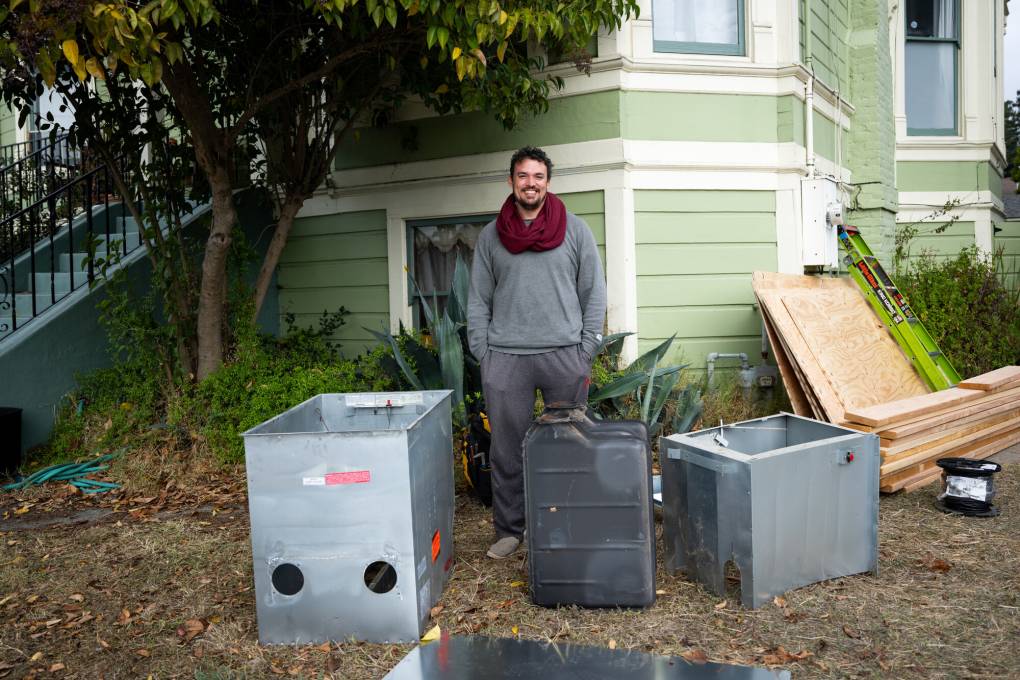
"caption": "Jesse Hassinger stands amidst construction work outside of his home in Oakland on Nov. 13, 2024, part of the EcoBlock project. As the innovative project to cut gas out of an entire block comes to a close, residents and researchers share their lessons.",
"credit": "Beth LaBerge/KQED",
"altTag": null,
"description": null,
"imgSizes": {
"medium": {
"file": "https://cdn.kqed.org/wp-content/uploads/sites/35/2024/11/241113-EcoBlockFollowup-58-BL_qed-800x533.jpg",
"width": 800,
"height": 533,
"mimeType": "image/jpeg"
},
"large": {
"file": "https://cdn.kqed.org/wp-content/uploads/sites/35/2024/11/241113-EcoBlockFollowup-58-BL_qed-1020x680.jpg",
"width": 1020,
"height": 680,
"mimeType": "image/jpeg"
},
"thumbnail": {
"file": "https://cdn.kqed.org/wp-content/uploads/sites/35/2024/11/241113-EcoBlockFollowup-58-BL_qed-160x107.jpg",
"width": 160,
"height": 107,
"mimeType": "image/jpeg"
},
"medium_large": {
"file": "https://cdn.kqed.org/wp-content/uploads/sites/35/2024/11/241113-EcoBlockFollowup-58-BL_qed-768x512.jpg",
"width": 768,
"height": 512,
"mimeType": "image/jpeg"
},
"1536x1536": {
"file": "https://cdn.kqed.org/wp-content/uploads/sites/35/2024/11/241113-EcoBlockFollowup-58-BL_qed-1536x1024.jpg",
"width": 1536,
"height": 1024,
"mimeType": "image/jpeg"
},
"post-thumbnail": {
"file": "https://cdn.kqed.org/wp-content/uploads/sites/35/2024/11/241113-EcoBlockFollowup-58-BL_qed-672x372.jpg",
"width": 672,
"height": 372,
"mimeType": "image/jpeg"
},
"twentyfourteen-full-width": {
"file": "https://cdn.kqed.org/wp-content/uploads/sites/35/2024/11/241113-EcoBlockFollowup-58-BL_qed-1038x576.jpg",
"width": 1038,
"height": 576,
"mimeType": "image/jpeg"
},
"full-width": {
"file": "https://cdn.kqed.org/wp-content/uploads/sites/35/2024/11/241113-EcoBlockFollowup-58-BL_qed-1920x1280.jpg",
"width": 1920,
"height": 1280,
"mimeType": "image/jpeg"
},
"kqedFullSize": {
"file": "https://cdn.kqed.org/wp-content/uploads/sites/35/2024/11/241113-EcoBlockFollowup-58-BL_qed.jpg",
"width": 2000,
"height": 1333
}
},
"isLoading": false,
"fetchFailed": false
},
"science_1996281": {
"type": "attachments",
"id": "science_1996281",
"meta": {
"index": "attachments_1716263798",
"site": "science",
"id": "1996281",
"found": true
},
"title": "20250310_DANI-GOLOMB_DMB_00070-KQED",
"publishDate": 1741718196,
"status": "inherit",
"parent": 0,
"modified": 1741718227,
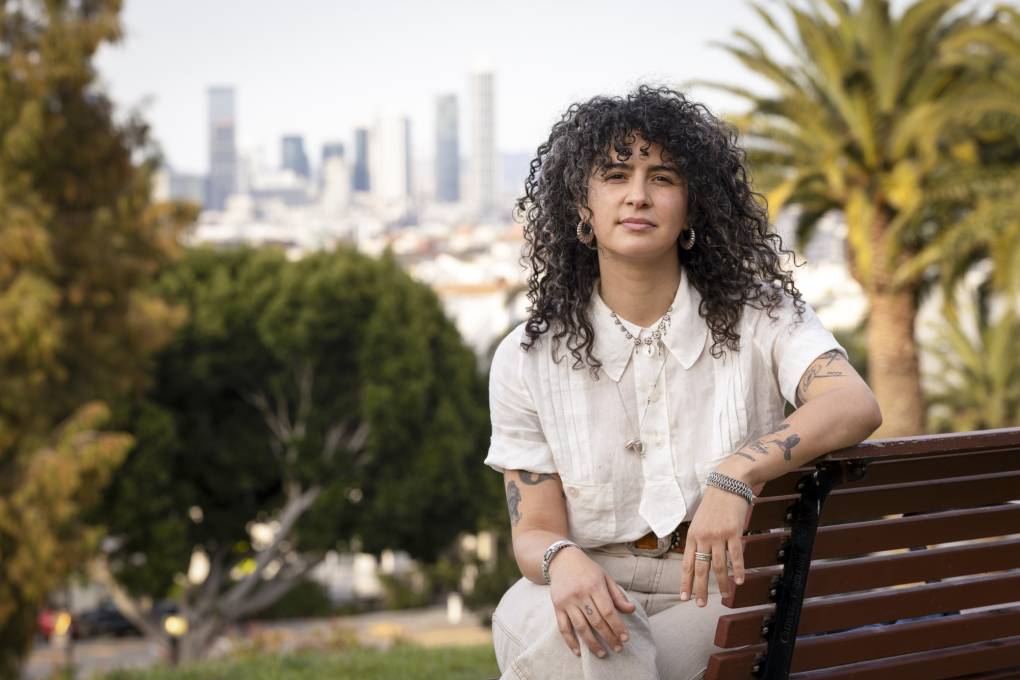
"caption": "Dani Golomb poses for a portrait in San Francisco's Mission Dolores Park on Monday, March 11, 2025.",
"credit": "David M. Barreda/KQED",
"altTag": null,
"description": null,
"imgSizes": {
"medium": {
"file": "https://cdn.kqed.org/wp-content/uploads/sites/35/2025/03/20250310_DANI-GOLOMB_DMB_00070-KQED-800x534.jpg",
"width": 800,
"height": 534,
"mimeType": "image/jpeg"
},
"large": {
"file": "https://cdn.kqed.org/wp-content/uploads/sites/35/2025/03/20250310_DANI-GOLOMB_DMB_00070-KQED-1020x680.jpg",
"width": 1020,
"height": 680,
"mimeType": "image/jpeg"
},
"thumbnail": {
"file": "https://cdn.kqed.org/wp-content/uploads/sites/35/2025/03/20250310_DANI-GOLOMB_DMB_00070-KQED-160x107.jpg",
"width": 160,
"height": 107,
"mimeType": "image/jpeg"
},
"medium_large": {
"file": "https://cdn.kqed.org/wp-content/uploads/sites/35/2025/03/20250310_DANI-GOLOMB_DMB_00070-KQED-768x512.jpg",
"width": 768,
"height": 512,
"mimeType": "image/jpeg"
},
"1536x1536": {
"file": "https://cdn.kqed.org/wp-content/uploads/sites/35/2025/03/20250310_DANI-GOLOMB_DMB_00070-KQED-1536x1025.jpg",
"width": 1536,
"height": 1025,
"mimeType": "image/jpeg"
},
"post-thumbnail": {
"file": "https://cdn.kqed.org/wp-content/uploads/sites/35/2025/03/20250310_DANI-GOLOMB_DMB_00070-KQED-672x372.jpg",
"width": 672,
"height": 372,
"mimeType": "image/jpeg"
},
"twentyfourteen-full-width": {
"file": "https://cdn.kqed.org/wp-content/uploads/sites/35/2025/03/20250310_DANI-GOLOMB_DMB_00070-KQED-1038x576.jpg",
"width": 1038,
"height": 576,
"mimeType": "image/jpeg"
},
"full-width": {
"file": "https://cdn.kqed.org/wp-content/uploads/sites/35/2025/03/20250310_DANI-GOLOMB_DMB_00070-KQED-1920x1281.jpg",
"width": 1920,
"height": 1281,
"mimeType": "image/jpeg"
},
"kqedFullSize": {
"file": "https://cdn.kqed.org/wp-content/uploads/sites/35/2025/03/20250310_DANI-GOLOMB_DMB_00070-KQED.jpg",
"width": 2000,
"height": 1334
}
},
"isLoading": false,
"fetchFailed": false
},
"science_1994691": {
"type": "attachments",
"id": "science_1994691",
"meta": {
"index": "attachments_1716263798",
"site": "science",
"id": "1994691",
"found": true
},
"title": "People flock beaches in San Francisco as heat wave warning issued in California",
"publishDate": 1728497335,
"status": "inherit",
"parent": 0,
"modified": 1773435985,
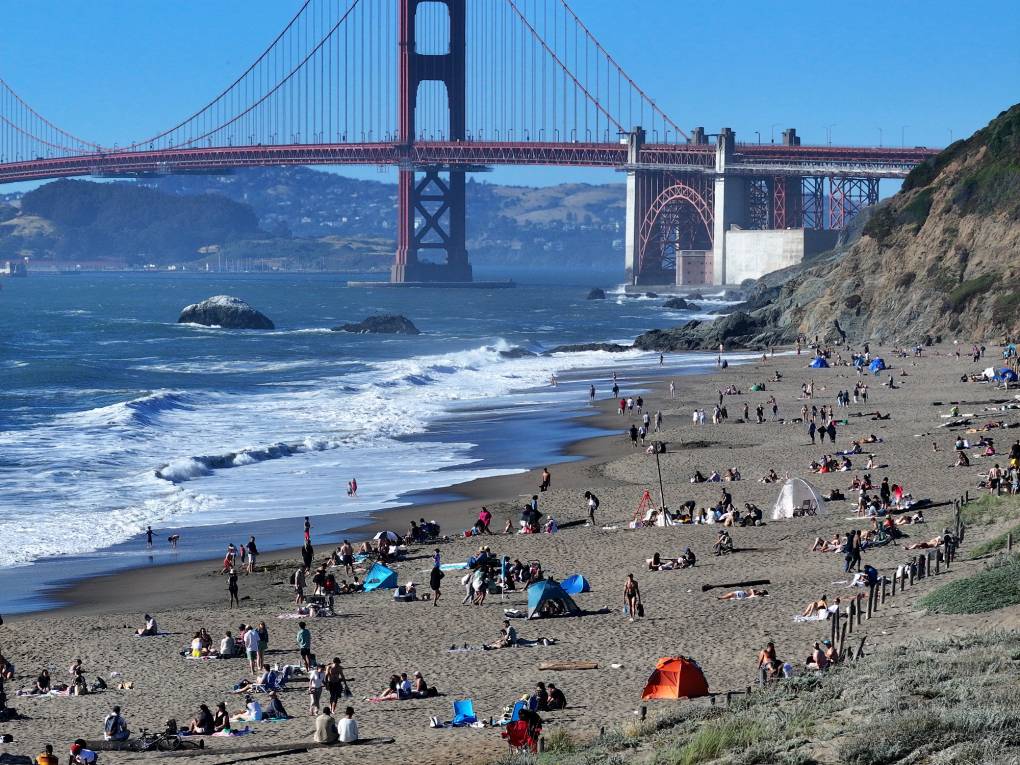
"caption": "People enjoy the warm weather at San Francisco's Baker Beach on June 4, 2024, as a heat wave warning sweeps across California.",
"credit": "Tayfun Coskun/Anadolu via Getty Images",
"altTag": null,
"description": null,
"imgSizes": {
"medium": {
"file": "https://cdn.kqed.org/wp-content/uploads/sites/35/2024/10/SFHeatWaveGetty3-800x600.jpg",
"width": 800,
"height": 600,
"mimeType": "image/jpeg"
},
"large": {
"file": "https://cdn.kqed.org/wp-content/uploads/sites/35/2024/10/SFHeatWaveGetty3-1020x765.jpg",
"width": 1020,
"height": 765,
"mimeType": "image/jpeg"
},
"thumbnail": {
"file": "https://cdn.kqed.org/wp-content/uploads/sites/35/2024/10/SFHeatWaveGetty3-160x120.jpg",
"width": 160,
"height": 120,
"mimeType": "image/jpeg"
},
"medium_large": {
"file": "https://cdn.kqed.org/wp-content/uploads/sites/35/2024/10/SFHeatWaveGetty3-768x576.jpg",
"width": 768,
"height": 576,
"mimeType": "image/jpeg"
},
"1536x1536": {
"file": "https://cdn.kqed.org/wp-content/uploads/sites/35/2024/10/SFHeatWaveGetty3-1536x1152.jpg",
"width": 1536,
"height": 1152,
"mimeType": "image/jpeg"
},
"post-thumbnail": {
"file": "https://cdn.kqed.org/wp-content/uploads/sites/35/2024/10/SFHeatWaveGetty3-672x372.jpg",
"width": 672,
"height": 372,
"mimeType": "image/jpeg"
},
"twentyfourteen-full-width": {
"file": "https://cdn.kqed.org/wp-content/uploads/sites/35/2024/10/SFHeatWaveGetty3-1038x576.jpg",
"width": 1038,
"height": 576,
"mimeType": "image/jpeg"
},
"full-width": {
"file": "https://cdn.kqed.org/wp-content/uploads/sites/35/2024/10/SFHeatWaveGetty3-1920x1440.jpg",
"width": 1920,
"height": 1440,
"mimeType": "image/jpeg"
},
"kqedFullSize": {
"file": "https://cdn.kqed.org/wp-content/uploads/sites/35/2024/10/SFHeatWaveGetty3.jpg",
"width": 2000,
"height": 1500
}
},
"isLoading": false,
"fetchFailed": false
},
"science_1996463": {
"type": "attachments",
"id": "science_1996463",
"meta": {
"index": "attachments_1716263798",
"site": "science",
"id": "1996463",
"found": true
},
"title": "Coyote Valley - Landscapes - DN - 3-22-2016 - 19",
"publishDate": 1742857108,
"status": "inherit",
"parent": 1996440,
"modified": 1742857715,
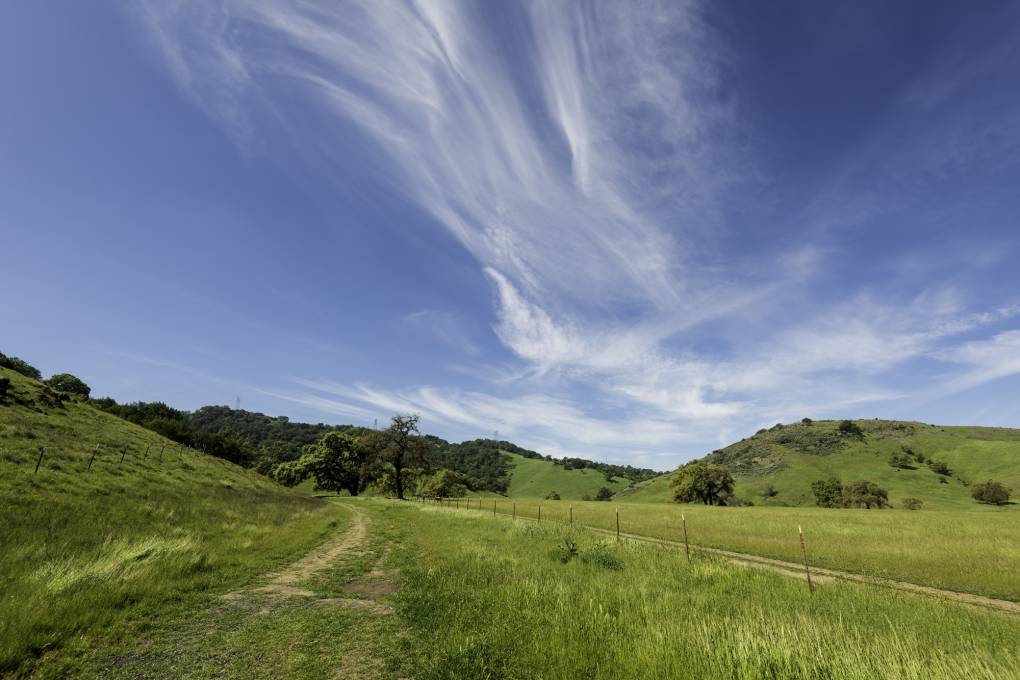
"caption": "Despite plans to break ground in 2026, project leaders say they have yet to get answers on the federal funding needed to build accessible trails in Coyote Valley.",
"credit": "Courtesy Open Space Authority Santa Clara Valley",
"altTag": null,
"description": null,
"imgSizes": {
"medium": {
"file": "https://cdn.kqed.org/wp-content/uploads/sites/35/2025/03/Coyote-Valley-Landscapes-DN-3-22-2016-19-800x534.jpg",
"width": 800,
"height": 534,
"mimeType": "image/jpeg"
},
"large": {
"file": "https://cdn.kqed.org/wp-content/uploads/sites/35/2025/03/Coyote-Valley-Landscapes-DN-3-22-2016-19-1020x680.jpg",
"width": 1020,
"height": 680,
"mimeType": "image/jpeg"
},
"thumbnail": {
"file": "https://cdn.kqed.org/wp-content/uploads/sites/35/2025/03/Coyote-Valley-Landscapes-DN-3-22-2016-19-160x107.jpg",
"width": 160,
"height": 107,
"mimeType": "image/jpeg"
},
"medium_large": {
"file": "https://cdn.kqed.org/wp-content/uploads/sites/35/2025/03/Coyote-Valley-Landscapes-DN-3-22-2016-19-768x512.jpg",
"width": 768,
"height": 512,
"mimeType": "image/jpeg"
},
"1536x1536": {
"file": "https://cdn.kqed.org/wp-content/uploads/sites/35/2025/03/Coyote-Valley-Landscapes-DN-3-22-2016-19-1536x1025.jpg",
"width": 1536,
"height": 1025,
"mimeType": "image/jpeg"
},
"post-thumbnail": {
"file": "https://cdn.kqed.org/wp-content/uploads/sites/35/2025/03/Coyote-Valley-Landscapes-DN-3-22-2016-19-672x372.jpg",
"width": 672,
"height": 372,
"mimeType": "image/jpeg"
},
"twentyfourteen-full-width": {
"file": "https://cdn.kqed.org/wp-content/uploads/sites/35/2025/03/Coyote-Valley-Landscapes-DN-3-22-2016-19-1038x576.jpg",
"width": 1038,
"height": 576,
"mimeType": "image/jpeg"
},
"full-width": {
"file": "https://cdn.kqed.org/wp-content/uploads/sites/35/2025/03/Coyote-Valley-Landscapes-DN-3-22-2016-19-1920x1281.jpg",
"width": 1920,
"height": 1281,
"mimeType": "image/jpeg"
},
"kqedFullSize": {
"file": "https://cdn.kqed.org/wp-content/uploads/sites/35/2025/03/Coyote-Valley-Landscapes-DN-3-22-2016-19.jpg",
"width": 2000,
"height": 1334
}
},
"isLoading": false,
"fetchFailed": false
},
"science_1996283": {
"type": "attachments",
"id": "science_1996283",
"meta": {
"index": "attachments_1716263798",
"site": "science",
"id": "1996283",
"found": true
},
"title": "19 1115_0531.NEF",
"publishDate": 1741799242,
"status": "inherit",
"parent": 0,
"modified": 1741972214,
"caption": "A subterranean giant: The Des Plaines tunnel, a one-mile stretch of Chicago’s ambitious Tunnel and Reservoir Plan (TARP), spans 20 feet in diameter and sits 250 feet underground. This massive tunnel, photographed on Nov. 15, 2019, is a crucial link to the McCook Reservoir, designed to combat flooding and improve water quality by capturing stormwater and sewer overflows.",
"credit": "Courtesy of Dan Wendt/MWRDGC",
"altTag": null,
"description": null,
"imgSizes": {
"medium": {
"file": "https://cdn.kqed.org/wp-content/uploads/sites/35/2025/03/19-1115_0531-800x532.jpg",
"width": 800,
"height": 532,
"mimeType": "image/jpeg"
},
"large": {
"file": "https://cdn.kqed.org/wp-content/uploads/sites/35/2025/03/19-1115_0531-1020x679.jpg",
"width": 1020,
"height": 679,
"mimeType": "image/jpeg"
},
"thumbnail": {
"file": "https://cdn.kqed.org/wp-content/uploads/sites/35/2025/03/19-1115_0531-160x106.jpg",
"width": 160,
"height": 106,
"mimeType": "image/jpeg"
},
"medium_large": {
"file": "https://cdn.kqed.org/wp-content/uploads/sites/35/2025/03/19-1115_0531-768x511.jpg",
"width": 768,
"height": 511,
"mimeType": "image/jpeg"
},
"1536x1536": {
"file": "https://cdn.kqed.org/wp-content/uploads/sites/35/2025/03/19-1115_0531-1536x1022.jpg",
"width": 1536,
"height": 1022,
"mimeType": "image/jpeg"
},
"post-thumbnail": {
"file": "https://cdn.kqed.org/wp-content/uploads/sites/35/2025/03/19-1115_0531-672x372.jpg",
"width": 672,
"height": 372,
"mimeType": "image/jpeg"
},
"twentyfourteen-full-width": {
"file": "https://cdn.kqed.org/wp-content/uploads/sites/35/2025/03/19-1115_0531-1038x576.jpg",
"width": 1038,
"height": 576,
"mimeType": "image/jpeg"
},
"full-width": {
"file": "https://cdn.kqed.org/wp-content/uploads/sites/35/2025/03/19-1115_0531-1920x1278.jpg",
"width": 1920,
"height": 1278,
"mimeType": "image/jpeg"
},
"kqedFullSize": {
"file": "https://cdn.kqed.org/wp-content/uploads/sites/35/2025/03/19-1115_0531.jpg",
"width": 2000,
"height": 1331
}
},
"isLoading": false,
"fetchFailed": false
},
"science_1981420": {
"type": "attachments",
"id": "science_1981420",
"meta": {
"index": "attachments_1716263798",
"site": "science",
"id": "1981420",
"found": true
},
"title": "California Newts",
"publishDate": 1675275713,
"status": "inherit",
"parent": 1981327,
"modified": 1739317553,
"caption": "A portrait of a male California newt as he migrates towards a pond during the breeding season.",
"credit": "Anton Sorokin/bioGraphic",
"altTag": "A portrait of a male newt.",
"description": "A portrait of a male newt as he migrates towards a pond during the breeding season.",
"imgSizes": {
"medium": {
"file": "https://cdn.kqed.org/wp-content/uploads/sites/35/2023/02/RS62493_A_IntroNewt3-qut-800x534.jpg",
"width": 800,
"height": 534,
"mimeType": "image/jpeg"
},
"large": {
"file": "https://cdn.kqed.org/wp-content/uploads/sites/35/2023/02/RS62493_A_IntroNewt3-qut-1020x681.jpg",
"width": 1020,
"height": 681,
"mimeType": "image/jpeg"
},
"thumbnail": {
"file": "https://cdn.kqed.org/wp-content/uploads/sites/35/2023/02/RS62493_A_IntroNewt3-qut-160x107.jpg",
"width": 160,
"height": 107,
"mimeType": "image/jpeg"
},
"medium_large": {
"file": "https://cdn.kqed.org/wp-content/uploads/sites/35/2023/02/RS62493_A_IntroNewt3-qut-768x512.jpg",
"width": 768,
"height": 512,
"mimeType": "image/jpeg"
},
"1536x1536": {
"file": "https://cdn.kqed.org/wp-content/uploads/sites/35/2023/02/RS62493_A_IntroNewt3-qut-1536x1025.jpg",
"width": 1536,
"height": 1025,
"mimeType": "image/jpeg"
},
"post-thumbnail": {
"file": "https://cdn.kqed.org/wp-content/uploads/sites/35/2023/02/RS62493_A_IntroNewt3-qut-672x372.jpg",
"width": 672,
"height": 372,
"mimeType": "image/jpeg"
},
"twentyfourteen-full-width": {
"file": "https://cdn.kqed.org/wp-content/uploads/sites/35/2023/02/RS62493_A_IntroNewt3-qut-1038x576.jpg",
"width": 1038,
"height": 576,
"mimeType": "image/jpeg"
},
"kqedFullSize": {
"file": "https://cdn.kqed.org/wp-content/uploads/sites/35/2023/02/RS62493_A_IntroNewt3-qut.jpg",
"width": 1920,
"height": 1281
}
},
"isLoading": false,
"fetchFailed": false
},
"science_1995365": {
"type": "attachments",
"id": "science_1995365",
"meta": {
"index": "attachments_1716263798",
"site": "science",
"id": "1995365",
"found": true
},
"title": "naturalgas_002_qed",
"publishDate": 1734482205,
"status": "inherit",
"parent": 1995349,
"modified": 1734482359,
"caption": "A Kenmore natural gas stove in a San Francisco apartment on July 17, 2019.",
"credit": "Lindsey Moore/KQED",
"altTag": "Image of a gas stove against a black background.",
"description": null,
"imgSizes": {
"medium": {
"file": "https://cdn.kqed.org/wp-content/uploads/sites/35/2024/12/naturalgas_002_qed-800x579.jpg",
"width": 800,
"height": 579,
"mimeType": "image/jpeg"
},
"large": {
"file": "https://cdn.kqed.org/wp-content/uploads/sites/35/2024/12/naturalgas_002_qed-1020x739.jpg",
"width": 1020,
"height": 739,
"mimeType": "image/jpeg"
},
"thumbnail": {
"file": "https://cdn.kqed.org/wp-content/uploads/sites/35/2024/12/naturalgas_002_qed-160x116.jpg",
"width": 160,
"height": 116,
"mimeType": "image/jpeg"
},
"medium_large": {
"file": "https://cdn.kqed.org/wp-content/uploads/sites/35/2024/12/naturalgas_002_qed-768x556.jpg",
"width": 768,
"height": 556,
"mimeType": "image/jpeg"
},
"1536x1536": {
"file": "https://cdn.kqed.org/wp-content/uploads/sites/35/2024/12/naturalgas_002_qed-1536x1112.jpg",
"width": 1536,
"height": 1112,
"mimeType": "image/jpeg"
},
"post-thumbnail": {
"file": "https://cdn.kqed.org/wp-content/uploads/sites/35/2024/12/naturalgas_002_qed-672x372.jpg",
"width": 672,
"height": 372,
"mimeType": "image/jpeg"
},
"twentyfourteen-full-width": {
"file": "https://cdn.kqed.org/wp-content/uploads/sites/35/2024/12/naturalgas_002_qed-1038x576.jpg",
"width": 1038,
"height": 576,
"mimeType": "image/jpeg"
},
"kqedFullSize": {
"file": "https://cdn.kqed.org/wp-content/uploads/sites/35/2024/12/naturalgas_002_qed.jpg",
"width": 1841,
"height": 1333
}
},
"isLoading": false,
"fetchFailed": false
},
"science_1995343": {
"type": "attachments",
"id": "science_1995343",
"meta": {
"index": "attachments_1716263798",
"site": "science",
"id": "1995343",
"found": true
},
"title": "A PSE researcher tests for gas leaking from a stove burner.",
"publishDate": 1734471506,
"status": "inherit",
"parent": 0,
"modified": 1734475198,
"caption": "A PSE researcher tests for gas leaking from a stove burner.",
"credit": "Courtesy: Brett Tryon/PSE Healthy Energy",
"altTag": "A person holds a small machine near a gas stove.",
"description": null,
"imgSizes": {
"medium": {
"file": "https://cdn.kqed.org/wp-content/uploads/sites/35/2024/12/Brett-Tryon_1-800x533.jpg",
"width": 800,
"height": 533,
"mimeType": "image/jpeg"
},
"large": {
"file": "https://cdn.kqed.org/wp-content/uploads/sites/35/2024/12/Brett-Tryon_1-1020x679.jpg",
"width": 1020,
"height": 679,
"mimeType": "image/jpeg"
},
"thumbnail": {
"file": "https://cdn.kqed.org/wp-content/uploads/sites/35/2024/12/Brett-Tryon_1-160x107.jpg",
"width": 160,
"height": 107,
"mimeType": "image/jpeg"
},
"medium_large": {
"file": "https://cdn.kqed.org/wp-content/uploads/sites/35/2024/12/Brett-Tryon_1-768x511.jpg",
"width": 768,
"height": 511,
"mimeType": "image/jpeg"
},
"1536x1536": {
"file": "https://cdn.kqed.org/wp-content/uploads/sites/35/2024/12/Brett-Tryon_1-1536x1023.jpg",
"width": 1536,
"height": 1023,
"mimeType": "image/jpeg"
},
"post-thumbnail": {
"file": "https://cdn.kqed.org/wp-content/uploads/sites/35/2024/12/Brett-Tryon_1-672x372.jpg",
"width": 672,
"height": 372,
"mimeType": "image/jpeg"
},
"twentyfourteen-full-width": {
"file": "https://cdn.kqed.org/wp-content/uploads/sites/35/2024/12/Brett-Tryon_1-1038x576.jpg",
"width": 1038,
"height": 576,
"mimeType": "image/jpeg"
},
"full-width": {
"file": "https://cdn.kqed.org/wp-content/uploads/sites/35/2024/12/Brett-Tryon_1-1920x1279.jpg",
"width": 1920,
"height": 1279,
"mimeType": "image/jpeg"
},
"kqedFullSize": {
"file": "https://cdn.kqed.org/wp-content/uploads/sites/35/2024/12/Brett-Tryon_1.jpg",
"width": 2000,
"height": 1332
}
},
"isLoading": false,
"fetchFailed": false
},
"science_1994027": {
"type": "attachments",
"id": "science_1994027",
"meta": {
"index": "attachments_1716263798",
"site": "science",
"id": "1994027",
"found": true
},
"title": "20240828_OAKLANDZOO_GC-6-KQED",
"publishDate": 1724884958,
"status": "inherit",
"parent": 0,
"modified": 1732053937,
"caption": "Osh, the 30-year-old male African elephant, plays with a ring while eating tree branches in his habitat at the Oakland Zoo on August 28, 2024. Osh, the only remaining elephant at the zoo, was recently moved to an elephant sanctuary in Tennessee.",
"credit": "Gina Castro/KQED",
"altTag": "An elephant raises his trunk.",
"description": null,
"imgSizes": {
"medium": {
"file": "https://cdn.kqed.org/wp-content/uploads/sites/35/2024/08/20240828_OAKLANDZOO_GC-6-KQED-800x533.jpg",
"width": 800,
"height": 533,
"mimeType": "image/jpeg"
},
"large": {
"file": "https://cdn.kqed.org/wp-content/uploads/sites/35/2024/08/20240828_OAKLANDZOO_GC-6-KQED-1020x680.jpg",
"width": 1020,
"height": 680,
"mimeType": "image/jpeg"
},
"thumbnail": {
"file": "https://cdn.kqed.org/wp-content/uploads/sites/35/2024/08/20240828_OAKLANDZOO_GC-6-KQED-160x107.jpg",
"width": 160,
"height": 107,
"mimeType": "image/jpeg"
},
"medium_large": {
"file": "https://cdn.kqed.org/wp-content/uploads/sites/35/2024/08/20240828_OAKLANDZOO_GC-6-KQED-768x512.jpg",
"width": 768,
"height": 512,
"mimeType": "image/jpeg"
},
"1536x1536": {
"file": "https://cdn.kqed.org/wp-content/uploads/sites/35/2024/08/20240828_OAKLANDZOO_GC-6-KQED-1536x1024.jpg",
"width": 1536,
"height": 1024,
"mimeType": "image/jpeg"
},
"post-thumbnail": {
"file": "https://cdn.kqed.org/wp-content/uploads/sites/35/2024/08/20240828_OAKLANDZOO_GC-6-KQED-672x372.jpg",
"width": 672,
"height": 372,
"mimeType": "image/jpeg"
},
"twentyfourteen-full-width": {
"file": "https://cdn.kqed.org/wp-content/uploads/sites/35/2024/08/20240828_OAKLANDZOO_GC-6-KQED-1038x576.jpg",
"width": 1038,
"height": 576,
"mimeType": "image/jpeg"
},
"full-width": {
"file": "https://cdn.kqed.org/wp-content/uploads/sites/35/2024/08/20240828_OAKLANDZOO_GC-6-KQED-1920x1280.jpg",
"width": 1920,
"height": 1280,
"mimeType": "image/jpeg"
},
"kqedFullSize": {
"file": "https://cdn.kqed.org/wp-content/uploads/sites/35/2024/08/20240828_OAKLANDZOO_GC-6-KQED.jpg",
"width": 2000,
"height": 1333
}
},
"isLoading": false,
"fetchFailed": false
},
"science_1995131": {
"type": "attachments",
"id": "science_1995131",
"meta": {
"index": "attachments_1716263798",
"site": "science",
"id": "1995131",
"found": true
},
"title": "A person walks in the rain on Mission Street in San Francisco on Dec. 18, 2023.",
"publishDate": 1731359010,
"status": "inherit",
"parent": 1995129,
"modified": 1731359055,
"caption": "A person walks in the rain on Mission Street in San Francisco on Dec. 18, 2023.",
"credit": "Beth LaBerge/KQED",
"altTag": "A person with an umbrella walk in the middle of the street with palm trees in the background.",
"description": null,
"imgSizes": {
"medium": {
"file": "https://cdn.kqed.org/wp-content/uploads/sites/35/2024/11/231218-RainFile-14-BL_qed-800x533.jpg",
"width": 800,
"height": 533,
"mimeType": "image/jpeg"
},
"large": {
"file": "https://cdn.kqed.org/wp-content/uploads/sites/35/2024/11/231218-RainFile-14-BL_qed-1020x680.jpg",
"width": 1020,
"height": 680,
"mimeType": "image/jpeg"
},
"thumbnail": {
"file": "https://cdn.kqed.org/wp-content/uploads/sites/35/2024/11/231218-RainFile-14-BL_qed-160x107.jpg",
"width": 160,
"height": 107,
"mimeType": "image/jpeg"
},
"medium_large": {
"file": "https://cdn.kqed.org/wp-content/uploads/sites/35/2024/11/231218-RainFile-14-BL_qed-768x512.jpg",
"width": 768,
"height": 512,
"mimeType": "image/jpeg"
},
"1536x1536": {
"file": "https://cdn.kqed.org/wp-content/uploads/sites/35/2024/11/231218-RainFile-14-BL_qed-1536x1024.jpg",
"width": 1536,
"height": 1024,
"mimeType": "image/jpeg"
},
"post-thumbnail": {
"file": "https://cdn.kqed.org/wp-content/uploads/sites/35/2024/11/231218-RainFile-14-BL_qed-672x372.jpg",
"width": 672,
"height": 372,
"mimeType": "image/jpeg"
},
"twentyfourteen-full-width": {
"file": "https://cdn.kqed.org/wp-content/uploads/sites/35/2024/11/231218-RainFile-14-BL_qed-1038x576.jpg",
"width": 1038,
"height": 576,
"mimeType": "image/jpeg"
},
"full-width": {
"file": "https://cdn.kqed.org/wp-content/uploads/sites/35/2024/11/231218-RainFile-14-BL_qed-1920x1280.jpg",
"width": 1920,
"height": 1280,
"mimeType": "image/jpeg"
},
"kqedFullSize": {
"file": "https://cdn.kqed.org/wp-content/uploads/sites/35/2024/11/231218-RainFile-14-BL_qed.jpg",
"width": 1999,
"height": 1333
}
},
"isLoading": false,
"fetchFailed": false
},
"science_1995079": {
"type": "attachments",
"id": "science_1995079",
"meta": {
"index": "attachments_1716263798",
"site": "science",
"id": "1995079",
"found": true
},
"title": "241030-PropK-27-BL_qed",
"publishDate": 1730939164,
"status": "inherit",
"parent": 1995077,
"modified": 1730939223,
"caption": "The Great Highway in San Francisco on Oct. 30, 2024. ",
"credit": "Beth LaBerge/KQED",
"altTag": null,
"description": null,
"imgSizes": {
"medium": {
"file": "https://cdn.kqed.org/wp-content/uploads/sites/35/2024/11/241030-PropK-27-BL_qed-800x533.jpg",
"width": 800,
"height": 533,
"mimeType": "image/jpeg"
},
"large": {
"file": "https://cdn.kqed.org/wp-content/uploads/sites/35/2024/11/241030-PropK-27-BL_qed-1020x680.jpg",
"width": 1020,
"height": 680,
"mimeType": "image/jpeg"
},
"thumbnail": {
"file": "https://cdn.kqed.org/wp-content/uploads/sites/35/2024/11/241030-PropK-27-BL_qed-160x107.jpg",
"width": 160,
"height": 107,
"mimeType": "image/jpeg"
},
"medium_large": {
"file": "https://cdn.kqed.org/wp-content/uploads/sites/35/2024/11/241030-PropK-27-BL_qed-768x512.jpg",
"width": 768,
"height": 512,
"mimeType": "image/jpeg"
},
"1536x1536": {
"file": "https://cdn.kqed.org/wp-content/uploads/sites/35/2024/11/241030-PropK-27-BL_qed-1536x1024.jpg",
"width": 1536,
"height": 1024,
"mimeType": "image/jpeg"
},
"post-thumbnail": {
"file": "https://cdn.kqed.org/wp-content/uploads/sites/35/2024/11/241030-PropK-27-BL_qed-672x372.jpg",
"width": 672,
"height": 372,
"mimeType": "image/jpeg"
},
"twentyfourteen-full-width": {
"file": "https://cdn.kqed.org/wp-content/uploads/sites/35/2024/11/241030-PropK-27-BL_qed-1038x576.jpg",
"width": 1038,
"height": 576,
"mimeType": "image/jpeg"
},
"full-width": {
"file": "https://cdn.kqed.org/wp-content/uploads/sites/35/2024/11/241030-PropK-27-BL_qed-1920x1280.jpg",
"width": 1920,
"height": 1280,
"mimeType": "image/jpeg"
},
"kqedFullSize": {
"file": "https://cdn.kqed.org/wp-content/uploads/sites/35/2024/11/241030-PropK-27-BL_qed.jpg",
"width": 1999,
"height": 1333
}
},
"isLoading": false,
"fetchFailed": false
},
"science_1995006": {
"type": "attachments",
"id": "science_1995006",
"meta": {
"index": "attachments_1716263798",
"site": "science",
"id": "1995006",
"found": true
},
"title": "005_KQED_SanFrancisco_HalloweenDecorations_10302020_qed",
"publishDate": 1730183873,
"status": "inherit",
"parent": 1995002,
"modified": 1730183935,
"caption": "Halloween decorations at a house in Corona Heights in San Francisco on Oct. 30, 2020.",
"credit": "Beth LaBerge/KQED",
"altTag": null,
"description": null,
"imgSizes": {
"medium": {
"file": "https://cdn.kqed.org/wp-content/uploads/sites/35/2024/10/005_KQED_SanFrancisco_HalloweenDecorations_10302020_qed-800x533.jpg",
"width": 800,
"height": 533,
"mimeType": "image/jpeg"
},
"large": {
"file": "https://cdn.kqed.org/wp-content/uploads/sites/35/2024/10/005_KQED_SanFrancisco_HalloweenDecorations_10302020_qed-1020x680.jpg",
"width": 1020,
"height": 680,
"mimeType": "image/jpeg"
},
"thumbnail": {
"file": "https://cdn.kqed.org/wp-content/uploads/sites/35/2024/10/005_KQED_SanFrancisco_HalloweenDecorations_10302020_qed-160x107.jpg",
"width": 160,
"height": 107,
"mimeType": "image/jpeg"
},
"medium_large": {
"file": "https://cdn.kqed.org/wp-content/uploads/sites/35/2024/10/005_KQED_SanFrancisco_HalloweenDecorations_10302020_qed-768x512.jpg",
"width": 768,
"height": 512,
"mimeType": "image/jpeg"
},
"1536x1536": {
"file": "https://cdn.kqed.org/wp-content/uploads/sites/35/2024/10/005_KQED_SanFrancisco_HalloweenDecorations_10302020_qed-1536x1024.jpg",
"width": 1536,
"height": 1024,
"mimeType": "image/jpeg"
},
"post-thumbnail": {
"file": "https://cdn.kqed.org/wp-content/uploads/sites/35/2024/10/005_KQED_SanFrancisco_HalloweenDecorations_10302020_qed-672x372.jpg",
"width": 672,
"height": 372,
"mimeType": "image/jpeg"
},
"twentyfourteen-full-width": {
"file": "https://cdn.kqed.org/wp-content/uploads/sites/35/2024/10/005_KQED_SanFrancisco_HalloweenDecorations_10302020_qed-1038x576.jpg",
"width": 1038,
"height": 576,
"mimeType": "image/jpeg"
},
"full-width": {
"file": "https://cdn.kqed.org/wp-content/uploads/sites/35/2024/10/005_KQED_SanFrancisco_HalloweenDecorations_10302020_qed-1920x1280.jpg",
"width": 1920,
"height": 1280,
"mimeType": "image/jpeg"
},
"kqedFullSize": {
"file": "https://cdn.kqed.org/wp-content/uploads/sites/35/2024/10/005_KQED_SanFrancisco_HalloweenDecorations_10302020_qed.jpg",
"width": 1999,
"height": 1333
}
},
"isLoading": false,
"fetchFailed": false
}
},
"audioPlayerReducer": {
"postId": "stream_live",
"isPaused": true,
"isPlaying": false,
"pfsActive": false,
"pledgeModalIsOpen": true,
"playerDrawerIsOpen": false,
"liveAudioPlayStartedAt": 0,
"liveAudioPlayContext": ""
},
"authorsReducer": {
"lklivans": {
"type": "authors",
"id": "8648",
"meta": {
"index": "authors_1716337520",
"id": "8648",
"found": true
},
"name": "Laura Klivans",
"firstName": "Laura",
"lastName": "Klivans",
"slug": "lklivans",
"email": "lklivans@kqed.org",
"display_author_email": true,
"staff_mastheads": [
"news",
"science"
],
"title": "Reporter",
"bio": "Laura Klivans is an award-winning science reporter for KQED News, where she covers climate change with an eye on both groundbreaking progress and gaps in action. She is the former host of KQED's blockbuster video series about tiny, amazing animals, \u003cem>Deep Look\u003c/em>. Her work reaches national audiences through NPR, \u003cem>Here & Now, \u003c/em>PRI, and other major outlets. \r\n\r\nLaura’s won five Northern California Area Emmy Awards for Deep Look and First Place in the Greater Bay Area Journalism Awards for a podcast exploring how one Oakland neighborhood teamed up to reduce planet-heating pollution.\r\n\r\nBeyond her reporting, she hosts and moderates events. In the past, she taught audio storytelling at the UC Berkeley Graduate School of Journalism, led international education programs, worked with immigrants and refugees along the Thai-Burmese border, taught high schoolers sex ed, and was an actress. \r\n\r\nShe's a former UC Berkeley Human Rights Fellow, USC Center for Health Journalism's California Fellow and Coro Fellow in Public Affairs. Laura has a master’s in journalism from UC Berkeley, a master’s in education from Harvard, and an undergraduate degree from Northwestern University.\r\n\r\nShe loves trying to riddle the meaning out of vanity license plates.",
"avatar": "https://secure.gravatar.com/avatar/2d2ecd1550a494cc10ad4a503406965585902124739e775a9b3817eebf1d88be?s=600&d=blank&r=g",
"twitter": "lauraklivans",
"bluesky": null,
"facebook": null,
"instagram": null,
"linkedin": null,
"sites": [
{
"site": "news",
"roles": [
"editor"
]
},
{
"site": "stateofhealth",
"roles": [
"contributor",
"editor"
]
},
{
"site": "science",
"roles": [
"editor"
]
},
{
"site": "forum",
"roles": [
"editor"
]
}
],
"headData": {
"title": "Laura Klivans | KQED",
"description": "Reporter",
"ogImgSrc": "https://secure.gravatar.com/avatar/2d2ecd1550a494cc10ad4a503406965585902124739e775a9b3817eebf1d88be?s=600&d=blank&r=g",
"twImgSrc": "https://secure.gravatar.com/avatar/2d2ecd1550a494cc10ad4a503406965585902124739e775a9b3817eebf1d88be?s=600&d=blank&r=g"
},
"isLoading": false,
"link": "/author/lklivans"
},
"dventon": {
"type": "authors",
"id": "11088",
"meta": {
"index": "authors_1716337520",
"id": "11088",
"found": true
},
"name": "Danielle Venton",
"firstName": "Danielle",
"lastName": "Venton",
"slug": "dventon",
"email": "dventon@kqed.org",
"display_author_email": true,
"staff_mastheads": [
"science"
],
"title": "Science reporter",
"bio": "Danielle Venton is a reporter for KQED Science. She covers wildfires, space and oceans (though she is prone to sea sickness).\r\n\r\nBefore joining KQED in 2015, Danielle was a staff reporter at KRCB in Sonoma County and a freelancer. She studied science communication at UC Santa Cruz and formerly worked at CERN in Geneva, Switzerland where she wrote about computing. She lives in Sonoma County and enjoys backpacking.",
"avatar": "https://secure.gravatar.com/avatar/37b292b5c40c8d93959c4f48d73b5286f41b7abd8588277e941905a3ed4c801c?s=600&d=blank&r=g",
"twitter": "DanielleVenton",
"bluesky": null,
"facebook": null,
"instagram": null,
"linkedin": null,
"sites": [
{
"site": "arts",
"roles": [
"contributor"
]
},
{
"site": "news",
"roles": [
"editor"
]
},
{
"site": "futureofyou",
"roles": [
"editor"
]
},
{
"site": "science",
"roles": [
"editor"
]
},
{
"site": "liveblog",
"roles": [
"contributor"
]
}
],
"headData": {
"title": "Danielle Venton | KQED",
"description": "Science reporter",
"ogImgSrc": "https://secure.gravatar.com/avatar/37b292b5c40c8d93959c4f48d73b5286f41b7abd8588277e941905a3ed4c801c?s=600&d=blank&r=g",
"twImgSrc": "https://secure.gravatar.com/avatar/37b292b5c40c8d93959c4f48d73b5286f41b7abd8588277e941905a3ed4c801c?s=600&d=blank&r=g"
},
"isLoading": false,
"link": "/author/dventon"
},
"kevinstark": {
"type": "authors",
"id": "11608",
"meta": {
"index": "authors_1716337520",
"id": "11608",
"found": true
},
"name": "Kevin Stark",
"firstName": "Kevin",
"lastName": "Stark",
"slug": "kevinstark",
"email": "kstark@kqed.org",
"display_author_email": true,
"staff_mastheads": [
"science"
],
"title": "Senior Editor",
"bio": "Kevin is a senior editor for KQED Science, managing the station's health and climate desks. His journalism career began in the Pacific Northwest, and he later became a lead reporter for the San Francisco Public Press. His work has appeared in Pacific Standard magazine, the Energy News Network, the Center for Investigative Reporting's Reveal and WBEZ in Chicago. Kevin joined KQED in 2019, and has covered issues related to energy, wildfire, climate change and the environment.",
"avatar": "https://secure.gravatar.com/avatar/365aaa4b597d3a8374f67504ff0facd323d7906e8eb4be0a7efd2427408e802c?s=600&d=blank&r=g",
"twitter": "starkkev",
"bluesky": null,
"facebook": null,
"instagram": null,
"linkedin": null,
"sites": [
{
"site": "",
"roles": [
"editor"
]
},
{
"site": "news",
"roles": [
"editor"
]
},
{
"site": "science",
"roles": [
"administrator"
]
}
],
"headData": {
"title": "Kevin Stark | KQED",
"description": "Senior Editor",
"ogImgSrc": "https://secure.gravatar.com/avatar/365aaa4b597d3a8374f67504ff0facd323d7906e8eb4be0a7efd2427408e802c?s=600&d=blank&r=g",
"twImgSrc": "https://secure.gravatar.com/avatar/365aaa4b597d3a8374f67504ff0facd323d7906e8eb4be0a7efd2427408e802c?s=600&d=blank&r=g"
},
"isLoading": false,
"link": "/author/kevinstark"
},
"smohamad": {
"type": "authors",
"id": "11631",
"meta": {
"index": "authors_1716337520",
"id": "11631",
"found": true
},
"name": "Sarah Mohamad",
"firstName": "Sarah",
"lastName": "Mohamad",
"slug": "smohamad",
"email": "smohamad@KQED.org",
"display_author_email": true,
"staff_mastheads": [],
"title": "Engagement Producer and Reporter, KQED Science",
"bio": "Sarah Mohamad is an audience engagement reporter and producer for KQED Science. She reports on audience-focused science and environment stories and manages the team's social media, newsletter, and engagement efforts. Prior to this role, she played a key role as project manager for NSF's \u003ca href=\"https://www.kqed.org/crackingthecode\">\u003cem>Cracking the Code: Influencing Millennial Science Engagement\u003c/em> \u003c/a>audience research.",
"avatar": "https://secure.gravatar.com/avatar/e6224957cd82d015183756ddde1f928013a563d7ca2e4565f8c4de1ec64886c5?s=600&d=blank&r=g",
"twitter": "sarahkmohamad",
"bluesky": null,
"facebook": null,
"instagram": null,
"linkedin": null,
"sites": [
{
"site": "",
"roles": [
"editor"
]
},
{
"site": "arts",
"roles": [
"editor"
]
},
{
"site": "news",
"roles": [
"editor"
]
},
{
"site": "about",
"roles": [
"editor"
]
},
{
"site": "science",
"roles": [
"editor"
]
}
],
"headData": {
"title": "Sarah Mohamad | KQED",
"description": "Engagement Producer and Reporter, KQED Science",
"ogImgSrc": "https://secure.gravatar.com/avatar/e6224957cd82d015183756ddde1f928013a563d7ca2e4565f8c4de1ec64886c5?s=600&d=blank&r=g",
"twImgSrc": "https://secure.gravatar.com/avatar/e6224957cd82d015183756ddde1f928013a563d7ca2e4565f8c4de1ec64886c5?s=600&d=blank&r=g"
},
"isLoading": false,
"link": "/author/smohamad"
},
"eromero": {
"type": "authors",
"id": "11746",
"meta": {
"index": "authors_1716337520",
"id": "11746",
"found": true
},
"name": "Ezra David Romero",
"firstName": "Ezra David",
"lastName": "Romero",
"slug": "eromero",
"email": "eromero@kqed.org",
"display_author_email": true,
"staff_mastheads": [
"news",
"science"
],
"title": "Climate Reporter",
"bio": "Ezra David Romero is a climate reporter for KQED News. He covers the absence and excess of water in the Bay Area — think sea level rise, flooding and drought. For nearly a decade he’s covered how warming temperatures are altering the lives of Californians. He’s reported on farmers worried their pistachio trees aren’t getting enough sleep, families desperate for water, scientists studying dying giant sequoias, and alongside firefighters containing wildfires. His work has appeared on local stations across California and nationally on public radio shows like Morning Edition, Here and Now, All Things Considered and Science Friday. ",
"avatar": "https://secure.gravatar.com/avatar/c76404d287c10ed40224227551ac36e24352c7306f106632caf6fead76f8801f?s=600&d=blank&r=g",
"twitter": "ezraromero",
"bluesky": null,
"facebook": null,
"instagram": null,
"linkedin": null,
"sites": [
{
"site": "arts",
"roles": [
"editor"
]
},
{
"site": "news",
"roles": [
"editor"
]
},
{
"site": "science",
"roles": [
"editor"
]
},
{
"site": "liveblog",
"roles": [
"author"
]
}
],
"headData": {
"title": "Ezra David Romero | KQED",
"description": "Climate Reporter",
"ogImgSrc": "https://secure.gravatar.com/avatar/c76404d287c10ed40224227551ac36e24352c7306f106632caf6fead76f8801f?s=600&d=blank&r=g",
"twImgSrc": "https://secure.gravatar.com/avatar/c76404d287c10ed40224227551ac36e24352c7306f106632caf6fead76f8801f?s=600&d=blank&r=g"
},
"isLoading": false,
"link": "/author/eromero"
}
},
"pagesReducer": {
"science_category_local": {
"type": "terms",
"id": "science_4550",
"meta": {
"index": "terms_1716263798",
"site": "science",
"id": "4550",
"score": 12.941336
},
"featImg": null,
"name": "Local",
"description": null,
"taxonomy": "category",
"headData": {
"twImgId": null,
"twTitle": null,
"ogTitle": null,
"ogImgId": null,
"twDescription": null,
"description": null,
"title": "Local Archives | KQED Science",
"ogDescription": null
},
"ttid": 4550,
"slug": "local",
"isLoading": false,
"title": "Local",
"pageMeta": {
"site": "science",
"WpPageTemplate": "page-topic-editorial",
"currentPage": 9
},
"blocks": [
{
"blockName": "kqed/post-list",
"attrs": {
"layout": "cardArticle2",
"query": "posts/science?category=local",
"seeMore": false,
"paginated": true,
"page": 9
}
},
{
"blockName": "kqed/ad"
}
]
}
},
"pfsSessionReducer": {},
"postsReducer": {
"stream_live": {
"type": "live",
"id": "stream_live",
"audioUrl": "https://streams.kqed.org/kqedradio",
"title": "Live Stream",
"excerpt": "Live Stream information currently unavailable.",
"link": "/radio",
"featImg": "",
"label": {
"name": "KQED Live",
"link": "/"
}
},
"stream_kqedNewscast": {
"type": "posts",
"id": "stream_kqedNewscast",
"audioUrl": "https://www.kqed.org/.stream/anon/radio/RDnews/newscast.mp3?_=1",
"title": "KQED Newscast",
"featImg": "",
"label": {
"name": "88.5 FM",
"link": "/"
}
},
"science_1997283": {
"type": "posts",
"id": "science_1997283",
"meta": {
"index": "posts_1716263798",
"site": "science",
"id": "1997283",
"score": null,
"sort": [
1749722425000
]
},
"guestAuthors": [],
"slug": "this-oakland-block-tried-to-quit-fossil-fuels-heres-what-they-learned",
"title": "This Oakland Block Tried to Quit Fossil Fuels. Here’s What They Learned",
"publishDate": 1749722425,
"format": "standard",
"headTitle": "This Oakland Block Tried to Quit Fossil Fuels. Here’s What They Learned | KQED",
"labelTerm": {},
"content": "\u003cp>Just before the 2019 holiday season, musician Isaac Zones got an \u003ca href=\"https://citris-uc.org/oakland-ecoblock-looking-for-interested-neighborhoods/\">email\u003c/a>, forwarded from a friend. It asked, “Do you and your neighbors want to save money on your energy bills, reduce carbon emissions and survive the next power outage?”\u003c/p>\n\u003cp>His answer was, well, yeah.\u003c/p>\n\u003cp>“Basically, I read it as like free solar for everybody on my block,” Zones said. Zones lives on an East Oakland street lined with century-old single-family Victorians, mid-century, boxy apartment buildings and everything in between.\u003c/p>\n\u003cp>\u003ca href=\"https://www.kqed.org/science/1984963/electric-avenue-one-oakland-blocks-improbable-journey-to-ditch-gas\">The initiative, headed by researchers at UC Berkeley, invited entire neighborhoods to apply for major upgrades\u003c/a>: energy- and water-efficient appliances, insulation and solar panels, along with a shared back-up battery and microgrid to protect the street from power blackouts. All for free.\u003c/p>\n\u003cp>[ad fullwidth]\u003c/p>\n\u003cp>In return, the researchers would get to test out a theory: would retrofitting buildings together, all at once, save money by buying in bulk? Would it save time for a contractor to walk from one job across the street to another? Would people even want to sign up?\u003c/p>\n\u003cp>The project would tackle a significant but overlooked issue: the planet-warming pollution that comes from buildings and the energy they use. In the U.S., that’s roughly \u003ca href=\"https://www.epa.gov/ghgemissions/commercial-and-residential-sector-emissions\">one-third\u003c/a> of all emissions.\u003c/p>\n\u003cp>A way to cut that pollution is to wean buildings off fossil fuels like natural gas and swap out gas appliances for electric ones. But doing this home by home and business by business is expensive and slow.\u003c/p>\n\u003cfigure id=\"attachment_1995537\" class=\"wp-caption aligncenter\" style=\"max-width: 2000px\">\u003cimg loading=\"lazy\" decoding=\"async\" class=\"size-full wp-image-1995537\" src=\"https://cdn.kqed.org/wp-content/uploads/sites/35/2025/01/250126-EcoBlock-16-BL.jpg\" alt=\"\" width=\"2000\" height=\"1333\" srcset=\"https://cdn.kqed.org/wp-content/uploads/sites/35/2025/01/250126-EcoBlock-16-BL.jpg 2000w, https://cdn.kqed.org/wp-content/uploads/sites/35/2025/01/250126-EcoBlock-16-BL-800x533.jpg 800w, https://cdn.kqed.org/wp-content/uploads/sites/35/2025/01/250126-EcoBlock-16-BL-1020x680.jpg 1020w, https://cdn.kqed.org/wp-content/uploads/sites/35/2025/01/250126-EcoBlock-16-BL-160x107.jpg 160w, https://cdn.kqed.org/wp-content/uploads/sites/35/2025/01/250126-EcoBlock-16-BL-768x512.jpg 768w, https://cdn.kqed.org/wp-content/uploads/sites/35/2025/01/250126-EcoBlock-16-BL-1536x1024.jpg 1536w, https://cdn.kqed.org/wp-content/uploads/sites/35/2025/01/250126-EcoBlock-16-BL-1920x1280.jpg 1920w\" sizes=\"auto, (max-width: 2000px) 100vw, 2000px\">\u003cfigcaption class=\"wp-caption-text\">Therese Peffer, a researcher from UC Berkeley’s California Institute for Energy and Environment CITRIS Climate initiative, helps neighbors plant trees on a block in Oakland on Jan. 26, 2025. The block is part of EcoBlock, a collaborative project bringing together academics, professionals, government agencies, utilities, private donors and residents. The initiative aims to help an entire city block reduce emissions through insulation upgrades, electric appliances and solar panels. \u003ccite>(Beth LaBerge/KQED)\u003c/cite>\u003c/figcaption>\u003c/figure>\n\u003cp>So researchers at UC Berkeley’s California Institute for Energy and Environment set out to study if there was another way to slash pollution from buildings.\u003c/p>\n\u003cp>They felt there was already enough attention on how to construct new buildings for a warmer world. “New construction is easy, right? It’s sexy and it’s fun, but it’s not where the biggest problem is,” said Therese Peffer, who heads the project.\u003c/p>\n\u003cp>“If we’re going to try to really combat climate change, it is looking at the existing buildings in this country,” Peffer said — the millions of offices, warehouses, restaurants and homes we already have.\u003c/p>\n\u003cp>In 2019, Peffer and her colleagues at UC Berkeley got a \u003ca href=\"https://www.energy.ca.gov/sites/default/files/2021-05/CEC-500-2020-009-AP.pdf\">$5 million grant\u003c/a> from the state of California to test out a new, block-scale approach.\u003c/p>\n\u003cp>And Isaac Zones was ready to sign his block up as the guinea pig.\u003c/p>\n\u003ch2>Getting neighbors on board\u003c/h2>\n\u003cp>Isaac Zones and his wife, Vivian Santana Pacheco, had always cared about the environment, but their passion grew after they had their child, now in elementary school.\u003c/p>\n\u003cp>“We want this world to be a habitable one for him,” Santana Pacheco said. “Already, I feel like we’re behind, and that I’m not doing enough. This feels more tangible than showing up to a protest.”\u003c/p>\n\u003cfigure id=\"attachment_1983903\" class=\"wp-caption aligncenter\" style=\"max-width: 2000px\">\u003cimg loading=\"lazy\" decoding=\"async\" class=\"size-full wp-image-1983903\" src=\"https://cdn.kqed.org/wp-content/uploads/sites/35/2023/08/RS67844_20230810-BlossomStreet-13-JY-KQED.jpg\" alt=\"\" width=\"2000\" height=\"1333\" srcset=\"https://cdn.kqed.org/wp-content/uploads/sites/35/2023/08/RS67844_20230810-BlossomStreet-13-JY-KQED.jpg 2000w, https://cdn.kqed.org/wp-content/uploads/sites/35/2023/08/RS67844_20230810-BlossomStreet-13-JY-KQED-800x533.jpg 800w, https://cdn.kqed.org/wp-content/uploads/sites/35/2023/08/RS67844_20230810-BlossomStreet-13-JY-KQED-1020x680.jpg 1020w, https://cdn.kqed.org/wp-content/uploads/sites/35/2023/08/RS67844_20230810-BlossomStreet-13-JY-KQED-160x107.jpg 160w, https://cdn.kqed.org/wp-content/uploads/sites/35/2023/08/RS67844_20230810-BlossomStreet-13-JY-KQED-768x512.jpg 768w, https://cdn.kqed.org/wp-content/uploads/sites/35/2023/08/RS67844_20230810-BlossomStreet-13-JY-KQED-1536x1024.jpg 1536w, https://cdn.kqed.org/wp-content/uploads/sites/35/2023/08/RS67844_20230810-BlossomStreet-13-JY-KQED-1920x1280.jpg 1920w\" sizes=\"auto, (max-width: 2000px) 100vw, 2000px\">\u003cfigcaption class=\"wp-caption-text\">Issac Zones (left) and Vivian Santana-Pacheco (right) stand for a portrait in front of their electric vehicle in Oakland, California, on Aug. 11, 2023. The couple is a part of a group of neighbors in Oakland that are beginning to electrify their home appliances. \u003ccite>(Juliana Yamada/KQED)\u003c/cite>\u003c/figcaption>\u003c/figure>\n\u003cp>The pair went door to door, selling neighbors on the project, called “EcoBlock.” The task wasn’t unfamiliar: they’d gone door-knocking after moving to the block almost a decade ago. But that time it was to invite people out for a block party, which has since become an annual tradition.\u003c/p>\n\u003cp>Asking neighbors to come out for a beer is different than asking them to overhaul their largest asset, but Santana Pacheco and Zones had a lot of success.\u003c/p>\n\u003cp>Some residents were immediately game: they wanted air conditioning to deal with California’s increasing heat waves, and they valued how the project prioritized a low and middle-income neighborhood.\u003c/p>\n\u003cp>In the end, Santana Pacheco and Zones convinced 15 out of the 25 properties on the block to sign on.\u003c/p>\n\u003ch2>The holdouts\u003c/h2>\n\u003cp>So, who didn’t want to be part of EcoBlock?\u003c/p>\n\u003cp>Steve Johnson lives in a white Victorian that’s been in his family for almost 100 years. He’s a retired contractor and spent decades remodeling his home.\u003c/p>\n\u003cp>“I’m 70 years old. I just didn’t want to go through a lot of new construction all over again because I really don’t need it,” Johnson said.\u003c/p>\n\u003cfigure id=\"attachment_1995170\" class=\"wp-caption aligncenter\" style=\"max-width: 2000px\">\u003cimg loading=\"lazy\" decoding=\"async\" class=\"size-full wp-image-1995170\" src=\"https://cdn.kqed.org/wp-content/uploads/sites/35/2024/11/241113-ECOBLOCKFOLLOWUP-63-BL-KQED.jpg\" alt=\"\" width=\"2000\" height=\"1333\" srcset=\"https://cdn.kqed.org/wp-content/uploads/sites/35/2024/11/241113-ECOBLOCKFOLLOWUP-63-BL-KQED.jpg 2000w, https://cdn.kqed.org/wp-content/uploads/sites/35/2024/11/241113-ECOBLOCKFOLLOWUP-63-BL-KQED-800x533.jpg 800w, https://cdn.kqed.org/wp-content/uploads/sites/35/2024/11/241113-ECOBLOCKFOLLOWUP-63-BL-KQED-1020x680.jpg 1020w, https://cdn.kqed.org/wp-content/uploads/sites/35/2024/11/241113-ECOBLOCKFOLLOWUP-63-BL-KQED-160x107.jpg 160w, https://cdn.kqed.org/wp-content/uploads/sites/35/2024/11/241113-ECOBLOCKFOLLOWUP-63-BL-KQED-768x512.jpg 768w, https://cdn.kqed.org/wp-content/uploads/sites/35/2024/11/241113-ECOBLOCKFOLLOWUP-63-BL-KQED-1536x1024.jpg 1536w, https://cdn.kqed.org/wp-content/uploads/sites/35/2024/11/241113-ECOBLOCKFOLLOWUP-63-BL-KQED-1920x1280.jpg 1920w\" sizes=\"auto, (max-width: 2000px) 100vw, 2000px\">\u003cfigcaption class=\"wp-caption-text\">Steven Johnson stands in his kitchen in Oakland on Nov. 13, 2024. Johnson decided against participating in the EcoBlock project. \u003ccite>(Beth LaBerge/KQED)\u003c/cite>\u003c/figcaption>\u003c/figure>\n\u003cp>His energy bills are incredibly low already, and he thinks there are other ways to tackle planet-warming pollution; things like aviation fuel and shipping.\u003c/p>\n\u003cp>Plus, he isn’t ready to give up all fossil fuels just yet.\u003c/p>\n\u003cp>“I just can’t imagine not cooking on gas. And the whole EcoBlock wanted to take away the gas,” Johnson said.\u003c/p>\n\u003cp>That was a major goal of the project — weaning homes off natural gas, which is a \u003ca href=\"https://www.epa.gov/gmi/importance-methane#:~:text=Methane%20is%20the%20second%20most,trapping%20heat%20in%20the%20atmosphere.\">powerful climate pollutant\u003c/a>.\u003c/p>\n\u003cp>Other people who opted out of the project had done unpermitted work on their homes, and feared they’d get in trouble with the city. And some people felt distrustful of an outside institution leading the project.\u003c/p>\n\u003cp>EcoBlock faced other hurdles: a pandemic, supply chain issues and inflation.\u003c/p>\n\u003cp>As prices rose, the project shrank. Instead of an all-electric utopia, EcoBlock would mostly address the biggest sources of a home’s pollution: heating and cooling.\u003c/p>\n\u003ch2>Workers, workers everywhere\u003c/h2>\n\u003cp>Finally, in 2024, construction began.\u003c/p>\n\u003cp>Suddenly, there were workers everywhere, blowing insulation into walls, replacing HVAC systems and installing solar panels.\u003c/p>\n\u003cp>“We had this joke on the block: who’s getting the porta party in front of their house? That’s how we know who’s getting construction done,” Zones said.\u003c/p>\n\u003cfigure id=\"attachment_1995169\" class=\"wp-caption aligncenter\" style=\"max-width: 2000px\">\u003cimg loading=\"lazy\" decoding=\"async\" class=\"size-full wp-image-1995169\" src=\"https://cdn.kqed.org/wp-content/uploads/sites/35/2024/11/241113-ECOBLOCKFOLLOWUP-59-BL-KQED.jpg\" alt=\"\" width=\"2000\" height=\"1333\" srcset=\"https://cdn.kqed.org/wp-content/uploads/sites/35/2024/11/241113-ECOBLOCKFOLLOWUP-59-BL-KQED.jpg 2000w, https://cdn.kqed.org/wp-content/uploads/sites/35/2024/11/241113-ECOBLOCKFOLLOWUP-59-BL-KQED-800x533.jpg 800w, https://cdn.kqed.org/wp-content/uploads/sites/35/2024/11/241113-ECOBLOCKFOLLOWUP-59-BL-KQED-1020x680.jpg 1020w, https://cdn.kqed.org/wp-content/uploads/sites/35/2024/11/241113-ECOBLOCKFOLLOWUP-59-BL-KQED-160x107.jpg 160w, https://cdn.kqed.org/wp-content/uploads/sites/35/2024/11/241113-ECOBLOCKFOLLOWUP-59-BL-KQED-768x512.jpg 768w, https://cdn.kqed.org/wp-content/uploads/sites/35/2024/11/241113-ECOBLOCKFOLLOWUP-59-BL-KQED-1536x1024.jpg 1536w, https://cdn.kqed.org/wp-content/uploads/sites/35/2024/11/241113-ECOBLOCKFOLLOWUP-59-BL-KQED-1920x1280.jpg 1920w\" sizes=\"auto, (max-width: 2000px) 100vw, 2000px\">\u003cfigcaption class=\"wp-caption-text\">Salalai Vongsy, a contractor with Eco Performance Builders, works in Jesse Hassinger’s home in Oakland on Nov. 13, 2024, as part of the EcoBlock project. \u003ccite>(Beth LaBerge/KQED)\u003c/cite>\u003c/figcaption>\u003c/figure>\n\u003cp>Now, five-and-a-half years after the block signed on, the work is almost done.\u003c/p>\n\u003cp>Neighbors are reveling in their new comforts: new heating and cooling, insulation, bathroom fans to improve air circulation, solar panels, new roofs to support them and more. The block has also had a facelift, with chunks of sidewalk concrete ripped up and trees and native plants put in.\u003c/p>\n\u003cp>Several more ambitious aspects of the project were scrapped along the way due to funding and feasibility limitations: a shared back-up battery, a community microgrid and a shared electric vehicle and charger.\u003c/p>\n\u003cp>But residents ultimately seem grateful for their upgrades and for having an outside entity coordinate all the details for them.\u003c/p>\n\u003ch2>Did it work?\u003c/h2>\n\u003cp>Now that the first EcoBlock is near completion: Did Therese Peffer and her colleagues’ theory work? Is upgrading a whole block faster and cheaper than going house by house?\u003c/p>\n\u003cp>Peffer’s takeaway: yes.\u003c/p>\n\u003cp>Here is why, and what they’ve learned.\u003c/p>\n\u003cfigure id=\"attachment_1995320\" class=\"wp-caption aligncenter\" style=\"max-width: 2000px\">\u003cimg loading=\"lazy\" decoding=\"async\" class=\"wp-image-1995320 size-full\" src=\"https://cdn.kqed.org/wp-content/uploads/sites/35/2024/12/241113-EcoBlockFollowup-11-BL.jpg\" alt=\"\" width=\"2000\" height=\"1333\" srcset=\"https://cdn.kqed.org/wp-content/uploads/sites/35/2024/12/241113-EcoBlockFollowup-11-BL.jpg 2000w, https://cdn.kqed.org/wp-content/uploads/sites/35/2024/12/241113-EcoBlockFollowup-11-BL-800x533.jpg 800w, https://cdn.kqed.org/wp-content/uploads/sites/35/2024/12/241113-EcoBlockFollowup-11-BL-1020x680.jpg 1020w, https://cdn.kqed.org/wp-content/uploads/sites/35/2024/12/241113-EcoBlockFollowup-11-BL-160x107.jpg 160w, https://cdn.kqed.org/wp-content/uploads/sites/35/2024/12/241113-EcoBlockFollowup-11-BL-768x512.jpg 768w, https://cdn.kqed.org/wp-content/uploads/sites/35/2024/12/241113-EcoBlockFollowup-11-BL-1536x1024.jpg 1536w, https://cdn.kqed.org/wp-content/uploads/sites/35/2024/12/241113-EcoBlockFollowup-11-BL-1920x1280.jpg 1920w\" sizes=\"auto, (max-width: 2000px) 100vw, 2000px\">\u003cfigcaption class=\"wp-caption-text\">Nick Corlett stands next to a newly installed heat pump at his home in Oakland on Nov. 13, 2024, as part of the EcoBlock project. \u003ccite>(Beth LaBerge/KQED)\u003c/cite>\u003c/figcaption>\u003c/figure>\n\u003col>\n\u003cli>\u003cstrong>Costs\u003c/strong>\n\u003cul>\n\u003cli>\u003cstrong>This pilot project was far more expensive than future ones. \u003c/strong>The EcoBlock pilot cost $8 million, funded by a state grant and a private donor. But that included the cost of all kinds of experts, and parts of the project that were designed but never used.\u003c/li>\n\u003c/ul>\n\u003c/li>\n\u003c/ol>\n\u003cp style=\"padding-left: 40px\">Peffer thinks the next attempt would cost just a third of that, and go much faster. “It takes that first time of kicking the tires and trying to break things to kind of lay that pathway for the next one,” she said.\u003c/p>\n\u003cul>\n\u003cli>\u003cstrong>Buying in bulk saves money.\u003c/strong> Peffer estimates EcoBlock saved 10-20% on bulk purchases of equipment like appliances, wires and electric panels. They were also able to get more competitive bids from contractors, because multiple homes needed work.\u003c/li>\n\u003cli>\u003cstrong>Return on investment for energy efficiency for low-income residents faces an unexpected hurdle.\u003c/strong> Many low-income residents have discounted energy rates and/or relatively low energy use, which means the timeline for the return on investment for energy efficiency improvements can be prohibitively long, according to the California Energy Commission.\u003c/li>\n\u003c/ul>\n\u003col start=\"2\">\n\u003cli>\u003cstrong>Proximity of buildings helps, but being on the same street might not be so important.\u003c/strong> The project contractor, Keith O’Hara, who heads Eco Performance Builders, said his crews saved time by being able to use the last few hours of a day to cross a street and start on a new project, or simply to help another crew carry a heavy appliance. But if a full block isn’t attempting to remove all gas appliances from their homes with the goal of removing a gas main beneath their road, they don’t necessarily need to be on the same block. “I just think it’s really hard to get all those people on the block to agree,” O’Hara said.\u003c/li>\n\u003c/ol>\n\u003cp>[aside postID=science_1996563 hero='https://cdn.kqed.org/wp-content/uploads/sites/35/2025/04/250321-VIRTUALPOWERPLANT-04-BL-KQED-1020x680.jpg']\u003c/p>\n\u003cp style=\"padding-left: 40px\">Instead, O’Hara said, homes could be in the same general area as one another.\u003c/p>\n\u003col start=\"3\">\n\u003cli>\u003cstrong>You don’t need to overhaul everything. \u003c/strong>While this project had lofty goals, Peffer thinks future EcoBlocks could focus on smaller, more manageable upgrades. “Maybe it’s bulk purchasing. Like, ‘I want an induction stove, do you want an induction stove? Let’s go in together and see if we can get a 10% discount,’” she said.\u003c/li>\n\u003cli>\u003cstrong>It all hinges on the neighbors. \u003c/strong>Neighbors are crucial to the success of a project like this in several ways:\n\u003cul>\n\u003cli>\u003cstrong>The neighbors need to be committed.\u003c/strong> EcoBlock attempted to do these upgrades on a different Oakland block at first, one that did not raise its hand for the project, and that attempt ended in failure. But having a block volunteer made for much greater buy-in and patience when obstacles came up.\u003c/li>\n\u003cli>\u003cstrong>It helps to have a neighborhood where there is already some sense of camaraderie.\u003c/strong> Because Santana Pacheco and Zones had built ties through an annual block party, they’d already established a baseline of trust among neighbors, which “made it easier for folks to take a leap of faith and not get completely discouraged through all the ups and downs,” Zones reflected.\u003c/li>\n\u003c/ul>\n\u003c/li>\n\u003c/ol>\n\u003cp style=\"padding-left: 40px\">If you don’t have a sense of trust among your neighbors, the first step is to build that: share fruit from your backyard tree, host a gathering or start a group chat.\u003c/p>\n\u003cul>\n\u003cli>\u003cstrong>The best publicist for a project like this is your neighbor.\u003c/strong> Because your neighbor can better understand your specific interests, they may speak your language or have some other cultural similarity.\u003c/li>\n\u003c/ul>\n\u003cp style=\"padding-left: 40px\">“Also because we are sticking it out and probably have as much to lose as they do,” Santana Pacheco said.\u003c/p>\n\u003cfigure id=\"attachment_1995535\" class=\"wp-caption aligncenter\" style=\"max-width: 2000px\">\u003cimg loading=\"lazy\" decoding=\"async\" class=\"size-full wp-image-1995535\" src=\"https://cdn.kqed.org/wp-content/uploads/sites/35/2025/01/250126-EcoBlock-04-BL.jpg\" alt=\"\" width=\"2000\" height=\"1333\" srcset=\"https://cdn.kqed.org/wp-content/uploads/sites/35/2025/01/250126-EcoBlock-04-BL.jpg 2000w, https://cdn.kqed.org/wp-content/uploads/sites/35/2025/01/250126-EcoBlock-04-BL-800x533.jpg 800w, https://cdn.kqed.org/wp-content/uploads/sites/35/2025/01/250126-EcoBlock-04-BL-1020x680.jpg 1020w, https://cdn.kqed.org/wp-content/uploads/sites/35/2025/01/250126-EcoBlock-04-BL-160x107.jpg 160w, https://cdn.kqed.org/wp-content/uploads/sites/35/2025/01/250126-EcoBlock-04-BL-768x512.jpg 768w, https://cdn.kqed.org/wp-content/uploads/sites/35/2025/01/250126-EcoBlock-04-BL-1536x1024.jpg 1536w, https://cdn.kqed.org/wp-content/uploads/sites/35/2025/01/250126-EcoBlock-04-BL-1920x1280.jpg 1920w\" sizes=\"auto, (max-width: 2000px) 100vw, 2000px\">\u003cfigcaption class=\"wp-caption-text\">Friends and neighbors plant trees on their block in Oakland on Jan. 26, 2025. The block is part of EcoBlock, a collaborative project bringing together academics, professionals, government agencies, utilities, private donors and residents. The initiative aims to help an entire city block reduce emissions through insulation upgrades, electric appliances and solar panels. \u003ccite>(Beth LaBerge/KQED)\u003c/cite>\u003c/figcaption>\u003c/figure>\n\u003cul>\n\u003cli>\u003cstrong>Group projects help increase buy-in.\u003c/strong> One of the major project funders, the California Energy Commission, reported that aspects of the project, which brought the block together, such as planned tree plantings, increased engagement.\u003c/li>\n\u003c/ul>\n\u003cp>The final EcoBlock solar panels are slated to turn on in the fall. After gathering data about costs and electricity use for some time, Peffer and her team will have more detailed lessons to share, including guides for other blocks to use.\u003c/p>\n\u003cp>Overall, though, it is the desire people have to build community that has stuck with residents and researchers.\u003c/p>\n\u003cp>There’s “something about tapping into a community and strengthening the real relationships with good people, not the Facebook relationships or Instagram or whatever,” Peffer said. “The door to door, the face to face, the people that pass you day to day on the street.”\u003c/p>\n\u003cp>For Zones, the project has meant a lot as he considers how to tackle climate change, which often feels overwhelming.\u003c/p>\n\u003cp>“So much of it seems like a string of losses. And this felt like a victory of some kind,” Zones said.\u003c/p>\n\u003cp>[ad floatright]\u003c/p>\n",
"blocks": [],
"excerpt": "As an innovative project to cut gas out of an entire block comes to a close, residents and researchers share their lessons.",
"status": "publish",
"parent": 0,
"modified": 1749841016,
"stats": {
"hasAudio": false,
"hasVideo": false,
"hasChartOrMap": false,
"iframeSrcs": [],
"hasGoogleForm": false,
"hasGallery": false,
"hasHearkenModule": false,
"hasPolis": false,
"paragraphCount": 46,
"wordCount": 2162
},
"headData": {
"title": "This Oakland Block Tried to Quit Fossil Fuels. Here’s What They Learned | KQED",
"description": "As an innovative project to cut gas out of an entire block comes to a close, residents and researchers share their lessons.",
"ogTitle": "",
"ogDescription": "",
"ogImgId": "",
"twTitle": "",
"twDescription": "",
"twImgId": "",
"schema": {
"@context": "https://schema.org",
"@type": "Article",
"headline": "This Oakland Block Tried to Quit Fossil Fuels. Here’s What They Learned",
"datePublished": "2025-06-12T03:00:25-07:00",
"dateModified": "2025-06-13T11:56:56-07:00",
"image": "https://cdn.kqed.org/wp-content/uploads/2020/02/KQED-OG-Image@1x.png"
}
},
"source": "News",
"sticky": false,
"nprStoryId": "kqed-1997283",
"templateType": "standard",
"featuredImageType": "standard",
"excludeFromSiteSearch": "Include",
"articleAge": "0",
"path": "/science/1997283/this-oakland-block-tried-to-quit-fossil-fuels-heres-what-they-learned",
"audioTrackLength": null,
"parsedContent": [
{
"type": "contentString",
"content": "\u003cdiv class=\"post-body\">\u003cp>\u003cp>Just before the 2019 holiday season, musician Isaac Zones got an \u003ca href=\"https://citris-uc.org/oakland-ecoblock-looking-for-interested-neighborhoods/\">email\u003c/a>, forwarded from a friend. It asked, “Do you and your neighbors want to save money on your energy bills, reduce carbon emissions and survive the next power outage?”\u003c/p>\n\u003cp>His answer was, well, yeah.\u003c/p>\n\u003cp>“Basically, I read it as like free solar for everybody on my block,” Zones said. Zones lives on an East Oakland street lined with century-old single-family Victorians, mid-century, boxy apartment buildings and everything in between.\u003c/p>\n\u003cp>\u003ca href=\"https://www.kqed.org/science/1984963/electric-avenue-one-oakland-blocks-improbable-journey-to-ditch-gas\">The initiative, headed by researchers at UC Berkeley, invited entire neighborhoods to apply for major upgrades\u003c/a>: energy- and water-efficient appliances, insulation and solar panels, along with a shared back-up battery and microgrid to protect the street from power blackouts. All for free.\u003c/p>\n\u003cp>\u003c/p>\u003c/div>",
"attributes": {
"named": {},
"numeric": []
}
},
{
"type": "component",
"content": "",
"name": "ad",
"attributes": {
"named": {
"label": "fullwidth"
},
"numeric": [
"fullwidth"
]
}
},
{
"type": "contentString",
"content": "\u003cdiv class=\"post-body\">\u003cp>\u003c/p>\n\u003cp>In return, the researchers would get to test out a theory: would retrofitting buildings together, all at once, save money by buying in bulk? Would it save time for a contractor to walk from one job across the street to another? Would people even want to sign up?\u003c/p>\n\u003cp>The project would tackle a significant but overlooked issue: the planet-warming pollution that comes from buildings and the energy they use. In the U.S., that’s roughly \u003ca href=\"https://www.epa.gov/ghgemissions/commercial-and-residential-sector-emissions\">one-third\u003c/a> of all emissions.\u003c/p>\n\u003cp>A way to cut that pollution is to wean buildings off fossil fuels like natural gas and swap out gas appliances for electric ones. But doing this home by home and business by business is expensive and slow.\u003c/p>\n\u003cfigure id=\"attachment_1995537\" class=\"wp-caption aligncenter\" style=\"max-width: 2000px\">\u003cimg loading=\"lazy\" decoding=\"async\" class=\"size-full wp-image-1995537\" src=\"https://cdn.kqed.org/wp-content/uploads/sites/35/2025/01/250126-EcoBlock-16-BL.jpg\" alt=\"\" width=\"2000\" height=\"1333\" srcset=\"https://cdn.kqed.org/wp-content/uploads/sites/35/2025/01/250126-EcoBlock-16-BL.jpg 2000w, https://cdn.kqed.org/wp-content/uploads/sites/35/2025/01/250126-EcoBlock-16-BL-800x533.jpg 800w, https://cdn.kqed.org/wp-content/uploads/sites/35/2025/01/250126-EcoBlock-16-BL-1020x680.jpg 1020w, https://cdn.kqed.org/wp-content/uploads/sites/35/2025/01/250126-EcoBlock-16-BL-160x107.jpg 160w, https://cdn.kqed.org/wp-content/uploads/sites/35/2025/01/250126-EcoBlock-16-BL-768x512.jpg 768w, https://cdn.kqed.org/wp-content/uploads/sites/35/2025/01/250126-EcoBlock-16-BL-1536x1024.jpg 1536w, https://cdn.kqed.org/wp-content/uploads/sites/35/2025/01/250126-EcoBlock-16-BL-1920x1280.jpg 1920w\" sizes=\"auto, (max-width: 2000px) 100vw, 2000px\">\u003cfigcaption class=\"wp-caption-text\">Therese Peffer, a researcher from UC Berkeley’s California Institute for Energy and Environment CITRIS Climate initiative, helps neighbors plant trees on a block in Oakland on Jan. 26, 2025. The block is part of EcoBlock, a collaborative project bringing together academics, professionals, government agencies, utilities, private donors and residents. The initiative aims to help an entire city block reduce emissions through insulation upgrades, electric appliances and solar panels. \u003ccite>(Beth LaBerge/KQED)\u003c/cite>\u003c/figcaption>\u003c/figure>\n\u003cp>So researchers at UC Berkeley’s California Institute for Energy and Environment set out to study if there was another way to slash pollution from buildings.\u003c/p>\n\u003cp>They felt there was already enough attention on how to construct new buildings for a warmer world. “New construction is easy, right? It’s sexy and it’s fun, but it’s not where the biggest problem is,” said Therese Peffer, who heads the project.\u003c/p>\n\u003cp>“If we’re going to try to really combat climate change, it is looking at the existing buildings in this country,” Peffer said — the millions of offices, warehouses, restaurants and homes we already have.\u003c/p>\n\u003cp>In 2019, Peffer and her colleagues at UC Berkeley got a \u003ca href=\"https://www.energy.ca.gov/sites/default/files/2021-05/CEC-500-2020-009-AP.pdf\">$5 million grant\u003c/a> from the state of California to test out a new, block-scale approach.\u003c/p>\n\u003cp>And Isaac Zones was ready to sign his block up as the guinea pig.\u003c/p>\n\u003ch2>Getting neighbors on board\u003c/h2>\n\u003cp>Isaac Zones and his wife, Vivian Santana Pacheco, had always cared about the environment, but their passion grew after they had their child, now in elementary school.\u003c/p>\n\u003cp>“We want this world to be a habitable one for him,” Santana Pacheco said. “Already, I feel like we’re behind, and that I’m not doing enough. This feels more tangible than showing up to a protest.”\u003c/p>\n\u003cfigure id=\"attachment_1983903\" class=\"wp-caption aligncenter\" style=\"max-width: 2000px\">\u003cimg loading=\"lazy\" decoding=\"async\" class=\"size-full wp-image-1983903\" src=\"https://cdn.kqed.org/wp-content/uploads/sites/35/2023/08/RS67844_20230810-BlossomStreet-13-JY-KQED.jpg\" alt=\"\" width=\"2000\" height=\"1333\" srcset=\"https://cdn.kqed.org/wp-content/uploads/sites/35/2023/08/RS67844_20230810-BlossomStreet-13-JY-KQED.jpg 2000w, https://cdn.kqed.org/wp-content/uploads/sites/35/2023/08/RS67844_20230810-BlossomStreet-13-JY-KQED-800x533.jpg 800w, https://cdn.kqed.org/wp-content/uploads/sites/35/2023/08/RS67844_20230810-BlossomStreet-13-JY-KQED-1020x680.jpg 1020w, https://cdn.kqed.org/wp-content/uploads/sites/35/2023/08/RS67844_20230810-BlossomStreet-13-JY-KQED-160x107.jpg 160w, https://cdn.kqed.org/wp-content/uploads/sites/35/2023/08/RS67844_20230810-BlossomStreet-13-JY-KQED-768x512.jpg 768w, https://cdn.kqed.org/wp-content/uploads/sites/35/2023/08/RS67844_20230810-BlossomStreet-13-JY-KQED-1536x1024.jpg 1536w, https://cdn.kqed.org/wp-content/uploads/sites/35/2023/08/RS67844_20230810-BlossomStreet-13-JY-KQED-1920x1280.jpg 1920w\" sizes=\"auto, (max-width: 2000px) 100vw, 2000px\">\u003cfigcaption class=\"wp-caption-text\">Issac Zones (left) and Vivian Santana-Pacheco (right) stand for a portrait in front of their electric vehicle in Oakland, California, on Aug. 11, 2023. The couple is a part of a group of neighbors in Oakland that are beginning to electrify their home appliances. \u003ccite>(Juliana Yamada/KQED)\u003c/cite>\u003c/figcaption>\u003c/figure>\n\u003cp>The pair went door to door, selling neighbors on the project, called “EcoBlock.” The task wasn’t unfamiliar: they’d gone door-knocking after moving to the block almost a decade ago. But that time it was to invite people out for a block party, which has since become an annual tradition.\u003c/p>\n\u003cp>Asking neighbors to come out for a beer is different than asking them to overhaul their largest asset, but Santana Pacheco and Zones had a lot of success.\u003c/p>\n\u003cp>Some residents were immediately game: they wanted air conditioning to deal with California’s increasing heat waves, and they valued how the project prioritized a low and middle-income neighborhood.\u003c/p>\n\u003cp>In the end, Santana Pacheco and Zones convinced 15 out of the 25 properties on the block to sign on.\u003c/p>\n\u003ch2>The holdouts\u003c/h2>\n\u003cp>So, who didn’t want to be part of EcoBlock?\u003c/p>\n\u003cp>Steve Johnson lives in a white Victorian that’s been in his family for almost 100 years. He’s a retired contractor and spent decades remodeling his home.\u003c/p>\n\u003cp>“I’m 70 years old. I just didn’t want to go through a lot of new construction all over again because I really don’t need it,” Johnson said.\u003c/p>\n\u003cfigure id=\"attachment_1995170\" class=\"wp-caption aligncenter\" style=\"max-width: 2000px\">\u003cimg loading=\"lazy\" decoding=\"async\" class=\"size-full wp-image-1995170\" src=\"https://cdn.kqed.org/wp-content/uploads/sites/35/2024/11/241113-ECOBLOCKFOLLOWUP-63-BL-KQED.jpg\" alt=\"\" width=\"2000\" height=\"1333\" srcset=\"https://cdn.kqed.org/wp-content/uploads/sites/35/2024/11/241113-ECOBLOCKFOLLOWUP-63-BL-KQED.jpg 2000w, https://cdn.kqed.org/wp-content/uploads/sites/35/2024/11/241113-ECOBLOCKFOLLOWUP-63-BL-KQED-800x533.jpg 800w, https://cdn.kqed.org/wp-content/uploads/sites/35/2024/11/241113-ECOBLOCKFOLLOWUP-63-BL-KQED-1020x680.jpg 1020w, https://cdn.kqed.org/wp-content/uploads/sites/35/2024/11/241113-ECOBLOCKFOLLOWUP-63-BL-KQED-160x107.jpg 160w, https://cdn.kqed.org/wp-content/uploads/sites/35/2024/11/241113-ECOBLOCKFOLLOWUP-63-BL-KQED-768x512.jpg 768w, https://cdn.kqed.org/wp-content/uploads/sites/35/2024/11/241113-ECOBLOCKFOLLOWUP-63-BL-KQED-1536x1024.jpg 1536w, https://cdn.kqed.org/wp-content/uploads/sites/35/2024/11/241113-ECOBLOCKFOLLOWUP-63-BL-KQED-1920x1280.jpg 1920w\" sizes=\"auto, (max-width: 2000px) 100vw, 2000px\">\u003cfigcaption class=\"wp-caption-text\">Steven Johnson stands in his kitchen in Oakland on Nov. 13, 2024. Johnson decided against participating in the EcoBlock project. \u003ccite>(Beth LaBerge/KQED)\u003c/cite>\u003c/figcaption>\u003c/figure>\n\u003cp>His energy bills are incredibly low already, and he thinks there are other ways to tackle planet-warming pollution; things like aviation fuel and shipping.\u003c/p>\n\u003cp>Plus, he isn’t ready to give up all fossil fuels just yet.\u003c/p>\n\u003cp>“I just can’t imagine not cooking on gas. And the whole EcoBlock wanted to take away the gas,” Johnson said.\u003c/p>\n\u003cp>That was a major goal of the project — weaning homes off natural gas, which is a \u003ca href=\"https://www.epa.gov/gmi/importance-methane#:~:text=Methane%20is%20the%20second%20most,trapping%20heat%20in%20the%20atmosphere.\">powerful climate pollutant\u003c/a>.\u003c/p>\n\u003cp>Other people who opted out of the project had done unpermitted work on their homes, and feared they’d get in trouble with the city. And some people felt distrustful of an outside institution leading the project.\u003c/p>\n\u003cp>EcoBlock faced other hurdles: a pandemic, supply chain issues and inflation.\u003c/p>\n\u003cp>As prices rose, the project shrank. Instead of an all-electric utopia, EcoBlock would mostly address the biggest sources of a home’s pollution: heating and cooling.\u003c/p>\n\u003ch2>Workers, workers everywhere\u003c/h2>\n\u003cp>Finally, in 2024, construction began.\u003c/p>\n\u003cp>Suddenly, there were workers everywhere, blowing insulation into walls, replacing HVAC systems and installing solar panels.\u003c/p>\n\u003cp>“We had this joke on the block: who’s getting the porta party in front of their house? That’s how we know who’s getting construction done,” Zones said.\u003c/p>\n\u003cfigure id=\"attachment_1995169\" class=\"wp-caption aligncenter\" style=\"max-width: 2000px\">\u003cimg loading=\"lazy\" decoding=\"async\" class=\"size-full wp-image-1995169\" src=\"https://cdn.kqed.org/wp-content/uploads/sites/35/2024/11/241113-ECOBLOCKFOLLOWUP-59-BL-KQED.jpg\" alt=\"\" width=\"2000\" height=\"1333\" srcset=\"https://cdn.kqed.org/wp-content/uploads/sites/35/2024/11/241113-ECOBLOCKFOLLOWUP-59-BL-KQED.jpg 2000w, https://cdn.kqed.org/wp-content/uploads/sites/35/2024/11/241113-ECOBLOCKFOLLOWUP-59-BL-KQED-800x533.jpg 800w, https://cdn.kqed.org/wp-content/uploads/sites/35/2024/11/241113-ECOBLOCKFOLLOWUP-59-BL-KQED-1020x680.jpg 1020w, https://cdn.kqed.org/wp-content/uploads/sites/35/2024/11/241113-ECOBLOCKFOLLOWUP-59-BL-KQED-160x107.jpg 160w, https://cdn.kqed.org/wp-content/uploads/sites/35/2024/11/241113-ECOBLOCKFOLLOWUP-59-BL-KQED-768x512.jpg 768w, https://cdn.kqed.org/wp-content/uploads/sites/35/2024/11/241113-ECOBLOCKFOLLOWUP-59-BL-KQED-1536x1024.jpg 1536w, https://cdn.kqed.org/wp-content/uploads/sites/35/2024/11/241113-ECOBLOCKFOLLOWUP-59-BL-KQED-1920x1280.jpg 1920w\" sizes=\"auto, (max-width: 2000px) 100vw, 2000px\">\u003cfigcaption class=\"wp-caption-text\">Salalai Vongsy, a contractor with Eco Performance Builders, works in Jesse Hassinger’s home in Oakland on Nov. 13, 2024, as part of the EcoBlock project. \u003ccite>(Beth LaBerge/KQED)\u003c/cite>\u003c/figcaption>\u003c/figure>\n\u003cp>Now, five-and-a-half years after the block signed on, the work is almost done.\u003c/p>\n\u003cp>Neighbors are reveling in their new comforts: new heating and cooling, insulation, bathroom fans to improve air circulation, solar panels, new roofs to support them and more. The block has also had a facelift, with chunks of sidewalk concrete ripped up and trees and native plants put in.\u003c/p>\n\u003cp>Several more ambitious aspects of the project were scrapped along the way due to funding and feasibility limitations: a shared back-up battery, a community microgrid and a shared electric vehicle and charger.\u003c/p>\n\u003cp>But residents ultimately seem grateful for their upgrades and for having an outside entity coordinate all the details for them.\u003c/p>\n\u003ch2>Did it work?\u003c/h2>\n\u003cp>Now that the first EcoBlock is near completion: Did Therese Peffer and her colleagues’ theory work? Is upgrading a whole block faster and cheaper than going house by house?\u003c/p>\n\u003cp>Peffer’s takeaway: yes.\u003c/p>\n\u003cp>Here is why, and what they’ve learned.\u003c/p>\n\u003cfigure id=\"attachment_1995320\" class=\"wp-caption aligncenter\" style=\"max-width: 2000px\">\u003cimg loading=\"lazy\" decoding=\"async\" class=\"wp-image-1995320 size-full\" src=\"https://cdn.kqed.org/wp-content/uploads/sites/35/2024/12/241113-EcoBlockFollowup-11-BL.jpg\" alt=\"\" width=\"2000\" height=\"1333\" srcset=\"https://cdn.kqed.org/wp-content/uploads/sites/35/2024/12/241113-EcoBlockFollowup-11-BL.jpg 2000w, https://cdn.kqed.org/wp-content/uploads/sites/35/2024/12/241113-EcoBlockFollowup-11-BL-800x533.jpg 800w, https://cdn.kqed.org/wp-content/uploads/sites/35/2024/12/241113-EcoBlockFollowup-11-BL-1020x680.jpg 1020w, https://cdn.kqed.org/wp-content/uploads/sites/35/2024/12/241113-EcoBlockFollowup-11-BL-160x107.jpg 160w, https://cdn.kqed.org/wp-content/uploads/sites/35/2024/12/241113-EcoBlockFollowup-11-BL-768x512.jpg 768w, https://cdn.kqed.org/wp-content/uploads/sites/35/2024/12/241113-EcoBlockFollowup-11-BL-1536x1024.jpg 1536w, https://cdn.kqed.org/wp-content/uploads/sites/35/2024/12/241113-EcoBlockFollowup-11-BL-1920x1280.jpg 1920w\" sizes=\"auto, (max-width: 2000px) 100vw, 2000px\">\u003cfigcaption class=\"wp-caption-text\">Nick Corlett stands next to a newly installed heat pump at his home in Oakland on Nov. 13, 2024, as part of the EcoBlock project. \u003ccite>(Beth LaBerge/KQED)\u003c/cite>\u003c/figcaption>\u003c/figure>\n\u003col>\n\u003cli>\u003cstrong>Costs\u003c/strong>\n\u003cul>\n\u003cli>\u003cstrong>This pilot project was far more expensive than future ones. \u003c/strong>The EcoBlock pilot cost $8 million, funded by a state grant and a private donor. But that included the cost of all kinds of experts, and parts of the project that were designed but never used.\u003c/li>\n\u003c/ul>\n\u003c/li>\n\u003c/ol>\n\u003cp style=\"padding-left: 40px\">Peffer thinks the next attempt would cost just a third of that, and go much faster. “It takes that first time of kicking the tires and trying to break things to kind of lay that pathway for the next one,” she said.\u003c/p>\n\u003cul>\n\u003cli>\u003cstrong>Buying in bulk saves money.\u003c/strong> Peffer estimates EcoBlock saved 10-20% on bulk purchases of equipment like appliances, wires and electric panels. They were also able to get more competitive bids from contractors, because multiple homes needed work.\u003c/li>\n\u003cli>\u003cstrong>Return on investment for energy efficiency for low-income residents faces an unexpected hurdle.\u003c/strong> Many low-income residents have discounted energy rates and/or relatively low energy use, which means the timeline for the return on investment for energy efficiency improvements can be prohibitively long, according to the California Energy Commission.\u003c/li>\n\u003c/ul>\n\u003col start=\"2\">\n\u003cli>\u003cstrong>Proximity of buildings helps, but being on the same street might not be so important.\u003c/strong> The project contractor, Keith O’Hara, who heads Eco Performance Builders, said his crews saved time by being able to use the last few hours of a day to cross a street and start on a new project, or simply to help another crew carry a heavy appliance. But if a full block isn’t attempting to remove all gas appliances from their homes with the goal of removing a gas main beneath their road, they don’t necessarily need to be on the same block. “I just think it’s really hard to get all those people on the block to agree,” O’Hara said.\u003c/li>\n\u003c/ol>\n\u003cp>\u003c/p>\u003c/div>",
"attributes": {
"named": {},
"numeric": []
}
},
{
"type": "component",
"content": "",
"name": "aside",
"attributes": {
"named": {
"postid": "science_1996563",
"hero": "https://cdn.kqed.org/wp-content/uploads/sites/35/2025/04/250321-VIRTUALPOWERPLANT-04-BL-KQED-1020x680.jpg",
"label": ""
},
"numeric": []
}
},
{
"type": "contentString",
"content": "\u003cdiv class=\"post-body\">\u003cp>\u003c/p>\n\u003cp style=\"padding-left: 40px\">Instead, O’Hara said, homes could be in the same general area as one another.\u003c/p>\n\u003col start=\"3\">\n\u003cli>\u003cstrong>You don’t need to overhaul everything. \u003c/strong>While this project had lofty goals, Peffer thinks future EcoBlocks could focus on smaller, more manageable upgrades. “Maybe it’s bulk purchasing. Like, ‘I want an induction stove, do you want an induction stove? Let’s go in together and see if we can get a 10% discount,’” she said.\u003c/li>\n\u003cli>\u003cstrong>It all hinges on the neighbors. \u003c/strong>Neighbors are crucial to the success of a project like this in several ways:\n\u003cul>\n\u003cli>\u003cstrong>The neighbors need to be committed.\u003c/strong> EcoBlock attempted to do these upgrades on a different Oakland block at first, one that did not raise its hand for the project, and that attempt ended in failure. But having a block volunteer made for much greater buy-in and patience when obstacles came up.\u003c/li>\n\u003cli>\u003cstrong>It helps to have a neighborhood where there is already some sense of camaraderie.\u003c/strong> Because Santana Pacheco and Zones had built ties through an annual block party, they’d already established a baseline of trust among neighbors, which “made it easier for folks to take a leap of faith and not get completely discouraged through all the ups and downs,” Zones reflected.\u003c/li>\n\u003c/ul>\n\u003c/li>\n\u003c/ol>\n\u003cp style=\"padding-left: 40px\">If you don’t have a sense of trust among your neighbors, the first step is to build that: share fruit from your backyard tree, host a gathering or start a group chat.\u003c/p>\n\u003cul>\n\u003cli>\u003cstrong>The best publicist for a project like this is your neighbor.\u003c/strong> Because your neighbor can better understand your specific interests, they may speak your language or have some other cultural similarity.\u003c/li>\n\u003c/ul>\n\u003cp style=\"padding-left: 40px\">“Also because we are sticking it out and probably have as much to lose as they do,” Santana Pacheco said.\u003c/p>\n\u003cfigure id=\"attachment_1995535\" class=\"wp-caption aligncenter\" style=\"max-width: 2000px\">\u003cimg loading=\"lazy\" decoding=\"async\" class=\"size-full wp-image-1995535\" src=\"https://cdn.kqed.org/wp-content/uploads/sites/35/2025/01/250126-EcoBlock-04-BL.jpg\" alt=\"\" width=\"2000\" height=\"1333\" srcset=\"https://cdn.kqed.org/wp-content/uploads/sites/35/2025/01/250126-EcoBlock-04-BL.jpg 2000w, https://cdn.kqed.org/wp-content/uploads/sites/35/2025/01/250126-EcoBlock-04-BL-800x533.jpg 800w, https://cdn.kqed.org/wp-content/uploads/sites/35/2025/01/250126-EcoBlock-04-BL-1020x680.jpg 1020w, https://cdn.kqed.org/wp-content/uploads/sites/35/2025/01/250126-EcoBlock-04-BL-160x107.jpg 160w, https://cdn.kqed.org/wp-content/uploads/sites/35/2025/01/250126-EcoBlock-04-BL-768x512.jpg 768w, https://cdn.kqed.org/wp-content/uploads/sites/35/2025/01/250126-EcoBlock-04-BL-1536x1024.jpg 1536w, https://cdn.kqed.org/wp-content/uploads/sites/35/2025/01/250126-EcoBlock-04-BL-1920x1280.jpg 1920w\" sizes=\"auto, (max-width: 2000px) 100vw, 2000px\">\u003cfigcaption class=\"wp-caption-text\">Friends and neighbors plant trees on their block in Oakland on Jan. 26, 2025. The block is part of EcoBlock, a collaborative project bringing together academics, professionals, government agencies, utilities, private donors and residents. The initiative aims to help an entire city block reduce emissions through insulation upgrades, electric appliances and solar panels. \u003ccite>(Beth LaBerge/KQED)\u003c/cite>\u003c/figcaption>\u003c/figure>\n\u003cul>\n\u003cli>\u003cstrong>Group projects help increase buy-in.\u003c/strong> One of the major project funders, the California Energy Commission, reported that aspects of the project, which brought the block together, such as planned tree plantings, increased engagement.\u003c/li>\n\u003c/ul>\n\u003cp>The final EcoBlock solar panels are slated to turn on in the fall. After gathering data about costs and electricity use for some time, Peffer and her team will have more detailed lessons to share, including guides for other blocks to use.\u003c/p>\n\u003cp>Overall, though, it is the desire people have to build community that has stuck with residents and researchers.\u003c/p>\n\u003cp>There’s “something about tapping into a community and strengthening the real relationships with good people, not the Facebook relationships or Instagram or whatever,” Peffer said. “The door to door, the face to face, the people that pass you day to day on the street.”\u003c/p>\n\u003cp>For Zones, the project has meant a lot as he considers how to tackle climate change, which often feels overwhelming.\u003c/p>\n\u003cp>“So much of it seems like a string of losses. And this felt like a victory of some kind,” Zones said.\u003c/p>\n\u003cp>\u003c/p>\u003c/div>",
"attributes": {
"named": {},
"numeric": []
}
},
{
"type": "component",
"content": "",
"name": "ad",
"attributes": {
"named": {
"label": "floatright"
},
"numeric": [
"floatright"
]
}
},
{
"type": "contentString",
"content": "\u003cdiv class=\"post-body\">\u003cp>\u003c/p>\n\u003c/div>\u003c/p>",
"attributes": {
"named": {},
"numeric": []
}
}
],
"link": "/science/1997283/this-oakland-block-tried-to-quit-fossil-fuels-heres-what-they-learned",
"authors": [
"8648"
],
"categories": [
"science_31",
"science_33",
"science_39",
"science_4550",
"science_40",
"science_4450"
],
"tags": [
"science_5178",
"science_135",
"science_4417",
"science_4414",
"science_3779"
],
"featImg": "science_1995177",
"label": "source_science_1997283"
},
"science_1996726": {
"type": "posts",
"id": "science_1996726",
"meta": {
"index": "posts_1716263798",
"site": "science",
"id": "1996726",
"score": null,
"sort": [
1748872829000
]
},
"guestAuthors": [],
"slug": "a-brutal-attack-upended-her-life-it-also-exposed-gaps-in-californias-hospital-safety-laws",
"title": "A Brutal Attack Upended Her Life. It Also Exposed Gaps in California’s Hospital Safety Laws",
"publishDate": 1748872829,
"format": "standard",
"headTitle": "A Brutal Attack Upended Her Life. It Also Exposed Gaps in California’s Hospital Safety Laws | KQED",
"labelTerm": {},
"content": "\u003cp>The assault pulled like a riptide on Dr. Dani Golomb’s life, spinning her in unexpected directions, but not quite \u003ca href=\"https://www.kqed.org/science/1991739/bay-area-medical-psychiatry-pushes-for-hospital-safety-after-violent-attack\">fully pulling her under\u003c/a>.\u003c/p>\n\u003cp>Golomb was working on a California Pacific Medical Center inpatient psychology unit on Sept. 5, 2020, when a patient attacked and dragged her, grabbing her metal clipboard out of her hand and smashing it against her head, knocking her unconscious.\u003c/p>\n\u003cp>Golomb suffered a concussion and a traumatic brain injury, and the headaches and other symptoms still linger. She took multiple leaves of absence from her job, including one that lasted a year, setting her back on her journey to becoming a psychiatrist.\u003c/p>\n\u003cp>[ad fullwidth]\u003c/p>\n\u003cp>The attack happened shortly after she finished medical school and moved from Salt Lake City to San Francisco for a residency at California Pacific Medical Center, Sutter Health’s flagship hospital. Golomb wanted to practice psychiatry in the Bay Area, hoping to one day open her own private practice.\u003c/p>\n\u003cp>“That’s why I went to medical school. Most people go in because they are passionate about medicine,” she said. “I went in because I was passionate about working with individuals in therapy.”\u003c/p>\n\u003cp>Following the attack, Golomb — with her life and career upended — dedicated herself to improving safety protections for her colleagues. \u003ca href=\"https://www.kqed.org/science/1991739/bay-area-medical-psychiatry-pushes-for-hospital-safety-after-violent-attack\">She shared her story with KQED\u003c/a>, which triggered the California Division of Occupational Safety and Health, or Cal/OSHA, to \u003ca href=\"https://www.kqed.org/news/11980953/california-regulators-investigate-sutter-health-over-unreported-assault-on-psychiatry-worker\">launch an investigation\u003c/a>, including an inspection of the psych unit where she was attacked.\u003c/p>\n\u003cfigure id=\"attachment_1997083\" class=\"wp-caption aligncenter\" style=\"max-width: 1999px\">\u003cimg loading=\"lazy\" decoding=\"async\" class=\"size-full wp-image-1997083\" src=\"https://cdn.kqed.org/wp-content/uploads/sites/35/2025/05/240208-HospitalViolence-09-BL_qed.jpg\" alt=\"\" width=\"1999\" height=\"1333\" srcset=\"https://cdn.kqed.org/wp-content/uploads/sites/35/2025/05/240208-HospitalViolence-09-BL_qed.jpg 1999w, https://cdn.kqed.org/wp-content/uploads/sites/35/2025/05/240208-HospitalViolence-09-BL_qed-800x533.jpg 800w, https://cdn.kqed.org/wp-content/uploads/sites/35/2025/05/240208-HospitalViolence-09-BL_qed-1020x680.jpg 1020w, https://cdn.kqed.org/wp-content/uploads/sites/35/2025/05/240208-HospitalViolence-09-BL_qed-160x107.jpg 160w, https://cdn.kqed.org/wp-content/uploads/sites/35/2025/05/240208-HospitalViolence-09-BL_qed-768x512.jpg 768w, https://cdn.kqed.org/wp-content/uploads/sites/35/2025/05/240208-HospitalViolence-09-BL_qed-1536x1024.jpg 1536w, https://cdn.kqed.org/wp-content/uploads/sites/35/2025/05/240208-HospitalViolence-09-BL_qed-1920x1280.jpg 1920w\" sizes=\"auto, (max-width: 1999px) 100vw, 1999px\">\u003cfigcaption class=\"wp-caption-text\">The Sutter Health CPMC Davies Campus in San Francisco on Feb. 8, 2024. \u003ccite>(Beth LaBerge/KQED)\u003c/cite>\u003c/figcaption>\u003c/figure>\n\u003cp>The details of the investigation, which concluded last fall, have not been discussed publicly until now.\u003c/p>\n\u003cp>“I put so much work into providing [investigators] with as much information as I could, sending them documents, connecting them with people, talking to nurses about the importance of reporting,” Golomb said.\u003c/p>\n\u003cp>She feels state regulators and her employer fell short of providing the safety protections the hospital needs. Her story exposes holes in California’s workplace violence regulations for healthcare workers — namely, a lack of reporting on the part of employers and enforcement on the part of Cal/OSHA and its understaffed offices.\u003c/p>\n\u003cp>Cal/OSHA investigators identified numerous other colleagues who suffered attacks on California Pacific Medical Center’s inpatient psych unit. In one instance, a patient broke the nose and ribs of a nurse who “will never return again,” the Cal/OSHA inspection found.[aside postID=news_11980953 hero='https://cdn.kqed.org/wp-content/uploads/sites/10/2024/03/240208-HospitalViolence-11-BL_qut-1020x680.jpg']In another case, a patient charged at an occupational therapist who was leading an exercise group and lifted them off the floor. “He carried me across the room by my neck,” the therapist reported, according to interview notes included in the Cal/OSHA report.\u003c/p>\n\u003cp>“He dragged me to a corner of the room and pulled a chair in front of us. He said if I don’t get to talk to the judge, ‘I am going to kill her,’” the therapist said, according to the notes. A security guard eventually defused the situation.\u003c/p>\n\u003cp>In 2022, two years after Golomb’s assault, Sutter Health relocated the inpatient psych unit where she was attacked to its Davies Campus. The hospital said it spent about $40 million outfitting the unit with cameras, panic buttons, duress alarms and secured doors to enhance safety. Staff can reach security by phone and a voice-operated device. The floor also has security officers during daytime hours, which Golomb said has made staff feel safer.\u003c/p>\n\u003cp>The Cal/OSHA report alleged numerous hospital failures at the new unit on security training, staffing, informing staff of “incident investigations and any corrective actions,” and a lack of “physical barriers between patients and clinicians” in some areas.\u003c/p>\n\u003cp>“A patient has jumped from the waist height counter onto a nurse from behind in the past, injuring his shoulders and neck,” the report said, noting blind corners, broken elevators and insufficient emergency exits.\u003c/p>\n\u003cfigure id=\"attachment_1997087\" class=\"wp-caption alignleft\" style=\"max-width: 800px\">\u003cimg loading=\"lazy\" decoding=\"async\" class=\"size-medium wp-image-1997087\" src=\"https://cdn.kqed.org/wp-content/uploads/sites/35/2025/05/Elevator-Door-800x1036.jpg\" alt=\"\" width=\"800\" height=\"1036\" srcset=\"https://cdn.kqed.org/wp-content/uploads/sites/35/2025/05/Elevator-Door-800x1036.jpg 800w, https://cdn.kqed.org/wp-content/uploads/sites/35/2025/05/Elevator-Door-1020x1321.jpg 1020w, https://cdn.kqed.org/wp-content/uploads/sites/35/2025/05/Elevator-Door-160x207.jpg 160w, https://cdn.kqed.org/wp-content/uploads/sites/35/2025/05/Elevator-Door-768x994.jpg 768w, https://cdn.kqed.org/wp-content/uploads/sites/35/2025/05/Elevator-Door.jpg 1076w\" sizes=\"auto, (max-width: 800px) 100vw, 800px\">\u003cfigcaption class=\"wp-caption-text\">A photograph of an out-of-order elevator from the Cal/OSHA report on Sutter Health CPMC Davies Campus in San Francisco. \u003ccite>(Screenshot from Cal/OSHA report)\u003c/cite>\u003c/figcaption>\u003c/figure>\n\u003cp>All of the details in the inspection were validating, Golomb said.\u003c/p>\n\u003cp>But the first sign it might not produce the meaningful change Golomb sought came when investigators told her that her case fell outside the statute of limitations.\u003c/p>\n\u003cp>“I was like, ‘Wait a second, this is off the table?’ That was the impetus for this investigation,” she said.\u003c/p>\n\u003cp>As a result of the inspection, which cited \u003ca href=\"https://www.kqed.org/news/11980953/california-regulators-investigate-sutter-health-over-unreported-assault-on-psychiatry-worker\">KQED’s reporting\u003c/a>, regulators issued two small citations to the hospital totaling $1,575: a fine of $525 for failing to maintain two failed separate exits and a $1,050 fine for failing to implement Sutter’s workplace violence prevention plan.\u003c/p>\n\u003cp>Cal/OSHA must issue a citation no later than six months after the “occurrence of a violation,” according to the \u003ca href=\"https://leginfo.legislature.ca.gov/faces/codes_displaySection.xhtml?lawCode=LAB§ionNum=6317\">labor code\u003c/a>. But the “occurrence” continues until it is “corrected, or the division discovers the violation.”\u003c/p>\n\u003cp>Cal/OSHA did not appear to become aware of Golomb’s 2020 assault until she came forward with her story years later. Garrett Brown, a former field inspector who worked for more than two decades at Cal/OSHA, said regulators could still have examined Golomb’s attack.\u003c/p>\n\u003cp>The hospital was legally required to file a violent incident report to state regulators within 72 hours, but Cal/OSHA has no record of the incident. Sutter Health acknowledged that it did not initially report Golomb’s assault or injury but said it did record the assault in an injury log filed with the state.\u003c/p>\n\u003cp>The statute of limitations should be six months after Cal/OSHA became aware of the assault rather than when it occurred, Brown said, adding that it’s “outrageous” and “pisses him off” that it didn’t look at Golomb’s case.\u003c/p>\n\u003cp>Sutter Health said it has the appropriate safeguards in place, follows state guidelines and is \u003ca href=\"https://www.osha.gov/ords/imis/establishment.inspection_detail?id=1738851.015\">contesting both citations.\u003c/a> Cal/OSHA declined to comment further because of that appeal.\u003c/p>\n\u003cp>A Sutter spokesperson told KQED in a statement that providing a safe place for employees to work and patients to receive care is the hospital’s top priority. “We continually reevaluate our procedures and facilities to ensure we are providing the safest possible environment,” the statement said.\u003c/p>\n\u003cp>The citations felt like a slap on the wrist for Sutter, Golomb said, and the hospital’s appeal was like a slap across her face.\u003c/p>\n\u003cfigure id=\"attachment_1997089\" class=\"wp-caption aligncenter\" style=\"max-width: 1999px\">\u003cimg loading=\"lazy\" decoding=\"async\" class=\"wp-image-1997089 size-full\" src=\"https://cdn.kqed.org/wp-content/uploads/sites/35/2025/05/20250310_Dani-Golomb_DMB_00203_qed.jpg\" alt=\"\" width=\"1999\" height=\"1333\" srcset=\"https://cdn.kqed.org/wp-content/uploads/sites/35/2025/05/20250310_Dani-Golomb_DMB_00203_qed.jpg 1999w, https://cdn.kqed.org/wp-content/uploads/sites/35/2025/05/20250310_Dani-Golomb_DMB_00203_qed-800x533.jpg 800w, https://cdn.kqed.org/wp-content/uploads/sites/35/2025/05/20250310_Dani-Golomb_DMB_00203_qed-1020x680.jpg 1020w, https://cdn.kqed.org/wp-content/uploads/sites/35/2025/05/20250310_Dani-Golomb_DMB_00203_qed-160x107.jpg 160w, https://cdn.kqed.org/wp-content/uploads/sites/35/2025/05/20250310_Dani-Golomb_DMB_00203_qed-768x512.jpg 768w, https://cdn.kqed.org/wp-content/uploads/sites/35/2025/05/20250310_Dani-Golomb_DMB_00203_qed-1536x1024.jpg 1536w, https://cdn.kqed.org/wp-content/uploads/sites/35/2025/05/20250310_Dani-Golomb_DMB_00203_qed-1920x1280.jpg 1920w\" sizes=\"auto, (max-width: 1999px) 100vw, 1999px\">\u003cfigcaption class=\"wp-caption-text\">Dr. Dani Golomb poses for a portrait in San Francisco’s Mission Dolores Park on Monday, March 11, 2025. \u003ccite>(David M. Barreda/KQED)\u003c/cite>\u003c/figcaption>\u003c/figure>\n\u003cp>“Seeing this was just like, ‘Oh, right, nobody cares about enforcement,’” she said. “And I don’t mean nobody cares about me. I mean, nobody cares about the safety of workers and poor patients.”\u003c/p>\n\u003cp>Part of the problem is what Brown calls an “outrageous understaffing” of Cal/OSHA inspectors, with only two individuals who are charged with overseeing all of San Francisco’s workplaces, according to a Cal/OSHA organization chart dated the first of this year.\u003c/p>\n\u003cp>“The district manager is under enormous pressure to open, close, open, close, open, close the inspections because there’s this stack that grows every day of complaints and accidents that report,” Brown said.\u003c/p>\n\u003cp>Daniel Lopez, Cal/OSHA’s communications deputy director, pushed back and said in a statement the number of available inspectors does not determine the pace of an investigation. “Timely enforcement is critical, as these cases often involve serious safety concerns that affect both employers and workers,” he said. “Cal/OSHA prioritizes inspection activities based on the greatest risk to employees, responding to imminent hazards, fatalities, serious injury and illnesses and serious complaints.”\u003c/p>\n\u003cp>Lopez added that Cal/OSHA recently hired an associate safety engineer, noting that San Francisco is a particularly competitive market and the agency is “actively” recruiting to fill three remaining vacancies in its office. “The division’s vacancy rate is among the lowest it has been in several years,” he said, \u003ca href=\"https://www.dir.ca.gov/dosh/DOSH-Recruitment-Hiring.html\">pointing to a fact sheet that pegged it at 13%\u003c/a>.\u003c/p>\n\u003cp>Since 2014, California health care facilities have been subject to the nation’s strongest workplace violence regulations.[aside postID=science_1991739 hero='https://cdn.kqed.org/wp-content/uploads/sites/35/2024/02/240209-HOSPITALVIOLENCE-20-BL-KQED-1020x680.jpg']California Sen. Alex Padilla, when he was a state lawmaker, crafted the rules with SB 1299 “to help ensure safer working environments for the nurses and doctors who provide critical care for our communities, but it’s clear that more needs to be done to build on our efforts,” he told KQED in a statement. “Physicians on the frontlines of our mental health crisis deserve a safe workplace.”\u003c/p>\n\u003cp>The California Nurses Association, which sponsored the legislation, has since criticized the state’s enforcement and hospitals for underreporting violent incidents.\u003c/p>\n\u003cp>Golomb pushed for accountability another way, thrusting herself into an organizing effort with her coworkers and leading residents to push for stronger protections.\u003c/p>\n\u003cp>Golomb and her resident colleagues joined the Committee of Interns and Residents, a local of the Service Employees International Union, and engaged in contentious bargaining with Sutter Health over demands for, among other things, 24-hour security in the inpatient psych unit.\u003c/p>\n\u003cp>San Francisco supervisors \u003ca href=\"https://www.kqed.org/news/11989597/assault-on-psych-doctor-spurs-call-for-california-health-system-to-boost-safety\">urged Sutter Health in a letter addressed to its leadership\u003c/a> to step up safety measures. “Health care workers who keep us safe and healthy deserve safety in their workplace, too,” then-Board of Supervisors President Aaron Peskin said last June.\u003c/p>\n\u003cp>Last October, the residents and Sutter agreed to a contract, which included increased salaries and housing stipends, as well as an education fund to cover conferences and other professional development.\u003c/p>\n\u003cfigure id=\"attachment_1997093\" class=\"wp-caption aligncenter\" style=\"max-width: 2000px\">\u003cimg loading=\"lazy\" decoding=\"async\" class=\"wp-image-1997093 size-full\" src=\"https://cdn.kqed.org/wp-content/uploads/sites/35/2025/05/240209-HospitalViolence-29-BL_qed.jpg\" alt=\"\" width=\"2000\" height=\"1333\" srcset=\"https://cdn.kqed.org/wp-content/uploads/sites/35/2025/05/240209-HospitalViolence-29-BL_qed.jpg 2000w, https://cdn.kqed.org/wp-content/uploads/sites/35/2025/05/240209-HospitalViolence-29-BL_qed-800x533.jpg 800w, https://cdn.kqed.org/wp-content/uploads/sites/35/2025/05/240209-HospitalViolence-29-BL_qed-1020x680.jpg 1020w, https://cdn.kqed.org/wp-content/uploads/sites/35/2025/05/240209-HospitalViolence-29-BL_qed-160x107.jpg 160w, https://cdn.kqed.org/wp-content/uploads/sites/35/2025/05/240209-HospitalViolence-29-BL_qed-768x512.jpg 768w, https://cdn.kqed.org/wp-content/uploads/sites/35/2025/05/240209-HospitalViolence-29-BL_qed-1536x1024.jpg 1536w, https://cdn.kqed.org/wp-content/uploads/sites/35/2025/05/240209-HospitalViolence-29-BL_qed-1920x1280.jpg 1920w\" sizes=\"auto, (max-width: 2000px) 100vw, 2000px\">\u003cfigcaption class=\"wp-caption-text\">Dr. Dani Golomb, psychiatry resident at CPMC Sutter Davies Campus, holds a piece of pottery she made at her home in San Francisco on Feb. 9, 2024. Golomb makes art as a coping mechanism after experiencing workplace violence incidents where patients have attacked staff. \u003ccite>(Beth LaBerge/KQED)\u003c/cite>\u003c/figcaption>\u003c/figure>\n\u003cp>But the union failed to secure one key demand: round-the-clock security.\u003c/p>\n\u003cp>Golomb said it is hard not to feel disappointed. “A big piece of it is in the institutions,” she said. “But a part of me wants to say to myself, ‘Did I not fight hard enough?’”\u003c/p>\n\u003cp>She cannot remember what she first envisioned residency to be like. She certainly did not imagine she would have endured such a horrific assault.\u003c/p>\n\u003cp>“One that could have ended my career in medicine. Then to have a brain that has changed because of it,” she said. “I’ve come such a long way in my recovery, but I also feel that experience has made me even more clear about what my beliefs are in practicing medicine and the kind of doctor I want to be.”\u003c/p>\n\u003cp>She’s counting the days until she graduates at the end of June. She’ll take time off before starting a private practice in San Francisco, not too far from California Pacific Medical Center.\u003c/p>\n\u003cp>“It’s very exciting,” Golomb said. “But it’s very much like being a senior in high school and you’re just like, ‘Come on, let’s go.’”\u003c/p>\n\u003cp>[ad floatright]\u003c/p>\n",
"blocks": [],
"excerpt": "Dr. Dani Golomb was beaten and knocked unconscious by a patient while working on an inpatient psych unit at Sutter Health’s California Pacific Medical Center.",
"status": "publish",
"parent": 0,
"modified": 1748965045,
"stats": {
"hasAudio": false,
"hasVideo": false,
"hasChartOrMap": false,
"iframeSrcs": [],
"hasGoogleForm": false,
"hasGallery": false,
"hasHearkenModule": false,
"hasPolis": false,
"paragraphCount": 44,
"wordCount": 1964
},
"headData": {
"title": "A Brutal Attack Upended Her Life. It Also Exposed Gaps in California’s Hospital Safety Laws | KQED",
"description": "Dr. Dani Golomb was beaten and knocked unconscious by a patient while working on an inpatient psych unit at Sutter Health’s California Pacific Medical Center.",
"ogTitle": "",
"ogDescription": "",
"ogImgId": "",
"twTitle": "",
"twDescription": "",
"twImgId": "",
"schema": {
"@context": "https://schema.org",
"@type": "Article",
"headline": "A Brutal Attack Upended Her Life. It Also Exposed Gaps in California’s Hospital Safety Laws",
"datePublished": "2025-06-02T07:00:29-07:00",
"dateModified": "2025-06-03T08:37:25-07:00",
"image": "https://cdn.kqed.org/wp-content/uploads/2020/02/KQED-OG-Image@1x.png"
}
},
"source": "News",
"sticky": false,
"nprStoryId": "kqed-1996726",
"templateType": "standard",
"featuredImageType": "standard",
"excludeFromSiteSearch": "Include",
"articleAge": "0",
"path": "/science/1996726/a-brutal-attack-upended-her-life-it-also-exposed-gaps-in-californias-hospital-safety-laws",
"audioTrackLength": null,
"parsedContent": [
{
"type": "contentString",
"content": "\u003cdiv class=\"post-body\">\u003cp>\u003cp>The assault pulled like a riptide on Dr. Dani Golomb’s life, spinning her in unexpected directions, but not quite \u003ca href=\"https://www.kqed.org/science/1991739/bay-area-medical-psychiatry-pushes-for-hospital-safety-after-violent-attack\">fully pulling her under\u003c/a>.\u003c/p>\n\u003cp>Golomb was working on a California Pacific Medical Center inpatient psychology unit on Sept. 5, 2020, when a patient attacked and dragged her, grabbing her metal clipboard out of her hand and smashing it against her head, knocking her unconscious.\u003c/p>\n\u003cp>Golomb suffered a concussion and a traumatic brain injury, and the headaches and other symptoms still linger. She took multiple leaves of absence from her job, including one that lasted a year, setting her back on her journey to becoming a psychiatrist.\u003c/p>\n\u003cp>\u003c/p>\u003c/div>",
"attributes": {
"named": {},
"numeric": []
}
},
{
"type": "component",
"content": "",
"name": "ad",
"attributes": {
"named": {
"label": "fullwidth"
},
"numeric": [
"fullwidth"
]
}
},
{
"type": "contentString",
"content": "\u003cdiv class=\"post-body\">\u003cp>\u003c/p>\n\u003cp>The attack happened shortly after she finished medical school and moved from Salt Lake City to San Francisco for a residency at California Pacific Medical Center, Sutter Health’s flagship hospital. Golomb wanted to practice psychiatry in the Bay Area, hoping to one day open her own private practice.\u003c/p>\n\u003cp>“That’s why I went to medical school. Most people go in because they are passionate about medicine,” she said. “I went in because I was passionate about working with individuals in therapy.”\u003c/p>\n\u003cp>Following the attack, Golomb — with her life and career upended — dedicated herself to improving safety protections for her colleagues. \u003ca href=\"https://www.kqed.org/science/1991739/bay-area-medical-psychiatry-pushes-for-hospital-safety-after-violent-attack\">She shared her story with KQED\u003c/a>, which triggered the California Division of Occupational Safety and Health, or Cal/OSHA, to \u003ca href=\"https://www.kqed.org/news/11980953/california-regulators-investigate-sutter-health-over-unreported-assault-on-psychiatry-worker\">launch an investigation\u003c/a>, including an inspection of the psych unit where she was attacked.\u003c/p>\n\u003cfigure id=\"attachment_1997083\" class=\"wp-caption aligncenter\" style=\"max-width: 1999px\">\u003cimg loading=\"lazy\" decoding=\"async\" class=\"size-full wp-image-1997083\" src=\"https://cdn.kqed.org/wp-content/uploads/sites/35/2025/05/240208-HospitalViolence-09-BL_qed.jpg\" alt=\"\" width=\"1999\" height=\"1333\" srcset=\"https://cdn.kqed.org/wp-content/uploads/sites/35/2025/05/240208-HospitalViolence-09-BL_qed.jpg 1999w, https://cdn.kqed.org/wp-content/uploads/sites/35/2025/05/240208-HospitalViolence-09-BL_qed-800x533.jpg 800w, https://cdn.kqed.org/wp-content/uploads/sites/35/2025/05/240208-HospitalViolence-09-BL_qed-1020x680.jpg 1020w, https://cdn.kqed.org/wp-content/uploads/sites/35/2025/05/240208-HospitalViolence-09-BL_qed-160x107.jpg 160w, https://cdn.kqed.org/wp-content/uploads/sites/35/2025/05/240208-HospitalViolence-09-BL_qed-768x512.jpg 768w, https://cdn.kqed.org/wp-content/uploads/sites/35/2025/05/240208-HospitalViolence-09-BL_qed-1536x1024.jpg 1536w, https://cdn.kqed.org/wp-content/uploads/sites/35/2025/05/240208-HospitalViolence-09-BL_qed-1920x1280.jpg 1920w\" sizes=\"auto, (max-width: 1999px) 100vw, 1999px\">\u003cfigcaption class=\"wp-caption-text\">The Sutter Health CPMC Davies Campus in San Francisco on Feb. 8, 2024. \u003ccite>(Beth LaBerge/KQED)\u003c/cite>\u003c/figcaption>\u003c/figure>\n\u003cp>The details of the investigation, which concluded last fall, have not been discussed publicly until now.\u003c/p>\n\u003cp>“I put so much work into providing [investigators] with as much information as I could, sending them documents, connecting them with people, talking to nurses about the importance of reporting,” Golomb said.\u003c/p>\n\u003cp>She feels state regulators and her employer fell short of providing the safety protections the hospital needs. Her story exposes holes in California’s workplace violence regulations for healthcare workers — namely, a lack of reporting on the part of employers and enforcement on the part of Cal/OSHA and its understaffed offices.\u003c/p>\n\u003cp>Cal/OSHA investigators identified numerous other colleagues who suffered attacks on California Pacific Medical Center’s inpatient psych unit. In one instance, a patient broke the nose and ribs of a nurse who “will never return again,” the Cal/OSHA inspection found.\u003c/p>\u003c/div>",
"attributes": {
"named": {},
"numeric": []
}
},
{
"type": "component",
"content": "",
"name": "aside",
"attributes": {
"named": {
"postid": "news_11980953",
"hero": "https://cdn.kqed.org/wp-content/uploads/sites/10/2024/03/240208-HospitalViolence-11-BL_qut-1020x680.jpg",
"label": ""
},
"numeric": []
}
},
{
"type": "contentString",
"content": "\u003cdiv class=\"post-body\">\u003cp>In another case, a patient charged at an occupational therapist who was leading an exercise group and lifted them off the floor. “He carried me across the room by my neck,” the therapist reported, according to interview notes included in the Cal/OSHA report.\u003c/p>\n\u003cp>“He dragged me to a corner of the room and pulled a chair in front of us. He said if I don’t get to talk to the judge, ‘I am going to kill her,’” the therapist said, according to the notes. A security guard eventually defused the situation.\u003c/p>\n\u003cp>In 2022, two years after Golomb’s assault, Sutter Health relocated the inpatient psych unit where she was attacked to its Davies Campus. The hospital said it spent about $40 million outfitting the unit with cameras, panic buttons, duress alarms and secured doors to enhance safety. Staff can reach security by phone and a voice-operated device. The floor also has security officers during daytime hours, which Golomb said has made staff feel safer.\u003c/p>\n\u003cp>The Cal/OSHA report alleged numerous hospital failures at the new unit on security training, staffing, informing staff of “incident investigations and any corrective actions,” and a lack of “physical barriers between patients and clinicians” in some areas.\u003c/p>\n\u003cp>“A patient has jumped from the waist height counter onto a nurse from behind in the past, injuring his shoulders and neck,” the report said, noting blind corners, broken elevators and insufficient emergency exits.\u003c/p>\n\u003cfigure id=\"attachment_1997087\" class=\"wp-caption alignleft\" style=\"max-width: 800px\">\u003cimg loading=\"lazy\" decoding=\"async\" class=\"size-medium wp-image-1997087\" src=\"https://cdn.kqed.org/wp-content/uploads/sites/35/2025/05/Elevator-Door-800x1036.jpg\" alt=\"\" width=\"800\" height=\"1036\" srcset=\"https://cdn.kqed.org/wp-content/uploads/sites/35/2025/05/Elevator-Door-800x1036.jpg 800w, https://cdn.kqed.org/wp-content/uploads/sites/35/2025/05/Elevator-Door-1020x1321.jpg 1020w, https://cdn.kqed.org/wp-content/uploads/sites/35/2025/05/Elevator-Door-160x207.jpg 160w, https://cdn.kqed.org/wp-content/uploads/sites/35/2025/05/Elevator-Door-768x994.jpg 768w, https://cdn.kqed.org/wp-content/uploads/sites/35/2025/05/Elevator-Door.jpg 1076w\" sizes=\"auto, (max-width: 800px) 100vw, 800px\">\u003cfigcaption class=\"wp-caption-text\">A photograph of an out-of-order elevator from the Cal/OSHA report on Sutter Health CPMC Davies Campus in San Francisco. \u003ccite>(Screenshot from Cal/OSHA report)\u003c/cite>\u003c/figcaption>\u003c/figure>\n\u003cp>All of the details in the inspection were validating, Golomb said.\u003c/p>\n\u003cp>But the first sign it might not produce the meaningful change Golomb sought came when investigators told her that her case fell outside the statute of limitations.\u003c/p>\n\u003cp>“I was like, ‘Wait a second, this is off the table?’ That was the impetus for this investigation,” she said.\u003c/p>\n\u003cp>As a result of the inspection, which cited \u003ca href=\"https://www.kqed.org/news/11980953/california-regulators-investigate-sutter-health-over-unreported-assault-on-psychiatry-worker\">KQED’s reporting\u003c/a>, regulators issued two small citations to the hospital totaling $1,575: a fine of $525 for failing to maintain two failed separate exits and a $1,050 fine for failing to implement Sutter’s workplace violence prevention plan.\u003c/p>\n\u003cp>Cal/OSHA must issue a citation no later than six months after the “occurrence of a violation,” according to the \u003ca href=\"https://leginfo.legislature.ca.gov/faces/codes_displaySection.xhtml?lawCode=LAB§ionNum=6317\">labor code\u003c/a>. But the “occurrence” continues until it is “corrected, or the division discovers the violation.”\u003c/p>\n\u003cp>Cal/OSHA did not appear to become aware of Golomb’s 2020 assault until she came forward with her story years later. Garrett Brown, a former field inspector who worked for more than two decades at Cal/OSHA, said regulators could still have examined Golomb’s attack.\u003c/p>\n\u003cp>The hospital was legally required to file a violent incident report to state regulators within 72 hours, but Cal/OSHA has no record of the incident. Sutter Health acknowledged that it did not initially report Golomb’s assault or injury but said it did record the assault in an injury log filed with the state.\u003c/p>\n\u003cp>The statute of limitations should be six months after Cal/OSHA became aware of the assault rather than when it occurred, Brown said, adding that it’s “outrageous” and “pisses him off” that it didn’t look at Golomb’s case.\u003c/p>\n\u003cp>Sutter Health said it has the appropriate safeguards in place, follows state guidelines and is \u003ca href=\"https://www.osha.gov/ords/imis/establishment.inspection_detail?id=1738851.015\">contesting both citations.\u003c/a> Cal/OSHA declined to comment further because of that appeal.\u003c/p>\n\u003cp>A Sutter spokesperson told KQED in a statement that providing a safe place for employees to work and patients to receive care is the hospital’s top priority. “We continually reevaluate our procedures and facilities to ensure we are providing the safest possible environment,” the statement said.\u003c/p>\n\u003cp>The citations felt like a slap on the wrist for Sutter, Golomb said, and the hospital’s appeal was like a slap across her face.\u003c/p>\n\u003cfigure id=\"attachment_1997089\" class=\"wp-caption aligncenter\" style=\"max-width: 1999px\">\u003cimg loading=\"lazy\" decoding=\"async\" class=\"wp-image-1997089 size-full\" src=\"https://cdn.kqed.org/wp-content/uploads/sites/35/2025/05/20250310_Dani-Golomb_DMB_00203_qed.jpg\" alt=\"\" width=\"1999\" height=\"1333\" srcset=\"https://cdn.kqed.org/wp-content/uploads/sites/35/2025/05/20250310_Dani-Golomb_DMB_00203_qed.jpg 1999w, https://cdn.kqed.org/wp-content/uploads/sites/35/2025/05/20250310_Dani-Golomb_DMB_00203_qed-800x533.jpg 800w, https://cdn.kqed.org/wp-content/uploads/sites/35/2025/05/20250310_Dani-Golomb_DMB_00203_qed-1020x680.jpg 1020w, https://cdn.kqed.org/wp-content/uploads/sites/35/2025/05/20250310_Dani-Golomb_DMB_00203_qed-160x107.jpg 160w, https://cdn.kqed.org/wp-content/uploads/sites/35/2025/05/20250310_Dani-Golomb_DMB_00203_qed-768x512.jpg 768w, https://cdn.kqed.org/wp-content/uploads/sites/35/2025/05/20250310_Dani-Golomb_DMB_00203_qed-1536x1024.jpg 1536w, https://cdn.kqed.org/wp-content/uploads/sites/35/2025/05/20250310_Dani-Golomb_DMB_00203_qed-1920x1280.jpg 1920w\" sizes=\"auto, (max-width: 1999px) 100vw, 1999px\">\u003cfigcaption class=\"wp-caption-text\">Dr. Dani Golomb poses for a portrait in San Francisco’s Mission Dolores Park on Monday, March 11, 2025. \u003ccite>(David M. Barreda/KQED)\u003c/cite>\u003c/figcaption>\u003c/figure>\n\u003cp>“Seeing this was just like, ‘Oh, right, nobody cares about enforcement,’” she said. “And I don’t mean nobody cares about me. I mean, nobody cares about the safety of workers and poor patients.”\u003c/p>\n\u003cp>Part of the problem is what Brown calls an “outrageous understaffing” of Cal/OSHA inspectors, with only two individuals who are charged with overseeing all of San Francisco’s workplaces, according to a Cal/OSHA organization chart dated the first of this year.\u003c/p>\n\u003cp>“The district manager is under enormous pressure to open, close, open, close, open, close the inspections because there’s this stack that grows every day of complaints and accidents that report,” Brown said.\u003c/p>\n\u003cp>Daniel Lopez, Cal/OSHA’s communications deputy director, pushed back and said in a statement the number of available inspectors does not determine the pace of an investigation. “Timely enforcement is critical, as these cases often involve serious safety concerns that affect both employers and workers,” he said. “Cal/OSHA prioritizes inspection activities based on the greatest risk to employees, responding to imminent hazards, fatalities, serious injury and illnesses and serious complaints.”\u003c/p>\n\u003cp>Lopez added that Cal/OSHA recently hired an associate safety engineer, noting that San Francisco is a particularly competitive market and the agency is “actively” recruiting to fill three remaining vacancies in its office. “The division’s vacancy rate is among the lowest it has been in several years,” he said, \u003ca href=\"https://www.dir.ca.gov/dosh/DOSH-Recruitment-Hiring.html\">pointing to a fact sheet that pegged it at 13%\u003c/a>.\u003c/p>\n\u003cp>Since 2014, California health care facilities have been subject to the nation’s strongest workplace violence regulations.\u003c/p>\u003c/div>",
"attributes": {
"named": {},
"numeric": []
}
},
{
"type": "component",
"content": "",
"name": "aside",
"attributes": {
"named": {
"postid": "science_1991739",
"hero": "https://cdn.kqed.org/wp-content/uploads/sites/35/2024/02/240209-HOSPITALVIOLENCE-20-BL-KQED-1020x680.jpg",
"label": ""
},
"numeric": []
}
},
{
"type": "contentString",
"content": "\u003cdiv class=\"post-body\">\u003cp>California Sen. Alex Padilla, when he was a state lawmaker, crafted the rules with SB 1299 “to help ensure safer working environments for the nurses and doctors who provide critical care for our communities, but it’s clear that more needs to be done to build on our efforts,” he told KQED in a statement. “Physicians on the frontlines of our mental health crisis deserve a safe workplace.”\u003c/p>\n\u003cp>The California Nurses Association, which sponsored the legislation, has since criticized the state’s enforcement and hospitals for underreporting violent incidents.\u003c/p>\n\u003cp>Golomb pushed for accountability another way, thrusting herself into an organizing effort with her coworkers and leading residents to push for stronger protections.\u003c/p>\n\u003cp>Golomb and her resident colleagues joined the Committee of Interns and Residents, a local of the Service Employees International Union, and engaged in contentious bargaining with Sutter Health over demands for, among other things, 24-hour security in the inpatient psych unit.\u003c/p>\n\u003cp>San Francisco supervisors \u003ca href=\"https://www.kqed.org/news/11989597/assault-on-psych-doctor-spurs-call-for-california-health-system-to-boost-safety\">urged Sutter Health in a letter addressed to its leadership\u003c/a> to step up safety measures. “Health care workers who keep us safe and healthy deserve safety in their workplace, too,” then-Board of Supervisors President Aaron Peskin said last June.\u003c/p>\n\u003cp>Last October, the residents and Sutter agreed to a contract, which included increased salaries and housing stipends, as well as an education fund to cover conferences and other professional development.\u003c/p>\n\u003cfigure id=\"attachment_1997093\" class=\"wp-caption aligncenter\" style=\"max-width: 2000px\">\u003cimg loading=\"lazy\" decoding=\"async\" class=\"wp-image-1997093 size-full\" src=\"https://cdn.kqed.org/wp-content/uploads/sites/35/2025/05/240209-HospitalViolence-29-BL_qed.jpg\" alt=\"\" width=\"2000\" height=\"1333\" srcset=\"https://cdn.kqed.org/wp-content/uploads/sites/35/2025/05/240209-HospitalViolence-29-BL_qed.jpg 2000w, https://cdn.kqed.org/wp-content/uploads/sites/35/2025/05/240209-HospitalViolence-29-BL_qed-800x533.jpg 800w, https://cdn.kqed.org/wp-content/uploads/sites/35/2025/05/240209-HospitalViolence-29-BL_qed-1020x680.jpg 1020w, https://cdn.kqed.org/wp-content/uploads/sites/35/2025/05/240209-HospitalViolence-29-BL_qed-160x107.jpg 160w, https://cdn.kqed.org/wp-content/uploads/sites/35/2025/05/240209-HospitalViolence-29-BL_qed-768x512.jpg 768w, https://cdn.kqed.org/wp-content/uploads/sites/35/2025/05/240209-HospitalViolence-29-BL_qed-1536x1024.jpg 1536w, https://cdn.kqed.org/wp-content/uploads/sites/35/2025/05/240209-HospitalViolence-29-BL_qed-1920x1280.jpg 1920w\" sizes=\"auto, (max-width: 2000px) 100vw, 2000px\">\u003cfigcaption class=\"wp-caption-text\">Dr. Dani Golomb, psychiatry resident at CPMC Sutter Davies Campus, holds a piece of pottery she made at her home in San Francisco on Feb. 9, 2024. Golomb makes art as a coping mechanism after experiencing workplace violence incidents where patients have attacked staff. \u003ccite>(Beth LaBerge/KQED)\u003c/cite>\u003c/figcaption>\u003c/figure>\n\u003cp>But the union failed to secure one key demand: round-the-clock security.\u003c/p>\n\u003cp>Golomb said it is hard not to feel disappointed. “A big piece of it is in the institutions,” she said. “But a part of me wants to say to myself, ‘Did I not fight hard enough?’”\u003c/p>\n\u003cp>She cannot remember what she first envisioned residency to be like. She certainly did not imagine she would have endured such a horrific assault.\u003c/p>\n\u003cp>“One that could have ended my career in medicine. Then to have a brain that has changed because of it,” she said. “I’ve come such a long way in my recovery, but I also feel that experience has made me even more clear about what my beliefs are in practicing medicine and the kind of doctor I want to be.”\u003c/p>\n\u003cp>She’s counting the days until she graduates at the end of June. She’ll take time off before starting a private practice in San Francisco, not too far from California Pacific Medical Center.\u003c/p>\n\u003cp>“It’s very exciting,” Golomb said. “But it’s very much like being a senior in high school and you’re just like, ‘Come on, let’s go.’”\u003c/p>\n\u003cp>\u003c/p>\u003c/div>",
"attributes": {
"named": {},
"numeric": []
}
},
{
"type": "component",
"content": "",
"name": "ad",
"attributes": {
"named": {
"label": "floatright"
},
"numeric": [
"floatright"
]
}
},
{
"type": "contentString",
"content": "\u003cdiv class=\"post-body\">\u003cp>\u003c/p>\n\u003c/div>\u003c/p>",
"attributes": {
"named": {},
"numeric": []
}
}
],
"link": "/science/1996726/a-brutal-attack-upended-her-life-it-also-exposed-gaps-in-californias-hospital-safety-laws",
"authors": [
"11608"
],
"categories": [
"science_39",
"science_4550",
"science_40",
"science_4450"
],
"tags": [
"science_5178",
"science_4417",
"science_4414",
"science_5181",
"science_1342",
"science_5183",
"science_309"
],
"featImg": "science_1996281",
"label": "source_science_1996726"
},
"science_1997037": {
"type": "posts",
"id": "science_1997037",
"meta": {
"index": "posts_1716263798",
"site": "science",
"id": "1997037",
"score": null,
"sort": [
1748374249000
]
},
"guestAuthors": [],
"slug": "hottest-event-of-the-year-bay-area-braces-for-elevated-heat-and-high-tides-too",
"title": "‘Hottest Event of the Year’: Bay Area Braces for Elevated Heat — and High Tides, Too",
"publishDate": 1748374249,
"format": "standard",
"headTitle": "‘Hottest Event of the Year’: Bay Area Braces for Elevated Heat — and High Tides, Too | KQED",
"labelTerm": {},
"content": "\u003cp>After milder weather over \u003ca href=\"https://www.kqed.org/news/12041463/memorial-day-weekend-weather-wont-feel-summer-much-bay-area\">Memorial Day weekend\u003c/a>, the Bay Area is forecast to see its hottest temperatures of the year later this week.\u003c/p>\n\u003cp>With highs pushing triple digits in the warmest parts of the region on Friday, National Weather Service meteorologists are encouraging residents to \u003ca href=\"https://www.kqed.org/science/1996980/californias-snowpack-shrinks-igniting-concerns-of-early-wildfires\">prepare for wildfire risk\u003c/a> and moderate to major heat risks.\u003c/p>\n\u003cp>Forecasters also warned of minor flooding risks along the bay shoreline on Tuesday night, due to high tides expected to peak at 6.88 feet around midnight. The flooding isn’t supposed to be as impactful as a king tide. Still, the perigean spring tides — due to the moon being in the new phase and closest to Earth — will bring “nuisance flooding with impacts mainly for the lowest lying locations,” according to the weather service’s \u003ca href=\"https://forecast.weather.gov/product.php?format=CI&glossary=1&issuedby=MTR&product=AFD&site=MTR&version=1\">daily forecast discussion\u003c/a>.\u003c/p>\n\u003cp>[ad fullwidth]\u003c/p>\n\u003cp>San Francisco’s “Embarcadero may experience a little bit of flooding and places in the North Bay along the San Pablo Bay,” said Roger Gass, a meteorologist with the weather service’s Bay Area office.\u003c/p>\n\u003cp>As temperatures begin to rise, the interior parts of the Bay Area will see moderate heat risk and localized areas across portions of the North Bay, the interior mountains, the East Bay hills and the interior Central Coast could see major heat risk.\u003c/p>\n\u003cfigure id=\"attachment_1994662\" class=\"wp-caption aligncenter\" style=\"max-width: 2000px\">\u003cimg loading=\"lazy\" decoding=\"async\" class=\"size-full wp-image-1994662\" src=\"https://cdn.kqed.org/wp-content/uploads/sites/35/2024/10/CaliforniaHeatWaveAP.jpg\" alt=\"\" width=\"2000\" height=\"1290\" srcset=\"https://cdn.kqed.org/wp-content/uploads/sites/35/2024/10/CaliforniaHeatWaveAP.jpg 2000w, https://cdn.kqed.org/wp-content/uploads/sites/35/2024/10/CaliforniaHeatWaveAP-800x516.jpg 800w, https://cdn.kqed.org/wp-content/uploads/sites/35/2024/10/CaliforniaHeatWaveAP-1020x658.jpg 1020w, https://cdn.kqed.org/wp-content/uploads/sites/35/2024/10/CaliforniaHeatWaveAP-160x103.jpg 160w, https://cdn.kqed.org/wp-content/uploads/sites/35/2024/10/CaliforniaHeatWaveAP-768x495.jpg 768w, https://cdn.kqed.org/wp-content/uploads/sites/35/2024/10/CaliforniaHeatWaveAP-1536x991.jpg 1536w, https://cdn.kqed.org/wp-content/uploads/sites/35/2024/10/CaliforniaHeatWaveAP-1920x1238.jpg 1920w\" sizes=\"auto, (max-width: 2000px) 100vw, 2000px\">\u003cfigcaption class=\"wp-caption-text\">Two women play in the water at Shadow Cliffs Regional Recreation Area in Pleasanton, California, on Aug. 17, 2015. \u003ccite>(Jeff Chiu/AP Photo)\u003c/cite>\u003c/figcaption>\u003c/figure>\n\u003cp>Forecasters expect temperatures to peak on Friday, with interior valleys reaching the mid-90s to 106 degrees. It’s expected to reach 99 degrees in Concord and Livermore, and places like Cloverdale and Healdsburg could experience triple-digit heat.\u003c/p>\n\u003cp>“We’re forecasting it to be the hottest event of the year currently, but if anything, we’ll likely be issuing advisories for the interior areas either later today or during the overnight shift,” Gass said.\u003c/p>\n\u003cp>It will remain hot on Saturday with highs in the middle to upper 90s. Gass said the warm temperatures will also bring elevated fire weather concerns on Friday into Saturday, as daytime relative humidity will be in the low teens and only slightly rise overnight above 2,000 feet.\u003c/p>\n\u003cp>“Across the warmest areas, we urge people to take breaks during the hottest time of the day, make sure you have access to shady locations, and never leave pets or children in a car unattended,” Gass said.[aside postID=science_1996948 hero='https://cdn.kqed.org/wp-content/uploads/sites/35/2025/05/20250519_SICKPELICANS_GC-38-KQED-1020x680.jpg']If the marine layer compresses enough, Gass said San Francisco could also warm up. The service’s forecast discussion suggests that “a lack of stronger offshore flow will keep coastal areas in check. However, they`ll still be warm, but not in an impactful way with max temps in the upper 60s to mid-80s.”\u003c/p>\n\u003cp>“If the marine layer doesn’t keep us cool, we could see moderate risk extend into the city, but we’re still evaluating that,” Gass said.\u003c/p>\n\u003cp>Daniel Swain, a climate scientist with UC Agriculture and Natural Resources and UCLA, said the warm-up might be a preview of what could be a very hot summer statewide.\u003c/p>\n\u003cp>“The last couple of days in May and the first couple of days in June look particularly hot, including in Northern California and the Bay Area, than they have so far this season,” Swain said during his semi-regular \u003ca href=\"https://www.youtube.com/watch?v=PIZeJxLF36U\">YouTube office hours\u003c/a> on Friday. “The rest of California and the West and Southwest will be quite toasty as well.”\u003c/p>\n\u003cp>Swain said a hot summer, if it materializes, would exacerbate drought conditions across much of the state.\u003c/p>\n\u003cp>“The West is mostly in drought,” he said.”Most of these droughts are going to get worse before they get better.”\u003c/p>\n\u003cp>Forecasters are also paying attention to late next week when a low-pressure system, if it sets up, could bring isolated showers to the Sierra Nevada and Bay Area.\u003c/p>\n\u003cp>“This kind of scenario could produce some lightning or even the potential for an isolated dry or thunderstorm or two if it were to come to fruition,” Swain said.\u003c/p>\n\u003cp>\u003c/p>\n",
"blocks": [],
"excerpt": "Bay Area weather forecasters expect increased heat risk and wildfire risk by the end of this week. They also warned of minor flooding risks from high tides on Tuesday night. ",
"status": "publish",
"parent": 0,
"modified": 1748375693,
"stats": {
"hasAudio": false,
"hasVideo": false,
"hasChartOrMap": false,
"iframeSrcs": [],
"hasGoogleForm": false,
"hasGallery": false,
"hasHearkenModule": false,
"hasPolis": false,
"paragraphCount": 18,
"wordCount": 718
},
"headData": {
"title": "‘Hottest Event of the Year’: Bay Area Braces for Elevated Heat — and High Tides, Too | KQED",
"description": "Bay Area weather forecasters expect increased heat risk and wildfire risk by the end of this week. They also warned of minor flooding risks from high tides on Tuesday night. ",
"ogTitle": "",
"ogDescription": "",
"ogImgId": "",
"twTitle": "",
"twDescription": "",
"twImgId": "",
"schema": {
"@context": "https://schema.org",
"@type": "Article",
"headline": "‘Hottest Event of the Year’: Bay Area Braces for Elevated Heat — and High Tides, Too",
"datePublished": "2025-05-27T12:30:49-07:00",
"dateModified": "2025-05-27T12:54:53-07:00",
"image": "https://cdn.kqed.org/wp-content/uploads/2020/02/KQED-OG-Image@1x.png"
}
},
"source": "News",
"sticky": false,
"nprStoryId": "kqed-1997037",
"templateType": "standard",
"featuredImageType": "standard",
"excludeFromSiteSearch": "Include",
"articleAge": "0",
"path": "/science/1997037/hottest-event-of-the-year-bay-area-braces-for-elevated-heat-and-high-tides-too",
"audioTrackLength": null,
"parsedContent": [
{
"type": "contentString",
"content": "\u003cdiv class=\"post-body\">\u003cp>\u003cp>After milder weather over \u003ca href=\"https://www.kqed.org/news/12041463/memorial-day-weekend-weather-wont-feel-summer-much-bay-area\">Memorial Day weekend\u003c/a>, the Bay Area is forecast to see its hottest temperatures of the year later this week.\u003c/p>\n\u003cp>With highs pushing triple digits in the warmest parts of the region on Friday, National Weather Service meteorologists are encouraging residents to \u003ca href=\"https://www.kqed.org/science/1996980/californias-snowpack-shrinks-igniting-concerns-of-early-wildfires\">prepare for wildfire risk\u003c/a> and moderate to major heat risks.\u003c/p>\n\u003cp>Forecasters also warned of minor flooding risks along the bay shoreline on Tuesday night, due to high tides expected to peak at 6.88 feet around midnight. The flooding isn’t supposed to be as impactful as a king tide. Still, the perigean spring tides — due to the moon being in the new phase and closest to Earth — will bring “nuisance flooding with impacts mainly for the lowest lying locations,” according to the weather service’s \u003ca href=\"https://forecast.weather.gov/product.php?format=CI&glossary=1&issuedby=MTR&product=AFD&site=MTR&version=1\">daily forecast discussion\u003c/a>.\u003c/p>\n\u003cp>\u003c/p>\u003c/div>",
"attributes": {
"named": {},
"numeric": []
}
},
{
"type": "component",
"content": "",
"name": "ad",
"attributes": {
"named": {
"label": "fullwidth"
},
"numeric": [
"fullwidth"
]
}
},
{
"type": "contentString",
"content": "\u003cdiv class=\"post-body\">\u003cp>\u003c/p>\n\u003cp>San Francisco’s “Embarcadero may experience a little bit of flooding and places in the North Bay along the San Pablo Bay,” said Roger Gass, a meteorologist with the weather service’s Bay Area office.\u003c/p>\n\u003cp>As temperatures begin to rise, the interior parts of the Bay Area will see moderate heat risk and localized areas across portions of the North Bay, the interior mountains, the East Bay hills and the interior Central Coast could see major heat risk.\u003c/p>\n\u003cfigure id=\"attachment_1994662\" class=\"wp-caption aligncenter\" style=\"max-width: 2000px\">\u003cimg loading=\"lazy\" decoding=\"async\" class=\"size-full wp-image-1994662\" src=\"https://cdn.kqed.org/wp-content/uploads/sites/35/2024/10/CaliforniaHeatWaveAP.jpg\" alt=\"\" width=\"2000\" height=\"1290\" srcset=\"https://cdn.kqed.org/wp-content/uploads/sites/35/2024/10/CaliforniaHeatWaveAP.jpg 2000w, https://cdn.kqed.org/wp-content/uploads/sites/35/2024/10/CaliforniaHeatWaveAP-800x516.jpg 800w, https://cdn.kqed.org/wp-content/uploads/sites/35/2024/10/CaliforniaHeatWaveAP-1020x658.jpg 1020w, https://cdn.kqed.org/wp-content/uploads/sites/35/2024/10/CaliforniaHeatWaveAP-160x103.jpg 160w, https://cdn.kqed.org/wp-content/uploads/sites/35/2024/10/CaliforniaHeatWaveAP-768x495.jpg 768w, https://cdn.kqed.org/wp-content/uploads/sites/35/2024/10/CaliforniaHeatWaveAP-1536x991.jpg 1536w, https://cdn.kqed.org/wp-content/uploads/sites/35/2024/10/CaliforniaHeatWaveAP-1920x1238.jpg 1920w\" sizes=\"auto, (max-width: 2000px) 100vw, 2000px\">\u003cfigcaption class=\"wp-caption-text\">Two women play in the water at Shadow Cliffs Regional Recreation Area in Pleasanton, California, on Aug. 17, 2015. \u003ccite>(Jeff Chiu/AP Photo)\u003c/cite>\u003c/figcaption>\u003c/figure>\n\u003cp>Forecasters expect temperatures to peak on Friday, with interior valleys reaching the mid-90s to 106 degrees. It’s expected to reach 99 degrees in Concord and Livermore, and places like Cloverdale and Healdsburg could experience triple-digit heat.\u003c/p>\n\u003cp>“We’re forecasting it to be the hottest event of the year currently, but if anything, we’ll likely be issuing advisories for the interior areas either later today or during the overnight shift,” Gass said.\u003c/p>\n\u003cp>It will remain hot on Saturday with highs in the middle to upper 90s. Gass said the warm temperatures will also bring elevated fire weather concerns on Friday into Saturday, as daytime relative humidity will be in the low teens and only slightly rise overnight above 2,000 feet.\u003c/p>\n\u003cp>“Across the warmest areas, we urge people to take breaks during the hottest time of the day, make sure you have access to shady locations, and never leave pets or children in a car unattended,” Gass said.\u003c/p>\u003c/div>",
"attributes": {
"named": {},
"numeric": []
}
},
{
"type": "component",
"content": "",
"name": "aside",
"attributes": {
"named": {
"postid": "science_1996948",
"hero": "https://cdn.kqed.org/wp-content/uploads/sites/35/2025/05/20250519_SICKPELICANS_GC-38-KQED-1020x680.jpg",
"label": ""
},
"numeric": []
}
},
{
"type": "contentString",
"content": "\u003cdiv class=\"post-body\">\u003cp>If the marine layer compresses enough, Gass said San Francisco could also warm up. The service’s forecast discussion suggests that “a lack of stronger offshore flow will keep coastal areas in check. However, they`ll still be warm, but not in an impactful way with max temps in the upper 60s to mid-80s.”\u003c/p>\n\u003cp>“If the marine layer doesn’t keep us cool, we could see moderate risk extend into the city, but we’re still evaluating that,” Gass said.\u003c/p>\n\u003cp>Daniel Swain, a climate scientist with UC Agriculture and Natural Resources and UCLA, said the warm-up might be a preview of what could be a very hot summer statewide.\u003c/p>\n\u003cp>“The last couple of days in May and the first couple of days in June look particularly hot, including in Northern California and the Bay Area, than they have so far this season,” Swain said during his semi-regular \u003ca href=\"https://www.youtube.com/watch?v=PIZeJxLF36U\">YouTube office hours\u003c/a> on Friday. “The rest of California and the West and Southwest will be quite toasty as well.”\u003c/p>\n\u003cp>Swain said a hot summer, if it materializes, would exacerbate drought conditions across much of the state.\u003c/p>\n\u003cp>“The West is mostly in drought,” he said.”Most of these droughts are going to get worse before they get better.”\u003c/p>\n\u003cp>Forecasters are also paying attention to late next week when a low-pressure system, if it sets up, could bring isolated showers to the Sierra Nevada and Bay Area.\u003c/p>\n\u003cp>“This kind of scenario could produce some lightning or even the potential for an isolated dry or thunderstorm or two if it were to come to fruition,” Swain said.\u003c/p>\n\u003cp>\u003c/p>\n\u003c/div>\u003c/p>",
"attributes": {
"named": {},
"numeric": []
}
}
],
"link": "/science/1997037/hottest-event-of-the-year-bay-area-braces-for-elevated-heat-and-high-tides-too",
"authors": [
"11746"
],
"categories": [
"science_31",
"science_4550",
"science_40"
],
"tags": [
"science_856",
"science_2924",
"science_182",
"science_194",
"science_4414",
"science_2114",
"science_2184",
"science_383",
"science_5183",
"science_365",
"science_5347"
],
"featImg": "science_1994691",
"label": "source_science_1997037"
},
"science_1996440": {
"type": "posts",
"id": "science_1996440",
"meta": {
"index": "posts_1716263798",
"site": "science",
"id": "1996440",
"score": null,
"sort": [
1742913038000
]
},
"guestAuthors": [],
"slug": "uncertainty-looms-over-bay-area-climate-projects-under-trump",
"title": "Uncertainty Looms Over Bay Area Climate Projects Under Trump: ‘We’re in Triage’",
"publishDate": 1742913038,
"format": "standard",
"headTitle": "Uncertainty Looms Over Bay Area Climate Projects Under Trump: ‘We’re in Triage’ | KQED",
"labelTerm": {
"site": "science"
},
"content": "\u003cp>At least $60 million in federal funding for climate projects across the Bay Area is at risk, stalling efforts on \u003ca href=\"https://www.kqed.org/news/12029182/federal-policy-turmoil-threatens-californias-wildfire-prevention-efforts\">wildfire prevention\u003c/a> and other critical projects across the region amid the uncertainty, according to a new survey by Together Bay Area, which represents dozens of nonprofits, tribes and public agencies.\u003c/p>\n\u003cp>Some of the 28 respondents, which include water agencies, nonprofits, environmental consulting firms and public agencies, said the federal government froze their grants; many have no idea of their funding status because agency staffers aren’t communicating with them, and others are blindly billing for their projects with no assurance they will be reimbursed.\u003c/p>\n\u003cp>The funding limbo comes as the Trump administration has taken \u003ca href=\"https://www.kqed.org/news/12031373/a-radically-reshaped-epa-takes-its-toll-on-bay-area-environmental-justice-efforts\">drastic steps to reshape the Environmental Protection Agency\u003c/a>, cut or freeze hundreds of grants and deemphasize programs that promote climate awareness. EPA Administrator Lee Zeldin said the cuts will eliminate “forced discrimination programs” and “serve every American with equal dignity and respect.”\u003c/p>\n\u003cp>[ad fullwidth]\u003c/p>\n\u003cp>“We found out that nature-based solutions to the climate crisis are slowing down and stopping because of the federal administration’s orders,” said Annie Burke, the executive director of Together Bay Area. “That’s not a good thing. Climate change doesn’t care about what’s happening in Washington, D.C.”\u003c/p>\n\u003cp>The surveyed groups are spread across the nine Bay Area counties and Santa Cruz County; the climate projects in jeopardy include efforts to protect endangered fish species, adapt to wildfire risk and shield communities from the dangers of flooding.\u003c/p>\n\u003cfigure id=\"attachment_1927406\" class=\"wp-caption aligncenter\" style=\"max-width: 2000px\">\u003cimg loading=\"lazy\" decoding=\"async\" class=\"size-full wp-image-1927406\" src=\"https://cdn.kqed.org/wp-content/uploads/sites/35/2018/07/IMG_0118-e1742855390118.jpg\" alt=\"A CalFire wildland crewmember uses a drip torch to light land on fire for a prescribed burn.\" width=\"2000\" height=\"1333\">\u003cfigcaption class=\"wp-caption-text\">California fire officials say planning more burns safely could reduce catastrophic risks posed by wildfire. \u003ccite>(Courtesy Cal Fire)\u003c/cite>\u003c/figcaption>\u003c/figure>\n\u003cp>“I think this is just the beginning; every day, I’m getting emails from members saying there’s another million-dollar project that just got paused,” Burke said. “Overall, there’s a lot of uncertainty, and it’s making people stressed and uncertain about the future.”\u003c/p>\n\u003cp>Many of the surveyed leaders expressed hope that the \u003ca href=\"https://www.kqed.org/news/12012256/californias-10-billion-climate-bond-ahead-with-a-strong-lead\">$10 billion climate bond\u003c/a> passed by California voters in November could help fill in the potential funding gaps, but state officials aren’t sure all projects will exactly align with the bond’s goals.\u003c/p>\n\u003cp>Julie Alvis, deputy assistant secretary for administration at the California Natural Resources Agency, said around $2.7 billion will likely be available from the climate bond this year, but that won’t be certain until the state budget is finalized in July. Key areas for grants include safe drinking water, water infrastructure, wildfire prevention, clean energy and climate resilience, Alvis said.[aside postID=news_12027540 hero='https://cdn.kqed.org/wp-content/uploads/sites/10/2025/02/BayFarmShoreline_001_qed-1020x680.jpg']“We could see more applications coming in with more demand than resources available, which makes it difficult for organizations to compete given that there might be more projects in the mix to evaluate,” she said.\u003c/p>\n\u003cp>The California State Coastal Conservancy is already accepting grant applications for wetland restoration projects, coastal flood risk management, public access and coastal resource protection. The agency will begin deciding on grants this fall.\u003c/p>\n\u003cp>“I don’t know that we’re going to use the climate bond to just backfill any lost federal funds,” said Amy Hutzel, executive officer at the Coastal Conservancy. “To the extent that projects align with the state’s objectives, they could be competitive for climate bond funding.”\u003c/p>\n\u003cp>With so much uncertainty over projects that had been planned for years, Burke said this is a moment for California and private funders to help organizations meet their missions, which play into the state’s climate goals.\u003c/p>\n\u003cp>“What’s going to save us is us working locally, regionally, to advocate for funding in Sacramento,” she said. “If we don’t think differently and organize differently, it’s going to set us back years, if not decades, in the work to adapt to and mitigate the climate crisis\u003cem>.”\u003c/em>\u003c/p>\n\u003ch2>‘We’re in triage’\u003c/h2>\n\u003cp>At least $6 million for restoring native habitat for endangered salmon, mitigating flooding issues and reducing wildfire risk is in question, said Kellyx Nelson, executive director of the San Mateo Resource Conservation District, which uses nature-based solutions for climate resilience and natural disaster mitigation.\u003c/p>\n\u003cp>“I can’t tell you exactly what the risk is because some of the greatest impact to us right now is uncertainty,” Nelson said. “Information is changing hour by hour, almost minute by minute. Some of it comes down to interpretation because it’s not even clear what’s happening.”\u003c/p>\n\u003cfigure id=\"attachment_647328\" class=\"wp-caption aligncenter\" style=\"max-width: 2000px\">\u003cimg loading=\"lazy\" decoding=\"async\" class=\"size-full wp-image-647328\" src=\"https://cdn.kqed.org/wp-content/uploads/sites/35/2016/04/Tara-Lohan_2.jpg\" alt=\"\" width=\"2000\" height=\"1335\" srcset=\"https://cdn.kqed.org/wp-content/uploads/sites/35/2016/04/Tara-Lohan_2.jpg 2000w, https://cdn.kqed.org/wp-content/uploads/sites/35/2016/04/Tara-Lohan_2-400x267.jpg 400w, https://cdn.kqed.org/wp-content/uploads/sites/35/2016/04/Tara-Lohan_2-800x534.jpg 800w, https://cdn.kqed.org/wp-content/uploads/sites/35/2016/04/Tara-Lohan_2-768x513.jpg 768w, https://cdn.kqed.org/wp-content/uploads/sites/35/2016/04/Tara-Lohan_2-1440x961.jpg 1440w, https://cdn.kqed.org/wp-content/uploads/sites/35/2016/04/Tara-Lohan_2-1920x1282.jpg 1920w, https://cdn.kqed.org/wp-content/uploads/sites/35/2016/04/Tara-Lohan_2-1180x788.jpg 1180w, https://cdn.kqed.org/wp-content/uploads/sites/35/2016/04/Tara-Lohan_2-960x641.jpg 960w\" sizes=\"auto, (max-width: 2000px) 100vw, 2000px\">\u003cfigcaption class=\"wp-caption-text\">Kellyx Nelson, executive director of San Mateo County Resource Conservation District, stands next to a retention pond on land managed by flower grower Dave Repetto in San Mateo County, California. \u003ccite>(Courtesy Tara Lohan)\u003c/cite>\u003c/figcaption>\u003c/figure>\n\u003cp>Funding for local grants comes from various sources, including the Biden-era infrastructure act and the U.S. Department of Agriculture. But federal agencies are either not communicating with her staff, were fired or don’t know the status of their grants, Nelson said, adding that there’s also confusion from unresolved lawsuits and federal firings or court decisions that “aren’t being recognized by the administration.”\u003c/p>\n\u003cp>For grants that Nelson knows aren’t frozen, her staff is billing for the projects, but she is hesitant to keep moving forward.\u003c/p>\n\u003cp>“We’re in triage,” she said. “We aren’t moving forward with something where a grant manager has said to us, ‘Don’t work on this.’ If we don’t hear from anybody, we’re moving forward. Then it’s scary because we’re moving forward and hoping that isn’t a concern.”\u003c/p>\n\u003cfigure id=\"attachment_1996464\" class=\"wp-caption aligncenter\" style=\"max-width: 2000px\">\u003cimg loading=\"lazy\" decoding=\"async\" class=\"size-full wp-image-1996464\" src=\"https://cdn.kqed.org/wp-content/uploads/sites/35/2025/03/CVAL-Rainbow-N.Perry-2024-04-2.jpeg\" alt=\"\" width=\"2000\" height=\"1286\" srcset=\"https://cdn.kqed.org/wp-content/uploads/sites/35/2025/03/CVAL-Rainbow-N.Perry-2024-04-2.jpeg 2000w, https://cdn.kqed.org/wp-content/uploads/sites/35/2025/03/CVAL-Rainbow-N.Perry-2024-04-2-800x514.jpeg 800w, https://cdn.kqed.org/wp-content/uploads/sites/35/2025/03/CVAL-Rainbow-N.Perry-2024-04-2-1020x656.jpeg 1020w, https://cdn.kqed.org/wp-content/uploads/sites/35/2025/03/CVAL-Rainbow-N.Perry-2024-04-2-160x103.jpeg 160w, https://cdn.kqed.org/wp-content/uploads/sites/35/2025/03/CVAL-Rainbow-N.Perry-2024-04-2-768x494.jpeg 768w, https://cdn.kqed.org/wp-content/uploads/sites/35/2025/03/CVAL-Rainbow-N.Perry-2024-04-2-1536x988.jpeg 1536w, https://cdn.kqed.org/wp-content/uploads/sites/35/2025/03/CVAL-Rainbow-N.Perry-2024-04-2-1920x1235.jpeg 1920w\" sizes=\"auto, (max-width: 2000px) 100vw, 2000px\">\u003cfigcaption class=\"wp-caption-text\">Coyote Valley Open Space Preserve, south of San José, could lose $800,000 in funding for accessible trails designed for people with disabilities. \u003ccite>(Courtesy Open Space Authority Santa Clara Valley)\u003c/cite>\u003c/figcaption>\u003c/figure>\n\u003cp>In Santa Clara County, south of San José, $800,000 in funds are at risk that would create trails for people with disabilities within the \u003ca href=\"https://www.kqed.org/science/1996323/where-to-see-wildflowers-near-you-in-the-bay-area\">Coyote Valley Open Space Preserve\u003c/a>.\u003c/p>\n\u003cp>Andrea Mackenzie, general manager of the Santa Clara Valley Open Space Authority, said the team has already hired consultants, is designing the project and hopes to break ground in 2026. Though Congress had already approved the funds, she said she had not been able to get answers about the grant status from the U.S. Department of Housing & Urban Development, which did not reply to KQED for comment.\u003c/p>\n\u003cp>“Coyote Valley is one of the last undeveloped valley floors in the San Francisco Bay Area in one of the most diverse and fastest growing communities in the Bay Area,” she said. “It would be made accessible to people with disabilities in wheelchairs, with walkers, crutches and people who just can’t handle slopes.”\u003c/p>\n\u003cp>[ad floatright]\u003c/p>\n",
"blocks": [],
"excerpt": "Potential federal cuts threaten at least $60 million in funding, stalling wildfire prevention efforts and other critical projects across the region. Local leaders warn years of progress could be lost.",
"status": "publish",
"parent": 0,
"modified": 1743175551,
"stats": {
"hasAudio": false,
"hasVideo": false,
"hasChartOrMap": false,
"iframeSrcs": [],
"hasGoogleForm": false,
"hasGallery": false,
"hasHearkenModule": false,
"hasPolis": false,
"paragraphCount": 22,
"wordCount": 1176
},
"headData": {
"title": "Uncertainty Looms Over Bay Area Climate Projects Under Trump: ‘We’re in Triage’ | KQED",
"description": "Potential federal cuts threaten at least $60 million in funding, stalling wildfire prevention efforts and other critical projects across the region. Local leaders warn years of progress could be lost.",
"ogTitle": "",
"ogDescription": "",
"ogImgId": "",
"twTitle": "",
"twDescription": "",
"twImgId": "",
"schema": {
"@context": "https://schema.org",
"@type": "Article",
"headline": "Uncertainty Looms Over Bay Area Climate Projects Under Trump: ‘We’re in Triage’",
"datePublished": "2025-03-25T07:30:38-07:00",
"dateModified": "2025-03-28T08:25:51-07:00",
"image": "https://cdn.kqed.org/wp-content/uploads/2020/02/KQED-OG-Image@1x.png"
}
},
"audioUrl": "https://traffic.omny.fm/d/clips/0af137ef-751e-4b19-a055-aaef00d2d578/ffca7e9f-6831-41c5-bcaf-aaef00f5a073/86ca9ffc-6be1-4b5f-8b4b-b2ab0109ecca/audio.mp3",
"sticky": false,
"nprStoryId": "kqed-1996440",
"templateType": "standard",
"featuredImageType": "standard",
"excludeFromSiteSearch": "Include",
"articleAge": "0",
"path": "/science/1996440/uncertainty-looms-over-bay-area-climate-projects-under-trump",
"audioTrackLength": null,
"parsedContent": [
{
"type": "contentString",
"content": "\u003cdiv class=\"post-body\">\u003cp>\u003cp>At least $60 million in federal funding for climate projects across the Bay Area is at risk, stalling efforts on \u003ca href=\"https://www.kqed.org/news/12029182/federal-policy-turmoil-threatens-californias-wildfire-prevention-efforts\">wildfire prevention\u003c/a> and other critical projects across the region amid the uncertainty, according to a new survey by Together Bay Area, which represents dozens of nonprofits, tribes and public agencies.\u003c/p>\n\u003cp>Some of the 28 respondents, which include water agencies, nonprofits, environmental consulting firms and public agencies, said the federal government froze their grants; many have no idea of their funding status because agency staffers aren’t communicating with them, and others are blindly billing for their projects with no assurance they will be reimbursed.\u003c/p>\n\u003cp>The funding limbo comes as the Trump administration has taken \u003ca href=\"https://www.kqed.org/news/12031373/a-radically-reshaped-epa-takes-its-toll-on-bay-area-environmental-justice-efforts\">drastic steps to reshape the Environmental Protection Agency\u003c/a>, cut or freeze hundreds of grants and deemphasize programs that promote climate awareness. EPA Administrator Lee Zeldin said the cuts will eliminate “forced discrimination programs” and “serve every American with equal dignity and respect.”\u003c/p>\n\u003cp>\u003c/p>\u003c/div>",
"attributes": {
"named": {},
"numeric": []
}
},
{
"type": "component",
"content": "",
"name": "ad",
"attributes": {
"named": {
"label": "fullwidth"
},
"numeric": [
"fullwidth"
]
}
},
{
"type": "contentString",
"content": "\u003cdiv class=\"post-body\">\u003cp>\u003c/p>\n\u003cp>“We found out that nature-based solutions to the climate crisis are slowing down and stopping because of the federal administration’s orders,” said Annie Burke, the executive director of Together Bay Area. “That’s not a good thing. Climate change doesn’t care about what’s happening in Washington, D.C.”\u003c/p>\n\u003cp>The surveyed groups are spread across the nine Bay Area counties and Santa Cruz County; the climate projects in jeopardy include efforts to protect endangered fish species, adapt to wildfire risk and shield communities from the dangers of flooding.\u003c/p>\n\u003cfigure id=\"attachment_1927406\" class=\"wp-caption aligncenter\" style=\"max-width: 2000px\">\u003cimg loading=\"lazy\" decoding=\"async\" class=\"size-full wp-image-1927406\" src=\"https://cdn.kqed.org/wp-content/uploads/sites/35/2018/07/IMG_0118-e1742855390118.jpg\" alt=\"A CalFire wildland crewmember uses a drip torch to light land on fire for a prescribed burn.\" width=\"2000\" height=\"1333\">\u003cfigcaption class=\"wp-caption-text\">California fire officials say planning more burns safely could reduce catastrophic risks posed by wildfire. \u003ccite>(Courtesy Cal Fire)\u003c/cite>\u003c/figcaption>\u003c/figure>\n\u003cp>“I think this is just the beginning; every day, I’m getting emails from members saying there’s another million-dollar project that just got paused,” Burke said. “Overall, there’s a lot of uncertainty, and it’s making people stressed and uncertain about the future.”\u003c/p>\n\u003cp>Many of the surveyed leaders expressed hope that the \u003ca href=\"https://www.kqed.org/news/12012256/californias-10-billion-climate-bond-ahead-with-a-strong-lead\">$10 billion climate bond\u003c/a> passed by California voters in November could help fill in the potential funding gaps, but state officials aren’t sure all projects will exactly align with the bond’s goals.\u003c/p>\n\u003cp>Julie Alvis, deputy assistant secretary for administration at the California Natural Resources Agency, said around $2.7 billion will likely be available from the climate bond this year, but that won’t be certain until the state budget is finalized in July. Key areas for grants include safe drinking water, water infrastructure, wildfire prevention, clean energy and climate resilience, Alvis said.\u003c/p>\u003c/div>",
"attributes": {
"named": {},
"numeric": []
}
},
{
"type": "component",
"content": "",
"name": "aside",
"attributes": {
"named": {
"postid": "news_12027540",
"hero": "https://cdn.kqed.org/wp-content/uploads/sites/10/2025/02/BayFarmShoreline_001_qed-1020x680.jpg",
"label": ""
},
"numeric": []
}
},
{
"type": "contentString",
"content": "\u003cdiv class=\"post-body\">\u003cp>“We could see more applications coming in with more demand than resources available, which makes it difficult for organizations to compete given that there might be more projects in the mix to evaluate,” she said.\u003c/p>\n\u003cp>The California State Coastal Conservancy is already accepting grant applications for wetland restoration projects, coastal flood risk management, public access and coastal resource protection. The agency will begin deciding on grants this fall.\u003c/p>\n\u003cp>“I don’t know that we’re going to use the climate bond to just backfill any lost federal funds,” said Amy Hutzel, executive officer at the Coastal Conservancy. “To the extent that projects align with the state’s objectives, they could be competitive for climate bond funding.”\u003c/p>\n\u003cp>With so much uncertainty over projects that had been planned for years, Burke said this is a moment for California and private funders to help organizations meet their missions, which play into the state’s climate goals.\u003c/p>\n\u003cp>“What’s going to save us is us working locally, regionally, to advocate for funding in Sacramento,” she said. “If we don’t think differently and organize differently, it’s going to set us back years, if not decades, in the work to adapt to and mitigate the climate crisis\u003cem>.”\u003c/em>\u003c/p>\n\u003ch2>‘We’re in triage’\u003c/h2>\n\u003cp>At least $6 million for restoring native habitat for endangered salmon, mitigating flooding issues and reducing wildfire risk is in question, said Kellyx Nelson, executive director of the San Mateo Resource Conservation District, which uses nature-based solutions for climate resilience and natural disaster mitigation.\u003c/p>\n\u003cp>“I can’t tell you exactly what the risk is because some of the greatest impact to us right now is uncertainty,” Nelson said. “Information is changing hour by hour, almost minute by minute. Some of it comes down to interpretation because it’s not even clear what’s happening.”\u003c/p>\n\u003cfigure id=\"attachment_647328\" class=\"wp-caption aligncenter\" style=\"max-width: 2000px\">\u003cimg loading=\"lazy\" decoding=\"async\" class=\"size-full wp-image-647328\" src=\"https://cdn.kqed.org/wp-content/uploads/sites/35/2016/04/Tara-Lohan_2.jpg\" alt=\"\" width=\"2000\" height=\"1335\" srcset=\"https://cdn.kqed.org/wp-content/uploads/sites/35/2016/04/Tara-Lohan_2.jpg 2000w, https://cdn.kqed.org/wp-content/uploads/sites/35/2016/04/Tara-Lohan_2-400x267.jpg 400w, https://cdn.kqed.org/wp-content/uploads/sites/35/2016/04/Tara-Lohan_2-800x534.jpg 800w, https://cdn.kqed.org/wp-content/uploads/sites/35/2016/04/Tara-Lohan_2-768x513.jpg 768w, https://cdn.kqed.org/wp-content/uploads/sites/35/2016/04/Tara-Lohan_2-1440x961.jpg 1440w, https://cdn.kqed.org/wp-content/uploads/sites/35/2016/04/Tara-Lohan_2-1920x1282.jpg 1920w, https://cdn.kqed.org/wp-content/uploads/sites/35/2016/04/Tara-Lohan_2-1180x788.jpg 1180w, https://cdn.kqed.org/wp-content/uploads/sites/35/2016/04/Tara-Lohan_2-960x641.jpg 960w\" sizes=\"auto, (max-width: 2000px) 100vw, 2000px\">\u003cfigcaption class=\"wp-caption-text\">Kellyx Nelson, executive director of San Mateo County Resource Conservation District, stands next to a retention pond on land managed by flower grower Dave Repetto in San Mateo County, California. \u003ccite>(Courtesy Tara Lohan)\u003c/cite>\u003c/figcaption>\u003c/figure>\n\u003cp>Funding for local grants comes from various sources, including the Biden-era infrastructure act and the U.S. Department of Agriculture. But federal agencies are either not communicating with her staff, were fired or don’t know the status of their grants, Nelson said, adding that there’s also confusion from unresolved lawsuits and federal firings or court decisions that “aren’t being recognized by the administration.”\u003c/p>\n\u003cp>For grants that Nelson knows aren’t frozen, her staff is billing for the projects, but she is hesitant to keep moving forward.\u003c/p>\n\u003cp>“We’re in triage,” she said. “We aren’t moving forward with something where a grant manager has said to us, ‘Don’t work on this.’ If we don’t hear from anybody, we’re moving forward. Then it’s scary because we’re moving forward and hoping that isn’t a concern.”\u003c/p>\n\u003cfigure id=\"attachment_1996464\" class=\"wp-caption aligncenter\" style=\"max-width: 2000px\">\u003cimg loading=\"lazy\" decoding=\"async\" class=\"size-full wp-image-1996464\" src=\"https://cdn.kqed.org/wp-content/uploads/sites/35/2025/03/CVAL-Rainbow-N.Perry-2024-04-2.jpeg\" alt=\"\" width=\"2000\" height=\"1286\" srcset=\"https://cdn.kqed.org/wp-content/uploads/sites/35/2025/03/CVAL-Rainbow-N.Perry-2024-04-2.jpeg 2000w, https://cdn.kqed.org/wp-content/uploads/sites/35/2025/03/CVAL-Rainbow-N.Perry-2024-04-2-800x514.jpeg 800w, https://cdn.kqed.org/wp-content/uploads/sites/35/2025/03/CVAL-Rainbow-N.Perry-2024-04-2-1020x656.jpeg 1020w, https://cdn.kqed.org/wp-content/uploads/sites/35/2025/03/CVAL-Rainbow-N.Perry-2024-04-2-160x103.jpeg 160w, https://cdn.kqed.org/wp-content/uploads/sites/35/2025/03/CVAL-Rainbow-N.Perry-2024-04-2-768x494.jpeg 768w, https://cdn.kqed.org/wp-content/uploads/sites/35/2025/03/CVAL-Rainbow-N.Perry-2024-04-2-1536x988.jpeg 1536w, https://cdn.kqed.org/wp-content/uploads/sites/35/2025/03/CVAL-Rainbow-N.Perry-2024-04-2-1920x1235.jpeg 1920w\" sizes=\"auto, (max-width: 2000px) 100vw, 2000px\">\u003cfigcaption class=\"wp-caption-text\">Coyote Valley Open Space Preserve, south of San José, could lose $800,000 in funding for accessible trails designed for people with disabilities. \u003ccite>(Courtesy Open Space Authority Santa Clara Valley)\u003c/cite>\u003c/figcaption>\u003c/figure>\n\u003cp>In Santa Clara County, south of San José, $800,000 in funds are at risk that would create trails for people with disabilities within the \u003ca href=\"https://www.kqed.org/science/1996323/where-to-see-wildflowers-near-you-in-the-bay-area\">Coyote Valley Open Space Preserve\u003c/a>.\u003c/p>\n\u003cp>Andrea Mackenzie, general manager of the Santa Clara Valley Open Space Authority, said the team has already hired consultants, is designing the project and hopes to break ground in 2026. Though Congress had already approved the funds, she said she had not been able to get answers about the grant status from the U.S. Department of Housing & Urban Development, which did not reply to KQED for comment.\u003c/p>\n\u003cp>“Coyote Valley is one of the last undeveloped valley floors in the San Francisco Bay Area in one of the most diverse and fastest growing communities in the Bay Area,” she said. “It would be made accessible to people with disabilities in wheelchairs, with walkers, crutches and people who just can’t handle slopes.”\u003c/p>\n\u003cp>\u003c/p>\u003c/div>",
"attributes": {
"named": {},
"numeric": []
}
},
{
"type": "component",
"content": "",
"name": "ad",
"attributes": {
"named": {
"label": "floatright"
},
"numeric": [
"floatright"
]
}
},
{
"type": "contentString",
"content": "\u003cdiv class=\"post-body\">\u003cp>\u003c/p>\n\u003c/div>\u003c/p>",
"attributes": {
"named": {},
"numeric": []
}
}
],
"link": "/science/1996440/uncertainty-looms-over-bay-area-climate-projects-under-trump",
"authors": [
"11746"
],
"categories": [
"science_31",
"science_4550",
"science_40",
"science_4450"
],
"tags": [
"science_5178",
"science_182",
"science_4414",
"science_5375"
],
"featImg": "science_1996463",
"label": "science"
},
"science_1996303": {
"type": "posts",
"id": "science_1996303",
"meta": {
"index": "posts_1716263798",
"site": "science",
"id": "1996303",
"score": null,
"sort": [
1742209209000
]
},
"guestAuthors": [],
"slug": "lessons-from-elsewhere-managing-san-franciscos-stormwater-sewage-mess",
"title": "Lessons From Elsewhere: Managing San Francisco's Stormwater and Sewage Mess",
"publishDate": 1742209209,
"format": "standard",
"headTitle": "Lessons From Elsewhere: Managing San Francisco’s Stormwater and Sewage Mess | KQED",
"labelTerm": {
"site": "science"
},
"content": "\u003cp>San Francisco shares one nasty thing in common with New York, Chicago and Milwaukee. When big storms soak each city, \u003ca href=\"http://kqed.org/science/1996145/sf-dumps-millions-of-gallons-of-sewage-during-big-storms-surfers-say-that-needs-to-stop\">millions of gallons of stormwater and raw sewage pour\u003c/a> into nearby waterways.\u003c/p>\n\u003cp>It’s a legacy of how the cities were built over a century ago. Sewage and stormwater flow through the same pipes, and during large storms, the combined systems overflow, spilling into rivers, lakes and oceans. The federal government has mandated that the four cities clean up the water pollution.\u003c/p>\n\u003cp>San Francisco has spent billions of dollars to improve its system, but it has a long way to go, especially with the growing intensity of storms due to human-caused climate change. Water experts suggest the city can learn from the successes of other cities.\u003c/p>\n\u003cp>[ad fullwidth]\u003c/p>\n\u003cp>New York has invested in green infrastructure, turning its concrete jungle into a sponge to soak up water. Chicago and Milwaukee both dug massive tunnels deep in the earth to capture water flows while also leading the way with adaptation strategies.\u003c/p>\n\u003cp>San Francisco has upgraded parts of the combined sewer and stormwater system, installed collection boxes across the city and created hundreds of small green infrastructure projects, all to capture hundreds of millions of gallons of water annually, reducing overflows by 80% since the 1970s.\u003c/p>\n\u003cfigure id=\"attachment_1996294\" class=\"wp-caption aligncenter\" style=\"max-width: 2000px\">\u003cimg loading=\"lazy\" decoding=\"async\" class=\"size-full wp-image-1996294\" src=\"https://cdn.kqed.org/wp-content/uploads/sites/35/2025/03/250228-WaterCitiesSF-04-BL.jpg\" alt=\"\" width=\"2000\" height=\"1333\" srcset=\"https://cdn.kqed.org/wp-content/uploads/sites/35/2025/03/250228-WaterCitiesSF-04-BL.jpg 2000w, https://cdn.kqed.org/wp-content/uploads/sites/35/2025/03/250228-WaterCitiesSF-04-BL-800x533.jpg 800w, https://cdn.kqed.org/wp-content/uploads/sites/35/2025/03/250228-WaterCitiesSF-04-BL-1020x680.jpg 1020w, https://cdn.kqed.org/wp-content/uploads/sites/35/2025/03/250228-WaterCitiesSF-04-BL-160x107.jpg 160w, https://cdn.kqed.org/wp-content/uploads/sites/35/2025/03/250228-WaterCitiesSF-04-BL-768x512.jpg 768w, https://cdn.kqed.org/wp-content/uploads/sites/35/2025/03/250228-WaterCitiesSF-04-BL-1536x1024.jpg 1536w, https://cdn.kqed.org/wp-content/uploads/sites/35/2025/03/250228-WaterCitiesSF-04-BL-1920x1280.jpg 1920w\" sizes=\"auto, (max-width: 2000px) 100vw, 2000px\">\u003cfigcaption class=\"wp-caption-text\">A greener, safer corridor: Trees line the center median of Cesar Chavez Street in San Francisco on Feb. 28, 2025, as part of a streetscape project that transformed the area with widened sidewalks, stormwater planters and redesigned intersections to enhance pedestrian safety and urban greenery. \u003ccite>(Beth LaBerge/KQED)\u003c/cite>\u003c/figcaption>\u003c/figure>\n\u003cp>Most of the year, the system works well, treating all of the city’s wastewater with little issue. However, during the rainy season, the city discharges nearly \u003ca href=\"https://www.epa.gov/system/files/documents/2024-05/3-24-cv-02594-city-county-san-francisco-complaint-2024-05-01.pdf\">2 billion gallons of sewage water\u003c/a> into the ocean and San Francisco Bay, according to the Federal Environmental Protection Agency.\u003c/p>\n\u003cp>\u003ca href=\"https://www.kqed.org/science/1996145/sf-dumps-millions-of-gallons-of-sewage-during-big-storms-surfers-say-that-needs-to-stop\">Surfers and environmentalists\u003c/a> are pressing the city to reduce pollution further and say they avoid the ocean on rainy days because swimming in the murky water can lead to ear and skin infections.\u003c/p>\n\u003cp>Last winter, sewers spilled into the bay 15 times, according to the San Francisco Public Utilities Commission. In an email to KQED, city officials wrote that all its fixes “alone are not a solution for reducing the impact of the increasingly intense storms that climate change brings.”\u003c/p>\n\u003cfigure id=\"attachment_1996293\" class=\"wp-caption aligncenter\" style=\"max-width: 2000px\">\u003cimg loading=\"lazy\" decoding=\"async\" class=\"wp-image-1996293 size-full\" src=\"https://cdn.kqed.org/wp-content/uploads/sites/35/2025/03/250228-WaterCitiesSF-37-BL.jpg\" alt=\"\" width=\"2000\" height=\"1333\" srcset=\"https://cdn.kqed.org/wp-content/uploads/sites/35/2025/03/250228-WaterCitiesSF-37-BL.jpg 2000w, https://cdn.kqed.org/wp-content/uploads/sites/35/2025/03/250228-WaterCitiesSF-37-BL-800x533.jpg 800w, https://cdn.kqed.org/wp-content/uploads/sites/35/2025/03/250228-WaterCitiesSF-37-BL-1020x680.jpg 1020w, https://cdn.kqed.org/wp-content/uploads/sites/35/2025/03/250228-WaterCitiesSF-37-BL-160x107.jpg 160w, https://cdn.kqed.org/wp-content/uploads/sites/35/2025/03/250228-WaterCitiesSF-37-BL-768x512.jpg 768w, https://cdn.kqed.org/wp-content/uploads/sites/35/2025/03/250228-WaterCitiesSF-37-BL-1536x1024.jpg 1536w, https://cdn.kqed.org/wp-content/uploads/sites/35/2025/03/250228-WaterCitiesSF-37-BL-1920x1280.jpg 1920w\" sizes=\"auto, (max-width: 2000px) 100vw, 2000px\">\u003cfigcaption class=\"wp-caption-text\">Revitalizing a historic alley: Trees line Spofford Alley in San Francisco’s Chinatown on Feb. 28, 2025, as part of the Chinatown Spofford Living Alley project. The project includes flow-through planters that manage stormwater, pedestrian lighting for safety and bench seating for visitors to rest and take in the area. \u003ccite>(Beth LaBerge/KQED)\u003c/cite>\u003c/figcaption>\u003c/figure>\n\u003cp>The dispute over water pollution in San Francisco reached the Supreme Court after the EPA alleged the city repeatedly violated the Clean Water Act.\u003c/p>\n\u003cp>San Francisco sued in response, claiming the regulations were too vague. The conservative-leaning court \u003ca href=\"https://www.kqed.org/news/12029553/supreme-court-sides-with-san-francisco-against-epa-sewage-lawsuit\">largely sided with the city\u003c/a> in an opinion released in early March.\u003c/p>\n\u003cp>There’s no simple or cheap solution for San Francisco’s sewage woes, and no city has implemented a perfect fix, but Chicago, Milwaukee and New York’s efforts to soak up the rain provide a potential model for how to tackle the problem.\u003c/p>\n\u003ch2>Chicago — ‘Waterways are cleaner than ever’\u003c/h2>\n\u003cp>Chicago has a long history of water quality issues. In the late 1800s, the Chicago River was essentially the city’s latrine and flowed directly into Lake Michigan.\u003c/p>\n\u003cp>“We soon started to see massive outbreaks of typhoid and other waterborne diseases,” said Karl Rockne, an environmental engineering professor at the University of Illinois Chicago. “We recognized that we had to do something here in Chicago.”\u003c/p>\n\u003cfigure id=\"attachment_1996291\" class=\"wp-caption aligncenter\" style=\"max-width: 2000px\">\u003cimg loading=\"lazy\" decoding=\"async\" class=\"size-full wp-image-1996291\" src=\"https://cdn.kqed.org/wp-content/uploads/sites/35/2025/03/23-0201_daily_historical_1904_0922_2958_000.jpg\" alt=\"\" width=\"2000\" height=\"1258\" srcset=\"https://cdn.kqed.org/wp-content/uploads/sites/35/2025/03/23-0201_daily_historical_1904_0922_2958_000.jpg 2000w, https://cdn.kqed.org/wp-content/uploads/sites/35/2025/03/23-0201_daily_historical_1904_0922_2958_000-800x503.jpg 800w, https://cdn.kqed.org/wp-content/uploads/sites/35/2025/03/23-0201_daily_historical_1904_0922_2958_000-1020x642.jpg 1020w, https://cdn.kqed.org/wp-content/uploads/sites/35/2025/03/23-0201_daily_historical_1904_0922_2958_000-160x101.jpg 160w, https://cdn.kqed.org/wp-content/uploads/sites/35/2025/03/23-0201_daily_historical_1904_0922_2958_000-768x483.jpg 768w, https://cdn.kqed.org/wp-content/uploads/sites/35/2025/03/23-0201_daily_historical_1904_0922_2958_000-1536x966.jpg 1536w, https://cdn.kqed.org/wp-content/uploads/sites/35/2025/03/23-0201_daily_historical_1904_0922_2958_000-1920x1208.jpg 1920w\" sizes=\"auto, (max-width: 2000px) 100vw, 2000px\">\u003cfigcaption class=\"wp-caption-text\">Grit and progress: Laborers pause for a photograph on Sept. 22, 1904, during construction of the Chicago Sanitary and Ship Canal extension. Covered in drilling mud, they stand beside compressed air rock drills used to bore holes for explosives. Built from 1903 to 1907, the four-mile extension connected Lockport to Joliet, enabling full navigation from Lake Michigan to the Des Plaines River and replacing the aging I&M Canal. \u003ccite>(Courtesy of the Metropolitan Water Reclamation District of Greater Chicago)\u003c/cite>\u003c/figcaption>\u003c/figure>\n\u003cp>To prevent sewage from reaching Lake Michigan, the city \u003ca href=\"https://www.youtube.com/watch?app=desktop&v=kSsrrKMwPzQ&feature=youtu.be\">reversed the river’s flow\u003c/a> on \u003ca href=\"https://mwrd.org/news/chicago-rivers-reversal-1900-was-engineering-triumph-transformed-our-city-chicago-sun-times\">Jan. 2, 1900\u003c/a>. The city later built an elaborate maze of sewers and treatment plants and by 1930, according to the \u003ca href=\"https://www.chipublib.org/fa-chicago-sewers-collection/#:~:text=Later%2C%20the%20establishment%20of%20the,most%20extensive%20in%20the%20world.\">Sewers Collection\u003c/a> at the Chicago Library, it had the most extensive system in the world.\u003c/p>\n\u003cp>But that was not enough, and in the 1970s, the Windy City still discharged sewage into waterways about 100 times a year. The federal government required Chicago to clean up its act.\u003c/p>\n\u003cp>Since then, Chicago has reduced its smelly water issues by digging massive tunnels up to 300 feet below the Chicago River and others that flow around the city.\u003c/p>\n\u003cp>[aside postID=news_12029553 hero='https://cdn.kqed.org/wp-content/uploads/sites/10/2017/08/cleaner-1180x787.jpg']\u003c/p>\n\u003cp>The city also captures runoff and sewage in three above-ground reservoirs, storing the water until it can be treated and released. The current system can store 11 billion gallons of water and will have the capacity to hold 17.5 billion gallons by 2029.\u003c/p>\n\u003cp>“It is working, but there is always going to be some storm that will create problems,” said Marcelo Garcia, professor of civil and environmental engineering at the University of Illinois at Urbana-Champaign. “When the tunnels and reservoirs fill up, and you get another storm that takes you basically back to ground zero.”\u003c/p>\n\u003cp>Today, the city discharges about 10 times annually, about the same as San Francisco. The Metropolitan Water Reclamation District of Greater Chicago hopes discharges will decrease when the new reservoir is finished.\u003c/p>\n\u003cp>“The pollution load has drastically decreased,” said Kevin Fitzpatrick, assistant director of engineering for Chicago’s reclamation district. But storms are testing the system, he added, which was designed before the current effects of climate change.\u003c/p>\n\u003cfigure id=\"attachment_1996295\" class=\"wp-caption aligncenter\" style=\"max-width: 2000px\">\u003cimg loading=\"lazy\" decoding=\"async\" class=\"size-full wp-image-1996295\" src=\"https://cdn.kqed.org/wp-content/uploads/sites/35/2025/03/481300323_938424718481344_7313946279226847448_n-e1741972639259.jpg\" alt=\"\" width=\"2000\" height=\"1254\">\u003cfigcaption class=\"wp-caption-text\">Building Chicago’s infrastructure: Workers construct the Calumet Sag Sewer near 127th Street and the Little Calumet River on July 20, 1921. This vital project helped expand the city’s sewer system, supporting flood control and wastewater management in the growing region. \u003ccite>(Courtesy of the Metropolitan Water Reclamation District of Greater Chicago)\u003c/cite>\u003c/figcaption>\u003c/figure>\n\u003cp>“The waterways are cleaner than ever, but we still have flooding,” Fitzpatrick said. “So we realize [the tunnels and reservoirs] aren’t the only solution.” The agency also manages porous parking lots and hundreds of other projects that allow rainwater to infiltrate into the ground.\u003c/p>\n\u003cp>What can San Francisco learn from Chicago regarding reducing dirty flows? Garcia said tunnels are an “obvious thing to do,” but it is important to remember that Chicago has many times the open space and can store 16 times more water than San Francisco.\u003c/p>\n\u003cp>The SFPUC said digging tunnels would significantly raise water bills for San Franciscans. In a fact sheet, the agency wrote the 7-by-7 mile-wide city would need 13 miles of tunnels 24 feet in diameter to capture overflows just on the city’s bayside each year but noted it still wouldn’t prevent discharges “in the biggest storms.”\u003c/p>\n\u003ch2>New York — ‘An all-the-above strategy’\u003c/h2>\n\u003cp>In 2005, the federal government cited New York City for violating the Clean Water Act because its sewer systems \u003ca href=\"https://dec.ny.gov/environmental-protection/water/cso/nyc-cso\">spewed contaminated water\u003c/a> into Flushing Bay, Jamaica Bay and tributaries to the East River, Long Island Sound and Outer Harbor. Around 60% of New York City’s sewers are part of a combined system.\u003c/p>\n\u003cp>Unlike Chicago, which sits on massive amounts of limestone that it was able to dig into, New York City has limited subterranean space, extensive underground infrastructure and a high water table.\u003c/p>\n\u003cfigure id=\"attachment_1996288\" class=\"wp-caption aligncenter\" style=\"max-width: 2000px\">\u003cimg loading=\"lazy\" decoding=\"async\" class=\"size-full wp-image-1996288\" src=\"https://cdn.kqed.org/wp-content/uploads/sites/35/2025/03/20250307_Water-Cities_JB_254.jpg\" alt=\"\" width=\"2000\" height=\"1331\" srcset=\"https://cdn.kqed.org/wp-content/uploads/sites/35/2025/03/20250307_Water-Cities_JB_254.jpg 2000w, https://cdn.kqed.org/wp-content/uploads/sites/35/2025/03/20250307_Water-Cities_JB_254-800x532.jpg 800w, https://cdn.kqed.org/wp-content/uploads/sites/35/2025/03/20250307_Water-Cities_JB_254-1020x679.jpg 1020w, https://cdn.kqed.org/wp-content/uploads/sites/35/2025/03/20250307_Water-Cities_JB_254-160x106.jpg 160w, https://cdn.kqed.org/wp-content/uploads/sites/35/2025/03/20250307_Water-Cities_JB_254-768x511.jpg 768w, https://cdn.kqed.org/wp-content/uploads/sites/35/2025/03/20250307_Water-Cities_JB_254-1536x1022.jpg 1536w, https://cdn.kqed.org/wp-content/uploads/sites/35/2025/03/20250307_Water-Cities_JB_254-1920x1278.jpg 1920w\" sizes=\"auto, (max-width: 2000px) 100vw, 2000px\">\u003cfigcaption class=\"wp-caption-text\">A living landscape: The green roof at Greenpoint Public Library in Brooklyn, New York, on March 7, 2025. Completed in 2020 as part of the library’s Environmental Education Center, the space features soil beds for horticultural programs, solar panels for renewable energy and permeable paving to manage rainwater sustainably. \u003ccite>(Jack Beal for KQED)\u003c/cite>\u003c/figcaption>\u003c/figure>\n\u003cp>The Big Apple has instead invested in more than 13,000 rain gardens, green roofs, permeable pavement and other infrastructure projects.\u003c/p>\n\u003cp>“New York City is not the first city to use green infrastructure, but it is the first city to broadly implement it specifically for this purpose of combined sewer overflow management,” said Bernice Rosenzweig\u003cstrong>, \u003c/strong>professor of environmental science at Sarah Lawrence College.\u003c/p>\n\u003cp>While New York still grapples with reducing its discharges, Rosenzweig thinks San Francisco can learn a lot from it.\u003c/p>\n\u003cfigure id=\"attachment_1996289\" class=\"wp-caption aligncenter\" style=\"max-width: 2000px\">\u003cimg loading=\"lazy\" decoding=\"async\" class=\"size-full wp-image-1996289\" src=\"https://cdn.kqed.org/wp-content/uploads/sites/35/2025/03/NYC_Map-e1741973347558.png\" alt=\"\" width=\"2000\" height=\"1355\">\u003cfigcaption class=\"wp-caption-text\">Mapping sustainability: The Green Infrastructure Program map, created by New York City’s Department of Environmental Protection, offers an interactive tool for users to explore green infrastructure projects across the city’s five boroughs, highlighting efforts to manage stormwater and promote environmental resilience. \u003ccite>(Courtesy of New York City Department of Environmental Protection)\u003c/cite>\u003c/figcaption>\u003c/figure>\n\u003cp>“New York City and San Francisco have a lot of similarities,” Rosenzweig said — even though New York’s population is more than 10 times bigger. “They’re some of the densest communities in the United States, and they both rely on subterranean infrastructure.”\u003c/p>\n\u003cp>Building green infrastructure has the effect of punching “holes” in the hard concrete landscape to “create sponges” so rainwater can be absorbed into the ground, said Jennifer Cherrier, an earth and environmental sciences professor at City University of New York.\u003c/p>\n\u003cp>The city isn’t relying solely on green infrastructure; it also has plans that include holding tanks, sewer improvements and marsh restoration.\u003c/p>\n\u003cfigure id=\"attachment_1996290\" class=\"wp-caption aligncenter\" style=\"max-width: 2000px\">\u003cimg loading=\"lazy\" decoding=\"async\" class=\"wp-image-1996290 size-full\" src=\"https://cdn.kqed.org/wp-content/uploads/sites/35/2025/03/20250307_Water-Cities_JB_121_duo.jpg\" alt=\"\" width=\"2000\" height=\"659\" srcset=\"https://cdn.kqed.org/wp-content/uploads/sites/35/2025/03/20250307_Water-Cities_JB_121_duo.jpg 2000w, https://cdn.kqed.org/wp-content/uploads/sites/35/2025/03/20250307_Water-Cities_JB_121_duo-800x264.jpg 800w, https://cdn.kqed.org/wp-content/uploads/sites/35/2025/03/20250307_Water-Cities_JB_121_duo-1020x336.jpg 1020w, https://cdn.kqed.org/wp-content/uploads/sites/35/2025/03/20250307_Water-Cities_JB_121_duo-160x53.jpg 160w, https://cdn.kqed.org/wp-content/uploads/sites/35/2025/03/20250307_Water-Cities_JB_121_duo-768x253.jpg 768w, https://cdn.kqed.org/wp-content/uploads/sites/35/2025/03/20250307_Water-Cities_JB_121_duo-1536x506.jpg 1536w, https://cdn.kqed.org/wp-content/uploads/sites/35/2025/03/20250307_Water-Cities_JB_121_duo-1920x633.jpg 1920w\" sizes=\"auto, (max-width: 2000px) 100vw, 2000px\">\u003cfigcaption class=\"wp-caption-text\">Nature’s solutions: (Left) A rain garden at Saint Mary’s Park in the Bronx, New York, in March 2025, captures runoff from the recreation center’s roof, gradually releasing it to irrigate the garden while easing the strain on the city’s drainage system. The curb cuts direct water from the pavement into the ground. (Right) Snowdrops bloom in a rain garden beside permeable pavers at the Gil Hodges Community Garden in Brooklyn, New York, in March 2025. This rain garden, paired with permeable pavers, captures and reuses over 285,000 gallons of rainwater annually, promoting sustainable stormwater management. \u003ccite>(Jack Beal for KQED)\u003c/cite>\u003c/figcaption>\u003c/figure>\n\u003cp>“Our waters are getting a lot cleaner,” Cherrier said. “We have great white shark nursery grounds showing up again. We have had whales underneath the Brooklyn Bridge.”\u003c/p>\n\u003cp>Still, the advocacy group Save the Sound estimates that more than 21 billion gallons of raw sewage enter New York City’s coastal waters annually, more than 10 times that of San Francisco.\u003c/p>\n\u003cp>“We really do need an all-of-the-above strategy, and the strategies that are implemented are going to vary across the city,” Rosenzweig said.\u003c/p>\n\u003ch2>Milwaukee — ‘Every drop of water counts’\u003c/h2>\n\u003cp>At the height of a water quality crisis in the 1970s, Milwaukee poured millions of gallons of sewage and stormwater into Lake Michigan an average of 60 times a year. Kevin Shafer, executive director of the Milwaukee Metropolitan Sewerage District, described the rivers in the region “as big, open sewers.”\u003c/p>\n\u003cp>However, over time, the city brought down the number of discharges; last year, it had only one.\u003c/p>\n\u003cp>“The goal was zero, and we had one,” Shafer said. “That’s not good enough.”\u003c/p>\n\u003cfigure id=\"attachment_1996284\" class=\"wp-caption aligncenter\" style=\"max-width: 2000px\">\u003cimg loading=\"lazy\" decoding=\"async\" class=\"wp-image-1996284 size-full\" src=\"https://cdn.kqed.org/wp-content/uploads/sites/35/2025/03/23-0515_0005.jpg\" alt=\"\" width=\"2000\" height=\"1121\" srcset=\"https://cdn.kqed.org/wp-content/uploads/sites/35/2025/03/23-0515_0005.jpg 2000w, https://cdn.kqed.org/wp-content/uploads/sites/35/2025/03/23-0515_0005-800x448.jpg 800w, https://cdn.kqed.org/wp-content/uploads/sites/35/2025/03/23-0515_0005-1020x572.jpg 1020w, https://cdn.kqed.org/wp-content/uploads/sites/35/2025/03/23-0515_0005-160x90.jpg 160w, https://cdn.kqed.org/wp-content/uploads/sites/35/2025/03/23-0515_0005-768x430.jpg 768w, https://cdn.kqed.org/wp-content/uploads/sites/35/2025/03/23-0515_0005-1536x861.jpg 1536w, https://cdn.kqed.org/wp-content/uploads/sites/35/2025/03/23-0515_0005-1920x1076.jpg 1920w\" sizes=\"auto, (max-width: 2000px) 100vw, 2000px\">\u003cfigcaption class=\"wp-caption-text\">Lessons from Chicago’s infrastructure: The McCook Reservoir, stages 1 and 2, part of Chicago’s Tunnel and Reservoir Plan (TARP), photographed on May 15, 2023, during excavation. This critical infrastructure project is designed to prevent pollution and manage stormwater, helping to protect the city from flooding and improve water quality. \u003ccite>(Courtesy of Dan Wendt/MWRDGC)\u003c/cite>\u003c/figcaption>\u003c/figure>\n\u003cp>Milwaukee applied the strategies pioneered in Chicago, digging miles of deep tunnels. It’s also developed more green infrastructure, like New York, transforming more than 5 square miles of land into a watershed and deploying rain barrels and green roofs to capture billions of gallons of water.\u003c/p>\n\u003cp>“Tunnels are the backbone of everything we do,” he said.\u003c/p>\n\u003cp>The agency also sends alerts for residents to reduce water use during storms to “preserve the tunnels for the big events by cutting off the water at the surface.”\u003c/p>\n\u003cfigure id=\"attachment_1996321\" class=\"wp-caption aligncenter\" style=\"max-width: 2000px\">\u003cimg loading=\"lazy\" decoding=\"async\" class=\"wp-image-1996321 size-full\" src=\"https://cdn.kqed.org/wp-content/uploads/sites/35/2025/03/250228-WaterCitiesSF-19-BL_qed.jpg\" alt=\"\" width=\"2000\" height=\"1333\" srcset=\"https://cdn.kqed.org/wp-content/uploads/sites/35/2025/03/250228-WaterCitiesSF-19-BL_qed.jpg 2000w, https://cdn.kqed.org/wp-content/uploads/sites/35/2025/03/250228-WaterCitiesSF-19-BL_qed-800x533.jpg 800w, https://cdn.kqed.org/wp-content/uploads/sites/35/2025/03/250228-WaterCitiesSF-19-BL_qed-1020x680.jpg 1020w, https://cdn.kqed.org/wp-content/uploads/sites/35/2025/03/250228-WaterCitiesSF-19-BL_qed-160x107.jpg 160w, https://cdn.kqed.org/wp-content/uploads/sites/35/2025/03/250228-WaterCitiesSF-19-BL_qed-768x512.jpg 768w, https://cdn.kqed.org/wp-content/uploads/sites/35/2025/03/250228-WaterCitiesSF-19-BL_qed-1536x1024.jpg 1536w, https://cdn.kqed.org/wp-content/uploads/sites/35/2025/03/250228-WaterCitiesSF-19-BL_qed-1920x1280.jpg 1920w\" sizes=\"auto, (max-width: 2000px) 100vw, 2000px\">\u003cfigcaption class=\"wp-caption-text\">A step toward sustainability: A green infrastructure installation at San Francisco State University on Feb. 28, 2025, outside the science building. This basin captures and infiltrates stormwater through a spillway, channeling runoff into a swale that directs water to an outlet drain, enhancing the campus’s resilience to heavy rainfall. \u003ccite>(Beth LaBerge/KQED)\u003c/cite>\u003c/figcaption>\u003c/figure>\n\u003cp>“When we started it, we were laughed at,” Shafer said. “Now we have people actively signing up.”\u003c/p>\n\u003cp>The SFPUC said San Francisco’s water use is low compared to other cities, and the city has enough capacity to not issue household alerts. “We’re more worried about the rain coming down rather than people flushing their toilets; we can generally handle that,” said Joel Prather, the SFPUC’s assistant general manager for wastewater enterprise.\u003c/p>\n\u003cp>While Shafer understands San Francisco is geographically different, he thinks the city could learn from Milwaukee’s success at reducing pollution in Lake Michigan.\u003c/p>\n\u003cp>“I think you have to take this approach that every drop of water counts, no matter where it hits the surface,” he said.\u003c/p>\n\u003cp>[ad floatright]\u003c/p>\n",
"blocks": [],
"excerpt": "San Francisco’s aging sewer system overflows during storms, polluting the ocean and bay. Other big cities have tackled the issue with tunnels, green development and holistic water management. ",
"status": "publish",
"parent": 0,
"modified": 1743175630,
"stats": {
"hasAudio": false,
"hasVideo": false,
"hasChartOrMap": false,
"iframeSrcs": [],
"hasGoogleForm": false,
"hasGallery": false,
"hasHearkenModule": false,
"hasPolis": false,
"paragraphCount": 47,
"wordCount": 2264
},
"headData": {
"title": "Lessons From Elsewhere: Managing San Francisco's Stormwater and Sewage Mess | KQED",
"description": "San Francisco’s aging sewer system overflows during storms, polluting the ocean and bay. Other big cities have tackled the issue with tunnels, green development and holistic water management. ",
"ogTitle": "",
"ogDescription": "",
"ogImgId": "",
"twTitle": "",
"twDescription": "",
"twImgId": "",
"schema": {
"@context": "https://schema.org",
"@type": "Article",
"headline": "Lessons From Elsewhere: Managing San Francisco's Stormwater and Sewage Mess",
"datePublished": "2025-03-17T04:00:09-07:00",
"dateModified": "2025-03-28T08:27:10-07:00",
"image": "https://cdn.kqed.org/wp-content/uploads/2020/02/KQED-OG-Image@1x.png"
}
},
"sticky": false,
"nprStoryId": "kqed-1996303",
"templateType": "standard",
"featuredImageType": "standard",
"excludeFromSiteSearch": "Include",
"articleAge": "0",
"path": "/science/1996303/lessons-from-elsewhere-managing-san-franciscos-stormwater-sewage-mess",
"audioTrackLength": null,
"parsedContent": [
{
"type": "contentString",
"content": "\u003cdiv class=\"post-body\">\u003cp>\u003cp>San Francisco shares one nasty thing in common with New York, Chicago and Milwaukee. When big storms soak each city, \u003ca href=\"http://kqed.org/science/1996145/sf-dumps-millions-of-gallons-of-sewage-during-big-storms-surfers-say-that-needs-to-stop\">millions of gallons of stormwater and raw sewage pour\u003c/a> into nearby waterways.\u003c/p>\n\u003cp>It’s a legacy of how the cities were built over a century ago. Sewage and stormwater flow through the same pipes, and during large storms, the combined systems overflow, spilling into rivers, lakes and oceans. The federal government has mandated that the four cities clean up the water pollution.\u003c/p>\n\u003cp>San Francisco has spent billions of dollars to improve its system, but it has a long way to go, especially with the growing intensity of storms due to human-caused climate change. Water experts suggest the city can learn from the successes of other cities.\u003c/p>\n\u003cp>\u003c/p>\u003c/div>",
"attributes": {
"named": {},
"numeric": []
}
},
{
"type": "component",
"content": "",
"name": "ad",
"attributes": {
"named": {
"label": "fullwidth"
},
"numeric": [
"fullwidth"
]
}
},
{
"type": "contentString",
"content": "\u003cdiv class=\"post-body\">\u003cp>\u003c/p>\n\u003cp>New York has invested in green infrastructure, turning its concrete jungle into a sponge to soak up water. Chicago and Milwaukee both dug massive tunnels deep in the earth to capture water flows while also leading the way with adaptation strategies.\u003c/p>\n\u003cp>San Francisco has upgraded parts of the combined sewer and stormwater system, installed collection boxes across the city and created hundreds of small green infrastructure projects, all to capture hundreds of millions of gallons of water annually, reducing overflows by 80% since the 1970s.\u003c/p>\n\u003cfigure id=\"attachment_1996294\" class=\"wp-caption aligncenter\" style=\"max-width: 2000px\">\u003cimg loading=\"lazy\" decoding=\"async\" class=\"size-full wp-image-1996294\" src=\"https://cdn.kqed.org/wp-content/uploads/sites/35/2025/03/250228-WaterCitiesSF-04-BL.jpg\" alt=\"\" width=\"2000\" height=\"1333\" srcset=\"https://cdn.kqed.org/wp-content/uploads/sites/35/2025/03/250228-WaterCitiesSF-04-BL.jpg 2000w, https://cdn.kqed.org/wp-content/uploads/sites/35/2025/03/250228-WaterCitiesSF-04-BL-800x533.jpg 800w, https://cdn.kqed.org/wp-content/uploads/sites/35/2025/03/250228-WaterCitiesSF-04-BL-1020x680.jpg 1020w, https://cdn.kqed.org/wp-content/uploads/sites/35/2025/03/250228-WaterCitiesSF-04-BL-160x107.jpg 160w, https://cdn.kqed.org/wp-content/uploads/sites/35/2025/03/250228-WaterCitiesSF-04-BL-768x512.jpg 768w, https://cdn.kqed.org/wp-content/uploads/sites/35/2025/03/250228-WaterCitiesSF-04-BL-1536x1024.jpg 1536w, https://cdn.kqed.org/wp-content/uploads/sites/35/2025/03/250228-WaterCitiesSF-04-BL-1920x1280.jpg 1920w\" sizes=\"auto, (max-width: 2000px) 100vw, 2000px\">\u003cfigcaption class=\"wp-caption-text\">A greener, safer corridor: Trees line the center median of Cesar Chavez Street in San Francisco on Feb. 28, 2025, as part of a streetscape project that transformed the area with widened sidewalks, stormwater planters and redesigned intersections to enhance pedestrian safety and urban greenery. \u003ccite>(Beth LaBerge/KQED)\u003c/cite>\u003c/figcaption>\u003c/figure>\n\u003cp>Most of the year, the system works well, treating all of the city’s wastewater with little issue. However, during the rainy season, the city discharges nearly \u003ca href=\"https://www.epa.gov/system/files/documents/2024-05/3-24-cv-02594-city-county-san-francisco-complaint-2024-05-01.pdf\">2 billion gallons of sewage water\u003c/a> into the ocean and San Francisco Bay, according to the Federal Environmental Protection Agency.\u003c/p>\n\u003cp>\u003ca href=\"https://www.kqed.org/science/1996145/sf-dumps-millions-of-gallons-of-sewage-during-big-storms-surfers-say-that-needs-to-stop\">Surfers and environmentalists\u003c/a> are pressing the city to reduce pollution further and say they avoid the ocean on rainy days because swimming in the murky water can lead to ear and skin infections.\u003c/p>\n\u003cp>Last winter, sewers spilled into the bay 15 times, according to the San Francisco Public Utilities Commission. In an email to KQED, city officials wrote that all its fixes “alone are not a solution for reducing the impact of the increasingly intense storms that climate change brings.”\u003c/p>\n\u003cfigure id=\"attachment_1996293\" class=\"wp-caption aligncenter\" style=\"max-width: 2000px\">\u003cimg loading=\"lazy\" decoding=\"async\" class=\"wp-image-1996293 size-full\" src=\"https://cdn.kqed.org/wp-content/uploads/sites/35/2025/03/250228-WaterCitiesSF-37-BL.jpg\" alt=\"\" width=\"2000\" height=\"1333\" srcset=\"https://cdn.kqed.org/wp-content/uploads/sites/35/2025/03/250228-WaterCitiesSF-37-BL.jpg 2000w, https://cdn.kqed.org/wp-content/uploads/sites/35/2025/03/250228-WaterCitiesSF-37-BL-800x533.jpg 800w, https://cdn.kqed.org/wp-content/uploads/sites/35/2025/03/250228-WaterCitiesSF-37-BL-1020x680.jpg 1020w, https://cdn.kqed.org/wp-content/uploads/sites/35/2025/03/250228-WaterCitiesSF-37-BL-160x107.jpg 160w, https://cdn.kqed.org/wp-content/uploads/sites/35/2025/03/250228-WaterCitiesSF-37-BL-768x512.jpg 768w, https://cdn.kqed.org/wp-content/uploads/sites/35/2025/03/250228-WaterCitiesSF-37-BL-1536x1024.jpg 1536w, https://cdn.kqed.org/wp-content/uploads/sites/35/2025/03/250228-WaterCitiesSF-37-BL-1920x1280.jpg 1920w\" sizes=\"auto, (max-width: 2000px) 100vw, 2000px\">\u003cfigcaption class=\"wp-caption-text\">Revitalizing a historic alley: Trees line Spofford Alley in San Francisco’s Chinatown on Feb. 28, 2025, as part of the Chinatown Spofford Living Alley project. The project includes flow-through planters that manage stormwater, pedestrian lighting for safety and bench seating for visitors to rest and take in the area. \u003ccite>(Beth LaBerge/KQED)\u003c/cite>\u003c/figcaption>\u003c/figure>\n\u003cp>The dispute over water pollution in San Francisco reached the Supreme Court after the EPA alleged the city repeatedly violated the Clean Water Act.\u003c/p>\n\u003cp>San Francisco sued in response, claiming the regulations were too vague. The conservative-leaning court \u003ca href=\"https://www.kqed.org/news/12029553/supreme-court-sides-with-san-francisco-against-epa-sewage-lawsuit\">largely sided with the city\u003c/a> in an opinion released in early March.\u003c/p>\n\u003cp>There’s no simple or cheap solution for San Francisco’s sewage woes, and no city has implemented a perfect fix, but Chicago, Milwaukee and New York’s efforts to soak up the rain provide a potential model for how to tackle the problem.\u003c/p>\n\u003ch2>Chicago — ‘Waterways are cleaner than ever’\u003c/h2>\n\u003cp>Chicago has a long history of water quality issues. In the late 1800s, the Chicago River was essentially the city’s latrine and flowed directly into Lake Michigan.\u003c/p>\n\u003cp>“We soon started to see massive outbreaks of typhoid and other waterborne diseases,” said Karl Rockne, an environmental engineering professor at the University of Illinois Chicago. “We recognized that we had to do something here in Chicago.”\u003c/p>\n\u003cfigure id=\"attachment_1996291\" class=\"wp-caption aligncenter\" style=\"max-width: 2000px\">\u003cimg loading=\"lazy\" decoding=\"async\" class=\"size-full wp-image-1996291\" src=\"https://cdn.kqed.org/wp-content/uploads/sites/35/2025/03/23-0201_daily_historical_1904_0922_2958_000.jpg\" alt=\"\" width=\"2000\" height=\"1258\" srcset=\"https://cdn.kqed.org/wp-content/uploads/sites/35/2025/03/23-0201_daily_historical_1904_0922_2958_000.jpg 2000w, https://cdn.kqed.org/wp-content/uploads/sites/35/2025/03/23-0201_daily_historical_1904_0922_2958_000-800x503.jpg 800w, https://cdn.kqed.org/wp-content/uploads/sites/35/2025/03/23-0201_daily_historical_1904_0922_2958_000-1020x642.jpg 1020w, https://cdn.kqed.org/wp-content/uploads/sites/35/2025/03/23-0201_daily_historical_1904_0922_2958_000-160x101.jpg 160w, https://cdn.kqed.org/wp-content/uploads/sites/35/2025/03/23-0201_daily_historical_1904_0922_2958_000-768x483.jpg 768w, https://cdn.kqed.org/wp-content/uploads/sites/35/2025/03/23-0201_daily_historical_1904_0922_2958_000-1536x966.jpg 1536w, https://cdn.kqed.org/wp-content/uploads/sites/35/2025/03/23-0201_daily_historical_1904_0922_2958_000-1920x1208.jpg 1920w\" sizes=\"auto, (max-width: 2000px) 100vw, 2000px\">\u003cfigcaption class=\"wp-caption-text\">Grit and progress: Laborers pause for a photograph on Sept. 22, 1904, during construction of the Chicago Sanitary and Ship Canal extension. Covered in drilling mud, they stand beside compressed air rock drills used to bore holes for explosives. Built from 1903 to 1907, the four-mile extension connected Lockport to Joliet, enabling full navigation from Lake Michigan to the Des Plaines River and replacing the aging I&M Canal. \u003ccite>(Courtesy of the Metropolitan Water Reclamation District of Greater Chicago)\u003c/cite>\u003c/figcaption>\u003c/figure>\n\u003cp>To prevent sewage from reaching Lake Michigan, the city \u003ca href=\"https://www.youtube.com/watch?app=desktop&v=kSsrrKMwPzQ&feature=youtu.be\">reversed the river’s flow\u003c/a> on \u003ca href=\"https://mwrd.org/news/chicago-rivers-reversal-1900-was-engineering-triumph-transformed-our-city-chicago-sun-times\">Jan. 2, 1900\u003c/a>. The city later built an elaborate maze of sewers and treatment plants and by 1930, according to the \u003ca href=\"https://www.chipublib.org/fa-chicago-sewers-collection/#:~:text=Later%2C%20the%20establishment%20of%20the,most%20extensive%20in%20the%20world.\">Sewers Collection\u003c/a> at the Chicago Library, it had the most extensive system in the world.\u003c/p>\n\u003cp>But that was not enough, and in the 1970s, the Windy City still discharged sewage into waterways about 100 times a year. The federal government required Chicago to clean up its act.\u003c/p>\n\u003cp>Since then, Chicago has reduced its smelly water issues by digging massive tunnels up to 300 feet below the Chicago River and others that flow around the city.\u003c/p>\n\u003cp>\u003c/p>\u003c/div>",
"attributes": {
"named": {},
"numeric": []
}
},
{
"type": "component",
"content": "",
"name": "aside",
"attributes": {
"named": {
"postid": "news_12029553",
"hero": "https://cdn.kqed.org/wp-content/uploads/sites/10/2017/08/cleaner-1180x787.jpg",
"label": ""
},
"numeric": []
}
},
{
"type": "contentString",
"content": "\u003cdiv class=\"post-body\">\u003cp>\u003c/p>\n\u003cp>The city also captures runoff and sewage in three above-ground reservoirs, storing the water until it can be treated and released. The current system can store 11 billion gallons of water and will have the capacity to hold 17.5 billion gallons by 2029.\u003c/p>\n\u003cp>“It is working, but there is always going to be some storm that will create problems,” said Marcelo Garcia, professor of civil and environmental engineering at the University of Illinois at Urbana-Champaign. “When the tunnels and reservoirs fill up, and you get another storm that takes you basically back to ground zero.”\u003c/p>\n\u003cp>Today, the city discharges about 10 times annually, about the same as San Francisco. The Metropolitan Water Reclamation District of Greater Chicago hopes discharges will decrease when the new reservoir is finished.\u003c/p>\n\u003cp>“The pollution load has drastically decreased,” said Kevin Fitzpatrick, assistant director of engineering for Chicago’s reclamation district. But storms are testing the system, he added, which was designed before the current effects of climate change.\u003c/p>\n\u003cfigure id=\"attachment_1996295\" class=\"wp-caption aligncenter\" style=\"max-width: 2000px\">\u003cimg loading=\"lazy\" decoding=\"async\" class=\"size-full wp-image-1996295\" src=\"https://cdn.kqed.org/wp-content/uploads/sites/35/2025/03/481300323_938424718481344_7313946279226847448_n-e1741972639259.jpg\" alt=\"\" width=\"2000\" height=\"1254\">\u003cfigcaption class=\"wp-caption-text\">Building Chicago’s infrastructure: Workers construct the Calumet Sag Sewer near 127th Street and the Little Calumet River on July 20, 1921. This vital project helped expand the city’s sewer system, supporting flood control and wastewater management in the growing region. \u003ccite>(Courtesy of the Metropolitan Water Reclamation District of Greater Chicago)\u003c/cite>\u003c/figcaption>\u003c/figure>\n\u003cp>“The waterways are cleaner than ever, but we still have flooding,” Fitzpatrick said. “So we realize [the tunnels and reservoirs] aren’t the only solution.” The agency also manages porous parking lots and hundreds of other projects that allow rainwater to infiltrate into the ground.\u003c/p>\n\u003cp>What can San Francisco learn from Chicago regarding reducing dirty flows? Garcia said tunnels are an “obvious thing to do,” but it is important to remember that Chicago has many times the open space and can store 16 times more water than San Francisco.\u003c/p>\n\u003cp>The SFPUC said digging tunnels would significantly raise water bills for San Franciscans. In a fact sheet, the agency wrote the 7-by-7 mile-wide city would need 13 miles of tunnels 24 feet in diameter to capture overflows just on the city’s bayside each year but noted it still wouldn’t prevent discharges “in the biggest storms.”\u003c/p>\n\u003ch2>New York — ‘An all-the-above strategy’\u003c/h2>\n\u003cp>In 2005, the federal government cited New York City for violating the Clean Water Act because its sewer systems \u003ca href=\"https://dec.ny.gov/environmental-protection/water/cso/nyc-cso\">spewed contaminated water\u003c/a> into Flushing Bay, Jamaica Bay and tributaries to the East River, Long Island Sound and Outer Harbor. Around 60% of New York City’s sewers are part of a combined system.\u003c/p>\n\u003cp>Unlike Chicago, which sits on massive amounts of limestone that it was able to dig into, New York City has limited subterranean space, extensive underground infrastructure and a high water table.\u003c/p>\n\u003cfigure id=\"attachment_1996288\" class=\"wp-caption aligncenter\" style=\"max-width: 2000px\">\u003cimg loading=\"lazy\" decoding=\"async\" class=\"size-full wp-image-1996288\" src=\"https://cdn.kqed.org/wp-content/uploads/sites/35/2025/03/20250307_Water-Cities_JB_254.jpg\" alt=\"\" width=\"2000\" height=\"1331\" srcset=\"https://cdn.kqed.org/wp-content/uploads/sites/35/2025/03/20250307_Water-Cities_JB_254.jpg 2000w, https://cdn.kqed.org/wp-content/uploads/sites/35/2025/03/20250307_Water-Cities_JB_254-800x532.jpg 800w, https://cdn.kqed.org/wp-content/uploads/sites/35/2025/03/20250307_Water-Cities_JB_254-1020x679.jpg 1020w, https://cdn.kqed.org/wp-content/uploads/sites/35/2025/03/20250307_Water-Cities_JB_254-160x106.jpg 160w, https://cdn.kqed.org/wp-content/uploads/sites/35/2025/03/20250307_Water-Cities_JB_254-768x511.jpg 768w, https://cdn.kqed.org/wp-content/uploads/sites/35/2025/03/20250307_Water-Cities_JB_254-1536x1022.jpg 1536w, https://cdn.kqed.org/wp-content/uploads/sites/35/2025/03/20250307_Water-Cities_JB_254-1920x1278.jpg 1920w\" sizes=\"auto, (max-width: 2000px) 100vw, 2000px\">\u003cfigcaption class=\"wp-caption-text\">A living landscape: The green roof at Greenpoint Public Library in Brooklyn, New York, on March 7, 2025. Completed in 2020 as part of the library’s Environmental Education Center, the space features soil beds for horticultural programs, solar panels for renewable energy and permeable paving to manage rainwater sustainably. \u003ccite>(Jack Beal for KQED)\u003c/cite>\u003c/figcaption>\u003c/figure>\n\u003cp>The Big Apple has instead invested in more than 13,000 rain gardens, green roofs, permeable pavement and other infrastructure projects.\u003c/p>\n\u003cp>“New York City is not the first city to use green infrastructure, but it is the first city to broadly implement it specifically for this purpose of combined sewer overflow management,” said Bernice Rosenzweig\u003cstrong>, \u003c/strong>professor of environmental science at Sarah Lawrence College.\u003c/p>\n\u003cp>While New York still grapples with reducing its discharges, Rosenzweig thinks San Francisco can learn a lot from it.\u003c/p>\n\u003cfigure id=\"attachment_1996289\" class=\"wp-caption aligncenter\" style=\"max-width: 2000px\">\u003cimg loading=\"lazy\" decoding=\"async\" class=\"size-full wp-image-1996289\" src=\"https://cdn.kqed.org/wp-content/uploads/sites/35/2025/03/NYC_Map-e1741973347558.png\" alt=\"\" width=\"2000\" height=\"1355\">\u003cfigcaption class=\"wp-caption-text\">Mapping sustainability: The Green Infrastructure Program map, created by New York City’s Department of Environmental Protection, offers an interactive tool for users to explore green infrastructure projects across the city’s five boroughs, highlighting efforts to manage stormwater and promote environmental resilience. \u003ccite>(Courtesy of New York City Department of Environmental Protection)\u003c/cite>\u003c/figcaption>\u003c/figure>\n\u003cp>“New York City and San Francisco have a lot of similarities,” Rosenzweig said — even though New York’s population is more than 10 times bigger. “They’re some of the densest communities in the United States, and they both rely on subterranean infrastructure.”\u003c/p>\n\u003cp>Building green infrastructure has the effect of punching “holes” in the hard concrete landscape to “create sponges” so rainwater can be absorbed into the ground, said Jennifer Cherrier, an earth and environmental sciences professor at City University of New York.\u003c/p>\n\u003cp>The city isn’t relying solely on green infrastructure; it also has plans that include holding tanks, sewer improvements and marsh restoration.\u003c/p>\n\u003cfigure id=\"attachment_1996290\" class=\"wp-caption aligncenter\" style=\"max-width: 2000px\">\u003cimg loading=\"lazy\" decoding=\"async\" class=\"wp-image-1996290 size-full\" src=\"https://cdn.kqed.org/wp-content/uploads/sites/35/2025/03/20250307_Water-Cities_JB_121_duo.jpg\" alt=\"\" width=\"2000\" height=\"659\" srcset=\"https://cdn.kqed.org/wp-content/uploads/sites/35/2025/03/20250307_Water-Cities_JB_121_duo.jpg 2000w, https://cdn.kqed.org/wp-content/uploads/sites/35/2025/03/20250307_Water-Cities_JB_121_duo-800x264.jpg 800w, https://cdn.kqed.org/wp-content/uploads/sites/35/2025/03/20250307_Water-Cities_JB_121_duo-1020x336.jpg 1020w, https://cdn.kqed.org/wp-content/uploads/sites/35/2025/03/20250307_Water-Cities_JB_121_duo-160x53.jpg 160w, https://cdn.kqed.org/wp-content/uploads/sites/35/2025/03/20250307_Water-Cities_JB_121_duo-768x253.jpg 768w, https://cdn.kqed.org/wp-content/uploads/sites/35/2025/03/20250307_Water-Cities_JB_121_duo-1536x506.jpg 1536w, https://cdn.kqed.org/wp-content/uploads/sites/35/2025/03/20250307_Water-Cities_JB_121_duo-1920x633.jpg 1920w\" sizes=\"auto, (max-width: 2000px) 100vw, 2000px\">\u003cfigcaption class=\"wp-caption-text\">Nature’s solutions: (Left) A rain garden at Saint Mary’s Park in the Bronx, New York, in March 2025, captures runoff from the recreation center’s roof, gradually releasing it to irrigate the garden while easing the strain on the city’s drainage system. The curb cuts direct water from the pavement into the ground. (Right) Snowdrops bloom in a rain garden beside permeable pavers at the Gil Hodges Community Garden in Brooklyn, New York, in March 2025. This rain garden, paired with permeable pavers, captures and reuses over 285,000 gallons of rainwater annually, promoting sustainable stormwater management. \u003ccite>(Jack Beal for KQED)\u003c/cite>\u003c/figcaption>\u003c/figure>\n\u003cp>“Our waters are getting a lot cleaner,” Cherrier said. “We have great white shark nursery grounds showing up again. We have had whales underneath the Brooklyn Bridge.”\u003c/p>\n\u003cp>Still, the advocacy group Save the Sound estimates that more than 21 billion gallons of raw sewage enter New York City’s coastal waters annually, more than 10 times that of San Francisco.\u003c/p>\n\u003cp>“We really do need an all-of-the-above strategy, and the strategies that are implemented are going to vary across the city,” Rosenzweig said.\u003c/p>\n\u003ch2>Milwaukee — ‘Every drop of water counts’\u003c/h2>\n\u003cp>At the height of a water quality crisis in the 1970s, Milwaukee poured millions of gallons of sewage and stormwater into Lake Michigan an average of 60 times a year. Kevin Shafer, executive director of the Milwaukee Metropolitan Sewerage District, described the rivers in the region “as big, open sewers.”\u003c/p>\n\u003cp>However, over time, the city brought down the number of discharges; last year, it had only one.\u003c/p>\n\u003cp>“The goal was zero, and we had one,” Shafer said. “That’s not good enough.”\u003c/p>\n\u003cfigure id=\"attachment_1996284\" class=\"wp-caption aligncenter\" style=\"max-width: 2000px\">\u003cimg loading=\"lazy\" decoding=\"async\" class=\"wp-image-1996284 size-full\" src=\"https://cdn.kqed.org/wp-content/uploads/sites/35/2025/03/23-0515_0005.jpg\" alt=\"\" width=\"2000\" height=\"1121\" srcset=\"https://cdn.kqed.org/wp-content/uploads/sites/35/2025/03/23-0515_0005.jpg 2000w, https://cdn.kqed.org/wp-content/uploads/sites/35/2025/03/23-0515_0005-800x448.jpg 800w, https://cdn.kqed.org/wp-content/uploads/sites/35/2025/03/23-0515_0005-1020x572.jpg 1020w, https://cdn.kqed.org/wp-content/uploads/sites/35/2025/03/23-0515_0005-160x90.jpg 160w, https://cdn.kqed.org/wp-content/uploads/sites/35/2025/03/23-0515_0005-768x430.jpg 768w, https://cdn.kqed.org/wp-content/uploads/sites/35/2025/03/23-0515_0005-1536x861.jpg 1536w, https://cdn.kqed.org/wp-content/uploads/sites/35/2025/03/23-0515_0005-1920x1076.jpg 1920w\" sizes=\"auto, (max-width: 2000px) 100vw, 2000px\">\u003cfigcaption class=\"wp-caption-text\">Lessons from Chicago’s infrastructure: The McCook Reservoir, stages 1 and 2, part of Chicago’s Tunnel and Reservoir Plan (TARP), photographed on May 15, 2023, during excavation. This critical infrastructure project is designed to prevent pollution and manage stormwater, helping to protect the city from flooding and improve water quality. \u003ccite>(Courtesy of Dan Wendt/MWRDGC)\u003c/cite>\u003c/figcaption>\u003c/figure>\n\u003cp>Milwaukee applied the strategies pioneered in Chicago, digging miles of deep tunnels. It’s also developed more green infrastructure, like New York, transforming more than 5 square miles of land into a watershed and deploying rain barrels and green roofs to capture billions of gallons of water.\u003c/p>\n\u003cp>“Tunnels are the backbone of everything we do,” he said.\u003c/p>\n\u003cp>The agency also sends alerts for residents to reduce water use during storms to “preserve the tunnels for the big events by cutting off the water at the surface.”\u003c/p>\n\u003cfigure id=\"attachment_1996321\" class=\"wp-caption aligncenter\" style=\"max-width: 2000px\">\u003cimg loading=\"lazy\" decoding=\"async\" class=\"wp-image-1996321 size-full\" src=\"https://cdn.kqed.org/wp-content/uploads/sites/35/2025/03/250228-WaterCitiesSF-19-BL_qed.jpg\" alt=\"\" width=\"2000\" height=\"1333\" srcset=\"https://cdn.kqed.org/wp-content/uploads/sites/35/2025/03/250228-WaterCitiesSF-19-BL_qed.jpg 2000w, https://cdn.kqed.org/wp-content/uploads/sites/35/2025/03/250228-WaterCitiesSF-19-BL_qed-800x533.jpg 800w, https://cdn.kqed.org/wp-content/uploads/sites/35/2025/03/250228-WaterCitiesSF-19-BL_qed-1020x680.jpg 1020w, https://cdn.kqed.org/wp-content/uploads/sites/35/2025/03/250228-WaterCitiesSF-19-BL_qed-160x107.jpg 160w, https://cdn.kqed.org/wp-content/uploads/sites/35/2025/03/250228-WaterCitiesSF-19-BL_qed-768x512.jpg 768w, https://cdn.kqed.org/wp-content/uploads/sites/35/2025/03/250228-WaterCitiesSF-19-BL_qed-1536x1024.jpg 1536w, https://cdn.kqed.org/wp-content/uploads/sites/35/2025/03/250228-WaterCitiesSF-19-BL_qed-1920x1280.jpg 1920w\" sizes=\"auto, (max-width: 2000px) 100vw, 2000px\">\u003cfigcaption class=\"wp-caption-text\">A step toward sustainability: A green infrastructure installation at San Francisco State University on Feb. 28, 2025, outside the science building. This basin captures and infiltrates stormwater through a spillway, channeling runoff into a swale that directs water to an outlet drain, enhancing the campus’s resilience to heavy rainfall. \u003ccite>(Beth LaBerge/KQED)\u003c/cite>\u003c/figcaption>\u003c/figure>\n\u003cp>“When we started it, we were laughed at,” Shafer said. “Now we have people actively signing up.”\u003c/p>\n\u003cp>The SFPUC said San Francisco’s water use is low compared to other cities, and the city has enough capacity to not issue household alerts. “We’re more worried about the rain coming down rather than people flushing their toilets; we can generally handle that,” said Joel Prather, the SFPUC’s assistant general manager for wastewater enterprise.\u003c/p>\n\u003cp>While Shafer understands San Francisco is geographically different, he thinks the city could learn from Milwaukee’s success at reducing pollution in Lake Michigan.\u003c/p>\n\u003cp>“I think you have to take this approach that every drop of water counts, no matter where it hits the surface,” he said.\u003c/p>\n\u003cp>\u003c/p>\u003c/div>",
"attributes": {
"named": {},
"numeric": []
}
},
{
"type": "component",
"content": "",
"name": "ad",
"attributes": {
"named": {
"label": "floatright"
},
"numeric": [
"floatright"
]
}
},
{
"type": "contentString",
"content": "\u003cdiv class=\"post-body\">\u003cp>\u003c/p>\n\u003c/div>\u003c/p>",
"attributes": {
"named": {},
"numeric": []
}
}
],
"link": "/science/1996303/lessons-from-elsewhere-managing-san-franciscos-stormwater-sewage-mess",
"authors": [
"11746"
],
"categories": [
"science_31",
"science_4550",
"science_40",
"science_4450"
],
"tags": [
"science_5178",
"science_3905",
"science_182",
"science_194",
"science_4417",
"science_4414",
"science_2114",
"science_490",
"science_1213",
"science_1126",
"science_5183",
"science_5399",
"science_2581",
"science_201"
],
"featImg": "science_1996283",
"label": "science"
},
"science_1996099": {
"type": "posts",
"id": "science_1996099",
"meta": {
"index": "posts_1716263798",
"site": "science",
"id": "1996099",
"score": null,
"sort": [
1739374250000
]
},
"guestAuthors": [],
"slug": "best-bay-area-hikes-for-spotting-banana-slugs-newts-and-ladybugs-after-the-rain",
"title": "Top Bay Area Trails to Spot Banana Slugs, Newts & Ladybugs",
"publishDate": 1739374250,
"format": "standard",
"headTitle": "Top Bay Area Trails to Spot Banana Slugs, Newts & Ladybugs | KQED",
"labelTerm": {
"site": "science"
},
"content": "\u003cp>The Bay Area has been \u003ca href=\"https://www.kqed.org/news/12026524/california-rain-return-with-one-of-years-strongest-storms-on-the-way\">drenched with rain from multiple atmospheric river storms\u003c/a> these past few weeks.\u003c/p>\n\u003cp>But once we get a break from this rainy weather — \u003ca href=\"https://forecast.weather.gov/product.php?format=ci&glossary=1&issuedby=mtr&product=afd&site=mtr&version=1\">as the National Weather Service forecasts this weekend\u003c/a> — there’s a big upside: After rainfall is one of the best times to see colorful creepy crawlies out in nature. And right in time for Valentine’s Day, this is when they’re on the hunt for mates.\u003c/p>\n\u003cp>Keep reading for the best hiking trails in the Bay Area to hit after a wet spell to spot banana slugs, California newts and ladybugs. Just be sure to watch your step as you go.\u003c/p>\n\u003ch2>Banana slugs on wet trails\u003c/h2>\n\u003cp>Banana slugs are mostly water, relying on moist environments to stay alive. In dry conditions, these striking yellow molluscs retreat to cool and shaded areas. But right after the rain, you’ll find them gliding along on wet soil in California’s damp forests — powered along by the slime produced by cells in their skin that helps them move over dirt and leaves. This slime allows banana slugs not only to retain their moisture but also to defend themselves by producing mucus that numbs the mouth and tongues of any predators trying to nibble on them. The chemicals left behind in their slime trails also allow banana slugs to more easily find each other.\u003c/p>\n\u003cp>Banana slugs are scavengers that feed on dead leaves, mushrooms and animals, but they’re also decomposers that help recycle nutrients into the forest floor. They also play a key ecological role by dispersing seeds and spores.\u003c/p>\n\u003cp>[ad fullwidth]\u003c/p>\n\u003cp>These slugs are hermaphroditic, possessing both male and female reproductive organs. And while they mate all year round, they’re most active after the rain. \u003ca href=\"https://www.youtube.com/watch?v=RUIAKtcCMaU\">Mating is a lengthy process\u003c/a> that sometimes results in \u003ca href=\"https://openspacetrust.org/blog/banana-slug/\">one slug biting off its mate’s reproductive organ\u003c/a> — a process scientifically known as “\u003ca href=\"https://www.youtube.com/watch?v=iYr-_Mvqc9k\">apophallation\u003c/a>.” They lay eggs under logs or leaves, but they’re not attentive parents: Banana slug hatchlings must fend for themselves.\u003c/p>\n\u003cp>\u003cstrong>Where to see banana slugs in the Bay Area after the rain\u003c/strong>\u003c/p>\n\u003cul>\n\u003cli>Tilden Regional Park, Berkeley\u003c/li>\n\u003cli>Reinhardt Redwood Regional Park, Oakland\u003c/li>\n\u003cli>Muir Woods, Marin\u003c/li>\n\u003cli>Henry Cowell Redwoods State Park, Santa Cruz\u003c/li>\n\u003cli>Armstrong Redwoods, Sonoma\u003c/li>\n\u003cli>Purisima Creek Redwoods, Half Moon Bay\u003c/li>\n\u003cli>The Bear Valley Visitor Center, Point Reyes\u003c/li>\n\u003c/ul>\n\u003cp>https://www.youtube.com/watch?v=mHvCQSGanJg\u003c/p>\n\u003ch2>California newts, looking for dates\u003c/h2>\n\u003cp>In the winter rainy season, thousands of orange-brown California newts cross Bay Area roads, migrating from burrows to mating ponds. Like banana slugs, newts need moisture to survive — especially during this mini-migration season.\u003c/p>\n\u003cp>During the breeding season, male newts go through a dramatic change. Once in the water of the mating pond, they become bulkier, their tails flatten into fins to swim better, and they develop pads on their feet to allow them to clamp onto a female newt.\u003c/p>\n\u003cp>After mating, the newts produce clusters of eggs, which they sometimes munch on for extra protein. The eggs that survive grow into larvae and, after a few months, will leave the pond as adults — only to return when they themselves are ready to mate.\u003c/p>\n\u003cp>\u003cstrong>Where to see California newts in the Bay Area after the rain\u003c/strong>\u003c/p>\n\u003cul>\n\u003cli>Sibley Volcanic Regional Preserve\u003c/li>\n\u003cli>Reinhardt Redwood Regional Park\u003c/li>\n\u003cli>Sunol Regional Wilderness\u003c/li>\n\u003cli>Las Trampas Regional Wilderness\u003c/li>\n\u003cli>In ponds and small lakes\u003c/li>\n\u003c/ul>\n\u003cp>\u003ca href=\"https://www.sfbaywildlife.info/species/california_newt.htm\">Get more tips on spotting newts in the wild\u003c/a>.\u003c/p>\n\u003cp>https://www.youtube.com/watch?v=5m37QR_4XNY\u003c/p>\n\u003ch2>Ladybugs in loving clusters\u003c/h2>\n\u003cp>In winter, when their food source is low, ladybugs cluster together in the millions to stay warm, conserve energy and protect themselves from predators. This is also an excellent time for them to find a mate — and for you to spot them in such numbers, called “aggregations.”\u003c/p>\n\u003cp>The species more commonly found in the Bay — for example, at Reinhardt Redwood Regional Park — are convergent ladybugs, one of 175 species native to California. The red color on their bodies is a defense mechanism against predators — a warning sign that they’re toxic. Over 5,000 species of ladybugs exist worldwide and come in different colors.\u003c/p>\n\u003cp>\u003cstrong>Where to see ladybugs in the Bay Area after the rain\u003c/strong>\u003c/p>\n\u003cp>The Stream trails at Reinhardt Redwood Regional Park in Oakland are a reliable spot to see ladybug aggregation. Hikers have also spotted aggregations at \u003ca href=\"https://www.instagram.com/p/DE3ag9kqduW/\">Santa Cruz Mountains State Park\u003c/a>.\u003c/p>\n\u003cp>If you plan to see these colorful clusters, be sure to respect them by watching from a short distance. Collecting ladybugs from these aggregations is prohibited, as they might not survive their relocation.\u003c/p>\n\u003cp>\u003c/p>\n\u003cp>https://www.youtube.com/watch?v=c-Z6xRexbIU\u003c/p>\n\n",
"blocks": [],
"excerpt": "When the Bay Area weather turns to rain, there's a silver lining after: You'll be able to see these crawlers from the hiking trail.",
"status": "publish",
"parent": 0,
"modified": 1747764990,
"stats": {
"hasAudio": false,
"hasVideo": true,
"hasChartOrMap": false,
"iframeSrcs": [],
"hasGoogleForm": false,
"hasGallery": false,
"hasHearkenModule": false,
"hasPolis": false,
"paragraphCount": 19,
"wordCount": 781
},
"headData": {
"title": "Best Bay Area Hikes to Spot Slugs, Newts & Ladybugs | KQED",
"description": "Explore Bay Area hikes after the rain to spot banana slugs, newts, and ladybugs. Discover the best trails for a post-rain wildlife adventure.",
"ogTitle": "",
"ogDescription": "",
"ogImgId": "",
"twTitle": "",
"twDescription": "",
"twImgId": "",
"socialTitle": "Best Bay Area Hikes to Spot Slugs, Newts & Ladybugs | KQED",
"socialDescription": "Explore Bay Area hikes after the rain to spot banana slugs, newts, and ladybugs. Discover the best trails for a post-rain wildlife adventure.",
"schema": {
"@context": "https://schema.org",
"@type": "Article",
"headline": "Top Bay Area Trails to Spot Banana Slugs, Newts & Ladybugs",
"datePublished": "2025-02-12T07:30:50-08:00",
"dateModified": "2025-05-20T11:16:30-07:00",
"image": "https://cdn.kqed.org/wp-content/uploads/2020/02/KQED-OG-Image@1x.png"
}
},
"sticky": false,
"nprStoryId": "kqed-1996099",
"templateType": "standard",
"featuredImageType": "standard",
"excludeFromSiteSearch": "Include",
"articleAge": "0",
"path": "/science/1996099/best-bay-area-hikes-for-spotting-banana-slugs-newts-and-ladybugs-after-the-rain",
"audioTrackLength": null,
"parsedContent": [
{
"type": "contentString",
"content": "\u003cdiv class=\"post-body\">\u003cp>\u003cp>The Bay Area has been \u003ca href=\"https://www.kqed.org/news/12026524/california-rain-return-with-one-of-years-strongest-storms-on-the-way\">drenched with rain from multiple atmospheric river storms\u003c/a> these past few weeks.\u003c/p>\n\u003cp>But once we get a break from this rainy weather — \u003ca href=\"https://forecast.weather.gov/product.php?format=ci&glossary=1&issuedby=mtr&product=afd&site=mtr&version=1\">as the National Weather Service forecasts this weekend\u003c/a> — there’s a big upside: After rainfall is one of the best times to see colorful creepy crawlies out in nature. And right in time for Valentine’s Day, this is when they’re on the hunt for mates.\u003c/p>\n\u003cp>Keep reading for the best hiking trails in the Bay Area to hit after a wet spell to spot banana slugs, California newts and ladybugs. Just be sure to watch your step as you go.\u003c/p>\n\u003ch2>Banana slugs on wet trails\u003c/h2>\n\u003cp>Banana slugs are mostly water, relying on moist environments to stay alive. In dry conditions, these striking yellow molluscs retreat to cool and shaded areas. But right after the rain, you’ll find them gliding along on wet soil in California’s damp forests — powered along by the slime produced by cells in their skin that helps them move over dirt and leaves. This slime allows banana slugs not only to retain their moisture but also to defend themselves by producing mucus that numbs the mouth and tongues of any predators trying to nibble on them. The chemicals left behind in their slime trails also allow banana slugs to more easily find each other.\u003c/p>\n\u003cp>Banana slugs are scavengers that feed on dead leaves, mushrooms and animals, but they’re also decomposers that help recycle nutrients into the forest floor. They also play a key ecological role by dispersing seeds and spores.\u003c/p>\n\u003cp>\u003c/p>\u003c/div>",
"attributes": {
"named": {},
"numeric": []
}
},
{
"type": "component",
"content": "",
"name": "ad",
"attributes": {
"named": {
"label": "fullwidth"
},
"numeric": [
"fullwidth"
]
}
},
{
"type": "contentString",
"content": "\u003cdiv class=\"post-body\">\u003cp>\u003c/p>\n\u003cp>These slugs are hermaphroditic, possessing both male and female reproductive organs. And while they mate all year round, they’re most active after the rain. \u003ca href=\"https://www.youtube.com/watch?v=RUIAKtcCMaU\">Mating is a lengthy process\u003c/a> that sometimes results in \u003ca href=\"https://openspacetrust.org/blog/banana-slug/\">one slug biting off its mate’s reproductive organ\u003c/a> — a process scientifically known as “\u003ca href=\"https://www.youtube.com/watch?v=iYr-_Mvqc9k\">apophallation\u003c/a>.” They lay eggs under logs or leaves, but they’re not attentive parents: Banana slug hatchlings must fend for themselves.\u003c/p>\n\u003cp>\u003cstrong>Where to see banana slugs in the Bay Area after the rain\u003c/strong>\u003c/p>\n\u003cul>\n\u003cli>Tilden Regional Park, Berkeley\u003c/li>\n\u003cli>Reinhardt Redwood Regional Park, Oakland\u003c/li>\n\u003cli>Muir Woods, Marin\u003c/li>\n\u003cli>Henry Cowell Redwoods State Park, Santa Cruz\u003c/li>\n\u003cli>Armstrong Redwoods, Sonoma\u003c/li>\n\u003cli>Purisima Creek Redwoods, Half Moon Bay\u003c/li>\n\u003cli>The Bear Valley Visitor Center, Point Reyes\u003c/li>\n\u003c/ul>\u003c/p>\u003cp>\u003cspan class='utils-parseShortcode-shortcodes-__youtubeShortcode__embedYoutube'>\n \u003cspan class='utils-parseShortcode-shortcodes-__youtubeShortcode__embedYoutubeInside'>\n \u003ciframe\n loading='lazy'\n class='utils-parseShortcode-shortcodes-__youtubeShortcode__youtubePlayer'\n type='text/html'\n src='//www.youtube.com/embed/mHvCQSGanJg'\n title='//www.youtube.com/embed/mHvCQSGanJg'\n allowfullscreen='true'\n style='border:0;'>\u003c/iframe>\n \u003c/span>\n \u003c/span>\u003c/p>\u003cp>\u003ch2>California newts, looking for dates\u003c/h2>\n\u003cp>In the winter rainy season, thousands of orange-brown California newts cross Bay Area roads, migrating from burrows to mating ponds. Like banana slugs, newts need moisture to survive — especially during this mini-migration season.\u003c/p>\n\u003cp>During the breeding season, male newts go through a dramatic change. Once in the water of the mating pond, they become bulkier, their tails flatten into fins to swim better, and they develop pads on their feet to allow them to clamp onto a female newt.\u003c/p>\n\u003cp>After mating, the newts produce clusters of eggs, which they sometimes munch on for extra protein. The eggs that survive grow into larvae and, after a few months, will leave the pond as adults — only to return when they themselves are ready to mate.\u003c/p>\n\u003cp>\u003cstrong>Where to see California newts in the Bay Area after the rain\u003c/strong>\u003c/p>\n\u003cul>\n\u003cli>Sibley Volcanic Regional Preserve\u003c/li>\n\u003cli>Reinhardt Redwood Regional Park\u003c/li>\n\u003cli>Sunol Regional Wilderness\u003c/li>\n\u003cli>Las Trampas Regional Wilderness\u003c/li>\n\u003cli>In ponds and small lakes\u003c/li>\n\u003c/ul>\n\u003cp>\u003ca href=\"https://www.sfbaywildlife.info/species/california_newt.htm\">Get more tips on spotting newts in the wild\u003c/a>.\u003c/p>\u003c/p>\u003cp>\u003cspan class='utils-parseShortcode-shortcodes-__youtubeShortcode__embedYoutube'>\n \u003cspan class='utils-parseShortcode-shortcodes-__youtubeShortcode__embedYoutubeInside'>\n \u003ciframe\n loading='lazy'\n class='utils-parseShortcode-shortcodes-__youtubeShortcode__youtubePlayer'\n type='text/html'\n src='//www.youtube.com/embed/5m37QR_4XNY'\n title='//www.youtube.com/embed/5m37QR_4XNY'\n allowfullscreen='true'\n style='border:0;'>\u003c/iframe>\n \u003c/span>\n \u003c/span>\u003c/p>\u003cp>\u003ch2>Ladybugs in loving clusters\u003c/h2>\n\u003cp>In winter, when their food source is low, ladybugs cluster together in the millions to stay warm, conserve energy and protect themselves from predators. This is also an excellent time for them to find a mate — and for you to spot them in such numbers, called “aggregations.”\u003c/p>\n\u003cp>The species more commonly found in the Bay — for example, at Reinhardt Redwood Regional Park — are convergent ladybugs, one of 175 species native to California. The red color on their bodies is a defense mechanism against predators — a warning sign that they’re toxic. Over 5,000 species of ladybugs exist worldwide and come in different colors.\u003c/p>\n\u003cp>\u003cstrong>Where to see ladybugs in the Bay Area after the rain\u003c/strong>\u003c/p>\n\u003cp>The Stream trails at Reinhardt Redwood Regional Park in Oakland are a reliable spot to see ladybug aggregation. Hikers have also spotted aggregations at \u003ca href=\"https://www.instagram.com/p/DE3ag9kqduW/\">Santa Cruz Mountains State Park\u003c/a>.\u003c/p>\n\u003cp>If you plan to see these colorful clusters, be sure to respect them by watching from a short distance. Collecting ladybugs from these aggregations is prohibited, as they might not survive their relocation.\u003c/p>\n\u003cp>\u003c/p>\u003c/p>\u003cp>\u003cspan class='utils-parseShortcode-shortcodes-__youtubeShortcode__embedYoutube'>\n \u003cspan class='utils-parseShortcode-shortcodes-__youtubeShortcode__embedYoutubeInside'>\n \u003ciframe\n loading='lazy'\n class='utils-parseShortcode-shortcodes-__youtubeShortcode__youtubePlayer'\n type='text/html'\n src='//www.youtube.com/embed/c-Z6xRexbIU'\n title='//www.youtube.com/embed/c-Z6xRexbIU'\n allowfullscreen='true'\n style='border:0;'>\u003c/iframe>\n \u003c/span>\n \u003c/span>\u003c/p>\u003cp>\n\u003c/div>\u003c/p>",
"attributes": {
"named": {},
"numeric": []
}
}
],
"link": "/science/1996099/best-bay-area-hikes-for-spotting-banana-slugs-newts-and-ladybugs-after-the-rain",
"authors": [
"11631"
],
"categories": [
"science_2874",
"science_35",
"science_4550",
"science_40",
"science_4450",
"science_98"
],
"tags": [
"science_4992",
"science_192",
"science_254",
"science_804"
],
"featImg": "science_1981420",
"label": "science"
},
"science_1995349": {
"type": "posts",
"id": "science_1995349",
"meta": {
"index": "posts_1716263798",
"site": "science",
"id": "1995349",
"score": null,
"sort": [
1734523255000
]
},
"guestAuthors": [],
"slug": "gas-stoves-pollute-the-air-inside-your-home-heres-how-to-keep-it-clean",
"title": "Gas Stoves Pollute the Air Inside Your Home. Here’s How to Keep It Clean",
"publishDate": 1734523255,
"format": "standard",
"headTitle": "Gas Stoves Pollute the Air Inside Your Home. Here’s How to Keep It Clean | KQED",
"labelTerm": {},
"content": "\u003cp>Perhaps you’ve heard that \u003ca href=\"https://ww2.kqed.org/science/2024/12/18/heres-what-happened-when-scientists-tested-the-air-with-my-gas-stove-on/\">pollution from gas stoves can harm your health\u003c/a>. What can you do to minimize your risk of exposure? Heaving your gas stove to the curb and going for an induction or electric one is an option, but that is available to just a limited number of people who own their home and can afford it. Luckily, there are a host of more accessible and low-cost solutions, too.\u003c/p>\n\u003ch3>The simplest and most affordable options\u003c/h3>\n\u003cp>\u003cstrong>Switch on your hood.\u003c/strong> Many hoods vent outdoors, which can help cut down on pollution. The effectiveness of hoods really varies, with some cutting pollution by less than 15% and others by more than 98%, according to a Lawrence Berkeley National Laboratory \u003ca href=\"https://ehp.niehs.nih.gov/doi/full/10.1289/ehp.122-A154\">study\u003c/a>, which found most of the hoods they tested fell on the less effective end of that spectrum. Cooking on rear burners allowed hoods to capture more pollution than on the front ones.\u003c/p>\n\u003cp>\u003cstrong>Throw open windows when cooking, and keep them that way for a while afterward.\u003c/strong> This will move the dirty indoor air out.\u003c/p>\n\u003cp>\u003cstrong>Buy or loan a portable, plug-in induction cooktop.\u003c/strong> \u003ca href=\"https://www.ikea.com/us/en/p/tillreda-portable-induction-cooktop-1-zone-white-10493520/\">Like this\u003c/a> one from IKEA, which retails for $60 at the time of publication. Keep in mind that you need to use pots and pans compatible with induction, like stainless steel or cast iron. Some \u003ca href=\"https://pge-induction.myturn.com/library/\">utilities\u003c/a> and even \u003ca href=\"https://www.cityofsanmateo.org/4625/Induction-Cooktop-Loaner-Program\">public libraries\u003c/a> have loaner programs, so you can try these cooktops out before you purchase.\u003c/p>\n\u003cp>\u003cstrong>Turn on other electric appliances to cook when possible.\u003c/strong> Slow cookers, instapots, toaster ovens and electric tea kettles can help you minimize how frequently you cook on your gas stove.\u003c/p>\n\u003ch3>The more complicated, full change out\u003c/h3>\n\u003cp>\u003cstrong>Take the plunge and purchase an induction or electric stove.\u003c/strong> The prices of induction stoves have come down in recent years, and highly rated ones now sell for under $1000.\u003c/p>\n\u003cp>[ad fullwidth]\u003c/p>\n\u003cp>The stoves are efficient, fast, and quiet. Induction groupies tout their safety around children or the elderly with memory issues – no one is accidentally turning or leaving a burner on. The surface of an induction cooktop won’t heat up unless there is a pot or pan on top.\u003c/p>\n\u003cp>Some incentives are available for induction stoves in California. See what you qualify for at the \u003ca href=\"https://incentives.switchison.org/residents/incentives?state=CA&_ga=2.243644357.1934015849.1732736439-1384157352.1732736439&_gl=1*dqc5fb*_gcl_au*NjQ5Nzk2MjQuMTczMjczNjQzOA..*_ga*MTM4NDE1NzM1Mi4xNzMyNzM2NDM5*_ga_8NM1W0PLNN*MTczMjczODkzNC4yLjAuMTczMjczODkzNC42MC4wLjA.\">Switch Is On\u003c/a>, a website that helps identify rebates and contractors for going electric.\u003c/p>\n\u003cp>Electric stoves are no longer made up of those black coils that slowly heat up, they too have come a long way. Like induction, new electric stoves are efficient and don’t create the pollution associated with gas stoves.\u003c/p>\n\u003cp>If you go for a new stove, most homes will require rewiring to accommodate the appliance, which uses more energy than a gas stove. The costs can be significant.\u003c/p>\n\u003cp>Innovators have met this challenge by building stoves that can plug into a standard outlet, eliminating the need to mess with your electrical setup. Stoves like \u003ca href=\"https://copperhome.com/products/charlie\">this one\u003c/a> from company Copper include a battery inside, which could allow you to keep using it during a power outage. They come with a hefty price tag of roughly $6,000, but that is offset by a 30% \u003ca href=\"https://www.irs.gov/pub/irs-pdf/f5695.pdf\">federal tax credit (PDF)\u003c/a>.\u003c/p>\n\u003ch3>Pollutants that come from cooking food, regardless of fuel\u003c/h3>\n\u003cp>Gas pollution aside, there’s good reason to keep your hood on or open windows when cooking, regardless of how you do it. Cooking food on both gas and electric ranges will produce tiny particles called PM2.5.\u003c/p>\n\u003cp>Exposure to this kind of pollution from wildfire smoke has adverse health effects, but there isn’t as much data on the health effects of PM2.5 from cooking, said UCSF doctor and physician scientist John Balmes of the California Air Resources Board. Balmes is part of a current study that is looking into this.\u003c/p>\n\u003ch3>Pushback from industry\u003c/h3>\n\u003cp>Lobbying groups like the American Gas Association challenge the assertion that gas stoves harm health, writing in an email to KQED that “the U.S. government and the regulatory agencies responsible for protecting residential consumer health and safety do not recognize any documented risks to respiratory health from natural gas stoves.”\u003c/p>\n\u003cp>However, \u003ca href=\"https://www.epa.gov/indoor-air-quality-iaq/nitrogen-dioxides-impact-indoor-air-quality\">this EPA page\u003c/a> does discuss harms associated with nitrogen dioxide and said a source of the gas is “unvented combustion appliances, e.g., gas stoves.”\u003c/p>\n\u003cp>Health groups like the \u003ca href=\"https://policysearch.ama-assn.org/policyfinder/detail/gas%20stove?uri=%2FAMADoc%2Fdirectives.xml-D-135.964.xml\">American Medical Association\u003c/a> and \u003ca href=\"https://apha.org/policies-and-advocacy/public-health-policy-statements/policy-database/2023/01/18/gas-stove-emissions\">American Public Health Association\u003c/a> are now warning that gas stoves increase the risk of respiratory illnesses and suggest people take steps to minimize the risks they pose.\u003c/p>\n\u003ch3>Cooking with gas warms the planet\u003c/h3>\n\u003cp>Beyond health concerns, another reason to swap your gas stove for an electric one is because natural gas contributes to global warming, and relying on California’s greening electric grid creates fewer greenhouse gases. Methane warms the climate at nearly 80 times the rate of carbon dioxide, although it stays in the atmosphere for a much shorter period of time, around a decade or two, as opposed to hundreds or thousands of years like carbon dioxide.\u003c/p>\n\u003cp>\u003ca href=\"https://pubs.acs.org/doi/full/10.1021/acs.est.1c04707\">One study\u003c/a> estimated that the amount of methane emitted from all gas stoves in U.S. homes was similar to the annual emissions of 500,000 cars. This same study found that some gas stoves leaked methane even while off.\u003c/p>\n\u003ch3>What you do depends on your risk tolerance\u003c/h3>\n\u003cp>So, you may be asking, should I get rid of my gas stove? It depends.\u003c/p>\n\u003cp>\u003c/p>\n\u003cp>In terms of health, “Whether you choose to do so or not is up to a whole lot of factors like your personal risk tolerance, whether you have an old stove or a new stove, whether you can afford to switch one out,” said Yannai Kashtan, a scientist with PSE Healthy Energy. “But we do want to be clear that it’s settled science. If you have a gas stove, you’re going to be exposed to more air pollution.”\u003c/p>\n\n",
"blocks": [],
"excerpt": "Cooking with gas? Follow these simple tips to minimize your exposure to pollutants. ",
"status": "publish",
"parent": 0,
"modified": 1734550675,
"stats": {
"hasAudio": false,
"hasVideo": false,
"hasChartOrMap": false,
"iframeSrcs": [],
"hasGoogleForm": false,
"hasGallery": false,
"hasHearkenModule": false,
"hasPolis": false,
"paragraphCount": 22,
"wordCount": 981
},
"headData": {
"title": "Gas Stoves Pollute the Air Inside Your Home. Here’s How to Keep It Clean | KQED",
"description": "Cooking with gas? Follow these simple tips to minimize your exposure to pollutants. ",
"ogTitle": "",
"ogDescription": "",
"ogImgId": "",
"twTitle": "",
"twDescription": "",
"twImgId": "",
"schema": {
"@context": "https://schema.org",
"@type": "Article",
"headline": "Gas Stoves Pollute the Air Inside Your Home. Here’s How to Keep It Clean",
"datePublished": "2024-12-18T04:00:55-08:00",
"dateModified": "2024-12-18T11:37:55-08:00",
"image": "https://cdn.kqed.org/wp-content/uploads/2020/02/KQED-OG-Image@1x.png"
}
},
"source": "Food",
"sourceUrl": "https://www.kqed.org/food",
"sticky": false,
"nprStoryId": "kqed-1995349",
"excludeFromSiteSearch": "Include",
"articleAge": "0",
"path": "/science/1995349/gas-stoves-pollute-the-air-inside-your-home-heres-how-to-keep-it-clean",
"audioTrackLength": null,
"parsedContent": [
{
"type": "contentString",
"content": "\u003cdiv class=\"post-body\">\u003cp>\u003cp>Perhaps you’ve heard that \u003ca href=\"https://ww2.kqed.org/science/2024/12/18/heres-what-happened-when-scientists-tested-the-air-with-my-gas-stove-on/\">pollution from gas stoves can harm your health\u003c/a>. What can you do to minimize your risk of exposure? Heaving your gas stove to the curb and going for an induction or electric one is an option, but that is available to just a limited number of people who own their home and can afford it. Luckily, there are a host of more accessible and low-cost solutions, too.\u003c/p>\n\u003ch3>The simplest and most affordable options\u003c/h3>\n\u003cp>\u003cstrong>Switch on your hood.\u003c/strong> Many hoods vent outdoors, which can help cut down on pollution. The effectiveness of hoods really varies, with some cutting pollution by less than 15% and others by more than 98%, according to a Lawrence Berkeley National Laboratory \u003ca href=\"https://ehp.niehs.nih.gov/doi/full/10.1289/ehp.122-A154\">study\u003c/a>, which found most of the hoods they tested fell on the less effective end of that spectrum. Cooking on rear burners allowed hoods to capture more pollution than on the front ones.\u003c/p>\n\u003cp>\u003cstrong>Throw open windows when cooking, and keep them that way for a while afterward.\u003c/strong> This will move the dirty indoor air out.\u003c/p>\n\u003cp>\u003cstrong>Buy or loan a portable, plug-in induction cooktop.\u003c/strong> \u003ca href=\"https://www.ikea.com/us/en/p/tillreda-portable-induction-cooktop-1-zone-white-10493520/\">Like this\u003c/a> one from IKEA, which retails for $60 at the time of publication. Keep in mind that you need to use pots and pans compatible with induction, like stainless steel or cast iron. Some \u003ca href=\"https://pge-induction.myturn.com/library/\">utilities\u003c/a> and even \u003ca href=\"https://www.cityofsanmateo.org/4625/Induction-Cooktop-Loaner-Program\">public libraries\u003c/a> have loaner programs, so you can try these cooktops out before you purchase.\u003c/p>\n\u003cp>\u003cstrong>Turn on other electric appliances to cook when possible.\u003c/strong> Slow cookers, instapots, toaster ovens and electric tea kettles can help you minimize how frequently you cook on your gas stove.\u003c/p>\n\u003ch3>The more complicated, full change out\u003c/h3>\n\u003cp>\u003cstrong>Take the plunge and purchase an induction or electric stove.\u003c/strong> The prices of induction stoves have come down in recent years, and highly rated ones now sell for under $1000.\u003c/p>\n\u003cp>\u003c/p>\u003c/div>",
"attributes": {
"named": {},
"numeric": []
}
},
{
"type": "component",
"content": "",
"name": "ad",
"attributes": {
"named": {
"label": "fullwidth"
},
"numeric": [
"fullwidth"
]
}
},
{
"type": "contentString",
"content": "\u003cdiv class=\"post-body\">\u003cp>\u003c/p>\n\u003cp>The stoves are efficient, fast, and quiet. Induction groupies tout their safety around children or the elderly with memory issues – no one is accidentally turning or leaving a burner on. The surface of an induction cooktop won’t heat up unless there is a pot or pan on top.\u003c/p>\n\u003cp>Some incentives are available for induction stoves in California. See what you qualify for at the \u003ca href=\"https://incentives.switchison.org/residents/incentives?state=CA&_ga=2.243644357.1934015849.1732736439-1384157352.1732736439&_gl=1*dqc5fb*_gcl_au*NjQ5Nzk2MjQuMTczMjczNjQzOA..*_ga*MTM4NDE1NzM1Mi4xNzMyNzM2NDM5*_ga_8NM1W0PLNN*MTczMjczODkzNC4yLjAuMTczMjczODkzNC42MC4wLjA.\">Switch Is On\u003c/a>, a website that helps identify rebates and contractors for going electric.\u003c/p>\n\u003cp>Electric stoves are no longer made up of those black coils that slowly heat up, they too have come a long way. Like induction, new electric stoves are efficient and don’t create the pollution associated with gas stoves.\u003c/p>\n\u003cp>If you go for a new stove, most homes will require rewiring to accommodate the appliance, which uses more energy than a gas stove. The costs can be significant.\u003c/p>\n\u003cp>Innovators have met this challenge by building stoves that can plug into a standard outlet, eliminating the need to mess with your electrical setup. Stoves like \u003ca href=\"https://copperhome.com/products/charlie\">this one\u003c/a> from company Copper include a battery inside, which could allow you to keep using it during a power outage. They come with a hefty price tag of roughly $6,000, but that is offset by a 30% \u003ca href=\"https://www.irs.gov/pub/irs-pdf/f5695.pdf\">federal tax credit (PDF)\u003c/a>.\u003c/p>\n\u003ch3>Pollutants that come from cooking food, regardless of fuel\u003c/h3>\n\u003cp>Gas pollution aside, there’s good reason to keep your hood on or open windows when cooking, regardless of how you do it. Cooking food on both gas and electric ranges will produce tiny particles called PM2.5.\u003c/p>\n\u003cp>Exposure to this kind of pollution from wildfire smoke has adverse health effects, but there isn’t as much data on the health effects of PM2.5 from cooking, said UCSF doctor and physician scientist John Balmes of the California Air Resources Board. Balmes is part of a current study that is looking into this.\u003c/p>\n\u003ch3>Pushback from industry\u003c/h3>\n\u003cp>Lobbying groups like the American Gas Association challenge the assertion that gas stoves harm health, writing in an email to KQED that “the U.S. government and the regulatory agencies responsible for protecting residential consumer health and safety do not recognize any documented risks to respiratory health from natural gas stoves.”\u003c/p>\n\u003cp>However, \u003ca href=\"https://www.epa.gov/indoor-air-quality-iaq/nitrogen-dioxides-impact-indoor-air-quality\">this EPA page\u003c/a> does discuss harms associated with nitrogen dioxide and said a source of the gas is “unvented combustion appliances, e.g., gas stoves.”\u003c/p>\n\u003cp>Health groups like the \u003ca href=\"https://policysearch.ama-assn.org/policyfinder/detail/gas%20stove?uri=%2FAMADoc%2Fdirectives.xml-D-135.964.xml\">American Medical Association\u003c/a> and \u003ca href=\"https://apha.org/policies-and-advocacy/public-health-policy-statements/policy-database/2023/01/18/gas-stove-emissions\">American Public Health Association\u003c/a> are now warning that gas stoves increase the risk of respiratory illnesses and suggest people take steps to minimize the risks they pose.\u003c/p>\n\u003ch3>Cooking with gas warms the planet\u003c/h3>\n\u003cp>Beyond health concerns, another reason to swap your gas stove for an electric one is because natural gas contributes to global warming, and relying on California’s greening electric grid creates fewer greenhouse gases. Methane warms the climate at nearly 80 times the rate of carbon dioxide, although it stays in the atmosphere for a much shorter period of time, around a decade or two, as opposed to hundreds or thousands of years like carbon dioxide.\u003c/p>\n\u003cp>\u003ca href=\"https://pubs.acs.org/doi/full/10.1021/acs.est.1c04707\">One study\u003c/a> estimated that the amount of methane emitted from all gas stoves in U.S. homes was similar to the annual emissions of 500,000 cars. This same study found that some gas stoves leaked methane even while off.\u003c/p>\n\u003ch3>What you do depends on your risk tolerance\u003c/h3>\n\u003cp>So, you may be asking, should I get rid of my gas stove? It depends.\u003c/p>\n\u003cp>\u003c/p>\n\u003cp>In terms of health, “Whether you choose to do so or not is up to a whole lot of factors like your personal risk tolerance, whether you have an old stove or a new stove, whether you can afford to switch one out,” said Yannai Kashtan, a scientist with PSE Healthy Energy. “But we do want to be clear that it’s settled science. If you have a gas stove, you’re going to be exposed to more air pollution.”\u003c/p>\n\n\u003c/div>\u003c/p>",
"attributes": {
"named": {},
"numeric": []
}
}
],
"link": "/science/1995349/gas-stoves-pollute-the-air-inside-your-home-heres-how-to-keep-it-clean",
"authors": [
"8648"
],
"categories": [
"science_33",
"science_36",
"science_4550",
"science_40",
"science_4450"
],
"tags": [
"science_505",
"science_524",
"science_953"
],
"featImg": "science_1995365",
"label": "source_science_1995349"
},
"science_1995336": {
"type": "posts",
"id": "science_1995336",
"meta": {
"index": "posts_1716263798",
"site": "science",
"id": "1995336",
"score": null,
"sort": [
1734523237000
]
},
"guestAuthors": [],
"slug": "heres-what-happened-when-scientists-tested-the-air-with-my-gas-stove-on",
"title": "Here's What Happened When Scientists Tested the Air With My Gas Stove On",
"publishDate": 1734523237,
"format": "audio",
"headTitle": "Here’s What Happened When Scientists Tested the Air With My Gas Stove On | KQED",
"labelTerm": {
"site": "science"
},
"content": "\u003cp>Gas stoves emit a host of pollution that is unhealthy for you, from gases that irritate your lungs to carcinogens.\u003c/p>\n\u003cp>As a climate reporter who covers indoor air quality, I’ve read \u003ca href=\"https://www.sciencedirect.com/science/article/abs/pii/S0013935117300750\">study\u003c/a> after \u003ca href=\"https://pmc.ncbi.nlm.nih.gov/articles/PMC9819315/\">study\u003c/a> about the negative health impacts of cooking with gas. Not to mention their impact on the \u003ca href=\"https://news.stanford.edu/stories/2022/01/rethinking-cooking-gas\">planet\u003c/a>.\u003c/p>\n\u003cp>And a majority of Californians, \u003ca href=\"https://www.eia.gov/consumption/residential/data/2020/state/pdf/State%20Appliances.pdf\">roughly 70% (PDF)\u003c/a>, use gas stoves. They’re one of the only gas appliances we use that vent inside our homes. National and state codes dictate that gas furnaces, water heaters and dryers all vent their exhaust outside.\u003c/p>\n\u003cp>There was a lot of noise around the health of gas stoves last year after \u003ca href=\"https://www.mdpi.com/1660-4601/20/1/75\">research\u003c/a> came out, attributing roughly 13% of current childhood asthma cases in the U.S. to the appliances. Reports circled that a member of the federal Consumer Product Safety Commission said a \u003ca href=\"https://www.bloomberg.com/news/articles/2023-01-09/us-safety-agency-to-consider-ban-on-gas-stoves-amid-health-fears?utm_source=website&utm_medium=share&utm_campaign=twitter&sref=wINQCNXe\">ban\u003c/a> on gas stoves was on the table. Conservatives falsely claimed the Biden administration was out for the appliances, and a Republican Congressman \u003ca href=\"https://x.com/RonnyJacksonTX/status/1612839703018934274\">wrote on social media platform X\u003c/a> that his stove would need to be pried “from my cold dead hands.”\u003c/p>\n\u003cp>So I wanted to see what really happened in my own home, a place I share with my husband and two kids, one of whom has asthma. Just how bad was our own gas stove?\u003c/p>\n\u003cp>I invited over two scientists from research nonprofit \u003ca href=\"https://www.psehealthyenergy.org/\">PSE Healthy Energy\u003c/a>, \u003ca href=\"https://scholar.google.com/citations?user=PmfHsWEAAAAJ&hl=en\">Eric Lebel\u003c/a> and \u003ca href=\"https://scholar.google.com/citations?user=J6lURzMAAAAJ&hl=en\">Yannai Kashtan\u003c/a>, who’ve also published extensive \u003ca href=\"https://scholar.google.com/citations?user=PmfHsWEAAAAJ&hl=en\">research\u003c/a> on the topic.\u003c/p>\n\u003cp>They suggested we run our own experiments: to test the air in my home when cooking with a plug-in induction cooktop versus a gas stove, to cook with the hood on versus off, and to simulate preparing a bountiful holiday meal with multiple burners ablaze and the oven on high.\u003c/p>\n\u003cp>While I had some guesses about what would happen, the results still surprised me.\u003c/p>\n\u003cfigure id=\"attachment_1995342\" class=\"wp-caption alignnone\" style=\"max-width: 2000px\">\u003cimg loading=\"lazy\" decoding=\"async\" class=\"size-full wp-image-1995342\" src=\"https://cdn.kqed.org/wp-content/uploads/sites/35/2024/12/AlessandroCitterio_PSE_064.jpg\" alt=\"A person holds a machine near a gas stove.\" width=\"2000\" height=\"1332\" srcset=\"https://cdn.kqed.org/wp-content/uploads/sites/35/2024/12/AlessandroCitterio_PSE_064.jpg 2000w, https://cdn.kqed.org/wp-content/uploads/sites/35/2024/12/AlessandroCitterio_PSE_064-800x533.jpg 800w, https://cdn.kqed.org/wp-content/uploads/sites/35/2024/12/AlessandroCitterio_PSE_064-1020x679.jpg 1020w, https://cdn.kqed.org/wp-content/uploads/sites/35/2024/12/AlessandroCitterio_PSE_064-160x107.jpg 160w, https://cdn.kqed.org/wp-content/uploads/sites/35/2024/12/AlessandroCitterio_PSE_064-768x511.jpg 768w, https://cdn.kqed.org/wp-content/uploads/sites/35/2024/12/AlessandroCitterio_PSE_064-1536x1023.jpg 1536w, https://cdn.kqed.org/wp-content/uploads/sites/35/2024/12/AlessandroCitterio_PSE_064-1920x1279.jpg 1920w\" sizes=\"auto, (max-width: 2000px) 100vw, 2000px\">\u003cfigcaption class=\"wp-caption-text\">PSE researchers Nicole Lucha (left) and Jackson Goldman collect a sample of unburned gas from a stove for analysis. \u003ccite>(Courtesy: Alessandro Citterio/PSE Healthy Energy)\u003c/cite>\u003c/figcaption>\u003c/figure>\n\u003ch2>A mobile lab\u003c/h2>\n\u003cp>Lebel and Kashtan rolled up on a rainy and cold November morning with what was essentially a mobile air testing lab in the back of a car.\u003c/p>\n\u003cp>They unlooped three long, clear tubes and wove them from the car, through our front doorway, and into three separate rooms: the kitchen, living room and kids’ room. The open ends of the tubes pulled air from inside the house to analyzers in the back of the car outside.\u003c/p>\n\u003cp>To eliminate any false readings from other gas sources, we made sure to turn off the furnace and water heater. The car with the analyzers, while parked and off, was electric.\u003c/p>\n\u003cp>Gas stoves can emit a whole bunch of pollutants, including carbon monoxide and methane.\u003c/p>\n\u003cp>While we measured those gases, we largely focused on nitrogen dioxide, which irritates your respiratory system, and benzene, a carcinogen. These are the two pollutants with demonstrative health effects that scientists at PSE Healthy Energy find most frequently.\u003c/p>\n\u003cp>The World Health Organization sets guidelines for safe exposure to nitrogen dioxide and benzene:\u003c/p>\n\u003cul>\n\u003cli>Nitrogen dioxide, exposure for a short time of an hour: 100 parts per billion\u003c/li>\n\u003cli>Nitrogen dioxide, chronic exposure: 5.3 parts per billion\u003c/li>\n\u003cli>Benzene: “\u003ca href=\"https://www.who.int/teams/environment-climate-change-and-health/chemical-safety-and-health/health-impacts/chemicals/benzene#:~:text=Interventions%20to%20reduce%20both%20work,containing%20products%2C%20promoting%20building%20codes\">No safe level\u003c/a> can be recommended”\u003c/li>\n\u003c/ul>\n\u003cp>That means if I’m baking cookies and frying potato pancakes and spike the level of nitrogen dioxide in the air up past 100 ppb, WHO recommends I only breathe that in for an hour.\u003c/p>\n\u003cp>And if I’m always breathing in more than 5.3 ppb, I need to figure out some better form of ventilation.\u003c/p>\n\u003cp>Nitrogen dioxide “is one of the clearest things that negatively impacts our respiratory health,” said Carlos Gould, assistant professor at UC San Diego School of Public Health. “It makes your respiratory system, your throat, your lungs really angry.”\u003c/p>\n\u003cp>Studies dating back \u003ca href=\"https://www.atsjournals.org/doi/full/10.1513/AnnalsATS.202306-533VP\">to the 1970s\u003c/a> have found an association between nitrogen dioxide and respiratory issues like asthma and chronic obstructive pulmonary disease.\u003c/p>\n\u003cp>As we move through the world, we’ll inevitably be exposed to all kinds of pollutants. These guidelines can help us try to minimize our risks of exposure. You’re not doomed if you breathe in a high amount of nitrogen dioxide for over an hour, but it would be better if you didn’t.\u003c/p>\n\u003ch2>Experiment #1: Induction cooktop, hood off\u003c/h2>\n\u003cp>\u003cimg loading=\"lazy\" decoding=\"async\" class=\"alignnone size-full wp-image-1995354\" src=\"https://cdn.kqed.org/wp-content/uploads/sites/35/2024/12/IMG_0872.jpg\" alt=\"Illustration of induction burner. Text saying: Induction burner, no hood. How long did it take to reach unhealthy levels? It didn't.\" width=\"1920\" height=\"1240\" srcset=\"https://cdn.kqed.org/wp-content/uploads/sites/35/2024/12/IMG_0872.jpg 1920w, https://cdn.kqed.org/wp-content/uploads/sites/35/2024/12/IMG_0872-800x517.jpg 800w, https://cdn.kqed.org/wp-content/uploads/sites/35/2024/12/IMG_0872-1020x659.jpg 1020w, https://cdn.kqed.org/wp-content/uploads/sites/35/2024/12/IMG_0872-160x103.jpg 160w, https://cdn.kqed.org/wp-content/uploads/sites/35/2024/12/IMG_0872-768x496.jpg 768w, https://cdn.kqed.org/wp-content/uploads/sites/35/2024/12/IMG_0872-1536x992.jpg 1536w\" sizes=\"auto, (max-width: 1920px) 100vw, 1920px\">We filled up a large pot with six cups of water. We turned a portable, plug-in induction cooktop on high and waited. No windows were open, and the hood was off.\u003c/p>\n\u003cp>The charts tracking emissions were all flat: nitrogen dioxide, benzene and other pollutants remained the same. The only thing to nudge up slightly was carbon dioxide, and that was from us, three people and one dog, exhaling in the kitchen.\u003c/p>\n\u003cp>Exceeds WHO’s chronic nitrogen dioxide guideline (5.3 ppb): did not exceed\u003cbr>\nExceeds WHO’s short-term nitrogen dioxide guideline (100 ppb): did not exceed\u003cbr>\nChanges in benzene level at 15 minutes: 0\u003c/p>\n\u003ch2>Experiment #2: One gas burner, hood off\u003c/h2>\n\u003cp>\u003cimg loading=\"lazy\" decoding=\"async\" class=\"alignnone size-full wp-image-1995355\" src=\"https://cdn.kqed.org/wp-content/uploads/sites/35/2024/12/IMG_0870.jpg\" alt=\"Hood off. One gas burner. How long did it take to reach unhealthy levels? 9 minutes.\" width=\"1920\" height=\"1240\" srcset=\"https://cdn.kqed.org/wp-content/uploads/sites/35/2024/12/IMG_0870.jpg 1920w, https://cdn.kqed.org/wp-content/uploads/sites/35/2024/12/IMG_0870-800x517.jpg 800w, https://cdn.kqed.org/wp-content/uploads/sites/35/2024/12/IMG_0870-1020x659.jpg 1020w, https://cdn.kqed.org/wp-content/uploads/sites/35/2024/12/IMG_0870-160x103.jpg 160w, https://cdn.kqed.org/wp-content/uploads/sites/35/2024/12/IMG_0870-768x496.jpg 768w, https://cdn.kqed.org/wp-content/uploads/sites/35/2024/12/IMG_0870-1536x992.jpg 1536w\" sizes=\"auto, (max-width: 1920px) 100vw, 1920px\">We set up the same pot with six cups of water, setting one burner on the gas stove on high to boil the liquid. No windows were open, and the hood was off.\u003c/p>\n\u003cp>Nitrogen dioxide levels shot up fast, surpassing chronic WHO guidelines for chronic exposure in minutes. Benzene remained low compared to numbers scientists have measured \u003ca href=\"https://pubs.acs.org/doi/10.1021/acs.est.2c09289\">from other stoves\u003c/a> but still increased.\u003c/p>\n\u003cp>The gases quickly spread throughout the house, including our kids’ bedroom. “What we find pretty consistently is that the pollution spreads pretty evenly, pretty quickly,” said scientist Kashtan, who’s led several studies about the pollution created by gas stoves.\u003c/p>\n\u003cp>Exceeds WHO’s chronic nitrogen dioxide guideline (5.3 ppb): 9 minutes\u003cbr>\nExceeds WHO’s short-term nitrogen dioxide guideline (100 ppb): 33 minutes\u003cbr>\nChanges in benzene level at 15 minutes: +0.15 ppb\u003c/p>\n\u003ch2>Experiment #3: One gas burner, hood on\u003c/h2>\n\u003cp>\u003cimg loading=\"lazy\" decoding=\"async\" class=\"alignnone size-full wp-image-1995356\" src=\"https://cdn.kqed.org/wp-content/uploads/sites/35/2024/12/IMG_0869.jpg\" alt=\"Hood on. One gas burner. How long did it take to reach unhealthy levels? 9 minutes. But hood kept higher levels of pollution down. \" width=\"1920\" height=\"1240\" srcset=\"https://cdn.kqed.org/wp-content/uploads/sites/35/2024/12/IMG_0869.jpg 1920w, https://cdn.kqed.org/wp-content/uploads/sites/35/2024/12/IMG_0869-800x517.jpg 800w, https://cdn.kqed.org/wp-content/uploads/sites/35/2024/12/IMG_0869-1020x659.jpg 1020w, https://cdn.kqed.org/wp-content/uploads/sites/35/2024/12/IMG_0869-160x103.jpg 160w, https://cdn.kqed.org/wp-content/uploads/sites/35/2024/12/IMG_0869-768x496.jpg 768w, https://cdn.kqed.org/wp-content/uploads/sites/35/2024/12/IMG_0869-1536x992.jpg 1536w\" sizes=\"auto, (max-width: 1920px) 100vw, 1920px\">We aired out the house and set up the same experiment again but with the hood on.\u003c/p>\n\u003cp>Initially, nitrogen dioxide increased quickly but then slowed significantly. The hood seemed to hold the higher concentrations of nitrogen dioxide down by at least a half, and in some cases more.\u003c/p>\n\u003cp>Exceeds WHO’s chronic nitrogen dioxide guideline (5.3 ppb): 9 minutes\u003cbr>\nExceeds WHO’s short-term nitrogen dioxide guideline (100 ppb): did not exceed\u003cbr>\nChanges in benzene level at 15 minutes: +0.05 ppb\u003c/p>\n\u003ch2>Experiment #4: Holiday cooking with oven and two gas burners, hood on\u003c/h2>\n\u003cp>\u003cimg loading=\"lazy\" decoding=\"async\" class=\"alignnone size-full wp-image-1995357\" src=\"https://cdn.kqed.org/wp-content/uploads/sites/35/2024/12/IMG_0871.jpg\" alt=\"Hood on. Two gas burners. Oven on 425. How long did it take to reach unhealthy levels? 4 minutes.\" width=\"1920\" height=\"1240\" srcset=\"https://cdn.kqed.org/wp-content/uploads/sites/35/2024/12/IMG_0871.jpg 1920w, https://cdn.kqed.org/wp-content/uploads/sites/35/2024/12/IMG_0871-800x517.jpg 800w, https://cdn.kqed.org/wp-content/uploads/sites/35/2024/12/IMG_0871-1020x659.jpg 1020w, https://cdn.kqed.org/wp-content/uploads/sites/35/2024/12/IMG_0871-160x103.jpg 160w, https://cdn.kqed.org/wp-content/uploads/sites/35/2024/12/IMG_0871-768x496.jpg 768w, https://cdn.kqed.org/wp-content/uploads/sites/35/2024/12/IMG_0871-1536x992.jpg 1536w\" sizes=\"auto, (max-width: 1920px) 100vw, 1920px\">With the oven on at 425 degrees Fahrenheit and two burners alight, the pollution levels bounced up within minutes despite the hood venting air outside.\u003c/p>\n\u003cp>Levels of nitrogen dioxide ballooned above what is healthy, even temporarily. In our particular home, the pollution continued to accumulate in our living room, where presumably people would be gathering before a holiday meal.\u003c/p>\n\u003cp>Exceeds WHO’s chronic nitrogen dioxide guideline (5.3 ppb): 4 minutes\u003cbr>\nExceeds WHO’s short-term nitrogen dioxide guideline (100 ppb): did not exceed but hovered up in the 90s\u003cbr>\nChanges in benzene level at 15 minutes: +0.06 ppb\u003c/p>\n\u003ch2>The takeaways\u003c/h2>\n\u003cp>Overall, indoor air pollution was nearly zero when cooking with induction. The next best option was using just one burner with the hood on.\u003c/p>\n\u003cp>A single burner without the hood on and two burners plus the oven with the hood on both spiked pollution quickly.\u003c/p>\n\u003cp>Our experiments showed me the value of limiting how often I use our gas stove and that I could reduce the risk of exposure to harmful gases by using a plug-in single burner cooktop or other electric appliances like a slow cooker more frequently than the gas range. It reiterated the importance of turning on the hood (though it is noisy) and ventilating the house, even when it’s cold.[aside tag=\"gas, electricity\" label=\"Related Stories\"]\u003c/p>\n\u003cp>While the large increases in nitrogen dioxide and small increases in benzene did not surprise me, I was completely shocked at how quickly and evenly the pollution spread from the kitchen to other rooms in our home. One tube was taking readings from the side of my toddler’s crib, and seeing numbers of pollutants there move skyward was unsettling.\u003c/p>\n\u003cp>While my house is just one example, measured over just one morning, it lines up with research.\u003c/p>\n\u003cp>“This is just one data point among a wide published body of literature that shares the scientific findings that we’ve come to,” senior scientist Eric Lebel said upon reviewing the results.\u003c/p>\n\u003cp>[ad fullwidth]\u003c/p>\n\u003cp>[ad floatright]\u003c/p>\n",
"blocks": [],
"excerpt": "Put aside the culture wars. Put aside the planet-warming emissions. Gas stoves emit a host of pollution that is unhealthy for you, from gases that irritate your lungs to carcinogens. ",
"status": "publish",
"parent": 0,
"modified": 1734567955,
"stats": {
"hasAudio": false,
"hasVideo": false,
"hasChartOrMap": false,
"iframeSrcs": [],
"hasGoogleForm": false,
"hasGallery": false,
"hasHearkenModule": false,
"hasPolis": false,
"paragraphCount": 40,
"wordCount": 1440
},
"headData": {
"title": "Here's What Happened When Scientists Tested the Air With My Gas Stove On | KQED",
"description": "Put aside the culture wars. Put aside the planet-warming emissions. Gas stoves emit a host of pollution that is unhealthy for you, from gases that irritate your lungs to carcinogens. ",
"ogTitle": "",
"ogDescription": "",
"ogImgId": "",
"twTitle": "",
"twDescription": "",
"twImgId": "",
"schema": {
"@context": "https://schema.org",
"@type": "Article",
"headline": "Here's What Happened When Scientists Tested the Air With My Gas Stove On",
"datePublished": "2024-12-18T04:00:37-08:00",
"dateModified": "2024-12-18T16:25:55-08:00",
"image": "https://cdn.kqed.org/wp-content/uploads/2020/02/KQED-OG-Image@1x.png"
}
},
"audioUrl": "https://traffic.omny.fm/d/clips/0af137ef-751e-4b19-a055-aaef00d2d578/ffca7e9f-6831-41c5-bcaf-aaef00f5a073/d5cf7d0f-a1aa-4e8f-a114-b23501156c1c/audio.mp3?accessToken=eyJhbGciOiJIUzI1NiIsImtpZCI6IjlzYTZ6N20wdUVtT0VhcnZBUGdxVHciLCJ0eXAiOiJKV1QifQ.eyJjbGlwIjoiZDVjZjdkMGYtYTFhYS00ZThmLWExMTQtYjIzNTAxMTU2YzFjIiwiYWRzIjowfQ.3mjSiT6q7_T6MBRxRZ69HkpPNDrawkzvOqwty9XGxhk",
"sticky": false,
"nprStoryId": "kqed-1995336",
"excludeFromSiteSearch": "Include",
"articleAge": "0",
"path": "/science/1995336/heres-what-happened-when-scientists-tested-the-air-with-my-gas-stove-on",
"audioTrackLength": null,
"parsedContent": [
{
"type": "contentString",
"content": "\u003cdiv class=\"post-body\">\u003cp>\u003cp>Gas stoves emit a host of pollution that is unhealthy for you, from gases that irritate your lungs to carcinogens.\u003c/p>\n\u003cp>As a climate reporter who covers indoor air quality, I’ve read \u003ca href=\"https://www.sciencedirect.com/science/article/abs/pii/S0013935117300750\">study\u003c/a> after \u003ca href=\"https://pmc.ncbi.nlm.nih.gov/articles/PMC9819315/\">study\u003c/a> about the negative health impacts of cooking with gas. Not to mention their impact on the \u003ca href=\"https://news.stanford.edu/stories/2022/01/rethinking-cooking-gas\">planet\u003c/a>.\u003c/p>\n\u003cp>And a majority of Californians, \u003ca href=\"https://www.eia.gov/consumption/residential/data/2020/state/pdf/State%20Appliances.pdf\">roughly 70% (PDF)\u003c/a>, use gas stoves. They’re one of the only gas appliances we use that vent inside our homes. National and state codes dictate that gas furnaces, water heaters and dryers all vent their exhaust outside.\u003c/p>\n\u003cp>There was a lot of noise around the health of gas stoves last year after \u003ca href=\"https://www.mdpi.com/1660-4601/20/1/75\">research\u003c/a> came out, attributing roughly 13% of current childhood asthma cases in the U.S. to the appliances. Reports circled that a member of the federal Consumer Product Safety Commission said a \u003ca href=\"https://www.bloomberg.com/news/articles/2023-01-09/us-safety-agency-to-consider-ban-on-gas-stoves-amid-health-fears?utm_source=website&utm_medium=share&utm_campaign=twitter&sref=wINQCNXe\">ban\u003c/a> on gas stoves was on the table. Conservatives falsely claimed the Biden administration was out for the appliances, and a Republican Congressman \u003ca href=\"https://x.com/RonnyJacksonTX/status/1612839703018934274\">wrote on social media platform X\u003c/a> that his stove would need to be pried “from my cold dead hands.”\u003c/p>\n\u003cp>So I wanted to see what really happened in my own home, a place I share with my husband and two kids, one of whom has asthma. Just how bad was our own gas stove?\u003c/p>\n\u003cp>I invited over two scientists from research nonprofit \u003ca href=\"https://www.psehealthyenergy.org/\">PSE Healthy Energy\u003c/a>, \u003ca href=\"https://scholar.google.com/citations?user=PmfHsWEAAAAJ&hl=en\">Eric Lebel\u003c/a> and \u003ca href=\"https://scholar.google.com/citations?user=J6lURzMAAAAJ&hl=en\">Yannai Kashtan\u003c/a>, who’ve also published extensive \u003ca href=\"https://scholar.google.com/citations?user=PmfHsWEAAAAJ&hl=en\">research\u003c/a> on the topic.\u003c/p>\n\u003cp>They suggested we run our own experiments: to test the air in my home when cooking with a plug-in induction cooktop versus a gas stove, to cook with the hood on versus off, and to simulate preparing a bountiful holiday meal with multiple burners ablaze and the oven on high.\u003c/p>\n\u003cp>While I had some guesses about what would happen, the results still surprised me.\u003c/p>\n\u003cfigure id=\"attachment_1995342\" class=\"wp-caption alignnone\" style=\"max-width: 2000px\">\u003cimg loading=\"lazy\" decoding=\"async\" class=\"size-full wp-image-1995342\" src=\"https://cdn.kqed.org/wp-content/uploads/sites/35/2024/12/AlessandroCitterio_PSE_064.jpg\" alt=\"A person holds a machine near a gas stove.\" width=\"2000\" height=\"1332\" srcset=\"https://cdn.kqed.org/wp-content/uploads/sites/35/2024/12/AlessandroCitterio_PSE_064.jpg 2000w, https://cdn.kqed.org/wp-content/uploads/sites/35/2024/12/AlessandroCitterio_PSE_064-800x533.jpg 800w, https://cdn.kqed.org/wp-content/uploads/sites/35/2024/12/AlessandroCitterio_PSE_064-1020x679.jpg 1020w, https://cdn.kqed.org/wp-content/uploads/sites/35/2024/12/AlessandroCitterio_PSE_064-160x107.jpg 160w, https://cdn.kqed.org/wp-content/uploads/sites/35/2024/12/AlessandroCitterio_PSE_064-768x511.jpg 768w, https://cdn.kqed.org/wp-content/uploads/sites/35/2024/12/AlessandroCitterio_PSE_064-1536x1023.jpg 1536w, https://cdn.kqed.org/wp-content/uploads/sites/35/2024/12/AlessandroCitterio_PSE_064-1920x1279.jpg 1920w\" sizes=\"auto, (max-width: 2000px) 100vw, 2000px\">\u003cfigcaption class=\"wp-caption-text\">PSE researchers Nicole Lucha (left) and Jackson Goldman collect a sample of unburned gas from a stove for analysis. \u003ccite>(Courtesy: Alessandro Citterio/PSE Healthy Energy)\u003c/cite>\u003c/figcaption>\u003c/figure>\n\u003ch2>A mobile lab\u003c/h2>\n\u003cp>Lebel and Kashtan rolled up on a rainy and cold November morning with what was essentially a mobile air testing lab in the back of a car.\u003c/p>\n\u003cp>They unlooped three long, clear tubes and wove them from the car, through our front doorway, and into three separate rooms: the kitchen, living room and kids’ room. The open ends of the tubes pulled air from inside the house to analyzers in the back of the car outside.\u003c/p>\n\u003cp>To eliminate any false readings from other gas sources, we made sure to turn off the furnace and water heater. The car with the analyzers, while parked and off, was electric.\u003c/p>\n\u003cp>Gas stoves can emit a whole bunch of pollutants, including carbon monoxide and methane.\u003c/p>\n\u003cp>While we measured those gases, we largely focused on nitrogen dioxide, which irritates your respiratory system, and benzene, a carcinogen. These are the two pollutants with demonstrative health effects that scientists at PSE Healthy Energy find most frequently.\u003c/p>\n\u003cp>The World Health Organization sets guidelines for safe exposure to nitrogen dioxide and benzene:\u003c/p>\n\u003cul>\n\u003cli>Nitrogen dioxide, exposure for a short time of an hour: 100 parts per billion\u003c/li>\n\u003cli>Nitrogen dioxide, chronic exposure: 5.3 parts per billion\u003c/li>\n\u003cli>Benzene: “\u003ca href=\"https://www.who.int/teams/environment-climate-change-and-health/chemical-safety-and-health/health-impacts/chemicals/benzene#:~:text=Interventions%20to%20reduce%20both%20work,containing%20products%2C%20promoting%20building%20codes\">No safe level\u003c/a> can be recommended”\u003c/li>\n\u003c/ul>\n\u003cp>That means if I’m baking cookies and frying potato pancakes and spike the level of nitrogen dioxide in the air up past 100 ppb, WHO recommends I only breathe that in for an hour.\u003c/p>\n\u003cp>And if I’m always breathing in more than 5.3 ppb, I need to figure out some better form of ventilation.\u003c/p>\n\u003cp>Nitrogen dioxide “is one of the clearest things that negatively impacts our respiratory health,” said Carlos Gould, assistant professor at UC San Diego School of Public Health. “It makes your respiratory system, your throat, your lungs really angry.”\u003c/p>\n\u003cp>Studies dating back \u003ca href=\"https://www.atsjournals.org/doi/full/10.1513/AnnalsATS.202306-533VP\">to the 1970s\u003c/a> have found an association between nitrogen dioxide and respiratory issues like asthma and chronic obstructive pulmonary disease.\u003c/p>\n\u003cp>As we move through the world, we’ll inevitably be exposed to all kinds of pollutants. These guidelines can help us try to minimize our risks of exposure. You’re not doomed if you breathe in a high amount of nitrogen dioxide for over an hour, but it would be better if you didn’t.\u003c/p>\n\u003ch2>Experiment #1: Induction cooktop, hood off\u003c/h2>\n\u003cp>\u003cimg loading=\"lazy\" decoding=\"async\" class=\"alignnone size-full wp-image-1995354\" src=\"https://cdn.kqed.org/wp-content/uploads/sites/35/2024/12/IMG_0872.jpg\" alt=\"Illustration of induction burner. Text saying: Induction burner, no hood. How long did it take to reach unhealthy levels? It didn't.\" width=\"1920\" height=\"1240\" srcset=\"https://cdn.kqed.org/wp-content/uploads/sites/35/2024/12/IMG_0872.jpg 1920w, https://cdn.kqed.org/wp-content/uploads/sites/35/2024/12/IMG_0872-800x517.jpg 800w, https://cdn.kqed.org/wp-content/uploads/sites/35/2024/12/IMG_0872-1020x659.jpg 1020w, https://cdn.kqed.org/wp-content/uploads/sites/35/2024/12/IMG_0872-160x103.jpg 160w, https://cdn.kqed.org/wp-content/uploads/sites/35/2024/12/IMG_0872-768x496.jpg 768w, https://cdn.kqed.org/wp-content/uploads/sites/35/2024/12/IMG_0872-1536x992.jpg 1536w\" sizes=\"auto, (max-width: 1920px) 100vw, 1920px\">We filled up a large pot with six cups of water. We turned a portable, plug-in induction cooktop on high and waited. No windows were open, and the hood was off.\u003c/p>\n\u003cp>The charts tracking emissions were all flat: nitrogen dioxide, benzene and other pollutants remained the same. The only thing to nudge up slightly was carbon dioxide, and that was from us, three people and one dog, exhaling in the kitchen.\u003c/p>\n\u003cp>Exceeds WHO’s chronic nitrogen dioxide guideline (5.3 ppb): did not exceed\u003cbr>\nExceeds WHO’s short-term nitrogen dioxide guideline (100 ppb): did not exceed\u003cbr>\nChanges in benzene level at 15 minutes: 0\u003c/p>\n\u003ch2>Experiment #2: One gas burner, hood off\u003c/h2>\n\u003cp>\u003cimg loading=\"lazy\" decoding=\"async\" class=\"alignnone size-full wp-image-1995355\" src=\"https://cdn.kqed.org/wp-content/uploads/sites/35/2024/12/IMG_0870.jpg\" alt=\"Hood off. One gas burner. How long did it take to reach unhealthy levels? 9 minutes.\" width=\"1920\" height=\"1240\" srcset=\"https://cdn.kqed.org/wp-content/uploads/sites/35/2024/12/IMG_0870.jpg 1920w, https://cdn.kqed.org/wp-content/uploads/sites/35/2024/12/IMG_0870-800x517.jpg 800w, https://cdn.kqed.org/wp-content/uploads/sites/35/2024/12/IMG_0870-1020x659.jpg 1020w, https://cdn.kqed.org/wp-content/uploads/sites/35/2024/12/IMG_0870-160x103.jpg 160w, https://cdn.kqed.org/wp-content/uploads/sites/35/2024/12/IMG_0870-768x496.jpg 768w, https://cdn.kqed.org/wp-content/uploads/sites/35/2024/12/IMG_0870-1536x992.jpg 1536w\" sizes=\"auto, (max-width: 1920px) 100vw, 1920px\">We set up the same pot with six cups of water, setting one burner on the gas stove on high to boil the liquid. No windows were open, and the hood was off.\u003c/p>\n\u003cp>Nitrogen dioxide levels shot up fast, surpassing chronic WHO guidelines for chronic exposure in minutes. Benzene remained low compared to numbers scientists have measured \u003ca href=\"https://pubs.acs.org/doi/10.1021/acs.est.2c09289\">from other stoves\u003c/a> but still increased.\u003c/p>\n\u003cp>The gases quickly spread throughout the house, including our kids’ bedroom. “What we find pretty consistently is that the pollution spreads pretty evenly, pretty quickly,” said scientist Kashtan, who’s led several studies about the pollution created by gas stoves.\u003c/p>\n\u003cp>Exceeds WHO’s chronic nitrogen dioxide guideline (5.3 ppb): 9 minutes\u003cbr>\nExceeds WHO’s short-term nitrogen dioxide guideline (100 ppb): 33 minutes\u003cbr>\nChanges in benzene level at 15 minutes: +0.15 ppb\u003c/p>\n\u003ch2>Experiment #3: One gas burner, hood on\u003c/h2>\n\u003cp>\u003cimg loading=\"lazy\" decoding=\"async\" class=\"alignnone size-full wp-image-1995356\" src=\"https://cdn.kqed.org/wp-content/uploads/sites/35/2024/12/IMG_0869.jpg\" alt=\"Hood on. One gas burner. How long did it take to reach unhealthy levels? 9 minutes. But hood kept higher levels of pollution down. \" width=\"1920\" height=\"1240\" srcset=\"https://cdn.kqed.org/wp-content/uploads/sites/35/2024/12/IMG_0869.jpg 1920w, https://cdn.kqed.org/wp-content/uploads/sites/35/2024/12/IMG_0869-800x517.jpg 800w, https://cdn.kqed.org/wp-content/uploads/sites/35/2024/12/IMG_0869-1020x659.jpg 1020w, https://cdn.kqed.org/wp-content/uploads/sites/35/2024/12/IMG_0869-160x103.jpg 160w, https://cdn.kqed.org/wp-content/uploads/sites/35/2024/12/IMG_0869-768x496.jpg 768w, https://cdn.kqed.org/wp-content/uploads/sites/35/2024/12/IMG_0869-1536x992.jpg 1536w\" sizes=\"auto, (max-width: 1920px) 100vw, 1920px\">We aired out the house and set up the same experiment again but with the hood on.\u003c/p>\n\u003cp>Initially, nitrogen dioxide increased quickly but then slowed significantly. The hood seemed to hold the higher concentrations of nitrogen dioxide down by at least a half, and in some cases more.\u003c/p>\n\u003cp>Exceeds WHO’s chronic nitrogen dioxide guideline (5.3 ppb): 9 minutes\u003cbr>\nExceeds WHO’s short-term nitrogen dioxide guideline (100 ppb): did not exceed\u003cbr>\nChanges in benzene level at 15 minutes: +0.05 ppb\u003c/p>\n\u003ch2>Experiment #4: Holiday cooking with oven and two gas burners, hood on\u003c/h2>\n\u003cp>\u003cimg loading=\"lazy\" decoding=\"async\" class=\"alignnone size-full wp-image-1995357\" src=\"https://cdn.kqed.org/wp-content/uploads/sites/35/2024/12/IMG_0871.jpg\" alt=\"Hood on. Two gas burners. Oven on 425. How long did it take to reach unhealthy levels? 4 minutes.\" width=\"1920\" height=\"1240\" srcset=\"https://cdn.kqed.org/wp-content/uploads/sites/35/2024/12/IMG_0871.jpg 1920w, https://cdn.kqed.org/wp-content/uploads/sites/35/2024/12/IMG_0871-800x517.jpg 800w, https://cdn.kqed.org/wp-content/uploads/sites/35/2024/12/IMG_0871-1020x659.jpg 1020w, https://cdn.kqed.org/wp-content/uploads/sites/35/2024/12/IMG_0871-160x103.jpg 160w, https://cdn.kqed.org/wp-content/uploads/sites/35/2024/12/IMG_0871-768x496.jpg 768w, https://cdn.kqed.org/wp-content/uploads/sites/35/2024/12/IMG_0871-1536x992.jpg 1536w\" sizes=\"auto, (max-width: 1920px) 100vw, 1920px\">With the oven on at 425 degrees Fahrenheit and two burners alight, the pollution levels bounced up within minutes despite the hood venting air outside.\u003c/p>\n\u003cp>Levels of nitrogen dioxide ballooned above what is healthy, even temporarily. In our particular home, the pollution continued to accumulate in our living room, where presumably people would be gathering before a holiday meal.\u003c/p>\n\u003cp>Exceeds WHO’s chronic nitrogen dioxide guideline (5.3 ppb): 4 minutes\u003cbr>\nExceeds WHO’s short-term nitrogen dioxide guideline (100 ppb): did not exceed but hovered up in the 90s\u003cbr>\nChanges in benzene level at 15 minutes: +0.06 ppb\u003c/p>\n\u003ch2>The takeaways\u003c/h2>\n\u003cp>Overall, indoor air pollution was nearly zero when cooking with induction. The next best option was using just one burner with the hood on.\u003c/p>\n\u003cp>A single burner without the hood on and two burners plus the oven with the hood on both spiked pollution quickly.\u003c/p>\n\u003cp>Our experiments showed me the value of limiting how often I use our gas stove and that I could reduce the risk of exposure to harmful gases by using a plug-in single burner cooktop or other electric appliances like a slow cooker more frequently than the gas range. It reiterated the importance of turning on the hood (though it is noisy) and ventilating the house, even when it’s cold.\u003c/p>\u003c/div>",
"attributes": {
"named": {},
"numeric": []
}
},
{
"type": "component",
"content": "",
"name": "aside",
"attributes": {
"named": {
"tag": "gas, electricity",
"label": "Related Stories "
},
"numeric": []
}
},
{
"type": "contentString",
"content": "\u003cdiv class=\"post-body\">\u003cp>\u003c/p>\n\u003cp>While the large increases in nitrogen dioxide and small increases in benzene did not surprise me, I was completely shocked at how quickly and evenly the pollution spread from the kitchen to other rooms in our home. One tube was taking readings from the side of my toddler’s crib, and seeing numbers of pollutants there move skyward was unsettling.\u003c/p>\n\u003cp>While my house is just one example, measured over just one morning, it lines up with research.\u003c/p>\n\u003cp>“This is just one data point among a wide published body of literature that shares the scientific findings that we’ve come to,” senior scientist Eric Lebel said upon reviewing the results.\u003c/p>\n\u003cp>\u003c/p>\u003c/div>",
"attributes": {
"named": {},
"numeric": []
}
},
{
"type": "component",
"content": "",
"name": "ad",
"attributes": {
"named": {
"label": "fullwidth"
},
"numeric": [
"fullwidth"
]
}
},
{
"type": "contentString",
"content": "\u003cdiv class=\"post-body\">\u003cp>\u003c/p>\n\u003cp>\u003c/p>\u003c/div>",
"attributes": {
"named": {},
"numeric": []
}
},
{
"type": "component",
"content": "",
"name": "ad",
"attributes": {
"named": {
"label": "floatright"
},
"numeric": [
"floatright"
]
}
},
{
"type": "contentString",
"content": "\u003cdiv class=\"post-body\">\u003cp>\u003c/p>\n\u003c/div>\u003c/p>",
"attributes": {
"named": {},
"numeric": []
}
}
],
"link": "/science/1995336/heres-what-happened-when-scientists-tested-the-air-with-my-gas-stove-on",
"authors": [
"8648"
],
"categories": [
"science_39",
"science_4550",
"science_40",
"science_4450"
],
"tags": [
"science_135",
"science_953"
],
"featImg": "science_1995343",
"label": "science"
},
"science_1995220": {
"type": "posts",
"id": "science_1995220",
"meta": {
"index": "posts_1716263798",
"site": "science",
"id": "1995220",
"score": null,
"sort": [
1732104019000
]
},
"guestAuthors": [],
"slug": "why-the-oakland-zoo-said-goodbye-to-osh-the-elephant",
"title": "Why the Oakland Zoo Said Goodbye to Osh the Elephant",
"publishDate": 1732104019,
"format": "standard",
"headTitle": "Why the Oakland Zoo Said Goodbye to Osh the Elephant | KQED",
"labelTerm": {
"site": "science"
},
"content": "\u003cp>Osh, the elephant, browsed through acacia, oak and palm branches left in large piles around his enclosure on a bright autumn morning during his last month in Oakland.\u003c/p>\n\u003cp>A few families milled about the viewing area. Kids pointed excitedly, a familiar storybook animal alive before their eyes. Osh, for his part, did not seem to be similarly impressed. He kept his distance, occupied with the branches and leaves. But it would have been a mistake to assume he was ignoring us.\u003c/p>\n\u003cp>“He’s probably listening to us right now,” said Gina Kinzley, elephant manager at the Oakland Zoo. “He’s looking over his shoulder at us.”\u003c/p>\n\u003cp>Kinzley is one of the people who know Osh, the 11-foot-tall African elephant, best in the world. She first met him when he was 11 and about half the size.\u003c/p>\n\u003cp>“I used to call him Tiny,” Kinzley said. “[It] was his nickname for many years until he wasn’t tiny anymore. But he’s very sweet. He’s very gentle. He’s very happy to see us and work with us.”\u003c/p>\n\u003cp>[ad fullwidth]\u003c/p>\n\u003cp>She worked with him a lot to get Osh ready for a 46-hour-road one-way trip. He relocated in October to an elephant sanctuary in Tennessee, where he could have companionship. Osh was the only elephant in Oakland for the previous year.\u003c/p>\n\u003cp>He used to live with two females, but one passed away in March 2023, and the other, named Donna, transferred to the same elephant sanctuary in Tennessee a few months later so she could have more company.\u003c/p>\n\u003cp>Female elephants have more social needs than males, in the wild they \u003ca href=\"https://globalelephants.org/the-basics/#:~:text=Female%20elephants%20spend%20their%20entire,to%20search%20for%20potential%20mates.\">are always part of a herd\u003c/a>. But males need buddies, too. Wild male elephants are part of a herd when they’re young and then may spend some time alone or live with other males.\u003c/p>\n\u003cp>It took some time for the zoo to figure out what to do.\u003c/p>\n\u003cp>“We worked with the [Association of Zoos and Aquariums] on finding companionship for him. We were looking for younger bulls to potentially bring here, but there is nobody available for quite a few years, and we really don’t want him to be by himself,” Kinzley said.\u003c/p>\n\u003cp>“It’s very bittersweet because we love him dearly. But we know that it’s the best decision for him.”\u003c/p>\n\u003cfigure id=\"attachment_1994031\" class=\"wp-caption alignnone\" style=\"max-width: 2000px\">\u003cimg loading=\"lazy\" decoding=\"async\" class=\"size-full wp-image-1994031\" src=\"https://cdn.kqed.org/wp-content/uploads/sites/35/2024/08/20240828_OAKLANDZOO_GC-38-KQED.jpg\" alt=\"An elephant in the distance, with a fence and people in the foreground.\" width=\"2000\" height=\"1333\" srcset=\"https://cdn.kqed.org/wp-content/uploads/sites/35/2024/08/20240828_OAKLANDZOO_GC-38-KQED.jpg 2000w, https://cdn.kqed.org/wp-content/uploads/sites/35/2024/08/20240828_OAKLANDZOO_GC-38-KQED-800x533.jpg 800w, https://cdn.kqed.org/wp-content/uploads/sites/35/2024/08/20240828_OAKLANDZOO_GC-38-KQED-1020x680.jpg 1020w, https://cdn.kqed.org/wp-content/uploads/sites/35/2024/08/20240828_OAKLANDZOO_GC-38-KQED-160x107.jpg 160w, https://cdn.kqed.org/wp-content/uploads/sites/35/2024/08/20240828_OAKLANDZOO_GC-38-KQED-768x512.jpg 768w, https://cdn.kqed.org/wp-content/uploads/sites/35/2024/08/20240828_OAKLANDZOO_GC-38-KQED-1536x1024.jpg 1536w, https://cdn.kqed.org/wp-content/uploads/sites/35/2024/08/20240828_OAKLANDZOO_GC-38-KQED-1920x1280.jpg 1920w\" sizes=\"auto, (max-width: 2000px) 100vw, 2000px\">\u003cfigcaption class=\"wp-caption-text\">Phil Martin, left, and Kyle Davilla, right, visit Osh’s habitat at the Oakland Zoo on Aug. 28, 2024. \u003ccite>(Gina Castro/KQED)\u003c/cite>\u003c/figcaption>\u003c/figure>\n\u003ch3>A trend decades in the making\u003c/h3>\n\u003cp>Osh’s move is part of a larger trend in zoo management that’s been building over recent decades.\u003c/p>\n\u003cp>About 40 zoos have closed their elephant exhibits since the early 90s, according to the nonprofit In Defense of Animals. This is a transition that has already played out in other countries, like the United Kingdom.\u003c/p>\n\u003cp>“When it comes to wild animal welfare, the U.S. typically lags several decades behind what occurs in the U.K.,” said Jake Veasy, behavior expert and founder and CEO of Care for the Rare, an organization that helps zoos maximize animal welfare.\u003c/p>\n\u003cp>“There, the industry has seen a wholesale shift of elephants from urban zoos in the U.K. to larger, more extensive wildlife parks. And I would anticipate that continues [in the U.S.] as a consolidation — an increase in the average number of elephants and a dramatic increase in the amount of space they have available.”\u003c/p>\n\u003cp>A decision to close an elephant exhibit can be met with mixed reactions from the public. Osh’s transfer was \u003ca href=\"https://www.eastbaytimes.com/2024/10/13/oakland-zoo-says-goodbye-to-osh-the-last-elephant-remaining-before-35-year-old-exhibit-closes/\">celebrated by the zoo and visitors\u003c/a> and by Bay Area animal \u003ca href=\"https://www.idausa.org/campaign/elephants/latest-news/update-osh-the-elephants-sanctuary-arrival-highlights-stunning-zoo-admission/\">rights activists\u003c/a>. However, other zoos facing pressure to close their elephant exhibits have been met with criticism, even from \u003ca href=\"https://www.latimes.com/local/lanow/la-me-ln-elephant-zoo-remove-20180123-htmlstory.html\">celebrities and local politicians\u003c/a>.\u003c/p>\n\u003cp>“Zoos are very defensive in talking about this kind of thing, but I don’t think they necessarily should be,” Veasy said.\u003c/p>\n\u003cfigure id=\"attachment_1994030\" class=\"wp-caption alignnone\" style=\"max-width: 2000px\">\u003cimg loading=\"lazy\" decoding=\"async\" class=\"size-full wp-image-1994030\" src=\"https://cdn.kqed.org/wp-content/uploads/sites/35/2024/08/20240828_OAKLANDZOO_GC-26-KQED.jpg\" alt=\"A mom and baby look at an elephant.\" width=\"2000\" height=\"1348\" srcset=\"https://cdn.kqed.org/wp-content/uploads/sites/35/2024/08/20240828_OAKLANDZOO_GC-26-KQED.jpg 2000w, https://cdn.kqed.org/wp-content/uploads/sites/35/2024/08/20240828_OAKLANDZOO_GC-26-KQED-800x539.jpg 800w, https://cdn.kqed.org/wp-content/uploads/sites/35/2024/08/20240828_OAKLANDZOO_GC-26-KQED-1020x687.jpg 1020w, https://cdn.kqed.org/wp-content/uploads/sites/35/2024/08/20240828_OAKLANDZOO_GC-26-KQED-160x108.jpg 160w, https://cdn.kqed.org/wp-content/uploads/sites/35/2024/08/20240828_OAKLANDZOO_GC-26-KQED-768x518.jpg 768w, https://cdn.kqed.org/wp-content/uploads/sites/35/2024/08/20240828_OAKLANDZOO_GC-26-KQED-1536x1035.jpg 1536w, https://cdn.kqed.org/wp-content/uploads/sites/35/2024/08/20240828_OAKLANDZOO_GC-26-KQED-1920x1294.jpg 1920w\" sizes=\"auto, (max-width: 2000px) 100vw, 2000px\">\u003cfigcaption class=\"wp-caption-text\">Kiyoka Hansen and her 1-year-old son, Kai, visit Osh’s habitat at the Oakland Zoo on Aug. 28, 2024. \u003ccite>(Gina Castro/KQED)\u003c/cite>\u003c/figcaption>\u003c/figure>\n\u003cp>Elephants need a lot of room, but although space is important, Veasy said, it gets a lot of attention because it’s easy to measure. It can be harder for zoos to provide the kind of social conditions they need.\u003cbr>\n“We have a lot of historic damage to undo,” Veasy said. Elephants are a highly social species and should live in multigenerational herds. But “with the way elephants have been managed, over the past decades, that herd structure is absent.”\u003c/p>\n\u003cp>In the longer term, if elephants are to persist in captive environments and be well cared for, he said, “a key component is rebuilding that herd structure because it’s so crucial to their welfare.”\u003c/p>\n\u003cp>Elephants are more social animals than humans, he believes. We have family groups, but we regularly live separate from our extended family with very little distress.\u003c/p>\n\u003cp>“For elephants, a matriarchal herd is a much tighter bond,” Veasy said. “Separation of those individuals can be very distressing to those elephants. That hasn’t had the attention it’s warranted for many years.”\u003c/p>\n\u003cfigure id=\"attachment_1994028\" class=\"wp-caption alignnone\" style=\"max-width: 2000px\">\u003cimg loading=\"lazy\" decoding=\"async\" class=\"size-full wp-image-1994028\" src=\"https://cdn.kqed.org/wp-content/uploads/sites/35/2024/08/20240828_OAKLANDZOO_GC-19-KQED.jpg\" alt=\"An elephant in partial sun and shadows \" width=\"2000\" height=\"1333\" srcset=\"https://cdn.kqed.org/wp-content/uploads/sites/35/2024/08/20240828_OAKLANDZOO_GC-19-KQED.jpg 2000w, https://cdn.kqed.org/wp-content/uploads/sites/35/2024/08/20240828_OAKLANDZOO_GC-19-KQED-800x533.jpg 800w, https://cdn.kqed.org/wp-content/uploads/sites/35/2024/08/20240828_OAKLANDZOO_GC-19-KQED-1020x680.jpg 1020w, https://cdn.kqed.org/wp-content/uploads/sites/35/2024/08/20240828_OAKLANDZOO_GC-19-KQED-160x107.jpg 160w, https://cdn.kqed.org/wp-content/uploads/sites/35/2024/08/20240828_OAKLANDZOO_GC-19-KQED-768x512.jpg 768w, https://cdn.kqed.org/wp-content/uploads/sites/35/2024/08/20240828_OAKLANDZOO_GC-19-KQED-1536x1024.jpg 1536w, https://cdn.kqed.org/wp-content/uploads/sites/35/2024/08/20240828_OAKLANDZOO_GC-19-KQED-1920x1280.jpg 1920w\" sizes=\"auto, (max-width: 2000px) 100vw, 2000px\">\u003cfigcaption class=\"wp-caption-text\">Osh, the 30-year-old male African elephant, eats tree branches in his habitat at the Oakland Zoo on Aug. 28, 2024. \u003ccite>(Gina Castro/KQED)\u003c/cite>\u003c/figcaption>\u003c/figure>\n\u003ch3>Elephants not leaving zoos entirely\u003c/h3>\n\u003cp>Not all zoos are bidding farewell to their elephants, though. Dan Ashe, President and CEO of the Association of Zoos and Aquariums, said some are choosing to expand their elephant enclosures.\u003c/p>\n\u003cp>“We see both sides,” Ashe said. “We see some members deciding that elephants are no longer in their future and some facilities investing heavily in elephants.”\u003c/p>\n\u003cp>Several zoos, including San Diego and Cincinnati, are developing new large elephant habitats, costing tens to hundreds of millions of dollars, and the Brookfield Zoo in Chicago is planning to bring elephants back within the next 15 years.\u003c/p>\n\u003ch3>Osh settling in\u003c/h3>\n\u003cp>Late last month, Osh arrived in Tennessee and, by all accounts, is settling in nicely. The sanctuary is 3,060 acres in size and currently holds 12 other elephants, with room to accept more.\u003c/p>\n\u003cp>“We have a natural forest environment, and on day one, Osh went out, and he knocked down a tree,” said Scott Hooper, the elephant bull program manager at the sanctuary. “Which is great. It’s a really natural behavior for elephants.”[aside tag=\"animals, elephant\" label=\"More Related Stories\"]\u003c/p>\n\u003cp>Playfully knocking over trees was something he and his friend Donna did a lot at the Oakland Zoo. Osh has also been sleeping overnight, another good sign.\u003c/p>\n\u003cp>Osh seems keen to get to know Artie, the African bull elephant he shares a fenceline with.\u003c/p>\n\u003cp>“And we’re just waiting for Artie to get a little more comfortable with Osh before we kind of let them share space together,” Hooper said.\u003c/p>\n\u003cp>“He’s definitely interested, and he’ll reach his trunk out and wait for Artie to come over. Artie just hasn’t built the confidence up yet, but that’s definitely a huge goal of ours with Osh and with all the elephant socialization down the road.”\u003c/p>\n\u003cp>Donna is also at the sanctuary, and the ultimate goal is to reunite them and allow the elephants to live as a herd.\u003c/p>\n\u003cp>[ad floatright]\u003c/p>\n\u003cp>\u003cem>The sanctuary is not open for the visiting public to view elephants, but Osh’s fans can keep up with him on the \u003ca href=\"https://www.elephants.com/elecam\">sanctuary’s webcams\u003c/a>. \u003c/em>\u003c/p>\n\n",
"blocks": [],
"excerpt": "The Bay Area’s last remaining elephant is gone. He joins an old friend at The Elephant Sanctuary in Tennessee. Elephant caretakers are increasingly recognizing these intelligent animals’ social needs.",
"status": "publish",
"parent": 0,
"modified": 1733528995,
"stats": {
"hasAudio": false,
"hasVideo": false,
"hasChartOrMap": false,
"iframeSrcs": [],
"hasGoogleForm": false,
"hasGallery": false,
"hasHearkenModule": false,
"hasPolis": false,
"paragraphCount": 34,
"wordCount": 1295
},
"headData": {
"title": "Why the Oakland Zoo Said Goodbye to Osh the Elephant | KQED",
"description": "The Bay Area’s last remaining elephant is gone. He joins an old friend at The Elephant Sanctuary in Tennessee. Elephant caretakers are increasingly recognizing these intelligent animals’ social needs.",
"ogTitle": "",
"ogDescription": "",
"ogImgId": "",
"twTitle": "",
"twDescription": "",
"twImgId": "",
"schema": {
"@context": "https://schema.org",
"@type": "Article",
"headline": "Why the Oakland Zoo Said Goodbye to Osh the Elephant",
"datePublished": "2024-11-20T04:00:19-08:00",
"dateModified": "2024-12-06T15:49:55-08:00",
"image": "https://cdn.kqed.org/wp-content/uploads/2020/02/KQED-OG-Image@1x.png"
}
},
"audioUrl": "https://traffic.omny.fm/d/clips/0af137ef-751e-4b19-a055-aaef00d2d578/ffca7e9f-6831-41c5-bcaf-aaef00f5a073/ecf3810d-3e1d-468d-8929-b22f001245b4/audio.mp3?accessToken=eyJhbGciOiJIUzI1NiIsImtpZCI6IjlzYTZ6N20wdUVtT0VhcnZBUGdxVHciLCJ0eXAiOiJKV1QifQ.eyJjbGlwIjoiZWNmMzgxMGQtM2UxZC00NjhkLTg5MjktYjIyZjAwMTI0NWI0IiwiYWRzIjowfQ.s97ERJYQz2_NKdSVx8my8Q92K795bSNtVlwcbDf_b5s",
"sticky": false,
"nprStoryId": "kqed-1995220",
"excludeFromSiteSearch": "Include",
"articleAge": "0",
"path": "/science/1995220/why-the-oakland-zoo-said-goodbye-to-osh-the-elephant",
"audioTrackLength": null,
"parsedContent": [
{
"type": "contentString",
"content": "\u003cdiv class=\"post-body\">\u003cp>\u003cp>Osh, the elephant, browsed through acacia, oak and palm branches left in large piles around his enclosure on a bright autumn morning during his last month in Oakland.\u003c/p>\n\u003cp>A few families milled about the viewing area. Kids pointed excitedly, a familiar storybook animal alive before their eyes. Osh, for his part, did not seem to be similarly impressed. He kept his distance, occupied with the branches and leaves. But it would have been a mistake to assume he was ignoring us.\u003c/p>\n\u003cp>“He’s probably listening to us right now,” said Gina Kinzley, elephant manager at the Oakland Zoo. “He’s looking over his shoulder at us.”\u003c/p>\n\u003cp>Kinzley is one of the people who know Osh, the 11-foot-tall African elephant, best in the world. She first met him when he was 11 and about half the size.\u003c/p>\n\u003cp>“I used to call him Tiny,” Kinzley said. “[It] was his nickname for many years until he wasn’t tiny anymore. But he’s very sweet. He’s very gentle. He’s very happy to see us and work with us.”\u003c/p>\n\u003cp>\u003c/p>\u003c/div>",
"attributes": {
"named": {},
"numeric": []
}
},
{
"type": "component",
"content": "",
"name": "ad",
"attributes": {
"named": {
"label": "fullwidth"
},
"numeric": [
"fullwidth"
]
}
},
{
"type": "contentString",
"content": "\u003cdiv class=\"post-body\">\u003cp>\u003c/p>\n\u003cp>She worked with him a lot to get Osh ready for a 46-hour-road one-way trip. He relocated in October to an elephant sanctuary in Tennessee, where he could have companionship. Osh was the only elephant in Oakland for the previous year.\u003c/p>\n\u003cp>He used to live with two females, but one passed away in March 2023, and the other, named Donna, transferred to the same elephant sanctuary in Tennessee a few months later so she could have more company.\u003c/p>\n\u003cp>Female elephants have more social needs than males, in the wild they \u003ca href=\"https://globalelephants.org/the-basics/#:~:text=Female%20elephants%20spend%20their%20entire,to%20search%20for%20potential%20mates.\">are always part of a herd\u003c/a>. But males need buddies, too. Wild male elephants are part of a herd when they’re young and then may spend some time alone or live with other males.\u003c/p>\n\u003cp>It took some time for the zoo to figure out what to do.\u003c/p>\n\u003cp>“We worked with the [Association of Zoos and Aquariums] on finding companionship for him. We were looking for younger bulls to potentially bring here, but there is nobody available for quite a few years, and we really don’t want him to be by himself,” Kinzley said.\u003c/p>\n\u003cp>“It’s very bittersweet because we love him dearly. But we know that it’s the best decision for him.”\u003c/p>\n\u003cfigure id=\"attachment_1994031\" class=\"wp-caption alignnone\" style=\"max-width: 2000px\">\u003cimg loading=\"lazy\" decoding=\"async\" class=\"size-full wp-image-1994031\" src=\"https://cdn.kqed.org/wp-content/uploads/sites/35/2024/08/20240828_OAKLANDZOO_GC-38-KQED.jpg\" alt=\"An elephant in the distance, with a fence and people in the foreground.\" width=\"2000\" height=\"1333\" srcset=\"https://cdn.kqed.org/wp-content/uploads/sites/35/2024/08/20240828_OAKLANDZOO_GC-38-KQED.jpg 2000w, https://cdn.kqed.org/wp-content/uploads/sites/35/2024/08/20240828_OAKLANDZOO_GC-38-KQED-800x533.jpg 800w, https://cdn.kqed.org/wp-content/uploads/sites/35/2024/08/20240828_OAKLANDZOO_GC-38-KQED-1020x680.jpg 1020w, https://cdn.kqed.org/wp-content/uploads/sites/35/2024/08/20240828_OAKLANDZOO_GC-38-KQED-160x107.jpg 160w, https://cdn.kqed.org/wp-content/uploads/sites/35/2024/08/20240828_OAKLANDZOO_GC-38-KQED-768x512.jpg 768w, https://cdn.kqed.org/wp-content/uploads/sites/35/2024/08/20240828_OAKLANDZOO_GC-38-KQED-1536x1024.jpg 1536w, https://cdn.kqed.org/wp-content/uploads/sites/35/2024/08/20240828_OAKLANDZOO_GC-38-KQED-1920x1280.jpg 1920w\" sizes=\"auto, (max-width: 2000px) 100vw, 2000px\">\u003cfigcaption class=\"wp-caption-text\">Phil Martin, left, and Kyle Davilla, right, visit Osh’s habitat at the Oakland Zoo on Aug. 28, 2024. \u003ccite>(Gina Castro/KQED)\u003c/cite>\u003c/figcaption>\u003c/figure>\n\u003ch3>A trend decades in the making\u003c/h3>\n\u003cp>Osh’s move is part of a larger trend in zoo management that’s been building over recent decades.\u003c/p>\n\u003cp>About 40 zoos have closed their elephant exhibits since the early 90s, according to the nonprofit In Defense of Animals. This is a transition that has already played out in other countries, like the United Kingdom.\u003c/p>\n\u003cp>“When it comes to wild animal welfare, the U.S. typically lags several decades behind what occurs in the U.K.,” said Jake Veasy, behavior expert and founder and CEO of Care for the Rare, an organization that helps zoos maximize animal welfare.\u003c/p>\n\u003cp>“There, the industry has seen a wholesale shift of elephants from urban zoos in the U.K. to larger, more extensive wildlife parks. And I would anticipate that continues [in the U.S.] as a consolidation — an increase in the average number of elephants and a dramatic increase in the amount of space they have available.”\u003c/p>\n\u003cp>A decision to close an elephant exhibit can be met with mixed reactions from the public. Osh’s transfer was \u003ca href=\"https://www.eastbaytimes.com/2024/10/13/oakland-zoo-says-goodbye-to-osh-the-last-elephant-remaining-before-35-year-old-exhibit-closes/\">celebrated by the zoo and visitors\u003c/a> and by Bay Area animal \u003ca href=\"https://www.idausa.org/campaign/elephants/latest-news/update-osh-the-elephants-sanctuary-arrival-highlights-stunning-zoo-admission/\">rights activists\u003c/a>. However, other zoos facing pressure to close their elephant exhibits have been met with criticism, even from \u003ca href=\"https://www.latimes.com/local/lanow/la-me-ln-elephant-zoo-remove-20180123-htmlstory.html\">celebrities and local politicians\u003c/a>.\u003c/p>\n\u003cp>“Zoos are very defensive in talking about this kind of thing, but I don’t think they necessarily should be,” Veasy said.\u003c/p>\n\u003cfigure id=\"attachment_1994030\" class=\"wp-caption alignnone\" style=\"max-width: 2000px\">\u003cimg loading=\"lazy\" decoding=\"async\" class=\"size-full wp-image-1994030\" src=\"https://cdn.kqed.org/wp-content/uploads/sites/35/2024/08/20240828_OAKLANDZOO_GC-26-KQED.jpg\" alt=\"A mom and baby look at an elephant.\" width=\"2000\" height=\"1348\" srcset=\"https://cdn.kqed.org/wp-content/uploads/sites/35/2024/08/20240828_OAKLANDZOO_GC-26-KQED.jpg 2000w, https://cdn.kqed.org/wp-content/uploads/sites/35/2024/08/20240828_OAKLANDZOO_GC-26-KQED-800x539.jpg 800w, https://cdn.kqed.org/wp-content/uploads/sites/35/2024/08/20240828_OAKLANDZOO_GC-26-KQED-1020x687.jpg 1020w, https://cdn.kqed.org/wp-content/uploads/sites/35/2024/08/20240828_OAKLANDZOO_GC-26-KQED-160x108.jpg 160w, https://cdn.kqed.org/wp-content/uploads/sites/35/2024/08/20240828_OAKLANDZOO_GC-26-KQED-768x518.jpg 768w, https://cdn.kqed.org/wp-content/uploads/sites/35/2024/08/20240828_OAKLANDZOO_GC-26-KQED-1536x1035.jpg 1536w, https://cdn.kqed.org/wp-content/uploads/sites/35/2024/08/20240828_OAKLANDZOO_GC-26-KQED-1920x1294.jpg 1920w\" sizes=\"auto, (max-width: 2000px) 100vw, 2000px\">\u003cfigcaption class=\"wp-caption-text\">Kiyoka Hansen and her 1-year-old son, Kai, visit Osh’s habitat at the Oakland Zoo on Aug. 28, 2024. \u003ccite>(Gina Castro/KQED)\u003c/cite>\u003c/figcaption>\u003c/figure>\n\u003cp>Elephants need a lot of room, but although space is important, Veasy said, it gets a lot of attention because it’s easy to measure. It can be harder for zoos to provide the kind of social conditions they need.\u003cbr>\n“We have a lot of historic damage to undo,” Veasy said. Elephants are a highly social species and should live in multigenerational herds. But “with the way elephants have been managed, over the past decades, that herd structure is absent.”\u003c/p>\n\u003cp>In the longer term, if elephants are to persist in captive environments and be well cared for, he said, “a key component is rebuilding that herd structure because it’s so crucial to their welfare.”\u003c/p>\n\u003cp>Elephants are more social animals than humans, he believes. We have family groups, but we regularly live separate from our extended family with very little distress.\u003c/p>\n\u003cp>“For elephants, a matriarchal herd is a much tighter bond,” Veasy said. “Separation of those individuals can be very distressing to those elephants. That hasn’t had the attention it’s warranted for many years.”\u003c/p>\n\u003cfigure id=\"attachment_1994028\" class=\"wp-caption alignnone\" style=\"max-width: 2000px\">\u003cimg loading=\"lazy\" decoding=\"async\" class=\"size-full wp-image-1994028\" src=\"https://cdn.kqed.org/wp-content/uploads/sites/35/2024/08/20240828_OAKLANDZOO_GC-19-KQED.jpg\" alt=\"An elephant in partial sun and shadows \" width=\"2000\" height=\"1333\" srcset=\"https://cdn.kqed.org/wp-content/uploads/sites/35/2024/08/20240828_OAKLANDZOO_GC-19-KQED.jpg 2000w, https://cdn.kqed.org/wp-content/uploads/sites/35/2024/08/20240828_OAKLANDZOO_GC-19-KQED-800x533.jpg 800w, https://cdn.kqed.org/wp-content/uploads/sites/35/2024/08/20240828_OAKLANDZOO_GC-19-KQED-1020x680.jpg 1020w, https://cdn.kqed.org/wp-content/uploads/sites/35/2024/08/20240828_OAKLANDZOO_GC-19-KQED-160x107.jpg 160w, https://cdn.kqed.org/wp-content/uploads/sites/35/2024/08/20240828_OAKLANDZOO_GC-19-KQED-768x512.jpg 768w, https://cdn.kqed.org/wp-content/uploads/sites/35/2024/08/20240828_OAKLANDZOO_GC-19-KQED-1536x1024.jpg 1536w, https://cdn.kqed.org/wp-content/uploads/sites/35/2024/08/20240828_OAKLANDZOO_GC-19-KQED-1920x1280.jpg 1920w\" sizes=\"auto, (max-width: 2000px) 100vw, 2000px\">\u003cfigcaption class=\"wp-caption-text\">Osh, the 30-year-old male African elephant, eats tree branches in his habitat at the Oakland Zoo on Aug. 28, 2024. \u003ccite>(Gina Castro/KQED)\u003c/cite>\u003c/figcaption>\u003c/figure>\n\u003ch3>Elephants not leaving zoos entirely\u003c/h3>\n\u003cp>Not all zoos are bidding farewell to their elephants, though. Dan Ashe, President and CEO of the Association of Zoos and Aquariums, said some are choosing to expand their elephant enclosures.\u003c/p>\n\u003cp>“We see both sides,” Ashe said. “We see some members deciding that elephants are no longer in their future and some facilities investing heavily in elephants.”\u003c/p>\n\u003cp>Several zoos, including San Diego and Cincinnati, are developing new large elephant habitats, costing tens to hundreds of millions of dollars, and the Brookfield Zoo in Chicago is planning to bring elephants back within the next 15 years.\u003c/p>\n\u003ch3>Osh settling in\u003c/h3>\n\u003cp>Late last month, Osh arrived in Tennessee and, by all accounts, is settling in nicely. The sanctuary is 3,060 acres in size and currently holds 12 other elephants, with room to accept more.\u003c/p>\n\u003cp>“We have a natural forest environment, and on day one, Osh went out, and he knocked down a tree,” said Scott Hooper, the elephant bull program manager at the sanctuary. “Which is great. It’s a really natural behavior for elephants.”\u003c/p>\u003c/div>",
"attributes": {
"named": {},
"numeric": []
}
},
{
"type": "component",
"content": "",
"name": "aside",
"attributes": {
"named": {
"tag": "animals, elephant",
"label": "More Related Stories "
},
"numeric": []
}
},
{
"type": "contentString",
"content": "\u003cdiv class=\"post-body\">\u003cp>\u003c/p>\n\u003cp>Playfully knocking over trees was something he and his friend Donna did a lot at the Oakland Zoo. Osh has also been sleeping overnight, another good sign.\u003c/p>\n\u003cp>Osh seems keen to get to know Artie, the African bull elephant he shares a fenceline with.\u003c/p>\n\u003cp>“And we’re just waiting for Artie to get a little more comfortable with Osh before we kind of let them share space together,” Hooper said.\u003c/p>\n\u003cp>“He’s definitely interested, and he’ll reach his trunk out and wait for Artie to come over. Artie just hasn’t built the confidence up yet, but that’s definitely a huge goal of ours with Osh and with all the elephant socialization down the road.”\u003c/p>\n\u003cp>Donna is also at the sanctuary, and the ultimate goal is to reunite them and allow the elephants to live as a herd.\u003c/p>\n\u003cp>\u003c/p>\u003c/div>",
"attributes": {
"named": {},
"numeric": []
}
},
{
"type": "component",
"content": "",
"name": "ad",
"attributes": {
"named": {
"label": "floatright"
},
"numeric": [
"floatright"
]
}
},
{
"type": "contentString",
"content": "\u003cdiv class=\"post-body\">\u003cp>\u003c/p>\n\u003cp>\u003cem>The sanctuary is not open for the visiting public to view elephants, but Osh’s fans can keep up with him on the \u003ca href=\"https://www.elephants.com/elecam\">sanctuary’s webcams\u003c/a>. \u003c/em>\u003c/p>\n\n\u003c/div>\u003c/p>",
"attributes": {
"named": {},
"numeric": []
}
}
],
"link": "/science/1995220/why-the-oakland-zoo-said-goodbye-to-osh-the-elephant",
"authors": [
"11088"
],
"categories": [
"science_2874",
"science_4550",
"science_40",
"science_4450"
],
"tags": [
"science_1120",
"science_5192"
],
"featImg": "science_1994027",
"label": "science"
},
"science_1995129": {
"type": "posts",
"id": "science_1995129",
"meta": {
"index": "posts_1716263798",
"site": "science",
"id": "1995129",
"score": null,
"sort": [
1731360056000
]
},
"guestAuthors": [],
"slug": "bay-area-braces-for-rainiest-week-since-spring-storms-sashay-over-the-region",
"title": "Bay Area Braces for Rainiest Week Since Spring: Storms Sashay Over the Region",
"publishDate": 1731360056,
"format": "standard",
"headTitle": "Bay Area Braces for Rainiest Week Since Spring: Storms Sashay Over the Region | KQED",
"labelTerm": {
"site": "science"
},
"content": "\u003cp>Forecasters expect the Bay Area to have its rainiest week since spring, with three cold, wet storm systems moving over the region.\u003c/p>\n\u003cp>“As far as Bay Area-wide goes, this is the first widespread rain with many places getting above that 10th of an inch mark,” said Brayden Murdock, a meteorologist with the National Weather Service’s Bay Area office.\u003c/p>\n\u003cp>The strongest rain of the first cold front has already passed over the region, but scattered showers will linger throughout the day.\u003c/p>\n\u003cp>https://twitter.com/NWSBayArea/status/1855969230073835952\u003c/p>\n\u003cp>“So far, a lot of areas have passed that quarter of an inch threshold, and today, San Francisco is going to get as much as a half inch of rain, depending on where you are in the city,” said Murdock.\u003c/p>\n\u003cp>A second cold storm from the Gulf of Alaska will likely cover Northern California on Wednesday. Temperatures could drop into the low 30s during the morning hours in inland parts of the region and the 40s for Bay Area cities like San Francisco. The second storm will weaken once it reaches the Bay Area, with as much as a quarter-inch of rain in cities like San Francisco and Oakland. Murdock said the North Bay could get the greatest amount of rain on Thursday through Saturday.\u003c/p>\n\u003cp>“When it’s all said and done, there will be areas in the North Bay that get to an inch over those four days,” he said. “But San Francisco and the Bay Area proper will probably stay closer to the quarter to a half-inch range.”[aside tag=\"climate\" label=\"Related Stories\"]Murdock said the likelihood of flooding is low — even though the highest peaks, like Mount Tamalpais, could receive an inch of rain — since the storm is dropping precipitation over a period of time instead of all at once.\u003c/p>\n\u003cp>“As far as beneficial rain systems go, this one’s hitting the mark,” he said. “We’ve definitely seen worse with atmospheric rivers. So I think the Bay Area can handle these kinds of winds and rain.”\u003c/p>\n\u003cp>Murdock said a third storm is expected to follow late this weekend or early next week, but it’s still too early to tell how wet that storm will be.\u003c/p>\n\u003cp>“As far as rain chances returning, there’s good confidence that it’s looking like the second half of November will stay on the wetter side,” said Murdock.\u003c/p>\n\u003cp>[ad fullwidth]\u003c/p>\n\u003cp>\u003c/p>\n",
"blocks": [],
"excerpt": "The National Weather Service reports the Bay Area will likely have its wettest week since spring as three cold fronts bring beneficial rain across the region.",
"status": "publish",
"parent": 0,
"modified": 1731447179,
"stats": {
"hasAudio": false,
"hasVideo": false,
"hasChartOrMap": false,
"iframeSrcs": [],
"hasGoogleForm": false,
"hasGallery": false,
"hasHearkenModule": false,
"hasPolis": false,
"paragraphCount": 11,
"wordCount": 424
},
"headData": {
"title": "Bay Area Braces for Rainiest Week Since Spring: Storms Sashay Over the Region | KQED",
"description": "The National Weather Service reports the Bay Area will likely have its wettest week since spring as three cold fronts bring beneficial rain across the region.",
"ogTitle": "",
"ogDescription": "",
"ogImgId": "",
"twTitle": "",
"twDescription": "",
"twImgId": "",
"schema": {
"@context": "https://schema.org",
"@type": "Article",
"headline": "Bay Area Braces for Rainiest Week Since Spring: Storms Sashay Over the Region",
"datePublished": "2024-11-11T13:20:56-08:00",
"dateModified": "2024-11-12T13:32:59-08:00",
"image": "https://cdn.kqed.org/wp-content/uploads/2020/02/KQED-OG-Image@1x.png"
}
},
"sticky": false,
"nprStoryId": "kqed-1995129",
"excludeFromSiteSearch": "Include",
"articleAge": "0",
"path": "/science/1995129/bay-area-braces-for-rainiest-week-since-spring-storms-sashay-over-the-region",
"audioTrackLength": null,
"parsedContent": [
{
"type": "contentString",
"content": "\u003cdiv class=\"post-body\">\u003cp>\u003cp>Forecasters expect the Bay Area to have its rainiest week since spring, with three cold, wet storm systems moving over the region.\u003c/p>\n\u003cp>“As far as Bay Area-wide goes, this is the first widespread rain with many places getting above that 10th of an inch mark,” said Brayden Murdock, a meteorologist with the National Weather Service’s Bay Area office.\u003c/p>\n\u003cp>The strongest rain of the first cold front has already passed over the region, but scattered showers will linger throughout the day.\u003c/p>\u003c/p>\u003c/div>",
"attributes": {
"named": {},
"numeric": []
}
},
{
"type": "component",
"content": "",
"name": "singleTwitterStatus",
"attributes": {
"named": {
"id": "1855969230073835952"
},
"numeric": []
}
},
{
"type": "contentString",
"content": "\u003cdiv class=\"post-body\">\u003cp>\n\u003cp>“So far, a lot of areas have passed that quarter of an inch threshold, and today, San Francisco is going to get as much as a half inch of rain, depending on where you are in the city,” said Murdock.\u003c/p>\n\u003cp>A second cold storm from the Gulf of Alaska will likely cover Northern California on Wednesday. Temperatures could drop into the low 30s during the morning hours in inland parts of the region and the 40s for Bay Area cities like San Francisco. The second storm will weaken once it reaches the Bay Area, with as much as a quarter-inch of rain in cities like San Francisco and Oakland. Murdock said the North Bay could get the greatest amount of rain on Thursday through Saturday.\u003c/p>\n\u003cp>“When it’s all said and done, there will be areas in the North Bay that get to an inch over those four days,” he said. “But San Francisco and the Bay Area proper will probably stay closer to the quarter to a half-inch range.”\u003c/p>\u003c/div>",
"attributes": {
"named": {},
"numeric": []
}
},
{
"type": "component",
"content": "",
"name": "aside",
"attributes": {
"named": {
"tag": "climate",
"label": "Related Stories "
},
"numeric": []
}
},
{
"type": "contentString",
"content": "\u003cdiv class=\"post-body\">\u003cp>Murdock said the likelihood of flooding is low — even though the highest peaks, like Mount Tamalpais, could receive an inch of rain — since the storm is dropping precipitation over a period of time instead of all at once.\u003c/p>\n\u003cp>“As far as beneficial rain systems go, this one’s hitting the mark,” he said. “We’ve definitely seen worse with atmospheric rivers. So I think the Bay Area can handle these kinds of winds and rain.”\u003c/p>\n\u003cp>Murdock said a third storm is expected to follow late this weekend or early next week, but it’s still too early to tell how wet that storm will be.\u003c/p>\n\u003cp>“As far as rain chances returning, there’s good confidence that it’s looking like the second half of November will stay on the wetter side,” said Murdock.\u003c/p>\n\u003cp>\u003c/p>\u003c/div>",
"attributes": {
"named": {},
"numeric": []
}
},
{
"type": "component",
"content": "",
"name": "ad",
"attributes": {
"named": {
"label": "fullwidth"
},
"numeric": [
"fullwidth"
]
}
},
{
"type": "contentString",
"content": "\u003cdiv class=\"post-body\">\u003cp>\u003c/p>\n\u003cp>\u003c/p>\n\u003c/div>\u003c/p>",
"attributes": {
"named": {},
"numeric": []
}
}
],
"link": "/science/1995129/bay-area-braces-for-rainiest-week-since-spring-storms-sashay-over-the-region",
"authors": [
"11746"
],
"categories": [
"science_4550",
"science_40"
],
"tags": [
"science_2924",
"science_1213",
"science_5250"
],
"featImg": "science_1995131",
"label": "science"
},
"science_1995077": {
"type": "posts",
"id": "science_1995077",
"meta": {
"index": "posts_1716263798",
"site": "science",
"id": "1995077",
"score": null,
"sort": [
1731200116000
]
},
"guestAuthors": [],
"slug": "yes-on-k-declares-victory-on-san-franciscos-proposition-k",
"title": "Yes on K Declares Victory on San Francisco's Proposition K",
"publishDate": 1731200116,
"format": "standard",
"headTitle": "Yes on K Declares Victory on San Francisco’s Proposition K | KQED",
"labelTerm": {
"site": "science"
},
"content": "\u003cp>\u003cem>Updated 11:20 a.m. Monday\u003c/em>\u003c/p>\n\u003cp>San Francisco voters appear to have approved Proposition K, which would permanently cut off car traffic on part of the Great Highway along Ocean Beach.\u003c/p>\n\u003cp>In the latest vote tallies released by the San Francisco Department of Elections Saturday afternoon, the Yes on K vote led by just over an 8 percentage point margin.\u003c/p>\n\u003cp>Multiple news outlets have called the race for the Yes campaign, which declared victory Saturday evening, calling the vote a win for the city.\u003c/p>\n\u003cp>“We’re grateful that San Franciscans voted for community and coastal rehabilitation over convenience,” said Yes on K volunteer and Sunset resident Heidi Moseson. “Now that Prop K has passed, we’re committed to working with Supervisor Engardio and the city to implement traffic calming on residential streets, improve traffic flow on alternate arteries like Sunset Boulevard, and also advocate for better MUNI service like improvements to the N, increasing the frequency of the North/South 18 bus, and preventing potential service cuts from impacting the neighborhood.”\u003c/p>\n\u003cp>But representatives for the No on K campaign said they were still not ready to concede Saturday evening.\u003c/p>\n\u003cp>[ad fullwidth]\u003c/p>\n\u003cp>“We feel let down, but we aren’t giving up,” Vin Budhai, manager of the No on K campaign, said in a statement. “We’ll keep fighting for real solutions that respect our needs and protect our community.”\u003c/p>\n\u003cp>\u003cspan style=\"font-weight: 400\">The roadway’s closure to vehicle traffic marks a big win for environmentalists who want to prepare the west side of San Francisco for future sea level rise.\u003c/span>\u003c/p>\n\u003cp>\u003cspan style=\"font-weight: 400\">Sea level rise and coastal erosion threaten the highway, which frequently must be closed to clear windblown sand. Now, the city is set to move ahead with plans to ban all car traffic on the Upper Great Highway between Lincoln Way and Sloat Boulevard.[aside label=\"Live 2024 Election Results\" link1='https://www.kqed.org/elections/results/sanfrancisco,San Francisco: Stay informed with the latest results for elected leaders and measures passed' hero=https://cdn.kqed.org/wp-content/uploads/sites/80/2024/10/Aside-Results-Local-Elections-San-Francisco-1200x1200-1.png]\u003c/span>\u003cspan style=\"font-weight: 400\">A section of the highway farther south is already slated to close in early 2025 because of erosion.\u003c/span>\u003c/p>\n\u003cp>\u003cspan style=\"font-weight: 400\">Aside from the mayor’s race, Proposition K was one of the most contentious election fights in San Francisco this year.\u003c/span>\u003c/p>\n\u003cp>\u003cspan style=\"font-weight: 400\">District 4 Supervisor Joel Engardio, who cosponsored Proposition K, celebrated Thursday, writing on his \u003c/span>\u003ca href=\"https://engardio.com/blog/great-highway-future\">\u003cspan style=\"font-weight: 400\">website\u003c/span>\u003c/a>\u003cspan style=\"font-weight: 400\"> the city could address potential issues the highway closure may cause with road improvements, such as replacing stop signs with traffic lights along streets like Lincoln Way.\u003c/span>\u003c/p>\n\u003cp>\u003cspan style=\"font-weight: 400\">Proposition K’s apparent passage is a big step toward turning the road into park space. Emergency vehicles will still have access to the road, which is currently open to car traffic on weekdays and closed on weekends. San Francisco closed the Upper Great Highway to car traffic during a COVID-19 pandemic-era pilot program, allowing people to bicycle, skate, walk and listen to live music performances along the historic road.\u003c/span>\u003c/p>\n\u003cp>\u003cspan style=\"font-weight: 400\">San Francisco-based politicians, including Mayor London Breed, state Sen. Scott Wiener and House Speaker Emerita Nancy Pelosi, supported the proposition. Three of the candidates who challenged Breed for her seat — Daniel Lurie, Aaron Peskin and Mark Farrell — opposed it. District 1 Supervisor Connie Chan, representing the Richmond District, also opposed the ballot measure.\u003c/span>\u003c/p>\n\u003cp>\u003cspan style=\"font-weight: 400\">The San Francisco Estuary Institute published an October \u003c/span>\u003ca href=\"https://www.kqed.org/news/12009607/turning-sfs-great-highway-park-major-ecological-benefits-report-says\">\u003cspan style=\"font-weight: 400\">report\u003c/span>\u003c/a>\u003cspan style=\"font-weight: 400\"> detailing three future scenarios for the highway: banning cars, maintaining the status quo, or returning cars altogether. \u003c/span>\u003cspan style=\"font-weight: 400\">\u003cbr>\n\u003c/span>\u003cspan style=\"font-weight: 400\">\u003cbr>\n\u003c/span>\u003cspan style=\"font-weight: 400\">“While all planning scenarios for the Great Highway present some opportunities to enhance or protect ecosystem health, closing the roadway to cars entirely has the greatest and most immediate ecological benefits,” the report said.\u003c/span>\u003c/p>\n\u003cp>\u003cspan style=\"font-weight: 400\">The road closure would benefit the area by rehabilitating dunes \u003c/span>\u003cspan style=\"font-weight: 400\">as a buffer against sea level rise\u003c/span>\u003cspan style=\"font-weight: 400\">. However, opponents claim that permanently closing it will increase traffic and congestion in nearby neighborhoods. \u003c/span>\u003c/p>\n\u003cp>\u003cspan style=\"font-weight: 400\">“Closing this road would permanently push vehicles onto adjacent neighborhood streets, bringing noise, traffic snarls and potential accidents,” said Richie Greenberg, who wrote the \u003c/span>\u003ca href=\"https://richiegreenberg.org/ugh.html\">\u003cspan style=\"font-weight: 400\">opposition argument against Proposition K\u003c/span>\u003c/a>\u003cspan style=\"font-weight: 400\">.\u003c/span>\u003c/p>\n\u003cp>\u003c/p>\n",
"blocks": [],
"excerpt": "Vote tallies would need to turn sharply for the Great Highway plan to go down.",
"status": "publish",
"parent": 0,
"modified": 1731352924,
"stats": {
"hasAudio": false,
"hasVideo": false,
"hasChartOrMap": false,
"iframeSrcs": [],
"hasGoogleForm": false,
"hasGallery": false,
"hasHearkenModule": false,
"hasPolis": false,
"paragraphCount": 18,
"wordCount": 700
},
"headData": {
"title": "Yes on K Declares Victory on San Francisco's Proposition K | KQED",
"description": "Vote tallies would need to turn sharply for the Great Highway plan to go down.",
"ogTitle": "",
"ogDescription": "",
"ogImgId": "",
"twTitle": "",
"twDescription": "",
"twImgId": "",
"schema": {
"@context": "https://schema.org",
"@type": "Article",
"headline": "Yes on K Declares Victory on San Francisco's Proposition K",
"datePublished": "2024-11-09T16:55:16-08:00",
"dateModified": "2024-11-11T11:22:04-08:00",
"image": "https://cdn.kqed.org/wp-content/uploads/2020/02/KQED-OG-Image@1x.png"
}
},
"sticky": false,
"WpOldSlug": "as-san-franciscos-prop-k-heads-toward-close-win-no-campaign-yet-to-concede",
"nprStoryId": "kqed-1995077",
"excludeFromSiteSearch": "Include",
"articleAge": "0",
"path": "/science/1995077/yes-on-k-declares-victory-on-san-franciscos-proposition-k",
"audioTrackLength": null,
"parsedContent": [
{
"type": "contentString",
"content": "\u003cdiv class=\"post-body\">\u003cp>\u003cp>\u003cem>Updated 11:20 a.m. Monday\u003c/em>\u003c/p>\n\u003cp>San Francisco voters appear to have approved Proposition K, which would permanently cut off car traffic on part of the Great Highway along Ocean Beach.\u003c/p>\n\u003cp>In the latest vote tallies released by the San Francisco Department of Elections Saturday afternoon, the Yes on K vote led by just over an 8 percentage point margin.\u003c/p>\n\u003cp>Multiple news outlets have called the race for the Yes campaign, which declared victory Saturday evening, calling the vote a win for the city.\u003c/p>\n\u003cp>“We’re grateful that San Franciscans voted for community and coastal rehabilitation over convenience,” said Yes on K volunteer and Sunset resident Heidi Moseson. “Now that Prop K has passed, we’re committed to working with Supervisor Engardio and the city to implement traffic calming on residential streets, improve traffic flow on alternate arteries like Sunset Boulevard, and also advocate for better MUNI service like improvements to the N, increasing the frequency of the North/South 18 bus, and preventing potential service cuts from impacting the neighborhood.”\u003c/p>\n\u003cp>But representatives for the No on K campaign said they were still not ready to concede Saturday evening.\u003c/p>\n\u003cp>\u003c/p>\u003c/div>",
"attributes": {
"named": {},
"numeric": []
}
},
{
"type": "component",
"content": "",
"name": "ad",
"attributes": {
"named": {
"label": "fullwidth"
},
"numeric": [
"fullwidth"
]
}
},
{
"type": "contentString",
"content": "\u003cdiv class=\"post-body\">\u003cp>\u003c/p>\n\u003cp>“We feel let down, but we aren’t giving up,” Vin Budhai, manager of the No on K campaign, said in a statement. “We’ll keep fighting for real solutions that respect our needs and protect our community.”\u003c/p>\n\u003cp>\u003cspan style=\"font-weight: 400\">The roadway’s closure to vehicle traffic marks a big win for environmentalists who want to prepare the west side of San Francisco for future sea level rise.\u003c/span>\u003c/p>\n\u003cp>\u003cspan style=\"font-weight: 400\">Sea level rise and coastal erosion threaten the highway, which frequently must be closed to clear windblown sand. Now, the city is set to move ahead with plans to ban all car traffic on the Upper Great Highway between Lincoln Way and Sloat Boulevard.\u003c/p>\u003c/div>",
"attributes": {
"named": {},
"numeric": []
}
},
{
"type": "component",
"content": "",
"name": "aside",
"attributes": {
"named": {
"label": "Live 2024 Election Results ",
"link1": "https://www.kqed.org/elections/results/sanfrancisco,San Francisco: Stay informed with the latest results for elected leaders and measures passed",
"hero": "https://cdn.kqed.org/wp-content/uploads/sites/80/2024/10/Aside-Results-Local-Elections-San-Francisco-1200x1200-1.png"
},
"numeric": []
}
},
{
"type": "contentString",
"content": "\u003cdiv class=\"post-body\">\u003cp>\u003c/span>\u003cspan style=\"font-weight: 400\">A section of the highway farther south is already slated to close in early 2025 because of erosion.\u003c/span>\u003c/p>\n\u003cp>\u003cspan style=\"font-weight: 400\">Aside from the mayor’s race, Proposition K was one of the most contentious election fights in San Francisco this year.\u003c/span>\u003c/p>\n\u003cp>\u003cspan style=\"font-weight: 400\">District 4 Supervisor Joel Engardio, who cosponsored Proposition K, celebrated Thursday, writing on his \u003c/span>\u003ca href=\"https://engardio.com/blog/great-highway-future\">\u003cspan style=\"font-weight: 400\">website\u003c/span>\u003c/a>\u003cspan style=\"font-weight: 400\"> the city could address potential issues the highway closure may cause with road improvements, such as replacing stop signs with traffic lights along streets like Lincoln Way.\u003c/span>\u003c/p>\n\u003cp>\u003cspan style=\"font-weight: 400\">Proposition K’s apparent passage is a big step toward turning the road into park space. Emergency vehicles will still have access to the road, which is currently open to car traffic on weekdays and closed on weekends. San Francisco closed the Upper Great Highway to car traffic during a COVID-19 pandemic-era pilot program, allowing people to bicycle, skate, walk and listen to live music performances along the historic road.\u003c/span>\u003c/p>\n\u003cp>\u003cspan style=\"font-weight: 400\">San Francisco-based politicians, including Mayor London Breed, state Sen. Scott Wiener and House Speaker Emerita Nancy Pelosi, supported the proposition. Three of the candidates who challenged Breed for her seat — Daniel Lurie, Aaron Peskin and Mark Farrell — opposed it. District 1 Supervisor Connie Chan, representing the Richmond District, also opposed the ballot measure.\u003c/span>\u003c/p>\n\u003cp>\u003cspan style=\"font-weight: 400\">The San Francisco Estuary Institute published an October \u003c/span>\u003ca href=\"https://www.kqed.org/news/12009607/turning-sfs-great-highway-park-major-ecological-benefits-report-says\">\u003cspan style=\"font-weight: 400\">report\u003c/span>\u003c/a>\u003cspan style=\"font-weight: 400\"> detailing three future scenarios for the highway: banning cars, maintaining the status quo, or returning cars altogether. \u003c/span>\u003cspan style=\"font-weight: 400\">\u003cbr>\n\u003c/span>\u003cspan style=\"font-weight: 400\">\u003cbr>\n\u003c/span>\u003cspan style=\"font-weight: 400\">“While all planning scenarios for the Great Highway present some opportunities to enhance or protect ecosystem health, closing the roadway to cars entirely has the greatest and most immediate ecological benefits,” the report said.\u003c/span>\u003c/p>\n\u003cp>\u003cspan style=\"font-weight: 400\">The road closure would benefit the area by rehabilitating dunes \u003c/span>\u003cspan style=\"font-weight: 400\">as a buffer against sea level rise\u003c/span>\u003cspan style=\"font-weight: 400\">. However, opponents claim that permanently closing it will increase traffic and congestion in nearby neighborhoods. \u003c/span>\u003c/p>\n\u003cp>\u003cspan style=\"font-weight: 400\">“Closing this road would permanently push vehicles onto adjacent neighborhood streets, bringing noise, traffic snarls and potential accidents,” said Richie Greenberg, who wrote the \u003c/span>\u003ca href=\"https://richiegreenberg.org/ugh.html\">\u003cspan style=\"font-weight: 400\">opposition argument against Proposition K\u003c/span>\u003c/a>\u003cspan style=\"font-weight: 400\">.\u003c/span>\u003c/p>\n\u003cp>\u003c/p>\n\u003c/div>\u003c/p>",
"attributes": {
"named": {},
"numeric": []
}
}
],
"link": "/science/1995077/yes-on-k-declares-victory-on-san-franciscos-proposition-k",
"authors": [
"11746"
],
"categories": [
"science_31",
"science_4550",
"science_40"
],
"tags": [
"science_5178",
"science_182",
"science_4417",
"science_4414",
"science_5375"
],
"featImg": "science_1995079",
"label": "science"
},
"science_1995002": {
"type": "posts",
"id": "science_1995002",
"meta": {
"index": "posts_1716263798",
"site": "science",
"id": "1995002",
"score": null,
"sort": [
1730212209000
]
},
"guestAuthors": [],
"slug": "chilling-halloween-forecast-bay-area-braces-for-coldest-week-since-may",
"title": "Chilling Halloween Forecast: Bay Area Braces for Coldest Week Since May",
"publishDate": 1730212209,
"format": "standard",
"headTitle": "Chilling Halloween Forecast: Bay Area Braces for Coldest Week Since May | KQED",
"labelTerm": {
"site": "science"
},
"content": "\u003cp>Gorilla costumes. Fleece-lined tights under a Poison Ivy costume. A yellow overcoat and long black wig mirroring Demi Moore’s character from The Substance. These options might keep ghouls and goblins warm on \u003ca href=\"https://www.kqed.org/arts/tag/halloween\">Halloween night\u003c/a>.\u003c/p>\n\u003cp>The National Weather Service reports this week will be the Bay Area’s coldest stretch of days since May, with nighttime lows in the 40s in some locations on All Hallows’ Eve.\u003c/p>\n\u003cp>“You might have to put a jacket over the Spider-Man costume this year,” said Dylan Flynn, a meteorologist with the weather service’s Bay Area office. “Some places will see their first 30-something-degree morning since about May.”\u003c/p>\n\u003cp>And it might not just be the cold trick-or-treaters will have to contend with. Flynn said a trio of storms will likely bring small amounts of rain across the Bay Area through Sunday as a strong cold front moves over the region from the Gulf of Alaska, dropping temperatures with a polar air mass. That will bring a 40% chance of rain on Halloween evening.\u003c/p>\n\u003cp>“We’re going to have some rain from San Jose north through the morning on Halloween,” Flynn said. “The good news is the probability of rain is decreasing through the day. But I can’t say that it will be dry for the trick-or-treaters.”\u003c/p>\n\u003cp>[ad fullwidth]\u003c/p>\n\u003cp>To beat the chill while knocking on doors for candy, bar-hopping or celebrating at an outdoor house party, costume designer Hester Michael of \u003ca href=\"http://www.hestersdesigns.com/\">Hester’s Designs\u003c/a> in the San Francisco Excelsior neighborhood cautions people to either pick a costume that’ll “keep you warm” or find a base layer to wear under a strappy fit.\u003c/p>\n\u003cp>“A gorilla suit might keep you warm,” she said. “I remember my mom having us wear sweaters under our costumes, and it was awful.”\u003c/p>\n\u003cp>So far this year, she’s created a yellow motorcycle look to mimic Kill Bill, a family of characters from the Hot Dog on a Stick mall stands and a Scream mask with kitten ears. She said on a cold night, people could get chilly even in complete get-ups and recommends “fuzzy lined tights that look like you’re wearing tights, or you can wear thermals as tops, leggings and bodysuits.”\u003c/p>\n\u003cp>Marty Van Der Vert, who owns the 38-year-old family-operated \u003ca href=\"https://www.facebook.com/p/SF-One-Stop-Party-Shop-100057630850422/\">One Stop Party Shop\u003c/a> in San Francisco’s Noe Valley neighborhood, doesn’t think “people are worried about” the cold or rain and will dress up however they want.\u003c/p>\n\u003cp>“They could use cloaks or capes to cover up,” she said. “I also have every mask from every movie you’ve ever seen. I’ve got [Michael Myers from] Halloween, but I think I only have some of those guys left. You name it. I have it.”\u003c/p>\n\u003cp>Over the next couple of days, Flynn said temperatures will peak in the 50s in most places.\u003c/p>\n\u003cp>“That’s pretty low for a high temperature, and then by the time the trick-or-treaters come out, it’s even going to be cooling off further,” he said.\u003c/p>\n\u003cp>\u003c/p>\n\u003cp>“Last week, we were about five degrees above normal; this week, we’re going to be about ten degrees below normal,” Flynn said.\u003c/p>\n\n",
"blocks": [],
"excerpt": "The Bay Area is forecast to have its coldest week since May — and a chance of rain — just in time for Halloween. From gorilla masks to capes, costume shop owners recommend ways to stay warm.\r\n",
"status": "publish",
"parent": 0,
"modified": 1730225438,
"stats": {
"hasAudio": false,
"hasVideo": false,
"hasChartOrMap": false,
"iframeSrcs": [],
"hasGoogleForm": false,
"hasGallery": false,
"hasHearkenModule": false,
"hasPolis": false,
"paragraphCount": 15,
"wordCount": 576
},
"headData": {
"title": "Chilling Halloween Forecast: Bay Area Braces for Coldest Week Since May | KQED",
"description": "The Bay Area is forecast to have its coldest week since May — and a chance of rain — just in time for Halloween. From gorilla masks to capes, costume shop owners recommend ways to stay warm.\r\n",
"ogTitle": "",
"ogDescription": "",
"ogImgId": "",
"twTitle": "",
"twDescription": "",
"twImgId": "",
"schema": {
"@context": "https://schema.org",
"@type": "Article",
"headline": "Chilling Halloween Forecast: Bay Area Braces for Coldest Week Since May",
"datePublished": "2024-10-29T07:30:09-07:00",
"dateModified": "2024-10-29T11:10:38-07:00",
"image": "https://cdn.kqed.org/wp-content/uploads/2020/02/KQED-OG-Image@1x.png"
}
},
"sticky": false,
"nprStoryId": "kqed-1995002",
"excludeFromSiteSearch": "Include",
"articleAge": "0",
"path": "/science/1995002/chilling-halloween-forecast-bay-area-braces-for-coldest-week-since-may",
"audioTrackLength": null,
"parsedContent": [
{
"type": "contentString",
"content": "\u003cdiv class=\"post-body\">\u003cp>\u003cp>Gorilla costumes. Fleece-lined tights under a Poison Ivy costume. A yellow overcoat and long black wig mirroring Demi Moore’s character from The Substance. These options might keep ghouls and goblins warm on \u003ca href=\"https://www.kqed.org/arts/tag/halloween\">Halloween night\u003c/a>.\u003c/p>\n\u003cp>The National Weather Service reports this week will be the Bay Area’s coldest stretch of days since May, with nighttime lows in the 40s in some locations on All Hallows’ Eve.\u003c/p>\n\u003cp>“You might have to put a jacket over the Spider-Man costume this year,” said Dylan Flynn, a meteorologist with the weather service’s Bay Area office. “Some places will see their first 30-something-degree morning since about May.”\u003c/p>\n\u003cp>And it might not just be the cold trick-or-treaters will have to contend with. Flynn said a trio of storms will likely bring small amounts of rain across the Bay Area through Sunday as a strong cold front moves over the region from the Gulf of Alaska, dropping temperatures with a polar air mass. That will bring a 40% chance of rain on Halloween evening.\u003c/p>\n\u003cp>“We’re going to have some rain from San Jose north through the morning on Halloween,” Flynn said. “The good news is the probability of rain is decreasing through the day. But I can’t say that it will be dry for the trick-or-treaters.”\u003c/p>\n\u003cp>\u003c/p>\u003c/div>",
"attributes": {
"named": {},
"numeric": []
}
},
{
"type": "component",
"content": "",
"name": "ad",
"attributes": {
"named": {
"label": "fullwidth"
},
"numeric": [
"fullwidth"
]
}
},
{
"type": "contentString",
"content": "\u003cdiv class=\"post-body\">\u003cp>\u003c/p>\n\u003cp>To beat the chill while knocking on doors for candy, bar-hopping or celebrating at an outdoor house party, costume designer Hester Michael of \u003ca href=\"http://www.hestersdesigns.com/\">Hester’s Designs\u003c/a> in the San Francisco Excelsior neighborhood cautions people to either pick a costume that’ll “keep you warm” or find a base layer to wear under a strappy fit.\u003c/p>\n\u003cp>“A gorilla suit might keep you warm,” she said. “I remember my mom having us wear sweaters under our costumes, and it was awful.”\u003c/p>\n\u003cp>So far this year, she’s created a yellow motorcycle look to mimic Kill Bill, a family of characters from the Hot Dog on a Stick mall stands and a Scream mask with kitten ears. She said on a cold night, people could get chilly even in complete get-ups and recommends “fuzzy lined tights that look like you’re wearing tights, or you can wear thermals as tops, leggings and bodysuits.”\u003c/p>\n\u003cp>Marty Van Der Vert, who owns the 38-year-old family-operated \u003ca href=\"https://www.facebook.com/p/SF-One-Stop-Party-Shop-100057630850422/\">One Stop Party Shop\u003c/a> in San Francisco’s Noe Valley neighborhood, doesn’t think “people are worried about” the cold or rain and will dress up however they want.\u003c/p>\n\u003cp>“They could use cloaks or capes to cover up,” she said. “I also have every mask from every movie you’ve ever seen. I’ve got [Michael Myers from] Halloween, but I think I only have some of those guys left. You name it. I have it.”\u003c/p>\n\u003cp>Over the next couple of days, Flynn said temperatures will peak in the 50s in most places.\u003c/p>\n\u003cp>“That’s pretty low for a high temperature, and then by the time the trick-or-treaters come out, it’s even going to be cooling off further,” he said.\u003c/p>\n\u003cp>\u003c/p>\n\u003cp>“Last week, we were about five degrees above normal; this week, we’re going to be about ten degrees below normal,” Flynn said.\u003c/p>\n\n\u003c/div>\u003c/p>",
"attributes": {
"named": {},
"numeric": []
}
}
],
"link": "/science/1995002/chilling-halloween-forecast-bay-area-braces-for-coldest-week-since-may",
"authors": [
"11746"
],
"categories": [
"science_31",
"science_35",
"science_4550",
"science_40",
"science_4450"
],
"tags": [
"science_2924",
"science_5245",
"science_4414",
"science_365"
],
"featImg": "science_1995006",
"label": "science"
}
},
"podcastsReducer": {
"isFetching": false,
"fetchFailed": false,
"hasFetched": false,
"podcasts": {}
},
"radioProgramsReducer": {
"isFetching": false,
"fetchFailed": false,
"hasFetched": false,
"radioPrograms": {}
},
"radioSearchSegmentsReducer": {},
"programsReducer": {
"all-things-considered": {
"id": "all-things-considered",
"title": "All Things Considered",
"info": "Every weekday, \u003cem>All Things Considered\u003c/em> hosts Robert Siegel, Audie Cornish, Ari Shapiro, and Kelly McEvers present the program's trademark mix of news, interviews, commentaries, reviews, and offbeat features. Michel Martin hosts on the weekends.",
"airtime": "MON-FRI 1pm-2pm, 4:30pm-6:30pm\u003cbr />SAT-SUN 5pm-6pm",
"imageSrc": "https://cdn.kqed.org/wp-content/uploads/2024/04/All-Things-Considered-Podcast-Tile-360x360-1.jpg",
"officialWebsiteLink": "https://www.npr.org/programs/all-things-considered/",
"meta": {
"site": "news",
"source": "npr"
},
"link": "/radio/program/all-things-considered"
},
"american-suburb-podcast": {
"id": "american-suburb-podcast",
"title": "American Suburb: The Podcast",
"tagline": "The flip side of gentrification, told through one town",
"info": "Gentrification is changing cities across America, forcing people from neighborhoods they have long called home. Call them the displaced. Now those priced out of the Bay Area are looking for a better life in an unlikely place. American Suburb follows this migration to one California town along the Delta, 45 miles from San Francisco. But is this once sleepy suburb ready for them?",
"imageSrc": "https://cdn.kqed.org/wp-content/uploads/2024/04/American-Suburb-Podcast-Tile-703x703-1.jpg",
"officialWebsiteLink": "/news/series/american-suburb-podcast",
"meta": {
"site": "news",
"source": "kqed",
"order": 19
},
"link": "/news/series/american-suburb-podcast/",
"subscribe": {
"npr": "https://rpb3r.app.goo.gl/RBrW",
"apple": "https://itunes.apple.com/WebObjects/MZStore.woa/wa/viewPodcast?mt=2&id=1287748328",
"tuneIn": "https://tunein.com/radio/American-Suburb-p1086805/",
"rss": "https://ww2.kqed.org/news/series/american-suburb-podcast/feed/podcast",
"google": "https://podcasts.google.com/feed/aHR0cHM6Ly9mZWVkcy5tZWdhcGhvbmUuZm0vS1FJTkMzMDExODgxNjA5"
}
},
"baycurious": {
"id": "baycurious",
"title": "Bay Curious",
"tagline": "Exploring the Bay Area, one question at a time",
"info": "KQED’s new podcast, Bay Curious, gets to the bottom of the mysteries — both profound and peculiar — that give the Bay Area its unique identity. And we’ll do it with your help! You ask the questions. You decide what Bay Curious investigates. And you join us on the journey to find the answers.",
"imageSrc": "https://cdn.kqed.org/wp-content/uploads/2024/04/Bay-Curious-Podcast-Tile-703x703-1.jpg",
"imageAlt": "KQED Bay Curious",
"officialWebsiteLink": "/news/series/baycurious",
"meta": {
"site": "news",
"source": "kqed",
"order": 3
},
"link": "/podcasts/baycurious",
"subscribe": {
"apple": "https://podcasts.apple.com/us/podcast/bay-curious/id1172473406",
"npr": "https://www.npr.org/podcasts/500557090/bay-curious",
"rss": "https://ww2.kqed.org/news/category/bay-curious-podcast/feed/podcast",
"amazon": "https://music.amazon.com/podcasts/9a90d476-aa04-455d-9a4c-0871ed6216d4/bay-curious",
"stitcher": "https://www.stitcher.com/podcast/kqed/bay-curious",
"spotify": "https://open.spotify.com/show/6O76IdmhixfijmhTZLIJ8k"
}
},
"bbc-world-service": {
"id": "bbc-world-service",
"title": "BBC World Service",
"info": "The day's top stories from BBC News compiled twice daily in the week, once at weekends.",
"airtime": "MON-FRI 9pm-10pm, TUE-FRI 1am-2am",
"imageSrc": "https://cdn.kqed.org/wp-content/uploads/2024/04/BBC-World-Service-Podcast-Tile-360x360-1.jpg",
"officialWebsiteLink": "https://www.bbc.co.uk/sounds/play/live:bbc_world_service",
"meta": {
"site": "news",
"source": "BBC World Service"
},
"link": "/radio/program/bbc-world-service",
"subscribe": {
"apple": "https://itunes.apple.com/us/podcast/global-news-podcast/id135067274?mt=2",
"tuneIn": "https://tunein.com/radio/BBC-World-Service-p455581/",
"rss": "https://podcasts.files.bbci.co.uk/p02nq0gn.rss"
}
},
"californiareport": {
"id": "californiareport",
"title": "The California Report",
"tagline": "California, day by day",
"info": "KQED’s statewide radio news program providing daily coverage of issues, trends and public policy decisions.",
"imageSrc": "https://cdn.kqed.org/wp-content/uploads/2024/04/The-California-Report-Podcast-Tile-703x703-1.jpg",
"imageAlt": "KQED The California Report",
"officialWebsiteLink": "/californiareport",
"meta": {
"site": "news",
"source": "kqed",
"order": 8
},
"link": "/californiareport",
"subscribe": {
"apple": "https://podcasts.apple.com/us/podcast/kqeds-the-california-report/id79681292",
"amazon": "https://music.amazon.com/podcasts/26099305-72af-4542-9dde-ac1807fe36d5/kqed-s-the-california-report",
"npr": "https://www.npr.org/podcasts/432285393/the-california-report",
"stitcher": "https://www.stitcher.com/podcast/kqedfm-kqeds-the-california-report-podcast-8838",
"rss": "https://ww2.kqed.org/news/tag/tcram/feed/podcast"
}
},
"californiareportmagazine": {
"id": "californiareportmagazine",
"title": "The California Report Magazine",
"tagline": "Your state, your stories",
"info": "Every week, The California Report Magazine takes you on a road trip for the ears: to visit the places and meet the people who make California unique. The in-depth storytelling podcast from the California Report.",
"airtime": "FRI 4:30pm-5pm, 6:30pm-7pm, 11pm-11:30pm",
"imageSrc": "https://cdn.kqed.org/wp-content/uploads/2024/04/The-California-Report-Magazine-Podcast-Tile-703x703-1.jpg",
"imageAlt": "KQED The California Report Magazine",
"officialWebsiteLink": "/californiareportmagazine",
"meta": {
"site": "news",
"source": "kqed",
"order": 10
},
"link": "/californiareportmagazine",
"subscribe": {
"apple": "https://podcasts.apple.com/us/podcast/the-california-report-magazine/id1314750545",
"google": "https://podcasts.google.com/feed/aHR0cHM6Ly9mZWVkcy5tZWdhcGhvbmUuZm0vS1FJTkM3NjkwNjk1OTAz",
"npr": "https://www.npr.org/podcasts/564733126/the-california-report-magazine",
"stitcher": "https://www.stitcher.com/podcast/kqed/the-california-report-magazine",
"rss": "https://ww2.kqed.org/news/tag/tcrmag/feed/podcast"
}
},
"city-arts": {
"id": "city-arts",
"title": "City Arts & Lectures",
"info": "A one-hour radio program to hear celebrated writers, artists and thinkers address contemporary ideas and values, often discussing the creative process. Please note: tapes or transcripts are not available",
"imageSrc": "https://ww2.kqed.org/radio/wp-content/uploads/sites/50/2018/05/cityartsandlecture-300x300.jpg",
"officialWebsiteLink": "https://www.cityarts.net/",
"airtime": "SUN 1pm-2pm, TUE 10pm, WED 1am",
"meta": {
"site": "news",
"source": "City Arts & Lectures"
},
"link": "https://www.cityarts.net",
"subscribe": {
"tuneIn": "https://tunein.com/radio/City-Arts-and-Lectures-p692/",
"rss": "https://www.cityarts.net/feed/"
}
},
"closealltabs": {
"id": "closealltabs",
"title": "Close All Tabs",
"tagline": "Your irreverent guide to the trends redefining our world",
"info": "Close All Tabs breaks down how digital culture shapes our world through thoughtful insights and irreverent humor.",
"imageSrc": "https://cdn.kqed.org/wp-content/uploads/2025/02/CAT_2_Tile-scaled.jpg",
"imageAlt": "KQED Close All Tabs",
"officialWebsiteLink": "/podcasts/closealltabs",
"meta": {
"site": "news",
"source": "kqed",
"order": 1
},
"link": "/podcasts/closealltabs",
"subscribe": {
"apple": "https://podcasts.apple.com/us/podcast/close-all-tabs/id214663465",
"rss": "https://feeds.megaphone.fm/KQINC6993880386",
"amazon": "https://music.amazon.com/podcasts/92d9d4ac-67a3-4eed-b10a-fb45d45b1ef2/close-all-tabs",
"spotify": "https://open.spotify.com/show/6LAJFHnGK1pYXYzv6SIol6?si=deb0cae19813417c"
}
},
"code-switch-life-kit": {
"id": "code-switch-life-kit",
"title": "Code Switch / Life Kit",
"info": "\u003cem>Code Switch\u003c/em>, which listeners will hear in the first part of the hour, has fearless and much-needed conversations about race. Hosted by journalists of color, the show tackles the subject of race head-on, exploring how it impacts every part of society — from politics and pop culture to history, sports and more.\u003cbr />\u003cbr />\u003cem>Life Kit\u003c/em>, which will be in the second part of the hour, guides you through spaces and feelings no one prepares you for — from finances to mental health, from workplace microaggressions to imposter syndrome, from relationships to parenting. The show features experts with real world experience and shares their knowledge. Because everyone needs a little help being human.\u003cbr />\u003cbr />\u003ca href=\"https://www.npr.org/podcasts/510312/codeswitch\">\u003cem>Code Switch\u003c/em> offical site and podcast\u003c/a>\u003cbr />\u003ca href=\"https://www.npr.org/lifekit\">\u003cem>Life Kit\u003c/em> offical site and podcast\u003c/a>\u003cbr />",
"airtime": "SUN 9pm-10pm",
"imageSrc": "https://cdn.kqed.org/wp-content/uploads/2024/04/Code-Switch-Life-Kit-Podcast-Tile-360x360-1.jpg",
"meta": {
"site": "radio",
"source": "npr"
},
"link": "/radio/program/code-switch-life-kit",
"subscribe": {
"apple": "https://podcasts.apple.com/podcast/1112190608?mt=2&at=11l79Y&ct=nprdirectory",
"google": "https://podcasts.google.com/feed/aHR0cHM6Ly93d3cubnByLm9yZy9yc3MvcG9kY2FzdC5waHA_aWQ9NTEwMzEy",
"spotify": "https://open.spotify.com/show/3bExJ9JQpkwNhoHvaIIuyV",
"rss": "https://feeds.npr.org/510312/podcast.xml"
}
},
"commonwealth-club": {
"id": "commonwealth-club",
"title": "Commonwealth Club of California Podcast",
"info": "The Commonwealth Club of California is the nation's oldest and largest public affairs forum. As a non-partisan forum, The Club brings to the public airwaves diverse viewpoints on important topics. The Club's weekly radio broadcast - the oldest in the U.S., dating back to 1924 - is carried across the nation on public radio stations and is now podcasting. Our website archive features audio of our recent programs, as well as selected speeches from our long and distinguished history. This podcast feed is usually updated twice a week and is always un-edited.",
"airtime": "THU 10pm, FRI 1am",
"imageSrc": "https://cdn.kqed.org/wp-content/uploads/2024/04/Commonwealth-Club-Podcast-Tile-360x360-1.jpg",
"officialWebsiteLink": "https://www.commonwealthclub.org/podcasts",
"meta": {
"site": "news",
"source": "Commonwealth Club of California"
},
"link": "/radio/program/commonwealth-club",
"subscribe": {
"apple": "https://itunes.apple.com/us/podcast/commonwealth-club-of-california-podcast/id976334034?mt=2",
"google": "https://podcasts.google.com/feed/aHR0cDovL3d3dy5jb21tb253ZWFsdGhjbHViLm9yZy9hdWRpby9wb2RjYXN0L3dlZWtseS54bWw",
"tuneIn": "https://tunein.com/radio/Commonwealth-Club-of-California-p1060/"
}
},
"forum": {
"id": "forum",
"title": "Forum",
"tagline": "The conversation starts here",
"info": "KQED’s live call-in program discussing local, state, national and international issues, as well as in-depth interviews.",
"airtime": "MON-FRI 9am-11am, 10pm-11pm",
"imageSrc": "https://cdn.kqed.org/wp-content/uploads/2024/04/Forum-Podcast-Tile-703x703-1.jpg",
"imageAlt": "KQED Forum with Mina Kim and Alexis Madrigal",
"officialWebsiteLink": "/forum",
"meta": {
"site": "news",
"source": "kqed",
"order": 9
},
"link": "/forum",
"subscribe": {
"apple": "https://podcasts.apple.com/us/podcast/kqeds-forum/id73329719",
"google": "https://podcasts.google.com/feed/aHR0cHM6Ly9mZWVkcy5tZWdhcGhvbmUuZm0vS1FJTkM5NTU3MzgxNjMz",
"npr": "https://www.npr.org/podcasts/432307980/forum",
"stitcher": "https://www.stitcher.com/podcast/kqedfm-kqeds-forum-podcast",
"rss": "https://feeds.megaphone.fm/KQINC9557381633"
}
},
"freakonomics-radio": {
"id": "freakonomics-radio",
"title": "Freakonomics Radio",
"info": "Freakonomics Radio is a one-hour award-winning podcast and public-radio project hosted by Stephen Dubner, with co-author Steve Levitt as a regular guest. It is produced in partnership with WNYC.",
"imageSrc": "https://ww2.kqed.org/news/wp-content/uploads/sites/10/2018/05/freakonomicsRadio.png",
"officialWebsiteLink": "http://freakonomics.com/",
"airtime": "SUN 1am-2am, SAT 3pm-4pm",
"meta": {
"site": "radio",
"source": "WNYC"
},
"link": "/radio/program/freakonomics-radio",
"subscribe": {
"npr": "https://rpb3r.app.goo.gl/4s8b",
"apple": "https://itunes.apple.com/us/podcast/freakonomics-radio/id354668519",
"tuneIn": "https://tunein.com/podcasts/WNYC-Podcasts/Freakonomics-Radio-p272293/",
"rss": "https://feeds.feedburner.com/freakonomicsradio"
}
},
"fresh-air": {
"id": "fresh-air",
"title": "Fresh Air",
"info": "Hosted by Terry Gross, \u003cem>Fresh Air from WHYY\u003c/em> is the Peabody Award-winning weekday magazine of contemporary arts and issues. One of public radio's most popular programs, Fresh Air features intimate conversations with today's biggest luminaries.",
"airtime": "MON-FRI 7pm-8pm",
"imageSrc": "https://cdn.kqed.org/wp-content/uploads/2024/04/Fresh-Air-Podcast-Tile-360x360-1.jpg",
"officialWebsiteLink": "https://www.npr.org/programs/fresh-air/",
"meta": {
"site": "radio",
"source": "npr"
},
"link": "/radio/program/fresh-air",
"subscribe": {
"npr": "https://rpb3r.app.goo.gl/4s8b",
"apple": "https://itunes.apple.com/WebObjects/MZStore.woa/wa/viewPodcast?s=143441&mt=2&id=214089682&at=11l79Y&ct=nprdirectory",
"tuneIn": "https://tunein.com/radio/Fresh-Air-p17/",
"rss": "https://feeds.npr.org/381444908/podcast.xml"
}
},
"here-and-now": {
"id": "here-and-now",
"title": "Here & Now",
"info": "A live production of NPR and WBUR Boston, in collaboration with stations across the country, Here & Now reflects the fluid world of news as it's happening in the middle of the day, with timely, in-depth news, interviews and conversation. Hosted by Robin Young, Jeremy Hobson and Tonya Mosley.",
"airtime": "MON-THU 11am-12pm",
"imageSrc": "https://cdn.kqed.org/wp-content/uploads/2024/04/Here-And-Now-Podcast-Tile-360x360-1.jpg",
"officialWebsiteLink": "http://www.wbur.org/hereandnow",
"meta": {
"site": "news",
"source": "npr"
},
"link": "/radio/program/here-and-now",
"subsdcribe": {
"apple": "https://itunes.apple.com/WebObjects/MZStore.woa/wa/viewPodcast?mt=2&id=426698661",
"tuneIn": "https://tunein.com/radio/Here--Now-p211/",
"rss": "https://feeds.npr.org/510051/podcast.xml"
}
},
"hidden-brain": {
"id": "hidden-brain",
"title": "Hidden Brain",
"info": "Shankar Vedantam uses science and storytelling to reveal the unconscious patterns that drive human behavior, shape our choices and direct our relationships.",
"imageSrc": "https://ww2.kqed.org/radio/wp-content/uploads/sites/50/2018/05/hiddenbrain.jpg",
"officialWebsiteLink": "https://www.npr.org/series/423302056/hidden-brain",
"airtime": "SUN 7pm-8pm",
"meta": {
"site": "news",
"source": "NPR"
},
"link": "/radio/program/hidden-brain",
"subscribe": {
"apple": "https://itunes.apple.com/us/podcast/hidden-brain/id1028908750?mt=2",
"tuneIn": "https://tunein.com/podcasts/Science-Podcasts/Hidden-Brain-p787503/",
"rss": "https://feeds.npr.org/510308/podcast.xml"
}
},
"how-i-built-this": {
"id": "how-i-built-this",
"title": "How I Built This with Guy Raz",
"info": "Guy Raz dives into the stories behind some of the world's best known companies. How I Built This weaves a narrative journey about innovators, entrepreneurs and idealists—and the movements they built.",
"imageSrc": "https://ww2.kqed.org/news/wp-content/uploads/sites/10/2018/05/howIBuiltThis.png",
"officialWebsiteLink": "https://www.npr.org/podcasts/510313/how-i-built-this",
"airtime": "SUN 7:30pm-8pm",
"meta": {
"site": "news",
"source": "npr"
},
"link": "/radio/program/how-i-built-this",
"subscribe": {
"npr": "https://rpb3r.app.goo.gl/3zxy",
"apple": "https://itunes.apple.com/us/podcast/how-i-built-this-with-guy-raz/id1150510297?mt=2",
"tuneIn": "https://tunein.com/podcasts/Arts--Culture-Podcasts/How-I-Built-This-p910896/",
"rss": "https://feeds.npr.org/510313/podcast.xml"
}
},
"hyphenacion": {
"id": "hyphenacion",
"title": "Hyphenación",
"tagline": "Where conversation and cultura meet",
"info": "What kind of no sabo word is Hyphenación? For us, it’s about living within a hyphenation. Like being a third-gen Mexican-American from the Texas border now living that Bay Area Chicano life. Like Xorje! Each week we bring together a couple of hyphenated Latinos to talk all about personal life choices: family, careers, relationships, belonging … everything is on the table. ",
"imageSrc": "https://cdn.kqed.org/wp-content/uploads/2025/03/Hyphenacion_FinalAssets_PodcastTile.png",
"imageAlt": "KQED Hyphenación",
"officialWebsiteLink": "/podcasts/hyphenacion",
"meta": {
"site": "news",
"source": "kqed",
"order": 15
},
"link": "/podcasts/hyphenacion",
"subscribe": {
"apple": "https://podcasts.apple.com/us/podcast/hyphenaci%C3%B3n/id1191591838",
"spotify": "https://open.spotify.com/show/2p3Fifq96nw9BPcmFdIq0o?si=39209f7b25774f38",
"youtube": "https://www.youtube.com/c/kqedarts",
"amazon": "https://music.amazon.com/podcasts/6c3dd23c-93fb-4aab-97ba-1725fa6315f1/hyphenaci%C3%B3n",
"rss": "https://feeds.megaphone.fm/KQINC2275451163"
}
},
"jerrybrown": {
"id": "jerrybrown",
"title": "The Political Mind of Jerry Brown",
"tagline": "Lessons from a lifetime in politics",
"info": "The Political Mind of Jerry Brown brings listeners the wisdom of the former Governor, Mayor, and presidential candidate. Scott Shafer interviewed Brown for more than 40 hours, covering the former governor's life and half-century in the political game – and Brown has some lessons he'd like to share. ",
"imageSrc": "https://cdn.kqed.org/wp-content/uploads/2024/04/The-Political-Mind-of-Jerry-Brown-Podcast-Tile-703x703-1.jpg",
"imageAlt": "KQED The Political Mind of Jerry Brown",
"officialWebsiteLink": "/podcasts/jerrybrown",
"meta": {
"site": "news",
"source": "kqed",
"order": 18
},
"link": "/podcasts/jerrybrown",
"subscribe": {
"npr": "https://www.npr.org/podcasts/790253322/the-political-mind-of-jerry-brown",
"apple": "https://itunes.apple.com/us/podcast/id1492194549",
"rss": "https://ww2.kqed.org/news/series/jerrybrown/feed/podcast/",
"tuneIn": "http://tun.in/pjGcK",
"stitcher": "https://www.stitcher.com/podcast/kqed/the-political-mind-of-jerry-brown",
"spotify": "https://open.spotify.com/show/54C1dmuyFyKMFttY6X2j6r?si=K8SgRCoISNK6ZbjpXrX5-w",
"amazon": "https://music.amazon.com/podcasts/44420f75-3b0e-4301-ab3b-16da6b09e543/the-political-mind-of-jerry-brown"
}
},
"latino-usa": {
"id": "latino-usa",
"title": "Latino USA",
"airtime": "MON 1am-2am, SUN 6pm-7pm",
"info": "Latino USA, the radio journal of news and culture, is the only national, English-language radio program produced from a Latino perspective.",
"imageSrc": "https://ww2.kqed.org/radio/wp-content/uploads/sites/50/2018/04/latinoUsa.jpg",
"officialWebsiteLink": "http://latinousa.org/",
"meta": {
"site": "news",
"source": "npr"
},
"link": "/radio/program/latino-usa",
"subscribe": {
"npr": "https://rpb3r.app.goo.gl/xtTd",
"apple": "https://itunes.apple.com/WebObjects/MZStore.woa/wa/viewPodcast?s=143441&mt=2&id=79681317&at=11l79Y&ct=nprdirectory",
"tuneIn": "https://tunein.com/radio/Latino-USA-p621/",
"rss": "https://feeds.npr.org/510016/podcast.xml"
}
},
"marketplace": {
"id": "marketplace",
"title": "Marketplace",
"info": "Our flagship program, helmed by Kai Ryssdal, examines what the day in money delivered, through stories, conversations, newsworthy numbers and more. Updated Monday through Friday at about 3:30 p.m. PT.",
"airtime": "MON-FRI 4pm-4:30pm, MON-WED 6:30pm-7pm",
"imageSrc": "https://cdn.kqed.org/wp-content/uploads/2024/04/Marketplace-Podcast-Tile-360x360-1.jpg",
"officialWebsiteLink": "https://www.marketplace.org/",
"meta": {
"site": "news",
"source": "American Public Media"
},
"link": "/radio/program/marketplace",
"subscribe": {
"apple": "https://itunes.apple.com/WebObjects/MZStore.woa/wa/viewPodcast?s=143441&mt=2&id=201853034&at=11l79Y&ct=nprdirectory",
"tuneIn": "https://tunein.com/radio/APM-Marketplace-p88/",
"rss": "https://feeds.publicradio.org/public_feeds/marketplace-pm/rss/rss"
}
},
"masters-of-scale": {
"id": "masters-of-scale",
"title": "Masters of Scale",
"info": "Masters of Scale is an original podcast in which LinkedIn co-founder and Greylock Partner Reid Hoffman sets out to describe and prove theories that explain how great entrepreneurs take their companies from zero to a gazillion in ingenious fashion.",
"airtime": "Every other Wednesday June 12 through October 16 at 8pm (repeats Thursdays at 2am)",
"imageSrc": "https://cdn.kqed.org/wp-content/uploads/2024/04/Masters-of-Scale-Podcast-Tile-360x360-1.jpg",
"officialWebsiteLink": "https://mastersofscale.com/",
"meta": {
"site": "radio",
"source": "WaitWhat"
},
"link": "/radio/program/masters-of-scale",
"subscribe": {
"apple": "http://mastersofscale.app.link/",
"rss": "https://rss.art19.com/masters-of-scale"
}
},
"mindshift": {
"id": "mindshift",
"title": "MindShift",
"tagline": "A podcast about the future of learning and how we raise our kids",
"info": "The MindShift podcast explores the innovations in education that are shaping how kids learn. Hosts Ki Sung and Katrina Schwartz introduce listeners to educators, researchers, parents and students who are developing effective ways to improve how kids learn. We cover topics like how fed-up administrators are developing surprising tactics to deal with classroom disruptions; how listening to podcasts are helping kids develop reading skills; the consequences of overparenting; and why interdisciplinary learning can engage students on all ends of the traditional achievement spectrum. This podcast is part of the MindShift education site, a division of KQED News. KQED is an NPR/PBS member station based in San Francisco. You can also visit the MindShift website for episodes and supplemental blog posts or tweet us \u003ca href=\"https://twitter.com/MindShiftKQED\">@MindShiftKQED\u003c/a> or visit us at \u003ca href=\"/mindshift\">MindShift.KQED.org\u003c/a>",
"imageSrc": "https://cdn.kqed.org/wp-content/uploads/2024/04/Mindshift-Podcast-Tile-703x703-1.jpg",
"imageAlt": "KQED MindShift: How We Will Learn",
"officialWebsiteLink": "/mindshift/",
"meta": {
"site": "news",
"source": "kqed",
"order": 12
},
"link": "/podcasts/mindshift",
"subscribe": {
"apple": "https://podcasts.apple.com/us/podcast/mindshift-podcast/id1078765985",
"google": "https://podcasts.google.com/feed/aHR0cHM6Ly9mZWVkcy5tZWdhcGhvbmUuZm0vS1FJTkM1NzY0NjAwNDI5",
"npr": "https://www.npr.org/podcasts/464615685/mind-shift-podcast",
"stitcher": "https://www.stitcher.com/podcast/kqed/stories-teachers-share",
"spotify": "https://open.spotify.com/show/0MxSpNYZKNprFLCl7eEtyx"
}
},
"morning-edition": {
"id": "morning-edition",
"title": "Morning Edition",
"info": "\u003cem>Morning Edition\u003c/em> takes listeners around the country and the world with multi-faceted stories and commentaries every weekday. Hosts Steve Inskeep, David Greene and Rachel Martin bring you the latest breaking news and features to prepare you for the day.",
"airtime": "MON-FRI 3am-9am",
"imageSrc": "https://cdn.kqed.org/wp-content/uploads/2024/04/Morning-Edition-Podcast-Tile-360x360-1.jpg",
"officialWebsiteLink": "https://www.npr.org/programs/morning-edition/",
"meta": {
"site": "news",
"source": "npr"
},
"link": "/radio/program/morning-edition"
},
"onourwatch": {
"id": "onourwatch",
"title": "On Our Watch",
"tagline": "Deeply-reported investigative journalism",
"info": "For decades, the process for how police police themselves has been inconsistent – if not opaque. In some states, like California, these proceedings were completely hidden. After a new police transparency law unsealed scores of internal affairs files, our reporters set out to examine these cases and the shadow world of police discipline. On Our Watch brings listeners into the rooms where officers are questioned and witnesses are interrogated to find out who this system is really protecting. Is it the officers, or the public they've sworn to serve?",
"imageSrc": "https://cdn.kqed.org/wp-content/uploads/2024/04/On-Our-Watch-Podcast-Tile-703x703-1.jpg",
"imageAlt": "On Our Watch from NPR and KQED",
"officialWebsiteLink": "/podcasts/onourwatch",
"meta": {
"site": "news",
"source": "kqed",
"order": 11
},
"link": "/podcasts/onourwatch",
"subscribe": {
"apple": "https://podcasts.apple.com/podcast/id1567098962",
"google": "https://podcasts.google.com/feed/aHR0cHM6Ly9mZWVkcy5ucHIub3JnLzUxMDM2MC9wb2RjYXN0LnhtbD9zYz1nb29nbGVwb2RjYXN0cw",
"npr": "https://rpb3r.app.goo.gl/onourwatch",
"spotify": "https://open.spotify.com/show/0OLWoyizopu6tY1XiuX70x",
"tuneIn": "https://tunein.com/radio/On-Our-Watch-p1436229/",
"stitcher": "https://www.stitcher.com/show/on-our-watch",
"rss": "https://feeds.npr.org/510360/podcast.xml"
}
},
"on-the-media": {
"id": "on-the-media",
"title": "On The Media",
"info": "Our weekly podcast explores how the media 'sausage' is made, casts an incisive eye on fluctuations in the marketplace of ideas, and examines threats to the freedom of information and expression in America and abroad. For one hour a week, the show tries to lift the veil from the process of \"making media,\" especially news media, because it's through that lens that we see the world and the world sees us",
"airtime": "SUN 2pm-3pm, MON 12am-1am",
"imageSrc": "https://ww2.kqed.org/radio/wp-content/uploads/sites/50/2018/04/onTheMedia.png",
"officialWebsiteLink": "https://www.wnycstudios.org/shows/otm",
"meta": {
"site": "news",
"source": "wnyc"
},
"link": "/radio/program/on-the-media",
"subscribe": {
"apple": "https://itunes.apple.com/us/podcast/on-the-media/id73330715?mt=2",
"tuneIn": "https://tunein.com/radio/On-the-Media-p69/",
"rss": "http://feeds.wnyc.org/onthemedia"
}
},
"pbs-newshour": {
"id": "pbs-newshour",
"title": "PBS NewsHour",
"info": "Analysis, background reports and updates from the PBS NewsHour putting today's news in context.",
"airtime": "MON-FRI 3pm-4pm",
"imageSrc": "https://cdn.kqed.org/wp-content/uploads/2024/04/PBS-News-Hour-Podcast-Tile-360x360-1.jpg",
"officialWebsiteLink": "https://www.pbs.org/newshour/",
"meta": {
"site": "news",
"source": "pbs"
},
"link": "/radio/program/pbs-newshour",
"subscribe": {
"apple": "https://itunes.apple.com/us/podcast/pbs-newshour-full-show/id394432287?mt=2",
"tuneIn": "https://tunein.com/radio/PBS-NewsHour---Full-Show-p425698/",
"rss": "https://www.pbs.org/newshour/feeds/rss/podcasts/show"
}
},
"perspectives": {
"id": "perspectives",
"title": "Perspectives",
"tagline": "KQED's series of daily listener commentaries since 1991",
"info": "KQED's series of daily listener commentaries since 1991.",
"imageSrc": "https://cdn.kqed.org/wp-content/uploads/2025/01/Perspectives_Tile_Final.jpg",
"imageAlt": "KQED Perspectives",
"officialWebsiteLink": "/perspectives/",
"meta": {
"site": "radio",
"source": "kqed",
"order": 14
},
"link": "/perspectives",
"subscribe": {
"apple": "https://podcasts.apple.com/us/podcast/id73801135",
"npr": "https://www.npr.org/podcasts/432309616/perspectives",
"rss": "https://ww2.kqed.org/perspectives/category/perspectives/feed/",
"google": "https://podcasts.google.com/feed/aHR0cHM6Ly93dzIua3FlZC5vcmcvcGVyc3BlY3RpdmVzL2NhdGVnb3J5L3BlcnNwZWN0aXZlcy9mZWVkLw"
}
},
"planet-money": {
"id": "planet-money",
"title": "Planet Money",
"info": "The economy explained. Imagine you could call up a friend and say, Meet me at the bar and tell me what's going on with the economy. Now imagine that's actually a fun evening.",
"airtime": "SUN 3pm-4pm",
"imageSrc": "https://ww2.kqed.org/radio/wp-content/uploads/sites/50/2018/04/planetmoney.jpg",
"officialWebsiteLink": "https://www.npr.org/sections/money/",
"meta": {
"site": "news",
"source": "npr"
},
"link": "/radio/program/planet-money",
"subscribe": {
"npr": "https://rpb3r.app.goo.gl/M4f5",
"apple": "https://itunes.apple.com/us/podcast/planet-money/id290783428?mt=2",
"tuneIn": "https://tunein.com/podcasts/Business--Economics-Podcasts/Planet-Money-p164680/",
"rss": "https://feeds.npr.org/510289/podcast.xml"
}
},
"politicalbreakdown": {
"id": "politicalbreakdown",
"title": "Political Breakdown",
"tagline": "Politics from a personal perspective",
"info": "Political Breakdown is a new series that explores the political intersection of California and the nation. Each week hosts Scott Shafer and Marisa Lagos are joined with a new special guest to unpack politics -- with personality — and offer an insider’s glimpse at how politics happens.",
"airtime": "THU 6:30pm-7pm",
"imageSrc": "https://cdn.kqed.org/wp-content/uploads/2024/04/Political-Breakdown-2024-Podcast-Tile-703x703-1.jpg",
"imageAlt": "KQED Political Breakdown",
"officialWebsiteLink": "/podcasts/politicalbreakdown",
"meta": {
"site": "radio",
"source": "kqed",
"order": 5
},
"link": "/podcasts/politicalbreakdown",
"subscribe": {
"apple": "https://podcasts.apple.com/us/podcast/political-breakdown/id1327641087",
"amazon": "https://music.amazon.com/podcasts/e0c2d153-ad36-4c8d-901d-f1da6a724824/political-breakdown",
"npr": "https://www.npr.org/podcasts/572155894/political-breakdown",
"stitcher": "https://www.stitcher.com/podcast/kqed/political-breakdown",
"spotify": "https://open.spotify.com/show/07RVyIjIdk2WDuVehvBMoN",
"rss": "https://ww2.kqed.org/news/tag/political-breakdown/feed/podcast"
}
},
"possible": {
"id": "possible",
"title": "Possible",
"info": "Possible is hosted by entrepreneur Reid Hoffman and writer Aria Finger. Together in Possible, Hoffman and Finger lead enlightening discussions about building a brighter collective future. The show features interviews with visionary guests like Trevor Noah, Sam Altman and Janette Sadik-Khan. Possible paints an optimistic portrait of the world we can create through science, policy, business, art and our shared humanity. It asks: What if everything goes right for once? How can we get there? Each episode also includes a short fiction story generated by advanced AI GPT-4, serving as a thought-provoking springboard to speculate how humanity could leverage technology for good.",
"airtime": "SUN 2pm",
"imageSrc": "https://cdn.kqed.org/wp-content/uploads/2024/04/Possible-Podcast-Tile-360x360-1.jpg",
"officialWebsiteLink": "https://www.possible.fm/",
"meta": {
"site": "news",
"source": "Possible"
},
"link": "/radio/program/possible",
"subscribe": {
"apple": "https://podcasts.apple.com/us/podcast/possible/id1677184070",
"spotify": "https://open.spotify.com/show/730YpdUSNlMyPQwNnyjp4k"
}
},
"pri-the-world": {
"id": "pri-the-world",
"title": "PRI's The World: Latest Edition",
"info": "Each weekday, host Marco Werman and his team of producers bring you the world's most interesting stories in an hour of radio that reminds us just how small our planet really is.",
"airtime": "MON-FRI 2pm-3pm",
"imageSrc": "https://cdn.kqed.org/wp-content/uploads/2024/04/The-World-Podcast-Tile-360x360-1.jpg",
"officialWebsiteLink": "https://www.pri.org/programs/the-world",
"meta": {
"site": "news",
"source": "PRI"
},
"link": "/radio/program/pri-the-world",
"subscribe": {
"apple": "https://itunes.apple.com/us/podcast/pris-the-world-latest-edition/id278196007?mt=2",
"tuneIn": "https://tunein.com/podcasts/News--Politics-Podcasts/PRIs-The-World-p24/",
"rss": "http://feeds.feedburner.com/pri/theworld"
}
},
"radiolab": {
"id": "radiolab",
"title": "Radiolab",
"info": "A two-time Peabody Award-winner, Radiolab is an investigation told through sounds and stories, and centered around one big idea. In the Radiolab world, information sounds like music and science and culture collide. Hosted by Jad Abumrad and Robert Krulwich, the show is designed for listeners who demand skepticism, but appreciate wonder. WNYC Studios is the producer of other leading podcasts including Freakonomics Radio, Death, Sex & Money, On the Media and many more.",
"airtime": "SUN 12am-1am, SAT 2pm-3pm",
"imageSrc": "https://ww2.kqed.org/radio/wp-content/uploads/sites/50/2018/04/radiolab1400.png",
"officialWebsiteLink": "https://www.wnycstudios.org/shows/radiolab/",
"meta": {
"site": "science",
"source": "WNYC"
},
"link": "/radio/program/radiolab",
"subscribe": {
"apple": "https://itunes.apple.com/us/podcast/radiolab/id152249110?mt=2",
"tuneIn": "https://tunein.com/radio/RadioLab-p68032/",
"rss": "https://feeds.wnyc.org/radiolab"
}
},
"reveal": {
"id": "reveal",
"title": "Reveal",
"info": "Created by The Center for Investigative Reporting and PRX, Reveal is public radios first one-hour weekly radio show and podcast dedicated to investigative reporting. Credible, fact based and without a partisan agenda, Reveal combines the power and artistry of driveway moment storytelling with data-rich reporting on critically important issues. The result is stories that inform and inspire, arming our listeners with information to right injustices, hold the powerful accountable and improve lives.Reveal is hosted by Al Letson and showcases the award-winning work of CIR and newsrooms large and small across the nation. In a radio and podcast market crowded with choices, Reveal focuses on important and often surprising stories that illuminate the world for our listeners.",
"airtime": "SAT 4pm-5pm",
"imageSrc": "https://ww2.kqed.org/radio/wp-content/uploads/sites/50/2018/04/reveal300px.png",
"officialWebsiteLink": "https://www.revealnews.org/episodes/",
"meta": {
"site": "news",
"source": "npr"
},
"link": "/radio/program/reveal",
"subscribe": {
"apple": "https://itunes.apple.com/us/podcast/reveal/id886009669",
"tuneIn": "https://tunein.com/radio/Reveal-p679597/",
"rss": "http://feeds.revealradio.org/revealpodcast"
}
},
"rightnowish": {
"id": "rightnowish",
"title": "Rightnowish",
"tagline": "Art is where you find it",
"info": "Rightnowish digs into life in the Bay Area right now… ish. Journalist Pendarvis Harshaw takes us to galleries painted on the sides of liquor stores in West Oakland. We'll dance in warehouses in the Bayview, make smoothies with kids in South Berkeley, and listen to classical music in a 1984 Cutlass Supreme in Richmond. Every week, Pen talks to movers and shakers about how the Bay Area shapes what they create, and how they shape the place we call home.",
"imageSrc": "https://cdn.kqed.org/wp-content/uploads/2024/04/Rightnowish-Podcast-Tile-500x500-1.jpg",
"imageAlt": "KQED Rightnowish with Pendarvis Harshaw",
"officialWebsiteLink": "/podcasts/rightnowish",
"meta": {
"site": "arts",
"source": "kqed",
"order": 16
},
"link": "/podcasts/rightnowish",
"subscribe": {
"npr": "https://www.npr.org/podcasts/721590300/rightnowish",
"rss": "https://ww2.kqed.org/arts/programs/rightnowish/feed/podcast",
"apple": "https://podcasts.apple.com/us/podcast/rightnowish/id1482187648",
"stitcher": "https://www.stitcher.com/podcast/kqed/rightnowish",
"google": "https://podcasts.google.com/feed/aHR0cHM6Ly9mZWVkcy5tZWdhcGhvbmUuZm0vS1FJTkMxMjU5MTY3NDc4",
"spotify": "https://open.spotify.com/show/7kEJuafTzTVan7B78ttz1I"
}
},
"science-friday": {
"id": "science-friday",
"title": "Science Friday",
"info": "Science Friday is a weekly science talk show, broadcast live over public radio stations nationwide. Each week, the show focuses on science topics that are in the news and tries to bring an educated, balanced discussion to bear on the scientific issues at hand. Panels of expert guests join host Ira Flatow, a veteran science journalist, to discuss science and to take questions from listeners during the call-in portion of the program.",
"airtime": "FRI 11am-1pm",
"imageSrc": "https://cdn.kqed.org/wp-content/uploads/2024/04/Science-Friday-Podcast-Tile-360x360-1.jpg",
"officialWebsiteLink": "https://www.wnycstudios.org/shows/science-friday",
"meta": {
"site": "news",
"source": "npr"
},
"link": "/radio/program/science-friday",
"subscribe": {
"apple": "https://itunes.apple.com/WebObjects/MZStore.woa/wa/viewPodcast?s=143441&mt=2&id=73329284&at=11l79Y&ct=nprdirectory",
"tuneIn": "https://tunein.com/radio/Science-Friday-p394/",
"rss": "http://feeds.wnyc.org/science-friday"
}
},
"snap-judgment": {
"id": "snap-judgment",
"title": "Snap Judgment",
"tagline": "Real stories with killer beats",
"info": "The Snap Judgment radio show and podcast mixes real stories with killer beats to produce cinematic, dramatic radio. Snap's musical brand of storytelling dares listeners to see the world through the eyes of another. This is storytelling... with a BEAT!! Snap first aired on public radio stations nationwide in July 2010. Today, Snap Judgment airs on over 450 public radio stations and is brought to the airwaves by KQED & PRX.",
"airtime": "SAT 1pm-2pm, 9pm-10pm",
"imageSrc": "https://cdn.kqed.org/wp-content/uploads/2024/05/Snap-Judgment-Podcast-Tile-703x703-1.jpg",
"imageAlt": "KQED Snap Judgment",
"officialWebsiteLink": "https://snapjudgment.org",
"meta": {
"site": "arts",
"source": "kqed",
"order": 4
},
"link": "https://snapjudgment.org",
"subscribe": {
"apple": "https://podcasts.apple.com/us/podcast/snap-judgment/id283657561",
"npr": "https://www.npr.org/podcasts/449018144/snap-judgment",
"stitcher": "https://www.pandora.com/podcast/snap-judgment/PC:241?source=stitcher-sunset",
"spotify": "https://open.spotify.com/show/3Cct7ZWmxHNAtLgBTqjC5v",
"rss": "https://snap.feed.snapjudgment.org/"
}
},
"soldout": {
"id": "soldout",
"title": "SOLD OUT: Rethinking Housing in America",
"tagline": "A new future for housing",
"info": "Sold Out: Rethinking Housing in America",
"imageSrc": "https://cdn.kqed.org/wp-content/uploads/2024/04/Sold-Out-Podcast-Tile-703x703-1.jpg",
"imageAlt": "KQED Sold Out: Rethinking Housing in America",
"officialWebsiteLink": "/podcasts/soldout",
"meta": {
"site": "news",
"source": "kqed",
"order": 13
},
"link": "/podcasts/soldout",
"subscribe": {
"npr": "https://www.npr.org/podcasts/911586047/s-o-l-d-o-u-t-a-new-future-for-housing",
"apple": "https://podcasts.apple.com/us/podcast/introducing-sold-out-rethinking-housing-in-america/id1531354937",
"rss": "https://feeds.megaphone.fm/soldout",
"spotify": "https://open.spotify.com/show/38dTBSk2ISFoPiyYNoKn1X",
"stitcher": "https://www.stitcher.com/podcast/kqed/sold-out-rethinking-housing-in-america",
"tunein": "https://tunein.com/radio/SOLD-OUT-Rethinking-Housing-in-America-p1365871/"
}
},
"spooked": {
"id": "spooked",
"title": "Spooked",
"tagline": "True-life supernatural stories",
"info": "",
"imageSrc": "https://cdn.kqed.org/wp-content/uploads/2024/10/Spooked-Podcast-Tile-703x703-1.jpg",
"imageAlt": "KQED Spooked",
"officialWebsiteLink": "https://spookedpodcast.org/",
"meta": {
"site": "news",
"source": "kqed",
"order": 7
},
"link": "https://spookedpodcast.org/",
"subscribe": {
"apple": "https://podcasts.apple.com/us/podcast/spooked/id1279361017",
"npr": "https://www.npr.org/podcasts/549547848/snap-judgment-presents-spooked",
"spotify": "https://open.spotify.com/show/76571Rfl3m7PLJQZKQIGCT",
"rss": "https://feeds.simplecast.com/TBotaapn"
}
},
"tech-nation": {
"id": "tech-nation",
"title": "Tech Nation Radio Podcast",
"info": "Tech Nation is a weekly public radio program, hosted by Dr. Moira Gunn. Founded in 1993, it has grown from a simple interview show to a multi-faceted production, featuring conversations with noted technology and science leaders, and a weekly science and technology-related commentary.",
"airtime": "FRI 10pm",
"imageSrc": "https://cdn.kqed.org/wp-content/uploads/2024/04/Tech-Nation-Radio-Podcast-Tile-360x360-1.jpg",
"officialWebsiteLink": "http://technation.podomatic.com/",
"meta": {
"site": "science",
"source": "Tech Nation Media"
},
"link": "/radio/program/tech-nation",
"subscribe": {
"rss": "https://technation.podomatic.com/rss2.xml"
}
},
"ted-radio-hour": {
"id": "ted-radio-hour",
"title": "TED Radio Hour",
"info": "The TED Radio Hour is a journey through fascinating ideas, astonishing inventions, fresh approaches to old problems, and new ways to think and create.",
"airtime": "SUN 3pm-4pm, SAT 10pm-11pm",
"imageSrc": "https://ww2.kqed.org/radio/wp-content/uploads/sites/50/2018/04/tedRadioHour.jpg",
"officialWebsiteLink": "https://www.npr.org/programs/ted-radio-hour/?showDate=2018-06-22",
"meta": {
"site": "news",
"source": "npr"
},
"link": "/radio/program/ted-radio-hour",
"subscribe": {
"npr": "https://rpb3r.app.goo.gl/8vsS",
"apple": "https://itunes.apple.com/WebObjects/MZStore.woa/wa/viewPodcast?s=143441&mt=2&id=523121474&at=11l79Y&ct=nprdirectory",
"tuneIn": "https://tunein.com/radio/TED-Radio-Hour-p418021/",
"rss": "https://feeds.npr.org/510298/podcast.xml"
}
},
"thebay": {
"id": "thebay",
"title": "The Bay",
"tagline": "Local news to keep you rooted",
"info": "Host Devin Katayama walks you through the biggest story of the day with reporters and newsmakers.",
"imageSrc": "https://cdn.kqed.org/wp-content/uploads/2024/04/The-Bay-Podcast-Tile-703x703-1.jpg",
"imageAlt": "KQED The Bay",
"officialWebsiteLink": "/podcasts/thebay",
"meta": {
"site": "radio",
"source": "kqed",
"order": 2
},
"link": "/podcasts/thebay",
"subscribe": {
"apple": "https://podcasts.apple.com/us/podcast/the-bay/id1350043452",
"amazon": "https://music.amazon.com/podcasts/d800ea4c-7a2c-42f2-b861-edaf78a5db0b/the-bay",
"npr": "https://www.npr.org/podcasts/586725995/the-bay",
"stitcher": "https://www.stitcher.com/podcast/kqed/the-bay",
"spotify": "https://open.spotify.com/show/4BIKBKIujizLHlIlBNaAqQ",
"rss": "https://feeds.megaphone.fm/KQINC8259786327"
}
},
"thelatest": {
"id": "thelatest",
"title": "The Latest",
"tagline": "Trusted local news in real time",
"info": "",
"imageSrc": "https://cdn.kqed.org/wp-content/uploads/2025/05/The-Latest-2025-Podcast-Tile-703x703-1.jpg",
"imageAlt": "KQED The Latest",
"officialWebsiteLink": "/thelatest",
"meta": {
"site": "news",
"source": "kqed",
"order": 6
},
"link": "/thelatest",
"subscribe": {
"apple": "https://podcasts.apple.com/us/podcast/the-latest-from-kqed/id1197721799",
"npr": "https://www.npr.org/podcasts/1257949365/the-latest-from-k-q-e-d",
"spotify": "https://open.spotify.com/show/5KIIXMgM9GTi5AepwOYvIZ?si=bd3053fec7244dba",
"rss": "https://feeds.megaphone.fm/KQINC9137121918"
}
},
"theleap": {
"id": "theleap",
"title": "The Leap",
"tagline": "What if you closed your eyes, and jumped?",
"info": "Stories about people making dramatic, risky changes, told by award-winning public radio reporter Judy Campbell.",
"imageSrc": "https://cdn.kqed.org/wp-content/uploads/2024/04/The-Leap-Podcast-Tile-703x703-1.jpg",
"imageAlt": "KQED The Leap",
"officialWebsiteLink": "/podcasts/theleap",
"meta": {
"site": "news",
"source": "kqed",
"order": 17
},
"link": "/podcasts/theleap",
"subscribe": {
"apple": "https://podcasts.apple.com/us/podcast/the-leap/id1046668171",
"npr": "https://www.npr.org/podcasts/447248267/the-leap",
"stitcher": "https://www.stitcher.com/podcast/kqed/the-leap",
"spotify": "https://open.spotify.com/show/3sSlVHHzU0ytLwuGs1SD1U",
"rss": "https://ww2.kqed.org/news/programs/the-leap/feed/podcast"
}
},
"the-moth-radio-hour": {
"id": "the-moth-radio-hour",
"title": "The Moth Radio Hour",
"info": "Since its launch in 1997, The Moth has presented thousands of true stories, told live and without notes, to standing-room-only crowds worldwide. Moth storytellers stand alone, under a spotlight, with only a microphone and a roomful of strangers. The storyteller and the audience embark on a high-wire act of shared experience which is both terrifying and exhilarating. Since 2008, The Moth podcast has featured many of our favorite stories told live on Moth stages around the country. For information on all of our programs and live events, visit themoth.org.",
"airtime": "SAT 8pm-9pm and SUN 11am-12pm",
"imageSrc": "https://ww2.kqed.org/radio/wp-content/uploads/sites/50/2018/04/theMoth.jpg",
"officialWebsiteLink": "https://themoth.org/",
"meta": {
"site": "arts",
"source": "prx"
},
"link": "/radio/program/the-moth-radio-hour",
"subscribe": {
"apple": "https://itunes.apple.com/us/podcast/the-moth-podcast/id275699983?mt=2",
"tuneIn": "https://tunein.com/radio/The-Moth-p273888/",
"rss": "http://feeds.themoth.org/themothpodcast"
}
},
"the-new-yorker-radio-hour": {
"id": "the-new-yorker-radio-hour",
"title": "The New Yorker Radio Hour",
"info": "The New Yorker Radio Hour is a weekly program presented by the magazine's editor, David Remnick, and produced by WNYC Studios and The New Yorker. Each episode features a diverse mix of interviews, profiles, storytelling, and an occasional burst of humor inspired by the magazine, and shaped by its writers, artists, and editors. This isn't a radio version of a magazine, but something all its own, reflecting the rich possibilities of audio storytelling and conversation. Theme music for the show was composed and performed by Merrill Garbus of tUnE-YArDs.",
"airtime": "SAT 10am-11am",
"imageSrc": "https://cdn.kqed.org/wp-content/uploads/2024/04/The-New-Yorker-Podcast-Tile-360x360-1.jpg",
"officialWebsiteLink": "https://www.wnycstudios.org/shows/tnyradiohour",
"meta": {
"site": "arts",
"source": "WNYC"
},
"link": "/radio/program/the-new-yorker-radio-hour",
"subscribe": {
"apple": "https://itunes.apple.com/us/podcast/id1050430296",
"tuneIn": "https://tunein.com/podcasts/WNYC-Podcasts/New-Yorker-Radio-Hour-p803804/",
"rss": "https://feeds.feedburner.com/newyorkerradiohour"
}
},
"the-sam-sanders-show": {
"id": "the-sam-sanders-show",
"title": "The Sam Sanders Show",
"info": "One of public radio's most dynamic voices, Sam Sanders helped launch The NPR Politics Podcast and hosted NPR's hit show It's Been A Minute. Now, the award-winning host returns with something brand new, The Sam Sanders Show. Every week, Sam Sanders and friends dig into the culture that shapes our lives: what's driving the biggest trends, how artists really think, and even the memes you can't stop scrolling past. Sam is beloved for his way of unpacking the world and bringing you up close to fresh currents and engaging conversations. The Sam Sanders Show is smart, funny and always a good time.",
"airtime": "FRI 12-1pm AND SAT 11am-12pm",
"imageSrc": "https://cdn.kqed.org/wp-content/uploads/2025/11/The-Sam-Sanders-Show-Podcast-Tile-400x400-1.jpg",
"officialWebsiteLink": "https://www.kcrw.com/shows/the-sam-sanders-show/latest",
"meta": {
"site": "arts",
"source": "KCRW"
},
"link": "https://www.kcrw.com/shows/the-sam-sanders-show/latest",
"subscribe": {
"rss": "https://feed.cdnstream1.com/zjb/feed/download/ac/28/59/ac28594c-e1d0-4231-8728-61865cdc80e8.xml"
}
},
"the-splendid-table": {
"id": "the-splendid-table",
"title": "The Splendid Table",
"info": "\u003cem>The Splendid Table\u003c/em> hosts our nation's conversations about cooking, sustainability and food culture.",
"imageSrc": "https://cdn.kqed.org/wp-content/uploads/2024/04/The-Splendid-Table-Podcast-Tile-360x360-1.jpg",
"officialWebsiteLink": "https://www.splendidtable.org/",
"airtime": "SUN 10-11 pm",
"meta": {
"site": "radio",
"source": "npr"
},
"link": "/radio/program/the-splendid-table"
},
"this-american-life": {
"id": "this-american-life",
"title": "This American Life",
"info": "This American Life is a weekly public radio show, heard by 2.2 million people on more than 500 stations. Another 2.5 million people download the weekly podcast. It is hosted by Ira Glass, produced in collaboration with Chicago Public Media, delivered to stations by PRX The Public Radio Exchange, and has won all of the major broadcasting awards.",
"airtime": "SAT 12pm-1pm, 7pm-8pm",
"imageSrc": "https://ww2.kqed.org/radio/wp-content/uploads/sites/50/2018/04/thisAmericanLife.png",
"officialWebsiteLink": "https://www.thisamericanlife.org/",
"meta": {
"site": "news",
"source": "wbez"
},
"link": "/radio/program/this-american-life",
"subscribe": {
"apple": "https://itunes.apple.com/WebObjects/MZStore.woa/wa/viewPodcast?s=143441&mt=2&id=201671138&at=11l79Y&ct=nprdirectory",
"rss": "https://www.thisamericanlife.org/podcast/rss.xml"
}
},
"tinydeskradio": {
"id": "tinydeskradio",
"title": "Tiny Desk Radio",
"info": "We're bringing the best of Tiny Desk to the airwaves, only on public radio.",
"airtime": "SUN 8pm and SAT 9pm",
"imageSrc": "https://cdn.kqed.org/wp-content/uploads/2025/04/300x300-For-Member-Station-Logo-Tiny-Desk-Radio-@2x.png",
"officialWebsiteLink": "https://www.npr.org/series/g-s1-52030/tiny-desk-radio",
"meta": {
"site": "news",
"source": "npr"
},
"link": "/radio/program/tinydeskradio",
"subscribe": {
"rss": "https://feeds.npr.org/g-s1-52030/rss.xml"
}
},
"wait-wait-dont-tell-me": {
"id": "wait-wait-dont-tell-me",
"title": "Wait Wait... Don't Tell Me!",
"info": "Peter Sagal and Bill Kurtis host the weekly NPR News quiz show alongside some of the best and brightest news and entertainment personalities.",
"airtime": "SUN 10am-11am, SAT 11am-12pm, SAT 6pm-7pm",
"imageSrc": "https://cdn.kqed.org/wp-content/uploads/2024/04/Wait-Wait-Podcast-Tile-300x300-1.jpg",
"officialWebsiteLink": "https://www.npr.org/programs/wait-wait-dont-tell-me/",
"meta": {
"site": "news",
"source": "npr"
},
"link": "/radio/program/wait-wait-dont-tell-me",
"subscribe": {
"npr": "https://rpb3r.app.goo.gl/Xogv",
"apple": "https://itunes.apple.com/WebObjects/MZStore.woa/wa/viewPodcast?s=143441&mt=2&id=121493804&at=11l79Y&ct=nprdirectory",
"tuneIn": "https://tunein.com/radio/Wait-Wait-Dont-Tell-Me-p46/",
"rss": "https://feeds.npr.org/344098539/podcast.xml"
}
},
"weekend-edition-saturday": {
"id": "weekend-edition-saturday",
"title": "Weekend Edition Saturday",
"info": "Weekend Edition Saturday wraps up the week's news and offers a mix of analysis and features on a wide range of topics, including arts, sports, entertainment, and human interest stories. The two-hour program is hosted by NPR's Peabody Award-winning Scott Simon.",
"airtime": "SAT 5am-10am",
"imageSrc": "https://cdn.kqed.org/wp-content/uploads/2024/04/Weekend-Edition-Podcast-Tile-360x360-1.jpg",
"officialWebsiteLink": "https://www.npr.org/programs/weekend-edition-saturday/",
"meta": {
"site": "news",
"source": "npr"
},
"link": "/radio/program/weekend-edition-saturday"
},
"weekend-edition-sunday": {
"id": "weekend-edition-sunday",
"title": "Weekend Edition Sunday",
"info": "Weekend Edition Sunday features interviews with newsmakers, artists, scientists, politicians, musicians, writers, theologians and historians. The program has covered news events from Nelson Mandela's 1990 release from a South African prison to the capture of Saddam Hussein.",
"airtime": "SUN 5am-10am",
"imageSrc": "https://cdn.kqed.org/wp-content/uploads/2024/04/Weekend-Edition-Podcast-Tile-360x360-1.jpg",
"officialWebsiteLink": "https://www.npr.org/programs/weekend-edition-sunday/",
"meta": {
"site": "news",
"source": "npr"
},
"link": "/radio/program/weekend-edition-sunday"
}
},
"racesReducer": {},
"racesGenElectionReducer": {},
"racesGenElection2026Reducer": {},
"racesGenElection2026PresidentialReducer": {},
"radioSchedulesReducer": {},
"listsReducer": {
"posts/science?category=local": {
"isFetching": false,
"latestQuery": {
"from": 96,
"size": 12
},
"vitalsOnly": false,
"totalRequested": 12,
"isLoading": false,
"isLoadingMore": true,
"total": {
"value": 132,
"relation": "eq"
},
"items": [
"science_1997283",
"science_1996726",
"science_1997037",
"science_1996440",
"science_1996303",
"science_1996099",
"science_1995349",
"science_1995336",
"science_1995220",
"science_1995129",
"science_1995077",
"science_1995002"
],
"complete": true
}
},
"recallGuideReducer": {
"intros": {},
"policy": {},
"candidates": {}
},
"savedArticleReducer": {
"articles": [],
"status": {}
},
"newslettersReducer": {
"isFetching": false,
"fetchFailed": false,
"hasFetched": false,
"newsletters": {},
"isSubscribing": false,
"isUnsubscribing": false,
"subscribedNewsletters": {}
},
"termsReducer": {
"about": {
"name": "About",
"type": "terms",
"id": "about",
"slug": "about",
"link": "/about",
"taxonomy": "site"
},
"arts": {
"name": "Arts & Culture",
"grouping": [
"arts",
"pop",
"trulyca"
],
"description": "KQED Arts provides daily in-depth coverage of the Bay Area's music, art, film, performing arts, literature and arts news, as well as cultural commentary and criticism.",
"type": "terms",
"id": "arts",
"slug": "arts",
"link": "/arts",
"taxonomy": "site"
},
"artschool": {
"name": "Art School",
"parent": "arts",
"type": "terms",
"id": "artschool",
"slug": "artschool",
"link": "/artschool",
"taxonomy": "site"
},
"bayareabites": {
"name": "KQED food",
"grouping": [
"food",
"bayareabites",
"checkplease"
],
"parent": "food",
"type": "terms",
"id": "bayareabites",
"slug": "bayareabites",
"link": "/food",
"taxonomy": "site"
},
"bayareahiphop": {
"name": "Bay Area Hiphop",
"type": "terms",
"id": "bayareahiphop",
"slug": "bayareahiphop",
"link": "/bayareahiphop",
"taxonomy": "site"
},
"campaign21": {
"name": "Campaign 21",
"type": "terms",
"id": "campaign21",
"slug": "campaign21",
"link": "/campaign21",
"taxonomy": "site"
},
"careers": {
"name": "Careers",
"type": "terms",
"id": "careers",
"slug": "careers",
"link": "/careers",
"taxonomy": "site"
},
"checkplease": {
"name": "KQED food",
"grouping": [
"food",
"bayareabites",
"checkplease"
],
"parent": "food",
"type": "terms",
"id": "checkplease",
"slug": "checkplease",
"link": "/food",
"taxonomy": "site"
},
"education": {
"name": "Education",
"grouping": [
"education"
],
"type": "terms",
"id": "education",
"slug": "education",
"link": "/education",
"taxonomy": "site"
},
"elections": {
"name": "Elections",
"type": "terms",
"id": "elections",
"slug": "elections",
"link": "/elections",
"taxonomy": "site"
},
"events": {
"name": "Events",
"type": "terms",
"id": "events",
"slug": "events",
"link": "/events",
"taxonomy": "site"
},
"event": {
"name": "Event",
"alias": "events",
"type": "terms",
"id": "event",
"slug": "event",
"link": "/event",
"taxonomy": "site"
},
"filmschoolshorts": {
"name": "Film School Shorts",
"type": "terms",
"id": "filmschoolshorts",
"slug": "filmschoolshorts",
"link": "/filmschoolshorts",
"taxonomy": "site"
},
"food": {
"name": "KQED food",
"grouping": [
"food",
"bayareabites",
"checkplease"
],
"type": "terms",
"id": "food",
"slug": "food",
"link": "/food",
"taxonomy": "site"
},
"forum": {
"name": "Forum",
"relatedContentQuery": "posts/forum?",
"parent": "news",
"type": "terms",
"id": "forum",
"slug": "forum",
"link": "/forum",
"taxonomy": "site"
},
"futureofyou": {
"name": "Future of You",
"grouping": [
"science",
"futureofyou"
],
"parent": "science",
"type": "terms",
"id": "futureofyou",
"slug": "futureofyou",
"link": "/futureofyou",
"taxonomy": "site"
},
"jpepinheart": {
"name": "KQED food",
"relatedContentQuery": "posts/food,bayareabites,checkplease",
"parent": "food",
"type": "terms",
"id": "jpepinheart",
"slug": "jpepinheart",
"link": "/food",
"taxonomy": "site"
},
"liveblog": {
"name": "Live Blog",
"type": "terms",
"id": "liveblog",
"slug": "liveblog",
"link": "/liveblog",
"taxonomy": "site"
},
"livetv": {
"name": "Live TV",
"parent": "tv",
"type": "terms",
"id": "livetv",
"slug": "livetv",
"link": "/livetv",
"taxonomy": "site"
},
"lowdown": {
"name": "The Lowdown",
"relatedContentQuery": "posts/lowdown?",
"parent": "news",
"type": "terms",
"id": "lowdown",
"slug": "lowdown",
"link": "/lowdown",
"taxonomy": "site"
},
"mindshift": {
"name": "Mindshift",
"parent": "news",
"description": "MindShift explores the future of education by highlighting the innovative – and sometimes counterintuitive – ways educators and parents are helping all children succeed.",
"type": "terms",
"id": "mindshift",
"slug": "mindshift",
"link": "/mindshift",
"taxonomy": "site"
},
"news": {
"name": "News",
"grouping": [
"news",
"forum"
],
"type": "terms",
"id": "news",
"slug": "news",
"link": "/news",
"taxonomy": "site"
},
"newsletters": {
"name": "newsletters",
"type": "terms",
"id": "newsletters",
"slug": "newsletters",
"link": "/newsletters",
"taxonomy": "site"
},
"perspectives": {
"name": "Perspectives",
"parent": "radio",
"type": "terms",
"id": "perspectives",
"slug": "perspectives",
"link": "/perspectives",
"taxonomy": "site"
},
"podcasts": {
"name": "Podcasts",
"type": "terms",
"id": "podcasts",
"slug": "podcasts",
"link": "/podcasts",
"taxonomy": "site"
},
"pop": {
"name": "Pop",
"parent": "arts",
"type": "terms",
"id": "pop",
"slug": "pop",
"link": "/pop",
"taxonomy": "site"
},
"pressroom": {
"name": "Pressroom",
"type": "terms",
"id": "pressroom",
"slug": "pressroom",
"link": "/pressroom",
"taxonomy": "site"
},
"quest": {
"name": "Quest",
"parent": "science",
"type": "terms",
"id": "quest",
"slug": "quest",
"link": "/quest",
"taxonomy": "site"
},
"radio": {
"name": "Radio",
"grouping": [
"forum",
"perspectives"
],
"description": "Listen to KQED Public Radio – home of Forum and The California Report – on 88.5 FM in San Francisco, 89.3 FM in Sacramento, 88.3 FM in Santa Rosa and 88.1 FM in Martinez.",
"type": "terms",
"id": "radio",
"slug": "radio",
"link": "/radio",
"taxonomy": "site"
},
"root": {
"name": "KQED",
"image": "https://ww2.kqed.org/app/uploads/2020/02/KQED-OG-Image@1x.png",
"imageWidth": 1200,
"imageHeight": 630,
"headData": {
"title": "KQED | News, Radio, Podcasts, TV | Public Media for Northern California",
"description": "KQED provides public radio, television, and independent reporting on issues that matter to the Bay Area. We’re the NPR and PBS member station for Northern California."
},
"type": "terms",
"id": "root",
"slug": "root",
"link": "/root",
"taxonomy": "site"
},
"science": {
"name": "Science",
"grouping": [
"science",
"futureofyou"
],
"description": "KQED Science brings you award-winning science and environment coverage from the Bay Area and beyond.",
"type": "terms",
"id": "science",
"slug": "science",
"link": "/science",
"taxonomy": "site"
},
"stateofhealth": {
"name": "State of Health",
"parent": "science",
"type": "terms",
"id": "stateofhealth",
"slug": "stateofhealth",
"link": "/stateofhealth",
"taxonomy": "site"
},
"support": {
"name": "Support",
"type": "terms",
"id": "support",
"slug": "support",
"link": "/support",
"taxonomy": "site"
},
"thedolist": {
"name": "The Do List",
"parent": "arts",
"type": "terms",
"id": "thedolist",
"slug": "thedolist",
"link": "/thedolist",
"taxonomy": "site"
},
"trulyca": {
"name": "Truly CA",
"grouping": [
"arts",
"pop",
"trulyca"
],
"parent": "arts",
"type": "terms",
"id": "trulyca",
"slug": "trulyca",
"link": "/trulyca",
"taxonomy": "site"
},
"tv": {
"name": "TV",
"type": "terms",
"id": "tv",
"slug": "tv",
"link": "/tv",
"taxonomy": "site"
},
"voterguide": {
"name": "Voter Guide",
"parent": "elections",
"alias": "elections",
"type": "terms",
"id": "voterguide",
"slug": "voterguide",
"link": "/voterguide",
"taxonomy": "site"
},
"guiaelectoral": {
"name": "Guia Electoral",
"parent": "elections",
"alias": "elections",
"type": "terms",
"id": "guiaelectoral",
"slug": "guiaelectoral",
"link": "/guiaelectoral",
"taxonomy": "site"
},
"science_category_local": {
"isLoading": true
},
"science_4550": {
"type": "terms",
"id": "science_4550",
"meta": {
"index": "terms_1716263798",
"site": "science",
"id": "4550",
"found": true
},
"relationships": {},
"featImg": null,
"name": "Local",
"description": null,
"taxonomy": "category",
"headData": {
"twImgId": null,
"twTitle": null,
"ogTitle": null,
"ogImgId": null,
"twDescription": null,
"description": null,
"title": "Local Archives | KQED Science",
"ogDescription": null
},
"ttid": 4550,
"slug": "local",
"isLoading": false,
"link": "/science/category/local"
},
"source_science_1997283": {
"type": "terms",
"id": "source_science_1997283",
"meta": {
"override": true
},
"name": "News",
"isLoading": false
},
"source_science_1996726": {
"type": "terms",
"id": "source_science_1996726",
"meta": {
"override": true
},
"name": "News",
"isLoading": false
},
"source_science_1997037": {
"type": "terms",
"id": "source_science_1997037",
"meta": {
"override": true
},
"name": "News",
"isLoading": false
},
"source_science_1995349": {
"type": "terms",
"id": "source_science_1995349",
"meta": {
"override": true
},
"name": "Food",
"link": "https://www.kqed.org/food",
"isLoading": false
},
"science_31": {
"type": "terms",
"id": "science_31",
"meta": {
"index": "terms_1716263798",
"site": "science",
"id": "31",
"found": true
},
"relationships": {},
"featImg": null,
"name": "Climate",
"description": null,
"taxonomy": "category",
"headData": {
"twImgId": null,
"twTitle": null,
"ogTitle": null,
"ogImgId": null,
"twDescription": null,
"description": null,
"title": "Climate Archives | KQED Science",
"ogDescription": null
},
"ttid": 33,
"slug": "climate",
"isLoading": false,
"link": "/science/category/climate"
},
"science_33": {
"type": "terms",
"id": "science_33",
"meta": {
"index": "terms_1716263798",
"site": "science",
"id": "33",
"found": true
},
"relationships": {},
"featImg": null,
"name": "Energy",
"description": null,
"taxonomy": "category",
"headData": {
"twImgId": null,
"twTitle": null,
"ogTitle": null,
"ogImgId": null,
"twDescription": null,
"description": null,
"title": "Energy Archives | KQED Science",
"ogDescription": null
},
"ttid": 35,
"slug": "energy",
"isLoading": false,
"link": "/science/category/energy"
},
"science_39": {
"type": "terms",
"id": "science_39",
"meta": {
"index": "terms_1716263798",
"site": "science",
"id": "39",
"found": true
},
"relationships": {},
"featImg": null,
"name": "Health",
"description": null,
"taxonomy": "category",
"headData": {
"twImgId": null,
"twTitle": null,
"ogTitle": null,
"ogImgId": null,
"twDescription": null,
"description": null,
"title": "Health Archives | KQED Science",
"ogDescription": null
},
"ttid": 41,
"slug": "health",
"isLoading": false,
"link": "/science/category/health"
},
"science_40": {
"type": "terms",
"id": "science_40",
"meta": {
"index": "terms_1716263798",
"site": "science",
"id": "40",
"found": true
},
"relationships": {},
"featImg": null,
"name": "News",
"description": null,
"taxonomy": "category",
"headData": {
"twImgId": null,
"twTitle": null,
"ogTitle": null,
"ogImgId": null,
"twDescription": null,
"description": null,
"title": "News Archives | KQED Science",
"ogDescription": null
},
"ttid": 42,
"slug": "news",
"isLoading": false,
"link": "/science/category/news"
},
"science_4450": {
"type": "terms",
"id": "science_4450",
"meta": {
"index": "terms_1716263798",
"site": "science",
"id": "4450",
"found": true
},
"relationships": {},
"featImg": null,
"name": "Science",
"description": null,
"taxonomy": "category",
"headData": {
"twImgId": null,
"twTitle": null,
"ogTitle": null,
"ogImgId": null,
"twDescription": null,
"description": null,
"title": "Science Archives | KQED Science",
"ogDescription": null
},
"ttid": 4450,
"slug": "science",
"isLoading": false,
"link": "/science/category/science"
},
"science_5178": {
"type": "terms",
"id": "science_5178",
"meta": {
"index": "terms_1716263798",
"site": "science",
"id": "5178",
"found": true
},
"relationships": {},
"featImg": null,
"name": "California",
"description": null,
"taxonomy": "tag",
"headData": {
"twImgId": null,
"twTitle": null,
"ogTitle": null,
"ogImgId": null,
"twDescription": null,
"description": null,
"title": "California Archives | KQED Science",
"ogDescription": null
},
"ttid": 5178,
"slug": "california",
"isLoading": false,
"link": "/science/tag/california"
},
"science_135": {
"type": "terms",
"id": "science_135",
"meta": {
"index": "terms_1716263798",
"site": "science",
"id": "135",
"found": true
},
"relationships": {},
"featImg": null,
"name": "electricity",
"description": null,
"taxonomy": "tag",
"headData": {
"twImgId": null,
"twTitle": null,
"ogTitle": null,
"ogImgId": null,
"twDescription": null,
"description": null,
"title": "electricity Archives | KQED Science",
"ogDescription": null
},
"ttid": 139,
"slug": "electricity",
"isLoading": false,
"link": "/science/tag/electricity"
},
"science_4417": {
"type": "terms",
"id": "science_4417",
"meta": {
"index": "terms_1716263798",
"site": "science",
"id": "4417",
"found": true
},
"relationships": {},
"featImg": null,
"name": "featured-news",
"description": null,
"taxonomy": "tag",
"headData": {
"twImgId": null,
"twTitle": null,
"ogTitle": null,
"ogImgId": null,
"twDescription": null,
"description": null,
"title": "featured-news Archives | KQED Science",
"ogDescription": null
},
"ttid": 4417,
"slug": "featured-news",
"isLoading": false,
"link": "/science/tag/featured-news"
},
"science_4414": {
"type": "terms",
"id": "science_4414",
"meta": {
"index": "terms_1716263798",
"site": "science",
"id": "4414",
"found": true
},
"relationships": {},
"featImg": null,
"name": "featured-science",
"description": null,
"taxonomy": "tag",
"headData": {
"twImgId": null,
"twTitle": null,
"ogTitle": null,
"ogImgId": null,
"twDescription": null,
"description": null,
"title": "featured-science Archives | KQED Science",
"ogDescription": null
},
"ttid": 4414,
"slug": "featured-science",
"isLoading": false,
"link": "/science/tag/featured-science"
},
"science_3779": {
"type": "terms",
"id": "science_3779",
"meta": {
"index": "terms_1716263798",
"site": "science",
"id": "3779",
"found": true
},
"relationships": {},
"featImg": null,
"name": "housing",
"description": null,
"taxonomy": "tag",
"headData": {
"twImgId": null,
"twTitle": null,
"ogTitle": null,
"ogImgId": null,
"twDescription": null,
"description": null,
"title": "housing Archives | KQED Science",
"ogDescription": null
},
"ttid": 3779,
"slug": "housing",
"isLoading": false,
"link": "/science/tag/housing"
},
"science_5218": {
"type": "terms",
"id": "science_5218",
"meta": {
"index": "terms_1716263798",
"site": "science",
"id": "5218",
"found": true
},
"relationships": {},
"featImg": null,
"name": "Housing",
"description": null,
"taxonomy": "interest",
"headData": {
"twImgId": null,
"twTitle": null,
"ogTitle": null,
"ogImgId": null,
"twDescription": null,
"description": null,
"title": "Housing Archives | KQED Science",
"ogDescription": null
},
"ttid": 5218,
"slug": "housing",
"isLoading": false,
"link": "/science/interest/housing"
},
"science_5212": {
"type": "terms",
"id": "science_5212",
"meta": {
"index": "terms_1716263798",
"site": "science",
"id": "5212",
"found": true
},
"relationships": {},
"featImg": null,
"name": "News",
"description": null,
"taxonomy": "interest",
"headData": {
"twImgId": null,
"twTitle": null,
"ogTitle": null,
"ogImgId": null,
"twDescription": null,
"description": null,
"title": "News Archives | KQED Science",
"ogDescription": null
},
"ttid": 5212,
"slug": "news",
"isLoading": false,
"link": "/science/interest/news"
},
"science_5209": {
"type": "terms",
"id": "science_5209",
"meta": {
"index": "terms_1716263798",
"site": "science",
"id": "5209",
"found": true
},
"relationships": {},
"featImg": null,
"name": "Oakland",
"description": null,
"taxonomy": "interest",
"headData": {
"twImgId": null,
"twTitle": null,
"ogTitle": null,
"ogImgId": null,
"twDescription": null,
"description": null,
"title": "Oakland Archives | KQED Science",
"ogDescription": null
},
"ttid": 5209,
"slug": "oakland",
"isLoading": false,
"link": "/science/interest/oakland"
},
"science_5216": {
"type": "terms",
"id": "science_5216",
"meta": {
"index": "terms_1716263798",
"site": "science",
"id": "5216",
"found": true
},
"relationships": {},
"featImg": null,
"name": "Science",
"description": null,
"taxonomy": "interest",
"headData": {
"twImgId": null,
"twTitle": null,
"ogTitle": null,
"ogImgId": null,
"twDescription": null,
"description": null,
"title": "Science Archives | KQED Science",
"ogDescription": null
},
"ttid": 5216,
"slug": "science",
"isLoading": false,
"link": "/science/interest/science"
},
"science_5181": {
"type": "terms",
"id": "science_5181",
"meta": {
"index": "terms_1716263798",
"site": "science",
"id": "5181",
"found": true
},
"relationships": {},
"featImg": null,
"name": "health",
"description": null,
"taxonomy": "tag",
"headData": {
"twImgId": null,
"twTitle": null,
"ogTitle": null,
"ogImgId": null,
"twDescription": null,
"description": null,
"title": "health Archives | KQED Science",
"ogDescription": null
},
"ttid": 5181,
"slug": "health",
"isLoading": false,
"link": "/science/tag/health"
},
"science_1342": {
"type": "terms",
"id": "science_1342",
"meta": {
"index": "terms_1716263798",
"site": "science",
"id": "1342",
"found": true
},
"relationships": {},
"featImg": null,
"name": "psychology",
"description": null,
"taxonomy": "tag",
"headData": {
"twImgId": null,
"twTitle": null,
"ogTitle": null,
"ogImgId": null,
"twDescription": null,
"description": null,
"title": "psychology Archives | KQED Science",
"ogDescription": null
},
"ttid": 1351,
"slug": "psychology",
"isLoading": false,
"link": "/science/tag/psychology"
},
"science_5183": {
"type": "terms",
"id": "science_5183",
"meta": {
"index": "terms_1716263798",
"site": "science",
"id": "5183",
"found": true
},
"relationships": {},
"featImg": null,
"name": "San Francisco",
"description": null,
"taxonomy": "tag",
"headData": {
"twImgId": null,
"twTitle": null,
"ogTitle": null,
"ogImgId": null,
"twDescription": null,
"description": null,
"title": "San Francisco Archives | KQED Science",
"ogDescription": null
},
"ttid": 5183,
"slug": "san-francisco",
"isLoading": false,
"link": "/science/tag/san-francisco"
},
"science_309": {
"type": "terms",
"id": "science_309",
"meta": {
"index": "terms_1716263798",
"site": "science",
"id": "309",
"found": true
},
"relationships": {},
"featImg": null,
"name": "science",
"description": null,
"taxonomy": "tag",
"headData": {
"twImgId": null,
"twTitle": null,
"ogTitle": null,
"ogImgId": null,
"twDescription": null,
"description": null,
"title": "science Archives | KQED Science",
"ogDescription": null
},
"ttid": 314,
"slug": "science",
"isLoading": false,
"link": "/science/tag/science"
},
"science_5217": {
"type": "terms",
"id": "science_5217",
"meta": {
"index": "terms_1716263798",
"site": "science",
"id": "5217",
"found": true
},
"relationships": {},
"featImg": null,
"name": "California",
"description": null,
"taxonomy": "interest",
"headData": {
"twImgId": null,
"twTitle": null,
"ogTitle": null,
"ogImgId": null,
"twDescription": null,
"description": null,
"title": "California Archives | KQED Science",
"ogDescription": null
},
"ttid": 5217,
"slug": "california",
"isLoading": false,
"link": "/science/interest/california"
},
"science_5226": {
"type": "terms",
"id": "science_5226",
"meta": {
"index": "terms_1716263798",
"site": "science",
"id": "5226",
"found": true
},
"relationships": {},
"featImg": null,
"name": "Health",
"description": null,
"taxonomy": "interest",
"headData": {
"twImgId": null,
"twTitle": null,
"ogTitle": null,
"ogImgId": null,
"twDescription": null,
"description": null,
"title": "Health Archives | KQED Science",
"ogDescription": null
},
"ttid": 5226,
"slug": "health",
"isLoading": false,
"link": "/science/interest/health"
},
"science_856": {
"type": "terms",
"id": "science_856",
"meta": {
"index": "terms_1716263798",
"site": "science",
"id": "856",
"found": true
},
"relationships": {},
"featImg": null,
"name": "bay area",
"description": null,
"taxonomy": "tag",
"headData": {
"twImgId": null,
"twTitle": null,
"ogTitle": null,
"ogImgId": null,
"twDescription": null,
"description": null,
"title": "bay area Archives | KQED Science",
"ogDescription": null
},
"ttid": 862,
"slug": "bay-area",
"isLoading": false,
"link": "/science/tag/bay-area"
},
"science_2924": {
"type": "terms",
"id": "science_2924",
"meta": {
"index": "terms_1716263798",
"site": "science",
"id": "2924",
"found": true
},
"relationships": {},
"featImg": null,
"name": "Bay Area weather",
"description": null,
"taxonomy": "tag",
"headData": {
"twImgId": null,
"twTitle": null,
"ogTitle": null,
"ogImgId": null,
"twDescription": null,
"description": null,
"title": "Bay Area weather Archives | KQED Science",
"ogDescription": null
},
"ttid": 2924,
"slug": "bay-area-weather",
"isLoading": false,
"link": "/science/tag/bay-area-weather"
},
"science_182": {
"type": "terms",
"id": "science_182",
"meta": {
"index": "terms_1716263798",
"site": "science",
"id": "182",
"found": true
},
"relationships": {},
"featImg": null,
"name": "climate",
"description": null,
"taxonomy": "tag",
"headData": {
"twImgId": null,
"twTitle": null,
"ogTitle": null,
"ogImgId": null,
"twDescription": null,
"description": null,
"title": "climate Archives | KQED Science",
"ogDescription": null
},
"ttid": 186,
"slug": "climate-2",
"isLoading": false,
"link": "/science/tag/climate-2"
},
"science_194": {
"type": "terms",
"id": "science_194",
"meta": {
"index": "terms_1716263798",
"site": "science",
"id": "194",
"found": true
},
"relationships": {},
"featImg": null,
"name": "climate change",
"description": null,
"taxonomy": "tag",
"headData": {
"twImgId": null,
"twTitle": null,
"ogTitle": null,
"ogImgId": null,
"twDescription": null,
"description": null,
"title": "climate change Archives | KQED Science",
"ogDescription": null
},
"ttid": 198,
"slug": "climate-change",
"isLoading": false,
"link": "/science/tag/climate-change"
},
"science_2114": {
"type": "terms",
"id": "science_2114",
"meta": {
"index": "terms_1716263798",
"site": "science",
"id": "2114",
"found": true
},
"relationships": {},
"featImg": null,
"name": "flooding",
"description": null,
"taxonomy": "tag",
"headData": {
"twImgId": null,
"twTitle": null,
"ogTitle": null,
"ogImgId": null,
"twDescription": null,
"description": null,
"title": "flooding Archives | KQED Science",
"ogDescription": null
},
"ttid": 2125,
"slug": "flooding",
"isLoading": false,
"link": "/science/tag/flooding"
},
"science_2184": {
"type": "terms",
"id": "science_2184",
"meta": {
"index": "terms_1716263798",
"site": "science",
"id": "2184",
"found": true
},
"relationships": {},
"featImg": null,
"name": "heat",
"description": null,
"taxonomy": "tag",
"headData": {
"twImgId": null,
"twTitle": null,
"ogTitle": null,
"ogImgId": null,
"twDescription": null,
"description": null,
"title": "heat Archives | KQED Science",
"ogDescription": null
},
"ttid": 2196,
"slug": "heat",
"isLoading": false,
"link": "/science/tag/heat"
},
"science_383": {
"type": "terms",
"id": "science_383",
"meta": {
"index": "terms_1716263798",
"site": "science",
"id": "383",
"found": true
},
"relationships": {},
"featImg": null,
"name": "heat wave",
"description": null,
"taxonomy": "tag",
"headData": {
"twImgId": null,
"twTitle": null,
"ogTitle": null,
"ogImgId": null,
"twDescription": null,
"description": null,
"title": "heat wave Archives | KQED Science",
"ogDescription": null
},
"ttid": 389,
"slug": "heat-wave",
"isLoading": false,
"link": "/science/tag/heat-wave"
},
"science_365": {
"type": "terms",
"id": "science_365",
"meta": {
"index": "terms_1716263798",
"site": "science",
"id": "365",
"found": true
},
"relationships": {},
"featImg": null,
"name": "weather",
"description": null,
"taxonomy": "tag",
"headData": {
"twImgId": null,
"twTitle": null,
"ogTitle": null,
"ogImgId": null,
"twDescription": null,
"description": null,
"title": "weather Archives | KQED Science",
"ogDescription": null
},
"ttid": 371,
"slug": "weather",
"isLoading": false,
"link": "/science/tag/weather"
},
"science_5347": {
"type": "terms",
"id": "science_5347",
"meta": {
"index": "terms_1716263798",
"site": "science",
"id": "5347",
"found": true
},
"relationships": {},
"name": "wildfires",
"slug": "wildfires",
"taxonomy": "tag",
"description": null,
"featImg": null,
"headData": {
"title": "wildfires Archives | KQED Science",
"description": null,
"ogTitle": null,
"ogDescription": null,
"ogImgId": null,
"twTitle": null,
"twDescription": null,
"twImgId": null
},
"ttid": 5347,
"isLoading": false,
"link": "/science/tag/wildfires"
},
"science_5229": {
"type": "terms",
"id": "science_5229",
"meta": {
"index": "terms_1716263798",
"site": "science",
"id": "5229",
"found": true
},
"relationships": {},
"featImg": null,
"name": "Climate",
"description": null,
"taxonomy": "interest",
"headData": {
"twImgId": null,
"twTitle": null,
"ogTitle": null,
"ogImgId": null,
"twDescription": null,
"description": null,
"title": "Climate Archives | KQED Science",
"ogDescription": null
},
"ttid": 5229,
"slug": "climate",
"isLoading": false,
"link": "/science/interest/climate"
},
"science_5375": {
"type": "terms",
"id": "science_5375",
"meta": {
"index": "terms_1716263798",
"site": "science",
"id": "5375",
"found": true
},
"relationships": {},
"name": "politics",
"slug": "politics",
"taxonomy": "tag",
"description": null,
"featImg": null,
"headData": {
"title": "politics | KQED Science",
"description": null,
"ogTitle": null,
"ogDescription": null,
"ogImgId": null,
"twTitle": null,
"twDescription": null,
"twImgId": null
},
"ttid": 5375,
"isLoading": false,
"link": "/science/tag/politics"
},
"science_3905": {
"type": "terms",
"id": "science_3905",
"meta": {
"index": "terms_1716263798",
"site": "science",
"id": "3905",
"found": true
},
"relationships": {},
"featImg": null,
"name": "California water",
"description": null,
"taxonomy": "tag",
"headData": {
"twImgId": null,
"twTitle": null,
"ogTitle": null,
"ogImgId": null,
"twDescription": null,
"description": null,
"title": "California water Archives | KQED Science",
"ogDescription": null
},
"ttid": 3905,
"slug": "california-water",
"isLoading": false,
"link": "/science/tag/california-water"
},
"science_490": {
"type": "terms",
"id": "science_490",
"meta": {
"index": "terms_1716263798",
"site": "science",
"id": "490",
"found": true
},
"relationships": {},
"featImg": null,
"name": "groundwater",
"description": null,
"taxonomy": "tag",
"headData": {
"twImgId": null,
"twTitle": null,
"ogTitle": null,
"ogImgId": null,
"twDescription": null,
"description": null,
"title": "groundwater Archives | KQED Science",
"ogDescription": null
},
"ttid": 496,
"slug": "groundwater",
"isLoading": false,
"link": "/science/tag/groundwater"
},
"science_1213": {
"type": "terms",
"id": "science_1213",
"meta": {
"index": "terms_1716263798",
"site": "science",
"id": "1213",
"found": true
},
"relationships": {},
"featImg": null,
"name": "rain",
"description": null,
"taxonomy": "tag",
"headData": {
"twImgId": null,
"twTitle": null,
"ogTitle": null,
"ogImgId": null,
"twDescription": null,
"description": null,
"title": "rain Archives | KQED Science",
"ogDescription": null
},
"ttid": 1222,
"slug": "rain",
"isLoading": false,
"link": "/science/tag/rain"
},
"science_1126": {
"type": "terms",
"id": "science_1126",
"meta": {
"index": "terms_1716263798",
"site": "science",
"id": "1126",
"found": true
},
"relationships": {},
"featImg": null,
"name": "rainfall",
"description": null,
"taxonomy": "tag",
"headData": {
"twImgId": null,
"twTitle": null,
"ogTitle": null,
"ogImgId": null,
"twDescription": null,
"description": null,
"title": "rainfall Archives | KQED Science",
"ogDescription": null
},
"ttid": 1134,
"slug": "rainfall",
"isLoading": false,
"link": "/science/tag/rainfall"
},
"science_5399": {
"type": "terms",
"id": "science_5399",
"meta": {
"index": "terms_1716263798",
"site": "science",
"id": "5399",
"found": true
},
"relationships": {},
"name": "sewage",
"slug": "sewage",
"taxonomy": "tag",
"description": null,
"featImg": null,
"headData": {
"title": "sewage | KQED Science",
"description": null,
"ogTitle": null,
"ogDescription": null,
"ogImgId": null,
"twTitle": null,
"twDescription": null,
"twImgId": null
},
"ttid": 5399,
"isLoading": false,
"link": "/science/tag/sewage"
},
"science_2581": {
"type": "terms",
"id": "science_2581",
"meta": {
"index": "terms_1716263798",
"site": "science",
"id": "2581",
"found": true
},
"relationships": {},
"featImg": null,
"name": "wastewater",
"description": null,
"taxonomy": "tag",
"headData": {
"twImgId": null,
"twTitle": null,
"ogTitle": null,
"ogImgId": null,
"twDescription": null,
"description": null,
"title": "wastewater Archives | KQED Science",
"ogDescription": null
},
"ttid": 2593,
"slug": "wastewater",
"isLoading": false,
"link": "/science/tag/wastewater"
},
"science_201": {
"type": "terms",
"id": "science_201",
"meta": {
"index": "terms_1716263798",
"site": "science",
"id": "201",
"found": true
},
"relationships": {},
"featImg": null,
"name": "water",
"description": null,
"taxonomy": "tag",
"headData": {
"twImgId": null,
"twTitle": null,
"ogTitle": null,
"ogImgId": null,
"twDescription": null,
"description": null,
"title": "water Archives | KQED Science",
"ogDescription": null
},
"ttid": 205,
"slug": "water-2",
"isLoading": false,
"link": "/science/tag/water-2"
},
"science_2874": {
"type": "terms",
"id": "science_2874",
"meta": {
"index": "terms_1716263798",
"site": "science",
"id": "2874",
"found": true
},
"relationships": {},
"featImg": null,
"name": "Animals",
"description": null,
"taxonomy": "category",
"headData": {
"twImgId": null,
"twTitle": null,
"ogTitle": null,
"ogImgId": null,
"twDescription": null,
"description": null,
"title": "Animals Archives | KQED Science",
"ogDescription": null
},
"ttid": 2874,
"slug": "animals",
"isLoading": false,
"link": "/science/category/animals"
},
"science_35": {
"type": "terms",
"id": "science_35",
"meta": {
"index": "terms_1716263798",
"site": "science",
"id": "35",
"found": true
},
"relationships": {},
"featImg": null,
"name": "Environment",
"description": null,
"taxonomy": "category",
"headData": {
"twImgId": null,
"twTitle": null,
"ogTitle": null,
"ogImgId": null,
"twDescription": null,
"description": null,
"title": "Environment Archives | KQED Science",
"ogDescription": null
},
"ttid": 37,
"slug": "environment",
"isLoading": false,
"link": "/science/category/environment"
},
"science_98": {
"type": "terms",
"id": "science_98",
"meta": {
"index": "terms_1716263798",
"site": "science",
"id": "98",
"found": true
},
"relationships": {},
"featImg": null,
"name": "Water",
"description": null,
"taxonomy": "category",
"headData": {
"twImgId": null,
"twTitle": null,
"ogTitle": null,
"ogImgId": null,
"twDescription": null,
"description": null,
"title": "Water Archives | KQED Science",
"ogDescription": null
},
"ttid": 102,
"slug": "water",
"isLoading": false,
"link": "/science/category/water"
},
"science_4992": {
"type": "terms",
"id": "science_4992",
"meta": {
"index": "terms_1716263798",
"site": "science",
"id": "4992",
"found": true
},
"relationships": {},
"featImg": null,
"name": "audience-news",
"description": null,
"taxonomy": "tag",
"headData": {
"twImgId": null,
"twTitle": null,
"ogTitle": null,
"ogImgId": null,
"twDescription": null,
"description": null,
"title": "audience-news Archives | KQED Science",
"ogDescription": null
},
"ttid": 4992,
"slug": "audience-news",
"isLoading": false,
"link": "/science/tag/audience-news"
},
"science_192": {
"type": "terms",
"id": "science_192",
"meta": {
"index": "terms_1716263798",
"site": "science",
"id": "192",
"found": true
},
"relationships": {},
"featImg": null,
"name": "environment",
"description": null,
"taxonomy": "tag",
"headData": {
"twImgId": null,
"twTitle": null,
"ogTitle": null,
"ogImgId": null,
"twDescription": null,
"description": null,
"title": "environment Archives | KQED Science",
"ogDescription": null
},
"ttid": 196,
"slug": "environment-2",
"isLoading": false,
"link": "/science/tag/environment-2"
},
"science_254": {
"type": "terms",
"id": "science_254",
"meta": {
"index": "terms_1716263798",
"site": "science",
"id": "254",
"found": true
},
"relationships": {},
"featImg": null,
"name": "hiking",
"description": null,
"taxonomy": "tag",
"headData": {
"twImgId": null,
"twTitle": null,
"ogTitle": null,
"ogImgId": null,
"twDescription": null,
"description": null,
"title": "hiking Archives | KQED Science",
"ogDescription": null
},
"ttid": 258,
"slug": "hiking",
"isLoading": false,
"link": "/science/tag/hiking"
},
"science_804": {
"type": "terms",
"id": "science_804",
"meta": {
"index": "terms_1716263798",
"site": "science",
"id": "804",
"found": true
},
"relationships": {},
"featImg": null,
"name": "wildlife",
"description": null,
"taxonomy": "tag",
"headData": {
"twImgId": null,
"twTitle": null,
"ogTitle": null,
"ogImgId": null,
"twDescription": null,
"description": null,
"title": "wildlife Archives | KQED Science",
"ogDescription": null
},
"ttid": 811,
"slug": "wildlife",
"isLoading": false,
"link": "/science/tag/wildlife"
},
"science_5221": {
"type": "terms",
"id": "science_5221",
"meta": {
"index": "terms_1716263798",
"site": "science",
"id": "5221",
"found": true
},
"relationships": {},
"featImg": null,
"name": "Berkeley",
"description": null,
"taxonomy": "interest",
"headData": {
"twImgId": null,
"twTitle": null,
"ogTitle": null,
"ogImgId": null,
"twDescription": null,
"description": null,
"title": "Berkeley Archives | KQED Science",
"ogDescription": null
},
"ttid": 5221,
"slug": "berkeley",
"isLoading": false,
"link": "/science/interest/berkeley"
},
"science_36": {
"type": "terms",
"id": "science_36",
"meta": {
"index": "terms_1716263798",
"site": "science",
"id": "36",
"found": true
},
"relationships": {},
"featImg": null,
"name": "Food",
"description": null,
"taxonomy": "category",
"headData": {
"twImgId": null,
"twTitle": null,
"ogTitle": null,
"ogImgId": null,
"twDescription": null,
"description": null,
"title": "Food Archives | KQED Science",
"ogDescription": null
},
"ttid": 38,
"slug": "food",
"isLoading": false,
"link": "/science/category/food"
},
"science_505": {
"type": "terms",
"id": "science_505",
"meta": {
"index": "terms_1716263798",
"site": "science",
"id": "505",
"found": true
},
"relationships": {},
"featImg": null,
"name": "air pollution",
"description": null,
"taxonomy": "tag",
"headData": {
"twImgId": null,
"twTitle": null,
"ogTitle": null,
"ogImgId": null,
"twDescription": null,
"description": null,
"title": "air pollution Archives | KQED Science",
"ogDescription": null
},
"ttid": 511,
"slug": "air-pollution",
"isLoading": false,
"link": "/science/tag/air-pollution"
},
"science_524": {
"type": "terms",
"id": "science_524",
"meta": {
"index": "terms_1716263798",
"site": "science",
"id": "524",
"found": true
},
"relationships": {},
"featImg": null,
"name": "air quality",
"description": null,
"taxonomy": "tag",
"headData": {
"twImgId": null,
"twTitle": null,
"ogTitle": null,
"ogImgId": null,
"twDescription": null,
"description": null,
"title": "air quality Archives | KQED Science",
"ogDescription": null
},
"ttid": 530,
"slug": "air-quality",
"isLoading": false,
"link": "/science/tag/air-quality"
},
"science_953": {
"type": "terms",
"id": "science_953",
"meta": {
"index": "terms_1716263798",
"site": "science",
"id": "953",
"found": true
},
"relationships": {},
"featImg": null,
"name": "gas",
"description": null,
"taxonomy": "tag",
"headData": {
"twImgId": null,
"twTitle": null,
"ogTitle": null,
"ogImgId": null,
"twDescription": null,
"description": null,
"title": "gas Archives | KQED Science",
"ogDescription": null
},
"ttid": 960,
"slug": "gas",
"isLoading": false,
"link": "/science/tag/gas"
},
"science_1120": {
"type": "terms",
"id": "science_1120",
"meta": {
"index": "terms_1716263798",
"site": "science",
"id": "1120",
"found": true
},
"relationships": {},
"featImg": null,
"name": "animals",
"description": null,
"taxonomy": "tag",
"headData": {
"twImgId": null,
"twTitle": null,
"ogTitle": null,
"ogImgId": null,
"twDescription": null,
"description": null,
"title": "animals Archives | KQED Science",
"ogDescription": null
},
"ttid": 1128,
"slug": "animals",
"isLoading": false,
"link": "/science/tag/animals"
},
"science_5192": {
"type": "terms",
"id": "science_5192",
"meta": {
"index": "terms_1716263798",
"site": "science",
"id": "5192",
"found": true
},
"relationships": {},
"featImg": null,
"name": "Oakland Zoo",
"description": null,
"taxonomy": "tag",
"headData": {
"twImgId": null,
"twTitle": null,
"ogTitle": null,
"ogImgId": null,
"twDescription": null,
"description": null,
"title": "Oakland Zoo Archives | KQED Science",
"ogDescription": null
},
"ttid": 5192,
"slug": "oakland-zoo",
"isLoading": false,
"link": "/science/tag/oakland-zoo"
},
"science_5250": {
"type": "terms",
"id": "science_5250",
"meta": {
"index": "terms_1716263798",
"site": "science",
"id": "5250",
"found": true
},
"relationships": {},
"featImg": null,
"name": "storm",
"description": null,
"taxonomy": "tag",
"headData": {
"twImgId": null,
"twTitle": null,
"ogTitle": null,
"ogImgId": null,
"twDescription": null,
"description": null,
"title": "storm Archives | KQED Science",
"ogDescription": null
},
"ttid": 5250,
"slug": "storm",
"isLoading": false,
"link": "/science/tag/storm"
},
"science_5213": {
"type": "terms",
"id": "science_5213",
"meta": {
"index": "terms_1716263798",
"site": "science",
"id": "5213",
"found": true
},
"relationships": {},
"featImg": null,
"name": "Local Politics",
"description": null,
"taxonomy": "interest",
"headData": {
"twImgId": null,
"twTitle": null,
"ogTitle": null,
"ogImgId": null,
"twDescription": null,
"description": null,
"title": "Local Politics Archives | KQED Science",
"ogDescription": null
},
"ttid": 5213,
"slug": "local-politics",
"isLoading": false,
"link": "/science/interest/local-politics"
},
"science_5208": {
"type": "terms",
"id": "science_5208",
"meta": {
"index": "terms_1716263798",
"site": "science",
"id": "5208",
"found": true
},
"relationships": {},
"featImg": null,
"name": "San Francisco",
"description": null,
"taxonomy": "interest",
"headData": {
"twImgId": null,
"twTitle": null,
"ogTitle": null,
"ogImgId": null,
"twDescription": null,
"description": null,
"title": "San Francisco Archives | KQED Science",
"ogDescription": null
},
"ttid": 5208,
"slug": "san-francisco",
"isLoading": false,
"link": "/science/interest/san-francisco"
},
"science_5245": {
"type": "terms",
"id": "science_5245",
"meta": {
"index": "terms_1716263798",
"site": "science",
"id": "5245",
"found": true
},
"relationships": {},
"featImg": null,
"name": "fall",
"description": null,
"taxonomy": "tag",
"headData": {
"twImgId": null,
"twTitle": null,
"ogTitle": null,
"ogImgId": null,
"twDescription": null,
"description": null,
"title": "fall Archives | KQED Science",
"ogDescription": null
},
"ttid": 5245,
"slug": "fall",
"isLoading": false,
"link": "/science/tag/fall"
}
},
"userPermissionsReducer": {
"wpLoggedIn": false
},
"eventsReducer": {},
"fssReducer": {},
"tvDailyScheduleReducer": {},
"tvWeeklyScheduleReducer": {},
"tvPrimetimeScheduleReducer": {},
"tvMonthlyScheduleReducer": {},
"userAccountReducer": {
"user": {
"email": null,
"emailStatus": "EMAIL_UNVALIDATED",
"loggedStatus": "LOGGED_OUT",
"loggingChecked": false,
"articles": [],
"firstName": null,
"lastName": null,
"phoneNumber": null,
"fetchingMembership": false,
"membershipError": false,
"memberships": [
{
"id": null,
"startDate": null,
"firstName": null,
"lastName": null,
"familyNumber": null,
"memberNumber": null,
"memberSince": null,
"expirationDate": null,
"pfsEligible": false,
"isSustaining": false,
"membershipLevel": "Prospect",
"membershipStatus": "Non Member",
"lastGiftDate": null,
"renewalDate": null,
"lastDonationAmount": null
}
]
},
"authModal": {
"isOpen": false,
"view": "LANDING_VIEW"
},
"error": null
},
"youthMediaReducer": {},
"checkPleaseReducer": {
"filterData": {
"region": {
"key": "Restaurant Region",
"filters": [
"Any Region"
]
},
"cuisine": {
"key": "Restaurant Cuisine",
"filters": [
"Any Cuisine"
]
}
},
"restaurantDataById": {},
"restaurantIdsSorted": [],
"error": null
},
"userAgentReducer": {
"userAgent": "Mozilla/5.0 AppleWebKit/537.36 (KHTML, like Gecko; compatible; ClaudeBot/1.0; +claudebot@anthropic.com)",
"isBot": true
},
"requestOutcomesReducer": {
"notFound": []
}
}