window.__IS_SSR__=true
window.__INITIAL_STATE__={
"attachmentsReducer": {
"audio_0": {
"type": "attachments",
"id": "audio_0",
"imgSizes": {
"kqedFullSize": {
"file": "https://ww2.kqed.org/news/wp-content/themes/KQED-unified/img/audio_bgs/background0.jpg"
}
}
},
"audio_1": {
"type": "attachments",
"id": "audio_1",
"imgSizes": {
"kqedFullSize": {
"file": "https://ww2.kqed.org/news/wp-content/themes/KQED-unified/img/audio_bgs/background1.jpg"
}
}
},
"audio_2": {
"type": "attachments",
"id": "audio_2",
"imgSizes": {
"kqedFullSize": {
"file": "https://ww2.kqed.org/news/wp-content/themes/KQED-unified/img/audio_bgs/background2.jpg"
}
}
},
"audio_3": {
"type": "attachments",
"id": "audio_3",
"imgSizes": {
"kqedFullSize": {
"file": "https://ww2.kqed.org/news/wp-content/themes/KQED-unified/img/audio_bgs/background3.jpg"
}
}
},
"audio_4": {
"type": "attachments",
"id": "audio_4",
"imgSizes": {
"kqedFullSize": {
"file": "https://ww2.kqed.org/news/wp-content/themes/KQED-unified/img/audio_bgs/background4.jpg"
}
}
},
"placeholder": {
"type": "attachments",
"id": "placeholder",
"imgSizes": {
"thumbnail": {
"file": "https://cdn.kqed.org/wp-content/uploads/2024/12/KQED-Default-Image-816638274-2000x1333-1-160x107.jpg",
"width": 160,
"height": 107,
"mimeType": "image/jpeg"
},
"medium": {
"file": "https://cdn.kqed.org/wp-content/uploads/2024/12/KQED-Default-Image-816638274-2000x1333-1-800x533.jpg",
"width": 800,
"height": 533,
"mimeType": "image/jpeg"
},
"medium_large": {
"file": "https://cdn.kqed.org/wp-content/uploads/2024/12/KQED-Default-Image-816638274-2000x1333-1-768x512.jpg",
"width": 768,
"height": 512,
"mimeType": "image/jpeg"
},
"large": {
"file": "https://cdn.kqed.org/wp-content/uploads/2024/12/KQED-Default-Image-816638274-2000x1333-1-1020x680.jpg",
"width": 1020,
"height": 680,
"mimeType": "image/jpeg"
},
"1536x1536": {
"file": "https://cdn.kqed.org/wp-content/uploads/2024/12/KQED-Default-Image-816638274-2000x1333-1-1536x1024.jpg",
"width": 1536,
"height": 1024,
"mimeType": "image/jpeg"
},
"fd-lrg": {
"file": "https://cdn.kqed.org/wp-content/uploads/2024/12/KQED-Default-Image-816638274-2000x1333-1-1536x1024.jpg",
"width": 1536,
"height": 1024,
"mimeType": "image/jpeg"
},
"fd-med": {
"file": "https://cdn.kqed.org/wp-content/uploads/2024/12/KQED-Default-Image-816638274-2000x1333-1-1020x680.jpg",
"width": 1020,
"height": 680,
"mimeType": "image/jpeg"
},
"fd-sm": {
"file": "https://cdn.kqed.org/wp-content/uploads/2024/12/KQED-Default-Image-816638274-2000x1333-1-800x533.jpg",
"width": 800,
"height": 533,
"mimeType": "image/jpeg"
},
"post-thumbnail": {
"file": "https://cdn.kqed.org/wp-content/uploads/2024/12/KQED-Default-Image-816638274-2000x1333-1-672x372.jpg",
"width": 672,
"height": 372,
"mimeType": "image/jpeg"
},
"twentyfourteen-full-width": {
"file": "https://cdn.kqed.org/wp-content/uploads/2024/12/KQED-Default-Image-816638274-2000x1333-1-1038x576.jpg",
"width": 1038,
"height": 576,
"mimeType": "image/jpeg"
},
"xxsmall": {
"file": "https://cdn.kqed.org/wp-content/uploads/2024/12/KQED-Default-Image-816638274-2000x1333-1-160x107.jpg",
"width": 160,
"height": 107,
"mimeType": "image/jpeg"
},
"xsmall": {
"file": "https://cdn.kqed.org/wp-content/uploads/2024/12/KQED-Default-Image-816638274-2000x1333-1-672x372.jpg",
"width": 672,
"height": 372,
"mimeType": "image/jpeg"
},
"small": {
"file": "https://cdn.kqed.org/wp-content/uploads/2024/12/KQED-Default-Image-816638274-2000x1333-1-672x372.jpg",
"width": 672,
"height": 372,
"mimeType": "image/jpeg"
},
"xlarge": {
"file": "https://cdn.kqed.org/wp-content/uploads/2024/12/KQED-Default-Image-816638274-2000x1333-1-1020x680.jpg",
"width": 1020,
"height": 680,
"mimeType": "image/jpeg"
},
"full-width": {
"file": "https://cdn.kqed.org/wp-content/uploads/2024/12/KQED-Default-Image-816638274-2000x1333-1-1920x1280.jpg",
"width": 1920,
"height": 1280,
"mimeType": "image/jpeg"
},
"guest-author-32": {
"file": "https://cdn.kqed.org/wp-content/uploads/2025/01/KQED-Default-Image-816638274-1333x1333-1-160x160.jpg",
"width": 32,
"height": 32,
"mimeType": "image/jpeg"
},
"guest-author-50": {
"file": "https://cdn.kqed.org/wp-content/uploads/2025/01/KQED-Default-Image-816638274-1333x1333-1-160x160.jpg",
"width": 50,
"height": 50,
"mimeType": "image/jpeg"
},
"guest-author-64": {
"file": "https://cdn.kqed.org/wp-content/uploads/2025/01/KQED-Default-Image-816638274-1333x1333-1-160x160.jpg",
"width": 64,
"height": 64,
"mimeType": "image/jpeg"
},
"guest-author-96": {
"file": "https://cdn.kqed.org/wp-content/uploads/2025/01/KQED-Default-Image-816638274-1333x1333-1-160x160.jpg",
"width": 96,
"height": 96,
"mimeType": "image/jpeg"
},
"guest-author-128": {
"file": "https://cdn.kqed.org/wp-content/uploads/2025/01/KQED-Default-Image-816638274-1333x1333-1-160x160.jpg",
"width": 128,
"height": 128,
"mimeType": "image/jpeg"
},
"detail": {
"file": "https://cdn.kqed.org/wp-content/uploads/2025/01/KQED-Default-Image-816638274-1333x1333-1-160x160.jpg",
"width": 160,
"height": 160,
"mimeType": "image/jpeg"
},
"kqedFullSize": {
"file": "https://cdn.kqed.org/wp-content/uploads/2024/12/KQED-Default-Image-816638274-2000x1333-1.jpg",
"width": 2000,
"height": 1333
}
}
},
"science_1997855": {
"type": "attachments",
"id": "science_1997855",
"meta": {
"index": "attachments_1716263798",
"site": "science",
"id": "1997855",
"found": true
},
"title": "240109-CAWindStorm-081_qed (1)",
"publishDate": 1752782567,
"status": "inherit",
"parent": 1997852,
"modified": 1752782579,
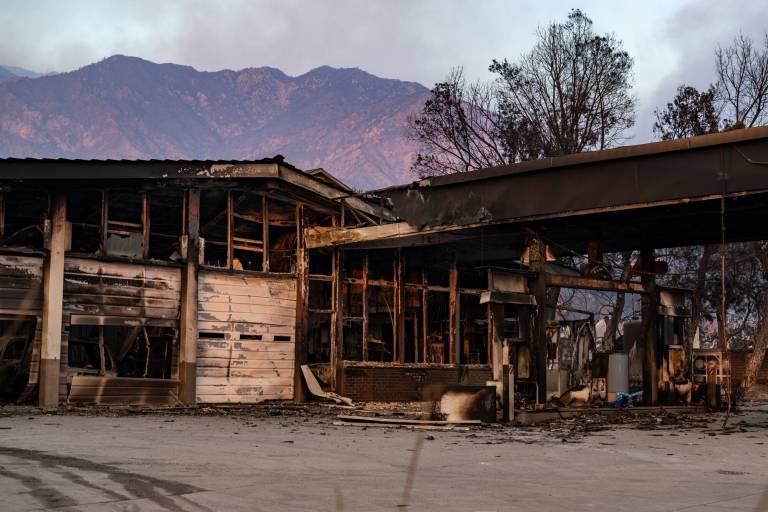
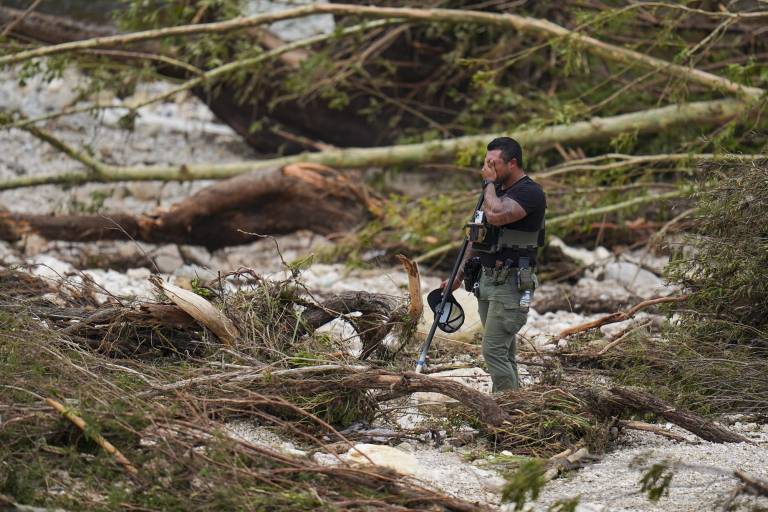
"caption": "A Chevron gas station in Altadena, California, after the Eaton Fire swept through the area northeast of Los Angeles, California, on Thursday, Jan. 9, 2025.",
"credit": "Beth LaBerge/KQED",
"altTag": null,
"description": null,
"imgSizes": {
"thumbnail": {
"file": "https://cdn.kqed.org/wp-content/uploads/sites/35/2025/07/240109-CAWindStorm-081_qed-1-160x107.jpg",
"width": 160,
"height": 107,
"mimeType": "image/jpeg"
},
"medium_large": {
"file": "https://cdn.kqed.org/wp-content/uploads/sites/35/2025/07/240109-CAWindStorm-081_qed-1-768x512.jpg",
"width": 768,
"height": 512,
"mimeType": "image/jpeg"
},
"1536x1536": {
"file": "https://cdn.kqed.org/wp-content/uploads/sites/35/2025/07/240109-CAWindStorm-081_qed-1-1536x1024.jpg",
"width": 1536,
"height": 1024,
"mimeType": "image/jpeg"
},
"post-thumbnail": {
"file": "https://cdn.kqed.org/wp-content/uploads/sites/35/2025/07/240109-CAWindStorm-081_qed-1-672x372.jpg",
"width": 672,
"height": 372,
"mimeType": "image/jpeg"
},
"twentyfourteen-full-width": {
"file": "https://cdn.kqed.org/wp-content/uploads/sites/35/2025/07/240109-CAWindStorm-081_qed-1-1038x576.jpg",
"width": 1038,
"height": 576,
"mimeType": "image/jpeg"
},
"kqedFullSize": {
"file": "https://cdn.kqed.org/wp-content/uploads/sites/35/2025/07/240109-CAWindStorm-081_qed-1.jpg",
"width": 2000,
"height": 1333
}
},
"isLoading": false,
"fetchFailed": false
},
"science_1997768": {
"type": "attachments",
"id": "science_1997768",
"meta": {
"index": "attachments_1716263798",
"site": "science",
"id": "1997768",
"found": true
},
"title": "Care Court",
"publishDate": 1752527568,
"status": "inherit",
"parent": 0,
"modified": 1766617056,
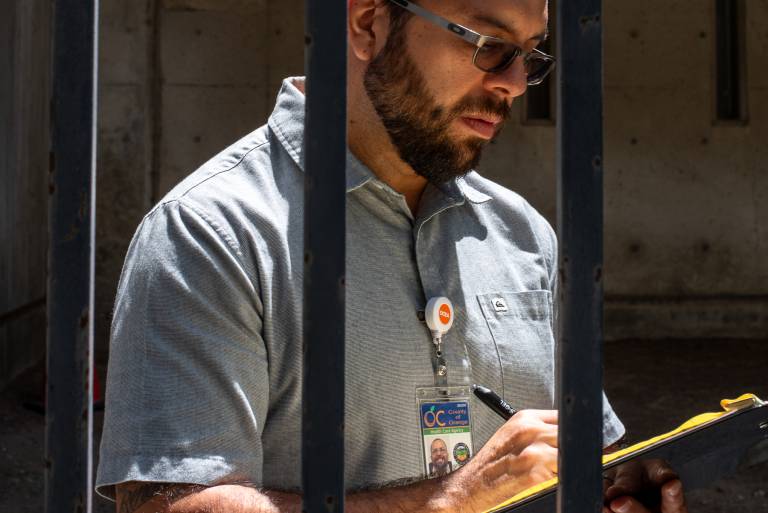
"caption": "Giovanni Figueroa, a mental health specialist with the Orange County Health Care Agency, writes a to-do list before meeting with a client at the Central Men’s & Women’s Jails in Orange County on July 7, 2025.",
"credit": "David Rodriguez for KQED",
"altTag": null,
"description": null,
"imgSizes": {
"thumbnail": {
"file": "https://cdn.kqed.org/wp-content/uploads/sites/35/2025/07/Rodriguez_CARE_07_07_2025-4-160x107.jpg",
"width": 160,
"height": 107,
"mimeType": "image/jpeg"
},
"medium_large": {
"file": "https://cdn.kqed.org/wp-content/uploads/sites/35/2025/07/Rodriguez_CARE_07_07_2025-4-768x513.jpg",
"width": 768,
"height": 513,
"mimeType": "image/jpeg"
},
"1536x1536": {
"file": "https://cdn.kqed.org/wp-content/uploads/sites/35/2025/07/Rodriguez_CARE_07_07_2025-4-1536x1026.jpg",
"width": 1536,
"height": 1026,
"mimeType": "image/jpeg"
},
"post-thumbnail": {
"file": "https://cdn.kqed.org/wp-content/uploads/sites/35/2025/07/Rodriguez_CARE_07_07_2025-4-672x372.jpg",
"width": 672,
"height": 372,
"mimeType": "image/jpeg"
},
"twentyfourteen-full-width": {
"file": "https://cdn.kqed.org/wp-content/uploads/sites/35/2025/07/Rodriguez_CARE_07_07_2025-4-1038x576.jpg",
"width": 1038,
"height": 576,
"mimeType": "image/jpeg"
},
"kqedFullSize": {
"file": "https://cdn.kqed.org/wp-content/uploads/sites/35/2025/07/Rodriguez_CARE_07_07_2025-4.jpg",
"width": 1800,
"height": 1202
}
},
"isLoading": false,
"fetchFailed": false
},
"science_1997819": {
"type": "attachments",
"id": "science_1997819",
"meta": {
"index": "attachments_1716263798",
"site": "science",
"id": "1997819",
"found": true
},
"title": "It's so much more than flu these days",
"publishDate": 1752614640,
"status": "inherit",
"parent": 1997803,
"modified": 1752614640,
"caption": "Shot of a young woman blowing her nose with a tissue at home",
"credit": null,
"altTag": null,
"description": null,
"imgSizes": {
"thumbnail": {
"file": "https://cdn.kqed.org/wp-content/uploads/sites/35/2025/07/GettyImages-1217583991_qed-160x107.jpg",
"width": 160,
"height": 107,
"mimeType": "image/jpeg"
},
"medium_large": {
"file": "https://cdn.kqed.org/wp-content/uploads/sites/35/2025/07/GettyImages-1217583991_qed-768x513.jpg",
"width": 768,
"height": 513,
"mimeType": "image/jpeg"
},
"1536x1536": {
"file": "https://cdn.kqed.org/wp-content/uploads/sites/35/2025/07/GettyImages-1217583991_qed-1536x1025.jpg",
"width": 1536,
"height": 1025,
"mimeType": "image/jpeg"
},
"post-thumbnail": {
"file": "https://cdn.kqed.org/wp-content/uploads/sites/35/2025/07/GettyImages-1217583991_qed-672x372.jpg",
"width": 672,
"height": 372,
"mimeType": "image/jpeg"
},
"twentyfourteen-full-width": {
"file": "https://cdn.kqed.org/wp-content/uploads/sites/35/2025/07/GettyImages-1217583991_qed-1038x576.jpg",
"width": 1038,
"height": 576,
"mimeType": "image/jpeg"
},
"kqedFullSize": {
"file": "https://cdn.kqed.org/wp-content/uploads/sites/35/2025/07/GettyImages-1217583991_qed.jpg",
"width": 1997,
"height": 1333
}
},
"isLoading": false,
"fetchFailed": false
},
"science_1997793": {
"type": "attachments",
"id": "science_1997793",
"meta": {
"index": "attachments_1716263798",
"site": "science",
"id": "1997793",
"found": true
},
"title": "Living Seawall",
"publishDate": 1752536416,
"status": "inherit",
"parent": 0,
"modified": 1752596717,
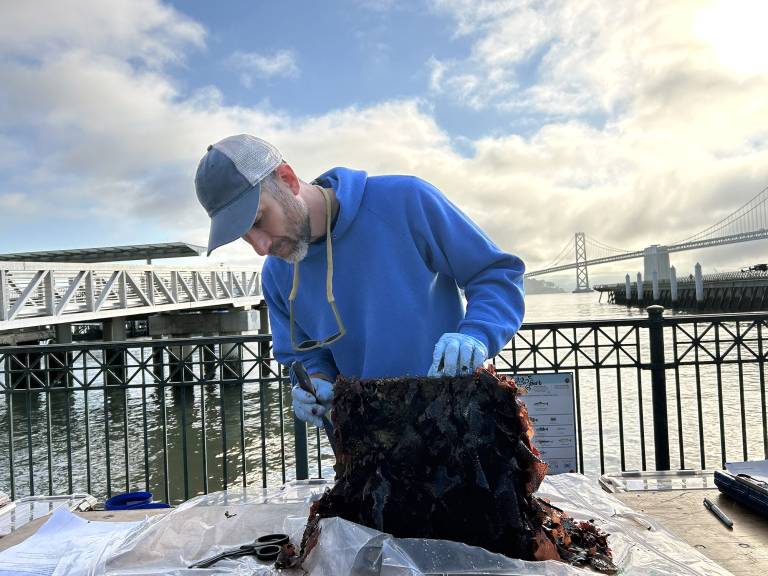
"caption": "Biological sciences technician Jeffrey Blumenthal inspects specially designed tiles, which are part of an innovative study led by the Port of San Francisco and Smithsonian Environmental Research Center, to learn how we can make San Francisco's seawalls more ecologically friendly in the future.",
"credit": "Ezra David Romero/KQED",
"altTag": null,
"description": null,
"imgSizes": {
"thumbnail": {
"file": "https://cdn.kqed.org/wp-content/uploads/sites/35/2025/07/IMG_2320-160x120.jpg",
"width": 160,
"height": 120,
"mimeType": "image/jpeg"
},
"medium_large": {
"file": "https://cdn.kqed.org/wp-content/uploads/sites/35/2025/07/IMG_2320-768x576.jpg",
"width": 768,
"height": 576,
"mimeType": "image/jpeg"
},
"1536x1536": {
"file": "https://cdn.kqed.org/wp-content/uploads/sites/35/2025/07/IMG_2320-1536x1152.jpg",
"width": 1536,
"height": 1152,
"mimeType": "image/jpeg"
},
"post-thumbnail": {
"file": "https://cdn.kqed.org/wp-content/uploads/sites/35/2025/07/IMG_2320-672x372.jpg",
"width": 672,
"height": 372,
"mimeType": "image/jpeg"
},
"twentyfourteen-full-width": {
"file": "https://cdn.kqed.org/wp-content/uploads/sites/35/2025/07/IMG_2320-1038x576.jpg",
"width": 1038,
"height": 576,
"mimeType": "image/jpeg"
},
"kqedFullSize": {
"file": "https://cdn.kqed.org/wp-content/uploads/sites/35/2025/07/IMG_2320.jpg",
"width": 2000,
"height": 1500
}
},
"isLoading": false,
"fetchFailed": false
},
"science_1997713": {
"type": "attachments",
"id": "science_1997713",
"meta": {
"index": "attachments_1716263798",
"site": "science",
"id": "1997713",
"found": true
},
"title": "Health Care Activists Offer Free Health Screenings In Los Angeles",
"publishDate": 1752188789,
"status": "inherit",
"parent": 1997707,
"modified": 1752191422,
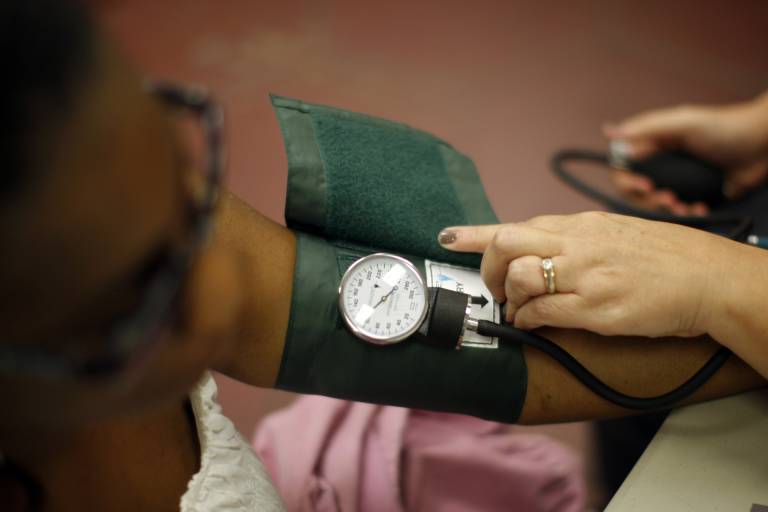
"caption": "A nurse checks the blood pressure of a young patient on July 10, 2012, in Los Angeles, California. ",
"credit": "David McNew/Getty Images",
"altTag": null,
"description": null,
"imgSizes": {
"thumbnail": {
"file": "https://cdn.kqed.org/wp-content/uploads/sites/35/2025/07/MediCalGetty-160x107.jpg",
"width": 160,
"height": 107,
"mimeType": "image/jpeg"
},
"medium_large": {
"file": "https://cdn.kqed.org/wp-content/uploads/sites/35/2025/07/MediCalGetty-768x512.jpg",
"width": 768,
"height": 512,
"mimeType": "image/jpeg"
},
"1536x1536": {
"file": "https://cdn.kqed.org/wp-content/uploads/sites/35/2025/07/MediCalGetty-1536x1024.jpg",
"width": 1536,
"height": 1024,
"mimeType": "image/jpeg"
},
"post-thumbnail": {
"file": "https://cdn.kqed.org/wp-content/uploads/sites/35/2025/07/MediCalGetty-672x372.jpg",
"width": 672,
"height": 372,
"mimeType": "image/jpeg"
},
"twentyfourteen-full-width": {
"file": "https://cdn.kqed.org/wp-content/uploads/sites/35/2025/07/MediCalGetty-1038x576.jpg",
"width": 1038,
"height": 576,
"mimeType": "image/jpeg"
},
"kqedFullSize": {
"file": "https://cdn.kqed.org/wp-content/uploads/sites/35/2025/07/MediCalGetty.jpg",
"width": 1920,
"height": 1280
}
},
"isLoading": false,
"fetchFailed": false
},
"science_1997685": {
"type": "attachments",
"id": "science_1997685",
"meta": {
"index": "attachments_1716263798",
"site": "science",
"id": "1997685",
"found": true
},
"title": "250709-CorpseFlowerUpdate-06-BL",
"publishDate": 1752105014,
"status": "inherit",
"parent": 1997651,
"modified": 1752105014,
"caption": "A crowd gathers to see a corpse flower in bloom at the Conservatory of Flowers in San Francisco on July 9, 2025.",
"credit": null,
"altTag": null,
"description": null,
"imgSizes": {
"thumbnail": {
"file": "https://cdn.kqed.org/wp-content/uploads/sites/35/2025/07/250709-CorpseFlowerUpdate-06-BL-1-160x107.jpg",
"width": 160,
"height": 107,
"mimeType": "image/jpeg"
},
"medium_large": {
"file": "https://cdn.kqed.org/wp-content/uploads/sites/35/2025/07/250709-CorpseFlowerUpdate-06-BL-1-768x511.jpg",
"width": 768,
"height": 511,
"mimeType": "image/jpeg"
},
"1536x1536": {
"file": "https://cdn.kqed.org/wp-content/uploads/sites/35/2025/07/250709-CorpseFlowerUpdate-06-BL-1-1536x1023.jpg",
"width": 1536,
"height": 1023,
"mimeType": "image/jpeg"
},
"post-thumbnail": {
"file": "https://cdn.kqed.org/wp-content/uploads/sites/35/2025/07/250709-CorpseFlowerUpdate-06-BL-1-672x372.jpg",
"width": 672,
"height": 372,
"mimeType": "image/jpeg"
},
"twentyfourteen-full-width": {
"file": "https://cdn.kqed.org/wp-content/uploads/sites/35/2025/07/250709-CorpseFlowerUpdate-06-BL-1-1038x576.jpg",
"width": 1038,
"height": 576,
"mimeType": "image/jpeg"
},
"kqedFullSize": {
"file": "https://cdn.kqed.org/wp-content/uploads/sites/35/2025/07/250709-CorpseFlowerUpdate-06-BL-1.jpg",
"width": 2000,
"height": 1332
}
},
"isLoading": false,
"fetchFailed": false
},
"science_1997608": {
"type": "attachments",
"id": "science_1997608",
"meta": {
"index": "attachments_1716263798",
"site": "science",
"id": "1997608",
"found": true
},
"title": "CorpseFlower",
"publishDate": 1751498114,
"status": "inherit",
"parent": 1997603,
"modified": 1751498188,
"caption": "Something rare, massive, and very smelly is about to happen at the Conservatory of Flowers in San Francisco: Chanel the corpse flower is expected to bloom in the next few days. \n",
"credit": "Courtesy of Destiny Padilla/Gardens of Golden Gate",
"altTag": null,
"description": null,
"imgSizes": {
"thumbnail": {
"file": "https://cdn.kqed.org/wp-content/uploads/sites/35/2025/07/CorpseFlower-160x106.jpg",
"width": 160,
"height": 106,
"mimeType": "image/jpeg"
},
"medium_large": {
"file": "https://cdn.kqed.org/wp-content/uploads/sites/35/2025/07/CorpseFlower-768x511.jpg",
"width": 768,
"height": 511,
"mimeType": "image/jpeg"
},
"1536x1536": {
"file": "https://cdn.kqed.org/wp-content/uploads/sites/35/2025/07/CorpseFlower-1536x1021.jpg",
"width": 1536,
"height": 1021,
"mimeType": "image/jpeg"
},
"post-thumbnail": {
"file": "https://cdn.kqed.org/wp-content/uploads/sites/35/2025/07/CorpseFlower-672x372.jpg",
"width": 672,
"height": 372,
"mimeType": "image/jpeg"
},
"twentyfourteen-full-width": {
"file": "https://cdn.kqed.org/wp-content/uploads/sites/35/2025/07/CorpseFlower-1038x576.jpg",
"width": 1038,
"height": 576,
"mimeType": "image/jpeg"
},
"kqedFullSize": {
"file": "https://cdn.kqed.org/wp-content/uploads/sites/35/2025/07/CorpseFlower.jpg",
"width": 2000,
"height": 1330
}
},
"isLoading": false,
"fetchFailed": false
},
"science_1997639": {
"type": "attachments",
"id": "science_1997639",
"meta": {
"index": "attachments_1716263798",
"site": "science",
"id": "1997639",
"found": true
},
"title": "APTOPIX Extreme Weather Texas",
"publishDate": 1752002381,
"status": "inherit",
"parent": 1997633,
"modified": 1752003293,
"caption": "A Sheriff's deputy pauses while combing through the banks of the Guadalupe River near Camp Mystic, on Saturday, July 5, 2025, in Hunt, Texas, after a flash flood swept through the area. ",
"credit": "Julio Cortez/AP Photo",
"altTag": null,
"description": null,
"imgSizes": {
"thumbnail": {
"file": "https://cdn.kqed.org/wp-content/uploads/sites/35/2025/07/CampMysticAP2-160x107.jpg",
"width": 160,
"height": 107,
"mimeType": "image/jpeg"
},
"medium_large": {
"file": "https://cdn.kqed.org/wp-content/uploads/sites/35/2025/07/CampMysticAP2-768x512.jpg",
"width": 768,
"height": 512,
"mimeType": "image/jpeg"
},
"1536x1536": {
"file": "https://cdn.kqed.org/wp-content/uploads/sites/35/2025/07/CampMysticAP2-1536x1024.jpg",
"width": 1536,
"height": 1024,
"mimeType": "image/jpeg"
},
"post-thumbnail": {
"file": "https://cdn.kqed.org/wp-content/uploads/sites/35/2025/07/CampMysticAP2-672x372.jpg",
"width": 672,
"height": 372,
"mimeType": "image/jpeg"
},
"twentyfourteen-full-width": {
"file": "https://cdn.kqed.org/wp-content/uploads/sites/35/2025/07/CampMysticAP2-1038x576.jpg",
"width": 1038,
"height": 576,
"mimeType": "image/jpeg"
},
"kqedFullSize": {
"file": "https://cdn.kqed.org/wp-content/uploads/sites/35/2025/07/CampMysticAP2.jpg",
"width": 2000,
"height": 1333
}
},
"isLoading": false,
"fetchFailed": false
},
"science_1997571": {
"type": "attachments",
"id": "science_1997571",
"meta": {
"index": "attachments_1716263798",
"site": "science",
"id": "1997571",
"found": true
},
"title": "Governor Gavin Newsom signs legislation related to oversight of oil and gas wells, and community protections",
"publishDate": 1751401816,
"status": "inherit",
"parent": 1997565,
"modified": 1751404129,
"caption": "Gov. Gavin Newsom speaks at a press conference where he signs legislation related to oversight of oil and gas wells, and community protections on Sept. 25, 2024, in Los Angeles.",
"credit": "Jason Armond/Los Angeles Times via Getty Images",
"altTag": null,
"description": null,
"imgSizes": {
"thumbnail": {
"file": "https://cdn.kqed.org/wp-content/uploads/sites/35/2025/07/GavinNewsomGetty-160x111.jpg",
"width": 160,
"height": 111,
"mimeType": "image/jpeg"
},
"medium_large": {
"file": "https://cdn.kqed.org/wp-content/uploads/sites/35/2025/07/GavinNewsomGetty-768x533.jpg",
"width": 768,
"height": 533,
"mimeType": "image/jpeg"
},
"1536x1536": {
"file": "https://cdn.kqed.org/wp-content/uploads/sites/35/2025/07/GavinNewsomGetty-1536x1065.jpg",
"width": 1536,
"height": 1065,
"mimeType": "image/jpeg"
},
"post-thumbnail": {
"file": "https://cdn.kqed.org/wp-content/uploads/sites/35/2025/07/GavinNewsomGetty-672x372.jpg",
"width": 672,
"height": 372,
"mimeType": "image/jpeg"
},
"twentyfourteen-full-width": {
"file": "https://cdn.kqed.org/wp-content/uploads/sites/35/2025/07/GavinNewsomGetty-1038x576.jpg",
"width": 1038,
"height": 576,
"mimeType": "image/jpeg"
},
"kqedFullSize": {
"file": "https://cdn.kqed.org/wp-content/uploads/sites/35/2025/07/GavinNewsomGetty.jpg",
"width": 2000,
"height": 1387
}
},
"isLoading": false,
"fetchFailed": false
},
"science_1997042": {
"type": "attachments",
"id": "science_1997042",
"meta": {
"index": "attachments_1716263798",
"site": "science",
"id": "1997042",
"found": true
},
"title": "250521-BASEBALLPSYCHOLOGY-01-BL-KQED",
"publishDate": 1748373936,
"status": "inherit",
"parent": 0,
"modified": 1750875269,
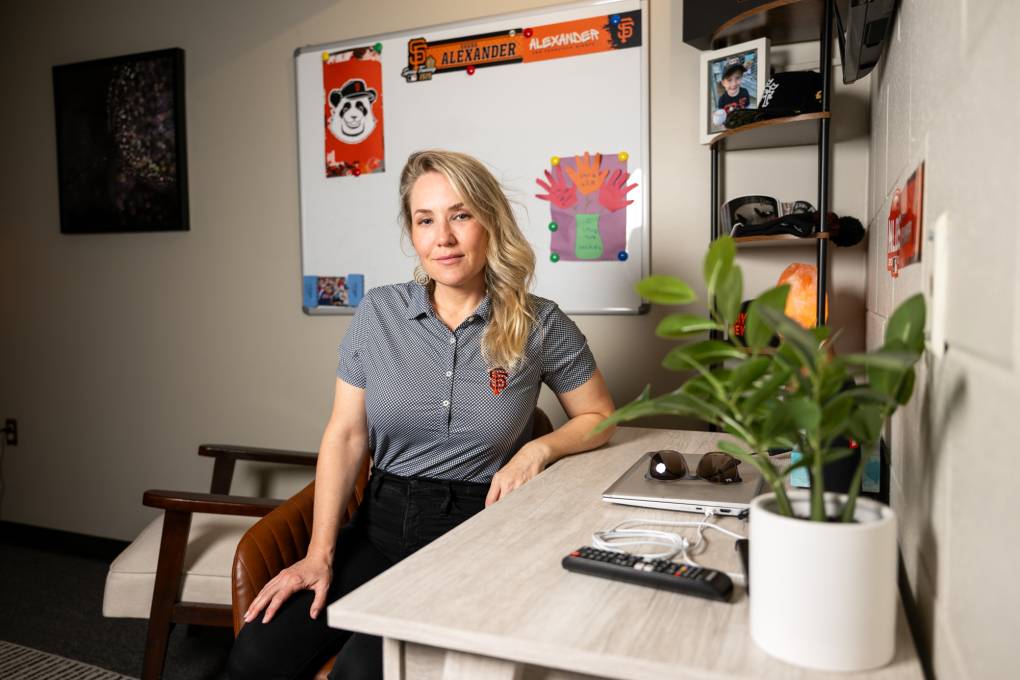
"caption": "Dr. Shana Alexander sits in her office at Oracle Park in San Francisco on May 21, 2025. Alexander leads the San Francisco Giants’ mental health and wellness efforts, supporting players and staff through counseling, crisis response, and emotional well-being programs.",
"credit": "Beth LaBerge/KQED",
"altTag": null,
"description": null,
"imgSizes": {
"medium": {
"file": "https://cdn.kqed.org/wp-content/uploads/sites/35/2025/05/250521-BASEBALLPSYCHOLOGY-01-BL-KQED-800x533.jpg",
"width": 800,
"height": 533,
"mimeType": "image/jpeg"
},
"large": {
"file": "https://cdn.kqed.org/wp-content/uploads/sites/35/2025/05/250521-BASEBALLPSYCHOLOGY-01-BL-KQED-1020x680.jpg",
"width": 1020,
"height": 680,
"mimeType": "image/jpeg"
},
"thumbnail": {
"file": "https://cdn.kqed.org/wp-content/uploads/sites/35/2025/05/250521-BASEBALLPSYCHOLOGY-01-BL-KQED-160x107.jpg",
"width": 160,
"height": 107,
"mimeType": "image/jpeg"
},
"medium_large": {
"file": "https://cdn.kqed.org/wp-content/uploads/sites/35/2025/05/250521-BASEBALLPSYCHOLOGY-01-BL-KQED-768x512.jpg",
"width": 768,
"height": 512,
"mimeType": "image/jpeg"
},
"1536x1536": {
"file": "https://cdn.kqed.org/wp-content/uploads/sites/35/2025/05/250521-BASEBALLPSYCHOLOGY-01-BL-KQED-1536x1024.jpg",
"width": 1536,
"height": 1024,
"mimeType": "image/jpeg"
},
"post-thumbnail": {
"file": "https://cdn.kqed.org/wp-content/uploads/sites/35/2025/05/250521-BASEBALLPSYCHOLOGY-01-BL-KQED-672x372.jpg",
"width": 672,
"height": 372,
"mimeType": "image/jpeg"
},
"twentyfourteen-full-width": {
"file": "https://cdn.kqed.org/wp-content/uploads/sites/35/2025/05/250521-BASEBALLPSYCHOLOGY-01-BL-KQED-1038x576.jpg",
"width": 1038,
"height": 576,
"mimeType": "image/jpeg"
},
"full-width": {
"file": "https://cdn.kqed.org/wp-content/uploads/sites/35/2025/05/250521-BASEBALLPSYCHOLOGY-01-BL-KQED-1920x1280.jpg",
"width": 1920,
"height": 1280,
"mimeType": "image/jpeg"
},
"kqedFullSize": {
"file": "https://cdn.kqed.org/wp-content/uploads/sites/35/2025/05/250521-BASEBALLPSYCHOLOGY-01-BL-KQED.jpg",
"width": 2000,
"height": 1333
}
},
"isLoading": false,
"fetchFailed": false
},
"science_1997421": {
"type": "attachments",
"id": "science_1997421",
"meta": {
"index": "attachments_1716263798",
"site": "science",
"id": "1997421",
"found": true
},
"title": "250603-QUEERKAYAK-20-BL-KQED",
"publishDate": 1750184359,
"status": "inherit",
"parent": 0,
"modified": 1750877599,
"caption": "Luna Angulo prepares to go kayaking at Safe Harbor Marina Bay Yacht Harbor in Richmond on June 3, 2025. Angulo leads Rich City Rays, a queer-led group that teaches BIPOC and queer residents how to kayak as a form of climate activism.",
"credit": "Beth LaBerge/KQED",
"altTag": null,
"description": null,
"imgSizes": {
"thumbnail": {
"file": "https://cdn.kqed.org/wp-content/uploads/sites/35/2025/06/250603-QUEERKAYAK-20-BL-KQED-160x107.jpg",
"width": 160,
"height": 107,
"mimeType": "image/jpeg"
},
"medium_large": {
"file": "https://cdn.kqed.org/wp-content/uploads/sites/35/2025/06/250603-QUEERKAYAK-20-BL-KQED-768x512.jpg",
"width": 768,
"height": 512,
"mimeType": "image/jpeg"
},
"1536x1536": {
"file": "https://cdn.kqed.org/wp-content/uploads/sites/35/2025/06/250603-QUEERKAYAK-20-BL-KQED-1536x1024.jpg",
"width": 1536,
"height": 1024,
"mimeType": "image/jpeg"
},
"post-thumbnail": {
"file": "https://cdn.kqed.org/wp-content/uploads/sites/35/2025/06/250603-QUEERKAYAK-20-BL-KQED-672x372.jpg",
"width": 672,
"height": 372,
"mimeType": "image/jpeg"
},
"twentyfourteen-full-width": {
"file": "https://cdn.kqed.org/wp-content/uploads/sites/35/2025/06/250603-QUEERKAYAK-20-BL-KQED-1038x576.jpg",
"width": 1038,
"height": 576,
"mimeType": "image/jpeg"
},
"kqedFullSize": {
"file": "https://cdn.kqed.org/wp-content/uploads/sites/35/2025/06/250603-QUEERKAYAK-20-BL-KQED.jpg",
"width": 2000,
"height": 1333
}
},
"isLoading": false,
"fetchFailed": false
},
"science_1997337": {
"type": "attachments",
"id": "science_1997337",
"meta": {
"index": "attachments_1716263798",
"site": "science",
"id": "1997337",
"found": true
},
"title": "20250604_ClimateDrag_GC-5_qed",
"publishDate": 1749761979,
"status": "inherit",
"parent": 0,
"modified": 1749762033,
"caption": "King Lotus Boy poses for a photo at Franklin Square in San Francisco on June 4, 2025.",
"credit": "Gina Castro/KQED",
"altTag": null,
"description": null,
"imgSizes": {
"thumbnail": {
"file": "https://cdn.kqed.org/wp-content/uploads/sites/35/2025/06/20250604_ClimateDrag_GC-5_qed-160x107.jpg",
"width": 160,
"height": 107,
"mimeType": "image/jpeg"
},
"medium_large": {
"file": "https://cdn.kqed.org/wp-content/uploads/sites/35/2025/06/20250604_ClimateDrag_GC-5_qed-768x512.jpg",
"width": 768,
"height": 512,
"mimeType": "image/jpeg"
},
"1536x1536": {
"file": "https://cdn.kqed.org/wp-content/uploads/sites/35/2025/06/20250604_ClimateDrag_GC-5_qed-1536x1024.jpg",
"width": 1536,
"height": 1024,
"mimeType": "image/jpeg"
},
"post-thumbnail": {
"file": "https://cdn.kqed.org/wp-content/uploads/sites/35/2025/06/20250604_ClimateDrag_GC-5_qed-672x372.jpg",
"width": 672,
"height": 372,
"mimeType": "image/jpeg"
},
"twentyfourteen-full-width": {
"file": "https://cdn.kqed.org/wp-content/uploads/sites/35/2025/06/20250604_ClimateDrag_GC-5_qed-1038x576.jpg",
"width": 1038,
"height": 576,
"mimeType": "image/jpeg"
},
"kqedFullSize": {
"file": "https://cdn.kqed.org/wp-content/uploads/sites/35/2025/06/20250604_ClimateDrag_GC-5_qed.jpg",
"width": 2000,
"height": 1333
}
},
"isLoading": false,
"fetchFailed": false
}
},
"audioPlayerReducer": {
"postId": "stream_live",
"isPaused": true,
"isPlaying": false,
"pfsActive": false,
"pledgeModalIsOpen": true,
"playerDrawerIsOpen": false,
"liveAudioPlayStartedAt": 0,
"liveAudioPlayContext": ""
},
"authorsReducer": {
"adembosky": {
"type": "authors",
"id": "3205",
"meta": {
"index": "authors_1716337520",
"id": "3205",
"found": true
},
"name": "April Dembosky",
"firstName": "April",
"lastName": "Dembosky",
"slug": "adembosky",
"email": "adembosky@kqed.org",
"display_author_email": false,
"staff_mastheads": [
"news",
"science"
],
"title": "KQED Health Correspondent",
"bio": "April Dembosky is the health correspondent for KQED News and a regular contributor to NPR. She specializes in covering altered states of mind, from postpartum depression to methamphetamine-induced psychosis to the insanity defense. Her investigative series on insurance companies sidestepping mental health laws won multiple awards, including first place in beat reporting from the national Association of Health Care Journalists. She is the recipient of numerous other prizes and fellowships, including a national Edward R. Murrow award for investigative reporting, a Society of Professional Journalists award for long-form storytelling, and a Carter Center Fellowship for Mental Health Journalism.\r\n\r\nDembosky reported and produced \u003cem>Soundtrack of Silence\u003c/em>, an audio documentary about music and memory that is currently being made into a feature film by Paramount Pictures.\r\n\r\nBefore joining KQED in 2013, Dembosky covered technology and Silicon Valley for \u003cem>The Financial Times of London,\u003c/em> and contributed business and arts stories to \u003cem>Marketplace \u003c/em>and \u003cem>The New York Times.\u003c/em> She got her undergraduate degree in philosophy from Smith College and her master's in journalism from the University of California, Berkeley. She is a classically trained violinist and proud alum of the first symphony orchestra at Burning Man.",
"avatar": "https://secure.gravatar.com/avatar/d6593cd737b732102fe0b6250b5351c2d3bc9b2987566514aa3c9a106494d684?s=600&d=blank&r=g",
"twitter": "adembosky",
"bluesky": null,
"facebook": null,
"instagram": null,
"linkedin": null,
"sites": [
{
"site": "arts",
"roles": [
"author"
]
},
{
"site": "news",
"roles": [
"editor"
]
},
{
"site": "futureofyou",
"roles": [
"author"
]
},
{
"site": "stateofhealth",
"roles": [
"editor"
]
},
{
"site": "science",
"roles": [
"editor"
]
},
{
"site": "forum",
"roles": [
"editor"
]
}
],
"headData": {
"title": "April Dembosky | KQED",
"description": "KQED Health Correspondent",
"ogImgSrc": "https://secure.gravatar.com/avatar/d6593cd737b732102fe0b6250b5351c2d3bc9b2987566514aa3c9a106494d684?s=600&d=blank&r=g",
"twImgSrc": "https://secure.gravatar.com/avatar/d6593cd737b732102fe0b6250b5351c2d3bc9b2987566514aa3c9a106494d684?s=600&d=blank&r=g"
},
"isLoading": false,
"link": "/author/adembosky"
},
"dventon": {
"type": "authors",
"id": "11088",
"meta": {
"index": "authors_1716337520",
"id": "11088",
"found": true
},
"name": "Danielle Venton",
"firstName": "Danielle",
"lastName": "Venton",
"slug": "dventon",
"email": "dventon@kqed.org",
"display_author_email": true,
"staff_mastheads": [
"science"
],
"title": "Science reporter",
"bio": "Danielle Venton is a reporter for KQED Science. She covers wildfires, space and oceans (though she is prone to sea sickness).\r\n\r\nBefore joining KQED in 2015, Danielle was a staff reporter at KRCB in Sonoma County and a freelancer. She studied science communication at UC Santa Cruz and formerly worked at CERN in Geneva, Switzerland where she wrote about computing. She lives in Sonoma County and enjoys backpacking.",
"avatar": "https://secure.gravatar.com/avatar/37b292b5c40c8d93959c4f48d73b5286f41b7abd8588277e941905a3ed4c801c?s=600&d=blank&r=g",
"twitter": "DanielleVenton",
"bluesky": null,
"facebook": null,
"instagram": null,
"linkedin": null,
"sites": [
{
"site": "arts",
"roles": [
"contributor"
]
},
{
"site": "news",
"roles": [
"editor"
]
},
{
"site": "futureofyou",
"roles": [
"editor"
]
},
{
"site": "science",
"roles": [
"editor"
]
},
{
"site": "liveblog",
"roles": [
"contributor"
]
}
],
"headData": {
"title": "Danielle Venton | KQED",
"description": "Science reporter",
"ogImgSrc": "https://secure.gravatar.com/avatar/37b292b5c40c8d93959c4f48d73b5286f41b7abd8588277e941905a3ed4c801c?s=600&d=blank&r=g",
"twImgSrc": "https://secure.gravatar.com/avatar/37b292b5c40c8d93959c4f48d73b5286f41b7abd8588277e941905a3ed4c801c?s=600&d=blank&r=g"
},
"isLoading": false,
"link": "/author/dventon"
},
"lesleymcclurg": {
"type": "authors",
"id": "11229",
"meta": {
"index": "authors_1716337520",
"id": "11229",
"found": true
},
"name": "Lesley McClurg",
"firstName": "Lesley",
"lastName": "McClurg",
"slug": "lesleymcclurg",
"email": "lmcclurg@KQED.org",
"display_author_email": false,
"staff_mastheads": [
"news",
"science"
],
"title": "KQED Health Correspondent",
"bio": "Lesley McClurg is a health correspondent and fill-in host whose work is regularly rebroadcast on NPR and PBS programs. She’s earned multiple regional Emmy awards, a national and a regional Edward R. Murrow award, and was named Best Beat Reporter by the Association of Health Care Journalists. The Society of Professional Journalists has recognized her work several times, and the Society of Environmental Journalists spotlighted her coverage of California’s historic drought.\r\n\r\nBefore joining KQED in 2016, Lesley covered food and sustainability for Capital Public Radio, environmental issues for Colorado Public Radio, and reported for KUOW and KCTS 9 in Seattle. Away from the newsroom, she loves skiing with her daughter, mountain biking with her partner, and playing with Ollie, the family’s goldendoodle. On deadline, she runs almost entirely on chocolate chips.\r\n\r\n ",
"avatar": "https://secure.gravatar.com/avatar/bab49e972ea10c774fe0f5e29dba1722b158f7c0d58a360923d1389d380b2978?s=600&d=blank&r=g",
"twitter": "lesleywmcclurg",
"bluesky": null,
"facebook": null,
"instagram": null,
"linkedin": null,
"sites": [
{
"site": "arts",
"roles": [
"author"
]
},
{
"site": "news",
"roles": [
"editor"
]
},
{
"site": "futureofyou",
"roles": [
"editor"
]
},
{
"site": "stateofhealth",
"roles": [
"author"
]
},
{
"site": "science",
"roles": [
"editor"
]
},
{
"site": "quest",
"roles": [
"subscriber"
]
},
{
"site": "forum",
"roles": [
"administrator"
]
},
{
"site": "liveblog",
"roles": [
"author"
]
}
],
"headData": {
"title": "Lesley McClurg | KQED",
"description": "KQED Health Correspondent",
"ogImgSrc": "https://secure.gravatar.com/avatar/bab49e972ea10c774fe0f5e29dba1722b158f7c0d58a360923d1389d380b2978?s=600&d=blank&r=g",
"twImgSrc": "https://secure.gravatar.com/avatar/bab49e972ea10c774fe0f5e29dba1722b158f7c0d58a360923d1389d380b2978?s=600&d=blank&r=g"
},
"isLoading": false,
"link": "/author/lesleymcclurg"
},
"smohamad": {
"type": "authors",
"id": "11631",
"meta": {
"index": "authors_1716337520",
"id": "11631",
"found": true
},
"name": "Sarah Mohamad",
"firstName": "Sarah",
"lastName": "Mohamad",
"slug": "smohamad",
"email": "smohamad@KQED.org",
"display_author_email": true,
"staff_mastheads": [],
"title": "Engagement Producer and Reporter, KQED Science",
"bio": "Sarah Mohamad is an audience engagement reporter and producer for KQED Science. She reports on audience-focused science and environment stories and manages the team's social media, newsletter, and engagement efforts. Prior to this role, she played a key role as project manager for NSF's \u003ca href=\"https://www.kqed.org/crackingthecode\">\u003cem>Cracking the Code: Influencing Millennial Science Engagement\u003c/em> \u003c/a>audience research.",
"avatar": "https://secure.gravatar.com/avatar/e6224957cd82d015183756ddde1f928013a563d7ca2e4565f8c4de1ec64886c5?s=600&d=blank&r=g",
"twitter": "sarahkmohamad",
"bluesky": null,
"facebook": null,
"instagram": null,
"linkedin": null,
"sites": [
{
"site": "",
"roles": [
"editor"
]
},
{
"site": "arts",
"roles": [
"editor"
]
},
{
"site": "news",
"roles": [
"editor"
]
},
{
"site": "about",
"roles": [
"editor"
]
},
{
"site": "science",
"roles": [
"editor"
]
}
],
"headData": {
"title": "Sarah Mohamad | KQED",
"description": "Engagement Producer and Reporter, KQED Science",
"ogImgSrc": "https://secure.gravatar.com/avatar/e6224957cd82d015183756ddde1f928013a563d7ca2e4565f8c4de1ec64886c5?s=600&d=blank&r=g",
"twImgSrc": "https://secure.gravatar.com/avatar/e6224957cd82d015183756ddde1f928013a563d7ca2e4565f8c4de1ec64886c5?s=600&d=blank&r=g"
},
"isLoading": false,
"link": "/author/smohamad"
},
"eromero": {
"type": "authors",
"id": "11746",
"meta": {
"index": "authors_1716337520",
"id": "11746",
"found": true
},
"name": "Ezra David Romero",
"firstName": "Ezra David",
"lastName": "Romero",
"slug": "eromero",
"email": "eromero@kqed.org",
"display_author_email": true,
"staff_mastheads": [
"news",
"science"
],
"title": "Climate Reporter",
"bio": "Ezra David Romero is a climate reporter for KQED News. He covers the absence and excess of water in the Bay Area — think sea level rise, flooding and drought. For nearly a decade he’s covered how warming temperatures are altering the lives of Californians. He’s reported on farmers worried their pistachio trees aren’t getting enough sleep, families desperate for water, scientists studying dying giant sequoias, and alongside firefighters containing wildfires. His work has appeared on local stations across California and nationally on public radio shows like Morning Edition, Here and Now, All Things Considered and Science Friday. ",
"avatar": "https://secure.gravatar.com/avatar/c76404d287c10ed40224227551ac36e24352c7306f106632caf6fead76f8801f?s=600&d=blank&r=g",
"twitter": "ezraromero",
"bluesky": null,
"facebook": null,
"instagram": null,
"linkedin": null,
"sites": [
{
"site": "arts",
"roles": [
"editor"
]
},
{
"site": "news",
"roles": [
"editor"
]
},
{
"site": "science",
"roles": [
"editor"
]
},
{
"site": "liveblog",
"roles": [
"author"
]
}
],
"headData": {
"title": "Ezra David Romero | KQED",
"description": "Climate Reporter",
"ogImgSrc": "https://secure.gravatar.com/avatar/c76404d287c10ed40224227551ac36e24352c7306f106632caf6fead76f8801f?s=600&d=blank&r=g",
"twImgSrc": "https://secure.gravatar.com/avatar/c76404d287c10ed40224227551ac36e24352c7306f106632caf6fead76f8801f?s=600&d=blank&r=g"
},
"isLoading": false,
"link": "/author/eromero"
}
},
"pagesReducer": {
"science_category_local": {
"type": "terms",
"id": "science_4550",
"meta": {
"index": "terms_1716263798",
"site": "science",
"id": "4550",
"score": 12.941336
},
"featImg": null,
"name": "Local",
"description": null,
"taxonomy": "category",
"headData": {
"twImgId": null,
"twTitle": null,
"ogTitle": null,
"ogImgId": null,
"twDescription": null,
"description": null,
"title": "Local Archives | KQED Science",
"ogDescription": null
},
"ttid": 4550,
"slug": "local",
"isLoading": false,
"title": "Local",
"pageMeta": {
"site": "science",
"WpPageTemplate": "page-topic-editorial",
"currentPage": 8
},
"blocks": [
{
"blockName": "kqed/post-list",
"attrs": {
"layout": "cardArticle2",
"query": "posts/science?category=local",
"seeMore": false,
"paginated": true,
"page": 8
}
},
{
"blockName": "kqed/ad"
}
]
}
},
"pfsSessionReducer": {},
"postsReducer": {
"stream_live": {
"type": "live",
"id": "stream_live",
"audioUrl": "https://streams.kqed.org/kqedradio",
"title": "Live Stream",
"excerpt": "Live Stream information currently unavailable.",
"link": "/radio",
"featImg": "",
"label": {
"name": "KQED Live",
"link": "/"
}
},
"stream_kqedNewscast": {
"type": "posts",
"id": "stream_kqedNewscast",
"audioUrl": "https://www.kqed.org/.stream/anon/radio/RDnews/newscast.mp3?_=1",
"title": "KQED Newscast",
"featImg": "",
"label": {
"name": "88.5 FM",
"link": "/"
}
},
"science_1997852": {
"type": "posts",
"id": "science_1997852",
"meta": {
"index": "posts_1716263798",
"site": "science",
"id": "1997852",
"score": null,
"sort": [
1752847219000
]
},
"guestAuthors": [],
"slug": "bonta-sues-trump-again-this-time-for-torching-disaster-prep-in-crisis-prone-summer",
"title": "Bonta Sues Trump (Again), This Time for Torching Disaster Prep in Crisis-Prone Summer",
"publishDate": 1752847219,
"format": "standard",
"headTitle": "Bonta Sues Trump (Again), This Time for Torching Disaster Prep in Crisis-Prone Summer | KQED",
"labelTerm": {},
"content": "\u003cp>In the middle of an already disaster-laden summer, California — along with 19 other states — \u003ca href=\"https://www.kqed.org/news/12047925/california-sues-trump-administration-again-this-time-over-withheld-school-funds\">sued the Trump administration on Wednesday\u003c/a> over what they say is the illegal termination of a program that helps communities pay for projects that avoid the worst damages from natural disasters.\u003c/p>\n\u003cp>The \u003ca href=\"https://oag.ca.gov/system/files/attachments/press-docs/001%20Complaint%20%28FEMA%20BRIC%29.pdf\" target=\"_blank\" rel=\"noopener\">lawsuit\u003c/a> said FEMA, the Federal Emergency Management Agency, has ended the program known as Building Resilient Infrastructure and Communities, or BRIC, without required approval from Congress.\u003c/p>\n\u003cp>“The BRIC program proactively fortifies communities before a natural disaster strikes,” Attorney General Rob Bonta said at a July 16 press conference.\u003c/p>\n\u003cp>[ad fullwidth]\u003c/p>\n\u003cp>“In doing so, it saves lives, reduces injuries, protects property and saves our municipalities, states and nation untold amounts of money.”\u003c/p>\n\u003cp>According to FEMA’s own \u003ca href=\"https://www.fema.gov/sites/default/files/2020-07/fema_mitsaves-factsheet_2018.pdf\" target=\"_blank\" rel=\"noopener\">fact sheets\u003c/a>, every $1 spent on federal mitigation grants saves $6. After Hurricane Katrina, Congress \u003ca href=\"https://eelp.law.harvard.edu/proposed-changes-to-fema-and-the-future-of-federal-disaster-response/\">passed laws\u003c/a> to give FEMA the ability to better help areas prepare for natural disasters and give it greater autonomy and authority.\u003c/p>\n\u003cp>Those laws “bar the executive branch, including the president, from substantially or significantly reducing FEMA’s ability to carry out its mission, reserving that right for Congress,” Bonta said. “The Trump administration has broken the law by preventing FEMA from mitigating and preparing for disaster and entirely cutting Congress out of the picture.”\u003c/p>\n\u003cp>[aside postID=forum_2010101910625 hero='https://cdn.kqed.org/wp-content/uploads/sites/43/2025/07/241107-AttorneyGeneralBonta-01-BL_qed.jpg']\u003c/p>\n\u003cp>The lawsuit is just the latest in a steady stream, perhaps even a firehose, of legal actions Bonta and other attorneys general and governors have taken against the current administration.\u003c/p>\n\u003cp>“It’s becoming a hallmark of Trump’s presidency,” Bonta said. “Trampling over the separation of power, sidelining a Congress led by Trump’s own party, violating the Constitution and putting the American people in harm’s way.”\u003c/p>\n\u003cp>On \u003ca href=\"https://www.kqed.org/forum/2010101910625/california-attorney-general-rob-bonta-on-standing-up-to-the-trump-administration\">KQED’s Forum on Thursday\u003c/a>, Bonta said his office had filed 33 lawsuits against the administration so far this year, more than one a week. He said the reason they’d filed so many suits was simply because the administration was so frequently breaking laws.\u003c/p>\n\u003cp>The BRIC program, which rebranded and reformed prior disaster mitigation and funding efforts, was established in 2018 during Trump’s first administration, with broad bipartisan support. It was given additional funding in 2021 as part of the Infrastructure Investment and Jobs Act.\u003c/p>\n\u003cp>Considering how valuable pre-planning is in a disaster, and how hard it has historically been for states to fund infrastructure projects, BRIC was a milestone in foresight, according to Jeffrey Schlegelmilch, associate professor at the Columbia Climate School and director of the National Center for Disaster Preparedness.\u003c/p>\n\u003cp>“What the BRIC funding did was it created a standing mechanism where states and localities, through the states, could get funding for these really sort of large, kind of expensive infrastructure projects that would actually build resilience and prevent the loss of lives and loss of livelihood,” Schlegelmilch said. “So it marked a really important turning point. It was actually a very forward-looking achievement.”\u003c/p>\n\u003cp>According to the lawsuit, in the past four years, the program picked nearly 2,000 projects across the country to receive a total of $4.5 billion in BRIC funding. Every state has received some federally funded mitigation grants. And four — Louisiana, New Jersey, New York and Texas — have each avoided at least $10 billion in post-disaster costs thanks to the grants.\u003c/p>\n\u003cfigure id=\"attachment_1997639\" class=\"wp-caption aligncenter\" style=\"max-width: 2000px\">\u003cimg loading=\"lazy\" decoding=\"async\" class=\"size-full wp-image-1997639\" src=\"https://cdn.kqed.org/wp-content/uploads/sites/35/2025/07/CampMysticAP2.jpg\" alt=\"\" width=\"2000\" height=\"1333\" srcset=\"https://cdn.kqed.org/wp-content/uploads/sites/35/2025/07/CampMysticAP2.jpg 2000w, https://cdn.kqed.org/wp-content/uploads/sites/35/2025/07/CampMysticAP2-160x107.jpg 160w, https://cdn.kqed.org/wp-content/uploads/sites/35/2025/07/CampMysticAP2-768x512.jpg 768w, https://cdn.kqed.org/wp-content/uploads/sites/35/2025/07/CampMysticAP2-1536x1024.jpg 1536w\" sizes=\"auto, (max-width: 2000px) 100vw, 2000px\">\u003cfigcaption class=\"wp-caption-text\">A sheriff’s deputy pauses while combing through the banks of the Guadalupe River near Camp Mystic, on Saturday, July 5, 2025, in Hunt, Texas, after a flash flood swept through the area. \u003ccite>(Julio Cortez/AP Photo)\u003c/cite>\u003c/figcaption>\u003c/figure>\n\u003cp>The lawsuit comes days after severe flooding around the country, and two weeks after tragic flooding in Texas that took the lives of more than 100 people.\u003c/p>\n\u003cp>Coastal communities have received the largest portion of funds over the past four years, especially California, Louisiana, Texas, New York, New Jersey, Florida, North Carolina and Washington.\u003c/p>\n\u003cp>An analysis done by Schlegelmilch of past BRIC funding cycles indicated that projects to address flooding received the most money. Energy projects, including projects like removing vegetation to ensure electric-grid resilience during wildfires, were also some of the best-funded.\u003c/p>\n\u003cp>In California, Bonta \u003ca href=\"https://oag.ca.gov/news/press-releases/attorney-general-bonta-sues-trump-administration-illegally-shutting-down\">highlighted\u003c/a> three projects that have been approved but may not get their promised funding:\u003c/p>\n\u003cul>\n\u003cli>A project in the city of Rancho Palos Verdes to reduce landslides, aiming to protect homes, roads, sewer, water, gas, electricity and communication lines.\u003c/li>\n\u003cli>A project in the city of Sacramento to reduce the danger of flooding by improving floodwalls, levees and moving a pump station. The project aims to protect 4 miles of interstate highway, an airport runway and 27,000 homes.\u003c/li>\n\u003cli>A project in Kern County to retrofit the Kern Valley Healthcare District’s hospital for earthquakes. If it cannot be retrofitted, the hospital may soon need to close. Thousands in this district would then need to drive to hospitals over two hours away to seek care.\u003c/li>\n\u003c/ul>\n\u003cp>FEMA \u003ca href=\"https://www.fema.gov/press-release/20250404/fema-ends-wasteful-politicized-grant-program-returning-agency-core-mission\">announced in April\u003c/a> that they would close the program, saying it was rife with “waste, fraud and abuse,” without providing examples or data. In a since-removed press release, the administration said the BRIC program had partisan political aims. FEMA is not only closing future funding rounds, but they are also not giving out already promised funds.\u003c/p>\n\u003cp>While the Trump administration’s goal is to get states to take care of their own disasters, Schlegelmilch believes shuttering this program makes that target much harder to hit.\u003c/p>\n\u003cp>“I don’t disagree that states do need to do more in the disaster space,” he said, “but this is one of those key programs that were designed to help states help themselves.”\u003c/p>\n\u003cp>If the administration is allowed to strip this funding away completely, it may be years before we know the full effect of the harm.\u003c/p>\n\u003cp>“Really, of all the disaster interventions that are damaging our resilience as a nation, I think this is the most damaging of the programs that have been cut.”\u003c/p>\n\u003cp>\u003c/p>\n",
"blocks": [],
"excerpt": "California Attorney General Rob Bonta joins 19 states in accusing the Trump administration of unlawfully gutting one of the nation’s most effective tools for preventing flood, earthquake and wildfire damage.",
"status": "publish",
"parent": 0,
"modified": 1752859345,
"stats": {
"hasAudio": false,
"hasVideo": false,
"hasChartOrMap": false,
"iframeSrcs": [],
"hasGoogleForm": false,
"hasGallery": false,
"hasHearkenModule": false,
"hasPolis": false,
"paragraphCount": 25,
"wordCount": 1036
},
"headData": {
"title": "Bonta Sues Trump (Again), This Time for Torching Disaster Prep in Crisis-Prone Summer | KQED",
"description": "California Attorney General Rob Bonta joins 19 states in accusing the Trump administration of unlawfully gutting one of the nation’s most effective tools for preventing flood, earthquake and wildfire damage.",
"ogTitle": "",
"ogDescription": "",
"ogImgId": "",
"twTitle": "",
"twDescription": "",
"twImgId": "",
"schema": {
"@context": "https://schema.org",
"@type": "Article",
"headline": "Bonta Sues Trump (Again), This Time for Torching Disaster Prep in Crisis-Prone Summer",
"datePublished": "2025-07-18T07:00:19-07:00",
"dateModified": "2025-07-18T10:22:25-07:00",
"image": "https://cdn.kqed.org/wp-content/uploads/2020/02/KQED-OG-Image@1x.png"
}
},
"primaryCategory": {
"termId": 40,
"slug": "news",
"name": "News"
},
"source": "News",
"sticky": false,
"nprStoryId": "kqed-1997852",
"templateType": "standard",
"featuredImageType": "standard",
"excludeFromSiteSearch": "Include",
"articleAge": "0",
"path": "/science/1997852/bonta-sues-trump-again-this-time-for-torching-disaster-prep-in-crisis-prone-summer",
"audioTrackLength": null,
"parsedContent": [
{
"type": "contentString",
"content": "\u003cdiv class=\"post-body\">\u003cp>\u003cp>In the middle of an already disaster-laden summer, California — along with 19 other states — \u003ca href=\"https://www.kqed.org/news/12047925/california-sues-trump-administration-again-this-time-over-withheld-school-funds\">sued the Trump administration on Wednesday\u003c/a> over what they say is the illegal termination of a program that helps communities pay for projects that avoid the worst damages from natural disasters.\u003c/p>\n\u003cp>The \u003ca href=\"https://oag.ca.gov/system/files/attachments/press-docs/001%20Complaint%20%28FEMA%20BRIC%29.pdf\" target=\"_blank\" rel=\"noopener\">lawsuit\u003c/a> said FEMA, the Federal Emergency Management Agency, has ended the program known as Building Resilient Infrastructure and Communities, or BRIC, without required approval from Congress.\u003c/p>\n\u003cp>“The BRIC program proactively fortifies communities before a natural disaster strikes,” Attorney General Rob Bonta said at a July 16 press conference.\u003c/p>\n\u003cp>\u003c/p>\u003c/div>",
"attributes": {
"named": {},
"numeric": []
}
},
{
"type": "component",
"content": "",
"name": "ad",
"attributes": {
"named": {
"label": "fullwidth"
},
"numeric": [
"fullwidth"
]
}
},
{
"type": "contentString",
"content": "\u003cdiv class=\"post-body\">\u003cp>\u003c/p>\n\u003cp>“In doing so, it saves lives, reduces injuries, protects property and saves our municipalities, states and nation untold amounts of money.”\u003c/p>\n\u003cp>According to FEMA’s own \u003ca href=\"https://www.fema.gov/sites/default/files/2020-07/fema_mitsaves-factsheet_2018.pdf\" target=\"_blank\" rel=\"noopener\">fact sheets\u003c/a>, every $1 spent on federal mitigation grants saves $6. After Hurricane Katrina, Congress \u003ca href=\"https://eelp.law.harvard.edu/proposed-changes-to-fema-and-the-future-of-federal-disaster-response/\">passed laws\u003c/a> to give FEMA the ability to better help areas prepare for natural disasters and give it greater autonomy and authority.\u003c/p>\n\u003cp>Those laws “bar the executive branch, including the president, from substantially or significantly reducing FEMA’s ability to carry out its mission, reserving that right for Congress,” Bonta said. “The Trump administration has broken the law by preventing FEMA from mitigating and preparing for disaster and entirely cutting Congress out of the picture.”\u003c/p>\n\u003cp>\u003c/p>\u003c/div>",
"attributes": {
"named": {},
"numeric": []
}
},
{
"type": "component",
"content": "",
"name": "aside",
"attributes": {
"named": {
"postid": "forum_2010101910625",
"hero": "https://cdn.kqed.org/wp-content/uploads/sites/43/2025/07/241107-AttorneyGeneralBonta-01-BL_qed.jpg",
"label": ""
},
"numeric": []
}
},
{
"type": "contentString",
"content": "\u003cdiv class=\"post-body\">\u003cp>\u003c/p>\n\u003cp>The lawsuit is just the latest in a steady stream, perhaps even a firehose, of legal actions Bonta and other attorneys general and governors have taken against the current administration.\u003c/p>\n\u003cp>“It’s becoming a hallmark of Trump’s presidency,” Bonta said. “Trampling over the separation of power, sidelining a Congress led by Trump’s own party, violating the Constitution and putting the American people in harm’s way.”\u003c/p>\n\u003cp>On \u003ca href=\"https://www.kqed.org/forum/2010101910625/california-attorney-general-rob-bonta-on-standing-up-to-the-trump-administration\">KQED’s Forum on Thursday\u003c/a>, Bonta said his office had filed 33 lawsuits against the administration so far this year, more than one a week. He said the reason they’d filed so many suits was simply because the administration was so frequently breaking laws.\u003c/p>\n\u003cp>The BRIC program, which rebranded and reformed prior disaster mitigation and funding efforts, was established in 2018 during Trump’s first administration, with broad bipartisan support. It was given additional funding in 2021 as part of the Infrastructure Investment and Jobs Act.\u003c/p>\n\u003cp>Considering how valuable pre-planning is in a disaster, and how hard it has historically been for states to fund infrastructure projects, BRIC was a milestone in foresight, according to Jeffrey Schlegelmilch, associate professor at the Columbia Climate School and director of the National Center for Disaster Preparedness.\u003c/p>\n\u003cp>“What the BRIC funding did was it created a standing mechanism where states and localities, through the states, could get funding for these really sort of large, kind of expensive infrastructure projects that would actually build resilience and prevent the loss of lives and loss of livelihood,” Schlegelmilch said. “So it marked a really important turning point. It was actually a very forward-looking achievement.”\u003c/p>\n\u003cp>According to the lawsuit, in the past four years, the program picked nearly 2,000 projects across the country to receive a total of $4.5 billion in BRIC funding. Every state has received some federally funded mitigation grants. And four — Louisiana, New Jersey, New York and Texas — have each avoided at least $10 billion in post-disaster costs thanks to the grants.\u003c/p>\n\u003cfigure id=\"attachment_1997639\" class=\"wp-caption aligncenter\" style=\"max-width: 2000px\">\u003cimg loading=\"lazy\" decoding=\"async\" class=\"size-full wp-image-1997639\" src=\"https://cdn.kqed.org/wp-content/uploads/sites/35/2025/07/CampMysticAP2.jpg\" alt=\"\" width=\"2000\" height=\"1333\" srcset=\"https://cdn.kqed.org/wp-content/uploads/sites/35/2025/07/CampMysticAP2.jpg 2000w, https://cdn.kqed.org/wp-content/uploads/sites/35/2025/07/CampMysticAP2-160x107.jpg 160w, https://cdn.kqed.org/wp-content/uploads/sites/35/2025/07/CampMysticAP2-768x512.jpg 768w, https://cdn.kqed.org/wp-content/uploads/sites/35/2025/07/CampMysticAP2-1536x1024.jpg 1536w\" sizes=\"auto, (max-width: 2000px) 100vw, 2000px\">\u003cfigcaption class=\"wp-caption-text\">A sheriff’s deputy pauses while combing through the banks of the Guadalupe River near Camp Mystic, on Saturday, July 5, 2025, in Hunt, Texas, after a flash flood swept through the area. \u003ccite>(Julio Cortez/AP Photo)\u003c/cite>\u003c/figcaption>\u003c/figure>\n\u003cp>The lawsuit comes days after severe flooding around the country, and two weeks after tragic flooding in Texas that took the lives of more than 100 people.\u003c/p>\n\u003cp>Coastal communities have received the largest portion of funds over the past four years, especially California, Louisiana, Texas, New York, New Jersey, Florida, North Carolina and Washington.\u003c/p>\n\u003cp>An analysis done by Schlegelmilch of past BRIC funding cycles indicated that projects to address flooding received the most money. Energy projects, including projects like removing vegetation to ensure electric-grid resilience during wildfires, were also some of the best-funded.\u003c/p>\n\u003cp>In California, Bonta \u003ca href=\"https://oag.ca.gov/news/press-releases/attorney-general-bonta-sues-trump-administration-illegally-shutting-down\">highlighted\u003c/a> three projects that have been approved but may not get their promised funding:\u003c/p>\n\u003cul>\n\u003cli>A project in the city of Rancho Palos Verdes to reduce landslides, aiming to protect homes, roads, sewer, water, gas, electricity and communication lines.\u003c/li>\n\u003cli>A project in the city of Sacramento to reduce the danger of flooding by improving floodwalls, levees and moving a pump station. The project aims to protect 4 miles of interstate highway, an airport runway and 27,000 homes.\u003c/li>\n\u003cli>A project in Kern County to retrofit the Kern Valley Healthcare District’s hospital for earthquakes. If it cannot be retrofitted, the hospital may soon need to close. Thousands in this district would then need to drive to hospitals over two hours away to seek care.\u003c/li>\n\u003c/ul>\n\u003cp>FEMA \u003ca href=\"https://www.fema.gov/press-release/20250404/fema-ends-wasteful-politicized-grant-program-returning-agency-core-mission\">announced in April\u003c/a> that they would close the program, saying it was rife with “waste, fraud and abuse,” without providing examples or data. In a since-removed press release, the administration said the BRIC program had partisan political aims. FEMA is not only closing future funding rounds, but they are also not giving out already promised funds.\u003c/p>\n\u003cp>While the Trump administration’s goal is to get states to take care of their own disasters, Schlegelmilch believes shuttering this program makes that target much harder to hit.\u003c/p>\n\u003cp>“I don’t disagree that states do need to do more in the disaster space,” he said, “but this is one of those key programs that were designed to help states help themselves.”\u003c/p>\n\u003cp>If the administration is allowed to strip this funding away completely, it may be years before we know the full effect of the harm.\u003c/p>\n\u003cp>“Really, of all the disaster interventions that are damaging our resilience as a nation, I think this is the most damaging of the programs that have been cut.”\u003c/p>\n\u003cp>\u003c/p>\n\u003c/div>\u003c/p>",
"attributes": {
"named": {},
"numeric": []
}
}
],
"link": "/science/1997852/bonta-sues-trump-again-this-time-for-torching-disaster-prep-in-crisis-prone-summer",
"authors": [
"11088"
],
"categories": [
"science_31",
"science_35",
"science_4550",
"science_40",
"science_4450",
"science_3730"
],
"tags": [
"science_5178",
"science_182",
"science_194",
"science_1888",
"science_3221",
"science_5426",
"science_2828",
"science_5371",
"science_5375",
"science_2878",
"science_5347"
],
"featImg": "science_1997855",
"label": "source_science_1997852"
},
"science_1997759": {
"type": "posts",
"id": "science_1997759",
"meta": {
"index": "posts_1716263798",
"site": "science",
"id": "1997759",
"score": null,
"sort": [
1752772508000
]
},
"guestAuthors": [],
"slug": "he-relentlessly-drove-30000-miles-asking-one-question-do-you-want-help",
"title": "‘Do You Want Help?’: Inside Orange County’s Bet on Voluntary Mental Health Care",
"publishDate": 1752772508,
"format": "standard",
"headTitle": "‘Do You Want Help?’: Inside Orange County’s Bet on Voluntary Mental Health Care | KQED",
"labelTerm": {},
"content": "\u003cp>Giovanni Figueroa put 30,000 miles on his car last year.\u003c/p>\n\u003cp>Driving past cheap motels and abandoned parking lots in Santa Ana, the \u003ca href=\"https://www.kqed.org/news/tag/orange-county\">Orange County\u003c/a> social worker scanned the sidewalks for tents and shopping carts, making frequent U-turns to examine men sleeping in doorways wrapped in Mexican blankets — trying to determine whether they were one of his missing clients with schizophrenia.\u003c/p>\n\u003cp>“I will pull over and I will say the individual’s name, just their first name,” Figueroa said. “And if I see any movement, then I’ll be like, ‘Hey, it’s Giovanni!’ And if I see further movement, then I know that’s my person.”\u003c/p>\n\u003cp>[ad fullwidth]\u003c/p>\n\u003cp>Figueroa is among the first to work for California’s \u003ca href=\"https://www.kqed.org/news/12007175/care-court-was-supposed-to-help-those-hardest-to-treat-heres-how-its-going\">brand new CARE Courts\u003c/a>, the state’s grand experiment wading into one of medicine’s \u003ca href=\"https://www.kqed.org/news/11944448/a-war-of-compassion-debate-over-forced-treatment-of-mental-illness-splits-california-liberals\">most vexing debates\u003c/a>: how to help people whose psychotic illness makes them unable to recognize that they’re ill, whose fixed delusions make them believe doctors are part of an alien conspiracy, or whose voices tell them medication is poison.\u003c/p>\n\u003cp>While the 2022 law gives judges authority to force people into treatment, \u003ca href=\"https://www.kqed.org/news/11955211/californias-new-care-courts-prompt-orange-county-to-weigh-best-practices\">Orange County decided early on\u003c/a> that its program would be utterly voluntary, leaning on the tenets of relentless outreach to coax, rather than coerce, people into care.\u003c/p>\n\u003cfigure id=\"attachment_1997766\" class=\"wp-caption aligncenter\" style=\"max-width: 1800px\">\u003cimg loading=\"lazy\" decoding=\"async\" class=\"size-full wp-image-1997766\" src=\"https://cdn.kqed.org/wp-content/uploads/sites/35/2025/07/Rodriguez_CARE_07_07_2025-1-2.jpg\" alt=\"\" width=\"1800\" height=\"1202\" srcset=\"https://cdn.kqed.org/wp-content/uploads/sites/35/2025/07/Rodriguez_CARE_07_07_2025-1-2.jpg 1800w, https://cdn.kqed.org/wp-content/uploads/sites/35/2025/07/Rodriguez_CARE_07_07_2025-1-2-160x107.jpg 160w, https://cdn.kqed.org/wp-content/uploads/sites/35/2025/07/Rodriguez_CARE_07_07_2025-1-2-768x513.jpg 768w, https://cdn.kqed.org/wp-content/uploads/sites/35/2025/07/Rodriguez_CARE_07_07_2025-1-2-1536x1026.jpg 1536w\" sizes=\"auto, (max-width: 1800px) 100vw, 1800px\">\u003cfigcaption class=\"wp-caption-text\">Giovanni Figueroa, a mental health specialist with the Orange County Health Care Agency, at the Central Men’s & Women’s Jails in Orange County on July 7, 2025. \u003ccite>(David Rodriguez for KQED)\u003c/cite>\u003c/figcaption>\u003c/figure>\n\u003cp>For Figueroa, this means no matter how many times in a year a client tells him to get lost, he visits again the following week. No matter how many times a client spits on him or threatens him, he comes back with an offer of a hot meal, a permanent place to sleep, a doctor’s appointment. And no matter how many times a stabilized client relapses and ends up back in the hospital or jail or on the street, Figueroa returns to start the process all over again.\u003c/p>\n\u003cp>It could take 20, 30 or 40 visits before a client accepts a bottle of water, let alone a prescription for antipsychotic medication, but Orange County officials say this is the only way to build trust with a population that is paranoid and distrustful by nature, or has had very real traumatic experiences of being forcibly treated or hospitalized in the past.\u003c/p>\n\u003cp>“Coercion does not work if we want to change things long term,” said Veronica Kelley, director of the Orange County Health Care Agency. “If someone said to you, ‘I need you to stop everything and come with me. I have a different way of life, and you’ll be so much better for it.’ You’re not going to hop in my van! But for some reason, we think that someone who has a mental illness should just do it. That misses the point of how humans connect.”\u003c/p>\n\u003cfigure id=\"attachment_1997764\" class=\"wp-caption aligncenter\" style=\"max-width: 2000px\">\u003cimg loading=\"lazy\" decoding=\"async\" class=\"wp-image-1997764 size-full\" src=\"https://cdn.kqed.org/wp-content/uploads/sites/35/2025/07/GettyImages-1612098398.jpg\" alt=\"\" width=\"2000\" height=\"1356\" srcset=\"https://cdn.kqed.org/wp-content/uploads/sites/35/2025/07/GettyImages-1612098398.jpg 2000w, https://cdn.kqed.org/wp-content/uploads/sites/35/2025/07/GettyImages-1612098398-160x108.jpg 160w, https://cdn.kqed.org/wp-content/uploads/sites/35/2025/07/GettyImages-1612098398-768x521.jpg 768w, https://cdn.kqed.org/wp-content/uploads/sites/35/2025/07/GettyImages-1612098398-1536x1041.jpg 1536w\" sizes=\"auto, (max-width: 2000px) 100vw, 2000px\">\u003cfigcaption class=\"wp-caption-text\">Dr. Veronica Kelley, director of Behavioral Health Services for Orange County, right, listens as Orange County Superior Judge Ebrahim Baytieh speaks during a CARE court information session at Behavioral Health Training Center on Aug. 16, 2023, in Orange, California. \u003ccite>(Gina Ferazzi/Los Angeles Times via Getty Images)\u003c/cite>\u003c/figcaption>\u003c/figure>\n\u003cp>Figueroa stops to talk to the people lying on the street that most pedestrians step over and walk past. He said social work is his calling. His younger brother developed schizophrenia in his late teens, and when he was hearing voices or feeling paranoid, he sometimes became aggressive, broke furniture or threatened to harm his parents and siblings.\u003c/p>\n\u003cp>Over and over, Figueroa watched his family call the doctor and the police only to be told the law was very strict and, unless their loved one presented an imminent danger to himself or others, there was nothing they could do to intervene.\u003c/p>\n\u003cp>“We’re reaching out, we’re asking for help and no one is helping us,” he said. “Until now.”\u003c/p>\n\u003cp>CARE Court created a new legal pathway to intervene sooner, and the moment Figueroa heard about it, he wanted to be part of it. The goal of the \u003ca href=\"https://www.dhcs.ca.gov/Pages/CARE-ACT.aspx#:~:text=Senate%20Bill%20(SB)%201338%20(,who%20meet%20health%20and%20safety\">Community Assistance Recovery and Empowerment legislation\u003c/a>, championed by Gov. Gavin Newsom, was to get people with schizophrenia into outpatient treatment before their illness reaches a crisis — and before more restrictive interventions were warranted, like involuntary hospitalization or conservatorship, where people lose all decision-making rights to a family member or public guardian.[aside postID=news_12007175 hero='https://cdn.kqed.org/wp-content/uploads/sites/10/2024/09/240917-CARECourt-13-BL_qed-1020x680.jpg']Family members, doctors or police can file a petition to bring a person into the program, and when Figueroa gets assigned to the case, he gives the family his cell phone number and promises he will do whatever he can, for however long it takes, to persuade their loved one to accept help.\u003c/p>\n\u003cp>“We tell them, ‘Look, you’ve been carrying this bag of bricks for so long, sometimes decades, give it to us now,’” he said.\u003c/p>\n\u003cp>When Figueroa finally found one client he was looking for — a young, homeless man with chronic schizophrenia who fell into street drugs to quell his symptoms — he was hostile. He told Figueroa, “Get away from me. Leave me alone.”\u003c/p>\n\u003cp>Figueroa respected his wishes and left. Then he came back the next week and then the next, chatting for 10 to 15 minutes each time. Then he heard from the client’s mother that he had been hospitalized in San Bernardino.\u003c/p>\n\u003cp>Figueroa drove an hour and a half to get there, and because they had met and talked a few times already, the client agreed to see him.\u003c/p>\n\u003cp>“The first thing he says is ‘Giovanni!’ and he starts throwing his hands in the air, he’s excited to see me,” he said. “One minute later, he’s spitting on the ground, telling me to get the F out of there.”\u003c/p>\n\u003cp>Figueroa let him vent, and when he came back the next week, his client was crying. The following week, as the medications started to take hold, he was more stable. The week after that, Figueroa broached the subject of ongoing treatment and the client agreed. When he was discharged, Figueroa arranged to meet him at a clinic in Orange County, where he saw a doctor, got medication and was placed in housing.\u003c/p>\n\u003cp>“Relentless pursuit and engagement,” Figueroa said. “When they see you, one time, two times, three times, then they see you in San Bernardino County one week, two weeks, three weeks, four weeks, and then they see you at the provider upon discharge, that’s when they realize, ‘Oh wow, they really are here to help me. They actually do care. And I’m not invisible.’”\u003c/p>\n\u003cfigure id=\"attachment_1997783\" class=\"wp-caption aligncenter\" style=\"max-width: 2000px\">\u003cimg loading=\"lazy\" decoding=\"async\" class=\"wp-image-1997783 size-full\" src=\"https://cdn.kqed.org/wp-content/uploads/sites/35/2025/07/GettyImages-1612098426.jpg\" alt=\"\" width=\"2000\" height=\"1357\" srcset=\"https://cdn.kqed.org/wp-content/uploads/sites/35/2025/07/GettyImages-1612098426.jpg 2000w, https://cdn.kqed.org/wp-content/uploads/sites/35/2025/07/GettyImages-1612098426-160x109.jpg 160w, https://cdn.kqed.org/wp-content/uploads/sites/35/2025/07/GettyImages-1612098426-768x521.jpg 768w, https://cdn.kqed.org/wp-content/uploads/sites/35/2025/07/GettyImages-1612098426-1536x1042.jpg 1536w\" sizes=\"auto, (max-width: 2000px) 100vw, 2000px\">\u003cfigcaption class=\"wp-caption-text\">Orange County Superior Judge Ebrahim Baytieh listens to questions during a CARE court information session at Behavioral Health Training Center on Aug.16, 2023, in Orange, California. \u003ccite>(Gina Ferazzi/Los Angeles Times via Getty Images)\u003c/cite>\u003c/figcaption>\u003c/figure>\n\u003cp>Orange County Superior Court Judge Ebrahim Baytieh hears CARE Court cases on Tuesday mornings. The cases that actually get to him, that is. Of the eligible petitions filed in Orange County, about 10% — or 12 people — are actively engaged in treatment. The county is still looking for — or relentlessly reaching out to — the other 60, with Baytieh’s full support.\u003c/p>\n\u003cp>“It takes time. You have to be patient,” he said.\u003c/p>\n\u003cp>Even though the law gives Baytieh the power to \u003ca href=\"https://www.chhs.ca.gov/wp-content/uploads/2022/09/CARE-Court-FAQ_web-1.pdf\">fine the county\u003c/a> $1,000 for each day it doesn’t produce a client, he doesn’t do it. The law also gives him the power to order people into treatment, but he doesn’t do that either.\u003c/p>\n\u003cp>“We’ve had cases where somebody says, ‘I don’t wanna take medication.’ They need it, we all agree that they need it,” he said, referring to lawyers and clinicians from the county and the public defender’s office. “The court can order it, but the court cannot enforce that order. If they refuse to do it, there’s nothing the court can do, so to me it’s counterproductive to do that.”\u003c/p>\n\u003cp>Data collected by the Judicial Council of California from the state’s 58 county courts suggests this philosophy is widespread. As of September 30, 2025, 620 people across the state have entered care voluntarily, but only 19 people have been court-ordered into treatment.\u003c/p>\n\u003cfigure id=\"attachment_1997763\" class=\"wp-caption aligncenter\" style=\"max-width: 2000px\">\u003cimg loading=\"lazy\" decoding=\"async\" class=\"wp-image-1997763 size-full\" src=\"https://cdn.kqed.org/wp-content/uploads/sites/35/2025/07/GettyImages-1244278587.jpg\" alt=\"\" width=\"2000\" height=\"1333\" srcset=\"https://cdn.kqed.org/wp-content/uploads/sites/35/2025/07/GettyImages-1244278587.jpg 2000w, https://cdn.kqed.org/wp-content/uploads/sites/35/2025/07/GettyImages-1244278587-160x107.jpg 160w, https://cdn.kqed.org/wp-content/uploads/sites/35/2025/07/GettyImages-1244278587-768x512.jpg 768w, https://cdn.kqed.org/wp-content/uploads/sites/35/2025/07/GettyImages-1244278587-1536x1024.jpg 1536w\" sizes=\"auto, (max-width: 2000px) 100vw, 2000px\">\u003cfigcaption class=\"wp-caption-text\">California State Sen. Tom Umberg during the opening of the Hope Center in Fullerton, California, on Oct. 27, 2022. The facility is a new unified command center for health care workers, CBOs and local law enforcement to address homelessness collaboratively. \u003ccite>(Jeff Gritchen/MediaNews Group/Orange County Register via Getty Images)\u003c/cite>\u003c/figcaption>\u003c/figure>\n\u003cp>CARE Court is a civil process, and people cannot be held in contempt or sent to jail for refusing care. However, the law does create a \u003ca href=\"https://www.chhs.ca.gov/wp-content/uploads/2022/09/CARE-Court-FAQ_web-1.pdf\">pathway to conservatorship\u003c/a> for people who don’t comply with a judge’s treatment orders. State Sen. Tom Umberg, who authored the law, intended the threat of conservatorship to be a “negative incentive,” but officials in his own Orange County district, and several other counties, have refused to use this lever.\u003c/p>\n\u003cp>“Conservatorship is a dramatic move. Basically, you’ve lost your free will,” Umberg said. “But for many folks who are gravely mentally ill and a danger to themselves or others, it’s better than just letting them live under a bridge.”\u003c/p>\n\u003cp>Orange County’s purely voluntary approach exasperates some families. They want more results, more quickly. They beg workers at CARE Court clinics to use a heavier hand or to help conserve their loved one. Some are bypassing CARE Court altogether and pursuing conservatorships on their own.\u003c/p>\n\u003cp>“They’re frustrated, they’re tired. They don’t know what else to try,” said Lei Portugal Calloway, a CARE Court peer counselor and supervisor. “Maybe they’re getting along in age, and they’re asking, ‘What will my son do? Who’s going to take care of him when I’m gone?’”\u003c/p>\n\u003cp>Some people are simply too sick, too overwhelmed by voices in their heads or too divorced from reality to ever make a rational decision to accept or reject care. More than 50% of people with schizophrenia have\u003ca href=\"https://pmc.ncbi.nlm.nih.gov/articles/PMC4140620/#:~:text=Poor%20insight%20is%20a%20core,violence%20toward%20self%20or%20others.\"> no awareness that they’re ill\u003c/a>. This is not denial or obstinacy, but a symptom of the disease. No amount of persuasion will ever convince them.\u003c/p>\n\u003cfigure id=\"attachment_1997769\" class=\"wp-caption aligncenter\" style=\"max-width: 1800px\">\u003cimg loading=\"lazy\" decoding=\"async\" class=\"size-full wp-image-1997769\" src=\"https://cdn.kqed.org/wp-content/uploads/sites/35/2025/07/Rodriguez_CARE_07_11_2025-3.jpg\" alt=\"\" width=\"1800\" height=\"1200\" srcset=\"https://cdn.kqed.org/wp-content/uploads/sites/35/2025/07/Rodriguez_CARE_07_11_2025-3.jpg 1800w, https://cdn.kqed.org/wp-content/uploads/sites/35/2025/07/Rodriguez_CARE_07_11_2025-3-160x107.jpg 160w, https://cdn.kqed.org/wp-content/uploads/sites/35/2025/07/Rodriguez_CARE_07_11_2025-3-768x512.jpg 768w, https://cdn.kqed.org/wp-content/uploads/sites/35/2025/07/Rodriguez_CARE_07_11_2025-3-1536x1024.jpg 1536w\" sizes=\"auto, (max-width: 1800px) 100vw, 1800px\">\u003cfigcaption class=\"wp-caption-text\">Living Word of Garden Grove church members pray for Angela during a homeless outreach event in a DMV parking lot in Santa Ana, California, on July 11, 2025. \u003ccite>(David Rodriguez for KQED)\u003c/cite>\u003c/figcaption>\u003c/figure>\n\u003cp>“If you build a system that is entirely dependent on the idea that eventually people will seek care, that very ill segment of the population is just trapped outside of it,” said Lisa Dailey, executive director of the nonprofit Treatment Advocacy Center.\u003c/p>\n\u003cp>Relentless outreach that drags on for more than a year is more like never-ending outreach, she said. Involuntary tools or “light coercion,” like inducements or leaning on the threat of conservatorship, may be necessary to get some people well, Dailey argued. To simply dismiss cases where people won’t or can’t agree to treatment is unethical.\u003c/p>\n\u003cp>“You’re really just prolonging a miserable state for people,” she said.\u003c/p>\n\u003cp>Research on mandatory treatment programs in other states shows\u003ca href=\"https://pubmed.ncbi.nlm.nih.gov/24881685/\"> mixed results\u003c/a>, but with solid funding and court oversight, approaches similar to Orange County’s that meet people where they are and surround them with services and support tend to be the most effective at\u003ca href=\"https://pubmed.ncbi.nlm.nih.gov/20889634/\"> reducing hospitalization and incarceration\u003c/a>.\u003c/p>\n\u003cp>While there is little research examining whether relentless outreach alone is effective at getting people to accept comprehensive treatment, \u003ca href=\"https://www.sciencedirect.com/science/article/abs/pii/S0272735818303271\">other studies\u003c/a> show that people who have a consistent and trusted ally — such as a clinician, a peer or a social worker like Figueroa — are more likely to participate in their own care.\u003c/p>\n\u003cp>One of the biggest victories of the CARE Court legislation, even to some skeptics of the law, was the new reimbursement structure it created to pay counties to do relentless outreach. The state typically doesn’t reimburse for street searches, casual visits or taking calls from family members, \u003ca href=\"https://care-act.org/wp-content/uploads/2024/07/CARE-Act-Training_CARE-Claiming-Process.pdf\">but CARE does\u003c/a>. It incentivizes sticking with hard-to-reach clients rather than moving on to the next person.\u003c/p>\n\u003cfigure id=\"attachment_1997765\" class=\"wp-caption alignleft\" style=\"max-width: 998px\">\u003cimg loading=\"lazy\" decoding=\"async\" class=\"size-full wp-image-1997765\" src=\"https://cdn.kqed.org/wp-content/uploads/sites/35/2025/07/IMG_0165.jpg\" alt=\"\" width=\"998\" height=\"781\" srcset=\"https://cdn.kqed.org/wp-content/uploads/sites/35/2025/07/IMG_0165.jpg 998w, https://cdn.kqed.org/wp-content/uploads/sites/35/2025/07/IMG_0165-160x125.jpg 160w, https://cdn.kqed.org/wp-content/uploads/sites/35/2025/07/IMG_0165-768x601.jpg 768w\" sizes=\"auto, (max-width: 998px) 100vw, 998px\">\u003cfigcaption class=\"wp-caption-text\">Keris Myrick, right, who has schizophrenia, with her father, Dr. Howard Myrick, in June 2015. \u003ccite>(Courtesy of Keris Myrick)\u003c/cite>\u003c/figcaption>\u003c/figure>\n\u003cp>“Relentless outreach, to me, means you don’t abandon the person,” said Keris Myrick, a mental health advocate who has schizophrenia. “The beauty of the CARE Act was lifting this thing up and putting a magnifying glass on it.”\u003c/p>\n\u003cp>But even ardent supporters of relentless outreach, like Myrick, are still critical of using it in a legal context, saying any involvement of judges in black robes is inherently coercive.\u003c/p>\n\u003cp>“The idea of court and voluntary is an oxymoron to me,” Myrick said. “It’s everything imposed on the person, even if it’s voluntary. As I get better, I might be grateful, but I also might look back and go, ‘Wait, what the f—? That wasn’t voluntary. Why was I in court? Why was I talking to a judge?’”\u003c/p>\n\u003cp>Even in counties like Orange, where judges are aligned with the long and slow approach to winning consent, she argued the court’s involvement is still manipulative, and funneling money into it is misdirected.\u003c/p>\n\u003cp>“I don’t get why we’re paying a judge to be a social worker,” Myrick said. “The social worker should be the social worker.”\u003c/p>\n\u003cp>Figueroa said he is sympathetic to people on both sides of the debate. He relates to the frustration of families after witnessing his brother get tossed around the health care system like a hot potato. But he said violating people’s civil liberties is not the answer. He believes the court can split the difference.\u003c/p>\n\u003cp>“Accountability,” he said. “This is more about accountability for the county and the provider.”\u003c/p>\n\u003cp>The specter of a judge staring down from the bench helps him do his job better, he said. Not by instilling fear in his client, but in his client’s doctors and therapists instead. After six months of relentless outreach, Figueroa finally convinced one client to return to therapy — but the clinic refused to take him back.\u003c/p>\n\u003cp>“Once they know that the CARE Act is involved, once they know that the judge is overseeing them and there’s the possibility of sanctions or fines, they play ball,” he said.\u003c/p>\n\u003cp>[ad floatright]\u003c/p>\n",
"blocks": [],
"excerpt": "In Orange County, where the local CARE Court refuses to force people with psychosis into treatment, one social worker drove 30,000 miles last year searching for unhoused clients with schizophrenia — asking if they want help, again and again and again.",
"status": "publish",
"parent": 0,
"modified": 1762561101,
"stats": {
"hasAudio": false,
"hasVideo": false,
"hasChartOrMap": false,
"iframeSrcs": [],
"hasGoogleForm": false,
"hasGallery": false,
"hasHearkenModule": false,
"hasPolis": false,
"paragraphCount": 46,
"wordCount": 2546
},
"headData": {
"title": "‘Do You Want Help?’: Inside Orange County’s Bet on Voluntary Mental Health Care | KQED",
"description": "In Orange County, where the local CARE Court refuses to force people with psychosis into treatment, one social worker drove 30,000 miles last year searching for unhoused clients with schizophrenia — asking if they want help, again and again and again.",
"ogTitle": "",
"ogDescription": "",
"ogImgId": "",
"twTitle": "",
"twDescription": "",
"twImgId": "",
"schema": {
"@context": "https://schema.org",
"@type": "Article",
"headline": "‘Do You Want Help?’: Inside Orange County’s Bet on Voluntary Mental Health Care",
"datePublished": "2025-07-17T10:15:08-07:00",
"dateModified": "2025-11-07T16:18:21-08:00",
"image": "https://cdn.kqed.org/wp-content/uploads/2020/02/KQED-OG-Image@1x.png"
}
},
"primaryCategory": {
"termId": 40,
"slug": "news",
"name": "News"
},
"source": "News",
"audioUrl": "https://traffic.omny.fm/d/clips/0af137ef-751e-4b19-a055-aaef00d2d578/ffca7e9f-6831-41c5-bcaf-aaef00f5a073/5eff911e-e608-4e57-bab1-b31b0111431d/audio.mp3",
"sticky": false,
"nprStoryId": "kqed-1997759",
"templateType": "standard",
"featuredImageType": "standard",
"excludeFromSiteSearch": "Include",
"articleAge": "0",
"path": "/science/1997759/he-relentlessly-drove-30000-miles-asking-one-question-do-you-want-help",
"audioTrackLength": null,
"parsedContent": [
{
"type": "contentString",
"content": "\u003cdiv class=\"post-body\">\u003cp>\u003cp>Giovanni Figueroa put 30,000 miles on his car last year.\u003c/p>\n\u003cp>Driving past cheap motels and abandoned parking lots in Santa Ana, the \u003ca href=\"https://www.kqed.org/news/tag/orange-county\">Orange County\u003c/a> social worker scanned the sidewalks for tents and shopping carts, making frequent U-turns to examine men sleeping in doorways wrapped in Mexican blankets — trying to determine whether they were one of his missing clients with schizophrenia.\u003c/p>\n\u003cp>“I will pull over and I will say the individual’s name, just their first name,” Figueroa said. “And if I see any movement, then I’ll be like, ‘Hey, it’s Giovanni!’ And if I see further movement, then I know that’s my person.”\u003c/p>\n\u003cp>\u003c/p>\u003c/div>",
"attributes": {
"named": {},
"numeric": []
}
},
{
"type": "component",
"content": "",
"name": "ad",
"attributes": {
"named": {
"label": "fullwidth"
},
"numeric": [
"fullwidth"
]
}
},
{
"type": "contentString",
"content": "\u003cdiv class=\"post-body\">\u003cp>\u003c/p>\n\u003cp>Figueroa is among the first to work for California’s \u003ca href=\"https://www.kqed.org/news/12007175/care-court-was-supposed-to-help-those-hardest-to-treat-heres-how-its-going\">brand new CARE Courts\u003c/a>, the state’s grand experiment wading into one of medicine’s \u003ca href=\"https://www.kqed.org/news/11944448/a-war-of-compassion-debate-over-forced-treatment-of-mental-illness-splits-california-liberals\">most vexing debates\u003c/a>: how to help people whose psychotic illness makes them unable to recognize that they’re ill, whose fixed delusions make them believe doctors are part of an alien conspiracy, or whose voices tell them medication is poison.\u003c/p>\n\u003cp>While the 2022 law gives judges authority to force people into treatment, \u003ca href=\"https://www.kqed.org/news/11955211/californias-new-care-courts-prompt-orange-county-to-weigh-best-practices\">Orange County decided early on\u003c/a> that its program would be utterly voluntary, leaning on the tenets of relentless outreach to coax, rather than coerce, people into care.\u003c/p>\n\u003cfigure id=\"attachment_1997766\" class=\"wp-caption aligncenter\" style=\"max-width: 1800px\">\u003cimg loading=\"lazy\" decoding=\"async\" class=\"size-full wp-image-1997766\" src=\"https://cdn.kqed.org/wp-content/uploads/sites/35/2025/07/Rodriguez_CARE_07_07_2025-1-2.jpg\" alt=\"\" width=\"1800\" height=\"1202\" srcset=\"https://cdn.kqed.org/wp-content/uploads/sites/35/2025/07/Rodriguez_CARE_07_07_2025-1-2.jpg 1800w, https://cdn.kqed.org/wp-content/uploads/sites/35/2025/07/Rodriguez_CARE_07_07_2025-1-2-160x107.jpg 160w, https://cdn.kqed.org/wp-content/uploads/sites/35/2025/07/Rodriguez_CARE_07_07_2025-1-2-768x513.jpg 768w, https://cdn.kqed.org/wp-content/uploads/sites/35/2025/07/Rodriguez_CARE_07_07_2025-1-2-1536x1026.jpg 1536w\" sizes=\"auto, (max-width: 1800px) 100vw, 1800px\">\u003cfigcaption class=\"wp-caption-text\">Giovanni Figueroa, a mental health specialist with the Orange County Health Care Agency, at the Central Men’s & Women’s Jails in Orange County on July 7, 2025. \u003ccite>(David Rodriguez for KQED)\u003c/cite>\u003c/figcaption>\u003c/figure>\n\u003cp>For Figueroa, this means no matter how many times in a year a client tells him to get lost, he visits again the following week. No matter how many times a client spits on him or threatens him, he comes back with an offer of a hot meal, a permanent place to sleep, a doctor’s appointment. And no matter how many times a stabilized client relapses and ends up back in the hospital or jail or on the street, Figueroa returns to start the process all over again.\u003c/p>\n\u003cp>It could take 20, 30 or 40 visits before a client accepts a bottle of water, let alone a prescription for antipsychotic medication, but Orange County officials say this is the only way to build trust with a population that is paranoid and distrustful by nature, or has had very real traumatic experiences of being forcibly treated or hospitalized in the past.\u003c/p>\n\u003cp>“Coercion does not work if we want to change things long term,” said Veronica Kelley, director of the Orange County Health Care Agency. “If someone said to you, ‘I need you to stop everything and come with me. I have a different way of life, and you’ll be so much better for it.’ You’re not going to hop in my van! But for some reason, we think that someone who has a mental illness should just do it. That misses the point of how humans connect.”\u003c/p>\n\u003cfigure id=\"attachment_1997764\" class=\"wp-caption aligncenter\" style=\"max-width: 2000px\">\u003cimg loading=\"lazy\" decoding=\"async\" class=\"wp-image-1997764 size-full\" src=\"https://cdn.kqed.org/wp-content/uploads/sites/35/2025/07/GettyImages-1612098398.jpg\" alt=\"\" width=\"2000\" height=\"1356\" srcset=\"https://cdn.kqed.org/wp-content/uploads/sites/35/2025/07/GettyImages-1612098398.jpg 2000w, https://cdn.kqed.org/wp-content/uploads/sites/35/2025/07/GettyImages-1612098398-160x108.jpg 160w, https://cdn.kqed.org/wp-content/uploads/sites/35/2025/07/GettyImages-1612098398-768x521.jpg 768w, https://cdn.kqed.org/wp-content/uploads/sites/35/2025/07/GettyImages-1612098398-1536x1041.jpg 1536w\" sizes=\"auto, (max-width: 2000px) 100vw, 2000px\">\u003cfigcaption class=\"wp-caption-text\">Dr. Veronica Kelley, director of Behavioral Health Services for Orange County, right, listens as Orange County Superior Judge Ebrahim Baytieh speaks during a CARE court information session at Behavioral Health Training Center on Aug. 16, 2023, in Orange, California. \u003ccite>(Gina Ferazzi/Los Angeles Times via Getty Images)\u003c/cite>\u003c/figcaption>\u003c/figure>\n\u003cp>Figueroa stops to talk to the people lying on the street that most pedestrians step over and walk past. He said social work is his calling. His younger brother developed schizophrenia in his late teens, and when he was hearing voices or feeling paranoid, he sometimes became aggressive, broke furniture or threatened to harm his parents and siblings.\u003c/p>\n\u003cp>Over and over, Figueroa watched his family call the doctor and the police only to be told the law was very strict and, unless their loved one presented an imminent danger to himself or others, there was nothing they could do to intervene.\u003c/p>\n\u003cp>“We’re reaching out, we’re asking for help and no one is helping us,” he said. “Until now.”\u003c/p>\n\u003cp>CARE Court created a new legal pathway to intervene sooner, and the moment Figueroa heard about it, he wanted to be part of it. The goal of the \u003ca href=\"https://www.dhcs.ca.gov/Pages/CARE-ACT.aspx#:~:text=Senate%20Bill%20(SB)%201338%20(,who%20meet%20health%20and%20safety\">Community Assistance Recovery and Empowerment legislation\u003c/a>, championed by Gov. Gavin Newsom, was to get people with schizophrenia into outpatient treatment before their illness reaches a crisis — and before more restrictive interventions were warranted, like involuntary hospitalization or conservatorship, where people lose all decision-making rights to a family member or public guardian.\u003c/p>\u003c/div>",
"attributes": {
"named": {},
"numeric": []
}
},
{
"type": "component",
"content": "",
"name": "aside",
"attributes": {
"named": {
"postid": "news_12007175",
"hero": "https://cdn.kqed.org/wp-content/uploads/sites/10/2024/09/240917-CARECourt-13-BL_qed-1020x680.jpg",
"label": ""
},
"numeric": []
}
},
{
"type": "contentString",
"content": "\u003cdiv class=\"post-body\">\u003cp>Family members, doctors or police can file a petition to bring a person into the program, and when Figueroa gets assigned to the case, he gives the family his cell phone number and promises he will do whatever he can, for however long it takes, to persuade their loved one to accept help.\u003c/p>\n\u003cp>“We tell them, ‘Look, you’ve been carrying this bag of bricks for so long, sometimes decades, give it to us now,’” he said.\u003c/p>\n\u003cp>When Figueroa finally found one client he was looking for — a young, homeless man with chronic schizophrenia who fell into street drugs to quell his symptoms — he was hostile. He told Figueroa, “Get away from me. Leave me alone.”\u003c/p>\n\u003cp>Figueroa respected his wishes and left. Then he came back the next week and then the next, chatting for 10 to 15 minutes each time. Then he heard from the client’s mother that he had been hospitalized in San Bernardino.\u003c/p>\n\u003cp>Figueroa drove an hour and a half to get there, and because they had met and talked a few times already, the client agreed to see him.\u003c/p>\n\u003cp>“The first thing he says is ‘Giovanni!’ and he starts throwing his hands in the air, he’s excited to see me,” he said. “One minute later, he’s spitting on the ground, telling me to get the F out of there.”\u003c/p>\n\u003cp>Figueroa let him vent, and when he came back the next week, his client was crying. The following week, as the medications started to take hold, he was more stable. The week after that, Figueroa broached the subject of ongoing treatment and the client agreed. When he was discharged, Figueroa arranged to meet him at a clinic in Orange County, where he saw a doctor, got medication and was placed in housing.\u003c/p>\n\u003cp>“Relentless pursuit and engagement,” Figueroa said. “When they see you, one time, two times, three times, then they see you in San Bernardino County one week, two weeks, three weeks, four weeks, and then they see you at the provider upon discharge, that’s when they realize, ‘Oh wow, they really are here to help me. They actually do care. And I’m not invisible.’”\u003c/p>\n\u003cfigure id=\"attachment_1997783\" class=\"wp-caption aligncenter\" style=\"max-width: 2000px\">\u003cimg loading=\"lazy\" decoding=\"async\" class=\"wp-image-1997783 size-full\" src=\"https://cdn.kqed.org/wp-content/uploads/sites/35/2025/07/GettyImages-1612098426.jpg\" alt=\"\" width=\"2000\" height=\"1357\" srcset=\"https://cdn.kqed.org/wp-content/uploads/sites/35/2025/07/GettyImages-1612098426.jpg 2000w, https://cdn.kqed.org/wp-content/uploads/sites/35/2025/07/GettyImages-1612098426-160x109.jpg 160w, https://cdn.kqed.org/wp-content/uploads/sites/35/2025/07/GettyImages-1612098426-768x521.jpg 768w, https://cdn.kqed.org/wp-content/uploads/sites/35/2025/07/GettyImages-1612098426-1536x1042.jpg 1536w\" sizes=\"auto, (max-width: 2000px) 100vw, 2000px\">\u003cfigcaption class=\"wp-caption-text\">Orange County Superior Judge Ebrahim Baytieh listens to questions during a CARE court information session at Behavioral Health Training Center on Aug.16, 2023, in Orange, California. \u003ccite>(Gina Ferazzi/Los Angeles Times via Getty Images)\u003c/cite>\u003c/figcaption>\u003c/figure>\n\u003cp>Orange County Superior Court Judge Ebrahim Baytieh hears CARE Court cases on Tuesday mornings. The cases that actually get to him, that is. Of the eligible petitions filed in Orange County, about 10% — or 12 people — are actively engaged in treatment. The county is still looking for — or relentlessly reaching out to — the other 60, with Baytieh’s full support.\u003c/p>\n\u003cp>“It takes time. You have to be patient,” he said.\u003c/p>\n\u003cp>Even though the law gives Baytieh the power to \u003ca href=\"https://www.chhs.ca.gov/wp-content/uploads/2022/09/CARE-Court-FAQ_web-1.pdf\">fine the county\u003c/a> $1,000 for each day it doesn’t produce a client, he doesn’t do it. The law also gives him the power to order people into treatment, but he doesn’t do that either.\u003c/p>\n\u003cp>“We’ve had cases where somebody says, ‘I don’t wanna take medication.’ They need it, we all agree that they need it,” he said, referring to lawyers and clinicians from the county and the public defender’s office. “The court can order it, but the court cannot enforce that order. If they refuse to do it, there’s nothing the court can do, so to me it’s counterproductive to do that.”\u003c/p>\n\u003cp>Data collected by the Judicial Council of California from the state’s 58 county courts suggests this philosophy is widespread. As of September 30, 2025, 620 people across the state have entered care voluntarily, but only 19 people have been court-ordered into treatment.\u003c/p>\n\u003cfigure id=\"attachment_1997763\" class=\"wp-caption aligncenter\" style=\"max-width: 2000px\">\u003cimg loading=\"lazy\" decoding=\"async\" class=\"wp-image-1997763 size-full\" src=\"https://cdn.kqed.org/wp-content/uploads/sites/35/2025/07/GettyImages-1244278587.jpg\" alt=\"\" width=\"2000\" height=\"1333\" srcset=\"https://cdn.kqed.org/wp-content/uploads/sites/35/2025/07/GettyImages-1244278587.jpg 2000w, https://cdn.kqed.org/wp-content/uploads/sites/35/2025/07/GettyImages-1244278587-160x107.jpg 160w, https://cdn.kqed.org/wp-content/uploads/sites/35/2025/07/GettyImages-1244278587-768x512.jpg 768w, https://cdn.kqed.org/wp-content/uploads/sites/35/2025/07/GettyImages-1244278587-1536x1024.jpg 1536w\" sizes=\"auto, (max-width: 2000px) 100vw, 2000px\">\u003cfigcaption class=\"wp-caption-text\">California State Sen. Tom Umberg during the opening of the Hope Center in Fullerton, California, on Oct. 27, 2022. The facility is a new unified command center for health care workers, CBOs and local law enforcement to address homelessness collaboratively. \u003ccite>(Jeff Gritchen/MediaNews Group/Orange County Register via Getty Images)\u003c/cite>\u003c/figcaption>\u003c/figure>\n\u003cp>CARE Court is a civil process, and people cannot be held in contempt or sent to jail for refusing care. However, the law does create a \u003ca href=\"https://www.chhs.ca.gov/wp-content/uploads/2022/09/CARE-Court-FAQ_web-1.pdf\">pathway to conservatorship\u003c/a> for people who don’t comply with a judge’s treatment orders. State Sen. Tom Umberg, who authored the law, intended the threat of conservatorship to be a “negative incentive,” but officials in his own Orange County district, and several other counties, have refused to use this lever.\u003c/p>\n\u003cp>“Conservatorship is a dramatic move. Basically, you’ve lost your free will,” Umberg said. “But for many folks who are gravely mentally ill and a danger to themselves or others, it’s better than just letting them live under a bridge.”\u003c/p>\n\u003cp>Orange County’s purely voluntary approach exasperates some families. They want more results, more quickly. They beg workers at CARE Court clinics to use a heavier hand or to help conserve their loved one. Some are bypassing CARE Court altogether and pursuing conservatorships on their own.\u003c/p>\n\u003cp>“They’re frustrated, they’re tired. They don’t know what else to try,” said Lei Portugal Calloway, a CARE Court peer counselor and supervisor. “Maybe they’re getting along in age, and they’re asking, ‘What will my son do? Who’s going to take care of him when I’m gone?’”\u003c/p>\n\u003cp>Some people are simply too sick, too overwhelmed by voices in their heads or too divorced from reality to ever make a rational decision to accept or reject care. More than 50% of people with schizophrenia have\u003ca href=\"https://pmc.ncbi.nlm.nih.gov/articles/PMC4140620/#:~:text=Poor%20insight%20is%20a%20core,violence%20toward%20self%20or%20others.\"> no awareness that they’re ill\u003c/a>. This is not denial or obstinacy, but a symptom of the disease. No amount of persuasion will ever convince them.\u003c/p>\n\u003cfigure id=\"attachment_1997769\" class=\"wp-caption aligncenter\" style=\"max-width: 1800px\">\u003cimg loading=\"lazy\" decoding=\"async\" class=\"size-full wp-image-1997769\" src=\"https://cdn.kqed.org/wp-content/uploads/sites/35/2025/07/Rodriguez_CARE_07_11_2025-3.jpg\" alt=\"\" width=\"1800\" height=\"1200\" srcset=\"https://cdn.kqed.org/wp-content/uploads/sites/35/2025/07/Rodriguez_CARE_07_11_2025-3.jpg 1800w, https://cdn.kqed.org/wp-content/uploads/sites/35/2025/07/Rodriguez_CARE_07_11_2025-3-160x107.jpg 160w, https://cdn.kqed.org/wp-content/uploads/sites/35/2025/07/Rodriguez_CARE_07_11_2025-3-768x512.jpg 768w, https://cdn.kqed.org/wp-content/uploads/sites/35/2025/07/Rodriguez_CARE_07_11_2025-3-1536x1024.jpg 1536w\" sizes=\"auto, (max-width: 1800px) 100vw, 1800px\">\u003cfigcaption class=\"wp-caption-text\">Living Word of Garden Grove church members pray for Angela during a homeless outreach event in a DMV parking lot in Santa Ana, California, on July 11, 2025. \u003ccite>(David Rodriguez for KQED)\u003c/cite>\u003c/figcaption>\u003c/figure>\n\u003cp>“If you build a system that is entirely dependent on the idea that eventually people will seek care, that very ill segment of the population is just trapped outside of it,” said Lisa Dailey, executive director of the nonprofit Treatment Advocacy Center.\u003c/p>\n\u003cp>Relentless outreach that drags on for more than a year is more like never-ending outreach, she said. Involuntary tools or “light coercion,” like inducements or leaning on the threat of conservatorship, may be necessary to get some people well, Dailey argued. To simply dismiss cases where people won’t or can’t agree to treatment is unethical.\u003c/p>\n\u003cp>“You’re really just prolonging a miserable state for people,” she said.\u003c/p>\n\u003cp>Research on mandatory treatment programs in other states shows\u003ca href=\"https://pubmed.ncbi.nlm.nih.gov/24881685/\"> mixed results\u003c/a>, but with solid funding and court oversight, approaches similar to Orange County’s that meet people where they are and surround them with services and support tend to be the most effective at\u003ca href=\"https://pubmed.ncbi.nlm.nih.gov/20889634/\"> reducing hospitalization and incarceration\u003c/a>.\u003c/p>\n\u003cp>While there is little research examining whether relentless outreach alone is effective at getting people to accept comprehensive treatment, \u003ca href=\"https://www.sciencedirect.com/science/article/abs/pii/S0272735818303271\">other studies\u003c/a> show that people who have a consistent and trusted ally — such as a clinician, a peer or a social worker like Figueroa — are more likely to participate in their own care.\u003c/p>\n\u003cp>One of the biggest victories of the CARE Court legislation, even to some skeptics of the law, was the new reimbursement structure it created to pay counties to do relentless outreach. The state typically doesn’t reimburse for street searches, casual visits or taking calls from family members, \u003ca href=\"https://care-act.org/wp-content/uploads/2024/07/CARE-Act-Training_CARE-Claiming-Process.pdf\">but CARE does\u003c/a>. It incentivizes sticking with hard-to-reach clients rather than moving on to the next person.\u003c/p>\n\u003cfigure id=\"attachment_1997765\" class=\"wp-caption alignleft\" style=\"max-width: 998px\">\u003cimg loading=\"lazy\" decoding=\"async\" class=\"size-full wp-image-1997765\" src=\"https://cdn.kqed.org/wp-content/uploads/sites/35/2025/07/IMG_0165.jpg\" alt=\"\" width=\"998\" height=\"781\" srcset=\"https://cdn.kqed.org/wp-content/uploads/sites/35/2025/07/IMG_0165.jpg 998w, https://cdn.kqed.org/wp-content/uploads/sites/35/2025/07/IMG_0165-160x125.jpg 160w, https://cdn.kqed.org/wp-content/uploads/sites/35/2025/07/IMG_0165-768x601.jpg 768w\" sizes=\"auto, (max-width: 998px) 100vw, 998px\">\u003cfigcaption class=\"wp-caption-text\">Keris Myrick, right, who has schizophrenia, with her father, Dr. Howard Myrick, in June 2015. \u003ccite>(Courtesy of Keris Myrick)\u003c/cite>\u003c/figcaption>\u003c/figure>\n\u003cp>“Relentless outreach, to me, means you don’t abandon the person,” said Keris Myrick, a mental health advocate who has schizophrenia. “The beauty of the CARE Act was lifting this thing up and putting a magnifying glass on it.”\u003c/p>\n\u003cp>But even ardent supporters of relentless outreach, like Myrick, are still critical of using it in a legal context, saying any involvement of judges in black robes is inherently coercive.\u003c/p>\n\u003cp>“The idea of court and voluntary is an oxymoron to me,” Myrick said. “It’s everything imposed on the person, even if it’s voluntary. As I get better, I might be grateful, but I also might look back and go, ‘Wait, what the f—? That wasn’t voluntary. Why was I in court? Why was I talking to a judge?’”\u003c/p>\n\u003cp>Even in counties like Orange, where judges are aligned with the long and slow approach to winning consent, she argued the court’s involvement is still manipulative, and funneling money into it is misdirected.\u003c/p>\n\u003cp>“I don’t get why we’re paying a judge to be a social worker,” Myrick said. “The social worker should be the social worker.”\u003c/p>\n\u003cp>Figueroa said he is sympathetic to people on both sides of the debate. He relates to the frustration of families after witnessing his brother get tossed around the health care system like a hot potato. But he said violating people’s civil liberties is not the answer. He believes the court can split the difference.\u003c/p>\n\u003cp>“Accountability,” he said. “This is more about accountability for the county and the provider.”\u003c/p>\n\u003cp>The specter of a judge staring down from the bench helps him do his job better, he said. Not by instilling fear in his client, but in his client’s doctors and therapists instead. After six months of relentless outreach, Figueroa finally convinced one client to return to therapy — but the clinic refused to take him back.\u003c/p>\n\u003cp>“Once they know that the CARE Act is involved, once they know that the judge is overseeing them and there’s the possibility of sanctions or fines, they play ball,” he said.\u003c/p>\n\u003cp>\u003c/p>\u003c/div>",
"attributes": {
"named": {},
"numeric": []
}
},
{
"type": "component",
"content": "",
"name": "ad",
"attributes": {
"named": {
"label": "floatright"
},
"numeric": [
"floatright"
]
}
},
{
"type": "contentString",
"content": "\u003cdiv class=\"post-body\">\u003cp>\u003c/p>\n\u003c/div>\u003c/p>",
"attributes": {
"named": {},
"numeric": []
}
}
],
"link": "/science/1997759/he-relentlessly-drove-30000-miles-asking-one-question-do-you-want-help",
"authors": [
"3205"
],
"categories": [
"science_39",
"science_4550",
"science_40",
"science_4450"
],
"tags": [
"science_5178",
"science_4417",
"science_4414",
"science_5371",
"science_5181",
"science_3779",
"science_249",
"science_4277"
],
"featImg": "science_1997768",
"label": "source_science_1997759"
},
"science_1997803": {
"type": "posts",
"id": "science_1997803",
"meta": {
"index": "posts_1716263798",
"site": "science",
"id": "1997803",
"score": null,
"sort": [
1752681602000
]
},
"guestAuthors": [],
"slug": "getting-sneezier-blame-climate-change-for-making-fungal-allergy-season-longer",
"title": "Getting Sneezier? Blame Climate Change for Making Fungal Allergy Season Longer",
"publishDate": 1752681602,
"format": "standard",
"headTitle": "Getting Sneezier? Blame Climate Change for Making Fungal Allergy Season Longer | KQED",
"labelTerm": {},
"content": "\u003cp>If your \u003ca href=\"https://www.kqed.org/news/12041142/why-do-bay-area-allergies-feel-worse-this-spring\">springtime allergies have felt sneezier and sneezier\u003c/a>, you might be right. And pollen is likely not the only culprit.\u003c/p>\n\u003cp>Mold and other fungi release microscopic spores that can also trigger allergy symptoms, and a new \u003ca href=\"http://dx.doi.org/10.1029/2024GH001323\">study\u003c/a> found the invisible allergens are now showing up earlier each year.\u003c/p>\n\u003cp>Researchers at the University of Michigan found that fungal spore season in the U.S. is starting nearly a month earlier than it did two decades ago, thanks to climate change. The trend is even more pronounced in California.\u003c/p>\n\u003cp>“Over the past two decades, fungal spore seasons in the U.S. have shifted significantly due to climate change,” said Ruoyu Wu, who led the research while earning her master’s at the University of Michigan’s School for Environment and Sustainability.\u003c/p>\n\u003cp>[ad fullwidth]\u003c/p>\n\u003cp>Wu and her team analyzed nearly 20 years of data from 55 pollen-monitoring stations across the continental U.S. These sites, part of the \u003ca href=\"https://pollen.aaaai.org/#/\">National Allergy Bureau\u003c/a> network, track airborne allergens like pollen and spores. They found that by 2022, the average fungal spore season began 22 days earlier than it did in 2003.\u003c/p>\n\u003cp>“The fungal spore season across the country from many sites has advanced,” said Kai Zhu, the study’s senior author and an associate professor of sustainability, environment, and ecology at the University of Michigan. “One of the places they were especially strong was actually in California,” said Dan Katz, researcher on the study and assistant professor at Cornell University.\u003c/p>\n\u003cp>Four out of the five stations monitored in California showed some of the strongest advancements, which were, in some cases, arriving a full month earlier than they had previously, Katz said.\u003c/p>\n\u003cp>The reason for this, according to Zhu, is California’s Mediterranean climate, which leads to a different spore calendar than the rest of the country. “With higher concentrations in the winter and springtime and lower in the summer. This is different from the other states, other areas where the climate is different,” Zhu said.\u003c/p>\n\u003cfigure id=\"attachment_1997807\" class=\"wp-caption aligncenter\" style=\"max-width: 2000px\">\u003cimg loading=\"lazy\" decoding=\"async\" class=\"size-full wp-image-1997807\" src=\"https://cdn.kqed.org/wp-content/uploads/sites/35/2025/07/04262023_ksuzuki_warmweather-103_qed.jpg\" alt=\"\" width=\"2000\" height=\"1331\" srcset=\"https://cdn.kqed.org/wp-content/uploads/sites/35/2025/07/04262023_ksuzuki_warmweather-103_qed.jpg 2000w, https://cdn.kqed.org/wp-content/uploads/sites/35/2025/07/04262023_ksuzuki_warmweather-103_qed-160x106.jpg 160w, https://cdn.kqed.org/wp-content/uploads/sites/35/2025/07/04262023_ksuzuki_warmweather-103_qed-768x511.jpg 768w, https://cdn.kqed.org/wp-content/uploads/sites/35/2025/07/04262023_ksuzuki_warmweather-103_qed-1536x1022.jpg 1536w\" sizes=\"auto, (max-width: 2000px) 100vw, 2000px\">\u003cfigcaption class=\"wp-caption-text\">Stems of purple lupine blossom along Grizzly Peak Boulevard in Berkeley, California. \u003ccite>(Kori Suzuki/KQED)\u003c/cite>\u003c/figcaption>\u003c/figure>\n\u003cp>Spore release is influenced by climate conditions like temperature, humidity, and wind, but responses vary by species, according to Zhu. And this shift matters to many people. A \u003ca href=\"https://pmc.ncbi.nlm.nih.gov/articles/PMC10052331/\">2023 study\u003c/a> found that roughly 1 in 5 Americans show sensitivity to fungal allergens after they analyzed clinical samples from more than 1.6 million patients in the U.S. “We know pollen is a big part [of allergy season]and that’s certainly true, but then there are 20% of people who actually suffer from fungal spore allergy,” Zhu said.\u003c/p>\n\u003cp>“If you’re somebody who has allergies to fungal spores, this is bad news for you because it means a longer period of exposure,” Katz said.[aside postID=news_12041142 hero='https://cdn.kqed.org/wp-content/uploads/sites/35/2019/03/superbloom-lake-elsinore-e1553018080703.jpg']Finding that the allergy season starts 22 days earlier on average is going to raise concerns about how we manage allergies in vulnerable populations, Zhu added.\u003c/p>\n\u003cp>But the implications of this study go beyond health. The study also examined the fungal spore season through an ecological lens, analyzing when spores begin accumulating in high concentrations. Even by that measure, the season is starting sooner. The ecological spore season — the period when fungal spores are most abundant in the environment — now begins about 11 days earlier than it did in 2003, according to the study.\u003c/p>\n\u003cp>“The goal of our study is twofold. One is to assess the public health impacts, but on the other hand, we also want to look at the ecological impact,” Zhu said.\u003c/p>\n\u003cp>And while spores are starting to appear earlier, overall spore counts are actually declining. “The total amount of the fungal spores is actually getting lower. This is related to [a decrease] in rainfall,” Zhu said, adding that this is a very visible fingerprint of climate change.\u003c/p>\n\u003cp>That decrease in spore count is a concern for ecosystems. Fungi play a crucial role in nature by breaking down organic matter and facilitating the cycling of nutrients through food webs. “They matter for decomposition, nutrient cycling, and plant-fungi interactions,” Zhu added.\u003c/p>\n\u003cp>This study was inspired by a \u003ca href=\"https://pubmed.ncbi.nlm.nih.gov/34140579/\">2021 study\u003c/a> that found climate change to be a major driver of changes in pollen spore seasons, Zhu said. He adds that there is still much to learn.\u003c/p>\n\u003cp>“I think if we are talking about potential for future studies, I think it will be super interesting to explore the correlation between actual hospital records — people that actually suffer from the allergies — and the change in fungal spore season as we’ve shown here, to understand better the health impacts of the changing environment and human health,” Zhu said.\u003c/p>\n\u003cp>\u003c/p>\n",
"blocks": [],
"excerpt": "Fungal spores, a significant but often overlooked allergy, are now appearing earlier in the year due to climate change. New research suggests that the season has shifted by nearly a month in some parts of California, with significant implications for health and ecosystems.",
"status": "publish",
"parent": 0,
"modified": 1752687837,
"stats": {
"hasAudio": false,
"hasVideo": false,
"hasChartOrMap": false,
"iframeSrcs": [],
"hasGoogleForm": false,
"hasGallery": false,
"hasHearkenModule": false,
"hasPolis": false,
"paragraphCount": 18,
"wordCount": 820
},
"headData": {
"title": "Getting Sneezier? Blame Climate Change for Making Fungal Allergy Season Longer | KQED",
"description": "Fungal spores, a significant but often overlooked allergy, are now appearing earlier in the year due to climate change. New research suggests that the season has shifted by nearly a month in some parts of California, with significant implications for health and ecosystems.",
"ogTitle": "",
"ogDescription": "",
"ogImgId": "",
"twTitle": "",
"twDescription": "",
"twImgId": "",
"schema": {
"@context": "https://schema.org",
"@type": "Article",
"headline": "Getting Sneezier? Blame Climate Change for Making Fungal Allergy Season Longer",
"datePublished": "2025-07-16T09:00:02-07:00",
"dateModified": "2025-07-16T10:43:57-07:00",
"image": "https://cdn.kqed.org/wp-content/uploads/2020/02/KQED-OG-Image@1x.png"
}
},
"primaryCategory": {
"termId": 40,
"slug": "news",
"name": "News"
},
"source": "News",
"sticky": false,
"nprStoryId": "kqed-1997803",
"templateType": "standard",
"featuredImageType": "standard",
"excludeFromSiteSearch": "Include",
"articleAge": "0",
"path": "/science/1997803/getting-sneezier-blame-climate-change-for-making-fungal-allergy-season-longer",
"audioTrackLength": null,
"parsedContent": [
{
"type": "contentString",
"content": "\u003cdiv class=\"post-body\">\u003cp>\u003cp>If your \u003ca href=\"https://www.kqed.org/news/12041142/why-do-bay-area-allergies-feel-worse-this-spring\">springtime allergies have felt sneezier and sneezier\u003c/a>, you might be right. And pollen is likely not the only culprit.\u003c/p>\n\u003cp>Mold and other fungi release microscopic spores that can also trigger allergy symptoms, and a new \u003ca href=\"http://dx.doi.org/10.1029/2024GH001323\">study\u003c/a> found the invisible allergens are now showing up earlier each year.\u003c/p>\n\u003cp>Researchers at the University of Michigan found that fungal spore season in the U.S. is starting nearly a month earlier than it did two decades ago, thanks to climate change. The trend is even more pronounced in California.\u003c/p>\n\u003cp>“Over the past two decades, fungal spore seasons in the U.S. have shifted significantly due to climate change,” said Ruoyu Wu, who led the research while earning her master’s at the University of Michigan’s School for Environment and Sustainability.\u003c/p>\n\u003cp>\u003c/p>\u003c/div>",
"attributes": {
"named": {},
"numeric": []
}
},
{
"type": "component",
"content": "",
"name": "ad",
"attributes": {
"named": {
"label": "fullwidth"
},
"numeric": [
"fullwidth"
]
}
},
{
"type": "contentString",
"content": "\u003cdiv class=\"post-body\">\u003cp>\u003c/p>\n\u003cp>Wu and her team analyzed nearly 20 years of data from 55 pollen-monitoring stations across the continental U.S. These sites, part of the \u003ca href=\"https://pollen.aaaai.org/#/\">National Allergy Bureau\u003c/a> network, track airborne allergens like pollen and spores. They found that by 2022, the average fungal spore season began 22 days earlier than it did in 2003.\u003c/p>\n\u003cp>“The fungal spore season across the country from many sites has advanced,” said Kai Zhu, the study’s senior author and an associate professor of sustainability, environment, and ecology at the University of Michigan. “One of the places they were especially strong was actually in California,” said Dan Katz, researcher on the study and assistant professor at Cornell University.\u003c/p>\n\u003cp>Four out of the five stations monitored in California showed some of the strongest advancements, which were, in some cases, arriving a full month earlier than they had previously, Katz said.\u003c/p>\n\u003cp>The reason for this, according to Zhu, is California’s Mediterranean climate, which leads to a different spore calendar than the rest of the country. “With higher concentrations in the winter and springtime and lower in the summer. This is different from the other states, other areas where the climate is different,” Zhu said.\u003c/p>\n\u003cfigure id=\"attachment_1997807\" class=\"wp-caption aligncenter\" style=\"max-width: 2000px\">\u003cimg loading=\"lazy\" decoding=\"async\" class=\"size-full wp-image-1997807\" src=\"https://cdn.kqed.org/wp-content/uploads/sites/35/2025/07/04262023_ksuzuki_warmweather-103_qed.jpg\" alt=\"\" width=\"2000\" height=\"1331\" srcset=\"https://cdn.kqed.org/wp-content/uploads/sites/35/2025/07/04262023_ksuzuki_warmweather-103_qed.jpg 2000w, https://cdn.kqed.org/wp-content/uploads/sites/35/2025/07/04262023_ksuzuki_warmweather-103_qed-160x106.jpg 160w, https://cdn.kqed.org/wp-content/uploads/sites/35/2025/07/04262023_ksuzuki_warmweather-103_qed-768x511.jpg 768w, https://cdn.kqed.org/wp-content/uploads/sites/35/2025/07/04262023_ksuzuki_warmweather-103_qed-1536x1022.jpg 1536w\" sizes=\"auto, (max-width: 2000px) 100vw, 2000px\">\u003cfigcaption class=\"wp-caption-text\">Stems of purple lupine blossom along Grizzly Peak Boulevard in Berkeley, California. \u003ccite>(Kori Suzuki/KQED)\u003c/cite>\u003c/figcaption>\u003c/figure>\n\u003cp>Spore release is influenced by climate conditions like temperature, humidity, and wind, but responses vary by species, according to Zhu. And this shift matters to many people. A \u003ca href=\"https://pmc.ncbi.nlm.nih.gov/articles/PMC10052331/\">2023 study\u003c/a> found that roughly 1 in 5 Americans show sensitivity to fungal allergens after they analyzed clinical samples from more than 1.6 million patients in the U.S. “We know pollen is a big part [of allergy season]and that’s certainly true, but then there are 20% of people who actually suffer from fungal spore allergy,” Zhu said.\u003c/p>\n\u003cp>“If you’re somebody who has allergies to fungal spores, this is bad news for you because it means a longer period of exposure,” Katz said.\u003c/p>\u003c/div>",
"attributes": {
"named": {},
"numeric": []
}
},
{
"type": "component",
"content": "",
"name": "aside",
"attributes": {
"named": {
"postid": "news_12041142",
"hero": "https://cdn.kqed.org/wp-content/uploads/sites/35/2019/03/superbloom-lake-elsinore-e1553018080703.jpg",
"label": ""
},
"numeric": []
}
},
{
"type": "contentString",
"content": "\u003cdiv class=\"post-body\">\u003cp>Finding that the allergy season starts 22 days earlier on average is going to raise concerns about how we manage allergies in vulnerable populations, Zhu added.\u003c/p>\n\u003cp>But the implications of this study go beyond health. The study also examined the fungal spore season through an ecological lens, analyzing when spores begin accumulating in high concentrations. Even by that measure, the season is starting sooner. The ecological spore season — the period when fungal spores are most abundant in the environment — now begins about 11 days earlier than it did in 2003, according to the study.\u003c/p>\n\u003cp>“The goal of our study is twofold. One is to assess the public health impacts, but on the other hand, we also want to look at the ecological impact,” Zhu said.\u003c/p>\n\u003cp>And while spores are starting to appear earlier, overall spore counts are actually declining. “The total amount of the fungal spores is actually getting lower. This is related to [a decrease] in rainfall,” Zhu said, adding that this is a very visible fingerprint of climate change.\u003c/p>\n\u003cp>That decrease in spore count is a concern for ecosystems. Fungi play a crucial role in nature by breaking down organic matter and facilitating the cycling of nutrients through food webs. “They matter for decomposition, nutrient cycling, and plant-fungi interactions,” Zhu added.\u003c/p>\n\u003cp>This study was inspired by a \u003ca href=\"https://pubmed.ncbi.nlm.nih.gov/34140579/\">2021 study\u003c/a> that found climate change to be a major driver of changes in pollen spore seasons, Zhu said. He adds that there is still much to learn.\u003c/p>\n\u003cp>“I think if we are talking about potential for future studies, I think it will be super interesting to explore the correlation between actual hospital records — people that actually suffer from the allergies — and the change in fungal spore season as we’ve shown here, to understand better the health impacts of the changing environment and human health,” Zhu said.\u003c/p>\n\u003cp>\u003c/p>\n\u003c/div>\u003c/p>",
"attributes": {
"named": {},
"numeric": []
}
}
],
"link": "/science/1997803/getting-sneezier-blame-climate-change-for-making-fungal-allergy-season-longer",
"authors": [
"11631"
],
"categories": [
"science_31",
"science_39",
"science_4550",
"science_40",
"science_4450"
],
"tags": [
"science_5178",
"science_182",
"science_194",
"science_5181",
"science_4277"
],
"featImg": "science_1997819",
"label": "source_science_1997803"
},
"science_1997729": {
"type": "posts",
"id": "science_1997729",
"meta": {
"index": "posts_1716263798",
"site": "science",
"id": "1997729",
"score": null,
"sort": [
1752602007000
]
},
"guestAuthors": [],
"slug": "oysters-snails-and-a-wall-that-protects-against-climate-change-one-tile-at-a-time",
"title": "Oysters, Snails and a Wall That Protects Against Climate Change — 1 Tile at a Time",
"publishDate": 1752602007,
"format": "standard",
"headTitle": "Oysters, Snails and a Wall That Protects Against Climate Change — 1 Tile at a Time | KQED",
"labelTerm": {
"site": "science"
},
"content": "\u003cp>Crabs. Mussels. Mustard-yellow sea slugs. These sea critters are just some of the organisms scientists discovered living on temporary cement tiles attached to San Francisco’s \u003ca href=\"https://www.kqed.org/news/12018004/how-three-coastal-cities-are-tackling-sea-level-rise\">seawall\u003c/a> this week. Divers removed them from underwater near the Ferry Building as part of a marine-life census.\u003c/p>\n\u003cp>The partnership between the Port of San Francisco and the Smithsonian Environmental Research Center aims to boost biodiversity around a reconstructed seawall, which the city needs here to protect the busy financial district from rising bay water, a result \u003ca href=\"https://www.kqed.org/news/12018103/king-tides-foreshadow-far-wetter-future-sf-shoreline\">of human-caused climate change\u003c/a>. Scientists inspected the frilly 1-foot concrete tiles on Monday and rushed them to the lab for further testing.\u003c/p>\n\u003cp>They found a few native seaweed species, including Turkish towel, rainbow seaweed, and the crisscross network, or \u003cem>Polyneura latissima\u003c/em> — a type that resembles a pile of reddish-brown leaves fallen from a tree and soaked with autumn rain.\u003c/p>\n\u003cp>[ad fullwidth]\u003c/p>\n\u003cp>Skittering in the seaweed were hermit crabs, juvenile crabs of many native species, native limpets, chitons and angular unicorn snails. As well as gunnel, a small, lithe fish species. So far, they’ve discovered more than 100 creatures at each of the three test locations.\u003c/p>\n\u003cp>“We’re going to need a new seawall eventually,” said Kelley Capone, the flood study project manager in the Waterfront Resilience Program at the Port of San Francisco. “We’re looking at how texture affects the growth of species.”\u003c/p>\n\u003cfigure id=\"attachment_1997792\" class=\"wp-caption aligncenter\" style=\"max-width: 2000px\">\u003cimg loading=\"lazy\" decoding=\"async\" class=\"wp-image-1997792 size-full\" src=\"https://cdn.kqed.org/wp-content/uploads/sites/35/2025/07/IMG_2302.jpg\" alt=\"\" width=\"2000\" height=\"1500\" srcset=\"https://cdn.kqed.org/wp-content/uploads/sites/35/2025/07/IMG_2302.jpg 2000w, https://cdn.kqed.org/wp-content/uploads/sites/35/2025/07/IMG_2302-160x120.jpg 160w, https://cdn.kqed.org/wp-content/uploads/sites/35/2025/07/IMG_2302-768x576.jpg 768w, https://cdn.kqed.org/wp-content/uploads/sites/35/2025/07/IMG_2302-1536x1152.jpg 1536w\" sizes=\"auto, (max-width: 2000px) 100vw, 2000px\">\u003cfigcaption class=\"wp-caption-text\">Biological sciences technician Jeffrey Blumenthal inspects various sea critters and organisms found living on many specially designed tiles to learn more about how to make San Francisco’s seawalls more ecologically friendly in the future. \u003ccite>(Ezra David Romero/KQED)\u003c/cite>\u003c/figcaption>\u003c/figure>\n\u003cp>The scientists installed hundreds of football-sized tiles with \u003ca href=\"https://www.sfport.com/about/news/port-san-francisco-and-smithsonian-environmental-research-center-announce-promising\">three different formats\u003c/a>: a smooth surface meant to replicate a traditional seawall, a flat exterior made with a “special sauce” of marine-friendly materials to promote growth, and a textured tile with nooks and crannies that’s also constructed using the proprietary goop.\u003c/p>\n\u003cp>The tiles were placed at different tidal elevations to see which attracts more native marine life. San Francisco modeled this approach on similar efforts in Seattle and Sydney.[aside postID=news_12036970 hero='https://cdn.kqed.org/wp-content/uploads/sites/10/2025/04/20250423_MARINELAB_GC-2-KQED-1020x680.jpg']“We’ve seen an evolution of the community,” said Andrew Chang, a marine biologist with the Smithsonian. “There do appear to be a few more species that are on the more complex tiles, especially native Olympia oysters, which are a species of conservation concern in this area.”\u003c/p>\n\u003cp>Chang said they also found non-native species, which he expected “since this is the most invaded estuary in the world.”\u003c/p>\n\u003cp>The team gathered data along the Pier 45 breakwater, at the Agricultural Building seawall near Pier 14, as well as adjacent to the South Beach Harbor East breakwater.\u003c/p>\n\u003cp>Over the next year, they will produce a report to show the Port how it can incorporate their findings into its plan to rebuild much of the city’s 7.5-mile seawall.\u003c/p>\n\u003cp>“We’re interested in making the marine area around the city a better habitat than it currently is, particularly for native shore species, which would be here if this were a natural rock shoreline versus a seawall shoreline,” said Chela Zabin, a marine ecologist with the Smithsonian Environmental Research Center.\u003c/p>\n\u003cfigure id=\"attachment_1997795\" class=\"wp-caption aligncenter\" style=\"max-width: 2000px\">\u003cimg loading=\"lazy\" decoding=\"async\" class=\"wp-image-1997795 size-full\" src=\"https://cdn.kqed.org/wp-content/uploads/sites/35/2025/07/IMG_2353.jpg\" alt=\"\" width=\"2000\" height=\"1500\" srcset=\"https://cdn.kqed.org/wp-content/uploads/sites/35/2025/07/IMG_2353.jpg 2000w, https://cdn.kqed.org/wp-content/uploads/sites/35/2025/07/IMG_2353-160x120.jpg 160w, https://cdn.kqed.org/wp-content/uploads/sites/35/2025/07/IMG_2353-768x576.jpg 768w, https://cdn.kqed.org/wp-content/uploads/sites/35/2025/07/IMG_2353-1536x1152.jpg 1536w\" sizes=\"auto, (max-width: 2000px) 100vw, 2000px\">\u003cfigcaption class=\"wp-caption-text\">To prepare for sea level rise, scientists installed these textured tiles on San Francisco’s seawall to see what material best attracts marine life and boosts biodiversity. \u003ccite>(Ezra David Romero/KQED)\u003c/cite>\u003c/figcaption>\u003c/figure>\n\u003cp>Zabin said she hopes to keep large tiles in the bay for at least two more years to gather more data, but said her organization is seeking funding to continue the work.\u003c/p>\n\u003cp>“It will cost a lot less to monitor them, but that will give us a better idea of the benefits of the textured tile and how that holds up over time,” Zabin said.\u003c/p>\n\u003cp>The Port of San Francisco anticipates completing its sea level rise feasibility plan by mid-next year, with construction slated to begin as early as 2028.\u003c/p>\n\u003cp>This plan will include measures to increase biodiversity in the bay, and this pilot project of counting species on tiles is just the beginning of San Francisco reshaping its shoreline for the water that’s yet to come.\u003c/p>\n\u003cp>“There’s absolutely no way in which sea level rise is not coming for San Francisco, and the ecology of the bay is this endurable resource that we must protect,” said Elaine Forbes, director of the Port of San Francisco.\u003c/p>\n\u003cp>\u003c/p>\n",
"blocks": [],
"excerpt": "To prepare for sea level rise, scientists installed textured tiles on San Francisco’s seawall to see what material best attracts marine life and boosts biodiversity.",
"status": "publish",
"parent": 0,
"modified": 1752625372,
"stats": {
"hasAudio": false,
"hasVideo": false,
"hasChartOrMap": false,
"iframeSrcs": [],
"hasGoogleForm": false,
"hasGallery": false,
"hasHearkenModule": false,
"hasPolis": false,
"paragraphCount": 18,
"wordCount": 782
},
"headData": {
"title": "Oysters, Snails and a Wall That Protects Against Climate Change — 1 Tile at a Time | KQED",
"description": "To prepare for sea level rise, scientists installed textured tiles on San Francisco’s seawall to see what material best attracts marine life and boosts biodiversity.",
"ogTitle": "",
"ogDescription": "",
"ogImgId": "",
"twTitle": "",
"twDescription": "",
"twImgId": "",
"schema": {
"@context": "https://schema.org",
"@type": "Article",
"headline": "Oysters, Snails and a Wall That Protects Against Climate Change — 1 Tile at a Time",
"datePublished": "2025-07-15T10:53:27-07:00",
"dateModified": "2025-07-15T17:22:52-07:00",
"image": "https://cdn.kqed.org/wp-content/uploads/2020/02/KQED-OG-Image@1x.png"
}
},
"primaryCategory": {
"termId": 40,
"slug": "news",
"name": "News"
},
"audioUrl": "https://traffic.omny.fm/d/clips/0af137ef-751e-4b19-a055-aaef00d2d578/ffca7e9f-6831-41c5-bcaf-aaef00f5a073/96f81475-d2bf-473a-b430-b31b0111431a/audio.mp3",
"sticky": false,
"nprStoryId": "kqed-1997729",
"templateType": "standard",
"featuredImageType": "standard",
"excludeFromSiteSearch": "Include",
"articleAge": "0",
"path": "/science/1997729/oysters-snails-and-a-wall-that-protects-against-climate-change-one-tile-at-a-time",
"audioTrackLength": null,
"parsedContent": [
{
"type": "contentString",
"content": "\u003cdiv class=\"post-body\">\u003cp>\u003cp>Crabs. Mussels. Mustard-yellow sea slugs. These sea critters are just some of the organisms scientists discovered living on temporary cement tiles attached to San Francisco’s \u003ca href=\"https://www.kqed.org/news/12018004/how-three-coastal-cities-are-tackling-sea-level-rise\">seawall\u003c/a> this week. Divers removed them from underwater near the Ferry Building as part of a marine-life census.\u003c/p>\n\u003cp>The partnership between the Port of San Francisco and the Smithsonian Environmental Research Center aims to boost biodiversity around a reconstructed seawall, which the city needs here to protect the busy financial district from rising bay water, a result \u003ca href=\"https://www.kqed.org/news/12018103/king-tides-foreshadow-far-wetter-future-sf-shoreline\">of human-caused climate change\u003c/a>. Scientists inspected the frilly 1-foot concrete tiles on Monday and rushed them to the lab for further testing.\u003c/p>\n\u003cp>They found a few native seaweed species, including Turkish towel, rainbow seaweed, and the crisscross network, or \u003cem>Polyneura latissima\u003c/em> — a type that resembles a pile of reddish-brown leaves fallen from a tree and soaked with autumn rain.\u003c/p>\n\u003cp>\u003c/p>\u003c/div>",
"attributes": {
"named": {},
"numeric": []
}
},
{
"type": "component",
"content": "",
"name": "ad",
"attributes": {
"named": {
"label": "fullwidth"
},
"numeric": [
"fullwidth"
]
}
},
{
"type": "contentString",
"content": "\u003cdiv class=\"post-body\">\u003cp>\u003c/p>\n\u003cp>Skittering in the seaweed were hermit crabs, juvenile crabs of many native species, native limpets, chitons and angular unicorn snails. As well as gunnel, a small, lithe fish species. So far, they’ve discovered more than 100 creatures at each of the three test locations.\u003c/p>\n\u003cp>“We’re going to need a new seawall eventually,” said Kelley Capone, the flood study project manager in the Waterfront Resilience Program at the Port of San Francisco. “We’re looking at how texture affects the growth of species.”\u003c/p>\n\u003cfigure id=\"attachment_1997792\" class=\"wp-caption aligncenter\" style=\"max-width: 2000px\">\u003cimg loading=\"lazy\" decoding=\"async\" class=\"wp-image-1997792 size-full\" src=\"https://cdn.kqed.org/wp-content/uploads/sites/35/2025/07/IMG_2302.jpg\" alt=\"\" width=\"2000\" height=\"1500\" srcset=\"https://cdn.kqed.org/wp-content/uploads/sites/35/2025/07/IMG_2302.jpg 2000w, https://cdn.kqed.org/wp-content/uploads/sites/35/2025/07/IMG_2302-160x120.jpg 160w, https://cdn.kqed.org/wp-content/uploads/sites/35/2025/07/IMG_2302-768x576.jpg 768w, https://cdn.kqed.org/wp-content/uploads/sites/35/2025/07/IMG_2302-1536x1152.jpg 1536w\" sizes=\"auto, (max-width: 2000px) 100vw, 2000px\">\u003cfigcaption class=\"wp-caption-text\">Biological sciences technician Jeffrey Blumenthal inspects various sea critters and organisms found living on many specially designed tiles to learn more about how to make San Francisco’s seawalls more ecologically friendly in the future. \u003ccite>(Ezra David Romero/KQED)\u003c/cite>\u003c/figcaption>\u003c/figure>\n\u003cp>The scientists installed hundreds of football-sized tiles with \u003ca href=\"https://www.sfport.com/about/news/port-san-francisco-and-smithsonian-environmental-research-center-announce-promising\">three different formats\u003c/a>: a smooth surface meant to replicate a traditional seawall, a flat exterior made with a “special sauce” of marine-friendly materials to promote growth, and a textured tile with nooks and crannies that’s also constructed using the proprietary goop.\u003c/p>\n\u003cp>The tiles were placed at different tidal elevations to see which attracts more native marine life. San Francisco modeled this approach on similar efforts in Seattle and Sydney.\u003c/p>\u003c/div>",
"attributes": {
"named": {},
"numeric": []
}
},
{
"type": "component",
"content": "",
"name": "aside",
"attributes": {
"named": {
"postid": "news_12036970",
"hero": "https://cdn.kqed.org/wp-content/uploads/sites/10/2025/04/20250423_MARINELAB_GC-2-KQED-1020x680.jpg",
"label": ""
},
"numeric": []
}
},
{
"type": "contentString",
"content": "\u003cdiv class=\"post-body\">\u003cp>“We’ve seen an evolution of the community,” said Andrew Chang, a marine biologist with the Smithsonian. “There do appear to be a few more species that are on the more complex tiles, especially native Olympia oysters, which are a species of conservation concern in this area.”\u003c/p>\n\u003cp>Chang said they also found non-native species, which he expected “since this is the most invaded estuary in the world.”\u003c/p>\n\u003cp>The team gathered data along the Pier 45 breakwater, at the Agricultural Building seawall near Pier 14, as well as adjacent to the South Beach Harbor East breakwater.\u003c/p>\n\u003cp>Over the next year, they will produce a report to show the Port how it can incorporate their findings into its plan to rebuild much of the city’s 7.5-mile seawall.\u003c/p>\n\u003cp>“We’re interested in making the marine area around the city a better habitat than it currently is, particularly for native shore species, which would be here if this were a natural rock shoreline versus a seawall shoreline,” said Chela Zabin, a marine ecologist with the Smithsonian Environmental Research Center.\u003c/p>\n\u003cfigure id=\"attachment_1997795\" class=\"wp-caption aligncenter\" style=\"max-width: 2000px\">\u003cimg loading=\"lazy\" decoding=\"async\" class=\"wp-image-1997795 size-full\" src=\"https://cdn.kqed.org/wp-content/uploads/sites/35/2025/07/IMG_2353.jpg\" alt=\"\" width=\"2000\" height=\"1500\" srcset=\"https://cdn.kqed.org/wp-content/uploads/sites/35/2025/07/IMG_2353.jpg 2000w, https://cdn.kqed.org/wp-content/uploads/sites/35/2025/07/IMG_2353-160x120.jpg 160w, https://cdn.kqed.org/wp-content/uploads/sites/35/2025/07/IMG_2353-768x576.jpg 768w, https://cdn.kqed.org/wp-content/uploads/sites/35/2025/07/IMG_2353-1536x1152.jpg 1536w\" sizes=\"auto, (max-width: 2000px) 100vw, 2000px\">\u003cfigcaption class=\"wp-caption-text\">To prepare for sea level rise, scientists installed these textured tiles on San Francisco’s seawall to see what material best attracts marine life and boosts biodiversity. \u003ccite>(Ezra David Romero/KQED)\u003c/cite>\u003c/figcaption>\u003c/figure>\n\u003cp>Zabin said she hopes to keep large tiles in the bay for at least two more years to gather more data, but said her organization is seeking funding to continue the work.\u003c/p>\n\u003cp>“It will cost a lot less to monitor them, but that will give us a better idea of the benefits of the textured tile and how that holds up over time,” Zabin said.\u003c/p>\n\u003cp>The Port of San Francisco anticipates completing its sea level rise feasibility plan by mid-next year, with construction slated to begin as early as 2028.\u003c/p>\n\u003cp>This plan will include measures to increase biodiversity in the bay, and this pilot project of counting species on tiles is just the beginning of San Francisco reshaping its shoreline for the water that’s yet to come.\u003c/p>\n\u003cp>“There’s absolutely no way in which sea level rise is not coming for San Francisco, and the ecology of the bay is this endurable resource that we must protect,” said Elaine Forbes, director of the Port of San Francisco.\u003c/p>\n\u003cp>\u003c/p>\n\u003c/div>\u003c/p>",
"attributes": {
"named": {},
"numeric": []
}
}
],
"link": "/science/1997729/oysters-snails-and-a-wall-that-protects-against-climate-change-one-tile-at-a-time",
"authors": [
"11746"
],
"categories": [
"science_31",
"science_35",
"science_4550",
"science_40",
"science_2873",
"science_4450",
"science_98"
],
"tags": [
"science_856",
"science_5178",
"science_182",
"science_194",
"science_4414",
"science_2688",
"science_843",
"science_324",
"science_208",
"science_206"
],
"featImg": "science_1997793",
"label": "science"
},
"science_1997707": {
"type": "posts",
"id": "science_1997707",
"meta": {
"index": "posts_1716263798",
"site": "science",
"id": "1997707",
"score": null,
"sort": [
1752238850000
]
},
"guestAuthors": [],
"slug": "how-will-trumps-mega-bill-impact-health-care-in-california",
"title": "How Will Trump’s Mega Bill Impact Health Care in California?",
"publishDate": 1752238850,
"format": "standard",
"headTitle": "How Will Trump’s Mega Bill Impact Health Care in California? | KQED",
"labelTerm": {},
"content": "\u003cp>The newly signed\u003ca href=\"https://www.congress.gov/bill/119th-congress/house-bill/1/text\"> “One Big Beautiful Bill Act”\u003c/a> marks the most sweeping overhaul of the U.S. social safety net in decades. President Donald Trump and his supporters call it a long-overdue effort to rein in government spending. But critics warn it will gut public health systems — especially in California, where more residents rely on Medicaid, known locally as Medi-Cal, than in any other state.\u003c/p>\n\u003cp>Gov. Gavin Newsom called the plan “one of the most calamitous and devastating bills of our lifetime. It’s certainly the most destructive healthcare bill in the history of this country\u003cstrong>.\u003c/strong>” He estimates up to 4 million residents could lose their health insurance.\u003c/p>\n\u003cp>Even with political will, California lacks the fiscal capacity to replace billions in lost federal aid, especially as lawmakers are attempting to close a $12 billion state deficit.\u003c/p>\n\u003cp>[ad fullwidth]\u003c/p>\n\u003cp>California is bracing for a seismic shift in health care access. While some Americans may benefit from modest tax cuts, low-income residents, undocumented immigrants, new mothers and rural families face a growing risk of losing care.\u003c/p>\n\u003cp>However, there are many unknowns. For example, the state could act during next year’s budget negotiations, or providers could start charging less. And the federal budget process is far from over — and many provisions won’t kick in until after another round of negotiations. Congress has to produce a budget this fall and another budget in 2026, so there is time for the situation to change before many of the cuts will hit home for families.\u003c/p>\n\u003ch2>What’s in the bill?\u003c/h2>\n\u003cp>The legislation slashes Medicaid, revives parts of Trump’s 2017 tax cuts, expands defense spending and immigration detention and border security, cuts clean energy tax credits and reduces SNAP funding — or food stamps, known locally as CalFresh — with about 5.5 million Californians expected to feel the impact.\u003c/p>\n\u003cfigure id=\"attachment_1997715\" class=\"wp-caption aligncenter\" style=\"max-width: 1760px\">\u003cimg loading=\"lazy\" decoding=\"async\" class=\"size-full wp-image-1997715\" src=\"https://cdn.kqed.org/wp-content/uploads/sites/35/2025/07/Medicaid.jpg\" alt=\"\" width=\"1760\" height=\"1174\" srcset=\"https://cdn.kqed.org/wp-content/uploads/sites/35/2025/07/Medicaid.jpg 1760w, https://cdn.kqed.org/wp-content/uploads/sites/35/2025/07/Medicaid-160x107.jpg 160w, https://cdn.kqed.org/wp-content/uploads/sites/35/2025/07/Medicaid-768x512.jpg 768w, https://cdn.kqed.org/wp-content/uploads/sites/35/2025/07/Medicaid-1536x1025.jpg 1536w\" sizes=\"auto, (max-width: 1760px) 100vw, 1760px\">\u003cfigcaption class=\"wp-caption-text\">Protesters gather outside of Kern Medical Hospital in Bakersfield, to oppose the proposed GOP cuts to Medicaid, which provides health insurance to low-income Americans. \u003ccite>(Joshua Yeager/KVPR)\u003c/cite>\u003c/figcaption>\u003c/figure>\n\u003cp>On the health care front, key changes include:\u003c/p>\n\u003cul>\n\u003cli>\u003ca href=\"https://www.kff.org/from-drew-altman/making-sense-of-medicaid-work-requirements/\">Federal work requirements\u003c/a> kick in for Medicaid enrollees aged 19–64 on Dec. 31, 2026. It’s 80 hours/month of employment, job search or community service.\u003c/li>\n\u003cli>Enrollees must prove eligibility more often — every six months instead of annually. They’ll need to submit more frequent paperwork and with stricter documentation, including proof of residency and social security numbers. The added requirements increase the risk of coverage loss due to paperwork lapses.\u003c/li>\n\u003cli>New copays for doctor visits (up to $35).\u003c/li>\n\u003cli>A ban on Medicaid reimbursements to clinics that provide abortion or gender-affirming care for minors.\u003c/li>\n\u003cli>Limits on a key tool states, like California, use to draw down additional federal funds known as “provider taxes.”\u003c/li>\n\u003c/ul>\n\u003ch2>How many Californians could lose coverage?\u003c/h2>\n\u003cp>The\u003ca href=\"https://www.cbo.gov/publication/61463\"> Congressional Budget Office\u003c/a> estimates that 12 million to 16 million people could lose Medicaid coverage nationwide over the next decade. In California, roughly\u003ca href=\"https://www.dhcs.ca.gov/data-and-statistics/Documents/Monthly-Enrollment-Trends/Dec-2023-Medi-Cal-Enrollment.pdf\"> 15 million people\u003c/a> — about 1 in 3 residents — are covered by Medi-Cal.\u003c/p>\n\u003cp>California is slated to see a 19% cut in federal funding for Medicaid or roughly $164 billion over the next decade, according to an \u003ca href=\"https://www.kff.org/medicaid/issue-brief/allocating-cbos-estimates-of-federal-medicaid-spending-reductions-across-the-states-senate-reconciliation-bill/\">analysis by KFF\u003c/a>, the nonprofit health care research and polling organization.[aside postID=news_12047363 hero='https://cdn.kqed.org/wp-content/uploads/sites/10/2025/07/GuaranteedIncomeGetty.jpg']Hospitals, nursing homes and other health care providers that serve this population will be paid significantly less, which could result in fewer services or closures.\u003cem> \u003c/em>\u003c/p>\n\u003ch2>Who gets hit hardest?\u003c/h2>\n\u003cul>\n\u003cli>Undocumented immigrants, recently covered under California’s Medi-Cal expansion.\u003c/li>\n\u003cli>Rural communities, where over half of residents rely on Medi-Cal and many hospitals are already on the brink of closure.\u003c/li>\n\u003cli>New mothers and children — about \u003ca href=\"https://www.kff.org/medicaid/issue-brief/5-key-facts-about-medicaid-and-pregnancy/#:~:text=Medicaid%20finances%20over%20four%20in,%2C%20New%20Mexico%2C%20Oklahoma).\">half of all births\u003c/a> in California are covered by Medi-Cal.\u003c/li>\n\u003cli>Street-level care providers, such as mobile mental health teams and clinics serving unhoused people, are often entirely funded by Medi-Cal.\u003c/li>\n\u003c/ul>\n\u003cp>One cautionary tale: \u003ca href=\"https://www.kqed.org/news/11990100/how-the-closure-of-madera-countys-only-hospital-has-impacted-the-community\">Madera Community Hospital\u003c/a> in the Central Valley closed in 2023 due to financial strain — an omen of what could unfold statewide.\u003c/p>\n\u003ch2>Why it’s worse in California\u003c/h2>\n\u003cp>California has led liberal states in the country with its progressive approach to health care — but also vulnerable to federal cuts. Programs like on-site pregnancy care in homeless encampments, antipsychotic medication distribution and mobile crisis teams are now in jeopardy.\u003c/p>\n\u003cp>The state was scaling back its own expansions — such as Medi-Cal for all undocumented immigrants — back due to its own budget pressures. Now, with the federal pullback, even more cuts are likely. Programs once considered national models are quietly being dismantled.\u003c/p>\n\u003ch2>What about the work requirements?\u003c/h2>\n\u003cp>On paper, requiring Medicaid recipients to work may sound reasonable. But critics of the program have argued that in practice, these policies have been more destructive than motivational.\u003c/p>\n\u003cp>A \u003ca href=\"https://www.healthaffairs.org/doi/10.1377/hlthaff.2020.00538\">2018 Arkansas pilot program\u003c/a> pushed 18,000 people off their Medicaid coverage — even though many of them were already employed, but workers struggled to keep up on paperwork requirements. Experts warn similar bureaucratic hurdles will repeat in California.\u003c/p>\n\u003cp>Nationally, more than \u003ca href=\"https://www.kff.org/medicaid/issue-brief/understanding-the-intersection-of-medicaid-and-work-an-update/\">60% of adult Medicaid recipients\u003c/a> work. Caregiving responsibilities, disabilities and housing instability make compliance difficult for some people.\u003c/p>\n\u003ch2>What happens to Planned Parenthood?\u003c/h2>\n\u003cp>The bill prohibits federal Medicaid funds from going to clinics that provide abortion care, which targets Planned Parenthood.\u003c/p>\n\u003cp>According to the\u003ca href=\"https://www.guttmacher.org/2025/07/statement-kelly-baden-guttmacher-vice-president-public-policy-passage-budget-reconciliation\"> Guttmacher Institute\u003c/a>, a research and policy organization focused on sexual and reproductive health and rights, up to one-third of its clinics could be forced to close.\u003c/p>\n\u003cfigure id=\"attachment_1997717\" class=\"wp-caption aligncenter\" style=\"max-width: 2000px\">\u003cimg loading=\"lazy\" decoding=\"async\" class=\"size-full wp-image-1997717\" src=\"https://cdn.kqed.org/wp-content/uploads/sites/35/2025/07/PlannedParenthood.jpg\" alt=\"\" width=\"2000\" height=\"1336\" srcset=\"https://cdn.kqed.org/wp-content/uploads/sites/35/2025/07/PlannedParenthood.jpg 2000w, https://cdn.kqed.org/wp-content/uploads/sites/35/2025/07/PlannedParenthood-160x107.jpg 160w, https://cdn.kqed.org/wp-content/uploads/sites/35/2025/07/PlannedParenthood-768x513.jpg 768w, https://cdn.kqed.org/wp-content/uploads/sites/35/2025/07/PlannedParenthood-1536x1026.jpg 1536w\" sizes=\"auto, (max-width: 2000px) 100vw, 2000px\">\u003cfigcaption class=\"wp-caption-text\">A Planned Parenthood health center on June 26, 2025, in San Rafael, California. \u003ccite>(Justin Sullivan/Getty Images)\u003c/cite>\u003c/figcaption>\u003c/figure>\n\u003cp>That would affect services far beyond abortion — including STI testing, Pap smears, cancer screenings and birth control access.\u003c/p>\n\u003cp>In early July, a federal judge — Indira Talwani — issued a temporary restraining order, halting the defunding provision for 14 days, preserving Medicaid funding while the lawsuit proceeds.\u003c/p>\n\u003ch2>Could it be reversed?\u003c/h2>\n\u003cp>Not easily. While some provisions won’t take full effect until 2026, reversing them would require a change in presidential administration, a Democratic congressional majority and political will to unwind Trump’s signature legislation.\u003c/p>\n\u003cp>Keep in mind: The 2017 Trump tax cuts — once controversial — were extended in this bill, not repealed.\u003c/p>\n\u003ch2>Will this hurt Republicans?\u003c/h2>\n\u003cp>All nine California House Republicans voted for the bill. Yet many of their districts have high Medi-Cal enrollment and poor health access.\u003c/p>\n\u003cp>Democrats and health advocacy groups like Protect Our Care are already running attack ads in some/all of these areas. Still, with tax breaks kicking in immediately — and health care cuts rolling out later — the GOP is betting that voters feel gains before the pain.\u003c/p>\n\u003cp>[ad floatright]\u003c/p>\n",
"blocks": [],
"excerpt": "Trump’s sweeping plan slashes Medicaid and food aid, putting millions of Californians at risk — especially low-income residents, undocumented immigrants and rural communities.",
"status": "publish",
"parent": 0,
"modified": 1752508304,
"stats": {
"hasAudio": false,
"hasVideo": false,
"hasChartOrMap": false,
"iframeSrcs": [],
"hasGoogleForm": false,
"hasGallery": false,
"hasHearkenModule": false,
"hasPolis": false,
"paragraphCount": 25,
"wordCount": 1140
},
"headData": {
"title": "How Will Trump’s Mega Bill Impact Health Care in California? | KQED",
"description": "Trump’s sweeping plan slashes Medicaid and food aid, putting millions of Californians at risk — especially low-income residents, undocumented immigrants and rural communities.",
"ogTitle": "",
"ogDescription": "",
"ogImgId": "",
"twTitle": "",
"twDescription": "",
"twImgId": "",
"schema": {
"@context": "https://schema.org",
"@type": "Article",
"headline": "How Will Trump’s Mega Bill Impact Health Care in California?",
"datePublished": "2025-07-11T06:00:50-07:00",
"dateModified": "2025-07-14T08:51:44-07:00",
"image": "https://cdn.kqed.org/wp-content/uploads/2020/02/KQED-OG-Image@1x.png"
}
},
"primaryCategory": {
"termId": 40,
"slug": "news",
"name": "News"
},
"source": "News",
"sticky": false,
"nprStoryId": "kqed-1997707",
"templateType": "standard",
"featuredImageType": "standard",
"excludeFromSiteSearch": "Include",
"articleAge": "0",
"path": "/science/1997707/how-will-trumps-mega-bill-impact-health-care-in-california",
"audioTrackLength": null,
"parsedContent": [
{
"type": "contentString",
"content": "\u003cdiv class=\"post-body\">\u003cp>\u003cp>The newly signed\u003ca href=\"https://www.congress.gov/bill/119th-congress/house-bill/1/text\"> “One Big Beautiful Bill Act”\u003c/a> marks the most sweeping overhaul of the U.S. social safety net in decades. President Donald Trump and his supporters call it a long-overdue effort to rein in government spending. But critics warn it will gut public health systems — especially in California, where more residents rely on Medicaid, known locally as Medi-Cal, than in any other state.\u003c/p>\n\u003cp>Gov. Gavin Newsom called the plan “one of the most calamitous and devastating bills of our lifetime. It’s certainly the most destructive healthcare bill in the history of this country\u003cstrong>.\u003c/strong>” He estimates up to 4 million residents could lose their health insurance.\u003c/p>\n\u003cp>Even with political will, California lacks the fiscal capacity to replace billions in lost federal aid, especially as lawmakers are attempting to close a $12 billion state deficit.\u003c/p>\n\u003cp>\u003c/p>\u003c/div>",
"attributes": {
"named": {},
"numeric": []
}
},
{
"type": "component",
"content": "",
"name": "ad",
"attributes": {
"named": {
"label": "fullwidth"
},
"numeric": [
"fullwidth"
]
}
},
{
"type": "contentString",
"content": "\u003cdiv class=\"post-body\">\u003cp>\u003c/p>\n\u003cp>California is bracing for a seismic shift in health care access. While some Americans may benefit from modest tax cuts, low-income residents, undocumented immigrants, new mothers and rural families face a growing risk of losing care.\u003c/p>\n\u003cp>However, there are many unknowns. For example, the state could act during next year’s budget negotiations, or providers could start charging less. And the federal budget process is far from over — and many provisions won’t kick in until after another round of negotiations. Congress has to produce a budget this fall and another budget in 2026, so there is time for the situation to change before many of the cuts will hit home for families.\u003c/p>\n\u003ch2>What’s in the bill?\u003c/h2>\n\u003cp>The legislation slashes Medicaid, revives parts of Trump’s 2017 tax cuts, expands defense spending and immigration detention and border security, cuts clean energy tax credits and reduces SNAP funding — or food stamps, known locally as CalFresh — with about 5.5 million Californians expected to feel the impact.\u003c/p>\n\u003cfigure id=\"attachment_1997715\" class=\"wp-caption aligncenter\" style=\"max-width: 1760px\">\u003cimg loading=\"lazy\" decoding=\"async\" class=\"size-full wp-image-1997715\" src=\"https://cdn.kqed.org/wp-content/uploads/sites/35/2025/07/Medicaid.jpg\" alt=\"\" width=\"1760\" height=\"1174\" srcset=\"https://cdn.kqed.org/wp-content/uploads/sites/35/2025/07/Medicaid.jpg 1760w, https://cdn.kqed.org/wp-content/uploads/sites/35/2025/07/Medicaid-160x107.jpg 160w, https://cdn.kqed.org/wp-content/uploads/sites/35/2025/07/Medicaid-768x512.jpg 768w, https://cdn.kqed.org/wp-content/uploads/sites/35/2025/07/Medicaid-1536x1025.jpg 1536w\" sizes=\"auto, (max-width: 1760px) 100vw, 1760px\">\u003cfigcaption class=\"wp-caption-text\">Protesters gather outside of Kern Medical Hospital in Bakersfield, to oppose the proposed GOP cuts to Medicaid, which provides health insurance to low-income Americans. \u003ccite>(Joshua Yeager/KVPR)\u003c/cite>\u003c/figcaption>\u003c/figure>\n\u003cp>On the health care front, key changes include:\u003c/p>\n\u003cul>\n\u003cli>\u003ca href=\"https://www.kff.org/from-drew-altman/making-sense-of-medicaid-work-requirements/\">Federal work requirements\u003c/a> kick in for Medicaid enrollees aged 19–64 on Dec. 31, 2026. It’s 80 hours/month of employment, job search or community service.\u003c/li>\n\u003cli>Enrollees must prove eligibility more often — every six months instead of annually. They’ll need to submit more frequent paperwork and with stricter documentation, including proof of residency and social security numbers. The added requirements increase the risk of coverage loss due to paperwork lapses.\u003c/li>\n\u003cli>New copays for doctor visits (up to $35).\u003c/li>\n\u003cli>A ban on Medicaid reimbursements to clinics that provide abortion or gender-affirming care for minors.\u003c/li>\n\u003cli>Limits on a key tool states, like California, use to draw down additional federal funds known as “provider taxes.”\u003c/li>\n\u003c/ul>\n\u003ch2>How many Californians could lose coverage?\u003c/h2>\n\u003cp>The\u003ca href=\"https://www.cbo.gov/publication/61463\"> Congressional Budget Office\u003c/a> estimates that 12 million to 16 million people could lose Medicaid coverage nationwide over the next decade. In California, roughly\u003ca href=\"https://www.dhcs.ca.gov/data-and-statistics/Documents/Monthly-Enrollment-Trends/Dec-2023-Medi-Cal-Enrollment.pdf\"> 15 million people\u003c/a> — about 1 in 3 residents — are covered by Medi-Cal.\u003c/p>\n\u003cp>California is slated to see a 19% cut in federal funding for Medicaid or roughly $164 billion over the next decade, according to an \u003ca href=\"https://www.kff.org/medicaid/issue-brief/allocating-cbos-estimates-of-federal-medicaid-spending-reductions-across-the-states-senate-reconciliation-bill/\">analysis by KFF\u003c/a>, the nonprofit health care research and polling organization.\u003c/p>\u003c/div>",
"attributes": {
"named": {},
"numeric": []
}
},
{
"type": "component",
"content": "",
"name": "aside",
"attributes": {
"named": {
"postid": "news_12047363",
"hero": "https://cdn.kqed.org/wp-content/uploads/sites/10/2025/07/GuaranteedIncomeGetty.jpg",
"label": ""
},
"numeric": []
}
},
{
"type": "contentString",
"content": "\u003cdiv class=\"post-body\">\u003cp>Hospitals, nursing homes and other health care providers that serve this population will be paid significantly less, which could result in fewer services or closures.\u003cem> \u003c/em>\u003c/p>\n\u003ch2>Who gets hit hardest?\u003c/h2>\n\u003cul>\n\u003cli>Undocumented immigrants, recently covered under California’s Medi-Cal expansion.\u003c/li>\n\u003cli>Rural communities, where over half of residents rely on Medi-Cal and many hospitals are already on the brink of closure.\u003c/li>\n\u003cli>New mothers and children — about \u003ca href=\"https://www.kff.org/medicaid/issue-brief/5-key-facts-about-medicaid-and-pregnancy/#:~:text=Medicaid%20finances%20over%20four%20in,%2C%20New%20Mexico%2C%20Oklahoma).\">half of all births\u003c/a> in California are covered by Medi-Cal.\u003c/li>\n\u003cli>Street-level care providers, such as mobile mental health teams and clinics serving unhoused people, are often entirely funded by Medi-Cal.\u003c/li>\n\u003c/ul>\n\u003cp>One cautionary tale: \u003ca href=\"https://www.kqed.org/news/11990100/how-the-closure-of-madera-countys-only-hospital-has-impacted-the-community\">Madera Community Hospital\u003c/a> in the Central Valley closed in 2023 due to financial strain — an omen of what could unfold statewide.\u003c/p>\n\u003ch2>Why it’s worse in California\u003c/h2>\n\u003cp>California has led liberal states in the country with its progressive approach to health care — but also vulnerable to federal cuts. Programs like on-site pregnancy care in homeless encampments, antipsychotic medication distribution and mobile crisis teams are now in jeopardy.\u003c/p>\n\u003cp>The state was scaling back its own expansions — such as Medi-Cal for all undocumented immigrants — back due to its own budget pressures. Now, with the federal pullback, even more cuts are likely. Programs once considered national models are quietly being dismantled.\u003c/p>\n\u003ch2>What about the work requirements?\u003c/h2>\n\u003cp>On paper, requiring Medicaid recipients to work may sound reasonable. But critics of the program have argued that in practice, these policies have been more destructive than motivational.\u003c/p>\n\u003cp>A \u003ca href=\"https://www.healthaffairs.org/doi/10.1377/hlthaff.2020.00538\">2018 Arkansas pilot program\u003c/a> pushed 18,000 people off their Medicaid coverage — even though many of them were already employed, but workers struggled to keep up on paperwork requirements. Experts warn similar bureaucratic hurdles will repeat in California.\u003c/p>\n\u003cp>Nationally, more than \u003ca href=\"https://www.kff.org/medicaid/issue-brief/understanding-the-intersection-of-medicaid-and-work-an-update/\">60% of adult Medicaid recipients\u003c/a> work. Caregiving responsibilities, disabilities and housing instability make compliance difficult for some people.\u003c/p>\n\u003ch2>What happens to Planned Parenthood?\u003c/h2>\n\u003cp>The bill prohibits federal Medicaid funds from going to clinics that provide abortion care, which targets Planned Parenthood.\u003c/p>\n\u003cp>According to the\u003ca href=\"https://www.guttmacher.org/2025/07/statement-kelly-baden-guttmacher-vice-president-public-policy-passage-budget-reconciliation\"> Guttmacher Institute\u003c/a>, a research and policy organization focused on sexual and reproductive health and rights, up to one-third of its clinics could be forced to close.\u003c/p>\n\u003cfigure id=\"attachment_1997717\" class=\"wp-caption aligncenter\" style=\"max-width: 2000px\">\u003cimg loading=\"lazy\" decoding=\"async\" class=\"size-full wp-image-1997717\" src=\"https://cdn.kqed.org/wp-content/uploads/sites/35/2025/07/PlannedParenthood.jpg\" alt=\"\" width=\"2000\" height=\"1336\" srcset=\"https://cdn.kqed.org/wp-content/uploads/sites/35/2025/07/PlannedParenthood.jpg 2000w, https://cdn.kqed.org/wp-content/uploads/sites/35/2025/07/PlannedParenthood-160x107.jpg 160w, https://cdn.kqed.org/wp-content/uploads/sites/35/2025/07/PlannedParenthood-768x513.jpg 768w, https://cdn.kqed.org/wp-content/uploads/sites/35/2025/07/PlannedParenthood-1536x1026.jpg 1536w\" sizes=\"auto, (max-width: 2000px) 100vw, 2000px\">\u003cfigcaption class=\"wp-caption-text\">A Planned Parenthood health center on June 26, 2025, in San Rafael, California. \u003ccite>(Justin Sullivan/Getty Images)\u003c/cite>\u003c/figcaption>\u003c/figure>\n\u003cp>That would affect services far beyond abortion — including STI testing, Pap smears, cancer screenings and birth control access.\u003c/p>\n\u003cp>In early July, a federal judge — Indira Talwani — issued a temporary restraining order, halting the defunding provision for 14 days, preserving Medicaid funding while the lawsuit proceeds.\u003c/p>\n\u003ch2>Could it be reversed?\u003c/h2>\n\u003cp>Not easily. While some provisions won’t take full effect until 2026, reversing them would require a change in presidential administration, a Democratic congressional majority and political will to unwind Trump’s signature legislation.\u003c/p>\n\u003cp>Keep in mind: The 2017 Trump tax cuts — once controversial — were extended in this bill, not repealed.\u003c/p>\n\u003ch2>Will this hurt Republicans?\u003c/h2>\n\u003cp>All nine California House Republicans voted for the bill. Yet many of their districts have high Medi-Cal enrollment and poor health access.\u003c/p>\n\u003cp>Democrats and health advocacy groups like Protect Our Care are already running attack ads in some/all of these areas. Still, with tax breaks kicking in immediately — and health care cuts rolling out later — the GOP is betting that voters feel gains before the pain.\u003c/p>\n\u003cp>\u003c/p>\u003c/div>",
"attributes": {
"named": {},
"numeric": []
}
},
{
"type": "component",
"content": "",
"name": "ad",
"attributes": {
"named": {
"label": "floatright"
},
"numeric": [
"floatright"
]
}
},
{
"type": "contentString",
"content": "\u003cdiv class=\"post-body\">\u003cp>\u003c/p>\n\u003c/div>\u003c/p>",
"attributes": {
"named": {},
"numeric": []
}
}
],
"link": "/science/1997707/how-will-trumps-mega-bill-impact-health-care-in-california",
"authors": [
"11229"
],
"categories": [
"science_39",
"science_4550",
"science_40",
"science_4450"
],
"tags": [
"science_4992",
"science_5178",
"science_3221",
"science_4417",
"science_5426",
"science_4414",
"science_5371",
"science_5181",
"science_5375",
"science_4277"
],
"featImg": "science_1997713",
"label": "source_science_1997707"
},
"science_1997651": {
"type": "posts",
"id": "science_1997651",
"meta": {
"index": "posts_1716263798",
"site": "science",
"id": "1997651",
"score": null,
"sort": [
1752107250000
]
},
"guestAuthors": [],
"slug": "crowds-line-up-to-see-and-smell-corpse-flower-chanel-in-sf",
"title": "Crowds Line Up to See — and Smell — Corpse Flower ‘Chanel’ in SF",
"publishDate": 1752107250,
"format": "standard",
"headTitle": "Crowds Line Up to See — and Smell — Corpse Flower ‘Chanel’ in SF | KQED",
"labelTerm": {},
"content": "\u003cp>The day after “Chanel” bloomed, people lined up on Wednesday at San Francisco’s Conservatory of Flowers for a chance to catch a glimpse — and a whiff — of the human-sized corpse flower.\u003c/p>\n\u003cp>Dozens raised cameras and phones over their heads to snap photos of the flower’s striking burgundy bloom and yellow spike. One person looked on from a few feet away behind the safety of a white mask, perhaps as a barrier from the pungent aroma, a cross between a wet dog and ground beef abandoned in a hot afternoon sun.\u003c/p>\n\u003cp>The pungent smell wasn’t as strong as the night before, said Lindzy Bivings, interpretive programs manager at the Gardens of Golden Gate Park, which oversees the Conservatory of Flowers. Hours after Chanel bloomed on Tuesday night, visitors could smell the stinkiness from outside the conservatory walls.\u003c/p>\n\u003cp>“If you were here in the park last night, you could smell it way outside the building. It was phenomenal,” Bivings added.\u003c/p>\n\u003cp>[ad fullwidth]\u003c/p>\n\u003cp>After building anticipation over the past week, the Amorphophallus titanum — what most people know as a corpse flower — the conservatory extended its hours through Wednesday afternoon so people could capitalize on a brief window of up to 48 hours that it will remain in bloom.\u003c/p>\n\u003cp>By Wednesday, the stench had toned down, but visitors could still smell Chanel’s stinkiness.\u003c/p>\n\u003cp>“I got a faint smell of rotting meat in the air,” one visitor said at the conservatory, Rachel Thomas. “It smells like when you’re in the car and you’re driving and you’re like, I know something’s dead on the side of the road, but I don’t see it yet.”\u003c/p>\n\u003cfigure id=\"attachment_1997674\" class=\"wp-caption alignnone\" style=\"max-width: 2000px\">\u003cimg loading=\"lazy\" decoding=\"async\" class=\"size-full wp-image-1997674\" src=\"https://cdn.kqed.org/wp-content/uploads/sites/35/2025/07/250709-CorpseFlowerUpdate-14-BL.jpg\" alt=\"\" width=\"2000\" height=\"1332\" srcset=\"https://cdn.kqed.org/wp-content/uploads/sites/35/2025/07/250709-CorpseFlowerUpdate-14-BL.jpg 2000w, https://cdn.kqed.org/wp-content/uploads/sites/35/2025/07/250709-CorpseFlowerUpdate-14-BL-160x107.jpg 160w, https://cdn.kqed.org/wp-content/uploads/sites/35/2025/07/250709-CorpseFlowerUpdate-14-BL-768x511.jpg 768w, https://cdn.kqed.org/wp-content/uploads/sites/35/2025/07/250709-CorpseFlowerUpdate-14-BL-1536x1023.jpg 1536w\" sizes=\"auto, (max-width: 2000px) 100vw, 2000px\">\u003cfigcaption class=\"wp-caption-text\">A crowd gathers to see a corpse flower in bloom at the Conservatory of Flowers in San Francisco on July 9, 2025. \u003ccite>(Beth Laberge)\u003c/cite>\u003c/figcaption>\u003c/figure>\n\u003cp>“It’s beautiful. The color is incredible,” Thomas said. “The contrast of the inside of the [bloom] versus the outside is really, really beautiful.”\u003c/p>\n\u003cp>Another visitor was amazed at how massive the flower looks in real life. “When I saw it, I was like, ‘Wow, that’s huge. Is that a flower?’” said 10-year-old Keats Schwartz. “People are always saying that it stinks, but it’s not bad. It smells like spongy and mildewy and like wet.”[aside postID=science_1997603 hero='https://cdn.kqed.org/wp-content/uploads/sites/35/2025/07/CorpseFlower.jpg']\u003c/p>\n\u003cp>Chanel is part of a larger conservation effort among botanical gardens worldwide to preserve corpse flowers.\u003c/p>\n\u003cp>Chanel follows in the footsteps of other famous Conservatory blooms, including \u003ca href=\"https://www.kqed.org/news/11954818/san-francisco-rare-corpse-flower-bloom\">Scarlet in 2023\u003c/a> and \u003ca href=\"https://www.kqed.org/arts/13952847/corpse-flower-california-academy-of-sciences-san-francisco\">Mirage in 2024\u003c/a>, which the conservatory gifted to the California Academy of Sciences in 2017. \u003cem>\u003cbr>\n\u003c/em>\u003cbr>\nCorpse flowers are the largest and most “pungent inflorescence,” a term used to describe a cluster of flowers. They only bloom once every three to five years. And when they do, their stench is rancid. People have likened the smell of the bloom to wet socks and dead animals.\u003c/p>\n\u003cp>The corpse flower has a tall central spike, called a spadix, which actually heats up and helps diffuse the smelly odor into the air. A petal-like structure, known as the spathe, surrounds the spadix. The spathe is green on the outside and a deep red, almost burgundy color on the inside. And that’s supposed to resemble rotting flesh.\u003c/p>\n\u003cfigure id=\"attachment_1997671\" class=\"wp-caption alignnone\" style=\"max-width: 2000px\">\u003cimg loading=\"lazy\" decoding=\"async\" class=\"size-full wp-image-1997671\" src=\"https://cdn.kqed.org/wp-content/uploads/sites/35/2025/07/250709-CorpseFlowerUpdate-08-BL.jpg\" alt=\"\" width=\"2000\" height=\"1332\" srcset=\"https://cdn.kqed.org/wp-content/uploads/sites/35/2025/07/250709-CorpseFlowerUpdate-08-BL.jpg 2000w, https://cdn.kqed.org/wp-content/uploads/sites/35/2025/07/250709-CorpseFlowerUpdate-08-BL-160x107.jpg 160w, https://cdn.kqed.org/wp-content/uploads/sites/35/2025/07/250709-CorpseFlowerUpdate-08-BL-768x511.jpg 768w, https://cdn.kqed.org/wp-content/uploads/sites/35/2025/07/250709-CorpseFlowerUpdate-08-BL-1536x1023.jpg 1536w\" sizes=\"auto, (max-width: 2000px) 100vw, 2000px\">\u003cfigcaption class=\"wp-caption-text\">Staff explain the corpse flower to visitors during a viewing opportunity for a corpse flower in bloom at the Conservatory of Flowers in San Francisco on July 9, 2025. \u003ccite>(Beth Laberge)\u003c/cite>\u003c/figcaption>\u003c/figure>\n\u003cp>That “rotting flesh” and the strong odor are ways the corpse flower tricks pollinators into visiting. It’s called a deceptive pollination strategy.\u003c/p>\n\u003cp>These flowers are native to the islands of Sumatra in Indonesia. In fact, the name of the flower is a direct translation of the words “bunga bangkai,” which in Bahasa Indonesia translates to “corpse flower.”\u003c/p>\n\u003cp>Only a few thousand corpse flowers are remaining in the wild in Indonesia and neighboring regions, and they’re considered threatened and endangered.\u003c/p>\n\u003cp>Botanical gardens around the world — including the Conservatory of Flowers in San Francisco — are part of a large conservation effort to preserve these corpse flowers.\u003c/p>\n\u003cp>\u003c/p>\n",
"blocks": [],
"excerpt": "People have described the smell of a corpse flower bloom as rotting flesh. A KQED reporter found that description to be spot on. ",
"status": "publish",
"parent": 0,
"modified": 1752161843,
"stats": {
"hasAudio": false,
"hasVideo": false,
"hasChartOrMap": false,
"iframeSrcs": [],
"hasGoogleForm": false,
"hasGallery": false,
"hasHearkenModule": false,
"hasPolis": false,
"paragraphCount": 18,
"wordCount": 737
},
"headData": {
"title": "Crowds Line Up to See — and Smell — Corpse Flower ‘Chanel’ in SF | KQED",
"description": "People have described the smell of a corpse flower bloom as rotting flesh. A KQED reporter found that description to be spot on. ",
"ogTitle": "",
"ogDescription": "",
"ogImgId": "",
"twTitle": "",
"twDescription": "",
"twImgId": "",
"schema": {
"@context": "https://schema.org",
"@type": "Article",
"headline": "Crowds Line Up to See — and Smell — Corpse Flower ‘Chanel’ in SF",
"datePublished": "2025-07-09T17:27:30-07:00",
"dateModified": "2025-07-10T08:37:23-07:00",
"image": "https://cdn.kqed.org/wp-content/uploads/2020/02/KQED-OG-Image@1x.png"
}
},
"primaryCategory": {
"termId": 40,
"slug": "news",
"name": "News"
},
"source": "News",
"sticky": false,
"nprStoryId": "kqed-1997651",
"templateType": "standard",
"featuredImageType": "standard",
"excludeFromSiteSearch": "Include",
"articleAge": "0",
"path": "/science/1997651/crowds-line-up-to-see-and-smell-corpse-flower-chanel-in-sf",
"audioTrackLength": null,
"parsedContent": [
{
"type": "contentString",
"content": "\u003cdiv class=\"post-body\">\u003cp>\u003cp>The day after “Chanel” bloomed, people lined up on Wednesday at San Francisco’s Conservatory of Flowers for a chance to catch a glimpse — and a whiff — of the human-sized corpse flower.\u003c/p>\n\u003cp>Dozens raised cameras and phones over their heads to snap photos of the flower’s striking burgundy bloom and yellow spike. One person looked on from a few feet away behind the safety of a white mask, perhaps as a barrier from the pungent aroma, a cross between a wet dog and ground beef abandoned in a hot afternoon sun.\u003c/p>\n\u003cp>The pungent smell wasn’t as strong as the night before, said Lindzy Bivings, interpretive programs manager at the Gardens of Golden Gate Park, which oversees the Conservatory of Flowers. Hours after Chanel bloomed on Tuesday night, visitors could smell the stinkiness from outside the conservatory walls.\u003c/p>\n\u003cp>“If you were here in the park last night, you could smell it way outside the building. It was phenomenal,” Bivings added.\u003c/p>\n\u003cp>\u003c/p>\u003c/div>",
"attributes": {
"named": {},
"numeric": []
}
},
{
"type": "component",
"content": "",
"name": "ad",
"attributes": {
"named": {
"label": "fullwidth"
},
"numeric": [
"fullwidth"
]
}
},
{
"type": "contentString",
"content": "\u003cdiv class=\"post-body\">\u003cp>\u003c/p>\n\u003cp>After building anticipation over the past week, the Amorphophallus titanum — what most people know as a corpse flower — the conservatory extended its hours through Wednesday afternoon so people could capitalize on a brief window of up to 48 hours that it will remain in bloom.\u003c/p>\n\u003cp>By Wednesday, the stench had toned down, but visitors could still smell Chanel’s stinkiness.\u003c/p>\n\u003cp>“I got a faint smell of rotting meat in the air,” one visitor said at the conservatory, Rachel Thomas. “It smells like when you’re in the car and you’re driving and you’re like, I know something’s dead on the side of the road, but I don’t see it yet.”\u003c/p>\n\u003cfigure id=\"attachment_1997674\" class=\"wp-caption alignnone\" style=\"max-width: 2000px\">\u003cimg loading=\"lazy\" decoding=\"async\" class=\"size-full wp-image-1997674\" src=\"https://cdn.kqed.org/wp-content/uploads/sites/35/2025/07/250709-CorpseFlowerUpdate-14-BL.jpg\" alt=\"\" width=\"2000\" height=\"1332\" srcset=\"https://cdn.kqed.org/wp-content/uploads/sites/35/2025/07/250709-CorpseFlowerUpdate-14-BL.jpg 2000w, https://cdn.kqed.org/wp-content/uploads/sites/35/2025/07/250709-CorpseFlowerUpdate-14-BL-160x107.jpg 160w, https://cdn.kqed.org/wp-content/uploads/sites/35/2025/07/250709-CorpseFlowerUpdate-14-BL-768x511.jpg 768w, https://cdn.kqed.org/wp-content/uploads/sites/35/2025/07/250709-CorpseFlowerUpdate-14-BL-1536x1023.jpg 1536w\" sizes=\"auto, (max-width: 2000px) 100vw, 2000px\">\u003cfigcaption class=\"wp-caption-text\">A crowd gathers to see a corpse flower in bloom at the Conservatory of Flowers in San Francisco on July 9, 2025. \u003ccite>(Beth Laberge)\u003c/cite>\u003c/figcaption>\u003c/figure>\n\u003cp>“It’s beautiful. The color is incredible,” Thomas said. “The contrast of the inside of the [bloom] versus the outside is really, really beautiful.”\u003c/p>\n\u003cp>Another visitor was amazed at how massive the flower looks in real life. “When I saw it, I was like, ‘Wow, that’s huge. Is that a flower?’” said 10-year-old Keats Schwartz. “People are always saying that it stinks, but it’s not bad. It smells like spongy and mildewy and like wet.”\u003c/p>\u003c/div>",
"attributes": {
"named": {},
"numeric": []
}
},
{
"type": "component",
"content": "",
"name": "aside",
"attributes": {
"named": {
"postid": "science_1997603",
"hero": "https://cdn.kqed.org/wp-content/uploads/sites/35/2025/07/CorpseFlower.jpg",
"label": ""
},
"numeric": []
}
},
{
"type": "contentString",
"content": "\u003cdiv class=\"post-body\">\u003cp>\u003c/p>\n\u003cp>Chanel is part of a larger conservation effort among botanical gardens worldwide to preserve corpse flowers.\u003c/p>\n\u003cp>Chanel follows in the footsteps of other famous Conservatory blooms, including \u003ca href=\"https://www.kqed.org/news/11954818/san-francisco-rare-corpse-flower-bloom\">Scarlet in 2023\u003c/a> and \u003ca href=\"https://www.kqed.org/arts/13952847/corpse-flower-california-academy-of-sciences-san-francisco\">Mirage in 2024\u003c/a>, which the conservatory gifted to the California Academy of Sciences in 2017. \u003cem>\u003cbr>\n\u003c/em>\u003cbr>\nCorpse flowers are the largest and most “pungent inflorescence,” a term used to describe a cluster of flowers. They only bloom once every three to five years. And when they do, their stench is rancid. People have likened the smell of the bloom to wet socks and dead animals.\u003c/p>\n\u003cp>The corpse flower has a tall central spike, called a spadix, which actually heats up and helps diffuse the smelly odor into the air. A petal-like structure, known as the spathe, surrounds the spadix. The spathe is green on the outside and a deep red, almost burgundy color on the inside. And that’s supposed to resemble rotting flesh.\u003c/p>\n\u003cfigure id=\"attachment_1997671\" class=\"wp-caption alignnone\" style=\"max-width: 2000px\">\u003cimg loading=\"lazy\" decoding=\"async\" class=\"size-full wp-image-1997671\" src=\"https://cdn.kqed.org/wp-content/uploads/sites/35/2025/07/250709-CorpseFlowerUpdate-08-BL.jpg\" alt=\"\" width=\"2000\" height=\"1332\" srcset=\"https://cdn.kqed.org/wp-content/uploads/sites/35/2025/07/250709-CorpseFlowerUpdate-08-BL.jpg 2000w, https://cdn.kqed.org/wp-content/uploads/sites/35/2025/07/250709-CorpseFlowerUpdate-08-BL-160x107.jpg 160w, https://cdn.kqed.org/wp-content/uploads/sites/35/2025/07/250709-CorpseFlowerUpdate-08-BL-768x511.jpg 768w, https://cdn.kqed.org/wp-content/uploads/sites/35/2025/07/250709-CorpseFlowerUpdate-08-BL-1536x1023.jpg 1536w\" sizes=\"auto, (max-width: 2000px) 100vw, 2000px\">\u003cfigcaption class=\"wp-caption-text\">Staff explain the corpse flower to visitors during a viewing opportunity for a corpse flower in bloom at the Conservatory of Flowers in San Francisco on July 9, 2025. \u003ccite>(Beth Laberge)\u003c/cite>\u003c/figcaption>\u003c/figure>\n\u003cp>That “rotting flesh” and the strong odor are ways the corpse flower tricks pollinators into visiting. It’s called a deceptive pollination strategy.\u003c/p>\n\u003cp>These flowers are native to the islands of Sumatra in Indonesia. In fact, the name of the flower is a direct translation of the words “bunga bangkai,” which in Bahasa Indonesia translates to “corpse flower.”\u003c/p>\n\u003cp>Only a few thousand corpse flowers are remaining in the wild in Indonesia and neighboring regions, and they’re considered threatened and endangered.\u003c/p>\n\u003cp>Botanical gardens around the world — including the Conservatory of Flowers in San Francisco — are part of a large conservation effort to preserve these corpse flowers.\u003c/p>\n\u003cp>\u003c/p>\n\u003c/div>\u003c/p>",
"attributes": {
"named": {},
"numeric": []
}
}
],
"link": "/science/1997651/crowds-line-up-to-see-and-smell-corpse-flower-chanel-in-sf",
"authors": [
"11631"
],
"categories": [
"science_4550",
"science_40",
"science_4450"
],
"tags": [
"science_856",
"science_4417",
"science_4414",
"science_2377",
"science_5183"
],
"featImg": "science_1997685",
"label": "source_science_1997651"
},
"science_1997603": {
"type": "posts",
"id": "science_1997603",
"meta": {
"index": "posts_1716263798",
"site": "science",
"id": "1997603",
"score": null,
"sort": [
1752074424000
]
},
"guestAuthors": [],
"slug": "a-corpse-flower-is-about-to-bloom-in-san-francisco-and-its-going-to-stink",
"title": "A Corpse Flower Is Blooming at San Francisco’s Conservatory of Flowers — and It Stinks",
"publishDate": 1752074424,
"format": "standard",
"headTitle": "A Corpse Flower Is Blooming at San Francisco’s Conservatory of Flowers — and It Stinks | KQED",
"labelTerm": {
"site": "science"
},
"content": "\u003cp>\u003cem>Updated 8:20 a.m. Wednesday, July 9\u003c/em>\u003c/p>\n\u003cp>At the \u003ca href=\"https://www.kqed.org/arts/13931251/corpse-flower-san-francisco-conservatory-of-flowers-golden-gate-park\">Conservatory of Flowers\u003c/a> in San Francisco, something rare, massive, and a little stinky is happening.\u003c/p>\n\u003cp>A human-sized \u003cem>Amorphophallus titanum\u003c/em> — better known as a corpse flower — is in a full, dramatic, short-lived bloom. The flower, which staffers have dubbed “\u003ca href=\"https://www.instagram.com/p/DLbHwC8S9qw/?img_index=1\">Chanel\u003c/a>,” opened Tuesday afternoon. The Conservatory is extending its hours Wednesday, the organization said on a \u003ca href=\"https://www.instagram.com/p/DL3YpLrSRoC/?utm_source=ig_web_copy_link\">social media post\u003c/a>.\u003c/p>\n\u003cp>The cabbage-like leaves, called the spathe, have opened on the plant, fully revealing the tall central spike known as the \u003ca href=\"https://www.instagram.com/p/DLbHwC8S9qw/?img_index=1\">spadix.\u003c/a>\u003c/p>\n\u003cp>[ad fullwidth]\u003c/p>\n\u003cp>“The bloom is a large work in progress because it takes about three years since the last bloom for all the energy to be stored up by this plant,” said Lindzy Bivings, interpretive programs manager at the Gardens of Golden Gate Park, which oversees the Conservatory of Flowers.\u003c/p>\n\u003cfigure id=\"attachment_1997609\" class=\"wp-caption aligncenter\" style=\"max-width: 1920px\">\u003cimg loading=\"lazy\" decoding=\"async\" class=\"size-full wp-image-1997609\" src=\"https://cdn.kqed.org/wp-content/uploads/sites/35/2025/07/DL_502CorpseFlower_SPADIX_AND_SPATHE_PROFILE-2.jpg\" alt=\"\" width=\"1920\" height=\"1080\" srcset=\"https://cdn.kqed.org/wp-content/uploads/sites/35/2025/07/DL_502CorpseFlower_SPADIX_AND_SPATHE_PROFILE-2.jpg 1920w, https://cdn.kqed.org/wp-content/uploads/sites/35/2025/07/DL_502CorpseFlower_SPADIX_AND_SPATHE_PROFILE-2-160x90.jpg 160w, https://cdn.kqed.org/wp-content/uploads/sites/35/2025/07/DL_502CorpseFlower_SPADIX_AND_SPATHE_PROFILE-2-768x432.jpg 768w, https://cdn.kqed.org/wp-content/uploads/sites/35/2025/07/DL_502CorpseFlower_SPADIX_AND_SPATHE_PROFILE-2-1536x864.jpg 1536w\" sizes=\"auto, (max-width: 1920px) 100vw, 1920px\">\u003cfigcaption class=\"wp-caption-text\">A corpse flower in full bloom. \u003ccite>(Josh Cassidy/KQED)\u003c/cite>\u003c/figcaption>\u003c/figure>\n\u003cp>Native to the islands of Sumatra in Indonesia, which are also home to the largest flower in the world, \u003ca href=\"https://www.harvardmagazine.com/2017/02/colossal-blossom\">the Rafflesia\u003c/a>, only a few thousand corpse flowers remain in the wild and are considered vulnerable.\u003c/p>\n\u003cp>Corpse flowers produce the largest unbranched \u003ca href=\"https://www.britannica.com/science/inflorescence\">inflorescence\u003c/a> in the world — a technical term for a cluster of flowers — and are capable of reaching over 10 feet tall.\u003c/p>\n\u003cp>Corpse flowers emit a uniquely pungent aroma that smells like rotting flesh or decaying meat. A real attraction for the carrion beetle, a pollinator that typically lays their eggs in dead animals.\u003c/p>\n\u003cp> \u003c/p>\n\u003cp>https://www.youtube.com/watch?v=ycUNj_Hv4_Y\u003c/p>\n\u003cp> \u003c/p>\n\u003cp>“That stench is mimicking the smell of a dead animal,” Bivings explained. “It’s called deception. It’s a deceptive pollination strategy, a real scientific term, which is fun.”\u003c/p>\n\u003cp>Not only does the flower emit a terrible odor, but it also generates heat through a process called thermogenesis. “The spadix can heat up,” Bivings said, referencing the fleshy, tall central part of the plant that holds the tiny flowers. “Part of that heat is thought to volatilize the odor,” she said. “In the wild, that scent can be smelled from up to a mile away.”\u003c/p>\n\u003cp>The bloom will last only 24 to 48 hours.[aside postID=science_1997477 hero='https://cdn.kqed.org/wp-content/uploads/sites/35/2025/06/20250604_ClimateDrag_GC-5_qed.jpg']“If you want the smell, come the night of or early the next morning,” Bivings advised. “If you just want to see the amazing flower, you can come anytime the next day or the day after.”\u003c/p>\n\u003cp>Chanel is part of a larger conservation effort among botanical gardens worldwide to preserve corpse flowers. “There are botanical gardens working to do genetic studies so we can determine whether or not the corpse flowers in different gardens could be used to have a diverse enough set of genetics,” Bivings said.\u003c/p>\n\u003cp>Chanel follows in the footsteps of other famous Conservatory blooms, including \u003ca href=\"https://www.kqed.org/news/11954818/san-francisco-rare-corpse-flower-bloom\">Scarlet in 2023\u003c/a> and \u003ca href=\"https://www.kqed.org/arts/13952847/corpse-flower-california-academy-of-sciences-san-francisco\">Mirage in 2024\u003c/a>, which the conservatory gifted to the California Academy of Sciences in 2017.\u003c/p>\n\u003cp>In 2023, over 7,000 people visited Scarlet during its peak bloom, which coincided with the July 4th weekend.\u003c/p>\n\u003cp>To manage the crowds, the Conservatory will extend its hours and keep the building open late on the night of the bloom, until approximately 9 p.m. “We are so thrilled to have Chanel be able to bloom,” Bivings said. Folks can also follow along virtually, with\u003ca href=\"https://gggp.org/corpseflower/\"> an option to watch the live stream.\u003c/a> For the latest updates, be sure to check the \u003ca href=\"https://www.instagram.com/conservatoryofflowers/\">conservatory’s social media.\u003c/a>\u003c/p>\n\u003cp>“It’s so fascinating that it [the corpse flower] stores so much energy that it can literally grow from zero to six feet within two months. And sometimes what happens is that it only produces one leaf per year, but that one leaf can get to be 12 feet tall,” Bivings said. “And so I just think this energy cycle is so incredibly fascinating.”\u003c/p>\n\u003cp>\u003c/p>\n",
"blocks": [],
"excerpt": "The rare, massive, and very smelly bloom will only last for a couple of days, and the Conservatory of Flowers is offering extended hours so people can see it.",
"status": "publish",
"parent": 0,
"modified": 1752077695,
"stats": {
"hasAudio": false,
"hasVideo": true,
"hasChartOrMap": false,
"iframeSrcs": [],
"hasGoogleForm": false,
"hasGallery": false,
"hasHearkenModule": false,
"hasPolis": false,
"paragraphCount": 18,
"wordCount": 676
},
"headData": {
"title": "A Corpse Flower Is Blooming at San Francisco’s Conservatory of Flowers — and It Stinks | KQED",
"description": "The rare, massive, and very smelly bloom will only last for a couple of days, and the Conservatory of Flowers is offering extended hours so people can see it.",
"ogTitle": "",
"ogDescription": "",
"ogImgId": "",
"twTitle": "",
"twDescription": "",
"twImgId": "",
"schema": {
"@context": "https://schema.org",
"@type": "Article",
"headline": "A Corpse Flower Is Blooming at San Francisco’s Conservatory of Flowers — and It Stinks",
"datePublished": "2025-07-09T08:20:24-07:00",
"dateModified": "2025-07-09T09:14:55-07:00",
"image": "https://cdn.kqed.org/wp-content/uploads/2020/02/KQED-OG-Image@1x.png"
}
},
"primaryCategory": {
"termId": 40,
"slug": "news",
"name": "News"
},
"sticky": false,
"nprStoryId": "kqed-1997603",
"templateType": "standard",
"featuredImageType": "standard",
"excludeFromSiteSearch": "Include",
"articleAge": "0",
"path": "/science/1997603/a-corpse-flower-is-about-to-bloom-in-san-francisco-and-its-going-to-stink",
"audioTrackLength": null,
"parsedContent": [
{
"type": "contentString",
"content": "\u003cdiv class=\"post-body\">\u003cp>\u003cp>\u003cem>Updated 8:20 a.m. Wednesday, July 9\u003c/em>\u003c/p>\n\u003cp>At the \u003ca href=\"https://www.kqed.org/arts/13931251/corpse-flower-san-francisco-conservatory-of-flowers-golden-gate-park\">Conservatory of Flowers\u003c/a> in San Francisco, something rare, massive, and a little stinky is happening.\u003c/p>\n\u003cp>A human-sized \u003cem>Amorphophallus titanum\u003c/em> — better known as a corpse flower — is in a full, dramatic, short-lived bloom. The flower, which staffers have dubbed “\u003ca href=\"https://www.instagram.com/p/DLbHwC8S9qw/?img_index=1\">Chanel\u003c/a>,” opened Tuesday afternoon. The Conservatory is extending its hours Wednesday, the organization said on a \u003ca href=\"https://www.instagram.com/p/DL3YpLrSRoC/?utm_source=ig_web_copy_link\">social media post\u003c/a>.\u003c/p>\n\u003cp>The cabbage-like leaves, called the spathe, have opened on the plant, fully revealing the tall central spike known as the \u003ca href=\"https://www.instagram.com/p/DLbHwC8S9qw/?img_index=1\">spadix.\u003c/a>\u003c/p>\n\u003cp>\u003c/p>\u003c/div>",
"attributes": {
"named": {},
"numeric": []
}
},
{
"type": "component",
"content": "",
"name": "ad",
"attributes": {
"named": {
"label": "fullwidth"
},
"numeric": [
"fullwidth"
]
}
},
{
"type": "contentString",
"content": "\u003cdiv class=\"post-body\">\u003cp>\u003c/p>\n\u003cp>“The bloom is a large work in progress because it takes about three years since the last bloom for all the energy to be stored up by this plant,” said Lindzy Bivings, interpretive programs manager at the Gardens of Golden Gate Park, which oversees the Conservatory of Flowers.\u003c/p>\n\u003cfigure id=\"attachment_1997609\" class=\"wp-caption aligncenter\" style=\"max-width: 1920px\">\u003cimg loading=\"lazy\" decoding=\"async\" class=\"size-full wp-image-1997609\" src=\"https://cdn.kqed.org/wp-content/uploads/sites/35/2025/07/DL_502CorpseFlower_SPADIX_AND_SPATHE_PROFILE-2.jpg\" alt=\"\" width=\"1920\" height=\"1080\" srcset=\"https://cdn.kqed.org/wp-content/uploads/sites/35/2025/07/DL_502CorpseFlower_SPADIX_AND_SPATHE_PROFILE-2.jpg 1920w, https://cdn.kqed.org/wp-content/uploads/sites/35/2025/07/DL_502CorpseFlower_SPADIX_AND_SPATHE_PROFILE-2-160x90.jpg 160w, https://cdn.kqed.org/wp-content/uploads/sites/35/2025/07/DL_502CorpseFlower_SPADIX_AND_SPATHE_PROFILE-2-768x432.jpg 768w, https://cdn.kqed.org/wp-content/uploads/sites/35/2025/07/DL_502CorpseFlower_SPADIX_AND_SPATHE_PROFILE-2-1536x864.jpg 1536w\" sizes=\"auto, (max-width: 1920px) 100vw, 1920px\">\u003cfigcaption class=\"wp-caption-text\">A corpse flower in full bloom. \u003ccite>(Josh Cassidy/KQED)\u003c/cite>\u003c/figcaption>\u003c/figure>\n\u003cp>Native to the islands of Sumatra in Indonesia, which are also home to the largest flower in the world, \u003ca href=\"https://www.harvardmagazine.com/2017/02/colossal-blossom\">the Rafflesia\u003c/a>, only a few thousand corpse flowers remain in the wild and are considered vulnerable.\u003c/p>\n\u003cp>Corpse flowers produce the largest unbranched \u003ca href=\"https://www.britannica.com/science/inflorescence\">inflorescence\u003c/a> in the world — a technical term for a cluster of flowers — and are capable of reaching over 10 feet tall.\u003c/p>\n\u003cp>Corpse flowers emit a uniquely pungent aroma that smells like rotting flesh or decaying meat. A real attraction for the carrion beetle, a pollinator that typically lays their eggs in dead animals.\u003c/p>\n\u003cp> \u003c/p>\u003c/p>\u003cp>\u003cspan class='utils-parseShortcode-shortcodes-__youtubeShortcode__embedYoutube'>\n \u003cspan class='utils-parseShortcode-shortcodes-__youtubeShortcode__embedYoutubeInside'>\n \u003ciframe\n loading='lazy'\n class='utils-parseShortcode-shortcodes-__youtubeShortcode__youtubePlayer'\n type='text/html'\n src='//www.youtube.com/embed/ycUNj_Hv4_Y'\n title='//www.youtube.com/embed/ycUNj_Hv4_Y'\n allowfullscreen='true'\n style='border:0;'>\u003c/iframe>\n \u003c/span>\n \u003c/span>\u003c/p>\u003cp>\u003cp> \u003c/p>\n\u003cp>“That stench is mimicking the smell of a dead animal,” Bivings explained. “It’s called deception. It’s a deceptive pollination strategy, a real scientific term, which is fun.”\u003c/p>\n\u003cp>Not only does the flower emit a terrible odor, but it also generates heat through a process called thermogenesis. “The spadix can heat up,” Bivings said, referencing the fleshy, tall central part of the plant that holds the tiny flowers. “Part of that heat is thought to volatilize the odor,” she said. “In the wild, that scent can be smelled from up to a mile away.”\u003c/p>\n\u003cp>The bloom will last only 24 to 48 hours.\u003c/p>\u003c/div>",
"attributes": {
"named": {},
"numeric": []
}
},
{
"type": "component",
"content": "",
"name": "aside",
"attributes": {
"named": {
"postid": "science_1997477",
"hero": "https://cdn.kqed.org/wp-content/uploads/sites/35/2025/06/20250604_ClimateDrag_GC-5_qed.jpg",
"label": ""
},
"numeric": []
}
},
{
"type": "contentString",
"content": "\u003cdiv class=\"post-body\">\u003cp>“If you want the smell, come the night of or early the next morning,” Bivings advised. “If you just want to see the amazing flower, you can come anytime the next day or the day after.”\u003c/p>\n\u003cp>Chanel is part of a larger conservation effort among botanical gardens worldwide to preserve corpse flowers. “There are botanical gardens working to do genetic studies so we can determine whether or not the corpse flowers in different gardens could be used to have a diverse enough set of genetics,” Bivings said.\u003c/p>\n\u003cp>Chanel follows in the footsteps of other famous Conservatory blooms, including \u003ca href=\"https://www.kqed.org/news/11954818/san-francisco-rare-corpse-flower-bloom\">Scarlet in 2023\u003c/a> and \u003ca href=\"https://www.kqed.org/arts/13952847/corpse-flower-california-academy-of-sciences-san-francisco\">Mirage in 2024\u003c/a>, which the conservatory gifted to the California Academy of Sciences in 2017.\u003c/p>\n\u003cp>In 2023, over 7,000 people visited Scarlet during its peak bloom, which coincided with the July 4th weekend.\u003c/p>\n\u003cp>To manage the crowds, the Conservatory will extend its hours and keep the building open late on the night of the bloom, until approximately 9 p.m. “We are so thrilled to have Chanel be able to bloom,” Bivings said. Folks can also follow along virtually, with\u003ca href=\"https://gggp.org/corpseflower/\"> an option to watch the live stream.\u003c/a> For the latest updates, be sure to check the \u003ca href=\"https://www.instagram.com/conservatoryofflowers/\">conservatory’s social media.\u003c/a>\u003c/p>\n\u003cp>“It’s so fascinating that it [the corpse flower] stores so much energy that it can literally grow from zero to six feet within two months. And sometimes what happens is that it only produces one leaf per year, but that one leaf can get to be 12 feet tall,” Bivings said. “And so I just think this energy cycle is so incredibly fascinating.”\u003c/p>\n\u003cp>\u003c/p>\n\u003c/div>\u003c/p>",
"attributes": {
"named": {},
"numeric": []
}
}
],
"link": "/science/1997603/a-corpse-flower-is-about-to-bloom-in-san-francisco-and-its-going-to-stink",
"authors": [
"11631"
],
"categories": [
"science_37",
"science_4550",
"science_40",
"science_4450"
],
"tags": [
"science_856",
"science_5178",
"science_4417",
"science_4414",
"science_2377",
"science_5183"
],
"featImg": "science_1997608",
"label": "science"
},
"science_1997633": {
"type": "posts",
"id": "science_1997633",
"meta": {
"index": "posts_1716263798",
"site": "science",
"id": "1997633",
"score": null,
"sort": [
1752004642000
]
},
"guestAuthors": [],
"slug": "california-could-flood-like-texas-but-thunderstorms-likely-wont-be-to-blame",
"title": "California Could Flood Like Texas. But Thunderstorms Likely Won’t Be to Blame",
"publishDate": 1752004642,
"format": "standard",
"headTitle": "California Could Flood Like Texas. But Thunderstorms Likely Won’t Be to Blame | KQED",
"labelTerm": {},
"content": "\u003cp>A major thunderstorm like the one that produced devastating flash flooding in Texas over the holiday weekend is not likely in the Bay Area or most of California, but climate scientists say that if the \u003ca href=\"https://www.kqed.org/science/1935067/rivers-in-the-sky-what-you-need-to-know-about-atmospheric-river-storms\">perfect weather\u003c/a> at the right time of year and geography align, serious flooding can still wreak havoc here.\u003c/p>\n\u003cp>There are several significant differences between the recent deluge in Texas, which has killed \u003ca href=\"https://www.keranews.org/texas-news/2025-07-07/texas-floods-deaths-guadalupe-river-flooding\">more than 100 people\u003c/a>, and the type of flooding that happens in California. First, in the Golden State, it’s the cold winter months that bring flooding, often from \u003ca href=\"https://www.kqed.org/news/12025352/atmospheric-rivers-deliver-strong-bay-area-rain-sierra-snow\">back-to-back atmospheric river storms\u003c/a>. The instability caused by these rainstorms, which douse the region in water, can generate thunderstorms of varying intensity and trigger flooding.\u003c/p>\n\u003cp>California typically doesn’t experience massive warm summertime storms because of its Mediterranean climate. The disastrous Texas flooding is a reminder that the ferocity of Mother Nature isn’t always predictable. As the climate continues to warm, \u003ca href=\"https://www.kqed.org/science/1982079/this-winters-floods-may-be-only-a-taste-of-the-megafloods-to-come-climate-scientists-warn\">resulting in wetter storms\u003c/a>, Californians living near waterways need to be prepared for more extreme weather events.\u003c/p>\n\u003cp>[ad fullwidth]\u003c/p>\n\u003cp>When California floods in the winter, there’s always the possibility of a deadly event depending on where a storm makes landfall. For instance, last November, an atmospheric river parked over the North Bay, causing localized flooding, \u003ca href=\"https://www.kqed.org/news/12015534/bay-area-record-breaking-rainfall-deluge-surprises-forecasters\">killing two in Santa Rosa\u003c/a>.\u003c/p>\n\u003cp>“The magnitude of the severity of the flooding absolutely could happen in California, and it is the kind of flooding that we are very concerned about,” said Daniel Swain, a UC Agriculture and Natural Resources climate scientist. “But the physical meteorology involved would be very different.”\u003c/p>\n\u003ch2>How weather messaging works\u003c/h2>\n\u003cp>In Texas, the National Weather Service issued multiple warnings, including its highest level of alert for once-in-a-generation flooding, Swain said. However, the timing of some of the alerts — in the middle of the night — and the regularity of the warnings may have caused people to either miss them or not take them seriously.\u003c/p>\n\u003cp>Jay Lund, professor emeritus of civil and environmental engineering at UC Davis, likened the immediacy of flash floods to earthquakes.\u003c/p>\n\u003cfigure id=\"attachment_1970392\" class=\"wp-caption aligncenter\" style=\"max-width: 1920px\">\u003cimg loading=\"lazy\" decoding=\"async\" class=\"size-full wp-image-1970392\" src=\"https://cdn.kqed.org/wp-content/uploads/sites/35/2020/10/napa-earthquake-scaled-e1602798338426.jpg\" alt=\"\" width=\"1920\" height=\"1294\">\u003cfigcaption class=\"wp-caption-text\">A pedestrian walks by a mobile home that shifted off its foundation at a mobile home park following a reported 6.0 earthquake on Aug. 24, 2014, in Napa, California. \u003ccite>(Justin Sullivan/Getty Images)\u003c/cite>\u003c/figcaption>\u003c/figure>\n\u003cp>“They happen right away and with almost no warning,” he said. “You have to have an excellent warning system because if it happens in the middle of the night, most people aren’t going to hear it because they’ll be asleep.”\u003c/p>\n\u003cp>With the Bay Area’s diverse microclimates, it’s challenging for meteorologists to precisely predict where an atmospheric river will drop the most rain. However, forecasters will alert the public to the possibility of flash flooding and update their messaging as new information becomes available. The National Weather Service’s Bay Area office has issued flash flood warnings for San Francisco during atmospheric rivers.\u003c/p>\n\u003cp>“For urban areas like San Francisco, if we’re getting 1 to 3 inches an hour rain rates, we can pile up water very fast because that overwhelms storm drains and can cause some pretty significant localized flooding,” said Brian Garcia, warning coordination meteorologist for the weather service’s Bay Area office.[aside postID=science_1997565 hero='https://cdn.kqed.org/wp-content/uploads/sites/35/2025/07/GavinNewsomGetty.jpg']Like in Kerr County in Texas, most California localities don’t use sirens to alert the public about flooding, “because our flooding kind of builds and we can see what is coming in,” state climatologist Michael Anderson said. However, some do, like the Marin County communities of Fairfax, Ross and San Anselmo, which \u003ca href=\"https://rossvalleyfire.org/services/creek-levels-weather#:~:text=San%20Anselmo%20Flood%20Horn,sound%20or%20maintain%20the%20horn.\">maintain flood horns or sirens\u003c/a> that they sound when flooding is imminent. \u003cspan style=\"text-decoration: line-through\">\u003cbr>\n\u003c/span>\u003cbr>\nCalifornia relies heavily on the weather service for messaging about potential flooding from storms. For instance, last December, San Franciscans were startled awake by a blaring weather alert on their phones warning them of a \u003ca href=\"https://www.kqed.org/news/12018477/why-did-sf-get-tornado-warning-but-not-scotts-valley-where-twister-hit\">potential tornado\u003c/a>.\u003c/p>\n\u003cp>When it comes to flooding, the weather service issues watches, warnings and advisories. Flash flood warnings also have three different levels, ranging from the base level to catastrophic. Beyond the alerts, the weather service leans on traditional radio broadcasts, local authorities and news outlets to get the word out.\u003c/p>\n\u003cp>Garcia said the difference between a warning and an advisory is that a warning suggests “there could be trouble,” but an advisory means “the trouble is coming to you.” He recommends that all Bay Area residents sign up for text emergency alerts at \u003ca href=\"http://alertthebay.org\">alertthebay.org\u003c/a> and pay attention to any “action statements” within the message.\u003c/p>\n\u003cp>“If the action statement says something like get to high ground immediately, that is a cue to take immediate action,” Garcia said. “Whether it’s moving to higher floors, going to the top of a hill, or moving yourself to higher ground.”\u003c/p>\n\u003ch2>Flooding from thunderstorms is possible in California\u003c/h2>\n\u003cp>What distinguishes the Bay Area’s localized flash flooding events from those in Texas is the duration of the atmospheric river, its geographic location and the level of wetness in the system. Atmospheric rivers in California can last for days and arrive in a succession train, while thunderstorms last for a few hours at most.\u003c/p>\n\u003cp>“Texas can get these systems that consist of thunderstorms that don’t move very much over a period of time, producing an enormous amount of rainfall,” said John Monteverdi, emeritus professor of meteorology at San Francisco State University. “That’s different from the kind of flooding that happens when the Russian River floods, maybe once every two or three years.”\u003c/p>\n\u003cfigure id=\"attachment_1980754\" class=\"wp-caption aligncenter\" style=\"max-width: 1920px\">\u003cimg loading=\"lazy\" decoding=\"async\" class=\"size-full wp-image-1980754\" src=\"https://cdn.kqed.org/wp-content/uploads/sites/35/2022/11/RS59853_GettyImages-1128158019-qut.jpg\" alt=\"A kayaker in a red boat paddles down a flooded street alongside shops.\" width=\"1920\" height=\"1281\" srcset=\"https://cdn.kqed.org/wp-content/uploads/sites/35/2022/11/RS59853_GettyImages-1128158019-qut.jpg 1920w, https://cdn.kqed.org/wp-content/uploads/sites/35/2022/11/RS59853_GettyImages-1128158019-qut-800x534.jpg 800w, https://cdn.kqed.org/wp-content/uploads/sites/35/2022/11/RS59853_GettyImages-1128158019-qut-1020x681.jpg 1020w, https://cdn.kqed.org/wp-content/uploads/sites/35/2022/11/RS59853_GettyImages-1128158019-qut-160x107.jpg 160w, https://cdn.kqed.org/wp-content/uploads/sites/35/2022/11/RS59853_GettyImages-1128158019-qut-768x512.jpg 768w, https://cdn.kqed.org/wp-content/uploads/sites/35/2022/11/RS59853_GettyImages-1128158019-qut-1536x1025.jpg 1536w\" sizes=\"auto, (max-width: 1920px) 100vw, 1920px\">\u003cfigcaption class=\"wp-caption-text\">A Sebastopol resident encounters fellow paddlers in a canoe as he paddles in the floodwaters surrounding the market district, The Barlow, after the Russian River crested its banks on Feb. 28, 2019, in Sebastopol, California. \u003ccite>(Gina Ferazzi/Los Angeles Times via Getty Images)\u003c/cite>\u003c/figcaption>\u003c/figure>\n\u003cp>Still, a big flash-flood-producing thunderstorm in California isn’t entirely out of the picture and can occur during the summertime in the Sierra Nevada or the deserts across the southeastern part of the state.\u003c/p>\n\u003cp>“The kind of thing that happened in Texas could also happen in California,” said Nicholas Pinter, associate director of the UC Davis Center for Watershed Sciences. “Anyone out hiking in confined, rugged topography needs to be aware that we have this risk of flash flooding in California, kind of similar to Texas.”\u003c/p>\n\u003cp>While the Texas thunderstorm covering a broad geographic area and producing a wall of water is “not typical of California,” the “wettest precipitation events are getting wetter” and in turn elevating flood risk, which is in line with the effects of human-caused climate change on storms in both states, said Noah Diffenbaugh, a climate scientist at Stanford University.[aside postID=news_12046061 hero='https://cdn.kqed.org/wp-content/uploads/sites/10/2025/06/Tahoe1.jpg']“We know we’re in a climate where the kind of intense precipitation that leads to flooding is more likely overall for a given storm,” he said. “Our infrastructure in many cases was not designed and built for the most intense conditions that are now occurring.”\u003c/p>\n\u003cp>California has experienced numerous wet years that resulted in flooding, including the Great Flood of 1862 and other extreme events in 1955, 1964, 1986 and 1997, as well as more recent occurrences such as 2017 and 2023.\u003c/p>\n\u003cp>For a major flood to occur anywhere in California, a specific set of ingredients — geographic location, soil moisture and storm intensity — is required, according to Anderson, the state climatologist. He pointed to the winter of 2023, when nine atmospheric rivers hit the state over 18 days.\u003c/p>\n\u003cp>“That’s almost one every other day, and that led to substantial flooding across the state,” he said. “So, what we look for is different than what Texas has to look out for\u003cem>.”\u003c/em>\u003c/p>\n\u003cp>The primary issue is that during a series of winter storms, the soil across the region can become oversaturated, leading to flooding in Santa Rosa, the Russian River watershed, and the \u003ca href=\"https://www.kqed.org/science/1994168/the-pajaro-flood-forced-them-to-flee-californias-high-rents-forced-them-to-return\">Pajaro Valley\u003c/a>, among other areas. Last November, a weeklong atmospheric river “embedded with thunderstorms” hammered parts of the Russian River watershed with “40% of [its] annual rainfall out of that one storm,” Anderson said.\u003c/p>\n\u003cfigure id=\"attachment_1997638\" class=\"wp-caption aligncenter\" style=\"max-width: 2000px\">\u003cimg loading=\"lazy\" decoding=\"async\" class=\"size-full wp-image-1997638\" src=\"https://cdn.kqed.org/wp-content/uploads/sites/35/2025/07/CampMysticAP1.jpg\" alt=\"\" width=\"2000\" height=\"1333\" srcset=\"https://cdn.kqed.org/wp-content/uploads/sites/35/2025/07/CampMysticAP1.jpg 2000w, https://cdn.kqed.org/wp-content/uploads/sites/35/2025/07/CampMysticAP1-160x107.jpg 160w, https://cdn.kqed.org/wp-content/uploads/sites/35/2025/07/CampMysticAP1-768x512.jpg 768w, https://cdn.kqed.org/wp-content/uploads/sites/35/2025/07/CampMysticAP1-1536x1024.jpg 1536w\" sizes=\"auto, (max-width: 2000px) 100vw, 2000px\">\u003cfigcaption class=\"wp-caption-text\">Camp Mystic stands next to a creek that feeds into the Guadalupe River, on Monday, July 7, 2025, in Hunt, Texas, after flash flooding swept through the area. \u003ccite>(Eli Hartman/AP Photo)\u003c/cite>\u003c/figcaption>\u003c/figure>\n\u003cp>Wildfire-scorched areas are also susceptible to flooding during atmospheric rivers or heavy rains that fall during a monsoon.\u003c/p>\n\u003cp>“Fire creates a hydrophobic layer on the soil that magnifies the impact of flooding because the water cannot infiltrate it,” said Anna Serra-Llobet, a researcher at the Center for Catastrophic Risk Management at UC Berkeley.\u003c/p>\n\u003cp>Serra-Llobet said she worries about flooding next winter across wildfire burn scars, especially in Southern California and the Sierra Nevada, as those areas will be primed for flash floods full of ash and debris. In the case of the Los Angeles fires, those floodwaters could hit urban areas.\u003c/p>\n\u003cp>She said there needs to be more public outreach on how to respond during a flood.\u003c/p>\n\u003cp>“People don’t understand the risk where they live, and I think we need more drills to be more prepared,” she said. “Creating a risk culture could help many communities to be more proactive and effective in acting during a disaster.”\u003c/p>\n\u003cp>[ad floatright]\u003c/p>\n",
"blocks": [],
"excerpt": "Deadly floods like Texas’ are rare in California, but climate change-fueled storms could make them more likely, climate scientists say — even in the Bay Area.\r\n",
"status": "publish",
"parent": 0,
"modified": 1752006739,
"stats": {
"hasAudio": false,
"hasVideo": false,
"hasChartOrMap": false,
"iframeSrcs": [],
"hasGoogleForm": false,
"hasGallery": false,
"hasHearkenModule": false,
"hasPolis": false,
"paragraphCount": 29,
"wordCount": 1631
},
"headData": {
"title": "California Could Flood Like Texas. But Thunderstorms Likely Won’t Be to Blame | KQED",
"description": "Deadly floods like Texas’ are rare in California, but climate change-fueled storms could make them more likely, climate scientists say — even in the Bay Area.\r\n",
"ogTitle": "",
"ogDescription": "",
"ogImgId": "",
"twTitle": "",
"twDescription": "",
"twImgId": "",
"schema": {
"@context": "https://schema.org",
"@type": "Article",
"headline": "California Could Flood Like Texas. But Thunderstorms Likely Won’t Be to Blame",
"datePublished": "2025-07-08T12:57:22-07:00",
"dateModified": "2025-07-08T13:32:19-07:00",
"image": "https://cdn.kqed.org/wp-content/uploads/2020/02/KQED-OG-Image@1x.png"
}
},
"primaryCategory": {
"termId": 40,
"slug": "news",
"name": "News"
},
"source": "News",
"sticky": false,
"nprStoryId": "kqed-1997633",
"templateType": "standard",
"featuredImageType": "standard",
"excludeFromSiteSearch": "Include",
"articleAge": "0",
"path": "/science/1997633/california-could-flood-like-texas-but-thunderstorms-likely-wont-be-to-blame",
"audioTrackLength": null,
"parsedContent": [
{
"type": "contentString",
"content": "\u003cdiv class=\"post-body\">\u003cp>\u003cp>A major thunderstorm like the one that produced devastating flash flooding in Texas over the holiday weekend is not likely in the Bay Area or most of California, but climate scientists say that if the \u003ca href=\"https://www.kqed.org/science/1935067/rivers-in-the-sky-what-you-need-to-know-about-atmospheric-river-storms\">perfect weather\u003c/a> at the right time of year and geography align, serious flooding can still wreak havoc here.\u003c/p>\n\u003cp>There are several significant differences between the recent deluge in Texas, which has killed \u003ca href=\"https://www.keranews.org/texas-news/2025-07-07/texas-floods-deaths-guadalupe-river-flooding\">more than 100 people\u003c/a>, and the type of flooding that happens in California. First, in the Golden State, it’s the cold winter months that bring flooding, often from \u003ca href=\"https://www.kqed.org/news/12025352/atmospheric-rivers-deliver-strong-bay-area-rain-sierra-snow\">back-to-back atmospheric river storms\u003c/a>. The instability caused by these rainstorms, which douse the region in water, can generate thunderstorms of varying intensity and trigger flooding.\u003c/p>\n\u003cp>California typically doesn’t experience massive warm summertime storms because of its Mediterranean climate. The disastrous Texas flooding is a reminder that the ferocity of Mother Nature isn’t always predictable. As the climate continues to warm, \u003ca href=\"https://www.kqed.org/science/1982079/this-winters-floods-may-be-only-a-taste-of-the-megafloods-to-come-climate-scientists-warn\">resulting in wetter storms\u003c/a>, Californians living near waterways need to be prepared for more extreme weather events.\u003c/p>\n\u003cp>\u003c/p>\u003c/div>",
"attributes": {
"named": {},
"numeric": []
}
},
{
"type": "component",
"content": "",
"name": "ad",
"attributes": {
"named": {
"label": "fullwidth"
},
"numeric": [
"fullwidth"
]
}
},
{
"type": "contentString",
"content": "\u003cdiv class=\"post-body\">\u003cp>\u003c/p>\n\u003cp>When California floods in the winter, there’s always the possibility of a deadly event depending on where a storm makes landfall. For instance, last November, an atmospheric river parked over the North Bay, causing localized flooding, \u003ca href=\"https://www.kqed.org/news/12015534/bay-area-record-breaking-rainfall-deluge-surprises-forecasters\">killing two in Santa Rosa\u003c/a>.\u003c/p>\n\u003cp>“The magnitude of the severity of the flooding absolutely could happen in California, and it is the kind of flooding that we are very concerned about,” said Daniel Swain, a UC Agriculture and Natural Resources climate scientist. “But the physical meteorology involved would be very different.”\u003c/p>\n\u003ch2>How weather messaging works\u003c/h2>\n\u003cp>In Texas, the National Weather Service issued multiple warnings, including its highest level of alert for once-in-a-generation flooding, Swain said. However, the timing of some of the alerts — in the middle of the night — and the regularity of the warnings may have caused people to either miss them or not take them seriously.\u003c/p>\n\u003cp>Jay Lund, professor emeritus of civil and environmental engineering at UC Davis, likened the immediacy of flash floods to earthquakes.\u003c/p>\n\u003cfigure id=\"attachment_1970392\" class=\"wp-caption aligncenter\" style=\"max-width: 1920px\">\u003cimg loading=\"lazy\" decoding=\"async\" class=\"size-full wp-image-1970392\" src=\"https://cdn.kqed.org/wp-content/uploads/sites/35/2020/10/napa-earthquake-scaled-e1602798338426.jpg\" alt=\"\" width=\"1920\" height=\"1294\">\u003cfigcaption class=\"wp-caption-text\">A pedestrian walks by a mobile home that shifted off its foundation at a mobile home park following a reported 6.0 earthquake on Aug. 24, 2014, in Napa, California. \u003ccite>(Justin Sullivan/Getty Images)\u003c/cite>\u003c/figcaption>\u003c/figure>\n\u003cp>“They happen right away and with almost no warning,” he said. “You have to have an excellent warning system because if it happens in the middle of the night, most people aren’t going to hear it because they’ll be asleep.”\u003c/p>\n\u003cp>With the Bay Area’s diverse microclimates, it’s challenging for meteorologists to precisely predict where an atmospheric river will drop the most rain. However, forecasters will alert the public to the possibility of flash flooding and update their messaging as new information becomes available. The National Weather Service’s Bay Area office has issued flash flood warnings for San Francisco during atmospheric rivers.\u003c/p>\n\u003cp>“For urban areas like San Francisco, if we’re getting 1 to 3 inches an hour rain rates, we can pile up water very fast because that overwhelms storm drains and can cause some pretty significant localized flooding,” said Brian Garcia, warning coordination meteorologist for the weather service’s Bay Area office.\u003c/p>\u003c/div>",
"attributes": {
"named": {},
"numeric": []
}
},
{
"type": "component",
"content": "",
"name": "aside",
"attributes": {
"named": {
"postid": "science_1997565",
"hero": "https://cdn.kqed.org/wp-content/uploads/sites/35/2025/07/GavinNewsomGetty.jpg",
"label": ""
},
"numeric": []
}
},
{
"type": "contentString",
"content": "\u003cdiv class=\"post-body\">\u003cp>Like in Kerr County in Texas, most California localities don’t use sirens to alert the public about flooding, “because our flooding kind of builds and we can see what is coming in,” state climatologist Michael Anderson said. However, some do, like the Marin County communities of Fairfax, Ross and San Anselmo, which \u003ca href=\"https://rossvalleyfire.org/services/creek-levels-weather#:~:text=San%20Anselmo%20Flood%20Horn,sound%20or%20maintain%20the%20horn.\">maintain flood horns or sirens\u003c/a> that they sound when flooding is imminent. \u003cspan style=\"text-decoration: line-through\">\u003cbr>\n\u003c/span>\u003cbr>\nCalifornia relies heavily on the weather service for messaging about potential flooding from storms. For instance, last December, San Franciscans were startled awake by a blaring weather alert on their phones warning them of a \u003ca href=\"https://www.kqed.org/news/12018477/why-did-sf-get-tornado-warning-but-not-scotts-valley-where-twister-hit\">potential tornado\u003c/a>.\u003c/p>\n\u003cp>When it comes to flooding, the weather service issues watches, warnings and advisories. Flash flood warnings also have three different levels, ranging from the base level to catastrophic. Beyond the alerts, the weather service leans on traditional radio broadcasts, local authorities and news outlets to get the word out.\u003c/p>\n\u003cp>Garcia said the difference between a warning and an advisory is that a warning suggests “there could be trouble,” but an advisory means “the trouble is coming to you.” He recommends that all Bay Area residents sign up for text emergency alerts at \u003ca href=\"http://alertthebay.org\">alertthebay.org\u003c/a> and pay attention to any “action statements” within the message.\u003c/p>\n\u003cp>“If the action statement says something like get to high ground immediately, that is a cue to take immediate action,” Garcia said. “Whether it’s moving to higher floors, going to the top of a hill, or moving yourself to higher ground.”\u003c/p>\n\u003ch2>Flooding from thunderstorms is possible in California\u003c/h2>\n\u003cp>What distinguishes the Bay Area’s localized flash flooding events from those in Texas is the duration of the atmospheric river, its geographic location and the level of wetness in the system. Atmospheric rivers in California can last for days and arrive in a succession train, while thunderstorms last for a few hours at most.\u003c/p>\n\u003cp>“Texas can get these systems that consist of thunderstorms that don’t move very much over a period of time, producing an enormous amount of rainfall,” said John Monteverdi, emeritus professor of meteorology at San Francisco State University. “That’s different from the kind of flooding that happens when the Russian River floods, maybe once every two or three years.”\u003c/p>\n\u003cfigure id=\"attachment_1980754\" class=\"wp-caption aligncenter\" style=\"max-width: 1920px\">\u003cimg loading=\"lazy\" decoding=\"async\" class=\"size-full wp-image-1980754\" src=\"https://cdn.kqed.org/wp-content/uploads/sites/35/2022/11/RS59853_GettyImages-1128158019-qut.jpg\" alt=\"A kayaker in a red boat paddles down a flooded street alongside shops.\" width=\"1920\" height=\"1281\" srcset=\"https://cdn.kqed.org/wp-content/uploads/sites/35/2022/11/RS59853_GettyImages-1128158019-qut.jpg 1920w, https://cdn.kqed.org/wp-content/uploads/sites/35/2022/11/RS59853_GettyImages-1128158019-qut-800x534.jpg 800w, https://cdn.kqed.org/wp-content/uploads/sites/35/2022/11/RS59853_GettyImages-1128158019-qut-1020x681.jpg 1020w, https://cdn.kqed.org/wp-content/uploads/sites/35/2022/11/RS59853_GettyImages-1128158019-qut-160x107.jpg 160w, https://cdn.kqed.org/wp-content/uploads/sites/35/2022/11/RS59853_GettyImages-1128158019-qut-768x512.jpg 768w, https://cdn.kqed.org/wp-content/uploads/sites/35/2022/11/RS59853_GettyImages-1128158019-qut-1536x1025.jpg 1536w\" sizes=\"auto, (max-width: 1920px) 100vw, 1920px\">\u003cfigcaption class=\"wp-caption-text\">A Sebastopol resident encounters fellow paddlers in a canoe as he paddles in the floodwaters surrounding the market district, The Barlow, after the Russian River crested its banks on Feb. 28, 2019, in Sebastopol, California. \u003ccite>(Gina Ferazzi/Los Angeles Times via Getty Images)\u003c/cite>\u003c/figcaption>\u003c/figure>\n\u003cp>Still, a big flash-flood-producing thunderstorm in California isn’t entirely out of the picture and can occur during the summertime in the Sierra Nevada or the deserts across the southeastern part of the state.\u003c/p>\n\u003cp>“The kind of thing that happened in Texas could also happen in California,” said Nicholas Pinter, associate director of the UC Davis Center for Watershed Sciences. “Anyone out hiking in confined, rugged topography needs to be aware that we have this risk of flash flooding in California, kind of similar to Texas.”\u003c/p>\n\u003cp>While the Texas thunderstorm covering a broad geographic area and producing a wall of water is “not typical of California,” the “wettest precipitation events are getting wetter” and in turn elevating flood risk, which is in line with the effects of human-caused climate change on storms in both states, said Noah Diffenbaugh, a climate scientist at Stanford University.\u003c/p>\u003c/div>",
"attributes": {
"named": {},
"numeric": []
}
},
{
"type": "component",
"content": "",
"name": "aside",
"attributes": {
"named": {
"postid": "news_12046061",
"hero": "https://cdn.kqed.org/wp-content/uploads/sites/10/2025/06/Tahoe1.jpg",
"label": ""
},
"numeric": []
}
},
{
"type": "contentString",
"content": "\u003cdiv class=\"post-body\">\u003cp>“We know we’re in a climate where the kind of intense precipitation that leads to flooding is more likely overall for a given storm,” he said. “Our infrastructure in many cases was not designed and built for the most intense conditions that are now occurring.”\u003c/p>\n\u003cp>California has experienced numerous wet years that resulted in flooding, including the Great Flood of 1862 and other extreme events in 1955, 1964, 1986 and 1997, as well as more recent occurrences such as 2017 and 2023.\u003c/p>\n\u003cp>For a major flood to occur anywhere in California, a specific set of ingredients — geographic location, soil moisture and storm intensity — is required, according to Anderson, the state climatologist. He pointed to the winter of 2023, when nine atmospheric rivers hit the state over 18 days.\u003c/p>\n\u003cp>“That’s almost one every other day, and that led to substantial flooding across the state,” he said. “So, what we look for is different than what Texas has to look out for\u003cem>.”\u003c/em>\u003c/p>\n\u003cp>The primary issue is that during a series of winter storms, the soil across the region can become oversaturated, leading to flooding in Santa Rosa, the Russian River watershed, and the \u003ca href=\"https://www.kqed.org/science/1994168/the-pajaro-flood-forced-them-to-flee-californias-high-rents-forced-them-to-return\">Pajaro Valley\u003c/a>, among other areas. Last November, a weeklong atmospheric river “embedded with thunderstorms” hammered parts of the Russian River watershed with “40% of [its] annual rainfall out of that one storm,” Anderson said.\u003c/p>\n\u003cfigure id=\"attachment_1997638\" class=\"wp-caption aligncenter\" style=\"max-width: 2000px\">\u003cimg loading=\"lazy\" decoding=\"async\" class=\"size-full wp-image-1997638\" src=\"https://cdn.kqed.org/wp-content/uploads/sites/35/2025/07/CampMysticAP1.jpg\" alt=\"\" width=\"2000\" height=\"1333\" srcset=\"https://cdn.kqed.org/wp-content/uploads/sites/35/2025/07/CampMysticAP1.jpg 2000w, https://cdn.kqed.org/wp-content/uploads/sites/35/2025/07/CampMysticAP1-160x107.jpg 160w, https://cdn.kqed.org/wp-content/uploads/sites/35/2025/07/CampMysticAP1-768x512.jpg 768w, https://cdn.kqed.org/wp-content/uploads/sites/35/2025/07/CampMysticAP1-1536x1024.jpg 1536w\" sizes=\"auto, (max-width: 2000px) 100vw, 2000px\">\u003cfigcaption class=\"wp-caption-text\">Camp Mystic stands next to a creek that feeds into the Guadalupe River, on Monday, July 7, 2025, in Hunt, Texas, after flash flooding swept through the area. \u003ccite>(Eli Hartman/AP Photo)\u003c/cite>\u003c/figcaption>\u003c/figure>\n\u003cp>Wildfire-scorched areas are also susceptible to flooding during atmospheric rivers or heavy rains that fall during a monsoon.\u003c/p>\n\u003cp>“Fire creates a hydrophobic layer on the soil that magnifies the impact of flooding because the water cannot infiltrate it,” said Anna Serra-Llobet, a researcher at the Center for Catastrophic Risk Management at UC Berkeley.\u003c/p>\n\u003cp>Serra-Llobet said she worries about flooding next winter across wildfire burn scars, especially in Southern California and the Sierra Nevada, as those areas will be primed for flash floods full of ash and debris. In the case of the Los Angeles fires, those floodwaters could hit urban areas.\u003c/p>\n\u003cp>She said there needs to be more public outreach on how to respond during a flood.\u003c/p>\n\u003cp>“People don’t understand the risk where they live, and I think we need more drills to be more prepared,” she said. “Creating a risk culture could help many communities to be more proactive and effective in acting during a disaster.”\u003c/p>\n\u003cp>\u003c/p>\u003c/div>",
"attributes": {
"named": {},
"numeric": []
}
},
{
"type": "component",
"content": "",
"name": "ad",
"attributes": {
"named": {
"label": "floatright"
},
"numeric": [
"floatright"
]
}
},
{
"type": "contentString",
"content": "\u003cdiv class=\"post-body\">\u003cp>\u003c/p>\n\u003c/div>\u003c/p>",
"attributes": {
"named": {},
"numeric": []
}
}
],
"link": "/science/1997633/california-could-flood-like-texas-but-thunderstorms-likely-wont-be-to-blame",
"authors": [
"11746"
],
"categories": [
"science_31",
"science_35",
"science_4550",
"science_40",
"science_98"
],
"tags": [
"science_2924",
"science_5178",
"science_2455",
"science_182",
"science_194",
"science_603",
"science_3221",
"science_529",
"science_427",
"science_4417",
"science_4414",
"science_3448",
"science_1548",
"science_2114",
"science_2828",
"science_5375",
"science_365",
"science_5347"
],
"featImg": "science_1997639",
"label": "source_science_1997633"
},
"science_1997565": {
"type": "posts",
"id": "science_1997565",
"meta": {
"index": "posts_1716263798",
"site": "science",
"id": "1997565",
"score": null,
"sort": [
1751402103000
]
},
"guestAuthors": [],
"slug": "california-has-invested-billions-in-forest-fire-efforts-newsom-wants-the-us-to-follow",
"title": "California Has Invested Billions in Forest Fire Efforts. Newsom Wants the US to Follow",
"publishDate": 1751402103,
"format": "standard",
"headTitle": "California Has Invested Billions in Forest Fire Efforts. Newsom Wants the US to Follow | KQED",
"labelTerm": {},
"content": "\u003cp>With the worst of \u003ca href=\"https://www.kqed.org/science/1997257/california-faces-rough-fire-season-as-us-forest-service-work-becomes-more-politicized\">wildfire season ahead\u003c/a>, Gov. Gavin Newsom urged President Donald Trump on Tuesday to direct the federal government to dramatically increase its investment in forest management.\u003c/p>\n\u003cp>At the Mount Howell lookout tower in Colfax, Newsom spoke to reporters about a model executive order sent to the White House that he said would bring federal firefighting and forest management efforts more in line with California’s. He said the requests come at a pivotal time because of Trump’s cuts to the U.S. Forest Service and what Newsom called the “illegal federalization of California’s National Guard troops,” pulling some of them away from firefighting missions.\u003c/p>\n\u003cp>“The Trump administration needs to step up, and they need to fund these efforts, not just here in California, but throughout the Western United States,” Newsom said. “Lives and property are on the line.”\u003c/p>\n\u003cp>[ad fullwidth]\u003c/p>\n\u003cp>While California is doing its part, “the federal government is not meeting this call,” the text of the proposed order said. Over the next year, the state has allotted more than $4 billion for wildfire protection and forest resilience. In comparison, Newsom said the Trump administration has appropriated $7 billion for the entire country’s 238 million acres of federal lands in the fiscal year.\u003c/p>\n\u003cp>The draft order would make it federal policy for the U.S. to match the capabilities and investments of “the most advanced states and local governments with respect to forest management and firefighting capabilities.” It would direct the Office of Management and Budget to develop spending plans to do so, including the reversal of recent staffing and funding cuts.\u003c/p>\n\u003cfigure id=\"attachment_1985183\" class=\"wp-caption aligncenter\" style=\"max-width: 2000px\">\u003cimg loading=\"lazy\" decoding=\"async\" class=\"size-full wp-image-1985183\" src=\"https://cdn.kqed.org/wp-content/uploads/sites/35/2023/11/231110-PRESCRIBED-BURN-DV-KQED.jpg\" alt=\"A person wearing a hard hat walks through a forest with a device to start fires.\" width=\"2000\" height=\"1333\" srcset=\"https://cdn.kqed.org/wp-content/uploads/sites/35/2023/11/231110-PRESCRIBED-BURN-DV-KQED.jpg 2000w, https://cdn.kqed.org/wp-content/uploads/sites/35/2023/11/231110-PRESCRIBED-BURN-DV-KQED-800x533.jpg 800w, https://cdn.kqed.org/wp-content/uploads/sites/35/2023/11/231110-PRESCRIBED-BURN-DV-KQED-1020x680.jpg 1020w, https://cdn.kqed.org/wp-content/uploads/sites/35/2023/11/231110-PRESCRIBED-BURN-DV-KQED-160x107.jpg 160w, https://cdn.kqed.org/wp-content/uploads/sites/35/2023/11/231110-PRESCRIBED-BURN-DV-KQED-768x512.jpg 768w, https://cdn.kqed.org/wp-content/uploads/sites/35/2023/11/231110-PRESCRIBED-BURN-DV-KQED-1536x1024.jpg 1536w, https://cdn.kqed.org/wp-content/uploads/sites/35/2023/11/231110-PRESCRIBED-BURN-DV-KQED-1920x1280.jpg 1920w\" sizes=\"auto, (max-width: 2000px) 100vw, 2000px\">\u003cfigcaption class=\"wp-caption-text\">Lighting a prescribed fire in the Six Rivers National Forest. \u003ccite>(Danielle Venton/KQED)\u003c/cite>\u003c/figcaption>\u003c/figure>\n\u003cp>All Trump has to do is sign the order, Newsom said.\u003c/p>\n\u003cp>“I have an open hand as it relates to wanting to work together,” he said.\u003c/p>\n\u003cp>Patrick Wright, director of the Governor’s Wildfire and Forest Resilience Task Force, said the state and federal government are collectively treating more than 700,000 acres a year to reduce wildfire risk. But he said he is “deeply concerned that recent cutbacks” could jeopardize the work.\u003c/p>\n\u003cp>“In many parts of California, federal staff are the backbone of our system,” he said. “They know the terrain, they know the community, they know fire risk, they don’t need fancy computer models to tell them where to focus to make those communities safe.”[aside postID=science_1997257 hero='https://cdn.kqed.org/wp-content/uploads/sites/35/2025/06/Prescribed-Burn_Penn-Valley_Nevada-County06_qed.jpg']Increased federal investment is vital because the U.S. government owns 57% of the forestland in California, compared to the 3% the state owns, Newsom said. He added that an \u003ca href=\"https://www.whitehouse.gov/presidential-actions/2025/06/empowering-commonsense-wildfire-prevention-and-response/\">early June executive order\u003c/a> from Trump on federal wildfire prevention and response does not go far enough to match California’s efforts.\u003c/p>\n\u003cp>The U.S. Forest Service has lost 10% of all positions, which will likely “impact wildfire response this year,” Newsom said, adding that noncompetitive federal firefighter pay has led to further staffing shortages. California, meanwhile, has nearly doubled Cal Fire’s ranks since Newsom took office in 2019, he said.\u003c/p>\n\u003cp>That’s possible, Newsom said, because the state has doubled Cal Fire’s annual budget to $3.78 billion in that time and invested more than $4 billion in wildfire prevention and forest resilience. That work includes using AI-powered tools to locate fires, deploying drones to help conduct prescribed burns and monitor wildfires, and creating the “world’s largest civilian firefighting aviation fleet,” adding 16 helicopters and seven retrofitted U.S. Coast Guard air tankers.\u003c/p>\n\u003cp>The state also established Task Force Rattlesnake, comprising 300 California National Guard members under the direction of Cal Fire, to help fight and prevent fires. However, that unit is operating at \u003ca href=\"https://www.gov.ca.gov/2025/06/24/california-national-guard-fire-crews-operating-at-just-40-capacity-due-to-trumps-illegal-guard-deployment/\">40% of capacity\u003c/a> because the Trump administration diverted eight of the 14 teams to the federalization of the National Guard in Los Angeles, Newsom said.\u003c/p>\n\u003cfigure id=\"attachment_1997349\" class=\"wp-caption aligncenter\" style=\"max-width: 2000px\">\u003cimg loading=\"lazy\" decoding=\"async\" class=\"size-full wp-image-1997349\" src=\"https://cdn.kqed.org/wp-content/uploads/sites/35/2025/06/240109-CAWindStorm-048_qed.jpg\" alt=\"\" width=\"2000\" height=\"1333\" srcset=\"https://cdn.kqed.org/wp-content/uploads/sites/35/2025/06/240109-CAWindStorm-048_qed.jpg 2000w, https://cdn.kqed.org/wp-content/uploads/sites/35/2025/06/240109-CAWindStorm-048_qed-160x107.jpg 160w, https://cdn.kqed.org/wp-content/uploads/sites/35/2025/06/240109-CAWindStorm-048_qed-768x512.jpg 768w, https://cdn.kqed.org/wp-content/uploads/sites/35/2025/06/240109-CAWindStorm-048_qed-1536x1024.jpg 1536w\" sizes=\"auto, (max-width: 2000px) 100vw, 2000px\">\u003cfigcaption class=\"wp-caption-text\">Buildings are destroyed along Fair Oaks Avenue in Altadena, California, after the Eaton Fire swept through the area northeast of Los Angeles, California, on Jan. 9, 2025. \u003ccite>(Beth LaBerge/KQED)\u003c/cite>\u003c/figcaption>\u003c/figure>\n\u003cp>Newsom wants Trump to reassign the units to help Cal Fire as the wildfire season ramps up during the hottest time of the year.\u003c/p>\n\u003cp>“You’ve got men and women, literally, sitting there in their barracks doing nothing when they could be doing something as important as preparing for wildfire season,” Newsom said.\u003c/p>\n\u003cp>So far this year, there have already been more than 3,200 wildfires in California. And with much of Northern California under a \u003ca href=\"https://www.weather.gov/wrh/CAFW\">red flag warning\u003c/a> for lightning and fast-moving fires for the Fourth of July weekend, Newsom said it’s imperative that Trump takes swift action.\u003c/p>\n\u003cp>It’s essential to “keep these fires small,” said Anale Burlew, Cal Fire chief deputy director of operations. “Destructive fires in California affect everyone, whether it’s smoke, evacuation, damage to home or natural resources, or long-term fiscal impacts; we are all connected, and the impacts of wildfire ripple through communities.”\u003c/p>\n\u003cp>\u003c/p>\n",
"blocks": [],
"excerpt": "With the worst of wildfire season ahead, Gov. Gavin Newsom urged President Donald Trump to direct the federal government to increase its investment in wildfire prevention and support.",
"status": "publish",
"parent": 0,
"modified": 1751404320,
"stats": {
"hasAudio": false,
"hasVideo": false,
"hasChartOrMap": false,
"iframeSrcs": [],
"hasGoogleForm": false,
"hasGallery": false,
"hasHearkenModule": false,
"hasPolis": false,
"paragraphCount": 18,
"wordCount": 880
},
"headData": {
"title": "California Has Invested Billions in Forest Fire Efforts. Newsom Wants the US to Follow | KQED",
"description": "With the worst of wildfire season ahead, Gov. Gavin Newsom urged President Donald Trump to direct the federal government to increase its investment in wildfire prevention and support.",
"ogTitle": "",
"ogDescription": "",
"ogImgId": "",
"twTitle": "",
"twDescription": "",
"twImgId": "",
"schema": {
"@context": "https://schema.org",
"@type": "Article",
"headline": "California Has Invested Billions in Forest Fire Efforts. Newsom Wants the US to Follow",
"datePublished": "2025-07-01T13:35:03-07:00",
"dateModified": "2025-07-01T14:12:00-07:00",
"image": "https://cdn.kqed.org/wp-content/uploads/2020/02/KQED-OG-Image@1x.png"
}
},
"primaryCategory": {
"termId": 40,
"slug": "news",
"name": "News"
},
"source": "News",
"sticky": false,
"nprStoryId": "kqed-1997565",
"templateType": "standard",
"featuredImageType": "standard",
"excludeFromSiteSearch": "Include",
"articleAge": "0",
"path": "/science/1997565/california-has-invested-billions-in-forest-fire-efforts-newsom-wants-the-us-to-follow",
"audioTrackLength": null,
"parsedContent": [
{
"type": "contentString",
"content": "\u003cdiv class=\"post-body\">\u003cp>\u003cp>With the worst of \u003ca href=\"https://www.kqed.org/science/1997257/california-faces-rough-fire-season-as-us-forest-service-work-becomes-more-politicized\">wildfire season ahead\u003c/a>, Gov. Gavin Newsom urged President Donald Trump on Tuesday to direct the federal government to dramatically increase its investment in forest management.\u003c/p>\n\u003cp>At the Mount Howell lookout tower in Colfax, Newsom spoke to reporters about a model executive order sent to the White House that he said would bring federal firefighting and forest management efforts more in line with California’s. He said the requests come at a pivotal time because of Trump’s cuts to the U.S. Forest Service and what Newsom called the “illegal federalization of California’s National Guard troops,” pulling some of them away from firefighting missions.\u003c/p>\n\u003cp>“The Trump administration needs to step up, and they need to fund these efforts, not just here in California, but throughout the Western United States,” Newsom said. “Lives and property are on the line.”\u003c/p>\n\u003cp>\u003c/p>\u003c/div>",
"attributes": {
"named": {},
"numeric": []
}
},
{
"type": "component",
"content": "",
"name": "ad",
"attributes": {
"named": {
"label": "fullwidth"
},
"numeric": [
"fullwidth"
]
}
},
{
"type": "contentString",
"content": "\u003cdiv class=\"post-body\">\u003cp>\u003c/p>\n\u003cp>While California is doing its part, “the federal government is not meeting this call,” the text of the proposed order said. Over the next year, the state has allotted more than $4 billion for wildfire protection and forest resilience. In comparison, Newsom said the Trump administration has appropriated $7 billion for the entire country’s 238 million acres of federal lands in the fiscal year.\u003c/p>\n\u003cp>The draft order would make it federal policy for the U.S. to match the capabilities and investments of “the most advanced states and local governments with respect to forest management and firefighting capabilities.” It would direct the Office of Management and Budget to develop spending plans to do so, including the reversal of recent staffing and funding cuts.\u003c/p>\n\u003cfigure id=\"attachment_1985183\" class=\"wp-caption aligncenter\" style=\"max-width: 2000px\">\u003cimg loading=\"lazy\" decoding=\"async\" class=\"size-full wp-image-1985183\" src=\"https://cdn.kqed.org/wp-content/uploads/sites/35/2023/11/231110-PRESCRIBED-BURN-DV-KQED.jpg\" alt=\"A person wearing a hard hat walks through a forest with a device to start fires.\" width=\"2000\" height=\"1333\" srcset=\"https://cdn.kqed.org/wp-content/uploads/sites/35/2023/11/231110-PRESCRIBED-BURN-DV-KQED.jpg 2000w, https://cdn.kqed.org/wp-content/uploads/sites/35/2023/11/231110-PRESCRIBED-BURN-DV-KQED-800x533.jpg 800w, https://cdn.kqed.org/wp-content/uploads/sites/35/2023/11/231110-PRESCRIBED-BURN-DV-KQED-1020x680.jpg 1020w, https://cdn.kqed.org/wp-content/uploads/sites/35/2023/11/231110-PRESCRIBED-BURN-DV-KQED-160x107.jpg 160w, https://cdn.kqed.org/wp-content/uploads/sites/35/2023/11/231110-PRESCRIBED-BURN-DV-KQED-768x512.jpg 768w, https://cdn.kqed.org/wp-content/uploads/sites/35/2023/11/231110-PRESCRIBED-BURN-DV-KQED-1536x1024.jpg 1536w, https://cdn.kqed.org/wp-content/uploads/sites/35/2023/11/231110-PRESCRIBED-BURN-DV-KQED-1920x1280.jpg 1920w\" sizes=\"auto, (max-width: 2000px) 100vw, 2000px\">\u003cfigcaption class=\"wp-caption-text\">Lighting a prescribed fire in the Six Rivers National Forest. \u003ccite>(Danielle Venton/KQED)\u003c/cite>\u003c/figcaption>\u003c/figure>\n\u003cp>All Trump has to do is sign the order, Newsom said.\u003c/p>\n\u003cp>“I have an open hand as it relates to wanting to work together,” he said.\u003c/p>\n\u003cp>Patrick Wright, director of the Governor’s Wildfire and Forest Resilience Task Force, said the state and federal government are collectively treating more than 700,000 acres a year to reduce wildfire risk. But he said he is “deeply concerned that recent cutbacks” could jeopardize the work.\u003c/p>\n\u003cp>“In many parts of California, federal staff are the backbone of our system,” he said. “They know the terrain, they know the community, they know fire risk, they don’t need fancy computer models to tell them where to focus to make those communities safe.”\u003c/p>\u003c/div>",
"attributes": {
"named": {},
"numeric": []
}
},
{
"type": "component",
"content": "",
"name": "aside",
"attributes": {
"named": {
"postid": "science_1997257",
"hero": "https://cdn.kqed.org/wp-content/uploads/sites/35/2025/06/Prescribed-Burn_Penn-Valley_Nevada-County06_qed.jpg",
"label": ""
},
"numeric": []
}
},
{
"type": "contentString",
"content": "\u003cdiv class=\"post-body\">\u003cp>Increased federal investment is vital because the U.S. government owns 57% of the forestland in California, compared to the 3% the state owns, Newsom said. He added that an \u003ca href=\"https://www.whitehouse.gov/presidential-actions/2025/06/empowering-commonsense-wildfire-prevention-and-response/\">early June executive order\u003c/a> from Trump on federal wildfire prevention and response does not go far enough to match California’s efforts.\u003c/p>\n\u003cp>The U.S. Forest Service has lost 10% of all positions, which will likely “impact wildfire response this year,” Newsom said, adding that noncompetitive federal firefighter pay has led to further staffing shortages. California, meanwhile, has nearly doubled Cal Fire’s ranks since Newsom took office in 2019, he said.\u003c/p>\n\u003cp>That’s possible, Newsom said, because the state has doubled Cal Fire’s annual budget to $3.78 billion in that time and invested more than $4 billion in wildfire prevention and forest resilience. That work includes using AI-powered tools to locate fires, deploying drones to help conduct prescribed burns and monitor wildfires, and creating the “world’s largest civilian firefighting aviation fleet,” adding 16 helicopters and seven retrofitted U.S. Coast Guard air tankers.\u003c/p>\n\u003cp>The state also established Task Force Rattlesnake, comprising 300 California National Guard members under the direction of Cal Fire, to help fight and prevent fires. However, that unit is operating at \u003ca href=\"https://www.gov.ca.gov/2025/06/24/california-national-guard-fire-crews-operating-at-just-40-capacity-due-to-trumps-illegal-guard-deployment/\">40% of capacity\u003c/a> because the Trump administration diverted eight of the 14 teams to the federalization of the National Guard in Los Angeles, Newsom said.\u003c/p>\n\u003cfigure id=\"attachment_1997349\" class=\"wp-caption aligncenter\" style=\"max-width: 2000px\">\u003cimg loading=\"lazy\" decoding=\"async\" class=\"size-full wp-image-1997349\" src=\"https://cdn.kqed.org/wp-content/uploads/sites/35/2025/06/240109-CAWindStorm-048_qed.jpg\" alt=\"\" width=\"2000\" height=\"1333\" srcset=\"https://cdn.kqed.org/wp-content/uploads/sites/35/2025/06/240109-CAWindStorm-048_qed.jpg 2000w, https://cdn.kqed.org/wp-content/uploads/sites/35/2025/06/240109-CAWindStorm-048_qed-160x107.jpg 160w, https://cdn.kqed.org/wp-content/uploads/sites/35/2025/06/240109-CAWindStorm-048_qed-768x512.jpg 768w, https://cdn.kqed.org/wp-content/uploads/sites/35/2025/06/240109-CAWindStorm-048_qed-1536x1024.jpg 1536w\" sizes=\"auto, (max-width: 2000px) 100vw, 2000px\">\u003cfigcaption class=\"wp-caption-text\">Buildings are destroyed along Fair Oaks Avenue in Altadena, California, after the Eaton Fire swept through the area northeast of Los Angeles, California, on Jan. 9, 2025. \u003ccite>(Beth LaBerge/KQED)\u003c/cite>\u003c/figcaption>\u003c/figure>\n\u003cp>Newsom wants Trump to reassign the units to help Cal Fire as the wildfire season ramps up during the hottest time of the year.\u003c/p>\n\u003cp>“You’ve got men and women, literally, sitting there in their barracks doing nothing when they could be doing something as important as preparing for wildfire season,” Newsom said.\u003c/p>\n\u003cp>So far this year, there have already been more than 3,200 wildfires in California. And with much of Northern California under a \u003ca href=\"https://www.weather.gov/wrh/CAFW\">red flag warning\u003c/a> for lightning and fast-moving fires for the Fourth of July weekend, Newsom said it’s imperative that Trump takes swift action.\u003c/p>\n\u003cp>It’s essential to “keep these fires small,” said Anale Burlew, Cal Fire chief deputy director of operations. “Destructive fires in California affect everyone, whether it’s smoke, evacuation, damage to home or natural resources, or long-term fiscal impacts; we are all connected, and the impacts of wildfire ripple through communities.”\u003c/p>\n\u003cp>\u003c/p>\n\u003c/div>\u003c/p>",
"attributes": {
"named": {},
"numeric": []
}
}
],
"link": "/science/1997565/california-has-invested-billions-in-forest-fire-efforts-newsom-wants-the-us-to-follow",
"authors": [
"11746"
],
"categories": [
"science_31",
"science_4550",
"science_40",
"science_3730"
],
"tags": [
"science_5178",
"science_2455",
"science_182",
"science_194",
"science_3221",
"science_5426",
"science_4414",
"science_5371",
"science_5375",
"science_1498",
"science_5347"
],
"featImg": "science_1997571",
"label": "source_science_1997565"
},
"science_1997528": {
"type": "posts",
"id": "science_1997528",
"meta": {
"index": "posts_1716263798",
"site": "science",
"id": "1997528",
"score": null,
"sort": [
1751398210000
]
},
"guestAuthors": [],
"slug": "from-dugout-to-zen-den-san-francisco-giants-champion-mental-wellness",
"title": "San Francisco Giants’ Mental Wellness Team is One of the Largest in Major League Baseball",
"publishDate": 1751398210,
"format": "standard",
"headTitle": "San Francisco Giants’ Mental Wellness Team is One of the Largest in Major League Baseball | KQED",
"labelTerm": {},
"content": "\u003cp>Down in the underbelly of Oracle Park, tucked off a cement hallway known as the “tunnel,” there’s a tiny windowless office that \u003ca href=\"https://www.kqed.org/news/tag/san-francisco-giants\">San Francisco Giants\u003c/a> team psychologist Shana Alexander calls her “Zen Den.” The lights are low, the wall art conjures lily pads and dandelions and the leather couch is long enough for a 6-foot-2-inch pitcher to lie down.\u003c/p>\n\u003cp>What Alexander offers over a backdrop of airy flute music is no ordinary guided meditation.\u003c/p>\n\u003cp>“Picture yourself in the dugout. A slight breeze, the coolness of the air, maybe some sweat on your upper lip. You smell the smell of pine tar,” she murmured, a couple of hours before a night game last month. “Picture whether you want to take the first couple pitches or you swing right away. You drop the bat, and you take off running. You round first and you slide into second.”\u003c/p>\n\u003cp>[ad fullwidth]\u003c/p>\n\u003cp>Alexander joined the Giants in 2020, as coaches across professional baseball, basketball and football began treating mental focus and calm with the same importance as running drills or lifting weights; and star athletes like Kevin Love and Simone Biles detailed their own struggles with anxiety and depression in an effort to normalize mental health conversations in elite sports and beyond.\u003c/p>\n\u003cp>Alexander now leads a three-person mental health team — one of the largest in Major League Baseball — tasked with shaping Giants players’ mental performance on and off the field. Athletes have embraced the program, transforming what started as a way to help them hit .300 into a public responsibility to the next generation: to model a kind of masculinity that is both tough and vulnerable, and a brotherhood that extends a helping hand as often as a high five.\u003c/p>\n\u003cfigure id=\"attachment_1997044\" class=\"wp-caption aligncenter\" style=\"max-width: 2000px\">\u003cimg loading=\"lazy\" decoding=\"async\" class=\"size-full wp-image-1997044\" src=\"https://cdn.kqed.org/wp-content/uploads/sites/35/2025/05/250521-BASEBALLPSYCHOLOGY-02-BL-KQED.jpg\" alt=\"\" width=\"2000\" height=\"1333\" srcset=\"https://cdn.kqed.org/wp-content/uploads/sites/35/2025/05/250521-BASEBALLPSYCHOLOGY-02-BL-KQED.jpg 2000w, https://cdn.kqed.org/wp-content/uploads/sites/35/2025/05/250521-BASEBALLPSYCHOLOGY-02-BL-KQED-800x533.jpg 800w, https://cdn.kqed.org/wp-content/uploads/sites/35/2025/05/250521-BASEBALLPSYCHOLOGY-02-BL-KQED-1020x680.jpg 1020w, https://cdn.kqed.org/wp-content/uploads/sites/35/2025/05/250521-BASEBALLPSYCHOLOGY-02-BL-KQED-160x107.jpg 160w, https://cdn.kqed.org/wp-content/uploads/sites/35/2025/05/250521-BASEBALLPSYCHOLOGY-02-BL-KQED-768x512.jpg 768w, https://cdn.kqed.org/wp-content/uploads/sites/35/2025/05/250521-BASEBALLPSYCHOLOGY-02-BL-KQED-1536x1024.jpg 1536w, https://cdn.kqed.org/wp-content/uploads/sites/35/2025/05/250521-BASEBALLPSYCHOLOGY-02-BL-KQED-1920x1280.jpg 1920w\" sizes=\"auto, (max-width: 2000px) 100vw, 2000px\">\u003cfigcaption class=\"wp-caption-text\">Drew Robinson sits with his dog, Ellie, in the Giants’ dugout at Oracle Park on May 21, 2025. A former professional baseball player, Robinson now serves as a mental health advocate with the San Francisco Giants. \u003ccite>(Beth LaBerge/KQED)\u003c/cite>\u003c/figcaption>\u003c/figure>\n\u003cp>“Baseball is a unique sport. It’s slow, and all of a sudden it’s super intense. And then it’s like, ‘OK, now go sit in the dugout and be slow again,’” she said. “Our body is not conditioned to respond in that way.”\u003c/p>\n\u003cp>The stress hormone overload, combined with the pressure to look cool in front of 40,000 fans, can be a particularly poisonous cocktail when a player makes a mistake. If a basketball player misses a shot, he immediately has to hustle back to defense. But if a shortstop makes an error or a batter strikes out, they have the rest of the inning to stew over what went wrong.\u003c/p>\n\u003cp>“You have to sit with it and wait until the next time you get to step up to the plate or the ball flies out to the outfield to make that catch,” said Alexander, who also works for the Sacramento Kings in the offseason.[aside postID=news_12039317 hero='https://cdn.kqed.org/wp-content/uploads/sites/10/2021/10/IMG_1625-1020x765.jpg']The career trajectory in baseball is also slow. Players are\u003ca href=\"https://www.mlb.com/news/players-who-went-directly-from-the-draft-to-mlb\"> almost never drafted\u003c/a> directly into the major leagues. They train in the minors, often spending years in a kind of baseball purgatory — bouncing between Double A and Triple A — while self-doubt feeds on the constant change and uncertainty.\u003c/p>\n\u003cp>“It sucked to be honest with you, to be bouncing back and forth,” said Giants’ right fielder Mike Yastrzemski, before he was traded to the Kansas City Royals in late July.\u003c/p>\n\u003cp>For a long time, he said mental health wasn’t taken seriously in baseball.\u003c/p>\n\u003cp>“I think it was, ‘If you’re not tough enough to handle this, then you shouldn’t be in the sport,’” Yastrzemski said. “And I think that was a really poor way to look at it. Athletes are humans, and there are things that are hard to deal with off the field, just like there are on the field.”\u003c/p>\n\u003cp>The Giants’ mental health resources have evolved steadily — from outside therapy referrals to part-time consultants to a full-time clinical psychologist who comes to every home game in San Francisco, Alexander, and another, based at the team’s spring training and rehab site in Arizona, Emily Payette, caring for 180 players across the Giants’ four minor league teams.\u003c/p>\n\u003cfigure id=\"attachment_1997051\" class=\"wp-caption aligncenter\" style=\"max-width: 2000px\">\u003cimg loading=\"lazy\" decoding=\"async\" class=\"size-full wp-image-1997051\" src=\"https://cdn.kqed.org/wp-content/uploads/sites/35/2025/05/250521-BASEBALLPSYCHOLOGY-68-BL-KQED.jpg\" alt=\"\" width=\"2000\" height=\"1333\" srcset=\"https://cdn.kqed.org/wp-content/uploads/sites/35/2025/05/250521-BASEBALLPSYCHOLOGY-68-BL-KQED.jpg 2000w, https://cdn.kqed.org/wp-content/uploads/sites/35/2025/05/250521-BASEBALLPSYCHOLOGY-68-BL-KQED-800x533.jpg 800w, https://cdn.kqed.org/wp-content/uploads/sites/35/2025/05/250521-BASEBALLPSYCHOLOGY-68-BL-KQED-1020x680.jpg 1020w, https://cdn.kqed.org/wp-content/uploads/sites/35/2025/05/250521-BASEBALLPSYCHOLOGY-68-BL-KQED-160x107.jpg 160w, https://cdn.kqed.org/wp-content/uploads/sites/35/2025/05/250521-BASEBALLPSYCHOLOGY-68-BL-KQED-768x512.jpg 768w, https://cdn.kqed.org/wp-content/uploads/sites/35/2025/05/250521-BASEBALLPSYCHOLOGY-68-BL-KQED-1536x1024.jpg 1536w, https://cdn.kqed.org/wp-content/uploads/sites/35/2025/05/250521-BASEBALLPSYCHOLOGY-68-BL-KQED-1920x1280.jpg 1920w\" sizes=\"auto, (max-width: 2000px) 100vw, 2000px\">\u003cfigcaption class=\"wp-caption-text\">Patrick Bailey scores a run for the San Francisco Giants during a game against the Kansas City Royals at Oracle Park on May 21, 2025. \u003ccite>(Beth LaBerge/KQED)\u003c/cite>\u003c/figcaption>\u003c/figure>\n\u003cp>“If I know a guy’s having surgery or they’ve just been sent back here to Arizona for an injury, I’ll always check in with them,” Payette said, especially if the player is 26 — considered “older” in baseball — and facing a year of recovery. “It creates questions: ‘Am I gonna come back the same player? Will I be replaced?’ That’s a really dangerous place to be.”\u003c/p>\n\u003cp>The team hit an inflection point with mental health in the spring of 2020, when one of the athletes attempted suicide. Utility player Drew Robinson was getting called up to the majors, then demoted back to the minors — back and forth — when he suffered a series of injuries. He was 28.\u003c/p>\n\u003cp>“When I was home watching all my friends and teammates playing on my TV in my living room, I just felt completely isolated, alienated and lonely,” Robinson said.\u003c/p>\n\u003cfigure id=\"attachment_1997048\" class=\"wp-caption aligncenter\" style=\"max-width: 2000px\">\u003cimg loading=\"lazy\" decoding=\"async\" class=\"size-full wp-image-1997048\" src=\"https://cdn.kqed.org/wp-content/uploads/sites/35/2025/05/250521-BASEBALLPSYCHOLOGY-29-BL-KQED.jpg\" alt=\"\" width=\"2000\" height=\"1333\" srcset=\"https://cdn.kqed.org/wp-content/uploads/sites/35/2025/05/250521-BASEBALLPSYCHOLOGY-29-BL-KQED.jpg 2000w, https://cdn.kqed.org/wp-content/uploads/sites/35/2025/05/250521-BASEBALLPSYCHOLOGY-29-BL-KQED-800x533.jpg 800w, https://cdn.kqed.org/wp-content/uploads/sites/35/2025/05/250521-BASEBALLPSYCHOLOGY-29-BL-KQED-1020x680.jpg 1020w, https://cdn.kqed.org/wp-content/uploads/sites/35/2025/05/250521-BASEBALLPSYCHOLOGY-29-BL-KQED-160x107.jpg 160w, https://cdn.kqed.org/wp-content/uploads/sites/35/2025/05/250521-BASEBALLPSYCHOLOGY-29-BL-KQED-768x512.jpg 768w, https://cdn.kqed.org/wp-content/uploads/sites/35/2025/05/250521-BASEBALLPSYCHOLOGY-29-BL-KQED-1536x1024.jpg 1536w, https://cdn.kqed.org/wp-content/uploads/sites/35/2025/05/250521-BASEBALLPSYCHOLOGY-29-BL-KQED-1920x1280.jpg 1920w\" sizes=\"auto, (max-width: 2000px) 100vw, 2000px\">\u003cfigcaption class=\"wp-caption-text\">Drew Robinson speaks on the field before a game during Mental Health Day at Oracle Park on May 21, 2025. A former professional baseball player, Robinson now works as a mental health advocate with the San Francisco Giants. \u003ccite>(Beth LaBerge/KQED)\u003c/cite>\u003c/figcaption>\u003c/figure>\n\u003cp>Then he and his fiancée broke up. Then the pandemic hit, baseball shut down and Robinson spent a “very scary” month quarantined alone in his house. But he said the main reason he tried to kill himself was that he was endlessly insecure and fiercely unable to admit it.\u003c/p>\n\u003cp>“I’m a man,” he remembered thinking to himself. “I got to tough this out. I can get through this. I don’t need help.”\u003c/p>\n\u003cp>Robinson survived his suicide attempt, and when he came back to play for the Giants’ AAA team, the Sacramento River Cats, Alexander noticed something unusual when she visited. After practice, six or seven guys asked to meet with her — a record number. They said they knew Robinson talked to her, and hearing their teammate extol the virtues of therapy, they figured she could help them, too.\u003c/p>\n\u003cfigure id=\"attachment_1997049\" class=\"wp-caption aligncenter\" style=\"max-width: 2000px\">\u003cimg loading=\"lazy\" decoding=\"async\" class=\"size-full wp-image-1997049\" src=\"https://cdn.kqed.org/wp-content/uploads/sites/35/2025/05/250521-BASEBALLPSYCHOLOGY-32-BL-KQED.jpg\" alt=\"\" width=\"2000\" height=\"1333\" srcset=\"https://cdn.kqed.org/wp-content/uploads/sites/35/2025/05/250521-BASEBALLPSYCHOLOGY-32-BL-KQED.jpg 2000w, https://cdn.kqed.org/wp-content/uploads/sites/35/2025/05/250521-BASEBALLPSYCHOLOGY-32-BL-KQED-800x533.jpg 800w, https://cdn.kqed.org/wp-content/uploads/sites/35/2025/05/250521-BASEBALLPSYCHOLOGY-32-BL-KQED-1020x680.jpg 1020w, https://cdn.kqed.org/wp-content/uploads/sites/35/2025/05/250521-BASEBALLPSYCHOLOGY-32-BL-KQED-160x107.jpg 160w, https://cdn.kqed.org/wp-content/uploads/sites/35/2025/05/250521-BASEBALLPSYCHOLOGY-32-BL-KQED-768x512.jpg 768w, https://cdn.kqed.org/wp-content/uploads/sites/35/2025/05/250521-BASEBALLPSYCHOLOGY-32-BL-KQED-1536x1024.jpg 1536w, https://cdn.kqed.org/wp-content/uploads/sites/35/2025/05/250521-BASEBALLPSYCHOLOGY-32-BL-KQED-1920x1280.jpg 1920w\" sizes=\"auto, (max-width: 2000px) 100vw, 2000px\">\u003cfigcaption class=\"wp-caption-text\">Logan Webb pitches for the San Francisco Giants during a game against the Kansas City Royals at Oracle Park on May 21, 2025. \u003ccite>(Beth LaBerge/KQED)\u003c/cite>\u003c/figcaption>\u003c/figure>\n\u003cp>“I realized, Dr. Payette and I had given a million presentations to these guys, and they kinda listened,” Alexander said. “But when Drew spoke, they heard him differently.”\u003c/p>\n\u003cp>Alexander recognized the value of having a peer embedded in the team, a bridge between players and clinicians. So when Robinson retired in 2021, she immediately hired him to be the team’s full-time mental health advocate. He visits all the minor and major league teams, throws batting practice, runs drills, hangs out in the dugout through the ups and downs of the game, and gently lets baseball talk evolve into informal therapy before referring players to Alexander or Payette.\u003c/p>\n\u003cp>“I describe myself as the starting line for their mental health journey,” Robinson said. “I encourage them to have more emotional range in their life. I always use the example of when my mom is having the worst day of her life, she doesn’t need me to be this big, tough, macho, masculine man. She needs a nurturing, loving, empathetic son.”\u003c/p>\n\u003cfigure id=\"attachment_1997046\" class=\"wp-caption aligncenter\" style=\"max-width: 2000px\">\u003cimg loading=\"lazy\" decoding=\"async\" class=\"size-full wp-image-1997046\" src=\"https://cdn.kqed.org/wp-content/uploads/sites/35/2025/05/250521-BASEBALLPSYCHOLOGY-19-BL-KQED.jpg\" alt=\"\" width=\"2000\" height=\"1333\" srcset=\"https://cdn.kqed.org/wp-content/uploads/sites/35/2025/05/250521-BASEBALLPSYCHOLOGY-19-BL-KQED.jpg 2000w, https://cdn.kqed.org/wp-content/uploads/sites/35/2025/05/250521-BASEBALLPSYCHOLOGY-19-BL-KQED-800x533.jpg 800w, https://cdn.kqed.org/wp-content/uploads/sites/35/2025/05/250521-BASEBALLPSYCHOLOGY-19-BL-KQED-1020x680.jpg 1020w, https://cdn.kqed.org/wp-content/uploads/sites/35/2025/05/250521-BASEBALLPSYCHOLOGY-19-BL-KQED-160x107.jpg 160w, https://cdn.kqed.org/wp-content/uploads/sites/35/2025/05/250521-BASEBALLPSYCHOLOGY-19-BL-KQED-768x512.jpg 768w, https://cdn.kqed.org/wp-content/uploads/sites/35/2025/05/250521-BASEBALLPSYCHOLOGY-19-BL-KQED-1536x1024.jpg 1536w, https://cdn.kqed.org/wp-content/uploads/sites/35/2025/05/250521-BASEBALLPSYCHOLOGY-19-BL-KQED-1920x1280.jpg 1920w\" sizes=\"auto, (max-width: 2000px) 100vw, 2000px\">\u003cfigcaption class=\"wp-caption-text\">A pregame panel discussion on mental health during Mental Health Day at Oracle Park on May 21, 2025. \u003ccite>(Beth LaBerge/KQED)\u003c/cite>\u003c/figcaption>\u003c/figure>\n\u003cp>Robinson’s role is outward-facing, too.\u003c/p>\n\u003cp>At a home game in May, he offered opening remarks at a pregame panel on youth mental health, did an on-field interview on the jumbotron, then crossed the foul line to hug the mother of a 13-year-old little leaguer who died by suicide last year.\u003c/p>\n\u003cp>He also speaks at high schools and community events, and each year designs a “slogan shirt” for the players to wear during practice and press interviews. Last year’s said, “Strength isn’t always physical.” This year’s: “We’d rather hear from you than about you.”\u003c/p>\n\u003cp>“Initially, some of the staff were like, ‘Oooo, I don’t know, that might be a bit heavy for the clubhouse,’” Alexander said. “Drew went and talked to some of the players and they said, ‘No, we want to make a statement. We’ll wear that.’”\u003c/p>\n\u003cfigure id=\"attachment_1997050\" class=\"wp-caption aligncenter\" style=\"max-width: 2000px\">\u003cimg loading=\"lazy\" decoding=\"async\" class=\"size-full wp-image-1997050\" src=\"https://cdn.kqed.org/wp-content/uploads/sites/35/2025/05/250521-BASEBALLPSYCHOLOGY-46-BL-KQED.jpg\" alt=\"\" width=\"2000\" height=\"1333\" srcset=\"https://cdn.kqed.org/wp-content/uploads/sites/35/2025/05/250521-BASEBALLPSYCHOLOGY-46-BL-KQED.jpg 2000w, https://cdn.kqed.org/wp-content/uploads/sites/35/2025/05/250521-BASEBALLPSYCHOLOGY-46-BL-KQED-800x533.jpg 800w, https://cdn.kqed.org/wp-content/uploads/sites/35/2025/05/250521-BASEBALLPSYCHOLOGY-46-BL-KQED-1020x680.jpg 1020w, https://cdn.kqed.org/wp-content/uploads/sites/35/2025/05/250521-BASEBALLPSYCHOLOGY-46-BL-KQED-160x107.jpg 160w, https://cdn.kqed.org/wp-content/uploads/sites/35/2025/05/250521-BASEBALLPSYCHOLOGY-46-BL-KQED-768x512.jpg 768w, https://cdn.kqed.org/wp-content/uploads/sites/35/2025/05/250521-BASEBALLPSYCHOLOGY-46-BL-KQED-1536x1024.jpg 1536w, https://cdn.kqed.org/wp-content/uploads/sites/35/2025/05/250521-BASEBALLPSYCHOLOGY-46-BL-KQED-1920x1280.jpg 1920w\" sizes=\"auto, (max-width: 2000px) 100vw, 2000px\">\u003cfigcaption class=\"wp-caption-text\">Kids hold a sign that says, ‘Skippin’ School For Baseball’ during a game between the San Francisco Giants and the Kansas City Royals at Oracle Park on May 21, 2025. \u003ccite>(Beth LaBerge/KQED)\u003c/cite>\u003c/figcaption>\u003c/figure>\n\u003cp>Athletes have an unparalleled platform. Fans idolize them, track their every move, and hang on their every word. Several Giants use that platform to talk about mental health. Pitcher Logan Webb has campaigned both inside and outside the franchise on substance use and the dangers of fentanyl poisoning, after his cousin, Kade, died from an overdose in 2021.\u003c/p>\n\u003cp>“The Giants deserve to be referred to as leaders in this space,” said Jon Coyles, MLB’s senior vice president of drug, health and safety programs, referring to the team’s internal and external mental health work. “They serve as a really nice, effective model, not just for the other MLB teams, but for all professional sports teams.”\u003c/p>\n\u003cp>Yastrzemski launched his own mental health awareness campaign with the Giants called Mustache May. Back when he was struggling in the minor leagues, he grew a mustache just to make himself smile. The trend caught on with teammates and evolved into an annual monthlong event that simultaneously destigmatizes mental health and redefines masculinity. The annual Mustache May T-shirt reads: “Care for your homies.”\u003c/p>\n\u003cfigure id=\"attachment_1997055\" class=\"wp-caption aligncenter\" style=\"max-width: 1999px\">\u003cimg loading=\"lazy\" decoding=\"async\" class=\"size-full wp-image-1997055\" src=\"https://cdn.kqed.org/wp-content/uploads/sites/35/2025/05/250521-BaseballPsychology-50-BL_qed.jpg\" alt=\"\" width=\"1999\" height=\"1333\" srcset=\"https://cdn.kqed.org/wp-content/uploads/sites/35/2025/05/250521-BaseballPsychology-50-BL_qed.jpg 1999w, https://cdn.kqed.org/wp-content/uploads/sites/35/2025/05/250521-BaseballPsychology-50-BL_qed-800x533.jpg 800w, https://cdn.kqed.org/wp-content/uploads/sites/35/2025/05/250521-BaseballPsychology-50-BL_qed-1020x680.jpg 1020w, https://cdn.kqed.org/wp-content/uploads/sites/35/2025/05/250521-BaseballPsychology-50-BL_qed-160x107.jpg 160w, https://cdn.kqed.org/wp-content/uploads/sites/35/2025/05/250521-BaseballPsychology-50-BL_qed-768x512.jpg 768w, https://cdn.kqed.org/wp-content/uploads/sites/35/2025/05/250521-BaseballPsychology-50-BL_qed-1536x1024.jpg 1536w, https://cdn.kqed.org/wp-content/uploads/sites/35/2025/05/250521-BaseballPsychology-50-BL_qed-1920x1280.jpg 1920w\" sizes=\"auto, (max-width: 1999px) 100vw, 1999px\">\u003cfigcaption class=\"wp-caption-text\">San Francisco Giants right fielder Mike Yastrzemski runs to first base after hitting the ball during a game against the Kansas City Royals at Oracle Park on May 21, 2025. Off the field, he advocates for mental health awareness in professional sports. \u003ccite>(Beth LaBerge/KQED)\u003c/cite>\u003c/figcaption>\u003c/figure>\n\u003cp>“We need to convince people that it’s OK to check on your friends, it’s OK to check on your family, it’s OK to ask how someone is doing and it’s also OK for them to tell you the truth,” he said. “It’s OK to not be OK at times.”\u003c/p>\n\u003cp>At a Giants’ batting practice in May, a group of little leaguers lined up behind the cage, clutching baseballs that Yaz later signed and sealed with a fist bump. All the boys wore fake mustaches, from a blonde Hulk Hogan horseshoe to a long black handlebar that 13-year-old Burnam Lowell said made him look like “an Italian dad.”\u003c/p>\n\u003cp>None of the boys were exactly sure why they were wearing mustaches, but they are certain that facing a 100-mile-an-hour speedball is cool — and if the hero facing the pitch wanted to raise awareness around mental health, Burnam said, that’s cool too.\u003c/p>\n\u003cfigure id=\"attachment_1997067\" class=\"wp-caption aligncenter\" style=\"max-width: 2000px\">\u003cimg loading=\"lazy\" decoding=\"async\" class=\"wp-image-1997067 size-full\" src=\"https://cdn.kqed.org/wp-content/uploads/sites/35/2025/05/050125_BFD0247-KQED.jpg\" alt=\"\" width=\"2000\" height=\"1333\" srcset=\"https://cdn.kqed.org/wp-content/uploads/sites/35/2025/05/050125_BFD0247-KQED.jpg 2000w, https://cdn.kqed.org/wp-content/uploads/sites/35/2025/05/050125_BFD0247-KQED-800x533.jpg 800w, https://cdn.kqed.org/wp-content/uploads/sites/35/2025/05/050125_BFD0247-KQED-1020x680.jpg 1020w, https://cdn.kqed.org/wp-content/uploads/sites/35/2025/05/050125_BFD0247-KQED-160x107.jpg 160w, https://cdn.kqed.org/wp-content/uploads/sites/35/2025/05/050125_BFD0247-KQED-768x512.jpg 768w, https://cdn.kqed.org/wp-content/uploads/sites/35/2025/05/050125_BFD0247-KQED-1536x1024.jpg 1536w, https://cdn.kqed.org/wp-content/uploads/sites/35/2025/05/050125_BFD0247-KQED-1920x1280.jpg 1920w\" sizes=\"auto, (max-width: 2000px) 100vw, 2000px\">\u003cfigcaption class=\"wp-caption-text\">Mike Yastrzemski of the San Francisco Giants signs autographs for Little League players at Oracle Park in San Francisco on May 1, 2025. \u003ccite>(Courtesy of San Francisco Giants)\u003c/cite>\u003c/figcaption>\u003c/figure>\n\u003cp>“A lot of people look up to these guys, and hearing it from an all-star is inspiring,” he said.\u003c/p>\n\u003cp>Mustache May exposes young kids to a new kind of literacy around mental health, teaching them to look out for their homies early on, said Gerard Choucroun, executive director of the Heart and Armor Foundation for veterans health, one of the philanthropic beneficiaries of Mustache May.\u003c/p>\n\u003cp>“It’s such a goof,” he said. “Having a mustache be the symbol of this big, powerful thing actually demystifies it in a way that I think is really healthy. It actually pulls some of the negative air out of mental health.”\u003c/p>\n\u003cp>Alexander is always amazed to see her work with players come full circle, from guided meditations in her tiny Zen Den to player-driven campaigns that reach thousands of young players and fans.\u003c/p>\n\u003cp>“These kids aren’t going to be wearing a mustache for me. But he does it, and guess what?” she said. “We got a whole audience with little mustaches.”\u003c/p>\n\u003cp>\u003cem>Updated August 19, 2025 with details of Mike Yastrzemski’s trade.\u003c/em>\u003c/p>\n\u003cp>[ad floatright]\u003c/p>\n",
"blocks": [],
"excerpt": "Inside a tiny room beneath Oracle Park, the San Francisco Giants are quietly reshaping what it means to be strong — on the baseball field, in the clubhouse and for the next generation of fans.",
"status": "publish",
"parent": 0,
"modified": 1755620372,
"stats": {
"hasAudio": false,
"hasVideo": false,
"hasChartOrMap": false,
"iframeSrcs": [],
"hasGoogleForm": false,
"hasGallery": false,
"hasHearkenModule": false,
"hasPolis": false,
"paragraphCount": 39,
"wordCount": 2210
},
"headData": {
"title": "San Francisco Giants’ Mental Wellness Team is One of the Largest in Major League Baseball | KQED",
"description": "Inside a tiny room beneath Oracle Park, the San Francisco Giants are quietly reshaping what it means to be strong — on the baseball field, in the clubhouse and for the next generation of fans.",
"ogTitle": "",
"ogDescription": "",
"ogImgId": "",
"twTitle": "",
"twDescription": "",
"twImgId": "",
"schema": {
"@context": "https://schema.org",
"@type": "Article",
"headline": "San Francisco Giants’ Mental Wellness Team is One of the Largest in Major League Baseball",
"datePublished": "2025-07-01T12:30:10-07:00",
"dateModified": "2025-08-19T09:19:32-07:00",
"image": "https://cdn.kqed.org/wp-content/uploads/2020/02/KQED-OG-Image@1x.png"
}
},
"primaryCategory": {
"termId": 40,
"slug": "news",
"name": "News"
},
"source": "News",
"audioUrl": "https://traffic.omny.fm/d/clips/0af137ef-751e-4b19-a055-aaef00d2d578/ffca7e9f-6831-41c5-bcaf-aaef00f5a073/85251197-5e73-4b6a-8845-b308012da016/audio.mp3?accessToken=eyJhbGciOiJIUzI1NiIsImtpZCI6IjlzYTZ6N20wdUVtT0VhcnZBUGdxVHciLCJ0eXAiOiJKV1QifQ.eyJjbGlwIjoiODUyNTExOTctNWU3My00YjZhLTg4NDUtYjMwODAxMmRhMDE2IiwiYWRzIjowfQ.xoBCIoEV_YGSchfeOL8a9WSFpfeAPyjtPjAO_Kci9Og",
"sticky": false,
"nprStoryId": "kqed-1997528",
"templateType": "standard",
"featuredImageType": "standard",
"excludeFromSiteSearch": "Include",
"articleAge": "0",
"path": "/science/1997528/from-dugout-to-zen-den-san-francisco-giants-champion-mental-wellness",
"audioTrackLength": null,
"parsedContent": [
{
"type": "contentString",
"content": "\u003cdiv class=\"post-body\">\u003cp>\u003cp>Down in the underbelly of Oracle Park, tucked off a cement hallway known as the “tunnel,” there’s a tiny windowless office that \u003ca href=\"https://www.kqed.org/news/tag/san-francisco-giants\">San Francisco Giants\u003c/a> team psychologist Shana Alexander calls her “Zen Den.” The lights are low, the wall art conjures lily pads and dandelions and the leather couch is long enough for a 6-foot-2-inch pitcher to lie down.\u003c/p>\n\u003cp>What Alexander offers over a backdrop of airy flute music is no ordinary guided meditation.\u003c/p>\n\u003cp>“Picture yourself in the dugout. A slight breeze, the coolness of the air, maybe some sweat on your upper lip. You smell the smell of pine tar,” she murmured, a couple of hours before a night game last month. “Picture whether you want to take the first couple pitches or you swing right away. You drop the bat, and you take off running. You round first and you slide into second.”\u003c/p>\n\u003cp>\u003c/p>\u003c/div>",
"attributes": {
"named": {},
"numeric": []
}
},
{
"type": "component",
"content": "",
"name": "ad",
"attributes": {
"named": {
"label": "fullwidth"
},
"numeric": [
"fullwidth"
]
}
},
{
"type": "contentString",
"content": "\u003cdiv class=\"post-body\">\u003cp>\u003c/p>\n\u003cp>Alexander joined the Giants in 2020, as coaches across professional baseball, basketball and football began treating mental focus and calm with the same importance as running drills or lifting weights; and star athletes like Kevin Love and Simone Biles detailed their own struggles with anxiety and depression in an effort to normalize mental health conversations in elite sports and beyond.\u003c/p>\n\u003cp>Alexander now leads a three-person mental health team — one of the largest in Major League Baseball — tasked with shaping Giants players’ mental performance on and off the field. Athletes have embraced the program, transforming what started as a way to help them hit .300 into a public responsibility to the next generation: to model a kind of masculinity that is both tough and vulnerable, and a brotherhood that extends a helping hand as often as a high five.\u003c/p>\n\u003cfigure id=\"attachment_1997044\" class=\"wp-caption aligncenter\" style=\"max-width: 2000px\">\u003cimg loading=\"lazy\" decoding=\"async\" class=\"size-full wp-image-1997044\" src=\"https://cdn.kqed.org/wp-content/uploads/sites/35/2025/05/250521-BASEBALLPSYCHOLOGY-02-BL-KQED.jpg\" alt=\"\" width=\"2000\" height=\"1333\" srcset=\"https://cdn.kqed.org/wp-content/uploads/sites/35/2025/05/250521-BASEBALLPSYCHOLOGY-02-BL-KQED.jpg 2000w, https://cdn.kqed.org/wp-content/uploads/sites/35/2025/05/250521-BASEBALLPSYCHOLOGY-02-BL-KQED-800x533.jpg 800w, https://cdn.kqed.org/wp-content/uploads/sites/35/2025/05/250521-BASEBALLPSYCHOLOGY-02-BL-KQED-1020x680.jpg 1020w, https://cdn.kqed.org/wp-content/uploads/sites/35/2025/05/250521-BASEBALLPSYCHOLOGY-02-BL-KQED-160x107.jpg 160w, https://cdn.kqed.org/wp-content/uploads/sites/35/2025/05/250521-BASEBALLPSYCHOLOGY-02-BL-KQED-768x512.jpg 768w, https://cdn.kqed.org/wp-content/uploads/sites/35/2025/05/250521-BASEBALLPSYCHOLOGY-02-BL-KQED-1536x1024.jpg 1536w, https://cdn.kqed.org/wp-content/uploads/sites/35/2025/05/250521-BASEBALLPSYCHOLOGY-02-BL-KQED-1920x1280.jpg 1920w\" sizes=\"auto, (max-width: 2000px) 100vw, 2000px\">\u003cfigcaption class=\"wp-caption-text\">Drew Robinson sits with his dog, Ellie, in the Giants’ dugout at Oracle Park on May 21, 2025. A former professional baseball player, Robinson now serves as a mental health advocate with the San Francisco Giants. \u003ccite>(Beth LaBerge/KQED)\u003c/cite>\u003c/figcaption>\u003c/figure>\n\u003cp>“Baseball is a unique sport. It’s slow, and all of a sudden it’s super intense. And then it’s like, ‘OK, now go sit in the dugout and be slow again,’” she said. “Our body is not conditioned to respond in that way.”\u003c/p>\n\u003cp>The stress hormone overload, combined with the pressure to look cool in front of 40,000 fans, can be a particularly poisonous cocktail when a player makes a mistake. If a basketball player misses a shot, he immediately has to hustle back to defense. But if a shortstop makes an error or a batter strikes out, they have the rest of the inning to stew over what went wrong.\u003c/p>\n\u003cp>“You have to sit with it and wait until the next time you get to step up to the plate or the ball flies out to the outfield to make that catch,” said Alexander, who also works for the Sacramento Kings in the offseason.\u003c/p>\u003c/div>",
"attributes": {
"named": {},
"numeric": []
}
},
{
"type": "component",
"content": "",
"name": "aside",
"attributes": {
"named": {
"postid": "news_12039317",
"hero": "https://cdn.kqed.org/wp-content/uploads/sites/10/2021/10/IMG_1625-1020x765.jpg",
"label": ""
},
"numeric": []
}
},
{
"type": "contentString",
"content": "\u003cdiv class=\"post-body\">\u003cp>The career trajectory in baseball is also slow. Players are\u003ca href=\"https://www.mlb.com/news/players-who-went-directly-from-the-draft-to-mlb\"> almost never drafted\u003c/a> directly into the major leagues. They train in the minors, often spending years in a kind of baseball purgatory — bouncing between Double A and Triple A — while self-doubt feeds on the constant change and uncertainty.\u003c/p>\n\u003cp>“It sucked to be honest with you, to be bouncing back and forth,” said Giants’ right fielder Mike Yastrzemski, before he was traded to the Kansas City Royals in late July.\u003c/p>\n\u003cp>For a long time, he said mental health wasn’t taken seriously in baseball.\u003c/p>\n\u003cp>“I think it was, ‘If you’re not tough enough to handle this, then you shouldn’t be in the sport,’” Yastrzemski said. “And I think that was a really poor way to look at it. Athletes are humans, and there are things that are hard to deal with off the field, just like there are on the field.”\u003c/p>\n\u003cp>The Giants’ mental health resources have evolved steadily — from outside therapy referrals to part-time consultants to a full-time clinical psychologist who comes to every home game in San Francisco, Alexander, and another, based at the team’s spring training and rehab site in Arizona, Emily Payette, caring for 180 players across the Giants’ four minor league teams.\u003c/p>\n\u003cfigure id=\"attachment_1997051\" class=\"wp-caption aligncenter\" style=\"max-width: 2000px\">\u003cimg loading=\"lazy\" decoding=\"async\" class=\"size-full wp-image-1997051\" src=\"https://cdn.kqed.org/wp-content/uploads/sites/35/2025/05/250521-BASEBALLPSYCHOLOGY-68-BL-KQED.jpg\" alt=\"\" width=\"2000\" height=\"1333\" srcset=\"https://cdn.kqed.org/wp-content/uploads/sites/35/2025/05/250521-BASEBALLPSYCHOLOGY-68-BL-KQED.jpg 2000w, https://cdn.kqed.org/wp-content/uploads/sites/35/2025/05/250521-BASEBALLPSYCHOLOGY-68-BL-KQED-800x533.jpg 800w, https://cdn.kqed.org/wp-content/uploads/sites/35/2025/05/250521-BASEBALLPSYCHOLOGY-68-BL-KQED-1020x680.jpg 1020w, https://cdn.kqed.org/wp-content/uploads/sites/35/2025/05/250521-BASEBALLPSYCHOLOGY-68-BL-KQED-160x107.jpg 160w, https://cdn.kqed.org/wp-content/uploads/sites/35/2025/05/250521-BASEBALLPSYCHOLOGY-68-BL-KQED-768x512.jpg 768w, https://cdn.kqed.org/wp-content/uploads/sites/35/2025/05/250521-BASEBALLPSYCHOLOGY-68-BL-KQED-1536x1024.jpg 1536w, https://cdn.kqed.org/wp-content/uploads/sites/35/2025/05/250521-BASEBALLPSYCHOLOGY-68-BL-KQED-1920x1280.jpg 1920w\" sizes=\"auto, (max-width: 2000px) 100vw, 2000px\">\u003cfigcaption class=\"wp-caption-text\">Patrick Bailey scores a run for the San Francisco Giants during a game against the Kansas City Royals at Oracle Park on May 21, 2025. \u003ccite>(Beth LaBerge/KQED)\u003c/cite>\u003c/figcaption>\u003c/figure>\n\u003cp>“If I know a guy’s having surgery or they’ve just been sent back here to Arizona for an injury, I’ll always check in with them,” Payette said, especially if the player is 26 — considered “older” in baseball — and facing a year of recovery. “It creates questions: ‘Am I gonna come back the same player? Will I be replaced?’ That’s a really dangerous place to be.”\u003c/p>\n\u003cp>The team hit an inflection point with mental health in the spring of 2020, when one of the athletes attempted suicide. Utility player Drew Robinson was getting called up to the majors, then demoted back to the minors — back and forth — when he suffered a series of injuries. He was 28.\u003c/p>\n\u003cp>“When I was home watching all my friends and teammates playing on my TV in my living room, I just felt completely isolated, alienated and lonely,” Robinson said.\u003c/p>\n\u003cfigure id=\"attachment_1997048\" class=\"wp-caption aligncenter\" style=\"max-width: 2000px\">\u003cimg loading=\"lazy\" decoding=\"async\" class=\"size-full wp-image-1997048\" src=\"https://cdn.kqed.org/wp-content/uploads/sites/35/2025/05/250521-BASEBALLPSYCHOLOGY-29-BL-KQED.jpg\" alt=\"\" width=\"2000\" height=\"1333\" srcset=\"https://cdn.kqed.org/wp-content/uploads/sites/35/2025/05/250521-BASEBALLPSYCHOLOGY-29-BL-KQED.jpg 2000w, https://cdn.kqed.org/wp-content/uploads/sites/35/2025/05/250521-BASEBALLPSYCHOLOGY-29-BL-KQED-800x533.jpg 800w, https://cdn.kqed.org/wp-content/uploads/sites/35/2025/05/250521-BASEBALLPSYCHOLOGY-29-BL-KQED-1020x680.jpg 1020w, https://cdn.kqed.org/wp-content/uploads/sites/35/2025/05/250521-BASEBALLPSYCHOLOGY-29-BL-KQED-160x107.jpg 160w, https://cdn.kqed.org/wp-content/uploads/sites/35/2025/05/250521-BASEBALLPSYCHOLOGY-29-BL-KQED-768x512.jpg 768w, https://cdn.kqed.org/wp-content/uploads/sites/35/2025/05/250521-BASEBALLPSYCHOLOGY-29-BL-KQED-1536x1024.jpg 1536w, https://cdn.kqed.org/wp-content/uploads/sites/35/2025/05/250521-BASEBALLPSYCHOLOGY-29-BL-KQED-1920x1280.jpg 1920w\" sizes=\"auto, (max-width: 2000px) 100vw, 2000px\">\u003cfigcaption class=\"wp-caption-text\">Drew Robinson speaks on the field before a game during Mental Health Day at Oracle Park on May 21, 2025. A former professional baseball player, Robinson now works as a mental health advocate with the San Francisco Giants. \u003ccite>(Beth LaBerge/KQED)\u003c/cite>\u003c/figcaption>\u003c/figure>\n\u003cp>Then he and his fiancée broke up. Then the pandemic hit, baseball shut down and Robinson spent a “very scary” month quarantined alone in his house. But he said the main reason he tried to kill himself was that he was endlessly insecure and fiercely unable to admit it.\u003c/p>\n\u003cp>“I’m a man,” he remembered thinking to himself. “I got to tough this out. I can get through this. I don’t need help.”\u003c/p>\n\u003cp>Robinson survived his suicide attempt, and when he came back to play for the Giants’ AAA team, the Sacramento River Cats, Alexander noticed something unusual when she visited. After practice, six or seven guys asked to meet with her — a record number. They said they knew Robinson talked to her, and hearing their teammate extol the virtues of therapy, they figured she could help them, too.\u003c/p>\n\u003cfigure id=\"attachment_1997049\" class=\"wp-caption aligncenter\" style=\"max-width: 2000px\">\u003cimg loading=\"lazy\" decoding=\"async\" class=\"size-full wp-image-1997049\" src=\"https://cdn.kqed.org/wp-content/uploads/sites/35/2025/05/250521-BASEBALLPSYCHOLOGY-32-BL-KQED.jpg\" alt=\"\" width=\"2000\" height=\"1333\" srcset=\"https://cdn.kqed.org/wp-content/uploads/sites/35/2025/05/250521-BASEBALLPSYCHOLOGY-32-BL-KQED.jpg 2000w, https://cdn.kqed.org/wp-content/uploads/sites/35/2025/05/250521-BASEBALLPSYCHOLOGY-32-BL-KQED-800x533.jpg 800w, https://cdn.kqed.org/wp-content/uploads/sites/35/2025/05/250521-BASEBALLPSYCHOLOGY-32-BL-KQED-1020x680.jpg 1020w, https://cdn.kqed.org/wp-content/uploads/sites/35/2025/05/250521-BASEBALLPSYCHOLOGY-32-BL-KQED-160x107.jpg 160w, https://cdn.kqed.org/wp-content/uploads/sites/35/2025/05/250521-BASEBALLPSYCHOLOGY-32-BL-KQED-768x512.jpg 768w, https://cdn.kqed.org/wp-content/uploads/sites/35/2025/05/250521-BASEBALLPSYCHOLOGY-32-BL-KQED-1536x1024.jpg 1536w, https://cdn.kqed.org/wp-content/uploads/sites/35/2025/05/250521-BASEBALLPSYCHOLOGY-32-BL-KQED-1920x1280.jpg 1920w\" sizes=\"auto, (max-width: 2000px) 100vw, 2000px\">\u003cfigcaption class=\"wp-caption-text\">Logan Webb pitches for the San Francisco Giants during a game against the Kansas City Royals at Oracle Park on May 21, 2025. \u003ccite>(Beth LaBerge/KQED)\u003c/cite>\u003c/figcaption>\u003c/figure>\n\u003cp>“I realized, Dr. Payette and I had given a million presentations to these guys, and they kinda listened,” Alexander said. “But when Drew spoke, they heard him differently.”\u003c/p>\n\u003cp>Alexander recognized the value of having a peer embedded in the team, a bridge between players and clinicians. So when Robinson retired in 2021, she immediately hired him to be the team’s full-time mental health advocate. He visits all the minor and major league teams, throws batting practice, runs drills, hangs out in the dugout through the ups and downs of the game, and gently lets baseball talk evolve into informal therapy before referring players to Alexander or Payette.\u003c/p>\n\u003cp>“I describe myself as the starting line for their mental health journey,” Robinson said. “I encourage them to have more emotional range in their life. I always use the example of when my mom is having the worst day of her life, she doesn’t need me to be this big, tough, macho, masculine man. She needs a nurturing, loving, empathetic son.”\u003c/p>\n\u003cfigure id=\"attachment_1997046\" class=\"wp-caption aligncenter\" style=\"max-width: 2000px\">\u003cimg loading=\"lazy\" decoding=\"async\" class=\"size-full wp-image-1997046\" src=\"https://cdn.kqed.org/wp-content/uploads/sites/35/2025/05/250521-BASEBALLPSYCHOLOGY-19-BL-KQED.jpg\" alt=\"\" width=\"2000\" height=\"1333\" srcset=\"https://cdn.kqed.org/wp-content/uploads/sites/35/2025/05/250521-BASEBALLPSYCHOLOGY-19-BL-KQED.jpg 2000w, https://cdn.kqed.org/wp-content/uploads/sites/35/2025/05/250521-BASEBALLPSYCHOLOGY-19-BL-KQED-800x533.jpg 800w, https://cdn.kqed.org/wp-content/uploads/sites/35/2025/05/250521-BASEBALLPSYCHOLOGY-19-BL-KQED-1020x680.jpg 1020w, https://cdn.kqed.org/wp-content/uploads/sites/35/2025/05/250521-BASEBALLPSYCHOLOGY-19-BL-KQED-160x107.jpg 160w, https://cdn.kqed.org/wp-content/uploads/sites/35/2025/05/250521-BASEBALLPSYCHOLOGY-19-BL-KQED-768x512.jpg 768w, https://cdn.kqed.org/wp-content/uploads/sites/35/2025/05/250521-BASEBALLPSYCHOLOGY-19-BL-KQED-1536x1024.jpg 1536w, https://cdn.kqed.org/wp-content/uploads/sites/35/2025/05/250521-BASEBALLPSYCHOLOGY-19-BL-KQED-1920x1280.jpg 1920w\" sizes=\"auto, (max-width: 2000px) 100vw, 2000px\">\u003cfigcaption class=\"wp-caption-text\">A pregame panel discussion on mental health during Mental Health Day at Oracle Park on May 21, 2025. \u003ccite>(Beth LaBerge/KQED)\u003c/cite>\u003c/figcaption>\u003c/figure>\n\u003cp>Robinson’s role is outward-facing, too.\u003c/p>\n\u003cp>At a home game in May, he offered opening remarks at a pregame panel on youth mental health, did an on-field interview on the jumbotron, then crossed the foul line to hug the mother of a 13-year-old little leaguer who died by suicide last year.\u003c/p>\n\u003cp>He also speaks at high schools and community events, and each year designs a “slogan shirt” for the players to wear during practice and press interviews. Last year’s said, “Strength isn’t always physical.” This year’s: “We’d rather hear from you than about you.”\u003c/p>\n\u003cp>“Initially, some of the staff were like, ‘Oooo, I don’t know, that might be a bit heavy for the clubhouse,’” Alexander said. “Drew went and talked to some of the players and they said, ‘No, we want to make a statement. We’ll wear that.’”\u003c/p>\n\u003cfigure id=\"attachment_1997050\" class=\"wp-caption aligncenter\" style=\"max-width: 2000px\">\u003cimg loading=\"lazy\" decoding=\"async\" class=\"size-full wp-image-1997050\" src=\"https://cdn.kqed.org/wp-content/uploads/sites/35/2025/05/250521-BASEBALLPSYCHOLOGY-46-BL-KQED.jpg\" alt=\"\" width=\"2000\" height=\"1333\" srcset=\"https://cdn.kqed.org/wp-content/uploads/sites/35/2025/05/250521-BASEBALLPSYCHOLOGY-46-BL-KQED.jpg 2000w, https://cdn.kqed.org/wp-content/uploads/sites/35/2025/05/250521-BASEBALLPSYCHOLOGY-46-BL-KQED-800x533.jpg 800w, https://cdn.kqed.org/wp-content/uploads/sites/35/2025/05/250521-BASEBALLPSYCHOLOGY-46-BL-KQED-1020x680.jpg 1020w, https://cdn.kqed.org/wp-content/uploads/sites/35/2025/05/250521-BASEBALLPSYCHOLOGY-46-BL-KQED-160x107.jpg 160w, https://cdn.kqed.org/wp-content/uploads/sites/35/2025/05/250521-BASEBALLPSYCHOLOGY-46-BL-KQED-768x512.jpg 768w, https://cdn.kqed.org/wp-content/uploads/sites/35/2025/05/250521-BASEBALLPSYCHOLOGY-46-BL-KQED-1536x1024.jpg 1536w, https://cdn.kqed.org/wp-content/uploads/sites/35/2025/05/250521-BASEBALLPSYCHOLOGY-46-BL-KQED-1920x1280.jpg 1920w\" sizes=\"auto, (max-width: 2000px) 100vw, 2000px\">\u003cfigcaption class=\"wp-caption-text\">Kids hold a sign that says, ‘Skippin’ School For Baseball’ during a game between the San Francisco Giants and the Kansas City Royals at Oracle Park on May 21, 2025. \u003ccite>(Beth LaBerge/KQED)\u003c/cite>\u003c/figcaption>\u003c/figure>\n\u003cp>Athletes have an unparalleled platform. Fans idolize them, track their every move, and hang on their every word. Several Giants use that platform to talk about mental health. Pitcher Logan Webb has campaigned both inside and outside the franchise on substance use and the dangers of fentanyl poisoning, after his cousin, Kade, died from an overdose in 2021.\u003c/p>\n\u003cp>“The Giants deserve to be referred to as leaders in this space,” said Jon Coyles, MLB’s senior vice president of drug, health and safety programs, referring to the team’s internal and external mental health work. “They serve as a really nice, effective model, not just for the other MLB teams, but for all professional sports teams.”\u003c/p>\n\u003cp>Yastrzemski launched his own mental health awareness campaign with the Giants called Mustache May. Back when he was struggling in the minor leagues, he grew a mustache just to make himself smile. The trend caught on with teammates and evolved into an annual monthlong event that simultaneously destigmatizes mental health and redefines masculinity. The annual Mustache May T-shirt reads: “Care for your homies.”\u003c/p>\n\u003cfigure id=\"attachment_1997055\" class=\"wp-caption aligncenter\" style=\"max-width: 1999px\">\u003cimg loading=\"lazy\" decoding=\"async\" class=\"size-full wp-image-1997055\" src=\"https://cdn.kqed.org/wp-content/uploads/sites/35/2025/05/250521-BaseballPsychology-50-BL_qed.jpg\" alt=\"\" width=\"1999\" height=\"1333\" srcset=\"https://cdn.kqed.org/wp-content/uploads/sites/35/2025/05/250521-BaseballPsychology-50-BL_qed.jpg 1999w, https://cdn.kqed.org/wp-content/uploads/sites/35/2025/05/250521-BaseballPsychology-50-BL_qed-800x533.jpg 800w, https://cdn.kqed.org/wp-content/uploads/sites/35/2025/05/250521-BaseballPsychology-50-BL_qed-1020x680.jpg 1020w, https://cdn.kqed.org/wp-content/uploads/sites/35/2025/05/250521-BaseballPsychology-50-BL_qed-160x107.jpg 160w, https://cdn.kqed.org/wp-content/uploads/sites/35/2025/05/250521-BaseballPsychology-50-BL_qed-768x512.jpg 768w, https://cdn.kqed.org/wp-content/uploads/sites/35/2025/05/250521-BaseballPsychology-50-BL_qed-1536x1024.jpg 1536w, https://cdn.kqed.org/wp-content/uploads/sites/35/2025/05/250521-BaseballPsychology-50-BL_qed-1920x1280.jpg 1920w\" sizes=\"auto, (max-width: 1999px) 100vw, 1999px\">\u003cfigcaption class=\"wp-caption-text\">San Francisco Giants right fielder Mike Yastrzemski runs to first base after hitting the ball during a game against the Kansas City Royals at Oracle Park on May 21, 2025. Off the field, he advocates for mental health awareness in professional sports. \u003ccite>(Beth LaBerge/KQED)\u003c/cite>\u003c/figcaption>\u003c/figure>\n\u003cp>“We need to convince people that it’s OK to check on your friends, it’s OK to check on your family, it’s OK to ask how someone is doing and it’s also OK for them to tell you the truth,” he said. “It’s OK to not be OK at times.”\u003c/p>\n\u003cp>At a Giants’ batting practice in May, a group of little leaguers lined up behind the cage, clutching baseballs that Yaz later signed and sealed with a fist bump. All the boys wore fake mustaches, from a blonde Hulk Hogan horseshoe to a long black handlebar that 13-year-old Burnam Lowell said made him look like “an Italian dad.”\u003c/p>\n\u003cp>None of the boys were exactly sure why they were wearing mustaches, but they are certain that facing a 100-mile-an-hour speedball is cool — and if the hero facing the pitch wanted to raise awareness around mental health, Burnam said, that’s cool too.\u003c/p>\n\u003cfigure id=\"attachment_1997067\" class=\"wp-caption aligncenter\" style=\"max-width: 2000px\">\u003cimg loading=\"lazy\" decoding=\"async\" class=\"wp-image-1997067 size-full\" src=\"https://cdn.kqed.org/wp-content/uploads/sites/35/2025/05/050125_BFD0247-KQED.jpg\" alt=\"\" width=\"2000\" height=\"1333\" srcset=\"https://cdn.kqed.org/wp-content/uploads/sites/35/2025/05/050125_BFD0247-KQED.jpg 2000w, https://cdn.kqed.org/wp-content/uploads/sites/35/2025/05/050125_BFD0247-KQED-800x533.jpg 800w, https://cdn.kqed.org/wp-content/uploads/sites/35/2025/05/050125_BFD0247-KQED-1020x680.jpg 1020w, https://cdn.kqed.org/wp-content/uploads/sites/35/2025/05/050125_BFD0247-KQED-160x107.jpg 160w, https://cdn.kqed.org/wp-content/uploads/sites/35/2025/05/050125_BFD0247-KQED-768x512.jpg 768w, https://cdn.kqed.org/wp-content/uploads/sites/35/2025/05/050125_BFD0247-KQED-1536x1024.jpg 1536w, https://cdn.kqed.org/wp-content/uploads/sites/35/2025/05/050125_BFD0247-KQED-1920x1280.jpg 1920w\" sizes=\"auto, (max-width: 2000px) 100vw, 2000px\">\u003cfigcaption class=\"wp-caption-text\">Mike Yastrzemski of the San Francisco Giants signs autographs for Little League players at Oracle Park in San Francisco on May 1, 2025. \u003ccite>(Courtesy of San Francisco Giants)\u003c/cite>\u003c/figcaption>\u003c/figure>\n\u003cp>“A lot of people look up to these guys, and hearing it from an all-star is inspiring,” he said.\u003c/p>\n\u003cp>Mustache May exposes young kids to a new kind of literacy around mental health, teaching them to look out for their homies early on, said Gerard Choucroun, executive director of the Heart and Armor Foundation for veterans health, one of the philanthropic beneficiaries of Mustache May.\u003c/p>\n\u003cp>“It’s such a goof,” he said. “Having a mustache be the symbol of this big, powerful thing actually demystifies it in a way that I think is really healthy. It actually pulls some of the negative air out of mental health.”\u003c/p>\n\u003cp>Alexander is always amazed to see her work with players come full circle, from guided meditations in her tiny Zen Den to player-driven campaigns that reach thousands of young players and fans.\u003c/p>\n\u003cp>“These kids aren’t going to be wearing a mustache for me. But he does it, and guess what?” she said. “We got a whole audience with little mustaches.”\u003c/p>\n\u003cp>\u003cem>Updated August 19, 2025 with details of Mike Yastrzemski’s trade.\u003c/em>\u003c/p>\n\u003cp>\u003c/p>\u003c/div>",
"attributes": {
"named": {},
"numeric": []
}
},
{
"type": "component",
"content": "",
"name": "ad",
"attributes": {
"named": {
"label": "floatright"
},
"numeric": [
"floatright"
]
}
},
{
"type": "contentString",
"content": "\u003cdiv class=\"post-body\">\u003cp>\u003c/p>\n\u003c/div>\u003c/p>",
"attributes": {
"named": {},
"numeric": []
}
}
],
"link": "/science/1997528/from-dugout-to-zen-den-san-francisco-giants-champion-mental-wellness",
"authors": [
"3205"
],
"categories": [
"science_39",
"science_4550",
"science_40",
"science_4450"
],
"tags": [
"science_4417",
"science_4414",
"science_5181",
"science_249",
"science_633",
"science_5183"
],
"featImg": "science_1997042",
"label": "source_science_1997528"
},
"science_1997508": {
"type": "posts",
"id": "science_1997508",
"meta": {
"index": "posts_1716263798",
"site": "science",
"id": "1997508",
"score": null,
"sort": [
1750874422000
]
},
"guestAuthors": [],
"slug": "meet-the-queer-kayakers-taking-on-big-oil-on-san-francisco-bay",
"title": "Meet the Queer Kayakers Taking on Big Oil on San Francisco Bay",
"publishDate": 1750874422,
"format": "standard",
"headTitle": "Meet the Queer Kayakers Taking on Big Oil on San Francisco Bay | KQED",
"labelTerm": {},
"content": "\u003cp>Luna Angulo grew up without knowing the feeling of wind in her hair or salt on her skin while exploring \u003ca href=\"https://www.kqed.org/news/12027540/land-sinking-fast-around-bay-area-worsening-effects-sea-level-rise\">San Francisco Bay\u003c/a>. But that’s no longer the case for the 25-year-old, who now trains kayakers to take on \u003ca href=\"https://www.kqed.org/news/12039505/a-bay-area-refinery-town-contemplates-future-without-big-oil\">big oil\u003c/a> and other polluters in actions along Richmond’s 32 miles of shoreline.\u003c/p>\n\u003cp>The mission of Angulo’s queer-led “kayaktivism” group, the \u003ca href=\"https://www.richcityrays.com/\">Rich City Rays\u003c/a>, is twofold: to employ non-violent direct action in protests against companies like Chevron, which operates \u003ca href=\"https://www.kqed.org/news/12006203/richmonds-plan-to-spend-550-million-from-chevron-considers-a-future-without-the-oil-giant\">a major oil refinery in Richmond\u003c/a>, and to challenge predominantly white narratives within the sport. The groups use kayaks “and our bodies” to physically protest the systems that create harm to their communities and the world through the creation and burning of fossil fuels, Angulo said.\u003c/p>\n\u003cp>“We live next to this beautiful body of water that is dominated by industry, and we are not raised to believe that we have access to it,” she said, dressed in a black, thick-strapped tank top, a matching denim skirt and dangly, beaded butterfly earrings. “Part of the inspiration is about reclaiming our right to access it.”\u003c/p>\n\u003cp>[ad fullwidth]\u003c/p>\n\u003cp>For Angulo, who has been previously involved in city politics, the effects of climate change in Richmond are personal. She’s lived with asthma since childhood, which she attributes to the pollution emitted from the refinery.\u003c/p>\n\u003cp>“Even though my family doesn’t have a history of asthma and it’s not passed on through my ancestors, it is very much a product of my environment,” Angulo said.\u003c/p>\n\u003cfigure id=\"attachment_1997512\" class=\"wp-caption aligncenter\" style=\"max-width: 1777px\">\u003cimg loading=\"lazy\" decoding=\"async\" class=\"wp-image-1997512 size-full\" src=\"https://cdn.kqed.org/wp-content/uploads/sites/35/2025/06/250603-QueerKayak-33-BL_qed.jpg\" alt=\"\" width=\"1777\" height=\"1333\" srcset=\"https://cdn.kqed.org/wp-content/uploads/sites/35/2025/06/250603-QueerKayak-33-BL_qed.jpg 1777w, https://cdn.kqed.org/wp-content/uploads/sites/35/2025/06/250603-QueerKayak-33-BL_qed-160x120.jpg 160w, https://cdn.kqed.org/wp-content/uploads/sites/35/2025/06/250603-QueerKayak-33-BL_qed-768x576.jpg 768w, https://cdn.kqed.org/wp-content/uploads/sites/35/2025/06/250603-QueerKayak-33-BL_qed-1536x1152.jpg 1536w\" sizes=\"auto, (max-width: 1777px) 100vw, 1777px\">\u003cfigcaption class=\"wp-caption-text\">Luna Angulo kayaks at Safe Harbor Marina Bay Yacht Harbor in Richmond on June 3, 2025. \u003ccite>(Beth LaBerge/KQED)\u003c/cite>\u003c/figcaption>\u003c/figure>\n\u003cp>In early May, the Rich City Rays led a kayak protest on San Francisco Bay near Point Molate, the former naval depot where Chevron docks “boats bringing crude oil from the Amazon, Ecuador and around the world” to refine in Richmond, Angulo said.\u003c/p>\n\u003cp>The group tries not to block ships, but instead takes up space and “reclaims their right to have access to the water” by holding signs with messages like, “Resist, Rise For Climate Justice.”[aside postID=science_1997477 hero='https://cdn.kqed.org/wp-content/uploads/sites/35/2025/06/20250604_ClimateDrag_GC-5_qed.jpg']“Seals come up and greet us,” Angulo said. “It’s life-affirming for us to be able to be out in community and protest, but also by feeling joyful at the same time.”\u003c/p>\n\u003cp>The non-violent activism organization, led by entirely queer and trans-identifying people, was inspired to adopt their approach after learning about a similar group called the \u003ca href=\"https://www.mosquitofleet.us/\">Mosquito Fleet\u003c/a> from the Pacific Northwest, which has led water-based actions to protest Arctic drilling projects.\u003c/p>\n\u003cp>Angulo and fellow organizer Asho Alvarez said the Rich City Rays are reflective of the “climate justice movement overall,” and connected by their queerness.\u003c/p>\n\u003cp>“Through the lens of queerness, we’re able to reimagine the world that we want to live in and not necessarily adhere to a lot of heteronormative rules that we’ve been taught,” Alvarez said.\u003c/p>\n\u003cp>Angulo said it was a no-brainer to recognize the connection between climate change and LGBTQIA+ struggles, and that her queer kayaking community inspires her to continue fighting the fossil fuel companies that have worsened the climate crisis.\u003c/p>\n\u003cfigure id=\"attachment_1997423\" class=\"wp-caption aligncenter\" style=\"max-width: 2000px\">\u003cimg loading=\"lazy\" decoding=\"async\" class=\"size-full wp-image-1997423\" src=\"https://cdn.kqed.org/wp-content/uploads/sites/35/2025/06/250603-QUEERKAYAK-36-BL-KQED.jpg\" alt=\"\" width=\"2000\" height=\"1333\" srcset=\"https://cdn.kqed.org/wp-content/uploads/sites/35/2025/06/250603-QUEERKAYAK-36-BL-KQED.jpg 2000w, https://cdn.kqed.org/wp-content/uploads/sites/35/2025/06/250603-QUEERKAYAK-36-BL-KQED-160x107.jpg 160w, https://cdn.kqed.org/wp-content/uploads/sites/35/2025/06/250603-QUEERKAYAK-36-BL-KQED-768x512.jpg 768w, https://cdn.kqed.org/wp-content/uploads/sites/35/2025/06/250603-QUEERKAYAK-36-BL-KQED-1536x1024.jpg 1536w\" sizes=\"auto, (max-width: 2000px) 100vw, 2000px\">\u003cfigcaption class=\"wp-caption-text\">Luna Angulo’s boots sit on a kayak after a trip into the water at Safe Harbor Marina Bay Yacht Harbor in Richmond on June 3, 2025. \u003ccite>(Beth LaBerge/KQED)\u003c/cite>\u003c/figcaption>\u003c/figure>\n\u003cp>“We are all people who care passionately about the world that we live in, but also have this shared experience of being queer,” she said. “Queer people in many ways have an opportunity to see the ways that all of our systems of oppression are deeply interconnected.”\u003c/p>\n\u003cp>The Rich City Rays aren’t only protesting on the bay; they also teach young people of color to “reclaim their right to have a relationship with the water” by holding introductory kayaking events, community paddles and action-oriented training.\u003c/p>\n\u003cp>The group is hosting a \u003ca href=\"https://www.instagram.com/p/DK8WLbPvzoy/?hl=en&img_index=1\">queer kayak camp trip\u003c/a> on Tomales Bay the weekend of June 28 and will provide kayaks and gear for attendees. They will also hold an open summer picnic on July 5 at Point Molate and a BIPOC paddle at the Richmond Marina on July 19.\u003c/p>\n\u003cp>“It’s really beautiful to be held not only by the water, but by each other,” Angulo said.\u003c/p>\n\u003cp>\u003c/p>\n",
"blocks": [],
"excerpt": "A queer-led group in Richmond uses kayaks to protest fossil fuel pollution and reclaim access to the bay for communities of color.",
"status": "publish",
"parent": 0,
"modified": 1751492758,
"stats": {
"hasAudio": false,
"hasVideo": false,
"hasChartOrMap": false,
"iframeSrcs": [],
"hasGoogleForm": false,
"hasGallery": false,
"hasHearkenModule": false,
"hasPolis": false,
"paragraphCount": 17,
"wordCount": 774
},
"headData": {
"title": "Meet the Queer Kayakers Taking on Big Oil on San Francisco Bay | KQED",
"description": "A queer-led group in Richmond uses kayaks to protest fossil fuel pollution and reclaim access to the bay for communities of color.",
"ogTitle": "",
"ogDescription": "",
"ogImgId": "",
"twTitle": "",
"twDescription": "",
"twImgId": "",
"schema": {
"@context": "https://schema.org",
"@type": "Article",
"headline": "Meet the Queer Kayakers Taking on Big Oil on San Francisco Bay",
"datePublished": "2025-06-25T11:00:22-07:00",
"dateModified": "2025-07-02T14:45:58-07:00",
"image": "https://cdn.kqed.org/wp-content/uploads/2020/02/KQED-OG-Image@1x.png"
}
},
"primaryCategory": {
"termId": 40,
"slug": "news",
"name": "News"
},
"source": "News",
"audioUrl": "https://traffic.omny.fm/d/clips/0af137ef-751e-4b19-a055-aaef00d2d578/ffca7e9f-6831-41c5-bcaf-aaef00f5a073/27bae21c-fd4d-4bf0-b00e-b309010124b9/audio.mp3",
"sticky": false,
"nprStoryId": "kqed-1997508",
"templateType": "standard",
"featuredImageType": "standard",
"excludeFromSiteSearch": "Include",
"articleAge": "0",
"path": "/science/1997508/meet-the-queer-kayakers-taking-on-big-oil-on-san-francisco-bay",
"audioTrackLength": null,
"parsedContent": [
{
"type": "contentString",
"content": "\u003cdiv class=\"post-body\">\u003cp>\u003cp>Luna Angulo grew up without knowing the feeling of wind in her hair or salt on her skin while exploring \u003ca href=\"https://www.kqed.org/news/12027540/land-sinking-fast-around-bay-area-worsening-effects-sea-level-rise\">San Francisco Bay\u003c/a>. But that’s no longer the case for the 25-year-old, who now trains kayakers to take on \u003ca href=\"https://www.kqed.org/news/12039505/a-bay-area-refinery-town-contemplates-future-without-big-oil\">big oil\u003c/a> and other polluters in actions along Richmond’s 32 miles of shoreline.\u003c/p>\n\u003cp>The mission of Angulo’s queer-led “kayaktivism” group, the \u003ca href=\"https://www.richcityrays.com/\">Rich City Rays\u003c/a>, is twofold: to employ non-violent direct action in protests against companies like Chevron, which operates \u003ca href=\"https://www.kqed.org/news/12006203/richmonds-plan-to-spend-550-million-from-chevron-considers-a-future-without-the-oil-giant\">a major oil refinery in Richmond\u003c/a>, and to challenge predominantly white narratives within the sport. The groups use kayaks “and our bodies” to physically protest the systems that create harm to their communities and the world through the creation and burning of fossil fuels, Angulo said.\u003c/p>\n\u003cp>“We live next to this beautiful body of water that is dominated by industry, and we are not raised to believe that we have access to it,” she said, dressed in a black, thick-strapped tank top, a matching denim skirt and dangly, beaded butterfly earrings. “Part of the inspiration is about reclaiming our right to access it.”\u003c/p>\n\u003cp>\u003c/p>\u003c/div>",
"attributes": {
"named": {},
"numeric": []
}
},
{
"type": "component",
"content": "",
"name": "ad",
"attributes": {
"named": {
"label": "fullwidth"
},
"numeric": [
"fullwidth"
]
}
},
{
"type": "contentString",
"content": "\u003cdiv class=\"post-body\">\u003cp>\u003c/p>\n\u003cp>For Angulo, who has been previously involved in city politics, the effects of climate change in Richmond are personal. She’s lived with asthma since childhood, which she attributes to the pollution emitted from the refinery.\u003c/p>\n\u003cp>“Even though my family doesn’t have a history of asthma and it’s not passed on through my ancestors, it is very much a product of my environment,” Angulo said.\u003c/p>\n\u003cfigure id=\"attachment_1997512\" class=\"wp-caption aligncenter\" style=\"max-width: 1777px\">\u003cimg loading=\"lazy\" decoding=\"async\" class=\"wp-image-1997512 size-full\" src=\"https://cdn.kqed.org/wp-content/uploads/sites/35/2025/06/250603-QueerKayak-33-BL_qed.jpg\" alt=\"\" width=\"1777\" height=\"1333\" srcset=\"https://cdn.kqed.org/wp-content/uploads/sites/35/2025/06/250603-QueerKayak-33-BL_qed.jpg 1777w, https://cdn.kqed.org/wp-content/uploads/sites/35/2025/06/250603-QueerKayak-33-BL_qed-160x120.jpg 160w, https://cdn.kqed.org/wp-content/uploads/sites/35/2025/06/250603-QueerKayak-33-BL_qed-768x576.jpg 768w, https://cdn.kqed.org/wp-content/uploads/sites/35/2025/06/250603-QueerKayak-33-BL_qed-1536x1152.jpg 1536w\" sizes=\"auto, (max-width: 1777px) 100vw, 1777px\">\u003cfigcaption class=\"wp-caption-text\">Luna Angulo kayaks at Safe Harbor Marina Bay Yacht Harbor in Richmond on June 3, 2025. \u003ccite>(Beth LaBerge/KQED)\u003c/cite>\u003c/figcaption>\u003c/figure>\n\u003cp>In early May, the Rich City Rays led a kayak protest on San Francisco Bay near Point Molate, the former naval depot where Chevron docks “boats bringing crude oil from the Amazon, Ecuador and around the world” to refine in Richmond, Angulo said.\u003c/p>\n\u003cp>The group tries not to block ships, but instead takes up space and “reclaims their right to have access to the water” by holding signs with messages like, “Resist, Rise For Climate Justice.”\u003c/p>\u003c/div>",
"attributes": {
"named": {},
"numeric": []
}
},
{
"type": "component",
"content": "",
"name": "aside",
"attributes": {
"named": {
"postid": "science_1997477",
"hero": "https://cdn.kqed.org/wp-content/uploads/sites/35/2025/06/20250604_ClimateDrag_GC-5_qed.jpg",
"label": ""
},
"numeric": []
}
},
{
"type": "contentString",
"content": "\u003cdiv class=\"post-body\">\u003cp>“Seals come up and greet us,” Angulo said. “It’s life-affirming for us to be able to be out in community and protest, but also by feeling joyful at the same time.”\u003c/p>\n\u003cp>The non-violent activism organization, led by entirely queer and trans-identifying people, was inspired to adopt their approach after learning about a similar group called the \u003ca href=\"https://www.mosquitofleet.us/\">Mosquito Fleet\u003c/a> from the Pacific Northwest, which has led water-based actions to protest Arctic drilling projects.\u003c/p>\n\u003cp>Angulo and fellow organizer Asho Alvarez said the Rich City Rays are reflective of the “climate justice movement overall,” and connected by their queerness.\u003c/p>\n\u003cp>“Through the lens of queerness, we’re able to reimagine the world that we want to live in and not necessarily adhere to a lot of heteronormative rules that we’ve been taught,” Alvarez said.\u003c/p>\n\u003cp>Angulo said it was a no-brainer to recognize the connection between climate change and LGBTQIA+ struggles, and that her queer kayaking community inspires her to continue fighting the fossil fuel companies that have worsened the climate crisis.\u003c/p>\n\u003cfigure id=\"attachment_1997423\" class=\"wp-caption aligncenter\" style=\"max-width: 2000px\">\u003cimg loading=\"lazy\" decoding=\"async\" class=\"size-full wp-image-1997423\" src=\"https://cdn.kqed.org/wp-content/uploads/sites/35/2025/06/250603-QUEERKAYAK-36-BL-KQED.jpg\" alt=\"\" width=\"2000\" height=\"1333\" srcset=\"https://cdn.kqed.org/wp-content/uploads/sites/35/2025/06/250603-QUEERKAYAK-36-BL-KQED.jpg 2000w, https://cdn.kqed.org/wp-content/uploads/sites/35/2025/06/250603-QUEERKAYAK-36-BL-KQED-160x107.jpg 160w, https://cdn.kqed.org/wp-content/uploads/sites/35/2025/06/250603-QUEERKAYAK-36-BL-KQED-768x512.jpg 768w, https://cdn.kqed.org/wp-content/uploads/sites/35/2025/06/250603-QUEERKAYAK-36-BL-KQED-1536x1024.jpg 1536w\" sizes=\"auto, (max-width: 2000px) 100vw, 2000px\">\u003cfigcaption class=\"wp-caption-text\">Luna Angulo’s boots sit on a kayak after a trip into the water at Safe Harbor Marina Bay Yacht Harbor in Richmond on June 3, 2025. \u003ccite>(Beth LaBerge/KQED)\u003c/cite>\u003c/figcaption>\u003c/figure>\n\u003cp>“We are all people who care passionately about the world that we live in, but also have this shared experience of being queer,” she said. “Queer people in many ways have an opportunity to see the ways that all of our systems of oppression are deeply interconnected.”\u003c/p>\n\u003cp>The Rich City Rays aren’t only protesting on the bay; they also teach young people of color to “reclaim their right to have a relationship with the water” by holding introductory kayaking events, community paddles and action-oriented training.\u003c/p>\n\u003cp>The group is hosting a \u003ca href=\"https://www.instagram.com/p/DK8WLbPvzoy/?hl=en&img_index=1\">queer kayak camp trip\u003c/a> on Tomales Bay the weekend of June 28 and will provide kayaks and gear for attendees. They will also hold an open summer picnic on July 5 at Point Molate and a BIPOC paddle at the Richmond Marina on July 19.\u003c/p>\n\u003cp>“It’s really beautiful to be held not only by the water, but by each other,” Angulo said.\u003c/p>\n\u003cp>\u003c/p>\n\u003c/div>\u003c/p>",
"attributes": {
"named": {},
"numeric": []
}
}
],
"link": "/science/1997508/meet-the-queer-kayakers-taking-on-big-oil-on-san-francisco-bay",
"authors": [
"11746"
],
"categories": [
"science_4550",
"science_40",
"science_98"
],
"tags": [
"science_2924",
"science_5178",
"science_2455",
"science_182",
"science_194",
"science_4417",
"science_4414",
"science_5183"
],
"featImg": "science_1997421",
"label": "source_science_1997508"
},
"science_1997477": {
"type": "posts",
"id": "science_1997477",
"meta": {
"index": "posts_1716263798",
"site": "science",
"id": "1997477",
"score": null,
"sort": [
1750856434000
]
},
"guestAuthors": [],
"slug": "fishnets-and-fossil-fuels-meet-3-bay-area-climate-conscious-drag-artists",
"title": "Fishnets and Fossil Fuels: Meet 3 Bay Area Climate-Conscious Drag Artists",
"publishDate": 1750856434,
"format": "standard",
"headTitle": "Fishnets and Fossil Fuels: Meet 3 Bay Area Climate-Conscious Drag Artists | KQED",
"labelTerm": {
"site": "science"
},
"content": "\u003cp>Usually, talking about natural disasters, \u003ca href=\"https://www.kqed.org/science/1995420/climate-scientists-warn-of-growing-whiplash-effect-on-weather-patterns\">massive wildfires\u003c/a> and \u003ca href=\"https://www.kqed.org/science/1997275/california-lawmakers-divided-over-polluters-pay-plan-to-combat-climate-crisis\">climate change\u003c/a> kills the party — unless you’re San Francisco-based drag queen Eve Swallows, who knows how to turn a number about \u003ca href=\"https://www.kqed.org/science/1997275/california-lawmakers-divided-over-polluters-pay-plan-to-combat-climate-crisis\">divesting from big oil\u003c/a> into a beach dance blowout.\u003c/p>\n\u003cp>At an early June surf event at Pacifica State Beach, the sun-kissed crowd burst into spontaneous movement after she performed, wearing a slick black latex, high-slit gown and a movable oil field pump fascinator. She called out the Trump Administration’s “attack on our coast with \u003ca href=\"https://www.kqed.org/news/12035274/the-future-of-oil-drilling-off-californias-coast-could-be-at-stake-in-a-hearing-today\">offshore drilling\u003c/a>” in a petrol-themed medley that included “Think You The S*** (Fart)” by Ice Spice and “Gas Pedal” by Sage the Gemini — plus “Gasoline” in three ways by Britney Spears, The Chicks and a duet by Haim and Taylor Swift.\u003c/p>\n\u003cp>Climate drag is second nature for \u003ca href=\"https://www.instagram.com/eveswallows/\">Eve Swallows\u003c/a> because the environment played a pivotal role in helping her find “self-acceptance and compassion as a genderqueer person.”\u003c/p>\n\u003cp>[ad fullwidth]\u003c/p>\n\u003cp>“Drag accomplishes a paradox of embracing joy and fun and also serious issues of liberation, social justice and climate justice,” she said.\u003c/p>\n\u003cp>Eve Swallows, whose tongue-in-cheek name is inspired by the original biblical Eve, is part of a growing family of artists who are draggifying the climate movement by injecting environmental themes into their performances and helping to embolden \u003ca href=\"https://www.kqed.org/news/11776789/how-you-are-feeling-about-climate-change-and-tips-on-overcoming-fear-grief\">a generation plagued by climate anxiety\u003c/a> with humor, camp and queer community. The movement was once hyper-local, but now drag sensation \u003ca href=\"https://www.instagram.com/pattiegonia/?hl=en\">Pattie Gonia\u003c/a> is hosting a national climate-themed affair, \u003ca href=\"https://www.pattiegonia.net/tour\">\u003cem>SAVE HER! – An Environmental Drag Show\u003c/em>\u003c/a>. The drag artists aim to inspire audiences to embark on their climate activism journeys.\u003c/p>\n\u003cfigure id=\"attachment_1997336\" class=\"wp-caption aligncenter\" style=\"max-width: 2000px\">\u003cimg loading=\"lazy\" decoding=\"async\" class=\"wp-image-1997336 size-full\" src=\"https://cdn.kqed.org/wp-content/uploads/sites/35/2025/06/20250607_ClimateDrag_GC-26_qed.jpg\" alt=\"\" width=\"2000\" height=\"1333\" srcset=\"https://cdn.kqed.org/wp-content/uploads/sites/35/2025/06/20250607_ClimateDrag_GC-26_qed.jpg 2000w, https://cdn.kqed.org/wp-content/uploads/sites/35/2025/06/20250607_ClimateDrag_GC-26_qed-160x107.jpg 160w, https://cdn.kqed.org/wp-content/uploads/sites/35/2025/06/20250607_ClimateDrag_GC-26_qed-768x512.jpg 768w, https://cdn.kqed.org/wp-content/uploads/sites/35/2025/06/20250607_ClimateDrag_GC-26_qed-1536x1024.jpg 1536w\" sizes=\"auto, (max-width: 2000px) 100vw, 2000px\">\u003cfigcaption class=\"wp-caption-text\">Eve Swallows performs at the Queer Surf drag show at Pacifica State Beach in Pacifica on June 7, 2025. \u003ccite>(Gina Castro/KQED)\u003c/cite>\u003c/figcaption>\u003c/figure>\n\u003cp>“My hope is that \u003cem>SAVE HER!\u003c/em> can be a blueprint for anyone to use who they are as a person and their identity and what they’re good at to try to make a difference in this world,” Pattie Gonia said.\u003c/p>\n\u003cp>Oakland-based drag king \u003ca href=\"https://www.instagram.com/veritas_22/?hl=en\">VERA!\u003c/a>, who co-leads the tour, noted that the number of climate-minded performers is now growing. They father — or mentor — 37 drag children, including King LOTUS BOY, whose drag centers on themes such as disability justice and sustainability.\u003c/p>\n\u003cp>“We can’t be out here just fighting for queer and trans lives if we don’t have a planet to stand on,” VERA! said. “I want queer and trans folks to thrive for generations.”\u003c/p>\n\u003ch2>Creating a national climate drag movement\u003c/h2>\n\u003cp>VERA! and Pattie Gonia’s drag anniversary points back to a queer hike on Angel Island in October 2022. Their union began when VERA! went into the splits on a log and licked a pine cone, prompting Pattie Gonia to ask them if they would perform in the forest.\u003c/p>\n\u003cp>“I did my makeup in the woods out of her makeup bag in five minutes, and we had the best time,” VERA! said. “Then our love was born.”\u003c/p>\n\u003cfigure id=\"attachment_1997489\" class=\"wp-caption aligncenter\" style=\"max-width: 2000px\">\u003cimg loading=\"lazy\" decoding=\"async\" class=\"size-full wp-image-1997489\" src=\"https://cdn.kqed.org/wp-content/uploads/sites/35/2025/06/20250608_ClimateDrag_GC-30_qed.jpg\" alt=\"\" width=\"2000\" height=\"1333\" srcset=\"https://cdn.kqed.org/wp-content/uploads/sites/35/2025/06/20250608_ClimateDrag_GC-30_qed.jpg 2000w, https://cdn.kqed.org/wp-content/uploads/sites/35/2025/06/20250608_ClimateDrag_GC-30_qed-160x107.jpg 160w, https://cdn.kqed.org/wp-content/uploads/sites/35/2025/06/20250608_ClimateDrag_GC-30_qed-768x512.jpg 768w, https://cdn.kqed.org/wp-content/uploads/sites/35/2025/06/20250608_ClimateDrag_GC-30_qed-1536x1024.jpg 1536w\" sizes=\"auto, (max-width: 2000px) 100vw, 2000px\">\u003cfigcaption class=\"wp-caption-text\">VERA! poses for a photo at Baker Beach in San Francisco on June 8, 2025. \u003ccite>(Gina Castro/KQED)\u003c/cite>\u003c/figcaption>\u003c/figure>\n\u003cp>A few months later, VERA! invited Pattie Gonia to a show called \u003ca href=\"https://www.sfoasis.com/princess\">\u003cem>Princess\u003c/em>\u003c/a> at Oasis in San Francisco, and the two decided to co-produce a climate-themed drag show. \u003cem>SAVE HER!\u003c/em> came to life in April 2023 in the city by the bay with climate-related drag numbers and upcycled costumes.\u003c/p>\n\u003cp>The \u003cem>SAVE HER\u003c/em>! show includes a third co-lead, \u003ca href=\"https://www.instagram.com/theonlysequoia/?hl=en\">Sequoia \u003c/a>from Salt Lake City. In each show — from San Francisco to New York City — the trio scouts local talent and hosts a meet-and-greet before the event with environmental and queer organizations, such as \u003ca href=\"https://climateactionca.org/\">Climate Action California\u003c/a> and \u003ca href=\"https://www.oaklash.com/\">Oaklash\u003c/a>.\u003c/p>\n\u003cp>“It creates a big environmental-loving family that we have now across the nation,” VERA! said.[aside postID=science_1997397 hero='https://cdn.kqed.org/wp-content/uploads/sites/35/2025/06/GETTYIMAGES-2177822620-KQED.jpg']VERA!’s set starts with “Welcome to the Jungle” by Guns N’ Roses and ends with “My Heart Will Go On” by Celine Dion. For VERA! their dad-like long-haired climate drag is about preserving queer communities while human-caused climate change continues to ravage our world with \u003ca href=\"https://www.kqed.org/science/1994538/3-bay-area-cities-had-hottest-summer-in-history-as-climate-change-pushes-temps-up\">hotter summers\u003c/a>, \u003ca href=\"https://www.kqed.org/news/12022718/altadena-rallies-to-rebuild-burned-spiritual-centers\">larger wildfires\u003c/a> and more \u003ca href=\"https://www.kqed.org/science/1994168/the-pajaro-flood-forced-them-to-flee-californias-high-rents-forced-them-to-return\">extreme storms\u003c/a>.\u003c/p>\n\u003cp>“Drag in and of itself and people fulfilling their liberation through drag is a movement,” VERA! said. “Adding climate justice to that is another movement. It’s an ecological movement sandwich.”\u003c/p>\n\u003cp>At the show, Pattie Gonia performs several acts, including “Barbie Girl” by Aqua, in an upcycled pink look made out of shower curtains, Barbie pieces and pool noodles. In contrast to the song’s original lyrics, her message is “life in plastic is not fantastic.”\u003c/p>\n\u003cp>Pattie Gonia created \u003cem>SAVE HER! \u003c/em>to liven up climate work because “the climate movement is boring as f***” and deserves to be filled with joy and community.\u003c/p>\n\u003cp>“People are really hungry for something that is fun and something where they can meet other people in the climate movement,” Pattie Gonia said. “We forget the power of art and of community, and making action happen for the climate movement.”\u003c/p>\n\u003cfigure id=\"attachment_1997327\" class=\"wp-caption aligncenter\" style=\"max-width: 2000px\">\u003cimg loading=\"lazy\" decoding=\"async\" class=\"wp-image-1997327 size-full\" src=\"https://cdn.kqed.org/wp-content/uploads/sites/35/2025/06/20250607_CLIMATEDRAG_GC-29-KQED.jpg\" alt=\"\" width=\"2000\" height=\"1333\" srcset=\"https://cdn.kqed.org/wp-content/uploads/sites/35/2025/06/20250607_CLIMATEDRAG_GC-29-KQED.jpg 2000w, https://cdn.kqed.org/wp-content/uploads/sites/35/2025/06/20250607_CLIMATEDRAG_GC-29-KQED-160x107.jpg 160w, https://cdn.kqed.org/wp-content/uploads/sites/35/2025/06/20250607_CLIMATEDRAG_GC-29-KQED-768x512.jpg 768w, https://cdn.kqed.org/wp-content/uploads/sites/35/2025/06/20250607_CLIMATEDRAG_GC-29-KQED-1536x1024.jpg 1536w\" sizes=\"auto, (max-width: 2000px) 100vw, 2000px\">\u003cfigcaption class=\"wp-caption-text\">Spectators cheer on Eve Swallows during her performance at the Queer Surf drag show at Pacifica State Beach in Pacifica on June 7, 2025. \u003ccite>(Gina Castro/KQED)\u003c/cite>\u003c/figcaption>\u003c/figure>\n\u003cp>At the show’s Friday the 13th Los Angeles stop, the drag artists turned the evening into a fundraiser for immigrant legal defense funds. That night, \u003ca href=\"https://www.instagram.com/vivllainous/?hl=en\">Vivian Jenna Wilson\u003c/a>, the 21-year-old daughter of Elon Musk and Justine Wilson, made her drag debut as Vivllainous.\u003c/p>\n\u003cp>The young trans woman wore a black bodysuit and a translucent corset while lip-syncing to “Wasted Love” by JJ. In a group performance, she waved a transgender pride flag.\u003c/p>\n\u003cp>“It felt like a very interesting and beautiful collision of world events,” Pattie Gonia said.\u003c/p>\n\u003ch2>Drag is rooted in activism\u003c/h2>\n\u003cp>King LOTUS BOY — one of VERA!’s many drag children — frequently paints his face with bright orange, red and yellow powders and intricate black lines to mirror those of traditional Chinese opera. He often ties his drag to political causes, including \u003ca href=\"https://docs.google.com/document/d/1HmODhYWBtgFUd3dGpdXm7s54_pwSS-kuIicbdP_-Uy0/edit?tab=t.0\">climate activism\u003c/a>, \u003ca href=\"https://www.kqed.org/news/11990430/why-these-queer-pro-palestinian-advocates-are-calling-for-a-boycott-of-sf-pride\">Palestinian liberation\u003c/a> and \u003ca href=\"https://www.kqed.org/news/12044042/advocates-raise-alarms-over-california-budgets-restrictions-on-immigration-legal-aid\">immigration\u003c/a>.\u003c/p>\n\u003cp>“I like to use my drag to talk about the things that I care about, and subtly try to show people how everything is connected,” he said. “We can’t separate climate justice from racial justice from disability justice.”\u003c/p>\n\u003cfigure id=\"attachment_1997320\" class=\"wp-caption aligncenter\" style=\"max-width: 2000px\">\u003cimg loading=\"lazy\" decoding=\"async\" class=\"size-full wp-image-1997320\" src=\"https://cdn.kqed.org/wp-content/uploads/sites/35/2025/06/20250604_CLIMATEDRAG_GC-4-KQED.jpg\" alt=\"\" width=\"2000\" height=\"1333\" srcset=\"https://cdn.kqed.org/wp-content/uploads/sites/35/2025/06/20250604_CLIMATEDRAG_GC-4-KQED.jpg 2000w, https://cdn.kqed.org/wp-content/uploads/sites/35/2025/06/20250604_CLIMATEDRAG_GC-4-KQED-160x107.jpg 160w, https://cdn.kqed.org/wp-content/uploads/sites/35/2025/06/20250604_CLIMATEDRAG_GC-4-KQED-768x512.jpg 768w, https://cdn.kqed.org/wp-content/uploads/sites/35/2025/06/20250604_CLIMATEDRAG_GC-4-KQED-1536x1024.jpg 1536w\" sizes=\"auto, (max-width: 2000px) 100vw, 2000px\">\u003cfigcaption class=\"wp-caption-text\">King LOTUS BOY poses for a photo at Franklin Square in San Francisco on June 4, 2025. \u003ccite>(Gina Castro/KQED)\u003c/cite>\u003c/figcaption>\u003c/figure>\n\u003cp>Since drag’s \u003ca href=\"https://www.kqed.org/news/11980160/how-sfs-drag-queens-shaped-the-city-and-the-world\">inception\u003c/a>, artists have used it as a form of protest and self-expression. VERA! believes that centering human-caused climate change in drag is an added layer of activism so that queer people can have more time “to enjoy Earth.”\u003c/p>\n\u003cp>“We care about each other and we care about other people, and I feel like deep down that’s what activism means,” they said.\u003c/p>\n\u003cp>Eve Swallows doesn’t think climate drag is enough on its own to “move the needle on climate change,” but said partnering with local queer climate and environmental organizations, like \u003ca href=\"https://www.solarpunkfarms.com/\">SolarPunk Farms\u003c/a> in Sonoma County, can have a greater impact.\u003c/p>\n\u003cfigure id=\"attachment_1997323\" class=\"wp-caption aligncenter\" style=\"max-width: 2000px\">\u003cimg loading=\"lazy\" decoding=\"async\" class=\"size-full wp-image-1997323\" src=\"https://cdn.kqed.org/wp-content/uploads/sites/35/2025/06/20250607_CLIMATEDRAG_GC-15-KQED.jpg\" alt=\"\" width=\"2000\" height=\"1333\" srcset=\"https://cdn.kqed.org/wp-content/uploads/sites/35/2025/06/20250607_CLIMATEDRAG_GC-15-KQED.jpg 2000w, https://cdn.kqed.org/wp-content/uploads/sites/35/2025/06/20250607_CLIMATEDRAG_GC-15-KQED-160x107.jpg 160w, https://cdn.kqed.org/wp-content/uploads/sites/35/2025/06/20250607_CLIMATEDRAG_GC-15-KQED-768x512.jpg 768w, https://cdn.kqed.org/wp-content/uploads/sites/35/2025/06/20250607_CLIMATEDRAG_GC-15-KQED-1536x1024.jpg 1536w\" sizes=\"auto, (max-width: 2000px) 100vw, 2000px\">\u003cfigcaption class=\"wp-caption-text\">Eve Swallows performs at the Queer Surf drag show at Pacifica State Beach in Pacifica on June 7, 2025. \u003ccite>(Gina Castro/KQED)\u003c/cite>\u003c/figcaption>\u003c/figure>\n\u003cp>In early June, dressed in snug blue jean overalls, a white ruffled-sleeved peasant blouse and a high blond ponytail, she emceed a queer and trans event at Pacifica State Beach with \u003ca href=\"https://www.queersurf.org/\">Queer Surf\u003c/a>, a group of LGBTQ+ surfers striving to make the sport more accessible while improving coastal access.\u003c/p>\n\u003cp>In one number, she devoured a CrunchWrap Supreme and a Baja Blast from the beach’s shoreline Taco Bell, while performing to “My Heart Will Go On” by Celine Dion.” The high-camp routine may not seem inherently like activism, but \u003cem>“\u003c/em>any expression of queer and trans joy in this moment feels like activism, given the political climate.”\u003c/p>\n\u003cp>“It’s important to take it a step further and partner with local organizations around the intersection of queerness, the outdoors, or climate and embed yourself within them,” Eve Swallows said.\u003c/p>\n\u003ch2>Turning looks, sustainably\u003c/h2>\n\u003cp>King LOTUS BOY’s outfits and performances have evolved from clearly conveying a climate theme to embodying a lifestyle of sustainability. His first climate-esque act, from 2021, focused on the overconsumption of plastics, entering the year 3023 with imagery of the world filled with fluttering trash.\u003c/p>\n\u003cp>Wearing a jellyfish-like skirt made of transparent plastic packing bubbles, packing peanut-encrusted wings and a green bubble wrap rope harness, he performed to “Plastic” by Moses Sumney and “XS” and “Comme Des Garçons (Like The Boys), both by Rina Sawayama.\u003c/p>\n\u003cfigure id=\"attachment_1997319\" class=\"wp-caption alignleft\" style=\"max-width: 1333px\">\u003cimg loading=\"lazy\" decoding=\"async\" class=\"size-full wp-image-1997319\" src=\"https://cdn.kqed.org/wp-content/uploads/sites/35/2025/06/20250604_CLIMATEDRAG_GC-1-KQED.jpg\" alt=\"\" width=\"1333\" height=\"2000\" srcset=\"https://cdn.kqed.org/wp-content/uploads/sites/35/2025/06/20250604_CLIMATEDRAG_GC-1-KQED.jpg 1333w, https://cdn.kqed.org/wp-content/uploads/sites/35/2025/06/20250604_CLIMATEDRAG_GC-1-KQED-160x240.jpg 160w, https://cdn.kqed.org/wp-content/uploads/sites/35/2025/06/20250604_CLIMATEDRAG_GC-1-KQED-768x1152.jpg 768w, https://cdn.kqed.org/wp-content/uploads/sites/35/2025/06/20250604_CLIMATEDRAG_GC-1-KQED-1024x1536.jpg 1024w\" sizes=\"auto, (max-width: 1333px) 100vw, 1333px\">\u003cfigcaption class=\"wp-caption-text\">King LOTUS BOY poses for a photo at Franklin Square in San Francisco on June 4, 2025. \u003ccite>(Gina Castro/KQED)\u003c/cite>\u003c/figcaption>\u003c/figure>\n\u003cp>Halfway through the performance, the Oakland-based drag king called out the world’s top plastic polluters.\u003c/p>\n\u003cp>“I was feeling my grief and my anger, but I was also receiving a lot of positive energy from the crowd,” he said.\u003c/p>\n\u003cp>Since that performance, his drag has become less about climate and more about how to live sustainably. Due to the popularity of \u003cem>RuPaul’s Drag Race\u003c/em>, the art form of drag has gained global recognition. But for King LOTUS BOY, the price tag of pulling new looks and wigs for every show isn’t sustainable.\u003c/p>\n\u003cp>\u003ca href=\"https://www.kqed.org/news/11945686/upcycling-and-bio-art-two-different-approaches-to-the-fast-fashion-problem\">Fast fashion’\u003c/a>s heavy toll on the earth’s resources prompted him to design many of his outfits using repurposed materials. Drawing on his experience as a disabled and immunocompromised person, he recently created a romper out of rhinestone-coated, used KN95 masks in orange, plaid and black.\u003c/p>\n\u003cp>“The pandemic is not over,” he said. “It’s important to me that people are still remembering that and not just completely abandoning masks.”\u003c/p>\n\u003cp>For King LOTUS BOY, sustainability isn’t only about upcycled fabric; it’s about making everyday decisions to sustain himself financially, emotionally and physically, while taking a stand on issues he cares about.\u003c/p>\n\u003cp>“Taking up space, existing and being unapologetic and having my weird sense of humor, that’s also part of sustaining myself because it makes me happy and it hopefully makes you happy too,” King LOTUS BOY said.\u003c/p>\n\u003cp>[ad floatright]\u003c/p>\n",
"blocks": [],
"excerpt": "Bay Area drag artists are leading a movement that fuses climate activism with performance by turning climate grief into queer-led calls for change.",
"status": "publish",
"parent": 0,
"modified": 1751055071,
"stats": {
"hasAudio": false,
"hasVideo": false,
"hasChartOrMap": false,
"iframeSrcs": [],
"hasGoogleForm": false,
"hasGallery": false,
"hasHearkenModule": false,
"hasPolis": false,
"paragraphCount": 39,
"wordCount": 1814
},
"headData": {
"title": "Fishnets and Fossil Fuels: Meet 3 Bay Area Climate-Conscious Drag Artists | KQED",
"description": "Bay Area drag artists are leading a movement that fuses climate activism with performance by turning climate grief into queer-led calls for change.",
"ogTitle": "",
"ogDescription": "",
"ogImgId": "",
"twTitle": "",
"twDescription": "",
"twImgId": "",
"schema": {
"@context": "https://schema.org",
"@type": "Article",
"headline": "Fishnets and Fossil Fuels: Meet 3 Bay Area Climate-Conscious Drag Artists",
"datePublished": "2025-06-25T06:00:34-07:00",
"dateModified": "2025-06-27T13:11:11-07:00",
"image": "https://cdn.kqed.org/wp-content/uploads/2020/02/KQED-OG-Image@1x.png"
}
},
"primaryCategory": {
"termId": 40,
"slug": "news",
"name": "News"
},
"audioUrl": "https://traffic.omny.fm/d/clips/0af137ef-751e-4b19-a055-aaef00d2d578/ffca7e9f-6831-41c5-bcaf-aaef00f5a073/d9d76415-b2e7-46d6-8d4d-b308010457dc/audio.mp3",
"sticky": false,
"nprStoryId": "kqed-1997477",
"templateType": "standard",
"featuredImageType": "standard",
"excludeFromSiteSearch": "Include",
"articleAge": "0",
"path": "/science/1997477/fishnets-and-fossil-fuels-meet-3-bay-area-climate-conscious-drag-artists",
"audioTrackLength": null,
"parsedContent": [
{
"type": "contentString",
"content": "\u003cdiv class=\"post-body\">\u003cp>\u003cp>Usually, talking about natural disasters, \u003ca href=\"https://www.kqed.org/science/1995420/climate-scientists-warn-of-growing-whiplash-effect-on-weather-patterns\">massive wildfires\u003c/a> and \u003ca href=\"https://www.kqed.org/science/1997275/california-lawmakers-divided-over-polluters-pay-plan-to-combat-climate-crisis\">climate change\u003c/a> kills the party — unless you’re San Francisco-based drag queen Eve Swallows, who knows how to turn a number about \u003ca href=\"https://www.kqed.org/science/1997275/california-lawmakers-divided-over-polluters-pay-plan-to-combat-climate-crisis\">divesting from big oil\u003c/a> into a beach dance blowout.\u003c/p>\n\u003cp>At an early June surf event at Pacifica State Beach, the sun-kissed crowd burst into spontaneous movement after she performed, wearing a slick black latex, high-slit gown and a movable oil field pump fascinator. She called out the Trump Administration’s “attack on our coast with \u003ca href=\"https://www.kqed.org/news/12035274/the-future-of-oil-drilling-off-californias-coast-could-be-at-stake-in-a-hearing-today\">offshore drilling\u003c/a>” in a petrol-themed medley that included “Think You The S*** (Fart)” by Ice Spice and “Gas Pedal” by Sage the Gemini — plus “Gasoline” in three ways by Britney Spears, The Chicks and a duet by Haim and Taylor Swift.\u003c/p>\n\u003cp>Climate drag is second nature for \u003ca href=\"https://www.instagram.com/eveswallows/\">Eve Swallows\u003c/a> because the environment played a pivotal role in helping her find “self-acceptance and compassion as a genderqueer person.”\u003c/p>\n\u003cp>\u003c/p>\u003c/div>",
"attributes": {
"named": {},
"numeric": []
}
},
{
"type": "component",
"content": "",
"name": "ad",
"attributes": {
"named": {
"label": "fullwidth"
},
"numeric": [
"fullwidth"
]
}
},
{
"type": "contentString",
"content": "\u003cdiv class=\"post-body\">\u003cp>\u003c/p>\n\u003cp>“Drag accomplishes a paradox of embracing joy and fun and also serious issues of liberation, social justice and climate justice,” she said.\u003c/p>\n\u003cp>Eve Swallows, whose tongue-in-cheek name is inspired by the original biblical Eve, is part of a growing family of artists who are draggifying the climate movement by injecting environmental themes into their performances and helping to embolden \u003ca href=\"https://www.kqed.org/news/11776789/how-you-are-feeling-about-climate-change-and-tips-on-overcoming-fear-grief\">a generation plagued by climate anxiety\u003c/a> with humor, camp and queer community. The movement was once hyper-local, but now drag sensation \u003ca href=\"https://www.instagram.com/pattiegonia/?hl=en\">Pattie Gonia\u003c/a> is hosting a national climate-themed affair, \u003ca href=\"https://www.pattiegonia.net/tour\">\u003cem>SAVE HER! – An Environmental Drag Show\u003c/em>\u003c/a>. The drag artists aim to inspire audiences to embark on their climate activism journeys.\u003c/p>\n\u003cfigure id=\"attachment_1997336\" class=\"wp-caption aligncenter\" style=\"max-width: 2000px\">\u003cimg loading=\"lazy\" decoding=\"async\" class=\"wp-image-1997336 size-full\" src=\"https://cdn.kqed.org/wp-content/uploads/sites/35/2025/06/20250607_ClimateDrag_GC-26_qed.jpg\" alt=\"\" width=\"2000\" height=\"1333\" srcset=\"https://cdn.kqed.org/wp-content/uploads/sites/35/2025/06/20250607_ClimateDrag_GC-26_qed.jpg 2000w, https://cdn.kqed.org/wp-content/uploads/sites/35/2025/06/20250607_ClimateDrag_GC-26_qed-160x107.jpg 160w, https://cdn.kqed.org/wp-content/uploads/sites/35/2025/06/20250607_ClimateDrag_GC-26_qed-768x512.jpg 768w, https://cdn.kqed.org/wp-content/uploads/sites/35/2025/06/20250607_ClimateDrag_GC-26_qed-1536x1024.jpg 1536w\" sizes=\"auto, (max-width: 2000px) 100vw, 2000px\">\u003cfigcaption class=\"wp-caption-text\">Eve Swallows performs at the Queer Surf drag show at Pacifica State Beach in Pacifica on June 7, 2025. \u003ccite>(Gina Castro/KQED)\u003c/cite>\u003c/figcaption>\u003c/figure>\n\u003cp>“My hope is that \u003cem>SAVE HER!\u003c/em> can be a blueprint for anyone to use who they are as a person and their identity and what they’re good at to try to make a difference in this world,” Pattie Gonia said.\u003c/p>\n\u003cp>Oakland-based drag king \u003ca href=\"https://www.instagram.com/veritas_22/?hl=en\">VERA!\u003c/a>, who co-leads the tour, noted that the number of climate-minded performers is now growing. They father — or mentor — 37 drag children, including King LOTUS BOY, whose drag centers on themes such as disability justice and sustainability.\u003c/p>\n\u003cp>“We can’t be out here just fighting for queer and trans lives if we don’t have a planet to stand on,” VERA! said. “I want queer and trans folks to thrive for generations.”\u003c/p>\n\u003ch2>Creating a national climate drag movement\u003c/h2>\n\u003cp>VERA! and Pattie Gonia’s drag anniversary points back to a queer hike on Angel Island in October 2022. Their union began when VERA! went into the splits on a log and licked a pine cone, prompting Pattie Gonia to ask them if they would perform in the forest.\u003c/p>\n\u003cp>“I did my makeup in the woods out of her makeup bag in five minutes, and we had the best time,” VERA! said. “Then our love was born.”\u003c/p>\n\u003cfigure id=\"attachment_1997489\" class=\"wp-caption aligncenter\" style=\"max-width: 2000px\">\u003cimg loading=\"lazy\" decoding=\"async\" class=\"size-full wp-image-1997489\" src=\"https://cdn.kqed.org/wp-content/uploads/sites/35/2025/06/20250608_ClimateDrag_GC-30_qed.jpg\" alt=\"\" width=\"2000\" height=\"1333\" srcset=\"https://cdn.kqed.org/wp-content/uploads/sites/35/2025/06/20250608_ClimateDrag_GC-30_qed.jpg 2000w, https://cdn.kqed.org/wp-content/uploads/sites/35/2025/06/20250608_ClimateDrag_GC-30_qed-160x107.jpg 160w, https://cdn.kqed.org/wp-content/uploads/sites/35/2025/06/20250608_ClimateDrag_GC-30_qed-768x512.jpg 768w, https://cdn.kqed.org/wp-content/uploads/sites/35/2025/06/20250608_ClimateDrag_GC-30_qed-1536x1024.jpg 1536w\" sizes=\"auto, (max-width: 2000px) 100vw, 2000px\">\u003cfigcaption class=\"wp-caption-text\">VERA! poses for a photo at Baker Beach in San Francisco on June 8, 2025. \u003ccite>(Gina Castro/KQED)\u003c/cite>\u003c/figcaption>\u003c/figure>\n\u003cp>A few months later, VERA! invited Pattie Gonia to a show called \u003ca href=\"https://www.sfoasis.com/princess\">\u003cem>Princess\u003c/em>\u003c/a> at Oasis in San Francisco, and the two decided to co-produce a climate-themed drag show. \u003cem>SAVE HER!\u003c/em> came to life in April 2023 in the city by the bay with climate-related drag numbers and upcycled costumes.\u003c/p>\n\u003cp>The \u003cem>SAVE HER\u003c/em>! show includes a third co-lead, \u003ca href=\"https://www.instagram.com/theonlysequoia/?hl=en\">Sequoia \u003c/a>from Salt Lake City. In each show — from San Francisco to New York City — the trio scouts local talent and hosts a meet-and-greet before the event with environmental and queer organizations, such as \u003ca href=\"https://climateactionca.org/\">Climate Action California\u003c/a> and \u003ca href=\"https://www.oaklash.com/\">Oaklash\u003c/a>.\u003c/p>\n\u003cp>“It creates a big environmental-loving family that we have now across the nation,” VERA! said.\u003c/p>\u003c/div>",
"attributes": {
"named": {},
"numeric": []
}
},
{
"type": "component",
"content": "",
"name": "aside",
"attributes": {
"named": {
"postid": "science_1997397",
"hero": "https://cdn.kqed.org/wp-content/uploads/sites/35/2025/06/GETTYIMAGES-2177822620-KQED.jpg",
"label": ""
},
"numeric": []
}
},
{
"type": "contentString",
"content": "\u003cdiv class=\"post-body\">\u003cp>VERA!’s set starts with “Welcome to the Jungle” by Guns N’ Roses and ends with “My Heart Will Go On” by Celine Dion. For VERA! their dad-like long-haired climate drag is about preserving queer communities while human-caused climate change continues to ravage our world with \u003ca href=\"https://www.kqed.org/science/1994538/3-bay-area-cities-had-hottest-summer-in-history-as-climate-change-pushes-temps-up\">hotter summers\u003c/a>, \u003ca href=\"https://www.kqed.org/news/12022718/altadena-rallies-to-rebuild-burned-spiritual-centers\">larger wildfires\u003c/a> and more \u003ca href=\"https://www.kqed.org/science/1994168/the-pajaro-flood-forced-them-to-flee-californias-high-rents-forced-them-to-return\">extreme storms\u003c/a>.\u003c/p>\n\u003cp>“Drag in and of itself and people fulfilling their liberation through drag is a movement,” VERA! said. “Adding climate justice to that is another movement. It’s an ecological movement sandwich.”\u003c/p>\n\u003cp>At the show, Pattie Gonia performs several acts, including “Barbie Girl” by Aqua, in an upcycled pink look made out of shower curtains, Barbie pieces and pool noodles. In contrast to the song’s original lyrics, her message is “life in plastic is not fantastic.”\u003c/p>\n\u003cp>Pattie Gonia created \u003cem>SAVE HER! \u003c/em>to liven up climate work because “the climate movement is boring as f***” and deserves to be filled with joy and community.\u003c/p>\n\u003cp>“People are really hungry for something that is fun and something where they can meet other people in the climate movement,” Pattie Gonia said. “We forget the power of art and of community, and making action happen for the climate movement.”\u003c/p>\n\u003cfigure id=\"attachment_1997327\" class=\"wp-caption aligncenter\" style=\"max-width: 2000px\">\u003cimg loading=\"lazy\" decoding=\"async\" class=\"wp-image-1997327 size-full\" src=\"https://cdn.kqed.org/wp-content/uploads/sites/35/2025/06/20250607_CLIMATEDRAG_GC-29-KQED.jpg\" alt=\"\" width=\"2000\" height=\"1333\" srcset=\"https://cdn.kqed.org/wp-content/uploads/sites/35/2025/06/20250607_CLIMATEDRAG_GC-29-KQED.jpg 2000w, https://cdn.kqed.org/wp-content/uploads/sites/35/2025/06/20250607_CLIMATEDRAG_GC-29-KQED-160x107.jpg 160w, https://cdn.kqed.org/wp-content/uploads/sites/35/2025/06/20250607_CLIMATEDRAG_GC-29-KQED-768x512.jpg 768w, https://cdn.kqed.org/wp-content/uploads/sites/35/2025/06/20250607_CLIMATEDRAG_GC-29-KQED-1536x1024.jpg 1536w\" sizes=\"auto, (max-width: 2000px) 100vw, 2000px\">\u003cfigcaption class=\"wp-caption-text\">Spectators cheer on Eve Swallows during her performance at the Queer Surf drag show at Pacifica State Beach in Pacifica on June 7, 2025. \u003ccite>(Gina Castro/KQED)\u003c/cite>\u003c/figcaption>\u003c/figure>\n\u003cp>At the show’s Friday the 13th Los Angeles stop, the drag artists turned the evening into a fundraiser for immigrant legal defense funds. That night, \u003ca href=\"https://www.instagram.com/vivllainous/?hl=en\">Vivian Jenna Wilson\u003c/a>, the 21-year-old daughter of Elon Musk and Justine Wilson, made her drag debut as Vivllainous.\u003c/p>\n\u003cp>The young trans woman wore a black bodysuit and a translucent corset while lip-syncing to “Wasted Love” by JJ. In a group performance, she waved a transgender pride flag.\u003c/p>\n\u003cp>“It felt like a very interesting and beautiful collision of world events,” Pattie Gonia said.\u003c/p>\n\u003ch2>Drag is rooted in activism\u003c/h2>\n\u003cp>King LOTUS BOY — one of VERA!’s many drag children — frequently paints his face with bright orange, red and yellow powders and intricate black lines to mirror those of traditional Chinese opera. He often ties his drag to political causes, including \u003ca href=\"https://docs.google.com/document/d/1HmODhYWBtgFUd3dGpdXm7s54_pwSS-kuIicbdP_-Uy0/edit?tab=t.0\">climate activism\u003c/a>, \u003ca href=\"https://www.kqed.org/news/11990430/why-these-queer-pro-palestinian-advocates-are-calling-for-a-boycott-of-sf-pride\">Palestinian liberation\u003c/a> and \u003ca href=\"https://www.kqed.org/news/12044042/advocates-raise-alarms-over-california-budgets-restrictions-on-immigration-legal-aid\">immigration\u003c/a>.\u003c/p>\n\u003cp>“I like to use my drag to talk about the things that I care about, and subtly try to show people how everything is connected,” he said. “We can’t separate climate justice from racial justice from disability justice.”\u003c/p>\n\u003cfigure id=\"attachment_1997320\" class=\"wp-caption aligncenter\" style=\"max-width: 2000px\">\u003cimg loading=\"lazy\" decoding=\"async\" class=\"size-full wp-image-1997320\" src=\"https://cdn.kqed.org/wp-content/uploads/sites/35/2025/06/20250604_CLIMATEDRAG_GC-4-KQED.jpg\" alt=\"\" width=\"2000\" height=\"1333\" srcset=\"https://cdn.kqed.org/wp-content/uploads/sites/35/2025/06/20250604_CLIMATEDRAG_GC-4-KQED.jpg 2000w, https://cdn.kqed.org/wp-content/uploads/sites/35/2025/06/20250604_CLIMATEDRAG_GC-4-KQED-160x107.jpg 160w, https://cdn.kqed.org/wp-content/uploads/sites/35/2025/06/20250604_CLIMATEDRAG_GC-4-KQED-768x512.jpg 768w, https://cdn.kqed.org/wp-content/uploads/sites/35/2025/06/20250604_CLIMATEDRAG_GC-4-KQED-1536x1024.jpg 1536w\" sizes=\"auto, (max-width: 2000px) 100vw, 2000px\">\u003cfigcaption class=\"wp-caption-text\">King LOTUS BOY poses for a photo at Franklin Square in San Francisco on June 4, 2025. \u003ccite>(Gina Castro/KQED)\u003c/cite>\u003c/figcaption>\u003c/figure>\n\u003cp>Since drag’s \u003ca href=\"https://www.kqed.org/news/11980160/how-sfs-drag-queens-shaped-the-city-and-the-world\">inception\u003c/a>, artists have used it as a form of protest and self-expression. VERA! believes that centering human-caused climate change in drag is an added layer of activism so that queer people can have more time “to enjoy Earth.”\u003c/p>\n\u003cp>“We care about each other and we care about other people, and I feel like deep down that’s what activism means,” they said.\u003c/p>\n\u003cp>Eve Swallows doesn’t think climate drag is enough on its own to “move the needle on climate change,” but said partnering with local queer climate and environmental organizations, like \u003ca href=\"https://www.solarpunkfarms.com/\">SolarPunk Farms\u003c/a> in Sonoma County, can have a greater impact.\u003c/p>\n\u003cfigure id=\"attachment_1997323\" class=\"wp-caption aligncenter\" style=\"max-width: 2000px\">\u003cimg loading=\"lazy\" decoding=\"async\" class=\"size-full wp-image-1997323\" src=\"https://cdn.kqed.org/wp-content/uploads/sites/35/2025/06/20250607_CLIMATEDRAG_GC-15-KQED.jpg\" alt=\"\" width=\"2000\" height=\"1333\" srcset=\"https://cdn.kqed.org/wp-content/uploads/sites/35/2025/06/20250607_CLIMATEDRAG_GC-15-KQED.jpg 2000w, https://cdn.kqed.org/wp-content/uploads/sites/35/2025/06/20250607_CLIMATEDRAG_GC-15-KQED-160x107.jpg 160w, https://cdn.kqed.org/wp-content/uploads/sites/35/2025/06/20250607_CLIMATEDRAG_GC-15-KQED-768x512.jpg 768w, https://cdn.kqed.org/wp-content/uploads/sites/35/2025/06/20250607_CLIMATEDRAG_GC-15-KQED-1536x1024.jpg 1536w\" sizes=\"auto, (max-width: 2000px) 100vw, 2000px\">\u003cfigcaption class=\"wp-caption-text\">Eve Swallows performs at the Queer Surf drag show at Pacifica State Beach in Pacifica on June 7, 2025. \u003ccite>(Gina Castro/KQED)\u003c/cite>\u003c/figcaption>\u003c/figure>\n\u003cp>In early June, dressed in snug blue jean overalls, a white ruffled-sleeved peasant blouse and a high blond ponytail, she emceed a queer and trans event at Pacifica State Beach with \u003ca href=\"https://www.queersurf.org/\">Queer Surf\u003c/a>, a group of LGBTQ+ surfers striving to make the sport more accessible while improving coastal access.\u003c/p>\n\u003cp>In one number, she devoured a CrunchWrap Supreme and a Baja Blast from the beach’s shoreline Taco Bell, while performing to “My Heart Will Go On” by Celine Dion.” The high-camp routine may not seem inherently like activism, but \u003cem>“\u003c/em>any expression of queer and trans joy in this moment feels like activism, given the political climate.”\u003c/p>\n\u003cp>“It’s important to take it a step further and partner with local organizations around the intersection of queerness, the outdoors, or climate and embed yourself within them,” Eve Swallows said.\u003c/p>\n\u003ch2>Turning looks, sustainably\u003c/h2>\n\u003cp>King LOTUS BOY’s outfits and performances have evolved from clearly conveying a climate theme to embodying a lifestyle of sustainability. His first climate-esque act, from 2021, focused on the overconsumption of plastics, entering the year 3023 with imagery of the world filled with fluttering trash.\u003c/p>\n\u003cp>Wearing a jellyfish-like skirt made of transparent plastic packing bubbles, packing peanut-encrusted wings and a green bubble wrap rope harness, he performed to “Plastic” by Moses Sumney and “XS” and “Comme Des Garçons (Like The Boys), both by Rina Sawayama.\u003c/p>\n\u003cfigure id=\"attachment_1997319\" class=\"wp-caption alignleft\" style=\"max-width: 1333px\">\u003cimg loading=\"lazy\" decoding=\"async\" class=\"size-full wp-image-1997319\" src=\"https://cdn.kqed.org/wp-content/uploads/sites/35/2025/06/20250604_CLIMATEDRAG_GC-1-KQED.jpg\" alt=\"\" width=\"1333\" height=\"2000\" srcset=\"https://cdn.kqed.org/wp-content/uploads/sites/35/2025/06/20250604_CLIMATEDRAG_GC-1-KQED.jpg 1333w, https://cdn.kqed.org/wp-content/uploads/sites/35/2025/06/20250604_CLIMATEDRAG_GC-1-KQED-160x240.jpg 160w, https://cdn.kqed.org/wp-content/uploads/sites/35/2025/06/20250604_CLIMATEDRAG_GC-1-KQED-768x1152.jpg 768w, https://cdn.kqed.org/wp-content/uploads/sites/35/2025/06/20250604_CLIMATEDRAG_GC-1-KQED-1024x1536.jpg 1024w\" sizes=\"auto, (max-width: 1333px) 100vw, 1333px\">\u003cfigcaption class=\"wp-caption-text\">King LOTUS BOY poses for a photo at Franklin Square in San Francisco on June 4, 2025. \u003ccite>(Gina Castro/KQED)\u003c/cite>\u003c/figcaption>\u003c/figure>\n\u003cp>Halfway through the performance, the Oakland-based drag king called out the world’s top plastic polluters.\u003c/p>\n\u003cp>“I was feeling my grief and my anger, but I was also receiving a lot of positive energy from the crowd,” he said.\u003c/p>\n\u003cp>Since that performance, his drag has become less about climate and more about how to live sustainably. Due to the popularity of \u003cem>RuPaul’s Drag Race\u003c/em>, the art form of drag has gained global recognition. But for King LOTUS BOY, the price tag of pulling new looks and wigs for every show isn’t sustainable.\u003c/p>\n\u003cp>\u003ca href=\"https://www.kqed.org/news/11945686/upcycling-and-bio-art-two-different-approaches-to-the-fast-fashion-problem\">Fast fashion’\u003c/a>s heavy toll on the earth’s resources prompted him to design many of his outfits using repurposed materials. Drawing on his experience as a disabled and immunocompromised person, he recently created a romper out of rhinestone-coated, used KN95 masks in orange, plaid and black.\u003c/p>\n\u003cp>“The pandemic is not over,” he said. “It’s important to me that people are still remembering that and not just completely abandoning masks.”\u003c/p>\n\u003cp>For King LOTUS BOY, sustainability isn’t only about upcycled fabric; it’s about making everyday decisions to sustain himself financially, emotionally and physically, while taking a stand on issues he cares about.\u003c/p>\n\u003cp>“Taking up space, existing and being unapologetic and having my weird sense of humor, that’s also part of sustaining myself because it makes me happy and it hopefully makes you happy too,” King LOTUS BOY said.\u003c/p>\n\u003cp>\u003c/p>\u003c/div>",
"attributes": {
"named": {},
"numeric": []
}
},
{
"type": "component",
"content": "",
"name": "ad",
"attributes": {
"named": {
"label": "floatright"
},
"numeric": [
"floatright"
]
}
},
{
"type": "contentString",
"content": "\u003cdiv class=\"post-body\">\u003cp>\u003c/p>\n\u003c/div>\u003c/p>",
"attributes": {
"named": {},
"numeric": []
}
}
],
"link": "/science/1997477/fishnets-and-fossil-fuels-meet-3-bay-area-climate-conscious-drag-artists",
"authors": [
"11746"
],
"categories": [
"science_5422",
"science_31",
"science_35",
"science_4550",
"science_40",
"science_4450"
],
"tags": [
"science_5178",
"science_182",
"science_4417",
"science_4414",
"science_633"
],
"featImg": "science_1997337",
"label": "science"
}
},
"podcastsReducer": {
"isFetching": false,
"fetchFailed": false,
"hasFetched": false,
"podcasts": {}
},
"radioProgramsReducer": {
"isFetching": false,
"fetchFailed": false,
"hasFetched": false,
"radioPrograms": {}
},
"radioSearchSegmentsReducer": {},
"programsReducer": {
"all-things-considered": {
"id": "all-things-considered",
"title": "All Things Considered",
"info": "Every weekday, \u003cem>All Things Considered\u003c/em> hosts Robert Siegel, Audie Cornish, Ari Shapiro, and Kelly McEvers present the program's trademark mix of news, interviews, commentaries, reviews, and offbeat features. Michel Martin hosts on the weekends.",
"airtime": "MON-FRI 1pm-2pm, 4:30pm-6:30pm\u003cbr />SAT-SUN 5pm-6pm",
"imageSrc": "https://cdn.kqed.org/wp-content/uploads/2024/04/All-Things-Considered-Podcast-Tile-360x360-1.jpg",
"officialWebsiteLink": "https://www.npr.org/programs/all-things-considered/",
"meta": {
"site": "news",
"source": "npr"
},
"link": "/radio/program/all-things-considered"
},
"american-suburb-podcast": {
"id": "american-suburb-podcast",
"title": "American Suburb: The Podcast",
"tagline": "The flip side of gentrification, told through one town",
"info": "Gentrification is changing cities across America, forcing people from neighborhoods they have long called home. Call them the displaced. Now those priced out of the Bay Area are looking for a better life in an unlikely place. American Suburb follows this migration to one California town along the Delta, 45 miles from San Francisco. But is this once sleepy suburb ready for them?",
"imageSrc": "https://cdn.kqed.org/wp-content/uploads/2024/04/American-Suburb-Podcast-Tile-703x703-1.jpg",
"officialWebsiteLink": "/news/series/american-suburb-podcast",
"meta": {
"site": "news",
"source": "kqed",
"order": 19
},
"link": "/news/series/american-suburb-podcast/",
"subscribe": {
"npr": "https://rpb3r.app.goo.gl/RBrW",
"apple": "https://itunes.apple.com/WebObjects/MZStore.woa/wa/viewPodcast?mt=2&id=1287748328",
"tuneIn": "https://tunein.com/radio/American-Suburb-p1086805/",
"rss": "https://ww2.kqed.org/news/series/american-suburb-podcast/feed/podcast",
"google": "https://podcasts.google.com/feed/aHR0cHM6Ly9mZWVkcy5tZWdhcGhvbmUuZm0vS1FJTkMzMDExODgxNjA5"
}
},
"baycurious": {
"id": "baycurious",
"title": "Bay Curious",
"tagline": "Exploring the Bay Area, one question at a time",
"info": "KQED’s new podcast, Bay Curious, gets to the bottom of the mysteries — both profound and peculiar — that give the Bay Area its unique identity. And we’ll do it with your help! You ask the questions. You decide what Bay Curious investigates. And you join us on the journey to find the answers.",
"imageSrc": "https://cdn.kqed.org/wp-content/uploads/2024/04/Bay-Curious-Podcast-Tile-703x703-1.jpg",
"imageAlt": "KQED Bay Curious",
"officialWebsiteLink": "/news/series/baycurious",
"meta": {
"site": "news",
"source": "kqed",
"order": 3
},
"link": "/podcasts/baycurious",
"subscribe": {
"apple": "https://podcasts.apple.com/us/podcast/bay-curious/id1172473406",
"npr": "https://www.npr.org/podcasts/500557090/bay-curious",
"rss": "https://ww2.kqed.org/news/category/bay-curious-podcast/feed/podcast",
"amazon": "https://music.amazon.com/podcasts/9a90d476-aa04-455d-9a4c-0871ed6216d4/bay-curious",
"stitcher": "https://www.stitcher.com/podcast/kqed/bay-curious",
"spotify": "https://open.spotify.com/show/6O76IdmhixfijmhTZLIJ8k"
}
},
"bbc-world-service": {
"id": "bbc-world-service",
"title": "BBC World Service",
"info": "The day's top stories from BBC News compiled twice daily in the week, once at weekends.",
"airtime": "MON-FRI 9pm-10pm, TUE-FRI 1am-2am",
"imageSrc": "https://cdn.kqed.org/wp-content/uploads/2024/04/BBC-World-Service-Podcast-Tile-360x360-1.jpg",
"officialWebsiteLink": "https://www.bbc.co.uk/sounds/play/live:bbc_world_service",
"meta": {
"site": "news",
"source": "BBC World Service"
},
"link": "/radio/program/bbc-world-service",
"subscribe": {
"apple": "https://itunes.apple.com/us/podcast/global-news-podcast/id135067274?mt=2",
"tuneIn": "https://tunein.com/radio/BBC-World-Service-p455581/",
"rss": "https://podcasts.files.bbci.co.uk/p02nq0gn.rss"
}
},
"californiareport": {
"id": "californiareport",
"title": "The California Report",
"tagline": "California, day by day",
"info": "KQED’s statewide radio news program providing daily coverage of issues, trends and public policy decisions.",
"imageSrc": "https://cdn.kqed.org/wp-content/uploads/2024/04/The-California-Report-Podcast-Tile-703x703-1.jpg",
"imageAlt": "KQED The California Report",
"officialWebsiteLink": "/californiareport",
"meta": {
"site": "news",
"source": "kqed",
"order": 8
},
"link": "/californiareport",
"subscribe": {
"apple": "https://podcasts.apple.com/us/podcast/kqeds-the-california-report/id79681292",
"amazon": "https://music.amazon.com/podcasts/26099305-72af-4542-9dde-ac1807fe36d5/kqed-s-the-california-report",
"npr": "https://www.npr.org/podcasts/432285393/the-california-report",
"stitcher": "https://www.stitcher.com/podcast/kqedfm-kqeds-the-california-report-podcast-8838",
"rss": "https://ww2.kqed.org/news/tag/tcram/feed/podcast"
}
},
"californiareportmagazine": {
"id": "californiareportmagazine",
"title": "The California Report Magazine",
"tagline": "Your state, your stories",
"info": "Every week, The California Report Magazine takes you on a road trip for the ears: to visit the places and meet the people who make California unique. The in-depth storytelling podcast from the California Report.",
"airtime": "FRI 4:30pm-5pm, 6:30pm-7pm, 11pm-11:30pm",
"imageSrc": "https://cdn.kqed.org/wp-content/uploads/2024/04/The-California-Report-Magazine-Podcast-Tile-703x703-1.jpg",
"imageAlt": "KQED The California Report Magazine",
"officialWebsiteLink": "/californiareportmagazine",
"meta": {
"site": "news",
"source": "kqed",
"order": 10
},
"link": "/californiareportmagazine",
"subscribe": {
"apple": "https://podcasts.apple.com/us/podcast/the-california-report-magazine/id1314750545",
"google": "https://podcasts.google.com/feed/aHR0cHM6Ly9mZWVkcy5tZWdhcGhvbmUuZm0vS1FJTkM3NjkwNjk1OTAz",
"npr": "https://www.npr.org/podcasts/564733126/the-california-report-magazine",
"stitcher": "https://www.stitcher.com/podcast/kqed/the-california-report-magazine",
"rss": "https://ww2.kqed.org/news/tag/tcrmag/feed/podcast"
}
},
"city-arts": {
"id": "city-arts",
"title": "City Arts & Lectures",
"info": "A one-hour radio program to hear celebrated writers, artists and thinkers address contemporary ideas and values, often discussing the creative process. Please note: tapes or transcripts are not available",
"imageSrc": "https://ww2.kqed.org/radio/wp-content/uploads/sites/50/2018/05/cityartsandlecture-300x300.jpg",
"officialWebsiteLink": "https://www.cityarts.net/",
"airtime": "SUN 1pm-2pm, TUE 10pm, WED 1am",
"meta": {
"site": "news",
"source": "City Arts & Lectures"
},
"link": "https://www.cityarts.net",
"subscribe": {
"tuneIn": "https://tunein.com/radio/City-Arts-and-Lectures-p692/",
"rss": "https://www.cityarts.net/feed/"
}
},
"closealltabs": {
"id": "closealltabs",
"title": "Close All Tabs",
"tagline": "Your irreverent guide to the trends redefining our world",
"info": "Close All Tabs breaks down how digital culture shapes our world through thoughtful insights and irreverent humor.",
"imageSrc": "https://cdn.kqed.org/wp-content/uploads/2025/02/CAT_2_Tile-scaled.jpg",
"imageAlt": "KQED Close All Tabs",
"officialWebsiteLink": "/podcasts/closealltabs",
"meta": {
"site": "news",
"source": "kqed",
"order": 1
},
"link": "/podcasts/closealltabs",
"subscribe": {
"apple": "https://podcasts.apple.com/us/podcast/close-all-tabs/id214663465",
"rss": "https://feeds.megaphone.fm/KQINC6993880386",
"amazon": "https://music.amazon.com/podcasts/92d9d4ac-67a3-4eed-b10a-fb45d45b1ef2/close-all-tabs",
"spotify": "https://open.spotify.com/show/6LAJFHnGK1pYXYzv6SIol6?si=deb0cae19813417c"
}
},
"code-switch-life-kit": {
"id": "code-switch-life-kit",
"title": "Code Switch / Life Kit",
"info": "\u003cem>Code Switch\u003c/em>, which listeners will hear in the first part of the hour, has fearless and much-needed conversations about race. Hosted by journalists of color, the show tackles the subject of race head-on, exploring how it impacts every part of society — from politics and pop culture to history, sports and more.\u003cbr />\u003cbr />\u003cem>Life Kit\u003c/em>, which will be in the second part of the hour, guides you through spaces and feelings no one prepares you for — from finances to mental health, from workplace microaggressions to imposter syndrome, from relationships to parenting. The show features experts with real world experience and shares their knowledge. Because everyone needs a little help being human.\u003cbr />\u003cbr />\u003ca href=\"https://www.npr.org/podcasts/510312/codeswitch\">\u003cem>Code Switch\u003c/em> offical site and podcast\u003c/a>\u003cbr />\u003ca href=\"https://www.npr.org/lifekit\">\u003cem>Life Kit\u003c/em> offical site and podcast\u003c/a>\u003cbr />",
"airtime": "SUN 9pm-10pm",
"imageSrc": "https://cdn.kqed.org/wp-content/uploads/2024/04/Code-Switch-Life-Kit-Podcast-Tile-360x360-1.jpg",
"meta": {
"site": "radio",
"source": "npr"
},
"link": "/radio/program/code-switch-life-kit",
"subscribe": {
"apple": "https://podcasts.apple.com/podcast/1112190608?mt=2&at=11l79Y&ct=nprdirectory",
"google": "https://podcasts.google.com/feed/aHR0cHM6Ly93d3cubnByLm9yZy9yc3MvcG9kY2FzdC5waHA_aWQ9NTEwMzEy",
"spotify": "https://open.spotify.com/show/3bExJ9JQpkwNhoHvaIIuyV",
"rss": "https://feeds.npr.org/510312/podcast.xml"
}
},
"commonwealth-club": {
"id": "commonwealth-club",
"title": "Commonwealth Club of California Podcast",
"info": "The Commonwealth Club of California is the nation's oldest and largest public affairs forum. As a non-partisan forum, The Club brings to the public airwaves diverse viewpoints on important topics. The Club's weekly radio broadcast - the oldest in the U.S., dating back to 1924 - is carried across the nation on public radio stations and is now podcasting. Our website archive features audio of our recent programs, as well as selected speeches from our long and distinguished history. This podcast feed is usually updated twice a week and is always un-edited.",
"airtime": "THU 10pm, FRI 1am",
"imageSrc": "https://cdn.kqed.org/wp-content/uploads/2024/04/Commonwealth-Club-Podcast-Tile-360x360-1.jpg",
"officialWebsiteLink": "https://www.commonwealthclub.org/podcasts",
"meta": {
"site": "news",
"source": "Commonwealth Club of California"
},
"link": "/radio/program/commonwealth-club",
"subscribe": {
"apple": "https://itunes.apple.com/us/podcast/commonwealth-club-of-california-podcast/id976334034?mt=2",
"google": "https://podcasts.google.com/feed/aHR0cDovL3d3dy5jb21tb253ZWFsdGhjbHViLm9yZy9hdWRpby9wb2RjYXN0L3dlZWtseS54bWw",
"tuneIn": "https://tunein.com/radio/Commonwealth-Club-of-California-p1060/"
}
},
"forum": {
"id": "forum",
"title": "Forum",
"tagline": "The conversation starts here",
"info": "KQED’s live call-in program discussing local, state, national and international issues, as well as in-depth interviews.",
"airtime": "MON-FRI 9am-11am, 10pm-11pm",
"imageSrc": "https://cdn.kqed.org/wp-content/uploads/2024/04/Forum-Podcast-Tile-703x703-1.jpg",
"imageAlt": "KQED Forum with Mina Kim and Alexis Madrigal",
"officialWebsiteLink": "/forum",
"meta": {
"site": "news",
"source": "kqed",
"order": 9
},
"link": "/forum",
"subscribe": {
"apple": "https://podcasts.apple.com/us/podcast/kqeds-forum/id73329719",
"google": "https://podcasts.google.com/feed/aHR0cHM6Ly9mZWVkcy5tZWdhcGhvbmUuZm0vS1FJTkM5NTU3MzgxNjMz",
"npr": "https://www.npr.org/podcasts/432307980/forum",
"stitcher": "https://www.stitcher.com/podcast/kqedfm-kqeds-forum-podcast",
"rss": "https://feeds.megaphone.fm/KQINC9557381633"
}
},
"freakonomics-radio": {
"id": "freakonomics-radio",
"title": "Freakonomics Radio",
"info": "Freakonomics Radio is a one-hour award-winning podcast and public-radio project hosted by Stephen Dubner, with co-author Steve Levitt as a regular guest. It is produced in partnership with WNYC.",
"imageSrc": "https://ww2.kqed.org/news/wp-content/uploads/sites/10/2018/05/freakonomicsRadio.png",
"officialWebsiteLink": "http://freakonomics.com/",
"airtime": "SUN 1am-2am, SAT 3pm-4pm",
"meta": {
"site": "radio",
"source": "WNYC"
},
"link": "/radio/program/freakonomics-radio",
"subscribe": {
"npr": "https://rpb3r.app.goo.gl/4s8b",
"apple": "https://itunes.apple.com/us/podcast/freakonomics-radio/id354668519",
"tuneIn": "https://tunein.com/podcasts/WNYC-Podcasts/Freakonomics-Radio-p272293/",
"rss": "https://feeds.feedburner.com/freakonomicsradio"
}
},
"fresh-air": {
"id": "fresh-air",
"title": "Fresh Air",
"info": "Hosted by Terry Gross, \u003cem>Fresh Air from WHYY\u003c/em> is the Peabody Award-winning weekday magazine of contemporary arts and issues. One of public radio's most popular programs, Fresh Air features intimate conversations with today's biggest luminaries.",
"airtime": "MON-FRI 7pm-8pm",
"imageSrc": "https://cdn.kqed.org/wp-content/uploads/2024/04/Fresh-Air-Podcast-Tile-360x360-1.jpg",
"officialWebsiteLink": "https://www.npr.org/programs/fresh-air/",
"meta": {
"site": "radio",
"source": "npr"
},
"link": "/radio/program/fresh-air",
"subscribe": {
"npr": "https://rpb3r.app.goo.gl/4s8b",
"apple": "https://itunes.apple.com/WebObjects/MZStore.woa/wa/viewPodcast?s=143441&mt=2&id=214089682&at=11l79Y&ct=nprdirectory",
"tuneIn": "https://tunein.com/radio/Fresh-Air-p17/",
"rss": "https://feeds.npr.org/381444908/podcast.xml"
}
},
"here-and-now": {
"id": "here-and-now",
"title": "Here & Now",
"info": "A live production of NPR and WBUR Boston, in collaboration with stations across the country, Here & Now reflects the fluid world of news as it's happening in the middle of the day, with timely, in-depth news, interviews and conversation. Hosted by Robin Young, Jeremy Hobson and Tonya Mosley.",
"airtime": "MON-THU 11am-12pm",
"imageSrc": "https://cdn.kqed.org/wp-content/uploads/2024/04/Here-And-Now-Podcast-Tile-360x360-1.jpg",
"officialWebsiteLink": "http://www.wbur.org/hereandnow",
"meta": {
"site": "news",
"source": "npr"
},
"link": "/radio/program/here-and-now",
"subsdcribe": {
"apple": "https://itunes.apple.com/WebObjects/MZStore.woa/wa/viewPodcast?mt=2&id=426698661",
"tuneIn": "https://tunein.com/radio/Here--Now-p211/",
"rss": "https://feeds.npr.org/510051/podcast.xml"
}
},
"hidden-brain": {
"id": "hidden-brain",
"title": "Hidden Brain",
"info": "Shankar Vedantam uses science and storytelling to reveal the unconscious patterns that drive human behavior, shape our choices and direct our relationships.",
"imageSrc": "https://ww2.kqed.org/radio/wp-content/uploads/sites/50/2018/05/hiddenbrain.jpg",
"officialWebsiteLink": "https://www.npr.org/series/423302056/hidden-brain",
"airtime": "SUN 7pm-8pm",
"meta": {
"site": "news",
"source": "NPR"
},
"link": "/radio/program/hidden-brain",
"subscribe": {
"apple": "https://itunes.apple.com/us/podcast/hidden-brain/id1028908750?mt=2",
"tuneIn": "https://tunein.com/podcasts/Science-Podcasts/Hidden-Brain-p787503/",
"rss": "https://feeds.npr.org/510308/podcast.xml"
}
},
"how-i-built-this": {
"id": "how-i-built-this",
"title": "How I Built This with Guy Raz",
"info": "Guy Raz dives into the stories behind some of the world's best known companies. How I Built This weaves a narrative journey about innovators, entrepreneurs and idealists—and the movements they built.",
"imageSrc": "https://ww2.kqed.org/news/wp-content/uploads/sites/10/2018/05/howIBuiltThis.png",
"officialWebsiteLink": "https://www.npr.org/podcasts/510313/how-i-built-this",
"airtime": "SUN 7:30pm-8pm",
"meta": {
"site": "news",
"source": "npr"
},
"link": "/radio/program/how-i-built-this",
"subscribe": {
"npr": "https://rpb3r.app.goo.gl/3zxy",
"apple": "https://itunes.apple.com/us/podcast/how-i-built-this-with-guy-raz/id1150510297?mt=2",
"tuneIn": "https://tunein.com/podcasts/Arts--Culture-Podcasts/How-I-Built-This-p910896/",
"rss": "https://feeds.npr.org/510313/podcast.xml"
}
},
"hyphenacion": {
"id": "hyphenacion",
"title": "Hyphenación",
"tagline": "Where conversation and cultura meet",
"info": "What kind of no sabo word is Hyphenación? For us, it’s about living within a hyphenation. Like being a third-gen Mexican-American from the Texas border now living that Bay Area Chicano life. Like Xorje! Each week we bring together a couple of hyphenated Latinos to talk all about personal life choices: family, careers, relationships, belonging … everything is on the table. ",
"imageSrc": "https://cdn.kqed.org/wp-content/uploads/2025/03/Hyphenacion_FinalAssets_PodcastTile.png",
"imageAlt": "KQED Hyphenación",
"officialWebsiteLink": "/podcasts/hyphenacion",
"meta": {
"site": "news",
"source": "kqed",
"order": 15
},
"link": "/podcasts/hyphenacion",
"subscribe": {
"apple": "https://podcasts.apple.com/us/podcast/hyphenaci%C3%B3n/id1191591838",
"spotify": "https://open.spotify.com/show/2p3Fifq96nw9BPcmFdIq0o?si=39209f7b25774f38",
"youtube": "https://www.youtube.com/c/kqedarts",
"amazon": "https://music.amazon.com/podcasts/6c3dd23c-93fb-4aab-97ba-1725fa6315f1/hyphenaci%C3%B3n",
"rss": "https://feeds.megaphone.fm/KQINC2275451163"
}
},
"jerrybrown": {
"id": "jerrybrown",
"title": "The Political Mind of Jerry Brown",
"tagline": "Lessons from a lifetime in politics",
"info": "The Political Mind of Jerry Brown brings listeners the wisdom of the former Governor, Mayor, and presidential candidate. Scott Shafer interviewed Brown for more than 40 hours, covering the former governor's life and half-century in the political game – and Brown has some lessons he'd like to share. ",
"imageSrc": "https://cdn.kqed.org/wp-content/uploads/2024/04/The-Political-Mind-of-Jerry-Brown-Podcast-Tile-703x703-1.jpg",
"imageAlt": "KQED The Political Mind of Jerry Brown",
"officialWebsiteLink": "/podcasts/jerrybrown",
"meta": {
"site": "news",
"source": "kqed",
"order": 18
},
"link": "/podcasts/jerrybrown",
"subscribe": {
"npr": "https://www.npr.org/podcasts/790253322/the-political-mind-of-jerry-brown",
"apple": "https://itunes.apple.com/us/podcast/id1492194549",
"rss": "https://ww2.kqed.org/news/series/jerrybrown/feed/podcast/",
"tuneIn": "http://tun.in/pjGcK",
"stitcher": "https://www.stitcher.com/podcast/kqed/the-political-mind-of-jerry-brown",
"spotify": "https://open.spotify.com/show/54C1dmuyFyKMFttY6X2j6r?si=K8SgRCoISNK6ZbjpXrX5-w",
"amazon": "https://music.amazon.com/podcasts/44420f75-3b0e-4301-ab3b-16da6b09e543/the-political-mind-of-jerry-brown"
}
},
"latino-usa": {
"id": "latino-usa",
"title": "Latino USA",
"airtime": "MON 1am-2am, SUN 6pm-7pm",
"info": "Latino USA, the radio journal of news and culture, is the only national, English-language radio program produced from a Latino perspective.",
"imageSrc": "https://ww2.kqed.org/radio/wp-content/uploads/sites/50/2018/04/latinoUsa.jpg",
"officialWebsiteLink": "http://latinousa.org/",
"meta": {
"site": "news",
"source": "npr"
},
"link": "/radio/program/latino-usa",
"subscribe": {
"npr": "https://rpb3r.app.goo.gl/xtTd",
"apple": "https://itunes.apple.com/WebObjects/MZStore.woa/wa/viewPodcast?s=143441&mt=2&id=79681317&at=11l79Y&ct=nprdirectory",
"tuneIn": "https://tunein.com/radio/Latino-USA-p621/",
"rss": "https://feeds.npr.org/510016/podcast.xml"
}
},
"marketplace": {
"id": "marketplace",
"title": "Marketplace",
"info": "Our flagship program, helmed by Kai Ryssdal, examines what the day in money delivered, through stories, conversations, newsworthy numbers and more. Updated Monday through Friday at about 3:30 p.m. PT.",
"airtime": "MON-FRI 4pm-4:30pm, MON-WED 6:30pm-7pm",
"imageSrc": "https://cdn.kqed.org/wp-content/uploads/2024/04/Marketplace-Podcast-Tile-360x360-1.jpg",
"officialWebsiteLink": "https://www.marketplace.org/",
"meta": {
"site": "news",
"source": "American Public Media"
},
"link": "/radio/program/marketplace",
"subscribe": {
"apple": "https://itunes.apple.com/WebObjects/MZStore.woa/wa/viewPodcast?s=143441&mt=2&id=201853034&at=11l79Y&ct=nprdirectory",
"tuneIn": "https://tunein.com/radio/APM-Marketplace-p88/",
"rss": "https://feeds.publicradio.org/public_feeds/marketplace-pm/rss/rss"
}
},
"masters-of-scale": {
"id": "masters-of-scale",
"title": "Masters of Scale",
"info": "Masters of Scale is an original podcast in which LinkedIn co-founder and Greylock Partner Reid Hoffman sets out to describe and prove theories that explain how great entrepreneurs take their companies from zero to a gazillion in ingenious fashion.",
"airtime": "Every other Wednesday June 12 through October 16 at 8pm (repeats Thursdays at 2am)",
"imageSrc": "https://cdn.kqed.org/wp-content/uploads/2024/04/Masters-of-Scale-Podcast-Tile-360x360-1.jpg",
"officialWebsiteLink": "https://mastersofscale.com/",
"meta": {
"site": "radio",
"source": "WaitWhat"
},
"link": "/radio/program/masters-of-scale",
"subscribe": {
"apple": "http://mastersofscale.app.link/",
"rss": "https://rss.art19.com/masters-of-scale"
}
},
"mindshift": {
"id": "mindshift",
"title": "MindShift",
"tagline": "A podcast about the future of learning and how we raise our kids",
"info": "The MindShift podcast explores the innovations in education that are shaping how kids learn. Hosts Ki Sung and Katrina Schwartz introduce listeners to educators, researchers, parents and students who are developing effective ways to improve how kids learn. We cover topics like how fed-up administrators are developing surprising tactics to deal with classroom disruptions; how listening to podcasts are helping kids develop reading skills; the consequences of overparenting; and why interdisciplinary learning can engage students on all ends of the traditional achievement spectrum. This podcast is part of the MindShift education site, a division of KQED News. KQED is an NPR/PBS member station based in San Francisco. You can also visit the MindShift website for episodes and supplemental blog posts or tweet us \u003ca href=\"https://twitter.com/MindShiftKQED\">@MindShiftKQED\u003c/a> or visit us at \u003ca href=\"/mindshift\">MindShift.KQED.org\u003c/a>",
"imageSrc": "https://cdn.kqed.org/wp-content/uploads/2024/04/Mindshift-Podcast-Tile-703x703-1.jpg",
"imageAlt": "KQED MindShift: How We Will Learn",
"officialWebsiteLink": "/mindshift/",
"meta": {
"site": "news",
"source": "kqed",
"order": 12
},
"link": "/podcasts/mindshift",
"subscribe": {
"apple": "https://podcasts.apple.com/us/podcast/mindshift-podcast/id1078765985",
"google": "https://podcasts.google.com/feed/aHR0cHM6Ly9mZWVkcy5tZWdhcGhvbmUuZm0vS1FJTkM1NzY0NjAwNDI5",
"npr": "https://www.npr.org/podcasts/464615685/mind-shift-podcast",
"stitcher": "https://www.stitcher.com/podcast/kqed/stories-teachers-share",
"spotify": "https://open.spotify.com/show/0MxSpNYZKNprFLCl7eEtyx"
}
},
"morning-edition": {
"id": "morning-edition",
"title": "Morning Edition",
"info": "\u003cem>Morning Edition\u003c/em> takes listeners around the country and the world with multi-faceted stories and commentaries every weekday. Hosts Steve Inskeep, David Greene and Rachel Martin bring you the latest breaking news and features to prepare you for the day.",
"airtime": "MON-FRI 3am-9am",
"imageSrc": "https://cdn.kqed.org/wp-content/uploads/2024/04/Morning-Edition-Podcast-Tile-360x360-1.jpg",
"officialWebsiteLink": "https://www.npr.org/programs/morning-edition/",
"meta": {
"site": "news",
"source": "npr"
},
"link": "/radio/program/morning-edition"
},
"onourwatch": {
"id": "onourwatch",
"title": "On Our Watch",
"tagline": "Deeply-reported investigative journalism",
"info": "For decades, the process for how police police themselves has been inconsistent – if not opaque. In some states, like California, these proceedings were completely hidden. After a new police transparency law unsealed scores of internal affairs files, our reporters set out to examine these cases and the shadow world of police discipline. On Our Watch brings listeners into the rooms where officers are questioned and witnesses are interrogated to find out who this system is really protecting. Is it the officers, or the public they've sworn to serve?",
"imageSrc": "https://cdn.kqed.org/wp-content/uploads/2024/04/On-Our-Watch-Podcast-Tile-703x703-1.jpg",
"imageAlt": "On Our Watch from NPR and KQED",
"officialWebsiteLink": "/podcasts/onourwatch",
"meta": {
"site": "news",
"source": "kqed",
"order": 11
},
"link": "/podcasts/onourwatch",
"subscribe": {
"apple": "https://podcasts.apple.com/podcast/id1567098962",
"google": "https://podcasts.google.com/feed/aHR0cHM6Ly9mZWVkcy5ucHIub3JnLzUxMDM2MC9wb2RjYXN0LnhtbD9zYz1nb29nbGVwb2RjYXN0cw",
"npr": "https://rpb3r.app.goo.gl/onourwatch",
"spotify": "https://open.spotify.com/show/0OLWoyizopu6tY1XiuX70x",
"tuneIn": "https://tunein.com/radio/On-Our-Watch-p1436229/",
"stitcher": "https://www.stitcher.com/show/on-our-watch",
"rss": "https://feeds.npr.org/510360/podcast.xml"
}
},
"on-the-media": {
"id": "on-the-media",
"title": "On The Media",
"info": "Our weekly podcast explores how the media 'sausage' is made, casts an incisive eye on fluctuations in the marketplace of ideas, and examines threats to the freedom of information and expression in America and abroad. For one hour a week, the show tries to lift the veil from the process of \"making media,\" especially news media, because it's through that lens that we see the world and the world sees us",
"airtime": "SUN 2pm-3pm, MON 12am-1am",
"imageSrc": "https://ww2.kqed.org/radio/wp-content/uploads/sites/50/2018/04/onTheMedia.png",
"officialWebsiteLink": "https://www.wnycstudios.org/shows/otm",
"meta": {
"site": "news",
"source": "wnyc"
},
"link": "/radio/program/on-the-media",
"subscribe": {
"apple": "https://itunes.apple.com/us/podcast/on-the-media/id73330715?mt=2",
"tuneIn": "https://tunein.com/radio/On-the-Media-p69/",
"rss": "http://feeds.wnyc.org/onthemedia"
}
},
"pbs-newshour": {
"id": "pbs-newshour",
"title": "PBS NewsHour",
"info": "Analysis, background reports and updates from the PBS NewsHour putting today's news in context.",
"airtime": "MON-FRI 3pm-4pm",
"imageSrc": "https://cdn.kqed.org/wp-content/uploads/2024/04/PBS-News-Hour-Podcast-Tile-360x360-1.jpg",
"officialWebsiteLink": "https://www.pbs.org/newshour/",
"meta": {
"site": "news",
"source": "pbs"
},
"link": "/radio/program/pbs-newshour",
"subscribe": {
"apple": "https://itunes.apple.com/us/podcast/pbs-newshour-full-show/id394432287?mt=2",
"tuneIn": "https://tunein.com/radio/PBS-NewsHour---Full-Show-p425698/",
"rss": "https://www.pbs.org/newshour/feeds/rss/podcasts/show"
}
},
"perspectives": {
"id": "perspectives",
"title": "Perspectives",
"tagline": "KQED's series of daily listener commentaries since 1991",
"info": "KQED's series of daily listener commentaries since 1991.",
"imageSrc": "https://cdn.kqed.org/wp-content/uploads/2025/01/Perspectives_Tile_Final.jpg",
"imageAlt": "KQED Perspectives",
"officialWebsiteLink": "/perspectives/",
"meta": {
"site": "radio",
"source": "kqed",
"order": 14
},
"link": "/perspectives",
"subscribe": {
"apple": "https://podcasts.apple.com/us/podcast/id73801135",
"npr": "https://www.npr.org/podcasts/432309616/perspectives",
"rss": "https://ww2.kqed.org/perspectives/category/perspectives/feed/",
"google": "https://podcasts.google.com/feed/aHR0cHM6Ly93dzIua3FlZC5vcmcvcGVyc3BlY3RpdmVzL2NhdGVnb3J5L3BlcnNwZWN0aXZlcy9mZWVkLw"
}
},
"planet-money": {
"id": "planet-money",
"title": "Planet Money",
"info": "The economy explained. Imagine you could call up a friend and say, Meet me at the bar and tell me what's going on with the economy. Now imagine that's actually a fun evening.",
"airtime": "SUN 3pm-4pm",
"imageSrc": "https://ww2.kqed.org/radio/wp-content/uploads/sites/50/2018/04/planetmoney.jpg",
"officialWebsiteLink": "https://www.npr.org/sections/money/",
"meta": {
"site": "news",
"source": "npr"
},
"link": "/radio/program/planet-money",
"subscribe": {
"npr": "https://rpb3r.app.goo.gl/M4f5",
"apple": "https://itunes.apple.com/us/podcast/planet-money/id290783428?mt=2",
"tuneIn": "https://tunein.com/podcasts/Business--Economics-Podcasts/Planet-Money-p164680/",
"rss": "https://feeds.npr.org/510289/podcast.xml"
}
},
"politicalbreakdown": {
"id": "politicalbreakdown",
"title": "Political Breakdown",
"tagline": "Politics from a personal perspective",
"info": "Political Breakdown is a new series that explores the political intersection of California and the nation. Each week hosts Scott Shafer and Marisa Lagos are joined with a new special guest to unpack politics -- with personality — and offer an insider’s glimpse at how politics happens.",
"airtime": "THU 6:30pm-7pm",
"imageSrc": "https://cdn.kqed.org/wp-content/uploads/2024/04/Political-Breakdown-2024-Podcast-Tile-703x703-1.jpg",
"imageAlt": "KQED Political Breakdown",
"officialWebsiteLink": "/podcasts/politicalbreakdown",
"meta": {
"site": "radio",
"source": "kqed",
"order": 5
},
"link": "/podcasts/politicalbreakdown",
"subscribe": {
"apple": "https://podcasts.apple.com/us/podcast/political-breakdown/id1327641087",
"amazon": "https://music.amazon.com/podcasts/e0c2d153-ad36-4c8d-901d-f1da6a724824/political-breakdown",
"npr": "https://www.npr.org/podcasts/572155894/political-breakdown",
"stitcher": "https://www.stitcher.com/podcast/kqed/political-breakdown",
"spotify": "https://open.spotify.com/show/07RVyIjIdk2WDuVehvBMoN",
"rss": "https://ww2.kqed.org/news/tag/political-breakdown/feed/podcast"
}
},
"possible": {
"id": "possible",
"title": "Possible",
"info": "Possible is hosted by entrepreneur Reid Hoffman and writer Aria Finger. Together in Possible, Hoffman and Finger lead enlightening discussions about building a brighter collective future. The show features interviews with visionary guests like Trevor Noah, Sam Altman and Janette Sadik-Khan. Possible paints an optimistic portrait of the world we can create through science, policy, business, art and our shared humanity. It asks: What if everything goes right for once? How can we get there? Each episode also includes a short fiction story generated by advanced AI GPT-4, serving as a thought-provoking springboard to speculate how humanity could leverage technology for good.",
"airtime": "SUN 2pm",
"imageSrc": "https://cdn.kqed.org/wp-content/uploads/2024/04/Possible-Podcast-Tile-360x360-1.jpg",
"officialWebsiteLink": "https://www.possible.fm/",
"meta": {
"site": "news",
"source": "Possible"
},
"link": "/radio/program/possible",
"subscribe": {
"apple": "https://podcasts.apple.com/us/podcast/possible/id1677184070",
"spotify": "https://open.spotify.com/show/730YpdUSNlMyPQwNnyjp4k"
}
},
"pri-the-world": {
"id": "pri-the-world",
"title": "PRI's The World: Latest Edition",
"info": "Each weekday, host Marco Werman and his team of producers bring you the world's most interesting stories in an hour of radio that reminds us just how small our planet really is.",
"airtime": "MON-FRI 2pm-3pm",
"imageSrc": "https://cdn.kqed.org/wp-content/uploads/2024/04/The-World-Podcast-Tile-360x360-1.jpg",
"officialWebsiteLink": "https://www.pri.org/programs/the-world",
"meta": {
"site": "news",
"source": "PRI"
},
"link": "/radio/program/pri-the-world",
"subscribe": {
"apple": "https://itunes.apple.com/us/podcast/pris-the-world-latest-edition/id278196007?mt=2",
"tuneIn": "https://tunein.com/podcasts/News--Politics-Podcasts/PRIs-The-World-p24/",
"rss": "http://feeds.feedburner.com/pri/theworld"
}
},
"radiolab": {
"id": "radiolab",
"title": "Radiolab",
"info": "A two-time Peabody Award-winner, Radiolab is an investigation told through sounds and stories, and centered around one big idea. In the Radiolab world, information sounds like music and science and culture collide. Hosted by Jad Abumrad and Robert Krulwich, the show is designed for listeners who demand skepticism, but appreciate wonder. WNYC Studios is the producer of other leading podcasts including Freakonomics Radio, Death, Sex & Money, On the Media and many more.",
"airtime": "SUN 12am-1am, SAT 2pm-3pm",
"imageSrc": "https://ww2.kqed.org/radio/wp-content/uploads/sites/50/2018/04/radiolab1400.png",
"officialWebsiteLink": "https://www.wnycstudios.org/shows/radiolab/",
"meta": {
"site": "science",
"source": "WNYC"
},
"link": "/radio/program/radiolab",
"subscribe": {
"apple": "https://itunes.apple.com/us/podcast/radiolab/id152249110?mt=2",
"tuneIn": "https://tunein.com/radio/RadioLab-p68032/",
"rss": "https://feeds.wnyc.org/radiolab"
}
},
"reveal": {
"id": "reveal",
"title": "Reveal",
"info": "Created by The Center for Investigative Reporting and PRX, Reveal is public radios first one-hour weekly radio show and podcast dedicated to investigative reporting. Credible, fact based and without a partisan agenda, Reveal combines the power and artistry of driveway moment storytelling with data-rich reporting on critically important issues. The result is stories that inform and inspire, arming our listeners with information to right injustices, hold the powerful accountable and improve lives.Reveal is hosted by Al Letson and showcases the award-winning work of CIR and newsrooms large and small across the nation. In a radio and podcast market crowded with choices, Reveal focuses on important and often surprising stories that illuminate the world for our listeners.",
"airtime": "SAT 4pm-5pm",
"imageSrc": "https://ww2.kqed.org/radio/wp-content/uploads/sites/50/2018/04/reveal300px.png",
"officialWebsiteLink": "https://www.revealnews.org/episodes/",
"meta": {
"site": "news",
"source": "npr"
},
"link": "/radio/program/reveal",
"subscribe": {
"apple": "https://itunes.apple.com/us/podcast/reveal/id886009669",
"tuneIn": "https://tunein.com/radio/Reveal-p679597/",
"rss": "http://feeds.revealradio.org/revealpodcast"
}
},
"rightnowish": {
"id": "rightnowish",
"title": "Rightnowish",
"tagline": "Art is where you find it",
"info": "Rightnowish digs into life in the Bay Area right now… ish. Journalist Pendarvis Harshaw takes us to galleries painted on the sides of liquor stores in West Oakland. We'll dance in warehouses in the Bayview, make smoothies with kids in South Berkeley, and listen to classical music in a 1984 Cutlass Supreme in Richmond. Every week, Pen talks to movers and shakers about how the Bay Area shapes what they create, and how they shape the place we call home.",
"imageSrc": "https://cdn.kqed.org/wp-content/uploads/2024/04/Rightnowish-Podcast-Tile-500x500-1.jpg",
"imageAlt": "KQED Rightnowish with Pendarvis Harshaw",
"officialWebsiteLink": "/podcasts/rightnowish",
"meta": {
"site": "arts",
"source": "kqed",
"order": 16
},
"link": "/podcasts/rightnowish",
"subscribe": {
"npr": "https://www.npr.org/podcasts/721590300/rightnowish",
"rss": "https://ww2.kqed.org/arts/programs/rightnowish/feed/podcast",
"apple": "https://podcasts.apple.com/us/podcast/rightnowish/id1482187648",
"stitcher": "https://www.stitcher.com/podcast/kqed/rightnowish",
"google": "https://podcasts.google.com/feed/aHR0cHM6Ly9mZWVkcy5tZWdhcGhvbmUuZm0vS1FJTkMxMjU5MTY3NDc4",
"spotify": "https://open.spotify.com/show/7kEJuafTzTVan7B78ttz1I"
}
},
"science-friday": {
"id": "science-friday",
"title": "Science Friday",
"info": "Science Friday is a weekly science talk show, broadcast live over public radio stations nationwide. Each week, the show focuses on science topics that are in the news and tries to bring an educated, balanced discussion to bear on the scientific issues at hand. Panels of expert guests join host Ira Flatow, a veteran science journalist, to discuss science and to take questions from listeners during the call-in portion of the program.",
"airtime": "FRI 11am-1pm",
"imageSrc": "https://cdn.kqed.org/wp-content/uploads/2024/04/Science-Friday-Podcast-Tile-360x360-1.jpg",
"officialWebsiteLink": "https://www.wnycstudios.org/shows/science-friday",
"meta": {
"site": "news",
"source": "npr"
},
"link": "/radio/program/science-friday",
"subscribe": {
"apple": "https://itunes.apple.com/WebObjects/MZStore.woa/wa/viewPodcast?s=143441&mt=2&id=73329284&at=11l79Y&ct=nprdirectory",
"tuneIn": "https://tunein.com/radio/Science-Friday-p394/",
"rss": "http://feeds.wnyc.org/science-friday"
}
},
"snap-judgment": {
"id": "snap-judgment",
"title": "Snap Judgment",
"tagline": "Real stories with killer beats",
"info": "The Snap Judgment radio show and podcast mixes real stories with killer beats to produce cinematic, dramatic radio. Snap's musical brand of storytelling dares listeners to see the world through the eyes of another. This is storytelling... with a BEAT!! Snap first aired on public radio stations nationwide in July 2010. Today, Snap Judgment airs on over 450 public radio stations and is brought to the airwaves by KQED & PRX.",
"airtime": "SAT 1pm-2pm, 9pm-10pm",
"imageSrc": "https://cdn.kqed.org/wp-content/uploads/2024/05/Snap-Judgment-Podcast-Tile-703x703-1.jpg",
"imageAlt": "KQED Snap Judgment",
"officialWebsiteLink": "https://snapjudgment.org",
"meta": {
"site": "arts",
"source": "kqed",
"order": 4
},
"link": "https://snapjudgment.org",
"subscribe": {
"apple": "https://podcasts.apple.com/us/podcast/snap-judgment/id283657561",
"npr": "https://www.npr.org/podcasts/449018144/snap-judgment",
"stitcher": "https://www.pandora.com/podcast/snap-judgment/PC:241?source=stitcher-sunset",
"spotify": "https://open.spotify.com/show/3Cct7ZWmxHNAtLgBTqjC5v",
"rss": "https://snap.feed.snapjudgment.org/"
}
},
"soldout": {
"id": "soldout",
"title": "SOLD OUT: Rethinking Housing in America",
"tagline": "A new future for housing",
"info": "Sold Out: Rethinking Housing in America",
"imageSrc": "https://cdn.kqed.org/wp-content/uploads/2024/04/Sold-Out-Podcast-Tile-703x703-1.jpg",
"imageAlt": "KQED Sold Out: Rethinking Housing in America",
"officialWebsiteLink": "/podcasts/soldout",
"meta": {
"site": "news",
"source": "kqed",
"order": 13
},
"link": "/podcasts/soldout",
"subscribe": {
"npr": "https://www.npr.org/podcasts/911586047/s-o-l-d-o-u-t-a-new-future-for-housing",
"apple": "https://podcasts.apple.com/us/podcast/introducing-sold-out-rethinking-housing-in-america/id1531354937",
"rss": "https://feeds.megaphone.fm/soldout",
"spotify": "https://open.spotify.com/show/38dTBSk2ISFoPiyYNoKn1X",
"stitcher": "https://www.stitcher.com/podcast/kqed/sold-out-rethinking-housing-in-america",
"tunein": "https://tunein.com/radio/SOLD-OUT-Rethinking-Housing-in-America-p1365871/"
}
},
"spooked": {
"id": "spooked",
"title": "Spooked",
"tagline": "True-life supernatural stories",
"info": "",
"imageSrc": "https://cdn.kqed.org/wp-content/uploads/2024/10/Spooked-Podcast-Tile-703x703-1.jpg",
"imageAlt": "KQED Spooked",
"officialWebsiteLink": "https://spookedpodcast.org/",
"meta": {
"site": "news",
"source": "kqed",
"order": 7
},
"link": "https://spookedpodcast.org/",
"subscribe": {
"apple": "https://podcasts.apple.com/us/podcast/spooked/id1279361017",
"npr": "https://www.npr.org/podcasts/549547848/snap-judgment-presents-spooked",
"spotify": "https://open.spotify.com/show/76571Rfl3m7PLJQZKQIGCT",
"rss": "https://feeds.simplecast.com/TBotaapn"
}
},
"tech-nation": {
"id": "tech-nation",
"title": "Tech Nation Radio Podcast",
"info": "Tech Nation is a weekly public radio program, hosted by Dr. Moira Gunn. Founded in 1993, it has grown from a simple interview show to a multi-faceted production, featuring conversations with noted technology and science leaders, and a weekly science and technology-related commentary.",
"airtime": "FRI 10pm",
"imageSrc": "https://cdn.kqed.org/wp-content/uploads/2024/04/Tech-Nation-Radio-Podcast-Tile-360x360-1.jpg",
"officialWebsiteLink": "http://technation.podomatic.com/",
"meta": {
"site": "science",
"source": "Tech Nation Media"
},
"link": "/radio/program/tech-nation",
"subscribe": {
"rss": "https://technation.podomatic.com/rss2.xml"
}
},
"ted-radio-hour": {
"id": "ted-radio-hour",
"title": "TED Radio Hour",
"info": "The TED Radio Hour is a journey through fascinating ideas, astonishing inventions, fresh approaches to old problems, and new ways to think and create.",
"airtime": "SUN 3pm-4pm, SAT 10pm-11pm",
"imageSrc": "https://ww2.kqed.org/radio/wp-content/uploads/sites/50/2018/04/tedRadioHour.jpg",
"officialWebsiteLink": "https://www.npr.org/programs/ted-radio-hour/?showDate=2018-06-22",
"meta": {
"site": "news",
"source": "npr"
},
"link": "/radio/program/ted-radio-hour",
"subscribe": {
"npr": "https://rpb3r.app.goo.gl/8vsS",
"apple": "https://itunes.apple.com/WebObjects/MZStore.woa/wa/viewPodcast?s=143441&mt=2&id=523121474&at=11l79Y&ct=nprdirectory",
"tuneIn": "https://tunein.com/radio/TED-Radio-Hour-p418021/",
"rss": "https://feeds.npr.org/510298/podcast.xml"
}
},
"thebay": {
"id": "thebay",
"title": "The Bay",
"tagline": "Local news to keep you rooted",
"info": "Host Devin Katayama walks you through the biggest story of the day with reporters and newsmakers.",
"imageSrc": "https://cdn.kqed.org/wp-content/uploads/2024/04/The-Bay-Podcast-Tile-703x703-1.jpg",
"imageAlt": "KQED The Bay",
"officialWebsiteLink": "/podcasts/thebay",
"meta": {
"site": "radio",
"source": "kqed",
"order": 2
},
"link": "/podcasts/thebay",
"subscribe": {
"apple": "https://podcasts.apple.com/us/podcast/the-bay/id1350043452",
"amazon": "https://music.amazon.com/podcasts/d800ea4c-7a2c-42f2-b861-edaf78a5db0b/the-bay",
"npr": "https://www.npr.org/podcasts/586725995/the-bay",
"stitcher": "https://www.stitcher.com/podcast/kqed/the-bay",
"spotify": "https://open.spotify.com/show/4BIKBKIujizLHlIlBNaAqQ",
"rss": "https://feeds.megaphone.fm/KQINC8259786327"
}
},
"thelatest": {
"id": "thelatest",
"title": "The Latest",
"tagline": "Trusted local news in real time",
"info": "",
"imageSrc": "https://cdn.kqed.org/wp-content/uploads/2025/05/The-Latest-2025-Podcast-Tile-703x703-1.jpg",
"imageAlt": "KQED The Latest",
"officialWebsiteLink": "/thelatest",
"meta": {
"site": "news",
"source": "kqed",
"order": 6
},
"link": "/thelatest",
"subscribe": {
"apple": "https://podcasts.apple.com/us/podcast/the-latest-from-kqed/id1197721799",
"npr": "https://www.npr.org/podcasts/1257949365/the-latest-from-k-q-e-d",
"spotify": "https://open.spotify.com/show/5KIIXMgM9GTi5AepwOYvIZ?si=bd3053fec7244dba",
"rss": "https://feeds.megaphone.fm/KQINC9137121918"
}
},
"theleap": {
"id": "theleap",
"title": "The Leap",
"tagline": "What if you closed your eyes, and jumped?",
"info": "Stories about people making dramatic, risky changes, told by award-winning public radio reporter Judy Campbell.",
"imageSrc": "https://cdn.kqed.org/wp-content/uploads/2024/04/The-Leap-Podcast-Tile-703x703-1.jpg",
"imageAlt": "KQED The Leap",
"officialWebsiteLink": "/podcasts/theleap",
"meta": {
"site": "news",
"source": "kqed",
"order": 17
},
"link": "/podcasts/theleap",
"subscribe": {
"apple": "https://podcasts.apple.com/us/podcast/the-leap/id1046668171",
"npr": "https://www.npr.org/podcasts/447248267/the-leap",
"stitcher": "https://www.stitcher.com/podcast/kqed/the-leap",
"spotify": "https://open.spotify.com/show/3sSlVHHzU0ytLwuGs1SD1U",
"rss": "https://ww2.kqed.org/news/programs/the-leap/feed/podcast"
}
},
"the-moth-radio-hour": {
"id": "the-moth-radio-hour",
"title": "The Moth Radio Hour",
"info": "Since its launch in 1997, The Moth has presented thousands of true stories, told live and without notes, to standing-room-only crowds worldwide. Moth storytellers stand alone, under a spotlight, with only a microphone and a roomful of strangers. The storyteller and the audience embark on a high-wire act of shared experience which is both terrifying and exhilarating. Since 2008, The Moth podcast has featured many of our favorite stories told live on Moth stages around the country. For information on all of our programs and live events, visit themoth.org.",
"airtime": "SAT 8pm-9pm and SUN 11am-12pm",
"imageSrc": "https://ww2.kqed.org/radio/wp-content/uploads/sites/50/2018/04/theMoth.jpg",
"officialWebsiteLink": "https://themoth.org/",
"meta": {
"site": "arts",
"source": "prx"
},
"link": "/radio/program/the-moth-radio-hour",
"subscribe": {
"apple": "https://itunes.apple.com/us/podcast/the-moth-podcast/id275699983?mt=2",
"tuneIn": "https://tunein.com/radio/The-Moth-p273888/",
"rss": "http://feeds.themoth.org/themothpodcast"
}
},
"the-new-yorker-radio-hour": {
"id": "the-new-yorker-radio-hour",
"title": "The New Yorker Radio Hour",
"info": "The New Yorker Radio Hour is a weekly program presented by the magazine's editor, David Remnick, and produced by WNYC Studios and The New Yorker. Each episode features a diverse mix of interviews, profiles, storytelling, and an occasional burst of humor inspired by the magazine, and shaped by its writers, artists, and editors. This isn't a radio version of a magazine, but something all its own, reflecting the rich possibilities of audio storytelling and conversation. Theme music for the show was composed and performed by Merrill Garbus of tUnE-YArDs.",
"airtime": "SAT 10am-11am",
"imageSrc": "https://cdn.kqed.org/wp-content/uploads/2024/04/The-New-Yorker-Podcast-Tile-360x360-1.jpg",
"officialWebsiteLink": "https://www.wnycstudios.org/shows/tnyradiohour",
"meta": {
"site": "arts",
"source": "WNYC"
},
"link": "/radio/program/the-new-yorker-radio-hour",
"subscribe": {
"apple": "https://itunes.apple.com/us/podcast/id1050430296",
"tuneIn": "https://tunein.com/podcasts/WNYC-Podcasts/New-Yorker-Radio-Hour-p803804/",
"rss": "https://feeds.feedburner.com/newyorkerradiohour"
}
},
"the-sam-sanders-show": {
"id": "the-sam-sanders-show",
"title": "The Sam Sanders Show",
"info": "One of public radio's most dynamic voices, Sam Sanders helped launch The NPR Politics Podcast and hosted NPR's hit show It's Been A Minute. Now, the award-winning host returns with something brand new, The Sam Sanders Show. Every week, Sam Sanders and friends dig into the culture that shapes our lives: what's driving the biggest trends, how artists really think, and even the memes you can't stop scrolling past. Sam is beloved for his way of unpacking the world and bringing you up close to fresh currents and engaging conversations. The Sam Sanders Show is smart, funny and always a good time.",
"airtime": "FRI 12-1pm AND SAT 11am-12pm",
"imageSrc": "https://cdn.kqed.org/wp-content/uploads/2025/11/The-Sam-Sanders-Show-Podcast-Tile-400x400-1.jpg",
"officialWebsiteLink": "https://www.kcrw.com/shows/the-sam-sanders-show/latest",
"meta": {
"site": "arts",
"source": "KCRW"
},
"link": "https://www.kcrw.com/shows/the-sam-sanders-show/latest",
"subscribe": {
"rss": "https://feed.cdnstream1.com/zjb/feed/download/ac/28/59/ac28594c-e1d0-4231-8728-61865cdc80e8.xml"
}
},
"the-splendid-table": {
"id": "the-splendid-table",
"title": "The Splendid Table",
"info": "\u003cem>The Splendid Table\u003c/em> hosts our nation's conversations about cooking, sustainability and food culture.",
"imageSrc": "https://cdn.kqed.org/wp-content/uploads/2024/04/The-Splendid-Table-Podcast-Tile-360x360-1.jpg",
"officialWebsiteLink": "https://www.splendidtable.org/",
"airtime": "SUN 10-11 pm",
"meta": {
"site": "radio",
"source": "npr"
},
"link": "/radio/program/the-splendid-table"
},
"this-american-life": {
"id": "this-american-life",
"title": "This American Life",
"info": "This American Life is a weekly public radio show, heard by 2.2 million people on more than 500 stations. Another 2.5 million people download the weekly podcast. It is hosted by Ira Glass, produced in collaboration with Chicago Public Media, delivered to stations by PRX The Public Radio Exchange, and has won all of the major broadcasting awards.",
"airtime": "SAT 12pm-1pm, 7pm-8pm",
"imageSrc": "https://ww2.kqed.org/radio/wp-content/uploads/sites/50/2018/04/thisAmericanLife.png",
"officialWebsiteLink": "https://www.thisamericanlife.org/",
"meta": {
"site": "news",
"source": "wbez"
},
"link": "/radio/program/this-american-life",
"subscribe": {
"apple": "https://itunes.apple.com/WebObjects/MZStore.woa/wa/viewPodcast?s=143441&mt=2&id=201671138&at=11l79Y&ct=nprdirectory",
"rss": "https://www.thisamericanlife.org/podcast/rss.xml"
}
},
"tinydeskradio": {
"id": "tinydeskradio",
"title": "Tiny Desk Radio",
"info": "We're bringing the best of Tiny Desk to the airwaves, only on public radio.",
"airtime": "SUN 8pm and SAT 9pm",
"imageSrc": "https://cdn.kqed.org/wp-content/uploads/2025/04/300x300-For-Member-Station-Logo-Tiny-Desk-Radio-@2x.png",
"officialWebsiteLink": "https://www.npr.org/series/g-s1-52030/tiny-desk-radio",
"meta": {
"site": "news",
"source": "npr"
},
"link": "/radio/program/tinydeskradio",
"subscribe": {
"rss": "https://feeds.npr.org/g-s1-52030/rss.xml"
}
},
"wait-wait-dont-tell-me": {
"id": "wait-wait-dont-tell-me",
"title": "Wait Wait... Don't Tell Me!",
"info": "Peter Sagal and Bill Kurtis host the weekly NPR News quiz show alongside some of the best and brightest news and entertainment personalities.",
"airtime": "SUN 10am-11am, SAT 11am-12pm, SAT 6pm-7pm",
"imageSrc": "https://cdn.kqed.org/wp-content/uploads/2024/04/Wait-Wait-Podcast-Tile-300x300-1.jpg",
"officialWebsiteLink": "https://www.npr.org/programs/wait-wait-dont-tell-me/",
"meta": {
"site": "news",
"source": "npr"
},
"link": "/radio/program/wait-wait-dont-tell-me",
"subscribe": {
"npr": "https://rpb3r.app.goo.gl/Xogv",
"apple": "https://itunes.apple.com/WebObjects/MZStore.woa/wa/viewPodcast?s=143441&mt=2&id=121493804&at=11l79Y&ct=nprdirectory",
"tuneIn": "https://tunein.com/radio/Wait-Wait-Dont-Tell-Me-p46/",
"rss": "https://feeds.npr.org/344098539/podcast.xml"
}
},
"weekend-edition-saturday": {
"id": "weekend-edition-saturday",
"title": "Weekend Edition Saturday",
"info": "Weekend Edition Saturday wraps up the week's news and offers a mix of analysis and features on a wide range of topics, including arts, sports, entertainment, and human interest stories. The two-hour program is hosted by NPR's Peabody Award-winning Scott Simon.",
"airtime": "SAT 5am-10am",
"imageSrc": "https://cdn.kqed.org/wp-content/uploads/2024/04/Weekend-Edition-Podcast-Tile-360x360-1.jpg",
"officialWebsiteLink": "https://www.npr.org/programs/weekend-edition-saturday/",
"meta": {
"site": "news",
"source": "npr"
},
"link": "/radio/program/weekend-edition-saturday"
},
"weekend-edition-sunday": {
"id": "weekend-edition-sunday",
"title": "Weekend Edition Sunday",
"info": "Weekend Edition Sunday features interviews with newsmakers, artists, scientists, politicians, musicians, writers, theologians and historians. The program has covered news events from Nelson Mandela's 1990 release from a South African prison to the capture of Saddam Hussein.",
"airtime": "SUN 5am-10am",
"imageSrc": "https://cdn.kqed.org/wp-content/uploads/2024/04/Weekend-Edition-Podcast-Tile-360x360-1.jpg",
"officialWebsiteLink": "https://www.npr.org/programs/weekend-edition-sunday/",
"meta": {
"site": "news",
"source": "npr"
},
"link": "/radio/program/weekend-edition-sunday"
}
},
"racesReducer": {},
"racesGenElectionReducer": {},
"racesGenElection2026Reducer": {},
"racesGenElection2026PresidentialReducer": {},
"radioSchedulesReducer": {},
"listsReducer": {
"posts/science?category=local": {
"isFetching": false,
"latestQuery": {
"from": 84,
"size": 12
},
"vitalsOnly": false,
"totalRequested": 12,
"isLoading": false,
"isLoadingMore": true,
"total": {
"value": 132,
"relation": "eq"
},
"items": [
"science_1997852",
"science_1997759",
"science_1997803",
"science_1997729",
"science_1997707",
"science_1997651",
"science_1997603",
"science_1997633",
"science_1997565",
"science_1997528",
"science_1997508",
"science_1997477"
],
"complete": true
}
},
"recallGuideReducer": {
"intros": {},
"policy": {},
"candidates": {}
},
"savedArticleReducer": {
"articles": [],
"status": {}
},
"newslettersReducer": {
"isFetching": false,
"fetchFailed": false,
"hasFetched": false,
"newsletters": {},
"isSubscribing": false,
"isUnsubscribing": false,
"subscribedNewsletters": {}
},
"termsReducer": {
"about": {
"name": "About",
"type": "terms",
"id": "about",
"slug": "about",
"link": "/about",
"taxonomy": "site"
},
"arts": {
"name": "Arts & Culture",
"grouping": [
"arts",
"pop",
"trulyca"
],
"description": "KQED Arts provides daily in-depth coverage of the Bay Area's music, art, film, performing arts, literature and arts news, as well as cultural commentary and criticism.",
"type": "terms",
"id": "arts",
"slug": "arts",
"link": "/arts",
"taxonomy": "site"
},
"artschool": {
"name": "Art School",
"parent": "arts",
"type": "terms",
"id": "artschool",
"slug": "artschool",
"link": "/artschool",
"taxonomy": "site"
},
"bayareabites": {
"name": "KQED food",
"grouping": [
"food",
"bayareabites",
"checkplease"
],
"parent": "food",
"type": "terms",
"id": "bayareabites",
"slug": "bayareabites",
"link": "/food",
"taxonomy": "site"
},
"bayareahiphop": {
"name": "Bay Area Hiphop",
"type": "terms",
"id": "bayareahiphop",
"slug": "bayareahiphop",
"link": "/bayareahiphop",
"taxonomy": "site"
},
"campaign21": {
"name": "Campaign 21",
"type": "terms",
"id": "campaign21",
"slug": "campaign21",
"link": "/campaign21",
"taxonomy": "site"
},
"careers": {
"name": "Careers",
"type": "terms",
"id": "careers",
"slug": "careers",
"link": "/careers",
"taxonomy": "site"
},
"checkplease": {
"name": "KQED food",
"grouping": [
"food",
"bayareabites",
"checkplease"
],
"parent": "food",
"type": "terms",
"id": "checkplease",
"slug": "checkplease",
"link": "/food",
"taxonomy": "site"
},
"education": {
"name": "Education",
"grouping": [
"education"
],
"type": "terms",
"id": "education",
"slug": "education",
"link": "/education",
"taxonomy": "site"
},
"elections": {
"name": "Elections",
"type": "terms",
"id": "elections",
"slug": "elections",
"link": "/elections",
"taxonomy": "site"
},
"events": {
"name": "Events",
"type": "terms",
"id": "events",
"slug": "events",
"link": "/events",
"taxonomy": "site"
},
"event": {
"name": "Event",
"alias": "events",
"type": "terms",
"id": "event",
"slug": "event",
"link": "/event",
"taxonomy": "site"
},
"filmschoolshorts": {
"name": "Film School Shorts",
"type": "terms",
"id": "filmschoolshorts",
"slug": "filmschoolshorts",
"link": "/filmschoolshorts",
"taxonomy": "site"
},
"food": {
"name": "KQED food",
"grouping": [
"food",
"bayareabites",
"checkplease"
],
"type": "terms",
"id": "food",
"slug": "food",
"link": "/food",
"taxonomy": "site"
},
"forum": {
"name": "Forum",
"relatedContentQuery": "posts/forum?",
"parent": "news",
"type": "terms",
"id": "forum",
"slug": "forum",
"link": "/forum",
"taxonomy": "site"
},
"futureofyou": {
"name": "Future of You",
"grouping": [
"science",
"futureofyou"
],
"parent": "science",
"type": "terms",
"id": "futureofyou",
"slug": "futureofyou",
"link": "/futureofyou",
"taxonomy": "site"
},
"jpepinheart": {
"name": "KQED food",
"relatedContentQuery": "posts/food,bayareabites,checkplease",
"parent": "food",
"type": "terms",
"id": "jpepinheart",
"slug": "jpepinheart",
"link": "/food",
"taxonomy": "site"
},
"liveblog": {
"name": "Live Blog",
"type": "terms",
"id": "liveblog",
"slug": "liveblog",
"link": "/liveblog",
"taxonomy": "site"
},
"livetv": {
"name": "Live TV",
"parent": "tv",
"type": "terms",
"id": "livetv",
"slug": "livetv",
"link": "/livetv",
"taxonomy": "site"
},
"lowdown": {
"name": "The Lowdown",
"relatedContentQuery": "posts/lowdown?",
"parent": "news",
"type": "terms",
"id": "lowdown",
"slug": "lowdown",
"link": "/lowdown",
"taxonomy": "site"
},
"mindshift": {
"name": "Mindshift",
"parent": "news",
"description": "MindShift explores the future of education by highlighting the innovative – and sometimes counterintuitive – ways educators and parents are helping all children succeed.",
"type": "terms",
"id": "mindshift",
"slug": "mindshift",
"link": "/mindshift",
"taxonomy": "site"
},
"news": {
"name": "News",
"grouping": [
"news",
"forum"
],
"type": "terms",
"id": "news",
"slug": "news",
"link": "/news",
"taxonomy": "site"
},
"newsletters": {
"name": "newsletters",
"type": "terms",
"id": "newsletters",
"slug": "newsletters",
"link": "/newsletters",
"taxonomy": "site"
},
"perspectives": {
"name": "Perspectives",
"parent": "radio",
"type": "terms",
"id": "perspectives",
"slug": "perspectives",
"link": "/perspectives",
"taxonomy": "site"
},
"podcasts": {
"name": "Podcasts",
"type": "terms",
"id": "podcasts",
"slug": "podcasts",
"link": "/podcasts",
"taxonomy": "site"
},
"pop": {
"name": "Pop",
"parent": "arts",
"type": "terms",
"id": "pop",
"slug": "pop",
"link": "/pop",
"taxonomy": "site"
},
"pressroom": {
"name": "Pressroom",
"type": "terms",
"id": "pressroom",
"slug": "pressroom",
"link": "/pressroom",
"taxonomy": "site"
},
"quest": {
"name": "Quest",
"parent": "science",
"type": "terms",
"id": "quest",
"slug": "quest",
"link": "/quest",
"taxonomy": "site"
},
"radio": {
"name": "Radio",
"grouping": [
"forum",
"perspectives"
],
"description": "Listen to KQED Public Radio – home of Forum and The California Report – on 88.5 FM in San Francisco, 89.3 FM in Sacramento, 88.3 FM in Santa Rosa and 88.1 FM in Martinez.",
"type": "terms",
"id": "radio",
"slug": "radio",
"link": "/radio",
"taxonomy": "site"
},
"root": {
"name": "KQED",
"image": "https://ww2.kqed.org/app/uploads/2020/02/KQED-OG-Image@1x.png",
"imageWidth": 1200,
"imageHeight": 630,
"headData": {
"title": "KQED | News, Radio, Podcasts, TV | Public Media for Northern California",
"description": "KQED provides public radio, television, and independent reporting on issues that matter to the Bay Area. We’re the NPR and PBS member station for Northern California."
},
"type": "terms",
"id": "root",
"slug": "root",
"link": "/root",
"taxonomy": "site"
},
"science": {
"name": "Science",
"grouping": [
"science",
"futureofyou"
],
"description": "KQED Science brings you award-winning science and environment coverage from the Bay Area and beyond.",
"type": "terms",
"id": "science",
"slug": "science",
"link": "/science",
"taxonomy": "site"
},
"stateofhealth": {
"name": "State of Health",
"parent": "science",
"type": "terms",
"id": "stateofhealth",
"slug": "stateofhealth",
"link": "/stateofhealth",
"taxonomy": "site"
},
"support": {
"name": "Support",
"type": "terms",
"id": "support",
"slug": "support",
"link": "/support",
"taxonomy": "site"
},
"thedolist": {
"name": "The Do List",
"parent": "arts",
"type": "terms",
"id": "thedolist",
"slug": "thedolist",
"link": "/thedolist",
"taxonomy": "site"
},
"trulyca": {
"name": "Truly CA",
"grouping": [
"arts",
"pop",
"trulyca"
],
"parent": "arts",
"type": "terms",
"id": "trulyca",
"slug": "trulyca",
"link": "/trulyca",
"taxonomy": "site"
},
"tv": {
"name": "TV",
"type": "terms",
"id": "tv",
"slug": "tv",
"link": "/tv",
"taxonomy": "site"
},
"voterguide": {
"name": "Voter Guide",
"parent": "elections",
"alias": "elections",
"type": "terms",
"id": "voterguide",
"slug": "voterguide",
"link": "/voterguide",
"taxonomy": "site"
},
"guiaelectoral": {
"name": "Guia Electoral",
"parent": "elections",
"alias": "elections",
"type": "terms",
"id": "guiaelectoral",
"slug": "guiaelectoral",
"link": "/guiaelectoral",
"taxonomy": "site"
},
"science_category_local": {
"isLoading": true
},
"science_4550": {
"type": "terms",
"id": "science_4550",
"meta": {
"index": "terms_1716263798",
"site": "science",
"id": "4550",
"found": true
},
"relationships": {},
"featImg": null,
"name": "Local",
"description": null,
"taxonomy": "category",
"headData": {
"twImgId": null,
"twTitle": null,
"ogTitle": null,
"ogImgId": null,
"twDescription": null,
"description": null,
"title": "Local Archives | KQED Science",
"ogDescription": null
},
"ttid": 4550,
"slug": "local",
"isLoading": false,
"link": "/science/category/local"
},
"source_science_1997852": {
"type": "terms",
"id": "source_science_1997852",
"meta": {
"override": true
},
"name": "News",
"isLoading": false
},
"source_science_1997759": {
"type": "terms",
"id": "source_science_1997759",
"meta": {
"override": true
},
"name": "News",
"isLoading": false
},
"source_science_1997803": {
"type": "terms",
"id": "source_science_1997803",
"meta": {
"override": true
},
"name": "News",
"isLoading": false
},
"source_science_1997707": {
"type": "terms",
"id": "source_science_1997707",
"meta": {
"override": true
},
"name": "News",
"isLoading": false
},
"source_science_1997651": {
"type": "terms",
"id": "source_science_1997651",
"meta": {
"override": true
},
"name": "News",
"isLoading": false
},
"source_science_1997633": {
"type": "terms",
"id": "source_science_1997633",
"meta": {
"override": true
},
"name": "News",
"isLoading": false
},
"source_science_1997565": {
"type": "terms",
"id": "source_science_1997565",
"meta": {
"override": true
},
"name": "News",
"isLoading": false
},
"source_science_1997528": {
"type": "terms",
"id": "source_science_1997528",
"meta": {
"override": true
},
"name": "News",
"isLoading": false
},
"source_science_1997508": {
"type": "terms",
"id": "source_science_1997508",
"meta": {
"override": true
},
"name": "News",
"isLoading": false
},
"science_31": {
"type": "terms",
"id": "science_31",
"meta": {
"index": "terms_1716263798",
"site": "science",
"id": "31",
"found": true
},
"relationships": {},
"featImg": null,
"name": "Climate",
"description": null,
"taxonomy": "category",
"headData": {
"twImgId": null,
"twTitle": null,
"ogTitle": null,
"ogImgId": null,
"twDescription": null,
"description": null,
"title": "Climate Archives | KQED Science",
"ogDescription": null
},
"ttid": 33,
"slug": "climate",
"isLoading": false,
"link": "/science/category/climate"
},
"science_35": {
"type": "terms",
"id": "science_35",
"meta": {
"index": "terms_1716263798",
"site": "science",
"id": "35",
"found": true
},
"relationships": {},
"featImg": null,
"name": "Environment",
"description": null,
"taxonomy": "category",
"headData": {
"twImgId": null,
"twTitle": null,
"ogTitle": null,
"ogImgId": null,
"twDescription": null,
"description": null,
"title": "Environment Archives | KQED Science",
"ogDescription": null
},
"ttid": 37,
"slug": "environment",
"isLoading": false,
"link": "/science/category/environment"
},
"science_40": {
"type": "terms",
"id": "science_40",
"meta": {
"index": "terms_1716263798",
"site": "science",
"id": "40",
"found": true
},
"relationships": {},
"featImg": null,
"name": "News",
"description": null,
"taxonomy": "category",
"headData": {
"twImgId": null,
"twTitle": null,
"ogTitle": null,
"ogImgId": null,
"twDescription": null,
"description": null,
"title": "News Archives | KQED Science",
"ogDescription": null
},
"ttid": 42,
"slug": "news",
"isLoading": false,
"link": "/science/category/news"
},
"science_4450": {
"type": "terms",
"id": "science_4450",
"meta": {
"index": "terms_1716263798",
"site": "science",
"id": "4450",
"found": true
},
"relationships": {},
"featImg": null,
"name": "Science",
"description": null,
"taxonomy": "category",
"headData": {
"twImgId": null,
"twTitle": null,
"ogTitle": null,
"ogImgId": null,
"twDescription": null,
"description": null,
"title": "Science Archives | KQED Science",
"ogDescription": null
},
"ttid": 4450,
"slug": "science",
"isLoading": false,
"link": "/science/category/science"
},
"science_3730": {
"type": "terms",
"id": "science_3730",
"meta": {
"index": "terms_1716263798",
"site": "science",
"id": "3730",
"found": true
},
"relationships": {},
"featImg": null,
"name": "Wildfires",
"description": null,
"taxonomy": "category",
"headData": {
"twImgId": null,
"twTitle": null,
"ogTitle": null,
"ogImgId": null,
"twDescription": null,
"description": null,
"title": "Wildfires Archives | KQED Science",
"ogDescription": null
},
"ttid": 3730,
"slug": "wildfires",
"isLoading": false,
"link": "/science/category/wildfires"
},
"science_5178": {
"type": "terms",
"id": "science_5178",
"meta": {
"index": "terms_1716263798",
"site": "science",
"id": "5178",
"found": true
},
"relationships": {},
"featImg": null,
"name": "California",
"description": null,
"taxonomy": "tag",
"headData": {
"twImgId": null,
"twTitle": null,
"ogTitle": null,
"ogImgId": null,
"twDescription": null,
"description": null,
"title": "California Archives | KQED Science",
"ogDescription": null
},
"ttid": 5178,
"slug": "california",
"isLoading": false,
"link": "/science/tag/california"
},
"science_182": {
"type": "terms",
"id": "science_182",
"meta": {
"index": "terms_1716263798",
"site": "science",
"id": "182",
"found": true
},
"relationships": {},
"featImg": null,
"name": "climate",
"description": null,
"taxonomy": "tag",
"headData": {
"twImgId": null,
"twTitle": null,
"ogTitle": null,
"ogImgId": null,
"twDescription": null,
"description": null,
"title": "climate Archives | KQED Science",
"ogDescription": null
},
"ttid": 186,
"slug": "climate-2",
"isLoading": false,
"link": "/science/tag/climate-2"
},
"science_194": {
"type": "terms",
"id": "science_194",
"meta": {
"index": "terms_1716263798",
"site": "science",
"id": "194",
"found": true
},
"relationships": {},
"featImg": null,
"name": "climate change",
"description": null,
"taxonomy": "tag",
"headData": {
"twImgId": null,
"twTitle": null,
"ogTitle": null,
"ogImgId": null,
"twDescription": null,
"description": null,
"title": "climate change Archives | KQED Science",
"ogDescription": null
},
"ttid": 198,
"slug": "climate-change",
"isLoading": false,
"link": "/science/tag/climate-change"
},
"science_1888": {
"type": "terms",
"id": "science_1888",
"meta": {
"index": "terms_1716263798",
"site": "science",
"id": "1888",
"found": true
},
"relationships": {},
"featImg": null,
"name": "disaster preparedness",
"description": null,
"taxonomy": "tag",
"headData": {
"twImgId": null,
"twTitle": null,
"ogTitle": null,
"ogImgId": null,
"twDescription": null,
"description": null,
"title": "disaster preparedness Archives | KQED Science",
"ogDescription": null
},
"ttid": 1899,
"slug": "disaster-preparedness",
"isLoading": false,
"link": "/science/tag/disaster-preparedness"
},
"science_3221": {
"type": "terms",
"id": "science_3221",
"meta": {
"index": "terms_1716263798",
"site": "science",
"id": "3221",
"found": true
},
"relationships": {},
"featImg": null,
"name": "Donald Trump",
"description": null,
"taxonomy": "tag",
"headData": {
"twImgId": null,
"twTitle": null,
"ogTitle": null,
"ogImgId": null,
"twDescription": null,
"description": null,
"title": "Donald Trump Archives | KQED Science",
"ogDescription": null
},
"ttid": 3221,
"slug": "donald-trump",
"isLoading": false,
"link": "/science/tag/donald-trump"
},
"science_5426": {
"type": "terms",
"id": "science_5426",
"meta": {
"index": "terms_1716263798",
"site": "science",
"id": "5426",
"found": true
},
"relationships": {},
"name": "featured-politics",
"slug": "featured-politics",
"taxonomy": "tag",
"description": null,
"featImg": null,
"headData": {
"title": "featured-politics | KQED Science",
"description": null,
"ogTitle": null,
"ogDescription": null,
"ogImgId": null,
"twTitle": null,
"twDescription": null,
"twImgId": null
},
"ttid": 5426,
"isLoading": false,
"link": "/science/tag/featured-politics"
},
"science_2828": {
"type": "terms",
"id": "science_2828",
"meta": {
"index": "terms_1716263798",
"site": "science",
"id": "2828",
"found": true
},
"relationships": {},
"featImg": null,
"name": "floods",
"description": null,
"taxonomy": "tag",
"headData": {
"twImgId": null,
"twTitle": null,
"ogTitle": null,
"ogImgId": null,
"twDescription": null,
"description": null,
"title": "floods Archives | KQED Science",
"ogDescription": null
},
"ttid": 2828,
"slug": "floods",
"isLoading": false,
"link": "/science/tag/floods"
},
"science_5371": {
"type": "terms",
"id": "science_5371",
"meta": {
"index": "terms_1716263798",
"site": "science",
"id": "5371",
"found": true
},
"relationships": {},
"name": "Gavin Newsom",
"slug": "gavin-newsom",
"taxonomy": "tag",
"description": null,
"featImg": null,
"headData": {
"title": "Gavin Newsom | KQED Science",
"description": null,
"ogTitle": null,
"ogDescription": null,
"ogImgId": null,
"twTitle": null,
"twDescription": null,
"twImgId": null
},
"ttid": 5371,
"isLoading": false,
"link": "/science/tag/gavin-newsom"
},
"science_5375": {
"type": "terms",
"id": "science_5375",
"meta": {
"index": "terms_1716263798",
"site": "science",
"id": "5375",
"found": true
},
"relationships": {},
"name": "politics",
"slug": "politics",
"taxonomy": "tag",
"description": null,
"featImg": null,
"headData": {
"title": "politics | KQED Science",
"description": null,
"ogTitle": null,
"ogDescription": null,
"ogImgId": null,
"twTitle": null,
"twDescription": null,
"twImgId": null
},
"ttid": 5375,
"isLoading": false,
"link": "/science/tag/politics"
},
"science_2878": {
"type": "terms",
"id": "science_2878",
"meta": {
"index": "terms_1716263798",
"site": "science",
"id": "2878",
"found": true
},
"relationships": {},
"featImg": null,
"name": "storms",
"description": null,
"taxonomy": "tag",
"headData": {
"twImgId": null,
"twTitle": null,
"ogTitle": null,
"ogImgId": null,
"twDescription": null,
"description": null,
"title": "storms Archives | KQED Science",
"ogDescription": null
},
"ttid": 2878,
"slug": "storms",
"isLoading": false,
"link": "/science/tag/storms"
},
"science_5347": {
"type": "terms",
"id": "science_5347",
"meta": {
"index": "terms_1716263798",
"site": "science",
"id": "5347",
"found": true
},
"relationships": {},
"name": "wildfires",
"slug": "wildfires",
"taxonomy": "tag",
"description": null,
"featImg": null,
"headData": {
"title": "wildfires Archives | KQED Science",
"description": null,
"ogTitle": null,
"ogDescription": null,
"ogImgId": null,
"twTitle": null,
"twDescription": null,
"twImgId": null
},
"ttid": 5347,
"isLoading": false,
"link": "/science/tag/wildfires"
},
"science_5217": {
"type": "terms",
"id": "science_5217",
"meta": {
"index": "terms_1716263798",
"site": "science",
"id": "5217",
"found": true
},
"relationships": {},
"featImg": null,
"name": "California",
"description": null,
"taxonomy": "interest",
"headData": {
"twImgId": null,
"twTitle": null,
"ogTitle": null,
"ogImgId": null,
"twDescription": null,
"description": null,
"title": "California Archives | KQED Science",
"ogDescription": null
},
"ttid": 5217,
"slug": "california",
"isLoading": false,
"link": "/science/interest/california"
},
"science_5229": {
"type": "terms",
"id": "science_5229",
"meta": {
"index": "terms_1716263798",
"site": "science",
"id": "5229",
"found": true
},
"relationships": {},
"featImg": null,
"name": "Climate",
"description": null,
"taxonomy": "interest",
"headData": {
"twImgId": null,
"twTitle": null,
"ogTitle": null,
"ogImgId": null,
"twDescription": null,
"description": null,
"title": "Climate Archives | KQED Science",
"ogDescription": null
},
"ttid": 5229,
"slug": "climate",
"isLoading": false,
"link": "/science/interest/climate"
},
"science_5212": {
"type": "terms",
"id": "science_5212",
"meta": {
"index": "terms_1716263798",
"site": "science",
"id": "5212",
"found": true
},
"relationships": {},
"featImg": null,
"name": "News",
"description": null,
"taxonomy": "interest",
"headData": {
"twImgId": null,
"twTitle": null,
"ogTitle": null,
"ogImgId": null,
"twDescription": null,
"description": null,
"title": "News Archives | KQED Science",
"ogDescription": null
},
"ttid": 5212,
"slug": "news",
"isLoading": false,
"link": "/science/interest/news"
},
"science_39": {
"type": "terms",
"id": "science_39",
"meta": {
"index": "terms_1716263798",
"site": "science",
"id": "39",
"found": true
},
"relationships": {},
"featImg": null,
"name": "Health",
"description": null,
"taxonomy": "category",
"headData": {
"twImgId": null,
"twTitle": null,
"ogTitle": null,
"ogImgId": null,
"twDescription": null,
"description": null,
"title": "Health Archives | KQED Science",
"ogDescription": null
},
"ttid": 41,
"slug": "health",
"isLoading": false,
"link": "/science/category/health"
},
"science_4417": {
"type": "terms",
"id": "science_4417",
"meta": {
"index": "terms_1716263798",
"site": "science",
"id": "4417",
"found": true
},
"relationships": {},
"featImg": null,
"name": "featured-news",
"description": null,
"taxonomy": "tag",
"headData": {
"twImgId": null,
"twTitle": null,
"ogTitle": null,
"ogImgId": null,
"twDescription": null,
"description": null,
"title": "featured-news Archives | KQED Science",
"ogDescription": null
},
"ttid": 4417,
"slug": "featured-news",
"isLoading": false,
"link": "/science/tag/featured-news"
},
"science_4414": {
"type": "terms",
"id": "science_4414",
"meta": {
"index": "terms_1716263798",
"site": "science",
"id": "4414",
"found": true
},
"relationships": {},
"featImg": null,
"name": "featured-science",
"description": null,
"taxonomy": "tag",
"headData": {
"twImgId": null,
"twTitle": null,
"ogTitle": null,
"ogImgId": null,
"twDescription": null,
"description": null,
"title": "featured-science Archives | KQED Science",
"ogDescription": null
},
"ttid": 4414,
"slug": "featured-science",
"isLoading": false,
"link": "/science/tag/featured-science"
},
"science_5181": {
"type": "terms",
"id": "science_5181",
"meta": {
"index": "terms_1716263798",
"site": "science",
"id": "5181",
"found": true
},
"relationships": {},
"featImg": null,
"name": "health",
"description": null,
"taxonomy": "tag",
"headData": {
"twImgId": null,
"twTitle": null,
"ogTitle": null,
"ogImgId": null,
"twDescription": null,
"description": null,
"title": "health Archives | KQED Science",
"ogDescription": null
},
"ttid": 5181,
"slug": "health",
"isLoading": false,
"link": "/science/tag/health"
},
"science_3779": {
"type": "terms",
"id": "science_3779",
"meta": {
"index": "terms_1716263798",
"site": "science",
"id": "3779",
"found": true
},
"relationships": {},
"featImg": null,
"name": "housing",
"description": null,
"taxonomy": "tag",
"headData": {
"twImgId": null,
"twTitle": null,
"ogTitle": null,
"ogImgId": null,
"twDescription": null,
"description": null,
"title": "housing Archives | KQED Science",
"ogDescription": null
},
"ttid": 3779,
"slug": "housing",
"isLoading": false,
"link": "/science/tag/housing"
},
"science_249": {
"type": "terms",
"id": "science_249",
"meta": {
"index": "terms_1716263798",
"site": "science",
"id": "249",
"found": true
},
"relationships": {},
"featImg": null,
"name": "mental health",
"description": null,
"taxonomy": "tag",
"headData": {
"twImgId": null,
"twTitle": null,
"ogTitle": null,
"ogImgId": null,
"twDescription": null,
"description": null,
"title": "mental health Archives | KQED Science",
"ogDescription": null
},
"ttid": 253,
"slug": "mental-health",
"isLoading": false,
"link": "/science/tag/mental-health"
},
"science_4277": {
"type": "terms",
"id": "science_4277",
"meta": {
"index": "terms_1716263798",
"site": "science",
"id": "4277",
"found": true
},
"relationships": {},
"featImg": null,
"name": "Public health",
"description": null,
"taxonomy": "tag",
"headData": {
"twImgId": null,
"twTitle": null,
"ogTitle": null,
"ogImgId": null,
"twDescription": null,
"description": null,
"title": "Public health Archives | KQED Science",
"ogDescription": null
},
"ttid": 4277,
"slug": "public-health",
"isLoading": false,
"link": "/science/tag/public-health"
},
"science_5226": {
"type": "terms",
"id": "science_5226",
"meta": {
"index": "terms_1716263798",
"site": "science",
"id": "5226",
"found": true
},
"relationships": {},
"featImg": null,
"name": "Health",
"description": null,
"taxonomy": "interest",
"headData": {
"twImgId": null,
"twTitle": null,
"ogTitle": null,
"ogImgId": null,
"twDescription": null,
"description": null,
"title": "Health Archives | KQED Science",
"ogDescription": null
},
"ttid": 5226,
"slug": "health",
"isLoading": false,
"link": "/science/interest/health"
},
"science_2873": {
"type": "terms",
"id": "science_2873",
"meta": {
"index": "terms_1716263798",
"site": "science",
"id": "2873",
"found": true
},
"relationships": {},
"featImg": null,
"name": "Oceans",
"description": null,
"taxonomy": "category",
"headData": {
"twImgId": null,
"twTitle": null,
"ogTitle": null,
"ogImgId": null,
"twDescription": null,
"description": null,
"title": "Oceans Archives | KQED Science",
"ogDescription": null
},
"ttid": 2873,
"slug": "oceans",
"isLoading": false,
"link": "/science/category/oceans"
},
"science_98": {
"type": "terms",
"id": "science_98",
"meta": {
"index": "terms_1716263798",
"site": "science",
"id": "98",
"found": true
},
"relationships": {},
"featImg": null,
"name": "Water",
"description": null,
"taxonomy": "category",
"headData": {
"twImgId": null,
"twTitle": null,
"ogTitle": null,
"ogImgId": null,
"twDescription": null,
"description": null,
"title": "Water Archives | KQED Science",
"ogDescription": null
},
"ttid": 102,
"slug": "water",
"isLoading": false,
"link": "/science/category/water"
},
"science_856": {
"type": "terms",
"id": "science_856",
"meta": {
"index": "terms_1716263798",
"site": "science",
"id": "856",
"found": true
},
"relationships": {},
"featImg": null,
"name": "bay area",
"description": null,
"taxonomy": "tag",
"headData": {
"twImgId": null,
"twTitle": null,
"ogTitle": null,
"ogImgId": null,
"twDescription": null,
"description": null,
"title": "bay area Archives | KQED Science",
"ogDescription": null
},
"ttid": 862,
"slug": "bay-area",
"isLoading": false,
"link": "/science/tag/bay-area"
},
"science_2688": {
"type": "terms",
"id": "science_2688",
"meta": {
"index": "terms_1716263798",
"site": "science",
"id": "2688",
"found": true
},
"relationships": {},
"featImg": null,
"name": "marine life",
"description": null,
"taxonomy": "tag",
"headData": {
"twImgId": null,
"twTitle": null,
"ogTitle": null,
"ogImgId": null,
"twDescription": null,
"description": null,
"title": "marine life Archives | KQED Science",
"ogDescription": null
},
"ttid": 2700,
"slug": "marine-life",
"isLoading": false,
"link": "/science/tag/marine-life"
},
"science_843": {
"type": "terms",
"id": "science_843",
"meta": {
"index": "terms_1716263798",
"site": "science",
"id": "843",
"found": true
},
"relationships": {},
"featImg": null,
"name": "ocean",
"description": null,
"taxonomy": "tag",
"headData": {
"twImgId": null,
"twTitle": null,
"ogTitle": null,
"ogImgId": null,
"twDescription": null,
"description": null,
"title": "ocean Archives | KQED Science",
"ogDescription": null
},
"ttid": 849,
"slug": "ocean",
"isLoading": false,
"link": "/science/tag/ocean"
},
"science_324": {
"type": "terms",
"id": "science_324",
"meta": {
"index": "terms_1716263798",
"site": "science",
"id": "324",
"found": true
},
"relationships": {},
"featImg": null,
"name": "oceans",
"description": null,
"taxonomy": "tag",
"headData": {
"twImgId": null,
"twTitle": null,
"ogTitle": null,
"ogImgId": null,
"twDescription": null,
"description": null,
"title": "oceans Archives | KQED Science",
"ogDescription": null
},
"ttid": 330,
"slug": "oceans",
"isLoading": false,
"link": "/science/tag/oceans"
},
"science_208": {
"type": "terms",
"id": "science_208",
"meta": {
"index": "terms_1716263798",
"site": "science",
"id": "208",
"found": true
},
"relationships": {},
"featImg": null,
"name": "San Francisco Bay",
"description": null,
"taxonomy": "tag",
"headData": {
"twImgId": null,
"twTitle": null,
"ogTitle": null,
"ogImgId": null,
"twDescription": null,
"description": null,
"title": "San Francisco Bay Archives | KQED Science",
"ogDescription": null
},
"ttid": 212,
"slug": "san-francisco-bay",
"isLoading": false,
"link": "/science/tag/san-francisco-bay"
},
"science_206": {
"type": "terms",
"id": "science_206",
"meta": {
"index": "terms_1716263798",
"site": "science",
"id": "206",
"found": true
},
"relationships": {},
"featImg": null,
"name": "sea level rise",
"description": null,
"taxonomy": "tag",
"headData": {
"twImgId": null,
"twTitle": null,
"ogTitle": null,
"ogImgId": null,
"twDescription": null,
"description": null,
"title": "sea level rise Archives | KQED Science",
"ogDescription": null
},
"ttid": 210,
"slug": "sea-level-rise",
"isLoading": false,
"link": "/science/tag/sea-level-rise"
},
"science_5208": {
"type": "terms",
"id": "science_5208",
"meta": {
"index": "terms_1716263798",
"site": "science",
"id": "5208",
"found": true
},
"relationships": {},
"featImg": null,
"name": "San Francisco",
"description": null,
"taxonomy": "interest",
"headData": {
"twImgId": null,
"twTitle": null,
"ogTitle": null,
"ogImgId": null,
"twDescription": null,
"description": null,
"title": "San Francisco Archives | KQED Science",
"ogDescription": null
},
"ttid": 5208,
"slug": "san-francisco",
"isLoading": false,
"link": "/science/interest/san-francisco"
},
"science_4992": {
"type": "terms",
"id": "science_4992",
"meta": {
"index": "terms_1716263798",
"site": "science",
"id": "4992",
"found": true
},
"relationships": {},
"featImg": null,
"name": "audience-news",
"description": null,
"taxonomy": "tag",
"headData": {
"twImgId": null,
"twTitle": null,
"ogTitle": null,
"ogImgId": null,
"twDescription": null,
"description": null,
"title": "audience-news Archives | KQED Science",
"ogDescription": null
},
"ttid": 4992,
"slug": "audience-news",
"isLoading": false,
"link": "/science/tag/audience-news"
},
"science_2377": {
"type": "terms",
"id": "science_2377",
"meta": {
"index": "terms_1716263798",
"site": "science",
"id": "2377",
"found": true
},
"relationships": {},
"featImg": null,
"name": "flowers",
"description": null,
"taxonomy": "tag",
"headData": {
"twImgId": null,
"twTitle": null,
"ogTitle": null,
"ogImgId": null,
"twDescription": null,
"description": null,
"title": "flowers Archives | KQED Science",
"ogDescription": null
},
"ttid": 2389,
"slug": "flowers",
"isLoading": false,
"link": "/science/tag/flowers"
},
"science_5183": {
"type": "terms",
"id": "science_5183",
"meta": {
"index": "terms_1716263798",
"site": "science",
"id": "5183",
"found": true
},
"relationships": {},
"featImg": null,
"name": "San Francisco",
"description": null,
"taxonomy": "tag",
"headData": {
"twImgId": null,
"twTitle": null,
"ogTitle": null,
"ogImgId": null,
"twDescription": null,
"description": null,
"title": "San Francisco Archives | KQED Science",
"ogDescription": null
},
"ttid": 5183,
"slug": "san-francisco",
"isLoading": false,
"link": "/science/tag/san-francisco"
},
"science_5228": {
"type": "terms",
"id": "science_5228",
"meta": {
"index": "terms_1716263798",
"site": "science",
"id": "5228",
"found": true
},
"relationships": {},
"featImg": null,
"name": "Entertainment",
"description": null,
"taxonomy": "interest",
"headData": {
"twImgId": null,
"twTitle": null,
"ogTitle": null,
"ogImgId": null,
"twDescription": null,
"description": null,
"title": "Entertainment Archives | KQED Science",
"ogDescription": null
},
"ttid": 5228,
"slug": "entertainment",
"isLoading": false,
"link": "/science/interest/entertainment"
},
"science_37": {
"type": "terms",
"id": "science_37",
"meta": {
"index": "terms_1716263798",
"site": "science",
"id": "37",
"found": true
},
"relationships": {},
"featImg": null,
"name": "Events",
"description": null,
"taxonomy": "category",
"headData": {
"twImgId": null,
"twTitle": null,
"ogTitle": null,
"ogImgId": null,
"twDescription": null,
"description": null,
"title": "Events Archives | KQED Science",
"ogDescription": null
},
"ttid": 39,
"slug": "events",
"isLoading": false,
"link": "/science/category/events"
},
"science_5219": {
"type": "terms",
"id": "science_5219",
"meta": {
"index": "terms_1716263798",
"site": "science",
"id": "5219",
"found": true
},
"relationships": {},
"featImg": null,
"name": "Events",
"description": null,
"taxonomy": "interest",
"headData": {
"twImgId": null,
"twTitle": null,
"ogTitle": null,
"ogImgId": null,
"twDescription": null,
"description": null,
"title": "Events Archives | KQED Science",
"ogDescription": null
},
"ttid": 5219,
"slug": "events",
"isLoading": false,
"link": "/science/interest/events"
},
"science_2924": {
"type": "terms",
"id": "science_2924",
"meta": {
"index": "terms_1716263798",
"site": "science",
"id": "2924",
"found": true
},
"relationships": {},
"featImg": null,
"name": "Bay Area weather",
"description": null,
"taxonomy": "tag",
"headData": {
"twImgId": null,
"twTitle": null,
"ogTitle": null,
"ogImgId": null,
"twDescription": null,
"description": null,
"title": "Bay Area weather Archives | KQED Science",
"ogDescription": null
},
"ttid": 2924,
"slug": "bay-area-weather",
"isLoading": false,
"link": "/science/tag/bay-area-weather"
},
"science_2455": {
"type": "terms",
"id": "science_2455",
"meta": {
"index": "terms_1716263798",
"site": "science",
"id": "2455",
"found": true
},
"relationships": {},
"featImg": null,
"name": "California climate",
"description": null,
"taxonomy": "tag",
"headData": {
"twImgId": null,
"twTitle": null,
"ogTitle": null,
"ogImgId": null,
"twDescription": null,
"description": null,
"title": "California climate Archives | KQED Science",
"ogDescription": null
},
"ttid": 2467,
"slug": "california-climate",
"isLoading": false,
"link": "/science/tag/california-climate"
},
"science_603": {
"type": "terms",
"id": "science_603",
"meta": {
"index": "terms_1716263798",
"site": "science",
"id": "603",
"found": true
},
"relationships": {},
"featImg": null,
"name": "climate change impacts",
"description": null,
"taxonomy": "tag",
"headData": {
"twImgId": null,
"twTitle": null,
"ogTitle": null,
"ogImgId": null,
"twDescription": null,
"description": null,
"title": "climate change impacts Archives | KQED Science",
"ogDescription": null
},
"ttid": 609,
"slug": "climate-change-impacts",
"isLoading": false,
"link": "/science/tag/climate-change-impacts"
},
"science_529": {
"type": "terms",
"id": "science_529",
"meta": {
"index": "terms_1716263798",
"site": "science",
"id": "529",
"found": true
},
"relationships": {},
"featImg": null,
"name": "earthquake prediction",
"description": null,
"taxonomy": "tag",
"headData": {
"twImgId": null,
"twTitle": null,
"ogTitle": null,
"ogImgId": null,
"twDescription": null,
"description": null,
"title": "earthquake prediction Archives | KQED Science",
"ogDescription": null
},
"ttid": 535,
"slug": "earthquake-prediction",
"isLoading": false,
"link": "/science/tag/earthquake-prediction"
},
"science_427": {
"type": "terms",
"id": "science_427",
"meta": {
"index": "terms_1716263798",
"site": "science",
"id": "427",
"found": true
},
"relationships": {},
"featImg": null,
"name": "earthquakes",
"description": null,
"taxonomy": "tag",
"headData": {
"twImgId": null,
"twTitle": null,
"ogTitle": null,
"ogImgId": null,
"twDescription": null,
"description": null,
"title": "earthquakes Archives | KQED Science",
"ogDescription": null
},
"ttid": 433,
"slug": "earthquakes",
"isLoading": false,
"link": "/science/tag/earthquakes"
},
"science_3448": {
"type": "terms",
"id": "science_3448",
"meta": {
"index": "terms_1716263798",
"site": "science",
"id": "3448",
"found": true
},
"relationships": {},
"featImg": null,
"name": "flood",
"description": null,
"taxonomy": "tag",
"headData": {
"twImgId": null,
"twTitle": null,
"ogTitle": null,
"ogImgId": null,
"twDescription": null,
"description": null,
"title": "flood Archives | KQED Science",
"ogDescription": null
},
"ttid": 3448,
"slug": "flood",
"isLoading": false,
"link": "/science/tag/flood"
},
"science_1548": {
"type": "terms",
"id": "science_1548",
"meta": {
"index": "terms_1716263798",
"site": "science",
"id": "1548",
"found": true
},
"relationships": {},
"featImg": null,
"name": "flood control",
"description": null,
"taxonomy": "tag",
"headData": {
"twImgId": null,
"twTitle": null,
"ogTitle": null,
"ogImgId": null,
"twDescription": null,
"description": null,
"title": "flood control Archives | KQED Science",
"ogDescription": null
},
"ttid": 1557,
"slug": "flood-control",
"isLoading": false,
"link": "/science/tag/flood-control"
},
"science_2114": {
"type": "terms",
"id": "science_2114",
"meta": {
"index": "terms_1716263798",
"site": "science",
"id": "2114",
"found": true
},
"relationships": {},
"featImg": null,
"name": "flooding",
"description": null,
"taxonomy": "tag",
"headData": {
"twImgId": null,
"twTitle": null,
"ogTitle": null,
"ogImgId": null,
"twDescription": null,
"description": null,
"title": "flooding Archives | KQED Science",
"ogDescription": null
},
"ttid": 2125,
"slug": "flooding",
"isLoading": false,
"link": "/science/tag/flooding"
},
"science_365": {
"type": "terms",
"id": "science_365",
"meta": {
"index": "terms_1716263798",
"site": "science",
"id": "365",
"found": true
},
"relationships": {},
"featImg": null,
"name": "weather",
"description": null,
"taxonomy": "tag",
"headData": {
"twImgId": null,
"twTitle": null,
"ogTitle": null,
"ogImgId": null,
"twDescription": null,
"description": null,
"title": "weather Archives | KQED Science",
"ogDescription": null
},
"ttid": 371,
"slug": "weather",
"isLoading": false,
"link": "/science/tag/weather"
},
"science_1498": {
"type": "terms",
"id": "science_1498",
"meta": {
"index": "terms_1716263798",
"site": "science",
"id": "1498",
"found": true
},
"relationships": {},
"featImg": null,
"name": "wildfire prevention",
"description": null,
"taxonomy": "tag",
"headData": {
"twImgId": null,
"twTitle": null,
"ogTitle": null,
"ogImgId": null,
"twDescription": null,
"description": null,
"title": "wildfire prevention Archives | KQED Science",
"ogDescription": null
},
"ttid": 1507,
"slug": "wildfire-prevention",
"isLoading": false,
"link": "/science/tag/wildfire-prevention"
},
"science_5213": {
"type": "terms",
"id": "science_5213",
"meta": {
"index": "terms_1716263798",
"site": "science",
"id": "5213",
"found": true
},
"relationships": {},
"featImg": null,
"name": "Local Politics",
"description": null,
"taxonomy": "interest",
"headData": {
"twImgId": null,
"twTitle": null,
"ogTitle": null,
"ogImgId": null,
"twDescription": null,
"description": null,
"title": "Local Politics Archives | KQED Science",
"ogDescription": null
},
"ttid": 5213,
"slug": "local-politics",
"isLoading": false,
"link": "/science/interest/local-politics"
},
"science_633": {
"type": "terms",
"id": "science_633",
"meta": {
"index": "terms_1716263798",
"site": "science",
"id": "633",
"found": true
},
"relationships": {},
"featImg": null,
"name": "photography",
"description": null,
"taxonomy": "tag",
"headData": {
"twImgId": null,
"twTitle": null,
"ogTitle": null,
"ogImgId": null,
"twDescription": null,
"description": null,
"title": "photography Archives | KQED Science",
"ogDescription": null
},
"ttid": 639,
"slug": "photography",
"isLoading": false,
"link": "/science/tag/photography"
},
"science_5422": {
"type": "terms",
"id": "science_5422",
"meta": {
"index": "terms_1716263798",
"site": "science",
"id": "5422",
"found": true
},
"relationships": {},
"name": "Arts",
"slug": "arts",
"taxonomy": "category",
"description": null,
"featImg": null,
"headData": {
"title": "Arts | KQED Science",
"description": null,
"ogTitle": null,
"ogDescription": null,
"ogImgId": null,
"twTitle": null,
"twDescription": null,
"twImgId": null
},
"ttid": 5422,
"isLoading": false,
"link": "/science/category/arts"
},
"science_5215": {
"type": "terms",
"id": "science_5215",
"meta": {
"index": "terms_1716263798",
"site": "science",
"id": "5215",
"found": true
},
"relationships": {},
"featImg": null,
"name": "Arts and Culture",
"description": null,
"taxonomy": "interest",
"headData": {
"twImgId": null,
"twTitle": null,
"ogTitle": null,
"ogImgId": null,
"twDescription": null,
"description": null,
"title": "Arts and Culture Archives | KQED Science",
"ogDescription": null
},
"ttid": 5215,
"slug": "arts-and-culture",
"isLoading": false,
"link": "/science/interest/arts-and-culture"
}
},
"userPermissionsReducer": {
"wpLoggedIn": false
},
"eventsReducer": {},
"fssReducer": {},
"tvDailyScheduleReducer": {},
"tvWeeklyScheduleReducer": {},
"tvPrimetimeScheduleReducer": {},
"tvMonthlyScheduleReducer": {},
"userAccountReducer": {
"user": {
"email": null,
"emailStatus": "EMAIL_UNVALIDATED",
"loggedStatus": "LOGGED_OUT",
"loggingChecked": false,
"articles": [],
"firstName": null,
"lastName": null,
"phoneNumber": null,
"fetchingMembership": false,
"membershipError": false,
"memberships": [
{
"id": null,
"startDate": null,
"firstName": null,
"lastName": null,
"familyNumber": null,
"memberNumber": null,
"memberSince": null,
"expirationDate": null,
"pfsEligible": false,
"isSustaining": false,
"membershipLevel": "Prospect",
"membershipStatus": "Non Member",
"lastGiftDate": null,
"renewalDate": null,
"lastDonationAmount": null
}
]
},
"authModal": {
"isOpen": false,
"view": "LANDING_VIEW"
},
"error": null
},
"youthMediaReducer": {},
"checkPleaseReducer": {
"filterData": {
"region": {
"key": "Restaurant Region",
"filters": [
"Any Region"
]
},
"cuisine": {
"key": "Restaurant Cuisine",
"filters": [
"Any Cuisine"
]
}
},
"restaurantDataById": {},
"restaurantIdsSorted": [],
"error": null
},
"userAgentReducer": {
"userAgent": "Mozilla/5.0 AppleWebKit/537.36 (KHTML, like Gecko; compatible; ClaudeBot/1.0; +claudebot@anthropic.com)",
"isBot": true
},
"requestOutcomesReducer": {
"notFound": []
}
}