window.__IS_SSR__=true
window.__INITIAL_STATE__={
"attachmentsReducer": {
"audio_0": {
"type": "attachments",
"id": "audio_0",
"imgSizes": {
"kqedFullSize": {
"file": "https://ww2.kqed.org/news/wp-content/themes/KQED-unified/img/audio_bgs/background0.jpg"
}
}
},
"audio_1": {
"type": "attachments",
"id": "audio_1",
"imgSizes": {
"kqedFullSize": {
"file": "https://ww2.kqed.org/news/wp-content/themes/KQED-unified/img/audio_bgs/background1.jpg"
}
}
},
"audio_2": {
"type": "attachments",
"id": "audio_2",
"imgSizes": {
"kqedFullSize": {
"file": "https://ww2.kqed.org/news/wp-content/themes/KQED-unified/img/audio_bgs/background2.jpg"
}
}
},
"audio_3": {
"type": "attachments",
"id": "audio_3",
"imgSizes": {
"kqedFullSize": {
"file": "https://ww2.kqed.org/news/wp-content/themes/KQED-unified/img/audio_bgs/background3.jpg"
}
}
},
"audio_4": {
"type": "attachments",
"id": "audio_4",
"imgSizes": {
"kqedFullSize": {
"file": "https://ww2.kqed.org/news/wp-content/themes/KQED-unified/img/audio_bgs/background4.jpg"
}
}
},
"placeholder": {
"type": "attachments",
"id": "placeholder",
"imgSizes": {
"thumbnail": {
"file": "https://cdn.kqed.org/wp-content/uploads/2024/12/KQED-Default-Image-816638274-2000x1333-1-160x107.jpg",
"width": 160,
"height": 107,
"mimeType": "image/jpeg"
},
"medium": {
"file": "https://cdn.kqed.org/wp-content/uploads/2024/12/KQED-Default-Image-816638274-2000x1333-1-800x533.jpg",
"width": 800,
"height": 533,
"mimeType": "image/jpeg"
},
"medium_large": {
"file": "https://cdn.kqed.org/wp-content/uploads/2024/12/KQED-Default-Image-816638274-2000x1333-1-768x512.jpg",
"width": 768,
"height": 512,
"mimeType": "image/jpeg"
},
"large": {
"file": "https://cdn.kqed.org/wp-content/uploads/2024/12/KQED-Default-Image-816638274-2000x1333-1-1020x680.jpg",
"width": 1020,
"height": 680,
"mimeType": "image/jpeg"
},
"1536x1536": {
"file": "https://cdn.kqed.org/wp-content/uploads/2024/12/KQED-Default-Image-816638274-2000x1333-1-1536x1024.jpg",
"width": 1536,
"height": 1024,
"mimeType": "image/jpeg"
},
"fd-lrg": {
"file": "https://cdn.kqed.org/wp-content/uploads/2024/12/KQED-Default-Image-816638274-2000x1333-1-1536x1024.jpg",
"width": 1536,
"height": 1024,
"mimeType": "image/jpeg"
},
"fd-med": {
"file": "https://cdn.kqed.org/wp-content/uploads/2024/12/KQED-Default-Image-816638274-2000x1333-1-1020x680.jpg",
"width": 1020,
"height": 680,
"mimeType": "image/jpeg"
},
"fd-sm": {
"file": "https://cdn.kqed.org/wp-content/uploads/2024/12/KQED-Default-Image-816638274-2000x1333-1-800x533.jpg",
"width": 800,
"height": 533,
"mimeType": "image/jpeg"
},
"post-thumbnail": {
"file": "https://cdn.kqed.org/wp-content/uploads/2024/12/KQED-Default-Image-816638274-2000x1333-1-672x372.jpg",
"width": 672,
"height": 372,
"mimeType": "image/jpeg"
},
"twentyfourteen-full-width": {
"file": "https://cdn.kqed.org/wp-content/uploads/2024/12/KQED-Default-Image-816638274-2000x1333-1-1038x576.jpg",
"width": 1038,
"height": 576,
"mimeType": "image/jpeg"
},
"xxsmall": {
"file": "https://cdn.kqed.org/wp-content/uploads/2024/12/KQED-Default-Image-816638274-2000x1333-1-160x107.jpg",
"width": 160,
"height": 107,
"mimeType": "image/jpeg"
},
"xsmall": {
"file": "https://cdn.kqed.org/wp-content/uploads/2024/12/KQED-Default-Image-816638274-2000x1333-1-672x372.jpg",
"width": 672,
"height": 372,
"mimeType": "image/jpeg"
},
"small": {
"file": "https://cdn.kqed.org/wp-content/uploads/2024/12/KQED-Default-Image-816638274-2000x1333-1-672x372.jpg",
"width": 672,
"height": 372,
"mimeType": "image/jpeg"
},
"xlarge": {
"file": "https://cdn.kqed.org/wp-content/uploads/2024/12/KQED-Default-Image-816638274-2000x1333-1-1020x680.jpg",
"width": 1020,
"height": 680,
"mimeType": "image/jpeg"
},
"full-width": {
"file": "https://cdn.kqed.org/wp-content/uploads/2024/12/KQED-Default-Image-816638274-2000x1333-1-1920x1280.jpg",
"width": 1920,
"height": 1280,
"mimeType": "image/jpeg"
},
"guest-author-32": {
"file": "https://cdn.kqed.org/wp-content/uploads/2025/01/KQED-Default-Image-816638274-1333x1333-1-160x160.jpg",
"width": 32,
"height": 32,
"mimeType": "image/jpeg"
},
"guest-author-50": {
"file": "https://cdn.kqed.org/wp-content/uploads/2025/01/KQED-Default-Image-816638274-1333x1333-1-160x160.jpg",
"width": 50,
"height": 50,
"mimeType": "image/jpeg"
},
"guest-author-64": {
"file": "https://cdn.kqed.org/wp-content/uploads/2025/01/KQED-Default-Image-816638274-1333x1333-1-160x160.jpg",
"width": 64,
"height": 64,
"mimeType": "image/jpeg"
},
"guest-author-96": {
"file": "https://cdn.kqed.org/wp-content/uploads/2025/01/KQED-Default-Image-816638274-1333x1333-1-160x160.jpg",
"width": 96,
"height": 96,
"mimeType": "image/jpeg"
},
"guest-author-128": {
"file": "https://cdn.kqed.org/wp-content/uploads/2025/01/KQED-Default-Image-816638274-1333x1333-1-160x160.jpg",
"width": 128,
"height": 128,
"mimeType": "image/jpeg"
},
"detail": {
"file": "https://cdn.kqed.org/wp-content/uploads/2025/01/KQED-Default-Image-816638274-1333x1333-1-160x160.jpg",
"width": 160,
"height": 160,
"mimeType": "image/jpeg"
},
"kqedFullSize": {
"file": "https://cdn.kqed.org/wp-content/uploads/2024/12/KQED-Default-Image-816638274-2000x1333-1.jpg",
"width": 2000,
"height": 1333
}
}
},
"science_16542": {
"type": "attachments",
"id": "science_16542",
"meta": {
"index": "attachments_1716263798",
"site": "science",
"id": "16542",
"found": true
},
"parent": 16524,
"imgSizes": {
"kqedFullSize": {
"file": "https://ww2.kqed.org/app/uploads/sites/35/2014/04/07_wearing_necklace.jpg",
"width": 640,
"height": 360
}
},
"publishDate": 1397519514,
"modified": 1397519514,
"caption": "The Shine is an activity monitor, sleep tracker and watch. (Misfit Wearables)",
"description": "The Shine wearable. (Misfit Wearables)",
"title": "07_wearing_necklace",
"credit": null,
"status": "inherit",
"isLoading": false,
"fetchFailed": false
},
"science_16497": {
"type": "attachments",
"id": "science_16497",
"meta": {
"index": "attachments_1716263798",
"site": "science",
"id": "16497",
"found": true
},
"parent": 16416,
"imgSizes": {
"kqedFullSize": {
"file": "https://ww2.kqed.org/app/uploads/sites/35/2014/04/5931scr_365b4619467b056.jpg",
"width": 640,
"height": 360
}
},
"publishDate": 1397264694,
"modified": 1397264694,
"caption": "Chevron's Richmond refinery. (Deborah Svoboda/KQED)",
"description": null,
"title": "5931scr_365b4619467b056",
"credit": null,
"status": "inherit",
"isLoading": false,
"fetchFailed": false
},
"stateofhealth_18618": {
"type": "attachments",
"id": "stateofhealth_18618",
"meta": {
"index": "attachments_1716263798",
"site": "stateofhealth",
"id": "18618",
"found": true
},
"parent": 18614,
"imgSizes": {
"thumbnail": {
"file": "https://ww2.kqed.org/app/uploads/sites/27/2014/04/Neuro1-e1397066807510-400x300.jpg",
"width": 400,
"mimeType": "image/jpeg",
"height": 300
},
"fd-sm": {
"file": "https://ww2.kqed.org/app/uploads/sites/27/2014/04/Neuro1-e1397066807510-320x240.jpg",
"width": 320,
"mimeType": "image/jpeg",
"height": 240
},
"post-thumbnail": {
"file": "https://ww2.kqed.org/app/uploads/sites/27/2014/04/Neuro1-e1397066807510-640x372.jpg",
"width": 640,
"mimeType": "image/jpeg",
"height": 372
},
"kqedFullSize": {
"file": "https://ww2.kqed.org/app/uploads/sites/27/2014/04/Neuro1-e1397066807510.jpg",
"width": 640,
"height": 480
},
"guest-author-96": {
"file": "https://ww2.kqed.org/app/uploads/sites/27/2014/04/Neuro1-e1397066807510-96x96.jpg",
"width": 96,
"mimeType": "image/jpeg",
"height": 96
},
"guest-author-64": {
"file": "https://ww2.kqed.org/app/uploads/sites/27/2014/04/Neuro1-e1397066807510-64x64.jpg",
"width": 64,
"mimeType": "image/jpeg",
"height": 64
},
"detail": {
"file": "https://ww2.kqed.org/app/uploads/sites/27/2014/04/Neuro1-e1397066807510-75x75.jpg",
"width": 75,
"mimeType": "image/jpeg",
"height": 75
},
"guest-author-32": {
"file": "https://ww2.kqed.org/app/uploads/sites/27/2014/04/Neuro1-e1397066807510-32x32.jpg",
"width": 32,
"mimeType": "image/jpeg",
"height": 32
},
"guest-author-128": {
"file": "https://ww2.kqed.org/app/uploads/sites/27/2014/04/Neuro1-e1397066807510-128x128.jpg",
"width": 128,
"mimeType": "image/jpeg",
"height": 128
}
},
"publishDate": 1397066796,
"modified": 1397066796,
"caption": "Neurosurgeon Katherine Ko stands next to her painting \"Craniotomy in G Sharp,\" a depiction of her drilling a skull in preparation for brain surgery. \"It's kind of a self portrait,\" she says. (April Dembosky/KQED)",
"description": "neuroscientist painting",
"title": "Neuro#1",
"credit": null,
"status": "inherit",
"isLoading": false,
"fetchFailed": false
},
"stateofhealth_18566": {
"type": "attachments",
"id": "stateofhealth_18566",
"meta": {
"index": "attachments_1716263798",
"site": "stateofhealth",
"id": "18566",
"found": true
},
"parent": 18562,
"imgSizes": {
"thumbnail": {
"file": "https://ww2.kqed.org/app/uploads/sites/27/2014/04/SchoolnurseGrassVallNo2March2014JA-e1396892054106-400x266.jpg",
"width": 400,
"mimeType": "image/jpeg",
"height": 266
},
"fd-sm": {
"file": "https://ww2.kqed.org/app/uploads/sites/27/2014/04/SchoolnurseGrassVallNo2March2014JA-e1396892054106-320x213.jpg",
"width": 320,
"mimeType": "image/jpeg",
"height": 213
},
"post-thumbnail": {
"file": "https://ww2.kqed.org/app/uploads/sites/27/2014/04/SchoolnurseGrassVallNo2March2014JA-e1396892054106-641x372.jpg",
"width": 641,
"mimeType": "image/jpeg",
"height": 372
},
"kqedFullSize": {
"file": "https://ww2.kqed.org/app/uploads/sites/27/2014/04/SchoolnurseGrassVallNo2March2014JA-e1396892054106.jpg",
"width": 641,
"height": 427
},
"guest-author-96": {
"file": "https://ww2.kqed.org/app/uploads/sites/27/2014/04/SchoolnurseGrassVallNo2March2014JA-e1396892054106-96x96.jpg",
"width": 96,
"mimeType": "image/jpeg",
"height": 96
},
"guest-author-64": {
"file": "https://ww2.kqed.org/app/uploads/sites/27/2014/04/SchoolnurseGrassVallNo2March2014JA-e1396892054106-64x64.jpg",
"width": 64,
"mimeType": "image/jpeg",
"height": 64
},
"detail": {
"file": "https://ww2.kqed.org/app/uploads/sites/27/2014/04/SchoolnurseGrassVallNo2March2014JA-e1396892054106-75x75.jpg",
"width": 75,
"mimeType": "image/jpeg",
"height": 75
},
"guest-author-32": {
"file": "https://ww2.kqed.org/app/uploads/sites/27/2014/04/SchoolnurseGrassVallNo2March2014JA-e1396892054106-32x32.jpg",
"width": 32,
"mimeType": "image/jpeg",
"height": 32
},
"guest-author-128": {
"file": "https://ww2.kqed.org/app/uploads/sites/27/2014/04/SchoolnurseGrassVallNo2March2014JA-e1396892054106-128x128.jpg",
"width": 128,
"mimeType": "image/jpeg",
"height": 128
}
},
"publishDate": 1396892044,
"modified": 1396892044,
"caption": "(Jane Meredith Adams/EdSource)",
"description": "school nurse, vaccines",
"title": "SchoolnurseGrassVallNo2March2014JA",
"credit": null,
"status": "inherit",
"isLoading": false,
"fetchFailed": false
},
"stateofhealth_18548": {
"type": "attachments",
"id": "stateofhealth_18548",
"meta": {
"index": "attachments_1716263798",
"site": "stateofhealth",
"id": "18548",
"found": true
},
"parent": 18529,
"imgSizes": {
"thumbnail": {
"file": "https://ww2.kqed.org/app/uploads/sites/27/2014/04/136237601-e1396647760530-400x273.jpg",
"width": 400,
"mimeType": "image/jpeg",
"height": 273
},
"fd-sm": {
"file": "https://ww2.kqed.org/app/uploads/sites/27/2014/04/136237601-e1396647760530-320x219.jpg",
"width": 320,
"mimeType": "image/jpeg",
"height": 219
},
"post-thumbnail": {
"file": "https://ww2.kqed.org/app/uploads/sites/27/2014/04/136237601-e1396647760530-640x372.jpg",
"width": 640,
"mimeType": "image/jpeg",
"height": 372
},
"kqedFullSize": {
"file": "https://ww2.kqed.org/app/uploads/sites/27/2014/04/136237601-e1396647760530.jpg",
"width": 640,
"height": 437
},
"guest-author-96": {
"file": "https://ww2.kqed.org/app/uploads/sites/27/2014/04/136237601-e1396647760530-96x96.jpg",
"width": 96,
"mimeType": "image/jpeg",
"height": 96
},
"guest-author-64": {
"file": "https://ww2.kqed.org/app/uploads/sites/27/2014/04/136237601-e1396647760530-64x64.jpg",
"width": 64,
"mimeType": "image/jpeg",
"height": 64
},
"detail": {
"file": "https://ww2.kqed.org/app/uploads/sites/27/2014/04/136237601-e1396647760530-75x75.jpg",
"width": 75,
"mimeType": "image/jpeg",
"height": 75
},
"guest-author-32": {
"file": "https://ww2.kqed.org/app/uploads/sites/27/2014/04/136237601-e1396647760530-32x32.jpg",
"width": 32,
"mimeType": "image/jpeg",
"height": 32
},
"guest-author-128": {
"file": "https://ww2.kqed.org/app/uploads/sites/27/2014/04/136237601-e1396647760530-128x128.jpg",
"width": 128,
"mimeType": "image/jpeg",
"height": 128
}
},
"publishDate": 1396647747,
"modified": 1396647747,
"caption": null,
"description": null,
"title": "136237601",
"credit": null,
"status": "inherit",
"isLoading": false,
"fetchFailed": false
},
"stateofhealth_18497": {
"type": "attachments",
"id": "stateofhealth_18497",
"meta": {
"index": "attachments_1716263798",
"site": "stateofhealth",
"id": "18497",
"found": true
},
"parent": 18496,
"imgSizes": {
"thumbnail": {
"file": "https://ww2.kqed.org/app/uploads/sites/27/2014/04/154216755_2-e1396421050813-400x266.jpg",
"width": 400,
"mimeType": "image/jpeg",
"height": 266
},
"fd-sm": {
"file": "https://ww2.kqed.org/app/uploads/sites/27/2014/04/154216755_2-e1396421050813-320x213.jpg",
"width": 320,
"mimeType": "image/jpeg",
"height": 213
},
"post-thumbnail": {
"file": "https://ww2.kqed.org/app/uploads/sites/27/2014/04/154216755_2-e1396421050813-640x372.jpg",
"width": 640,
"mimeType": "image/jpeg",
"height": 372
},
"kqedFullSize": {
"file": "https://ww2.kqed.org/app/uploads/sites/27/2014/04/154216755_2-e1396421050813.jpg",
"width": 640,
"height": 425
},
"guest-author-96": {
"file": "https://ww2.kqed.org/app/uploads/sites/27/2014/04/154216755_2-e1396421050813-96x96.jpg",
"width": 96,
"mimeType": "image/jpeg",
"height": 96
},
"guest-author-64": {
"file": "https://ww2.kqed.org/app/uploads/sites/27/2014/04/154216755_2-e1396421050813-64x64.jpg",
"width": 64,
"mimeType": "image/jpeg",
"height": 64
},
"detail": {
"file": "https://ww2.kqed.org/app/uploads/sites/27/2014/04/154216755_2-e1396421050813-75x75.jpg",
"width": 75,
"mimeType": "image/jpeg",
"height": 75
},
"guest-author-32": {
"file": "https://ww2.kqed.org/app/uploads/sites/27/2014/04/154216755_2-e1396421050813-32x32.jpg",
"width": 32,
"mimeType": "image/jpeg",
"height": 32
},
"guest-author-128": {
"file": "https://ww2.kqed.org/app/uploads/sites/27/2014/04/154216755_2-e1396421050813-128x128.jpg",
"width": 128,
"mimeType": "image/jpeg",
"height": 128
}
},
"publishDate": 1396421034,
"modified": 1396421034,
"caption": "(Getty Images)",
"description": "mammogram, mammography",
"title": "154216755_2",
"credit": null,
"status": "inherit",
"isLoading": false,
"fetchFailed": false
},
"science_15547": {
"type": "attachments",
"id": "science_15547",
"meta": {
"index": "attachments_1716263798",
"site": "science",
"id": "15547",
"found": true
},
"parent": 15545,
"imgSizes": {
"kqedFullSize": {
"file": "https://ww2.kqed.org/app/uploads/sites/35/2014/03/GenomePerson.jpg",
"width": 640,
"height": 360
}
},
"publishDate": 1395338447,
"modified": 1395338447,
"caption": "Reading all of your DNA at once can’t yet find all of your future health risks. But if you get lucky, it just might save your life. (Richard Ricciardi/Flickr)",
"description": null,
"title": "GenomePerson",
"credit": null,
"status": "inherit",
"isLoading": false,
"fetchFailed": false
},
"science_15579": {
"type": "attachments",
"id": "science_15579",
"meta": {
"index": "attachments_1716263798",
"site": "science",
"id": "15579",
"found": true
},
"parent": 15578,
"imgSizes": {
"kqedFullSize": {
"file": "https://ww2.kqed.org/app/uploads/sites/35/2014/03/Apollo-7-astronauts.jpg",
"width": 640,
"height": 360
}
},
"publishDate": 1395359653,
"modified": 1395359653,
"caption": "The Apollo 7 crew, from left to right: Command Module pilot, Don F. Eisele, Commander, Walter M. Schirra Jr. and Lunar Module pilot, Walter Cunningham. (NASA)",
"description": null,
"title": "Apollo 7 astronauts",
"credit": null,
"status": "inherit",
"isLoading": false,
"fetchFailed": false
},
"stateofhealth_18177": {
"type": "attachments",
"id": "stateofhealth_18177",
"meta": {
"index": "attachments_1716263798",
"site": "stateofhealth",
"id": "18177",
"found": true
},
"parent": 18171,
"imgSizes": {
"thumbnail": {
"file": "https://ww2.kqed.org/app/uploads/sites/27/2014/03/stk116189rke-e1395165944260-400x266.jpg",
"width": 400,
"mimeType": "image/jpeg",
"height": 266
},
"fd-sm": {
"file": "https://ww2.kqed.org/app/uploads/sites/27/2014/03/stk116189rke-e1395165944260-320x213.jpg",
"width": 320,
"mimeType": "image/jpeg",
"height": 213
},
"post-thumbnail": {
"file": "https://ww2.kqed.org/app/uploads/sites/27/2014/03/stk116189rke-e1395165944260-640x372.jpg",
"width": 640,
"mimeType": "image/jpeg",
"height": 372
},
"kqedFullSize": {
"file": "https://ww2.kqed.org/app/uploads/sites/27/2014/03/stk116189rke-e1395165944260.jpg",
"width": 640,
"height": 425
},
"guest-author-96": {
"file": "https://ww2.kqed.org/app/uploads/sites/27/2014/03/stk116189rke-e1395165944260-96x96.jpg",
"width": 96,
"mimeType": "image/jpeg",
"height": 96
},
"guest-author-64": {
"file": "https://ww2.kqed.org/app/uploads/sites/27/2014/03/stk116189rke-e1395165944260-64x64.jpg",
"width": 64,
"mimeType": "image/jpeg",
"height": 64
},
"detail": {
"file": "https://ww2.kqed.org/app/uploads/sites/27/2014/03/stk116189rke-e1395165944260-75x75.jpg",
"width": 75,
"mimeType": "image/jpeg",
"height": 75
},
"guest-author-32": {
"file": "https://ww2.kqed.org/app/uploads/sites/27/2014/03/stk116189rke-e1395165944260-32x32.jpg",
"width": 32,
"mimeType": "image/jpeg",
"height": 32
},
"guest-author-128": {
"file": "https://ww2.kqed.org/app/uploads/sites/27/2014/03/stk116189rke-e1395165944260-128x128.jpg",
"width": 128,
"mimeType": "image/jpeg",
"height": 128
}
},
"publishDate": 1395165881,
"modified": 1395165881,
"caption": "Headaches are almost never caused by a tumor, say neurologists. (Getty Images)",
"description": "headache",
"title": "stk116189rke",
"credit": null,
"status": "inherit",
"isLoading": false,
"fetchFailed": false
},
"science_15216": {
"type": "attachments",
"id": "science_15216",
"meta": {
"index": "attachments_1716263798",
"site": "science",
"id": "15216",
"found": true
},
"parent": 15211,
"imgSizes": {
"kqedFullSize": {
"file": "https://ww2.kqed.org/app/uploads/sites/35/2014/03/Costes_ScienceTheater_v4_slide4_640x360.jpg",
"width": 640,
"height": 360
}
},
"publishDate": 1394508460,
"modified": 1394508460,
"caption": "Summary of the factors that cause DNA damage and the associated diseases. (Courtesy of Sylvain Costes)",
"description": "Summary of the factors that cause DNA damage and the associated diseases. ",
"title": "Costes_ScienceTheater_v4.pptx",
"credit": null,
"status": "inherit",
"isLoading": false,
"fetchFailed": false
},
"stateofhealth_18141": {
"type": "attachments",
"id": "stateofhealth_18141",
"meta": {
"index": "attachments_1716263798",
"site": "stateofhealth",
"id": "18141",
"found": true
},
"parent": 18138,
"imgSizes": {
"thumbnail": {
"file": "https://ww2.kqed.org/app/uploads/sites/27/2014/03/177861835-e1394820572797-400x309.jpg",
"width": 400,
"mimeType": "image/jpeg",
"height": 309
},
"fd-sm": {
"file": "https://ww2.kqed.org/app/uploads/sites/27/2014/03/177861835-e1394820572797-320x247.jpg",
"width": 320,
"mimeType": "image/jpeg",
"height": 247
},
"post-thumbnail": {
"file": "https://ww2.kqed.org/app/uploads/sites/27/2014/03/177861835-e1394820572797-640x372.jpg",
"width": 640,
"mimeType": "image/jpeg",
"height": 372
},
"kqedFullSize": {
"file": "https://ww2.kqed.org/app/uploads/sites/27/2014/03/177861835-e1394820572797.jpg",
"width": 640,
"height": 494
},
"guest-author-96": {
"file": "https://ww2.kqed.org/app/uploads/sites/27/2014/03/177861835-e1394820572797-96x96.jpg",
"width": 96,
"mimeType": "image/jpeg",
"height": 96
},
"guest-author-64": {
"file": "https://ww2.kqed.org/app/uploads/sites/27/2014/03/177861835-e1394820572797-64x64.jpg",
"width": 64,
"mimeType": "image/jpeg",
"height": 64
},
"detail": {
"file": "https://ww2.kqed.org/app/uploads/sites/27/2014/03/177861835-e1394820572797-75x75.jpg",
"width": 75,
"mimeType": "image/jpeg",
"height": 75
},
"guest-author-32": {
"file": "https://ww2.kqed.org/app/uploads/sites/27/2014/03/177861835-e1394820572797-32x32.jpg",
"width": 32,
"mimeType": "image/jpeg",
"height": 32
},
"guest-author-128": {
"file": "https://ww2.kqed.org/app/uploads/sites/27/2014/03/177861835-e1394820572797-128x128.jpg",
"width": 128,
"mimeType": "image/jpeg",
"height": 128
}
},
"publishDate": 1394820560,
"modified": 1394820560,
"caption": "Women ages 19 to 25 have higher rates of ADHD medication use than girls ages 12 to 18. (Getty Images)",
"description": "Woman taking pill",
"title": "177861835",
"credit": null,
"status": "inherit",
"isLoading": false,
"fetchFailed": false
},
"science_15320": {
"type": "attachments",
"id": "science_15320",
"meta": {
"index": "attachments_1716263798",
"site": "science",
"id": "15320",
"found": true
},
"parent": 15314,
"imgSizes": {
"kqedFullSize": {
"file": "https://ww2.kqed.org/app/uploads/sites/35/2014/03/LucyNapMat2.jpg",
"width": 727,
"height": 409
}
},
"publishDate": 1394745380,
"modified": 1394745380,
"caption": "Many children's products, including nap mats, contain flame retardant chemicals known to cause cancer. (Center for Environmental Health)",
"description": null,
"title": "LucyNapMat2",
"credit": null,
"status": "inherit",
"isLoading": false,
"fetchFailed": false
}
},
"audioPlayerReducer": {
"postId": "stream_live",
"isPaused": true,
"isPlaying": false,
"pfsActive": false,
"pledgeModalIsOpen": true,
"playerDrawerIsOpen": false,
"liveAudioPlayStartedAt": 0,
"liveAudioPlayContext": ""
},
"authorsReducer": {
"mollysamuel": {
"type": "authors",
"id": "200",
"meta": {
"index": "authors_1716337520",
"id": "200",
"found": true
},
"name": "Molly Samuel",
"firstName": "Molly",
"lastName": "Samuel",
"slug": "mollysamuel",
"email": "msamuel@kqed.org",
"display_author_email": false,
"staff_mastheads": [],
"title": null,
"bio": "Molly Samuel joined KQED as an intern in 2007, and since then has worked here as a reporter, producer, director and blogger. Before becoming KQED Science’s Multimedia Producer, she was a producer for Climate Watch. Molly has also reported for NPR, KALW and High Country News, and has produced audio stories for The Encyclopedia of Life and the Oakland Museum of California. She was a fellow with the Middlebury Fellowships in Environmental Journalism and a journalist-in-residence at the National Evolutionary Synthesis Center. Molly has a degree in Ancient Greek from Oberlin College and is a co-founder of the record label True Panther Sounds.",
"avatar": "https://secure.gravatar.com/avatar/a6abd3b949a89fe5109fa9917631d0b6?s=600&d=blank&r=g",
"twitter": null,
"facebook": null,
"instagram": null,
"linkedin": null,
"sites": [
{
"site": "news",
"roles": [
"subscriber"
]
},
{
"site": "stateofhealth",
"roles": [
"subscriber"
]
},
{
"site": "science",
"roles": [
"subscriber"
]
},
{
"site": "quest",
"roles": [
"edit_users",
"subscriber"
]
}
],
"headData": {
"title": "Molly Samuel | KQED",
"description": null,
"ogImgSrc": "https://secure.gravatar.com/avatar/a6abd3b949a89fe5109fa9917631d0b6?s=600&d=blank&r=g",
"twImgSrc": "https://secure.gravatar.com/avatar/a6abd3b949a89fe5109fa9917631d0b6?s=600&d=blank&r=g"
},
"isLoading": false,
"link": "/author/mollysamuel"
},
"amystanden": {
"type": "authors",
"id": "210",
"meta": {
"index": "authors_1716337520",
"id": "210",
"found": true
},
"name": "Amy Standen",
"firstName": "Amy",
"lastName": "Standen",
"slug": "amystanden",
"email": "astanden@kqed.org",
"display_author_email": false,
"staff_mastheads": [],
"title": "KQED Contributor",
"bio": "Amy Standen (@amystanden) is co-host of #\u003ca href=\"https://ww2.kqed.org/news/programs/the-leap\">TheLeapPodcast\u003c/a> (subscribe on iTunes or Stitcher!) and host of KQED and PBSDigital Studios' science video series, \u003ca href=\"https://www.youtube.com/user/KQEDDeepLook\">Deep Look\u003c/a>. Her science radio stories appear on KQED and NPR.\r\n\r\nEmail her at astanden@kqed.org",
"avatar": "https://secure.gravatar.com/avatar/3d021b72de685a788b0487b059d0a6a1?s=600&d=blank&r=g",
"twitter": null,
"facebook": null,
"instagram": null,
"linkedin": null,
"sites": [
{
"site": "news",
"roles": [
"subscriber"
]
},
{
"site": "futureofyou",
"roles": [
"subscriber"
]
},
{
"site": "stateofhealth",
"roles": [
"subscriber"
]
},
{
"site": "science",
"roles": []
},
{
"site": "quest",
"roles": [
"subscriber"
]
}
],
"headData": {
"title": "Amy Standen | KQED",
"description": "KQED Contributor",
"ogImgSrc": "https://secure.gravatar.com/avatar/3d021b72de685a788b0487b059d0a6a1?s=600&d=blank&r=g",
"twImgSrc": "https://secure.gravatar.com/avatar/3d021b72de685a788b0487b059d0a6a1?s=600&d=blank&r=g"
},
"isLoading": false,
"link": "/author/amystanden"
},
"lisaaliferis": {
"type": "authors",
"id": "240",
"meta": {
"index": "authors_1716337520",
"id": "240",
"found": true
},
"name": "Lisa Aliferis",
"firstName": "Lisa",
"lastName": "Aliferis",
"slug": "lisaaliferis",
"email": "laliferis@kqed.org",
"display_author_email": false,
"staff_mastheads": [],
"title": "KQED Contributor",
"bio": "Lisa Aliferis is the founding editor of KQED's \u003cem>State of Health\u003c/em> blog. Since 2011, she's been writing and editing stories for the site. Before taking up blogging, she toiled for many years (more than we can count) producing health stories for television, including\u003cem> Dateline NBC\u003c/em> and San Francisco's CBS affiliate, KPIX-TV. She also wrote up a \u003ca title=\"http://www.kqed.org/news/health/obamacare/obamacare-guide.jsp\" href=\"http://www.kqed.org/news/health/obamacare/obamacare-guide.jsp\">handy guide to the Affordable Care Act\u003c/a>, especially for Californians. Her work has been honored for many awards. Most recently she was a finalist for \"Best Topical Reporting\" from the Online News Association. You can follow her on Twitter: \u003ca title=\"https://twitter.com/laliferis\" href=\"https://twitter.com/laliferis\">@laliferis\u003c/a>",
"avatar": "https://secure.gravatar.com/avatar/86c339d5cdcb0dcd2b6cf5d7c3f5886b?s=600&d=mm&r=g",
"twitter": "laliferis",
"facebook": null,
"instagram": null,
"linkedin": null,
"sites": [
{
"site": "news",
"roles": [
"subscriber"
]
},
{
"site": "futureofyou",
"roles": [
"subscriber"
]
},
{
"site": "stateofhealth",
"roles": [
"subscriber"
]
},
{
"site": "science",
"roles": [
"subscriber"
]
},
{
"site": "food",
"roles": []
}
],
"headData": {
"title": "Lisa Aliferis | KQED",
"description": "KQED Contributor",
"ogImgSrc": "https://secure.gravatar.com/avatar/86c339d5cdcb0dcd2b6cf5d7c3f5886b?s=600&d=mm&r=g",
"twImgSrc": "https://secure.gravatar.com/avatar/86c339d5cdcb0dcd2b6cf5d7c3f5886b?s=600&d=mm&r=g"
},
"isLoading": false,
"link": "/author/lisaaliferis"
},
"adembosky": {
"type": "authors",
"id": "3205",
"meta": {
"index": "authors_1716337520",
"id": "3205",
"found": true
},
"name": "April Dembosky",
"firstName": "April",
"lastName": "Dembosky",
"slug": "adembosky",
"email": "adembosky@kqed.org",
"display_author_email": false,
"staff_mastheads": [
"news",
"science"
],
"title": "KQED Health Correspondent",
"bio": "April Dembosky is the health correspondent for KQED News and a regular contributor to NPR. She specializes in covering altered states of mind, from postpartum depression to methamphetamine-induced psychosis to the insanity defense. Her investigative series on insurance companies sidestepping mental health laws won multiple awards, including first place in beat reporting from the national Association of Health Care Journalists. She is the recipient of numerous other prizes and fellowships, including a national Edward R. Murrow award for investigative reporting, a Society of Professional Journalists award for long-form storytelling, and a Carter Center Fellowship for Mental Health Journalism.\r\n\r\nDembosky reported and produced \u003cem>Soundtrack of Silence\u003c/em>, an audio documentary about music and memory that is currently being made into a feature film by Paramount Pictures.\r\n\r\nBefore joining KQED in 2013, Dembosky covered technology and Silicon Valley for \u003cem>The Financial Times of London,\u003c/em> and contributed business and arts stories to \u003cem>Marketplace \u003c/em>and \u003cem>The New York Times.\u003c/em> She got her undergraduate degree in philosophy from Smith College and her master's in journalism from the University of California, Berkeley. She is a classically trained violinist and proud alum of the first symphony orchestra at Burning Man.",
"avatar": "https://secure.gravatar.com/avatar/ef92999be4ceb9ea60701e7dc276f813?s=600&d=blank&r=g",
"twitter": "adembosky",
"facebook": null,
"instagram": null,
"linkedin": null,
"sites": [
{
"site": "arts",
"roles": [
"author"
]
},
{
"site": "news",
"roles": [
"editor"
]
},
{
"site": "futureofyou",
"roles": [
"author"
]
},
{
"site": "stateofhealth",
"roles": [
"editor"
]
},
{
"site": "science",
"roles": [
"editor"
]
},
{
"site": "forum",
"roles": [
"editor"
]
}
],
"headData": {
"title": "April Dembosky | KQED",
"description": "KQED Health Correspondent",
"ogImgSrc": "https://secure.gravatar.com/avatar/ef92999be4ceb9ea60701e7dc276f813?s=600&d=blank&r=g",
"twImgSrc": "https://secure.gravatar.com/avatar/ef92999be4ceb9ea60701e7dc276f813?s=600&d=blank&r=g"
},
"isLoading": false,
"link": "/author/adembosky"
},
"dr-barry-starr": {
"type": "authors",
"id": "6177",
"meta": {
"index": "authors_1716337520",
"id": "6177",
"found": true
},
"name": "Dr. Barry Starr",
"firstName": "Dr. Barry",
"lastName": "Starr",
"slug": "dr-barry-starr",
"email": "bstarr@thetech.org",
"display_author_email": false,
"staff_mastheads": [],
"title": "KQED Contributor",
"bio": "Dr. Barry Starr (\u003ca href=\"https://twitter.com/geneticsboy\">@geneticsboy\u003c/a>) is a Geneticist-in-Residence at The Tech Museum of Innovation in San Jose, CA and runs their Stanford at The Tech program. The program is part of an ongoing collaboration between the \u003ca href=\"http://genetics.stanford.edu/\">Stanford Department of Genetics\u003c/a> and \u003ca href=\"http://www.thetech.org/\">The Tech Museum of Innovation\u003c/a>. Together these two partners created the \u003ca href=\"http://www.thetech.org/exhibits/permanent/index.php?sGalKey=gtwt&galKey=lt\">Genetics: Technology with a Twist\u003c/a> exhibition.\r\n\r\nYou can also see \u003ca href=\"https://ww2.kqed.org/science/author/dr-barry-starr/\">additional posts by Barry at KQED Science\u003c/a>, and read his \u003ca href=\"http://science.kqed.org/quest/author/dr-barry-starr/\">previous contributions\u003c/a> to \u003ca href=\"http://science.kqed.org/quest/\">QUEST\u003c/a>, a project dedicated to exploring the Science of Sustainability.",
"avatar": "https://secure.gravatar.com/avatar/4a5680e4c642ea0f0f3041af16018969?s=600&d=blank&r=g",
"twitter": "geneticsboy",
"facebook": null,
"instagram": null,
"linkedin": null,
"sites": [
{
"site": "futureofyou",
"roles": []
},
{
"site": "science",
"roles": [
"author"
]
},
{
"site": "quest",
"roles": [
"subscriber"
]
}
],
"headData": {
"title": "Dr. Barry Starr | KQED",
"description": "KQED Contributor",
"ogImgSrc": "https://secure.gravatar.com/avatar/4a5680e4c642ea0f0f3041af16018969?s=600&d=blank&r=g",
"twImgSrc": "https://secure.gravatar.com/avatar/4a5680e4c642ea0f0f3041af16018969?s=600&d=blank&r=g"
},
"isLoading": false,
"link": "/author/dr-barry-starr"
},
"jenniferhuber": {
"type": "authors",
"id": "6360",
"meta": {
"index": "authors_1716337520",
"id": "6360",
"found": true
},
"name": "Jennifer Huber",
"firstName": "Jennifer",
"lastName": "Huber",
"slug": "jenniferhuber",
"email": "jshuber@lbl.gov",
"display_author_email": false,
"staff_mastheads": [],
"title": null,
"bio": "Jennifer Huber is a medical imaging scientist at the Lawrence Berkeley National Laboratory with more than 20 years of experience in academic science writing. She received her Ph.D. in Physics from the University of California Santa Barbara. She is also a freelance science writer, editor and blogger, as well as a science-writing instructor for the University of California Berkeley Extension. Jennifer has lived in the San Francisco Bay Area most of her life and she frequently enjoys the eclectic cultural, culinary and outdoor activities available in the area.\r\n\r\nRead her \u003ca href=\"http://science.kqed.org/quest/author/jenniferhuber/\">previous contributions\u003c/a> to \u003ci>QUEST\u003c/i>, a project dedicated to exploring the Science of Sustainability.",
"avatar": "https://secure.gravatar.com/avatar/ca897c62a710c0bf8c5f429c89331765?s=600&d=blank&r=g",
"twitter": null,
"facebook": null,
"instagram": null,
"linkedin": null,
"sites": [
{
"site": "science",
"roles": [
"author"
]
},
{
"site": "quest",
"roles": [
"subscriber"
]
}
],
"headData": {
"title": "Jennifer Huber | KQED",
"description": null,
"ogImgSrc": "https://secure.gravatar.com/avatar/ca897c62a710c0bf8c5f429c89331765?s=600&d=blank&r=g",
"twImgSrc": "https://secure.gravatar.com/avatar/ca897c62a710c0bf8c5f429c89331765?s=600&d=blank&r=g"
},
"isLoading": false,
"link": "/author/jenniferhuber"
},
"kqedscience": {
"type": "authors",
"id": "6387",
"meta": {
"index": "authors_1716337520",
"id": "6387",
"found": true
},
"name": "KQED Science",
"firstName": "KQED",
"lastName": "Science",
"slug": "kqedscience",
"email": "kqedscience@gmail.com",
"display_author_email": false,
"staff_mastheads": [],
"title": null,
"bio": "KQED Science brings you award-winning science and environment coverage from the Bay Area and beyond by the flagship Northern California PBS and NPR affiliate.",
"avatar": "https://secure.gravatar.com/avatar/5a295ff49cf82a8c0f30937d3f788b2f?s=600&d=blank&r=g",
"twitter": null,
"facebook": null,
"instagram": null,
"linkedin": null,
"sites": [
{
"site": "science",
"roles": [
"contributor"
]
},
{
"site": "quest",
"roles": [
"editor"
]
},
{
"site": "food",
"roles": [
"contributor"
]
}
],
"headData": {
"title": "KQED Science | KQED",
"description": null,
"ogImgSrc": "https://secure.gravatar.com/avatar/5a295ff49cf82a8c0f30937d3f788b2f?s=600&d=blank&r=g",
"twImgSrc": "https://secure.gravatar.com/avatar/5a295ff49cf82a8c0f30937d3f788b2f?s=600&d=blank&r=g"
},
"isLoading": false,
"link": "/author/kqedscience"
},
"state-of-health": {
"type": "authors",
"id": "8344",
"meta": {
"index": "authors_1716337520",
"id": "8344",
"found": true
},
"name": "State of Health",
"firstName": "State of Health",
"lastName": null,
"slug": "state-of-health",
"email": "stateofhealth@kqed.org",
"display_author_email": false,
"staff_mastheads": [],
"title": null,
"bio": null,
"avatar": "https://secure.gravatar.com/avatar/66de4bf6d331fa7402bba1ffe8135e17?s=600&d=blank&r=g",
"twitter": null,
"facebook": null,
"instagram": null,
"linkedin": null,
"sites": [
{
"site": "arts",
"roles": [
"author"
]
},
{
"site": "stateofhealth",
"roles": [
"editor"
]
}
],
"headData": {
"title": "State of Health | KQED",
"description": null,
"ogImgSrc": "https://secure.gravatar.com/avatar/66de4bf6d331fa7402bba1ffe8135e17?s=600&d=blank&r=g",
"twImgSrc": "https://secure.gravatar.com/avatar/66de4bf6d331fa7402bba1ffe8135e17?s=600&d=blank&r=g"
},
"isLoading": false,
"link": "/author/state-of-health"
}
},
"pagesReducer": {
"science_category_health": {
"type": "terms",
"id": "science_39",
"meta": {
"index": "terms_1716263798",
"site": "science",
"id": "39",
"score": 10.889561
},
"featImg": null,
"name": "Health",
"description": null,
"taxonomy": "category",
"headData": {
"twImgId": null,
"twTitle": null,
"ogTitle": null,
"ogImgId": null,
"twDescription": null,
"description": null,
"title": "Health Archives | KQED Science",
"ogDescription": null
},
"ttid": 41,
"slug": "health",
"isLoading": false,
"title": "Health",
"pageMeta": {
"site": "science",
"WpPageTemplate": "page-topic-editorial",
"currentPage": 95
},
"blocks": [
{
"blockName": "kqed/post-list",
"attrs": {
"layout": "cardArticle2",
"query": "posts/science?category=health",
"seeMore": false,
"paginated": true,
"page": 95
}
},
{
"blockName": "kqed/ad"
}
]
}
},
"pfsSessionReducer": {},
"postsReducer": {
"stream_live": {
"type": "live",
"id": "stream_live",
"audioUrl": "https://streams.kqed.org/kqedradio",
"title": "Live Stream",
"excerpt": "Live Stream information currently unavailable.",
"link": "/radio",
"featImg": "",
"label": {
"name": "KQED Live",
"link": "/"
}
},
"stream_kqedNewscast": {
"type": "posts",
"id": "stream_kqedNewscast",
"audioUrl": "https://www.kqed.org/.stream/anon/radio/RDnews/newscast.mp3?_=1",
"title": "KQED Newscast",
"featImg": "",
"label": {
"name": "88.5 FM",
"link": "/"
}
},
"science_16524": {
"type": "posts",
"id": "science_16524",
"meta": {
"index": "posts_1716263798",
"site": "science",
"id": "16524",
"score": null,
"sort": [
1397574327000
]
},
"parent": 0,
"labelTerm": {
"site": "science"
},
"blocks": [],
"publishDate": 1397574327,
"format": "aside",
"title": "Health Trackers May Be the Rage, But How Useful Are They?",
"headTitle": "Health Trackers May Be the Rage, But How Useful Are They? | KQED",
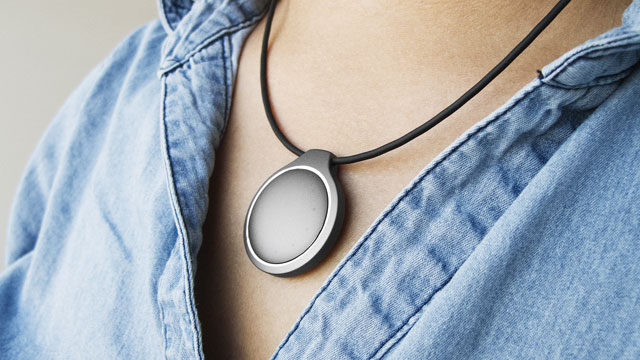
"content": "\u003cp>\u003cstrong>By Christina Farr\u003c/strong>\u003c/p>\n\u003cfigure id=\"attachment_16542\" class=\"wp-caption aligncenter\" style=\"max-width: 640px\">\u003cimg loading=\"lazy\" decoding=\"async\" class=\"size-full wp-image-16542\" src=\"http://ww2.kqed.org/science/wp-content/uploads/sites/35/2014/04/07_wearing_necklace.jpg\" alt=\"The Shine wearable. (Misfit Wearables)\" width=\"640\" height=\"360\">\u003cfigcaption class=\"wp-caption-text\">The Shine is an activity monitor, sleep tracker and watch. (Misfit Wearables)\u003c/figcaption>\u003c/figure>\n\u003cp>For months, technology entrepreneur Will Imholte was hell-bent on finding the best personal activity tracker.\u003c/p>\n\u003cp>Rather than browsing reviews, he decided to test the \u003ca href=\"https://jawbone.com/up\">Jawbone UP\u003c/a>, \u003ca href=\"http://www.fitbit.com/\">Fitbit Flex\u003c/a>, \u003ca href=\"http://www.nike.com/us/en_us/c/nikeplus-fuelband\">Nike FuelBand SE\u003c/a> and a litany of others to track his calorie count and weight.\u003c/p>\n\u003cp>But all these devices failed to sustain his interest for more than a week. Despite his best efforts, Imholte gave up on the burgeoning wearable trend. He found that a smartphone and a time-keeping Swiss watch were more than sufficient for his purposes.\u003c/p>\n\u003caside class=\"pullquote alignleft\">‘Trust me, I wanted to like wearables, but I stopped using them after a few months.’\u003c/aside>\n\u003cp>“I’m a nerd that can’t get enough of the latest gadgets,” said Imholte, the founder of Prime, a startup that helps patients access their personal medical records.\u003c/p>\n\u003cp>[ad fullwidth]\u003c/p>\n\u003cp>“Trust me, I wanted to like wearables, but I stopped using them after a few months,” he said. “I’m not training for a marathon or anything, so I didn’t really see much need for them in my life.”\u003c/p>\n\u003cp>Wearables are currently the darling of Silicon Valley and the majority of them, right now, are health devices, or have some wellness application. The new consumer electronics tools are allowing people to become their own researchers, trainers and medical advisers by monitoring such things as sleep, activity, heart rate and stress levels.\u003c/p>\n\u003cp>But no one has quite nailed the technology just yet. Amid all the hype, it’s easy to forget that this technology is still in its infancy. For now, most of the devices on the market are glorified pedometers with a high price tag and short battery life.\u003c/p>\n\u003cp>The current slew of wrist bands, like the $99.95 Fitbit Flex or $299 \u003ca href=\"http://www.samsung.com/global/microsite/galaxynote3-gear/\">Samsung Galaxy Gear\u003c/a> smartwatch, are the first generation, with more sophisticated models still under development. Most devices today are adept at collecting data, but they fail to provide consumers with valuable health-related insights.\u003c/p>\n\u003cp>For Imholte, the data piqued his interest — he said it was intriguing to learn that he walked 1,000 steps on Monday — but only temporarily. Ultimately, he was disheartened by the lack of practical advice about how he could improve his health and fitness, without significantly altering his lifestyle.\u003c/p>\n\u003cp>\u003cstrong>Skyrocketing Expectations\u003c/strong>\u003c/p>\n\u003cp>For all their limitations, technology investors have gone gaga for wearable devices. Investors poured $570 million into the space in 2013 alone, according to research firm CB Insights. On Kickstarter, a team asked for $100,000 to build a new smartwatch called \u003ca href=\"https://getpebble.com/\">Pebble\u003c/a>, and were stunned when backers invested over $10.2 million.\u003c/p>\n\u003cp>Wearable devices are nothing new. For years, athletes have used basic activity trackers to help them train for competitions. But, unlike today, those devices did not connect with your smartphone and thousands of health-related apps. The current wearables craze was fueled, in part, by members of the “\u003ca href=\"http://quantifiedself.com/\">Quantified Self\u003c/a>” movement, who strive for self-understanding by collecting data about themselves. In cities across the U.S., some 30,000 quantified selfers regularly meet up to trade tips and tricks about the latest health-tracking tech.\u003c/p>\n\u003cp>But this year, wearables will no longer be the domain of athletes, fitness junkies and early adopters. Market research firm Canalys predicts that in 2014 companies will ship some 17 million wearable bands.\u003c/p>\n\u003cp>“Having a computer on your wrist will become increasingly common,” said Canalys analyst Daniel Matte, in a statement.\u003cbr>\n\u003cstrong>\u003cbr>\nMeet the Woman With 27 Fitness Trackers\u003c/strong>\u003c/p>\n\u003cfigure id=\"attachment_16557\" class=\"wp-caption alignright\" style=\"max-width: 266px\">\u003cimg loading=\"lazy\" decoding=\"async\" class=\" wp-image-16557 \" src=\"http://ww2.kqed.org/science/wp-content/uploads/sites/35/2014/04/wearablesdevcon-768x1024.jpg\" alt=\"Rachel Kalmar models her activity trackers at the DevCon Wearables Conference. (Credit: DevCon Wearables Conference)\" width=\"266\" height=\"354\">\u003cfigcaption class=\"wp-caption-text\">Rachel Kalmar models her activity trackers at the DevCon Wearables Conference. (Credit: DevCon Wearables Conference)\u003c/figcaption>\u003c/figure>\n\u003cp>To prepare for a stroll in San Francisco, Rachel Kalmar straps over two-dozen gadgets to her wrist and forearms.\u003c/p>\n\u003cp>When I first met Kalmar, she was wearing 22 clip-on activity trackers, including the Pebble, Fitbit Flex, \u003ca href=\"http://www.bodymedia.com/\">Bodymedia\u003c/a> and (my personal favorite) an antique pedometer from 1877. Now she has 27 trackers for both Android and iOS monitoring her every waking move.\u003c/p>\n\u003cp>Kalmar isn’t a member of the cult of the quantified self, obsessed with tracking her bodily metrics. For Kalmar, it’s all in pursuit of research. For her day job, she’s a data scientist at\u003ca href=\"http://www.misfitwearables.com/\"> Misfit Wearable\u003c/a>s, maker of the Shine, futuristic jewelry that is popular with young women. The Shine acts as an activity monitor, sleep tracker and watch all in one. It can be worn as a necklace or on a clasp.\u003c/p>\n\u003cp>Kalmar’s been wearing them every day for months, but she hasn’t derived ample benefit from these trackers — and doesn’t expect that you will either.\u003c/p>\n\u003cp>“I thought it would be a week-long project, but then it started getting more and more complicated,” she said.\u003c/p>\n\u003cp>Like Kalmar, Misfit chief executive Sonny Vu is one of the most vocal critiques of the wearables trend. He frequently speaks at conferences and describes these devices as “not that wearable — yet.”\u003c/p>\n\u003cp>The key challenge Kalmar’s unearthed is that the devices don’t speak to each other. When it comes to the human body, data about your steps, heart rate, sleep cycle and glucose levels don’t mean much in isolation.\u003c/p>\n\u003caside class=\"pullquote alignleft\">‘I think of wearables today like the first cell phone cameras, which sucked.’\u003c/aside>\n\u003cp>“What we want is our devices to interact with other devices,” said Kalmer. “Interoperability is key.”\u003c/p>\n\u003cp>But that’s not an easy prospect for the still-nascent wearables trend.\u003c/p>\n\u003cp>“I mean, Christ, we can’t even all agree on how to treat time zones in our data and databases,” Kalmar quipped.\u003c/p>\n\u003cp>\u003cstrong>What’s Next for Wearables?\u003c/strong>\u003c/p>\n\u003cp>Kalmar hasn’t given up on wearables altogether — far from it. For now, she hopes that the Shine and other devices will inspire people to be more active. And she expects that the field will figure out how to make them more useful.\u003c/p>\n\u003cp>“I think of wearables today like the first cell phone cameras, which sucked,” she said.\u003c/p>\n\u003cp>In an interview from Misfit’s Vietnam offices, Kalmar offered several predictions for the future of wearables: The devices will eventually allow us to interact with other objects in our lives. (Imagine turning off your thermostat or unlocking your front door with a few taps of a smart watch.) Wearables will also increasingly be used to monitor patients with chronic health conditions. And they won’t be mostly bands; health-related smart glasses, sports bras and shoes are among the next generation of wearable sensors.\u003c/p>\n\u003caside class=\"pullquote alignleft\">‘Mobile technology has seen its day. Wearables might be what’s next.’\u003c/aside>\n\u003cp>Another key to longevity, for wearable computers, will be to keep the attention of Silicon Valley’s technology behemoths.\u003c/p>\n\u003cp>Google has just released its futuristic eyeglasses called “Glass” to the public after a trial with developers, and Apple is rumored to be secretly developing a smartwatch, the “iWatch.”\u003c/p>\n\u003cp>“I’m excited about what Apple is going to do next,” said Tommy Leep, an investor at San Francisco’s Rothenberg Ventures.\u003c/p>\n\u003cp>Unlike many of his counterparts, he has not invested in a wearable. But he is keeping a close eye on the space, as he believes that wearable tech is one of less than a handful of emerging platforms that have the potential to be the next big thing.\u003c/p>\n\u003cp>“Wearables in and of themselves aren’t hugely exciting right now,” he said. Leep said he hasn’t personally seen many gadgets that are a significant step beyond the iPhone, the smart computer already in millions of pockets.\u003c/p>\n\u003cp>“That said, many of us believe that mobile technology has seen its day. Wearables might be what’s next.”\u003c/p>\n\u003cp>[ad floatright]\u003c/p>\n\u003cp>\u003cem>Christina Farr is a San Francisco journalist covering health technology. She previously wrote for \u003c/em>Venture Beat, The Bay Citizen\u003cem> and \u003c/em>SFGate\u003cem>. \u003c/em>\u003c/p>\n\n",
"stats": {
"hasVideo": false,
"hasChartOrMap": false,
"hasAudio": false,
"hasPolis": false,
"wordCount": 1352,
"hasGoogleForm": false,
"hasGallery": false,
"hasHearkenModule": false,
"iframeSrcs": [],
"paragraphCount": 38
},
"modified": 1704933830,
"excerpt": "Low battery life, bulky appearance and lack of integration are some of the obstacles in the way before health trackers become the next gadgets we can’t live without. ",
"headData": {
"twImgId": "",
"twTitle": "",
"ogTitle": "",
"ogImgId": "",
"twDescription": "",
"description": "Low battery life, bulky appearance and lack of integration are some of the obstacles in the way before health trackers become the next gadgets we can’t live without. ",
"title": "Health Trackers May Be the Rage, But How Useful Are They? | KQED",
"ogDescription": "",
"schema": {
"@context": "https://schema.org",
"@type": "Article",
"headline": "Health Trackers May Be the Rage, But How Useful Are They?",
"datePublished": "2014-04-15T08:05:27-07:00",
"dateModified": "2024-01-10T16:43:50-08:00",
"image": "https://cdn.kqed.org/wp-content/uploads/2020/02/KQED-OG-Image@1x.png"
}
},
"guestAuthors": [],
"slug": "health-trackers-may-be-the-rage-but-how-useful-are-they",
"status": "publish",
"sticky": false,
"path": "/science/16524/health-trackers-may-be-the-rage-but-how-useful-are-they",
"audioTrackLength": null,
"parsedContent": [
{
"type": "contentString",
"content": "\u003cdiv class=\"post-body\">\u003cp>\u003cp>\u003cstrong>By Christina Farr\u003c/strong>\u003c/p>\n\u003cfigure id=\"attachment_16542\" class=\"wp-caption aligncenter\" style=\"max-width: 640px\">\u003cimg loading=\"lazy\" decoding=\"async\" class=\"size-full wp-image-16542\" src=\"http://ww2.kqed.org/science/wp-content/uploads/sites/35/2014/04/07_wearing_necklace.jpg\" alt=\"The Shine wearable. (Misfit Wearables)\" width=\"640\" height=\"360\">\u003cfigcaption class=\"wp-caption-text\">The Shine is an activity monitor, sleep tracker and watch. (Misfit Wearables)\u003c/figcaption>\u003c/figure>\n\u003cp>For months, technology entrepreneur Will Imholte was hell-bent on finding the best personal activity tracker.\u003c/p>\n\u003cp>Rather than browsing reviews, he decided to test the \u003ca href=\"https://jawbone.com/up\">Jawbone UP\u003c/a>, \u003ca href=\"http://www.fitbit.com/\">Fitbit Flex\u003c/a>, \u003ca href=\"http://www.nike.com/us/en_us/c/nikeplus-fuelband\">Nike FuelBand SE\u003c/a> and a litany of others to track his calorie count and weight.\u003c/p>\n\u003cp>But all these devices failed to sustain his interest for more than a week. Despite his best efforts, Imholte gave up on the burgeoning wearable trend. He found that a smartphone and a time-keeping Swiss watch were more than sufficient for his purposes.\u003c/p>\n\u003caside class=\"pullquote alignleft\">‘Trust me, I wanted to like wearables, but I stopped using them after a few months.’\u003c/aside>\n\u003cp>“I’m a nerd that can’t get enough of the latest gadgets,” said Imholte, the founder of Prime, a startup that helps patients access their personal medical records.\u003c/p>\n\u003cp>\u003c/p>\u003c/div>",
"attributes": {
"named": {},
"numeric": []
}
},
{
"type": "component",
"content": "",
"name": "ad",
"attributes": {
"named": {
"label": "fullwidth"
},
"numeric": [
"fullwidth"
]
}
},
{
"type": "contentString",
"content": "\u003cdiv class=\"post-body\">\u003cp>\u003c/p>\n\u003cp>“Trust me, I wanted to like wearables, but I stopped using them after a few months,” he said. “I’m not training for a marathon or anything, so I didn’t really see much need for them in my life.”\u003c/p>\n\u003cp>Wearables are currently the darling of Silicon Valley and the majority of them, right now, are health devices, or have some wellness application. The new consumer electronics tools are allowing people to become their own researchers, trainers and medical advisers by monitoring such things as sleep, activity, heart rate and stress levels.\u003c/p>\n\u003cp>But no one has quite nailed the technology just yet. Amid all the hype, it’s easy to forget that this technology is still in its infancy. For now, most of the devices on the market are glorified pedometers with a high price tag and short battery life.\u003c/p>\n\u003cp>The current slew of wrist bands, like the $99.95 Fitbit Flex or $299 \u003ca href=\"http://www.samsung.com/global/microsite/galaxynote3-gear/\">Samsung Galaxy Gear\u003c/a> smartwatch, are the first generation, with more sophisticated models still under development. Most devices today are adept at collecting data, but they fail to provide consumers with valuable health-related insights.\u003c/p>\n\u003cp>For Imholte, the data piqued his interest — he said it was intriguing to learn that he walked 1,000 steps on Monday — but only temporarily. Ultimately, he was disheartened by the lack of practical advice about how he could improve his health and fitness, without significantly altering his lifestyle.\u003c/p>\n\u003cp>\u003cstrong>Skyrocketing Expectations\u003c/strong>\u003c/p>\n\u003cp>For all their limitations, technology investors have gone gaga for wearable devices. Investors poured $570 million into the space in 2013 alone, according to research firm CB Insights. On Kickstarter, a team asked for $100,000 to build a new smartwatch called \u003ca href=\"https://getpebble.com/\">Pebble\u003c/a>, and were stunned when backers invested over $10.2 million.\u003c/p>\n\u003cp>Wearable devices are nothing new. For years, athletes have used basic activity trackers to help them train for competitions. But, unlike today, those devices did not connect with your smartphone and thousands of health-related apps. The current wearables craze was fueled, in part, by members of the “\u003ca href=\"http://quantifiedself.com/\">Quantified Self\u003c/a>” movement, who strive for self-understanding by collecting data about themselves. In cities across the U.S., some 30,000 quantified selfers regularly meet up to trade tips and tricks about the latest health-tracking tech.\u003c/p>\n\u003cp>But this year, wearables will no longer be the domain of athletes, fitness junkies and early adopters. Market research firm Canalys predicts that in 2014 companies will ship some 17 million wearable bands.\u003c/p>\n\u003cp>“Having a computer on your wrist will become increasingly common,” said Canalys analyst Daniel Matte, in a statement.\u003cbr>\n\u003cstrong>\u003cbr>\nMeet the Woman With 27 Fitness Trackers\u003c/strong>\u003c/p>\n\u003cfigure id=\"attachment_16557\" class=\"wp-caption alignright\" style=\"max-width: 266px\">\u003cimg loading=\"lazy\" decoding=\"async\" class=\" wp-image-16557 \" src=\"http://ww2.kqed.org/science/wp-content/uploads/sites/35/2014/04/wearablesdevcon-768x1024.jpg\" alt=\"Rachel Kalmar models her activity trackers at the DevCon Wearables Conference. (Credit: DevCon Wearables Conference)\" width=\"266\" height=\"354\">\u003cfigcaption class=\"wp-caption-text\">Rachel Kalmar models her activity trackers at the DevCon Wearables Conference. (Credit: DevCon Wearables Conference)\u003c/figcaption>\u003c/figure>\n\u003cp>To prepare for a stroll in San Francisco, Rachel Kalmar straps over two-dozen gadgets to her wrist and forearms.\u003c/p>\n\u003cp>When I first met Kalmar, she was wearing 22 clip-on activity trackers, including the Pebble, Fitbit Flex, \u003ca href=\"http://www.bodymedia.com/\">Bodymedia\u003c/a> and (my personal favorite) an antique pedometer from 1877. Now she has 27 trackers for both Android and iOS monitoring her every waking move.\u003c/p>\n\u003cp>Kalmar isn’t a member of the cult of the quantified self, obsessed with tracking her bodily metrics. For Kalmar, it’s all in pursuit of research. For her day job, she’s a data scientist at\u003ca href=\"http://www.misfitwearables.com/\"> Misfit Wearable\u003c/a>s, maker of the Shine, futuristic jewelry that is popular with young women. The Shine acts as an activity monitor, sleep tracker and watch all in one. It can be worn as a necklace or on a clasp.\u003c/p>\n\u003cp>Kalmar’s been wearing them every day for months, but she hasn’t derived ample benefit from these trackers — and doesn’t expect that you will either.\u003c/p>\n\u003cp>“I thought it would be a week-long project, but then it started getting more and more complicated,” she said.\u003c/p>\n\u003cp>Like Kalmar, Misfit chief executive Sonny Vu is one of the most vocal critiques of the wearables trend. He frequently speaks at conferences and describes these devices as “not that wearable — yet.”\u003c/p>\n\u003cp>The key challenge Kalmar’s unearthed is that the devices don’t speak to each other. When it comes to the human body, data about your steps, heart rate, sleep cycle and glucose levels don’t mean much in isolation.\u003c/p>\n\u003caside class=\"pullquote alignleft\">‘I think of wearables today like the first cell phone cameras, which sucked.’\u003c/aside>\n\u003cp>“What we want is our devices to interact with other devices,” said Kalmer. “Interoperability is key.”\u003c/p>\n\u003cp>But that’s not an easy prospect for the still-nascent wearables trend.\u003c/p>\n\u003cp>“I mean, Christ, we can’t even all agree on how to treat time zones in our data and databases,” Kalmar quipped.\u003c/p>\n\u003cp>\u003cstrong>What’s Next for Wearables?\u003c/strong>\u003c/p>\n\u003cp>Kalmar hasn’t given up on wearables altogether — far from it. For now, she hopes that the Shine and other devices will inspire people to be more active. And she expects that the field will figure out how to make them more useful.\u003c/p>\n\u003cp>“I think of wearables today like the first cell phone cameras, which sucked,” she said.\u003c/p>\n\u003cp>In an interview from Misfit’s Vietnam offices, Kalmar offered several predictions for the future of wearables: The devices will eventually allow us to interact with other objects in our lives. (Imagine turning off your thermostat or unlocking your front door with a few taps of a smart watch.) Wearables will also increasingly be used to monitor patients with chronic health conditions. And they won’t be mostly bands; health-related smart glasses, sports bras and shoes are among the next generation of wearable sensors.\u003c/p>\n\u003caside class=\"pullquote alignleft\">‘Mobile technology has seen its day. Wearables might be what’s next.’\u003c/aside>\n\u003cp>Another key to longevity, for wearable computers, will be to keep the attention of Silicon Valley’s technology behemoths.\u003c/p>\n\u003cp>Google has just released its futuristic eyeglasses called “Glass” to the public after a trial with developers, and Apple is rumored to be secretly developing a smartwatch, the “iWatch.”\u003c/p>\n\u003cp>“I’m excited about what Apple is going to do next,” said Tommy Leep, an investor at San Francisco’s Rothenberg Ventures.\u003c/p>\n\u003cp>Unlike many of his counterparts, he has not invested in a wearable. But he is keeping a close eye on the space, as he believes that wearable tech is one of less than a handful of emerging platforms that have the potential to be the next big thing.\u003c/p>\n\u003cp>“Wearables in and of themselves aren’t hugely exciting right now,” he said. Leep said he hasn’t personally seen many gadgets that are a significant step beyond the iPhone, the smart computer already in millions of pockets.\u003c/p>\n\u003cp>“That said, many of us believe that mobile technology has seen its day. Wearables might be what’s next.”\u003c/p>\n\u003cp>\u003c/p>\u003c/div>",
"attributes": {
"named": {},
"numeric": []
}
},
{
"type": "component",
"content": "",
"name": "ad",
"attributes": {
"named": {
"label": "floatright"
},
"numeric": [
"floatright"
]
}
},
{
"type": "contentString",
"content": "\u003cdiv class=\"post-body\">\u003cp>\u003c/p>\n\u003cp>\u003cem>Christina Farr is a San Francisco journalist covering health technology. She previously wrote for \u003c/em>Venture Beat, The Bay Citizen\u003cem> and \u003c/em>SFGate\u003cem>. \u003c/em>\u003c/p>\n\n\u003c/div>\u003c/p>",
"attributes": {
"named": {},
"numeric": []
}
}
],
"link": "/science/16524/health-trackers-may-be-the-rage-but-how-useful-are-they",
"authors": [
"6387"
],
"categories": [
"science_30",
"science_39",
"science_40"
],
"tags": [
"science_1513",
"science_968",
"science_1504"
],
"featImg": "science_16542",
"label": "science"
},
"science_16416": {
"type": "posts",
"id": "science_16416",
"meta": {
"index": "posts_1716263798",
"site": "science",
"id": "16416",
"score": null,
"sort": [
1397482258000
]
},
"parent": 0,
"labelTerm": {
"site": "science"
},
"blocks": [],
"publishDate": 1397482258,
"format": "aside",
"title": "Chevron Tries Again With Richmond Refinery Revamp",
"headTitle": "Chevron Tries Again With Richmond Refinery Revamp | KQED",
"content": "\u003cdiv class=\"audio-wrap\">\n\u003ch2>Listen:\u003c/h2>\n\u003cp>http://www.kqed.org/.stream/anon/radio/science/2014/04/20140414science.mp3\u003c/p>\n\u003c/div>\n\u003cp>The rust-red painted tanks of Chevron’s Richmond refinery are a familiar sight for drivers in the East Bay. The facility, sprawling across about four and a half miles at the foot of the Richmond-San Rafael Bridge, is the biggest refinery in Northern California.\u003c/p>\n\u003cp>It was built in 1902. Picture those \u003ca href=\"http://libraryphoto.cr.usgs.gov/cgi-bin/show_picture.cgi?ID=ID.%20Degenkolb,%20H.%2013\">black and white photos\u003c/a> of Victorian ladies after the 1906 earthquake. The refinery was already here, chugging along.\u003c/p>\n\u003cp>“There was pretty much nothing else here. It just looked like an open plain,” said Chevron’s Brian Hubinger.\u003c/p>\n\u003cp>\u003c!-- iframe plugin v.4.3 wordpress.org/plugins/iframe/ -->\u003cbr>\n\u003ciframe loading=\"lazy\" src=\"http://projects1.kqed.org/imageslider/chevronsliders.html\" frameborder=\"0\" scrolling=\"no\" width=\"640\" height=\"530\" class=\"iframe-class\">\u003c/iframe>\u003c/p>\n\u003cp>Today, according to the company, one out of every five cars on the road in the Bay Area is driving with gas from here, and two-thirds of the jet fuel used at Bay Area airports starts here.\u003c/p>\n\u003cp>[ad fullwidth]\u003c/p>\n\u003cp>Now Chevron is looking to launch a \u003ca href=\"http://chevronmodernization.com/\">billion-dollar construction project\u003c/a> at the refinery. It’s a slimmed down version of a project that environmentalists stopped with a lawsuit a few years ago.\u003c/p>\n\u003cp>After that legal battle and a \u003ca href=\"http://ww2.kqed.org/news/2013/04/21/how-the-chevron-richmond-fire-happened-feds-release-blow-by-blow-animation-of-accident/\">fire at the refinery\u003c/a> in 2012, Chevron is trying to win back the community’s trust not only with a new environmental impact report on the project, but also with a \u003ca href=\"http://richmondstandard.com/\">company-published local news website\u003c/a> and billboards celebrating the city of Richmond, and TV ads supporting the proposed project.\u003c/p>\n\u003cfigure id=\"attachment_16467\" class=\"wp-caption aligncenter\" style=\"max-width: 640px\">\u003cimg loading=\"lazy\" decoding=\"async\" class=\"size-full wp-image-16467\" src=\"http://ww2.kqed.org/science/wp-content/uploads/sites/35/2014/04/chevrontanks.jpg\" alt=\"A view of the Chevron refinery from its wharf, where ships deliver crude oil. (Josh Cassidy/KQED)\" width=\"640\" height=\"360\">\u003cfigcaption class=\"wp-caption-text\">A view of the refinery from its wharf, where ships deliver crude oil. (Josh Cassidy/KQED)\u003c/figcaption>\u003c/figure>\n\u003cp>Hubinger, the technical advisor for what Chevron’s calling its modernization project took me on a tour of the facility. (Critics of the project are more apt to call it an “expansion.”) We drove to the end of the wharf where tankers full of oil from the Middle East and Alaska unload, and then back into the heart of the refinery, past right-angled tangles of pipeline.\u003c/p>\n\u003cp>We parked near what looked like a brown barn on stilts: Chevron’s half-built hydrogen plant. That’s how much the company was able to construct before a state court judge \u003ca href=\"http://www.mercurynews.com/breaking-news/ci_14963441\">stopped the project\u003c/a> in 2010. This plant would produce more hydrogen, more efficiently, than the existing one does.\u003c/p>\n\u003cp>Chevron wants the upgrade — and other changes it’s proposing — because hydrogen helps clean the sulfur out of crude oil. And the company wants to refine crude that has more sulfur in it.\u003c/p>\n\u003cfigure id=\"attachment_16478\" class=\"wp-caption alignright\" style=\"max-width: 346px\">\u003cimg loading=\"lazy\" decoding=\"async\" class=\" wp-image-16478 \" src=\"http://ww2.kqed.org/science/wp-content/uploads/sites/35/2014/04/RS9520_Chevron032714-JoshC-5195-scr-e1397259831604.jpg\" alt=\"The partially-built hydrogen plant. (Josh Cassidy/KQED)\" width=\"346\" height=\"230\">\u003cfigcaption class=\"wp-caption-text\">The partially-built hydrogen plant, the “barn on stilts.” (Josh Cassidy/KQED)\u003c/figcaption>\u003c/figure>\n\u003cp>“It provides flexibility to the refinery to remain competitive in the future,” Hubinger said.\u003c/p>\n\u003cp>Chevron won’t say exactly where that oil would be coming from, but the refinery can only receive crude via ship. So this is not about using trains to bring in oil from \u003ca href=\"http://ww2.kqed.org/science/audio/valero-rail-project-fuels-tar-sands-speculation-in-bay-area/\">Canada’s tar sands\u003c/a> or \u003ca href=\"http://ww2.kqed.org/science/audio/bay-area-residents-resist-crude-by-rail-as-accidents-rise/\">North Dakota’s Bakken formation\u003c/a>, the company says. Instead, the project would allow Chevron to process crude from declining oil fields, which are often higher in sulfur.\u003c/p>\n\u003cp>Here’s another case where, like “modernization” versus “expansion,” the language drives a point of view: Opponents call the crude that’s higher in sulfur “dirty.” In the oil industry, they call it “sour.”\u003c/p>\n\u003cp>There’s no debating, though, that sulfur is an impurity in crude oil, and that processing higher sulfur crude will affect emissions at the refinery.\u003c/p>\n\u003cp>“Whatever Chevron says, we have to look at the truth and not accept their word for it,” said Andrés Soto, an organizer with \u003ca href=\"http://www.cbecal.org/\">Communities for a Better Environment\u003c/a> (CBE).\u003c/p>\n\u003cp>CBE, with other partner organizations, was the group that won the lawsuit to stop the earlier project. CBE argued, and a state judge agreed, that Chevron hadn’t provided enough information about how the project would affect air pollution.\u003c/p>\n\u003cfigure id=\"attachment_16483\" class=\"wp-caption alignright\" style=\"max-width: 342px\">\u003cimg loading=\"lazy\" decoding=\"async\" class=\" wp-image-16483 \" src=\"http://ww2.kqed.org/science/wp-content/uploads/sites/35/2014/04/RS9531_Chevron032714-JoshC-5225-scr-e1397261318631.jpg\" alt=\"Andrés Soto is the Richmond organizer with Communities for a Better Environment. (Josh Cassidy/KQED)\" width=\"342\" height=\"229\">\u003cfigcaption class=\"wp-caption-text\">Andrés Soto in Atchison Village, a neighborhood near Chevron’s Richmond refinery. (Josh Cassidy/KQED)\u003c/figcaption>\u003c/figure>\n\u003cp>“Chevron refused to disclose the crude slate quality that they would process as a result of this project,” Soto said. “If they were going to expand their hydrogen production, that was because they were going to be processing dirtier crude.”\u003c/p>\n\u003cp>Unlike Chevron’s last attempt at the project, this time its environmental impact report does provide details on the amount of air pollution that will be created. And it describes how Chevron will try to offset that pollution.\u003c/p>\n\u003cp>“Our commitments for no net increase are: no net increase in criteria air pollutants, no net increase in health risk and no net increase in greenhouse gas,” said Nicole Barber, a spokeswoman for Chevron. (Criteria air pollutants are particulates that the Environmental Protection Agency regulates for human and environmental health, such as lead, carbon monoxide and nitrogen oxides.)\u003c/p>\n\u003cp>Greenhouse gas emissions could go up by 15 percent or more if this project happens, but, Barber said, Chevron would offset that by buying carbon credits, giving money to greenhouse gas reduction programs in Richmond and making changes on-site like using LED lighting and reusing water. That’s on the climate change side.\u003c/p>\n\u003caside class=\"left\">The \u003ca href=\"http://chevronmodernization.com/project-documents/\">draft environmental impact report\u003c/a>, including appendices, is thousands of pages long. If you want to learn more about the emissions from the project, here are some places to start.\n\u003cul>\n\u003cli>\u003ca href=\"http://chevronmodernization.com/wp-content/uploads/2014/03/4.8_Greenhouse-Gases.pdf\">Greenhouse gases\u003c/a>: Page 36 shows a table with baseline emissions and potential changes.\u003c/li>\n\u003cli>\u003ca href=\"http://chevronmodernization.com/wp-content/uploads/2014/03/4.3_Air-Quality.pdf\">Air quality\u003c/a>: Page 85 shows a table listing baseline criteria air pollutant emissions and potential changes. Page 96 shows the same for toxic air contaminants.\u003c/li>\n\u003c/ul>\n\u003c/aside>\n\u003cp>In terms of emissions that could make people sick — toxic air contaminants and criteria air pollutants – Barber said Chevron will offset those, too. The company’s proposals include installing new burners that lower nitrogen oxide emissions and replacing three tanker ships with newer ships that have more efficient engines.\u003c/p>\n\u003cp>That’s all according to the environmental impact report. The Bay Area Air Quality Management District, which regulates emissions, and CBE have both said they’re still examining the report, and have no comment yet on whether the details Chevron provides are thorough and sufficient.\u003c/p>\n\u003cp>“We know they are claiming there will be no net increase in emissions,” said Soto. “And that sounds great. Except that the current level of emissions are already killing us. We have disproportionately high rates of cancers, asthma, other autoimmune diseases.”\u003c/p>\n\u003cp>Richmond is \u003ca href=\"http://www.environmentalhealthnews.org/ehs/news/2012/pollution-poverty-and-people-of-color-richmond-day-1\">an industrial area\u003c/a>. There are other refineries, shipping, trucking and factories. And year in and year out, Chevron’s refinery is one of the biggest polluters in the Bay Area.\u003c/p>\n\u003cfigure id=\"attachment_16496\" class=\"wp-caption aligncenter\" style=\"max-width: 640px\">\u003cimg loading=\"lazy\" decoding=\"async\" class=\"size-full wp-image-16496\" src=\"http://ww2.kqed.org/science/wp-content/uploads/sites/35/2014/04/9516scr_be7b8f9f55a4074-e1397264375694.jpg\" alt=\"Pipes inside the refinery. (Josh Cassidy/KQED)\" width=\"640\" height=\"427\">\u003cfigcaption class=\"wp-caption-text\">Pipes inside the refinery. (Josh Cassidy/KQED)\u003c/figcaption>\u003c/figure>\n\u003cp>Soto said the 2012 fire at the refinery is an extreme example of the health risks a refinery poses. The fire released a dark plume of smoke into the sky and sent more than 10,000 people to the hospital complaining of breathing problems\u003c/p>\n\u003cp>“That was an episodic exposure,” he said. “But then there’s the persistent and prolonged every day exposure that also happens.”\u003c/p>\n\u003cp>Richmond mayor Gayle McLaughlin said she wants the project and the 1,000 construction jobs it’s expected to create, but she also wants to make sure it’s safe. And she sees it as a chance to push Chevron for lower emissions.\u003c/p>\n\u003cp>“How often do we have an opportunity to determine whether or not to permit a $1 billion expansion project from a large refinery?” she said.\u003c/p>\n\u003cp>[ad floatright]\u003c/p>\n\u003cp>The draft environmental impact report is open for public comment until May second. The planning commission could vote on it as soon as this summer. There’s a public hearing on the project this week on \u003ca href=\"http://chevronmodernization.com/meetings/\">Thursday night\u003c/a>.\u003c/p>\n\n",
"stats": {
"hasVideo": false,
"hasChartOrMap": true,
"hasAudio": true,
"hasPolis": false,
"wordCount": 1306,
"hasGoogleForm": false,
"hasGallery": false,
"hasHearkenModule": false,
"iframeSrcs": [
"http://projects1.kqed.org/imageslider/chevronsliders.html"
],
"paragraphCount": 31
},
"modified": 1704933841,
"excerpt": "Chevron is looking to launch a billion-dollar construction project at its Richmond refinery. It’s a slimmed down version of a project that environmentalists stopped with a lawsuit a few years ago. ",
"headData": {
"twImgId": "",
"twTitle": "",
"ogTitle": "",
"ogImgId": "",
"twDescription": "",
"description": "Chevron is looking to launch a billion-dollar construction project at its Richmond refinery. It’s a slimmed down version of a project that environmentalists stopped with a lawsuit a few years ago. ",
"title": "Chevron Tries Again With Richmond Refinery Revamp | KQED",
"ogDescription": "",
"schema": {
"@context": "https://schema.org",
"@type": "Article",
"headline": "Chevron Tries Again With Richmond Refinery Revamp",
"datePublished": "2014-04-14T06:30:58-07:00",
"dateModified": "2024-01-10T16:44:01-08:00",
"image": "https://cdn.kqed.org/wp-content/uploads/2020/02/KQED-OG-Image@1x.png"
}
},
"guestAuthors": [],
"slug": "chevron-tries-again-with-richmond-refinery-revamp",
"status": "publish",
"audioUrl": "http://www.kqed.org/.stream/anon/radio/science/2014/04/20140414science.mp3",
"sticky": false,
"path": "/science/16416/chevron-tries-again-with-richmond-refinery-revamp",
"audioTrackLength": null,
"parsedContent": [
{
"type": "contentString",
"content": "\u003cdiv class=\"post-body\">\u003cp>\u003cdiv class=\"audio-wrap\">\n\u003ch2>Listen:\u003c/h2>\u003c/p>\u003c/div>",
"attributes": {
"named": {},
"numeric": []
}
},
{
"type": "component",
"content": "",
"name": "audioLink",
"attributes": {
"named": {
"src": "http://www.kqed.org/.stream/anon/radio/science/2014/04/20140414science.mp3"
},
"numeric": []
}
},
{
"type": "contentString",
"content": "\u003cdiv class=\"post-body\">\u003cp>\u003c/div>\n\u003cp>The rust-red painted tanks of Chevron’s Richmond refinery are a familiar sight for drivers in the East Bay. The facility, sprawling across about four and a half miles at the foot of the Richmond-San Rafael Bridge, is the biggest refinery in Northern California.\u003c/p>\n\u003cp>It was built in 1902. Picture those \u003ca href=\"http://libraryphoto.cr.usgs.gov/cgi-bin/show_picture.cgi?ID=ID.%20Degenkolb,%20H.%2013\">black and white photos\u003c/a> of Victorian ladies after the 1906 earthquake. The refinery was already here, chugging along.\u003c/p>\n\u003cp>“There was pretty much nothing else here. It just looked like an open plain,” said Chevron’s Brian Hubinger.\u003c/p>\n\u003cp>\u003c!-- iframe plugin v.4.3 wordpress.org/plugins/iframe/ -->\u003cbr>\n\u003ciframe loading=\"lazy\" src=\"http://projects1.kqed.org/imageslider/chevronsliders.html\" frameborder=\"0\" scrolling=\"no\" width=\"640\" height=\"530\" class=\"iframe-class\">\u003c/iframe>\u003c/p>\n\u003cp>Today, according to the company, one out of every five cars on the road in the Bay Area is driving with gas from here, and two-thirds of the jet fuel used at Bay Area airports starts here.\u003c/p>\n\u003cp>\u003c/p>\u003c/div>",
"attributes": {
"named": {},
"numeric": []
}
},
{
"type": "component",
"content": "",
"name": "ad",
"attributes": {
"named": {
"label": "fullwidth"
},
"numeric": [
"fullwidth"
]
}
},
{
"type": "contentString",
"content": "\u003cdiv class=\"post-body\">\u003cp>\u003c/p>\n\u003cp>Now Chevron is looking to launch a \u003ca href=\"http://chevronmodernization.com/\">billion-dollar construction project\u003c/a> at the refinery. It’s a slimmed down version of a project that environmentalists stopped with a lawsuit a few years ago.\u003c/p>\n\u003cp>After that legal battle and a \u003ca href=\"http://ww2.kqed.org/news/2013/04/21/how-the-chevron-richmond-fire-happened-feds-release-blow-by-blow-animation-of-accident/\">fire at the refinery\u003c/a> in 2012, Chevron is trying to win back the community’s trust not only with a new environmental impact report on the project, but also with a \u003ca href=\"http://richmondstandard.com/\">company-published local news website\u003c/a> and billboards celebrating the city of Richmond, and TV ads supporting the proposed project.\u003c/p>\n\u003cfigure id=\"attachment_16467\" class=\"wp-caption aligncenter\" style=\"max-width: 640px\">\u003cimg loading=\"lazy\" decoding=\"async\" class=\"size-full wp-image-16467\" src=\"http://ww2.kqed.org/science/wp-content/uploads/sites/35/2014/04/chevrontanks.jpg\" alt=\"A view of the Chevron refinery from its wharf, where ships deliver crude oil. (Josh Cassidy/KQED)\" width=\"640\" height=\"360\">\u003cfigcaption class=\"wp-caption-text\">A view of the refinery from its wharf, where ships deliver crude oil. (Josh Cassidy/KQED)\u003c/figcaption>\u003c/figure>\n\u003cp>Hubinger, the technical advisor for what Chevron’s calling its modernization project took me on a tour of the facility. (Critics of the project are more apt to call it an “expansion.”) We drove to the end of the wharf where tankers full of oil from the Middle East and Alaska unload, and then back into the heart of the refinery, past right-angled tangles of pipeline.\u003c/p>\n\u003cp>We parked near what looked like a brown barn on stilts: Chevron’s half-built hydrogen plant. That’s how much the company was able to construct before a state court judge \u003ca href=\"http://www.mercurynews.com/breaking-news/ci_14963441\">stopped the project\u003c/a> in 2010. This plant would produce more hydrogen, more efficiently, than the existing one does.\u003c/p>\n\u003cp>Chevron wants the upgrade — and other changes it’s proposing — because hydrogen helps clean the sulfur out of crude oil. And the company wants to refine crude that has more sulfur in it.\u003c/p>\n\u003cfigure id=\"attachment_16478\" class=\"wp-caption alignright\" style=\"max-width: 346px\">\u003cimg loading=\"lazy\" decoding=\"async\" class=\" wp-image-16478 \" src=\"http://ww2.kqed.org/science/wp-content/uploads/sites/35/2014/04/RS9520_Chevron032714-JoshC-5195-scr-e1397259831604.jpg\" alt=\"The partially-built hydrogen plant. (Josh Cassidy/KQED)\" width=\"346\" height=\"230\">\u003cfigcaption class=\"wp-caption-text\">The partially-built hydrogen plant, the “barn on stilts.” (Josh Cassidy/KQED)\u003c/figcaption>\u003c/figure>\n\u003cp>“It provides flexibility to the refinery to remain competitive in the future,” Hubinger said.\u003c/p>\n\u003cp>Chevron won’t say exactly where that oil would be coming from, but the refinery can only receive crude via ship. So this is not about using trains to bring in oil from \u003ca href=\"http://ww2.kqed.org/science/audio/valero-rail-project-fuels-tar-sands-speculation-in-bay-area/\">Canada’s tar sands\u003c/a> or \u003ca href=\"http://ww2.kqed.org/science/audio/bay-area-residents-resist-crude-by-rail-as-accidents-rise/\">North Dakota’s Bakken formation\u003c/a>, the company says. Instead, the project would allow Chevron to process crude from declining oil fields, which are often higher in sulfur.\u003c/p>\n\u003cp>Here’s another case where, like “modernization” versus “expansion,” the language drives a point of view: Opponents call the crude that’s higher in sulfur “dirty.” In the oil industry, they call it “sour.”\u003c/p>\n\u003cp>There’s no debating, though, that sulfur is an impurity in crude oil, and that processing higher sulfur crude will affect emissions at the refinery.\u003c/p>\n\u003cp>“Whatever Chevron says, we have to look at the truth and not accept their word for it,” said Andrés Soto, an organizer with \u003ca href=\"http://www.cbecal.org/\">Communities for a Better Environment\u003c/a> (CBE).\u003c/p>\n\u003cp>CBE, with other partner organizations, was the group that won the lawsuit to stop the earlier project. CBE argued, and a state judge agreed, that Chevron hadn’t provided enough information about how the project would affect air pollution.\u003c/p>\n\u003cfigure id=\"attachment_16483\" class=\"wp-caption alignright\" style=\"max-width: 342px\">\u003cimg loading=\"lazy\" decoding=\"async\" class=\" wp-image-16483 \" src=\"http://ww2.kqed.org/science/wp-content/uploads/sites/35/2014/04/RS9531_Chevron032714-JoshC-5225-scr-e1397261318631.jpg\" alt=\"Andrés Soto is the Richmond organizer with Communities for a Better Environment. (Josh Cassidy/KQED)\" width=\"342\" height=\"229\">\u003cfigcaption class=\"wp-caption-text\">Andrés Soto in Atchison Village, a neighborhood near Chevron’s Richmond refinery. (Josh Cassidy/KQED)\u003c/figcaption>\u003c/figure>\n\u003cp>“Chevron refused to disclose the crude slate quality that they would process as a result of this project,” Soto said. “If they were going to expand their hydrogen production, that was because they were going to be processing dirtier crude.”\u003c/p>\n\u003cp>Unlike Chevron’s last attempt at the project, this time its environmental impact report does provide details on the amount of air pollution that will be created. And it describes how Chevron will try to offset that pollution.\u003c/p>\n\u003cp>“Our commitments for no net increase are: no net increase in criteria air pollutants, no net increase in health risk and no net increase in greenhouse gas,” said Nicole Barber, a spokeswoman for Chevron. (Criteria air pollutants are particulates that the Environmental Protection Agency regulates for human and environmental health, such as lead, carbon monoxide and nitrogen oxides.)\u003c/p>\n\u003cp>Greenhouse gas emissions could go up by 15 percent or more if this project happens, but, Barber said, Chevron would offset that by buying carbon credits, giving money to greenhouse gas reduction programs in Richmond and making changes on-site like using LED lighting and reusing water. That’s on the climate change side.\u003c/p>\n\u003caside class=\"left\">The \u003ca href=\"http://chevronmodernization.com/project-documents/\">draft environmental impact report\u003c/a>, including appendices, is thousands of pages long. If you want to learn more about the emissions from the project, here are some places to start.\n\u003cul>\n\u003cli>\u003ca href=\"http://chevronmodernization.com/wp-content/uploads/2014/03/4.8_Greenhouse-Gases.pdf\">Greenhouse gases\u003c/a>: Page 36 shows a table with baseline emissions and potential changes.\u003c/li>\n\u003cli>\u003ca href=\"http://chevronmodernization.com/wp-content/uploads/2014/03/4.3_Air-Quality.pdf\">Air quality\u003c/a>: Page 85 shows a table listing baseline criteria air pollutant emissions and potential changes. Page 96 shows the same for toxic air contaminants.\u003c/li>\n\u003c/ul>\n\u003c/aside>\n\u003cp>In terms of emissions that could make people sick — toxic air contaminants and criteria air pollutants – Barber said Chevron will offset those, too. The company’s proposals include installing new burners that lower nitrogen oxide emissions and replacing three tanker ships with newer ships that have more efficient engines.\u003c/p>\n\u003cp>That’s all according to the environmental impact report. The Bay Area Air Quality Management District, which regulates emissions, and CBE have both said they’re still examining the report, and have no comment yet on whether the details Chevron provides are thorough and sufficient.\u003c/p>\n\u003cp>“We know they are claiming there will be no net increase in emissions,” said Soto. “And that sounds great. Except that the current level of emissions are already killing us. We have disproportionately high rates of cancers, asthma, other autoimmune diseases.”\u003c/p>\n\u003cp>Richmond is \u003ca href=\"http://www.environmentalhealthnews.org/ehs/news/2012/pollution-poverty-and-people-of-color-richmond-day-1\">an industrial area\u003c/a>. There are other refineries, shipping, trucking and factories. And year in and year out, Chevron’s refinery is one of the biggest polluters in the Bay Area.\u003c/p>\n\u003cfigure id=\"attachment_16496\" class=\"wp-caption aligncenter\" style=\"max-width: 640px\">\u003cimg loading=\"lazy\" decoding=\"async\" class=\"size-full wp-image-16496\" src=\"http://ww2.kqed.org/science/wp-content/uploads/sites/35/2014/04/9516scr_be7b8f9f55a4074-e1397264375694.jpg\" alt=\"Pipes inside the refinery. (Josh Cassidy/KQED)\" width=\"640\" height=\"427\">\u003cfigcaption class=\"wp-caption-text\">Pipes inside the refinery. (Josh Cassidy/KQED)\u003c/figcaption>\u003c/figure>\n\u003cp>Soto said the 2012 fire at the refinery is an extreme example of the health risks a refinery poses. The fire released a dark plume of smoke into the sky and sent more than 10,000 people to the hospital complaining of breathing problems\u003c/p>\n\u003cp>“That was an episodic exposure,” he said. “But then there’s the persistent and prolonged every day exposure that also happens.”\u003c/p>\n\u003cp>Richmond mayor Gayle McLaughlin said she wants the project and the 1,000 construction jobs it’s expected to create, but she also wants to make sure it’s safe. And she sees it as a chance to push Chevron for lower emissions.\u003c/p>\n\u003cp>“How often do we have an opportunity to determine whether or not to permit a $1 billion expansion project from a large refinery?” she said.\u003c/p>\n\u003cp>\u003c/p>\u003c/div>",
"attributes": {
"named": {},
"numeric": []
}
},
{
"type": "component",
"content": "",
"name": "ad",
"attributes": {
"named": {
"label": "floatright"
},
"numeric": [
"floatright"
]
}
},
{
"type": "contentString",
"content": "\u003cdiv class=\"post-body\">\u003cp>\u003c/p>\n\u003cp>The draft environmental impact report is open for public comment until May second. The planning commission could vote on it as soon as this summer. There’s a public hearing on the project this week on \u003ca href=\"http://chevronmodernization.com/meetings/\">Thursday night\u003c/a>.\u003c/p>\n\n\u003c/div>\u003c/p>",
"attributes": {
"named": {},
"numeric": []
}
}
],
"link": "/science/16416/chevron-tries-again-with-richmond-refinery-revamp",
"authors": [
"200"
],
"categories": [
"science_46",
"science_31",
"science_33",
"science_39",
"science_40",
"science_43"
],
"tags": [
"science_5193",
"science_552",
"science_354",
"science_553",
"science_1455"
],
"featImg": "science_16497",
"label": "science"
},
"stateofhealth_18614": {
"type": "posts",
"id": "stateofhealth_18614",
"meta": {
"index": "posts_1716263798",
"site": "stateofhealth",
"id": "18614",
"score": null,
"sort": [
1397069253000
]
},
"parent": 0,
"labelTerm": {
"site": "stateofhealth"
},
"blocks": [],
"publishDate": 1397069253,
"format": "aside",
"disqusTitle": "In San Francisco, Brain Surgeons Explore Their Practice Through Art",
"title": "In San Francisco, Brain Surgeons Explore Their Practice Through Art",
"headTitle": "State of Health | KQED News",
"content": "\u003cfigure id=\"attachment_18618\" class=\"wp-caption aligncenter\" style=\"max-width: 640px\">\u003ca href=\"http://ww2.kqed.org/stateofhealth/wp-content/uploads/sites/27/2014/04/Neuro1-e1397066807510.jpg\">\u003cimg class=\"size-large wp-image-18618\" title=\"\" src=\"http://ww2.kqed.org/stateofhealth/wp-content/uploads/sites/27/2014/04/Neuro1-640x480.jpg\" alt=\"Neurosurgeon Katherine Ko stands next to her painting "Craniotomy in G Sharp," a depiction of her drilling a skull in preparation for brain surgery. "It's kind of a self portrait," she says. (April Dembosky/KQED)\" width=\"640\" height=\"480\">\u003c/a>\u003cfigcaption class=\"wp-caption-text\">Neurosurgeon Kathryn Ko stands next to her painting \"Craniotomy in G Sharp,\" a depiction of her drilling a skull in preparation for brain surgery. \"It's kind of a self portrait,\" she says. (April Dembosky/KQED)\u003c/figcaption>\u003c/figure>\n\u003cp>SAN FRANCISCO -- Most of the Moscone Center exhibit hall is full of looming medical machines: brain scanners and brain mappers. Men in suits wait for the wandering neurosurgeon to pass by so they can pounce with their pitch for the latest, greatest technology that will change brain surgery forever.\u003c/p>\n\u003caside class=\"pullquote alignleft\">“Patterns repeat themselves over and over in nature. We see that in our work and in anatomy.” \u003c/aside>\n\u003cp>But back at exhibit booth 630, it’s a different scene. An art show. Paintings and photographs depict abstract interpretations by neurosurgeons of their work, portraits of neurosurgery patients and natural landscapes that offer a striking resemblance to the human brain.\u003c/p>\n\u003cp>“Music, art, the visual, the senses -- matches and melds with medicine,” says Dr. Kathryn Ko, a neurosurgeon from New York who curated the show. “We like to see that left brain, right brain cross over. It’s a respite where you don’t have to concentrate. You can just let your eyes roam.”\u003c/p>\n\u003cp>\u003ciframe width=\"100%\" height=\"166\" scrolling=\"no\" frameborder=\"no\" src=\"https://w.soundcloud.com/player/?url=https%3A//api.soundcloud.com/tracks/147635003&color=ff5500&auto_play=false&hide_related=false&show_artwork=true\">\u003c/iframe>\u003cbr>\n\u003c!--more-->\u003c/p>\n\u003cp>The theme of this year’s American Association of Neurological Surgeons annual conference is “Expanding Neurosurgery” and Ko wanted to expand beyond the scientific. Throughout the exhibit space, she hung sheets of music from Modest Mussorgsky’s \"Pictures at an Exhibition.\" It was an insightful choice for a neurosurgeon. The composer wrote the piano suite after a dear friend died of a brain aneurysm, and he based the work on his experience walking through an exhibit of the friend’s drawings.\u003c/p>\n\u003cp>[ad fullwidth]\u003c/p>\n\u003cp>Ko played on the theme further, creating installations that overlaid surgical instruments on the sheet music. She dropped medical supplies into her own paintings.\u003c/p>\n\u003cfigure id=\"attachment_18619\" class=\"wp-caption alignright\" style=\"max-width: 300px\">\u003ca href=\"http://ww2.kqed.org/stateofhealth/wp-content/uploads/sites/27/2014/04/Neuro2-e1397066869933.jpg\">\u003cimg class=\"size-medium wp-image-18619 \" src=\"http://ww2.kqed.org/stateofhealth/wp-content/uploads/sites/27/2014/04/Neuro2-300x225.jpg\" alt=\"(April Dembosky/KQED)\" width=\"300\" height=\"225\">\u003c/a>\u003cfigcaption class=\"wp-caption-text\">The photographer-neurosurgeon who took this picture at Yellowstone National Park says it reminded her of the surface of the brain. (April Dembosky/KQED)\u003c/figcaption>\u003c/figure>\n\u003cp>“One of my pieces is called 'Craniotomy in G sharp,'” she says, pointing to a canvas that closes in on a surgeon's hands opening a skull. “It’s because the drill that we use to open the brain, when it’s properly working, emits the sound that is G sharp. And because I have perfect pitch I can tell whether or not the nurses have turned the drill on properly.”\u003c/p>\n\u003cp>Another piece, displayed on a music stand, uses white and red gauze to create an impression of a needle holder, a tool used to suture skin after surgery.\u003c/p>\n\u003cp>“The needle has a little bit of glitter on it so it catches your eye as you walk by,” she says.\u003c/p>\n\u003cp>For Shelly Timmons, a trauma neurosurgeon from Pennsylvania, she sees her work in nature. She displayed two photographs she took of geysers in Yellowstone National Park.\u003c/p>\n\u003cp>“Patterns repeat themselves over and over in nature,” she says. “We see that in our work and in anatomy.”\u003c/p>\n\u003cp>One photo shows a flat sandy rock flanked by blue and clear water.\u003c/p>\n\u003cp>“This particular piece reminds me a lot of the surface of the brain,” she says. “There’s a structure in the brain called the choroid plexus, which produces spinal fluid. This piece reminds me of that, and it’s surrounded by fluid so it’s sort of thematic.”\u003c/p>\n\u003cfigure id=\"attachment_18620\" class=\"wp-caption alignleft\" style=\"max-width: 300px\">\u003ca href=\"http://ww2.kqed.org/stateofhealth/wp-content/uploads/sites/27/2014/04/Neuro3-e1397066910486.jpg\">\u003cimg class=\"size-medium wp-image-18620\" title=\"\" src=\"http://ww2.kqed.org/stateofhealth/wp-content/uploads/sites/27/2014/04/Neuro3-300x252.jpg\" alt=\"A neurosurgeon's portrait of a mother and child in Mombasa, Kenya. The child was treated for hydrocephalus, a condition where spinal fluid builds up in the brain. (April Dembosky/KQED)\" width=\"300\" height=\"252\">\u003c/a>\u003cfigcaption class=\"wp-caption-text\">A neurosurgeon's portrait of a mother and child in Mombasa, Kenya. The child was treated for hydrocephalus, a condition where spinal fluid builds up in the brain. (April Dembosky/KQED)\u003c/figcaption>\u003c/figure>\n\u003cp>The human side of neurosurgery comes through as well. Dr. Bob Dempsey, a professor of neurosurgery at the University of Wisconsin, displayed a portrait of a woman he took while working in Africa. She is dressed in a colorful wrap, gazing down at her child.\u003c/p>\n\u003cp>“I call this the face of hydrocephalus,” he says. “Hydrocephalus is a condition where spinal fluid in the central nervous system builds up in the brain, causing pressure. It ends in mental retardation, paralysis or death. It’s a very endemic problem in the developing world.”\u003c/p>\n\u003cp>It is reversible, though, and after he treated this woman’s child, he asked if he could take her picture.\u003c/p>\n\u003cp>“The compositor was hers, just the way she cared for the child, and all I did was try to capture that,” he says.\u003c/p>\n\u003cp>\u003c/p>\n\u003cp>[contextly_auto_sidebar id=\"lk38Ol9MQrIXsEdWRDQRORc9nG8qMnco\"]\u003c/p>\n\n",
"disqusIdentifier": "18614 http://blogs.kqed.org/stateofhealth/?p=18614",
"disqusUrl": "https://ww2.kqed.org/stateofhealth/2014/04/09/neuroscientists-create-the-art-of-medicine/",
"stats": {
"hasVideo": false,
"hasChartOrMap": true,
"hasAudio": true,
"hasPolis": false,
"wordCount": 763,
"hasGoogleForm": false,
"hasGallery": false,
"hasHearkenModule": false,
"iframeSrcs": [
"https://w.soundcloud.com/player/"
],
"paragraphCount": 20
},
"modified": 1421179002,
"excerpt": "You might not expect to find an art gallery at a convention of neuroscientists.",
"headData": {
"twImgId": "",
"twTitle": "",
"ogTitle": "",
"ogImgId": "",
"twDescription": "",
"description": "You might not expect to find an art gallery at a convention of neuroscientists.",
"title": "In San Francisco, Brain Surgeons Explore Their Practice Through Art | KQED",
"ogDescription": "",
"schema": {
"@context": "https://schema.org",
"@type": "Article",
"headline": "In San Francisco, Brain Surgeons Explore Their Practice Through Art",
"datePublished": "2014-04-09T11:47:33-07:00",
"dateModified": "2015-01-13T11:56:42-08:00",
"image": "https://cdn.kqed.org/wp-content/uploads/2020/02/KQED-OG-Image@1x.png"
}
},
"guestAuthors": [],
"slug": "neuroscientists-create-the-art-of-medicine",
"status": "publish",
"path": "/stateofhealth/18614/neuroscientists-create-the-art-of-medicine",
"audioTrackLength": null,
"parsedContent": [
{
"type": "contentString",
"content": "\u003cdiv class=\"post-body\">\u003cp>\u003cfigure id=\"attachment_18618\" class=\"wp-caption aligncenter\" style=\"max-width: 640px\">\u003ca href=\"http://ww2.kqed.org/stateofhealth/wp-content/uploads/sites/27/2014/04/Neuro1-e1397066807510.jpg\">\u003cimg class=\"size-large wp-image-18618\" title=\"\" src=\"http://ww2.kqed.org/stateofhealth/wp-content/uploads/sites/27/2014/04/Neuro1-640x480.jpg\" alt=\"Neurosurgeon Katherine Ko stands next to her painting "Craniotomy in G Sharp," a depiction of her drilling a skull in preparation for brain surgery. "It's kind of a self portrait," she says. (April Dembosky/KQED)\" width=\"640\" height=\"480\">\u003c/a>\u003cfigcaption class=\"wp-caption-text\">Neurosurgeon Kathryn Ko stands next to her painting \"Craniotomy in G Sharp,\" a depiction of her drilling a skull in preparation for brain surgery. \"It's kind of a self portrait,\" she says. (April Dembosky/KQED)\u003c/figcaption>\u003c/figure>\n\u003cp>SAN FRANCISCO -- Most of the Moscone Center exhibit hall is full of looming medical machines: brain scanners and brain mappers. Men in suits wait for the wandering neurosurgeon to pass by so they can pounce with their pitch for the latest, greatest technology that will change brain surgery forever.\u003c/p>\n\u003caside class=\"pullquote alignleft\">“Patterns repeat themselves over and over in nature. We see that in our work and in anatomy.” \u003c/aside>\n\u003cp>But back at exhibit booth 630, it’s a different scene. An art show. Paintings and photographs depict abstract interpretations by neurosurgeons of their work, portraits of neurosurgery patients and natural landscapes that offer a striking resemblance to the human brain.\u003c/p>\n\u003cp>“Music, art, the visual, the senses -- matches and melds with medicine,” says Dr. Kathryn Ko, a neurosurgeon from New York who curated the show. “We like to see that left brain, right brain cross over. It’s a respite where you don’t have to concentrate. You can just let your eyes roam.”\u003c/p>\n\u003cp>\u003ciframe width=\"100%\" height=\"166\" scrolling=\"no\" frameborder=\"no\" src=\"https://w.soundcloud.com/player/?url=https%3A//api.soundcloud.com/tracks/147635003&color=ff5500&auto_play=false&hide_related=false&show_artwork=true\">\u003c/iframe>\u003cbr>\n\u003c!--more-->\u003c/p>\n\u003cp>The theme of this year’s American Association of Neurological Surgeons annual conference is “Expanding Neurosurgery” and Ko wanted to expand beyond the scientific. Throughout the exhibit space, she hung sheets of music from Modest Mussorgsky’s \"Pictures at an Exhibition.\" It was an insightful choice for a neurosurgeon. The composer wrote the piano suite after a dear friend died of a brain aneurysm, and he based the work on his experience walking through an exhibit of the friend’s drawings.\u003c/p>\n\u003cp>\u003c/p>\u003c/div>",
"attributes": {
"named": {},
"numeric": []
}
},
{
"type": "component",
"content": "",
"name": "ad",
"attributes": {
"named": {
"label": "fullwidth"
},
"numeric": [
"fullwidth"
]
}
},
{
"type": "contentString",
"content": "\u003cdiv class=\"post-body\">\u003cp>\u003c/p>\n\u003cp>Ko played on the theme further, creating installations that overlaid surgical instruments on the sheet music. She dropped medical supplies into her own paintings.\u003c/p>\n\u003cfigure id=\"attachment_18619\" class=\"wp-caption alignright\" style=\"max-width: 300px\">\u003ca href=\"http://ww2.kqed.org/stateofhealth/wp-content/uploads/sites/27/2014/04/Neuro2-e1397066869933.jpg\">\u003cimg class=\"size-medium wp-image-18619 \" src=\"http://ww2.kqed.org/stateofhealth/wp-content/uploads/sites/27/2014/04/Neuro2-300x225.jpg\" alt=\"(April Dembosky/KQED)\" width=\"300\" height=\"225\">\u003c/a>\u003cfigcaption class=\"wp-caption-text\">The photographer-neurosurgeon who took this picture at Yellowstone National Park says it reminded her of the surface of the brain. (April Dembosky/KQED)\u003c/figcaption>\u003c/figure>\n\u003cp>“One of my pieces is called 'Craniotomy in G sharp,'” she says, pointing to a canvas that closes in on a surgeon's hands opening a skull. “It’s because the drill that we use to open the brain, when it’s properly working, emits the sound that is G sharp. And because I have perfect pitch I can tell whether or not the nurses have turned the drill on properly.”\u003c/p>\n\u003cp>Another piece, displayed on a music stand, uses white and red gauze to create an impression of a needle holder, a tool used to suture skin after surgery.\u003c/p>\n\u003cp>“The needle has a little bit of glitter on it so it catches your eye as you walk by,” she says.\u003c/p>\n\u003cp>For Shelly Timmons, a trauma neurosurgeon from Pennsylvania, she sees her work in nature. She displayed two photographs she took of geysers in Yellowstone National Park.\u003c/p>\n\u003cp>“Patterns repeat themselves over and over in nature,” she says. “We see that in our work and in anatomy.”\u003c/p>\n\u003cp>One photo shows a flat sandy rock flanked by blue and clear water.\u003c/p>\n\u003cp>“This particular piece reminds me a lot of the surface of the brain,” she says. “There’s a structure in the brain called the choroid plexus, which produces spinal fluid. This piece reminds me of that, and it’s surrounded by fluid so it’s sort of thematic.”\u003c/p>\n\u003cfigure id=\"attachment_18620\" class=\"wp-caption alignleft\" style=\"max-width: 300px\">\u003ca href=\"http://ww2.kqed.org/stateofhealth/wp-content/uploads/sites/27/2014/04/Neuro3-e1397066910486.jpg\">\u003cimg class=\"size-medium wp-image-18620\" title=\"\" src=\"http://ww2.kqed.org/stateofhealth/wp-content/uploads/sites/27/2014/04/Neuro3-300x252.jpg\" alt=\"A neurosurgeon's portrait of a mother and child in Mombasa, Kenya. The child was treated for hydrocephalus, a condition where spinal fluid builds up in the brain. (April Dembosky/KQED)\" width=\"300\" height=\"252\">\u003c/a>\u003cfigcaption class=\"wp-caption-text\">A neurosurgeon's portrait of a mother and child in Mombasa, Kenya. The child was treated for hydrocephalus, a condition where spinal fluid builds up in the brain. (April Dembosky/KQED)\u003c/figcaption>\u003c/figure>\n\u003cp>The human side of neurosurgery comes through as well. Dr. Bob Dempsey, a professor of neurosurgery at the University of Wisconsin, displayed a portrait of a woman he took while working in Africa. She is dressed in a colorful wrap, gazing down at her child.\u003c/p>\n\u003cp>“I call this the face of hydrocephalus,” he says. “Hydrocephalus is a condition where spinal fluid in the central nervous system builds up in the brain, causing pressure. It ends in mental retardation, paralysis or death. It’s a very endemic problem in the developing world.”\u003c/p>\n\u003cp>It is reversible, though, and after he treated this woman’s child, he asked if he could take her picture.\u003c/p>\n\u003cp>“The compositor was hers, just the way she cared for the child, and all I did was try to capture that,” he says.\u003c/p>\n\u003cp>\u003c/p>\n\u003cp>[contextly_auto_sidebar id=\"lk38Ol9MQrIXsEdWRDQRORc9nG8qMnco\"]\u003c/p>\n\n\u003c/div>\u003c/p>",
"attributes": {
"named": {},
"numeric": []
}
}
],
"link": "/stateofhealth/18614/neuroscientists-create-the-art-of-medicine",
"authors": [
"3205"
],
"categories": [
"stateofhealth_12"
],
"tags": [
"stateofhealth_461"
],
"featImg": "stateofhealth_18618",
"label": "stateofhealth"
},
"stateofhealth_18562": {
"type": "posts",
"id": "stateofhealth_18562",
"meta": {
"index": "posts_1716263798",
"site": "stateofhealth",
"id": "18562",
"score": null,
"sort": [
1396897517000
]
},
"parent": 0,
"labelTerm": {
"site": "stateofhealth"
},
"blocks": [],
"publishDate": 1396897517,
"format": "aside",
"disqusTitle": "School Nurses on Front Lines to Raise Vaccine Rates",
"title": "School Nurses on Front Lines to Raise Vaccine Rates",
"headTitle": "State of Health | KQED News",
"content": "\u003cfigure id=\"attachment_18566\" class=\"wp-caption aligncenter\" style=\"max-width: 640px\">\u003ca href=\"http://ww2.kqed.org/stateofhealth/wp-content/uploads/sites/27/2014/04/SchoolnurseGrassVallNo2March2014JA.jpg\">\u003cimg class=\"size-large wp-image-18566 \" src=\"http://ww2.kqed.org/stateofhealth/wp-content/uploads/sites/27/2014/04/SchoolnurseGrassVallNo2March2014JA-640x426.jpg\" alt=\"(Jane Meredith Adams/EdSource)\" width=\"640\" height=\"426\">\u003c/a>\u003cfigcaption class=\"wp-caption-text\">Robyn Ettl, Grass Valley Unified school nurse, gives a vision test to second grader Chase Littlejohn at the Grass Valley Charter School. (Jane Meredith Adams/EdSource)\u003c/figcaption>\u003c/figure>\n\u003cp>\u003cstrong>By Jane Meredith Adams,\u003c/strong>\u003ca href=\"http://edsource.org/2014/under-new-law-school-nurses-aim-to-stop-rise-in-vaccination-opt-outs/60044#.U0LWDf2PSDV\" target=\"_blank\"> EdSource\u003c/a>\u003c/p>\n\u003cp>In her 33 years as a school nurse, Robyn Ettl has listened, sometimes quietly, sometimes not, to parents in rural Nevada County explain why their children don’t need vaccinations against contagious and potentially fatal diseases, including polio, diphtheria, measles and pertussis.\u003c/p>\n\u003caside class=\"pullquote alignleft\">Parents must now meet with health provider before opting-out of vaccines for their children. \u003c/aside>\n\u003cp>Now, with nearly a half a million children in California registering for kindergarten in the fall, school nurses like Ettl are more invested than ever in a delicate task: trying to change the minds of parents intent on opting out of school-entrance immunizations.\u003c/p>\n\u003cp>Under a\u003ca href=\"http://leginfo.legislature.ca.gov/faces/billNavClient.xhtml?bill_id=201120120AB2109\" target=\"_blank\"> state law\u003c/a> that took effect Jan. 1, parents may no longer simply file a letter to opt-out of vaccines. Instead, they are required to consult with a health practitioner –- doctor, naturopath or credentialed school nurse –- before they’re allowed to obtain what's known as a \"personal-belief exemption\" from their child’s required immunizations.\u003c!--more-->\u003c/p>\n\u003cp>Nowhere is the impact of the law more anticipated than in Nevada County, a former gold mining haven in the Sierra foothills, northeast of Sacramento. The county had the highest opt-out rate in the state for many years and is now a close second to sparsely populated Trinity County. Here, 20 percent of kindergartners have a personal belief exemption on file.\u003c/p>\n\u003cp>[ad fullwidth]\u003c/p>\n\u003cp>\u003cstrong>Public Charter Schools Have Highest Opt-Out Rates\u003c/strong>\u003c/p>\n\u003cp>That exemption rate is driven by huge percentages of vaccination opt-outs at public charter schools in the county, led by Yuba River Charter School in Nevada City. In the current school year, 81 percent of kindergarteners at the school received personal-belief exemptions.\u003c/p>\n\u003cp>Caleb Buckley, director of the Yuba River Charter School, said many students’ parents steer clear of Western medicine and, by association, its core tenet that immunizations save lives. “I don’t know too many that go to see the local pediatrician group, unless they really have to,” Buckley said.\u003c/p>\n\u003cp>As Trevor Michael, president of the Nevada County Board of Education, explained, “Our county is rural. People live alternative lifestyles and have alternative beliefs.”\u003c/p>\n\u003cp>At Grass Valley Unified, Ettl hears parents state that it is better for a child’s immune system to get the disease than the vaccination, and that polio is passé. And even though a research paper alleging a link between vaccinations and autism was \u003ca href=\"http://download.thelancet.com/flatcontentassets/pdfs/S0140673610601754.pdf\" target=\"_blank\">retracted\u003c/a>, deemed a \u003ca href=\"http://www.bmj.com/content/342/bmj.c7452\" target=\"_blank\">fraud\u003c/a> by the British Medical Journal and its author \u003ca href=\"http://www.gmc-uk.org/Wakefield_SPM_and_SANCTION.pdf_32595267.pdf\" target=\"_blank\">stripped of his medical license\u003c/a>, they say they’re still not sure that a vaccination won’t give their child autism.\u003c/p>\n\u003cp>“I don’t argue with them,” Ettl said. In the past, when she has refuted their claims, “They get mad and head right to Holly,” she said, referring to Holly Hermansen, superintendent of the Nevada County Office of Education.\u003c/p>\n\u003cp style=\"text-align: center\">\u003ca href=\"http://ww2.kqed.org/stateofhealth/2013/09/06/more-california-parents-opting-out-of-vaccines-look-up-your-school-online/\" target=\"_blank\">\u003cstrong>[Related: More California Parents Opt-Out of Vaccines -- Look Up Your School Online]\u003c/strong>\u003c/a>\u003c/p>\n\u003cp>At some charter schools in the county, a philosophical opposition to vaccinations has become a defining feature of the culture, said Sharyn Turner, coordinator of school health services at the Nevada County Office of Education.\u003c/p>\n\u003cp>“All of a sudden it becomes socially unacceptable to be one of the few parents immunizing your child,” Turner said.\u003c/p>\n\u003cp>Public charter schools lead the state in enrolling the highest percentage of kindergarteners with personal-belief exemptions – 10.1 percent in 2013-14, according to \u003ca href=\"http://ww2.kqed.org/stateofhealth/2013/09/06/more-california-parents-opting-out-of-vaccines-look-up-your-school-online/\" target=\"_blank\">new data \u003c/a>from the California Department of Public Health. At private schools, 5.6 percent of kindergarteners received personal-belief exemptions, while 2.3 percent opted out at public schools.\u003c/p>\n\u003cp>Those high rates are driving an overall increase in personal belief exemptions statewide. The percentage of exempted kindergarteners more than doubled, from 1.4 percent in 2007 to 3.1 percent in 2013-14, according to the state Department of Public Health.\u003c/p>\n\u003cp>\u003cstrong>Fading Awareness of Dire Infectious Diseases\u003c/strong>\u003c/p>\n\u003cp>If roughly 90 percent of a population is fully vaccinated, “\u003ca href=\"http://ww2.kqed.org/stateofhealth/2013/08/23/5-things-you-should-know-about-vaccines/\" target=\"_blank\">herd immunity\u003c/a>” helps keep at bay infectious diseases including measles, pertussis or rubella. But with longstanding herd immunity comes fading awareness of dire infectious diseases. “There’s no fear,” said Lindsay Dunckel, executive director of First 5 Nevada County, which funds community programs for babies and young children. “These diseases that were once so frightening have disappeared.”\u003c/p>\n\u003cp>Now some of them are coming back, and the role of unvaccinated people in spreading disease is under scrutiny. In 159 cases of measles across the country last year, 82 percent of those infected \u003ca href=\"http://www.cdc.gov/mmwr/preview/mmwrhtml/mm6236a2.htm\" target=\"_blank\">were unvaccinated\u003c/a> and of those, 79 percent had philosophical objections to vaccinations, according to the CDC.\u003c/p>\n\u003cp>So far in 2014, the California Department of Public Health has received reports of \u003ca href=\"http://www.cdph.ca.gov/HealthInfo/discond/Pages/Measles.aspx\" target=\"_blank\">51 cases\u003c/a> of measles in the state, the largest number since 2000, when measles was declared eliminated in the U.S. In the decade before the introduction of a measles vaccine in 1963, the disease killed about \u003ca href=\"http://www.cdc.gov/vaccines/vac-gen/whatifstop.htm#measles\" target=\"_blank\">450 people a year \u003c/a>in the U.S., according to the CDC.\u003c/p>\n\u003cp>Also increasing in California is the number of cases of pertussis, better known as whooping cough. Reported cases in 2013 hit more than \u003ca href=\"http://www.cdph.ca.gov/programs/immunize/Pages/PertussisSummaryReports.aspx\" target=\"_blank\">2,300\u003c/a>, including an infant who contracted the disease at 4 weeks old and died. During a 2010 California outbreak of pertussis, in which 10 infants died and more than 9,000 cases were reported, children with personal-belief exemptions \u003ca href=\"http://pediatrics.aappublications.org/content/early/2013/09/24/peds.2013-0878.abstract\" target=\"_blank\">played a role\u003c/a> in transmitting the disease. Communities with high rates of personal-belief exemptions were 2.5 times more likely to also have pertussis clusters.\u003c/p>\n\u003cp>\u003cstrong>Can the New Law Help Raise Vaccine Rates?\u003c/strong>\u003c/p>\n\u003cp>At Grass Valley Unified, Ettl met recently with a parent of an incoming kindergartener who was dead-set against immunizations. The meeting was perfunctory: The parent read the vaccination information sheet, and Ettl explained that an unvaccinated child may not attend school for 21 days if an outbreak of whooping cough or measles occurs. Then Ettl and the parent signed the new \u003ca href=\"http://eziz.org/assets/docs/CDPH-8262.pdf\" target=\"_blank\">personal belief exemption form\u003c/a>.\u003c/p>\n\u003cp>Ettl’s hopes, and the hopes of public health officials, rest largely with parents whose opposition to vaccination is not entirely locked in. “‘I’ll ask, ‘Are you against every vaccine or some of them?’” she said.\u003c/p>\n\u003cp>One mother of a kindergartener recently told Ettl that although her child had received one vaccination, she was now inclined to opt out of the rest. Ettl talked to her about the risk of tetanus, a bacterial infection that can be contracted through a wound or animal bite. “We live in a rural place and tetanus is a serious disease,” Ettl recalled telling her. “I said, ‘Why don’t you start with one?’”\u003c/p>\n\u003cp>The mother left without a personal belief exemption in hand, saying she would think about it.\u003c/p>\n\u003cp>That’s just what the law is intended to do. The state of Washington passed a similar law in 2011 and its opt-out rate has dropped about 40 percent.\u003c/p>\n\u003cp>“Some parents are never going to change their mind,” said Catherine Flores Martin, director of the California Immunization Coalition, “but there is a larger number that want to have their vaccine concerns acknowledged and answered.”\u003c/p>\n\u003cp>[ad floatright]\u003c/p>\n\u003cp>[contextly_auto_sidebar id=\"XFhbYjl34gl1ZRPLwBP1QZhMQzjUqiEo\"]\u003c/p>\n\n",
"disqusIdentifier": "18562 http://blogs.kqed.org/stateofhealth/?p=18562",
"disqusUrl": "https://ww2.kqed.org/stateofhealth/2014/04/07/under-new-law-california-school-nurses-on-front-lines-to-raise-vaccine-rates/",
"stats": {
"hasVideo": false,
"hasChartOrMap": false,
"hasAudio": false,
"hasPolis": false,
"wordCount": 1289,
"hasGoogleForm": false,
"hasGallery": false,
"hasHearkenModule": false,
"iframeSrcs": [],
"paragraphCount": 30
},
"modified": 1396992455,
"excerpt": "Parents must now meet with health provider before opting-out of vaccines, providing opening for education.",
"headData": {
"twImgId": "",
"twTitle": "",
"ogTitle": "",
"ogImgId": "",
"twDescription": "",
"description": "Parents must now meet with health provider before opting-out of vaccines, providing opening for education.",
"title": "School Nurses on Front Lines to Raise Vaccine Rates | KQED",
"ogDescription": "",
"schema": {
"@context": "https://schema.org",
"@type": "Article",
"headline": "School Nurses on Front Lines to Raise Vaccine Rates",
"datePublished": "2014-04-07T12:05:17-07:00",
"dateModified": "2014-04-08T14:27:35-07:00",
"image": "https://cdn.kqed.org/wp-content/uploads/2020/02/KQED-OG-Image@1x.png"
}
},
"guestAuthors": [],
"slug": "under-new-law-california-school-nurses-on-front-lines-to-raise-vaccine-rates",
"status": "publish",
"path": "/stateofhealth/18562/under-new-law-california-school-nurses-on-front-lines-to-raise-vaccine-rates",
"audioTrackLength": null,
"parsedContent": [
{
"type": "contentString",
"content": "\u003cdiv class=\"post-body\">\u003cp>\u003cfigure id=\"attachment_18566\" class=\"wp-caption aligncenter\" style=\"max-width: 640px\">\u003ca href=\"http://ww2.kqed.org/stateofhealth/wp-content/uploads/sites/27/2014/04/SchoolnurseGrassVallNo2March2014JA.jpg\">\u003cimg class=\"size-large wp-image-18566 \" src=\"http://ww2.kqed.org/stateofhealth/wp-content/uploads/sites/27/2014/04/SchoolnurseGrassVallNo2March2014JA-640x426.jpg\" alt=\"(Jane Meredith Adams/EdSource)\" width=\"640\" height=\"426\">\u003c/a>\u003cfigcaption class=\"wp-caption-text\">Robyn Ettl, Grass Valley Unified school nurse, gives a vision test to second grader Chase Littlejohn at the Grass Valley Charter School. (Jane Meredith Adams/EdSource)\u003c/figcaption>\u003c/figure>\n\u003cp>\u003cstrong>By Jane Meredith Adams,\u003c/strong>\u003ca href=\"http://edsource.org/2014/under-new-law-school-nurses-aim-to-stop-rise-in-vaccination-opt-outs/60044#.U0LWDf2PSDV\" target=\"_blank\"> EdSource\u003c/a>\u003c/p>\n\u003cp>In her 33 years as a school nurse, Robyn Ettl has listened, sometimes quietly, sometimes not, to parents in rural Nevada County explain why their children don’t need vaccinations against contagious and potentially fatal diseases, including polio, diphtheria, measles and pertussis.\u003c/p>\n\u003caside class=\"pullquote alignleft\">Parents must now meet with health provider before opting-out of vaccines for their children. \u003c/aside>\n\u003cp>Now, with nearly a half a million children in California registering for kindergarten in the fall, school nurses like Ettl are more invested than ever in a delicate task: trying to change the minds of parents intent on opting out of school-entrance immunizations.\u003c/p>\n\u003cp>Under a\u003ca href=\"http://leginfo.legislature.ca.gov/faces/billNavClient.xhtml?bill_id=201120120AB2109\" target=\"_blank\"> state law\u003c/a> that took effect Jan. 1, parents may no longer simply file a letter to opt-out of vaccines. Instead, they are required to consult with a health practitioner –- doctor, naturopath or credentialed school nurse –- before they’re allowed to obtain what's known as a \"personal-belief exemption\" from their child’s required immunizations.\u003c!--more-->\u003c/p>\n\u003cp>Nowhere is the impact of the law more anticipated than in Nevada County, a former gold mining haven in the Sierra foothills, northeast of Sacramento. The county had the highest opt-out rate in the state for many years and is now a close second to sparsely populated Trinity County. Here, 20 percent of kindergartners have a personal belief exemption on file.\u003c/p>\n\u003cp>\u003c/p>\u003c/div>",
"attributes": {
"named": {},
"numeric": []
}
},
{
"type": "component",
"content": "",
"name": "ad",
"attributes": {
"named": {
"label": "fullwidth"
},
"numeric": [
"fullwidth"
]
}
},
{
"type": "contentString",
"content": "\u003cdiv class=\"post-body\">\u003cp>\u003c/p>\n\u003cp>\u003cstrong>Public Charter Schools Have Highest Opt-Out Rates\u003c/strong>\u003c/p>\n\u003cp>That exemption rate is driven by huge percentages of vaccination opt-outs at public charter schools in the county, led by Yuba River Charter School in Nevada City. In the current school year, 81 percent of kindergarteners at the school received personal-belief exemptions.\u003c/p>\n\u003cp>Caleb Buckley, director of the Yuba River Charter School, said many students’ parents steer clear of Western medicine and, by association, its core tenet that immunizations save lives. “I don’t know too many that go to see the local pediatrician group, unless they really have to,” Buckley said.\u003c/p>\n\u003cp>As Trevor Michael, president of the Nevada County Board of Education, explained, “Our county is rural. People live alternative lifestyles and have alternative beliefs.”\u003c/p>\n\u003cp>At Grass Valley Unified, Ettl hears parents state that it is better for a child’s immune system to get the disease than the vaccination, and that polio is passé. And even though a research paper alleging a link between vaccinations and autism was \u003ca href=\"http://download.thelancet.com/flatcontentassets/pdfs/S0140673610601754.pdf\" target=\"_blank\">retracted\u003c/a>, deemed a \u003ca href=\"http://www.bmj.com/content/342/bmj.c7452\" target=\"_blank\">fraud\u003c/a> by the British Medical Journal and its author \u003ca href=\"http://www.gmc-uk.org/Wakefield_SPM_and_SANCTION.pdf_32595267.pdf\" target=\"_blank\">stripped of his medical license\u003c/a>, they say they’re still not sure that a vaccination won’t give their child autism.\u003c/p>\n\u003cp>“I don’t argue with them,” Ettl said. In the past, when she has refuted their claims, “They get mad and head right to Holly,” she said, referring to Holly Hermansen, superintendent of the Nevada County Office of Education.\u003c/p>\n\u003cp style=\"text-align: center\">\u003ca href=\"http://ww2.kqed.org/stateofhealth/2013/09/06/more-california-parents-opting-out-of-vaccines-look-up-your-school-online/\" target=\"_blank\">\u003cstrong>[Related: More California Parents Opt-Out of Vaccines -- Look Up Your School Online]\u003c/strong>\u003c/a>\u003c/p>\n\u003cp>At some charter schools in the county, a philosophical opposition to vaccinations has become a defining feature of the culture, said Sharyn Turner, coordinator of school health services at the Nevada County Office of Education.\u003c/p>\n\u003cp>“All of a sudden it becomes socially unacceptable to be one of the few parents immunizing your child,” Turner said.\u003c/p>\n\u003cp>Public charter schools lead the state in enrolling the highest percentage of kindergarteners with personal-belief exemptions – 10.1 percent in 2013-14, according to \u003ca href=\"http://ww2.kqed.org/stateofhealth/2013/09/06/more-california-parents-opting-out-of-vaccines-look-up-your-school-online/\" target=\"_blank\">new data \u003c/a>from the California Department of Public Health. At private schools, 5.6 percent of kindergarteners received personal-belief exemptions, while 2.3 percent opted out at public schools.\u003c/p>\n\u003cp>Those high rates are driving an overall increase in personal belief exemptions statewide. The percentage of exempted kindergarteners more than doubled, from 1.4 percent in 2007 to 3.1 percent in 2013-14, according to the state Department of Public Health.\u003c/p>\n\u003cp>\u003cstrong>Fading Awareness of Dire Infectious Diseases\u003c/strong>\u003c/p>\n\u003cp>If roughly 90 percent of a population is fully vaccinated, “\u003ca href=\"http://ww2.kqed.org/stateofhealth/2013/08/23/5-things-you-should-know-about-vaccines/\" target=\"_blank\">herd immunity\u003c/a>” helps keep at bay infectious diseases including measles, pertussis or rubella. But with longstanding herd immunity comes fading awareness of dire infectious diseases. “There’s no fear,” said Lindsay Dunckel, executive director of First 5 Nevada County, which funds community programs for babies and young children. “These diseases that were once so frightening have disappeared.”\u003c/p>\n\u003cp>Now some of them are coming back, and the role of unvaccinated people in spreading disease is under scrutiny. In 159 cases of measles across the country last year, 82 percent of those infected \u003ca href=\"http://www.cdc.gov/mmwr/preview/mmwrhtml/mm6236a2.htm\" target=\"_blank\">were unvaccinated\u003c/a> and of those, 79 percent had philosophical objections to vaccinations, according to the CDC.\u003c/p>\n\u003cp>So far in 2014, the California Department of Public Health has received reports of \u003ca href=\"http://www.cdph.ca.gov/HealthInfo/discond/Pages/Measles.aspx\" target=\"_blank\">51 cases\u003c/a> of measles in the state, the largest number since 2000, when measles was declared eliminated in the U.S. In the decade before the introduction of a measles vaccine in 1963, the disease killed about \u003ca href=\"http://www.cdc.gov/vaccines/vac-gen/whatifstop.htm#measles\" target=\"_blank\">450 people a year \u003c/a>in the U.S., according to the CDC.\u003c/p>\n\u003cp>Also increasing in California is the number of cases of pertussis, better known as whooping cough. Reported cases in 2013 hit more than \u003ca href=\"http://www.cdph.ca.gov/programs/immunize/Pages/PertussisSummaryReports.aspx\" target=\"_blank\">2,300\u003c/a>, including an infant who contracted the disease at 4 weeks old and died. During a 2010 California outbreak of pertussis, in which 10 infants died and more than 9,000 cases were reported, children with personal-belief exemptions \u003ca href=\"http://pediatrics.aappublications.org/content/early/2013/09/24/peds.2013-0878.abstract\" target=\"_blank\">played a role\u003c/a> in transmitting the disease. Communities with high rates of personal-belief exemptions were 2.5 times more likely to also have pertussis clusters.\u003c/p>\n\u003cp>\u003cstrong>Can the New Law Help Raise Vaccine Rates?\u003c/strong>\u003c/p>\n\u003cp>At Grass Valley Unified, Ettl met recently with a parent of an incoming kindergartener who was dead-set against immunizations. The meeting was perfunctory: The parent read the vaccination information sheet, and Ettl explained that an unvaccinated child may not attend school for 21 days if an outbreak of whooping cough or measles occurs. Then Ettl and the parent signed the new \u003ca href=\"http://eziz.org/assets/docs/CDPH-8262.pdf\" target=\"_blank\">personal belief exemption form\u003c/a>.\u003c/p>\n\u003cp>Ettl’s hopes, and the hopes of public health officials, rest largely with parents whose opposition to vaccination is not entirely locked in. “‘I’ll ask, ‘Are you against every vaccine or some of them?’” she said.\u003c/p>\n\u003cp>One mother of a kindergartener recently told Ettl that although her child had received one vaccination, she was now inclined to opt out of the rest. Ettl talked to her about the risk of tetanus, a bacterial infection that can be contracted through a wound or animal bite. “We live in a rural place and tetanus is a serious disease,” Ettl recalled telling her. “I said, ‘Why don’t you start with one?’”\u003c/p>\n\u003cp>The mother left without a personal belief exemption in hand, saying she would think about it.\u003c/p>\n\u003cp>That’s just what the law is intended to do. The state of Washington passed a similar law in 2011 and its opt-out rate has dropped about 40 percent.\u003c/p>\n\u003cp>“Some parents are never going to change their mind,” said Catherine Flores Martin, director of the California Immunization Coalition, “but there is a larger number that want to have their vaccine concerns acknowledged and answered.”\u003c/p>\n\u003cp>\u003c/p>\u003c/div>",
"attributes": {
"named": {},
"numeric": []
}
},
{
"type": "component",
"content": "",
"name": "ad",
"attributes": {
"named": {
"label": "floatright"
},
"numeric": [
"floatright"
]
}
},
{
"type": "contentString",
"content": "\u003cdiv class=\"post-body\">\u003cp>\u003c/p>\n\u003cp>[contextly_auto_sidebar id=\"XFhbYjl34gl1ZRPLwBP1QZhMQzjUqiEo\"]\u003c/p>\n\n\u003c/div>\u003c/p>",
"attributes": {
"named": {},
"numeric": []
}
}
],
"link": "/stateofhealth/18562/under-new-law-california-school-nurses-on-front-lines-to-raise-vaccine-rates",
"authors": [
"8344"
],
"categories": [
"stateofhealth_11"
],
"tags": [
"stateofhealth_461",
"stateofhealth_31"
],
"featImg": "stateofhealth_18566",
"label": "stateofhealth"
},
"stateofhealth_18529": {
"type": "posts",
"id": "stateofhealth_18529",
"meta": {
"index": "posts_1716263798",
"site": "stateofhealth",
"id": "18529",
"score": null,
"sort": [
1396647860000
]
},
"parent": 0,
"labelTerm": {
"site": "stateofhealth"
},
"blocks": [],
"publishDate": 1396647860,
"format": "aside",
"disqusTitle": "Your Doctor's Skill at Colonoscopy May Reduce Your Later Colon Cancer Risk",
"title": "Your Doctor's Skill at Colonoscopy May Reduce Your Later Colon Cancer Risk",
"headTitle": "State of Health | KQED News",
"content": "\u003cp>\u003ca href=\"http://ww2.kqed.org/stateofhealth/wp-content/uploads/sites/27/2014/04/136237601-e1396647760530.jpg\">\u003cimg class=\"size-large wp-image-18548\" title=\"\" src=\"http://ww2.kqed.org/stateofhealth/wp-content/uploads/sites/27/2014/04/136237601-640x437.jpg\" alt=\"136237601\" width=\"640\" height=\"437\">\u003c/a>\u003cbr>\nIf you're going to go to the trouble of having a colonoscopy, you'd probably prefer that you get as much as you can out of the screening test. A new study this week shows that a doctor's rate of finding and removing adenomas -- these are pre-cancerous growths -- is linked to the patient's lower risk of developing colon cancer later.\u003c/p>\n\u003caside class=\"pullquote alignleft\">For every 1 percent increase in adenoma detection there was a 3 percent decrease a person's colon cancer risk. \u003c/aside>\n\u003cp>Colonoscopy is one of the \u003ca href=\"http://www.cancer.org/cancer/colonandrectumcancer/moreinformation/colonandrectumcancerearlydetection/colorectal-cancer-early-detection-acs-recommendations\" target=\"_blank\">recommended screening tests\u003c/a> for colon cancer. Yet doctors have differing rates at how often they find these adenomas. This is the first study in the U.S. to look at the association between finding adenomas and later cancer risk, as part of a national review funded by the National Cancer Institute. It was published in the\u003ca href=\"http://www.nejm.org/doi/full/10.1056/NEJMoa1309086\" target=\"_blank\"> New England Journal of Medicine.\u003c/a>\u003c/p>\n\u003cp>In the study, researchers at Kaiser Permanente Northern California reviewed more than 300,000 colonoscopies performed by 136 gastroenterologists between 1998 and 2010.\u003c!--more-->\u003c/p>\n\u003cp>The doctors' detection rates for adenomas ranged from 7.4 percent to 52.5 percent. The researchers found that for every 1 percent increase in detection rate there was a 3 percent decrease in colon cancer risk over the next decade.\u003c/p>\n\u003cp>Dr. Douglas Corley is research scientist with Kaiser's Department of Research and lead author of the study. \"The (doctors) who were at the higher end of the detection, their patients were actually less likely in the future to be diagnosed with a colon cancer, an advanced colon cancer and to die of colon cancer,\" he said.\u003c/p>\n\u003cp>[ad fullwidth]\u003c/p>\n\u003cp>Medicare is in the process of setting standards for doctors' groups to report their detection of adenomas as a quality measure but \"patients certainly ask their physicians if their groups measure adenoma detection rates\" now, Corley said.\u003c/p>\n\u003cp>HealthDay spoke to a gastroenterologist not involved in the study who backed up Corley's recommendation. \u003ca href=\"http://consumer.healthday.com/cancer-information-5/colon-cancer-news-96/doctor-s-skill-at-colonoscopy-affects-patient-s-colon-cancer-risk-study-686446.html\" target=\"_blank\">From HealthDay\u003c/a>:\u003c/p>\n\u003cblockquote>\u003cp>\"Many (doctors) make quality measures available to their patients,\" said Dr. Lawrence Kim, who serves as the community private practice councilor for the American Gastroenterological Association (AGA).\u003c/p>\n\u003cp>That information may be in the written materials your doctor gives you, or even on the practice's website, Kim said.\u003c/p>\u003c/blockquote>\n\u003cp>A \"minimum threshold\" for finding adenomas is at least 15 percent for women and 25 percent for men, Corley noted. Adenomas are more common in men. Most of the doctors in the study were above 20 percent overall. Kaiser is working to develop interventions to improve adenoma detection rates among all doctors, he said. Those interventions may ultimately be applied to physicians beyond Kaiser.\u003c/p>\n\u003cp>\u003c/p>\n\u003cp>[contextly_auto_sidebar id=\"eyYxSV4FoBl5SCktFpYEH8WMHNf2BlSD\"]\u003c/p>\n\n",
"disqusIdentifier": "18529 http://blogs.kqed.org/stateofhealth/?p=18529",
"disqusUrl": "https://ww2.kqed.org/stateofhealth/2014/04/04/your-doctors-skill-at-colonoscopy-may-reduce-your-later-colon-cancer-risk/",
"stats": {
"hasVideo": false,
"hasChartOrMap": false,
"hasAudio": false,
"hasPolis": false,
"wordCount": 444,
"hasGoogleForm": false,
"hasGallery": false,
"hasHearkenModule": false,
"iframeSrcs": [],
"paragraphCount": 13
},
"modified": 1396992379,
"excerpt": "Major study finds that the more adenomas the doctor removes, the lower a patient's later risk of cancer.",
"headData": {
"twImgId": "",
"twTitle": "",
"ogTitle": "",
"ogImgId": "",
"twDescription": "",
"description": "Major study finds that the more adenomas the doctor removes, the lower a patient's later risk of cancer.",
"title": "Your Doctor's Skill at Colonoscopy May Reduce Your Later Colon Cancer Risk | KQED",
"ogDescription": "",
"schema": {
"@context": "https://schema.org",
"@type": "Article",
"headline": "Your Doctor's Skill at Colonoscopy May Reduce Your Later Colon Cancer Risk",
"datePublished": "2014-04-04T14:44:20-07:00",
"dateModified": "2014-04-08T14:26:19-07:00",
"image": "https://cdn.kqed.org/wp-content/uploads/2020/02/KQED-OG-Image@1x.png"
}
},
"guestAuthors": [],
"slug": "your-doctors-skill-at-colonoscopy-may-reduce-your-later-colon-cancer-risk",
"status": "publish",
"path": "/stateofhealth/18529/your-doctors-skill-at-colonoscopy-may-reduce-your-later-colon-cancer-risk",
"audioTrackLength": null,
"parsedContent": [
{
"type": "contentString",
"content": "\u003cdiv class=\"post-body\">\u003cp>\u003cp>\u003ca href=\"http://ww2.kqed.org/stateofhealth/wp-content/uploads/sites/27/2014/04/136237601-e1396647760530.jpg\">\u003cimg class=\"size-large wp-image-18548\" title=\"\" src=\"http://ww2.kqed.org/stateofhealth/wp-content/uploads/sites/27/2014/04/136237601-640x437.jpg\" alt=\"136237601\" width=\"640\" height=\"437\">\u003c/a>\u003cbr>\nIf you're going to go to the trouble of having a colonoscopy, you'd probably prefer that you get as much as you can out of the screening test. A new study this week shows that a doctor's rate of finding and removing adenomas -- these are pre-cancerous growths -- is linked to the patient's lower risk of developing colon cancer later.\u003c/p>\n\u003caside class=\"pullquote alignleft\">For every 1 percent increase in adenoma detection there was a 3 percent decrease a person's colon cancer risk. \u003c/aside>\n\u003cp>Colonoscopy is one of the \u003ca href=\"http://www.cancer.org/cancer/colonandrectumcancer/moreinformation/colonandrectumcancerearlydetection/colorectal-cancer-early-detection-acs-recommendations\" target=\"_blank\">recommended screening tests\u003c/a> for colon cancer. Yet doctors have differing rates at how often they find these adenomas. This is the first study in the U.S. to look at the association between finding adenomas and later cancer risk, as part of a national review funded by the National Cancer Institute. It was published in the\u003ca href=\"http://www.nejm.org/doi/full/10.1056/NEJMoa1309086\" target=\"_blank\"> New England Journal of Medicine.\u003c/a>\u003c/p>\n\u003cp>In the study, researchers at Kaiser Permanente Northern California reviewed more than 300,000 colonoscopies performed by 136 gastroenterologists between 1998 and 2010.\u003c!--more-->\u003c/p>\n\u003cp>The doctors' detection rates for adenomas ranged from 7.4 percent to 52.5 percent. The researchers found that for every 1 percent increase in detection rate there was a 3 percent decrease in colon cancer risk over the next decade.\u003c/p>\n\u003cp>Dr. Douglas Corley is research scientist with Kaiser's Department of Research and lead author of the study. \"The (doctors) who were at the higher end of the detection, their patients were actually less likely in the future to be diagnosed with a colon cancer, an advanced colon cancer and to die of colon cancer,\" he said.\u003c/p>\n\u003cp>\u003c/p>\u003c/div>",
"attributes": {
"named": {},
"numeric": []
}
},
{
"type": "component",
"content": "",
"name": "ad",
"attributes": {
"named": {
"label": "fullwidth"
},
"numeric": [
"fullwidth"
]
}
},
{
"type": "contentString",
"content": "\u003cdiv class=\"post-body\">\u003cp>\u003c/p>\n\u003cp>Medicare is in the process of setting standards for doctors' groups to report their detection of adenomas as a quality measure but \"patients certainly ask their physicians if their groups measure adenoma detection rates\" now, Corley said.\u003c/p>\n\u003cp>HealthDay spoke to a gastroenterologist not involved in the study who backed up Corley's recommendation. \u003ca href=\"http://consumer.healthday.com/cancer-information-5/colon-cancer-news-96/doctor-s-skill-at-colonoscopy-affects-patient-s-colon-cancer-risk-study-686446.html\" target=\"_blank\">From HealthDay\u003c/a>:\u003c/p>\n\u003cblockquote>\u003cp>\"Many (doctors) make quality measures available to their patients,\" said Dr. Lawrence Kim, who serves as the community private practice councilor for the American Gastroenterological Association (AGA).\u003c/p>\n\u003cp>That information may be in the written materials your doctor gives you, or even on the practice's website, Kim said.\u003c/p>\u003c/blockquote>\n\u003cp>A \"minimum threshold\" for finding adenomas is at least 15 percent for women and 25 percent for men, Corley noted. Adenomas are more common in men. Most of the doctors in the study were above 20 percent overall. Kaiser is working to develop interventions to improve adenoma detection rates among all doctors, he said. Those interventions may ultimately be applied to physicians beyond Kaiser.\u003c/p>\n\u003cp>\u003c/p>\n\u003cp>[contextly_auto_sidebar id=\"eyYxSV4FoBl5SCktFpYEH8WMHNf2BlSD\"]\u003c/p>\n\n\u003c/div>\u003c/p>",
"attributes": {
"named": {},
"numeric": []
}
}
],
"link": "/stateofhealth/18529/your-doctors-skill-at-colonoscopy-may-reduce-your-later-colon-cancer-risk",
"authors": [
"240"
],
"categories": [
"stateofhealth_13"
],
"tags": [
"stateofhealth_193",
"stateofhealth_461"
],
"featImg": "stateofhealth_18548",
"label": "stateofhealth"
},
"stateofhealth_18496": {
"type": "posts",
"id": "stateofhealth_18496",
"meta": {
"index": "posts_1716263798",
"site": "stateofhealth",
"id": "18496",
"score": null,
"sort": [
1396457790000
]
},
"parent": 0,
"labelTerm": {
"site": "stateofhealth"
},
"blocks": [],
"publishDate": 1396457790,
"format": "aside",
"disqusTitle": "50-Year Review: Mammography Benefits Oversold, Harms Minimized",
"title": "50-Year Review: Mammography Benefits Oversold, Harms Minimized",
"headTitle": "State of Health | KQED News",
"content": "\u003cfigure id=\"attachment_18497\" class=\"wp-caption aligncenter\" style=\"max-width: 640px\">\u003ca href=\"http://ww2.kqed.org/stateofhealth/wp-content/uploads/sites/27/2014/04/154216755_2-e1396421050813.jpg\">\u003cimg class=\"size-large wp-image-18497\" title=\"\" src=\"http://ww2.kqed.org/stateofhealth/wp-content/uploads/sites/27/2014/04/154216755_2-640x424.jpg\" alt=\"(Getty Images)\" width=\"640\" height=\"424\">\u003c/a>\u003cfigcaption class=\"wp-caption-text\">(Getty Images)\u003c/figcaption>\u003c/figure>\n\u003cp>\u003cstrong>By Nancy Shute,\u003c/strong> \u003ca href=\"http://www.npr.org/blogs/health/2014/04/01/297826238/review-finds-mammographys-benefits-overplayed-harms-dismissed\" target=\"_blank\">NPR\u003c/a>\u003c/p>\n\u003cp>Two months ago, a widely publicized Canadian \u003ca href=\"http://www.npr.org/blogs/health/2014/02/12/275883427/latest-evidence-against-mammograms-adds-to-womens-uncertainty\" target=\"_blank\">study\u003c/a> found that mammograms did not reduce breast cancer deaths, but that study was fiercely criticized by the nation's radiologists as \"\u003ca href=\"http://www.acr.org/News-Publications/News/News-Articles/2014/ACR/BMJ-Article-on-Breast-Cancer-Screening-Effectiveness-Incredibly-Flawed-and-Misleading\" target=\"_blank\">incredibly flawed and misleading\u003c/a>.\"\u003c/p>\n\u003cp>A few weeks earlier, an \u003ca href=\"http://ww2.kqed.org/stateofhealth/2014/02/04/the-cost-of-mammograms-is-a-picture-worth-7-billion/\" target=\"_blank\">analysis\u003c/a> \u003ca href=\"http://www.npr.org/blogs/health/2014/02/04/271554425/are-we-paying-8-billion-too-much-for-mammograms\">f\u003c/a>ound that screening all women annually starting at age 40, as the American Cancer Society recommends, costs $6.5 billion more a year more than following the U.S. Preventive Service's Task Force recommendation that women be screened every other year starting at age 50.\u003c/p>\n\u003cp>Now, the latest entries — two studies that try to put all the previous research on mammography's harms and benefits in perspective.\u003c/p>\n\u003cp>\u003cspan>First, researchers at Harvard took a broad look at all the research on mammograms since 1960 — more than 50 years of study. They also looked at evidence on the harms of false positives and overdiagnoses, in which a woman is treated for a cancer that would never have proved deadly. And they reviewed whether current efforts to try to personalize a woman's cancer risk helped a woman figure out whether it was worth her while to get a mammogram.\u003c!--more-->\u003c/span>\u003c/p>\n\u003cp>[ad fullwidth]\u003c/p>\n\u003cp>Their conclusion: The benefits of mammography, though real, have been oversold, while the harms have been minimized.\u003c/p>\n\u003cp>Annual mammograms reduce the risk of dying from breast cancer by about 19 percent, but the benefit varies widely based on a woman's age and underlying cancer risk, the study found. For instance, about 1,904 women in their 40s would have to be screened to prevent one death, compared with just 377 women in their 60s.\u003c/p>\n\u003cp>That's because breast cancer becomes much more common as a woman ages. At age 40, a woman's risk of getting breast cancer in the next 10 years is 1.5 percent. At age 50, it's 2.3 percent. And a 60-year-old has a 3.5 percent risk in the next decade.\u003c/p>\n\u003cp>The \u003ca href=\"http://jama.jamanetwork.com/article.aspx?articleid=1853165\" target=\"_blank\">results\u003c/a> were published Tuesday in \u003cem>JAMA,\u003c/em> the journal of the American Medical Association.\u003c/p>\n\u003cp>The analysis found that about 19 percent of women who are diagnosed with breast cancer as a result of a mammogram are overdiagnosed — getting surgery, chemotherapy or radiation to treat a cancer that would never be life-threatening.\u003c/p>\n\u003cp>The bottom line, the researchers say, is that mammography is a less-than-perfect screening test, and doctors and patients need a lot more help figuring out if and when to use it.\u003c/p>\n\u003cp>\"Decisions about mammography should involve discussion of risks, benefits, uncertainties, alternatives and patient preferences,\" the authors write.\u003c/p>\n\u003cp>And women age 75 and older really need to consider whether they should be having mammograms at all, a second \u003ca href=\"http://jama.jamanetwork.com/article.aspx?articleid=1853134\">study\u003c/a> in \u003cem>JAMA\u003c/em> reports. As the researchers point out, there are no randomized controlled trials of mammography in women in that age group. So there's no way to know how much they might extend a woman's life.\u003c/p>\n\u003cp>So the harms of screening probably outweigh any benefits in women who will live for less than 10 years, the researchers say, and women who think they will live longer than that should talk with their doctors about the benefits and risks.\u003c/p>\n\u003cp>\u003c/p>\n\u003cp>[contextly_auto_sidebar id=\"R92E2PtWb9ByYxKHc9uuHx9GMY4QWB2k\"]\u003c/p>\n\n",
"disqusIdentifier": "18496 http://blogs.kqed.org/stateofhealth/?p=18496",
"disqusUrl": "https://ww2.kqed.org/stateofhealth/2014/04/02/50-year-review-mammography-benefits-oversold-harms-minimized/",
"stats": {
"hasVideo": false,
"hasChartOrMap": false,
"hasAudio": false,
"hasPolis": false,
"wordCount": 547,
"hasGoogleForm": false,
"hasGallery": false,
"hasHearkenModule": false,
"iframeSrcs": [],
"paragraphCount": 17
},
"modified": 1396567687,
"excerpt": "Scores of women treated for cancer are over-diagnosed; their cancer would never threaten their lives.",
"headData": {
"twImgId": "",
"twTitle": "",
"ogTitle": "",
"ogImgId": "",
"twDescription": "",
"description": "Scores of women treated for cancer are over-diagnosed; their cancer would never threaten their lives.",
"title": "50-Year Review: Mammography Benefits Oversold, Harms Minimized | KQED",
"ogDescription": "",
"schema": {
"@context": "https://schema.org",
"@type": "Article",
"headline": "50-Year Review: Mammography Benefits Oversold, Harms Minimized",
"datePublished": "2014-04-02T09:56:30-07:00",
"dateModified": "2014-04-03T16:28:07-07:00",
"image": "https://cdn.kqed.org/wp-content/uploads/2020/02/KQED-OG-Image@1x.png"
}
},
"guestAuthors": [],
"slug": "50-year-review-mammography-benefits-oversold-harms-minimized",
"status": "publish",
"path": "/stateofhealth/18496/50-year-review-mammography-benefits-oversold-harms-minimized",
"audioTrackLength": null,
"parsedContent": [
{
"type": "contentString",
"content": "\u003cdiv class=\"post-body\">\u003cp>\u003cfigure id=\"attachment_18497\" class=\"wp-caption aligncenter\" style=\"max-width: 640px\">\u003ca href=\"http://ww2.kqed.org/stateofhealth/wp-content/uploads/sites/27/2014/04/154216755_2-e1396421050813.jpg\">\u003cimg class=\"size-large wp-image-18497\" title=\"\" src=\"http://ww2.kqed.org/stateofhealth/wp-content/uploads/sites/27/2014/04/154216755_2-640x424.jpg\" alt=\"(Getty Images)\" width=\"640\" height=\"424\">\u003c/a>\u003cfigcaption class=\"wp-caption-text\">(Getty Images)\u003c/figcaption>\u003c/figure>\n\u003cp>\u003cstrong>By Nancy Shute,\u003c/strong> \u003ca href=\"http://www.npr.org/blogs/health/2014/04/01/297826238/review-finds-mammographys-benefits-overplayed-harms-dismissed\" target=\"_blank\">NPR\u003c/a>\u003c/p>\n\u003cp>Two months ago, a widely publicized Canadian \u003ca href=\"http://www.npr.org/blogs/health/2014/02/12/275883427/latest-evidence-against-mammograms-adds-to-womens-uncertainty\" target=\"_blank\">study\u003c/a> found that mammograms did not reduce breast cancer deaths, but that study was fiercely criticized by the nation's radiologists as \"\u003ca href=\"http://www.acr.org/News-Publications/News/News-Articles/2014/ACR/BMJ-Article-on-Breast-Cancer-Screening-Effectiveness-Incredibly-Flawed-and-Misleading\" target=\"_blank\">incredibly flawed and misleading\u003c/a>.\"\u003c/p>\n\u003cp>A few weeks earlier, an \u003ca href=\"http://ww2.kqed.org/stateofhealth/2014/02/04/the-cost-of-mammograms-is-a-picture-worth-7-billion/\" target=\"_blank\">analysis\u003c/a> \u003ca href=\"http://www.npr.org/blogs/health/2014/02/04/271554425/are-we-paying-8-billion-too-much-for-mammograms\">f\u003c/a>ound that screening all women annually starting at age 40, as the American Cancer Society recommends, costs $6.5 billion more a year more than following the U.S. Preventive Service's Task Force recommendation that women be screened every other year starting at age 50.\u003c/p>\n\u003cp>Now, the latest entries — two studies that try to put all the previous research on mammography's harms and benefits in perspective.\u003c/p>\n\u003cp>\u003cspan>First, researchers at Harvard took a broad look at all the research on mammograms since 1960 — more than 50 years of study. They also looked at evidence on the harms of false positives and overdiagnoses, in which a woman is treated for a cancer that would never have proved deadly. And they reviewed whether current efforts to try to personalize a woman's cancer risk helped a woman figure out whether it was worth her while to get a mammogram.\u003c!--more-->\u003c/span>\u003c/p>\n\u003cp>\u003c/p>\u003c/div>",
"attributes": {
"named": {},
"numeric": []
}
},
{
"type": "component",
"content": "",
"name": "ad",
"attributes": {
"named": {
"label": "fullwidth"
},
"numeric": [
"fullwidth"
]
}
},
{
"type": "contentString",
"content": "\u003cdiv class=\"post-body\">\u003cp>\u003c/p>\n\u003cp>Their conclusion: The benefits of mammography, though real, have been oversold, while the harms have been minimized.\u003c/p>\n\u003cp>Annual mammograms reduce the risk of dying from breast cancer by about 19 percent, but the benefit varies widely based on a woman's age and underlying cancer risk, the study found. For instance, about 1,904 women in their 40s would have to be screened to prevent one death, compared with just 377 women in their 60s.\u003c/p>\n\u003cp>That's because breast cancer becomes much more common as a woman ages. At age 40, a woman's risk of getting breast cancer in the next 10 years is 1.5 percent. At age 50, it's 2.3 percent. And a 60-year-old has a 3.5 percent risk in the next decade.\u003c/p>\n\u003cp>The \u003ca href=\"http://jama.jamanetwork.com/article.aspx?articleid=1853165\" target=\"_blank\">results\u003c/a> were published Tuesday in \u003cem>JAMA,\u003c/em> the journal of the American Medical Association.\u003c/p>\n\u003cp>The analysis found that about 19 percent of women who are diagnosed with breast cancer as a result of a mammogram are overdiagnosed — getting surgery, chemotherapy or radiation to treat a cancer that would never be life-threatening.\u003c/p>\n\u003cp>The bottom line, the researchers say, is that mammography is a less-than-perfect screening test, and doctors and patients need a lot more help figuring out if and when to use it.\u003c/p>\n\u003cp>\"Decisions about mammography should involve discussion of risks, benefits, uncertainties, alternatives and patient preferences,\" the authors write.\u003c/p>\n\u003cp>And women age 75 and older really need to consider whether they should be having mammograms at all, a second \u003ca href=\"http://jama.jamanetwork.com/article.aspx?articleid=1853134\">study\u003c/a> in \u003cem>JAMA\u003c/em> reports. As the researchers point out, there are no randomized controlled trials of mammography in women in that age group. So there's no way to know how much they might extend a woman's life.\u003c/p>\n\u003cp>So the harms of screening probably outweigh any benefits in women who will live for less than 10 years, the researchers say, and women who think they will live longer than that should talk with their doctors about the benefits and risks.\u003c/p>\n\u003cp>\u003c/p>\n\u003cp>[contextly_auto_sidebar id=\"R92E2PtWb9ByYxKHc9uuHx9GMY4QWB2k\"]\u003c/p>\n\n\u003c/div>\u003c/p>",
"attributes": {
"named": {},
"numeric": []
}
}
],
"link": "/stateofhealth/18496/50-year-review-mammography-benefits-oversold-harms-minimized",
"authors": [
"8344"
],
"categories": [
"stateofhealth_13"
],
"tags": [
"stateofhealth_176",
"stateofhealth_511",
"stateofhealth_461"
],
"featImg": "stateofhealth_18497",
"label": "stateofhealth"
},
"science_15545": {
"type": "posts",
"id": "science_15545",
"meta": {
"index": "posts_1716263798",
"site": "science",
"id": "15545",
"score": null,
"sort": [
1395669618000
]
},
"parent": 0,
"labelTerm": {
"site": "science"
},
"blocks": [],
"publishDate": 1395669618,
"format": "aside",
"title": "Testing Complete DNA Sequences Yields Only Partial Info but Could Still Save Your Life",
"headTitle": "Testing Complete DNA Sequences Yields Only Partial Info but Could Still Save Your Life | KQED",
"content": "\u003cfigure id=\"attachment_15547\" class=\"wp-caption aligncenter\" style=\"max-width: 640px\">\u003ca href=\"http://ww2.kqed.org/science/wp-content/uploads/sites/35/2014/03/GenomePerson.jpg\" rel=\"attachment wp-att-15547\">\u003cimg loading=\"lazy\" decoding=\"async\" class=\"size-full wp-image-15547\" src=\"http://ww2.kqed.org/science/wp-content/uploads/sites/35/2014/03/GenomePerson.jpg\" alt=\"Reading all of your DNA at once can’t yet find all of your future health risks. But if you get lucky, it just might save your life. (Richard Ricciardi/Flickr)\" width=\"640\" height=\"360\">\u003c/a>\u003cfigcaption class=\"wp-caption-text\">Reading all of your DNA at once can’t find all of your future health risks yet. But if you get lucky, it just might save your life. (Richard Ricciardi/\u003ca href=\"http://www.flickr.com/photos/ricricciardi/11622986115/\">Flickr\u003c/a>)\u003c/figcaption>\u003c/figure>\n\u003cp>For a while now, we have been told that soon we will be able to learn a whole lot about our health risks from studying our complete DNA sequence. Our future health will be read by scientists in the tea leaves that are DNA.\u003c/p>\n\u003cp>A \u003ca href=\"http://www.ncbi.nlm.nih.gov/pubmed/24618965\">new study\u003c/a> out of Stanford University in the Journal of the American Medical Association (JAMA) shows just how far we are from that brave new world. For around $15,000 or so per patient, these researchers managed to only get a partial read of key health genes and to only catch around half of a certain class of DNA differences in twelve patients. Not only that, but they also struggled to understand what many parts of these DNA reads meant. We are not yet at a point where we can cheaply and easily get and interpret the complete set of instructions for a single person.\u003c/p>\n\u003cp>Still, it isn’t all doom and gloom. You may not be able to learn everything from your DNA but as one patient in the study found, you can still find things that just might save your life. This kind of thing may make even an imperfect test worth the cost; it certainly was for this one patient.\u003c/p>\n\u003cp>\u003cstrong>Found Gene\u003c/strong>\u003c/p>\n\u003cp>In the \u003ca href=\"http://www.ncbi.nlm.nih.gov/pubmed/24618965\">study\u003c/a>, 12 people had their whole genome sequenced. This means that the scientists tried to get a read on all six billion or so of each person’s A, G, C and T nucleobases in their DNA. For one of the 12 patients, things went as everyone thinks these sorts of things eventually will.\u003c/p>\n\u003caside class=\"pullquote alignleft\">Only an unbiased test could find her broken BRCA1 gene.\u003c/aside>\n\u003cp>The researchers discovered that this woman had a difference in one copy of her BRCA1 gene; that meant she almost certainly had a very high chance of getting breast and/or ovarian cancer later in life. With this knowledge, she took steps to lessen her risk. She had her ovaries removed and will undergo much more frequent mammograms to catch any breast cancer early. This testing may have saved her from an early death from cancer.\u003c/p>\n\u003cp>[ad fullwidth]\u003c/p>\n\u003cp>But out in the real world, she may never have found out that she had a broken BRCA1 gene. Breast cancer doesn’t run in her family, which means no one would recommend her for one of these tests. She could only find her cancer risk in a test that looked at lots of different genes. Only an unbiased test could find her broken BRCA1 gene.\u003c/p>\n\u003cp>Of course, this is just one of the many genes the researchers looked at in one of 12 patients. The results for the other genes and the other patients were not so clear-cut. A surprising number of important genes were not read and an equally surprising number of DNA differences missed.\u003c/p>\n\u003cp>\u003cstrong>Missed DNA\u003c/strong>\u003c/p>\n\u003cp>The researchers first used a company called \u003ca href=\"http://www.illumina.com/\">Illumina Inc.\u003c/a> to do the sequencing. Depending on the patient, anywhere from 5%-34% (median was 10%) of genes known to be involved in disease didn’t get read well enough to draw any conclusions. Doing the same on nine of the patients with a second company, \u003ca href=\"http://www.completegenomics.com/\">Complete Genomics Inc.\u003c/a>, gave similar results. This time 18%-21% (median was 19%) of disease-related genes remained a mystery.\u003c/p>\n\u003cfigure id=\"attachment_15562\" class=\"wp-caption alignleft\" style=\"max-width: 300px\">\u003ca href=\"http://ww2.kqed.org/science/wp-content/uploads/sites/35/2014/03/ReadTeaLeaves.jpg\" rel=\"attachment wp-att-15562\">\u003cimg loading=\"lazy\" decoding=\"async\" class=\"size-full wp-image-15562\" src=\"http://ww2.kqed.org/science/wp-content/uploads/sites/35/2014/03/ReadTeaLeaves.jpg\" alt=\"Reading DNA is still better than reading tea leaves to predict your future health. But we still have a long way to go. (MochaSwirl/Wikimedia Commons)\" width=\"300\" height=\"225\">\u003c/a>\u003cfigcaption class=\"wp-caption-text\">Reading DNA is still better than reading tea leaves to predict your future health. But we still have a long way to go.\u003c/figcaption>\u003c/figure>\n\u003cp>This is a big deal because the test might miss an important DNA difference that could cause problems for the patient. Imagine that a second patient has a broken BRCA1 gene and the test missed it, or the BRCA1 patient had a different broken gene that caused some other problem. These types of false negative results might give the patients a false sense of security about their health.\u003c/p>\n\u003cp>Using two companies also gave the researchers the chance to compare the two results. The two did not line up as well as you might think.\u003c/p>\n\u003cp>The two tests did very well for known, common, disease-causing variants (like those \u003ca href=\"https://www.23andme.com/\">23andMe\u003c/a> could see for a lot less money). These would be like the variant of the hemoglobin gene that can cause sickle cell anemia. The companies agreed on 99% of these. Where they had more trouble was with small insertions or deletions.\u003c/p>\n\u003cp>An insertion is when one or a few letters are put into the DNA and a deletion is when one or a few are removed. This is the kind of thing that can, for example, cause some cases of cystic fibrosis or make people resistant to HIV infection. Here the two companies’ results only matched up between 53% and 59% of the time.\u003c/p>\n\u003cp>If anything, this is even more troubling than an unread gene. At least with an unread gene, you can tell a patient that you couldn’t read the gene or you could try to reread it. If you miss a disease causing DNA difference, you don’t have any way of knowing whether it was there or not. This leads to even more false negatives.\u003c/p>\n\u003cp>\u003cstrong>Interpreting DNA Is No Picnic\u003c/strong>\u003c/p>\n\u003cp>Up until now, I have focused on problems in reading the DNA. Figuring out what the DNA means is no easy task either! I don’t have the space to go into it here, but suffice it to say that interpreting DNA is at least as tricky and time consuming as reading it and a whole lot more subjective. We don’t yet have a good handle on what it all means and what to do with it (although we are learning).\u003c/p>\n\u003cp>\u003cstrong>Future Still Bright\u003c/strong>\u003c/p>\n\u003cp>The bottom line is that whole genome sequencing for health risks is not quite up to snuff yet. But that doesn’t mean it’s no better than reading tea leaves for predicting the future.\u003c/p>\n\u003caside class=\"pullquote alignleft\">Warning: Right now results will be incomplete\u003c/aside>\n\u003cp>Even in its current form, this sort of test can help patients live healthier lives; it just won’t catch everything. Maybe the results should come with a warning that many health risks will have been missed.\u003c/p>\n\u003cp>[ad floatright]\u003c/p>\n\u003cp>While we wait for the inevitable march of technology to further perfect this sort of test, one way around the technical issues may be to narrow the DNA we choose to read. For now, we could focus on those genes known to be involved in inherited disease and add more genes as they become available. The less DNA to read, the more likely we are to catch every last letter.\u003c/p>\n\n",
"stats": {
"hasVideo": false,
"hasChartOrMap": false,
"hasAudio": false,
"hasPolis": false,
"wordCount": 1161,
"hasGoogleForm": false,
"hasGallery": false,
"hasHearkenModule": false,
"iframeSrcs": [],
"paragraphCount": 23
},
"modified": 1704933960,
"excerpt": "Evaluating your whole genome sequence to determine your health risks is not yet up to snuff. But as imperfect as it is, you still might see something that could save your life.",
"headData": {
"twImgId": "",
"twTitle": "",
"ogTitle": "",
"ogImgId": "",
"twDescription": "",
"description": "Evaluating your whole genome sequence to determine your health risks is not yet up to snuff. But as imperfect as it is, you still might see something that could save your life.",
"title": "Testing Complete DNA Sequences Yields Only Partial Info but Could Still Save Your Life | KQED",
"ogDescription": "",
"schema": {
"@context": "https://schema.org",
"@type": "Article",
"headline": "Testing Complete DNA Sequences Yields Only Partial Info but Could Still Save Your Life",
"datePublished": "2014-03-24T07:00:18-07:00",
"dateModified": "2024-01-10T16:46:00-08:00",
"image": "https://cdn.kqed.org/wp-content/uploads/2020/02/KQED-OG-Image@1x.png"
}
},
"guestAuthors": [],
"slug": "scanning-dna-for-health-risks-in-the-clinic-gets-an-incomplete-but-still-might-save-your-life",
"status": "publish",
"sticky": false,
"path": "/science/15545/scanning-dna-for-health-risks-in-the-clinic-gets-an-incomplete-but-still-might-save-your-life",
"audioTrackLength": null,
"parsedContent": [
{
"type": "contentString",
"content": "\u003cdiv class=\"post-body\">\u003cp>\u003cfigure id=\"attachment_15547\" class=\"wp-caption aligncenter\" style=\"max-width: 640px\">\u003ca href=\"http://ww2.kqed.org/science/wp-content/uploads/sites/35/2014/03/GenomePerson.jpg\" rel=\"attachment wp-att-15547\">\u003cimg loading=\"lazy\" decoding=\"async\" class=\"size-full wp-image-15547\" src=\"http://ww2.kqed.org/science/wp-content/uploads/sites/35/2014/03/GenomePerson.jpg\" alt=\"Reading all of your DNA at once can’t yet find all of your future health risks. But if you get lucky, it just might save your life. (Richard Ricciardi/Flickr)\" width=\"640\" height=\"360\">\u003c/a>\u003cfigcaption class=\"wp-caption-text\">Reading all of your DNA at once can’t find all of your future health risks yet. But if you get lucky, it just might save your life. (Richard Ricciardi/\u003ca href=\"http://www.flickr.com/photos/ricricciardi/11622986115/\">Flickr\u003c/a>)\u003c/figcaption>\u003c/figure>\n\u003cp>For a while now, we have been told that soon we will be able to learn a whole lot about our health risks from studying our complete DNA sequence. Our future health will be read by scientists in the tea leaves that are DNA.\u003c/p>\n\u003cp>A \u003ca href=\"http://www.ncbi.nlm.nih.gov/pubmed/24618965\">new study\u003c/a> out of Stanford University in the Journal of the American Medical Association (JAMA) shows just how far we are from that brave new world. For around $15,000 or so per patient, these researchers managed to only get a partial read of key health genes and to only catch around half of a certain class of DNA differences in twelve patients. Not only that, but they also struggled to understand what many parts of these DNA reads meant. We are not yet at a point where we can cheaply and easily get and interpret the complete set of instructions for a single person.\u003c/p>\n\u003cp>Still, it isn’t all doom and gloom. You may not be able to learn everything from your DNA but as one patient in the study found, you can still find things that just might save your life. This kind of thing may make even an imperfect test worth the cost; it certainly was for this one patient.\u003c/p>\n\u003cp>\u003cstrong>Found Gene\u003c/strong>\u003c/p>\n\u003cp>In the \u003ca href=\"http://www.ncbi.nlm.nih.gov/pubmed/24618965\">study\u003c/a>, 12 people had their whole genome sequenced. This means that the scientists tried to get a read on all six billion or so of each person’s A, G, C and T nucleobases in their DNA. For one of the 12 patients, things went as everyone thinks these sorts of things eventually will.\u003c/p>\n\u003caside class=\"pullquote alignleft\">Only an unbiased test could find her broken BRCA1 gene.\u003c/aside>\n\u003cp>The researchers discovered that this woman had a difference in one copy of her BRCA1 gene; that meant she almost certainly had a very high chance of getting breast and/or ovarian cancer later in life. With this knowledge, she took steps to lessen her risk. She had her ovaries removed and will undergo much more frequent mammograms to catch any breast cancer early. This testing may have saved her from an early death from cancer.\u003c/p>\n\u003cp>\u003c/p>\u003c/div>",
"attributes": {
"named": {},
"numeric": []
}
},
{
"type": "component",
"content": "",
"name": "ad",
"attributes": {
"named": {
"label": "fullwidth"
},
"numeric": [
"fullwidth"
]
}
},
{
"type": "contentString",
"content": "\u003cdiv class=\"post-body\">\u003cp>\u003c/p>\n\u003cp>But out in the real world, she may never have found out that she had a broken BRCA1 gene. Breast cancer doesn’t run in her family, which means no one would recommend her for one of these tests. She could only find her cancer risk in a test that looked at lots of different genes. Only an unbiased test could find her broken BRCA1 gene.\u003c/p>\n\u003cp>Of course, this is just one of the many genes the researchers looked at in one of 12 patients. The results for the other genes and the other patients were not so clear-cut. A surprising number of important genes were not read and an equally surprising number of DNA differences missed.\u003c/p>\n\u003cp>\u003cstrong>Missed DNA\u003c/strong>\u003c/p>\n\u003cp>The researchers first used a company called \u003ca href=\"http://www.illumina.com/\">Illumina Inc.\u003c/a> to do the sequencing. Depending on the patient, anywhere from 5%-34% (median was 10%) of genes known to be involved in disease didn’t get read well enough to draw any conclusions. Doing the same on nine of the patients with a second company, \u003ca href=\"http://www.completegenomics.com/\">Complete Genomics Inc.\u003c/a>, gave similar results. This time 18%-21% (median was 19%) of disease-related genes remained a mystery.\u003c/p>\n\u003cfigure id=\"attachment_15562\" class=\"wp-caption alignleft\" style=\"max-width: 300px\">\u003ca href=\"http://ww2.kqed.org/science/wp-content/uploads/sites/35/2014/03/ReadTeaLeaves.jpg\" rel=\"attachment wp-att-15562\">\u003cimg loading=\"lazy\" decoding=\"async\" class=\"size-full wp-image-15562\" src=\"http://ww2.kqed.org/science/wp-content/uploads/sites/35/2014/03/ReadTeaLeaves.jpg\" alt=\"Reading DNA is still better than reading tea leaves to predict your future health. But we still have a long way to go. (MochaSwirl/Wikimedia Commons)\" width=\"300\" height=\"225\">\u003c/a>\u003cfigcaption class=\"wp-caption-text\">Reading DNA is still better than reading tea leaves to predict your future health. But we still have a long way to go.\u003c/figcaption>\u003c/figure>\n\u003cp>This is a big deal because the test might miss an important DNA difference that could cause problems for the patient. Imagine that a second patient has a broken BRCA1 gene and the test missed it, or the BRCA1 patient had a different broken gene that caused some other problem. These types of false negative results might give the patients a false sense of security about their health.\u003c/p>\n\u003cp>Using two companies also gave the researchers the chance to compare the two results. The two did not line up as well as you might think.\u003c/p>\n\u003cp>The two tests did very well for known, common, disease-causing variants (like those \u003ca href=\"https://www.23andme.com/\">23andMe\u003c/a> could see for a lot less money). These would be like the variant of the hemoglobin gene that can cause sickle cell anemia. The companies agreed on 99% of these. Where they had more trouble was with small insertions or deletions.\u003c/p>\n\u003cp>An insertion is when one or a few letters are put into the DNA and a deletion is when one or a few are removed. This is the kind of thing that can, for example, cause some cases of cystic fibrosis or make people resistant to HIV infection. Here the two companies’ results only matched up between 53% and 59% of the time.\u003c/p>\n\u003cp>If anything, this is even more troubling than an unread gene. At least with an unread gene, you can tell a patient that you couldn’t read the gene or you could try to reread it. If you miss a disease causing DNA difference, you don’t have any way of knowing whether it was there or not. This leads to even more false negatives.\u003c/p>\n\u003cp>\u003cstrong>Interpreting DNA Is No Picnic\u003c/strong>\u003c/p>\n\u003cp>Up until now, I have focused on problems in reading the DNA. Figuring out what the DNA means is no easy task either! I don’t have the space to go into it here, but suffice it to say that interpreting DNA is at least as tricky and time consuming as reading it and a whole lot more subjective. We don’t yet have a good handle on what it all means and what to do with it (although we are learning).\u003c/p>\n\u003cp>\u003cstrong>Future Still Bright\u003c/strong>\u003c/p>\n\u003cp>The bottom line is that whole genome sequencing for health risks is not quite up to snuff yet. But that doesn’t mean it’s no better than reading tea leaves for predicting the future.\u003c/p>\n\u003caside class=\"pullquote alignleft\">Warning: Right now results will be incomplete\u003c/aside>\n\u003cp>Even in its current form, this sort of test can help patients live healthier lives; it just won’t catch everything. Maybe the results should come with a warning that many health risks will have been missed.\u003c/p>\n\u003cp>\u003c/p>\u003c/div>",
"attributes": {
"named": {},
"numeric": []
}
},
{
"type": "component",
"content": "",
"name": "ad",
"attributes": {
"named": {
"label": "floatright"
},
"numeric": [
"floatright"
]
}
},
{
"type": "contentString",
"content": "\u003cdiv class=\"post-body\">\u003cp>\u003c/p>\n\u003cp>While we wait for the inevitable march of technology to further perfect this sort of test, one way around the technical issues may be to narrow the DNA we choose to read. For now, we could focus on those genes known to be involved in inherited disease and add more genes as they become available. The less DNA to read, the more likely we are to catch every last letter.\u003c/p>\n\n\u003c/div>\u003c/p>",
"attributes": {
"named": {},
"numeric": []
}
}
],
"link": "/science/15545/scanning-dna-for-health-risks-in-the-clinic-gets-an-incomplete-but-still-might-save-your-life",
"authors": [
"6177"
],
"categories": [
"science_30",
"science_39"
],
"tags": [
"science_64",
"science_326"
],
"featImg": "science_15547",
"label": "science"
},
"science_15578": {
"type": "posts",
"id": "science_15578",
"meta": {
"index": "posts_1716263798",
"site": "science",
"id": "15578",
"score": null,
"sort": [
1395667813000
]
},
"parent": 0,
"labelTerm": {
"site": "science"
},
"blocks": [],
"publishDate": 1395667813,
"format": "aside",
"title": "NASA Sends Fruit Flies to Space to Prep for Mars Missions",
"headTitle": "NASA Sends Fruit Flies to Space to Prep for Mars Missions | KQED",
"content": "\u003cdiv class=\"audio-wrap\">\n\u003ch2>Listen:\u003c/h2>\n\u003cp>http://www.kqed.org/.stream/anon/radio/science/2014/03/20140324science.mp3\u003c/p>\n\u003c/div>\n\u003cfigure id=\"attachment_15579\" class=\"wp-caption aligncenter\" style=\"max-width: 640px\">\u003ca href=\"http://ww2.kqed.org/science/wp-content/uploads/sites/35/2014/03/Apollo-7-astronauts.jpg\">\u003cimg loading=\"lazy\" decoding=\"async\" class=\"size-full wp-image-15579 \" src=\"http://ww2.kqed.org/science/wp-content/uploads/sites/35/2014/03/Apollo-7-astronauts.jpg\" alt=\"The Apollo 7 crew, from left to right: Command Module pilot, Donn F. Eisele, Commander, Walter M. Schirra Jr. and Lunar Module pilot, Walter Cunningham. (NASA)\" width=\"640\" height=\"360\">\u003c/a>\u003cfigcaption class=\"wp-caption-text\">In 1968, two members of the Apollo 7 crew developed head colds. Crankiness ensued. Crew members, from the left, are Command Module Pilot Donn Eisele, Commander Walter Schirra, Jr. and Lunar Module Pilot Walter Cunningham. (NASA)\u003c/figcaption>\u003c/figure>\n\u003cp>Scientists at NASA’s \u003ca href=\"http://www.nasa.gov/centers/ames/home/#.UyzQ_oXDX_k\">Ames Research Center\u003c/a> in Mountain View are sending fruit flies (among other creatures) up to the International Space Station, hoping to better predict some of the physical challenges that may befall astronauts when, sometime after 2030, NASA sends up the first human mission to Mars.\u003c/p>\n\u003cp>NASA has already learned some of these lessons the hard way. For instance: Having a head cold in space is no picnic.\u003c/p>\n\u003cfigure id=\"attachment_15581\" class=\"wp-caption alignright\" style=\"max-width: 288px\">\u003ca href=\"http://ww2.kqed.org/science/wp-content/uploads/sites/35/2014/03/9400_transform-288x162.jpg\">\u003cimg loading=\"lazy\" decoding=\"async\" class=\"size-medium wp-image-15581 \" src=\"http://ww2.kqed.org/science/wp-content/uploads/sites/35/2014/03/9400_transform-288x162.jpg\" alt=\"In the first live television transmission from space, astronauts Don Eisele and Walter Schirra Jr. deliver a message to viewers. (NASA)\" width=\"288\" height=\"162\">\u003c/a>\u003cfigcaption class=\"wp-caption-text\">In the first live television transmission from space, astronauts Donn F. Eisele and Walter M. Schirra Jr. deliver a message to viewers. (NASA)\u003c/figcaption>\u003c/figure>\n\u003cp>\u003cstrong>The First Colds in Space\u003c/strong>\u003c/p>\n\u003cp>In 1968, NASA needed some good press.\u003c/p>\n\u003cp>The year before had been a disaster. All three crew members of the Apollo 1 Mission had died in a cabin fire before the spaceship even launched.\u003c/p>\n\u003cp>[ad fullwidth]\u003c/p>\n\u003cp>If NASA was going to put a man on the moon by the end of the decade, it needed to win back public confidence in the program. And it would do so on live television during the Apollo 7 mission.\u003c/p>\n\u003cp>Apollo 7 launched on October 11, 1968, with a plan to bring three astronauts safely into Earth’s orbit, and then back home again.\u003c/p>\n\u003cp>For the first time, Americans got to see what astronauts looked like floating around in zero gravity. On live television, they watched Command Module Pilot Donn Eisele, Commander Walter Schirra, Jr. and Lunar Module Pilot Walter Cunningham eat meals, bat a lens cap around the cabin and send radio reports to ground control.\u003c/p>\n\u003caside class=\"pullquote alignleft\">Perhaps you’ve never considered the effect of zero gravity on snot?\u003c/aside>\n\u003cp>“Wally took one Actifed,” Cunningham reported. “He feels fine; he’s just got a little stuffy nose.”\u003c/p>\n\u003cp>Cunningham and Schirra indeed had head colds, and the stuffy noses turned out not to be such a “little” thing.\u003c/p>\n\u003cp>The astronauts had trouble sleeping. They worried about their eardrums rupturing. Their interactions with ground control became testy, particularly on the subject of whether or not they would wear helmets upon reentry.\u003c/p>\n\u003cp>\u003cstrong>A New Policy: Quarantine\u003c/strong>\u003c/p>\n\u003cp>So after Apollo 7, NASA set a new policy: Astronauts would now be quarantined before each launch to make sure they’re healthy.\u003c/p>\n\u003cp>But the quarantine isn’t a guarantee.\u003c/p>\n\u003cp>NASA astronaut \u003ca href=\"http://www.jsc.nasa.gov/Bios/htmlbios/barratt-mr.html\">Mike Barratt\u003c/a> caught a cold during his six-month stay on the International Space Station in 2009. “It was probably the most miserable cold I’ve ever had,” he told me.\u003c/p>\n\u003cfigure id=\"attachment_15591\" class=\"wp-caption alignright\" style=\"max-width: 294px\">\u003cimg loading=\"lazy\" decoding=\"async\" class=\"wp-image-15591 \" src=\"http://ww2.kqed.org/science/wp-content/uploads/sites/35/2014/03/International_Space_Station_after_undocking_of_STS-132-1024x652.jpg\" alt=\"The International Space Station. (NASA)\" width=\"294\" height=\"188\">\u003cfigcaption class=\"wp-caption-text\">The International Space Station. (NASA)\u003c/figcaption>\u003c/figure>\n\u003cp>Perhaps you’ve never considered the effect of zero gravity on snot? Barratt hadn’t either.\u003c/p>\n\u003cp>On Earth, Barratt said, “where you’d have a little gravity to help you drain things, all that was absent there. Everything kind of pools where it is.”\u003c/p>\n\u003cp>So Barratt invented a zero-gravity nose-blowing technique, involving swinging his body in an arc as his hands clasped a metal handrail.\u003c/p>\n\u003cp>That move created a sort of artificial gravity, Barratt said, propelling mucus out of his head.\u003c/p>\n\u003cp>“You do what you gotta do,” he said.\u003c/p>\n\u003cp>\u003cstrong>Finding Work-Arounds in Zero Gravity \u003c/strong>\u003c/p>\n\u003cp>Humans evolved with gravity. Take it away and we start looking for work-arounds.\u003c/p>\n\u003cp>Some of these are well known. For instance: in space, muscles atrophy, especially in the legs.\u003c/p>\n\u003cp>“From the waist up, they look strong,” Barratt said, describing how this affects humans. “From the waist down they look more like Kermit the Frog.”\u003c/p>\n\u003cp>So astronauts spend an enormous amount of time exercising—two or three hours a day.\u003c/p>\n\u003cp>Then there’s the eyes. No one’s quite sure why, but over the course of a mission, some astronauts report problems with both nearsightedness and distance vision.\u003c/p>\n\u003cp>\u003ca href=\"http://www.jsc.nasa.gov/Bios/htmlbios/marshburn-th.html\">Tom Marshburn\u003c/a>, who has completed two missions to the International Space Station as a space surgeon, said he’s learned to bring multiple pairs of eyeglasses to suit his changing vision while in space.\u003c/p>\n\u003cfigure id=\"attachment_15584\" class=\"wp-caption alignright\" style=\"max-width: 285px\">\u003ca href=\"http://ww2.kqed.org/science/wp-content/uploads/sites/35/2014/03/Drosophila_SingleFly.jpg\">\u003cimg loading=\"lazy\" decoding=\"async\" class=\"wp-image-15584 \" src=\"http://ww2.kqed.org/science/wp-content/uploads/sites/35/2014/03/Drosophila_SingleFly.jpg\" alt=\"A single drosophila, or fruit fly. (Dominic Hart/NASA)\" width=\"285\" height=\"241\">\u003c/a>\u003cfigcaption class=\"wp-caption-text\">A single drosophila, or fruit fly. (Dominic Hart/NASA)\u003c/figcaption>\u003c/figure>\n\u003cp>“It’s the only solution we have right now,” Marshburn said.\u003c/p>\n\u003cp>\u003cstrong>Mars Mission Brings Higher Stakes\u003c/strong>\u003c/p>\n\u003cp>This is minor stuff on the International Space Station, a mere two-day trip from Earth.\u003c/p>\n\u003cp>But consider that by 2030, NASA wants to start sending people to Mars and back—a mission that could last five years.\u003c/p>\n\u003cp>Anticipating the ensuing physical problems of such a mission is the job of scientists like \u003ca href=\"http://women.nasa.gov/sharmila-bhattacharya-2/\">Sharmila Bhattacharya\u003c/a>.\u003c/p>\n\u003cp>Battacharya is a scientist at NASA’s Ames Research Center, where she runs a lab in the Space Biosciences Division.\u003c/p>\n\u003cp>Her research focuses on fruit flies—Drosophila melanogaster—and is part of a major NASA effort to send bugs (including beetles, worms, bees and spiders) up to the International Space Station to see how space affects their biology.\u003c/p>\n\u003cp>Next week, Bhattacharya plans to travel to Florida to watch the lift-off for the first of 2014’s three scheduled fruit fly missions.\u003c/p>\n\u003cfigure id=\"attachment_15586\" class=\"wp-caption alignright\" style=\"max-width: 301px\">\u003ca href=\"http://ww2.kqed.org/science/wp-content/uploads/sites/35/2014/03/ACD14-0023-028-1024x982.jpg\">\u003cimg loading=\"lazy\" decoding=\"async\" class=\" wp-image-15586 \" src=\"http://ww2.kqed.org/science/wp-content/uploads/sites/35/2014/03/ACD14-0023-028-1024x982.jpg\" alt=\"Ames researchers Curran Reddy and Sharmila Bhattacharya are studying the effects of zero gravity on fruit flies' cardiovascular systems. (Dominic Hart/NASA)\" width=\"301\" height=\"288\">\u003c/a>\u003cfigcaption class=\"wp-caption-text\">Ames researchers Curran Reddy and Sharmila Bhattacharya are studying cardiovascular health on fruit flies in space.(Dominic Hart/NASA)\u003c/figcaption>\u003c/figure>\n\u003cp>Since the demise of the NASA’s space shuttle program, the agency has relied on private contractors—specifically Tesla founder Elon Musk’s company SpaceX—to carry astronauts and science experiments to the International Space Station.\u003c/p>\n\u003cp>Bhattacharya’s launch, \u003ca href=\"http://www.spacex.com/news/2014/03/11/upcoming-mission-falcon-9-and-dragon-launching-space-station\">scheduled for March 30 or April 2\u003c/a>, will be the first effort to see how zero gravity affects the structure and function of the drosophila’s \u003ca href=\"http://www.nasa.gov/ames/research/space-biosciences/heart-flies-spacex-3/\">cardiovascular system\u003c/a>.\u003c/p>\n\u003cp>\u003cstrong>Weaker Flies, Stronger Microbes\u003c/strong>\u003cstrong>\u003c/strong>\u003c/p>\n\u003cp>Bhattacharya says one of the most \u003ca href=\"http://www.ncbi.nlm.nih.gov/pmc/articles/PMC3019151/\">intriguing discoveries\u003c/a> so far has to do with the flies’ white blood cells.\u003c/p>\n\u003cp class=\"size-medium wp-image-15586\">“There are changes in the distribution of blood cells,” says Bhattacharya. “And, of course, blood cells are critical to immune function.”\u003c/p>\n\u003cp>While the flies’ immune systems appear to become weaker in space, certain microbes—the kinds that might make a fruit fly sick—actually get stronger. Bhattacharya says it’s potentially a deadly combination.\u003c/p>\n\u003cp>“Couple increased virulence of a pathogen with the decremented immune system of the host,” she said, “and that could be a problem for long-term space flight.”\u003c/p>\n\u003cp>Battacharya will test that theory in fruit flies on a mission next fall. She says she expects to have results by late 2015.\u003c/p>\n\u003cp>NASA astronauts I talked to said they believe all these problems can be overcome with a little ingenuity.\u003c/p>\n\u003caside class=\"pullquote alignleft\">\nAt some point on the mission to Mars the view of Earth will disappear, and it will be ‘just the blackness of space and stars outside the window.’\u003c/aside>\n\u003cp>But there are some challenges that cannot be researched in advance. Take, for example, the psychological challenge of humanity’s longest expedition.\u003c/p>\n\u003cp>\u003cstrong>The View Back Home \u003c/strong>\u003c/p>\n\u003cp>Marshburn said when astronauts have free time on the International Space Station, they tend to congregate in the cupola, a place that offers unparalleled views of Earth.\u003c/p>\n\u003cp>“It’s a huge boost to look out the window at our planet while we orbit the space station,” he said. “To see it in all its glory and its beauty.”\u003c/p>\n\u003cp>This view is a big reason astronauts go into space in the first place. And at some point during that trip to Mars, it will disappear.\u003c/p>\n\u003cp>For the first time in our two million-plus years of existence, humans will lose that visual tether to the place we all come from. A period of time when, Marshburn said, the view will be “just the blackness of space and stars outside the window.”\u003c/p>\n\u003cp>It will be thrilling, says Marshburn. It could also be deeply disconcerting.\u003c/p>\n\u003cp>His advice to those lucky astronauts? Stay busy.\u003c/p>\n\u003cp>[ad floatright]\u003c/p>\n\u003cp>http://youtu.be/8SfyE9qsG8k\u003c/p>\n\n",
"stats": {
"hasVideo": false,
"hasChartOrMap": false,
"hasAudio": true,
"hasPolis": false,
"wordCount": 1354,
"hasGoogleForm": false,
"hasGallery": false,
"hasHearkenModule": false,
"iframeSrcs": [],
"paragraphCount": 53
},
"modified": 1704933961,
"excerpt": "Getting sick in space is no picnic. So scientists are sending bugs to the International Space Station, hoping to better predict some of the physical challenges that may befall astronauts when NASA eventually sends the first human mission to Mars.",
"headData": {
"twImgId": "",
"twTitle": "",
"ogTitle": "",
"ogImgId": "",
"twDescription": "",
"description": "Getting sick in space is no picnic. So scientists are sending bugs to the International Space Station, hoping to better predict some of the physical challenges that may befall astronauts when NASA eventually sends the first human mission to Mars.",
"title": "NASA Sends Fruit Flies to Space to Prep for Mars Missions | KQED",
"ogDescription": "",
"schema": {
"@context": "https://schema.org",
"@type": "Article",
"headline": "NASA Sends Fruit Flies to Space to Prep for Mars Missions",
"datePublished": "2014-03-24T06:30:13-07:00",
"dateModified": "2024-01-10T16:46:01-08:00",
"image": "https://cdn.kqed.org/wp-content/uploads/2020/02/KQED-OG-Image@1x.png"
}
},
"guestAuthors": [],
"slug": "nasa-sends-fruit-flies-to-space-to-prep-for-mars-missions",
"status": "publish",
"audioUrl": "http://www.kqed.org/.stream/anon/radio/science/2014/03/20140324science.mp3",
"sticky": false,
"path": "/science/15578/nasa-sends-fruit-flies-to-space-to-prep-for-mars-missions",
"audioTrackLength": null,
"parsedContent": [
{
"type": "contentString",
"content": "\u003cdiv class=\"post-body\">\u003cp>\u003cdiv class=\"audio-wrap\">\n\u003ch2>Listen:\u003c/h2>\u003c/p>\u003c/div>",
"attributes": {
"named": {},
"numeric": []
}
},
{
"type": "component",
"content": "",
"name": "audioLink",
"attributes": {
"named": {
"src": "http://www.kqed.org/.stream/anon/radio/science/2014/03/20140324science.mp3"
},
"numeric": []
}
},
{
"type": "contentString",
"content": "\u003cdiv class=\"post-body\">\u003cp>\u003c/div>\n\u003cfigure id=\"attachment_15579\" class=\"wp-caption aligncenter\" style=\"max-width: 640px\">\u003ca href=\"http://ww2.kqed.org/science/wp-content/uploads/sites/35/2014/03/Apollo-7-astronauts.jpg\">\u003cimg loading=\"lazy\" decoding=\"async\" class=\"size-full wp-image-15579 \" src=\"http://ww2.kqed.org/science/wp-content/uploads/sites/35/2014/03/Apollo-7-astronauts.jpg\" alt=\"The Apollo 7 crew, from left to right: Command Module pilot, Donn F. Eisele, Commander, Walter M. Schirra Jr. and Lunar Module pilot, Walter Cunningham. (NASA)\" width=\"640\" height=\"360\">\u003c/a>\u003cfigcaption class=\"wp-caption-text\">In 1968, two members of the Apollo 7 crew developed head colds. Crankiness ensued. Crew members, from the left, are Command Module Pilot Donn Eisele, Commander Walter Schirra, Jr. and Lunar Module Pilot Walter Cunningham. (NASA)\u003c/figcaption>\u003c/figure>\n\u003cp>Scientists at NASA’s \u003ca href=\"http://www.nasa.gov/centers/ames/home/#.UyzQ_oXDX_k\">Ames Research Center\u003c/a> in Mountain View are sending fruit flies (among other creatures) up to the International Space Station, hoping to better predict some of the physical challenges that may befall astronauts when, sometime after 2030, NASA sends up the first human mission to Mars.\u003c/p>\n\u003cp>NASA has already learned some of these lessons the hard way. For instance: Having a head cold in space is no picnic.\u003c/p>\n\u003cfigure id=\"attachment_15581\" class=\"wp-caption alignright\" style=\"max-width: 288px\">\u003ca href=\"http://ww2.kqed.org/science/wp-content/uploads/sites/35/2014/03/9400_transform-288x162.jpg\">\u003cimg loading=\"lazy\" decoding=\"async\" class=\"size-medium wp-image-15581 \" src=\"http://ww2.kqed.org/science/wp-content/uploads/sites/35/2014/03/9400_transform-288x162.jpg\" alt=\"In the first live television transmission from space, astronauts Don Eisele and Walter Schirra Jr. deliver a message to viewers. (NASA)\" width=\"288\" height=\"162\">\u003c/a>\u003cfigcaption class=\"wp-caption-text\">In the first live television transmission from space, astronauts Donn F. Eisele and Walter M. Schirra Jr. deliver a message to viewers. (NASA)\u003c/figcaption>\u003c/figure>\n\u003cp>\u003cstrong>The First Colds in Space\u003c/strong>\u003c/p>\n\u003cp>In 1968, NASA needed some good press.\u003c/p>\n\u003cp>The year before had been a disaster. All three crew members of the Apollo 1 Mission had died in a cabin fire before the spaceship even launched.\u003c/p>\n\u003cp>\u003c/p>\u003c/div>",
"attributes": {
"named": {},
"numeric": []
}
},
{
"type": "component",
"content": "",
"name": "ad",
"attributes": {
"named": {
"label": "fullwidth"
},
"numeric": [
"fullwidth"
]
}
},
{
"type": "contentString",
"content": "\u003cdiv class=\"post-body\">\u003cp>\u003c/p>\n\u003cp>If NASA was going to put a man on the moon by the end of the decade, it needed to win back public confidence in the program. And it would do so on live television during the Apollo 7 mission.\u003c/p>\n\u003cp>Apollo 7 launched on October 11, 1968, with a plan to bring three astronauts safely into Earth’s orbit, and then back home again.\u003c/p>\n\u003cp>For the first time, Americans got to see what astronauts looked like floating around in zero gravity. On live television, they watched Command Module Pilot Donn Eisele, Commander Walter Schirra, Jr. and Lunar Module Pilot Walter Cunningham eat meals, bat a lens cap around the cabin and send radio reports to ground control.\u003c/p>\n\u003caside class=\"pullquote alignleft\">Perhaps you’ve never considered the effect of zero gravity on snot?\u003c/aside>\n\u003cp>“Wally took one Actifed,” Cunningham reported. “He feels fine; he’s just got a little stuffy nose.”\u003c/p>\n\u003cp>Cunningham and Schirra indeed had head colds, and the stuffy noses turned out not to be such a “little” thing.\u003c/p>\n\u003cp>The astronauts had trouble sleeping. They worried about their eardrums rupturing. Their interactions with ground control became testy, particularly on the subject of whether or not they would wear helmets upon reentry.\u003c/p>\n\u003cp>\u003cstrong>A New Policy: Quarantine\u003c/strong>\u003c/p>\n\u003cp>So after Apollo 7, NASA set a new policy: Astronauts would now be quarantined before each launch to make sure they’re healthy.\u003c/p>\n\u003cp>But the quarantine isn’t a guarantee.\u003c/p>\n\u003cp>NASA astronaut \u003ca href=\"http://www.jsc.nasa.gov/Bios/htmlbios/barratt-mr.html\">Mike Barratt\u003c/a> caught a cold during his six-month stay on the International Space Station in 2009. “It was probably the most miserable cold I’ve ever had,” he told me.\u003c/p>\n\u003cfigure id=\"attachment_15591\" class=\"wp-caption alignright\" style=\"max-width: 294px\">\u003cimg loading=\"lazy\" decoding=\"async\" class=\"wp-image-15591 \" src=\"http://ww2.kqed.org/science/wp-content/uploads/sites/35/2014/03/International_Space_Station_after_undocking_of_STS-132-1024x652.jpg\" alt=\"The International Space Station. (NASA)\" width=\"294\" height=\"188\">\u003cfigcaption class=\"wp-caption-text\">The International Space Station. (NASA)\u003c/figcaption>\u003c/figure>\n\u003cp>Perhaps you’ve never considered the effect of zero gravity on snot? Barratt hadn’t either.\u003c/p>\n\u003cp>On Earth, Barratt said, “where you’d have a little gravity to help you drain things, all that was absent there. Everything kind of pools where it is.”\u003c/p>\n\u003cp>So Barratt invented a zero-gravity nose-blowing technique, involving swinging his body in an arc as his hands clasped a metal handrail.\u003c/p>\n\u003cp>That move created a sort of artificial gravity, Barratt said, propelling mucus out of his head.\u003c/p>\n\u003cp>“You do what you gotta do,” he said.\u003c/p>\n\u003cp>\u003cstrong>Finding Work-Arounds in Zero Gravity \u003c/strong>\u003c/p>\n\u003cp>Humans evolved with gravity. Take it away and we start looking for work-arounds.\u003c/p>\n\u003cp>Some of these are well known. For instance: in space, muscles atrophy, especially in the legs.\u003c/p>\n\u003cp>“From the waist up, they look strong,” Barratt said, describing how this affects humans. “From the waist down they look more like Kermit the Frog.”\u003c/p>\n\u003cp>So astronauts spend an enormous amount of time exercising—two or three hours a day.\u003c/p>\n\u003cp>Then there’s the eyes. No one’s quite sure why, but over the course of a mission, some astronauts report problems with both nearsightedness and distance vision.\u003c/p>\n\u003cp>\u003ca href=\"http://www.jsc.nasa.gov/Bios/htmlbios/marshburn-th.html\">Tom Marshburn\u003c/a>, who has completed two missions to the International Space Station as a space surgeon, said he’s learned to bring multiple pairs of eyeglasses to suit his changing vision while in space.\u003c/p>\n\u003cfigure id=\"attachment_15584\" class=\"wp-caption alignright\" style=\"max-width: 285px\">\u003ca href=\"http://ww2.kqed.org/science/wp-content/uploads/sites/35/2014/03/Drosophila_SingleFly.jpg\">\u003cimg loading=\"lazy\" decoding=\"async\" class=\"wp-image-15584 \" src=\"http://ww2.kqed.org/science/wp-content/uploads/sites/35/2014/03/Drosophila_SingleFly.jpg\" alt=\"A single drosophila, or fruit fly. (Dominic Hart/NASA)\" width=\"285\" height=\"241\">\u003c/a>\u003cfigcaption class=\"wp-caption-text\">A single drosophila, or fruit fly. (Dominic Hart/NASA)\u003c/figcaption>\u003c/figure>\n\u003cp>“It’s the only solution we have right now,” Marshburn said.\u003c/p>\n\u003cp>\u003cstrong>Mars Mission Brings Higher Stakes\u003c/strong>\u003c/p>\n\u003cp>This is minor stuff on the International Space Station, a mere two-day trip from Earth.\u003c/p>\n\u003cp>But consider that by 2030, NASA wants to start sending people to Mars and back—a mission that could last five years.\u003c/p>\n\u003cp>Anticipating the ensuing physical problems of such a mission is the job of scientists like \u003ca href=\"http://women.nasa.gov/sharmila-bhattacharya-2/\">Sharmila Bhattacharya\u003c/a>.\u003c/p>\n\u003cp>Battacharya is a scientist at NASA’s Ames Research Center, where she runs a lab in the Space Biosciences Division.\u003c/p>\n\u003cp>Her research focuses on fruit flies—Drosophila melanogaster—and is part of a major NASA effort to send bugs (including beetles, worms, bees and spiders) up to the International Space Station to see how space affects their biology.\u003c/p>\n\u003cp>Next week, Bhattacharya plans to travel to Florida to watch the lift-off for the first of 2014’s three scheduled fruit fly missions.\u003c/p>\n\u003cfigure id=\"attachment_15586\" class=\"wp-caption alignright\" style=\"max-width: 301px\">\u003ca href=\"http://ww2.kqed.org/science/wp-content/uploads/sites/35/2014/03/ACD14-0023-028-1024x982.jpg\">\u003cimg loading=\"lazy\" decoding=\"async\" class=\" wp-image-15586 \" src=\"http://ww2.kqed.org/science/wp-content/uploads/sites/35/2014/03/ACD14-0023-028-1024x982.jpg\" alt=\"Ames researchers Curran Reddy and Sharmila Bhattacharya are studying the effects of zero gravity on fruit flies' cardiovascular systems. (Dominic Hart/NASA)\" width=\"301\" height=\"288\">\u003c/a>\u003cfigcaption class=\"wp-caption-text\">Ames researchers Curran Reddy and Sharmila Bhattacharya are studying cardiovascular health on fruit flies in space.(Dominic Hart/NASA)\u003c/figcaption>\u003c/figure>\n\u003cp>Since the demise of the NASA’s space shuttle program, the agency has relied on private contractors—specifically Tesla founder Elon Musk’s company SpaceX—to carry astronauts and science experiments to the International Space Station.\u003c/p>\n\u003cp>Bhattacharya’s launch, \u003ca href=\"http://www.spacex.com/news/2014/03/11/upcoming-mission-falcon-9-and-dragon-launching-space-station\">scheduled for March 30 or April 2\u003c/a>, will be the first effort to see how zero gravity affects the structure and function of the drosophila’s \u003ca href=\"http://www.nasa.gov/ames/research/space-biosciences/heart-flies-spacex-3/\">cardiovascular system\u003c/a>.\u003c/p>\n\u003cp>\u003cstrong>Weaker Flies, Stronger Microbes\u003c/strong>\u003cstrong>\u003c/strong>\u003c/p>\n\u003cp>Bhattacharya says one of the most \u003ca href=\"http://www.ncbi.nlm.nih.gov/pmc/articles/PMC3019151/\">intriguing discoveries\u003c/a> so far has to do with the flies’ white blood cells.\u003c/p>\n\u003cp class=\"size-medium wp-image-15586\">“There are changes in the distribution of blood cells,” says Bhattacharya. “And, of course, blood cells are critical to immune function.”\u003c/p>\n\u003cp>While the flies’ immune systems appear to become weaker in space, certain microbes—the kinds that might make a fruit fly sick—actually get stronger. Bhattacharya says it’s potentially a deadly combination.\u003c/p>\n\u003cp>“Couple increased virulence of a pathogen with the decremented immune system of the host,” she said, “and that could be a problem for long-term space flight.”\u003c/p>\n\u003cp>Battacharya will test that theory in fruit flies on a mission next fall. She says she expects to have results by late 2015.\u003c/p>\n\u003cp>NASA astronauts I talked to said they believe all these problems can be overcome with a little ingenuity.\u003c/p>\n\u003caside class=\"pullquote alignleft\">\nAt some point on the mission to Mars the view of Earth will disappear, and it will be ‘just the blackness of space and stars outside the window.’\u003c/aside>\n\u003cp>But there are some challenges that cannot be researched in advance. Take, for example, the psychological challenge of humanity’s longest expedition.\u003c/p>\n\u003cp>\u003cstrong>The View Back Home \u003c/strong>\u003c/p>\n\u003cp>Marshburn said when astronauts have free time on the International Space Station, they tend to congregate in the cupola, a place that offers unparalleled views of Earth.\u003c/p>\n\u003cp>“It’s a huge boost to look out the window at our planet while we orbit the space station,” he said. “To see it in all its glory and its beauty.”\u003c/p>\n\u003cp>This view is a big reason astronauts go into space in the first place. And at some point during that trip to Mars, it will disappear.\u003c/p>\n\u003cp>For the first time in our two million-plus years of existence, humans will lose that visual tether to the place we all come from. A period of time when, Marshburn said, the view will be “just the blackness of space and stars outside the window.”\u003c/p>\n\u003cp>It will be thrilling, says Marshburn. It could also be deeply disconcerting.\u003c/p>\n\u003cp>His advice to those lucky astronauts? Stay busy.\u003c/p>\n\u003cp>\u003c/p>\u003c/div>",
"attributes": {
"named": {},
"numeric": []
}
},
{
"type": "component",
"content": "",
"name": "ad",
"attributes": {
"named": {
"label": "floatright"
},
"numeric": [
"floatright"
]
}
},
{
"type": "contentString",
"content": "\u003cdiv class=\"post-body\">\u003cp>\u003c/p>\u003c/p>\u003cp>\u003cspan class='utils-parseShortcode-shortcodes-__youtubeShortcode__embedYoutube'>\n \u003cspan class='utils-parseShortcode-shortcodes-__youtubeShortcode__embedYoutubeInside'>\n \u003ciframe\n loading='lazy'\n class='utils-parseShortcode-shortcodes-__youtubeShortcode__youtubePlayer'\n type='text/html'\n src='//www.youtube.com/embed/8SfyE9qsG8k'\n title='//www.youtube.com/embed/8SfyE9qsG8k'\n allowfullscreen='true'\n style='border:0;'>\u003c/iframe>\n \u003c/span>\n \u003c/span>\u003c/p>\u003cp>\n\u003c/div>\u003c/p>",
"attributes": {
"named": {},
"numeric": []
}
}
],
"link": "/science/15578/nasa-sends-fruit-flies-to-space-to-prep-for-mars-missions",
"authors": [
"210"
],
"categories": [
"science_28",
"science_46",
"science_30",
"science_39",
"science_40",
"science_43"
],
"tags": [
"science_5175"
],
"featImg": "science_15579",
"label": "science"
},
"stateofhealth_18171": {
"type": "posts",
"id": "stateofhealth_18171",
"meta": {
"index": "posts_1716263798",
"site": "stateofhealth",
"id": "18171",
"score": null,
"sort": [
1395166191000
]
},
"parent": 0,
"labelTerm": {
"site": "stateofhealth"
},
"blocks": [],
"publishDate": 1395166191,
"format": "aside",
"disqusTitle": "Yes, It's A Headache. No, I Didn't Need That Brain Scan",
"title": "Yes, It's A Headache. No, I Didn't Need That Brain Scan",
"headTitle": "State of Health | KQED News",
"content": "\u003cfigure id=\"attachment_18177\" class=\"wp-caption aligncenter\" style=\"max-width: 640px\">\u003ca href=\"http://ww2.kqed.org/stateofhealth/wp-content/uploads/sites/27/2014/03/stk116189rke-e1395165944260.jpg\">\u003cimg class=\"size-large wp-image-18177\" title=\"\" src=\"http://ww2.kqed.org/stateofhealth/wp-content/uploads/sites/27/2014/03/stk116189rke-640x425.jpg\" alt=\"Headaches are almost never caused by a tumor, say neurologists. (Getty Images)\" width=\"640\" height=\"425\">\u003c/a>\u003cfigcaption class=\"wp-caption-text\">Headaches are almost never caused by a tumor, say neurologists. (Getty Images)\u003c/figcaption>\u003c/figure>\n\u003cp>Over at NPR, the Shots blog reports that Americans get $1 billion (yes, with a \"B\") worth of brain scans every year -- because they have a headache. That's according to research at the University of Michigan.\u003c/p>\n\u003cp>Headaches are one of the most common reasons people go to the doctor -- up to a quarter of all doctor visits, says Shots.\u003c/p>\n\u003caside class=\"pullquote alignleft\">Sending a billion dollars \"down the drain.\" Annually.\u003c/aside>\n\u003cp>Presumably people are getting the scans because they're worried that headache is a sign of something much more scary -- say a brain tumor.\u003c/p>\n\u003cp>There's just one problem. Most headaches are just that -- a headache.\u003c/p>\n\u003cp>From the \u003ca href=\"http://www.npr.org/blogs/health/2014/03/18/291044766/yes-its-a-headache-no-you-dont-need-a-brain-scan\" target=\"_blank\">Shots post\u003c/a>:\u003c!--more-->\u003c/p>\n\u003cblockquote>\u003cp>(S)ince headaches are almost never caused by a tumor or other serious brain problem, that $1 billion is money down the drain, according to Dr. Brian Callaghan, the assistant professor of neurology who led the study.\u003c/p>\n\u003cp>\"It's such a big number,\" Callaghan told Shots. \"It's just an incredible number of MRIs and CTs that people get.\"\u003c/p>\n\u003cp>From 2007 to 2010, people visited the doctor 51 million times for headache-related problems, according to a national database of outpatient visits. And 12 percent of the time, the doctors sent their patients for a brain scan. Those numbers are on the rise, the analysis found, even though \u003ca href=\"http://www.choosingwisely.org/doctor-patient-lists/imaging-tests-for-headaches/\" target=\"_blank\">guidelines \u003c/a>urge doctors to shun the scans. The \u003ca href=\"https://archinte.jamanetwork.com/article.aspx?articleid=1835347\" target=\"_blank\">results \u003c/a>were published Monday in \u003cem>JAMA Internal Medicine\u003c/em>.\u003c/p>\u003c/blockquote>\n\u003cp>I'm guilty of sending part of that billion down the drain. A few years ago, I was driving on the highway with my two children in the back seat. I glanced down, then back at the road, and suddenly was seeing double. I managed to pull over but was very shaken. I didn't know if I was having a stroke. But over a few minutes, the symptoms subsided. I won't drag you through everything I did next, but in short, I got home safely and made an appointment with the doctor.\u003c/p>\n\u003cp>[ad fullwidth]\u003c/p>\n\u003cp>She listened to my story, then pointed out that this episode was likely a version of the migraines I get. Migraines are often preceded by an aura, a visual effect that can include \u003ca href=\"http://www.mayoclinic.org/diseases-conditions/migraine-with-aura/basics/definition/con-20030404\" target=\"_blank\">flashing lights or blind spots\u003c/a>, according to the Mayo Clinic.\u003c/p>\n\u003cp>But I was freaked out. She referred me to an ophthalmologist with whom I had a long conversation about getting an MRI. He said he wouldn't do it.\u003c/p>\n\u003cp>I did it.\u003c/p>\n\u003cp>I was lucky -- not because the MRI came back normal (which I'm sure you expected by now) but also because it didn't turn up any false positives as can happen, often, with MRIs. If the MRI turns up something suspicious, it can \"prompt a cascade of tests and invasive procedures,\" Shots says, over things that will never cause any harm.\u003c/p>\n\u003cp>But that's not as bad as a CT scan -- in that case, you're exposing your brain to needless radiation. Personally, I like my brain not irradiated, if at all possible.\u003c/p>\n\u003cp>Patients like me certainly bear some responsibility, but doctors are guilty as well, says Callaghan. Ordering a scan both gets the patient out the door quickly and it does make the patient feel like someone is taking care of them.\u003c/p>\n\u003cp>Still, there are times you should worry. Again, from Shots:\u003c/p>\n\u003cblockquote>\u003cp>When should we worry? If a \u003ca href=\"http://www.nlm.nih.gov/medlineplus/headache.html\" target=\"_blank\">severe headache\u003c/a> strikes suddenly, the neurologists say. People also should seek medical help for \u003ca href=\"http://www.npr.org/blogs/health/2014/03/18/291044766/Different%20from%20other%20headaches%20you've%20had%20in%20the%20past,%20especially%20if%20you're%2050%20or%20older.%20Brought%20on%20by%20exertion.%20Accompanied%20by%20fever,%20seizure,%20vomiting,%20a%20loss%20of%20coordination,%20or%20a%20change%20in%20vision,%20speech,%20or%20alertness.\" target=\"_blank\">headaches \u003c/a>that are markedly different than ones in the past, are brought on by exertion, or come with fever, vomiting, loss of coordination, or a change in vision, speech or alertness.\u003c/p>\u003c/blockquote>\n\u003cp>In retrospect, my doctor was taking care of me by pointing out the correct problem: the migraine. In the weeks after that first episode, I had a few more episodes of double vision. It turns out if I stopped what I was doing, closed my eyes and took some deep breaths, my vision returned to normal.\u003c/p>\n\u003cp>That's a lot cheaper and easier than an MRI.\u003c/p>\n\u003cp>\u003c/p>\n\u003cp>[contextly_auto_sidebar id=\"JxVXk0bjis5QvOXUSNT42V5dBltPTkye\"]\u003c/p>\n\n",
"disqusIdentifier": "18171 http://blogs.kqed.org/stateofhealth/?p=18171",
"disqusUrl": "https://ww2.kqed.org/stateofhealth/2014/03/18/yes-its-a-headache-no-i-didnt-need-that-brain-scan/",
"stats": {
"hasVideo": false,
"hasChartOrMap": false,
"hasAudio": false,
"hasPolis": false,
"wordCount": 690,
"hasGoogleForm": false,
"hasGallery": false,
"hasHearkenModule": false,
"iframeSrcs": [],
"paragraphCount": 22
},
"modified": 1396988305,
"excerpt": "Americans spend $1 billion on brain scans annually, but headaches are almost always nothing serious. ",
"headData": {
"twImgId": "",
"twTitle": "",
"ogTitle": "",
"ogImgId": "",
"twDescription": "",
"description": "Americans spend $1 billion on brain scans annually, but headaches are almost always nothing serious. ",
"title": "Yes, It's A Headache. No, I Didn't Need That Brain Scan | KQED",
"ogDescription": "",
"schema": {
"@context": "https://schema.org",
"@type": "Article",
"headline": "Yes, It's A Headache. No, I Didn't Need That Brain Scan",
"datePublished": "2014-03-18T11:09:51-07:00",
"dateModified": "2014-04-08T13:18:25-07:00",
"image": "https://cdn.kqed.org/wp-content/uploads/2020/02/KQED-OG-Image@1x.png"
}
},
"guestAuthors": [],
"slug": "yes-its-a-headache-no-i-didnt-need-that-brain-scan",
"status": "publish",
"path": "/stateofhealth/18171/yes-its-a-headache-no-i-didnt-need-that-brain-scan",
"audioTrackLength": null,
"parsedContent": [
{
"type": "contentString",
"content": "\u003cdiv class=\"post-body\">\u003cp>\u003cfigure id=\"attachment_18177\" class=\"wp-caption aligncenter\" style=\"max-width: 640px\">\u003ca href=\"http://ww2.kqed.org/stateofhealth/wp-content/uploads/sites/27/2014/03/stk116189rke-e1395165944260.jpg\">\u003cimg class=\"size-large wp-image-18177\" title=\"\" src=\"http://ww2.kqed.org/stateofhealth/wp-content/uploads/sites/27/2014/03/stk116189rke-640x425.jpg\" alt=\"Headaches are almost never caused by a tumor, say neurologists. (Getty Images)\" width=\"640\" height=\"425\">\u003c/a>\u003cfigcaption class=\"wp-caption-text\">Headaches are almost never caused by a tumor, say neurologists. (Getty Images)\u003c/figcaption>\u003c/figure>\n\u003cp>Over at NPR, the Shots blog reports that Americans get $1 billion (yes, with a \"B\") worth of brain scans every year -- because they have a headache. That's according to research at the University of Michigan.\u003c/p>\n\u003cp>Headaches are one of the most common reasons people go to the doctor -- up to a quarter of all doctor visits, says Shots.\u003c/p>\n\u003caside class=\"pullquote alignleft\">Sending a billion dollars \"down the drain.\" Annually.\u003c/aside>\n\u003cp>Presumably people are getting the scans because they're worried that headache is a sign of something much more scary -- say a brain tumor.\u003c/p>\n\u003cp>There's just one problem. Most headaches are just that -- a headache.\u003c/p>\n\u003cp>From the \u003ca href=\"http://www.npr.org/blogs/health/2014/03/18/291044766/yes-its-a-headache-no-you-dont-need-a-brain-scan\" target=\"_blank\">Shots post\u003c/a>:\u003c!--more-->\u003c/p>\n\u003cblockquote>\u003cp>(S)ince headaches are almost never caused by a tumor or other serious brain problem, that $1 billion is money down the drain, according to Dr. Brian Callaghan, the assistant professor of neurology who led the study.\u003c/p>\n\u003cp>\"It's such a big number,\" Callaghan told Shots. \"It's just an incredible number of MRIs and CTs that people get.\"\u003c/p>\n\u003cp>From 2007 to 2010, people visited the doctor 51 million times for headache-related problems, according to a national database of outpatient visits. And 12 percent of the time, the doctors sent their patients for a brain scan. Those numbers are on the rise, the analysis found, even though \u003ca href=\"http://www.choosingwisely.org/doctor-patient-lists/imaging-tests-for-headaches/\" target=\"_blank\">guidelines \u003c/a>urge doctors to shun the scans. The \u003ca href=\"https://archinte.jamanetwork.com/article.aspx?articleid=1835347\" target=\"_blank\">results \u003c/a>were published Monday in \u003cem>JAMA Internal Medicine\u003c/em>.\u003c/p>\u003c/blockquote>\n\u003cp>I'm guilty of sending part of that billion down the drain. A few years ago, I was driving on the highway with my two children in the back seat. I glanced down, then back at the road, and suddenly was seeing double. I managed to pull over but was very shaken. I didn't know if I was having a stroke. But over a few minutes, the symptoms subsided. I won't drag you through everything I did next, but in short, I got home safely and made an appointment with the doctor.\u003c/p>\n\u003cp>\u003c/p>\u003c/div>",
"attributes": {
"named": {},
"numeric": []
}
},
{
"type": "component",
"content": "",
"name": "ad",
"attributes": {
"named": {
"label": "fullwidth"
},
"numeric": [
"fullwidth"
]
}
},
{
"type": "contentString",
"content": "\u003cdiv class=\"post-body\">\u003cp>\u003c/p>\n\u003cp>She listened to my story, then pointed out that this episode was likely a version of the migraines I get. Migraines are often preceded by an aura, a visual effect that can include \u003ca href=\"http://www.mayoclinic.org/diseases-conditions/migraine-with-aura/basics/definition/con-20030404\" target=\"_blank\">flashing lights or blind spots\u003c/a>, according to the Mayo Clinic.\u003c/p>\n\u003cp>But I was freaked out. She referred me to an ophthalmologist with whom I had a long conversation about getting an MRI. He said he wouldn't do it.\u003c/p>\n\u003cp>I did it.\u003c/p>\n\u003cp>I was lucky -- not because the MRI came back normal (which I'm sure you expected by now) but also because it didn't turn up any false positives as can happen, often, with MRIs. If the MRI turns up something suspicious, it can \"prompt a cascade of tests and invasive procedures,\" Shots says, over things that will never cause any harm.\u003c/p>\n\u003cp>But that's not as bad as a CT scan -- in that case, you're exposing your brain to needless radiation. Personally, I like my brain not irradiated, if at all possible.\u003c/p>\n\u003cp>Patients like me certainly bear some responsibility, but doctors are guilty as well, says Callaghan. Ordering a scan both gets the patient out the door quickly and it does make the patient feel like someone is taking care of them.\u003c/p>\n\u003cp>Still, there are times you should worry. Again, from Shots:\u003c/p>\n\u003cblockquote>\u003cp>When should we worry? If a \u003ca href=\"http://www.nlm.nih.gov/medlineplus/headache.html\" target=\"_blank\">severe headache\u003c/a> strikes suddenly, the neurologists say. People also should seek medical help for \u003ca href=\"http://www.npr.org/blogs/health/2014/03/18/291044766/Different%20from%20other%20headaches%20you've%20had%20in%20the%20past,%20especially%20if%20you're%2050%20or%20older.%20Brought%20on%20by%20exertion.%20Accompanied%20by%20fever,%20seizure,%20vomiting,%20a%20loss%20of%20coordination,%20or%20a%20change%20in%20vision,%20speech,%20or%20alertness.\" target=\"_blank\">headaches \u003c/a>that are markedly different than ones in the past, are brought on by exertion, or come with fever, vomiting, loss of coordination, or a change in vision, speech or alertness.\u003c/p>\u003c/blockquote>\n\u003cp>In retrospect, my doctor was taking care of me by pointing out the correct problem: the migraine. In the weeks after that first episode, I had a few more episodes of double vision. It turns out if I stopped what I was doing, closed my eyes and took some deep breaths, my vision returned to normal.\u003c/p>\n\u003cp>That's a lot cheaper and easier than an MRI.\u003c/p>\n\u003cp>\u003c/p>\n\u003cp>[contextly_auto_sidebar id=\"JxVXk0bjis5QvOXUSNT42V5dBltPTkye\"]\u003c/p>\n\n\u003c/div>\u003c/p>",
"attributes": {
"named": {},
"numeric": []
}
}
],
"link": "/stateofhealth/18171/yes-its-a-headache-no-i-didnt-need-that-brain-scan",
"authors": [
"240"
],
"categories": [
"stateofhealth_12",
"stateofhealth_13"
],
"tags": [
"stateofhealth_235",
"stateofhealth_461"
],
"featImg": "stateofhealth_18177",
"label": "stateofhealth"
},
"science_15211": {
"type": "posts",
"id": "science_15211",
"meta": {
"index": "posts_1716263798",
"site": "science",
"id": "15211",
"score": null,
"sort": [
1395064813000
]
},
"parent": 0,
"labelTerm": {
"site": "science"
},
"blocks": [],
"publishDate": 1395064813,
"format": "aside",
"title": "How Damaged is Your DNA? A New Startup Wants to Know",
"headTitle": "How Damaged is Your DNA? A New Startup Wants to Know | KQED",
"content": "\u003cfigure id=\"attachment_15216\" class=\"wp-caption alignnone\" style=\"max-width: 640px\">\u003ca href=\"http://ww2.kqed.org/science/wp-content/uploads/sites/35/2014/03/Costes_ScienceTheater_v4_slide4_640x360.jpg\" rel=\"attachment wp-att-15216\">\u003cimg loading=\"lazy\" decoding=\"async\" class=\"size-full wp-image-15216\" src=\"http://ww2.kqed.org/science/wp-content/uploads/sites/35/2014/03/Costes_ScienceTheater_v4_slide4_640x360.jpg\" alt=\"Summary of the factors that cause DNA damage and the associated diseases. (Courtesy of Sylvain Costes)\" width=\"640\" height=\"360\">\u003c/a>\u003cfigcaption class=\"wp-caption-text\">Summary of the factors that cause DNA damage and the associated diseases. (Courtesy of Sylvain Costes)\u003c/figcaption>\u003c/figure>\n\u003cp>DNA stores the genetic information in each living cell, so its integrity and stability is essential to life. But it’s constantly being damaged by environmental factors like exposure to ionizing radiation, ultraviolet light and toxins. And DNA replication is also prone to error during normal cell division, so your body is busy constantly repairing damaged DNA. However, sometimes this normal DNA repair process fails, causing damage and genetic mutations to accumulate which leads to serious health problems like cancer, immunological disorders and neurological disorders.\u003c/p>\n\u003cp>If your annual checkup included a simple blood test to determine how much DNA damage you have in your body, you may be able to optimize your long-term health by taking action to minimize DNA damage due to your diet, exercise and environment. A startup company called \u003ca title=\"Exogen Biotechnology\" href=\"http://exogenbio.com/\">Exogen Biotechnology\u003c/a> wants to provide the public with a way to monitor their DNA health, so they can act to reduce damage. Exogen has developed technology that can rapidly quantify a type of DNA damage called double-strand breaks.\u003c/p>\n\u003cp>“DNA double-strand breaks are when the two strands of the DNA are cut, so they can move apart,” explained \u003ca title=\"Sylvain Costes website at LBNL\" href=\"http://www.lbl.gov/lsd/People_&_Organization/Scientific_Staff_Directory/Costes_Lab.html\">Sylvain Costes\u003c/a>, a staff scientist at Lawrence Berkeley National Laboratory and co-founder of Exogen. “This is linked to mutation and chromosome rearrangement, so it’s a big deal – it’s the dangerous type of DNA damage. That’s what we look at.”\u003c/p>\n\u003cp>Exogen’s DNA damage measurement is based on technology developed over 15 years ago called immunocytochemistry – a technique that uses a primary antibody that recognizes the protein that is repairing the DNA break, along with a secondary fluorescent antibody that binds to the primary antibody. This creates bright spots in the microscope image where there are double-strand DNA breaks, so scientists can take a picture and count the breaks.\u003c/p>\n\u003cfigure id=\"attachment_15221\" class=\"wp-caption alignleft\" style=\"max-width: 304px\">\u003ca href=\"http://ww2.kqed.org/science/wp-content/uploads/sites/35/2014/03/TrackYourDNA_sm.jpg\" rel=\"attachment wp-att-15221\">\u003cimg loading=\"lazy\" decoding=\"async\" class=\"size-full wp-image-15221\" src=\"http://ww2.kqed.org/science/wp-content/uploads/sites/35/2014/03/TrackYourDNA_sm.jpg\" alt=\"Three-step procedure that Exogen uses to track DNA damage:blood collection kit, immunocytochemistry, and DNA breaks quantification. The final image shows a cell without (cell 10) and with (cell 11) a DNA double-strand break. (Courtesy of Sylvain Costes)\" width=\"304\" height=\"179\">\u003c/a>\u003cfigcaption class=\"wp-caption-text\">The three-step procedure that Exogen uses to track DNA damage: blood collection kit, immunocytochemistry, and DNA breaks quantification. The final image shows a cell without (cell 10) and with (cell 11) a DNA double-strand break. (Courtesy of Sylvain Costes)\u003c/figcaption>\u003c/figure>\n\u003cp>Exogen is moving this technique out of the laboratory to make it publicly available. They have significantly improved the technology so that it’s feasible to rapidly test small blood samples for the level of DNA double-strand breaks. A customer collects tiny blood samples using an in-home kit, combines the blood samples with a fixative solution to preserve them, logs on to the Exogen website to register the samples and complete a questionnaire, then mails them to Exogen for analysis.\u003c/p>\n\u003cp>[ad fullwidth]\u003c/p>\n\u003cp>Exogen tested their new technology in two pilot studies with a total of 97 people. They observed a significant increase in the level of DNA damage with age, where 70-year-olds had double the number of DNA double-strand breaks compared to 20-year-olds. The four people who had suffered from cancer also had a higher level of DNA damage compared to others in their age group.\u003c/p>\n\u003cp>“When we did the first pilot study, we saw the excitement of the people,” said Costes. “They realized that this is something totally new; something we know in the research field, but that’s never been given to the people.”\u003c/p>\n\u003cp>Inspired by the initial pilot studies, Exogen wants to build a large database of DNA damage levels for research purposes so they can better understand the meaning of an elevated level of DNA damage and how certain factors affect DNA health. Of course, their data collection process and database are secure, encrypted and fully HIPAA compliant.\u003c/p>\n\u003cp>In order to get the necessary blood samples, they are currently running a \u003ca title=\"Exogen crowdfunding campaign \" href=\"http://www.indiegogo.com/projects/exogen-bio-how-damaged-is-your-dna\">crowdfunding campaign\u003c/a> on Indiegogo. People that donate $99 receive a kit to safely collect three blood samples at home, and then they receive a report on their current level of DNA damage. Exogen is calling the campaign a “citizen science project” since volunteers also fill out questionnaires about their medical history and lifestyle. They’ve already collected $76,000 and the crowdfunding campaign runs through March 26. They plan to spend the money on a microscope and liquid handler, which will allow them to fully automate their system so they can analyze up to 400 blood samples per day.\u003c/p>\n\u003caside class=\"pullquote alignleft\">‘In contrast to genetic testing, we feel like this test can bring hope because you have a way to act.’\u003c/aside>\n\u003cp>Currently, Exogen can’t interpret the results or give people advice about how to lower their DNA damage, because the Food and Drug Administration (FDA) hasn’t approved them as a diagnostic test. The goal of the crowdfunding campaign is to collect blood samples from 1000 people so they can go to the FDA.\u003c/p>\n\u003cp>“Once we have FDA approval, we can start counseling,” said Costes. “Primary care doctors can start engaging and testing it further with their patients, because we’ll provide a guideline to help them understand what it means.”\u003c/p>\n\u003cp>Costes stressed that their test is very different from genetic testing provided by companies like \u003ca title=\"23andme website\" href=\"https://www.23andme.com/\">23andme\u003c/a>. Exogen isn’t looking at the genetic makeup. Instead, they are looking at a physiological response, so they compare it to a cholesterol test.\u003c/p>\n\u003cp>“To me this is identical to cholesterol,” clarified Costes. “Your genetics places you in a certain range, but your lifestyle can change where you are within that range. In contrast to genetic testing, we feel like this test can bring hope because you have a way to act.”\u003c/p>\n\u003cp>One of their applications is to determine how DNA damage is affected by lifestyle factors like diet. Exogen plans to study a group of people for a long time to better understand how DNA damage correlates with specific diseases and with health improvements due to people’s actions. They want to evaluate whether people can improve their DNA health by changing their lifestyle or environment, instead of their fate being driven entirely by genetics.\u003c/p>\n\u003cp>However, none of the applications can happen until Exogen collects data from a larger number of people. “We need your help to make it happen,” Costes concludes. “We can’t do it alone.”\u003c/p>\n\u003cp>[ad floatright]\u003c/p>\n\u003cp>\u003cem>Update: This article was modified to disclose Sylvain Costes’ affiliation with Lawrence Berkeley National Laboratory.\u003c/em>\u003c/p>\n\n",
"stats": {
"hasVideo": false,
"hasChartOrMap": false,
"hasAudio": false,
"hasPolis": false,
"wordCount": 1087,
"hasGoogleForm": false,
"hasGallery": false,
"hasHearkenModule": false,
"iframeSrcs": [],
"paragraphCount": 18
},
"modified": 1704934004,
"excerpt": "If your annual checkup included a simple blood test to determine how much DNA damage you have in your body, you may be able to optimize your long-term health by taking action to minimize DNA damage due to your diet, exercise and environment. A startup company called Exogen Biotechnology wants to provide the public with a way to monitor their DNA health.",
"headData": {
"twImgId": "",
"twTitle": "",
"ogTitle": "",
"ogImgId": "",
"twDescription": "",
"description": "If your annual checkup included a simple blood test to determine how much DNA damage you have in your body, you may be able to optimize your long-term health by taking action to minimize DNA damage due to your diet, exercise and environment. A startup company called Exogen Biotechnology wants to provide the public with a way to monitor their DNA health.",
"title": "How Damaged is Your DNA? A New Startup Wants to Know | KQED",
"ogDescription": "",
"schema": {
"@context": "https://schema.org",
"@type": "Article",
"headline": "How Damaged is Your DNA? A New Startup Wants to Know",
"datePublished": "2014-03-17T07:00:13-07:00",
"dateModified": "2024-01-10T16:46:44-08:00",
"image": "https://cdn.kqed.org/wp-content/uploads/2020/02/KQED-OG-Image@1x.png"
}
},
"guestAuthors": [],
"slug": "how-damaged-is-your-dna-a-new-start-up-wants-to-know",
"status": "publish",
"sticky": false,
"path": "/science/15211/how-damaged-is-your-dna-a-new-start-up-wants-to-know",
"audioTrackLength": null,
"parsedContent": [
{
"type": "contentString",
"content": "\u003cdiv class=\"post-body\">\u003cp>\u003cfigure id=\"attachment_15216\" class=\"wp-caption alignnone\" style=\"max-width: 640px\">\u003ca href=\"http://ww2.kqed.org/science/wp-content/uploads/sites/35/2014/03/Costes_ScienceTheater_v4_slide4_640x360.jpg\" rel=\"attachment wp-att-15216\">\u003cimg loading=\"lazy\" decoding=\"async\" class=\"size-full wp-image-15216\" src=\"http://ww2.kqed.org/science/wp-content/uploads/sites/35/2014/03/Costes_ScienceTheater_v4_slide4_640x360.jpg\" alt=\"Summary of the factors that cause DNA damage and the associated diseases. (Courtesy of Sylvain Costes)\" width=\"640\" height=\"360\">\u003c/a>\u003cfigcaption class=\"wp-caption-text\">Summary of the factors that cause DNA damage and the associated diseases. (Courtesy of Sylvain Costes)\u003c/figcaption>\u003c/figure>\n\u003cp>DNA stores the genetic information in each living cell, so its integrity and stability is essential to life. But it’s constantly being damaged by environmental factors like exposure to ionizing radiation, ultraviolet light and toxins. And DNA replication is also prone to error during normal cell division, so your body is busy constantly repairing damaged DNA. However, sometimes this normal DNA repair process fails, causing damage and genetic mutations to accumulate which leads to serious health problems like cancer, immunological disorders and neurological disorders.\u003c/p>\n\u003cp>If your annual checkup included a simple blood test to determine how much DNA damage you have in your body, you may be able to optimize your long-term health by taking action to minimize DNA damage due to your diet, exercise and environment. A startup company called \u003ca title=\"Exogen Biotechnology\" href=\"http://exogenbio.com/\">Exogen Biotechnology\u003c/a> wants to provide the public with a way to monitor their DNA health, so they can act to reduce damage. Exogen has developed technology that can rapidly quantify a type of DNA damage called double-strand breaks.\u003c/p>\n\u003cp>“DNA double-strand breaks are when the two strands of the DNA are cut, so they can move apart,” explained \u003ca title=\"Sylvain Costes website at LBNL\" href=\"http://www.lbl.gov/lsd/People_&_Organization/Scientific_Staff_Directory/Costes_Lab.html\">Sylvain Costes\u003c/a>, a staff scientist at Lawrence Berkeley National Laboratory and co-founder of Exogen. “This is linked to mutation and chromosome rearrangement, so it’s a big deal – it’s the dangerous type of DNA damage. That’s what we look at.”\u003c/p>\n\u003cp>Exogen’s DNA damage measurement is based on technology developed over 15 years ago called immunocytochemistry – a technique that uses a primary antibody that recognizes the protein that is repairing the DNA break, along with a secondary fluorescent antibody that binds to the primary antibody. This creates bright spots in the microscope image where there are double-strand DNA breaks, so scientists can take a picture and count the breaks.\u003c/p>\n\u003cfigure id=\"attachment_15221\" class=\"wp-caption alignleft\" style=\"max-width: 304px\">\u003ca href=\"http://ww2.kqed.org/science/wp-content/uploads/sites/35/2014/03/TrackYourDNA_sm.jpg\" rel=\"attachment wp-att-15221\">\u003cimg loading=\"lazy\" decoding=\"async\" class=\"size-full wp-image-15221\" src=\"http://ww2.kqed.org/science/wp-content/uploads/sites/35/2014/03/TrackYourDNA_sm.jpg\" alt=\"Three-step procedure that Exogen uses to track DNA damage:blood collection kit, immunocytochemistry, and DNA breaks quantification. The final image shows a cell without (cell 10) and with (cell 11) a DNA double-strand break. (Courtesy of Sylvain Costes)\" width=\"304\" height=\"179\">\u003c/a>\u003cfigcaption class=\"wp-caption-text\">The three-step procedure that Exogen uses to track DNA damage: blood collection kit, immunocytochemistry, and DNA breaks quantification. The final image shows a cell without (cell 10) and with (cell 11) a DNA double-strand break. (Courtesy of Sylvain Costes)\u003c/figcaption>\u003c/figure>\n\u003cp>Exogen is moving this technique out of the laboratory to make it publicly available. They have significantly improved the technology so that it’s feasible to rapidly test small blood samples for the level of DNA double-strand breaks. A customer collects tiny blood samples using an in-home kit, combines the blood samples with a fixative solution to preserve them, logs on to the Exogen website to register the samples and complete a questionnaire, then mails them to Exogen for analysis.\u003c/p>\n\u003cp>\u003c/p>\u003c/div>",
"attributes": {
"named": {},
"numeric": []
}
},
{
"type": "component",
"content": "",
"name": "ad",
"attributes": {
"named": {
"label": "fullwidth"
},
"numeric": [
"fullwidth"
]
}
},
{
"type": "contentString",
"content": "\u003cdiv class=\"post-body\">\u003cp>\u003c/p>\n\u003cp>Exogen tested their new technology in two pilot studies with a total of 97 people. They observed a significant increase in the level of DNA damage with age, where 70-year-olds had double the number of DNA double-strand breaks compared to 20-year-olds. The four people who had suffered from cancer also had a higher level of DNA damage compared to others in their age group.\u003c/p>\n\u003cp>“When we did the first pilot study, we saw the excitement of the people,” said Costes. “They realized that this is something totally new; something we know in the research field, but that’s never been given to the people.”\u003c/p>\n\u003cp>Inspired by the initial pilot studies, Exogen wants to build a large database of DNA damage levels for research purposes so they can better understand the meaning of an elevated level of DNA damage and how certain factors affect DNA health. Of course, their data collection process and database are secure, encrypted and fully HIPAA compliant.\u003c/p>\n\u003cp>In order to get the necessary blood samples, they are currently running a \u003ca title=\"Exogen crowdfunding campaign \" href=\"http://www.indiegogo.com/projects/exogen-bio-how-damaged-is-your-dna\">crowdfunding campaign\u003c/a> on Indiegogo. People that donate $99 receive a kit to safely collect three blood samples at home, and then they receive a report on their current level of DNA damage. Exogen is calling the campaign a “citizen science project” since volunteers also fill out questionnaires about their medical history and lifestyle. They’ve already collected $76,000 and the crowdfunding campaign runs through March 26. They plan to spend the money on a microscope and liquid handler, which will allow them to fully automate their system so they can analyze up to 400 blood samples per day.\u003c/p>\n\u003caside class=\"pullquote alignleft\">‘In contrast to genetic testing, we feel like this test can bring hope because you have a way to act.’\u003c/aside>\n\u003cp>Currently, Exogen can’t interpret the results or give people advice about how to lower their DNA damage, because the Food and Drug Administration (FDA) hasn’t approved them as a diagnostic test. The goal of the crowdfunding campaign is to collect blood samples from 1000 people so they can go to the FDA.\u003c/p>\n\u003cp>“Once we have FDA approval, we can start counseling,” said Costes. “Primary care doctors can start engaging and testing it further with their patients, because we’ll provide a guideline to help them understand what it means.”\u003c/p>\n\u003cp>Costes stressed that their test is very different from genetic testing provided by companies like \u003ca title=\"23andme website\" href=\"https://www.23andme.com/\">23andme\u003c/a>. Exogen isn’t looking at the genetic makeup. Instead, they are looking at a physiological response, so they compare it to a cholesterol test.\u003c/p>\n\u003cp>“To me this is identical to cholesterol,” clarified Costes. “Your genetics places you in a certain range, but your lifestyle can change where you are within that range. In contrast to genetic testing, we feel like this test can bring hope because you have a way to act.”\u003c/p>\n\u003cp>One of their applications is to determine how DNA damage is affected by lifestyle factors like diet. Exogen plans to study a group of people for a long time to better understand how DNA damage correlates with specific diseases and with health improvements due to people’s actions. They want to evaluate whether people can improve their DNA health by changing their lifestyle or environment, instead of their fate being driven entirely by genetics.\u003c/p>\n\u003cp>However, none of the applications can happen until Exogen collects data from a larger number of people. “We need your help to make it happen,” Costes concludes. “We can’t do it alone.”\u003c/p>\n\u003cp>\u003c/p>\u003c/div>",
"attributes": {
"named": {},
"numeric": []
}
},
{
"type": "component",
"content": "",
"name": "ad",
"attributes": {
"named": {
"label": "floatright"
},
"numeric": [
"floatright"
]
}
},
{
"type": "contentString",
"content": "\u003cdiv class=\"post-body\">\u003cp>\u003c/p>\n\u003cp>\u003cem>Update: This article was modified to disclose Sylvain Costes’ affiliation with Lawrence Berkeley National Laboratory.\u003c/em>\u003c/p>\n\n\u003c/div>\u003c/p>",
"attributes": {
"named": {},
"numeric": []
}
}
],
"link": "/science/15211/how-damaged-is-your-dna-a-new-start-up-wants-to-know",
"authors": [
"6360"
],
"categories": [
"science_30",
"science_39"
],
"tags": [
"science_374",
"science_305",
"science_327"
],
"featImg": "science_15216",
"label": "science"
},
"stateofhealth_18138": {
"type": "posts",
"id": "stateofhealth_18138",
"meta": {
"index": "posts_1716263798",
"site": "stateofhealth",
"id": "18138",
"score": null,
"sort": [
1394820931000
]
},
"parent": 0,
"labelTerm": {
"site": "stateofhealth"
},
"blocks": [],
"publishDate": 1394820931,
"format": "aside",
"disqusTitle": "Use of ADHD Drugs Increasing Fastest Among Young Women",
"title": "Use of ADHD Drugs Increasing Fastest Among Young Women",
"headTitle": "State of Health | KQED News",
"content": "\u003cfigure id=\"attachment_18141\" class=\"wp-caption aligncenter\" style=\"max-width: 640px\">\u003ca href=\"http://ww2.kqed.org/stateofhealth/wp-content/uploads/sites/27/2014/03/177861835-e1394820572797.jpg\">\u003cimg class=\"size-large wp-image-18141\" title=\"\" src=\"http://ww2.kqed.org/stateofhealth/wp-content/uploads/sites/27/2014/03/177861835-640x494.jpg\" alt=\"Women ages 19 to 25 have higher rates of ADHD medication use than girls ages 12 to 18. (Getty Images)\" width=\"640\" height=\"494\">\u003c/a>\u003cfigcaption class=\"wp-caption-text\">Women ages 19 to 25 have higher rates of ADHD medication use than girls ages 12 to 18. (Getty Images)\u003c/figcaption>\u003c/figure>\n\u003cp>\u003cstrong>By Nancy Shute\u003c/strong>, \u003ca href=\"http://www.npr.org/blogs/health/2014/03/14/289821414/young-women-increasingly-turn-to-adhd-drugs\" target=\"_blank\">NPR\u003c/a>\u003c/p>\n\u003cp>Use of ADHD drugs continues to rise in the United States, but the group whose use is increasing the most may come as a surprise: young women.\u003c/p>\n\u003cp>An \u003ca href=\"http://lab.express-scripts.com/wp-content/uploads/2014/03/ADHD_March2014_ExpressScripts.pdf\">analysis\u003c/a> of prescriptions filled from 2008 to 2012 through Express Scripts, a pharmacy benefit management company, found that use of ADHD medications rose 35.5 percent overall. The company's database includes 15 million people with private insurance.\u003c/p>\n\u003cfigure id=\"attachment_18147\" class=\"wp-caption alignleft\" style=\"max-width: 259px\">\u003ca href=\"http://ww2.kqed.org/stateofhealth/wp-content/uploads/sites/27/2014/03/Screen-Shot-2014-03-14-at-11.20.07-AM.png\">\u003cimg class=\"size-medium wp-image-18147\" title=\"\" src=\"http://ww2.kqed.org/stateofhealth/wp-content/uploads/sites/27/2014/03/Screen-Shot-2014-03-14-at-11.20.07-AM-300x347.png\" alt=\"Children and young adults on ADHD medications by gender. (Express Scripts)\" width=\"259\" height=\"300\">\u003c/a>\u003cfigcaption class=\"wp-caption-text\">Children and young adults on ADHD medications by gender. (Express Scripts)\u003c/figcaption>\u003c/figure>\n\u003cp>The medications, largely stimulants like Ritalin and Adderall, are still most commonly prescribed to boys ages 12 to 18. In 2012 7.8 percent of boys ages 4 to 18 were taking an ADHD medication -- that's more than twice the rate of girls (3.5 percent). But in young adulthood, ages 19 to 25, men's use plummets, while young women's rate increases. From ages 26 to 64, use of ADHD medications by women exceeds that of men.\u003c/p>\n\u003cp>To find out more about what's going on, we talked with \u003ca href=\"http://lab.express-scripts.com/author/david-muzina/\">Dr. David Muzina\u003c/a>, a psychiatrist who is the vice president and national practice leader for neuroscience at Express Scripts. This is an edited version of our conversation.\u003c/p>\n\u003cp>[ad fullwidth]\u003c/p>\n\u003cp>\u003cstrong>The Centers for Disease Control and Prevention and others have \u003ca href=\"http://www.npr.org/blogs/health/2013/11/22/246771526/more-children-are-being-medicated-for-adhd-than-before\">reported\u003c/a> increases in use of ADHD medications in children, but this increase in adults seems huge. What's happening there?\u003c!--more-->\u003c/strong>\u003c/p>\n\u003cp>ADHD is no longer just a childhood condition. Many of the children and adolescents who were diagnosed 10 years ago are now adults, and we know that about 1 in 3 kids carry ADHD with them into adulthood. I think that's one reason why the numbers in adults are going up. And there's been progressively more attention on ADHD in the public sphere. More adults recognize the symptoms: \"Oh, I'm not concentrating, I'm not focusing. Maybe I have ADHD.\"\u003c/p>\n\u003cp>Then there's overdiagnosis, overtreatment and perhaps misuse. Frankly, many prescribers mistake a patient's objective reporting of symptoms like being forgetful for ADHD. Are there life stressors, is there a medical condition, is there depression or anxiety that explains this better?\u003c/p>\n\u003cp>\u003cstrong>You're seeing a drop-off in young men using ADHD drugs after age 18. Why?\u003c/strong>\u003c/p>\n\u003cp>Men are less likely to go to the doctor, and take the meds, and fill the meds. We're thinking about the 18-, 19-year-old who's going off to college. They're going to the doctor only once or twice a year.\u003c/p>\n\u003cp>\u003cstrong>But then why this big spike among women the same age, with 4 percent of young women taking ADHD meds in 2012?\u003c/strong>\u003c/p>\n\u003cp>It's been known for a long, long time that if girls have ADHD they are more likely to have the inattention form, not the hyperactive, aggressive, disruptive form. Perhaps that difference in how ADHD can look is why the diagnosis is missed in girls. They may be quietly suffering and having trouble in school, but they're not disruptive.\u003c/p>\n\u003cp>They move on into life, where those inattentive symptoms may reveal themselves as academic and social pressures compound. Now it's becoming more of an issue.\u003c/p>\n\u003cp>And lastly, we know that women in the United States are increasingly juggling more and more and more. Women still tend to have the majority of the responsibilities at home, particularly when families start up. That elevation of pressure and stress can either produce symptoms like ADHD, or that additional stress can express the underlying ADHD that previously had not been diagnosed.\u003c/p>\n\u003cp>\u003cstrong>Stimulant drugs like Ritalin are pretty well-known for improving energy and concentration, even if you don't have ADHD. Could that be a factor here?\u003c/strong>\u003c/p>\n\u003cp>There may be an element here of medication being prescribed off-label to help with that, as well as the desire to suppress appetite and lose weight. It's totally not approved for that. But it's popularized and perhaps glorified to some extent in popular media, including women's magazines. I've seen references to using these medications for weight loss.\u003c/p>\n\u003cp>\u003cstrong>Is this the tip of the iceberg?\u003c/strong>\u003c/p>\n\u003cp>I think we're into the iceberg. We forecast that use of ADHD medications will be 25 percent higher in five years. That's the main reason why Express Scripts decided to do this deeper analysis, to see what's driving the trend. If we see patterns from prescriptions that are coming in, we can intervene if someone shouldn't be on this medication or if we suspect fraud. We're beginning to put our brains around tightening those monitoring systems.\u003c/p>\n\u003cp>\u003c/p>\n\u003cp>[contextly_auto_sidebar id=\"7WRNz7KKp9AwOEcEZQA5VRzGtVm5qH8j\"]\u003c/p>\n\n",
"disqusIdentifier": "18138 http://blogs.kqed.org/stateofhealth/?p=18138",
"disqusUrl": "https://ww2.kqed.org/stateofhealth/2014/03/14/use-of-adhd-drugs-increasing-fastest-among-young-women/",
"stats": {
"hasVideo": false,
"hasChartOrMap": false,
"hasAudio": false,
"hasPolis": false,
"wordCount": 792,
"hasGoogleForm": false,
"hasGallery": false,
"hasHearkenModule": false,
"iframeSrcs": [],
"paragraphCount": 21
},
"modified": 1394832146,
"excerpt": "Unlike boys whose use drops with age, young women have higher rates of ADHD drug use than girls 12 to 18.",
"headData": {
"twImgId": "",
"twTitle": "",
"ogTitle": "",
"ogImgId": "",
"twDescription": "",
"description": "Unlike boys whose use drops with age, young women have higher rates of ADHD drug use than girls 12 to 18.",
"title": "Use of ADHD Drugs Increasing Fastest Among Young Women | KQED",
"ogDescription": "",
"schema": {
"@context": "https://schema.org",
"@type": "Article",
"headline": "Use of ADHD Drugs Increasing Fastest Among Young Women",
"datePublished": "2014-03-14T11:15:31-07:00",
"dateModified": "2014-03-14T14:22:26-07:00",
"image": "https://cdn.kqed.org/wp-content/uploads/2020/02/KQED-OG-Image@1x.png"
}
},
"guestAuthors": [],
"slug": "use-of-adhd-drugs-increasing-fastest-among-young-women",
"status": "publish",
"path": "/stateofhealth/18138/use-of-adhd-drugs-increasing-fastest-among-young-women",
"audioTrackLength": null,
"parsedContent": [
{
"type": "contentString",
"content": "\u003cdiv class=\"post-body\">\u003cp>\u003cfigure id=\"attachment_18141\" class=\"wp-caption aligncenter\" style=\"max-width: 640px\">\u003ca href=\"http://ww2.kqed.org/stateofhealth/wp-content/uploads/sites/27/2014/03/177861835-e1394820572797.jpg\">\u003cimg class=\"size-large wp-image-18141\" title=\"\" src=\"http://ww2.kqed.org/stateofhealth/wp-content/uploads/sites/27/2014/03/177861835-640x494.jpg\" alt=\"Women ages 19 to 25 have higher rates of ADHD medication use than girls ages 12 to 18. (Getty Images)\" width=\"640\" height=\"494\">\u003c/a>\u003cfigcaption class=\"wp-caption-text\">Women ages 19 to 25 have higher rates of ADHD medication use than girls ages 12 to 18. (Getty Images)\u003c/figcaption>\u003c/figure>\n\u003cp>\u003cstrong>By Nancy Shute\u003c/strong>, \u003ca href=\"http://www.npr.org/blogs/health/2014/03/14/289821414/young-women-increasingly-turn-to-adhd-drugs\" target=\"_blank\">NPR\u003c/a>\u003c/p>\n\u003cp>Use of ADHD drugs continues to rise in the United States, but the group whose use is increasing the most may come as a surprise: young women.\u003c/p>\n\u003cp>An \u003ca href=\"http://lab.express-scripts.com/wp-content/uploads/2014/03/ADHD_March2014_ExpressScripts.pdf\">analysis\u003c/a> of prescriptions filled from 2008 to 2012 through Express Scripts, a pharmacy benefit management company, found that use of ADHD medications rose 35.5 percent overall. The company's database includes 15 million people with private insurance.\u003c/p>\n\u003cfigure id=\"attachment_18147\" class=\"wp-caption alignleft\" style=\"max-width: 259px\">\u003ca href=\"http://ww2.kqed.org/stateofhealth/wp-content/uploads/sites/27/2014/03/Screen-Shot-2014-03-14-at-11.20.07-AM.png\">\u003cimg class=\"size-medium wp-image-18147\" title=\"\" src=\"http://ww2.kqed.org/stateofhealth/wp-content/uploads/sites/27/2014/03/Screen-Shot-2014-03-14-at-11.20.07-AM-300x347.png\" alt=\"Children and young adults on ADHD medications by gender. (Express Scripts)\" width=\"259\" height=\"300\">\u003c/a>\u003cfigcaption class=\"wp-caption-text\">Children and young adults on ADHD medications by gender. (Express Scripts)\u003c/figcaption>\u003c/figure>\n\u003cp>The medications, largely stimulants like Ritalin and Adderall, are still most commonly prescribed to boys ages 12 to 18. In 2012 7.8 percent of boys ages 4 to 18 were taking an ADHD medication -- that's more than twice the rate of girls (3.5 percent). But in young adulthood, ages 19 to 25, men's use plummets, while young women's rate increases. From ages 26 to 64, use of ADHD medications by women exceeds that of men.\u003c/p>\n\u003cp>To find out more about what's going on, we talked with \u003ca href=\"http://lab.express-scripts.com/author/david-muzina/\">Dr. David Muzina\u003c/a>, a psychiatrist who is the vice president and national practice leader for neuroscience at Express Scripts. This is an edited version of our conversation.\u003c/p>\n\u003cp>\u003c/p>\u003c/div>",
"attributes": {
"named": {},
"numeric": []
}
},
{
"type": "component",
"content": "",
"name": "ad",
"attributes": {
"named": {
"label": "fullwidth"
},
"numeric": [
"fullwidth"
]
}
},
{
"type": "contentString",
"content": "\u003cdiv class=\"post-body\">\u003cp>\u003c/p>\n\u003cp>\u003cstrong>The Centers for Disease Control and Prevention and others have \u003ca href=\"http://www.npr.org/blogs/health/2013/11/22/246771526/more-children-are-being-medicated-for-adhd-than-before\">reported\u003c/a> increases in use of ADHD medications in children, but this increase in adults seems huge. What's happening there?\u003c!--more-->\u003c/strong>\u003c/p>\n\u003cp>ADHD is no longer just a childhood condition. Many of the children and adolescents who were diagnosed 10 years ago are now adults, and we know that about 1 in 3 kids carry ADHD with them into adulthood. I think that's one reason why the numbers in adults are going up. And there's been progressively more attention on ADHD in the public sphere. More adults recognize the symptoms: \"Oh, I'm not concentrating, I'm not focusing. Maybe I have ADHD.\"\u003c/p>\n\u003cp>Then there's overdiagnosis, overtreatment and perhaps misuse. Frankly, many prescribers mistake a patient's objective reporting of symptoms like being forgetful for ADHD. Are there life stressors, is there a medical condition, is there depression or anxiety that explains this better?\u003c/p>\n\u003cp>\u003cstrong>You're seeing a drop-off in young men using ADHD drugs after age 18. Why?\u003c/strong>\u003c/p>\n\u003cp>Men are less likely to go to the doctor, and take the meds, and fill the meds. We're thinking about the 18-, 19-year-old who's going off to college. They're going to the doctor only once or twice a year.\u003c/p>\n\u003cp>\u003cstrong>But then why this big spike among women the same age, with 4 percent of young women taking ADHD meds in 2012?\u003c/strong>\u003c/p>\n\u003cp>It's been known for a long, long time that if girls have ADHD they are more likely to have the inattention form, not the hyperactive, aggressive, disruptive form. Perhaps that difference in how ADHD can look is why the diagnosis is missed in girls. They may be quietly suffering and having trouble in school, but they're not disruptive.\u003c/p>\n\u003cp>They move on into life, where those inattentive symptoms may reveal themselves as academic and social pressures compound. Now it's becoming more of an issue.\u003c/p>\n\u003cp>And lastly, we know that women in the United States are increasingly juggling more and more and more. Women still tend to have the majority of the responsibilities at home, particularly when families start up. That elevation of pressure and stress can either produce symptoms like ADHD, or that additional stress can express the underlying ADHD that previously had not been diagnosed.\u003c/p>\n\u003cp>\u003cstrong>Stimulant drugs like Ritalin are pretty well-known for improving energy and concentration, even if you don't have ADHD. Could that be a factor here?\u003c/strong>\u003c/p>\n\u003cp>There may be an element here of medication being prescribed off-label to help with that, as well as the desire to suppress appetite and lose weight. It's totally not approved for that. But it's popularized and perhaps glorified to some extent in popular media, including women's magazines. I've seen references to using these medications for weight loss.\u003c/p>\n\u003cp>\u003cstrong>Is this the tip of the iceberg?\u003c/strong>\u003c/p>\n\u003cp>I think we're into the iceberg. We forecast that use of ADHD medications will be 25 percent higher in five years. That's the main reason why Express Scripts decided to do this deeper analysis, to see what's driving the trend. If we see patterns from prescriptions that are coming in, we can intervene if someone shouldn't be on this medication or if we suspect fraud. We're beginning to put our brains around tightening those monitoring systems.\u003c/p>\n\u003cp>\u003c/p>\n\u003cp>[contextly_auto_sidebar id=\"7WRNz7KKp9AwOEcEZQA5VRzGtVm5qH8j\"]\u003c/p>\n\n\u003c/div>\u003c/p>",
"attributes": {
"named": {},
"numeric": []
}
}
],
"link": "/stateofhealth/18138/use-of-adhd-drugs-increasing-fastest-among-young-women",
"authors": [
"8344"
],
"categories": [
"stateofhealth_12"
],
"tags": [
"stateofhealth_461"
],
"featImg": "stateofhealth_18141",
"label": "stateofhealth"
},
"science_15314": {
"type": "posts",
"id": "science_15314",
"meta": {
"index": "posts_1716263798",
"site": "science",
"id": "15314",
"score": null,
"sort": [
1394757142000
]
},
"parent": 0,
"labelTerm": {
"site": "science"
},
"blocks": [],
"publishDate": 1394757142,
"format": "aside",
"title": "California Takes Aim at Toxic Nap Mats, Paint Strippers",
"headTitle": "California Takes Aim at Toxic Nap Mats, Paint Strippers | KQED",
"content": "\u003cfigure id=\"attachment_15320\" class=\"wp-caption aligncenter\" style=\"max-width: 727px\">\u003ca href=\"http://ww2.kqed.org/science/wp-content/uploads/sites/35/2014/03/LucyNapMat2.jpg\" rel=\"attachment wp-att-15320\">\u003cimg loading=\"lazy\" decoding=\"async\" class=\"size-full wp-image-15320\" src=\"http://ww2.kqed.org/science/wp-content/uploads/sites/35/2014/03/LucyNapMat2.jpg\" alt=\"Many children's products, including nap mats, contain flame retardant chemicals known to cause cancer. (Center for Environmental Health)\" width=\"727\" height=\"409\">\u003c/a>\u003cfigcaption class=\"wp-caption-text\">Many children’s products, including nap mats, contain flame retardant chemicals known to cause cancer. (Center for Environmental Health)\u003c/figcaption>\u003c/figure>\n\u003cp>In a process lengthier than many had hoped, California is moving toward removing toxic products from the market, one by one.\u003c/p>\n\u003cp>Today, officials announced the first three \u003ca href=\"https://dtsc.ca.gov/SCP/index.cfm\">proposed targets\u003c/a>: nap mats used by small children in schools, spray polyurethane foam used as insulation and a commonly available paint stripper that has been implicated in the \u003ca href=\"http://www.cdc.gov/mmwr/preview/mmwrhtml/mm6107a2.htm\">deaths of 13 workers\u003c/a> who were refinishing bathtubs, according to the Centers for Disease Control and Prevention.\u003c/p>\n\u003cp>The decision on which items to target isn’t yet final. Staff at the state Department of Toxic Substances Control will spend another year “making sure we have selected the right products,” said the Department’s deputy director Meredith Williams. Regulations would begin in mid-2015.\u003c/p>\n\u003cp>\u003cstrong>Ridding Nap Mats of Cancer-Causing Chemicals\u003c/strong>\u003c/p>\n\u003cp>\u003ca href=\"https://dtsc.ca.gov/SCP/Foam_Padded_Sleeping.cfm\">Nap mats\u003c/a> were selected because they often contain a chemical flame retardant called TDCPP, or chlorinated Tris, which is \u003ca href=\"http://oehha.ca.gov/prop65/prop65_list/files/P65single013114.pdf\">known to cause cancer\u003c/a> and may also \u003ca href=\"http://www.ncbi.nlm.nih.gov/pmc/articles/PMC2854790/\">interfere \u003c/a>with a child’s endocrine system.\u003c/p>\n\u003cp>[ad fullwidth]\u003c/p>\n\u003cp>Chlorinated Tris was \u003ca href=\"http://www.cpsc.gov/en/Newsroom/News-Releases/1977/CPSC-Bans-TRIS-Treated-Childrens-Garments/\">removed \u003c/a>from children’s pajamas in the 1970s, over concerns about its health effects, but both it and its chemical cousin, brominated Tris, continue to turn up in children’s products such as nursing pillows and infant sleep positioners.\u003c/p>\n\u003cp>In November, Governor Jerry Brown \u003ca href=\"http://ww2.kqed.org/science/2013/11/21/its-official-toxic-flame-retardants-no-longer-required-in-furniture/\">issued new rules\u003c/a> that are likely to eliminate chemical flame retardants from sofas and other upholstered furniture.\u003c/p>\n\u003cp>But despite multiple regulatory actions, “children are still being exposed,” Williams said.\u003c/p>\n\u003cp>The new rules would require that manufacturers of nap mats, crib mattresses and sleep positioners, among other products, first disclose whether their products contain Tris, then undergo a lengthy “alternatives assessment” to determine whether the chemical can be excluded without affecting the usefulness of the product.\u003c/p>\n\u003cp>Other chemicals may be harder to remove.\u003c/p>\n\u003cp>That’s the case with the second product regulators would like to change: a spray polyurethane foam containing a chemical called \u003ca href=\"https://dtsc.ca.gov/SCP/Spray_Polyurethane_Foam.cfm\">diisocyanate\u003c/a>, which can cause asthma and skin irritation.\u003c/p>\n\u003cp>\u003cstrong>Safe Alternatives Not Always Available\u003c/strong>\u003c/p>\n\u003cp>Alternatives to spray insulation are available, said Williams. “But for the quick-and-dirty spray applications, we’re unaware of any alternatives, so this will be a challenge for manufacturers.”\u003c/p>\n\u003cp>The third product category includes paint thinners and other products containing \u003ca href=\"https://dtsc.ca.gov/SCP/Paint_Stripper.cfm\">methylene chloride\u003c/a>, a common solvent that converts to carbon monoxide in the body.\u003c/p>\n\u003cp>Between 2000 and 2011, according to a \u003ca href=\"http://www.cdc.gov/mmwr/preview/mmwrhtml/mm6107a2.htm\">CDC report\u003c/a>, 13 people died while refinishing bathtubs using products containing methylene chloride stripping agents.\u003c/p>\n\u003caside class=\"pullquote alignleft\">The soonest consumers might see an outright ban: mid-2016.\u003c/aside>\n\u003cp>Both the paint thinner and spray insulation are sold with warning labels, required in California under the state’s \u003ca href=\"http://ww2.kqed.org/science/audio/who-profits-from-proposition-65-part-one/\">Prop 65\u003c/a>. But the products are still widely available.\u003c/p>\n\u003cp>Williams says regulators want to encourage both consumers and manufacturers to ask whether the chemical is necessary, and to look into alternatives.\u003c/p>\n\u003cp>If the manufacturer doesn’t remove the chemical, state officials could take a number of regulatory options, including an outright ban on products containing it.\u003c/p>\n\u003cp>The soonest consumers might see an outright ban on a hazardous product would be mid-2016, said Karl Palmer, chief of the Toxics in Products Branch of the DTSC.\u003c/p>\n\u003cp>\u003cstrong>Industry: Rules May Not Be “Legally Defensible”\u003c/strong>\u003c/p>\n\u003cp>Today’s announcement comes after six years of stop-and-start deliberations over how to implement the California Green Chemistry Initiative, which voters passed in 2008.\u003c/p>\n\u003cp>As the gears turned in California, federal legislators have been debating an overhaul of the 38-year-old Toxic Substance Control Act.\u003c/p>\n\u003cp>“California decided not to wait,” Williams said. “We’re moving now, we’re naming these products, and we’re excited about it.”\u003c/p>\n\u003cp>In the press conference on Thursday, state officials expressed concern that weaker federal rules could preempt California’s fledgling program.\u003c/p>\n\u003cp>Another worry is that chemical manufacturers will sue the state, adding yet another delay to an already lengthy process.\u003c/p>\n\u003caside class=\"pullquote alignleft\">‘California decided not to wait. We’re moving and we’re excited about it.’\u003c/aside>\n\u003cp>Such lawsuits, said Janet Nudelman, director of program and policy at the Breast Cancer Fund, an advocacy group, are “a tool that the chemical industry pulls out frequently.”\u003c/p>\n\u003cp>The American Chemistry Council hinted at such a possibility, expressing “concern” that the safer products program might not be legally defensible.\u003c/p>\n\u003cp>Still, says the Breast Cancer Fund’s Nudelman, “I am cautiously optimistic that the state will be able to withstand the lawsuits and go forward with this important program.”\u003c/p>\n\u003cp>\u003c/p>\n\u003cp>A written \u003ca href=\"http://www.americanchemistry.com/Media/PressReleasesTranscripts/ACC-news-releases/ACC-Comments-on-Release-of-California-Draft-Priority-Products-List-as-Part-of-New-State-Regulation.html\">statement \u003c/a>from the American Chemistry Council, a trade group that represents chemical manufacturers, expressed “disappointment” over a process it considers redundant with federal regulation.\u003c/p>\n\n",
"stats": {
"hasVideo": false,
"hasChartOrMap": false,
"hasAudio": false,
"hasPolis": false,
"wordCount": 808,
"hasGoogleForm": false,
"hasGallery": false,
"hasHearkenModule": false,
"iframeSrcs": [],
"paragraphCount": 31
},
"modified": 1704934021,
"excerpt": "Six years after voters passed the California Green Chemistry Initiative, the state lays out its plan to get toxic products off shelves. ",
"headData": {
"twImgId": "",
"twTitle": "",
"ogTitle": "",
"ogImgId": "",
"twDescription": "",
"description": "Six years after voters passed the California Green Chemistry Initiative, the state lays out its plan to get toxic products off shelves. ",
"title": "California Takes Aim at Toxic Nap Mats, Paint Strippers | KQED",
"ogDescription": "",
"schema": {
"@context": "https://schema.org",
"@type": "Article",
"headline": "California Takes Aim at Toxic Nap Mats, Paint Strippers",
"datePublished": "2014-03-13T17:32:22-07:00",
"dateModified": "2024-01-10T16:47:01-08:00",
"image": "https://cdn.kqed.org/wp-content/uploads/2020/02/KQED-OG-Image@1x.png"
}
},
"guestAuthors": [],
"slug": "california-takes-aim-at-toxic-nap-mats-paint-strippers",
"status": "publish",
"sticky": false,
"path": "/science/15314/california-takes-aim-at-toxic-nap-mats-paint-strippers",
"audioTrackLength": null,
"parsedContent": [
{
"type": "contentString",
"content": "\u003cdiv class=\"post-body\">\u003cp>\u003cfigure id=\"attachment_15320\" class=\"wp-caption aligncenter\" style=\"max-width: 727px\">\u003ca href=\"http://ww2.kqed.org/science/wp-content/uploads/sites/35/2014/03/LucyNapMat2.jpg\" rel=\"attachment wp-att-15320\">\u003cimg loading=\"lazy\" decoding=\"async\" class=\"size-full wp-image-15320\" src=\"http://ww2.kqed.org/science/wp-content/uploads/sites/35/2014/03/LucyNapMat2.jpg\" alt=\"Many children's products, including nap mats, contain flame retardant chemicals known to cause cancer. (Center for Environmental Health)\" width=\"727\" height=\"409\">\u003c/a>\u003cfigcaption class=\"wp-caption-text\">Many children’s products, including nap mats, contain flame retardant chemicals known to cause cancer. (Center for Environmental Health)\u003c/figcaption>\u003c/figure>\n\u003cp>In a process lengthier than many had hoped, California is moving toward removing toxic products from the market, one by one.\u003c/p>\n\u003cp>Today, officials announced the first three \u003ca href=\"https://dtsc.ca.gov/SCP/index.cfm\">proposed targets\u003c/a>: nap mats used by small children in schools, spray polyurethane foam used as insulation and a commonly available paint stripper that has been implicated in the \u003ca href=\"http://www.cdc.gov/mmwr/preview/mmwrhtml/mm6107a2.htm\">deaths of 13 workers\u003c/a> who were refinishing bathtubs, according to the Centers for Disease Control and Prevention.\u003c/p>\n\u003cp>The decision on which items to target isn’t yet final. Staff at the state Department of Toxic Substances Control will spend another year “making sure we have selected the right products,” said the Department’s deputy director Meredith Williams. Regulations would begin in mid-2015.\u003c/p>\n\u003cp>\u003cstrong>Ridding Nap Mats of Cancer-Causing Chemicals\u003c/strong>\u003c/p>\n\u003cp>\u003ca href=\"https://dtsc.ca.gov/SCP/Foam_Padded_Sleeping.cfm\">Nap mats\u003c/a> were selected because they often contain a chemical flame retardant called TDCPP, or chlorinated Tris, which is \u003ca href=\"http://oehha.ca.gov/prop65/prop65_list/files/P65single013114.pdf\">known to cause cancer\u003c/a> and may also \u003ca href=\"http://www.ncbi.nlm.nih.gov/pmc/articles/PMC2854790/\">interfere \u003c/a>with a child’s endocrine system.\u003c/p>\n\u003cp>\u003c/p>\u003c/div>",
"attributes": {
"named": {},
"numeric": []
}
},
{
"type": "component",
"content": "",
"name": "ad",
"attributes": {
"named": {
"label": "fullwidth"
},
"numeric": [
"fullwidth"
]
}
},
{
"type": "contentString",
"content": "\u003cdiv class=\"post-body\">\u003cp>\u003c/p>\n\u003cp>Chlorinated Tris was \u003ca href=\"http://www.cpsc.gov/en/Newsroom/News-Releases/1977/CPSC-Bans-TRIS-Treated-Childrens-Garments/\">removed \u003c/a>from children’s pajamas in the 1970s, over concerns about its health effects, but both it and its chemical cousin, brominated Tris, continue to turn up in children’s products such as nursing pillows and infant sleep positioners.\u003c/p>\n\u003cp>In November, Governor Jerry Brown \u003ca href=\"http://ww2.kqed.org/science/2013/11/21/its-official-toxic-flame-retardants-no-longer-required-in-furniture/\">issued new rules\u003c/a> that are likely to eliminate chemical flame retardants from sofas and other upholstered furniture.\u003c/p>\n\u003cp>But despite multiple regulatory actions, “children are still being exposed,” Williams said.\u003c/p>\n\u003cp>The new rules would require that manufacturers of nap mats, crib mattresses and sleep positioners, among other products, first disclose whether their products contain Tris, then undergo a lengthy “alternatives assessment” to determine whether the chemical can be excluded without affecting the usefulness of the product.\u003c/p>\n\u003cp>Other chemicals may be harder to remove.\u003c/p>\n\u003cp>That’s the case with the second product regulators would like to change: a spray polyurethane foam containing a chemical called \u003ca href=\"https://dtsc.ca.gov/SCP/Spray_Polyurethane_Foam.cfm\">diisocyanate\u003c/a>, which can cause asthma and skin irritation.\u003c/p>\n\u003cp>\u003cstrong>Safe Alternatives Not Always Available\u003c/strong>\u003c/p>\n\u003cp>Alternatives to spray insulation are available, said Williams. “But for the quick-and-dirty spray applications, we’re unaware of any alternatives, so this will be a challenge for manufacturers.”\u003c/p>\n\u003cp>The third product category includes paint thinners and other products containing \u003ca href=\"https://dtsc.ca.gov/SCP/Paint_Stripper.cfm\">methylene chloride\u003c/a>, a common solvent that converts to carbon monoxide in the body.\u003c/p>\n\u003cp>Between 2000 and 2011, according to a \u003ca href=\"http://www.cdc.gov/mmwr/preview/mmwrhtml/mm6107a2.htm\">CDC report\u003c/a>, 13 people died while refinishing bathtubs using products containing methylene chloride stripping agents.\u003c/p>\n\u003caside class=\"pullquote alignleft\">The soonest consumers might see an outright ban: mid-2016.\u003c/aside>\n\u003cp>Both the paint thinner and spray insulation are sold with warning labels, required in California under the state’s \u003ca href=\"http://ww2.kqed.org/science/audio/who-profits-from-proposition-65-part-one/\">Prop 65\u003c/a>. But the products are still widely available.\u003c/p>\n\u003cp>Williams says regulators want to encourage both consumers and manufacturers to ask whether the chemical is necessary, and to look into alternatives.\u003c/p>\n\u003cp>If the manufacturer doesn’t remove the chemical, state officials could take a number of regulatory options, including an outright ban on products containing it.\u003c/p>\n\u003cp>The soonest consumers might see an outright ban on a hazardous product would be mid-2016, said Karl Palmer, chief of the Toxics in Products Branch of the DTSC.\u003c/p>\n\u003cp>\u003cstrong>Industry: Rules May Not Be “Legally Defensible”\u003c/strong>\u003c/p>\n\u003cp>Today’s announcement comes after six years of stop-and-start deliberations over how to implement the California Green Chemistry Initiative, which voters passed in 2008.\u003c/p>\n\u003cp>As the gears turned in California, federal legislators have been debating an overhaul of the 38-year-old Toxic Substance Control Act.\u003c/p>\n\u003cp>“California decided not to wait,” Williams said. “We’re moving now, we’re naming these products, and we’re excited about it.”\u003c/p>\n\u003cp>In the press conference on Thursday, state officials expressed concern that weaker federal rules could preempt California’s fledgling program.\u003c/p>\n\u003cp>Another worry is that chemical manufacturers will sue the state, adding yet another delay to an already lengthy process.\u003c/p>\n\u003caside class=\"pullquote alignleft\">‘California decided not to wait. We’re moving and we’re excited about it.’\u003c/aside>\n\u003cp>Such lawsuits, said Janet Nudelman, director of program and policy at the Breast Cancer Fund, an advocacy group, are “a tool that the chemical industry pulls out frequently.”\u003c/p>\n\u003cp>The American Chemistry Council hinted at such a possibility, expressing “concern” that the safer products program might not be legally defensible.\u003c/p>\n\u003cp>Still, says the Breast Cancer Fund’s Nudelman, “I am cautiously optimistic that the state will be able to withstand the lawsuits and go forward with this important program.”\u003c/p>\n\u003cp>\u003c/p>\n\u003cp>A written \u003ca href=\"http://www.americanchemistry.com/Media/PressReleasesTranscripts/ACC-news-releases/ACC-Comments-on-Release-of-California-Draft-Priority-Products-List-as-Part-of-New-State-Regulation.html\">statement \u003c/a>from the American Chemistry Council, a trade group that represents chemical manufacturers, expressed “disappointment” over a process it considers redundant with federal regulation.\u003c/p>\n\n\u003c/div>\u003c/p>",
"attributes": {
"named": {},
"numeric": []
}
}
],
"link": "/science/15314/california-takes-aim-at-toxic-nap-mats-paint-strippers",
"authors": [
"210"
],
"categories": [
"science_29",
"science_39",
"science_40"
],
"tags": [
"science_381",
"science_5165"
],
"featImg": "science_15320",
"label": "science"
}
},
"podcastsReducer": {
"isFetching": false,
"fetchFailed": false,
"hasFetched": false,
"podcasts": {}
},
"radioProgramsReducer": {
"isFetching": false,
"fetchFailed": false,
"hasFetched": false,
"radioPrograms": {}
},
"radioSearchSegmentsReducer": {},
"programsReducer": {
"all-things-considered": {
"id": "all-things-considered",
"title": "All Things Considered",
"info": "Every weekday, \u003cem>All Things Considered\u003c/em> hosts Robert Siegel, Audie Cornish, Ari Shapiro, and Kelly McEvers present the program's trademark mix of news, interviews, commentaries, reviews, and offbeat features. Michel Martin hosts on the weekends.",
"airtime": "MON-FRI 1pm-2pm, 4:30pm-6:30pm\u003cbr />SAT-SUN 5pm-6pm",
"imageSrc": "https://cdn.kqed.org/wp-content/uploads/2024/04/All-Things-Considered-Podcast-Tile-360x360-1.jpg",
"officialWebsiteLink": "https://www.npr.org/programs/all-things-considered/",
"meta": {
"site": "news",
"source": "npr"
},
"link": "/radio/program/all-things-considered"
},
"american-suburb-podcast": {
"id": "american-suburb-podcast",
"title": "American Suburb: The Podcast",
"tagline": "The flip side of gentrification, told through one town",
"info": "Gentrification is changing cities across America, forcing people from neighborhoods they have long called home. Call them the displaced. Now those priced out of the Bay Area are looking for a better life in an unlikely place. American Suburb follows this migration to one California town along the Delta, 45 miles from San Francisco. But is this once sleepy suburb ready for them?",
"imageSrc": "https://cdn.kqed.org/wp-content/uploads/2024/04/American-Suburb-Podcast-Tile-703x703-1.jpg",
"officialWebsiteLink": "/news/series/american-suburb-podcast",
"meta": {
"site": "news",
"source": "kqed",
"order": 19
},
"link": "/news/series/american-suburb-podcast/",
"subscribe": {
"npr": "https://rpb3r.app.goo.gl/RBrW",
"apple": "https://itunes.apple.com/WebObjects/MZStore.woa/wa/viewPodcast?mt=2&id=1287748328",
"tuneIn": "https://tunein.com/radio/American-Suburb-p1086805/",
"rss": "https://ww2.kqed.org/news/series/american-suburb-podcast/feed/podcast",
"google": "https://podcasts.google.com/feed/aHR0cHM6Ly9mZWVkcy5tZWdhcGhvbmUuZm0vS1FJTkMzMDExODgxNjA5"
}
},
"baycurious": {
"id": "baycurious",
"title": "Bay Curious",
"tagline": "Exploring the Bay Area, one question at a time",
"info": "KQED’s new podcast, Bay Curious, gets to the bottom of the mysteries — both profound and peculiar — that give the Bay Area its unique identity. And we’ll do it with your help! You ask the questions. You decide what Bay Curious investigates. And you join us on the journey to find the answers.",
"imageSrc": "https://cdn.kqed.org/wp-content/uploads/2024/04/Bay-Curious-Podcast-Tile-703x703-1.jpg",
"imageAlt": "KQED Bay Curious",
"officialWebsiteLink": "/news/series/baycurious",
"meta": {
"site": "news",
"source": "kqed",
"order": 3
},
"link": "/podcasts/baycurious",
"subscribe": {
"apple": "https://podcasts.apple.com/us/podcast/bay-curious/id1172473406",
"npr": "https://www.npr.org/podcasts/500557090/bay-curious",
"rss": "https://ww2.kqed.org/news/category/bay-curious-podcast/feed/podcast",
"amazon": "https://music.amazon.com/podcasts/9a90d476-aa04-455d-9a4c-0871ed6216d4/bay-curious",
"stitcher": "https://www.stitcher.com/podcast/kqed/bay-curious",
"spotify": "https://open.spotify.com/show/6O76IdmhixfijmhTZLIJ8k"
}
},
"bbc-world-service": {
"id": "bbc-world-service",
"title": "BBC World Service",
"info": "The day's top stories from BBC News compiled twice daily in the week, once at weekends.",
"airtime": "MON-FRI 9pm-10pm, TUE-FRI 1am-2am",
"imageSrc": "https://cdn.kqed.org/wp-content/uploads/2024/04/BBC-World-Service-Podcast-Tile-360x360-1.jpg",
"officialWebsiteLink": "https://www.bbc.co.uk/sounds/play/live:bbc_world_service",
"meta": {
"site": "news",
"source": "BBC World Service"
},
"link": "/radio/program/bbc-world-service",
"subscribe": {
"apple": "https://itunes.apple.com/us/podcast/global-news-podcast/id135067274?mt=2",
"tuneIn": "https://tunein.com/radio/BBC-World-Service-p455581/",
"rss": "https://podcasts.files.bbci.co.uk/p02nq0gn.rss"
}
},
"californiareport": {
"id": "californiareport",
"title": "The California Report",
"tagline": "California, day by day",
"info": "KQED’s statewide radio news program providing daily coverage of issues, trends and public policy decisions.",
"imageSrc": "https://cdn.kqed.org/wp-content/uploads/2024/04/The-California-Report-Podcast-Tile-703x703-1.jpg",
"imageAlt": "KQED The California Report",
"officialWebsiteLink": "/californiareport",
"meta": {
"site": "news",
"source": "kqed",
"order": 8
},
"link": "/californiareport",
"subscribe": {
"apple": "https://podcasts.apple.com/us/podcast/kqeds-the-california-report/id79681292",
"amazon": "https://music.amazon.com/podcasts/26099305-72af-4542-9dde-ac1807fe36d5/kqed-s-the-california-report",
"npr": "https://www.npr.org/podcasts/432285393/the-california-report",
"stitcher": "https://www.stitcher.com/podcast/kqedfm-kqeds-the-california-report-podcast-8838",
"rss": "https://ww2.kqed.org/news/tag/tcram/feed/podcast"
}
},
"californiareportmagazine": {
"id": "californiareportmagazine",
"title": "The California Report Magazine",
"tagline": "Your state, your stories",
"info": "Every week, The California Report Magazine takes you on a road trip for the ears: to visit the places and meet the people who make California unique. The in-depth storytelling podcast from the California Report.",
"airtime": "FRI 4:30pm-5pm, 6:30pm-7pm, 11pm-11:30pm",
"imageSrc": "https://cdn.kqed.org/wp-content/uploads/2024/04/The-California-Report-Magazine-Podcast-Tile-703x703-1.jpg",
"imageAlt": "KQED The California Report Magazine",
"officialWebsiteLink": "/californiareportmagazine",
"meta": {
"site": "news",
"source": "kqed",
"order": 10
},
"link": "/californiareportmagazine",
"subscribe": {
"apple": "https://podcasts.apple.com/us/podcast/the-california-report-magazine/id1314750545",
"google": "https://podcasts.google.com/feed/aHR0cHM6Ly9mZWVkcy5tZWdhcGhvbmUuZm0vS1FJTkM3NjkwNjk1OTAz",
"npr": "https://www.npr.org/podcasts/564733126/the-california-report-magazine",
"stitcher": "https://www.stitcher.com/podcast/kqed/the-california-report-magazine",
"rss": "https://ww2.kqed.org/news/tag/tcrmag/feed/podcast"
}
},
"city-arts": {
"id": "city-arts",
"title": "City Arts & Lectures",
"info": "A one-hour radio program to hear celebrated writers, artists and thinkers address contemporary ideas and values, often discussing the creative process. Please note: tapes or transcripts are not available",
"imageSrc": "https://ww2.kqed.org/radio/wp-content/uploads/sites/50/2018/05/cityartsandlecture-300x300.jpg",
"officialWebsiteLink": "https://www.cityarts.net/",
"airtime": "SUN 1pm-2pm, TUE 10pm, WED 1am",
"meta": {
"site": "news",
"source": "City Arts & Lectures"
},
"link": "https://www.cityarts.net",
"subscribe": {
"tuneIn": "https://tunein.com/radio/City-Arts-and-Lectures-p692/",
"rss": "https://www.cityarts.net/feed/"
}
},
"closealltabs": {
"id": "closealltabs",
"title": "Close All Tabs",
"tagline": "Your irreverent guide to the trends redefining our world",
"info": "Close All Tabs breaks down how digital culture shapes our world through thoughtful insights and irreverent humor.",
"imageSrc": "https://cdn.kqed.org/wp-content/uploads/2025/02/CAT_2_Tile-scaled.jpg",
"imageAlt": "KQED Close All Tabs",
"officialWebsiteLink": "/podcasts/closealltabs",
"meta": {
"site": "news",
"source": "kqed",
"order": 1
},
"link": "/podcasts/closealltabs",
"subscribe": {
"apple": "https://podcasts.apple.com/us/podcast/close-all-tabs/id214663465",
"rss": "https://feeds.megaphone.fm/KQINC6993880386",
"amazon": "https://music.amazon.com/podcasts/92d9d4ac-67a3-4eed-b10a-fb45d45b1ef2/close-all-tabs",
"spotify": "https://open.spotify.com/show/6LAJFHnGK1pYXYzv6SIol6?si=deb0cae19813417c"
}
},
"code-switch-life-kit": {
"id": "code-switch-life-kit",
"title": "Code Switch / Life Kit",
"info": "\u003cem>Code Switch\u003c/em>, which listeners will hear in the first part of the hour, has fearless and much-needed conversations about race. Hosted by journalists of color, the show tackles the subject of race head-on, exploring how it impacts every part of society — from politics and pop culture to history, sports and more.\u003cbr />\u003cbr />\u003cem>Life Kit\u003c/em>, which will be in the second part of the hour, guides you through spaces and feelings no one prepares you for — from finances to mental health, from workplace microaggressions to imposter syndrome, from relationships to parenting. The show features experts with real world experience and shares their knowledge. Because everyone needs a little help being human.\u003cbr />\u003cbr />\u003ca href=\"https://www.npr.org/podcasts/510312/codeswitch\">\u003cem>Code Switch\u003c/em> offical site and podcast\u003c/a>\u003cbr />\u003ca href=\"https://www.npr.org/lifekit\">\u003cem>Life Kit\u003c/em> offical site and podcast\u003c/a>\u003cbr />",
"airtime": "SUN 9pm-10pm",
"imageSrc": "https://cdn.kqed.org/wp-content/uploads/2024/04/Code-Switch-Life-Kit-Podcast-Tile-360x360-1.jpg",
"meta": {
"site": "radio",
"source": "npr"
},
"link": "/radio/program/code-switch-life-kit",
"subscribe": {
"apple": "https://podcasts.apple.com/podcast/1112190608?mt=2&at=11l79Y&ct=nprdirectory",
"google": "https://podcasts.google.com/feed/aHR0cHM6Ly93d3cubnByLm9yZy9yc3MvcG9kY2FzdC5waHA_aWQ9NTEwMzEy",
"spotify": "https://open.spotify.com/show/3bExJ9JQpkwNhoHvaIIuyV",
"rss": "https://feeds.npr.org/510312/podcast.xml"
}
},
"commonwealth-club": {
"id": "commonwealth-club",
"title": "Commonwealth Club of California Podcast",
"info": "The Commonwealth Club of California is the nation's oldest and largest public affairs forum. As a non-partisan forum, The Club brings to the public airwaves diverse viewpoints on important topics. The Club's weekly radio broadcast - the oldest in the U.S., dating back to 1924 - is carried across the nation on public radio stations and is now podcasting. Our website archive features audio of our recent programs, as well as selected speeches from our long and distinguished history. This podcast feed is usually updated twice a week and is always un-edited.",
"airtime": "THU 10pm, FRI 1am",
"imageSrc": "https://cdn.kqed.org/wp-content/uploads/2024/04/Commonwealth-Club-Podcast-Tile-360x360-1.jpg",
"officialWebsiteLink": "https://www.commonwealthclub.org/podcasts",
"meta": {
"site": "news",
"source": "Commonwealth Club of California"
},
"link": "/radio/program/commonwealth-club",
"subscribe": {
"apple": "https://itunes.apple.com/us/podcast/commonwealth-club-of-california-podcast/id976334034?mt=2",
"google": "https://podcasts.google.com/feed/aHR0cDovL3d3dy5jb21tb253ZWFsdGhjbHViLm9yZy9hdWRpby9wb2RjYXN0L3dlZWtseS54bWw",
"tuneIn": "https://tunein.com/radio/Commonwealth-Club-of-California-p1060/"
}
},
"forum": {
"id": "forum",
"title": "Forum",
"tagline": "The conversation starts here",
"info": "KQED’s live call-in program discussing local, state, national and international issues, as well as in-depth interviews.",
"airtime": "MON-FRI 9am-11am, 10pm-11pm",
"imageSrc": "https://cdn.kqed.org/wp-content/uploads/2024/04/Forum-Podcast-Tile-703x703-1.jpg",
"imageAlt": "KQED Forum with Mina Kim and Alexis Madrigal",
"officialWebsiteLink": "/forum",
"meta": {
"site": "news",
"source": "kqed",
"order": 9
},
"link": "/forum",
"subscribe": {
"apple": "https://podcasts.apple.com/us/podcast/kqeds-forum/id73329719",
"google": "https://podcasts.google.com/feed/aHR0cHM6Ly9mZWVkcy5tZWdhcGhvbmUuZm0vS1FJTkM5NTU3MzgxNjMz",
"npr": "https://www.npr.org/podcasts/432307980/forum",
"stitcher": "https://www.stitcher.com/podcast/kqedfm-kqeds-forum-podcast",
"rss": "https://feeds.megaphone.fm/KQINC9557381633"
}
},
"freakonomics-radio": {
"id": "freakonomics-radio",
"title": "Freakonomics Radio",
"info": "Freakonomics Radio is a one-hour award-winning podcast and public-radio project hosted by Stephen Dubner, with co-author Steve Levitt as a regular guest. It is produced in partnership with WNYC.",
"imageSrc": "https://ww2.kqed.org/news/wp-content/uploads/sites/10/2018/05/freakonomicsRadio.png",
"officialWebsiteLink": "http://freakonomics.com/",
"airtime": "SUN 1am-2am, SAT 3pm-4pm",
"meta": {
"site": "radio",
"source": "WNYC"
},
"link": "/radio/program/freakonomics-radio",
"subscribe": {
"npr": "https://rpb3r.app.goo.gl/4s8b",
"apple": "https://itunes.apple.com/us/podcast/freakonomics-radio/id354668519",
"tuneIn": "https://tunein.com/podcasts/WNYC-Podcasts/Freakonomics-Radio-p272293/",
"rss": "https://feeds.feedburner.com/freakonomicsradio"
}
},
"fresh-air": {
"id": "fresh-air",
"title": "Fresh Air",
"info": "Hosted by Terry Gross, \u003cem>Fresh Air from WHYY\u003c/em> is the Peabody Award-winning weekday magazine of contemporary arts and issues. One of public radio's most popular programs, Fresh Air features intimate conversations with today's biggest luminaries.",
"airtime": "MON-FRI 7pm-8pm",
"imageSrc": "https://cdn.kqed.org/wp-content/uploads/2024/04/Fresh-Air-Podcast-Tile-360x360-1.jpg",
"officialWebsiteLink": "https://www.npr.org/programs/fresh-air/",
"meta": {
"site": "radio",
"source": "npr"
},
"link": "/radio/program/fresh-air",
"subscribe": {
"npr": "https://rpb3r.app.goo.gl/4s8b",
"apple": "https://itunes.apple.com/WebObjects/MZStore.woa/wa/viewPodcast?s=143441&mt=2&id=214089682&at=11l79Y&ct=nprdirectory",
"tuneIn": "https://tunein.com/radio/Fresh-Air-p17/",
"rss": "https://feeds.npr.org/381444908/podcast.xml"
}
},
"here-and-now": {
"id": "here-and-now",
"title": "Here & Now",
"info": "A live production of NPR and WBUR Boston, in collaboration with stations across the country, Here & Now reflects the fluid world of news as it's happening in the middle of the day, with timely, in-depth news, interviews and conversation. Hosted by Robin Young, Jeremy Hobson and Tonya Mosley.",
"airtime": "MON-THU 11am-12pm",
"imageSrc": "https://cdn.kqed.org/wp-content/uploads/2024/04/Here-And-Now-Podcast-Tile-360x360-1.jpg",
"officialWebsiteLink": "http://www.wbur.org/hereandnow",
"meta": {
"site": "news",
"source": "npr"
},
"link": "/radio/program/here-and-now",
"subsdcribe": {
"apple": "https://itunes.apple.com/WebObjects/MZStore.woa/wa/viewPodcast?mt=2&id=426698661",
"tuneIn": "https://tunein.com/radio/Here--Now-p211/",
"rss": "https://feeds.npr.org/510051/podcast.xml"
}
},
"hidden-brain": {
"id": "hidden-brain",
"title": "Hidden Brain",
"info": "Shankar Vedantam uses science and storytelling to reveal the unconscious patterns that drive human behavior, shape our choices and direct our relationships.",
"imageSrc": "https://ww2.kqed.org/radio/wp-content/uploads/sites/50/2018/05/hiddenbrain.jpg",
"officialWebsiteLink": "https://www.npr.org/series/423302056/hidden-brain",
"airtime": "SUN 7pm-8pm",
"meta": {
"site": "news",
"source": "NPR"
},
"link": "/radio/program/hidden-brain",
"subscribe": {
"apple": "https://itunes.apple.com/us/podcast/hidden-brain/id1028908750?mt=2",
"tuneIn": "https://tunein.com/podcasts/Science-Podcasts/Hidden-Brain-p787503/",
"rss": "https://feeds.npr.org/510308/podcast.xml"
}
},
"how-i-built-this": {
"id": "how-i-built-this",
"title": "How I Built This with Guy Raz",
"info": "Guy Raz dives into the stories behind some of the world's best known companies. How I Built This weaves a narrative journey about innovators, entrepreneurs and idealists—and the movements they built.",
"imageSrc": "https://ww2.kqed.org/news/wp-content/uploads/sites/10/2018/05/howIBuiltThis.png",
"officialWebsiteLink": "https://www.npr.org/podcasts/510313/how-i-built-this",
"airtime": "SUN 7:30pm-8pm",
"meta": {
"site": "news",
"source": "npr"
},
"link": "/radio/program/how-i-built-this",
"subscribe": {
"npr": "https://rpb3r.app.goo.gl/3zxy",
"apple": "https://itunes.apple.com/us/podcast/how-i-built-this-with-guy-raz/id1150510297?mt=2",
"tuneIn": "https://tunein.com/podcasts/Arts--Culture-Podcasts/How-I-Built-This-p910896/",
"rss": "https://feeds.npr.org/510313/podcast.xml"
}
},
"hyphenacion": {
"id": "hyphenacion",
"title": "Hyphenación",
"tagline": "Where conversation and cultura meet",
"info": "What kind of no sabo word is Hyphenación? For us, it’s about living within a hyphenation. Like being a third-gen Mexican-American from the Texas border now living that Bay Area Chicano life. Like Xorje! Each week we bring together a couple of hyphenated Latinos to talk all about personal life choices: family, careers, relationships, belonging … everything is on the table. ",
"imageSrc": "https://cdn.kqed.org/wp-content/uploads/2025/03/Hyphenacion_FinalAssets_PodcastTile.png",
"imageAlt": "KQED Hyphenación",
"officialWebsiteLink": "/podcasts/hyphenacion",
"meta": {
"site": "news",
"source": "kqed",
"order": 15
},
"link": "/podcasts/hyphenacion",
"subscribe": {
"apple": "https://podcasts.apple.com/us/podcast/hyphenaci%C3%B3n/id1191591838",
"spotify": "https://open.spotify.com/show/2p3Fifq96nw9BPcmFdIq0o?si=39209f7b25774f38",
"youtube": "https://www.youtube.com/c/kqedarts",
"amazon": "https://music.amazon.com/podcasts/6c3dd23c-93fb-4aab-97ba-1725fa6315f1/hyphenaci%C3%B3n",
"rss": "https://feeds.megaphone.fm/KQINC2275451163"
}
},
"jerrybrown": {
"id": "jerrybrown",
"title": "The Political Mind of Jerry Brown",
"tagline": "Lessons from a lifetime in politics",
"info": "The Political Mind of Jerry Brown brings listeners the wisdom of the former Governor, Mayor, and presidential candidate. Scott Shafer interviewed Brown for more than 40 hours, covering the former governor's life and half-century in the political game – and Brown has some lessons he'd like to share. ",
"imageSrc": "https://cdn.kqed.org/wp-content/uploads/2024/04/The-Political-Mind-of-Jerry-Brown-Podcast-Tile-703x703-1.jpg",
"imageAlt": "KQED The Political Mind of Jerry Brown",
"officialWebsiteLink": "/podcasts/jerrybrown",
"meta": {
"site": "news",
"source": "kqed",
"order": 18
},
"link": "/podcasts/jerrybrown",
"subscribe": {
"npr": "https://www.npr.org/podcasts/790253322/the-political-mind-of-jerry-brown",
"apple": "https://itunes.apple.com/us/podcast/id1492194549",
"rss": "https://ww2.kqed.org/news/series/jerrybrown/feed/podcast/",
"tuneIn": "http://tun.in/pjGcK",
"stitcher": "https://www.stitcher.com/podcast/kqed/the-political-mind-of-jerry-brown",
"spotify": "https://open.spotify.com/show/54C1dmuyFyKMFttY6X2j6r?si=K8SgRCoISNK6ZbjpXrX5-w",
"amazon": "https://music.amazon.com/podcasts/44420f75-3b0e-4301-ab3b-16da6b09e543/the-political-mind-of-jerry-brown"
}
},
"latino-usa": {
"id": "latino-usa",
"title": "Latino USA",
"airtime": "MON 1am-2am, SUN 6pm-7pm",
"info": "Latino USA, the radio journal of news and culture, is the only national, English-language radio program produced from a Latino perspective.",
"imageSrc": "https://ww2.kqed.org/radio/wp-content/uploads/sites/50/2018/04/latinoUsa.jpg",
"officialWebsiteLink": "http://latinousa.org/",
"meta": {
"site": "news",
"source": "npr"
},
"link": "/radio/program/latino-usa",
"subscribe": {
"npr": "https://rpb3r.app.goo.gl/xtTd",
"apple": "https://itunes.apple.com/WebObjects/MZStore.woa/wa/viewPodcast?s=143441&mt=2&id=79681317&at=11l79Y&ct=nprdirectory",
"tuneIn": "https://tunein.com/radio/Latino-USA-p621/",
"rss": "https://feeds.npr.org/510016/podcast.xml"
}
},
"marketplace": {
"id": "marketplace",
"title": "Marketplace",
"info": "Our flagship program, helmed by Kai Ryssdal, examines what the day in money delivered, through stories, conversations, newsworthy numbers and more. Updated Monday through Friday at about 3:30 p.m. PT.",
"airtime": "MON-FRI 4pm-4:30pm, MON-WED 6:30pm-7pm",
"imageSrc": "https://cdn.kqed.org/wp-content/uploads/2024/04/Marketplace-Podcast-Tile-360x360-1.jpg",
"officialWebsiteLink": "https://www.marketplace.org/",
"meta": {
"site": "news",
"source": "American Public Media"
},
"link": "/radio/program/marketplace",
"subscribe": {
"apple": "https://itunes.apple.com/WebObjects/MZStore.woa/wa/viewPodcast?s=143441&mt=2&id=201853034&at=11l79Y&ct=nprdirectory",
"tuneIn": "https://tunein.com/radio/APM-Marketplace-p88/",
"rss": "https://feeds.publicradio.org/public_feeds/marketplace-pm/rss/rss"
}
},
"masters-of-scale": {
"id": "masters-of-scale",
"title": "Masters of Scale",
"info": "Masters of Scale is an original podcast in which LinkedIn co-founder and Greylock Partner Reid Hoffman sets out to describe and prove theories that explain how great entrepreneurs take their companies from zero to a gazillion in ingenious fashion.",
"airtime": "Every other Wednesday June 12 through October 16 at 8pm (repeats Thursdays at 2am)",
"imageSrc": "https://cdn.kqed.org/wp-content/uploads/2024/04/Masters-of-Scale-Podcast-Tile-360x360-1.jpg",
"officialWebsiteLink": "https://mastersofscale.com/",
"meta": {
"site": "radio",
"source": "WaitWhat"
},
"link": "/radio/program/masters-of-scale",
"subscribe": {
"apple": "http://mastersofscale.app.link/",
"rss": "https://rss.art19.com/masters-of-scale"
}
},
"mindshift": {
"id": "mindshift",
"title": "MindShift",
"tagline": "A podcast about the future of learning and how we raise our kids",
"info": "The MindShift podcast explores the innovations in education that are shaping how kids learn. Hosts Ki Sung and Katrina Schwartz introduce listeners to educators, researchers, parents and students who are developing effective ways to improve how kids learn. We cover topics like how fed-up administrators are developing surprising tactics to deal with classroom disruptions; how listening to podcasts are helping kids develop reading skills; the consequences of overparenting; and why interdisciplinary learning can engage students on all ends of the traditional achievement spectrum. This podcast is part of the MindShift education site, a division of KQED News. KQED is an NPR/PBS member station based in San Francisco. You can also visit the MindShift website for episodes and supplemental blog posts or tweet us \u003ca href=\"https://twitter.com/MindShiftKQED\">@MindShiftKQED\u003c/a> or visit us at \u003ca href=\"/mindshift\">MindShift.KQED.org\u003c/a>",
"imageSrc": "https://cdn.kqed.org/wp-content/uploads/2024/04/Mindshift-Podcast-Tile-703x703-1.jpg",
"imageAlt": "KQED MindShift: How We Will Learn",
"officialWebsiteLink": "/mindshift/",
"meta": {
"site": "news",
"source": "kqed",
"order": 12
},
"link": "/podcasts/mindshift",
"subscribe": {
"apple": "https://podcasts.apple.com/us/podcast/mindshift-podcast/id1078765985",
"google": "https://podcasts.google.com/feed/aHR0cHM6Ly9mZWVkcy5tZWdhcGhvbmUuZm0vS1FJTkM1NzY0NjAwNDI5",
"npr": "https://www.npr.org/podcasts/464615685/mind-shift-podcast",
"stitcher": "https://www.stitcher.com/podcast/kqed/stories-teachers-share",
"spotify": "https://open.spotify.com/show/0MxSpNYZKNprFLCl7eEtyx"
}
},
"morning-edition": {
"id": "morning-edition",
"title": "Morning Edition",
"info": "\u003cem>Morning Edition\u003c/em> takes listeners around the country and the world with multi-faceted stories and commentaries every weekday. Hosts Steve Inskeep, David Greene and Rachel Martin bring you the latest breaking news and features to prepare you for the day.",
"airtime": "MON-FRI 3am-9am",
"imageSrc": "https://cdn.kqed.org/wp-content/uploads/2024/04/Morning-Edition-Podcast-Tile-360x360-1.jpg",
"officialWebsiteLink": "https://www.npr.org/programs/morning-edition/",
"meta": {
"site": "news",
"source": "npr"
},
"link": "/radio/program/morning-edition"
},
"onourwatch": {
"id": "onourwatch",
"title": "On Our Watch",
"tagline": "Deeply-reported investigative journalism",
"info": "For decades, the process for how police police themselves has been inconsistent – if not opaque. In some states, like California, these proceedings were completely hidden. After a new police transparency law unsealed scores of internal affairs files, our reporters set out to examine these cases and the shadow world of police discipline. On Our Watch brings listeners into the rooms where officers are questioned and witnesses are interrogated to find out who this system is really protecting. Is it the officers, or the public they've sworn to serve?",
"imageSrc": "https://cdn.kqed.org/wp-content/uploads/2024/04/On-Our-Watch-Podcast-Tile-703x703-1.jpg",
"imageAlt": "On Our Watch from NPR and KQED",
"officialWebsiteLink": "/podcasts/onourwatch",
"meta": {
"site": "news",
"source": "kqed",
"order": 11
},
"link": "/podcasts/onourwatch",
"subscribe": {
"apple": "https://podcasts.apple.com/podcast/id1567098962",
"google": "https://podcasts.google.com/feed/aHR0cHM6Ly9mZWVkcy5ucHIub3JnLzUxMDM2MC9wb2RjYXN0LnhtbD9zYz1nb29nbGVwb2RjYXN0cw",
"npr": "https://rpb3r.app.goo.gl/onourwatch",
"spotify": "https://open.spotify.com/show/0OLWoyizopu6tY1XiuX70x",
"tuneIn": "https://tunein.com/radio/On-Our-Watch-p1436229/",
"stitcher": "https://www.stitcher.com/show/on-our-watch",
"rss": "https://feeds.npr.org/510360/podcast.xml"
}
},
"on-the-media": {
"id": "on-the-media",
"title": "On The Media",
"info": "Our weekly podcast explores how the media 'sausage' is made, casts an incisive eye on fluctuations in the marketplace of ideas, and examines threats to the freedom of information and expression in America and abroad. For one hour a week, the show tries to lift the veil from the process of \"making media,\" especially news media, because it's through that lens that we see the world and the world sees us",
"airtime": "SUN 2pm-3pm, MON 12am-1am",
"imageSrc": "https://ww2.kqed.org/radio/wp-content/uploads/sites/50/2018/04/onTheMedia.png",
"officialWebsiteLink": "https://www.wnycstudios.org/shows/otm",
"meta": {
"site": "news",
"source": "wnyc"
},
"link": "/radio/program/on-the-media",
"subscribe": {
"apple": "https://itunes.apple.com/us/podcast/on-the-media/id73330715?mt=2",
"tuneIn": "https://tunein.com/radio/On-the-Media-p69/",
"rss": "http://feeds.wnyc.org/onthemedia"
}
},
"pbs-newshour": {
"id": "pbs-newshour",
"title": "PBS NewsHour",
"info": "Analysis, background reports and updates from the PBS NewsHour putting today's news in context.",
"airtime": "MON-FRI 3pm-4pm",
"imageSrc": "https://cdn.kqed.org/wp-content/uploads/2024/04/PBS-News-Hour-Podcast-Tile-360x360-1.jpg",
"officialWebsiteLink": "https://www.pbs.org/newshour/",
"meta": {
"site": "news",
"source": "pbs"
},
"link": "/radio/program/pbs-newshour",
"subscribe": {
"apple": "https://itunes.apple.com/us/podcast/pbs-newshour-full-show/id394432287?mt=2",
"tuneIn": "https://tunein.com/radio/PBS-NewsHour---Full-Show-p425698/",
"rss": "https://www.pbs.org/newshour/feeds/rss/podcasts/show"
}
},
"perspectives": {
"id": "perspectives",
"title": "Perspectives",
"tagline": "KQED's series of daily listener commentaries since 1991",
"info": "KQED's series of daily listener commentaries since 1991.",
"imageSrc": "https://cdn.kqed.org/wp-content/uploads/2025/01/Perspectives_Tile_Final.jpg",
"imageAlt": "KQED Perspectives",
"officialWebsiteLink": "/perspectives/",
"meta": {
"site": "radio",
"source": "kqed",
"order": 14
},
"link": "/perspectives",
"subscribe": {
"apple": "https://podcasts.apple.com/us/podcast/id73801135",
"npr": "https://www.npr.org/podcasts/432309616/perspectives",
"rss": "https://ww2.kqed.org/perspectives/category/perspectives/feed/",
"google": "https://podcasts.google.com/feed/aHR0cHM6Ly93dzIua3FlZC5vcmcvcGVyc3BlY3RpdmVzL2NhdGVnb3J5L3BlcnNwZWN0aXZlcy9mZWVkLw"
}
},
"planet-money": {
"id": "planet-money",
"title": "Planet Money",
"info": "The economy explained. Imagine you could call up a friend and say, Meet me at the bar and tell me what's going on with the economy. Now imagine that's actually a fun evening.",
"airtime": "SUN 3pm-4pm",
"imageSrc": "https://ww2.kqed.org/radio/wp-content/uploads/sites/50/2018/04/planetmoney.jpg",
"officialWebsiteLink": "https://www.npr.org/sections/money/",
"meta": {
"site": "news",
"source": "npr"
},
"link": "/radio/program/planet-money",
"subscribe": {
"npr": "https://rpb3r.app.goo.gl/M4f5",
"apple": "https://itunes.apple.com/us/podcast/planet-money/id290783428?mt=2",
"tuneIn": "https://tunein.com/podcasts/Business--Economics-Podcasts/Planet-Money-p164680/",
"rss": "https://feeds.npr.org/510289/podcast.xml"
}
},
"politicalbreakdown": {
"id": "politicalbreakdown",
"title": "Political Breakdown",
"tagline": "Politics from a personal perspective",
"info": "Political Breakdown is a new series that explores the political intersection of California and the nation. Each week hosts Scott Shafer and Marisa Lagos are joined with a new special guest to unpack politics -- with personality — and offer an insider’s glimpse at how politics happens.",
"airtime": "THU 6:30pm-7pm",
"imageSrc": "https://cdn.kqed.org/wp-content/uploads/2024/04/Political-Breakdown-2024-Podcast-Tile-703x703-1.jpg",
"imageAlt": "KQED Political Breakdown",
"officialWebsiteLink": "/podcasts/politicalbreakdown",
"meta": {
"site": "radio",
"source": "kqed",
"order": 5
},
"link": "/podcasts/politicalbreakdown",
"subscribe": {
"apple": "https://podcasts.apple.com/us/podcast/political-breakdown/id1327641087",
"amazon": "https://music.amazon.com/podcasts/e0c2d153-ad36-4c8d-901d-f1da6a724824/political-breakdown",
"npr": "https://www.npr.org/podcasts/572155894/political-breakdown",
"stitcher": "https://www.stitcher.com/podcast/kqed/political-breakdown",
"spotify": "https://open.spotify.com/show/07RVyIjIdk2WDuVehvBMoN",
"rss": "https://ww2.kqed.org/news/tag/political-breakdown/feed/podcast"
}
},
"possible": {
"id": "possible",
"title": "Possible",
"info": "Possible is hosted by entrepreneur Reid Hoffman and writer Aria Finger. Together in Possible, Hoffman and Finger lead enlightening discussions about building a brighter collective future. The show features interviews with visionary guests like Trevor Noah, Sam Altman and Janette Sadik-Khan. Possible paints an optimistic portrait of the world we can create through science, policy, business, art and our shared humanity. It asks: What if everything goes right for once? How can we get there? Each episode also includes a short fiction story generated by advanced AI GPT-4, serving as a thought-provoking springboard to speculate how humanity could leverage technology for good.",
"airtime": "SUN 2pm",
"imageSrc": "https://cdn.kqed.org/wp-content/uploads/2024/04/Possible-Podcast-Tile-360x360-1.jpg",
"officialWebsiteLink": "https://www.possible.fm/",
"meta": {
"site": "news",
"source": "Possible"
},
"link": "/radio/program/possible",
"subscribe": {
"apple": "https://podcasts.apple.com/us/podcast/possible/id1677184070",
"spotify": "https://open.spotify.com/show/730YpdUSNlMyPQwNnyjp4k"
}
},
"pri-the-world": {
"id": "pri-the-world",
"title": "PRI's The World: Latest Edition",
"info": "Each weekday, host Marco Werman and his team of producers bring you the world's most interesting stories in an hour of radio that reminds us just how small our planet really is.",
"airtime": "MON-FRI 2pm-3pm",
"imageSrc": "https://cdn.kqed.org/wp-content/uploads/2024/04/The-World-Podcast-Tile-360x360-1.jpg",
"officialWebsiteLink": "https://www.pri.org/programs/the-world",
"meta": {
"site": "news",
"source": "PRI"
},
"link": "/radio/program/pri-the-world",
"subscribe": {
"apple": "https://itunes.apple.com/us/podcast/pris-the-world-latest-edition/id278196007?mt=2",
"tuneIn": "https://tunein.com/podcasts/News--Politics-Podcasts/PRIs-The-World-p24/",
"rss": "http://feeds.feedburner.com/pri/theworld"
}
},
"radiolab": {
"id": "radiolab",
"title": "Radiolab",
"info": "A two-time Peabody Award-winner, Radiolab is an investigation told through sounds and stories, and centered around one big idea. In the Radiolab world, information sounds like music and science and culture collide. Hosted by Jad Abumrad and Robert Krulwich, the show is designed for listeners who demand skepticism, but appreciate wonder. WNYC Studios is the producer of other leading podcasts including Freakonomics Radio, Death, Sex & Money, On the Media and many more.",
"airtime": "SUN 12am-1am, SAT 2pm-3pm",
"imageSrc": "https://ww2.kqed.org/radio/wp-content/uploads/sites/50/2018/04/radiolab1400.png",
"officialWebsiteLink": "https://www.wnycstudios.org/shows/radiolab/",
"meta": {
"site": "science",
"source": "WNYC"
},
"link": "/radio/program/radiolab",
"subscribe": {
"apple": "https://itunes.apple.com/us/podcast/radiolab/id152249110?mt=2",
"tuneIn": "https://tunein.com/radio/RadioLab-p68032/",
"rss": "https://feeds.wnyc.org/radiolab"
}
},
"reveal": {
"id": "reveal",
"title": "Reveal",
"info": "Created by The Center for Investigative Reporting and PRX, Reveal is public radios first one-hour weekly radio show and podcast dedicated to investigative reporting. Credible, fact based and without a partisan agenda, Reveal combines the power and artistry of driveway moment storytelling with data-rich reporting on critically important issues. The result is stories that inform and inspire, arming our listeners with information to right injustices, hold the powerful accountable and improve lives.Reveal is hosted by Al Letson and showcases the award-winning work of CIR and newsrooms large and small across the nation. In a radio and podcast market crowded with choices, Reveal focuses on important and often surprising stories that illuminate the world for our listeners.",
"airtime": "SAT 4pm-5pm",
"imageSrc": "https://ww2.kqed.org/radio/wp-content/uploads/sites/50/2018/04/reveal300px.png",
"officialWebsiteLink": "https://www.revealnews.org/episodes/",
"meta": {
"site": "news",
"source": "npr"
},
"link": "/radio/program/reveal",
"subscribe": {
"apple": "https://itunes.apple.com/us/podcast/reveal/id886009669",
"tuneIn": "https://tunein.com/radio/Reveal-p679597/",
"rss": "http://feeds.revealradio.org/revealpodcast"
}
},
"rightnowish": {
"id": "rightnowish",
"title": "Rightnowish",
"tagline": "Art is where you find it",
"info": "Rightnowish digs into life in the Bay Area right now… ish. Journalist Pendarvis Harshaw takes us to galleries painted on the sides of liquor stores in West Oakland. We'll dance in warehouses in the Bayview, make smoothies with kids in South Berkeley, and listen to classical music in a 1984 Cutlass Supreme in Richmond. Every week, Pen talks to movers and shakers about how the Bay Area shapes what they create, and how they shape the place we call home.",
"imageSrc": "https://cdn.kqed.org/wp-content/uploads/2024/04/Rightnowish-Podcast-Tile-500x500-1.jpg",
"imageAlt": "KQED Rightnowish with Pendarvis Harshaw",
"officialWebsiteLink": "/podcasts/rightnowish",
"meta": {
"site": "arts",
"source": "kqed",
"order": 16
},
"link": "/podcasts/rightnowish",
"subscribe": {
"npr": "https://www.npr.org/podcasts/721590300/rightnowish",
"rss": "https://ww2.kqed.org/arts/programs/rightnowish/feed/podcast",
"apple": "https://podcasts.apple.com/us/podcast/rightnowish/id1482187648",
"stitcher": "https://www.stitcher.com/podcast/kqed/rightnowish",
"google": "https://podcasts.google.com/feed/aHR0cHM6Ly9mZWVkcy5tZWdhcGhvbmUuZm0vS1FJTkMxMjU5MTY3NDc4",
"spotify": "https://open.spotify.com/show/7kEJuafTzTVan7B78ttz1I"
}
},
"science-friday": {
"id": "science-friday",
"title": "Science Friday",
"info": "Science Friday is a weekly science talk show, broadcast live over public radio stations nationwide. Each week, the show focuses on science topics that are in the news and tries to bring an educated, balanced discussion to bear on the scientific issues at hand. Panels of expert guests join host Ira Flatow, a veteran science journalist, to discuss science and to take questions from listeners during the call-in portion of the program.",
"airtime": "FRI 11am-1pm",
"imageSrc": "https://cdn.kqed.org/wp-content/uploads/2024/04/Science-Friday-Podcast-Tile-360x360-1.jpg",
"officialWebsiteLink": "https://www.wnycstudios.org/shows/science-friday",
"meta": {
"site": "news",
"source": "npr"
},
"link": "/radio/program/science-friday",
"subscribe": {
"apple": "https://itunes.apple.com/WebObjects/MZStore.woa/wa/viewPodcast?s=143441&mt=2&id=73329284&at=11l79Y&ct=nprdirectory",
"tuneIn": "https://tunein.com/radio/Science-Friday-p394/",
"rss": "http://feeds.wnyc.org/science-friday"
}
},
"snap-judgment": {
"id": "snap-judgment",
"title": "Snap Judgment",
"tagline": "Real stories with killer beats",
"info": "The Snap Judgment radio show and podcast mixes real stories with killer beats to produce cinematic, dramatic radio. Snap's musical brand of storytelling dares listeners to see the world through the eyes of another. This is storytelling... with a BEAT!! Snap first aired on public radio stations nationwide in July 2010. Today, Snap Judgment airs on over 450 public radio stations and is brought to the airwaves by KQED & PRX.",
"airtime": "SAT 1pm-2pm, 9pm-10pm",
"imageSrc": "https://cdn.kqed.org/wp-content/uploads/2024/05/Snap-Judgment-Podcast-Tile-703x703-1.jpg",
"imageAlt": "KQED Snap Judgment",
"officialWebsiteLink": "https://snapjudgment.org",
"meta": {
"site": "arts",
"source": "kqed",
"order": 4
},
"link": "https://snapjudgment.org",
"subscribe": {
"apple": "https://podcasts.apple.com/us/podcast/snap-judgment/id283657561",
"npr": "https://www.npr.org/podcasts/449018144/snap-judgment",
"stitcher": "https://www.pandora.com/podcast/snap-judgment/PC:241?source=stitcher-sunset",
"spotify": "https://open.spotify.com/show/3Cct7ZWmxHNAtLgBTqjC5v",
"rss": "https://snap.feed.snapjudgment.org/"
}
},
"soldout": {
"id": "soldout",
"title": "SOLD OUT: Rethinking Housing in America",
"tagline": "A new future for housing",
"info": "Sold Out: Rethinking Housing in America",
"imageSrc": "https://cdn.kqed.org/wp-content/uploads/2024/04/Sold-Out-Podcast-Tile-703x703-1.jpg",
"imageAlt": "KQED Sold Out: Rethinking Housing in America",
"officialWebsiteLink": "/podcasts/soldout",
"meta": {
"site": "news",
"source": "kqed",
"order": 13
},
"link": "/podcasts/soldout",
"subscribe": {
"npr": "https://www.npr.org/podcasts/911586047/s-o-l-d-o-u-t-a-new-future-for-housing",
"apple": "https://podcasts.apple.com/us/podcast/introducing-sold-out-rethinking-housing-in-america/id1531354937",
"rss": "https://feeds.megaphone.fm/soldout",
"spotify": "https://open.spotify.com/show/38dTBSk2ISFoPiyYNoKn1X",
"stitcher": "https://www.stitcher.com/podcast/kqed/sold-out-rethinking-housing-in-america",
"tunein": "https://tunein.com/radio/SOLD-OUT-Rethinking-Housing-in-America-p1365871/"
}
},
"spooked": {
"id": "spooked",
"title": "Spooked",
"tagline": "True-life supernatural stories",
"info": "",
"imageSrc": "https://cdn.kqed.org/wp-content/uploads/2024/10/Spooked-Podcast-Tile-703x703-1.jpg",
"imageAlt": "KQED Spooked",
"officialWebsiteLink": "https://spookedpodcast.org/",
"meta": {
"site": "news",
"source": "kqed",
"order": 7
},
"link": "https://spookedpodcast.org/",
"subscribe": {
"apple": "https://podcasts.apple.com/us/podcast/spooked/id1279361017",
"npr": "https://www.npr.org/podcasts/549547848/snap-judgment-presents-spooked",
"spotify": "https://open.spotify.com/show/76571Rfl3m7PLJQZKQIGCT",
"rss": "https://feeds.simplecast.com/TBotaapn"
}
},
"tech-nation": {
"id": "tech-nation",
"title": "Tech Nation Radio Podcast",
"info": "Tech Nation is a weekly public radio program, hosted by Dr. Moira Gunn. Founded in 1993, it has grown from a simple interview show to a multi-faceted production, featuring conversations with noted technology and science leaders, and a weekly science and technology-related commentary.",
"airtime": "FRI 10pm",
"imageSrc": "https://cdn.kqed.org/wp-content/uploads/2024/04/Tech-Nation-Radio-Podcast-Tile-360x360-1.jpg",
"officialWebsiteLink": "http://technation.podomatic.com/",
"meta": {
"site": "science",
"source": "Tech Nation Media"
},
"link": "/radio/program/tech-nation",
"subscribe": {
"rss": "https://technation.podomatic.com/rss2.xml"
}
},
"ted-radio-hour": {
"id": "ted-radio-hour",
"title": "TED Radio Hour",
"info": "The TED Radio Hour is a journey through fascinating ideas, astonishing inventions, fresh approaches to old problems, and new ways to think and create.",
"airtime": "SUN 3pm-4pm, SAT 10pm-11pm",
"imageSrc": "https://ww2.kqed.org/radio/wp-content/uploads/sites/50/2018/04/tedRadioHour.jpg",
"officialWebsiteLink": "https://www.npr.org/programs/ted-radio-hour/?showDate=2018-06-22",
"meta": {
"site": "news",
"source": "npr"
},
"link": "/radio/program/ted-radio-hour",
"subscribe": {
"npr": "https://rpb3r.app.goo.gl/8vsS",
"apple": "https://itunes.apple.com/WebObjects/MZStore.woa/wa/viewPodcast?s=143441&mt=2&id=523121474&at=11l79Y&ct=nprdirectory",
"tuneIn": "https://tunein.com/radio/TED-Radio-Hour-p418021/",
"rss": "https://feeds.npr.org/510298/podcast.xml"
}
},
"thebay": {
"id": "thebay",
"title": "The Bay",
"tagline": "Local news to keep you rooted",
"info": "Host Devin Katayama walks you through the biggest story of the day with reporters and newsmakers.",
"imageSrc": "https://cdn.kqed.org/wp-content/uploads/2024/04/The-Bay-Podcast-Tile-703x703-1.jpg",
"imageAlt": "KQED The Bay",
"officialWebsiteLink": "/podcasts/thebay",
"meta": {
"site": "radio",
"source": "kqed",
"order": 2
},
"link": "/podcasts/thebay",
"subscribe": {
"apple": "https://podcasts.apple.com/us/podcast/the-bay/id1350043452",
"amazon": "https://music.amazon.com/podcasts/d800ea4c-7a2c-42f2-b861-edaf78a5db0b/the-bay",
"npr": "https://www.npr.org/podcasts/586725995/the-bay",
"stitcher": "https://www.stitcher.com/podcast/kqed/the-bay",
"spotify": "https://open.spotify.com/show/4BIKBKIujizLHlIlBNaAqQ",
"rss": "https://feeds.megaphone.fm/KQINC8259786327"
}
},
"thelatest": {
"id": "thelatest",
"title": "The Latest",
"tagline": "Trusted local news in real time",
"info": "",
"imageSrc": "https://cdn.kqed.org/wp-content/uploads/2025/05/The-Latest-2025-Podcast-Tile-703x703-1.jpg",
"imageAlt": "KQED The Latest",
"officialWebsiteLink": "/thelatest",
"meta": {
"site": "news",
"source": "kqed",
"order": 6
},
"link": "/thelatest",
"subscribe": {
"apple": "https://podcasts.apple.com/us/podcast/the-latest-from-kqed/id1197721799",
"npr": "https://www.npr.org/podcasts/1257949365/the-latest-from-k-q-e-d",
"spotify": "https://open.spotify.com/show/5KIIXMgM9GTi5AepwOYvIZ?si=bd3053fec7244dba",
"rss": "https://feeds.megaphone.fm/KQINC9137121918"
}
},
"theleap": {
"id": "theleap",
"title": "The Leap",
"tagline": "What if you closed your eyes, and jumped?",
"info": "Stories about people making dramatic, risky changes, told by award-winning public radio reporter Judy Campbell.",
"imageSrc": "https://cdn.kqed.org/wp-content/uploads/2024/04/The-Leap-Podcast-Tile-703x703-1.jpg",
"imageAlt": "KQED The Leap",
"officialWebsiteLink": "/podcasts/theleap",
"meta": {
"site": "news",
"source": "kqed",
"order": 17
},
"link": "/podcasts/theleap",
"subscribe": {
"apple": "https://podcasts.apple.com/us/podcast/the-leap/id1046668171",
"npr": "https://www.npr.org/podcasts/447248267/the-leap",
"stitcher": "https://www.stitcher.com/podcast/kqed/the-leap",
"spotify": "https://open.spotify.com/show/3sSlVHHzU0ytLwuGs1SD1U",
"rss": "https://ww2.kqed.org/news/programs/the-leap/feed/podcast"
}
},
"the-moth-radio-hour": {
"id": "the-moth-radio-hour",
"title": "The Moth Radio Hour",
"info": "Since its launch in 1997, The Moth has presented thousands of true stories, told live and without notes, to standing-room-only crowds worldwide. Moth storytellers stand alone, under a spotlight, with only a microphone and a roomful of strangers. The storyteller and the audience embark on a high-wire act of shared experience which is both terrifying and exhilarating. Since 2008, The Moth podcast has featured many of our favorite stories told live on Moth stages around the country. For information on all of our programs and live events, visit themoth.org.",
"airtime": "SAT 8pm-9pm and SUN 11am-12pm",
"imageSrc": "https://ww2.kqed.org/radio/wp-content/uploads/sites/50/2018/04/theMoth.jpg",
"officialWebsiteLink": "https://themoth.org/",
"meta": {
"site": "arts",
"source": "prx"
},
"link": "/radio/program/the-moth-radio-hour",
"subscribe": {
"apple": "https://itunes.apple.com/us/podcast/the-moth-podcast/id275699983?mt=2",
"tuneIn": "https://tunein.com/radio/The-Moth-p273888/",
"rss": "http://feeds.themoth.org/themothpodcast"
}
},
"the-new-yorker-radio-hour": {
"id": "the-new-yorker-radio-hour",
"title": "The New Yorker Radio Hour",
"info": "The New Yorker Radio Hour is a weekly program presented by the magazine's editor, David Remnick, and produced by WNYC Studios and The New Yorker. Each episode features a diverse mix of interviews, profiles, storytelling, and an occasional burst of humor inspired by the magazine, and shaped by its writers, artists, and editors. This isn't a radio version of a magazine, but something all its own, reflecting the rich possibilities of audio storytelling and conversation. Theme music for the show was composed and performed by Merrill Garbus of tUnE-YArDs.",
"airtime": "SAT 10am-11am",
"imageSrc": "https://cdn.kqed.org/wp-content/uploads/2024/04/The-New-Yorker-Podcast-Tile-360x360-1.jpg",
"officialWebsiteLink": "https://www.wnycstudios.org/shows/tnyradiohour",
"meta": {
"site": "arts",
"source": "WNYC"
},
"link": "/radio/program/the-new-yorker-radio-hour",
"subscribe": {
"apple": "https://itunes.apple.com/us/podcast/id1050430296",
"tuneIn": "https://tunein.com/podcasts/WNYC-Podcasts/New-Yorker-Radio-Hour-p803804/",
"rss": "https://feeds.feedburner.com/newyorkerradiohour"
}
},
"the-sam-sanders-show": {
"id": "the-sam-sanders-show",
"title": "The Sam Sanders Show",
"info": "One of public radio's most dynamic voices, Sam Sanders helped launch The NPR Politics Podcast and hosted NPR's hit show It's Been A Minute. Now, the award-winning host returns with something brand new, The Sam Sanders Show. Every week, Sam Sanders and friends dig into the culture that shapes our lives: what's driving the biggest trends, how artists really think, and even the memes you can't stop scrolling past. Sam is beloved for his way of unpacking the world and bringing you up close to fresh currents and engaging conversations. The Sam Sanders Show is smart, funny and always a good time.",
"airtime": "FRI 12-1pm AND SAT 11am-12pm",
"imageSrc": "https://cdn.kqed.org/wp-content/uploads/2025/11/The-Sam-Sanders-Show-Podcast-Tile-400x400-1.jpg",
"officialWebsiteLink": "https://www.kcrw.com/shows/the-sam-sanders-show/latest",
"meta": {
"site": "arts",
"source": "KCRW"
},
"link": "https://www.kcrw.com/shows/the-sam-sanders-show/latest",
"subscribe": {
"rss": "https://feed.cdnstream1.com/zjb/feed/download/ac/28/59/ac28594c-e1d0-4231-8728-61865cdc80e8.xml"
}
},
"the-splendid-table": {
"id": "the-splendid-table",
"title": "The Splendid Table",
"info": "\u003cem>The Splendid Table\u003c/em> hosts our nation's conversations about cooking, sustainability and food culture.",
"imageSrc": "https://cdn.kqed.org/wp-content/uploads/2024/04/The-Splendid-Table-Podcast-Tile-360x360-1.jpg",
"officialWebsiteLink": "https://www.splendidtable.org/",
"airtime": "SUN 10-11 pm",
"meta": {
"site": "radio",
"source": "npr"
},
"link": "/radio/program/the-splendid-table"
},
"this-american-life": {
"id": "this-american-life",
"title": "This American Life",
"info": "This American Life is a weekly public radio show, heard by 2.2 million people on more than 500 stations. Another 2.5 million people download the weekly podcast. It is hosted by Ira Glass, produced in collaboration with Chicago Public Media, delivered to stations by PRX The Public Radio Exchange, and has won all of the major broadcasting awards.",
"airtime": "SAT 12pm-1pm, 7pm-8pm",
"imageSrc": "https://ww2.kqed.org/radio/wp-content/uploads/sites/50/2018/04/thisAmericanLife.png",
"officialWebsiteLink": "https://www.thisamericanlife.org/",
"meta": {
"site": "news",
"source": "wbez"
},
"link": "/radio/program/this-american-life",
"subscribe": {
"apple": "https://itunes.apple.com/WebObjects/MZStore.woa/wa/viewPodcast?s=143441&mt=2&id=201671138&at=11l79Y&ct=nprdirectory",
"rss": "https://www.thisamericanlife.org/podcast/rss.xml"
}
},
"tinydeskradio": {
"id": "tinydeskradio",
"title": "Tiny Desk Radio",
"info": "We're bringing the best of Tiny Desk to the airwaves, only on public radio.",
"airtime": "SUN 8pm and SAT 9pm",
"imageSrc": "https://cdn.kqed.org/wp-content/uploads/2025/04/300x300-For-Member-Station-Logo-Tiny-Desk-Radio-@2x.png",
"officialWebsiteLink": "https://www.npr.org/series/g-s1-52030/tiny-desk-radio",
"meta": {
"site": "news",
"source": "npr"
},
"link": "/radio/program/tinydeskradio",
"subscribe": {
"rss": "https://feeds.npr.org/g-s1-52030/rss.xml"
}
},
"wait-wait-dont-tell-me": {
"id": "wait-wait-dont-tell-me",
"title": "Wait Wait... Don't Tell Me!",
"info": "Peter Sagal and Bill Kurtis host the weekly NPR News quiz show alongside some of the best and brightest news and entertainment personalities.",
"airtime": "SUN 10am-11am, SAT 11am-12pm, SAT 6pm-7pm",
"imageSrc": "https://cdn.kqed.org/wp-content/uploads/2024/04/Wait-Wait-Podcast-Tile-300x300-1.jpg",
"officialWebsiteLink": "https://www.npr.org/programs/wait-wait-dont-tell-me/",
"meta": {
"site": "news",
"source": "npr"
},
"link": "/radio/program/wait-wait-dont-tell-me",
"subscribe": {
"npr": "https://rpb3r.app.goo.gl/Xogv",
"apple": "https://itunes.apple.com/WebObjects/MZStore.woa/wa/viewPodcast?s=143441&mt=2&id=121493804&at=11l79Y&ct=nprdirectory",
"tuneIn": "https://tunein.com/radio/Wait-Wait-Dont-Tell-Me-p46/",
"rss": "https://feeds.npr.org/344098539/podcast.xml"
}
},
"weekend-edition-saturday": {
"id": "weekend-edition-saturday",
"title": "Weekend Edition Saturday",
"info": "Weekend Edition Saturday wraps up the week's news and offers a mix of analysis and features on a wide range of topics, including arts, sports, entertainment, and human interest stories. The two-hour program is hosted by NPR's Peabody Award-winning Scott Simon.",
"airtime": "SAT 5am-10am",
"imageSrc": "https://cdn.kqed.org/wp-content/uploads/2024/04/Weekend-Edition-Podcast-Tile-360x360-1.jpg",
"officialWebsiteLink": "https://www.npr.org/programs/weekend-edition-saturday/",
"meta": {
"site": "news",
"source": "npr"
},
"link": "/radio/program/weekend-edition-saturday"
},
"weekend-edition-sunday": {
"id": "weekend-edition-sunday",
"title": "Weekend Edition Sunday",
"info": "Weekend Edition Sunday features interviews with newsmakers, artists, scientists, politicians, musicians, writers, theologians and historians. The program has covered news events from Nelson Mandela's 1990 release from a South African prison to the capture of Saddam Hussein.",
"airtime": "SUN 5am-10am",
"imageSrc": "https://cdn.kqed.org/wp-content/uploads/2024/04/Weekend-Edition-Podcast-Tile-360x360-1.jpg",
"officialWebsiteLink": "https://www.npr.org/programs/weekend-edition-sunday/",
"meta": {
"site": "news",
"source": "npr"
},
"link": "/radio/program/weekend-edition-sunday"
}
},
"racesReducer": {},
"racesGenElectionReducer": {},
"racesGenElection2026Reducer": {},
"radioSchedulesReducer": {},
"listsReducer": {
"posts/science?category=health": {
"isFetching": false,
"latestQuery": {
"from": 1128,
"size": 12
},
"vitalsOnly": false,
"totalRequested": 12,
"isLoading": false,
"isLoadingMore": true,
"total": {
"value": 1299,
"relation": "eq"
},
"items": [
"science_16524",
"science_16416",
"stateofhealth_18614",
"stateofhealth_18562",
"stateofhealth_18529",
"stateofhealth_18496",
"science_15545",
"science_15578",
"stateofhealth_18171",
"science_15211",
"stateofhealth_18138",
"science_15314"
],
"complete": true
}
},
"recallGuideReducer": {
"intros": {},
"policy": {},
"candidates": {}
},
"savedArticleReducer": {
"articles": [],
"status": {}
},
"newslettersReducer": {
"isFetching": false,
"fetchFailed": false,
"hasFetched": false,
"newsletters": {},
"isSubscribing": false,
"isUnsubscribing": false,
"subscribedNewsletters": {}
},
"termsReducer": {
"about": {
"name": "About",
"type": "terms",
"id": "about",
"slug": "about",
"link": "/about",
"taxonomy": "site"
},
"arts": {
"name": "Arts & Culture",
"grouping": [
"arts",
"pop",
"trulyca"
],
"description": "KQED Arts provides daily in-depth coverage of the Bay Area's music, art, film, performing arts, literature and arts news, as well as cultural commentary and criticism.",
"type": "terms",
"id": "arts",
"slug": "arts",
"link": "/arts",
"taxonomy": "site"
},
"artschool": {
"name": "Art School",
"parent": "arts",
"type": "terms",
"id": "artschool",
"slug": "artschool",
"link": "/artschool",
"taxonomy": "site"
},
"bayareabites": {
"name": "KQED food",
"grouping": [
"food",
"bayareabites",
"checkplease"
],
"parent": "food",
"type": "terms",
"id": "bayareabites",
"slug": "bayareabites",
"link": "/food",
"taxonomy": "site"
},
"bayareahiphop": {
"name": "Bay Area Hiphop",
"type": "terms",
"id": "bayareahiphop",
"slug": "bayareahiphop",
"link": "/bayareahiphop",
"taxonomy": "site"
},
"campaign21": {
"name": "Campaign 21",
"type": "terms",
"id": "campaign21",
"slug": "campaign21",
"link": "/campaign21",
"taxonomy": "site"
},
"careers": {
"name": "Careers",
"type": "terms",
"id": "careers",
"slug": "careers",
"link": "/careers",
"taxonomy": "site"
},
"checkplease": {
"name": "KQED food",
"grouping": [
"food",
"bayareabites",
"checkplease"
],
"parent": "food",
"type": "terms",
"id": "checkplease",
"slug": "checkplease",
"link": "/food",
"taxonomy": "site"
},
"education": {
"name": "Education",
"grouping": [
"education"
],
"type": "terms",
"id": "education",
"slug": "education",
"link": "/education",
"taxonomy": "site"
},
"elections": {
"name": "Elections",
"type": "terms",
"id": "elections",
"slug": "elections",
"link": "/elections",
"taxonomy": "site"
},
"events": {
"name": "Events",
"type": "terms",
"id": "events",
"slug": "events",
"link": "/events",
"taxonomy": "site"
},
"event": {
"name": "Event",
"alias": "events",
"type": "terms",
"id": "event",
"slug": "event",
"link": "/event",
"taxonomy": "site"
},
"filmschoolshorts": {
"name": "Film School Shorts",
"type": "terms",
"id": "filmschoolshorts",
"slug": "filmschoolshorts",
"link": "/filmschoolshorts",
"taxonomy": "site"
},
"food": {
"name": "KQED food",
"grouping": [
"food",
"bayareabites",
"checkplease"
],
"type": "terms",
"id": "food",
"slug": "food",
"link": "/food",
"taxonomy": "site"
},
"forum": {
"name": "Forum",
"relatedContentQuery": "posts/forum?",
"parent": "news",
"type": "terms",
"id": "forum",
"slug": "forum",
"link": "/forum",
"taxonomy": "site"
},
"futureofyou": {
"name": "Future of You",
"grouping": [
"science",
"futureofyou"
],
"parent": "science",
"type": "terms",
"id": "futureofyou",
"slug": "futureofyou",
"link": "/futureofyou",
"taxonomy": "site"
},
"jpepinheart": {
"name": "KQED food",
"relatedContentQuery": "posts/food,bayareabites,checkplease",
"parent": "food",
"type": "terms",
"id": "jpepinheart",
"slug": "jpepinheart",
"link": "/food",
"taxonomy": "site"
},
"liveblog": {
"name": "Live Blog",
"type": "terms",
"id": "liveblog",
"slug": "liveblog",
"link": "/liveblog",
"taxonomy": "site"
},
"livetv": {
"name": "Live TV",
"parent": "tv",
"type": "terms",
"id": "livetv",
"slug": "livetv",
"link": "/livetv",
"taxonomy": "site"
},
"lowdown": {
"name": "The Lowdown",
"relatedContentQuery": "posts/lowdown?",
"parent": "news",
"type": "terms",
"id": "lowdown",
"slug": "lowdown",
"link": "/lowdown",
"taxonomy": "site"
},
"mindshift": {
"name": "Mindshift",
"parent": "news",
"description": "MindShift explores the future of education by highlighting the innovative – and sometimes counterintuitive – ways educators and parents are helping all children succeed.",
"type": "terms",
"id": "mindshift",
"slug": "mindshift",
"link": "/mindshift",
"taxonomy": "site"
},
"news": {
"name": "News",
"grouping": [
"news",
"forum"
],
"type": "terms",
"id": "news",
"slug": "news",
"link": "/news",
"taxonomy": "site"
},
"newsletters": {
"name": "newsletters",
"type": "terms",
"id": "newsletters",
"slug": "newsletters",
"link": "/newsletters",
"taxonomy": "site"
},
"perspectives": {
"name": "Perspectives",
"parent": "radio",
"type": "terms",
"id": "perspectives",
"slug": "perspectives",
"link": "/perspectives",
"taxonomy": "site"
},
"podcasts": {
"name": "Podcasts",
"type": "terms",
"id": "podcasts",
"slug": "podcasts",
"link": "/podcasts",
"taxonomy": "site"
},
"pop": {
"name": "Pop",
"parent": "arts",
"type": "terms",
"id": "pop",
"slug": "pop",
"link": "/pop",
"taxonomy": "site"
},
"pressroom": {
"name": "Pressroom",
"type": "terms",
"id": "pressroom",
"slug": "pressroom",
"link": "/pressroom",
"taxonomy": "site"
},
"quest": {
"name": "Quest",
"parent": "science",
"type": "terms",
"id": "quest",
"slug": "quest",
"link": "/quest",
"taxonomy": "site"
},
"radio": {
"name": "Radio",
"grouping": [
"forum",
"perspectives"
],
"description": "Listen to KQED Public Radio – home of Forum and The California Report – on 88.5 FM in San Francisco, 89.3 FM in Sacramento, 88.3 FM in Santa Rosa and 88.1 FM in Martinez.",
"type": "terms",
"id": "radio",
"slug": "radio",
"link": "/radio",
"taxonomy": "site"
},
"root": {
"name": "KQED",
"image": "https://ww2.kqed.org/app/uploads/2020/02/KQED-OG-Image@1x.png",
"imageWidth": 1200,
"imageHeight": 630,
"headData": {
"title": "KQED | News, Radio, Podcasts, TV | Public Media for Northern California",
"description": "KQED provides public radio, television, and independent reporting on issues that matter to the Bay Area. We’re the NPR and PBS member station for Northern California."
},
"type": "terms",
"id": "root",
"slug": "root",
"link": "/root",
"taxonomy": "site"
},
"science": {
"name": "Science",
"grouping": [
"science",
"futureofyou"
],
"description": "KQED Science brings you award-winning science and environment coverage from the Bay Area and beyond.",
"type": "terms",
"id": "science",
"slug": "science",
"link": "/science",
"taxonomy": "site"
},
"stateofhealth": {
"name": "State of Health",
"parent": "science",
"type": "terms",
"id": "stateofhealth",
"slug": "stateofhealth",
"link": "/stateofhealth",
"taxonomy": "site"
},
"support": {
"name": "Support",
"type": "terms",
"id": "support",
"slug": "support",
"link": "/support",
"taxonomy": "site"
},
"thedolist": {
"name": "The Do List",
"parent": "arts",
"type": "terms",
"id": "thedolist",
"slug": "thedolist",
"link": "/thedolist",
"taxonomy": "site"
},
"trulyca": {
"name": "Truly CA",
"grouping": [
"arts",
"pop",
"trulyca"
],
"parent": "arts",
"type": "terms",
"id": "trulyca",
"slug": "trulyca",
"link": "/trulyca",
"taxonomy": "site"
},
"tv": {
"name": "TV",
"type": "terms",
"id": "tv",
"slug": "tv",
"link": "/tv",
"taxonomy": "site"
},
"voterguide": {
"name": "Voter Guide",
"parent": "elections",
"alias": "elections",
"type": "terms",
"id": "voterguide",
"slug": "voterguide",
"link": "/voterguide",
"taxonomy": "site"
},
"guiaelectoral": {
"name": "Guia Electoral",
"parent": "elections",
"alias": "elections",
"type": "terms",
"id": "guiaelectoral",
"slug": "guiaelectoral",
"link": "/guiaelectoral",
"taxonomy": "site"
},
"science_category_health": {
"isLoading": true
},
"science_39": {
"type": "terms",
"id": "science_39",
"meta": {
"index": "terms_1716263798",
"site": "science",
"id": "39",
"found": true
},
"relationships": {},
"featImg": null,
"name": "Health",
"description": null,
"taxonomy": "category",
"headData": {
"twImgId": null,
"twTitle": null,
"ogTitle": null,
"ogImgId": null,
"twDescription": null,
"description": null,
"title": "Health Archives | KQED Science",
"ogDescription": null
},
"ttid": 41,
"slug": "health",
"isLoading": false,
"link": "/science/category/health"
},
"science_30": {
"type": "terms",
"id": "science_30",
"meta": {
"index": "terms_1716263798",
"site": "science",
"id": "30",
"found": true
},
"relationships": {},
"featImg": null,
"name": "Biology",
"description": null,
"taxonomy": "category",
"headData": {
"twImgId": null,
"twTitle": null,
"ogTitle": null,
"ogImgId": null,
"twDescription": null,
"description": null,
"title": "Biology Archives | KQED Science",
"ogDescription": null
},
"ttid": 32,
"slug": "biology",
"isLoading": false,
"link": "/science/category/biology"
},
"science_40": {
"type": "terms",
"id": "science_40",
"meta": {
"index": "terms_1716263798",
"site": "science",
"id": "40",
"found": true
},
"relationships": {},
"featImg": null,
"name": "News",
"description": null,
"taxonomy": "category",
"headData": {
"twImgId": null,
"twTitle": null,
"ogTitle": null,
"ogImgId": null,
"twDescription": null,
"description": null,
"title": "News Archives | KQED Science",
"ogDescription": null
},
"ttid": 42,
"slug": "news",
"isLoading": false,
"link": "/science/category/news"
},
"science_1513": {
"type": "terms",
"id": "science_1513",
"meta": {
"index": "terms_1716263798",
"site": "science",
"id": "1513",
"found": true
},
"relationships": {},
"featImg": null,
"name": "digital health",
"description": null,
"taxonomy": "tag",
"headData": {
"twImgId": null,
"twTitle": null,
"ogTitle": null,
"ogImgId": null,
"twDescription": null,
"description": null,
"title": "digital health Archives | KQED Science",
"ogDescription": null
},
"ttid": 1522,
"slug": "digital-health",
"isLoading": false,
"link": "/science/tag/digital-health"
},
"science_968": {
"type": "terms",
"id": "science_968",
"meta": {
"index": "terms_1716263798",
"site": "science",
"id": "968",
"found": true
},
"relationships": {},
"featImg": null,
"name": "silicon valley",
"description": null,
"taxonomy": "tag",
"headData": {
"twImgId": null,
"twTitle": null,
"ogTitle": null,
"ogImgId": null,
"twDescription": null,
"description": null,
"title": "silicon valley Archives | KQED Science",
"ogDescription": null
},
"ttid": 975,
"slug": "silicon-valley",
"isLoading": false,
"link": "/science/tag/silicon-valley"
},
"science_1504": {
"type": "terms",
"id": "science_1504",
"meta": {
"index": "terms_1716263798",
"site": "science",
"id": "1504",
"found": true
},
"relationships": {},
"featImg": null,
"name": "wearables",
"description": null,
"taxonomy": "tag",
"headData": {
"twImgId": null,
"twTitle": null,
"ogTitle": null,
"ogImgId": null,
"twDescription": null,
"description": null,
"title": "wearables Archives | KQED Science",
"ogDescription": null
},
"ttid": 1513,
"slug": "wearables",
"isLoading": false,
"link": "/science/tag/wearables"
},
"science_46": {
"type": "terms",
"id": "science_46",
"meta": {
"index": "terms_1716263798",
"site": "science",
"id": "46",
"found": true
},
"relationships": {},
"featImg": null,
"name": "Audio",
"description": null,
"taxonomy": "category",
"headData": {
"twImgId": null,
"twTitle": null,
"ogTitle": null,
"ogImgId": null,
"twDescription": null,
"description": null,
"title": "Audio Archives | KQED Science",
"ogDescription": null
},
"ttid": 48,
"slug": "audio",
"isLoading": false,
"link": "/science/category/audio"
},
"science_31": {
"type": "terms",
"id": "science_31",
"meta": {
"index": "terms_1716263798",
"site": "science",
"id": "31",
"found": true
},
"relationships": {},
"featImg": null,
"name": "Climate",
"description": null,
"taxonomy": "category",
"headData": {
"twImgId": null,
"twTitle": null,
"ogTitle": null,
"ogImgId": null,
"twDescription": null,
"description": null,
"title": "Climate Archives | KQED Science",
"ogDescription": null
},
"ttid": 33,
"slug": "climate",
"isLoading": false,
"link": "/science/category/climate"
},
"science_33": {
"type": "terms",
"id": "science_33",
"meta": {
"index": "terms_1716263798",
"site": "science",
"id": "33",
"found": true
},
"relationships": {},
"featImg": null,
"name": "Energy",
"description": null,
"taxonomy": "category",
"headData": {
"twImgId": null,
"twTitle": null,
"ogTitle": null,
"ogImgId": null,
"twDescription": null,
"description": null,
"title": "Energy Archives | KQED Science",
"ogDescription": null
},
"ttid": 35,
"slug": "energy",
"isLoading": false,
"link": "/science/category/energy"
},
"science_43": {
"type": "terms",
"id": "science_43",
"meta": {
"index": "terms_1716263798",
"site": "science",
"id": "43",
"found": true
},
"relationships": {},
"featImg": null,
"name": "Radio",
"description": null,
"taxonomy": "category",
"headData": {
"twImgId": null,
"twTitle": null,
"ogTitle": null,
"ogImgId": null,
"twDescription": null,
"description": null,
"title": "Radio Archives | KQED Science",
"ogDescription": null
},
"ttid": 45,
"slug": "radio",
"isLoading": false,
"link": "/science/category/radio"
},
"science_5193": {
"type": "terms",
"id": "science_5193",
"meta": {
"index": "terms_1716263798",
"site": "science",
"id": "5193",
"found": true
},
"relationships": {},
"featImg": null,
"name": "Chevron",
"description": null,
"taxonomy": "tag",
"headData": {
"twImgId": null,
"twTitle": null,
"ogTitle": null,
"ogImgId": null,
"twDescription": null,
"description": null,
"title": "Chevron Archives | KQED Science",
"ogDescription": null
},
"ttid": 5193,
"slug": "chevron",
"isLoading": false,
"link": "/science/tag/chevron"
},
"science_552": {
"type": "terms",
"id": "science_552",
"meta": {
"index": "terms_1716263798",
"site": "science",
"id": "552",
"found": true
},
"relationships": {},
"featImg": null,
"name": "crude oil",
"description": null,
"taxonomy": "tag",
"headData": {
"twImgId": null,
"twTitle": null,
"ogTitle": null,
"ogImgId": null,
"twDescription": null,
"description": null,
"title": "crude oil Archives | KQED Science",
"ogDescription": null
},
"ttid": 558,
"slug": "crude-oil",
"isLoading": false,
"link": "/science/tag/crude-oil"
},
"science_354": {
"type": "terms",
"id": "science_354",
"meta": {
"index": "terms_1716263798",
"site": "science",
"id": "354",
"found": true
},
"relationships": {},
"featImg": null,
"name": "emissions",
"description": null,
"taxonomy": "tag",
"headData": {
"twImgId": null,
"twTitle": null,
"ogTitle": null,
"ogImgId": null,
"twDescription": null,
"description": null,
"title": "emissions Archives | KQED Science",
"ogDescription": null
},
"ttid": 360,
"slug": "emissions",
"isLoading": false,
"link": "/science/tag/emissions"
},
"science_553": {
"type": "terms",
"id": "science_553",
"meta": {
"index": "terms_1716263798",
"site": "science",
"id": "553",
"found": true
},
"relationships": {},
"featImg": null,
"name": "refinery",
"description": null,
"taxonomy": "tag",
"headData": {
"twImgId": null,
"twTitle": null,
"ogTitle": null,
"ogImgId": null,
"twDescription": null,
"description": null,
"title": "refinery Archives | KQED Science",
"ogDescription": null
},
"ttid": 559,
"slug": "refinery",
"isLoading": false,
"link": "/science/tag/refinery"
},
"science_1455": {
"type": "terms",
"id": "science_1455",
"meta": {
"index": "terms_1716263798",
"site": "science",
"id": "1455",
"found": true
},
"relationships": {},
"featImg": null,
"name": "richmond",
"description": null,
"taxonomy": "tag",
"headData": {
"twImgId": null,
"twTitle": null,
"ogTitle": null,
"ogImgId": null,
"twDescription": null,
"description": null,
"title": "richmond Archives | KQED Science",
"ogDescription": null
},
"ttid": 1464,
"slug": "richmond",
"isLoading": false,
"link": "/science/tag/richmond"
},
"stateofhealth_12": {
"type": "terms",
"id": "stateofhealth_12",
"meta": {
"index": "terms_1716263798",
"site": "stateofhealth",
"id": "12",
"found": true
},
"relationships": {},
"featImg": null,
"name": "Living Healthy",
"description": "Health is about much more than medicine. We show you what's new to help you attain and maintain a healthy life",
"taxonomy": "category",
"headData": {
"twImgId": null,
"twTitle": null,
"ogTitle": null,
"ogImgId": null,
"twDescription": null,
"description": "Health is about much more than medicine. We show you what's new to help you attain and maintain a healthy life",
"title": "Living Healthy Archives | KQED Arts",
"ogDescription": null
},
"ttid": 12,
"slug": "living-healthy",
"isLoading": false,
"link": "/stateofhealth/category/living-healthy"
},
"stateofhealth_461": {
"type": "terms",
"id": "stateofhealth_461",
"meta": {
"index": "terms_1716263798",
"site": "stateofhealth",
"id": "461",
"found": true
},
"relationships": {},
"featImg": null,
"name": "Science",
"description": null,
"taxonomy": "tag",
"headData": {
"twImgId": null,
"twTitle": null,
"ogTitle": null,
"ogImgId": null,
"twDescription": null,
"description": null,
"title": "Science Archives | KQED Arts",
"ogDescription": null
},
"ttid": 462,
"slug": "science",
"isLoading": false,
"link": "/stateofhealth/tag/science"
},
"stateofhealth_11": {
"type": "terms",
"id": "stateofhealth_11",
"meta": {
"index": "terms_1716263798",
"site": "stateofhealth",
"id": "11",
"found": true
},
"relationships": {},
"featImg": null,
"name": "Community Health",
"description": "\r\n\r\nFrom rural California to urban neighborhoods, where you live affects your health",
"taxonomy": "category",
"headData": {
"twImgId": null,
"twTitle": null,
"ogTitle": null,
"ogImgId": null,
"twDescription": null,
"description": "From rural California to urban neighborhoods, where you live affects your health",
"title": "Community Health Archives | KQED Arts",
"ogDescription": null
},
"ttid": 11,
"slug": "place-matters",
"isLoading": false,
"link": "/stateofhealth/category/place-matters"
},
"stateofhealth_31": {
"type": "terms",
"id": "stateofhealth_31",
"meta": {
"index": "terms_1716263798",
"site": "stateofhealth",
"id": "31",
"found": true
},
"relationships": {},
"featImg": null,
"name": "Vaccines",
"description": null,
"taxonomy": "tag",
"headData": {
"twImgId": null,
"twTitle": null,
"ogTitle": null,
"ogImgId": null,
"twDescription": null,
"description": null,
"title": "Vaccines Archives | KQED Arts",
"ogDescription": null
},
"ttid": 31,
"slug": "vaccines",
"isLoading": false,
"link": "/stateofhealth/tag/vaccines"
},
"stateofhealth_13": {
"type": "terms",
"id": "stateofhealth_13",
"meta": {
"index": "terms_1716263798",
"site": "stateofhealth",
"id": "13",
"found": true
},
"relationships": {},
"featImg": null,
"name": "Tests & Treatments",
"description": "Information and new research about advances in discovering and treating diseases and conditions.",
"taxonomy": "category",
"headData": {
"twImgId": null,
"twTitle": null,
"ogTitle": null,
"ogImgId": null,
"twDescription": null,
"description": "Information and new research about advances in discovering and treating diseases and conditions.",
"title": "Tests & Treatments Archives | KQED Arts",
"ogDescription": null
},
"ttid": 13,
"slug": "tests-treatments",
"isLoading": false,
"link": "/stateofhealth/category/tests-treatments"
},
"stateofhealth_193": {
"type": "terms",
"id": "stateofhealth_193",
"meta": {
"index": "terms_1716263798",
"site": "stateofhealth",
"id": "193",
"found": true
},
"relationships": {},
"featImg": null,
"name": "Colon Cancer",
"description": null,
"taxonomy": "tag",
"headData": {
"twImgId": null,
"twTitle": null,
"ogTitle": null,
"ogImgId": null,
"twDescription": null,
"description": null,
"title": "Colon Cancer Archives | KQED Arts",
"ogDescription": null
},
"ttid": 193,
"slug": "colon-cancer",
"isLoading": false,
"link": "/stateofhealth/tag/colon-cancer"
},
"stateofhealth_176": {
"type": "terms",
"id": "stateofhealth_176",
"meta": {
"index": "terms_1716263798",
"site": "stateofhealth",
"id": "176",
"found": true
},
"relationships": {},
"featImg": null,
"name": "Mammograms",
"description": null,
"taxonomy": "tag",
"headData": {
"twImgId": null,
"twTitle": null,
"ogTitle": null,
"ogImgId": null,
"twDescription": null,
"description": null,
"title": "Mammograms Archives | KQED Arts",
"ogDescription": null
},
"ttid": 176,
"slug": "mammograms",
"isLoading": false,
"link": "/stateofhealth/tag/mammograms"
},
"stateofhealth_511": {
"type": "terms",
"id": "stateofhealth_511",
"meta": {
"index": "terms_1716263798",
"site": "stateofhealth",
"id": "511",
"found": true
},
"relationships": {},
"featImg": null,
"name": "Overdiagnosis",
"description": null,
"taxonomy": "tag",
"headData": {
"twImgId": null,
"twTitle": null,
"ogTitle": null,
"ogImgId": null,
"twDescription": null,
"description": null,
"title": "Overdiagnosis Archives | KQED Arts",
"ogDescription": null
},
"ttid": 512,
"slug": "overdiagnosis",
"isLoading": false,
"link": "/stateofhealth/tag/overdiagnosis"
},
"science_64": {
"type": "terms",
"id": "science_64",
"meta": {
"index": "terms_1716263798",
"site": "science",
"id": "64",
"found": true
},
"relationships": {},
"featImg": null,
"name": "full-image",
"description": null,
"taxonomy": "tag",
"headData": {
"twImgId": null,
"twTitle": null,
"ogTitle": null,
"ogImgId": null,
"twDescription": null,
"description": null,
"title": "full-image Archives | KQED Science",
"ogDescription": null
},
"ttid": 67,
"slug": "full-image",
"isLoading": false,
"link": "/science/tag/full-image"
},
"science_326": {
"type": "terms",
"id": "science_326",
"meta": {
"index": "terms_1716263798",
"site": "science",
"id": "326",
"found": true
},
"relationships": {},
"featImg": null,
"name": "genome",
"description": null,
"taxonomy": "tag",
"headData": {
"twImgId": null,
"twTitle": null,
"ogTitle": null,
"ogImgId": null,
"twDescription": null,
"description": null,
"title": "genome Archives | KQED Science",
"ogDescription": null
},
"ttid": 332,
"slug": "genome",
"isLoading": false,
"link": "/science/tag/genome"
},
"science_28": {
"type": "terms",
"id": "science_28",
"meta": {
"index": "terms_1716263798",
"site": "science",
"id": "28",
"found": true
},
"relationships": {},
"featImg": null,
"name": "Astronomy",
"description": "Explore the universe with KQED Science! Dive into the latest astronomy news, discover celestial events, and unravel the mysteries of outer space.",
"taxonomy": "category",
"headData": {
"twImgId": null,
"twTitle": null,
"ogTitle": null,
"ogImgId": null,
"twDescription": null,
"description": "Explore the universe with KQED Science! Dive into the latest astronomy news, discover celestial events, and unravel the mysteries of outer space.",
"title": "Astronomy Articles | KQED Science",
"ogDescription": null
},
"ttid": 30,
"slug": "astronomy",
"isLoading": false,
"link": "/science/category/astronomy"
},
"science_5175": {
"type": "terms",
"id": "science_5175",
"meta": {
"index": "terms_1716263798",
"site": "science",
"id": "5175",
"found": true
},
"relationships": {},
"featImg": null,
"name": "NASA",
"description": null,
"taxonomy": "tag",
"headData": {
"twImgId": null,
"twTitle": null,
"ogTitle": null,
"ogImgId": null,
"twDescription": null,
"description": null,
"title": "NASA Archives | KQED Science",
"ogDescription": null
},
"ttid": 5175,
"slug": "nasa",
"isLoading": false,
"link": "/science/tag/nasa"
},
"stateofhealth_235": {
"type": "terms",
"id": "stateofhealth_235",
"meta": {
"index": "terms_1716263798",
"site": "stateofhealth",
"id": "235",
"found": true
},
"relationships": {},
"featImg": null,
"name": "Overtreatment",
"description": null,
"taxonomy": "tag",
"headData": {
"twImgId": null,
"twTitle": null,
"ogTitle": null,
"ogImgId": null,
"twDescription": null,
"description": null,
"title": "Overtreatment Archives | KQED Arts",
"ogDescription": null
},
"ttid": 235,
"slug": "overtreatment",
"isLoading": false,
"link": "/stateofhealth/tag/overtreatment"
},
"science_374": {
"type": "terms",
"id": "science_374",
"meta": {
"index": "terms_1716263798",
"site": "science",
"id": "374",
"found": true
},
"relationships": {},
"featImg": null,
"name": "cancer",
"description": null,
"taxonomy": "tag",
"headData": {
"twImgId": null,
"twTitle": null,
"ogTitle": null,
"ogImgId": null,
"twDescription": null,
"description": null,
"title": "cancer Archives | KQED Science",
"ogDescription": null
},
"ttid": 380,
"slug": "cancer",
"isLoading": false,
"link": "/science/tag/cancer"
},
"science_305": {
"type": "terms",
"id": "science_305",
"meta": {
"index": "terms_1716263798",
"site": "science",
"id": "305",
"found": true
},
"relationships": {},
"featImg": null,
"name": "DNA",
"description": null,
"taxonomy": "tag",
"headData": {
"twImgId": null,
"twTitle": null,
"ogTitle": null,
"ogImgId": null,
"twDescription": null,
"description": null,
"title": "DNA Archives | KQED Science",
"ogDescription": null
},
"ttid": 310,
"slug": "dna",
"isLoading": false,
"link": "/science/tag/dna"
},
"science_327": {
"type": "terms",
"id": "science_327",
"meta": {
"index": "terms_1716263798",
"site": "science",
"id": "327",
"found": true
},
"relationships": {},
"featImg": null,
"name": "genetics",
"description": null,
"taxonomy": "tag",
"headData": {
"twImgId": null,
"twTitle": null,
"ogTitle": null,
"ogImgId": null,
"twDescription": null,
"description": null,
"title": "genetics Archives | KQED Science",
"ogDescription": null
},
"ttid": 333,
"slug": "genetics",
"isLoading": false,
"link": "/science/tag/genetics"
},
"science_29": {
"type": "terms",
"id": "science_29",
"meta": {
"index": "terms_1716263798",
"site": "science",
"id": "29",
"found": true
},
"relationships": {},
"featImg": null,
"name": "Chemistry",
"description": null,
"taxonomy": "category",
"headData": {
"twImgId": null,
"twTitle": null,
"ogTitle": null,
"ogImgId": null,
"twDescription": null,
"description": null,
"title": "Chemistry Archives | KQED Science",
"ogDescription": null
},
"ttid": 31,
"slug": "chemistry",
"isLoading": false,
"link": "/science/category/chemistry"
},
"science_381": {
"type": "terms",
"id": "science_381",
"meta": {
"index": "terms_1716263798",
"site": "science",
"id": "381",
"found": true
},
"relationships": {},
"featImg": null,
"name": "toxics",
"description": null,
"taxonomy": "tag",
"headData": {
"twImgId": null,
"twTitle": null,
"ogTitle": null,
"ogImgId": null,
"twDescription": null,
"description": null,
"title": "toxics Archives | KQED Science",
"ogDescription": null
},
"ttid": 387,
"slug": "toxics",
"isLoading": false,
"link": "/science/tag/toxics"
},
"science_5165": {
"type": "terms",
"id": "science_5165",
"meta": {
"index": "terms_1716263798",
"site": "science",
"id": "5165",
"found": true
},
"relationships": {},
"featImg": null,
"name": "ull-image",
"description": null,
"taxonomy": "tag",
"headData": {
"twImgId": null,
"twTitle": null,
"ogTitle": null,
"ogImgId": null,
"twDescription": null,
"description": null,
"title": "ull-image Archives | KQED Science",
"ogDescription": null
},
"ttid": 5165,
"slug": "ull-image",
"isLoading": false,
"link": "/science/tag/ull-image"
}
},
"userPermissionsReducer": {
"wpLoggedIn": false
},
"eventsReducer": {},
"fssReducer": {},
"tvDailyScheduleReducer": {},
"tvWeeklyScheduleReducer": {},
"tvPrimetimeScheduleReducer": {},
"tvMonthlyScheduleReducer": {},
"userAccountReducer": {
"user": {
"email": null,
"emailStatus": "EMAIL_UNVALIDATED",
"loggedStatus": "LOGGED_OUT",
"loggingChecked": false,
"articles": [],
"firstName": null,
"lastName": null,
"phoneNumber": null,
"fetchingMembership": false,
"membershipError": false,
"memberships": [
{
"id": null,
"startDate": null,
"firstName": null,
"lastName": null,
"familyNumber": null,
"memberNumber": null,
"memberSince": null,
"expirationDate": null,
"pfsEligible": false,
"isSustaining": false,
"membershipLevel": "Prospect",
"membershipStatus": "Non Member",
"lastGiftDate": null,
"renewalDate": null,
"lastDonationAmount": null
}
]
},
"authModal": {
"isOpen": false,
"view": "LANDING_VIEW"
},
"error": null
},
"youthMediaReducer": {},
"checkPleaseReducer": {
"filterData": {
"region": {
"key": "Restaurant Region",
"filters": [
"Any Region"
]
},
"cuisine": {
"key": "Restaurant Cuisine",
"filters": [
"Any Cuisine"
]
}
},
"restaurantDataById": {},
"restaurantIdsSorted": [],
"error": null
},
"userAgentReducer": {
"userAgent": "Mozilla/5.0 AppleWebKit/537.36 (KHTML, like Gecko; compatible; ClaudeBot/1.0; +claudebot@anthropic.com)",
"isBot": true
},
"requestOutcomesReducer": {
"notFound": []
}
}