window.__IS_SSR__=true
window.__INITIAL_STATE__={
"attachmentsReducer": {
"audio_0": {
"type": "attachments",
"id": "audio_0",
"imgSizes": {
"kqedFullSize": {
"file": "https://ww2.kqed.org/news/wp-content/themes/KQED-unified/img/audio_bgs/background0.jpg"
}
}
},
"audio_1": {
"type": "attachments",
"id": "audio_1",
"imgSizes": {
"kqedFullSize": {
"file": "https://ww2.kqed.org/news/wp-content/themes/KQED-unified/img/audio_bgs/background1.jpg"
}
}
},
"audio_2": {
"type": "attachments",
"id": "audio_2",
"imgSizes": {
"kqedFullSize": {
"file": "https://ww2.kqed.org/news/wp-content/themes/KQED-unified/img/audio_bgs/background2.jpg"
}
}
},
"audio_3": {
"type": "attachments",
"id": "audio_3",
"imgSizes": {
"kqedFullSize": {
"file": "https://ww2.kqed.org/news/wp-content/themes/KQED-unified/img/audio_bgs/background3.jpg"
}
}
},
"audio_4": {
"type": "attachments",
"id": "audio_4",
"imgSizes": {
"kqedFullSize": {
"file": "https://ww2.kqed.org/news/wp-content/themes/KQED-unified/img/audio_bgs/background4.jpg"
}
}
},
"placeholder": {
"type": "attachments",
"id": "placeholder",
"imgSizes": {
"thumbnail": {
"file": "https://cdn.kqed.org/wp-content/uploads/2024/12/KQED-Default-Image-816638274-2000x1333-1-160x107.jpg",
"width": 160,
"height": 107,
"mimeType": "image/jpeg"
},
"medium": {
"file": "https://cdn.kqed.org/wp-content/uploads/2024/12/KQED-Default-Image-816638274-2000x1333-1-800x533.jpg",
"width": 800,
"height": 533,
"mimeType": "image/jpeg"
},
"medium_large": {
"file": "https://cdn.kqed.org/wp-content/uploads/2024/12/KQED-Default-Image-816638274-2000x1333-1-768x512.jpg",
"width": 768,
"height": 512,
"mimeType": "image/jpeg"
},
"large": {
"file": "https://cdn.kqed.org/wp-content/uploads/2024/12/KQED-Default-Image-816638274-2000x1333-1-1020x680.jpg",
"width": 1020,
"height": 680,
"mimeType": "image/jpeg"
},
"1536x1536": {
"file": "https://cdn.kqed.org/wp-content/uploads/2024/12/KQED-Default-Image-816638274-2000x1333-1-1536x1024.jpg",
"width": 1536,
"height": 1024,
"mimeType": "image/jpeg"
},
"fd-lrg": {
"file": "https://cdn.kqed.org/wp-content/uploads/2024/12/KQED-Default-Image-816638274-2000x1333-1-1536x1024.jpg",
"width": 1536,
"height": 1024,
"mimeType": "image/jpeg"
},
"fd-med": {
"file": "https://cdn.kqed.org/wp-content/uploads/2024/12/KQED-Default-Image-816638274-2000x1333-1-1020x680.jpg",
"width": 1020,
"height": 680,
"mimeType": "image/jpeg"
},
"fd-sm": {
"file": "https://cdn.kqed.org/wp-content/uploads/2024/12/KQED-Default-Image-816638274-2000x1333-1-800x533.jpg",
"width": 800,
"height": 533,
"mimeType": "image/jpeg"
},
"post-thumbnail": {
"file": "https://cdn.kqed.org/wp-content/uploads/2024/12/KQED-Default-Image-816638274-2000x1333-1-672x372.jpg",
"width": 672,
"height": 372,
"mimeType": "image/jpeg"
},
"twentyfourteen-full-width": {
"file": "https://cdn.kqed.org/wp-content/uploads/2024/12/KQED-Default-Image-816638274-2000x1333-1-1038x576.jpg",
"width": 1038,
"height": 576,
"mimeType": "image/jpeg"
},
"xxsmall": {
"file": "https://cdn.kqed.org/wp-content/uploads/2024/12/KQED-Default-Image-816638274-2000x1333-1-160x107.jpg",
"width": 160,
"height": 107,
"mimeType": "image/jpeg"
},
"xsmall": {
"file": "https://cdn.kqed.org/wp-content/uploads/2024/12/KQED-Default-Image-816638274-2000x1333-1-672x372.jpg",
"width": 672,
"height": 372,
"mimeType": "image/jpeg"
},
"small": {
"file": "https://cdn.kqed.org/wp-content/uploads/2024/12/KQED-Default-Image-816638274-2000x1333-1-672x372.jpg",
"width": 672,
"height": 372,
"mimeType": "image/jpeg"
},
"xlarge": {
"file": "https://cdn.kqed.org/wp-content/uploads/2024/12/KQED-Default-Image-816638274-2000x1333-1-1020x680.jpg",
"width": 1020,
"height": 680,
"mimeType": "image/jpeg"
},
"full-width": {
"file": "https://cdn.kqed.org/wp-content/uploads/2024/12/KQED-Default-Image-816638274-2000x1333-1-1920x1280.jpg",
"width": 1920,
"height": 1280,
"mimeType": "image/jpeg"
},
"guest-author-32": {
"file": "https://cdn.kqed.org/wp-content/uploads/2025/01/KQED-Default-Image-816638274-1333x1333-1-160x160.jpg",
"width": 32,
"height": 32,
"mimeType": "image/jpeg"
},
"guest-author-50": {
"file": "https://cdn.kqed.org/wp-content/uploads/2025/01/KQED-Default-Image-816638274-1333x1333-1-160x160.jpg",
"width": 50,
"height": 50,
"mimeType": "image/jpeg"
},
"guest-author-64": {
"file": "https://cdn.kqed.org/wp-content/uploads/2025/01/KQED-Default-Image-816638274-1333x1333-1-160x160.jpg",
"width": 64,
"height": 64,
"mimeType": "image/jpeg"
},
"guest-author-96": {
"file": "https://cdn.kqed.org/wp-content/uploads/2025/01/KQED-Default-Image-816638274-1333x1333-1-160x160.jpg",
"width": 96,
"height": 96,
"mimeType": "image/jpeg"
},
"guest-author-128": {
"file": "https://cdn.kqed.org/wp-content/uploads/2025/01/KQED-Default-Image-816638274-1333x1333-1-160x160.jpg",
"width": 128,
"height": 128,
"mimeType": "image/jpeg"
},
"detail": {
"file": "https://cdn.kqed.org/wp-content/uploads/2025/01/KQED-Default-Image-816638274-1333x1333-1-160x160.jpg",
"width": 160,
"height": 160,
"mimeType": "image/jpeg"
},
"kqedFullSize": {
"file": "https://cdn.kqed.org/wp-content/uploads/2024/12/KQED-Default-Image-816638274-2000x1333-1.jpg",
"width": 2000,
"height": 1333
}
}
},
"stateofhealth_15716": {
"type": "attachments",
"id": "stateofhealth_15716",
"meta": {
"index": "attachments_1716263798",
"site": "stateofhealth",
"id": "15716",
"found": true
},
"parent": 15671,
"imgSizes": {
"thumbnail": {
"file": "https://ww2.kqed.org/app/uploads/sites/27/2013/10/antonioncropped-e1381948957694-400x248.png",
"width": 400,
"mimeType": "image/png",
"height": 248
},
"fd-sm": {
"file": "https://ww2.kqed.org/app/uploads/sites/27/2013/10/antonioncropped-e1381948957694-320x198.png",
"width": 320,
"mimeType": "image/png",
"height": 198
},
"post-thumbnail": {
"file": "https://ww2.kqed.org/app/uploads/sites/27/2013/10/antonioncropped-e1381948957694-640x372.png",
"width": 640,
"mimeType": "image/png",
"height": 372
},
"kqedFullSize": {
"file": "https://ww2.kqed.org/app/uploads/sites/27/2013/10/antonioncropped-e1381948957694.png",
"width": 640,
"height": 396
},
"guest-author-96": {
"file": "https://ww2.kqed.org/app/uploads/sites/27/2013/10/antonioncropped-e1381948957694-96x96.png",
"width": 96,
"mimeType": "image/png",
"height": 96
},
"guest-author-64": {
"file": "https://ww2.kqed.org/app/uploads/sites/27/2013/10/antonioncropped-e1381948957694-64x64.png",
"width": 64,
"mimeType": "image/png",
"height": 64
},
"detail": {
"file": "https://ww2.kqed.org/app/uploads/sites/27/2013/10/antonioncropped-e1381948957694-75x75.png",
"width": 75,
"mimeType": "image/png",
"height": 75
},
"guest-author-32": {
"file": "https://ww2.kqed.org/app/uploads/sites/27/2013/10/antonioncropped-e1381948957694-32x32.png",
"width": 32,
"mimeType": "image/png",
"height": 32
},
"guest-author-128": {
"file": "https://ww2.kqed.org/app/uploads/sites/27/2013/10/antonioncropped-e1381948957694-128x128.png",
"width": 128,
"mimeType": "image/png",
"height": 128
}
},
"publishDate": 1381948946,
"modified": 1381948946,
"caption": "hree year old Antonio suffered hearing loss after eating lead-based paint chips as a toddler. (Lauren M. Whaley/CHCF Center for Health Reporting)",
"description": "antonio, lead paint",
"title": "antonioncropped",
"credit": null,
"status": "inherit",
"isLoading": false,
"fetchFailed": false
},
"science_9865": {
"type": "attachments",
"id": "science_9865",
"meta": {
"index": "attachments_1716263798",
"site": "science",
"id": "9865",
"found": true
},
"parent": 9862,
"imgSizes": {
"kqedFullSize": {
"file": "https://ww2.kqed.org/app/uploads/sites/35/2013/10/PregnantWomanSitting_flickr_StuartHandy_3235768334_6beed51726_z_640x360-e1381773203991.jpg",
"width": 489,
"height": 360
}
},
"publishDate": 1381438455,
"modified": 1381438455,
"caption": "Photograph courtesy of Stuart Handy via a Creative Commons license.",
"description": "Black and white photograph of pregnant woman sitting on couch",
"title": "PregnantWomanSitting_flickr_StuartHandy_3235768334_6beed51726_z_640x360",
"credit": null,
"status": "inherit",
"isLoading": false,
"fetchFailed": false
},
"science_9975": {
"type": "attachments",
"id": "science_9975",
"meta": {
"index": "attachments_1716263798",
"site": "science",
"id": "9975",
"found": true
},
"parent": 9885,
"imgSizes": {
"kqedFullSize": {
"file": "https://ww2.kqed.org/app/uploads/sites/35/2013/10/Phenylketonuria_testing.jpg",
"width": 640,
"height": 360
}
},
"publishDate": 1381538041,
"modified": 1381538041,
"caption": "At birth, every infant in the US and many other countries undergoes a blood test to detect rare newborn diseases that are treatable if caught quickly. (U.S. Air Force Staff Sgt. Eric T. Sheler/Wikimedia Commons)",
"description": null,
"title": "Phenylketonuria_testing",
"credit": null,
"status": "inherit",
"isLoading": false,
"fetchFailed": false
},
"science_9305": {
"type": "attachments",
"id": "science_9305",
"meta": {
"index": "attachments_1716263798",
"site": "science",
"id": "9305",
"found": true
},
"parent": 9303,
"imgSizes": {
"kqedFullSize": {
"file": "https://ww2.kqed.org/app/uploads/sites/35/2013/09/sea-otter-USGS-Tania-Larson-e1380924981778.jpg",
"width": 640,
"height": 360
}
},
"publishDate": 1380169352,
"modified": 1380169352,
"caption": "A sea otter swims in Monterey Bay, California. \n(Tania Larson/USGS)\n",
"description": null,
"title": "sea otter - USGS Tania Larson",
"credit": null,
"status": "inherit",
"isLoading": false,
"fetchFailed": false
},
"science_9553": {
"type": "attachments",
"id": "science_9553",
"meta": {
"index": "attachments_1716263798",
"site": "science",
"id": "9553",
"found": true
},
"parent": 9492,
"imgSizes": {
"kqedFullSize": {
"file": "https://ww2.kqed.org/app/uploads/sites/35/2013/09/EEG1-e1380900088313.jpg",
"width": 640,
"height": 360
}
},
"publishDate": 1380649190,
"modified": 1380649190,
"caption": "At Stanford Hospital doctors pull up a patient's EEG showing electrical recordings from a seizure. ",
"description": null,
"title": "EEG1",
"credit": null,
"status": "inherit",
"isLoading": false,
"fetchFailed": false
},
"stateofhealth_15266": {
"type": "attachments",
"id": "stateofhealth_15266",
"meta": {
"index": "attachments_1716263798",
"site": "stateofhealth",
"id": "15266",
"found": true
},
"parent": 15263,
"imgSizes": {
"thumbnail": {
"file": "https://ww2.kqed.org/app/uploads/sites/27/2013/09/149948672-e1380559925587-400x283.jpg",
"width": 400,
"mimeType": "image/jpeg",
"height": 283
},
"fd-sm": {
"file": "https://ww2.kqed.org/app/uploads/sites/27/2013/09/149948672-e1380559925587-320x226.jpg",
"width": 320,
"mimeType": "image/jpeg",
"height": 226
},
"post-thumbnail": {
"file": "https://ww2.kqed.org/app/uploads/sites/27/2013/09/149948672-e1380559925587-641x372.jpg",
"width": 641,
"mimeType": "image/jpeg",
"height": 372
},
"kqedFullSize": {
"file": "https://ww2.kqed.org/app/uploads/sites/27/2013/09/149948672-e1380559925587.jpg",
"width": 641,
"height": 453
},
"guest-author-96": {
"file": "https://ww2.kqed.org/app/uploads/sites/27/2013/09/149948672-e1380559925587-96x96.jpg",
"width": 96,
"mimeType": "image/jpeg",
"height": 96
},
"guest-author-64": {
"file": "https://ww2.kqed.org/app/uploads/sites/27/2013/09/149948672-e1380559925587-64x64.jpg",
"width": 64,
"mimeType": "image/jpeg",
"height": 64
},
"detail": {
"file": "https://ww2.kqed.org/app/uploads/sites/27/2013/09/149948672-e1380559925587-75x75.jpg",
"width": 75,
"mimeType": "image/jpeg",
"height": 75
},
"guest-author-32": {
"file": "https://ww2.kqed.org/app/uploads/sites/27/2013/09/149948672-e1380559925587-32x32.jpg",
"width": 32,
"mimeType": "image/jpeg",
"height": 32
},
"guest-author-128": {
"file": "https://ww2.kqed.org/app/uploads/sites/27/2013/09/149948672-e1380559925587-128x128.jpg",
"width": 128,
"mimeType": "image/jpeg",
"height": 128
}
},
"publishDate": 1380559911,
"modified": 1380559911,
"caption": "Students leaving a vaccine clinic after being vaccinated against whooping cough at a middle school in Los Angeles. (Kevork Djansezian/Getty Images)",
"description": "vaccine clinic",
"title": "149948672",
"credit": null,
"status": "inherit",
"isLoading": false,
"fetchFailed": false
},
"science_9274": {
"type": "attachments",
"id": "science_9274",
"meta": {
"index": "attachments_1716263798",
"site": "science",
"id": "9274",
"found": true
},
"parent": 9270,
"imgSizes": {
"kqedFullSize": {
"file": "https://ww2.kqed.org/app/uploads/sites/35/2013/09/sofa2-e1380066374751.jpg",
"width": 640,
"height": 360
}
},
"publishDate": 1380066247,
"modified": 1380066247,
"caption": "Chemicals from flame retardants in furniture have turned up in women's breastmilk. (cabbit/Flickr)",
"description": "Chemicals from flame retardants in furniture have turned up in women's breastmilk. (cabbit/Flickr)",
"title": "sofa2",
"credit": null,
"status": "inherit",
"isLoading": false,
"fetchFailed": false
},
"stateofhealth_15137": {
"type": "attachments",
"id": "stateofhealth_15137",
"meta": {
"index": "attachments_1716263798",
"site": "stateofhealth",
"id": "15137",
"found": true
},
"parent": 15131,
"imgSizes": {
"thumbnail": {
"file": "https://ww2.kqed.org/app/uploads/sites/27/2013/09/150379807-e1379960858391-400x222.jpg",
"width": 400,
"mimeType": "image/jpeg",
"height": 222
},
"fd-sm": {
"file": "https://ww2.kqed.org/app/uploads/sites/27/2013/09/150379807-e1379960858391-320x178.jpg",
"width": 320,
"mimeType": "image/jpeg",
"height": 178
},
"kqedFullSize": {
"file": "https://ww2.kqed.org/app/uploads/sites/27/2013/09/150379807-e1379960858391.jpg",
"width": 641,
"height": 356
},
"guest-author-96": {
"file": "https://ww2.kqed.org/app/uploads/sites/27/2013/09/150379807-e1379960858391-96x96.jpg",
"width": 96,
"mimeType": "image/jpeg",
"height": 96
},
"guest-author-64": {
"file": "https://ww2.kqed.org/app/uploads/sites/27/2013/09/150379807-e1379960858391-64x64.jpg",
"width": 64,
"mimeType": "image/jpeg",
"height": 64
},
"detail": {
"file": "https://ww2.kqed.org/app/uploads/sites/27/2013/09/150379807-e1379960858391-75x75.jpg",
"width": 75,
"mimeType": "image/jpeg",
"height": 75
},
"guest-author-32": {
"file": "https://ww2.kqed.org/app/uploads/sites/27/2013/09/150379807-e1379960858391-32x32.jpg",
"width": 32,
"mimeType": "image/jpeg",
"height": 32
},
"guest-author-128": {
"file": "https://ww2.kqed.org/app/uploads/sites/27/2013/09/150379807-e1379960858391-128x128.jpg",
"width": 128,
"mimeType": "image/jpeg",
"height": 128
}
},
"publishDate": 1379960845,
"modified": 1521828586,
"caption": null,
"description": "surgery\nAn updated estimate says at least 210,000 patients die from medical mistakes in U.S. hospitals a year. (Getty Images)",
"title": "150379807",
"credit": "iStock/Getty Images",
"status": "inherit",
"isLoading": false,
"fetchFailed": false
},
"stateofhealth_15170": {
"type": "attachments",
"id": "stateofhealth_15170",
"meta": {
"index": "attachments_1716263798",
"site": "stateofhealth",
"id": "15170",
"found": true
},
"parent": 15164,
"imgSizes": {
"thumbnail": {
"file": "https://ww2.kqed.org/app/uploads/sites/27/2013/09/81030094-e1380050008218-400x266.jpg",
"width": 400,
"mimeType": "image/jpeg",
"height": 266
},
"fd-sm": {
"file": "https://ww2.kqed.org/app/uploads/sites/27/2013/09/81030094-e1380050008218-320x213.jpg",
"width": 320,
"mimeType": "image/jpeg",
"height": 213
},
"post-thumbnail": {
"file": "https://ww2.kqed.org/app/uploads/sites/27/2013/09/81030094-e1380050008218-641x372.jpg",
"width": 641,
"mimeType": "image/jpeg",
"height": 372
},
"kqedFullSize": {
"file": "https://ww2.kqed.org/app/uploads/sites/27/2013/09/81030094-e1380050008218.jpg",
"width": 641,
"height": 427
},
"guest-author-96": {
"file": "https://ww2.kqed.org/app/uploads/sites/27/2013/09/81030094-e1380050008218-96x96.jpg",
"width": 96,
"mimeType": "image/jpeg",
"height": 96
},
"guest-author-64": {
"file": "https://ww2.kqed.org/app/uploads/sites/27/2013/09/81030094-e1380050008218-64x64.jpg",
"width": 64,
"mimeType": "image/jpeg",
"height": 64
},
"detail": {
"file": "https://ww2.kqed.org/app/uploads/sites/27/2013/09/81030094-e1380050008218-75x75.jpg",
"width": 75,
"mimeType": "image/jpeg",
"height": 75
},
"guest-author-32": {
"file": "https://ww2.kqed.org/app/uploads/sites/27/2013/09/81030094-e1380050008218-32x32.jpg",
"width": 32,
"mimeType": "image/jpeg",
"height": 32
},
"guest-author-128": {
"file": "https://ww2.kqed.org/app/uploads/sites/27/2013/09/81030094-e1380050008218-128x128.jpg",
"width": 128,
"mimeType": "image/jpeg",
"height": 128
}
},
"publishDate": 1380049992,
"modified": 1380049992,
"caption": "A bull kicks up dust on a farm south of Bakersfield. Valley fever spores are carried by the wind in the dry, desert southwest, including California's Central Valley. (David McNew/Getty Images)",
"description": "Bakersfield, Farm, central valley, san joaquin valley",
"title": "81030094",
"credit": null,
"status": "inherit",
"isLoading": false,
"fetchFailed": false
},
"science_9126": {
"type": "attachments",
"id": "science_9126",
"meta": {
"index": "attachments_1716263798",
"site": "science",
"id": "9126",
"found": true
},
"parent": 9066,
"imgSizes": {
"kqedFullSize": {
"file": "https://ww2.kqed.org/app/uploads/sites/35/2013/09/NuneBrain-e1379719453180.jpg",
"width": 640,
"height": 360
}
},
"publishDate": 1379659285,
"modified": 1379659285,
"caption": null,
"description": null,
"title": "NuneBrain",
"credit": null,
"status": "inherit",
"isLoading": false,
"fetchFailed": false
},
"stateofhealth_15053": {
"type": "attachments",
"id": "stateofhealth_15053",
"meta": {
"index": "attachments_1716263798",
"site": "stateofhealth",
"id": "15053",
"found": true
},
"parent": 15051,
"imgSizes": {
"thumbnail": {
"file": "https://ww2.kqed.org/app/uploads/sites/27/2013/09/SkidRowTB1-e1379375456727-400x299.jpg",
"width": 400,
"mimeType": "image/jpeg",
"height": 299
},
"fd-sm": {
"file": "https://ww2.kqed.org/app/uploads/sites/27/2013/09/SkidRowTB1-e1379375456727-320x240.jpg",
"width": 320,
"mimeType": "image/jpeg",
"height": 240
},
"post-thumbnail": {
"file": "https://ww2.kqed.org/app/uploads/sites/27/2013/09/SkidRowTB1-e1379375456727-640x372.jpg",
"width": 640,
"mimeType": "image/jpeg",
"height": 372
},
"kqedFullSize": {
"file": "https://ww2.kqed.org/app/uploads/sites/27/2013/09/SkidRowTB1-e1379375456727.jpg",
"width": 640,
"height": 479
},
"guest-author-96": {
"file": "https://ww2.kqed.org/app/uploads/sites/27/2013/09/SkidRowTB1-e1379375456727-96x96.jpg",
"width": 96,
"mimeType": "image/jpeg",
"height": 96
},
"guest-author-64": {
"file": "https://ww2.kqed.org/app/uploads/sites/27/2013/09/SkidRowTB1-e1379375456727-64x64.jpg",
"width": 64,
"mimeType": "image/jpeg",
"height": 64
},
"detail": {
"file": "https://ww2.kqed.org/app/uploads/sites/27/2013/09/SkidRowTB1-e1379375456727-75x75.jpg",
"width": 75,
"mimeType": "image/jpeg",
"height": 75
},
"guest-author-32": {
"file": "https://ww2.kqed.org/app/uploads/sites/27/2013/09/SkidRowTB1-e1379375456727-32x32.jpg",
"width": 32,
"mimeType": "image/jpeg",
"height": 32
},
"guest-author-128": {
"file": "https://ww2.kqed.org/app/uploads/sites/27/2013/09/SkidRowTB1-e1379375456727-128x128.jpg",
"width": 128,
"mimeType": "image/jpeg",
"height": 128
}
},
"publishDate": 1379375440,
"modified": 1379375440,
"caption": "Family nurse-practitioner Hannah Bampton and medical assistant Antonio Vera of the UCLA School of Nursing Public Health Center administer a skin test for tuberculosis to Craig Mason at the Union Rescue Mission in Los Angeles. (Photo/Chris Richard)",
"description": null,
"title": "SkidRowTB1",
"credit": null,
"status": "inherit",
"isLoading": false,
"fetchFailed": false
}
},
"audioPlayerReducer": {
"postId": "stream_live",
"isPaused": true,
"isPlaying": false,
"pfsActive": false,
"pledgeModalIsOpen": true,
"playerDrawerIsOpen": false,
"liveAudioPlayStartedAt": 0,
"liveAudioPlayContext": ""
},
"authorsReducer": {
"amystanden": {
"type": "authors",
"id": "210",
"meta": {
"index": "authors_1716337520",
"id": "210",
"found": true
},
"name": "Amy Standen",
"firstName": "Amy",
"lastName": "Standen",
"slug": "amystanden",
"email": "astanden@kqed.org",
"display_author_email": false,
"staff_mastheads": [],
"title": "KQED Contributor",
"bio": "Amy Standen (@amystanden) is co-host of #\u003ca href=\"https://ww2.kqed.org/news/programs/the-leap\">TheLeapPodcast\u003c/a> (subscribe on iTunes or Stitcher!) and host of KQED and PBSDigital Studios' science video series, \u003ca href=\"https://www.youtube.com/user/KQEDDeepLook\">Deep Look\u003c/a>. Her science radio stories appear on KQED and NPR.\r\n\r\nEmail her at astanden@kqed.org",
"avatar": "https://secure.gravatar.com/avatar/3d021b72de685a788b0487b059d0a6a1?s=600&d=blank&r=g",
"twitter": null,
"facebook": null,
"instagram": null,
"linkedin": null,
"sites": [
{
"site": "news",
"roles": [
"subscriber"
]
},
{
"site": "futureofyou",
"roles": [
"subscriber"
]
},
{
"site": "stateofhealth",
"roles": [
"subscriber"
]
},
{
"site": "science",
"roles": []
},
{
"site": "quest",
"roles": [
"subscriber"
]
}
],
"headData": {
"title": "Amy Standen | KQED",
"description": "KQED Contributor",
"ogImgSrc": "https://secure.gravatar.com/avatar/3d021b72de685a788b0487b059d0a6a1?s=600&d=blank&r=g",
"twImgSrc": "https://secure.gravatar.com/avatar/3d021b72de685a788b0487b059d0a6a1?s=600&d=blank&r=g"
},
"isLoading": false,
"link": "/author/amystanden"
},
"lisaaliferis": {
"type": "authors",
"id": "240",
"meta": {
"index": "authors_1716337520",
"id": "240",
"found": true
},
"name": "Lisa Aliferis",
"firstName": "Lisa",
"lastName": "Aliferis",
"slug": "lisaaliferis",
"email": "laliferis@kqed.org",
"display_author_email": false,
"staff_mastheads": [],
"title": "KQED Contributor",
"bio": "Lisa Aliferis is the founding editor of KQED's \u003cem>State of Health\u003c/em> blog. Since 2011, she's been writing and editing stories for the site. Before taking up blogging, she toiled for many years (more than we can count) producing health stories for television, including\u003cem> Dateline NBC\u003c/em> and San Francisco's CBS affiliate, KPIX-TV. She also wrote up a \u003ca title=\"http://www.kqed.org/news/health/obamacare/obamacare-guide.jsp\" href=\"http://www.kqed.org/news/health/obamacare/obamacare-guide.jsp\">handy guide to the Affordable Care Act\u003c/a>, especially for Californians. Her work has been honored for many awards. Most recently she was a finalist for \"Best Topical Reporting\" from the Online News Association. You can follow her on Twitter: \u003ca title=\"https://twitter.com/laliferis\" href=\"https://twitter.com/laliferis\">@laliferis\u003c/a>",
"avatar": "https://secure.gravatar.com/avatar/86c339d5cdcb0dcd2b6cf5d7c3f5886b?s=600&d=mm&r=g",
"twitter": "laliferis",
"facebook": null,
"instagram": null,
"linkedin": null,
"sites": [
{
"site": "news",
"roles": [
"subscriber"
]
},
{
"site": "futureofyou",
"roles": [
"subscriber"
]
},
{
"site": "stateofhealth",
"roles": [
"subscriber"
]
},
{
"site": "science",
"roles": [
"subscriber"
]
},
{
"site": "food",
"roles": []
}
],
"headData": {
"title": "Lisa Aliferis | KQED",
"description": "KQED Contributor",
"ogImgSrc": "https://secure.gravatar.com/avatar/86c339d5cdcb0dcd2b6cf5d7c3f5886b?s=600&d=mm&r=g",
"twImgSrc": "https://secure.gravatar.com/avatar/86c339d5cdcb0dcd2b6cf5d7c3f5886b?s=600&d=mm&r=g"
},
"isLoading": false,
"link": "/author/lisaaliferis"
},
"jenniferhuber": {
"type": "authors",
"id": "6360",
"meta": {
"index": "authors_1716337520",
"id": "6360",
"found": true
},
"name": "Jennifer Huber",
"firstName": "Jennifer",
"lastName": "Huber",
"slug": "jenniferhuber",
"email": "jshuber@lbl.gov",
"display_author_email": false,
"staff_mastheads": [],
"title": null,
"bio": "Jennifer Huber is a medical imaging scientist at the Lawrence Berkeley National Laboratory with more than 20 years of experience in academic science writing. She received her Ph.D. in Physics from the University of California Santa Barbara. She is also a freelance science writer, editor and blogger, as well as a science-writing instructor for the University of California Berkeley Extension. Jennifer has lived in the San Francisco Bay Area most of her life and she frequently enjoys the eclectic cultural, culinary and outdoor activities available in the area.\r\n\r\nRead her \u003ca href=\"http://science.kqed.org/quest/author/jenniferhuber/\">previous contributions\u003c/a> to \u003ci>QUEST\u003c/i>, a project dedicated to exploring the Science of Sustainability.",
"avatar": "https://secure.gravatar.com/avatar/ca897c62a710c0bf8c5f429c89331765?s=600&d=blank&r=g",
"twitter": null,
"facebook": null,
"instagram": null,
"linkedin": null,
"sites": [
{
"site": "science",
"roles": [
"author"
]
},
{
"site": "quest",
"roles": [
"subscriber"
]
}
],
"headData": {
"title": "Jennifer Huber | KQED",
"description": null,
"ogImgSrc": "https://secure.gravatar.com/avatar/ca897c62a710c0bf8c5f429c89331765?s=600&d=blank&r=g",
"twImgSrc": "https://secure.gravatar.com/avatar/ca897c62a710c0bf8c5f429c89331765?s=600&d=blank&r=g"
},
"isLoading": false,
"link": "/author/jenniferhuber"
},
"kqedscience": {
"type": "authors",
"id": "6387",
"meta": {
"index": "authors_1716337520",
"id": "6387",
"found": true
},
"name": "KQED Science",
"firstName": "KQED",
"lastName": "Science",
"slug": "kqedscience",
"email": "kqedscience@gmail.com",
"display_author_email": false,
"staff_mastheads": [],
"title": null,
"bio": "KQED Science brings you award-winning science and environment coverage from the Bay Area and beyond by the flagship Northern California PBS and NPR affiliate.",
"avatar": "https://secure.gravatar.com/avatar/5a295ff49cf82a8c0f30937d3f788b2f?s=600&d=blank&r=g",
"twitter": null,
"facebook": null,
"instagram": null,
"linkedin": null,
"sites": [
{
"site": "science",
"roles": [
"contributor"
]
},
{
"site": "quest",
"roles": [
"editor"
]
},
{
"site": "food",
"roles": [
"contributor"
]
}
],
"headData": {
"title": "KQED Science | KQED",
"description": null,
"ogImgSrc": "https://secure.gravatar.com/avatar/5a295ff49cf82a8c0f30937d3f788b2f?s=600&d=blank&r=g",
"twImgSrc": "https://secure.gravatar.com/avatar/5a295ff49cf82a8c0f30937d3f788b2f?s=600&d=blank&r=g"
},
"isLoading": false,
"link": "/author/kqedscience"
},
"state-of-health": {
"type": "authors",
"id": "8344",
"meta": {
"index": "authors_1716337520",
"id": "8344",
"found": true
},
"name": "State of Health",
"firstName": "State of Health",
"lastName": null,
"slug": "state-of-health",
"email": "stateofhealth@kqed.org",
"display_author_email": false,
"staff_mastheads": [],
"title": null,
"bio": null,
"avatar": "https://secure.gravatar.com/avatar/66de4bf6d331fa7402bba1ffe8135e17?s=600&d=blank&r=g",
"twitter": null,
"facebook": null,
"instagram": null,
"linkedin": null,
"sites": [
{
"site": "arts",
"roles": [
"author"
]
},
{
"site": "stateofhealth",
"roles": [
"editor"
]
}
],
"headData": {
"title": "State of Health | KQED",
"description": null,
"ogImgSrc": "https://secure.gravatar.com/avatar/66de4bf6d331fa7402bba1ffe8135e17?s=600&d=blank&r=g",
"twImgSrc": "https://secure.gravatar.com/avatar/66de4bf6d331fa7402bba1ffe8135e17?s=600&d=blank&r=g"
},
"isLoading": false,
"link": "/author/state-of-health"
}
},
"pagesReducer": {
"science_category_health": {
"type": "terms",
"id": "science_39",
"meta": {
"index": "terms_1716263798",
"site": "science",
"id": "39",
"score": 10.889561
},
"featImg": null,
"name": "Health",
"description": null,
"taxonomy": "category",
"headData": {
"twImgId": null,
"twTitle": null,
"ogTitle": null,
"ogImgId": null,
"twDescription": null,
"description": null,
"title": "Health Archives | KQED Science",
"ogDescription": null
},
"ttid": 41,
"slug": "health",
"isLoading": false,
"title": "Health",
"pageMeta": {
"site": "science",
"WpPageTemplate": "page-topic-editorial",
"currentPage": 101
},
"blocks": [
{
"blockName": "kqed/post-list",
"attrs": {
"layout": "cardArticle2",
"query": "posts/science?category=health",
"seeMore": false,
"paginated": true,
"page": 101
}
},
{
"blockName": "kqed/ad"
}
]
}
},
"pfsSessionReducer": {},
"postsReducer": {
"stream_live": {
"type": "live",
"id": "stream_live",
"audioUrl": "https://streams.kqed.org/kqedradio",
"title": "Live Stream",
"excerpt": "Live Stream information currently unavailable.",
"link": "/radio",
"featImg": "",
"label": {
"name": "KQED Live",
"link": "/"
}
},
"stream_kqedNewscast": {
"type": "posts",
"id": "stream_kqedNewscast",
"audioUrl": "https://www.kqed.org/.stream/anon/radio/RDnews/newscast.mp3?_=1",
"title": "KQED Newscast",
"featImg": "",
"label": {
"name": "88.5 FM",
"link": "/"
}
},
"stateofhealth_15671": {
"type": "posts",
"id": "stateofhealth_15671",
"meta": {
"index": "posts_1716263798",
"site": "stateofhealth",
"id": "15671",
"score": null,
"sort": [
1381931713000
]
},
"parent": 0,
"labelTerm": {
"site": "stateofhealth"
},
"blocks": [],
"publishDate": 1381931713,
"format": "aside",
"disqusTitle": "Lead-Based Paint Still a Hazard for California's Most Vulnerable Children",
"title": "Lead-Based Paint Still a Hazard for California's Most Vulnerable Children",
"headTitle": "State of Health | KQED News",
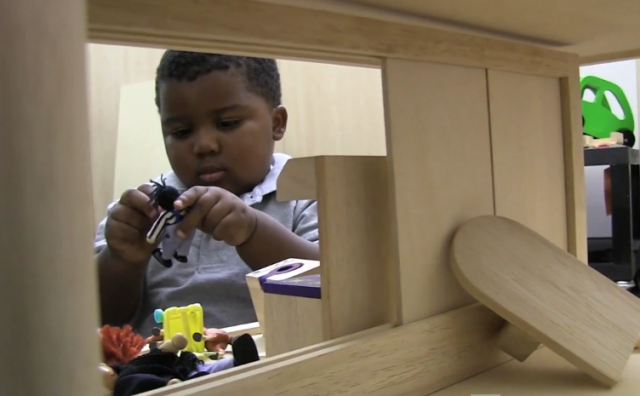
"content": "\u003cfigure id=\"attachment_15716\" class=\"wp-caption alignnone\" style=\"max-width: 640px\">\u003ca href=\"http://ww2.kqed.org/stateofhealth/wp-content/uploads/sites/27/2013/10/antonioncropped.png\">\u003cimg class=\"size-large wp-image-15716\" title=\"\" src=\"http://ww2.kqed.org/stateofhealth/wp-content/uploads/sites/27/2013/10/antonioncropped-640x395.png\" alt=\"hree year old Antonio suffered hearing loss after eating lead-based paint chips as a toddler. (Lauren M. Whaley/CHCF Center for Health Reporting)\" width=\"640\" height=\"395\">\u003c/a>\u003cfigcaption class=\"wp-caption-text\">Three year old Antonio suffered hearing loss after eating lead-based paint chips as a toddler. (Lauren M. Whaley/CHCF Center for Health Reporting)\u003c/figcaption>\u003c/figure>\n\u003cp>\u003cstrong>By Kelley Weiss\u003c/strong>, \u003ca href=\"http://centerforhealthreporting.org\" target=\"_blank\">CHCF Center for Health Reporting\u003c/a>\u003c/p>\n\u003cp>Children’s advocates are hoping for a big Christmas present this year – a billion dollars to remove toxic lead paint from homes. A Santa Clara Superior Court judge has until the end of the year to decide if paint companies should pay to get rid of lead paint still in thousands of older homes around the state.\u003c/p>\n\u003cp>While California’s lead poisoning cases have declined, especially over the last two decades, children's advocates say the most vulnerable children are still at risk because they don’t have enough money to reach the finish line.\u003c/p>\n\u003cp>Two counties are trying to fix the problem with the resources they have.\u003c/p>\n\u003cp>Alameda County is one of the ten counties and cities involved in the lawsuit.\u003c/p>\n\u003cp>[ad fullwidth]\u003c/p>\n\u003cp>Two years ago Nathaniel Stone was living in an East Oakland apartment with one-year-old Antonio. Stone is Antonio's legal guardian and is in the process of adopting him. The home they lived in had a lot of peeling paint.\u003c/p>\n\u003cp>One day when Stone was cooking in the kitchen from across the room he saw that Antonio seemed to be eating something. Stone checked it out and found Antonio with paint chips in his mouth.\u003c!--more-->\u003c/p>\n\u003cp>Stone had no idea the peeling paint was lead-based -- or that it's not so surprising that small children like to eat it. Lead paint tastes sweet. Soon, Stone noticed a change in Antonio's behavior.\u003c/p>\n\u003cp>“From there he was kind of a little sick and restless, sleeping bad at night and kind of crying and a mood that normally wasn’t him,” Stone says.\u003c/p>\n\u003cp>So Stone took Antonio to the doctor and discovered that Antonio had a high level of lead in his blood.\u003c/p>\n\u003cp>“From that he ended up with loss of hearing in his ear,” Stone says.\u003c/p>\n\u003cp>Immediately Alameda County stepped in to help Stone find a new place to live. Today they live in an apartment that is free of lead paint. But because of that early exposure to lead, Antonio, now three-years-old, has major hearing loss. He goes to a center for children with disabilities.\u003c/p>\n\u003cp>Stone says Antonio has a speech therapist, because his words are \"slow and twisted.\"\u003c/p>\n\u003cp>It takes a variety of county experts to handle a case like Antonio’s. This is easier for Alameda County because as part of its lead\u003cstrong> \u003c/strong>poisoning prevention\u003cstrong> \u003c/strong>program, the public health, environmental health and housing departments are integrated. The county program also has more resources than most.\u003c/p>\n\u003cp>Property owners of houses built before 1978 pay the county a $10 annual fee to respond to lead hazards. It’s one of the only assessments of its kind in California. With stable funding, the County tries to be more proactive.\u003c/p>\n\u003cp>Peter Belanger is a state certified lead project designer with the \u003ca href=\"http://www.achhd.org\">Alameda County Healthy Homes Department\u003c/a>.\u003c/p>\n\u003cp>To get a better understanding of the issues he drove me around West Oakland – an area with industrial factories, art studios and he says, “a lot of older homes.”\u003c/p>\n\u003cp>In Oakland, 90 percent of houses have lead paint. Belanger says it’s not cheap to remove with an average cost of $5,000 per unit.\u003c/p>\n\u003cp>If the lead can’t be removed he’ll help move the family out, as happened in Antonio’s case. But whatever the approach, Belanger says the key is getting the children away from the toxic lead.\u003c/p>\n\u003cp>But for many families in California that level of support isn't available.\u003c/p>\n\u003cp>Los Angeles County is also a plaintiff in the lead paint trial. But unlike in Alameda, in LA County, it can take six months to resolve a case like Antonio’s.\u003c/p>\n\u003cp>Dr. Jonathan Fielding, director of the Los Angeles County Public Health Department, points to three main reasons for this lag.\u003c/p>\n\u003cp>The first: the sheer size of the county and the problem.\u003c/p>\n\u003cp>“We have roughly one and a half million residences that have lead paint,” he says.\u003c/p>\n\u003cp>Second, unlike Alameda County, LA’s Public Health and Housing Departments are not integrated. Fielding says that lack of integration can delay action.\u003c/p>\n\u003cp>And, the third reason: money. LA County doesn’t have a dedicated property tax like Alameda County. It relies mainly on state funding and that amount has varied over the years. In addition, the county took a hit last year when \u003ca href=\"http://www.usatoday.com/story/news/nation/2013/09/16/lead-poisoning-prevention-cuts/2817329/\">Congress cut almost all of its funding for the Centers for Disease Control’s lead program\u003c/a>. That money goes out to county health departments for outreach and education.\u003c/p>\n\u003cp>Fielding says this resulted in LA County’s lead program losing about $600,000 a year.\u003c/p>\n\u003cp>At the same time the CDC reported that even \u003ca href=\"http://www.cdc.gov/nceh/lead/ACCLPP/blood_lead_levels.htm\">lower levels of lead can cause permanent brain damage\u003c/a> than had previously been known. Yet Fielding says there’s less and less funding to protect children from lead exposure.\u003c/p>\n\u003cp>“It is really catastrophic to see literally tens of thousands of kids having a level of poisoning that’s going to affect their ability to succeed in high school or to succeed in college,” he says.\u003c/p>\n\u003cp>\u003cstrong>Learn More:\u003c/strong>\u003c/p>\n\u003cp>[youtube //player.vimeo.com/video/74674216]\u003c/p>\n\u003cp>\u003c/p>\n\u003cp>\u003ca href=\"http://vimeo.com/74674216\">Lead poisoning in California's kids: Antonio's story\u003c/a> from \u003ca href=\"http://vimeo.com/user5638243\">CAhealthReport\u003c/a> on \u003ca href=\"https://vimeo.com\">Vimeo\u003c/a>.\u003c/p>\n\n",
"disqusIdentifier": "15671 http://blogs.kqed.org/stateofhealth/?p=15671",
"disqusUrl": "https://ww2.kqed.org/stateofhealth/2013/10/16/lead-based-paint-poisoning-still-a-hazard-for-californias-most-vulnerable-children-lawsuit/",
"stats": {
"hasVideo": true,
"hasChartOrMap": false,
"hasAudio": false,
"hasPolis": false,
"wordCount": 920,
"hasGoogleForm": false,
"hasGallery": false,
"hasHearkenModule": false,
"iframeSrcs": [],
"paragraphCount": 34
},
"modified": 1382075764,
"excerpt": null,
"headData": {
"twImgId": "",
"twTitle": "",
"ogTitle": "",
"ogImgId": "",
"twDescription": "",
"description": "By Kelley Weiss, CHCF Center for Health Reporting Children’s advocates are hoping for a big Christmas present this year – a billion dollars to remove toxic lead paint from homes. A Santa Clara Superior Court judge has until the end of the year to decide if paint companies should pay to get rid of lead paint",
"title": "Lead-Based Paint Still a Hazard for California's Most Vulnerable Children | KQED",
"ogDescription": "",
"schema": {
"@context": "https://schema.org",
"@type": "Article",
"headline": "Lead-Based Paint Still a Hazard for California's Most Vulnerable Children",
"datePublished": "2013-10-16T06:55:13-07:00",
"dateModified": "2013-10-17T22:56:04-07:00",
"image": "https://cdn.kqed.org/wp-content/uploads/2020/02/KQED-OG-Image@1x.png"
}
},
"guestAuthors": [],
"slug": "lead-based-paint-poisoning-still-a-hazard-for-californias-most-vulnerable-children-lawsuit",
"status": "publish",
"path": "/stateofhealth/15671/lead-based-paint-poisoning-still-a-hazard-for-californias-most-vulnerable-children-lawsuit",
"audioTrackLength": null,
"parsedContent": [
{
"type": "contentString",
"content": "\u003cdiv class=\"post-body\">\u003cp>\u003cfigure id=\"attachment_15716\" class=\"wp-caption alignnone\" style=\"max-width: 640px\">\u003ca href=\"http://ww2.kqed.org/stateofhealth/wp-content/uploads/sites/27/2013/10/antonioncropped.png\">\u003cimg class=\"size-large wp-image-15716\" title=\"\" src=\"http://ww2.kqed.org/stateofhealth/wp-content/uploads/sites/27/2013/10/antonioncropped-640x395.png\" alt=\"hree year old Antonio suffered hearing loss after eating lead-based paint chips as a toddler. (Lauren M. Whaley/CHCF Center for Health Reporting)\" width=\"640\" height=\"395\">\u003c/a>\u003cfigcaption class=\"wp-caption-text\">Three year old Antonio suffered hearing loss after eating lead-based paint chips as a toddler. (Lauren M. Whaley/CHCF Center for Health Reporting)\u003c/figcaption>\u003c/figure>\n\u003cp>\u003cstrong>By Kelley Weiss\u003c/strong>, \u003ca href=\"http://centerforhealthreporting.org\" target=\"_blank\">CHCF Center for Health Reporting\u003c/a>\u003c/p>\n\u003cp>Children’s advocates are hoping for a big Christmas present this year – a billion dollars to remove toxic lead paint from homes. A Santa Clara Superior Court judge has until the end of the year to decide if paint companies should pay to get rid of lead paint still in thousands of older homes around the state.\u003c/p>\n\u003cp>While California’s lead poisoning cases have declined, especially over the last two decades, children's advocates say the most vulnerable children are still at risk because they don’t have enough money to reach the finish line.\u003c/p>\n\u003cp>Two counties are trying to fix the problem with the resources they have.\u003c/p>\n\u003cp>Alameda County is one of the ten counties and cities involved in the lawsuit.\u003c/p>\n\u003cp>\u003c/p>\u003c/div>",
"attributes": {
"named": {},
"numeric": []
}
},
{
"type": "component",
"content": "",
"name": "ad",
"attributes": {
"named": {
"label": "fullwidth"
},
"numeric": [
"fullwidth"
]
}
},
{
"type": "contentString",
"content": "\u003cdiv class=\"post-body\">\u003cp>\u003c/p>\n\u003cp>Two years ago Nathaniel Stone was living in an East Oakland apartment with one-year-old Antonio. Stone is Antonio's legal guardian and is in the process of adopting him. The home they lived in had a lot of peeling paint.\u003c/p>\n\u003cp>One day when Stone was cooking in the kitchen from across the room he saw that Antonio seemed to be eating something. Stone checked it out and found Antonio with paint chips in his mouth.\u003c!--more-->\u003c/p>\n\u003cp>Stone had no idea the peeling paint was lead-based -- or that it's not so surprising that small children like to eat it. Lead paint tastes sweet. Soon, Stone noticed a change in Antonio's behavior.\u003c/p>\n\u003cp>“From there he was kind of a little sick and restless, sleeping bad at night and kind of crying and a mood that normally wasn’t him,” Stone says.\u003c/p>\n\u003cp>So Stone took Antonio to the doctor and discovered that Antonio had a high level of lead in his blood.\u003c/p>\n\u003cp>“From that he ended up with loss of hearing in his ear,” Stone says.\u003c/p>\n\u003cp>Immediately Alameda County stepped in to help Stone find a new place to live. Today they live in an apartment that is free of lead paint. But because of that early exposure to lead, Antonio, now three-years-old, has major hearing loss. He goes to a center for children with disabilities.\u003c/p>\n\u003cp>Stone says Antonio has a speech therapist, because his words are \"slow and twisted.\"\u003c/p>\n\u003cp>It takes a variety of county experts to handle a case like Antonio’s. This is easier for Alameda County because as part of its lead\u003cstrong> \u003c/strong>poisoning prevention\u003cstrong> \u003c/strong>program, the public health, environmental health and housing departments are integrated. The county program also has more resources than most.\u003c/p>\n\u003cp>Property owners of houses built before 1978 pay the county a $10 annual fee to respond to lead hazards. It’s one of the only assessments of its kind in California. With stable funding, the County tries to be more proactive.\u003c/p>\n\u003cp>Peter Belanger is a state certified lead project designer with the \u003ca href=\"http://www.achhd.org\">Alameda County Healthy Homes Department\u003c/a>.\u003c/p>\n\u003cp>To get a better understanding of the issues he drove me around West Oakland – an area with industrial factories, art studios and he says, “a lot of older homes.”\u003c/p>\n\u003cp>In Oakland, 90 percent of houses have lead paint. Belanger says it’s not cheap to remove with an average cost of $5,000 per unit.\u003c/p>\n\u003cp>If the lead can’t be removed he’ll help move the family out, as happened in Antonio’s case. But whatever the approach, Belanger says the key is getting the children away from the toxic lead.\u003c/p>\n\u003cp>But for many families in California that level of support isn't available.\u003c/p>\n\u003cp>Los Angeles County is also a plaintiff in the lead paint trial. But unlike in Alameda, in LA County, it can take six months to resolve a case like Antonio’s.\u003c/p>\n\u003cp>Dr. Jonathan Fielding, director of the Los Angeles County Public Health Department, points to three main reasons for this lag.\u003c/p>\n\u003cp>The first: the sheer size of the county and the problem.\u003c/p>\n\u003cp>“We have roughly one and a half million residences that have lead paint,” he says.\u003c/p>\n\u003cp>Second, unlike Alameda County, LA’s Public Health and Housing Departments are not integrated. Fielding says that lack of integration can delay action.\u003c/p>\n\u003cp>And, the third reason: money. LA County doesn’t have a dedicated property tax like Alameda County. It relies mainly on state funding and that amount has varied over the years. In addition, the county took a hit last year when \u003ca href=\"http://www.usatoday.com/story/news/nation/2013/09/16/lead-poisoning-prevention-cuts/2817329/\">Congress cut almost all of its funding for the Centers for Disease Control’s lead program\u003c/a>. That money goes out to county health departments for outreach and education.\u003c/p>\n\u003cp>Fielding says this resulted in LA County’s lead program losing about $600,000 a year.\u003c/p>\n\u003cp>At the same time the CDC reported that even \u003ca href=\"http://www.cdc.gov/nceh/lead/ACCLPP/blood_lead_levels.htm\">lower levels of lead can cause permanent brain damage\u003c/a> than had previously been known. Yet Fielding says there’s less and less funding to protect children from lead exposure.\u003c/p>\n\u003cp>“It is really catastrophic to see literally tens of thousands of kids having a level of poisoning that’s going to affect their ability to succeed in high school or to succeed in college,” he says.\u003c/p>\n\u003cp>\u003cstrong>Learn More:\u003c/strong>\u003c/p>\n\u003cp>\u003c/p>\u003cp>null\u003c/p>\u003cp>\u003c/p>\n\u003cp>\u003c/p>\n\u003cp>\u003ca href=\"http://vimeo.com/74674216\">Lead poisoning in California's kids: Antonio's story\u003c/a> from \u003ca href=\"http://vimeo.com/user5638243\">CAhealthReport\u003c/a> on \u003ca href=\"https://vimeo.com\">Vimeo\u003c/a>.\u003c/p>\n\n\u003c/div>\u003c/p>",
"attributes": {
"named": {},
"numeric": []
}
}
],
"link": "/stateofhealth/15671/lead-based-paint-poisoning-still-a-hazard-for-californias-most-vulnerable-children-lawsuit",
"authors": [
"240"
],
"categories": [
"stateofhealth_11"
],
"tags": [
"stateofhealth_268",
"stateofhealth_461"
],
"featImg": "stateofhealth_15716",
"label": "stateofhealth"
},
"science_9862": {
"type": "posts",
"id": "science_9862",
"meta": {
"index": "posts_1716263798",
"site": "science",
"id": "9862",
"score": null,
"sort": [
1381762837000
]
},
"parent": 0,
"labelTerm": {
"site": "science"
},
"blocks": [],
"publishDate": 1381762837,
"format": "aside",
"title": "Infections During Pregnancy May Increase Autism Risk",
"headTitle": "Infections During Pregnancy May Increase Autism Risk | KQED",
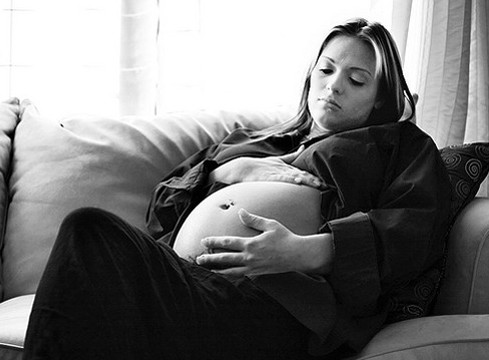
"content": "\u003cfigure id=\"attachment_9865\" class=\"wp-caption alignnone\" style=\"max-width: 640px\">\u003ca href=\"http://ww2.kqed.org/science/wp-content/uploads/sites/35/2013/10/PregnantWomanSitting_flickr_StuartHandy_3235768334_6beed51726_z_640x360.jpg\" rel=\"attachment wp-att-9865\">\u003cimg loading=\"lazy\" decoding=\"async\" class=\"size-full wp-image-9865\" src=\"http://ww2.kqed.org/science/wp-content/uploads/sites/35/2013/10/PregnantWomanSitting_flickr_StuartHandy_3235768334_6beed51726_z_640x360.jpg\" alt=\"Photograph courtesy of Stuart Handy via a Creative Commons license.\" width=\"640\" height=\"360\">\u003c/a>\u003cfigcaption class=\"wp-caption-text\">Photograph courtesy of \u003ca href=\"http://www.flickr.com/photos/8274310@N07/3235768334/\" target=\"_blank\" rel=\"noopener\">Stuart Handy\u003c/a> via a Creative Commons license.\u003c/figcaption>\u003c/figure>\n\u003cp>Every day our brains help us make sense of the world around us, interpreting the experiences we see, hear, taste, touch and smell. But if someone’s brain has trouble processing this incoming information, it can be hard to communicate, understand or learn.\u003c/p>\n\u003cp>Autism spectrum disorders (ASD) are characterized by difficulties in social interaction, verbal and nonverbal communication and repetitive behaviors. These disorders include \u003ca href=\"http://science.kqed.org/quest/video/autism-searching-for-causes/\" target=\"_blank\" rel=\"noopener\">autism\u003c/a>, \u003ca href=\"http://en.wikipedia.org/wiki/Asperger_syndrome\" target=\"_blank\" rel=\"noopener\">Asperger syndrome\u003c/a> and p\u003ca href=\"http://en.wikipedia.org/wiki/PDD-NOS\" target=\"_blank\" rel=\"noopener\">ervasive developmental disorder-not otherwise specified\u003c/a> (PDD-NOS).\u003c/p>\n\u003cp>About \u003ca title=\"CDC Fact Sheet for Autism Spectrum Disorders\" href=\"http://www.cdc.gov/ncbddd/autism/data.html\">one in 88 children\u003c/a> have been identified with an autism spectrum disorder, and over 2 million people are affected in the United States, according to the Centers for Disease Control and Prevention. Government statistics also suggest that the proportion of people with autism spectrum disorders have increased \u003ca title=\"Autism Speaks Frequently Asked Questions\" href=\"http://www.autismspeaks.org/what-autism/faq\">10 to 17 percent annually\u003c/a> in recent years. This is in part due to wider awareness and better screening, but the continued increase is not fully understood.\u003c/p>\n\u003cp>The cause of ASD is also not fully known, but current research indicates that it is likely due to a complex combination of genetic predisposition and environmental risk factors that influence early brain development. Significant environmental risk factors include the advance age of either parent at the time of conception, maternal illness during pregnancy, extreme prematurity and very low birth weight.\u003c/p>\n\u003cp>Over 40 years ago, \u003ca title=\"journal review article\" href=\"http://www.ncbi.nlm.nih.gov/pmc/articles/PMC3435446/pdf/nihms396261.pdf\">epidemiological studies\u003c/a> determined that the risk of having a child with ASD is increased when the mother has an infection early in the pregnancy. Since a wide range of bacterial and viral infections can increase the risk, studies suggest that activation of the mother’s general immune system is responsible. However, scientists do not completely understand how the activated immune system can disrupt normal brain development to cause ASD.\u003c/p>\n\u003cp>[ad fullwidth]\u003c/p>\n\u003cp>Research at the UC Davis’ Center for Neuroscience provides new insight. Recently \u003ca title=\"UCD journal article in Journal of Neuroscience\" href=\"http://www.jneurosci.org/content/33/34/13791.abstract\">published in the \u003cem>Journal of Neuroscience\u003c/em>\u003c/a>, their studies identify a new biological mechanism that links maternal immune activation to neurodevelopmental disorders.\u003c/p>\n\u003cp>Kimberley McAllister, a senior author of the study, explained in a \u003ca title=\"press release\" href=\"http://www.ucdmc.ucdavis.edu/publish/news/newsroom/8208\">press release\u003c/a>, “This is the first evidence that neurons in the developing brain of newborn offspring are altered by maternal immune activation. Until now, very little has been known about how maternal immune activation leads to autism spectrum disorder and schizophrenia-like pathophysiology and behaviors in the offspring.”\u003c/p>\n\u003cp>The researchers studied pregnant mice with immune systems that were activated halfway through gestation compared to pregnant control mice without activated immune systems. They found that the mice exposed to a viral infection had offspring with dramatically elevated levels of immune molecules called major histocompatibility complex 1 (MHC1) on their brain surface.\u003c/p>\n\u003cp>In the affected newborn mice, these high levels of MCH1 disrupted the development of neural cells in the brain. Specifically, the increase in MCH1 interfered with the neurons’ ability to form the synapses that allow neurons to pass electrical or chemical signals to other cells; consequently, these offspring had less than half as many synapses than the control offspring. When MCH1 were returned to normal levels in the neurons of maternal immune-activated offspring, the synapses density returned to normal.\u003c/p>\n\u003cp>However, MCH1 doesn’t work alone. In a series of additional experiments, the researchers identified the new biological signaling pathway that regulates synapses development caused by maternal immune activation. This signaling pathway requires calcineurin, myocyte enhancer factor-2 and MCH1 to limit synapses density.\u003c/p>\n\u003cp>A better understanding of the underlying biological mechanisms will hopefully lead to the development of improved prenatal health screening, diagnostic tests and eventually therapies for neurodevelopmental disorders.\u003c/p>\n\u003cp>\u003c/p>\n\u003cp>Of course, not every child of a bacterially or virally infected mother develops a neurodevelopmental disorder like autism. The effect of maternal immune activation depends on a complex interaction involving the strength of the infection and \u003ca title=\"Autism Speaks fact sheet\" href=\"http://www.autismspeaks.org/what-autism/faq\">genetic predisposition\u003c/a>.\u003c/p>\n\n",
"stats": {
"hasVideo": false,
"hasChartOrMap": false,
"hasAudio": false,
"hasPolis": false,
"wordCount": 637,
"hasGoogleForm": false,
"hasGallery": false,
"hasHearkenModule": false,
"iframeSrcs": [],
"paragraphCount": 14
},
"modified": 1704934892,
"excerpt": "Research at UC Davis identifies a new biological mechanism that links maternal infections during pregnancy to increased risk of having a child with a neurodevelopmental disorder like autism. ",
"headData": {
"twImgId": "",
"twTitle": "",
"ogTitle": "",
"ogImgId": "",
"twDescription": "",
"description": "Research at UC Davis identifies a new biological mechanism that links maternal infections during pregnancy to increased risk of having a child with a neurodevelopmental disorder like autism. ",
"title": "Infections During Pregnancy May Increase Autism Risk | KQED",
"ogDescription": "",
"schema": {
"@context": "https://schema.org",
"@type": "Article",
"headline": "Infections During Pregnancy May Increase Autism Risk",
"datePublished": "2013-10-14T08:00:37-07:00",
"dateModified": "2024-01-10T17:01:32-08:00",
"image": "https://cdn.kqed.org/wp-content/uploads/2020/02/KQED-OG-Image@1x.png"
}
},
"guestAuthors": [],
"slug": "infections-during-pregnancy-may-increase-autism-risk",
"status": "publish",
"sticky": false,
"path": "/science/9862/infections-during-pregnancy-may-increase-autism-risk",
"audioTrackLength": null,
"parsedContent": [
{
"type": "contentString",
"content": "\u003cdiv class=\"post-body\">\u003cp>\u003cfigure id=\"attachment_9865\" class=\"wp-caption alignnone\" style=\"max-width: 640px\">\u003ca href=\"http://ww2.kqed.org/science/wp-content/uploads/sites/35/2013/10/PregnantWomanSitting_flickr_StuartHandy_3235768334_6beed51726_z_640x360.jpg\" rel=\"attachment wp-att-9865\">\u003cimg loading=\"lazy\" decoding=\"async\" class=\"size-full wp-image-9865\" src=\"http://ww2.kqed.org/science/wp-content/uploads/sites/35/2013/10/PregnantWomanSitting_flickr_StuartHandy_3235768334_6beed51726_z_640x360.jpg\" alt=\"Photograph courtesy of Stuart Handy via a Creative Commons license.\" width=\"640\" height=\"360\">\u003c/a>\u003cfigcaption class=\"wp-caption-text\">Photograph courtesy of \u003ca href=\"http://www.flickr.com/photos/8274310@N07/3235768334/\" target=\"_blank\" rel=\"noopener\">Stuart Handy\u003c/a> via a Creative Commons license.\u003c/figcaption>\u003c/figure>\n\u003cp>Every day our brains help us make sense of the world around us, interpreting the experiences we see, hear, taste, touch and smell. But if someone’s brain has trouble processing this incoming information, it can be hard to communicate, understand or learn.\u003c/p>\n\u003cp>Autism spectrum disorders (ASD) are characterized by difficulties in social interaction, verbal and nonverbal communication and repetitive behaviors. These disorders include \u003ca href=\"http://science.kqed.org/quest/video/autism-searching-for-causes/\" target=\"_blank\" rel=\"noopener\">autism\u003c/a>, \u003ca href=\"http://en.wikipedia.org/wiki/Asperger_syndrome\" target=\"_blank\" rel=\"noopener\">Asperger syndrome\u003c/a> and p\u003ca href=\"http://en.wikipedia.org/wiki/PDD-NOS\" target=\"_blank\" rel=\"noopener\">ervasive developmental disorder-not otherwise specified\u003c/a> (PDD-NOS).\u003c/p>\n\u003cp>About \u003ca title=\"CDC Fact Sheet for Autism Spectrum Disorders\" href=\"http://www.cdc.gov/ncbddd/autism/data.html\">one in 88 children\u003c/a> have been identified with an autism spectrum disorder, and over 2 million people are affected in the United States, according to the Centers for Disease Control and Prevention. Government statistics also suggest that the proportion of people with autism spectrum disorders have increased \u003ca title=\"Autism Speaks Frequently Asked Questions\" href=\"http://www.autismspeaks.org/what-autism/faq\">10 to 17 percent annually\u003c/a> in recent years. This is in part due to wider awareness and better screening, but the continued increase is not fully understood.\u003c/p>\n\u003cp>The cause of ASD is also not fully known, but current research indicates that it is likely due to a complex combination of genetic predisposition and environmental risk factors that influence early brain development. Significant environmental risk factors include the advance age of either parent at the time of conception, maternal illness during pregnancy, extreme prematurity and very low birth weight.\u003c/p>\n\u003cp>Over 40 years ago, \u003ca title=\"journal review article\" href=\"http://www.ncbi.nlm.nih.gov/pmc/articles/PMC3435446/pdf/nihms396261.pdf\">epidemiological studies\u003c/a> determined that the risk of having a child with ASD is increased when the mother has an infection early in the pregnancy. Since a wide range of bacterial and viral infections can increase the risk, studies suggest that activation of the mother’s general immune system is responsible. However, scientists do not completely understand how the activated immune system can disrupt normal brain development to cause ASD.\u003c/p>\n\u003cp>\u003c/p>\u003c/div>",
"attributes": {
"named": {},
"numeric": []
}
},
{
"type": "component",
"content": "",
"name": "ad",
"attributes": {
"named": {
"label": "fullwidth"
},
"numeric": [
"fullwidth"
]
}
},
{
"type": "contentString",
"content": "\u003cdiv class=\"post-body\">\u003cp>\u003c/p>\n\u003cp>Research at the UC Davis’ Center for Neuroscience provides new insight. Recently \u003ca title=\"UCD journal article in Journal of Neuroscience\" href=\"http://www.jneurosci.org/content/33/34/13791.abstract\">published in the \u003cem>Journal of Neuroscience\u003c/em>\u003c/a>, their studies identify a new biological mechanism that links maternal immune activation to neurodevelopmental disorders.\u003c/p>\n\u003cp>Kimberley McAllister, a senior author of the study, explained in a \u003ca title=\"press release\" href=\"http://www.ucdmc.ucdavis.edu/publish/news/newsroom/8208\">press release\u003c/a>, “This is the first evidence that neurons in the developing brain of newborn offspring are altered by maternal immune activation. Until now, very little has been known about how maternal immune activation leads to autism spectrum disorder and schizophrenia-like pathophysiology and behaviors in the offspring.”\u003c/p>\n\u003cp>The researchers studied pregnant mice with immune systems that were activated halfway through gestation compared to pregnant control mice without activated immune systems. They found that the mice exposed to a viral infection had offspring with dramatically elevated levels of immune molecules called major histocompatibility complex 1 (MHC1) on their brain surface.\u003c/p>\n\u003cp>In the affected newborn mice, these high levels of MCH1 disrupted the development of neural cells in the brain. Specifically, the increase in MCH1 interfered with the neurons’ ability to form the synapses that allow neurons to pass electrical or chemical signals to other cells; consequently, these offspring had less than half as many synapses than the control offspring. When MCH1 were returned to normal levels in the neurons of maternal immune-activated offspring, the synapses density returned to normal.\u003c/p>\n\u003cp>However, MCH1 doesn’t work alone. In a series of additional experiments, the researchers identified the new biological signaling pathway that regulates synapses development caused by maternal immune activation. This signaling pathway requires calcineurin, myocyte enhancer factor-2 and MCH1 to limit synapses density.\u003c/p>\n\u003cp>A better understanding of the underlying biological mechanisms will hopefully lead to the development of improved prenatal health screening, diagnostic tests and eventually therapies for neurodevelopmental disorders.\u003c/p>\n\u003cp>\u003c/p>\n\u003cp>Of course, not every child of a bacterially or virally infected mother develops a neurodevelopmental disorder like autism. The effect of maternal immune activation depends on a complex interaction involving the strength of the infection and \u003ca title=\"Autism Speaks fact sheet\" href=\"http://www.autismspeaks.org/what-autism/faq\">genetic predisposition\u003c/a>.\u003c/p>\n\n\u003c/div>\u003c/p>",
"attributes": {
"named": {},
"numeric": []
}
}
],
"link": "/science/9862/infections-during-pregnancy-may-increase-autism-risk",
"authors": [
"6360"
],
"categories": [
"science_30",
"science_39"
],
"tags": [
"science_807",
"science_616"
],
"featImg": "science_9865",
"label": "science"
},
"science_9885": {
"type": "posts",
"id": "science_9885",
"meta": {
"index": "posts_1716263798",
"site": "science",
"id": "9885",
"score": null,
"sort": [
1381538235000
]
},
"parent": 0,
"labelTerm": {
"site": "science"
},
"blocks": [],
"publishDate": 1381538235,
"format": "aside",
"title": "Should Every Newborn Undergo Genetic Testing?",
"headTitle": "Should Every Newborn Undergo Genetic Testing? | KQED",
"content": "\u003cdiv class=\"audio-wrap\">\n\u003ch2>Listen:\u003c/h2>\n\u003cp>http://www.kqed.org/.stream/anon/radio/science/2013/10/2013-10-14-science.mp3\u003c/p>\n\u003c/div>\n\u003cfigure id=\"attachment_9975\" class=\"wp-caption aligncenter\" style=\"max-width: 640px\">\u003ca href=\"http://ww2.kqed.org/science/wp-content/uploads/sites/35/2013/10/Phenylketonuria_testing.jpg\">\u003cimg loading=\"lazy\" decoding=\"async\" src=\"http://ww2.kqed.org/science/wp-content/uploads/sites/35/2013/10/Phenylketonuria_testing.jpg\" alt=\"At birth, every infant in the US and many other countries undergoes a blood test to detect rare newborn diseases that are treatable if caught quickly. (U.S. Air Force Staff Sgt. Eric T. Sheler/Wikimedia Commons)\" width=\"640\" height=\"360\" class=\"size-full wp-image-9975\">\u003c/a>\u003cfigcaption class=\"wp-caption-text\">At birth, every infant in the US and many other countries undergoes a blood test to detect rare newborn diseases that are treatable if caught quickly. (U.S. Air Force Staff Sgt. Eric T. Sheler/Wikimedia Commons)\u003c/figcaption>\u003c/figure>\n\u003cp>When a new baby is born, anything seems possible. But we now know that this potential comes with an asterisk. Written into an infant’s DNA are instructions that may make her more vulnerable than other people are to cancer, for instance, or Alzheimer’s disease.\u003c/p>\n\u003cp>So how much of that information should parents be given when their baby is born?\u003c/p>\n\u003cp>The National Institutes of Health has launched a five-year, $25 million effort to explore this question. Researchers at the University of California-San Francisco and three other sites will receive NIH funds to tackle some of the issues that could arise, should genetic testing become routine for each of the roughly four million babies born every year in the United States.\u003c/p>\n\u003caside class=\"pullquote alignleft\">\nJust because we have the technology to tell parents about diseases their children might face decades down the line, does that mean we should use it?\u003c/aside>\n\u003cp>At UCSF, researchers will focus on a relatively straightforward question: Are genetic tests more effective than the standard blood screening tests newborns currently get?\u003c/p>\n\u003cp>Barbara Koenig is a UCSF bioethicist. She says when the routine blood test became standard in the 1960s, it seemed like magic.\u003c/p>\n\u003cp>[ad fullwidth]\u003c/p>\n\u003cp>“There are a couple rare conditions — like PKU and genetic hypothyroidism — that, if you identified them early, you could do an immediate intervention with the infant and prevent a life of terrible suffering, or mental retardation.”\u003c/p>\n\u003cp>PKU is a rare metabolic disorder that, unless treated with a special diet, can lead to mental retardation. Congenital hypothyroidism, caused by an under-active thyroid, can also lead to developmental delays unless treated early on with medication. So tests like this provide a clear and obvious public health benefit, says Koenig.\u003c/p>\n\u003cp>“Someone comes in and does a little heel stick on the baby, takes the blood. Then you don’t\u003cbr>\nhear about it anymore, unless there’s a positive result.”\u003c/p>\n\u003cp>But these tests aren’t perfect. Sometimes there are false positives. And today, says UCSF geneticist Bob Nussbaum, there’s a technology that may be able to do a much better job: genetic testing.\u003c/p>\n\u003cp>“Could it possibly replace our current system?” Nussbaum says his study is asking. “Does it have added value above what we’re doing, providing information that’s useful and important?”\u003c/p>\n\u003cfigure id=\"attachment_9892\" class=\"wp-caption alignleft\" style=\"max-width: 163px\">\u003ca href=\"http://ww2.kqed.org/science/wp-content/uploads/sites/35/2013/10/Nussbaum-163x162.jpg\" rel=\"attachment wp-att-9892\">\u003cimg loading=\"lazy\" decoding=\"async\" class=\"size-medium wp-image-9892\" src=\"http://ww2.kqed.org/science/wp-content/uploads/sites/35/2013/10/Nussbaum-163x162.jpg\" alt=\"Geneticist Robert Nussbaum heads UCSFs $4.5 million newborn screening pilot study. \" width=\"163\" height=\"162\">\u003c/a>\u003cfigcaption class=\"wp-caption-text\">Geneticist Robert Nussbaum heads UCSFs $4.5 million newborn screening pilot study. (Holly Smith)\u003c/figcaption>\u003c/figure>\n\u003cp>Over the next five years, Nussbaum, Koenig and others on the team will study the potential of exome testing, which focuses on the two percent of genes that are used as blueprints for the production of proteins. These tests currently cost researchers about $700 apiece.\u003c/p>\n\u003cp>Working with 1,400 blood samples archived in the state’s Department of Public Health, researchers will see whether exome testing does a better job predicting newborn illnesses than the current biochemical tests do.\u003c/p>\n\u003cp>Meanwhile, a second project will offer genetic testing to families whose children have already been diagnosed with an immune disorder, to see whether the genetic tests shed further light on their conditions.\u003c/p>\n\u003cp>But the implications of these questions can be thorny. Researchers at UCSF and the other sites – Brigham and Women’s Hospital in Boston, Children’s Mercy Hospital in Kansas City, and the University of North Carolina at Chapel Hill – are asking: Just because we have the technology to tell parents about diseases their babies might one day get, does that mean we should use it?\u003c/p>\n\u003cp>Many researchers are ambivalent, at best.\u003c/p>\n\u003cp>“What possible value is there in knowing that piece of information now?” asks UCSF’s Nussbaum.\u003c/p>\n\u003cfigure id=\"attachment_9891\" class=\"wp-caption alignright\" style=\"max-width: 107px\">\u003ca href=\"http://ww2.kqed.org/science/wp-content/uploads/sites/35/2013/10/Koenig-107x162.jpg\" rel=\"attachment wp-att-9891\">\u003cimg loading=\"lazy\" decoding=\"async\" class=\"size-medium wp-image-9891\" src=\"http://ww2.kqed.org/science/wp-content/uploads/sites/35/2013/10/Koenig-107x162.jpg\" alt='UCSF bioethicist Barbara Koenig calls the desire to have as much information as possible a \"distinctly American bias.\"' width=\"107\" height=\"162\">\u003c/a>\u003cfigcaption class=\"wp-caption-text\">UCSF bioethicist Barbara Koenig calls the desire to have as much information as possible a “distinctly American bias.” (Courtesy of the Mayo Clinic)\u003c/figcaption>\u003c/figure>\n\u003cp>Take, for example, he says, a gene called ApoE, some variants of which indicate an increased risk for Alzheimer’s disease.\u003c/p>\n\u003cp>“I think there’s actually greater harm than good to be telling parents that a child has a three- or four-fold increased risk for a late-onset disorder for which we currently have no therapy.”\u003c/p>\n\u003cp>As a doctor, this puts Nussbaum in a bind. On the one hand, he knows it can sound patronizing to deprive a parent of medical information about his or her child.\u003c/p>\n\u003cp>On the other hand, this information can alter the course of a child’s life in many ways, including changing the way he or she is parented.\u003c/p>\n\u003cp>In fact, there’s a whole body of literature on this phenomenon: it’s called Vulnerable Child Syndrome.\u003c/p>\n\u003cp>Parents of these children, says Nussbaum “are perhaps afraid to institute the same level of discipline. They may treat one of those children differently than the siblings. You’ve introduced a psychological issue.”\u003c/p>\n\u003cp>There’s a term bioethicists often use to describe what these children have lost: “open future.” It refers to a person’s right \u003cem>not\u003c/em> to know how his or her genes might impact a life.\u003c/p>\n\u003cp>To underscore this concern, Koenig and Nussbaum point to studies done in Ireland and the United Kingdom on people at risk for Huntington’s disease, a fatal neurodegenerative disorder.\u003c/p>\n\u003cp>When subjects learned that the presence of a specific gene would indicate that they would inescapably come down with the disease, most declined to take the test.\u003c/p>\n\u003caside class=\"pullquote alignleft\">Bioethicists use the term “open future” to describe a child’s right \u003cem>not\u003c/em> to know how genes might impact his or her life.\u003c/aside>\n\u003cp>So, the logic goes, if adults often choose not to know what their genes might say about their future, what right do parents, or doctors, have to make that choice for newborns?\u003c/p>\n\u003cp>That’s a concern shared by Jonathan Berg, a geneticist at the University of North Carolina School of Medicine, whose NIH funds will explore how best to explain the implications of genetic tests to diverse populations.\u003c/p>\n\u003cp>Berg says he values the choice he has, as an adult, to decide whether to undergo genetic testing — to know, for example, his ApoE status.\u003c/p>\n\u003cp>“But if you imagine a generation of children whose parents decide that for them, then those children no longer have the right to an open future. They won’t have the ability, as I do, to value the fact that I get to decide that information for myself.”\u003c/p>\n\u003cp>These are not hypothetical concerns, because infant genetic testing is already happening in a limited way, not as a public health venture, but as a commercial one.\u003c/p>\n\u003cp>Catherine Afarian works at a company called 23andMe, based in Mountain View, Califonia. For $100, the company will test for a list of genetic signatures that can provide information about a person’s ancestry and health risks.\u003c/p>\n\u003cp>Afarian bought one for Hudson when he was eight months old.\u003c/p>\n\u003cfigure id=\"attachment_9893\" class=\"wp-caption alignnone\" style=\"max-width: 1538px\">\u003ca href=\"http://ww2.kqed.org/science/wp-content/uploads/sites/35/2013/10/Afarian-Family.jpg\" rel=\"attachment wp-att-9893\">\u003cimg loading=\"lazy\" decoding=\"async\" class=\"size-full wp-image-9893\" src=\"http://ww2.kqed.org/science/wp-content/uploads/sites/35/2013/10/Afarian-Family.jpg\" alt=\"Chris and Catherine Afarian bought a 23andMe screening test for their son Hudson when he was eight months old. \" width=\"1538\" height=\"1022\">\u003c/a>\u003cfigcaption class=\"wp-caption-text\">If there’s information out there about her son’s health, Afarian says she wants to have it, even if it’s worrisome. (Jonathan Payne)\u003c/figcaption>\u003c/figure>\n\u003cp>She learned that Hudson, like herself, has an increased sensitivity for a blood thinner called Warfarin, which is prescribed to prevent blood clots.\u003c/p>\n\u003cp>According to the test, Hudson is also a “slow metabolizer of caffeine, as am I,” she says.\u003c/p>\n\u003cp>Some more serious things came up, too.\u003c/p>\n\u003cp>According to his 23andMe test, Hudson has an increased risk for Parkinson’s disease. This is also not a surprise, as at least one member of Afarian’s family has had Parkinson’s. Afarian says having the information about Hudson’s risk will help her focus her concerns in the future.\u003c/p>\n\u003cp>“I’m going to pay attention to the studies that come out about Parkinson’s,” she says. And when her family can afford to make some charitable contributions, “I want to put money into Parkinson’s research.\u003c/p>\n\u003cp>“My son is only two and a half. Who knows what kinds of opportunities and treatments are going to be there when he’s 30, 40, 50, right?”\u003c/p>\n\u003cp>[ad floatright]\u003c/p>\n\u003cp>Will a majority of parents feel the way Afarian does? That’s just one of many questions the NIH hopes to answer over the next five years. Even then, it could take much longer to sort out whether society at large will benefit from knowing what’s in our children’s genes.\u003c/p>\n\n",
"stats": {
"hasVideo": false,
"hasChartOrMap": false,
"hasAudio": true,
"hasPolis": false,
"wordCount": 1481,
"hasGoogleForm": false,
"hasGallery": false,
"hasHearkenModule": false,
"iframeSrcs": [],
"paragraphCount": 41
},
"modified": 1704934895,
"excerpt": "The NIH has launched a five-year, $25 million dollar effort to explore what may be one of the great ethical dilemmas of the 21st century: Just because we can do genetic testing on infants, should we?",
"headData": {
"twImgId": "",
"twTitle": "",
"ogTitle": "",
"ogImgId": "",
"twDescription": "",
"description": "The NIH has launched a five-year, $25 million dollar effort to explore what may be one of the great ethical dilemmas of the 21st century: Just because we can do genetic testing on infants, should we?",
"title": "Should Every Newborn Undergo Genetic Testing? | KQED",
"ogDescription": "",
"schema": {
"@context": "https://schema.org",
"@type": "Article",
"headline": "Should Every Newborn Undergo Genetic Testing?",
"datePublished": "2013-10-11T17:37:15-07:00",
"dateModified": "2024-01-10T17:01:35-08:00",
"image": "https://cdn.kqed.org/wp-content/uploads/2020/02/KQED-OG-Image@1x.png"
}
},
"guestAuthors": [],
"slug": "should-every-newborn-undergo-genetic-testing",
"status": "publish",
"audioUrl": "http://www.kqed.org/.stream/anon/radio/science/2013/10/2013-10-14-science.mp3",
"sticky": false,
"path": "/science/9885/should-every-newborn-undergo-genetic-testing",
"audioTrackLength": null,
"parsedContent": [
{
"type": "contentString",
"content": "\u003cdiv class=\"post-body\">\u003cp>\u003cdiv class=\"audio-wrap\">\n\u003ch2>Listen:\u003c/h2>\n\u003cp>http://www.kqed.org/.stream/anon/radio/science/2013/10/2013-10-14-science.mp3\u003c/p>\n\u003c/div>\n\u003cfigure id=\"attachment_9975\" class=\"wp-caption aligncenter\" style=\"max-width: 640px\">\u003ca href=\"http://ww2.kqed.org/science/wp-content/uploads/sites/35/2013/10/Phenylketonuria_testing.jpg\">\u003cimg loading=\"lazy\" decoding=\"async\" src=\"http://ww2.kqed.org/science/wp-content/uploads/sites/35/2013/10/Phenylketonuria_testing.jpg\" alt=\"At birth, every infant in the US and many other countries undergoes a blood test to detect rare newborn diseases that are treatable if caught quickly. (U.S. Air Force Staff Sgt. Eric T. Sheler/Wikimedia Commons)\" width=\"640\" height=\"360\" class=\"size-full wp-image-9975\">\u003c/a>\u003cfigcaption class=\"wp-caption-text\">At birth, every infant in the US and many other countries undergoes a blood test to detect rare newborn diseases that are treatable if caught quickly. (U.S. Air Force Staff Sgt. Eric T. Sheler/Wikimedia Commons)\u003c/figcaption>\u003c/figure>\n\u003cp>When a new baby is born, anything seems possible. But we now know that this potential comes with an asterisk. Written into an infant’s DNA are instructions that may make her more vulnerable than other people are to cancer, for instance, or Alzheimer’s disease.\u003c/p>\n\u003cp>So how much of that information should parents be given when their baby is born?\u003c/p>\n\u003cp>The National Institutes of Health has launched a five-year, $25 million effort to explore this question. Researchers at the University of California-San Francisco and three other sites will receive NIH funds to tackle some of the issues that could arise, should genetic testing become routine for each of the roughly four million babies born every year in the United States.\u003c/p>\n\u003caside class=\"pullquote alignleft\">\nJust because we have the technology to tell parents about diseases their children might face decades down the line, does that mean we should use it?\u003c/aside>\n\u003cp>At UCSF, researchers will focus on a relatively straightforward question: Are genetic tests more effective than the standard blood screening tests newborns currently get?\u003c/p>\n\u003cp>Barbara Koenig is a UCSF bioethicist. She says when the routine blood test became standard in the 1960s, it seemed like magic.\u003c/p>\n\u003cp>\u003c/p>\u003c/div>",
"attributes": {
"named": {},
"numeric": []
}
},
{
"type": "component",
"content": "",
"name": "ad",
"attributes": {
"named": {
"label": "fullwidth"
},
"numeric": [
"fullwidth"
]
}
},
{
"type": "contentString",
"content": "\u003cdiv class=\"post-body\">\u003cp>\u003c/p>\n\u003cp>“There are a couple rare conditions — like PKU and genetic hypothyroidism — that, if you identified them early, you could do an immediate intervention with the infant and prevent a life of terrible suffering, or mental retardation.”\u003c/p>\n\u003cp>PKU is a rare metabolic disorder that, unless treated with a special diet, can lead to mental retardation. Congenital hypothyroidism, caused by an under-active thyroid, can also lead to developmental delays unless treated early on with medication. So tests like this provide a clear and obvious public health benefit, says Koenig.\u003c/p>\n\u003cp>“Someone comes in and does a little heel stick on the baby, takes the blood. Then you don’t\u003cbr>\nhear about it anymore, unless there’s a positive result.”\u003c/p>\n\u003cp>But these tests aren’t perfect. Sometimes there are false positives. And today, says UCSF geneticist Bob Nussbaum, there’s a technology that may be able to do a much better job: genetic testing.\u003c/p>\n\u003cp>“Could it possibly replace our current system?” Nussbaum says his study is asking. “Does it have added value above what we’re doing, providing information that’s useful and important?”\u003c/p>\n\u003cfigure id=\"attachment_9892\" class=\"wp-caption alignleft\" style=\"max-width: 163px\">\u003ca href=\"http://ww2.kqed.org/science/wp-content/uploads/sites/35/2013/10/Nussbaum-163x162.jpg\" rel=\"attachment wp-att-9892\">\u003cimg loading=\"lazy\" decoding=\"async\" class=\"size-medium wp-image-9892\" src=\"http://ww2.kqed.org/science/wp-content/uploads/sites/35/2013/10/Nussbaum-163x162.jpg\" alt=\"Geneticist Robert Nussbaum heads UCSFs $4.5 million newborn screening pilot study. \" width=\"163\" height=\"162\">\u003c/a>\u003cfigcaption class=\"wp-caption-text\">Geneticist Robert Nussbaum heads UCSFs $4.5 million newborn screening pilot study. (Holly Smith)\u003c/figcaption>\u003c/figure>\n\u003cp>Over the next five years, Nussbaum, Koenig and others on the team will study the potential of exome testing, which focuses on the two percent of genes that are used as blueprints for the production of proteins. These tests currently cost researchers about $700 apiece.\u003c/p>\n\u003cp>Working with 1,400 blood samples archived in the state’s Department of Public Health, researchers will see whether exome testing does a better job predicting newborn illnesses than the current biochemical tests do.\u003c/p>\n\u003cp>Meanwhile, a second project will offer genetic testing to families whose children have already been diagnosed with an immune disorder, to see whether the genetic tests shed further light on their conditions.\u003c/p>\n\u003cp>But the implications of these questions can be thorny. Researchers at UCSF and the other sites – Brigham and Women’s Hospital in Boston, Children’s Mercy Hospital in Kansas City, and the University of North Carolina at Chapel Hill – are asking: Just because we have the technology to tell parents about diseases their babies might one day get, does that mean we should use it?\u003c/p>\n\u003cp>Many researchers are ambivalent, at best.\u003c/p>\n\u003cp>“What possible value is there in knowing that piece of information now?” asks UCSF’s Nussbaum.\u003c/p>\n\u003cfigure id=\"attachment_9891\" class=\"wp-caption alignright\" style=\"max-width: 107px\">\u003ca href=\"http://ww2.kqed.org/science/wp-content/uploads/sites/35/2013/10/Koenig-107x162.jpg\" rel=\"attachment wp-att-9891\">\u003cimg loading=\"lazy\" decoding=\"async\" class=\"size-medium wp-image-9891\" src=\"http://ww2.kqed.org/science/wp-content/uploads/sites/35/2013/10/Koenig-107x162.jpg\" alt='UCSF bioethicist Barbara Koenig calls the desire to have as much information as possible a \"distinctly American bias.\"' width=\"107\" height=\"162\">\u003c/a>\u003cfigcaption class=\"wp-caption-text\">UCSF bioethicist Barbara Koenig calls the desire to have as much information as possible a “distinctly American bias.” (Courtesy of the Mayo Clinic)\u003c/figcaption>\u003c/figure>\n\u003cp>Take, for example, he says, a gene called ApoE, some variants of which indicate an increased risk for Alzheimer’s disease.\u003c/p>\n\u003cp>“I think there’s actually greater harm than good to be telling parents that a child has a three- or four-fold increased risk for a late-onset disorder for which we currently have no therapy.”\u003c/p>\n\u003cp>As a doctor, this puts Nussbaum in a bind. On the one hand, he knows it can sound patronizing to deprive a parent of medical information about his or her child.\u003c/p>\n\u003cp>On the other hand, this information can alter the course of a child’s life in many ways, including changing the way he or she is parented.\u003c/p>\n\u003cp>In fact, there’s a whole body of literature on this phenomenon: it’s called Vulnerable Child Syndrome.\u003c/p>\n\u003cp>Parents of these children, says Nussbaum “are perhaps afraid to institute the same level of discipline. They may treat one of those children differently than the siblings. You’ve introduced a psychological issue.”\u003c/p>\n\u003cp>There’s a term bioethicists often use to describe what these children have lost: “open future.” It refers to a person’s right \u003cem>not\u003c/em> to know how his or her genes might impact a life.\u003c/p>\n\u003cp>To underscore this concern, Koenig and Nussbaum point to studies done in Ireland and the United Kingdom on people at risk for Huntington’s disease, a fatal neurodegenerative disorder.\u003c/p>\n\u003cp>When subjects learned that the presence of a specific gene would indicate that they would inescapably come down with the disease, most declined to take the test.\u003c/p>\n\u003caside class=\"pullquote alignleft\">Bioethicists use the term “open future” to describe a child’s right \u003cem>not\u003c/em> to know how genes might impact his or her life.\u003c/aside>\n\u003cp>So, the logic goes, if adults often choose not to know what their genes might say about their future, what right do parents, or doctors, have to make that choice for newborns?\u003c/p>\n\u003cp>That’s a concern shared by Jonathan Berg, a geneticist at the University of North Carolina School of Medicine, whose NIH funds will explore how best to explain the implications of genetic tests to diverse populations.\u003c/p>\n\u003cp>Berg says he values the choice he has, as an adult, to decide whether to undergo genetic testing — to know, for example, his ApoE status.\u003c/p>\n\u003cp>“But if you imagine a generation of children whose parents decide that for them, then those children no longer have the right to an open future. They won’t have the ability, as I do, to value the fact that I get to decide that information for myself.”\u003c/p>\n\u003cp>These are not hypothetical concerns, because infant genetic testing is already happening in a limited way, not as a public health venture, but as a commercial one.\u003c/p>\n\u003cp>Catherine Afarian works at a company called 23andMe, based in Mountain View, Califonia. For $100, the company will test for a list of genetic signatures that can provide information about a person’s ancestry and health risks.\u003c/p>\n\u003cp>Afarian bought one for Hudson when he was eight months old.\u003c/p>\n\u003cfigure id=\"attachment_9893\" class=\"wp-caption alignnone\" style=\"max-width: 1538px\">\u003ca href=\"http://ww2.kqed.org/science/wp-content/uploads/sites/35/2013/10/Afarian-Family.jpg\" rel=\"attachment wp-att-9893\">\u003cimg loading=\"lazy\" decoding=\"async\" class=\"size-full wp-image-9893\" src=\"http://ww2.kqed.org/science/wp-content/uploads/sites/35/2013/10/Afarian-Family.jpg\" alt=\"Chris and Catherine Afarian bought a 23andMe screening test for their son Hudson when he was eight months old. \" width=\"1538\" height=\"1022\">\u003c/a>\u003cfigcaption class=\"wp-caption-text\">If there’s information out there about her son’s health, Afarian says she wants to have it, even if it’s worrisome. (Jonathan Payne)\u003c/figcaption>\u003c/figure>\n\u003cp>She learned that Hudson, like herself, has an increased sensitivity for a blood thinner called Warfarin, which is prescribed to prevent blood clots.\u003c/p>\n\u003cp>According to the test, Hudson is also a “slow metabolizer of caffeine, as am I,” she says.\u003c/p>\n\u003cp>Some more serious things came up, too.\u003c/p>\n\u003cp>According to his 23andMe test, Hudson has an increased risk for Parkinson’s disease. This is also not a surprise, as at least one member of Afarian’s family has had Parkinson’s. Afarian says having the information about Hudson’s risk will help her focus her concerns in the future.\u003c/p>\n\u003cp>“I’m going to pay attention to the studies that come out about Parkinson’s,” she says. And when her family can afford to make some charitable contributions, “I want to put money into Parkinson’s research.\u003c/p>\n\u003cp>“My son is only two and a half. Who knows what kinds of opportunities and treatments are going to be there when he’s 30, 40, 50, right?”\u003c/p>\n\u003cp>\u003c/p>\u003c/div>",
"attributes": {
"named": {},
"numeric": []
}
},
{
"type": "component",
"content": "",
"name": "ad",
"attributes": {
"named": {
"label": "floatright"
},
"numeric": [
"floatright"
]
}
},
{
"type": "contentString",
"content": "\u003cdiv class=\"post-body\">\u003cp>\u003c/p>\n\u003cp>Will a majority of parents feel the way Afarian does? That’s just one of many questions the NIH hopes to answer over the next five years. Even then, it could take much longer to sort out whether society at large will benefit from knowing what’s in our children’s genes.\u003c/p>\n\n\u003c/div>\u003c/p>",
"attributes": {
"named": {},
"numeric": []
}
}
],
"link": "/science/9885/should-every-newborn-undergo-genetic-testing",
"authors": [
"210"
],
"categories": [
"science_46",
"science_30",
"science_39",
"science_40",
"science_43"
],
"tags": [
"science_304",
"science_305",
"science_64",
"science_813"
],
"featImg": "science_9975",
"label": "science"
},
"science_9614": {
"type": "posts",
"id": "science_9614",
"meta": {
"index": "posts_1716263798",
"site": "science",
"id": "9614",
"score": null,
"sort": [
1380927016000
]
},
"parent": 0,
"labelTerm": {
"site": "science"
},
"blocks": [],
"publishDate": 1380927016,
"format": "aside",
"title": "Watsonville Lacks Funds to Control Toxic Algae, Threatening Wildlife",
"headTitle": "Watsonville Lacks Funds to Control Toxic Algae, Threatening Wildlife | KQED",
"content": "\u003cdiv class=\"audio-wrap\">\n\u003ch2>Listen:\u003c/h2>\n\u003cp>http://www.kqed.org/.stream/anon/radio/science/2013/10/2013-10-07-science.mp3\u003c/p>\n\u003c/div>\n\u003cp>By Krista Almanzan\u003c/p>\n\u003cfigure id=\"attachment_9661\" class=\"wp-caption aligncenter\" style=\"max-width: 640px\">\u003ca href=\"http://ww2.kqed.org/science/wp-content/uploads/sites/35/2013/10/PINTO1_KA_crop.jpg\" rel=\"attachment wp-att-9661\">\u003cimg loading=\"lazy\" decoding=\"async\" class=\"size-full wp-image-9661\" src=\"http://ww2.kqed.org/science/wp-content/uploads/sites/35/2013/10/PINTO1_KA_crop.jpg\" alt=\"The menace lurking in Pinto Lake isn't always obvious. (Krista Almanzan)\" width=\"640\" height=\"360\">\u003c/a>\u003cfigcaption class=\"wp-caption-text\">The menace lurking in Pinto Lake isn’t always obvious. (Krista Almanzan/KAZU)\u003c/figcaption>\u003c/figure>\n\u003cp>In the Central Coast town of Watsonville, \u003ca href=\"http://www.pintolakepark.com/\" target=\"_blank\" rel=\"noopener\">Pinto Lake City Park\u003c/a> is a fixture in the life of many locals, including 20-year-old Juan Perez. He’s been fishing off the jetty at the southern end of the lake since he was 8 years old. “I come out here whenever I can,” Perez said. He usually fishes for sport–catch and release–except late this summer when he caught more than 100 pounds of carp, winning Watsonville’s “Carpageddon” competition. The monthly $50 prize to the angler who removes the most carp from the lake is about all Watsonville can afford, to address the lake’s big problem.\u003c/p>\n\u003cp>\u003cstrong>Nasty stuff\u003c/strong>\u003c/p>\n\u003cp>Pinto Lake is \u003ca href=\"http://ww2.kqed.org/science/2013/09/24/california-lakes-toxic-algae-among-worst-in-u-s/\" target=\"_blank\" rel=\"noopener\">plagued with chronic blooms\u003c/a> of a toxic blue-green algae called cyanobacteria. The algae feed on phosphorus from decades-old deposits of sediment in the lake. Farm fertilizers and leaky septic systems are also contributors, and the bottom-feeding carp stir that phosphorus up into the lake waters.\u003c/p>\n\u003cfigure id=\"attachment_9662\" class=\"wp-caption alignright\" style=\"max-width: 350px\">\u003ca href=\"http://ww2.kqed.org/science/wp-content/uploads/sites/35/2013/10/PINTO-3-e1380900507238.jpg\" rel=\"attachment wp-att-9662\">\u003cimg loading=\"lazy\" decoding=\"async\" class=\"size-full wp-image-9662\" src=\"http://ww2.kqed.org/science/wp-content/uploads/sites/35/2013/10/PINTO-3-e1380900507238.jpg\" alt=\"Blue green algae near the shore of Pinto Lake in Watsonville. (Krista Almanzan)\" width=\"350\" height=\"263\">\u003c/a>\u003cfigcaption class=\"wp-caption-text\">Blue green algae near the shore of Pinto Lake in Watsonville. (Krista Almanzan/KAZU)\u003c/figcaption>\u003c/figure>\n\u003cp>“So if we can reduce the amount of carp in the lake we can reduce the amount of phosphorus in the water column,” said Robert Ketley, a senior utilities engineer with the city of Watsonville. The algae stay green while they’re floating on the surface of the water and then turn blue where they’ve dried on shore. “The problem really manifests in the fall months, and that’s when you come down here and the lake will look luminescent green and will have an odor that you will either distinguish as ‘gym bag’ or ‘manure,’” Ketley said.\u003c/p>\n\u003cp>[ad fullwidth]\u003c/p>\n\u003cp>Visitors may not always notice the small patches of algae floating on the lake but it’s hard to miss the signs along the shore warning people to avoid direct contact with the water. When it gets really bad, the lake has to be roped off. Patricia McQuade, who manages Pinto Lake City Park, including its RV campground and boat rentals, says she’s had to make changes to keep people from getting sick. For example, she no longer rents boats to families with kids. “Can’t do that,” McQuade told me on a recent visit. “We can’t let them on the water because a kid \u003cem>has\u003c/em> to put their hands over the side of the boat, right? Then they’re going to have to put their hands in their mouth.”\u003c/p>\n\u003cp>\u003cstrong>Spiking the meter\u003c/strong>\u003c/p>\n\u003cfigure id=\"attachment_9665\" class=\"wp-caption alignleft\" style=\"max-width: 350px\">\u003ca href=\"http://ww2.kqed.org/science/wp-content/uploads/sites/35/2013/10/PINTO-4.jpg\" rel=\"attachment wp-att-9665\">\u003cimg loading=\"lazy\" decoding=\"async\" class=\"size-full wp-image-9665\" src=\"http://ww2.kqed.org/science/wp-content/uploads/sites/35/2013/10/PINTO-4.jpg\" alt=\"Signs warn of the blue green algae at Watsonville's Pinto Lake. (Krista Almanzan)\" width=\"350\" height=\"263\">\u003c/a>\u003cfigcaption class=\"wp-caption-text\">Signs warn of the blue green algae at Watsonville’s Pinto Lake. (Krista Almanzan/KAZU)\u003c/figcaption>\u003c/figure>\n\u003cp>The algae produce a toxin called \u003ca href=\"http://www.health.state.mn.us/divs/eh/hazardous/topics/bluegreenalgae.html\" target=\"_blank\" rel=\"noopener\">microcystin\u003c/a> that when touched or ingested can cause effects ranging from nausea to liver damage. The California health limit for the toxin is 0.8 parts-per-billion. Between 2009 and 2012, Pinto Lake averaged 84 ppb: 100 times the health limit. And one sample back in 2007 showed nearly 2.9 million ppb of microcystin. That’s the highest level of that toxin ever recorded in California: more than 3 million times the health limit. A \u003ca href=\"http://www.toxicalgaenews.com/toxic-algae-report-2013.php\" target=\"_blank\" rel=\"noopener\">new study\u003c/a> sponsored by the \u003ca href=\"http://www.nwf.org/\" target=\"_blank\" rel=\"noopener\">National Wildlife Federation\u003c/a> ranks Pinto Lake’s algae among the worst in the nation. The blooms have been linked to the deaths of birds, fish and even sea otters in nearby Monterey Bay. That’s because the lake’s waters eventually flow into the Pajaro River, which empties into the bay. Once Ketley and a researcher showed symptoms of exposure themselves. Otherwise there are no documented cases of people getting sick from the slime.\u003c/p>\n\u003cp>Ketley says the algae will get worse when the rainy season kicks in. That’s when runoff from nearby agricultural fields and neighborhoods gives the biggest boost to phosphorus levels in the lake. The city plans to educate homeowners and businesses in the watershed about the effects of runoff, but that will only go so far. It’s also considering treating the lake with a chemical compound called \u003ca href=\"http://en.wikipedia.org/wiki/Alum\" target=\"_blank\" rel=\"noopener\">alum\u003c/a>. “You put alum into the lake,” Ketley said, “it binds up the phosphorus in the water column, and you create a barrier on the bottom of the lake, over the sediment, so that the phosphorus from the sediments can’t get up in the water column.”\u003c/p>\n\u003cfigure id=\"attachment_9671\" class=\"wp-caption alignleft\" style=\"max-width: 450px\">\u003ca href=\"http://ww2.kqed.org/science/wp-content/uploads/sites/35/2013/10/PINTO-2.jpg\" rel=\"attachment wp-att-9671\">\u003cimg loading=\"lazy\" decoding=\"async\" class=\"size-full wp-image-9671\" src=\"http://ww2.kqed.org/science/wp-content/uploads/sites/35/2013/10/PINTO-2.jpg\" alt=\"Watsonville engineer Robert Ketley wants Pinto Lake to be a successful laboratory for countering algae. (Krista Almanzan) \" width=\"450\" height=\"338\">\u003c/a>\u003cfigcaption class=\"wp-caption-text\">Watsonville engineer Robert Ketley wants Pinto Lake to be a successful laboratory for countering algae. (Krista Almanzan/KAZU)\u003c/figcaption>\u003c/figure>\n\u003cp>He says the alum treatment will cost several hundred thousand dollars. It’s money Watsonville does not have. The city hasn’t recovered from the economic downturn, when it had to cut staff and services. So Ketley applied for a grant from the State Water Resources Control Board. He says Pinto is the perfect-sized laboratory lake for other California communities. “One of the things I really feel strongly about,” Ketley said, “is I want to make sure people see this as an opportunity to have a success story rather than doom and gloom–‘Oh no, toxic lake, bad situation.’ We can fix this.”\u003c/p>\n\u003cp>McQuade and other community members say it must be fixed. They recently formed a group called \u003ca href=\"http://friendsofpintolake.org/\" target=\"_blank\" rel=\"noopener\">Friends of Pinto Lake\u003c/a>. “When you think of how hard we work to save a redwood, maybe 300 years old,” McQuade offers for perspective, “this is 8,000 years old, so we have to do it.”\u003c/p>\n\u003cp>It could be months before Watsonville knows if it will get any state money to help clean up the algae and preserve this treasured lake.\u003c/p>\n\u003cp>\u003c/p>\n\u003cp>\u003cem>\u003c/em>\u003cem>Krista Almanzan reports for public radio station KAZU in the Monterey Bay Area. She has also produced stories for NPR and KQED.\u003c/em>\u003c/p>\n\n",
"stats": {
"hasVideo": false,
"hasChartOrMap": false,
"hasAudio": true,
"hasPolis": false,
"wordCount": 1018,
"hasGoogleForm": false,
"hasGallery": false,
"hasHearkenModule": false,
"iframeSrcs": [],
"paragraphCount": 15
},
"modified": 1704934931,
"excerpt": "The city of Watsonville has an expensive problem on its hands: toxic algae stirred up from the bottom of Pinto Lake makes the lake poisonous to humans and deadly to birds, fish, and even the otters in Monterey Bay, where the lake water eventually empties into the sea. Knowing how to clean it is one thing; paying for it is another.\r\n",
"headData": {
"twImgId": "",
"twTitle": "",
"ogTitle": "",
"ogImgId": "",
"twDescription": "",
"description": "The city of Watsonville has an expensive problem on its hands: toxic algae stirred up from the bottom of Pinto Lake makes the lake poisonous to humans and deadly to birds, fish, and even the otters in Monterey Bay, where the lake water eventually empties into the sea. Knowing how to clean it is one thing; paying for it is another.\r\n",
"title": "Watsonville Lacks Funds to Control Toxic Algae, Threatening Wildlife | KQED",
"ogDescription": "",
"schema": {
"@context": "https://schema.org",
"@type": "Article",
"headline": "Watsonville Lacks Funds to Control Toxic Algae, Threatening Wildlife",
"datePublished": "2013-10-04T15:50:16-07:00",
"dateModified": "2024-01-10T17:02:11-08:00",
"image": "https://cdn.kqed.org/wp-content/uploads/2020/02/KQED-OG-Image@1x.png"
}
},
"guestAuthors": [],
"slug": "watsonville-lacks-funds-to-control-toxic-algae-threatening-wildlife",
"status": "publish",
"audioUrl": "http://www.kqed.org/.stream/anon/radio/science/2013/10/2013-10-07-science.mp3",
"sticky": false,
"path": "/science/9614/watsonville-lacks-funds-to-control-toxic-algae-threatening-wildlife",
"audioTrackLength": null,
"parsedContent": [
{
"type": "contentString",
"content": "\u003cdiv class=\"post-body\">\u003cp>\u003cdiv class=\"audio-wrap\">\n\u003ch2>Listen:\u003c/h2>\n\u003cp>http://www.kqed.org/.stream/anon/radio/science/2013/10/2013-10-07-science.mp3\u003c/p>\n\u003c/div>\n\u003cp>By Krista Almanzan\u003c/p>\n\u003cfigure id=\"attachment_9661\" class=\"wp-caption aligncenter\" style=\"max-width: 640px\">\u003ca href=\"http://ww2.kqed.org/science/wp-content/uploads/sites/35/2013/10/PINTO1_KA_crop.jpg\" rel=\"attachment wp-att-9661\">\u003cimg loading=\"lazy\" decoding=\"async\" class=\"size-full wp-image-9661\" src=\"http://ww2.kqed.org/science/wp-content/uploads/sites/35/2013/10/PINTO1_KA_crop.jpg\" alt=\"The menace lurking in Pinto Lake isn't always obvious. (Krista Almanzan)\" width=\"640\" height=\"360\">\u003c/a>\u003cfigcaption class=\"wp-caption-text\">The menace lurking in Pinto Lake isn’t always obvious. (Krista Almanzan/KAZU)\u003c/figcaption>\u003c/figure>\n\u003cp>In the Central Coast town of Watsonville, \u003ca href=\"http://www.pintolakepark.com/\" target=\"_blank\" rel=\"noopener\">Pinto Lake City Park\u003c/a> is a fixture in the life of many locals, including 20-year-old Juan Perez. He’s been fishing off the jetty at the southern end of the lake since he was 8 years old. “I come out here whenever I can,” Perez said. He usually fishes for sport–catch and release–except late this summer when he caught more than 100 pounds of carp, winning Watsonville’s “Carpageddon” competition. The monthly $50 prize to the angler who removes the most carp from the lake is about all Watsonville can afford, to address the lake’s big problem.\u003c/p>\n\u003cp>\u003cstrong>Nasty stuff\u003c/strong>\u003c/p>\n\u003cp>Pinto Lake is \u003ca href=\"http://ww2.kqed.org/science/2013/09/24/california-lakes-toxic-algae-among-worst-in-u-s/\" target=\"_blank\" rel=\"noopener\">plagued with chronic blooms\u003c/a> of a toxic blue-green algae called cyanobacteria. The algae feed on phosphorus from decades-old deposits of sediment in the lake. Farm fertilizers and leaky septic systems are also contributors, and the bottom-feeding carp stir that phosphorus up into the lake waters.\u003c/p>\n\u003cfigure id=\"attachment_9662\" class=\"wp-caption alignright\" style=\"max-width: 350px\">\u003ca href=\"http://ww2.kqed.org/science/wp-content/uploads/sites/35/2013/10/PINTO-3-e1380900507238.jpg\" rel=\"attachment wp-att-9662\">\u003cimg loading=\"lazy\" decoding=\"async\" class=\"size-full wp-image-9662\" src=\"http://ww2.kqed.org/science/wp-content/uploads/sites/35/2013/10/PINTO-3-e1380900507238.jpg\" alt=\"Blue green algae near the shore of Pinto Lake in Watsonville. (Krista Almanzan)\" width=\"350\" height=\"263\">\u003c/a>\u003cfigcaption class=\"wp-caption-text\">Blue green algae near the shore of Pinto Lake in Watsonville. (Krista Almanzan/KAZU)\u003c/figcaption>\u003c/figure>\n\u003cp>“So if we can reduce the amount of carp in the lake we can reduce the amount of phosphorus in the water column,” said Robert Ketley, a senior utilities engineer with the city of Watsonville. The algae stay green while they’re floating on the surface of the water and then turn blue where they’ve dried on shore. “The problem really manifests in the fall months, and that’s when you come down here and the lake will look luminescent green and will have an odor that you will either distinguish as ‘gym bag’ or ‘manure,’” Ketley said.\u003c/p>\n\u003cp>\u003c/p>\u003c/div>",
"attributes": {
"named": {},
"numeric": []
}
},
{
"type": "component",
"content": "",
"name": "ad",
"attributes": {
"named": {
"label": "fullwidth"
},
"numeric": [
"fullwidth"
]
}
},
{
"type": "contentString",
"content": "\u003cdiv class=\"post-body\">\u003cp>\u003c/p>\n\u003cp>Visitors may not always notice the small patches of algae floating on the lake but it’s hard to miss the signs along the shore warning people to avoid direct contact with the water. When it gets really bad, the lake has to be roped off. Patricia McQuade, who manages Pinto Lake City Park, including its RV campground and boat rentals, says she’s had to make changes to keep people from getting sick. For example, she no longer rents boats to families with kids. “Can’t do that,” McQuade told me on a recent visit. “We can’t let them on the water because a kid \u003cem>has\u003c/em> to put their hands over the side of the boat, right? Then they’re going to have to put their hands in their mouth.”\u003c/p>\n\u003cp>\u003cstrong>Spiking the meter\u003c/strong>\u003c/p>\n\u003cfigure id=\"attachment_9665\" class=\"wp-caption alignleft\" style=\"max-width: 350px\">\u003ca href=\"http://ww2.kqed.org/science/wp-content/uploads/sites/35/2013/10/PINTO-4.jpg\" rel=\"attachment wp-att-9665\">\u003cimg loading=\"lazy\" decoding=\"async\" class=\"size-full wp-image-9665\" src=\"http://ww2.kqed.org/science/wp-content/uploads/sites/35/2013/10/PINTO-4.jpg\" alt=\"Signs warn of the blue green algae at Watsonville's Pinto Lake. (Krista Almanzan)\" width=\"350\" height=\"263\">\u003c/a>\u003cfigcaption class=\"wp-caption-text\">Signs warn of the blue green algae at Watsonville’s Pinto Lake. (Krista Almanzan/KAZU)\u003c/figcaption>\u003c/figure>\n\u003cp>The algae produce a toxin called \u003ca href=\"http://www.health.state.mn.us/divs/eh/hazardous/topics/bluegreenalgae.html\" target=\"_blank\" rel=\"noopener\">microcystin\u003c/a> that when touched or ingested can cause effects ranging from nausea to liver damage. The California health limit for the toxin is 0.8 parts-per-billion. Between 2009 and 2012, Pinto Lake averaged 84 ppb: 100 times the health limit. And one sample back in 2007 showed nearly 2.9 million ppb of microcystin. That’s the highest level of that toxin ever recorded in California: more than 3 million times the health limit. A \u003ca href=\"http://www.toxicalgaenews.com/toxic-algae-report-2013.php\" target=\"_blank\" rel=\"noopener\">new study\u003c/a> sponsored by the \u003ca href=\"http://www.nwf.org/\" target=\"_blank\" rel=\"noopener\">National Wildlife Federation\u003c/a> ranks Pinto Lake’s algae among the worst in the nation. The blooms have been linked to the deaths of birds, fish and even sea otters in nearby Monterey Bay. That’s because the lake’s waters eventually flow into the Pajaro River, which empties into the bay. Once Ketley and a researcher showed symptoms of exposure themselves. Otherwise there are no documented cases of people getting sick from the slime.\u003c/p>\n\u003cp>Ketley says the algae will get worse when the rainy season kicks in. That’s when runoff from nearby agricultural fields and neighborhoods gives the biggest boost to phosphorus levels in the lake. The city plans to educate homeowners and businesses in the watershed about the effects of runoff, but that will only go so far. It’s also considering treating the lake with a chemical compound called \u003ca href=\"http://en.wikipedia.org/wiki/Alum\" target=\"_blank\" rel=\"noopener\">alum\u003c/a>. “You put alum into the lake,” Ketley said, “it binds up the phosphorus in the water column, and you create a barrier on the bottom of the lake, over the sediment, so that the phosphorus from the sediments can’t get up in the water column.”\u003c/p>\n\u003cfigure id=\"attachment_9671\" class=\"wp-caption alignleft\" style=\"max-width: 450px\">\u003ca href=\"http://ww2.kqed.org/science/wp-content/uploads/sites/35/2013/10/PINTO-2.jpg\" rel=\"attachment wp-att-9671\">\u003cimg loading=\"lazy\" decoding=\"async\" class=\"size-full wp-image-9671\" src=\"http://ww2.kqed.org/science/wp-content/uploads/sites/35/2013/10/PINTO-2.jpg\" alt=\"Watsonville engineer Robert Ketley wants Pinto Lake to be a successful laboratory for countering algae. (Krista Almanzan) \" width=\"450\" height=\"338\">\u003c/a>\u003cfigcaption class=\"wp-caption-text\">Watsonville engineer Robert Ketley wants Pinto Lake to be a successful laboratory for countering algae. (Krista Almanzan/KAZU)\u003c/figcaption>\u003c/figure>\n\u003cp>He says the alum treatment will cost several hundred thousand dollars. It’s money Watsonville does not have. The city hasn’t recovered from the economic downturn, when it had to cut staff and services. So Ketley applied for a grant from the State Water Resources Control Board. He says Pinto is the perfect-sized laboratory lake for other California communities. “One of the things I really feel strongly about,” Ketley said, “is I want to make sure people see this as an opportunity to have a success story rather than doom and gloom–‘Oh no, toxic lake, bad situation.’ We can fix this.”\u003c/p>\n\u003cp>McQuade and other community members say it must be fixed. They recently formed a group called \u003ca href=\"http://friendsofpintolake.org/\" target=\"_blank\" rel=\"noopener\">Friends of Pinto Lake\u003c/a>. “When you think of how hard we work to save a redwood, maybe 300 years old,” McQuade offers for perspective, “this is 8,000 years old, so we have to do it.”\u003c/p>\n\u003cp>It could be months before Watsonville knows if it will get any state money to help clean up the algae and preserve this treasured lake.\u003c/p>\n\u003cp>\u003c/p>\n\u003cp>\u003cem>\u003c/em>\u003cem>Krista Almanzan reports for public radio station KAZU in the Monterey Bay Area. She has also produced stories for NPR and KQED.\u003c/em>\u003c/p>\n\n\u003c/div>\u003c/p>",
"attributes": {
"named": {},
"numeric": []
}
}
],
"link": "/science/9614/watsonville-lacks-funds-to-control-toxic-algae-threatening-wildlife",
"authors": [
"6387"
],
"categories": [
"science_46",
"science_30",
"science_29",
"science_31",
"science_35",
"science_39",
"science_40",
"science_43",
"science_98"
],
"tags": [
"science_323",
"science_747",
"science_381"
],
"featImg": "science_9305",
"label": "science"
},
"science_9492": {
"type": "posts",
"id": "science_9492",
"meta": {
"index": "posts_1716263798",
"site": "science",
"id": "9492",
"score": null,
"sort": [
1380649916000
]
},
"parent": 0,
"labelTerm": {
"site": "science"
},
"blocks": [],
"publishDate": 1380649916,
"format": "aside",
"title": "What Does an Epileptic Seizure Sound Like?",
"headTitle": "What Does an Epileptic Seizure Sound Like? | KQED",
"content": "\u003cp>If you haven’t seen an epileptic seizure firsthand, you may have an image of one in your mind: the clenched teeth, the flailing limbs.\u003c/p>\n\u003cp>But some seizures aren’t so obvious, as demonstrated in this “sonified seizure,” produced in collaboration between a Stanford neurologist and a music professor, who together translated a patient’s EEG signals into sound.\u003c/p>\n\u003cp>[soundcloud url=”http://api.soundcloud.com/tracks/113245602″ params=”” width=” 100%” height=”166″ iframe=”true” /]\u003c/p>\n\u003cp>In it, a woman with epilepsy sits calmly in her hospital bed, talking and acting normally, despite the fact that a seizure is building up steam inside her right hemisphere.\u003c/p>\n\u003cp>As the right-side seizure subsides around 1:50, the left side of the brain begins to seize. This time, the woman becomes mute and confused. By 2:20, both hemispheres have calmed, leaving the patient disoriented, says her doctor, Stanford’s Josef Parvizi.\u003c/p>\n\u003cp>[ad fullwidth]\u003c/p>\n\u003cp>Parvizi made the EEG recording, or electroencephalogram, during the patient’s stay at Stanford Hospital, where she was undergoing brain surgery to treat her intractable epilepsy.\u003c/p>\n\u003cp>In what’s typically a two-stage \u003ca href=\"http://ww2.kqed.org/science/audio/epilepsy-reveals-the-brain-in-action/\">process\u003c/a>, surgeons first implant electrodes directly into a patient’s brain to record the source of the seizures. Then, a week later, they remove the problematic brain tissue, leaving this patient, and many more, seizure free.\u003cbr>\n\u003cstrong>\u003cbr>\n\u003c/strong>\u003c/p>\n\u003cp>\u003cstrong>Music inside the brain echoes music produced \u003cem>by\u003c/em> the brain\u003c/strong>\u003c/p>\n\u003cp> \u003c/p>\n\u003cp>Parvizi brought EEG recordings to Chris Chafe, a Stanford music professor responsible for the “\u003ca href=\"https://ccrma.stanford.edu/~cc/shtml/tomatoQuintet.shtml\">Tomato Quintet\u003c/a>,” which sonified the carbon dioxide releases from five vats of ripening tomatoes, among other projects.\u003c/p>\n\u003cp>Using human-like tones, Chafe synthesized the patient’s brain’s electrical signals into sound.\u003c/p>\n\u003cp>Chafe was surprised, he says, by patterns that struck him as musical.\u003c/p>\n\u003cp>“I said ‘hey, to me this sounds a little bit like Dixieland jazz,” says Chafe.\u003cbr>\n\u003cstrong>\u003cbr>\nA future diagnostic tool\u003c/strong>\u003c/p>\n\u003cp> \u003c/p>\n\u003cp>Parvizi and Chafe are working on a prototype of a portable device that could translate brain activity into sound. Unlike this project, the device would record brain signals non-invasively, without requiring surgery.\u003c/p>\n\u003caside class=\"pullquote alignleft\">\nA portable device could do for the brain what a stethoscope does for the heart.\u003c/aside>\n\u003cp>The “gold standard,” for such recordings is an EEG, says Parvizi. But those can take a while to set up. The sound device could be a simpler and faster way to detect when a patient is in the midst of a non-convulsive seizure.\u003c/p>\n\u003cp>“This is the quickest way of getting to know what’s happening inside the brain. It’s like a stethoscope. You listen to the heart to see if there’s a heartbeat and see if it’s normal.”\u003c/p>\n\u003cp>\u003cstrong>Epilepsy as a window into the brain\u003c/strong>\u003c/p>\n\u003cp>The seizure sonification work is just one part of a broad and dramatic area of research in which epilepsy patients perform starring roles.\u003c/p>\n\u003cp>Recently, we told the \u003ca href=\"http://ww2.kqed.org/science/audio/epilepsy-reveals-the-brain-in-action/\">story of Nate Bennett\u003c/a>, from Santa Cruz, who participated in brain mapping research during his stay at Stanford Hospital.\u003c/p>\n\u003cp>But since we’re talking about epilepsy again, I can’t resist sharing a couple other clips that didn’t make it into that piece.\u003c/p>\n\u003caside class=\"pullquote alignleft\">\nScientists who do this work control their patients’ subjective experience, making them believe things are happening which are actually not. \u003c/aside>\n\u003cp>What’s amazing about this research is that it lets scientists, including Dr. Parvizi, stimulate parts of the brain directly to see what happens.\u003c/p>\n\u003cp>There may be no more precise way to “map” the human brain, determining — on the order of milimeters — which parts of it control which functions.\u003c/p>\n\u003cp>Along the way, it’s an experiment in mind control.\u003c/p>\n\u003cp>Scientists who do this work control their patients’ subjective experience, make them believe things are happening which are actually not.\u003c/p>\n\u003cp>Here’s a clip where Dr. Parvizi injected a tiny, painless jolts of electricity into Nate’s brain, with a very strange result.\u003c/p>\n\u003cp>[soundcloud url=”http://api.soundcloud.com/tracks/113249240″ params=”” width=” 100%” height=”166″ iframe=”true” /]\u003c/p>\n\u003cp>At another point in the process, Nate felt like he was being poked. At another, when Parvizi sent an electrical signal to a part of the brain called the anterior cingulate, Nate felt an urge to shout “jinx,” but was unable.\u003c/p>\n\u003cp>And here’s another video from some earlier Parvizi research using the same method, this time on a patient named Ron Blackwell, from Santa Clara.\u003c/p>\n\u003cp>http://www.youtube.com/embed/Otm6ftbZRx4\u003c/p>\n\u003cp>\u003c/p>\n\u003cp>Creepy, right? We’ll have more on this research in coming months.\u003c/p>\n\n",
"stats": {
"hasVideo": true,
"hasChartOrMap": false,
"hasAudio": false,
"hasPolis": false,
"wordCount": 798,
"hasGoogleForm": false,
"hasGallery": false,
"hasHearkenModule": false,
"iframeSrcs": [],
"paragraphCount": 30
},
"modified": 1704934943,
"excerpt": "A neurologist collaborates with a music professor to translate the electrical signals of hidden seizures into sound. The result: a \"stethoscope for the brain.\"\r\n",
"headData": {
"twImgId": "",
"twTitle": "",
"ogTitle": "",
"ogImgId": "",
"twDescription": "",
"description": "A neurologist collaborates with a music professor to translate the electrical signals of hidden seizures into sound. The result: a "stethoscope for the brain."\r\n",
"title": "What Does an Epileptic Seizure Sound Like? | KQED",
"ogDescription": "",
"schema": {
"@context": "https://schema.org",
"@type": "Article",
"headline": "What Does an Epileptic Seizure Sound Like?",
"datePublished": "2013-10-01T10:51:56-07:00",
"dateModified": "2024-01-10T17:02:23-08:00",
"image": "https://cdn.kqed.org/wp-content/uploads/2020/02/KQED-OG-Image@1x.png"
}
},
"guestAuthors": [],
"slug": "what-does-an-epileptic-seizure-sound-like",
"status": "publish",
"sticky": false,
"path": "/science/9492/what-does-an-epileptic-seizure-sound-like",
"audioTrackLength": null,
"parsedContent": [
{
"type": "contentString",
"content": "\u003cdiv class=\"post-body\">\u003cp>\u003cp>If you haven’t seen an epileptic seizure firsthand, you may have an image of one in your mind: the clenched teeth, the flailing limbs.\u003c/p>\n\u003cp>But some seizures aren’t so obvious, as demonstrated in this “sonified seizure,” produced in collaboration between a Stanford neurologist and a music professor, who together translated a patient’s EEG signals into sound.\u003c/p>\n\u003cp>\u003c/p>\u003cp>\u003cdiv class='utils-parseShortcode-shortcodes-__shortcodes__shortcodeWrapper'>\n \u003ciframe width='”' height='”166″'\n scrolling='no' frameborder='no'\n src='https://w.soundcloud.com/player/?url=”http://api.soundcloud.com/tracks/113245602″&visual=true&””'\n title='”http://api.soundcloud.com/tracks/113245602″'>\n \u003c/iframe>\n \u003c/div>\u003c/p>\u003cp>\u003c/p>\n\u003cp>In it, a woman with epilepsy sits calmly in her hospital bed, talking and acting normally, despite the fact that a seizure is building up steam inside her right hemisphere.\u003c/p>\n\u003cp>As the right-side seizure subsides around 1:50, the left side of the brain begins to seize. This time, the woman becomes mute and confused. By 2:20, both hemispheres have calmed, leaving the patient disoriented, says her doctor, Stanford’s Josef Parvizi.\u003c/p>\n\u003cp>\u003c/p>\u003c/div>",
"attributes": {
"named": {},
"numeric": []
}
},
{
"type": "component",
"content": "",
"name": "ad",
"attributes": {
"named": {
"label": "fullwidth"
},
"numeric": [
"fullwidth"
]
}
},
{
"type": "contentString",
"content": "\u003cdiv class=\"post-body\">\u003cp>\u003c/p>\n\u003cp>Parvizi made the EEG recording, or electroencephalogram, during the patient’s stay at Stanford Hospital, where she was undergoing brain surgery to treat her intractable epilepsy.\u003c/p>\n\u003cp>In what’s typically a two-stage \u003ca href=\"http://ww2.kqed.org/science/audio/epilepsy-reveals-the-brain-in-action/\">process\u003c/a>, surgeons first implant electrodes directly into a patient’s brain to record the source of the seizures. Then, a week later, they remove the problematic brain tissue, leaving this patient, and many more, seizure free.\u003cbr>\n\u003cstrong>\u003cbr>\n\u003c/strong>\u003c/p>\n\u003cp>\u003cstrong>Music inside the brain echoes music produced \u003cem>by\u003c/em> the brain\u003c/strong>\u003c/p>\n\u003cp> \u003c/p>\n\u003cp>Parvizi brought EEG recordings to Chris Chafe, a Stanford music professor responsible for the “\u003ca href=\"https://ccrma.stanford.edu/~cc/shtml/tomatoQuintet.shtml\">Tomato Quintet\u003c/a>,” which sonified the carbon dioxide releases from five vats of ripening tomatoes, among other projects.\u003c/p>\n\u003cp>Using human-like tones, Chafe synthesized the patient’s brain’s electrical signals into sound.\u003c/p>\n\u003cp>Chafe was surprised, he says, by patterns that struck him as musical.\u003c/p>\n\u003cp>“I said ‘hey, to me this sounds a little bit like Dixieland jazz,” says Chafe.\u003cbr>\n\u003cstrong>\u003cbr>\nA future diagnostic tool\u003c/strong>\u003c/p>\n\u003cp> \u003c/p>\n\u003cp>Parvizi and Chafe are working on a prototype of a portable device that could translate brain activity into sound. Unlike this project, the device would record brain signals non-invasively, without requiring surgery.\u003c/p>\n\u003caside class=\"pullquote alignleft\">\nA portable device could do for the brain what a stethoscope does for the heart.\u003c/aside>\n\u003cp>The “gold standard,” for such recordings is an EEG, says Parvizi. But those can take a while to set up. The sound device could be a simpler and faster way to detect when a patient is in the midst of a non-convulsive seizure.\u003c/p>\n\u003cp>“This is the quickest way of getting to know what’s happening inside the brain. It’s like a stethoscope. You listen to the heart to see if there’s a heartbeat and see if it’s normal.”\u003c/p>\n\u003cp>\u003cstrong>Epilepsy as a window into the brain\u003c/strong>\u003c/p>\n\u003cp>The seizure sonification work is just one part of a broad and dramatic area of research in which epilepsy patients perform starring roles.\u003c/p>\n\u003cp>Recently, we told the \u003ca href=\"http://ww2.kqed.org/science/audio/epilepsy-reveals-the-brain-in-action/\">story of Nate Bennett\u003c/a>, from Santa Cruz, who participated in brain mapping research during his stay at Stanford Hospital.\u003c/p>\n\u003cp>But since we’re talking about epilepsy again, I can’t resist sharing a couple other clips that didn’t make it into that piece.\u003c/p>\n\u003caside class=\"pullquote alignleft\">\nScientists who do this work control their patients’ subjective experience, making them believe things are happening which are actually not. \u003c/aside>\n\u003cp>What’s amazing about this research is that it lets scientists, including Dr. Parvizi, stimulate parts of the brain directly to see what happens.\u003c/p>\n\u003cp>There may be no more precise way to “map” the human brain, determining — on the order of milimeters — which parts of it control which functions.\u003c/p>\n\u003cp>Along the way, it’s an experiment in mind control.\u003c/p>\n\u003cp>Scientists who do this work control their patients’ subjective experience, make them believe things are happening which are actually not.\u003c/p>\n\u003cp>Here’s a clip where Dr. Parvizi injected a tiny, painless jolts of electricity into Nate’s brain, with a very strange result.\u003c/p>\n\u003cp>\u003c/p>\u003cp>\u003cdiv class='utils-parseShortcode-shortcodes-__shortcodes__shortcodeWrapper'>\n \u003ciframe width='”' height='”166″'\n scrolling='no' frameborder='no'\n src='https://w.soundcloud.com/player/?url=”http://api.soundcloud.com/tracks/113249240″&visual=true&””'\n title='”http://api.soundcloud.com/tracks/113249240″'>\n \u003c/iframe>\n \u003c/div>\u003c/p>\u003cp>\u003c/p>\n\u003cp>At another point in the process, Nate felt like he was being poked. At another, when Parvizi sent an electrical signal to a part of the brain called the anterior cingulate, Nate felt an urge to shout “jinx,” but was unable.\u003c/p>\n\u003cp>And here’s another video from some earlier Parvizi research using the same method, this time on a patient named Ron Blackwell, from Santa Clara.\u003c/p>\u003c/p>\u003cp>\u003cspan class='utils-parseShortcode-shortcodes-__youtubeShortcode__embedYoutube'>\n \u003cspan class='utils-parseShortcode-shortcodes-__youtubeShortcode__embedYoutubeInside'>\n \u003ciframe\n loading='lazy'\n class='utils-parseShortcode-shortcodes-__youtubeShortcode__youtubePlayer'\n type='text/html'\n src='//www.youtube.com/embed/Otm6ftbZRx4'\n title='//www.youtube.com/embed/Otm6ftbZRx4'\n allowfullscreen='true'\n style='border:0;'>\u003c/iframe>\n \u003c/span>\n \u003c/span>\u003c/p>\u003cp>\u003cp>\u003c/p>\n\u003cp>Creepy, right? We’ll have more on this research in coming months.\u003c/p>\n\n\u003c/div>\u003c/p>",
"attributes": {
"named": {},
"numeric": []
}
}
],
"link": "/science/9492/what-does-an-epileptic-seizure-sound-like",
"authors": [
"210"
],
"categories": [
"science_46",
"science_39",
"science_40"
],
"tags": [
"science_5187"
],
"featImg": "science_9553",
"label": "science"
},
"stateofhealth_15263": {
"type": "posts",
"id": "stateofhealth_15263",
"meta": {
"index": "posts_1716263798",
"site": "stateofhealth",
"id": "15263",
"score": null,
"sort": [
1380560424000
]
},
"parent": 0,
"labelTerm": {
"site": "stateofhealth"
},
"blocks": [],
"publishDate": 1380560424,
"format": "aside",
"disqusTitle": "Vaccine Refusals Fueled California Whooping Cough Epidemic",
"title": "Vaccine Refusals Fueled California Whooping Cough Epidemic",
"headTitle": "State of Health | KQED News",
"content": "\u003cfigure id=\"attachment_15266\" class=\"wp-caption aligncenter\" style=\"max-width: 640px\">\u003cimg class=\"size-large wp-image-15266\" title=\"\" src=\"http://ww2.kqed.org/stateofhealth/wp-content/uploads/sites/27/2013/09/149948672-640x452.jpg\" alt=\"Students leaving a vaccine clinic after being vaccinated against whooping cough at a middle school in Los Angeles. (Kevork Djansezian/Getty Images)\" width=\"640\" height=\"452\">\u003cfigcaption class=\"wp-caption-text\">Student leaves a vaccine clinic at a Los Angeles middle school after being immunized against whooping cough. (Kevork Djansezian/Getty Images)\u003c/figcaption>\u003c/figure>\n\u003cp>\u003cstrong>By Nancy Shute\u003c/strong>, \u003ca href=\"http://www.npr.org/blogs/health/2013/09/25/226147147/vaccine-refusals-fueled-californias-whooping-cough-epidemic\" target=\"_blank\">NPR\u003c/a>\u003c/p>\n\u003cp>When the whooping cough vaccine was invented in the 1940s, doctors thought they had finally licked the illness, which is especially dangerous for babies. But then it came roaring back.\u003c/p>\n\u003cp>In 2010, a whooping cough outbreak in California sickened 9,120 people, more than in any year since 1947. Ten infants died; babies are too young to be vaccinated.\u003c/p>\n\u003cp>Public health officials suspected that the increased numbers of parents who refused to vaccinate their children played a role, but they couldn't be sure.\u003c/p>\n\u003cp>Vaccine refusal was indeed a factor, researchers now say. They compared the location and number of whooping cough, or pertussis, cases in that outbreak with the \u003ca href=\"http://ww2.kqed.org/news/2013/08/21/marin-vaccinations/\" target=\"_blank\">personal belief exemptions\u003c/a> filed by parents who chose not to vaccinate for reasons other than a child's health. (Some children with compromised immune systems aren't able to be vaccinated.)\u003c/p>\n\u003cp>[ad fullwidth]\u003c/p>\n\u003cp>Pertussis is very contagious, spreading quickly through a community. So the researchers had to map not only the location of outbreak clusters, but also when they appeared.\u003c!--more-->\u003c/p>\n\u003cp>They found that people who lived in areas with high rates of personal belief exemptions were 2 1/2 times more likely to live in a place with lots of pertussis cases. \"The exemptions clustered spatially and were associated with clusters of cases,\" Jessica Atwell, a graduate student at Johns Hopkins Bloomberg School of Public Health and lead author on the study, told NPR. It was \u003ca href=\"http://pediatrics.aappublications.org/content/early/2013/09/24/peds.2013-0878.abstract\">published online\u003c/a> in the journal \u003cem>Pediatrics\u003c/em>.\u003c/p>\n\u003cp>Both exemptions and clusters of pertussis cases tended to be in neighborhoods with higher levels of education and income. Statewide about 2 percent of parents file an exemption, but the number varied hugely from one community to the text. In some schools more than three-quarters of the families filed exemptions.\u003c/p>\n\u003cp style=\"text-align: center\">\u003cstrong>[Related: \u003ca href=\"http://ww2.kqed.org/stateofhealth/2013/09/06/more-california-parents-opting-out-of-vaccines-look-up-your-school-online/\" target=\"_blank\">More California Parents Opt Out of Vaccines; Look Up Your School Online\u003c/a>]\u003c/strong>\u003c/p>\n\u003cp>When the number of people vaccinated drops below 95 percent, a community loses\u003ca href=\"http://ww2.kqed.org/stateofhealth/2013/08/23/5-things-you-should-know-about-vaccines/\" target=\"_blank\"> herd immunity \u003c/a>to highly contagious germs like pertussis, and babies and other unvaccinated people can get sick. In 2010, 91 percent of kindergarteners were up to date on their shots in California.\u003c/p>\n\u003cp>Vaccine refusal wasn't the only factor fueling the California outbreak. Pertussis is a cyclical disease. Protection from the current version of pertussis vaccine appears to fade \u003ca href=\"http://www.npr.org/blogs/health/2012/09/13/161062792/whooping-cough-vaccines-protection-fades-quickly\">more quickly than doctors originally thought\u003c/a>, so many older children vaccinated as youngsters were no longer immune to the bacterium. And many adults had never gotten a booster.\u003c/p>\n\u003cp>Finally, this study couldn't tell if the parents who filed exemptions had vaccinated their children against some diseases, or which ones.\u003c/p>\n\u003cp>\u003c/p>\n\u003cp>California has since launched a statewide campaign to get both children and adults vaccinated, with a booster required for attendance at middle school. While parents can still file a personal belief exemption, \u003ca href=\"http://ww2.kqed.org/stateofhealth/2012/08/23/new-requirement-for-vaccine-exemption-passed-by-senate/\" target=\"_blank\">a new state law \u003c/a>taking effect Jan. 1, 2014 will require them to meet with a health care provider first.\u003c/p>\n\n",
"disqusIdentifier": "15263 http://blogs.kqed.org/stateofhealth/?p=15263",
"disqusUrl": "https://ww2.kqed.org/stateofhealth/2013/09/30/vaccine-refusals-fueled-california-whooping-cough-epidemic-personal-belief-exemption/",
"stats": {
"hasVideo": false,
"hasChartOrMap": false,
"hasAudio": false,
"hasPolis": false,
"wordCount": 512,
"hasGoogleForm": false,
"hasGallery": false,
"hasHearkenModule": false,
"iframeSrcs": [],
"paragraphCount": 14
},
"modified": 1380591489,
"excerpt": "In 2010, a whooping cough outbreak in California sickened 9,120 people, more than in any year since 1947. Ten infants died; babies are too young to be vaccinated.\r\n\r\nPublic health officials suspected that the increased numbers of parents who refused to vaccinate their children played a role, but they couldn't be sure.\r\n\r\nVaccine refusal was indeed a factor, researchers now say. ",
"headData": {
"twImgId": "",
"twTitle": "",
"ogTitle": "",
"ogImgId": "",
"twDescription": "",
"description": "In 2010, a whooping cough outbreak in California sickened 9,120 people, more than in any year since 1947. Ten infants died; babies are too young to be vaccinated.\r\n\r\nPublic health officials suspected that the increased numbers of parents who refused to vaccinate their children played a role, but they couldn't be sure.\r\n\r\nVaccine refusal was indeed a factor, researchers now say. ",
"title": "Vaccine Refusals Fueled California Whooping Cough Epidemic | KQED",
"ogDescription": "",
"schema": {
"@context": "https://schema.org",
"@type": "Article",
"headline": "Vaccine Refusals Fueled California Whooping Cough Epidemic",
"datePublished": "2013-09-30T10:00:24-07:00",
"dateModified": "2013-09-30T18:38:09-07:00",
"image": "https://cdn.kqed.org/wp-content/uploads/2020/02/KQED-OG-Image@1x.png"
}
},
"guestAuthors": [],
"slug": "vaccine-refusals-fueled-california-whooping-cough-epidemic-personal-belief-exemption",
"status": "publish",
"path": "/stateofhealth/15263/vaccine-refusals-fueled-california-whooping-cough-epidemic-personal-belief-exemption",
"audioTrackLength": null,
"parsedContent": [
{
"type": "contentString",
"content": "\u003cdiv class=\"post-body\">\u003cp>\u003cfigure id=\"attachment_15266\" class=\"wp-caption aligncenter\" style=\"max-width: 640px\">\u003cimg class=\"size-large wp-image-15266\" title=\"\" src=\"http://ww2.kqed.org/stateofhealth/wp-content/uploads/sites/27/2013/09/149948672-640x452.jpg\" alt=\"Students leaving a vaccine clinic after being vaccinated against whooping cough at a middle school in Los Angeles. (Kevork Djansezian/Getty Images)\" width=\"640\" height=\"452\">\u003cfigcaption class=\"wp-caption-text\">Student leaves a vaccine clinic at a Los Angeles middle school after being immunized against whooping cough. (Kevork Djansezian/Getty Images)\u003c/figcaption>\u003c/figure>\n\u003cp>\u003cstrong>By Nancy Shute\u003c/strong>, \u003ca href=\"http://www.npr.org/blogs/health/2013/09/25/226147147/vaccine-refusals-fueled-californias-whooping-cough-epidemic\" target=\"_blank\">NPR\u003c/a>\u003c/p>\n\u003cp>When the whooping cough vaccine was invented in the 1940s, doctors thought they had finally licked the illness, which is especially dangerous for babies. But then it came roaring back.\u003c/p>\n\u003cp>In 2010, a whooping cough outbreak in California sickened 9,120 people, more than in any year since 1947. Ten infants died; babies are too young to be vaccinated.\u003c/p>\n\u003cp>Public health officials suspected that the increased numbers of parents who refused to vaccinate their children played a role, but they couldn't be sure.\u003c/p>\n\u003cp>Vaccine refusal was indeed a factor, researchers now say. They compared the location and number of whooping cough, or pertussis, cases in that outbreak with the \u003ca href=\"http://ww2.kqed.org/news/2013/08/21/marin-vaccinations/\" target=\"_blank\">personal belief exemptions\u003c/a> filed by parents who chose not to vaccinate for reasons other than a child's health. (Some children with compromised immune systems aren't able to be vaccinated.)\u003c/p>\n\u003cp>\u003c/p>\u003c/div>",
"attributes": {
"named": {},
"numeric": []
}
},
{
"type": "component",
"content": "",
"name": "ad",
"attributes": {
"named": {
"label": "fullwidth"
},
"numeric": [
"fullwidth"
]
}
},
{
"type": "contentString",
"content": "\u003cdiv class=\"post-body\">\u003cp>\u003c/p>\n\u003cp>Pertussis is very contagious, spreading quickly through a community. So the researchers had to map not only the location of outbreak clusters, but also when they appeared.\u003c!--more-->\u003c/p>\n\u003cp>They found that people who lived in areas with high rates of personal belief exemptions were 2 1/2 times more likely to live in a place with lots of pertussis cases. \"The exemptions clustered spatially and were associated with clusters of cases,\" Jessica Atwell, a graduate student at Johns Hopkins Bloomberg School of Public Health and lead author on the study, told NPR. It was \u003ca href=\"http://pediatrics.aappublications.org/content/early/2013/09/24/peds.2013-0878.abstract\">published online\u003c/a> in the journal \u003cem>Pediatrics\u003c/em>.\u003c/p>\n\u003cp>Both exemptions and clusters of pertussis cases tended to be in neighborhoods with higher levels of education and income. Statewide about 2 percent of parents file an exemption, but the number varied hugely from one community to the text. In some schools more than three-quarters of the families filed exemptions.\u003c/p>\n\u003cp style=\"text-align: center\">\u003cstrong>[Related: \u003ca href=\"http://ww2.kqed.org/stateofhealth/2013/09/06/more-california-parents-opting-out-of-vaccines-look-up-your-school-online/\" target=\"_blank\">More California Parents Opt Out of Vaccines; Look Up Your School Online\u003c/a>]\u003c/strong>\u003c/p>\n\u003cp>When the number of people vaccinated drops below 95 percent, a community loses\u003ca href=\"http://ww2.kqed.org/stateofhealth/2013/08/23/5-things-you-should-know-about-vaccines/\" target=\"_blank\"> herd immunity \u003c/a>to highly contagious germs like pertussis, and babies and other unvaccinated people can get sick. In 2010, 91 percent of kindergarteners were up to date on their shots in California.\u003c/p>\n\u003cp>Vaccine refusal wasn't the only factor fueling the California outbreak. Pertussis is a cyclical disease. Protection from the current version of pertussis vaccine appears to fade \u003ca href=\"http://www.npr.org/blogs/health/2012/09/13/161062792/whooping-cough-vaccines-protection-fades-quickly\">more quickly than doctors originally thought\u003c/a>, so many older children vaccinated as youngsters were no longer immune to the bacterium. And many adults had never gotten a booster.\u003c/p>\n\u003cp>Finally, this study couldn't tell if the parents who filed exemptions had vaccinated their children against some diseases, or which ones.\u003c/p>\n\u003cp>\u003c/p>\n\u003cp>California has since launched a statewide campaign to get both children and adults vaccinated, with a booster required for attendance at middle school. While parents can still file a personal belief exemption, \u003ca href=\"http://ww2.kqed.org/stateofhealth/2012/08/23/new-requirement-for-vaccine-exemption-passed-by-senate/\" target=\"_blank\">a new state law \u003c/a>taking effect Jan. 1, 2014 will require them to meet with a health care provider first.\u003c/p>\n\n\u003c/div>\u003c/p>",
"attributes": {
"named": {},
"numeric": []
}
}
],
"link": "/stateofhealth/15263/vaccine-refusals-fueled-california-whooping-cough-epidemic-personal-belief-exemption",
"authors": [
"8344"
],
"categories": [
"stateofhealth_11"
],
"tags": [
"stateofhealth_618",
"stateofhealth_461",
"stateofhealth_31"
],
"featImg": "stateofhealth_15266",
"label": "stateofhealth"
},
"science_9270": {
"type": "posts",
"id": "science_9270",
"meta": {
"index": "posts_1716263798",
"site": "science",
"id": "9270",
"score": null,
"sort": [
1380092513000
]
},
"parent": 0,
"labelTerm": {
"site": "science"
},
"blocks": [],
"publishDate": 1380092513,
"format": "aside",
"title": "Flame Retardants Fade Faster From Our Bodies Than Expected",
"headTitle": "Flame Retardants Fade Faster From Our Bodies Than Expected | KQED",
"content": "\u003cp>There may be good news for those who want to remove toxic chemicals from our midst.\u003c/p>\n\u003cp>A \u003ca href=\"http://www.bfr2013.com/upload/abstract-download/2013/Exp/12186_Zota_BFRabstract1.pdf\">study [PDF]\u003c/a> released Wednesday in the journal Environmental Science & Technology suggests that a ban on a controversial class of flame retardants seems to be working.\u003c/p>\n\u003cp>In 2004, California banned a class of chemicals called PBDEs, used to make furniture and other products fire resistant.\u003c/p>\n\u003cp>\u003ca href=\"http://ww2.kqed.org/science/wp-content/uploads/sites/35/2013/09/sofa2.jpg\">\u003cimg loading=\"lazy\" decoding=\"async\" class=\"size-full wp-image-9274\" src=\"http://ww2.kqed.org/science/wp-content/uploads/sites/35/2013/09/sofa2.jpg\" alt=\"cabbit/Flickr http://www.flickr.com/photos/cabbit/3385850471/\" width=\"1673\" height=\"941\">\u003c/a>\u003c/p>\n\u003cp>\u003cem>Some furniture flame retardants have turned up in women’s breast milk. (\u003ca href=\"http://www.flickr.com/photos/cabbit/3385850471/\">cabbit/Flickr\u003c/a>)\u003c/em>\u003c/p>\n\u003cp>[ad fullwidth]\u003c/p>\n\u003cp>The chemicals were turning up in womens’ breast milk and blood (among \u003ca href=\"http://www.kqed.org/news/story/2013/09/16/126019/ear_wax_from_whales_keeps_record_of_ocean_contaminants?source=npr&category=science\">other places\u003c/a>). Since the chemicals can interfere with thyroid function – critical to fetal brain development – scientists worried they were affecting babies’ health.\u003c/p>\n\u003cp>With the ban in place, researchers now wanted to know: How long would it take for PBDEs to stop showing up in womens’ bodies?\u003c/p>\n\u003cp>Scientists began with blood samples collected in 2008-09 from pregnant women being cared for at San Francisco General Hospital. These women had shown some of the \u003ca href=\"http://latimesblogs.latimes.com/greenspace/2011/08/high-levels-of-toxic-flame-retardant-pbde.html\">highest blood levels\u003c/a> of PBDEs ever detected.\u003c/p>\n\u003cp>In 2011-12, researchers came back to SF General for samples from another group of pregnant women. This time, they found levels less than half of what they’d seen four years earlier.\u003c/p>\n\u003cp>“What we’re seeing is that ban worked,” said study co-author Tracey Woodruff, who teaches medicine at UCSF. “We were anticipating we might not see such a dramatic decline, because the chemicals tend to be persistent and accumulate in the environment. They tend to hang around for a while.”\u003c/p>\n\u003cp>Furniture makers currently use other kinds of chemicals to make furniture fire resistant, and thus meet state requirements. Scientists have raised concerns about the safety of these chemicals as well.\u003c/p>\n\u003cp>\u003c/p>\n\u003cp>Under order from Governor Brown, the state is re-writing its flammability standard, known as “\u003ca href=\"http://www.bhfti.ca.gov/about/laws/propregs.shtml\">TB 117\u003c/a>.” The new regulations, which take effect in January, will eliminate the need for chemical flame retardants.\u003c/p>\n\n",
"stats": {
"hasVideo": false,
"hasChartOrMap": false,
"hasAudio": false,
"hasPolis": false,
"wordCount": 330,
"hasGoogleForm": false,
"hasGallery": false,
"hasHearkenModule": false,
"iframeSrcs": [],
"paragraphCount": 14
},
"modified": 1704934990,
"excerpt": "Researchers wanted to know: Now that they've been banned, how soon would a controversial class of flame retardants called PBDEs start disappearing from women's bodies? The answer: Sooner than they thought. ",
"headData": {
"twImgId": "",
"twTitle": "",
"ogTitle": "",
"ogImgId": "",
"twDescription": "",
"description": "Researchers wanted to know: Now that they've been banned, how soon would a controversial class of flame retardants called PBDEs start disappearing from women's bodies? The answer: Sooner than they thought. ",
"title": "Flame Retardants Fade Faster From Our Bodies Than Expected | KQED",
"ogDescription": "",
"schema": {
"@context": "https://schema.org",
"@type": "Article",
"headline": "Flame Retardants Fade Faster From Our Bodies Than Expected",
"datePublished": "2013-09-25T00:01:53-07:00",
"dateModified": "2024-01-10T17:03:10-08:00",
"image": "https://cdn.kqed.org/wp-content/uploads/2020/02/KQED-OG-Image@1x.png"
}
},
"guestAuthors": [],
"slug": "flame-retardants-fade-faster-from-our-bodies-than-expected",
"status": "publish",
"sticky": false,
"path": "/science/9270/flame-retardants-fade-faster-from-our-bodies-than-expected",
"audioTrackLength": null,
"parsedContent": [
{
"type": "contentString",
"content": "\u003cdiv class=\"post-body\">\u003cp>\u003cp>There may be good news for those who want to remove toxic chemicals from our midst.\u003c/p>\n\u003cp>A \u003ca href=\"http://www.bfr2013.com/upload/abstract-download/2013/Exp/12186_Zota_BFRabstract1.pdf\">study [PDF]\u003c/a> released Wednesday in the journal Environmental Science & Technology suggests that a ban on a controversial class of flame retardants seems to be working.\u003c/p>\n\u003cp>In 2004, California banned a class of chemicals called PBDEs, used to make furniture and other products fire resistant.\u003c/p>\n\u003cp>\u003ca href=\"http://ww2.kqed.org/science/wp-content/uploads/sites/35/2013/09/sofa2.jpg\">\u003cimg loading=\"lazy\" decoding=\"async\" class=\"size-full wp-image-9274\" src=\"http://ww2.kqed.org/science/wp-content/uploads/sites/35/2013/09/sofa2.jpg\" alt=\"cabbit/Flickr http://www.flickr.com/photos/cabbit/3385850471/\" width=\"1673\" height=\"941\">\u003c/a>\u003c/p>\n\u003cp>\u003cem>Some furniture flame retardants have turned up in women’s breast milk. (\u003ca href=\"http://www.flickr.com/photos/cabbit/3385850471/\">cabbit/Flickr\u003c/a>)\u003c/em>\u003c/p>\n\u003cp>\u003c/p>\u003c/div>",
"attributes": {
"named": {},
"numeric": []
}
},
{
"type": "component",
"content": "",
"name": "ad",
"attributes": {
"named": {
"label": "fullwidth"
},
"numeric": [
"fullwidth"
]
}
},
{
"type": "contentString",
"content": "\u003cdiv class=\"post-body\">\u003cp>\u003c/p>\n\u003cp>The chemicals were turning up in womens’ breast milk and blood (among \u003ca href=\"http://www.kqed.org/news/story/2013/09/16/126019/ear_wax_from_whales_keeps_record_of_ocean_contaminants?source=npr&category=science\">other places\u003c/a>). Since the chemicals can interfere with thyroid function – critical to fetal brain development – scientists worried they were affecting babies’ health.\u003c/p>\n\u003cp>With the ban in place, researchers now wanted to know: How long would it take for PBDEs to stop showing up in womens’ bodies?\u003c/p>\n\u003cp>Scientists began with blood samples collected in 2008-09 from pregnant women being cared for at San Francisco General Hospital. These women had shown some of the \u003ca href=\"http://latimesblogs.latimes.com/greenspace/2011/08/high-levels-of-toxic-flame-retardant-pbde.html\">highest blood levels\u003c/a> of PBDEs ever detected.\u003c/p>\n\u003cp>In 2011-12, researchers came back to SF General for samples from another group of pregnant women. This time, they found levels less than half of what they’d seen four years earlier.\u003c/p>\n\u003cp>“What we’re seeing is that ban worked,” said study co-author Tracey Woodruff, who teaches medicine at UCSF. “We were anticipating we might not see such a dramatic decline, because the chemicals tend to be persistent and accumulate in the environment. They tend to hang around for a while.”\u003c/p>\n\u003cp>Furniture makers currently use other kinds of chemicals to make furniture fire resistant, and thus meet state requirements. Scientists have raised concerns about the safety of these chemicals as well.\u003c/p>\n\u003cp>\u003c/p>\n\u003cp>Under order from Governor Brown, the state is re-writing its flammability standard, known as “\u003ca href=\"http://www.bhfti.ca.gov/about/laws/propregs.shtml\">TB 117\u003c/a>.” The new regulations, which take effect in January, will eliminate the need for chemical flame retardants.\u003c/p>\n\n\u003c/div>\u003c/p>",
"attributes": {
"named": {},
"numeric": []
}
}
],
"link": "/science/9270/flame-retardants-fade-faster-from-our-bodies-than-expected",
"authors": [
"210"
],
"categories": [
"science_29",
"science_35",
"science_39",
"science_40"
],
"tags": [
"science_64"
],
"featImg": "science_9274",
"label": "science"
},
"stateofhealth_15131": {
"type": "posts",
"id": "stateofhealth_15131",
"meta": {
"index": "posts_1716263798",
"site": "stateofhealth",
"id": "15131",
"score": null,
"sort": [
1379960957000
]
},
"parent": 0,
"labelTerm": {
"site": "stateofhealth"
},
"blocks": [],
"publishDate": 1379960957,
"format": "aside",
"disqusTitle": "How Many Die From Medical Mistakes In U.S. Hospitals?",
"title": "How Many Die From Medical Mistakes In U.S. Hospitals?",
"headTitle": "State of Health | KQED News",
"content": "\u003cfigure id=\"attachment_15137\" class=\"wp-caption aligncenter\" style=\"max-width: 640px\">\u003cimg class=\"size-large wp-image-15137\" title=\"\" src=\"http://ww2.kqed.org/stateofhealth/wp-content/uploads/sites/27/2013/09/150379807-640x355.jpg\" alt=\"An updated estimate says at least 210,000 patients die from medical mistakes in U.S. hospitals a year. (Getty Images)\" width=\"640\" height=\"355\">\u003cfigcaption class=\"wp-caption-text\">An updated estimate says at least 210,000 patients die from medical mistakes in U.S. hospitals a year. (Getty Images) \u003ccite>(iStock/Getty Images)\u003c/cite>\u003c/figcaption>\u003c/figure>\n\u003cp>\u003cstrong>By Marshall Allen\u003c/strong>, \u003ca href=\"http://www.propublica.org/article/how-many-die-from-medical-mistakes-in-us-hospitals\" target=\"_blank\">Pro Publica\u003c/a>\u003c/p>\n\u003cp>It seems that every time researchers estimate how often a medical mistake contributes to a hospital patient's death, the numbers come out worse.\u003c/p>\n\u003cp>In 1999, the Institute of Medicine published the famous \"To Err Is Human\" report, which dropped a bombshell on the medical community by reporting that up to 98,000 people a year die because of mistakes in hospitals. The number was initially disputed, but is now widely accepted by doctors and hospital officials — and quoted ubiquitously in the media.\u003c/p>\n\u003cp>In 2010, the Office of Inspector General for the Department of Health and Human Services said that bad hospital care contributed to the deaths of 180,000 patients in Medicare alone in a given year.\u003c/p>\n\u003cp>Now comes a \u003ca href=\"http://journals.lww.com/journalpatientsafety/Fulltext/2013/09000/A_New,_Evidence_based_Estimate_of_Patient_Harms.2.aspx\" target=\"_blank\">study in the current issue\u003c/a> of the \u003cem>Journal of Patient Safety\u003c/em> that says the numbers may be much higher — between \u003ca href=\"https://www.documentcloud.org/documents/781687-john-james-a-new-evidence-based-estimate-of.html#document/p1/a117333\">210,000 and 440,000 patients\u003c/a> each year who go to the hospital for care suffer some type of preventable harm that contributes to their death.\u003c/p>\n\u003cp>[ad fullwidth]\u003c/p>\n\u003cp>That would make medical errors the \u003ca href=\"http://www.cdc.gov/nchs/fastats/lcod.htm\">third-leading cause of death in America\u003c/a>, behind heart disease, which is the first, and cancer, which is second.\u003c/p>\n\u003cp>The new estimates were developed by John T. James, a \u003ca href=\"http://quest.nasa.gov/smore/team/jjames.html\">toxicologist at NASA\u003c/a>'s space center in Houston who runs an advocacy organization called \u003ca href=\"http://patientsafetyamerica.com/\">Patient Safety America\u003c/a>. James has also \u003ca href=\"http://sandbox.patientsafetyamerica.com/a-sea-of-broken-hearts/\">written a book\u003c/a> about the death of his 19-year-old son after what James maintains was negligent hospital care.\u003c/p>\n\u003cp>\u003c!--more-->\u003c/p>\n\u003cp>Asked about the higher estimates, a spokesman for the American Hospital Association said the group has more confidence in the IOM's estimate of 98,000 deaths. ProPublica asked three prominent patient safety researchers to review James' study, however, and all said his methods and findings were credible.\u003c/p>\n\u003cp>What's the right number? Nobody knows for sure. There's never been an actual count of how many patients experience preventable harm. So we're left with approximations, which are imperfect in part because of inaccuracies in medical records and the reluctance of some providers to report mistakes.\u003c/p>\n\u003cp>Patient safety experts say measuring the problem is nonetheless important because estimates bring awareness and research dollars to a major public health problem that persists despite decades of improvement efforts.\u003c/p>\n\u003cp>\"We need to get a sense of the magnitude of this,\" James said in an interview.\u003c/p>\n\u003cp>James based his estimates on the findings of four recent studies that identified preventable harm suffered by patients — known as \"adverse events\" in the medical vernacular — using a screening method called the \u003ca href=\"http://www.ihi.org/knowledge/Pages/Tools/IHIGlobalTriggerToolforMeasuringAEs.aspx\">Global Trigger Tool\u003c/a>, which guides reviewers through medical records, searching for signs of infection, injury or error. Medical records flagged during the initial screening are reviewed by a doctor, who determines the extent of the harm.\u003c/p>\n\u003cp>In the four studies, which examined records of more than 4,200 patients hospitalized between 2002 and 2008, researchers found serious adverse events in as many as 21 percent of cases reviewed and rates of lethal adverse events as high as 1.4 percent of cases.\u003c/p>\n\u003cp>By combining the findings and extrapolating across 34 million hospitalizations in 2007, James concluded that preventable errors contribute to the \u003ca href=\"https://www.documentcloud.org/documents/781687-john-james-a-new-evidence-based-estimate-of.html#document/p1/a117333\">deaths of 210,000\u003c/a> hospital patients annually.\u003c/p>\n\u003cp>That is the baseline. The actual number more than doubles, James reasoned, because the trigger tool doesn't catch errors in which treatment should have been provided but wasn't, because it's known that medical records are missing some evidence of harm, and because diagnostic errors aren't captured.\u003c/p>\n\u003cp>An estimate of 440,000 deaths from care in hospitals \"is roughly one-sixth of all deaths that occur in the United States each year,\" James wrote in his study. He also cited other research that's shown hospital reporting systems and peer-review capture only a fraction of patient harm or negligent care.\u003c/p>\n\u003cp>\"Perhaps it is time for a national patient bill of rights for hospitalized patients,\" James wrote. \"All evidence points to the need for much more patient involvement in identifying harmful events and participating in rigorous follow-up investigations to identify root causes.\"\u003c/p>\n\u003cp>Dr. Lucian Leape, a Harvard pediatrician who is referred to the \u003ca href=\"http://careers.bmj.com/careers/advice/view-article.html?id=20010023\">\"father of patient safety,\"\u003c/a> was on the committee that wrote the \"To Err Is Human\" report. He told ProPublica that he has confidence in the four studies and the estimate by James.\u003c/p>\n\u003cp>\u003cstrong>Numbers need updating\u003c/strong>\u003c/p>\n\u003cp>Members of the Institute of Medicine committee knew at the time that their estimate of medical errors was low, he said. \"It was based on a rather crude method compared to what we do now,\" Leape said. Plus, medicine has become much more complex in recent decades, which leads to more mistakes, he said.\u003c/p>\n\u003cp>Dr. David Classen, one of \u003ca href=\"http://webmm.ahrq.gov/perspective.aspx?perspectiveID=119\">the leading developers \u003c/a>of the Global Trigger Tool, said the James study is a sound use of the tool and a \"great contribution.\" He said it's important to update the numbers from the \"To Err Is Human\" report because in addition to the obvious suffering, preventable harm leads to enormous financial costs.\u003c/p>\n\u003cp>Dr. Marty Makary, a surgeon at Johns Hopkins Hospital whose book \u003cem>Unaccountable\u003c/em> calls for greater transparency in health care, said the James estimate shows that eliminating medical errors must become a national priority. He said it's also important to increase the awareness of the potential of unintended consequences when doctors perform procedure and tests. The risk of harm needs to be factored into conversations with patients, he said.\u003c/p>\n\u003cp>Leape, Classen and Makary all said it's time to stop citing the 98,000 number.\u003c/p>\n\u003cp>Still, hospital association spokesman Akin Demehin said the group is sticking with the Institute of Medicine's estimate. Demehin said the IOM figure is based on a larger sampling of medical charts and that there's no consensus the Global Trigger Tool can be used to make a nationwide estimate. He said the tool is better suited for use in individual hospitals.\u003c/p>\n\u003cp>The AHA is not attempting to come up with its own estimate, Demehin said.\u003c/p>\n\u003cp>Dr. David Mayer, vice president of quality and safety at Maryland-based \u003ca href=\"http://www.medstarhealth.org/body.cfm?id=556404\">MedStar Health\u003c/a>, said people can make arguments about how many patient deaths are hastened by poor hospital care, but that's not really the point. All the estimates, even on the low end, expose a crisis, he said.\u003c/p>\n\u003cp>\"Way too many people are being harmed by unintentional medical error,\" Mayer said, \"and it needs to be corrected.\"\u003c/p>\n\u003cp>\u003ca href=\"http://www.propublica.org/about/\">ProPublica\u003c/a>\u003cem> is an independent, nonprofit newsroom that produces investigative journalism in the public interest.\u003c/em>\u003c/p>\n\u003cp>[ad floatright]\u003c/p>\n\u003cp>Copyright 2013 National Public Radio (\u003ca href=\"http://www.npr.org/blogs/health/2013/09/20/224507654/how-many-die-from-medical-mistakes-in-u-s-hospitals\">Source\u003c/a>).\u003c/p>\n\n",
"disqusIdentifier": "15131 http://blogs.kqed.org/stateofhealth/?p=15131",
"disqusUrl": "https://ww2.kqed.org/stateofhealth/2013/09/23/how-many-die-from-medical-mistakes-in-u-s-hospitals/",
"stats": {
"hasVideo": false,
"hasChartOrMap": false,
"hasAudio": false,
"hasPolis": false,
"wordCount": 1117,
"hasGoogleForm": false,
"hasGallery": false,
"hasHearkenModule": false,
"iframeSrcs": [],
"paragraphCount": 32
},
"modified": 1380172547,
"excerpt": "It seems that every time researchers estimate how often a medical mistake contributes to a hospital patient's death, the numbers come out worse.\r\n\r\nIn 1999, the Institute of Medicine published the famous \"To Err Is Human\" report, which dropped a bombshell on the medical community by reporting that up to 98,000 people a year die because of mistakes in hospitals. The number was initially disputed, but is now widely accepted by doctors and hospital officials — and quoted ubiquitously in the media.",
"headData": {
"twImgId": "",
"twTitle": "",
"ogTitle": "",
"ogImgId": "",
"twDescription": "",
"description": "It seems that every time researchers estimate how often a medical mistake contributes to a hospital patient's death, the numbers come out worse.\r\n\r\nIn 1999, the Institute of Medicine published the famous "To Err Is Human" report, which dropped a bombshell on the medical community by reporting that up to 98,000 people a year die because of mistakes in hospitals. The number was initially disputed, but is now widely accepted by doctors and hospital officials — and quoted ubiquitously in the media.",
"title": "How Many Die From Medical Mistakes In U.S. Hospitals? | KQED",
"ogDescription": "",
"schema": {
"@context": "https://schema.org",
"@type": "Article",
"headline": "How Many Die From Medical Mistakes In U.S. Hospitals?",
"datePublished": "2013-09-23T11:29:17-07:00",
"dateModified": "2013-09-25T22:15:47-07:00",
"image": "https://cdn.kqed.org/wp-content/uploads/2020/02/KQED-OG-Image@1x.png"
}
},
"guestAuthors": [],
"slug": "how-many-die-from-medical-mistakes-in-u-s-hospitals",
"status": "publish",
"path": "/stateofhealth/15131/how-many-die-from-medical-mistakes-in-u-s-hospitals",
"audioTrackLength": null,
"parsedContent": [
{
"type": "contentString",
"content": "\u003cdiv class=\"post-body\">\u003cp>\u003cfigure id=\"attachment_15137\" class=\"wp-caption aligncenter\" style=\"max-width: 640px\">\u003cimg class=\"size-large wp-image-15137\" title=\"\" src=\"http://ww2.kqed.org/stateofhealth/wp-content/uploads/sites/27/2013/09/150379807-640x355.jpg\" alt=\"An updated estimate says at least 210,000 patients die from medical mistakes in U.S. hospitals a year. (Getty Images)\" width=\"640\" height=\"355\">\u003cfigcaption class=\"wp-caption-text\">An updated estimate says at least 210,000 patients die from medical mistakes in U.S. hospitals a year. (Getty Images) \u003ccite>(iStock/Getty Images)\u003c/cite>\u003c/figcaption>\u003c/figure>\n\u003cp>\u003cstrong>By Marshall Allen\u003c/strong>, \u003ca href=\"http://www.propublica.org/article/how-many-die-from-medical-mistakes-in-us-hospitals\" target=\"_blank\">Pro Publica\u003c/a>\u003c/p>\n\u003cp>It seems that every time researchers estimate how often a medical mistake contributes to a hospital patient's death, the numbers come out worse.\u003c/p>\n\u003cp>In 1999, the Institute of Medicine published the famous \"To Err Is Human\" report, which dropped a bombshell on the medical community by reporting that up to 98,000 people a year die because of mistakes in hospitals. The number was initially disputed, but is now widely accepted by doctors and hospital officials — and quoted ubiquitously in the media.\u003c/p>\n\u003cp>In 2010, the Office of Inspector General for the Department of Health and Human Services said that bad hospital care contributed to the deaths of 180,000 patients in Medicare alone in a given year.\u003c/p>\n\u003cp>Now comes a \u003ca href=\"http://journals.lww.com/journalpatientsafety/Fulltext/2013/09000/A_New,_Evidence_based_Estimate_of_Patient_Harms.2.aspx\" target=\"_blank\">study in the current issue\u003c/a> of the \u003cem>Journal of Patient Safety\u003c/em> that says the numbers may be much higher — between \u003ca href=\"https://www.documentcloud.org/documents/781687-john-james-a-new-evidence-based-estimate-of.html#document/p1/a117333\">210,000 and 440,000 patients\u003c/a> each year who go to the hospital for care suffer some type of preventable harm that contributes to their death.\u003c/p>\n\u003cp>\u003c/p>\u003c/div>",
"attributes": {
"named": {},
"numeric": []
}
},
{
"type": "component",
"content": "",
"name": "ad",
"attributes": {
"named": {
"label": "fullwidth"
},
"numeric": [
"fullwidth"
]
}
},
{
"type": "contentString",
"content": "\u003cdiv class=\"post-body\">\u003cp>\u003c/p>\n\u003cp>That would make medical errors the \u003ca href=\"http://www.cdc.gov/nchs/fastats/lcod.htm\">third-leading cause of death in America\u003c/a>, behind heart disease, which is the first, and cancer, which is second.\u003c/p>\n\u003cp>The new estimates were developed by John T. James, a \u003ca href=\"http://quest.nasa.gov/smore/team/jjames.html\">toxicologist at NASA\u003c/a>'s space center in Houston who runs an advocacy organization called \u003ca href=\"http://patientsafetyamerica.com/\">Patient Safety America\u003c/a>. James has also \u003ca href=\"http://sandbox.patientsafetyamerica.com/a-sea-of-broken-hearts/\">written a book\u003c/a> about the death of his 19-year-old son after what James maintains was negligent hospital care.\u003c/p>\n\u003cp>\u003c!--more-->\u003c/p>\n\u003cp>Asked about the higher estimates, a spokesman for the American Hospital Association said the group has more confidence in the IOM's estimate of 98,000 deaths. ProPublica asked three prominent patient safety researchers to review James' study, however, and all said his methods and findings were credible.\u003c/p>\n\u003cp>What's the right number? Nobody knows for sure. There's never been an actual count of how many patients experience preventable harm. So we're left with approximations, which are imperfect in part because of inaccuracies in medical records and the reluctance of some providers to report mistakes.\u003c/p>\n\u003cp>Patient safety experts say measuring the problem is nonetheless important because estimates bring awareness and research dollars to a major public health problem that persists despite decades of improvement efforts.\u003c/p>\n\u003cp>\"We need to get a sense of the magnitude of this,\" James said in an interview.\u003c/p>\n\u003cp>James based his estimates on the findings of four recent studies that identified preventable harm suffered by patients — known as \"adverse events\" in the medical vernacular — using a screening method called the \u003ca href=\"http://www.ihi.org/knowledge/Pages/Tools/IHIGlobalTriggerToolforMeasuringAEs.aspx\">Global Trigger Tool\u003c/a>, which guides reviewers through medical records, searching for signs of infection, injury or error. Medical records flagged during the initial screening are reviewed by a doctor, who determines the extent of the harm.\u003c/p>\n\u003cp>In the four studies, which examined records of more than 4,200 patients hospitalized between 2002 and 2008, researchers found serious adverse events in as many as 21 percent of cases reviewed and rates of lethal adverse events as high as 1.4 percent of cases.\u003c/p>\n\u003cp>By combining the findings and extrapolating across 34 million hospitalizations in 2007, James concluded that preventable errors contribute to the \u003ca href=\"https://www.documentcloud.org/documents/781687-john-james-a-new-evidence-based-estimate-of.html#document/p1/a117333\">deaths of 210,000\u003c/a> hospital patients annually.\u003c/p>\n\u003cp>That is the baseline. The actual number more than doubles, James reasoned, because the trigger tool doesn't catch errors in which treatment should have been provided but wasn't, because it's known that medical records are missing some evidence of harm, and because diagnostic errors aren't captured.\u003c/p>\n\u003cp>An estimate of 440,000 deaths from care in hospitals \"is roughly one-sixth of all deaths that occur in the United States each year,\" James wrote in his study. He also cited other research that's shown hospital reporting systems and peer-review capture only a fraction of patient harm or negligent care.\u003c/p>\n\u003cp>\"Perhaps it is time for a national patient bill of rights for hospitalized patients,\" James wrote. \"All evidence points to the need for much more patient involvement in identifying harmful events and participating in rigorous follow-up investigations to identify root causes.\"\u003c/p>\n\u003cp>Dr. Lucian Leape, a Harvard pediatrician who is referred to the \u003ca href=\"http://careers.bmj.com/careers/advice/view-article.html?id=20010023\">\"father of patient safety,\"\u003c/a> was on the committee that wrote the \"To Err Is Human\" report. He told ProPublica that he has confidence in the four studies and the estimate by James.\u003c/p>\n\u003cp>\u003cstrong>Numbers need updating\u003c/strong>\u003c/p>\n\u003cp>Members of the Institute of Medicine committee knew at the time that their estimate of medical errors was low, he said. \"It was based on a rather crude method compared to what we do now,\" Leape said. Plus, medicine has become much more complex in recent decades, which leads to more mistakes, he said.\u003c/p>\n\u003cp>Dr. David Classen, one of \u003ca href=\"http://webmm.ahrq.gov/perspective.aspx?perspectiveID=119\">the leading developers \u003c/a>of the Global Trigger Tool, said the James study is a sound use of the tool and a \"great contribution.\" He said it's important to update the numbers from the \"To Err Is Human\" report because in addition to the obvious suffering, preventable harm leads to enormous financial costs.\u003c/p>\n\u003cp>Dr. Marty Makary, a surgeon at Johns Hopkins Hospital whose book \u003cem>Unaccountable\u003c/em> calls for greater transparency in health care, said the James estimate shows that eliminating medical errors must become a national priority. He said it's also important to increase the awareness of the potential of unintended consequences when doctors perform procedure and tests. The risk of harm needs to be factored into conversations with patients, he said.\u003c/p>\n\u003cp>Leape, Classen and Makary all said it's time to stop citing the 98,000 number.\u003c/p>\n\u003cp>Still, hospital association spokesman Akin Demehin said the group is sticking with the Institute of Medicine's estimate. Demehin said the IOM figure is based on a larger sampling of medical charts and that there's no consensus the Global Trigger Tool can be used to make a nationwide estimate. He said the tool is better suited for use in individual hospitals.\u003c/p>\n\u003cp>The AHA is not attempting to come up with its own estimate, Demehin said.\u003c/p>\n\u003cp>Dr. David Mayer, vice president of quality and safety at Maryland-based \u003ca href=\"http://www.medstarhealth.org/body.cfm?id=556404\">MedStar Health\u003c/a>, said people can make arguments about how many patient deaths are hastened by poor hospital care, but that's not really the point. All the estimates, even on the low end, expose a crisis, he said.\u003c/p>\n\u003cp>\"Way too many people are being harmed by unintentional medical error,\" Mayer said, \"and it needs to be corrected.\"\u003c/p>\n\u003cp>\u003ca href=\"http://www.propublica.org/about/\">ProPublica\u003c/a>\u003cem> is an independent, nonprofit newsroom that produces investigative journalism in the public interest.\u003c/em>\u003c/p>\n\u003cp>\u003c/p>\u003c/div>",
"attributes": {
"named": {},
"numeric": []
}
},
{
"type": "component",
"content": "",
"name": "ad",
"attributes": {
"named": {
"label": "floatright"
},
"numeric": [
"floatright"
]
}
},
{
"type": "contentString",
"content": "\u003cdiv class=\"post-body\">\u003cp>\u003c/p>\n\u003cp>Copyright 2013 National Public Radio (\u003ca href=\"http://www.npr.org/blogs/health/2013/09/20/224507654/how-many-die-from-medical-mistakes-in-u-s-hospitals\">Source\u003c/a>).\u003c/p>\n\n\u003c/div>\u003c/p>",
"attributes": {
"named": {},
"numeric": []
}
}
],
"link": "/stateofhealth/15131/how-many-die-from-medical-mistakes-in-u-s-hospitals",
"authors": [
"240"
],
"categories": [
"stateofhealth_13"
],
"tags": [
"stateofhealth_73",
"stateofhealth_461"
],
"featImg": "stateofhealth_15137",
"label": "stateofhealth"
},
"stateofhealth_15164": {
"type": "posts",
"id": "stateofhealth_15164",
"meta": {
"index": "posts_1716263798",
"site": "stateofhealth",
"id": "15164",
"score": null,
"sort": [
1380051323000
]
},
"parent": 0,
"labelTerm": {
"site": "stateofhealth"
},
"blocks": [],
"publishDate": 1380051323,
"format": "aside",
"disqusTitle": "Federal Health Officials to Launch Study of Valley Fever",
"title": "Federal Health Officials to Launch Study of Valley Fever",
"headTitle": "State of Health | KQED News",
"content": "\u003cfigure id=\"attachment_15170\" class=\"wp-caption aligncenter\" style=\"max-width: 640px\">\u003cimg class=\"size-large wp-image-15170\" title=\"\" src=\"http://ww2.kqed.org/stateofhealth/wp-content/uploads/sites/27/2013/09/81030094-640x426.jpg\" alt=\"A bull kicks up dust on a farm south of Bakersfield. Valley fever spores are carried by the wind in the dry, desert southwest, including California's Central Valley. (David McNew/Getty Images)\" width=\"640\" height=\"426\">\u003cfigcaption class=\"wp-caption-text\">A bull kicks up dust on a farm south of Bakersfield. Valley fever spores are carried by the wind in the dry, desert southwest, including California's Central Valley. (David McNew/Getty Images)\u003c/figcaption>\u003c/figure>\n\u003cp>\u003cstrong>By Rachel Cook,\u003c/strong> \u003ca href=\"http://www.reportingonhealth.org/valleyfever/story\" target=\"_blank\">Reporting on Health Collaborative\u003c/a>\u003c/p>\n\u003cp>The leaders of the Centers for Disease Control and the National Institutes of Health announced they will launch a clinical trial to get a better understanding of how to treat valley fever. The announcement was made Monday as part of a two-day symposium on valley fever being held in Bakersfield.\u003c/p>\n\u003cp>The randomized control trial will cost millions of dollars and involve roughly 1,000 patients, and it could help determine the best practices for treating the fungal infection.\u003c/p>\n\u003cp>“It will take some time to mount this trial, to plan it, to put it forward,\" said Dr. Francis Collins, director of the NIH. \"But I just want to assure all of you from this part of California that we’re serious about trying to get some of those answers even in the face of difficult budget times,” Collins said.\u003c/p>\n\u003cp>California's San Joaquin Valley is\u003ca href=\"http://ww2.kqed.org/stateofhealth/2013/03/29/valley-fever-cases-skyrocketing-says-cdc/\" target=\"_blank\"> a valley fever hot spot\u003c/a>.\u003c/p>\n\u003cp>[ad fullwidth]\u003c/p>\n\u003cp>“What we’ve seen is a steady increase in the number of diagnosed cases of valley fever, or coccidioidomycosis,” said Dr. Thomas Frieden, director of the CDC. “We don’t know why that’s happened and there’s a lot that we need to learn.”\u003c/p>\n\u003cp>\u003c!--more-->\u003c/p>\n\u003cp>Symposium participants called the announcement a major development in the fight against valley fever. The news comes after U.S. Rep. Kevin McCarthy, (R-Bakersfield), who spearheaded the symposium, courted the leaders of the CDC and NIH for months about valley fever.\u003c/p>\n\u003cp>The trial will involve some 1,000 people diagnosed with community-acquired pneumonia, the most common presentation of valley fever. Half will be randomly chosen to receive either a traditional antibiotic used to treat bacterial pneumonia or placebo; the other half will be treated with the antibiotic plus fluconazole, an anti-fungal medication frequently used to treat valley fever.\u003c/p>\n\u003cp>The patients will be tested immediately and then every two weeks to see if they have valley fever and which treatments prove most effective. Collins said the trial will spread awareness about the disease and educate people about diagnostics and treatment.\u003c/p>\n\u003cp>“We all recognize that there’s more that needs to be done. There’s so many unknowns (about valley fever),” Collins said. “We don’t know exactly what the right treatment is for people who become infected with this fungus.”\u003c/p>\n\u003cp>Dr. Royce Johnson, Kern Medical Center’s chief of infectious disease, called the trial exciting news.\u003c/p>\n\u003cp>“There is a real difference of opinion about who should be treated, when they should be treated and how much they should be treated with,” Johnson said. “It would answer some of those questions.”\u003c/p>\n\u003cp>After the trial was announced to reporters, about 200 people attended a public forum. The gathering brought together people battling the disease, doctors working to developed a vaccine, and past and present politicians.\u003c/p>\n\u003cp>“This is a particularly unusual (event) because this is not as common a condition as many of the things that Dr. Frieden and I spend our time worrying about,” Collins said. “But it is a compelling situation because of the rise in (reported cases) and the fact that there’s so many unknowns that could be answers so it seems like the right time to get all of the smart people together and see what we can do.”\u003c/p>\n\u003cp>Men, women and one little girl shared their stories of living with valley fever. Many asked specific questions about their own condition and symptoms, telling stories of misdiagnosis and uncertainty.\u003c/p>\n\u003cp>Darrin Blackmon, Sr., of Buttonwillow brought a plastic bag filled with medications and bills he has accrued while dealing with the disease for one year.\u003c/p>\n\u003cp>“It’s an honor, it’s a privilege to still be living,” Blackmon said after briefly meeting Frieden. “When I first got it, oh your body (makes) you feel like you (are) dying already.”\u003c/p>\n\u003cp>Lisa Limbeck of Rosamond has lived with valley fever for five years, and the virus has settled in her brain. She says she's had several brain operations and takes daily antifungal treatments. She copes with chronic pain which she compared to a day-long severe migraine.\u003c/p>\n\u003cp>“I just wanted to hear other stories of people who’ve battled what I’ve gone through and how they’re coping and how they’re living and how it’s changed their world because I know it’s changed mine,” she said.\u003c/p>\n\u003cp>\u003c/p>\n\u003cp>She said she hoped public health leaders would be open to new ideas for advancing testing and technologies to understand valley fever.\u003c/p>\n\n",
"disqusIdentifier": "15164 http://blogs.kqed.org/stateofhealth/?p=15164",
"disqusUrl": "https://ww2.kqed.org/stateofhealth/2013/09/24/federal-health-officials-to-launch-study-of-valley-fever/",
"stats": {
"hasVideo": false,
"hasChartOrMap": false,
"hasAudio": false,
"hasPolis": false,
"wordCount": 823,
"hasGoogleForm": false,
"hasGallery": false,
"hasHearkenModule": false,
"iframeSrcs": [],
"paragraphCount": 23
},
"modified": 1380172478,
"excerpt": "The leaders of the Centers for Disease Control and the National Institutes of Health announced they will launch a clinical trial to get a better understanding of how to treat valley fever, they announced in Bakersfield Monday.\r\n\r\nThe endeavour, announced as part of a two-day valley fever symposium, will cost millions of dollars and involve roughly 1,000 patients. The randomized control trial could help determine the best practices for treating the fungal infection.",
"headData": {
"twImgId": "",
"twTitle": "",
"ogTitle": "",
"ogImgId": "",
"twDescription": "",
"description": "The leaders of the Centers for Disease Control and the National Institutes of Health announced they will launch a clinical trial to get a better understanding of how to treat valley fever, they announced in Bakersfield Monday.\r\n\r\nThe endeavour, announced as part of a two-day valley fever symposium, will cost millions of dollars and involve roughly 1,000 patients. The randomized control trial could help determine the best practices for treating the fungal infection.",
"title": "Federal Health Officials to Launch Study of Valley Fever | KQED",
"ogDescription": "",
"schema": {
"@context": "https://schema.org",
"@type": "Article",
"headline": "Federal Health Officials to Launch Study of Valley Fever",
"datePublished": "2013-09-24T12:35:23-07:00",
"dateModified": "2013-09-25T22:14:38-07:00",
"image": "https://cdn.kqed.org/wp-content/uploads/2020/02/KQED-OG-Image@1x.png"
}
},
"guestAuthors": [],
"slug": "federal-health-officials-to-launch-study-of-valley-fever",
"status": "publish",
"path": "/stateofhealth/15164/federal-health-officials-to-launch-study-of-valley-fever",
"audioTrackLength": null,
"parsedContent": [
{
"type": "contentString",
"content": "\u003cdiv class=\"post-body\">\u003cp>\u003cfigure id=\"attachment_15170\" class=\"wp-caption aligncenter\" style=\"max-width: 640px\">\u003cimg class=\"size-large wp-image-15170\" title=\"\" src=\"http://ww2.kqed.org/stateofhealth/wp-content/uploads/sites/27/2013/09/81030094-640x426.jpg\" alt=\"A bull kicks up dust on a farm south of Bakersfield. Valley fever spores are carried by the wind in the dry, desert southwest, including California's Central Valley. (David McNew/Getty Images)\" width=\"640\" height=\"426\">\u003cfigcaption class=\"wp-caption-text\">A bull kicks up dust on a farm south of Bakersfield. Valley fever spores are carried by the wind in the dry, desert southwest, including California's Central Valley. (David McNew/Getty Images)\u003c/figcaption>\u003c/figure>\n\u003cp>\u003cstrong>By Rachel Cook,\u003c/strong> \u003ca href=\"http://www.reportingonhealth.org/valleyfever/story\" target=\"_blank\">Reporting on Health Collaborative\u003c/a>\u003c/p>\n\u003cp>The leaders of the Centers for Disease Control and the National Institutes of Health announced they will launch a clinical trial to get a better understanding of how to treat valley fever. The announcement was made Monday as part of a two-day symposium on valley fever being held in Bakersfield.\u003c/p>\n\u003cp>The randomized control trial will cost millions of dollars and involve roughly 1,000 patients, and it could help determine the best practices for treating the fungal infection.\u003c/p>\n\u003cp>“It will take some time to mount this trial, to plan it, to put it forward,\" said Dr. Francis Collins, director of the NIH. \"But I just want to assure all of you from this part of California that we’re serious about trying to get some of those answers even in the face of difficult budget times,” Collins said.\u003c/p>\n\u003cp>California's San Joaquin Valley is\u003ca href=\"http://ww2.kqed.org/stateofhealth/2013/03/29/valley-fever-cases-skyrocketing-says-cdc/\" target=\"_blank\"> a valley fever hot spot\u003c/a>.\u003c/p>\n\u003cp>\u003c/p>\u003c/div>",
"attributes": {
"named": {},
"numeric": []
}
},
{
"type": "component",
"content": "",
"name": "ad",
"attributes": {
"named": {
"label": "fullwidth"
},
"numeric": [
"fullwidth"
]
}
},
{
"type": "contentString",
"content": "\u003cdiv class=\"post-body\">\u003cp>\u003c/p>\n\u003cp>“What we’ve seen is a steady increase in the number of diagnosed cases of valley fever, or coccidioidomycosis,” said Dr. Thomas Frieden, director of the CDC. “We don’t know why that’s happened and there’s a lot that we need to learn.”\u003c/p>\n\u003cp>\u003c!--more-->\u003c/p>\n\u003cp>Symposium participants called the announcement a major development in the fight against valley fever. The news comes after U.S. Rep. Kevin McCarthy, (R-Bakersfield), who spearheaded the symposium, courted the leaders of the CDC and NIH for months about valley fever.\u003c/p>\n\u003cp>The trial will involve some 1,000 people diagnosed with community-acquired pneumonia, the most common presentation of valley fever. Half will be randomly chosen to receive either a traditional antibiotic used to treat bacterial pneumonia or placebo; the other half will be treated with the antibiotic plus fluconazole, an anti-fungal medication frequently used to treat valley fever.\u003c/p>\n\u003cp>The patients will be tested immediately and then every two weeks to see if they have valley fever and which treatments prove most effective. Collins said the trial will spread awareness about the disease and educate people about diagnostics and treatment.\u003c/p>\n\u003cp>“We all recognize that there’s more that needs to be done. There’s so many unknowns (about valley fever),” Collins said. “We don’t know exactly what the right treatment is for people who become infected with this fungus.”\u003c/p>\n\u003cp>Dr. Royce Johnson, Kern Medical Center’s chief of infectious disease, called the trial exciting news.\u003c/p>\n\u003cp>“There is a real difference of opinion about who should be treated, when they should be treated and how much they should be treated with,” Johnson said. “It would answer some of those questions.”\u003c/p>\n\u003cp>After the trial was announced to reporters, about 200 people attended a public forum. The gathering brought together people battling the disease, doctors working to developed a vaccine, and past and present politicians.\u003c/p>\n\u003cp>“This is a particularly unusual (event) because this is not as common a condition as many of the things that Dr. Frieden and I spend our time worrying about,” Collins said. “But it is a compelling situation because of the rise in (reported cases) and the fact that there’s so many unknowns that could be answers so it seems like the right time to get all of the smart people together and see what we can do.”\u003c/p>\n\u003cp>Men, women and one little girl shared their stories of living with valley fever. Many asked specific questions about their own condition and symptoms, telling stories of misdiagnosis and uncertainty.\u003c/p>\n\u003cp>Darrin Blackmon, Sr., of Buttonwillow brought a plastic bag filled with medications and bills he has accrued while dealing with the disease for one year.\u003c/p>\n\u003cp>“It’s an honor, it’s a privilege to still be living,” Blackmon said after briefly meeting Frieden. “When I first got it, oh your body (makes) you feel like you (are) dying already.”\u003c/p>\n\u003cp>Lisa Limbeck of Rosamond has lived with valley fever for five years, and the virus has settled in her brain. She says she's had several brain operations and takes daily antifungal treatments. She copes with chronic pain which she compared to a day-long severe migraine.\u003c/p>\n\u003cp>“I just wanted to hear other stories of people who’ve battled what I’ve gone through and how they’re coping and how they’re living and how it’s changed their world because I know it’s changed mine,” she said.\u003c/p>\n\u003cp>\u003c/p>\n\u003cp>She said she hoped public health leaders would be open to new ideas for advancing testing and technologies to understand valley fever.\u003c/p>\n\n\u003c/div>\u003c/p>",
"attributes": {
"named": {},
"numeric": []
}
}
],
"link": "/stateofhealth/15164/federal-health-officials-to-launch-study-of-valley-fever",
"authors": [
"240"
],
"categories": [
"stateofhealth_11",
"stateofhealth_13"
],
"tags": [
"stateofhealth_461",
"stateofhealth_356"
],
"featImg": "stateofhealth_15170",
"label": "stateofhealth"
},
"science_9066": {
"type": "posts",
"id": "science_9066",
"meta": {
"index": "posts_1716263798",
"site": "science",
"id": "9066",
"score": null,
"sort": [
1379720428000
]
},
"parent": 0,
"labelTerm": {
"site": "science"
},
"blocks": [],
"publishDate": 1379720428,
"format": "aside",
"title": "Epilepsy Reveals the Brain in Action",
"headTitle": "Epilepsy Reveals the Brain in Action | KQED",
"content": "\u003cdiv class=\"audio-wrap\">\n\u003ch2>Listen:\u003c/h2>\n\u003cp>http://kqed02.streamguys.us/anon.kqed/radio/science/2013/09/2013-09-23-science.mp3\u003c/p>\n\u003c/div>\n\u003cp>Scientists who study the brain have it tough.\u003c/p>\n\u003cp>Unlike, say, cardiologists or researchers who study the digestive track, neurologists have few lab tests, few opportunities to actually watch the human brain in action.\u003c/p>\n\u003cp>There are a few rare exceptions. One comes with patients who have intractable epilepsy and seek brain surgery to remove the source of their seizures.\u003c/p>\n\u003cp>Nate Bennett is one such patient.\u003c/p>\n\u003cfigure id=\"attachment_9119\" class=\"wp-caption alignleft\" style=\"max-width: 274px\">\u003ca href=\"http://ww2.kqed.org/science/wp-content/uploads/sites/35/2013/09/Nate-eyes-closed.jpg\">\u003cimg loading=\"lazy\" decoding=\"async\" class=\" wp-image-9119 \" src=\"http://ww2.kqed.org/science/wp-content/uploads/sites/35/2013/09/Nate-eyes-closed.jpg\" alt=\"Nate relaxes in his hospital bed, waiting to detect changes as tiny jolts of electricity enter his brain. \" width=\"274\" height=\"365\">\u003c/a>\u003cfigcaption class=\"wp-caption-text\">Nate relaxes in his hospital bed, waiting to detect changes as tiny jolts of electricity enter his brain.\u003c/figcaption>\u003c/figure>\n\u003cp>In his back pocket, Bennett carries around a black leather wallet, about the size of an envelope, attached to a keychain. He made it himself. His teeth have left deep scars in the leather. That’s a good sign: it means he had time to prepare.\u003c/p>\n\u003cp>[ad fullwidth]\u003c/p>\n\u003cp>“I tend to bite my tongue during the grand mal portion of the seizure,” says Bennett.\u003c/p>\n\u003cp>“If I’m conscious and I feel the seizure starting, I warn people around me what’s going on. I lay down on the floor and I put this in my mouth. That way, when I wake up, I may not have bitten my tongue.”\u003cbr>\n\u003cstrong>\u003cbr>\nNeurons in lockstep\u003c/strong>\u003c/p>\n\u003cp>From the outside, a seizure looks like the product of a brain in chaos, but in reality, it’s the opposite. In an epileptic seizure, millions of neurons stop what they’re doing and suddenly begin firing in lockstep.\u003c/p>\n\u003cp>Robert Fisher, Director of the Stanford Epilepsy Center, compares it to a crowd at a football game. \u003c/p>\n\u003cp>“Instead of the chatter that you might see in a football stadium before the game starts, now it’s like the wave, or the cheer after a touchdown where everybody’s doing the same thing at once.”\u003c/p>\n\u003cp>In centuries past, this looked to many like a spiritual possession. Joan of Arc may have had epilepsy. So might have Saint Teresa de Ávila.\u003c/p>\n\u003cp>Over time, scientists have learned that epilepsy is a window into the brain.\u003c/p>\n\u003cp>In fact, the notion that certain parts of the body are controlled by certain parts of the brain was an insight first gleaned by the 19th-century English neurologist John Hughlings Jackson, when he observed an epileptic seizure that seemed to travel from one part of his patient’s body to another. To Jackson, this was a clue that the disease was affecting parts of the brain in succession, each with a corresponding effect on the body.\u003c/p>\n\u003caside class=\"pullquote alignleft\">Depending on where a seizure strikes, a patient may lose or alter his sense or smell, flail his hands, or suddenly recall a specific childhood memory. \u003c/aside>\n\u003cp>“Epilepsy gave us our first clue that parts of the brain are responsible for parts of the body, or different senses,” says Edward Chang, a neurologist and neurosurgeon at the University of California San Francisco.\u003cbr>\n\u003cstrong>\u003cbr>\nSeeking a cure in surgery\u003c/strong>\u003c/p>\n\u003cp>In recent years, patients being treated for epilepsy have become active participants in this research. Nate Bennett is one of them.\u003c/p>\n\u003cp>Over the last few years, Bennett’s epilepsy has become almost disabling. He’s having one or two grand mal seizures a month, sometimes in the middle of the workday. He’s unable to drive, and worries about having to go on disability and losing his health insurance. Medication isn’t helping.\u003c/p>\n\u003cp>That makes him a candidate for surgery to remove the part of his brain that’s causing the seizures, and, possibly, cure his epilepsy.\u003c/p>\n\u003cp>At Stanford Hospital, where Bennett’s being treated, there are two stages to this process. First is a surgery to implant electrodes — in this case, thin plastic wires each about an inch-and-a-half long — into his brain.\u003c/p>\n\u003cp>I visit him as he’s waking from anesthesia. He’s groggy, but he gives me a thumb’s up. “I’m putting reality back together here… gradually,” he says, with a smile.\u003c/p>\n\u003cp>“I think I can tell you my full name,” he announces. “Nathaniel Walter Bennett. Right? Always a good start.”\u003c/p>\n\u003cp>A doctor tells Bennett that while he was unconscious, a surgeon implanted seven electrodes in his brain, two on the right hemisphere, five on the left.\u003c/p>\n\u003cp>“What a party,” Bennett replies wryly.\u003c/p>\n\u003cfigure id=\"attachment_9116\" class=\"wp-caption alignright\" style=\"max-width: 678px\">\u003ca href=\"http://ww2.kqed.org/science/wp-content/uploads/sites/35/2013/09/1.jpg\">\u003cimg loading=\"lazy\" decoding=\"async\" src=\"http://ww2.kqed.org/science/wp-content/uploads/sites/35/2013/09/1.jpg\" alt=\"In surgery, a grid of electrodes is applied directly to a patient's brain. The electrodes can record changes in electrical activity at a fine level of detail. \" width=\"678\" height=\"381\" class=\"size-full wp-image-9116\">\u003c/a>\u003cfigcaption class=\"wp-caption-text\">In surgery, a grid of electrodes is applied directly to a patient’s brain. The electrodes can record changes in electrical activity at a fine level of detail.\u003c/figcaption>\u003c/figure>\n\u003cp>The electrodes are intended to record exactly what happens in Bennett’s brain when he has a seizure. This can tell his doctors where his seizures are coming from and, in theory, which part of his brain to remove. It means spending a week or more in the hospital, off meds, waiting for seizures to strike.\u003c/p>\n\u003cp>\u003cstrong>\u003cbr>\nA rare opportunity for brain mapping\u003c/strong>\u003c/p>\n\u003cp>When I visit him the next day, Bennett’s head is swathed in bandages. A thick braid of electrical wires hangs from his left temple.\u003c/p>\n\u003cp>He’s hanging in there, he says, but he wishes he’d have a seizure, so that his doctors might have some information to work with.\u003c/p>\n\u003cp>To keep himself occupied, Bennett’s brought a bag of musical instruments and a copy of “Siddhartha,” by Hermann Hesse. One night, in which he’s instructed to stay awake as long as possible so as to hasten seizures, he watches a “Spongebob Squarepants” marathon on TV.\u003c/p>\n\u003caside class=\"pullquote alignleft\">Electrical pulses make the patient do things without his will. “He is perceiving reality in a completely different way.”\u003c/aside>\n\u003cp>But there are a few other things to do, including a functional mapping session with Bennett’s neurologist, Dr. Josef Parvizi, an associate professor of neurology at Stanford University.\u003c/p>\n\u003cp>On the day of the mapping, Dr. Parvizi wheels a cart with an electrical console and a laptop to Bennett’s bedside. Before surgeons remove part of Bennett’s brain, his doctors will want as detailed a picture of his brain as possible.\u003c/p>\n\u003cp>Where, exactly, are the parts that control his vision, for example, and his motor control? These are things you want to know before you take out the scalpel.\u003c/p>\n\u003cp>\u003cstrong>\u003cbr>\nPainless electrical pulses cause strange reactions\u003c/strong>\u003c/p>\n\u003cp>Dr. Parvizi tells Bennett to take a deep breath and relax.\u003c/p>\n\u003cp>As Bennett leans back in his bed, Parvizi sends a series of tiny electrical pulses into different parts of Bennett’s brain. The jolts are too small to cause Bennett any pain, but the results can be dramatic.\u003c/p>\n\u003cp>“I want you to tell us if you feel anything that resembles your seizures, ok?” says Parvizi. “One. Two three. Anything?”\u003c/p>\n\u003cp>“It kind of felt like somebody was poking me with a finger right here, “says Bennett, pointing to his forehead.\u003c/p>\n\u003cp>Next, Parvizi sends a signal to an area called the anterior cingulate, involved in automatic speech such as reflexive vocalizations like “ouch,” or laughter.\u003c/p>\n\u003cp>“Let me know if anything changes,” says Parvizi calmly.\u003c/p>\n\u003cp>Suddenly Bennett lurches forward.\u003c/p>\n\u003cp>“I, I I,” he stutters. “I became unable to speak. I was going to say “Jinx,” but then I started stuttering. I couldn’t get the words out.”\u003c/p>\n\u003cp>“In injecting a little bit of electricity to the brain,” says Parvizi, the patient “ends up doing things without [his] will. He is perceiving the reality in a completely different way.”\u003c/p>\n\u003cp>Some of this is helpful for understanding Bennett’s epilepsy, but some of it is pure science, a rare opportunity for mind control, to simulate parts of the brain and see what happens.\u003c/p>\n\u003cfigure id=\"attachment_9117\" class=\"wp-caption alignright\" style=\"max-width: 800px\">\u003ca href=\"http://ww2.kqed.org/science/wp-content/uploads/sites/35/2013/09/800px-Homunculus-ja.svg_.png\">\u003cimg loading=\"lazy\" decoding=\"async\" src=\"http://ww2.kqed.org/science/wp-content/uploads/sites/35/2013/09/800px-Homunculus-ja.svg_.png\" alt='The cortical homunculus (after the Latin for \"little man\") indicates which parts of the brain control which parts of the body, and the relative amount of neural area involved in different functions. ' width=\"800\" height=\"423\" class=\"size-full wp-image-9117\">\u003c/a>\u003cfigcaption class=\"wp-caption-text\">The cortical homunculus (after the Latin for “little man”) indicates which parts of the brain control which parts of the body, and the relative amount of neural area involved in different functions.\u003c/figcaption>\u003c/figure>\n\u003cp>Scientists and many patients see this as a win-win. For Bennett, it’s a way to “make something positive,” he says, out of his long medical journey with epilepsy.\u003c/p>\n\u003cp>“It’s rare that an epilepsy patient declines to participate in research,” says UCSF’s Edward Chang. “I think because they understand that we don’t know enough about how the brain works.”\u003c/p>\n\u003cp>“People like Nate have been immensely valuable,” says Parvizi. “They’ve courageously donated their time and they’ve valued brain research.”\u003c/p>\n\u003cp>For Chang, Parvizi and other scientists, it’s amazing access. In doing this work, they and others have identified parts of the brain involved in \u003ca href=\"http://www.ucsf.edu/news/2013/02/13541/secrets-human-speech-uncovered\">forming words\u003c/a>, counting and \u003ca href=\"http://med.stanford.edu/ism/2012/october/face-blind.html\">recognizing faces\u003c/a>, among other things. In many cases, they can turn these abilities on and off like a light switch.\u003c/p>\n\u003cp>\u003cstrong>Mapping the brain in pursuit of future therapies\u003c/strong>\u003c/p>\n\u003cp>The idea is that when you start learning where certain abilities live in the brain, you come closer to finding new ways to fix them when they break down.\u003c/p>\n\u003cp>Take, for example, dyslexia or depression, says Parvizi.\u003c/p>\n\u003cp>“This really helps us understand, for example, the origin of psychological disorders. There are people who see reality very differently than us. We can’t just blame them. We need to understand how their brain is working in a way that they are seeing reality differently.”\u003c/p>\n\u003cp>Parvizi needs to wait for Bennett to have a natural seizure. But he also wants to stimulate the part of his brain that causes Bennett’s seizures, to elicit an “aura,” the particular sensation that can precede a seizure.\u003c/p>\n\u003cp>Parvizi sends a small electrical signal to Bennett’s temporal lobe, a part of the brain thought to be implicated in his seizures.\u003c/p>\n\u003cp>“Yeah, there’s a change,” says Bennett. “I might have a seizure.”\u003c/p>\n\u003cp>Parvizi asks Bennett to say more, but he falls silent. His face hardens; his eyes become fixed on a spot across the room.\u003c/p>\n\u003cp>A doctor moves quickly to Bennett’s side and injects him with a dose of medication intended to stop the seizure. A nurse ushers me out of the room.\u003c/p>\n\u003cp>[ad floatright]\u003c/p>\n\u003cp>When I next look in, Bennett is sleeping peacefully. His seizure has been recorded, his brain mapped at the finest level of detail possible with today’s technology. He is, he hopes, one step closer to a life without epilepsy.\u003c/p>\n\n",
"stats": {
"hasVideo": false,
"hasChartOrMap": false,
"hasAudio": false,
"hasPolis": false,
"wordCount": 1770,
"hasGoogleForm": false,
"hasGallery": false,
"hasHearkenModule": false,
"iframeSrcs": [],
"paragraphCount": 57
},
"modified": 1704935010,
"excerpt": "It's common sense: If you want to study the brain, open it up and take a look. That's not an opportunity scientists often get. One rare exception: patients with severe epilepsy, who volunteer their time as research subjects in the course of their treatment. ",
"headData": {
"twImgId": "",
"twTitle": "",
"ogTitle": "",
"ogImgId": "",
"twDescription": "",
"description": "It's common sense: If you want to study the brain, open it up and take a look. That's not an opportunity scientists often get. One rare exception: patients with severe epilepsy, who volunteer their time as research subjects in the course of their treatment. ",
"title": "Epilepsy Reveals the Brain in Action | KQED",
"ogDescription": "",
"schema": {
"@context": "https://schema.org",
"@type": "Article",
"headline": "Epilepsy Reveals the Brain in Action",
"datePublished": "2013-09-20T16:40:28-07:00",
"dateModified": "2024-01-10T17:03:30-08:00",
"image": "https://cdn.kqed.org/wp-content/uploads/2020/02/KQED-OG-Image@1x.png"
}
},
"guestAuthors": [],
"slug": "epilepsy-reveals-the-brain-in-action",
"status": "publish",
"audioUrl": "http://kqed02.streamguys.us/anon.kqed/radio/science/2013/09/2013-09-23-science.mp3",
"sticky": false,
"path": "/science/9066/epilepsy-reveals-the-brain-in-action",
"audioTrackLength": null,
"parsedContent": [
{
"type": "contentString",
"content": "\u003cdiv class=\"post-body\">\u003cp>\u003cdiv class=\"audio-wrap\">\n\u003ch2>Listen:\u003c/h2>\n\u003cp>http://kqed02.streamguys.us/anon.kqed/radio/science/2013/09/2013-09-23-science.mp3\u003c/p>\n\u003c/div>\n\u003cp>Scientists who study the brain have it tough.\u003c/p>\n\u003cp>Unlike, say, cardiologists or researchers who study the digestive track, neurologists have few lab tests, few opportunities to actually watch the human brain in action.\u003c/p>\n\u003cp>There are a few rare exceptions. One comes with patients who have intractable epilepsy and seek brain surgery to remove the source of their seizures.\u003c/p>\n\u003cp>Nate Bennett is one such patient.\u003c/p>\n\u003cfigure id=\"attachment_9119\" class=\"wp-caption alignleft\" style=\"max-width: 274px\">\u003ca href=\"http://ww2.kqed.org/science/wp-content/uploads/sites/35/2013/09/Nate-eyes-closed.jpg\">\u003cimg loading=\"lazy\" decoding=\"async\" class=\" wp-image-9119 \" src=\"http://ww2.kqed.org/science/wp-content/uploads/sites/35/2013/09/Nate-eyes-closed.jpg\" alt=\"Nate relaxes in his hospital bed, waiting to detect changes as tiny jolts of electricity enter his brain. \" width=\"274\" height=\"365\">\u003c/a>\u003cfigcaption class=\"wp-caption-text\">Nate relaxes in his hospital bed, waiting to detect changes as tiny jolts of electricity enter his brain.\u003c/figcaption>\u003c/figure>\n\u003cp>In his back pocket, Bennett carries around a black leather wallet, about the size of an envelope, attached to a keychain. He made it himself. His teeth have left deep scars in the leather. That’s a good sign: it means he had time to prepare.\u003c/p>\n\u003cp>\u003c/p>\u003c/div>",
"attributes": {
"named": {},
"numeric": []
}
},
{
"type": "component",
"content": "",
"name": "ad",
"attributes": {
"named": {
"label": "fullwidth"
},
"numeric": [
"fullwidth"
]
}
},
{
"type": "contentString",
"content": "\u003cdiv class=\"post-body\">\u003cp>\u003c/p>\n\u003cp>“I tend to bite my tongue during the grand mal portion of the seizure,” says Bennett.\u003c/p>\n\u003cp>“If I’m conscious and I feel the seizure starting, I warn people around me what’s going on. I lay down on the floor and I put this in my mouth. That way, when I wake up, I may not have bitten my tongue.”\u003cbr>\n\u003cstrong>\u003cbr>\nNeurons in lockstep\u003c/strong>\u003c/p>\n\u003cp>From the outside, a seizure looks like the product of a brain in chaos, but in reality, it’s the opposite. In an epileptic seizure, millions of neurons stop what they’re doing and suddenly begin firing in lockstep.\u003c/p>\n\u003cp>Robert Fisher, Director of the Stanford Epilepsy Center, compares it to a crowd at a football game. \u003c/p>\n\u003cp>“Instead of the chatter that you might see in a football stadium before the game starts, now it’s like the wave, or the cheer after a touchdown where everybody’s doing the same thing at once.”\u003c/p>\n\u003cp>In centuries past, this looked to many like a spiritual possession. Joan of Arc may have had epilepsy. So might have Saint Teresa de Ávila.\u003c/p>\n\u003cp>Over time, scientists have learned that epilepsy is a window into the brain.\u003c/p>\n\u003cp>In fact, the notion that certain parts of the body are controlled by certain parts of the brain was an insight first gleaned by the 19th-century English neurologist John Hughlings Jackson, when he observed an epileptic seizure that seemed to travel from one part of his patient’s body to another. To Jackson, this was a clue that the disease was affecting parts of the brain in succession, each with a corresponding effect on the body.\u003c/p>\n\u003caside class=\"pullquote alignleft\">Depending on where a seizure strikes, a patient may lose or alter his sense or smell, flail his hands, or suddenly recall a specific childhood memory. \u003c/aside>\n\u003cp>“Epilepsy gave us our first clue that parts of the brain are responsible for parts of the body, or different senses,” says Edward Chang, a neurologist and neurosurgeon at the University of California San Francisco.\u003cbr>\n\u003cstrong>\u003cbr>\nSeeking a cure in surgery\u003c/strong>\u003c/p>\n\u003cp>In recent years, patients being treated for epilepsy have become active participants in this research. Nate Bennett is one of them.\u003c/p>\n\u003cp>Over the last few years, Bennett’s epilepsy has become almost disabling. He’s having one or two grand mal seizures a month, sometimes in the middle of the workday. He’s unable to drive, and worries about having to go on disability and losing his health insurance. Medication isn’t helping.\u003c/p>\n\u003cp>That makes him a candidate for surgery to remove the part of his brain that’s causing the seizures, and, possibly, cure his epilepsy.\u003c/p>\n\u003cp>At Stanford Hospital, where Bennett’s being treated, there are two stages to this process. First is a surgery to implant electrodes — in this case, thin plastic wires each about an inch-and-a-half long — into his brain.\u003c/p>\n\u003cp>I visit him as he’s waking from anesthesia. He’s groggy, but he gives me a thumb’s up. “I’m putting reality back together here… gradually,” he says, with a smile.\u003c/p>\n\u003cp>“I think I can tell you my full name,” he announces. “Nathaniel Walter Bennett. Right? Always a good start.”\u003c/p>\n\u003cp>A doctor tells Bennett that while he was unconscious, a surgeon implanted seven electrodes in his brain, two on the right hemisphere, five on the left.\u003c/p>\n\u003cp>“What a party,” Bennett replies wryly.\u003c/p>\n\u003cfigure id=\"attachment_9116\" class=\"wp-caption alignright\" style=\"max-width: 678px\">\u003ca href=\"http://ww2.kqed.org/science/wp-content/uploads/sites/35/2013/09/1.jpg\">\u003cimg loading=\"lazy\" decoding=\"async\" src=\"http://ww2.kqed.org/science/wp-content/uploads/sites/35/2013/09/1.jpg\" alt=\"In surgery, a grid of electrodes is applied directly to a patient's brain. The electrodes can record changes in electrical activity at a fine level of detail. \" width=\"678\" height=\"381\" class=\"size-full wp-image-9116\">\u003c/a>\u003cfigcaption class=\"wp-caption-text\">In surgery, a grid of electrodes is applied directly to a patient’s brain. The electrodes can record changes in electrical activity at a fine level of detail.\u003c/figcaption>\u003c/figure>\n\u003cp>The electrodes are intended to record exactly what happens in Bennett’s brain when he has a seizure. This can tell his doctors where his seizures are coming from and, in theory, which part of his brain to remove. It means spending a week or more in the hospital, off meds, waiting for seizures to strike.\u003c/p>\n\u003cp>\u003cstrong>\u003cbr>\nA rare opportunity for brain mapping\u003c/strong>\u003c/p>\n\u003cp>When I visit him the next day, Bennett’s head is swathed in bandages. A thick braid of electrical wires hangs from his left temple.\u003c/p>\n\u003cp>He’s hanging in there, he says, but he wishes he’d have a seizure, so that his doctors might have some information to work with.\u003c/p>\n\u003cp>To keep himself occupied, Bennett’s brought a bag of musical instruments and a copy of “Siddhartha,” by Hermann Hesse. One night, in which he’s instructed to stay awake as long as possible so as to hasten seizures, he watches a “Spongebob Squarepants” marathon on TV.\u003c/p>\n\u003caside class=\"pullquote alignleft\">Electrical pulses make the patient do things without his will. “He is perceiving reality in a completely different way.”\u003c/aside>\n\u003cp>But there are a few other things to do, including a functional mapping session with Bennett’s neurologist, Dr. Josef Parvizi, an associate professor of neurology at Stanford University.\u003c/p>\n\u003cp>On the day of the mapping, Dr. Parvizi wheels a cart with an electrical console and a laptop to Bennett’s bedside. Before surgeons remove part of Bennett’s brain, his doctors will want as detailed a picture of his brain as possible.\u003c/p>\n\u003cp>Where, exactly, are the parts that control his vision, for example, and his motor control? These are things you want to know before you take out the scalpel.\u003c/p>\n\u003cp>\u003cstrong>\u003cbr>\nPainless electrical pulses cause strange reactions\u003c/strong>\u003c/p>\n\u003cp>Dr. Parvizi tells Bennett to take a deep breath and relax.\u003c/p>\n\u003cp>As Bennett leans back in his bed, Parvizi sends a series of tiny electrical pulses into different parts of Bennett’s brain. The jolts are too small to cause Bennett any pain, but the results can be dramatic.\u003c/p>\n\u003cp>“I want you to tell us if you feel anything that resembles your seizures, ok?” says Parvizi. “One. Two three. Anything?”\u003c/p>\n\u003cp>“It kind of felt like somebody was poking me with a finger right here, “says Bennett, pointing to his forehead.\u003c/p>\n\u003cp>Next, Parvizi sends a signal to an area called the anterior cingulate, involved in automatic speech such as reflexive vocalizations like “ouch,” or laughter.\u003c/p>\n\u003cp>“Let me know if anything changes,” says Parvizi calmly.\u003c/p>\n\u003cp>Suddenly Bennett lurches forward.\u003c/p>\n\u003cp>“I, I I,” he stutters. “I became unable to speak. I was going to say “Jinx,” but then I started stuttering. I couldn’t get the words out.”\u003c/p>\n\u003cp>“In injecting a little bit of electricity to the brain,” says Parvizi, the patient “ends up doing things without [his] will. He is perceiving the reality in a completely different way.”\u003c/p>\n\u003cp>Some of this is helpful for understanding Bennett’s epilepsy, but some of it is pure science, a rare opportunity for mind control, to simulate parts of the brain and see what happens.\u003c/p>\n\u003cfigure id=\"attachment_9117\" class=\"wp-caption alignright\" style=\"max-width: 800px\">\u003ca href=\"http://ww2.kqed.org/science/wp-content/uploads/sites/35/2013/09/800px-Homunculus-ja.svg_.png\">\u003cimg loading=\"lazy\" decoding=\"async\" src=\"http://ww2.kqed.org/science/wp-content/uploads/sites/35/2013/09/800px-Homunculus-ja.svg_.png\" alt='The cortical homunculus (after the Latin for \"little man\") indicates which parts of the brain control which parts of the body, and the relative amount of neural area involved in different functions. ' width=\"800\" height=\"423\" class=\"size-full wp-image-9117\">\u003c/a>\u003cfigcaption class=\"wp-caption-text\">The cortical homunculus (after the Latin for “little man”) indicates which parts of the brain control which parts of the body, and the relative amount of neural area involved in different functions.\u003c/figcaption>\u003c/figure>\n\u003cp>Scientists and many patients see this as a win-win. For Bennett, it’s a way to “make something positive,” he says, out of his long medical journey with epilepsy.\u003c/p>\n\u003cp>“It’s rare that an epilepsy patient declines to participate in research,” says UCSF’s Edward Chang. “I think because they understand that we don’t know enough about how the brain works.”\u003c/p>\n\u003cp>“People like Nate have been immensely valuable,” says Parvizi. “They’ve courageously donated their time and they’ve valued brain research.”\u003c/p>\n\u003cp>For Chang, Parvizi and other scientists, it’s amazing access. In doing this work, they and others have identified parts of the brain involved in \u003ca href=\"http://www.ucsf.edu/news/2013/02/13541/secrets-human-speech-uncovered\">forming words\u003c/a>, counting and \u003ca href=\"http://med.stanford.edu/ism/2012/october/face-blind.html\">recognizing faces\u003c/a>, among other things. In many cases, they can turn these abilities on and off like a light switch.\u003c/p>\n\u003cp>\u003cstrong>Mapping the brain in pursuit of future therapies\u003c/strong>\u003c/p>\n\u003cp>The idea is that when you start learning where certain abilities live in the brain, you come closer to finding new ways to fix them when they break down.\u003c/p>\n\u003cp>Take, for example, dyslexia or depression, says Parvizi.\u003c/p>\n\u003cp>“This really helps us understand, for example, the origin of psychological disorders. There are people who see reality very differently than us. We can’t just blame them. We need to understand how their brain is working in a way that they are seeing reality differently.”\u003c/p>\n\u003cp>Parvizi needs to wait for Bennett to have a natural seizure. But he also wants to stimulate the part of his brain that causes Bennett’s seizures, to elicit an “aura,” the particular sensation that can precede a seizure.\u003c/p>\n\u003cp>Parvizi sends a small electrical signal to Bennett’s temporal lobe, a part of the brain thought to be implicated in his seizures.\u003c/p>\n\u003cp>“Yeah, there’s a change,” says Bennett. “I might have a seizure.”\u003c/p>\n\u003cp>Parvizi asks Bennett to say more, but he falls silent. His face hardens; his eyes become fixed on a spot across the room.\u003c/p>\n\u003cp>A doctor moves quickly to Bennett’s side and injects him with a dose of medication intended to stop the seizure. A nurse ushers me out of the room.\u003c/p>\n\u003cp>\u003c/p>\u003c/div>",
"attributes": {
"named": {},
"numeric": []
}
},
{
"type": "component",
"content": "",
"name": "ad",
"attributes": {
"named": {
"label": "floatright"
},
"numeric": [
"floatright"
]
}
},
{
"type": "contentString",
"content": "\u003cdiv class=\"post-body\">\u003cp>\u003c/p>\n\u003cp>When I next look in, Bennett is sleeping peacefully. His seizure has been recorded, his brain mapped at the finest level of detail possible with today’s technology. He is, he hopes, one step closer to a life without epilepsy.\u003c/p>\n\n\u003c/div>\u003c/p>",
"attributes": {
"named": {},
"numeric": []
}
}
],
"link": "/science/9066/epilepsy-reveals-the-brain-in-action",
"authors": [
"210"
],
"categories": [
"science_30",
"science_39",
"science_40",
"science_43"
],
"tags": [
"science_64"
],
"featImg": "science_9126",
"label": "science"
},
"stateofhealth_15051": {
"type": "posts",
"id": "stateofhealth_15051",
"meta": {
"index": "posts_1716263798",
"site": "stateofhealth",
"id": "15051",
"score": null,
"sort": [
1379612001000
]
},
"parent": 0,
"labelTerm": {
"site": "stateofhealth"
},
"blocks": [],
"publishDate": 1379612001,
"format": "aside",
"disqusTitle": "Student Nurses Fight to Curb TB on LA's Skid Row",
"title": "Student Nurses Fight to Curb TB on LA's Skid Row",
"headTitle": "State of Health | KQED News",
"content": "\u003cfigure id=\"attachment_15053\" class=\"wp-caption aligncenter\" style=\"max-width: 640px\">\u003ca href=\"http://ww2.kqed.org/stateofhealth/wp-content/uploads/sites/27/2013/09/SkidRowTB1-e1379375456727.jpg\">\u003cimg class=\"size-large wp-image-15053\" title=\"\" src=\"http://ww2.kqed.org/stateofhealth/wp-content/uploads/sites/27/2013/09/SkidRowTB1-640x479.jpg\" alt=\"Family nurse-practitioner Hannah Bampton and medical assistant Antonio Vera of the UCLA School of Nursing Public Health Center administer a skin test for tuberculosis to Craig Mason at the Union Rescue Mission in Los Angeles. (Photo/Chris Richard)\" width=\"640\" height=\"479\">\u003c/a>\u003cfigcaption class=\"wp-caption-text\">Family nurse-practitioner Hannah Bampton and medical assistant Antonio Vera of the UCLA School of Nursing Public Health Center administer a skin test for tuberculosis to Craig Mason at the Union Rescue Mission in Los Angeles. (Photo/Chris Richard)\u003c/figcaption>\u003c/figure>\n\u003cp>\u003cstrong>By Chris Richard\u003c/strong>\u003c/p>\n\u003cp>In his four months on Los Angeles’ Skid Row, Matthew Morales says he’s learned what clothes to wear so he doesn’t stand out too much, how to keep clean, how to travel light. He’s learned to trust those survival skills.\u003c/p>\n\u003cp>But, when I met him, he was rattled. He was waiting in line for a tuberculosis test. He takes the disease seriously.\u003c/p>\n\u003cp>“I worry about it a lot,” he said. “You just never know when you’re going to come in contact with the wrong person, somebody who could be a carrier.”\u003c/p>\n\u003cp>A scourge in much of the world, tuberculosis has long been seen in this country as a relic of the past. In 2011, the most recent year for which national statistics are available, the Centers for Disease Control and Prevention \u003ca href=\"http://www.cdc.gov/tb/statistics/reports/2011/table1.htm\">reported\u003c/a> slightly more than three cases per 100,000 people.\u003c!--more-->\u003c/p>\n\u003cp>[ad fullwidth]\u003c/p>\n\u003cp>But TB persists among the homeless. And on LA's Skid Row, where crowding and unsanitary conditions help spread the disease, it’s made an alarming advance.\u003c/p>\n\u003cp>Since 2007, officials have identified some 94 cases in the area, 77 of them among the homeless. Half of those cases have been reported in the last two years. So far, 17 people have died, said Robert Kim-Farley, director of communicable disease control and prevention for the Los Angeles County health department.\u003c/p>\n\u003cp>In February, county, state and federal health authorities\u003ca href=\"http://articles.latimes.com/2013/feb/22/local/la-me-tb-outbreak-20130222\" target=\"_blank\"> announced a coordinated effort\u003c/a> to contain a persistent outbreak in the downtown neighborhood dotted with cardboard shanties and tent encampments.\u003c/p>\n\u003cp>Kim-Farley said through a genetic analysis, researchers have established that a unique strain of tuberculosis is centered on Skid Row, and is being passed from person to person there. With intensive medication, TB is curable. But authorities estimate that more than 4,500 people may have been exposed to the disease.\u003c/p>\n\u003cp>The challenge is to find out who they are and to get them to agree to treatment. That’s where the UCLA School of Nursing’s Public Health Center fits in.\u003c/p>\n\u003cp>Homeless people can be suspicious or even fearful of government efforts to hep them, Kim-Farley said. “So these community providers that are known and trusted by the community are very important.”\u003c/p>\n\u003cp>One recent morning a UCLA team visited the Union Rescue Mission in the heart of Skid Row and set up a table laden with test kits in the Mission's dayroom.\u003c/p>\n\u003cp>Of the 15 men who lined up for tests, most said they’ve heard little about the outbreak and were only getting tested because it’s mandatory for anyone staying in the Mission dormitory for five days or more.\u003c/p>\n\u003cp>But, Matthew Morales was an exception. He knew the risks.\u003c/p>\n\u003cp>“You have people coughing right in your face down here,” he said. “I’m a big fan of those sanitary wipes to try to kill bacteria, but I don’t think that’s going to help much with something like TB. So, when I get a chance like this to make sure I’m OK, I’m going to take it.”\u003c/p>\n\u003cp>Andy Bales, the Mission’s chief executive, said a lot of people are both worried and poorly informed.\u003c/p>\n\u003cp>“Early on, I talked to a woman on the street about coming in, and she said, ‘No, I don’t want to come in to the Mission. I might get TB,’” he said.\u003c/p>\n\u003cp>“She’s certainly more at risk being on the street than she is at the Mission where people are screened and people are receiving health care. But the information gets lost, and people become misinformed.”\u003c/p>\n\u003cp>Mary Marfisee, the Health Center’s medical director, said she and her students are doing all they can to disseminate facts, and to test as many people as possible.\u003c/p>\n\u003cp>“Our people at the Mission know who’s there every day, so if they see somebody they don’t know, they ask them if they want a test,” she said.\u003c/p>\n\u003cp>The Health Center also enlists the aid of medical students from a program jointly run by the UCLA Geffen School of Medicine and Drew University that trains physicians to serve the homeless and poor.\u003c/p>\n\u003cp>Third-year Drew student Cara Quant said she’d never seen a positive TB test before she started at the Mission. So far, out of the 100 people she’s helped to screen, four results have come back positive, Quant said.\u003c/p>\n\u003cp>Marfisee said before county officials announced the outbreak in February, she sometimes had trouble obtaining treatment for homeless people known to have been exposed to tuberculosis but whose infection remained “latent,” or largely asymptomatic. Since then, county health officials and Skid Row community providers have started to work together, including jointly developing a treatment regimen that can be completed in weeks instead of months. That’s much better suited to a transient population, Marfisee said.\u003c/p>\n\u003cp>The UCLA team includes medical assistant Antonio Vera, who was homeless and a patient at the clinic before Marfisee encouraged him to go to school to train for his current job with the university.\u003c/p>\n\u003cp>“He’s very astute and sensitive to people’s needs,” Marfisee said. “They may come by for a TB screening, but often, within a couple minutes, Antonio’s able to pick up on some other health condition that needs attention, and we’re able to attend to that, too.”\u003c/p>\n\u003cp>\u003c/p>\n\u003cp>“A lot of people want to get out of here, just like I did,” Vera said. “That’s why I pursued the knowledge of case management, so I could help them climb up the ladder and get out of this hole.”\u003c/p>\n\n",
"disqusIdentifier": "15051 http://blogs.kqed.org/stateofhealth/?p=15051",
"disqusUrl": "https://ww2.kqed.org/stateofhealth/2013/09/19/student-nurses-fight-to-curb-tb-on-los-angeles-skid-row-tuberculosis/",
"stats": {
"hasVideo": false,
"hasChartOrMap": false,
"hasAudio": false,
"hasPolis": false,
"wordCount": 1031,
"hasGoogleForm": false,
"hasGallery": false,
"hasHearkenModule": false,
"iframeSrcs": [],
"paragraphCount": 28
},
"modified": 1379613351,
"excerpt": "In his four months on Los Angeles’ Skid Row, Matthew Morales says he’s learned what clothes to wear so he doesn’t stand out too much, how to keep clean, how to travel light. He’s learned to trust those survival skills.\r\n\r\nBut, when I met him, he was rattled. He was waiting in line for a tuberculosis test. He takes the disease seriously.",
"headData": {
"twImgId": "",
"twTitle": "",
"ogTitle": "",
"ogImgId": "",
"twDescription": "",
"description": "In his four months on Los Angeles’ Skid Row, Matthew Morales says he’s learned what clothes to wear so he doesn’t stand out too much, how to keep clean, how to travel light. He’s learned to trust those survival skills.\r\n\r\nBut, when I met him, he was rattled. He was waiting in line for a tuberculosis test. He takes the disease seriously.",
"title": "Student Nurses Fight to Curb TB on LA's Skid Row | KQED",
"ogDescription": "",
"schema": {
"@context": "https://schema.org",
"@type": "Article",
"headline": "Student Nurses Fight to Curb TB on LA's Skid Row",
"datePublished": "2013-09-19T10:33:21-07:00",
"dateModified": "2013-09-19T10:55:51-07:00",
"image": "https://cdn.kqed.org/wp-content/uploads/2020/02/KQED-OG-Image@1x.png"
}
},
"guestAuthors": [],
"slug": "student-nurses-fight-to-curb-tb-on-los-angeles-skid-row-tuberculosis",
"status": "publish",
"path": "/stateofhealth/15051/student-nurses-fight-to-curb-tb-on-los-angeles-skid-row-tuberculosis",
"audioTrackLength": null,
"parsedContent": [
{
"type": "contentString",
"content": "\u003cdiv class=\"post-body\">\u003cp>\u003cfigure id=\"attachment_15053\" class=\"wp-caption aligncenter\" style=\"max-width: 640px\">\u003ca href=\"http://ww2.kqed.org/stateofhealth/wp-content/uploads/sites/27/2013/09/SkidRowTB1-e1379375456727.jpg\">\u003cimg class=\"size-large wp-image-15053\" title=\"\" src=\"http://ww2.kqed.org/stateofhealth/wp-content/uploads/sites/27/2013/09/SkidRowTB1-640x479.jpg\" alt=\"Family nurse-practitioner Hannah Bampton and medical assistant Antonio Vera of the UCLA School of Nursing Public Health Center administer a skin test for tuberculosis to Craig Mason at the Union Rescue Mission in Los Angeles. (Photo/Chris Richard)\" width=\"640\" height=\"479\">\u003c/a>\u003cfigcaption class=\"wp-caption-text\">Family nurse-practitioner Hannah Bampton and medical assistant Antonio Vera of the UCLA School of Nursing Public Health Center administer a skin test for tuberculosis to Craig Mason at the Union Rescue Mission in Los Angeles. (Photo/Chris Richard)\u003c/figcaption>\u003c/figure>\n\u003cp>\u003cstrong>By Chris Richard\u003c/strong>\u003c/p>\n\u003cp>In his four months on Los Angeles’ Skid Row, Matthew Morales says he’s learned what clothes to wear so he doesn’t stand out too much, how to keep clean, how to travel light. He’s learned to trust those survival skills.\u003c/p>\n\u003cp>But, when I met him, he was rattled. He was waiting in line for a tuberculosis test. He takes the disease seriously.\u003c/p>\n\u003cp>“I worry about it a lot,” he said. “You just never know when you’re going to come in contact with the wrong person, somebody who could be a carrier.”\u003c/p>\n\u003cp>A scourge in much of the world, tuberculosis has long been seen in this country as a relic of the past. In 2011, the most recent year for which national statistics are available, the Centers for Disease Control and Prevention \u003ca href=\"http://www.cdc.gov/tb/statistics/reports/2011/table1.htm\">reported\u003c/a> slightly more than three cases per 100,000 people.\u003c!--more-->\u003c/p>\n\u003cp>\u003c/p>\u003c/div>",
"attributes": {
"named": {},
"numeric": []
}
},
{
"type": "component",
"content": "",
"name": "ad",
"attributes": {
"named": {
"label": "fullwidth"
},
"numeric": [
"fullwidth"
]
}
},
{
"type": "contentString",
"content": "\u003cdiv class=\"post-body\">\u003cp>\u003c/p>\n\u003cp>But TB persists among the homeless. And on LA's Skid Row, where crowding and unsanitary conditions help spread the disease, it’s made an alarming advance.\u003c/p>\n\u003cp>Since 2007, officials have identified some 94 cases in the area, 77 of them among the homeless. Half of those cases have been reported in the last two years. So far, 17 people have died, said Robert Kim-Farley, director of communicable disease control and prevention for the Los Angeles County health department.\u003c/p>\n\u003cp>In February, county, state and federal health authorities\u003ca href=\"http://articles.latimes.com/2013/feb/22/local/la-me-tb-outbreak-20130222\" target=\"_blank\"> announced a coordinated effort\u003c/a> to contain a persistent outbreak in the downtown neighborhood dotted with cardboard shanties and tent encampments.\u003c/p>\n\u003cp>Kim-Farley said through a genetic analysis, researchers have established that a unique strain of tuberculosis is centered on Skid Row, and is being passed from person to person there. With intensive medication, TB is curable. But authorities estimate that more than 4,500 people may have been exposed to the disease.\u003c/p>\n\u003cp>The challenge is to find out who they are and to get them to agree to treatment. That’s where the UCLA School of Nursing’s Public Health Center fits in.\u003c/p>\n\u003cp>Homeless people can be suspicious or even fearful of government efforts to hep them, Kim-Farley said. “So these community providers that are known and trusted by the community are very important.”\u003c/p>\n\u003cp>One recent morning a UCLA team visited the Union Rescue Mission in the heart of Skid Row and set up a table laden with test kits in the Mission's dayroom.\u003c/p>\n\u003cp>Of the 15 men who lined up for tests, most said they’ve heard little about the outbreak and were only getting tested because it’s mandatory for anyone staying in the Mission dormitory for five days or more.\u003c/p>\n\u003cp>But, Matthew Morales was an exception. He knew the risks.\u003c/p>\n\u003cp>“You have people coughing right in your face down here,” he said. “I’m a big fan of those sanitary wipes to try to kill bacteria, but I don’t think that’s going to help much with something like TB. So, when I get a chance like this to make sure I’m OK, I’m going to take it.”\u003c/p>\n\u003cp>Andy Bales, the Mission’s chief executive, said a lot of people are both worried and poorly informed.\u003c/p>\n\u003cp>“Early on, I talked to a woman on the street about coming in, and she said, ‘No, I don’t want to come in to the Mission. I might get TB,’” he said.\u003c/p>\n\u003cp>“She’s certainly more at risk being on the street than she is at the Mission where people are screened and people are receiving health care. But the information gets lost, and people become misinformed.”\u003c/p>\n\u003cp>Mary Marfisee, the Health Center’s medical director, said she and her students are doing all they can to disseminate facts, and to test as many people as possible.\u003c/p>\n\u003cp>“Our people at the Mission know who’s there every day, so if they see somebody they don’t know, they ask them if they want a test,” she said.\u003c/p>\n\u003cp>The Health Center also enlists the aid of medical students from a program jointly run by the UCLA Geffen School of Medicine and Drew University that trains physicians to serve the homeless and poor.\u003c/p>\n\u003cp>Third-year Drew student Cara Quant said she’d never seen a positive TB test before she started at the Mission. So far, out of the 100 people she’s helped to screen, four results have come back positive, Quant said.\u003c/p>\n\u003cp>Marfisee said before county officials announced the outbreak in February, she sometimes had trouble obtaining treatment for homeless people known to have been exposed to tuberculosis but whose infection remained “latent,” or largely asymptomatic. Since then, county health officials and Skid Row community providers have started to work together, including jointly developing a treatment regimen that can be completed in weeks instead of months. That’s much better suited to a transient population, Marfisee said.\u003c/p>\n\u003cp>The UCLA team includes medical assistant Antonio Vera, who was homeless and a patient at the clinic before Marfisee encouraged him to go to school to train for his current job with the university.\u003c/p>\n\u003cp>“He’s very astute and sensitive to people’s needs,” Marfisee said. “They may come by for a TB screening, but often, within a couple minutes, Antonio’s able to pick up on some other health condition that needs attention, and we’re able to attend to that, too.”\u003c/p>\n\u003cp>\u003c/p>\n\u003cp>“A lot of people want to get out of here, just like I did,” Vera said. “That’s why I pursued the knowledge of case management, so I could help them climb up the ladder and get out of this hole.”\u003c/p>\n\n\u003c/div>\u003c/p>",
"attributes": {
"named": {},
"numeric": []
}
}
],
"link": "/stateofhealth/15051/student-nurses-fight-to-curb-tb-on-los-angeles-skid-row-tuberculosis",
"authors": [
"8344"
],
"categories": [
"stateofhealth_11"
],
"tags": [
"stateofhealth_461"
],
"featImg": "stateofhealth_15053",
"label": "stateofhealth"
},
"science_8807": {
"type": "posts",
"id": "science_8807",
"meta": {
"index": "posts_1716263798",
"site": "science",
"id": "8807",
"score": null,
"sort": [
1379369636000
]
},
"parent": 0,
"labelTerm": {
"site": "science"
},
"blocks": [],
"publishDate": 1379369636,
"format": "aside",
"title": "Bay Area Regulators Will Monitor Pollution From Highways",
"headTitle": "Bay Area Regulators Will Monitor Pollution From Highways | KQED",
"content": "\u003cp>\u003cstrong>By Isabel Angell\u003c/strong>\u003c/p>\n\u003cp>Three new monitors to measure vehicle emissions are going up this year at congested traffic corridors in the Bay Area. They’re the result of a new federal law requiring local governments to keep tabs on emissions in heavily trafficked areas. The \u003ca href=\"http://www.baaqmd.gov/\">Bay Area Air Quality Management District\u003c/a> will oversee and manage the monitors, which will cost between $250,000 to $500,000 each.\u003c/p>\n\u003cp>“Populations near roadways are more affected and have higher rates of asthma and other respiratory illnesses,” said Eric Stevenson, the technical director of the Air District. “Because of that we want to gather data near the roadway and determine which compounds might be responsible for those increases in health effects.” Stevenson said regulating those emissions is an important tool for public health policy.\u003c/p>\n\u003cfigure id=\"attachment_8817\" class=\"wp-caption aligncenter\" style=\"max-width: 640px\">\u003ca href=\"http://ww2.kqed.org/science/wp-content/uploads/sites/35/2013/09/traffic-featured-e1379369463152.jpg\">\u003cimg loading=\"lazy\" decoding=\"async\" src=\"http://ww2.kqed.org/science/wp-content/uploads/sites/35/2013/09/traffic-featured-e1379369463152.jpg\" alt=\"The Bay Area Air Quality Management District will begin monitoring emissions near highways. (Deborah Svoboda/KQED)\" width=\"640\" height=\"360\" class=\"size-full wp-image-8817\">\u003c/a>\u003cfigcaption class=\"wp-caption-text\">The Bay Area Air Quality Management District will begin monitoring emissions near highways. (Deborah Svoboda/KQED)\u003c/figcaption>\u003c/figure>\n\u003cp>The federal regulations require three compounds to be monitored: nitrogen oxides, carbon monoxide and small particulates. But the Air District plans to track other emissions, too.\u003c/p>\n\u003cp>“We the Air District have decided that it makes a lot of sense to try and measure as many different types of compounds as possible,” said Stevenson.\u003c/p>\n\u003cp>[ad fullwidth]\u003c/p>\n\u003cp>So the district will measure hydrocarbons, ultrafine particles and will conduct an analysis to discover other compounds that may come from emissions.\u003c/p>\n\u003cp>Monitors will be placed at Laney College in Oakland by Interstate 880 and along Interstate 80 in Berkeley, west of Aquatic Park. The third monitor will be in San Jose, south of the interchange between Interstates 280, 680 and Highway 101.\u003c/p>\n\u003cp>\u003c/p>\n\u003cp>The \u003ca href=\"http://www.sfgate.com/science/article/Emissions-to-be-monitored-on-major-Bay-Area-roads-4816992.php\">San Francisco Chronicle\u003c/a> has more on the program:\u003c/p>\n\u003cdiv class=\"mceItemEmbedly\">\n\u003cdiv class=\"embedly\">\u003cimg decoding=\"async\" src=\"http://ww2.hdnux.com/photos/23/63/06/5190045/3/200x200.jpg\" class=\"thumb embedly-thumbnail-small\">\u003ca class=\"embedly-title\" href=\"http://www.sfgate.com/science/article/Emissions-to-be-monitored-on-major-Bay-Area-roads-4816992.php\">Emissions to be monitored on major Bay Area roads\u003c/a>Right now, the Bay Area Air Quality Management District has a system of more than 30 monitors throughout the nine Bay Area counties to measure air pollution in general areas, but none is located close to a busy traffic corridor. As a result, environmentalists say, the system overlooks the risks to people who, like tens of millions of Americans, live within 300 feet of major roads.\n\u003cdiv class=\"embedly-clear\">\u003c/div>\n\u003cp>\u003cspan class=\"embedly-powered\" style=\"float:right\">\u003ca target=\"_blank\" href=\"http://embed.ly?src=anywhere\" title=\"Powered by Embedly\" rel=\"noopener\">\u003cimg decoding=\"async\" src=\"//static.embed.ly/images/logos/embedly-powered-small-light.png\" alt=\"Embedly Powered\">\u003c/a>\u003c/span>\u003c/p>\n\u003cdiv class=\"media-attribution\">\u003cspan>via \u003c/span>\u003ca href=\"http://www.sfgate.com\" class=\"media-attribution-link\" target=\"_blank\" rel=\"noopener\">Sfgate\u003c/a>\u003c/div>\n\u003cdiv class=\"embedly-clear\">\u003c/div>\n\u003c/div>\n\u003c/div>\n\n",
"stats": {
"hasVideo": false,
"hasChartOrMap": false,
"hasAudio": false,
"hasPolis": false,
"wordCount": 356,
"hasGoogleForm": false,
"hasGallery": false,
"hasHearkenModule": false,
"iframeSrcs": [],
"paragraphCount": 11
},
"modified": 1704935038,
"excerpt": "Three new monitors to measure vehicle emissions are going up this year at congested traffic corridors in the Bay Area. ",
"headData": {
"twImgId": "",
"twTitle": "",
"ogTitle": "",
"ogImgId": "",
"twDescription": "",
"description": "Three new monitors to measure vehicle emissions are going up this year at congested traffic corridors in the Bay Area. ",
"title": "Bay Area Regulators Will Monitor Pollution From Highways | KQED",
"ogDescription": "",
"schema": {
"@context": "https://schema.org",
"@type": "Article",
"headline": "Bay Area Regulators Will Monitor Pollution From Highways",
"datePublished": "2013-09-16T15:13:56-07:00",
"dateModified": "2024-01-10T17:03:58-08:00",
"image": "https://cdn.kqed.org/wp-content/uploads/2020/02/KQED-OG-Image@1x.png"
}
},
"guestAuthors": [],
"slug": "bay-area-regulators-will-monitor-pollution-from-highways",
"status": "publish",
"sticky": false,
"path": "/science/8807/bay-area-regulators-will-monitor-pollution-from-highways",
"audioTrackLength": null,
"parsedContent": [
{
"type": "contentString",
"content": "\u003cdiv class=\"post-body\">\u003cp>\u003cp>\u003cstrong>By Isabel Angell\u003c/strong>\u003c/p>\n\u003cp>Three new monitors to measure vehicle emissions are going up this year at congested traffic corridors in the Bay Area. They’re the result of a new federal law requiring local governments to keep tabs on emissions in heavily trafficked areas. The \u003ca href=\"http://www.baaqmd.gov/\">Bay Area Air Quality Management District\u003c/a> will oversee and manage the monitors, which will cost between $250,000 to $500,000 each.\u003c/p>\n\u003cp>“Populations near roadways are more affected and have higher rates of asthma and other respiratory illnesses,” said Eric Stevenson, the technical director of the Air District. “Because of that we want to gather data near the roadway and determine which compounds might be responsible for those increases in health effects.” Stevenson said regulating those emissions is an important tool for public health policy.\u003c/p>\n\u003cfigure id=\"attachment_8817\" class=\"wp-caption aligncenter\" style=\"max-width: 640px\">\u003ca href=\"http://ww2.kqed.org/science/wp-content/uploads/sites/35/2013/09/traffic-featured-e1379369463152.jpg\">\u003cimg loading=\"lazy\" decoding=\"async\" src=\"http://ww2.kqed.org/science/wp-content/uploads/sites/35/2013/09/traffic-featured-e1379369463152.jpg\" alt=\"The Bay Area Air Quality Management District will begin monitoring emissions near highways. (Deborah Svoboda/KQED)\" width=\"640\" height=\"360\" class=\"size-full wp-image-8817\">\u003c/a>\u003cfigcaption class=\"wp-caption-text\">The Bay Area Air Quality Management District will begin monitoring emissions near highways. (Deborah Svoboda/KQED)\u003c/figcaption>\u003c/figure>\n\u003cp>The federal regulations require three compounds to be monitored: nitrogen oxides, carbon monoxide and small particulates. But the Air District plans to track other emissions, too.\u003c/p>\n\u003cp>“We the Air District have decided that it makes a lot of sense to try and measure as many different types of compounds as possible,” said Stevenson.\u003c/p>\n\u003cp>\u003c/p>\u003c/div>",
"attributes": {
"named": {},
"numeric": []
}
},
{
"type": "component",
"content": "",
"name": "ad",
"attributes": {
"named": {
"label": "fullwidth"
},
"numeric": [
"fullwidth"
]
}
},
{
"type": "contentString",
"content": "\u003cdiv class=\"post-body\">\u003cp>\u003c/p>\n\u003cp>So the district will measure hydrocarbons, ultrafine particles and will conduct an analysis to discover other compounds that may come from emissions.\u003c/p>\n\u003cp>Monitors will be placed at Laney College in Oakland by Interstate 880 and along Interstate 80 in Berkeley, west of Aquatic Park. The third monitor will be in San Jose, south of the interchange between Interstates 280, 680 and Highway 101.\u003c/p>\n\u003cp>\u003c/p>\n\u003cp>The \u003ca href=\"http://www.sfgate.com/science/article/Emissions-to-be-monitored-on-major-Bay-Area-roads-4816992.php\">San Francisco Chronicle\u003c/a> has more on the program:\u003c/p>\n\u003cdiv class=\"mceItemEmbedly\">\n\u003cdiv class=\"embedly\">\u003cimg decoding=\"async\" src=\"http://ww2.hdnux.com/photos/23/63/06/5190045/3/200x200.jpg\" class=\"thumb embedly-thumbnail-small\">\u003ca class=\"embedly-title\" href=\"http://www.sfgate.com/science/article/Emissions-to-be-monitored-on-major-Bay-Area-roads-4816992.php\">Emissions to be monitored on major Bay Area roads\u003c/a>Right now, the Bay Area Air Quality Management District has a system of more than 30 monitors throughout the nine Bay Area counties to measure air pollution in general areas, but none is located close to a busy traffic corridor. As a result, environmentalists say, the system overlooks the risks to people who, like tens of millions of Americans, live within 300 feet of major roads.\n\u003cdiv class=\"embedly-clear\">\u003c/div>\n\u003cp>\u003cspan class=\"embedly-powered\" style=\"float:right\">\u003ca target=\"_blank\" href=\"http://embed.ly?src=anywhere\" title=\"Powered by Embedly\" rel=\"noopener\">\u003cimg decoding=\"async\" src=\"//static.embed.ly/images/logos/embedly-powered-small-light.png\" alt=\"Embedly Powered\">\u003c/a>\u003c/span>\u003c/p>\n\u003cdiv class=\"media-attribution\">\u003cspan>via \u003c/span>\u003ca href=\"http://www.sfgate.com\" class=\"media-attribution-link\" target=\"_blank\" rel=\"noopener\">Sfgate\u003c/a>\u003c/div>\n\u003cdiv class=\"embedly-clear\">\u003c/div>\n\u003c/div>\n\u003c/div>\n\n\u003c/div>\u003c/p>",
"attributes": {
"named": {},
"numeric": []
}
}
],
"link": "/science/8807/bay-area-regulators-will-monitor-pollution-from-highways",
"authors": [
"6387"
],
"categories": [
"science_39",
"science_40"
],
"tags": [
"science_704",
"science_354",
"science_450"
],
"label": "science"
}
},
"podcastsReducer": {
"isFetching": false,
"fetchFailed": false,
"hasFetched": false,
"podcasts": {}
},
"radioProgramsReducer": {
"isFetching": false,
"fetchFailed": false,
"hasFetched": false,
"radioPrograms": {}
},
"radioSearchSegmentsReducer": {},
"programsReducer": {
"all-things-considered": {
"id": "all-things-considered",
"title": "All Things Considered",
"info": "Every weekday, \u003cem>All Things Considered\u003c/em> hosts Robert Siegel, Audie Cornish, Ari Shapiro, and Kelly McEvers present the program's trademark mix of news, interviews, commentaries, reviews, and offbeat features. Michel Martin hosts on the weekends.",
"airtime": "MON-FRI 1pm-2pm, 4:30pm-6:30pm\u003cbr />SAT-SUN 5pm-6pm",
"imageSrc": "https://cdn.kqed.org/wp-content/uploads/2024/04/All-Things-Considered-Podcast-Tile-360x360-1.jpg",
"officialWebsiteLink": "https://www.npr.org/programs/all-things-considered/",
"meta": {
"site": "news",
"source": "npr"
},
"link": "/radio/program/all-things-considered"
},
"american-suburb-podcast": {
"id": "american-suburb-podcast",
"title": "American Suburb: The Podcast",
"tagline": "The flip side of gentrification, told through one town",
"info": "Gentrification is changing cities across America, forcing people from neighborhoods they have long called home. Call them the displaced. Now those priced out of the Bay Area are looking for a better life in an unlikely place. American Suburb follows this migration to one California town along the Delta, 45 miles from San Francisco. But is this once sleepy suburb ready for them?",
"imageSrc": "https://cdn.kqed.org/wp-content/uploads/2024/04/American-Suburb-Podcast-Tile-703x703-1.jpg",
"officialWebsiteLink": "/news/series/american-suburb-podcast",
"meta": {
"site": "news",
"source": "kqed",
"order": 19
},
"link": "/news/series/american-suburb-podcast/",
"subscribe": {
"npr": "https://rpb3r.app.goo.gl/RBrW",
"apple": "https://itunes.apple.com/WebObjects/MZStore.woa/wa/viewPodcast?mt=2&id=1287748328",
"tuneIn": "https://tunein.com/radio/American-Suburb-p1086805/",
"rss": "https://ww2.kqed.org/news/series/american-suburb-podcast/feed/podcast",
"google": "https://podcasts.google.com/feed/aHR0cHM6Ly9mZWVkcy5tZWdhcGhvbmUuZm0vS1FJTkMzMDExODgxNjA5"
}
},
"baycurious": {
"id": "baycurious",
"title": "Bay Curious",
"tagline": "Exploring the Bay Area, one question at a time",
"info": "KQED’s new podcast, Bay Curious, gets to the bottom of the mysteries — both profound and peculiar — that give the Bay Area its unique identity. And we’ll do it with your help! You ask the questions. You decide what Bay Curious investigates. And you join us on the journey to find the answers.",
"imageSrc": "https://cdn.kqed.org/wp-content/uploads/2024/04/Bay-Curious-Podcast-Tile-703x703-1.jpg",
"imageAlt": "KQED Bay Curious",
"officialWebsiteLink": "/news/series/baycurious",
"meta": {
"site": "news",
"source": "kqed",
"order": 3
},
"link": "/podcasts/baycurious",
"subscribe": {
"apple": "https://podcasts.apple.com/us/podcast/bay-curious/id1172473406",
"npr": "https://www.npr.org/podcasts/500557090/bay-curious",
"rss": "https://ww2.kqed.org/news/category/bay-curious-podcast/feed/podcast",
"amazon": "https://music.amazon.com/podcasts/9a90d476-aa04-455d-9a4c-0871ed6216d4/bay-curious",
"stitcher": "https://www.stitcher.com/podcast/kqed/bay-curious",
"spotify": "https://open.spotify.com/show/6O76IdmhixfijmhTZLIJ8k"
}
},
"bbc-world-service": {
"id": "bbc-world-service",
"title": "BBC World Service",
"info": "The day's top stories from BBC News compiled twice daily in the week, once at weekends.",
"airtime": "MON-FRI 9pm-10pm, TUE-FRI 1am-2am",
"imageSrc": "https://cdn.kqed.org/wp-content/uploads/2024/04/BBC-World-Service-Podcast-Tile-360x360-1.jpg",
"officialWebsiteLink": "https://www.bbc.co.uk/sounds/play/live:bbc_world_service",
"meta": {
"site": "news",
"source": "BBC World Service"
},
"link": "/radio/program/bbc-world-service",
"subscribe": {
"apple": "https://itunes.apple.com/us/podcast/global-news-podcast/id135067274?mt=2",
"tuneIn": "https://tunein.com/radio/BBC-World-Service-p455581/",
"rss": "https://podcasts.files.bbci.co.uk/p02nq0gn.rss"
}
},
"californiareport": {
"id": "californiareport",
"title": "The California Report",
"tagline": "California, day by day",
"info": "KQED’s statewide radio news program providing daily coverage of issues, trends and public policy decisions.",
"imageSrc": "https://cdn.kqed.org/wp-content/uploads/2024/04/The-California-Report-Podcast-Tile-703x703-1.jpg",
"imageAlt": "KQED The California Report",
"officialWebsiteLink": "/californiareport",
"meta": {
"site": "news",
"source": "kqed",
"order": 8
},
"link": "/californiareport",
"subscribe": {
"apple": "https://podcasts.apple.com/us/podcast/kqeds-the-california-report/id79681292",
"amazon": "https://music.amazon.com/podcasts/26099305-72af-4542-9dde-ac1807fe36d5/kqed-s-the-california-report",
"npr": "https://www.npr.org/podcasts/432285393/the-california-report",
"stitcher": "https://www.stitcher.com/podcast/kqedfm-kqeds-the-california-report-podcast-8838",
"rss": "https://ww2.kqed.org/news/tag/tcram/feed/podcast"
}
},
"californiareportmagazine": {
"id": "californiareportmagazine",
"title": "The California Report Magazine",
"tagline": "Your state, your stories",
"info": "Every week, The California Report Magazine takes you on a road trip for the ears: to visit the places and meet the people who make California unique. The in-depth storytelling podcast from the California Report.",
"airtime": "FRI 4:30pm-5pm, 6:30pm-7pm, 11pm-11:30pm",
"imageSrc": "https://cdn.kqed.org/wp-content/uploads/2024/04/The-California-Report-Magazine-Podcast-Tile-703x703-1.jpg",
"imageAlt": "KQED The California Report Magazine",
"officialWebsiteLink": "/californiareportmagazine",
"meta": {
"site": "news",
"source": "kqed",
"order": 10
},
"link": "/californiareportmagazine",
"subscribe": {
"apple": "https://podcasts.apple.com/us/podcast/the-california-report-magazine/id1314750545",
"google": "https://podcasts.google.com/feed/aHR0cHM6Ly9mZWVkcy5tZWdhcGhvbmUuZm0vS1FJTkM3NjkwNjk1OTAz",
"npr": "https://www.npr.org/podcasts/564733126/the-california-report-magazine",
"stitcher": "https://www.stitcher.com/podcast/kqed/the-california-report-magazine",
"rss": "https://ww2.kqed.org/news/tag/tcrmag/feed/podcast"
}
},
"city-arts": {
"id": "city-arts",
"title": "City Arts & Lectures",
"info": "A one-hour radio program to hear celebrated writers, artists and thinkers address contemporary ideas and values, often discussing the creative process. Please note: tapes or transcripts are not available",
"imageSrc": "https://ww2.kqed.org/radio/wp-content/uploads/sites/50/2018/05/cityartsandlecture-300x300.jpg",
"officialWebsiteLink": "https://www.cityarts.net/",
"airtime": "SUN 1pm-2pm, TUE 10pm, WED 1am",
"meta": {
"site": "news",
"source": "City Arts & Lectures"
},
"link": "https://www.cityarts.net",
"subscribe": {
"tuneIn": "https://tunein.com/radio/City-Arts-and-Lectures-p692/",
"rss": "https://www.cityarts.net/feed/"
}
},
"closealltabs": {
"id": "closealltabs",
"title": "Close All Tabs",
"tagline": "Your irreverent guide to the trends redefining our world",
"info": "Close All Tabs breaks down how digital culture shapes our world through thoughtful insights and irreverent humor.",
"imageSrc": "https://cdn.kqed.org/wp-content/uploads/2025/02/CAT_2_Tile-scaled.jpg",
"imageAlt": "KQED Close All Tabs",
"officialWebsiteLink": "/podcasts/closealltabs",
"meta": {
"site": "news",
"source": "kqed",
"order": 1
},
"link": "/podcasts/closealltabs",
"subscribe": {
"apple": "https://podcasts.apple.com/us/podcast/close-all-tabs/id214663465",
"rss": "https://feeds.megaphone.fm/KQINC6993880386",
"amazon": "https://music.amazon.com/podcasts/92d9d4ac-67a3-4eed-b10a-fb45d45b1ef2/close-all-tabs",
"spotify": "https://open.spotify.com/show/6LAJFHnGK1pYXYzv6SIol6?si=deb0cae19813417c"
}
},
"code-switch-life-kit": {
"id": "code-switch-life-kit",
"title": "Code Switch / Life Kit",
"info": "\u003cem>Code Switch\u003c/em>, which listeners will hear in the first part of the hour, has fearless and much-needed conversations about race. Hosted by journalists of color, the show tackles the subject of race head-on, exploring how it impacts every part of society — from politics and pop culture to history, sports and more.\u003cbr />\u003cbr />\u003cem>Life Kit\u003c/em>, which will be in the second part of the hour, guides you through spaces and feelings no one prepares you for — from finances to mental health, from workplace microaggressions to imposter syndrome, from relationships to parenting. The show features experts with real world experience and shares their knowledge. Because everyone needs a little help being human.\u003cbr />\u003cbr />\u003ca href=\"https://www.npr.org/podcasts/510312/codeswitch\">\u003cem>Code Switch\u003c/em> offical site and podcast\u003c/a>\u003cbr />\u003ca href=\"https://www.npr.org/lifekit\">\u003cem>Life Kit\u003c/em> offical site and podcast\u003c/a>\u003cbr />",
"airtime": "SUN 9pm-10pm",
"imageSrc": "https://cdn.kqed.org/wp-content/uploads/2024/04/Code-Switch-Life-Kit-Podcast-Tile-360x360-1.jpg",
"meta": {
"site": "radio",
"source": "npr"
},
"link": "/radio/program/code-switch-life-kit",
"subscribe": {
"apple": "https://podcasts.apple.com/podcast/1112190608?mt=2&at=11l79Y&ct=nprdirectory",
"google": "https://podcasts.google.com/feed/aHR0cHM6Ly93d3cubnByLm9yZy9yc3MvcG9kY2FzdC5waHA_aWQ9NTEwMzEy",
"spotify": "https://open.spotify.com/show/3bExJ9JQpkwNhoHvaIIuyV",
"rss": "https://feeds.npr.org/510312/podcast.xml"
}
},
"commonwealth-club": {
"id": "commonwealth-club",
"title": "Commonwealth Club of California Podcast",
"info": "The Commonwealth Club of California is the nation's oldest and largest public affairs forum. As a non-partisan forum, The Club brings to the public airwaves diverse viewpoints on important topics. The Club's weekly radio broadcast - the oldest in the U.S., dating back to 1924 - is carried across the nation on public radio stations and is now podcasting. Our website archive features audio of our recent programs, as well as selected speeches from our long and distinguished history. This podcast feed is usually updated twice a week and is always un-edited.",
"airtime": "THU 10pm, FRI 1am",
"imageSrc": "https://cdn.kqed.org/wp-content/uploads/2024/04/Commonwealth-Club-Podcast-Tile-360x360-1.jpg",
"officialWebsiteLink": "https://www.commonwealthclub.org/podcasts",
"meta": {
"site": "news",
"source": "Commonwealth Club of California"
},
"link": "/radio/program/commonwealth-club",
"subscribe": {
"apple": "https://itunes.apple.com/us/podcast/commonwealth-club-of-california-podcast/id976334034?mt=2",
"google": "https://podcasts.google.com/feed/aHR0cDovL3d3dy5jb21tb253ZWFsdGhjbHViLm9yZy9hdWRpby9wb2RjYXN0L3dlZWtseS54bWw",
"tuneIn": "https://tunein.com/radio/Commonwealth-Club-of-California-p1060/"
}
},
"forum": {
"id": "forum",
"title": "Forum",
"tagline": "The conversation starts here",
"info": "KQED’s live call-in program discussing local, state, national and international issues, as well as in-depth interviews.",
"airtime": "MON-FRI 9am-11am, 10pm-11pm",
"imageSrc": "https://cdn.kqed.org/wp-content/uploads/2024/04/Forum-Podcast-Tile-703x703-1.jpg",
"imageAlt": "KQED Forum with Mina Kim and Alexis Madrigal",
"officialWebsiteLink": "/forum",
"meta": {
"site": "news",
"source": "kqed",
"order": 9
},
"link": "/forum",
"subscribe": {
"apple": "https://podcasts.apple.com/us/podcast/kqeds-forum/id73329719",
"google": "https://podcasts.google.com/feed/aHR0cHM6Ly9mZWVkcy5tZWdhcGhvbmUuZm0vS1FJTkM5NTU3MzgxNjMz",
"npr": "https://www.npr.org/podcasts/432307980/forum",
"stitcher": "https://www.stitcher.com/podcast/kqedfm-kqeds-forum-podcast",
"rss": "https://feeds.megaphone.fm/KQINC9557381633"
}
},
"freakonomics-radio": {
"id": "freakonomics-radio",
"title": "Freakonomics Radio",
"info": "Freakonomics Radio is a one-hour award-winning podcast and public-radio project hosted by Stephen Dubner, with co-author Steve Levitt as a regular guest. It is produced in partnership with WNYC.",
"imageSrc": "https://ww2.kqed.org/news/wp-content/uploads/sites/10/2018/05/freakonomicsRadio.png",
"officialWebsiteLink": "http://freakonomics.com/",
"airtime": "SUN 1am-2am, SAT 3pm-4pm",
"meta": {
"site": "radio",
"source": "WNYC"
},
"link": "/radio/program/freakonomics-radio",
"subscribe": {
"npr": "https://rpb3r.app.goo.gl/4s8b",
"apple": "https://itunes.apple.com/us/podcast/freakonomics-radio/id354668519",
"tuneIn": "https://tunein.com/podcasts/WNYC-Podcasts/Freakonomics-Radio-p272293/",
"rss": "https://feeds.feedburner.com/freakonomicsradio"
}
},
"fresh-air": {
"id": "fresh-air",
"title": "Fresh Air",
"info": "Hosted by Terry Gross, \u003cem>Fresh Air from WHYY\u003c/em> is the Peabody Award-winning weekday magazine of contemporary arts and issues. One of public radio's most popular programs, Fresh Air features intimate conversations with today's biggest luminaries.",
"airtime": "MON-FRI 7pm-8pm",
"imageSrc": "https://cdn.kqed.org/wp-content/uploads/2024/04/Fresh-Air-Podcast-Tile-360x360-1.jpg",
"officialWebsiteLink": "https://www.npr.org/programs/fresh-air/",
"meta": {
"site": "radio",
"source": "npr"
},
"link": "/radio/program/fresh-air",
"subscribe": {
"npr": "https://rpb3r.app.goo.gl/4s8b",
"apple": "https://itunes.apple.com/WebObjects/MZStore.woa/wa/viewPodcast?s=143441&mt=2&id=214089682&at=11l79Y&ct=nprdirectory",
"tuneIn": "https://tunein.com/radio/Fresh-Air-p17/",
"rss": "https://feeds.npr.org/381444908/podcast.xml"
}
},
"here-and-now": {
"id": "here-and-now",
"title": "Here & Now",
"info": "A live production of NPR and WBUR Boston, in collaboration with stations across the country, Here & Now reflects the fluid world of news as it's happening in the middle of the day, with timely, in-depth news, interviews and conversation. Hosted by Robin Young, Jeremy Hobson and Tonya Mosley.",
"airtime": "MON-THU 11am-12pm",
"imageSrc": "https://cdn.kqed.org/wp-content/uploads/2024/04/Here-And-Now-Podcast-Tile-360x360-1.jpg",
"officialWebsiteLink": "http://www.wbur.org/hereandnow",
"meta": {
"site": "news",
"source": "npr"
},
"link": "/radio/program/here-and-now",
"subsdcribe": {
"apple": "https://itunes.apple.com/WebObjects/MZStore.woa/wa/viewPodcast?mt=2&id=426698661",
"tuneIn": "https://tunein.com/radio/Here--Now-p211/",
"rss": "https://feeds.npr.org/510051/podcast.xml"
}
},
"hidden-brain": {
"id": "hidden-brain",
"title": "Hidden Brain",
"info": "Shankar Vedantam uses science and storytelling to reveal the unconscious patterns that drive human behavior, shape our choices and direct our relationships.",
"imageSrc": "https://ww2.kqed.org/radio/wp-content/uploads/sites/50/2018/05/hiddenbrain.jpg",
"officialWebsiteLink": "https://www.npr.org/series/423302056/hidden-brain",
"airtime": "SUN 7pm-8pm",
"meta": {
"site": "news",
"source": "NPR"
},
"link": "/radio/program/hidden-brain",
"subscribe": {
"apple": "https://itunes.apple.com/us/podcast/hidden-brain/id1028908750?mt=2",
"tuneIn": "https://tunein.com/podcasts/Science-Podcasts/Hidden-Brain-p787503/",
"rss": "https://feeds.npr.org/510308/podcast.xml"
}
},
"how-i-built-this": {
"id": "how-i-built-this",
"title": "How I Built This with Guy Raz",
"info": "Guy Raz dives into the stories behind some of the world's best known companies. How I Built This weaves a narrative journey about innovators, entrepreneurs and idealists—and the movements they built.",
"imageSrc": "https://ww2.kqed.org/news/wp-content/uploads/sites/10/2018/05/howIBuiltThis.png",
"officialWebsiteLink": "https://www.npr.org/podcasts/510313/how-i-built-this",
"airtime": "SUN 7:30pm-8pm",
"meta": {
"site": "news",
"source": "npr"
},
"link": "/radio/program/how-i-built-this",
"subscribe": {
"npr": "https://rpb3r.app.goo.gl/3zxy",
"apple": "https://itunes.apple.com/us/podcast/how-i-built-this-with-guy-raz/id1150510297?mt=2",
"tuneIn": "https://tunein.com/podcasts/Arts--Culture-Podcasts/How-I-Built-This-p910896/",
"rss": "https://feeds.npr.org/510313/podcast.xml"
}
},
"hyphenacion": {
"id": "hyphenacion",
"title": "Hyphenación",
"tagline": "Where conversation and cultura meet",
"info": "What kind of no sabo word is Hyphenación? For us, it’s about living within a hyphenation. Like being a third-gen Mexican-American from the Texas border now living that Bay Area Chicano life. Like Xorje! Each week we bring together a couple of hyphenated Latinos to talk all about personal life choices: family, careers, relationships, belonging … everything is on the table. ",
"imageSrc": "https://cdn.kqed.org/wp-content/uploads/2025/03/Hyphenacion_FinalAssets_PodcastTile.png",
"imageAlt": "KQED Hyphenación",
"officialWebsiteLink": "/podcasts/hyphenacion",
"meta": {
"site": "news",
"source": "kqed",
"order": 15
},
"link": "/podcasts/hyphenacion",
"subscribe": {
"apple": "https://podcasts.apple.com/us/podcast/hyphenaci%C3%B3n/id1191591838",
"spotify": "https://open.spotify.com/show/2p3Fifq96nw9BPcmFdIq0o?si=39209f7b25774f38",
"youtube": "https://www.youtube.com/c/kqedarts",
"amazon": "https://music.amazon.com/podcasts/6c3dd23c-93fb-4aab-97ba-1725fa6315f1/hyphenaci%C3%B3n",
"rss": "https://feeds.megaphone.fm/KQINC2275451163"
}
},
"jerrybrown": {
"id": "jerrybrown",
"title": "The Political Mind of Jerry Brown",
"tagline": "Lessons from a lifetime in politics",
"info": "The Political Mind of Jerry Brown brings listeners the wisdom of the former Governor, Mayor, and presidential candidate. Scott Shafer interviewed Brown for more than 40 hours, covering the former governor's life and half-century in the political game – and Brown has some lessons he'd like to share. ",
"imageSrc": "https://cdn.kqed.org/wp-content/uploads/2024/04/The-Political-Mind-of-Jerry-Brown-Podcast-Tile-703x703-1.jpg",
"imageAlt": "KQED The Political Mind of Jerry Brown",
"officialWebsiteLink": "/podcasts/jerrybrown",
"meta": {
"site": "news",
"source": "kqed",
"order": 18
},
"link": "/podcasts/jerrybrown",
"subscribe": {
"npr": "https://www.npr.org/podcasts/790253322/the-political-mind-of-jerry-brown",
"apple": "https://itunes.apple.com/us/podcast/id1492194549",
"rss": "https://ww2.kqed.org/news/series/jerrybrown/feed/podcast/",
"tuneIn": "http://tun.in/pjGcK",
"stitcher": "https://www.stitcher.com/podcast/kqed/the-political-mind-of-jerry-brown",
"spotify": "https://open.spotify.com/show/54C1dmuyFyKMFttY6X2j6r?si=K8SgRCoISNK6ZbjpXrX5-w",
"amazon": "https://music.amazon.com/podcasts/44420f75-3b0e-4301-ab3b-16da6b09e543/the-political-mind-of-jerry-brown"
}
},
"latino-usa": {
"id": "latino-usa",
"title": "Latino USA",
"airtime": "MON 1am-2am, SUN 6pm-7pm",
"info": "Latino USA, the radio journal of news and culture, is the only national, English-language radio program produced from a Latino perspective.",
"imageSrc": "https://ww2.kqed.org/radio/wp-content/uploads/sites/50/2018/04/latinoUsa.jpg",
"officialWebsiteLink": "http://latinousa.org/",
"meta": {
"site": "news",
"source": "npr"
},
"link": "/radio/program/latino-usa",
"subscribe": {
"npr": "https://rpb3r.app.goo.gl/xtTd",
"apple": "https://itunes.apple.com/WebObjects/MZStore.woa/wa/viewPodcast?s=143441&mt=2&id=79681317&at=11l79Y&ct=nprdirectory",
"tuneIn": "https://tunein.com/radio/Latino-USA-p621/",
"rss": "https://feeds.npr.org/510016/podcast.xml"
}
},
"marketplace": {
"id": "marketplace",
"title": "Marketplace",
"info": "Our flagship program, helmed by Kai Ryssdal, examines what the day in money delivered, through stories, conversations, newsworthy numbers and more. Updated Monday through Friday at about 3:30 p.m. PT.",
"airtime": "MON-FRI 4pm-4:30pm, MON-WED 6:30pm-7pm",
"imageSrc": "https://cdn.kqed.org/wp-content/uploads/2024/04/Marketplace-Podcast-Tile-360x360-1.jpg",
"officialWebsiteLink": "https://www.marketplace.org/",
"meta": {
"site": "news",
"source": "American Public Media"
},
"link": "/radio/program/marketplace",
"subscribe": {
"apple": "https://itunes.apple.com/WebObjects/MZStore.woa/wa/viewPodcast?s=143441&mt=2&id=201853034&at=11l79Y&ct=nprdirectory",
"tuneIn": "https://tunein.com/radio/APM-Marketplace-p88/",
"rss": "https://feeds.publicradio.org/public_feeds/marketplace-pm/rss/rss"
}
},
"masters-of-scale": {
"id": "masters-of-scale",
"title": "Masters of Scale",
"info": "Masters of Scale is an original podcast in which LinkedIn co-founder and Greylock Partner Reid Hoffman sets out to describe and prove theories that explain how great entrepreneurs take their companies from zero to a gazillion in ingenious fashion.",
"airtime": "Every other Wednesday June 12 through October 16 at 8pm (repeats Thursdays at 2am)",
"imageSrc": "https://cdn.kqed.org/wp-content/uploads/2024/04/Masters-of-Scale-Podcast-Tile-360x360-1.jpg",
"officialWebsiteLink": "https://mastersofscale.com/",
"meta": {
"site": "radio",
"source": "WaitWhat"
},
"link": "/radio/program/masters-of-scale",
"subscribe": {
"apple": "http://mastersofscale.app.link/",
"rss": "https://rss.art19.com/masters-of-scale"
}
},
"mindshift": {
"id": "mindshift",
"title": "MindShift",
"tagline": "A podcast about the future of learning and how we raise our kids",
"info": "The MindShift podcast explores the innovations in education that are shaping how kids learn. Hosts Ki Sung and Katrina Schwartz introduce listeners to educators, researchers, parents and students who are developing effective ways to improve how kids learn. We cover topics like how fed-up administrators are developing surprising tactics to deal with classroom disruptions; how listening to podcasts are helping kids develop reading skills; the consequences of overparenting; and why interdisciplinary learning can engage students on all ends of the traditional achievement spectrum. This podcast is part of the MindShift education site, a division of KQED News. KQED is an NPR/PBS member station based in San Francisco. You can also visit the MindShift website for episodes and supplemental blog posts or tweet us \u003ca href=\"https://twitter.com/MindShiftKQED\">@MindShiftKQED\u003c/a> or visit us at \u003ca href=\"/mindshift\">MindShift.KQED.org\u003c/a>",
"imageSrc": "https://cdn.kqed.org/wp-content/uploads/2024/04/Mindshift-Podcast-Tile-703x703-1.jpg",
"imageAlt": "KQED MindShift: How We Will Learn",
"officialWebsiteLink": "/mindshift/",
"meta": {
"site": "news",
"source": "kqed",
"order": 12
},
"link": "/podcasts/mindshift",
"subscribe": {
"apple": "https://podcasts.apple.com/us/podcast/mindshift-podcast/id1078765985",
"google": "https://podcasts.google.com/feed/aHR0cHM6Ly9mZWVkcy5tZWdhcGhvbmUuZm0vS1FJTkM1NzY0NjAwNDI5",
"npr": "https://www.npr.org/podcasts/464615685/mind-shift-podcast",
"stitcher": "https://www.stitcher.com/podcast/kqed/stories-teachers-share",
"spotify": "https://open.spotify.com/show/0MxSpNYZKNprFLCl7eEtyx"
}
},
"morning-edition": {
"id": "morning-edition",
"title": "Morning Edition",
"info": "\u003cem>Morning Edition\u003c/em> takes listeners around the country and the world with multi-faceted stories and commentaries every weekday. Hosts Steve Inskeep, David Greene and Rachel Martin bring you the latest breaking news and features to prepare you for the day.",
"airtime": "MON-FRI 3am-9am",
"imageSrc": "https://cdn.kqed.org/wp-content/uploads/2024/04/Morning-Edition-Podcast-Tile-360x360-1.jpg",
"officialWebsiteLink": "https://www.npr.org/programs/morning-edition/",
"meta": {
"site": "news",
"source": "npr"
},
"link": "/radio/program/morning-edition"
},
"onourwatch": {
"id": "onourwatch",
"title": "On Our Watch",
"tagline": "Deeply-reported investigative journalism",
"info": "For decades, the process for how police police themselves has been inconsistent – if not opaque. In some states, like California, these proceedings were completely hidden. After a new police transparency law unsealed scores of internal affairs files, our reporters set out to examine these cases and the shadow world of police discipline. On Our Watch brings listeners into the rooms where officers are questioned and witnesses are interrogated to find out who this system is really protecting. Is it the officers, or the public they've sworn to serve?",
"imageSrc": "https://cdn.kqed.org/wp-content/uploads/2024/04/On-Our-Watch-Podcast-Tile-703x703-1.jpg",
"imageAlt": "On Our Watch from NPR and KQED",
"officialWebsiteLink": "/podcasts/onourwatch",
"meta": {
"site": "news",
"source": "kqed",
"order": 11
},
"link": "/podcasts/onourwatch",
"subscribe": {
"apple": "https://podcasts.apple.com/podcast/id1567098962",
"google": "https://podcasts.google.com/feed/aHR0cHM6Ly9mZWVkcy5ucHIub3JnLzUxMDM2MC9wb2RjYXN0LnhtbD9zYz1nb29nbGVwb2RjYXN0cw",
"npr": "https://rpb3r.app.goo.gl/onourwatch",
"spotify": "https://open.spotify.com/show/0OLWoyizopu6tY1XiuX70x",
"tuneIn": "https://tunein.com/radio/On-Our-Watch-p1436229/",
"stitcher": "https://www.stitcher.com/show/on-our-watch",
"rss": "https://feeds.npr.org/510360/podcast.xml"
}
},
"on-the-media": {
"id": "on-the-media",
"title": "On The Media",
"info": "Our weekly podcast explores how the media 'sausage' is made, casts an incisive eye on fluctuations in the marketplace of ideas, and examines threats to the freedom of information and expression in America and abroad. For one hour a week, the show tries to lift the veil from the process of \"making media,\" especially news media, because it's through that lens that we see the world and the world sees us",
"airtime": "SUN 2pm-3pm, MON 12am-1am",
"imageSrc": "https://ww2.kqed.org/radio/wp-content/uploads/sites/50/2018/04/onTheMedia.png",
"officialWebsiteLink": "https://www.wnycstudios.org/shows/otm",
"meta": {
"site": "news",
"source": "wnyc"
},
"link": "/radio/program/on-the-media",
"subscribe": {
"apple": "https://itunes.apple.com/us/podcast/on-the-media/id73330715?mt=2",
"tuneIn": "https://tunein.com/radio/On-the-Media-p69/",
"rss": "http://feeds.wnyc.org/onthemedia"
}
},
"pbs-newshour": {
"id": "pbs-newshour",
"title": "PBS NewsHour",
"info": "Analysis, background reports and updates from the PBS NewsHour putting today's news in context.",
"airtime": "MON-FRI 3pm-4pm",
"imageSrc": "https://cdn.kqed.org/wp-content/uploads/2024/04/PBS-News-Hour-Podcast-Tile-360x360-1.jpg",
"officialWebsiteLink": "https://www.pbs.org/newshour/",
"meta": {
"site": "news",
"source": "pbs"
},
"link": "/radio/program/pbs-newshour",
"subscribe": {
"apple": "https://itunes.apple.com/us/podcast/pbs-newshour-full-show/id394432287?mt=2",
"tuneIn": "https://tunein.com/radio/PBS-NewsHour---Full-Show-p425698/",
"rss": "https://www.pbs.org/newshour/feeds/rss/podcasts/show"
}
},
"perspectives": {
"id": "perspectives",
"title": "Perspectives",
"tagline": "KQED's series of daily listener commentaries since 1991",
"info": "KQED's series of daily listener commentaries since 1991.",
"imageSrc": "https://cdn.kqed.org/wp-content/uploads/2025/01/Perspectives_Tile_Final.jpg",
"imageAlt": "KQED Perspectives",
"officialWebsiteLink": "/perspectives/",
"meta": {
"site": "radio",
"source": "kqed",
"order": 14
},
"link": "/perspectives",
"subscribe": {
"apple": "https://podcasts.apple.com/us/podcast/id73801135",
"npr": "https://www.npr.org/podcasts/432309616/perspectives",
"rss": "https://ww2.kqed.org/perspectives/category/perspectives/feed/",
"google": "https://podcasts.google.com/feed/aHR0cHM6Ly93dzIua3FlZC5vcmcvcGVyc3BlY3RpdmVzL2NhdGVnb3J5L3BlcnNwZWN0aXZlcy9mZWVkLw"
}
},
"planet-money": {
"id": "planet-money",
"title": "Planet Money",
"info": "The economy explained. Imagine you could call up a friend and say, Meet me at the bar and tell me what's going on with the economy. Now imagine that's actually a fun evening.",
"airtime": "SUN 3pm-4pm",
"imageSrc": "https://ww2.kqed.org/radio/wp-content/uploads/sites/50/2018/04/planetmoney.jpg",
"officialWebsiteLink": "https://www.npr.org/sections/money/",
"meta": {
"site": "news",
"source": "npr"
},
"link": "/radio/program/planet-money",
"subscribe": {
"npr": "https://rpb3r.app.goo.gl/M4f5",
"apple": "https://itunes.apple.com/us/podcast/planet-money/id290783428?mt=2",
"tuneIn": "https://tunein.com/podcasts/Business--Economics-Podcasts/Planet-Money-p164680/",
"rss": "https://feeds.npr.org/510289/podcast.xml"
}
},
"politicalbreakdown": {
"id": "politicalbreakdown",
"title": "Political Breakdown",
"tagline": "Politics from a personal perspective",
"info": "Political Breakdown is a new series that explores the political intersection of California and the nation. Each week hosts Scott Shafer and Marisa Lagos are joined with a new special guest to unpack politics -- with personality — and offer an insider’s glimpse at how politics happens.",
"airtime": "THU 6:30pm-7pm",
"imageSrc": "https://cdn.kqed.org/wp-content/uploads/2024/04/Political-Breakdown-2024-Podcast-Tile-703x703-1.jpg",
"imageAlt": "KQED Political Breakdown",
"officialWebsiteLink": "/podcasts/politicalbreakdown",
"meta": {
"site": "radio",
"source": "kqed",
"order": 5
},
"link": "/podcasts/politicalbreakdown",
"subscribe": {
"apple": "https://podcasts.apple.com/us/podcast/political-breakdown/id1327641087",
"amazon": "https://music.amazon.com/podcasts/e0c2d153-ad36-4c8d-901d-f1da6a724824/political-breakdown",
"npr": "https://www.npr.org/podcasts/572155894/political-breakdown",
"stitcher": "https://www.stitcher.com/podcast/kqed/political-breakdown",
"spotify": "https://open.spotify.com/show/07RVyIjIdk2WDuVehvBMoN",
"rss": "https://ww2.kqed.org/news/tag/political-breakdown/feed/podcast"
}
},
"possible": {
"id": "possible",
"title": "Possible",
"info": "Possible is hosted by entrepreneur Reid Hoffman and writer Aria Finger. Together in Possible, Hoffman and Finger lead enlightening discussions about building a brighter collective future. The show features interviews with visionary guests like Trevor Noah, Sam Altman and Janette Sadik-Khan. Possible paints an optimistic portrait of the world we can create through science, policy, business, art and our shared humanity. It asks: What if everything goes right for once? How can we get there? Each episode also includes a short fiction story generated by advanced AI GPT-4, serving as a thought-provoking springboard to speculate how humanity could leverage technology for good.",
"airtime": "SUN 2pm",
"imageSrc": "https://cdn.kqed.org/wp-content/uploads/2024/04/Possible-Podcast-Tile-360x360-1.jpg",
"officialWebsiteLink": "https://www.possible.fm/",
"meta": {
"site": "news",
"source": "Possible"
},
"link": "/radio/program/possible",
"subscribe": {
"apple": "https://podcasts.apple.com/us/podcast/possible/id1677184070",
"spotify": "https://open.spotify.com/show/730YpdUSNlMyPQwNnyjp4k"
}
},
"pri-the-world": {
"id": "pri-the-world",
"title": "PRI's The World: Latest Edition",
"info": "Each weekday, host Marco Werman and his team of producers bring you the world's most interesting stories in an hour of radio that reminds us just how small our planet really is.",
"airtime": "MON-FRI 2pm-3pm",
"imageSrc": "https://cdn.kqed.org/wp-content/uploads/2024/04/The-World-Podcast-Tile-360x360-1.jpg",
"officialWebsiteLink": "https://www.pri.org/programs/the-world",
"meta": {
"site": "news",
"source": "PRI"
},
"link": "/radio/program/pri-the-world",
"subscribe": {
"apple": "https://itunes.apple.com/us/podcast/pris-the-world-latest-edition/id278196007?mt=2",
"tuneIn": "https://tunein.com/podcasts/News--Politics-Podcasts/PRIs-The-World-p24/",
"rss": "http://feeds.feedburner.com/pri/theworld"
}
},
"radiolab": {
"id": "radiolab",
"title": "Radiolab",
"info": "A two-time Peabody Award-winner, Radiolab is an investigation told through sounds and stories, and centered around one big idea. In the Radiolab world, information sounds like music and science and culture collide. Hosted by Jad Abumrad and Robert Krulwich, the show is designed for listeners who demand skepticism, but appreciate wonder. WNYC Studios is the producer of other leading podcasts including Freakonomics Radio, Death, Sex & Money, On the Media and many more.",
"airtime": "SUN 12am-1am, SAT 2pm-3pm",
"imageSrc": "https://ww2.kqed.org/radio/wp-content/uploads/sites/50/2018/04/radiolab1400.png",
"officialWebsiteLink": "https://www.wnycstudios.org/shows/radiolab/",
"meta": {
"site": "science",
"source": "WNYC"
},
"link": "/radio/program/radiolab",
"subscribe": {
"apple": "https://itunes.apple.com/us/podcast/radiolab/id152249110?mt=2",
"tuneIn": "https://tunein.com/radio/RadioLab-p68032/",
"rss": "https://feeds.wnyc.org/radiolab"
}
},
"reveal": {
"id": "reveal",
"title": "Reveal",
"info": "Created by The Center for Investigative Reporting and PRX, Reveal is public radios first one-hour weekly radio show and podcast dedicated to investigative reporting. Credible, fact based and without a partisan agenda, Reveal combines the power and artistry of driveway moment storytelling with data-rich reporting on critically important issues. The result is stories that inform and inspire, arming our listeners with information to right injustices, hold the powerful accountable and improve lives.Reveal is hosted by Al Letson and showcases the award-winning work of CIR and newsrooms large and small across the nation. In a radio and podcast market crowded with choices, Reveal focuses on important and often surprising stories that illuminate the world for our listeners.",
"airtime": "SAT 4pm-5pm",
"imageSrc": "https://ww2.kqed.org/radio/wp-content/uploads/sites/50/2018/04/reveal300px.png",
"officialWebsiteLink": "https://www.revealnews.org/episodes/",
"meta": {
"site": "news",
"source": "npr"
},
"link": "/radio/program/reveal",
"subscribe": {
"apple": "https://itunes.apple.com/us/podcast/reveal/id886009669",
"tuneIn": "https://tunein.com/radio/Reveal-p679597/",
"rss": "http://feeds.revealradio.org/revealpodcast"
}
},
"rightnowish": {
"id": "rightnowish",
"title": "Rightnowish",
"tagline": "Art is where you find it",
"info": "Rightnowish digs into life in the Bay Area right now… ish. Journalist Pendarvis Harshaw takes us to galleries painted on the sides of liquor stores in West Oakland. We'll dance in warehouses in the Bayview, make smoothies with kids in South Berkeley, and listen to classical music in a 1984 Cutlass Supreme in Richmond. Every week, Pen talks to movers and shakers about how the Bay Area shapes what they create, and how they shape the place we call home.",
"imageSrc": "https://cdn.kqed.org/wp-content/uploads/2024/04/Rightnowish-Podcast-Tile-500x500-1.jpg",
"imageAlt": "KQED Rightnowish with Pendarvis Harshaw",
"officialWebsiteLink": "/podcasts/rightnowish",
"meta": {
"site": "arts",
"source": "kqed",
"order": 16
},
"link": "/podcasts/rightnowish",
"subscribe": {
"npr": "https://www.npr.org/podcasts/721590300/rightnowish",
"rss": "https://ww2.kqed.org/arts/programs/rightnowish/feed/podcast",
"apple": "https://podcasts.apple.com/us/podcast/rightnowish/id1482187648",
"stitcher": "https://www.stitcher.com/podcast/kqed/rightnowish",
"google": "https://podcasts.google.com/feed/aHR0cHM6Ly9mZWVkcy5tZWdhcGhvbmUuZm0vS1FJTkMxMjU5MTY3NDc4",
"spotify": "https://open.spotify.com/show/7kEJuafTzTVan7B78ttz1I"
}
},
"science-friday": {
"id": "science-friday",
"title": "Science Friday",
"info": "Science Friday is a weekly science talk show, broadcast live over public radio stations nationwide. Each week, the show focuses on science topics that are in the news and tries to bring an educated, balanced discussion to bear on the scientific issues at hand. Panels of expert guests join host Ira Flatow, a veteran science journalist, to discuss science and to take questions from listeners during the call-in portion of the program.",
"airtime": "FRI 11am-1pm",
"imageSrc": "https://cdn.kqed.org/wp-content/uploads/2024/04/Science-Friday-Podcast-Tile-360x360-1.jpg",
"officialWebsiteLink": "https://www.wnycstudios.org/shows/science-friday",
"meta": {
"site": "news",
"source": "npr"
},
"link": "/radio/program/science-friday",
"subscribe": {
"apple": "https://itunes.apple.com/WebObjects/MZStore.woa/wa/viewPodcast?s=143441&mt=2&id=73329284&at=11l79Y&ct=nprdirectory",
"tuneIn": "https://tunein.com/radio/Science-Friday-p394/",
"rss": "http://feeds.wnyc.org/science-friday"
}
},
"snap-judgment": {
"id": "snap-judgment",
"title": "Snap Judgment",
"tagline": "Real stories with killer beats",
"info": "The Snap Judgment radio show and podcast mixes real stories with killer beats to produce cinematic, dramatic radio. Snap's musical brand of storytelling dares listeners to see the world through the eyes of another. This is storytelling... with a BEAT!! Snap first aired on public radio stations nationwide in July 2010. Today, Snap Judgment airs on over 450 public radio stations and is brought to the airwaves by KQED & PRX.",
"airtime": "SAT 1pm-2pm, 9pm-10pm",
"imageSrc": "https://cdn.kqed.org/wp-content/uploads/2024/05/Snap-Judgment-Podcast-Tile-703x703-1.jpg",
"imageAlt": "KQED Snap Judgment",
"officialWebsiteLink": "https://snapjudgment.org",
"meta": {
"site": "arts",
"source": "kqed",
"order": 4
},
"link": "https://snapjudgment.org",
"subscribe": {
"apple": "https://podcasts.apple.com/us/podcast/snap-judgment/id283657561",
"npr": "https://www.npr.org/podcasts/449018144/snap-judgment",
"stitcher": "https://www.pandora.com/podcast/snap-judgment/PC:241?source=stitcher-sunset",
"spotify": "https://open.spotify.com/show/3Cct7ZWmxHNAtLgBTqjC5v",
"rss": "https://snap.feed.snapjudgment.org/"
}
},
"soldout": {
"id": "soldout",
"title": "SOLD OUT: Rethinking Housing in America",
"tagline": "A new future for housing",
"info": "Sold Out: Rethinking Housing in America",
"imageSrc": "https://cdn.kqed.org/wp-content/uploads/2024/04/Sold-Out-Podcast-Tile-703x703-1.jpg",
"imageAlt": "KQED Sold Out: Rethinking Housing in America",
"officialWebsiteLink": "/podcasts/soldout",
"meta": {
"site": "news",
"source": "kqed",
"order": 13
},
"link": "/podcasts/soldout",
"subscribe": {
"npr": "https://www.npr.org/podcasts/911586047/s-o-l-d-o-u-t-a-new-future-for-housing",
"apple": "https://podcasts.apple.com/us/podcast/introducing-sold-out-rethinking-housing-in-america/id1531354937",
"rss": "https://feeds.megaphone.fm/soldout",
"spotify": "https://open.spotify.com/show/38dTBSk2ISFoPiyYNoKn1X",
"stitcher": "https://www.stitcher.com/podcast/kqed/sold-out-rethinking-housing-in-america",
"tunein": "https://tunein.com/radio/SOLD-OUT-Rethinking-Housing-in-America-p1365871/"
}
},
"spooked": {
"id": "spooked",
"title": "Spooked",
"tagline": "True-life supernatural stories",
"info": "",
"imageSrc": "https://cdn.kqed.org/wp-content/uploads/2024/10/Spooked-Podcast-Tile-703x703-1.jpg",
"imageAlt": "KQED Spooked",
"officialWebsiteLink": "https://spookedpodcast.org/",
"meta": {
"site": "news",
"source": "kqed",
"order": 7
},
"link": "https://spookedpodcast.org/",
"subscribe": {
"apple": "https://podcasts.apple.com/us/podcast/spooked/id1279361017",
"npr": "https://www.npr.org/podcasts/549547848/snap-judgment-presents-spooked",
"spotify": "https://open.spotify.com/show/76571Rfl3m7PLJQZKQIGCT",
"rss": "https://feeds.simplecast.com/TBotaapn"
}
},
"tech-nation": {
"id": "tech-nation",
"title": "Tech Nation Radio Podcast",
"info": "Tech Nation is a weekly public radio program, hosted by Dr. Moira Gunn. Founded in 1993, it has grown from a simple interview show to a multi-faceted production, featuring conversations with noted technology and science leaders, and a weekly science and technology-related commentary.",
"airtime": "FRI 10pm",
"imageSrc": "https://cdn.kqed.org/wp-content/uploads/2024/04/Tech-Nation-Radio-Podcast-Tile-360x360-1.jpg",
"officialWebsiteLink": "http://technation.podomatic.com/",
"meta": {
"site": "science",
"source": "Tech Nation Media"
},
"link": "/radio/program/tech-nation",
"subscribe": {
"rss": "https://technation.podomatic.com/rss2.xml"
}
},
"ted-radio-hour": {
"id": "ted-radio-hour",
"title": "TED Radio Hour",
"info": "The TED Radio Hour is a journey through fascinating ideas, astonishing inventions, fresh approaches to old problems, and new ways to think and create.",
"airtime": "SUN 3pm-4pm, SAT 10pm-11pm",
"imageSrc": "https://ww2.kqed.org/radio/wp-content/uploads/sites/50/2018/04/tedRadioHour.jpg",
"officialWebsiteLink": "https://www.npr.org/programs/ted-radio-hour/?showDate=2018-06-22",
"meta": {
"site": "news",
"source": "npr"
},
"link": "/radio/program/ted-radio-hour",
"subscribe": {
"npr": "https://rpb3r.app.goo.gl/8vsS",
"apple": "https://itunes.apple.com/WebObjects/MZStore.woa/wa/viewPodcast?s=143441&mt=2&id=523121474&at=11l79Y&ct=nprdirectory",
"tuneIn": "https://tunein.com/radio/TED-Radio-Hour-p418021/",
"rss": "https://feeds.npr.org/510298/podcast.xml"
}
},
"thebay": {
"id": "thebay",
"title": "The Bay",
"tagline": "Local news to keep you rooted",
"info": "Host Devin Katayama walks you through the biggest story of the day with reporters and newsmakers.",
"imageSrc": "https://cdn.kqed.org/wp-content/uploads/2024/04/The-Bay-Podcast-Tile-703x703-1.jpg",
"imageAlt": "KQED The Bay",
"officialWebsiteLink": "/podcasts/thebay",
"meta": {
"site": "radio",
"source": "kqed",
"order": 2
},
"link": "/podcasts/thebay",
"subscribe": {
"apple": "https://podcasts.apple.com/us/podcast/the-bay/id1350043452",
"amazon": "https://music.amazon.com/podcasts/d800ea4c-7a2c-42f2-b861-edaf78a5db0b/the-bay",
"npr": "https://www.npr.org/podcasts/586725995/the-bay",
"stitcher": "https://www.stitcher.com/podcast/kqed/the-bay",
"spotify": "https://open.spotify.com/show/4BIKBKIujizLHlIlBNaAqQ",
"rss": "https://feeds.megaphone.fm/KQINC8259786327"
}
},
"thelatest": {
"id": "thelatest",
"title": "The Latest",
"tagline": "Trusted local news in real time",
"info": "",
"imageSrc": "https://cdn.kqed.org/wp-content/uploads/2025/05/The-Latest-2025-Podcast-Tile-703x703-1.jpg",
"imageAlt": "KQED The Latest",
"officialWebsiteLink": "/thelatest",
"meta": {
"site": "news",
"source": "kqed",
"order": 6
},
"link": "/thelatest",
"subscribe": {
"apple": "https://podcasts.apple.com/us/podcast/the-latest-from-kqed/id1197721799",
"npr": "https://www.npr.org/podcasts/1257949365/the-latest-from-k-q-e-d",
"spotify": "https://open.spotify.com/show/5KIIXMgM9GTi5AepwOYvIZ?si=bd3053fec7244dba",
"rss": "https://feeds.megaphone.fm/KQINC9137121918"
}
},
"theleap": {
"id": "theleap",
"title": "The Leap",
"tagline": "What if you closed your eyes, and jumped?",
"info": "Stories about people making dramatic, risky changes, told by award-winning public radio reporter Judy Campbell.",
"imageSrc": "https://cdn.kqed.org/wp-content/uploads/2024/04/The-Leap-Podcast-Tile-703x703-1.jpg",
"imageAlt": "KQED The Leap",
"officialWebsiteLink": "/podcasts/theleap",
"meta": {
"site": "news",
"source": "kqed",
"order": 17
},
"link": "/podcasts/theleap",
"subscribe": {
"apple": "https://podcasts.apple.com/us/podcast/the-leap/id1046668171",
"npr": "https://www.npr.org/podcasts/447248267/the-leap",
"stitcher": "https://www.stitcher.com/podcast/kqed/the-leap",
"spotify": "https://open.spotify.com/show/3sSlVHHzU0ytLwuGs1SD1U",
"rss": "https://ww2.kqed.org/news/programs/the-leap/feed/podcast"
}
},
"the-moth-radio-hour": {
"id": "the-moth-radio-hour",
"title": "The Moth Radio Hour",
"info": "Since its launch in 1997, The Moth has presented thousands of true stories, told live and without notes, to standing-room-only crowds worldwide. Moth storytellers stand alone, under a spotlight, with only a microphone and a roomful of strangers. The storyteller and the audience embark on a high-wire act of shared experience which is both terrifying and exhilarating. Since 2008, The Moth podcast has featured many of our favorite stories told live on Moth stages around the country. For information on all of our programs and live events, visit themoth.org.",
"airtime": "SAT 8pm-9pm and SUN 11am-12pm",
"imageSrc": "https://ww2.kqed.org/radio/wp-content/uploads/sites/50/2018/04/theMoth.jpg",
"officialWebsiteLink": "https://themoth.org/",
"meta": {
"site": "arts",
"source": "prx"
},
"link": "/radio/program/the-moth-radio-hour",
"subscribe": {
"apple": "https://itunes.apple.com/us/podcast/the-moth-podcast/id275699983?mt=2",
"tuneIn": "https://tunein.com/radio/The-Moth-p273888/",
"rss": "http://feeds.themoth.org/themothpodcast"
}
},
"the-new-yorker-radio-hour": {
"id": "the-new-yorker-radio-hour",
"title": "The New Yorker Radio Hour",
"info": "The New Yorker Radio Hour is a weekly program presented by the magazine's editor, David Remnick, and produced by WNYC Studios and The New Yorker. Each episode features a diverse mix of interviews, profiles, storytelling, and an occasional burst of humor inspired by the magazine, and shaped by its writers, artists, and editors. This isn't a radio version of a magazine, but something all its own, reflecting the rich possibilities of audio storytelling and conversation. Theme music for the show was composed and performed by Merrill Garbus of tUnE-YArDs.",
"airtime": "SAT 10am-11am",
"imageSrc": "https://cdn.kqed.org/wp-content/uploads/2024/04/The-New-Yorker-Podcast-Tile-360x360-1.jpg",
"officialWebsiteLink": "https://www.wnycstudios.org/shows/tnyradiohour",
"meta": {
"site": "arts",
"source": "WNYC"
},
"link": "/radio/program/the-new-yorker-radio-hour",
"subscribe": {
"apple": "https://itunes.apple.com/us/podcast/id1050430296",
"tuneIn": "https://tunein.com/podcasts/WNYC-Podcasts/New-Yorker-Radio-Hour-p803804/",
"rss": "https://feeds.feedburner.com/newyorkerradiohour"
}
},
"the-sam-sanders-show": {
"id": "the-sam-sanders-show",
"title": "The Sam Sanders Show",
"info": "One of public radio's most dynamic voices, Sam Sanders helped launch The NPR Politics Podcast and hosted NPR's hit show It's Been A Minute. Now, the award-winning host returns with something brand new, The Sam Sanders Show. Every week, Sam Sanders and friends dig into the culture that shapes our lives: what's driving the biggest trends, how artists really think, and even the memes you can't stop scrolling past. Sam is beloved for his way of unpacking the world and bringing you up close to fresh currents and engaging conversations. The Sam Sanders Show is smart, funny and always a good time.",
"airtime": "FRI 12-1pm AND SAT 11am-12pm",
"imageSrc": "https://cdn.kqed.org/wp-content/uploads/2025/11/The-Sam-Sanders-Show-Podcast-Tile-400x400-1.jpg",
"officialWebsiteLink": "https://www.kcrw.com/shows/the-sam-sanders-show/latest",
"meta": {
"site": "arts",
"source": "KCRW"
},
"link": "https://www.kcrw.com/shows/the-sam-sanders-show/latest",
"subscribe": {
"rss": "https://feed.cdnstream1.com/zjb/feed/download/ac/28/59/ac28594c-e1d0-4231-8728-61865cdc80e8.xml"
}
},
"the-splendid-table": {
"id": "the-splendid-table",
"title": "The Splendid Table",
"info": "\u003cem>The Splendid Table\u003c/em> hosts our nation's conversations about cooking, sustainability and food culture.",
"imageSrc": "https://cdn.kqed.org/wp-content/uploads/2024/04/The-Splendid-Table-Podcast-Tile-360x360-1.jpg",
"officialWebsiteLink": "https://www.splendidtable.org/",
"airtime": "SUN 10-11 pm",
"meta": {
"site": "radio",
"source": "npr"
},
"link": "/radio/program/the-splendid-table"
},
"this-american-life": {
"id": "this-american-life",
"title": "This American Life",
"info": "This American Life is a weekly public radio show, heard by 2.2 million people on more than 500 stations. Another 2.5 million people download the weekly podcast. It is hosted by Ira Glass, produced in collaboration with Chicago Public Media, delivered to stations by PRX The Public Radio Exchange, and has won all of the major broadcasting awards.",
"airtime": "SAT 12pm-1pm, 7pm-8pm",
"imageSrc": "https://ww2.kqed.org/radio/wp-content/uploads/sites/50/2018/04/thisAmericanLife.png",
"officialWebsiteLink": "https://www.thisamericanlife.org/",
"meta": {
"site": "news",
"source": "wbez"
},
"link": "/radio/program/this-american-life",
"subscribe": {
"apple": "https://itunes.apple.com/WebObjects/MZStore.woa/wa/viewPodcast?s=143441&mt=2&id=201671138&at=11l79Y&ct=nprdirectory",
"rss": "https://www.thisamericanlife.org/podcast/rss.xml"
}
},
"tinydeskradio": {
"id": "tinydeskradio",
"title": "Tiny Desk Radio",
"info": "We're bringing the best of Tiny Desk to the airwaves, only on public radio.",
"airtime": "SUN 8pm and SAT 9pm",
"imageSrc": "https://cdn.kqed.org/wp-content/uploads/2025/04/300x300-For-Member-Station-Logo-Tiny-Desk-Radio-@2x.png",
"officialWebsiteLink": "https://www.npr.org/series/g-s1-52030/tiny-desk-radio",
"meta": {
"site": "news",
"source": "npr"
},
"link": "/radio/program/tinydeskradio",
"subscribe": {
"rss": "https://feeds.npr.org/g-s1-52030/rss.xml"
}
},
"wait-wait-dont-tell-me": {
"id": "wait-wait-dont-tell-me",
"title": "Wait Wait... Don't Tell Me!",
"info": "Peter Sagal and Bill Kurtis host the weekly NPR News quiz show alongside some of the best and brightest news and entertainment personalities.",
"airtime": "SUN 10am-11am, SAT 11am-12pm, SAT 6pm-7pm",
"imageSrc": "https://cdn.kqed.org/wp-content/uploads/2024/04/Wait-Wait-Podcast-Tile-300x300-1.jpg",
"officialWebsiteLink": "https://www.npr.org/programs/wait-wait-dont-tell-me/",
"meta": {
"site": "news",
"source": "npr"
},
"link": "/radio/program/wait-wait-dont-tell-me",
"subscribe": {
"npr": "https://rpb3r.app.goo.gl/Xogv",
"apple": "https://itunes.apple.com/WebObjects/MZStore.woa/wa/viewPodcast?s=143441&mt=2&id=121493804&at=11l79Y&ct=nprdirectory",
"tuneIn": "https://tunein.com/radio/Wait-Wait-Dont-Tell-Me-p46/",
"rss": "https://feeds.npr.org/344098539/podcast.xml"
}
},
"weekend-edition-saturday": {
"id": "weekend-edition-saturday",
"title": "Weekend Edition Saturday",
"info": "Weekend Edition Saturday wraps up the week's news and offers a mix of analysis and features on a wide range of topics, including arts, sports, entertainment, and human interest stories. The two-hour program is hosted by NPR's Peabody Award-winning Scott Simon.",
"airtime": "SAT 5am-10am",
"imageSrc": "https://cdn.kqed.org/wp-content/uploads/2024/04/Weekend-Edition-Podcast-Tile-360x360-1.jpg",
"officialWebsiteLink": "https://www.npr.org/programs/weekend-edition-saturday/",
"meta": {
"site": "news",
"source": "npr"
},
"link": "/radio/program/weekend-edition-saturday"
},
"weekend-edition-sunday": {
"id": "weekend-edition-sunday",
"title": "Weekend Edition Sunday",
"info": "Weekend Edition Sunday features interviews with newsmakers, artists, scientists, politicians, musicians, writers, theologians and historians. The program has covered news events from Nelson Mandela's 1990 release from a South African prison to the capture of Saddam Hussein.",
"airtime": "SUN 5am-10am",
"imageSrc": "https://cdn.kqed.org/wp-content/uploads/2024/04/Weekend-Edition-Podcast-Tile-360x360-1.jpg",
"officialWebsiteLink": "https://www.npr.org/programs/weekend-edition-sunday/",
"meta": {
"site": "news",
"source": "npr"
},
"link": "/radio/program/weekend-edition-sunday"
}
},
"racesReducer": {},
"racesGenElectionReducer": {},
"racesGenElection2026Reducer": {},
"radioSchedulesReducer": {},
"listsReducer": {
"posts/science?category=health": {
"isFetching": false,
"latestQuery": {
"from": 1200,
"size": 12
},
"vitalsOnly": false,
"totalRequested": 12,
"isLoading": false,
"isLoadingMore": true,
"total": {
"value": 1299,
"relation": "eq"
},
"items": [
"stateofhealth_15671",
"science_9862",
"science_9885",
"science_9614",
"science_9492",
"stateofhealth_15263",
"science_9270",
"stateofhealth_15131",
"stateofhealth_15164",
"science_9066",
"stateofhealth_15051",
"science_8807"
],
"complete": true
}
},
"recallGuideReducer": {
"intros": {},
"policy": {},
"candidates": {}
},
"savedArticleReducer": {
"articles": [],
"status": {}
},
"newslettersReducer": {
"isFetching": false,
"fetchFailed": false,
"hasFetched": false,
"newsletters": {},
"isSubscribing": false,
"isUnsubscribing": false,
"subscribedNewsletters": {}
},
"termsReducer": {
"about": {
"name": "About",
"type": "terms",
"id": "about",
"slug": "about",
"link": "/about",
"taxonomy": "site"
},
"arts": {
"name": "Arts & Culture",
"grouping": [
"arts",
"pop",
"trulyca"
],
"description": "KQED Arts provides daily in-depth coverage of the Bay Area's music, art, film, performing arts, literature and arts news, as well as cultural commentary and criticism.",
"type": "terms",
"id": "arts",
"slug": "arts",
"link": "/arts",
"taxonomy": "site"
},
"artschool": {
"name": "Art School",
"parent": "arts",
"type": "terms",
"id": "artschool",
"slug": "artschool",
"link": "/artschool",
"taxonomy": "site"
},
"bayareabites": {
"name": "KQED food",
"grouping": [
"food",
"bayareabites",
"checkplease"
],
"parent": "food",
"type": "terms",
"id": "bayareabites",
"slug": "bayareabites",
"link": "/food",
"taxonomy": "site"
},
"bayareahiphop": {
"name": "Bay Area Hiphop",
"type": "terms",
"id": "bayareahiphop",
"slug": "bayareahiphop",
"link": "/bayareahiphop",
"taxonomy": "site"
},
"campaign21": {
"name": "Campaign 21",
"type": "terms",
"id": "campaign21",
"slug": "campaign21",
"link": "/campaign21",
"taxonomy": "site"
},
"careers": {
"name": "Careers",
"type": "terms",
"id": "careers",
"slug": "careers",
"link": "/careers",
"taxonomy": "site"
},
"checkplease": {
"name": "KQED food",
"grouping": [
"food",
"bayareabites",
"checkplease"
],
"parent": "food",
"type": "terms",
"id": "checkplease",
"slug": "checkplease",
"link": "/food",
"taxonomy": "site"
},
"education": {
"name": "Education",
"grouping": [
"education"
],
"type": "terms",
"id": "education",
"slug": "education",
"link": "/education",
"taxonomy": "site"
},
"elections": {
"name": "Elections",
"type": "terms",
"id": "elections",
"slug": "elections",
"link": "/elections",
"taxonomy": "site"
},
"events": {
"name": "Events",
"type": "terms",
"id": "events",
"slug": "events",
"link": "/events",
"taxonomy": "site"
},
"event": {
"name": "Event",
"alias": "events",
"type": "terms",
"id": "event",
"slug": "event",
"link": "/event",
"taxonomy": "site"
},
"filmschoolshorts": {
"name": "Film School Shorts",
"type": "terms",
"id": "filmschoolshorts",
"slug": "filmschoolshorts",
"link": "/filmschoolshorts",
"taxonomy": "site"
},
"food": {
"name": "KQED food",
"grouping": [
"food",
"bayareabites",
"checkplease"
],
"type": "terms",
"id": "food",
"slug": "food",
"link": "/food",
"taxonomy": "site"
},
"forum": {
"name": "Forum",
"relatedContentQuery": "posts/forum?",
"parent": "news",
"type": "terms",
"id": "forum",
"slug": "forum",
"link": "/forum",
"taxonomy": "site"
},
"futureofyou": {
"name": "Future of You",
"grouping": [
"science",
"futureofyou"
],
"parent": "science",
"type": "terms",
"id": "futureofyou",
"slug": "futureofyou",
"link": "/futureofyou",
"taxonomy": "site"
},
"jpepinheart": {
"name": "KQED food",
"relatedContentQuery": "posts/food,bayareabites,checkplease",
"parent": "food",
"type": "terms",
"id": "jpepinheart",
"slug": "jpepinheart",
"link": "/food",
"taxonomy": "site"
},
"liveblog": {
"name": "Live Blog",
"type": "terms",
"id": "liveblog",
"slug": "liveblog",
"link": "/liveblog",
"taxonomy": "site"
},
"livetv": {
"name": "Live TV",
"parent": "tv",
"type": "terms",
"id": "livetv",
"slug": "livetv",
"link": "/livetv",
"taxonomy": "site"
},
"lowdown": {
"name": "The Lowdown",
"relatedContentQuery": "posts/lowdown?",
"parent": "news",
"type": "terms",
"id": "lowdown",
"slug": "lowdown",
"link": "/lowdown",
"taxonomy": "site"
},
"mindshift": {
"name": "Mindshift",
"parent": "news",
"description": "MindShift explores the future of education by highlighting the innovative – and sometimes counterintuitive – ways educators and parents are helping all children succeed.",
"type": "terms",
"id": "mindshift",
"slug": "mindshift",
"link": "/mindshift",
"taxonomy": "site"
},
"news": {
"name": "News",
"grouping": [
"news",
"forum"
],
"type": "terms",
"id": "news",
"slug": "news",
"link": "/news",
"taxonomy": "site"
},
"newsletters": {
"name": "newsletters",
"type": "terms",
"id": "newsletters",
"slug": "newsletters",
"link": "/newsletters",
"taxonomy": "site"
},
"perspectives": {
"name": "Perspectives",
"parent": "radio",
"type": "terms",
"id": "perspectives",
"slug": "perspectives",
"link": "/perspectives",
"taxonomy": "site"
},
"podcasts": {
"name": "Podcasts",
"type": "terms",
"id": "podcasts",
"slug": "podcasts",
"link": "/podcasts",
"taxonomy": "site"
},
"pop": {
"name": "Pop",
"parent": "arts",
"type": "terms",
"id": "pop",
"slug": "pop",
"link": "/pop",
"taxonomy": "site"
},
"pressroom": {
"name": "Pressroom",
"type": "terms",
"id": "pressroom",
"slug": "pressroom",
"link": "/pressroom",
"taxonomy": "site"
},
"quest": {
"name": "Quest",
"parent": "science",
"type": "terms",
"id": "quest",
"slug": "quest",
"link": "/quest",
"taxonomy": "site"
},
"radio": {
"name": "Radio",
"grouping": [
"forum",
"perspectives"
],
"description": "Listen to KQED Public Radio – home of Forum and The California Report – on 88.5 FM in San Francisco, 89.3 FM in Sacramento, 88.3 FM in Santa Rosa and 88.1 FM in Martinez.",
"type": "terms",
"id": "radio",
"slug": "radio",
"link": "/radio",
"taxonomy": "site"
},
"root": {
"name": "KQED",
"image": "https://ww2.kqed.org/app/uploads/2020/02/KQED-OG-Image@1x.png",
"imageWidth": 1200,
"imageHeight": 630,
"headData": {
"title": "KQED | News, Radio, Podcasts, TV | Public Media for Northern California",
"description": "KQED provides public radio, television, and independent reporting on issues that matter to the Bay Area. We’re the NPR and PBS member station for Northern California."
},
"type": "terms",
"id": "root",
"slug": "root",
"link": "/root",
"taxonomy": "site"
},
"science": {
"name": "Science",
"grouping": [
"science",
"futureofyou"
],
"description": "KQED Science brings you award-winning science and environment coverage from the Bay Area and beyond.",
"type": "terms",
"id": "science",
"slug": "science",
"link": "/science",
"taxonomy": "site"
},
"stateofhealth": {
"name": "State of Health",
"parent": "science",
"type": "terms",
"id": "stateofhealth",
"slug": "stateofhealth",
"link": "/stateofhealth",
"taxonomy": "site"
},
"support": {
"name": "Support",
"type": "terms",
"id": "support",
"slug": "support",
"link": "/support",
"taxonomy": "site"
},
"thedolist": {
"name": "The Do List",
"parent": "arts",
"type": "terms",
"id": "thedolist",
"slug": "thedolist",
"link": "/thedolist",
"taxonomy": "site"
},
"trulyca": {
"name": "Truly CA",
"grouping": [
"arts",
"pop",
"trulyca"
],
"parent": "arts",
"type": "terms",
"id": "trulyca",
"slug": "trulyca",
"link": "/trulyca",
"taxonomy": "site"
},
"tv": {
"name": "TV",
"type": "terms",
"id": "tv",
"slug": "tv",
"link": "/tv",
"taxonomy": "site"
},
"voterguide": {
"name": "Voter Guide",
"parent": "elections",
"alias": "elections",
"type": "terms",
"id": "voterguide",
"slug": "voterguide",
"link": "/voterguide",
"taxonomy": "site"
},
"guiaelectoral": {
"name": "Guia Electoral",
"parent": "elections",
"alias": "elections",
"type": "terms",
"id": "guiaelectoral",
"slug": "guiaelectoral",
"link": "/guiaelectoral",
"taxonomy": "site"
},
"science_category_health": {
"isLoading": true
},
"science_39": {
"type": "terms",
"id": "science_39",
"meta": {
"index": "terms_1716263798",
"site": "science",
"id": "39",
"found": true
},
"relationships": {},
"featImg": null,
"name": "Health",
"description": null,
"taxonomy": "category",
"headData": {
"twImgId": null,
"twTitle": null,
"ogTitle": null,
"ogImgId": null,
"twDescription": null,
"description": null,
"title": "Health Archives | KQED Science",
"ogDescription": null
},
"ttid": 41,
"slug": "health",
"isLoading": false,
"link": "/science/category/health"
},
"stateofhealth_11": {
"type": "terms",
"id": "stateofhealth_11",
"meta": {
"index": "terms_1716263798",
"site": "stateofhealth",
"id": "11",
"found": true
},
"relationships": {},
"featImg": null,
"name": "Community Health",
"description": "\r\n\r\nFrom rural California to urban neighborhoods, where you live affects your health",
"taxonomy": "category",
"headData": {
"twImgId": null,
"twTitle": null,
"ogTitle": null,
"ogImgId": null,
"twDescription": null,
"description": "From rural California to urban neighborhoods, where you live affects your health",
"title": "Community Health Archives | KQED Arts",
"ogDescription": null
},
"ttid": 11,
"slug": "place-matters",
"isLoading": false,
"link": "/stateofhealth/category/place-matters"
},
"stateofhealth_268": {
"type": "terms",
"id": "stateofhealth_268",
"meta": {
"index": "terms_1716263798",
"site": "stateofhealth",
"id": "268",
"found": true
},
"relationships": {},
"featImg": null,
"name": "Lead Poisoning",
"description": null,
"taxonomy": "tag",
"headData": {
"twImgId": null,
"twTitle": null,
"ogTitle": null,
"ogImgId": null,
"twDescription": null,
"description": null,
"title": "Lead Poisoning Archives | KQED Arts",
"ogDescription": null
},
"ttid": 268,
"slug": "lead-poisoning",
"isLoading": false,
"link": "/stateofhealth/tag/lead-poisoning"
},
"stateofhealth_461": {
"type": "terms",
"id": "stateofhealth_461",
"meta": {
"index": "terms_1716263798",
"site": "stateofhealth",
"id": "461",
"found": true
},
"relationships": {},
"featImg": null,
"name": "Science",
"description": null,
"taxonomy": "tag",
"headData": {
"twImgId": null,
"twTitle": null,
"ogTitle": null,
"ogImgId": null,
"twDescription": null,
"description": null,
"title": "Science Archives | KQED Arts",
"ogDescription": null
},
"ttid": 462,
"slug": "science",
"isLoading": false,
"link": "/stateofhealth/tag/science"
},
"science_30": {
"type": "terms",
"id": "science_30",
"meta": {
"index": "terms_1716263798",
"site": "science",
"id": "30",
"found": true
},
"relationships": {},
"featImg": null,
"name": "Biology",
"description": null,
"taxonomy": "category",
"headData": {
"twImgId": null,
"twTitle": null,
"ogTitle": null,
"ogImgId": null,
"twDescription": null,
"description": null,
"title": "Biology Archives | KQED Science",
"ogDescription": null
},
"ttid": 32,
"slug": "biology",
"isLoading": false,
"link": "/science/category/biology"
},
"science_807": {
"type": "terms",
"id": "science_807",
"meta": {
"index": "terms_1716263798",
"site": "science",
"id": "807",
"found": true
},
"relationships": {},
"featImg": null,
"name": "neuroscience",
"description": null,
"taxonomy": "tag",
"headData": {
"twImgId": null,
"twTitle": null,
"ogTitle": null,
"ogImgId": null,
"twDescription": null,
"description": null,
"title": "neuroscience Archives | KQED Science",
"ogDescription": null
},
"ttid": 814,
"slug": "neuroscience",
"isLoading": false,
"link": "/science/tag/neuroscience"
},
"science_616": {
"type": "terms",
"id": "science_616",
"meta": {
"index": "terms_1716263798",
"site": "science",
"id": "616",
"found": true
},
"relationships": {},
"featImg": null,
"name": "pregnancy",
"description": null,
"taxonomy": "tag",
"headData": {
"twImgId": null,
"twTitle": null,
"ogTitle": null,
"ogImgId": null,
"twDescription": null,
"description": null,
"title": "pregnancy Archives | KQED Science",
"ogDescription": null
},
"ttid": 622,
"slug": "pregnancy",
"isLoading": false,
"link": "/science/tag/pregnancy"
},
"science_46": {
"type": "terms",
"id": "science_46",
"meta": {
"index": "terms_1716263798",
"site": "science",
"id": "46",
"found": true
},
"relationships": {},
"featImg": null,
"name": "Audio",
"description": null,
"taxonomy": "category",
"headData": {
"twImgId": null,
"twTitle": null,
"ogTitle": null,
"ogImgId": null,
"twDescription": null,
"description": null,
"title": "Audio Archives | KQED Science",
"ogDescription": null
},
"ttid": 48,
"slug": "audio",
"isLoading": false,
"link": "/science/category/audio"
},
"science_40": {
"type": "terms",
"id": "science_40",
"meta": {
"index": "terms_1716263798",
"site": "science",
"id": "40",
"found": true
},
"relationships": {},
"featImg": null,
"name": "News",
"description": null,
"taxonomy": "category",
"headData": {
"twImgId": null,
"twTitle": null,
"ogTitle": null,
"ogImgId": null,
"twDescription": null,
"description": null,
"title": "News Archives | KQED Science",
"ogDescription": null
},
"ttid": 42,
"slug": "news",
"isLoading": false,
"link": "/science/category/news"
},
"science_43": {
"type": "terms",
"id": "science_43",
"meta": {
"index": "terms_1716263798",
"site": "science",
"id": "43",
"found": true
},
"relationships": {},
"featImg": null,
"name": "Radio",
"description": null,
"taxonomy": "category",
"headData": {
"twImgId": null,
"twTitle": null,
"ogTitle": null,
"ogImgId": null,
"twDescription": null,
"description": null,
"title": "Radio Archives | KQED Science",
"ogDescription": null
},
"ttid": 45,
"slug": "radio",
"isLoading": false,
"link": "/science/category/radio"
},
"science_304": {
"type": "terms",
"id": "science_304",
"meta": {
"index": "terms_1716263798",
"site": "science",
"id": "304",
"found": true
},
"relationships": {},
"featImg": null,
"name": "23andMe",
"description": null,
"taxonomy": "tag",
"headData": {
"twImgId": null,
"twTitle": null,
"ogTitle": null,
"ogImgId": null,
"twDescription": null,
"description": null,
"title": "23andMe Archives | KQED Science",
"ogDescription": null
},
"ttid": 309,
"slug": "23andme",
"isLoading": false,
"link": "/science/tag/23andme"
},
"science_305": {
"type": "terms",
"id": "science_305",
"meta": {
"index": "terms_1716263798",
"site": "science",
"id": "305",
"found": true
},
"relationships": {},
"featImg": null,
"name": "DNA",
"description": null,
"taxonomy": "tag",
"headData": {
"twImgId": null,
"twTitle": null,
"ogTitle": null,
"ogImgId": null,
"twDescription": null,
"description": null,
"title": "DNA Archives | KQED Science",
"ogDescription": null
},
"ttid": 310,
"slug": "dna",
"isLoading": false,
"link": "/science/tag/dna"
},
"science_64": {
"type": "terms",
"id": "science_64",
"meta": {
"index": "terms_1716263798",
"site": "science",
"id": "64",
"found": true
},
"relationships": {},
"featImg": null,
"name": "full-image",
"description": null,
"taxonomy": "tag",
"headData": {
"twImgId": null,
"twTitle": null,
"ogTitle": null,
"ogImgId": null,
"twDescription": null,
"description": null,
"title": "full-image Archives | KQED Science",
"ogDescription": null
},
"ttid": 67,
"slug": "full-image",
"isLoading": false,
"link": "/science/tag/full-image"
},
"science_813": {
"type": "terms",
"id": "science_813",
"meta": {
"index": "terms_1716263798",
"site": "science",
"id": "813",
"found": true
},
"relationships": {},
"featImg": null,
"name": "news",
"description": null,
"taxonomy": "tag",
"headData": {
"twImgId": null,
"twTitle": null,
"ogTitle": null,
"ogImgId": null,
"twDescription": null,
"description": null,
"title": "news Archives | KQED Science",
"ogDescription": null
},
"ttid": 820,
"slug": "news-2",
"isLoading": false,
"link": "/science/tag/news-2"
},
"science_29": {
"type": "terms",
"id": "science_29",
"meta": {
"index": "terms_1716263798",
"site": "science",
"id": "29",
"found": true
},
"relationships": {},
"featImg": null,
"name": "Chemistry",
"description": null,
"taxonomy": "category",
"headData": {
"twImgId": null,
"twTitle": null,
"ogTitle": null,
"ogImgId": null,
"twDescription": null,
"description": null,
"title": "Chemistry Archives | KQED Science",
"ogDescription": null
},
"ttid": 31,
"slug": "chemistry",
"isLoading": false,
"link": "/science/category/chemistry"
},
"science_31": {
"type": "terms",
"id": "science_31",
"meta": {
"index": "terms_1716263798",
"site": "science",
"id": "31",
"found": true
},
"relationships": {},
"featImg": null,
"name": "Climate",
"description": null,
"taxonomy": "category",
"headData": {
"twImgId": null,
"twTitle": null,
"ogTitle": null,
"ogImgId": null,
"twDescription": null,
"description": null,
"title": "Climate Archives | KQED Science",
"ogDescription": null
},
"ttid": 33,
"slug": "climate",
"isLoading": false,
"link": "/science/category/climate"
},
"science_35": {
"type": "terms",
"id": "science_35",
"meta": {
"index": "terms_1716263798",
"site": "science",
"id": "35",
"found": true
},
"relationships": {},
"featImg": null,
"name": "Environment",
"description": null,
"taxonomy": "category",
"headData": {
"twImgId": null,
"twTitle": null,
"ogTitle": null,
"ogImgId": null,
"twDescription": null,
"description": null,
"title": "Environment Archives | KQED Science",
"ogDescription": null
},
"ttid": 37,
"slug": "environment",
"isLoading": false,
"link": "/science/category/environment"
},
"science_98": {
"type": "terms",
"id": "science_98",
"meta": {
"index": "terms_1716263798",
"site": "science",
"id": "98",
"found": true
},
"relationships": {},
"featImg": null,
"name": "Water",
"description": null,
"taxonomy": "category",
"headData": {
"twImgId": null,
"twTitle": null,
"ogTitle": null,
"ogImgId": null,
"twDescription": null,
"description": null,
"title": "Water Archives | KQED Science",
"ogDescription": null
},
"ttid": 102,
"slug": "water",
"isLoading": false,
"link": "/science/category/water"
},
"science_323": {
"type": "terms",
"id": "science_323",
"meta": {
"index": "terms_1716263798",
"site": "science",
"id": "323",
"found": true
},
"relationships": {},
"featImg": null,
"name": "algae",
"description": null,
"taxonomy": "tag",
"headData": {
"twImgId": null,
"twTitle": null,
"ogTitle": null,
"ogImgId": null,
"twDescription": null,
"description": null,
"title": "algae Archives | KQED Science",
"ogDescription": null
},
"ttid": 329,
"slug": "algae",
"isLoading": false,
"link": "/science/tag/algae"
},
"science_747": {
"type": "terms",
"id": "science_747",
"meta": {
"index": "terms_1716263798",
"site": "science",
"id": "747",
"found": true
},
"relationships": {},
"featImg": null,
"name": "algal blooms",
"description": null,
"taxonomy": "tag",
"headData": {
"twImgId": null,
"twTitle": null,
"ogTitle": null,
"ogImgId": null,
"twDescription": null,
"description": null,
"title": "algal blooms Archives | KQED Science",
"ogDescription": null
},
"ttid": 754,
"slug": "algal-blooms",
"isLoading": false,
"link": "/science/tag/algal-blooms"
},
"science_381": {
"type": "terms",
"id": "science_381",
"meta": {
"index": "terms_1716263798",
"site": "science",
"id": "381",
"found": true
},
"relationships": {},
"featImg": null,
"name": "toxics",
"description": null,
"taxonomy": "tag",
"headData": {
"twImgId": null,
"twTitle": null,
"ogTitle": null,
"ogImgId": null,
"twDescription": null,
"description": null,
"title": "toxics Archives | KQED Science",
"ogDescription": null
},
"ttid": 387,
"slug": "toxics",
"isLoading": false,
"link": "/science/tag/toxics"
},
"science_5187": {
"type": "terms",
"id": "science_5187",
"meta": {
"index": "terms_1716263798",
"site": "science",
"id": "5187",
"found": true
},
"relationships": {},
"featImg": null,
"name": "Stanford University",
"description": null,
"taxonomy": "tag",
"headData": {
"twImgId": null,
"twTitle": null,
"ogTitle": null,
"ogImgId": null,
"twDescription": null,
"description": null,
"title": "Stanford University Archives | KQED Science",
"ogDescription": null
},
"ttid": 5187,
"slug": "stanford-university",
"isLoading": false,
"link": "/science/tag/stanford-university"
},
"stateofhealth_618": {
"type": "terms",
"id": "stateofhealth_618",
"meta": {
"index": "terms_1716263798",
"site": "stateofhealth",
"id": "618",
"found": true
},
"relationships": {},
"featImg": null,
"name": "personal belief exemption",
"description": null,
"taxonomy": "tag",
"headData": {
"twImgId": null,
"twTitle": null,
"ogTitle": null,
"ogImgId": null,
"twDescription": null,
"description": null,
"title": "personal belief exemption Archives | KQED Arts",
"ogDescription": null
},
"ttid": 619,
"slug": "personal-belief-exemption",
"isLoading": false,
"link": "/stateofhealth/tag/personal-belief-exemption"
},
"stateofhealth_31": {
"type": "terms",
"id": "stateofhealth_31",
"meta": {
"index": "terms_1716263798",
"site": "stateofhealth",
"id": "31",
"found": true
},
"relationships": {},
"featImg": null,
"name": "Vaccines",
"description": null,
"taxonomy": "tag",
"headData": {
"twImgId": null,
"twTitle": null,
"ogTitle": null,
"ogImgId": null,
"twDescription": null,
"description": null,
"title": "Vaccines Archives | KQED Arts",
"ogDescription": null
},
"ttid": 31,
"slug": "vaccines",
"isLoading": false,
"link": "/stateofhealth/tag/vaccines"
},
"stateofhealth_13": {
"type": "terms",
"id": "stateofhealth_13",
"meta": {
"index": "terms_1716263798",
"site": "stateofhealth",
"id": "13",
"found": true
},
"relationships": {},
"featImg": null,
"name": "Tests & Treatments",
"description": "Information and new research about advances in discovering and treating diseases and conditions.",
"taxonomy": "category",
"headData": {
"twImgId": null,
"twTitle": null,
"ogTitle": null,
"ogImgId": null,
"twDescription": null,
"description": "Information and new research about advances in discovering and treating diseases and conditions.",
"title": "Tests & Treatments Archives | KQED Arts",
"ogDescription": null
},
"ttid": 13,
"slug": "tests-treatments",
"isLoading": false,
"link": "/stateofhealth/category/tests-treatments"
},
"stateofhealth_73": {
"type": "terms",
"id": "stateofhealth_73",
"meta": {
"index": "terms_1716263798",
"site": "stateofhealth",
"id": "73",
"found": true
},
"relationships": {},
"featImg": null,
"name": "Hospitals",
"description": null,
"taxonomy": "tag",
"headData": {
"twImgId": null,
"twTitle": null,
"ogTitle": null,
"ogImgId": null,
"twDescription": null,
"description": null,
"title": "Hospitals Archives | KQED Arts",
"ogDescription": null
},
"ttid": 73,
"slug": "hospitals",
"isLoading": false,
"link": "/stateofhealth/tag/hospitals"
},
"stateofhealth_356": {
"type": "terms",
"id": "stateofhealth_356",
"meta": {
"index": "terms_1716263798",
"site": "stateofhealth",
"id": "356",
"found": true
},
"relationships": {},
"featImg": null,
"name": "Valley Fever",
"description": null,
"taxonomy": "tag",
"headData": {
"twImgId": null,
"twTitle": null,
"ogTitle": null,
"ogImgId": null,
"twDescription": null,
"description": null,
"title": "Valley Fever Archives | KQED Arts",
"ogDescription": null
},
"ttid": 357,
"slug": "valley-fever",
"isLoading": false,
"link": "/stateofhealth/tag/valley-fever"
},
"science_704": {
"type": "terms",
"id": "science_704",
"meta": {
"index": "terms_1716263798",
"site": "science",
"id": "704",
"found": true
},
"relationships": {},
"featImg": null,
"name": "cars",
"description": null,
"taxonomy": "tag",
"headData": {
"twImgId": null,
"twTitle": null,
"ogTitle": null,
"ogImgId": null,
"twDescription": null,
"description": null,
"title": "cars Archives | KQED Science",
"ogDescription": null
},
"ttid": 711,
"slug": "cars",
"isLoading": false,
"link": "/science/tag/cars"
},
"science_354": {
"type": "terms",
"id": "science_354",
"meta": {
"index": "terms_1716263798",
"site": "science",
"id": "354",
"found": true
},
"relationships": {},
"featImg": null,
"name": "emissions",
"description": null,
"taxonomy": "tag",
"headData": {
"twImgId": null,
"twTitle": null,
"ogTitle": null,
"ogImgId": null,
"twDescription": null,
"description": null,
"title": "emissions Archives | KQED Science",
"ogDescription": null
},
"ttid": 360,
"slug": "emissions",
"isLoading": false,
"link": "/science/tag/emissions"
},
"science_450": {
"type": "terms",
"id": "science_450",
"meta": {
"index": "terms_1716263798",
"site": "science",
"id": "450",
"found": true
},
"relationships": {},
"featImg": null,
"name": "transportation",
"description": null,
"taxonomy": "tag",
"headData": {
"twImgId": null,
"twTitle": null,
"ogTitle": null,
"ogImgId": null,
"twDescription": null,
"description": null,
"title": "transportation Archives | KQED Science",
"ogDescription": null
},
"ttid": 456,
"slug": "transportation",
"isLoading": false,
"link": "/science/tag/transportation"
}
},
"userPermissionsReducer": {
"wpLoggedIn": false
},
"eventsReducer": {},
"fssReducer": {},
"tvDailyScheduleReducer": {},
"tvWeeklyScheduleReducer": {},
"tvPrimetimeScheduleReducer": {},
"tvMonthlyScheduleReducer": {},
"userAccountReducer": {
"user": {
"email": null,
"emailStatus": "EMAIL_UNVALIDATED",
"loggedStatus": "LOGGED_OUT",
"loggingChecked": false,
"articles": [],
"firstName": null,
"lastName": null,
"phoneNumber": null,
"fetchingMembership": false,
"membershipError": false,
"memberships": [
{
"id": null,
"startDate": null,
"firstName": null,
"lastName": null,
"familyNumber": null,
"memberNumber": null,
"memberSince": null,
"expirationDate": null,
"pfsEligible": false,
"isSustaining": false,
"membershipLevel": "Prospect",
"membershipStatus": "Non Member",
"lastGiftDate": null,
"renewalDate": null,
"lastDonationAmount": null
}
]
},
"authModal": {
"isOpen": false,
"view": "LANDING_VIEW"
},
"error": null
},
"youthMediaReducer": {},
"checkPleaseReducer": {
"filterData": {
"region": {
"key": "Restaurant Region",
"filters": [
"Any Region"
]
},
"cuisine": {
"key": "Restaurant Cuisine",
"filters": [
"Any Cuisine"
]
}
},
"restaurantDataById": {},
"restaurantIdsSorted": [],
"error": null
},
"userAgentReducer": {
"userAgent": "Mozilla/5.0 AppleWebKit/537.36 (KHTML, like Gecko; compatible; ClaudeBot/1.0; +claudebot@anthropic.com)",
"isBot": true
},
"requestOutcomesReducer": {
"notFound": []
}
}